CAREFREE CORNER (Hospitality Corner, Card Corner & Main Street Photo Supply)
Plaza Hotel (1955)
Plaza Apts. – a Tourist Information Center and Guest Registry Center (1955 – 1956)
By July 1, 1954, George Whitney of Disneyland, Inc. directed Amusements, with Ron Miller overseeing analysis, philosophy, capacities, planning, operator training, and amusement procurement.
“Design”
“Disneyland is unique in that some of the world's foremost creative artists and architects control all design at Disneyland.“ Early thumbnail sketches and other concept artwork seemed to be unencumbered by restrictions of budget, schedule or the laws of nature and physics. Though guided by Walt, his artists appeared to engage in “free-thinking,” as if implementing the modern “Blue Sky” Imagineering process. Like some advanced “High Concept,” final designs were quickly generated and approved.
Next, architectural drawings helped define all designs, production and construction strategies, costs, schedule, and resource requirements. Models explored the various dimensional relationships, site-lines, flow patterns, ergonomics, and visual appeal to convey the desired creative intent.
“Architectural Designs by Lessees”
Disneyland, Inc. printed materials for Lessees detailing specifications for architectural designs of exhibit spaces. These were revised by March 16, 1955 and issued to Lessees.
All of the interior architectural drawings were done by competent registered architects or an approved display house of the lessee's choice. All of the designs submitted by the lessee's architect, whether for buildings or construction of interiors in DISNEYLAND, were approved as to the theme and general plan of DISNEYLAND as established by WED Enterprises, Inc.
Three sets of preliminary drawings were furnished DISNEYLAND, Inc. as soon as possible after signing of the lease. Two sets were retained by DISNEYLAND and one set was returned to the lessee’s architect with any revisions noted thereon and stamped “APPROVAL TO PROCEED TO FINAL DESIGN.” This stamp when properly signed and dated constituted the lessee’s authority to proceed with the final drawings.
The Lessees revised their final drawings to incorporate any revisions noted on the approved preliminary drawings, and submitted three sets of the revised drawings to DISNEYLAND. One set was returned to the lessee’s architect and any revisions noted thereon are to be incorporated on the original drawings. When the lessee had incorporated the final revisions on the drawings, two sets of transparent ozalids were forwarded to DISNEYLAND for approval. DISNEYLAND would stamp both sets “FINAL DESIGN APPROVED” and “LESSEE’S CONTRACT DRAWINGS”, and return one set to the lessee who could then release drawings for bid and/or construction.
“Construction”
F. M. Franz, manager of operations for McNeil Construction expressed: "We feel sure there has never been anything built like this in Southern California, or elsewhere in the United States. Many of the items were constructed from artist’s sketches.”
Forced perspective would make the buildings on Main Street appear taller than actually are. On Main Street the buildings would not be full scale. Ground floors were built about 9/10ths scale. Second floors measured up to 7/10ths scale. The scale on the uppermost floors would be smaller still.
Many companies participated in its construction, (possibly) including ABC Roofing Company (of Westminster, California), Universal Homemakers Inc. (a drywall interior, ceiling and floor specialist from Van Nuys, California), and Arthur Pizzinat (Venetian Terrazzo and Mosaic Company, Inc.) to name but a few.
First, a concrete foundation and slab floors were prepared, followed by wood frame construction (while store units would have a combination wood and rigid steel frame).
According to inserts published in area newspapers during July of 1955, Disney buildings were roofed by Pioneer Roof & Shingle Company (then located at 608 Mateo Street, Los Angeles, California; 7522 Westminster Avenue, Westminster, California). The roof covering was a variable, dependent on the architectural design. All fixtures were placed in their correct motif and many light fixtures were authentic antiques.
The buildings (as each on Main Street U.S.A.) possessed complete fire sprinkling systems. By June 30, 1955, related Disneyland Site Work Fire Protection Utilities Plot Plans were prepared for Disneyland Inc., by J.E. Thomasson of WED Enterprises Inc.
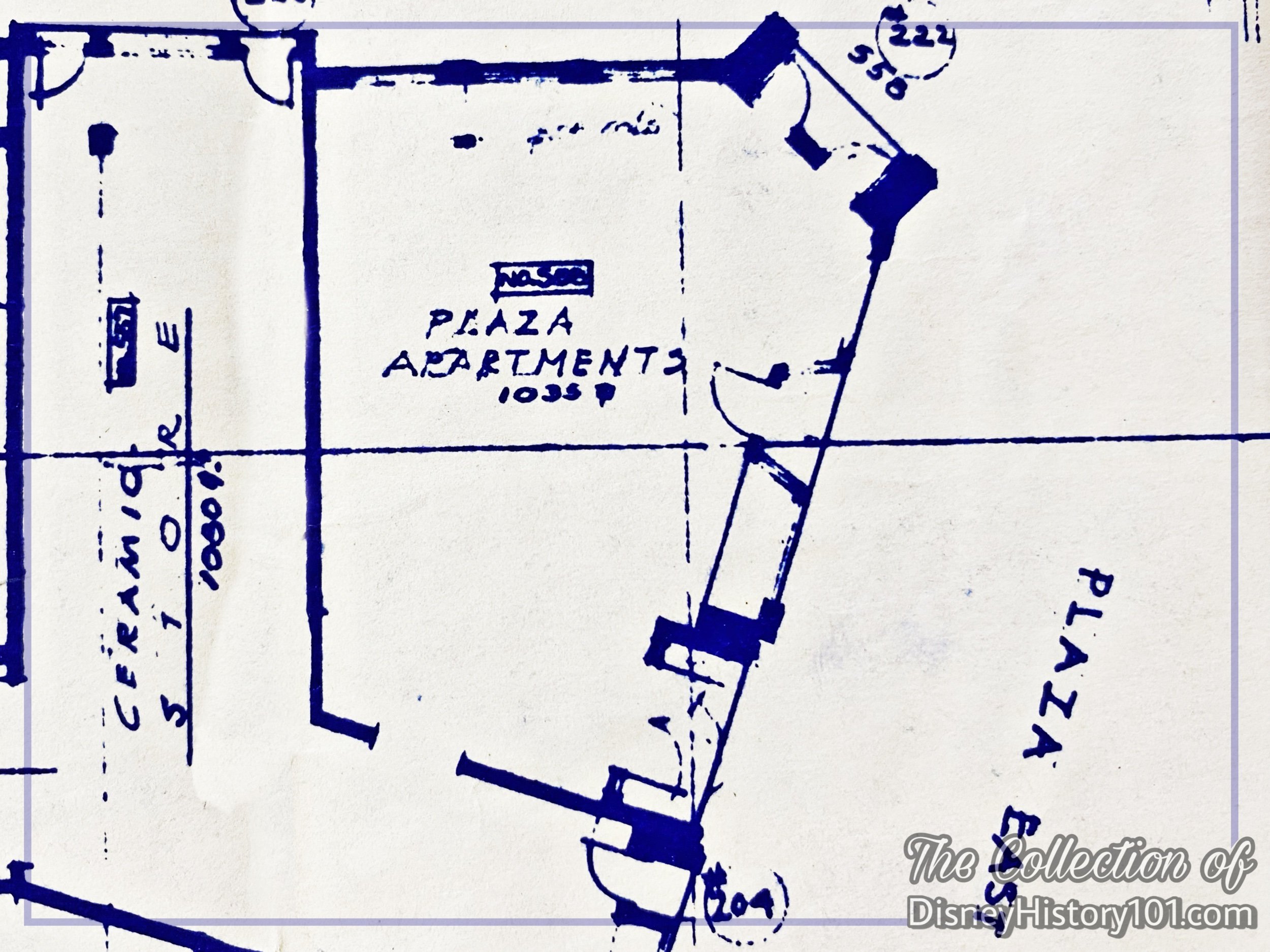
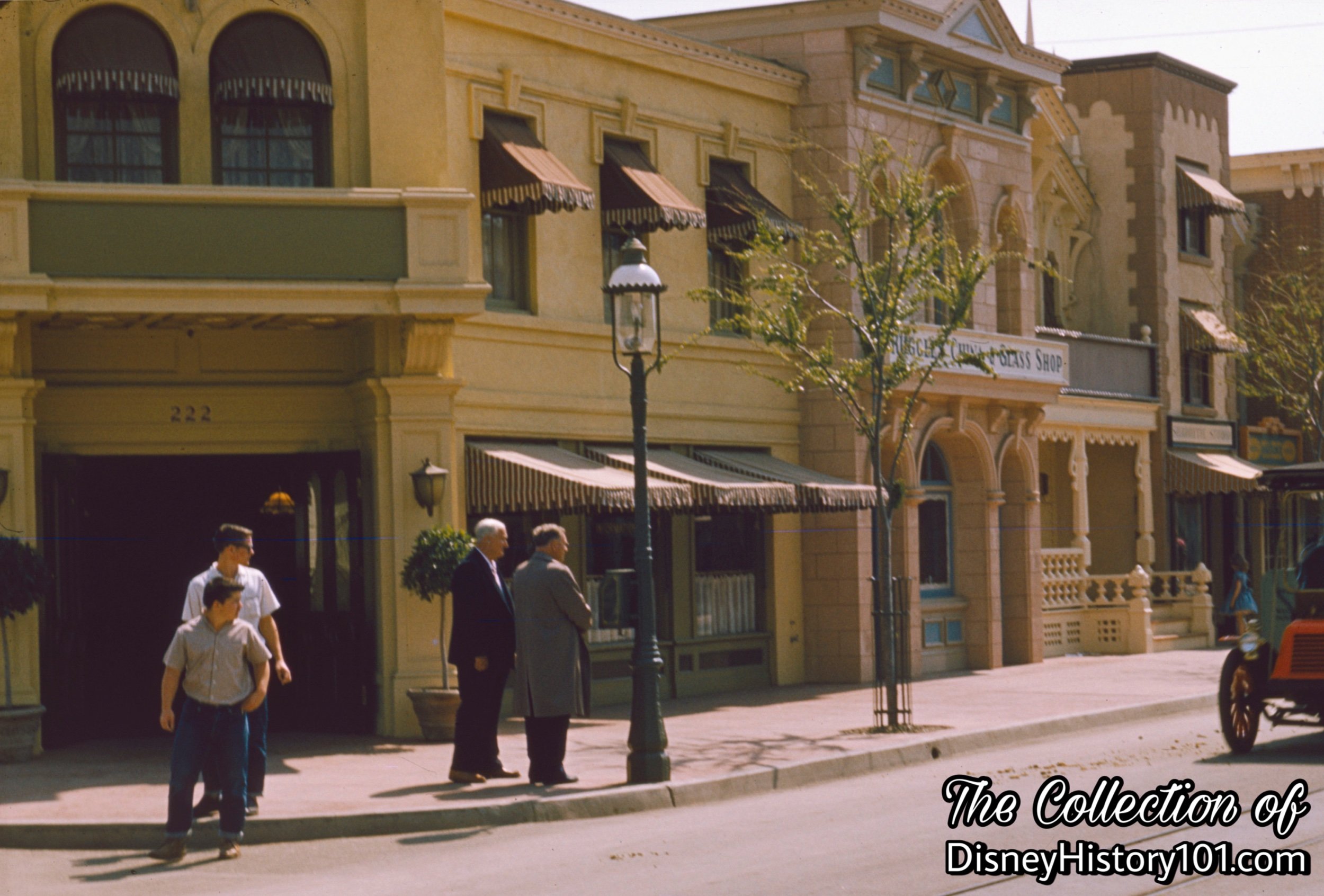
Lastly, a 45-star flag (one of five in Disneyland) was flown atop the roof of the quaint and comfortable Plaza Hotel, in keeping with the turn-of-the-century era. Once complete, The Plaza Hotel was located on the current 500 block of Main Street U.S.A.’s East Side, near the hub of DISNEYLAND®, though the address over the door read “222” back then!
As of June 2, 1955, C.V. Wood Jr. sent an Inter-Office Memorandum to Walt Disney regarding the best estimates that could be obtained at the time regarding the status of individual sections of the Park and Opening Day. C.V. reported that the shadow gags had been ordered. Painted signs, window, curtains, and shades were projected to be completed on time. The sound equipment was be installed, with completion of the tape recordings appearing to be fairly tight. The electric signs were “in work,” and with the exception of the shoe store and the Bank of America, all would be completed.
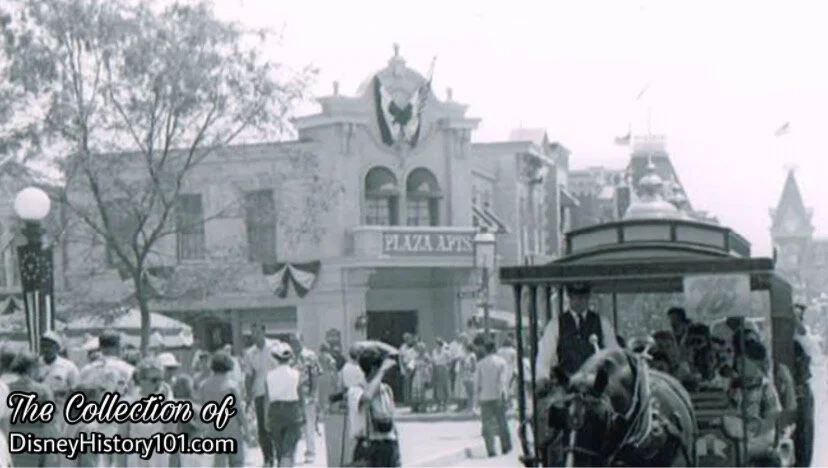
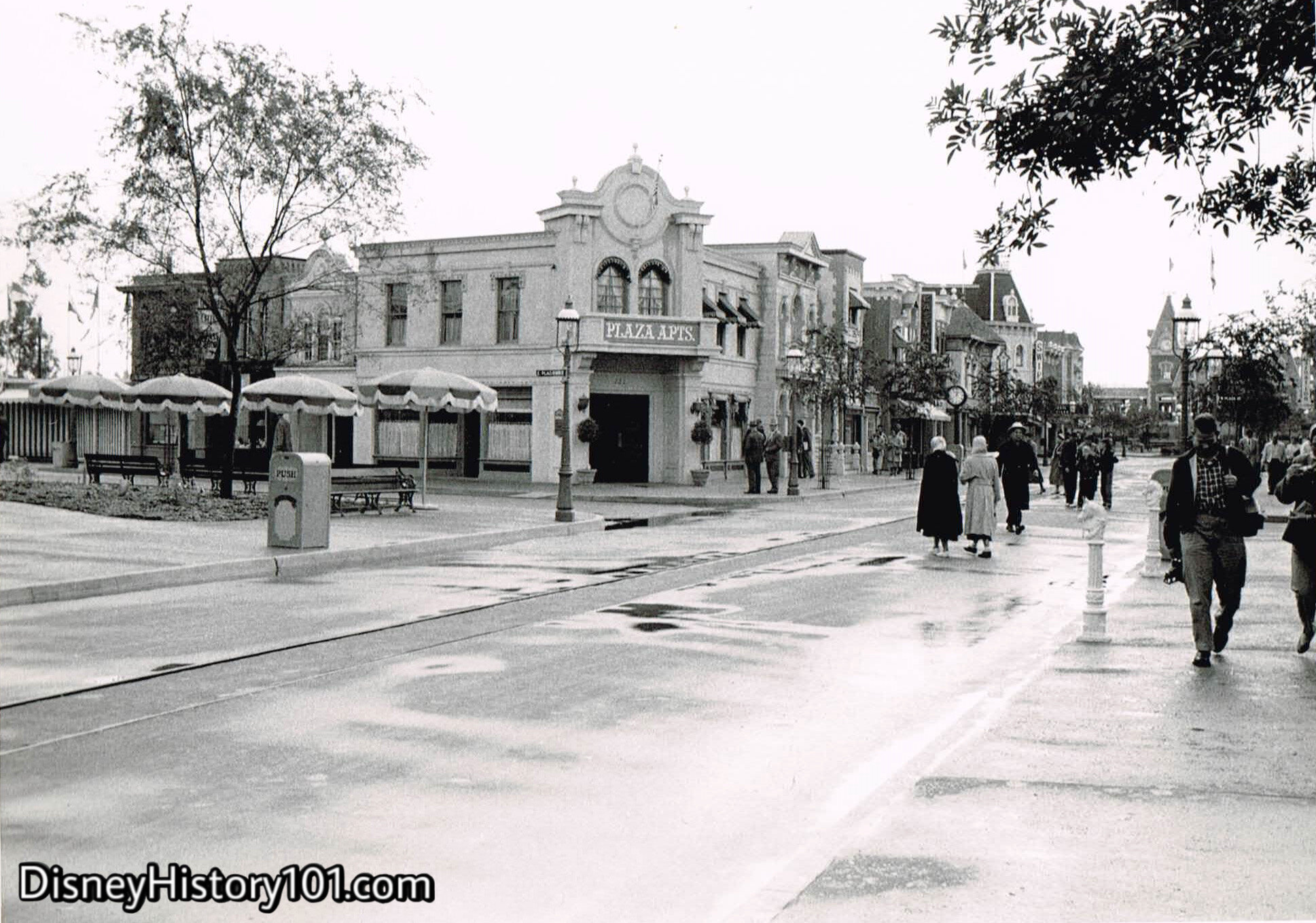
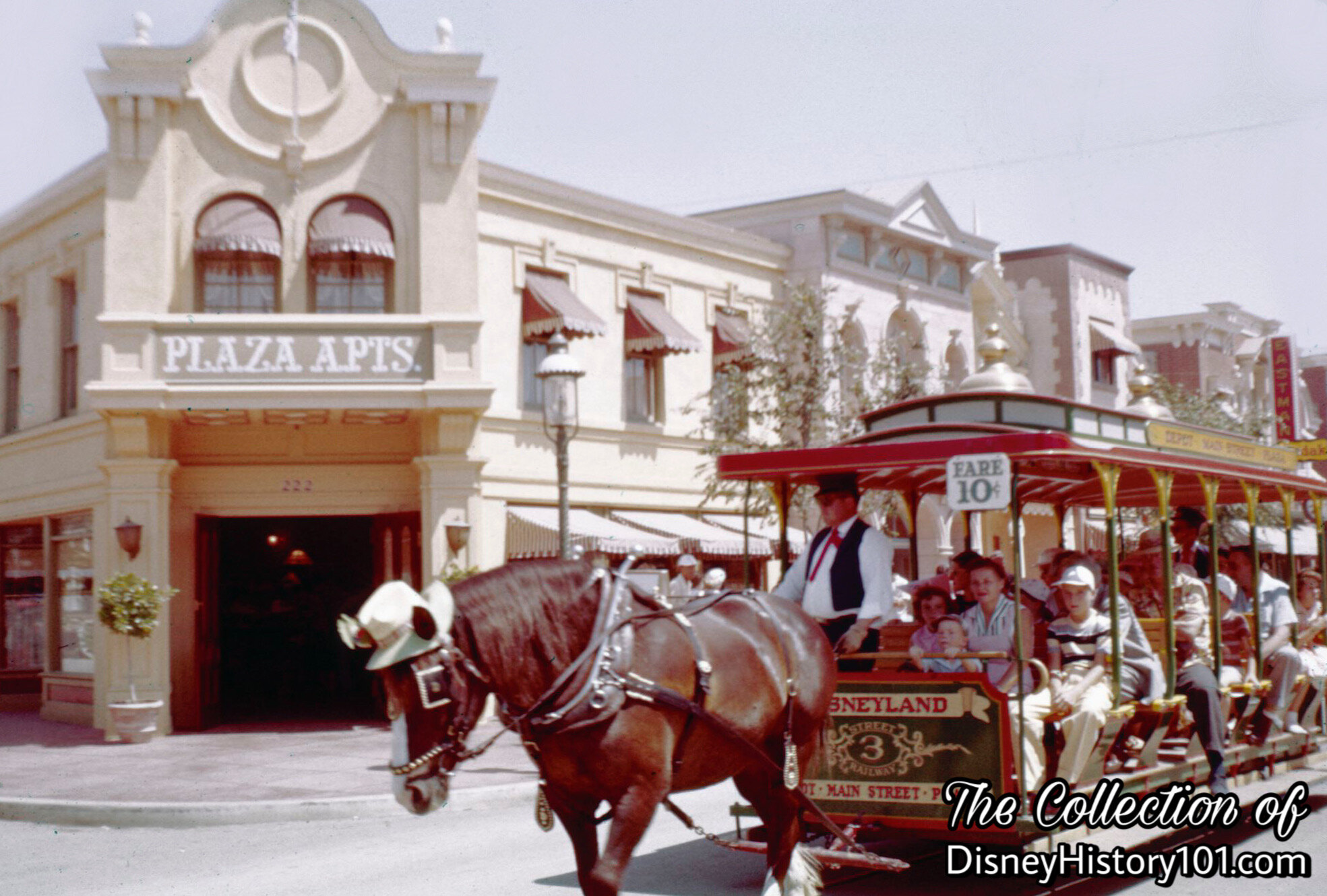
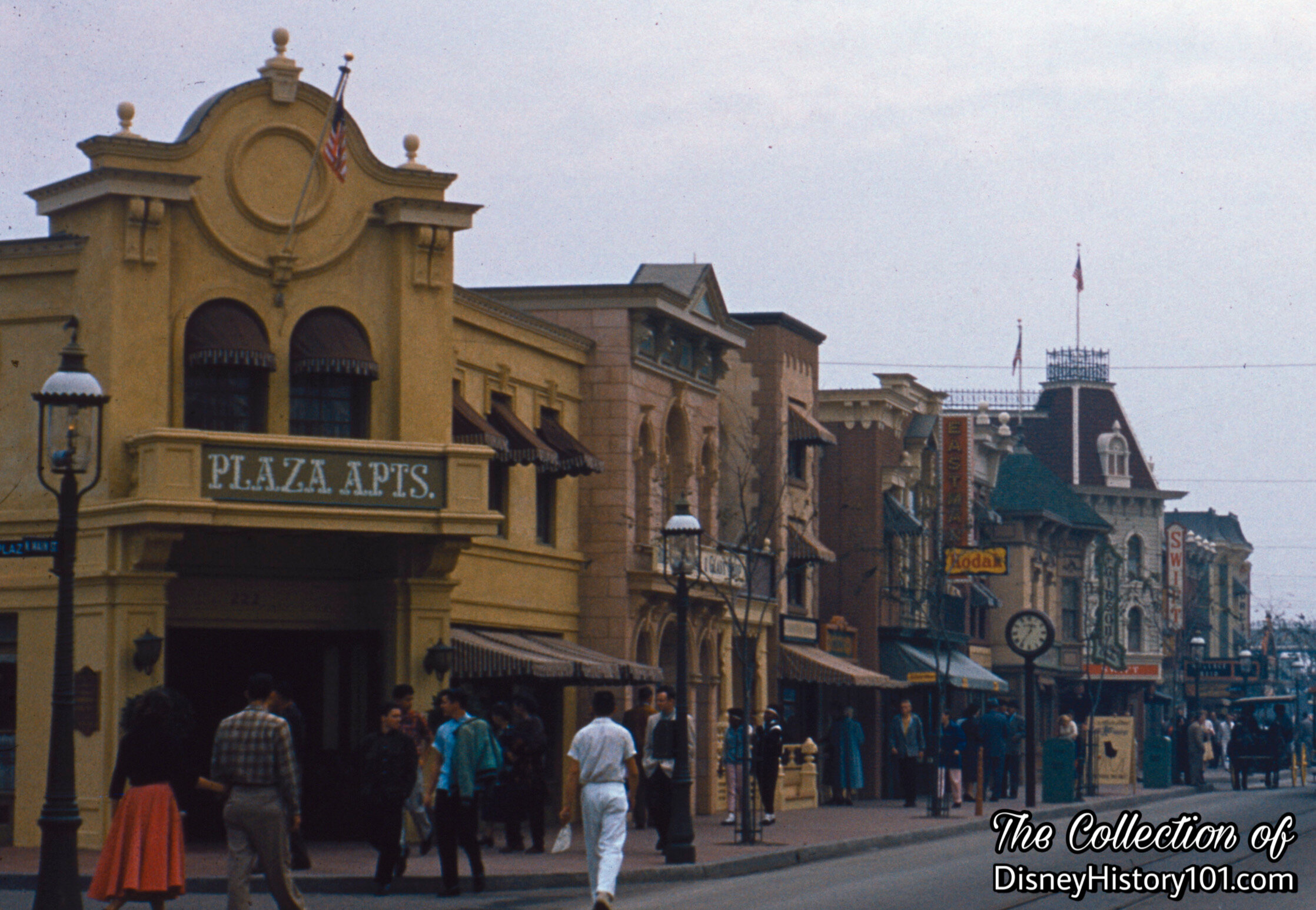
Sometime after Disneyland’s first day of operation in 1955, the Plaza Hotel was soon converted into the Plaza Apartments, maintaining its same address (of 222). The Plaza Apartments’ doors were finally opened on the corner of Main Street and East Plaza, situated not far from Ruggles’ China Shop, and down the street from the very first incarnation of the Art Corner on East Plaza. Here, Disneyland guests were invited into a plush 1900-era foyer (from 10a.m. to 7p.m.), which efficiently served as Disneyland’s Tourist Information and Guest Registration Center.
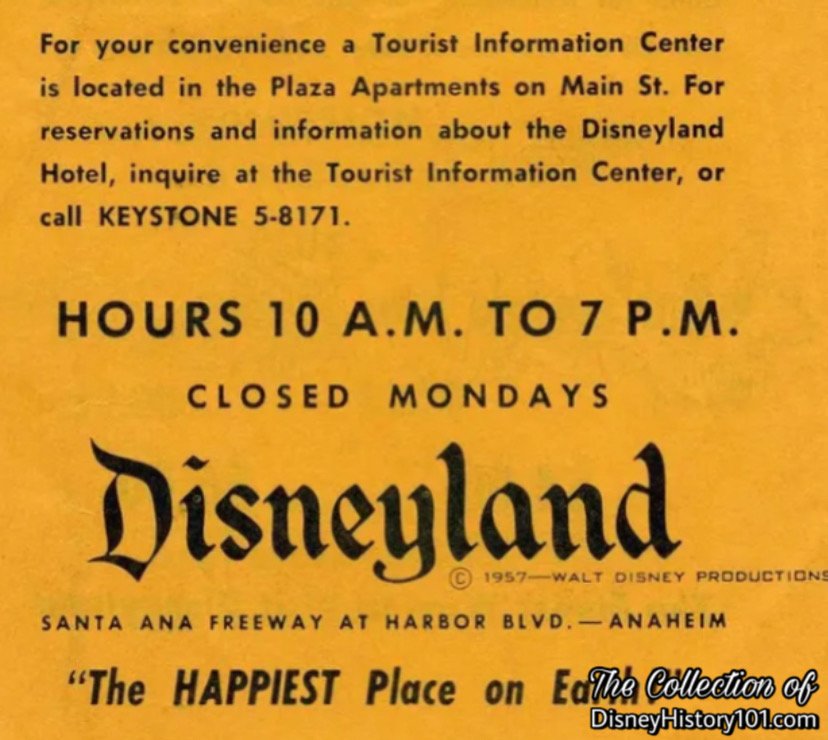
“For Your Information”
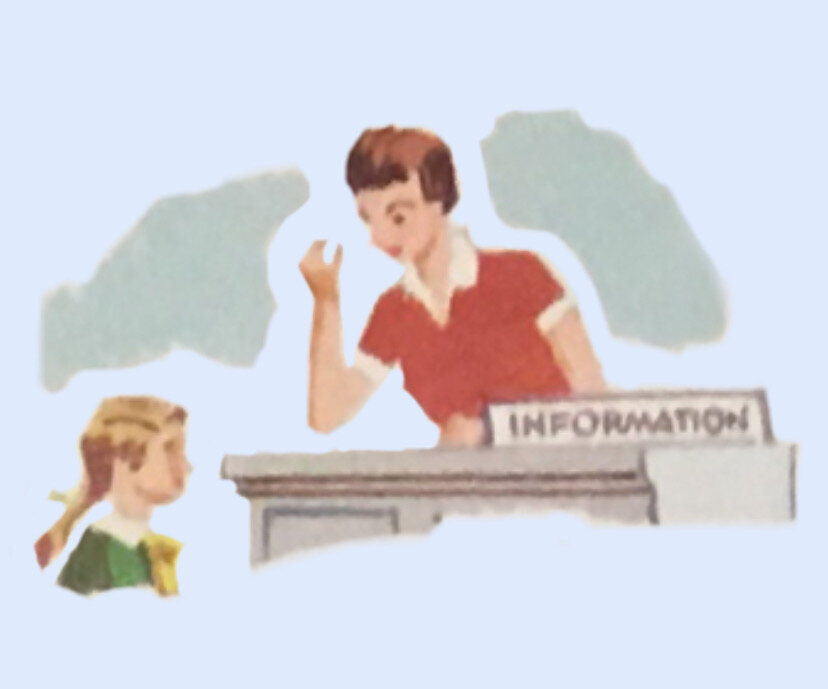
General questions about DISNEYLAND were asked, granting opportunity to assist by responding in a positive manner. For out of town visitors, the center offered both reservation and general information about the Disneyland Hotel. Information Brochures about motels and trailer parks were also available here.
Since 1954, Walt was searching for participants to lease shop and restaurant spaces at Disneyland, and help generate the necessary capital to fund construction of Disneyland. By July 1, 1954, Russel Tippett of Disneyland Inc. Advertising oversaw Exhibitor’s Space Sales and Lease Agreements.
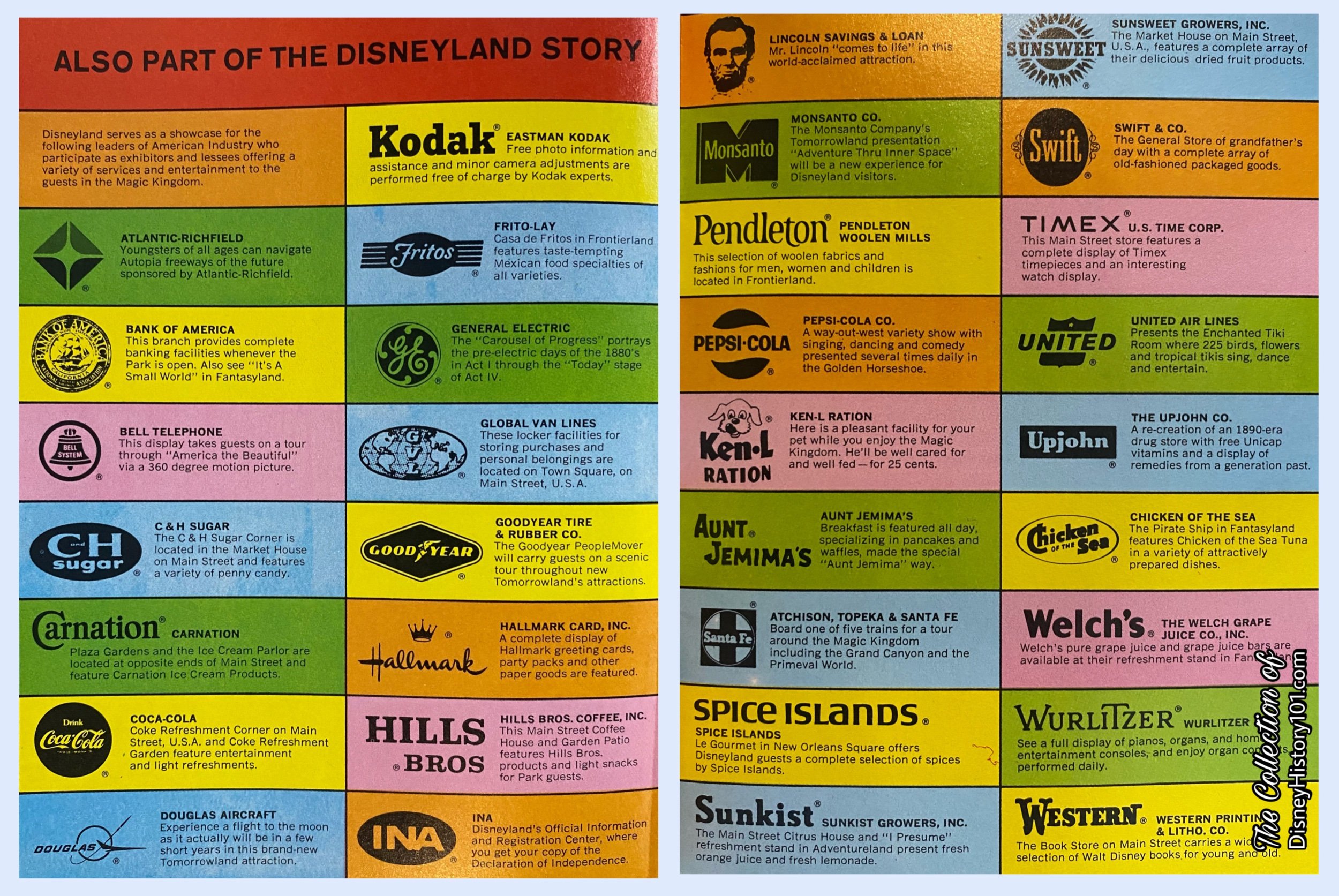
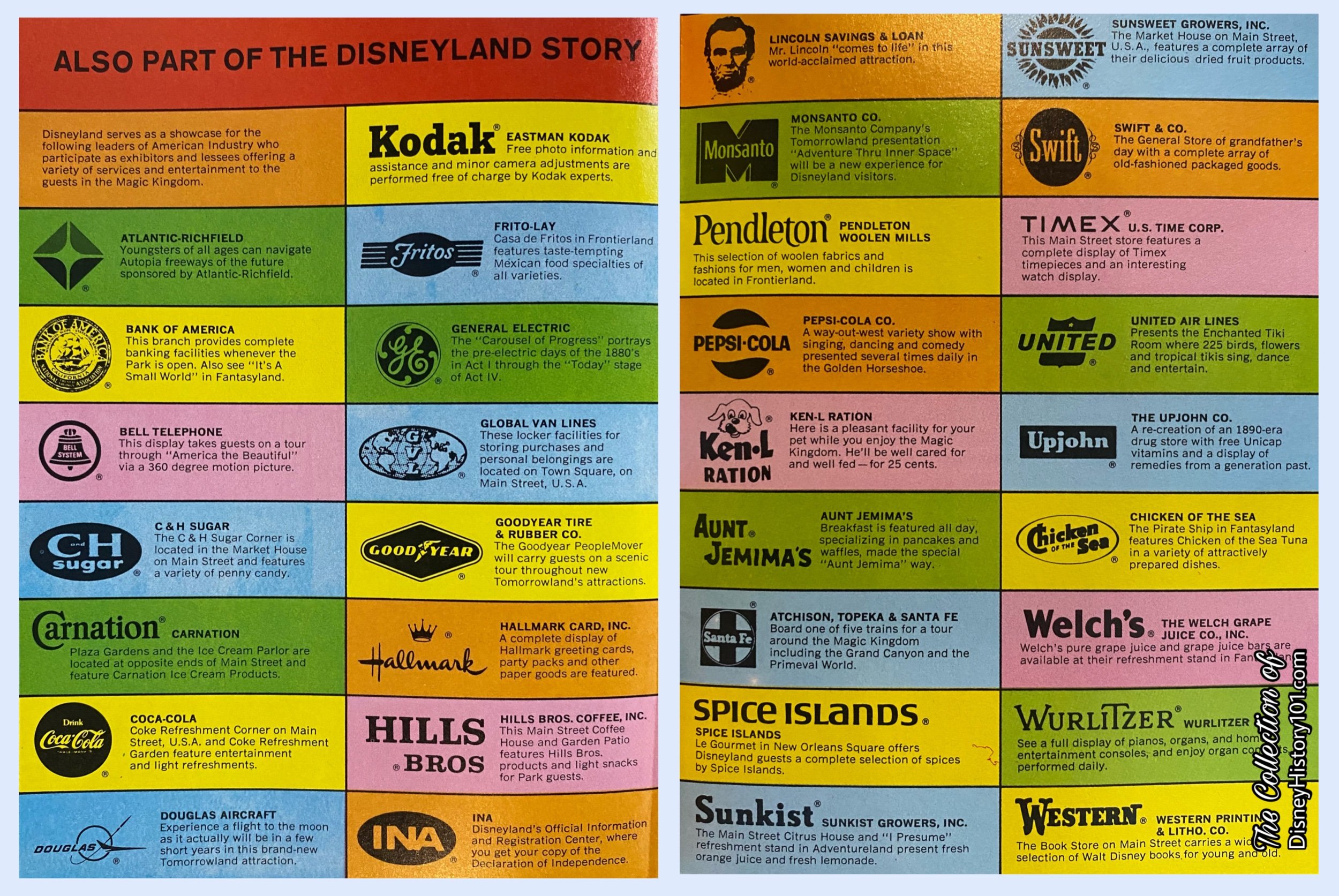
Disney formed contractual relationships to a group of companies called “Participants” who agreed to sponsor various attractions and facilities in the Park in return for specific rights and privileges. In a synergistic relationship, the companies (in turn) could sell their products and advertise their corporate names in the Park. Disneyland Participant Corporate Sponsors were carefully selected. High quality, long term corporate sponsors would provide incremental income that enabled Disneyland to enhance its show and attractions, offset some operating expenses, and capitalize on marketing opportunities.
Soon, “a cross-section of American industry…[was] represented in Disneyland. Each of these companies… [would expose] its institutional advertising and public relations message to Disneyland guests through various forms of participating exhibits and displays. In each case, the exhibit… [was be] related to the theme of the ‘land’ in which it is located, and is woven into the overall concepts and themes of Disneyland,” according to “Disneyland, U.S.A.”, published 1958. Many free exhibits of Main Street U.S.A. were sponsored by one of the United States’ “old reliable firms, which have been in business fifty years or more. Here they can show how they started and reproduce their first place of business.” [Disneyland Prospectus, 1954]
In turn, Disneyland, Inc. received income. For example, in 1958, Bank of America appraisers figured of the total income received from leases, 16.02% was derived from the selling of advertising rights and 40.12% from the leasing of space to concerns whose main reason for occupancy is for advertising purposes. The remaining 43.86% of the lease income was derived from stores that sell various products and food.
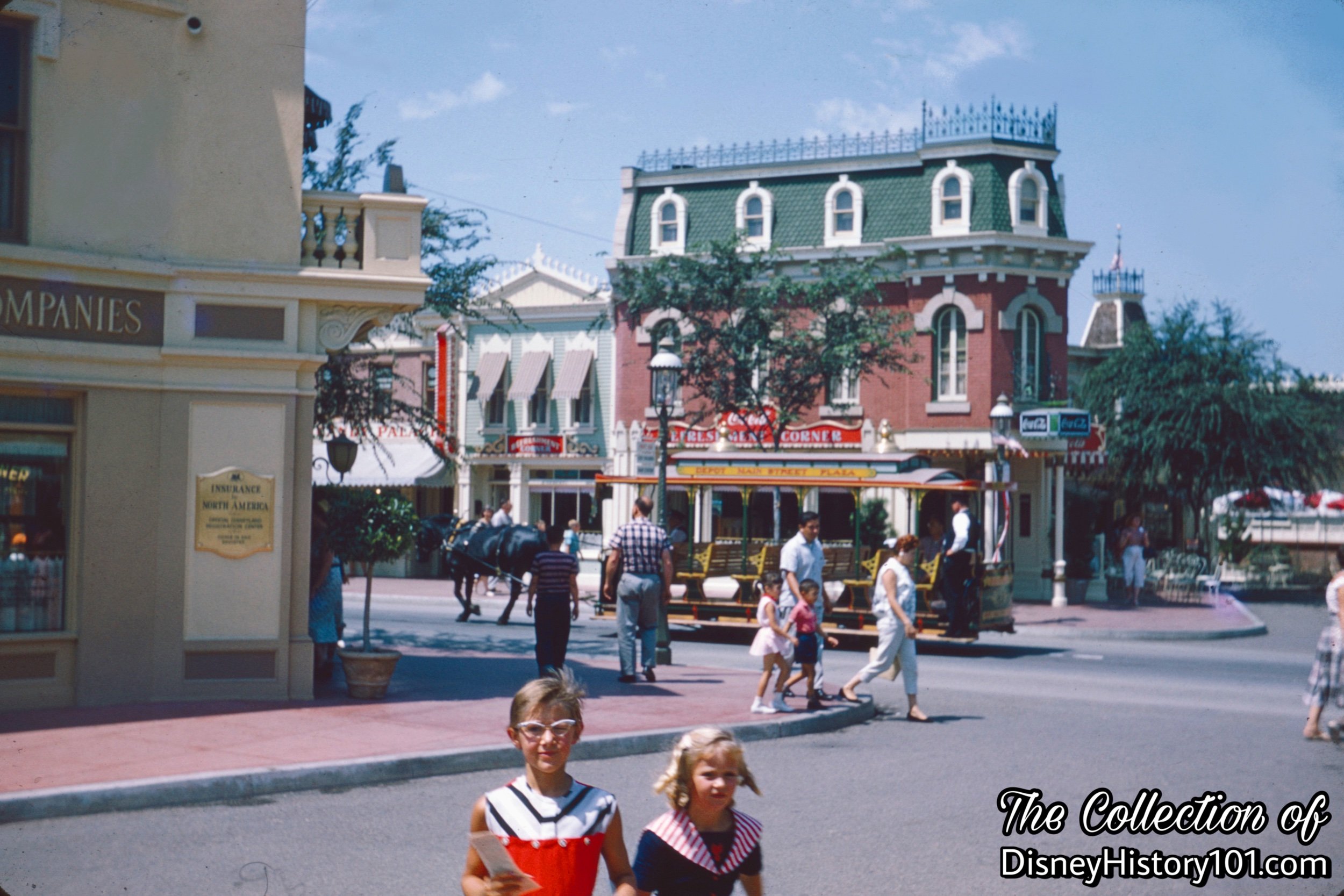
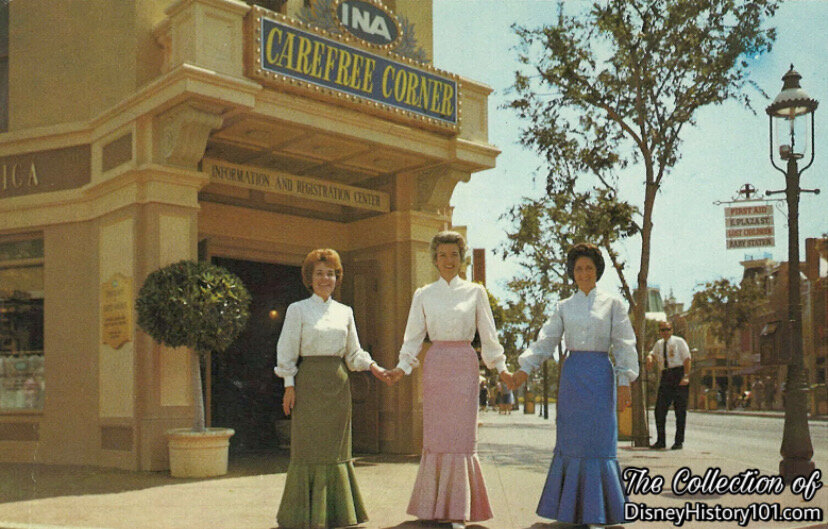
By 1956, this Plaza Apartments free Disneyland exhibit gained a sponsor - Insurance Company of North America (or, INA) and a new name - the Carefree Corner (though the location’s sign would still temporarily read Plaza Apartments). At Disneyland, each Guest needs to be assured that you CARE! The Insurance Company of North America (or, INA), and its affiliate PEG (Pacific Employers Group) were proper sponsors for Main Street U.S.A., as the parent company had been providing proper business, home, car, life, and health insurance for quite a time (by 1967, they were celebrating their 175th anniversary). For now, the “Care Free Corner” (and the 945 square-foot space) fit well with INA’s current advertising slogan - “For a more care-free life at all times, be sure you and your family have the proper insurance protection.”
“Service à la Disneyland”
Here, an increasing number of visitors would stop by the Carefree Corner, official information center maintained by INA-Insurance Company of North America - and its 20,000 local agents and brokers in the United States and Canada. Carefree Corner administered information for Disneyland, travel reservation Information for surrounding area, Bus and Helicopter schedules, and motel and trailer park information.
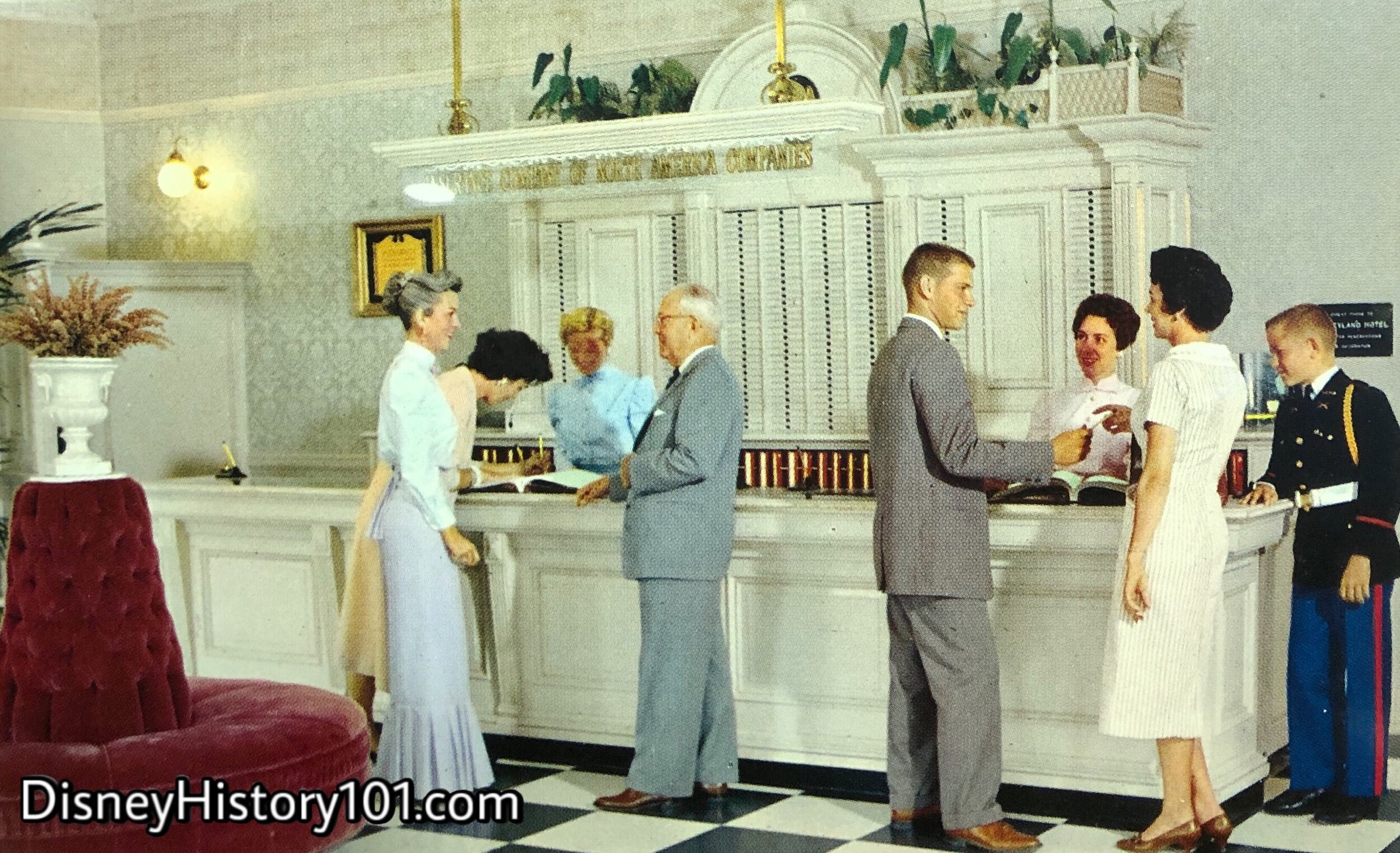
More than that, Hostesses created tangible, delicious memories Guests through its merchandise and show. They handed out information books at the entrance and through the doors, guests could “rest a spell” on the round, velvet banquette, while waiting their turn to approach the registry desk and sign the leather-bound Disneyland Guest Register. Beginning in 1959, the Disneyland Guest Book highlighted the 50 states and numerous international locales. By October of 1959, free copies of the Declaration of Independence were available on request.
Actress Spring Byington (of “December Bride) and child actor Bobby Diamond (of “Fury”) were photographed registering (Spring, for Colorado and Bobby, for California) for their 1956 “TV Radio Mirror” photoshoot at Disneyland. At least some members of the “National Association of Amusement Parks, Pools, and Beaches” likely visited the INA Carefree Corner during their tour of Disneyland, from September 18-20 (Tuesday through Thursday), of 1956 (one of whom was the President, George F. Schott, who once served as advisor of Disneyland planning, construction, and operation). According to the Official Guide to Disneyland (published 1956), “more than 800,000 people have signed the Disneyland Guest Register…giving their home towns and addresses.” By the following year, “A Complete Guide To Disneyland” (published 1957) states that “more than 900,000 people have signed the Disneyland Guest Register, located at the Plaza Apartments on Main Street, giving their home towns and addresses.” The latter source continues : “40% of all Disneyland visitors are from out of state, including visitors from 63 foreign countries.” Soon, Donna Rochelle of the Carefree Corner reported to Vacationland magazine, that the “guest registry books now include names of people from every state and more than 100 foreign nations.”
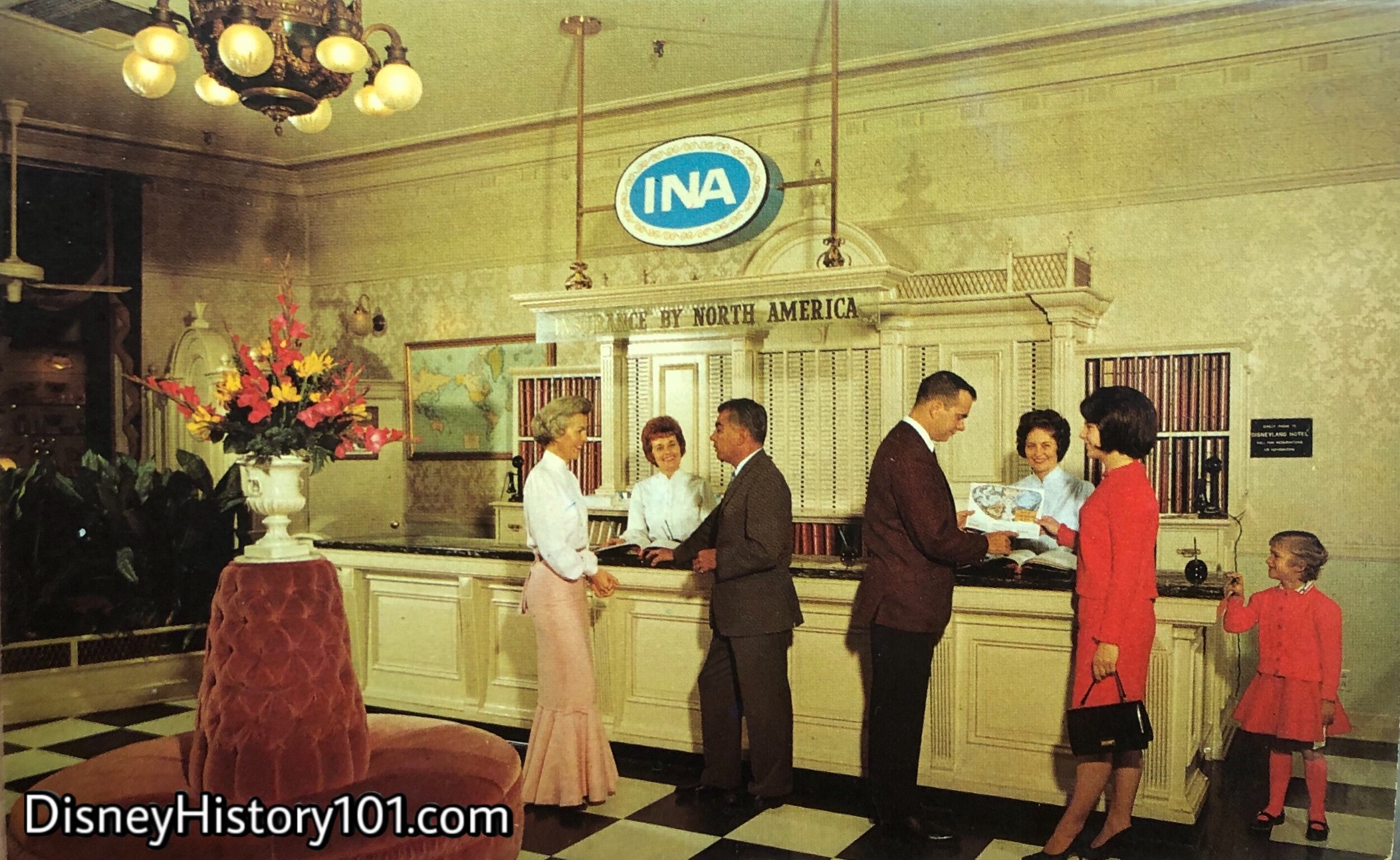
Each Guest is regarded as a VIP: a Very Important Person. Early Disneyland Cast Members represented all of Disneyland, and promoted goodwill between Disney and the VIPs. As seen in the previous Postcard images, lovely Hostesses maintained the INA Carefree Corner at Disneyland! These hostesses offered friendly service, which included a souvenir gift (an information booklet, also available at the Main Entrance), directions to Disneyland attractions, and travel and reservation assistance. The INA Hostesses would even help guests plan their Disneyland visit, supply road maps, provide hotel-motel information, and give directions to other Southern California attractions or cities of interest. “The insurance companies of North America have provided travel information for your convenience and brochures from California, Nevada, and Arizona ; maps of many parts of the West ; and bus, helicopter, airline and train schedules.” You may personally recall taking home an INA (Insurance Company of North America) pamphlet from one of the displays. Of course, the INA Carefree Corner’s most memorable brochure was “Your Guide to Disneyland,” provided as “a free service” by INA. The guide featured maps of each land, and showed the location of Disneyland’s free shows & exhibits, shops and stores, services, refreshments, telephones, restrooms, ticket booths, and information and assistance facilities. Also listed, were the current attractions (with brief descriptions), as well as their price of admission and corresponding “letter” of Disneyland coupon. Disneyland Cast Members have always been well aware of general information regarding restaurants, shows, parades, events, and directions, and (aside from the Guides) the INA hostesses were “the creme of the crop” in this regard! For guests who had not arrived yet, the Tourist Information Center and Guest Registry Center could also be reached via phone (by calling KEYSTONE 5-8171).
During 1957, an INA advertising campaign included a series of photographs featuring families enjoying the magic of happiness while exploring various attractions of Disneyland - including Spacemen, the Mark Twain Steamboat, and the most iconic Sleeping Beauty Castle. The campaign relied on the peace of mind or happiness experienced at Disneyland to promote various package policies available through INA. Promotional contests were also run in coordination with the Tomorrowland Art Corner, awarding free Disneyland “originals” (production cels and drawings) to winners selected at random.
By January 1, 1958, the 945 square-foot shop space in Main Street Building #500 was still occupied by the Insurance Company of North America. Finally (by 1958), the location was given its official name in print for perhaps the first time - the Carefree Corner, within the Official Guide to Disneyland (published 1958)! The corporate synergy was good for a time. Institutional lessee North America Companies yielded some revenue for Disneyland Inc. - $22,534 for the fiscal year ending September 29, 1957 and $22,708 for the fiscal year ending September 28, 1958.
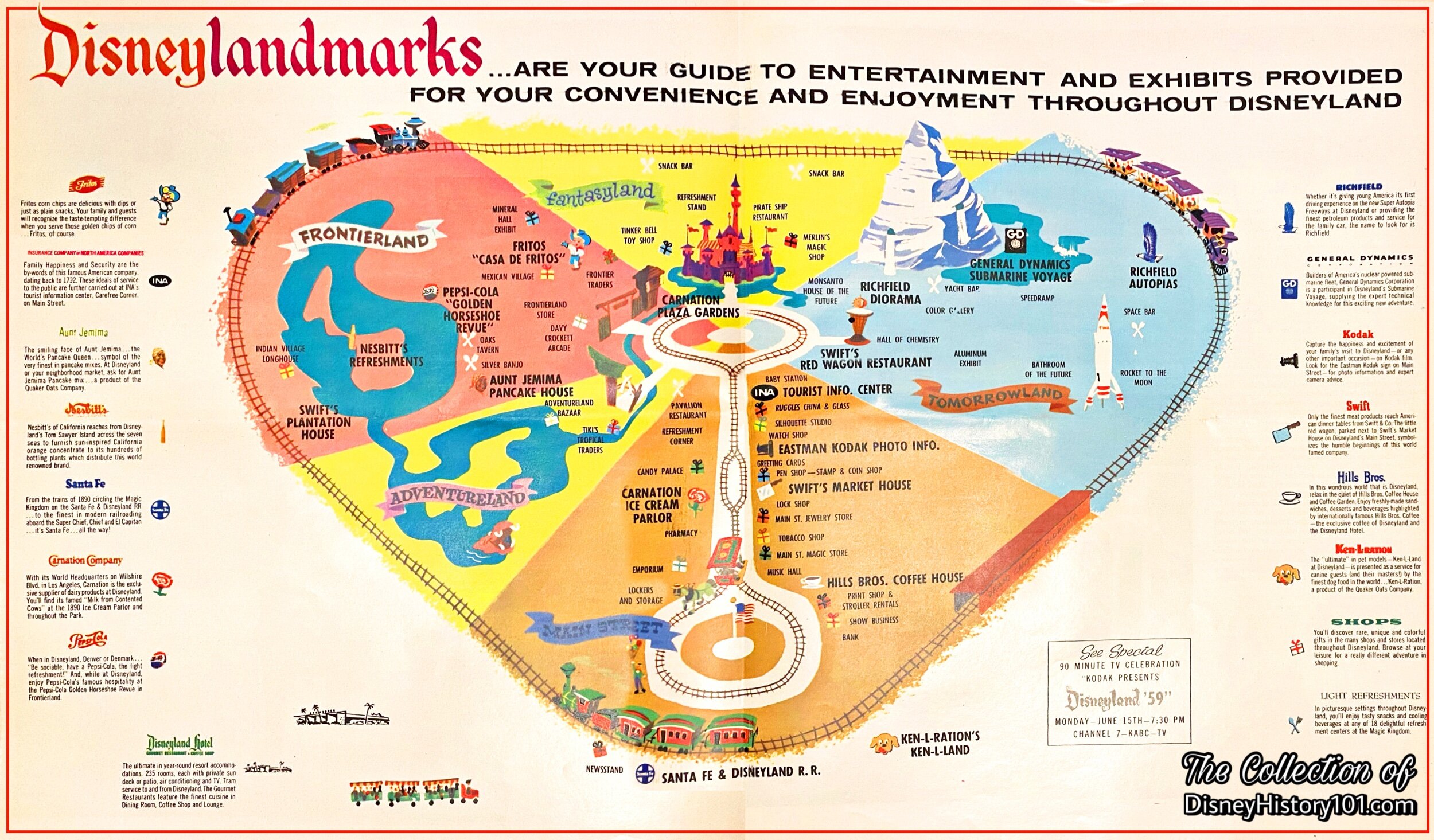
Owning to Jack Sayers (of Lessee Relations), the Carefree Corner (and INA) would soon be included in a list of Disneyland Participants which sponsored “Disneyland’s second opening” - “Disneyland ‘59!”
By October of 1959, the company was (1) of over sixty-eight other firms playing a vital part in the team effort to bring happiness to Disneyland’s Guests. Some were small, specialized individual operators; some were huge companies such as Swift & Co. - the Bank of America - United Paramount Theaters (which you hear as UPT) - Carnation - Richfield - General Dynamics - Crane - and many others. These companies used the park to publicize their wares, leased space in the Park to sell their wares, and Disneyland collected advertising fees from them.
By 1959, of the total income received by Disneyland, Inc. from leases, 16.02% was derived from the selling of advertising rights and 40.12% from the leasing of space to concerns whose main reason for occupancy is for advertising purposes. The remaining 43.86% of the lease income was derived from stores that sold various products and food.
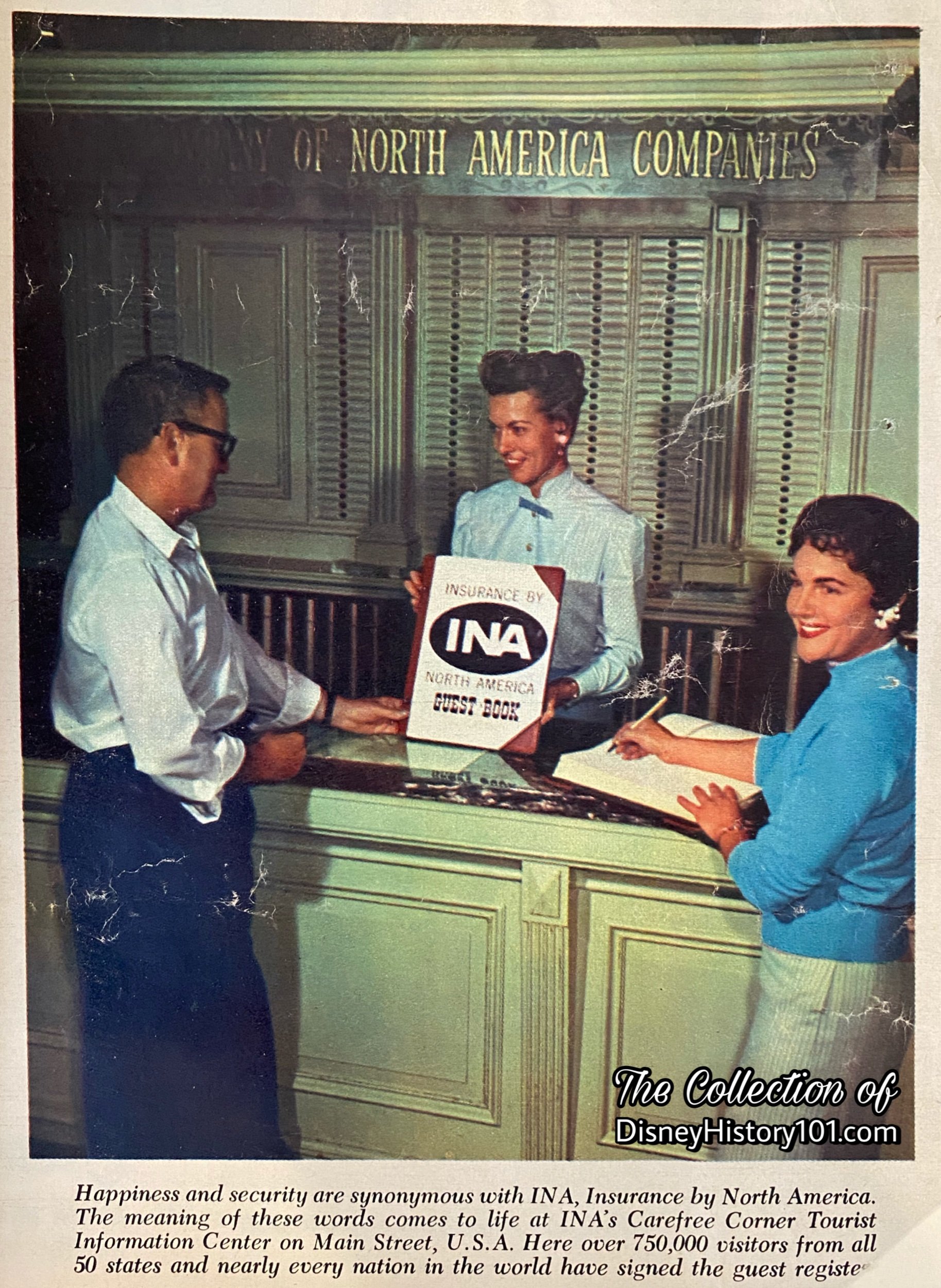
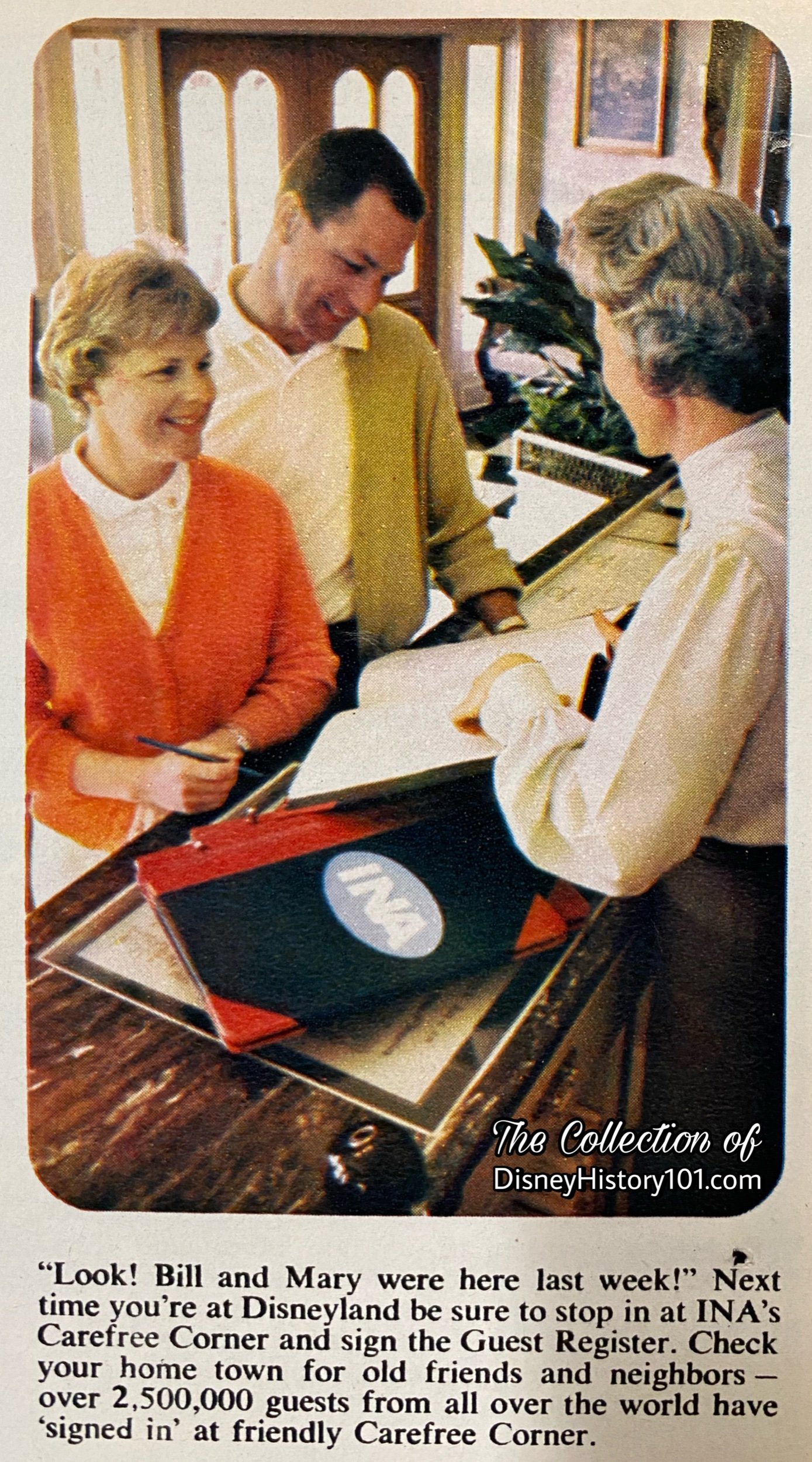
The Guided Tour Script of 1962 highlighted the Carefree Corner “sidelight” to groups along the tour this way : “There are many interesting and unusual shops along Main Street I’m sure you’ll want to visit later. You might also like to stop by Carefree Corner, the official information and registration center here in the park. They have a registration book from each of the 50 states. They will be happy to present you with a souvenir copy of the Declaration of Independence.” By 1964, “Disneyland’s official Registration Center, presented by the Insurance Company of North America” offered “every guest…a copy of the United States Bill of Rights,” according to Vacationland magazine (published for Winter/Spring of 1965).
During 1965, the “Tencennial Newsletter” reported on the INA Guide to Disneyland published for Park guests:
“‘Your Guide to Disneyland,’ a 32-page booklet covering all aspects of the Magic Kingdom, is now being presented free to all Park visitors. Sponsored as a service to Disneyland guests by the Insurance Company of North America, 375,000 copies of ‘Your Guide to Disneyland’ were printed for distribution from October to January, 1966. The pocket-sized booklet features a photograph and welcoming message from Walt Disney on the cover. Highlights of the guidebook include information on shops, exhibits and restaurants in Disneyland, individual maps of each ‘land’ and a listing and explanation of each of the 50 attractions and adventures in the Park. Also included are sections of ticket books, the Guided Tour and future developments for the Magic Kingdom. A copy of the guidebook is given to each group that purchases any form of admission media. Due to the souvenir value of the publication, Disneyland officials estimate that exposure to the booklet's Park information and INA's institutional message on the inside front, and outside back, cover will exceed six million people annually.”
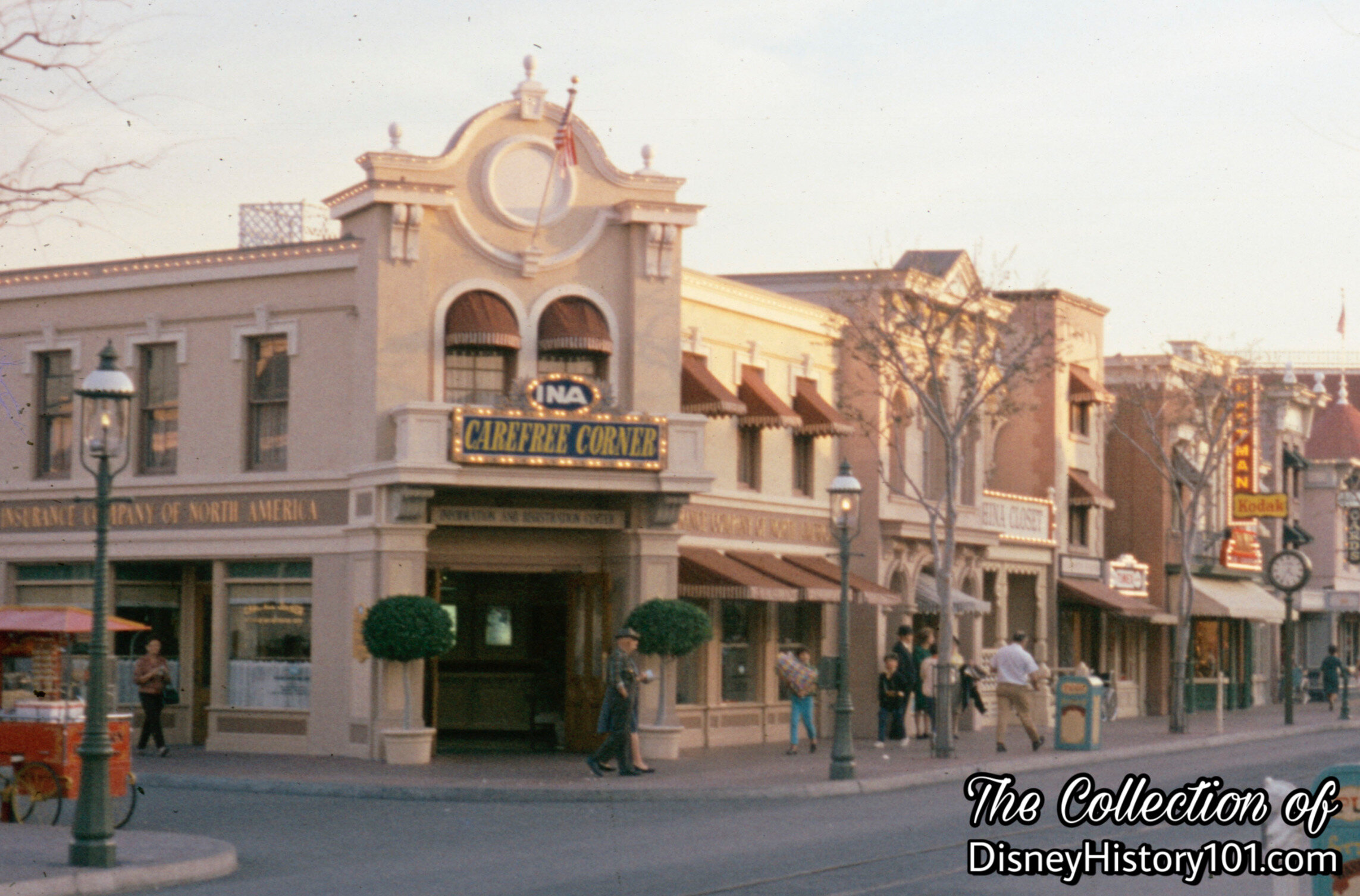
The Carefree Corner name would remain intact for 16 years, and during this time, guests could visit the free exhibit and pick up their complimentary copy of the Declaration of Independence, before leaving Disneyland. Employees of the mid-1970s may recollect that INA held their offices Backstage near the Pony Farm. INA - Insurance Company of North America and a few of its 20,000 local agents maintained the Carefree Corner at this time!
Alas, Disneyland Participant Affairs and Participant INA could not negotiate a new cooperative agreement to maintain their ongoing relationship. While, INA’s sponsorship of Carefree Corner ended in 1974, the purpose of the Carefree Corner remained the same for some time! INA would go on to briefly sponsor another exhibit, from their offices in a certain apartment overlooking New Orleans Square.
By 1974, Disneyland Guest Relations (most of them, Disneyland Tour Guides and Hostesses) began to staff the facility, continuing to “maintain the registry and still answer the millions of guest’s questions,” according to Disneyland LINE (Vol.18, No.14 ; April 3, 1986). Three years later (during 1977), Travelers Insurance Company took over INA’s account with Disneyland, offering new policies and benefits to Disneyland Cast Members. Though many positive changes had been made, the presence of long-time Disneyland Participant Insurance Company of North America would be missed. As for the Carefree Corner, the location continued to serve a similar function for 11 more years, but operating under the name of Hospitality Center (from 1974 to the Spring of 1985).
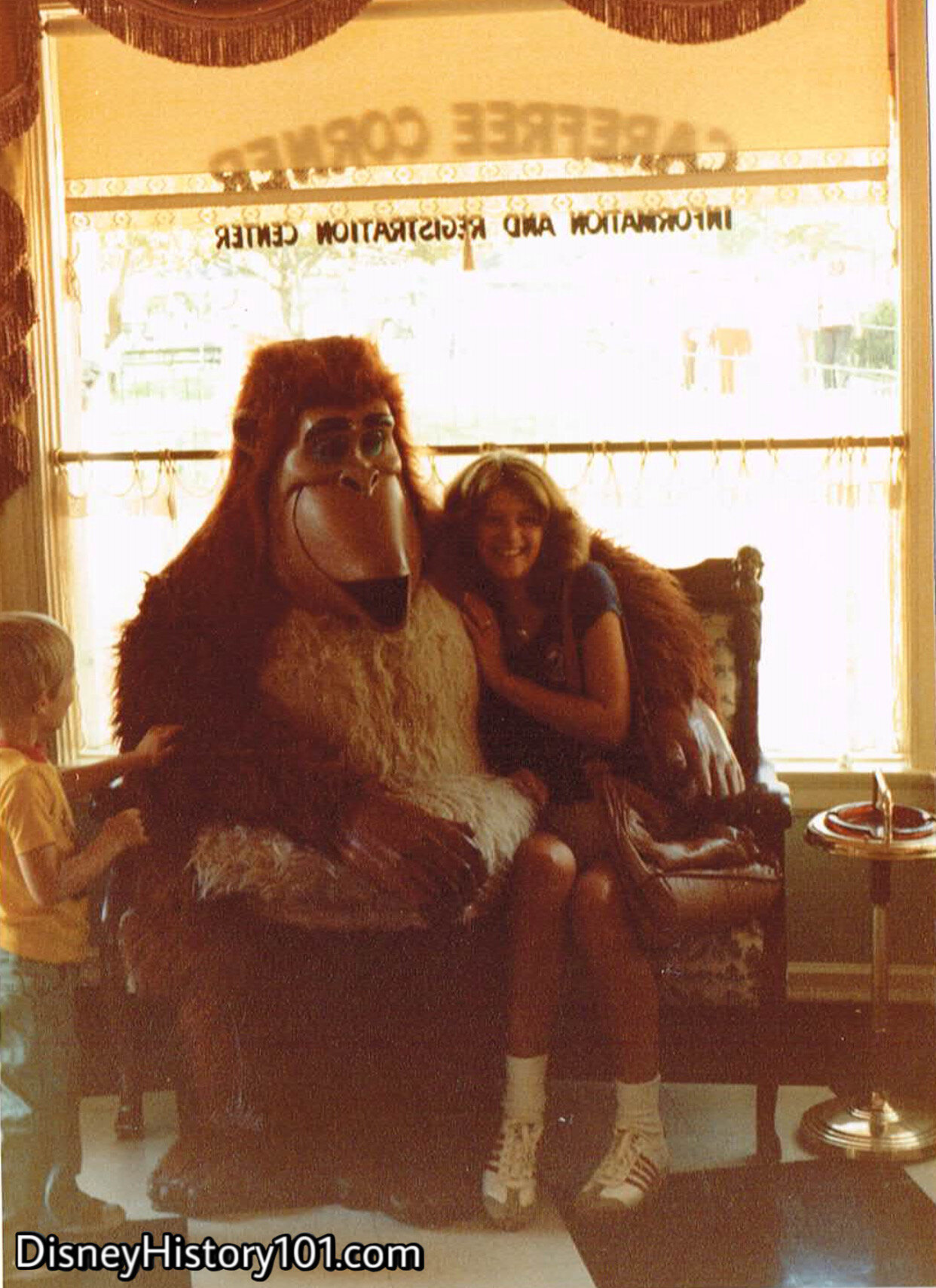
The Carefree Corner occasionally served a station where Disneyland guests could meet and greet their favorite Disney Characters. Here, a guest rests on a settee with King Louie, in the foyer of the Carefree Corner.

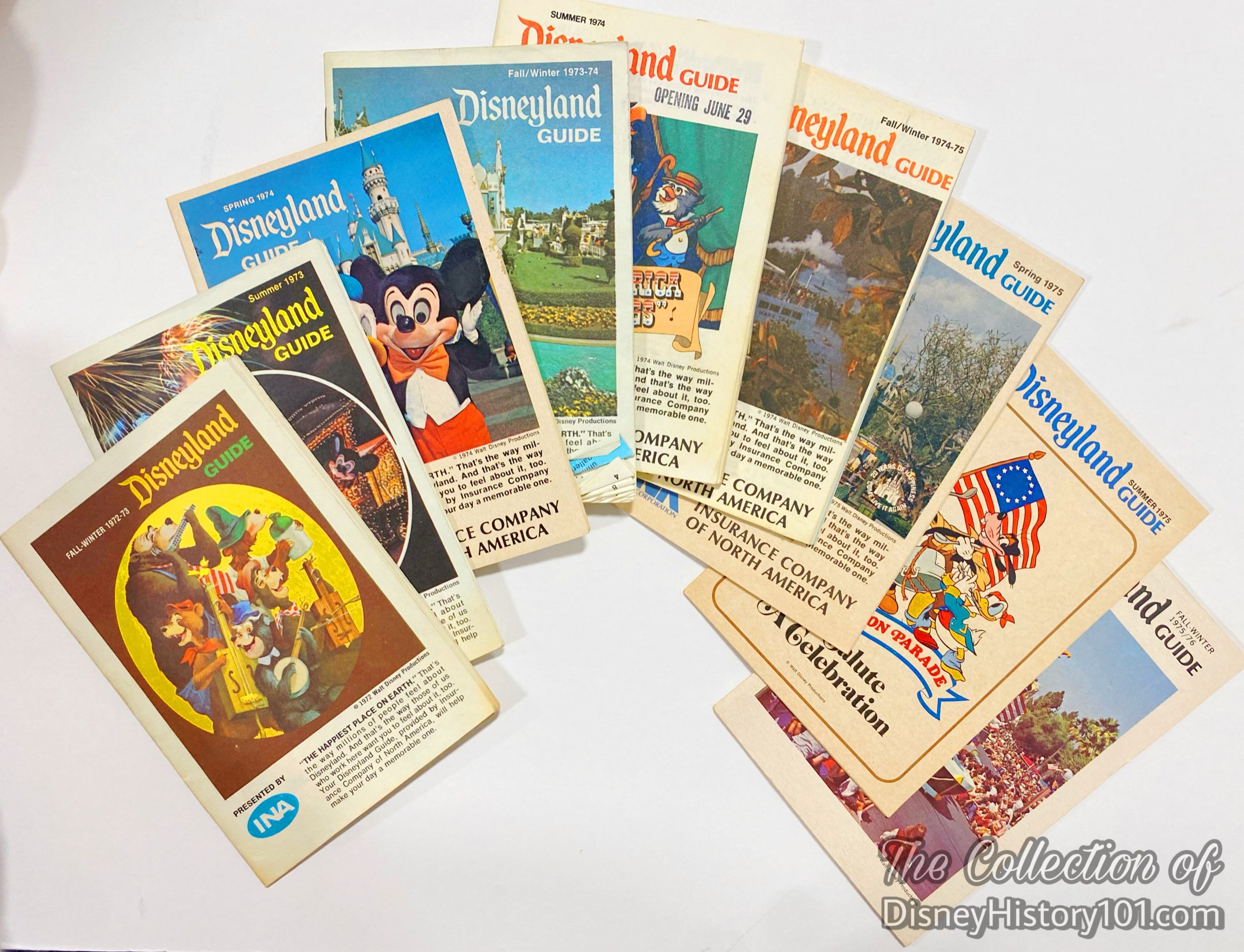
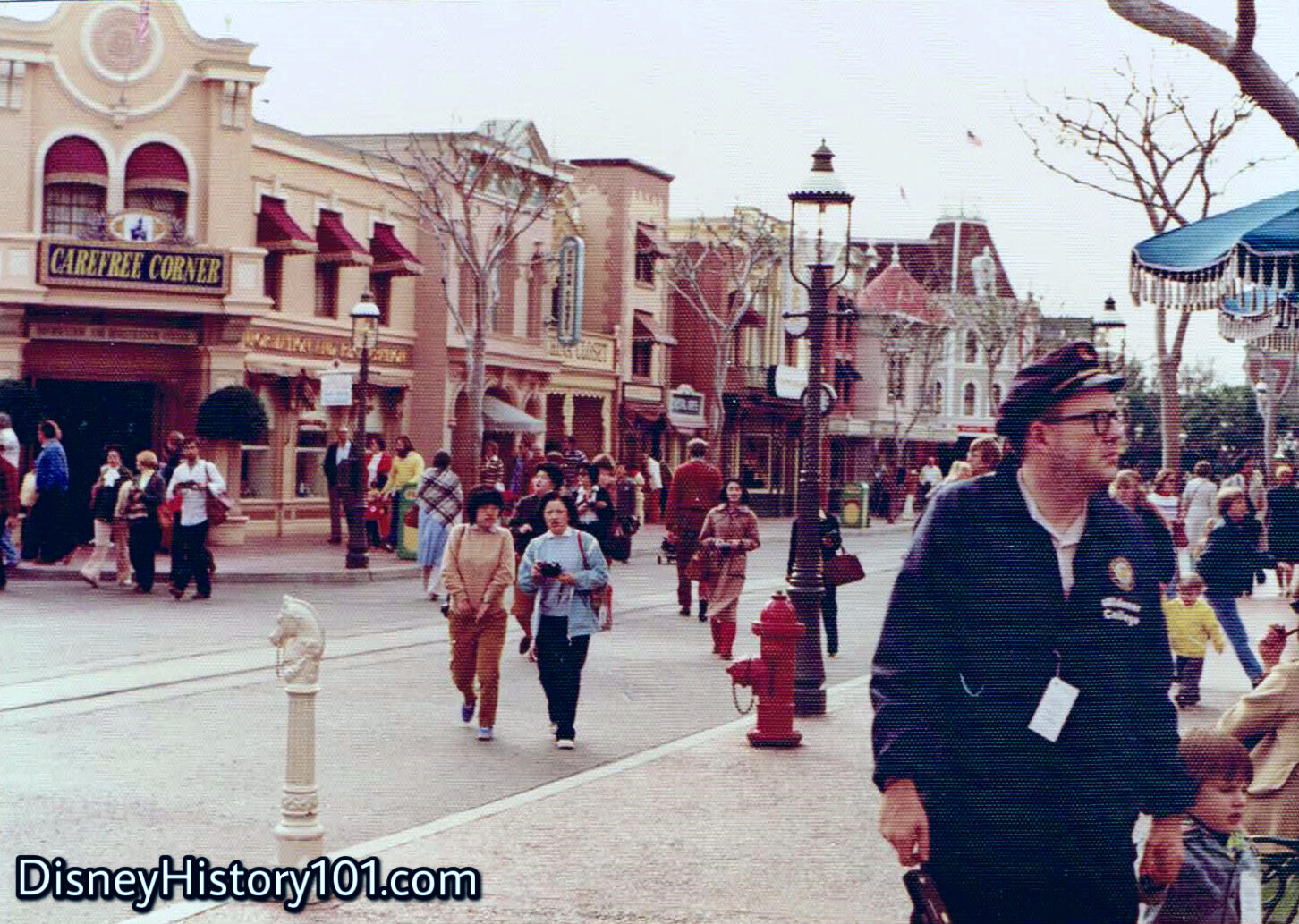
Three years later (during 1977), Travelers Insurance Company took over INA’s account with Disneyland, offering new policies and benefits to Disneyland Cast Members. Though many positive changes had been made, the presence of long-time Disneyland Participant Insurance Company of North America would be missed. In the background, note the Sleeping Beauty Castle emblem (which represents Disneyland) in the place of the former INA logo over the doors. As for the Carefree Corner, the location continued to serve a similar function for 11 more years, but operating under the name of Hospitality Center and Disneyland Information and Registration Center (from 1974 to the Spring of 1985). The reason was that (in 1974) INA had moved into a particular Royal Street address overlooking New Orleans Square.
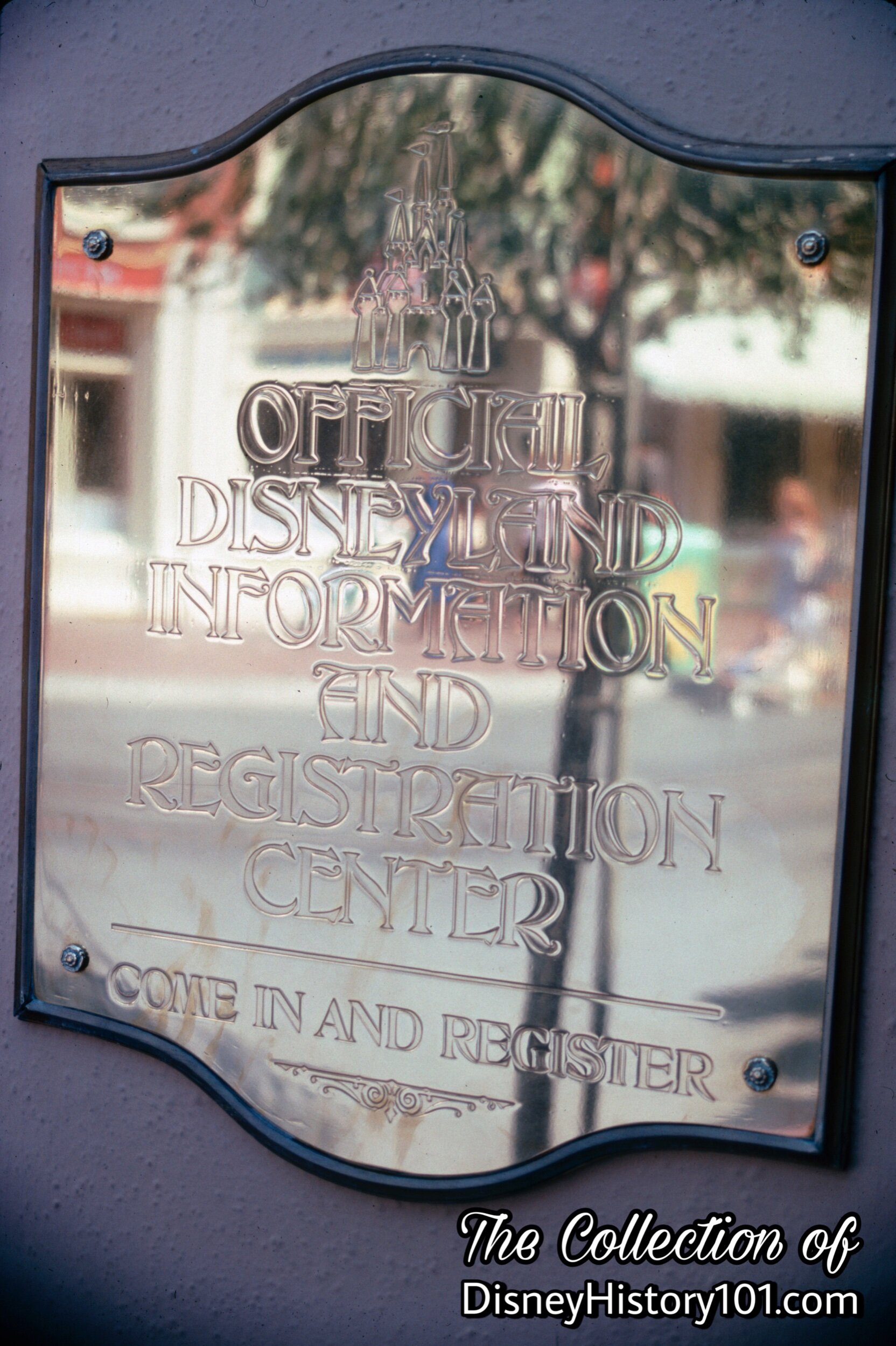
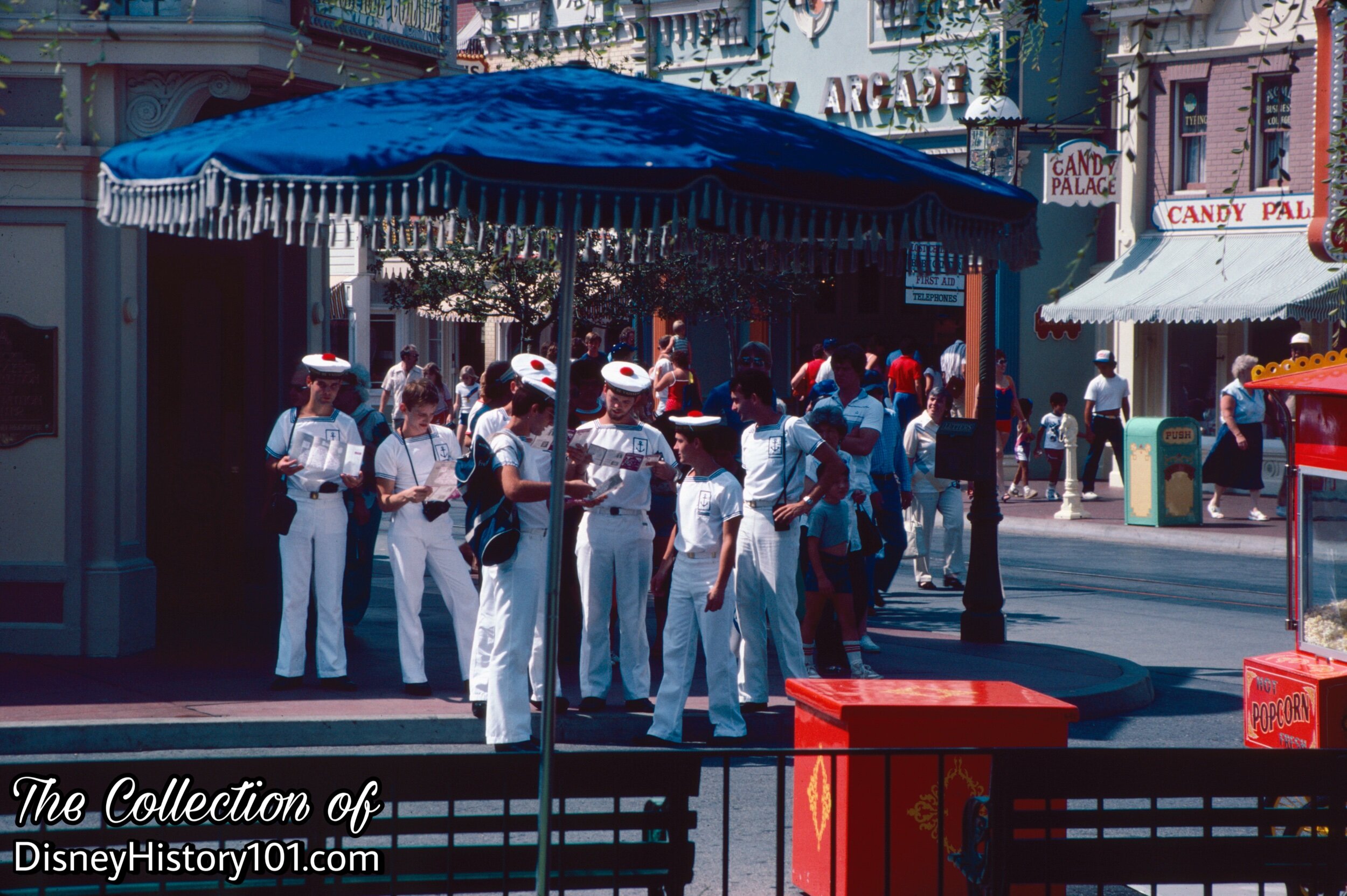
First time guests (as this group of French National Naval Officers) could always find some direction and information at the Official Disneyland Information and Registration Center!
From 1985 to 1988, a new sponsor would “greet” guests in this stately location on the hub - Gibson Greeting Cards! The old lobby was transformed into a cozy new shop that would briefly (and, appropriately) be called Card Corner for the next three years. The shop was still shared with Disneyland Guest Relations (and its Disneyland Tour Guides) who continued to staff the facility and answer guest’s questions and address guest’s inquiries. The lobby would take on a whole new look and function - that of a shop where guests could purchase greeting cards, gift wrapping paper and other gift items.
According to Disneyland souvenir guides (published 1988), during this time, the shop still served as the Disneyland Information & Registration Center where guests signed their name in the Disneyland Guest Book and could pick up information on other Southern California attractions.
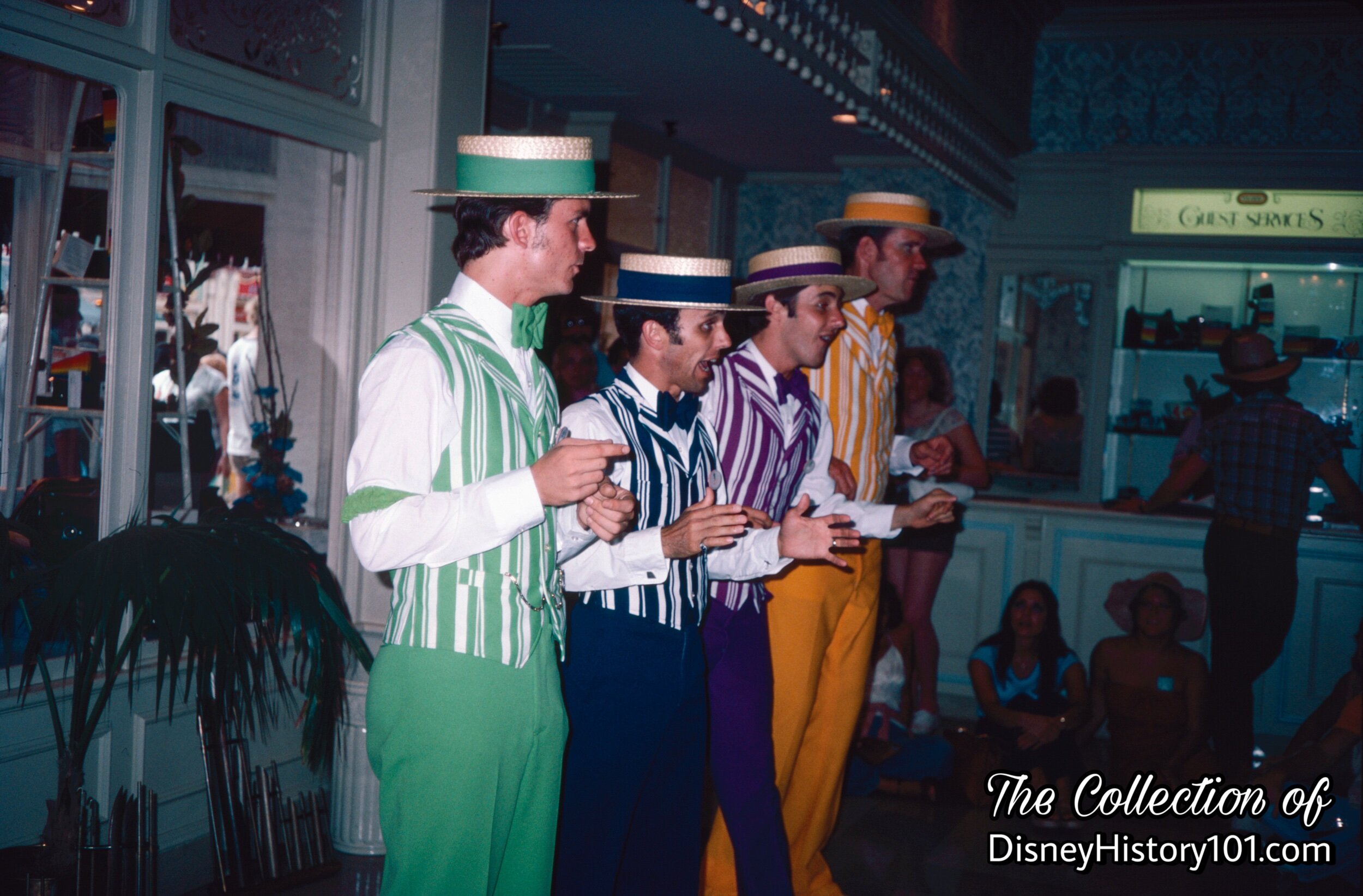
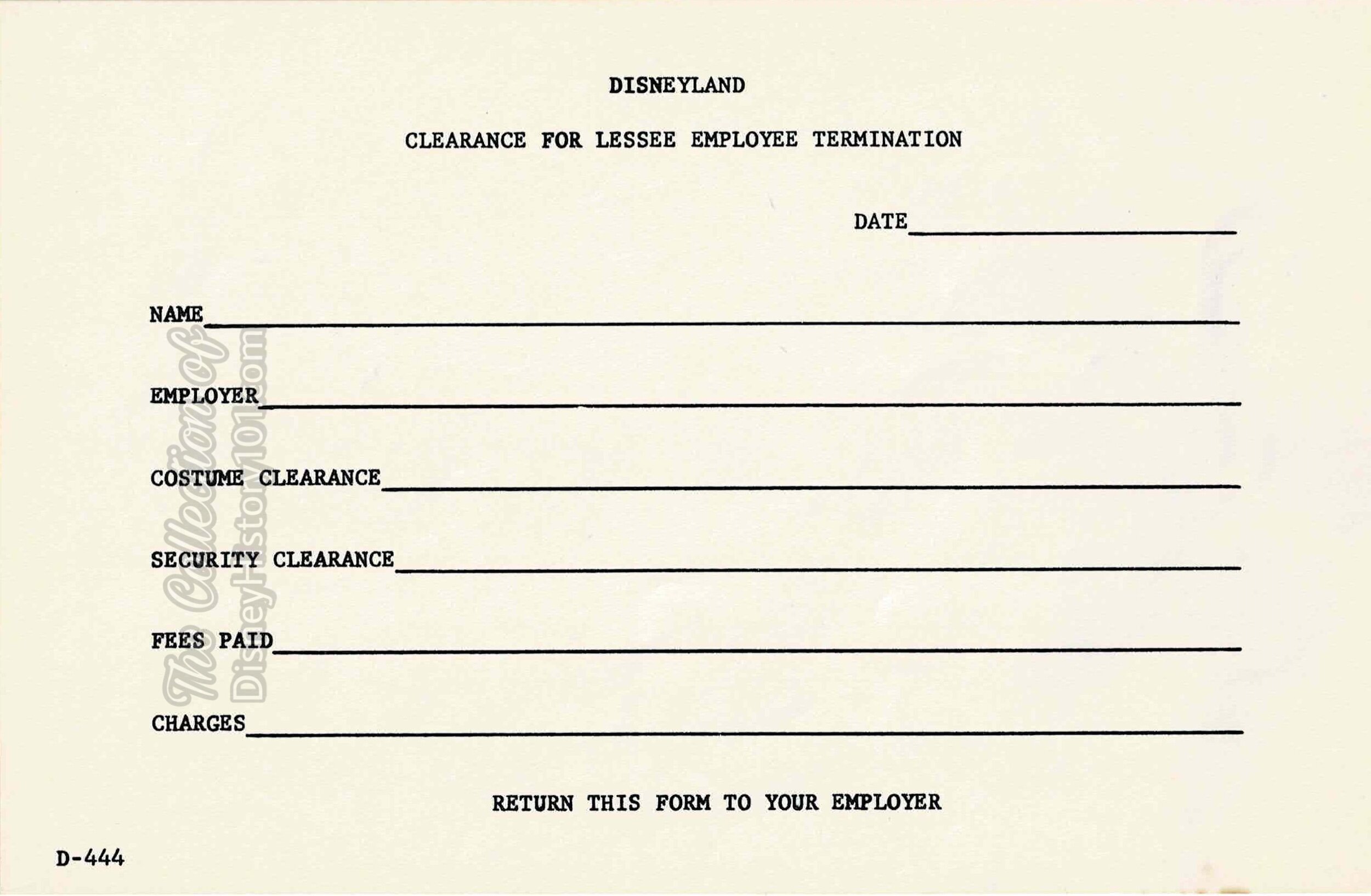
The Carefree Corner would return to Main Street U.S.A., during November of 1988. When lessee Gibson Greeting Cards departed from Disneyland, a form of the Carefree Corner briefly occupied the “apartments” as the “Official Disneyland Information and Registration Center”. This time the location was operated by Disneyland Tour Guides of the Disneyland Guest Relations Department.
Often the Carefree Corner (of this era) was used as a prize redemption center for contests, as during anniversary celebrations or events like the “Discover America” contest of Celebrate America (1983). In addition (by 1990), the Carefree Corner was also a location to find plush, greeting cards, stationary, gift wrap, and party supplies featuring the Disney characters. During August 20 - 29, 1993, the “first names first” program allowed customers to input their name into a computer and have the meaning of their name printed on special paper. The meaning could then be printed on a mug, stein, keychain, desk plaque, baby sipper, or certificate.
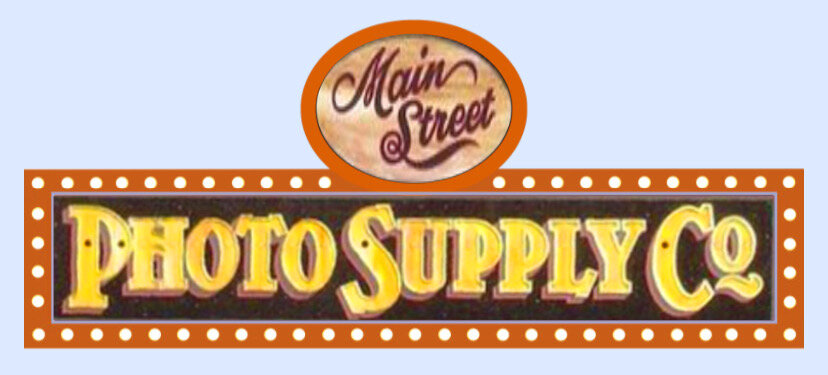
Before long, the Main Street Photo Supply Co. briefly opened in this prime location. Guests could now claim photos with tickets here. A contemporaneous (c.1994) Disneyland Line magazine commented: “Carefree Corner no longer operates as an information center; it is now strictly a merchandise location. Guest services previously provided at Carefree Corner are now available at City Hall or The Bank of Main Street, with the exception of the Guest Registry Books, which are no longer available for signing.”
But Carefree Corner was not gone for good, and would briefly return to Main Street U.S.A., during November of 1988.
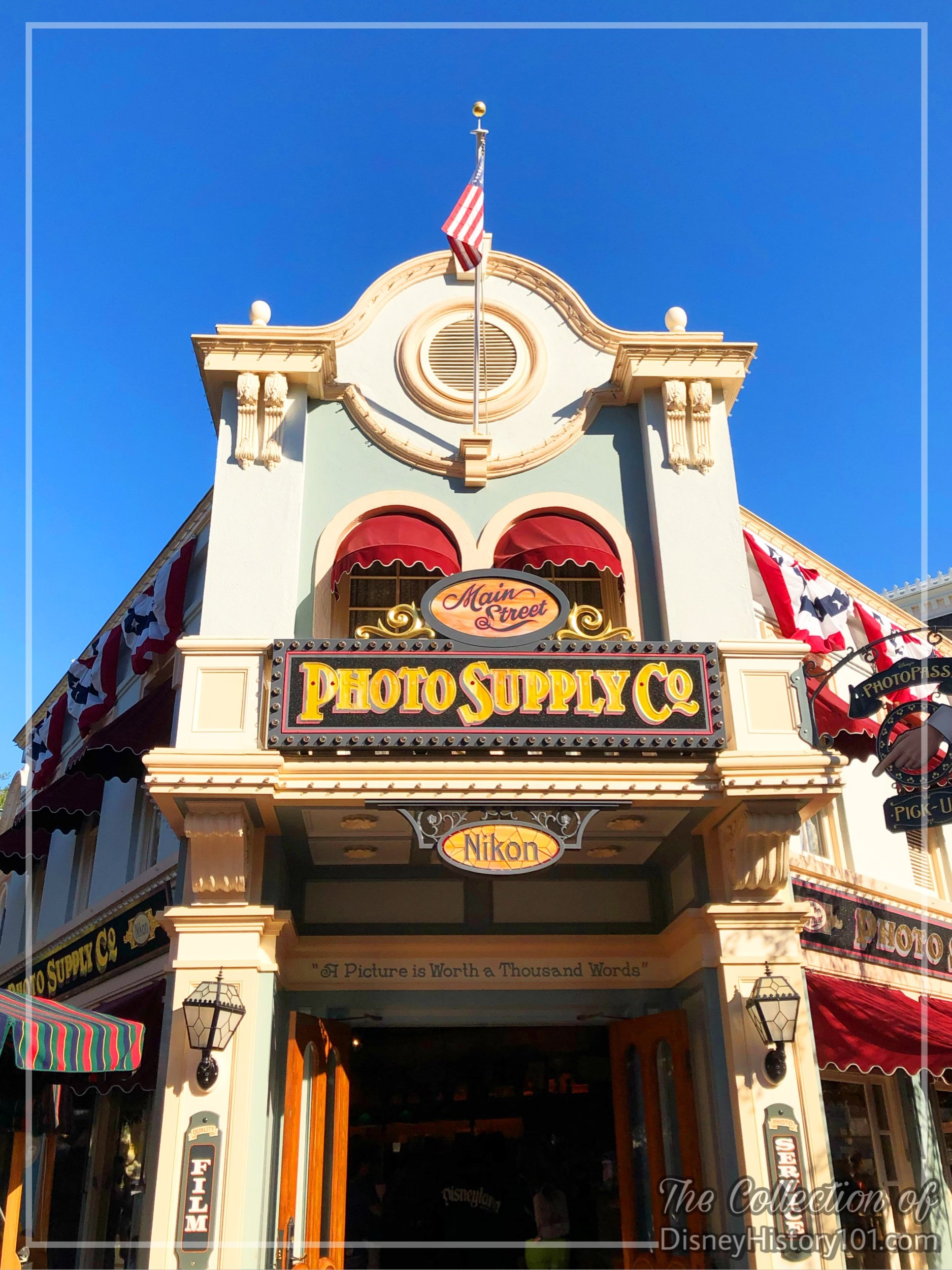
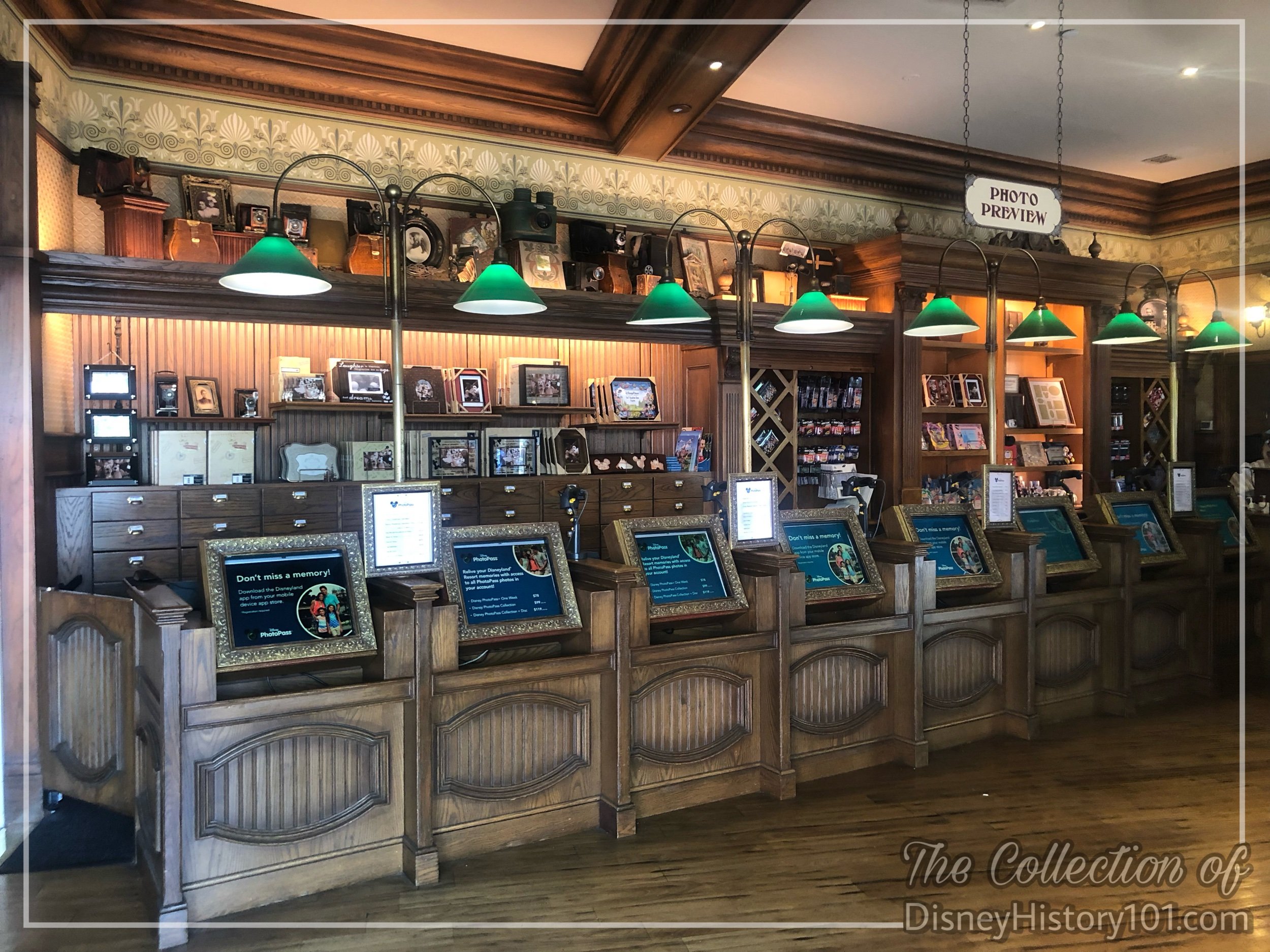
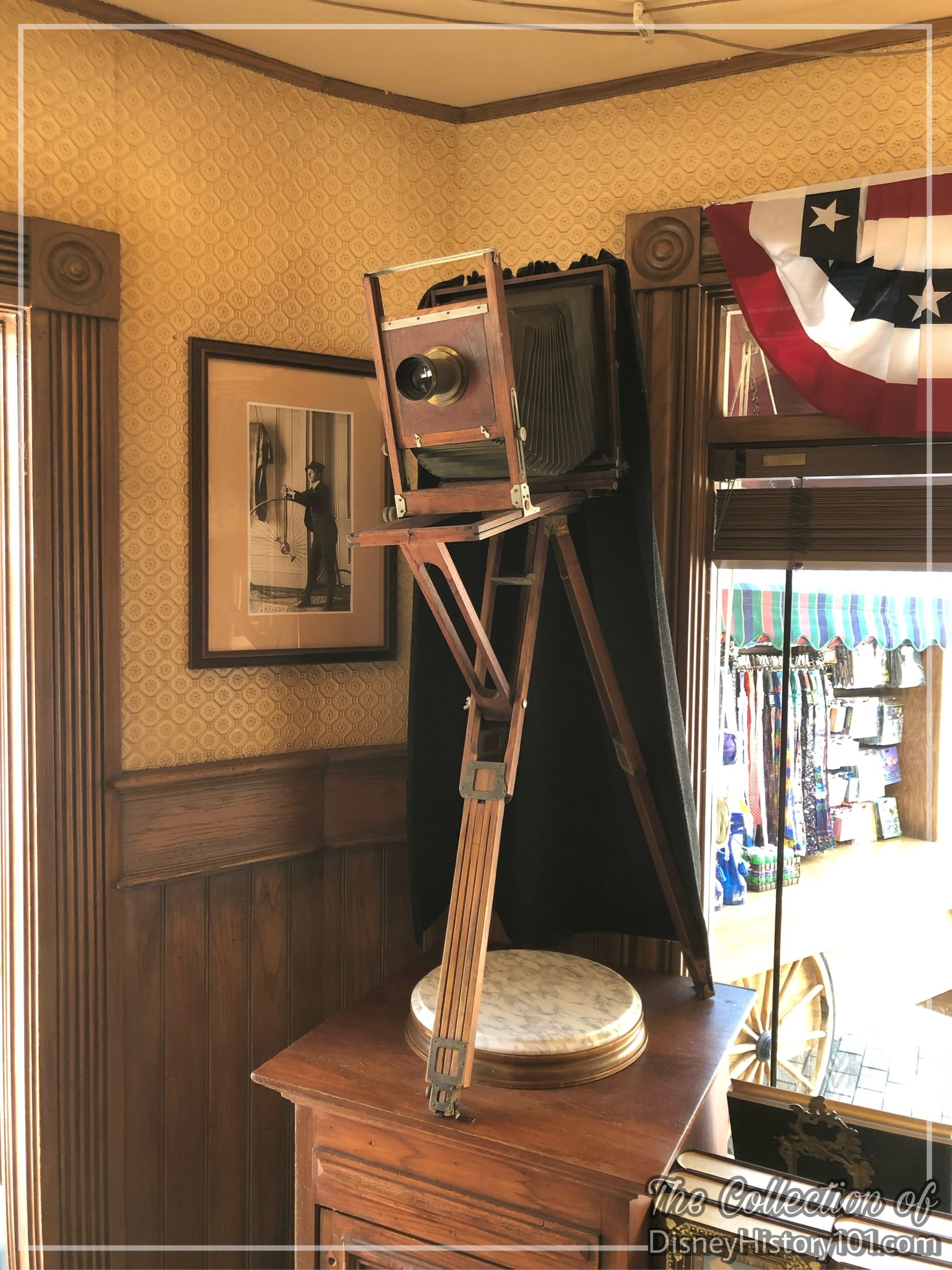
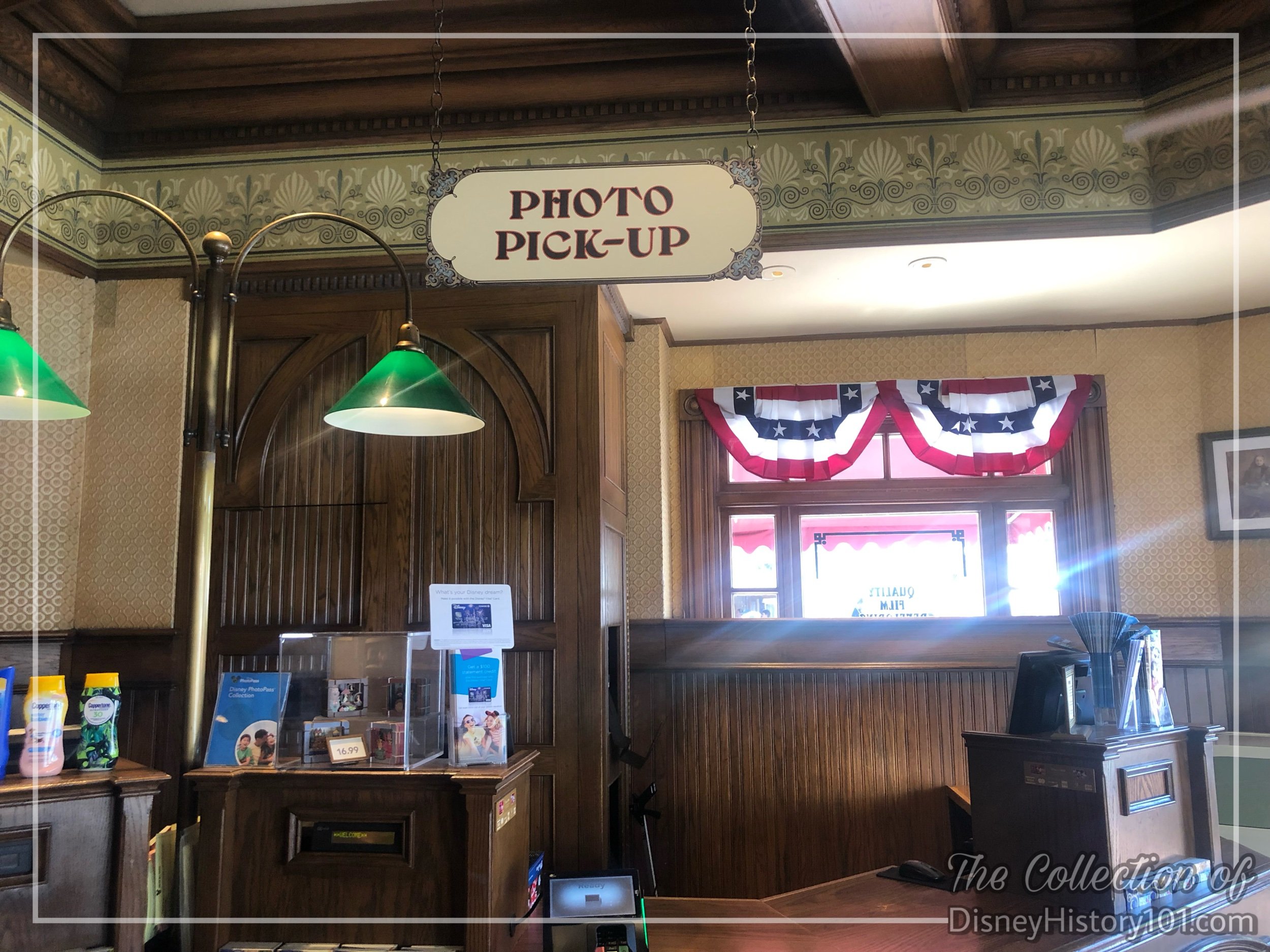
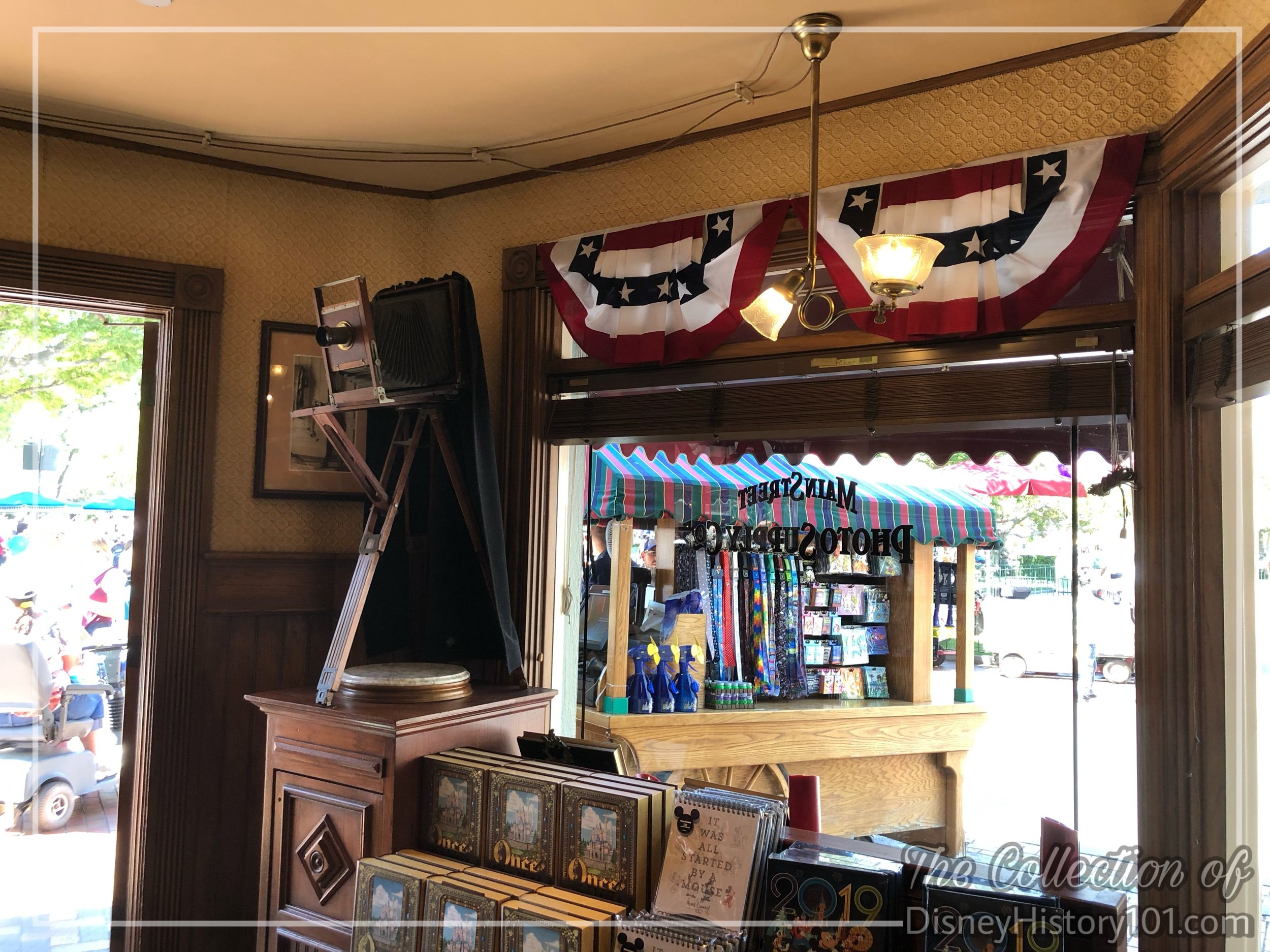
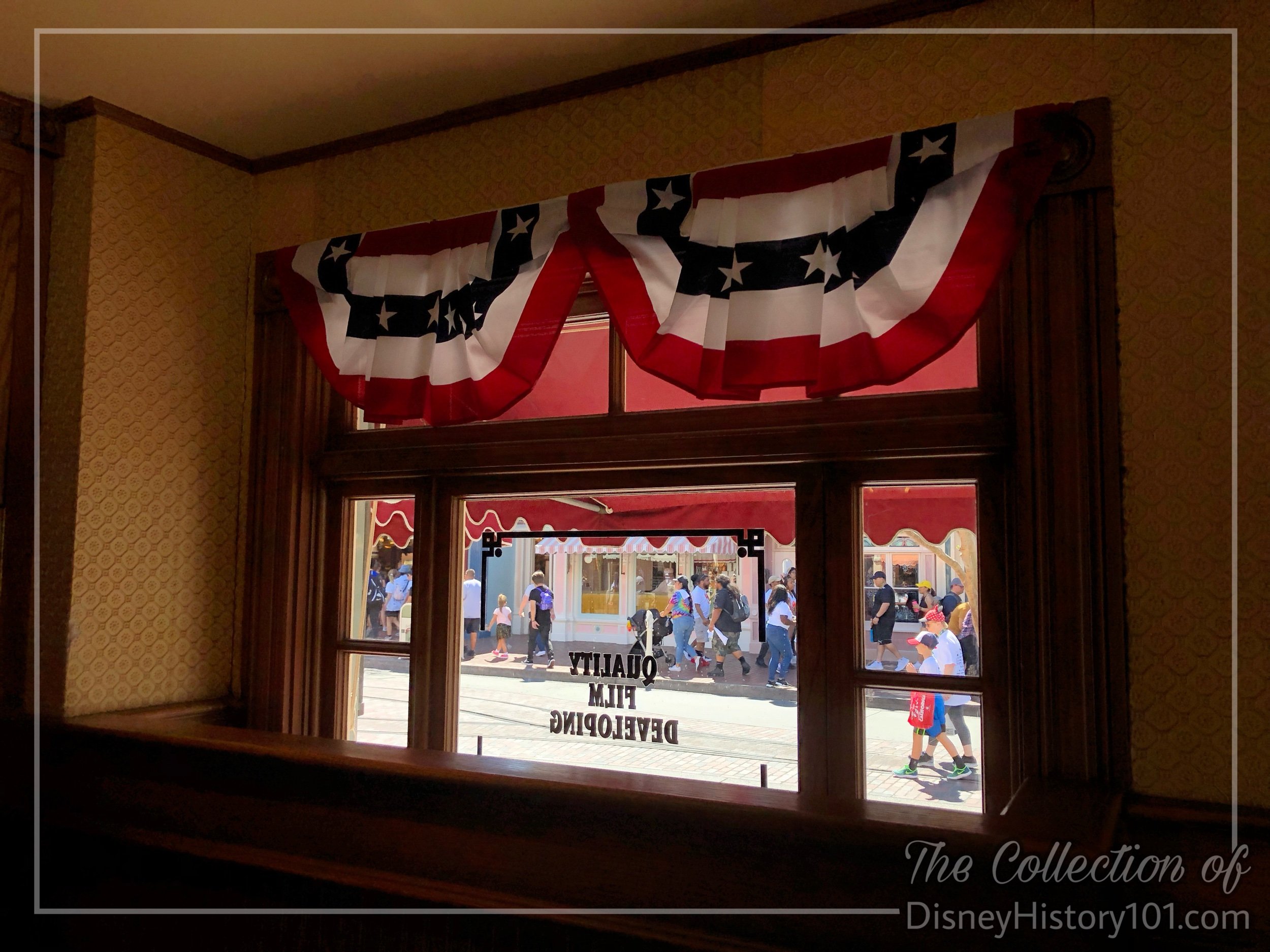
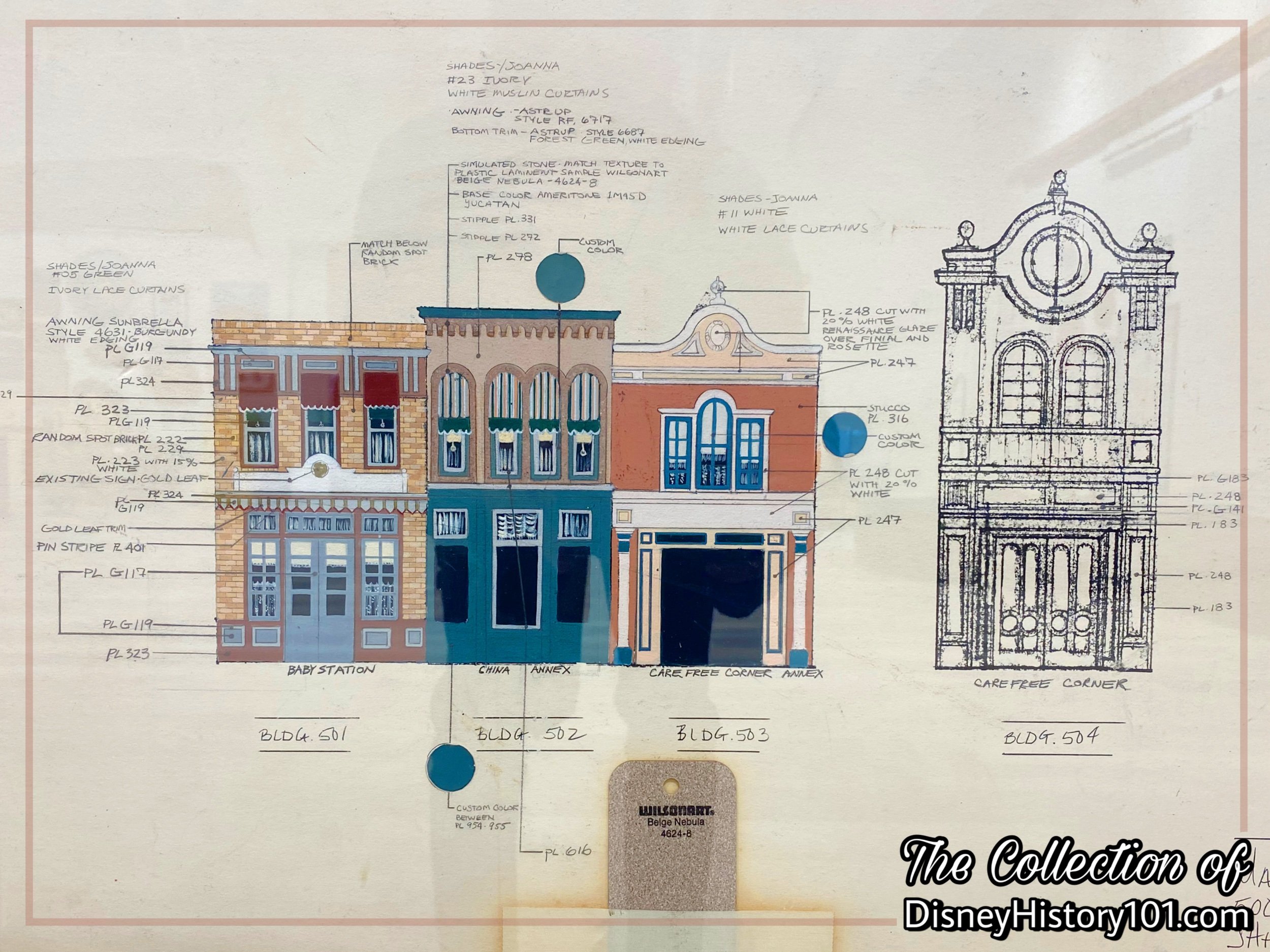
Custom colors were assigned to the shades, lace curtains, stucco, and even the Renaissance glaze over the finial and rosette of the Carefree Corner facade.
“We celebrate our people for the memories they created in the past.”
Martin Sklar once said “an individual's contribution can usually be found in the final product if one looks closely enough, but the Disney mind frame is to never point out ‘what I did’ to anyone.” However, a few outstanding individuals have been publicly recognized for their contributions and even ceremoniously honored by the Company.
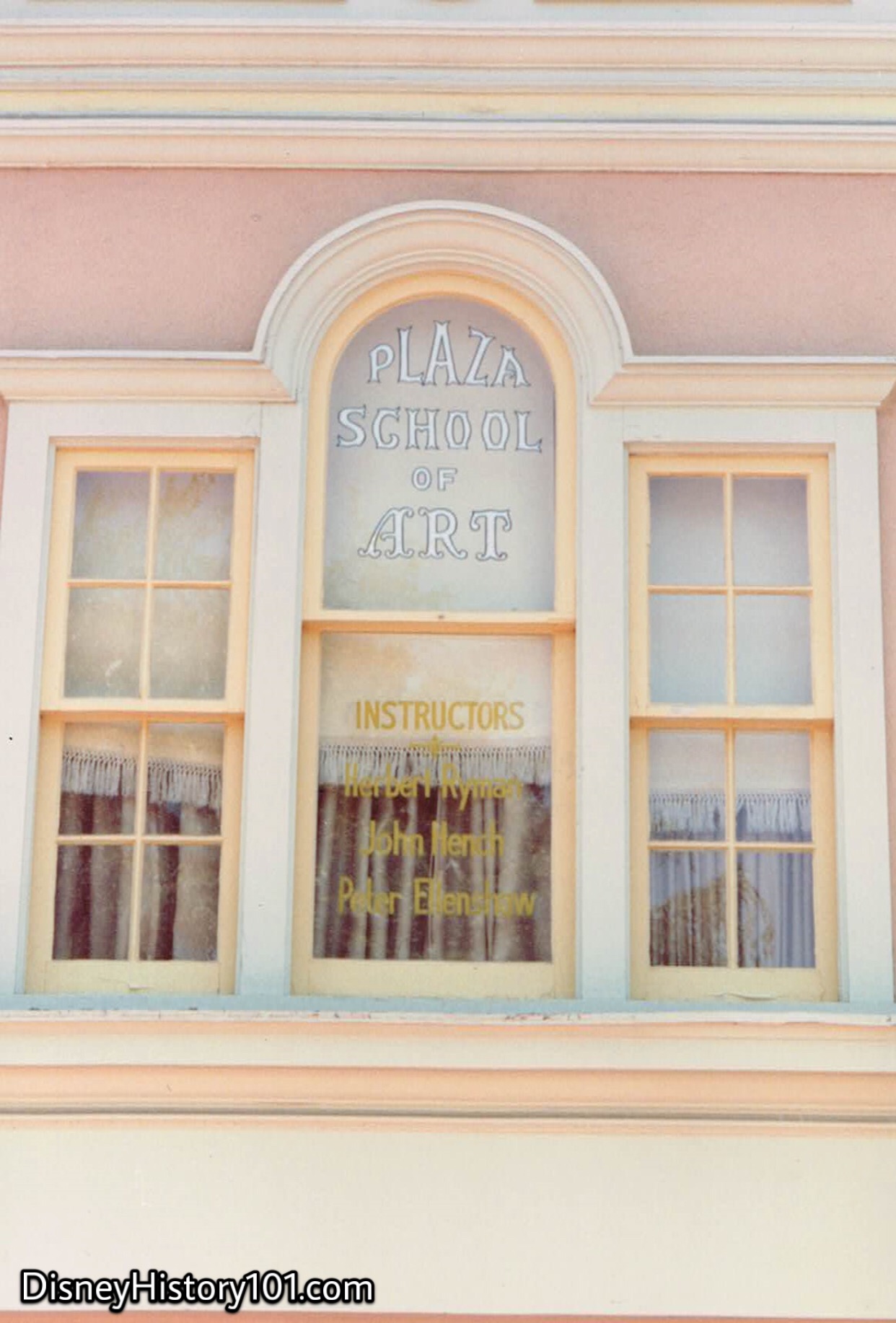
One type of original free exhibit still remains to our modern era - that of the Main Street Window Honor! There are thousands of windows at Disneyland. Above, three Legendary artists who helped visually develop Disneyland are honored in one window over the Carefree Corner - Herbert Ryman, John Hench and Peter Ellenshaw. “The three designers are listed as ‘Instructors’ for the ‘Plaza School of Art,’” according to “Disneyland - A Treasure Chest of Trivia,” prepared by Walt Disney Productions, 1990. By 1990, John Hench was serving as the Senior Vice President of Walt Disney Imagineering, Peter Ellenshaw had retired, and Herb Ryman had served as a consultant until his death in 1989. Herb (in “A Brush with Disney”) reflected: “Whenever I went to the park, I was aware of the contributions I had made, as I’m also aware of contributions by Bill Martin, Marvin Davis, John Hench, Ken Anderson ad all who were playing Disney’s orchestra… The names on the Main Street windows are the people to whom Walt wished to give credit, the people who helped create Disneyland…My name is there, with John Hench and Peter Ellenshaw. And that’s what we do, we give art lessons. I realize that participating in Walt’s dreams has Brought joy to millions of excited people which why work alone would never have been able to do. No matter what individual talent each of us has, working under the auspices of Walt Disney we’ve really contributed something to the world.”
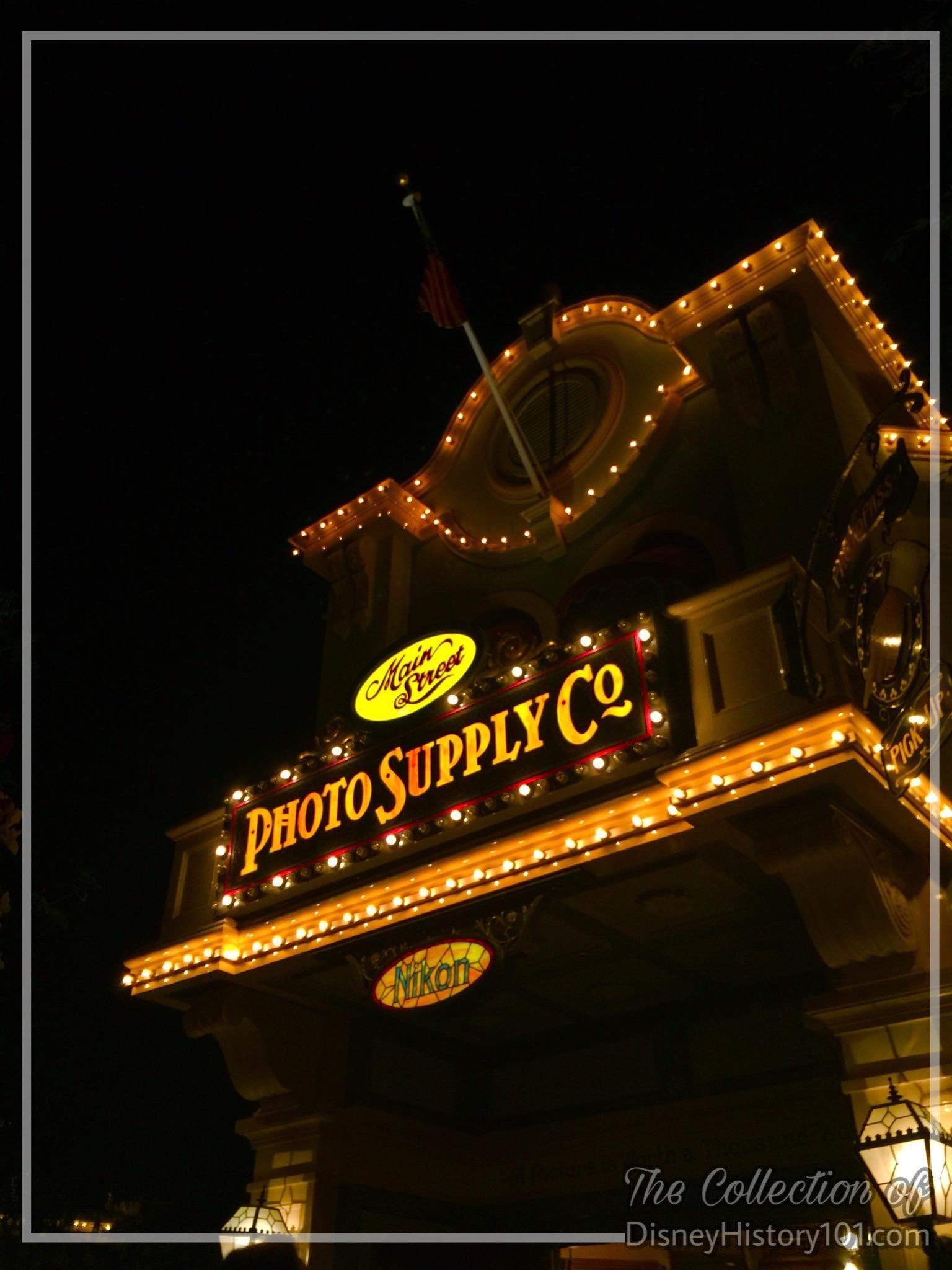

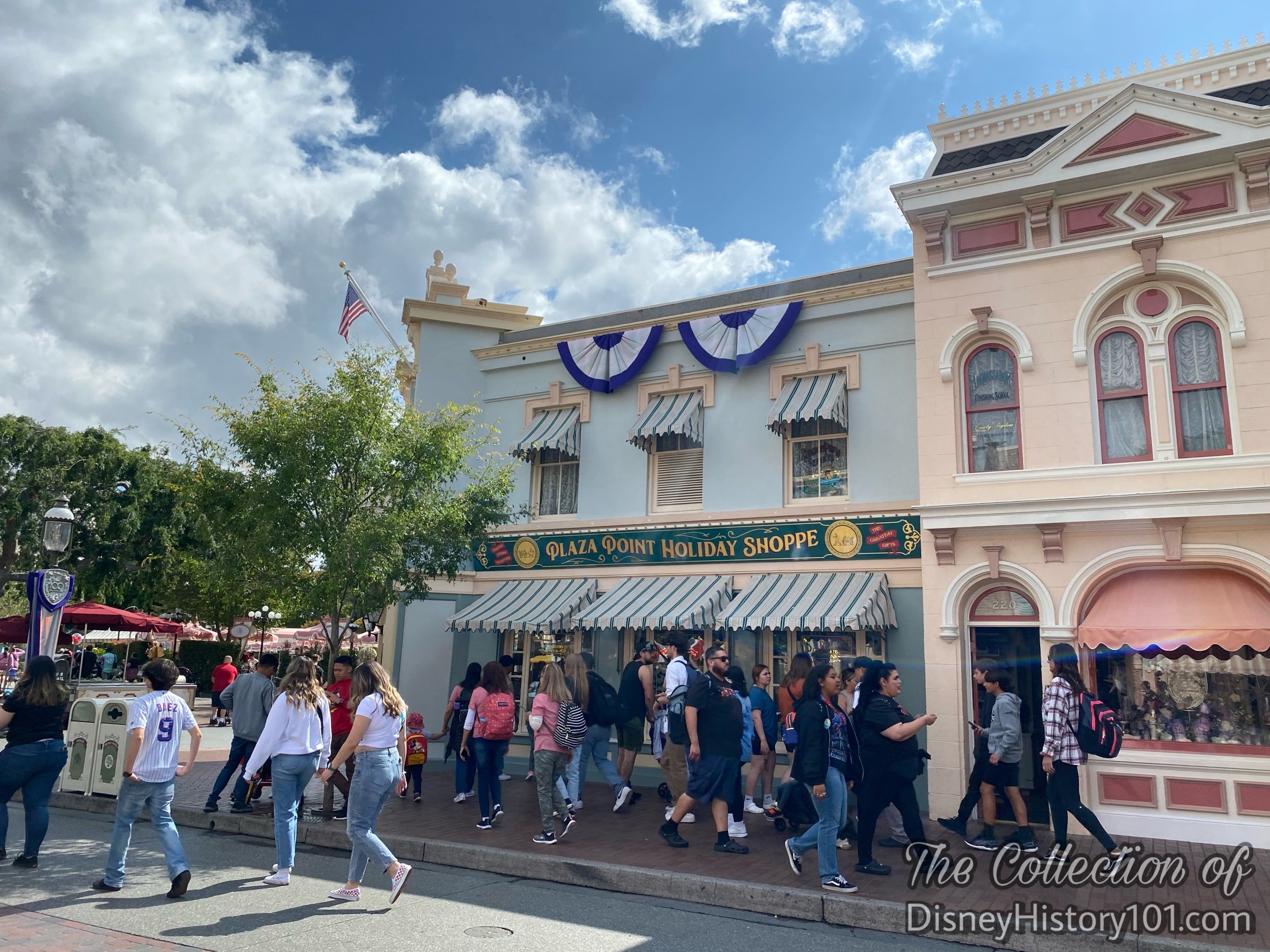
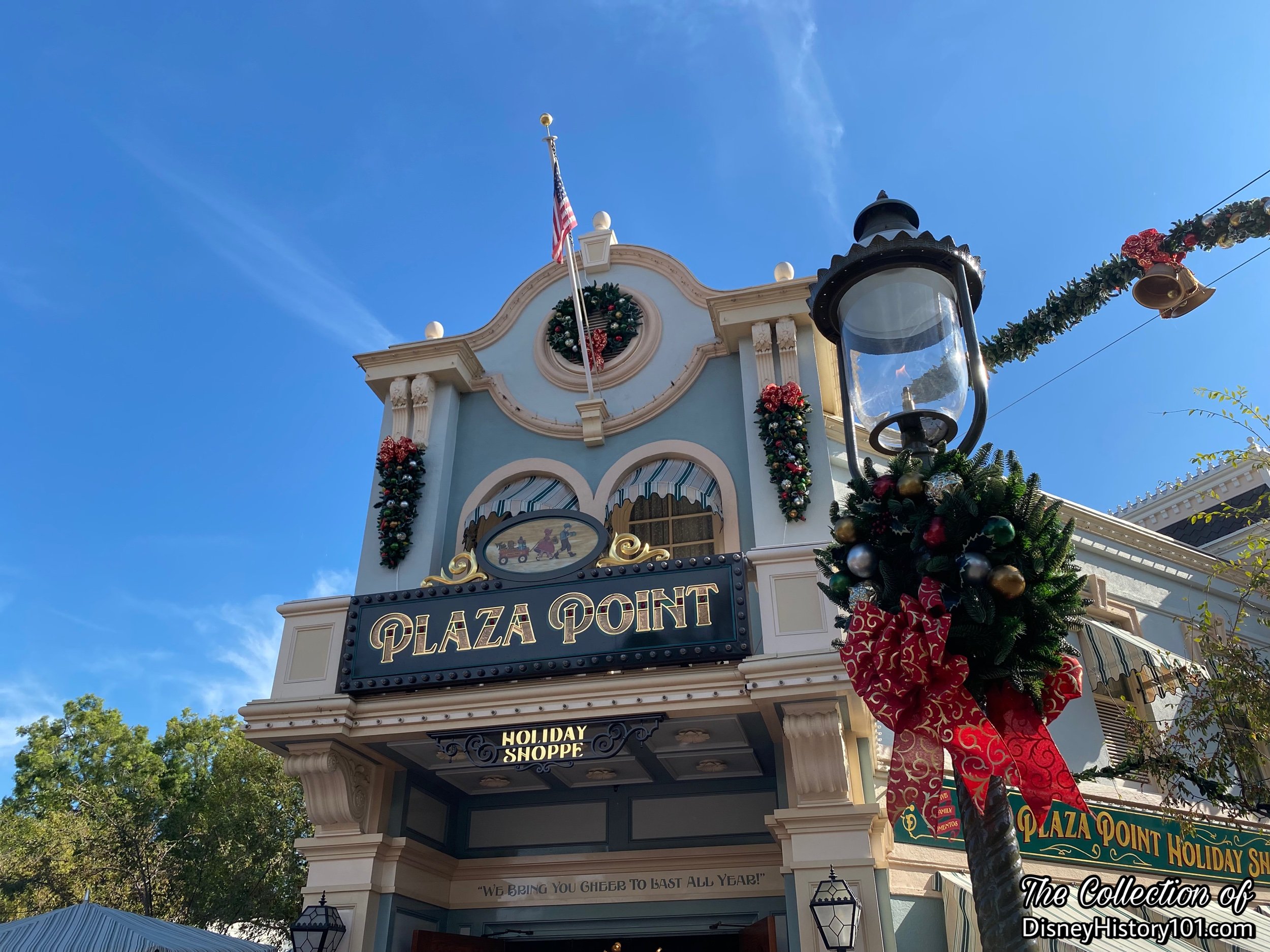
As of October 21, 2021, the Plaza Point Holiday Shoppe opened in this piece of real estate, on the Central Plaza Hub of Disneyland.
Today, Plaza Point (located on Main Street, U.S.A. at Disneyland Park) is the place where “the festivities begin” and guests “shop year-round holiday décor—including ornaments, housewares, linens and accessories, and discover Christmas-themed merchandise every day of the year.”
CARNATION ICE CREAM PARLOR
Since the creation of Mickey Mouse, Walt Disney had extended numerous licensed character arrangements with manufacturers of ice cream like Southern Dairies and Balian Ice Cream.
Back in 1951, Walt Disney and Art Linkletter visited the famous entertainment complex Tivoli Gardens in Copenhagen. He was researching and talking notes to build a family entertainment center and Tivoli was much like what he envisioned. It was clean, directed to the entire family, fun, entertaining and educational. Walt noted how important it was to have a lot of places for guests to sit down and a wide variety of eating spots that served excellent meals.
During 1954, Walt began searching for participants to lease shop and restaurant spaces and help generate the necessary capital to fund construction of DISNEYLAND®. In a synergistic relationship, the companies (in turn) could sell their products and advertise their corporate names in the Park as they provided services and shows. Disneyland Participant Corporate Sponsors were carefully selected. High quality, long term corporate sponsors would provide incremental income that enabled Disneyland to enhance its show and attractions, offset some operating expenses, and capitalize on marketing opportunities.
Back then, (July of 1954), Raul Grizante of Disneyland, Inc. was overseeing food philosophy, area & location, food specialties, and beverages for Disneyland. Also, original “55er” Rima Bruce (who started with Jim D'Arcy in Food Services when all foods were Lessees) typed memos and menus. She recalled that “the phone never stopped ringing with everybody trying to get a food lease in the Park.“
By July 1, 1954, George Whitney of Disneyland, Inc. directed Amusements, with Ron Miller overseeing analysis, philosophy, capacities, planning, operator training, and amusement procurement. Individuals like Nat Wyncoff provided the essential orientation for curious lessees, selling them on the idea of Disneyland using various visual aids like sketches and one of Herb Ryman’s oil paintings of Disneyland. Soon, “a cross-section of American industry…[was] represented in Disneyland. Each of these companies… [would expose] its institutional advertising and public relations message to Disneyland guests through various forms of participating exhibits and displays. In each case, the exhibit… [was be] related to the theme of the ‘land’ in which it is located, and is woven into the overall concepts and themes of Disneyland”, according to “Disneyland, U.S.A.”, published 1958. It was intended that Disneyland feature “the turn-of-the-century shops and stores - the photographer's shop, ice-cream parlor, penny arcade, bakery, drug store, music shop, butcher, grocer, many of which are sponsored by outstanding American companies whose names are familiar ‘household words.’”
Many free exhibits of Main Street U.S.A. were sponsored by one of the United States’ “old reliable firms, which have been in business fifty years or more. Here they can show how they started and reproduce their first place of business” , [according to one draft of the Disneyland Prospectus, published 1954]. Several of these “reliable old firms” sponsored the “abundance of restaurants devoted to pleasing all tastes and all budgets,” according to “The Story of Disneyland,” published 1955. In turn, Disneyland, Inc. received income. For example, in 1958, Bank of America appraisers figured of the total income received from leases, 16.02% was derived from the selling of advertising rights and 40.12% from the leasing of space to concerns whose main reason for occupancy is for advertising purposes. The remaining 43.86% of the lease income was derived from stores that sell various products and food.
The “legen-dairy” Carnation Company (whose origins pre-date the turn-of-the-century), was one such “reliable firm,” and an appropriate choice for Disneyland sponsor. Carnation Company founder Elbridge Amos Stuart began processing evaporated milk in 1899 in Kent, Washington. During the early 1900’s Mr. Stuart developed “the famous Carnation line of Holstein-Friesan dairy cattle” with the ability to produce extraordinarily large quantities of milk. This the cows did, from a stress-free and peaceful pasture, ensuring their health and happiness.
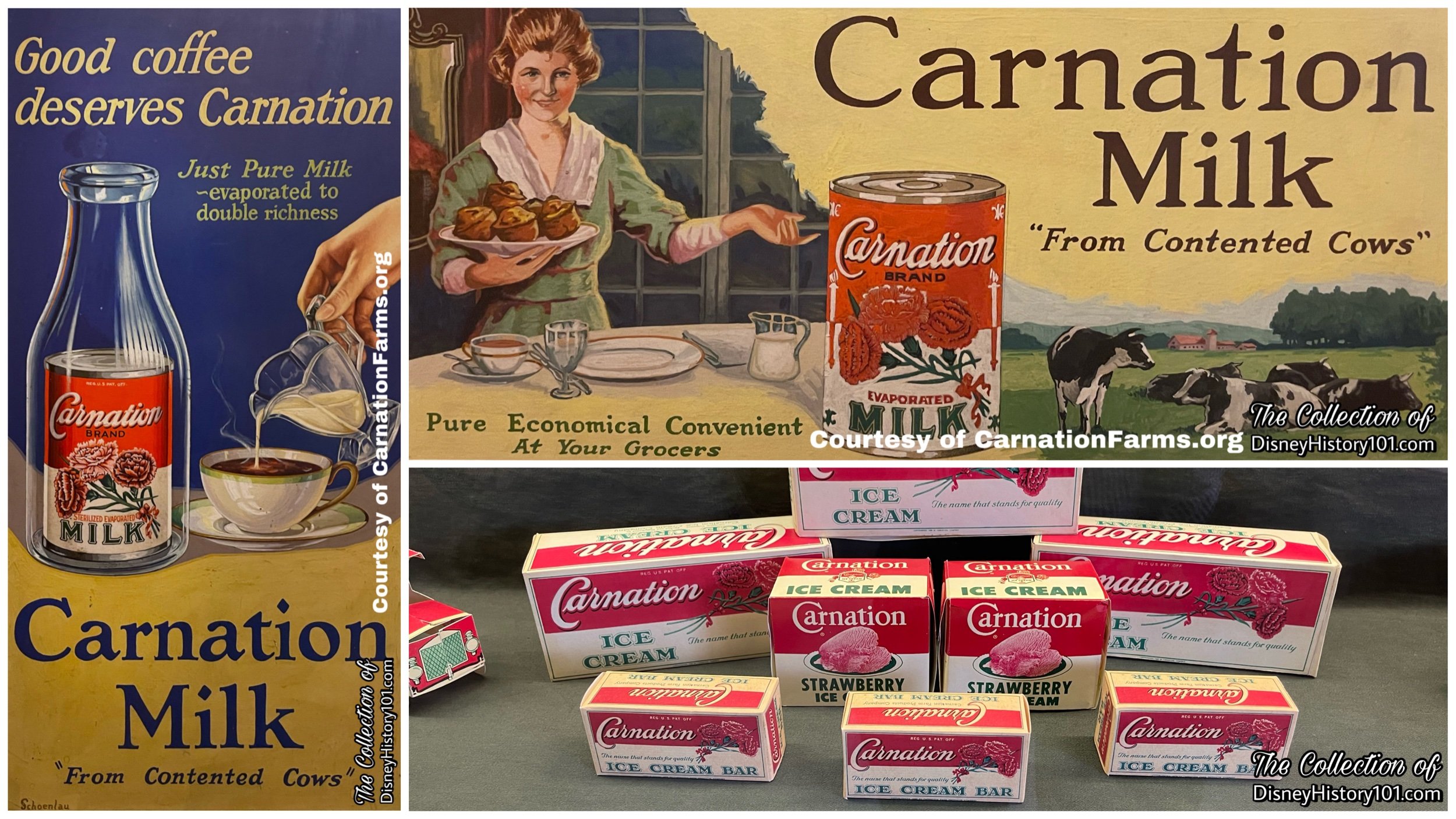
Now 55 years after that important development (and a great deal of dairy research), the “milk from contented cows” would soon both content and bring happiness to visitors to Walt Disney’s Disneyland! This was all thanks to a partnership between Elbridge Amos Stuart’s son (Carnation Company Chief Executive Officer Elbridge Hadley Stuart).
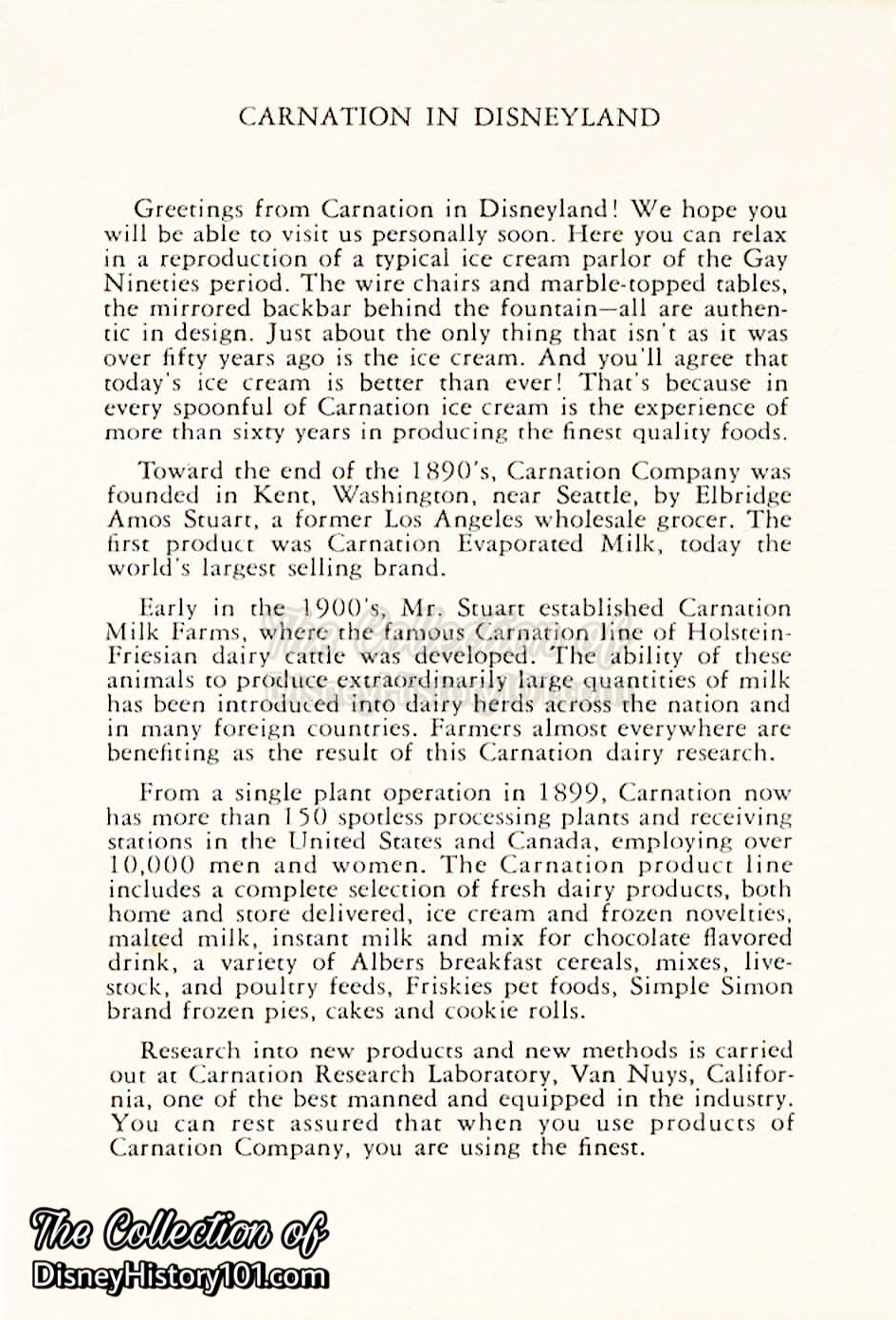
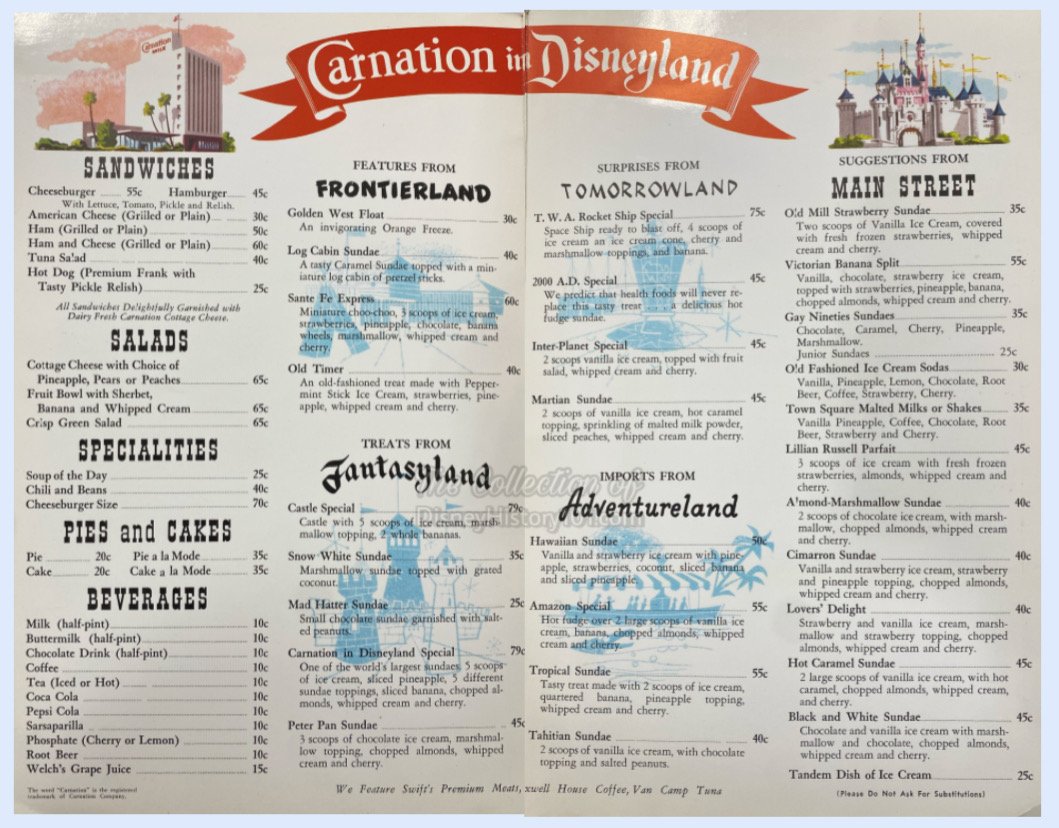
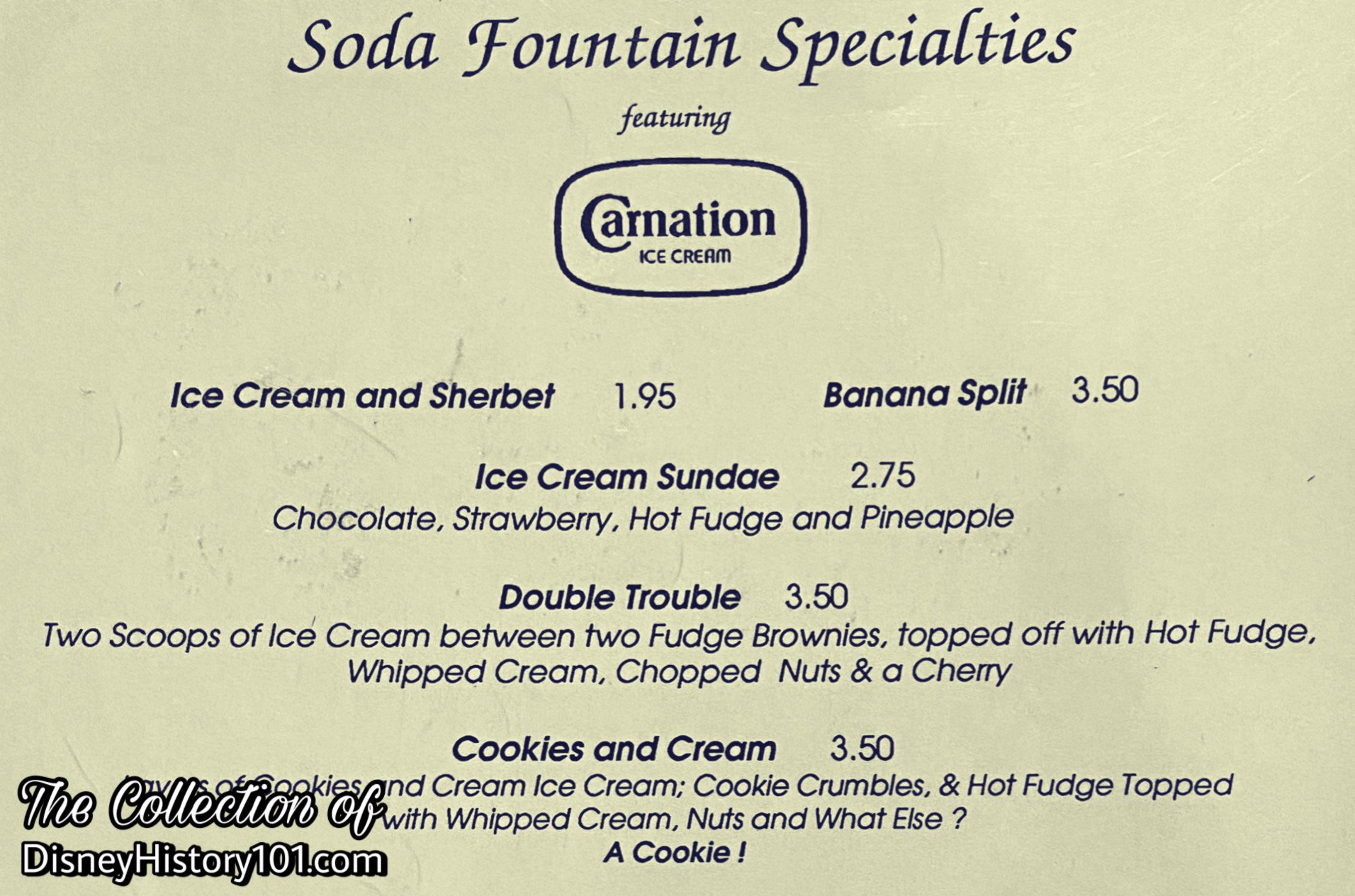
This souvenir menu page (pictured above) is a prime example of “the possibilities for a sponsor to capitalize on this association” with Disneyland. The many ways of “merchandising, sales promotion, advertising, public relations and publicity programs are almost limitless. Regardless of the type of product, goods or services manufactured and marketed by sponsors, the Disneyland association can be effectively and importantly translated into the sponsor’s promotional activities,” according to “Disneyland, U.S.A.,” published 1958.
“Master Planning a ‘Place Setting’ to Dine At Disneyland”
According to “THE DISNEY THEME SHOW - an introduction to the art of Disney outdoor entertainment: Volume II”: Of all the guests’ senses that come into play at Disneyland, the most difficult response to predict was taste. If 70,000 guests were to arrive on a single day, there would probably be 70,000 different ideas about food. Generally speaking, Disneyland food locations fall into three categories - sit-down restaurant service, “buffeteria,” and fast-food categories. The most extensive theming has always been found in the sit-down restaurant locations but all locations were housed in authentically decorated facilities.
Early thumbnail sketches and other concept artwork seemed to be unencumbered by restrictions of budget, schedule or the laws of nature and physics. Though guided by Walt, his artists appeared to engage in “free-thinking,” as if implementing the modern “Blue Sky” Imagineering process. Like some advanced “High Concept,” final designs were quickly generated and approved.
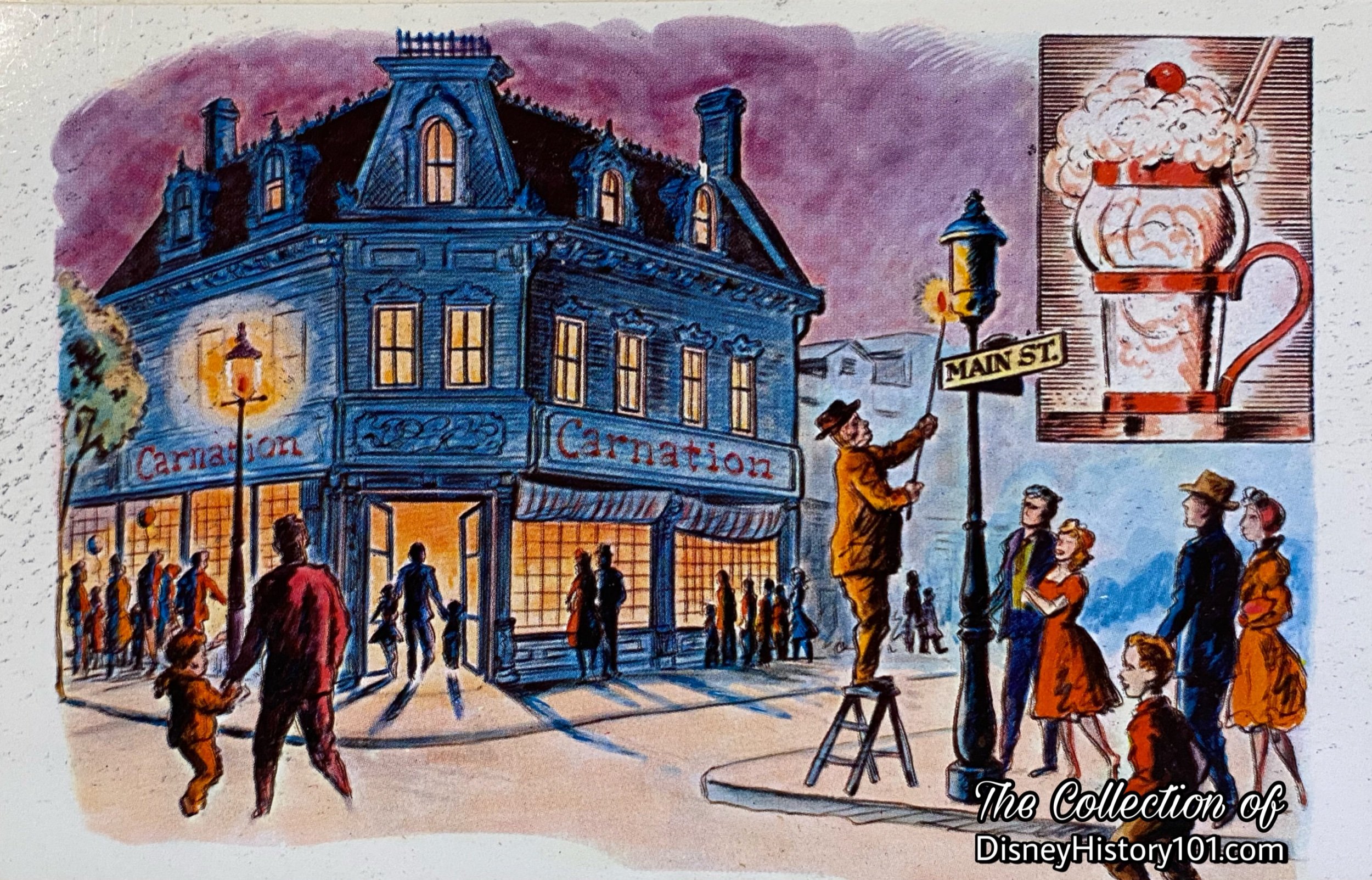
Some of the earliest Main Street site plans prepared, depict an American Motors - sponsored exhibit in this space of the 400 block of Main Street U.S.A. The same plans intended for a Carnation Farms - sponsored exhibit, but on the 500 block of Main Street U.S.A. (across the street, on the East side). As things continued to develop, it was decided that the American Motors’ exhibit would be best housed in an exhibit hall in Tomorrowland. As for the space on the south side of Main Street’s 400 block (and the corner of West Center Street), it would be inhabited by Carnation Farms’ free exhibit.
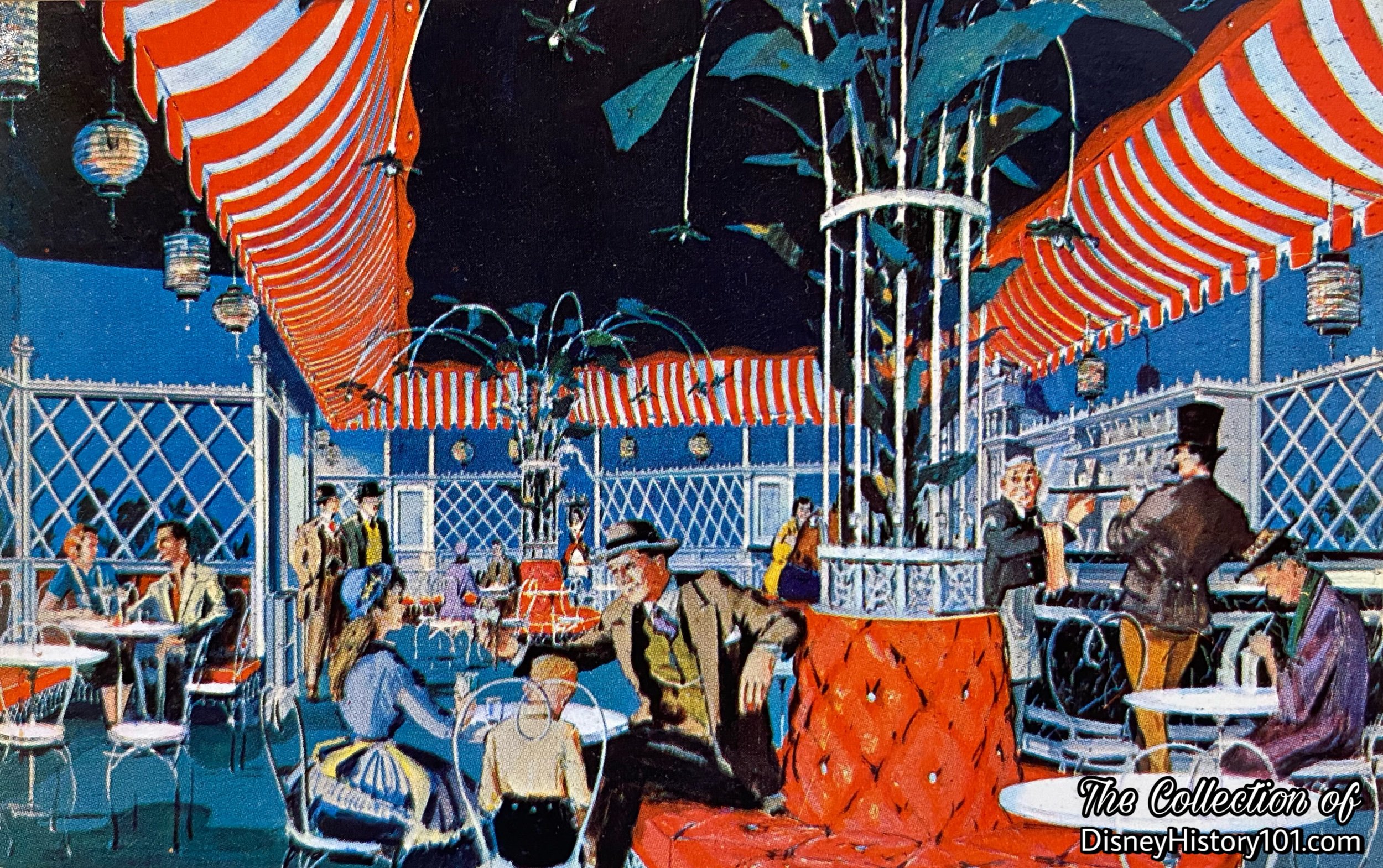
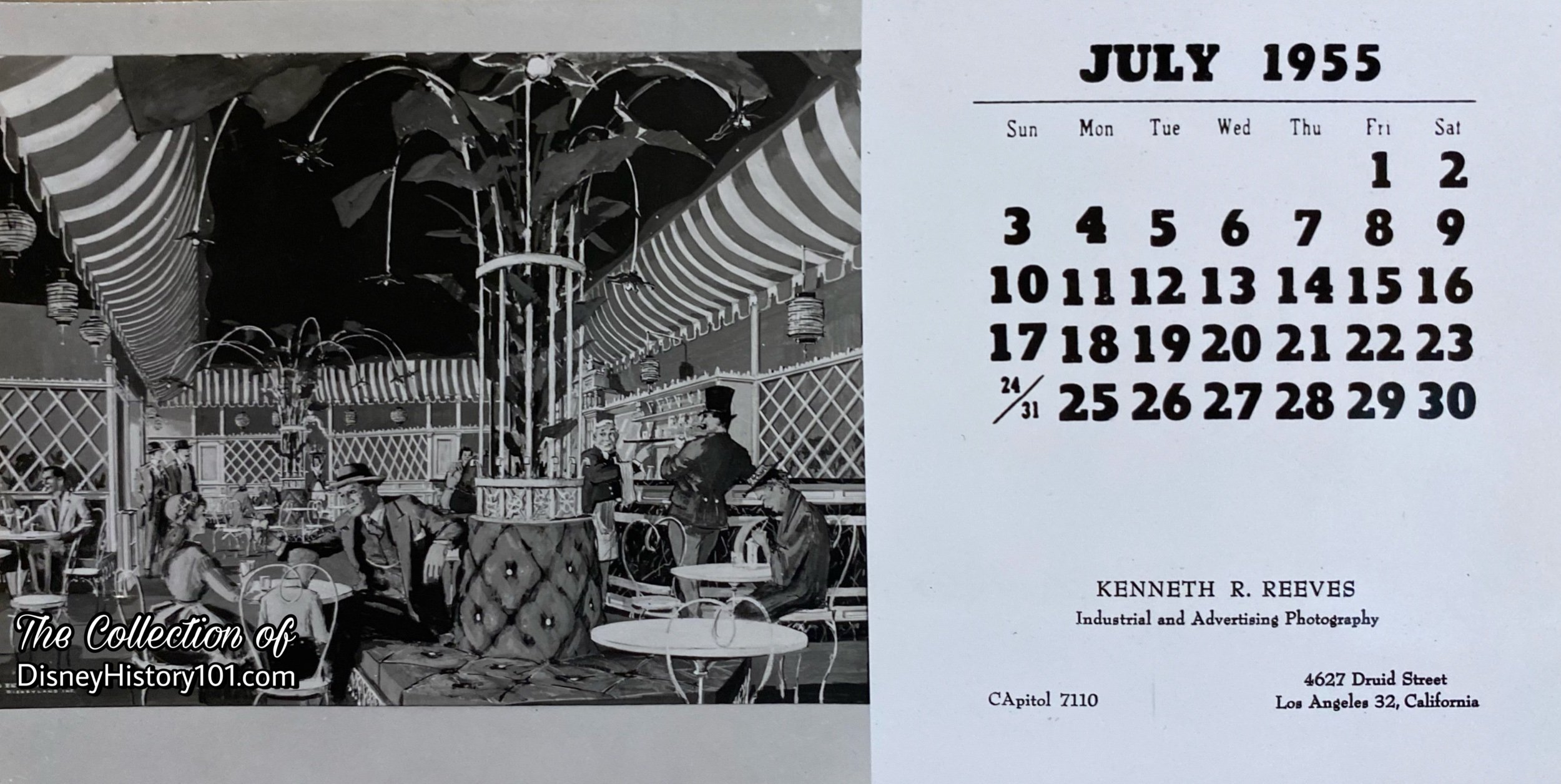
“Disneyland is unique in that some of the world's foremost creative artists and architects control all design at Disneyland.“ Disneyland Inc. furnished an artist's conception of such a parlor, which was being duplicated in every phase. For instance, a photograph was supplied from the Disney Library showing a soda fountain back bar that was actually in use during that time. Engineers devoted considerable time to further research and were able to procure a book of the history of the soda fountain industry.
As Walt described to Bob Thomas (of Associated Press), “some industries will have exhibits, but all of them must be in keeping with the era.” A year prior to opening, Carnation's ice cream parlor was a sketch in Disney's studio. But soon, Disneyland guests would be able to visit an authentic turn-of-the-century sweet shop, or ice cream parlor thanks to other talented artists and skillful craftspeople. Under the supervision of Ray Keplinger of Carnation Company, Disneyland, Inc. artists created site plans and other designs for the c.1890’s themed Carnation Ice Cream Parlor exhibit which would also function as a restaurant with waitress service.
“Architectural Designs by Lessees”
Disneyland, Inc. printed materials for Lessees detailing specifications for architectural designs of exhibit spaces. These were revised by March 16, 1955 and issued to Lessees.
All of the interior architectural drawings were done by competent registered architects or an approved display house of the lessee's choice. All of the designs submitted by the lessee's architect, whether for buildings or construction of interiors in DISNEYLAND, were approved as to the theme and general plan of DISNEYLAND as established by WED Enterprises, Inc.
Three sets of preliminary drawings were furnished DISNEYLAND, Inc. as soon as possible after signing of the lease. Two sets were retained by DISNEYLAND and one set was returned to the lessee’s architect with any revisions noted thereon and stamped “APPROVAL TO PROCEED TO FINAL DESIGN.” This stamp when properly signed and dated constituted the lessee’s authority to proceed with the final drawings.
The Lessees revised their final drawings to incorporate any revisions noted on the approved preliminary drawings, and submitted three sets of the revised drawings to DISNEYLAND. One set was returned to the lessee’s architect and any revisions noted thereon are to be incorporated on the original drawings. When the lessee had incorporated the final revisions on the drawings, two sets of transparent ozalids were forwarded to DISNEYLAND for approval. DISNEYLAND would stamp both sets “FINAL DESIGN APPROVED” and “LESSEE’S CONTRACT DRAWINGS”, and return one set to the lessee who could then release drawings for bid and/or construction.
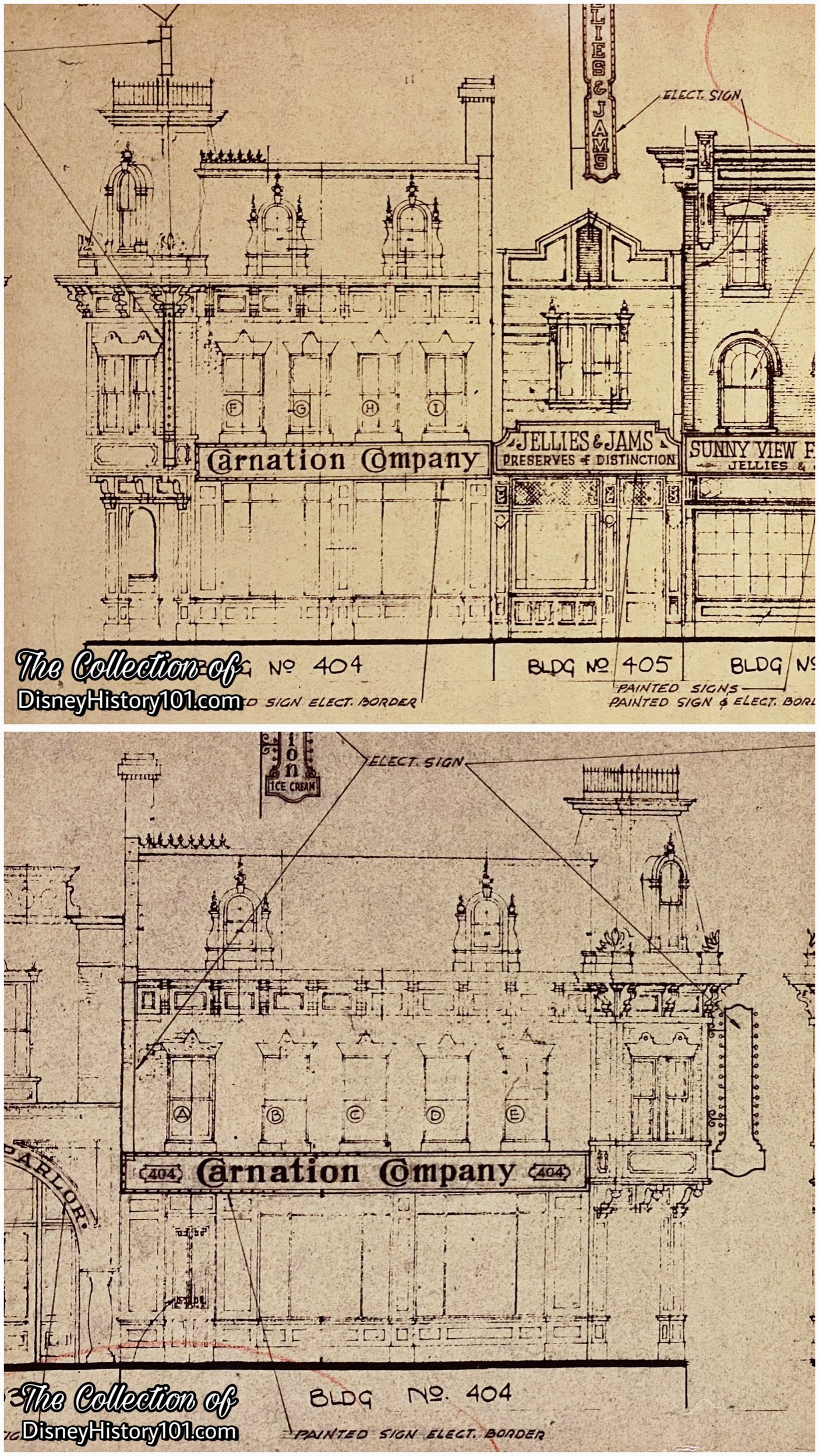
Next, architectural drawings helped define all designs, production and construction strategies, costs, schedule, and resource requirements. Models explored the various dimensional relationships, site-lines, flow patterns, ergonomics, and visual appeal to convey the desired creative intent.

Forced perspective would make the buildings on Main Street appear taller than actually are. On Main Street the buildings would not be full scale. Ground floors were built about 9/10ths scale. Second floors measured up to 7/10ths scale. The scale on the uppermost floors would be smaller still.
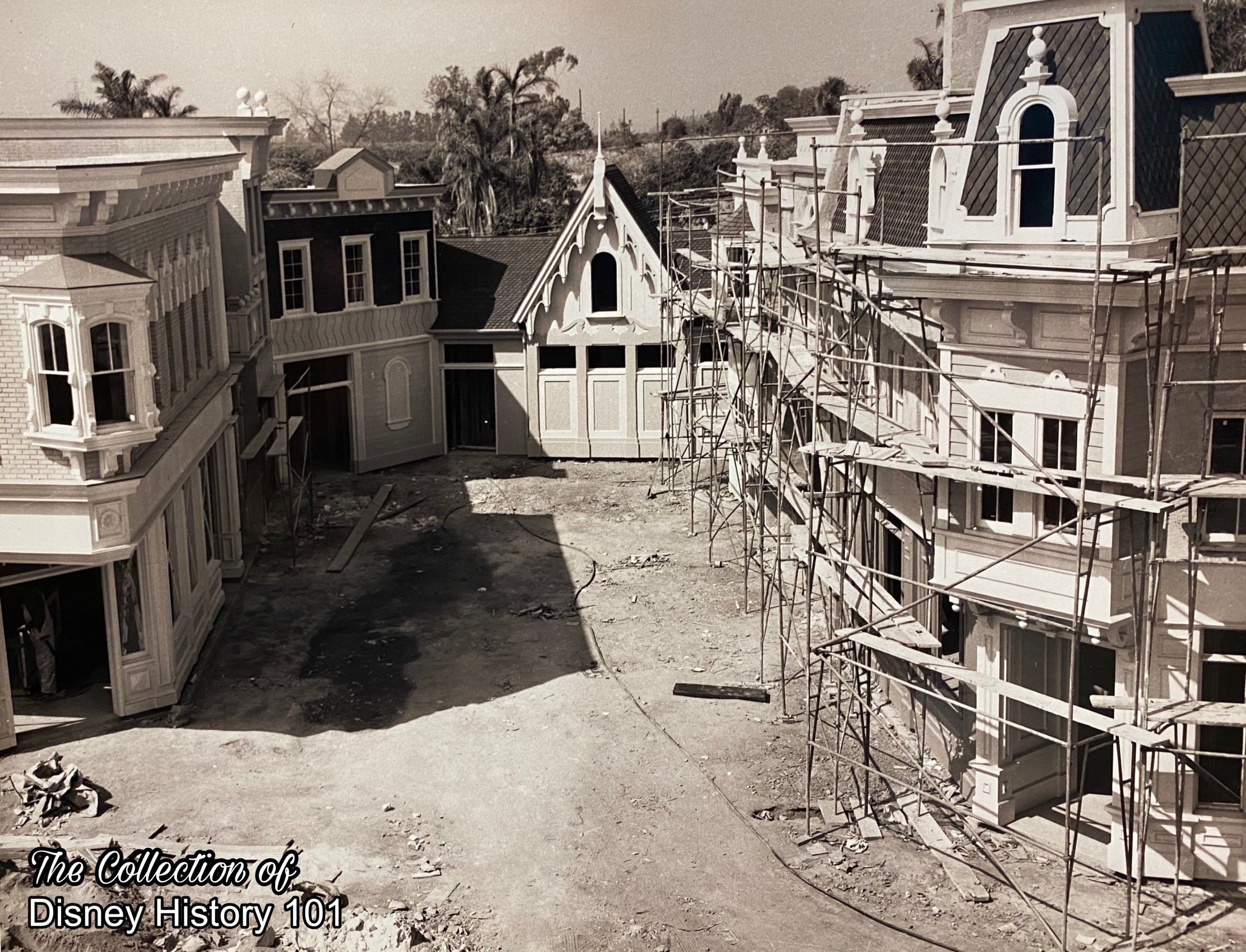
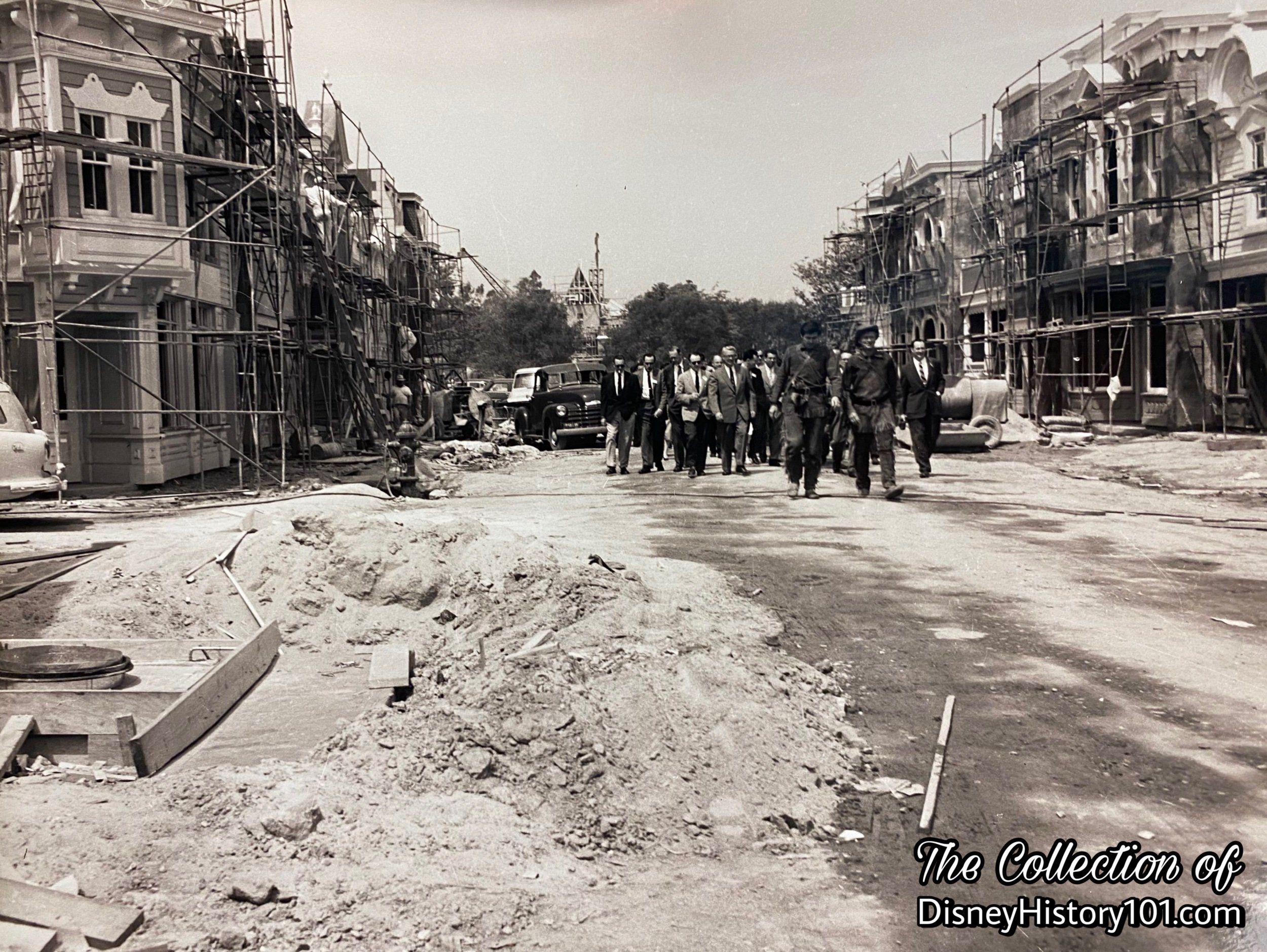
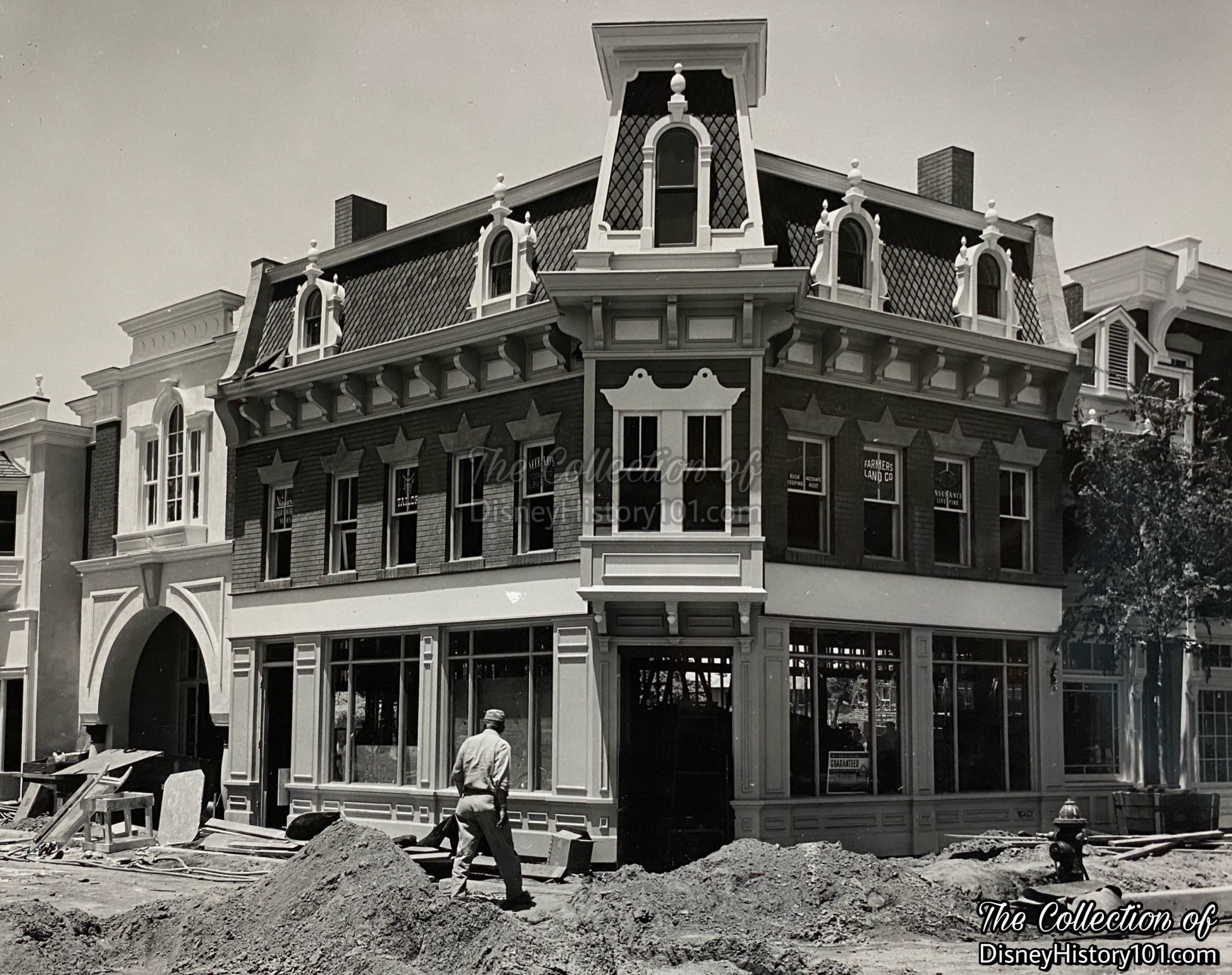
“When the giant earth-moving undertaking was completed, the building crews took over. Soon, the rat-tat-tat of riveters was shattering the air, and sparks were flying from welders’ torches as the steel frameworks, capable of withstanding the ravages of time and the elements rose above the newly formed ground. While carpenters hammered and masons laid row upon row of brick and stone and mortar, the permanent buildings began to take shape and form,” according to “The Disneyland Story” published 1955.
F. M. Franz, manager of operations for McNeil Construction expressed: "We feel sure there has never been anything built like this in Southern California, or elsewhere in the United States. Many of the items were constructed from artist’s sketches.”
First, a concrete foundation and slab floors were prepared, followed by wood frame construction (while store units would have a combination wood and rigid steel frame).
According to inserts published in area newspapers during July of 1955, Disney buildings were roofed by Pioneer Roof & Shingle Company (then located at 608 Mateo Street, Los Angeles, California; 7522 Westminster Avenue, Westminster, California). The roof covering was a variable, dependent on the architectural design.
The buildings (as each on Main Street U.S.A.) possessed complete fire sprinkling systems. By June 30, 1955, related Disneyland Site Work Fire Protection Utilities Plot Plans were prepared for Disneyland Inc., by J.E. Thomasson of WED Enterprises Inc.
King Electric Contractors performed the electrical job on site.
As of June 2, 1955, C.V. Wood Jr. sent an Inter-Office Memorandum to Walt Disney regarding the best estimates that could be obtained at the time regarding the status of individual sections of the Park and Opening Day. C.V. wrote: “Building #401 - Carnation: The best estimate available today is that they should be able to complete. However, it is going to be very tight due to the time required for fabrication of the fixtures.” By July 2, 1955, shadow gags were ordered. Painted signs, window, curtains, and shades were projected to be completed on time. The sound equipment was be installed, with completion of the tape recordings appearing to be fairly tight.
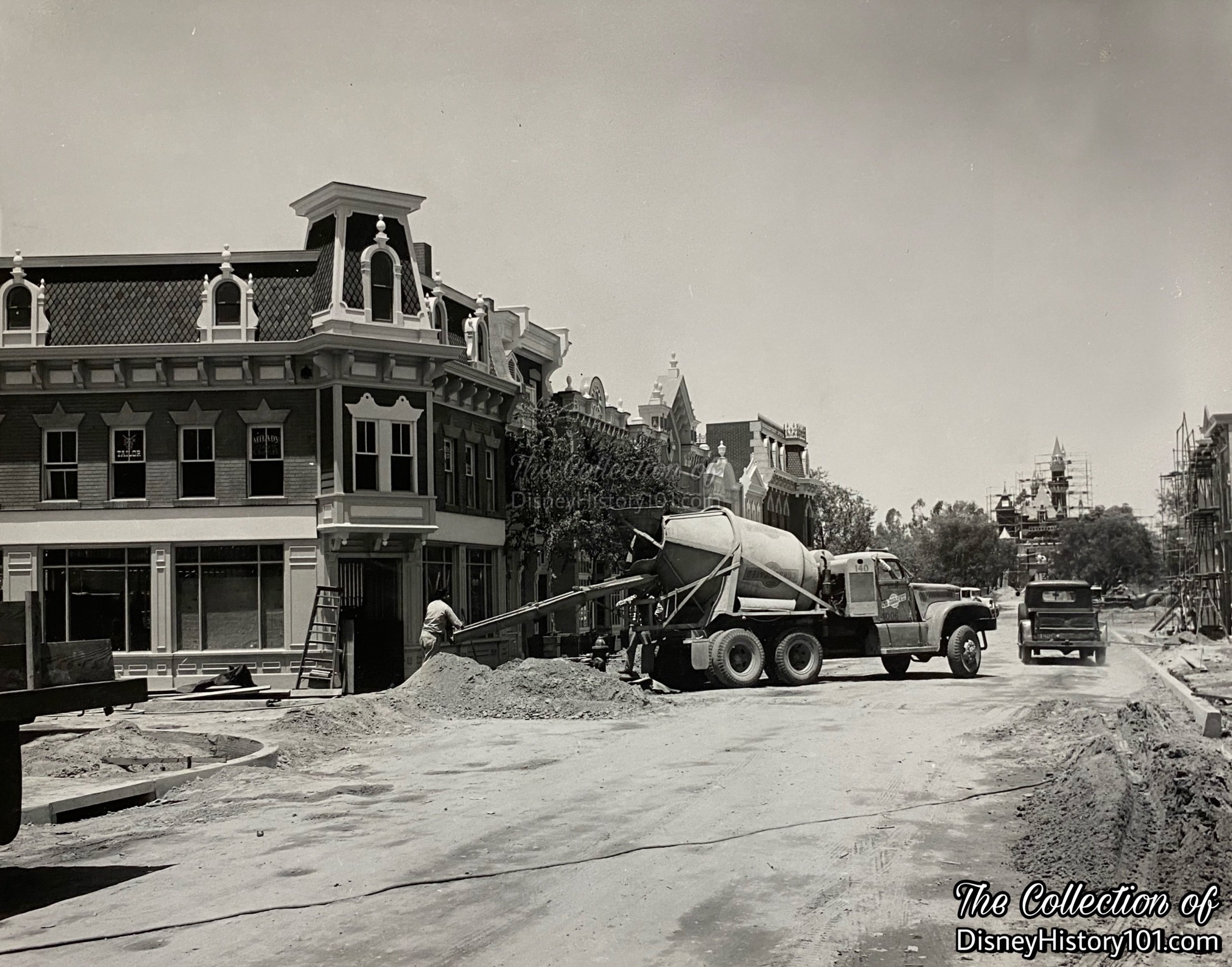
One of the first buildings to be constructed was the Main Street Opera House, which was used as the Mill. There, the woodwork of Disneyland (including the wood framing of the Main Street complexes and the Carnation exhibit) was generated - from the functional to the aesthetic! Soon work began on the 8,833 square-foot Main Street Building #400 (at the intersection of Main Street and West Center Street).
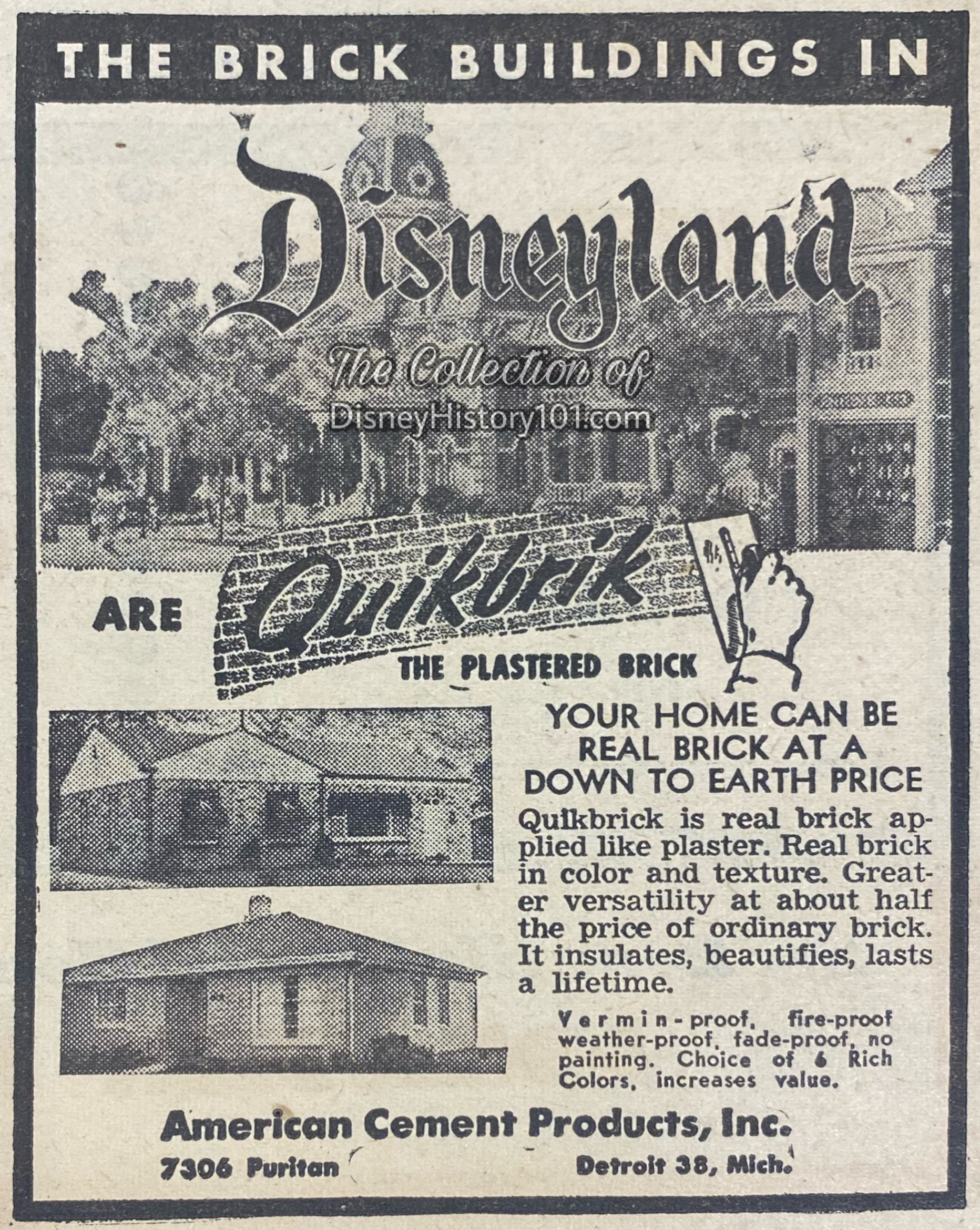
Larson Brothers Plastering Company of San Diego was a proud part of Disneyland. The company crafted the ornamental plastering and all brick used at Disneyland (including their amazing new plastered brick veneer).
The versatile Quikbrick (real colorful and textural brick applied like plaster) was about half the price of ordinary brick. It insulated, beautified, and was meant to “last a lifetime.” It was used on the facade.
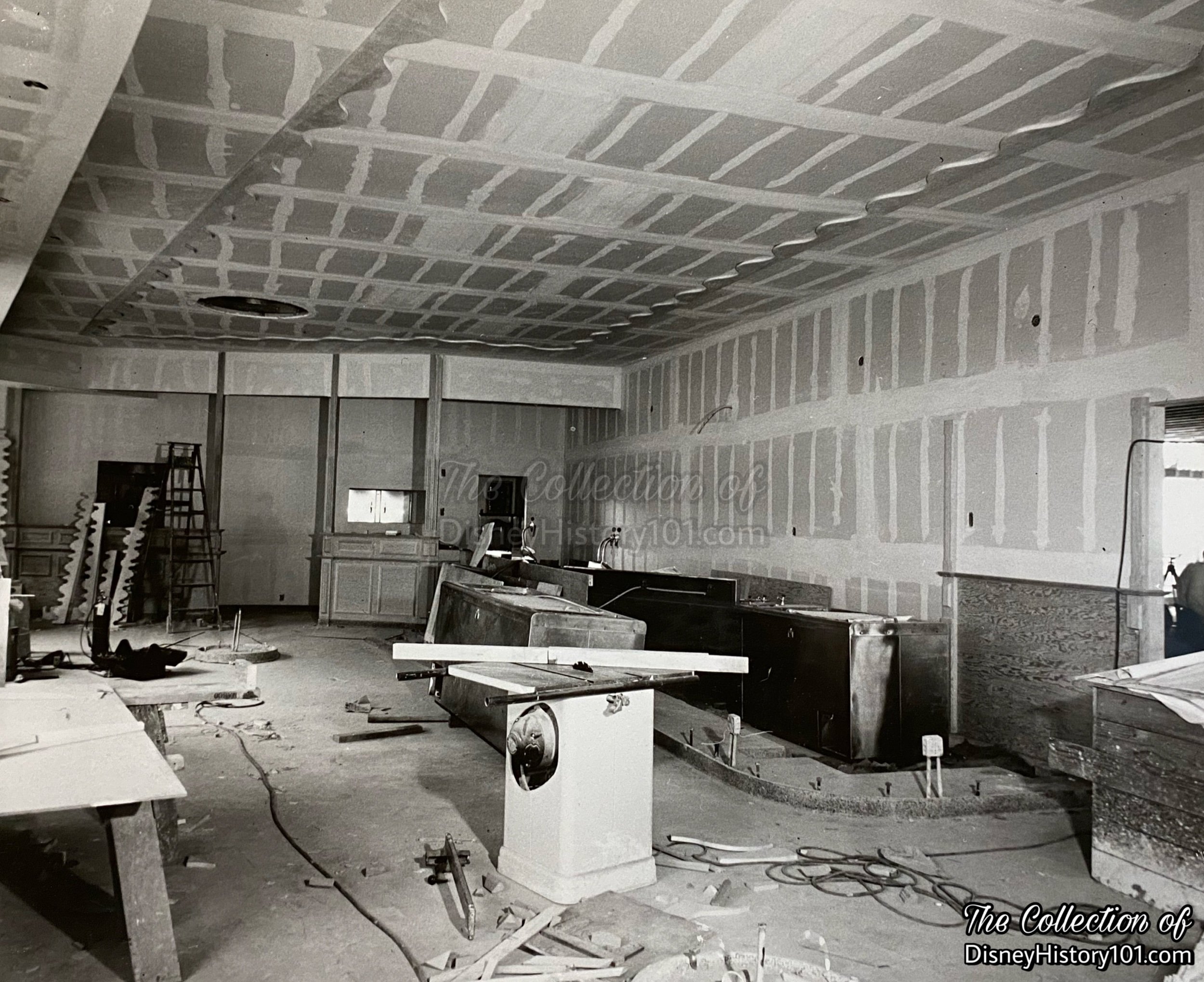
After construction of the building complex, work began on the 1,672 square foot Carnation Ice Cream Parlor and 274 square foot storage space). Only three weeks before the grand opening, its interior looked as if a hurricane had hit it. But soon, faithful decorative elements were brought in and installed, like diamond-paned-type windows. Under the guidance of Fresh Milk and Ice Cream's Southern California assistant manager for sales, C. J. Noell, Carnation Company's own unusual part in Disneyland was readied.
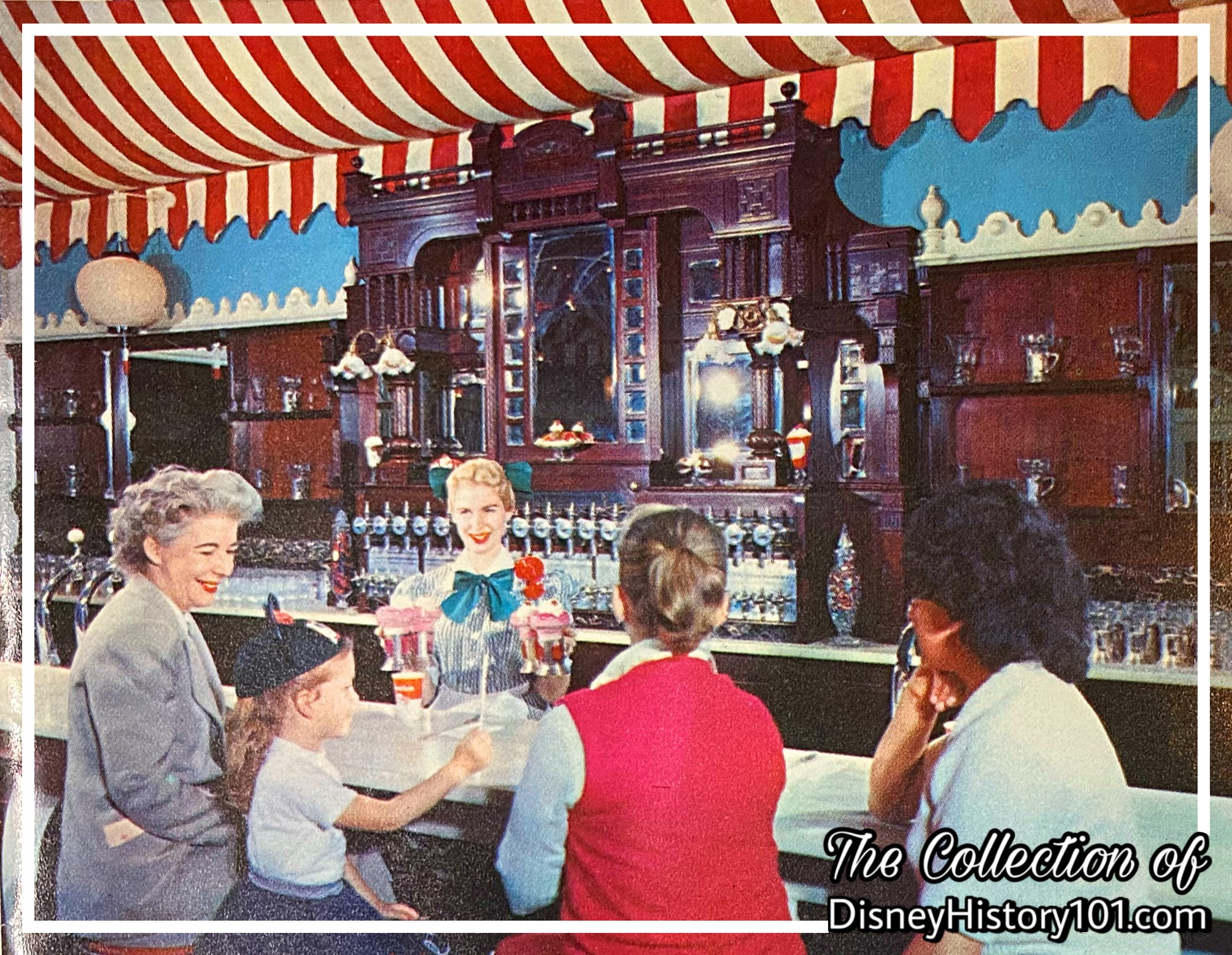
The restaurant was designed to handle a 77 Guest seating capacity. All fixtures were designed to give fast short-order service and placed in their correct motif. Wire backed chairs, wireframe tables, leather tufted seats, island benches, and the mirrored-back bar behind the carved marble fountain counter top are all authentic in 1890s design. Those circular island seats were decked out with planters and a sunburst-type the reflector for each light bulb being a poinsettia. Many light fixtures were authentic antiques and additional lighting was by Chinese lanterns. “25-watt clear glass lamps are used in specially designed fixtures that have the flavor of the past, and 100-watt inside frosted lamps are used in the lanterns.” All of these were under gay red-and-white candy-striped metal awnings inside.
To duplicate faithfully such an establishment, Carnation commissioned Dohrmann Hotel Supply Co. to supply the furniture and fixtures. Ostrander Manufacturing crafted the hardwooden furniture, and much of this fine (and beautifully crafted) carpentry was both performed and overseen by Cliff Carothers. The very same aforementioned publication references their contribution (though not by name) this way : “Cabinet-makers carved and painted the accurate reproductions that furnish the buildings.” Metal castings of hand-turned wooden valves and faucets were produced, and “mirrors were hand-cut and framed in the popular hardwood of the 1890s, Honduras mohogany.”
The bar was of Honduras mahogany embellished with hand-cut mirrors and ornamental lights, and black and gold Italian marble topped with snowy Alabama marble. The marble-top may have been crafted by Frank Silveri, a Santa Ana tile & marble contractor.
Special silver holders for soda glasses were to be used to further the 1890 theme.
Finally store-front signs give the appearance of Gay Nineties lighting but use improved equipment.
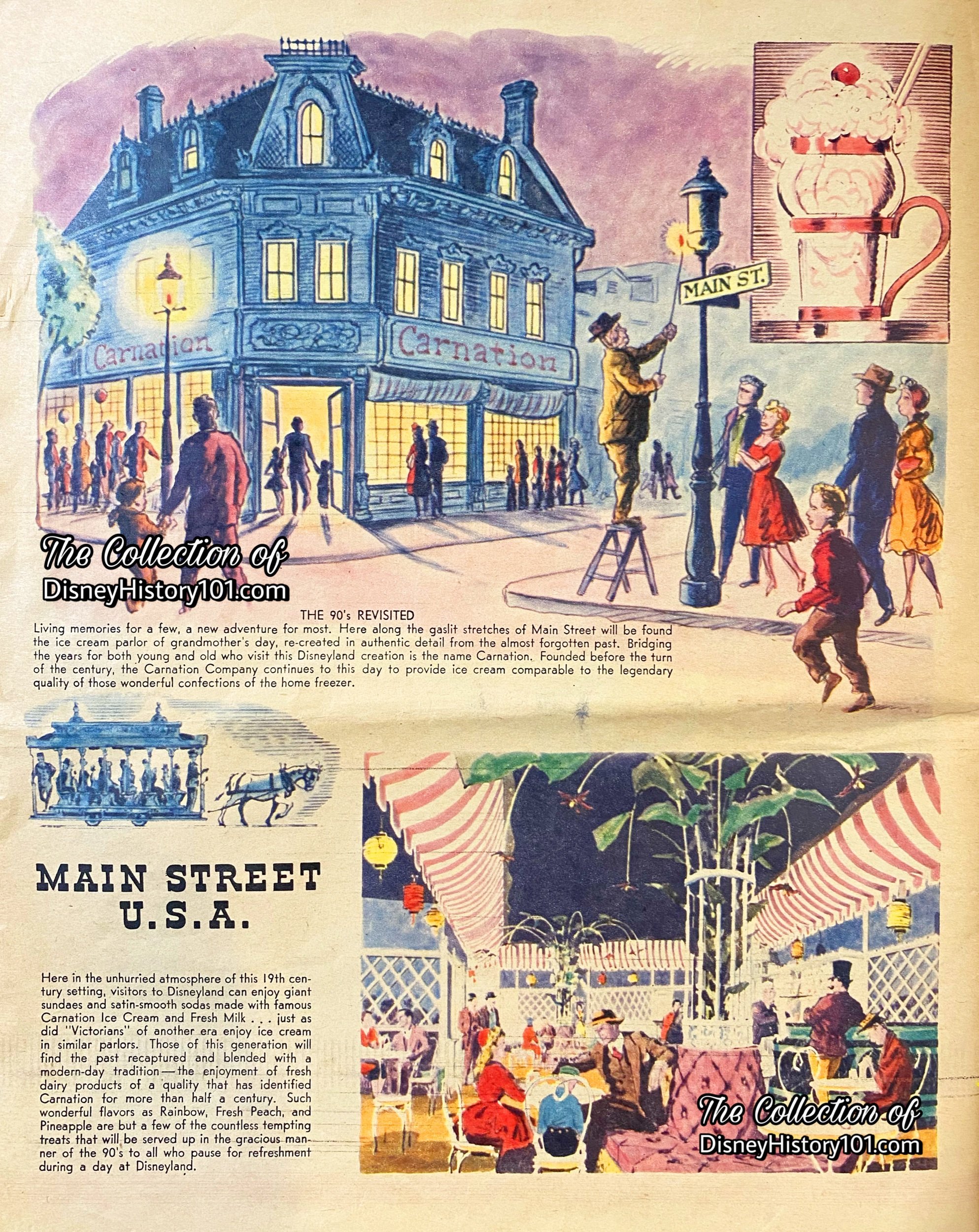
However, not everything about this ice cream parlour would draw back to mind grandfather’s day. The latest serving equipment featured valves and faucets turned out of wood and duplicated in metal to gain the appearance of originals of the period. The ultra modern kitchen measured 231 square feet full and completely arranged with the best equipment obtainable, including equipment from Hobart Mfg. Co. and a Waste King garbage disposal. It had a seven-foot griddle, reach-in refrigerator, work-pantry-table and automatic dishwashing equipment.
There was a sherbet dispensing cabinet and two special cabinets for ice cream cone dispensing. Under the counter was a modern marvel of 20th century technology - the Everfrost refrigerated 60-gallon two station stainless steel soda fountain unit (bearing a compartment and three temperature controls) that dispensed ice. There were two complete sets of draft arms, three separate temperature controls, automatic soda water carbonator, and accurately gauged syrup pumps to dispense accurate measurements of flavor into the sodas.
“Just about the only [other] thing that isn’t as it was over 60 years ago is the ice cream. It’s better than ever! In each spoonful of Carnation ice cream is the experience of more than a half-century in producing the finest quality foods.”
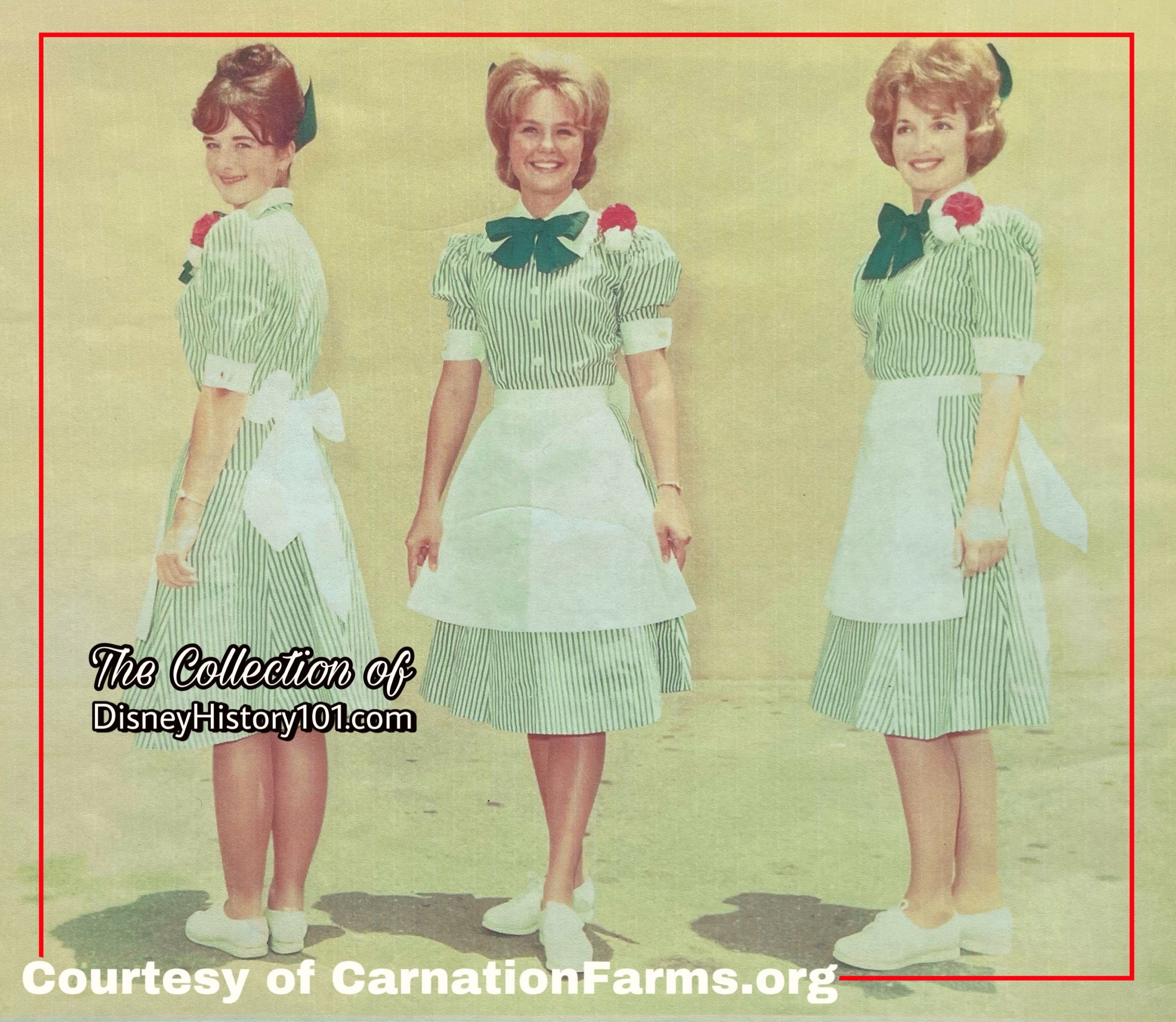
The costumes of thousands of Disneyland employees were designed by Choinard Alum and soon-to-be Oscar-winning costumer Renie Conley. Conley created numerous thematic costumes for the Main Street Front Gate Hostess, Engineer and Brakeman, Piano Player, Jungle Cruise Boat Captain and Crew (for the Burma Irrawaddy, Nile Princess and Amazon Belle), Canal Boat Captains (French, Dutch, etc.), Frontierland Station Agent, Tomorrowland Rocket to the Moon, Cashiers for Mad Hatter’s Tea Party and Fantasyland and many other Cast Members.
Waitresses wore specially designed uniforms combining present day practicability with 1890 style additions such as modified mutton leg sleeves. They were in green and white stripe and green tie and head bow, completed by a dainty square white apron.
Some elements of the original custom (and authentic) wardrobe of Hosts and Hostesses were possibly provided by Warren Ackerman’s House of Uniforms (yes, “uniforms”), then located in Beverly Hills, California.
“Your Disneyland: A Guide for Hosts”, published 1955, reminded Disneylanders of a few simple rules of personal appearance: “We feel better when we look our best… Cosmetics should emphasize naturalness. Use only conservative nail polish and avoid heavily scented perfumes. Hair should be neat and well groomed. Hands and nails should be clean and well kept. If you wear a costume furnished by Disneyland, it must be clean and fresh at all times… Shoes should be shined and heels straight. The host should have a fresh shave and a neat haircut - both essentials of good grooming. Our Disneyland look should emphasize our natural good qualities, and our habits of neatness and cleanliness.”
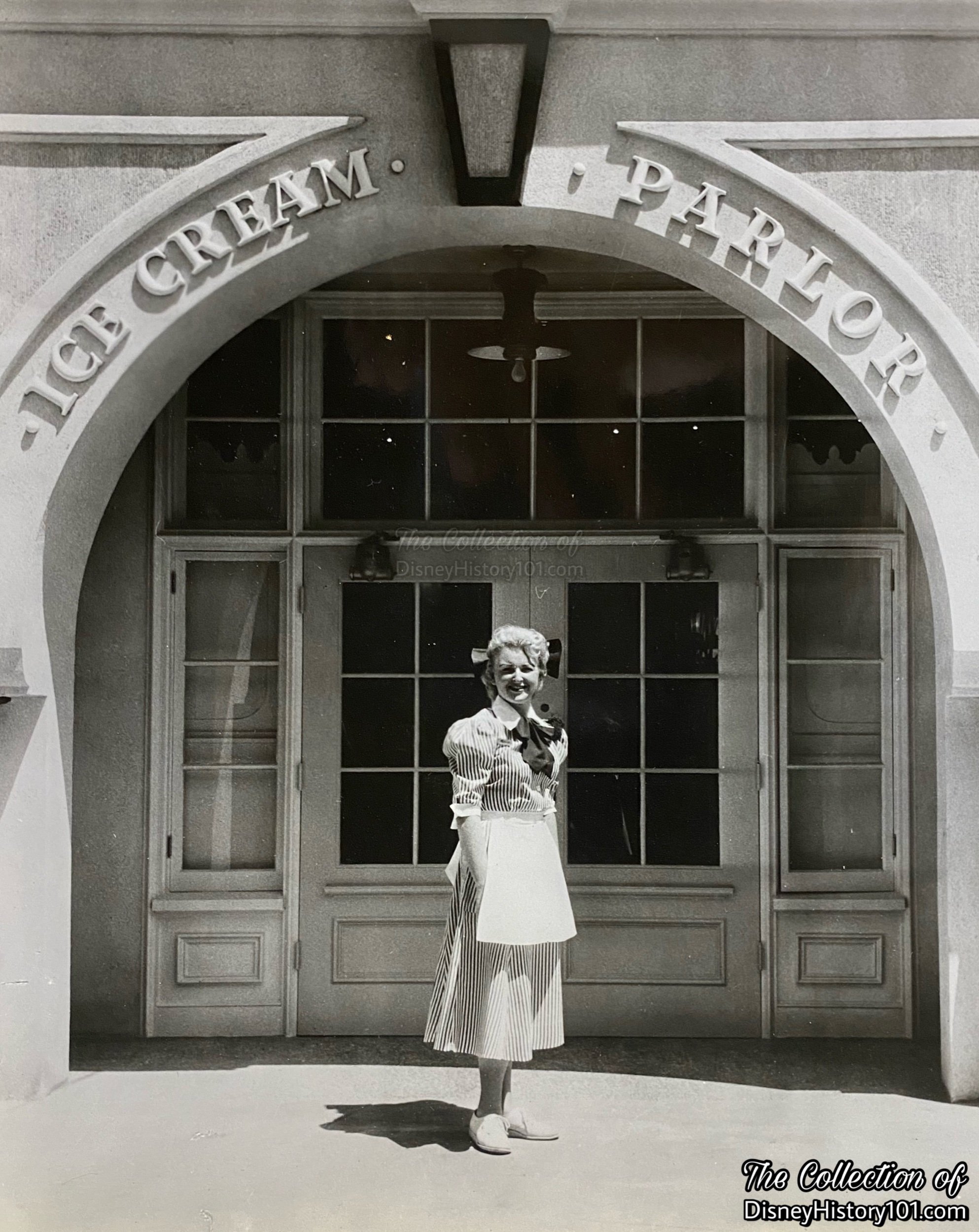
As far as those Disneylanders who would fill the wardrobe (and the roles) representing both Walt Disney Productions and lessees on a person-to-person basis, Walt later expressed the following confidence: “What you do here and how you act is very important to our entire organization and the many famous names of American business represented among our exhibitors… Your every action (and mine also) is a direct reflection of our entire organization… For our guests from around the world the curtain goes up on an all new show at Disneyland everyday and you, as a host or hostess, are truly ‘on stage.’ I know you will give a courteous and friendly performance.” Five months before the premier opening of Disneyland, Hal Hensley (of the Disney University Orientation Program ; under the Direction of Van France and his assistant Dick Nunis) held classes (which would become a Disneyland “tradition”). These classes would instruct some 1,200 Disneylanders (including those fulfilling roles at the Carnation Ice Cream Parlor) in some of Walt’s personal philosophies, as well as the policies which would “create happiness” for visitors! Despite their 1890 On Stage setting, Hal wanted to ensure that Disneylanders to “get a ‘new world’ feel about this place.” The result was that even at its foundation in 1955, Disney University was producing specialists in the field of outdoor theme entertainment.
The Carnation Ice Cream Parlor table service restaurant would be managed by Bill Slamina and overseen by Jim Baker of Disneyland, Inc. Waitresses (like Carolyn Moody of Garden Grove, Cal.) served Guests. Woody Woodworth was hired before the grand opening recalled: “You couldn't get too much to eat and the only place you could get a sandwich was Carnation.”
The 1,672 square foot restaurant was one of Disneyland’s eating facilities which was estimated to serve a capacity of 300 guests per hour (according to facts prepared by the Disneyland, Inc. Public Relations Department), and thus predicted to contribute to accommodating the Park’s overall potential of “15,000 persons daily, hitting a peak of 60,000 on holidays and week-ends.” The same documents predicted that Carnation Ice Cream Parlor would be one of “twenty restaurants and snack bars, capable of saving 8,000 hourly,” at least according to “Building A Dream” (prepared by the Disneyland, Inc. Public Relations Department).
As of June 2, 1955, C.V. Wood Jr. sent an Inter-Office Memorandum to Walt Disney regarding the best estimates that could be obtained at the time regarding the completion status of individual sections of the Park and Opening Day. C.V. wrote: “Electric Signs: All are in work - with the exception of the shoe store and the Bank of America, all will be completed.”
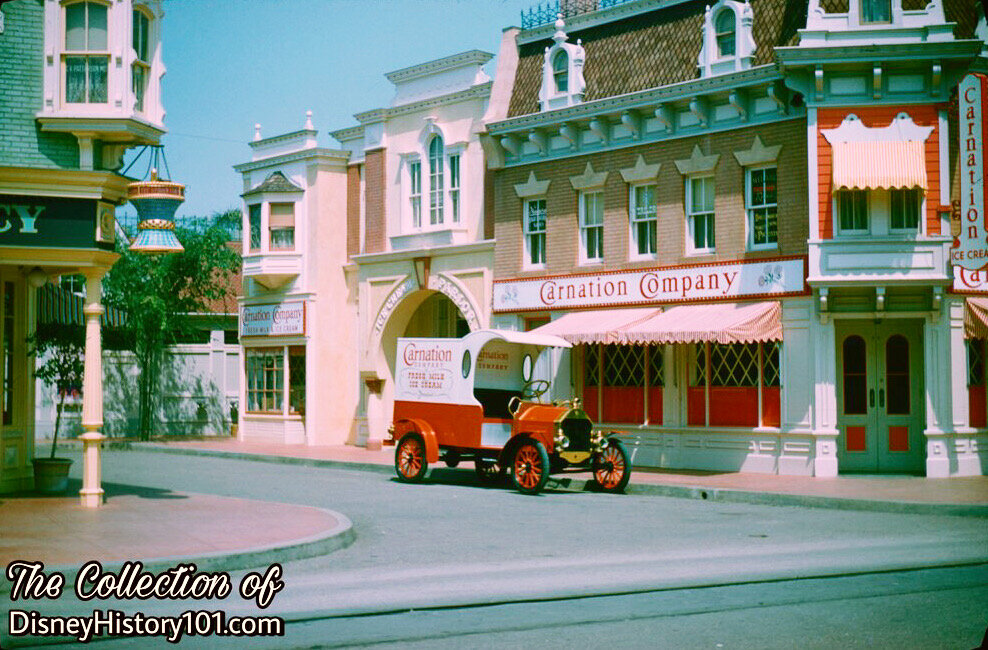
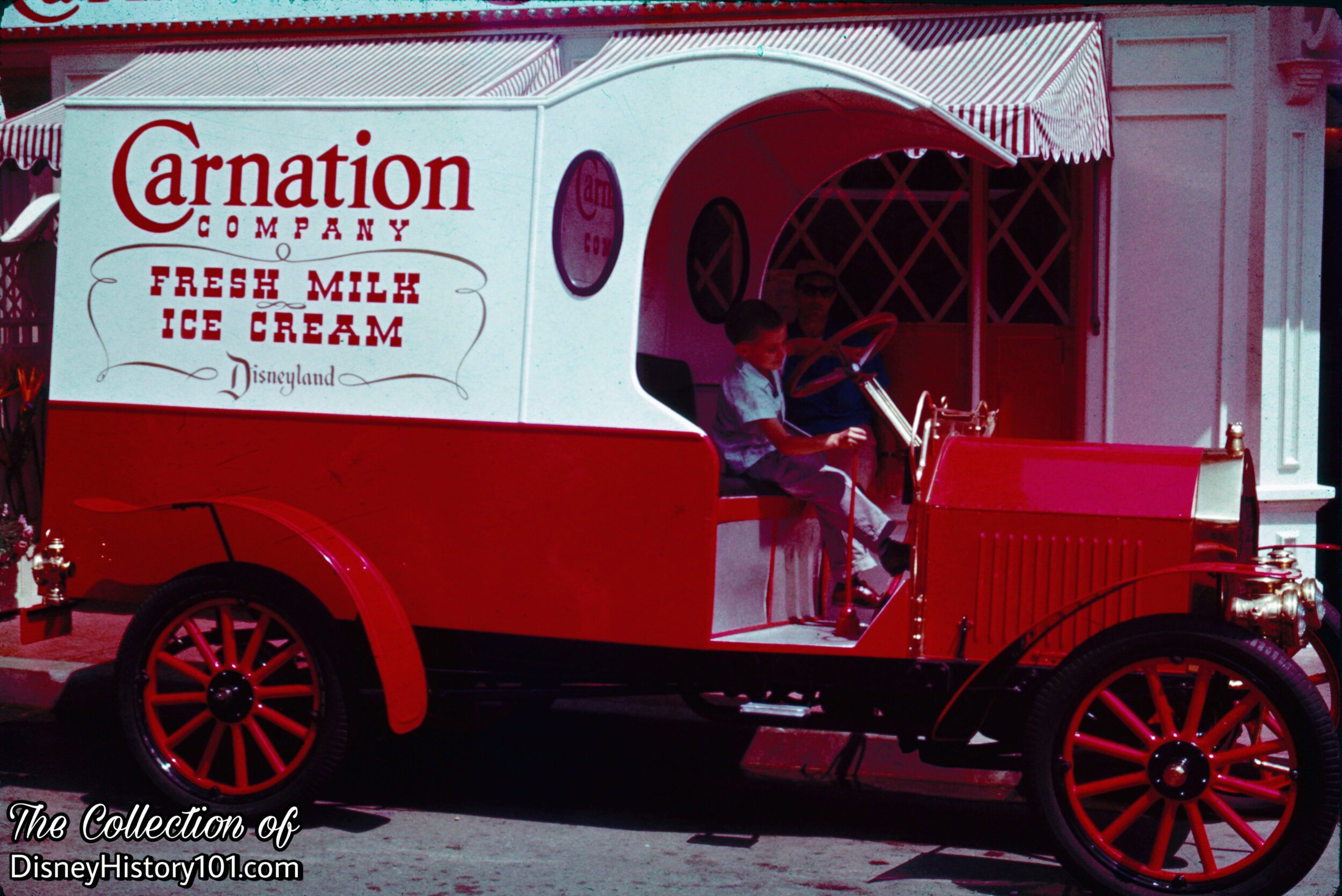
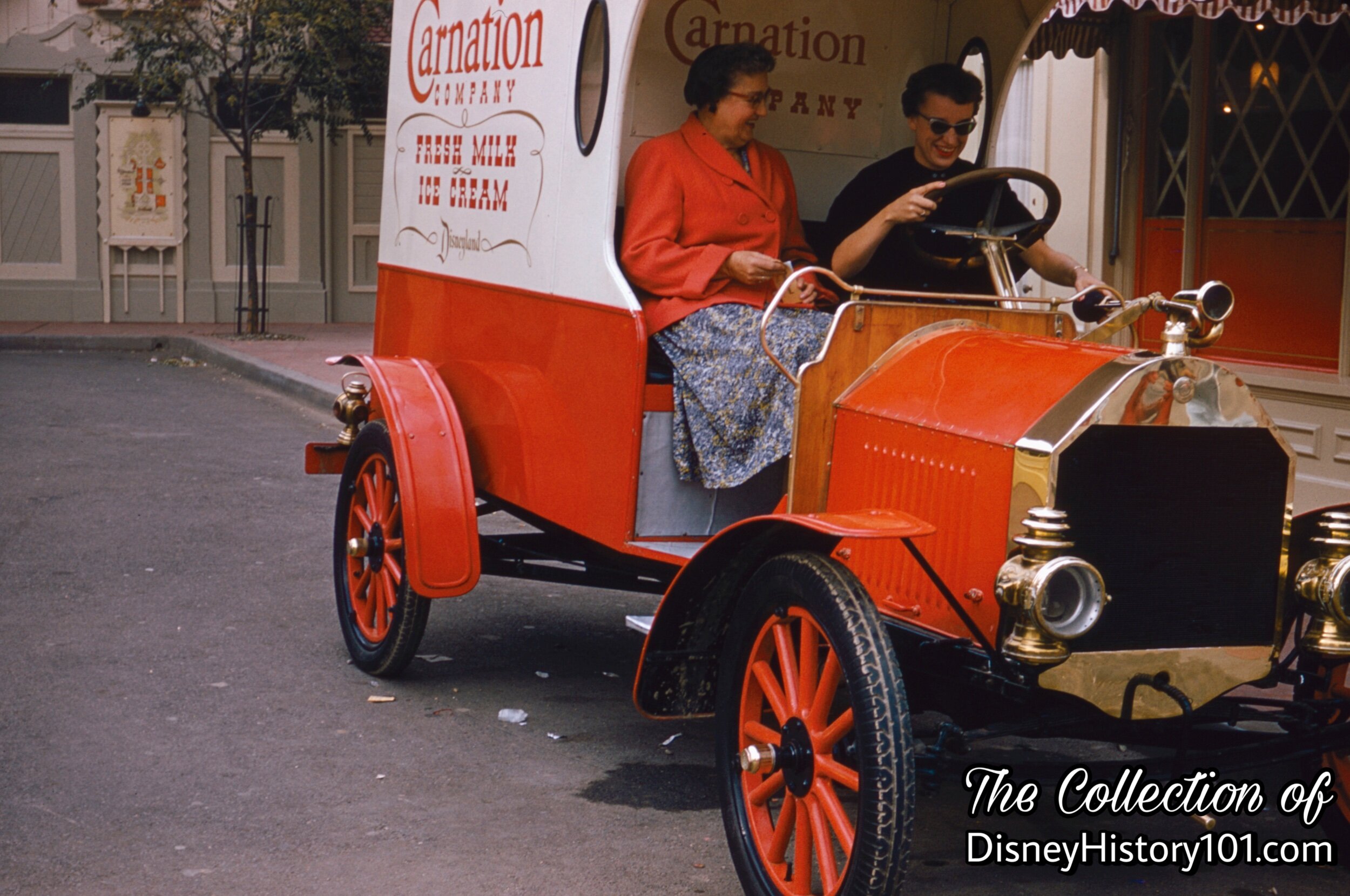
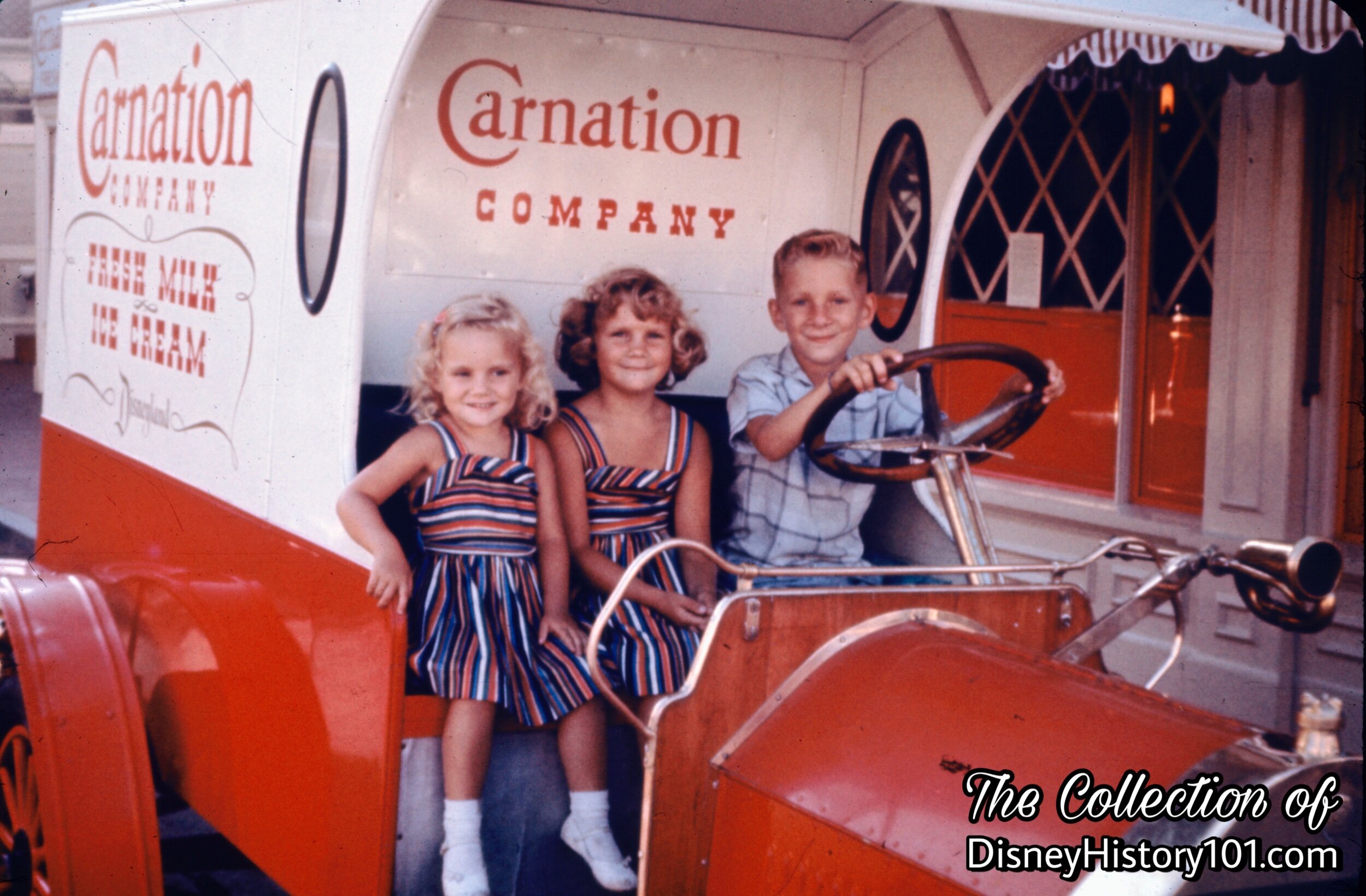
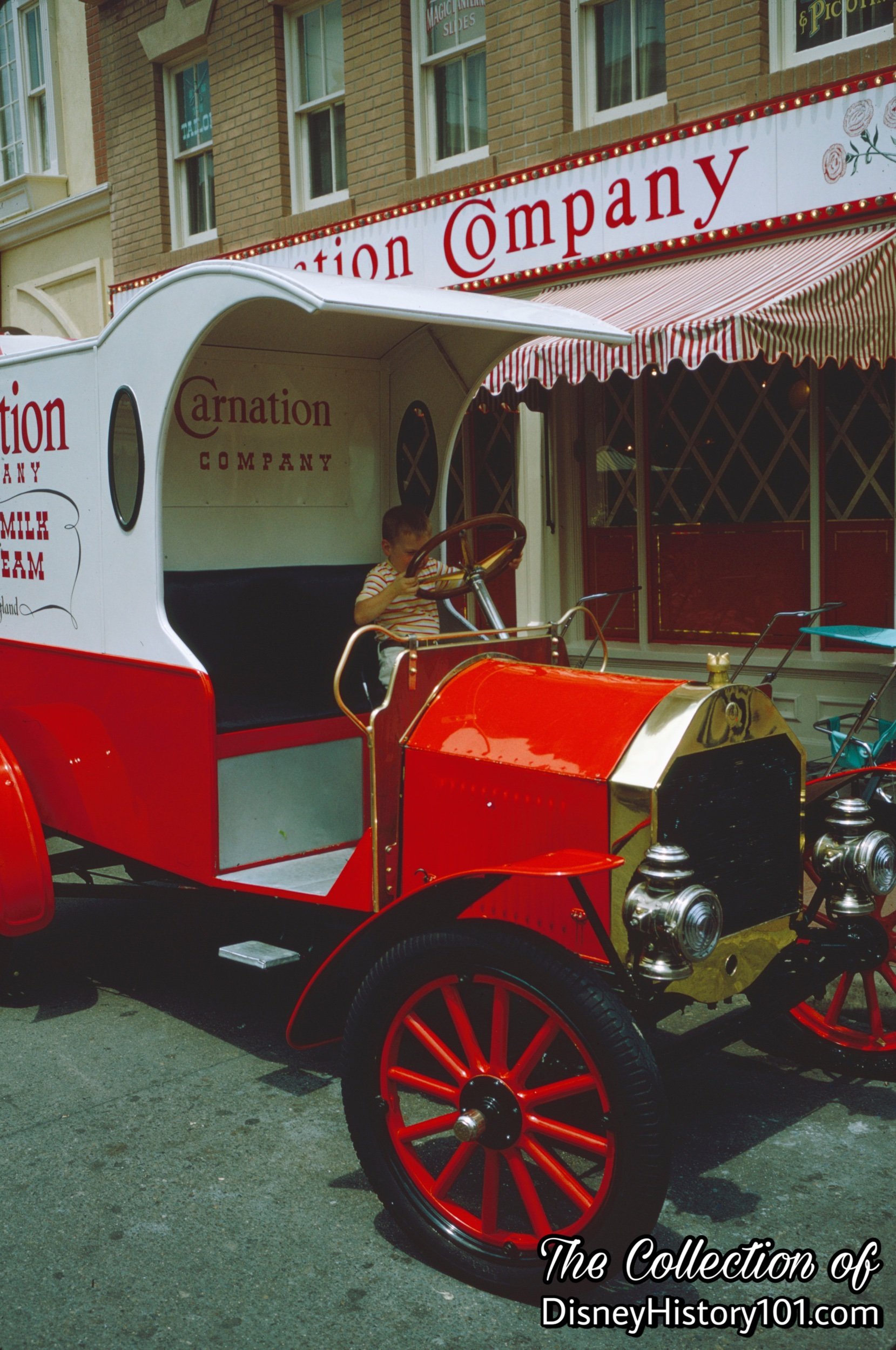
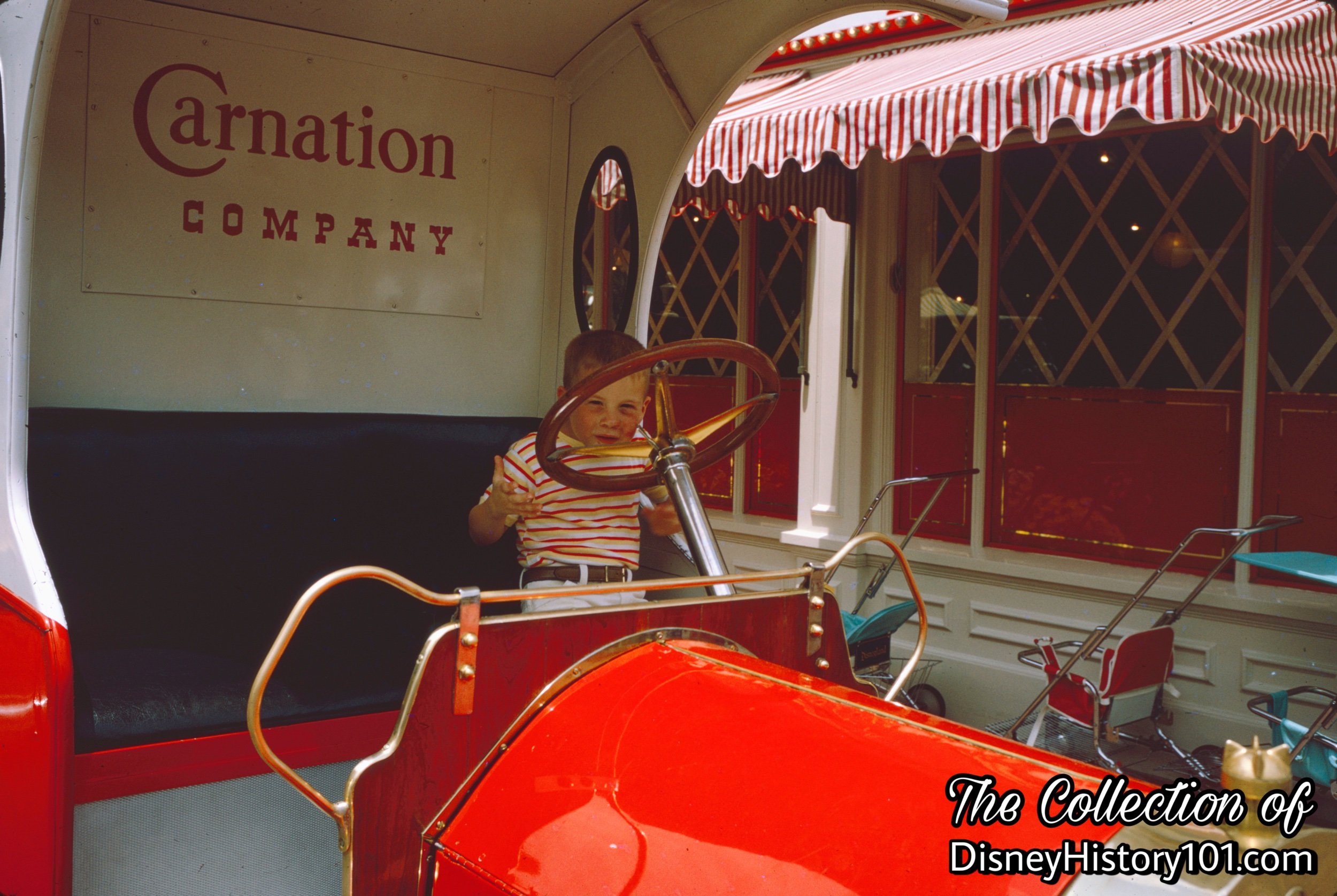
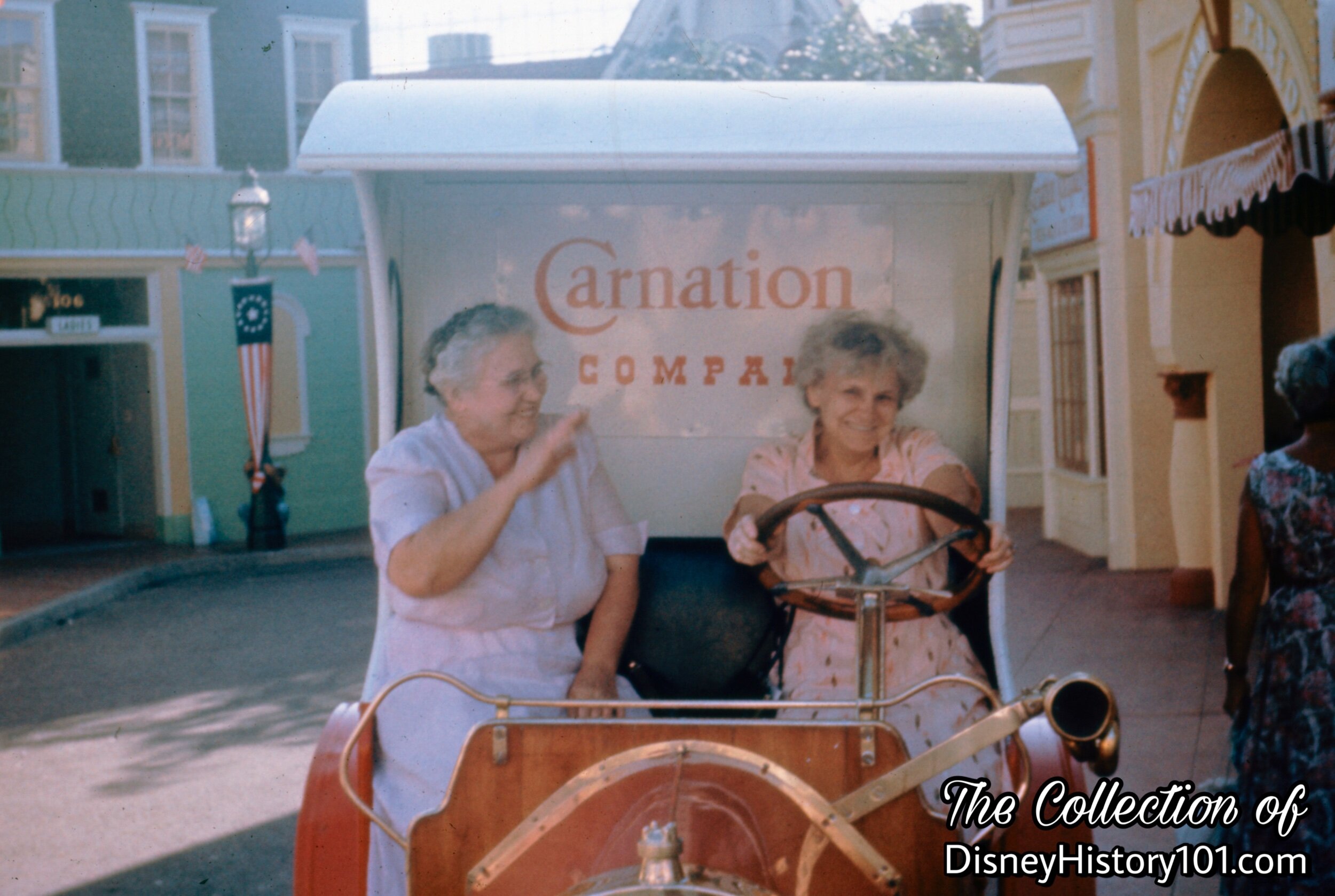
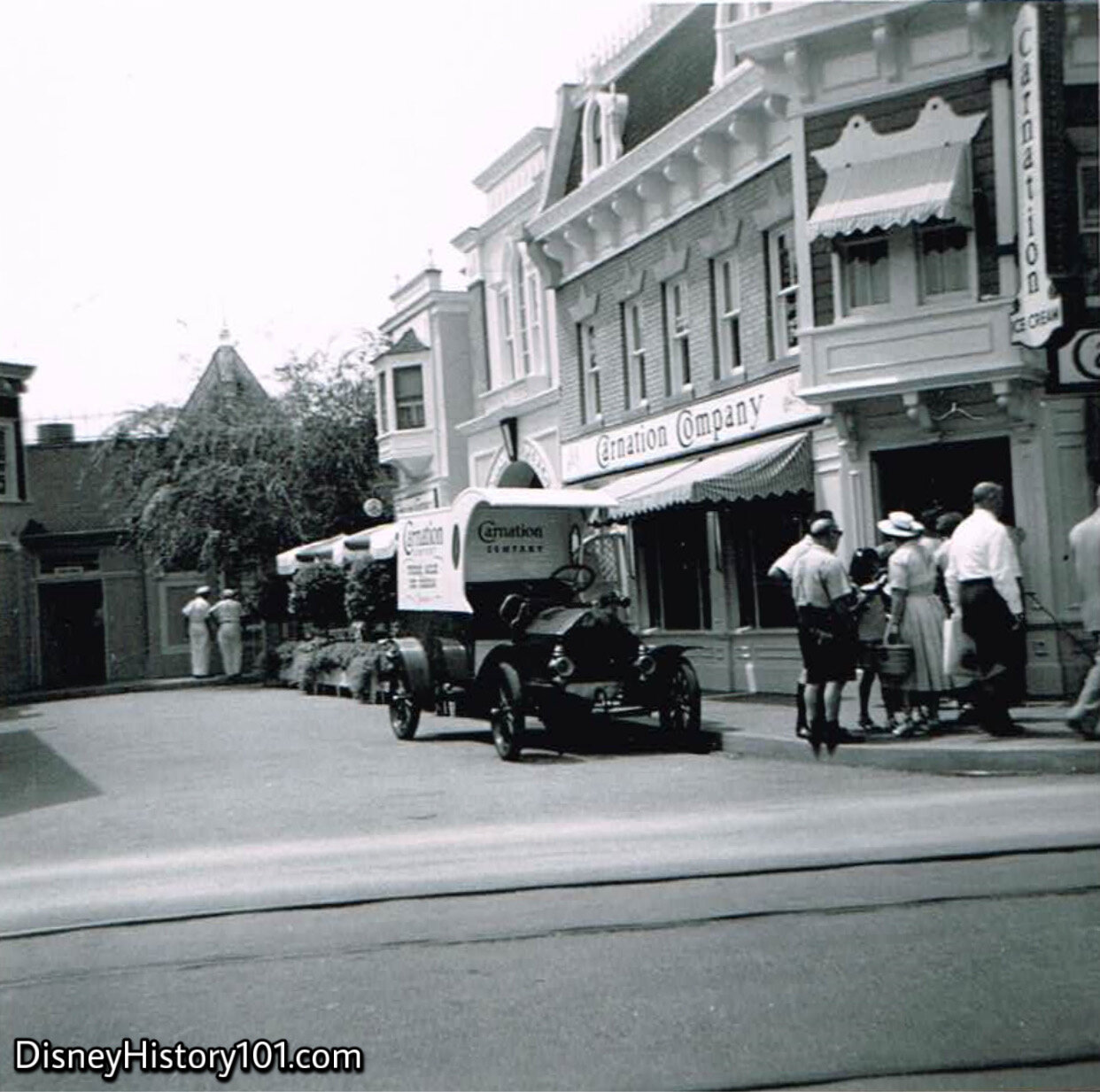
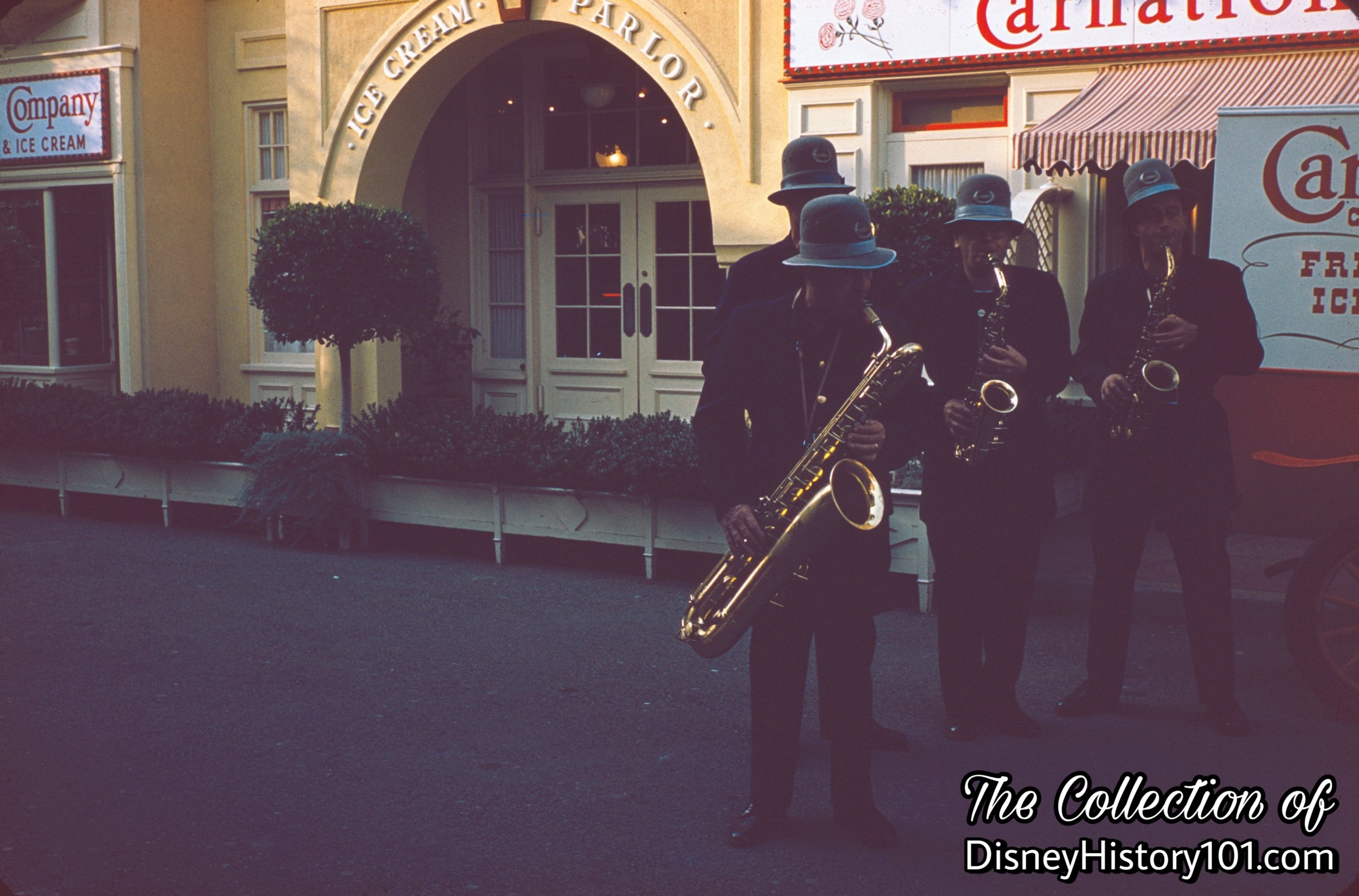
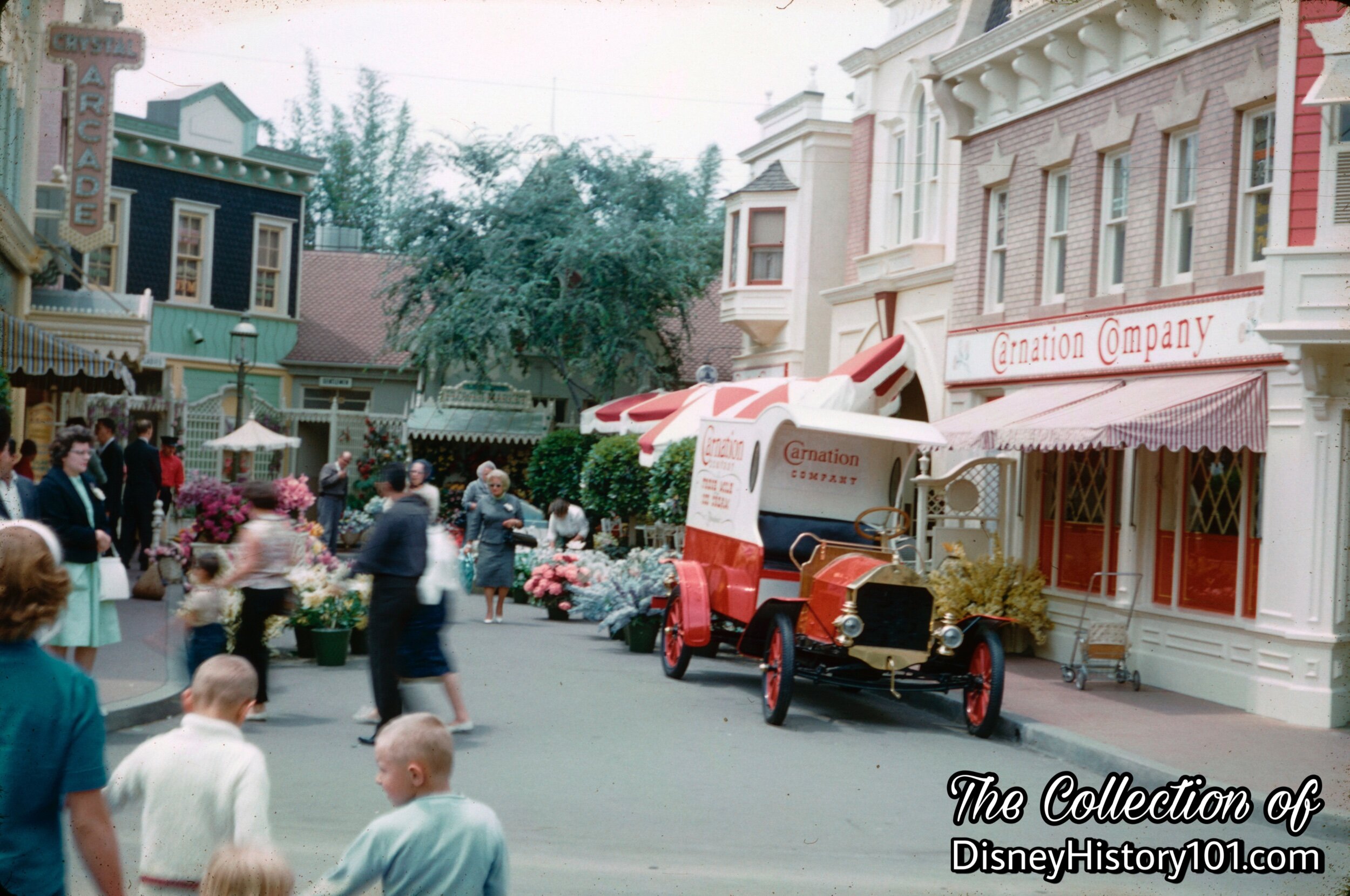
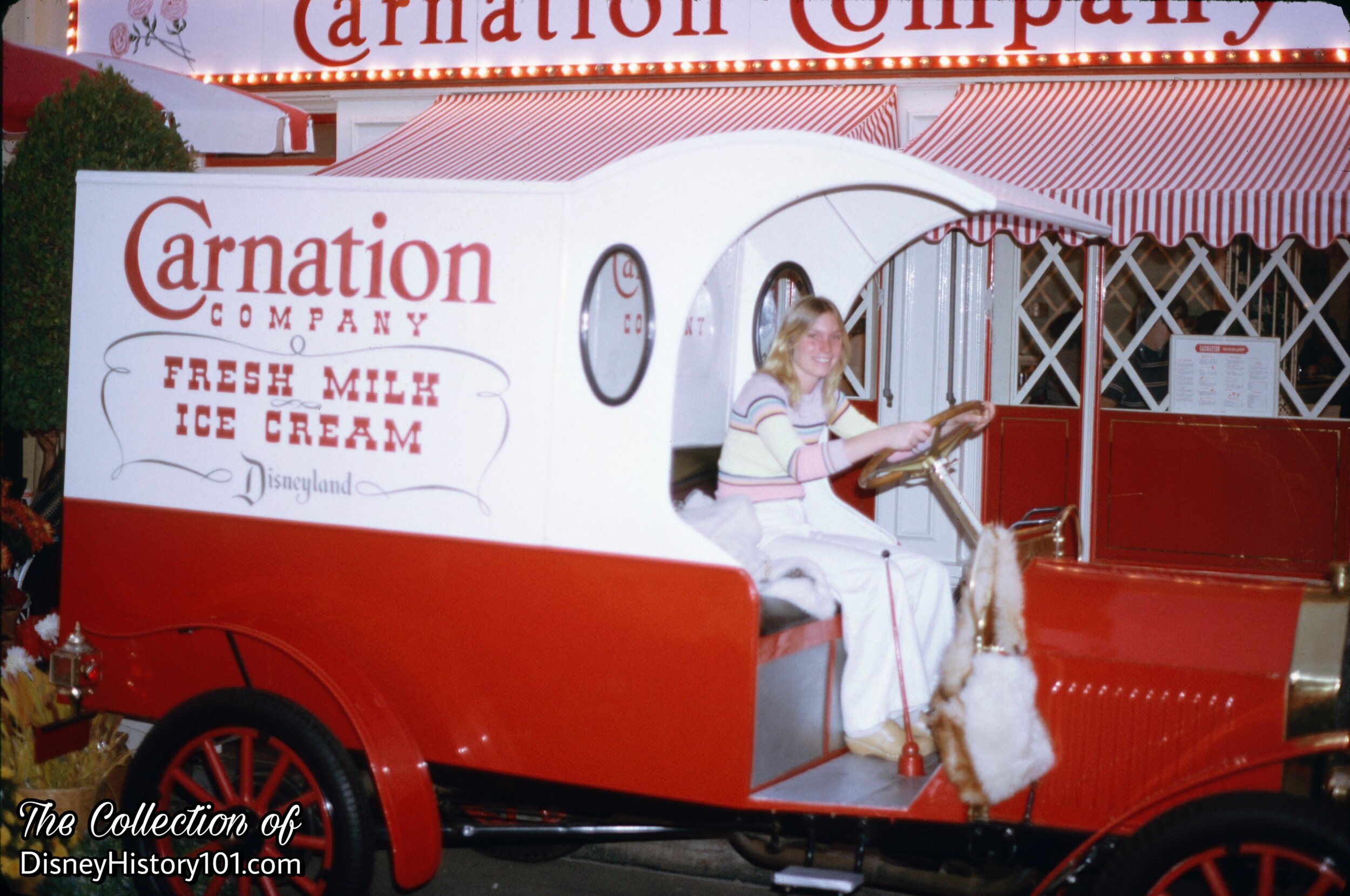
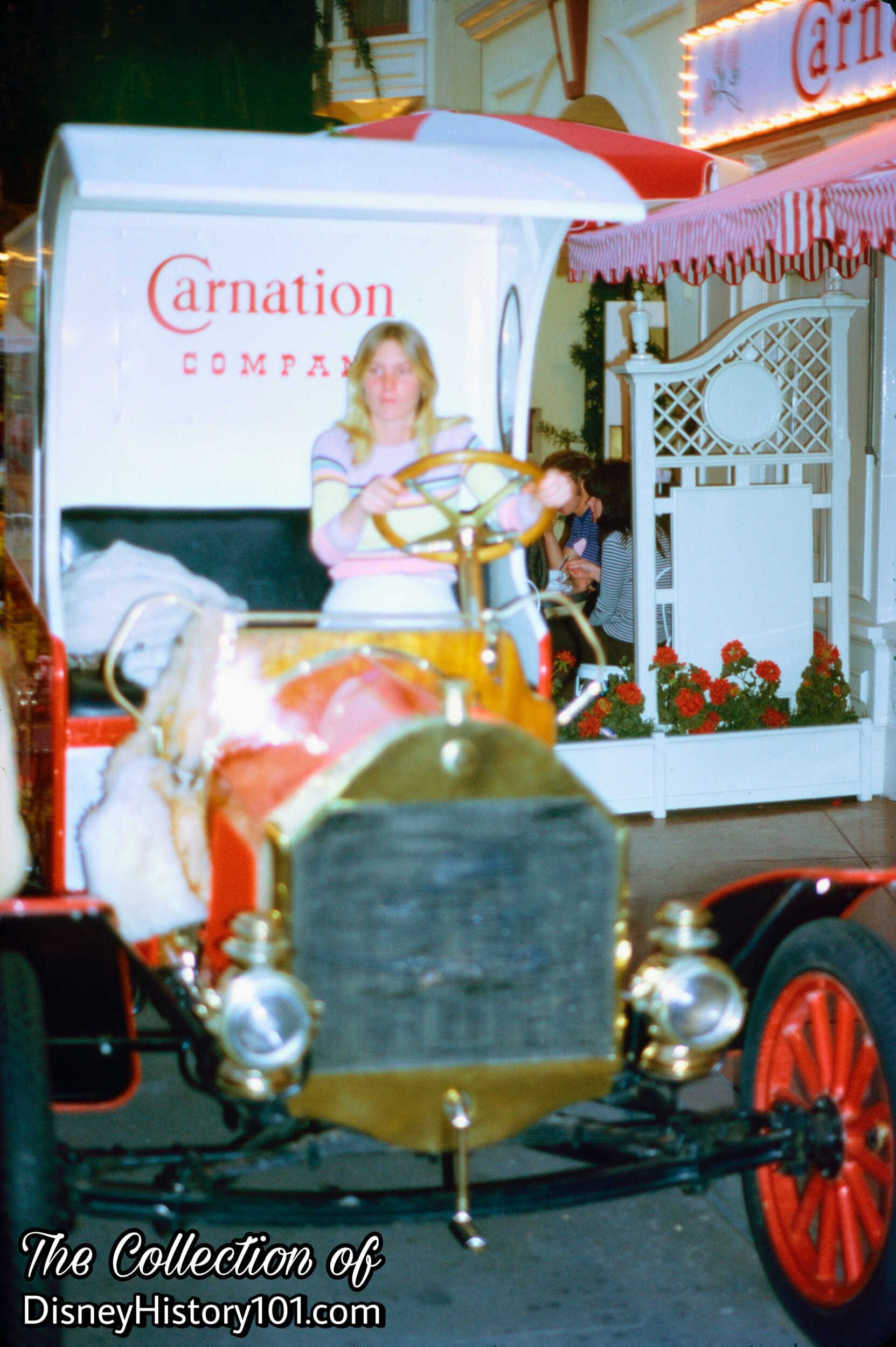
Since the beginning, a number of Main Street, U.S.A.’s antique vehicles were a nostalgic reminder of “the good old days” of product delivery to small towns across the U.S.A.! Disneyland sponsors Swift & Company and Bekins had their Horse Wagons, while Global Van Lines and Carnation Farms would have their trucks. While early articles suggested the truck would be used for deliveries around the Park, the old-time Carnation delivery truck - complete with horn - would come to be displayed outside Carnation Ice Cream Parlor, as a favorite picture-taking prop.
Some have wondered : “Why did Carnation Farms choose a truck (rather than a horse wagon) to represent their free exhibit at Disneyland?” According to an article published one year after the vehicle’s debut, “Anticipating that the demands of a warm summer day might exceed their available in the store supply of ice cream, they contacted the Disneyland management and suggested some sort of delivery service be arranged to the store from their off site facilities. A modern day truck would clash with Main Street’s 50 years ago flavor.” It was believed that a Carnation GMC truck (similar in style to the one that made the first Transcontinental round trip from Seattle to New York, and back to Los Angeles in 1916) would best represent the company before Guests that would remember this tremendous feat!
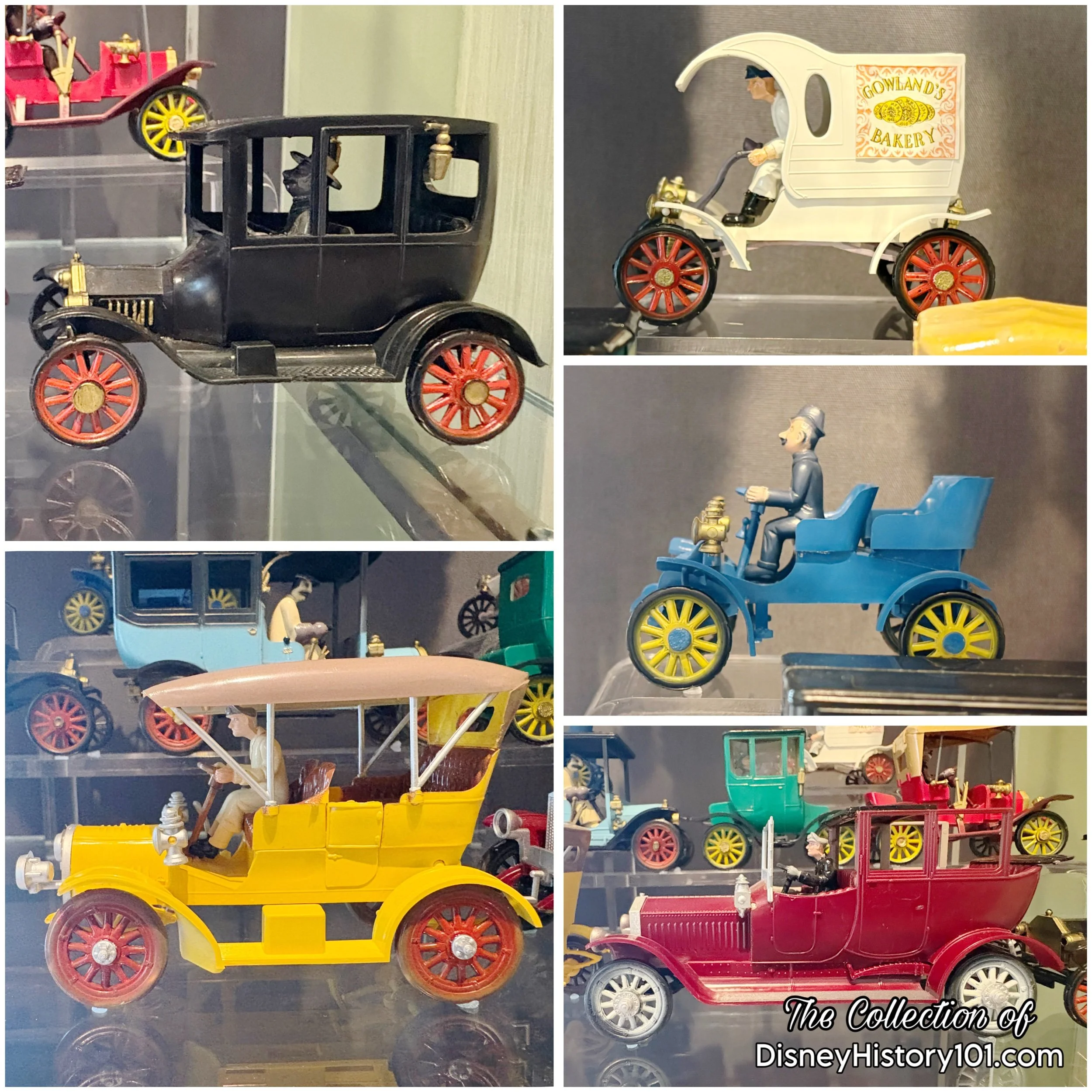
Walt and company may have agreed. Note the truck among this collection of antique Automobile models (from 1903-1915), that was purchased by Walt during the earliest days of the Disneyland project, in order to research vehicles for Main Street, U.S.A.
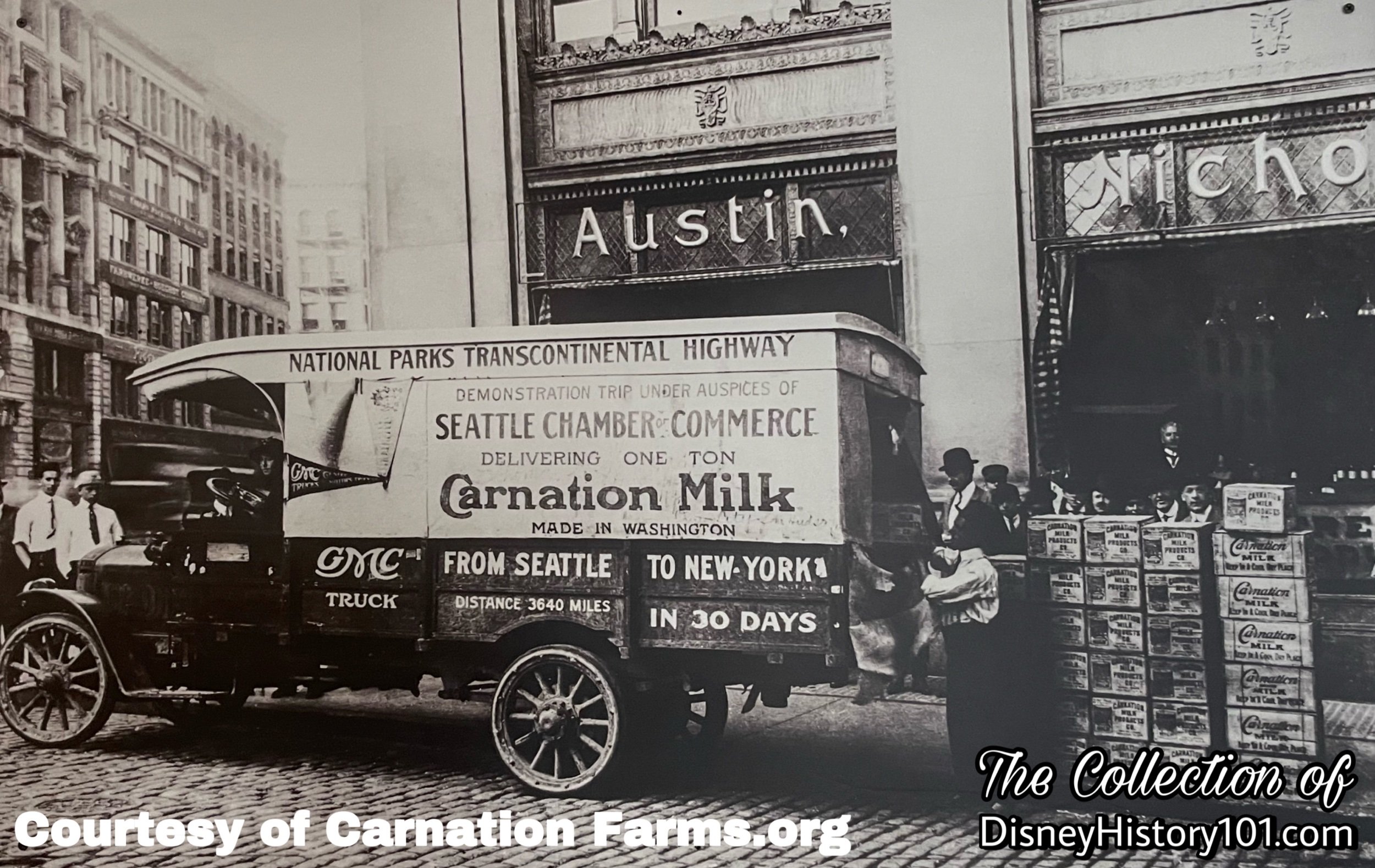
According to Walt (in interview with Bob Thomas (of Associated Press), “We have built nearly everything from scratch. When you buy old cars, trains and boats, you have a terrific upkeep problem.” And so, “the assignment to build a special truck was given to Bob Gurr, young mechanical wizard of the Walt Disney Studio Construction Department. Bob, who had already met a major challenge by designing ‘the car of the future’ for Tomorrowland’s Autopia, was more than equal to designing a ‘car of the past. The idea that a car of that vintage, in suitable condition, might be found was quickly discarded.”
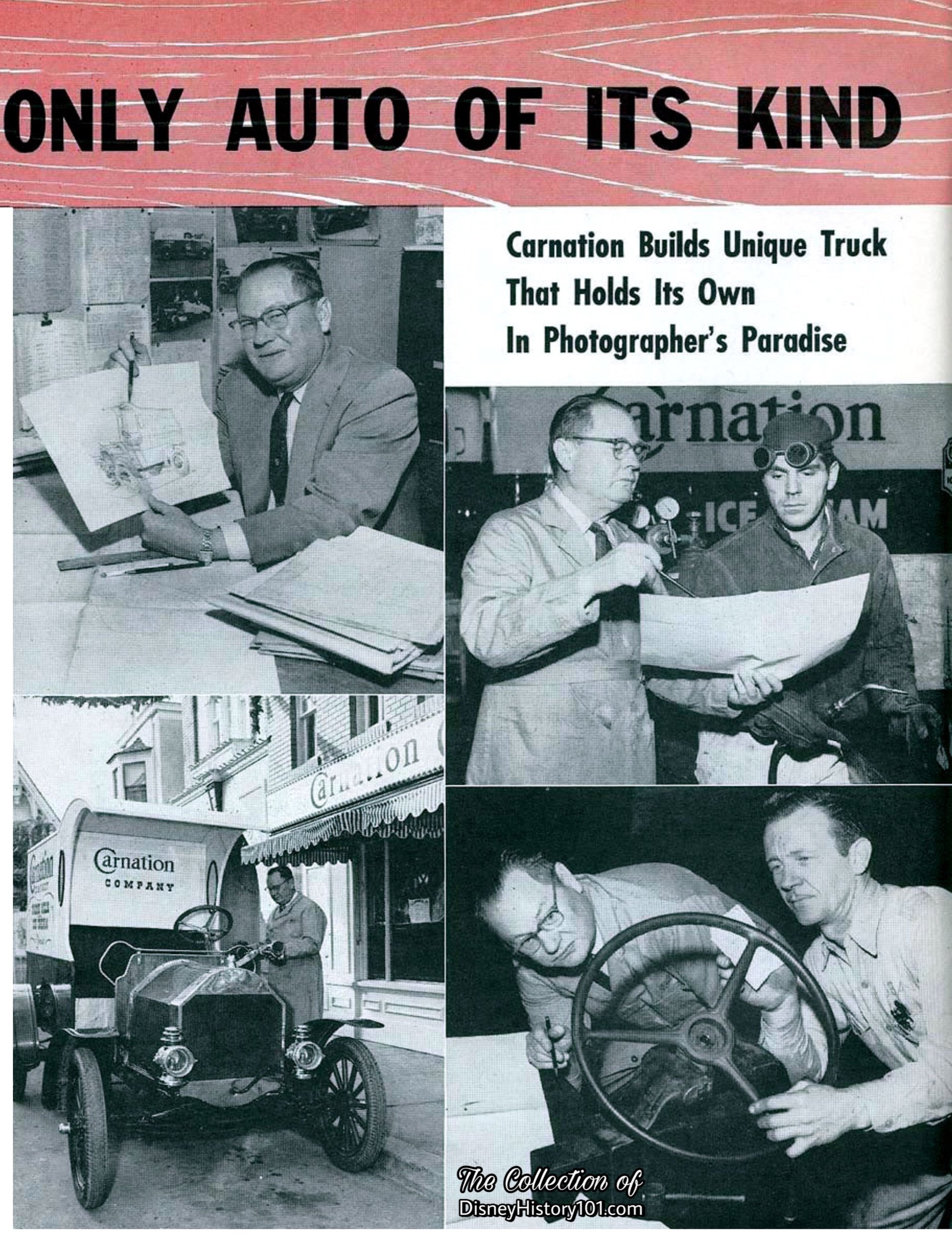
As the Carnation Farms Delivery Truck was reckoned a Horseless Carriage of WED, Enterprises’ design, it shared many similarities with some of Main Street’s other vehicles, while it was also the “only auto of its kind.” According to “Main Street Vehicles”, published 1966 by Disney University, “The Horseless Carriages are sometimes called the ‘1903’s’, but you could pick any year - 1904, ‘05, or ‘06, and be just as accurate. These little cars are of WED ‘composite’ design. On the basis of extensive research, Studio designers created a horseless carriage which was a composite of the design and size of many gas-driven cars of that early period in automobile history. And our Horseless Carriages are a little bit of everything. The two-cylinder engines are actually not auto engines, but have the horsepower, the sound - and even a slight case of the shakes - as did the originals. WED designers selected today’s most efficient two-cylinder water pump engine. Some of the external parts, such as lights are authentic.” Some of these same things ring true with the Carnation Farms Delivery Truck.
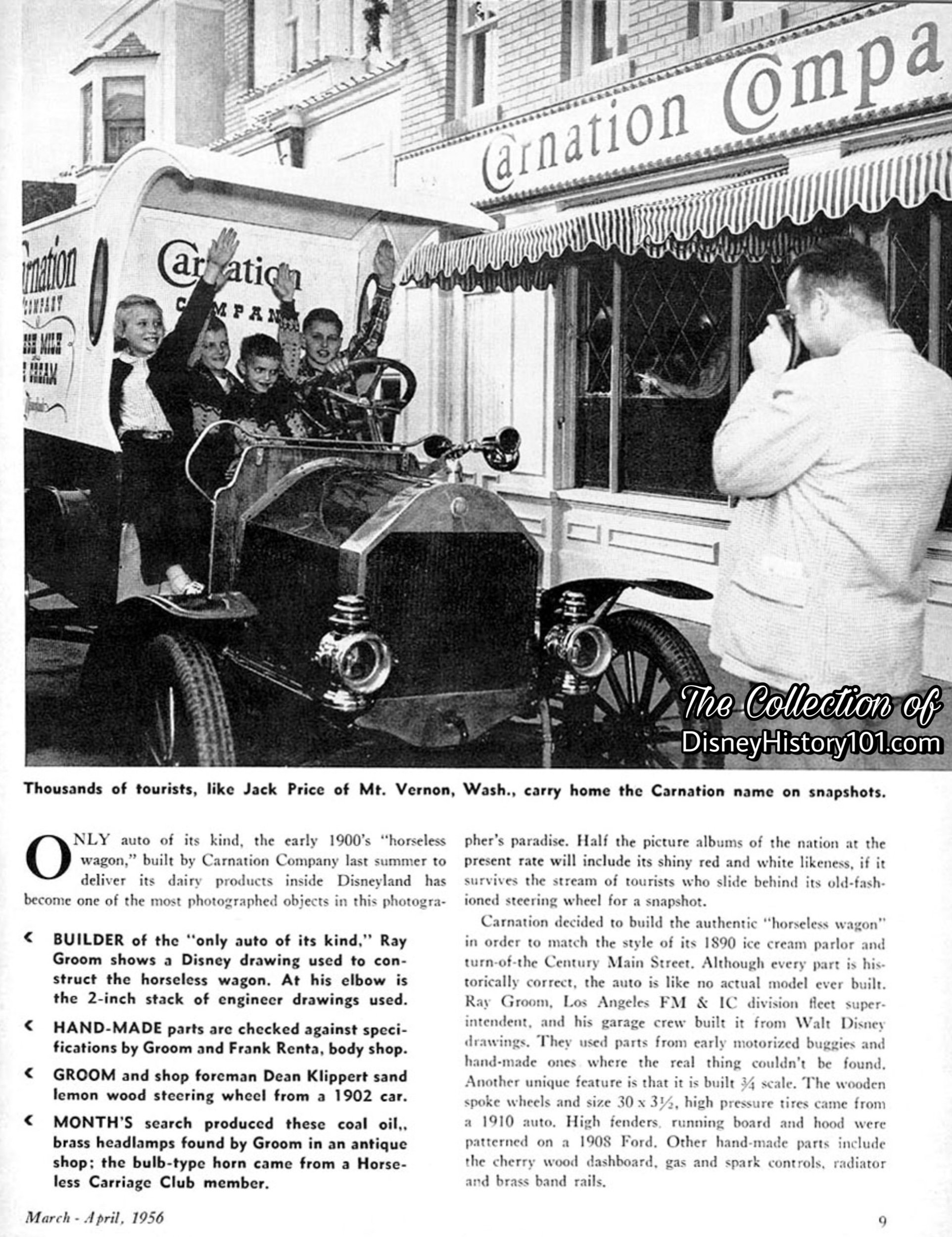
The Carnation Farms Milk Truck was designed by the legendary Bob Gurr to be a reproduction of the delivery trucks used by the Carnation Company from 1910 to the 1930s. Certain elements were patterned after particular vehicles, like the “1908 model car Ford” which inspired the design of the “high fenders, running board and hood,” according to a Carnation Company Press Release document dated July 17, 1955. “Carnation’s crew also constructed its ‘special delivery’ body from 1890 era designs.” However, a full-scale truck would have certainly looked very strange. So, this mobile (and free) Disneyland exhibit would be both designed and fabricated at a “3/4 scale” (according to Carnation Company Press Release), so as to not clash with the 5/8 scale of Main Street U.S.A.’s buildings.
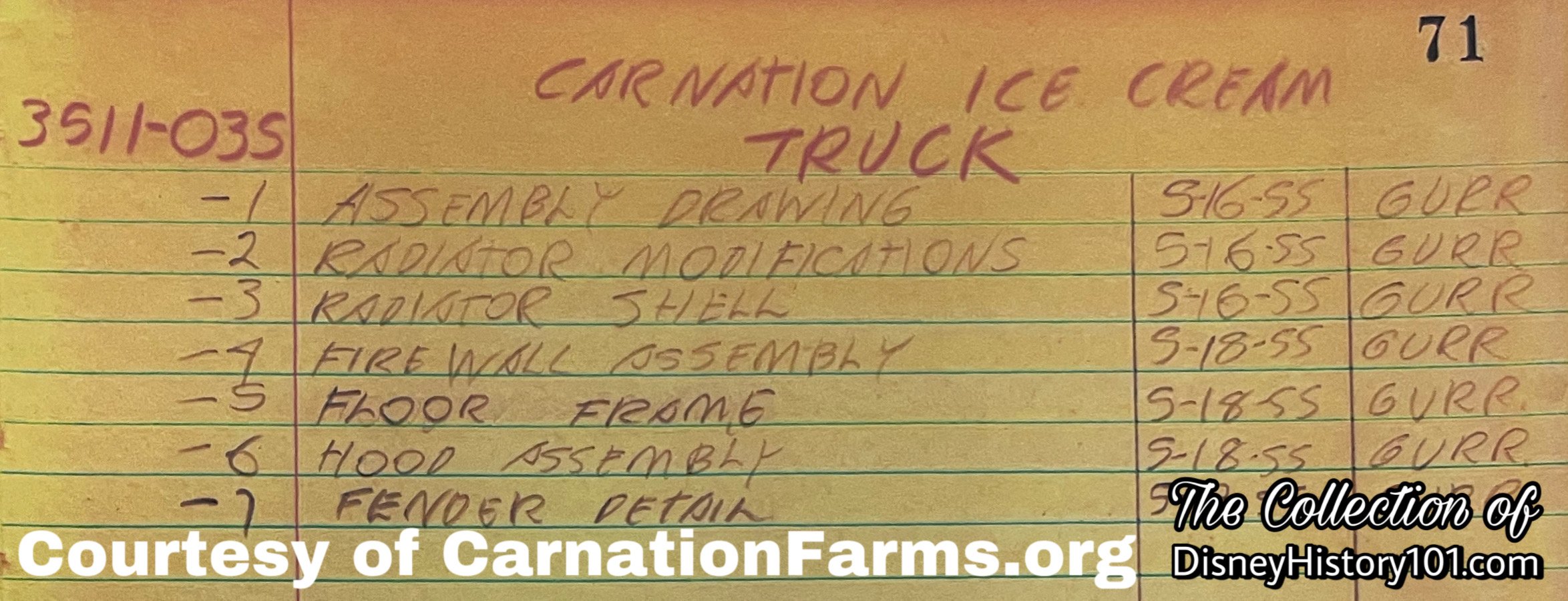
Similar to the design of the Horseless Carriages, the Carnation Farms Milk Truck was to be of “composite design” in this regard. Bob went on to design “the body by following guidance provided in his old automobile book Antique American Cars by Floyd Kramer. He also sought out old automobile magazines in the studio’s library,” according to “Eat Like Walt - The Wonderful World of Disney Food” by Marcy Smothers. Then, a “2-inch stack of engineer drawings” was delivered to Ray Groom (FM and IC division fleet superintendent) and Frank Renta of the Carnation Company’s Glendale metal-working and service shop (in Los Angeles), which was located not too far away from Walt Disney Studio in Burbank.
The project began with an early 1931 Ford Model "A" chassis, which was “shortened with axles and frame altered to fit.” Next, both hand-made reproductions and antique stock parts were acquired. Both the stock and “hand-made parts… [were] checked against specifications by Groom and Frank Renta,” according to Carnation Magazine (March-April, 1956).
Many Ford Model “A” and Ford Model “T” parts (like Model T wheels, and a Model “A” four cylinder motor) were utilized for the moving exhibit. For instance,“special two wheel brakes were built by Groom’s mechanics to more modern standards for greater safety.” A Model “A” motor block was rebored. According to the Santa Ana Register (published July 15, 1955), the truck (following Bob Gurr’s designs and Frank Renta and Ray Groom’s specifications) also featured “a special panel body, brass headlights and radiator, high pressure tires, tufted leather upholstery”. “The cherry wood dashboard, fenders and hood were hand made ; and the lemon wood steering wheel, salvaged from a 1902 vehicle (Buick) , was rebuilt to fit,” according to one Carnation Farms Press Release (July 17, 1955). As a “sidelight,” a photograph published in Carnation Magazine (March-April, 1956) depicted Ray Groom and Carnation Shop Foreman Dean Klippert sanding the lemon wood steering wheel from the 1902 vehicle.
Other parts were also salvaged and modified. According to one newspaper article (“Main Street Dilema - Ice Cream Delivery Poses Unique Problem”), “The steering wheel was adapted from a [sic] 1902 Buick and the brass headlamps… [were] from another car of the same era.” Yes, a “month’s search produced these coal oil brass headlamps found by Groom in [a Los Angeles area]… antique shop ; the bulb-type horn came from a [Altadena] Horseless Carriage Club Member.”
The Press Release document adds : “Also authentic and hand-made, gas and spark controls, radiator and dummy coil box. Old fashioned hand rails, head lamp brackets and crank were reproduced in brass. In keeping with tradition, a leather thong to secure the crank, was made.” The vehicle also had brass headlights and radiator and high-pressure tires to match the Main Street decor.
One final detail gives homage to the exhibit’s creator. “An amusing sidelight of the construction of the Carnation Delivery Wagon concerned its naming. Affixed to the exterior radiator shell is an oval brass plate describing the machine as a ‘Gurrmobile,’ after designer Gurr. When casting about for a name for the machine the Carnation people heard the story of how Bob had been kidded during his school days by classmates because of his habit, during otherwise dull lectures, of drawing automobiles on his notebooks. At the time, the story goes, Bob was accused of attempting to design his own car and the name his fellow students gave to his doodles was the ‘Gurrmobile.’”
After “eight weeks of determined shopping and careful, loving workmanship to build the Gurrmobile,” the Carnation Farms Milk Truck was ready (and parked Backstage near Tomorrowland Lake) by the time that the LIFE Magazine photographer arrived to take pictures for the soon-to-be published pictorial. Press Releases (for Immediate Release on July 17, 1955) divulged every detail of the vehicle.
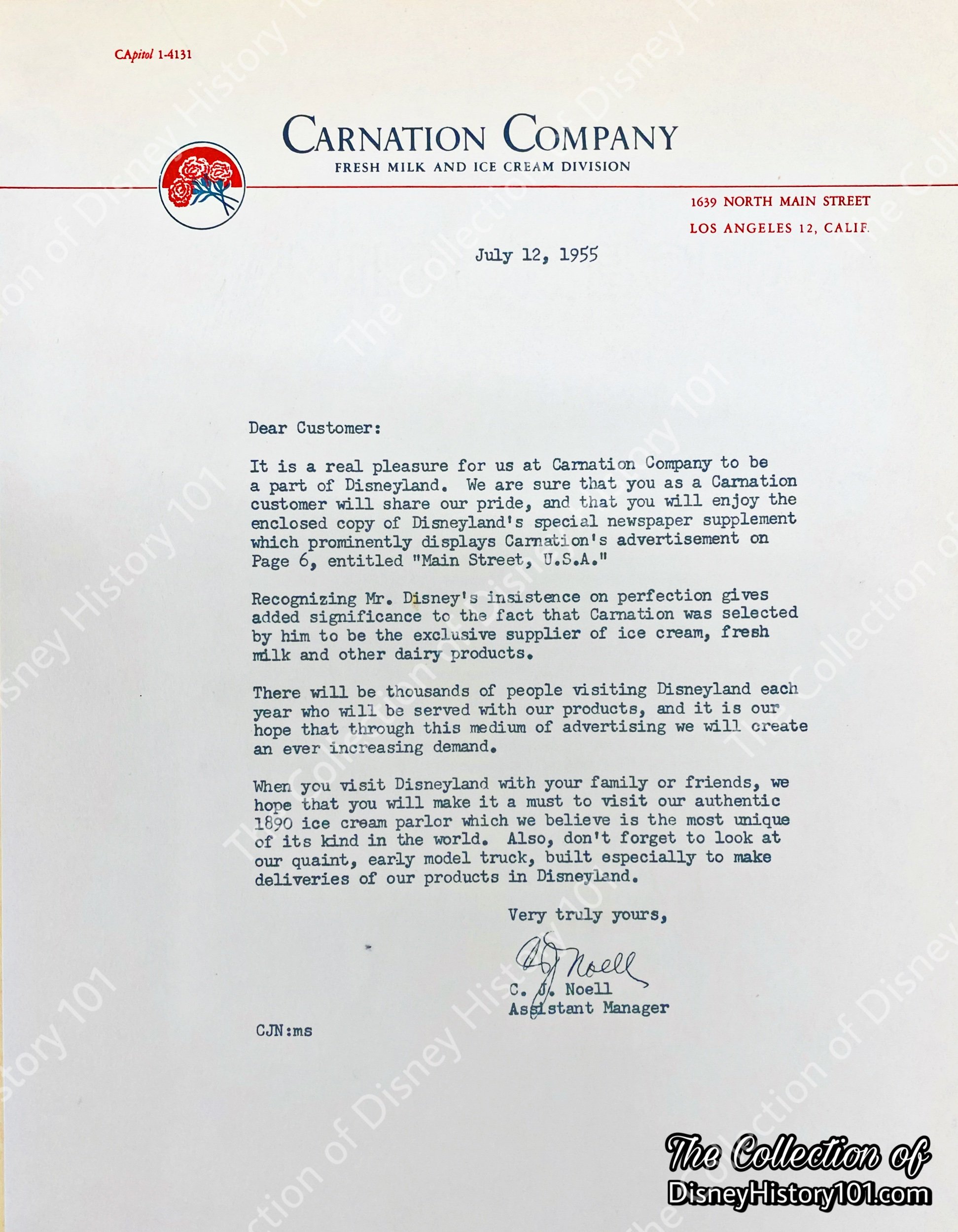
Very soon, the Carnation Farms Milk Truck made its way down the turn-of-the-century thoroughfare, for the Press Preview Day Parade held on July 17th, 1955! However, due to a limited amount of time and the placement of the Carnation Truck (at the very end of the parade), it was not seen by television viewers.
After this, the Carnation Farms Milk Truck frequently appeared parked on Main Street. The Carnation Farms Milk Truck would go on to become one of the most photographed of the Disneyland exhibits! “The Carnation Wagon was an instant hit from day one, though Walt had one objection: the plaque behind the driver’s seat read CARNATION. Walt knew hundreds of pictures a day were taken of kids sitting behind the wheel, so he had it replaced with one that said DISNEYLAND,” according to “Eat Like Walt - The Wonderful World of Disney Food, by Marcy Smothers. By the time this took place, guests had already taken countless photographs in front of the old plaque (testifies to in the following Vintage Views).
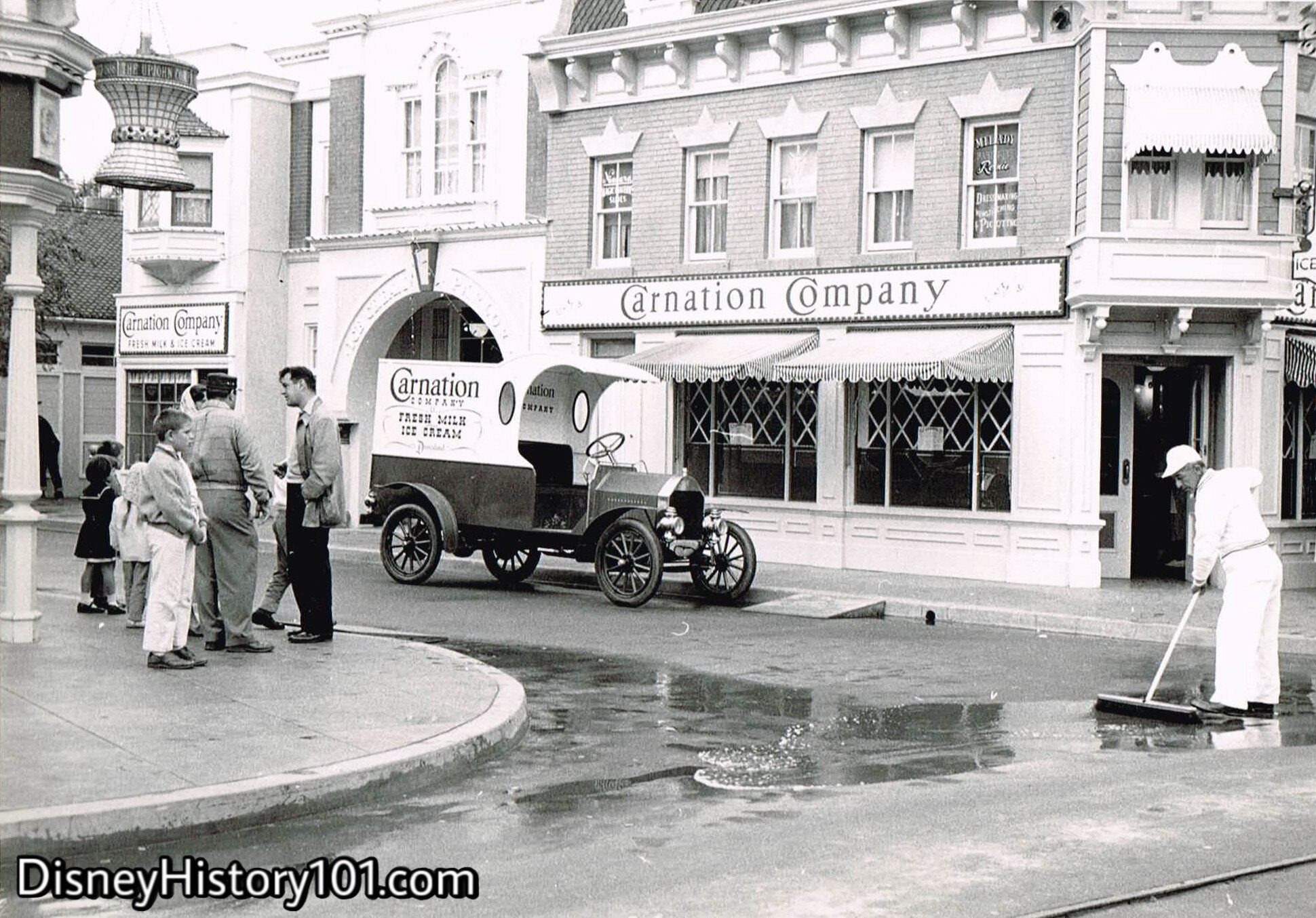
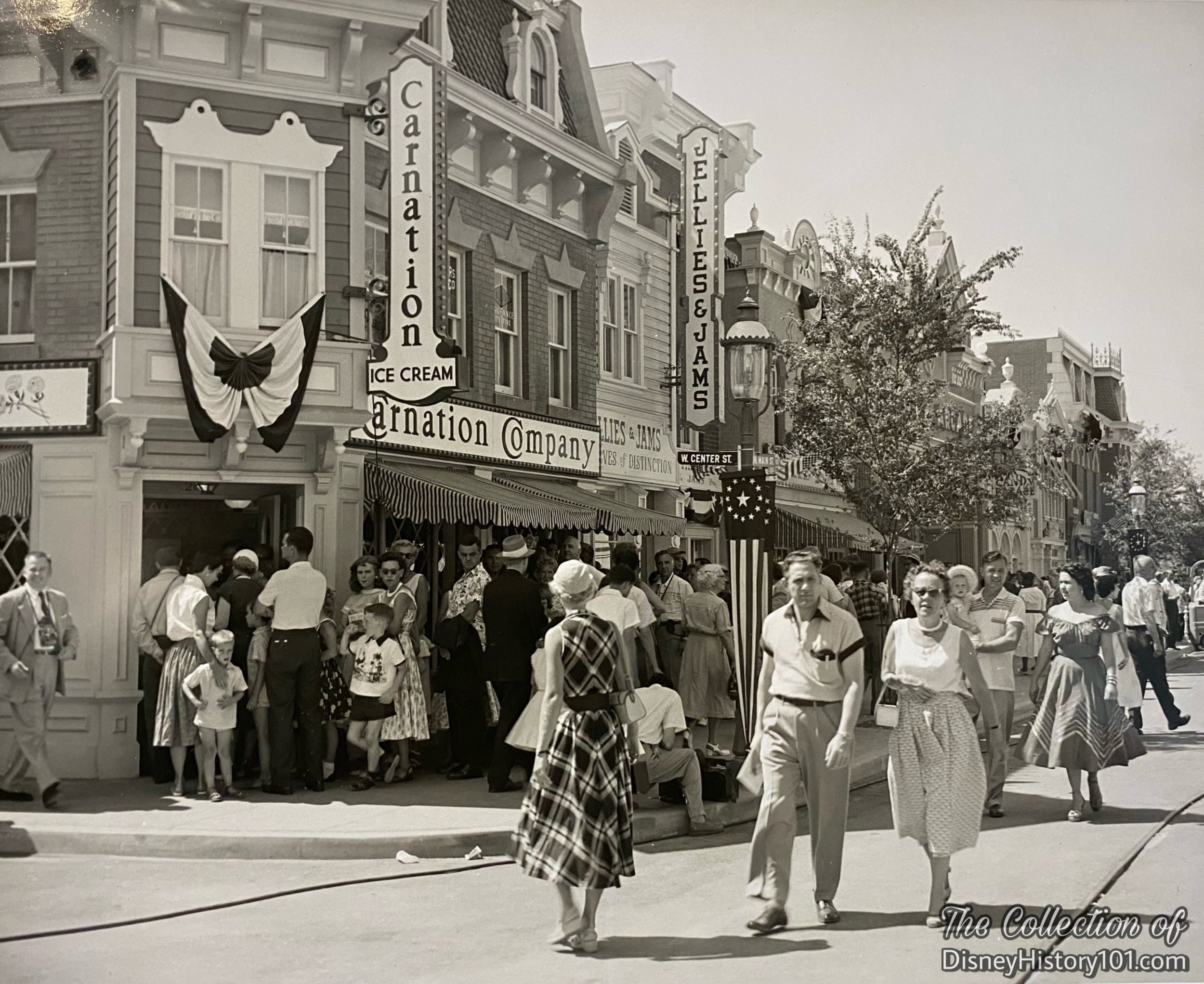
The morning is damp on Main Street U.S.A., and as the last of the water is brushed away by Custodians, guests begin to make their way toward the shops and restaurants. Accessible ramps have been laid down and the doors have been opened. It’s time to welcome guests at the little Carnation Cafe on the corner!
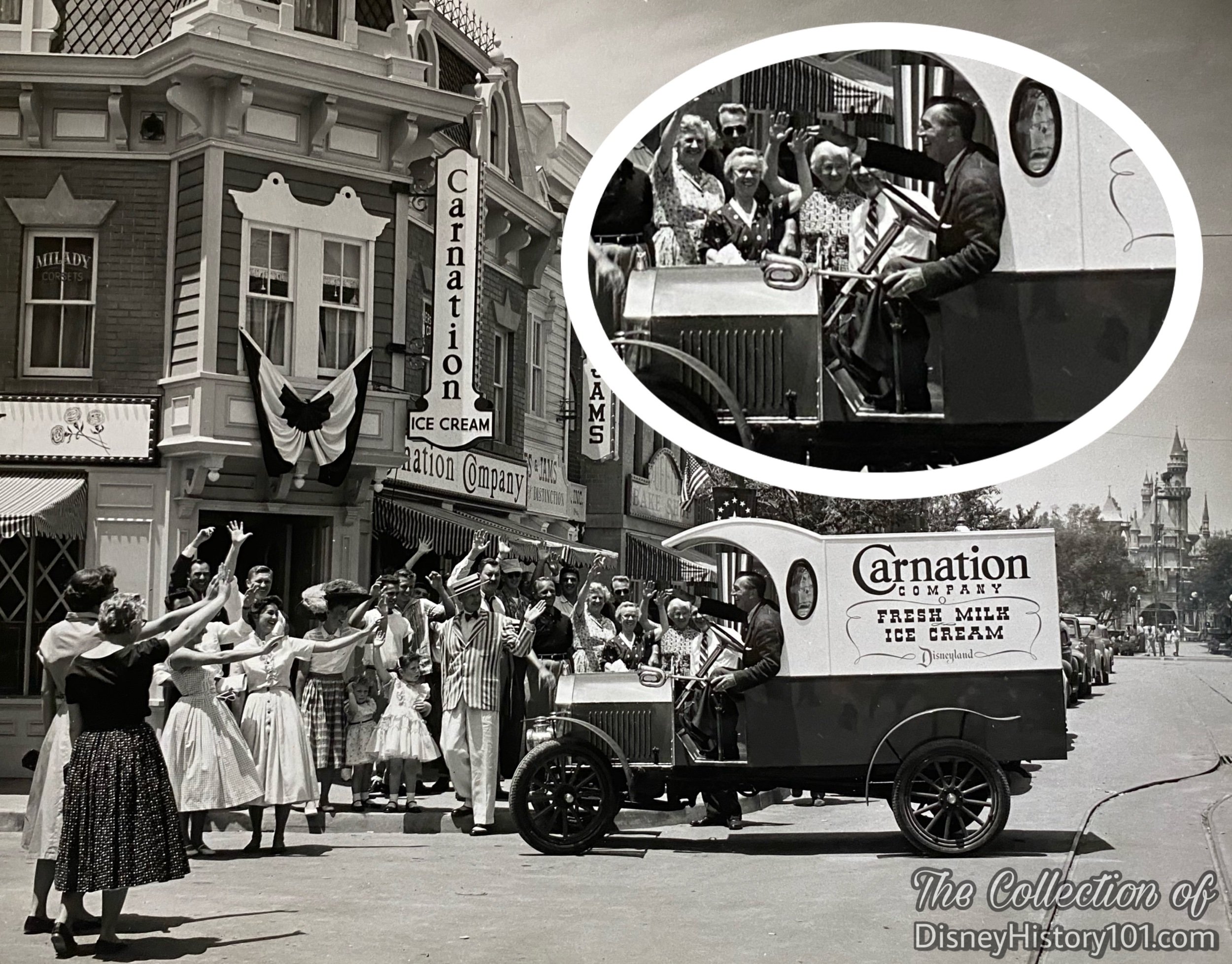
The following day (July 18th), the Carnation Company invited specific members of the press and their families to be their “special guest at their Ice Cream parlor located on Main Street.” It appears that the big Grand Opening Ceremony was initiated when Elbridge Hadley Stuart Jr. (the grandson of the Carnation Company’s founder) and Walt Disney drove the Carnation Truck down Main Street U.S.A., arriving at the shop and“unloading ice cream and milk from the vehicle.”
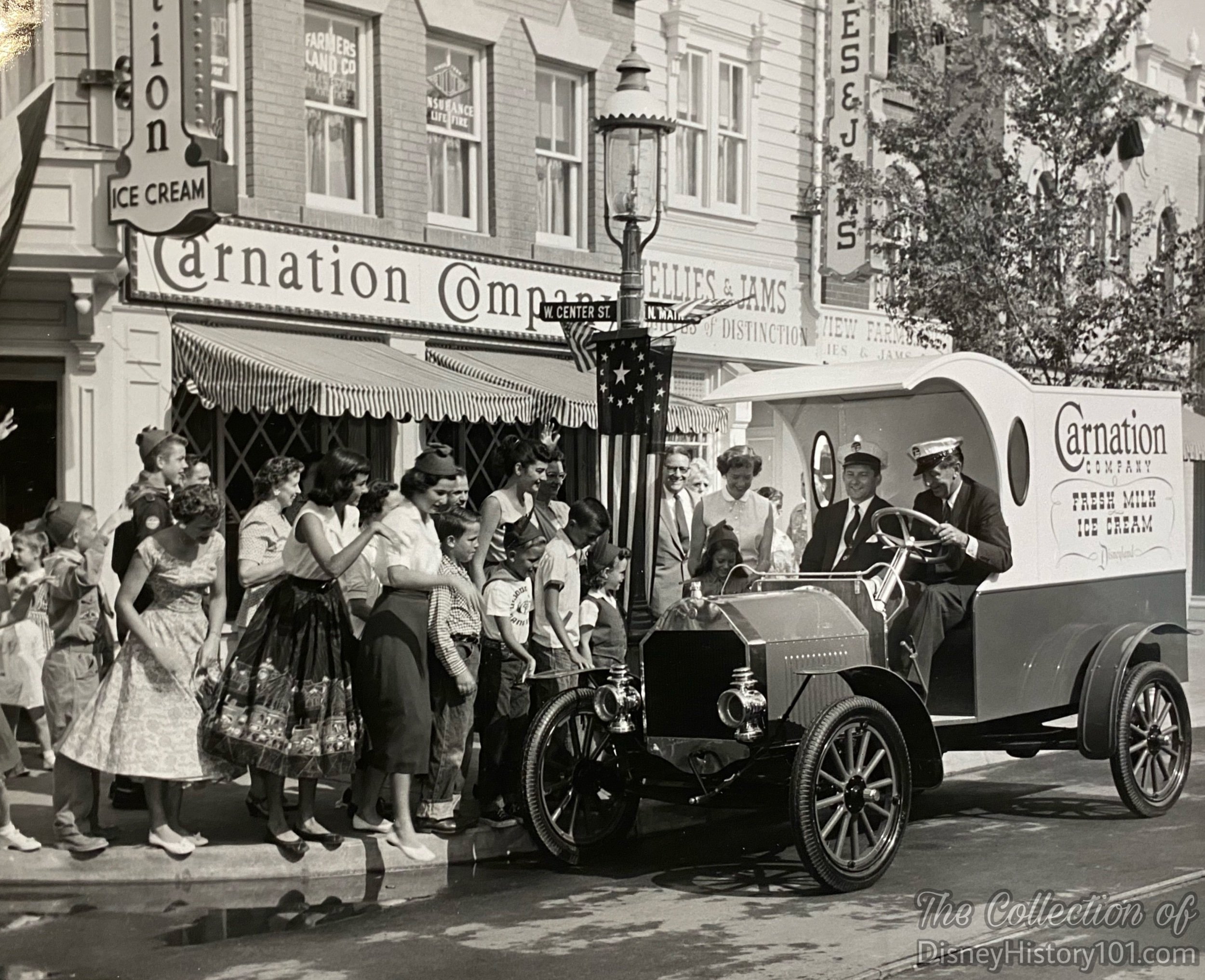
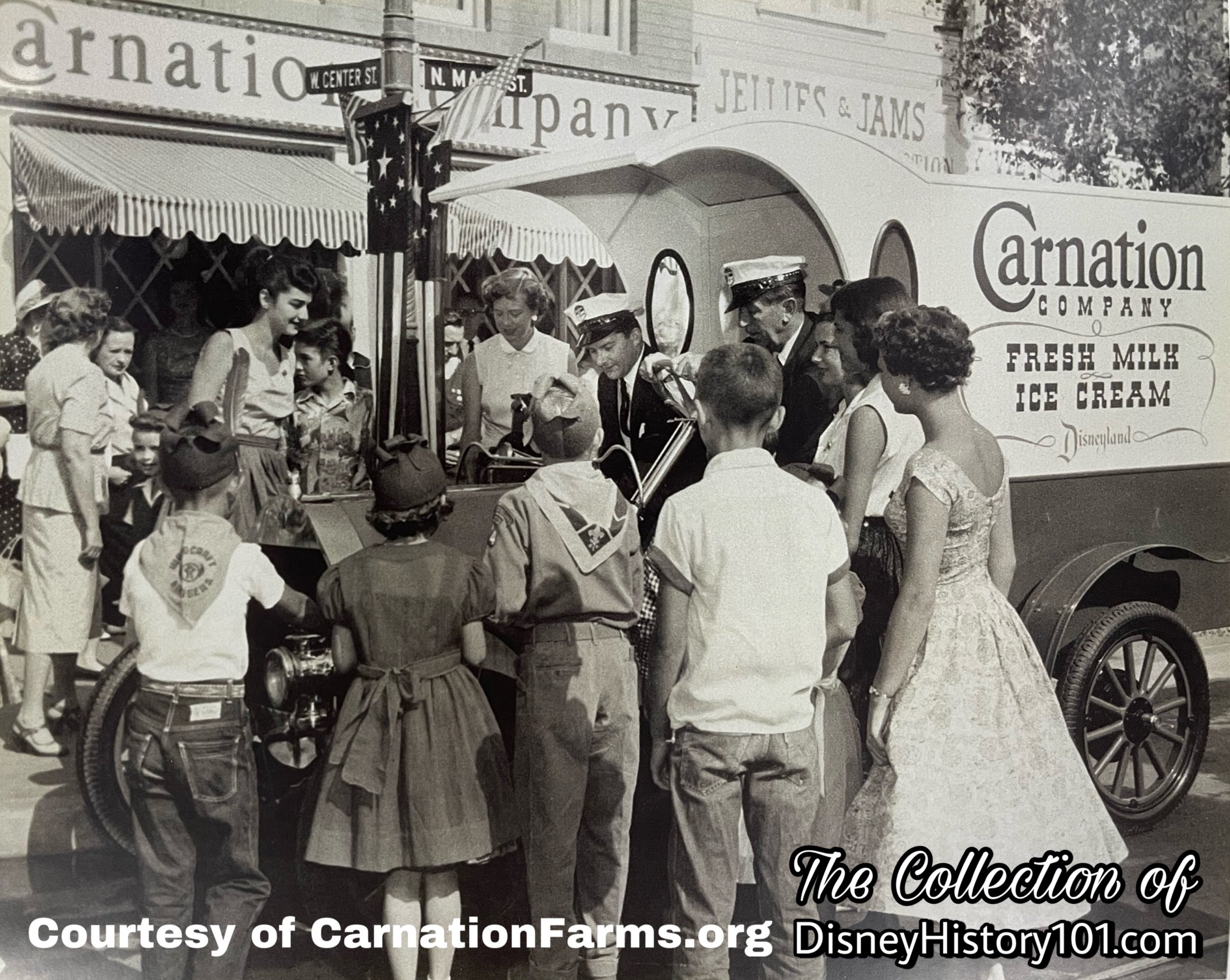
According to Elbridge Hadley Stuart Jr., driving the Carnation Company Truck required much skill and great care, watching for both guests and the rails of the Main Street Horse Drawn Streetcar (in which the truck’s wheels had a tendency to get stuck). It sounds like they could have used some “cheese” - those orange rubber wedges used to fill trolley tracks during parades. Of Walt’s overall actions (as depicted in these Vintage Views), Bill Cottrell later noted that “Walt had an ability to put himself in the shoes of the common man… He wanted people to be treated the way he expected to be treated himself.”
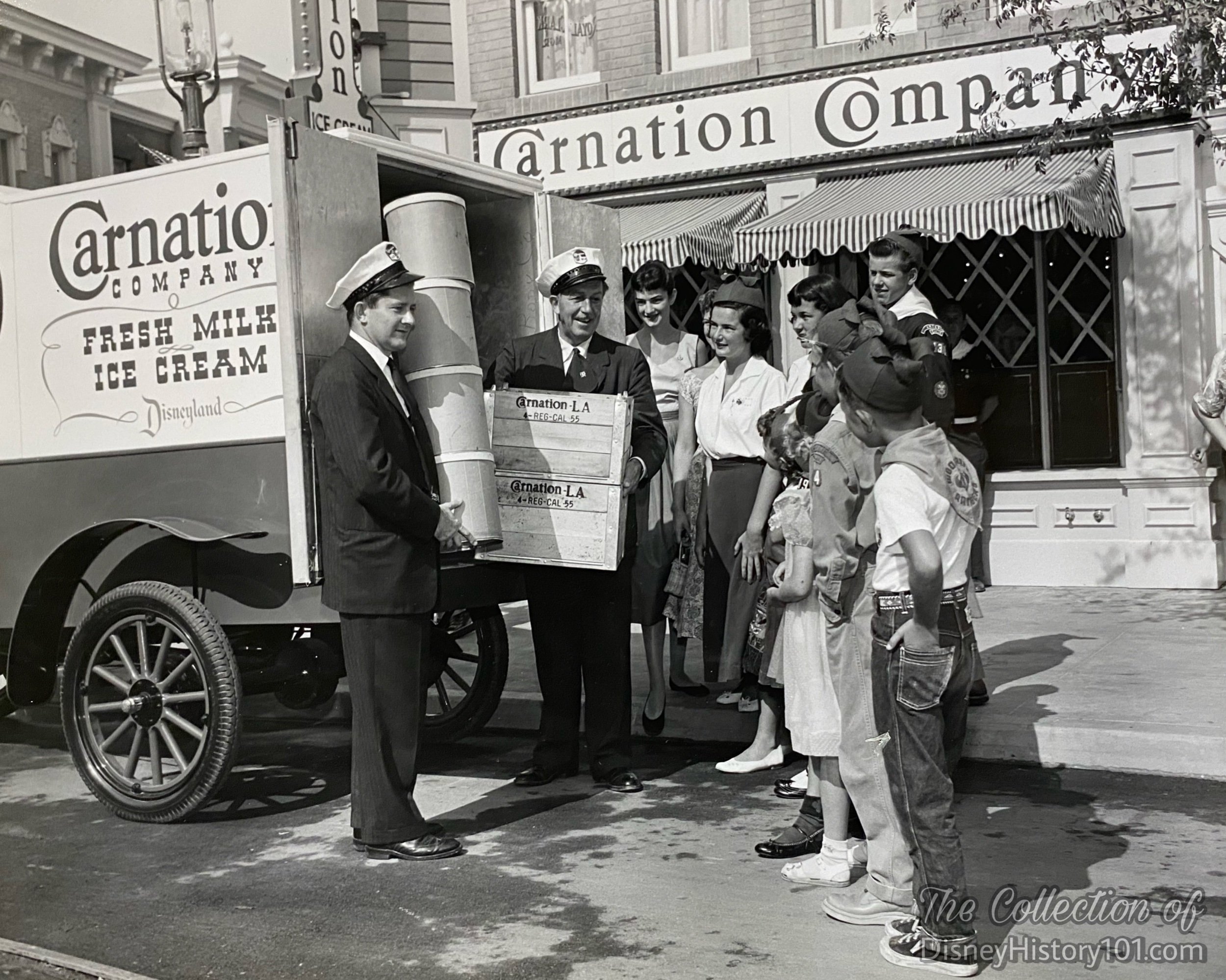
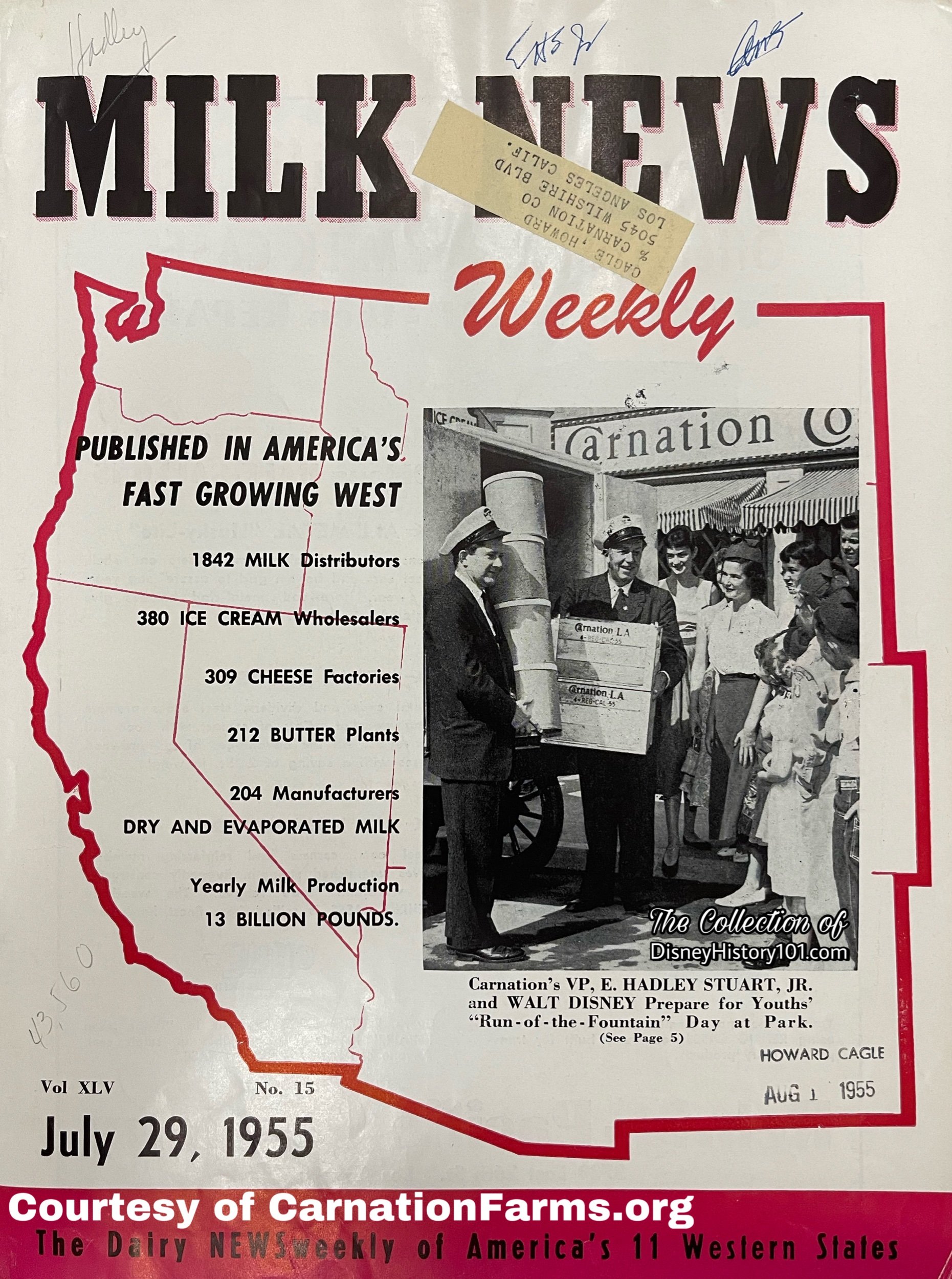
Above: Children from seven youth groups watch Disney and Hadley Stuart, grandson of Carnation's founder, unload the the first ice cream at the formal opening.

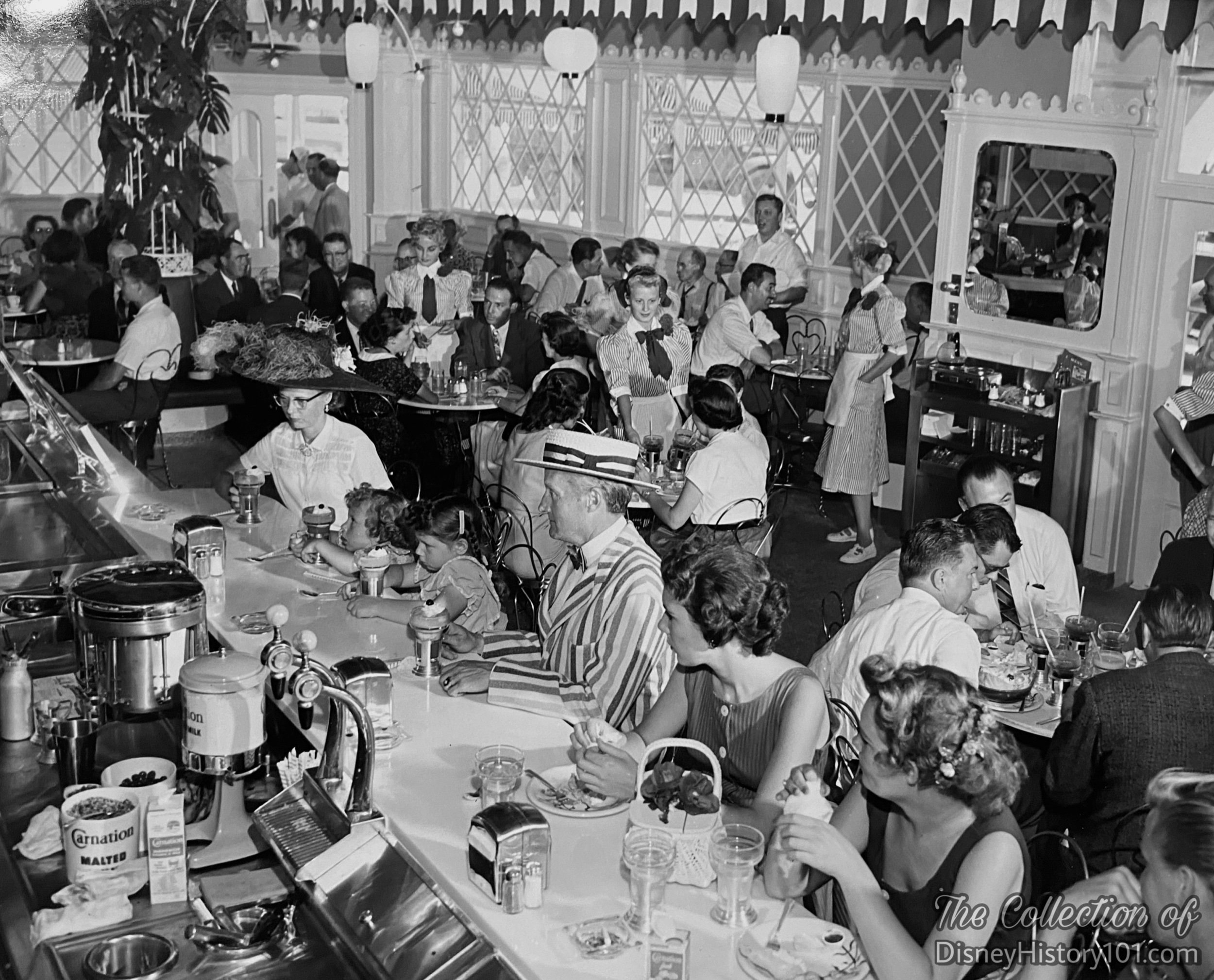
On the first day 4500 hungry and thirsty people were served in its 1890-style ice cream parlor.
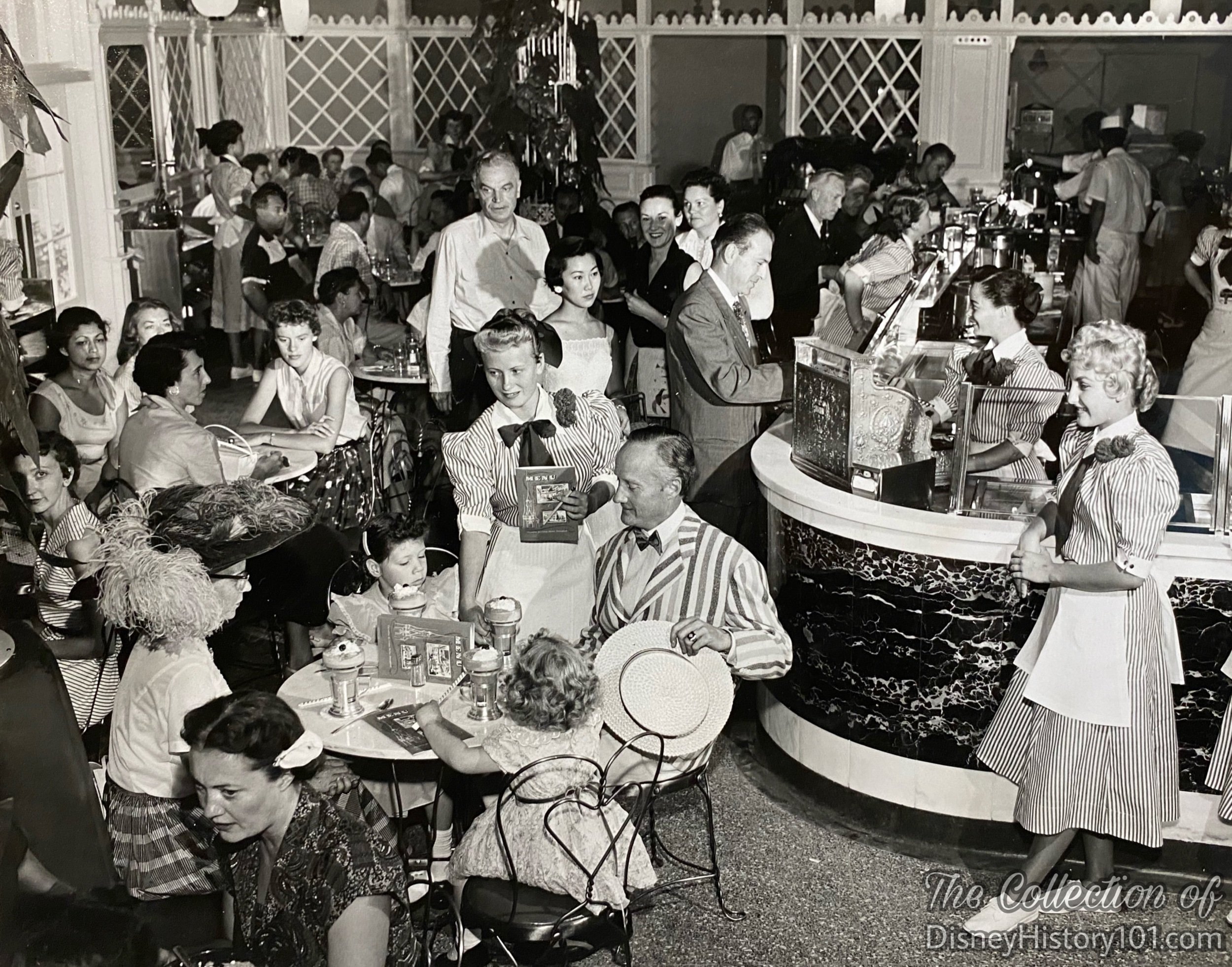
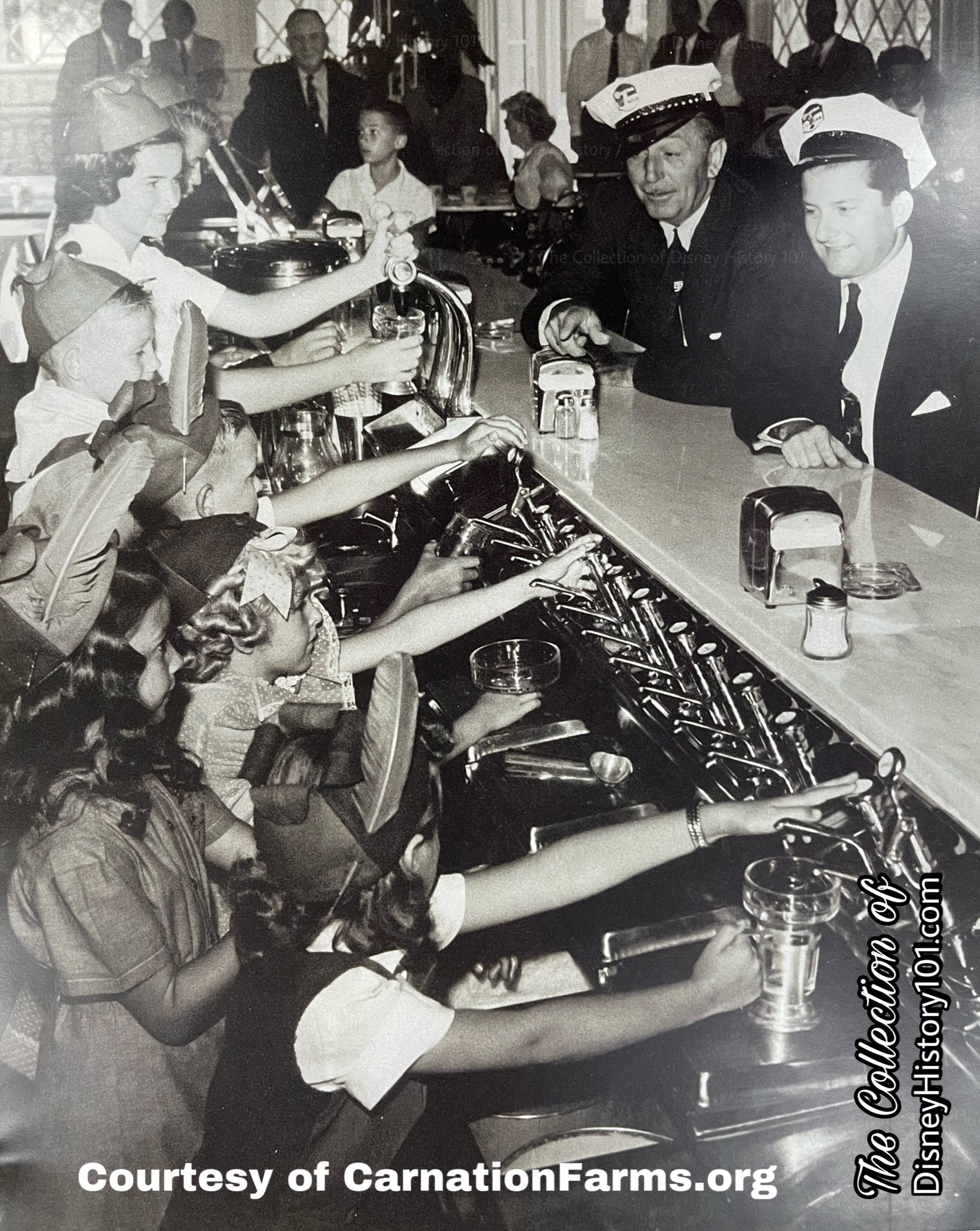
According to a column appearing in Milk News (Vol. XLV, No. 15 ; July 29, 1955) :
“Still another wonder was piled on the multitude of wonders at the nation’s newest entertainment center today, when two dozen youngsters affiliated with Los Angeles and Orange County youth organizations were given ‘run of the fountain’ at Carnation’s 1890 Ice Cream Store…
Inside the store, the youngsters were shown the various syrup wells, where located, how to use a syrup scoop and then told to concoct their own combinations.
Many of the finished dishes were new concepts of flavor combinations which had the regular fountain personnel scratching their heads in bewilderment. Most of them were top-heavy with garnish, but the youngsters agreed they were all delicious when they had lapped up the last spoonful at the tables in the company’s picturesque old-time ice cream parlor.
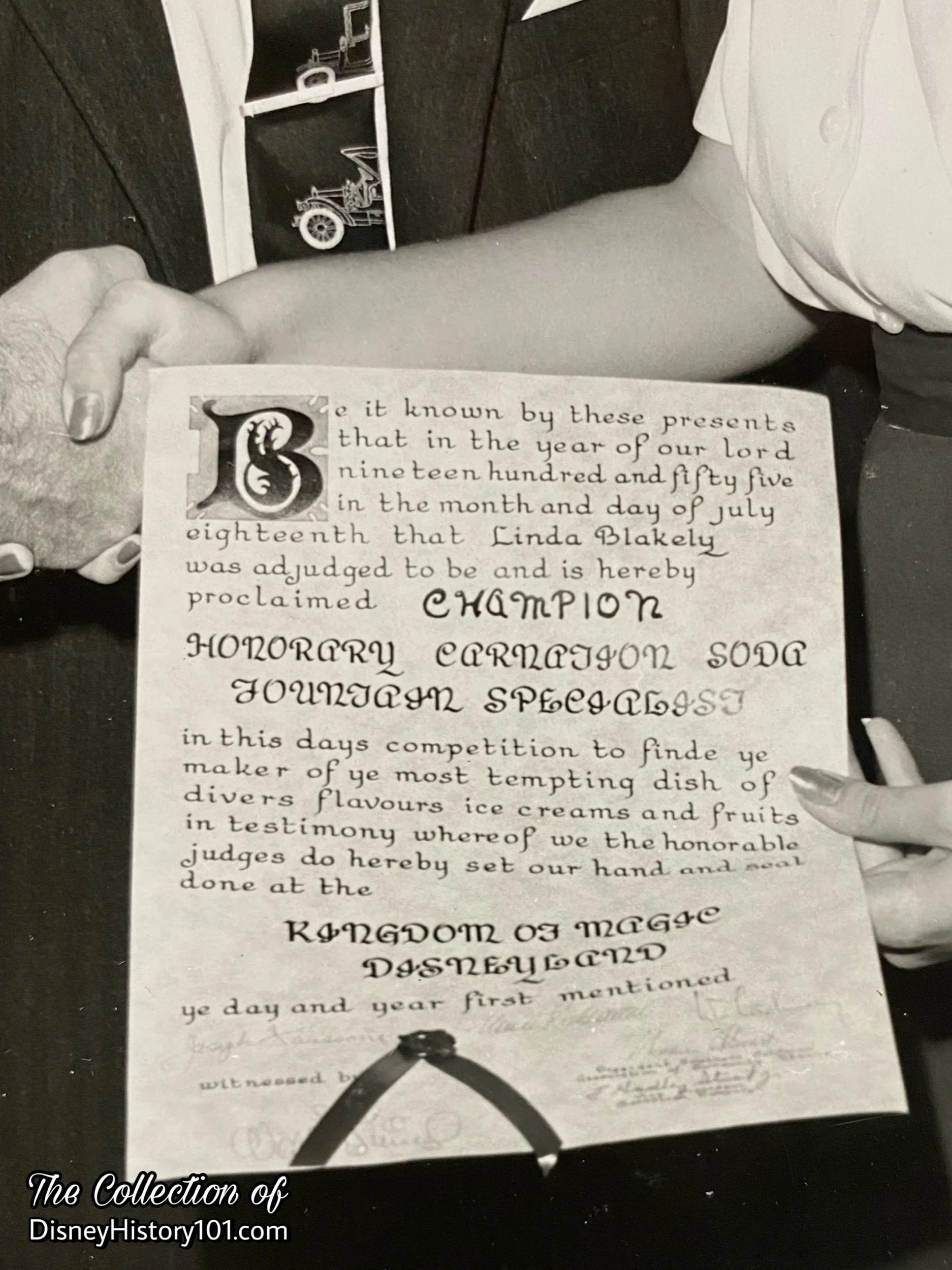
Linda Blakely of Anaheim, a Brownie, was designated ‘Champion Fountain Specialist’ after all the dishes were judged by a panel of experts for her concoction which consisted of a scramble of various flavored ice creams, several syrups, a couple of toppings and whipped cream. One more ingredient - Linda added a banana for good measure.”
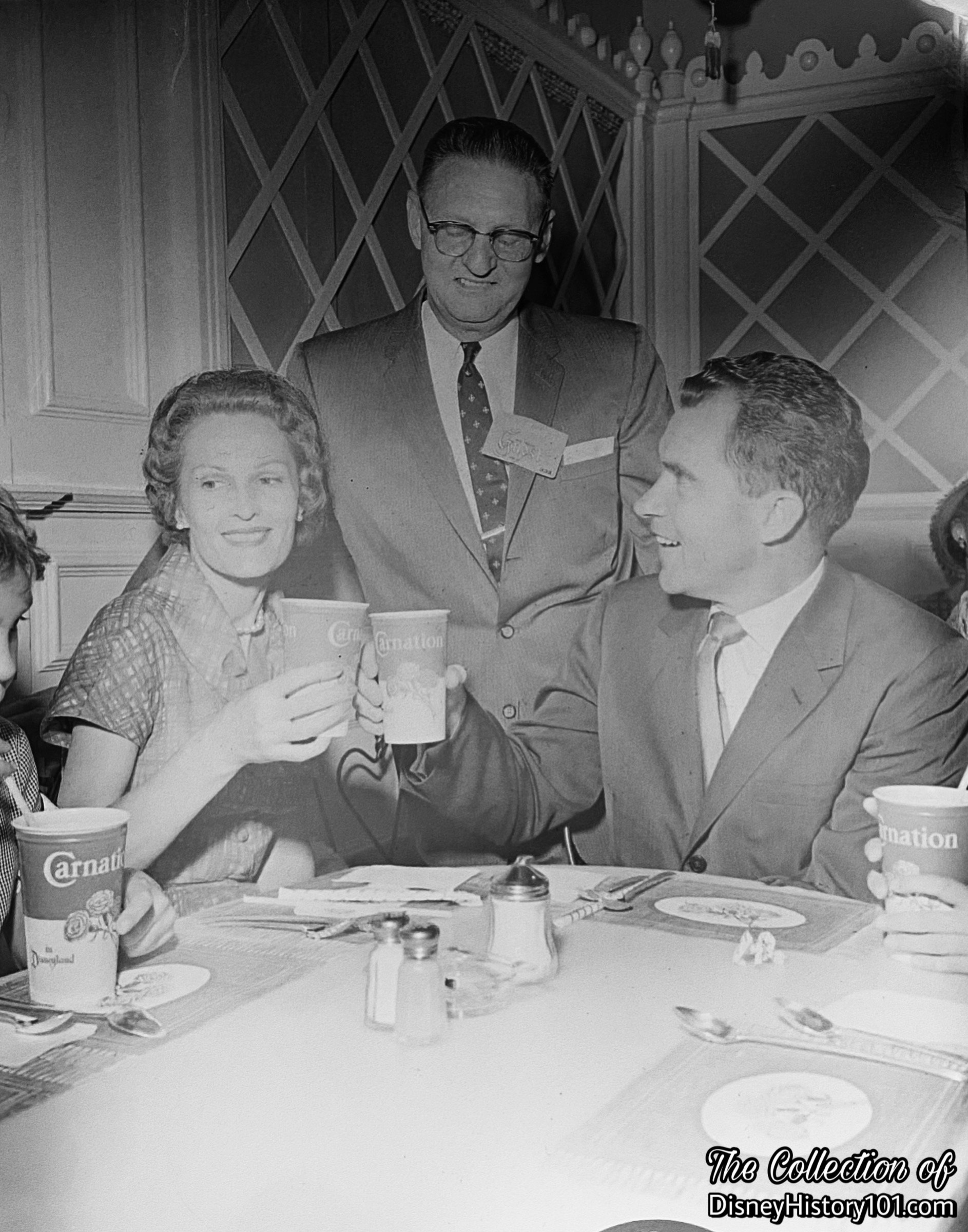
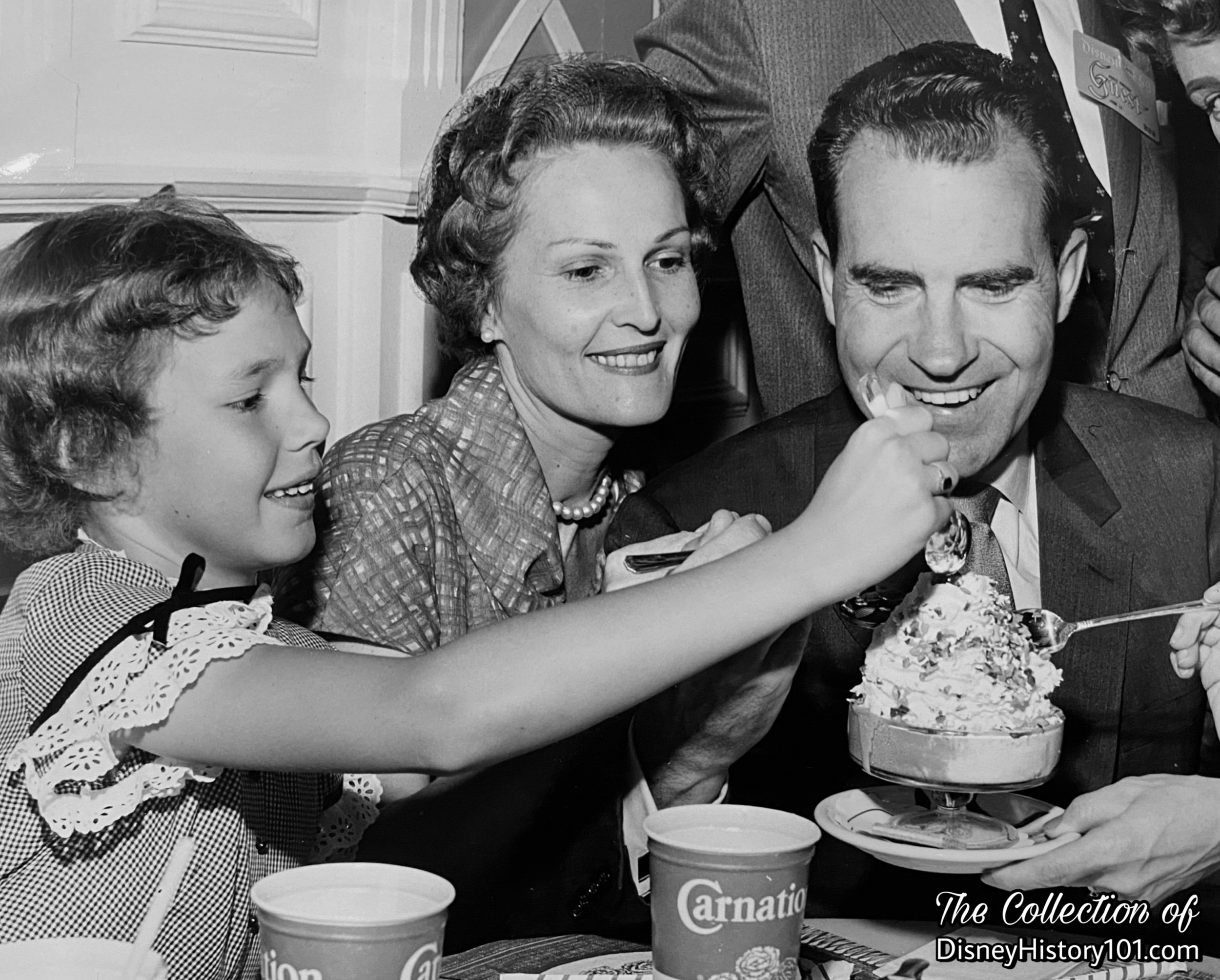
Reports of these ceremonious events were swiftly published. As a result, in the days and weeks that followed, Carnation Ice Cream Parlor continued to receive visits by many notable VIP guests, from Richard Nixon (whose brother was a Carnation Sales Manager) to actress Shirley Temple.
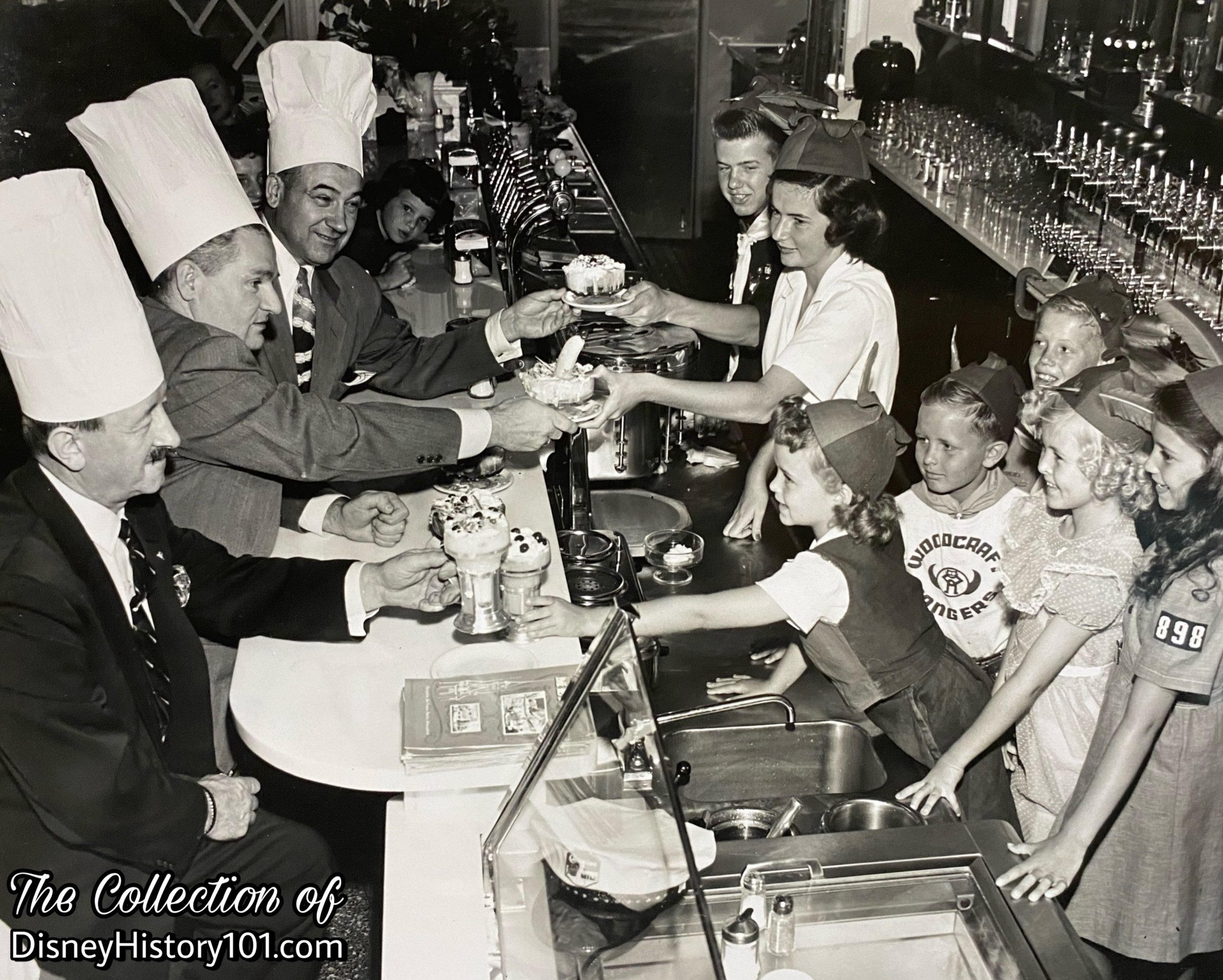
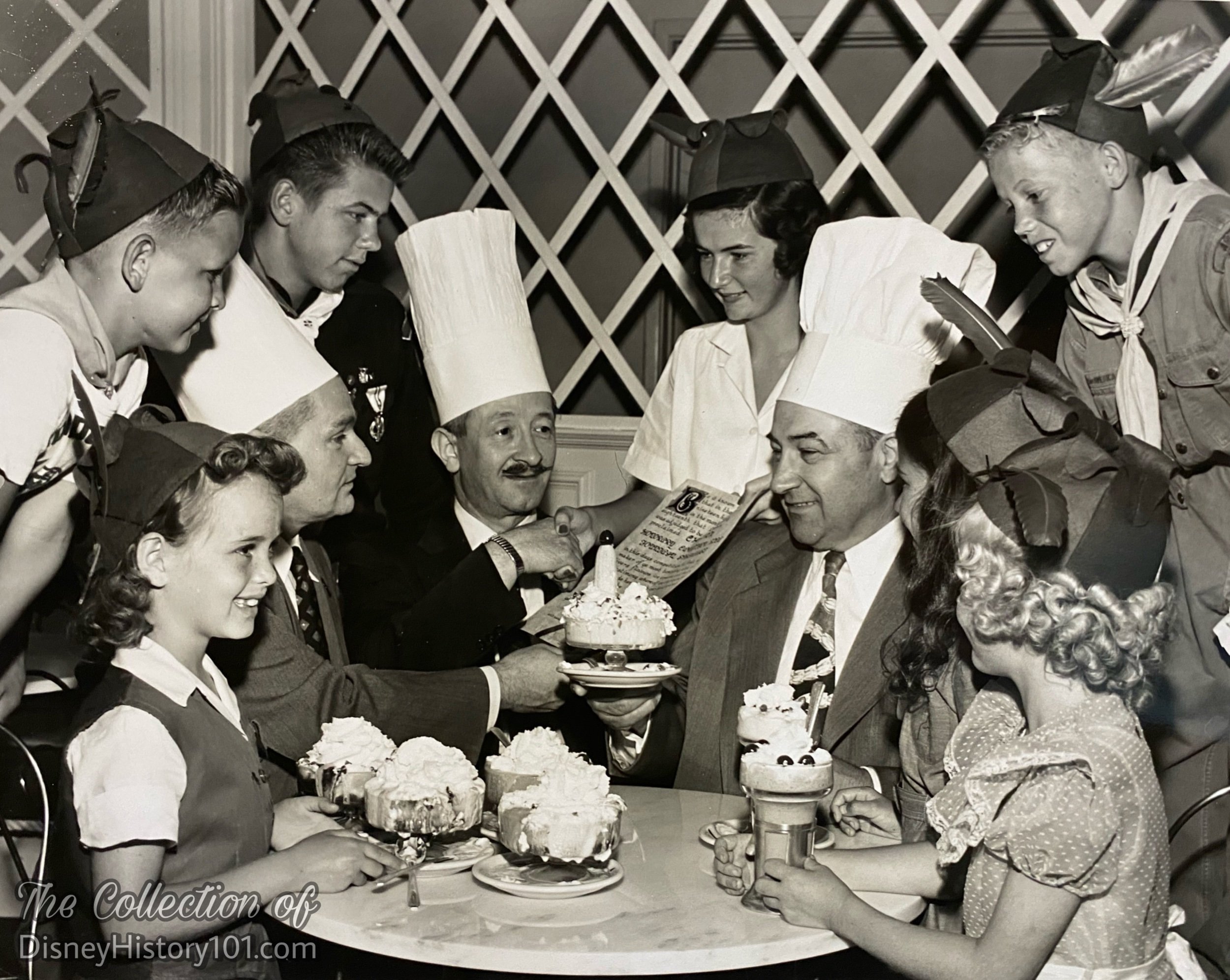
Ice cream desserts made by the Boy and Girl Scouts and other Community Chest agency children were judged by the head chefs of three leading Los Angeles hotels. Each child was Carnation's guest at Disneyland for the day.

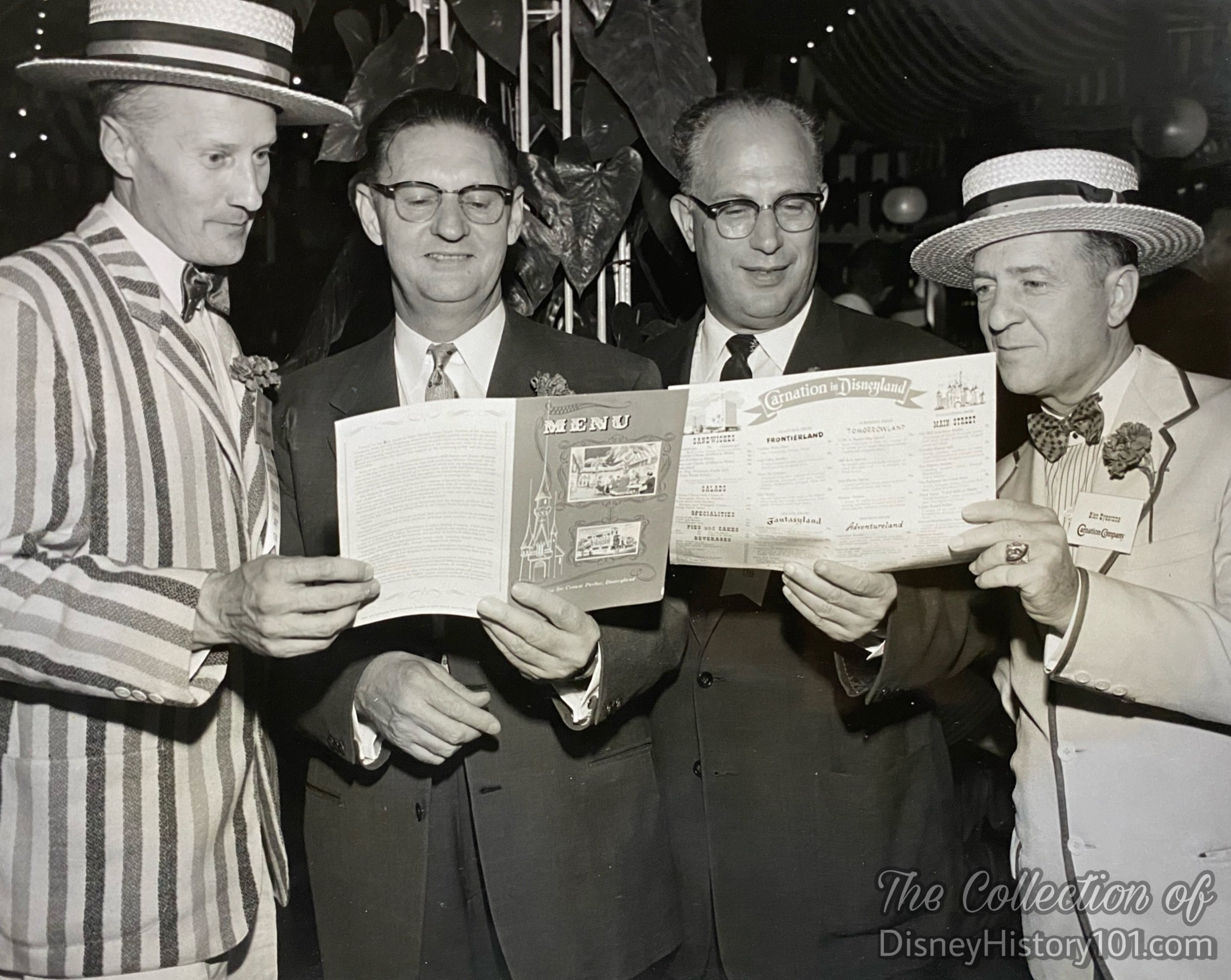
Above: Carnation's key men in Disneyland, reading the special menu, are, (L. to R.) R. A. Keplinger, C. J. Noell, F. A. Nelson, G. Eyestone. Not pictured is store's manager, W. C. Slanina.
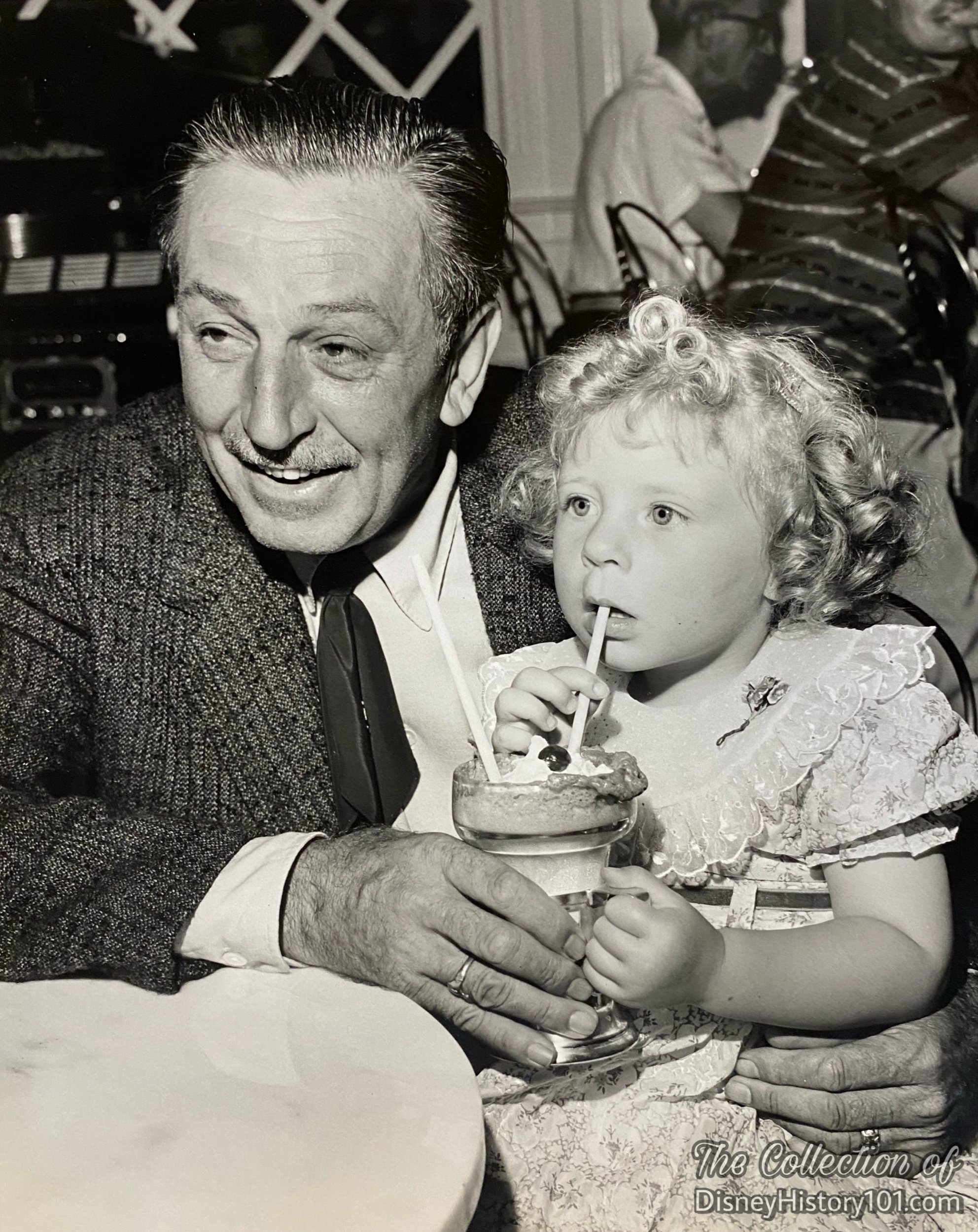
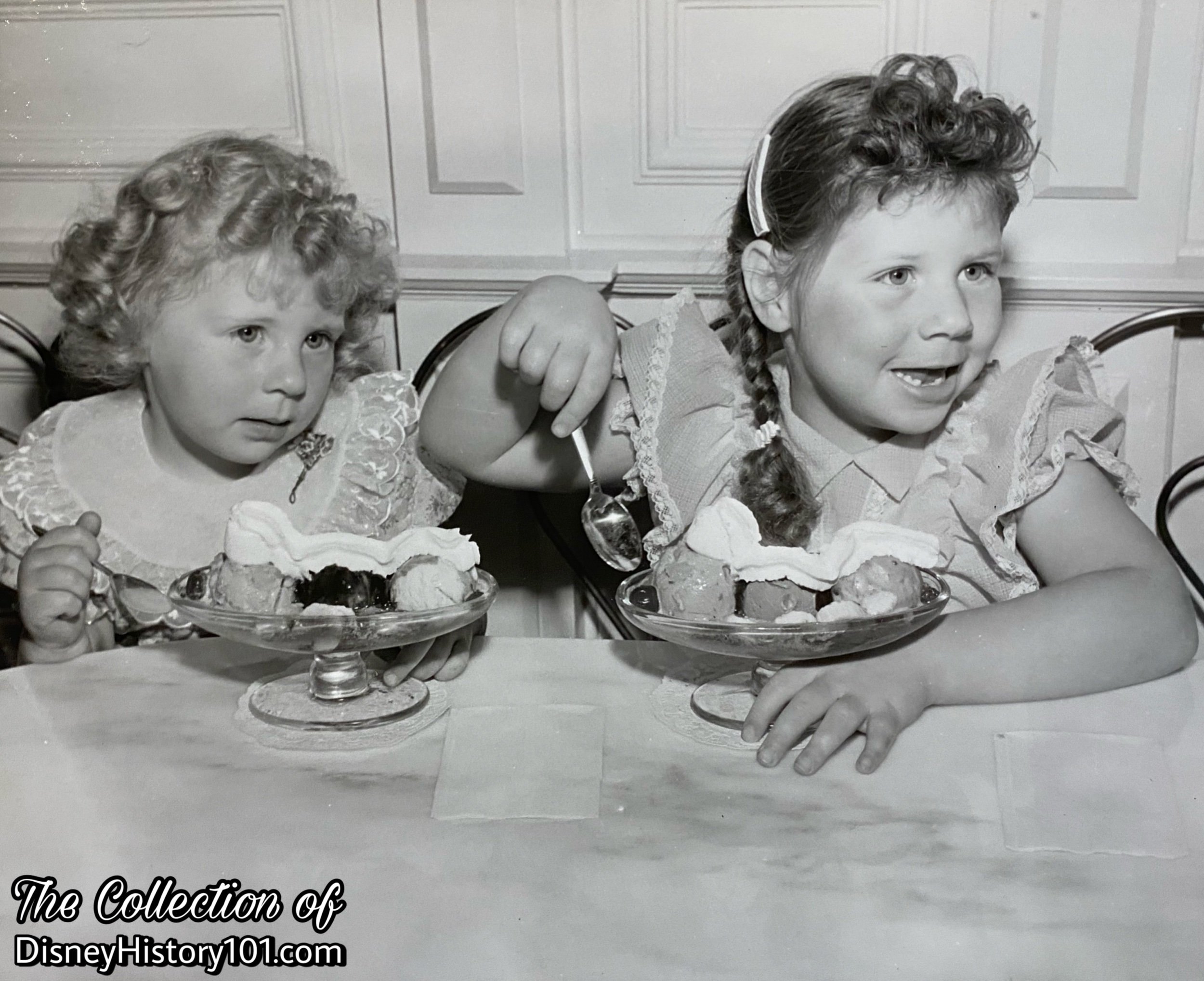
According to The Daily Oklahoman: “The first visitor to Disneyland sneaked in one day early and got some special treatment from the boss. She's Blaine Long, 3, and her host for an old-fashioned ice cream delight in the Gay Nineties ice cream parlor is Walt Disney himself.”

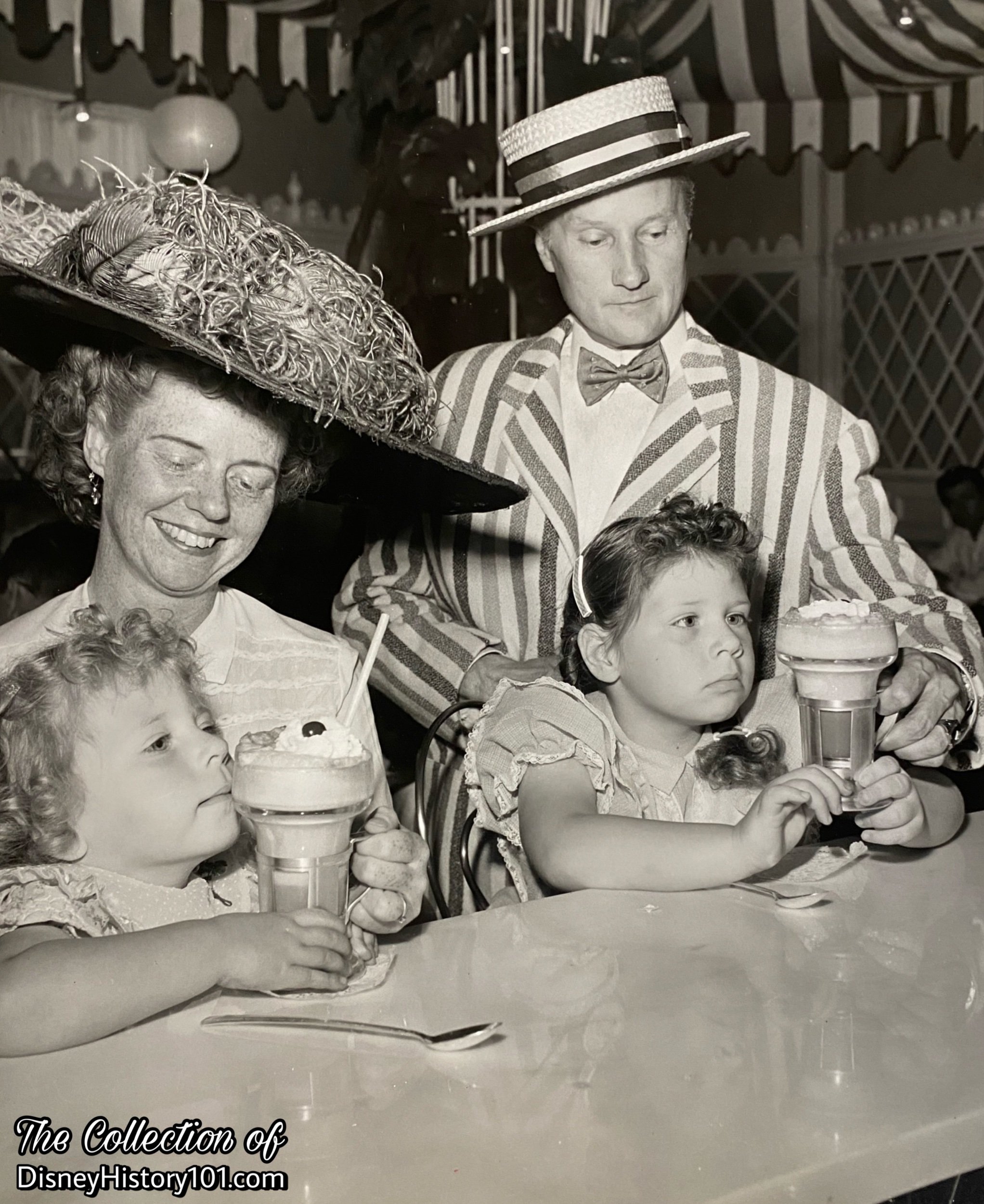
According to Pacific Coast Review: “Christine Long didn't let the ostrich-plumed picture hat interfere with her attack on a Lillian Russell parfait as she helped in the recent opening of Carnation Company's 1890-style ice cream parlor in Disneyland near Anaheim, California.”
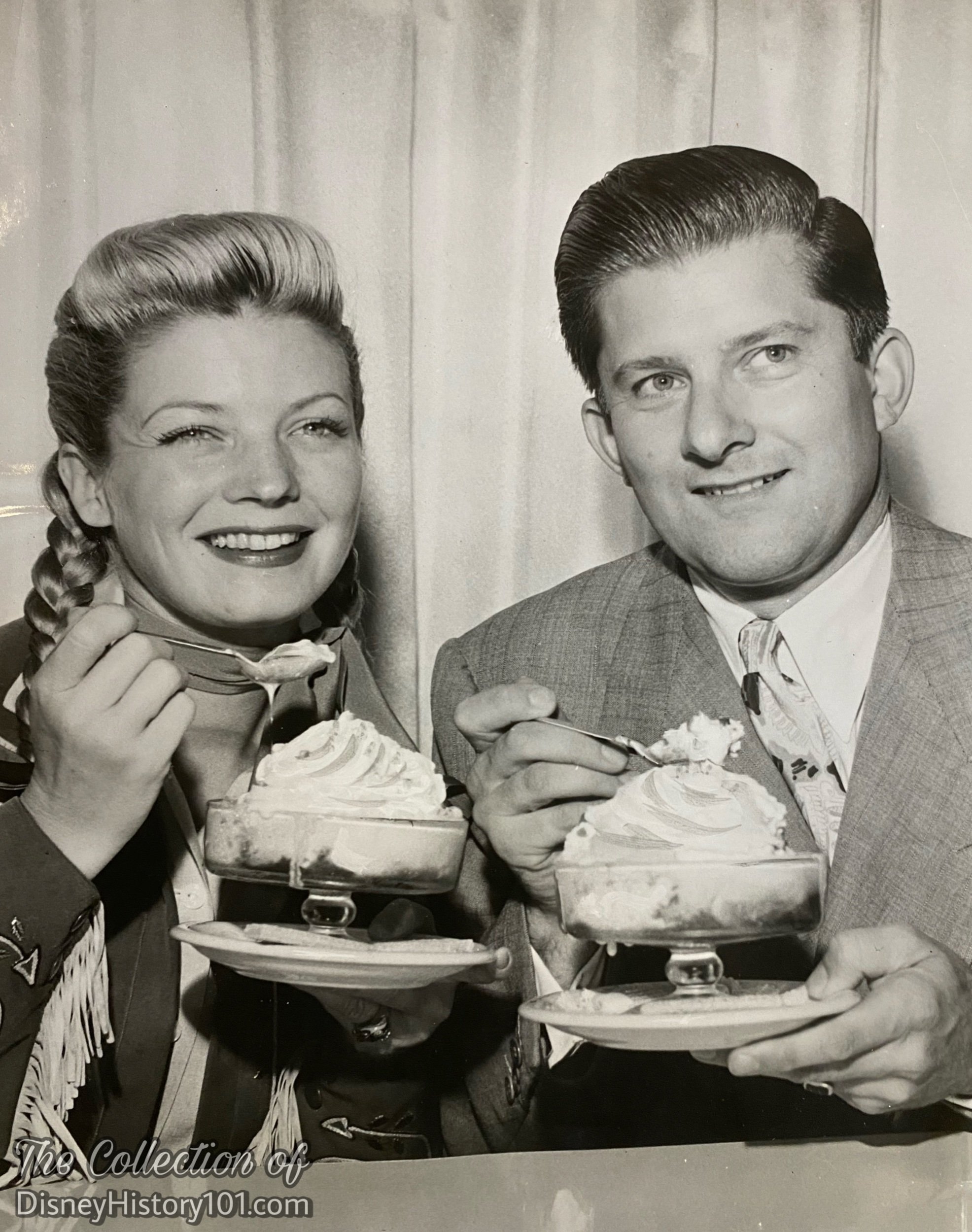
Gail Davis, (television's Annie Oakley) cohosted a party for more than 1,000 newsmen in the old-fashioned parlor at a preview on July 17th. She and Mr. E. Hadley Stuart, Jr. (grandson of Carnation's founder) took part in American Broadcasting Company's national telecast of the pre-view. Millions saw Carnation's TV star, Annie Oakley ride horseback in the national telecast.
Carnation would also serve 15 wholesale customers who operated restaurants and snack bars in Disneyland.
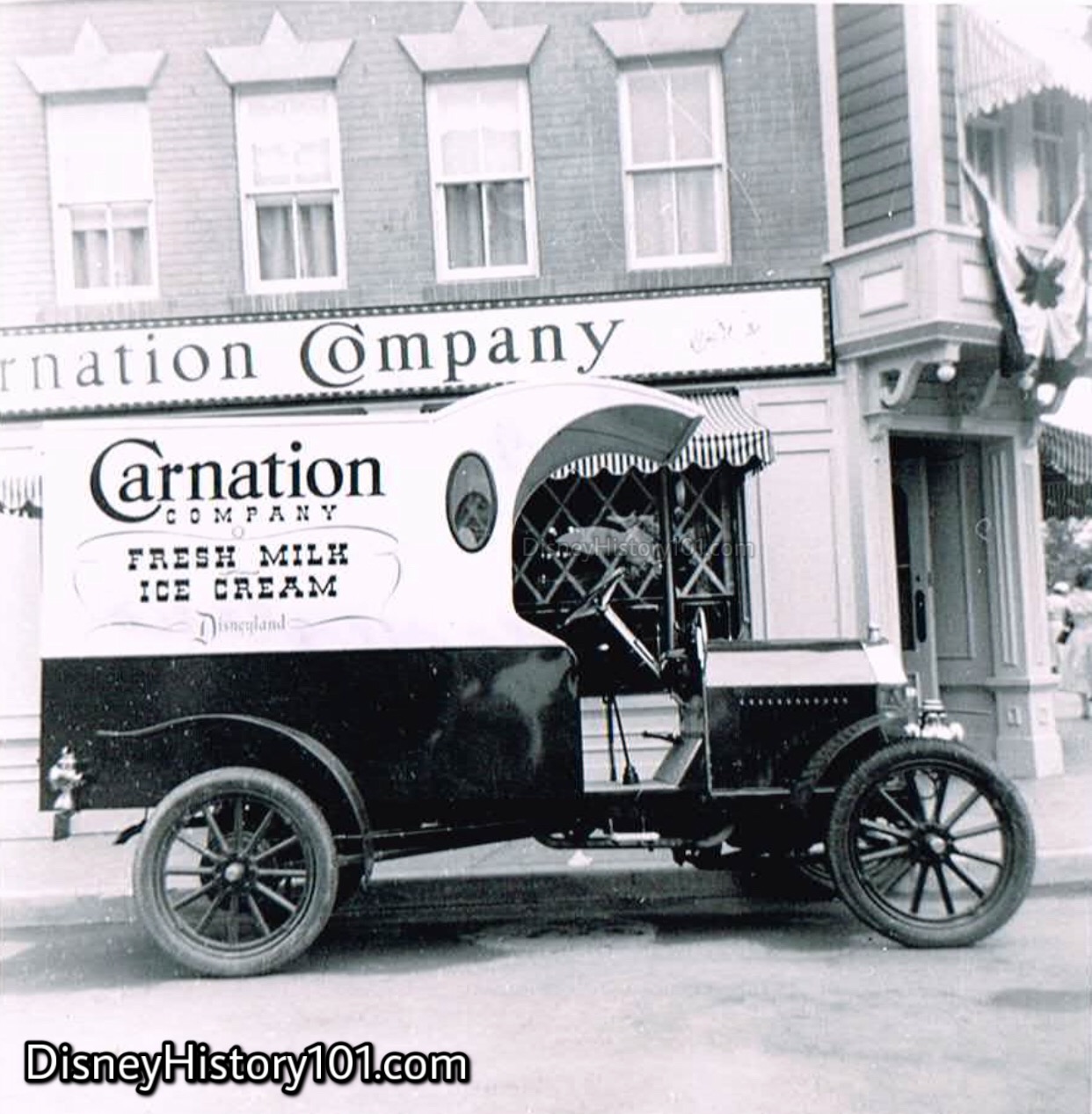
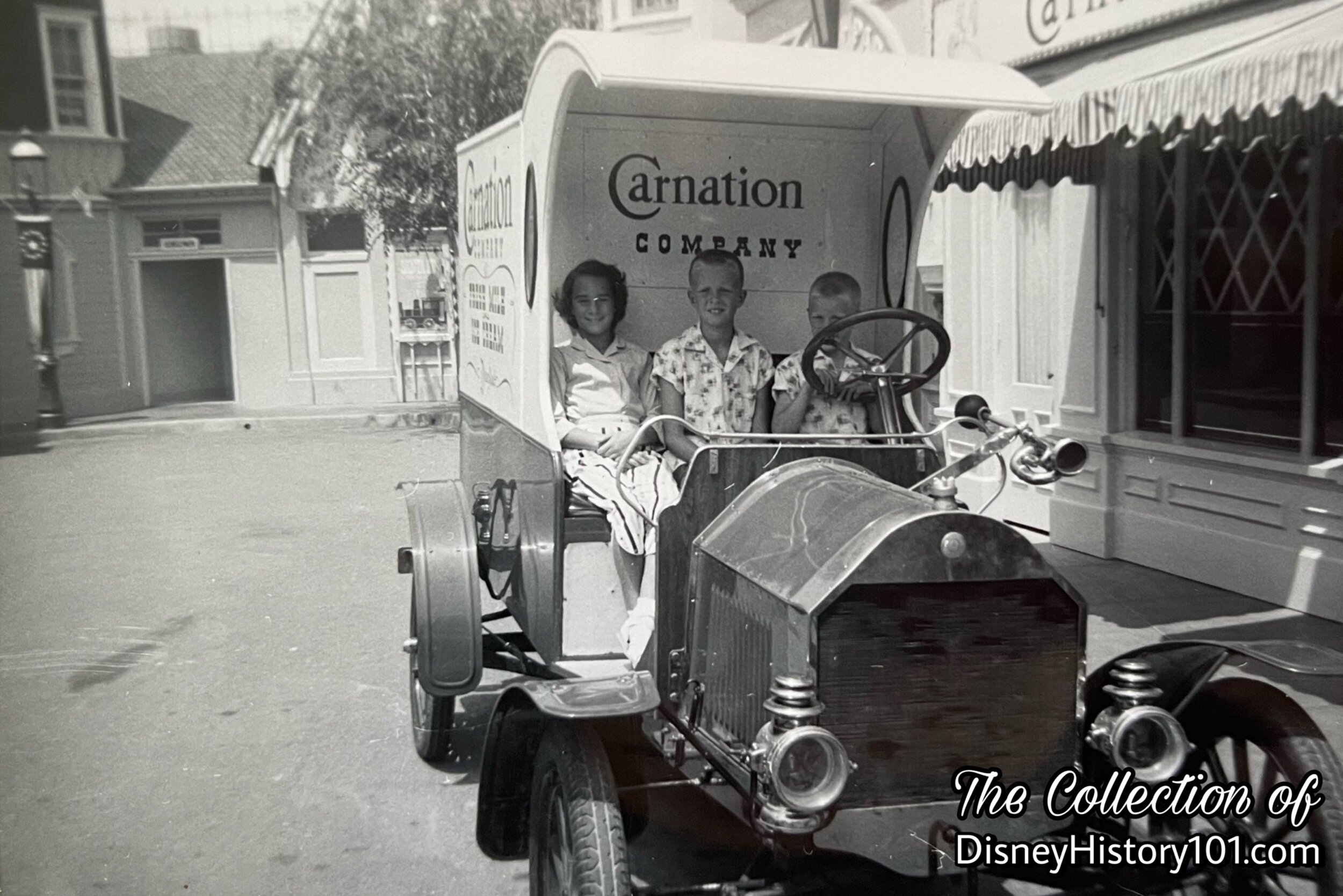
The first Disneyland Dictionary (printed in October of 1959) noted “Old-time Carnation delivery truck - complete with horn - is displayed outside, and is a favorite picture-taking prop.” You may notice that the “bulb-type” horn is present in the preceding Vintage View, while it was removed at some time (perhaps to prevent guests from squeezing it to produce a honk).
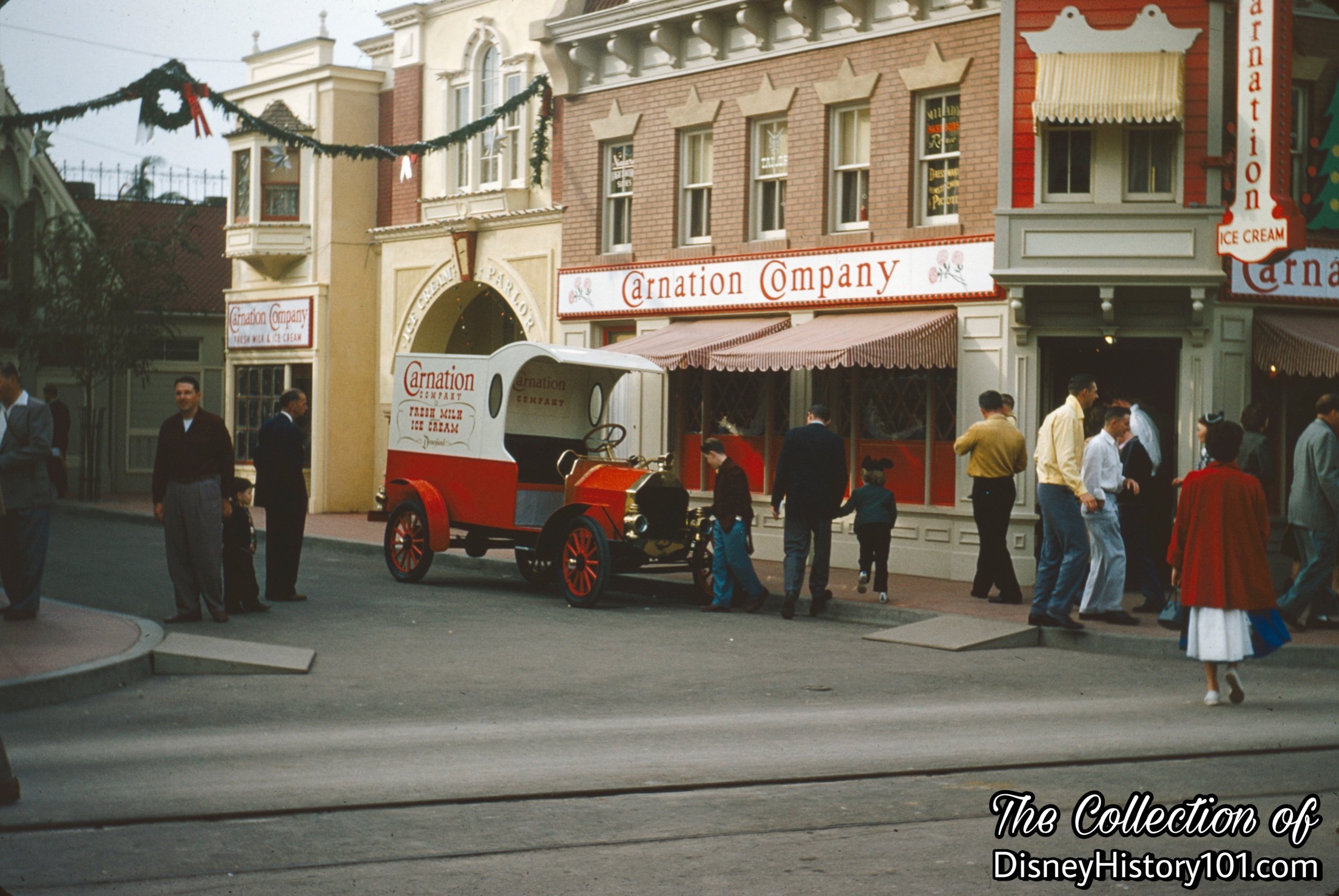
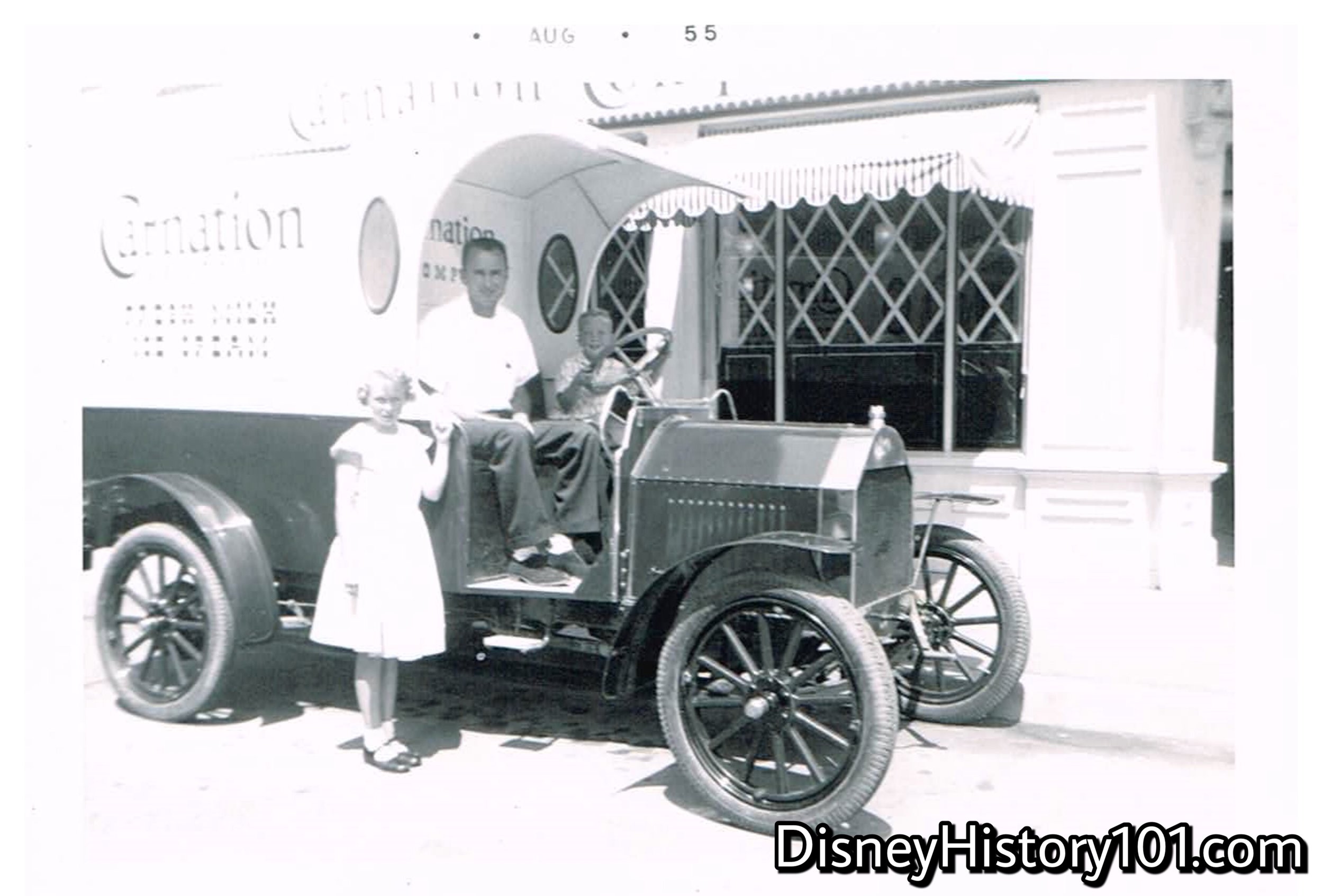
In the previous Vintage View, you may be wondering where those noticeably absent shiny brass headlamps are?
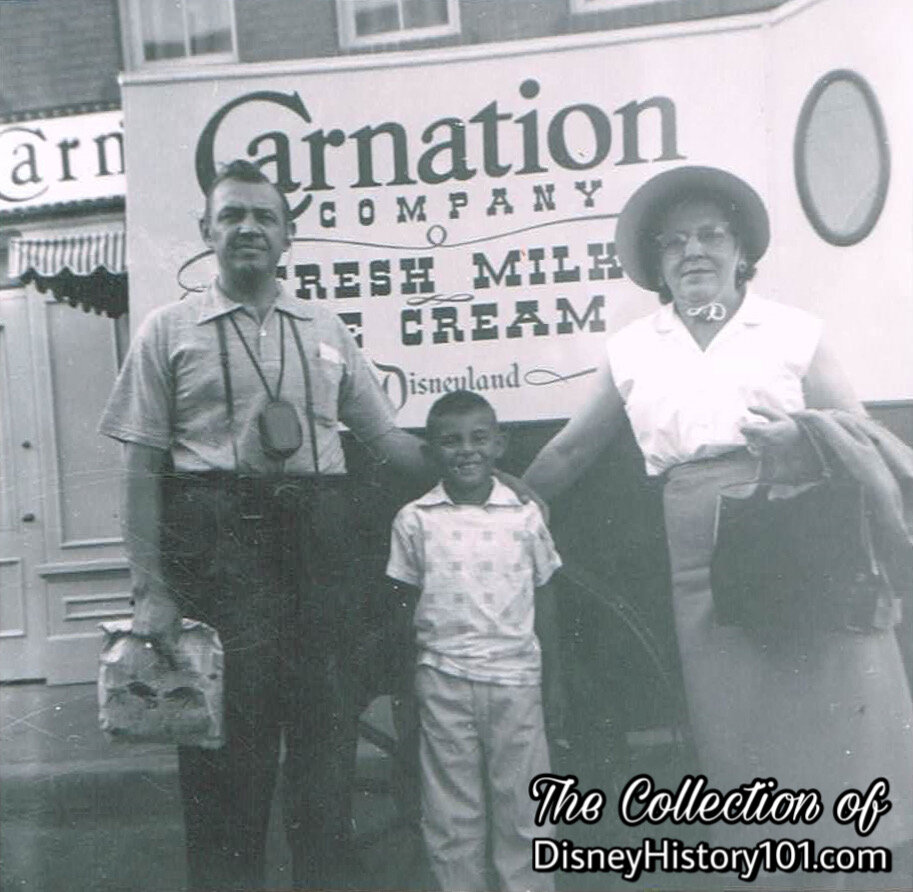
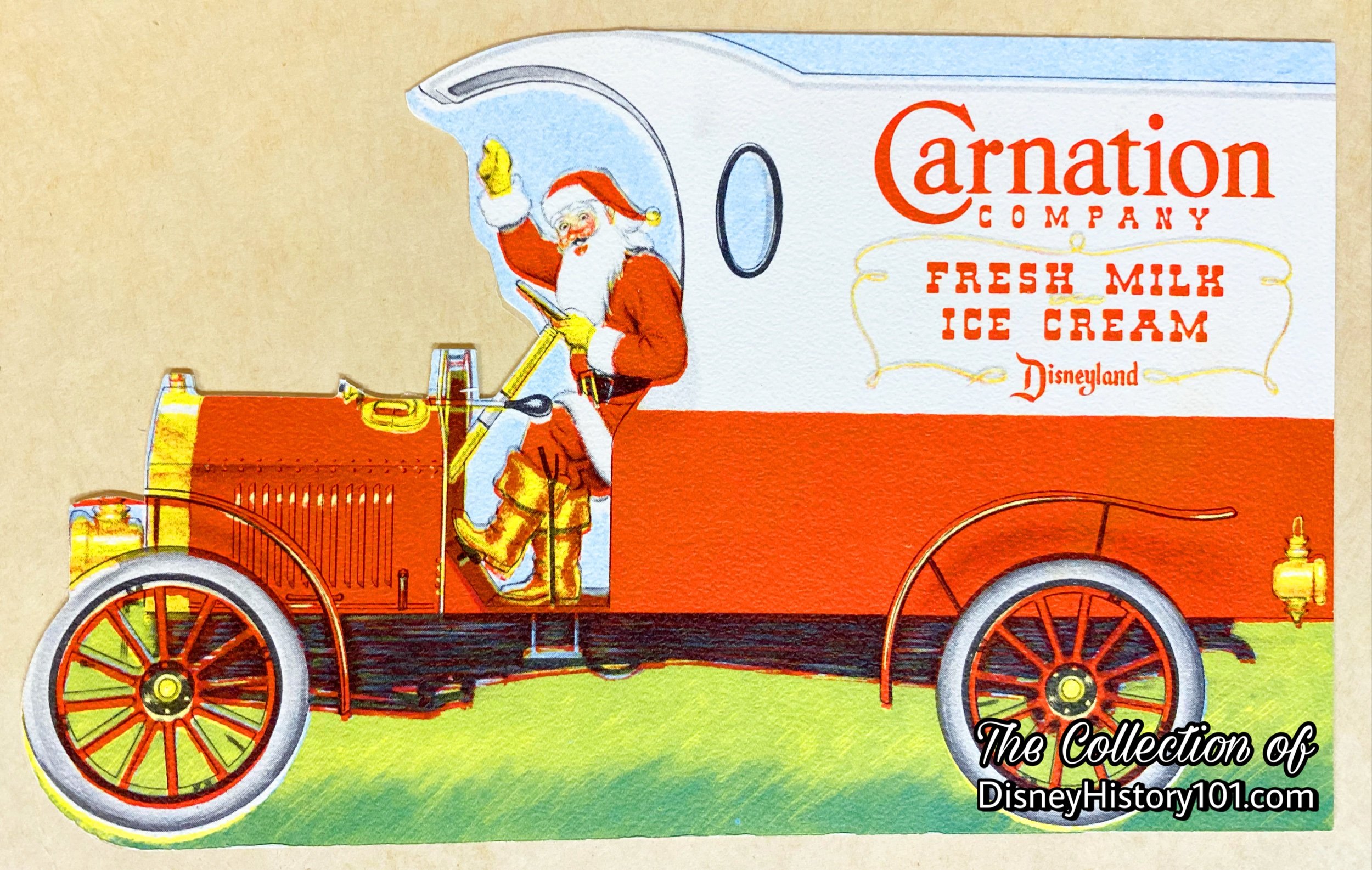
The Carnation Co. contributed food to the First Annual Disneyland Christmas Party on December 10, 1956.
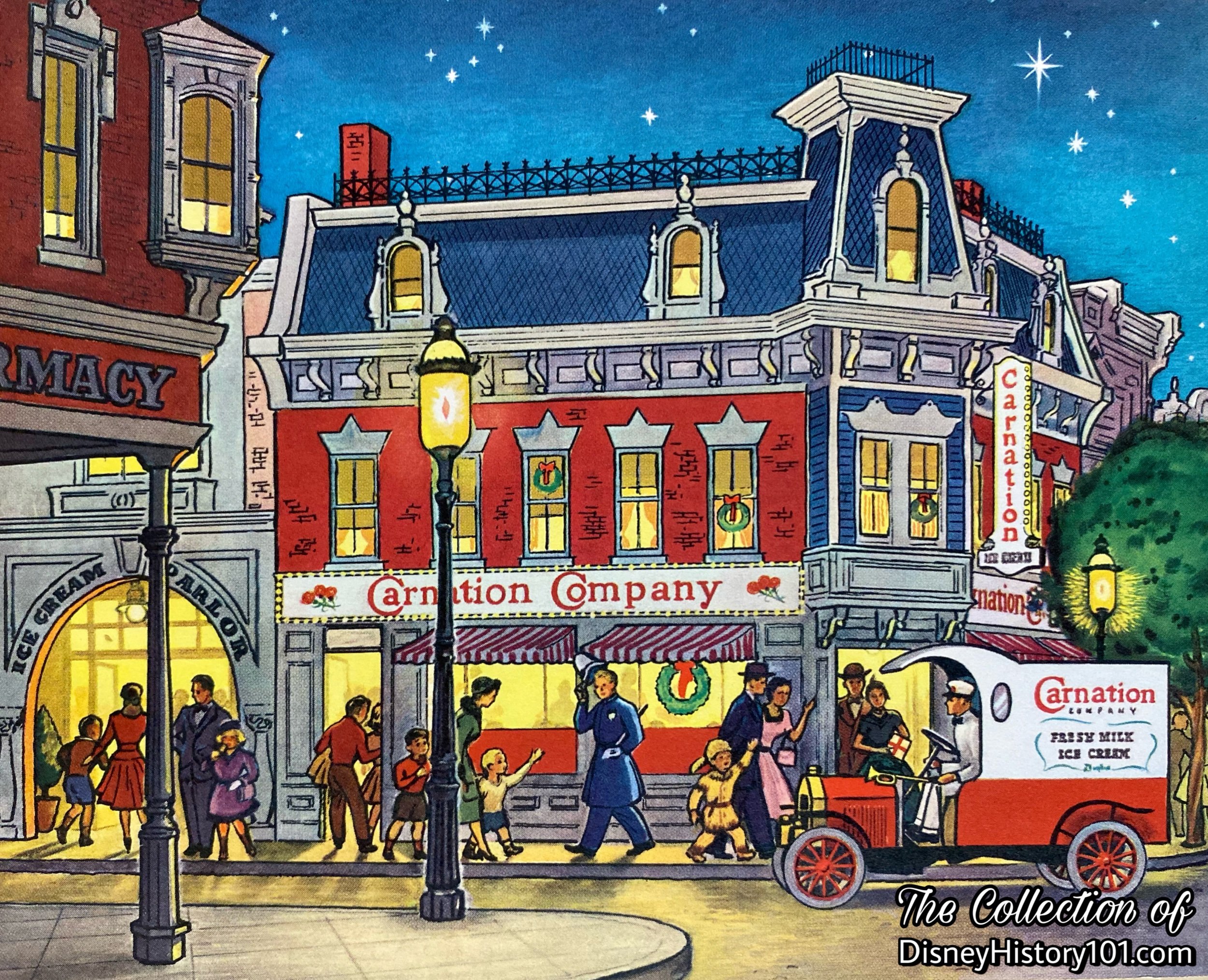
Many Disneylanders would serve as Hostess like Mary Alice Duncan.

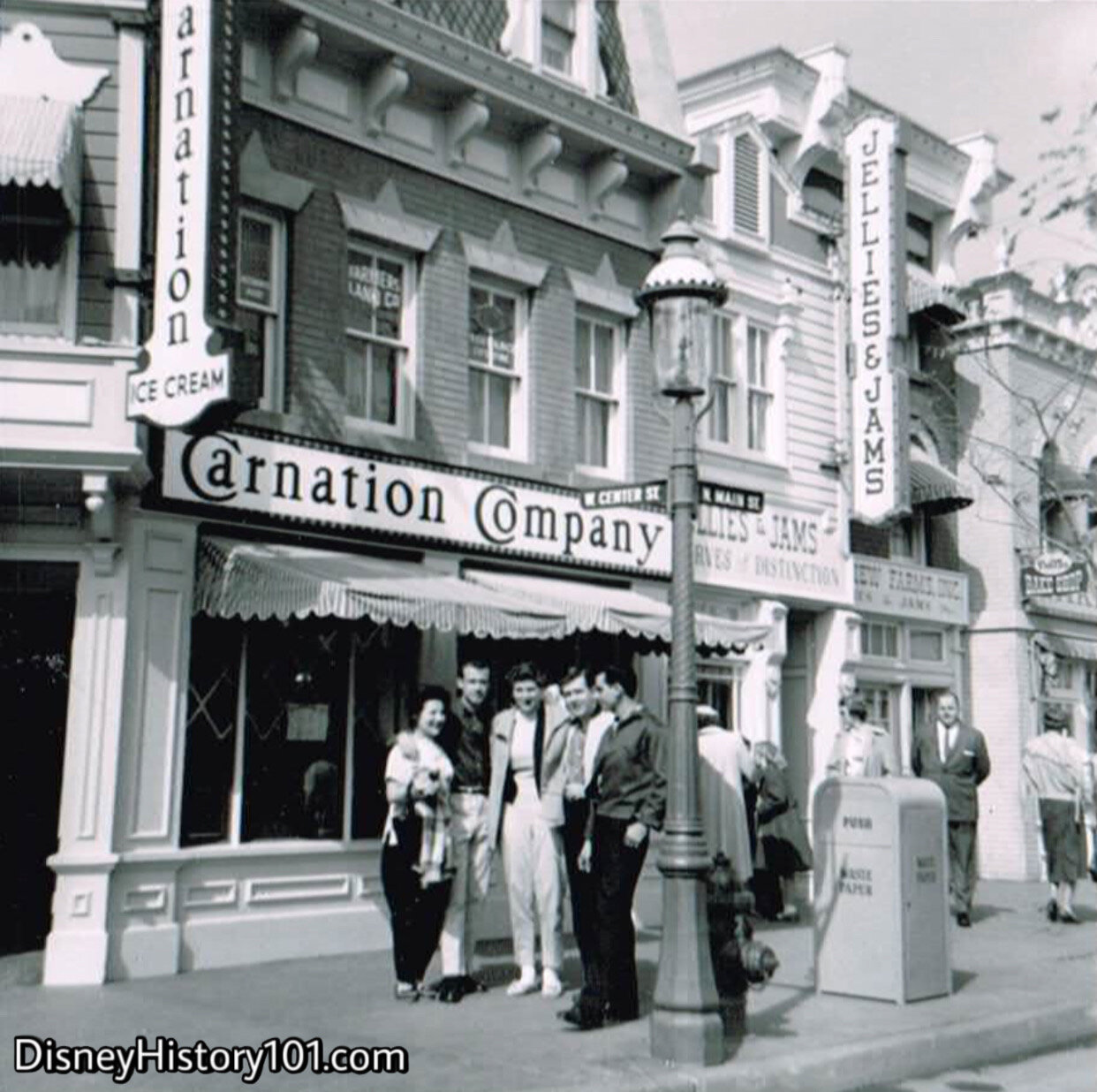
The corporate synergy was good for a time. Institutional lessee Carnation Company Ice Cream Parlor yielded some revenue for Disneyland Inc. - $30,329 for the fiscal year ending September 29, 1957 and $33,440 for the fiscal year ending September 28, 1958. In addition commercial lessee Carnation Company Ice Cream Cone Bar yielded $4,059 for the fiscal year ending September 28, 1958.
Earlier that year (during April of 1958), Carnation helped Disneyland Guests celebrate Dairy Day!
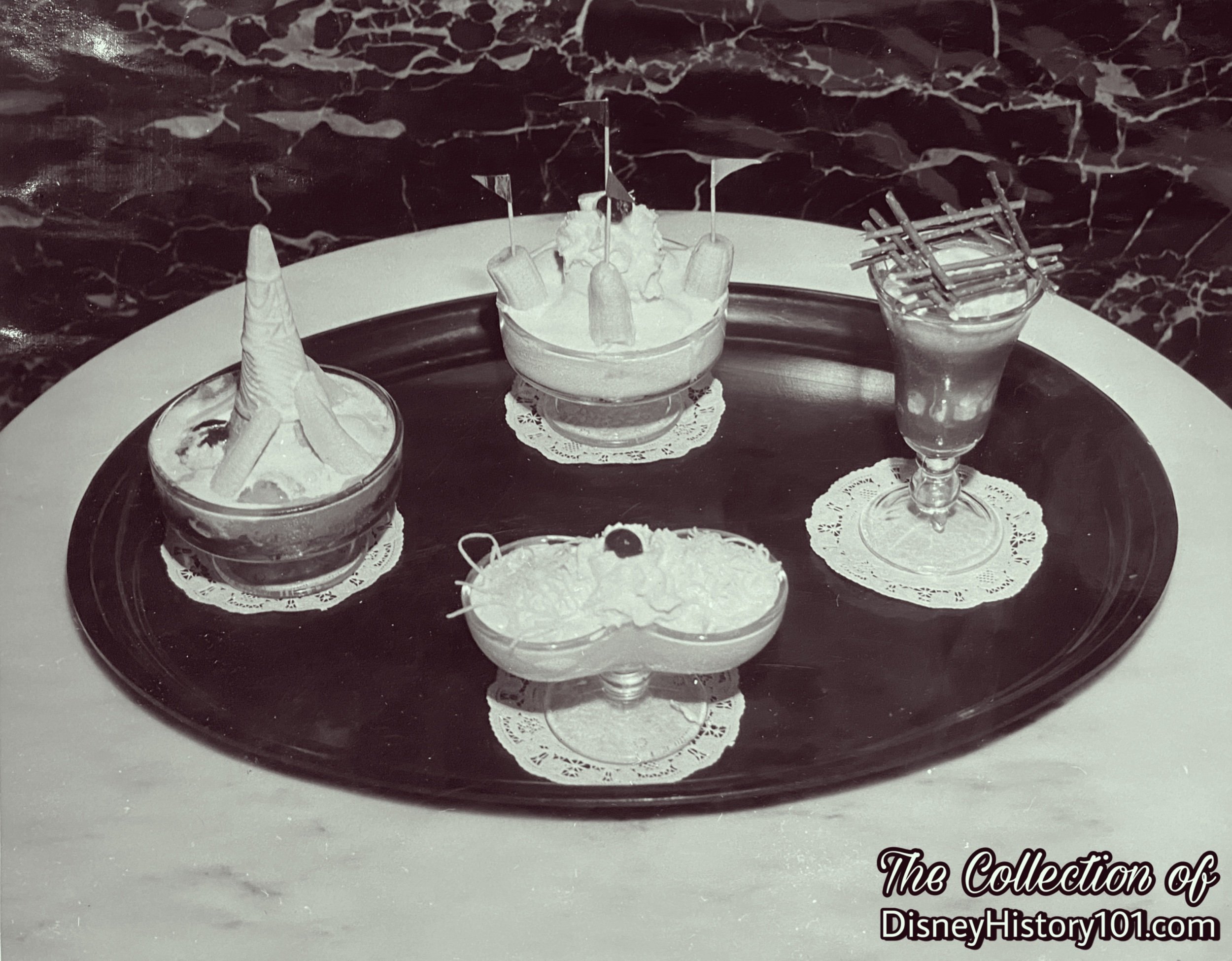
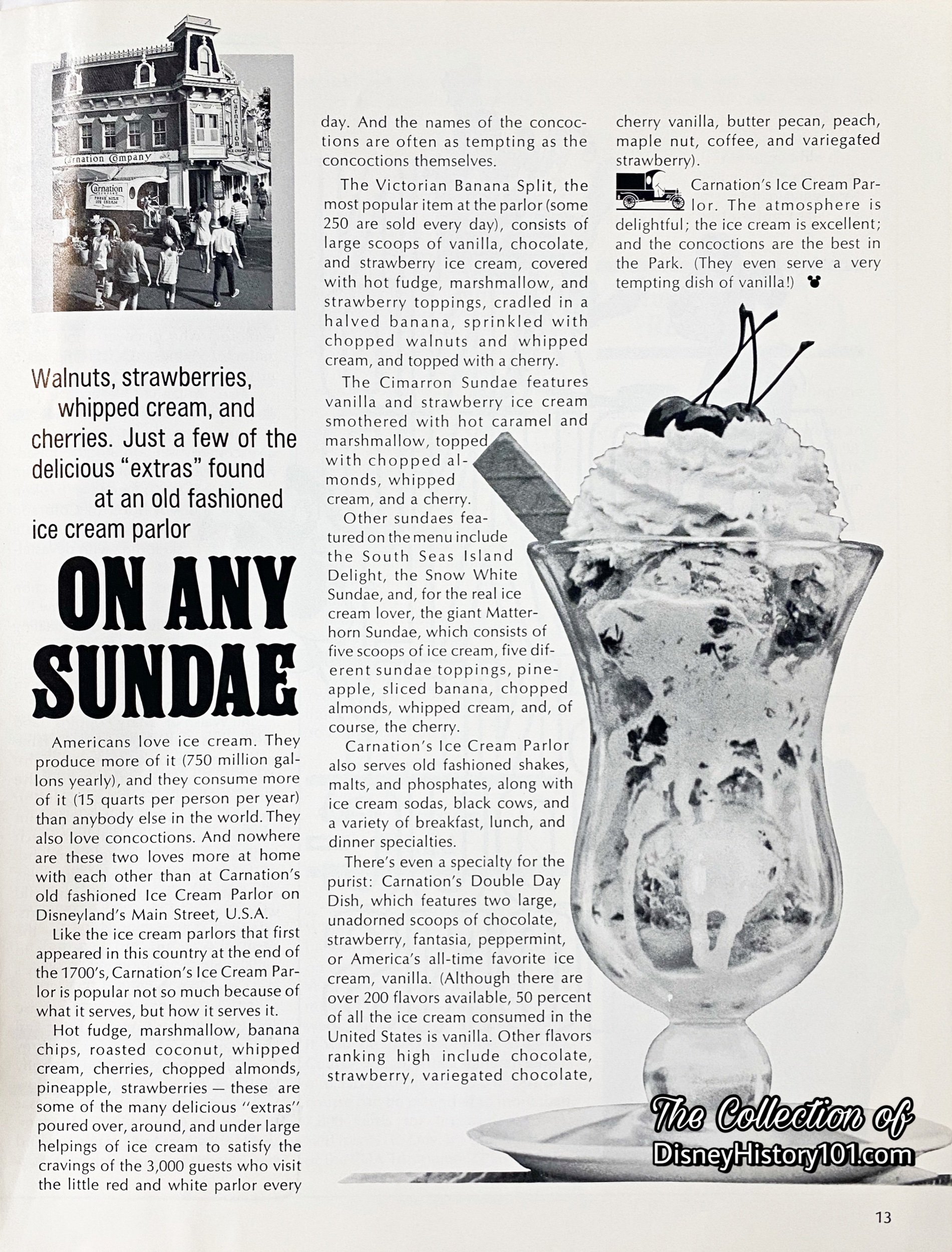
As far back as 1955, such“Disneylandish delights as a Mad Hatter Sundae, Amazon Special, Old Timer, and T.W.A. Rocket Ship Special” were offered at the counter, according to KEY Magazine, 1955. Some were Character themed like the Snow White Sundae, while others were themed after the character of lands - Amazon Special, the Main St. Victorian Banana Split and the Lover's Delight, and the TWA Rocket Ship Special (four scoops of ice cream, an ice cream cone, cherry sundae topping and whipped cream).
On July 28, 1955, Disneyland received a visit by Cal Farley (of Texas) and his group of 200 Boys Ranchers (comprised of boys from 42 different states and three foreign countries). They enjoyed the Carnation Cafe’s Santa Fe Special (Three scoops of ice cream, smothered in three different fruit syrups, with sugar water and fresh sliced bananas on the side and topped off with marshmallows and whipped cream).
Through the years, other deserts were inspired by adventures at Disneyland. During the 1960s, guests may remember the delicious Carnation “I Scream Sundae” inspired by Disneyland’s Haunted Mansion.
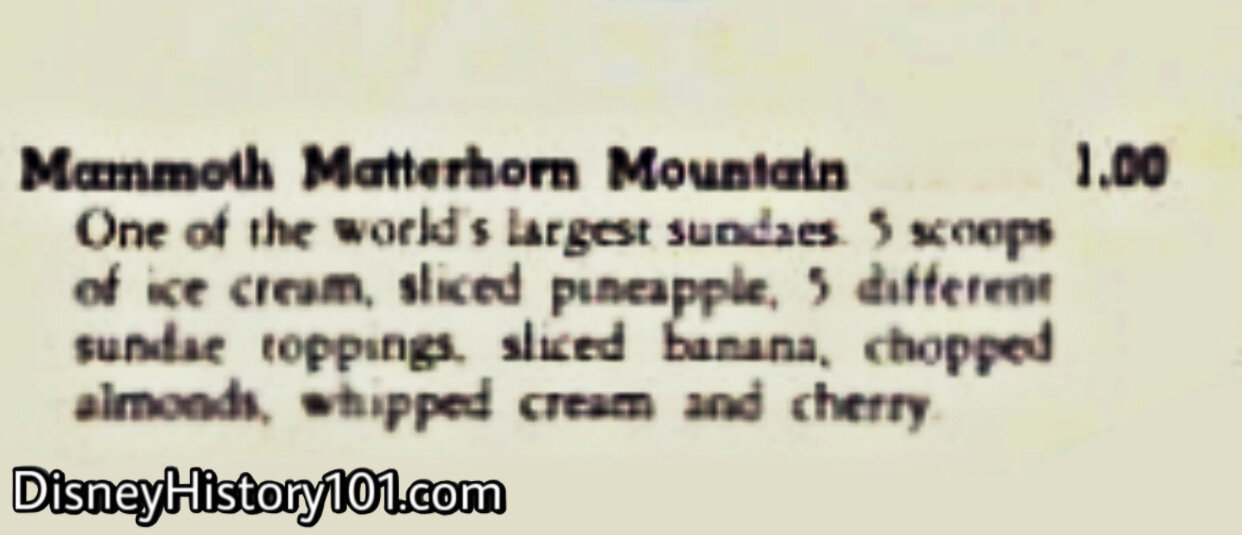
Guest Pat Nolan vividly remembers the debut of this monumental menu item : “My brother ordered - and finished the Matterhorn Mountain Special on the day the new ride was opened. It had 13 scoops of various flavors of ice cream and sherbet. I resisted and merely enjoyed a delicious banana split. We were there as a prize for Los Angeles Herald paperboys.”
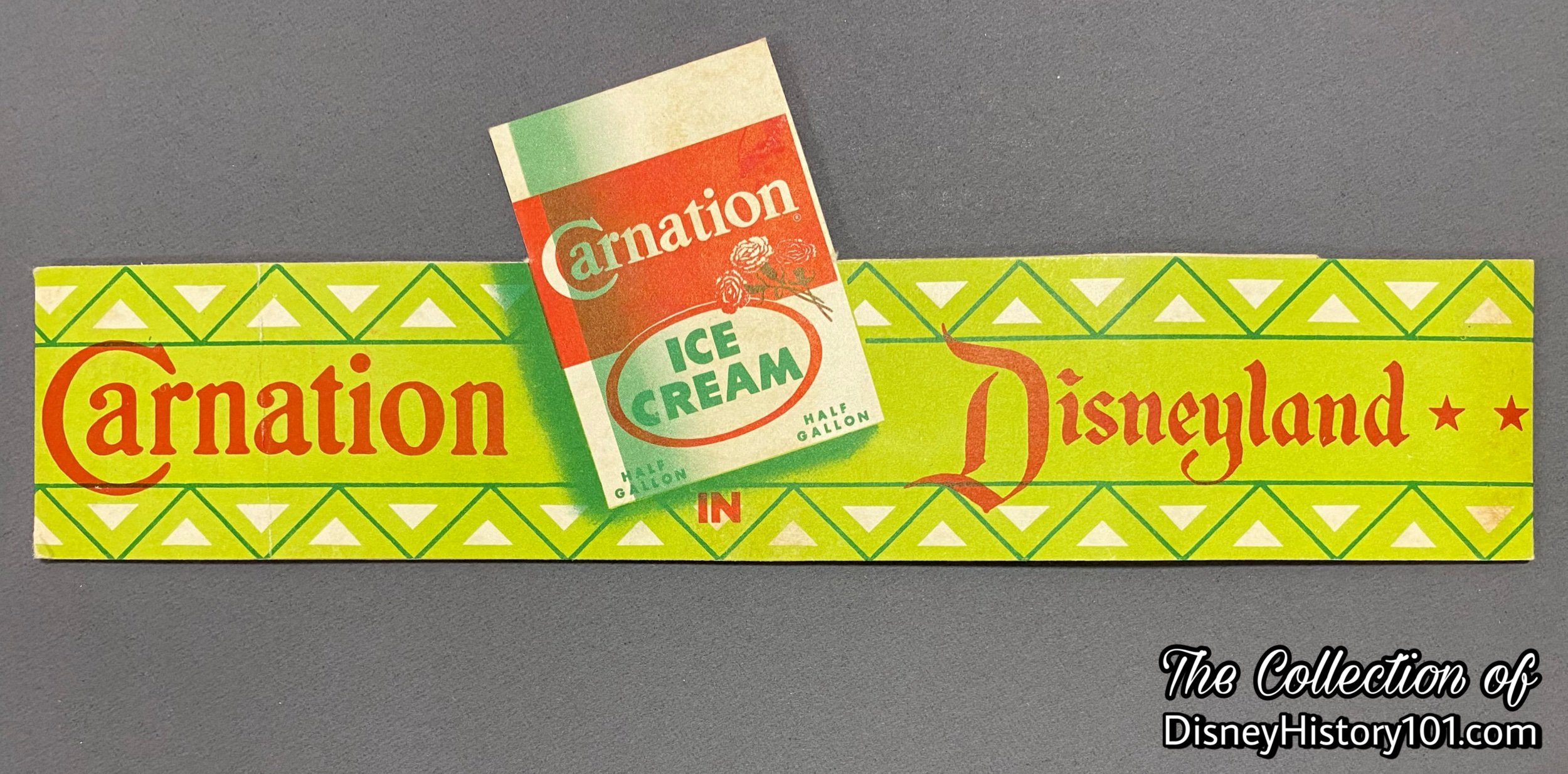
A merchandise was a tangible memory for a Guest.
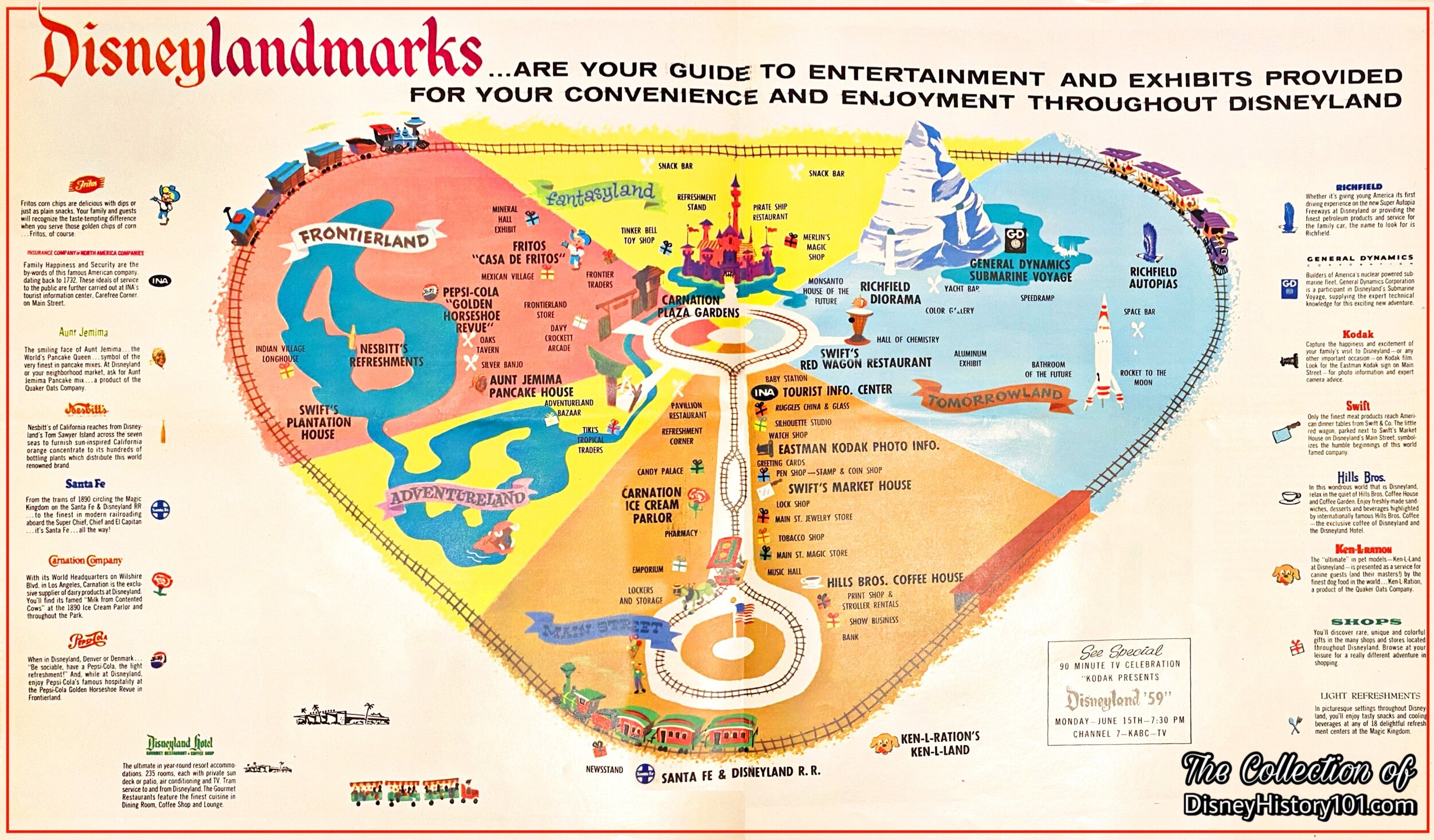
By 1958, Carnation had a definite presence at Disneyland. By January 1, 1958, appraisers took note of the 1,672 square foot Carnation Ice Cream Parlor (with its additional 274 square-foot rear storage), the 186 square foot Carnation Cone Bar, and the 216 square foot Carnation Side Walk Cafe (an exterior area also occupied by the lessee; similar to the contemporaneous, 312 square-foot Coca-Cola Side Walk Cafe). The lessee nearly occupied the most square footage of the 8,833 square foot Main Street Building #400.
By September of 1958, Carnation was also contributing a routine portion of accounts receivable to Disneyland, Inc.
Owning to Jack Sayers (of Lessee Relations), Carnation Farms was a contributing Participant in Disneyland ‘59! The first Disneyland Dictionary (printed in October of 1959) noted Carnation Ice Cream Parlor operated by Carnation Company served “Carnation ice cream in every form, and lunches.“ By October of 1959, the company was (1) of over sixty-eight other firms playing a vital part in the team effort to bring happiness to Disneyland’s Guests. Some were small, specialized individual operators; some were huge companies such as Swift & Co. - the Bank of America - United Paramount Theaters (which you hear as UPT) - Carnation - Richfield - General Dynamics - Crane - and many others. These companies used the park to publicize their wares, leased space in the Park to sell their wares, and Disneyland collected advertising fees from them.
As a sidelight, by October 1959, Jim Baker (of Merchandising) was overseeing the Disneyland Food Administration and Souvenir Sales. By that same year of 1959, of the total income received by Disneyland, Inc. from leases, 16.02% was derived from the selling of advertising rights and 40.12% from the leasing of space to concerns whose main reason for occupancy is for advertising purposes. The remaining 43.86% of the lease income was derived from stores that sold various products and food. To celebrate what was billed as “Disneyland’s Second Opening,” Carnation Ice Cream Parlor carried new special themed menu options.
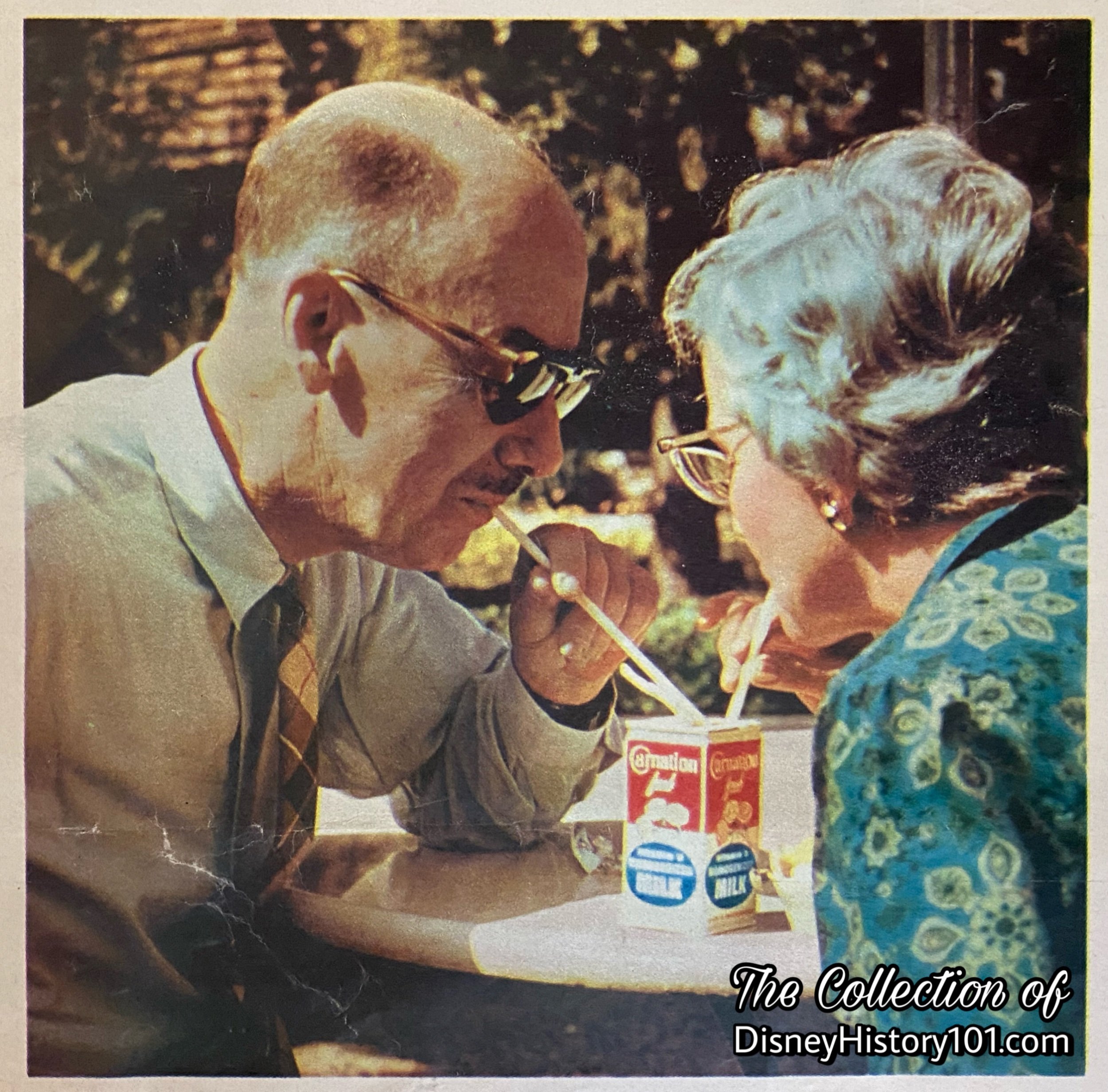
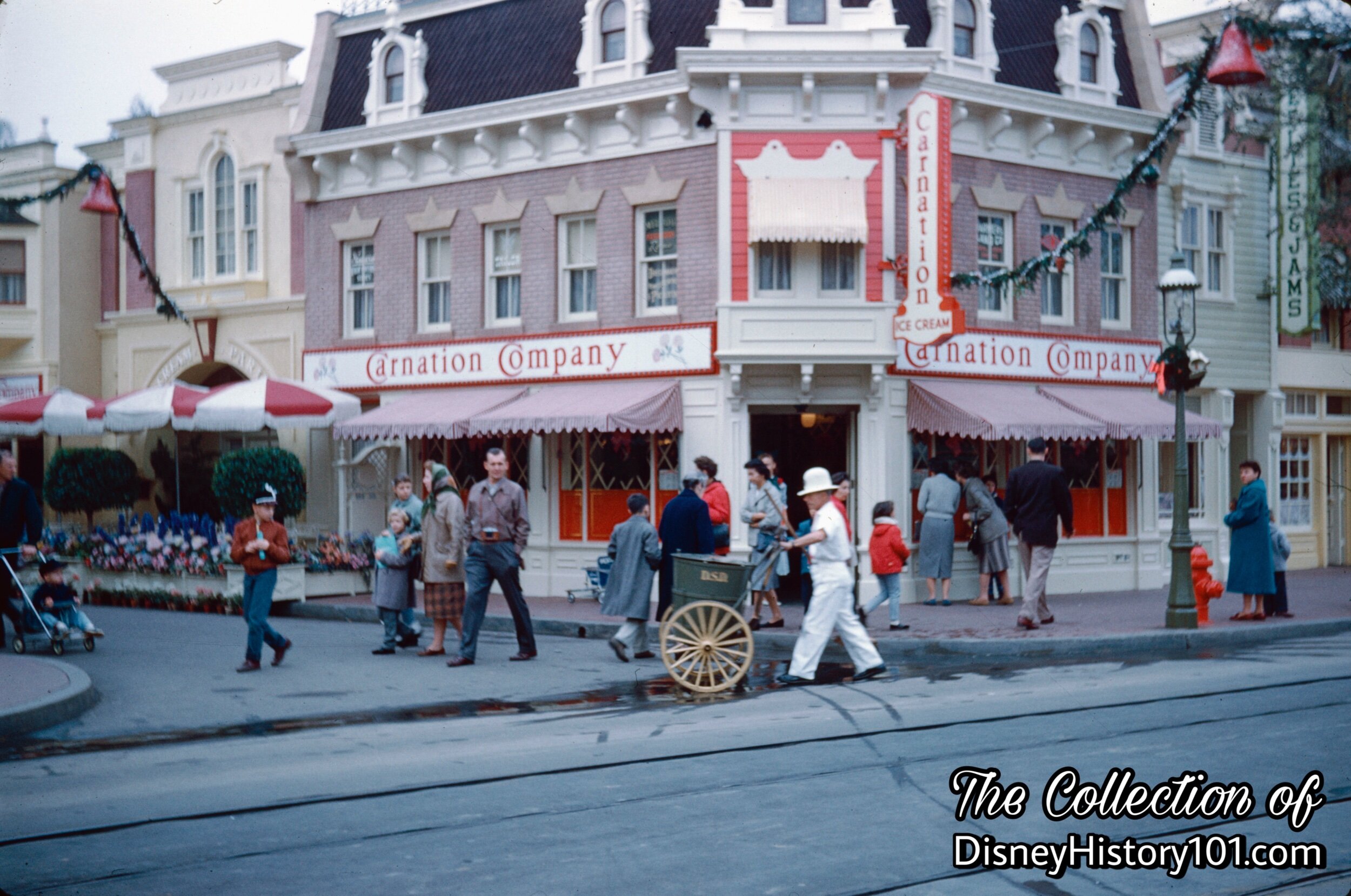
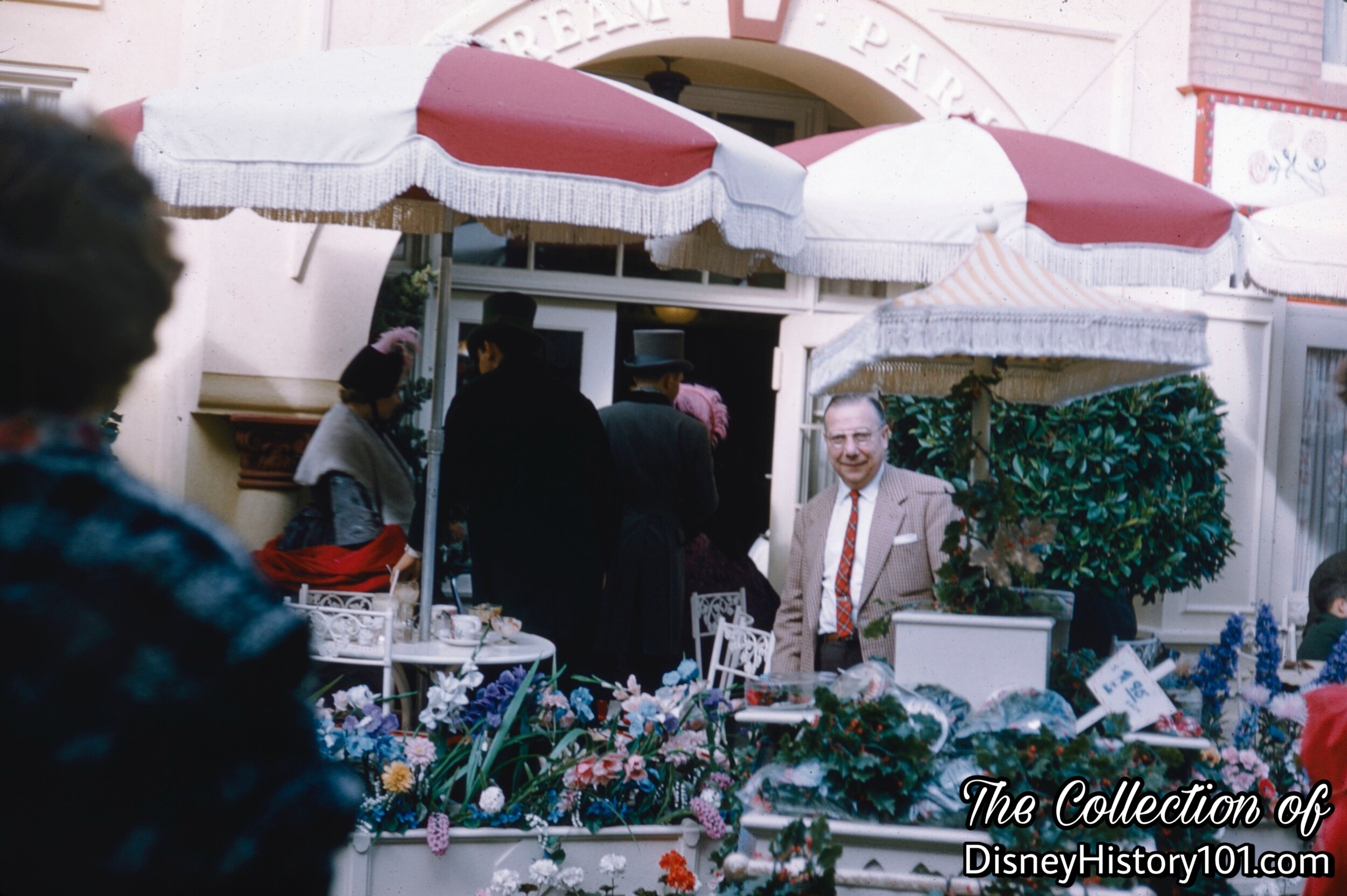
After the success of Disneyland, developers of the amusement centers saw the benefit of an Ice Cream Parlor in their parks. On June 19, 1960, Freedom Land, U.S.A. opened in the Baychester Area of Bronx, New York, an entertainment center “founded on the inspiring story of America and its people”. One of its opening day attractions was an Ice Cream Parlor in its “Little Old New York: 1850-1900” Area.
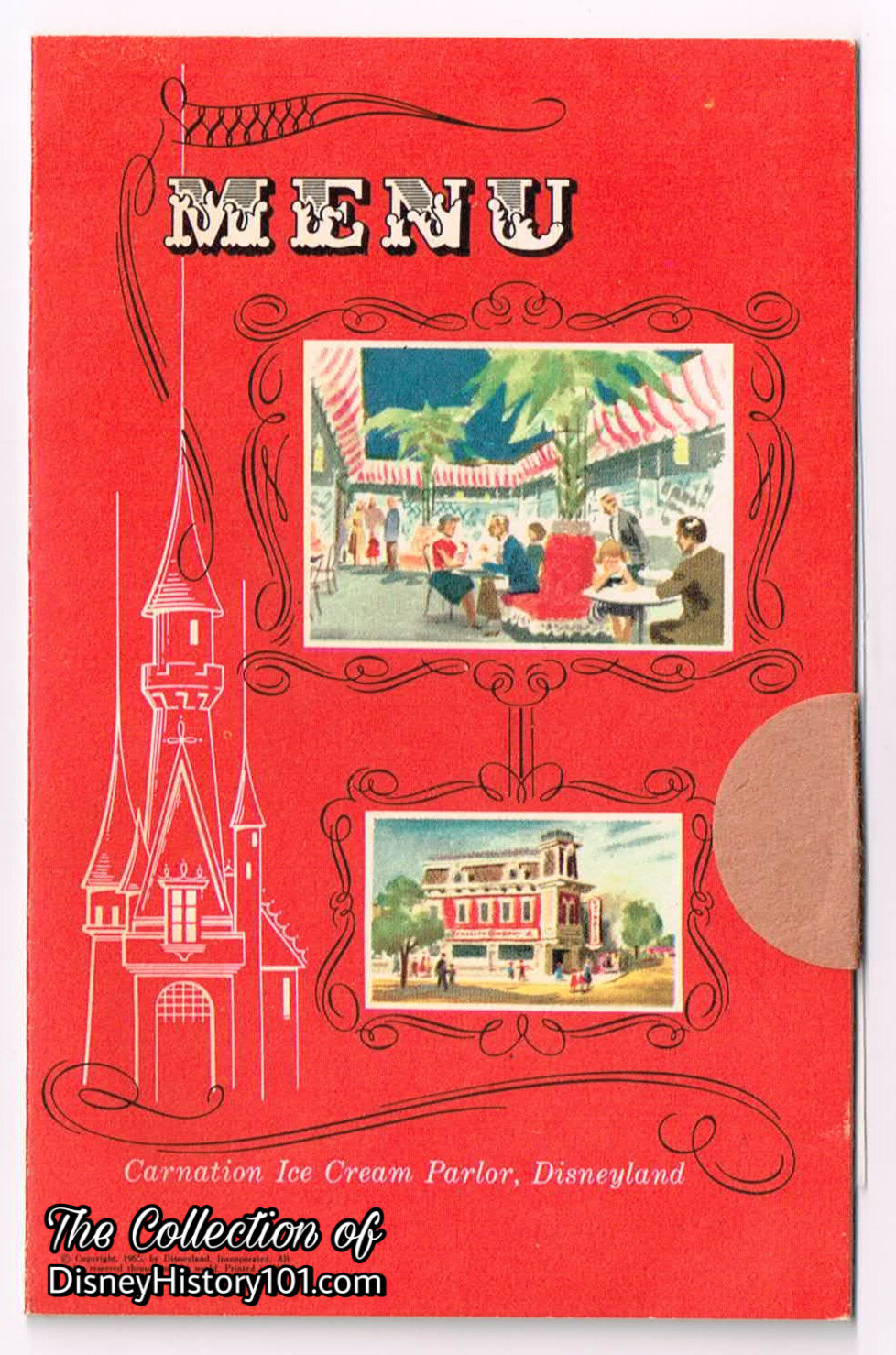
The main attractions were the “ice cream specialties” - giant sundaes and satin-smooth sodas, made with famous Carnation ice cream and fresh milk! Old timers would immediately note the phosphates, sarsaparillas, and parfaits! There were other traditional desert offerings on the menu, like the Lover’s Delight and the Banana Split. For those early morning visitors, breakfast was served until 11:30 a.m. Other menu items included hot and cold sandwiches, health food sandwiches, soup, salads, and beverages. In a move of corporate synergy, the Carnation Ice Cream Parlor was one of 16 Disneyland “eating places” which featured “fine food with fine coffee - Maxwell House!” In turn, “good coffee deserves Carnation,” and so Carnation products were offered at those 16 dining locations (including Maxwell Coffee House).

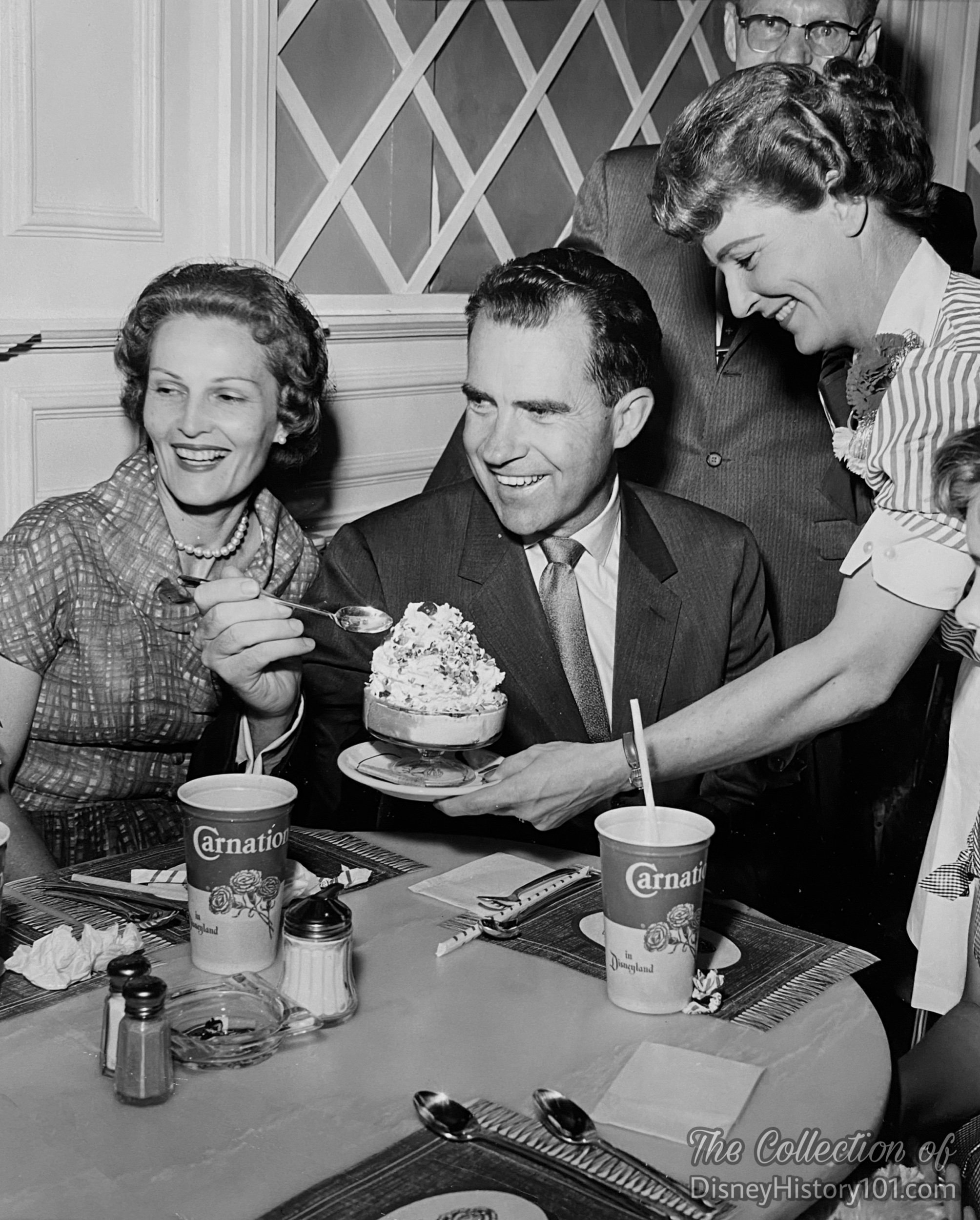
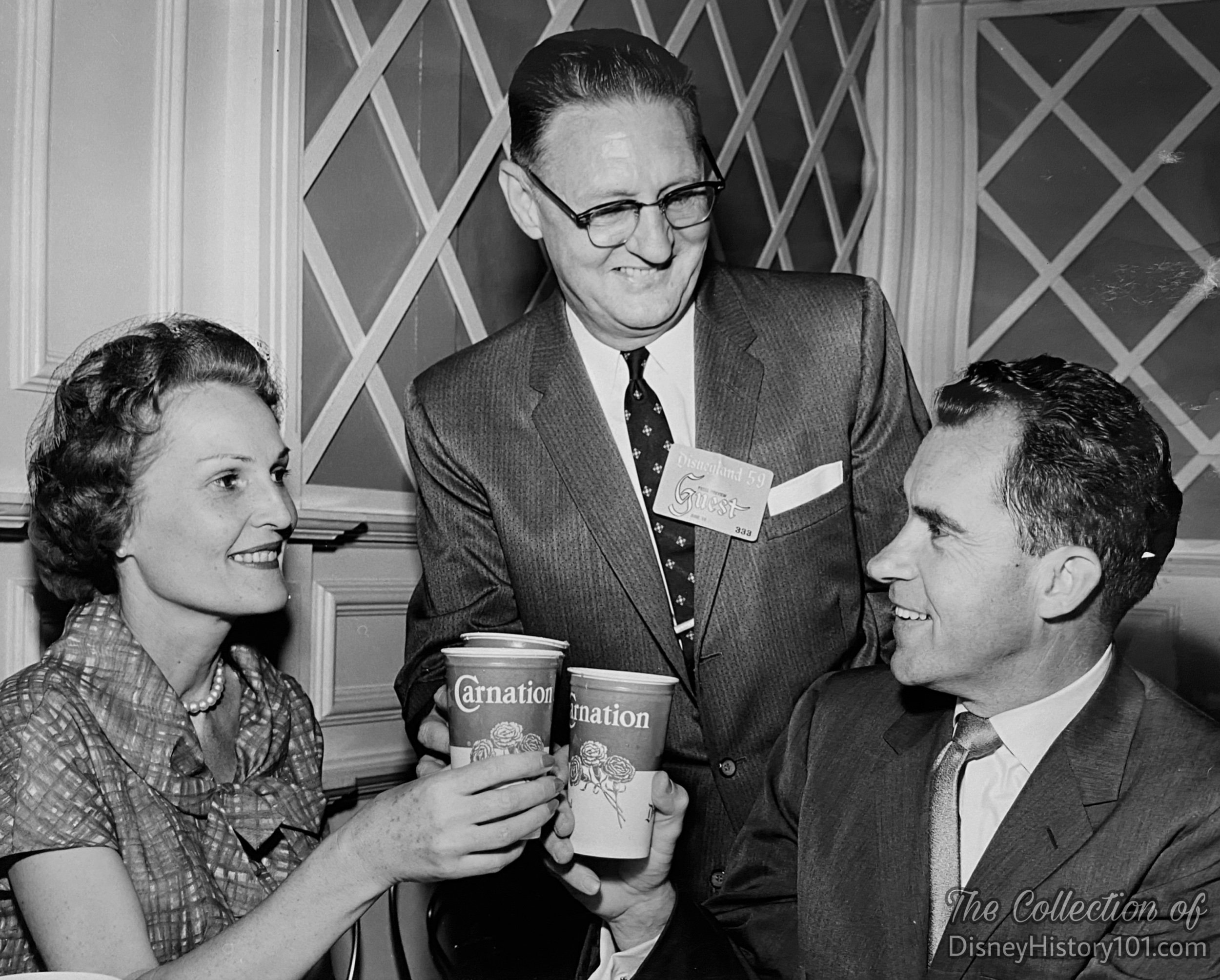
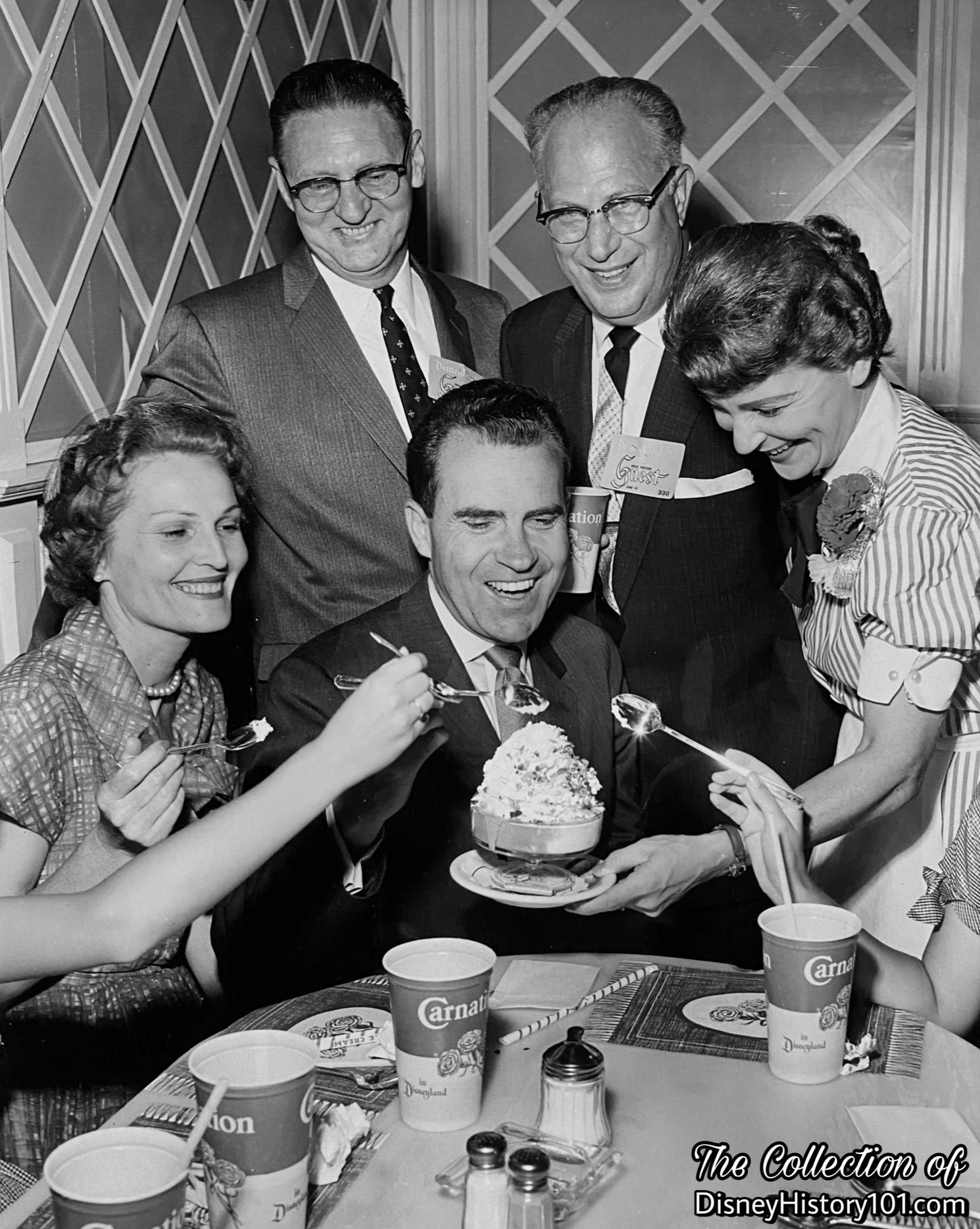
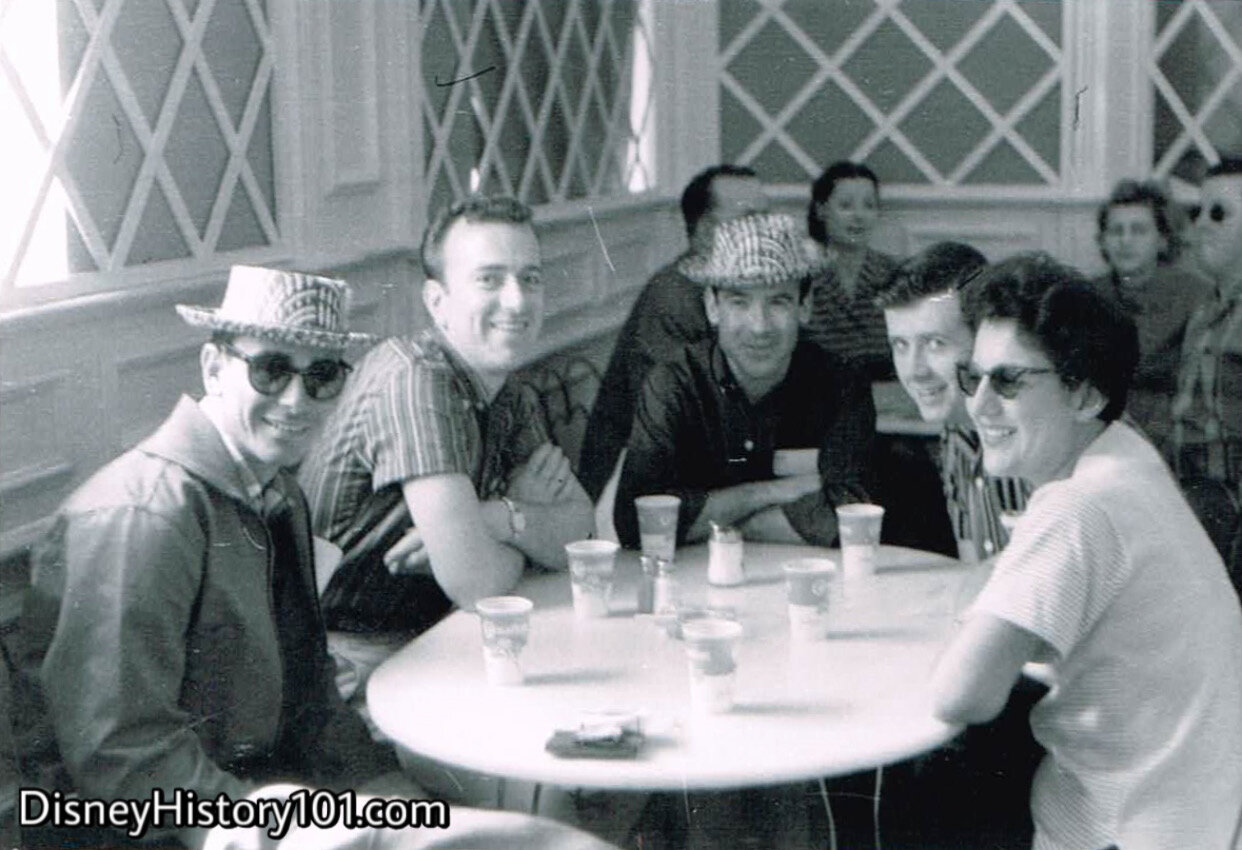
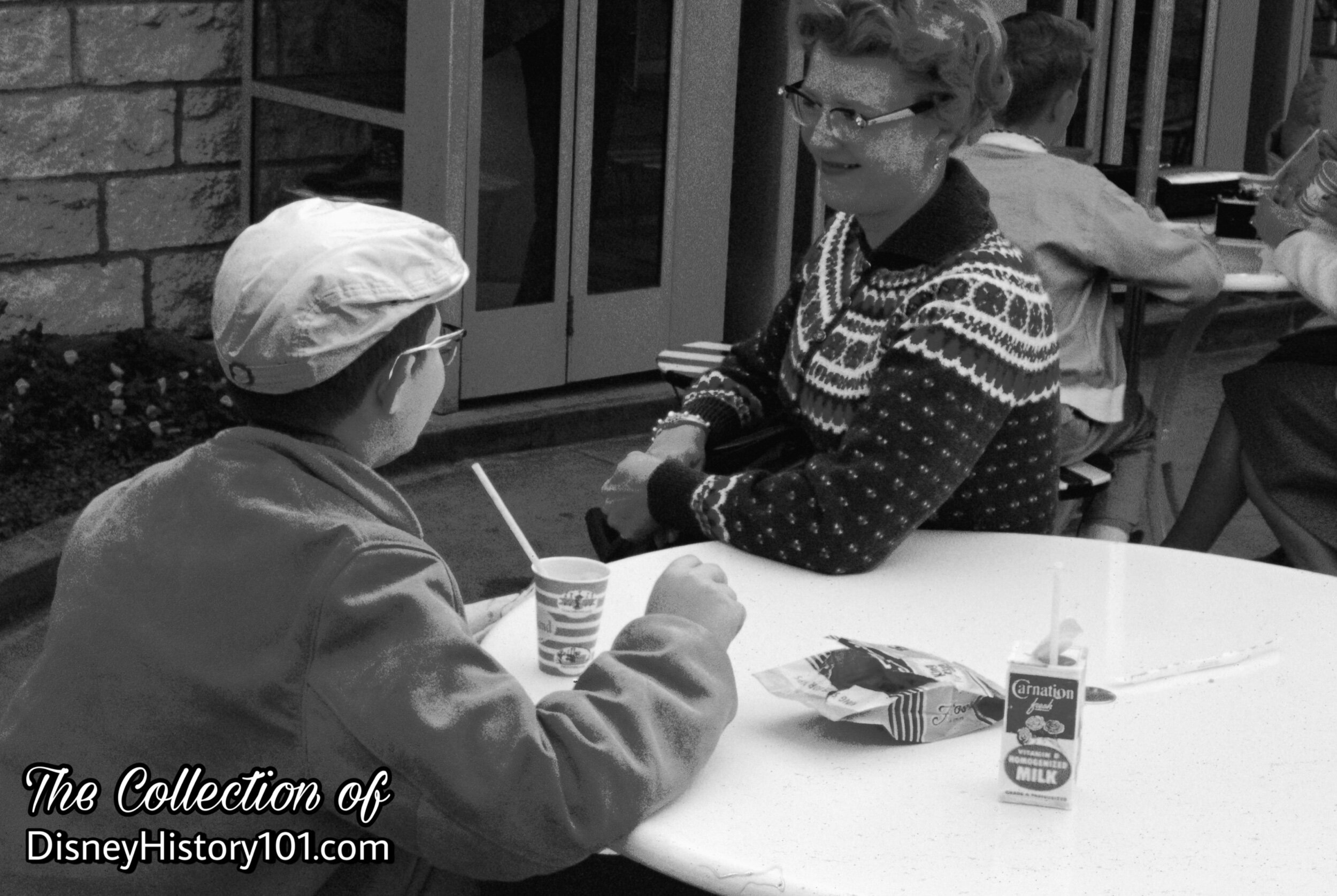
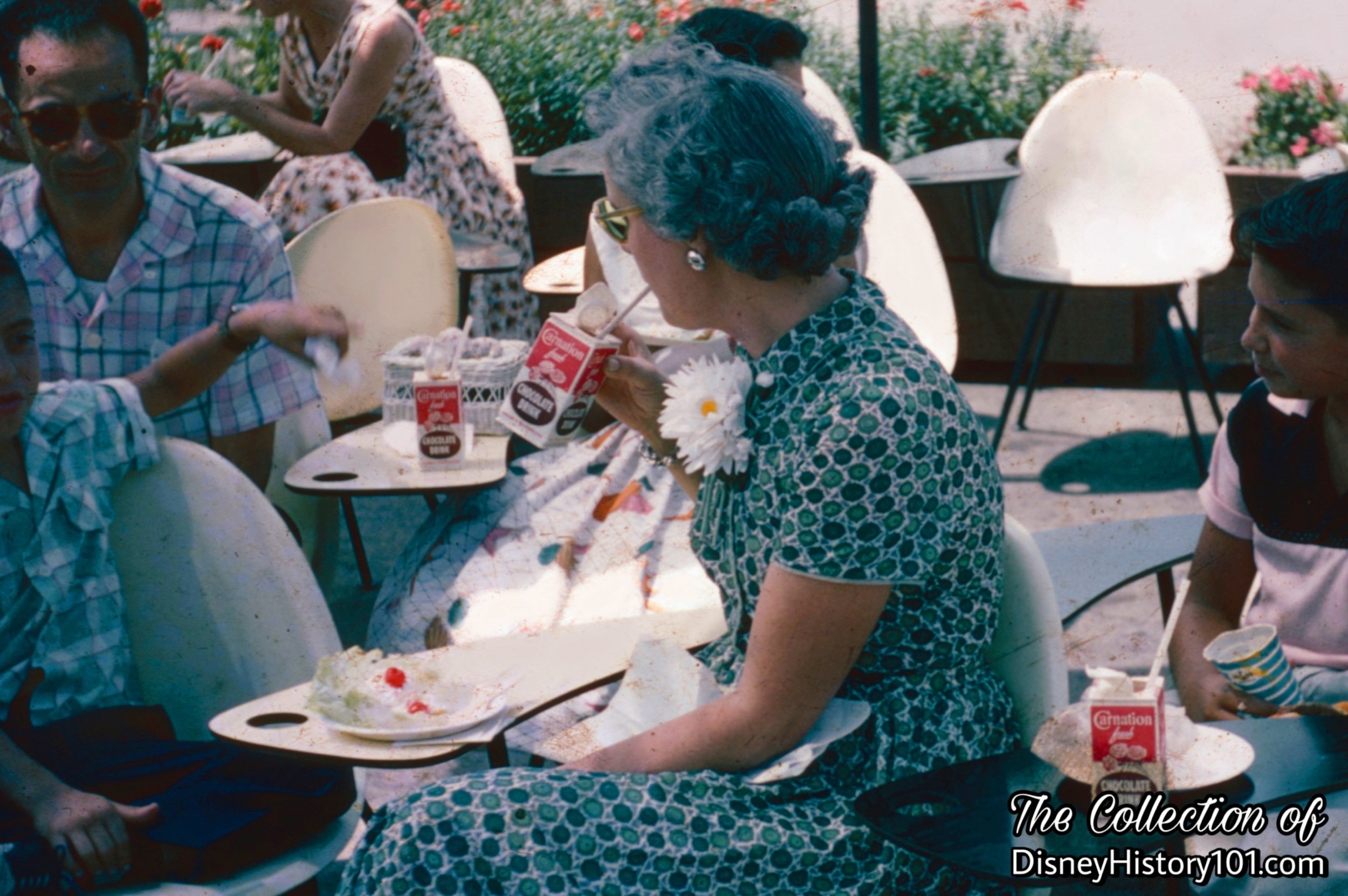
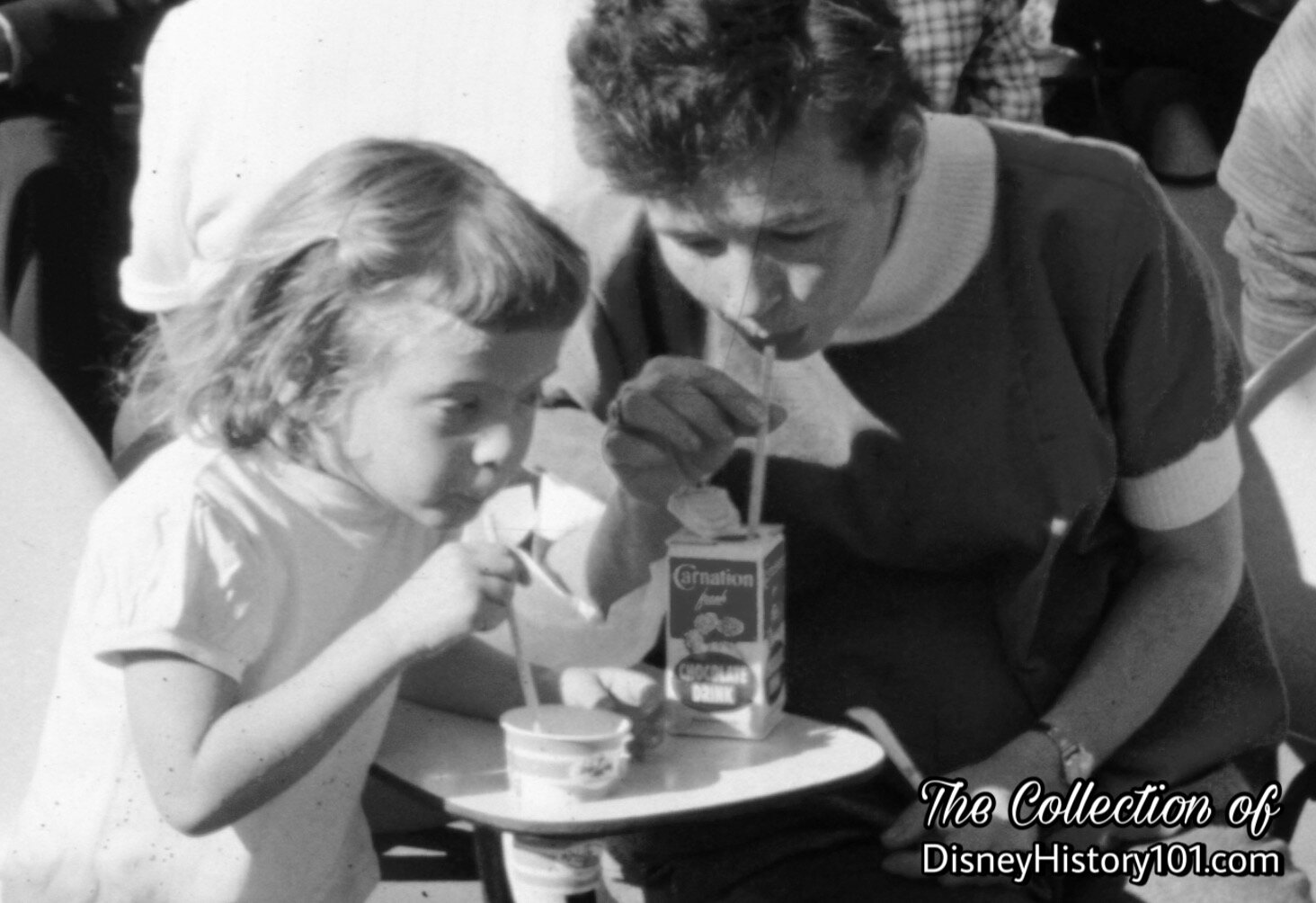
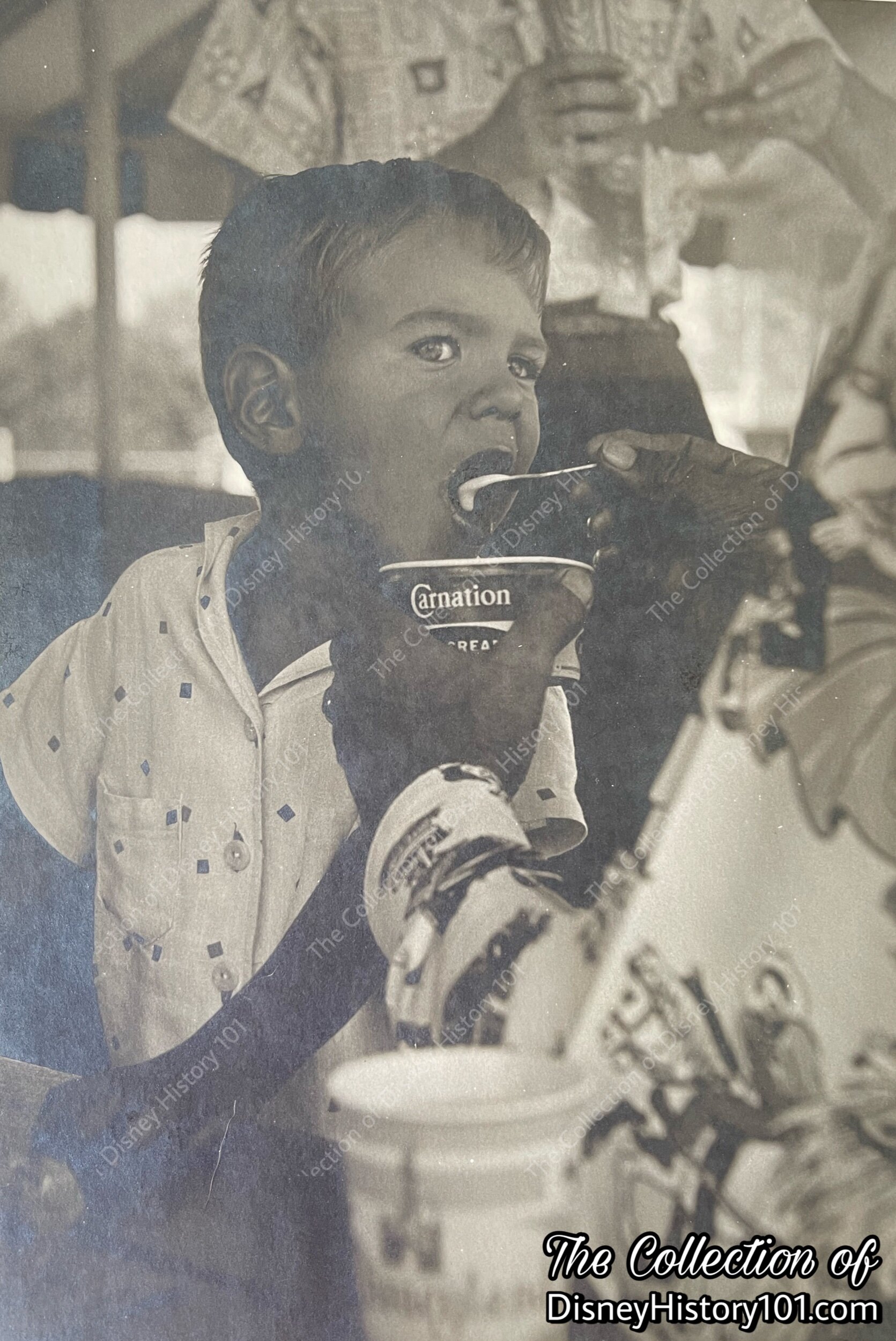
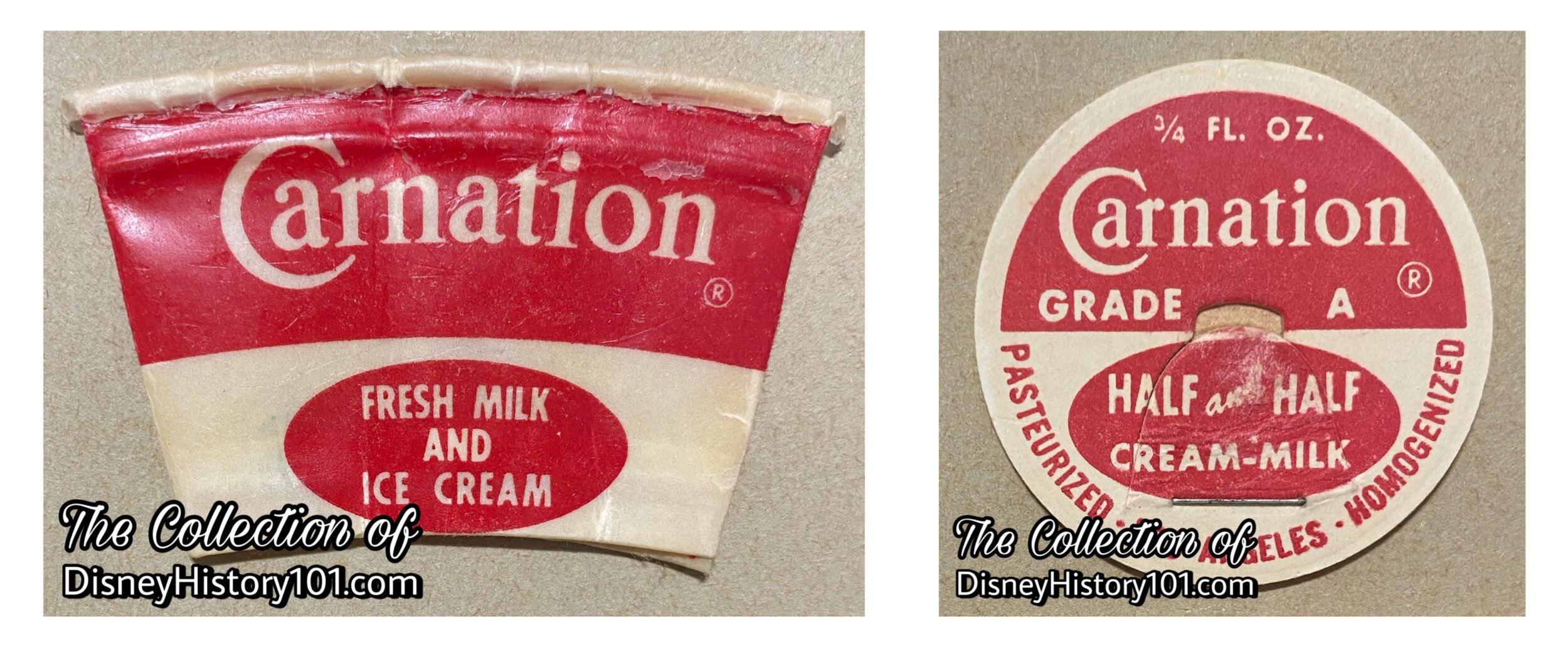
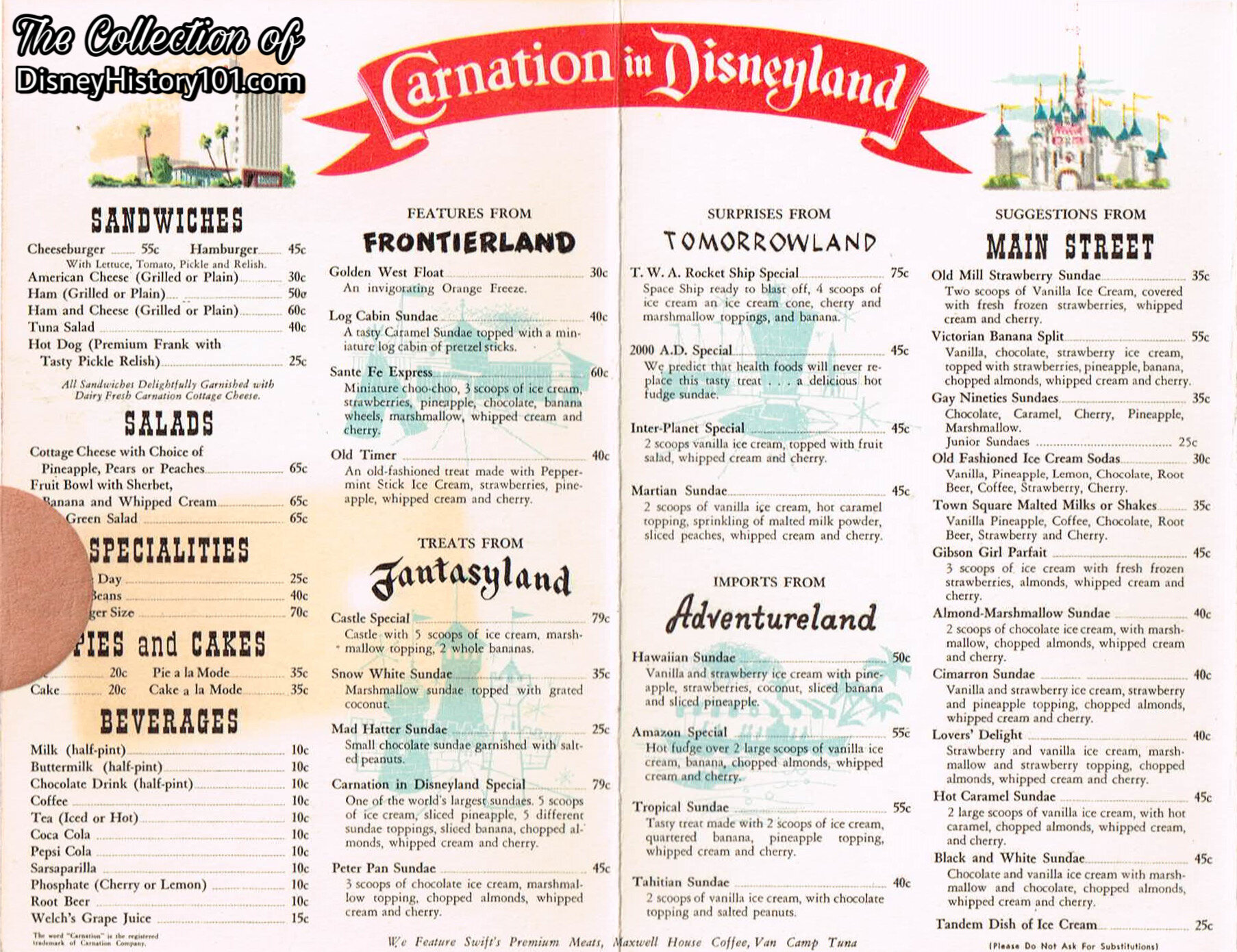
Though some Carnation products could be found at Ice Cream Carts (as Carnation held exclusive rights on milk, ice cream, and other dairy products in Disneyland), this was the only location that carried such a diverse amount of flavors. Such wonderful flavors as Rainbow, Fresh Peach, and Pineapple are but a few of the countless tempting treats served up in the gracious manner of the 90s to all who pause for refreshment during a day at Disneyland. Garnishes included sherbets and cottage cheese.
Though Carnation had exclusive rights on milk, ice cream, and other dairy products in Disneyland, this was the only location that carried such a diverse amount of flavors. By the end of Disneyland’s Tencennial celebration, Carnation continued to be the only ice cream sold in Disneyland for 10 years!
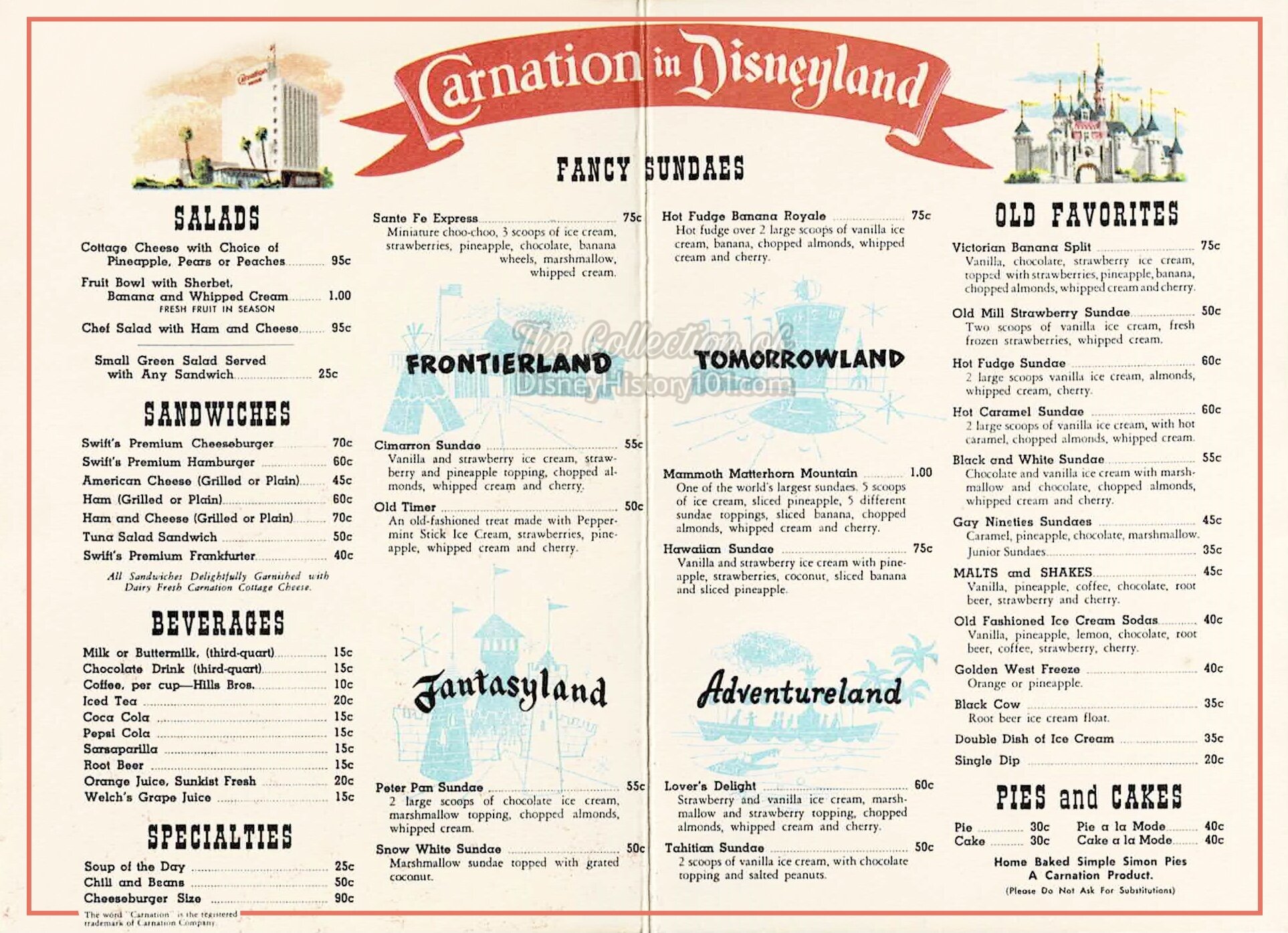
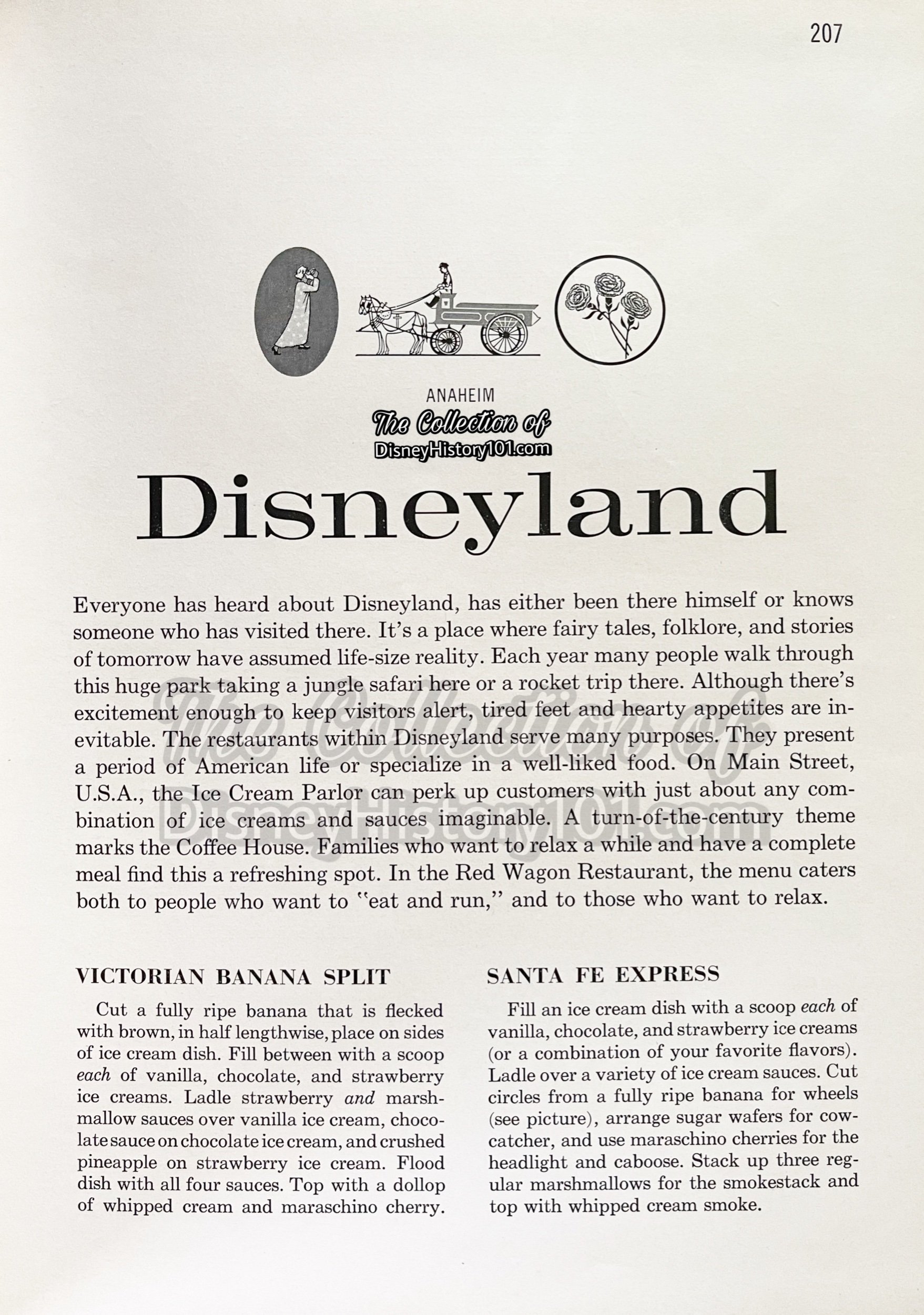
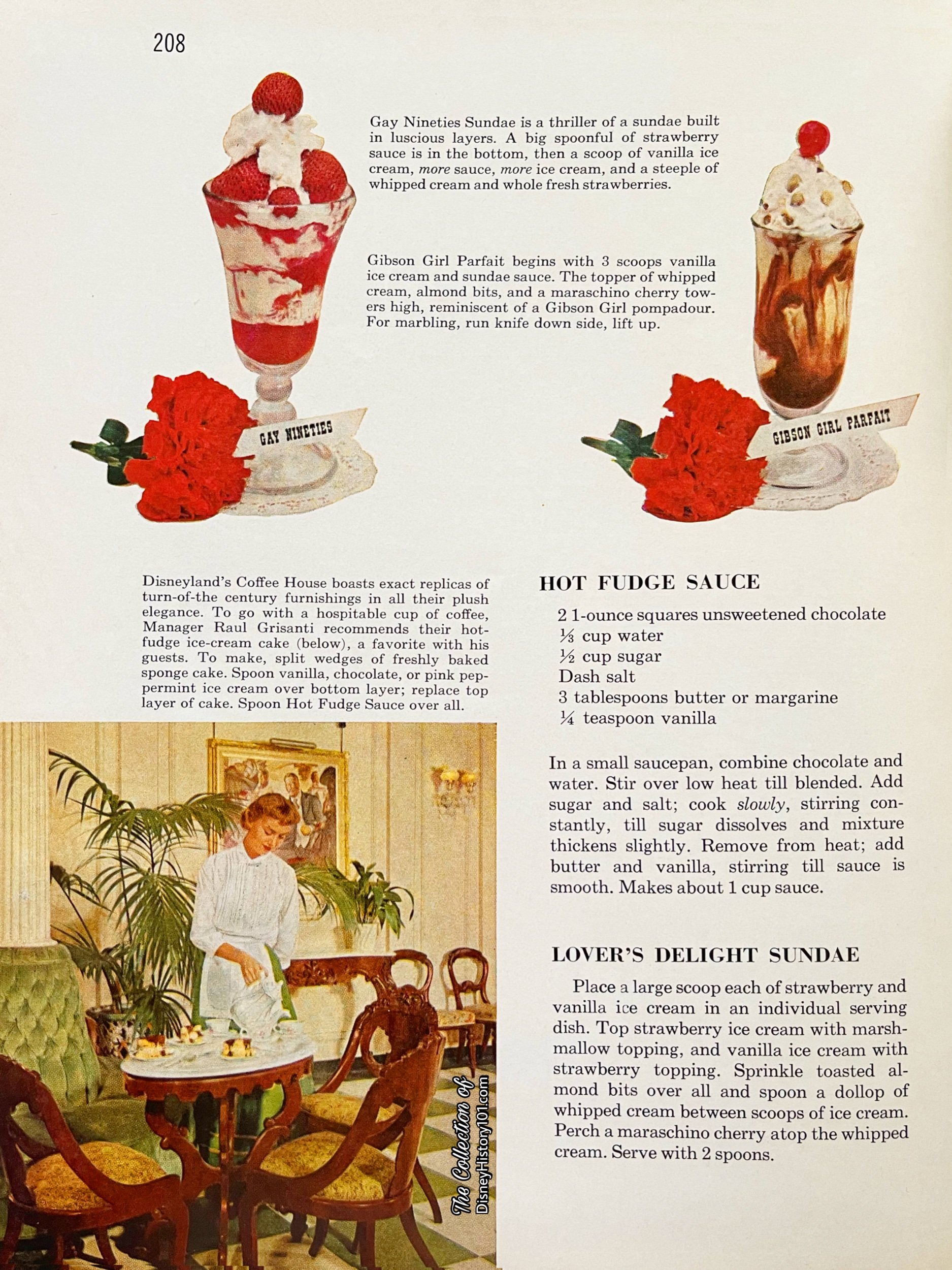
Better Homes and Gardens "Famous Foods from Famous Places" (published by Meredith Press, 1964) pages 206-208, spotlighted a number of Carnation Ice Cream Parlor treats.
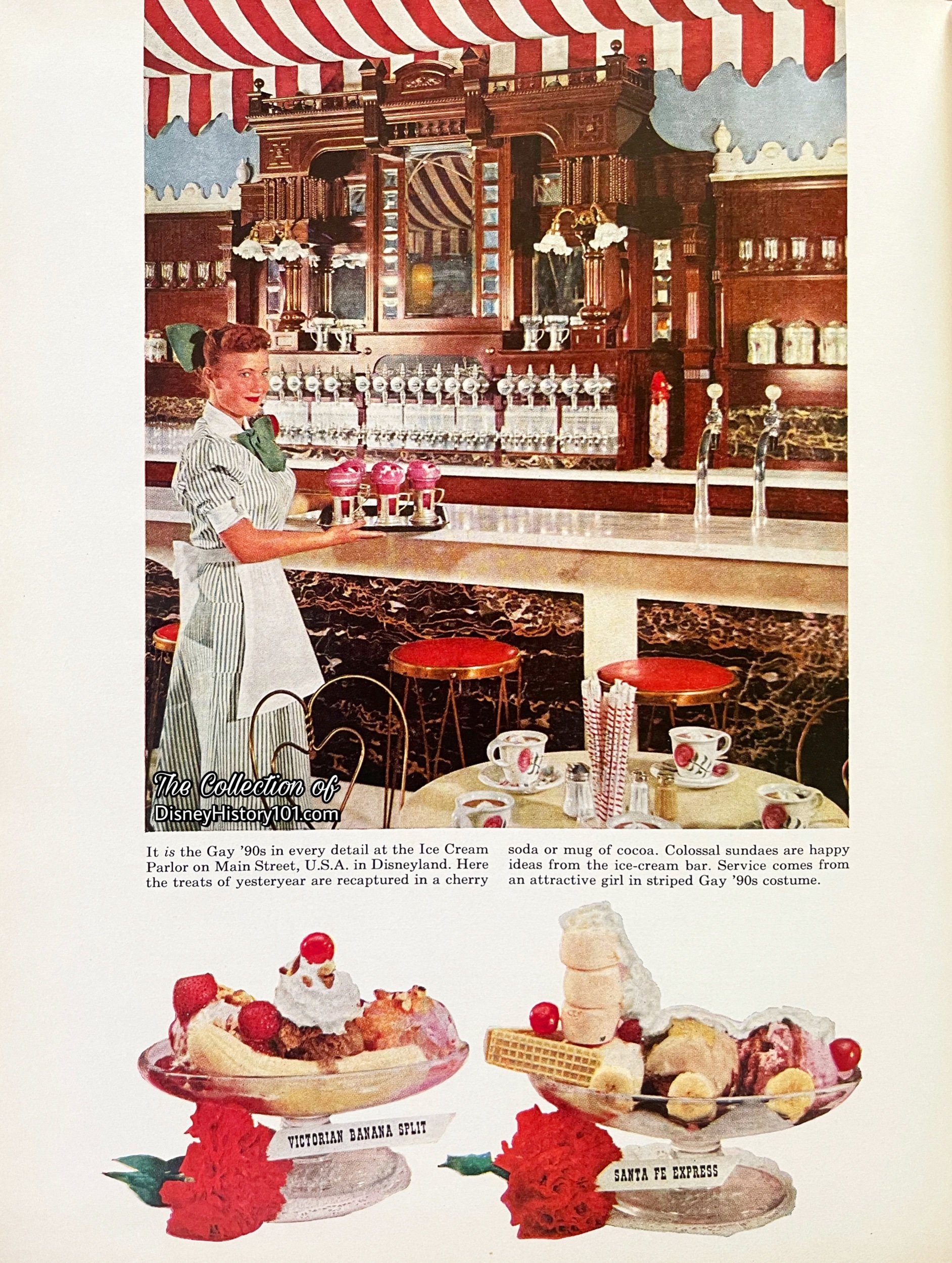
An “old favorite” (left) and a “fancy sundae” (right) are pictured above, while two “suggestions from Main Street” are pictured below. Maybe some of you will remember eating some of the best banana splits at Carnation Ice Cream Parlor.
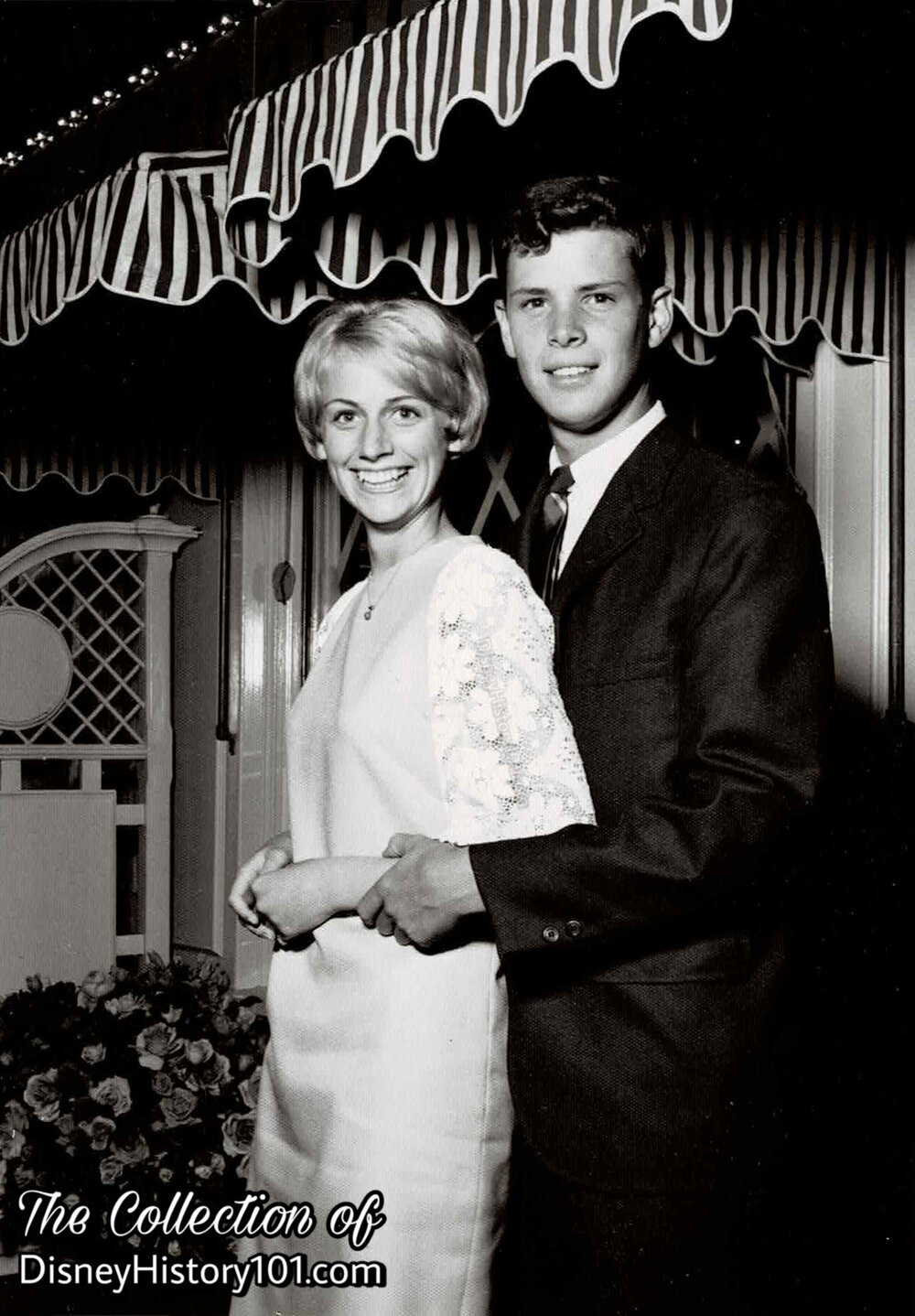
An area adjacent to Carnation Ice Cream Parlor was used as a Disneyland Grad Nite Photo Location for several years through the 1960’s.
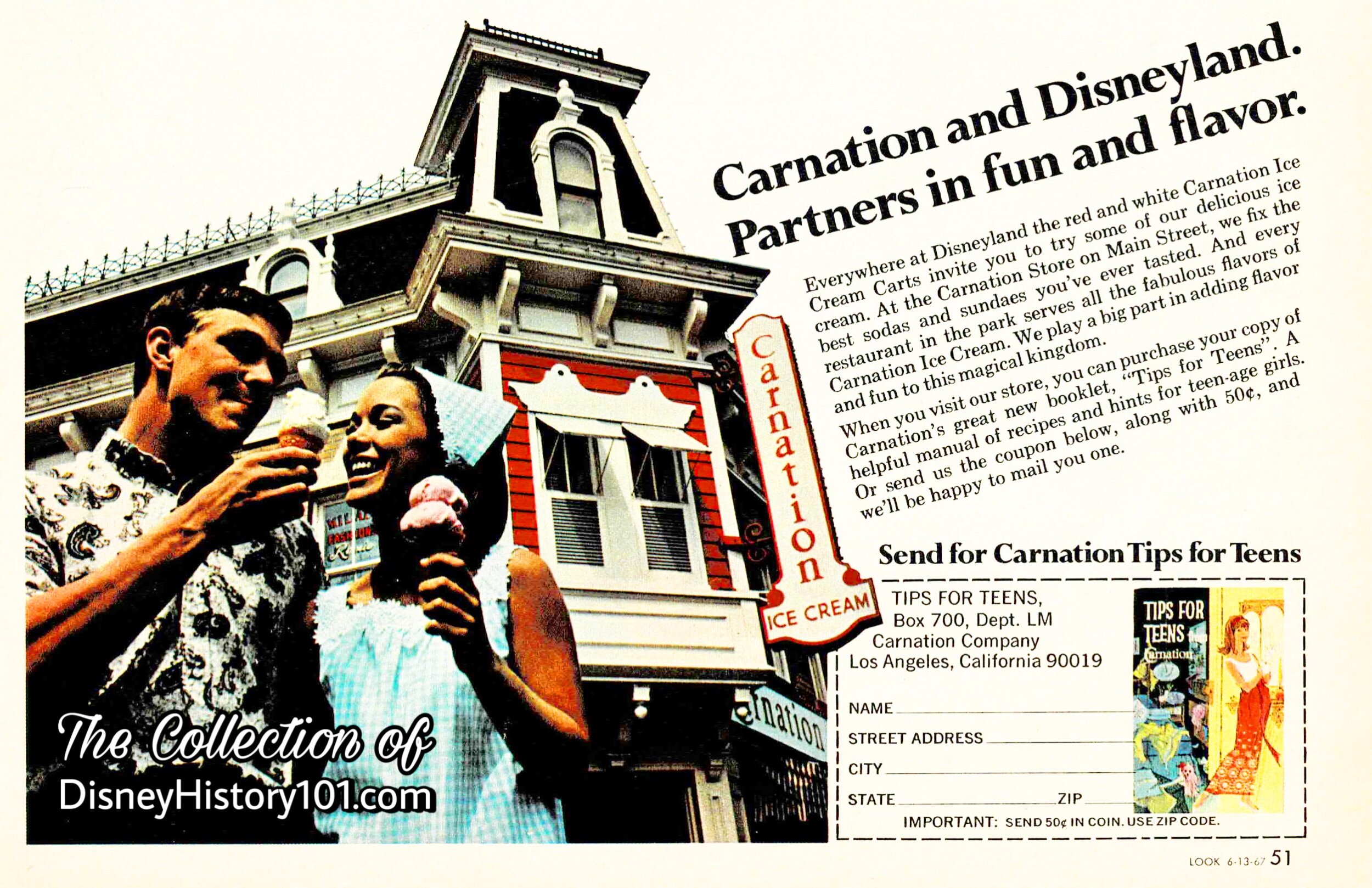
“Fun and Flavor Sweepstakes and Other Promotions”
During 1967 and 1968, Disneyland supported the “Carnation Fun and Flavor” campaign. Disneyland Ambassador Sally Sherbin made an appearance on the “Carnation Fun and Flavor Sweepstakes” program. In addition, Mickey Mouse, Sally, and other members of Disneyland’s staff (like Disneyland Hostesses) made more than 100 appearances on television, radio, and in-person at local supermarkets to assist the Carnation campaign!
“You’re In Good Company” (A Report To Disneyland Lessees, Summer ‘68) commented about the campaign this way :
“Many lessees through the years have promoted their association with Disneyland with outstanding results. One of the most ambitious - and successful - of these tie-ins came this spring [of 1968]… Carnation’s Fun and Flavor Sweepstakes. Here was a vast and complicated campaign that not only had the full cooperation and assistance of Disneyland’s marketing division, but also the cooperation of several other Park lessees [as Eastman Kodak, General Electric, and United Airlines] in a partnership promotion. ‘We won’t have the final results for awhile yet,’ said Charles E. Pritchard, Carnation’s marketing manager, ‘but I can tell you that overall it’s been the most successful promotion that we ever had. Our tie-in with Disneyland has given our sales staff a tremendous morale boost by providing them with a valuable tool to attract a great deal of attention and interest. Our first quarter sales were the highest in the fresh milk and ice cream division’s entire history. ‘What we’re looking for,’ Pritchard continued, ‘was a connection for our 1968 advertising campaign that would be of interest to our markets on a local level. In our western United States region, we have 23 separate marketing areas, each virtually autonomous, and each requiring intensely localized promotion. Carnation has always been associated with flavor - 38 in ice cream alone - and Disneyland has always been synonymous with fun. We wanted to tie the two aspects into one thought… Carnation - Disneyland, partners in fun and flavor.”
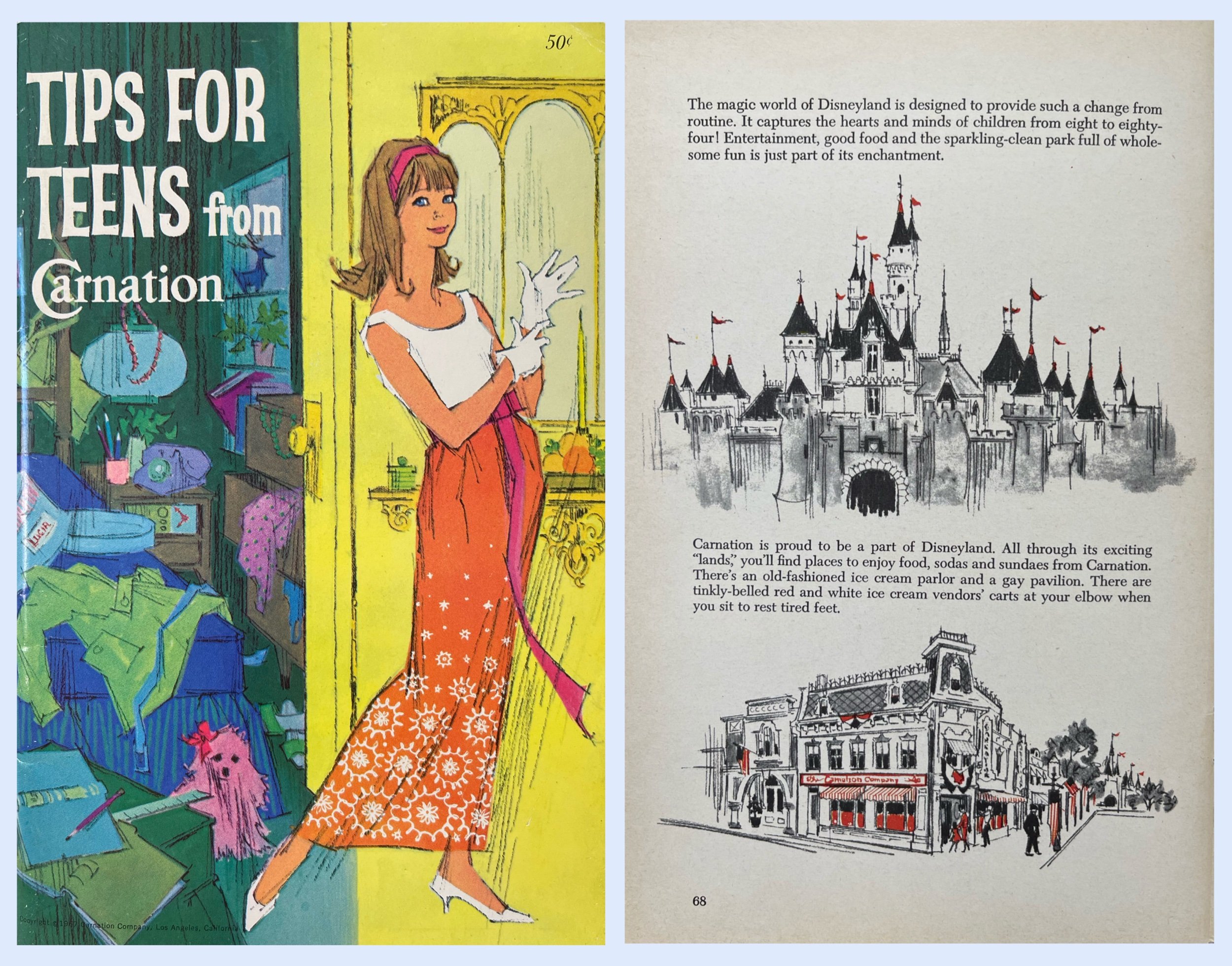
Part of that previous advertising campaign, was the complimentary “Tips for Teens” handbook. Now, “‘Tips for Teens’ isn’t a sermon. It is a reminder that the whole people-world lives by some rules and accepts certain responsibilities, including some of the things you hear about from your family daily.
Carnation people feel they have a responsibility to you. That’s why ‘Tips for Teens’ tries to keep up with you, your brightness, your broader horizons and your up-to-date outlook. To keep up with the newness, we’re constantly changing too…
That [‘squirrel in a cage’] feeling needs relaxation and a change from routine to cure it.”
And so a whole two pages of Tips for Teens was dedicated to Walt Disney’s Disneyland!
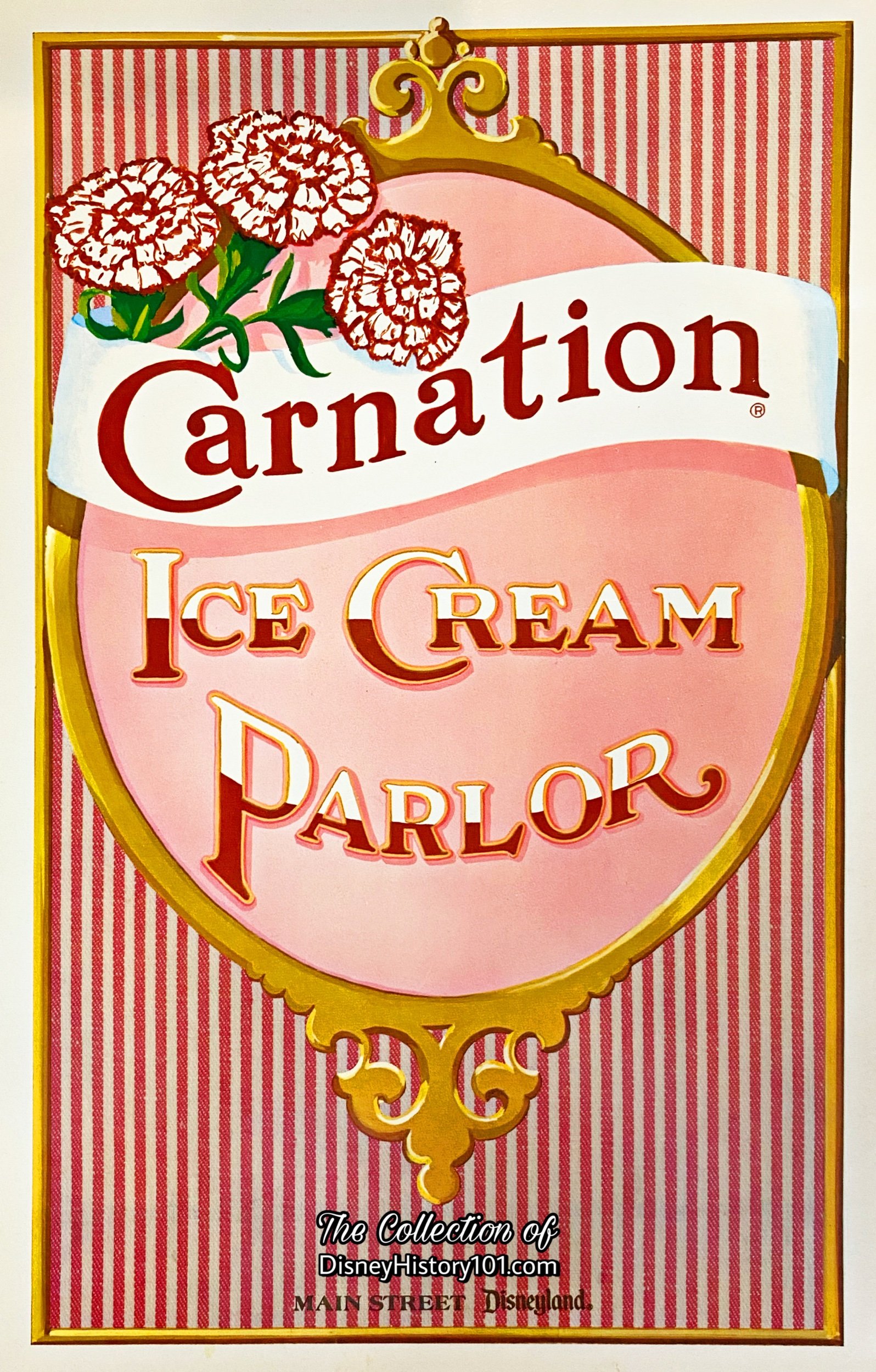
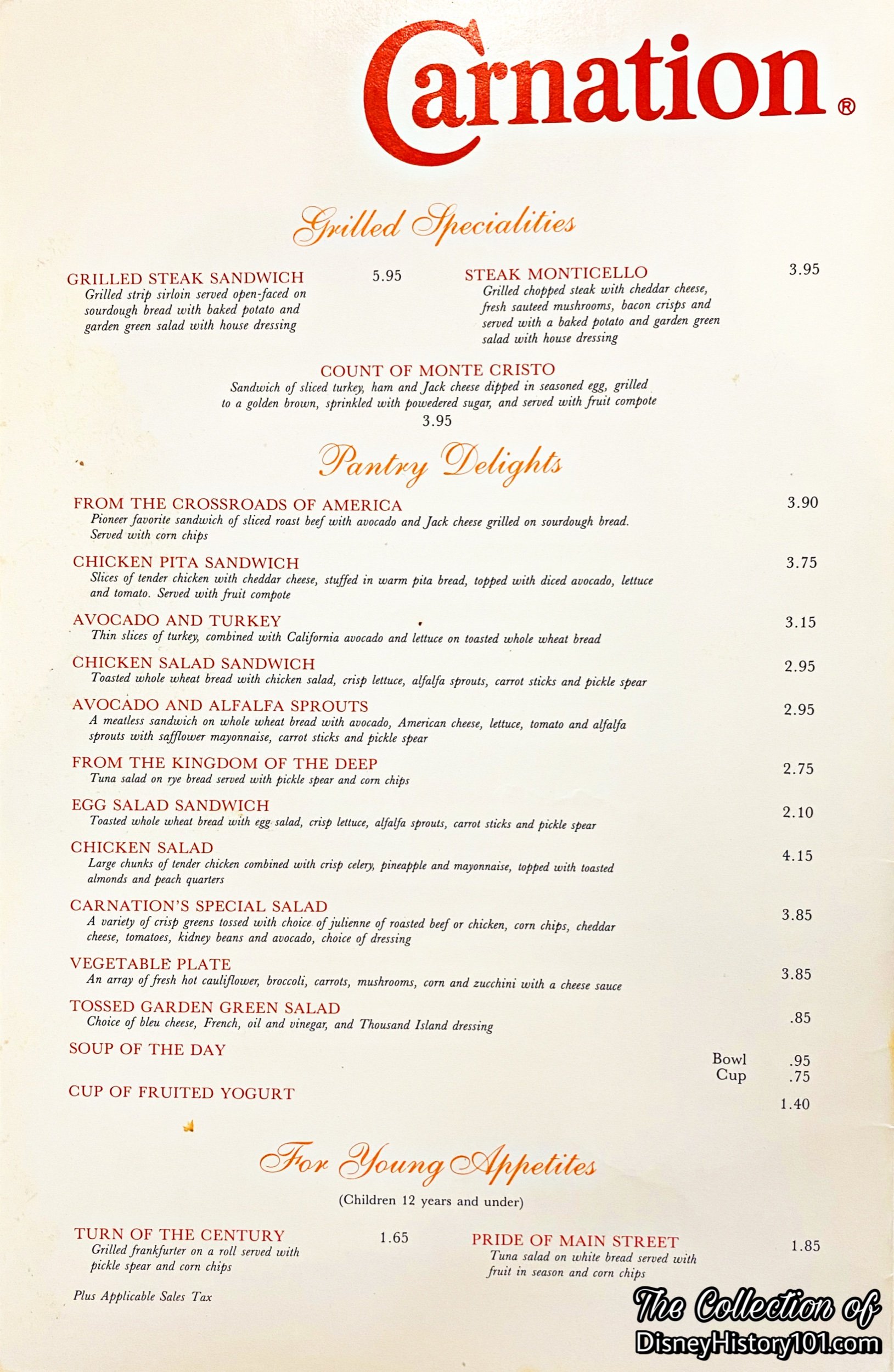
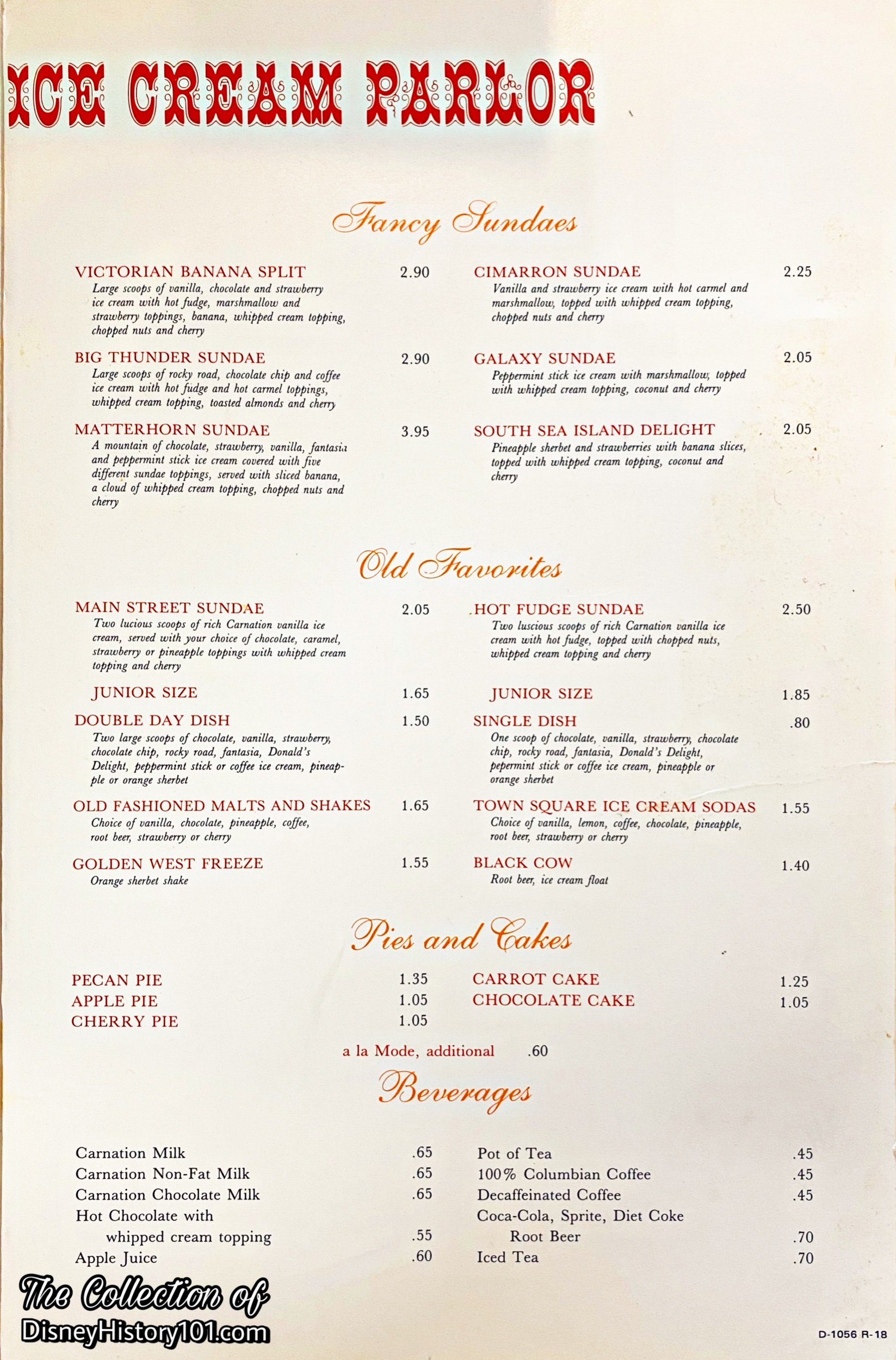
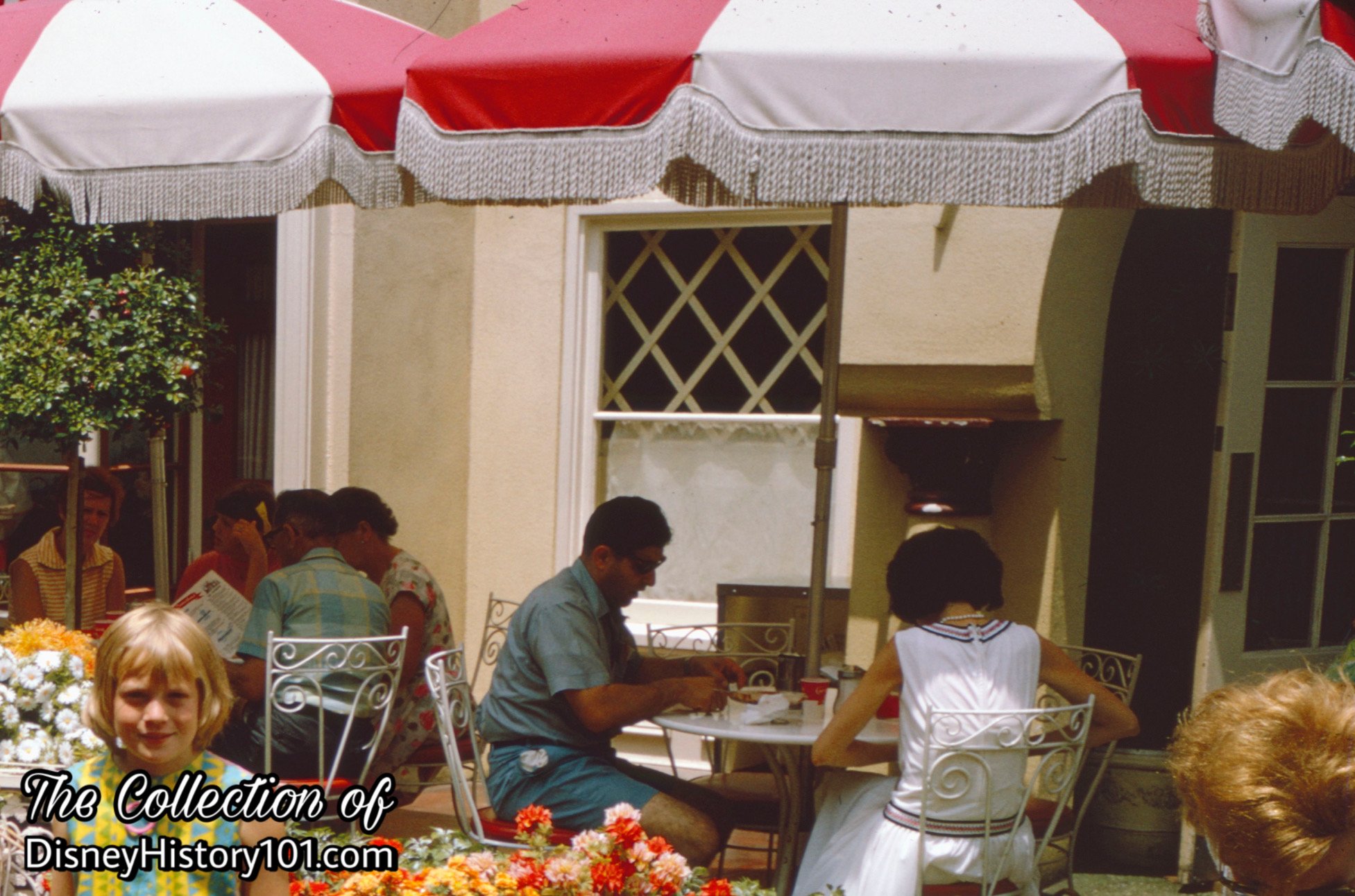
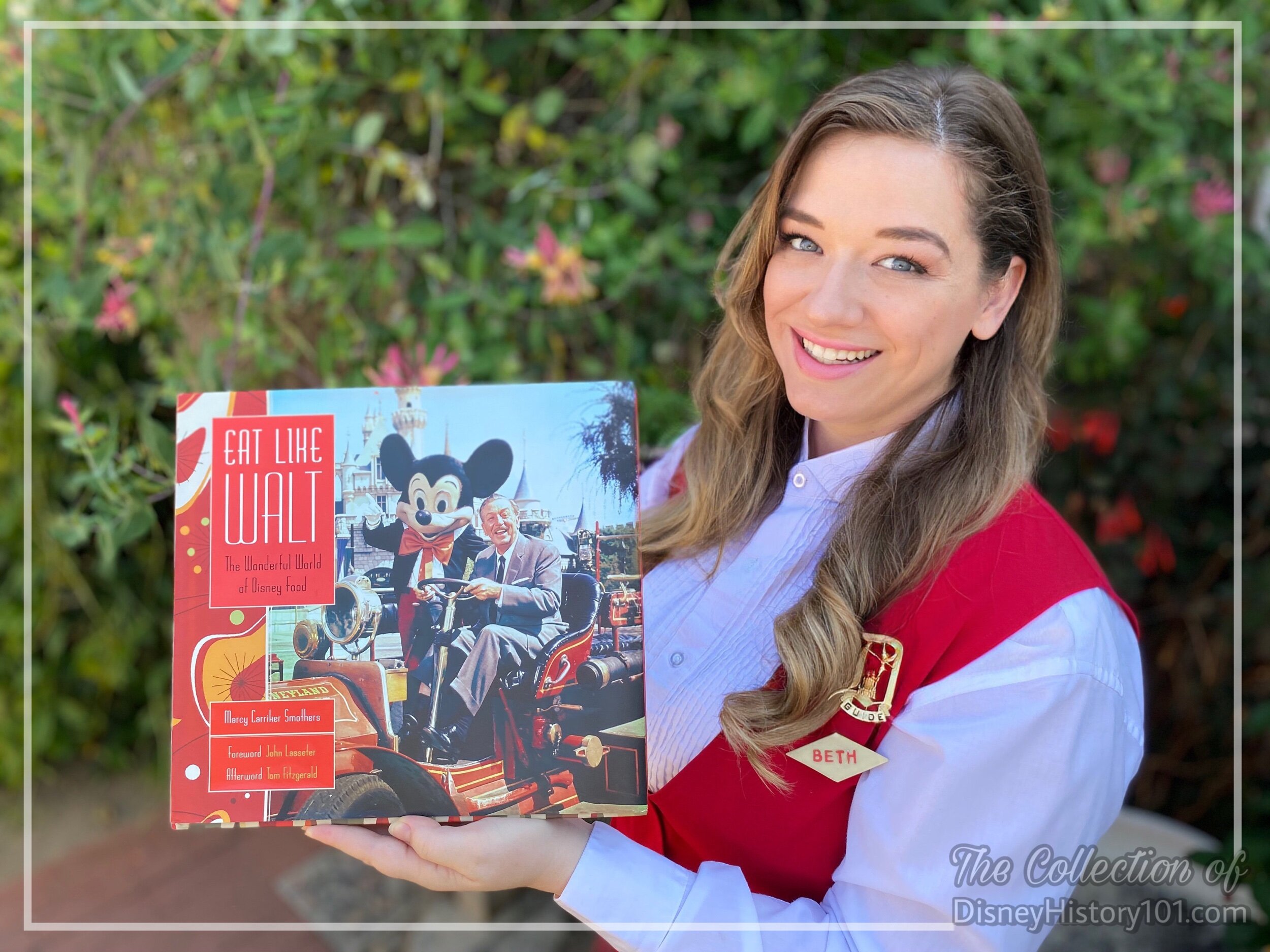
If you would like to read more about the Carnation Ice Cream Parlor, it’s my pleasure to recommend adding Marcy Smothers’ “Eat Like Walt - The Wonderful World of Disney Food” to your personal Disney Home Library! Therein, Marcy has extensively researched and finely crafted a small section of a chapter dedicated to “Walt Disney’s Disneyland - Main Street U.S.A.” If you would like to bring the magic of Disneyland restaurants and concessions (like the Carnation Ice Cream Parlor) to your dining room table, “please step this way” toward www.eatlikewalt.com where Marcy has shared a few recipes for memorable Disneyland menu options, so you too can “Eat Like Walt.”
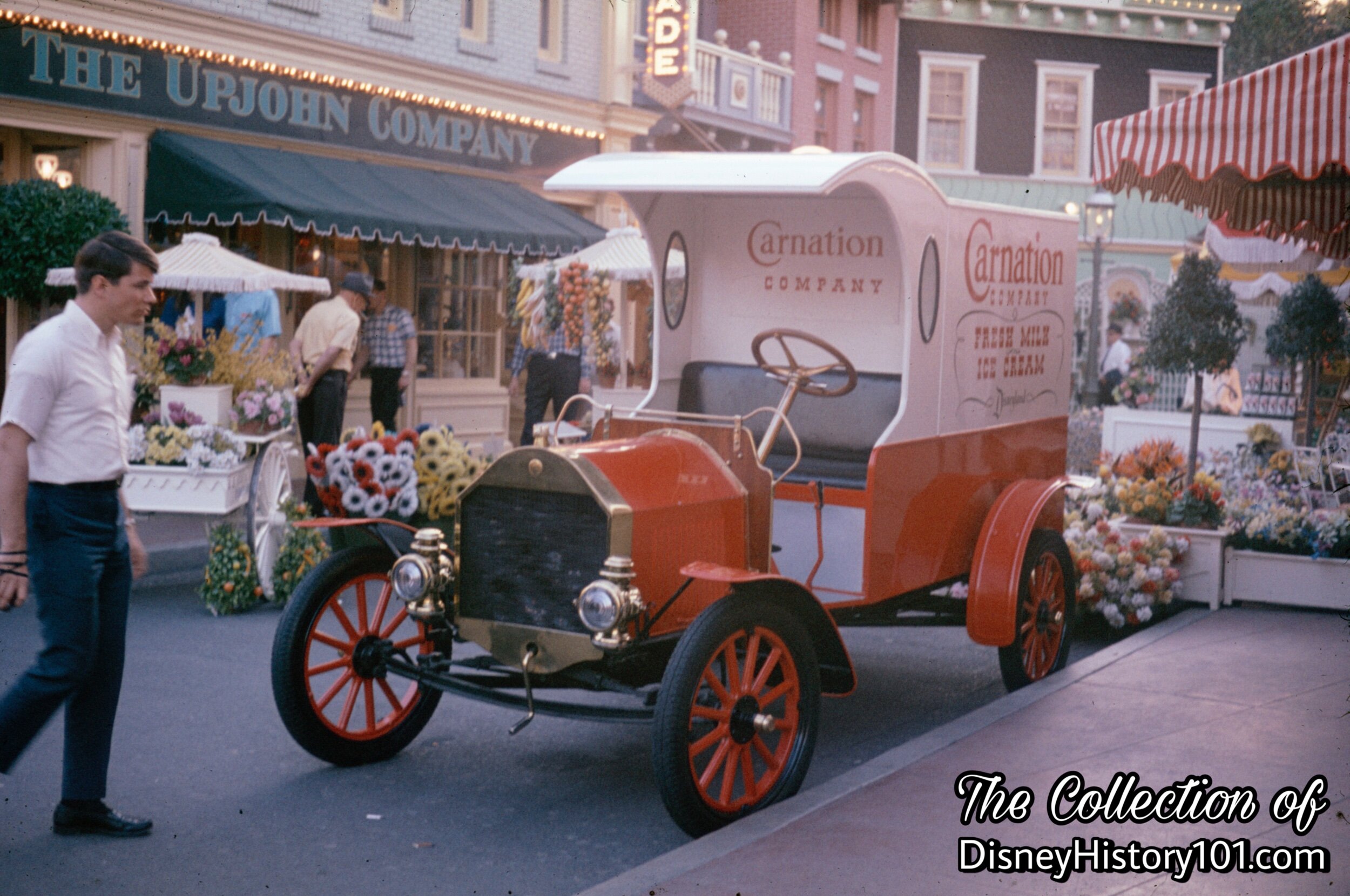
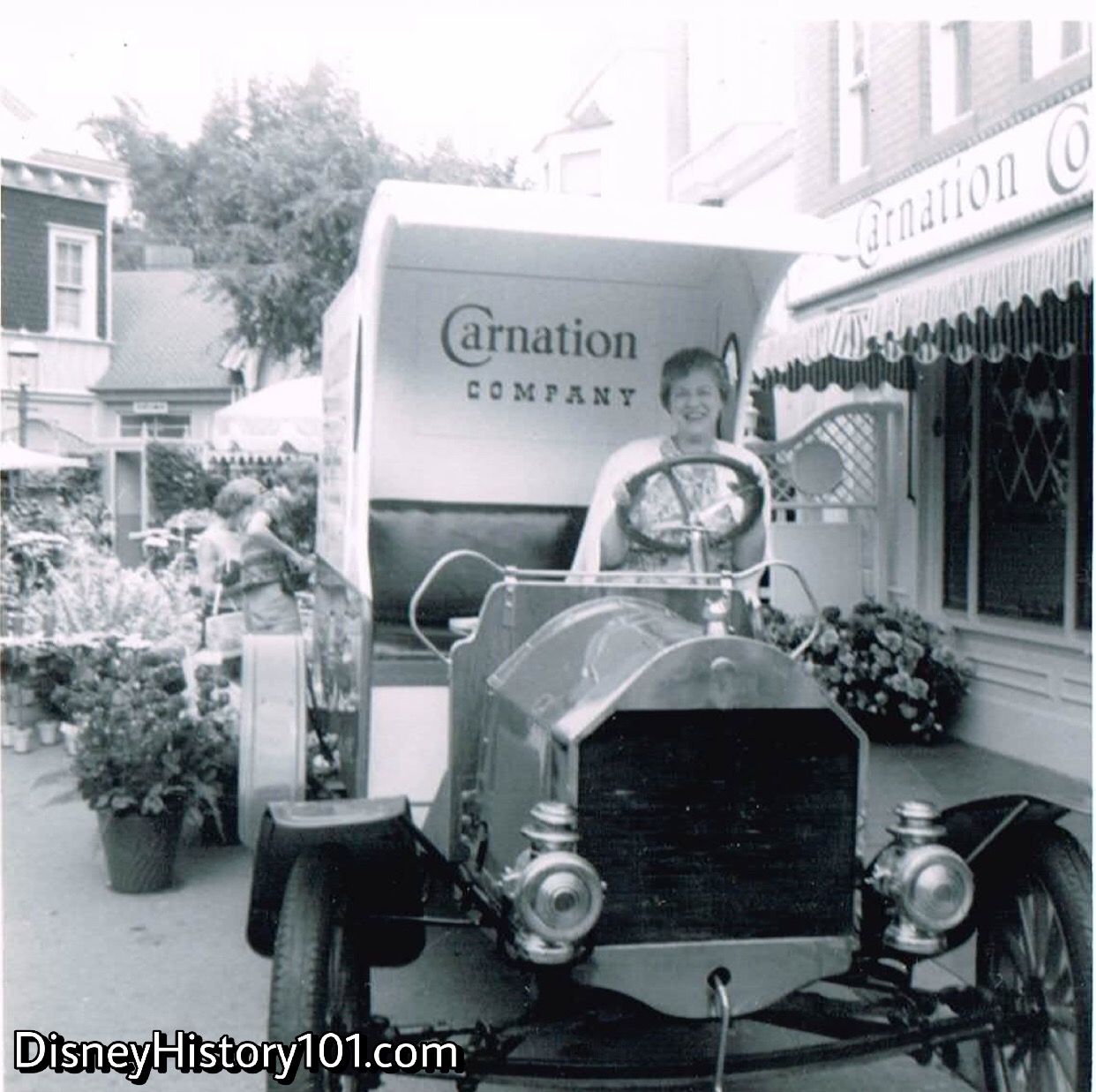

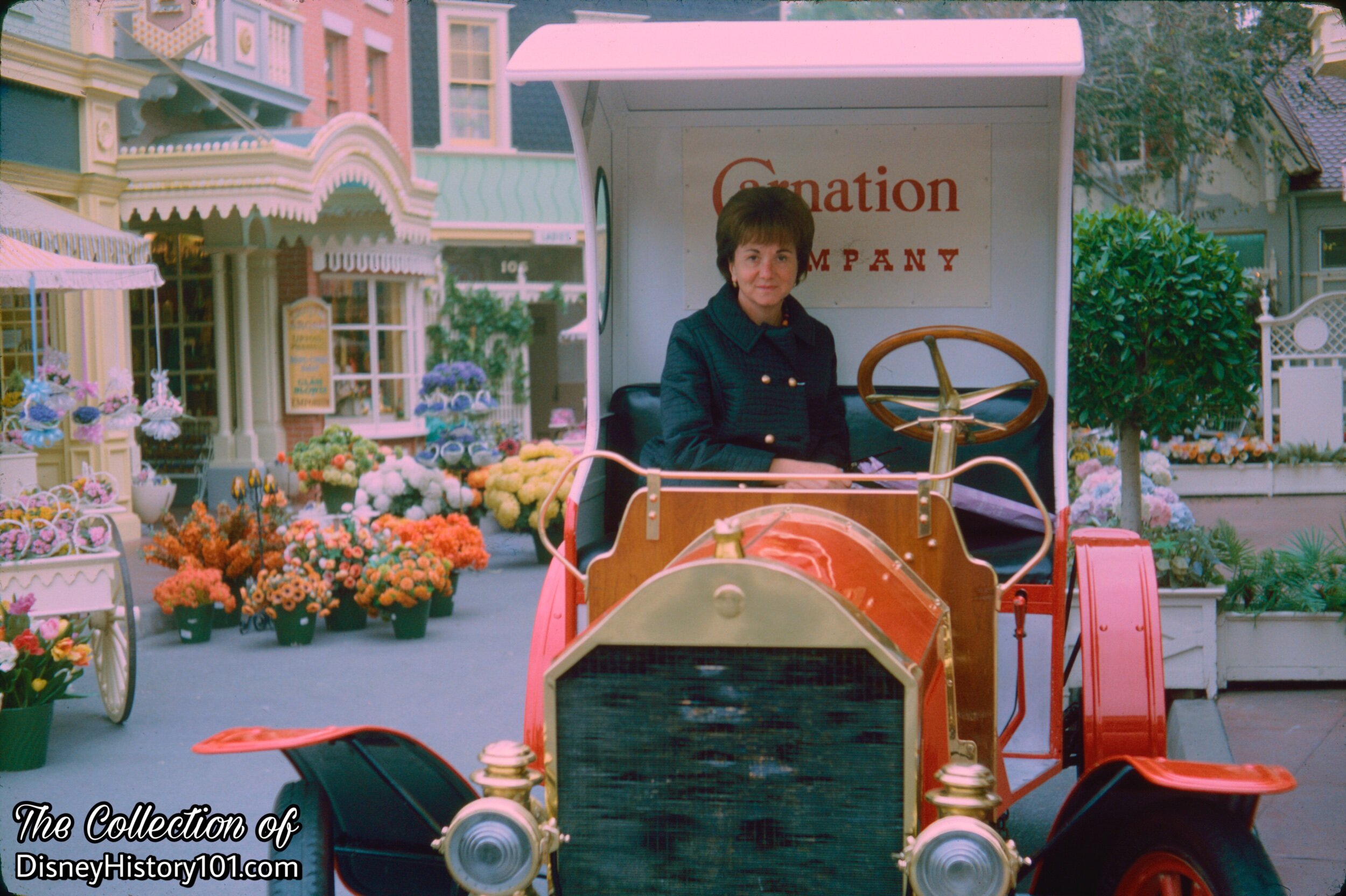
Notice all the little indentations on the impressionable metal radiator filter, which was not easy to rehabilitate.
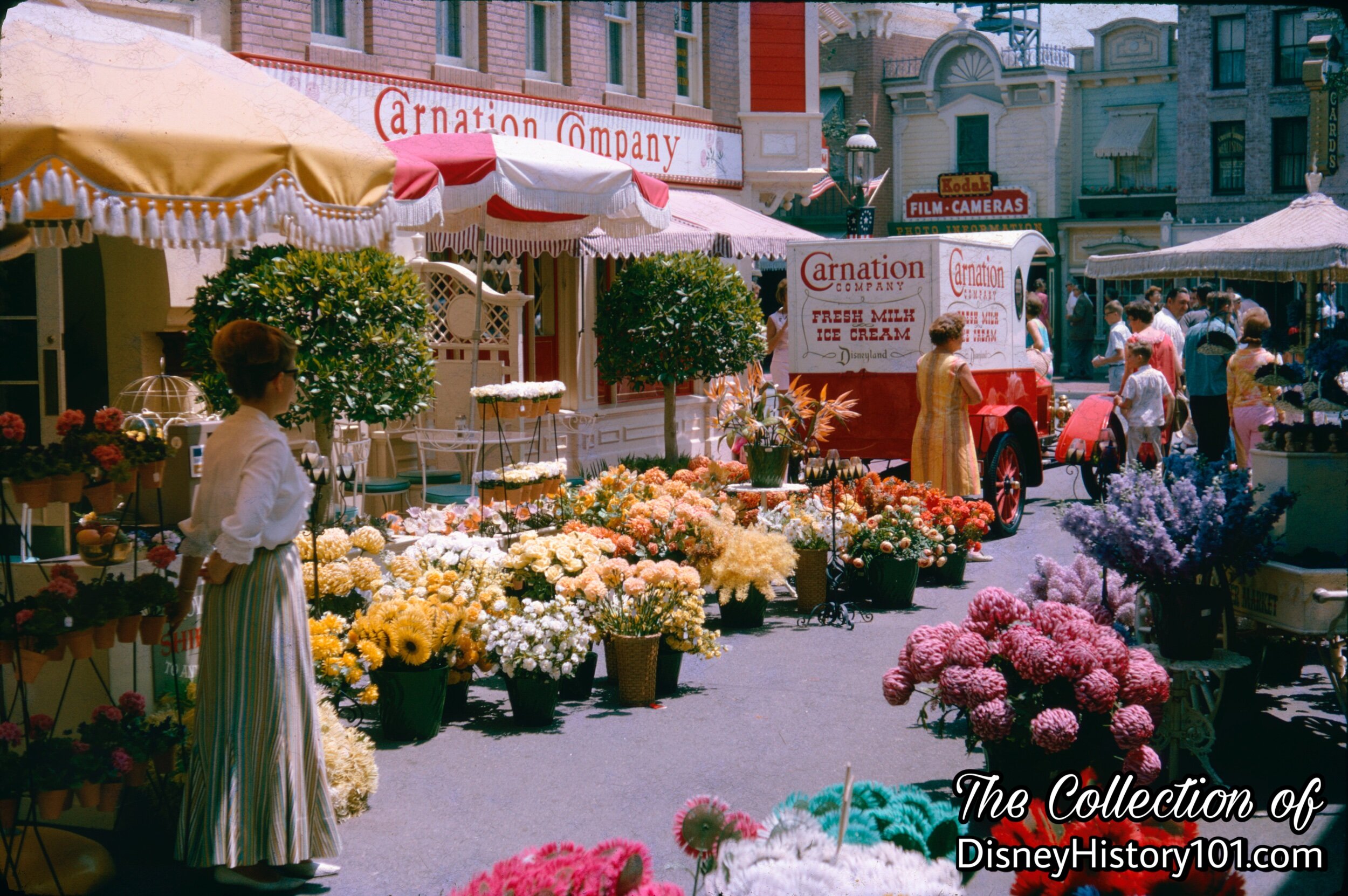
Just outside the Carnation Cafe, Disneyland guests could purchase life-like carnations at the Main Street Flower Mart!
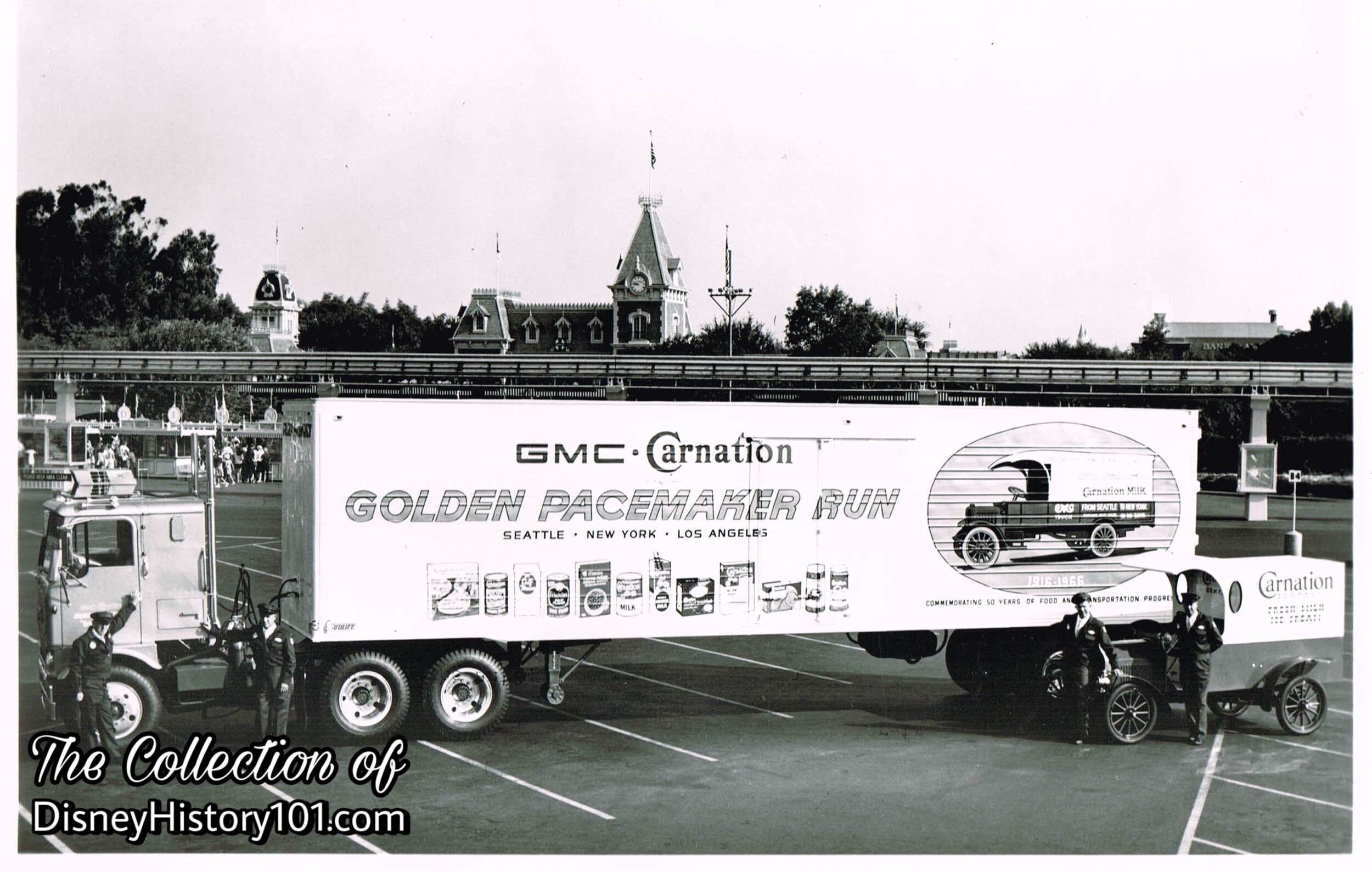
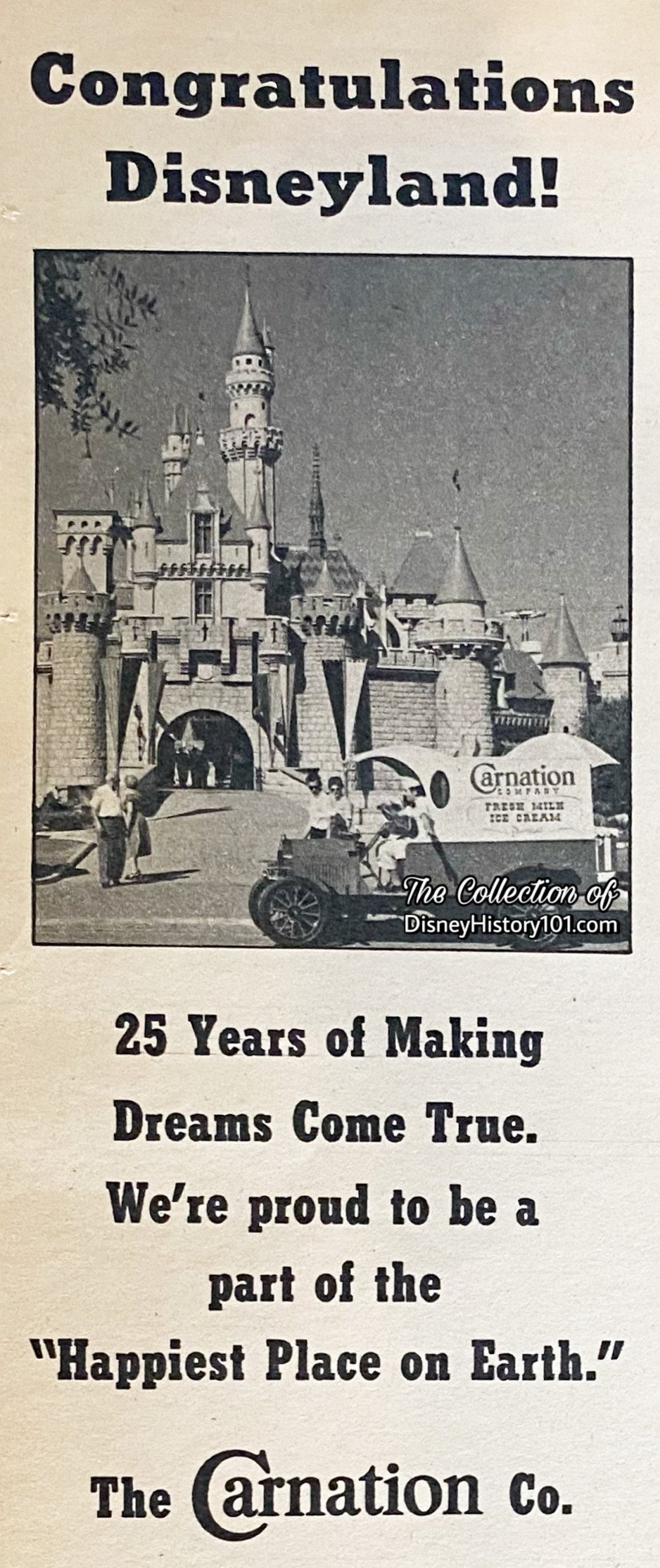
In 1966 (50 years after that aforementioned Transcontinental round trip), the trip would be restaged, in a promotion “to dramatize 50 years of progress in transportation and nutrition”. By this time, many of Main Street U.S.A.’s antique vehicles were a nostalgic reminder of the good old days! The sponsors of those vehicles (like the Swift’s Horse Wagon, or the Carnation Milk Truck) had replaced the archaic modes of transportation with modern vehicles. “This modern GMC diesel highway tractor with a 40-foot Utility semi-trailer, dubbed the “Golden Pacemaker,” shows how far commercial highway transportation has advanced since the first continental round trip. The first Seattle-to-New York leg of the original trip took 73 days. The re-run is expected to take slightly over three days, with drivers scrupulously observing all safety and highway courtesy rules.”
As an advertisement for this event, this publicity shot (featuring a few Carnaco Truck Drivers) was arranged with the Carnation Company Truck exhibit in front of Disneyland!
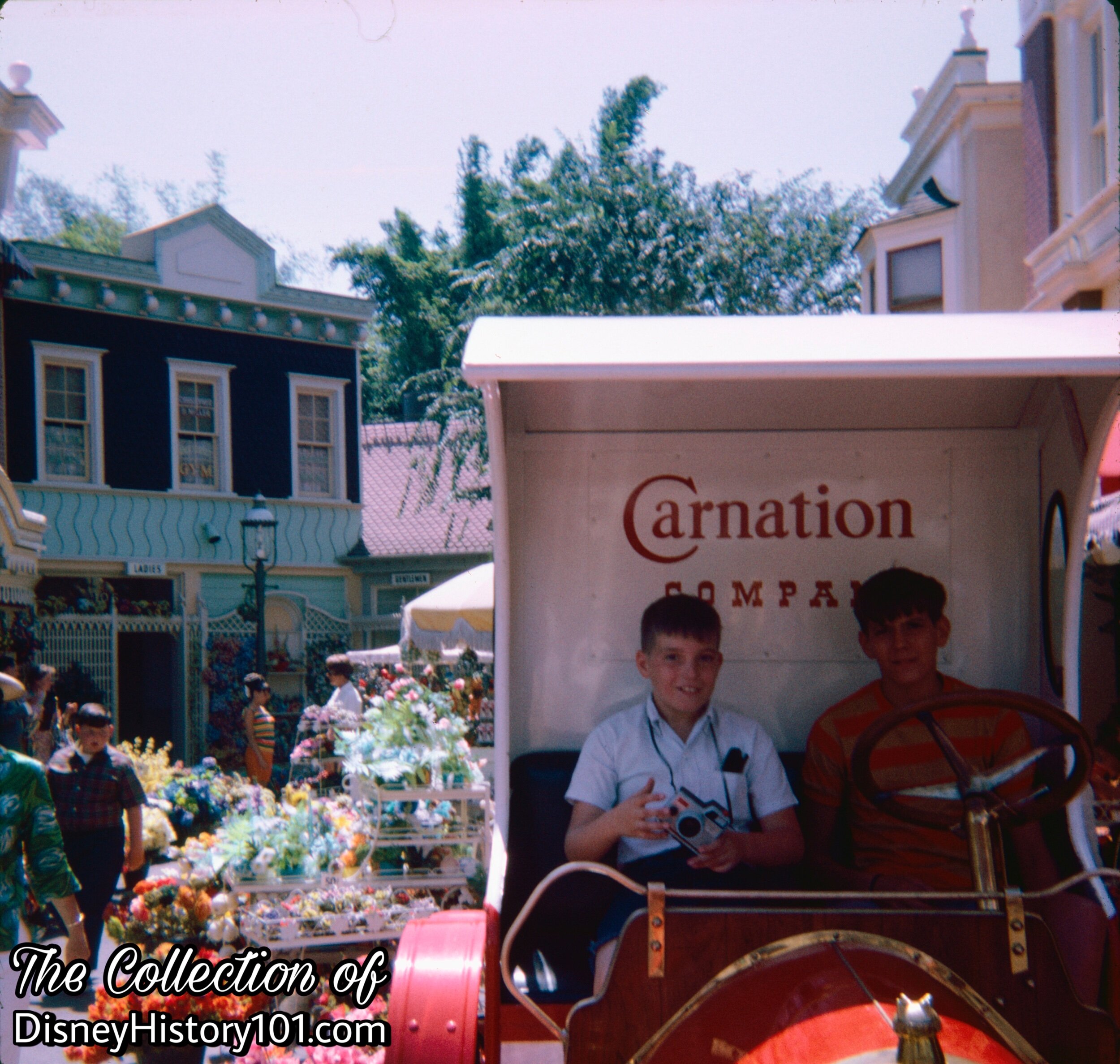

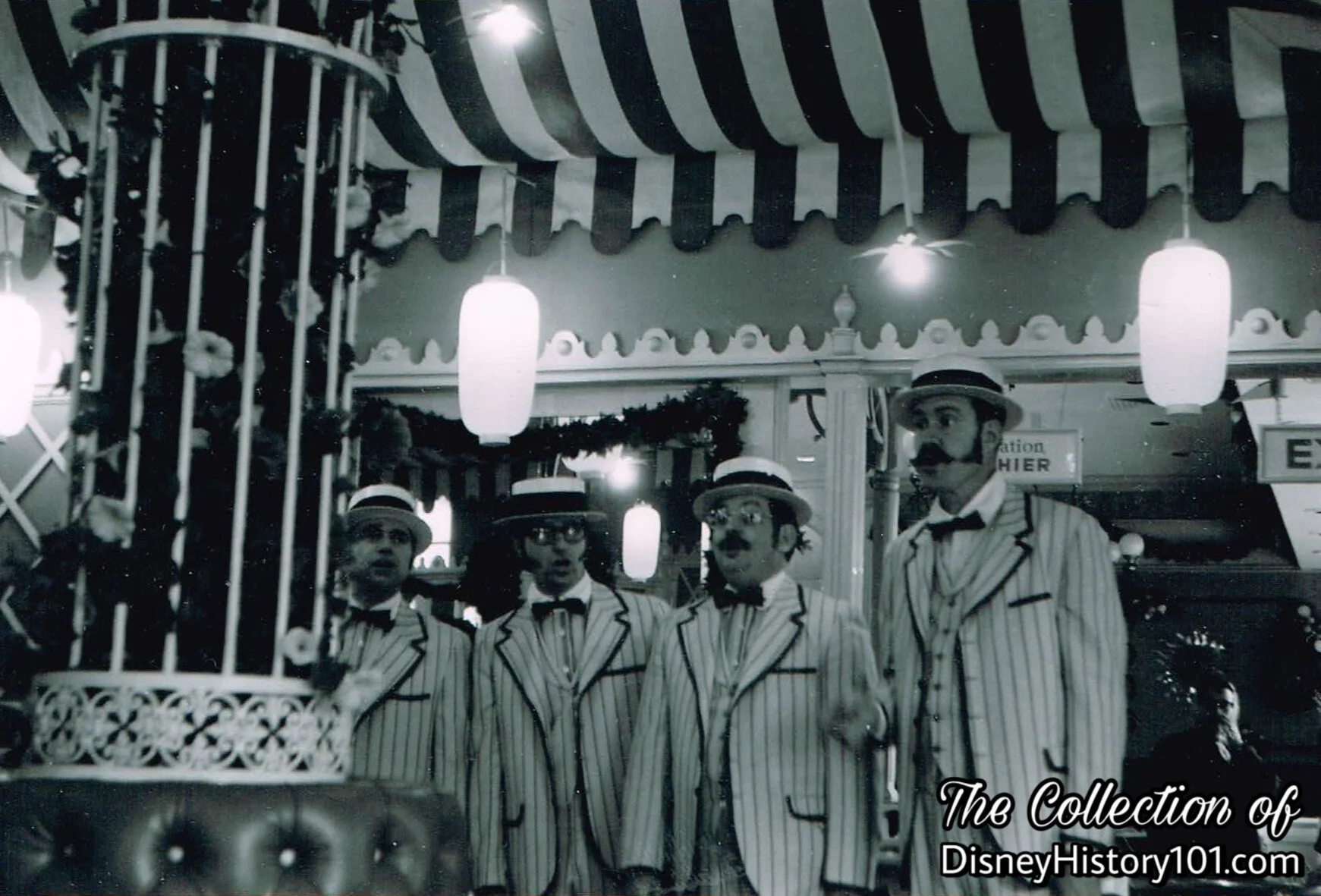
In addition to the Dapper Dans, the Disneyland Christmas Carolers (under the direction of Dr. Charles C. Hirt and lead by Mr. Robert G. Hasty), were also known to perform on “the Carnation Patio” during various times of the day, from December 16th, 1967 thru January 1st, 1968. [“Disneyland Holiday Talent Master Schedule,” prepared for the period of December 16, 1967 through January 1, 1968]
Since the beginning, the Four Keys of the DISNEYLAND Show (operating priorities in presenting the DISNEYLAND Show) have been present - Courtesy, Safety, Show, and Efficiency. Guided by these Four Keys, are Walt Disney Imagineers, who are always seeking out new magical opportunities to increase the efficiency, safety, and show quality of Disneyland adventures.
“Maintenance”
In maintaining the magic after the Park closes, the staff take over with brooms, mops and dustcloths. Special attention was given to marred walls, posts and furniture. Items with marks that didn’t wash off were replaced or repainted. The Floors were waxed and buffed to preserve their beauty and protect them from the thousands of feet that scuffle over them each day.
“Rehabilitation”
By the year 1977, the Carnation Company remained a Disneyland Participant (providing Disneyland with its “name and quality food products”). However, management of the Table Service restaurant had long since been assumed by the Park. At this time, the Carnation Restaurant received new designs including a new entryway, a new waitress station, waiting area, and flow-through area to alleviate street traffic during parades, all courtesy of Tony Deleese of Planning. The rehab was performed by the staff of Disneyland Shops (The Maintenance Division at Disneyland).
During this time, the turnstile was eliminated, the front portion of the serving counter (which previously cured toward Sunkist Citrus House) was shortened and squared-off, the front portion of the restaurant was sectioned off by a decorative etched-glass partition, and the restaurant was now accessed by three sets of double doors (instead of just one main door). In addition, Disneyland LINE magazine (February 24, 1977) announced : “The street area between Carnation and the Clock and Candle Shops, once occupied by the Flower Market, will be filled in to provide a more complete outdoor dining patio. (The Flower Market has been moved across the street into the area between the Market House and Hallmark.) A three-foot, eight-inch high wooden fence will surround the patio, separating it from Main Street proper.” The Carnation Truck (which was moved rarely) was now parked near the Disneyland Central First Aid Center after the c.1977 restaurant rehabilitation.
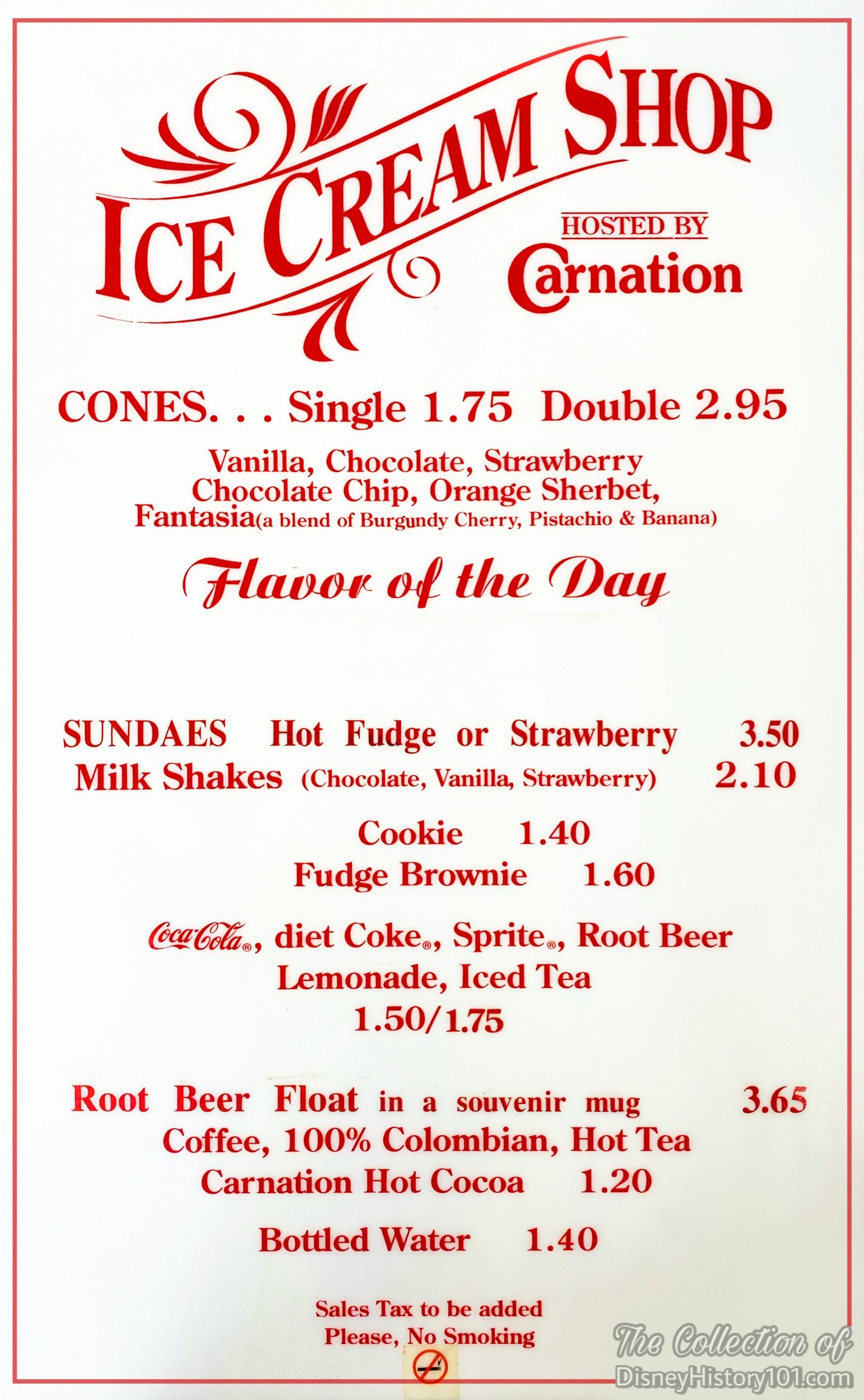
By 1981, the Carnation Main Street breakfast menu offered:
•Traveler's Favorite (breakfast steak served with two eggs, golden brown potatoes and toast with butter and jelly)
•Conductor's Treat (Oscar Mayer ham served with two eggs, golden brown potatoes and toast with butter and jelly)
•Hometown Favorite (choice of bacon or sausage and two eggs served with golden brown potatoes and toast with butter and jelly)
•Turn of the Century (two eggs served with golden brown potatoes and toast with butter and jelly).
The Carnation Main Street Luncheon and Dinner menu offered:
•Grilled Steak Sandwich (grilled strip sirloin served open-faced on sourdough bread with a garden green salad and golden brown potatoes)
•Steak Monticello (grilled chopped steak topped with cheddar cheese, bacon crisps and served with garden green salad and golden brown potatoes)
•Count of Monte Cristo (sandwich of sliced turkey, ham and Jack cheese dipped in seasoned egg, grilled to a olden brown, sprinkled with powdered sugar, and served with fruit compote)
•From the Crossroads of America (pioneer favorite sandwich combining ground beef, diced avocado, onion, garlic and spices, stuffed in warm pita bread, topped with lettuce and tarato salad)
•Chicken Pita Sandwich (slices of tender chicken with American cheese, stuffed in warm pita bread, topped with diced avocado, lettuce and tomato salad)
•Avocado and Turkey (thin slices of turkey, combined with California avocado and lettuce on toasted whole wheat bread)
•Chicken Salad Sandwich (toasted whole wheat bread with chicken salad, crisp lettuce, alfalfa sprouts, carrot sticks and pickle spear)
•Avocado and Alfalfa Sprouts (a meatless sandwich with avocado, American cheese, lettuce, tomato and alfalfa sprouts with safflower mayonnaise, carrot sticks and pickle spear
•From the Kingdon of the Deep (tuna salad on rye bread served with pickle spear and corn chips)
•Egg Salad Sandwich (toasted whole wheat bread with egg salad, crisp lettuce, alfalfa sprouts, carrot sticks and pickle spear)
In 1981, the Carnation Main Street tum-of-the-century ice cream parlor with its breakfast and lunch menus produced $1,180,000 in revenue for Main Street Food. This was owning to VIPs of Disneyland (guests), its Main Street Foods hosts and hostesses (totaling 176 summer/118 fall), two Main Street Foods Stage Supervisors, and Main Street Foods Area Stage Supervisor.

In 1985, a big change occurred when the Carnation Company was purchased by Nestle* (the largest marketer of food products in Europe). A year later, Carnation Ice Cream Parlor continued to occasionally host special events like Private Parties (e.g. GM and Hughes Employees, January of 1986).
By 1986, Carnation on Main Street was one of two Park locations that served breakfast for the convenience of Guests.
Four years later (by 1990), the Carnation Ice Cream Parlor was one of several locations contributing to the purchase of more than 3.2 million servings of ice cream annually at Disneyland. That same year (1990), individuals (like Pete Clark of Disneyland Participant Affairs Division, hired 1957) were maintaining the ongoing relationship between Disneyland and four lessee operations, as well as 20 participants like Carnation Farms. That year, Pete offered plaudits for Carnation (to Disneyland LINE Magazine, Vol. 22, No. 11 ; March 16, 1990) : “The name Carnation means quality to people. Guests are comfortable with it and expect and get a special experience.” About this same time, healthier menu options were made available to guests through Carnation - Avocado and Alfalfa Sprout Sandwiches, Marinated Boneless Breast of Chicken (Conductor’s Treat), and Avocado and Turkey Sandwiches. As a Participant, Carnation was also a co-sponsor of the Disneyland Baby Care Center, as its baby formulas were made available to visiting guests during this era.
*As a sidelight, Nestle signed an 11-year licensing agreement with The Walt Disney Company, in January of 1990. The Walt Disney Company 1990 First Quarter Report divulged that “by early 1991 Nestle will be Disney’s exclusive food products and promotional licensee in Europe and the Middle East.”
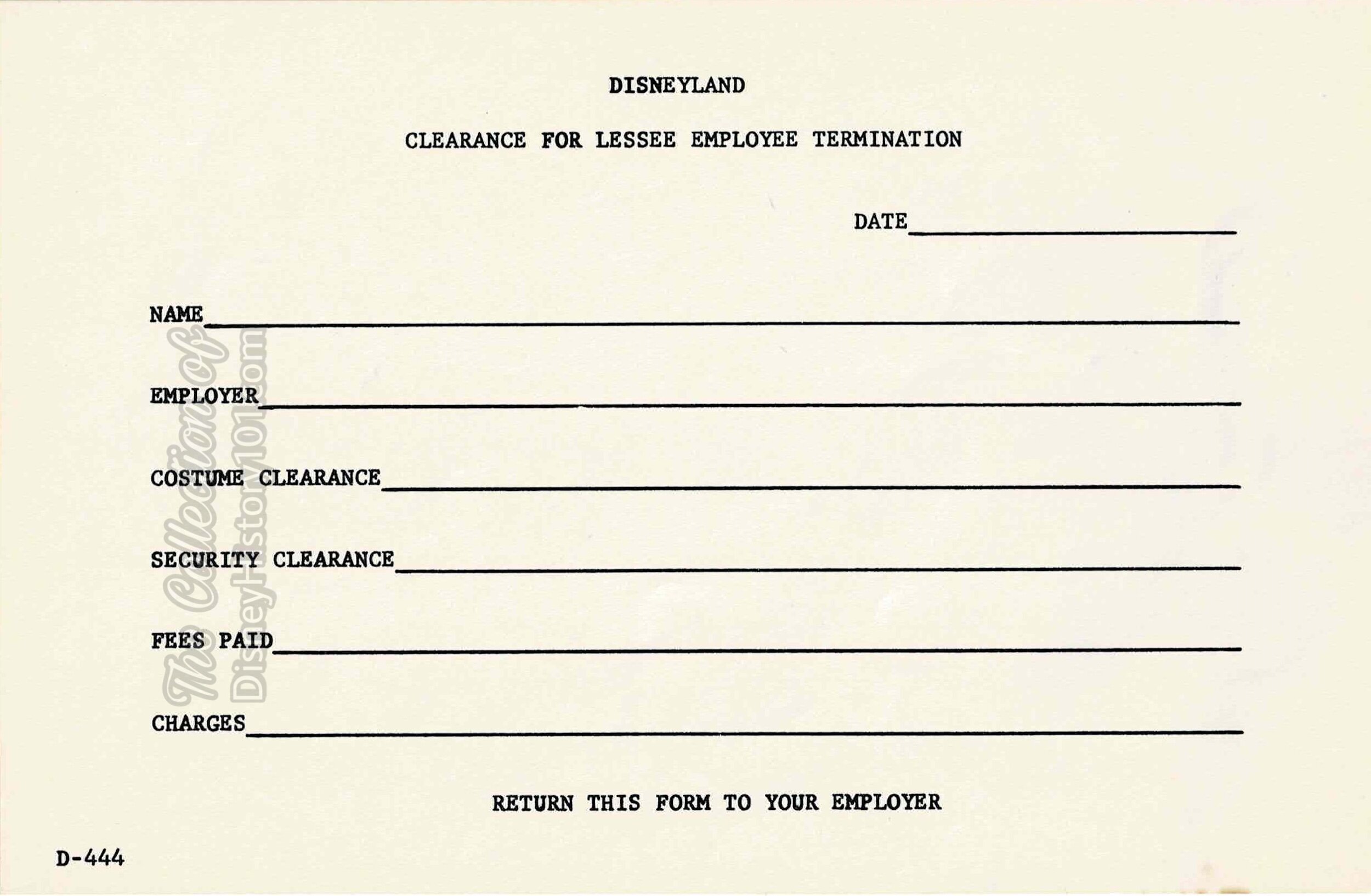
The synergistic Partnership lasted seven more good years, owing to Pete Clark (Senior President of Disneyland Participant Affairs Division), Jennifer Gray (Participant Relations Manager), and their team. But alas, Disneyland Participant Affairs and Opening Day Participant Carnation Farms ultimately could not negotiate a new cooperative agreement to maintain their ongoing relationship). All good things must come to an end, including the Plaza Gardens hosted by Carnation, the Main Street Cone Shop hosted by Carnation, the Stroller Shop hosted by Carnation Infant Formula, and the Carnation Ice Cream Parlor and Restaurant hosted by Carnation. However, Carnation’s departure opened the doors for a new Disneyland Participant sponsor.
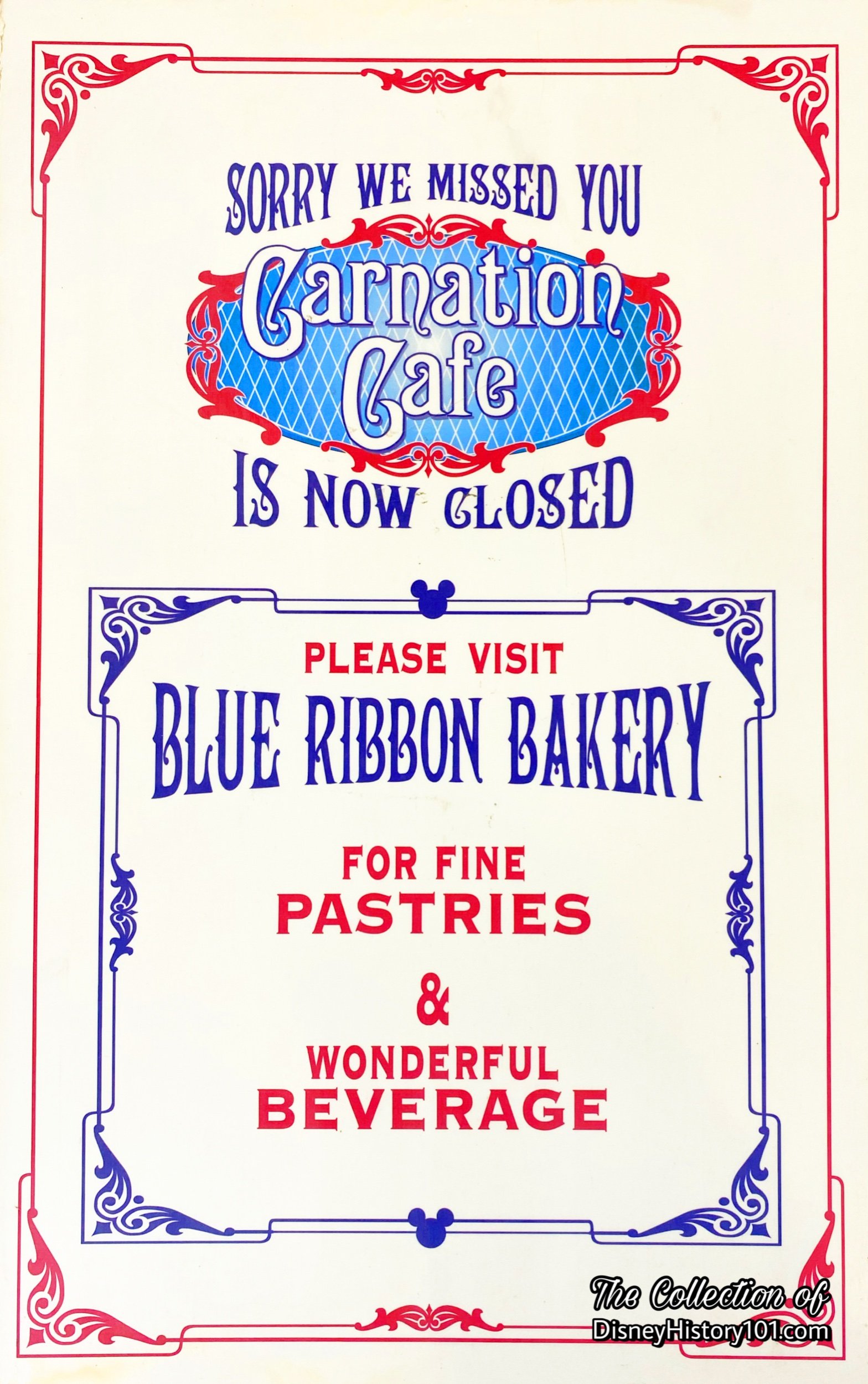
However, this isn’t the end of our Carnation-Disneyland story!
Soon, the quick-service Blue Ribbon Bakery food operation hosted by Nestlé Toll House occupied the address and space (opening March 21, 1997).
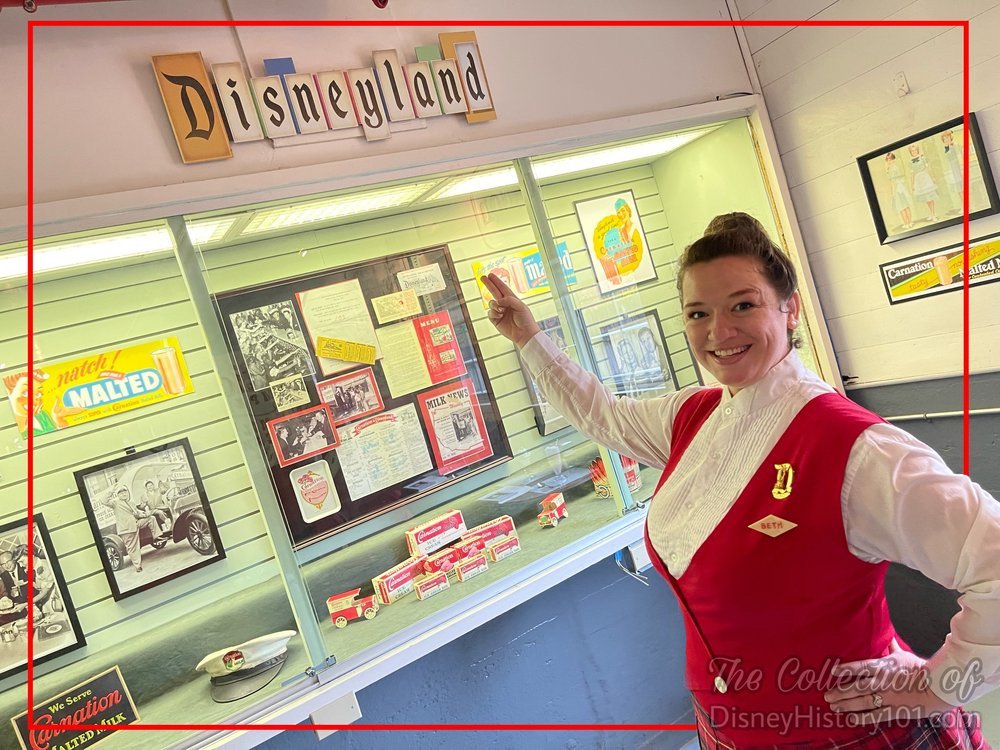
The “cherry on top” of the Disneyland-Carnation story, is that several artifacts of the Disneyland Carnation Ice Cream Parlor are being preserved and are on exhibition at the Carnation Farms Carriage Museum in the town of Carnation, Washington! Included are numerous rarely-seen Press Release photographs (from Carnation Farms Museum Archives), Creation Ice Cream Parlor menus, and even a Carnation Ice Cream Parlor Tray (once used to pay the bill).
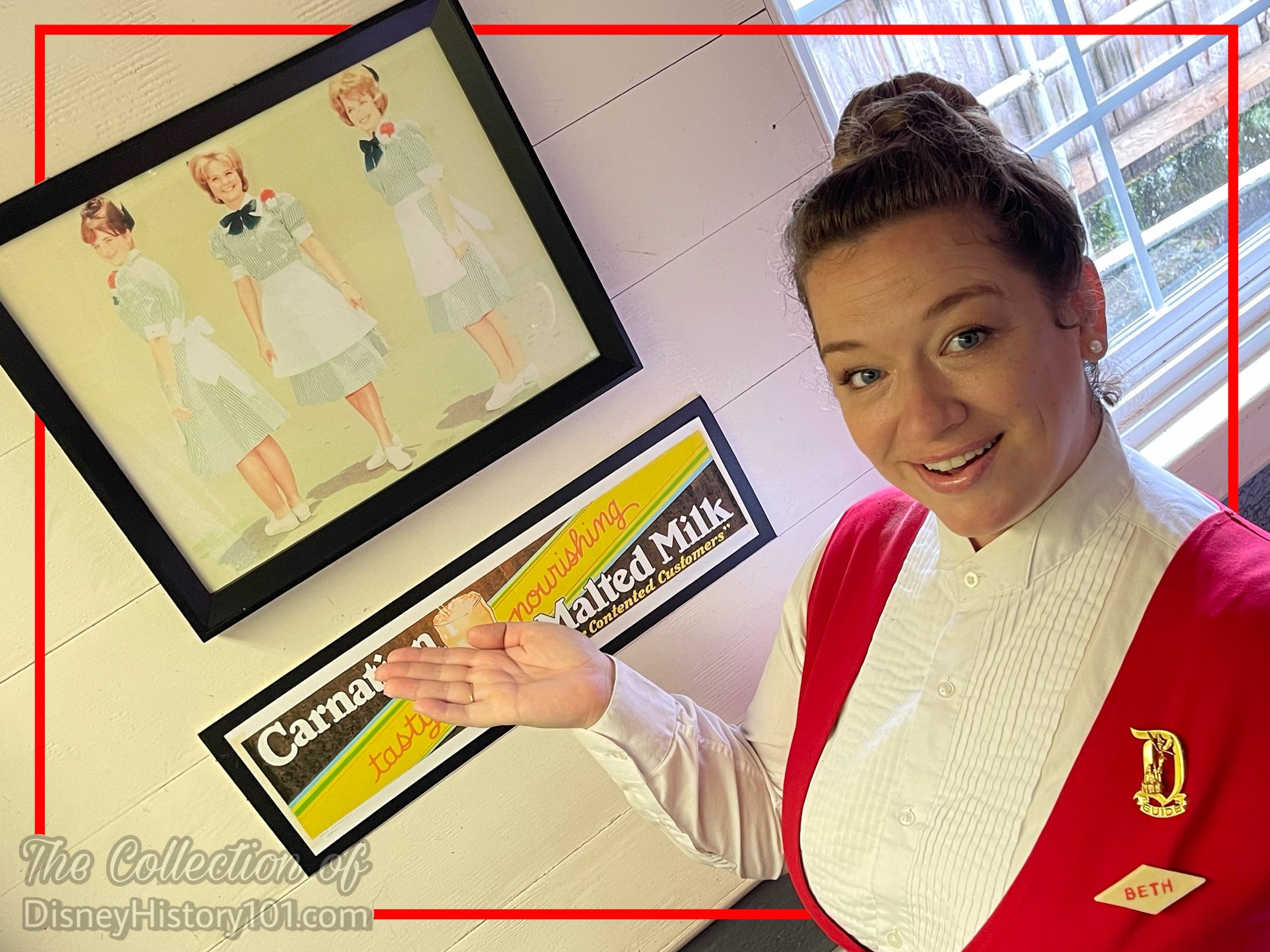
The exhibit also preserves the “Disney Look” of the memorable original Carnation Ice Cream Parlor Hostess Costume.
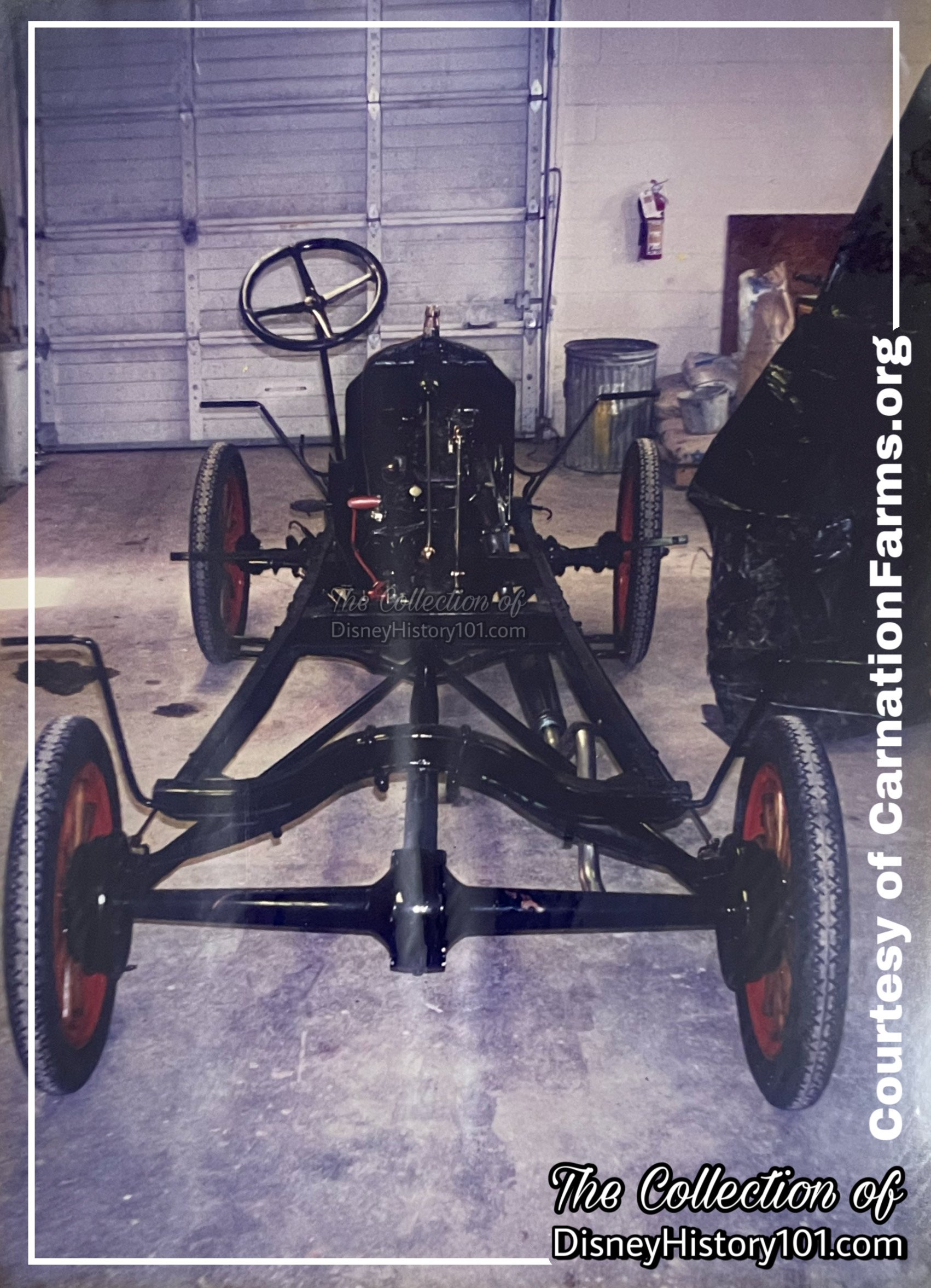
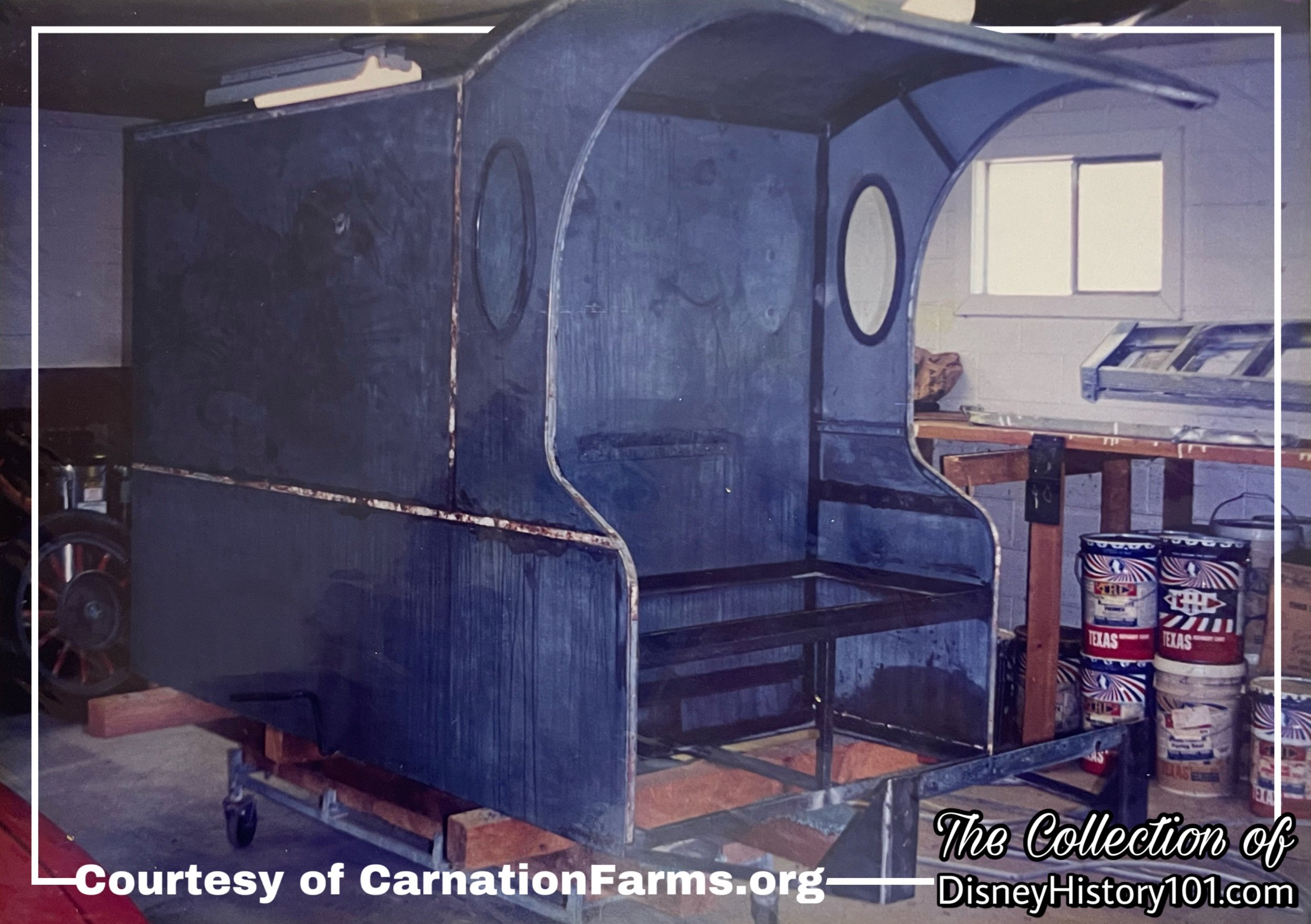
In the preceding photo, the Carnation Truck “Special Delivery Body” section has been removed from the chassis and is prepared for stripping.
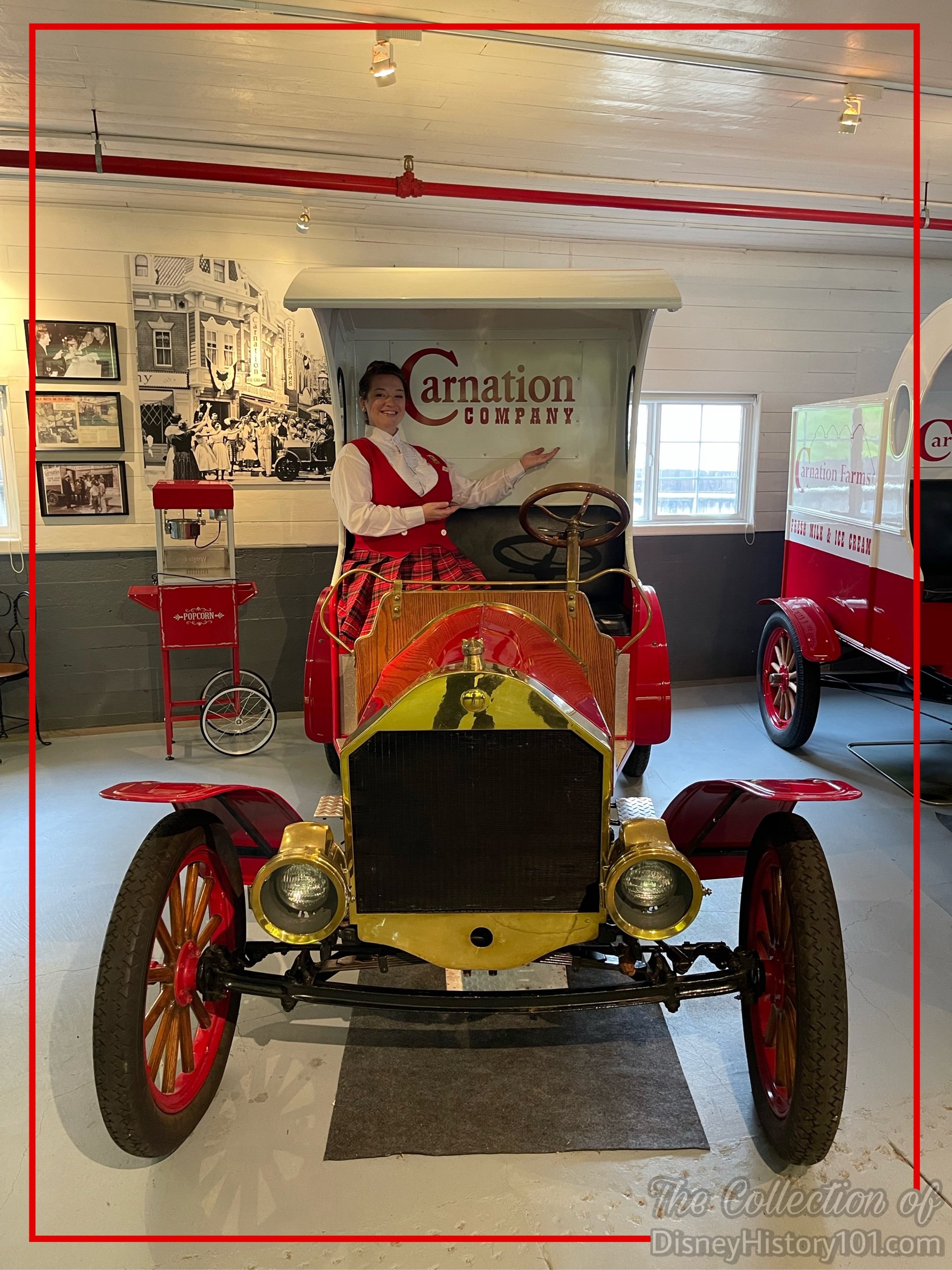
There is no doubt that the crowning artifact of the Carnation Farms Museum is the Carnation Company Truck Exhibit which once supported the Carnation Ice Cream Parlor at Disneyland! Please step this way, as we examine a few “highlights and sidelights” of this wonderfully restored Disneyland museum piece.
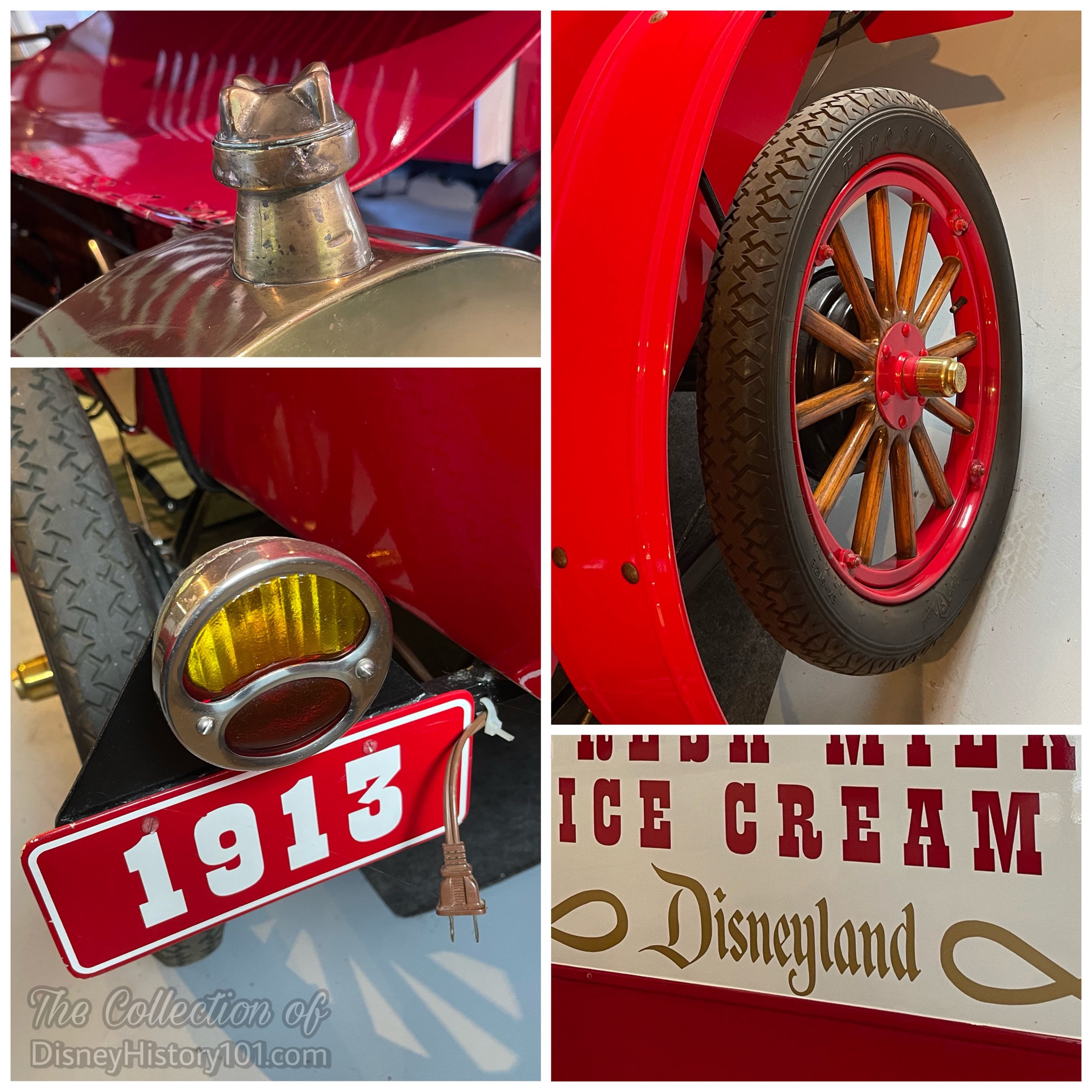
If you ever walked about this exhibit during its Disneyland days, the smallest of details may be impressed upon your memory. You may recall the unique shape of the original radiator filler cap and flange, or the words “Carnation Company Ice Cream Truck - Disneyland” painted on the side. There are however, a few differences in the present.
The old Gurrmobile is currently still outfitted with“narrow high pressure tires,” though these are brand new. Also, the original red wooden spokes have been sanded (during restoration), to reveal the original wood grain underneath. As for the original license plate and number (which read “1639”), as well as the original rear lamps, all have been replaced.
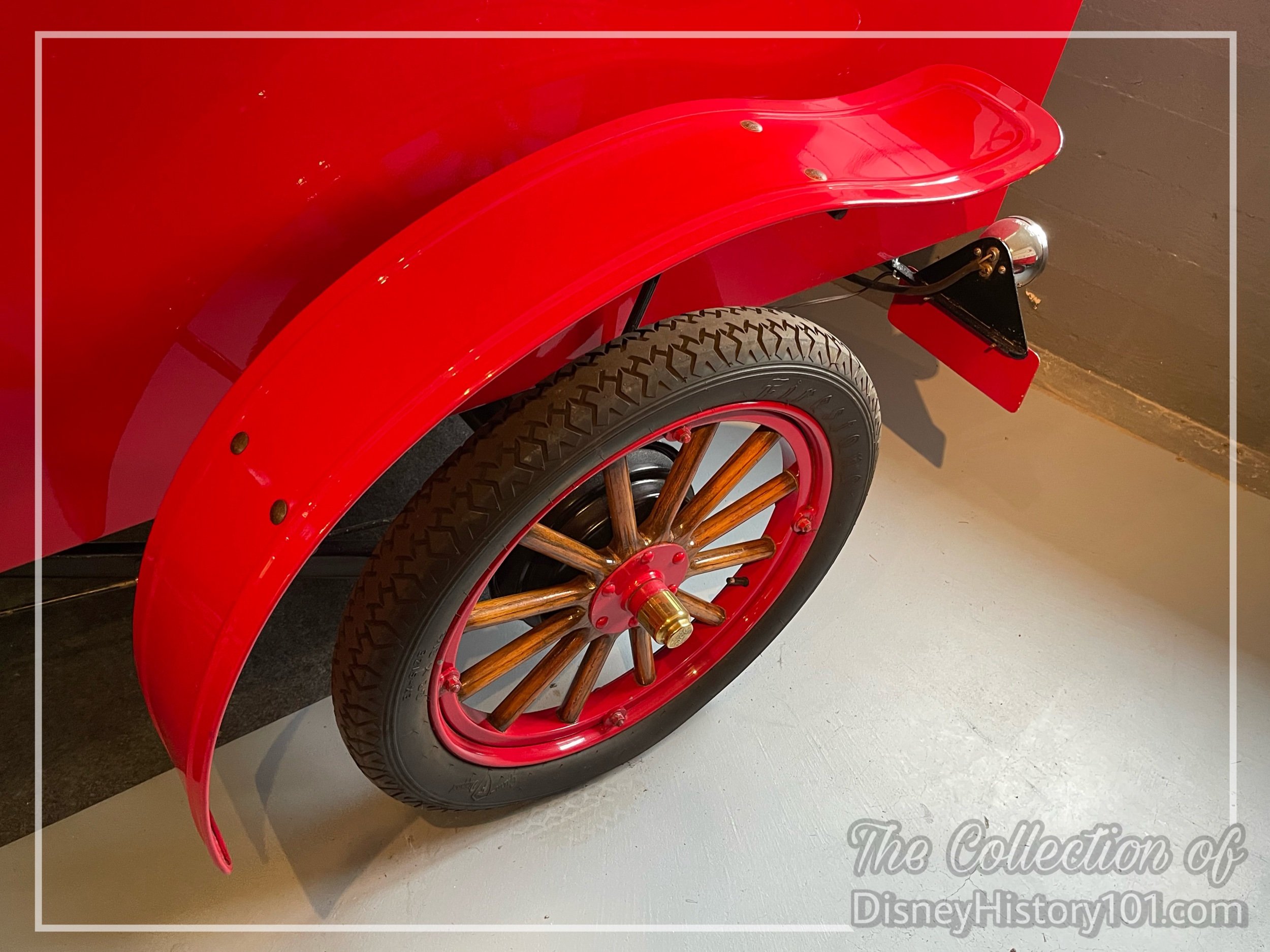
The Carnation-red high fenders (and running board) of this Gurrmobile were designed with a slight upward flair - more so than true-life c.1908 Carnation Ford delivery trucks.
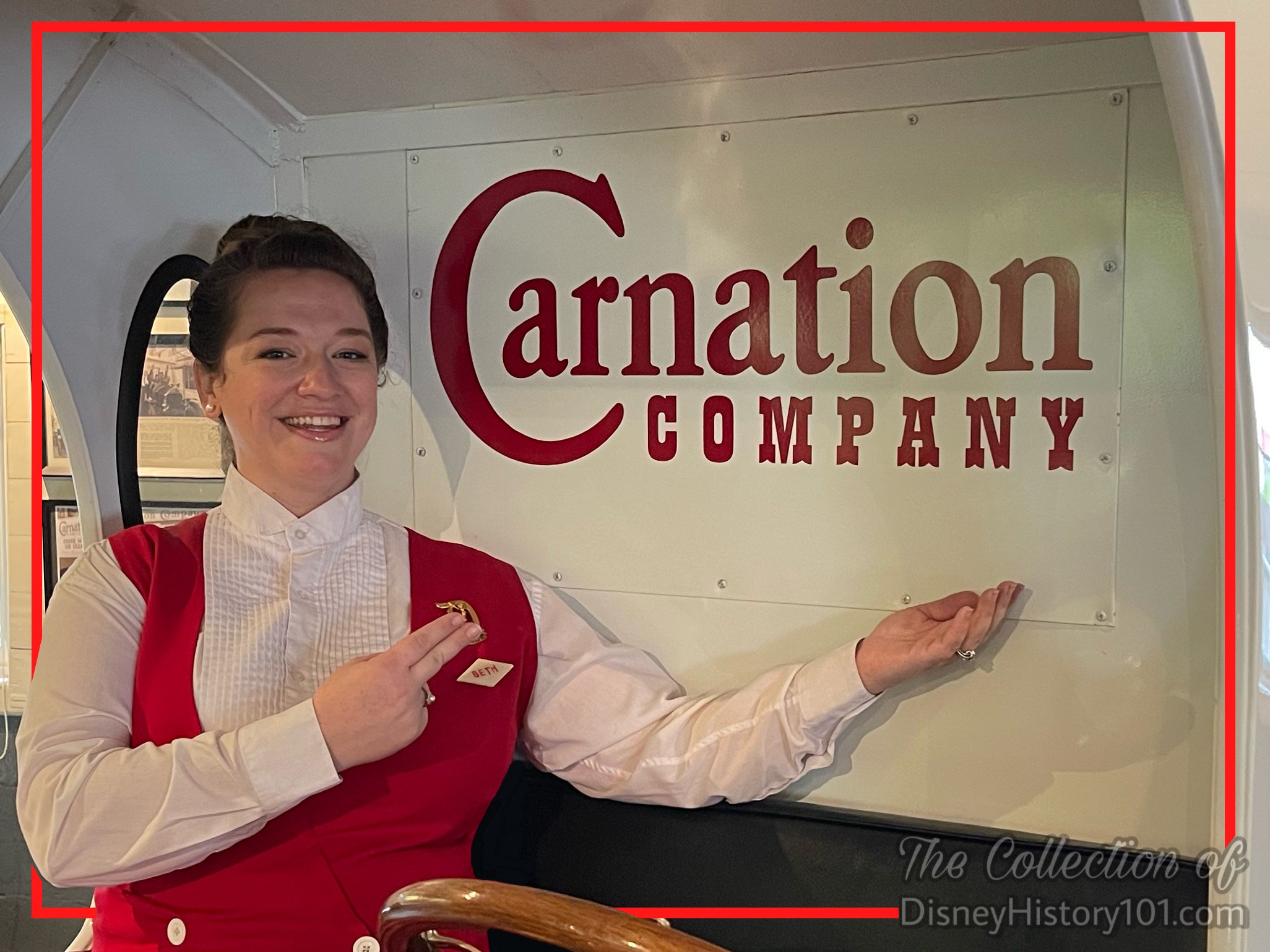
When the Carnation Farms Museum Staff restored the Truck Exhibit, it was decided to retain the size of the original Carnation Company Plaque (fastened in the very same rivet holes). Most visitors will not notice, that while the font is also very similar, it was decided to reposition the letters slightly, varying from those of the Disneyland-era.
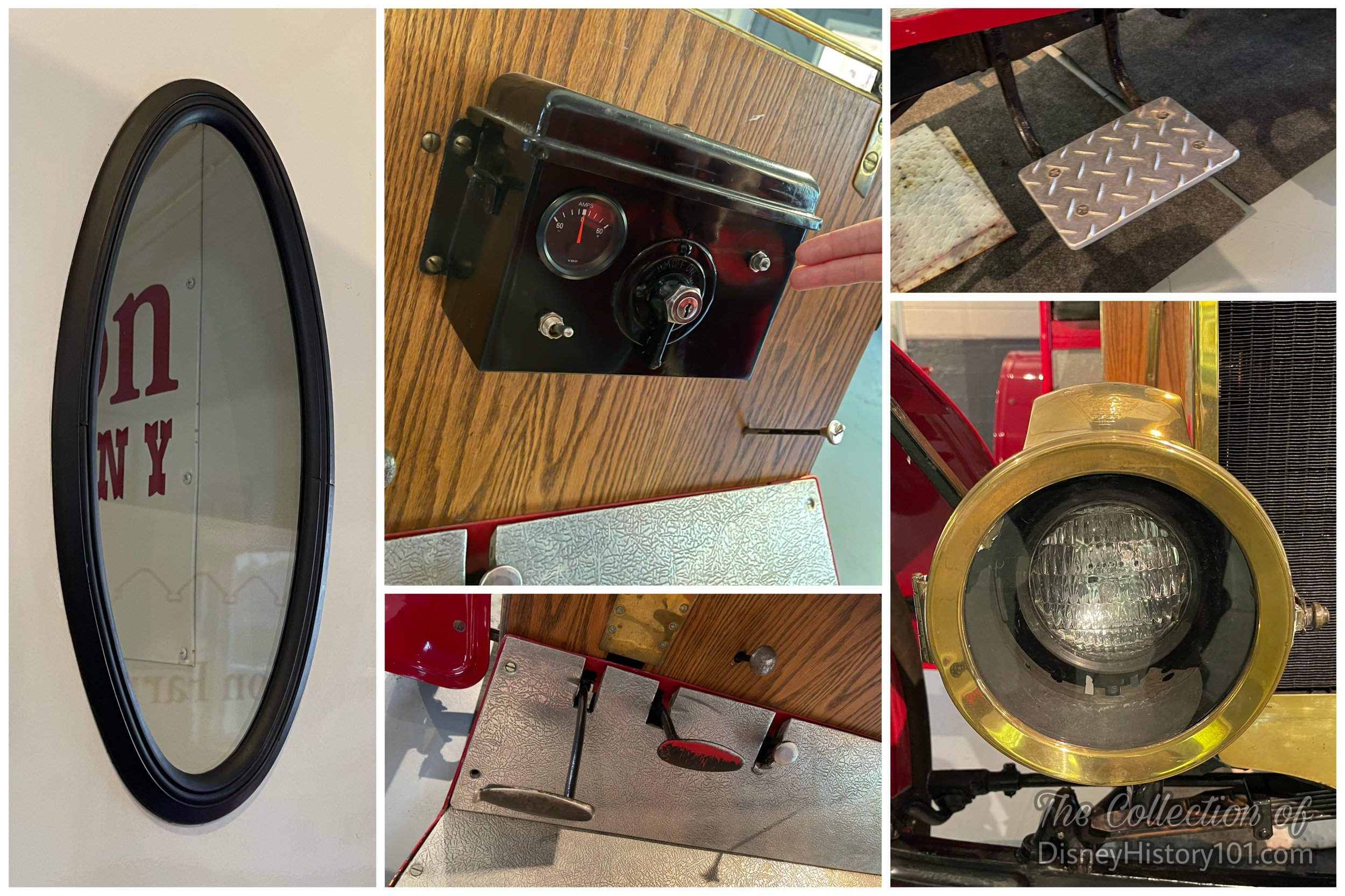
The windows, step plate, as well as clutch and brake pedals look familiar. But gone are the original “resplendent set of brass coal oil head lamps” (which seem to have disappeared sometime after the truck was relocated to the Backstage Disneyland “Boneyard”) as well as the old “bulb-type” horn (which seemed to have vanished similarly).
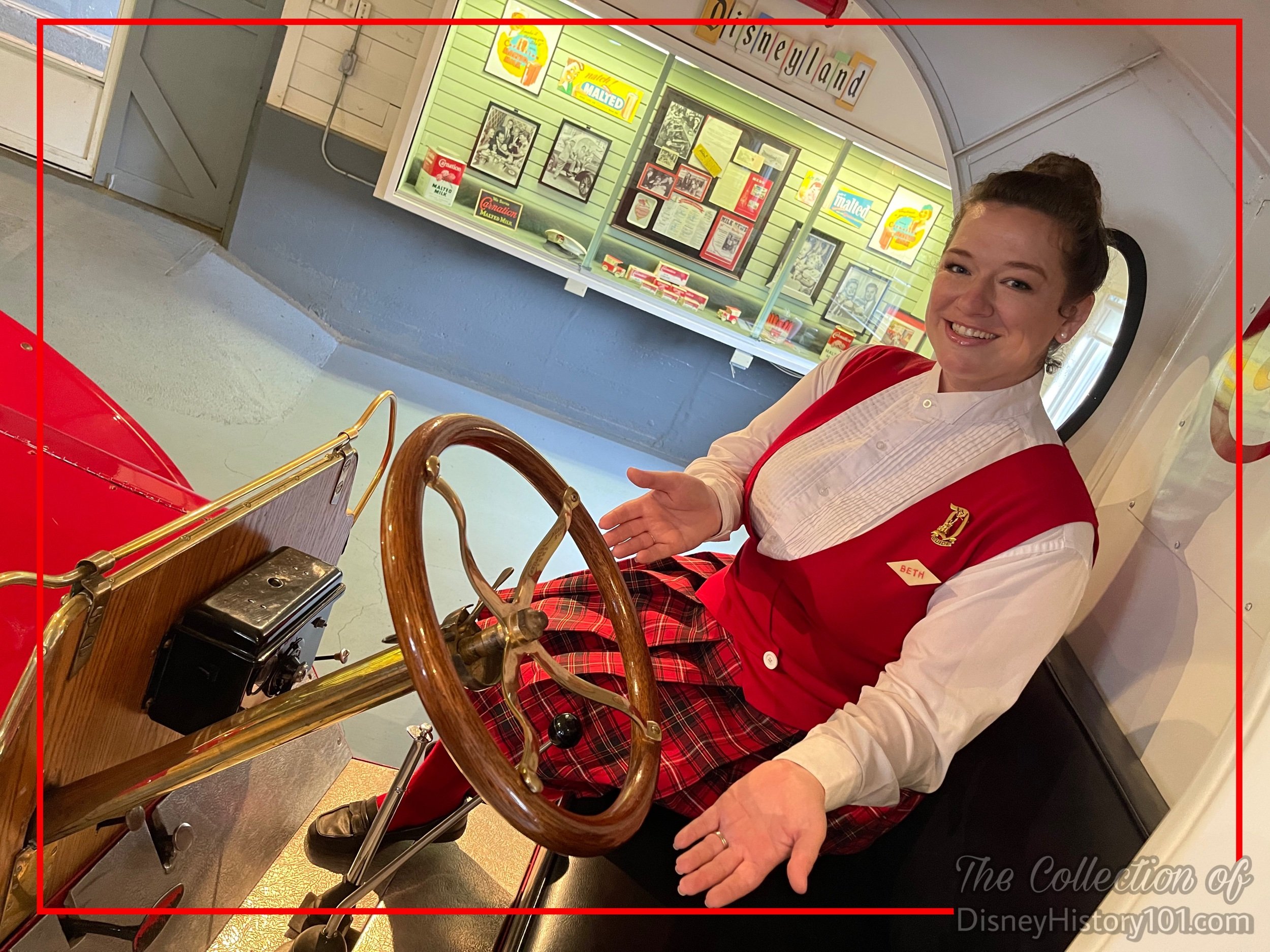
While the addition of a bulb-type horn was not included in the rehabilitation, the lemon wood steering wheel (as well as brass steering column assembly and spark throttle lever) was restored to its original luster!
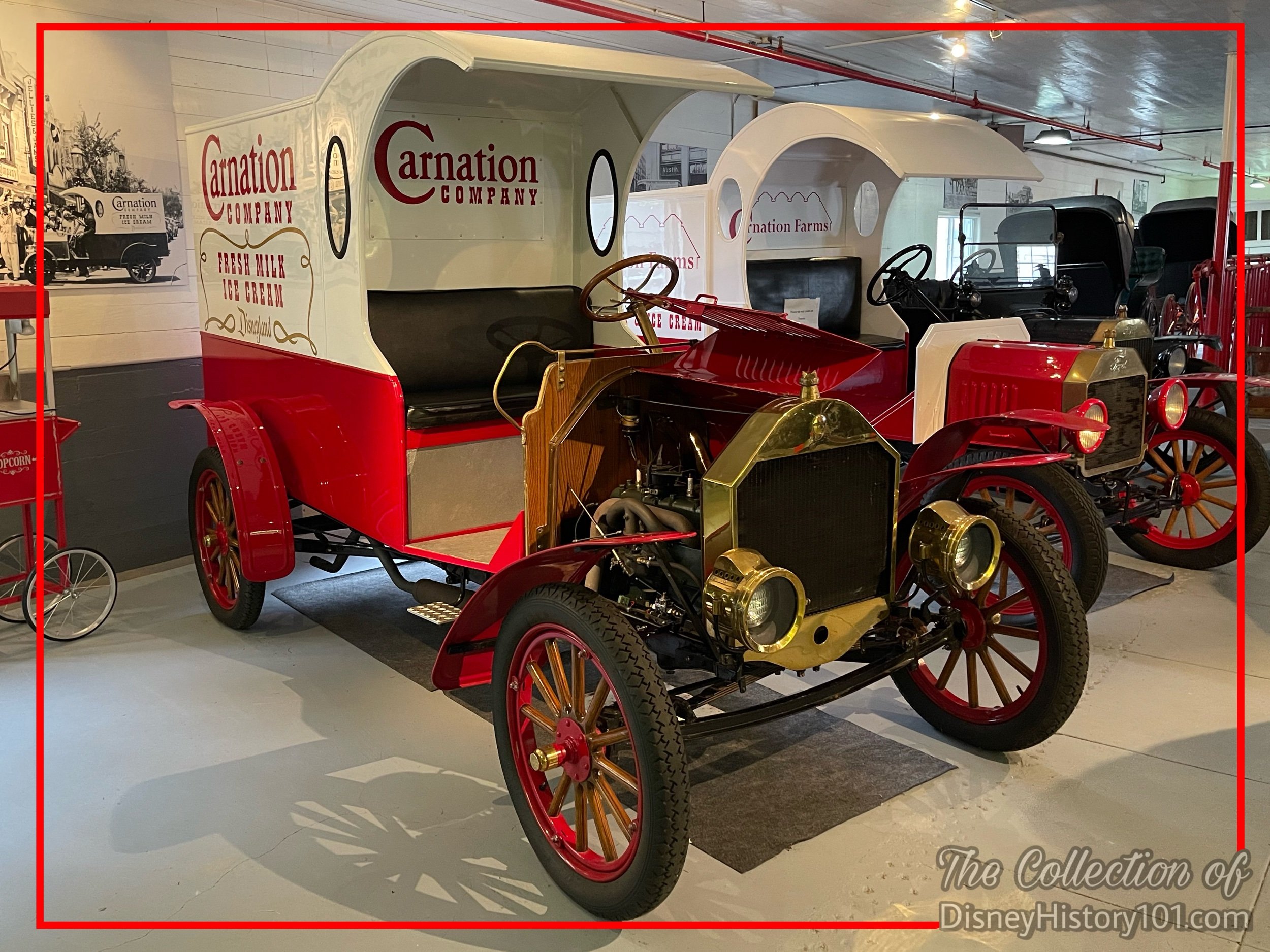
The original brass engine crank handle had also disappeared before the exhibit was acquired by the Carnation Farms Museum Archives. However, the engine (though restored with some new parts) is similar to the original.
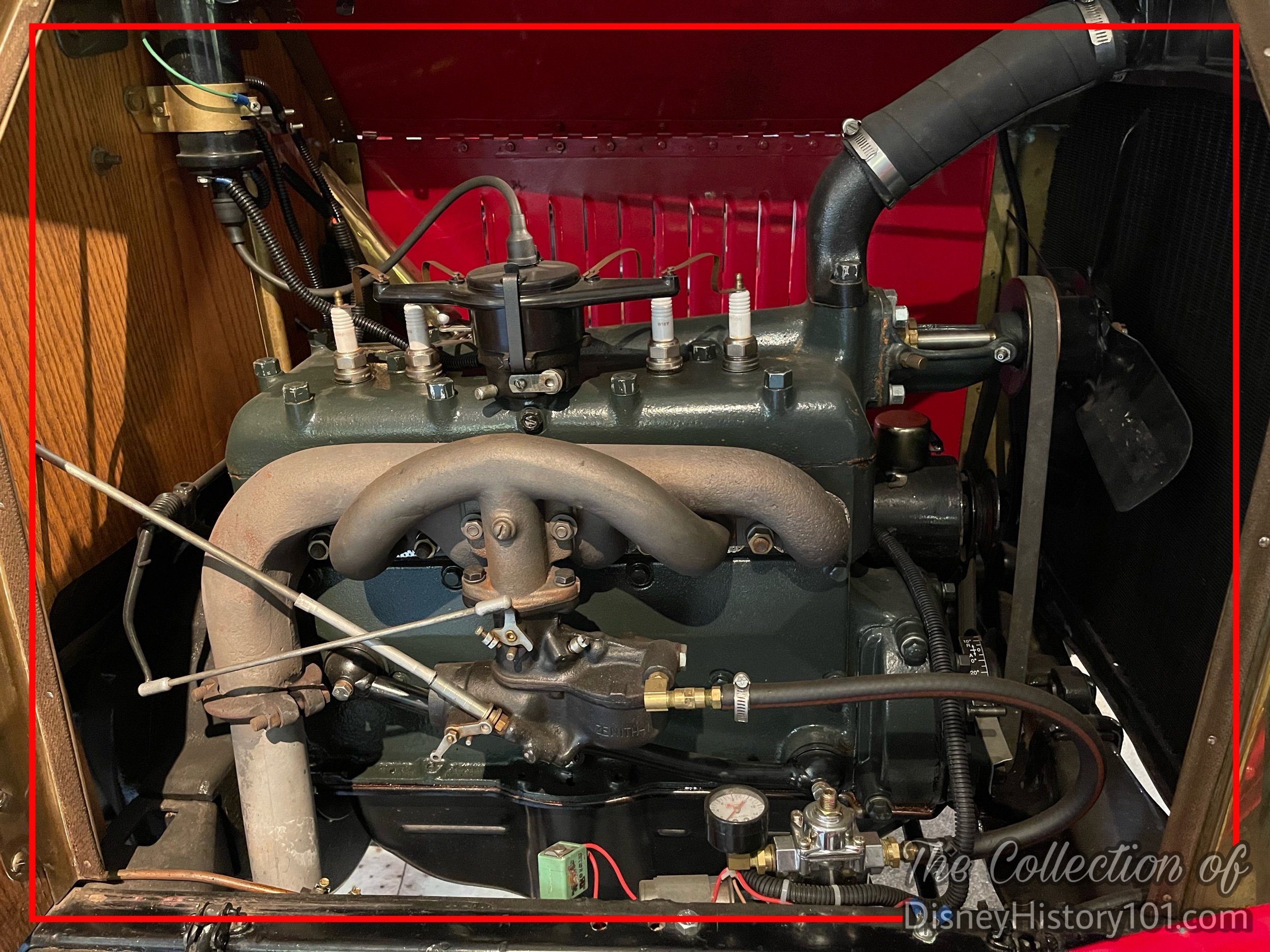
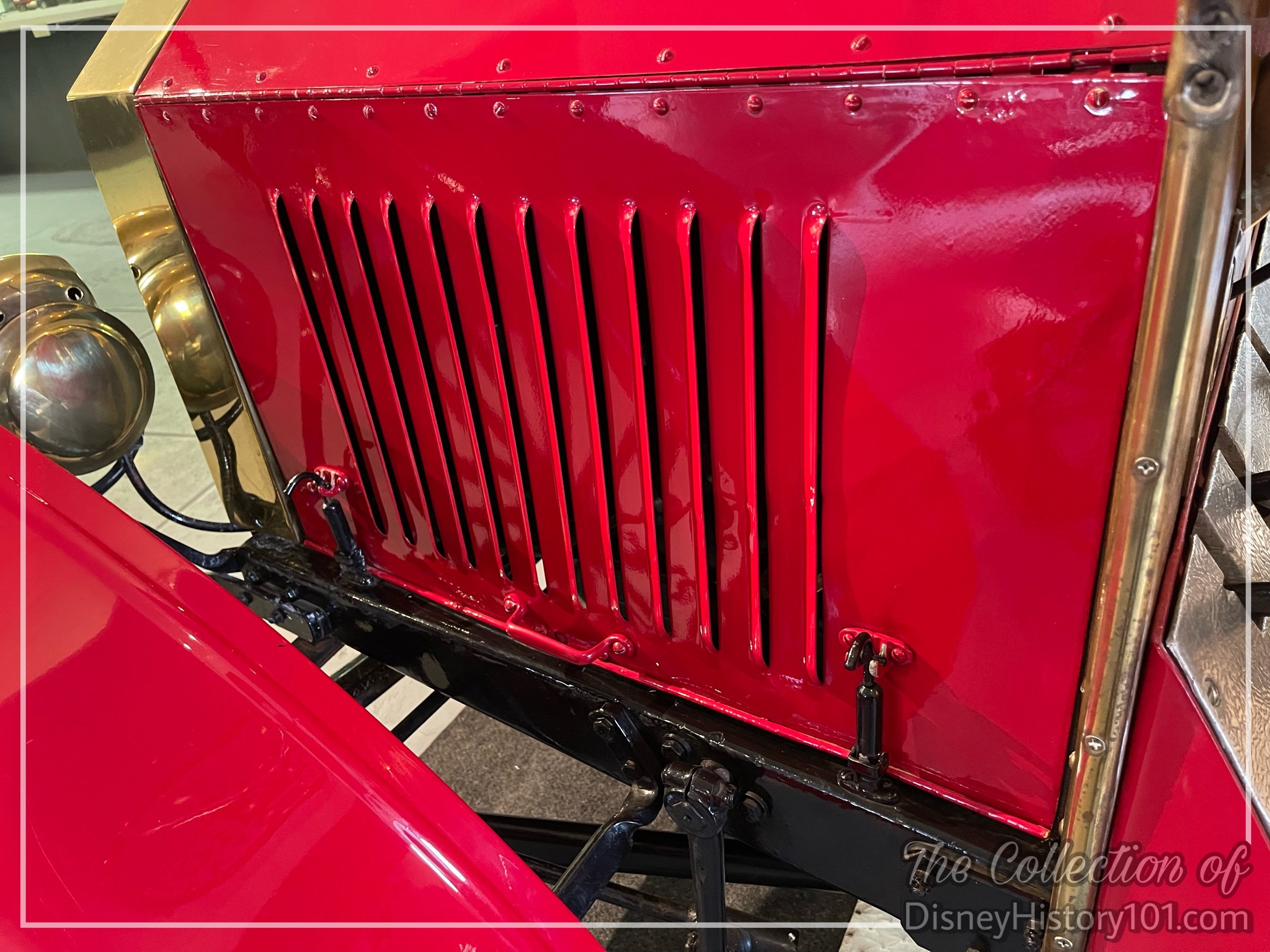
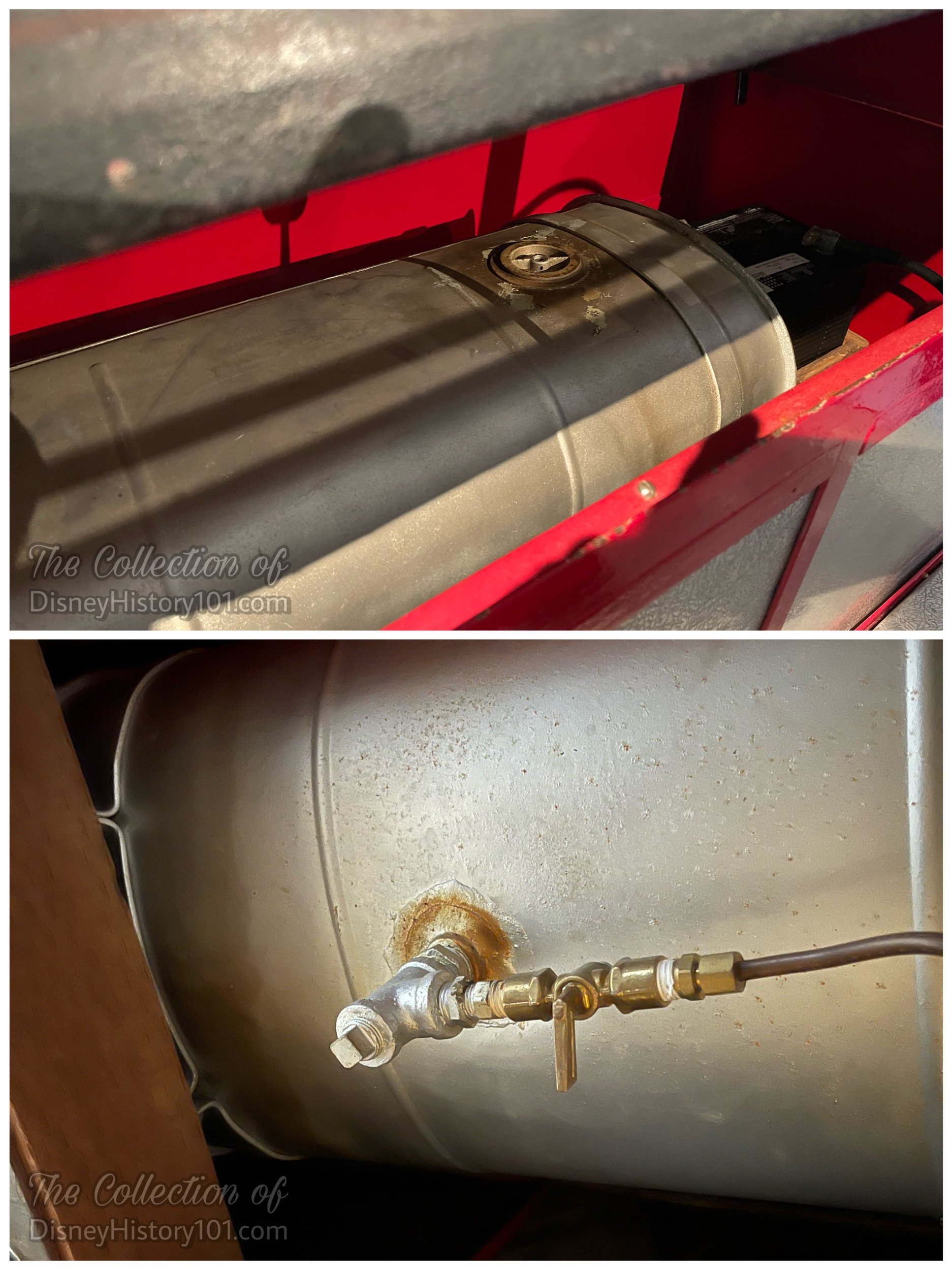
The gasoline tank (seen from the undercarriage in the bottom image) was conveniently accessed by lifting the driver’s bench cushion (seen in the upper image) in early Ford truck models. Bob Gurr and Carnation Shop Staff approved this feature in their designs. A battery is similarly tucked away next to the gasoline tank.
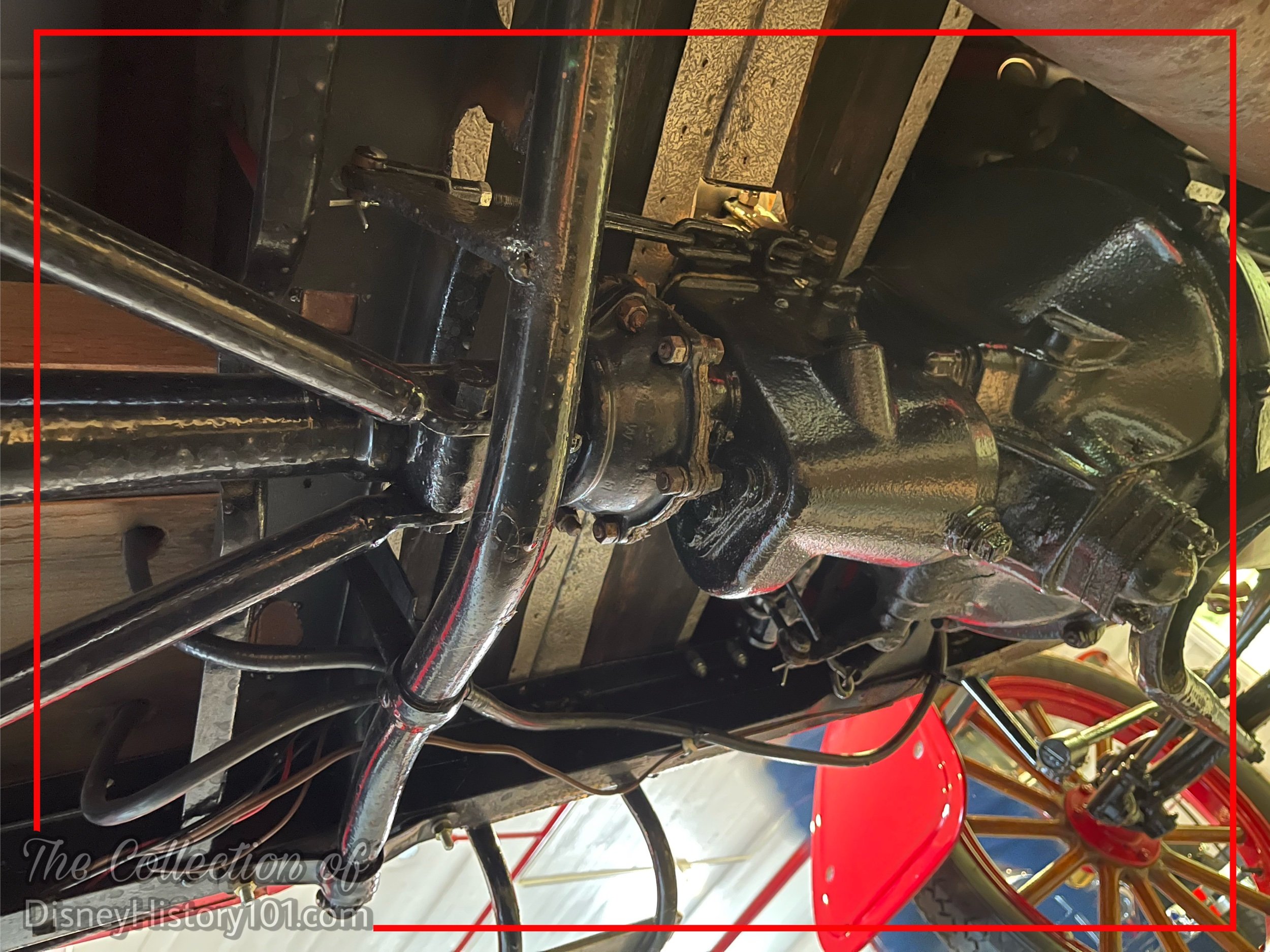
A look at the undercarriage reveals just a glimpse of the original shortened chassis (with axles and frame) as well as all those rarely seen parts - most noticeably, the transmission case, joint and spline, and other moving parts.
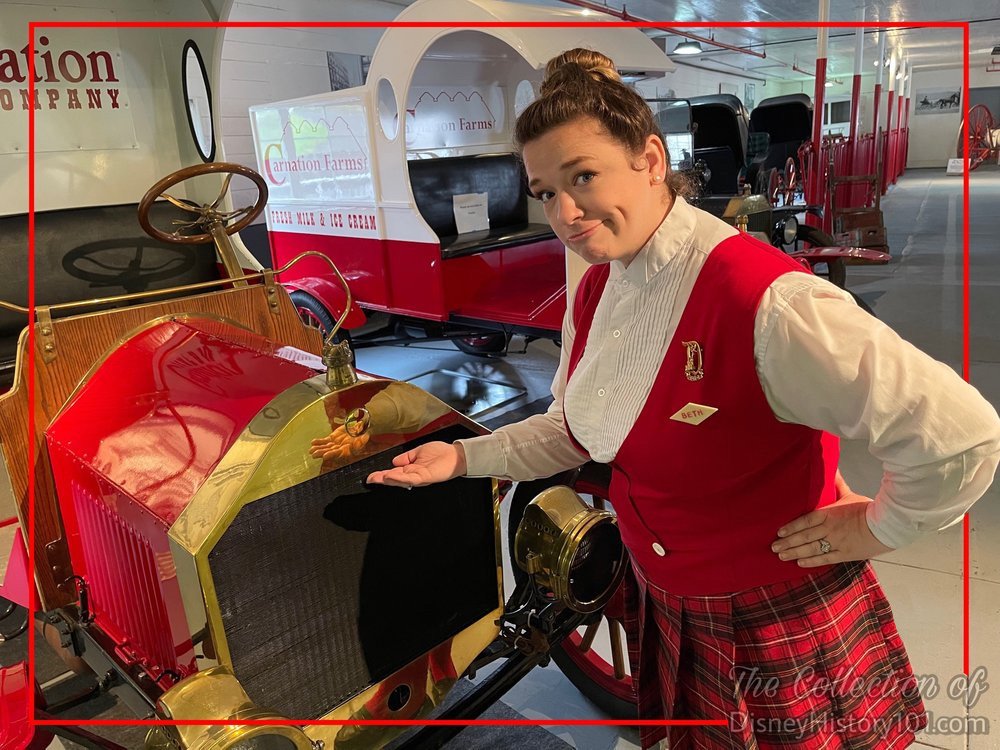
You may remember that the word “Gurrmobile” was once carved on this metal “nameplate” on the front of the Radiator. According to Elbridge Stuart (the son of E. Hadley Stuart, Jr., the truck ornament read “The Gurrmobile Company - Los Angeles.” The official Press Release (prepared by Bob Riverbark of Carnation Company Headquarters, c. 1955), elaborated : “Carnation Company… put a small ‘Gurrmobile’ name plate on the truck to honor Bob Gurr, Walt Disney’s Director of Special Vehicle Development who produced the two inch stack of engineer and artist drawings from which it was built.”
Alas, by the early 1970s, Bob’s name had been polished away by Disneyland Maintenance Department Staff, and in the present, no trace of this one-time homage remains.
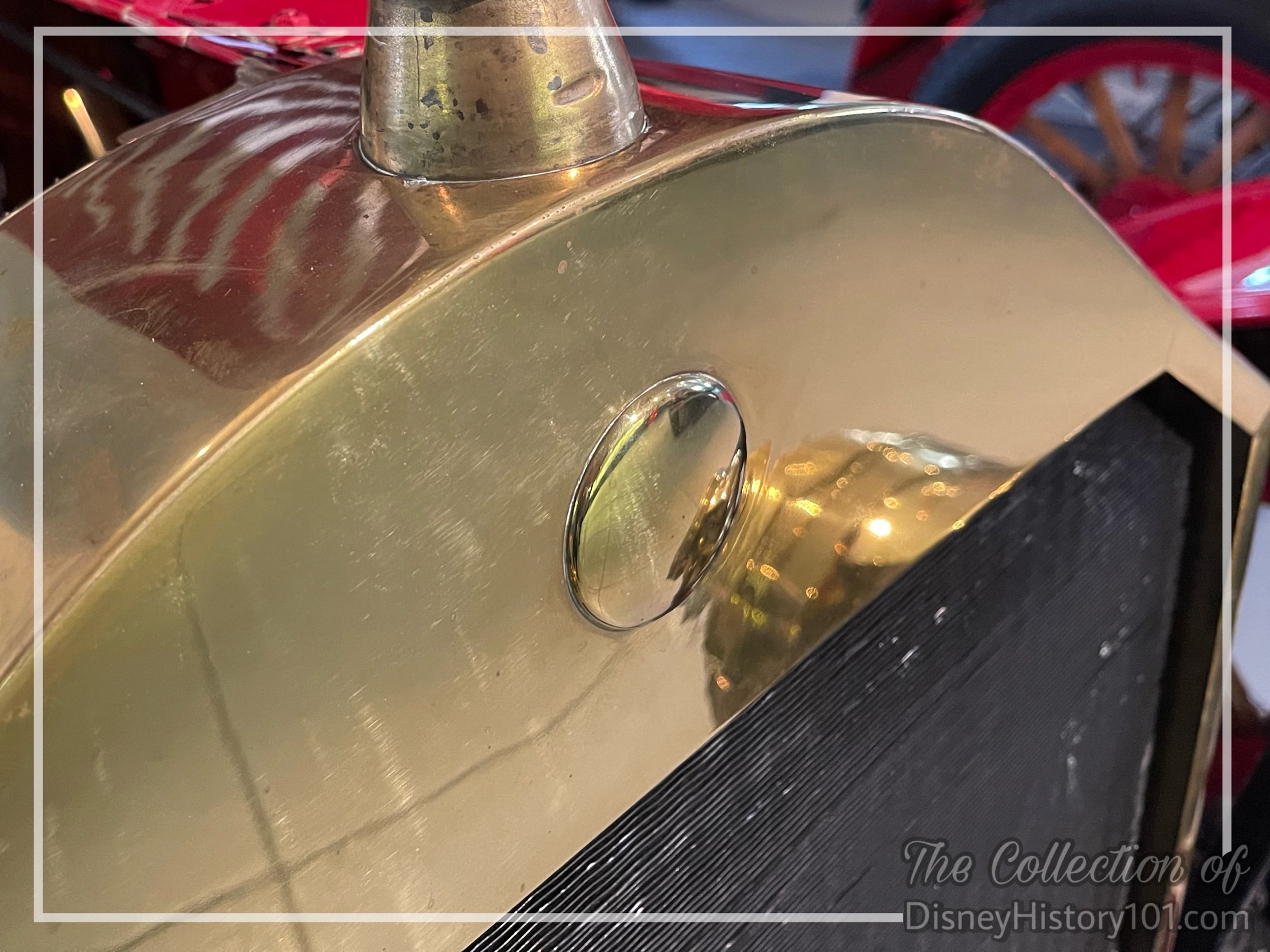
A whole lot of work went into restoring and rehabilitating the Carnation Truck Exhibit to its current state. Much of this was headed by Carnation Farms Museum Volunteer and Archivist Bob Costers.
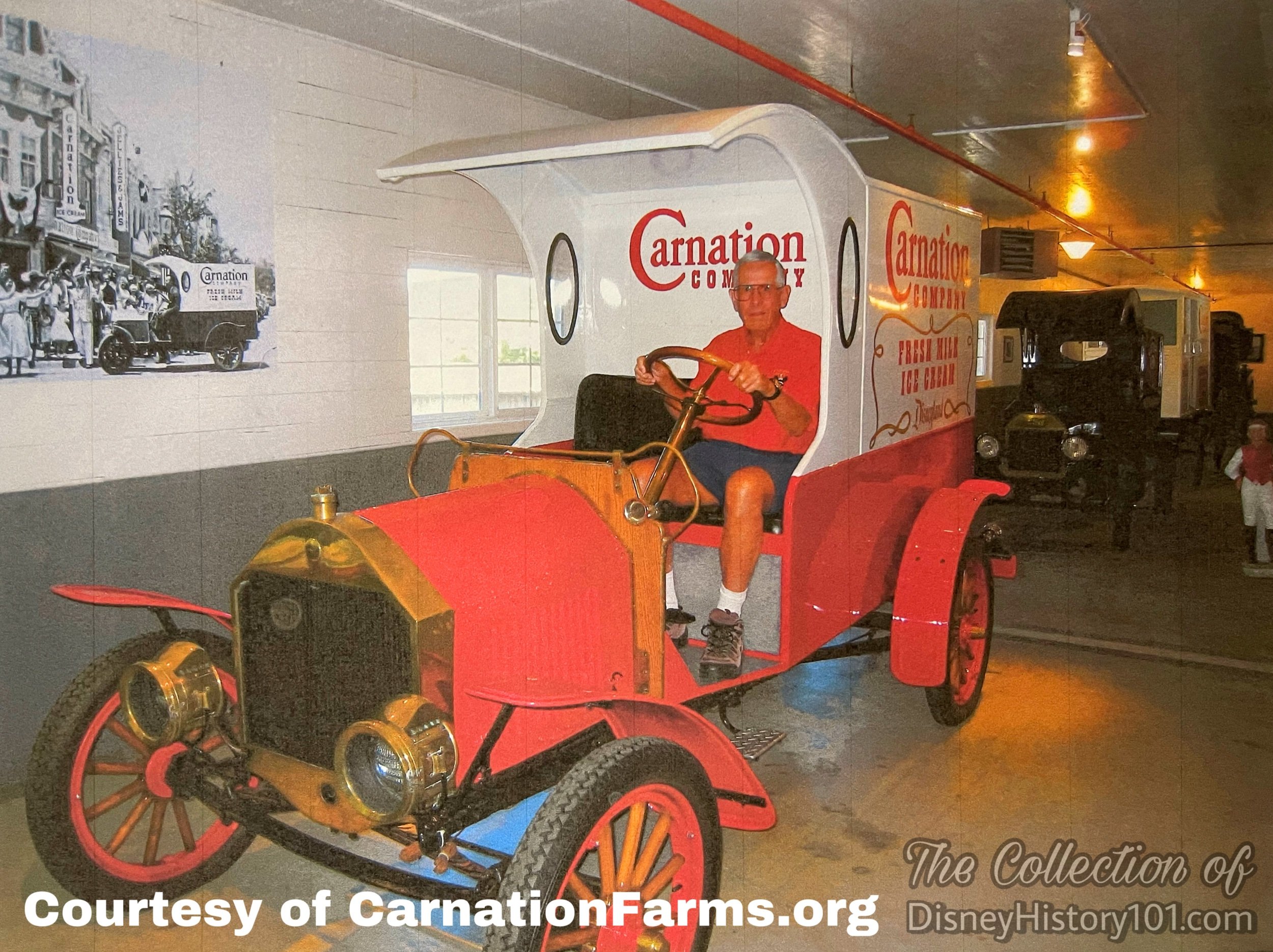
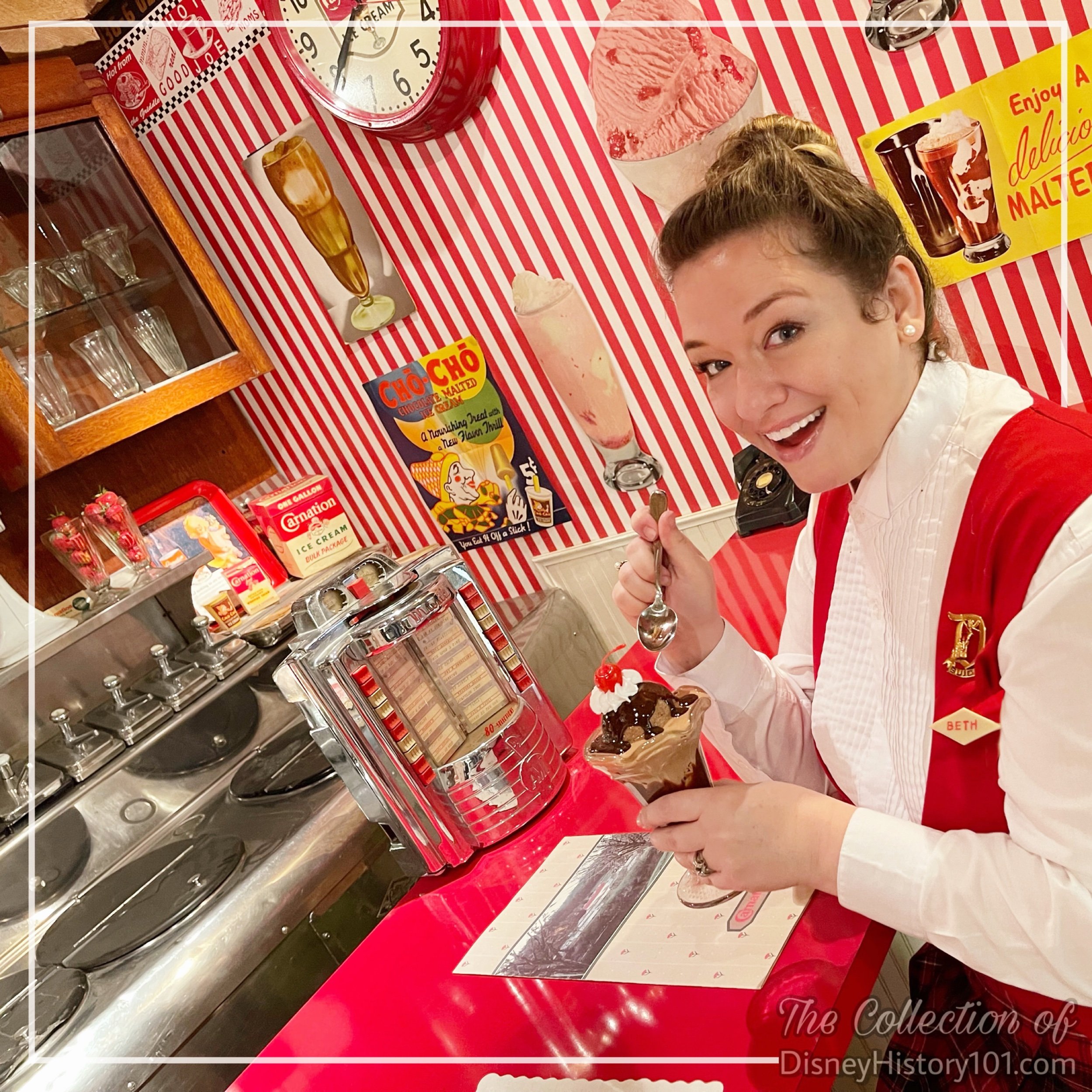
There is so much more to see! Other Carnation Farms Museum exhibits preserve chapters of Elbridge Amos Stuart’s Carnation Farms story through true-life artifacts placed in diorama recreations. If you would like more information about the Carnation Farms Museum, Museum hours of operation, or learn how you can support this wonderful Disneyland-related exhibit, please visit the Carnation Farms Museum official website - CarnationFarms.org!
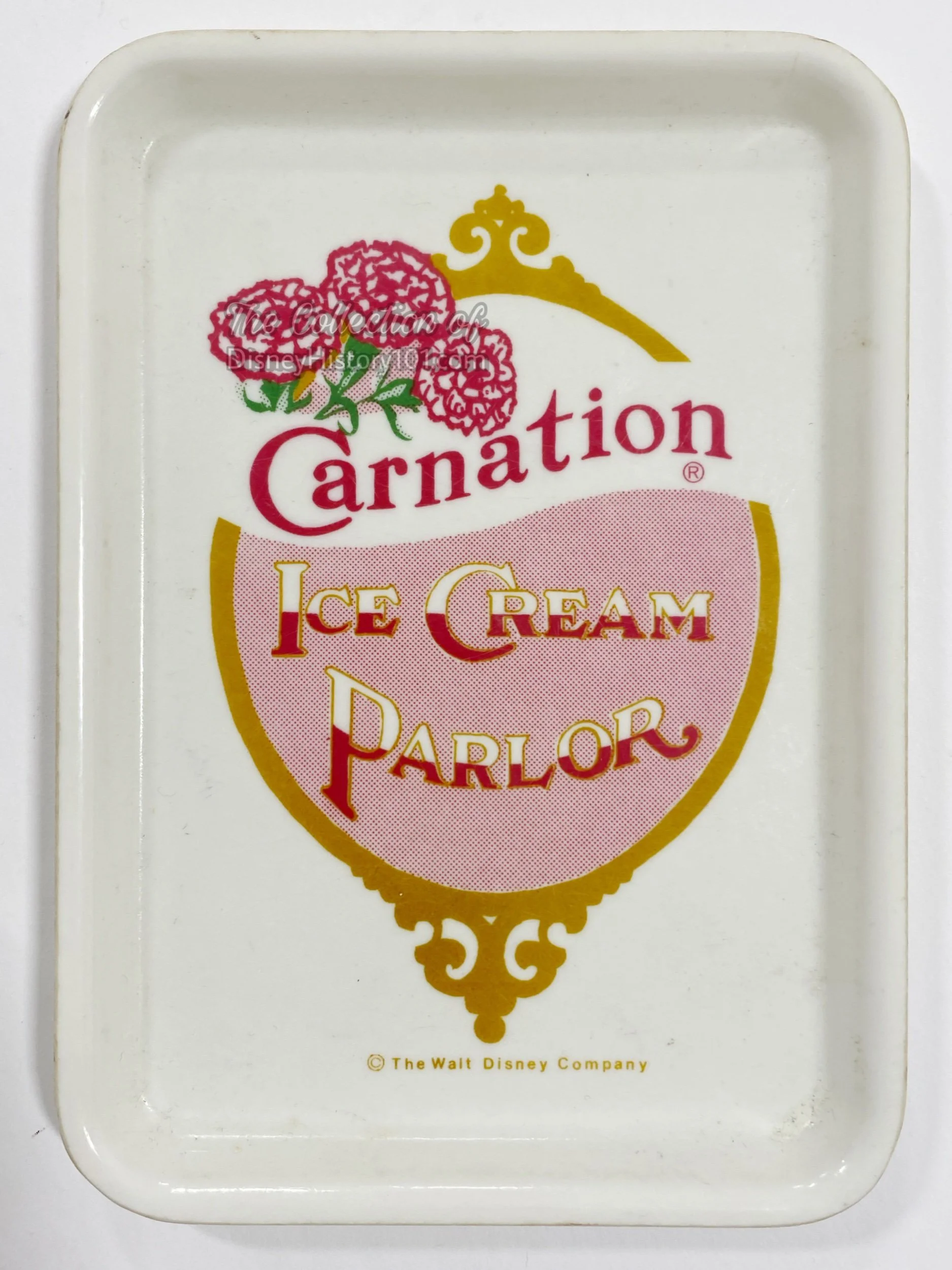
The Carnation Cafe would have a legacy through the character elements and menus items of other Ice Cream Parlors at Disney Parks. For instance, when Tokyo Disneyland opened on April 15, 1983, the Ice Cream Parlor would feature desserts like a Sweetheart Sundae and the Victorian Sundae.
By 1991, Carnation sponsored three locations at Disneyland - Carnation Ice Cream Parlor was a table service restaurant that offered Lean beef patties, nutritional sandwiches, soup, salads, beverages, ice cream specialties, in addition to Breakfast. Carnation Plaza Gardens offered lean beef patties, ice cream cones and sundaes. Finally, the Main Street Cone Shop was also hosted by Carnation, offering chocolate, vanilla, and strawberry ice cream, orange sherbet plus the flavor of the day, root beer floats, and other beverages.
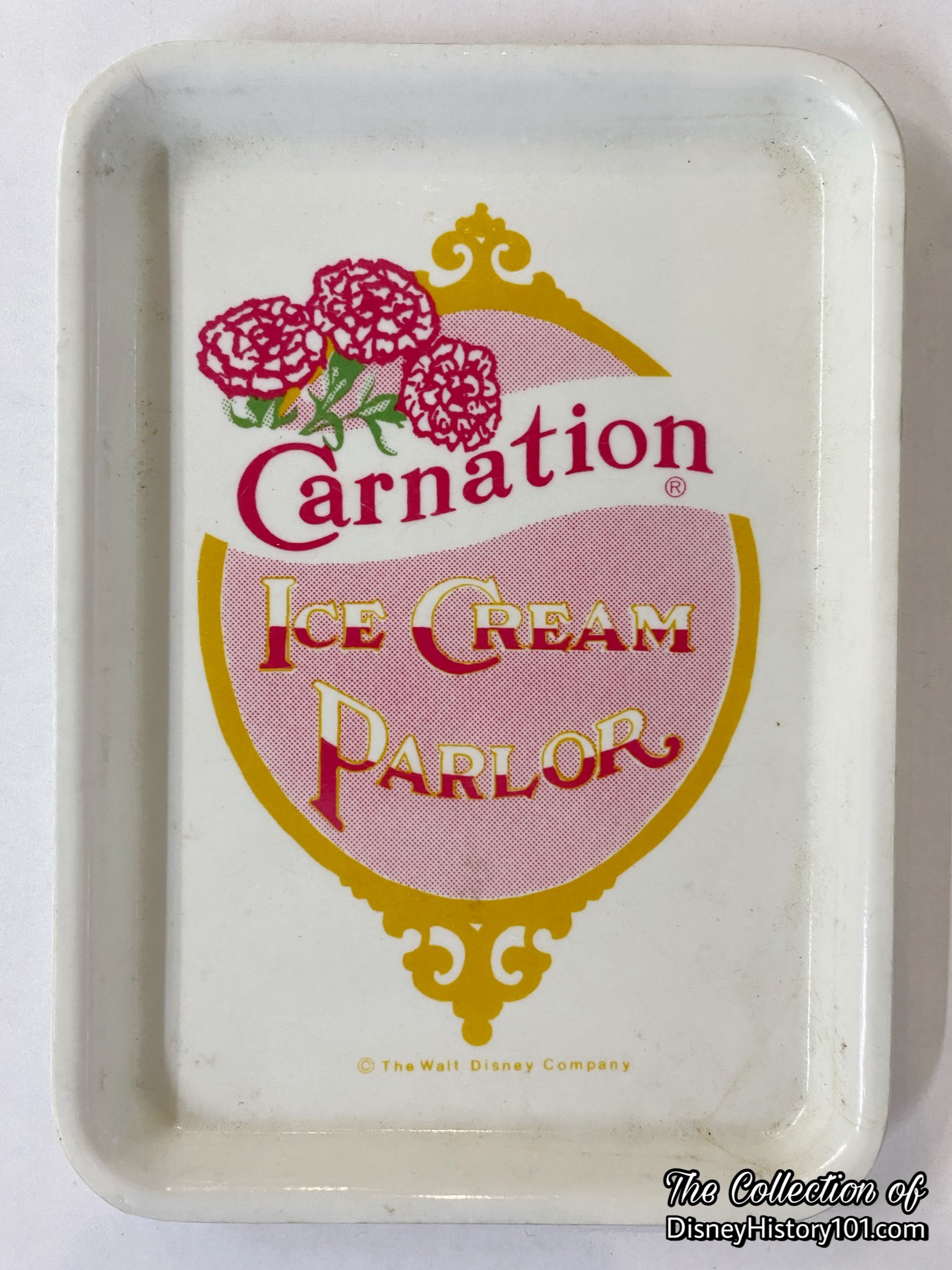
The Carnation Cafe would have a legacy through the character elements and menus items of other Ice Cream Parlors at Disney Parks. For instance, when Tokyo Disneyland opened on April 15, 1983, the Ice Cream Parlor would feature desserts like a Sweetheart Sundae and the Victorian Sundae.
By 1991, Carnation sponsored three locations at Disneyland - Carnation Ice Cream Parlor was a table service restaurant that offered Lean beef patties, nutritional sandwiches, soup, salads, beverages, ice cream specialties, in addition to Breakfast. Carnation Plaza Gardens offered lean beef patties, ice cream cones and sundaes. Finally, the Main Street Cone Shop was also hosted by Carnation, offering chocolate, vanilla, and strawberry ice cream, orange sherbet plus the flavor of the day, root beer floats, and other beverages.
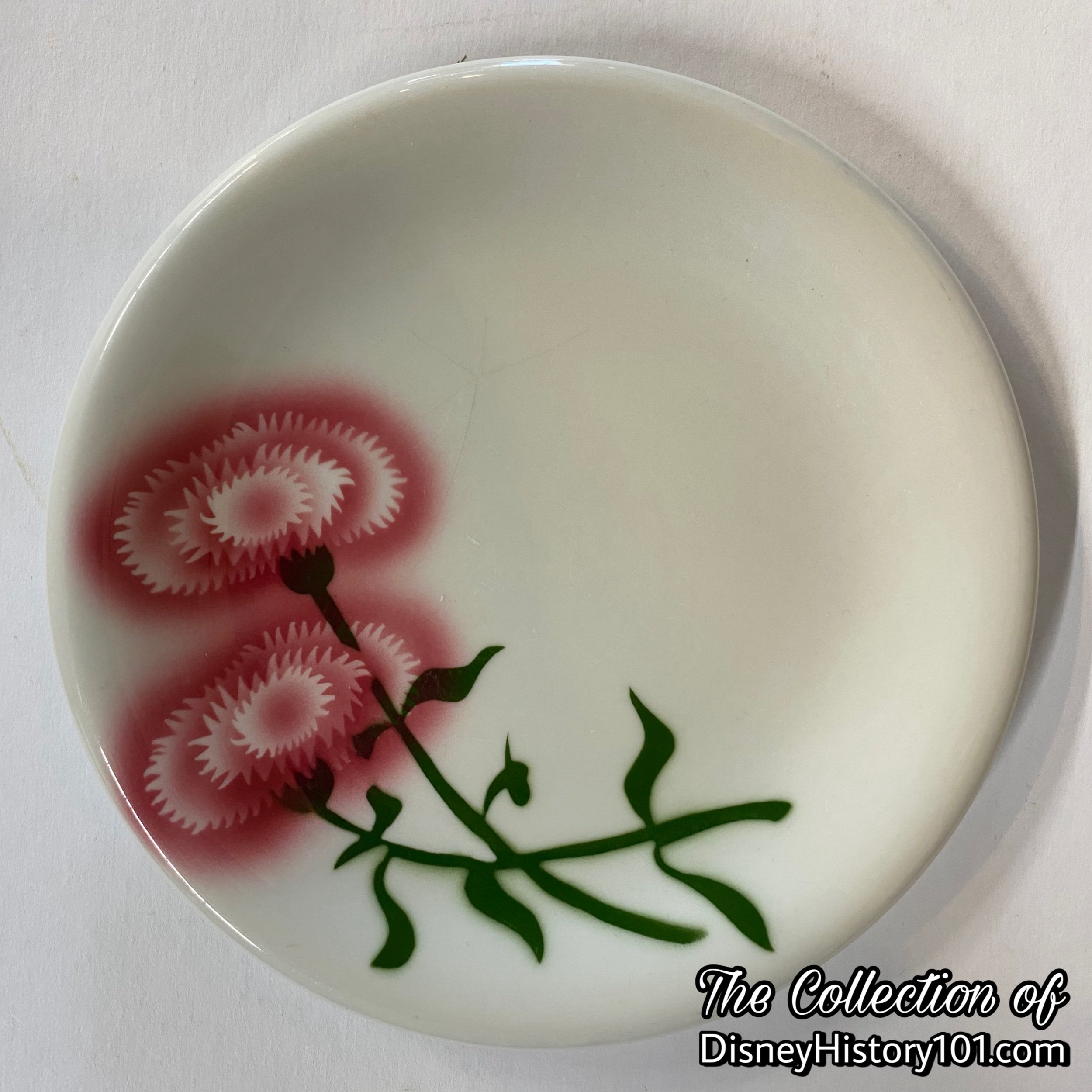
Though the Carnation Ice Cream Parlor closed on January 4, 1997, the name “Carnation” would continue to be affiliated with Disneyland (sort of). The Carnation Cafe (also named after the flower that graces each table) would open on Main Street, March 21, 1997. While the Carnation Company name departed from Disneyland in 1997, a derivative atmosphere and menu inspired in part by those of the previous participant was established in the new Carnation Cafe! Guests could order Mickey-shaped waffles, Sirloin Steak and Eggs, and Classic Eggs Benedict all day long!
The Carnation Company saw its share of “Golden Vaudeville Routine” performances, with the Dapper Dans (and the occasional seasonal wandering caroler group) performing from the foyer.
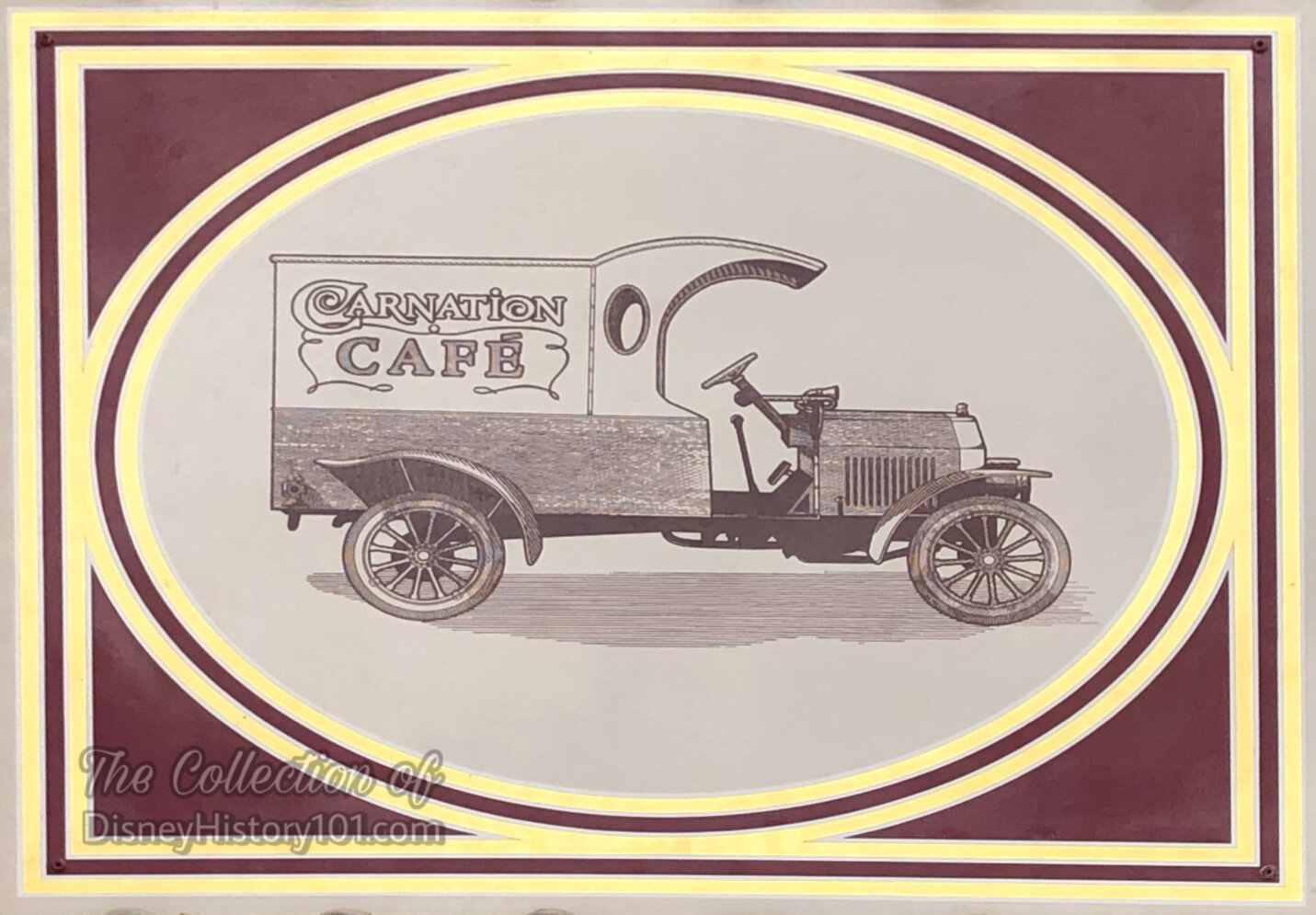
During the 2000s, Carnation Cafe was expanded and completely redone, with plenty of seating indoors and on the heated patio. Deep red and biscuit colors, gas lamp-style fixtures, beautifully carved wood details, and framed sepia-toned photos of an early-era Disneyland created a wonderful setting for breakfast, lunch, dinner or dessert treats.
Breakfast options included Apple-Granola Pancakes, Huevos Rancheros, Steel-Cut Oatmeal, Mickey-Shaped Waffles, and more. Lunch & Dinner options included Green Chile Cheeseburgers, Romaine Salad with Shrimp, and more; plus Walt Disney's personal favorites: Homemade Meatloaf, Chicken-Fried Chicken, and the Fresh Catch of the Day. Special Treats included Creamy Milkshakes and Glowing Character Punch.
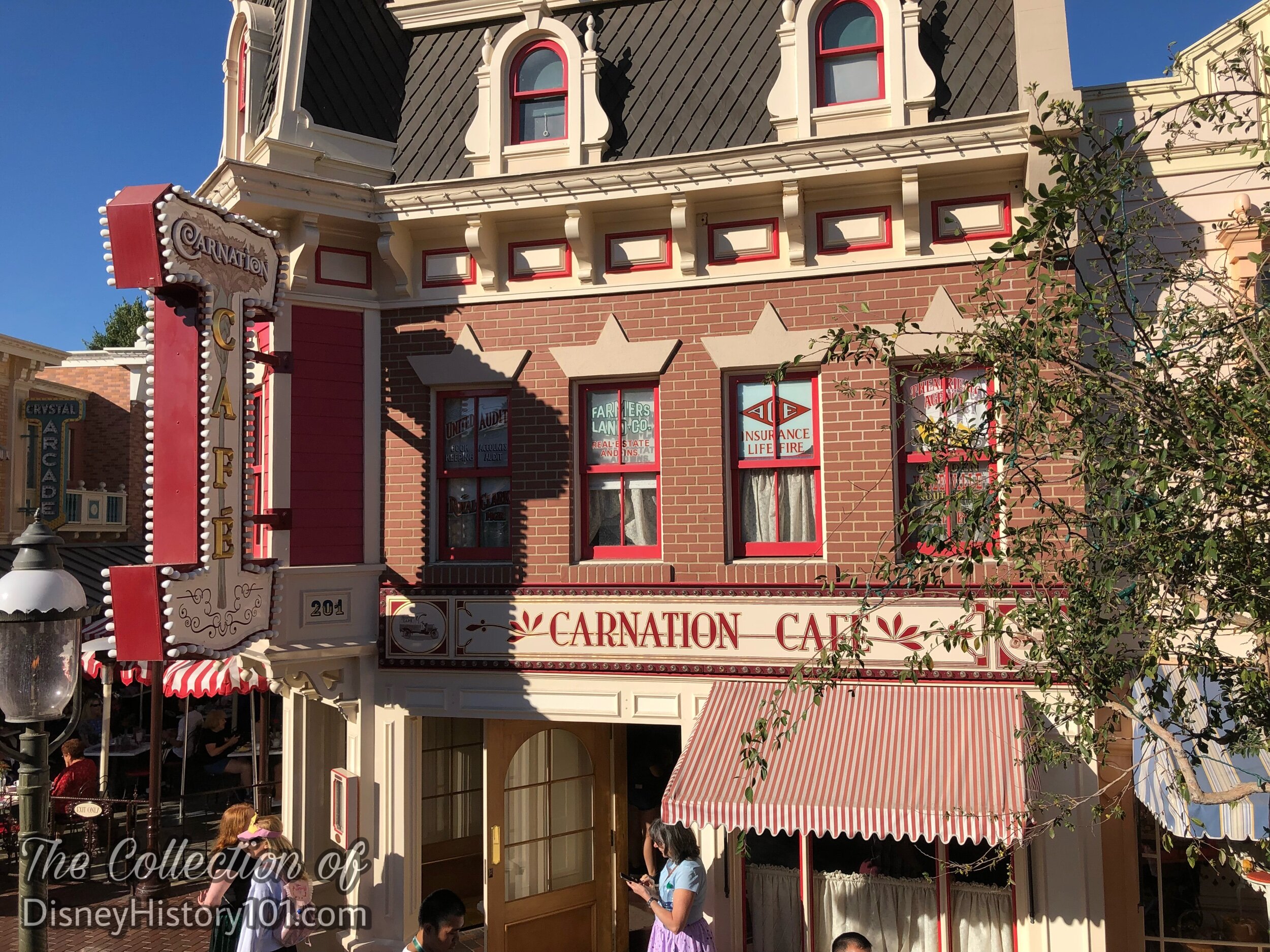
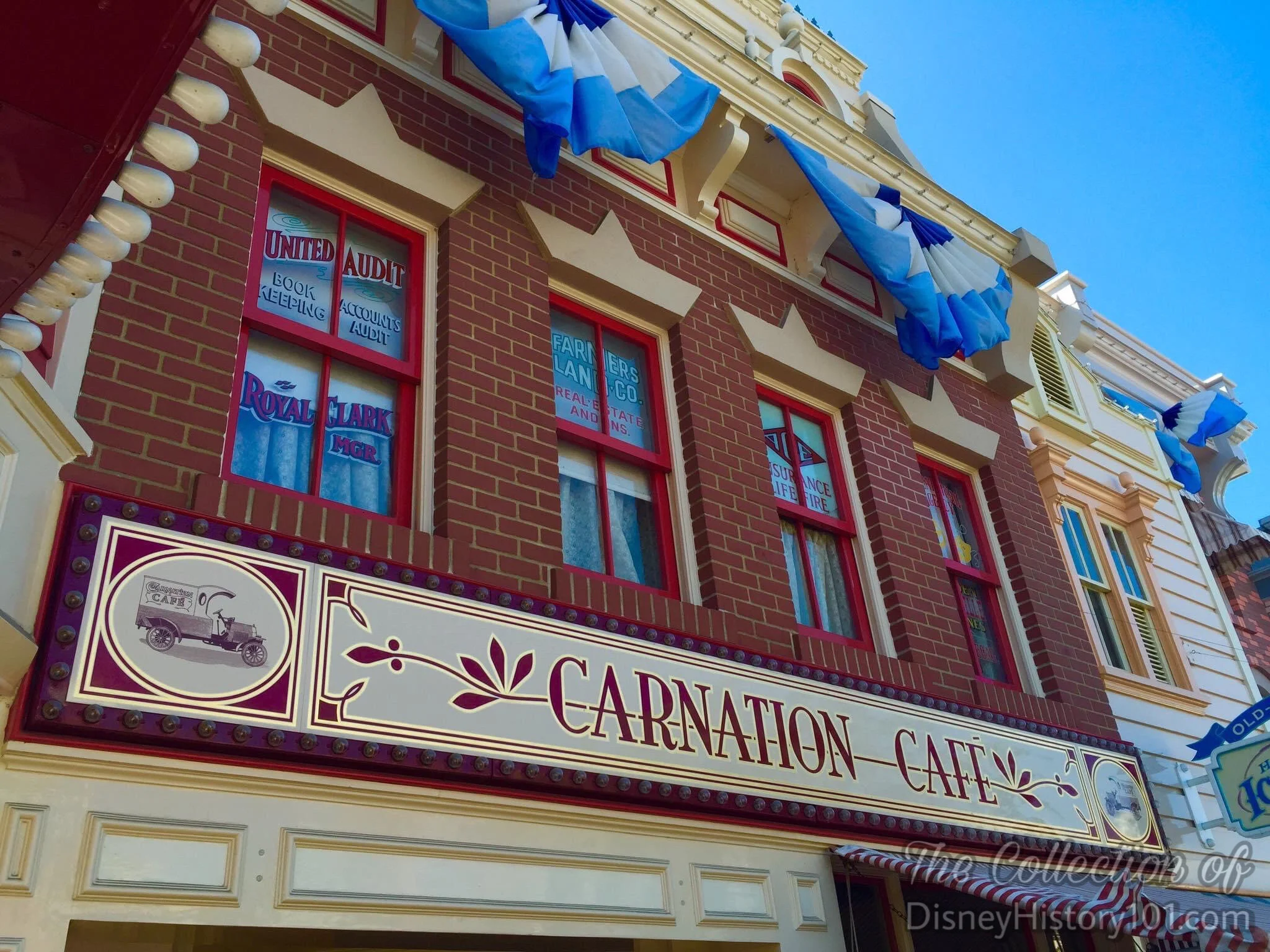
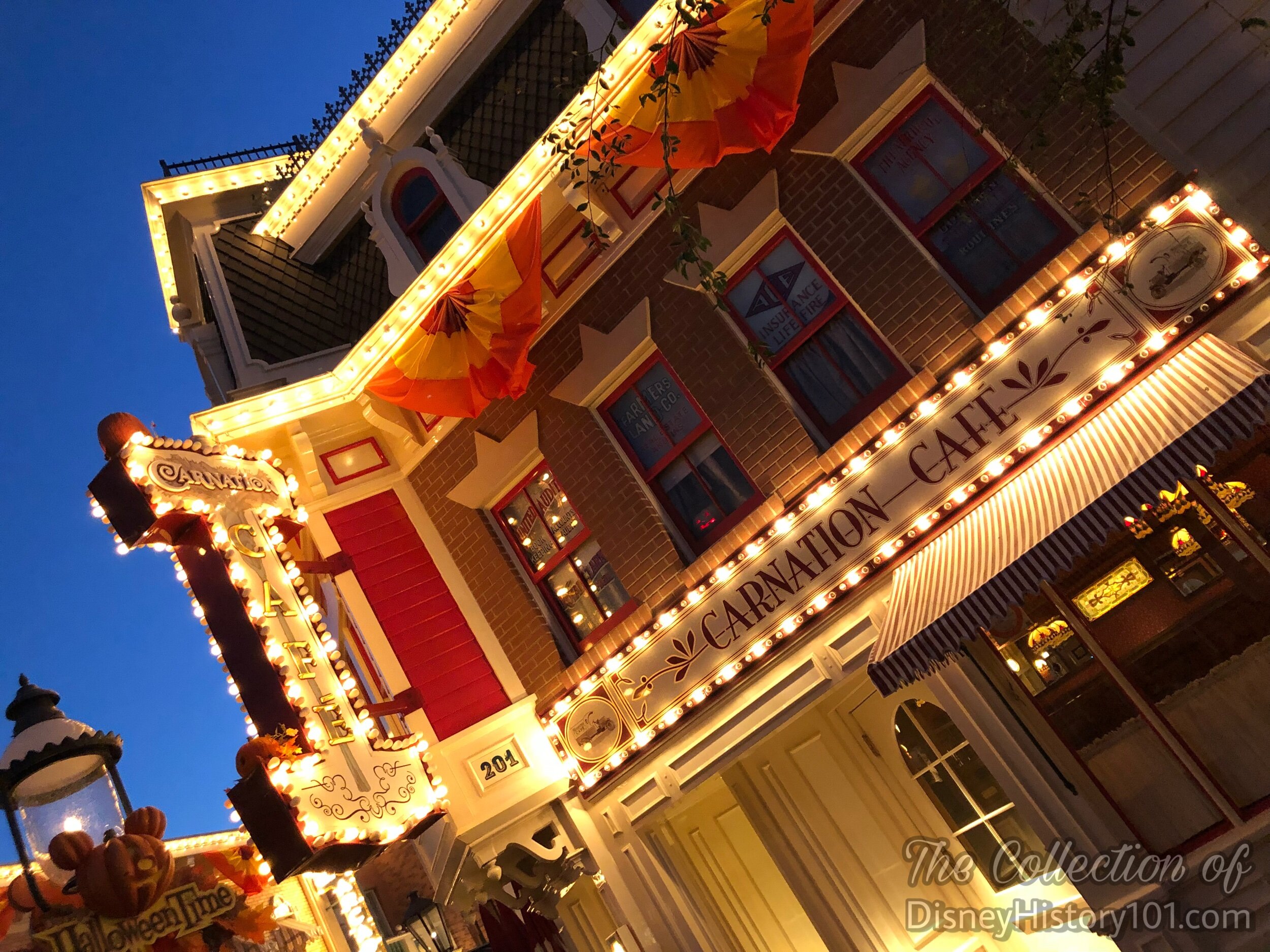
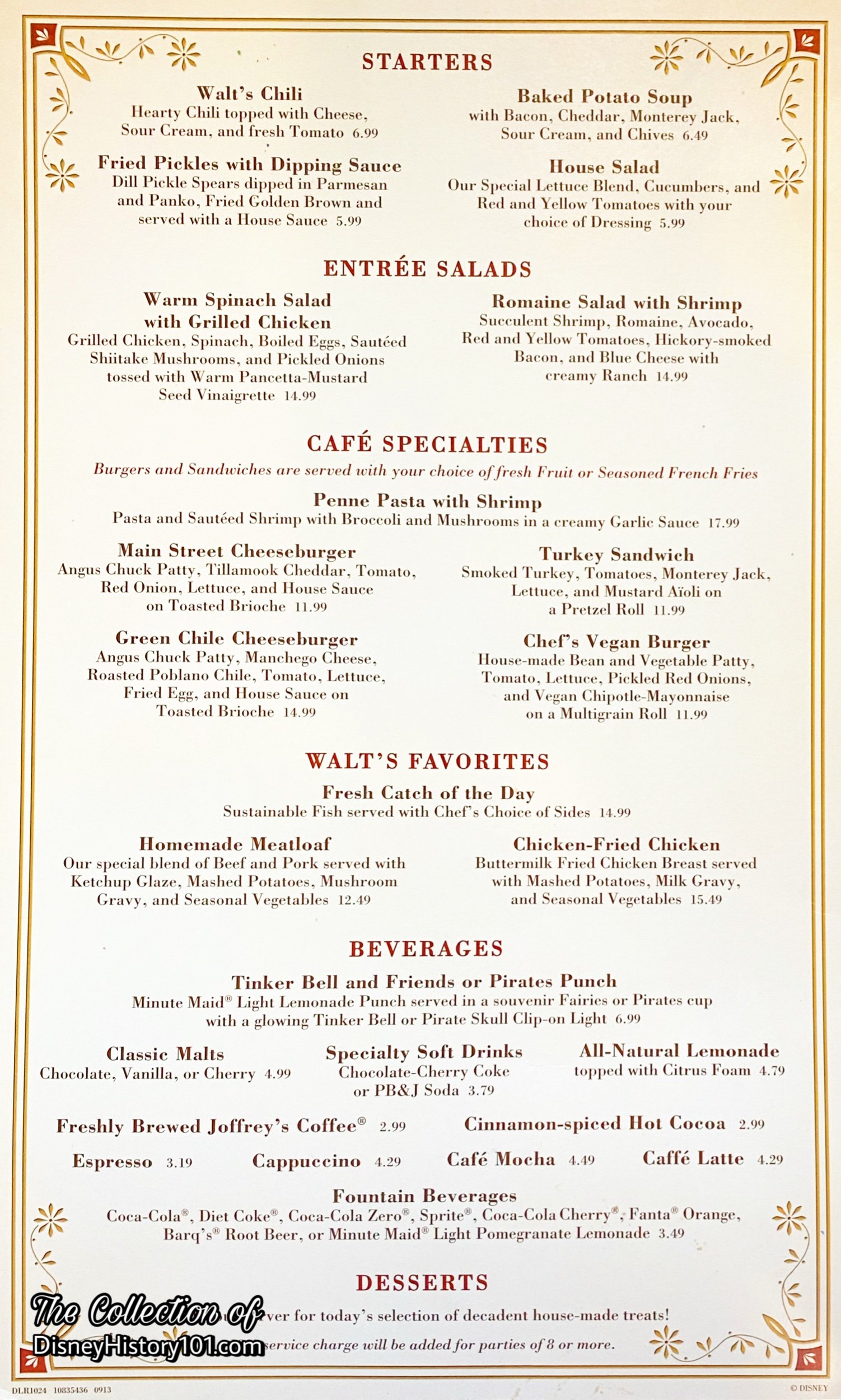
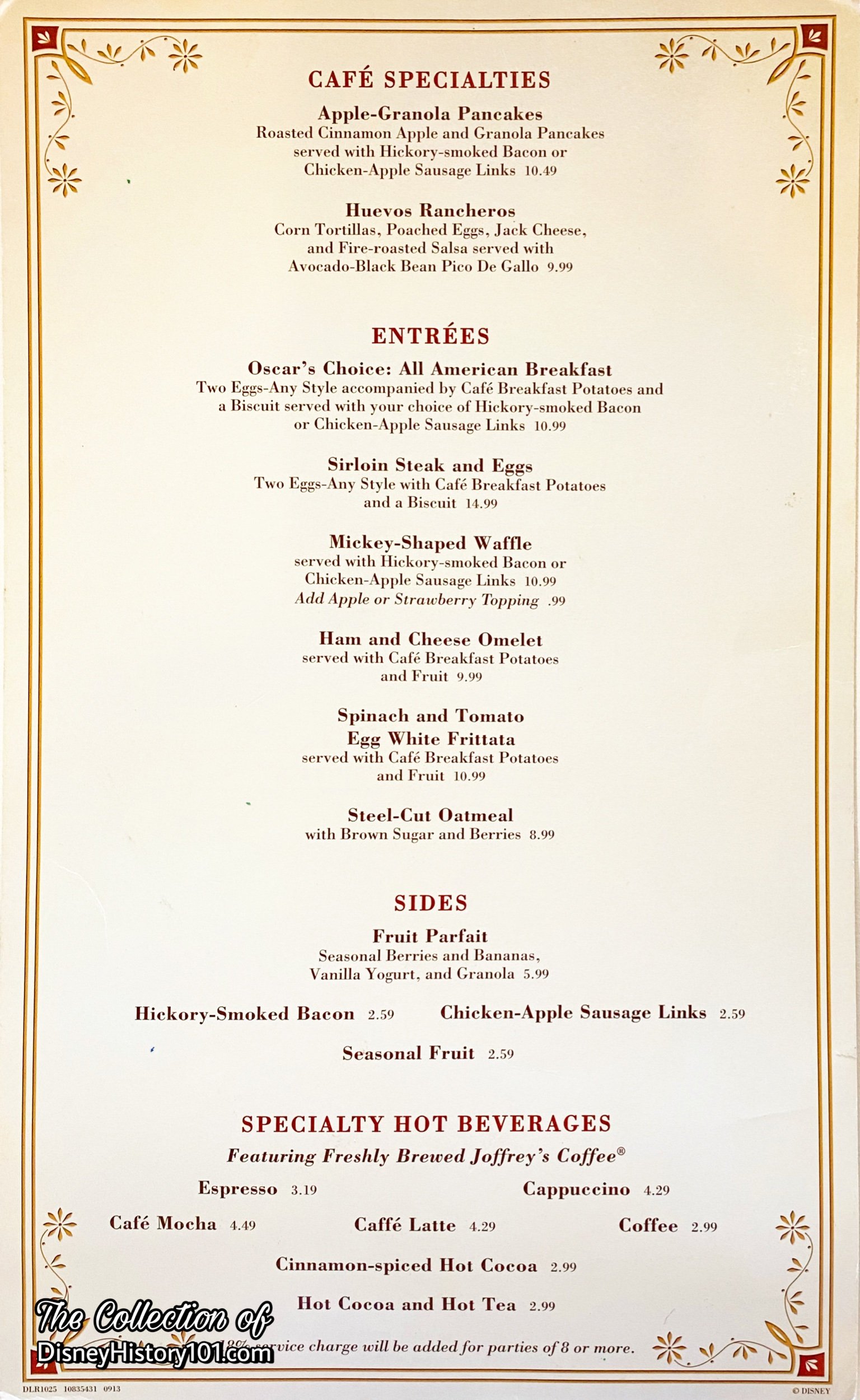
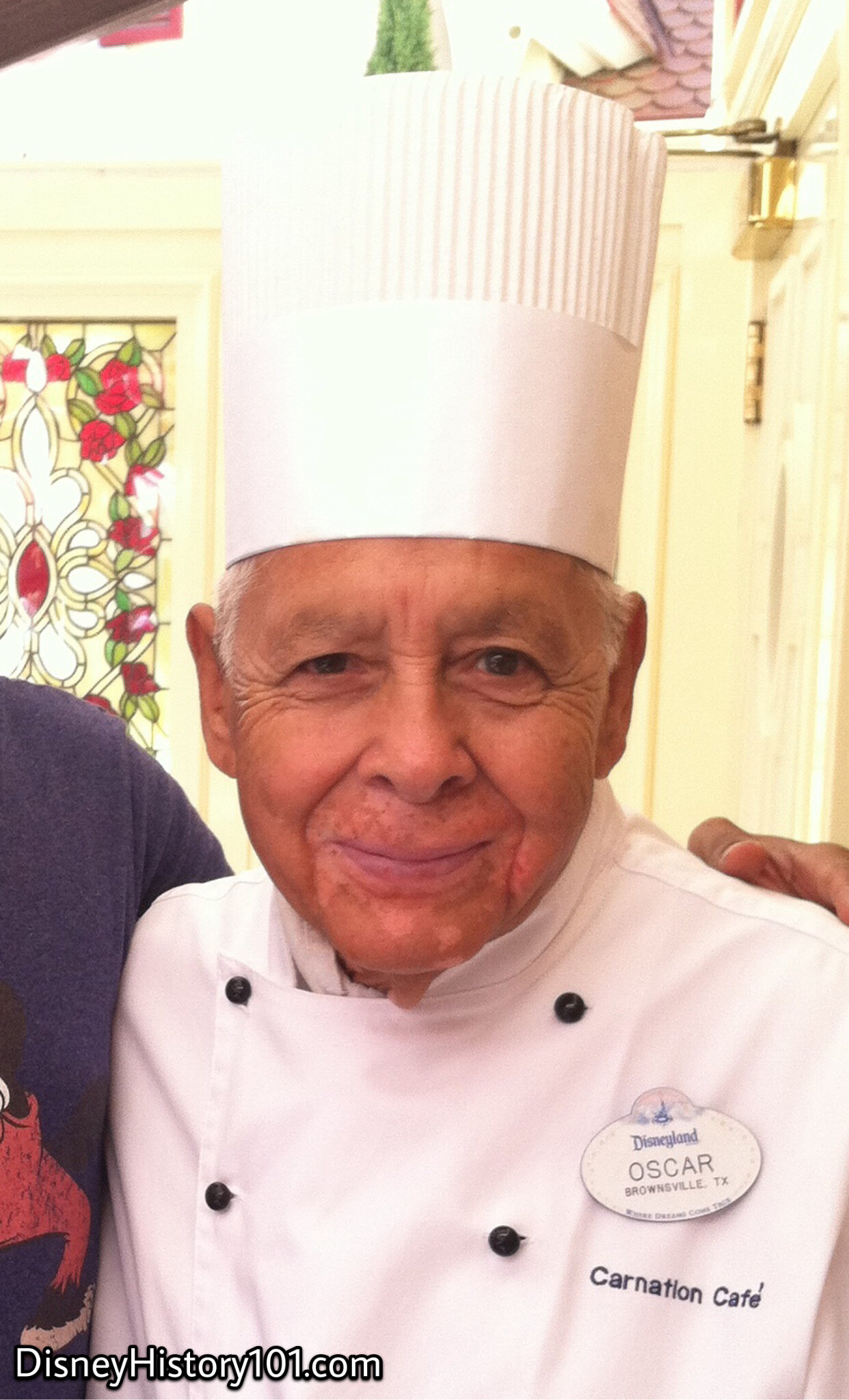
Oscar (the namesake chef) of the “Oscar’s Choice : All American Breakfast” (Two eggs any style accompanied by Cafe Breakfast Potatoes served with hickory-smoked bacon or chicken-apple sausage links and your choice of toast)! We’ll be adding Oscar’s story here soon!
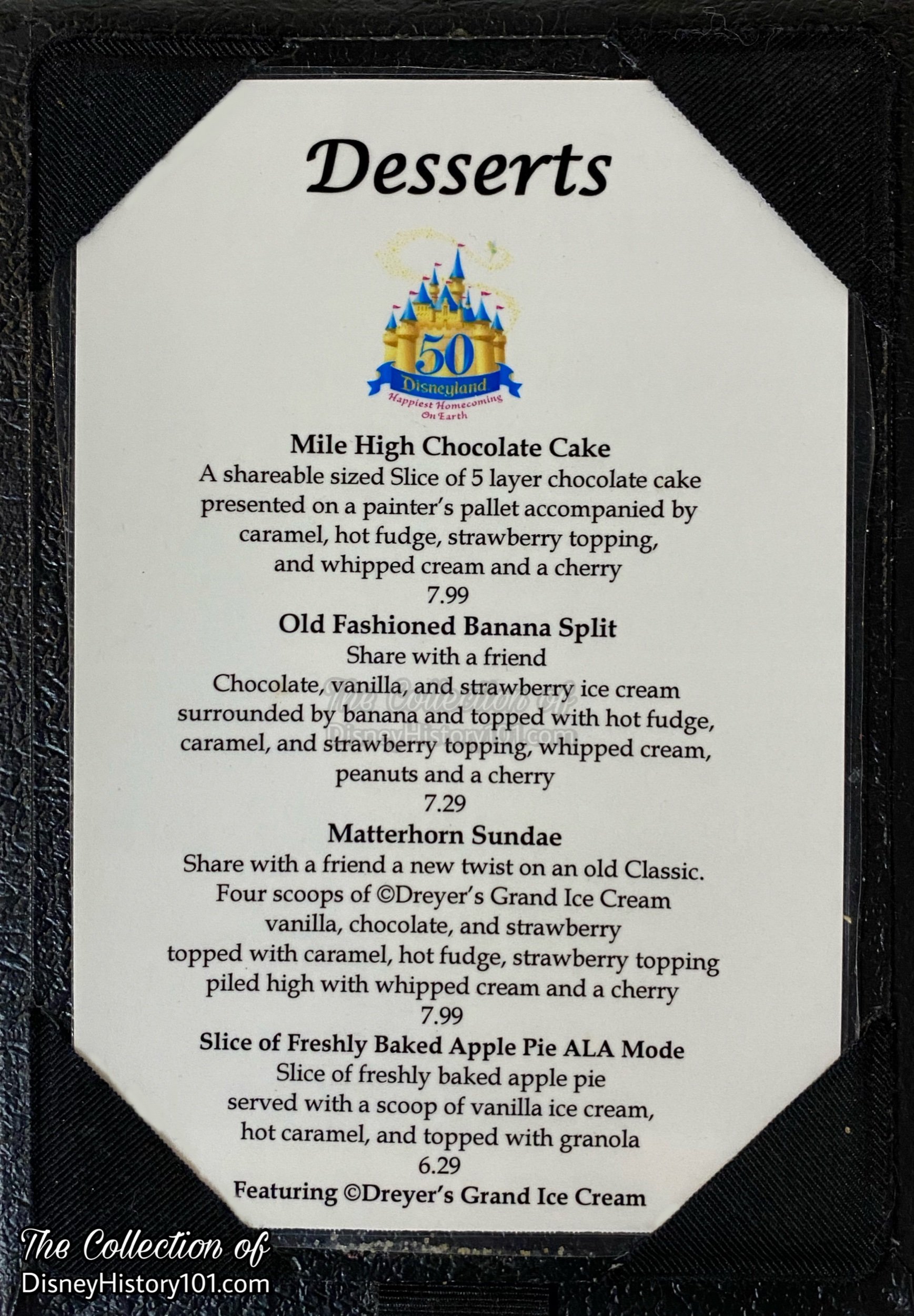
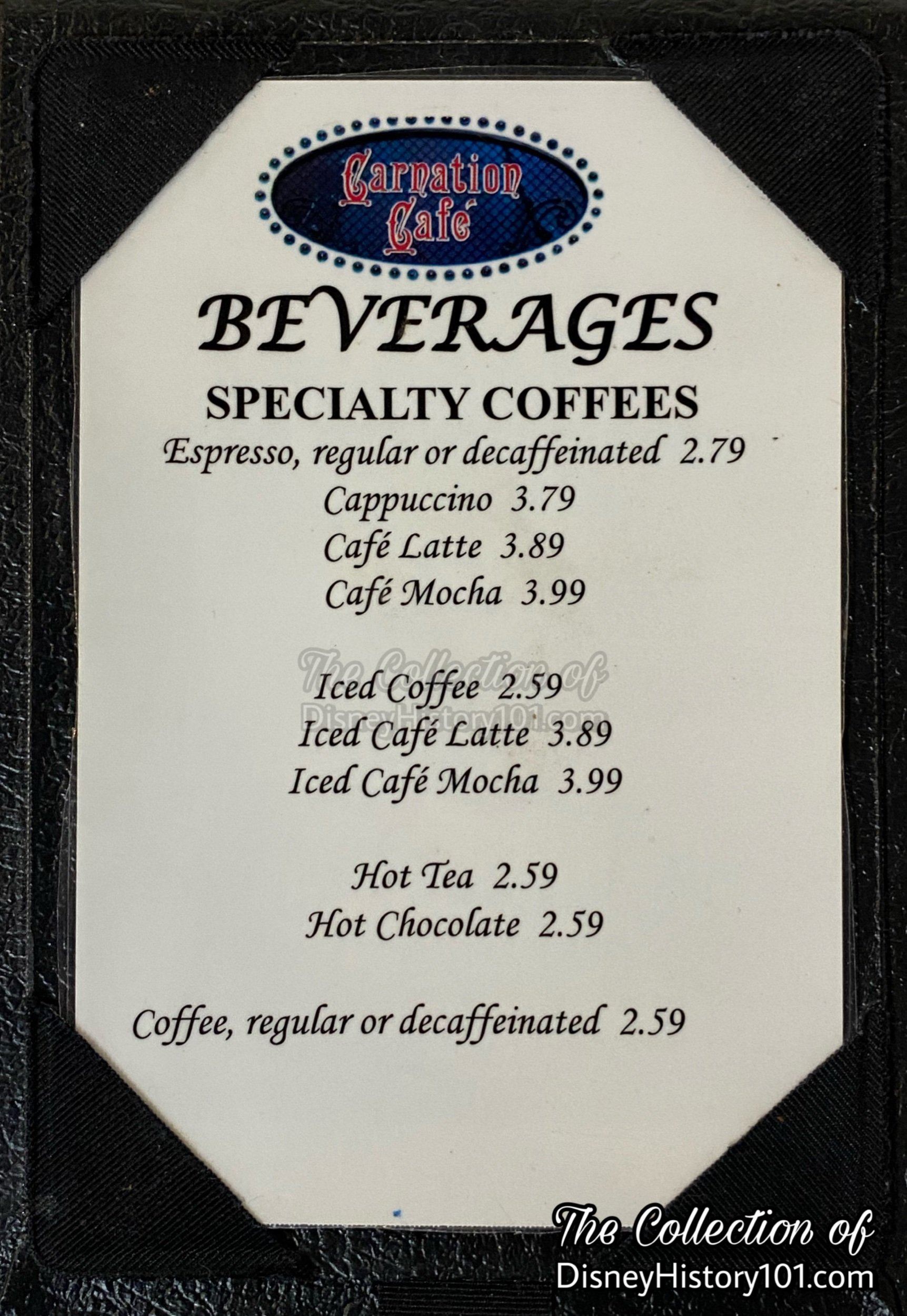
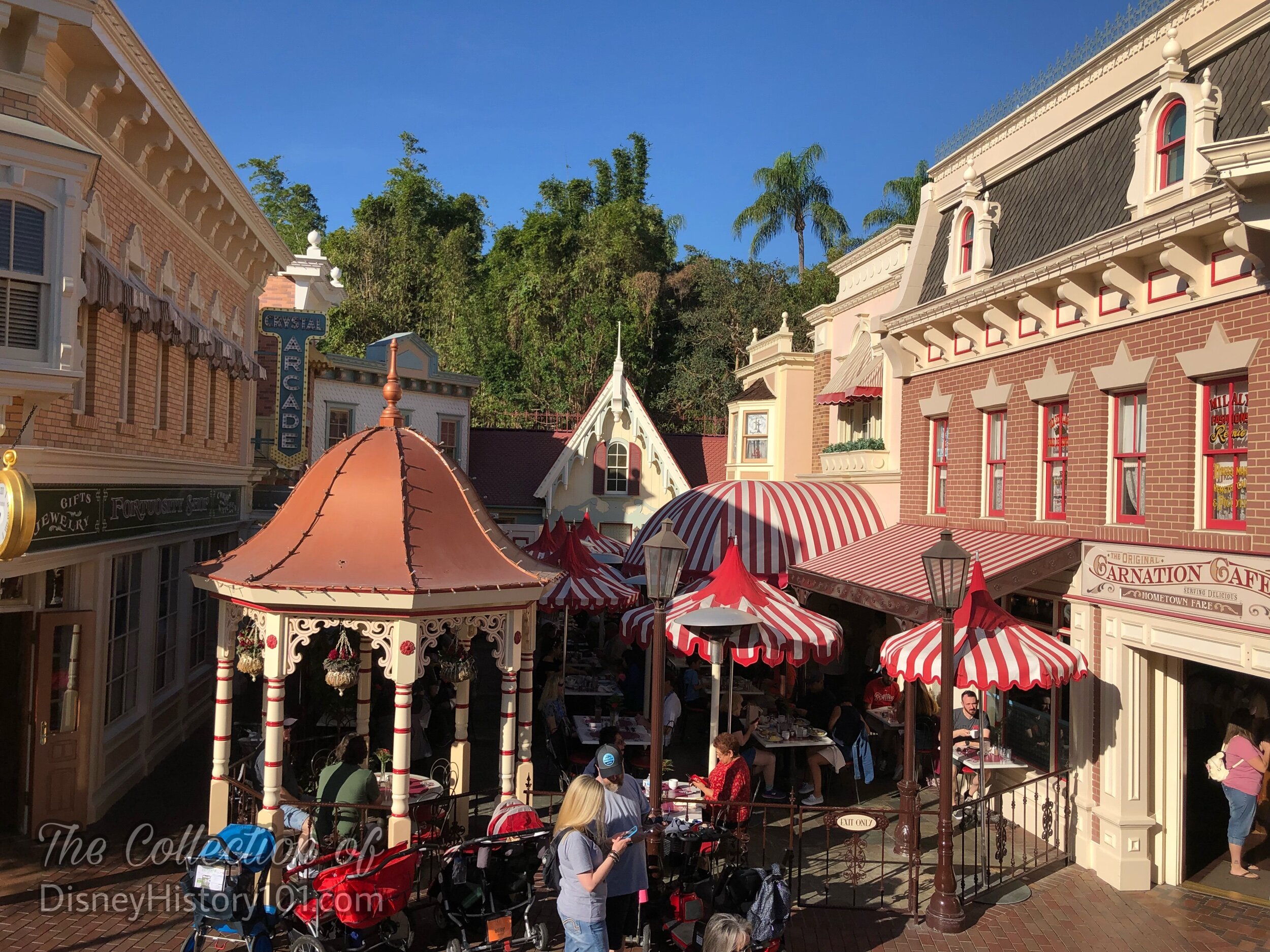
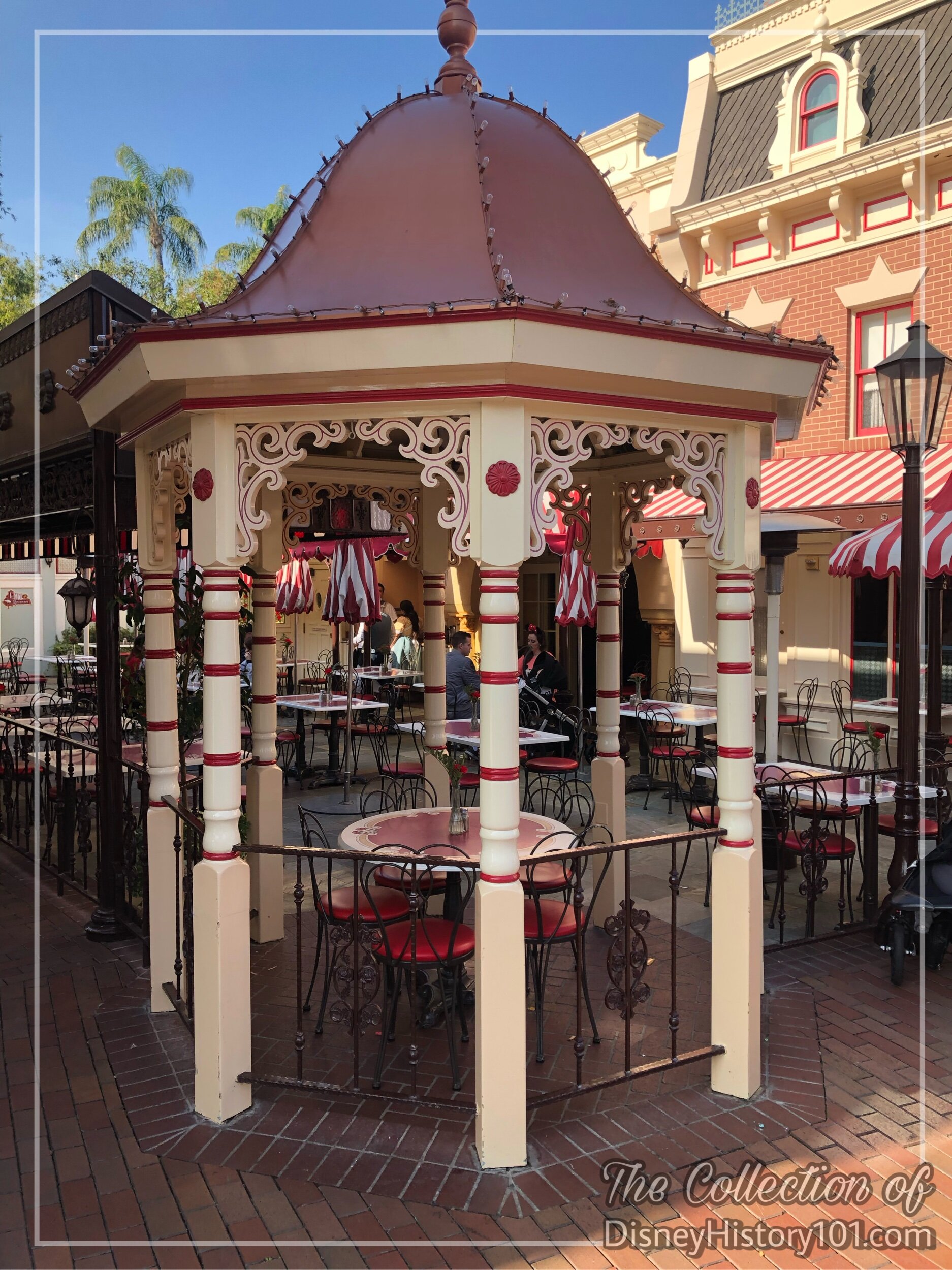
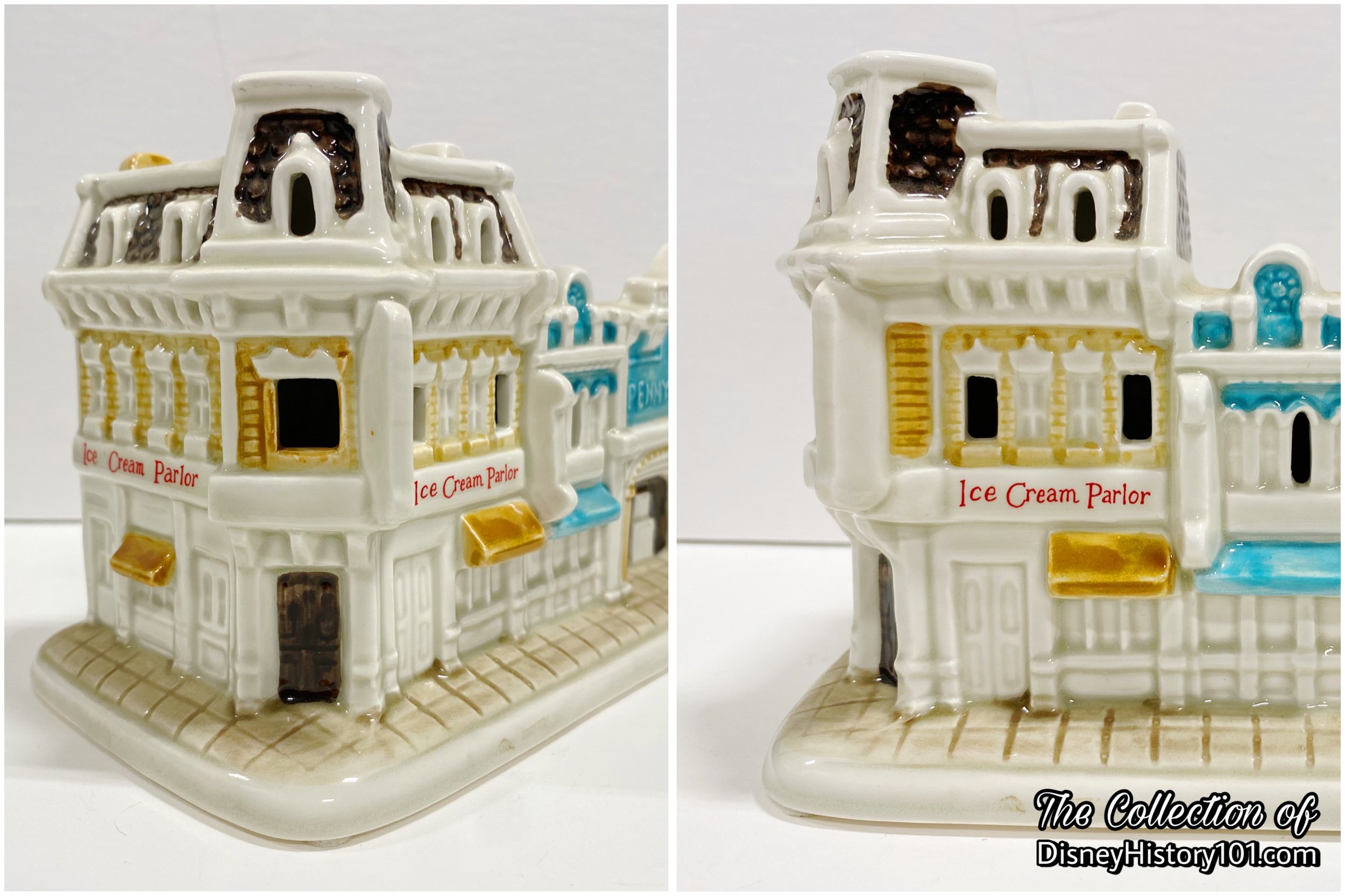
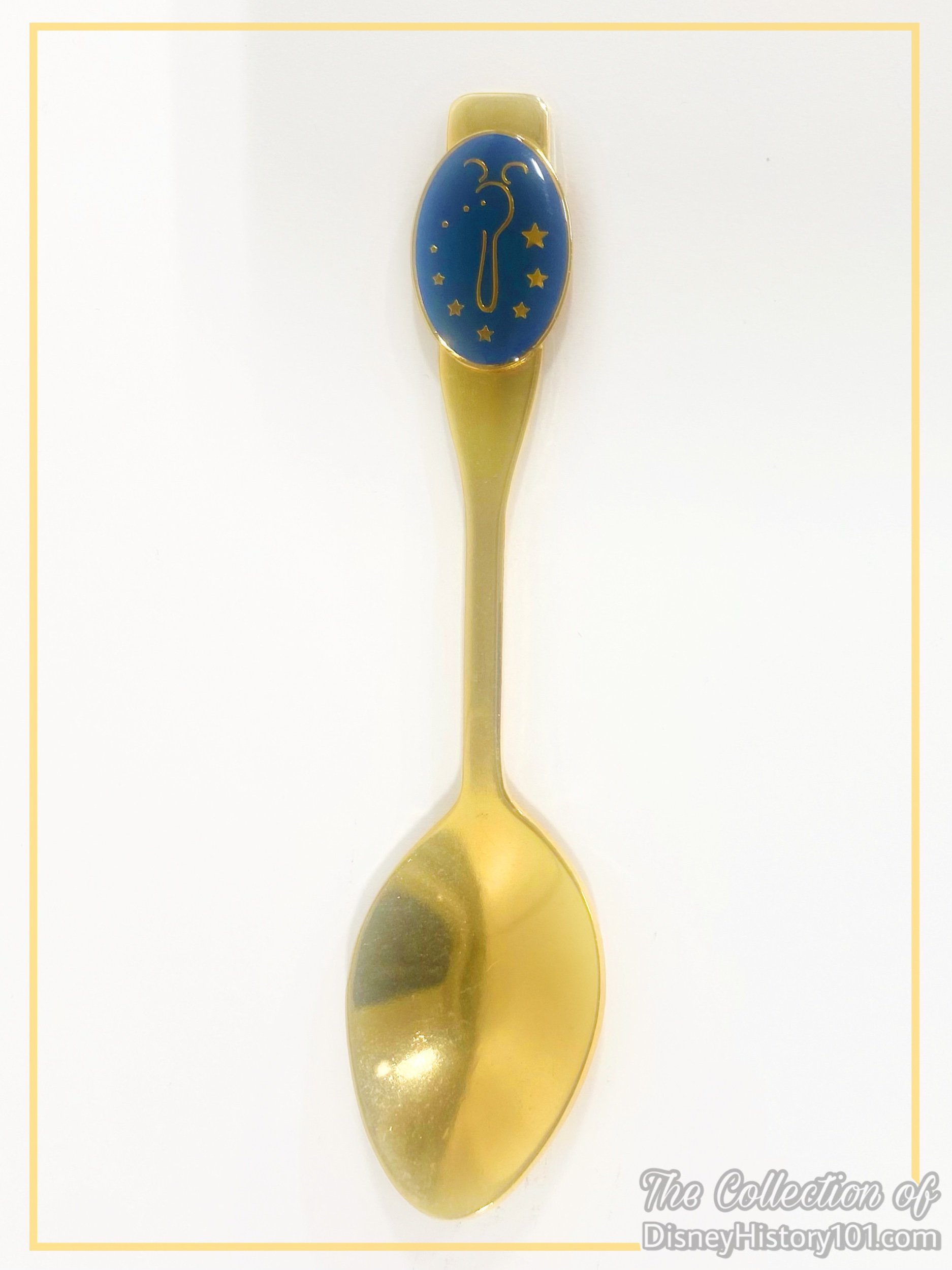
When the Disneyland Resort Food and Beverage Team worked together to exceed Guest, Cast and financial goals, they celebrated Spoon's Victory, often commemorated by taking a photo in front of Sleeping Beauty Castle.
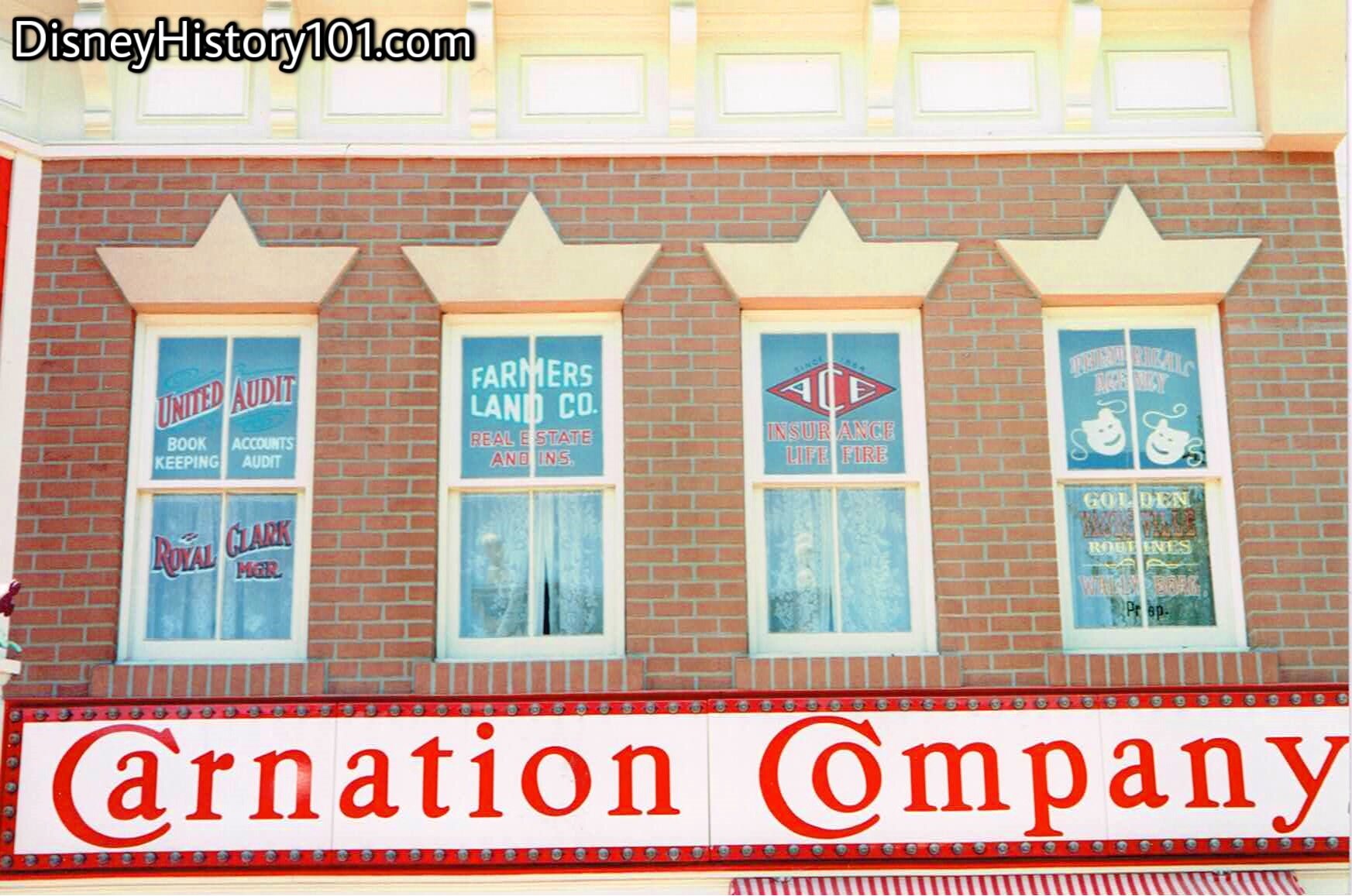
“Carnation Company Exhibit Window Honors”
Another highlight about the Carnation Ice Cream Parlor exhibit is the building exterior. Long before Disneylanders of note could only dream of having their likeness commemorated on pressed pennies, Walt began honoring such ones with their names emblazoned in gold leaf paint on Main Street window glass. This tradition has continued to the present.
“We celebrate our people for the memories they created in the past.”
Martin Sklar once said “an individual's contribution can usually be found in the final product if one looks closely enough, but the Disney mind frame is to never point out ‘what I did’ to anyone.” However, a few outstanding individuals have been publicly recognized for their contributions and even ceremoniously honored by the Company.
There are thousands of windows at Disneyland. Here, is exhibited perhaps one of the most important window honors in all of Disneyland (in my personal opinion), that of Royal “Mickey” Clark (whose window can be seen to the left, in the previous Vintage View). Royal Clark was named WED Enterprises, Inc. Treasurer by Walt Disney before later becoming RETLAW Enterprises’ Treasurer, and was most essential to the funding of Walt’s various ongoing projects.
In addition to the window honors, there is another “sidelight” related to the Carnation Ice Cream Parlor Building. The roof of the Carnation Company Building was often utilized to station cameras during parades and other special events held on the Main Street Stage.
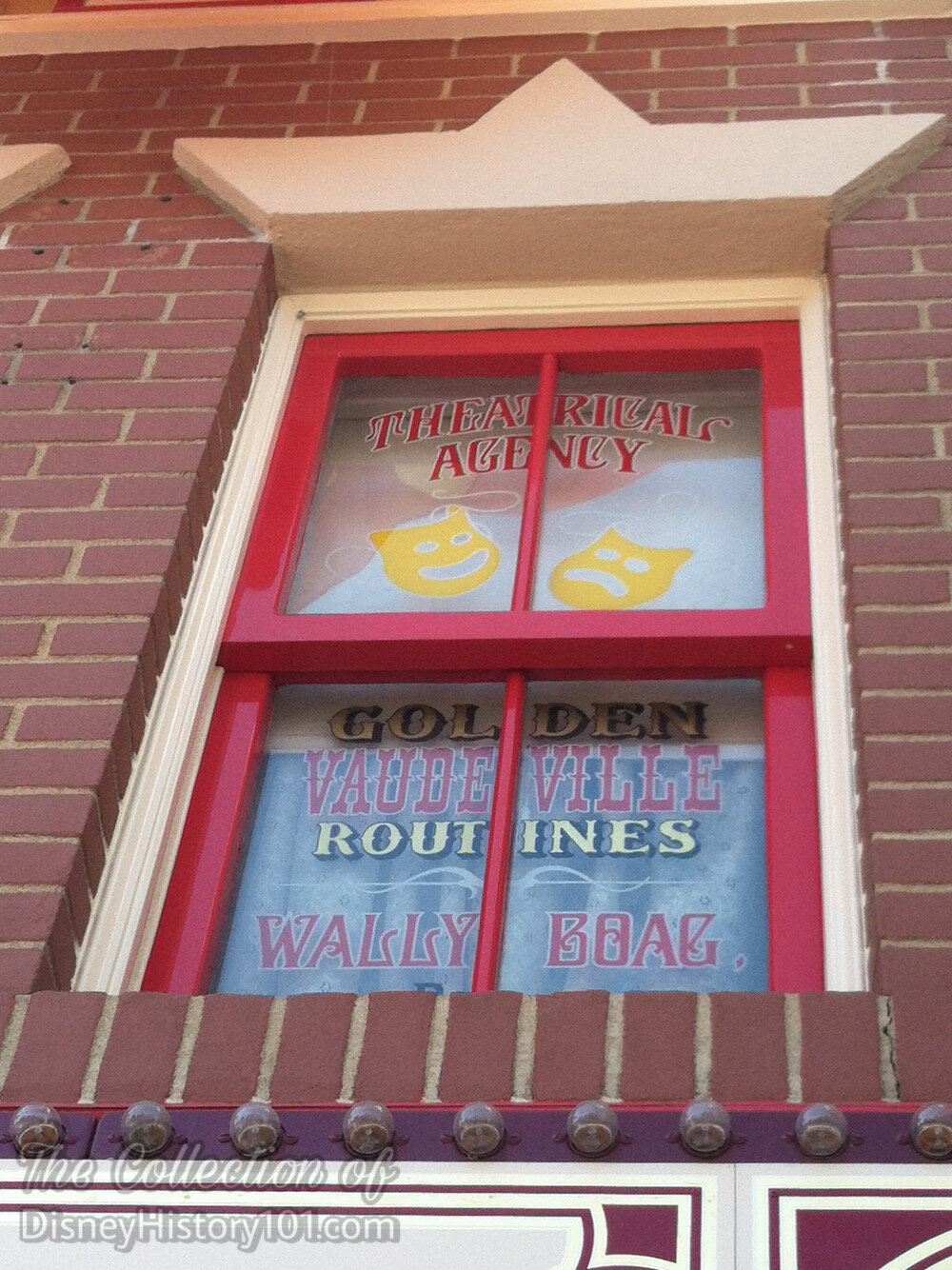
“Wally Boag, on elf the former stars of THE GOLDEN HORSESHOE REVUE (the longest-running stage show in the world with over 50,000 performances) is honored with a window: ‘Theatrical Agency. Golden Vaudeville Routines. Wally Boag, Prop.’,” according to “Disneyland - A Treasure Chest of Trivia,” prepared by Walt Disney Productions, 1990.
THE CAROUSEL OF PROGRESS (and AMERICA SINGS)

*(July 24, 1967 to September 9, 1973, according to “Disneyland Rides & Attractions and Attendance Report,” 1981, page 50).
“Progress is not just moving ahead. It’s dreaming and working and building a better way of life!”
Walt and his organization have always been progressive, exploring new paths and experimenting with new technologies. Ever since the first successful and profitable winter season of peak guests at Disneyland® Park in 1955, Walt began to outline plans for future growth and development of his Park. One area (then, designated as a meal area for “Disneylanders,” located East of Main Street) was to be transformed into an attraction called “International Street.”
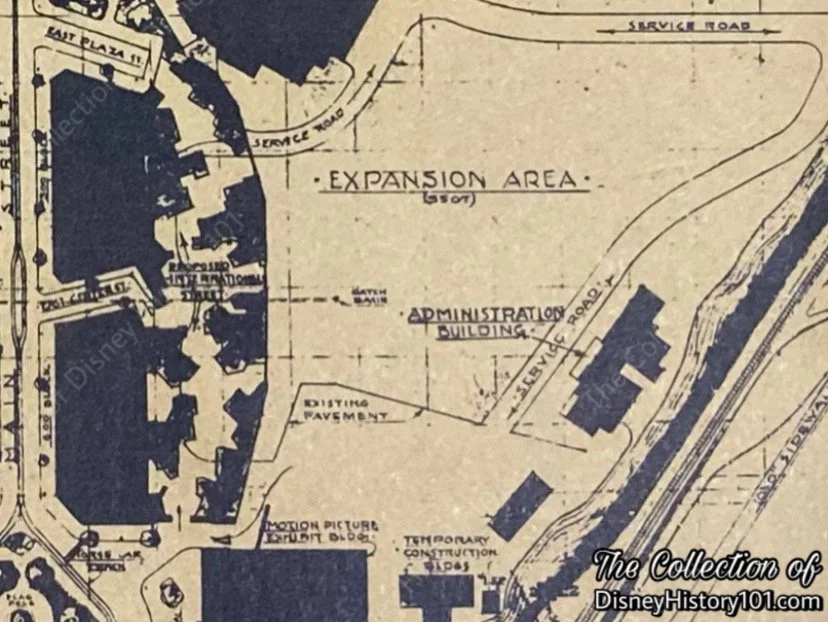
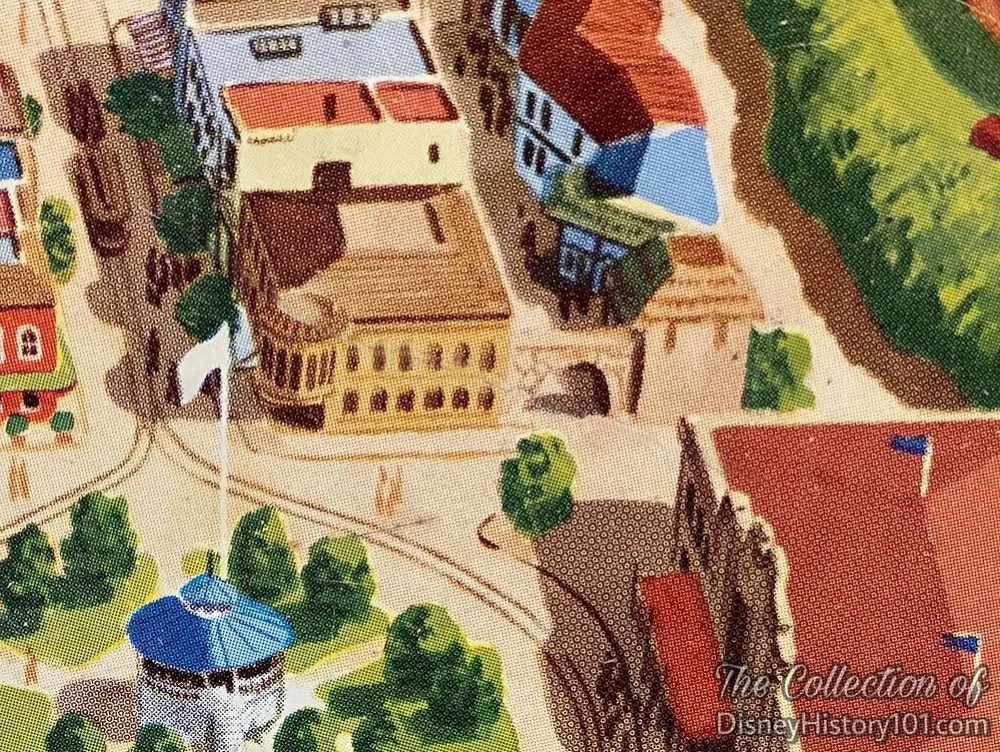
This future attraction was occasionally (and vaguely) spoken of through newspaper articles, occasionally seen in licensed products and souvenirs of Disneyland.
Eight three-dimensional Kodak Stereo II Viewers (similar to View Masters) also gave guests previews of an attraction coming to Disneyland (in 1956, and then 1957) - International Street! Take a peek at photographic slides featuring models created for the coming attraction.
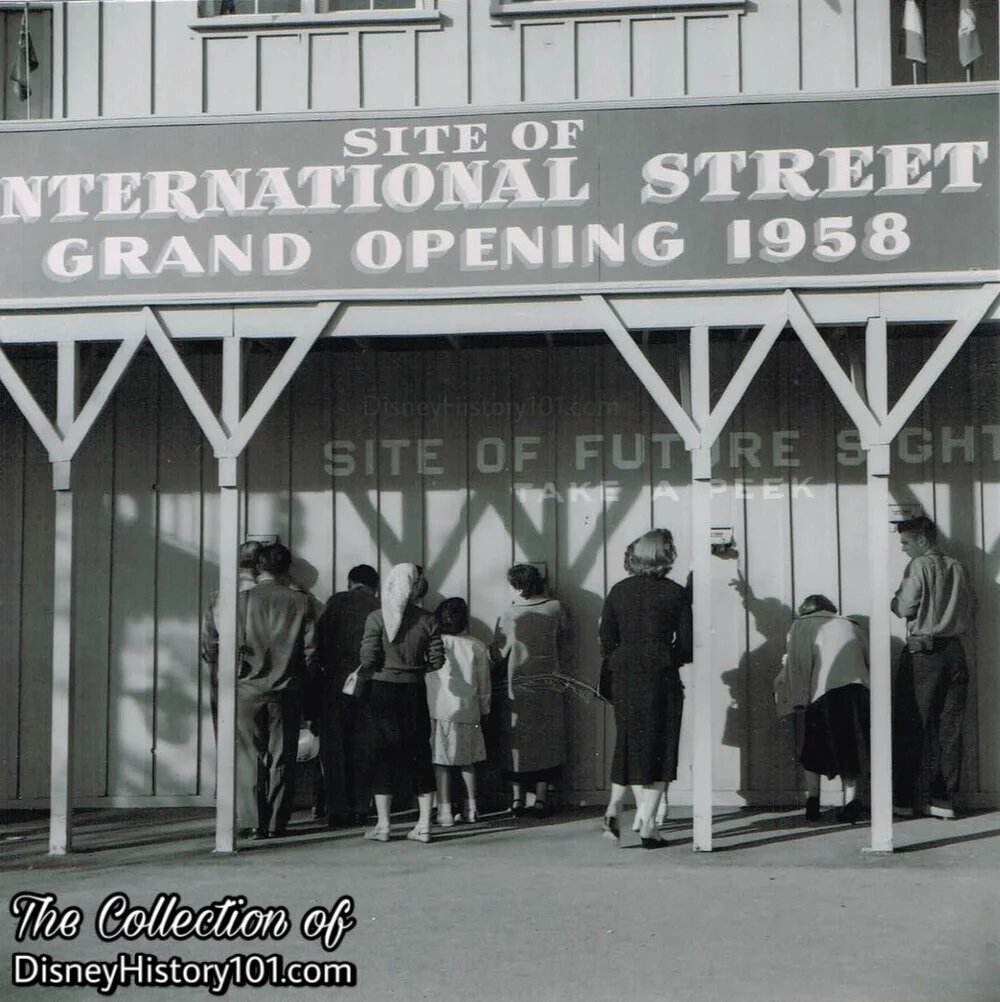
While the International Street concept was explored no further (for the time), it was revisited about two decades later, by WED Enterprises Vice-President of Design Chuck Myall. To quote Chuck Myall’s (c. April,1974) “Capsule Biography,” : “Presently Chuck is working on many new concepts… while exploring the possibilities of an International Street at Walt Disney World and perhaps Disneyland.”
But by 1957, it seems that Walt’s imaginative engineers and artists (knowing their audience) were beginning to plan a different sort of adventure for the space. About this time, a young Marty Sklar (who was employed by Disneyland in June of 1955, and began full-time employment with Disneyland in September of 1956), “indirectly began his ‘stay’ at WED late in 1956 working on such Disneyland concepts as Liberty Street, and Edison Square,” according to Marty’s “Capsule Biography.” The Disneyland Report to Anaheim and Orange County (prepared before August of 1957) mentioned future developments called Liberty Street, the Hall of Presidents, and Thomas Edison Square all planned for 1960.
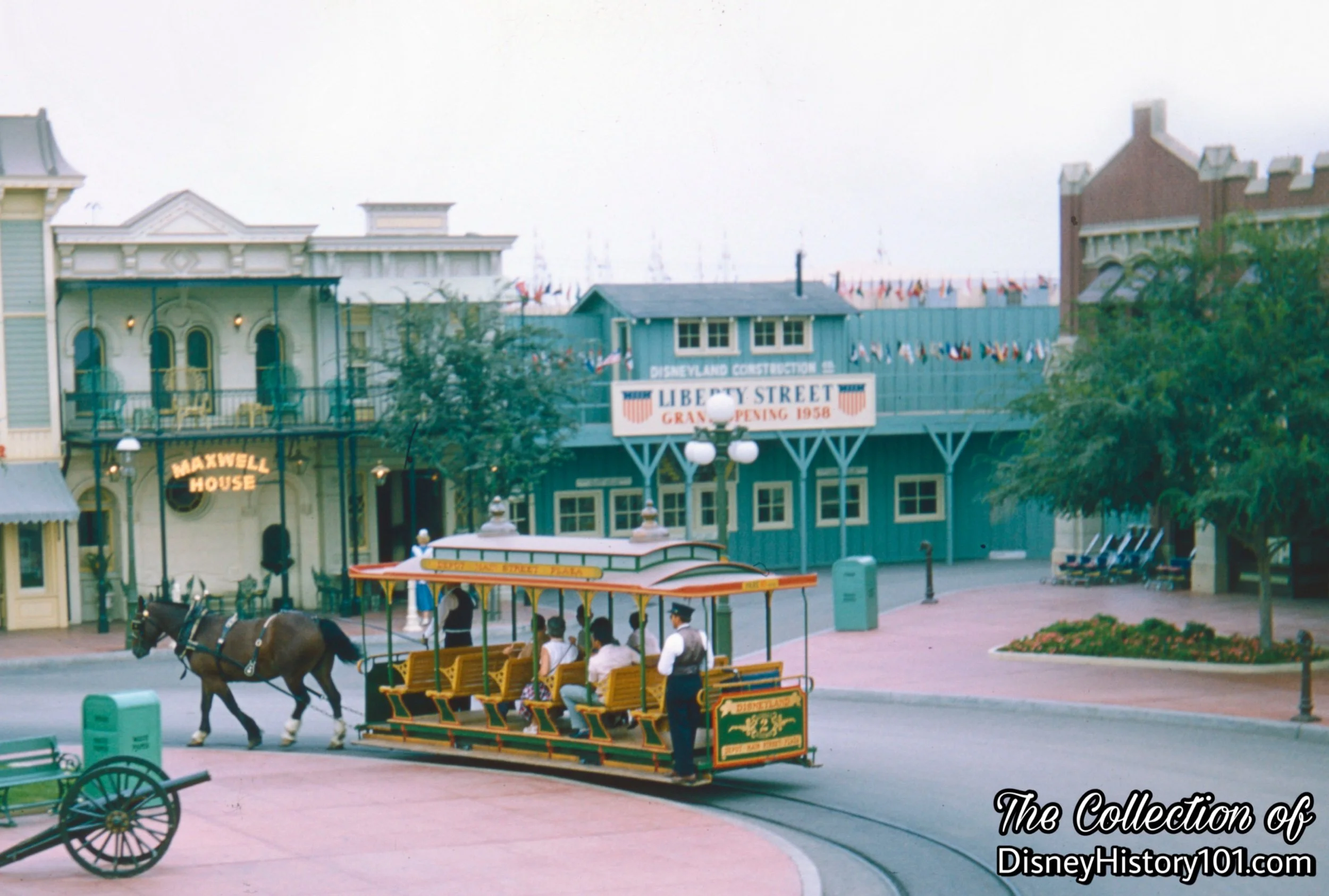
By September of 1958, Disneyland, Inc. had begun development of the related Chinese Arcade area (4062-500) at an expense of $812.
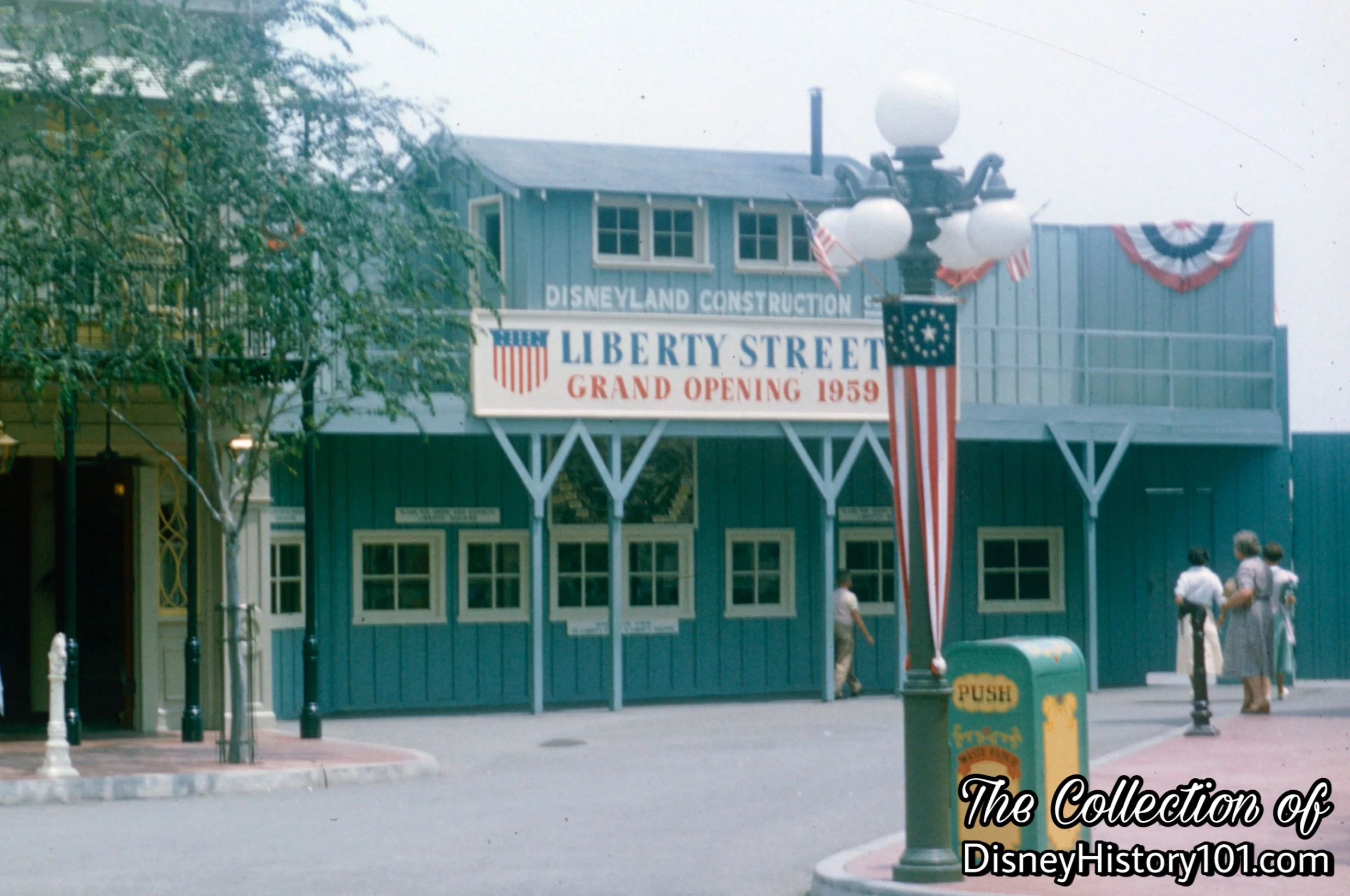
By 1958, the “Site of International Street” banner was changed to read “Liberty Street - Grand Opening 1959.” According to “Disneyland: Then, Now, and Forever” by Bruce Gordon & Tim O’Day, “Planned as a salute to America’s Revolutionary War-era founding, the new area would replicate the look and feel of colonial America of the late 1700s, featuring architecture representing all 13 original American colonies. The main attraction on Liberty Street was to be the Hall of Presidents, showcased in Independence Hall and featuring a show called One Nation Under God, an elaborate theater presentation focusing on the fundamental principles that have guided American history. The show was also to feature an impressive roster of Audio-Animatronics figures from every President of the United States - from Washington to Eisenhower.” The aforementioned Marty Sklar was also involved creating concepts for the latter, to some capacity. One last sidelight, is that Audio tracks were soon recorded “under Walt Disney’s supervision” (in 1958), and many of these would be reused years later to create The Hall of Presidents attraction of the Magic Kingdom at Walt Disney World.
“Edison Square”
In the article “New Vistas for Disneyland” (published March 22, 1957), Bob Thomas revealed that one Liberty Street attraction would be called “Thomas Edison Place,” and he even described the Show’s theme of “how American living has progressed because of the great inventor’s spurring of science”. Herb Ryman once recollected how “Walt Disney had a tremendous respect for great men, great inventors, great thinkers,” according to “Working With Walt - Interviews With Disney Artists” by Don Peri. The future attraction (designed by WED Enterprises, Inc.) was to feature six stages - opening with “The Wizard’s Progress” (a prologue), followed by four acts, and an epilogue. Things were looking promising (six years before the 1964 New York Worlds Fair), as “Edison Square” began to appear as a “Future Attraction” on (c. 1958) souvenir Disneyland maps drawn by Sam McKim (and in promotional material provided for potential corporate sponsors of Disneyland).
The TWA publication “Let’s Talk About My Visit To Disneyland Anaheim California: A Note From Mary Gordon TWA Travel Advisor” divulged: “We were told that many exciting new plans are underway in the Enchanted Kingdom. These include the addition of Edison Square. This area will contain exhibits which contrast the old and new in the daily life of the American city-dweller, and will feature the progress brought about through the genius of Thomas Edison. Other coming attractions include Liberty Street (our American Heritage).”
For a time both Edison Square and Liberty Street were contemporaneously under development. By September 28, 1958, Disneyland Inc. job numbers 4067-051 & 052 for both the design and development and props and dressings of “Liberty Street” were in developmental progress at a total cost of $17,831. However, by that same date, Disneyland Inc. job numbers 4070-001 (“International Land”) and 4073-001 (“Edison Square”) were opened, for both the design and development of the areas that were in progress at a cost of $6,116 for the former and $27,554 for the latter.
Walt was still searching for an American industrial Participant sponsor for his future Disneyland attraction. This being the case, WED Enterprises, Inc. representatives began talks with General Electric representatives over the possibility General Electric sponsoring the Show at Disneyland. To sell the idea, WED Enterprises, Inc. produced another promotional brochure just for those GE representatives.
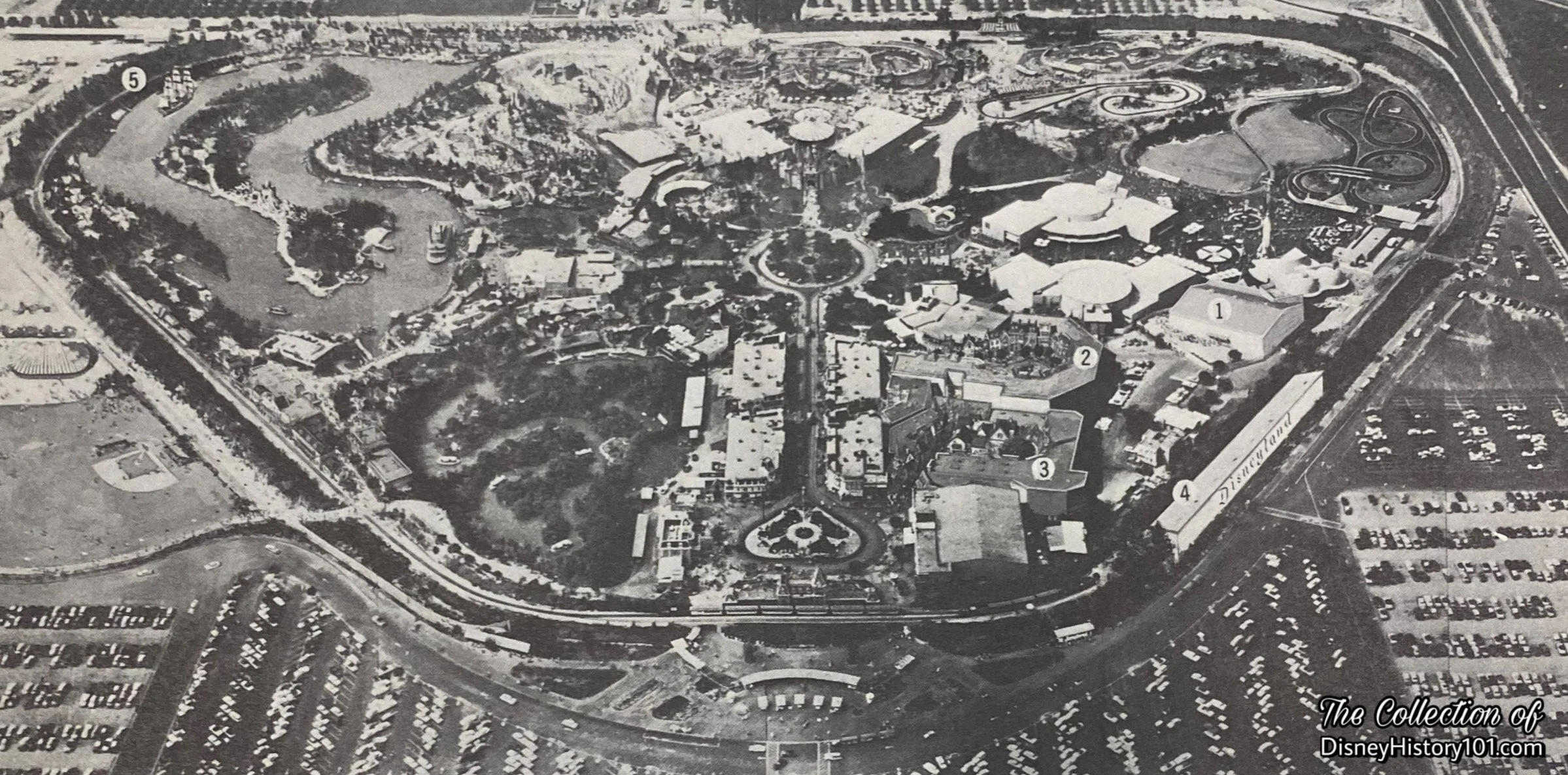
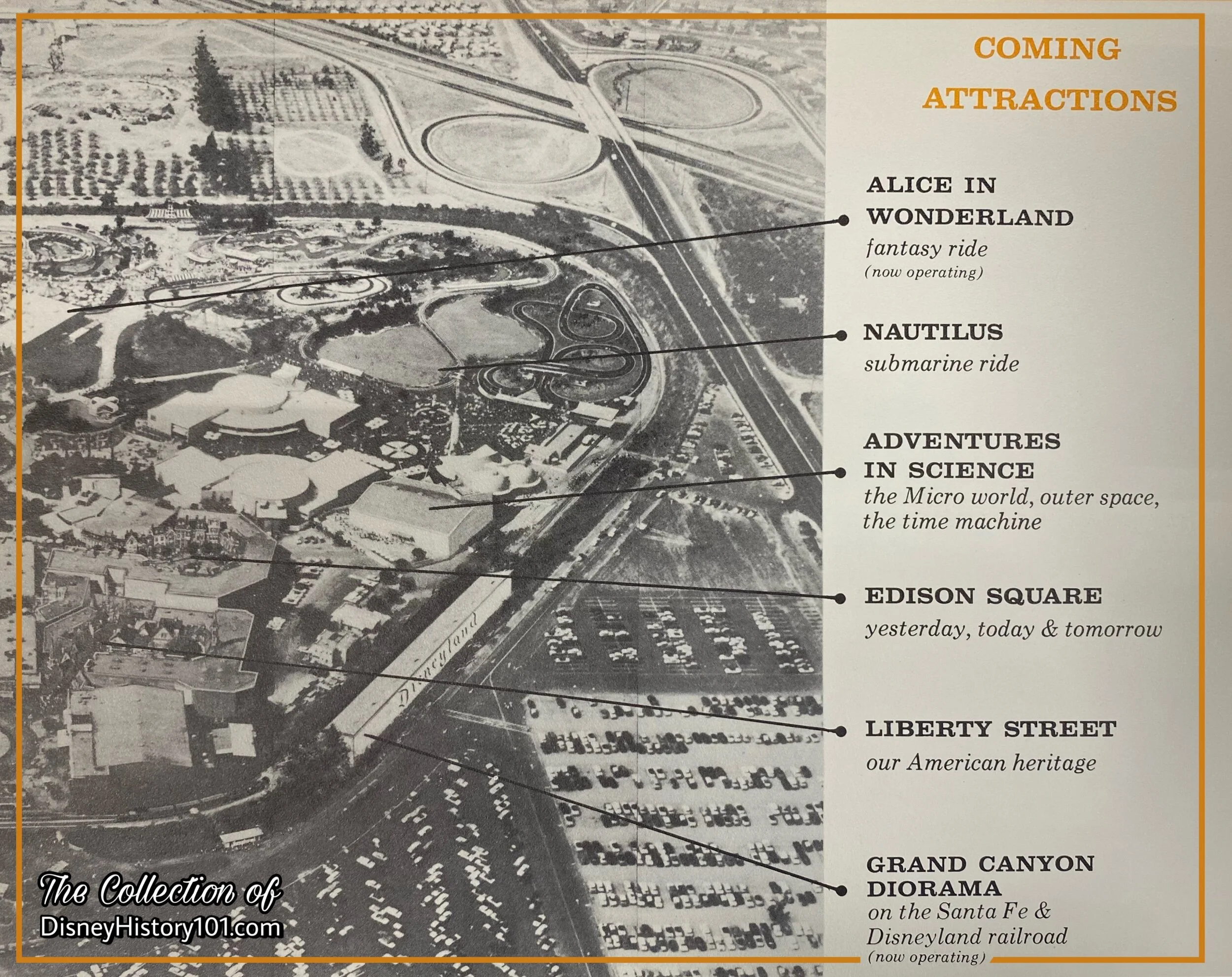
In “Disneyland U.S.A.” (published 1958), “Coming Attractions” were shared with representatives of potential national sponsor Participants in the Disneyland Show. One of the advertised “Major Projects” was called “Edison Square”, and its story was described in some detail in two other pages of the promotional booklet.
“This ambitious concept was to be designed to be a bit more urban in execution and feel than the midwest-inspired Main Street. Set circa 1918, the charming square would represent the budding age of electricity and would prominently feature a statue of its namesake, Thomas A. Edison, at its center. The main attraction Edison Square would be a show called Harnessing the Lightning, a four-act history of electricity as seen through the eyes of four generations of a typical American family as they experience the wondrous advances in electrical technology… Rather than riding in a revolving theater, guests would walk past decade-by-decade vignettes showing how life has been made easier by the introduction of electricity,” according to “Disneyland: Then, Now, and Forever” by Bruce Gordon and Tim O’Day. Both Sam McKim and John Hench were attached to the project the time and created numerous designs for the Harnessing the Lighting show, while Bob Gurr helped design the system for the moving carousel. It appears that the “dramatic presentations” were to be presented on different stages (in the following image).
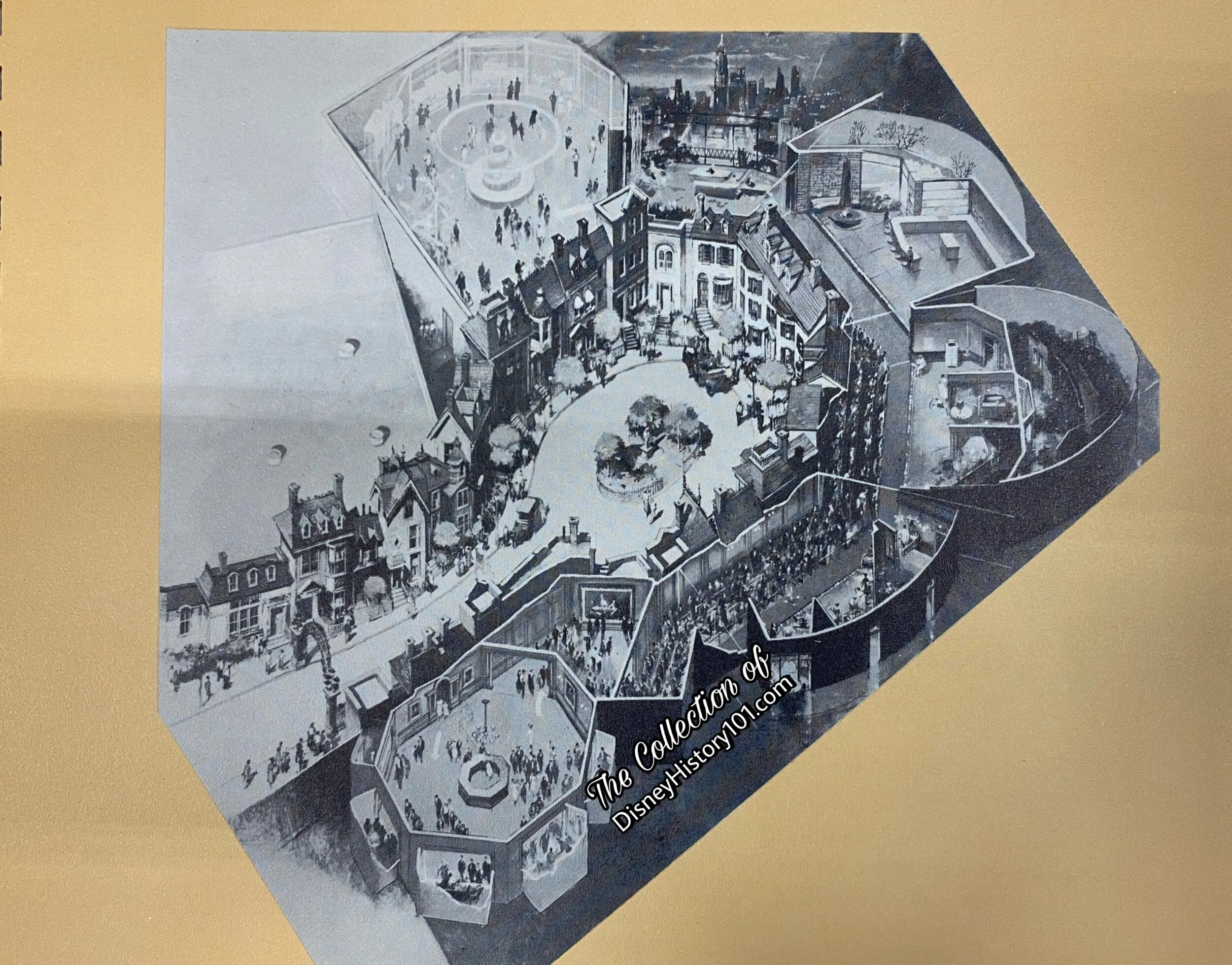
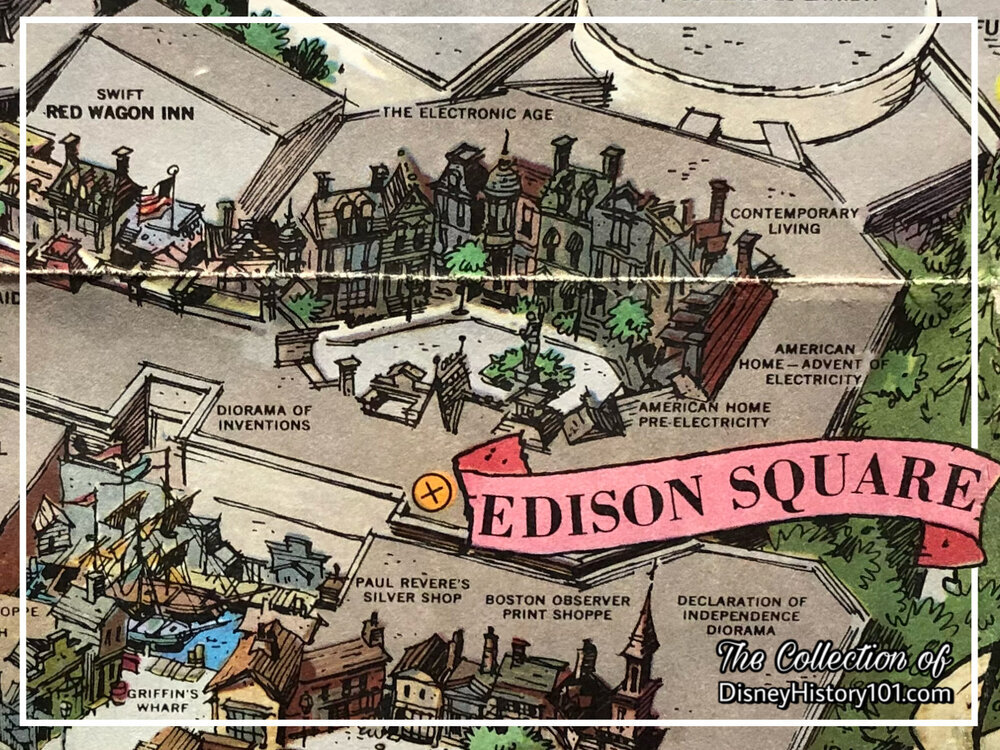
“In 1959, the General Electric Company made this challenge to Walt Disney : To conceive and build a New York World’s Fair Show that would interpret, in an educational and entertaining way, the role electricity has played in bettering man’s living conditions, and dramatize where man’s work with electrical power may go from here. Disney accepted the challenge.” [General Electric Progressland Orientation Manual, prepared 1964] The following year (by September 14th, 1960), Art Director John Hench (assisted by Bill Bosche) could report that there was a “research program to start on or about September 26th, to be completed in November. Our meeting with the General Electric people will help determine the original casting required for this research program.” At the time, a total research fund of $50,000 had been appropriated for the General Electric research program to further project design. This aforementioned “research” may have been that which resulted in “improvements made in the [Audio-Animatronics] system by the WED R&D Staff.” In addition, Marty Sklar (of Disneyland Public Relations) had joined WED permanently by 1961, and soon began “playing an active role working with industry on shows and exhibits for the World’s Fair in New York. His main efforts concentrated on the Ford Show and the General Electric Carousel of Progress, which was related to the basic theme of Edison Square,” (the very attraction which he had helped develop as far back as 1956), according to his “Capsule Biography.” Chuck Myall (who had helped design Main Street facades in 1954) was another artist who was instrumental in designing the facility for the General Electric Carousel of Progress at the New York World’s Fair.
“General Electric Begins ‘Where Mr. Edison Left Off’ - ‘Harnessing the Lightning’”
Some time later, General Electric had officially become the sponsor of the Carousel of Progress, which was located in their pavilion “Progressland” (along the Avenue of Commerce at the 1964 New York World’s Fair). While “the plug was pulled” on the Edison Square show, the “lightning was harnessed,” resulting in a new show featuring “four warm and humorous ‘Audio-Animatronics’ ‘families’ from different generations who welcome guests into their homes of the 1890’s, 1920’s, 1940’s and today, to hear how progress through electricity has contributed to better living,” according to “The Disneyland Dictionary” (compiled by the WED Public Relations Department and the Disneyland Publicity Office, c. 1968). Many Legendary “Imagineers” (like Sam McKim) contributed designs for this Carousel of Progress. Miniature character modeler Wathel Rogers’ animation and technical skills also play a key role in creating the Carousel of Progress.
The General Electric show was “great in ‘64”, but even “greater in ‘65” at the New York World’s Fairground! New additions were created especially for the Fair’s second season. “Added to the completely re-developed New York World’s Fair hit is ‘Progress City,’ an entire community in capsulized realism and featuring moving transportation systems and thousands of buildings,” according to “The Disneyland Dictionary” (compiled by the WED Public Relations Department and the Disneyland Publicity Office, c. 1968).
All of these “great” additions made the General Electric show very popular with visitors. As a result, “During the fair’s two six-moth seasons, 91 percent of those who paid fair admission - nearly 47 million people - visited one or more of the quartet of Disney shows created for General Electric, Ford Motor Company, Pepsi Cola and the State of Illinois.” [“Information on America Sings” prepared by Disneyland marketing Division, 1974] More precisely, the Carousel of Progress attracted some 15.8 million people at the Fair. [The Walt Disney Productions Annual Report to Shareholders and Employee, for the fiscal year ending October 2, 1965]
Disney had contractual relationships to a group of companies called “Participants” who agreed to sponsor various attractions and facilities in the Park in return for specific rights and privileges. Disneyland Participant Corporate Sponsors were carefully selected. High quality, long term corporate sponsors provided incremental income that enabled Disneyland to enhance its show and attractions, offset some operating expenses, and capitalize on marketing opportunities around the world.
Before the Fair ended, discussions were held related to bringing the General Electric show to Disneyland.

One document (“General Electric’s ‘College Music Bowl’”) mentioned that “Progressland will be one of the major new additions to Disneyland in the entire decade since its opening.” According to “Progressland at Disneyland” published 1965 for GE Participant representatives, page 12: “At the conclusion of the ‘Carousel Theater’ performance, guests would exit stage 6 via a descending ramp into a G-E product area on the 30,000 square feet ground floor. This area, too, would be kept flexible in nature to allow for changes as often as required, to keep all displays up-to-the-minute. Obviously, there are many ways in which the ground floor product area can be developed. One approach would be to tell the General Electric product story through an all-electric Gold-Medallion home - a home such as the average person has never seen - a “Dream Home,” if you will. If this idea were used, G.E. could, for instance, employ a leading architect to design it - an architect whose name could be merchandised throughout the west and throughout the nation. As guests pass through this dream home, appropriate product displays could show them how G.E. could enrich their mode of living. You could, for example…
*Demonstrate the latest interior and exterior home lighting ideas in the same way that one portion of the Nela Park Lighting Institute is set aside for that purpose.
*Display totally new ideas in electronic home entertainment, as well as other concepts of electronic living.
*The latest major appliance and housewares concepts could be demonstrated, both General Electric and Hotpoint.
*And in this bright new display showcase, hundreds of thousands of visitors could receive information on not only General Electric products, but the names and addresses of G.E. dealers, distributors and service centers throughout the West and across the nation.
It should be emphasized that this product area is flexible. The Gold Medallion home is the only one idea the might be considered and there are of course many others. Audience participation is a keynote of Disneyland’s success - participation that combines entertainment with a strong sales effort. ‘General Electric’ can fit this pattern, and just as at the World’s Fair, it can become an outstanding ‘hit’ at the Magic Kingdom for more than 4,000,000 guests each year.”
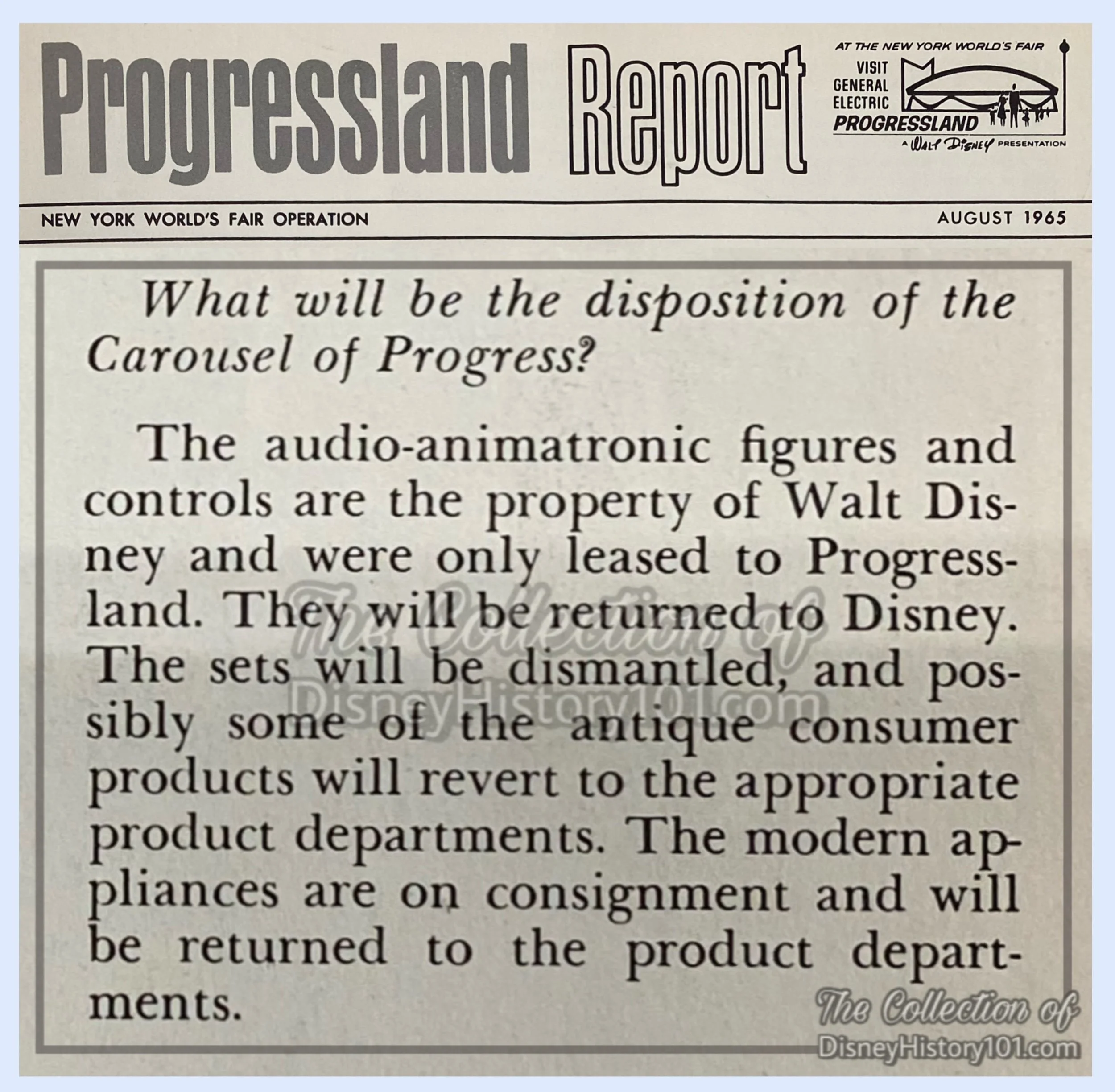
By the summer of 1965, Reddy Kilowatt (the contemporaneous symbol of General Electric) was ready to head “all aboard to Disneyland” in advertisements. It seemed that General Electric would be a perfect candidate for a Disneyland Participant (even by the standards of c.1954-1955 prospectus documents), as it was an “old firm” of American industry by 1965. It was almost 90 years old at that time, founded in 1878 by Thomas Edison. What was the current consensus? According to the “Walt Disney Productions Annual Report to Shareholders and Employees Fiscal Year Ended October 2, 1965”: “David W. Burke, Manager of Public Relations at G.E.’s New York headquarters, commented on the Park’s stature: ‘Disneyland attracts its visitors from all over the United States and the world and thus is an excellent locale for an exhibit by a national and international company such as General Electric,’ he said.” After the close of the 1965 season of the New York World’s Fair (on October 17, 1965), Disneyland Participant Affairs and General Electric would negotiate a cooperative agreement, and Walt Disney would return bearing plenty of “gifts” for Disneyland guests! Among these were terrifying inhabitants of the primeval world, the singing “children of the world,” a “carousel of progress.” A few months later (by December of 1965), an article in Backstage Disneyland magazine heralded the coming of the General Electric Show to Disneyland, during June of 1967.
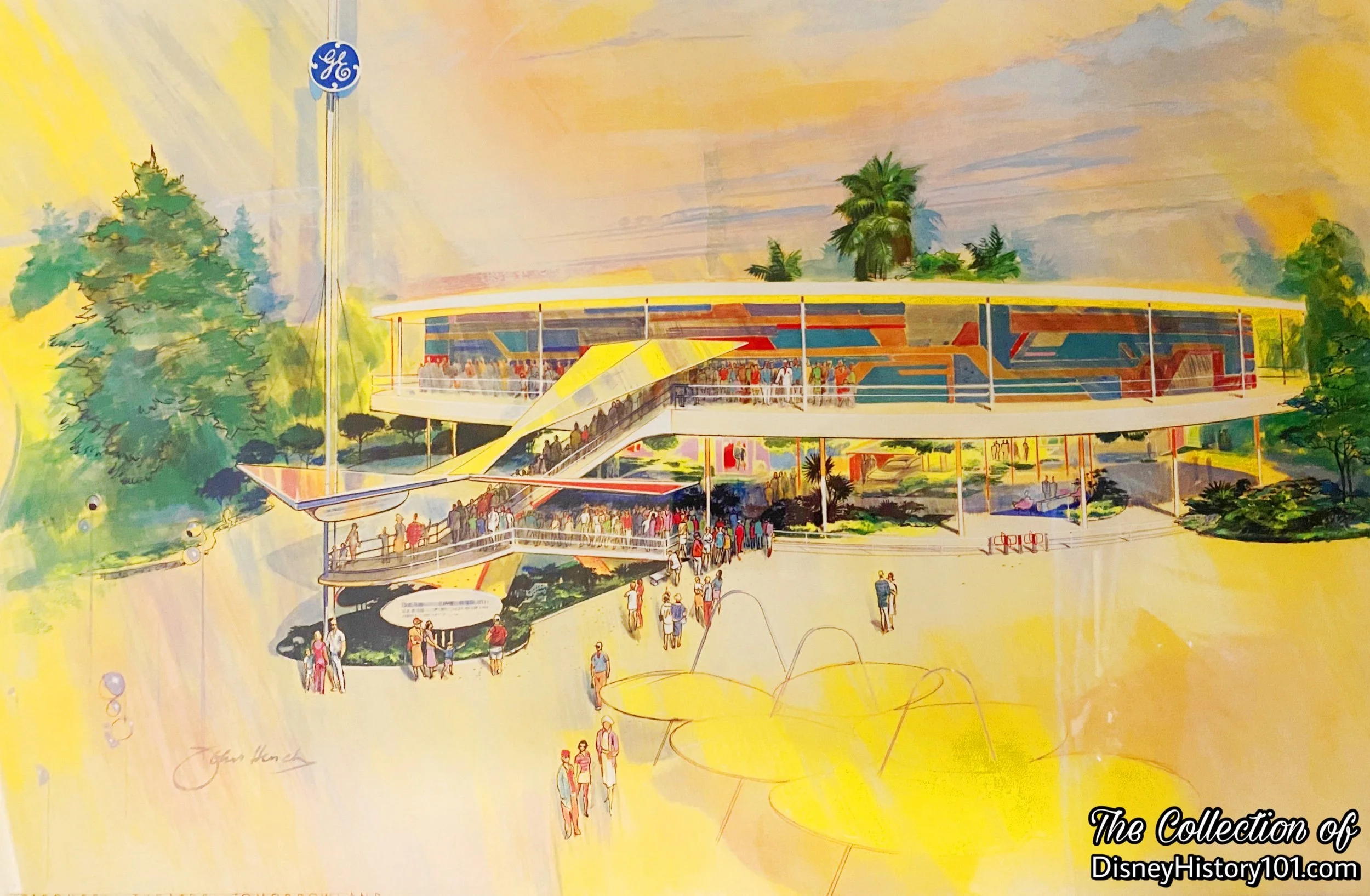
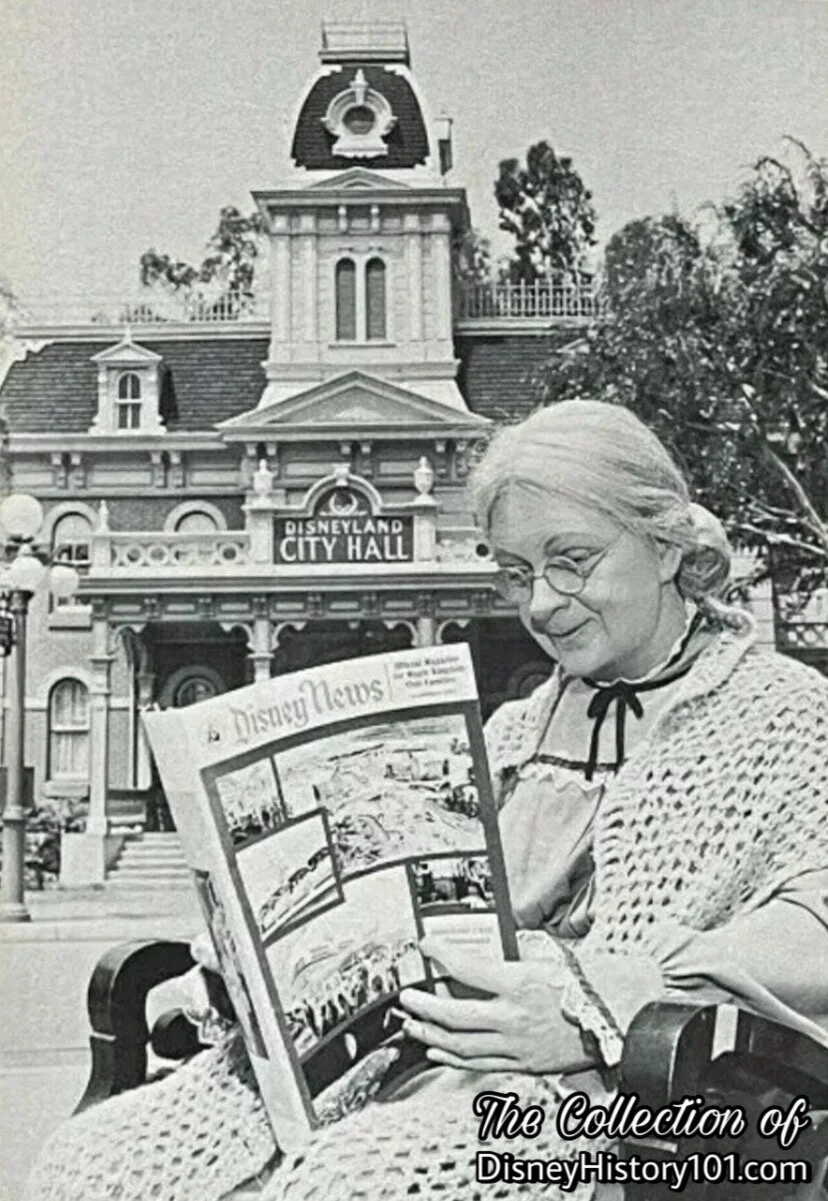
The installation of the General Electric Carousel of Progress was headed by recent Walt Disney Imagineering hire Orlando Ferrante, who had played football with both Dick Nunis and Ron Miller at USC, and for his first assignment and previously overseen the installation of the first Audio-Animatronics attraction at Disneyland - Walt Disney’s Enchanted Tiki Room.
It took some time to install, but by June 24, 1967, the third floor (or, Carousel Theater) was “moved intact from the New York World’s Fair and re-installed in an all new pavilion at the Magic Kingdom.” Disneyland guests would finally be welcome to experience the cast of 32 Audio-Animatronics figures in the General Electric Carousel of Progress!
The attraction also employed numerous Audio-Animatronics® - the Disney-designed system that combines sound, mechanics and electronics for three-dimensional animation. The Disney-patented technique electronically synchronized voices, music and sound effects to animated figures and objects. Blaine Gibson had been with the Disney organization since 1939, and had since joined WED (in 1954) as a Sculpture Designer, only to sculpt many human figures and other full-size figures of all kinds. He too would be instrumental in developing character sculpts.
The Staff Shop did more than maintain existing fantasy. They had made all the molds and skins for the General Electric Theatre.
The 32 Audio-Animatronics figures of the Carousel of Progress various stages were fabricated and tested by the electrical mechanical technicians of MAPO, Inc. (a subsidiary division of WED Enterprises, Inc.), then located at 1432 Grand Avenue in Glendale, California. These featured a newer and improved system of Audio-Animatronics. Marc Davis (to Disney News magazine, published Fall of 1967) was moved to comment on these advancements this way : “The technology keeps on moving forward. We started out hoping to make the GE families live up to the pirates. Now - with the new equipment and experience we have proved out in the pirate show - the GE figures already can do some things even the pirates can’t… because we keep on building and plussing as we go along.”
Speaking of plussing, the General Electric Show’s finale was a 115-foot-long Progress City (billed as “the City of the Future,” and “America’s newest, most exciting all-electric community”).
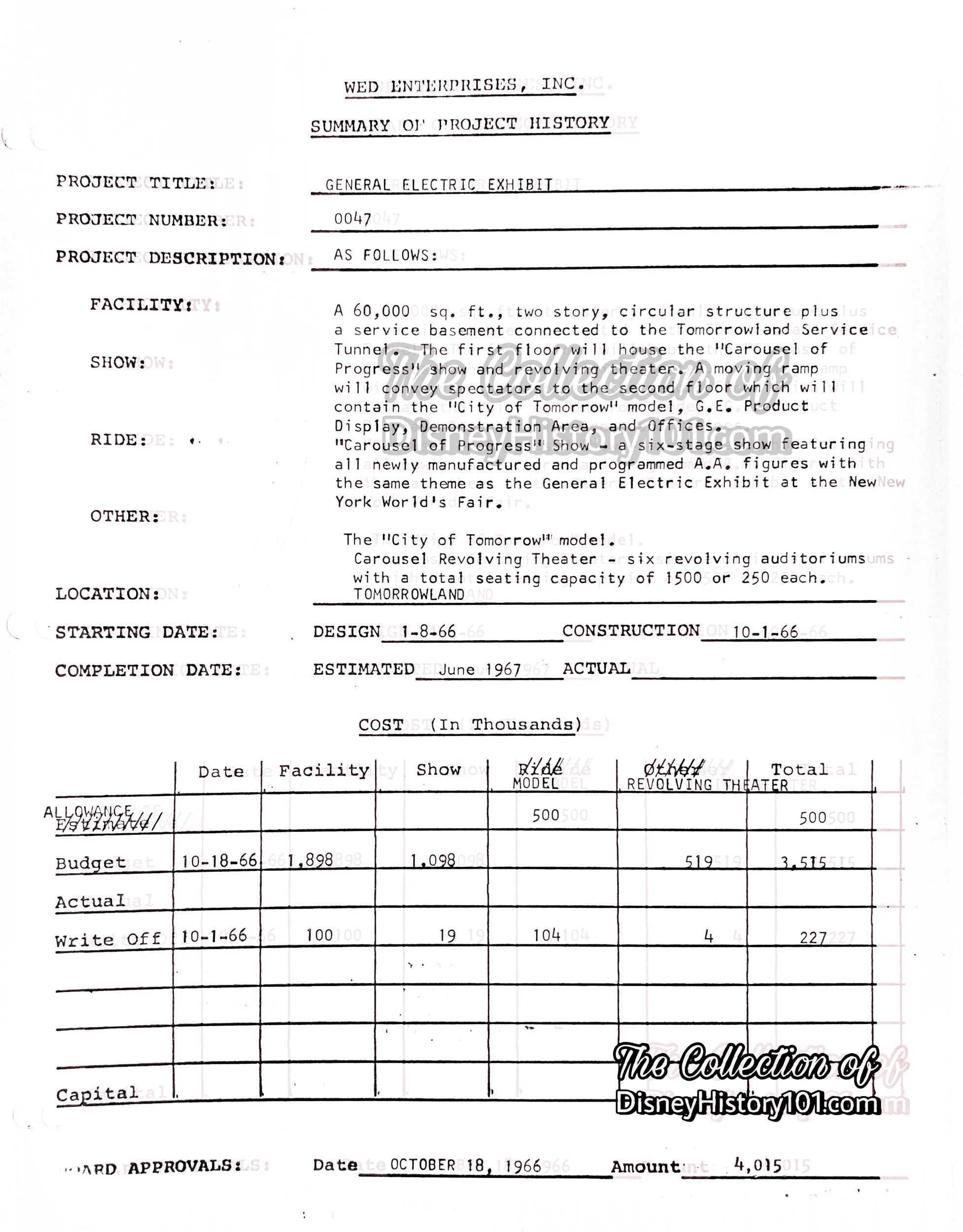
By 1965, “Progressland at Disneyland: a proposal for the General Electric Company from Walt Disney Productions” was published. The more-than-27-page publication contained a foreword, followed by sections about Progressland at the Fair, Disneyland U.S.A., Introduction and Audience, Area Impact, California and the Western Market, Disneyland Expansion, New Tomorrowland, Progressland at Disneyland, Marketing and Public Relations Payoffs, Basic Terms, Cost Estimates, and a Summary.
On February 3, 1965 WED Enterprises was no longer personally owned by Walt Disney, but was now incorporated as a subsidiary of Walt Disney Productions. MAPO was also soon incorporated on July 23, 1965. Before long WED Enterprises, Inc. and MAPO would work together to produce the Disneyland Show. WED Enterprises, Inc. would master-plan, design, and engineer the concepts. MAPO, Inc. would take those plans and fabricate, assemble, and test the show’s prototype systems and components (including those of the Audio-Animatronics figures). A three dimensional model of the new Carousel Theater (which can be seen in “Summer ‘67” brochures and inserts) was created by Concepts in Miniature a California Corp. (then located in Irvine Industrial Park).
Herbert Ryman created 1” to 1’ scenic background suggestions which would be visible through windows (as of Act 1). Some of these murals are considered Trompe L'Oeil, a painting or design intended to create the illusion of a three-dimensional obiect.
A “moving system” was designed by Bob Gurr.
According to “Progressland at Disneyland: a proposal for the General Electric Company from Walt Disney Productions” ©1965: “In New Tomorrowland, … a unique new People Mover the WED-way, will carry guests on a scenic tour throughout New Tomorrowland -even weaving in and out of new exhibits sponsored by leading American industry. (Douglas Aircraft, the Bell System and Monsanto, for example, are all discussing expansion of their popular attractions.) It is here, in this exciting new part of Disneyland, that the proposed General Electric pavilion would be located ... The significance of Disneyland's plan for New Tomorrowland is seen in the projected dollar investment: New Tomorrowland alone represents an investment roughly twice the original cost for all of Disneyland.”
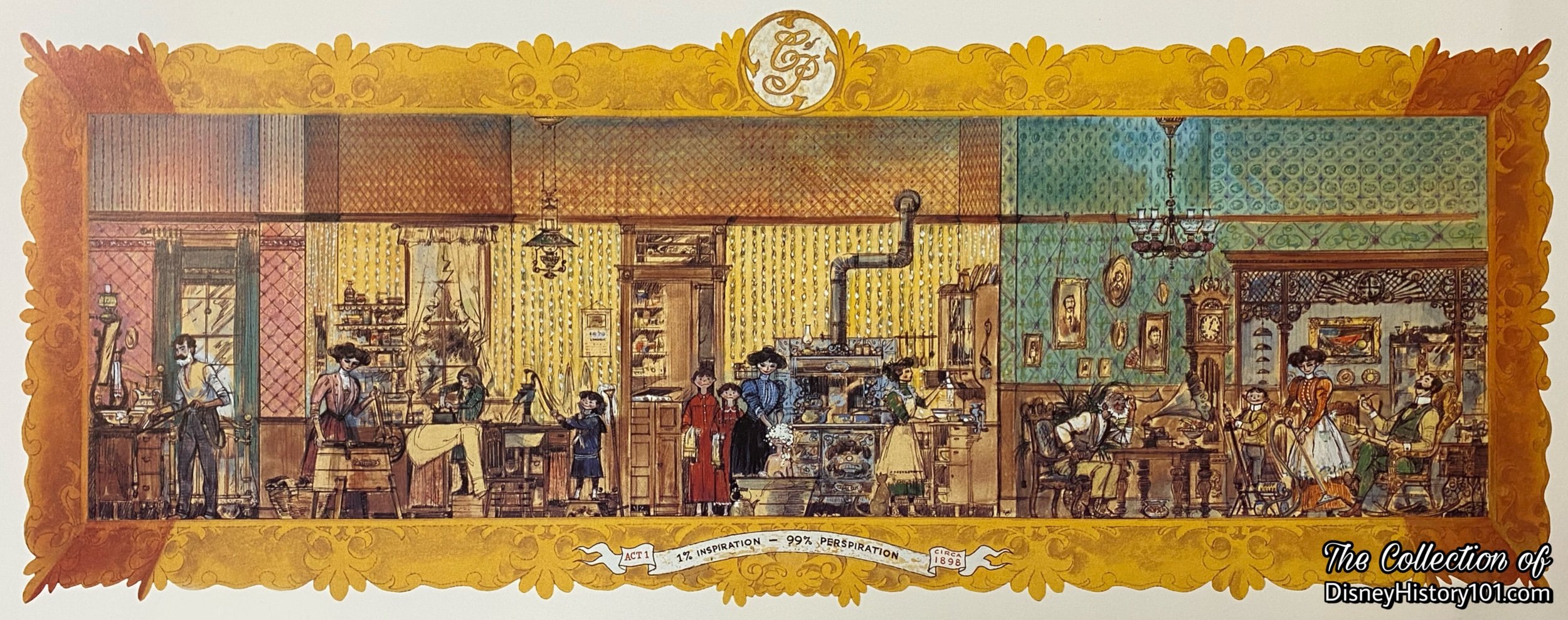
It’s been said that the “modeling process will take many forms and many scales, often ranging from tiny paper cutouts, all the way up to full scale mock-ups. Whichever way the process goes, however, the WED designers think big by first building very small.” [THE DISNEY THEME SHOW: an introduction to the art of Disney outdoor entertainment] Here, four generations welcome audiences into their home.
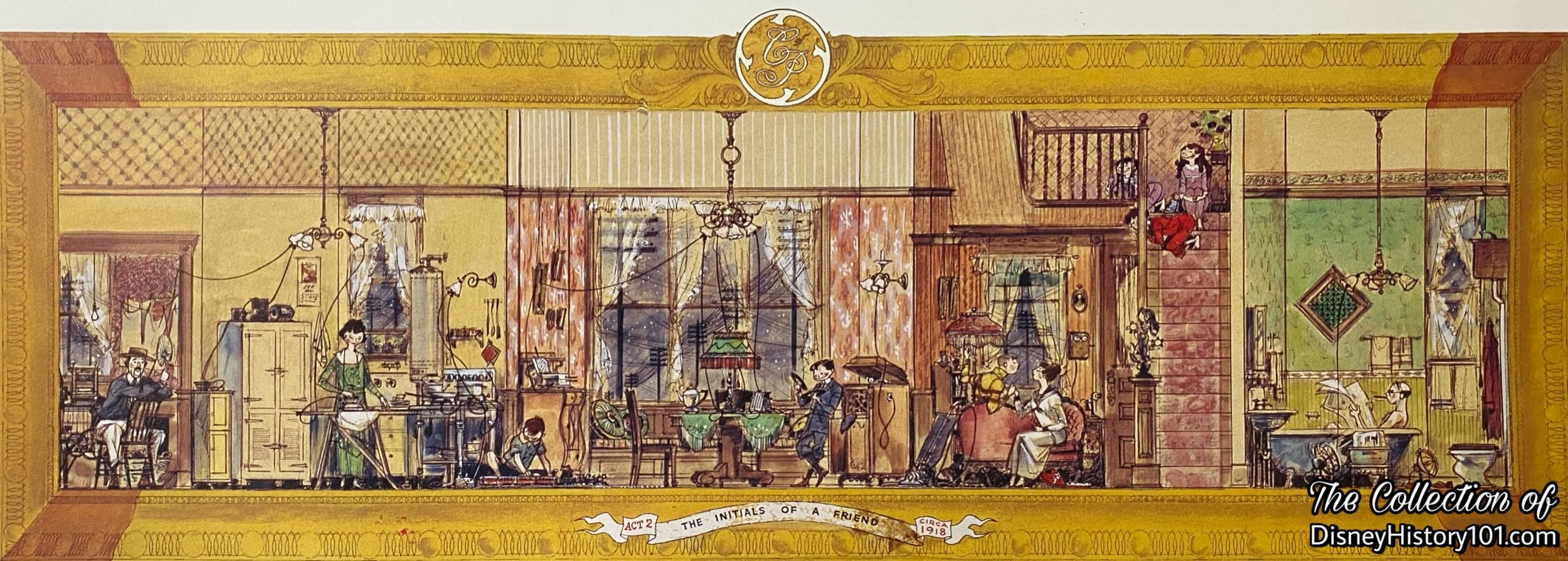
According to “THE DISNEY THEME SHOW: an introduction to the art of Disney outdoor entertainment; Volume 2”: “What we create here is a storybook realism… an essence of realism and authenticity... more utopian in nature, more romanticized, more like what guests imagined it would be. All the negative, unwanted elements are carefully programmed out, while the positive elements are not only retained but in some cases even embellished for better entertainment.” This guiding principle has affected Disneyland Show since the beginning and is illustrated by the show scenes of the Carousel of Progress.
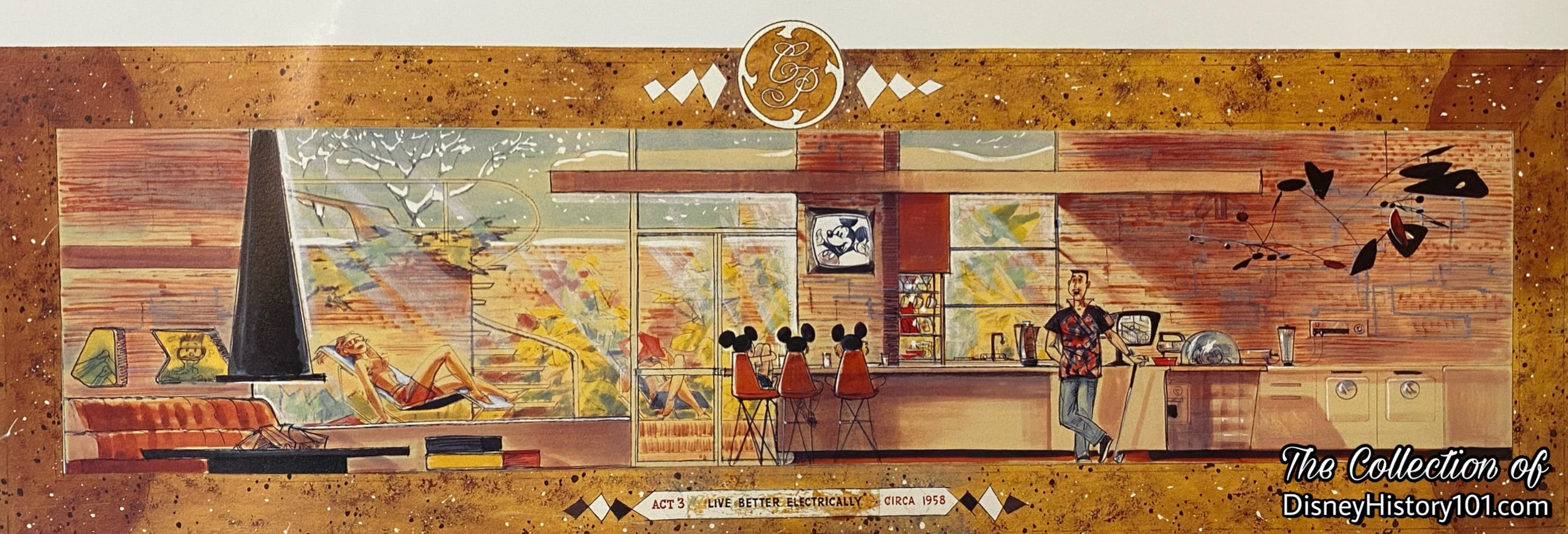
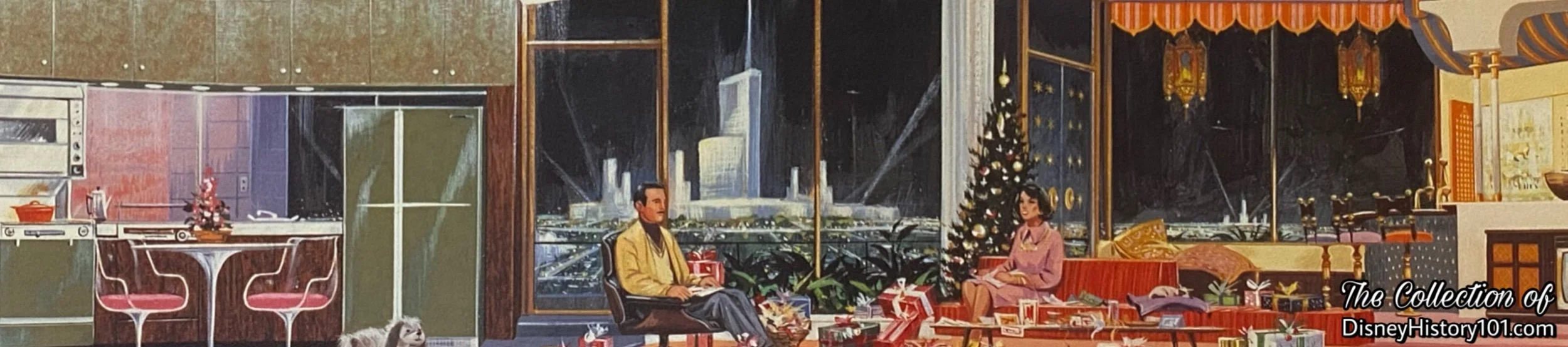
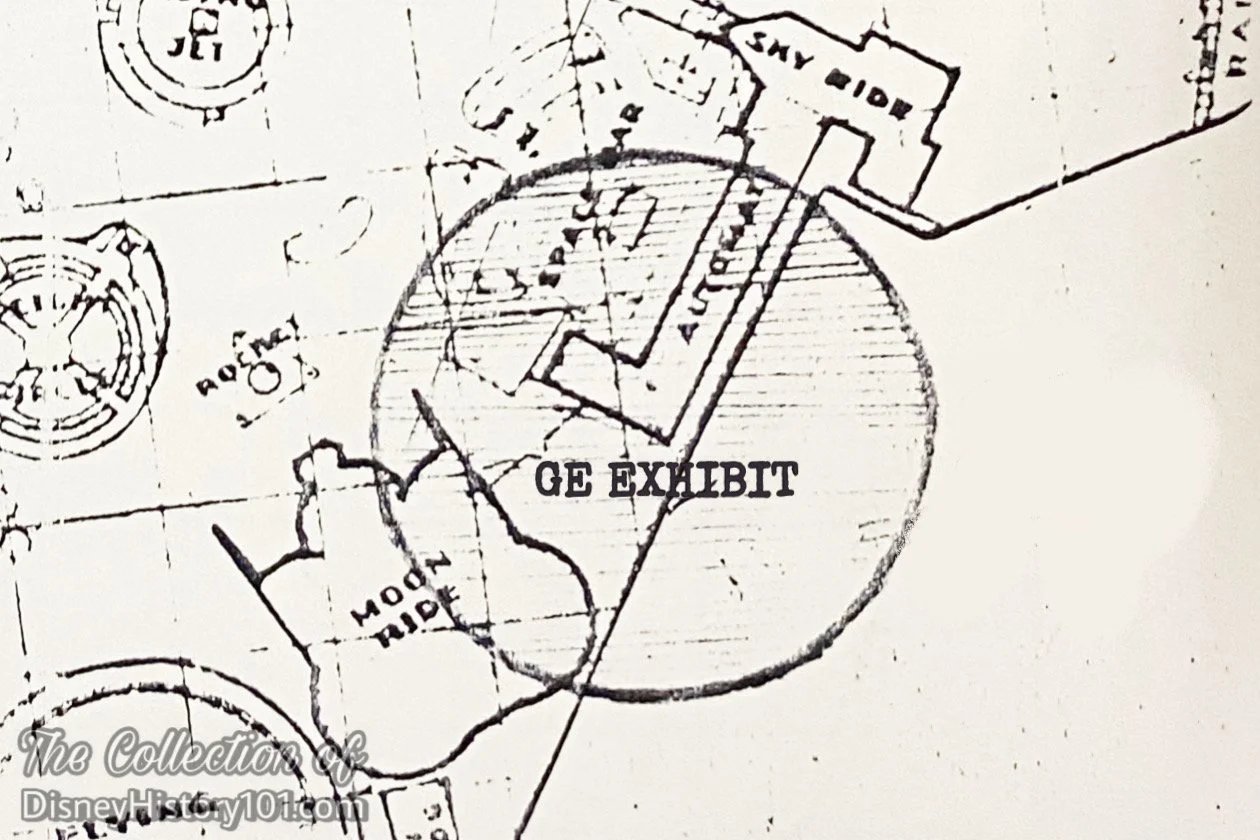
Soon the site plans and small scale models were translated into the full-scale, 200-foot-wide (83,000 square-foot) Show Building that was constructed at Disneyland to house the new attraction.
Bill Justice recalled: “The Carousel of Progress had been moved to Walt Disney World and its round building was vacant. The most unique feature of the Carousel was its imaginative audience seating arrangement. It literally resembled a carrousel with the show in the center and the seats circling around outside. The show area was divided into six equal stages - a load/introduction section, four show sections, and a closing/unload section. Guests were seated in the outer part of the circle. When the shows in each section were complete, the entire outer portion would rotate to the right one section. It was a very efficient method of presentation.” [“Justice for Disney”, p. 101]
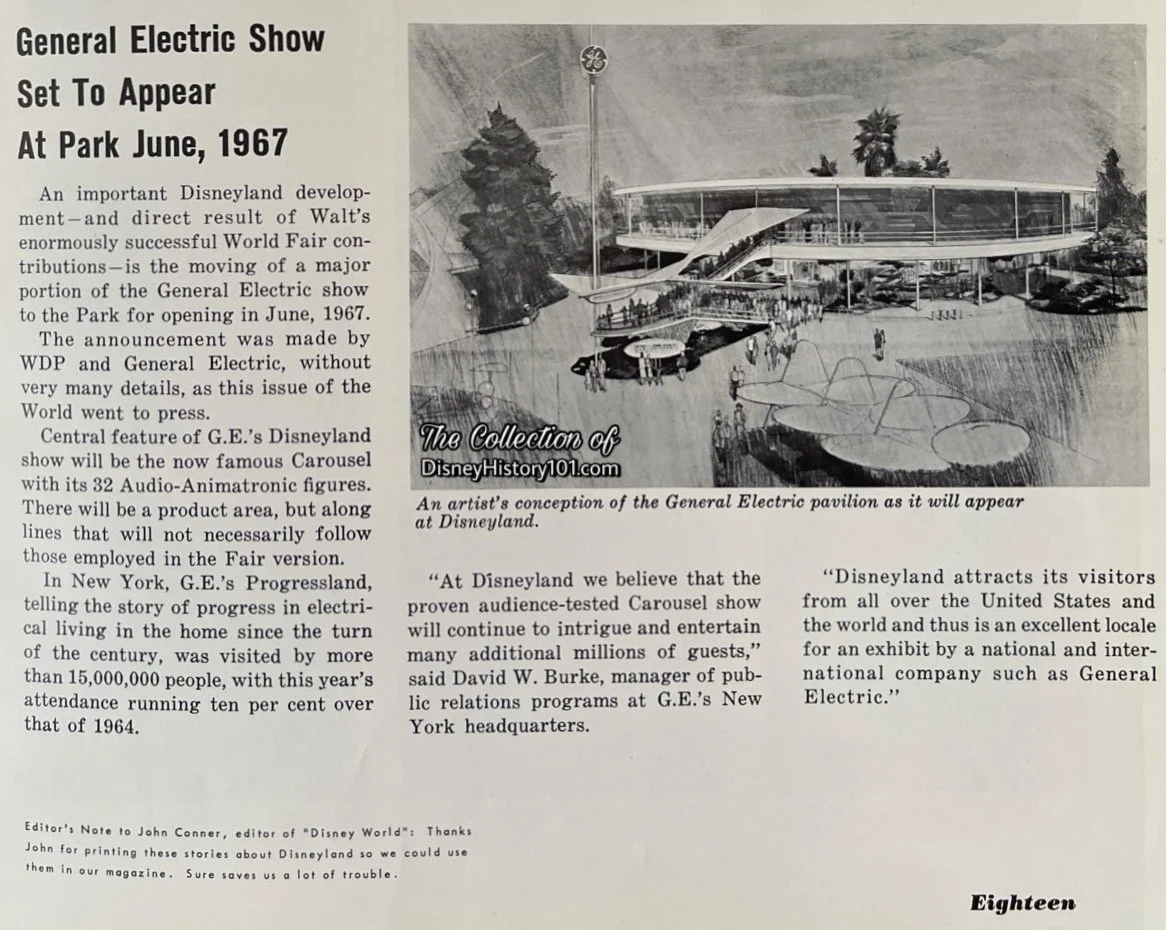
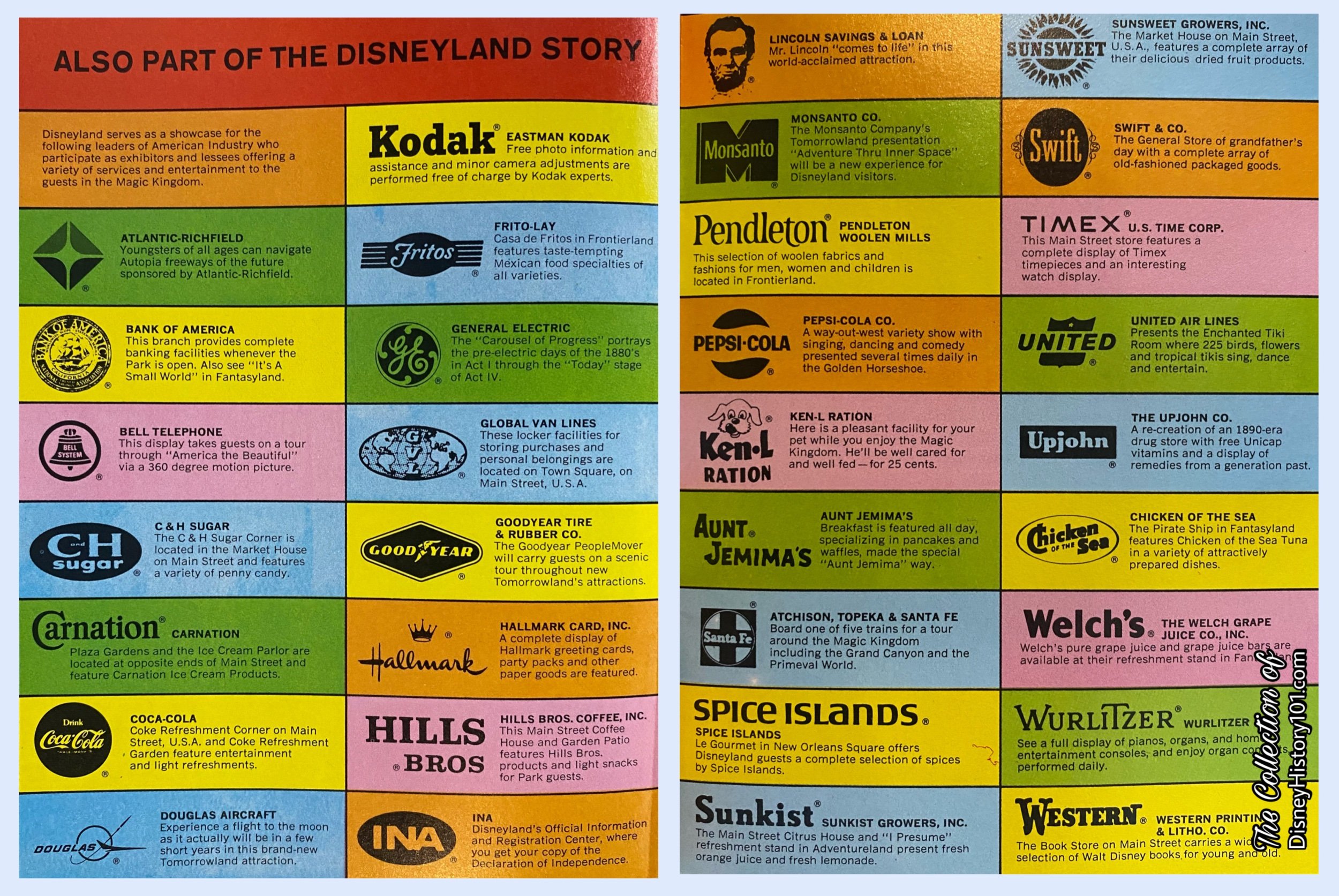
“A Brief ‘Counter-Melody’ of Notes about the Show’s Theme”
According to “THE DISNEY THEME SHOW - an introduction to the art of Disney outdoor entertainment”: “Important are the sounds which permeate the scene, for without them, the theme show is a silent movie . . . but with them it is a symphony of music, effects, and natural sounds that the finest stereo system in the world can't duplicate.”
Of special mention is the show’s powerfully uplifting original theme “There’s a Great Big Beautiful Tomorrow,” which was written by the duo of Richard Sherman and Robert Sherman (who composed other original songs for Pirates of the Caribbean, It’s a Small World, and The Haunted Mansion). Just think for a moment about the significance of the tune which defined the Carousel of Progress show. The thematic anthem continued at Disneyland from July 2, 1967 to September 9, 1973. Since then, the song has been heard in east coast attractions like Horizons, Walt Disney’s Carousel of Progress, and Innoventions, in addition to animated feature films and television shows. Though the show has long since departed from Disneyland, the Sherman Brothers melody and lyrics continues to be hummed and sung by individuals who have never taken a spin on the Carousel of Progress. The Disney tradition of original songs created for Disney Parks attractions has had a rather short (but meaningful) legacy in songs like “Golden Dreams” at Epcot’s American Adventure and “Listen to the Land” at The Land pavilion. This is a cause that was championed by former Walt Disney Imagineering President, Vice Chairman and Principle Creative Executive, the late Marty Sklar. And so, as long as Disney musicians continue to “dream with mind and heart,” I am confident that the reality of more original Disney Parks story songs are “just a dream away.”
Remember that concepts were once created for “Edison Square” (entered from Town Square, Main Street U.S.A.), but it was never fully realized. We always believed that this attraction would have felt right “at home” situated in Main Street U.S.A.’s east-side Backstage area, with the entrance located on East Plaza, Main Street U.S.A. and an exit into Tomorrowland (offering a smooth transition between the past and the future). However, once realized, the attraction would be housed in a brand new structure located on the exact site of the old Space Bar and not far from the Rocket to the Moon! While “Edison Square” never really fully materialized, the humorous theater show telling the history of electricity, had finally been imaginatively engineered for Disneyland!
“Before we begin, we would like to remind our guests no eating and no smoking while in the theater.”
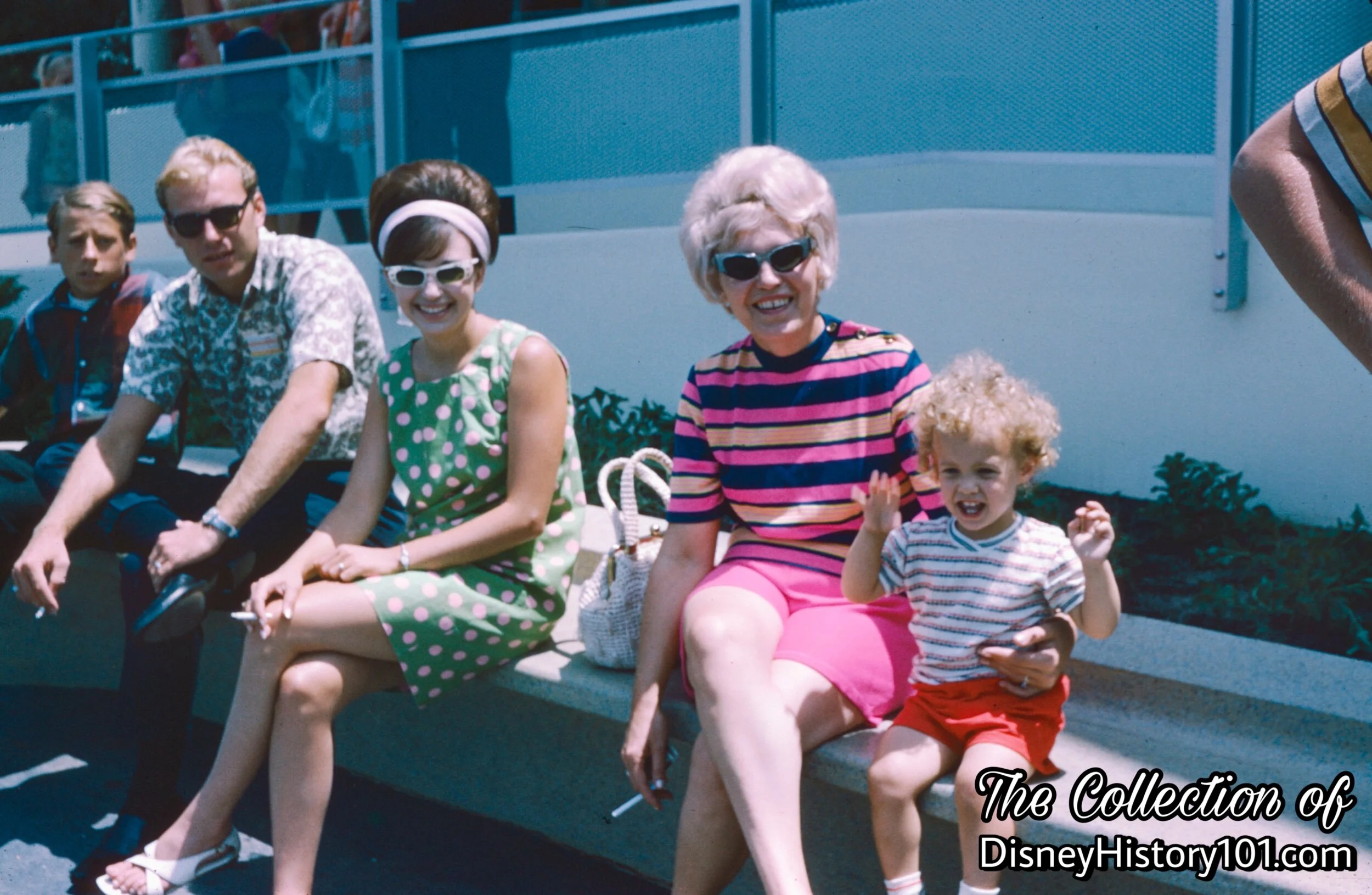
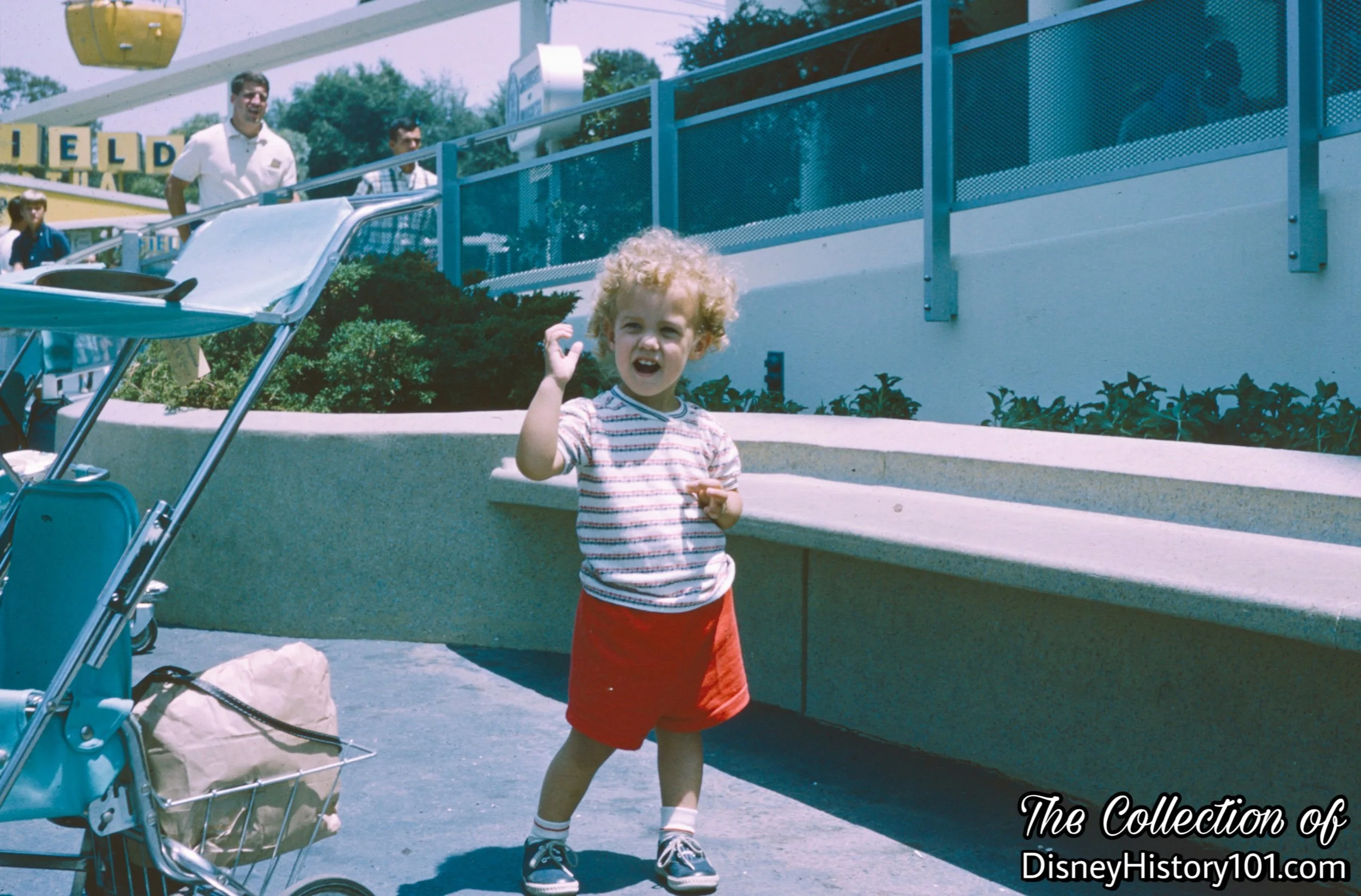
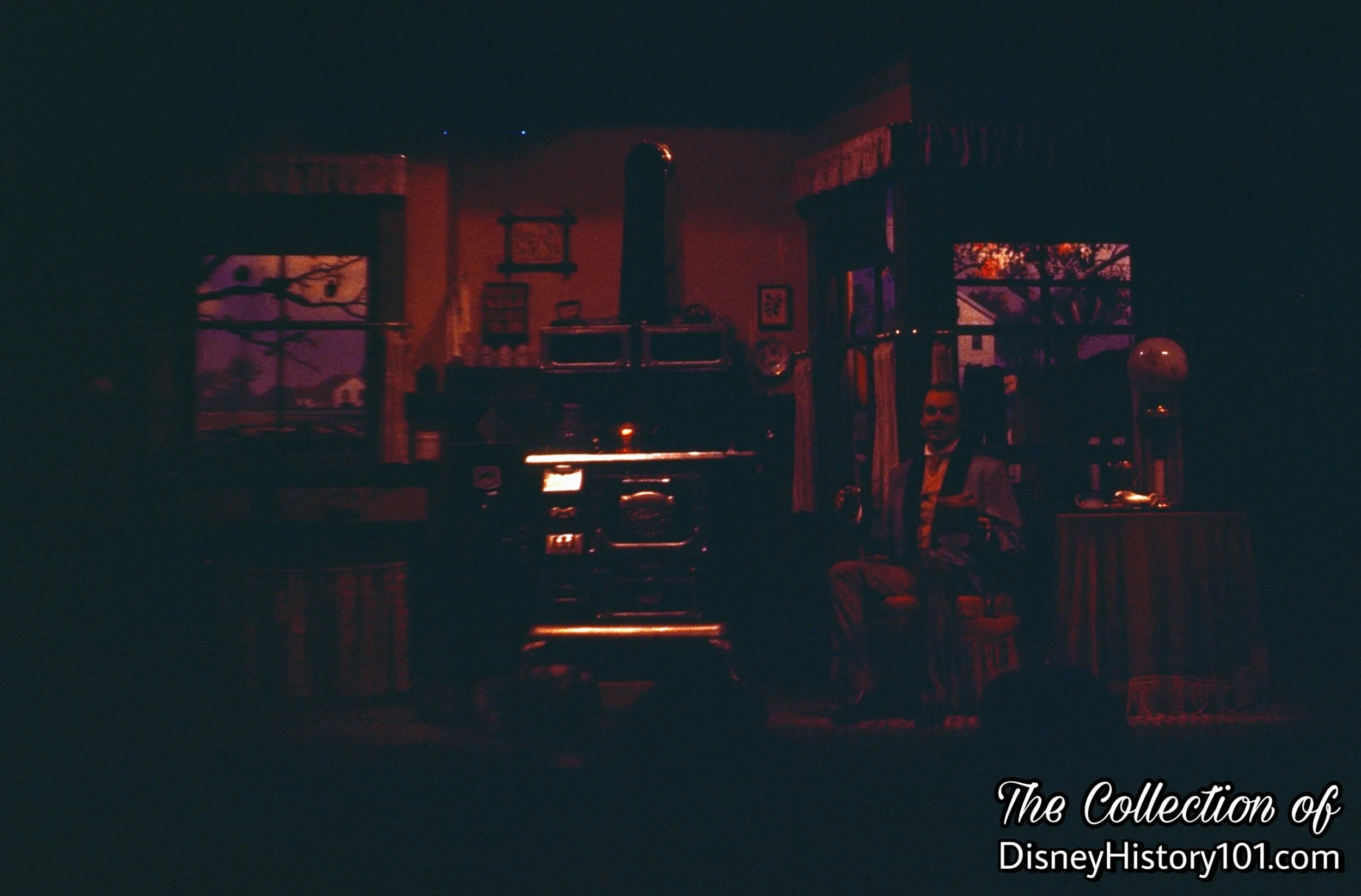
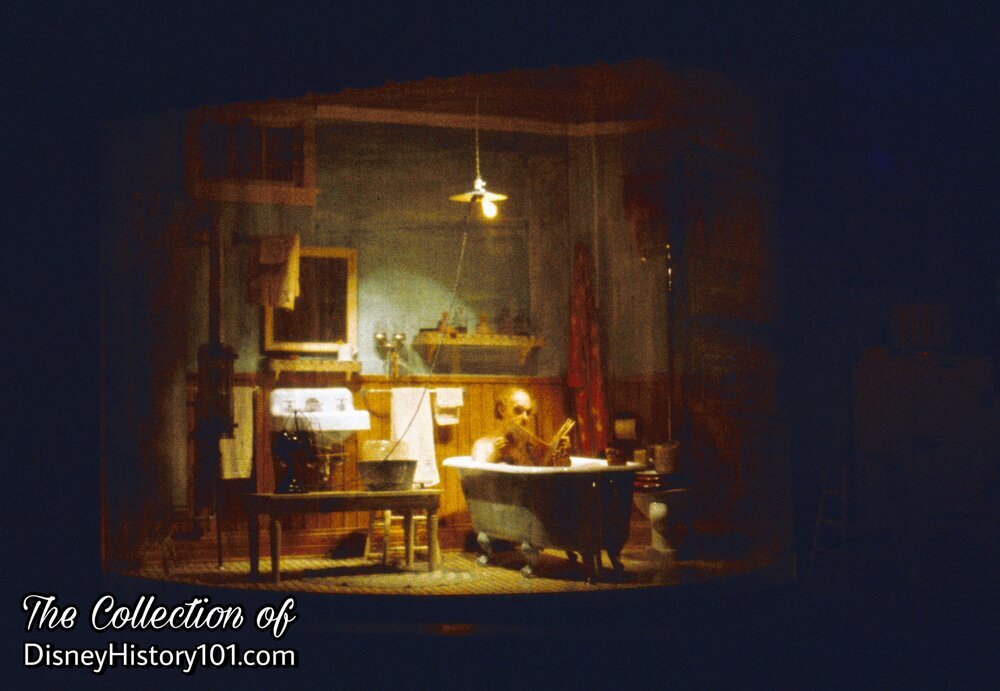
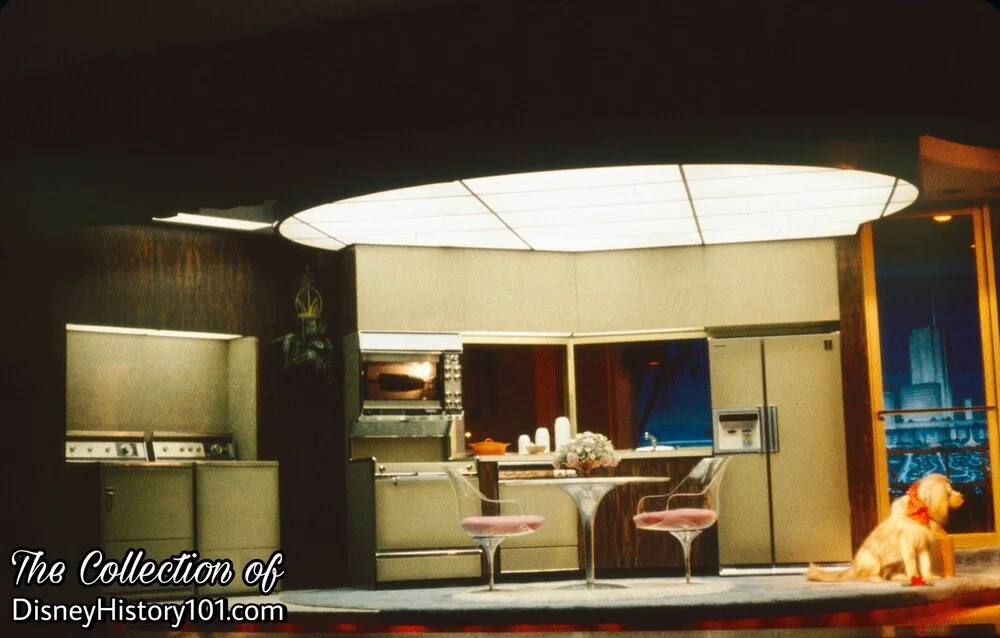
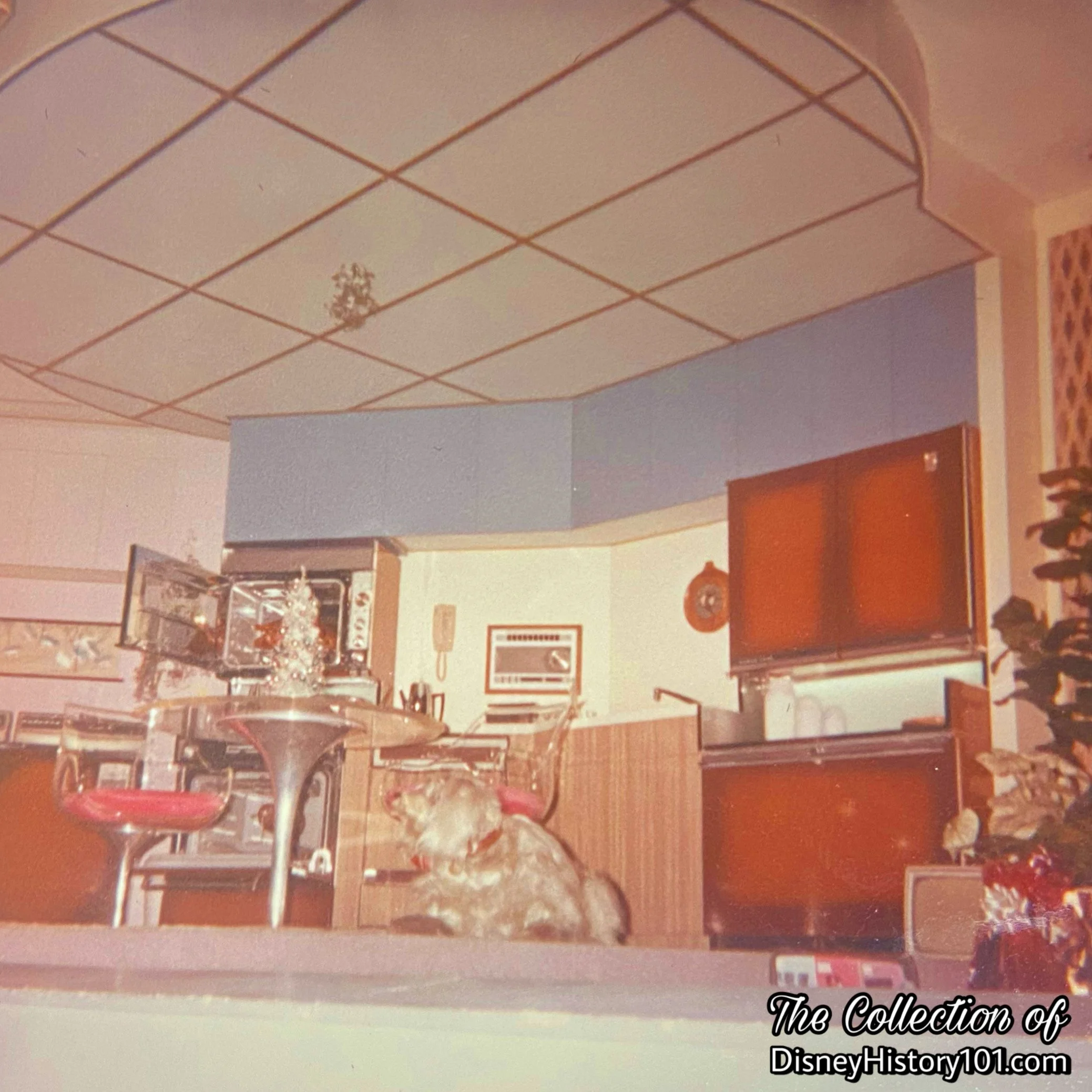
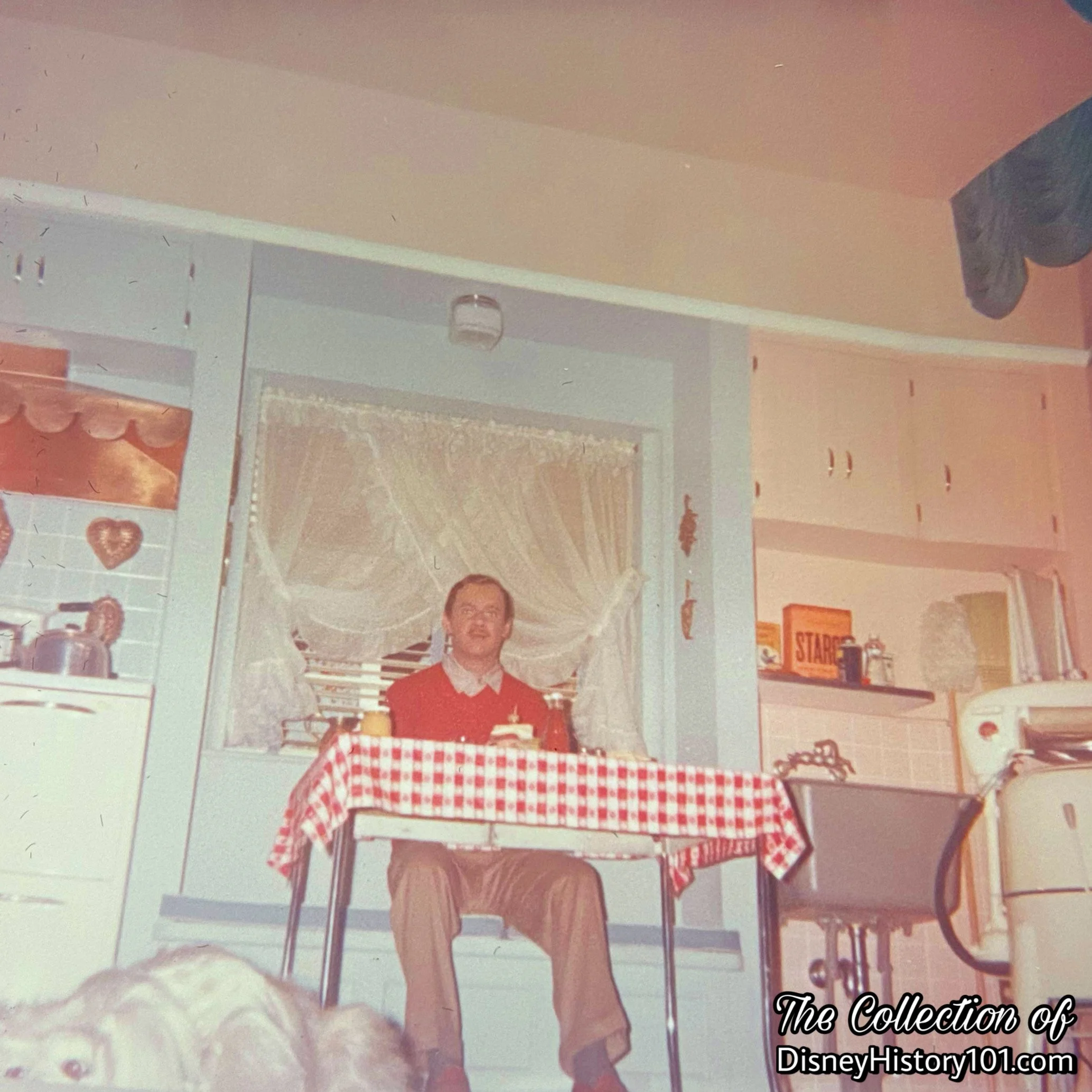
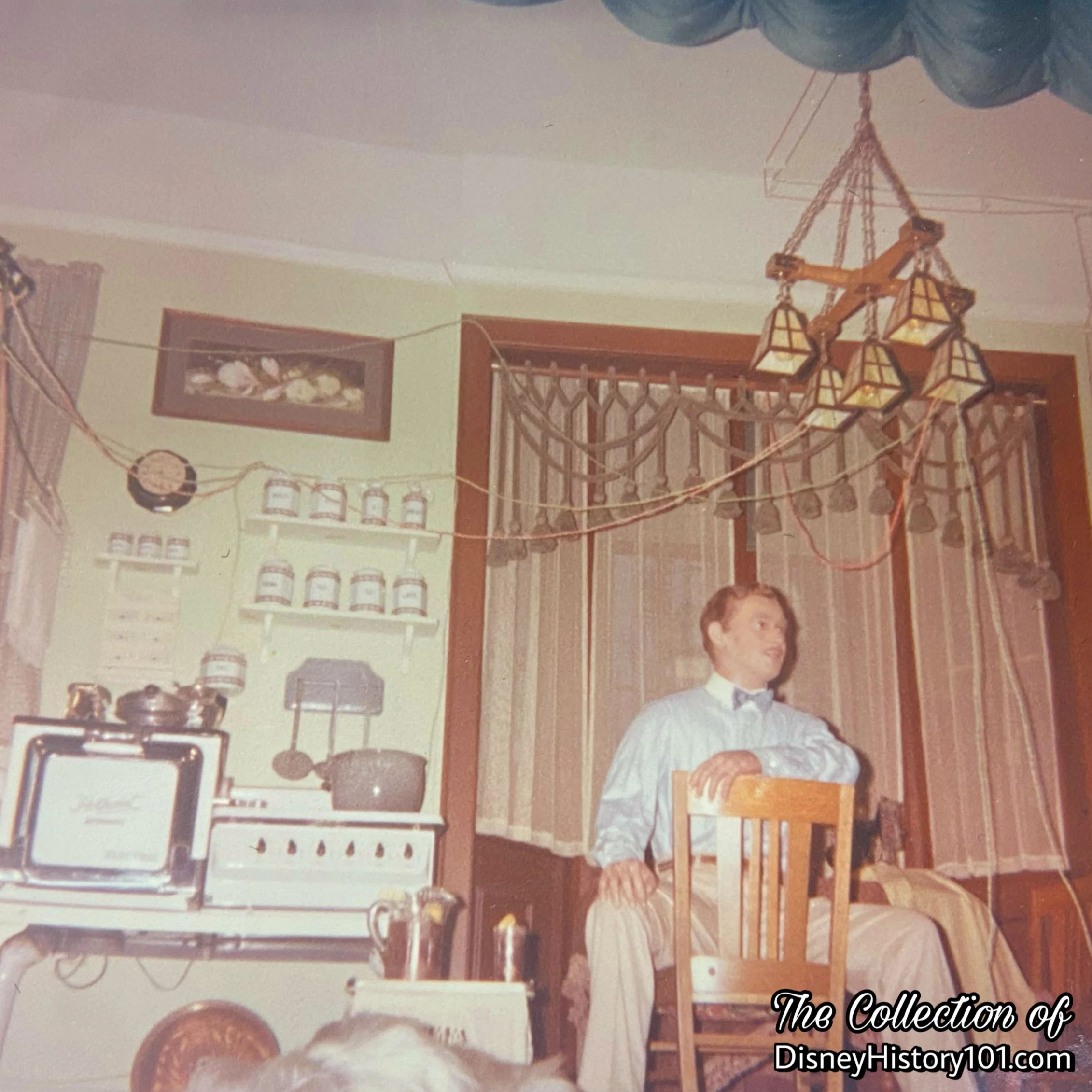
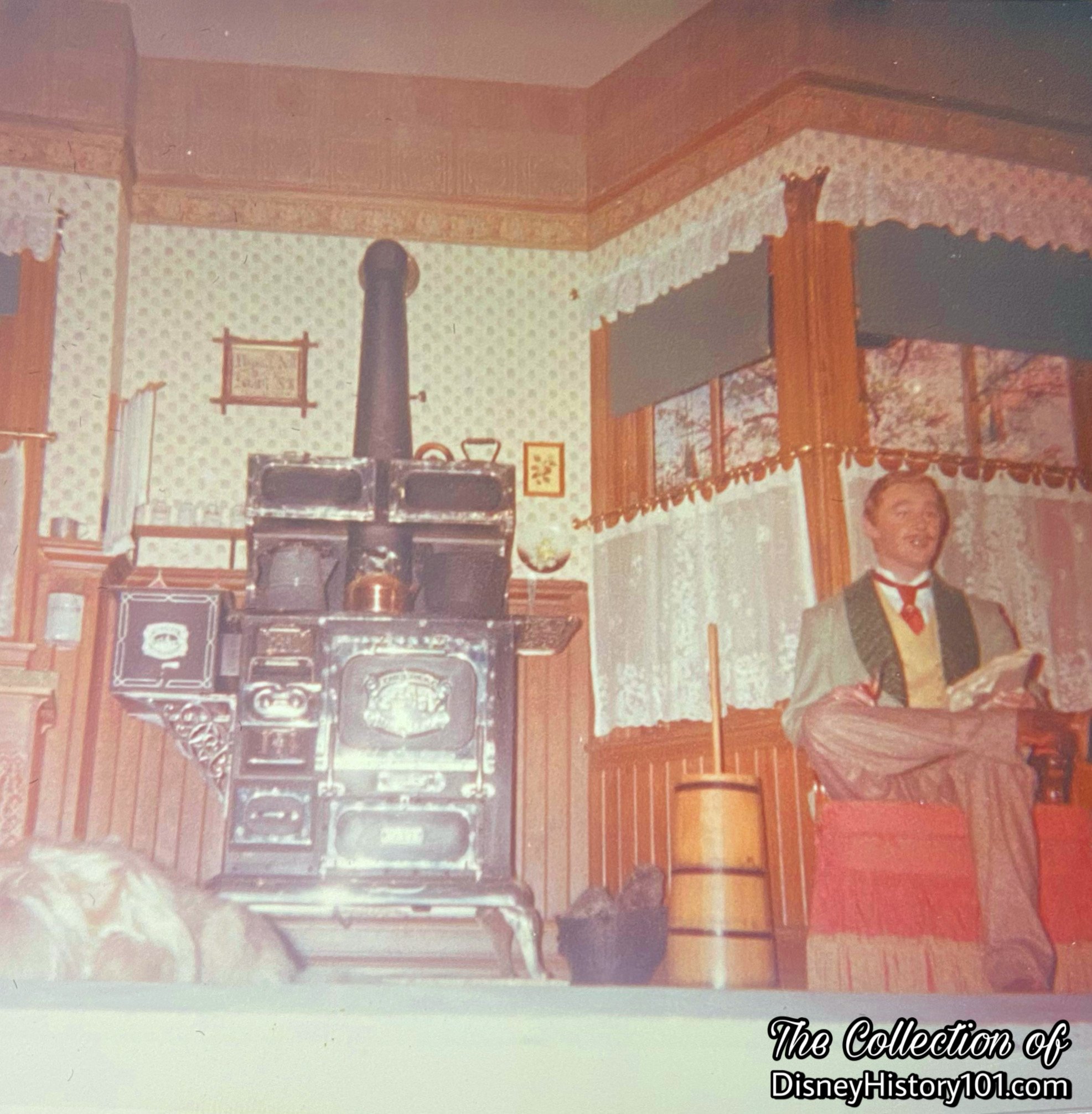
During 1972, General Electric (through arrangement with the DRC) offered a Christmas sale on small household appliances to Disneyland Cast Members. This sort thing was not uncommon during the era of their Participant Sponsorship.
“The Progress City Post Show”
After guests passed along to the top of the moving Speedramp, they received a three-minute presentation which was redeveloped from the 1964/1965 New York World’s Fair, to become “an entire community captured in capsulized realism, featuring moving transportation systems and thousands of buildings”, according to one New Tomorrowland Press Release document. Herb Ryman created numerous concepts of this city in 1965. During 1966, WED Enterprises, Inc. opened project (No. 0047) for General Electric Progressland.
Once debuting at Disneyland the Electric Community of Today of Progress City was a “scale model (1/8 inch = 1 foot), fully animated city,” and “an all-electric community that can be built today through applications of the most advanced technologies. Totaling 6,900 square feet (115 feet by 60 feet), Progress City’s 20,000 trees and shrubs, 4,500 buildings, and 1,400 street lights are authentic to the smallest detail. Many structures feature interior lighting, and furniture inside can be seen from some windows. Progress City is complete with 7 types of transportation, including rapid transit monorails, electric trains, the WEDway PeopleMover, automotive, transporters (electric cars), moving sidewalks, and today’s jets. Throughout Process City, 2,450 of the vehicles are actually moving. There is a climate controlled ‘center city’ and a wide variety of night-lighted amusement areas, sports stadiums, an airport, atomic power facility and other necessities. It’s full-length cyclorama evening sky background measures 160 feet long by 23 feet high. The overall design of General Electric’s Progress City model in Diseyland is based on a concept developed by Walt Disney for the Experimental Prototype Community of Tomorrow (EPCOT) he had planned for Disney World in Florida. Passengers riding aboard the PeopleMover visit this area of GE’s pavilion for an exciting view of Progress City during an adventure throughout Tomorrowland and many of its major pavilions.” [“Information on Disneyland’s New Tomorrowland - A World on the Move” by WED Enterprises, Inc.]
The model was similar to what was depicted in a short film narrated by Walt Disney. The film showcased a weather-controlled city radiating from the central core (or hub) designed for pedestrians with underground electrically-powered transit systems like monorails, PeopleMovers, and other vehicles. The model in the General Electric Theatre was just one of many practical mechanical applications of air-conditioning - requiring a constant temperature of 72 degrees to prevent expansion and contraction of the hundreds of wires, tracks, and plastics used in this attraction.
“Maintenance”
In maintaining the magic after the Park closes, the staff take over with brooms, mops and dustcloths. Special attention was given to marred walls, posts and furniture. Items with marks that didn’t wash off were replaced or repainted. The Floors were waxed and buffed to preserve their beauty and protect them from the thousands of feet that scuffle over them each day.
Progress City kept maintenance crews busy. Nightly, the Progress City glass was cleaned. There were more than 3,000 tiny light bulbs in the future city, and the light level can be individually adjusted in each model building.
Unseen, Disneyland Sound Mechanics and Projectionists are perhaps the best hidden of the craftsmen in Maintenance. They were truly “backstage” but one could also find them below the stage as at the General Electric show. Below its six “Audio-Animatronic” stages was a large room containing panels of controls which coordinated the 32 figures above. The Carousel theatre was driven by six 20-horsepower D.C. motors. A special memory circuit told it when to start, stop and how far or fast it must go. There, soundmen Jim Becker and George Short watched four monitor screens and four 35mm sound tapes. Those tapes handled all of the music, both inside and outside the pavilion.
If the sound and animation on an attraction were not working right...or are not coordinated...the show was not up to Disney standards. The guest was being shortchanged. Maintenance of equipment was the responsibility of the Maintenance Division, and the working foreman was responsible for regularly checking to make certain everything was working O.K. The foreman would notify the supervisor and indicate any problems on the Daily Maintenance Report. Disneyland was the only place in the world where Academy Award winning designers checked every detail of every foot of its huge stage. The working foreman would find out how the stage settings were designed. Then, it was part of his duty to check to make sure that they remain that way.
Yes, finally (by July 2, 1967), the Carousel of Progress was one of eight new Disneyland attractions which carried total Disneyland investment to $95 million.
Most carousels (like King Arthur’s Carousel) go round and round without getting anywhere, but on this one (at every turn) we’ll be making progress. “The first three acts of the show would remain as they are in New York, showing, in sequence, the pre-electric home, the early-electric home, and then the advances that so-improved life in the early 40’s.” Still, four generations (from the 1890’s, 1920’s, 1940’s, and the c.1967-1968 present) welcomed Guests into their homes to hear how electricity has contributed to “progress” and better living.
This whole drama played out before many audiences a day. According to “Disneyland Attractions Time Studies 1968”:
Theoretical Hourly Capacity - 3,600
Instantaneous Capacity - 1,500
Audience Control Capacity - 901
Capacity Per Theater - 240
Cycle Time - 24:00 (Car)
Load Time - 4:00
Trip Time - 28:00
Unload Time - 4:00
Dispatch Interval - 4:00
Trips Per Hour - 15
“Back of House”
While many guests may recollect the “Tron Tunnel” through which the PeopleMover trains would pass as they made their way over the upper level of America Sings, Cast Members might recollect the efficient Utility Tunnel (pictured above). This concept would inspire the Utilidors - “Walt Disney World's vast subterranean structure, beneath the Magic Kingdom, that acts as a travel corridor and houses backstage service functions.”
As a “sidelight,” unbeknownst to most Disneyland Guests, the building was also home to a “Train Storage Area” as well as offices like the Entertainment Offices (located above the Carousel of Progress). Here, were offices dedicated to Show Development, Production, and Characters and Parades. On some desks, one may have spotted matchbooks (like the one pictured above), which were often used as a means of advertising for Disneyland Participants like General Electric.
Later, the offices continued to function during the period of America Sings, and were known to Disneyland Cast Members (for that period) as the America Sings Conference Center. Not every Cast Member passed through this area, but perhaps you recall attending a DRC sponsored meeting here, like those of the Disneyland Sign Language Club.
Finally, the Carousel of Progress ended its six-year run at Disneyland, on September 9, 1973. “Approximately 30 million guests entered the theater’s doors” by that time, according to ““Information on America Sings” (prepared by the Disneyland Marketing Division, 1974).
The Show would go on, moving back to the East Coast (opening at Walt Disney World in 1974). Within just five years of its opening, over 40 million people would enjoy the 20-minute “show.”
There were some differences to the show. The theme song (“There’s a Great Big Beautiful Tomorrow”) as well as some of the props from the Disneyland show were not included in the Walt Disney World show. Above, we’re looking at one such (c. 1964-built) mid-21st century-modern dining room set! I know that those conflicting dates sound chronologically confusing, but it will all make sense in a moment!
These rarely-seen (metal, synthetic fiber, and lucite) chairs and table are actually props, originally crafted by Walt Disney Studio artists for the Carousel of Progress (in the General Electric Pavilion at the 1964 New York World’s Fair). During the late 1950s (or, “mid-century”), many companies (like Knoll Associates of New York, for instance) were manufacturing single pedestal furniture models similar to these. The prop furniture was staged within the 21st-century themed fourth act of the show - a future where (to quote from another popular attraction) “nature’s building building blocks are put to use for man” and there are “structural applications of plastics”. When the World’s Fair ended, the dining room set furnished the Disneyland version of the attraction from 1967 to 1973. However, when the General Electric Carousel of Progress Show ended its run at Disneyland, many of the sets were reimagined for the Walt Disney World incarnation, and many of the props ended up in private collections or were even sadly disposed of.
Did you know that a very similar and derivative design was prepared in 1969 by Richard Hebner for guest rooms of the Contemporary Hotel at Walt Disney World?
I would like to add, that these pieces would still truly look “at home” in anyone’s abode, in “the possible present.” That is exactly what occurred when this set was auctioned (as LOT#0709) in “Walt Disney - The Man, The Studio, & The Parks”, a Disney-themed auction thru Van Eaton Galleries (that occurred on December 5th, 2020). The set sold for $48,750 and is now part of a private collection.
This 21st Century Coffee Table Prop was also part of some private collection before being auctioned twice (most recent through Van Eaton Galleries). It also currently resides in another private collection.
But, what happened to the Carousel Theater Stage?
*Disneyland Rides & Attractions and Attendance Report, Fiscal Year 1981.
After two years of production, the $6 million America Sings would star 114 Audio-Animatronic animal actors and actresses spread across six comical and musical acts. These would be performed on “four separate stages depicting different geographical settings” inside the Carousel Theater.
“Show Design Concept Artwork”
Walt acknowledged “Everything here at Disneyland and the Studio is a team effort.” A team of WED Enterprises, Inc. artists (based in Glendale, California) planned, designed and developed the Disneyland Show. Among these production designers was veteran Studio character animator Marc Davis and Al Bertino (both, who primarily wrote the show script, while Marc was responsible for many of the character designs). Blaine Gibson (who was responsible for earlier characters produced by WED Enterprises) would be tasked with translating Marc’s two-dimensional designs into three-dimensional figural form.
You may recall seeing prints of some of the early concept designs decorating rooms of the Garden Villas at the Disneyland Hotel.
“A Magical Joyride to Musicland U.S.A.”
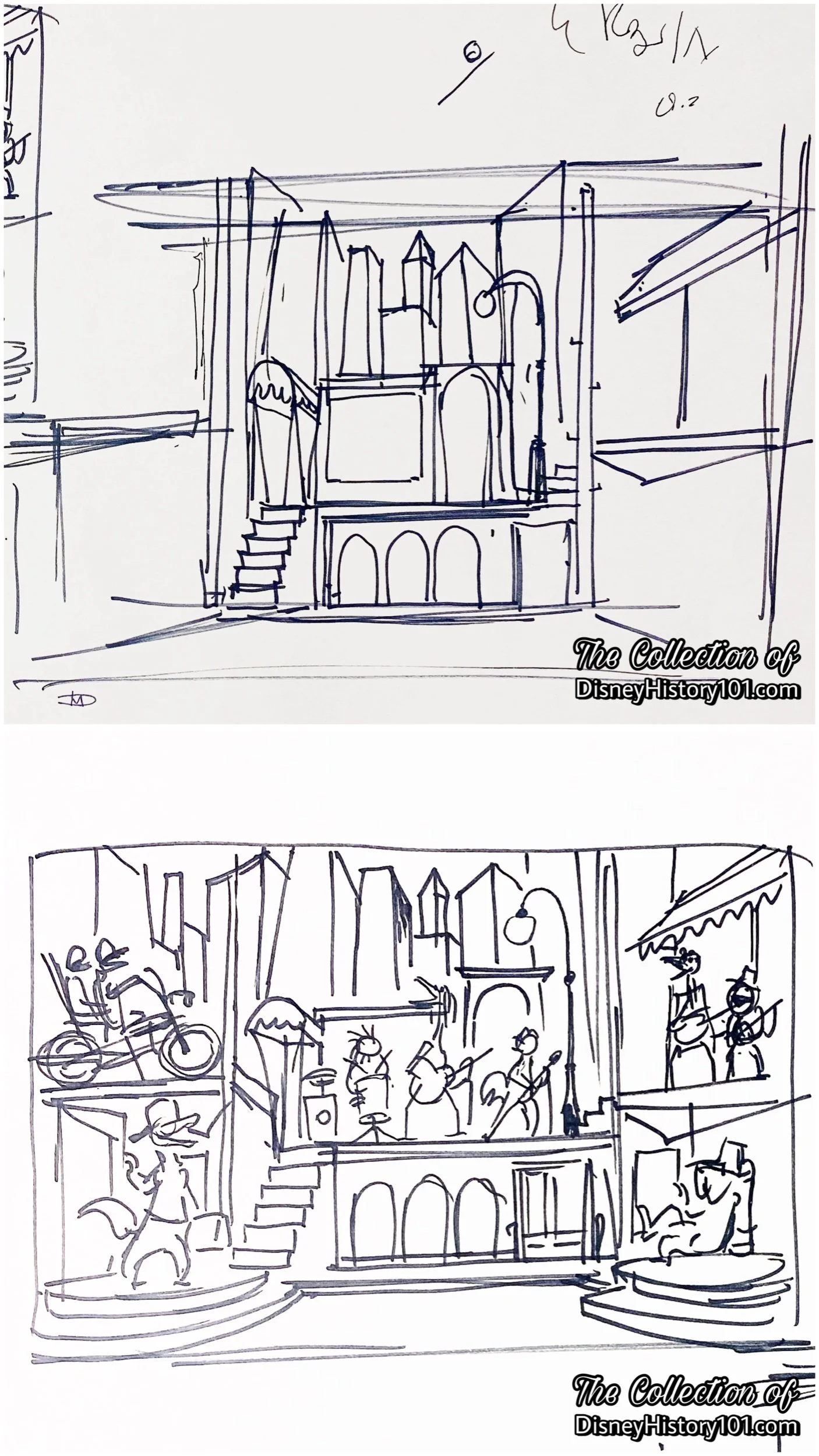
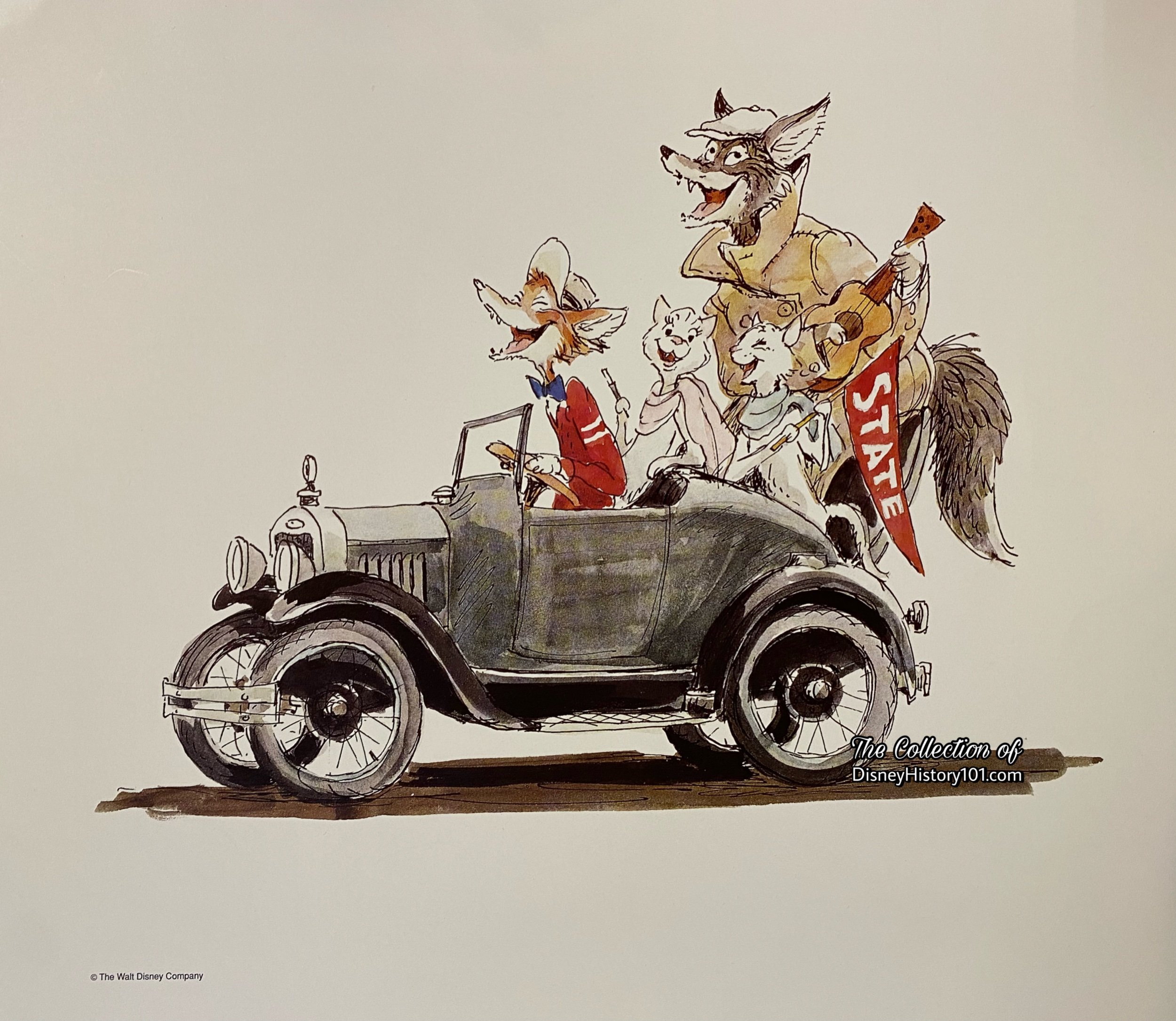
“Audio-Animatronics”
Many Disneyland attractions feature Audio-Animatronics figures. Developed by WED Enterprises, this amazing system utilizes pneumatics hydraulics and electronics to animate human, animal, and other three-dimensional figures.
“Audio-Animatronics Animation”
Roger Broggie (the humble Walt Disney Studio Camera Repair Department machinist who had assisted with the fabrication of Walt’s Carolwood Pacific Lilly Belle engine) had fashioned the first ever “cam and lever” Audio-Animatronics figure in 1951. This led to Roger’s involvement in the creation of the prototype Mr. Lincoln Audio-Animatronics® figure, work on the Enchanted Tiki Room bird cast, and naturally his supervision over the assembly of the America Sings show and animation.
Bill Justice (who had joined the Disney Team in 1937 and an Animation Director in 1954) had previously become involved with stop motion animated projects for numerous Walt Disney Productions like Noah’s Ark, Babes in Toyland, and Mary Poppins. Considering this, what happened next was only natural. In 1966, “Bill was in the middle of story directing the Winnie the Pooh Honey Tree film when Walt Disney asked him to join the WED staff to program several Audio-Animatronics shows. Since that time, Bill has played an integral part in programming such Disneyland a Walt Disney World shows as Haunted Mansion,” according to Bill’s “Capsule Biography prepared for WED. The Audio-Animatronics programming areas, located in the high bay section of the 1401 Flower Street building in Glendale, California were nicknamed the Hall of Justice - an inside joke tied to Imagineer Bill Justice and the many hours he spent programming there.
The animator's console was the control panel for programming the movements of the Audio-Animatronics figure.
Bill Justice recalled: “Jack Taylor and I programmed the figures together. The script was very complex; character appearances were brief, with characters and props constantly appearing and disappearing on turntables or rising from pits in the stage. We also had to coordinate the movements of several different groups of characters. Each of the segments had to be exactly the same length so all audiences could rotate into the next theater section simultaneously.” [“Justice for Disney”, p. 101]
“Setting the Stage”
Staging is basically presenting the scenes, or actions. The story sketch drawings had already been accomplished by story man Marc Davis with the assistance of Al Bertino. Using those drawings, many sets were created. Some were “Trompe L’oueil” painted set pieces or designed to create the illusion of three dimensions, accented with dimensional props. Most of the rocks and the mountains in Disneyland were products of the Staff Shop. Skip Lange (who had a knack for rock work, and had just spent about a year serving as Field Art Director for a massive rehabilitation of 20,000 Leagues Under the Sea at the Magic Kingdom in Florida) helped Imagineer the massive stages. Model-maker Fred Joerger (who was hired c.1953 to craft the “Barber Shop Quartet” show for “Project Little Man” of “Walt Disney’s Disneyland”) had distinguished himself as Disneyland’s “resident rock expert” by crafting the rocks from plaster, for the river banks. He would make similar contributions to the America Sings attraction at Disneyland. The animation and technical skill of Wathel Rogers (who had also helped develop Audio-Animatronics in 1951) also played a key role in America Sings at Disneyland.
“Effects”
Many effects were “illusioneered” and employed (like the Pixie Dust Projector, producing sparkling dots of light).
“Installation”
Bill Justice recalled: “As work progressed, our biggest worry was not about the show itself. We had a lighting expert named Bob Burns who was constantly walking across the stages looking up and checking the lights. We were always afraid he would fall into one of those pits.
Bob never missed a step. But when opening day came and the attraction was crowded with people, Al Bertino stepped back to pose for a photographer and fell into a rabbit hole. He emerged unhurt, but how I'll never know. It was a six foot drop with pipes and metal all around. He didn't even damage the rabbit. Poor Al was so embarrassed.”
“Show Control”
A new DACS (Digital Animation Control System) technique of controlling America Sings Show elements was imagineered by those WED Enterprises, Inc. technicians (like programmer Dave Snyder), in which “the separate sound, light and figure controls of each scene… [were] isolated from preceding and following scenes through the use of independent program elements,” according to “Information on America Sings” (prepared by Disneyland Marketing Division, 1974). This was similar to the MACS (Micro Animation Control System) used at Walt Disney World, which controlled individual Audio-Animatronics® figures rather than controlling entire performances of Shows through the DACS.
“Music, Voice, and Audio”
Music, as a basic ingredient of showman-ship, covers the Park. Buddy Baker directed and conducted the orchestration.
Scratch tracks (rough sound recordings of the character’s and actor’s dialogue) were prepared.
“Climb Aboard the Swinging Carousel”
“America Sings” quickly progressed “directly from two-dimensional sketches and renderings, to a miniature model; to full-scale sculpture, manufacture and into actual show.” Finally, Disneyland’s 54th adventure opened in the Carousel Theater, on a June 28th, 1974. America Sings would present “a musical joyride through history” (some 200 years of our nation’s musical history, represented by forty separate tunes), as “told through the songs and musical styles of each period,” according to Disney News. The overall show would have a total run time of 24 minutes, comprised of six three minute and fifteen second acts (with 45 seconds of “travel time” between “shows”). This meant that a maximum capacity of 3,600 guests could view the show each hour.
The following day (June 30th, 1974) America Sings was formally unveiled for members of the press during the Disneyland Summer Press Party. The $6 million dollar “E” Coupon Attraction carried the total Park capital investment to more than $150 million. As a “sidelight” the America Sings Show Building was one of three locations inside Disneyland where a genuine American flag was flown (by 1974).
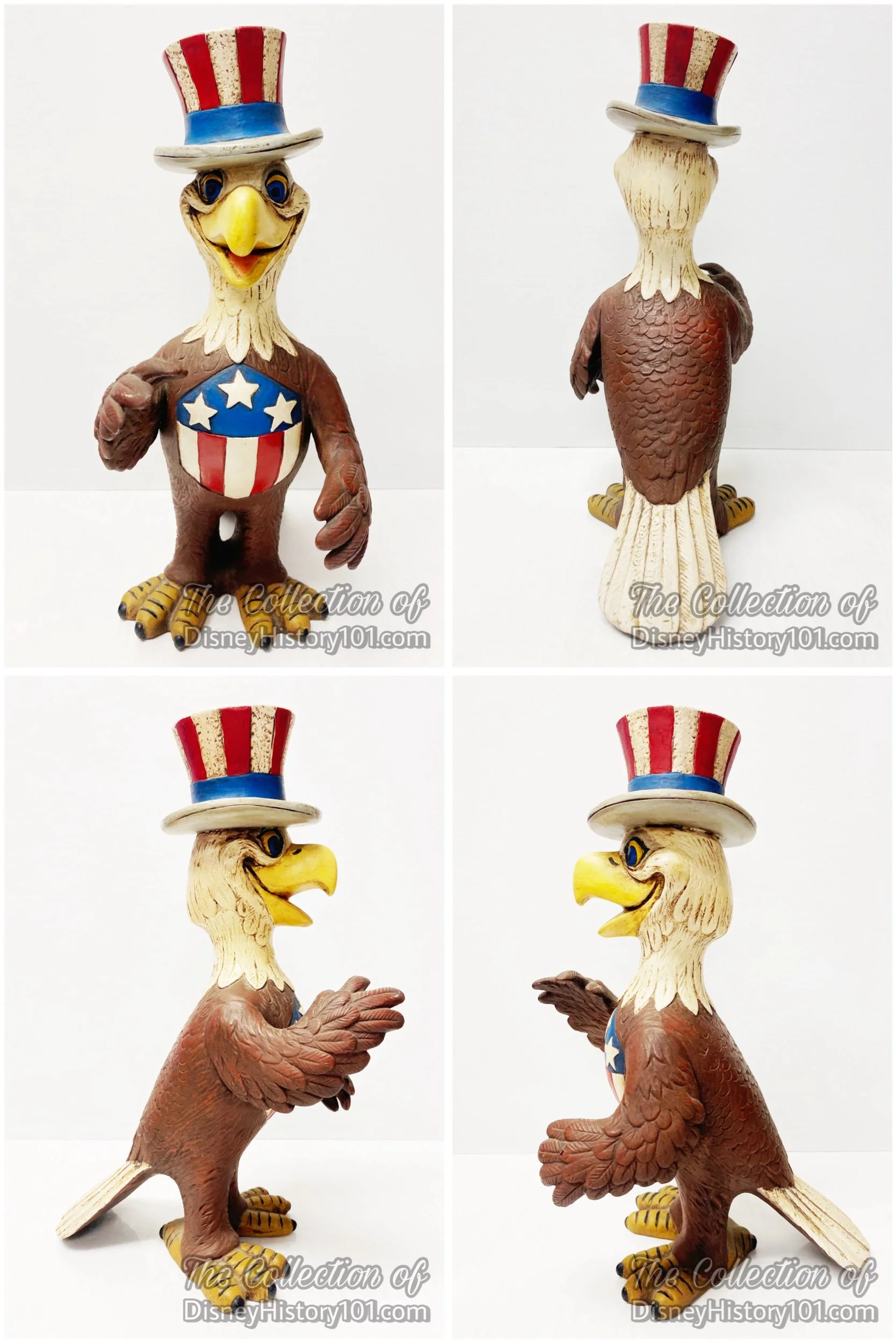
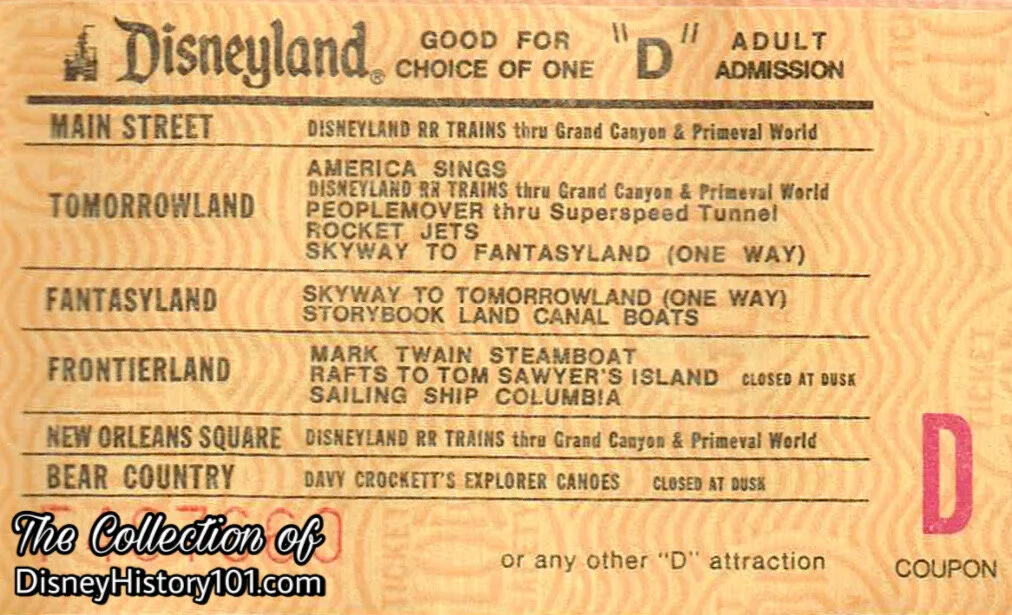
Typically, Hosts and Hostesses issued forms of the following reminders before the Show began :
“Hello, everyone. Welcome to our presentation of America Sings” a “magical joyride to Musicland, U.S.A.- !… For your safety, please remain in your seat while the carousel is in motion. You’re welcome to sing along, but remember that flash photography is prohibited during the show!”
“…And for your own safety, please remain seated at all times while the Carousel is in motion. Thank you.”
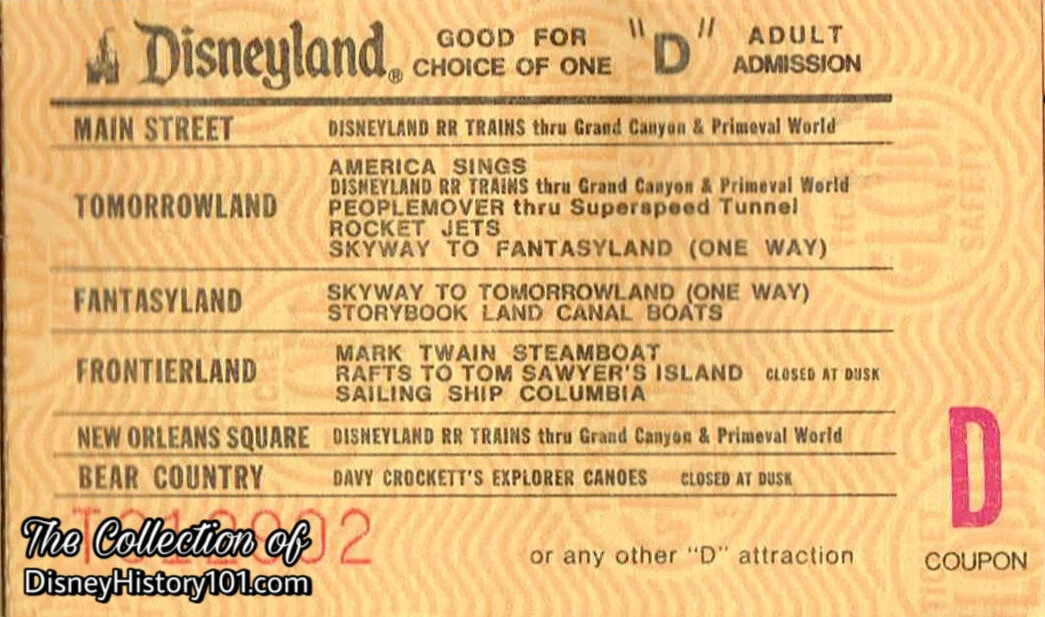
No Flash Photography was allowed inside the attraction.
Sam : “Yankee Doodle went to town, riding on a pony…stuck a feather in his hat and called it macaroni. Yankee Doodle keep it up…Yankee Doodle Dandee! Mind the music and the step, and with the girls be handy!”
Yankee Doodle - Yes, folks, that was America’s first popular song, and that’s what this show is all about - America’s music!”
As a sidelight, if the voice of Eagle Sam sounded familiar, it’s because he was portrayed by someone “dear to our hearts” - the legendary Burl Ives! He is most recognized by Disney feature film audiences, for his role as Osh Popham (and his popularization of the songs “Ugly Bug Ball” and “On The Front Porch”) in the 1963 musical “Summer Magic”.
It was never mentioned in the show’s script, but the name of Sam’s compatriot costar was Ollie the Owl. Now if the voice of Ollie the Owl (Sam’s co-star) sounded familiar, that’s because it was provided by Sam Edwards. Sam Edwards had previously performed some minor voice work for Walt Disney Productions, as the voice of an adult Thumper in Walt Disney’s Bambi, (among other roles). But the voice of Sam Edwards may have been most recognized through his contributions toward numerous Disneyland Record Albums.
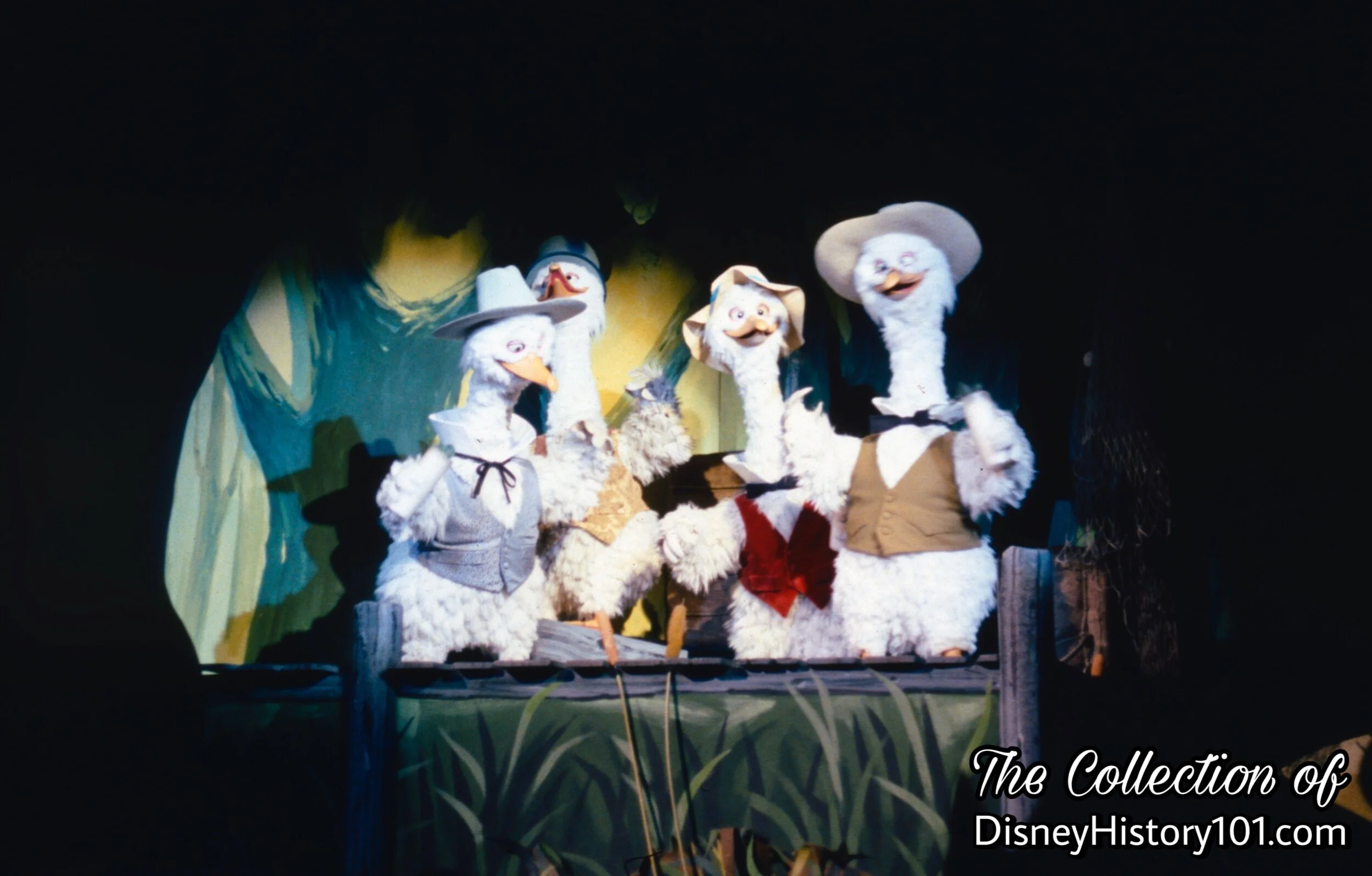
The Geese Quartet regales us with their renditions of “Dixie”, Lil’ Liza Jane”, and “Camptown Races”. The members of the quartet were voiced by vocalists Bill Cole (Melloemen Lead Tenor), Jerry Whitman, Gene Merlino (Mellomen 2nd Tenor), and Bill Lee (Mellomen Baritone who particularly had a long history of melodic voice work for Walt Disney Productions from “Alice in Wonderland” to Walt Disney’s “The Jungle Book”).
The Geese have a legacy (of sorts), in their distant cousins from “a galaxy far, far away” - the G2 Droids of Star Tours : The Adventures Continue.

Colonel Houndstooth’s voice is like a glass of “cool water” and there’s good reason for that. The Colonel is actually one of the “Sons of the Pioneers” - Lloyd Perryman! Sadly, Lloyd passed away three years after his voice was recorded for this contribution to this American folk song exhibition, but not before receiving a star on the Hollywood walk of Fame (in 1976).
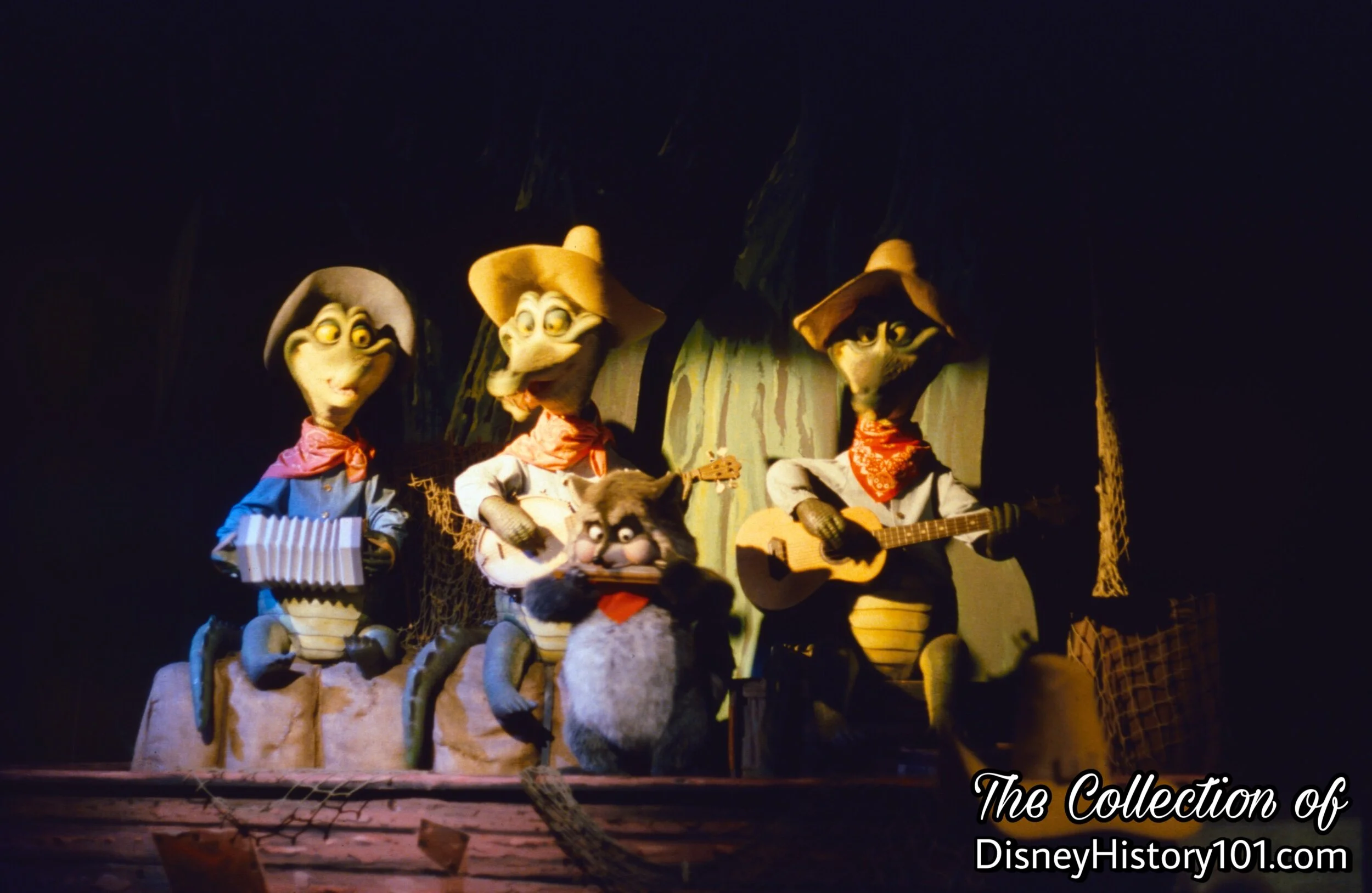
The Swamp Boys sing “Polly Wolly Doodle…” all day long.
In some of Marc Davis’ original concept art created for “The Okefenokee Swamp Boys” act, the band was comprised of an alligator (on guitar), a rooster (on banjo), a bear (on bass), and a harmonica playing raccoon. Other art featured an alligator band (with an opossum on harmonica).
Now, popular musicians - Ray “Rockabilly” Campi, Wesley “Mac” Curtis, and Geary Hanley - provide the voices for the Swamp Boys!
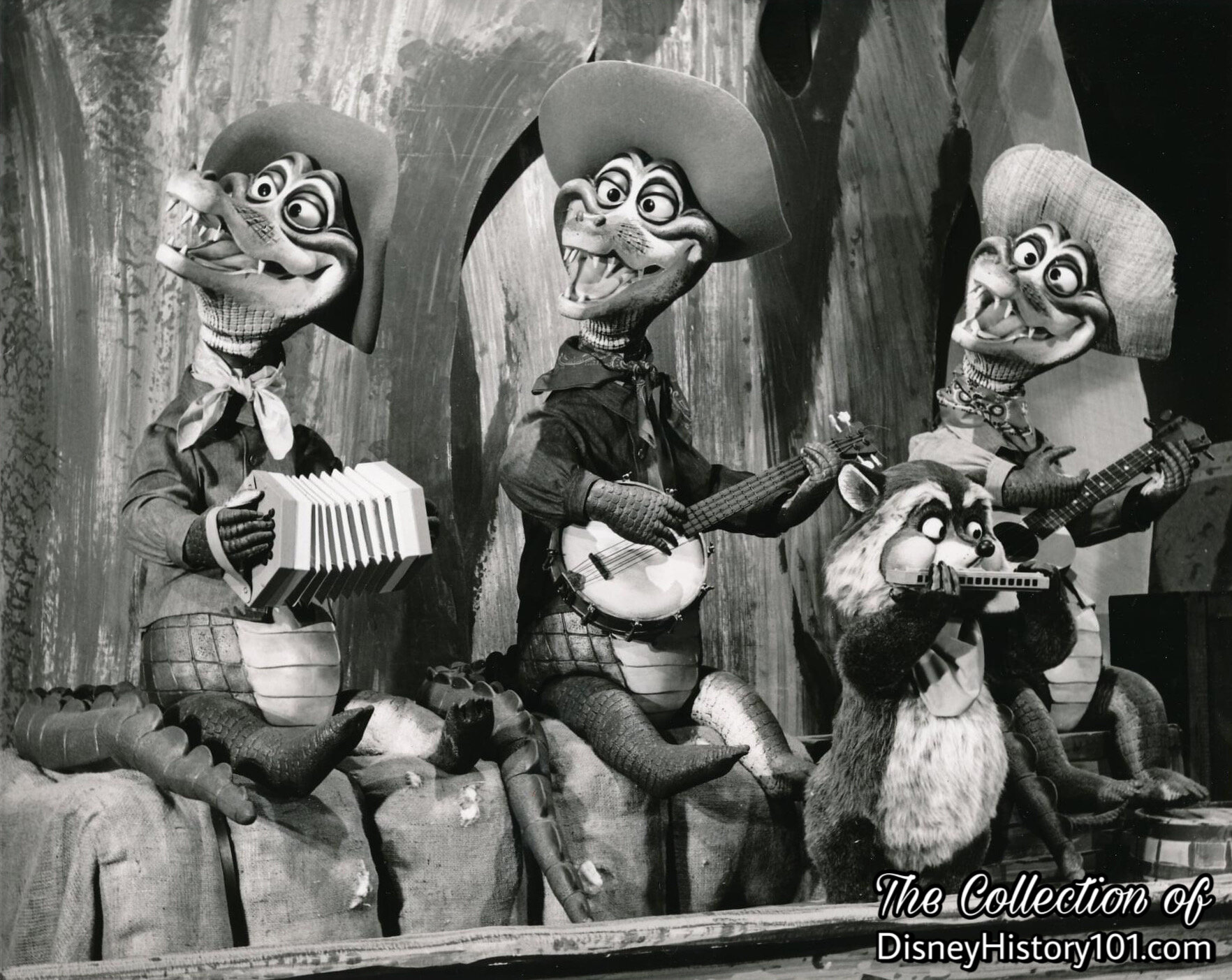
The voice of Mother Possum (and her “singing family”) is actually the “Mother of Folk Music” - Jean Ritchie (now in the role of a “plaintive Possum”). She hangs her young ones out to dry as she belts out a tender complaint, sung from the heart :
“When I was single, dress up, so fine. Now I am married, go ragged all the time. Lord, I wish I was a single girl again.”
Here, the voices are provided by the talented Gwen Lightner Group, Bill Cole Group and Jewel Hall.
Years later, the Cast of The “Down by the Riverside” segment would be featured in Splash Mountain’s musical finale, aboard a southern side-wheeler riverboat!
The voice of Saddle Sore Swanson was performed by Theodore “Chill” Wills. Chill wasn’t a stranger to voice work, after all, he had sang in many western films. He was also well-known for leading his voice to Francis the Talking Mule. Speaking of mules…
“Who shot the hole in my sombrero? Who put the hole through my hat? Was it Pancho from the Rancho?”
Here’s a little “sidelight” - the “Sombrero-Wearing, Trail Weary Mongrel Dog” aboard a Pack Mule was performed by Rex Allen (Narrator of many Walt Disney Productions ; and renowned for his performance of “There’s a Great Big Beautiful Tomorrow” for the Carousel of Progress). The “Sombrero-Wearing, Trail Weary Mongrel Dog” would sing another song once popularized by Rex Allen (in 1947) - “Who Shot the Hole in My Sombrero?”
The Ten Gallon Hat was auctioned through “Celebrating 50 Years of Magical Memories” of Disneyland.
Both Bill Cole and Bill Lee previously performed with the Mellomen (alongside Thurl Ravenscroft). Bill Lee was familiar with character voice work - contributing to the voices of the “Barnyard Menagerie” in the “Jolly Holiday” sequence of Walt Disney’s Mary Poppins. Bill Lee also performed the singing voice of Shere Khan in Walt Disney’s Jungle Book and the voice of Melvin the Moose for the Country Bear Jamboree.
After the America Sings show ended, the final resting place of the Boot Hill boys was among the 103 Audio-Animatronic Characters of Splash Mountain.
This America Sings Cast Member sings a few words of her rendition of “Won’t you come home, Bill Bailey? Won’t you come home?. . . I know I’s done you wrong”, a tune further popularized by Slue Foot Sue of The Golden Horseshoe Revue. Both characters were portrayed (or, in this case voiced) by the Legendary Betty Taylor!
“Ta-Ra-Ra-Boom-De-Ay!”
Her voice was provided by Cheryl Poole, while that of the “tenor singing fox” was performed by Bill Cole (who was also one quarter of the geese quartet).
Sam the Eagle : “Next came ragtime, blues, and jazz - the nation was a-jumpin’ - foxtrot and bunny hug had everyone a-stompin’. The swing and big bands were the rage, the songs, they were most pleasing’ - rock and roll soon took its toll : the dancers stopped a-squeezin’.”
“A fox a wolf and their feline dates make up this collegiate quartet,” according to “Information on ‘America Sings,’” prepared by the WED Marketing Division.
“I Ain’t Nothin’ But A Hound Dog…”
“Shake, Rattle and Roll…”
“Twistin’ U.S.A.”
Eagle Sam: “We should all remember as history moves along, that everything is better now ‘cause someone wrote a song.”
After the fun lovin’ look at America’s musical history, “Guests exit ‘America Sings’ to a spirited orchestration of ‘Stars and Stripes Forever,’ as their whirlwind tour of our nation’s musical heritage has brought them full circle,” according to the “News from Disneyland - American Sings” official Press Release.
“The Maintenance of Magic”
As the end of the day draws near, the Guest control lines grow progressively smaller. The lines are then maintained as they “go down” and are thoroughly swept when empty. In many cases, this required special equipment which would be issued by the Lead. Many attractions, such as America Sings required a walk-through after closing for the removal of debris. At this time any defects were noted.
In the years that followed, regular rehabilitations (like in ‘78) maintained the show quality. These were often performed by the staff of Disneyland Shops (The Maintenance Division at Disneyland).
“55er” Jim Cashen recalled: “A couple of other items we took care of was to build a walk-in freezer for ice cream storage, back of America Sings!” “55er” electrician George Short recalled: “‘As you can see we're busy lighting up the swamp!’ No Thus I was greeted by George in the DOWN SOUTH scene of AMERICA SINGS. The attraction was down for rehab and George and an electrician were putting the finishing touches on Act 1.”
Safety is a major concern of Engineering. Every year they would make a complete test and inspection of all structural parts of Disneyland. And since Guests would look to Disneyland for their safety the department team was continuously designing new guest and personnel safety devices.
All of the costumes were constructed from washable fabrics and laundered by Disneyland’s own laundry room staff. The more delicate fabrics or those with intricate trims were sent out to a special dry cleaner. The cleaned and prepared garments, two or three backups for each Audio-Animatronics figure, were stored in closets located within each attraction.
The costume has to look the same every time. Stored with the costumes was a reference album of photos detailing how each figure should look when completely dressed. Many Cast Members needed to refer to the album to see exactly how a hat should fit or a piece of jewelry was worn.
When maintenance was performed on a figure or a group of figures, they were carefully repositioned as closely as possible to their “night mode” positions so that when a trial run was started, the movements of the functions were not violent.
“Post-Show”
When the America Sings show ended its operation at Disneyland, several artifacts were preserved in the Walt Disney Archives, including one of Eagle Sam’s hats and General Houndstooth’s weathervane.
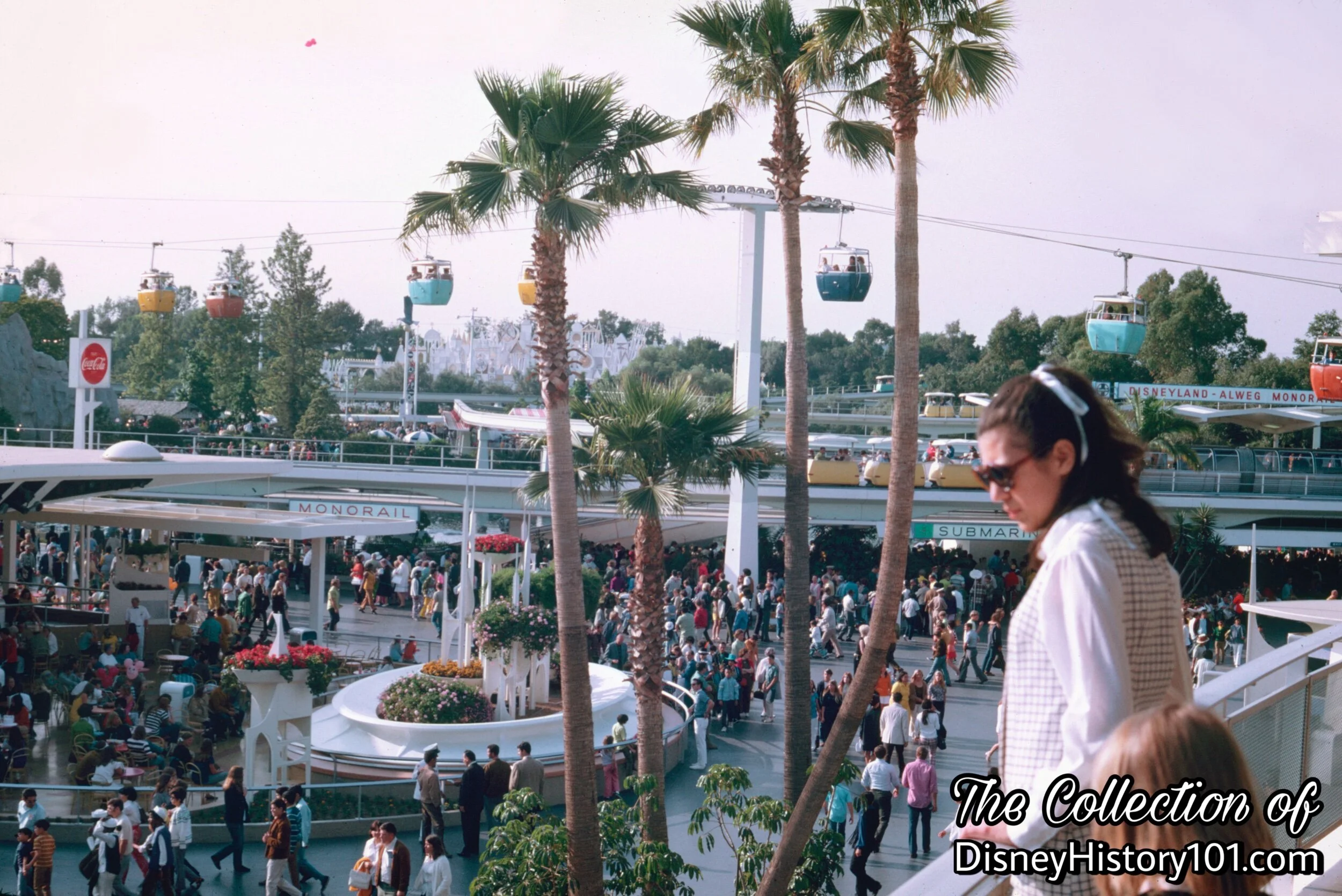
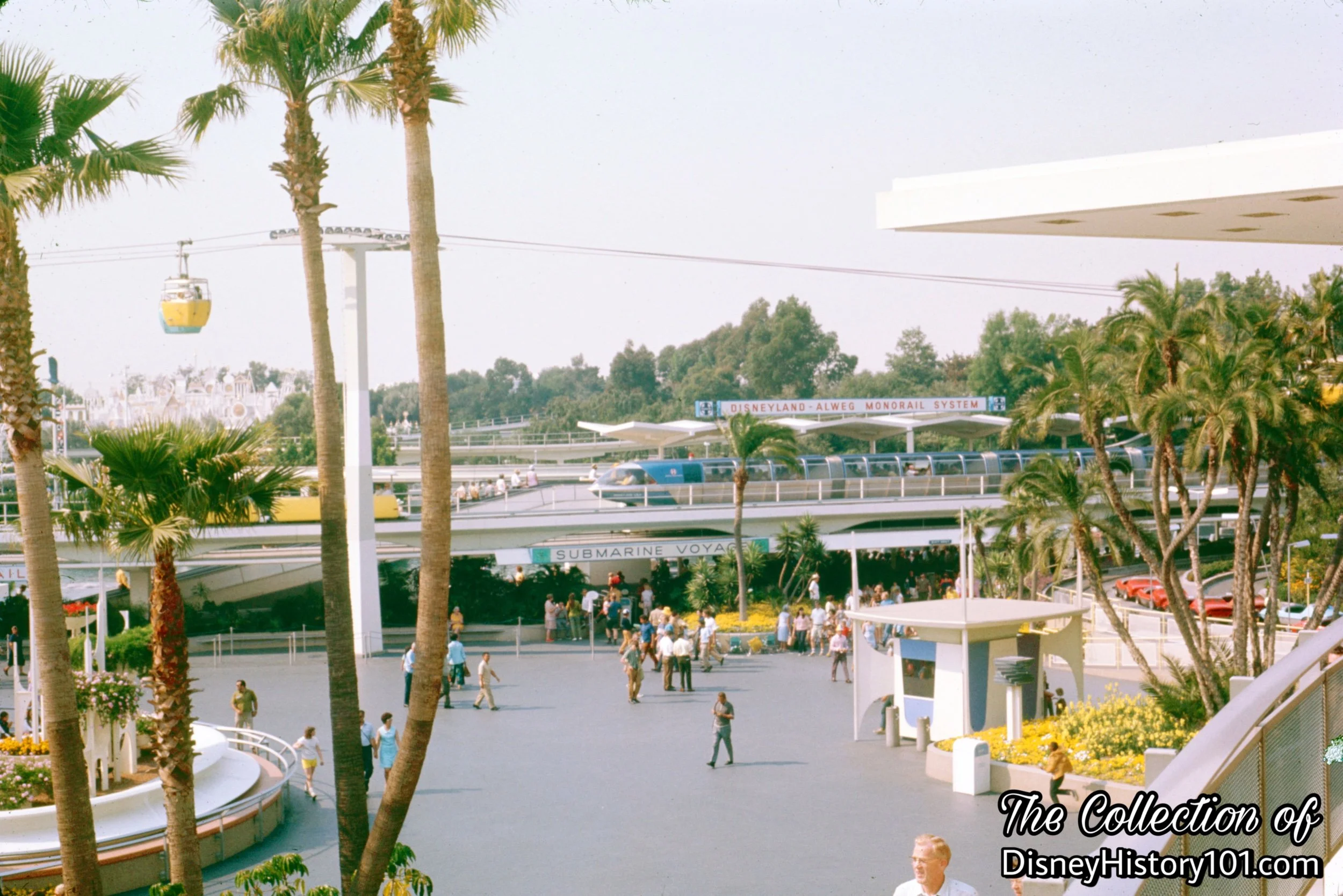
Queue areas were equipped with live entertainment to set the mood for the forthcoming show.
“The America Sings Stage”
During Festival of Japan at Disneyland (March 28 & 29, 1981) Kesencho Kenka Tanahata Bayashi drum group and the Yukohama Gakuen High School Baton Club were among the rotation of performers on the America Sings stage.
“Legacy of the Rotating Theater”
The rotating theater concept was nearly utilized for “The Yestermorrow Time Machine” invented by Ray Bradbury before July 31st, 1970. According to Marc Davis, the Yestermorrow Time Machine “should turn a possible problem into an asset, which is to say, the problem of revolving an entire theatre building once every four minutes should be made part of the Experience. Thus my naming the Experience: The Time Machine. We will be in Motion Toward the Past loitering about the Present, and plunging toward the Future. So we might well use the revolving mechanism of the theatre to provide different textures. In other words, the experience should be different, each time and Theatre picks up and Goes. To the Past, one texture. Onward to the Present, a second texture. Upward into the Future, a Third. So the floor, the tracks, on which our Theatre moves should be, perhaps, undulating slightly for the first Trip, a Vibration like an Earthquake for the second. And a smooth, whistling glide, as of a rocket, for the Third. All of this, naturally, to be discussed and planned as we move forward investigating the Dramas at hand.”
The Disneyland tradition of a rotating theater had a legacy (of sorts) with the opening of Tokyo Disneyland on April 15, 1983. Among the “stark lines of futuristic architecture,” was an attraction called Meet the World, located just past the Center Street entrance to Tomorrowland. It was described as “an innovative show which describes, through film, special projection and Audio-Animatronics, the history and future of Japan. Concentrating on her gradual merge into the world stream, this four act presentation traces Japan’s encounters with other nations through trade, to her place in today’s international society. The finale is an uplifting promise for the Japan of tomorrow. This attraction is similar to the revolving theaters of Carousel of Progress and America Sings with one major difference - here, the theaters are in the center and revolve to carry their audiences to each scene of the surrounding stage,” according to the “Tokyo Disneyland” opening day souvenir. Perhaps you may have had the pleasure of experiencing this form of the carousel theater legacy from 1983 to 2002.
“Blue Sky for The UFO Show”
According to an article published in Backstage magazine, WED had once planned a little something for upstairs “America Sings.” The working title was the “UFO Show”, and therein, Guests would “travel in cars one direction, armed with air guns, while eerie, unhuman, gremlin-like targets pop up and dart the other direction. Upon completion this attraction will be the first ‘shooting gallery’ where the marksman’s position moves as well as the target’s.” [“WED - What, Where, Why, and Who?” by Vicki Stowe]
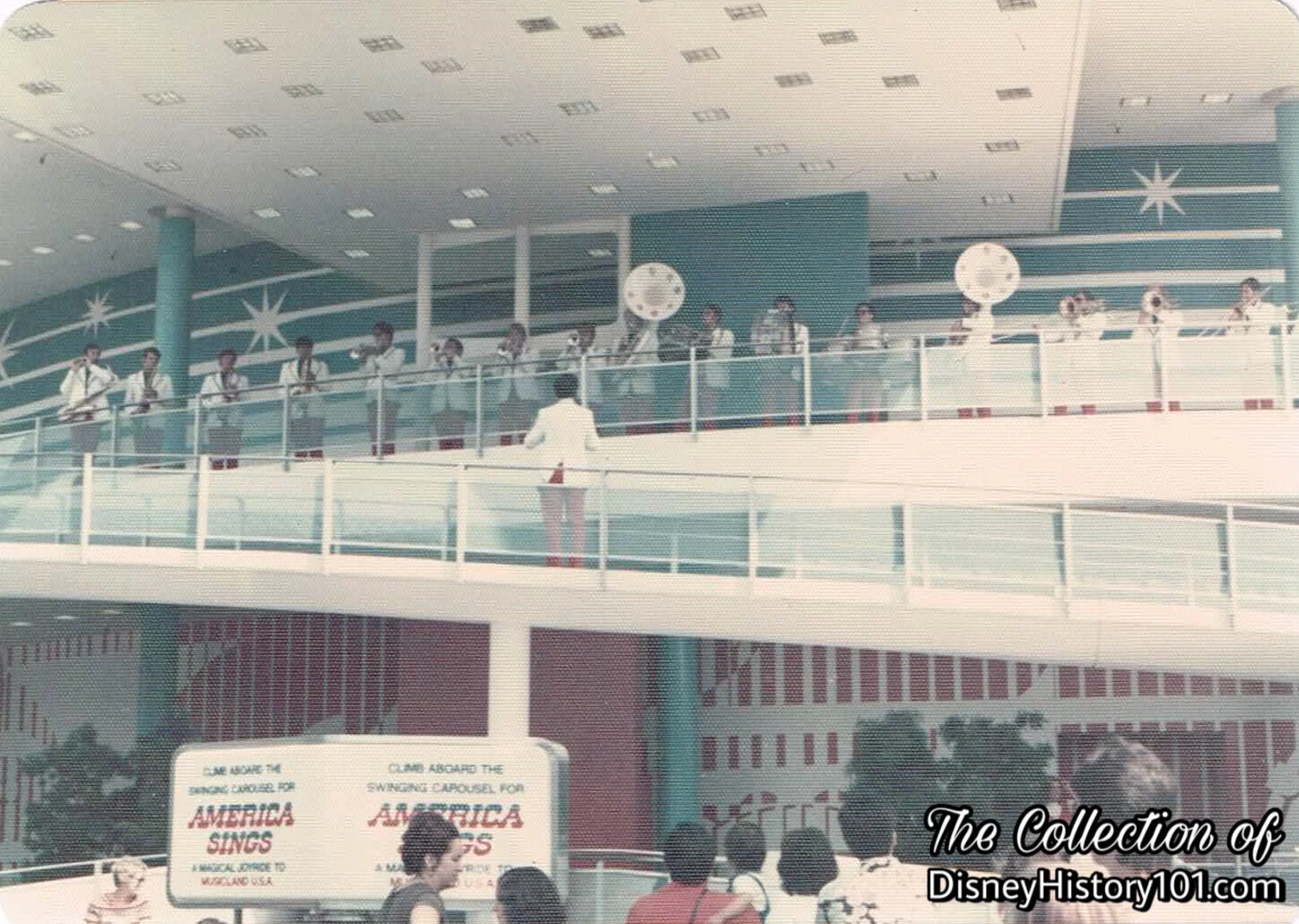
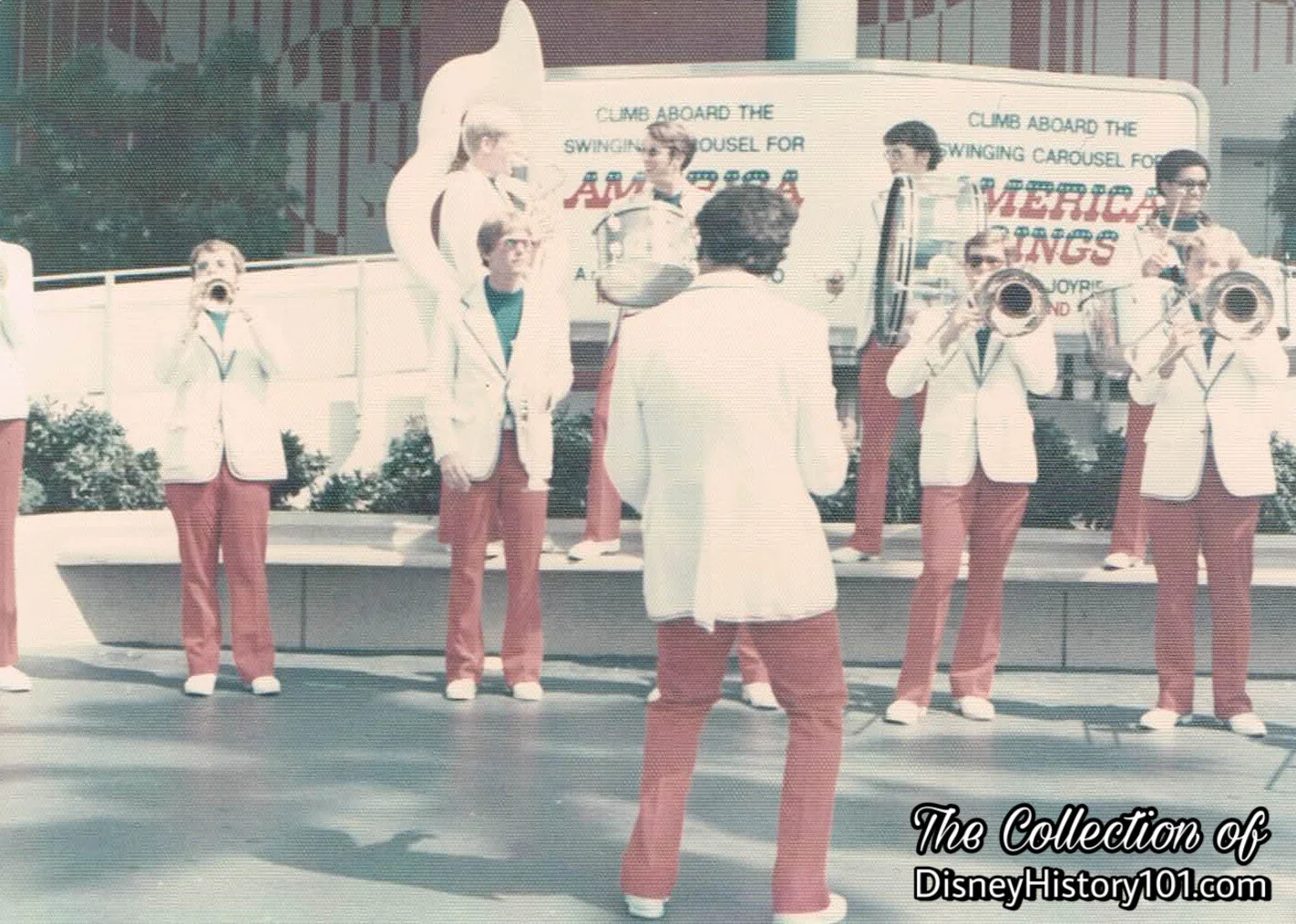
After America Sings held its final performance in 1988, the Show Building was closed for a decade. But ten years later (in 1998), the Show Building was home to a number of exhibits as the newly named Tomorrowland Expo Center.
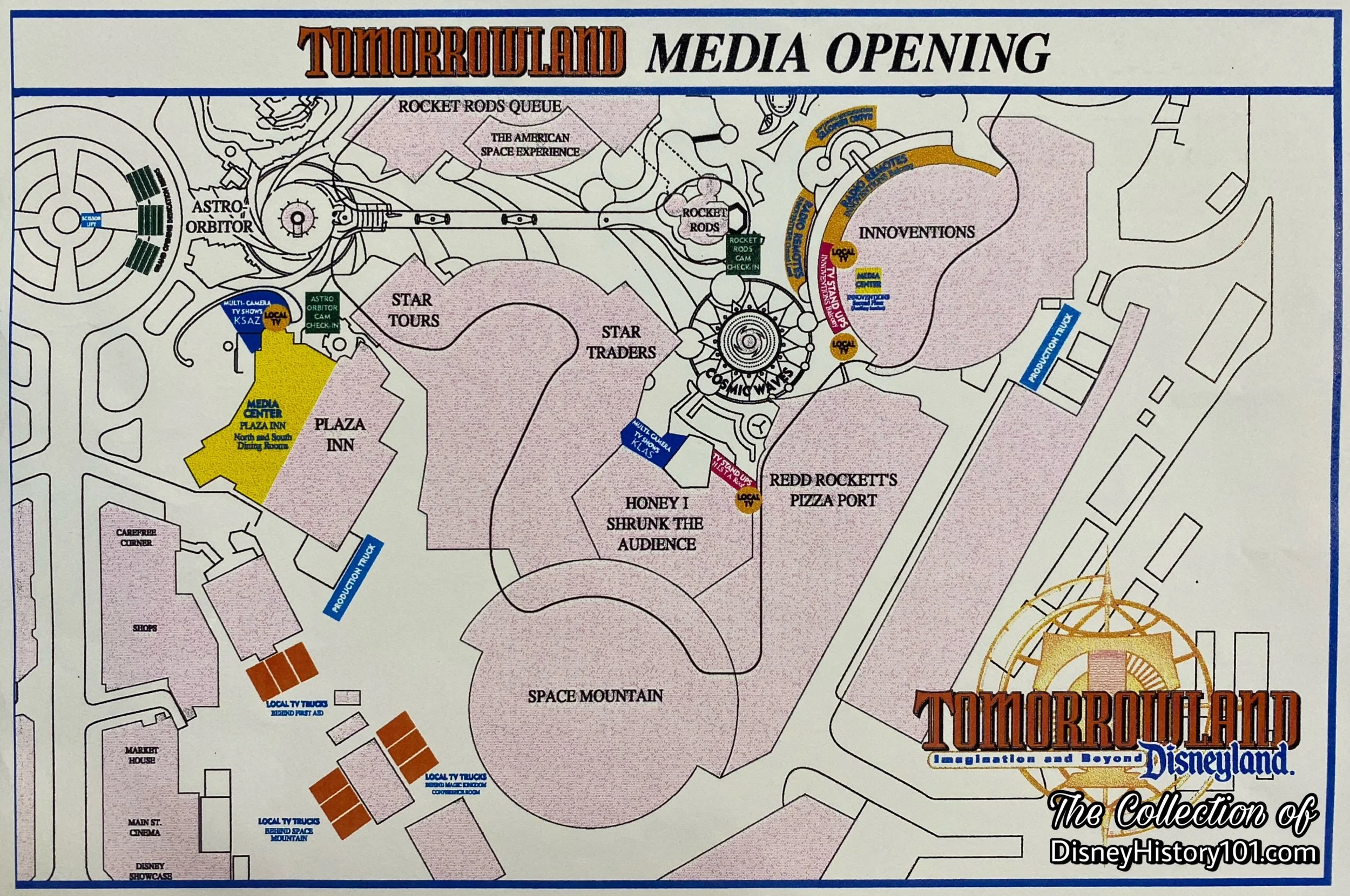
Walt once divulged, “I believe in being an innovator.” It is safe to assume that Walt may have loved Innoventions (from 1998 - 2012) - a two-level exposition of Innovative technology (supported by the musical orchestration of the retired Musical Director Buddy Baker).
According to media materials, guests would board a “loading pod” on the slowly (6” per second) rotating lower level. Audio-Animatronics® host Tom Morrow would welcome and introduce guests to the attraction's five themed areas: Transportation, Health/Sports, Home, Work/School, and Entertainment. Guests would then flow through two levels of hands-on exhibits showcasing new "Innoventions" from forward-thinking companies. Many true-life technologies made their debut at Innoventions, including Disney Vision - Disney's virtual reality technology.
The show building has been home to all sorts of artificial intelligence and Audio-Animatronics® figures. This new show depicting the home of the not-to-distant future, was hosted by Tom Morrow. If Tom Morrow’s name sounds familiar, its because his previous role was that of the “Director of Flight Operations” of the Rocket to the Moon, at the Disneyland Spaceport. If Tom Morrow’s voice sounded familiar, it was because he was brought to life with the help of Nathan Lane. While Tom could be seen and heard in Innoventions, his name was still being paged within the Star Tours Show Building. There is one thing that I’ve always wondered - is there any relation between Tom Morrow and Richard T. Morrow (Walt Disney Productions Board of Directors, Vice President General Counsel, c.1971)?
In 2008, WDI master planners entertained the concept of an update to Innoventions described as the “Wall-E Synergy Initiative.” While Wall-E did not appear, four years later, one of the last Innoventions attractions to greet audiences would involve another form of A.I. - “Say Hello to Honda’s Asimo,” in 2012.
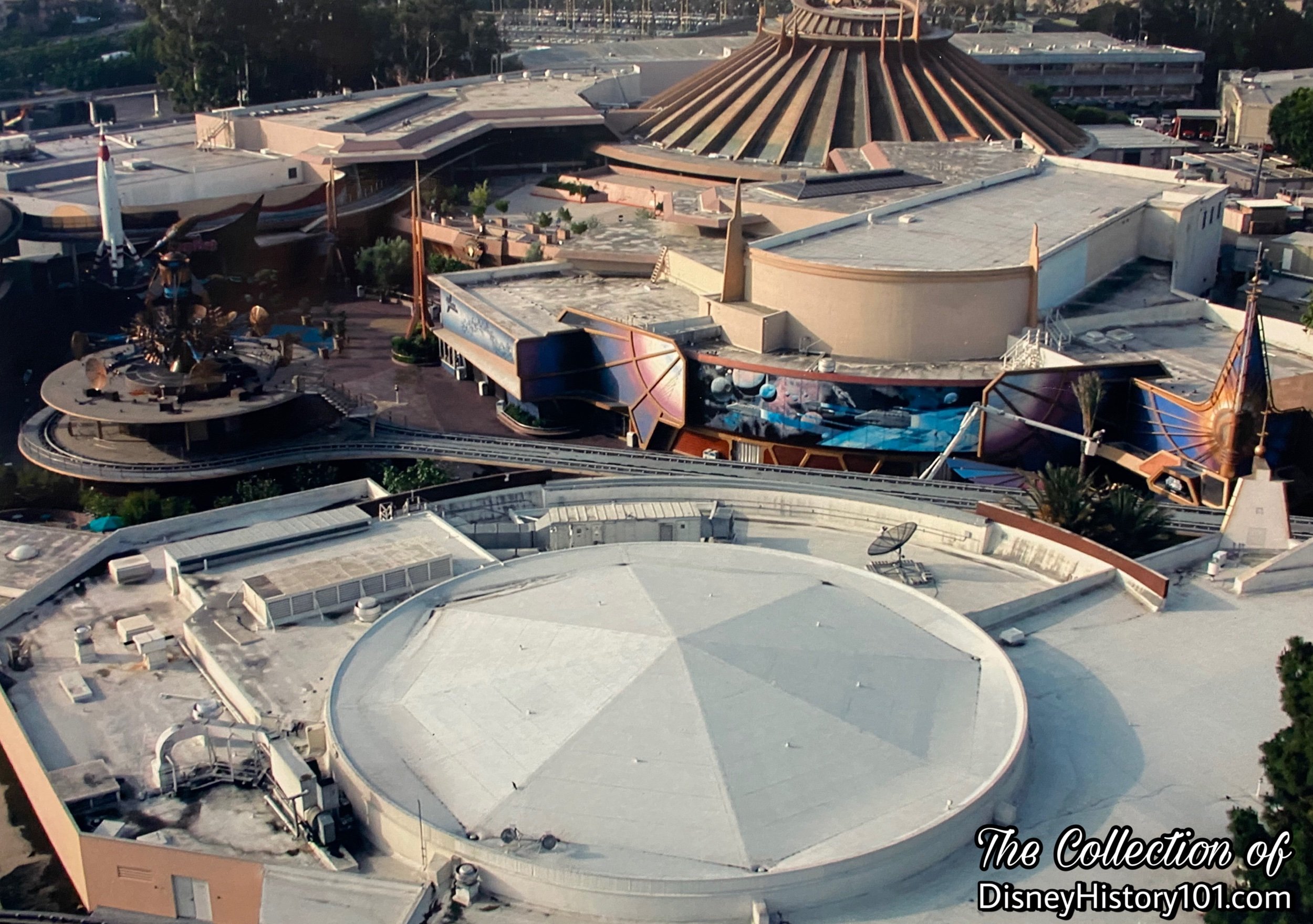
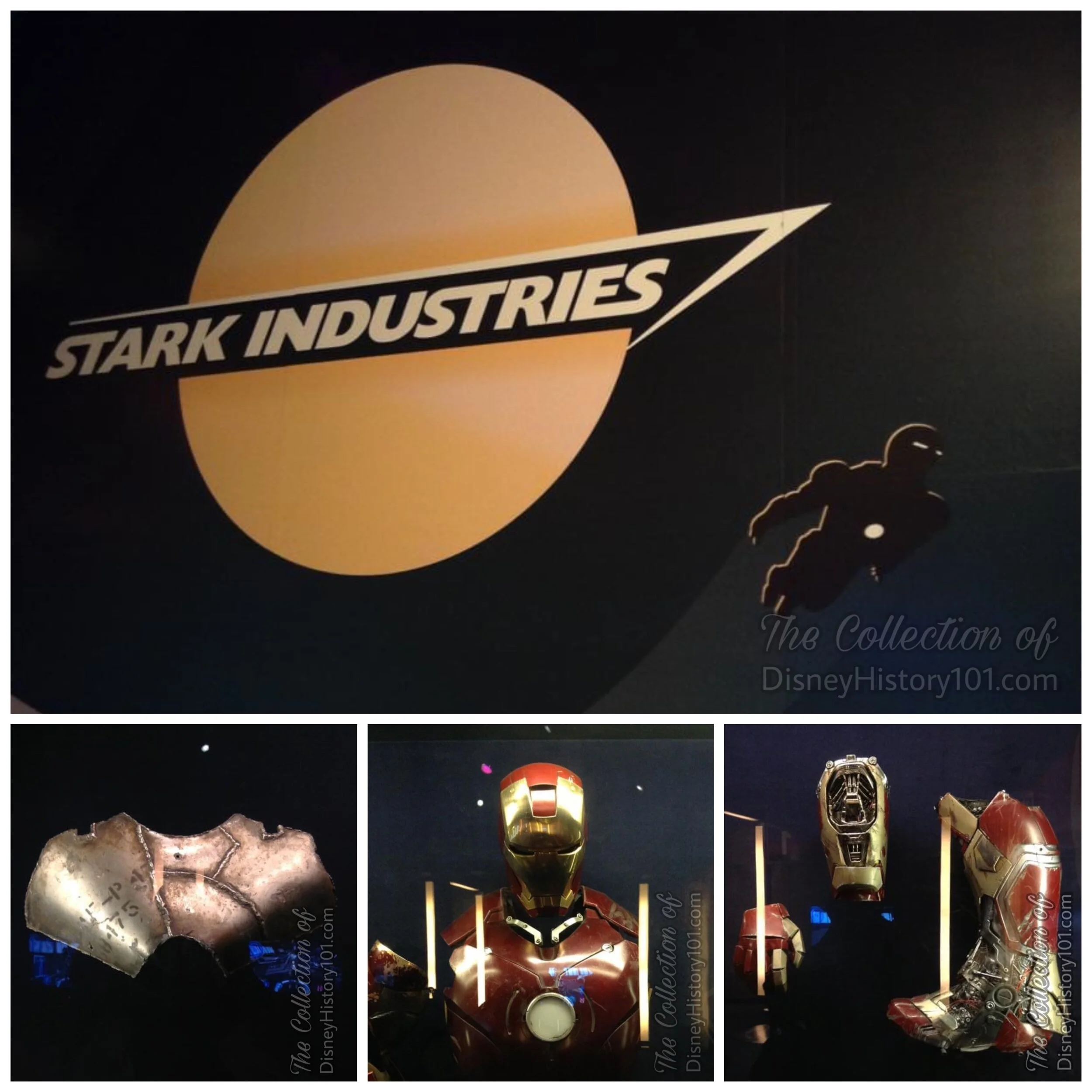
Since the beginning, Tomorrowland has been called a land of “science fact and science fiction.” Proving the latter, were the following exhibits, like the Super Hero Head Quarters which spotlighted another type of technology showcased through the Stark Expo (in 2015) - that of Tony Stark’s Iron Man Armory.
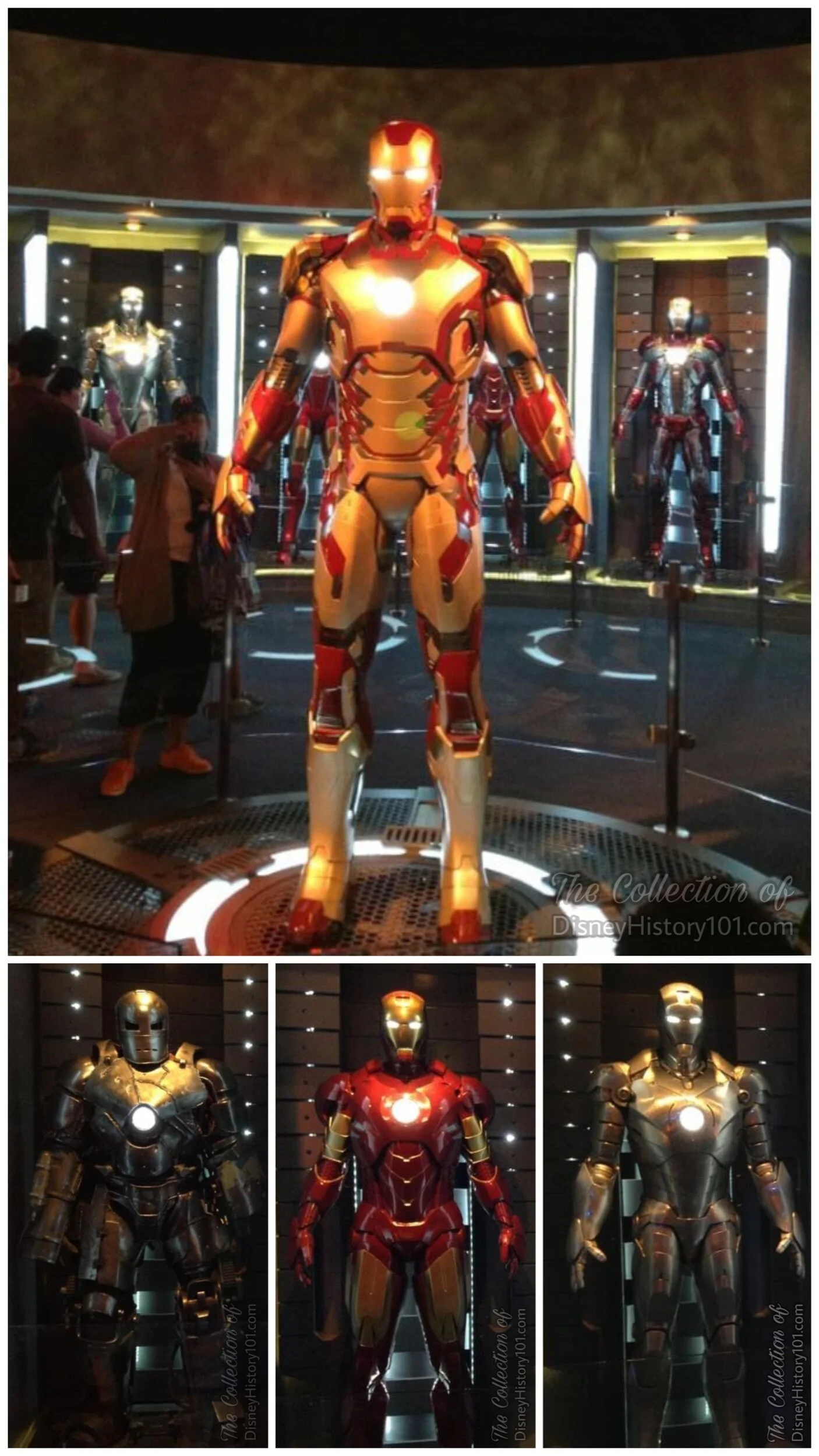
The tradition was continued with the Iron Man Tech Showcase - Presented by Stark Industries at Hong Kong Disneyland in 2017.
This exhibit was followed by the Star Wars Launch Bay (which also arrived in 2015). According to the Disneyland Resort’s official website description, the Star Wars Launch Bay provides an “up-close look actual props, costumes and actual replicas created specifically for Star Wars Launch Bay.” These exhibits would introduce new generations to Disney Parks stars of tomorrow - the heroes of both the Marvel Cinematic Universe and the Star Wars Universe. Less than a decade later, the Disney Parks audience would see the addition of two new lands - Star Wars : Galaxy’s Edge and the Avengers Campus.
Upon beginning your Star Wars story with this opening “floor crawl,” untold behind-the-scenes adventures await.
Fortunately there are no holographic pieces (or Wookies) present at this exhibit.
Honey, they haven’t shrunk the audience! You’re looking at one of the largest 3 and 3/4-inch Boba Fett action figures I’ve ever seen, among the merchandise once available at the Star Wars Launch Bay.
Since the beginning, the Four Keys of the DISNEYLAND Show (operating priorities in presenting the DISNEYLAND Show) have been present - Courtesy, Safety, Show, and Efficiency. Walt Disney Imagineers are always seeking out new magical opportunities to increase the efficiency, safety, and show quality of Disneyland adventures! Things have sure changed a lot for the Carousel Theater, since 1967. To borrow a line from an old show: “Progress is not just moving ahead. It’s dreaming and working and building a better way of life!” But whatever dreams those Walt Disney Imagineers have in store for the Tomorrowland Expo Center (or, whenever the next Show begins), we trust that it will be “great, big, and beautiful!”
CASA DE FRITOS (THE CASA MEXICANA) & FRITO HOUSE
“The Search for Disneyland Participant Sponsors”
Back in 1951, Walt Disney and Art Linkletter visited the famous entertainment complex Tivoli Gardens in Copenhagen. He was researching and talking notes to build a family entertainment center and Tivoli was much like what he envisioned. It was clean, directed to the entire family, fun, entertaining and educational. Walt noted how important it was to have a lot of places for guests to sit down and a wide variety of eating spots that served excellent meals.
During 1954, Walt was searching for participants to lease shop and restaurant spaces and help generate the necessary capital to fund construction of Disneyland® Park. In a synergistic relationship, the companies (in turn) could sell their products and advertise their corporate names in the Park. Disneyland Participant Corporate Sponsors were carefully selected. High quality, long term corporate sponsors would provide incremental income that enabled Disneyland to enhance its show and attractions, offset some operating expenses, and capitalize on marketing opportunities.
Several Disneylanders were essential to the establishing friendly relationships between sponsors and Disneyland. “55er” Rima Bruce (who started with Jim D'Arcy in Food when all food was Lessee and typed memos and menus) recalled that “the phone never stopped ringing with everybody trying to get a food lease in the Park.“ By July of 1954, Raul Grizante of Disneyland, Inc. was overseeing food philosophy, area & location, food specialties, and beverages for Disneyland. Individuals like Nat Wyncoff provided the essential orientation for curious lessees, selling them on the idea of Disneyland using various visual aids like sketches and one of Herb Ryman’s oil paintings of Disneyland.
Soon, “a cross-section of American industry…[was] represented in Disneyland. Each of these companies… [would expose] its institutional advertising and public relations message to Disneyland guests through various forms of participating exhibits and displays. In each case, the exhibit… [was be] related to the theme of the ‘land’ in which it is located, and is woven into the overall concepts and themes of Disneyland”, according to “Disneyland, U.S.A.”, published 1958. Several of these “reliable old firms” sponsored the “abundance of restaurants devoted to pleasing all tastes and all budgets,” according to “The Story of Disneyland”, published 1955. Frito-Lay became one of those forty-seven Disneyland Participants and lessees to sign a contract with Walt Disney Productions (regarding Walt Disney’s Disneyland), and one of a few to invite guests to “dine at Disneyland!”
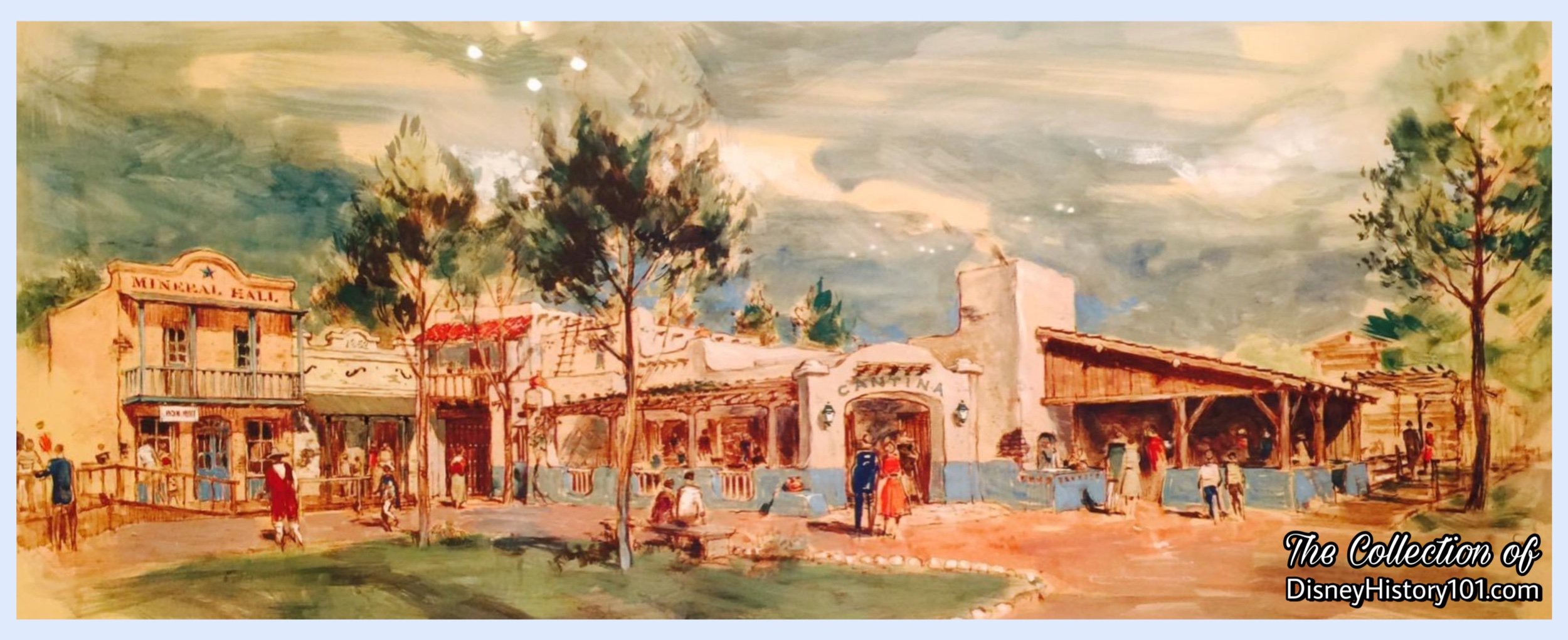
Some of these viable project Concepts (as depicted above), were supported by a well-developed business case and built expectation.
“Blue Sky for Casa de Fritos”
According to “THE DISNEY THEME SHOW - an introduction to the art of Disney outdoor entertainment: Volume II”: “Of all the guests’ senses that come into play at Disneyland, the most difficult response to predict was taste. If 70,000 guests were to arrive on a single day, there would probably be 70,000 different ideas about food. Generally speaking, Disneyland food locations fall into three categories - sit-down restaurant service, ‘buffeteria,’ and fast-food categories.”
The most extensive theming has always been found in the sit-down restaurant locations but all locations were housed in authentically modified facilities. “Disneyland is unique in that some of the world's foremost creative artists and architects control all design at Disneyland.“ The Casa de Fritos building was styled with typical “south-of-the-Border” atmosphere.
“Architectural Designs by Lessees”
Disneyland, Inc. printed materials for Lessees detailing specifications for architectural designs of exhibit spaces. These were revised by March 16, 1955 and issued to Lessees.
All of the interior architectural drawings were done by competent registered architects or an approved display house of the lessee's choice. All of the designs submitted by the lessee's architect, whether for buildings or construction of interiors in DISNEYLAND, were approved as to the theme and general plan of DISNEYLAND as established by WED Enterprises, Inc.
Three sets of preliminary drawings were furnished DISNEYLAND, Inc. as soon as possible after signing of the lease. Two sets were retained by DISNEYLAND and one set was returned to the lessee’s architect with any revisions noted thereon and stamped “APPROVAL TO PROCEED TO FINAL DESIGN.” This stamp when properly signed and dated constituted the lessee’s authority to proceed with the final drawings.
The Lessees revised their final drawings to incorporate any revisions noted on the approved preliminary drawings, and submitted three sets of the revised drawings to DISNEYLAND. One set was returned to the lessee’s architect and any revisions noted thereon are to be incorporated on the original drawings. When the lessee had incorporated the final revisions on the drawings, two sets of transparent ozalids were forwarded to DISNEYLAND for approval. DISNEYLAND would stamp both sets “FINAL DESIGN APPROVED” and “LESSEE’S CONTRACT DRAWINGS”, and return one set to the lessee who could then release drawings for bid and/or construction.
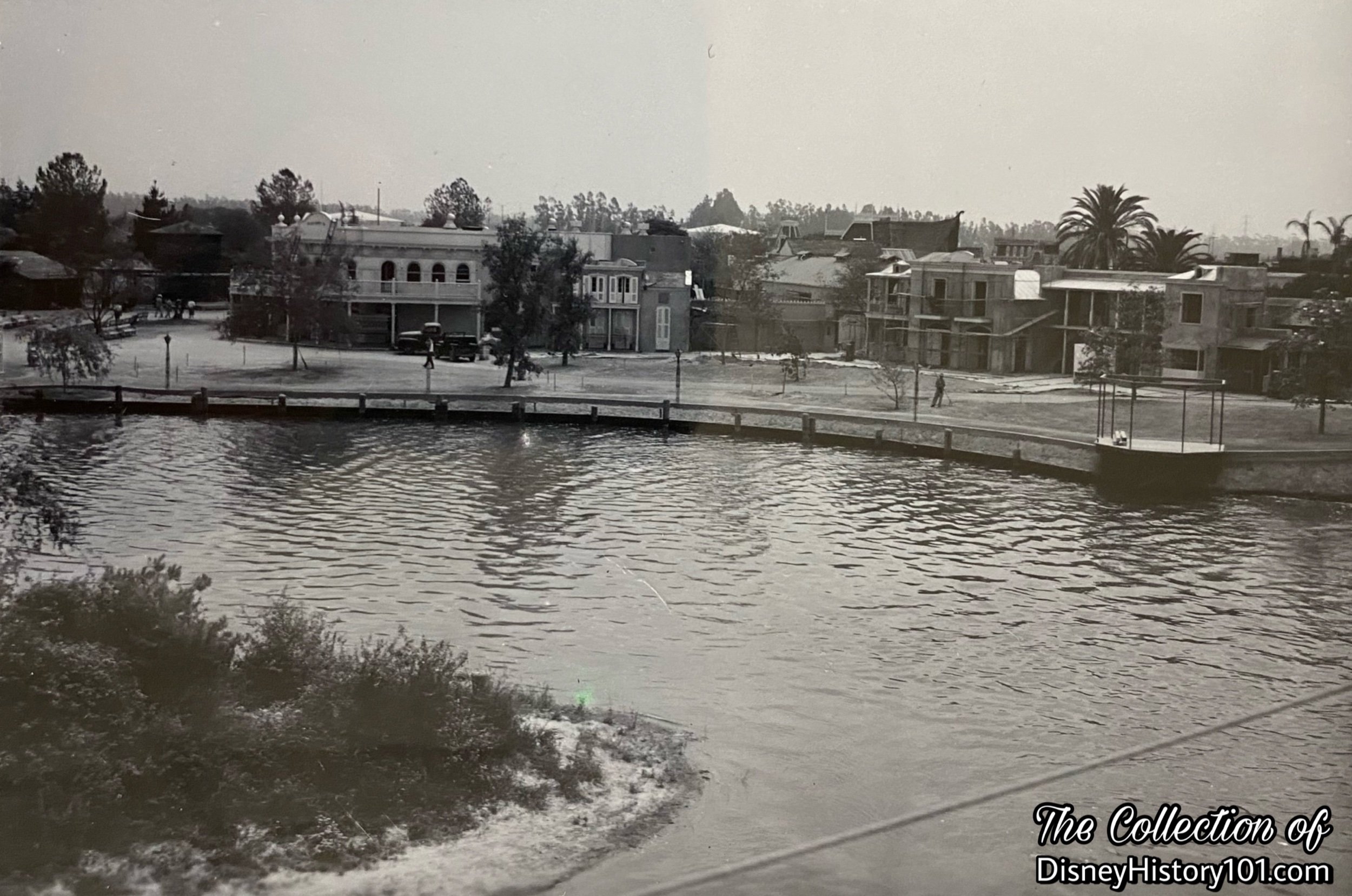
“Construction”
“F. M. Franz, manager of operations for McNeil Construction expressed: "We feel sure there has never been anything built like this in Southern California, or elsewhere in the United States. Many of the items were constructed from artist’s sketches.”
Casa de Fritos would be situated directly opposite the Dixieland Gazebo Bandstand. All fixtures were placed in their correct motif and many light fixtures were authentic antiques.
As of June 2, 1955, C.V. Wood Jr. sent an Inter-Office Memorandum to Walt Disney regarding the best estimates that could be obtained at the time regarding the completion status of individual sections of the Park and Opening Day. C.V. wrote: “Fritos: They will be able to open with us but the part with the little animated man may not be complete.”
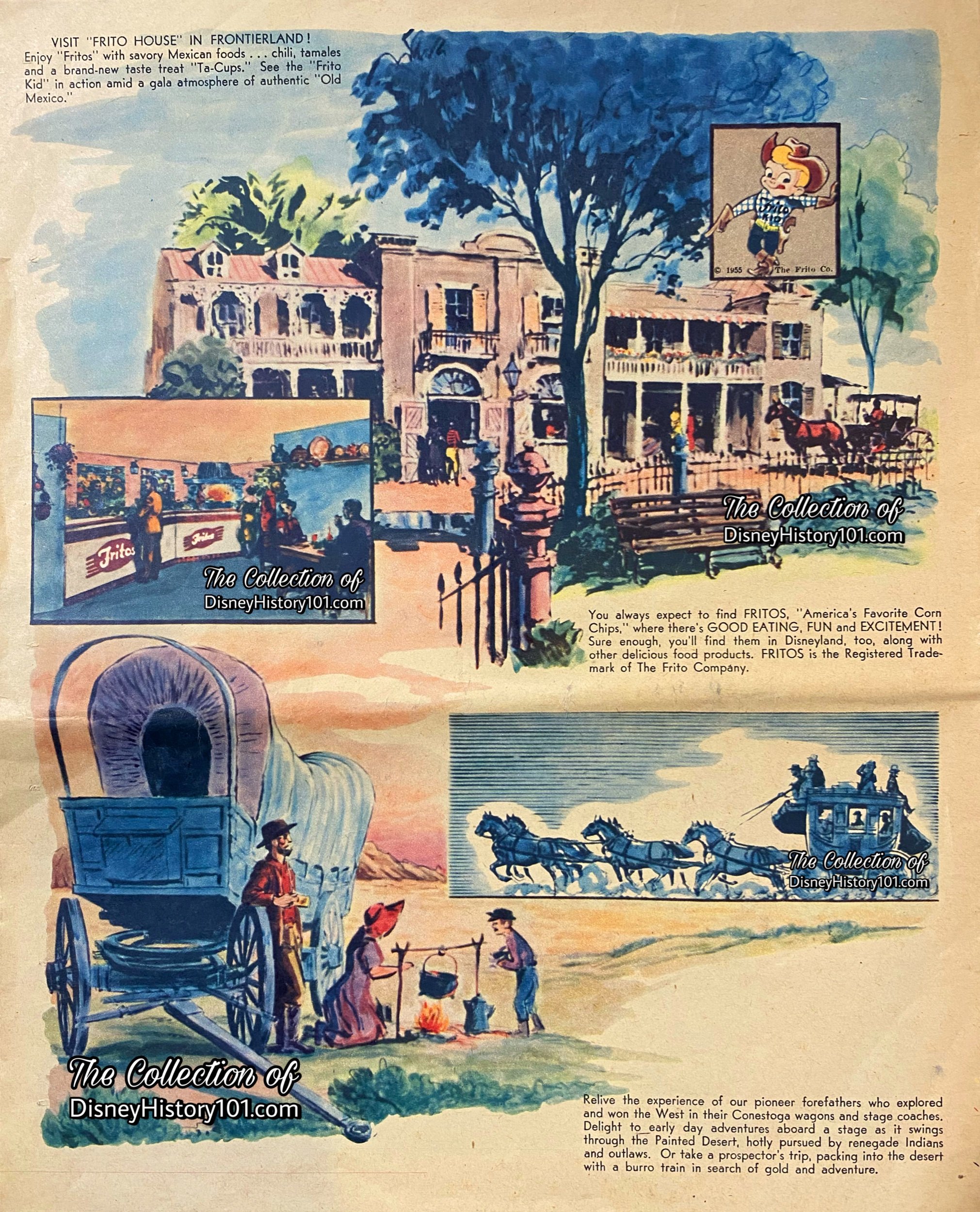
“Grand Opening of Casa de Fritos”
Two days before the televised Press Preview event at Disneyland, a (c. June 15, 1955) newspaper supplement whet the public’s appetite by featuring a full page advertisement of Casa de Fritos. The Santa Ana Register, July 15, 1955 briefly described the location as “an authentic Mexican Taco cafe and a Frito house.”
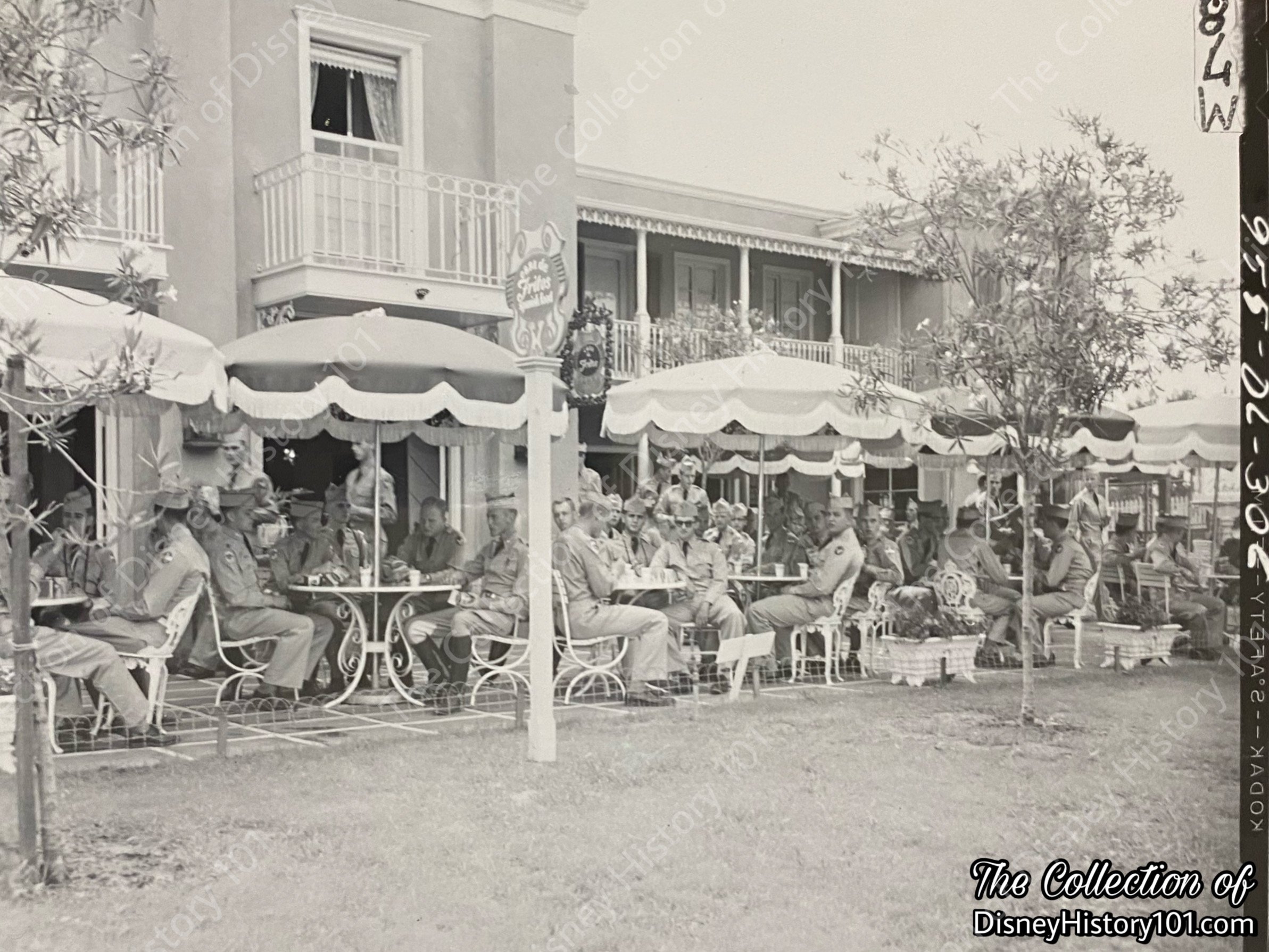
The Press Preview Day arrived. Then Disneyland opened to the general public on July 18th, 1955, but Casa de Fritos, the table service restaurant did not. It would be nearly one full month before Casa De Fritos (or, “The Fritos House”) opened on August 11th, 1955, in a small location near the water’s edge on the Rivers of America (not far from the current site of the River Belle Terrace).
Service was described as “efficient cafeteria style,” offering “indoor and outdoor dining facilities.” Here (overseen by Jim Baker of Disneyland, Inc.), Guests discovered “Mexican food specialties, combination plates, tamales, enchiladas,…, chips, chili and beverages” - “tantalizing dishes so popular south of the border.” According to the Disneyland News (June, 1956), “Chili is a house staple prepared and offered in a variety of intriguing combinations. Tamales, enchiladas, and an all time favorite of the Taco found in a unique ‘tacup’ round out the menu. For a meal that includes the variety of tempting flavors of all these the Frito chef recommends the Mexican Combination Plate.” Of course, guests can expect to find Fritos (“America’s favorite corn chips”) where there’s good eating, fun, and excitement! In addition (and in a move of corporate synergy), the Frito House was one of 16 Disneyland “eating places” which featured “fine food with fine coffee - Maxwell House,” from 1955 to 1957! Carnation Farms would also serve this and 14 other wholesale customers who operated restaurants and snack bars in Disneyland.
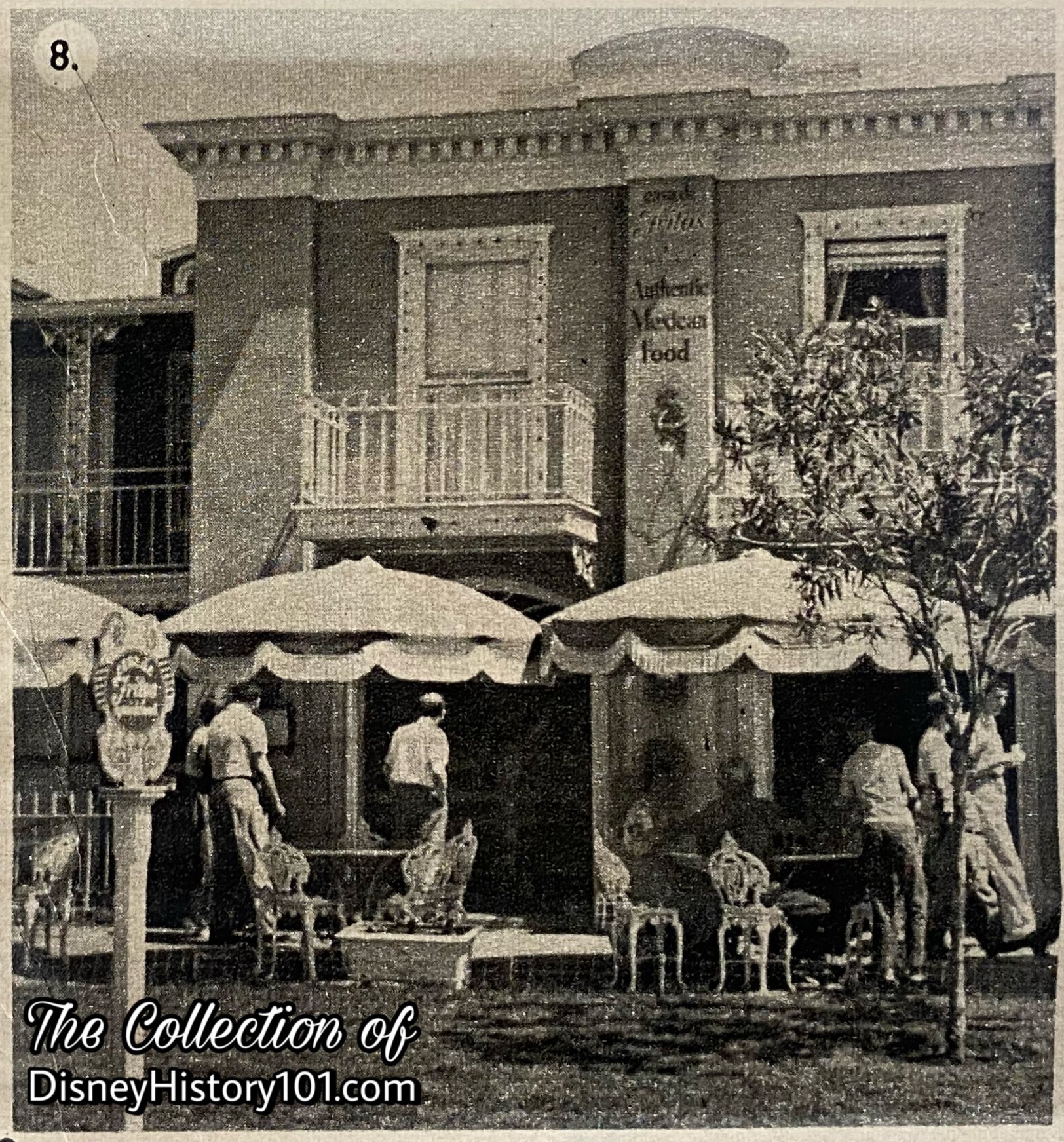
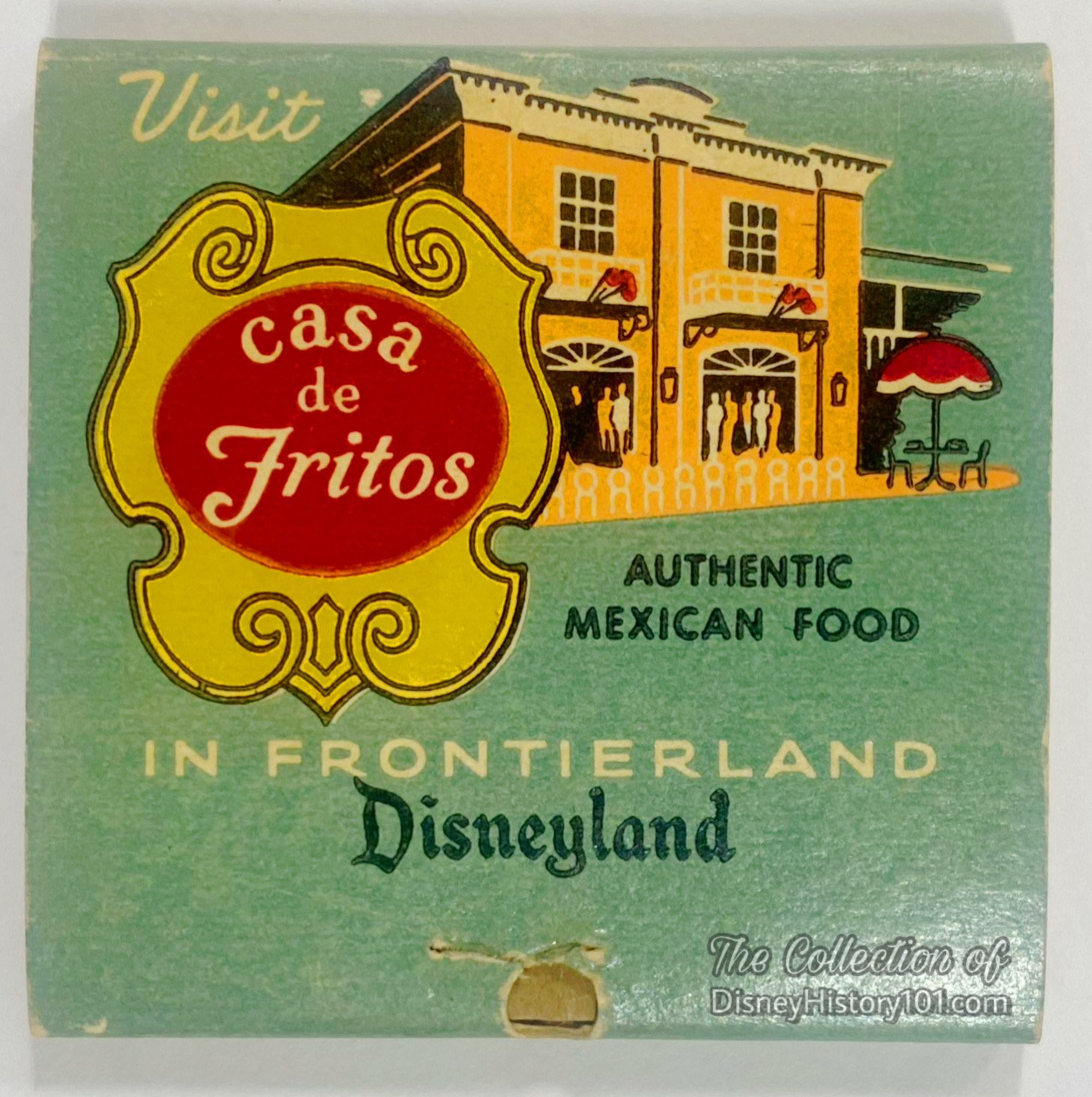
This Casa de Fritos souvenir matchbook became a tangible memory for Guests.
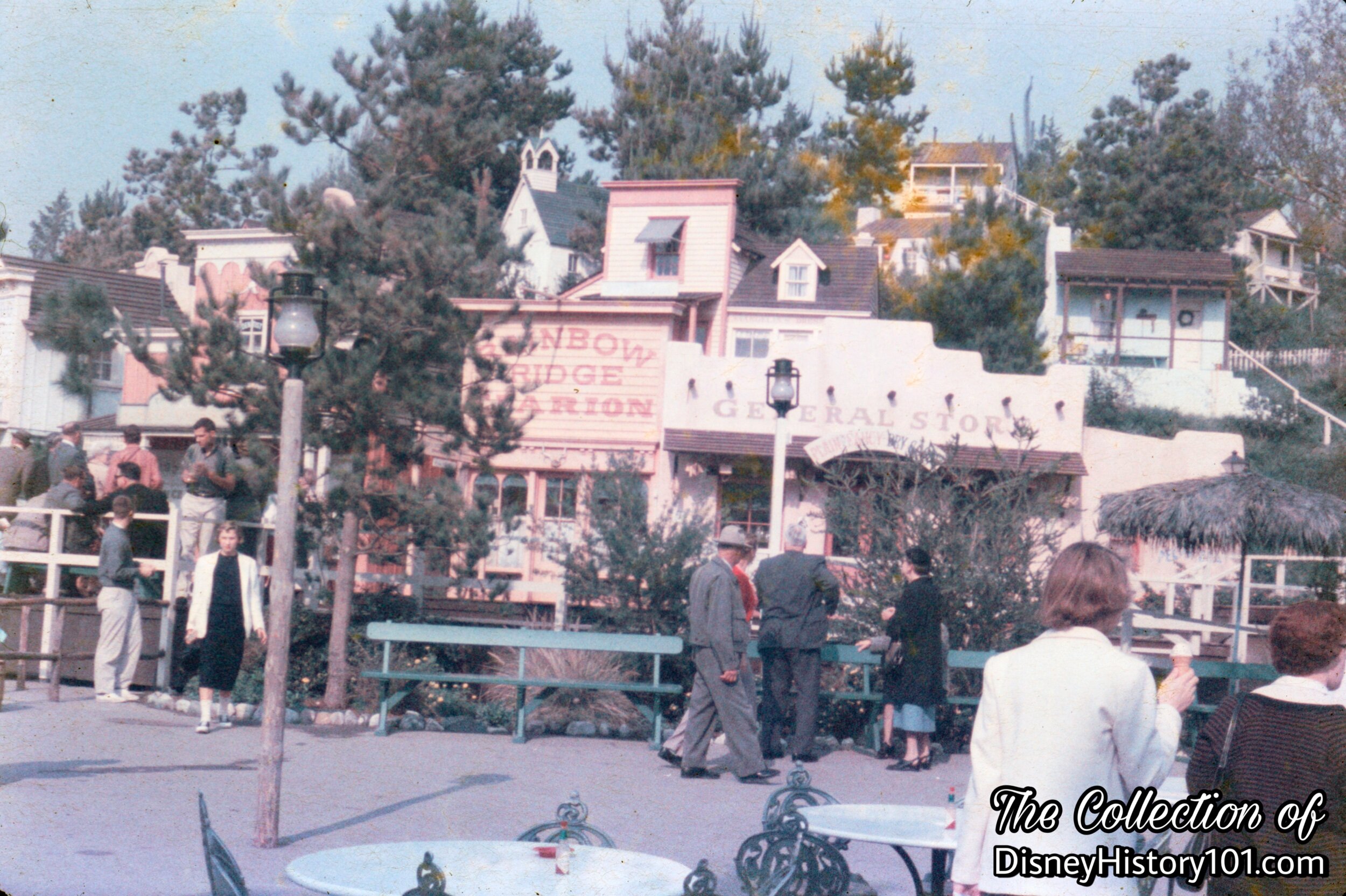
“The Move of Casa de Fritos”
Walt Disney, on the eve of Disneyland’s first day of operation, promised that “Disneyland will never be completed. It will continue to grow, to add new things, as long as there is imagination left in the world.” A half year later, at a meeting of the Disneyland Merchant's Association (held January 25, 1956), a momentous announcement was made: “Me may move Fritos over to the opening of the Mine Ride to service with Mexican food, etc. The service roads are being changed to go between Frontierland and Fantasyland without coming down through the park.” Soon, Casa de Fritos restaurant was closed and relocated to another area, replacing the Marshal’s Office in Frontierland (and not far from Disneyland Offices tucked away in an adjacent Backstage area). In place of its former location, Don DeFore’s Silver Banjo Barbecue opened its doors for a five year lease, but that’s an entirely different story.
The area was further embellished. By September 28, 1958, Disneyland, Inc. made approximately $20,551.00 of land improvements to the Mining Town Restaurant.
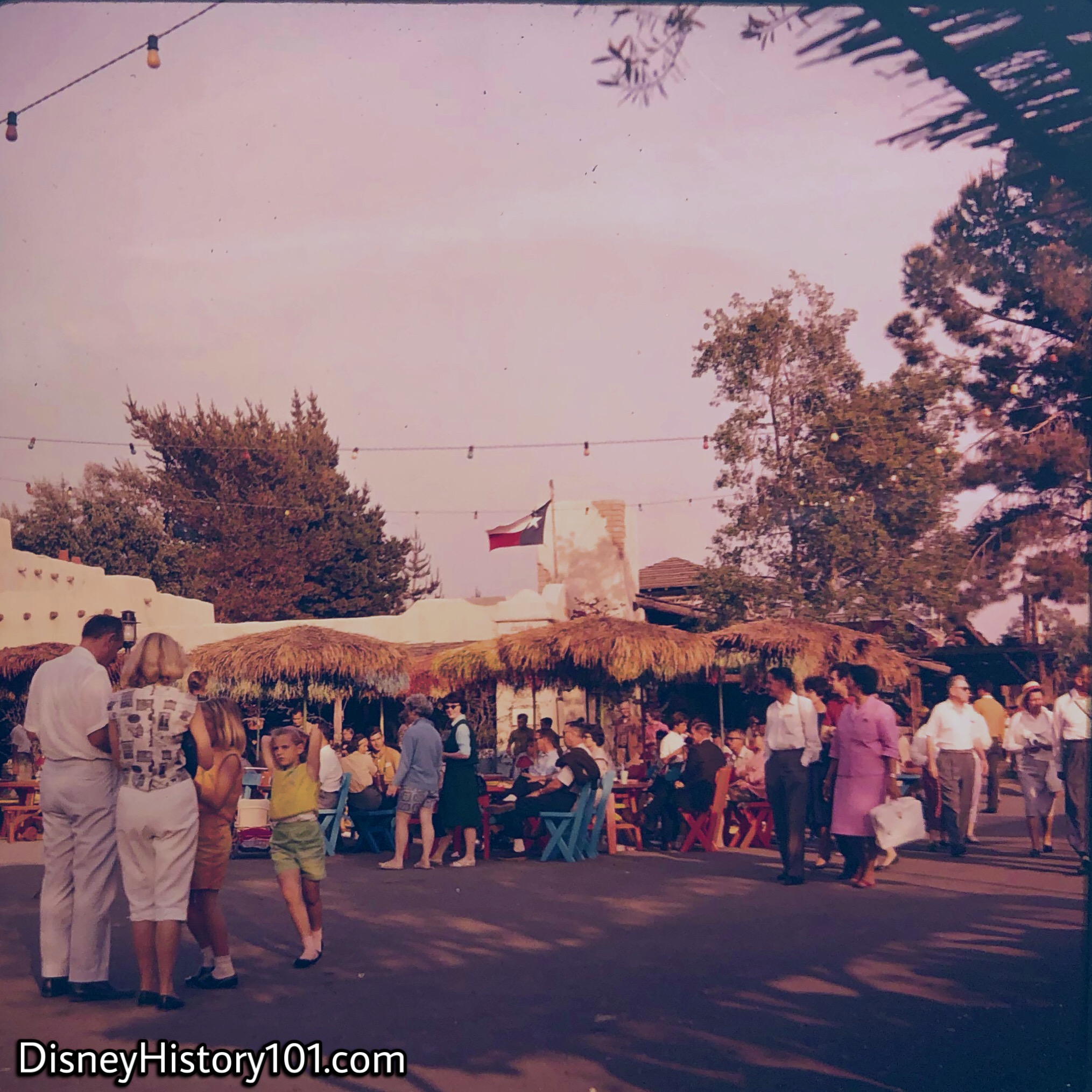
Casa de Fritos soon became one of three major attractions in Frontierland’s El Zocolo. The new Show Building setting was an “adobe and thatched shade,” structure according to the “Disneyland Dictionary,” compiled by WED Enterprises, Inc. and WED Public Relations Department, c. 1968. Appropriately, the Lone Star Flag flew over Frontierland’s “Tex-Mex” dining destination, while the patio was routinely packed with hungry guests. This was generally the scene around mealtime.
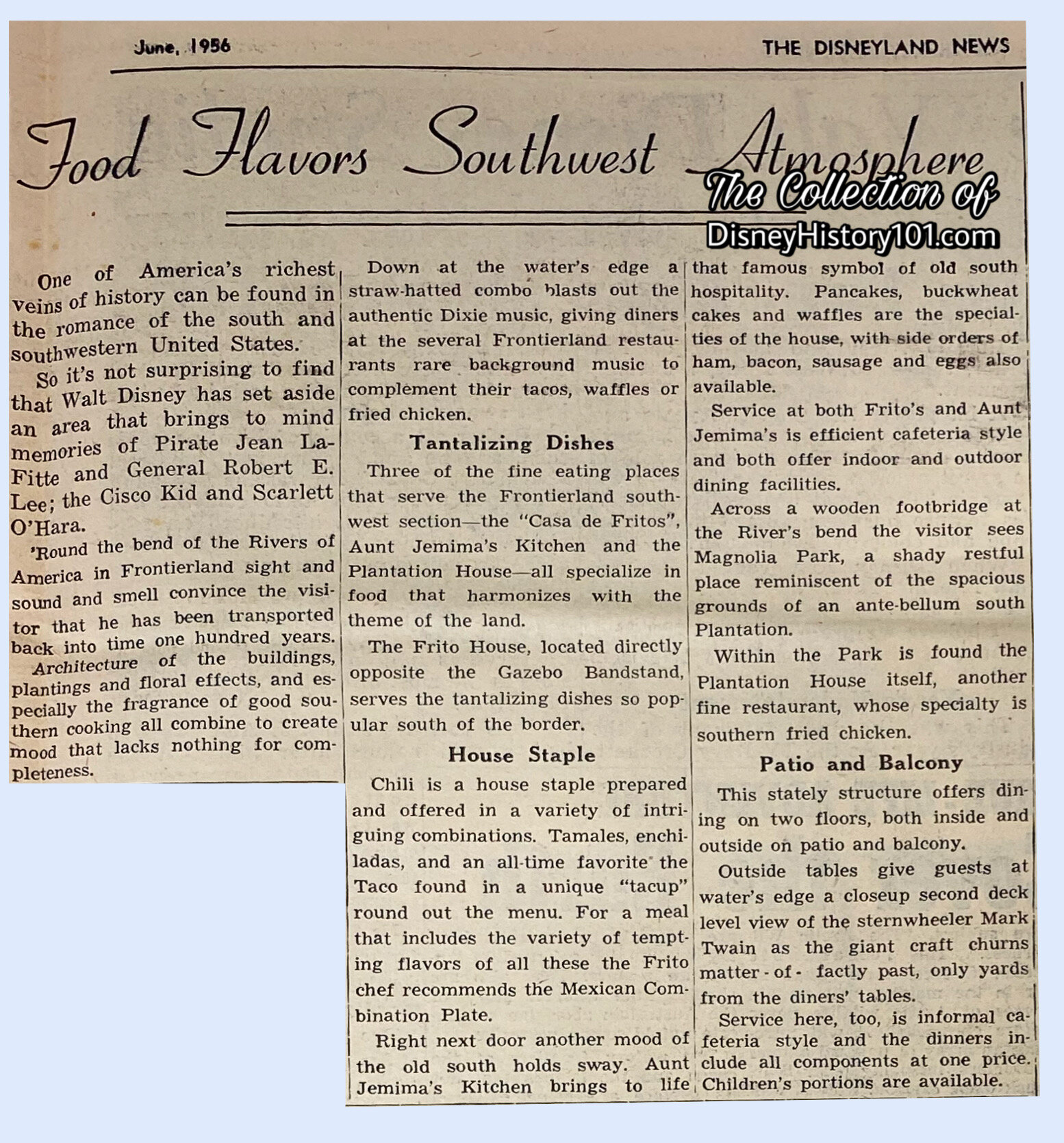
“Projections and Response”
It was predicted that Casa de Fritos operated by Fritos Company would have the capacity to serve 450 guests per hour. This particular Disneyland eating facilities was predicted to contribute to accommodating “15,000 persons daily, hitting a peak of 60,000 on holidays and week-ends…” and one of “twenty restaurants and snack bars, capable of saving 8,000 hourly,” at least according to “Building A Dream” (prepared by the Disneyland, Inc. Public Relations Department).
As a result, Disneyland, Inc. received much income. For example, in 1958, Bank of America appraisers figured of the total income received from leases, 16.02% was derived from the selling of advertising rights and 40.12% from the leasing of space to concerns whose main reason for occupancy is for advertising purposes. The remaining 43.86% of the lease income was derived from stores that sell various products and food.
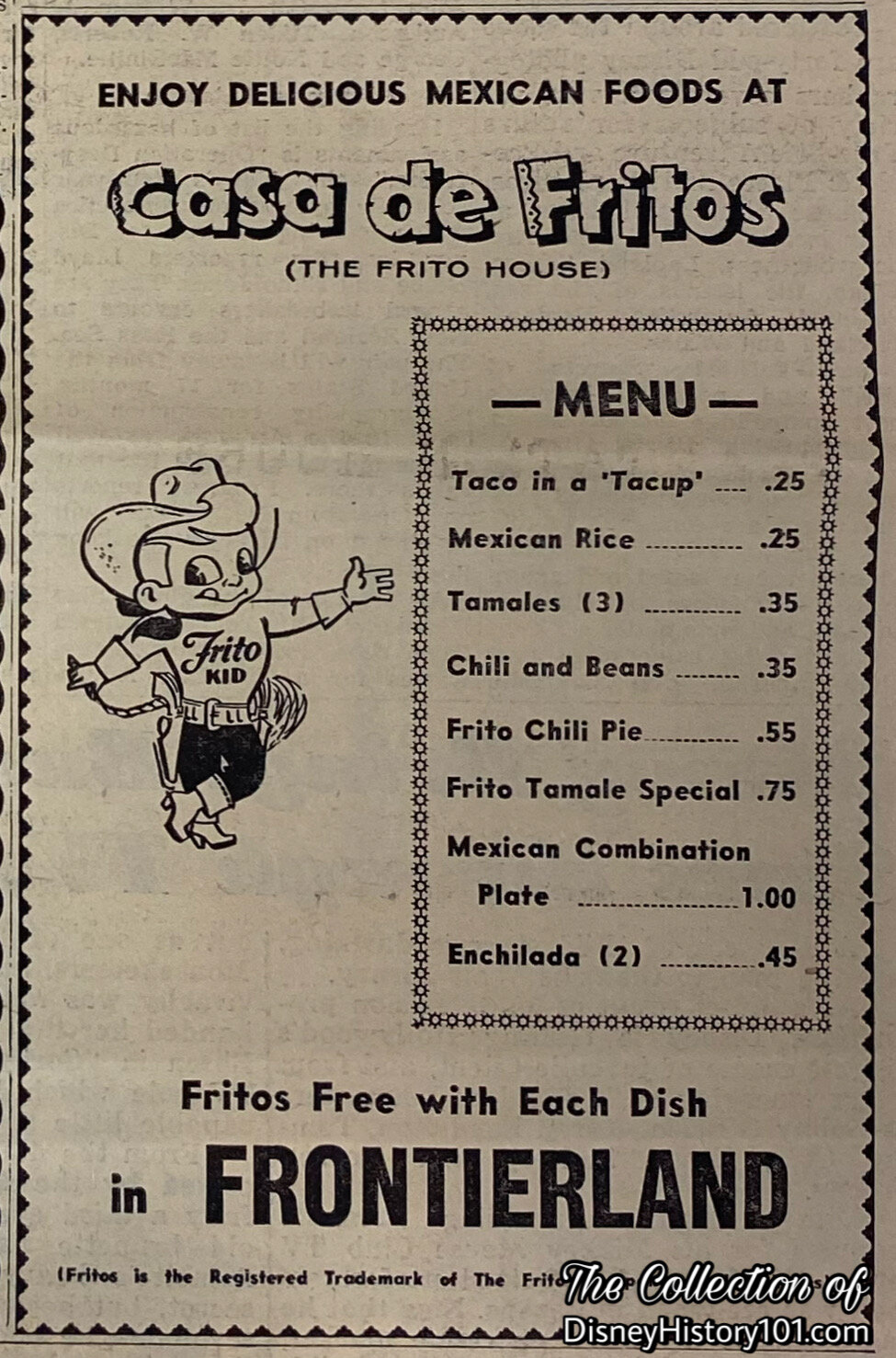
During the era of their Disneyland “Participantship”, servings of Fritos were offered free with each dish at Casa de Fritos, and also available à la carte via Vendors near the entrance. The “Ta-Cups” (a taco in a cup-shaped shell) were advertised in pre-opening advertising supplements of The Disneyland News in 1955!
In a move of synergy, the Frito Co. contributed food to the First Annual Disneyland Christmas Party on December 10, 1956.
While Disneyland needed no introduction, its attractions did! At Disneyland, signs and posters were themed to support the stories with respectful graphics, colors, fonts, terminology, the overall design of sign, materials (wood, metal, banners, etc.), and verbiage used on the signage.
When the earliest attraction posters were prepared, Casa de Fritos also received a promotional poster. By this time, all art work, posters, etc. were produced at the Walt Disney Studios. According to “Disneyland Attraction Posters: 40 Years of Visual Adventure” by Margaret Shumate, published in Walt Disney Collector Society “Sketches” periodical: “With his usual attention to every detail of his beloved park, Walt Disney personally reviewed and approved each finished piece of poster art until his death in 1966.”
This Casa de Fritos promotional postcard that was sold inside Disneyland featured the artwork of the Casa de Fritos billboard image which advertised the restaurant to locals passing just outside Disneyland.
The synergistic relationship between the institutional lessee and Disneyland was beneficial. The Frito Company yielded some revenue for Disneyland Inc. - $18,831 for the fiscal year ending September 29, 1957 and $21,263 for the fiscal year ending September 28, 1958.
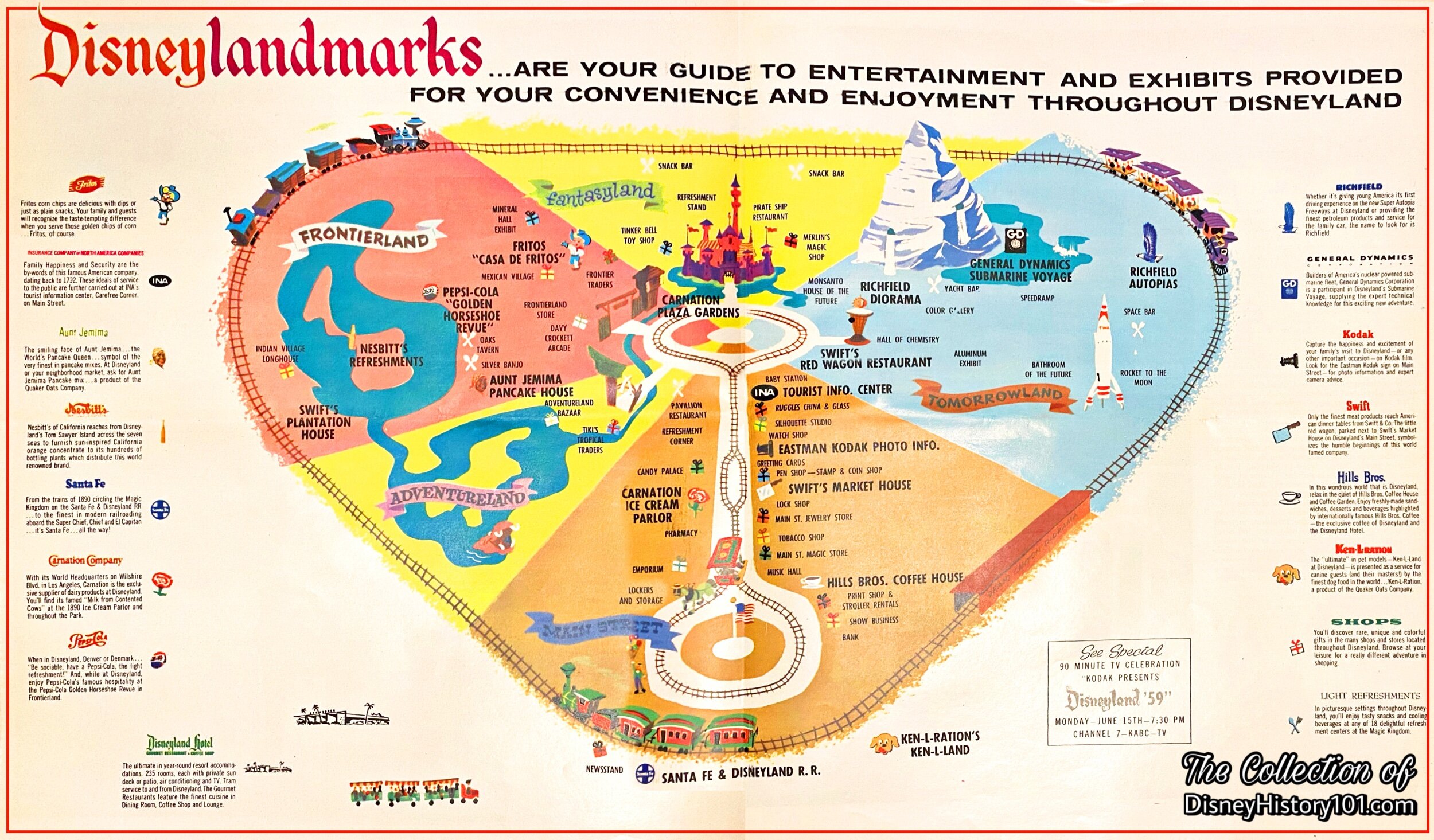
“Casa de Fritos and the ‘Second Opening’ of Disneyland and Beyond”
Owning to Jack Sayers (of Lessee Relations), Casa de Fritos was a contributing Participant of Disneyland ‘59! By October of 1959, the company was (1) of over sixty-eight other firms playing a vital part in the team effort to bring happiness to Disneyland’s Guests. Some were small, specialized individual operators; some were huge companies such as Swift & Co. - the Bank of America - United Paramount Theaters (which you hear as UPT) - Carnation - Richfield - General Dynamics - Crane - and many others. These companies used the park to publicize their wares, leased space in the Park to sell their wares, and Disneyland collected advertising fees from them.
As a sidelight, by October 1959, Jim Baker (of Merchandising) was overseeing the Disneyland Souvenir Sales and Food Administration which included Casa de Fritos.
By 1960, Disneyland wasn’t the only theme park with a Frito Company Mexican Restaurant. Freedomland had a Old Southwest restaurant sponsored by the Frito Company.
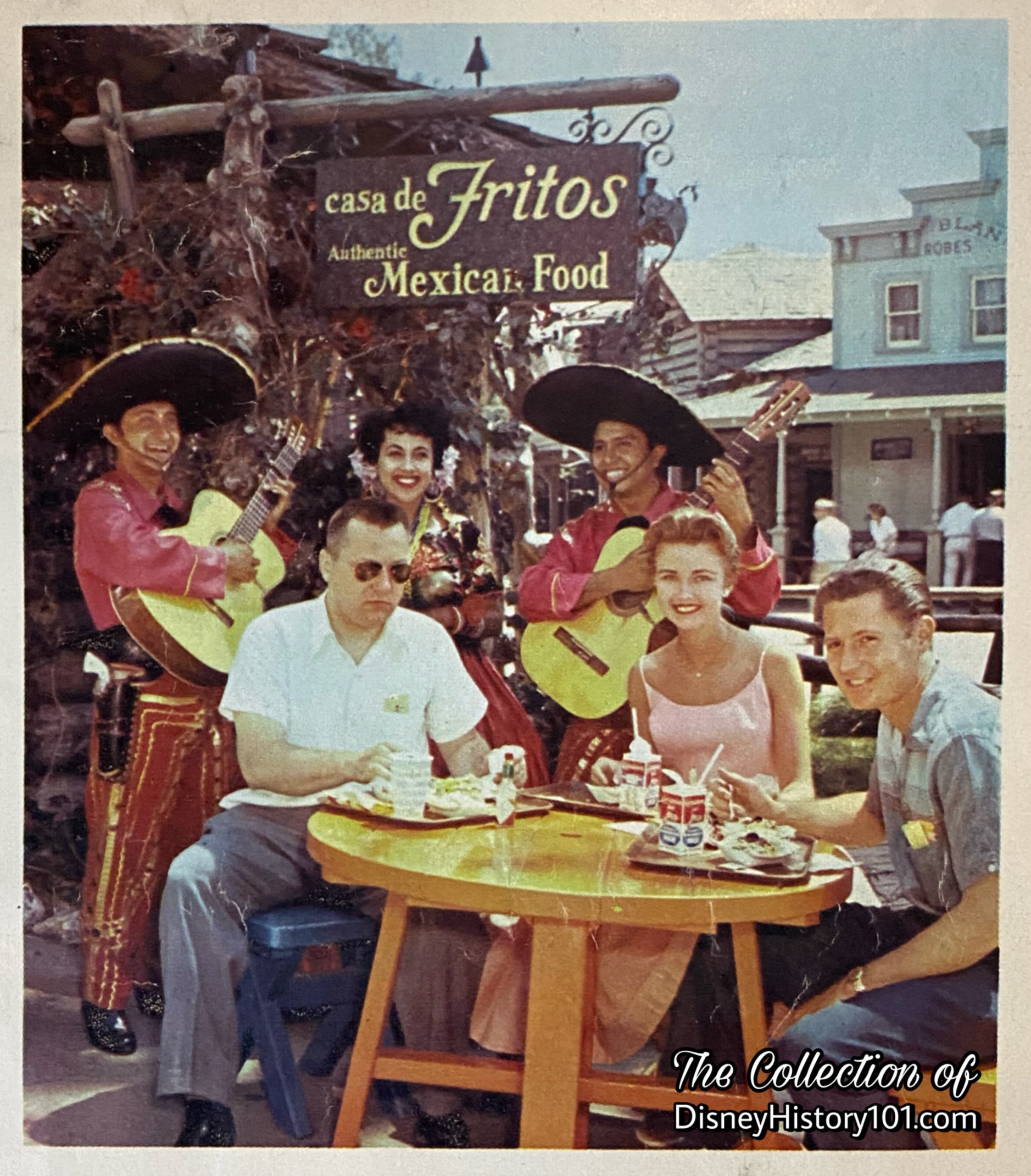
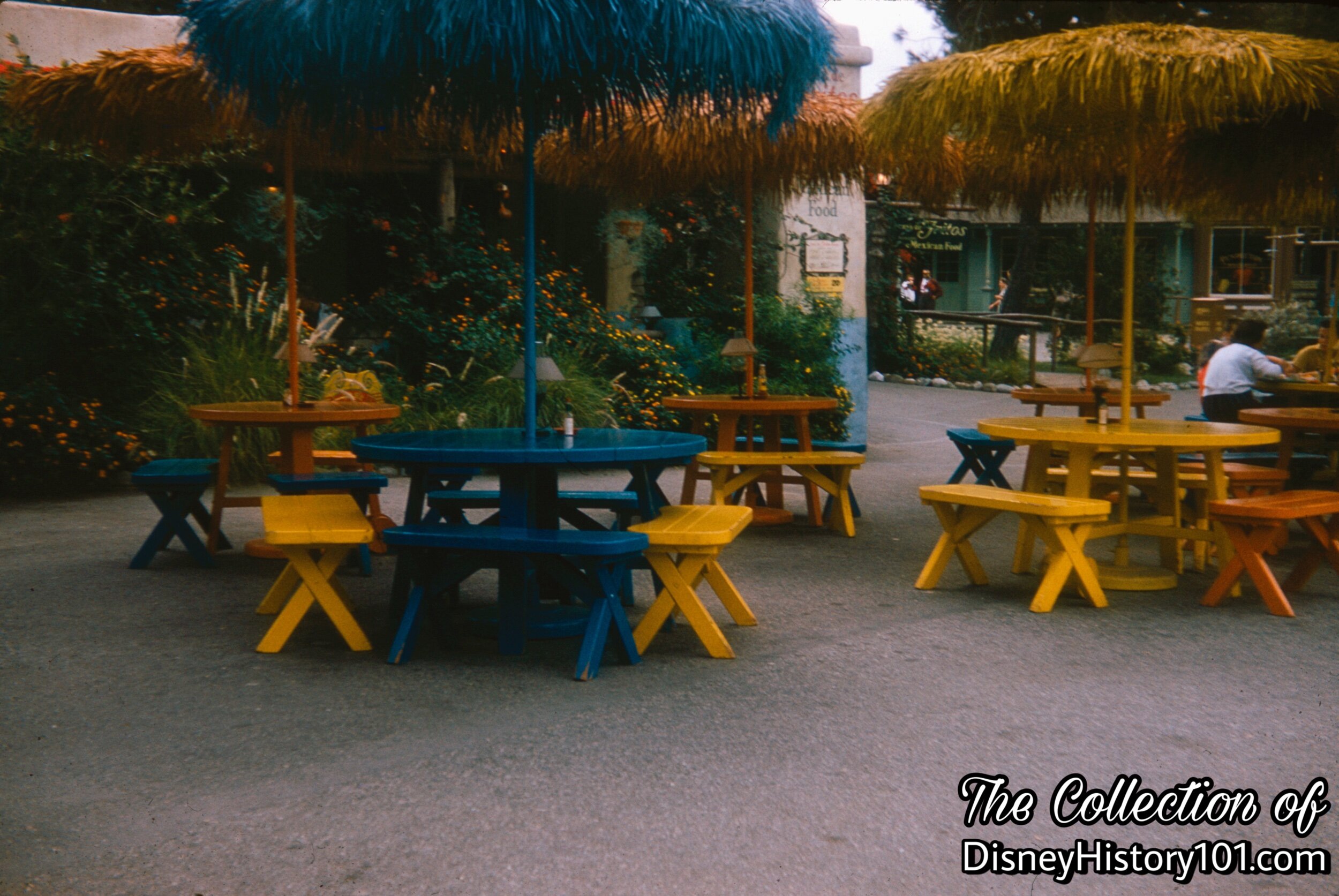
The Casa de Fritos featured outdoor seating on the patio. Tables and guests were shaded by grass-thatched umbrellas, and guests sat on colorful red, blue, green, and yellow benches while dining.
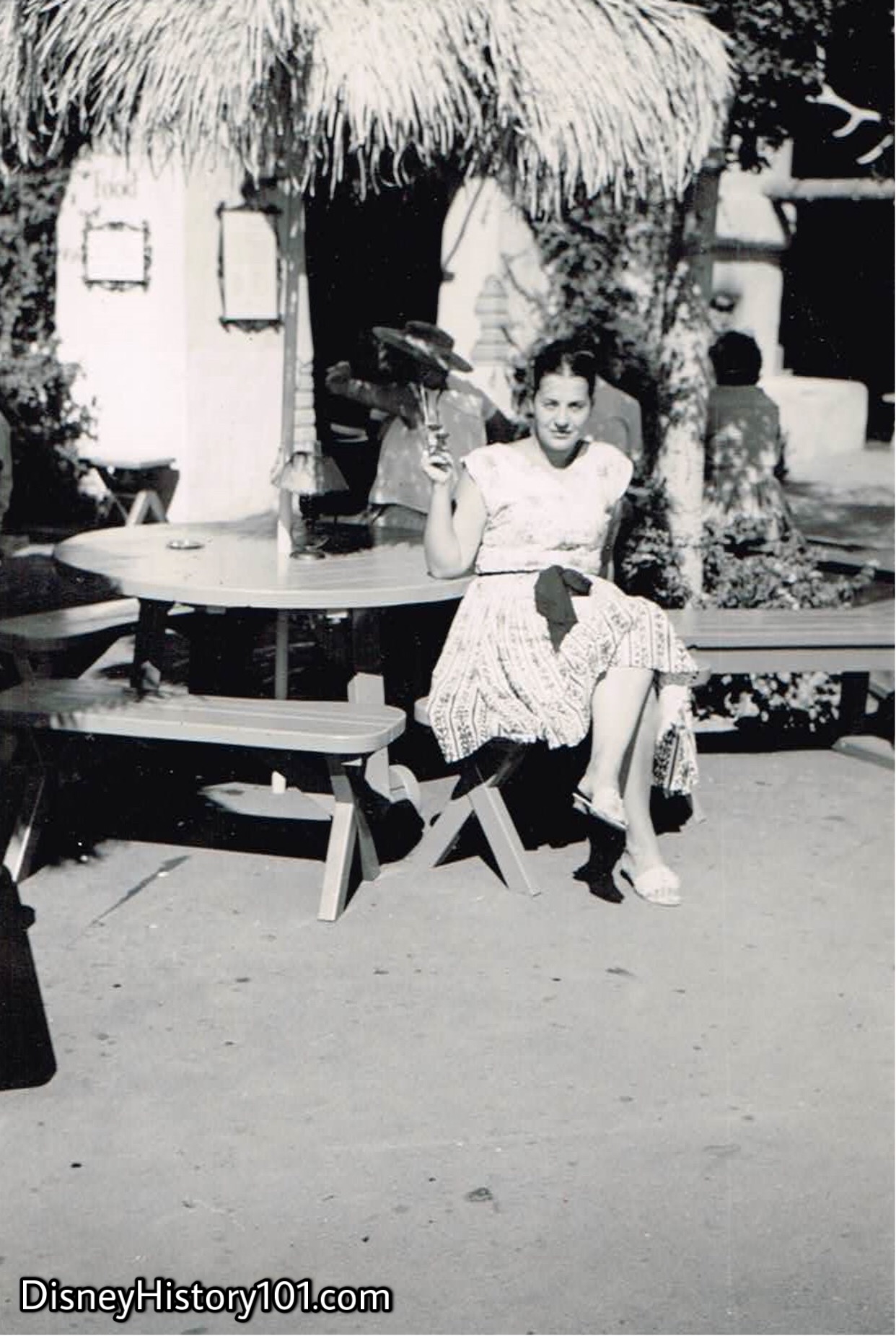
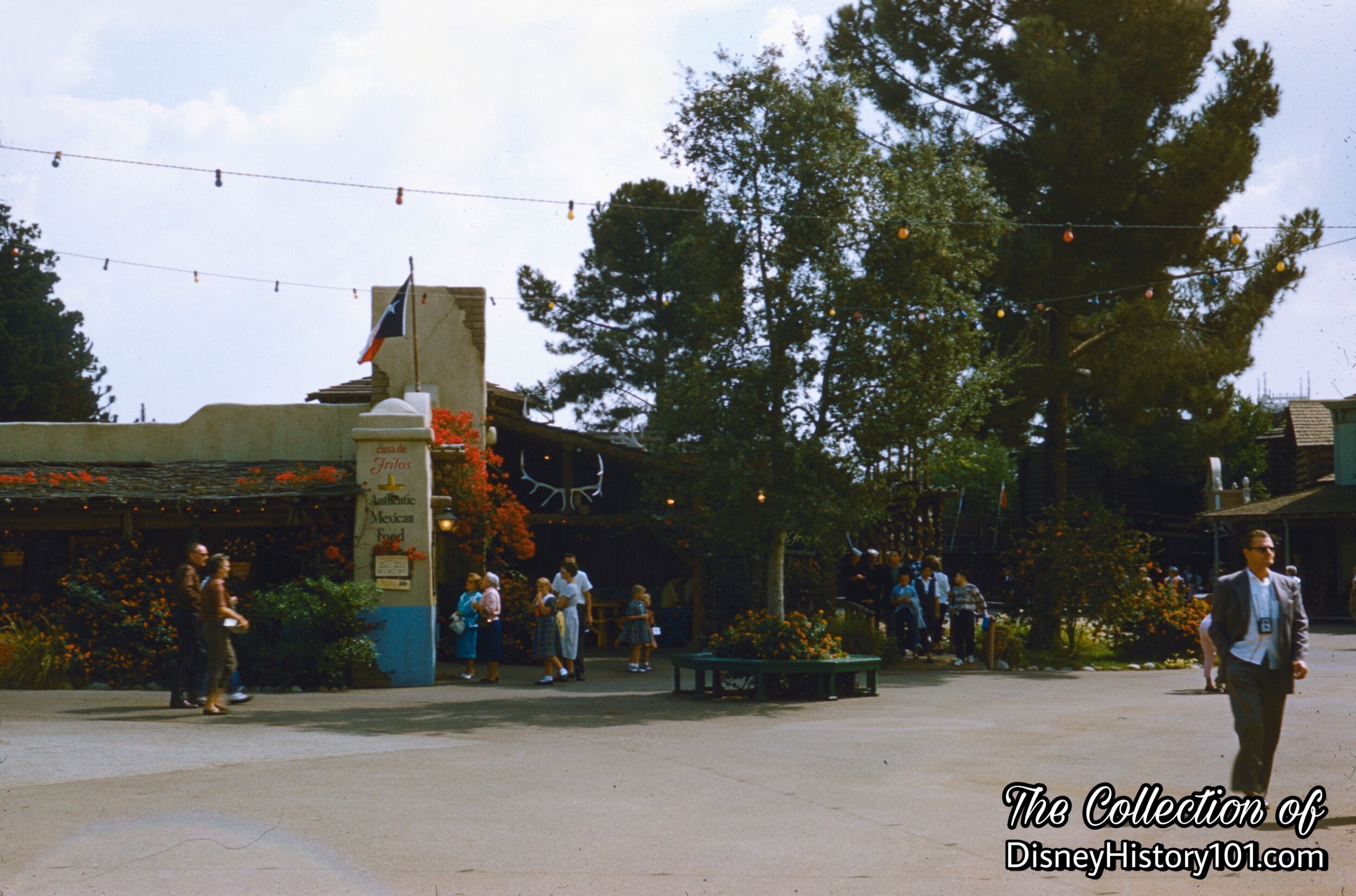
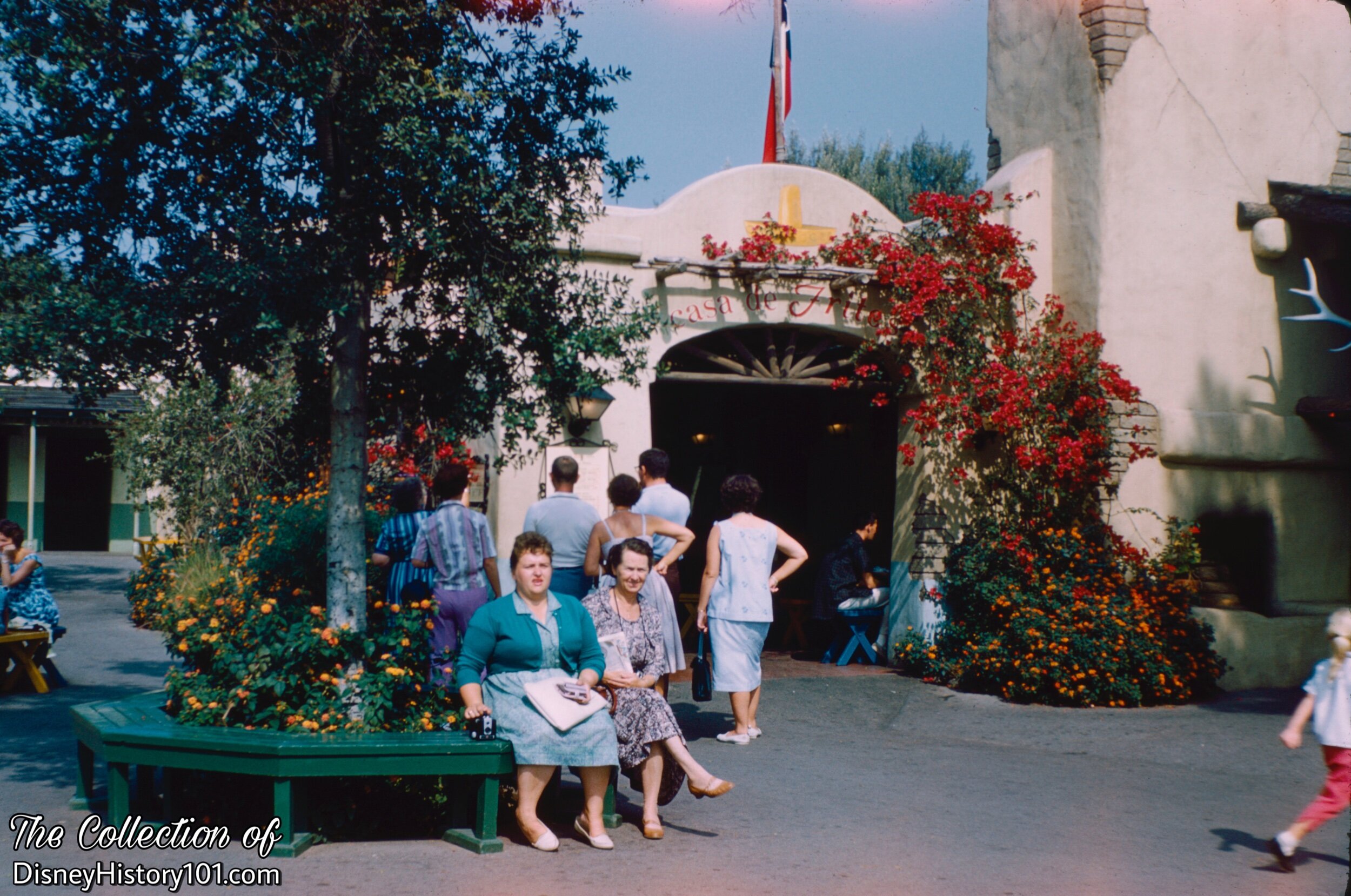
When the indoor dining room was full, guests sometimes waited for available tables while seated on the benches around this planter.
You may be wondering who this “chip-a-dee” is? As mentioned earlier, if you were in the mood to munch a quick snack (and not a meal), Fritos were also sold by the female vendors that would typically be found sitting on the old Blacksmith Shop hearth, located just outside the Casa de Fritos.
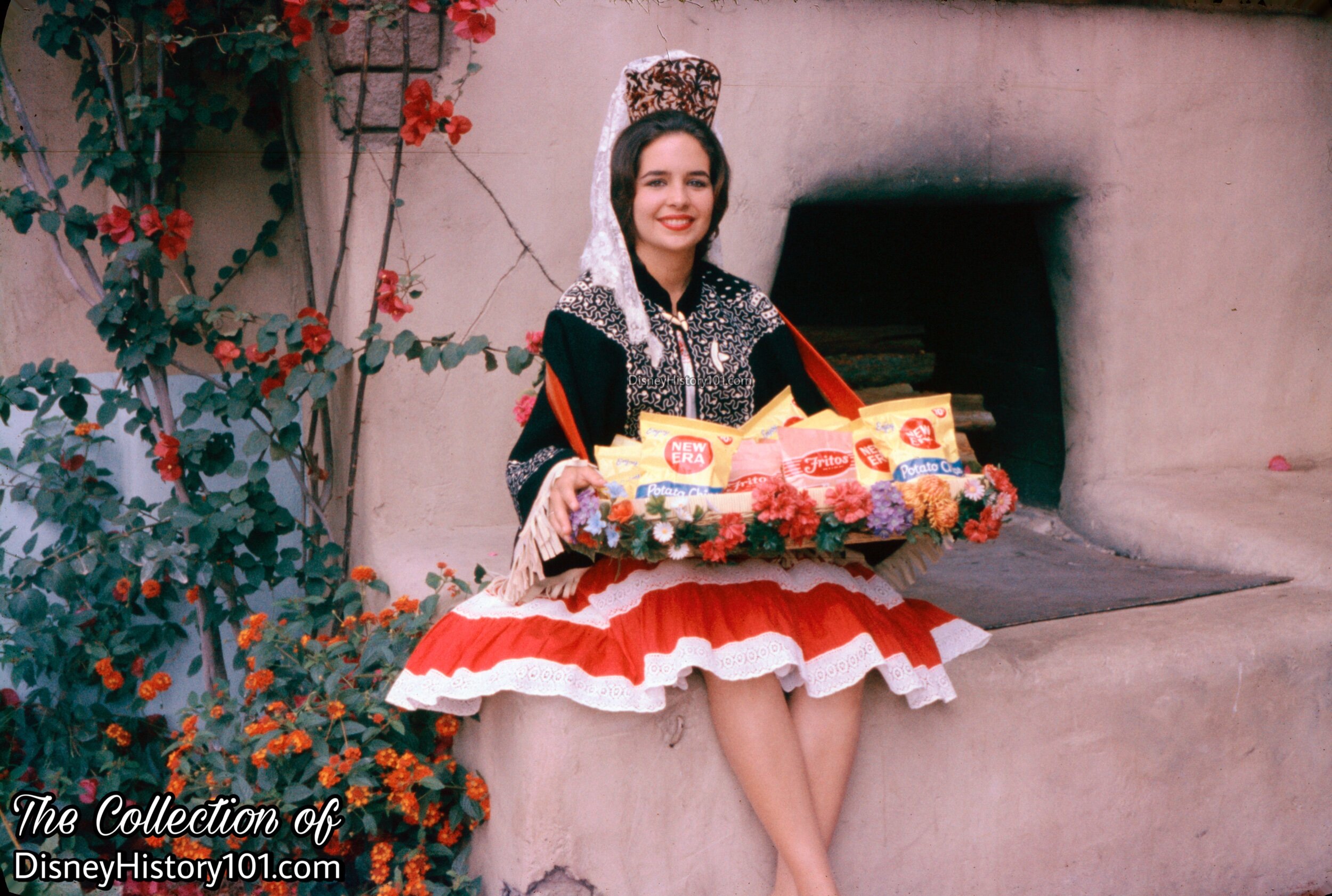
“Any Food Or Drink Tastes Better With Fritos”
Guests were encouraged to “try Fritos with sandwiches, hamburgers, soups, salads, hot dogs, Mexican foods, and your favorite beverage”! You may have personally had the experience of eating a bag of Fritos with a refreshing Welch’s Grape Juice or a cup of Carnation Farms’ milk at Disneyland. Here, the Fritos Vendor Hostess (like Alice Rodriquez) exemplified the spirit of Disneyland while selling popular Fritos corn chips (straight from Klondike) and New Era Potato Chips.
As a sidelight, New Era Potato Chips was acquired by Lays, and ultimately Pepsi-Co. in 1965. New Era soon began distributing a certain thicker “Ruffled Chip”, specially designed with grooves for dipping (which can be seen among the vendor’s offerings, pictured above).
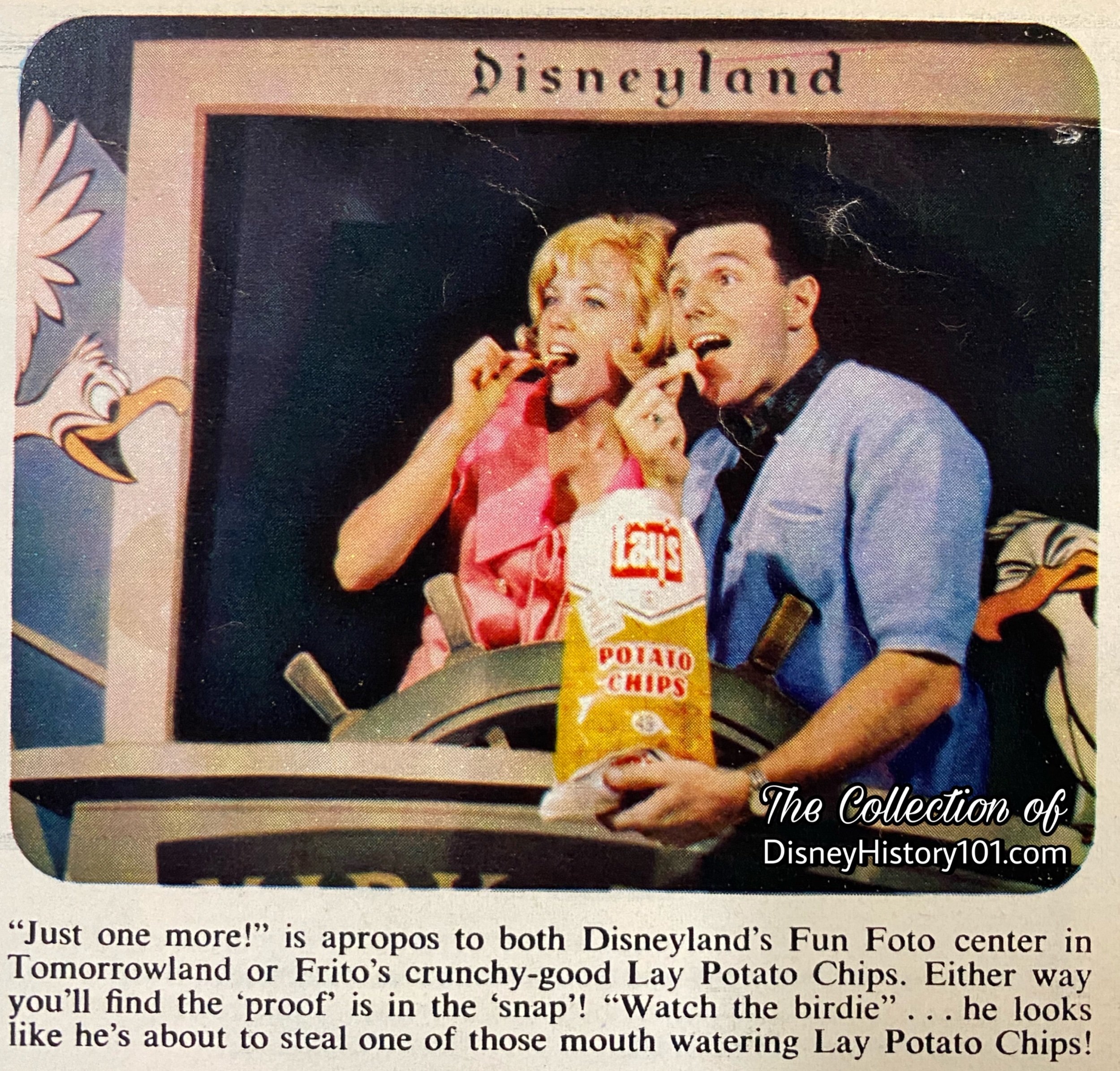
In 1967, the price range for meals ran from 30¢ to $1.85.
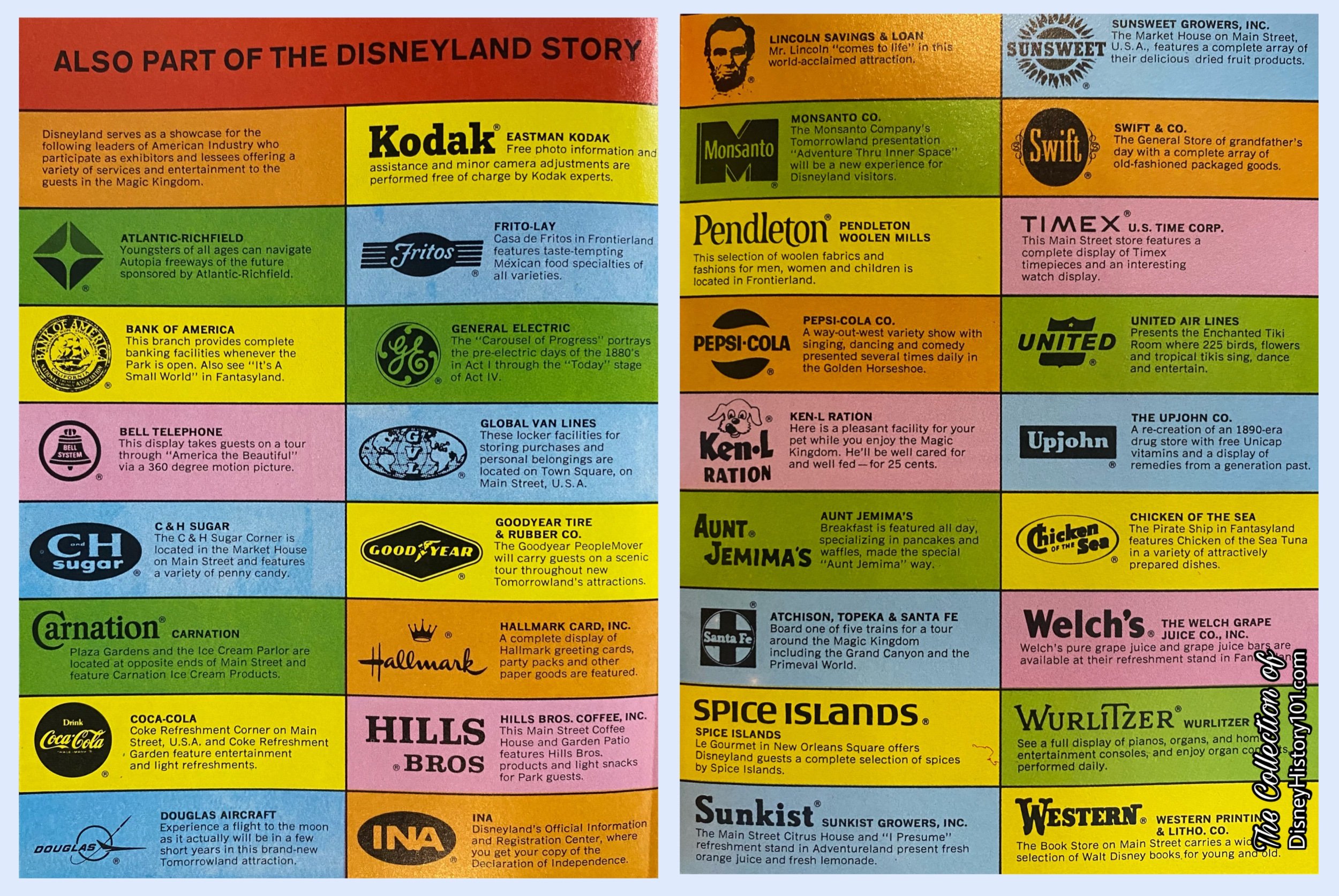
From May 7 to May 20, 1973 the Casa de Fritos was closed for a 2-week rehabilitation.
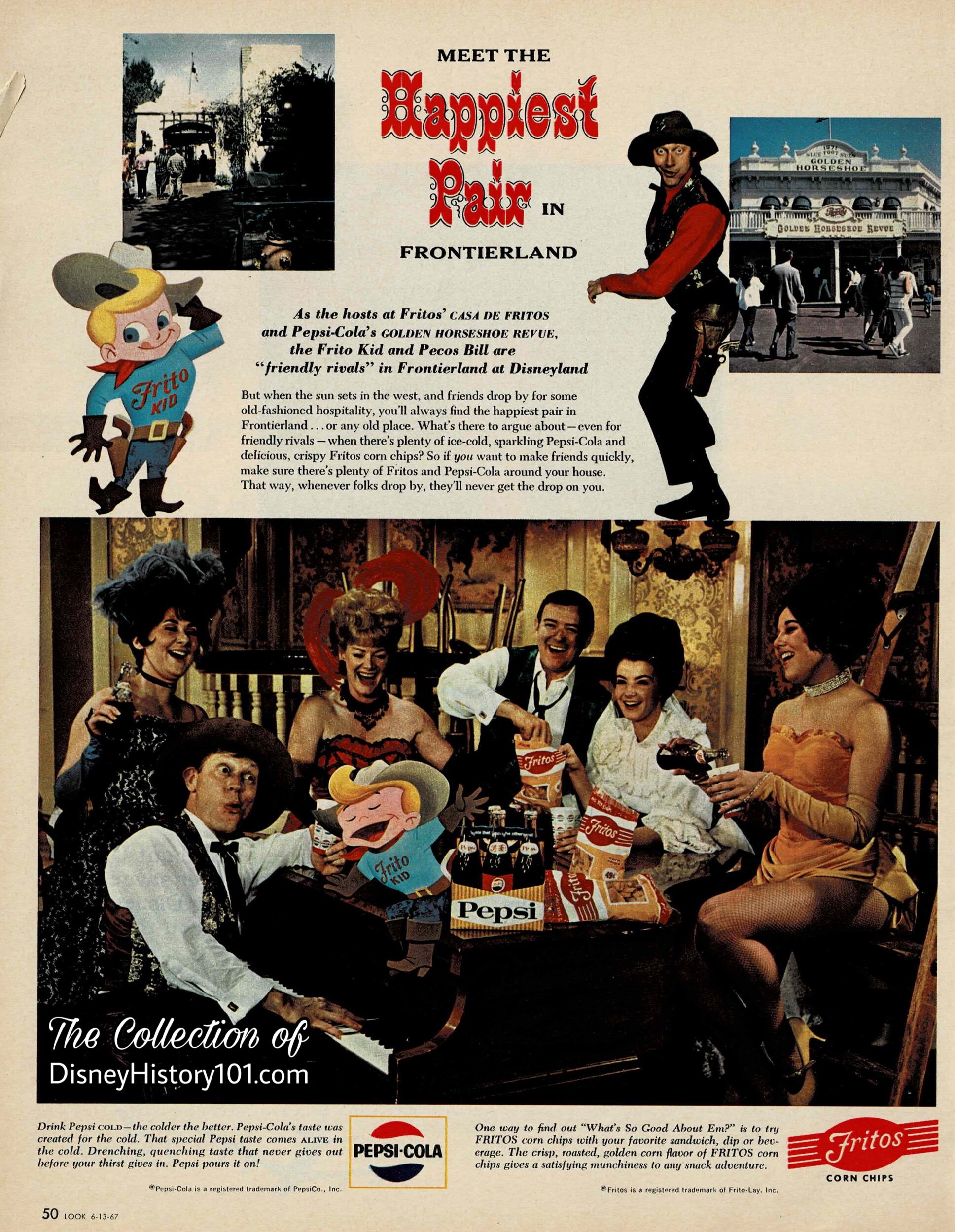
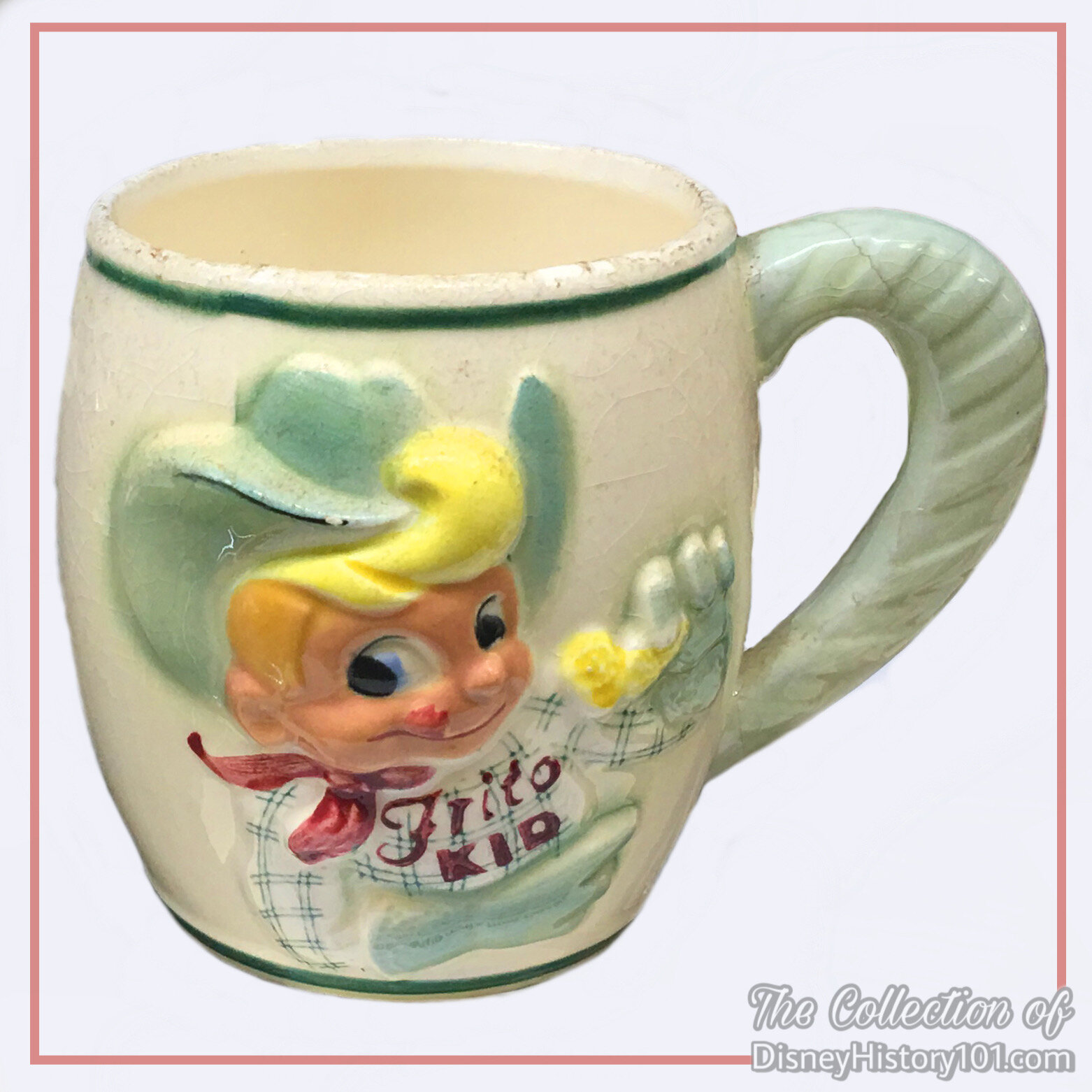
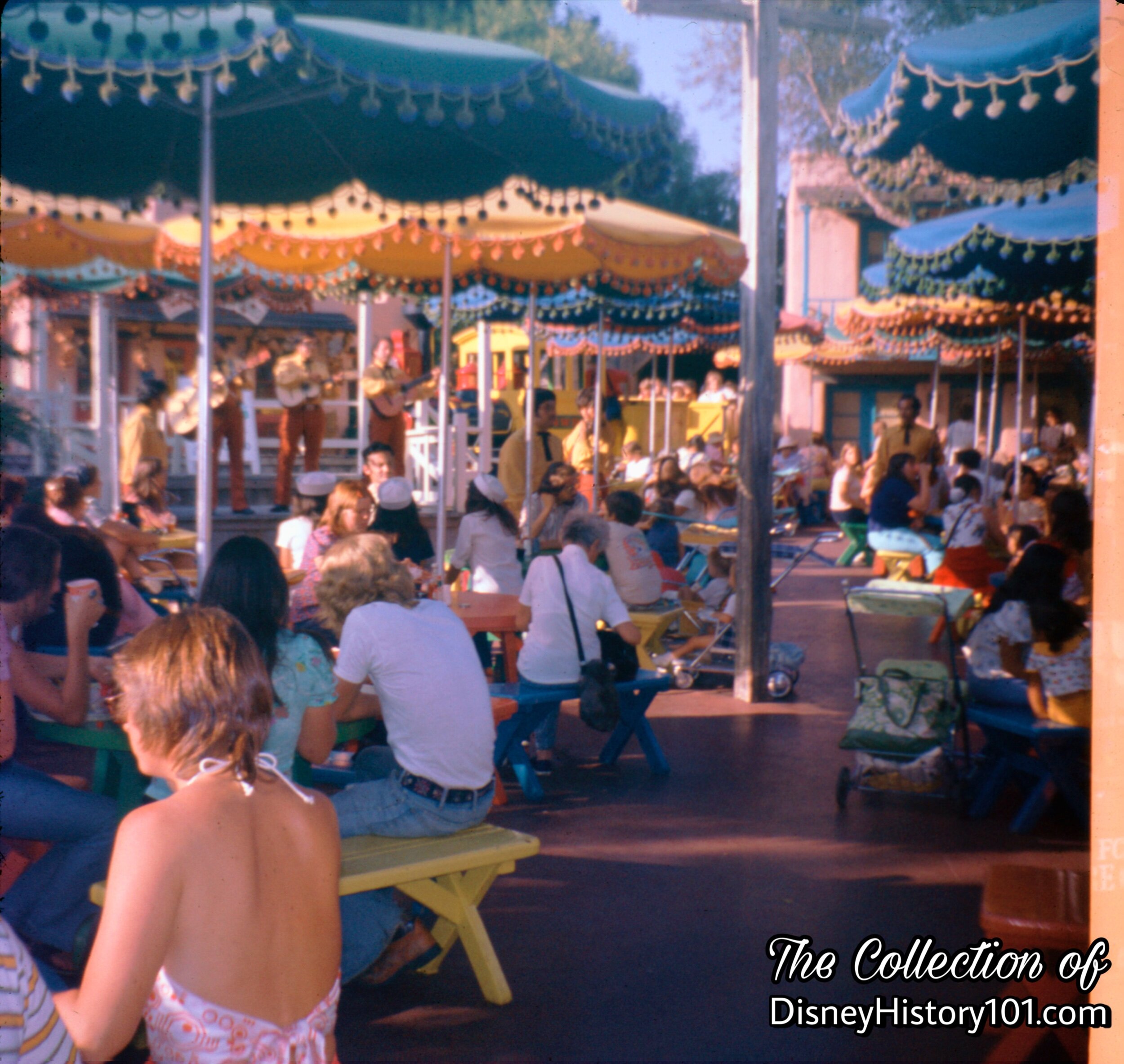
During meals, the wandering mariachi would serenade diners as they refreshed themselves and ate under the festive umbrella-shaded patio tables.
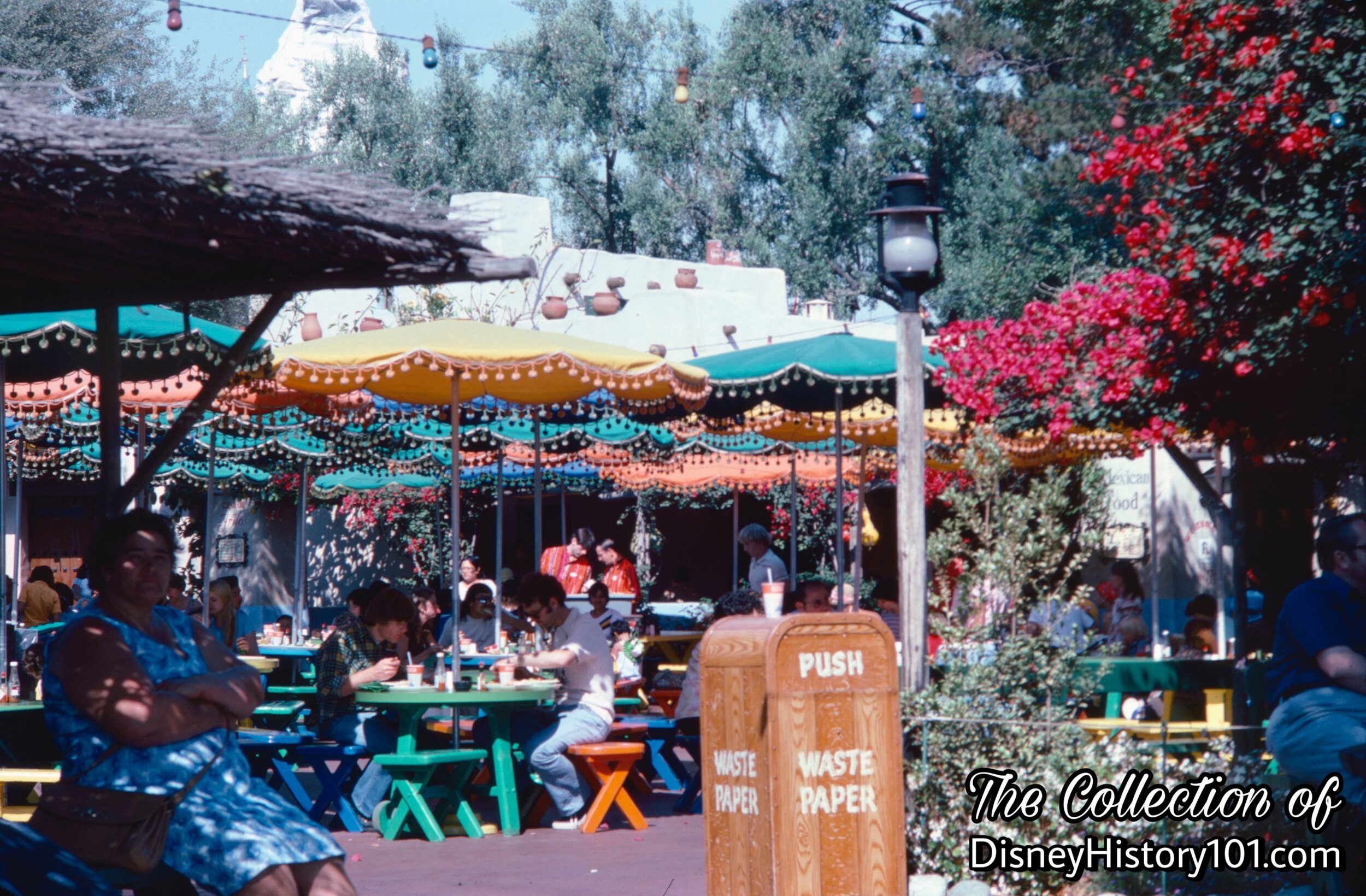
During 1978, a massive rehab came to Casa de Fritos (as well as the Frontier Gallery and Frontier Traders). This project was overseen by Lead Bud Poole (of Disneyland Maintenance).
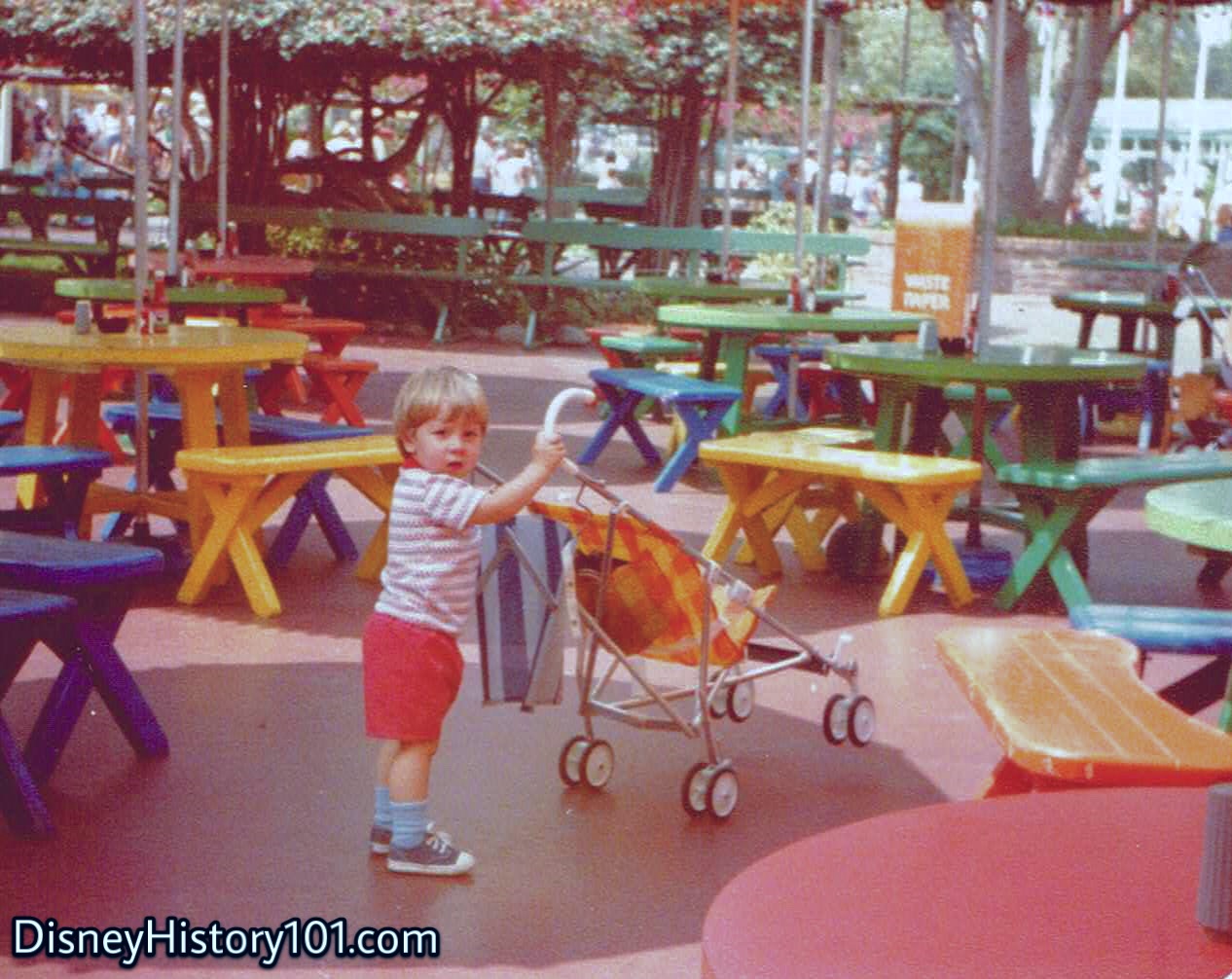
By 1975, the benches for Casa de Fritos were being repaired. When the mealtime rush of customers dispersed, the colorful seating of the Casa de Fritos offered a place to rest while enjoying both the sights and sounds of Frontierland! This was also the sight during periods of regular rehabilitations (like in ‘78) which maintained the show quality. In November of 1978, the Frontier Traders Shop reopened from a rehabilitation with increased floor space and enlarged stockroom replacing the old closet. In addition, an access passageway was opened behind Casa de Fritos and the Shooting Gallery to allow the Warehouse drivers to drop off their deliveries backstage. This proved handy for Casa de Fritos Hosts, Hostesses, and other Cast Members for the remainder of the lessee contract.
However, after Disneyland Participant Affairs and Participant Frito-Lay could not negotiate a new cooperative agreement to maintain their ongoing relationship, Casa de Fritos would close its doors. This second incarnation of Casa de Fritos restaurant had been in operation for about two-and-a-half decades (from June of 1957 until October 1, 1982), when it was renamed The Casa Mexicana.
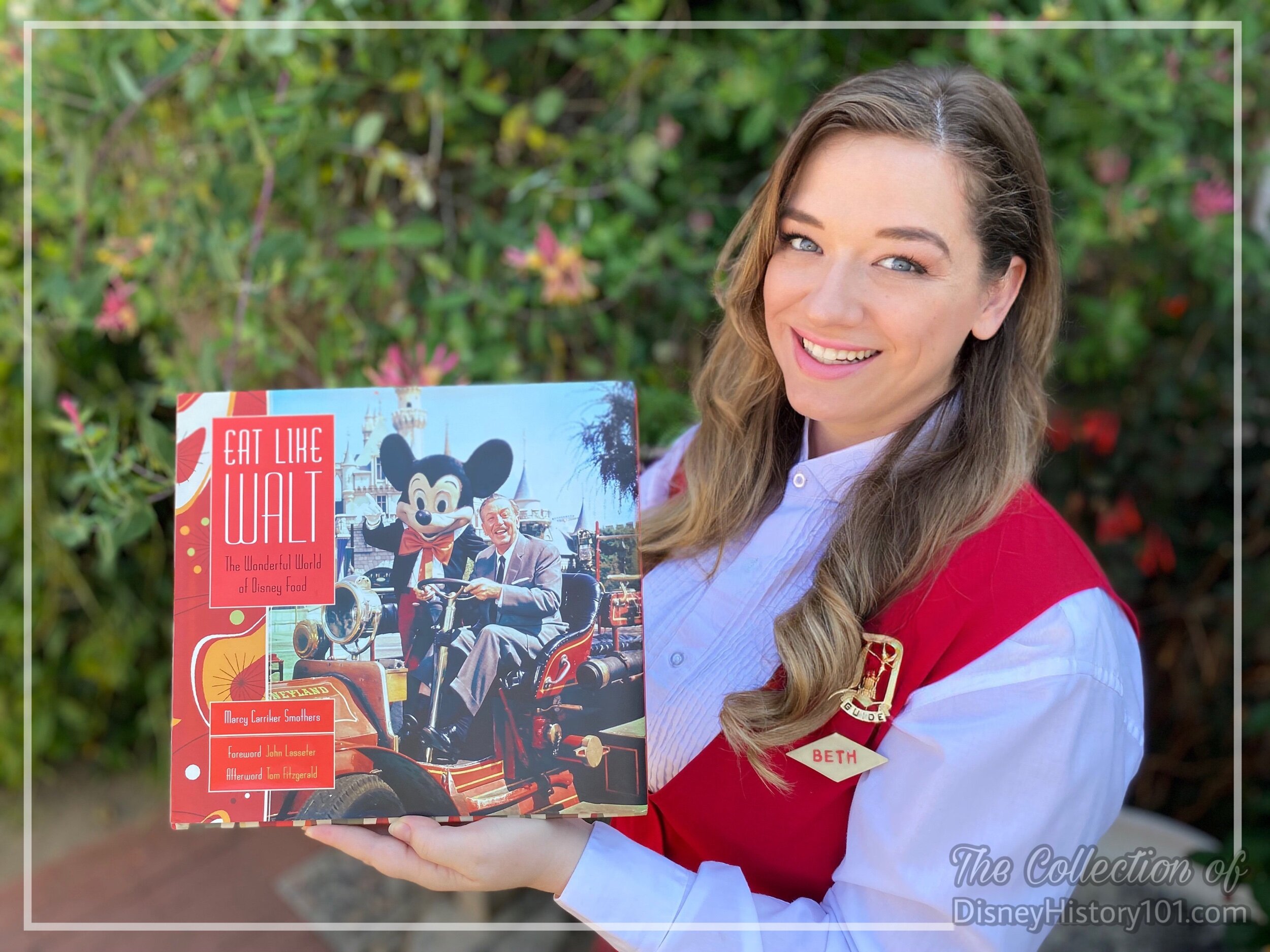
If you would like to read more about the Casa de Fritos, it’s my pleasure to recommend adding Marcy Smothers’ “Eat Like Walt - The Wonderful World of Disney Food” to your personal Disney Home Library! Therein, Marcy has extensively researched and finely crafted a small section of a chapter dedicated to “Walt Disney’s Disneyland - Frontierland” If you would like to bring the magic of Disneyland restaurants and concessions to your dining room table, “please step this way” toward www.eatlikewalt.com where Marcy has shared a few recipes for memorable Disneyland menu options, so you too can “Eat Like Walt.”
Lawry’s first developed their “Seazn-All-Salt” steak seasoning in 1938. Since then, the company came to produce “110 different products, 17 of which” were employed in various restaurants around the circa 1983 Disneyland. Casa Mexicana (hosted by new Participant Lawry’s Foods, since May of 1983) captured the feel and flavor of the Mexican Square’s premier attraction, though a refurbishment was in “order”.
During this time Casa Mexicana hosted by Lawry's offered Mexican food specialties, combination plates, (tacos, burritos, and enchiladas) similar to Casa de Fritos’ former offerings were still available in a “buffeteria” setting, and diners could still hear the sound of the mariachi in the square. But now, new variations on these were offered - beef or chicken tacos, shredded beef burritos covered in ranchero sauce, cheese enchiladas, mini beef taquitos, quesadilla rolls, taco salad, nacho platters, and the “Beef Colorado.” Many combination plates allowed guests to experience several of these options, served with rice and beans (of course). “Disneyland Executive Chef Tony Bodner explains that Casa Mexicana offers what might be termed California-style Mexican food. ‘At Casa Mexicana, as at all our Disneyland restaurants, we present an Americanized version of traditional foods,’ he says. We have to gear our recipes to the kind of tastes our audience will accept. For instance, traditional Mexican food would be too hot and spicy for our average American guests. But we’re very quality conscious here, and our recipes convey the style and flavor of the ethnic foods,” according to Disneyland LINE magazine (Vol. 15, No. 41).
According to the very same article, Casa Mexicana used “about 300 pounds of beans and 300 pounds of rice, plus another 300 pounds of cheddar cheese and about 400 pounds of beef” during peak summer days, by account of Disneyland Food Receiver Joey Silva.
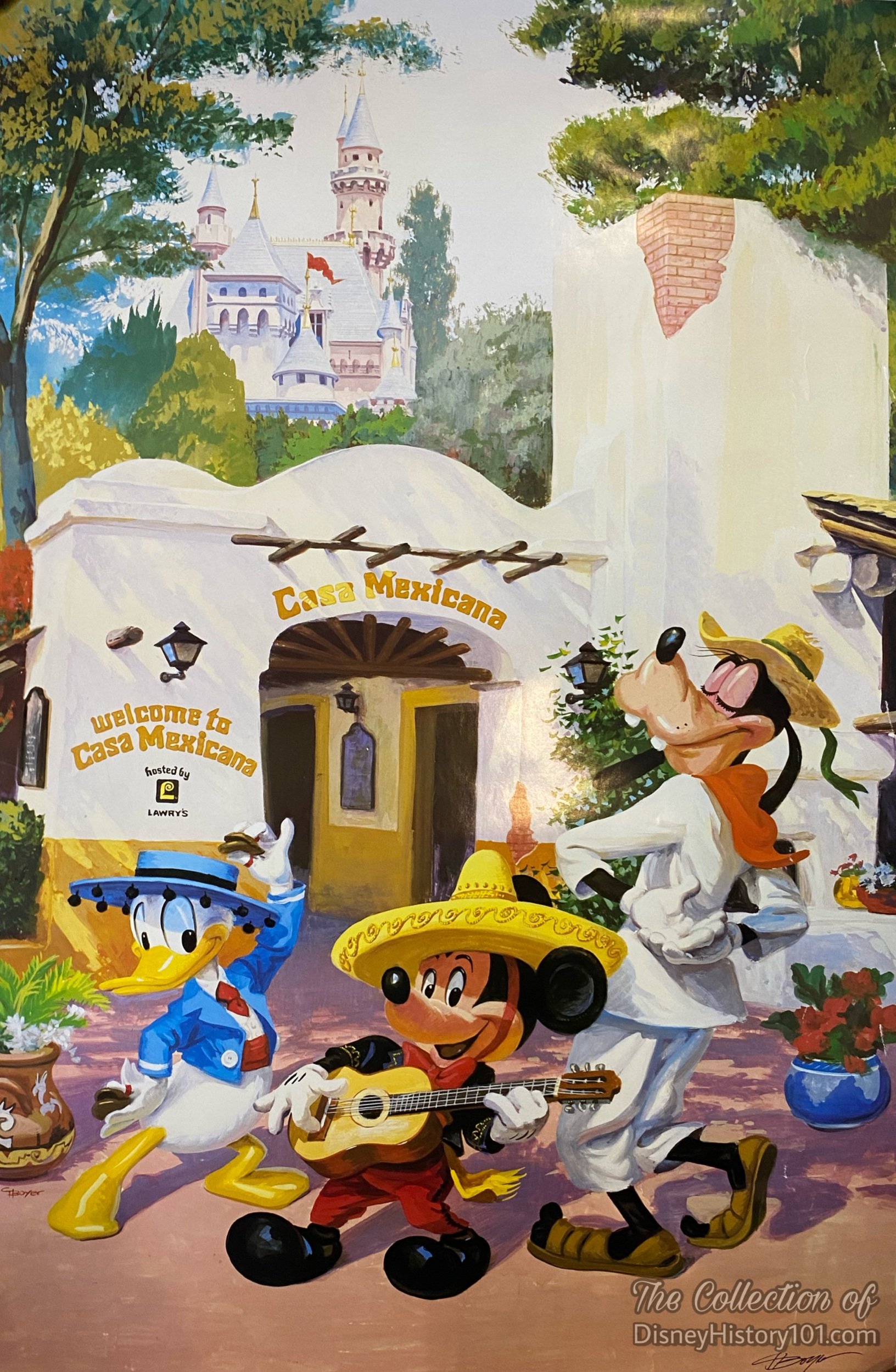
Casa Mexicana occasionally hosted special events, like Private Parties (e.g. GM-Hughes Family Celebration, January of 1986), during which Charles Boyer’s “Casa Mexicana” was occasionally offered as a limited edition print.
By 1990, the table service restaurant offered healthier menu alternatives like the Cheese Enchilada, Chicken Taco, and Fresh Fruit Cup. By 1991, the buffeteria-style Casa Mexicana restaurant was still hosted by Lawry’s Foods and offered “south-of-the-border” specialties including tacos, burritos, and enchiladas. This incarnation of the restaurant continued for a little more than 17 years, until the opening of Rancho del Zocalo, around February/April 2001.
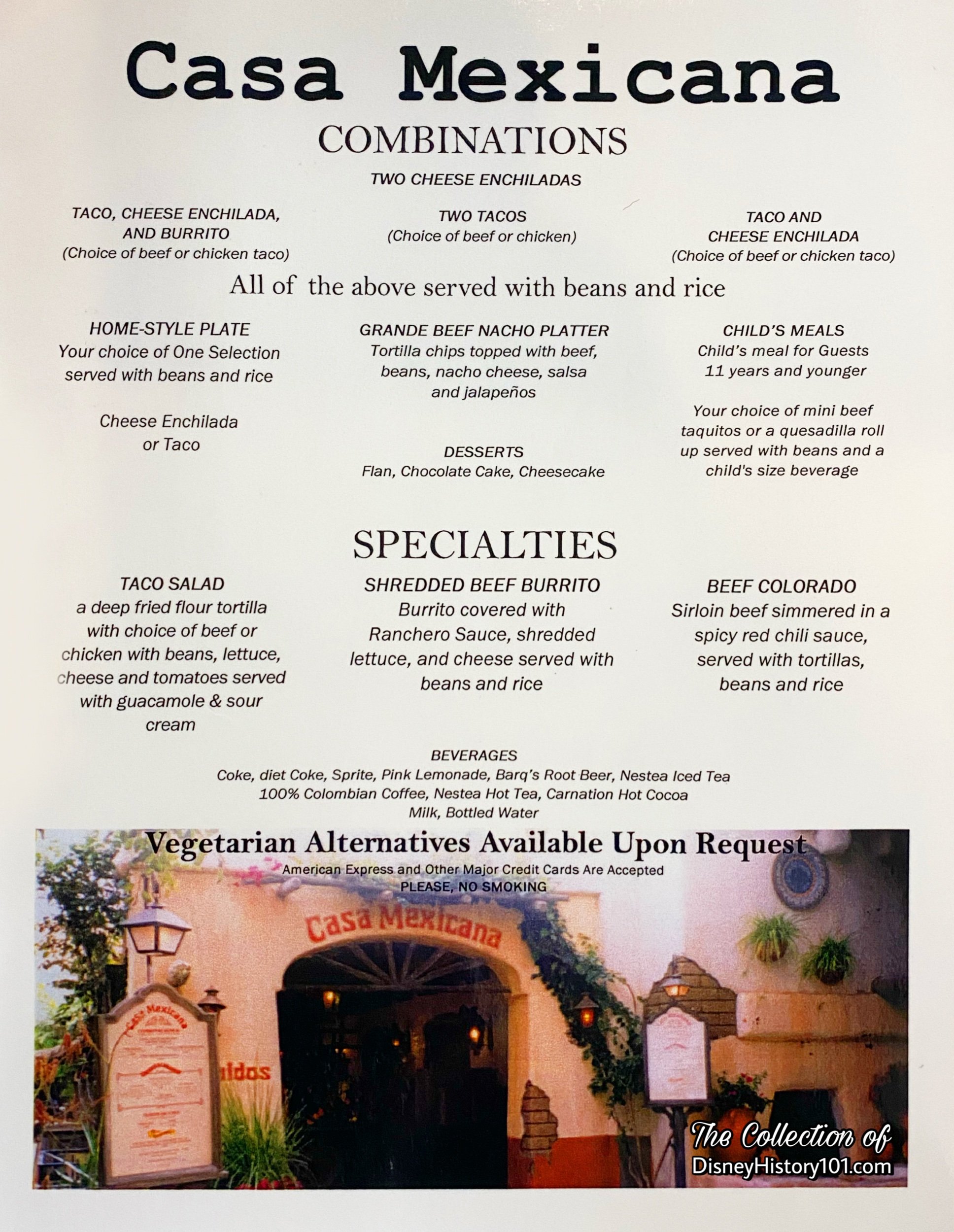
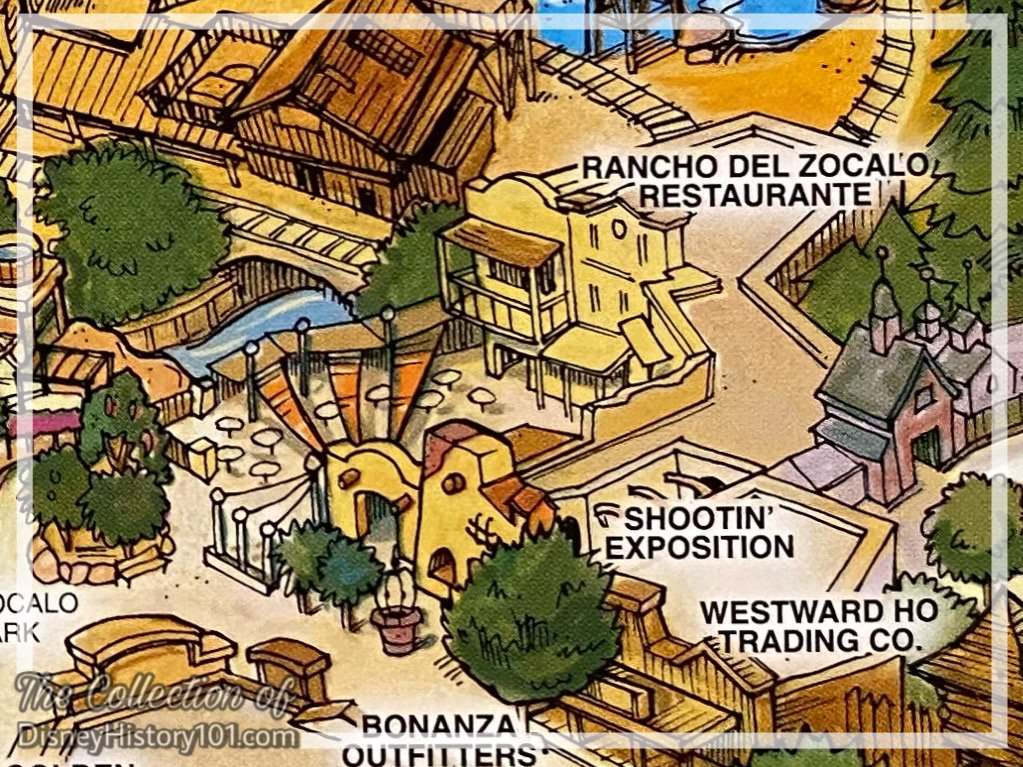
In the present, the menu options and atmosphere have changed considerably since the Casa de Fritos name disappeared from the entrance. The Fritos Street Vendors, Mariachi, and colorful dining areas are all gone, but there is still a festive feel, and a reminder of “the exciting days when the story of our country’s past was being lived” in this section of Frontierland!
Character lighting is themed to the area to enhance the overall appearance and complement the interior, such as a chandelier or kerosene lamp. These don't necessarily create enough illumination for operation, but they certainly add to the show.
As for the Frito Kid, he didn’t ride off into the golden sunset without making a surprise appearance – as merchandise. This is one of the cutest little homages to Casa de Fritos - a little Frito Kid Pewter Figurine.
CASEY JR. CIRCUS TRAIN

At Disneyland® Park there is a "story behind the story" of every attraction, every attraction is a living experience for the guest. Disneyland ride-through attractions or adventures have officially been defined as an “individual show, ride, or exhibit designed to produce an entertaining Guest experience. Disney attractions stir the imagination, enliven the senses, and provide the participants with positive, innovative entertainment, which is the essence of the DISNEYLAND Show.” It is important to review the story of the attraction, tell the story, explain it, and create interest. This is the story of Casey Junior Circus Train in Walt Disney’s original Magic Kingdom - Disneyland!
“Inspiration”
Walt once admitted: “I suppose I have always loved trains,” in interview with Railroad Magazine (October 1965). Even long before the "little train who thought he could" took Guests on a tour of Storybook Land, several forms of anthropomorphic locomotives graced Walt Disney Productions. These included trains featured in “Mickey’s Choo Choo” (released 1929), “The Brave Engineer” (released 1950), and “Dumbo” (released 1941). Then there was Walt Disney’s home (on Carolwood Drive) which was also circumvented by railroad tracks. So naturally, Walt’s earliest visions for his amusement center would include a train.
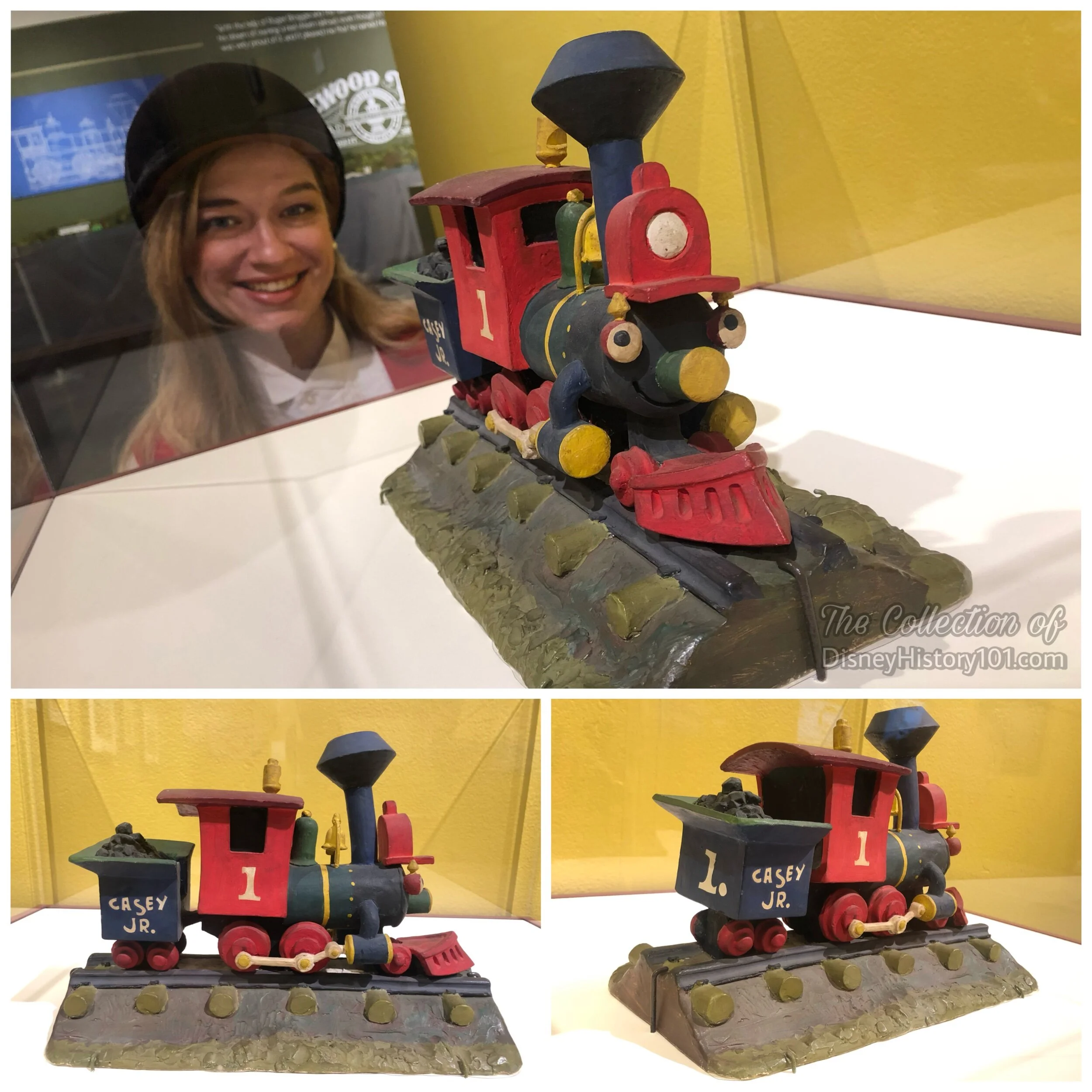
“Blue Sky for the Casey Jones Junior Coaster”
In December of 1952, Walt Disney founded a little company called WED Enterprises, Inc. (the architectural and engineering design division of Walt Disney Productions) in order to master-plan and design his his dreams of a Park. According to “Disneyland: Then, Now, and Forever” by Bruce Gordon and Tim O’Day:“The seemingly benign Casey Jr. Circus Train… began its life not as a charming and delightful railroad journey through Storybook land but as a rollicking and thrilling roller coaster - the first one ever designed for Disneyland. Initial plans called for the little train to race through the barren hills of Fantasyland."
At least one detailed rough plot plan depicts the Casey Jones Junior Coaster's Station and Loading Area, and its track through tunnels with dips and curves, climbs, "looped track" and "dummy track" with submerged engine, "stalled engine", broken trestle, and "man in trestle". The entire ride through 1,135 feet of track to the final brake block and loading area would have taken 2 minutes at 6.5 miles per hour. It seems that a total of 8 engines were planned for the Casey Jones Junior Coaster at that phase of development.
"However, after test runs were conducted, concerns were raised about effectiveness as a roller coaster and the accompanying maintenance issues that would be involved, so Casey Junior quickly lost its status as Disneyland’s first thrill ride,” according to “Disneyland: Then, Now, and Forever” by Bruce Gordon and Tim O’Day.
The Casey Jr. Circus Train was back on the Disneyland “drawing board” and in development from 1953 to 1954, and holds the place as being one of Disneyland’s earliest conceived attractions, to become fully realized! Walt knew that it would require the assembling of a coalition of talents to Imagineer his“Casey Junior” attraction at Disneyland. Soon, Art Directors, Artists, Artisans, Architects, and Planners from the Studio were involved.
By July 1, 1954, George Whitney of Disneyland, Inc. directed Amusements, with Ron Miller overseeing analysis, philosophy, capacities, planning, operator training, and amusement procurement. According to the “Proposed Diagramatic Layout of Disneyland” (Marvin A. Davis’ plot plan, produced for WED Enterprises, by September 12, 1953), trains were still assuredly “a-comin’” to Disneyland! Details on the plot plan described a “1/2 Scale Train Ride” as part of a “Lilliputian Land” on the Northeast side of Disneyland. In 1954 Herb Ryman’s “Schematic Aerial View” of Disneyland was produced over a weekend, with a miniature train ride depicted in Fantasyland. Soon, (still in 1954), many WED Enterprises Inc. employees began to draw more detailed concepts for these potential Disneyland attractions. Some of these were included in a portfolio of colored sketches by Herb Ryman, Harper Goff, Bruce Bushman and others was prepared for Dick Irvine and Nat Winecoff to take back East to sell the Disneyland concept to prospective licensees.
Thumbnail sketches and other concept artwork of Disneyland seemed to be unencumbered by restrictions of budget, schedule or the laws of nature and physics. Though guided by Walt, his artists appeared to engage in “free-thinking,” as if implementing the modern “Blue Sky” Imagineering process.
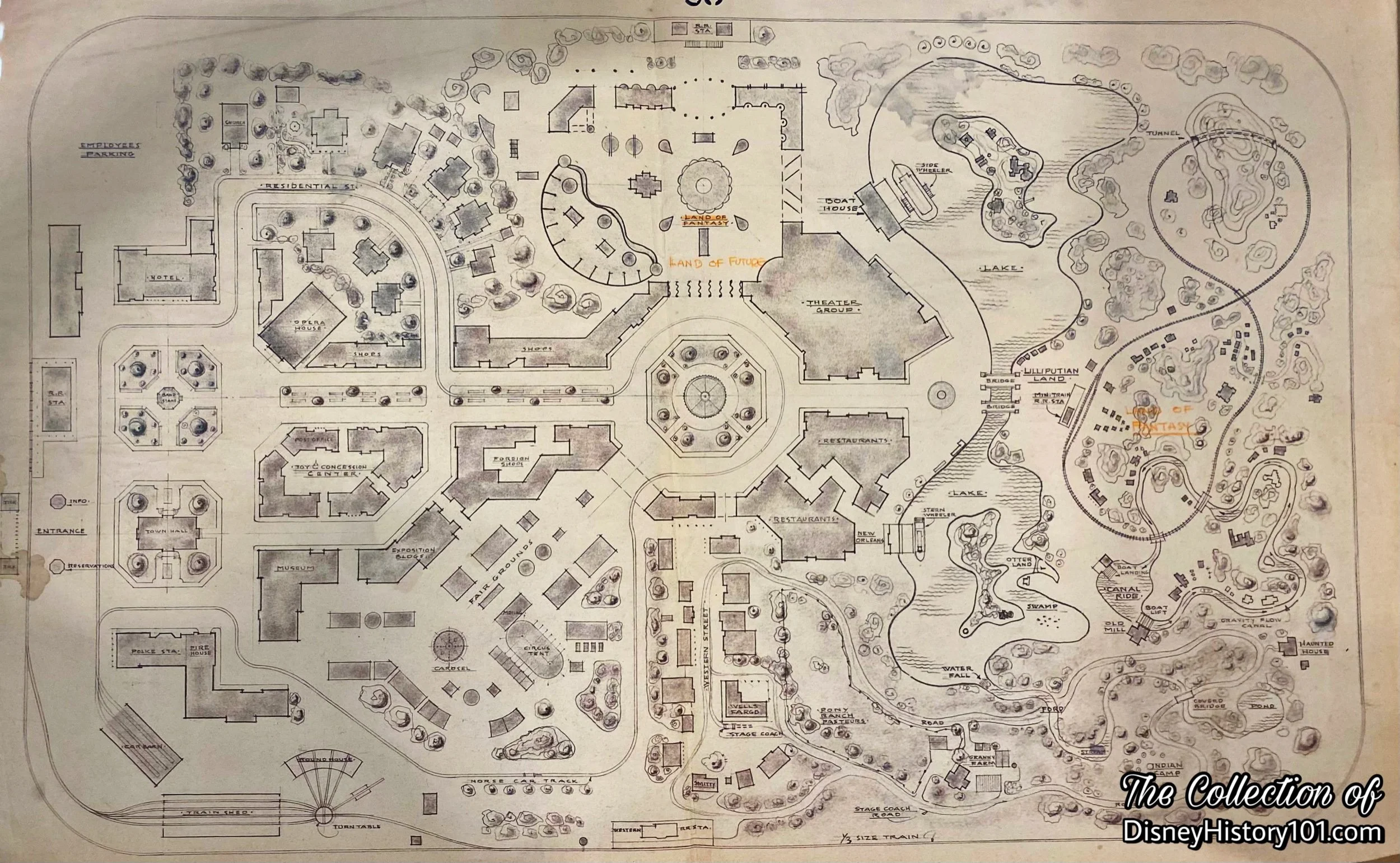
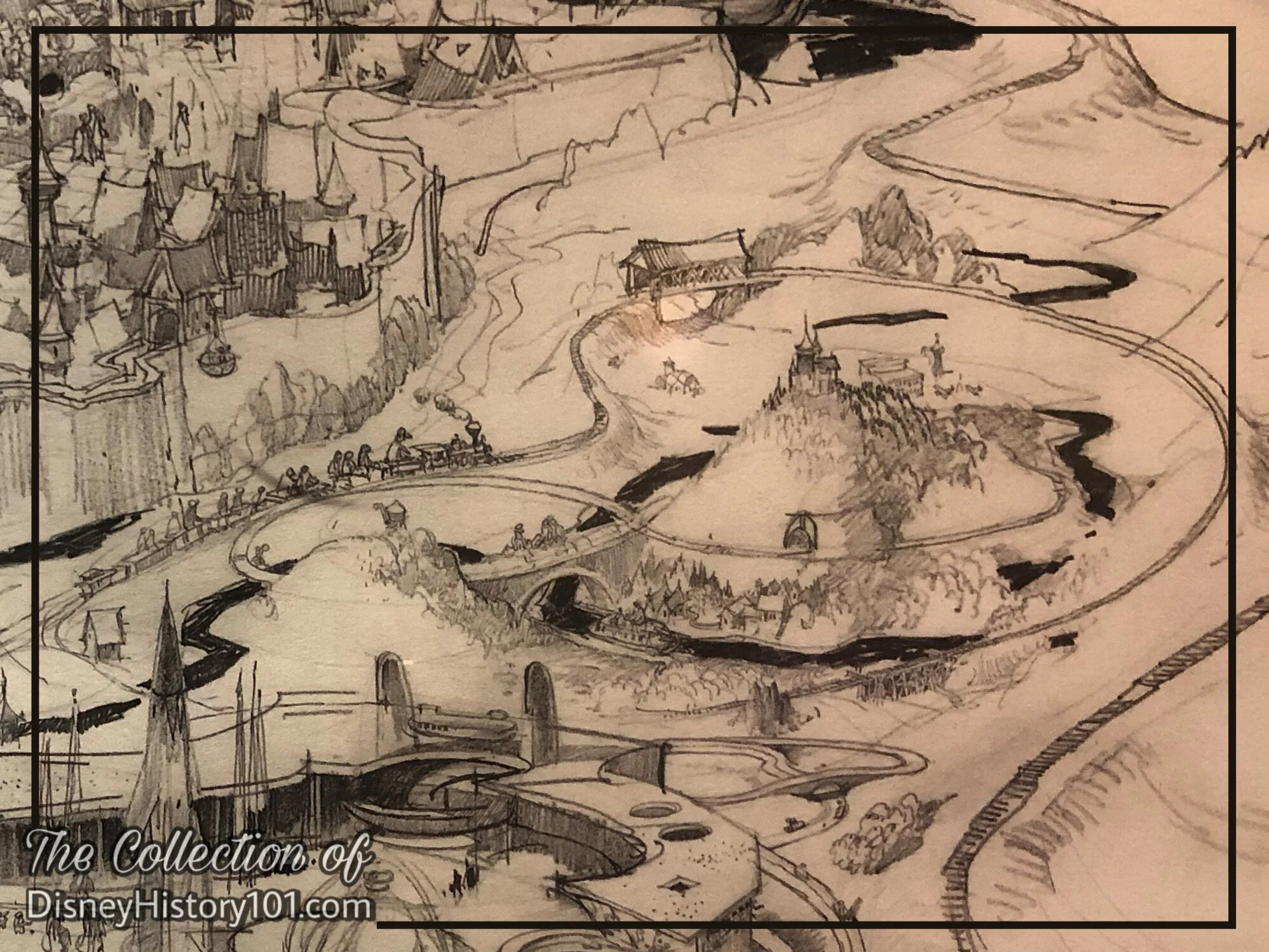
“Concept Development”
While a team of artists would make contributions, it was Bruce Bushman (of Bradley & Kaye; Walt Disney Studios artist; Mickey Mouse Club Art Director) who has often been credited with some of the first cleaned-up drawings of a narrow gauge train engine and cars based on character model sheets of Casey Jr. (featured in Walt Disney’s Dumbo, released 1941). Some may find it odd that an entire Disneyland attraction would be themed around one of Walt Disney Studio’s shortest and least (monetarily) successful films to be released more than a decade prior. However, it is important to note that when Bruce Bushman was creating these designs, he (as many other contemporaneous concept artists) based many of them on the depths of the Walt Disney Studio’s full catalogue of characters from both feature-length and short films (like Walt Disney’s Silly Symphonies). For example, Bruce Bushman created attraction designs featuring thematic elements and characters from such Walt Disney Productions as “The Reluctant Dragon,” “Little Toot,” and “The Old Mill.” So it seems, that it wasn’t so far-fetched to utilize the character of Casey Junior from Walt Disney’s Dumbo! During 1954, received one of the earliest previews of the attraction when a Casey Junior Circus Train float appeared in the Anaheim Halloween Parade.
Disneyland queue lines are designed as part of the attraction to make the guests' time in line as comfortable as possible.
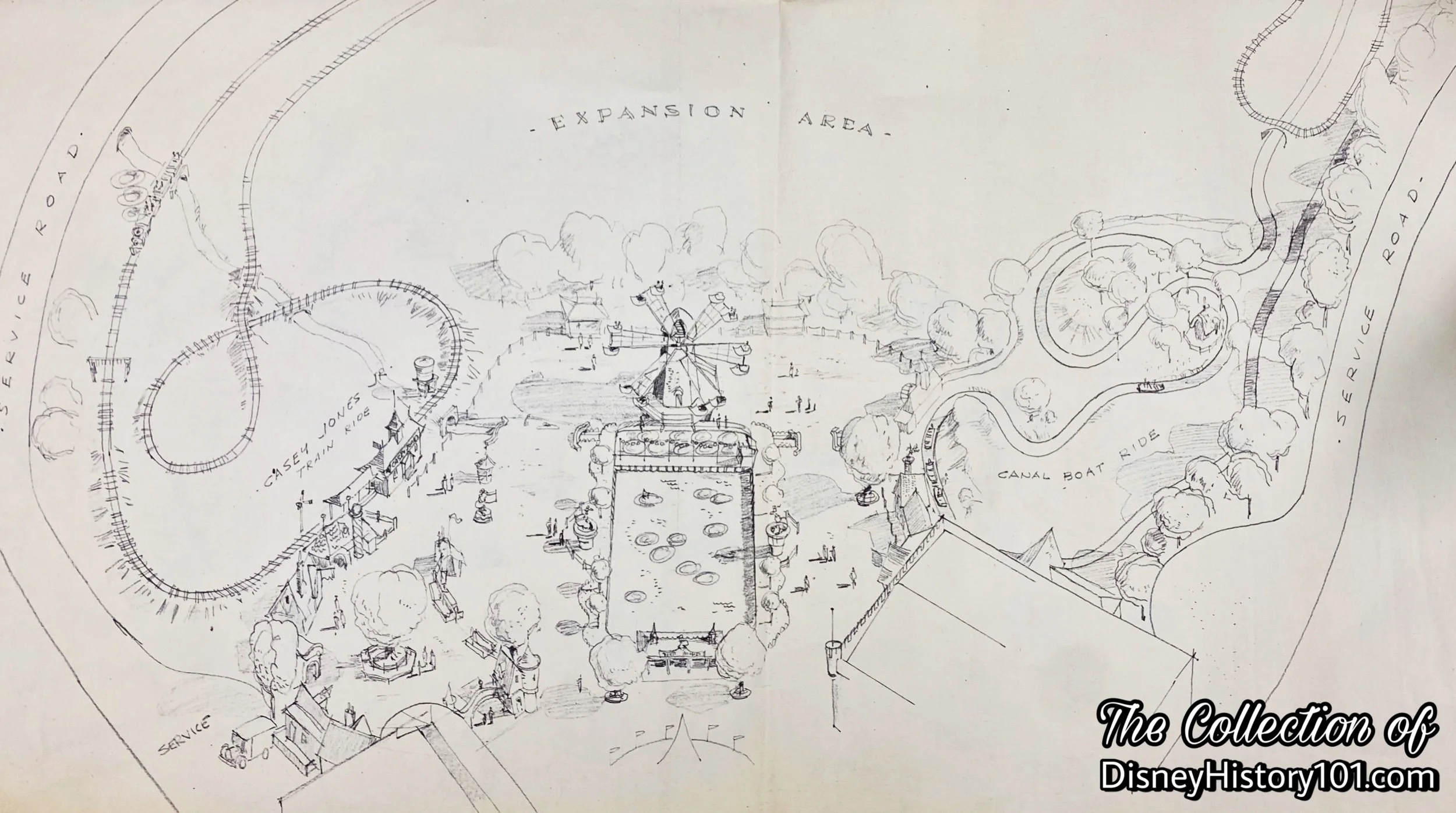
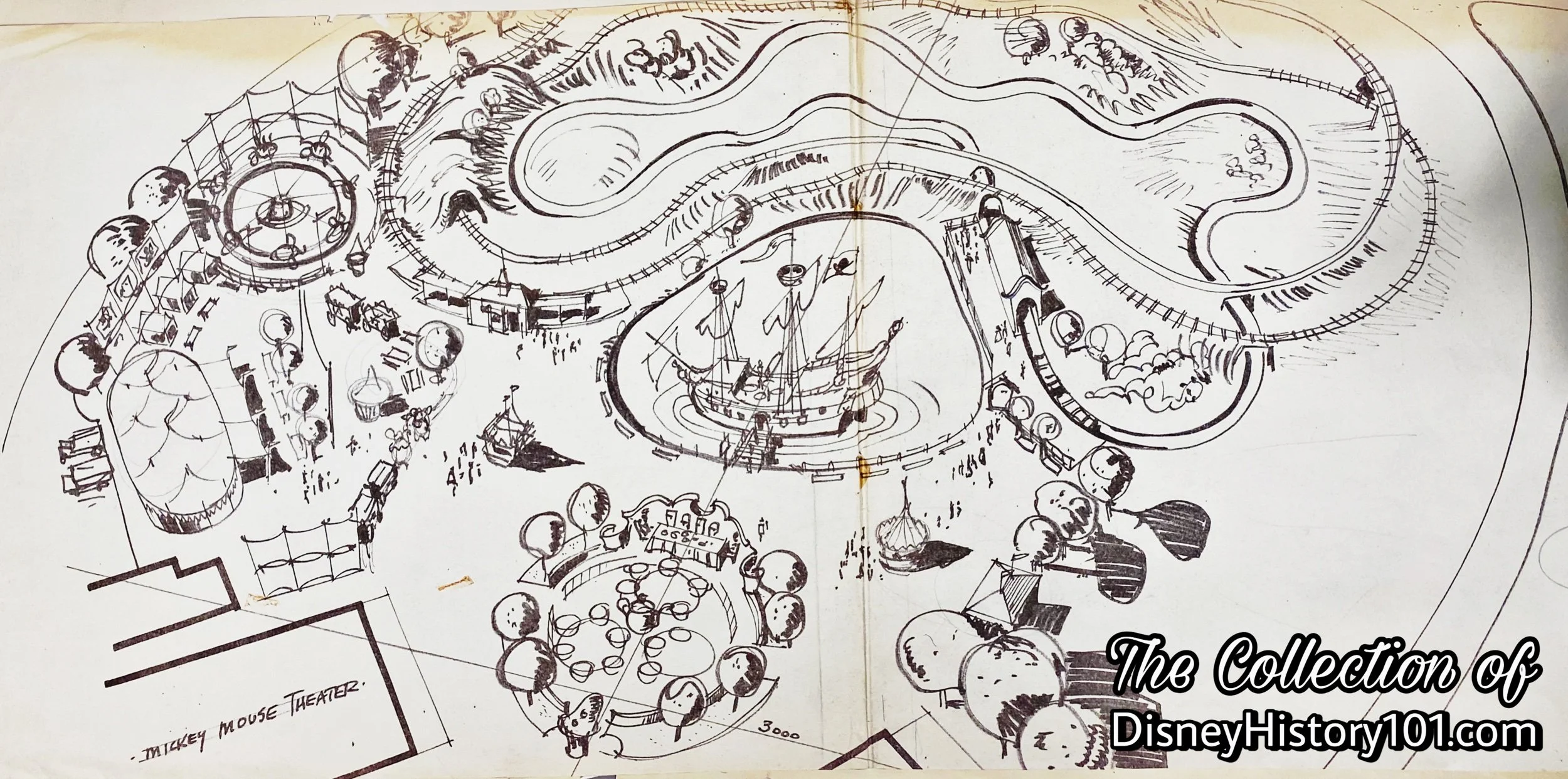
Custom rides were created that would be subordinate to story and setting. This concept was prepared by Bradley & Kaye Amusement Company of 8506 Beverly Blvd. Los Angeles 48, Calif; Oleander 5-8029.
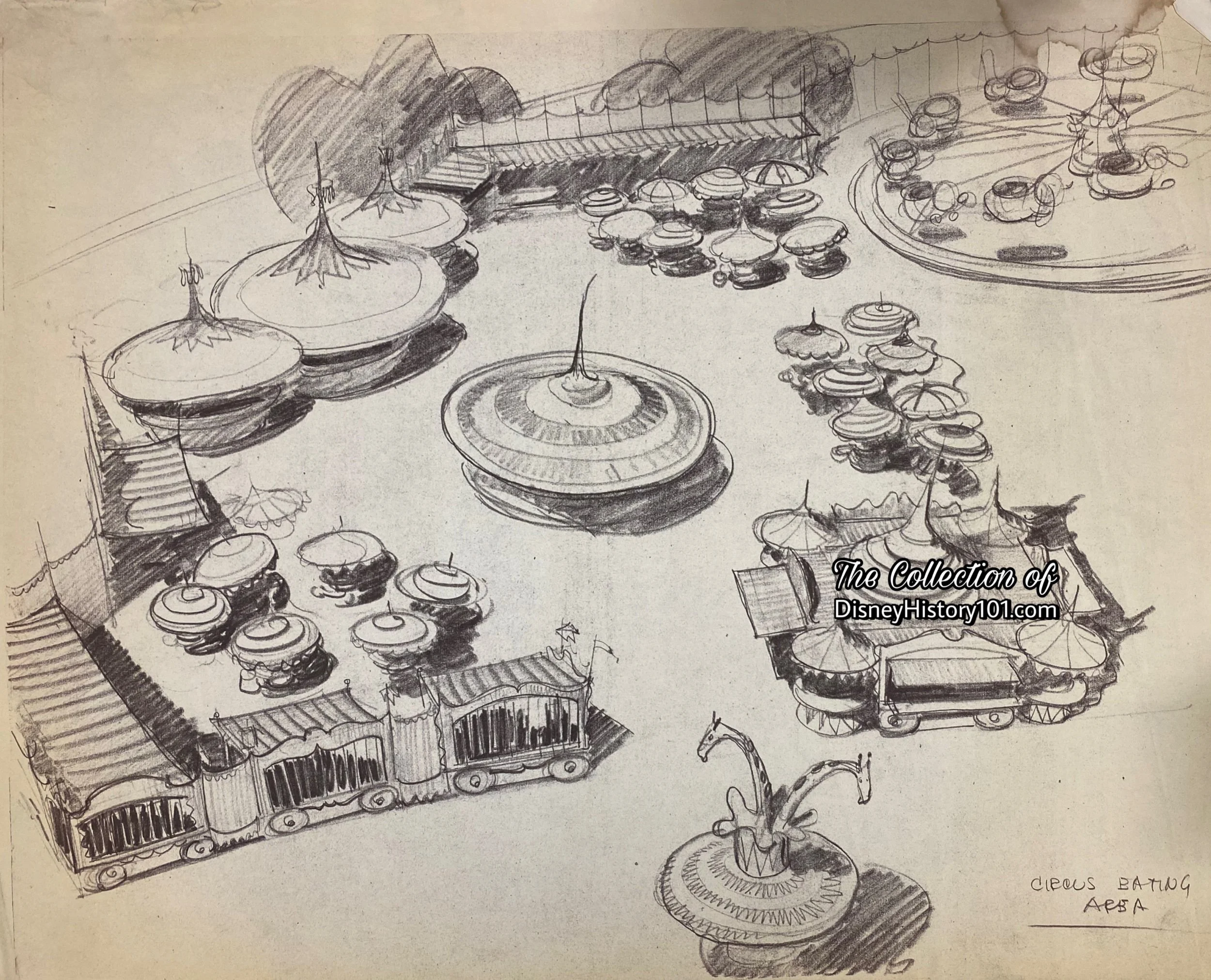
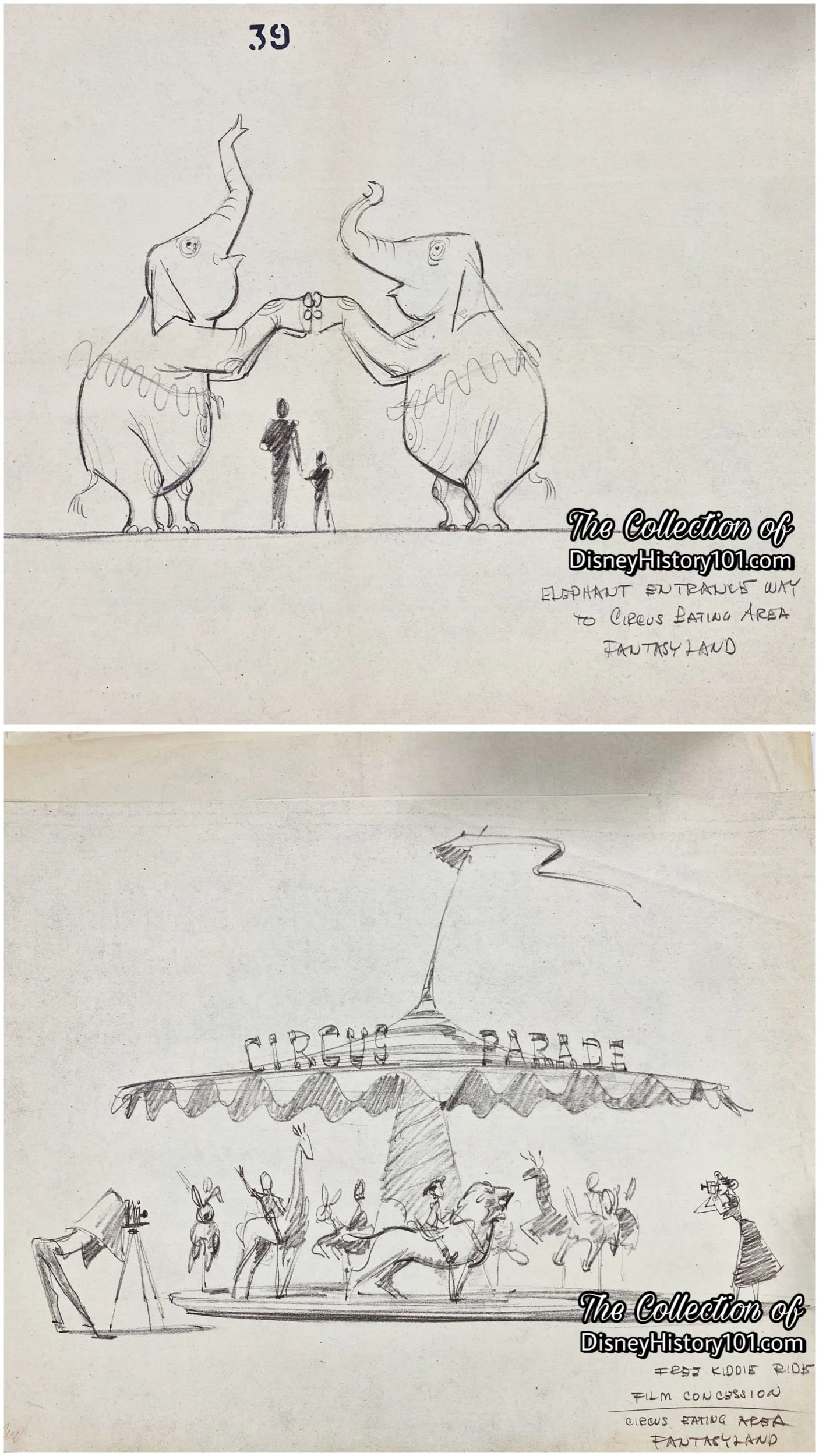
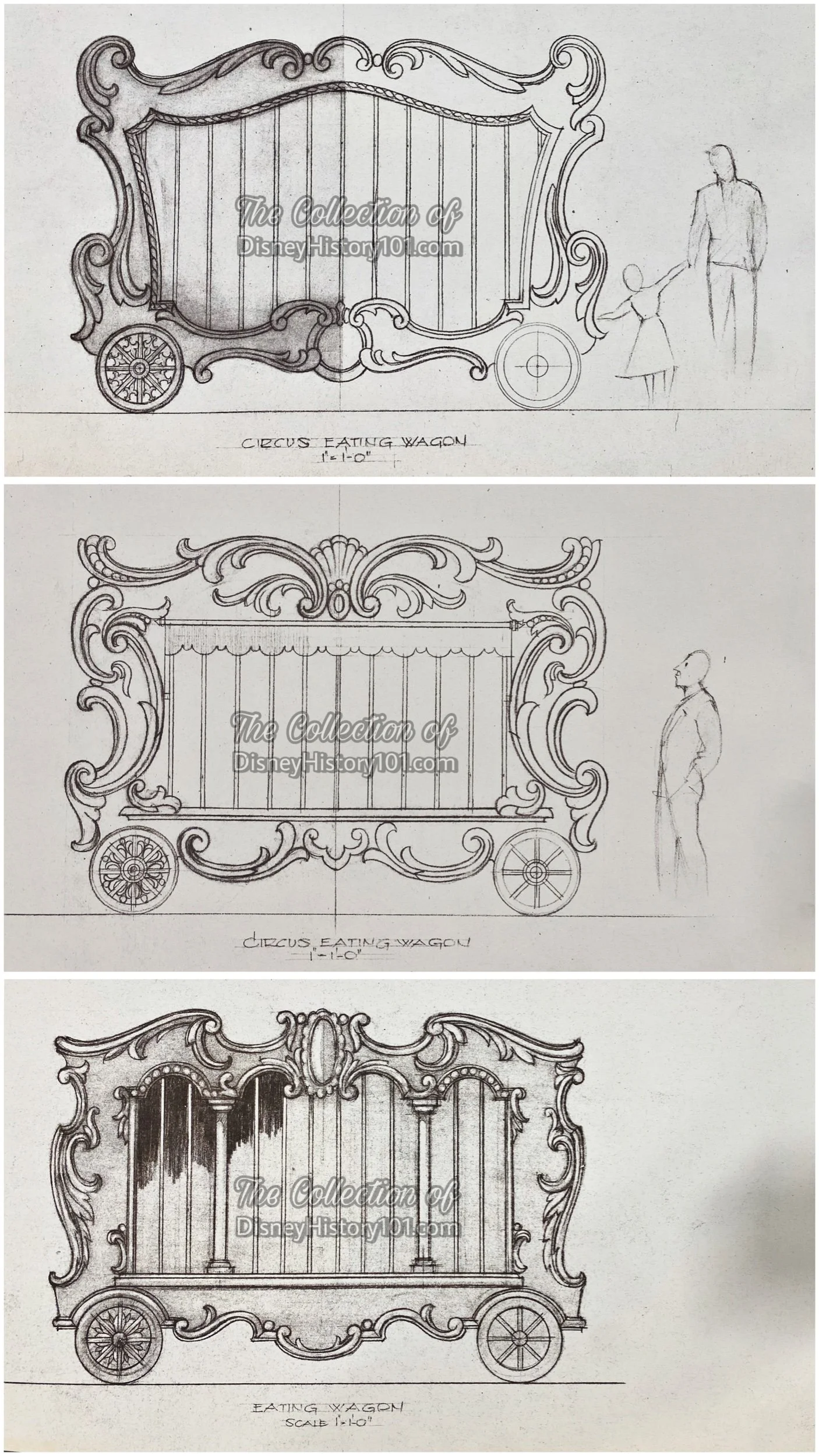
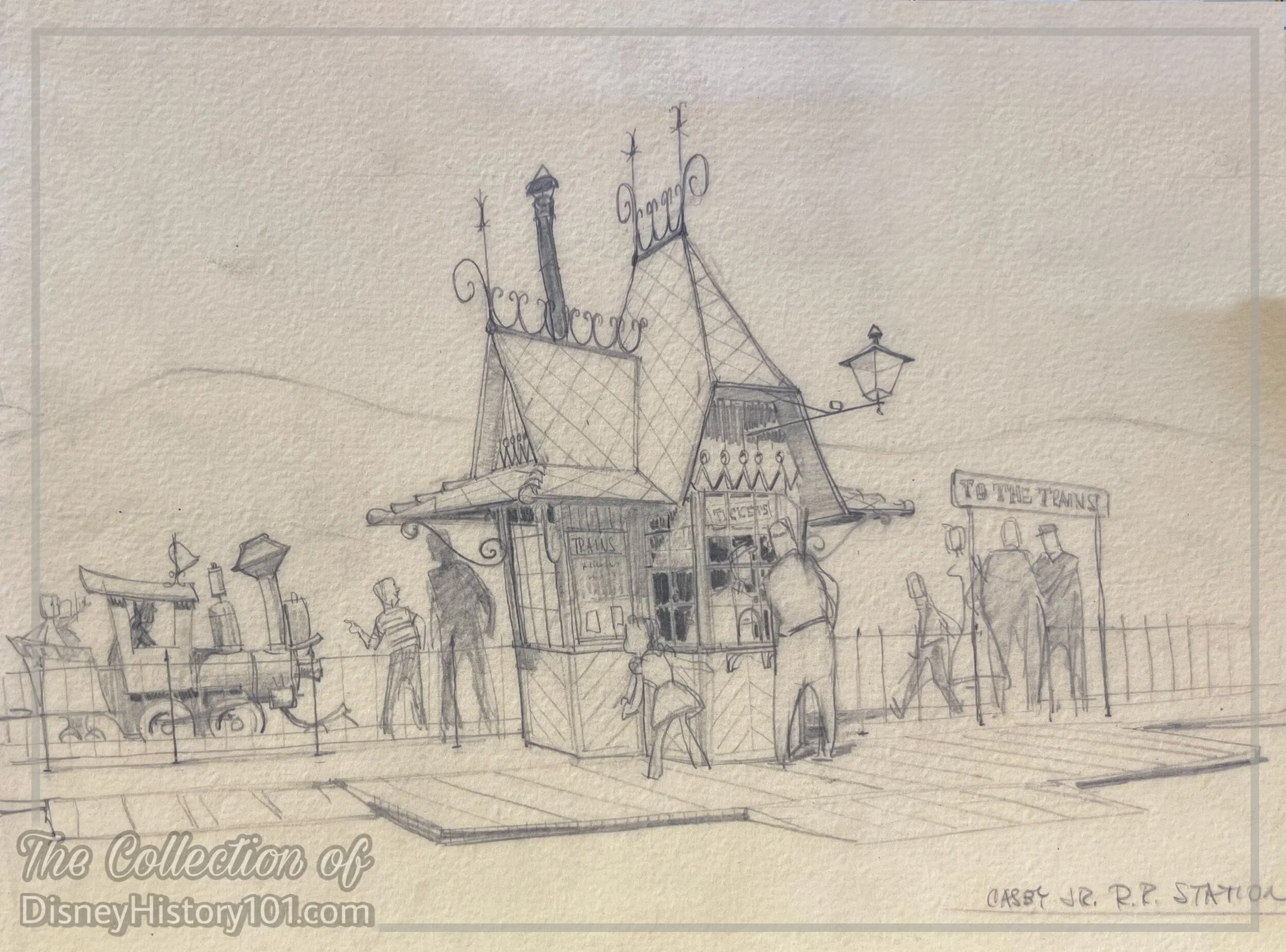
The two trains were designed by Bruce Bushman of Walt Disney Studios. As a sidelight, “Bushman whom Disney assigned to develop many of the… rides for Fantasyland, was a bug husky man. Walt took one look at him and decided that his proportions would guide the pattern for all etc seats at the Park. ‘If it fits you, Bruce, it’ll fit anybody,’ said Walt, eyeing the broad Bushman beam,” according to “Disneyland - Inside Story” by Randy Bright. Like some advanced “High Concept,” Bruce’s final designs were quickly generated and approved. Some of these viable project Concepts (as depicted above), were supported by a well-developed business case and built expectation.
Bushman previously contributed layout to Pigs is Pigs (1954), where he may have drawn ideas for the Westcot Rail Station that inspired his new designs for the little Casey Jr. Depot.
“Schematic & Design Development”
Next, architectural drawings helped define all designs, production and construction strategies, costs, schedule, and resource requirements. Models explored the various dimensional relationships, site-lines, flow patterns, ergonomics, and visual appeal to convey the desired creative intent. John Stoos (also of WED Enterprises, Inc.) created technical elevations and other drawings (c. January of 1955), in order for Amusement Park ride designers and manufacturers Arrow Development to create the train that would run atop the 30” (762 cm) gauge, 1,840-foot-long railway.
Meanwhile, engineers ofthe Arrow Developement plant (of Mountain View) wereconstructing six rides for Disneyland - Mad Tea Cup Ride, Snow White’s Adventures Dark Cars, and Mr. Toad’s Wild Ride Hot Rods, Dumbo The Flying Elephant, King Arthur Carousel, and Casey Jr. Trains (despite the first Disneyland Dictionary stating the trains were “designed and built at Walt Disney Studios.” Arrow fabricated and constructed two gasoline driven engines and train cars for the line. Each Casey Jr. engine was powered by a different type of engine - one a Plymouth and the other a Chrysler industrial engine (engine I.D. #37173).
This construction was accomplished at Arrow Development Co., 243 Moffett Blvd., in Mountain View, California. Scenes of this can be seen briefly in A Pre-Opening Report from Disneyland.
Arrow also manufactured four chariots (constructed from the carriages belonging to the same 1875 Sunnyside Park Dentzel merry-go-round that was utilized for King Arthur’s Carrousel), four animal cars, two Calliopes, and two cabooses. This is verified by one authorized “Disneyland Information & Nomenclature List” (prepared by Bill Cottrell of Disneyland Inc., May 25, 1955) which announced the working title as the “Casey, Jr.,” describing“the little circus train from Dumbo that takes you over rivers on trestles and bridges and climbs mountains.” The same document adds that the “two trains. Each train consists of : 1 engine, 1 calliope, 2 animal cars, 2 chariots, 1 caboose.”
Once completed, the construction cost of the cars totaled $15,965 (or, $1,550 per car, plus an additional 3% tax). The unpainted cars were brought to the Walt Disney Studios backlot as seen briefly in A Pre-Opening Report from Disneyland.
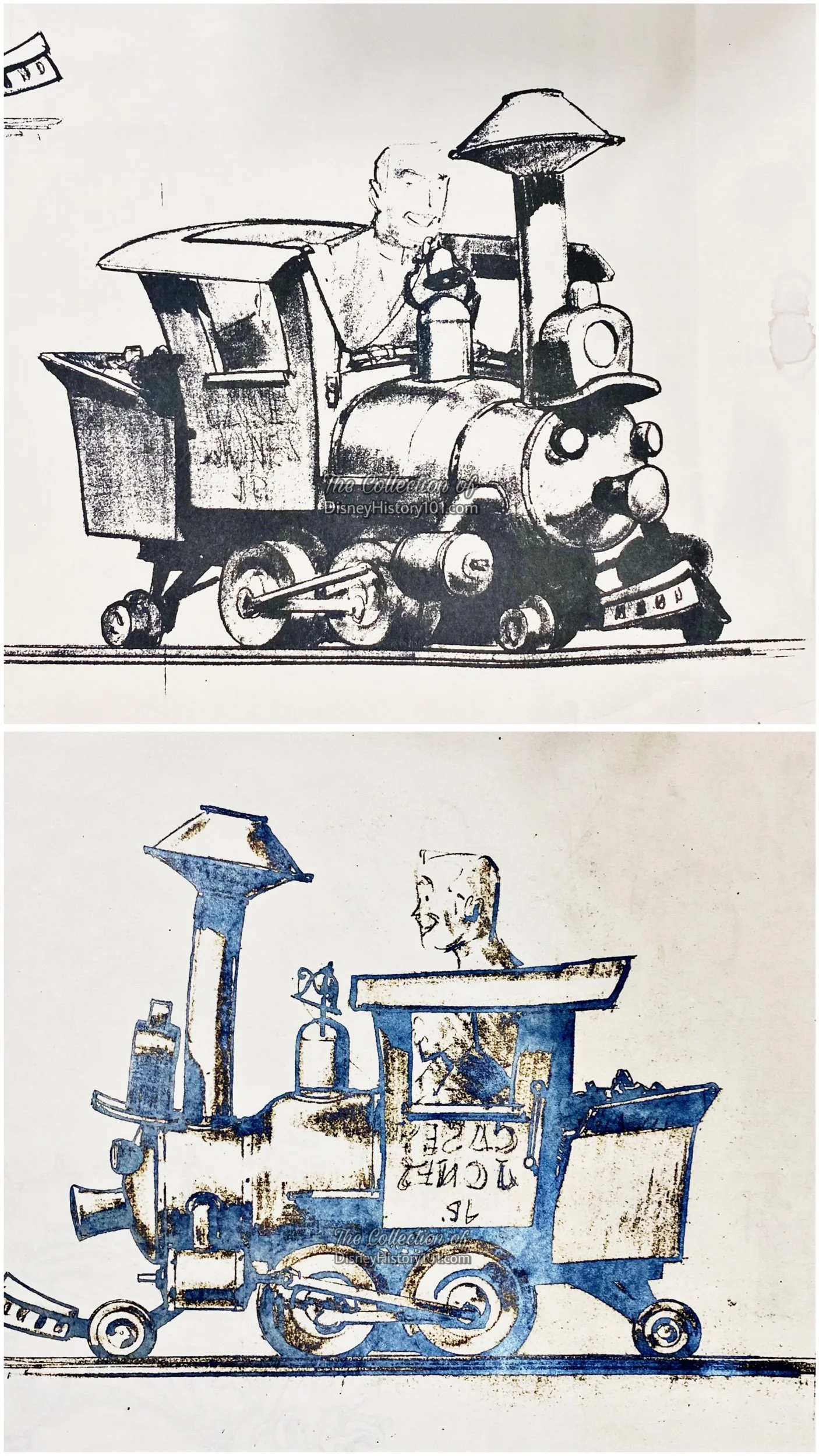
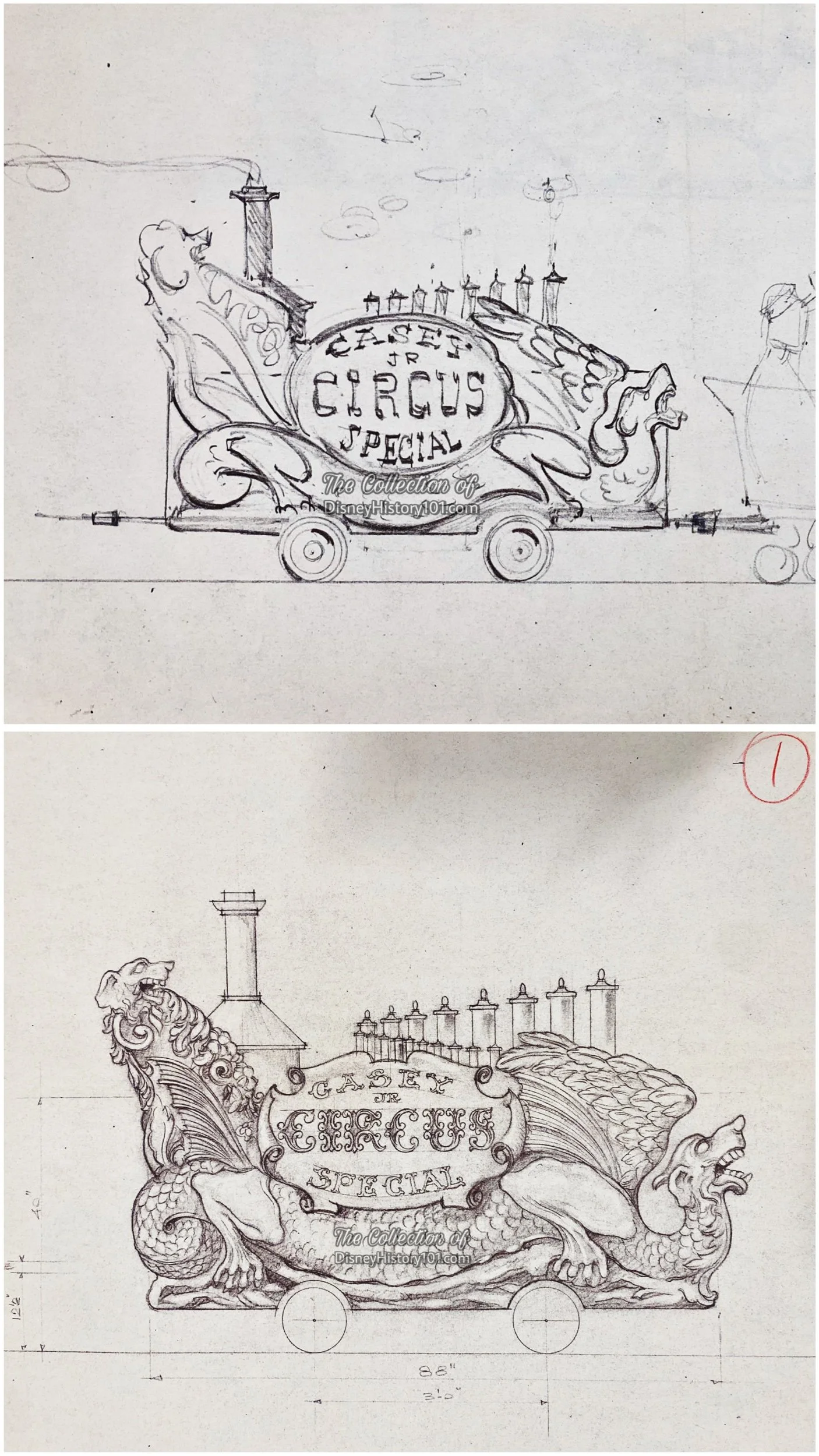
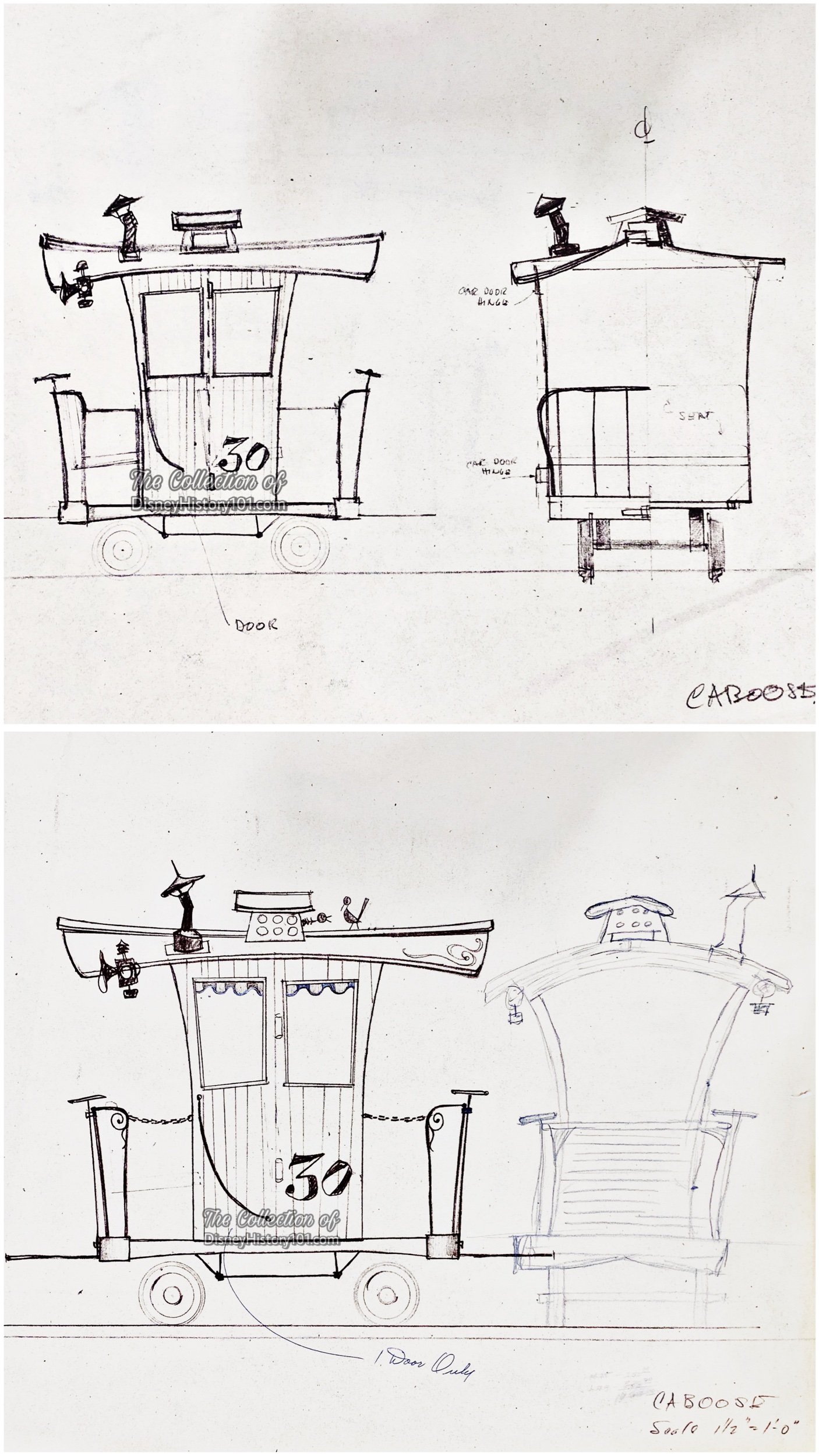

Casey’s pilot and “Practical” headlight cover haven’t even been attached, for this memorable Vintage View captured during the attraction’s construction phase. This pair of painters behaved extra-careful while capturing this memory, which is probably why we never saw any “polka-dot railroad ties” under Disneyland’s smiling Casey Jr. Circus Train!
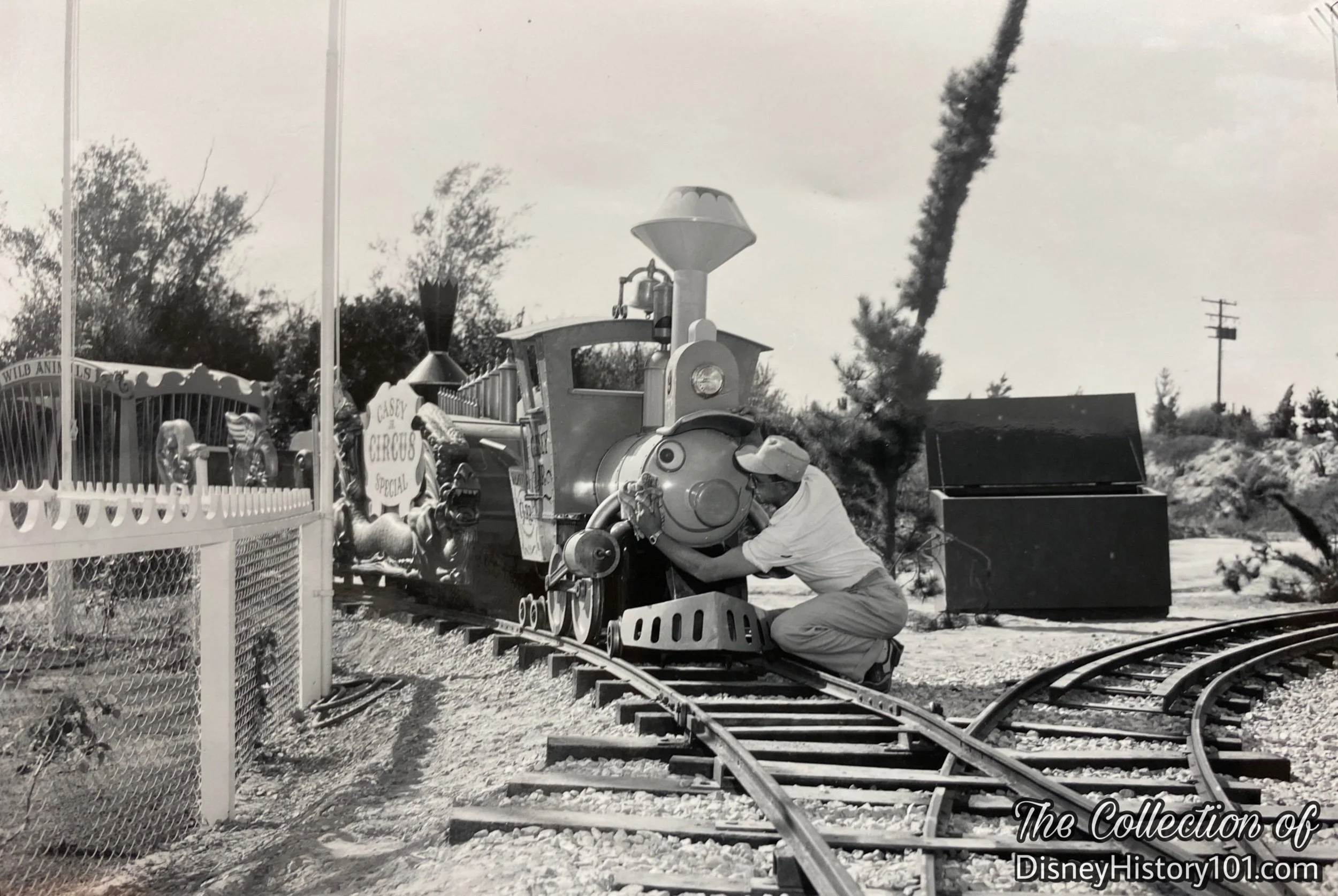
It looks like its “time for lemonade and Cracker Jack,” as our same two painters sit in one of Casey Jr. Circus Train wild animal wagons on their lunch break. Now we’ve “seen ‘bout ev'rything”!
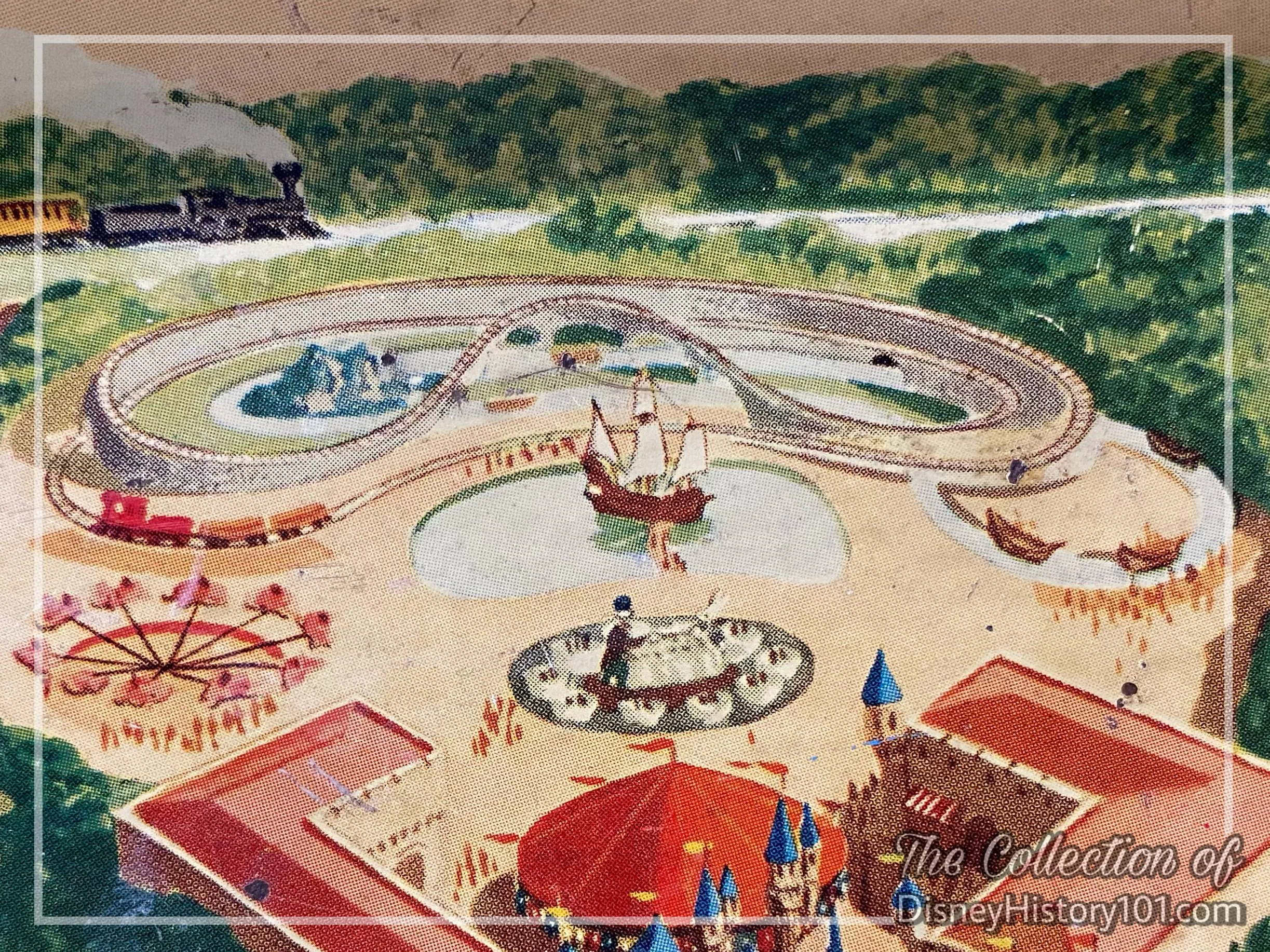
Some licensed Disneyland merchandise was released before July of 1955, giving a preview of the Casey Junior Circus Train.
A number of other licensed products were specifically inspired by the Casey Jr. Circus Train and were both suggested and designed. These included coloring books (pictured above) and even a “Casey Jones, Jr. Train” locomotive and train model assembly kit by the Strombeck-Becker Mfg. Co.
This design was also manufactured as a coin bank, and sold as Disneyland-licensed merchandise through through Disneyland Park.
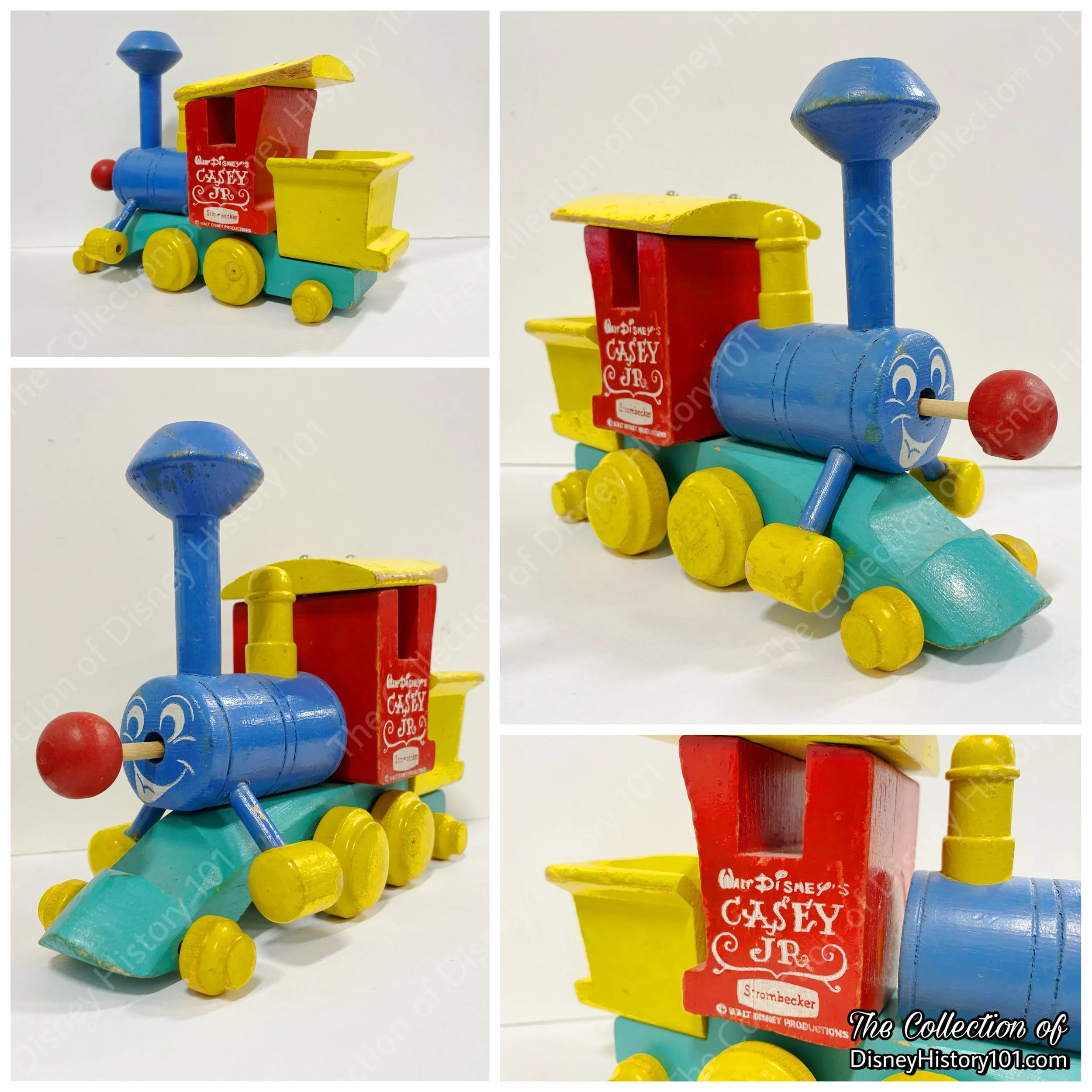
Walt Disney’s Casey Junior Locomotive by Strombecker was in production by May 1955 before being advertised, and promoted for its “sturdy wood construction” and “harmless lacquer finish”. The design of this cute little toy was overseen by Walt Disney Productions Character Merchandise Division Art Director Louis Lispi and C.S. Olsen of Strombeck-Becker Mfg. Company.
Louis MARX and Co. manufactured their own Casey Junior The Disneyland Express, a tin-lithographic toy.
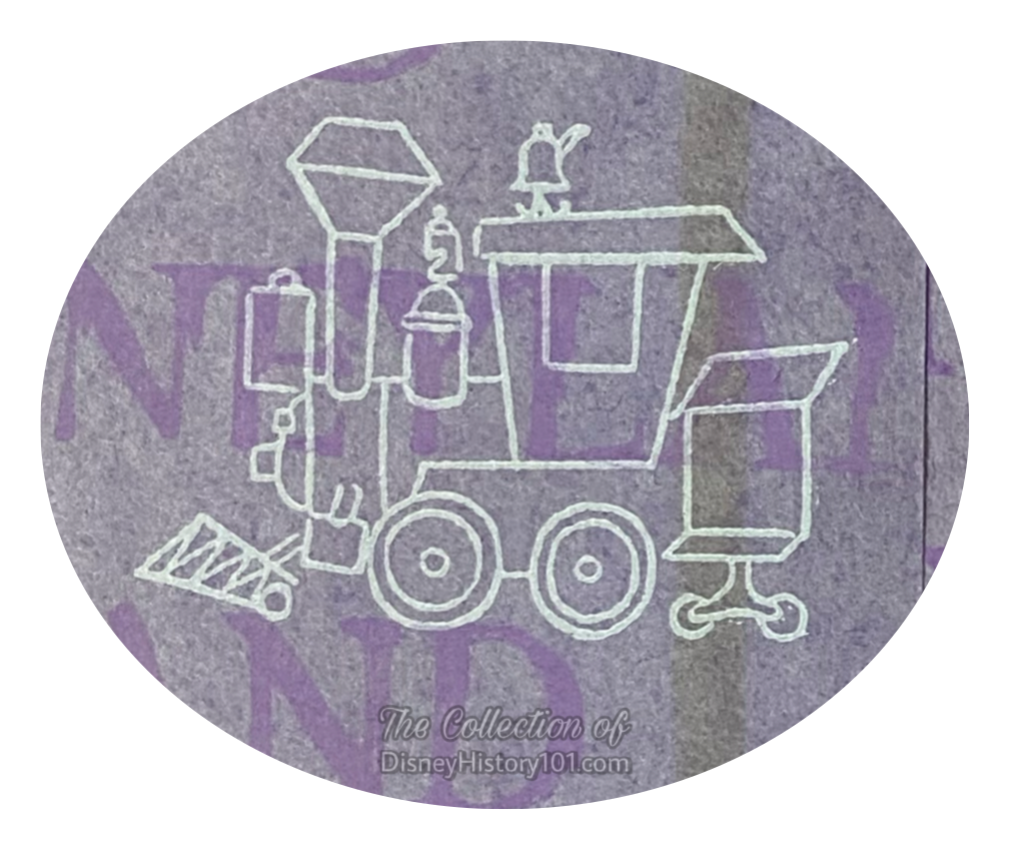
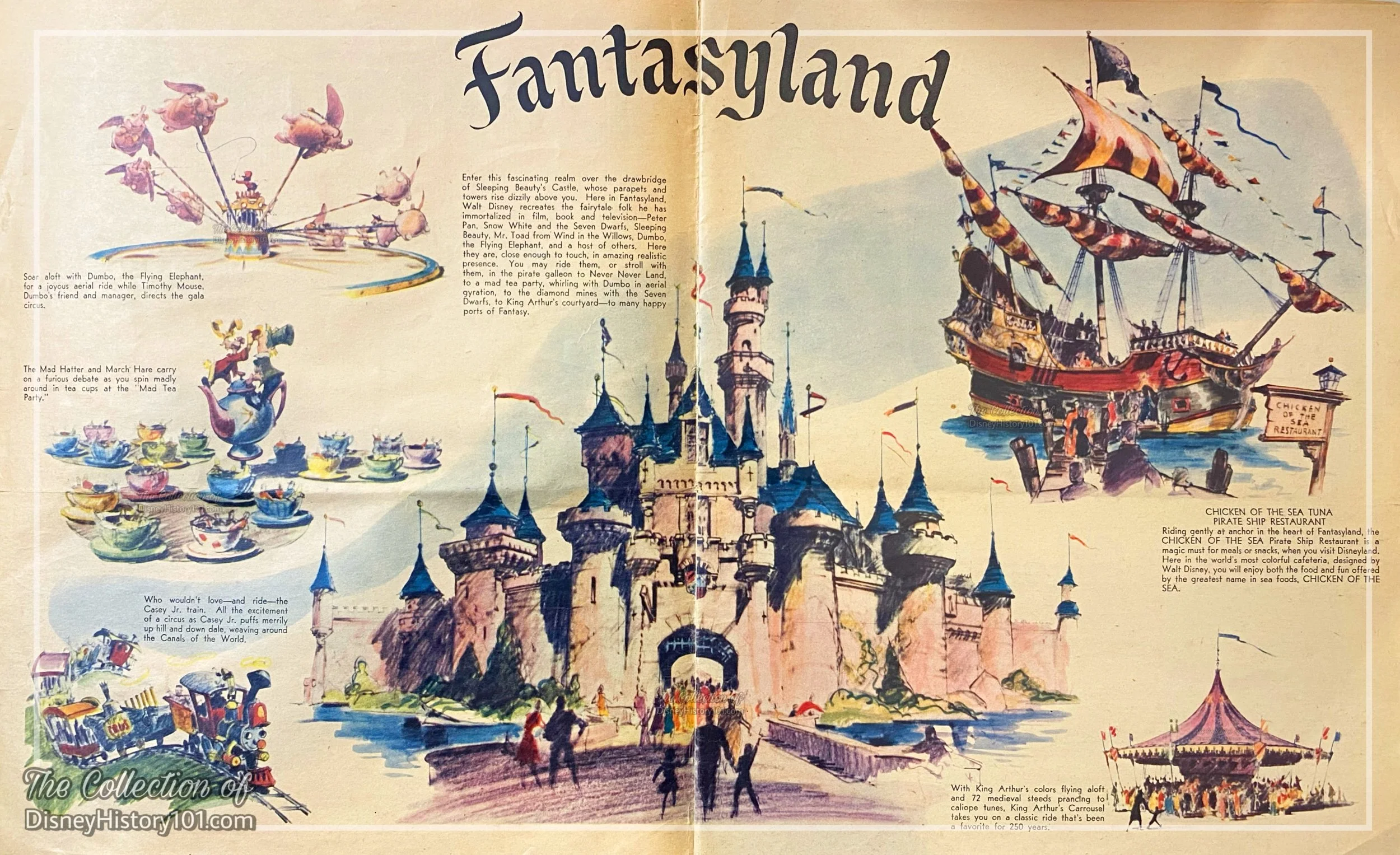
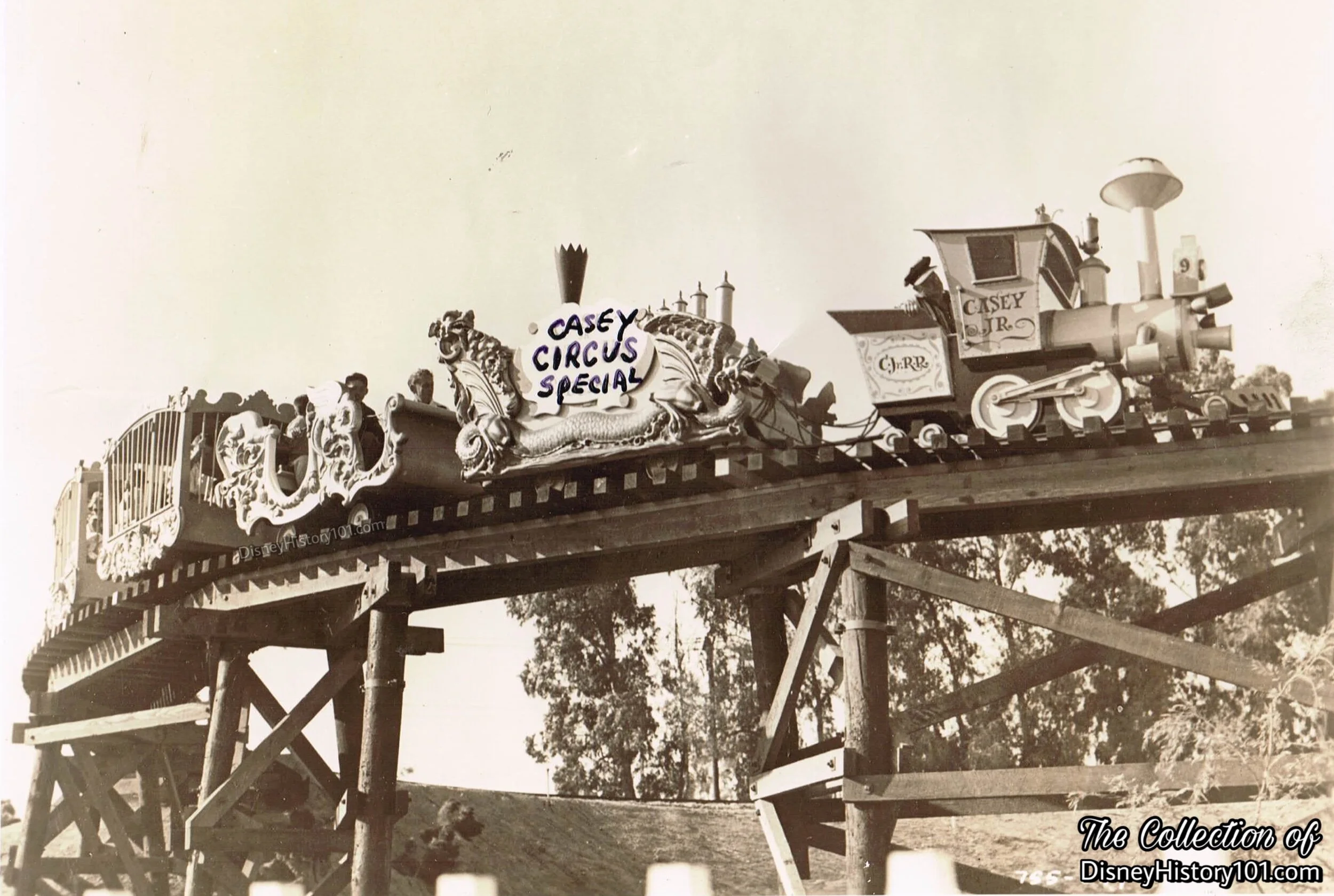
Walt loved trestle bridges. Back in September of 1950, local Los Angeles structural engineer James E. Lill had engineered a redwood timber trestle with trussed beam and two-story bents for Walt’s own Carolwood Pacific Railroad. Naturally, one notable feature of the Casey Jr. Circus Train’s route was the elevated all-wooden trestle bridge (Pictured above). The bridge was constructed of regularly placed bents, which carried the rollicking engine and its cars over the Canals of the World. The wood of the bridge was soaked in creosote (in order to preserve it and make it sturdier). After all, the bridge was such an important part of the attraction, that it was featured on those c. 1955 “Acres of Fun” souvenir paper fans!
By the time this press photograph (pictured above) was shot, the words “Casey Junior Circus Special” had not been added to the Calliope Car, so someone added the letters for publication.
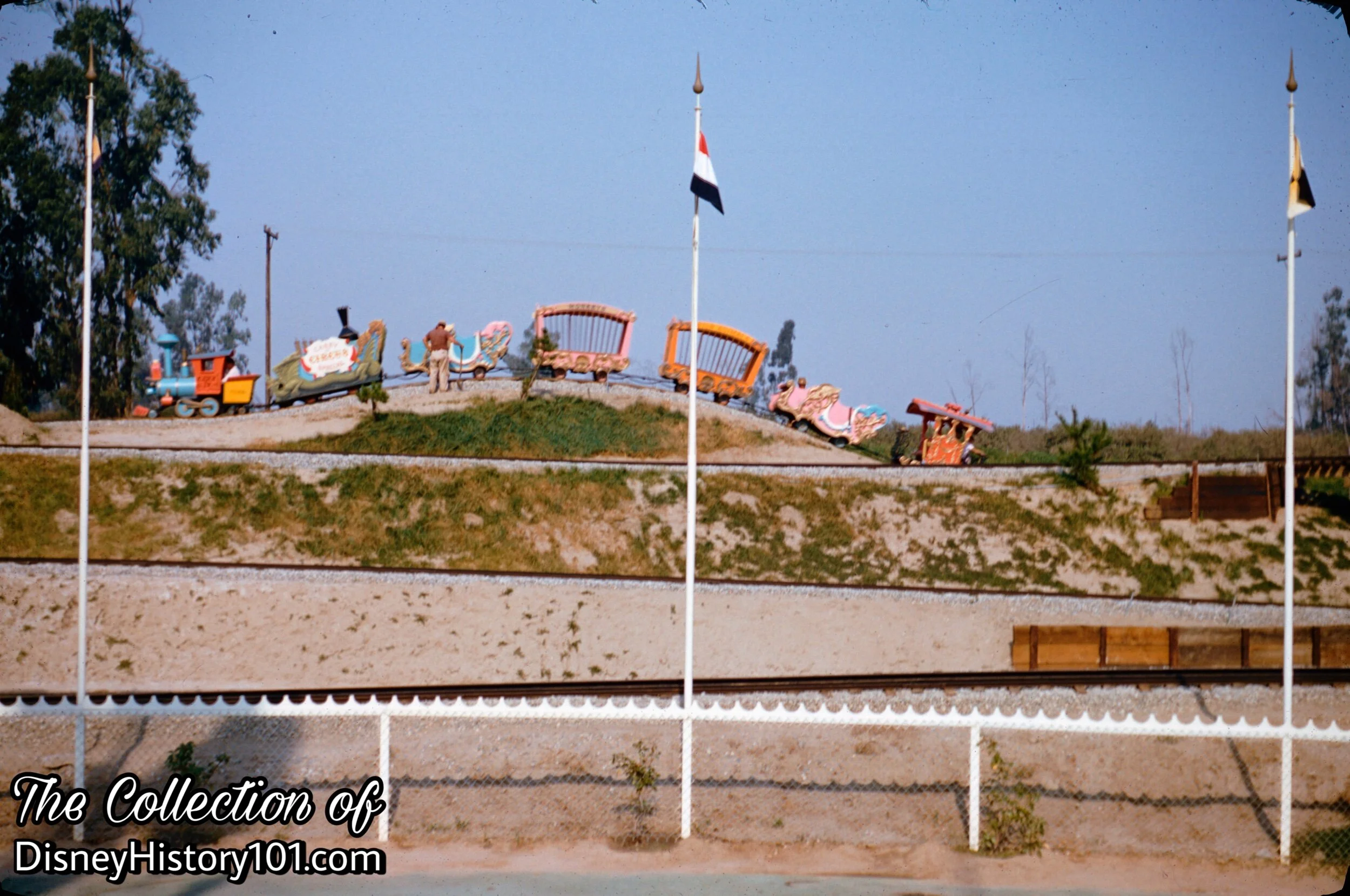
“‘I Thought I Could’ - Casey Jr. Circus Train Makes the Grade!”
Things sounded optimistic as of June 2, 1955 when C.V. Wood Jr. sent an Inter-Office Memorandum to Walt Disney regarding the best estimates that could be obtained at the time regarding the completion status of individual sections of the Park and Opening Day. C.V. wrote: “Casey, Jr. - We will have one train running and a good chance for both of them. We will push the landscaping as also plan on having this whole section green for opening.”
Casey Jr. had difficulty moving up a 45 percent grade and had tipped backwards. Later, Casey Jr. had difficulty making a 40% grade hill, even considering his six cylinder, gasoline-driven engine (hidden within each Casey calliope car). The solution was simple - cogs underneath the train would grip a teeth of a chain between the tracks, allowing Casey Jr. (and his colorful circus gondolas) to climb the hill with ease! Also, the grade wild be reduced to 25 percent.
Still, the Los Angeles Examiner excerpt (published July 15, 1955) advertised, “Who wouldn’t love - and ride - the Casey Jr. train? All the excitement of a circus as Casey Jr. puffs merrily up hill and down dale, weaving around the Canals of the World.” The train was predominantly built for younger guests, and “built to take steep hills like a roller coaster...It’s one of the few trains that will take a 40% grade in complete safety,” according to the narrator of the televised Disneyland episode “Pre-Opening Report From Disneyland”). While the Casey Junior was “built for younger guests,” this attraction was reckoned among “Disneyland rides and amusements” that “will delight the very young, the teen-ager, young married couples, the middle-aged, and grandparents alike,” as some of the Vintage Views testify [Anaheim Bulletin “Premier Souvenir Edition - Walt Disney’s Magic Kingdom - Disneyland” Insert ; Friday, July 15th, 1955]. This (variety of weight loads) being a factor, engineers tested the Casey Jr. Circus Train’s tracks numerous times, from July 14th (pictured), to the morning of the 17th, 1955.
As the televised opening ceremony date neared, actor Jerry Colonna was scheduled to operate the engine during the live television broadcast. When Arrow Development employees explained the situation (of the engine’s difficulty gaining the traction to climb the 40% grade), Colonna bailed at the last moment, and Arrow Development employee Karl Bacon stood in for Jerry Colonna. Despite Colonna’s decision, during the very same broadcast, the Don DeFore family, Margaret Whiting, and Marjorie Main (or, Mary Tomlinson) were among some of the first notable passengers. Disneyland's opening was a zoo. Ed had his hands full with Show White's Adventures. “I was with Casey Jr,” says Karl. "Everything went to hell that day.” Ed abd Karl recalled “a nervous Walt Disney running around with his celebrity guests, trying to schmooze away the technical delays and long lines.”
However, the attraction was closed sometime thereafter (according to “The Disneyland Diary”). One contributing writer for The Daily Oklahoman (who was present on July 17, 1955) noted: “There was a flying circle of Dumbo elephants, Mr. Toad's motor car ride, Casey Jr.'s ride, etc. Some were not yet functioning for the premier but workmen were feverishly getting them ready for the public opening Monday.” Some of these things are preserved through Opening Day documentation.
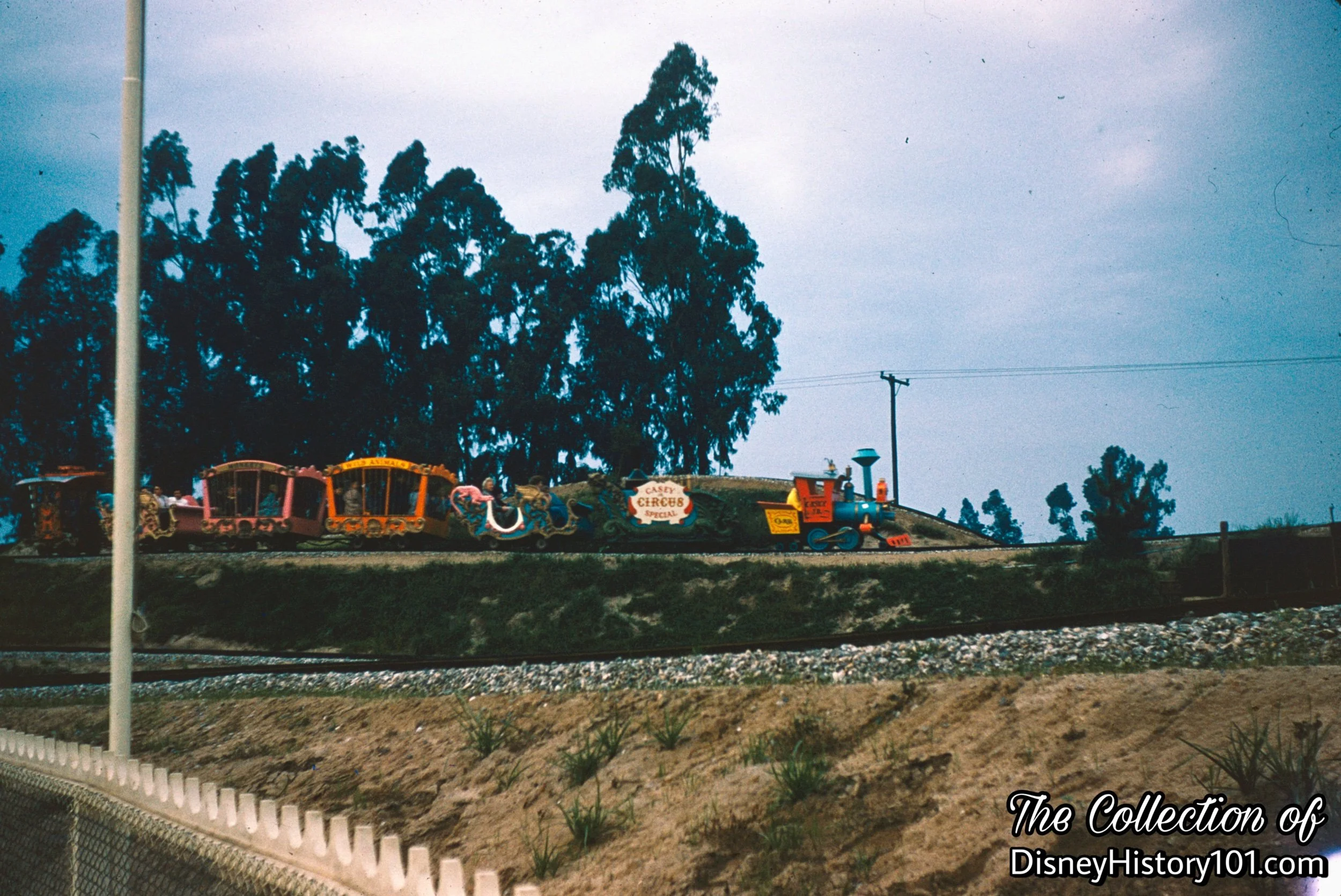
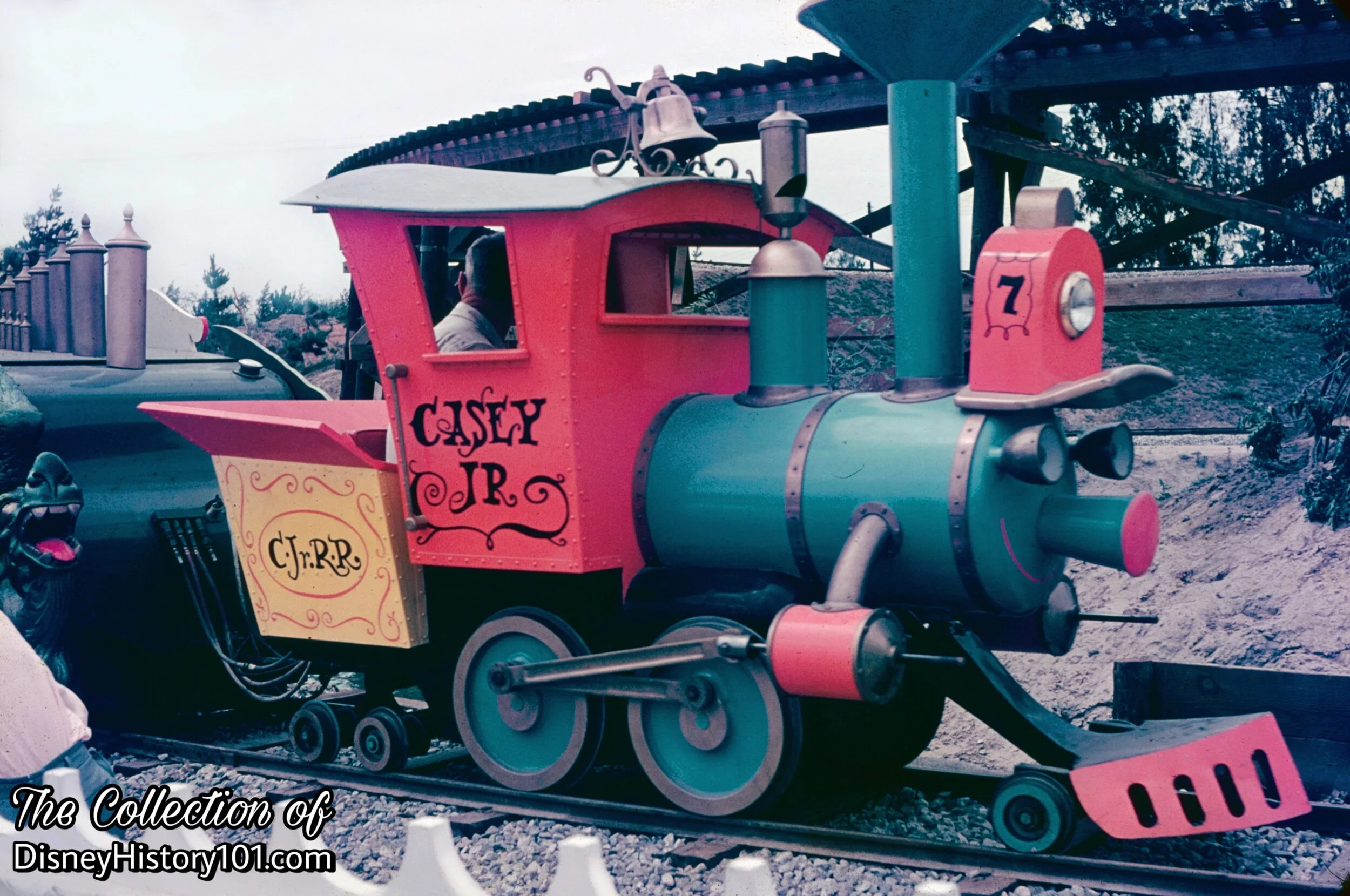
“Ever Faithful, Ever True, Nothing Stops Him, He’ll Get Through”
However, due to some further safety-related concerns, Casey Jr. was still closed on the following day, which was the Grand Public Opening and First Day of Operation - July 18th, 1955. This closure was due to safety inspections. According to Dave Smith (previous Chief Archivist Emeritus of the Walt Disney Archives), “There were 20 attractions open on July 17. A few others that were not quite ready (such as Casey Junior Circus Train)…opened within the next few weeks.” [Disney Facts Revealed by Dave Smith, 2016] A little more than a week after Disneyland Press Preview Day and the Public Opening, guests could finally (safely) step “all aboard” the bright gay circus train who “knew he could” when the “Casey Jr. Ride” (1 of 22 initial major attractions at Disneyland) reopened, on July 31, 1955. Tickets (during this time) were purchased at a booth next to each ride, and the Casey Junior Circus Train was no exception.
Disneyland employee Immogene Brinkmeyer was the very first ticket seller at this particular location, while Disneyland Tour Guide Anne Daniel would be the last employee to work this ticket booth!
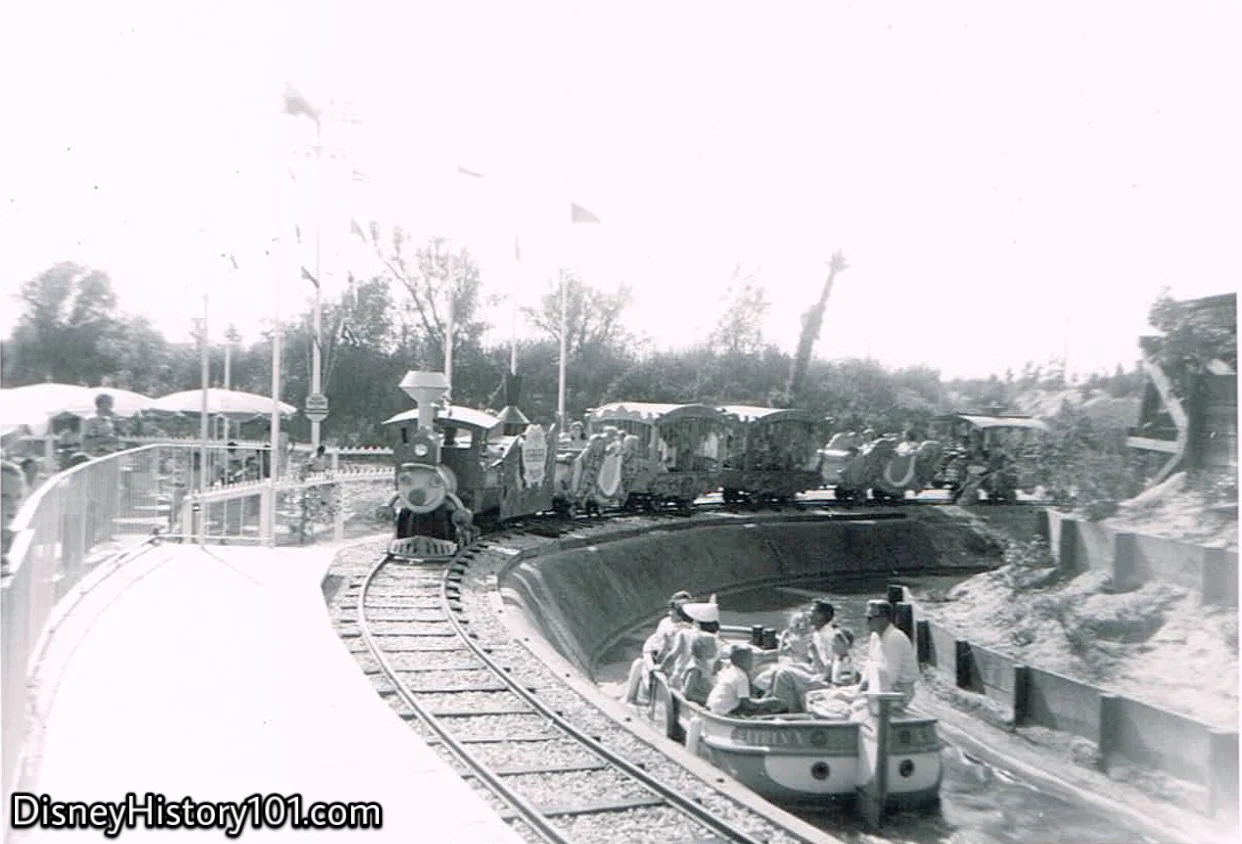
Soon, “high state, local and national government officials” as well as “luminaries from motion pictures, television and the theater” turned out to “pay tribute to this happy land” including the Casey Junior Circus Engine. [“Disneyland 1st Anniversary Souvenir Pictorial”, 1956, page 9] Among the first four million visitors to step though the Main Entrance Gate turnstiles and step aboard were Esther Williams with Ben Gage, and June Allyson with Dick Powell.
Among the earliest notable guests were also actress Margaret O’Brien (who played the part of the wild animal in one of the wagons). Ride Operator Boyd Diaz vividly recalled: “I was working on the loading dock of the Casey Jones Jr. R.R., when in came the train with Marjorie Main riding in the Wild Animal cage. She was wearing one of her great big fancy hats and as she got out of the cage, she knocked her hat off onto the dock. As I bent over to pick up her hat my Casey Jr. overalls split from top to bottom. I had to stand with my back to the wall until quitting time!”
Whether (or not) he paid the price of admission, comedian Red Skelton had the pleasure to “take over” as engineer for a photo published in “The Disneyland News” (March 10th, 1956).
“All Aboard - Let’s Go!” - The $50,000 Casey Jr. Circus Train attraction finally opened July 31, 1955! In advance, the Los Angeles Examiner (published July 15, 1955) advertised, “Who wouldn’t love - and ride - the Casey Jr. Train. All the excitement of a circus as Casey Jr. puffs merrily up hill and down dale, weaving around the Canals of the World.” Though many of the “hills” and “dales” were un-landscaped, it was projected that the attraction could theoretically attract a maximum guest capacity of 720 guests per hour. The attraction was still well worth the original 1955 price of admission (one “B” Coupon or 25 cents) - the same admission price as a spin in the Mad Tea Party or a show at the Mickey Mouse Theater! The Casey Junior Circus Train maintained the “B” Coupon fare as long as Ticket Books were employed at Disneyland.
Soon, one contributing writer to the Los Angeles Examiner (published Sunday, August 21, 1955) briefly mentioned how “Casey Junior, the happy circus train, rollicks about its bumpy track.”
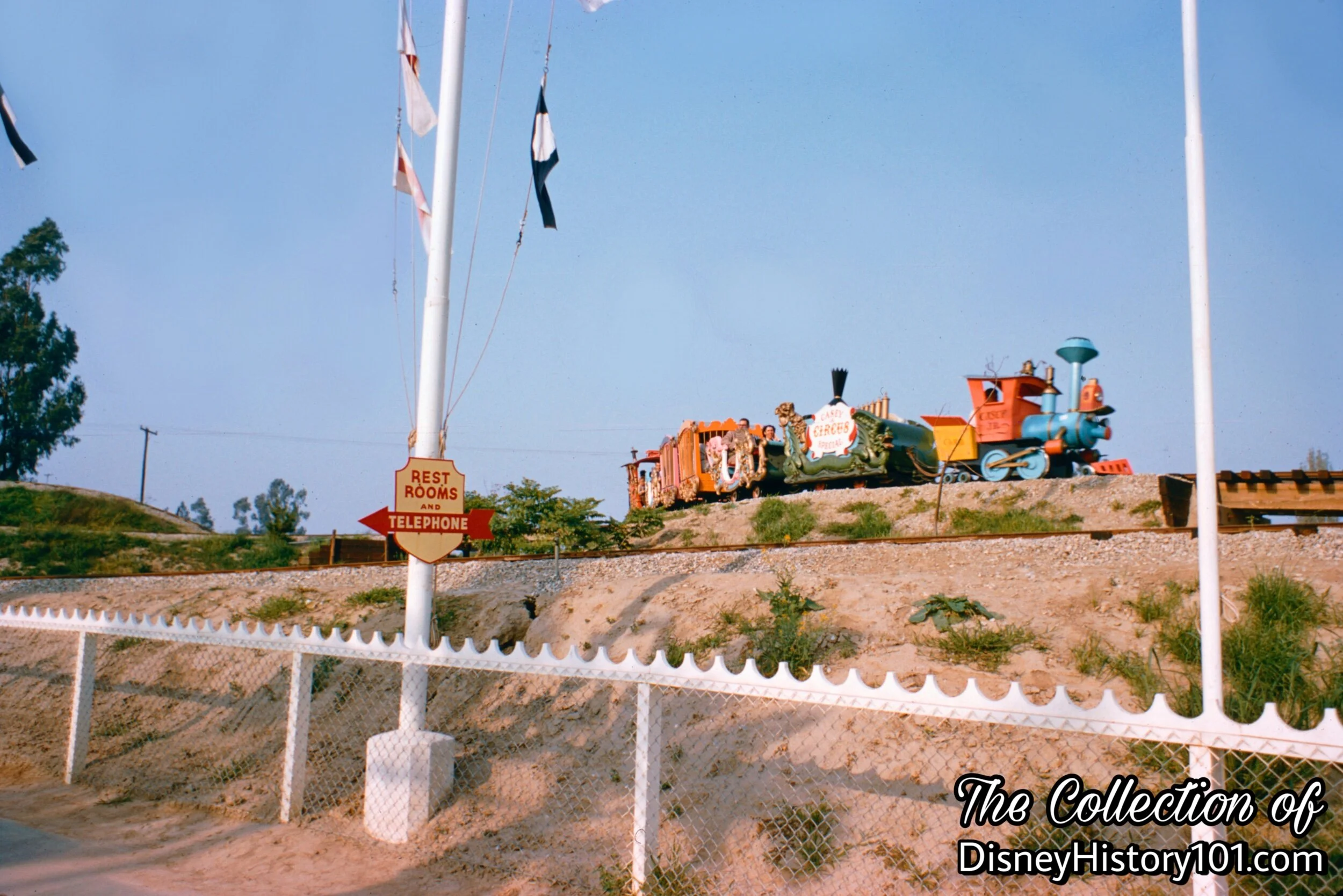
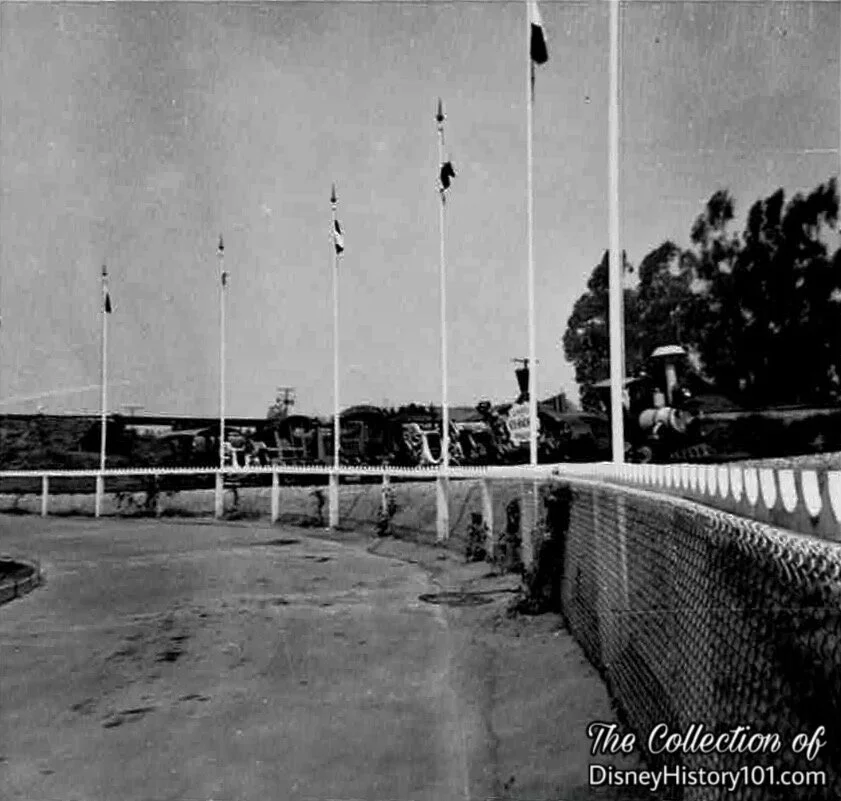
In the early days, Guests could catch views of a passing Casey Jr. Circus engine and its stock, from the path behind the Chicken of the Sea Pirate Ship.
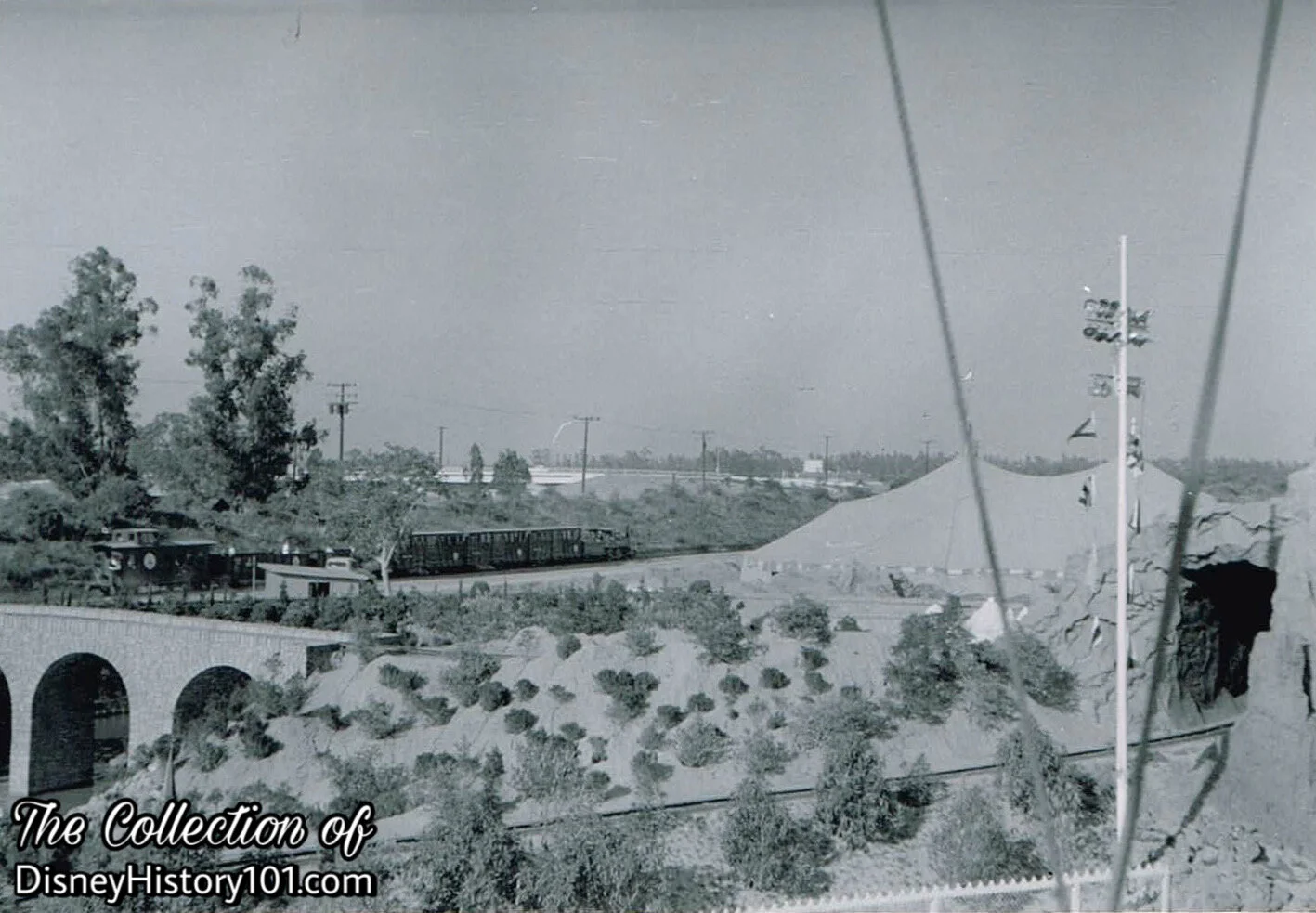
In the early days of Disneyland, Jim Quigley (who would later serve as Supervisor of Disneyland Accounting Control) recollected that Keller’s Wild Animal Act tent was originally housed nearby Health Services on Main Street. By the time this Vintage View was captured, the tent seems to have been moved to yet another location. Beyond the realm of Casey Junior Circus Train, stands a true-life circus tent (previously utilized for the Mickey Mouse Club Circus) which now solely featured “Keller’s Jungle Killers” - the big exotic cats of Professor George Keller!
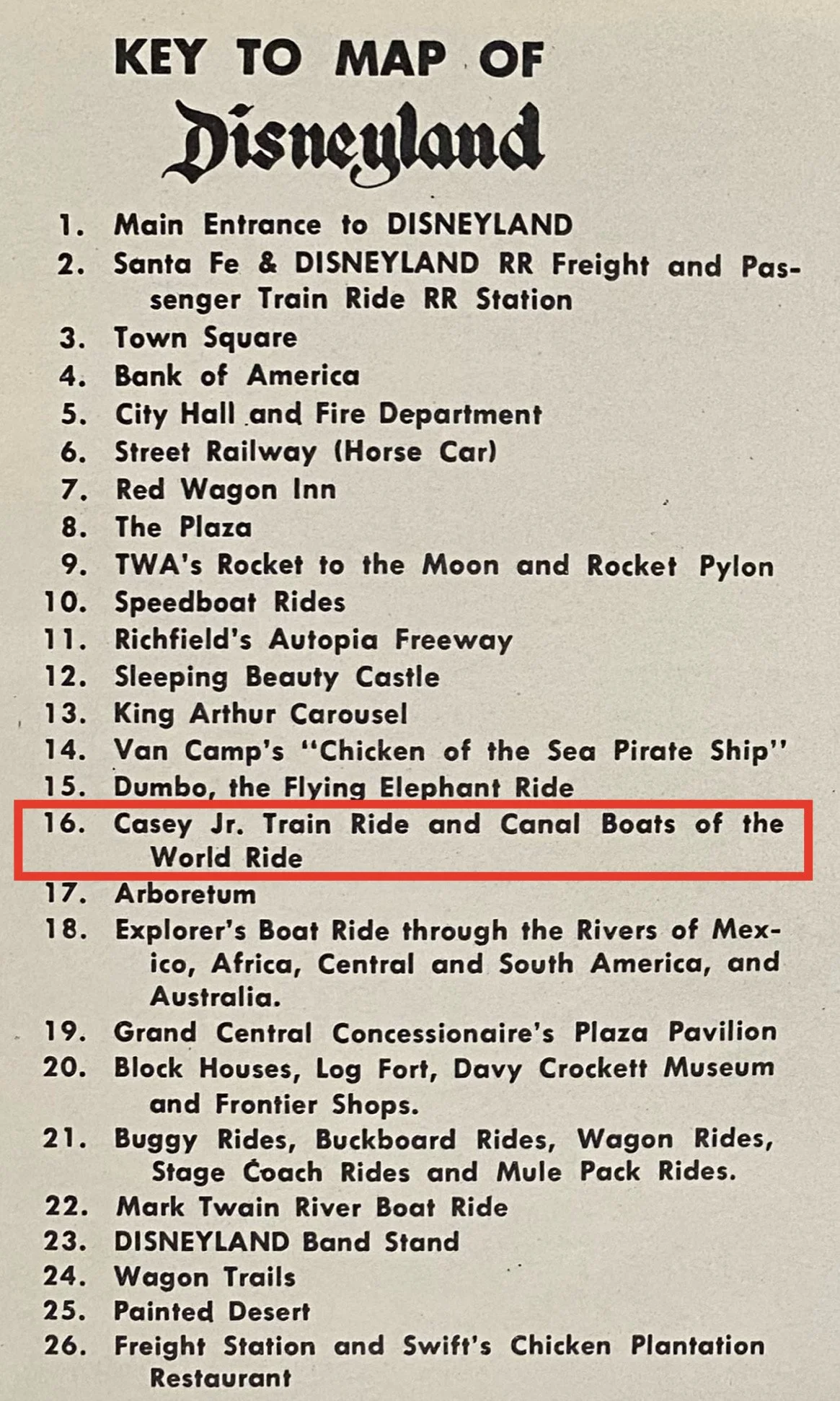
At a meeting of the Disneyland Merchant's Association (held January 25, 1956), the momentous announcement was made regarding Fantasyland developement: “We are making several new developments on this ride at a cost of approximately $125,000.00. This ride will be exciting and portray a ‘story book’ land, with villages at about 1/2 scale and crazy quilt landscape idea. This should be completed by April.”
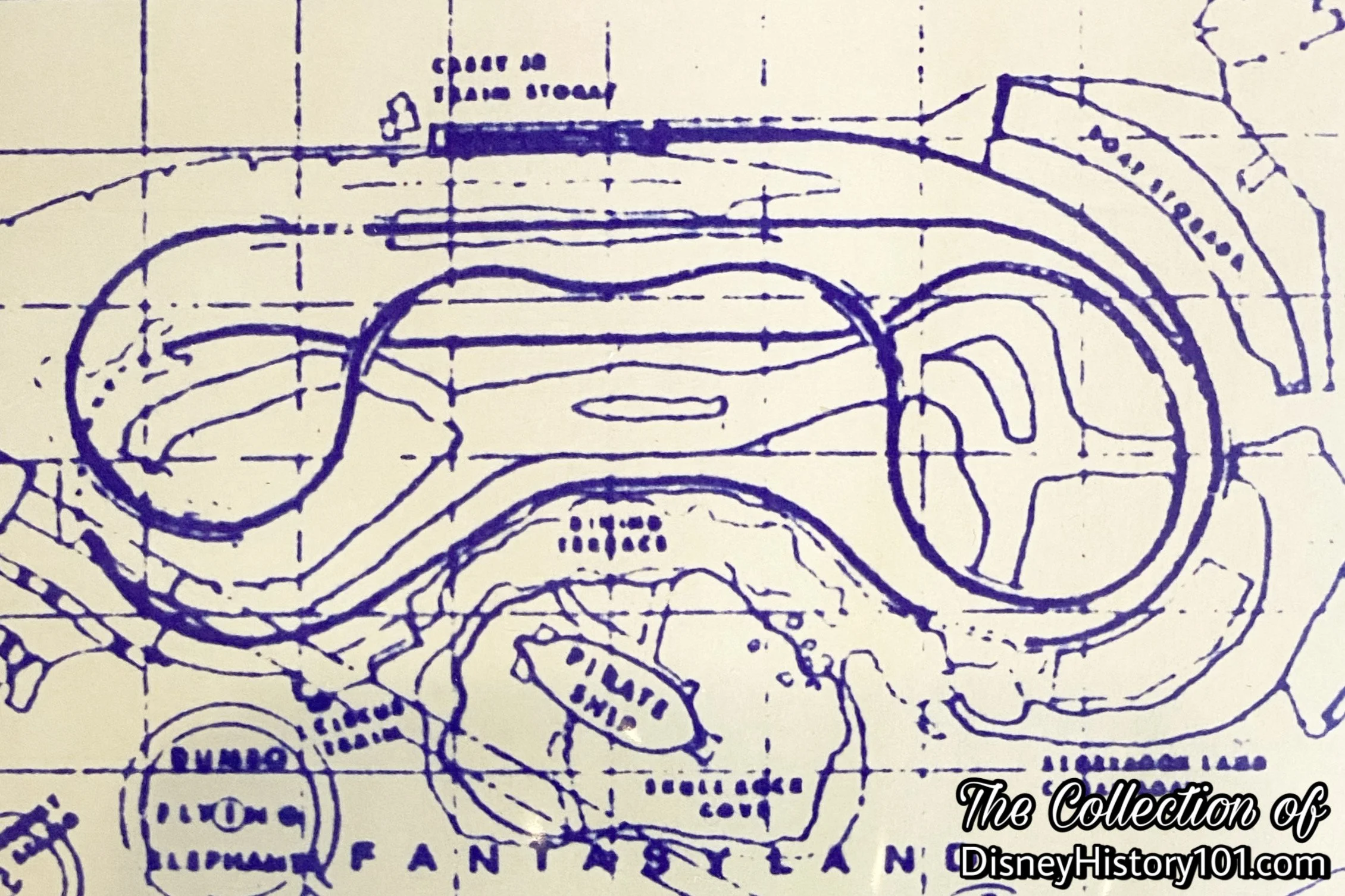
Soon, the bright gay circus train who “knew he could,” would travel a new scenic route above Storybook Land!
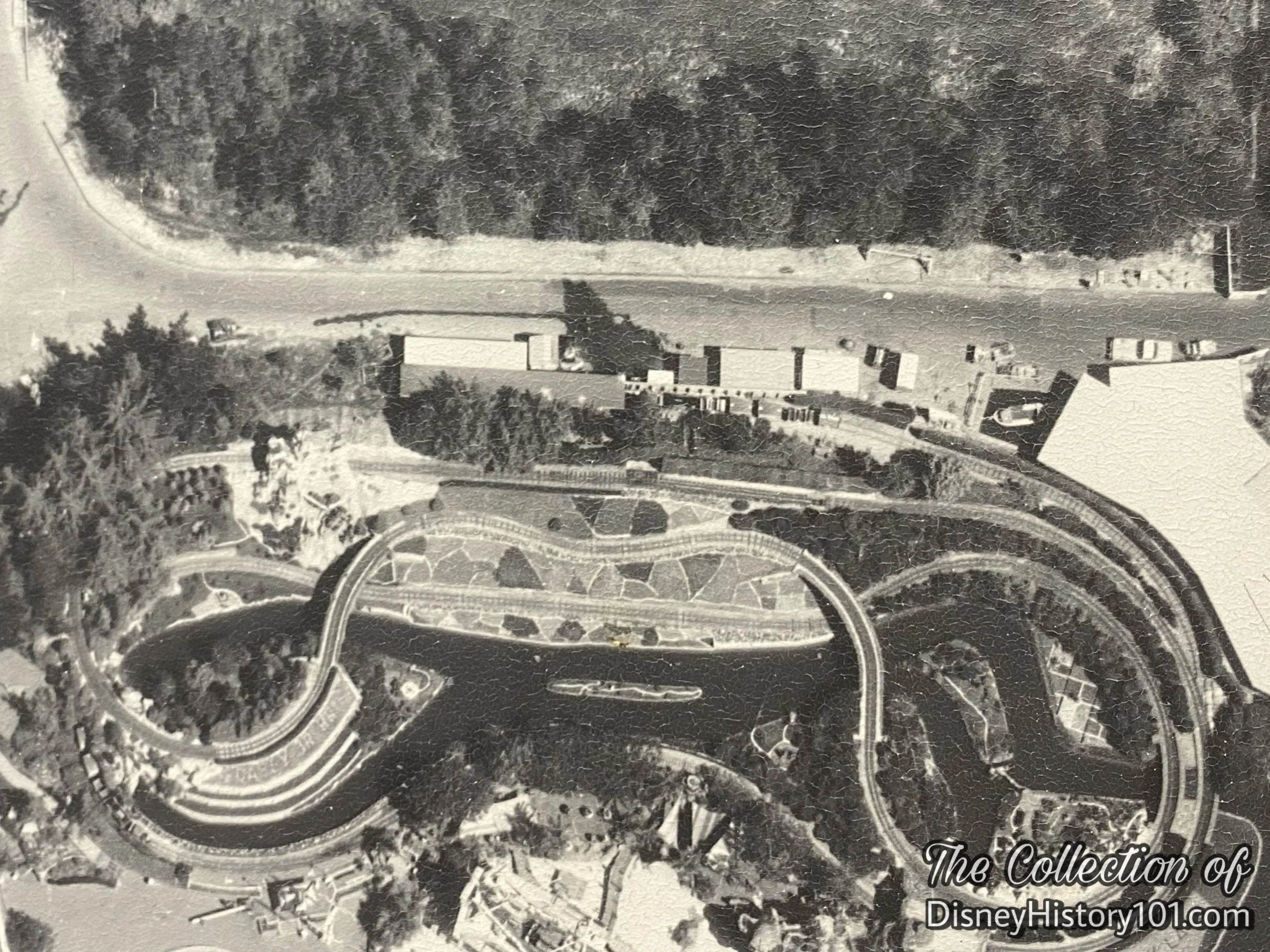
On the technical side, the narrow-gauge 30” tracks lead the Casey Jr. Circus Train on a four-minute journey, around a 1,840-foot layout. In addition, a spur line leads to a Train Storage Area, located behind the attraction, which houses both of the five-car trains (valued near $16,000 each). Later (c.1989), the two Casey Junior Circus Trains were serviced by the nine mechanics (including Shop Foreman Bib Carbines, Jeff Stephenson, and Bill Pearson) of the Disneyland Service Garage (also called the Autopia Garage). There, the vehicles received daily maintenance and cyclical rehabilitation. Meanwhile, the Cycle Shop would refurbish the body with a new coat of paint.
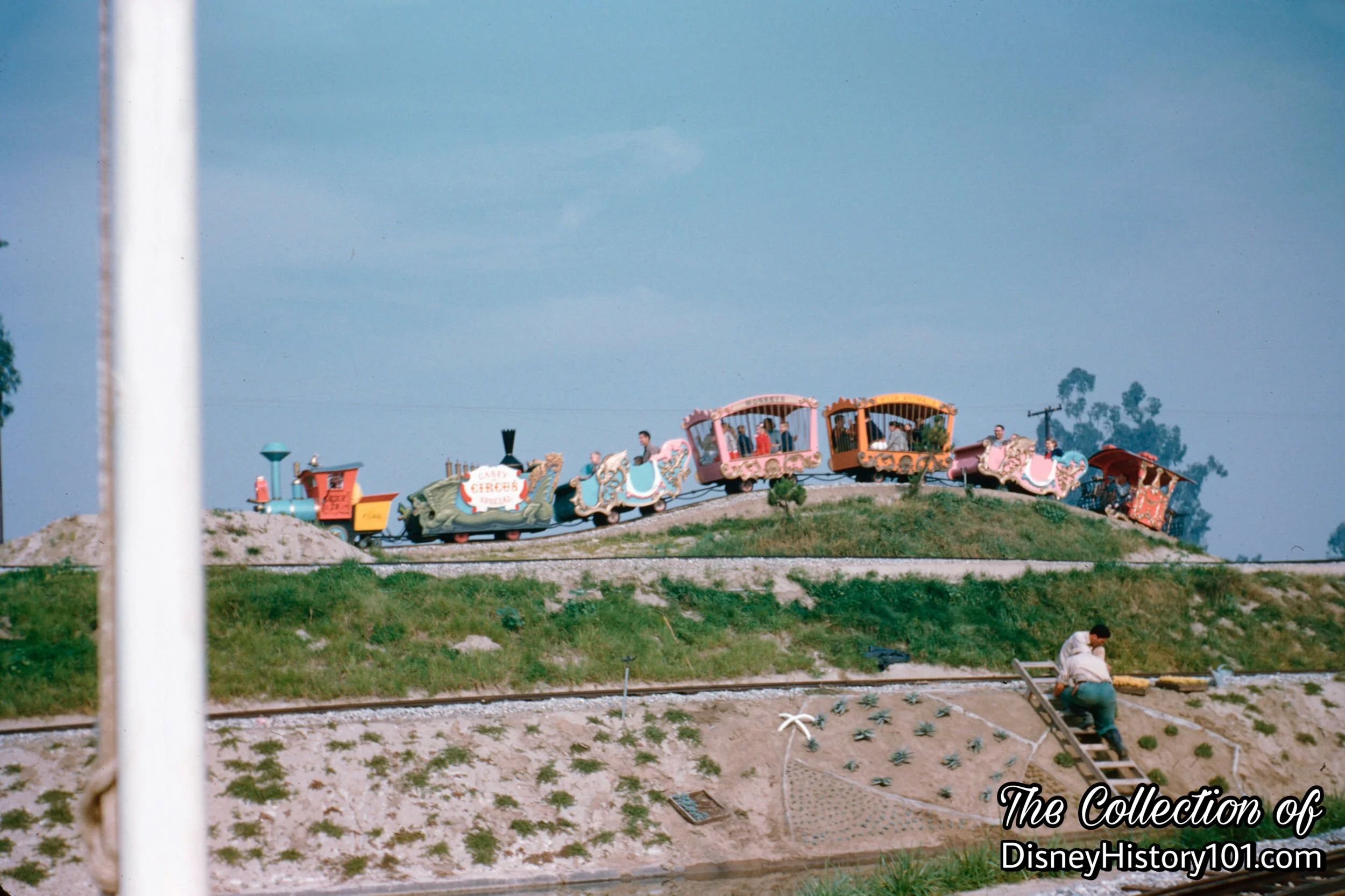
While work on the floral Lullabyland Patchwork Quilt (on the hillside of the former Canals of the World) begins to take place in the foreground, Casey Junior looks more confident after performing that old 40% grade many times each day!
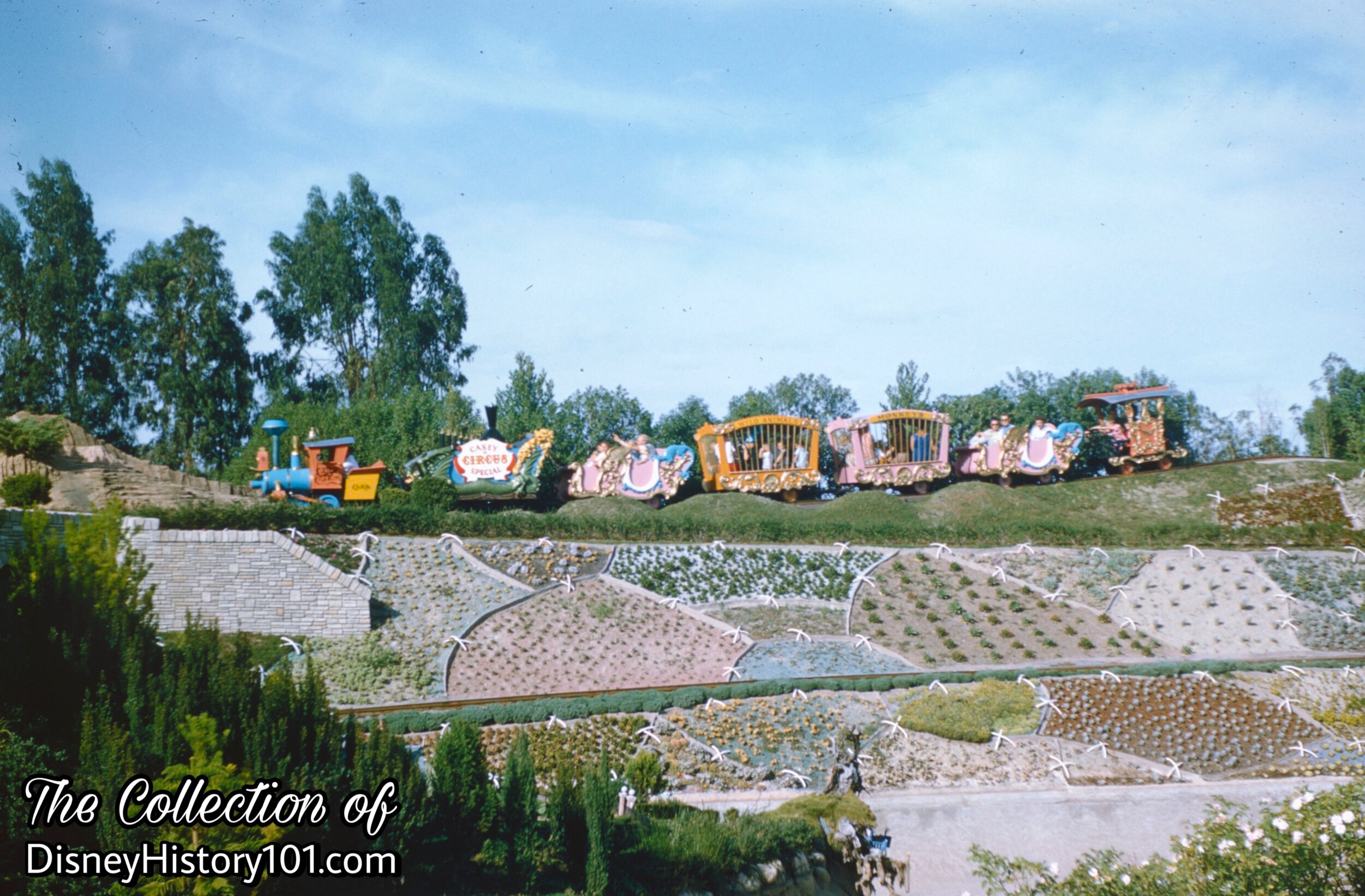
Soon the little train would takes Guests over rivers, trestles and bridges and climbs mountains in Storybook Land.
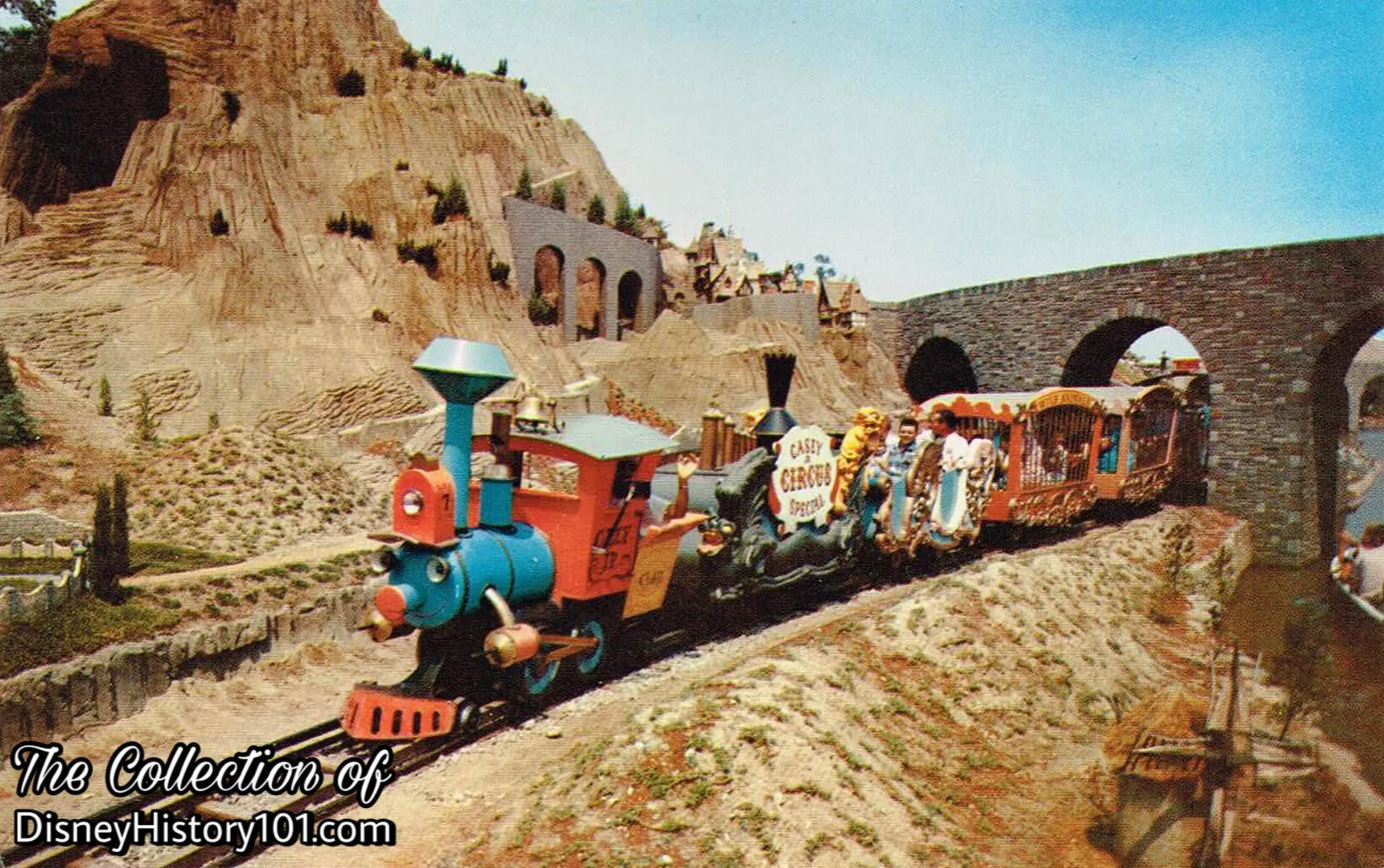
Casey Jr. looks to be the busiest character in Storybook Land in this early Casey Junior Train Postcard Image!
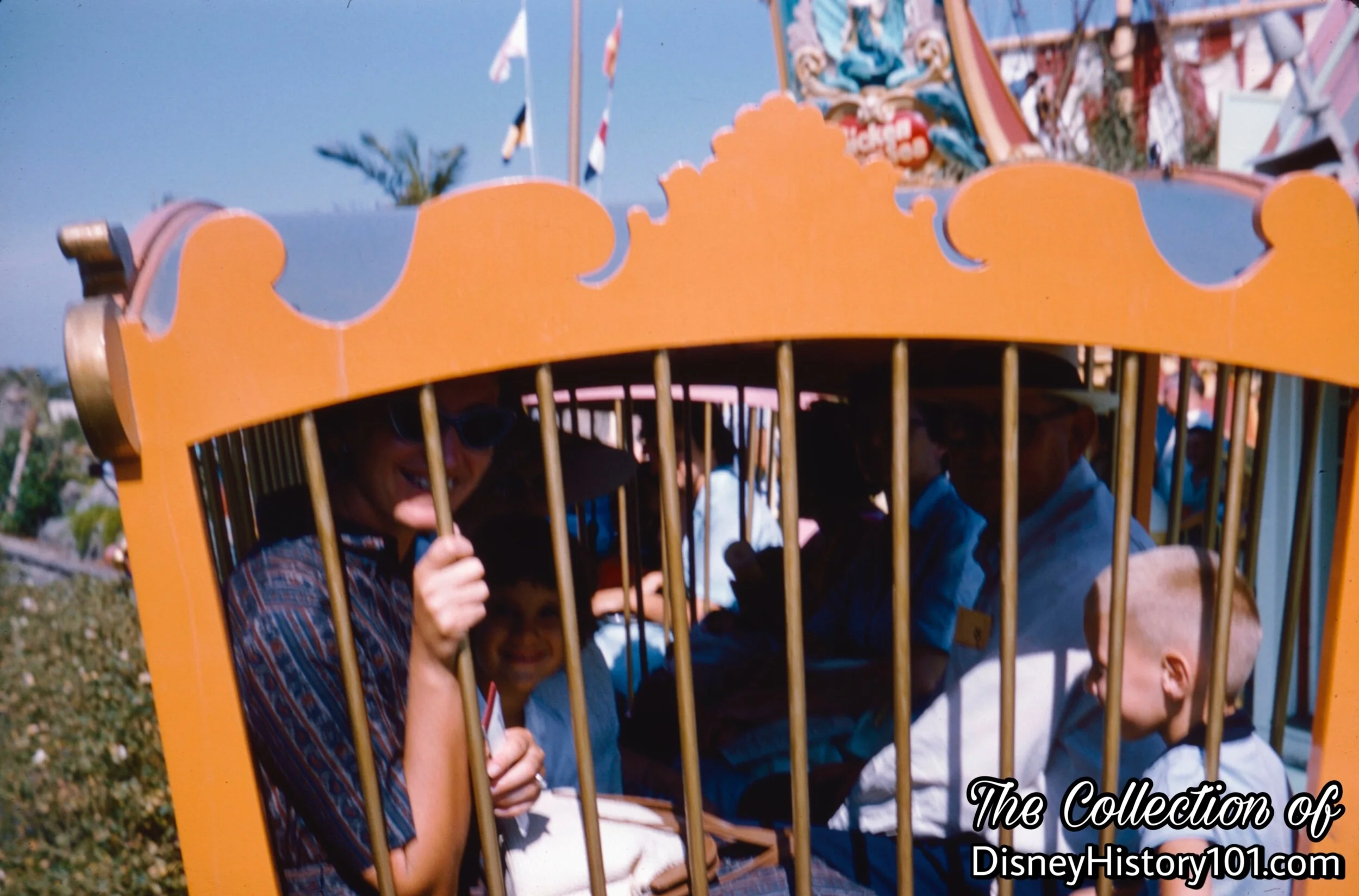
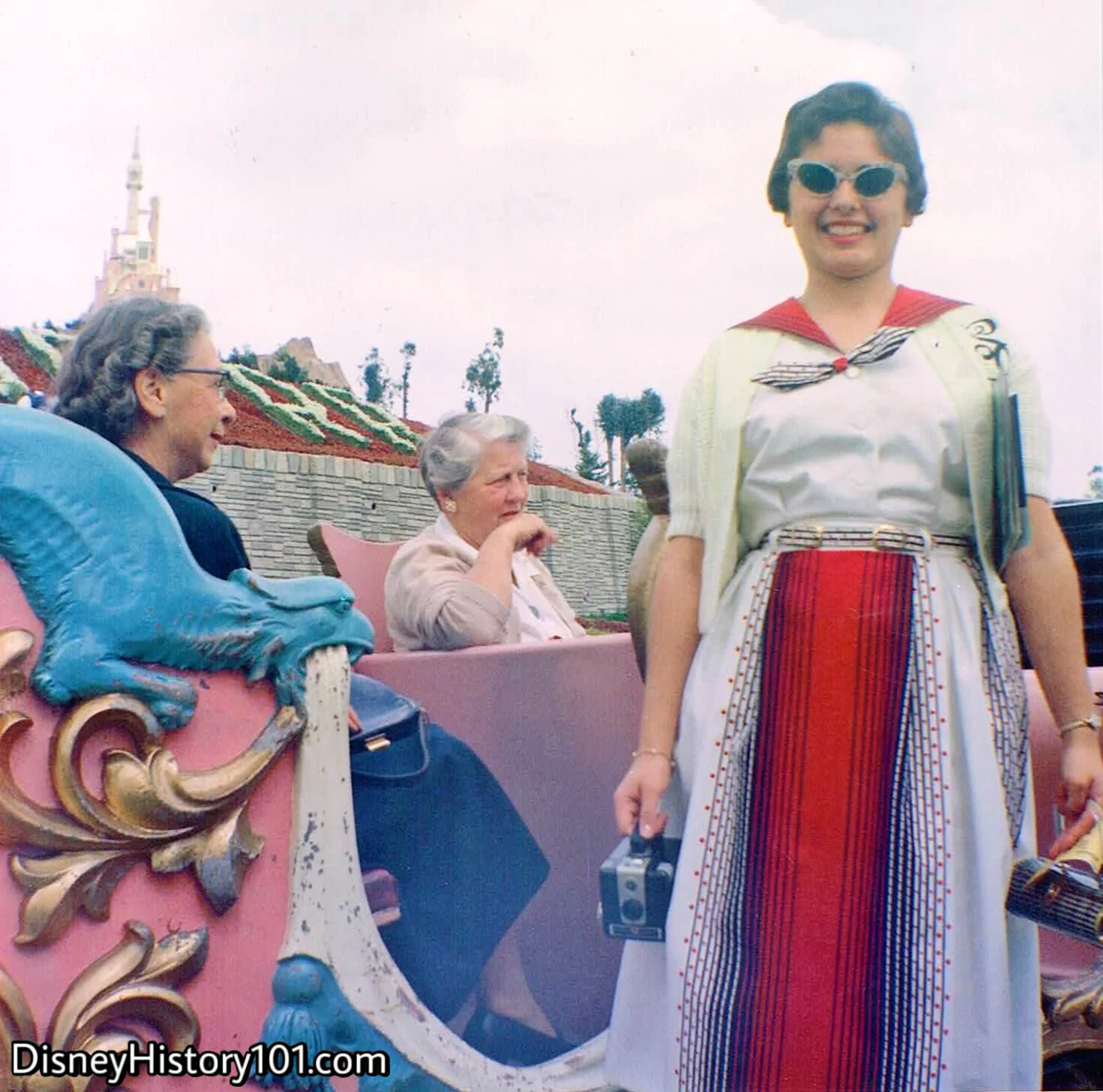
Three years later, Casey Junior was still thrilling “every Jack and Jill,” as guests of all ages payed fare to board the diminutive stock bound for a grand circle tour of Storybook Land!
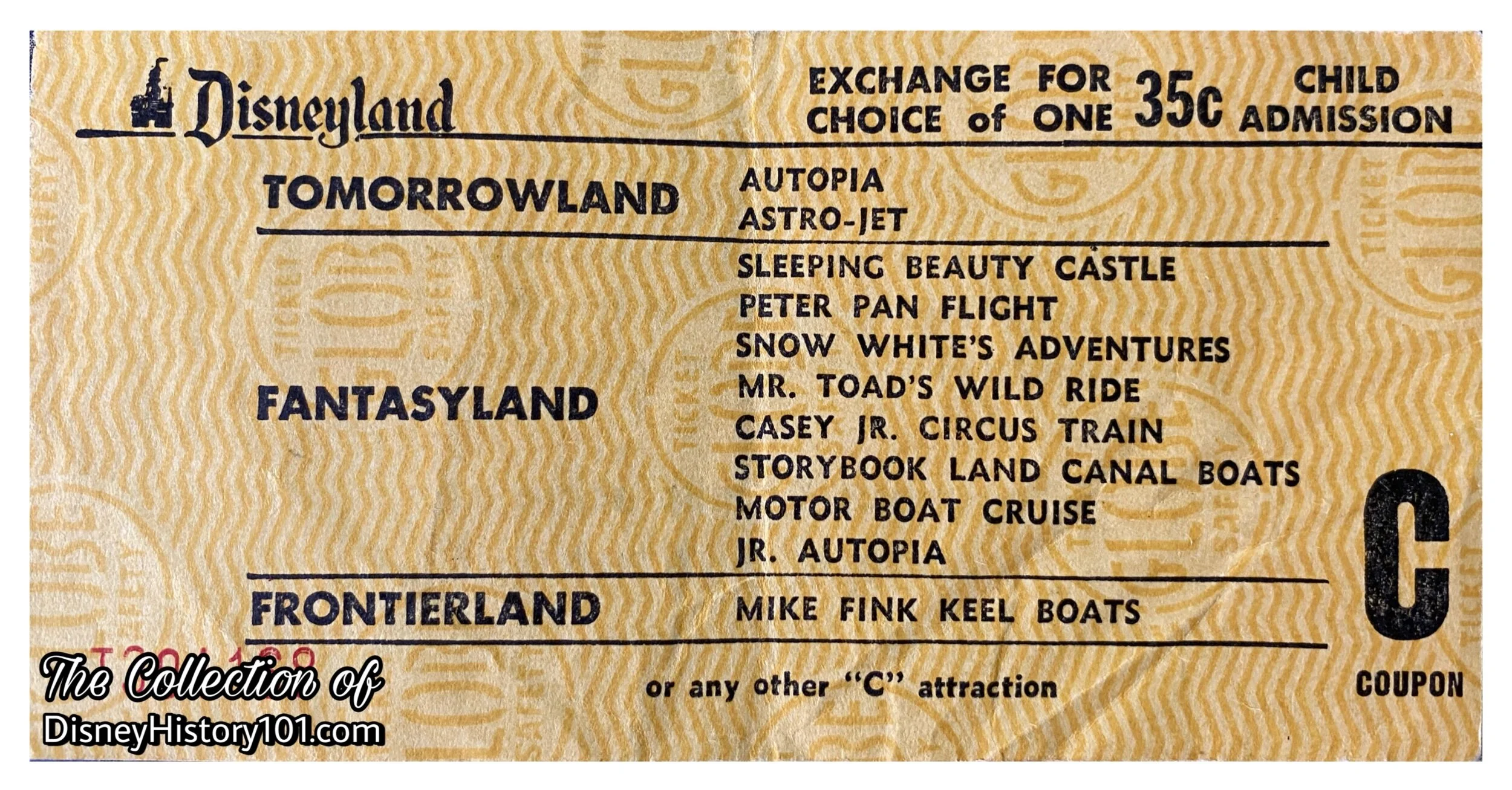
The admission for Casey Jr. Circus Train was one “C” Coupon (35 cents) - the same admission to sit behind the wheel of a Junior Autopia car or to explore Sleeping Beauty Castle’s walkthrough attraction!
By 1959, Joe Fowler was Vice President of Disneyland Operations Committee and Doc Lemmon of Disneyland Operations was overseeing Operators of Rides & Amusements, Livestock, Parking Lot, and Ticket Sellers.
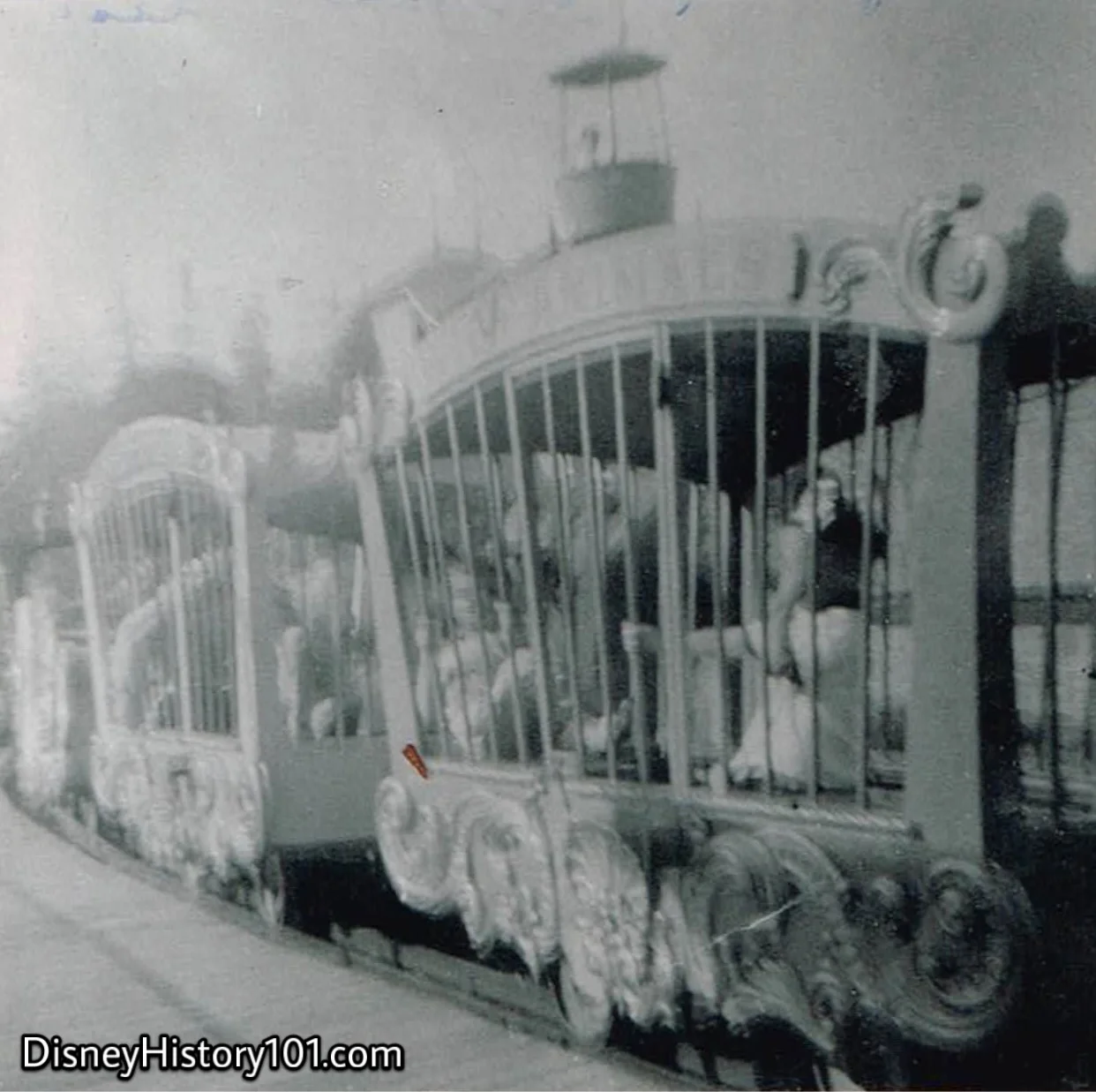
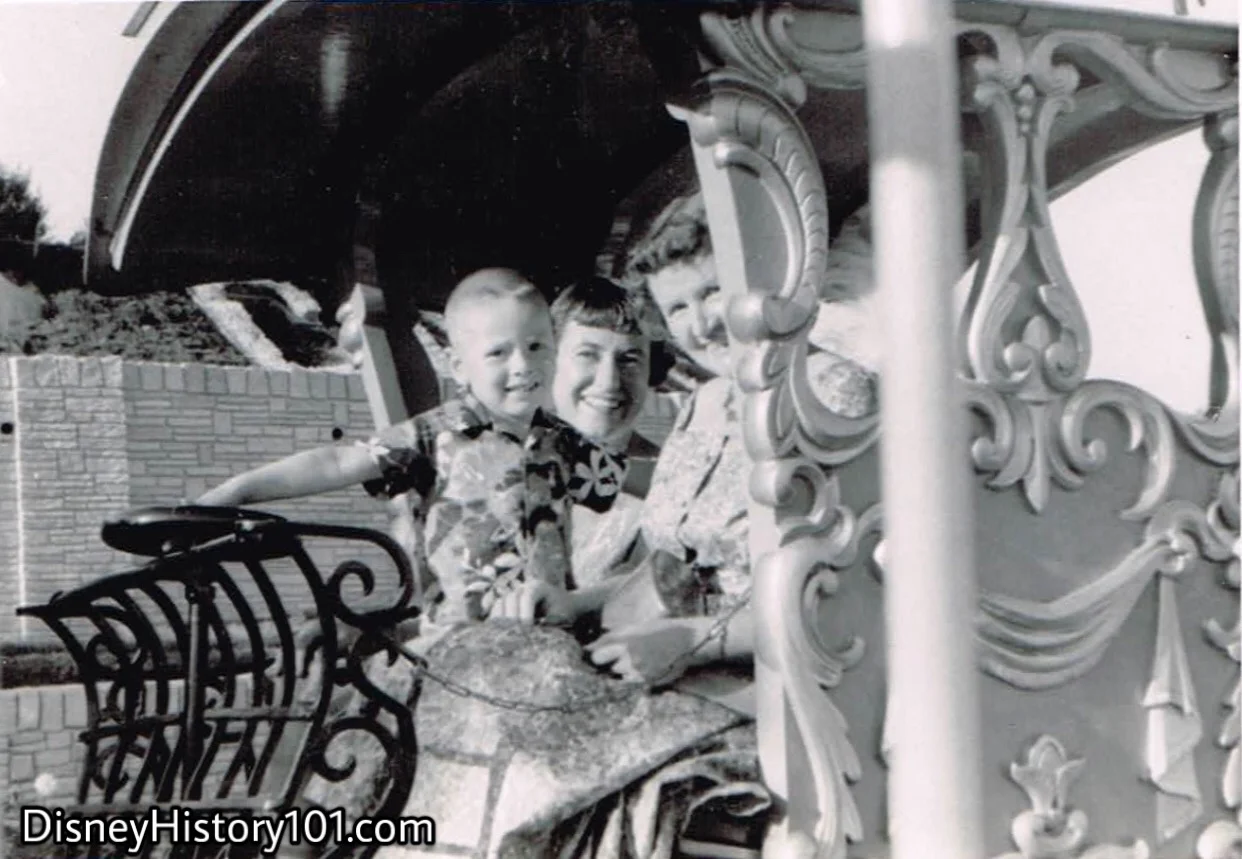
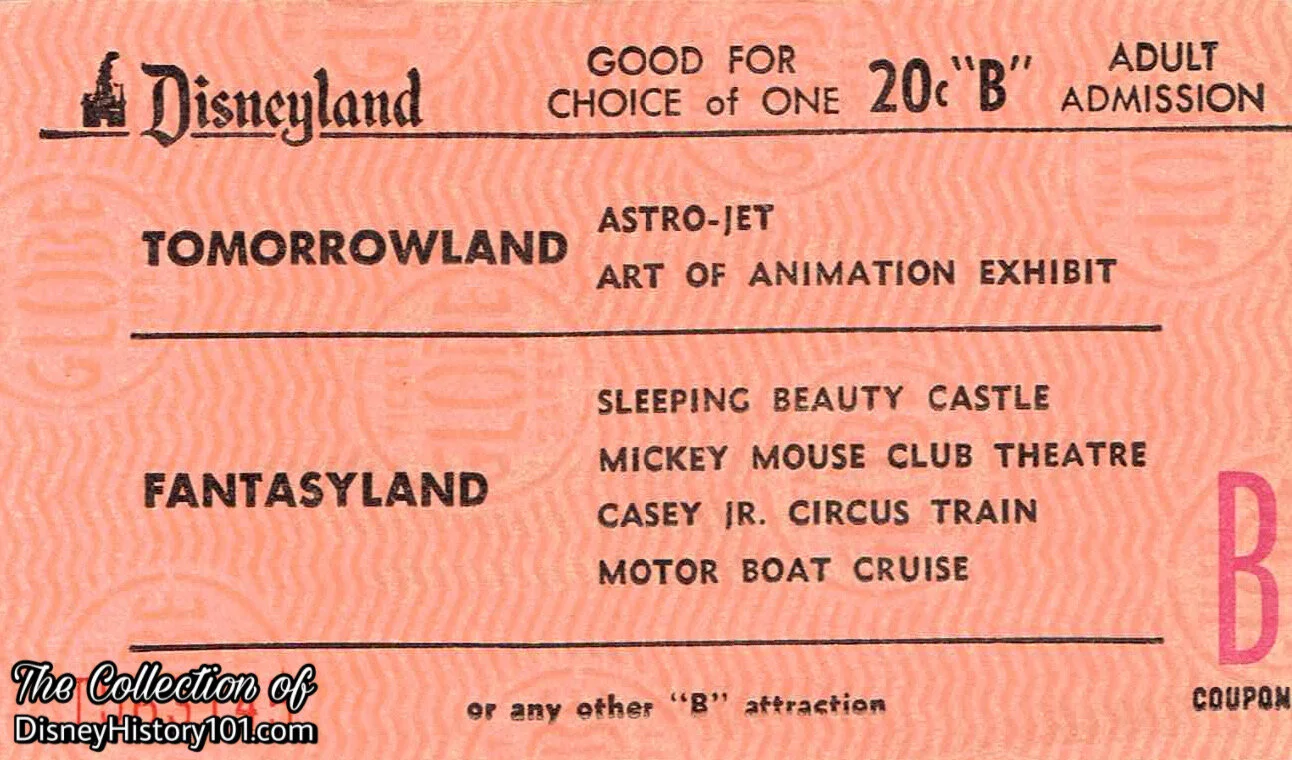
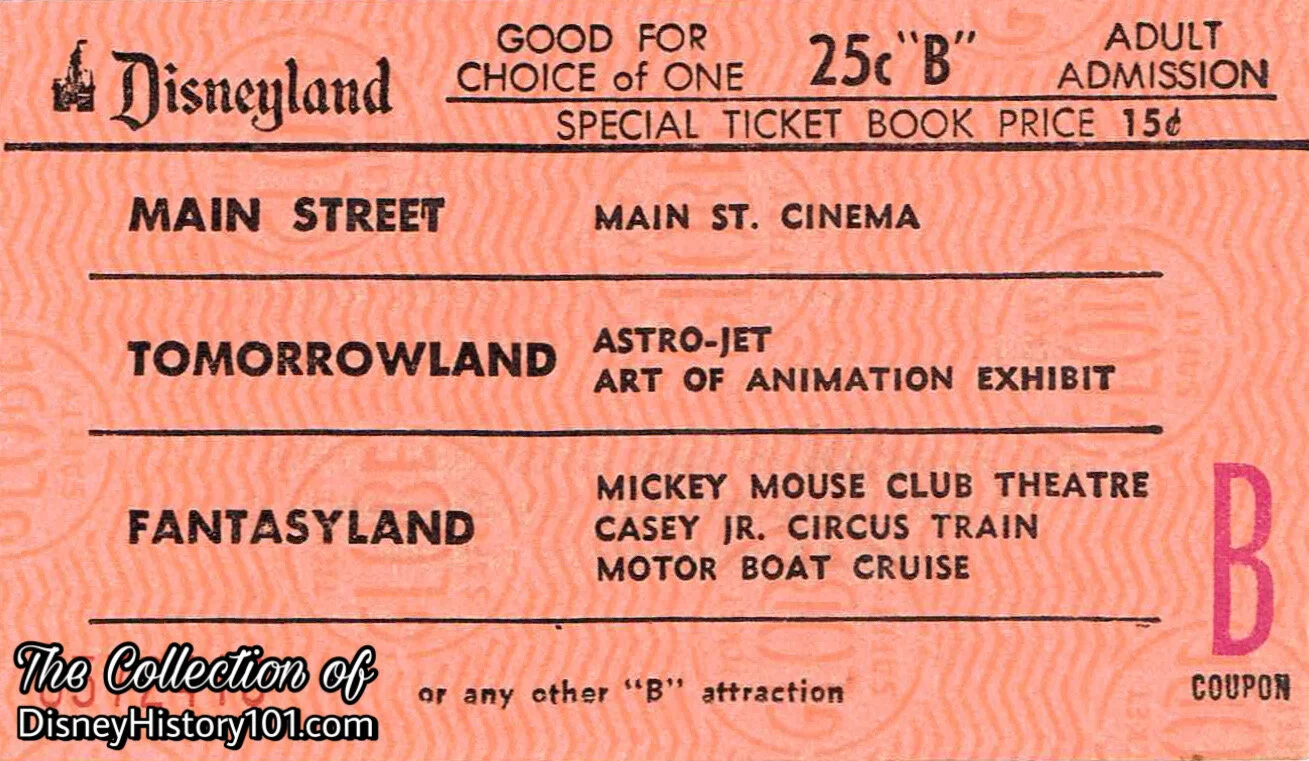
The “B” Coupon (cost of admission) increased by 5¢ during this era.
Casey Jr. makes his way over “hill and dale”!
As mentioned earlier, Disneyland employee Immogene Brinkmeyer was the very first ticket seller at this particular location, while Disneyland Tour Guide Anne Daniel would be the last employee to work this ticket booth!
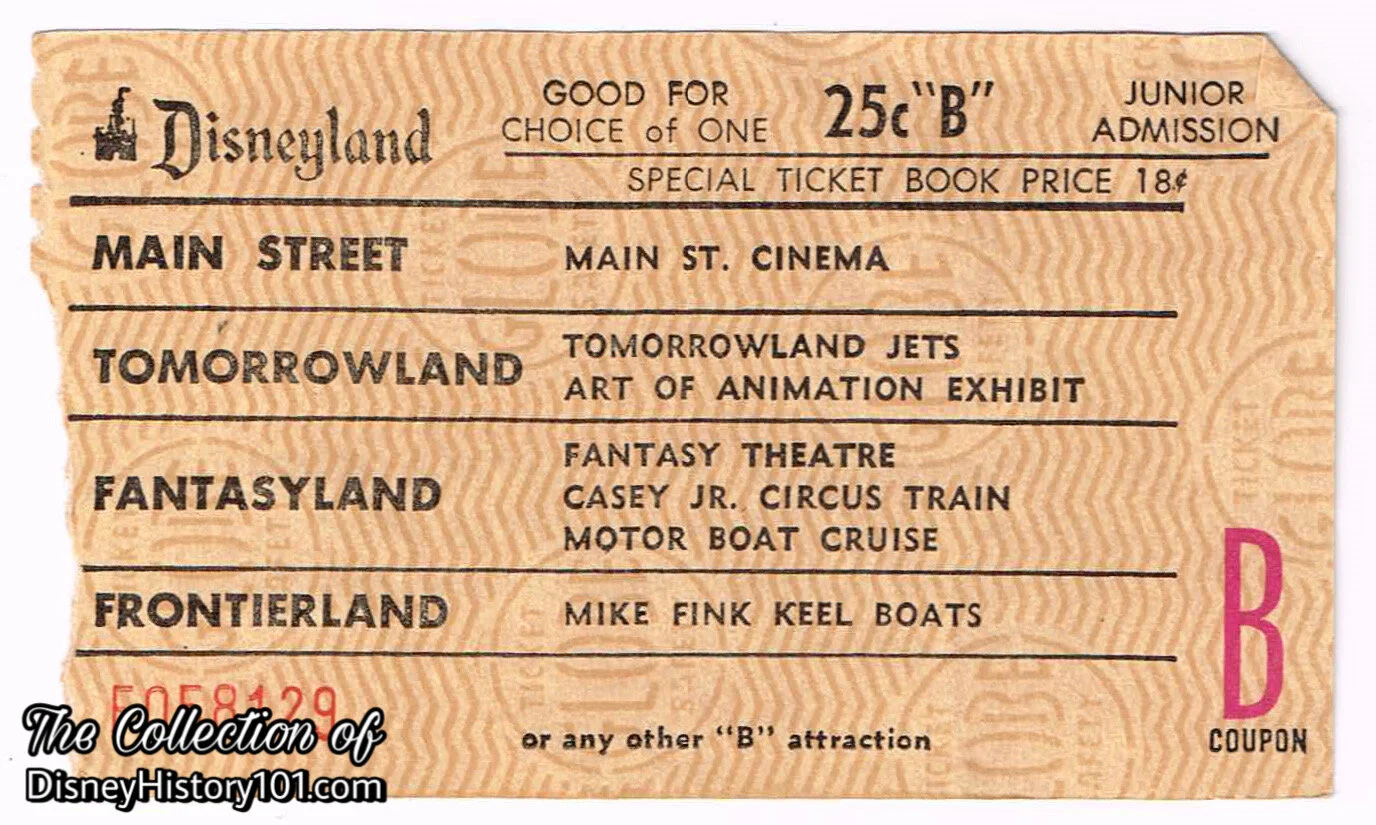
Yes, a ride aboard Casey Jr.’s Circus Train is equated with a show at the newly renamed Fantasyland Theater and a flight inside the newly renamed Tomorrowland Jets!
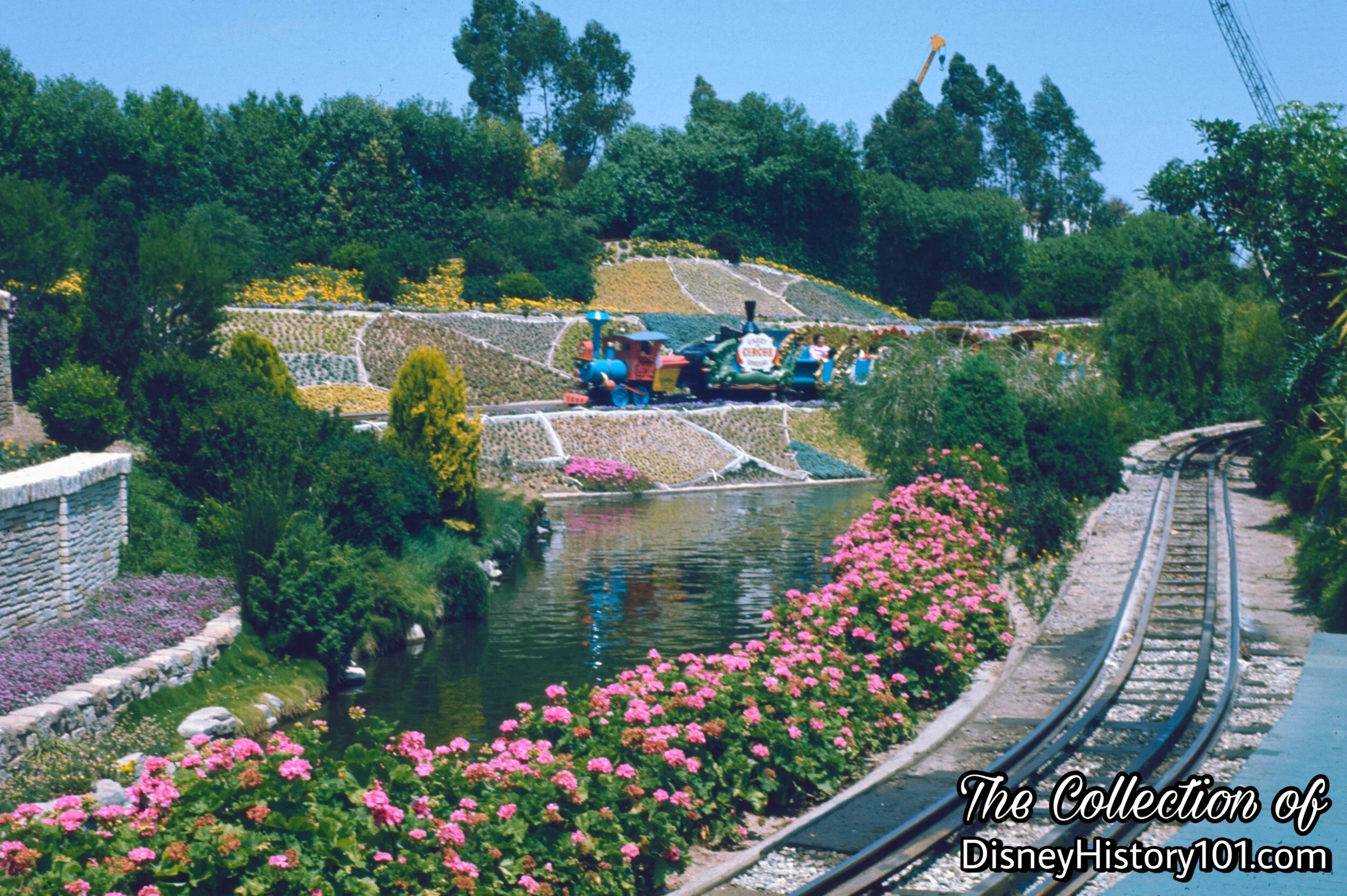
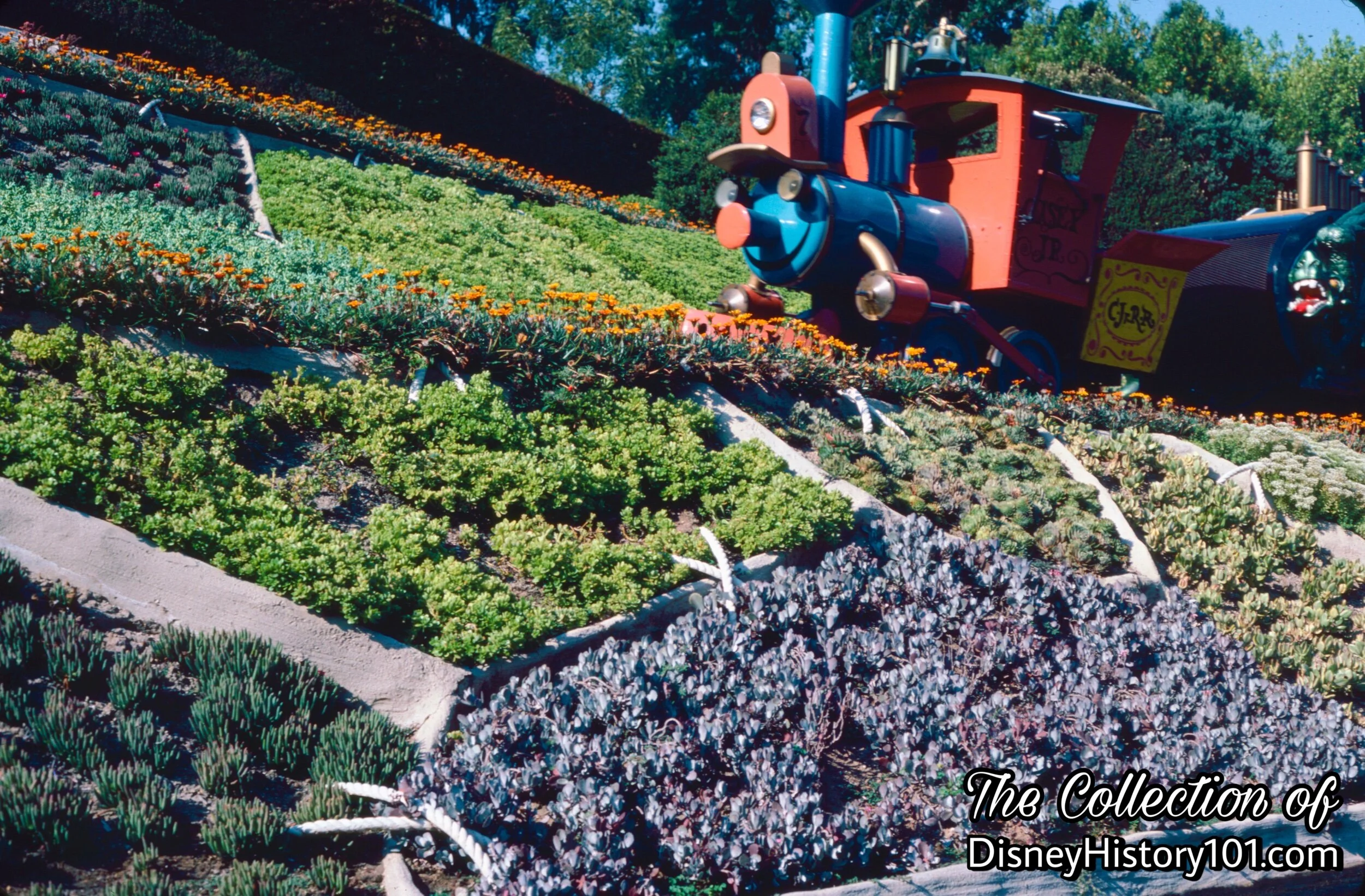
Though the track was completely replaced during 1989, the Casey Jr. Circus Train’s layout has remained relatively the same since its opening in 1955! The attraction’s soundtrack includes the original c. 1942 Academy Award winning song (with composition by Frank Churchill, and Oliver Wallace) and lyrics (by Ned Washington, with some consultation with Joe Grant and Dick Huemer). Finally, new Circus Ringmaster spiels were added (voiced by Ray Temple, performing a variation of Herman Bing’s original character voice).
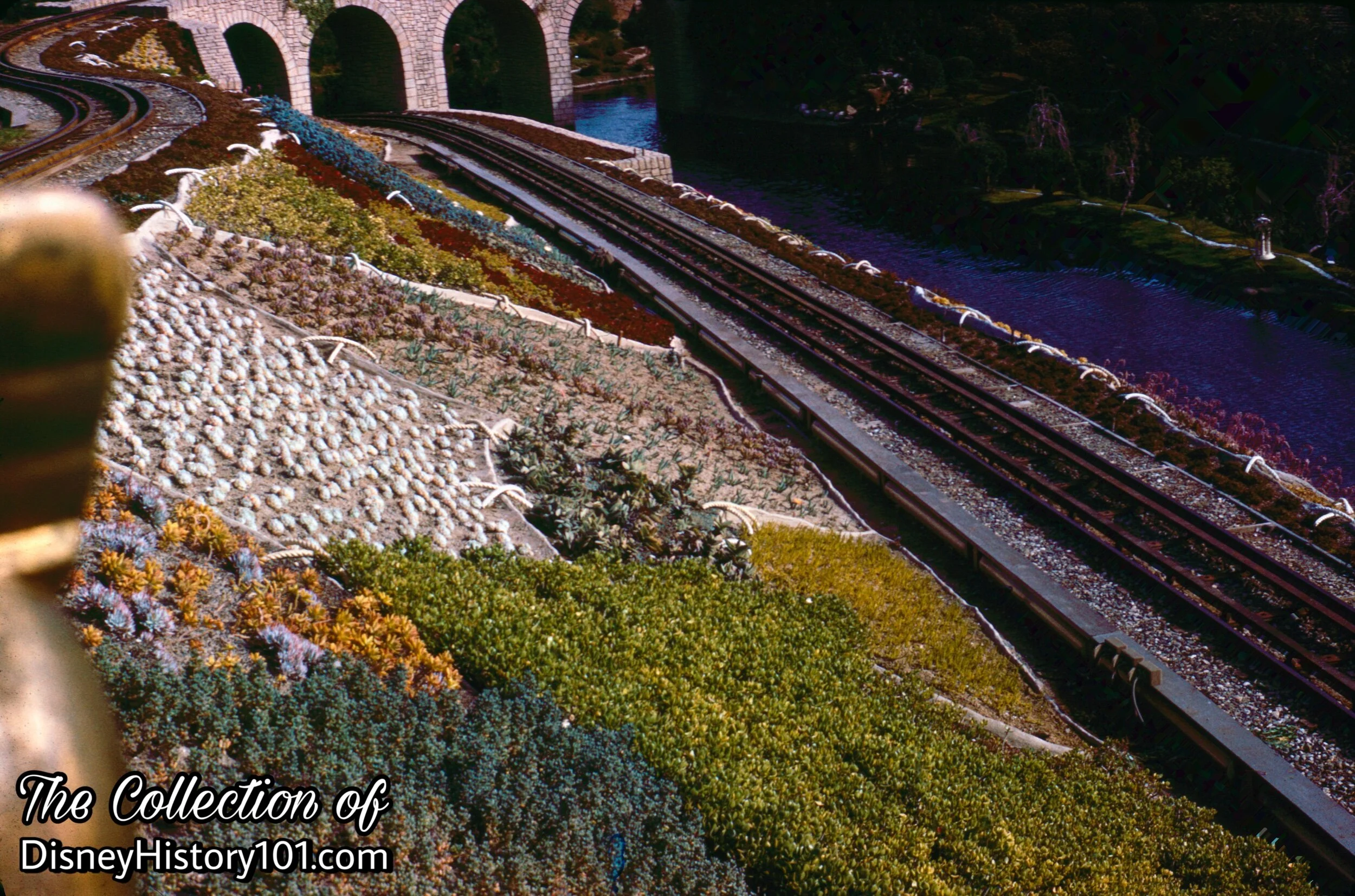
The following four statistics are based on the results of Disneyland Attractions Time Studies gathered in 1968 (for 1 Unit & 2 Units) :
Theoretical Hourly Capacity (What the attraction should yield under ideal conditions) : 375/750
Instantaneous Capacity : 30/60
Audience Control Capacity : 101
Capacity Per Unit : 30
Cycle Time (From the time a unit passes a given point and returns to the same point) : 4:45
Unload Time : :45
Load Time : 1:00
Trip Time : 3:00
Dispatch Interval : 4:45/2:23
Trips Per Hour : 12.5
Distance Travelled : 1760 feet
Speed in Miles Per Hour : 6.4
Length of Load-Unload Track : 61 feet, 10 inches
“I bet ya thought a train could never travel over the Swiss Alps!” The Casey Junior Circus Train makes its way through the mountain pass over the little Italian Village that Gepetto and Pinocchio call home (since they got away from Monster the Whale). Behind the mountain range stands the majestic Matterhorn mountain in the distance!
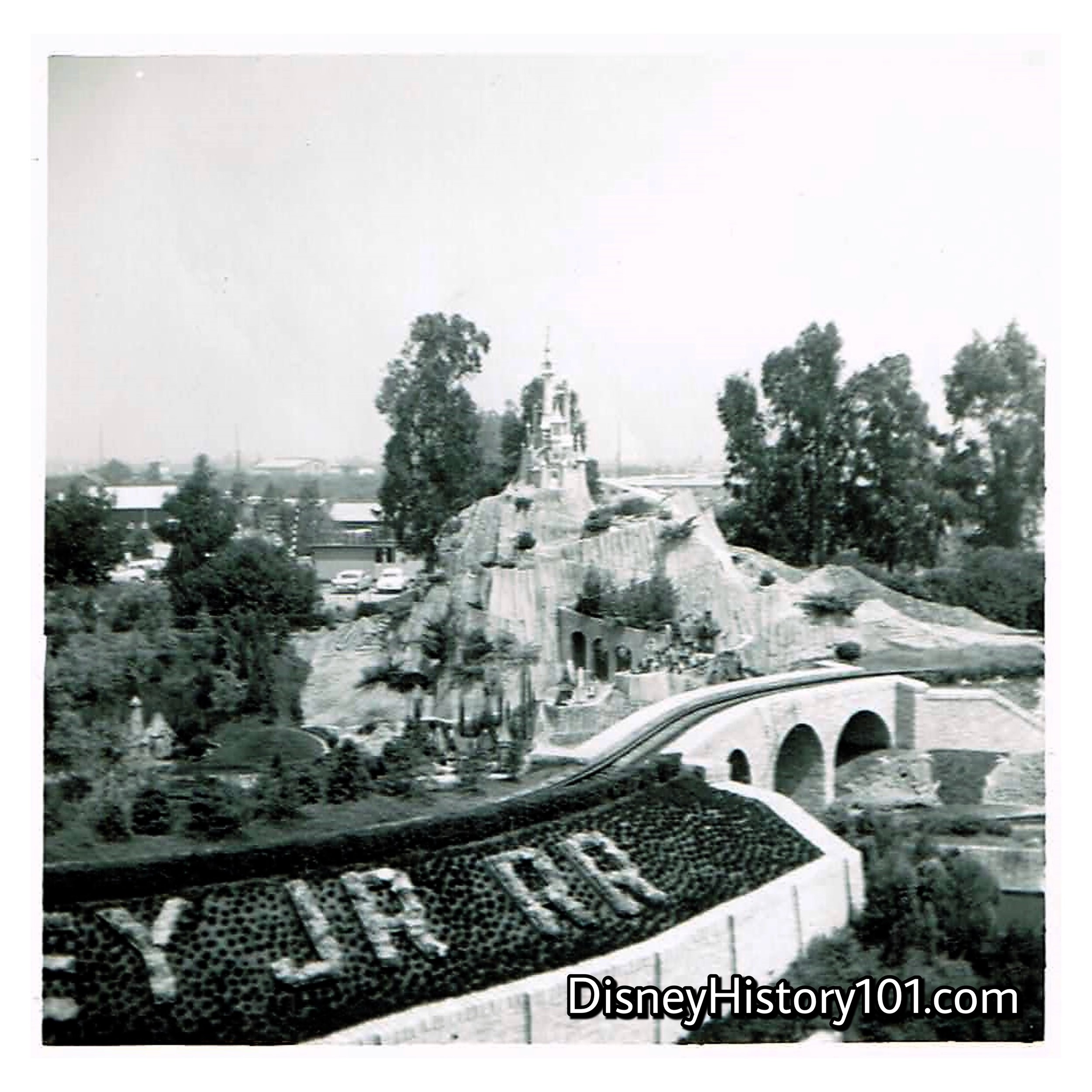
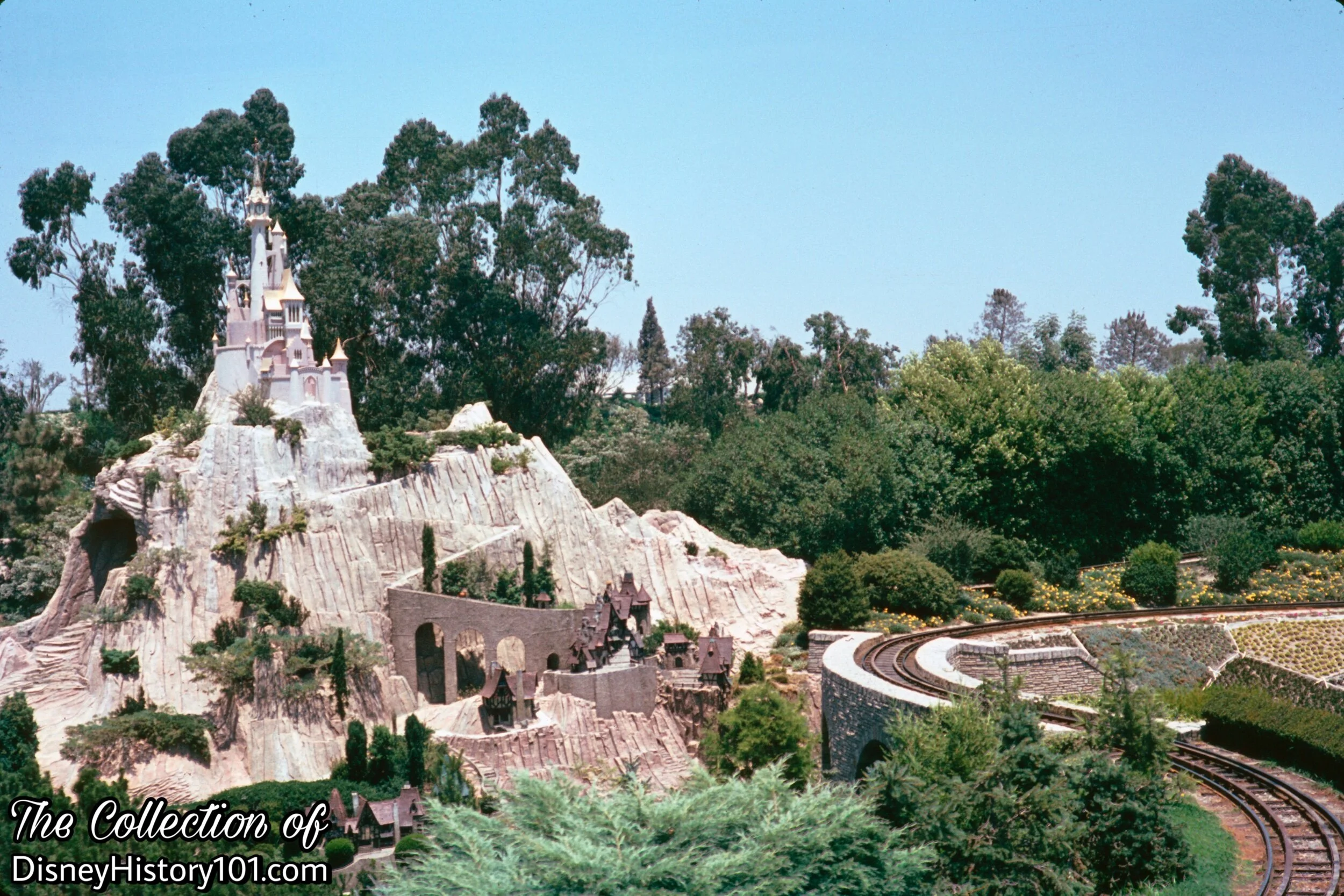
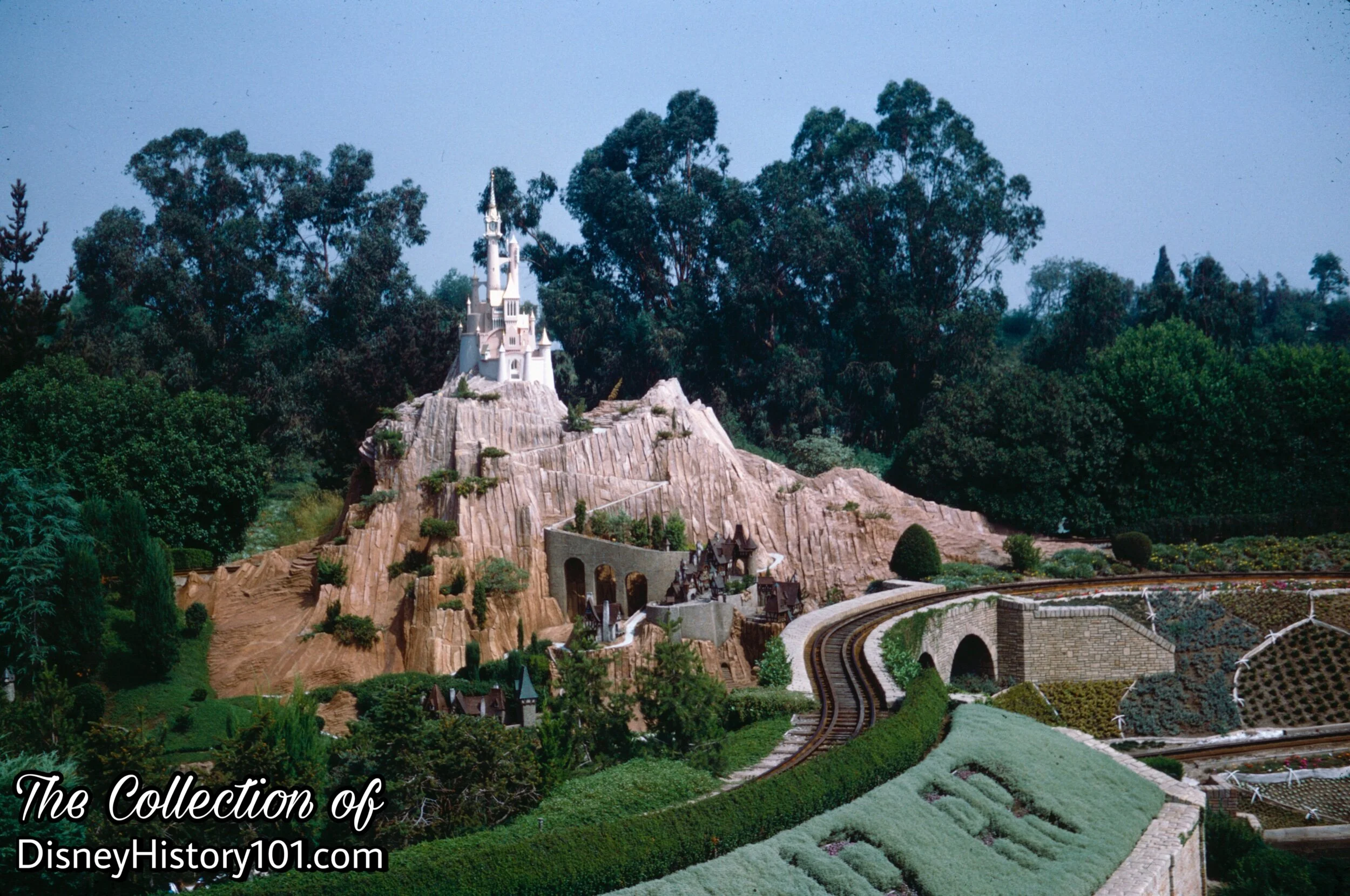
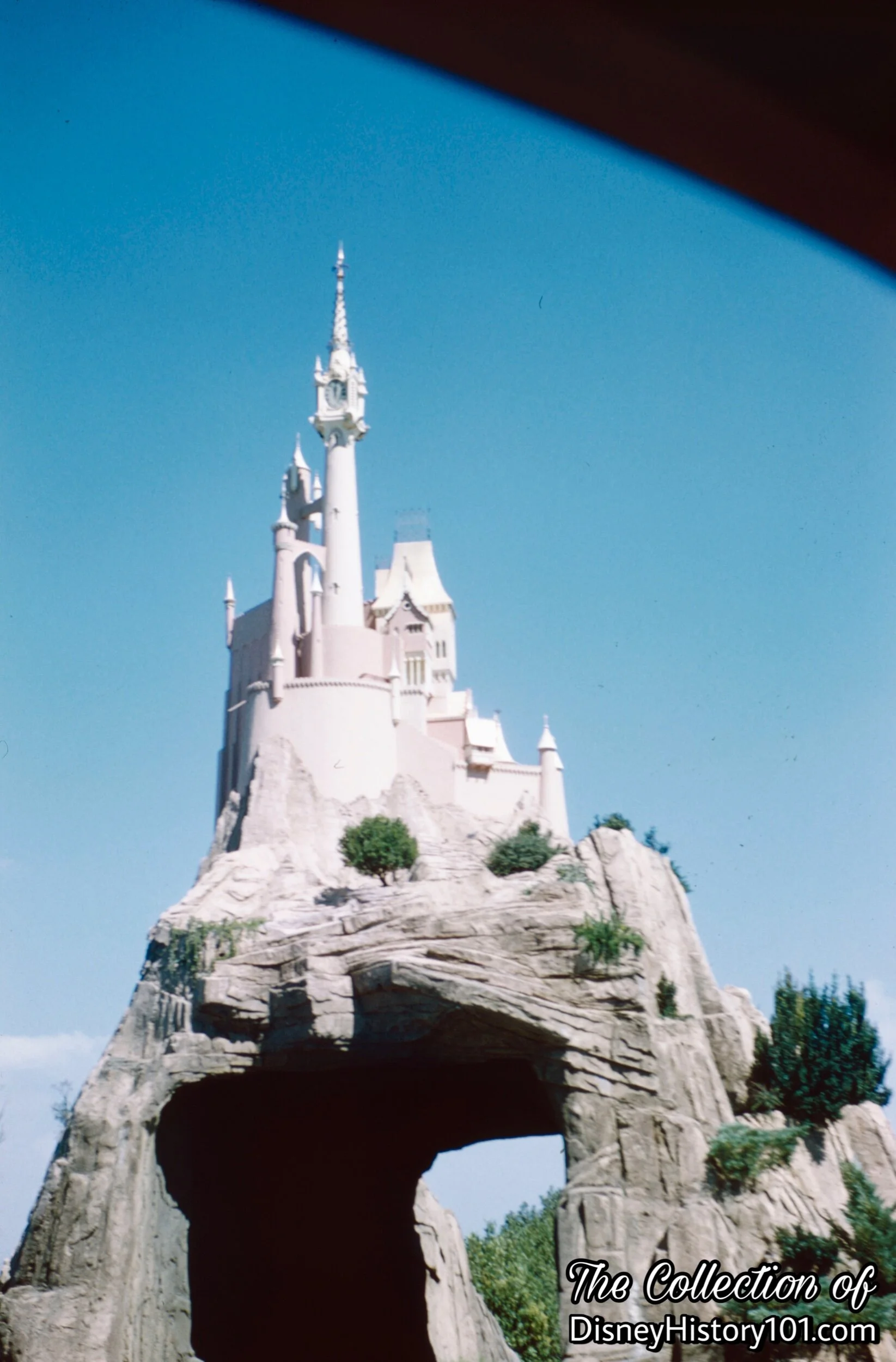
It once seemed that Walt Disney’s Rainbow Road to Oz was still going to end in Storybook Land, converging with the Casey Junior Circus Train rails. Despite the status of Walt Disney’s Oz film project, by April of 1960, Bob Thomas (of Associated Press) divulged Walt’s Disneyland plans : “Next year he plans to add a Wizard of Oz section full of dancing figures and a mountain top of trees shaped lie animals.” Alas, “Rock candy Mountain was originally planned for Fantasyland until the model, made of real candy, began to melt and was pecked to pieces by the local birds - and by the model makers,” according to “Disneyland: Then, Now, and Forever” by Bruce Gordon & Tim O’Day.
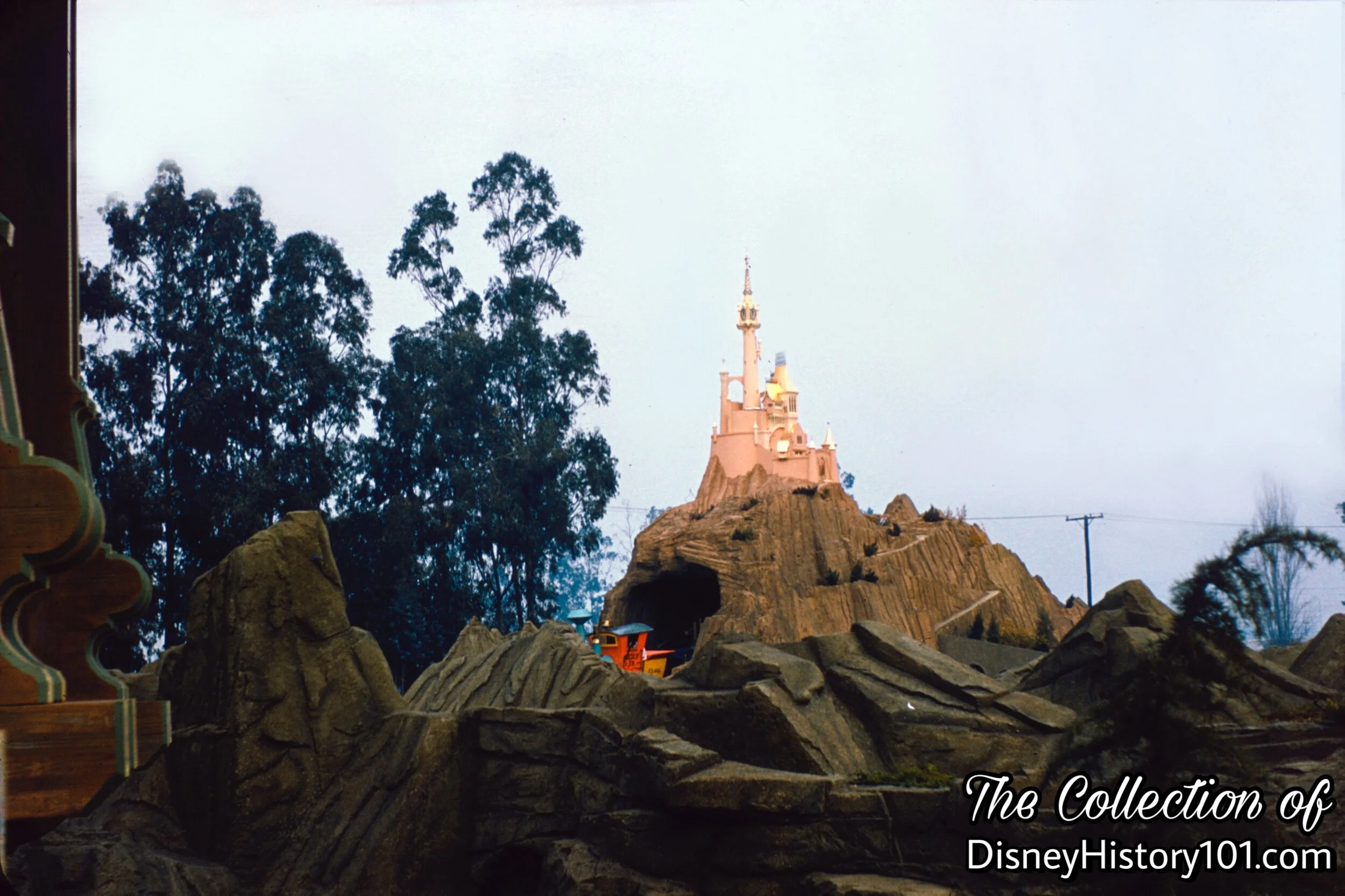
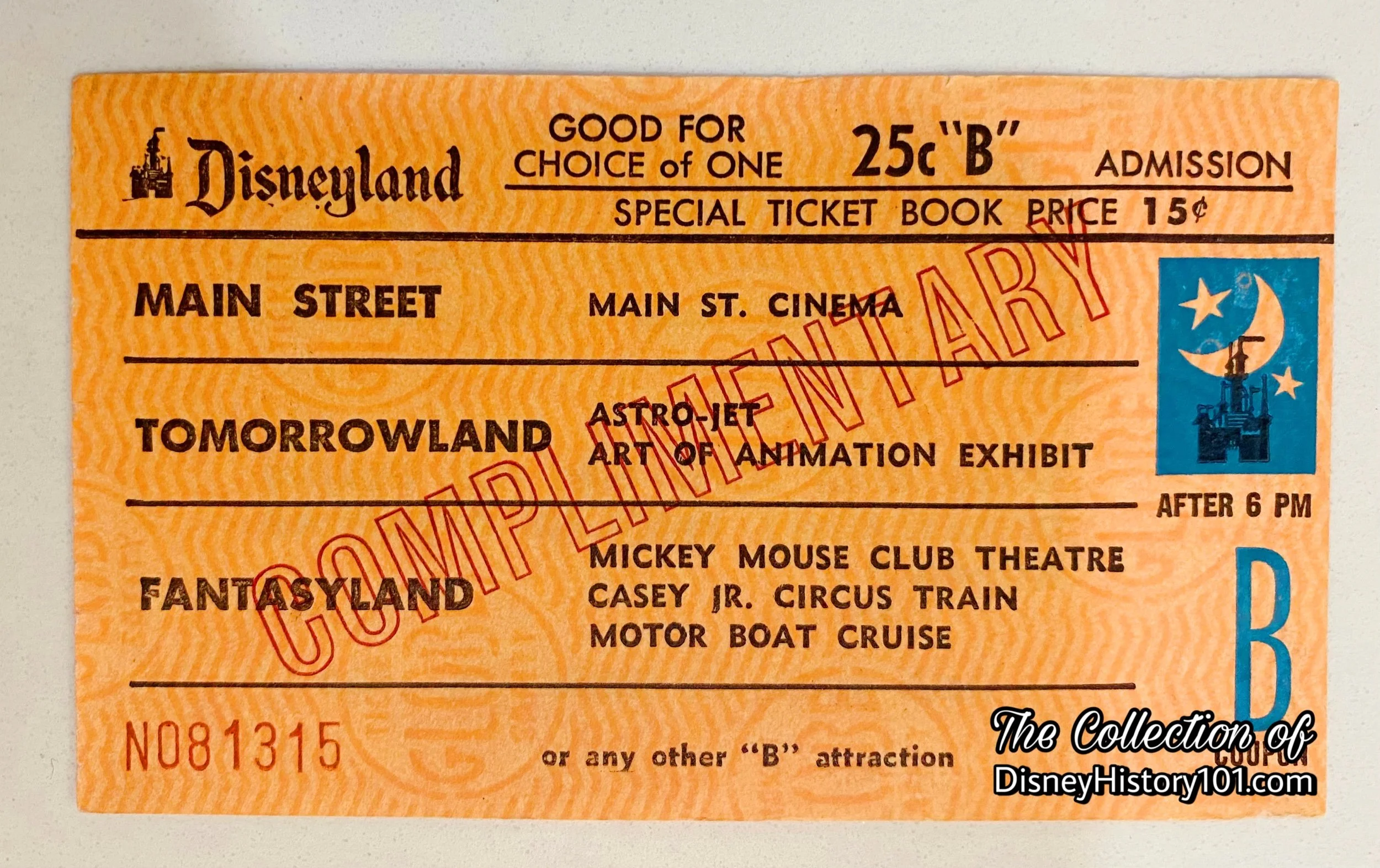
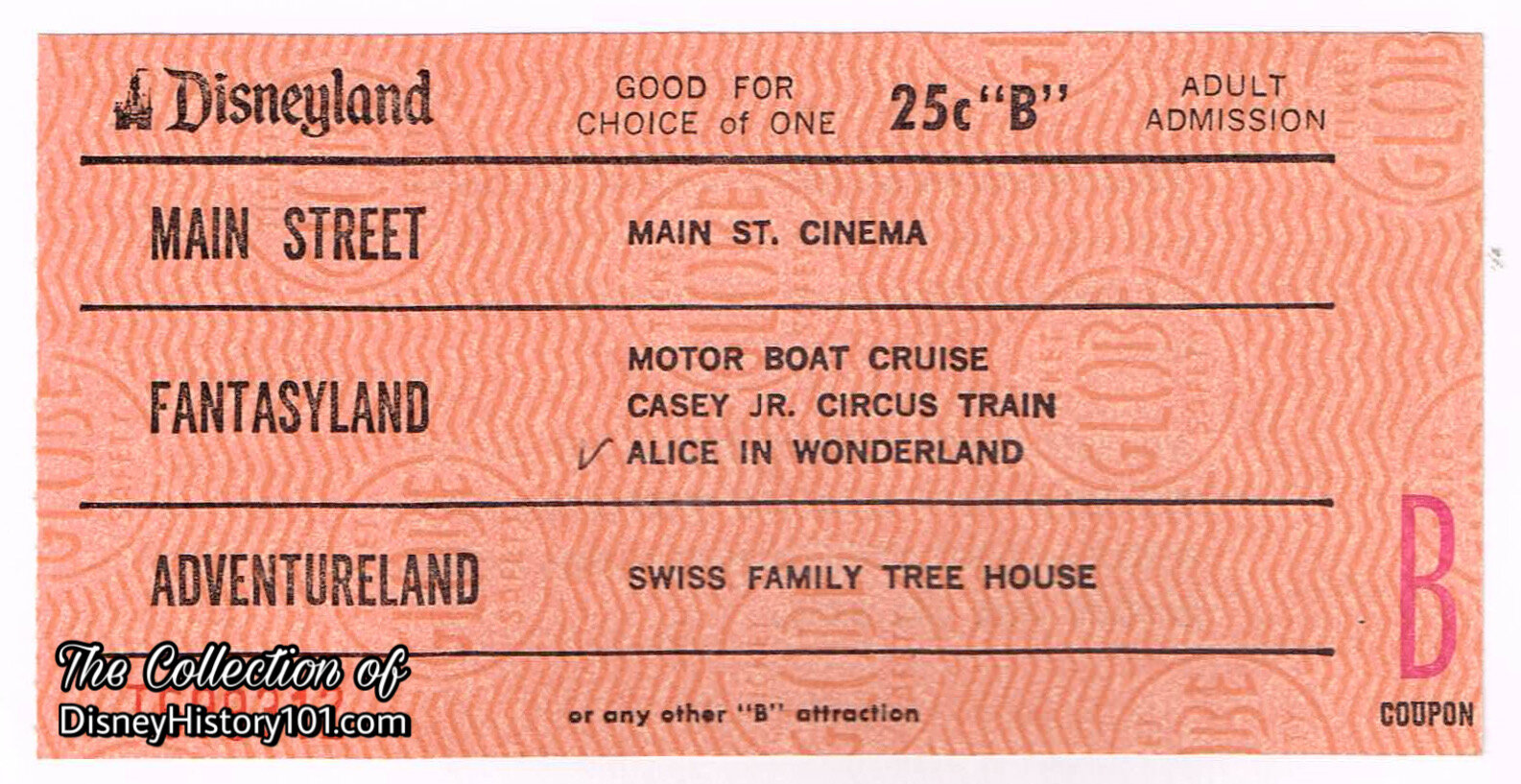
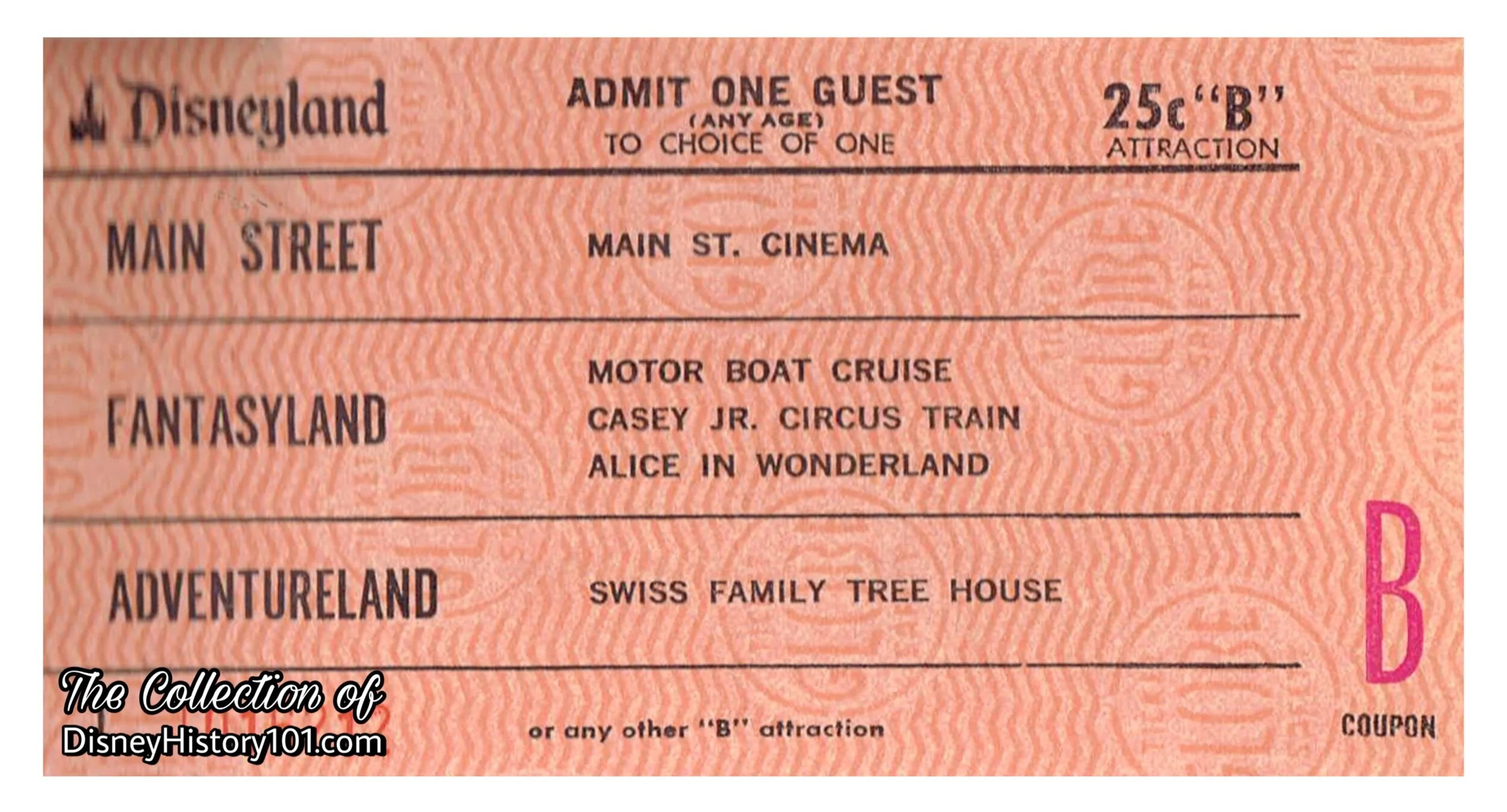
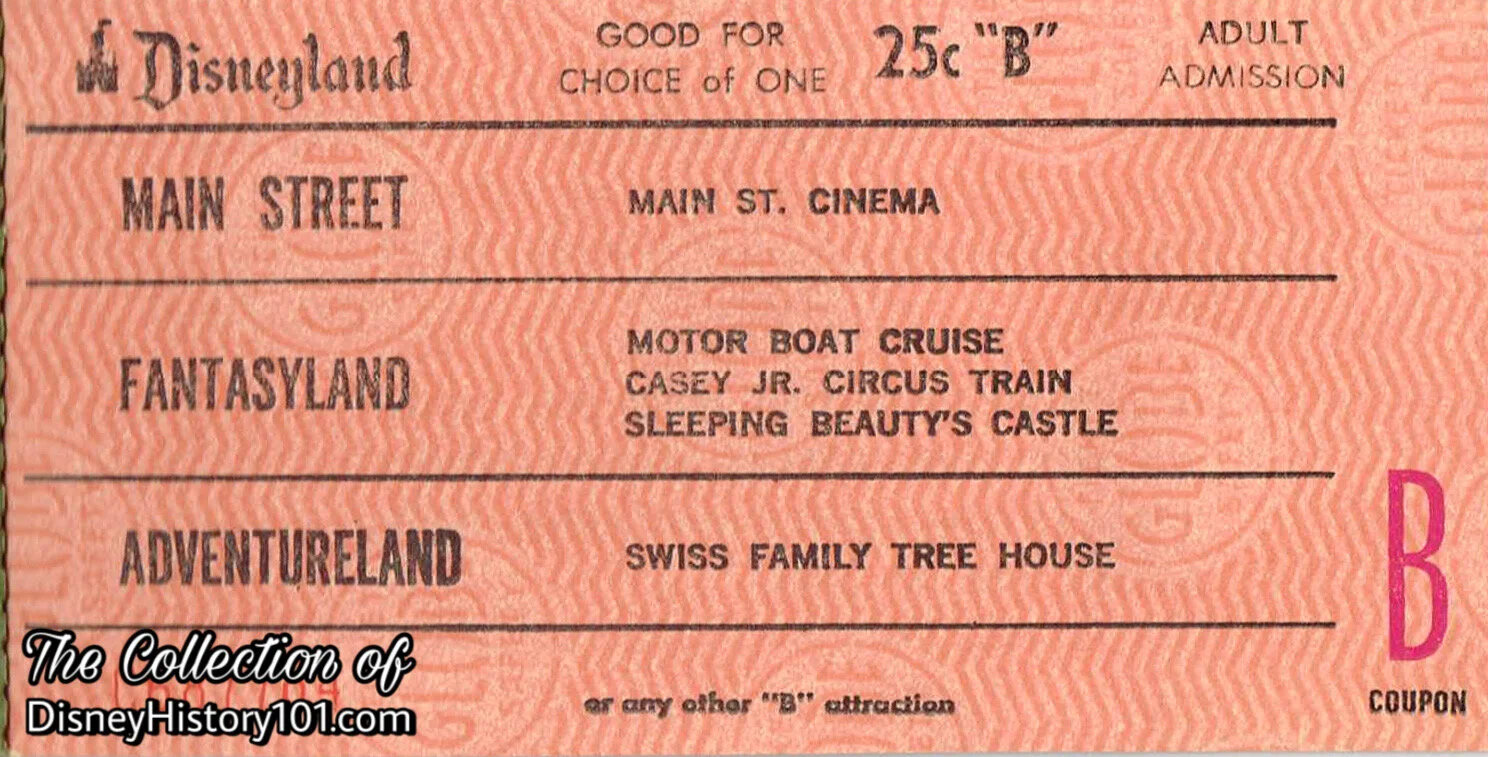
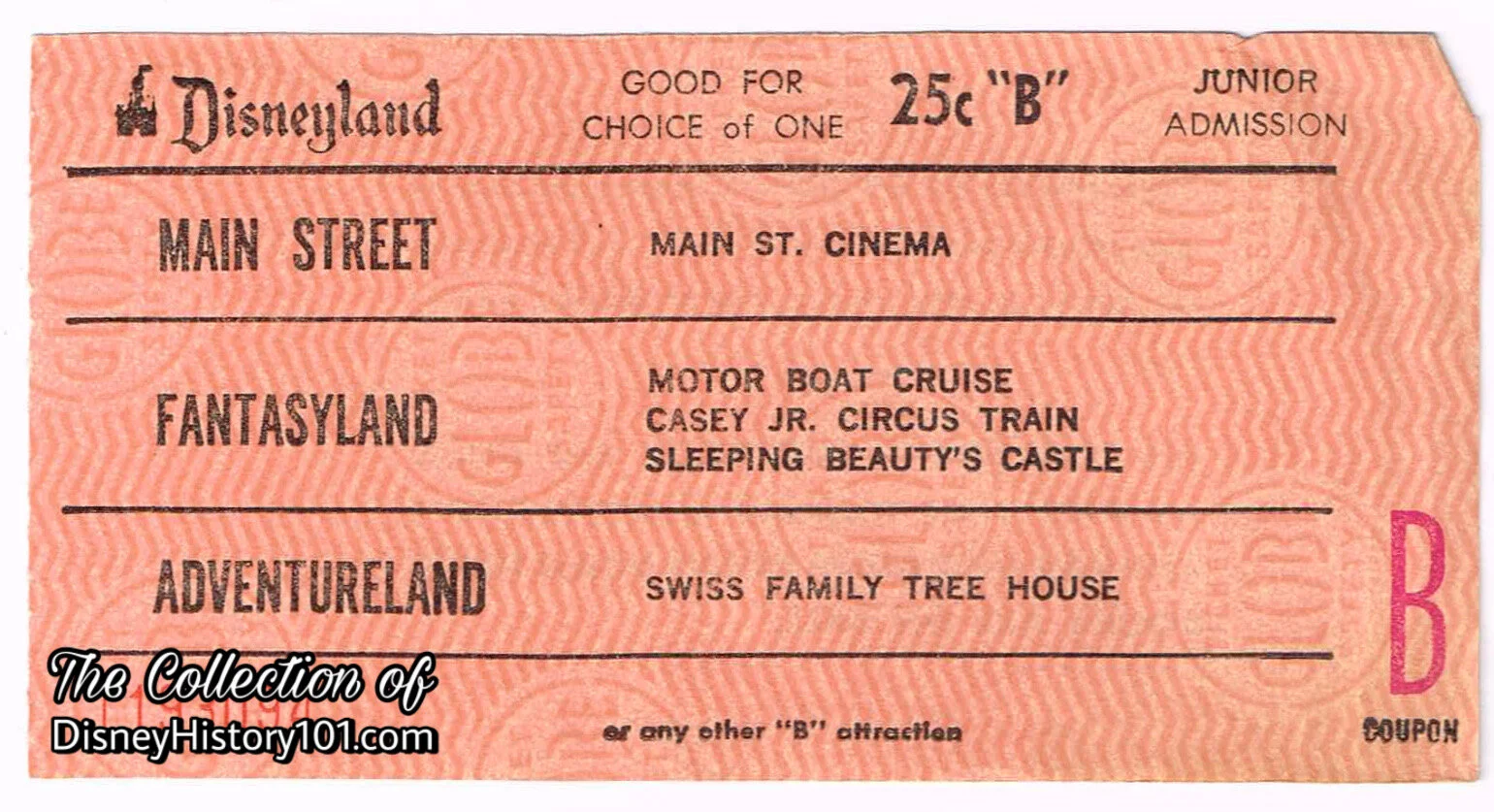
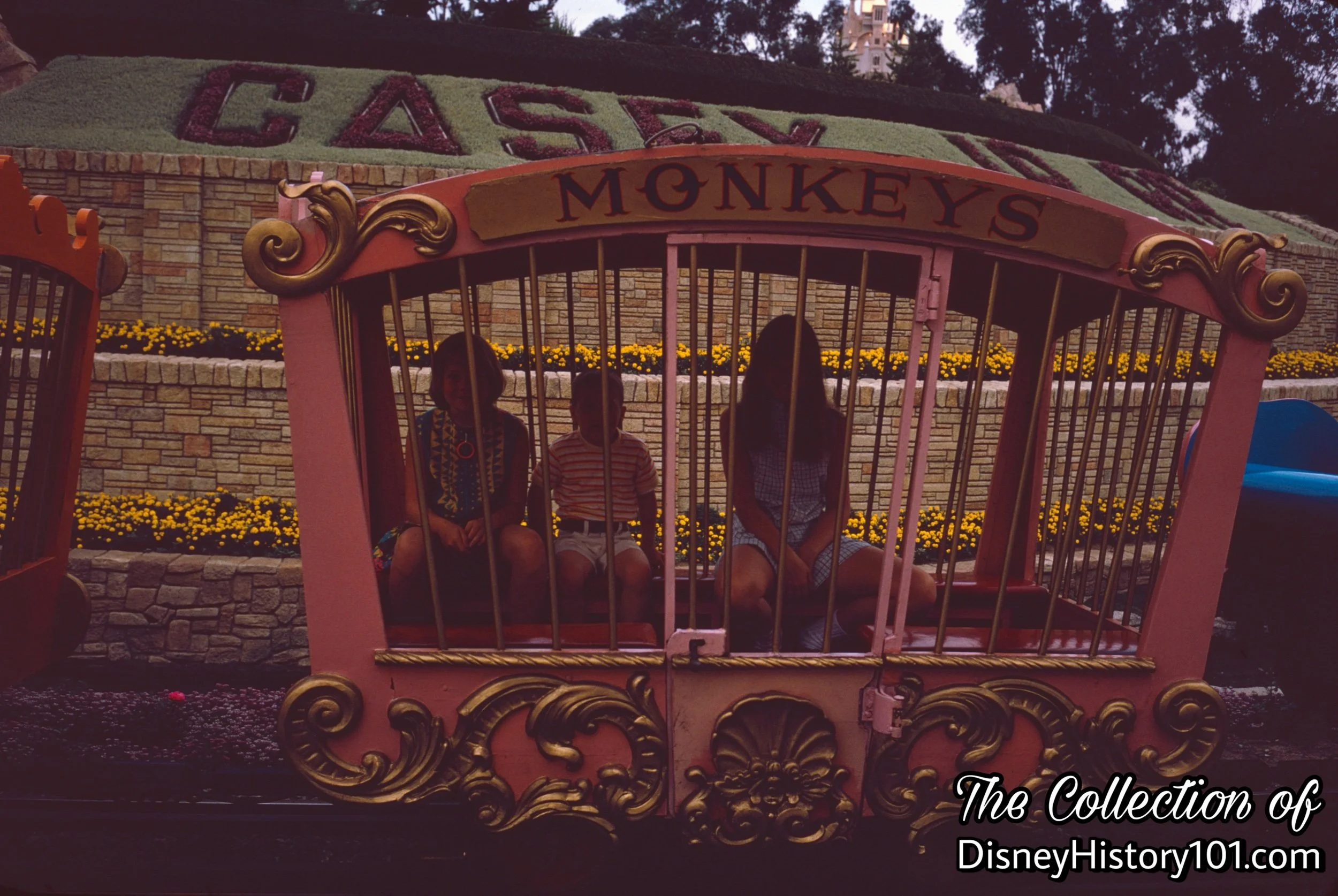
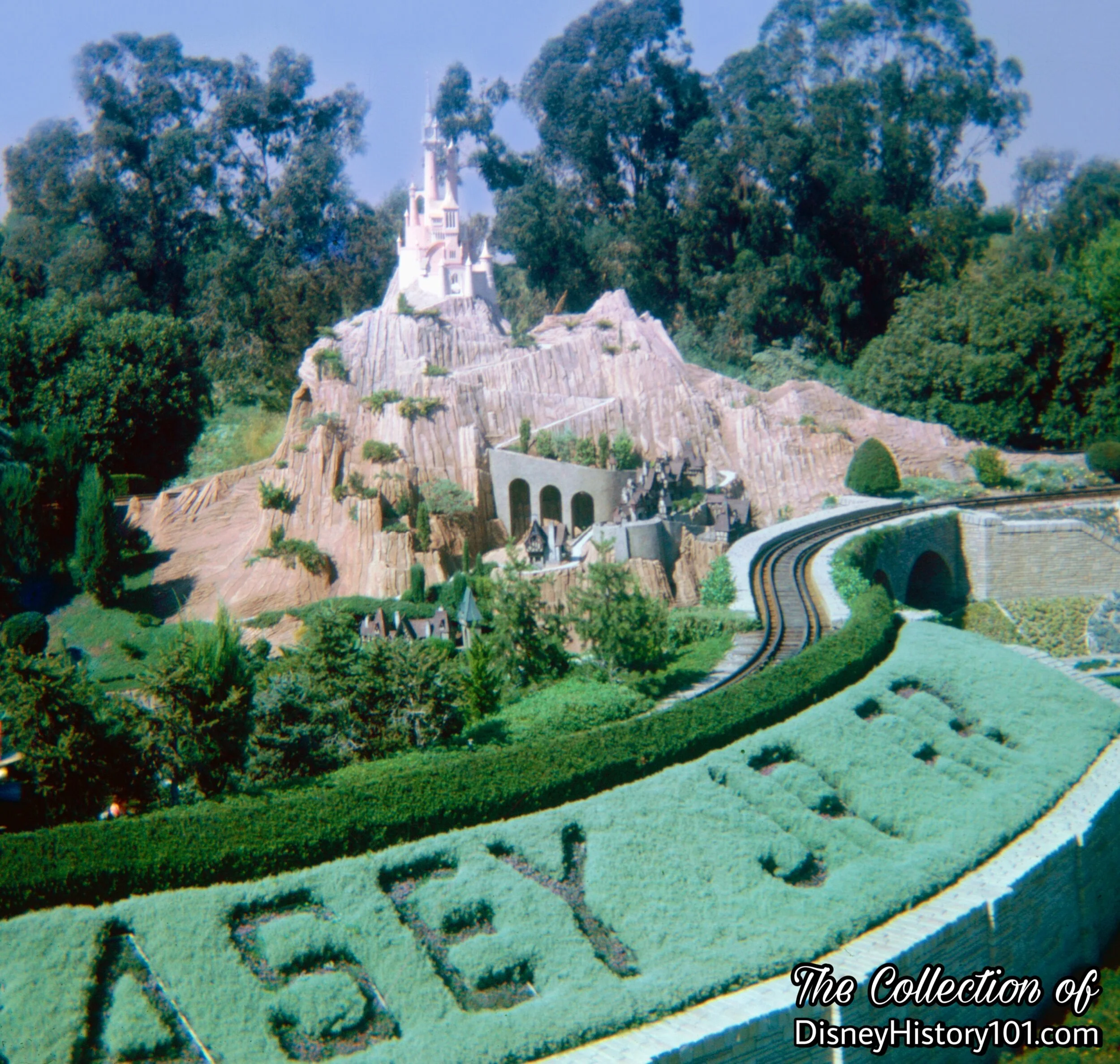
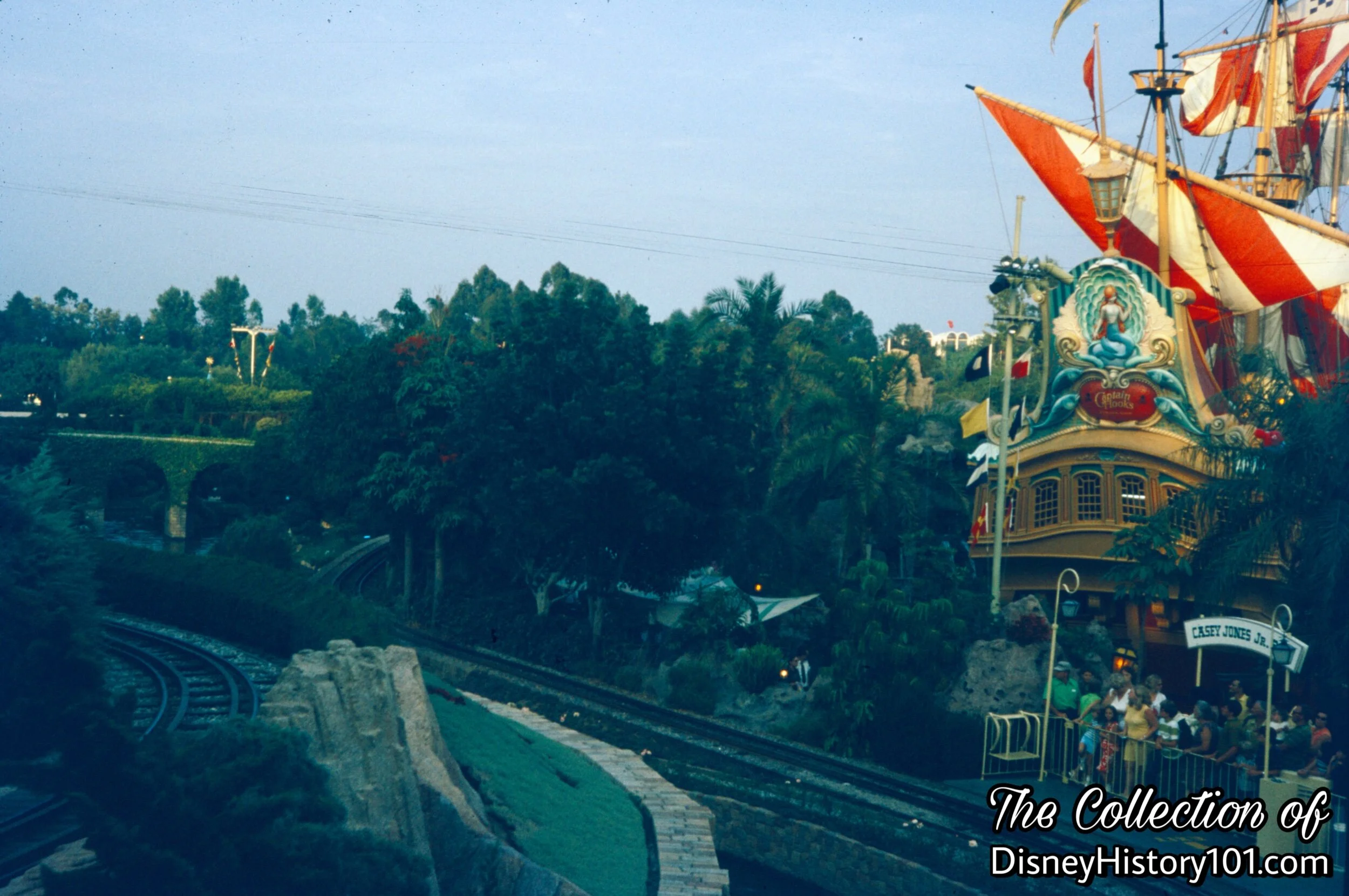
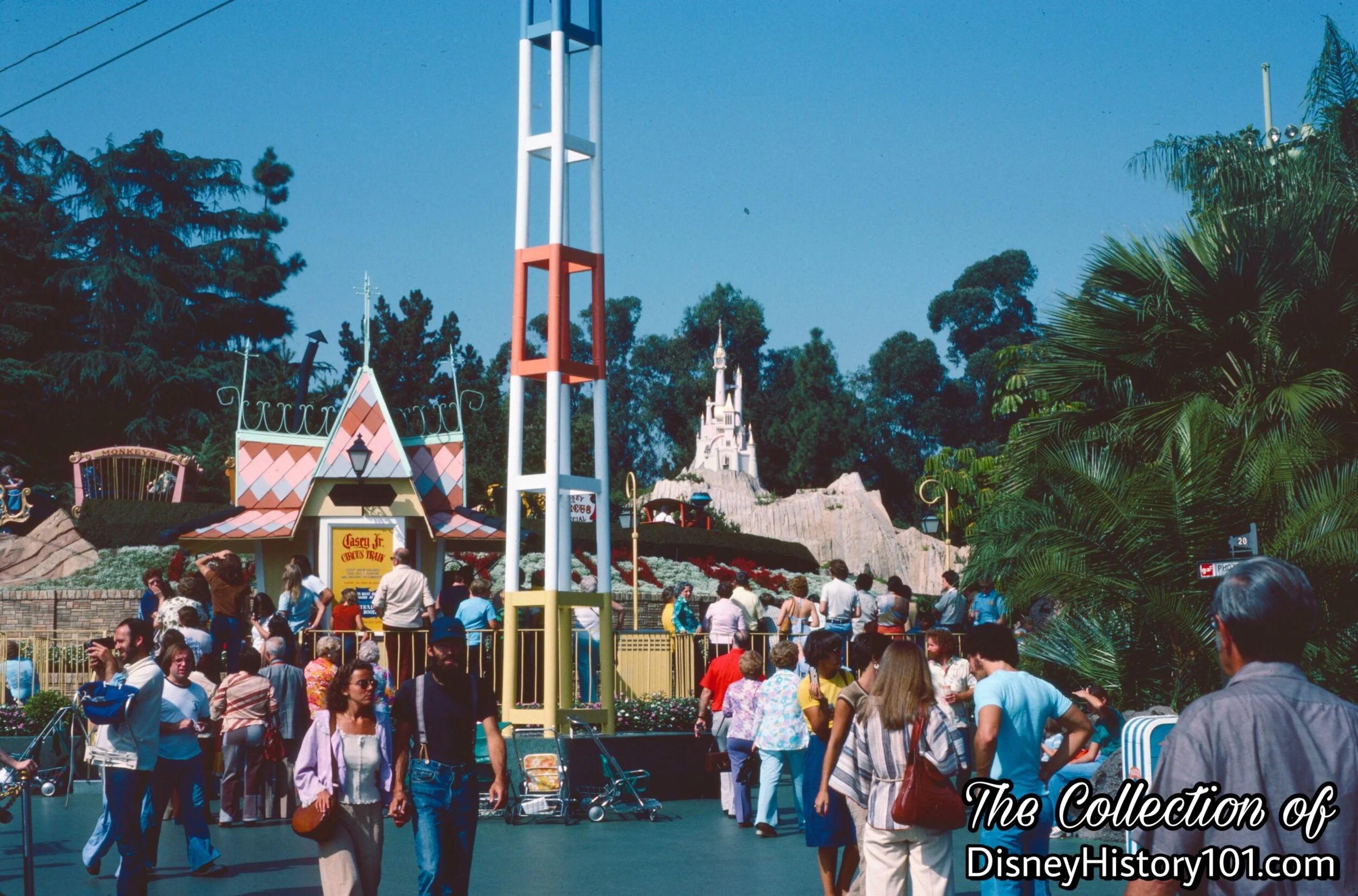
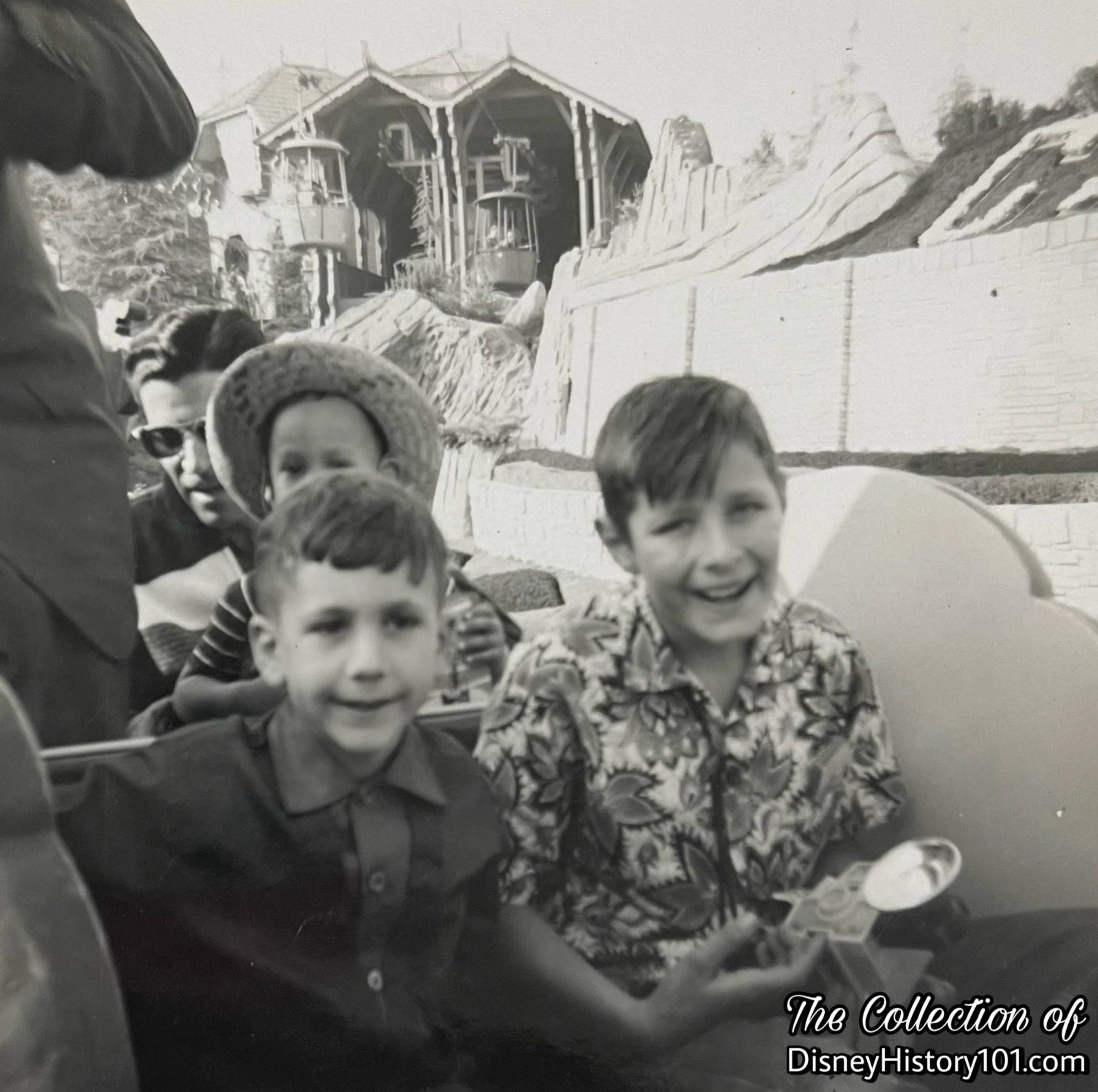
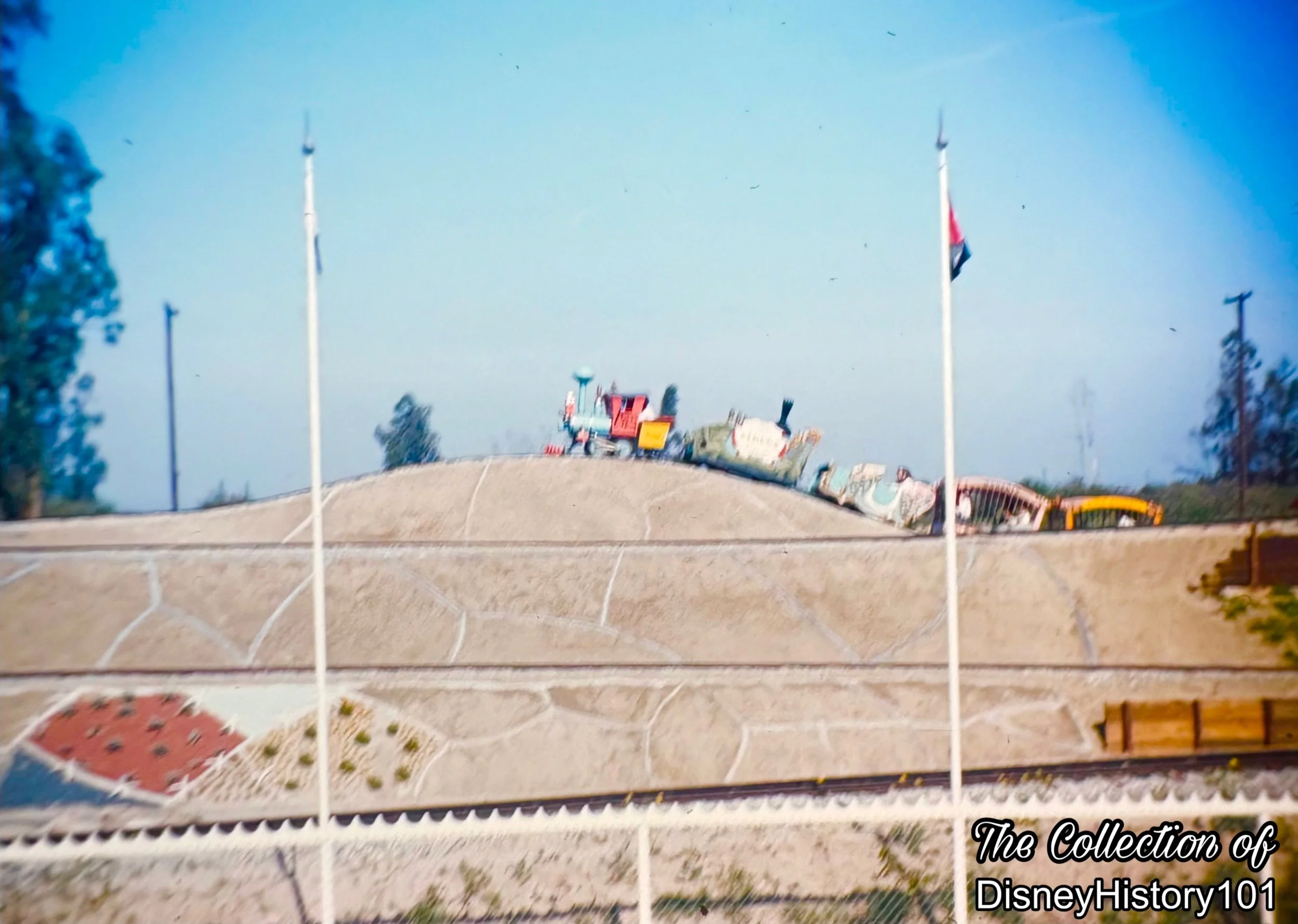
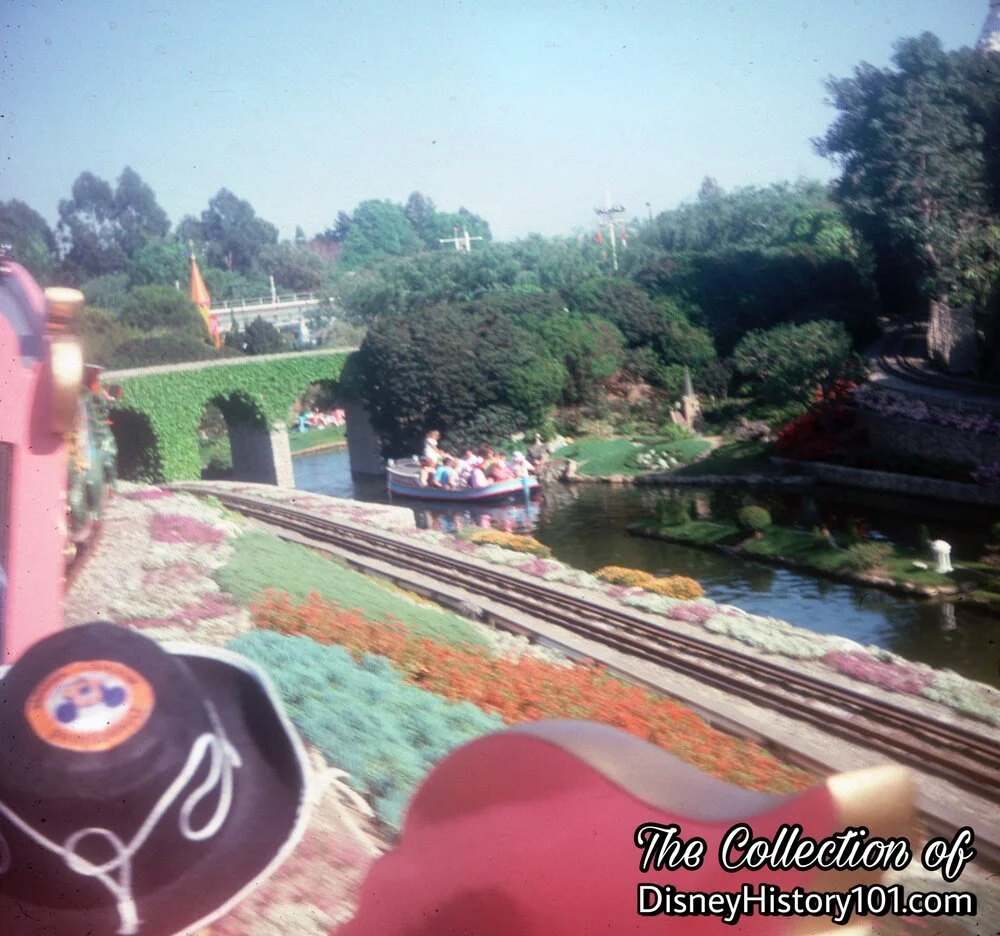
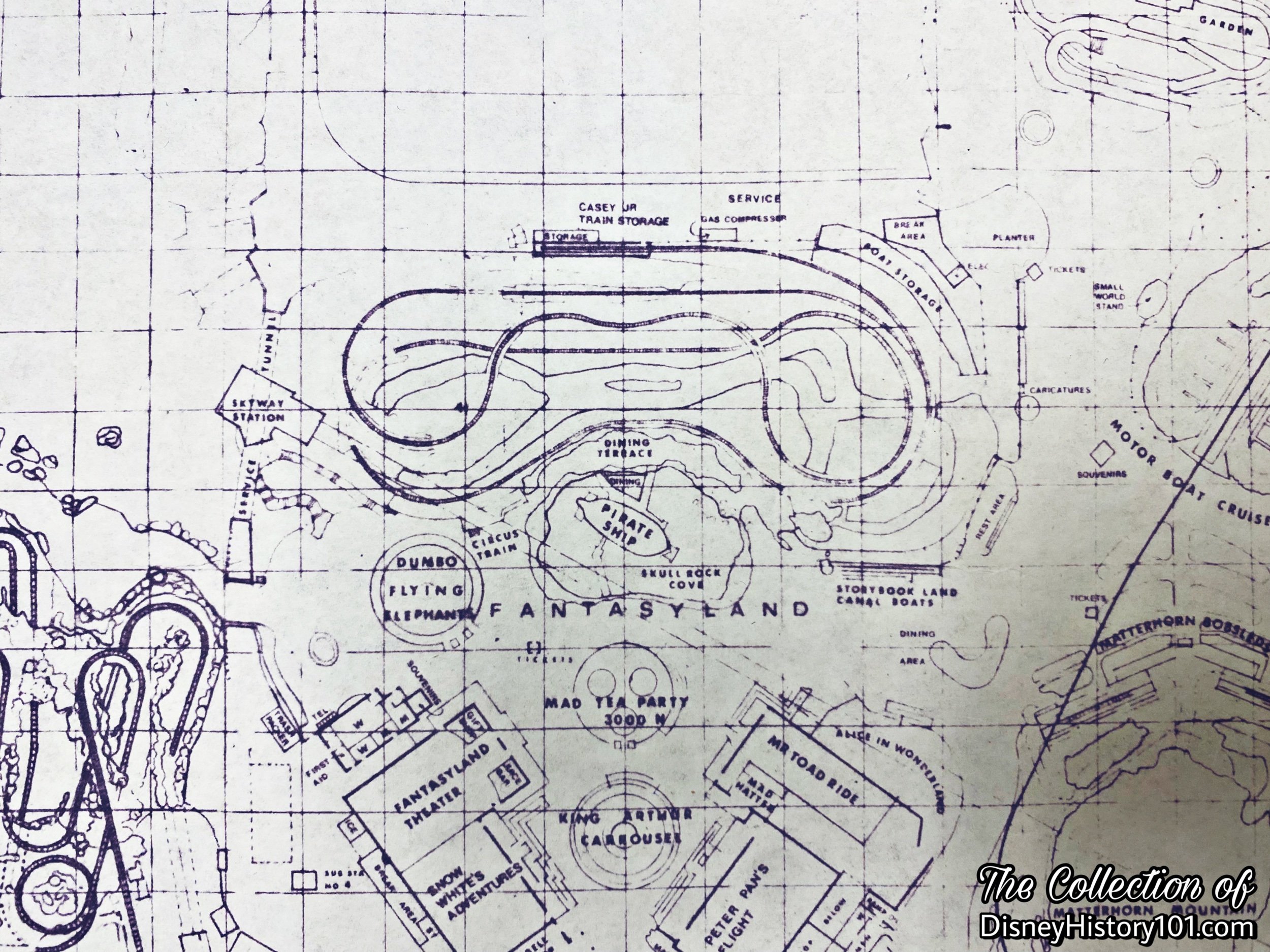
The attraction was down for rehabilitation from Apr. 22-May 3, 1963.
During each day, Disneyland Park Operations M-42 Machinists would, at least once, check all attractions in Fantasyland and discuss with each Attraction Lead and problems, defects, or any other feedback regarding the department. M-42 Machinists would also respond to all downs and delayed openings in the Fantasyland area whether or not it was mechanical. Upon arriving at an attraction, they would determine whether what the failure was. M-42 would determine which crafts were needed, determine an estimated time of repair, notify M-1 and assist with crafts when necessary.
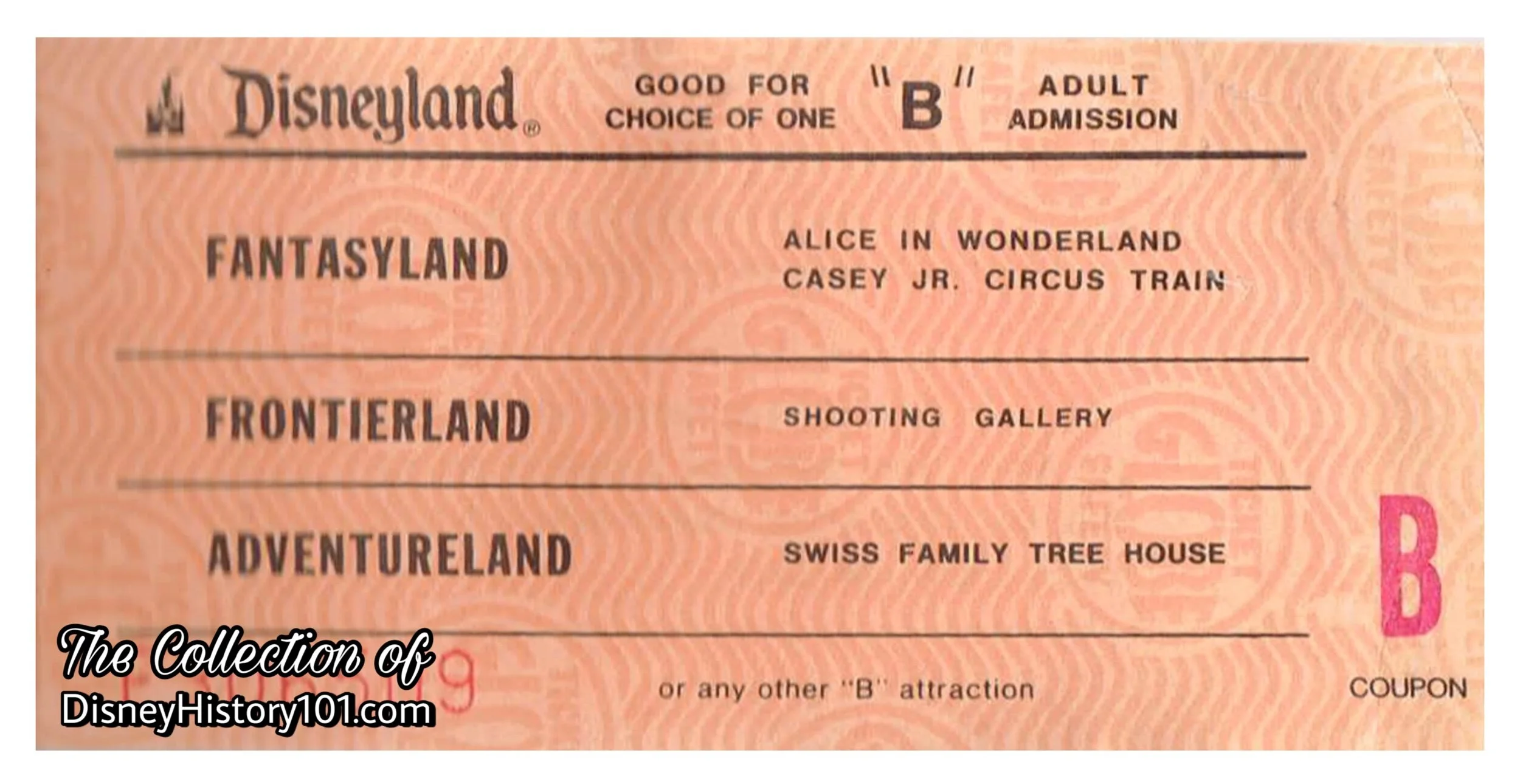
“55er” Jim Cashen recalled: “we poured a cement dock on Casey Jr. to eliminate a lot of work there every year.”
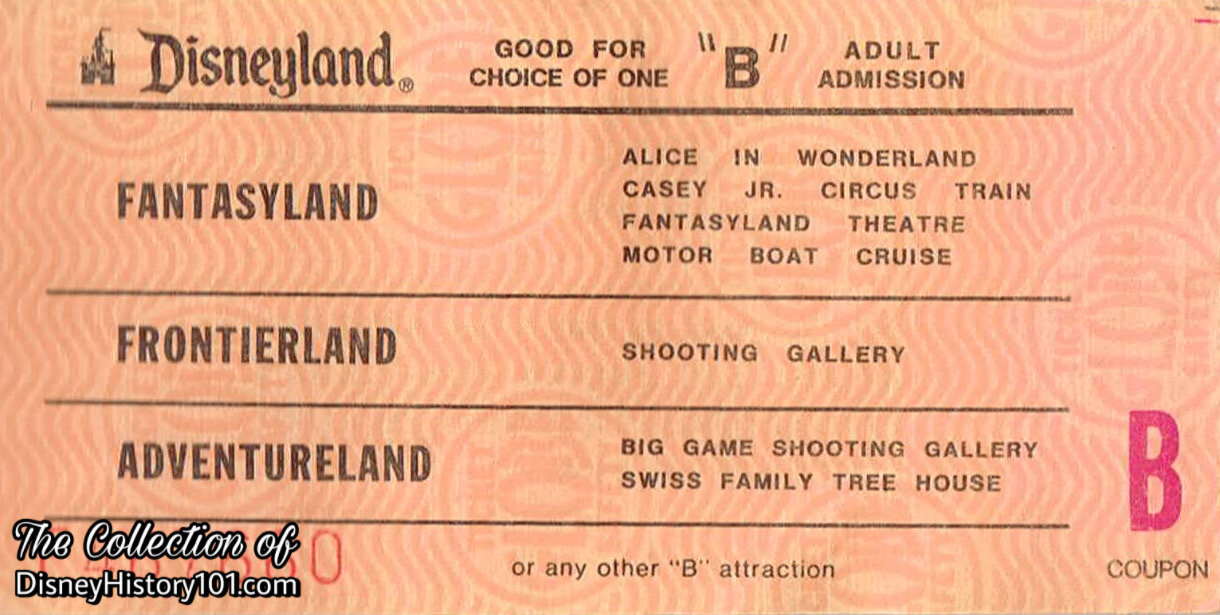
During 1984, a report showed that the Casey Jr. power unit weighed 3,950 lbs.
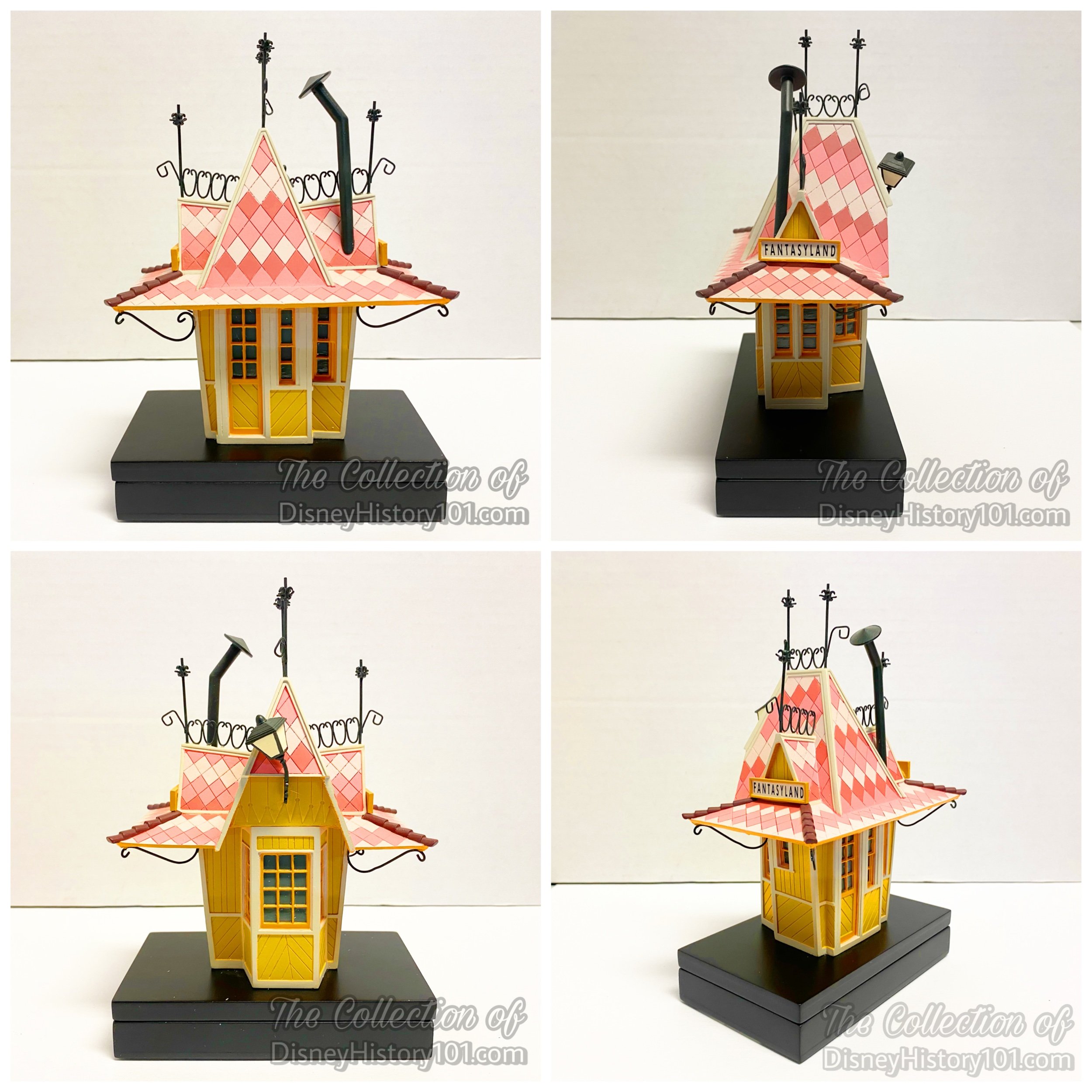
Speaking of coupon tickets, Disneyland celebrated the opening day "Disneylandmark" with the Fantasyland Ticket Booth Limited Edition Trinket Box released through Disneyland Resort in a limited to an edition of 1,500. The team of Jody Daily, Kevin Kidney, and William Babington crafted this amazing miniature homage for the “The Happiest Homecoming on Earth” - the 50th anniversary of Disneyland!
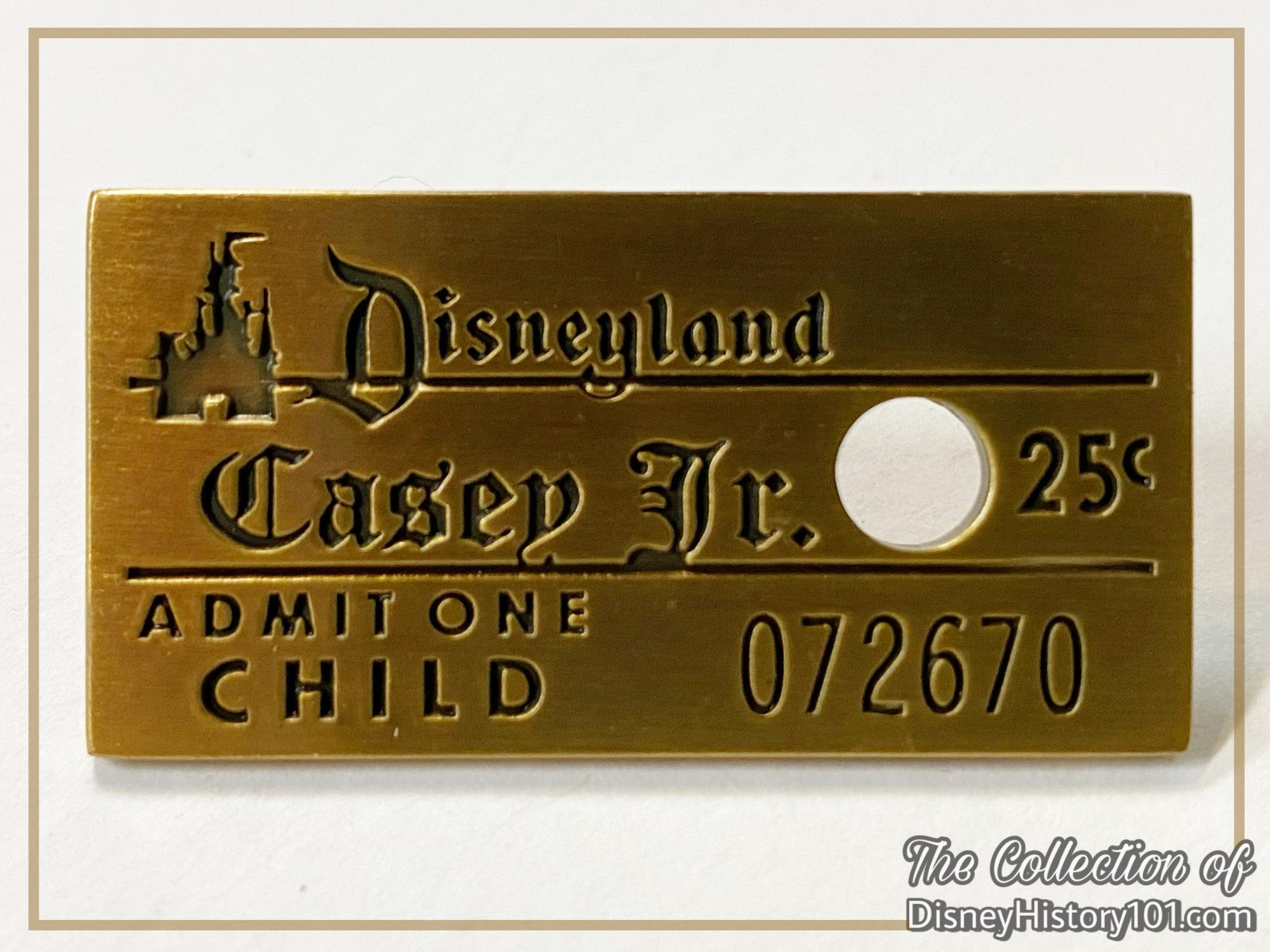
Walt Disney’s Casey Junior has occassionally been the subjct of licensed products through the years. Tomy (Tomica) released the Casey Junior die-cast toy during the 1970s and Politoys Polistil of Milan, Italy released Treno Di Dumbo, a Casey Junior train featuring Dumbo and Timothy riding aboard the tender.
The Casey Jr. Circus Train is one of many “senior” Fantasyland attractions that continues to delight generations of guests - old and young!
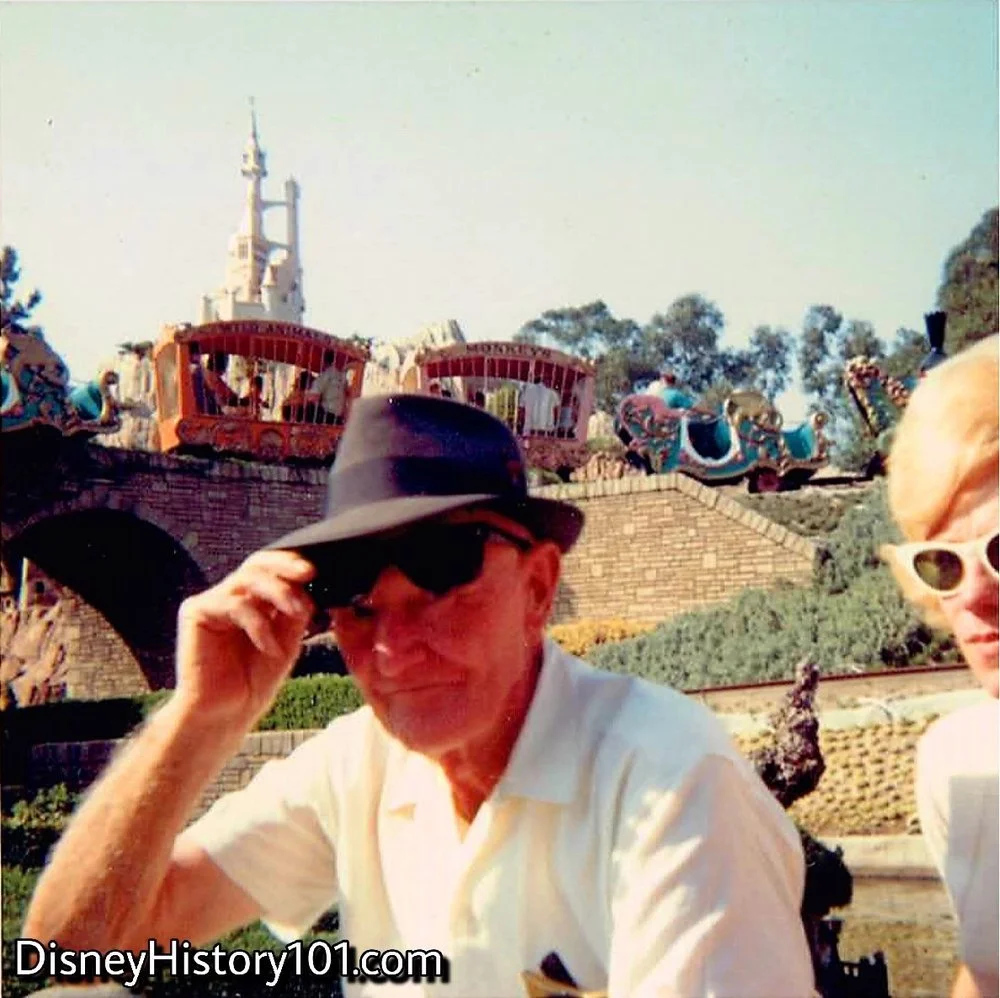
CHICKEN PLANTATION RESTAURANT
According to “THE DISNEY THEME SHOW - an introduction to the art of Disney outdoor entertainment: Volume II”: Of all the guests’ senses that come into play at Disneyland, the most difficult response to predict was taste. If 70,000 guests were to arrive on a single day, there would probably be 70,000 different ideas about food. Generally speaking, Disneyland food locations fall into three categories - sit-down restaurant service, “buffeteria,” and fast-food categories. The most extensive theming has always been found in the sit-down restaurant locations but all locations were housed in authentically motified facilities.
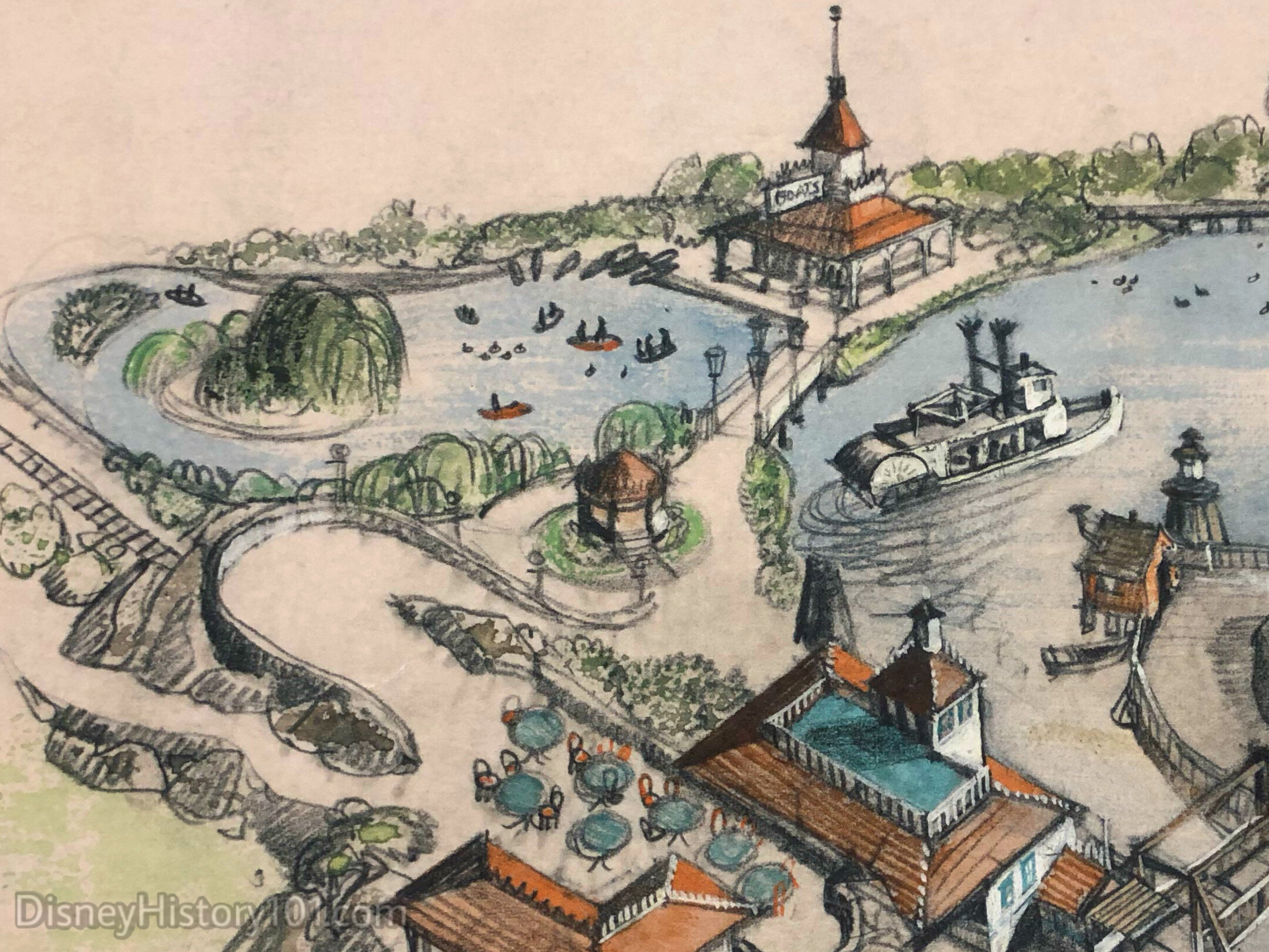
Early thumbnail sketches and other concept artwork of Mickey Mouse Park seemed to be unencumbered by restrictions of budget, schedule or the laws of nature and physics. Though guided by Walt, his artists appeared to engage in “free-thinking,” as if implementing the modern “Blue Sky” Imagineering process. Some of the earliest concepts of a “Mickey Mouse Park” (which was to be located on a 11-acre triangular plot across from Walt Disney Studios in Burbank) featured a riverside restaurant from where one could watch the river traffic while dining (pictured above). Some of these viable project Concepts (as this), were supported by a well-developed business case and built expectation.
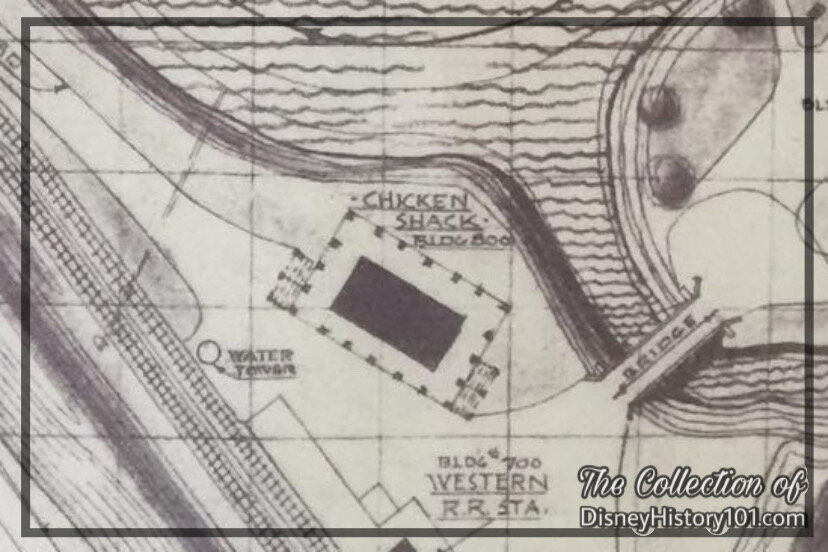
Early Frontierland concepts originally had a New Orleans Area in the character of New Orleans during the period up to the Civil War. Though anything resembling this concept seems to have been absent in Herb Ryman’s Aerial over Disneyland (originally produced September 26 & 27, 1953) that little “Chicken Shack” soon appeared in Marvin Davis’ c. 1954 Plot Plan (pictured above). Like some advanced “High Concept,” final designs were quickly generated and approved.
”Participant Sponsorship”
Meanwhile, Walt furthered the search for Participants who would lease shop and restaurant spaces at Disneyland. Such Disneyland Participants would help generate the necessary capital to fund construction and future growth of Disneyland. In a synergistic relationship, the companies (in turn) could sell their products and advertise their corporate names in the Park. Disneyland Participant Corporate Sponsors were carefully selected. High quality, long term corporate sponsors would provide incremental income that enabled Disneyland to enhance its show and attractions, offset some operating expenses, and capitalize on marketing opportunities.
“55er” Rima Bruce (who started with Jim D'Arcy in Food when all food was Lessee and typed memos and menus) recalled that “the phone never stopped ringing with everybody trying to get a food lease in the Park.“ Individuals like Nat Wyncoff provided the essential orientation for curious lessees, selling them on the idea of Disneyland using various visual aids like sketches and one of Herb Ryman’s oil paintings of Disneyland.
Soon, “a cross-section of American industry…[was] represented in Disneyland. Each of these companies… [would expose] its institutional advertising and public relations message to Disneyland guests through various forms of participating exhibits and displays. In each case, the exhibit… [was be] related to the theme of the ‘land’ in which it is located, and is woven into the overall concepts and themes of Disneyland”, according to “Disneyland, U.S.A.”, published 1958. Several of these “reliable old firms” sponsored the “abundance of restaurants devoted to pleasing all tastes and all budgets,” according to “The Story of Disneyland”, published 1955. A prime example was the Chicken Plantation House, operated by the Red Wagon Company!
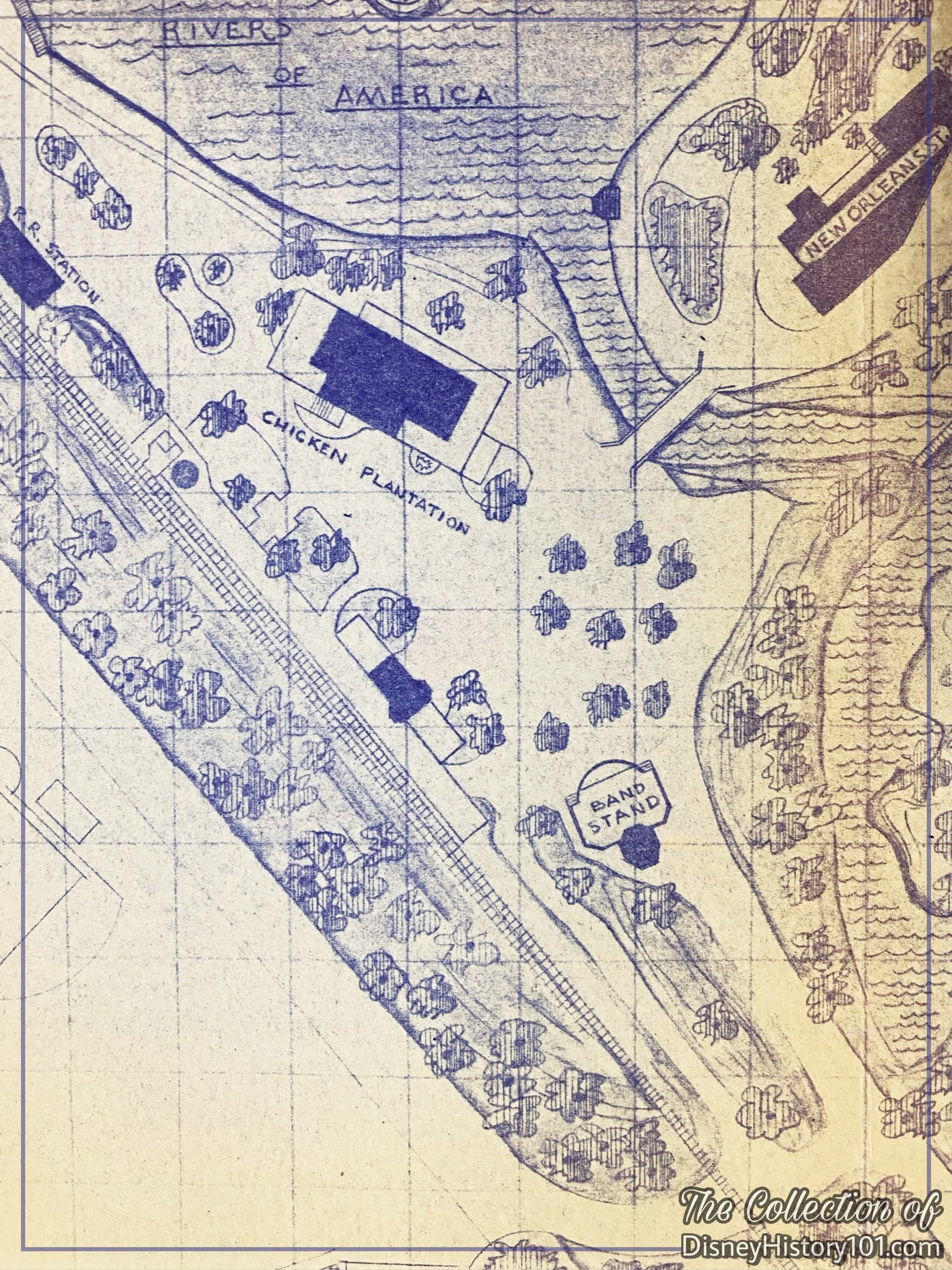
“Design & Construction”
Next, architectural drawings helped define all designs, production and construction strategies, costs, schedule, and resource requirements. F.M. Franz, manager of operations for McNeil Construction expressed: "We feel sure there has never been anything built like this in Southern California, or elsewhere in the United States. Many of the items were constructed from artist’s sketches.”
The Chicken Plantation House was designed and constructed as a two story, wood frame-stucco restaurant building with a dining room, kitchen, storage room, two 2-fixture lavatories on the ground floor, a dining room, kitchenette, and a dressing room. Guest Services and Accommodations included restrooms with three lavatories with 8-fixtures in the rear of the Plantation House on the second floor, and telephones in the rear of Plantation House.
The structure was built atop a concrete foundation and floor slab, with wood shingle and roll composition roof, interior walls and ceilings of painted plaster except in the upstairs dining room which was wood paneled. The 3,492 square feet of floors were composed of asphalt tile. There was a covered 1,084 square foot balcony. About 1958, the entire facility was appraised and valued at approximately $37,250.00.
According to inserts published in area newspapers during July of 1955, Disney buildings were roofed by Pioneer Roof & Shingle Company (then located at 608 Mateo Street, Los Angeles, California; 7522 Westminster Avenue, Westminster, California).
As of June 2, 1955, C.V. Wood Jr. sent an Inter-Office Memorandum to Walt Disney regarding the best estimates that could be obtained at the time regarding the completion status of individual sections of the Park and Opening Day. C.V. wrote: “Plantation Restaurant: This one will be very close. They have an excellent chance of making it if they are not held up on procurement of fixtures and equipment.”
Chicken Plantation House was predicted to serve a capacity of 450 guests per hour, contribute to accommodating“15,000 persons daily, hitting a peak of 60,000 o holidays and week-ends…” and one of “twenty restaurants and snack bars, capable of saving 8,000 hourly,” at least according to “Building A Dream” (prepared by the Disneyland, Inc. Public Relations Department). Later, in 1958, Bank of America appraisers figured of the total income of Disneyland Inc. was received from such leases, 16.02% was derived from the selling of advertising rights and 40.12% from the leasing of space to concerns whose main reason for occupancy is for advertising purposes. The remaining 43.86% of the lease income was derived from stores that sell various products and food.
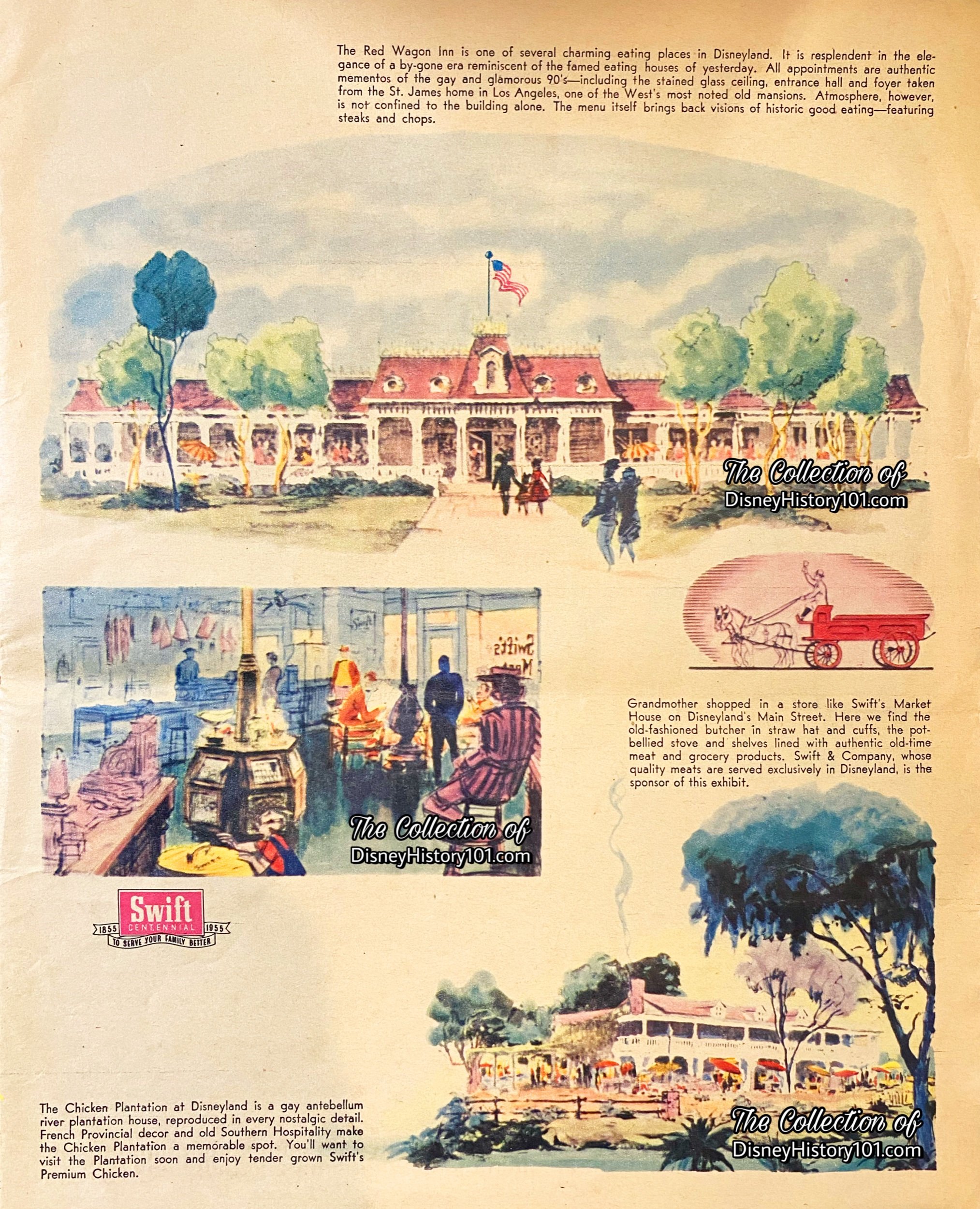
On July 17th, 1955 (otherwise known as Disneyland’s Press Day), the Chicken Plantation table service restaurant was draped in the same patriotic bunting and banners that decorated the Mark Twain. The reason was that the Chicken Plantation House was to first be utilized as a Stage for an elaborate New Orleans-inspired dance number (before the eyes of both guests and Staff) to the melodies of the Firehouse Five Plus Two. Some of these things are preserved through Opening Day documentation.
Then, the 1,756 square foot restaurant opened its doors, and Disneyland “made arrangements for food and refreshments” for the members of the Press (and their family) at their choice of one of three restaurants (one of which was “Swift’s Chicken Plantation in Frontierland”). After dining, Complimentary cards were presented to the Chicken Plantation cashier after their meals.
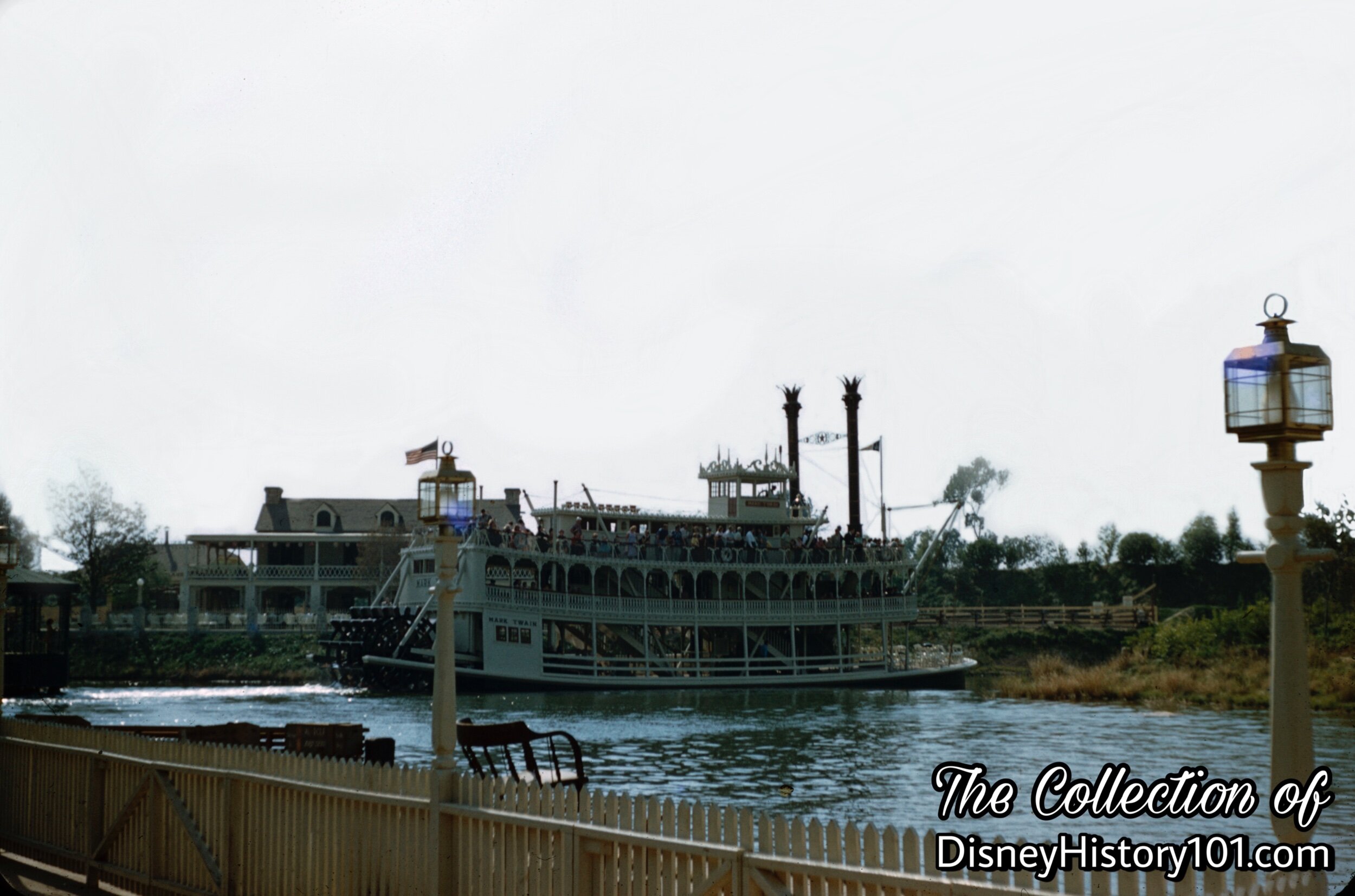
Soon, the Mark Twain Steamboat would pass Swift’s Chicken Plantation House Restaurant before heading deep into “Frontier” territory. While we wait our turn at the Frontierland Dock, the sound of Dixieland and smell of Fried Chicken and Swift’s Premium Brown ‘n Serve Sausage is carried on the warm summer air, making its way across the water to our location!
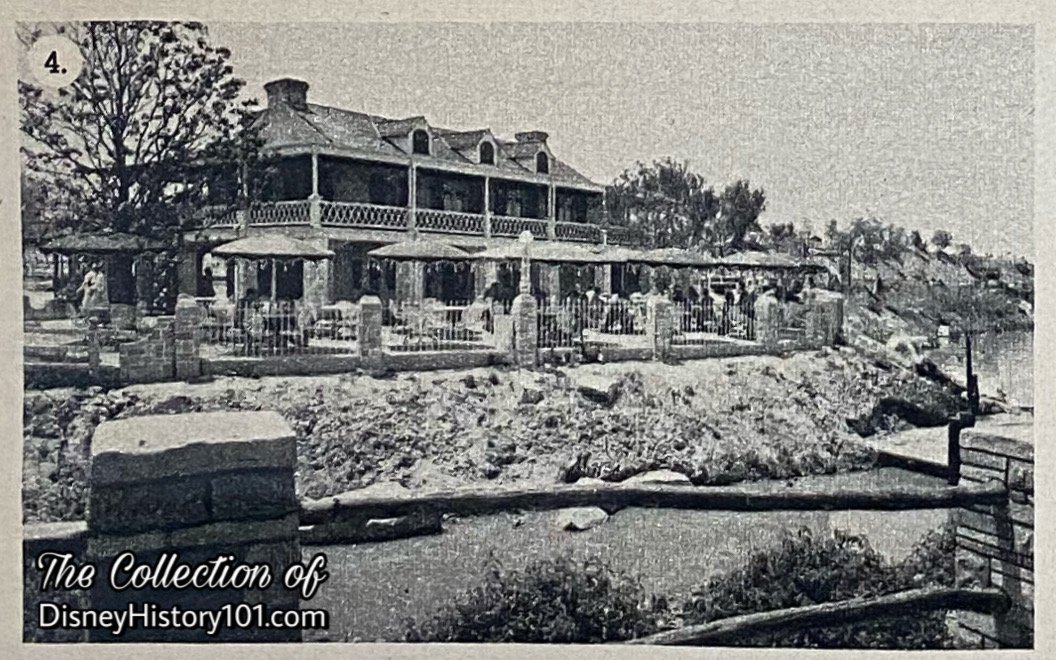
“The Plantation Building does double duty. The side facing the river has the wide verandas, grille-work and graceful construction of early century New Orleans.”
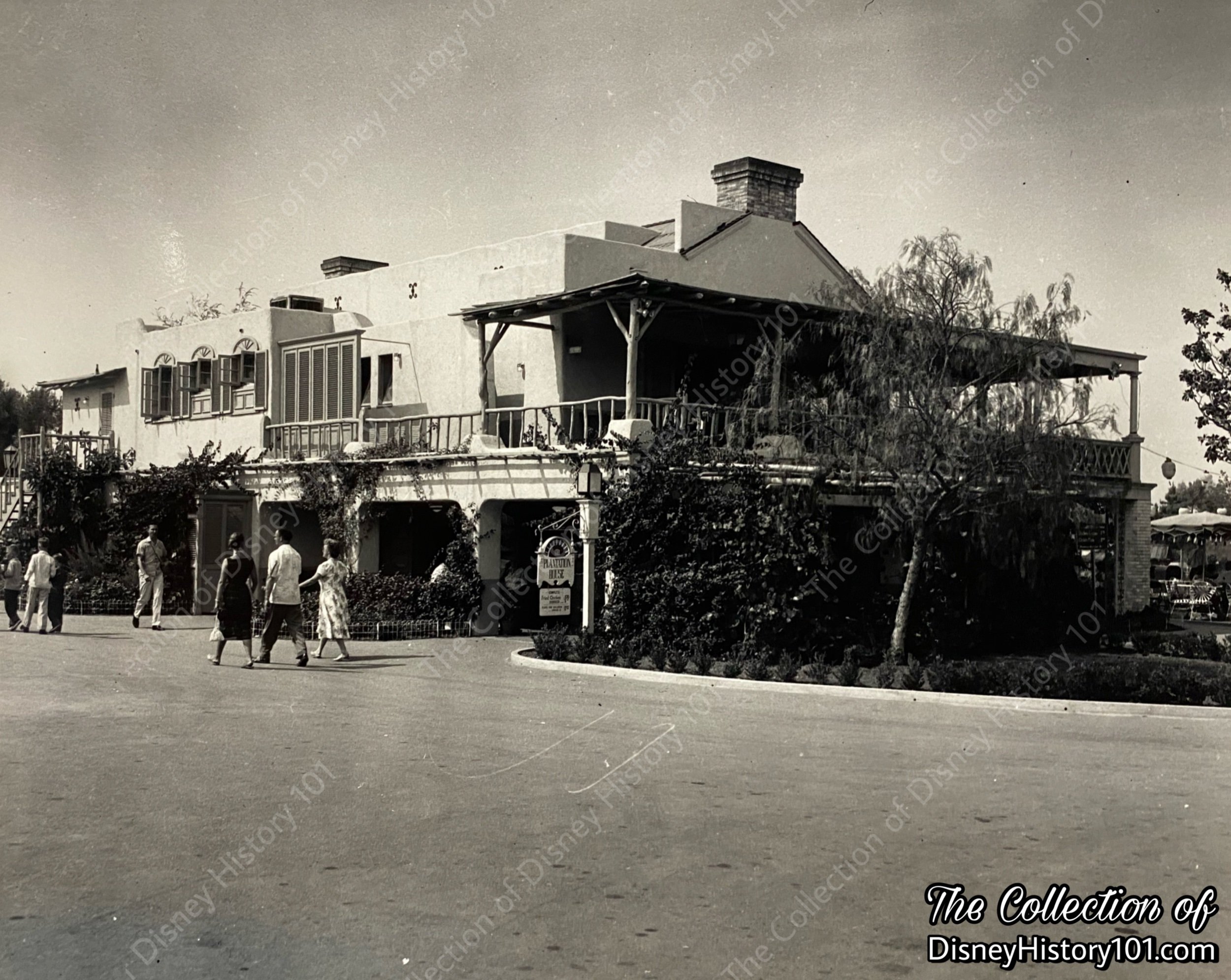
According to newspaper inserts published July 15, 1955: “The side facing the river has the wide verandas, grille-work and graceful construction of early century New Orleans, But the opposite, side of the building faces a scene from the old southwest - a stage' coach and a railroad station from America's colorful ‘Iron Horse’ era. This side of the restaurant has an adobe motif.”
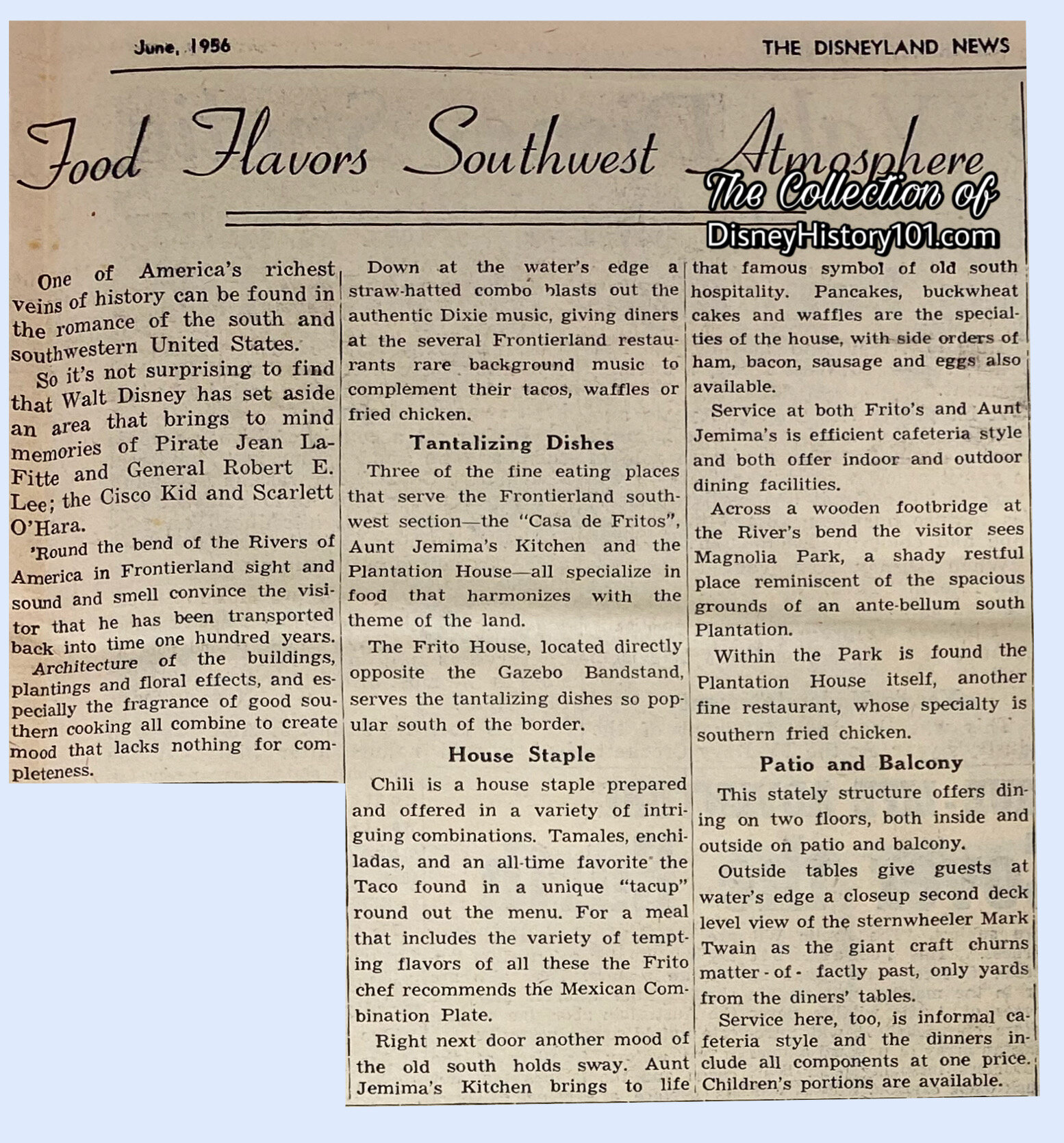
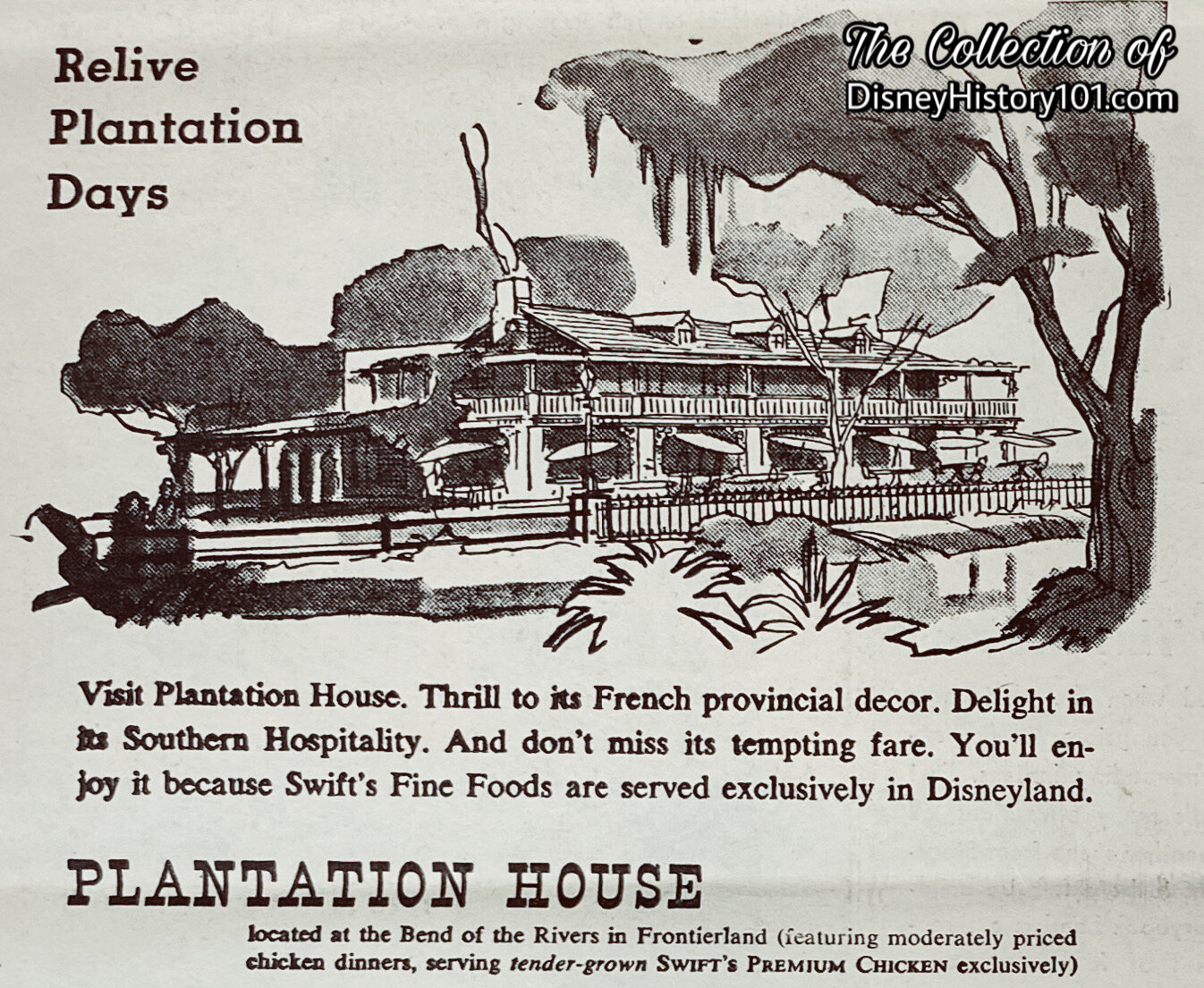
“Across the Bridge…”
Yes, “across a wooden footbridge at the River’s bend the visitor sees Magnolia Park, a shady restful place reminiscent of the spacious grounds of an ante-bellum south Plantation”, according to Disneyland News (June, 1956). Within this Park is found a choice place to “dine at Disneyland,” with a little Southern hospitality! You’ll note the atmosphere is delightful, provincial, and gay, while you find yourself surrounded by the French-antebellum decor of the Plantation House. The same publication continues : “The stately structure offers diners on two floors, both inside and outside on patio and balcony. Outside tables give guests at the water’s edge a closeup second deck level view of the sternwheeler Mark Twain as the giant craft churns matter-of-factly past, only yards from diners’ tables. Service here, too, is informal cafeteria style and the dinners include all the components at one price. Children’s portions are available.”
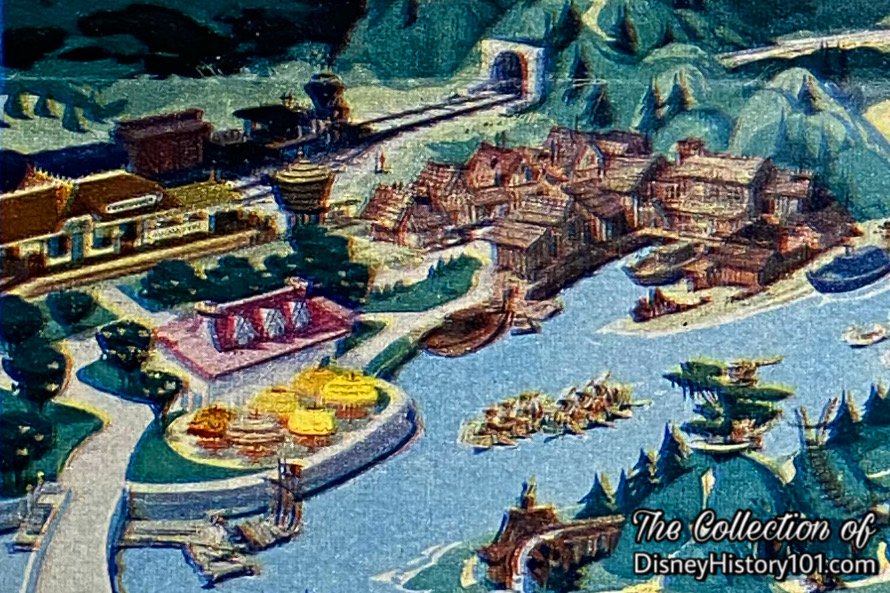
The structure was so photogenic, that it was occasionally utilized as a backdrop for photographs used for press-related materials or publication. Actress Spring Byington (of “December Bride) and child actor Bobby Diamond (of “Fury”) were photographed enjoying lunch here for their 1956 “TV Radio Mirror” photoshoot at Disneyland! During December of 1956, Swift’s Chicken Plantation Restaurant hosted the “Junior Ambassadors of the United States and Disneyland” (more than 30 boys and girls from foreign nations), providing “full-course fried chicken” meals.
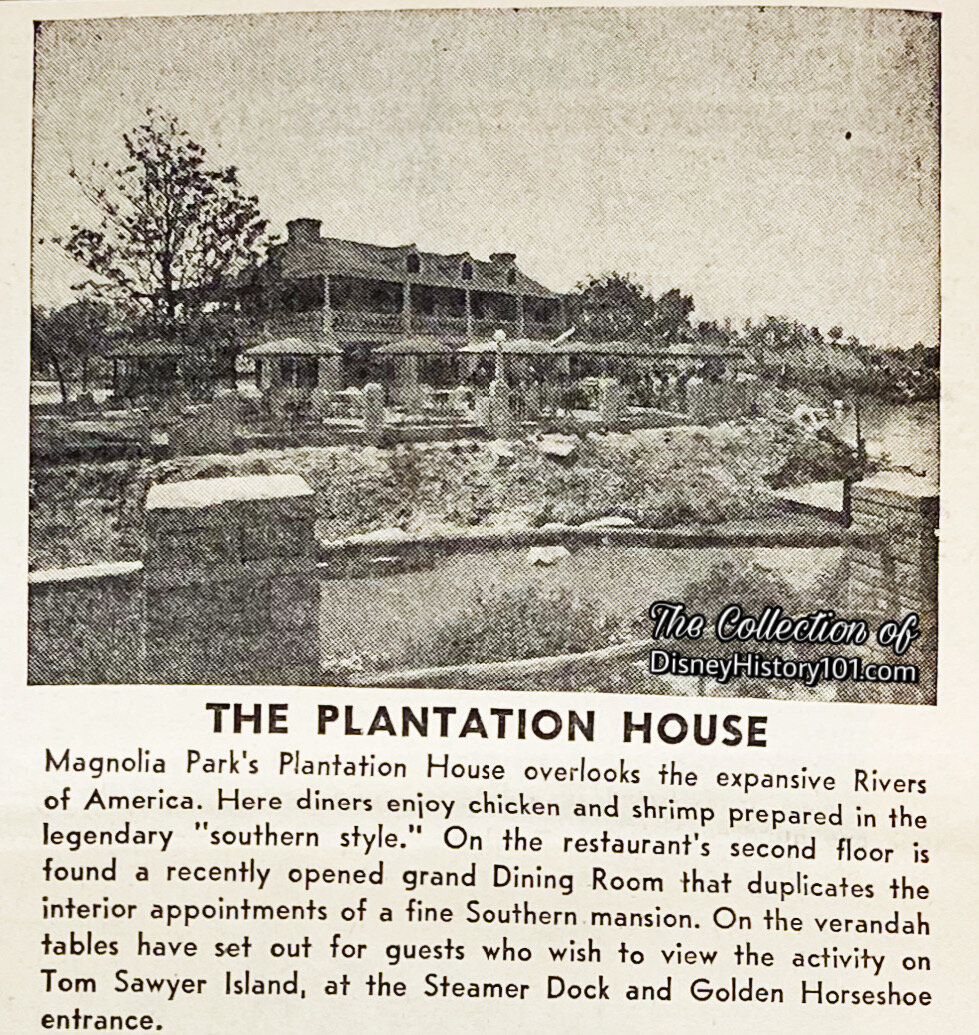
The Chicken Plantation House was operated by the Red Wagon Company, which also operated the Red Wagon Inn, Swift Market House, and the Snack Bar in Holidayland ( the latter under the supervision of Myrt Westering). As for Chicken Plantation House’s cuisine - enjoy tempting tender-grown Swift’s Premium Complete Fried Chicken Dinners $1.70, and Children’s Dinners started at $1.00. Yes, guests enjoyed tempting tender-grown southern-style Swift’s Premium Chicken dinners served from Swift’s Chicken Plantation House Restaurant. Customers received “dinners at a serving counter” and could “eat at umbrella-covered tables on the river bank or at tables on a patio.”
In a move of corporate synergy, the Chicken Plantation was one of 16 Disneyland “eating places” which featured “fine food with fine coffee - Maxwell House,” from 1955 to 1957! Carnation Farms would also serve this and 14 other wholesale customers who operated restaurants and snack bars in Disneyland.
Early notable Guests include the members of the “National Association of Amusement Parks, Pools, and Beaches”, which Disneyland hosted from September 18-20 (Tuesday through Thursday), of 1956. On Wednesday (the 18th), “a welcome luncheon was given for the visitors at the Plantation in Disneyland’s Frontier,” and notable enough to be mentioned in The Billboard (of Chicago), published for September 29, 1956.
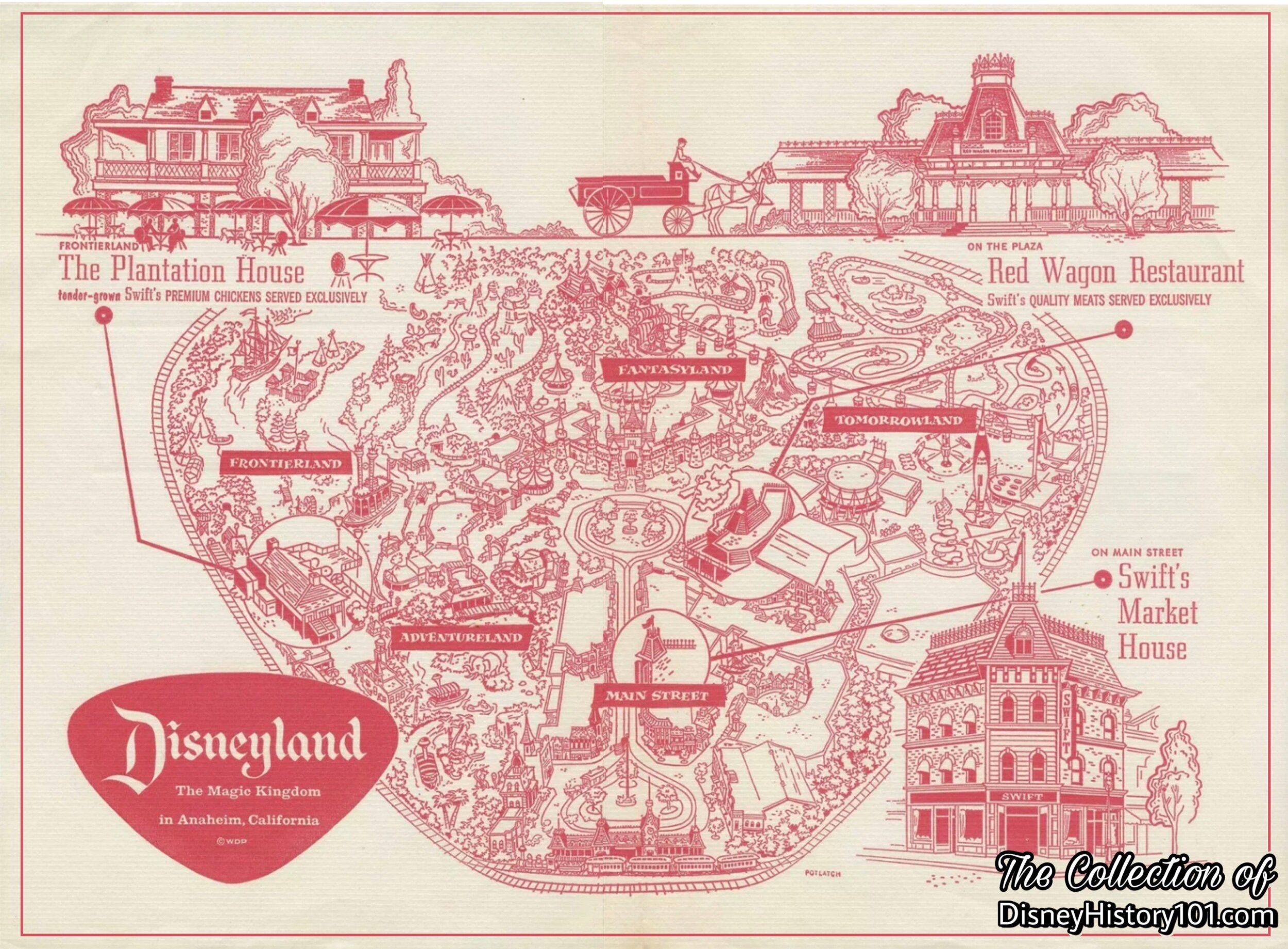
Artwork (bearing the other Swift’s Disneyland locations) could also be found on Food Service Trays. You may remember enjoying this art so much, and taking home one of the souvenir menus or paper placemats which featured the same graphics.
Other souvenirs included those complimentary toothpicks (in sealed paper packaging), and matchbooks advertising Disneyland restaurants were a common sight (especially during the years that the Tobacco Shop was a fixture on Main Street U.S.A.). This was especially commonplace during the later years that Disneyland owned and operated the Tobacco Shop.
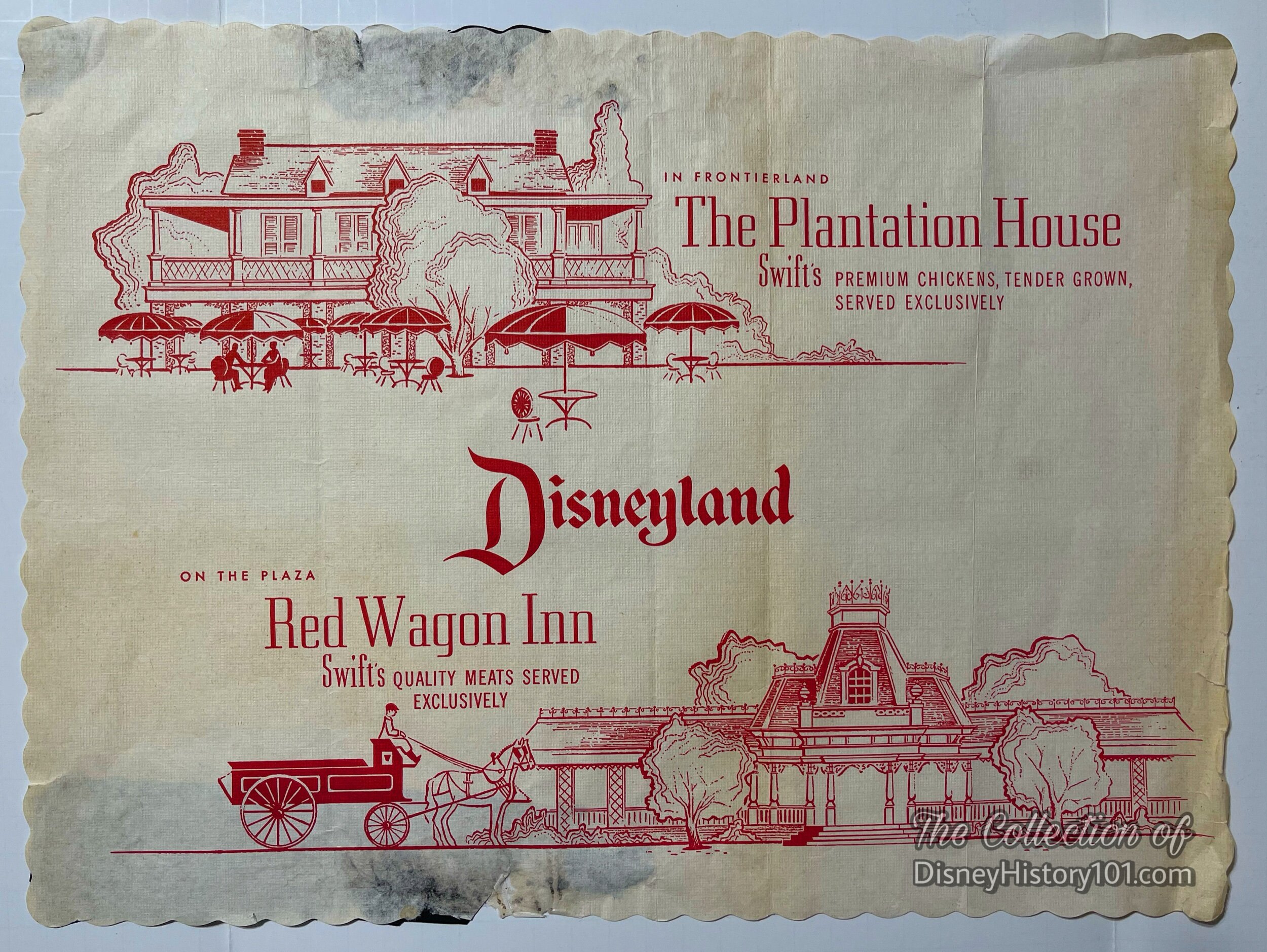
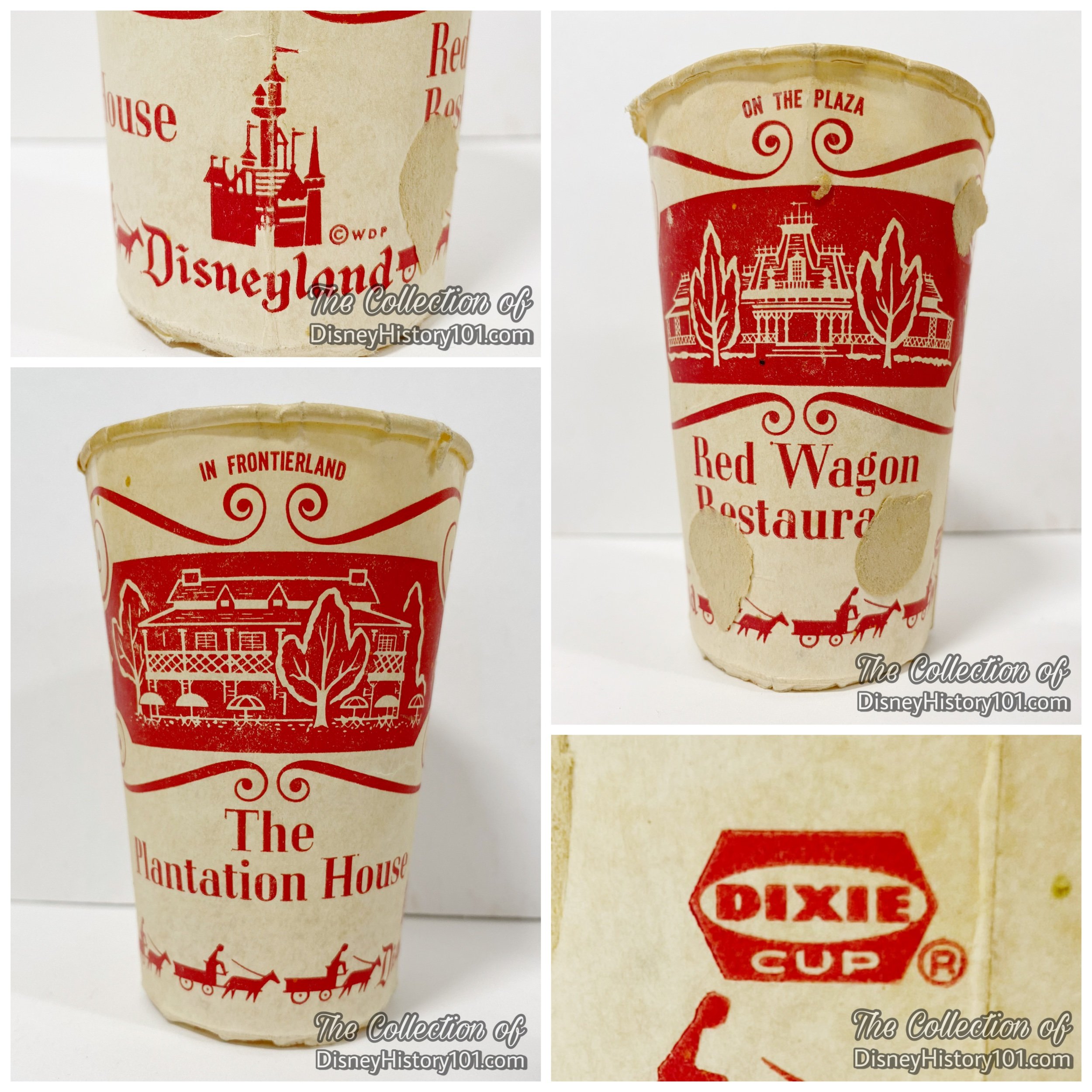
The DIXIE CUP division of the American Can Company opened the doors of their Anaheim facility in 1952. The neighboring business came to be located at 901 E. South St., Anaheim, Cal. With a staff of nearly two hundred people under the direction of J.D. Mitchell, the center operated as a manufacturing and distribution point for their product quality paper cups to seven of the Western States.
The business partnership between Disneyland, Inc. and the Dixie Cup Company was profitable. By September of 1958, the Dixie Cup Company was contributing a routine portion of accounts receivable to Disneyland, Inc.
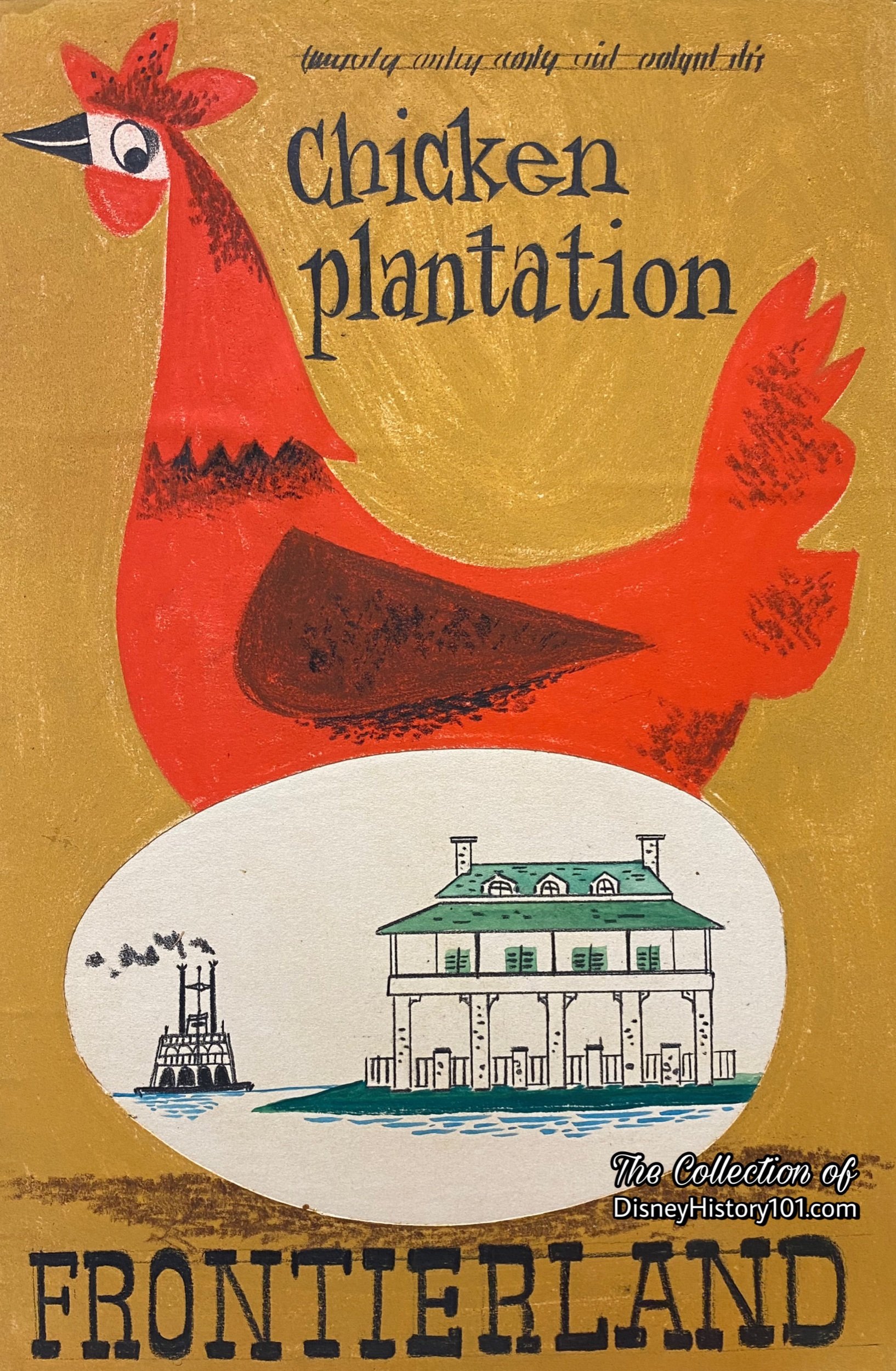
According to “Disneyland Attraction Posters: 40 Years of Visual Adventure” by Margaret Shumate, published in Walt Disney Collector Society “Sketches” periodical: “With his usual attention to every detail of his beloved park, Walt Disney personally reviewed and approved each finished piece of poster art until his death in 1966.”
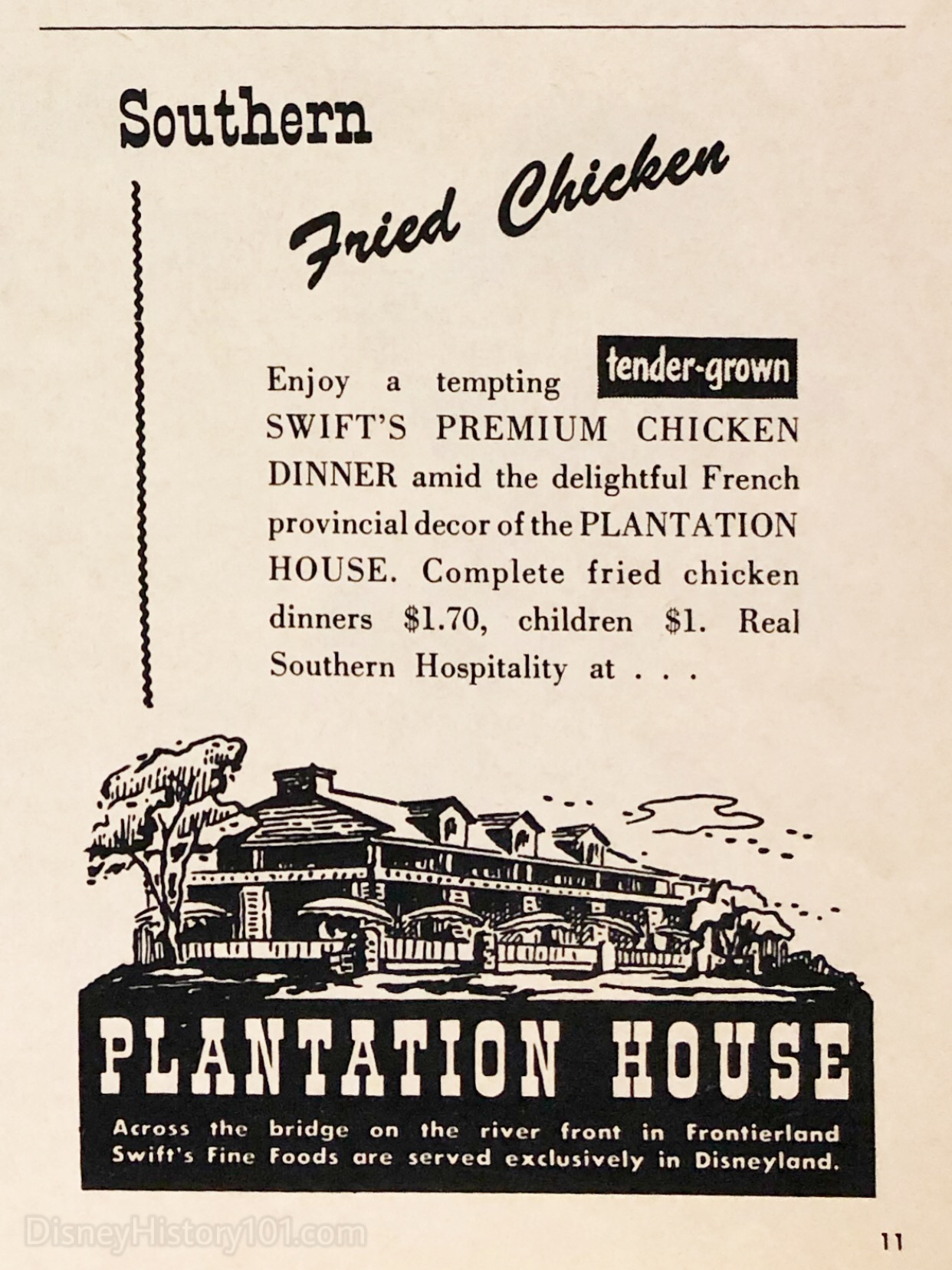
These could be enjoyed during the daytime or even during Date Nites (perhaps beginning around the Summer of 1961) while The Arvon Dale Orchestra performed nearby!
By the summer of 1957, Complete Fried Chicken Dinners and all the southern hospitality cost $1.70 for adults and $1.00 for children. Members of Disneyland Operations regularly held meetings at the Chicken Plantation Restaurant. For instance, the Holiday Land Picnic Committee held a meeting here Wednesday, April 10th, 1957, to discuss “problems of operations and sales.” [Disneylander, May of 1957, page 8] Decades later, Dick Nunis (in response to inquiry about his favorite part of Disneyland which is no longer there) shared : “I miss the old Chicken Plantation where I spent many Sundays sitting with Walt talking about the future of Disneyland. I remember one day the Mark Twain was coming around the bend, a Keel Boat was coming in, a Keel Boat was leaving, two rafts were crossing the River, two Indian War Canoes were racing each other, and Walt said, ‘Look at that, that’s a great show. What we need is another boat. And that’s when we decided to build the Sailing Ship Columbia.” (according to Disneyland LINE, Vol.25, No.28, published July 16th, 1993)
As a sidelight, by October 1959, Jim Baker (of Merchandising) was overseeing the Disneyland Food Administration and Souvenir Sales. By October of 1959, the company was (1) of over sixty-eight other firms playing a vital part in the team effort to bring happiness to Disneyland’s Guests. Some were small, specialized individual operators; some were huge companies such as Swift & Co. - the Bank of America - United Paramount Theaters (which you hear as UPT) - Carnation - Richfield - General Dynamics - Crane - and many others. These companies used the park to publicize their wares, leased space in the Park to sell their wares, and Disneyland collected advertising fees from them.
By 1960, Disneyland wasn’t the only theme park with a Chicken Plantation Restaurant. Freedomland had a Chicken Plantation Restaurant sponsored by J. D. Jewell, Inc.
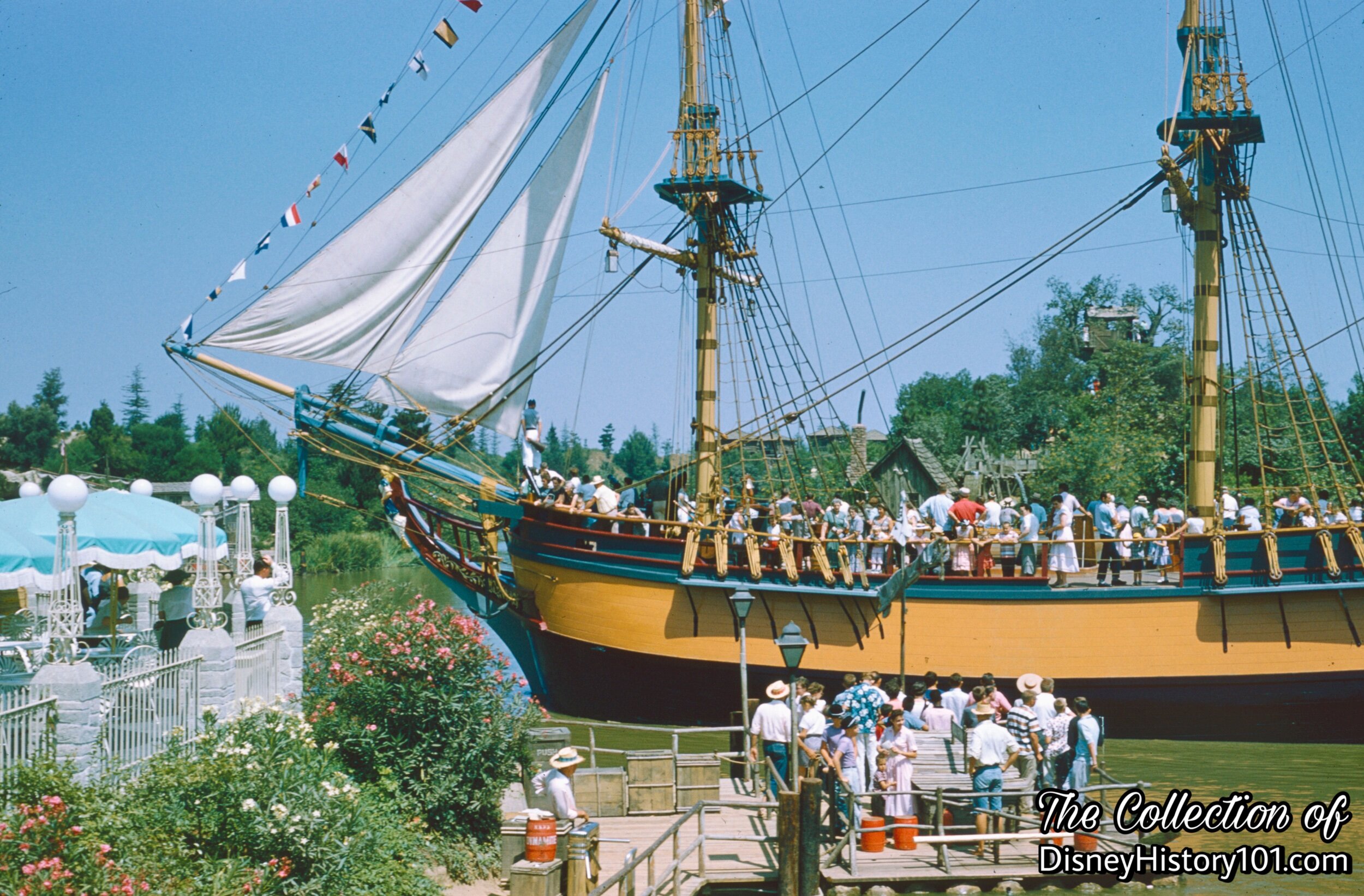
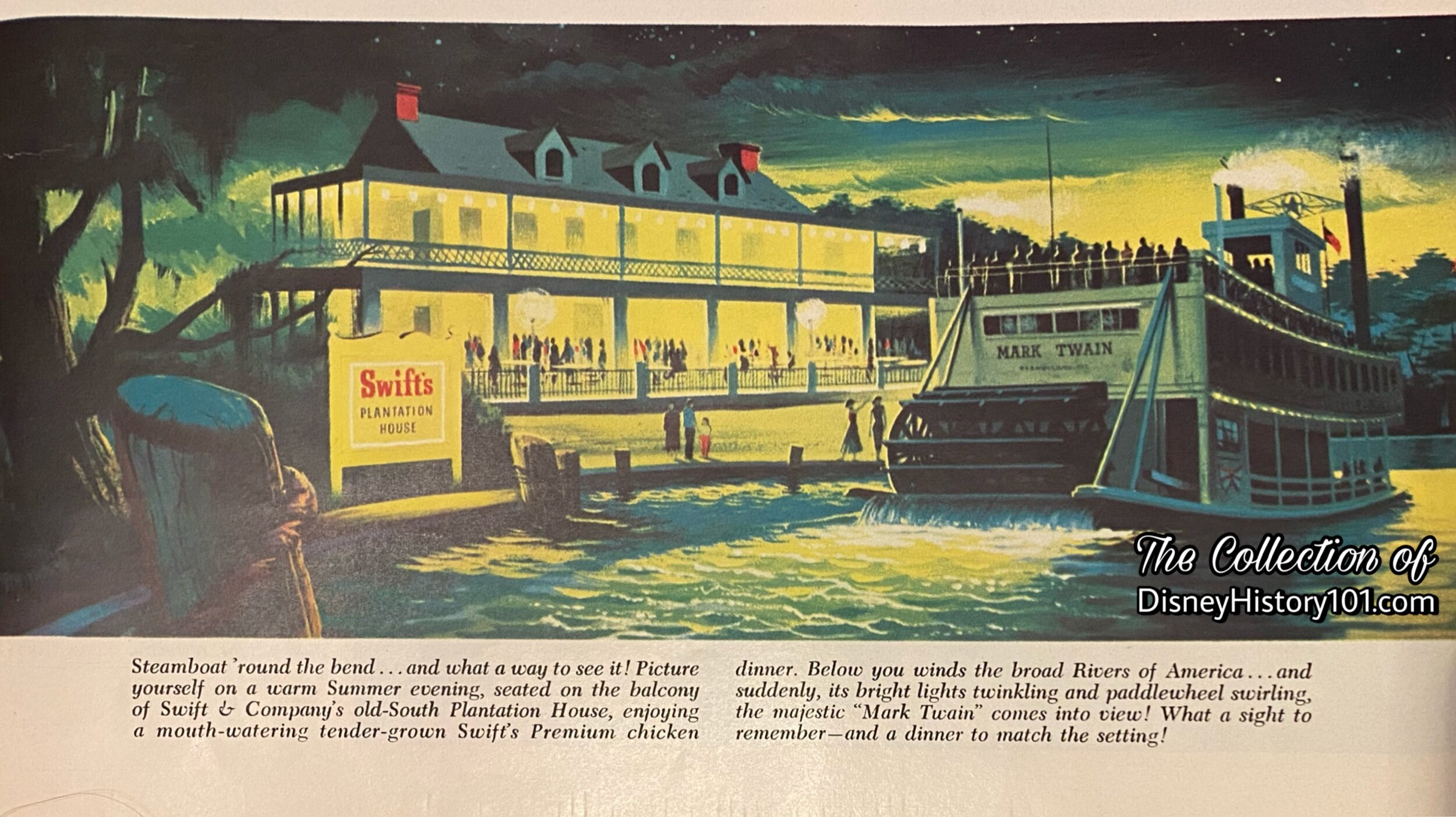
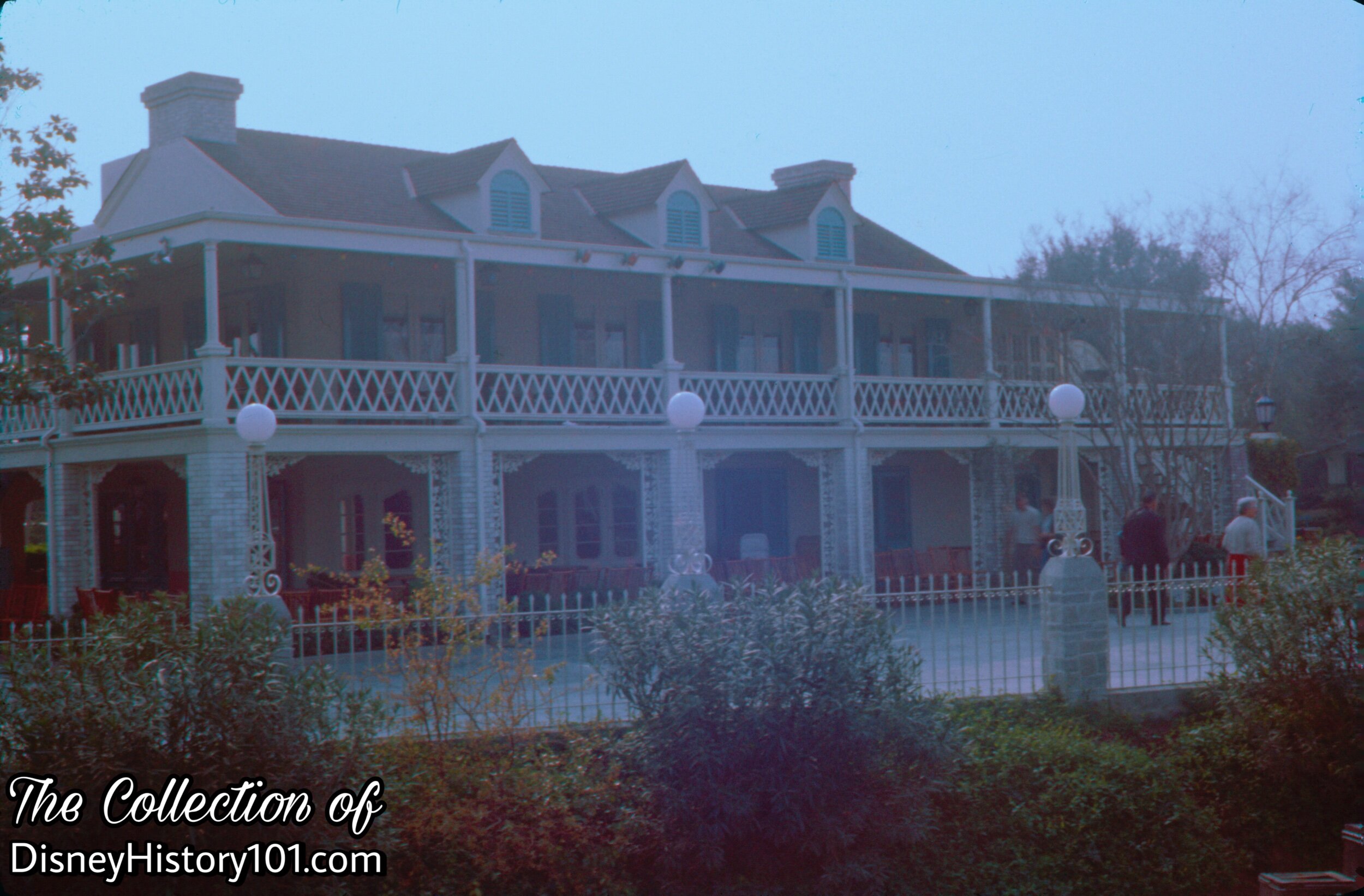
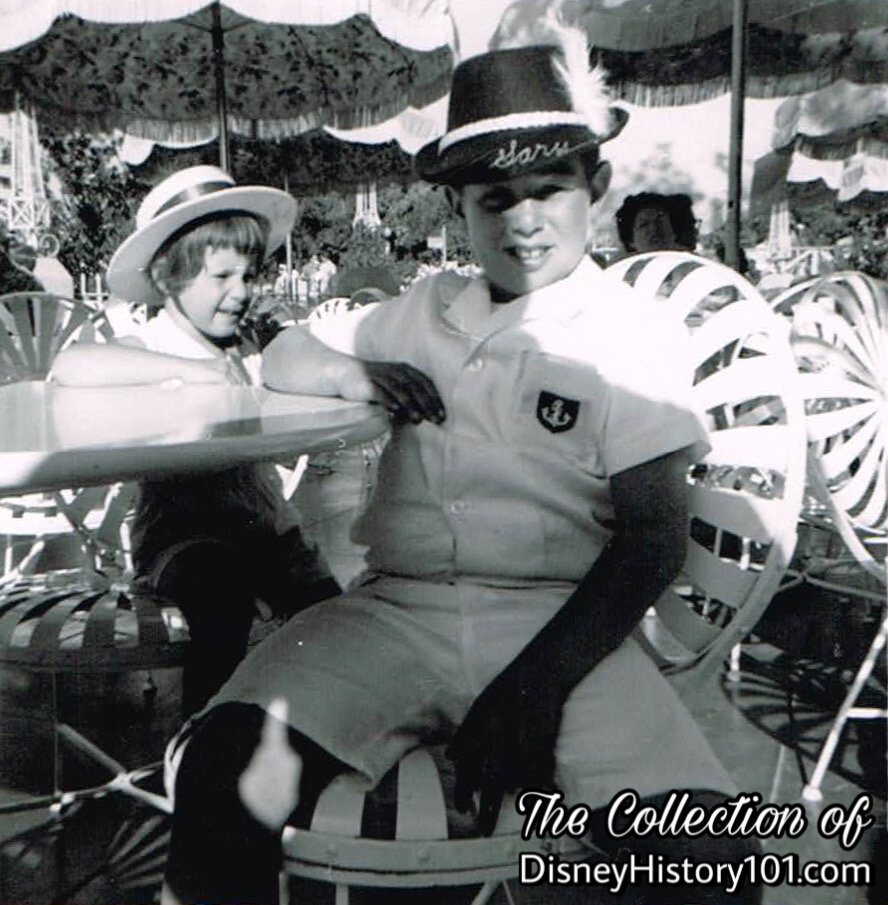
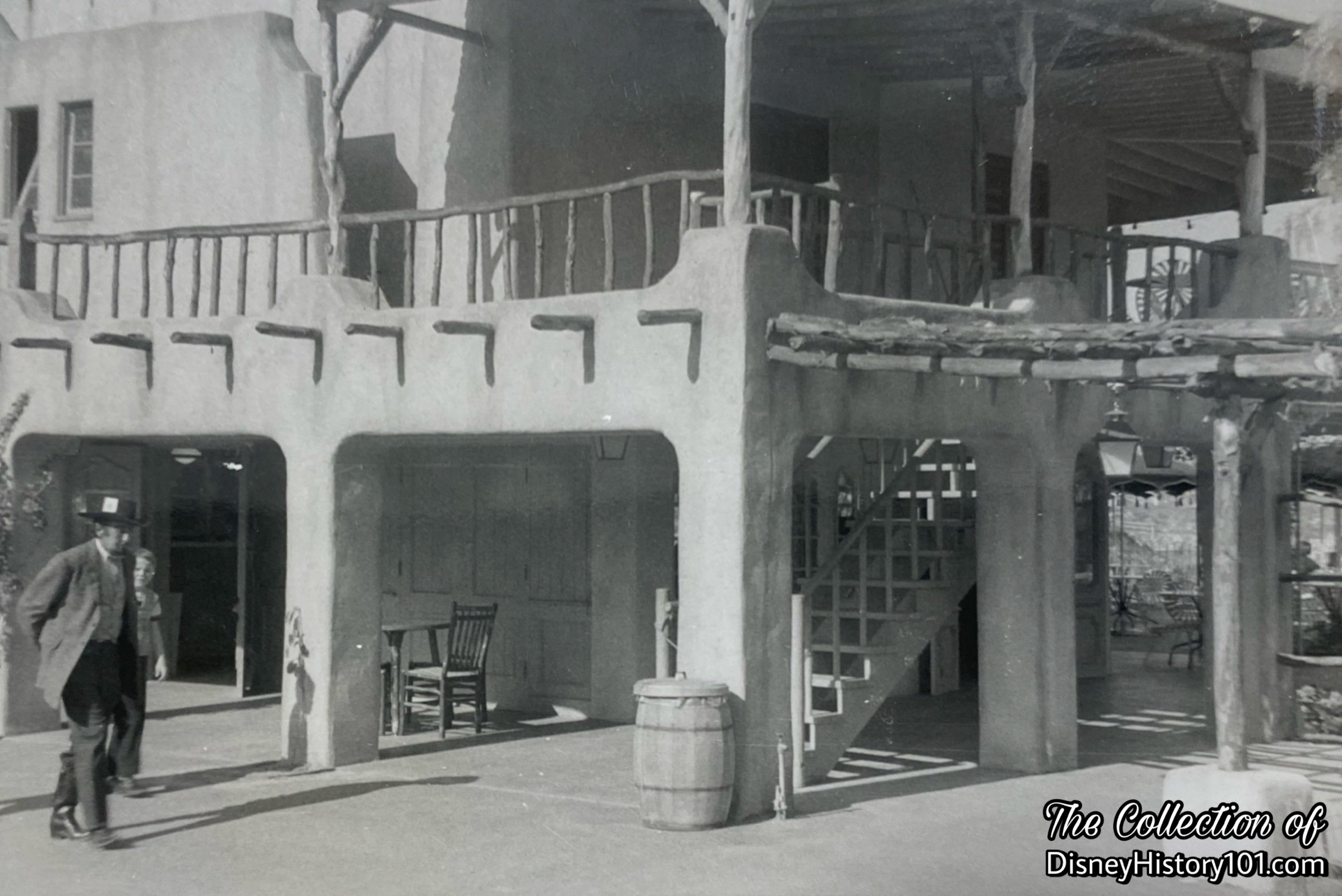
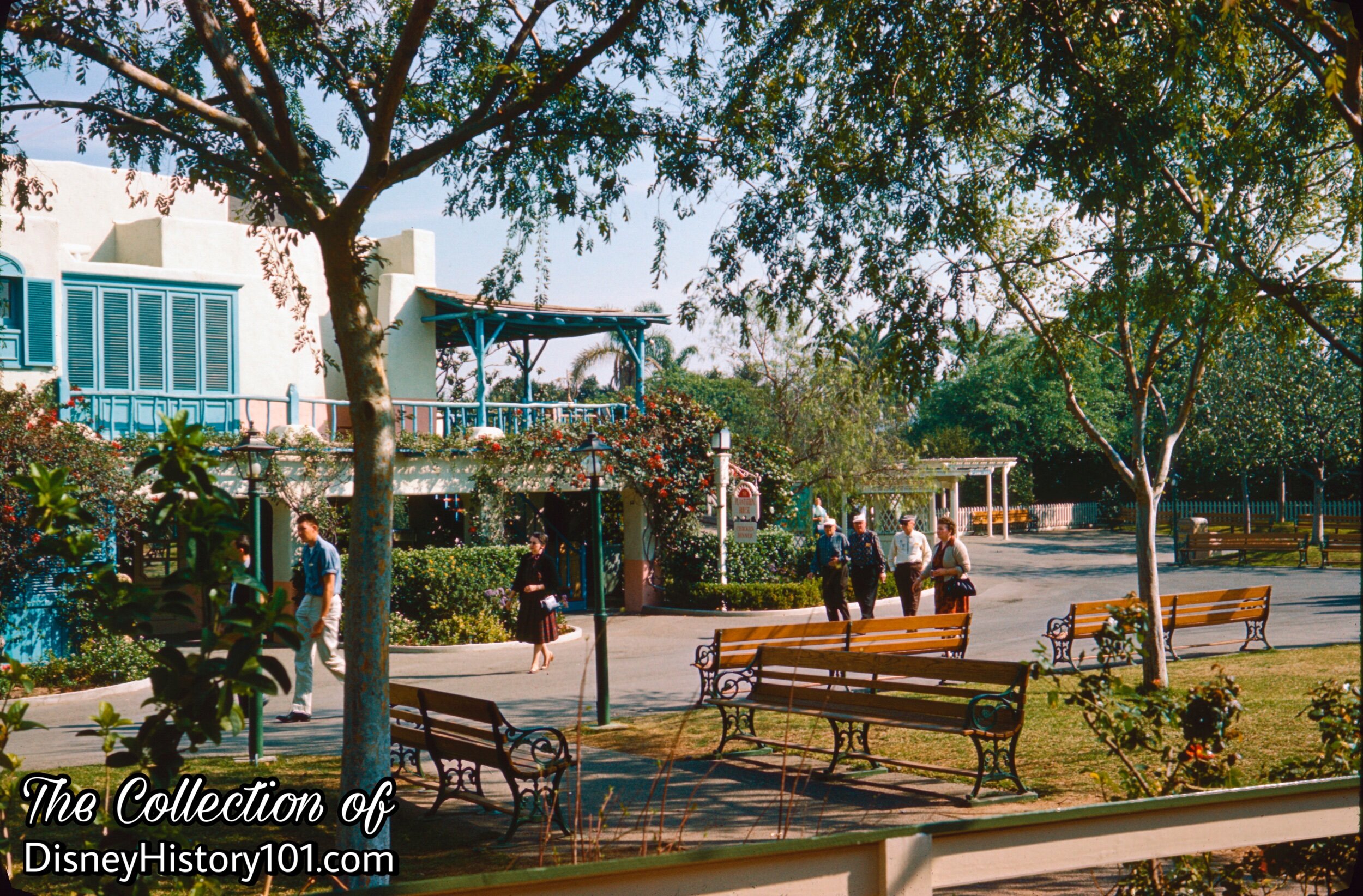
This was the view from Frontierland Station (located behind the Chicken Plantation). The park-like setting provided a picturesque slice of Frontierland for guests to relax and enjoy the tempting scent of fried chicken dinners.
The synergistic relationship between the institutional lessee and Disneyland was beneficial. Swift and Company and the Plantation House yielded some revenue for Disneyland Inc. - $24,058 for the fiscal year ending September 29, 1957 and $21,950 for the fiscal year ending September 28, 1958. By September 28, 1958, Disneyland, Inc. made approximately $114,162.00 of land improvements to the Chicken Plantation.
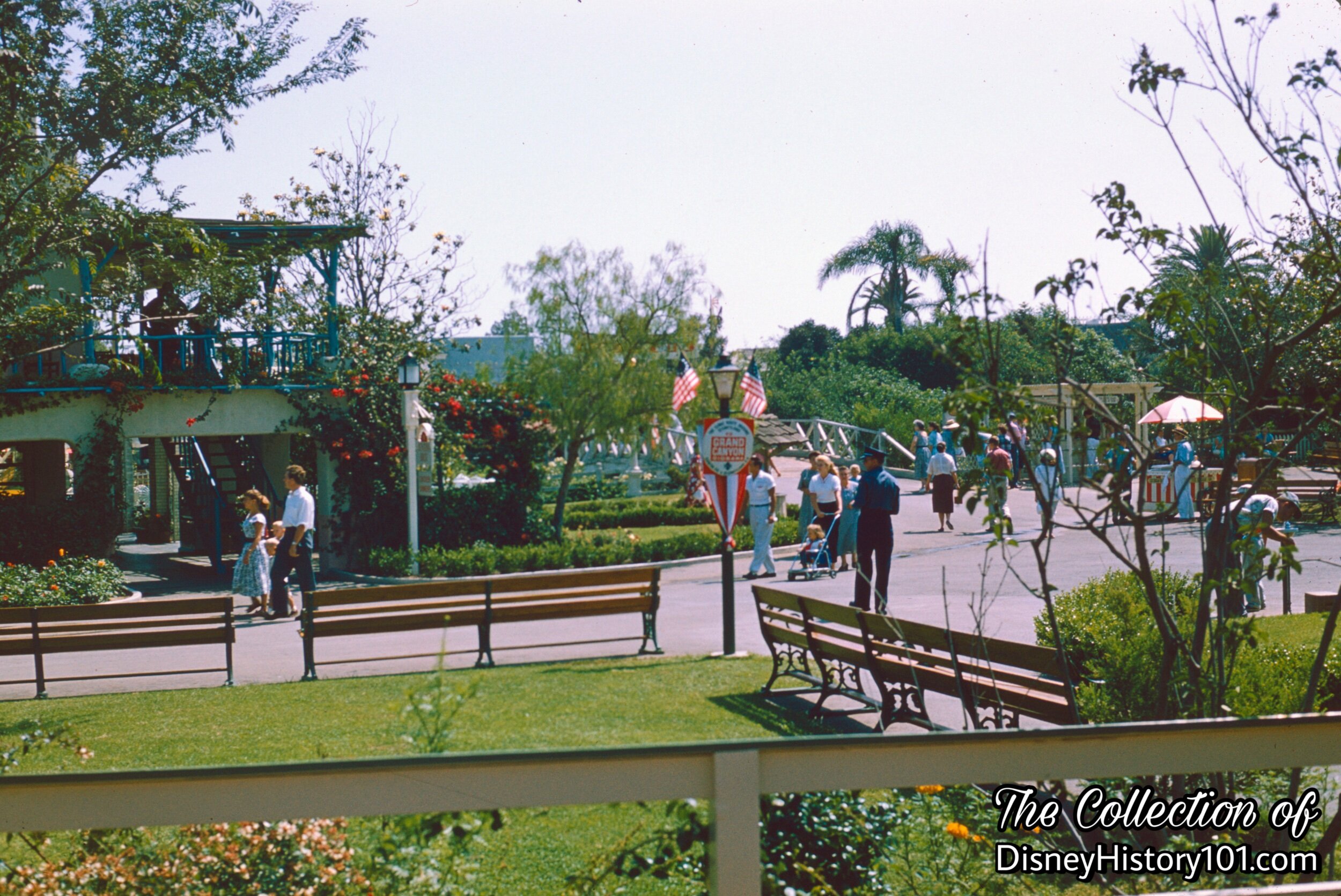
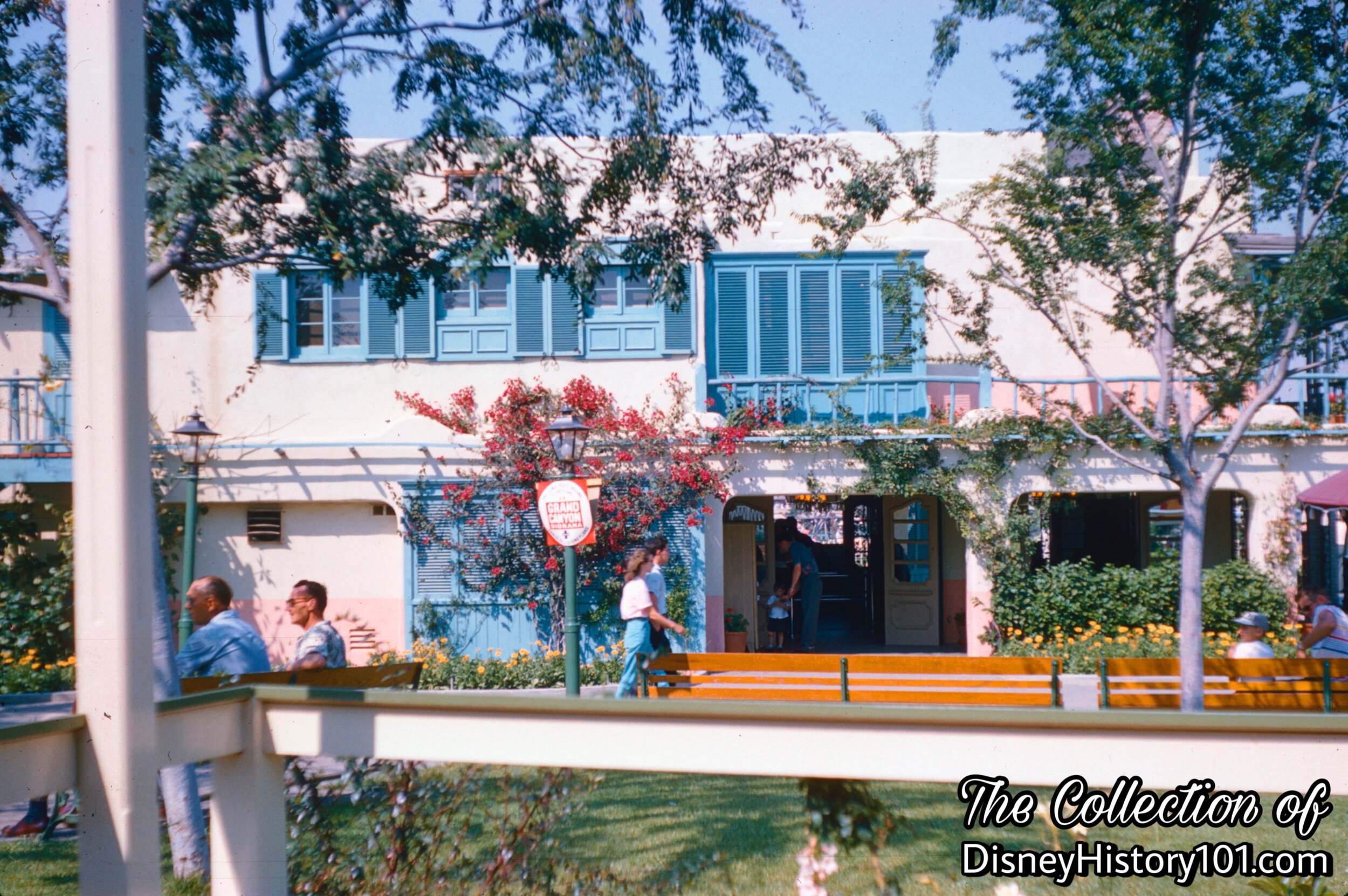
This was the scene as Guests awaited passage to the Grand Canyon Diorama, aboard the Santa Fe & Disneyland Railroad’s freight train. That flowering Bouganvillea (left of the Chicken Plantation entrance) was likely selected by the legendary team of landscape architects and horticulturalists - Ruth Patricia Shellhorn and Jack & Bill Evans! It seemed to be a popular attraction with Guests, because many people took pictures of it over the years!
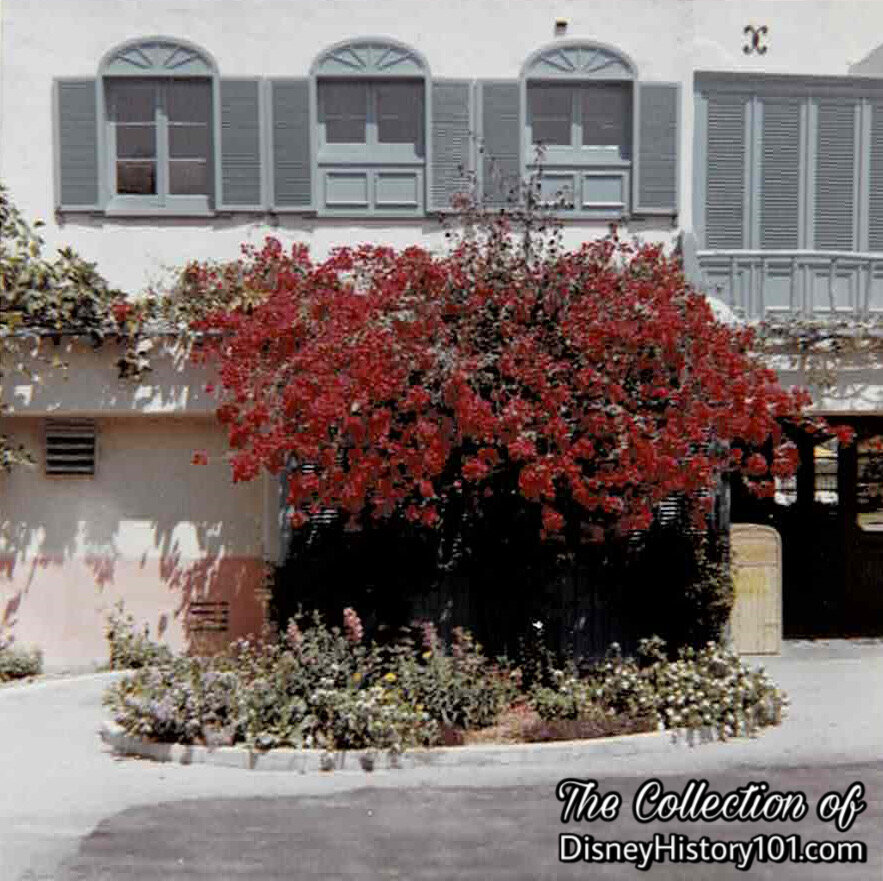
One bougainvillea was in fact a composite “flowering tree,” located behind the Chicken Plantation. An Australian tea tree (Leptospermum laevigatum) tree became an unfortunate casualty of transplanting. The skeleton was salvaged and converted into a unique natural sculpture with the aid of a scarlet colored bougainvillea.
Cal McMurtrey recalled “The Chicken Plantation House was a great place for girl watching… I was a gardener then, and I was taking care of Magnolia Park and the grounds around the old Plantation House. I remember the good lookin’ girls that would come by..the prettiest I had ever seen. I tried to meet my fair share of them...I WAS SINGLE THEN!”
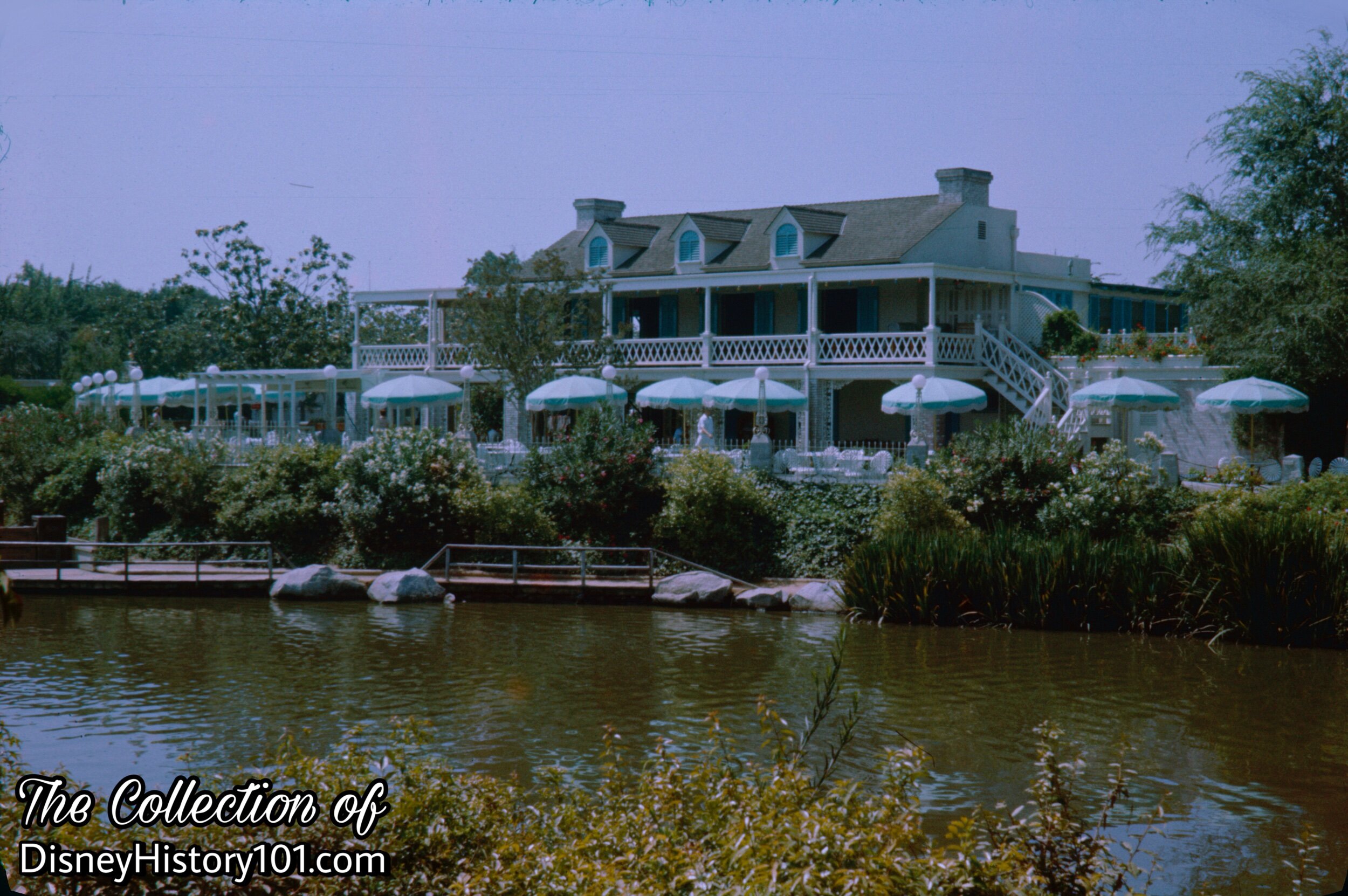
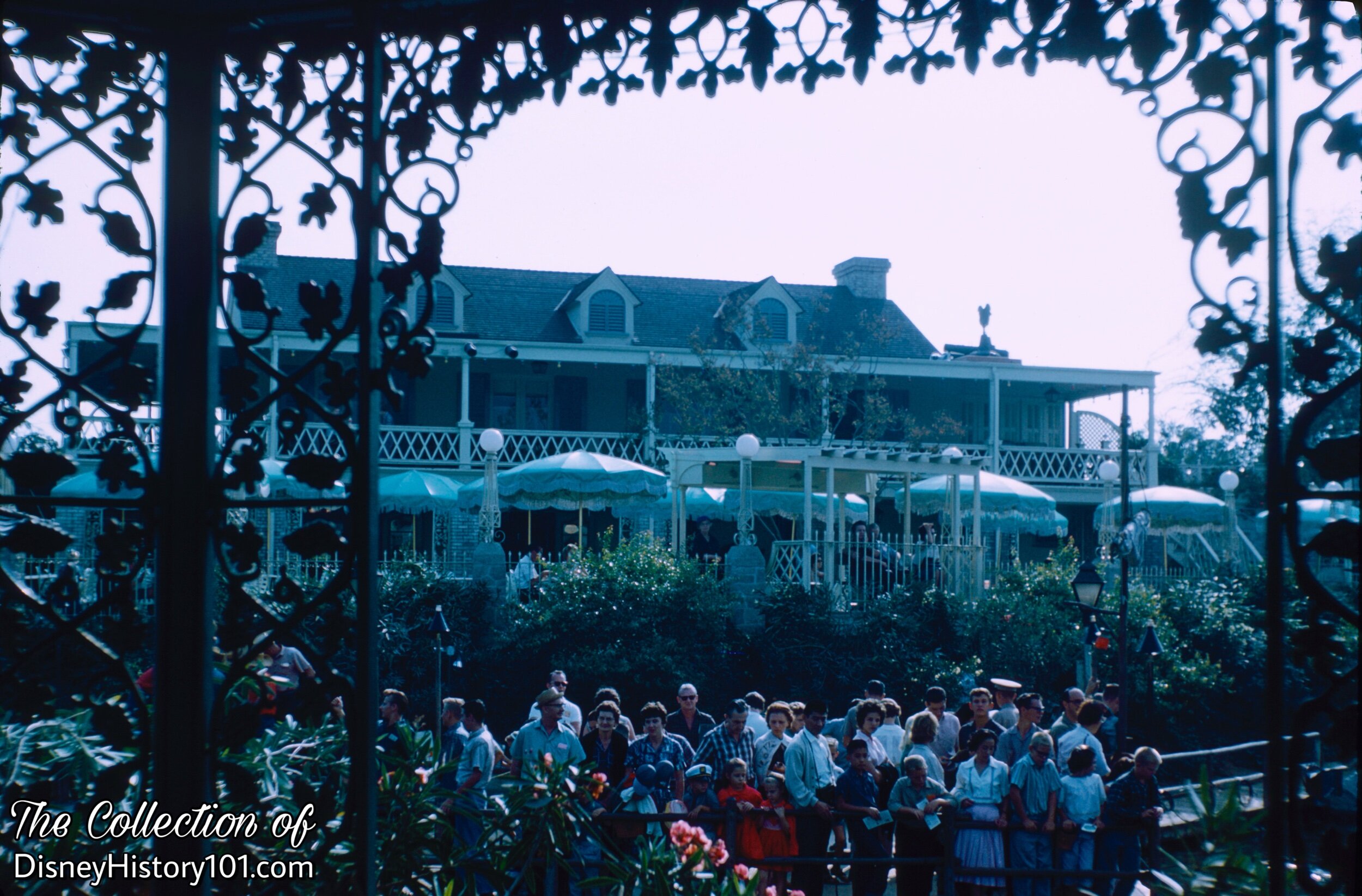
“Songs of the South”
Music, as a basic ingredient of showman-ship, covers the Park. The Dixieland Band Stand (also called Orleans Bandstand) provided live entertainment within earshot and sight of the Chicken Plantation Restaurant. Dining could be enjoyed during the daytime or even during Date Nites (perhaps beginning around the Summer of 1961) while The Arvon Dale Orchestra performed nearby! The First Frontier Nite at Disneyland offered western music behind the Plantation House, on Tuesday nights through the summer season of 1961.
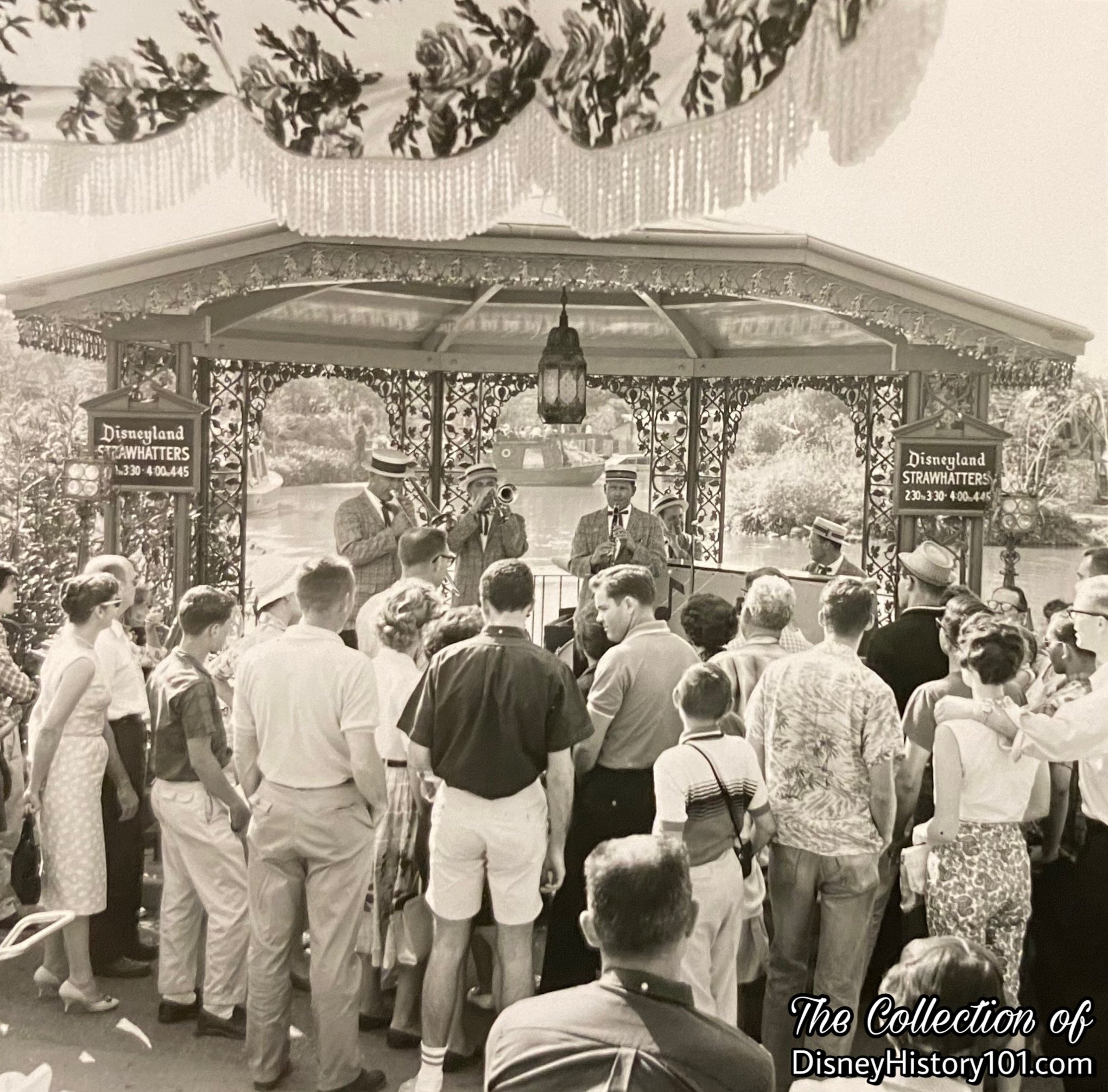
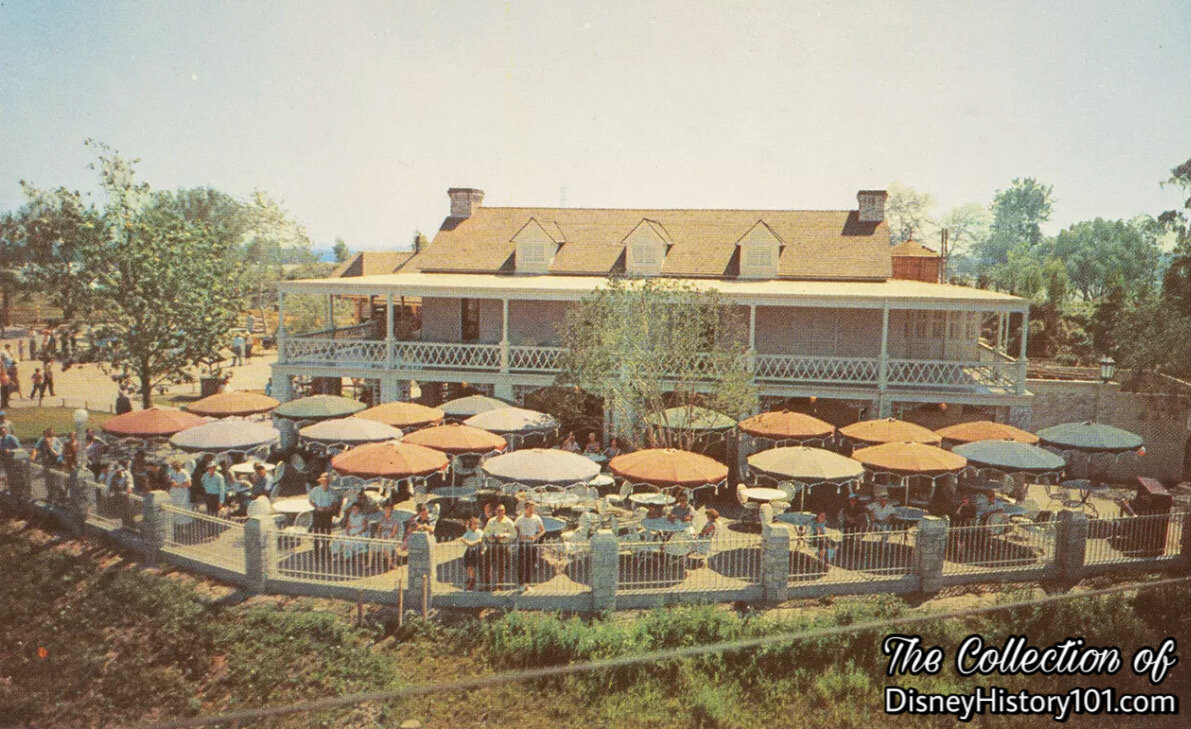
Postcards would preserve the Chicken Plantation (and it’s riverfront patio) the way that it is best remembered.
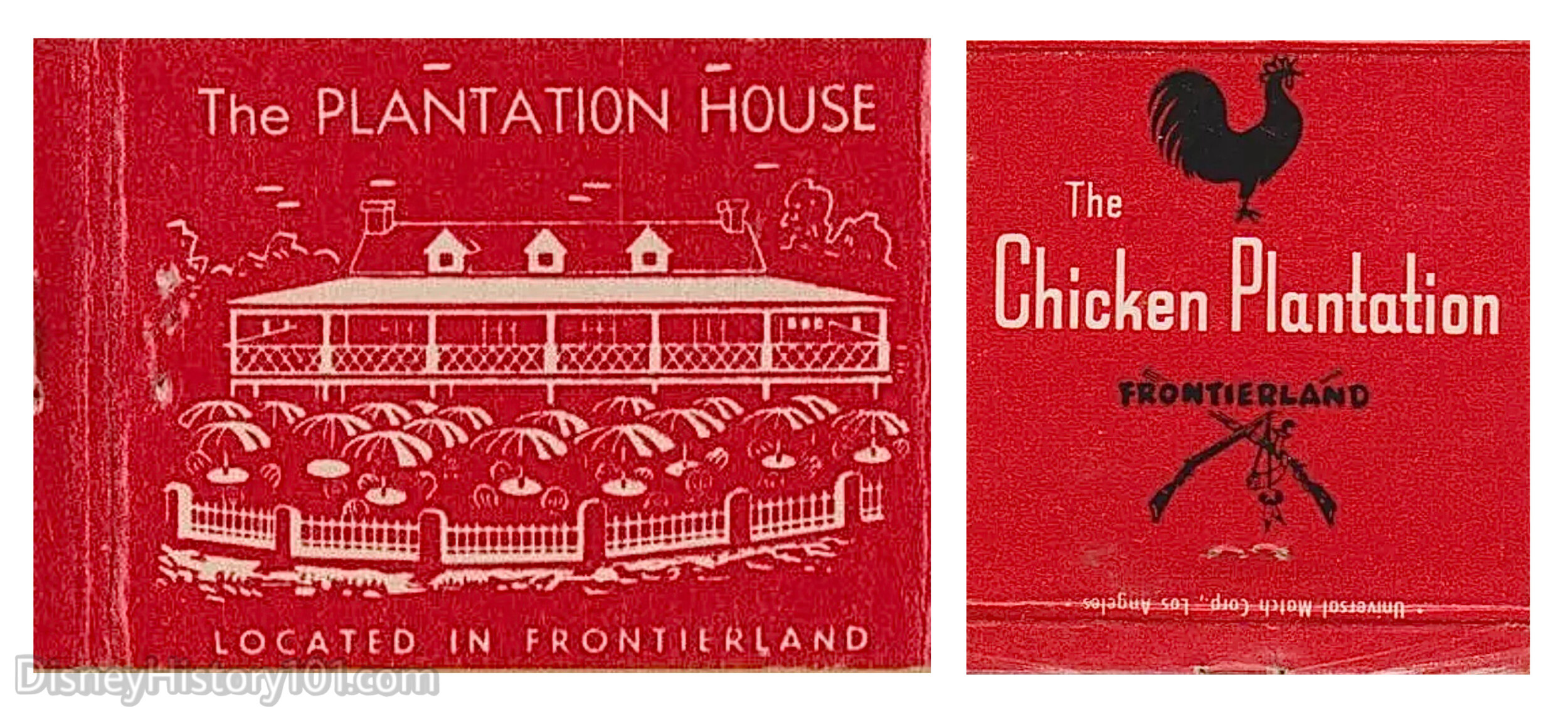
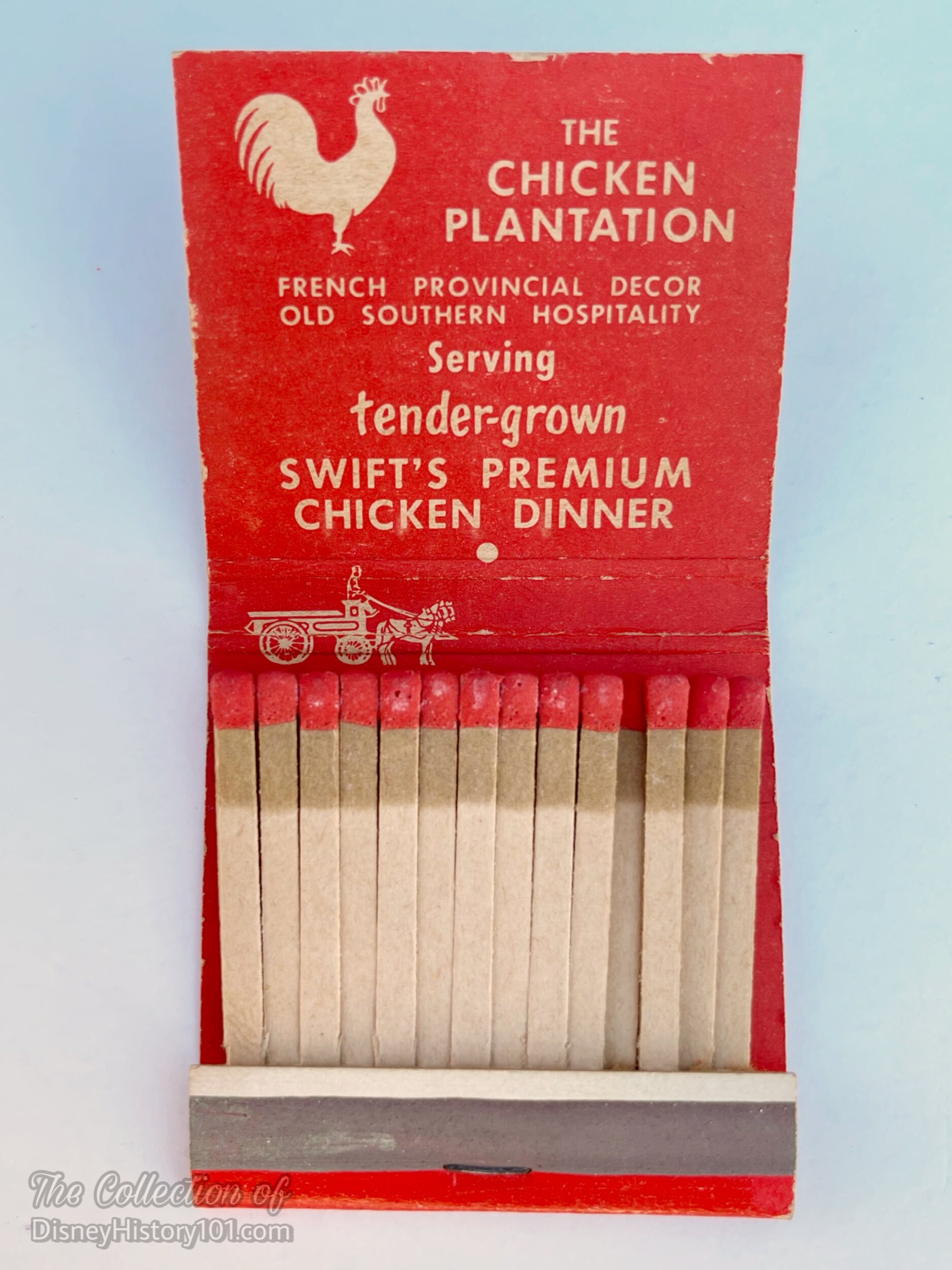
At least these two cover styles were produced - one bearing a chicken and the other, a graphic of the restaurant and patio. Complimentary matchbooks (bearing the names of Disneyland and their corporate sponsored restaurants) were fantastic pieces of promotional souvenirs, allowing Guests the opportunity to “strike up” conversations about Disneyland while outside the Park!
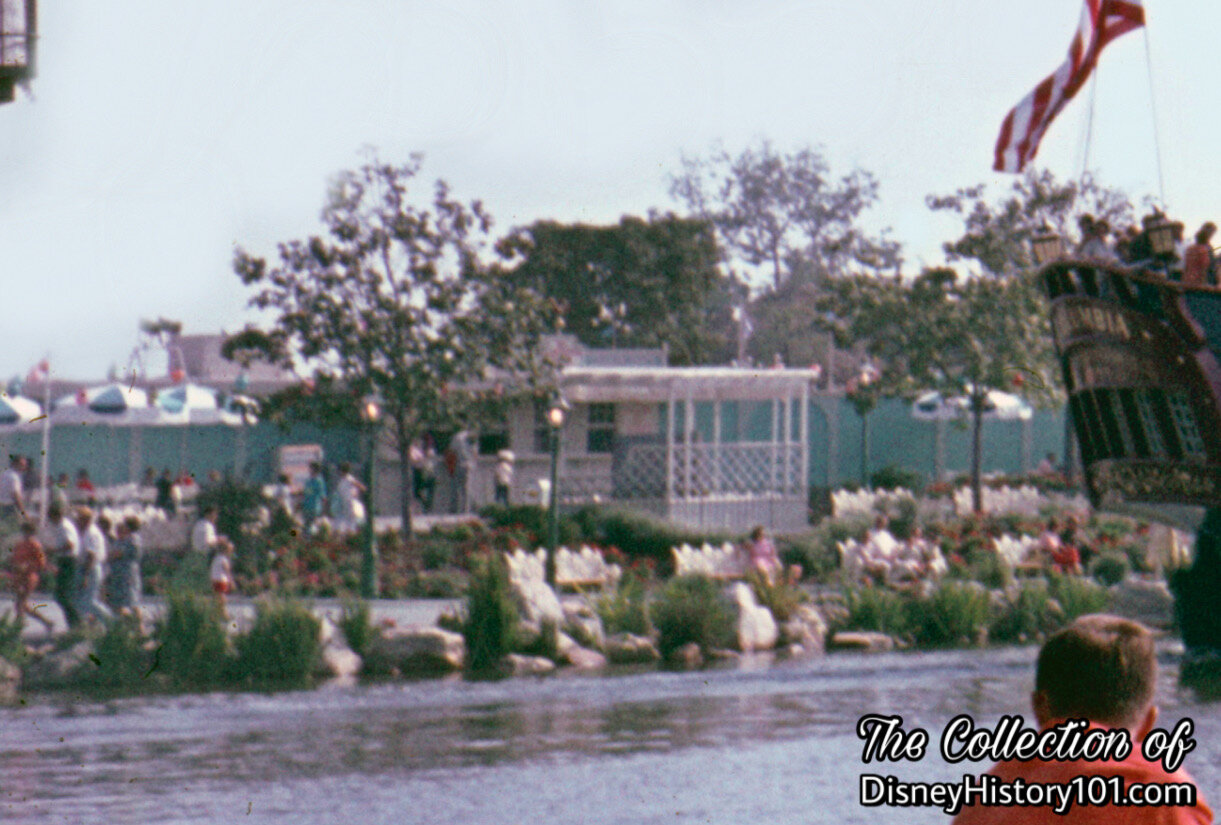
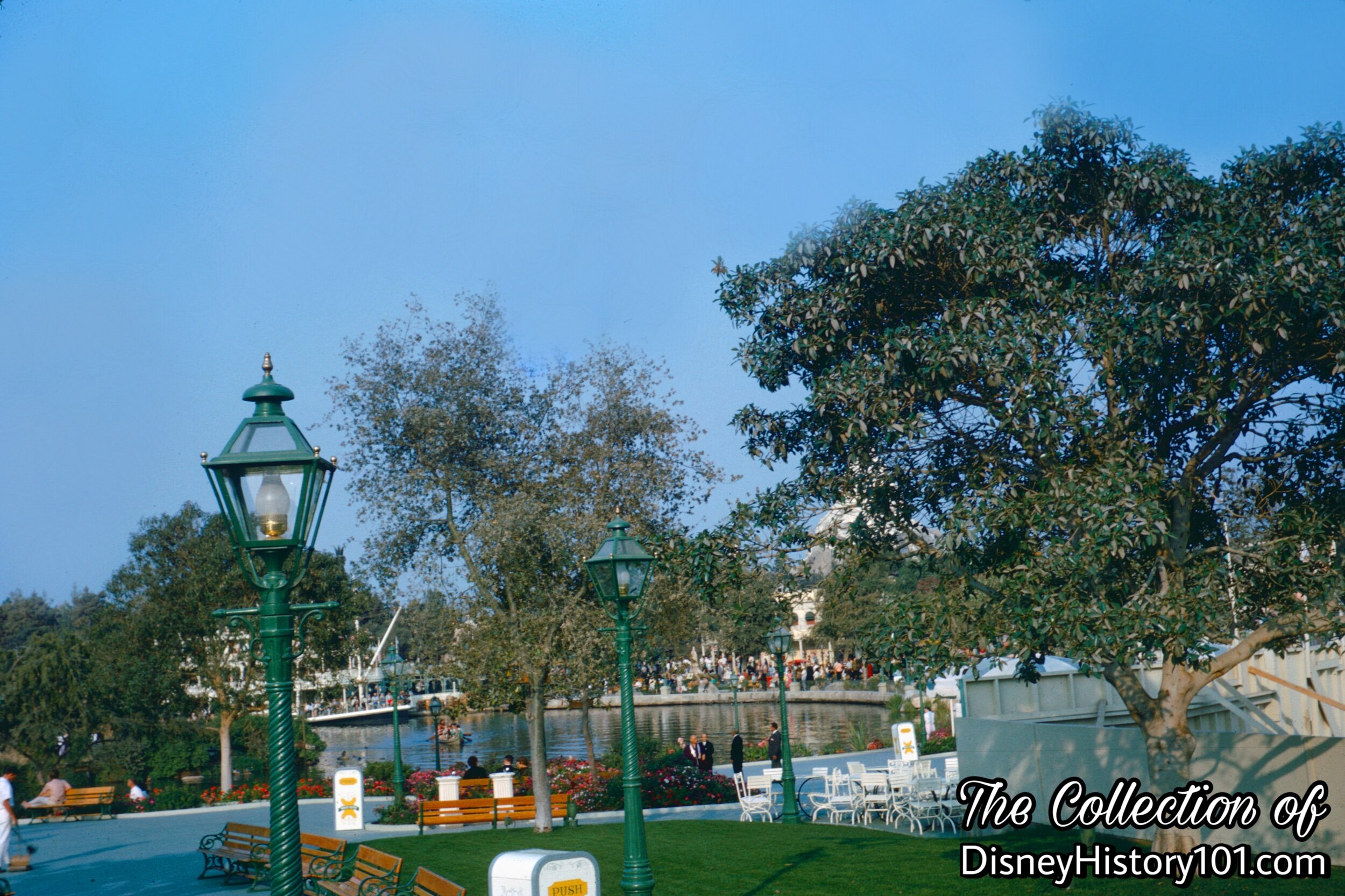
Walt once said that “Disneyland is like a piece of clay : if there is something I don’t like, I’m not stuck with it. I can reshape and revamp.” A fantastic example is this little river side stretch of Frontierland that originally spanned Orleans Street. Some of the earliest (c.1957) artwork produced for the “Old South” area of Frontierland involved centering the “Pirate Wax Museum” and other attractions around the Chicken Plantation Restaurant. However (in 1962), developments of new Disneyland adventures along the Rivers of America would lead to the Chicken Plantation Restaurant closing for good.
During 1961, Eleanor Heldt (Magic Kingdom Club Administrator) commented that “During a major rehabilitation, it is sometimes necessary to close an attraction for several weeks. This, of course, is when the smallest details were checked, replaced or repaired as required for the maximum safety, convenience, and comfort for our guests.” The restaurant closed January 8th, 1962, but for no major rehabilitation. The Chicken Plantation would not reopen, but be razed to the ground that very month. The Chicken Plantation can readily be seen preserved on color film, in some aerial footage of “Disneyland, U.S.A.” (a “People and Places” feature film, released in the U.S. on December 20, 1956 through Buena Vista Film Distribution Company).
But, Walt Disney’s Imagineers knew their audience. For those guests who would long to sit along the romantic Rivers of America and enjoy a chicken dinner, the location’s spirit would live on (not far away) in New Orleans Square’s Blue Bayou (another river front restaurant)!
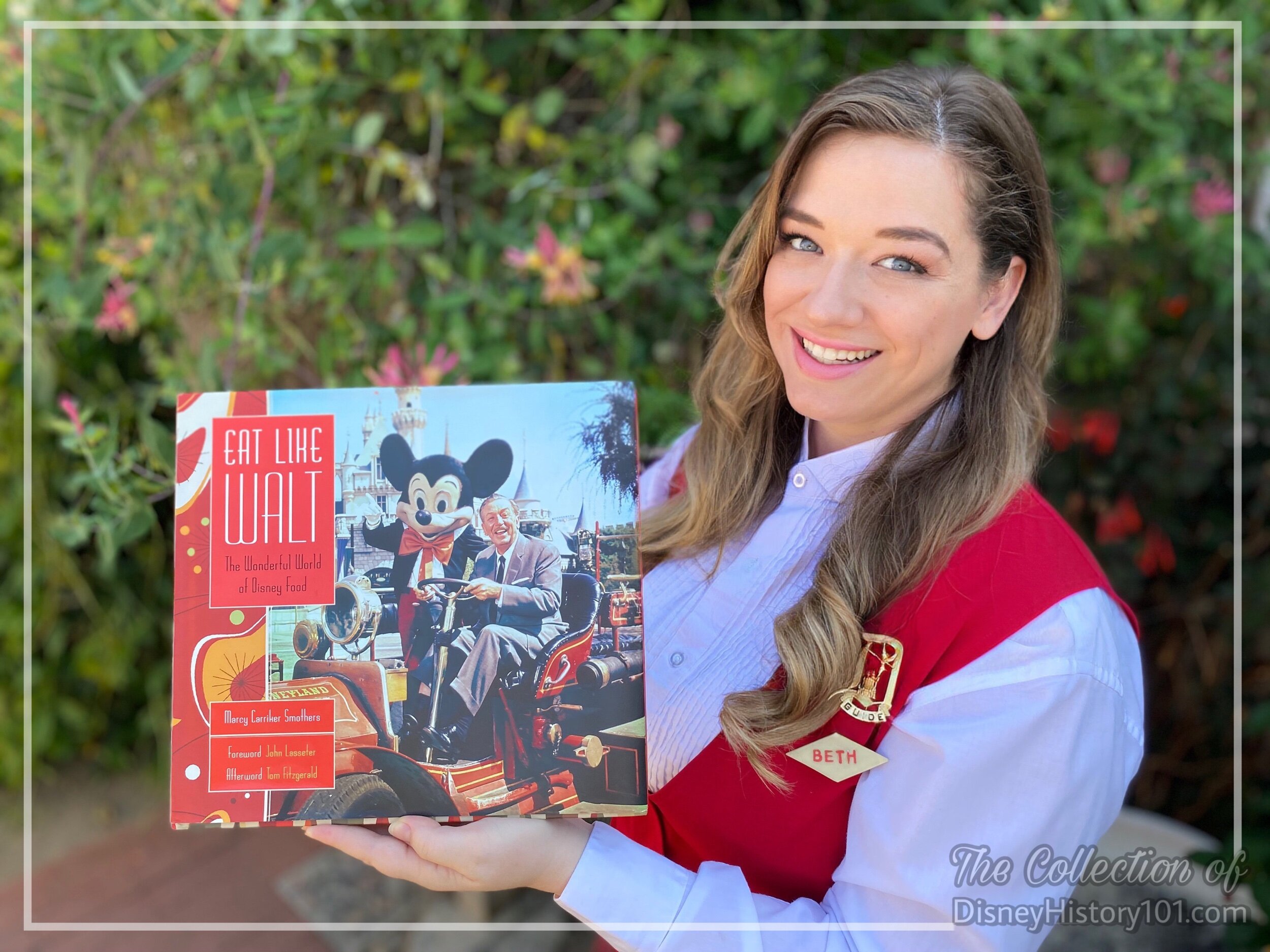
If you would like to read more about the Swift’s Chicken Plantation, it’s my pleasure to recommend adding Marcy Smothers’ “Eat Like Walt - The Wonderful World of Disney Food” to your personal Disney Home Library! Therein, Marcy has extensively researched and finely crafted a small section of a chapter dedicated to “Walt Disney’s Disneyland - Frontierland” If you would like to bring the magic of Disneyland restaurants and concessions to your dining room table, “please step this way” toward www.eatlikewalt.com where Marcy has shared a few recipes for memorable Disneyland menu options, so you too can “Eat Like Walt.”
CIRCARAMA THEATER (CIRCLE VISION & Premier Shop)
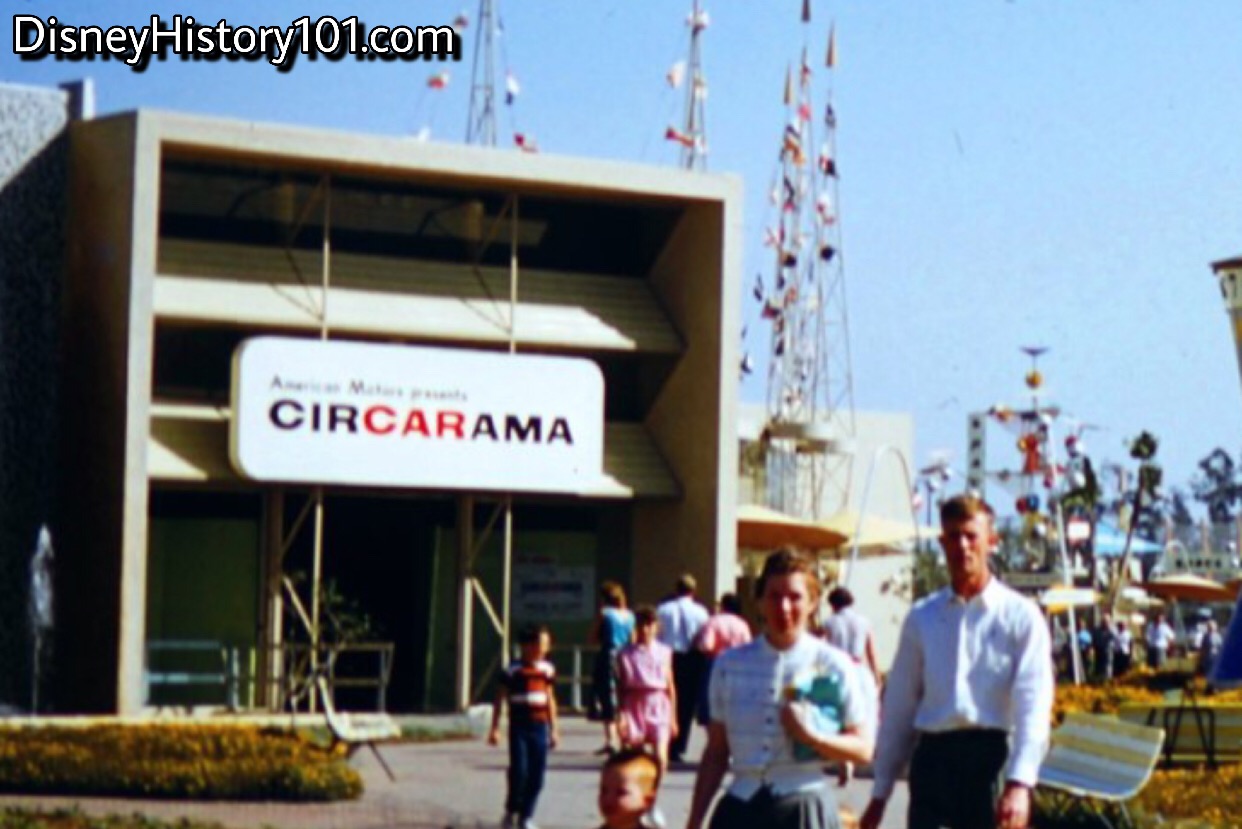
(July, 1955 - January 3, 1967)
The presentation of the CirCARama show on the vast DISNEYLAND “stage” was a distinct part of the Disneyland theater concept. In an era when movies were typically projected on a screen before you, the Circarama Theater allowed guests to experience “movies that surround you”! By some accounts, “After seeing the Cinerama system at the Hollywood Pantages theater, Disney called Broggie and his associate Eustace Lycett, a special-effects and lens expert, to his office. ‘If they can put three screens together, why can't we do a full circle?’ Walt asked.” [“Disneyland: Inside Story” by Randy Bright, page 89] Soon Roger Broggie’s team began to work with Ub Iwerks to assemble a rig comprised of eleven 16-millimeter cameras. Soon, Peter Ellenshaw used the rig (attached to an American Motors Rambler) to create a documentary across the western United States.
“Initial Concepts by Walt Disney Productions”
Early thumbnail sketches and other concept artwork of Disneyland seemed to be unencumbered by restrictions of budget, schedule or the laws of nature and physics. Though guided by Walt, his artists appeared to engage in “free-thinking,” as if implementing the modern “Blue Sky” Imagineering process. Like some advanced “High Concept,” final designs were quickly generated and approved. Some of these viable project Concepts (as this), were supported by a well-developed business case and built expectation.
“Architectural Designs by Lessees”
Disneyland, Inc. printed materials for Lessees detailing specifications for architectural designs of exhibit spaces. These were revised by March 16, 1955 and issued to Lessees.
All of the interior architectural drawings were done by competent registered architects or an approved display house of the lessee's choice. All of the designs submitted by the lessee's architect, whether for buildings or construction of interiors in DISNEYLAND, were approved as to the theme and general plan of DISNEYLAND as established by WED Enterprises, Inc.
Three sets of preliminary drawings were furnished DISNEYLAND, Inc. as soon as possible after signing of the lease. Two sets were retained by DISNEYLAND and one set was returned to the lessee’s architect with any revisions noted thereon and stamped “APPROVAL TO PROCEED TO FINAL DESIGN.” This stamp when properly signed and dated constituted the lessee’s authority to proceed with the final drawings.
The Lessees revised their final drawings to incorporate any revisions noted on the approved preliminary drawings, and submitted three sets of the revised drawings to DISNEYLAND. One set was returned to the lessee’s architect and any revisions noted thereon are to be incorporated on the original drawings. When the lessee had incorporated the final revisions on the drawings, two sets of transparent ozalids were forwarded to DISNEYLAND for approval. DISNEYLAND would stamp both sets “FINAL DESIGN APPROVED” and “LESSEE’S CONTRACT DRAWINGS”, and return one set to the lessee who could then release drawings for bid and/or construction.
“The Search for a Participant Sponsor”
By July 1, 1954, George Whitney of Disneyland, Inc. directed Amusements, with Ron Miller overseeing analysis, philosophy, capacities, planning, operator training, and amusement procurement. At the same time during 1954, Walt was searching for industrial participants to lease shop and restaurant spaces at Disneyland, and help generate the necessary capital to fund construction and growth of Disneyland. In a synergistic relationship, the companies (in turn) could sell their products and advertise their corporate names in the Park. Disneyland Participant Corporate Sponsors were carefully selected. High quality, long term corporate sponsors would provide incremental income that enabled Disneyland to enhance its show and attractions, offset some operating expenses, and capitalize on marketing opportunities.
Jack Lindquist (who was working for an advertising agency, back in 1955) recalled: “one of our accounts was with Kelvinator. We were going to sponsor something or other at a place l'd never heard of, called Disneyland. Well, the promotion was all put together and ready to go, when one day I got a call from a guy named Ed Ettinger. He said the deal was all off as Disneyland didn't have that kind of promotions. I said that the deal WAS on and it WAS going to go.”
Some popular episodes of Walt Disney’s Disneyland (like “Davy Crockett, Indian Fighter,” airing Wednesday, December 15, 1954) presented on the ABC Television network had been sponsored by the American Motors Corporation. Soon, CirCARama (jointly presented by American Motors, Nash, Hudson, and Kelvinator) would be presented as a free attraction with its adjoining American Motors Corporation exhibit in Tomorrowland, from June 14, 1959 - March 14, 1960. In fact by the year 1958, CirCARama was one of 15 free educational shows and exhibits at Disneyland. By that same year of 1958, Bank of America appraisers figured of the total income received by Disneyland Inc. from leases at 16.02% derived from the selling of advertising rights and 40.12% from the leasing of space to concerns whose main reason for occupancy is for advertising purposes. The remaining 43.86% of the lease income was derived from stores that sell various products and food.
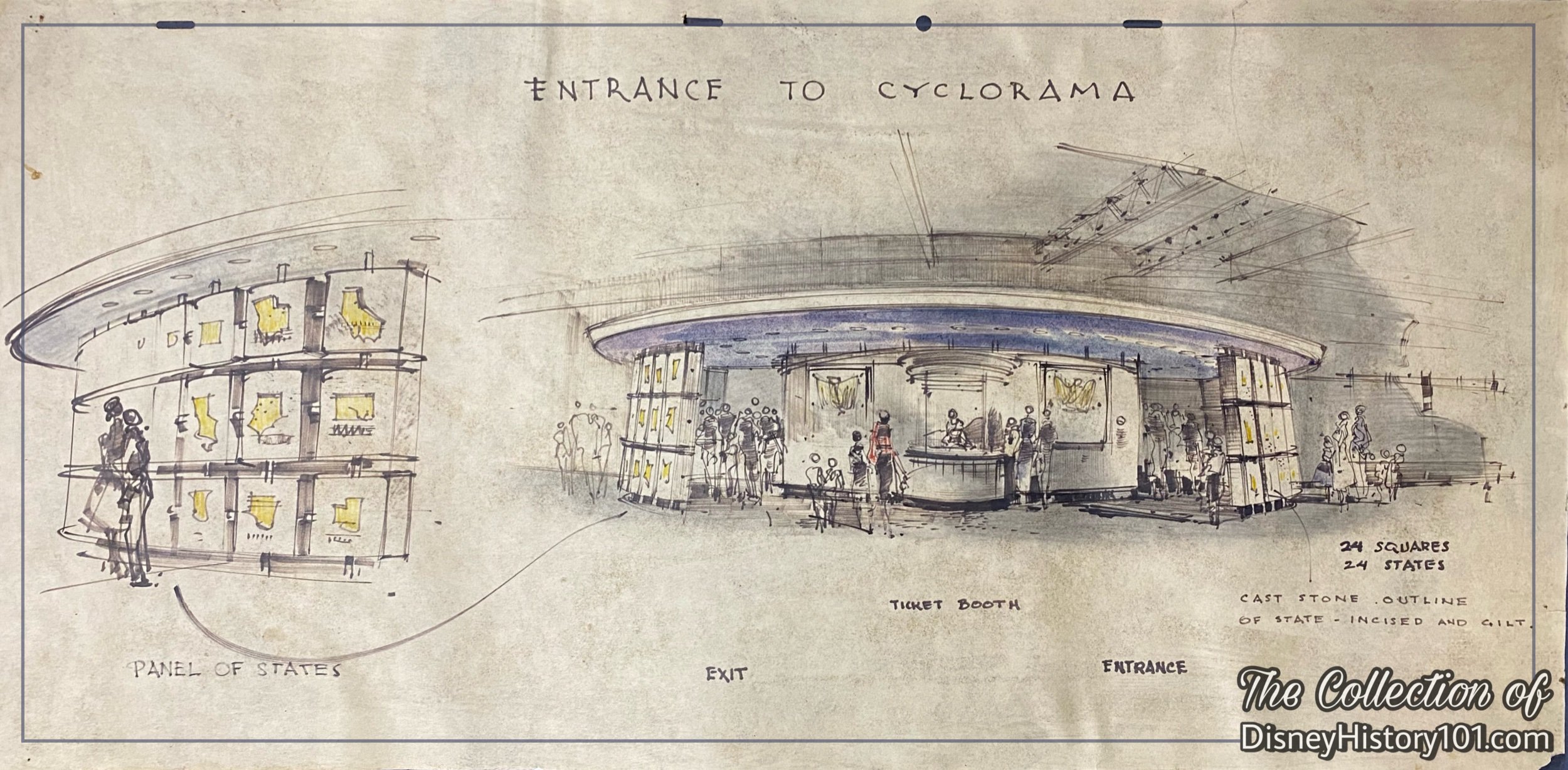
“Construction”
The construction crews didn't begin work on any of Tomorrowland until six months into the project. Meanwhile, the very first buildings framed at Disneyland (after the Mill), were the Main Street Complexes (on each side of the street), as well as the two Tomorrowland Exhibit Halls (known as the North Rotunda Building & South Rotunda Building).
Many of the skilled craftsmen of local businesses (under the direction of the General Contractor George Mills Sr.) had completed work on the two main Tomorrowland Rotunda Buildings. These craftsmen and construction workers likely included (but were not limited to) the crew and staff of M.A. Gentle (who performed “all brick, block and stone work at Disneyland”), the Al Sparks Electric Company, Frank Silveri (tile and marble contractor), the Kissel Refrigeration Company, ABC Roofing Company, Bailey the Plumber, Inc., Universal Homemakers, Inc. (who fabricated “all drywall interiors” of ceilings and walls at Disneyland), and perhaps Arthur Pizzinat (a Venetian terrazzo and mosaic company).
The North Rotunda Building was particularly constructed with macadam and vinyl tile floors, mainly unfinished exposed frame walls, and some drywall partitioning. The South Rotunda had plenty of approximately 16-foot ceiling heights, space heaters, a partial air conditioning system, and three restroons (15 fixtures). Considering these features, the North Rotunda would prove to be a sufficient location for the Monsanto exhibit, with some of the 21,075 square feet allocated for its use.
As of June 2, 1955, C.V. Wood Jr. sent an Inter-Office Memorandum to Walt Disney regarding the best estimates that could be obtained at the time regarding the completion status of individual sections of the Park and Opening Day. C.V. wrote: “American Motors: Walls and donut tight but we should make it. Whether the film will be complete or not is still unknown.”
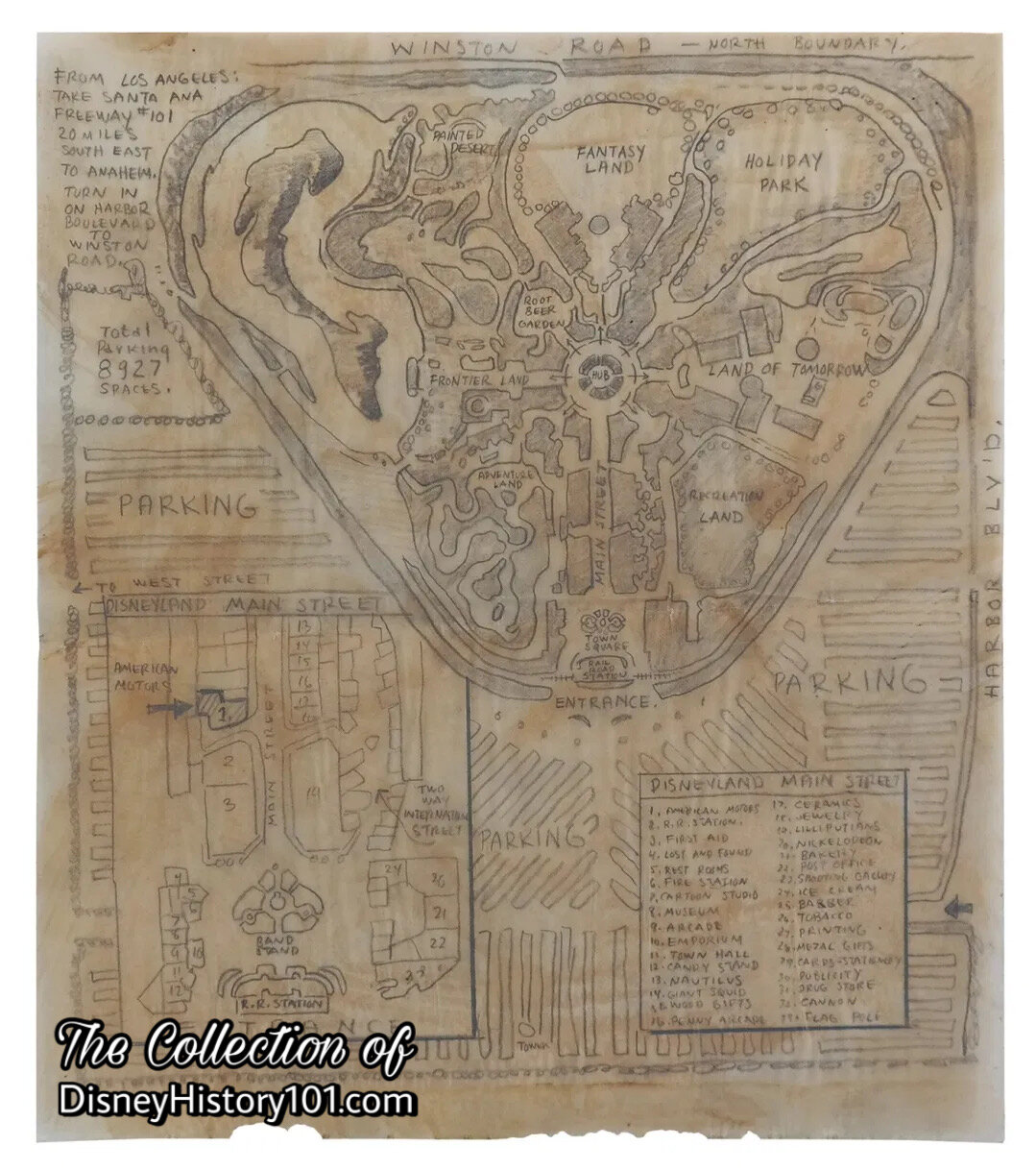
About the time that Nash Ramblers bearing the “Disneyland Insignia” navigated the acreage that would become Disneyland, this (construction-era) hand-drawn Disneyland map (pictured above) highlighted the proposed location of an American Motors exhibit on Main Street, before it was decided to house it inside of a more-than-3,000-square-foot exhibit hall in Tomorrowland! According to “A Complete Guide to Disneyland” (published 1956), “American Motors presents an exciting travel picture on a 360 degree movie screen.” A press release of June 27, 1955 described the experience as “an advanced motion picture development… consisting of a continuous image focused on a 360-degree screen… introduced at Disneyland Park on July 17th by American Motors Corporation, producer of Hudson, Nash, and Rambler automobiles, Kelvinator appliances.” This attraction was reckoned among “Disneyland rides and amusements” that “will delight the very young, the teen-ager, young married couples, the middle-aged, and grandparents alike,” as some of the Vintage Views testify [Anaheim Bulletin “Premier Souvenir Edition - Walt Disney’s Magic Kingdom - Disneyland” Insert ; Friday, July 15th, 1955].
George Romney (President) commented: “This combination of photographic skills and entertainment talents promises an unusual spectacle for visitors to Disneyland. We're happy to have a part to play in making Circarama possible. As it represents added pleasure and value for the public, sponsorship of the Circarama is another forward step in our program to make American Motors mean more for Americans.”
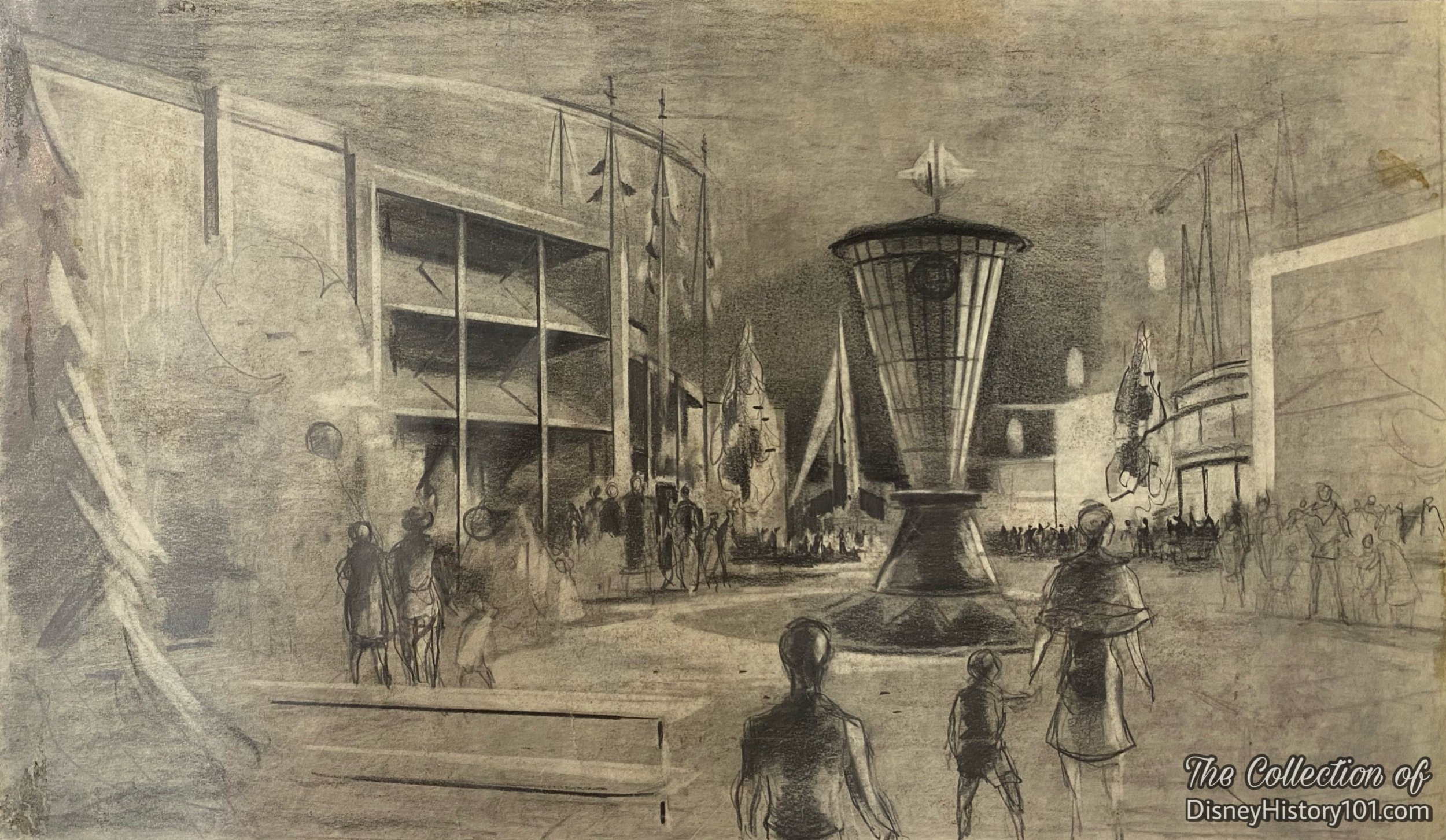
“Installation”
While Disneyland was being developed, Walt contracted Ubbe Iwwerks about building a circular theatre screen and a film which could fully surround an audience. Eustace Lycett and Ubbe’s solution was to fabricate a circular horizontal rig capable of holding eleven 16mm Kodak CineSpecial cameras to record the film, and eleven semi-circular screens arranged in a circle (with small gaps in between for projection)! This Circarama process was further developed for Disneyland by Walt Disney Studio technicians.
Air-conditioning controls dust, and a practical mechanical application of the technology was essential in the attraction where projection equipment and film was used.
Installation of the theatrical projection and sound systems was completed by William Ralke’s Ralke Company. According to “Electronics in Disneyland” published in “Radio and TV News” of 1958,"It takes the combined efforts of seven sound-maintenance men employed by the Ralke Company, plus a Projector repairman, to keep all the electronic equipment in proper working condition."
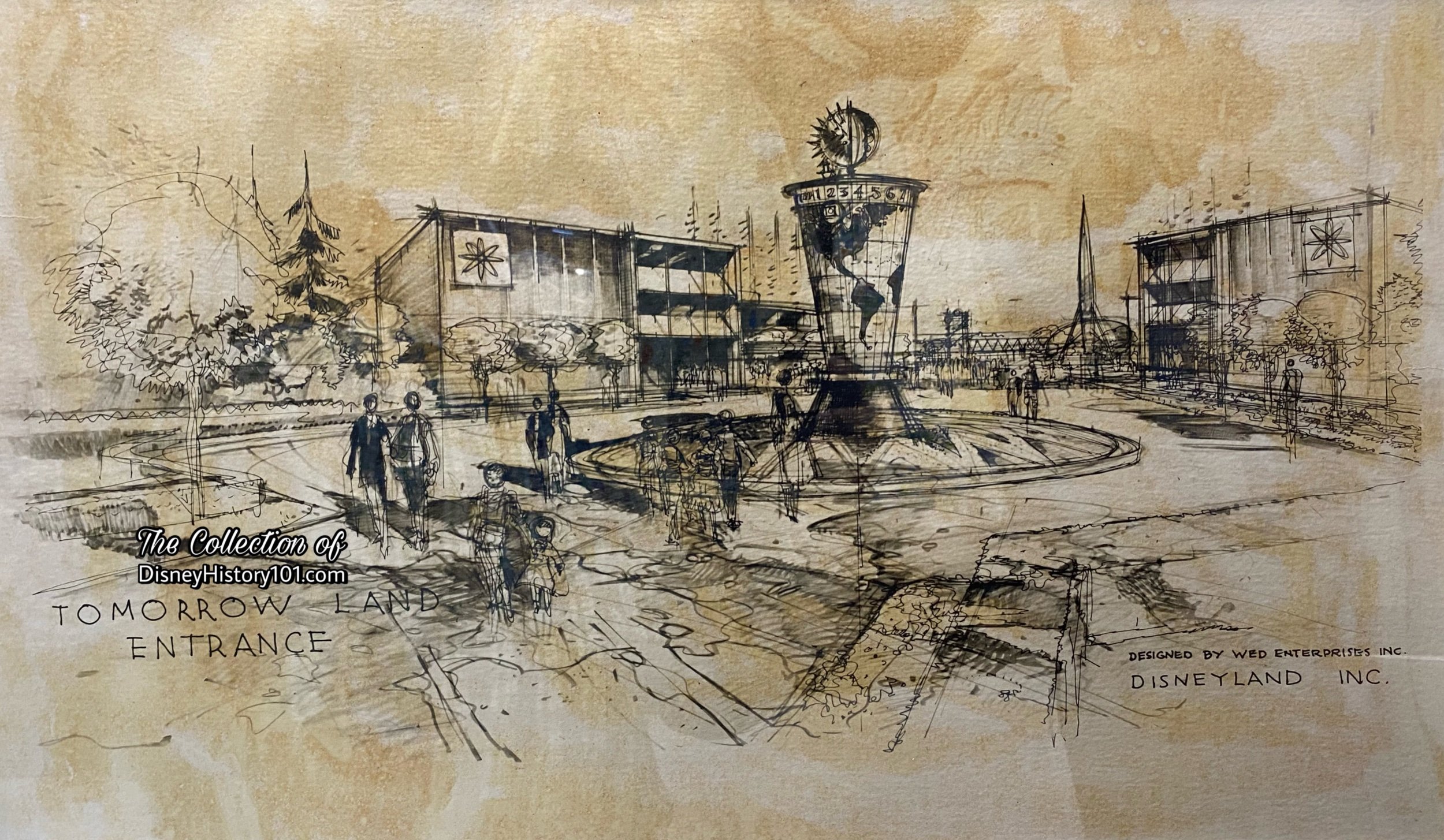
“Press Preview Day and Grand Opening”
Circarama was one of Disneyland’s free attractions on July 17th, 1955. The resultant story was told through a 360-degree circular “screen” measuring the picture eight feet high and 40 feet in diameter. In actually the screen was 11 screens blended to achieve the effect of complete circle vision) shown through 11 synchronized 16mm projectors. The audience enjoyed the feature presentation from the center of the circle inside one of Tomorrowland's “graceful and futuristic” exhibition buildings.
By 1956, it was said that “CirCARama gives the motion picture fan the last word in cinematography,” according to the “Disneyland 1st Anniversary Souvenir Pictorial,” published 1956. According to “Walt Disney Disneyland” (first published 1964), the motion picture places one in the center of the action, so that viewers can see where they are going, and where they have been, and the scenery in-between. The theatrical experience was so unique, that by 1960 it could still be said of the Circarama theater that (five years later) it was still the“only one of its kind in the United States,” according to Vacationland (Summer, 1960).
“The Main Show”
The original attraction was sponsored by American Motors and known as CirCARama U.S.A. The first film - Circarama U.S.A. (A Walt Disney Production) - was filmed in Technicolor while driving around California in a car, with an eleven 16-mm camera-system (developed by Walt’s old friend, Ubbe Iwerks) mounted on the roof of the vehicle.
There were many challenges. For instance, “finding scenery that was beautiful in a 360-degree sweep was almost as difficult. Time after time Ellenshaw would come upon magnificent mesas and buttes on one side only to discover flat, dull desert and electric power lines on the other…
While shooting the short film,… Ellenshaw and his crew drove the car at fifteen to twenty miles per hour. But when they reached stately Wilshire Boulevard in Los Angeles, they wanted to create the illusion of a high-speed chase. They achieved their effect with an old, but effective Hollywood trick. While they travelled down the street at a sedate twenty miles per hour, they slowed the speed at which the film traveled through the camera. This meant that fewer frames of film were shot, and when these fewer frames were projected back at normal speed, everything looked like it was racing by. ‘The effect was astonishing,’ said Ellenshaw. ‘Suddenly we were hotrodders, racing down Wilshire at a hundred miles per hour, jumping out at green lights, and crashing to a stop only inches from the cars in front.‘ The Wilshire ‘race’ became the major highlight of a stunningly unique film experience that thrilled audiences from the day Disneyland opened.” [“Disneyland: Inside Story” by Randy Bright]
The original main show - “A Tour of the West” (also, more appropriately billed “Around the West”) - took audiences on a tour of western America. The film was directed by Peter Ellenshaw (whom Walt had tasked with Artistic Direction over the reshoot of the problematic squid scene featured in 20,000 Leagues Under the sea). Sights included The Grand Canyon, Las Vegas, Newport Harbor, and Monument Valley, all around a “complete 360 degree screen.” Disneyland News (August, 1955) described the show this way: “the picture - eight feet high and 40 feet in diameter - opens with a shot of a bathing beauty walking around the audience to dive into a Las Vegas pool. Cowboys ride from one screen to the next without a break in the continuity, and another portion of the viewer seemingly drives on a busy Los Angeles thoroughfare, watching the traffic both ahead and behind him.”
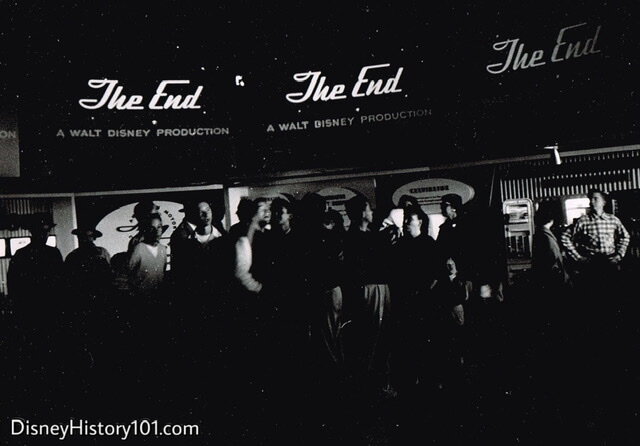
“Post Show”
Lastly, audiences exited through the Exhibit Hall, where the latest American Motors automobiles & Kelvinator appliances were on display! Yes, after the main show ended, guests were free to browse the displays of new Kelvinator products around the sides of the theater. Some young guests may remember the massive 166-lb. Upright Freezer and the cubic-foot Self Defrosting Refrigerator - all in one magnificent, towering unit! There was nothing like it in the world! The Kelvinator appliance came in eight designer colors. American Motors Corporation (“builders of NASH Automobiles, Kelvinator Home Appliances, and Hudson Motorcars”) had previously sponsored episodes of “Walt Disney’s Disneyland”, like “The Disneyland Story.”
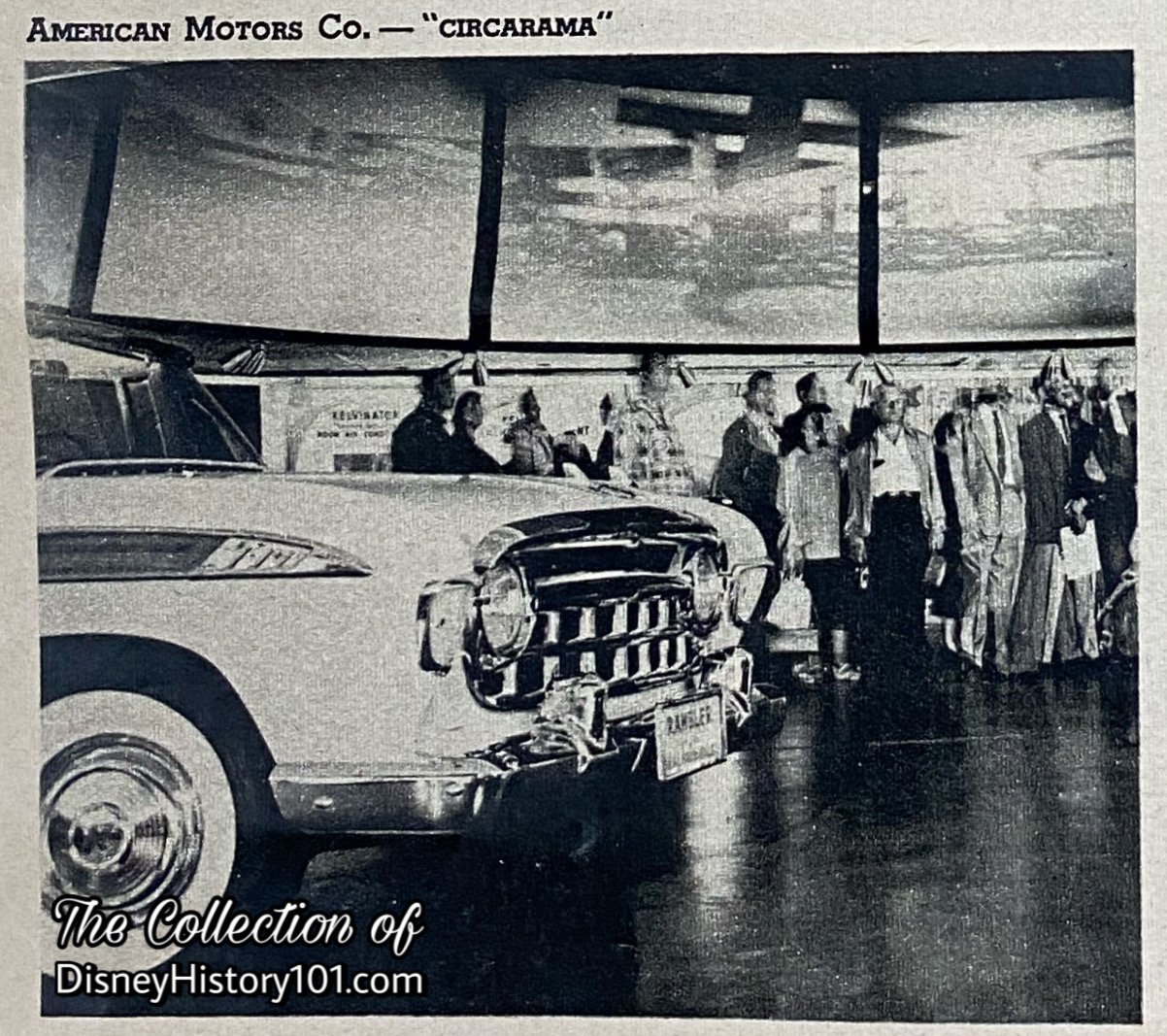
“Cars of Today and Tomorrow - ‘CirCARama’” presented by American Motors Corporation.
If you look closely behind these two guests, you can see several new Hudson, Nash and Rambler automobiles lined up near the thoroughfare leading to the CirCARama theater! Nash-Kelvinator Corporation and the Hudson Motor Car Company merged (on January 14, 1954) to form the American Motors Corporation, and they would show off their new models of motor cars in Disneyland during its first few months. “The World’s Finest Travel Cars” would return to Disneyland, for an advertising campaign that was printed in numerous publications during 1956. Numerous Nash automobiles (like the Ambassador) were featured around Disneyland near the Frontierland Train Station, Main Street U.S.A.’s Plaza, and other locations. This display was contemporaneous with a (March of 1956) Hudson Automobile television commercial campaign which was partially filmed utilizing “Fantasy Land Castle” and “Tomorrowland Space Port” (1/4 and 1/2 scale) sets constructed on sound stages at Walt Disney Studios. Artistic Direction of The Rambler television commercials was performed (c. October of 1955) by Marvin A. Davis (who was previously responsible for some “Mickey Mouse Park” and Disneyland Site Plan drawings).
Now (by 1958), Disneyland Participant Affairs (or, “Industry Sales”) and the American Motors could not negotiate a cooperative agreement to maintain their ongoing relationship, so American Motors would depart from Disneyland on September 28, 1958, at a lease termination expense of $75,923. Nash would continue to have a relationship with Disneyland (even when its sponsorship era ended). As late as 1988, “The Grand Nashional” (Nash preservation and restoration Car Club of America) would hold conventions at Disneyland, featuring a “Nash Banquet” and a “Nash Display” in the Disneyland Parking Lot.
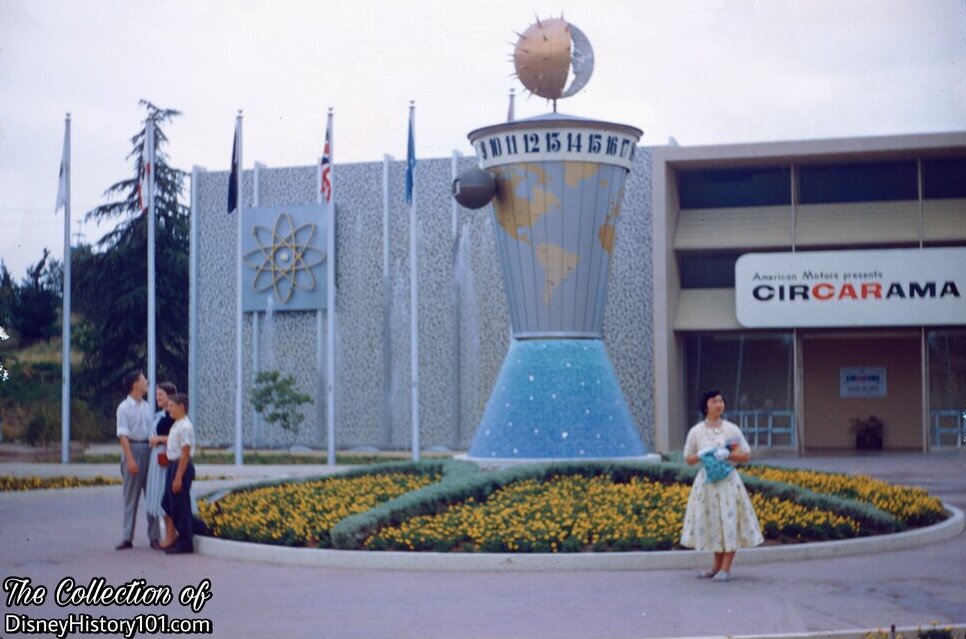
According to Vacationland (published Summer, 1960), CirCARama Theater was housed inside “the graceful and futuristic exposition building at the left of Tomorrowland’s entrance, just past the World Clock”.
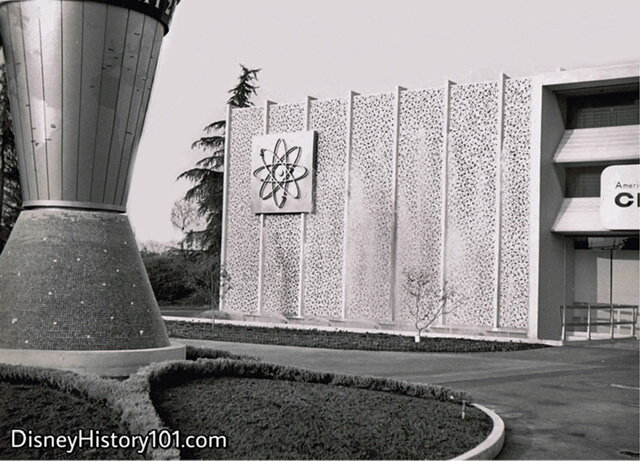
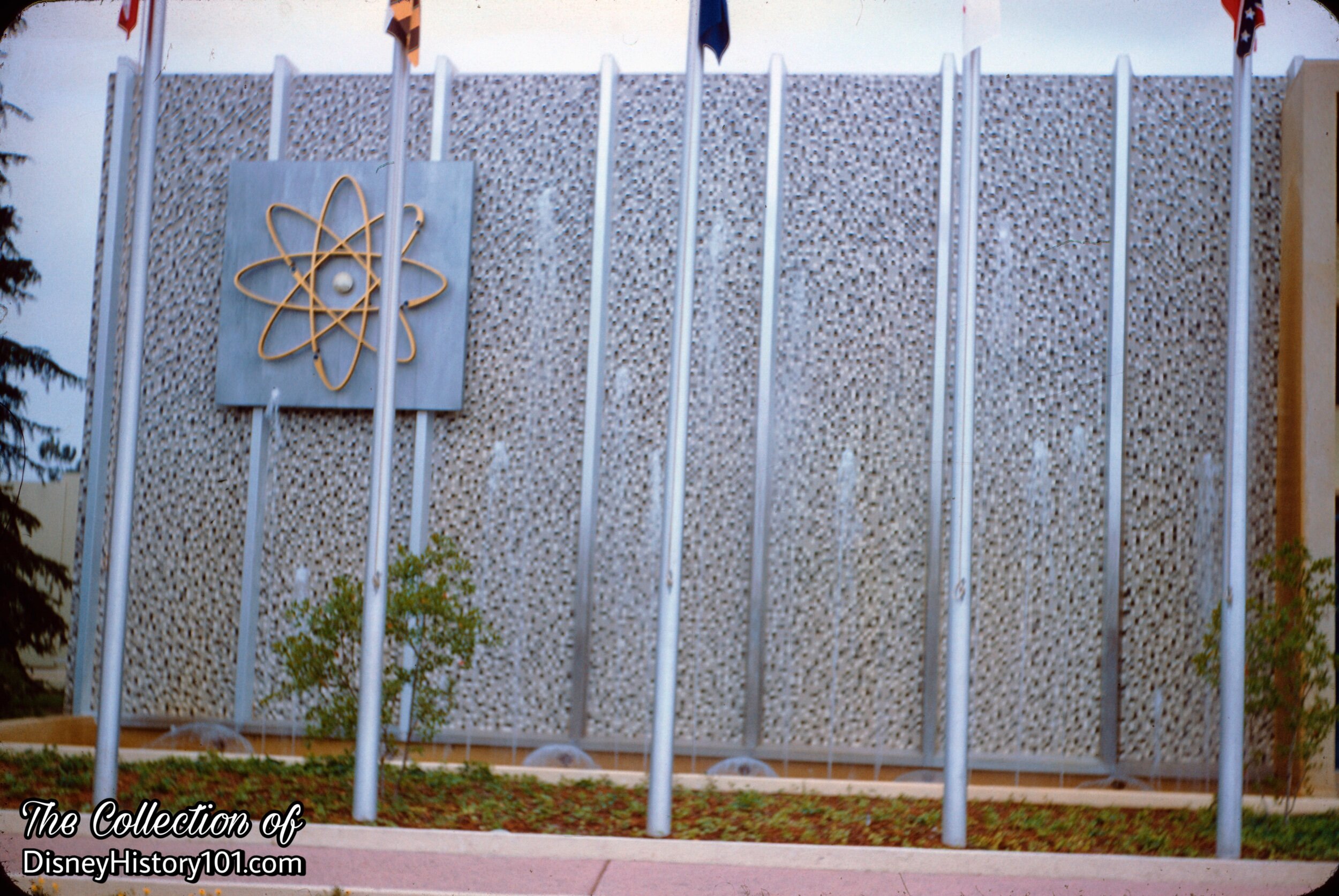
The illuminated fountains above the atomic logo (on the side of the Tomorrowland Exhibit Hall housing the CirCARama Show) were a nightly attraction in themselves!
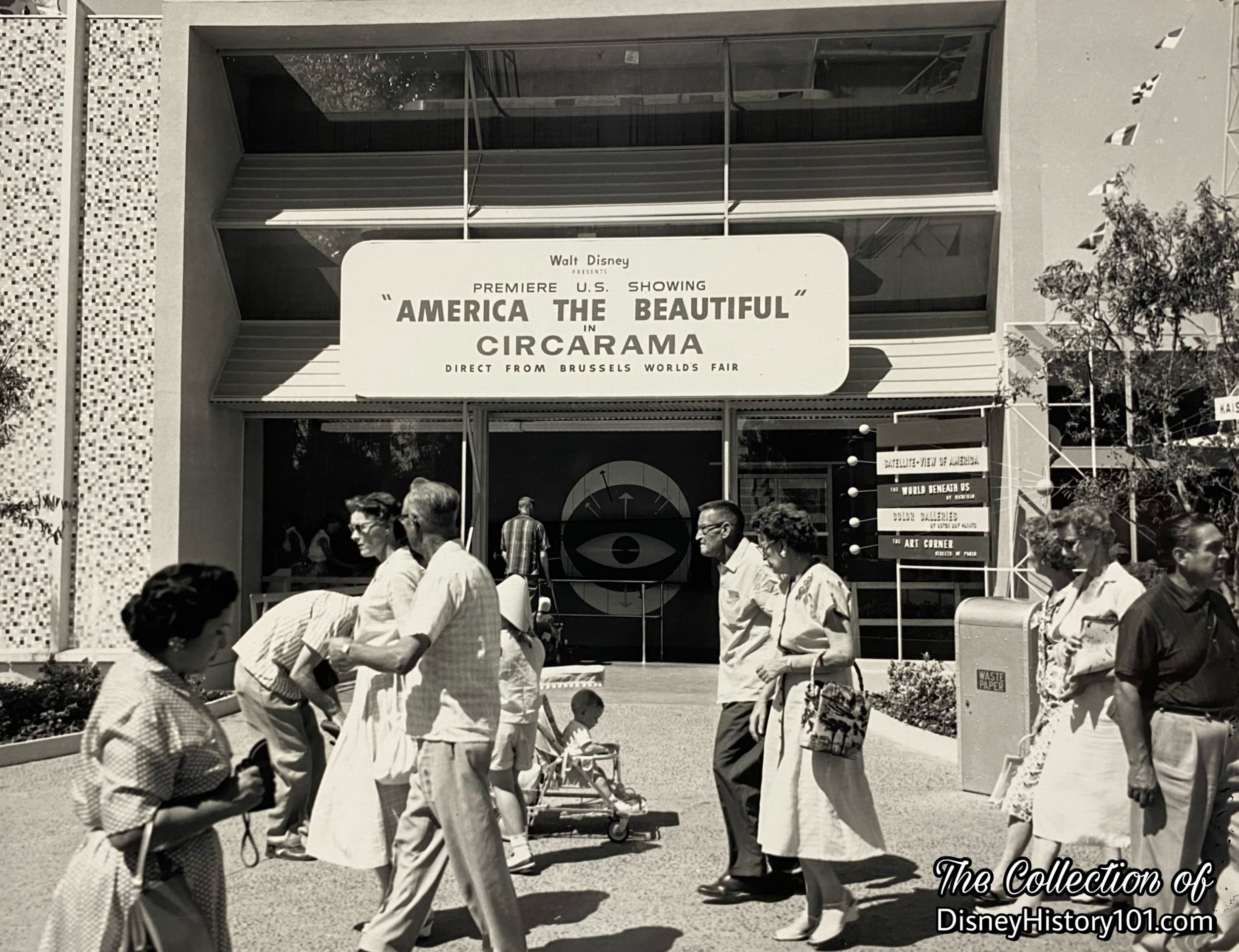
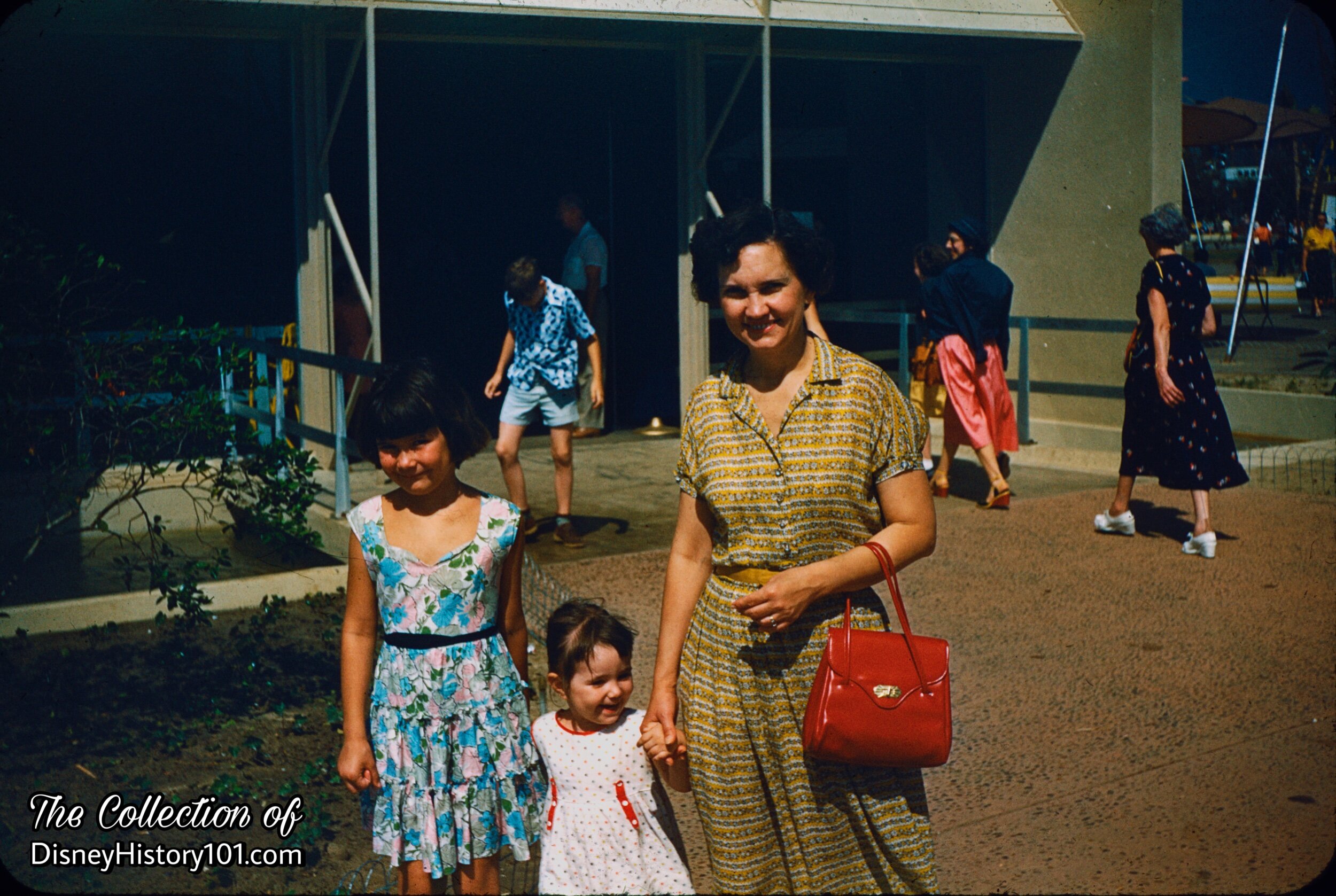
CirCARama (jointly presented by American Motors, Nash, Hudson, and Kelvinator) was presented as a free attraction with its adjoining American Motors Corporation exhibit in Tomorrowland, from June 14, 1959 - March 14, 1960. But, big changes were in store, and the theater was closed several times for remodeling.
During 1959, Disneyland, Inc. remodeled the interior of the CirCARama exhibit. Disneyland Inc. opened Job #032-50-36 and construction commenced on of 240-foot new wall, the installation of a 75 hand rails, relocate two ticket booths, remove an existing partition and remove 17 spot lights. In addition, new drapery material by the Studio (totaling $335.40) and air conditioning by subcontractor Smith Bros. (totaling $6,224) was installed. By 1959, the entire capital of the job (including the general construction overhead and subcontractor costs), totaled $12,562.88. Even after the job was closed, two new portable turnstiles were purchased at a total cost of $1,090, in October of 1959.
After the first month of operation, “institutional and product displays” were already being planned for the exhibit, according to an article published in “The Disneyland News” (Vol. 1, No. 2). These modifications (and others) also included new additions to (and versions of) the popular film which we will now examine.
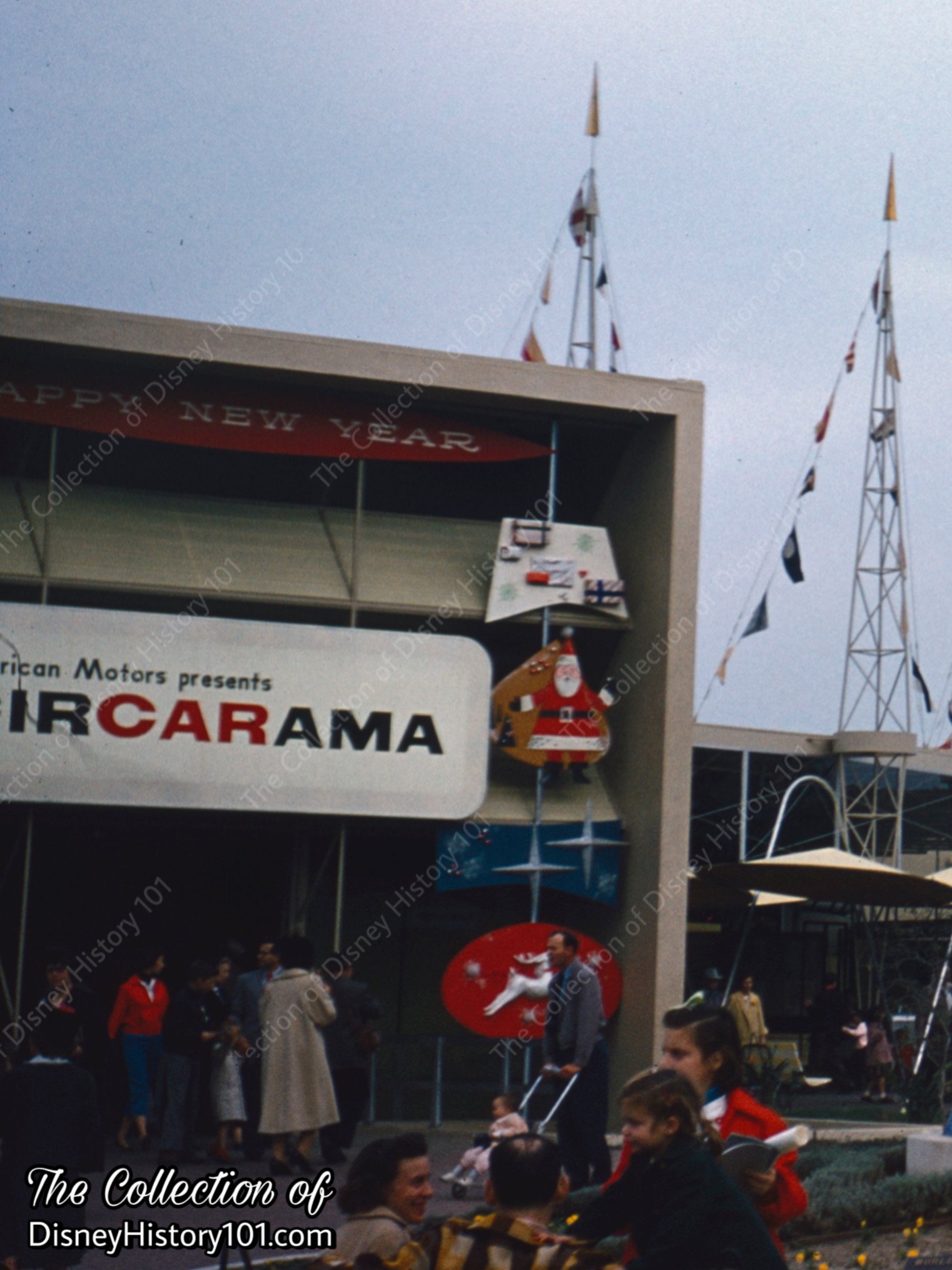
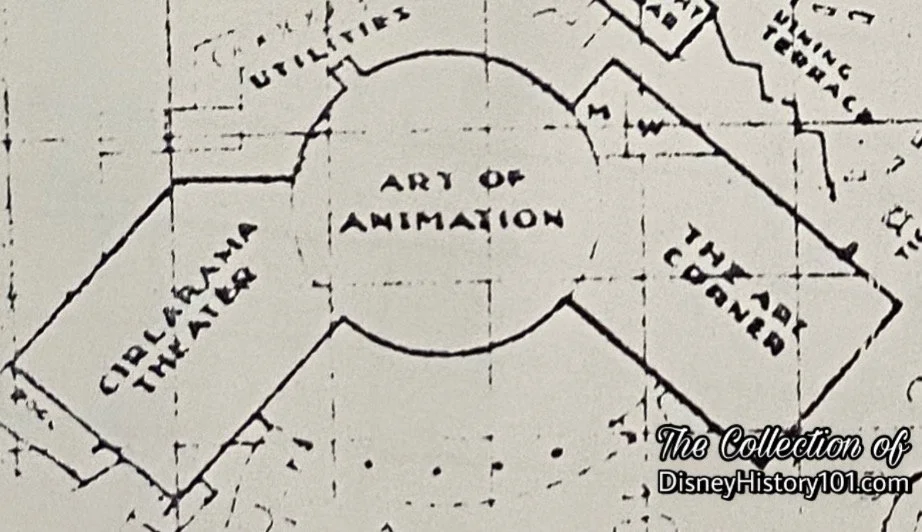
The Circarama process (which was first developed for Disneyland by Disney Studio technicians), was soon to be exhibited at the 1958 Brussell's World Fair, where it would be an important part of the Ford Motor Company’s United States special exhibit in Moscow (yes, Walt had been involved in a Ford-sponsored exhibit before the 1964 New York World’s Fair)! The new film - “America the Beautiful” - was created at the request of the United States Commissioner General Howard S. Cullman, who was in charge of the exhibit. It also became the sensation of Italy’s Turin Fair, according to “Walt Disney Disneyland,” published in 1964.

After the fair ended, a “brand new” Disneyland attraction - a CirCARama film - opened to Disneyland guests on June 14th, 1959! Yes, in place of “A Tour of the West” (or, “Around the West”) was a new main Circarama show - “America the Beautiful,” developed by the Disney Studio and presented by American Motors Corporation. America's magnificent natural and man-made wonders (from East to West) were now on display for Disneyland's guests…in the unique “fast-moving” Circarama film “America the Beauitful.”
The 11 separate projectors and 11 separate screens would bring to life the following presentation : “As the lights dim and the music swells into the stirring refrain ‘Oh beautiful for spacious skies,” the circular screen comes to life with a panoramic view of Mt. Rushmore from the air… [hearlding] the beginning of one of Disneyland’s best-loved attractions, ‘America the Beautiful’,” according to Disneyland LINE (Vol. 15, No. 37). Vacationland (Winter 1961-1962) described other memorable portions of the show this way : “Among the highlights : Washington D.C. at cherry blossom time ; the colonial setting of Williamsburg, Virginia ; the skyline of New York City and the Statue of Liberty ; an aerial view of the Grand Canyon ; a visit to a copper mine ; Ford’s automobile test track ; a bustling Midwest railroad yard ; and the pleasures of sailing in California waters.” The 18-minute film was presented in regular showings throughout the day, across 11 (or “9” according to “The Disneyland Diary”) screens, in the adjacent Circarama theater, “only one of its kind in the United States”, according to Vacationland (Summer, 1960).
“55er” Jim Harman remembered “the opening of AMERICA THE BEAUTIFUL, with its… screens. We had… men up there, behind the screens, trying to keep it working. The film would break and pile up all over the place!”
In addition to a new main show (sponsored by American Motors), a brand new Bell System Exhibit was housed in the pre-show and post-show halls on May 14* or 19, 1960 (*according to “Disneyland Rides & Attractions and Attendance Report,” 1981, page 50)!
“Entering visitors are given a demonstration of cross-country Direct Distance Dialing by Bell System representatives, then invited to view the wide-ranging story of communications, told through a dimensional, curving mural that carries out the theme… from sea to shining sea.” It was so popular that Bell Telephone’s 2 millionth guest had visited by July 16th , 1961. According to Disneyland Backstage (Summer, 1965), this original exhibit held many “cold hard facts of merchandising,” but within a few years would develop to accentuate “the beauty of outer space and the fascinating look into the future of our lives of leisure and fun.”
Two years later (in 1962), Disneyland Participant Affairs and Participant American Motors could not negotiate a new cooperative agreement to maintain their ongoing relationship. New sponsor Bell Telephone Company picked up the main show’s sponsorship, inviting guests to watch the Circarama film presented in Circle Vision. Yes, just through the Avenue of Flags tribute to the states of the union sits Tomorrowland’s exhibit halls, and a tribute to “America the Beautiful”!
According to Vacationland (Fall, 1962), “The Bell System, whose 360-degree Circarama film “America the Beautiful” enjoys popularity with both adults and children, has turned its exhibit into a yesterday, today and tomorrow of the telephone world. Called ‘Family Jones and the Telephones,’ its a graphic history from the early days to the Telstar communication satellites.”
CirCARama was popular and nearly had a legacy through a new theme park that was being developed by Walt Disney Productions. By 1963, Marvin A. Davis and W.M. Tuntke had prepared drawings of a “Jean Lafitte Adventure” (with bateaux; also called the “Blue Bayou Boat Adventure”), a “Lewis and Clark Boat Adventure” (with bateaux), “New Orleans Street” (with restaurants and shops), a “Mark Twain Type Restaurant”, an Audio-Animatronics Theatre (with a 750 audience capacity), two 6-minut Darkrides, and two Circarama Theatres (a 200 degree and 360 degree theatre) were being proposed for the Walt Disney Productions St. Louis Project.
“Pre Show”
The Bell Systems Exhibit reopened on May 19, 1965, this time around with less “cold hard facts of advertising” and more “beauty of outer space and the fascinating look into the future of our lives of leisure and fun”, according to Backstage magazine (published Summer, 1965). In place of Shiny new Nash automobiles and Kelvinator appliances, the free exhibit now featured the latest decorator phones around CirCARama’s floor. In 1964, an AT&T Picturephone (located at the New York World’s Fair) was connected to an AT&T Picturephone located in the CirCARama free exhibit at Disneyland!
During this time, the Pre-Show Room (still sponsored by the Bell System communications network) invited guests to see the latest innovations in telephone communications, by presenting a demonstration of cross country Direct Distance Dialing, performed by Bell System representatives. The author of the “Today’s News From Tomorrowland” article published in Disneyland Backstage magazine (Summer, 1965) shares their overwhelming thoughts on some of the Pre-Show displays, “Our picture phone has been a source of many wonderful conversations plus seeing our own Disneylanders talk with us from the Bell System Exhibit at the New York Word’s Fair. I’m sure that we have talked to at least 20 or 30 of them, all having fun with one of our many thoughts for the future. As we think of space and the fascinating future it holds for all of us, we are able to show you how our electrical impulses beam to Telstar - Awe-inspiring, I must say. For another look into the the future we have our Electronic Switching Office which will enable each and every one of you to use our touchtone dialing. Just buttons to push. That’s all, bt what it will do is amazing. For example, your poor little dog has been in the house all day and needs a little exercise. Just key the abbreviated numbers and out he comes. What a life. Last, but certainly not the least, our wonderful show, ‘America the Beautiful’, still an outstanding attraction.” For a finale, above the post-“show” piece, the “wide-ranging story of communications” was explained through an expansive mural that carried out the theme - “from sea to shining sea”!
Not pictured, was the Electronic Switching Office - an amazing invention (far ahead of its time, and an early form of something that we use in the present) - “which will enable each and every one of you to use your touchtone dialing. Just buttons to push. That’s all, but what it will do is amazing. For example, your poor little dog has been in the house all day and needs a little exercise. Just key the abbreviated numbers and out he comes. What a life.”
During this era, Opal Henn (known as “Mother Henn”) made a unique contribution toward the Disneyland Show as she managed the Attractions Hostesses of the Bell Telephone Exhibit. Opal interviewed each and every one (all 245 girls from 1963 to 1966), including Joyce Williams (who served as an Assistant Manager until she was succeeded by both Barbara Steffen and Helen Brenton during the summer of 1966). Opal also oversaw such details as their performance, checking their makeup, and making sure that they were in their proper positions and smiling at guests. Opal unwittingly began a tradition of CirCARama (and Circle Vision) female Leads. She was succeeded by Mary Hanson (who managed the exhibit for 10 years during the 1970s), and then Helen Baker (who became manager in 1980, and was performing this role by 1984!
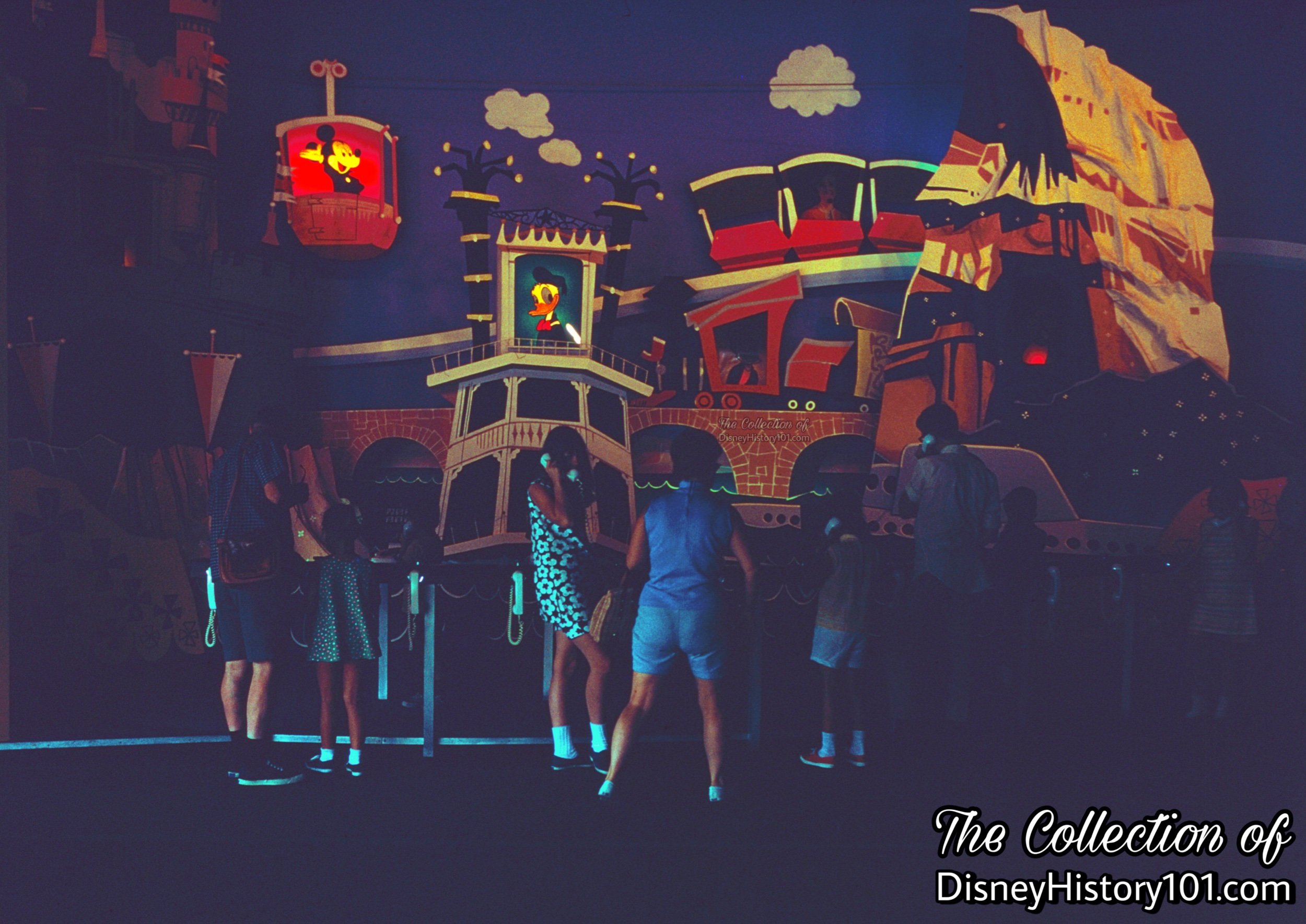
Call up Mickey Mouse, Goofy, Donald Duck, and Snow White on "Small Fry" phones! Mom and Dad can listen too. “Their portraits light up as they deliver their pre-recorded messages to callers.”
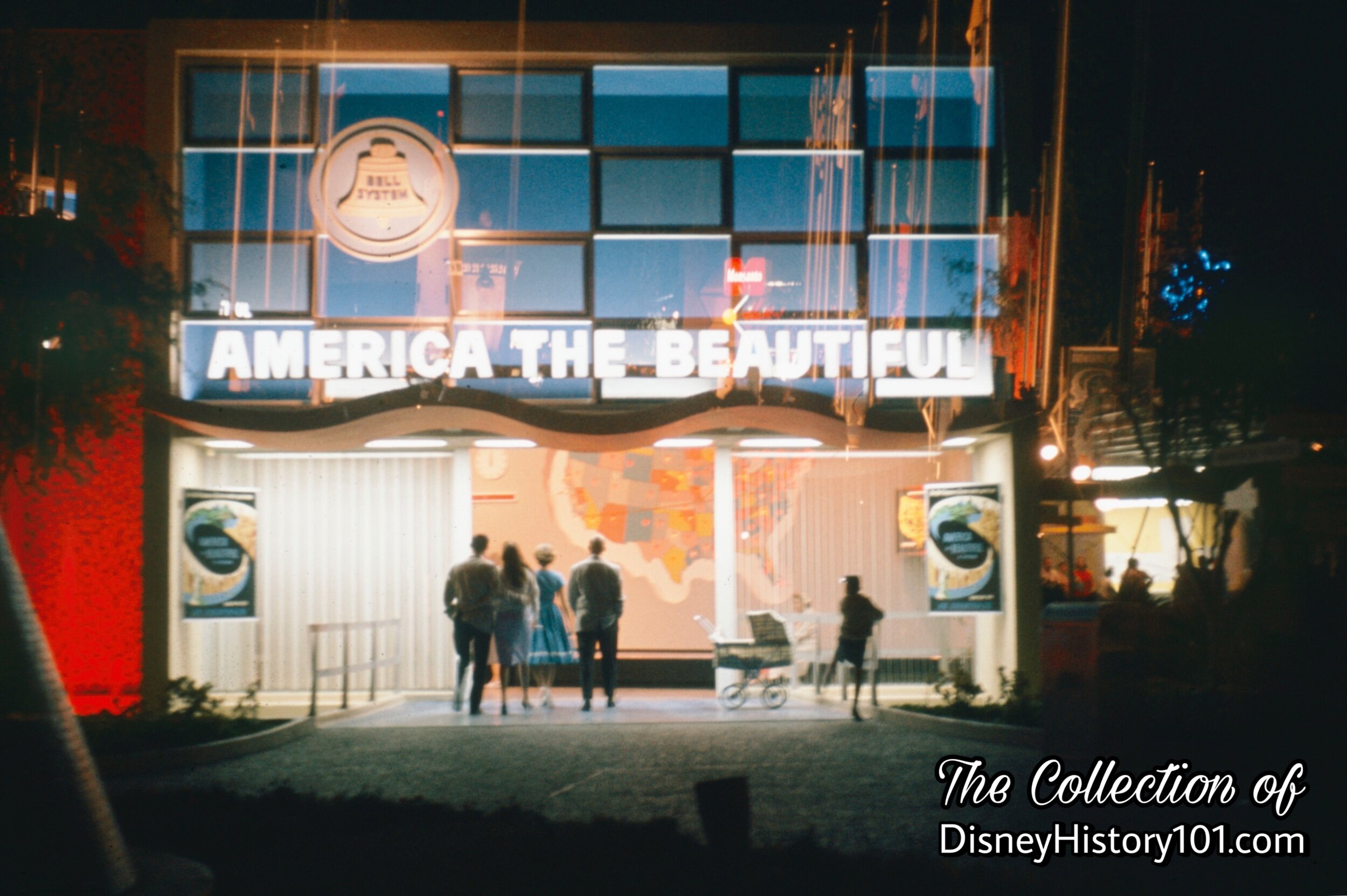
“The Bell Telephone Hour”
During Bell Telephone’s Disneyland sponsorship era, there were several corporate sponsored television shoots that took place at Disneyland! “The Sounds of America” an original musical (part of the “Bell Telephone Hour” television program) was entirely filmed at Disneyland! This was the first time that a big all musical show would originate at Disneyland and employees who worked on Mondays and Tuesdays when the Park was closed would be given a preview of sorts. According to The Disneylander VOL. 4, NO. 10; OCTOBER - NOVEMBER, 1960: “Those of you who man the fort these lonely winter Mondays and Tuesdays will have a show of your own to brighten the day because preliminary test filming for a Bell Telephone Hour TV program has begun here at the Park. In case you're interested and have the time to get a back stage glimpse of what goes on in putting a TV spectacular together, the tentative rehearsal schedule for the production is as follows: Monday, Oct. 24th- Sleeping Beauty Castle; Monday, Oct. 31st Main Street and Monday, Nov. 7th- Entire Company. On Saturday, Nov. 12th, the big TV equipment will move in and the show will be video-taped on Monday, November 14th. This Bell Telephone Hour will be the first big all musical show to originate at Disneyland and will be shown on NBC around Easter.”
“Executive Producer Barry Wood had the sounds - music and lyrics by Gordon Jenkins, and ‘film scored assays’ created by documentary-film maker Irving Jacoby - but he needed some sights to go with the sounds. He concluded that Disneyland park, with its life-size reconstructions of Americana, would provide a suitable backdrop for the show, which recalls the sound’s of America’s past. The problem. Thousands of people swarm over Disneyland all day long, five days a week. How can you make a musical there? The solution. Rehearse at night, under lights, and from sunrise to sunset Mondays and Tuesdays, when Disneyland is closed to the public. Then, finally, film and tape the show in daylight. It took six weeks of this schedule to complete ‘The Sounds of America’. The result will be seen this Friday (Feb. 17). To Hermes Pan’s choreography, four dancers - Gene Nelson, Jacques d’Amboise and identical twins Jane and Ruth Earl - will be dancing in Disneyland”, according to “Dancing in Disneyland” (an article published in TV Guide, for the week of February 11-17, 1961).
Special records were sent to editors of television stations, requesting nine minutes of their time and the use of their record players.

The Bell Telephone exhibit at the entrance to Tomorrowland (which closed briefly, and re-opened on May 19, 1965) also served as another filming location, this time for a Jack Denove Production (during the Fall of 1965). By 1965, Bell Telephone System was accounted among Disneyland's 29 Institutional Lessees.
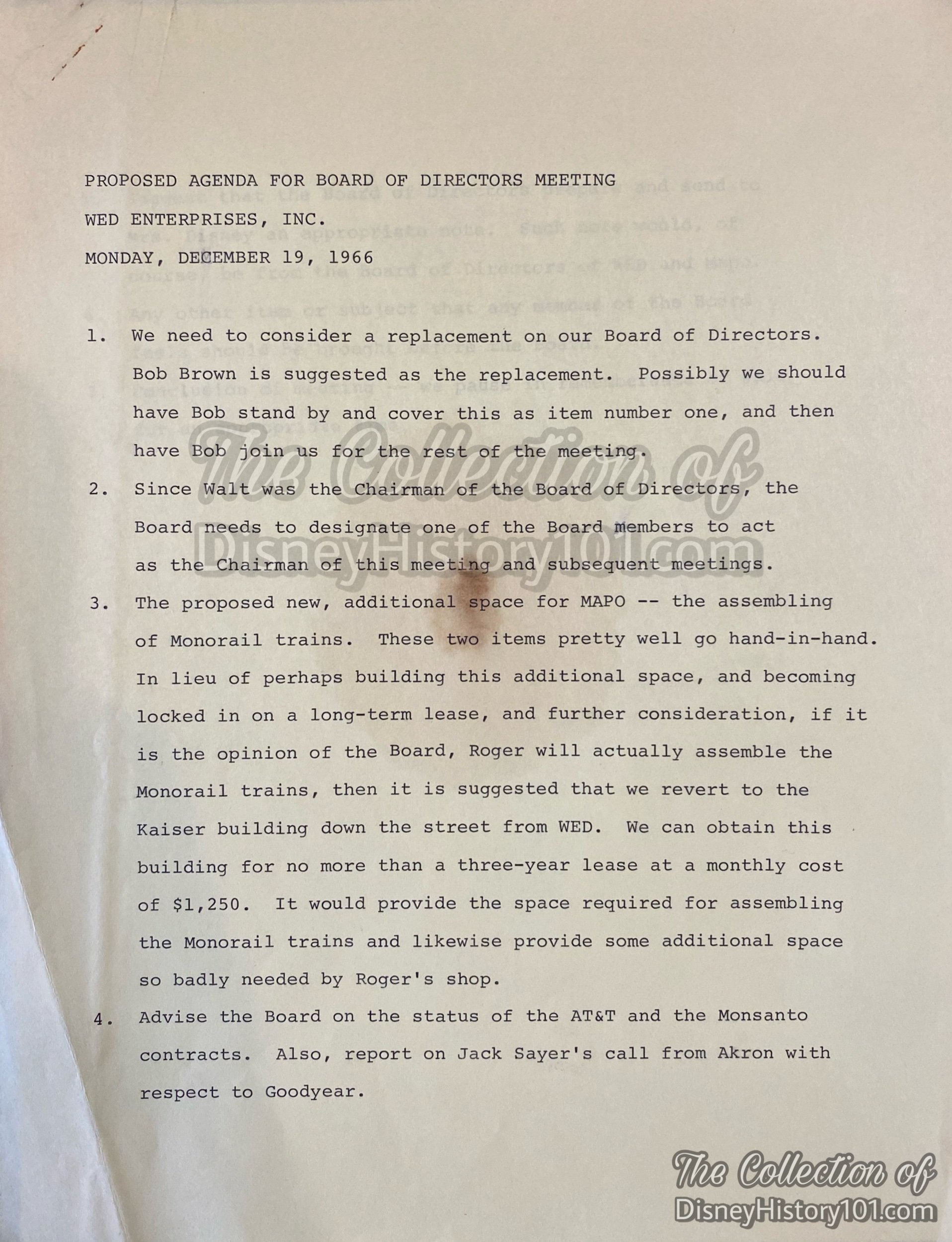
A WED Enterprises meeting held four days after Walt’s passing would address the AT&T contract.
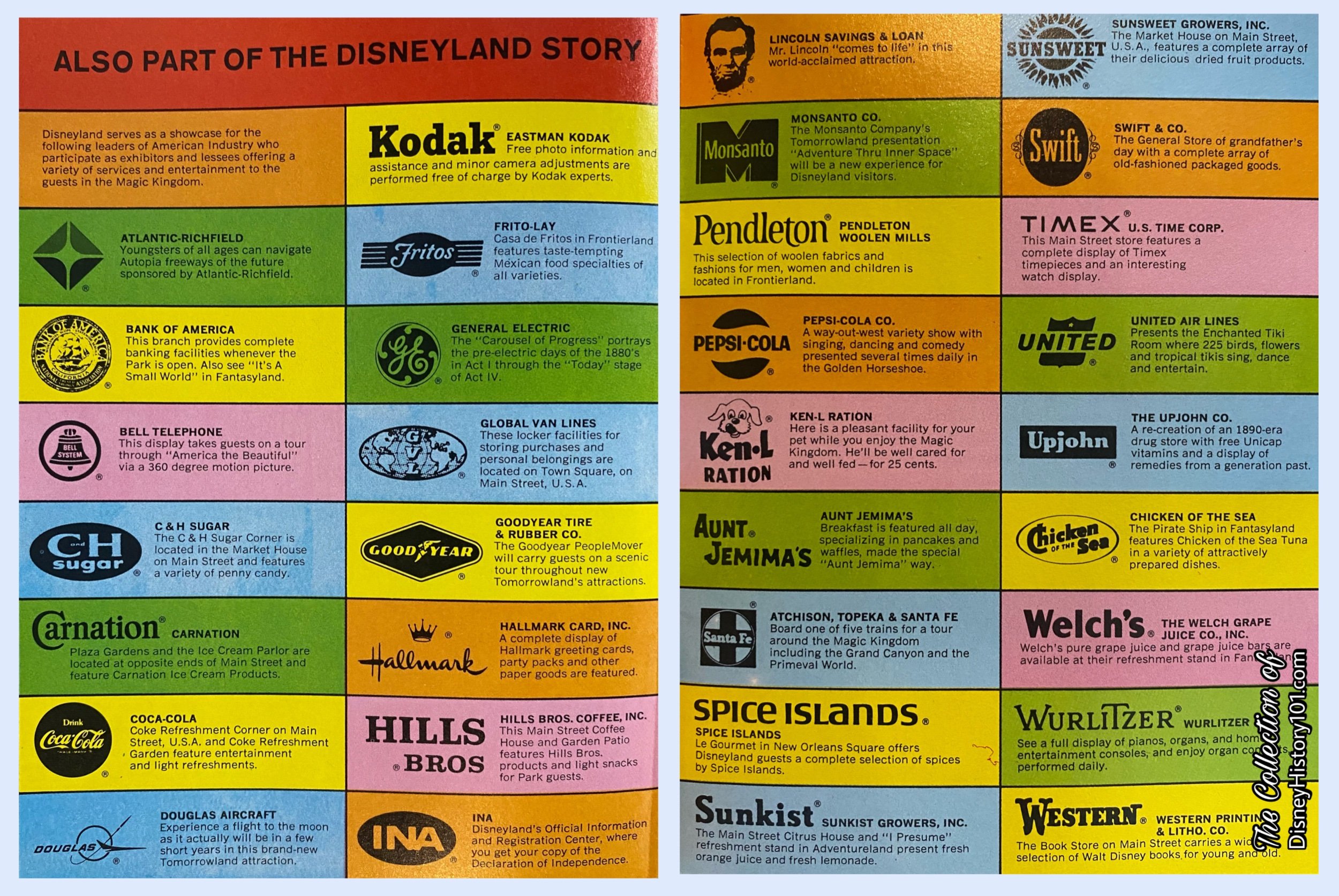
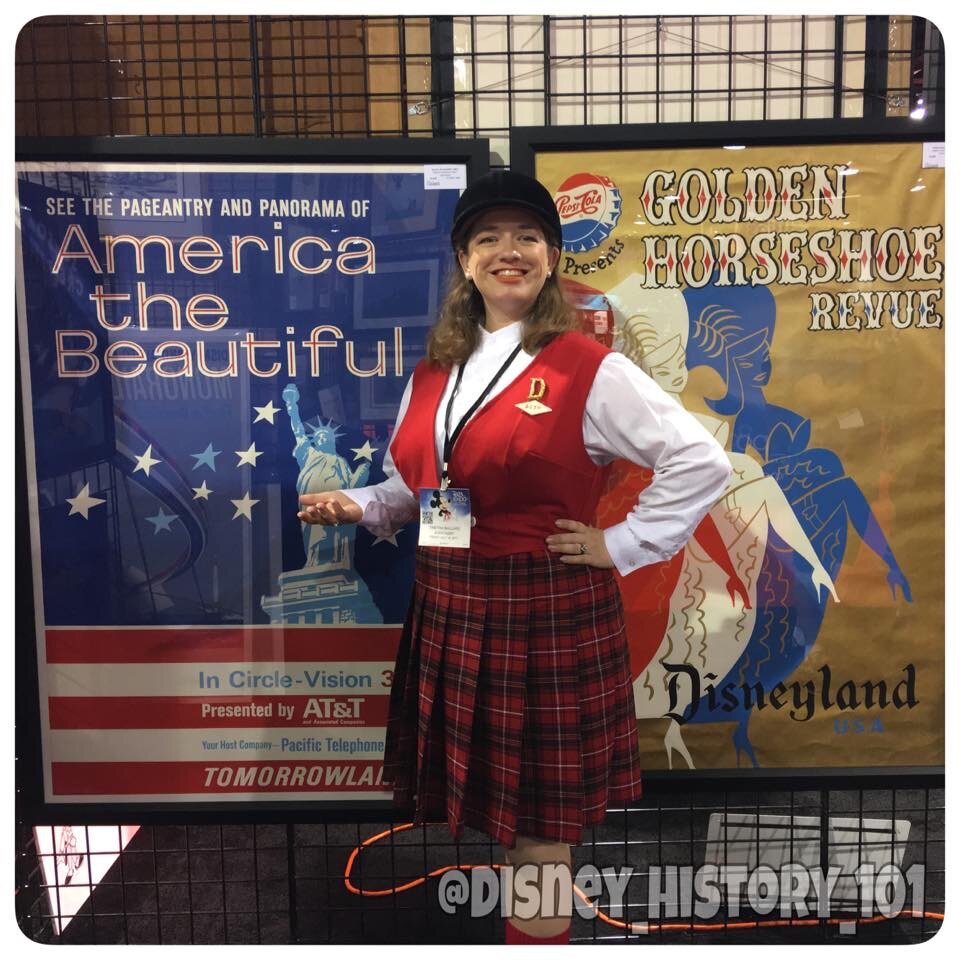
America the Beautiful (also occasionally billed as CirCARama U.S.A.) would continue to run five more years, under its new sponsorship, before the Circle - Vision Theater closed September 5, 1966 or January 3, 1967. [*according to “Disneyland Rides & Attractions and Attendance Report,” 1981, page 50]
After a short rehabilitation, the exhibit and an updated version of the film would run again, starting on June 25, 1967. Pictured above, is an America the Beautiful attraction poster, similar to those ones seen as you passed through the tunnels leading to Main Street U.S.A. (from 1967 to 1984)!
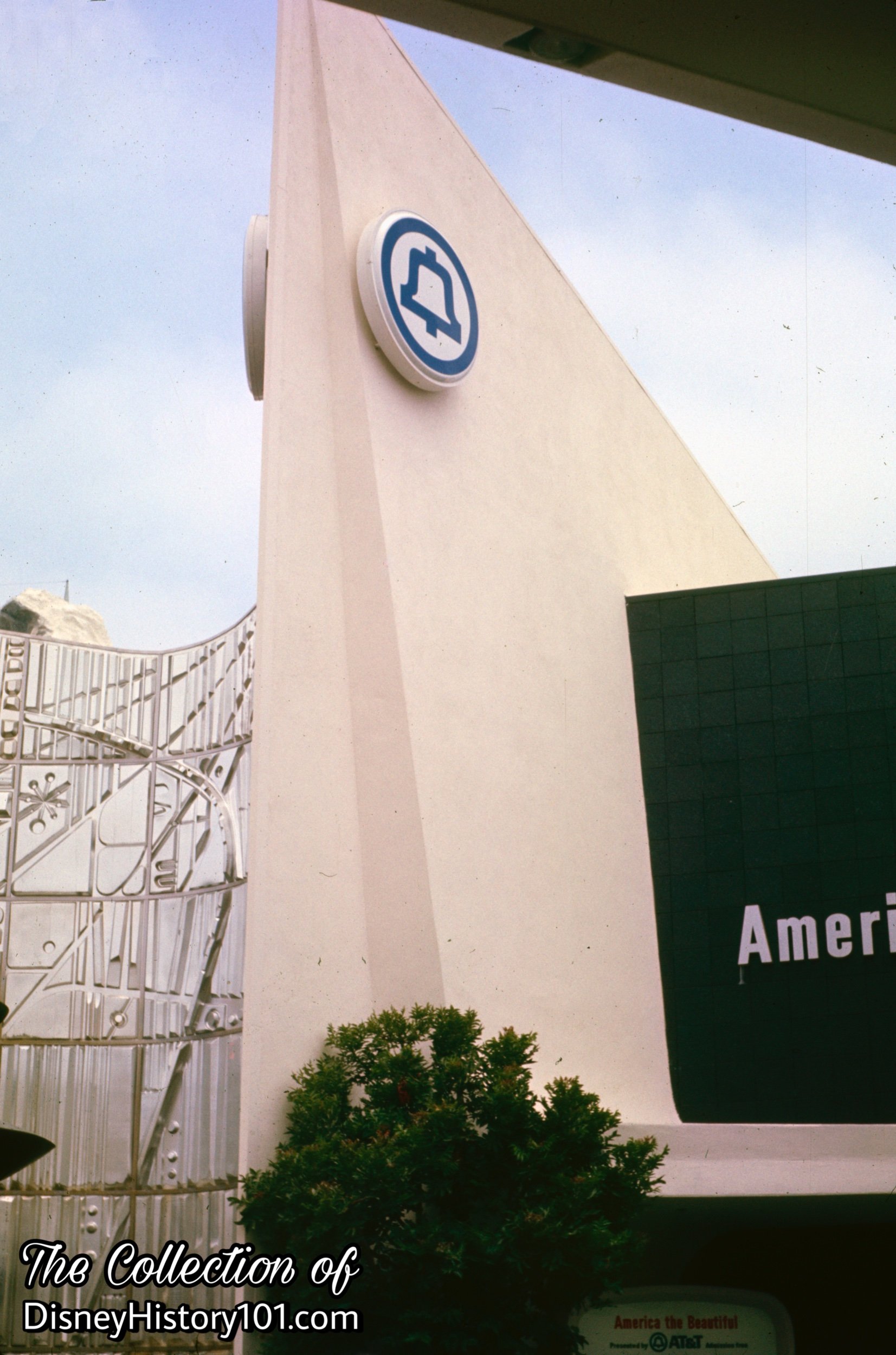
According to the “Walt Disney Productions Annual Report to Shareholders and Employees Fiscal Year Ended October 2, 1965” mentioned “three present lessees… discussing expansion of their already popular attractions.” Among these was “the Bell System’s ‘America the Beautiful.’” A new Circle Vision 360 film was being considered with “an immediate program of follow through”ready to be employed. In one Disneyland Inter-Office Communication dated November 9th, 1965, Jack Sayers informed all concerned : “We are recommending a new Circle-Vision 360 attraction for Tomorrowland and have discussed this at length with AT&T and PT&T. A preliminary budget has been submitted to them. The agreement would be for five years with an option for five additional years at a fee of $100,000 per year. Bell would assume cost of the facility, the film equipment, etc. A meeting with telephone executives from New York and San Francisco is scheduled for next week.”
Soon, during 1966, WED Enterprises, Inc. opened project (No. 0052) for Bell System “America the Beautiful.” Internal materials published 1966 described: “Bell Telephone Exhibit - A new movie, Circle Vision 360, is currently being filmed, and this time in 35 mm. The new auditorium will ‘stand’ approximately 1,000 guests as opposed to the current capacity of 250.”
As late as August 25, 1966, designs and drawings had been prepared for a Utility Tunnel that would connect the North end of Bell System Building to the General Electric exhibit, a Character Restaurant Basement, a Matterhorn pump area, and East End of Tunnel with access elevator. Work continued on this four phase project at least up to September 27, 1966.
By November 17, 1966, the WED Enterprises, Inc. Board had approved a budget of $1,732,000.00 ($798,000 for the facility; $934 for the show; including a $30,000 write-off) for project #0052 - the Bell System Exhibit in Tomorrowland. According to the Summary of Project History, the scope of this was a “Facility to house the Bell System Theatre including entrance lobby, pre-show area, and exit lobby, 360 degree ‘Circle-Vision’ Show.” Construction was to begin October 1, 1966 and completed in May 1, 1967.
Many Disney personnel who were present, remember the tragedy that occurred on Thursday, December 15, 1966, at 9:35 a.m., when their brother, their friend, and leader, Walt Disney died. Soon after, Roy O. Disney, President and Chairman of the Board of Walt Disney Productions addressed the staff with an official statement, in which it was conveyed:
“Walt Disney spent his entire life and almost every waking hour in the creative planning of…Disneyland… and the other diversified activities that have carried his name through the years. Around him Walt Disney gathered the kind of creative people who understood his ways were always unique and he built a unique organization. A team of creative people that he was justifiably proud of… Many have been with us for over thirty years. They take great pride in the organization which we helped to build. Only through the talent, labor ad dedication of this staff could any Disney project get off the ground…
Much of Walt Disney’s energies had been directed to preparing for this day. It was Walt’s wish that when the time came he would have built an organization with the creative talents to carry on as he established and directed it through the years. Today this organization has been built and we will carry out this wish.
Walt Disney’s preparation for the future has a solid, creative foundation. All of the plans for the future that Walt had begun… the expansion of Disneyland… will continue to move ahead.”
With Roy’s words of Walt’s wishes in mind, not even a week after the passing of a friend and leader, Walt Disney, the WED Enterprises, Inc. Board of Directors met for a special meeting agenda on December 19, 1966. There, the fourth subject involved advising “the Board on the status of the AT&T… contracts.” Soon, the American Telephone & Telegraph Company would invest $27, 575.74 into the new January 1967 exhibit and show for Tomorrowland! The result was that Circle Vision 360 was accounted among eight new and exciting Disneyland attractions which carried total Park investment to $95 million. The newest United States of the Union would be included in the Show - Alaska and Hawaii.
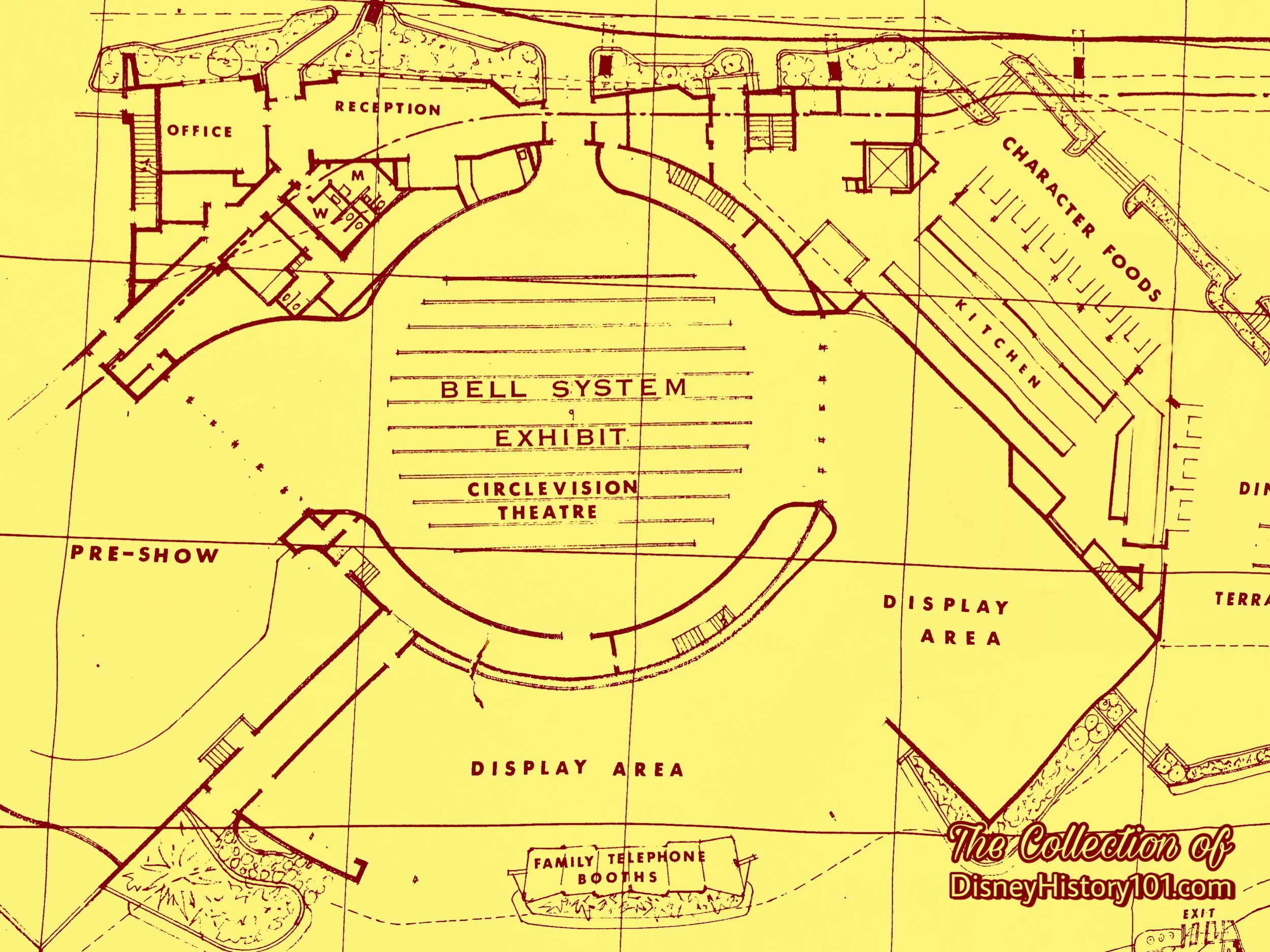
Unseen, Disneyland Sound Mechanics and Projectionists are perhaps the best hidden of the craftsmen in Maintenance. They are truly “backstage” but you'll find them above stage at the beautiful Bell show.
A person coming to Disneyland would soon be able to enjoy world renowned free shows, such as Monsanto's Hali of Chemistry and home of the future, Bell Telephone's Exhibit, “America the Beautiful,” and Pepsi-Cola's Golden Horseshoe Revue.
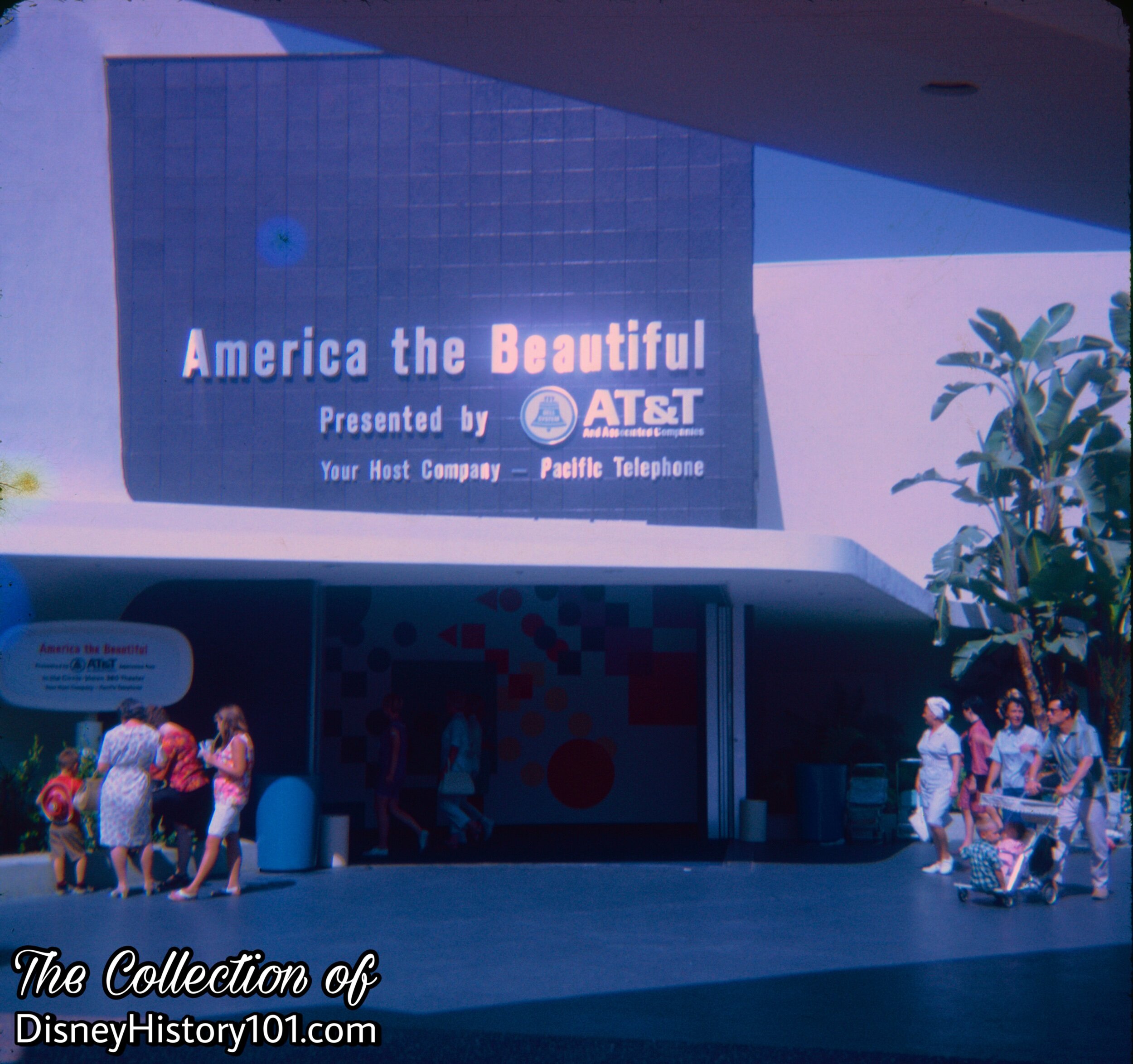
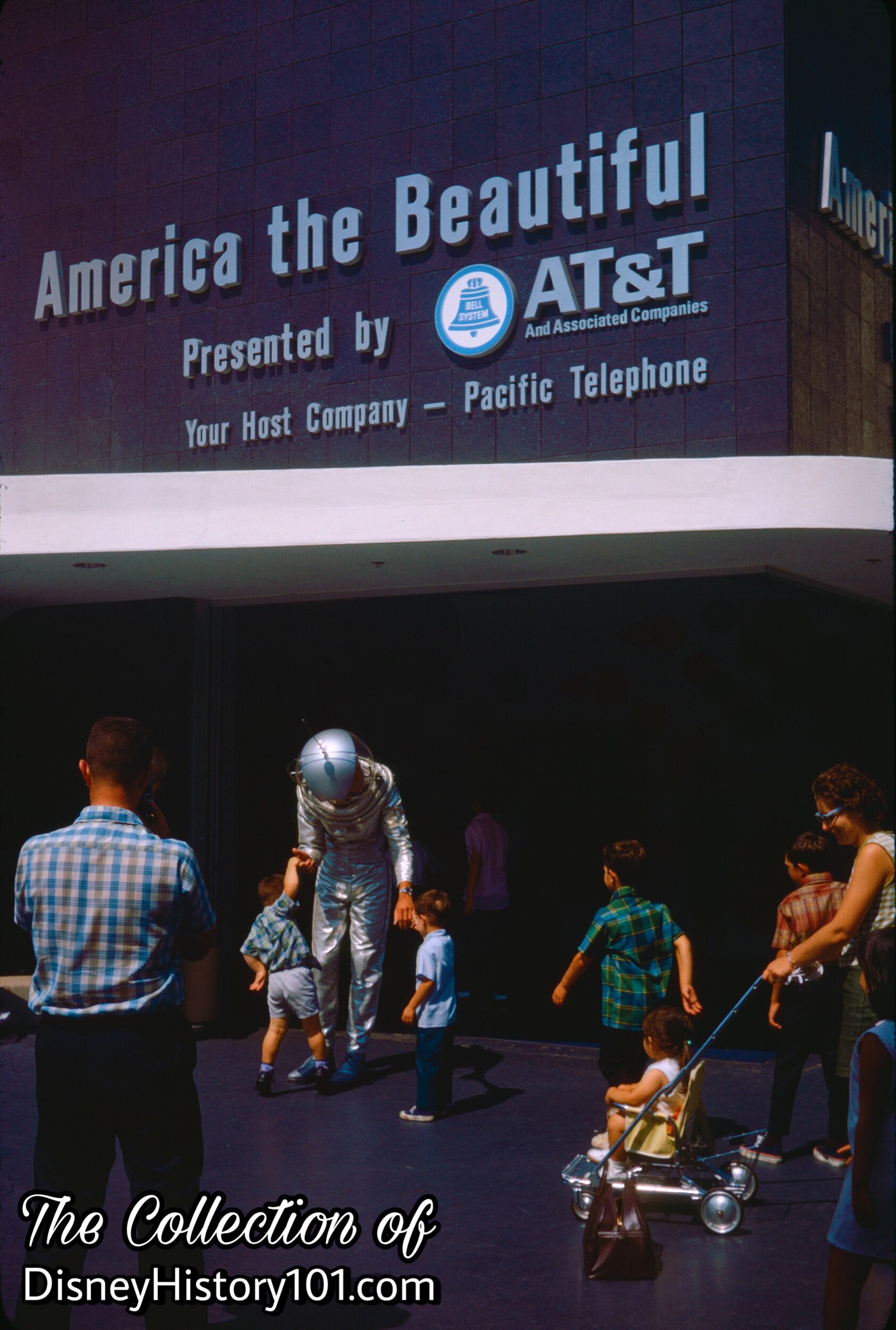
A real “down-to-earth” Tomorrowland Spaceman greets a couple of young future cosmonauts near the the entrance to America the Beautiful!
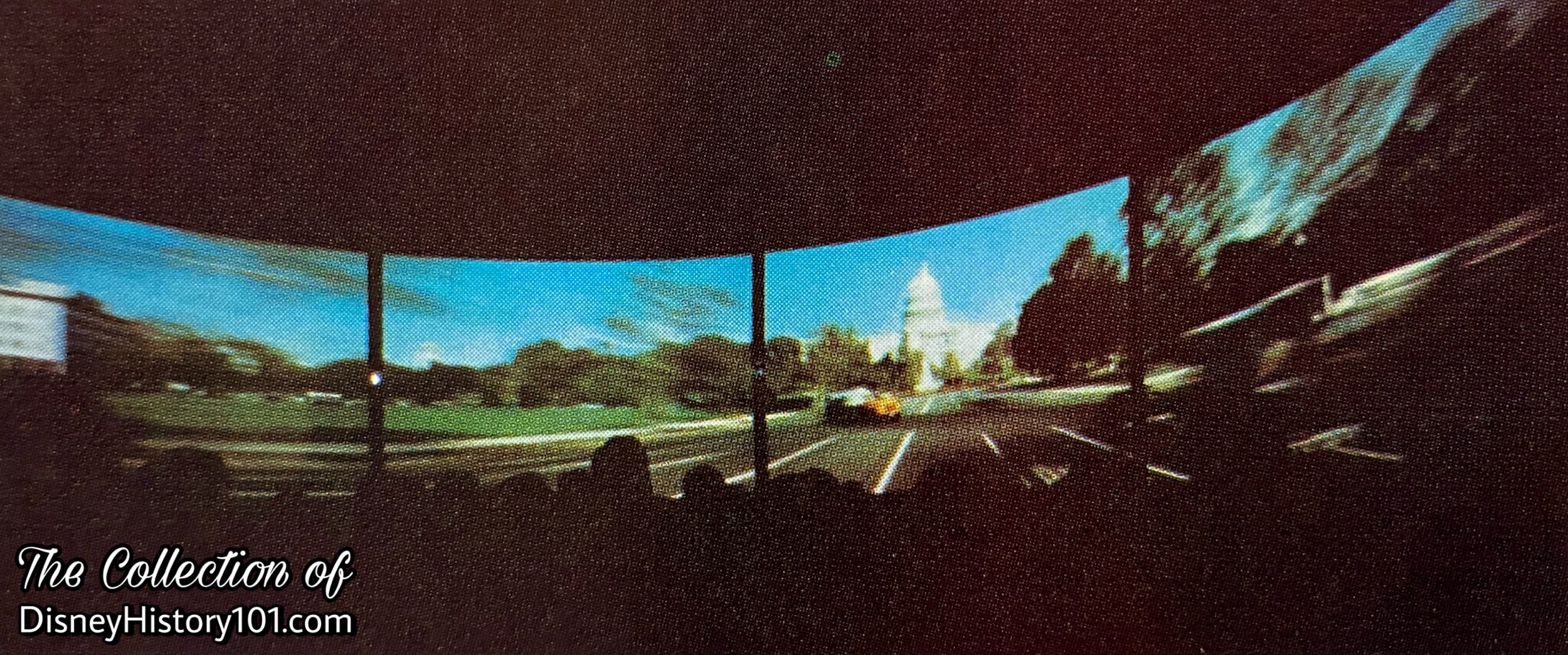
New scenes were shot and recorded on 35mm film : Disneyland’s Christmas Parade, Pasadena’s Tournament of Roses Parade, scenes from Sun Valley, Idaho in winter, Yosemite Valley (including Half Dome) in California, views of San Francisco (Lombard Street, Fisherman’s Wharf, Golden Gate Bridge, and Chinatown), and finally scenes from Hawaii (including Waikiki Beach, the palace, Makapuu Point, Moana Hotel University of Hawaii, a Banyan Tree, and even a pineapple harvest)! The Art of Animation Building and East wing building (containing the Art Corner), were stripped of their interior displays and utilized for the new theater and post-showroom.
The exhibit hall and show would soon re-open (on June 25th, 1967) as Circle - Vision 360, with an updated version of the film America the Beautiful. America the Beautiful Circle-Vision 360 presented by Bell System, AT&T and Associated Companies and Hosted by Pacific Telephone Company, was a free tour of the USA through the magic of Circle Vision 360. The pageantry and drama was soon projected on “a continuous, 18-foot vertical, 80-foot diameter screen.” Summertime showtimes ran from 8 am to 1 am. On one 18-foot vertical, 80-foot diameter screen, you’ll see America all around you - from New York harbor to Hawaii, from Alaska to the Florida Keys. The free post-show exhibit also featured the latest decorator phones!
According to “Disneyland Attractions Time Studies 1968”:
Theoretical Hourly Capacity - 3,000
Capacity of Theater - 1,000
Capacity of Pre-Show - 600
Capacity of Post Show - 200
Cycle Time (“fill and spill”) - 20:00
Theater Load Time - 1:00
Show Time - 18:00
Theater Unload Time - 1:00
Dispatch Interval - 20:00
Shows Per Hour - 3
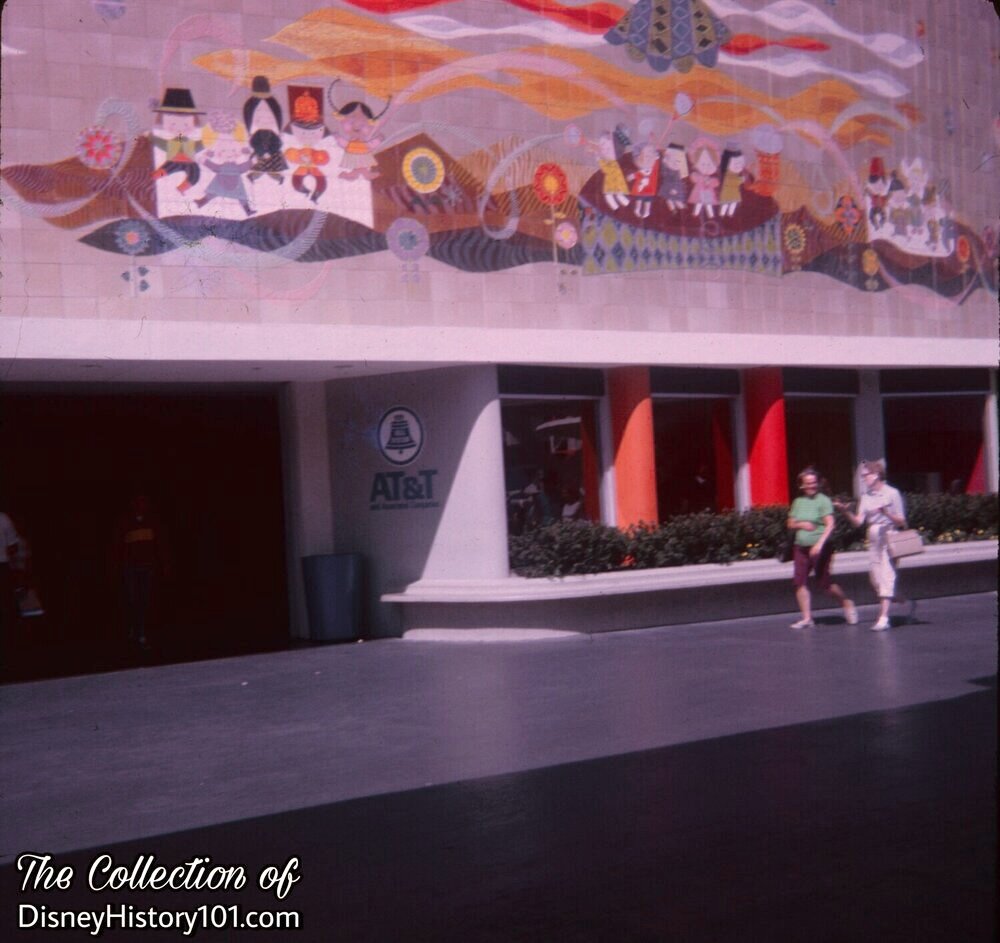
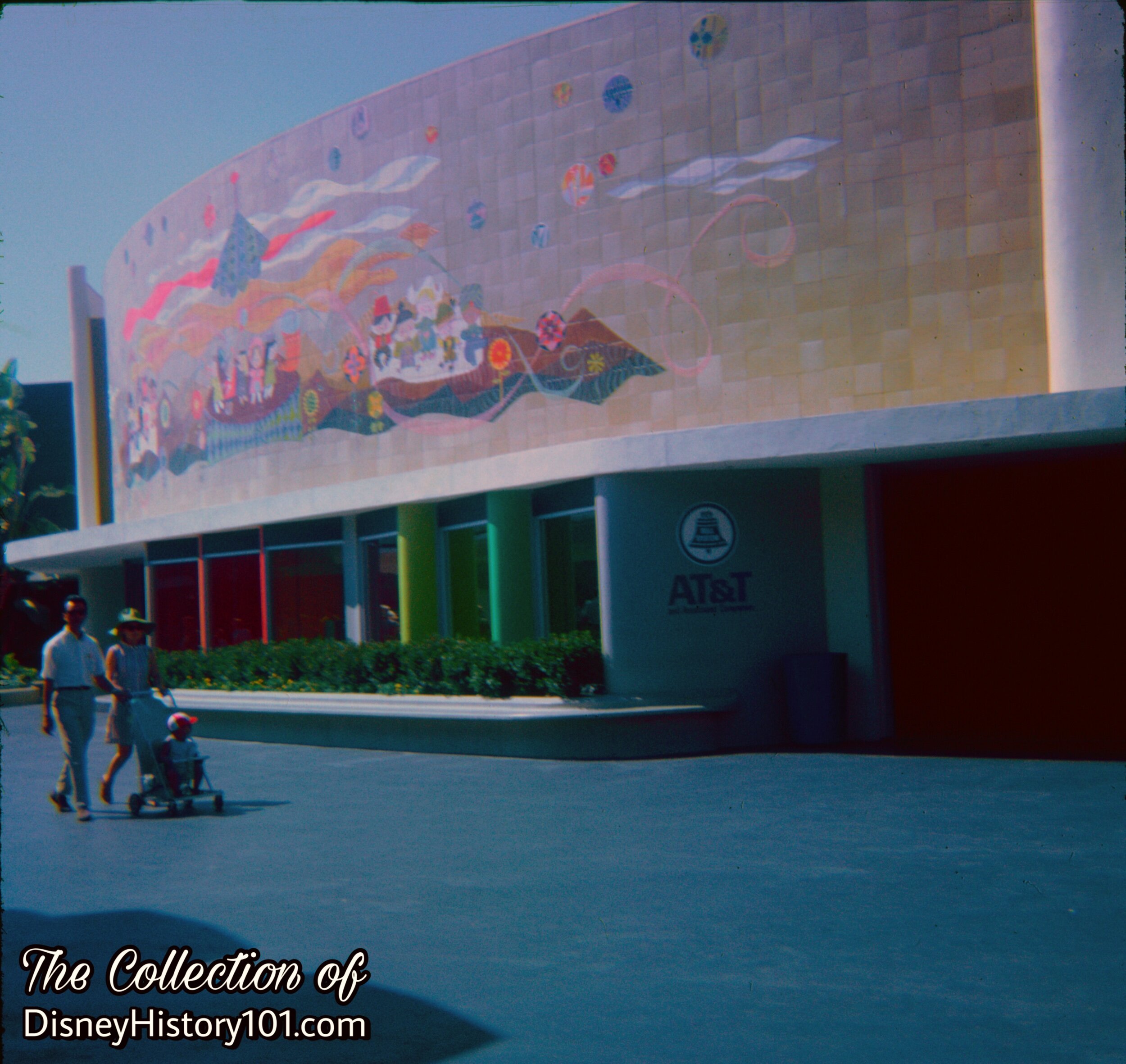
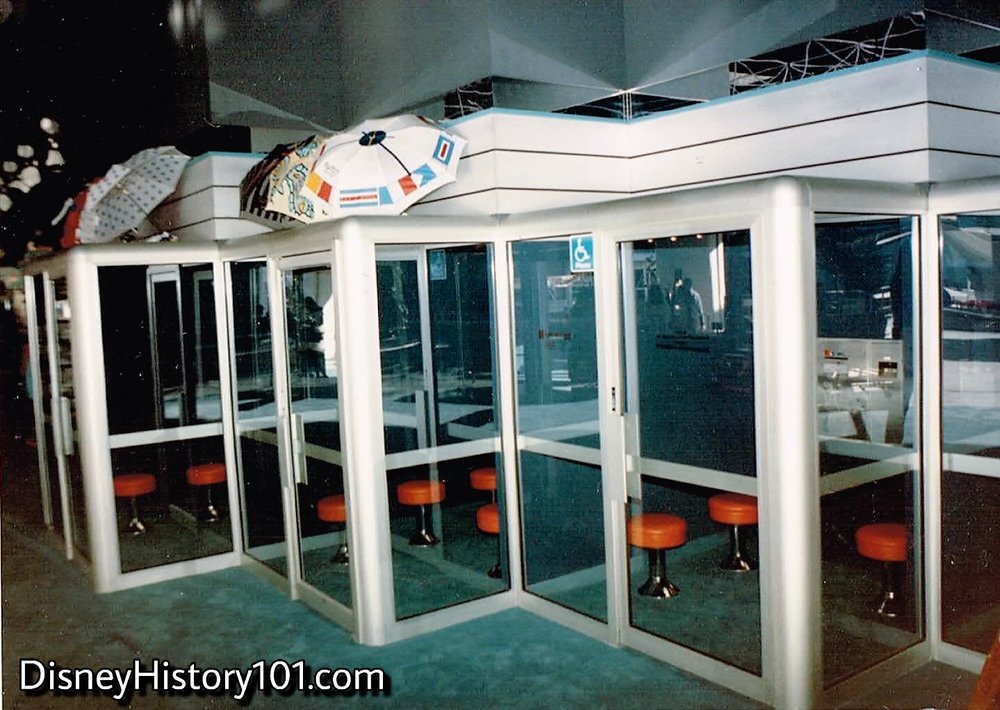
The Chatter Box (the future of Main Street USA’s “party line”) was a Tomorrowland attraction present during 1967 until the actual ‘futuristic’ year 1986! Disneyland guests were able to enter one of six large telephone booths with as many friends that could squeeze inside, and call anywhere they desired using the technological marvel of ‘speakerphone’. Former Character Shop employee Desiree shares : “I remember the Photo Booths very well…when I was young …in that same room were I was young…in that same room were telephones that you could listen to the on…I loved that.”
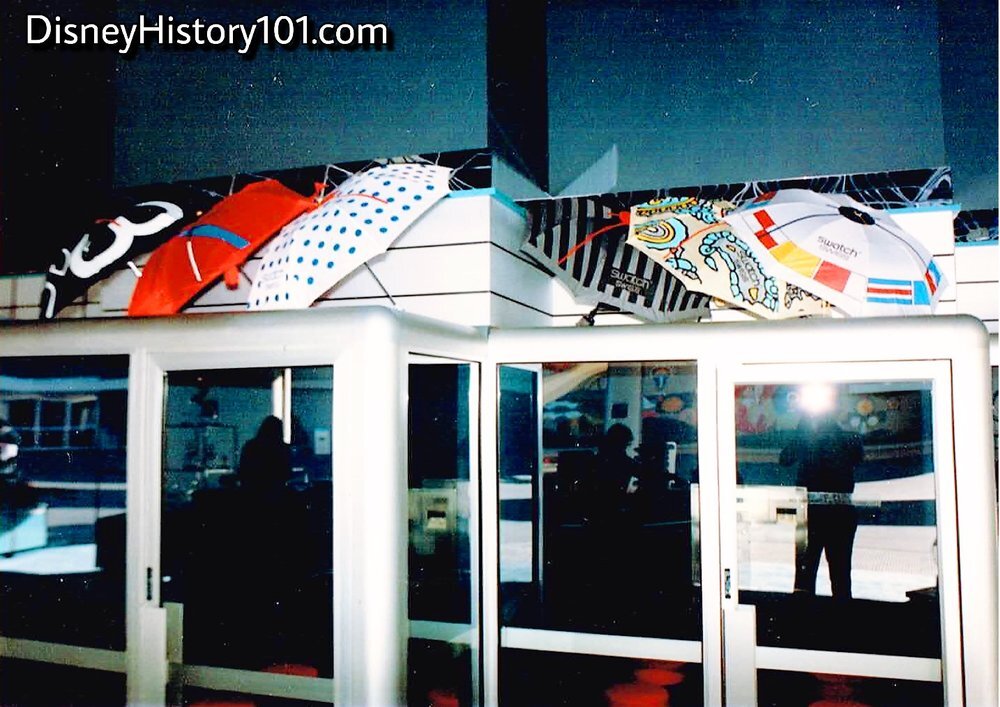
The Swatch umbrellas on top of the Chatterboxes were Premiere Shop merchandise. The neighboring Premiere Shop sold “California souvenir merchandise, jewelry, and unique gift items.”
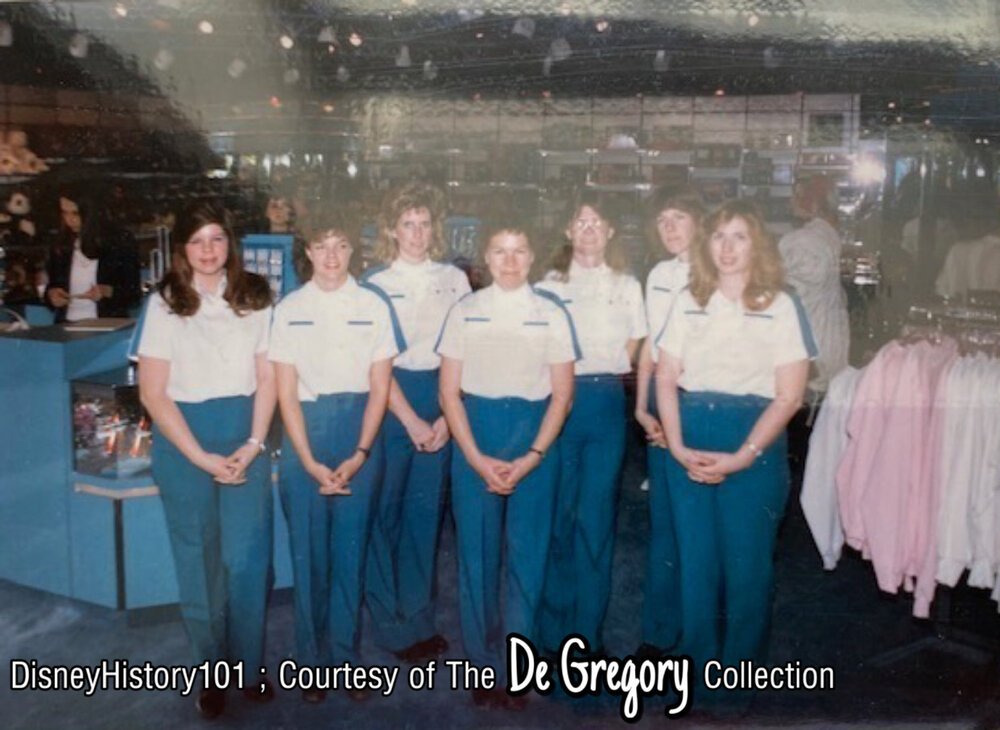
The Premier Shop was located next to World Premier Circle - Vision, presented by PSA (featuring American Journeys, a spectacular Circle-Vision 360 tribute to the U.S.A. As diverse as the inhabitants of the United States, was the merchandise of The Premier Shop. The merchandise is described in the Guide to Disneyland (published 1987) - “stylish Disney clothing…tech gifts… and California merchandise.” Desiree (who was part of the Premier Shop crew on opening day) remembers : “I worked the opening.”
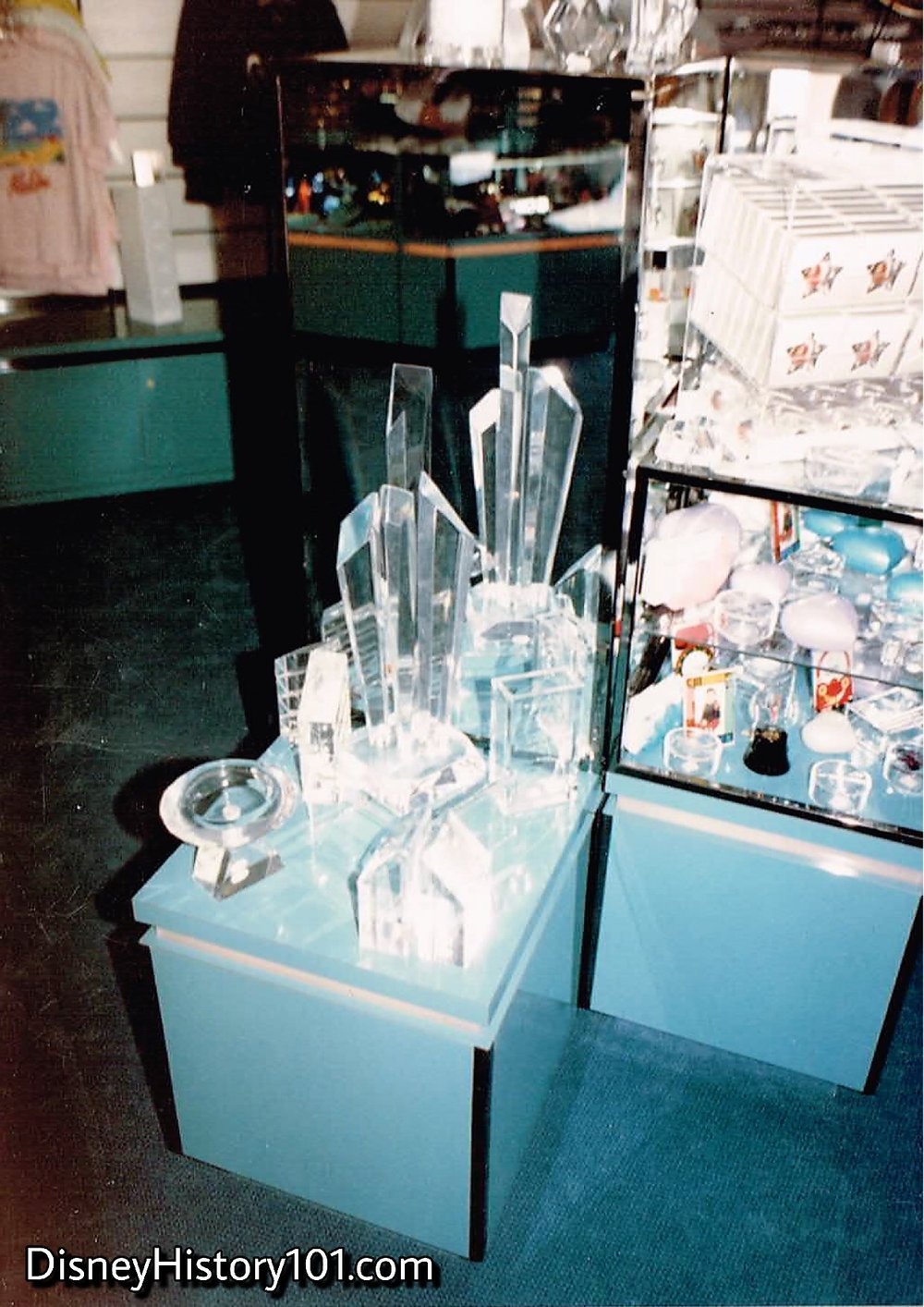
According to former (1984-1987) Premier Shop Merchandise Hostess Desiree : “This was the kind of stuff we sold when the Premier Shop opened. They eventually took it out and went to Disney themed stuff.”
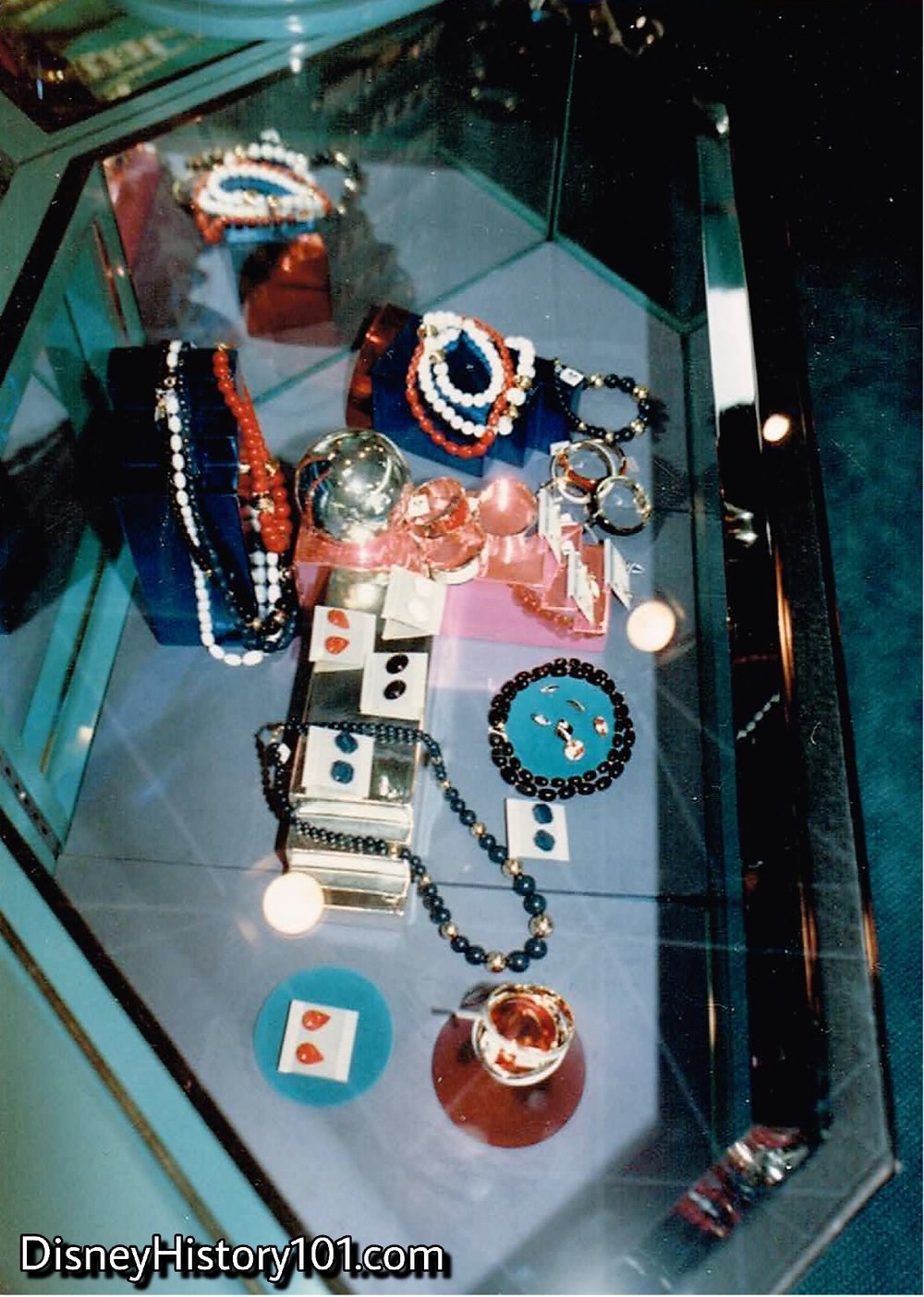
Former Premier Shop Merchandise Hostess Desiree recalls, “Michael Jackson liked that store because it had weird merchandise and he came in all the time…We sold those light up laser balls…We sold a lot of watches…all non-Disney in that store…Swatch was a big seller…and tons of Guess watches.”
The Premier Shop was popular and influenced elements of the Skyway Station Shop at Tokyo Disneyland in 1985.
By 1998, the Premiere Shop was a “vehicle warehouse” paying tribute to past Tomorrowland transportation. Guests could create their own personalized CD of of Disneyland sound tracks, past and present, at 8 kiosks.
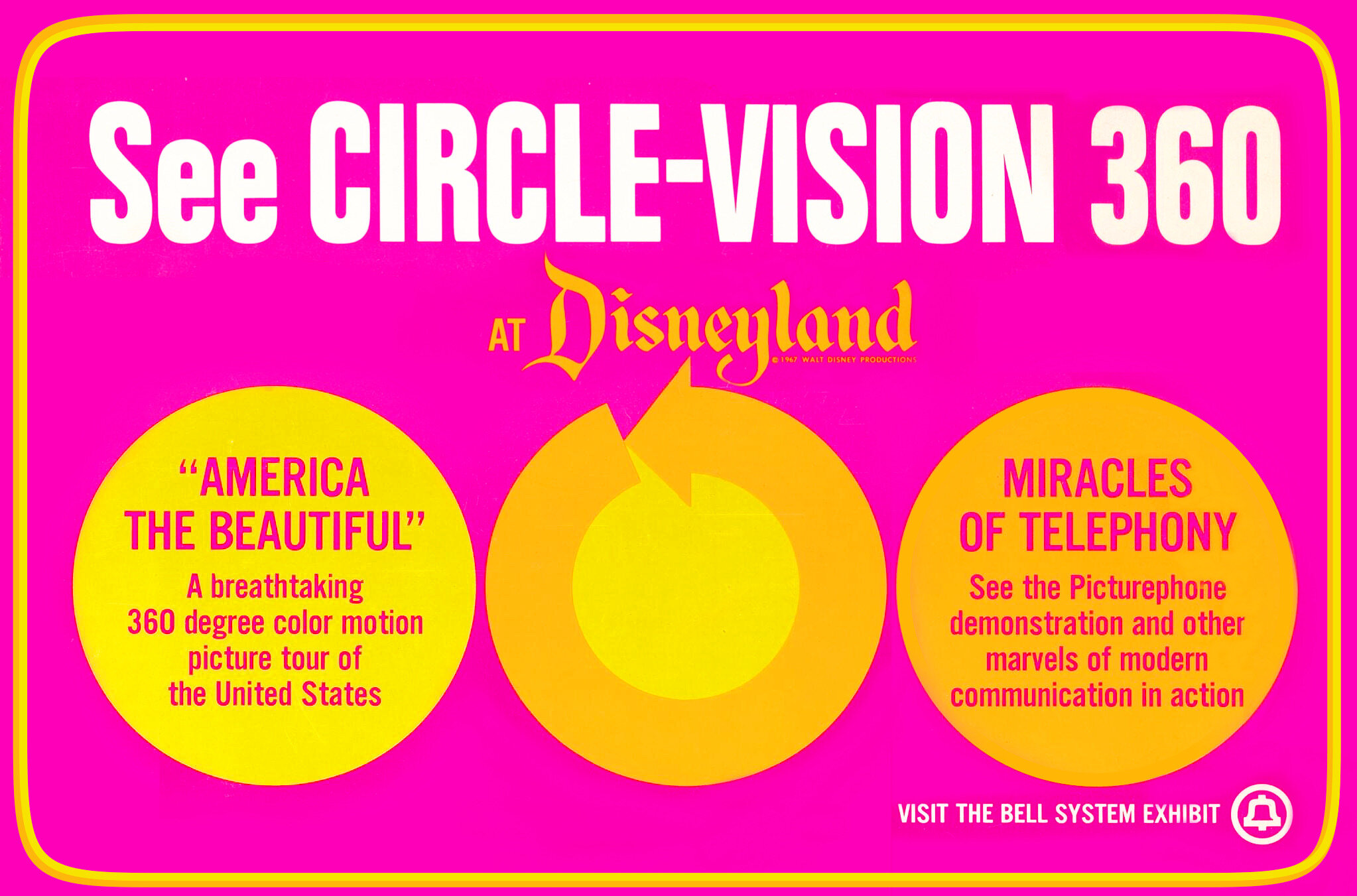
At the free circular Telephone Theater (c. 1971), “nine projectors present a panorama of America in stereophonic sound and big-as-life grandeur!” While Bell Telephone continued to serve as a Disneyland Participant until Monday (September 12th, 1983, this “free show” (not requiring a coupon for admission) would continue to run until January 3rd, 1984. On January 3, 1984, Circle-Vision 360 closed for remodeling and the installation of a new motion picture. In its full history, the America the Beautiful film was re-photographed three times, lastly in 1974 (for a 1975 debut). During this time (c. 1973) the showroom still contained the futuristic Picturephone, “where you can see the person you are calling”.
By the time the new America the Beautiful motion picture had its Disneyland debut in 1975, Walt Disney World Magic Kingdom’s Circle Vision 360 Theater presented by Monsanto, was showing a free attraction - “Magic Carpet ‘Round the World” (by March 1974). The show included 200,000 feet of film which was edited down to “17,000 feet of spectacular photography… Lasting 21 minutes, the film transports viewers on an imaginary journey which includes the sights and sounds of London's Tower Bridge and the River Thames, the Tivoli Gardens in Copenhagen, the Belgian Grand Prix, Notre Dame Cathedral in Paris, the Swiss Alps, castles on the Rhine, the world-famous Vienna Boys' Choir, Rome's historic Coliseum, a bullfight in Madrid, the Wailing Wall in Jerusa-lem, the Sahara Desert, the Sphinx and the Pyramids, Africa's big-game country and Mount Kilimanjaro, the Taj Mahal, Siamese dancers. a Chinese junk in Hong Kong harbor, the cherry blossoms of Japan, and a grand sweep of America beginning with San Francisco Bay and ending with a breathtaking view of the Statue of Liberty.”
In 1980, Manager Mary Hanson retired (after 10 years), and newly promoted Circle-Vision 360 Manager Helen Baker presented Disneyland’s 200 millionth Guest Gert Schelvis with a Mickey Mouse telephone.
World Premier Circle-Vision Theater presented by Pacific Southwest Airlines (July 4, 1984 - 1995) : Pacific Southwest Airlines (founded May 6th, 1949) was not so old a firm as the original industrial and otherwise corporate participants of Disneyland. Still, it would soon sponsor a new attraction. By September 30, 1982, construction was in progress, and WED & MAPO opened a job numbered DX04-1, DX07-1, and DX09-1 (at a cost of $57,813.29) for a “PSA - Wings Away” at Disneyland.
“Audience Waiting Areas” are especially designed as part of the attraction to make the guest's time waiting in line as comfortable as possible. This show was preceded by a pre show - a holding area with a show that introduced the main attraction. A short pre-show film about the history of aviation was produced with animation Producer David Michener serving as a contributing design and filmmaking consultant for the animation.
The main show was “American Journeys,” a 70mm motion picture Circle-Vision tour across the United States. Directed and produced by Rick Harper and Jeff Blyth and presented by Kodak, the motion picture debuted on July 4th, 1984. According to Don Henderson (of WED Enterprises Film Production) “American Journeys” was “not a geographical survey,” but the “story of the American People told visually - their heritage, struggles and sacrifices.” Rick Harper “filmed many closeup, people-oriented scenes - something unusual in a wide screen format.. The movement away from grand panoramas distinguishes ‘American Journeys’ from ‘America the Beautiful.’ The new film explores not only the places but the people of America… children flying kites in a Utah meadow… a shipcarver working in his Connecticut shop. But the film will also surround viewers with the breathtaking scenery characteristic of the Circle-Vision 360 format. In their cinematic journey across America, viewers glide over Rocky Mountain meadows and soar bore the canyons of Utah. They travel up the Mississippi River alongside puffing paddle wheelers and down New York City’s Park Avenue amidst a sea of yellow taxis. Guests see the country through the eyes of a mountain climber scaling the Rockies and a balloonist drifting over Monuent Valley in Arizona,” according to The Disney News (Summer of 1984). The film’s imagery was action-packed, and surely “reached out and touched” guests. You may personally recall originally “soaring,” as well as skiing and canoeing across the picturesque & majestic United States, with the 3-D motion picture American Journeys presented by Kodak.
By 1984, Telecommunication Devices for the Deaf were located by American Journeys Post-Show area.
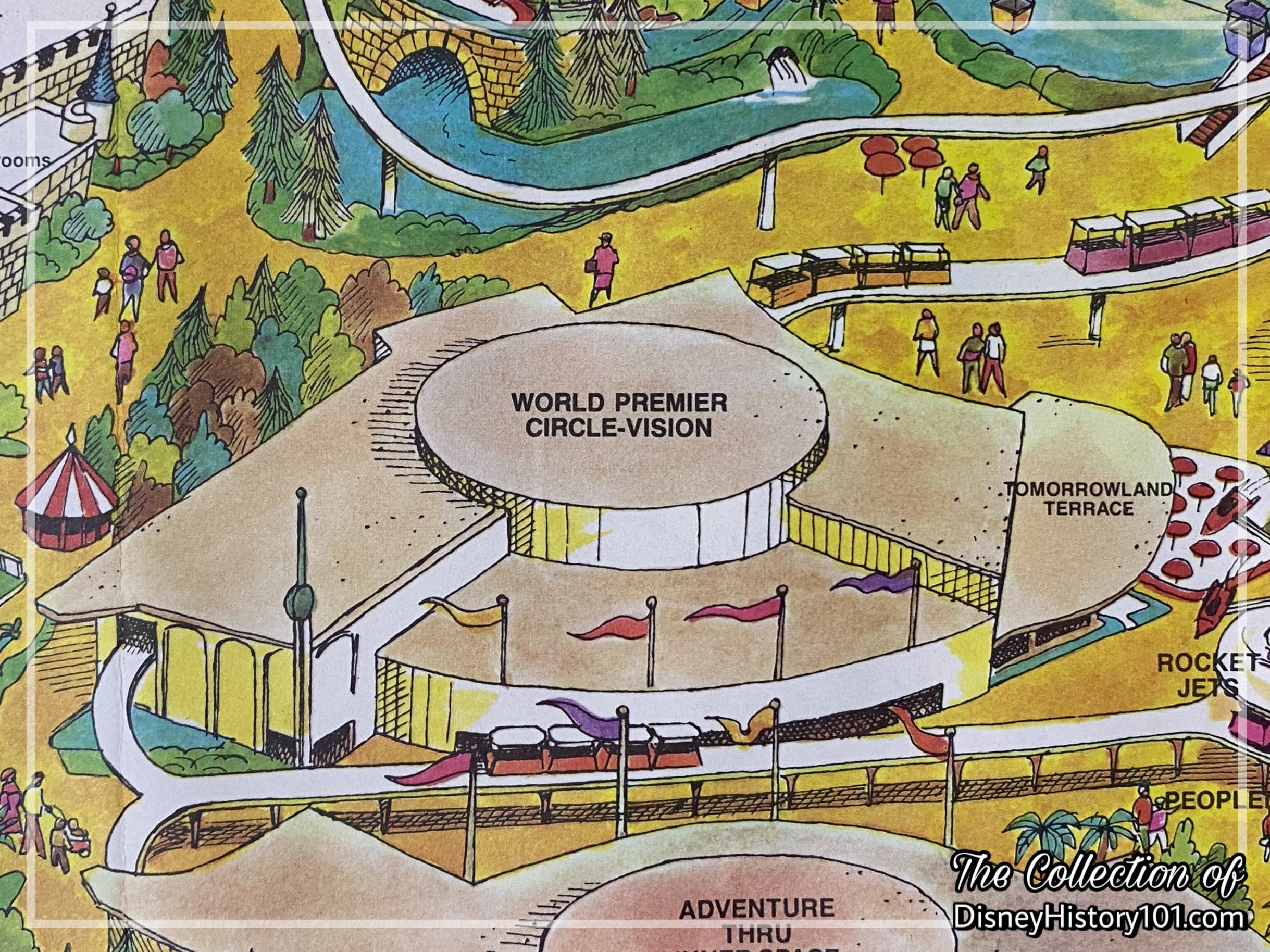
PSA would continue sponsorship until July 17, 1989. During this time, several pre-adventure motion pictures premiered including the 8-minute live action and animated All Because Man Wanted To Fly starring the comical Orville the Albatross from “Walt Disney’s The Rescuers” (on July 4th, 1984), American Journeys (a journey soaring, skiing, canoeing, and rafting across the United States, typically 9a.m. to 4p.m., c. 1984 -1988), and Wonders of China - Land of Beauty, Land of Time (a journey into the People's Republic of China; typically from 5p.m. to the Park closing, c. 1984 -1988). The latter film had previously debuted in 1982 at EPCOT’s China Pavilion (of “Walt Disney World Vacation Kingdom in Florida”), and now brought such experiences as the mountains of Tibet or a walk along the Great Wall to Disneyland guests. Now during the arrival of “Festival Japan” (October 12 & 13, 1985), the PSA Exit Lobby would feature several exhibits - Hirofumi Kai (Doll Exhibit), Yukari-Kai (Girl’s Day, Boy’s Day Exhibit), and West Coast Origami Guild, from 9:00a.m. to 6p.m. At one time (during 1988), two motion pictures ran every 20 minutes - Wonders of China and American Journeys. Wonders of China was so popular, that it continued to show in Disneyland until 1996.
Circle Vision (January 1, 1996 - September 7, 1997) : During 1992, guests leaving Circle Vision 360, could cast their vote for the person they feel has had the greatest impact on the 20th century. The EPCOT Poll person of the century was a ten-year poll, with the winner announced on January 1, 2000. Sadly, Circle Vision 360 would not make it to the year 2000. Delta Airlines (whom Pete Clark, Senior Vice President of Disneyland Participant Affairs Division once commented, “Delta Airlines adds the idea of an exciting new adventure to Circle-Vision and lets people know that the attraction is going to be of interest to travelers”), would pick up the sponsorship until January 1, 1996. At that time, the World Premier Circle - Vision Theater was renamed Circle Vision. The attraction continued to operate for one more year, until its final show in 1997.
Since the beginning, the Four Keys of the DISNEYLAND Show (operating priorities in presenting the DISNEYLAND Show) have been present - Courtesy, Safety, Show, and Efficiency. Guided by these Four Keys, are Walt Disney Imagineers, who are always seeking out new magical opportunities to increase the efficiency, safety, and show quality of Disneyland adventures. Above, note the CircleVision 360 façade during the construction of the PeopleMover. While CircleVision 360 would ultimately fade from the sight of Tomorrowland (at Disneyland), the attraction would inspire two Circle Vision Shows, both at Disneyland Paris and Tokyo Disneyland. Each of those shows would be joined by by a most-complex Audio-Animatronics Host known as the Timekeeper.
By 2008, the name would live on with the Star Trader Cash Wrap/Zone known to Disneyland Cast Members as “Circle Vision Souvies”.
From 1999 to 2000 Walt Disney Imagineer John Stone designed conceptual study models for GM and Chevron sponsored shows incorporating the Circlevision Theater in New Tomorrowland.
“‘The Show Goes on Tomorrow’ - Tomorrowland Reopening & Rededication to ‘Imagination and Beyond’”
Still, another (and second) expansion was to be partially unveiled to Walt Disney Company employees at “Walt Disney Imagineeringland” on November 15 & 16, 1997. The Big D Cafeteria was home to exhibits relating to Tomorrowland Facades, Honey, I Shrunk the Audience, Innoventions, the Astro Orbitor, Rocket Rods / Circlevision, and Disneyland Design Studio. A Buzz Lightyear's Space Ranger Spin exhibit was on display at Tujungaland.
CIRCUS FANTASY (and Mickey Mouse Club Circus & Dumbo's Circus)

“Walt Disney and the Circus”
Walt Disney (who was heralded posthumously as “the greatest showman since P.T. Barnum”) had always enjoyed the circus!
As a child, he put a circus show on for the local children in Marceline. According to www.WaltDisneyMuseum.org: “When a young Walt decided to hold a circus in the barn, his friends paid 10 cents for a show comprised of a lethargic goat, a pig, and the family, dog and cat dressed in sister Ruth doll clothing. They were not impressed. When Flora heard the commotion in the barn. She requested Walter refund the admission and shared this wisdom: ‘If you ever deliver more than your audience expects, they will never be disappointed.’ A Lesson Walt took to heart.”
"Walt Disney Productions and the Circus"
Several of Walt’s short subject and feature length animated films contained circus themes. There was "Alice's Circus Daze" (released April 18, 1927), “Mickey’s Circus”, released August 1, 1936), Walt Disney’s “Dumbo” (released 1941), “Bongo the Bear” (part of “Fun and Fancy Free”, released 1947), and “The Big Wash” starring Goofy and a circus elephant (released 1948)!
Since 1951 (and Walt’s earliest official planning stages for a “Mickey Mouse Park” across the street from Walt Disney Studio), a circus was reckoned to be among the attractions! As development continued (and other parcels of land were purchased), a circus was also planned for Walt Disney’s Disneyland! According to the 1953 Disneyland Prospectus (prepared by WED Enterprises for Disneyland Inc.), an area called Holiday Land was to be “a showplace of special attractions that change with the seasons…Summer brings … Circus Time…with a Circus Parade down Main Street…and under the big top, a one-ring circus with special acts from all over the world.”
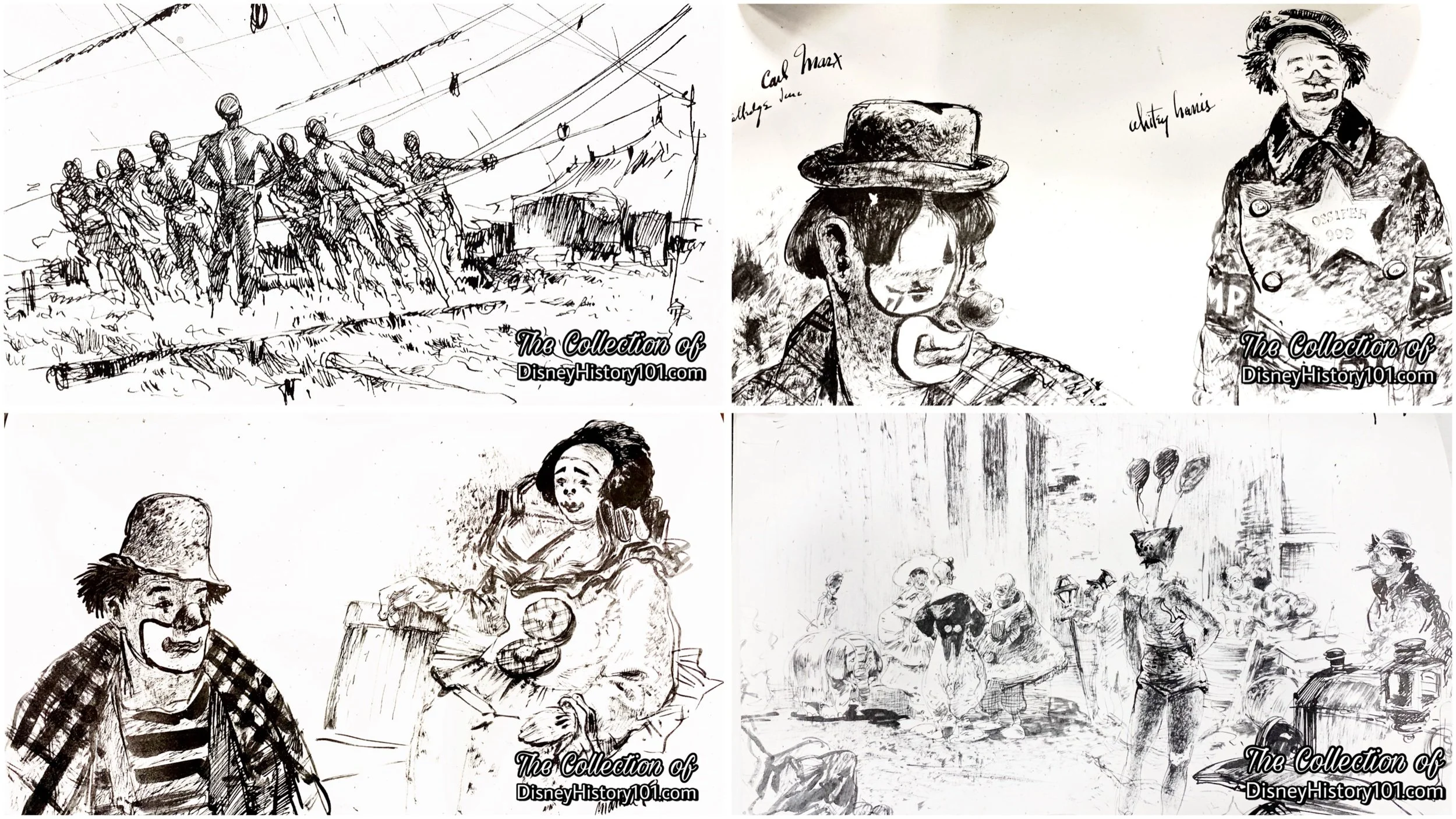
Beginning in 1949, Herb Ryman (a former Walt Disney Studio artist and current 20th Century Fox Artist) travelled with the Ringling Bros. Barnum & Bailey Circus for two summers. During the July through August 1949, “the greatest show on Earth” made its way through Chicago, Milwaukee, Minnesota, Wisconsin, North Dakota, and Nebraska. Along the way, Ryman captured the “circus life” through his paintings and drawings.
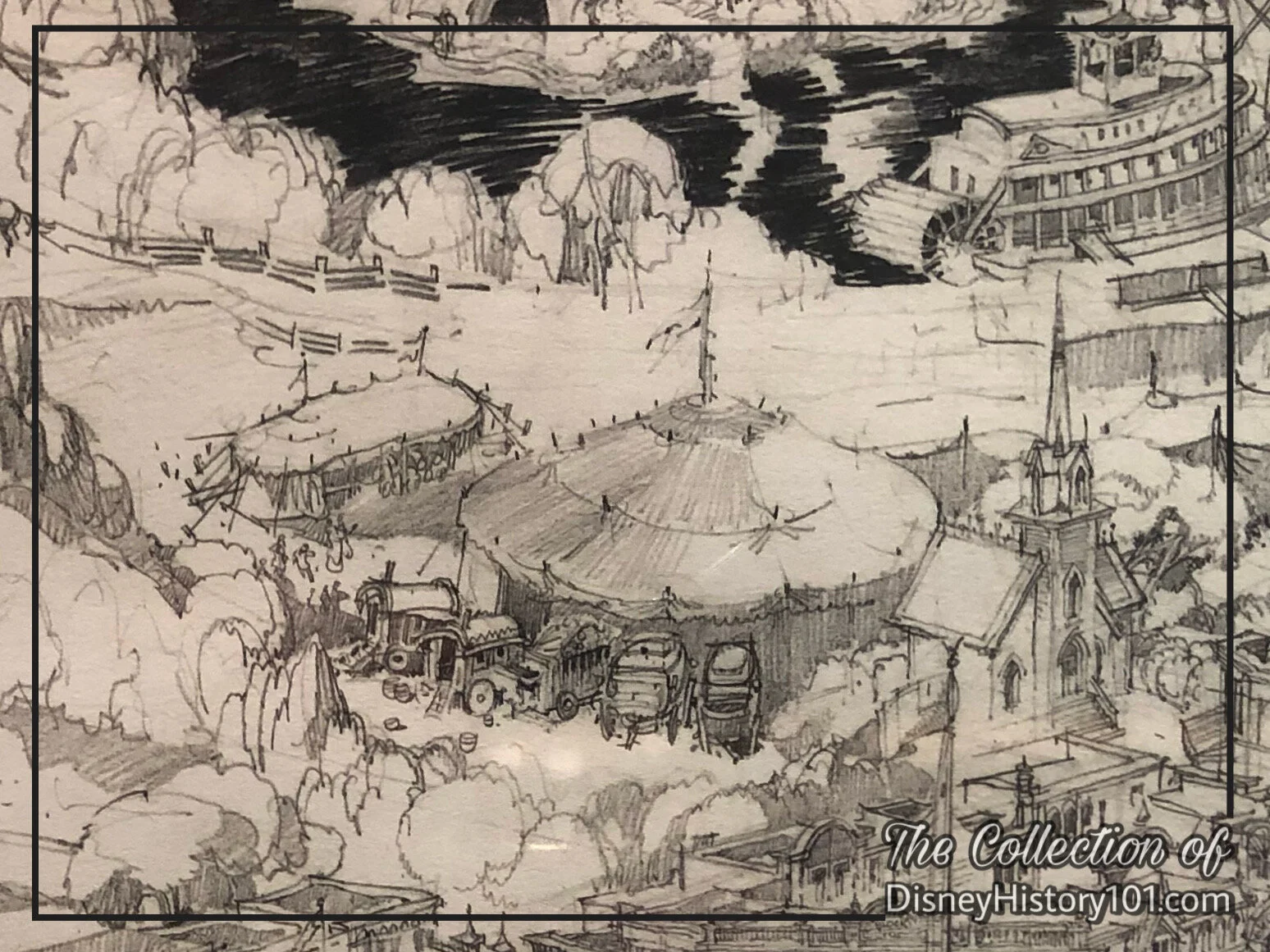
No doubt these images were fresh in his mind by the time that Walt called on him to create circus-related elements for his “Aerial View Over Disneyland!” The “Schematic Aerial View of Disneyland” (produced by Herb Ryman over one weekend in 1954) has gained some notoriety when few have come to auction in recent years, but it was first published in periodicals like Popular Mechanics, December of 1954. A short time later, what has been called the 1954 “Disneyland prospectus” by some, continued to mention the inclusion of circus tents at Disneyland. All of these documents were part of the Disneyland Presentation Portfolio prepared (by Walt Disney Productions and WED Enterprises) “to take back East to sell the Disneyland concept to prospective licensees,” according to Walt Disney Archives Founder Dave R. Smith. Herb’s drawings (as well as their photostat and hand-traced copies) continued to feature circus tents and wagons in an area called “Holiday Land”, which was to be located West of Main Street U.S.A., south of a “Frontier Country.”
In 1954, another artist (by the name of Bruce Bushman), even created aesthetic concepts for a proposed nearby Circus-themed dining area located in Fanasyland!
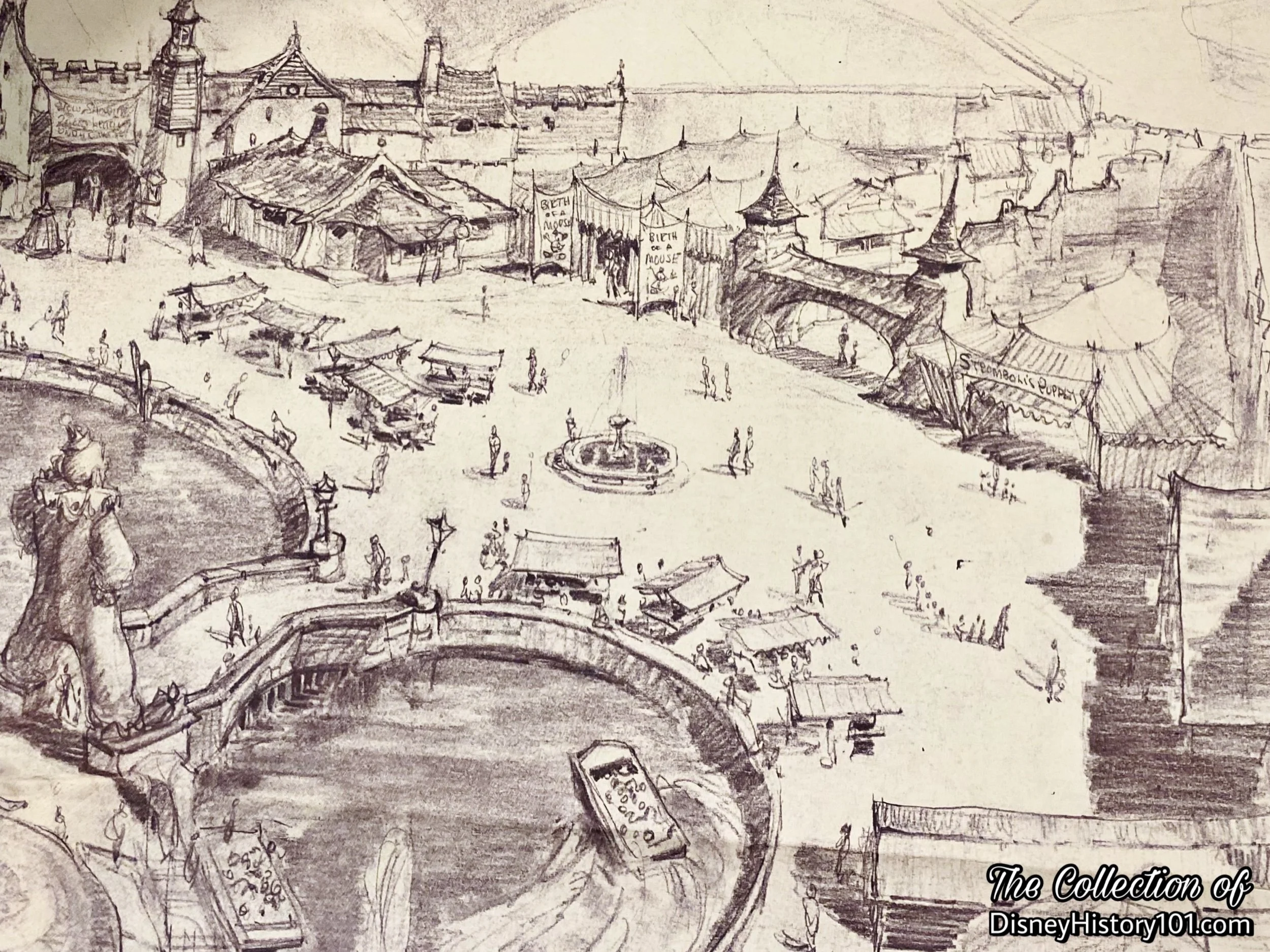
Amidst his loose line work, Walt Disney Studio artist Bruce Bushman (who was also affiliated with Bradley & Kaye) suggested a Stromboli Puppet theater in an area inspired by Pinocchio’s village, a gravity-flow canal ride featuring Monstro the Whale, a circus midway-themed dining area entered through a towering clown arch, a sailboat in a lagoon, and remembering that “it was all started by a mouse,” his detailed designs also included a “Birth of a Mouse” show. [The Disneyland News, Vol.1, No.9 published for March 10, 1956.]
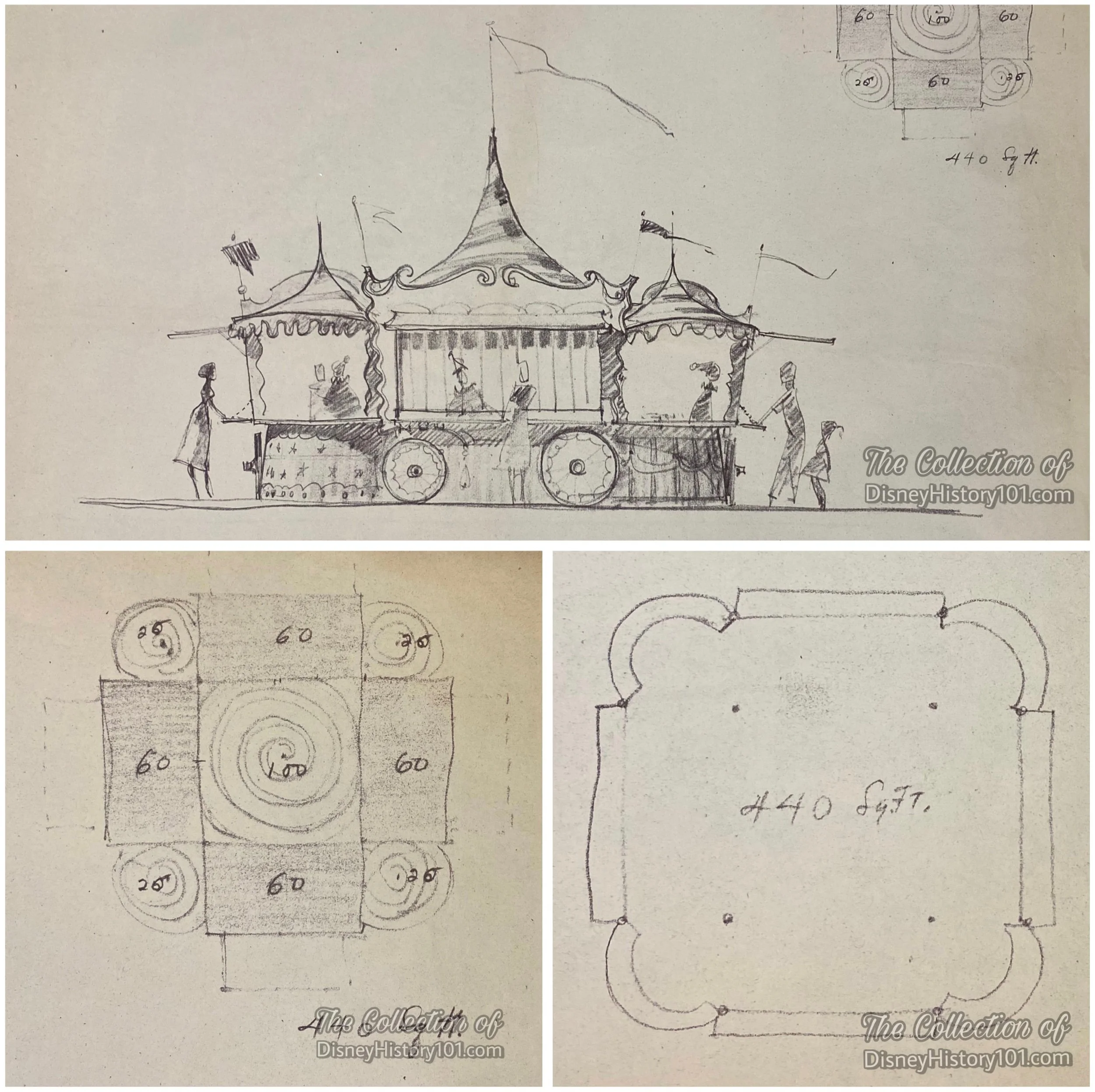
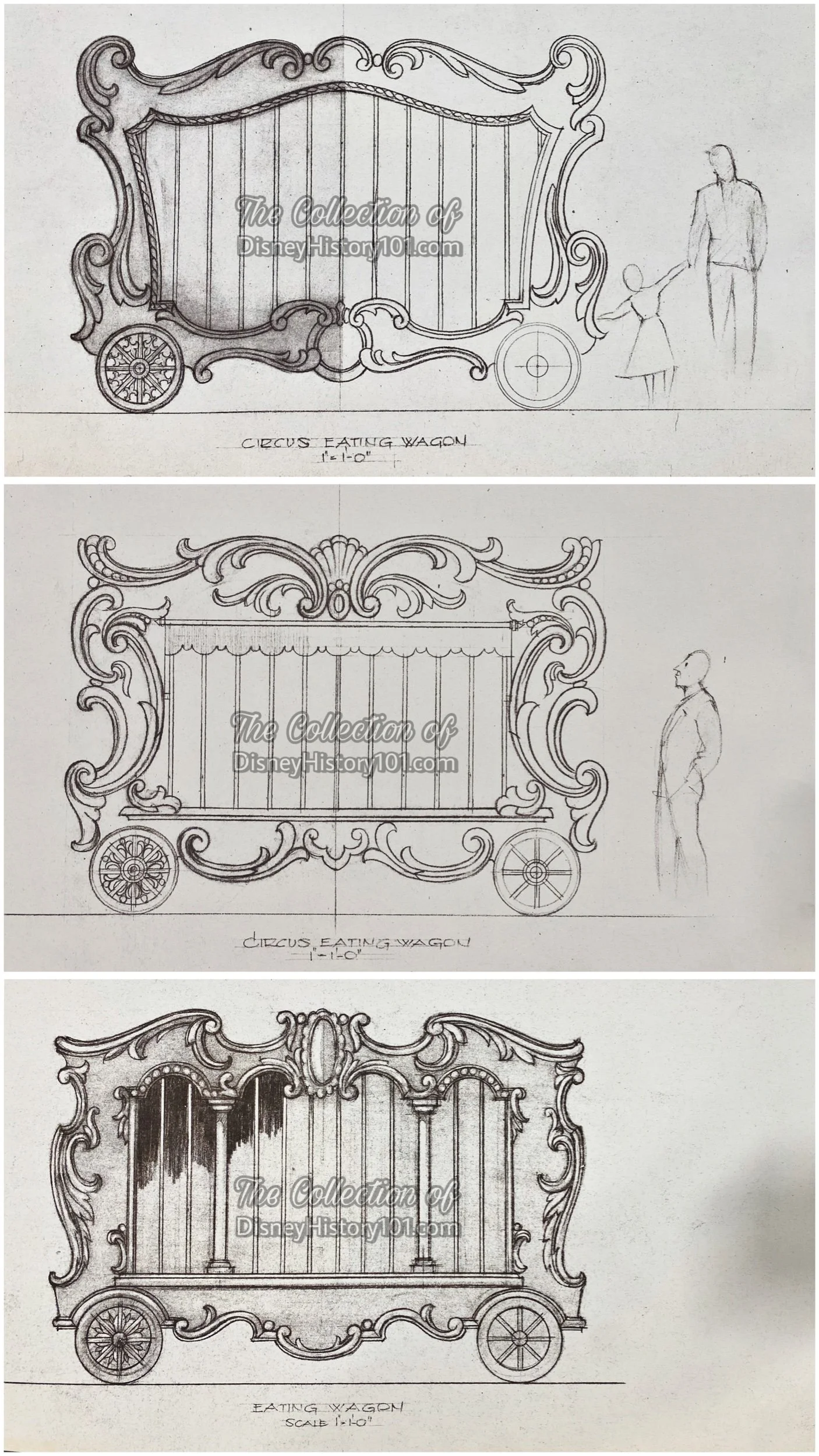
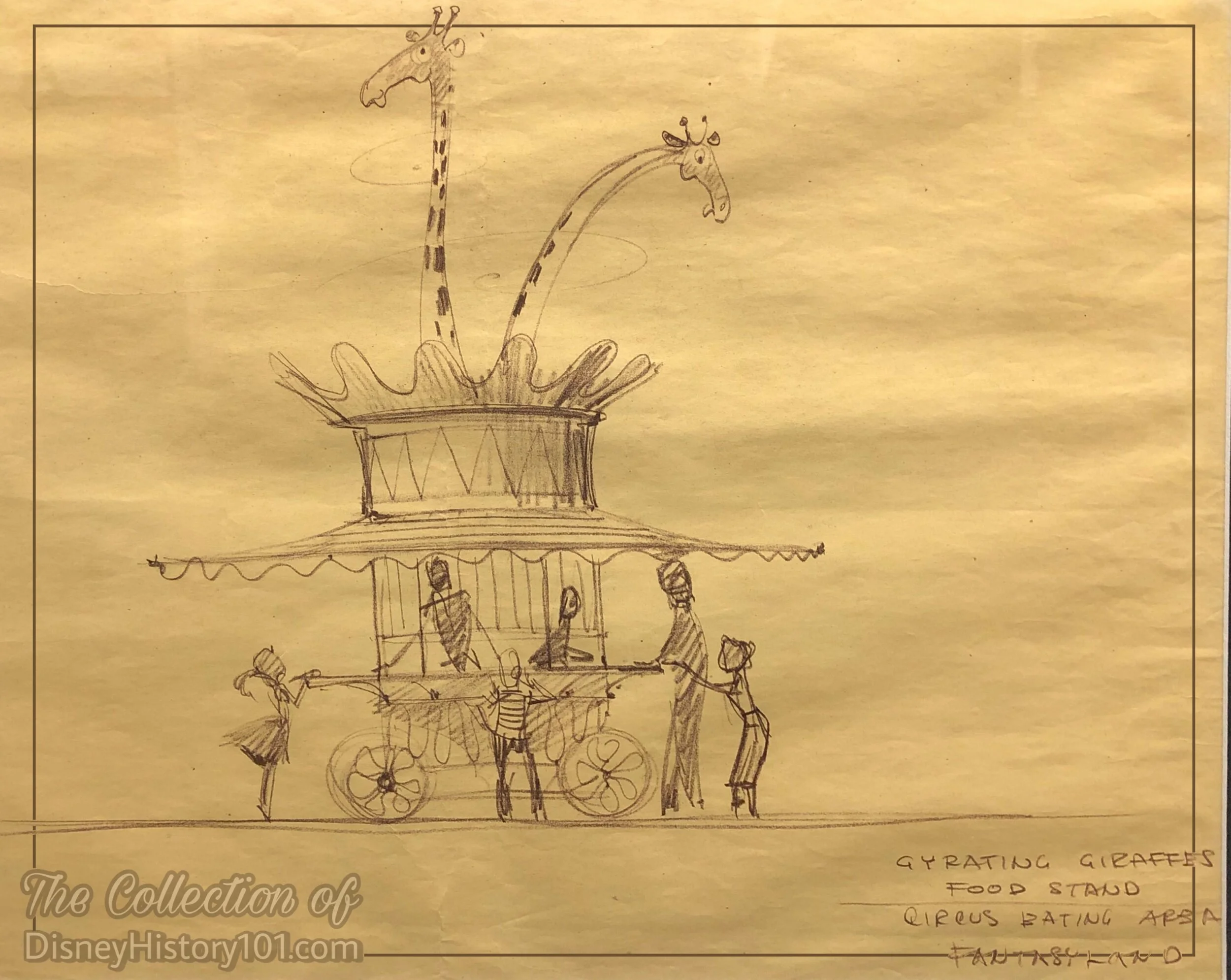
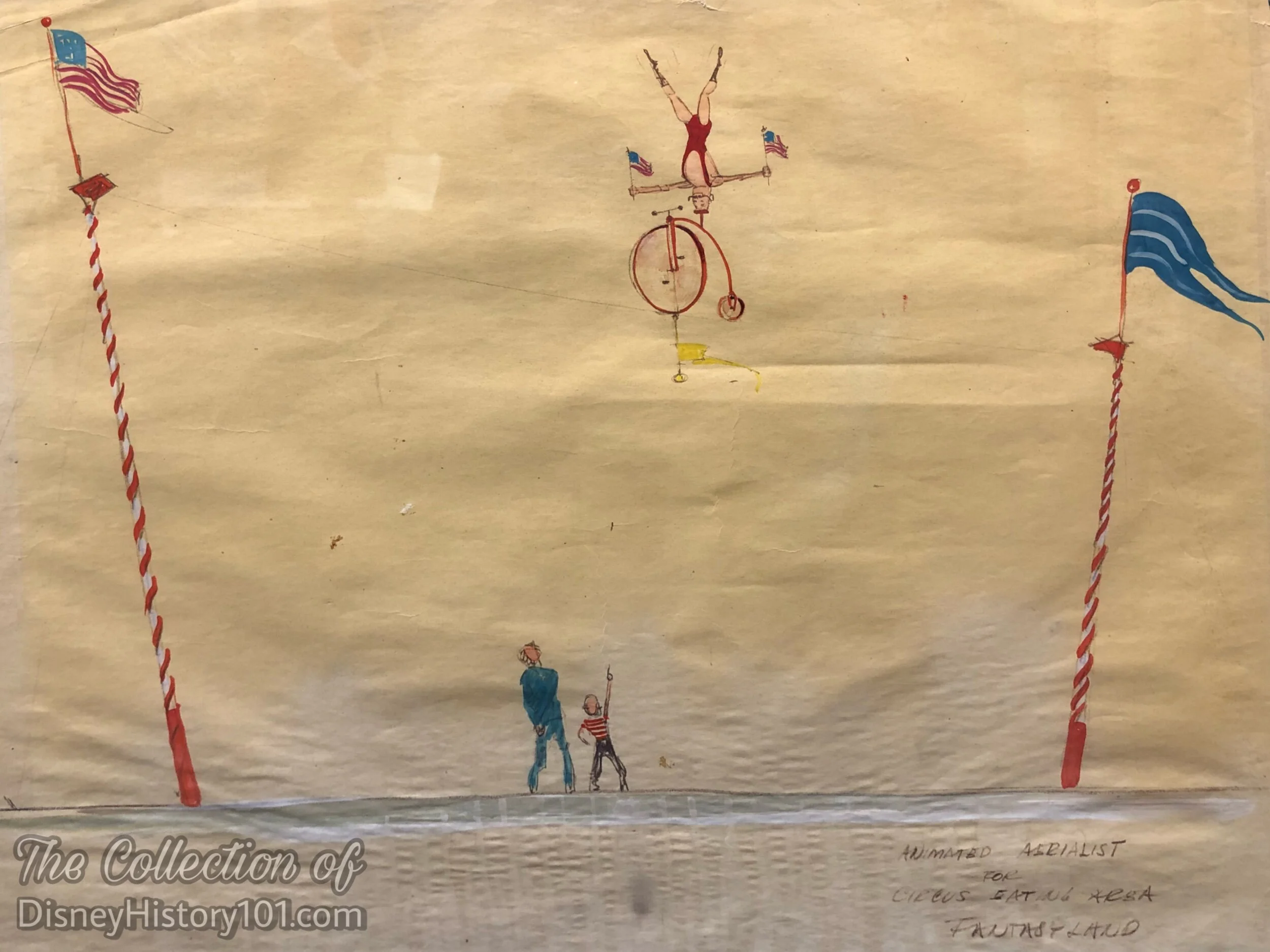
Owing to all this conceptual artwork, some of the earliest Disneyland merchandise (produced from 1954 to the spring of 1955) often depicted circus tents, circus wagons, circus-themed areas and other related elements as a part of the attractions soon-to-be experienced at Walt Disney’s Disneyland!
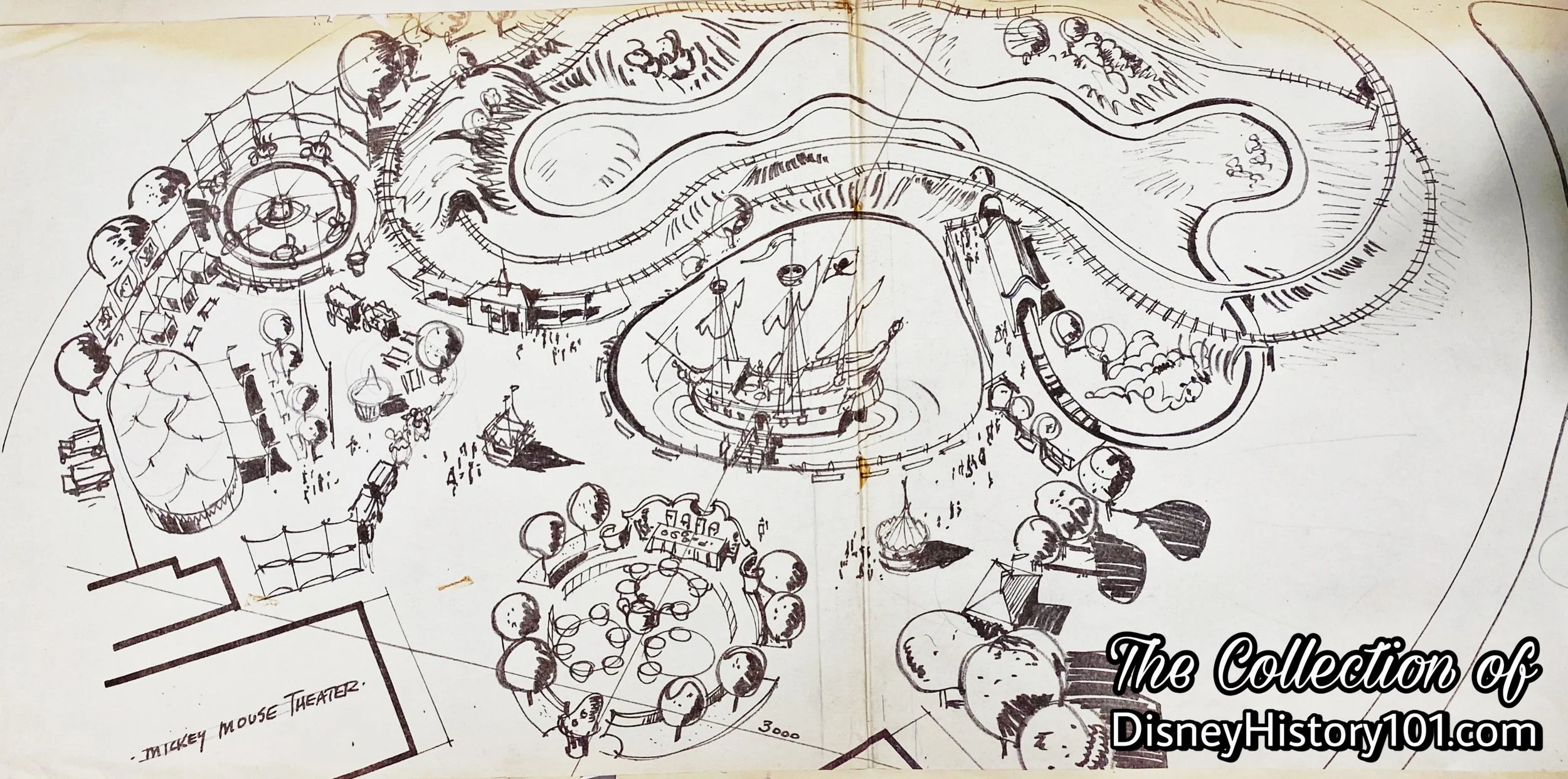
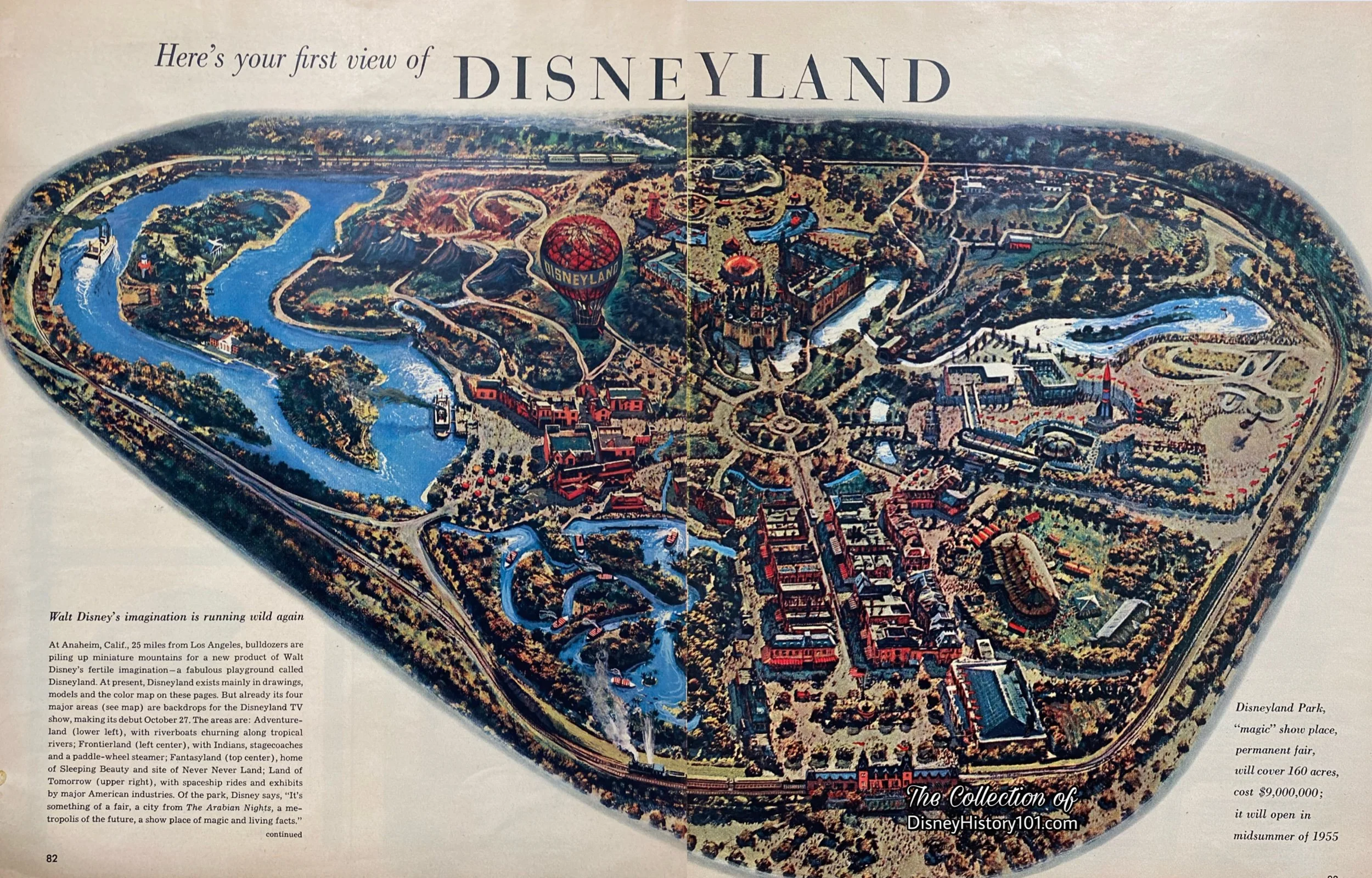
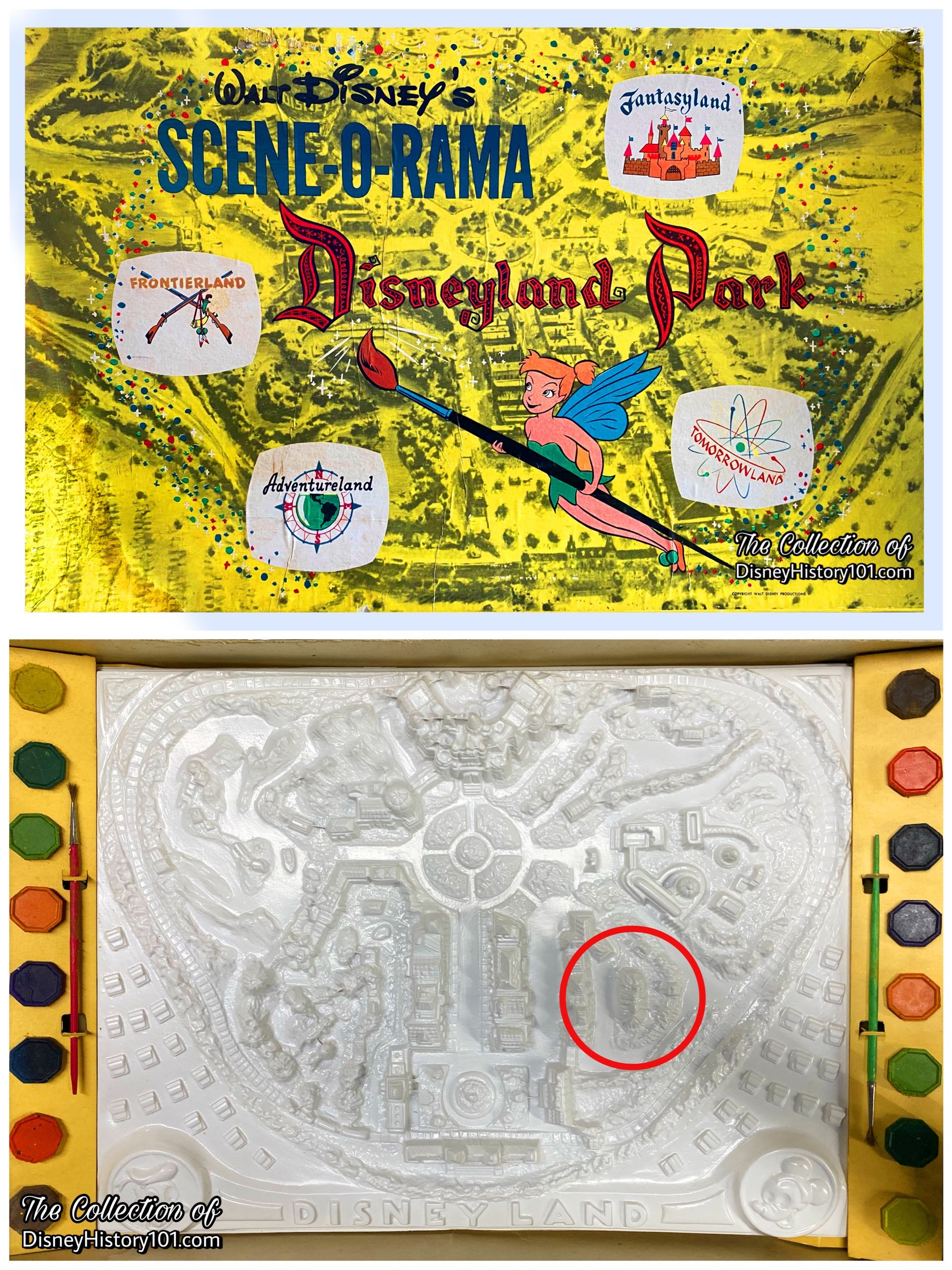
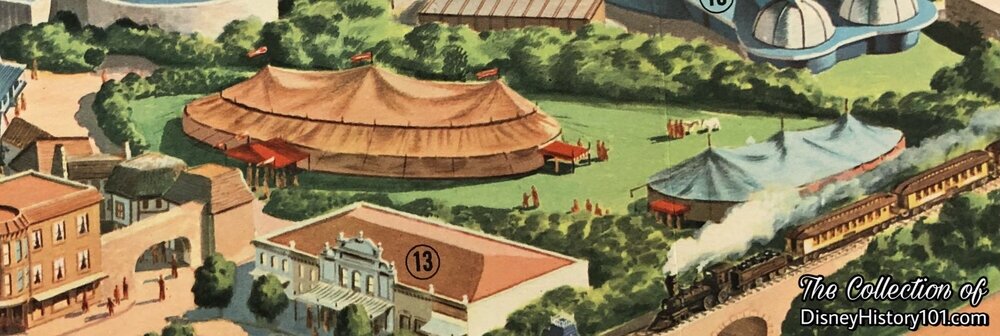
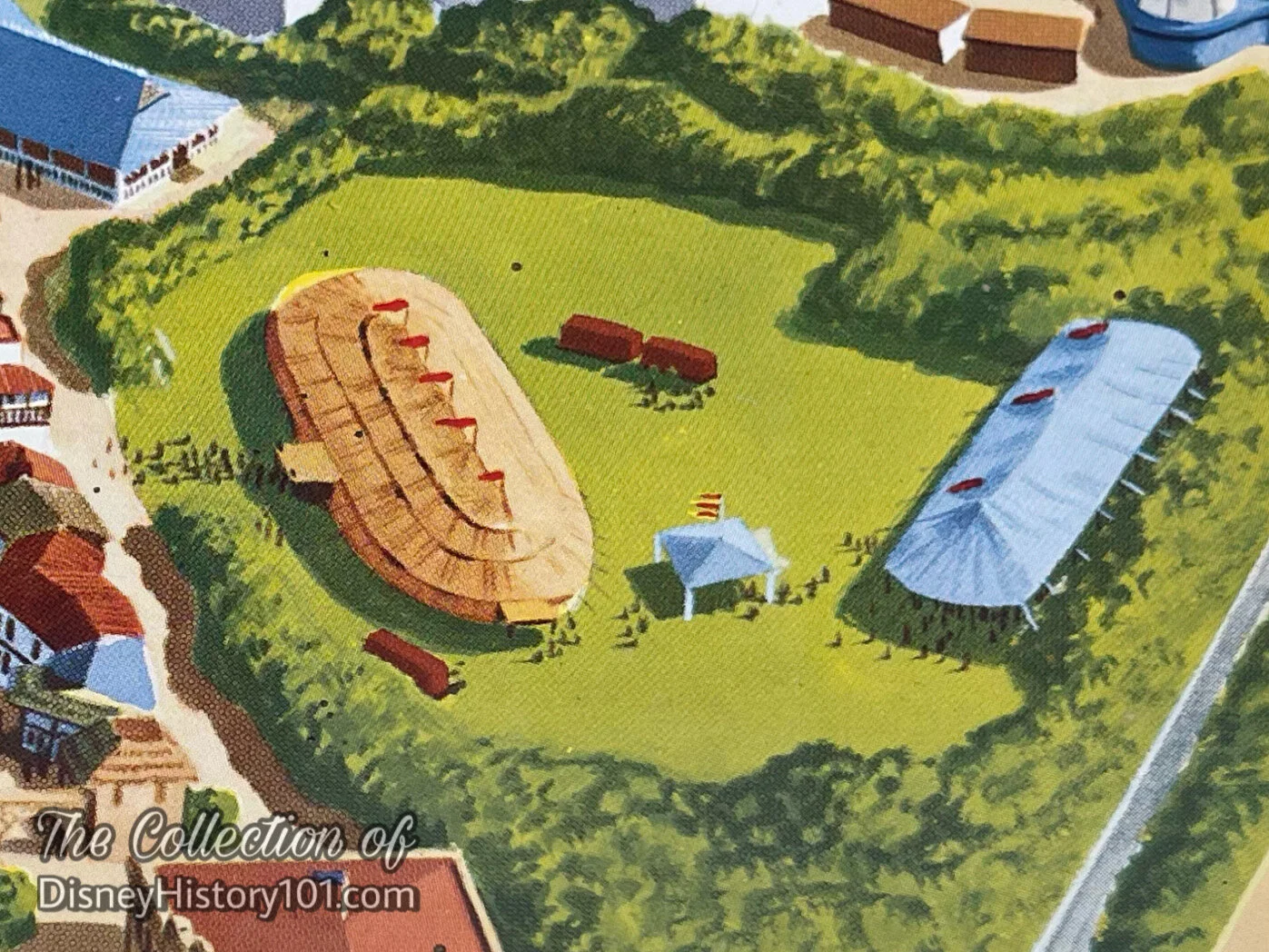
Disneyland was a miracle of showmanship in many ways! When the opening day telecast of the Disneyland’s ceremonies were broadcast on July 17th, 1955, Art Linkletter exclaimed, “Walt, you’re making a bum out of Barnum today!” Little did anyone know how true that would be in a few months. Even after Disneyland opened, Travel magazine published an article foretelling a “merry one-ring circus” as part of the seasonal entertainment in store!
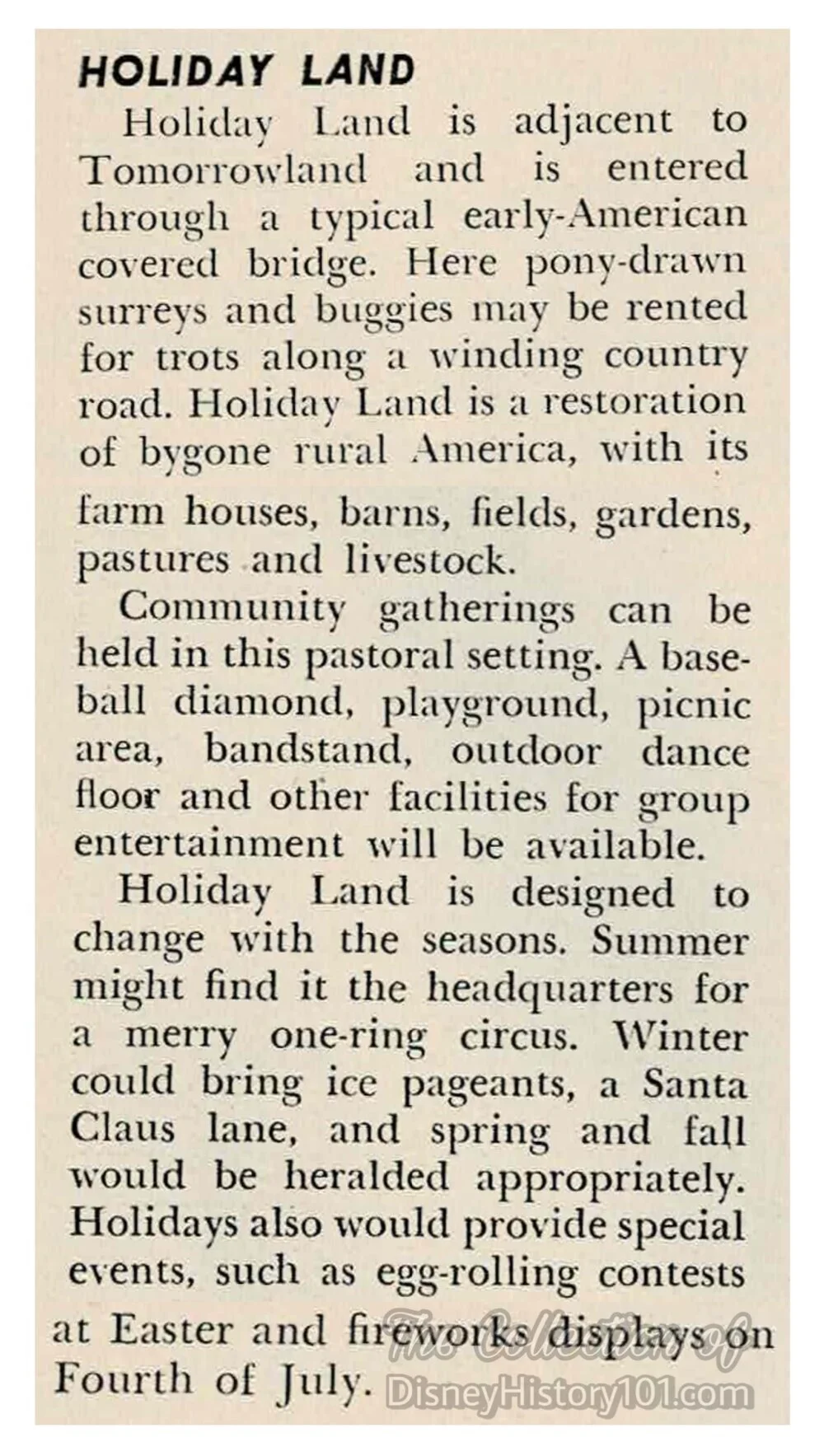
According to “Disneyland: Inside Story”:
“Walt wanted a circus- ‘The Mickey Mouse Club Circus’ - to run for six weeks starting at Christmastime. The idea met with downright opposition by some of his staff. ‘Walt, you just can’t do this!’ said C. V. Wood, one of his key administrators. ‘A circus always plays by itself. The guy comes to Disneyland to stay around for four hours and see what you've got. He's not going to spend two of those hours at a damn circus!’
Disney was undaunted. In order to gain more support for the idea, he decided that the Studio would eventually make a film called Toby Tyler or Ten Weeks with a Circus. He then convinced his brother Roy that they would need the huge circus tent and the old wagons he had located. As one might suspect, all of these items found their way down to Disneyland.”
*January 8, 1956 according to The Disneyland News; VOL. 1-No. 6; DECEMBER 10, 1955;
“Here comes the circus! Ev’ryone Loves The Circus - And That Includes The Merry Mouseketeers”
All these plans were finally realized, when (sometime after Disneyland opened) Holidayland would provide a stage for the Mickey Mouse Club Circus (a $30,000 Disneyland addition) that would come to include the largest “talent roundup” of television’s Mouseketeers as well as top acts from major circuses like Ringling Brothers Barnum & Bailey Circus! Soon, those “happy-hearted roustabouts” were pulling canvas and driving stakes in order to raise “the world’s largest candy-striped tent”!
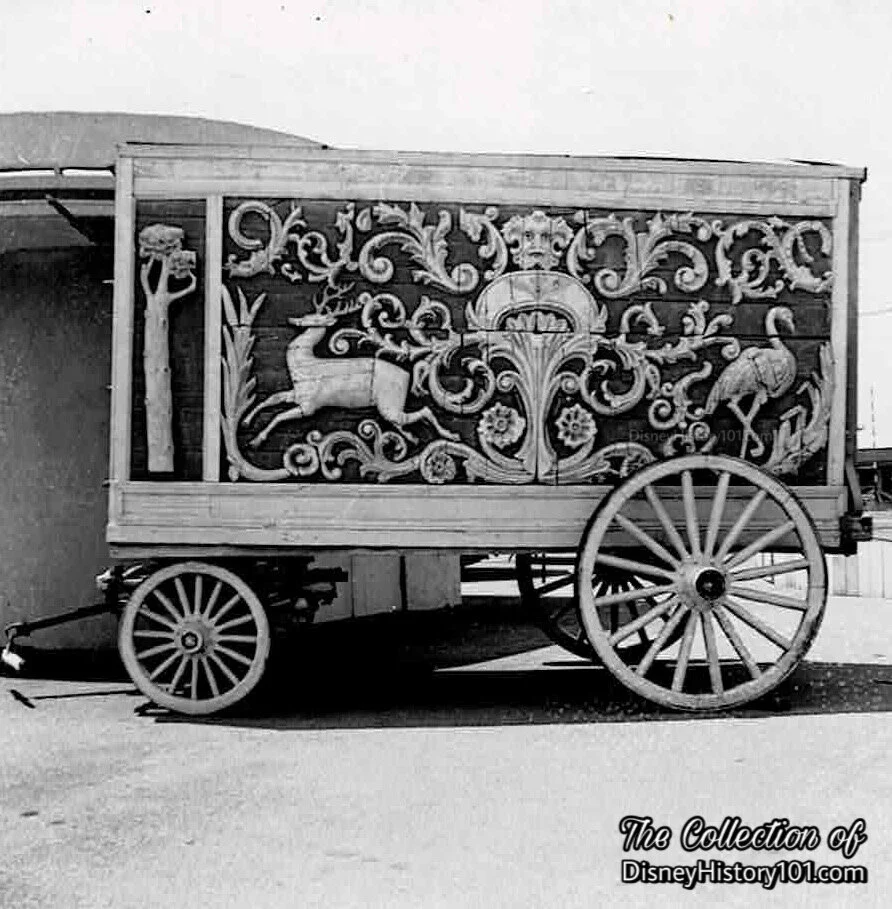
In addition, a calliope was bought by Walt Disney from Dave Bradley, owner of Beverly Park in Los Angeles, who helped Disney in the early planning of Disneyland. Walt had these “forgotten” antique circus wagons restored to their original beauty by Disney Studio artisans for use in pictures, and then brought to Holidayland. A press release stated: “With all its remodeling, the old vehicle remains as it was. The are no springs on the front wheels causing the player to ride rough, and the same patented, steel hubs necessary for plowing through deep mud and which were used in the original version, are seen on the Disneyland calliope.”
The “Souvenir of The Mickey Mouse Club Circus” (published 1955) states, “Taking it upon himself as a public trust, and deserting to perpetuate the happier things of our American heritage, Was searched for and found these original circus parade wagons. Researchers, artists, designers, special craftsmen and wagon builders were enlisted by Walt in his desire for authenticity in their rebuilding. Circus historians and ‘old-timers’ were brought in as consultants. And since Walt Disney believes that any heritage worth bringing back to life is worth putting back into actual use, these circus wagons were put back into service. Proudly they’ll roll again up Disneyland’s Main Street on their way to the Big Top.” Of the cars restored was a “Steam Calliope, a Beauty Wagon, Whiskers Wagon, White Ticket Wagon [featuring ornate hand-carved figures in cameos], the [1890] Swan Band Wagon, the [Barnes Circus] Green Cage [wagon], the Swan and Fawn, and the J.H. Eschman Circus’ Shell Cab [built by the Beggs Wagon Company of Kansas City]”, according to the Pasadena Independent (published December 18, 1955). Photos and artwork of these wagons (preserving what they looked like) can be viewed on four pages of “The Souvenir of Mickey Mouse Club Circus” (published Winter of 1955).
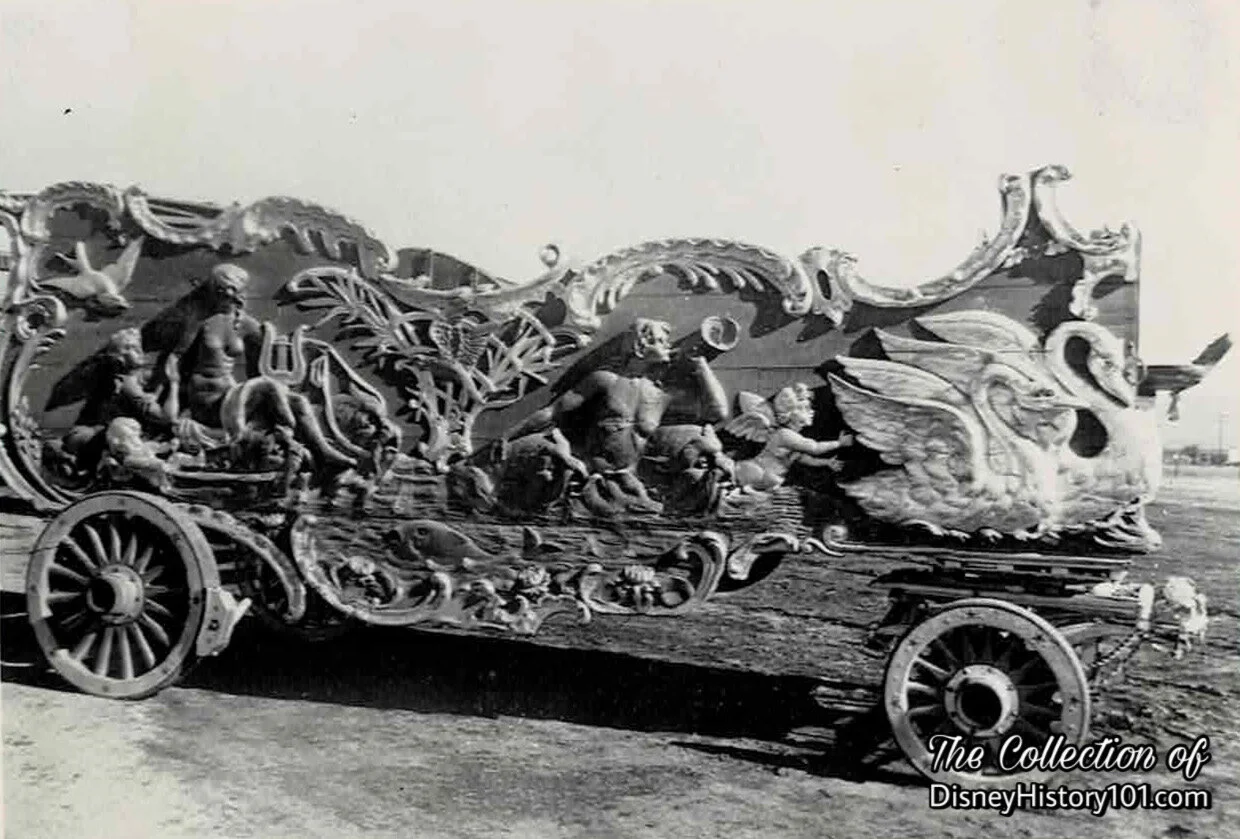
But, what is not commonly seen, is what those antique wagons looked like before Walt’s artists restored them to such a pristine condition. Below, are a few “Vintage Views” featuring three of the wagons.
![Above: J.H. Eschman Circus’ Shell Cab [built by the Beggs Wagon Company of Kansas City]](https://images.squarespace-cdn.com/content/v1/5b3d7f804eddec6e826be0c9/1640764913130-TACGUSWPLMUFVS8PLNC2/57514DF0-8189-4F6C-AABE-0792600F7B13.jpeg)
When the Mickey Mouse Club Circus first opened on Thanksgiving Day, there was a parade of the entire cast, led by Grand Marshall Walt Disney (wearing a cowboy hat) and Co-Grand Marshall Fess Parker (dressed in his Davy Crockett duds)! Mouseketeers marched along the route, bearing standards, which introduced the various parade units. The Disneyland Band was piled high inside the Swan Band Wagon, while school bands marched along the route. The sky-blue and gold-accented Beauty Wagon (which also has some screen time in “Walt Disney’s Toby Tyler or 10 Weeks with a Circus”) was pulled by six horses dawning red feather plumes on their head. There were elephants, clowns, and the Steam Calliope providing the keynotes of popular melodies and piping white clouds of steam down the route (with engineer in tow). The circus lasted for only a few months, but before being discontinued, the beige Mickey Mouse Club Circus tent, those restored circus wagons, the opening parade, along with a certain tree-topped hill (rising to the east, over Fantasyland), can readily be seen preserved on film, in some aerial footage of “Disneyland, U.S.A.” (a “People and Places” feature film, released in the U.S. on December 20, 1956 through Buena Vista Film Distribution Company). Remember, that the circus was one of Walt’s dreams (seen in Harper Goff’s early c.1951 drawings of Mickey Mouse Park to be built along Riverside Drive in Burbank), and a true labor of love (judging by all the details added to the big show).
“Here comes the circus! Everyone loves the circus, and that includes the merry Mouseketeers!”
Marvin A. Davis (creator of early Disneyland site plan drawings) added circus tent elements to Nash Rambler commercials produced during September and October of 1955. While these brief televised scenes would only subtly advertise the arrival of the circus at Disneyland, handbills (soon distributed at the Disneyland Main Entrance) would divulge the Big Top acts!
Van France recalled: “Walter Knott had warned us about the weeks before Christmas. He said that the public seemed to forget at the same time each year that there was a Knott's Berry Farm. Well, we didn't want the public to forget Disneyland, so Walt, or somebody, came up with an idea for changing that pattern of visitors.”
We'd call it the Mickey Mouse Club Circus.
The Mickey Mouse Club Circus was a temporary show which began Thanksgiving Day (of November 24, 1955) and ran though the cold winter months, until January 8, 1956. Walt Disney and Davy Crockett (Fess Parker) rode together as Co-Grand Marshalls of the big Thanksgiving Day parade!
The White House backstage (where Van France worked) became the headquarters for the performers. In order to assure that guests and performers to be comfortable during the acts, “the world’s largest candy-striped tent” (or, “made-to-order pink and white striped Big Top”) was heated. Between the two tents a total of 2,500 guests could be accommodated simultaneously. [“Disneyland: Then, Now, and Forever,” by Bruce Gordon and Tim O’Day]
The show was produced by Walt Disney, managed by Ben Chapman, and staged by both Hal Adelquist (co-creator and Associate Producer for television’s Mickey Mouse Club) and Walt Disney Studio “gag artist” and “Big Mooseketeer” Roy Williams! Artistic Direction of this “gaudy and gilded circus of the good old days” was owed to Bruce Bushman, who once (from 1954 to 1955) provided many original concept drawings of potential Fantasyland adventures and attractions (many of which became reality). The diverse and colorful wardrobe was provided by Chuck Keehne.
"See the Animals and Clowns"
Partially owing to Hal Adelquist’s negotiations and arrangements with the Gil Gray Circus, the “full-scale hippodrome performance” (which cost more than $300,000 to produce), featured more than 80 animals and more than 70 performers (many of them, children ranging from “ages 8 to 14”) in 12 big acts, appropriately underneath a circus tent with a 2500 guest capacity!
Walt Disney and Davy Crockett (Fess Parker) rode together as Co-Grand Marshalls of the big Thanksgiving Day parade held November 24, 1955. The Circus Parade included wagons, elephants and wild jungle cats.
The Mickey Mouse Club Circus included the following acts - (1) On Parade, (2) George Keller and His Feline Fantastics, (3) Clowns and Follow the Leader, (4) The Mouseketeers in an Aerial Ballet, (5) Animal Varieties, (6) Kinko the Clown, (7) The Camels and Llamas, (8) The Ted DeWayne Troupe of Acrobats and tum-blers, (9) The Clowns and the Mouseketeers, (10) Serenado, the Musical Horse, (11) The Baby Elephants featuring the world’s only twins, (12) The March of the Clowns, (13) Flying Alexanders aerialist Trapeze Number, and (14) the March of the Toys from “Babes in Toyland” with a Christmas Tree Finale. The acts of the Mickey Mouse Club Circus were briefly covered in a wonderful 2-page spread (full of photos), in The Disneyland News (Vol.1 -No.6 ; published December 10, 1955).
Many of these co-starred television’s Mouseketeers, for the first time in-person. In fact, the seventy-five minute show (led by Ringmaster Jimmie Dodd, songwriter and musician of The Mickey Mouse Club television series) had 12 headlining acts amongst the show’s total acts! To understand the scope of this, is the following list of Mouseketeers who performed : Sharon Baird, Karen Pendleton, Mike Smith, Doreen Tracey, Dennis Day, Dickie Dodd, Billie Jean Beanblossom, Tommy Cole, Darlene Gillespie (as “Tinker Bell”), Mark Sutherland, Cubby O’Brien, Lonnie Burr, Ronnie Steiner, Judy Harriett, Lee Johann, Johnny Crawford, Bonni Kern, Nancy Abbate, Mary Sartori, Don Underhill, Mary Espinosa, Annette Funicello, Bronson Scott, and Bobby Burgess - for the first time in-person!
“See The Animals and Clowns”
The show’s lineup opened with the set of Professor George Keller’s Feline Fantastics (previously popularized through performances ranging from Hamid’s Steel Pier of Atlantic City to Madison Square Garden, with Ringling Bros. Circus and the Shrine Circus). Professor George Keller did not utilize “whips, gun, or chair” (“standard props of the lion trainer’s art”). Though the show was scheduled to feature a total of 14 cats, Professor Keller’s first season act featured seven breeds of cats including pumas, panthers, leopards, Bengal tigers, and mountain lions among the 30 cats).
Another act was Ted DeWayne and his troupe of acrobats and gymnasts performing their tumbling act and “four-high human pyramid.” The Flying Alexanders performed breath-taking aerial somersaults and “flythroughs.”
The show’s second act featured “The March of the Clowns” (like “Uncle” Bob-O the Clown of television’s Mickey Mouse Club, or Klinko the Clown and his miniature automobile). A Clown Band included Dick Winslo, George Landeer, Eddie Stoll, and George DeRubies. Charley Cheer was famous for his tramp costumes, squeaky voice, and mallet. Other notable clowns included Bille Burke (a veteran of 32 years), television’s Chucko the Birthday Clown, Dick Doud, and Lou Kish.
The clown act helped set the stage for the “Aerial Ballet” featuring Tinkerbell and Peter Pan performing an aerial ballet under ultra-violet light, alongside 24 Mouseketeers.
There were camels, dogs, the world’s only twin baby elephants, horses (like Serenado the musical wonder horse performing “Davy Crockett”), llamas, ponies, and seals in the “Animal Varieties” act.
Dick Berg's seals performed phenomenal feats of balance.
Three brightly colored elephants were put through the paces by trainer John Herriott.
Beatrice Dante (a former Parisian night club dancer who found animal training a more interesting life) strolled with her chimp Charlie. Charlie, was a special animal who has been taught to walk on stilts and perform 20 other tricks - by Beatrice. John Gerlack recalled this chimp (though associating it with another entertainer: “I remember one day when a performing chimp from Professor Keller's Circus opened the door of the Sound room and came walking right in.”
A Christmas tree rising from the center ring triggered the climax of the show! The “Flying Alexanders” with their breathtaking aerial summersaults and soaring “fly-throughs” astounded audiences. The highlight of the show was a procession of pageantry (which would become a Disneyland tradition) - the “March of the Toys” (the “Living Toys” from Walt Disney’s “Babes in Toyland”) and Walt Disney’s characters courtesy of the Ice Capades (including Mickey Mouse and Minnie Mouse, Donald Duck, Goofy, Pluto), and even Santa Claus in-person, riding in a sleigh pulled by “matching ponies” in the magical growing “Christmas Tree Finale” (in which the 40-foot tree grew in 10 seconds)!
All of these acts were performed to unforgettable circus songs directed by Tommy Walker (son of Vesey Walker, Director of the Disneyland Band). This entire show ran twice daily on weekdays, and three times daily on weekends (show times were announced “over the Park Public Address System… 15 minutes before each performance”).
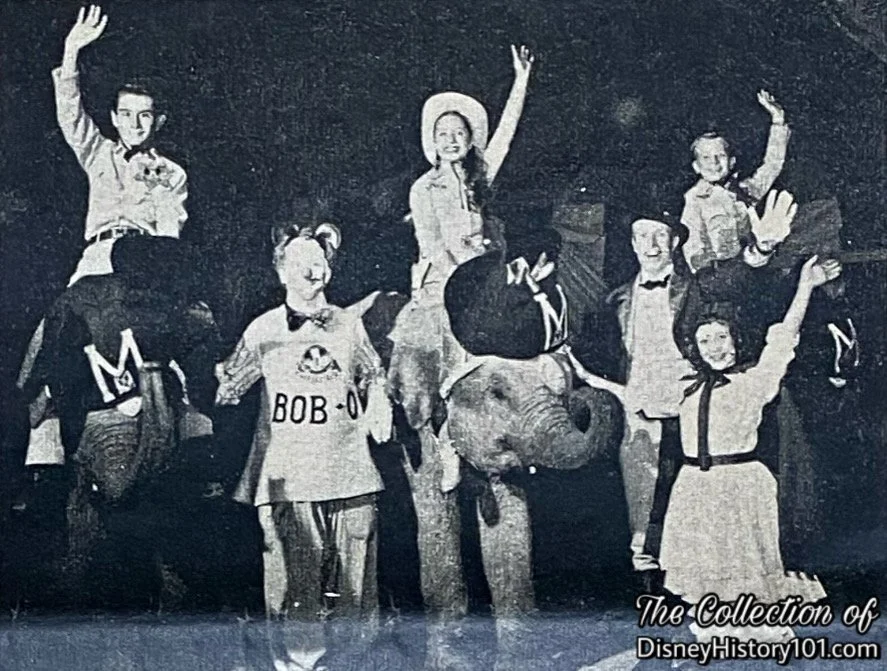
All of these acts took 75 minutes to present the entire show, holding the title as “the longest show in Disneyland history,” according to “Disneyland: Then, Now, and Forever,” by Bruce Gordon and Tim O’Day.
“Grand Opening Show”
According to “Disneyland Inside Story”: “Joe Fowler remembered opening night as if it were a recurring nightmare. ‘Walt and I were sitting together. The first thing that happened, Owen Pope brought his big pumpkin chariot into the huge circus tent pulled by six of his most beautiful ponies. One of the wheels caught a large diagonal post that held the big top up and carried it away. I thought, ‘Oh, no, my God, no!’ But fortunately the tent still held up…
According to Fowler, that was only the beginning, as things got worse. One of his staff came running up and said, ‘Joe, the llamas have escaped!’ Excusing himself from Walt, Fowler and his staff chased the llamas along the railroad track, finally recapturing them at the Main Street Station.” Disneylander and “55er” Gil Pimentel recollected “the nasty critter that got loose from Professor Keller's Circus and chased me down the railroad tracks... spitting at me!” When Fowler returned, Walt told him, ‘Well, Joe, you missed the best part of the show. One of the leading ladies bent down and split her tights!’” Jack Lindquist may have actually seen this occur, and years later he recollected: “I remember the opening night of Keller's Circus. A beauteous and well-endowed aerialist would swing back and forth over the audience. Well, on one swing, her bra broke! It was QUITE A SHOW!!!”
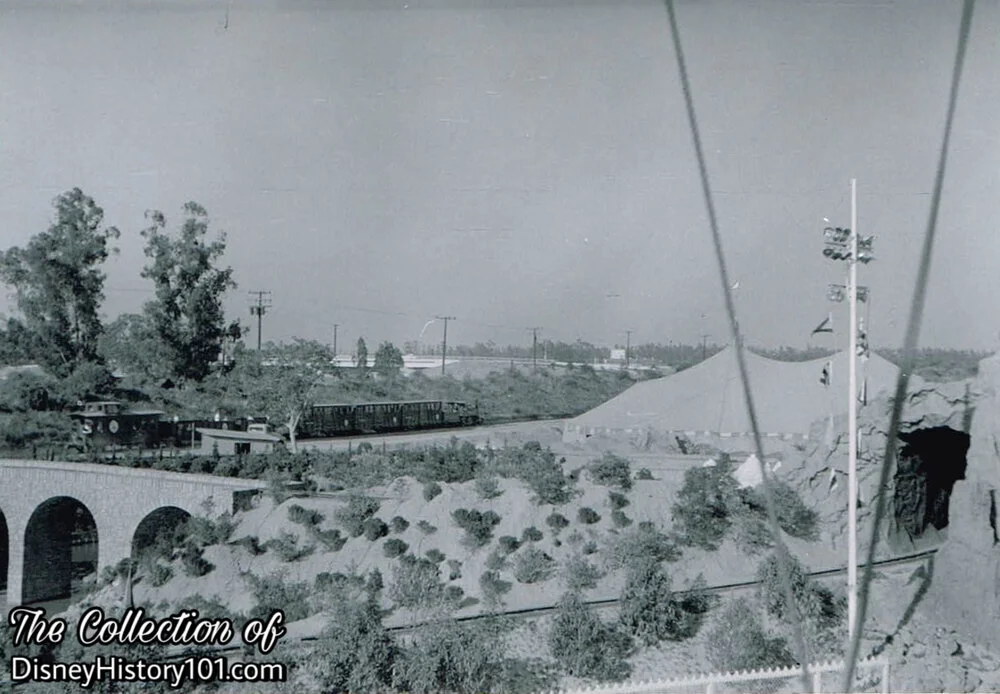
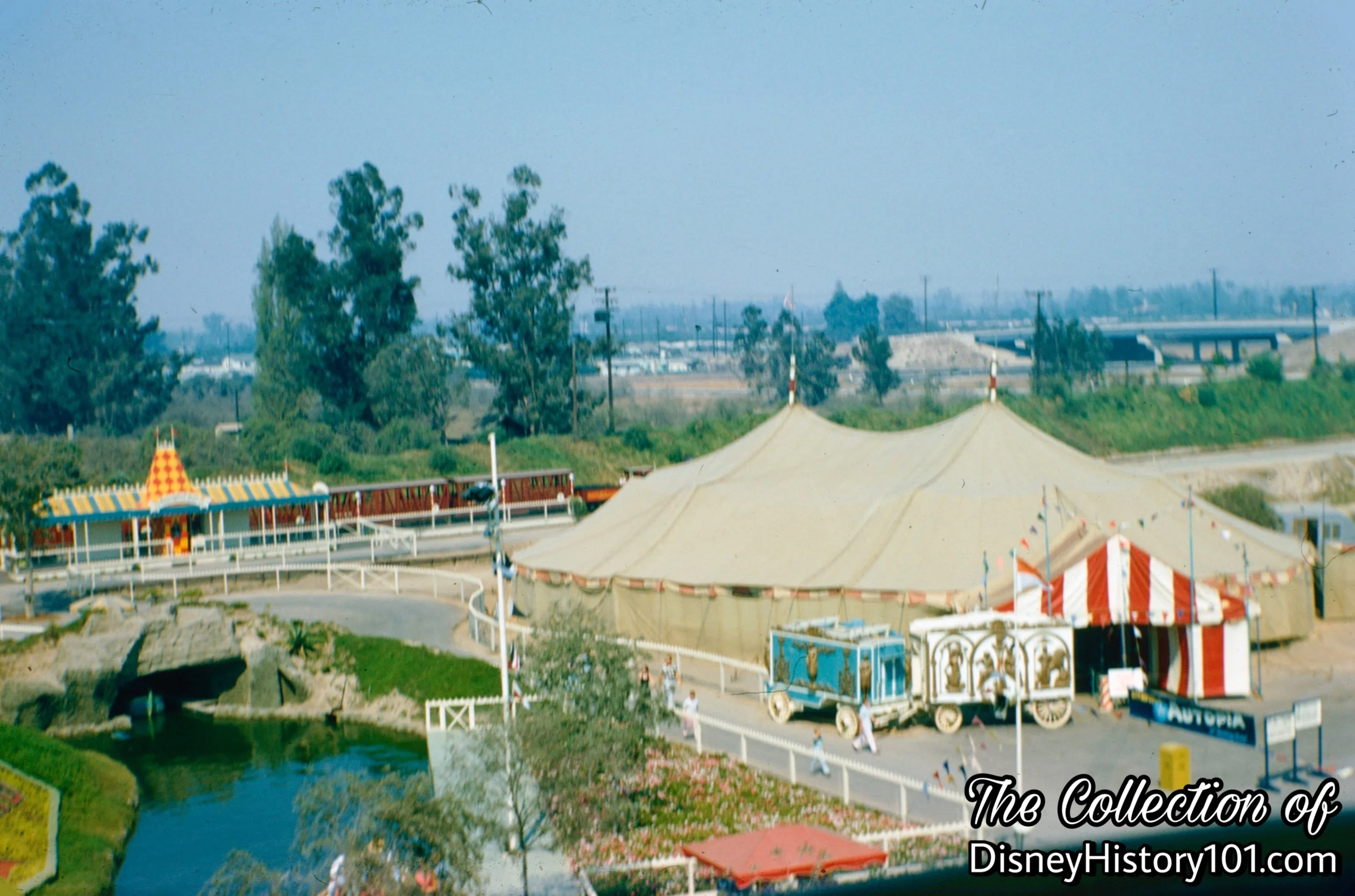
Walt Disney’s Mickey Mouse Club Circus had served its purpose - “to introduce his Mouseketeers to the public for the first time in person,” according to the "Disneyland 1st Anniversary Souvenir Pictorial" Excerpt, published 1956.
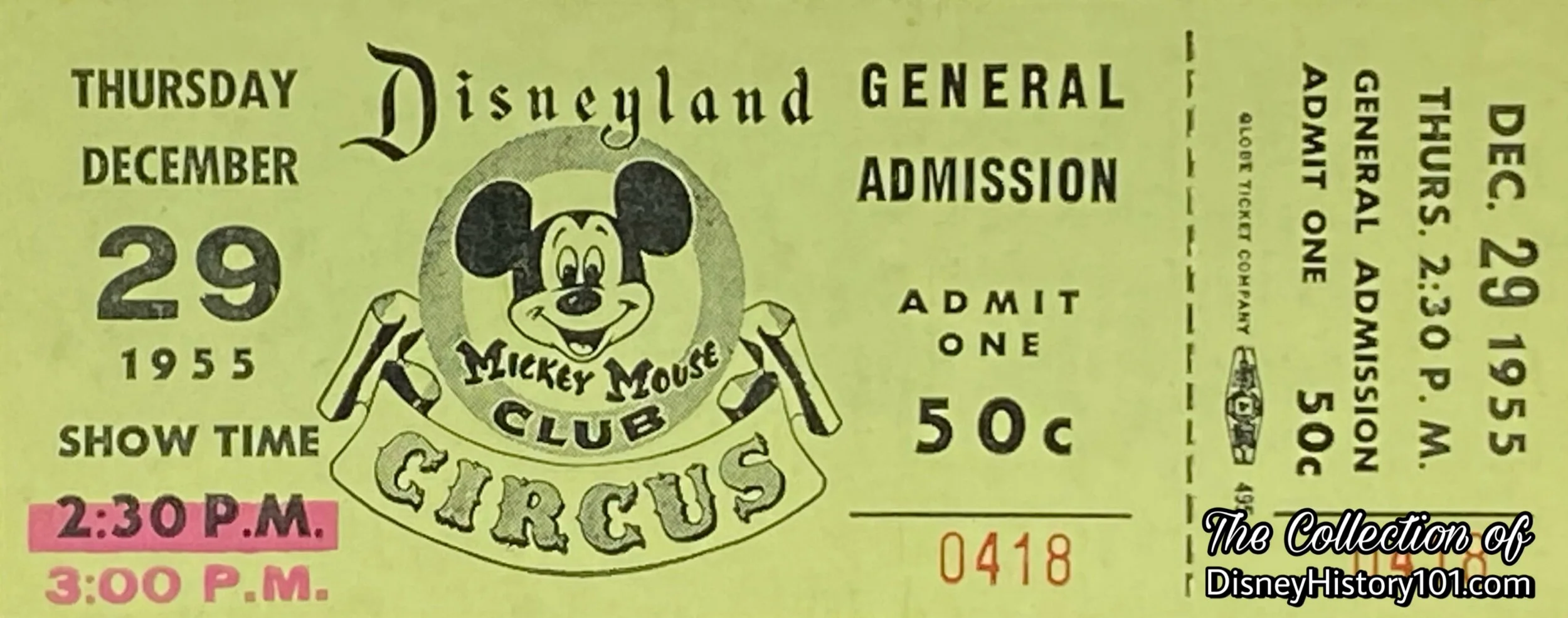
General admission for the grand Mickey Mouse Club Circus show was just 50¢, and reserved seating $1.00 (this was of course, separate from Disneyland General Admission), purchased through Disneyland’s Main Entrance Box Office as well as “nearby little kiosks,” according to “Disneyland: Then, Now, and Forever,” by Bruce Gordon and Tim O’Day. “Regardless of adjustments in schedules, ticket prices, or anything else”… the public “just didn't seem to want to see the circus.”
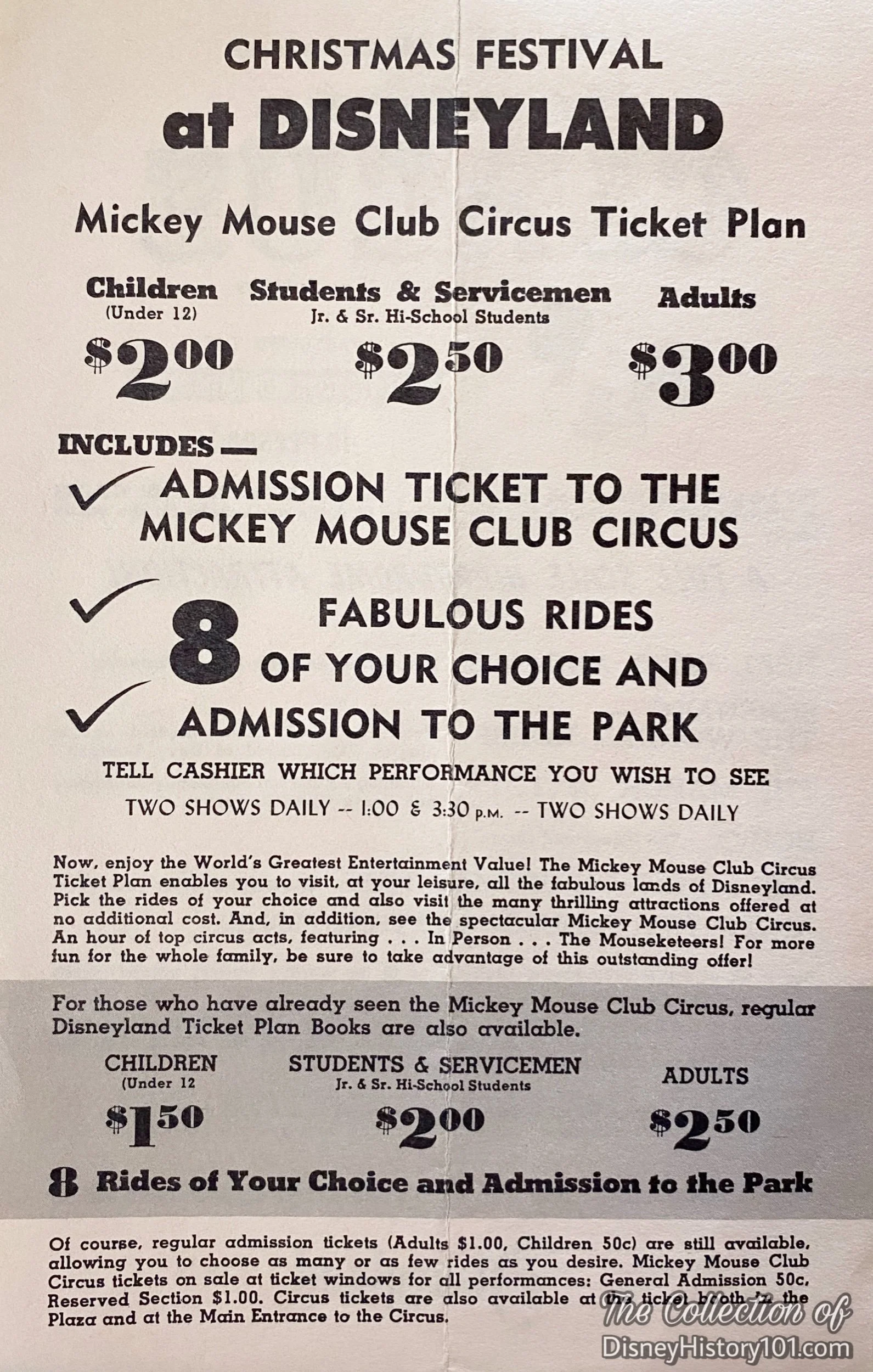
During a Disneyland Merchant's Association Meeting (held January 25, 1956), Walt stated “the fact that certain things do not belong in Disneyland.” The meeting minutes preserve Walt’s expressions: “We went out on a limb and put in a circus for Christmas season. Although it was a great circus, experience proved that a circus does not belong in Disneyland. It is something that can be seen without coming to Disneyland. We need things that are unique - things that are ‘Disneylandish’.”
While it had been decided to phase the un-“Disneylandish” elements out of the Park, this did not mean that the circus would disappear from Disneyland. Though the Mickey Mouse Mouse Club Circus disappeared less than a year before Disneyland celebrated its first year of operation, subsequent parades and show elements not only assured the sight of circus wagon processions down Main Street U.S.A., but continued to incorporate the circus theme into the Disneyland Show! In addition, circus performers continued to have a role in the Disneyland Show.
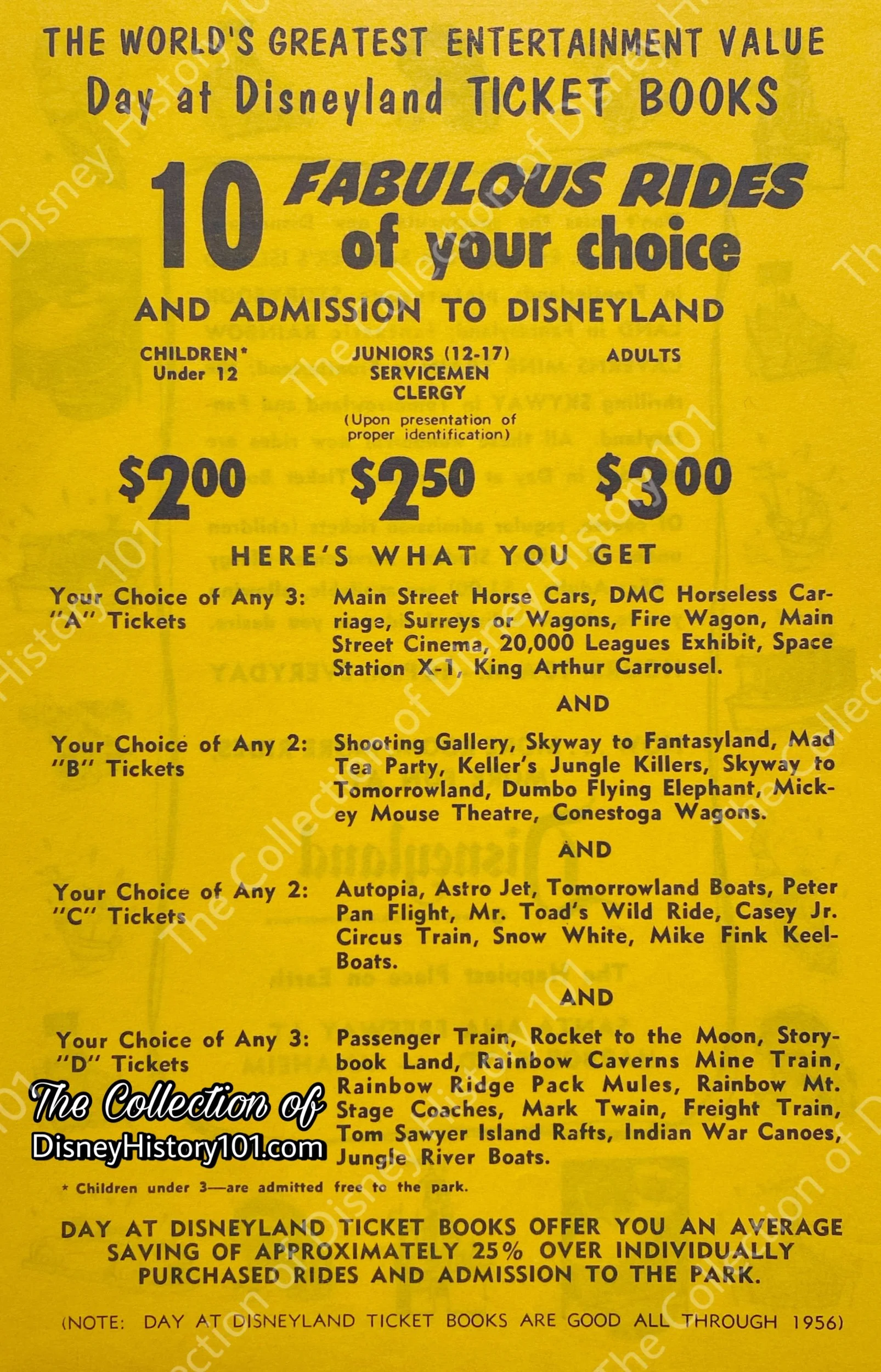
For instance, an escape artist hung upside down over Fantasyland audiences, while attempting to escape from ties and bonds. Also, the popular Mickey Mouse Club Circus headlining act, “Keller’s Jungle Killers” was held over from February 19th (*or, 18th by some accounts), 1956 to September 9th, 1956. Coronet player Ted Tracey recalled playing at Professor Keller's Circus: “The Circus was one and a half hours long for 50¢, which was quite a bargain.”
Soon, “The Disneyland News” (published for March 10, 1956) announced “‘Feline Fantastics’ Back For Spring Engagement.” By now, the “special attraction” was given a new name - “Professor George Keller’s Feline Fantastics,” which starred “real wild jungle killers,” (like Tabu the leopard; see “Echoes of Disneyland”) according to “The Disneyland News” (Extra Edition). Dee Fisher (of Wurlitzer) provided background music on a Wurlitzer Organ, for what was billed as “the only jungle cat act now in operation in the United States,” according to “The Disneyland News” [Vol. 2, No.2 ; published for August, 1956]. During the era of the “Big 10 + 2 Winter Bonus Ticket Plan”, daily performances were valued at 25 cents, or one ”B” coupon.
“Remembering George’s Big Cats & Other Animals”
Many Disneylanders recalled Professor Keller and his cats and these recollections help paint a composite picture of the big cats of the attraction.
Joe Fowler recalled: “During the premiere of the circus parade, a black panther grabbed the paw of a neighboring tiger and chewed it off.” Disneylander and “55er” John Hernandez of Parking recalled Professor Keller's Circus and “that there was a big black panther with fierce yellow eyes. There was a fellow working with me and he was so afraid of that panther that he'd never go anywhere near the Circus. He'd go a long way out of his way when coming and going where we were working.”
Others felt differently like “55er” Chris Christopher who started working on the graveyard shift and “used to watch Professor Keller feed his animals with big tubs of meat.” “55er” Marion Schawacha “talked with the animals of Professor Keller's Circus. Marion loved to go over on her lunch hour and rap with her friends, the animals. Those were the good old days!”
Disneylanders Jack Lindquist (eventual President of Disneyland) and Jim Quigley (eventual Supervisor of Disneyland Account Control) fondly recollected “Dr. Keller and his lion taming act”… “housed in a tent about where Health Services is.” Jim Quigley would often “go out there and talk to George Keller for a while.” He remembered: “In 1957, I was over at George Keller's Circus. He had tigers, pumas, cougars, cheetahs, lions and leopards and he use to put his head in the lion's mouth. One day when I stopped to talk to Prof. Keller, I found myself squatting beside an unleashed leopard….but not for long!… He said, ‘Jim, just stand still and don’t move.’ Not a comforting thing to hear in a wild animal tent. He slowly walked around to where this leopard or cheetah was stretched out and managed to get a collar around him.”
It was certainly an exciting time to visit Disneyland!
By the time “Professor George Keller’s Feline Fantastics” was discontinued, a total of 171,051 guests had been admitted to the show, according to one “Rides and Attractions” Report (published October 2, 1971). According to one “Admission, Ride and Amusement Revenue and Direct Expenses” report, Jungle Killers produced $355 in revenue (with a total direct expense of $348) for DISNEYLAND, INC. for the fiscal year (52 weeks) ending September 29, 1957. Animation Mechanic Oren Gallegly recalled when “the day came to move Professor Keller's great big tent. A contractor wanted $15,000 to move the tent, but a Disneyland worker, with four other men, worked all night, moved the tent, and charged ONLY for the overtime!”
Caption : “George J. Keller, a former college professor turned wild animal trainer, demonstrates for the first time the unarmed subjugation of a group of African lions, tigers, leopards, mountain lions, jaguars, black panthers and a cheetah.”
Though this version of Holidayland was dismantled, that wasn’t the end of the red-and-white circus tent, which was used for events in the second incarnation of Holidayland! (Read more HERE.) Walt also made some use of his restored circus wagons, using them as props for “Toby Tyler or Ten Weeks With a Circus” (released January 21, 1960). Two years later (in 1962), both Independence Day and the winter holiday season brought old-fashioned circus parades (complete with calliope, circus wagons and pachyderms) back to Main Street U.S.A. for their final runs.
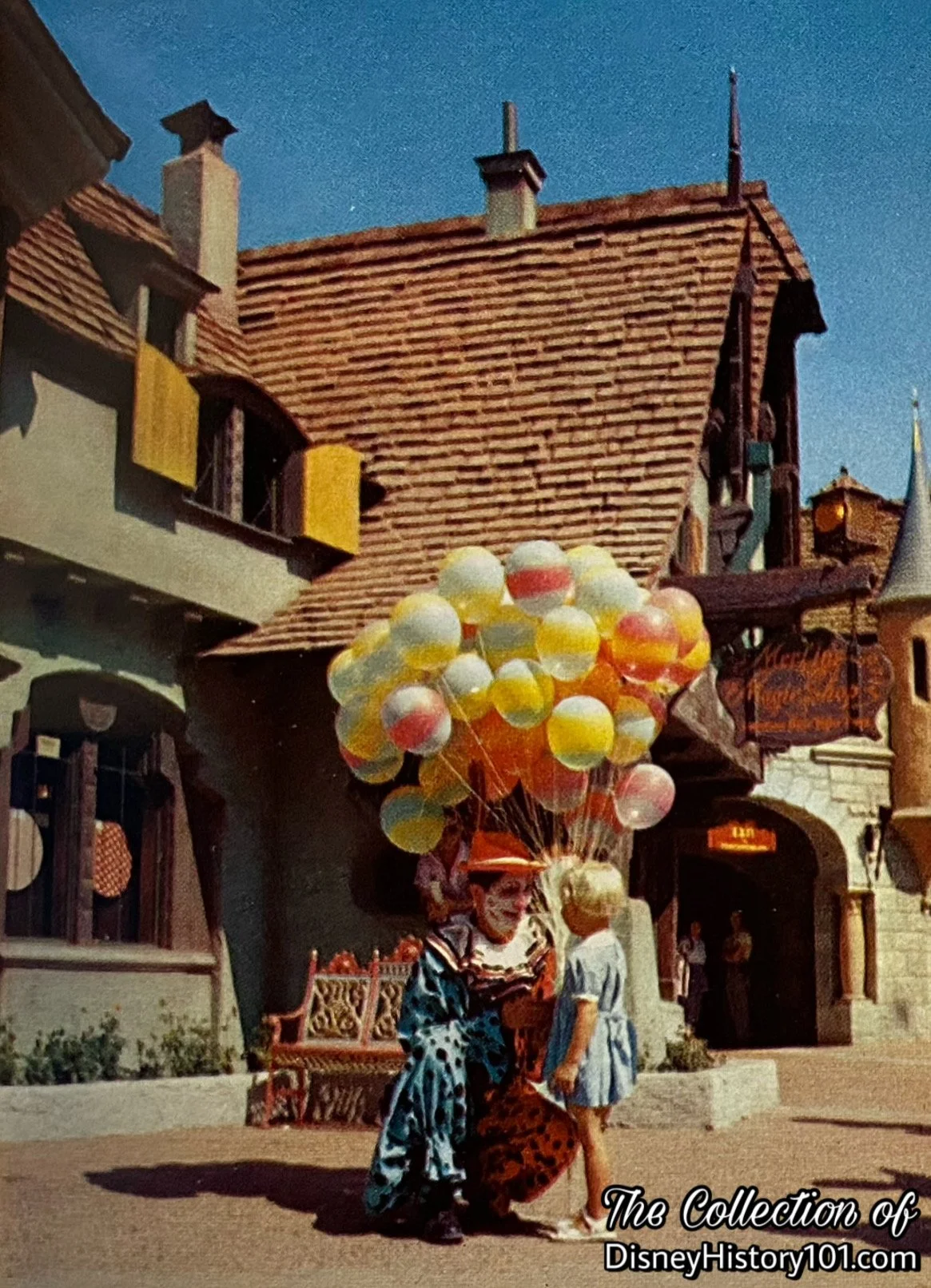
By some accounts (as one published in “Disneyland Inside Story”): “circus people were a tough lot used to drinking and gambling between shows.” However, some exemplary circus performers continued to grace Disneyland. While it became a casting policy that “no person would be employed who had previous experience in an amusement park, fair, or circus,” occasionally few were inducted into the Disneyland family, hired into the Disneyland Entertainment Division for Shows and Parades. [“The Spirit of Disneyland,” page 46; prepared 1984 by Walt Disney Productions]
One of the most remarkable exceptions to the rule was Tiny Kline, who was once an aerialist (for Ringling Bros. Barnum & Bailey Circus), before helping Tinker Bell “come to life” in flights of “Fantasy in the Sky” over Sleeping Beauty Castle, for three summers, from 1961 to 1963! Others included French circus aerialist Mimi Zerbini succeeded Tiny Kline for the following summer (of 1964), after which Judy Kaye (whose family was of “circus stock”, and who performed with her circus family in the Mickey Mouse Club Circus), would return to Disneyland and began to fill the role of Tinker Bell in 1965!
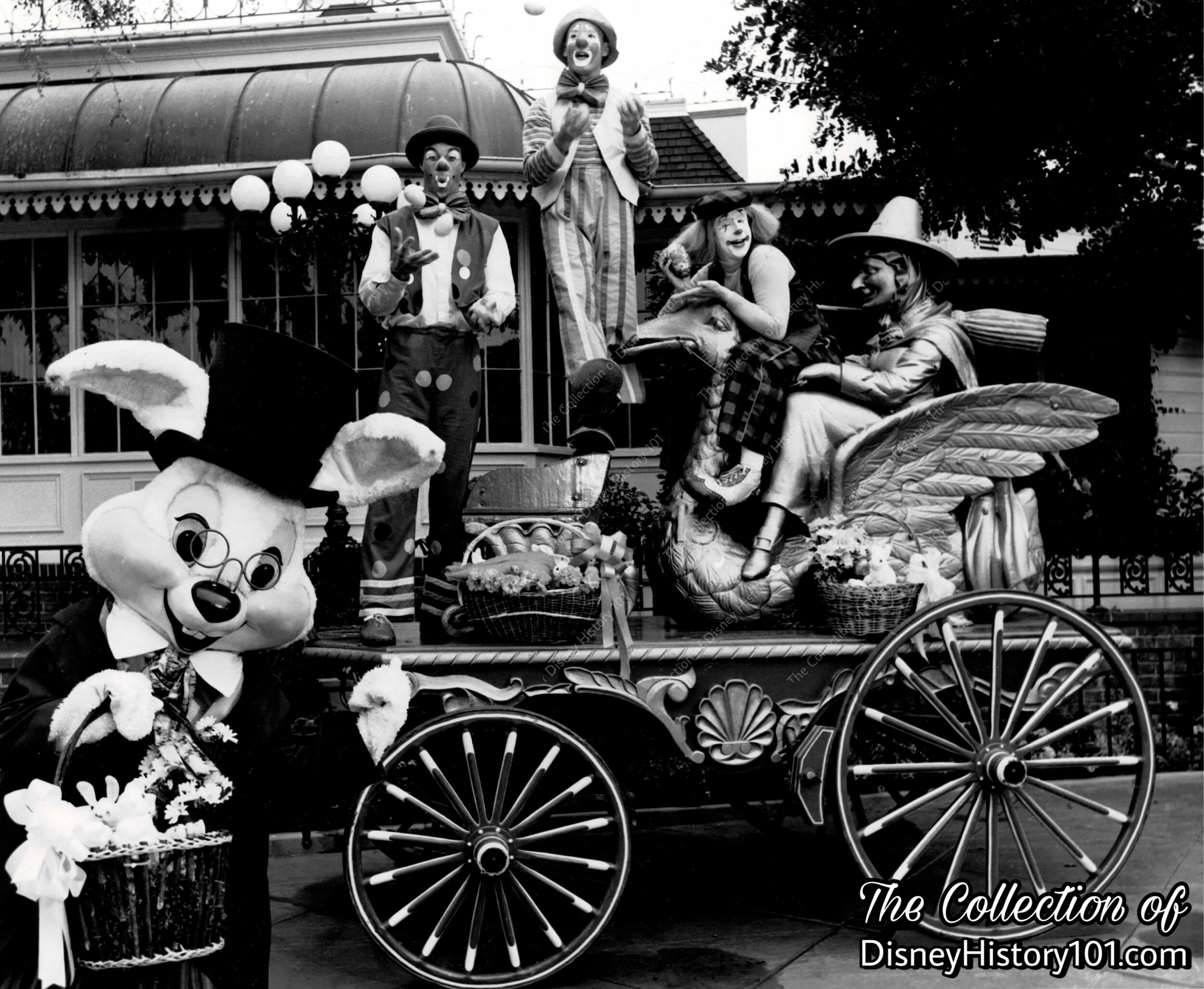
Now, Walt was well known for donating artifacts and even animals to museums, parks, and gardens. Once the festivities ended, all of the restored wagons (with the exception of the Dragon Calliope) were donated to Circus World Museum in Baraboo, Wisconsin, during 1962. [Box Office Magazine, June 11, 1962] Six years later, Monsanto Magazine (published for the Summer of 1968) released an article about the museum and some of its newly acquired antiques.
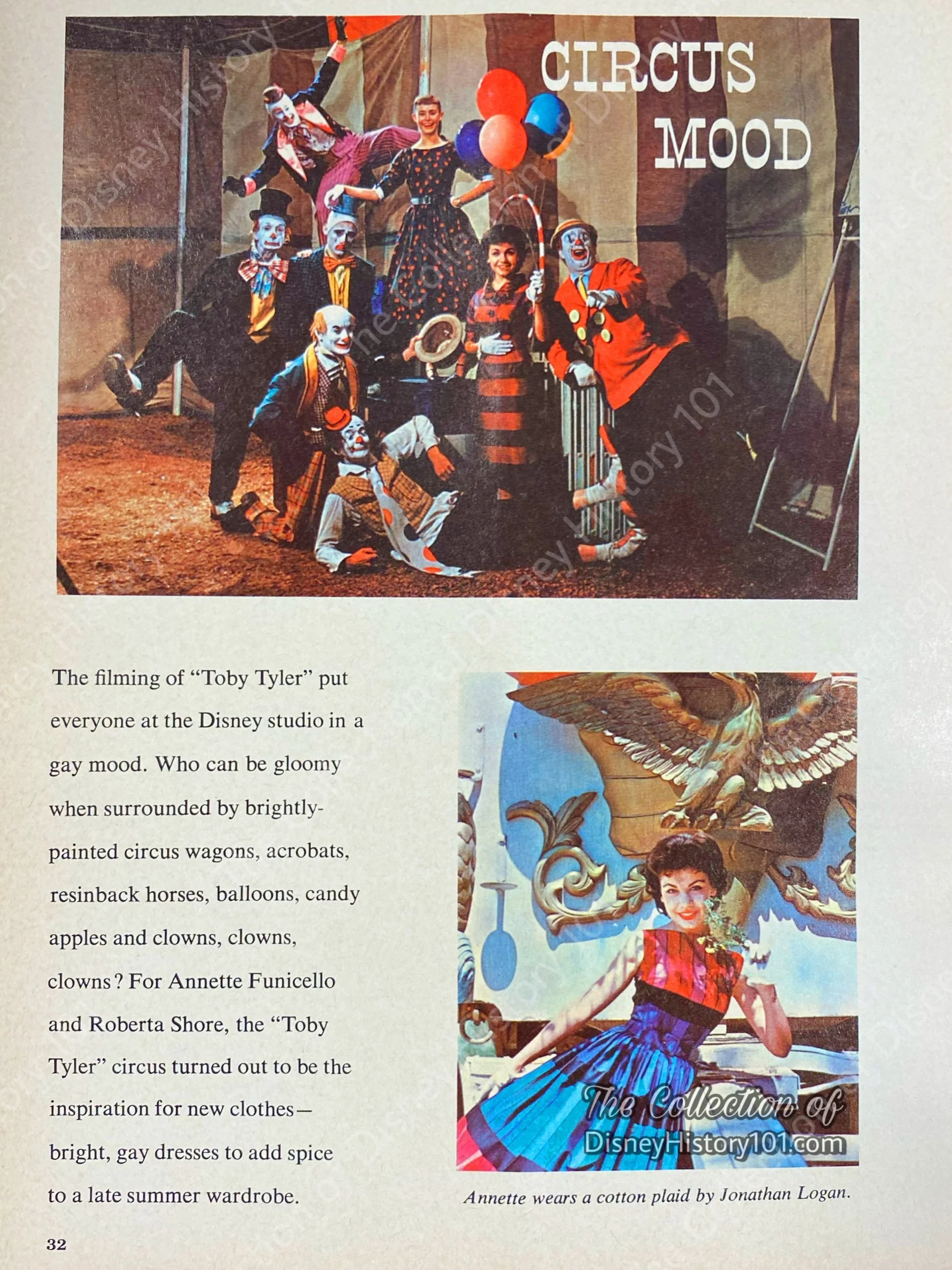
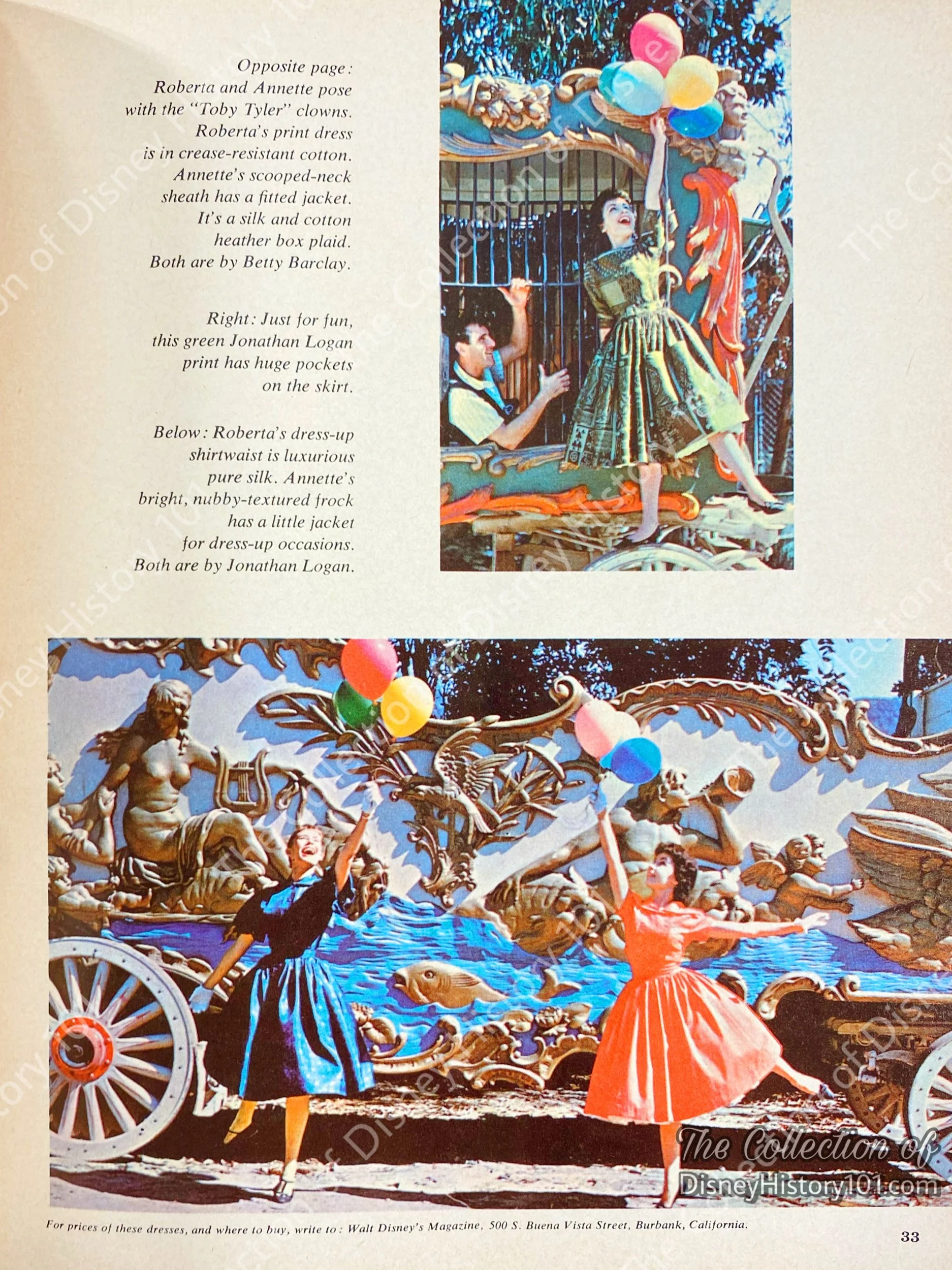
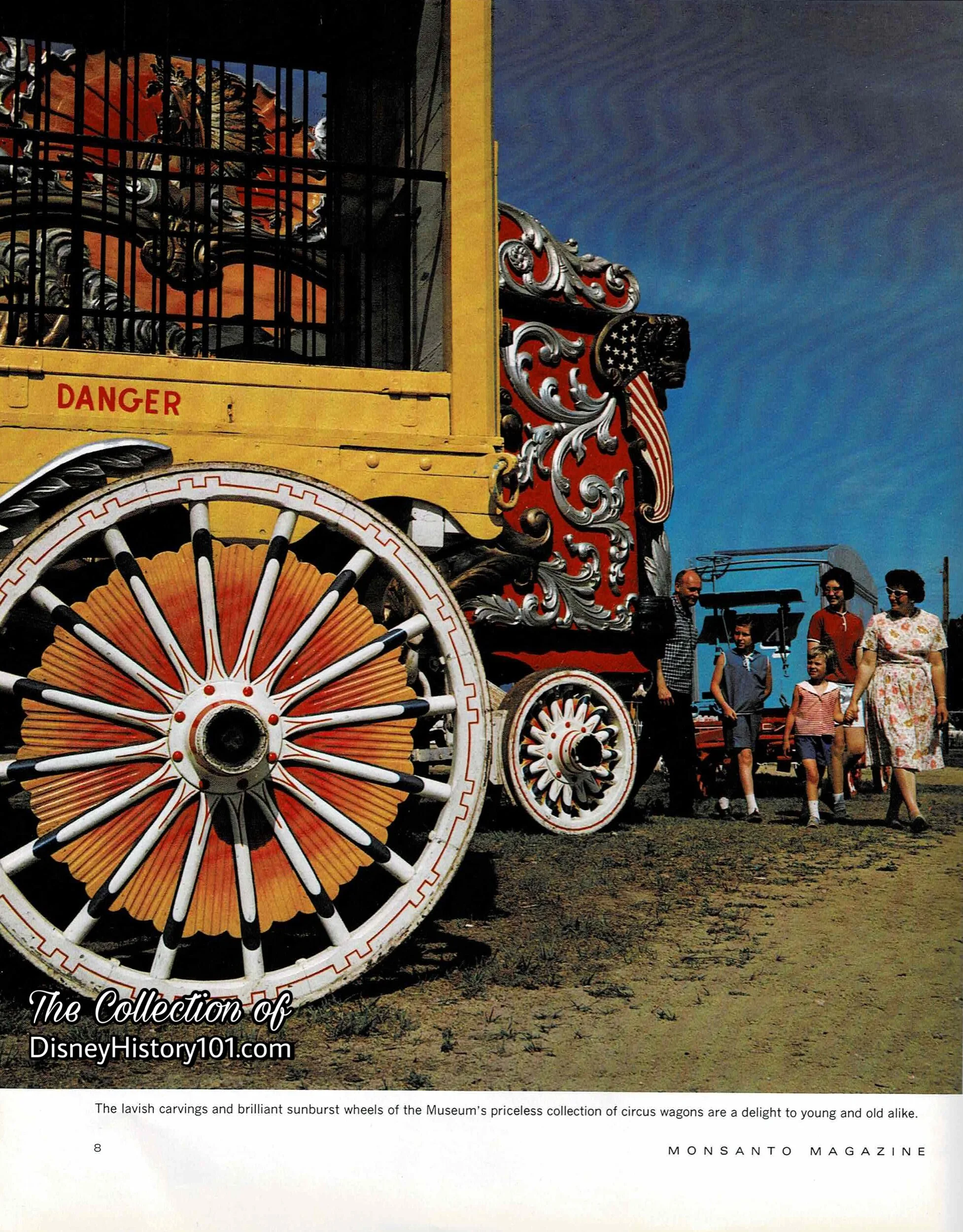
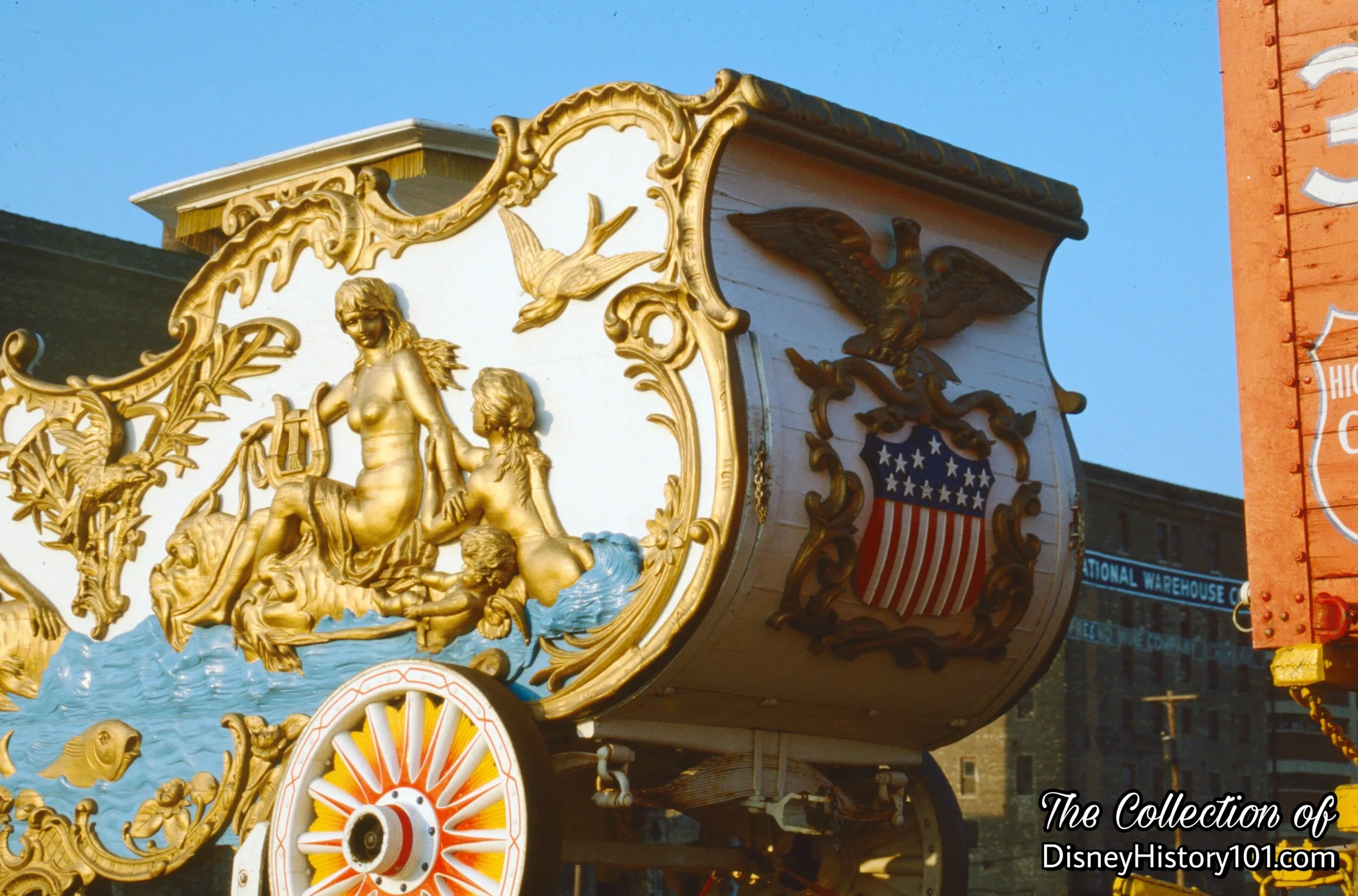
The Swan Band Wagon was used in production of Toby Tyler, and also to transport the Mouseketeers in at least one parade while at Disneyland. For some unknown reason, the Swan Band Wagon (in the care of Circus World Museum) was transported aboard railroad cars, perhaps in relation to some c.1985 rehabilitation or exhibition. [See Vintage View, above]
Anyhow (two years after gifting the wagons to the museum), Walt still had interest in the circus culture. In 1964, through a special business arrangement with Al Dobritch (of the Dobritch Circus), Mickey Mouse would make appearances in high-wire circus acts outside of Disneyland - first at the Canadian National Exposition (held August 24 - September 5, 1964), followed by the Detroit Shrine Circus (January 29 - February 14, 1965), and the St. Louis Police Circus (held April 22 - May 9, 1965).
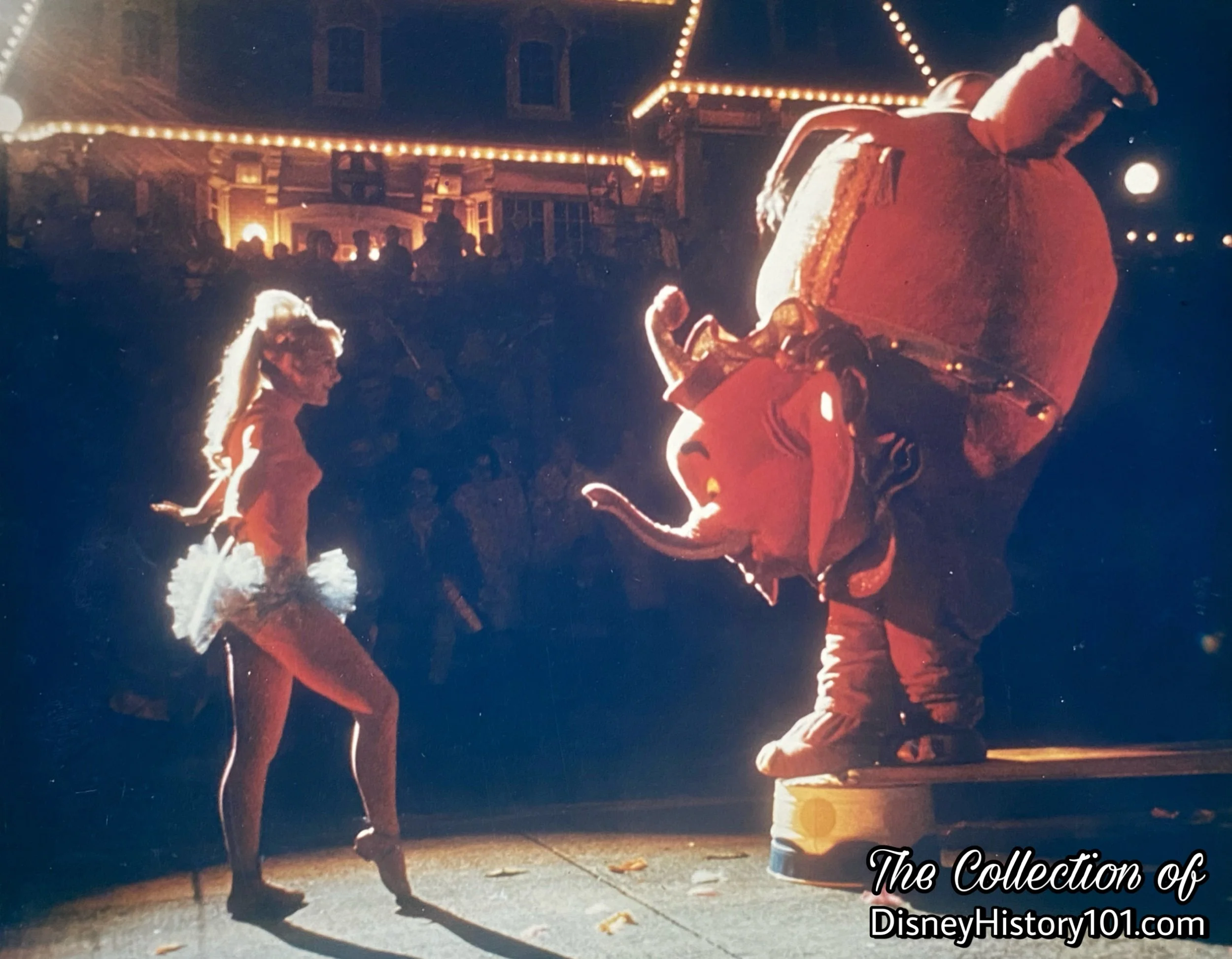
Meanwhile (throughout the 1960s), clowns, acrobats, and the occasional pachyderm made appearances in seasonal shows like Fantasy on Parade (see the Vintage View above). According to the Disneyland Inc. Inter-Office Communication (dated November 17, 1962; below), Disneyland had their animals “set” for the Disneyland Christmas Parade. However, Disneyland Entertainment was “always interested in renting animals” and contemplating renting animals (like a trotting horse, Shetland ponies, and even elephants) from Rudy Jacobi‘s Rudy Brothers Shrine Circus (in the local Corona area).
The show went on and numerous exotic animals even made appearances at Disneyland. For instance, during 1969, the Disneyland Sheet Metal Group repaired the wheel of a circus wagon which contained an angry Jaguar trying to claw his way out.
From 1975-1976, the America on Parade Bicentennial Celebration included a Circus Float.
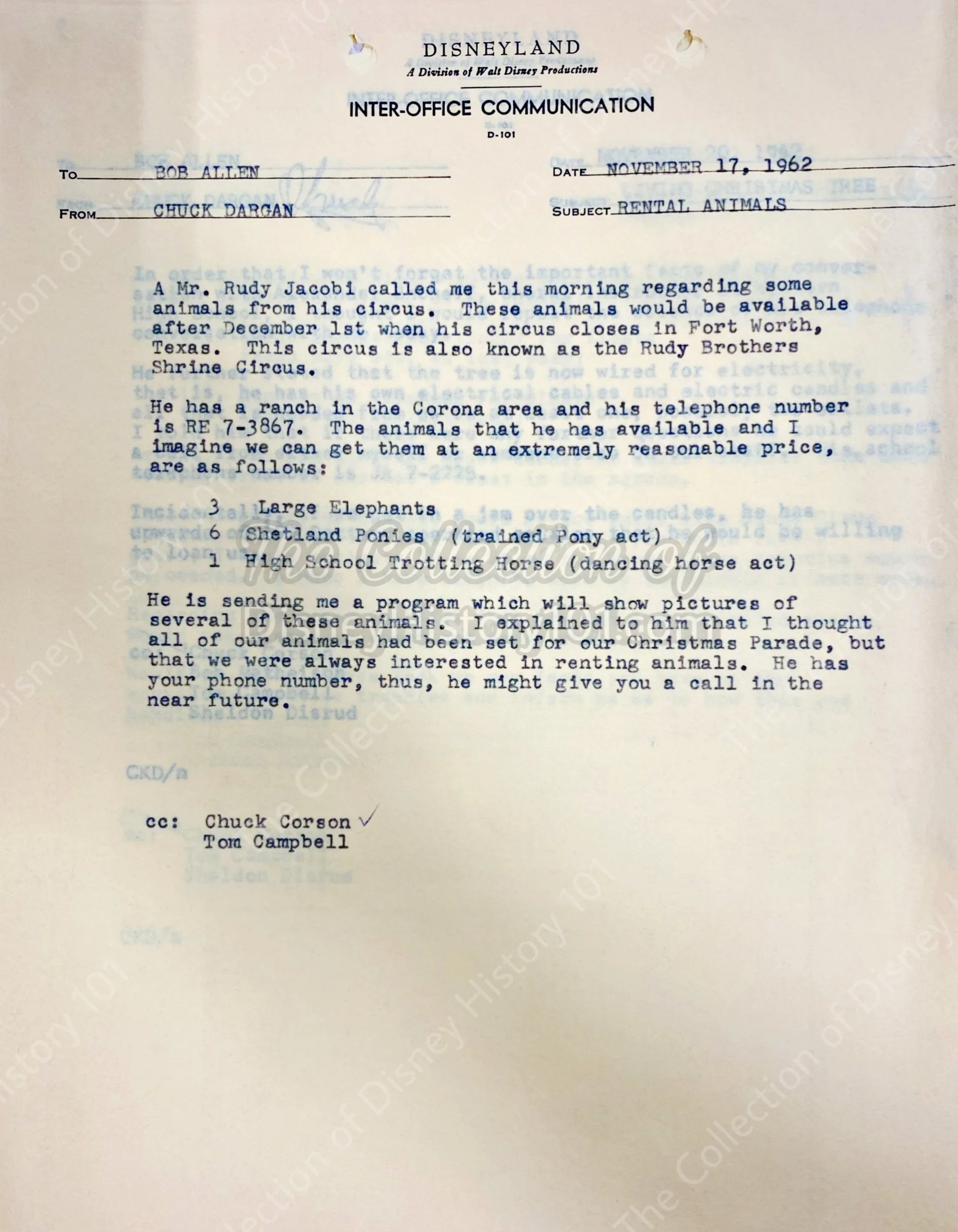
“Circusland”
According to the 1976 Shareholders Report: “Contemplated as part of the Park's new seven-vear developmental master plan is ‘Circusland,’ an entirely new "land" to be located on approximately five hitherto undeveloped acres both inside and outside the berm adiacent to ‘It's A Small World.’ Here, circus banners will herald a wide variety of attractions, including a relocated and elevated Dumbo elephant sky ride: a new Pinocchio dark ride with Stromboli's Little Puppet Theater gracing its queue line: a whimsical Clown Restaurant, and Mickey's Mad House, a thrilling ride-through themed to the 1930's and the days of glorious black-and-white Mickey Mouse cartoons and ragtime music. However, the highlight of this all-Disney themed area will be Circus Disney. a major ride-through attraction featuring a myriad of favorite Disney characters, all brought to life through the Audio-Animatronics process. Guests will travel through the wild animal menagerie (featuring King Louie and Shere Khan from ‘The Jungle Book’); down the midwav where familiar Disnev stars may be seen in the sideshow, like ‘The Amazing Flying Dumbo-Ninth Wonder of the World’: through clown alley and finally into the Big Top where they will actually be ‘on-stage’ as part of the three-ring show, featuring such daredevil acts as ‘The Flying Goofys.’ Ultimately Frontierland and the Circus area will be connected through the development of Discovery Bay along a portion of Rivers of America.”
Dumbo’s Circus Parade (featuring other Disney Characters) first performed twice daily (at noon and 5pm) during weekends and holidays of the summer season of 1979. On June 16th, 1979, Dumbo’s Circus Parade began a 7 day-a-week run until September of 1979!
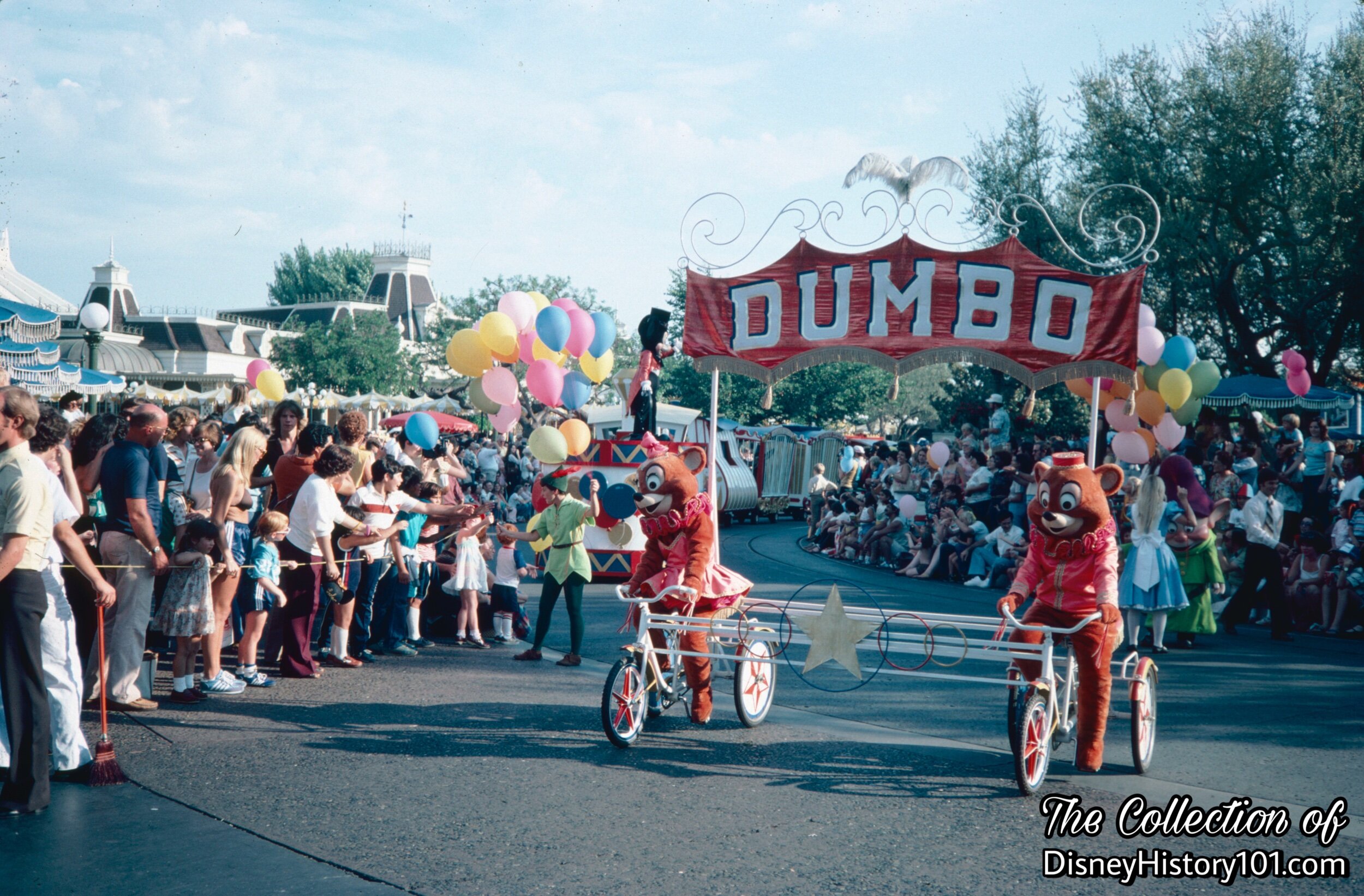
Bongo the Bear and Lulubelle lead Dumbo’s Circus Parade part of the opening unit.
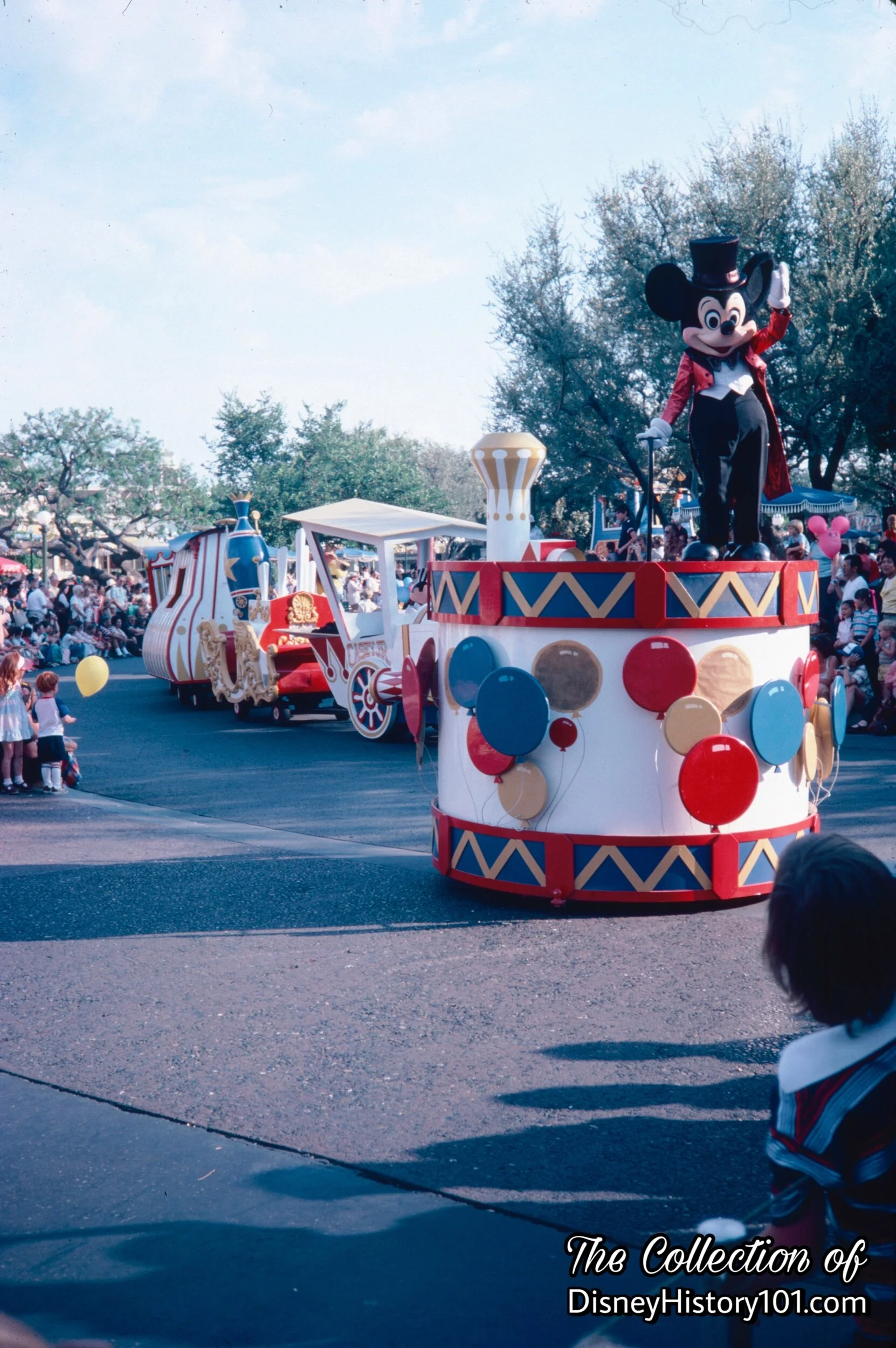
They were followed by Ringmaster Mickey Mouse, and Casey Junior!
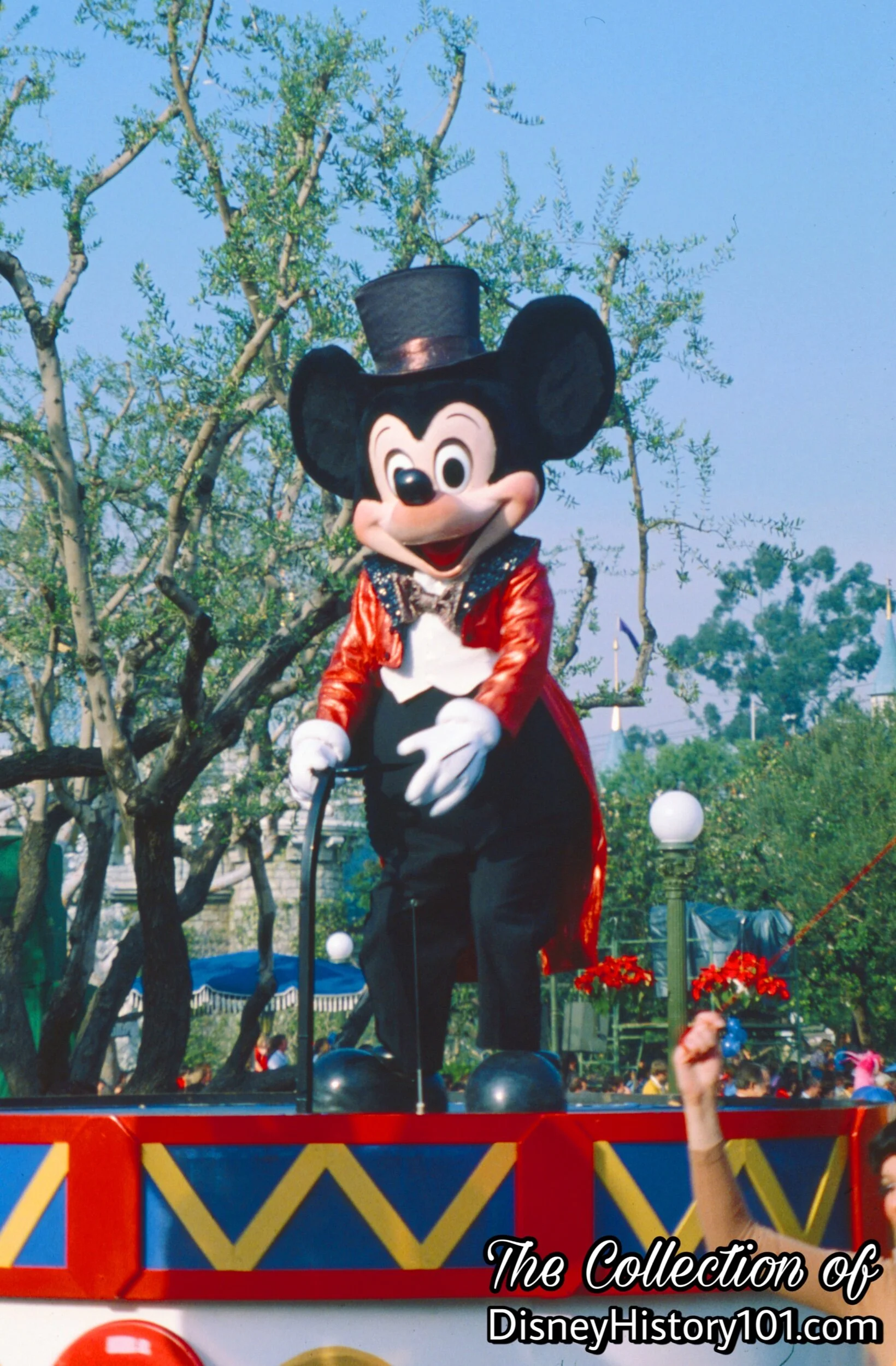
Big Bad seems to be stuck in a “Wolf Pacifier,” part of the Casey Junior Unit.
Many stars of Walt Disney’s Jungle Book were featured in acts of Dumbo’s Circus.
… and Tigger brings the exotic “liger” to life!
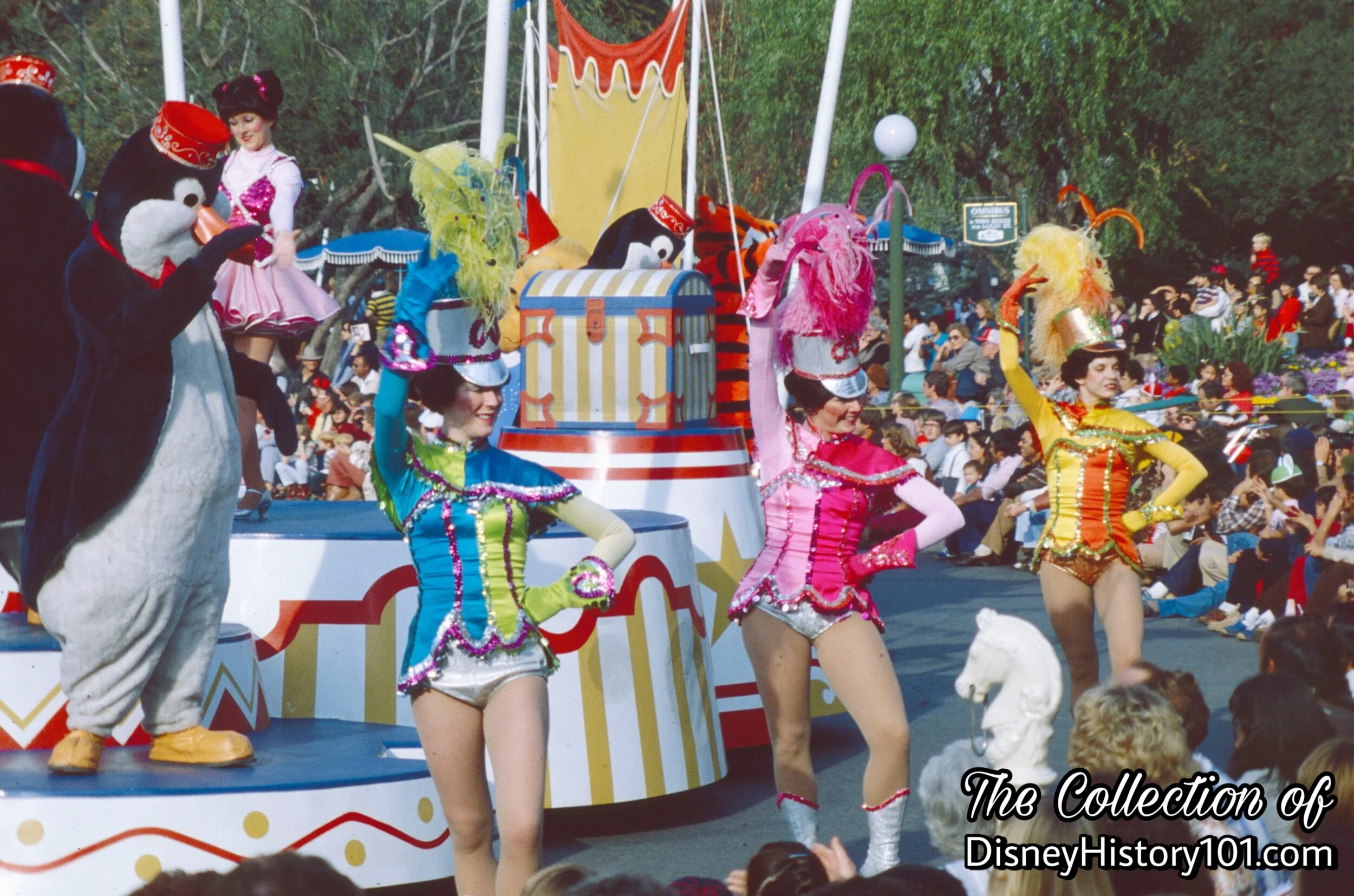
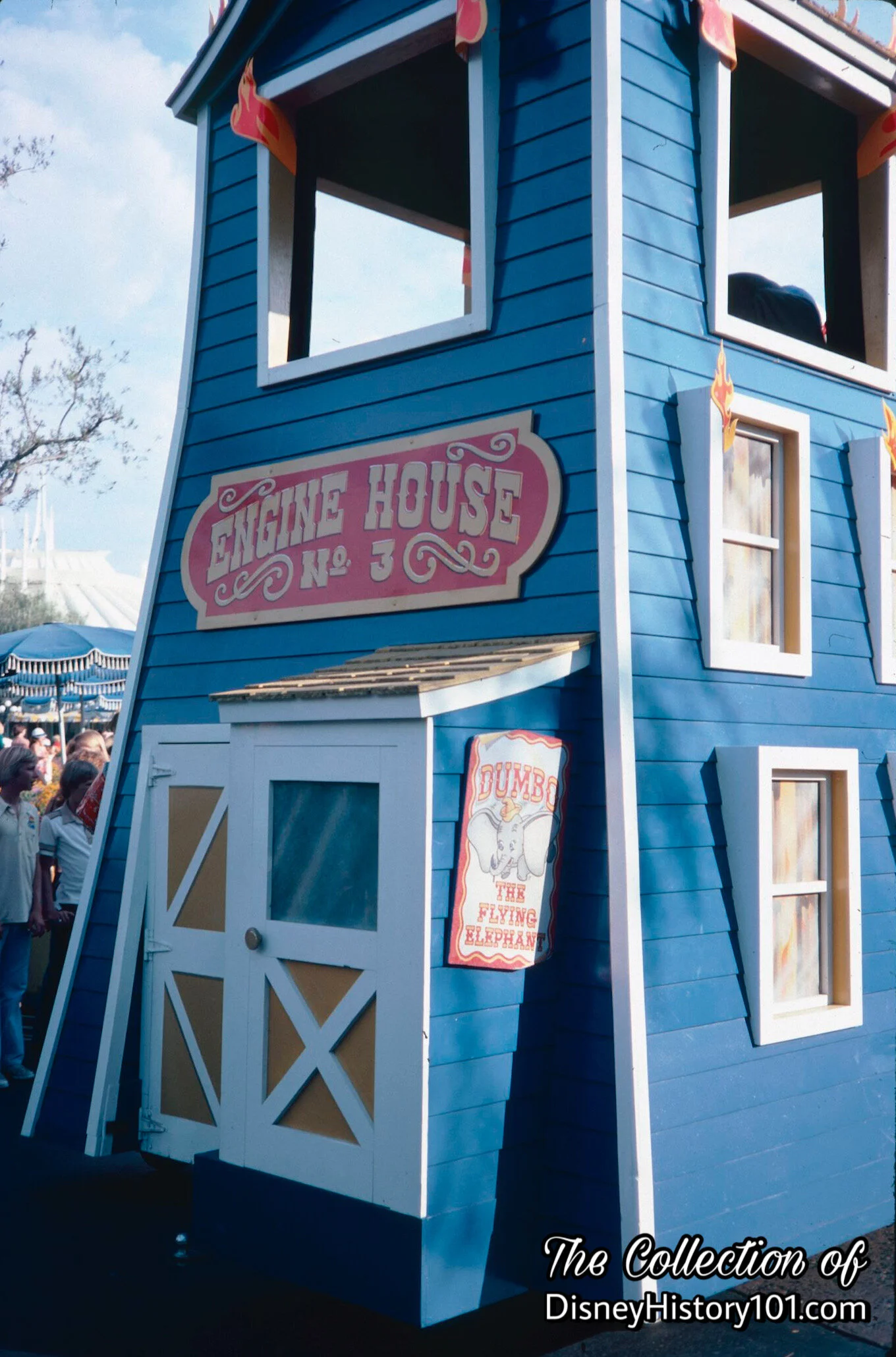
Dumbo’s Circus Parade was so popular with Guests, that the usual afternoon parade was briefly discontinued so that Dumbo’s Circus Parade could run every day of the week! The parade also sparked Dumbo's Circus debuting May 6, 1985, a 120-episode Disney Channel television series that used "puppet-tronics".
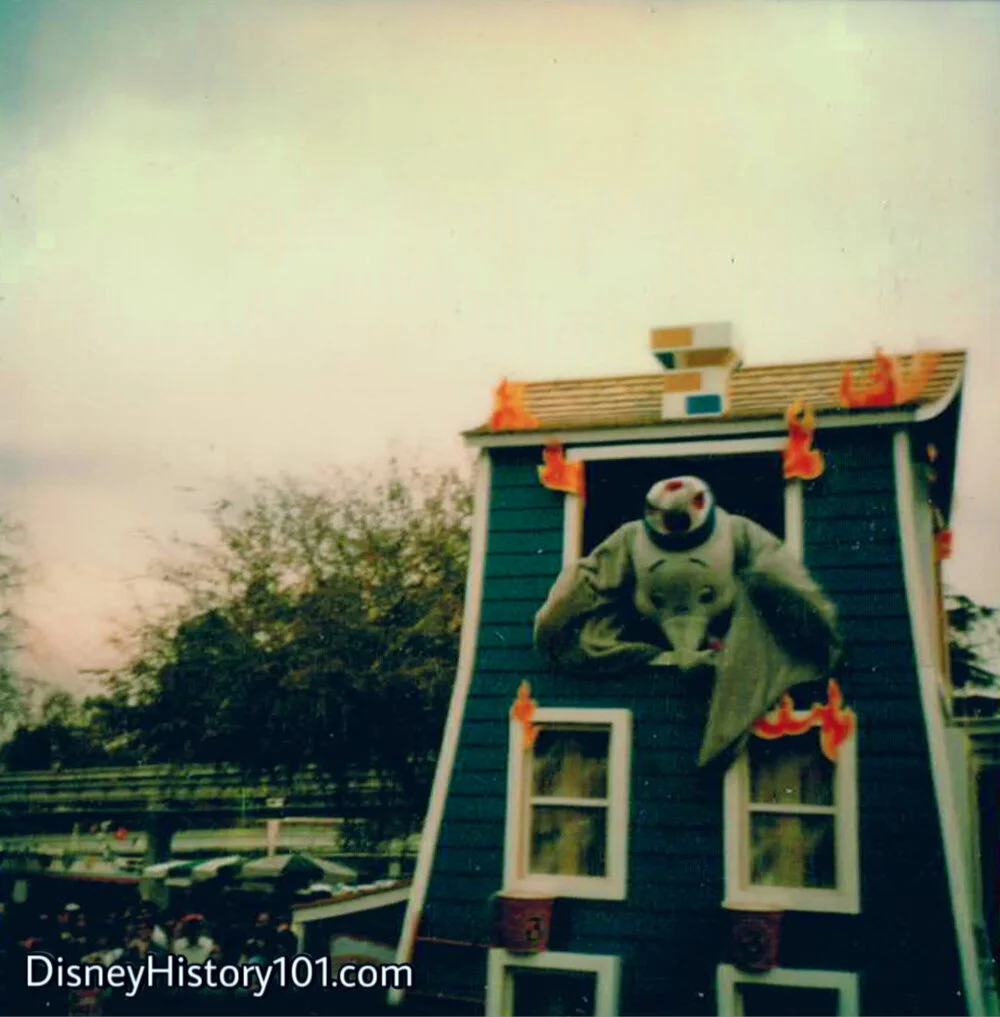
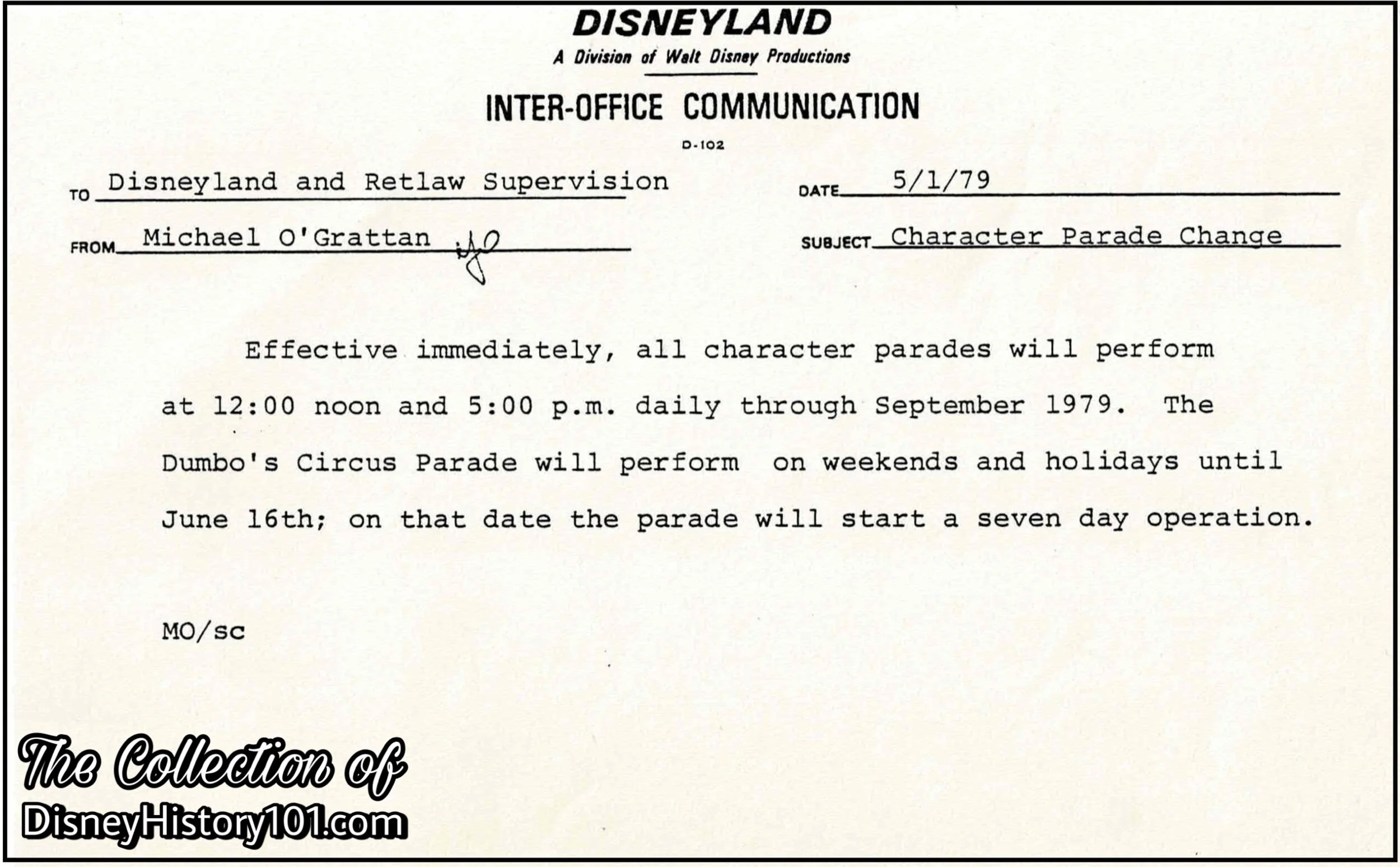
Now, thirty years after the Mickey Mouse Club Circus first entertained Disneyland guests, and six years after Dumbo once again soared to new heights of fame, Disneyland presented one of the most spectacular events in entertainment history, as crowds once again lined Main Street U.S.A. for “the Greatest Show” returned to “the happiest place on earth”!
During three seasons (spanning the Springs of 1986, 1987, and 1988), Circus On Parade would bring the circus back to Disneyland’s main thoroughfare, in a memorable show, led by none other than ‘the leader of the club’ - Mickey Mouse!
Please step this way, as we re-visit Circus Fantasy’s :
First Season (January 25, 1986 - March 9, 1986)
Second Season (Saturday, March 7, 1987 - Sunday, April 26, 1987)
Third Season (January 16, 1988 - March 6, 1988)
According to Bob McTyre, this year’s marketing strategy is “for long-term events, ones that will allow time for interest to build and spread, thus attracting more guests during traditionally slow periods.” In addition to the Gift Giver Extraordinaire’s return, the year 1986 “started something” new, with what would become a three year tradition - Circus Fantasy! Kenneth Feld, Ringling Bros. Barnum and Bailey Circus and Disneyland proudly presented Disneyland Circus Fantasy, billed as “Circus Days” in LINE Magazine (Winter, 1985)! After much planning, Disneyland Cast Members were cast for dancing and non-dancing roles during December of 1985.
Soon, Disneyland’s newest short-lived tradition would pay tribute to the “big top” with parades, river show, circus acts, and special entertainment. Animal acts - The Diano’s Elephants and Castle’s Bears performed from the Videopolis Stage. Press release photos depicted a cavalcade of clowns and pachyderms in funny hats parading toward Disneyland! Alpine Gardens hosted an interactive activity, where guests could “be a clown for a day” courtesy of face paint. Howl at admirable antics behind every corner and every tree at Clown Alley (in Plaza Gardens)! Thrill to the artistry and audacity of death defying daredevils - The Great Wallenda Duo perform their world-famous high-wire aerial feats (over Main Street U.S.A.), The Centrons (at the entrance to Tomorrowland), The Duo Theron (starring John Theron) performing his Sway Pole acrobatics, and Captain Christopher Munoz - the Human Missile (in New Orleans Square)! Finally, see the show-stopping pageantry and pomp of a star-spangled finale including a massive Mark Twain float!
The pageantry and artistry of Circus on Parade occurred once daily in January (around 8:50p.m. in the evening).
There probably haven’t been this many elephants marching down Main Street U.S.A., since the holiday season of 1962 when an entire circus unit with live elephants walked the old parade route!
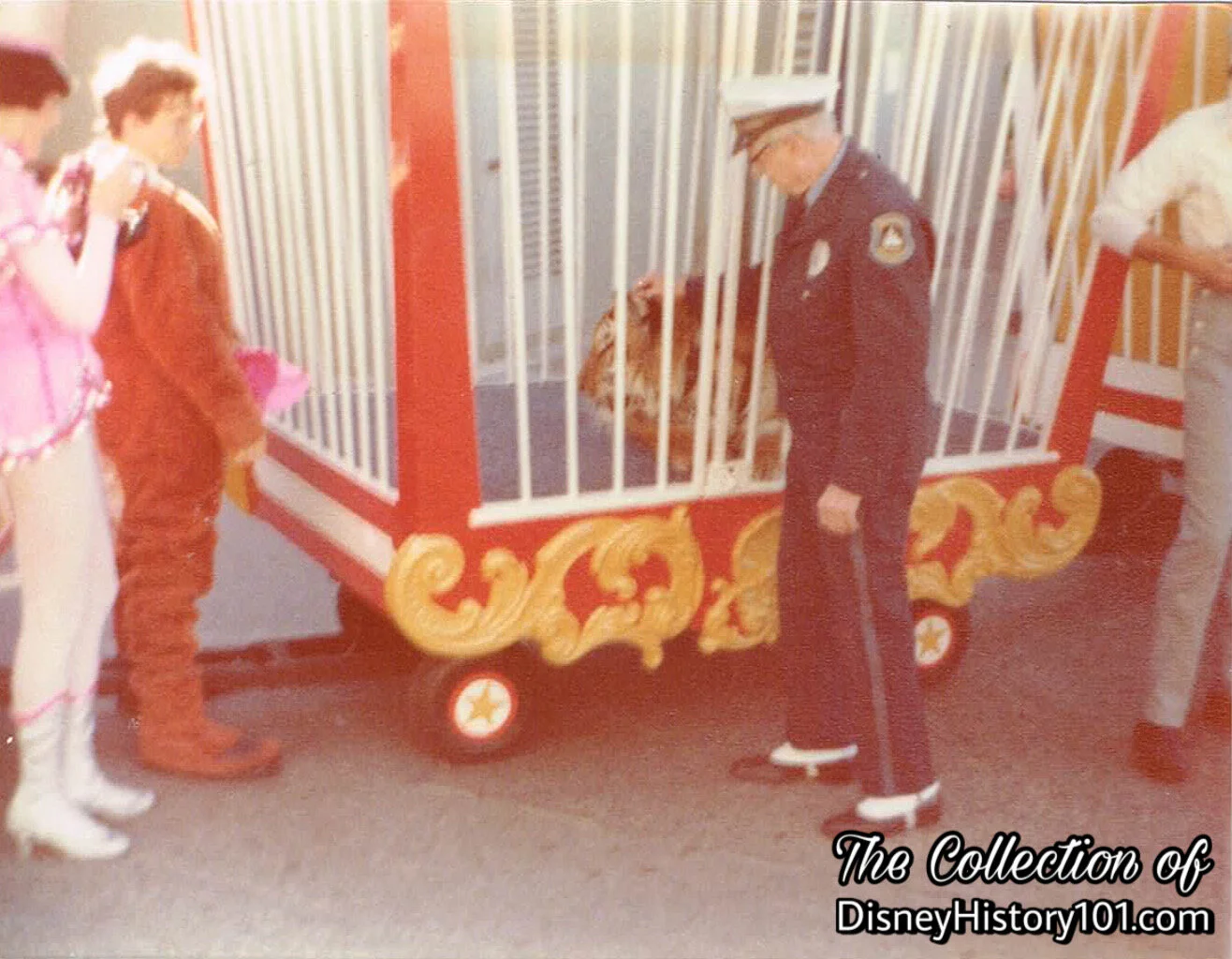
Pictured Above : Here in the Backstage (c. 1986), a Disneyland Security Host (possibly Jack Kehoe) is assigned to keep the Cast Members “concerned and informed” of the animal locations. He seems to also be greeting one of the big cats to be featured in Circus Fantasy. This was the first time that big cats were kept on the property for extended periods, since “Keller’s Jungle Killers” left Disneyland. When showtime was over many of these animals (like the tiger pictured here) were housed at the old Global Van Lines property where the Team Disney Building currently stands. According to Disneyland LINE (Vol. 20, No. 4 January 29, 1988), inspections and previews of all shows were required and performed by the local Orange County Animal Control Office. These were necessary “to confirm that the animals…[were] being housed according to standard and that the performances… [were] not too strenuous on the animals.”
Some of these very circus wagons would be utilized again, for three seasons of Circus Fantasy (1987 and 1988)!
Inside Disneyland, the circus-themed atmosphere abounded in Disneyland’s second annual tribute to the “big top”. Clowns performed various skits, and three Face Painting Areas (with a fee of $4.50 per person), were set up (one at Videopolis Meadows, one at Big Thunder Mountain Trail, and another at Card Corner). Plenty of circus-themed food was made available. Yumz provided an assortment - pink cotton candy, candy twirl pops, red licorice twists, salt water taffy, animal crackers, roasted peanuts, Cracker Jacks. Vending carts served (lemon and cherry-flavored) Italian shaved ice, and Barbeque wagons served hot dogs!
Circus on Parade performed daily (at 3pm), and twice on Saturday and Sunday (at 2pm and 8pm). Carnation Plaza Gardens was transformed into Clown Alley starring clowns, performers, and Disney characters! Circus Fantasy (a 30-minute weekend musical, performed from Videopolis) starred singers, dancers, aerialists, acrobats, musicians, and Disney characters. Videopolis Stage was also the place to catch to more shows - the Eric Braun Dog Act, and a Trampoline Act.
Big Thunder Ranch became Mickey’s Menagerie, and temporary home to elephants, camel, llama, Brahma bull, and zebra (which could be visited during limited hours of operation).
Wide-open areas turned into stages - acrobats performed inside the Wheel of Destiny (before it’s a small world), and Central Plaza Hub held a Globe of Death containing two motorcyclists defying death at more than 55 miles per hour!
Several acts took place “over” Disneyland, including the Posso Brothers’ high-wire arts (featuring a bicycle, handstands, and a 3-man pyramid). A Trapeze Act stretched across Main Street (from Coke Corner to Card Corner). An Astro Sky Cycle rode an incline wire from Village Haus Restaurant to the top of the Matterhorn!
Just outside Disneyland, local sponsor Carl’s Jr. (another Anaheim-born business), offered promotional tie-ins featuring Mickey & friends!
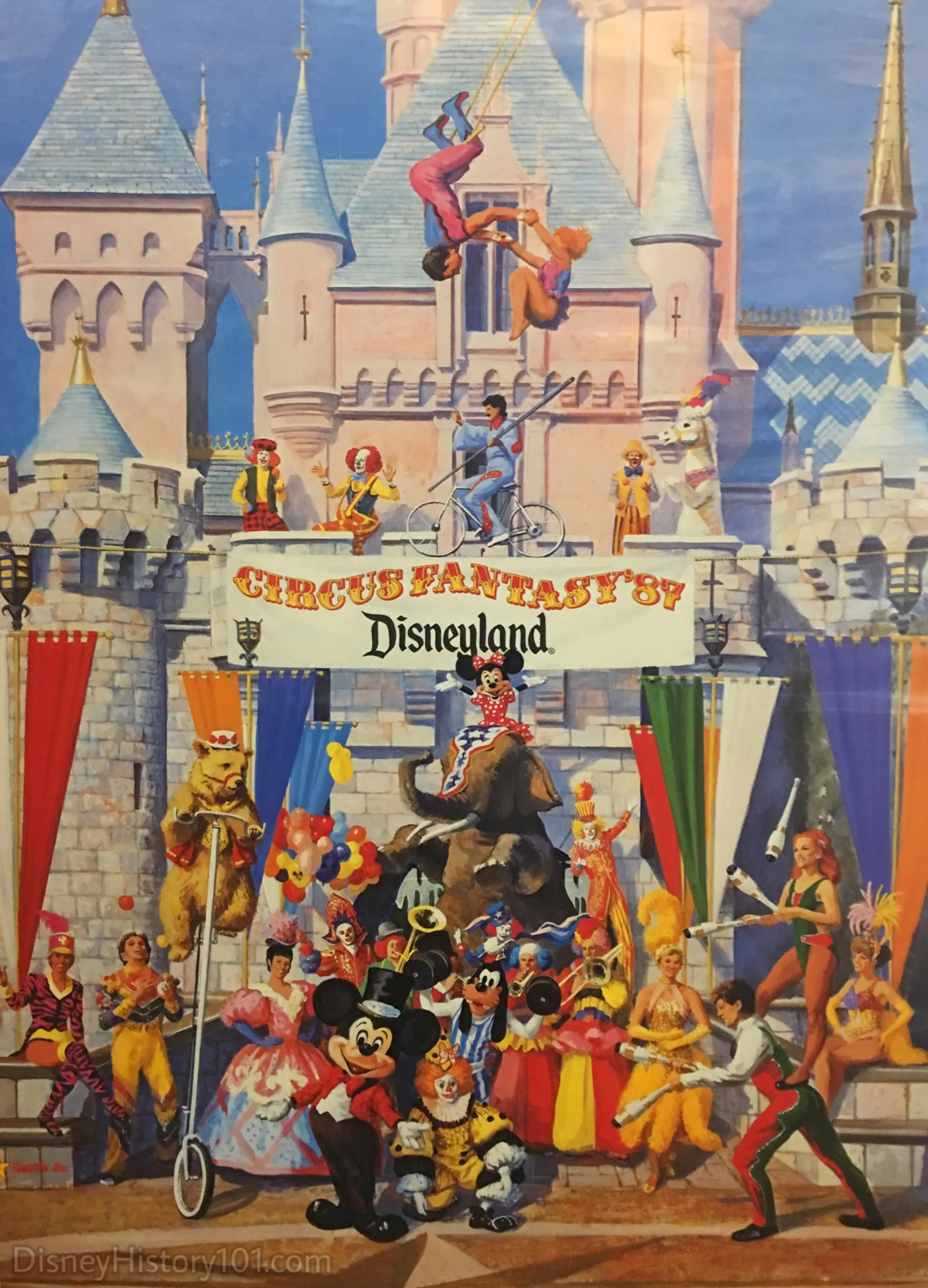
Fact Cards made Cast Members knowledgeable about Circus Fantasy ‘87 parade and stage showtimes and exhibits, special Concessions, and Merchandise locations around Disneyland.
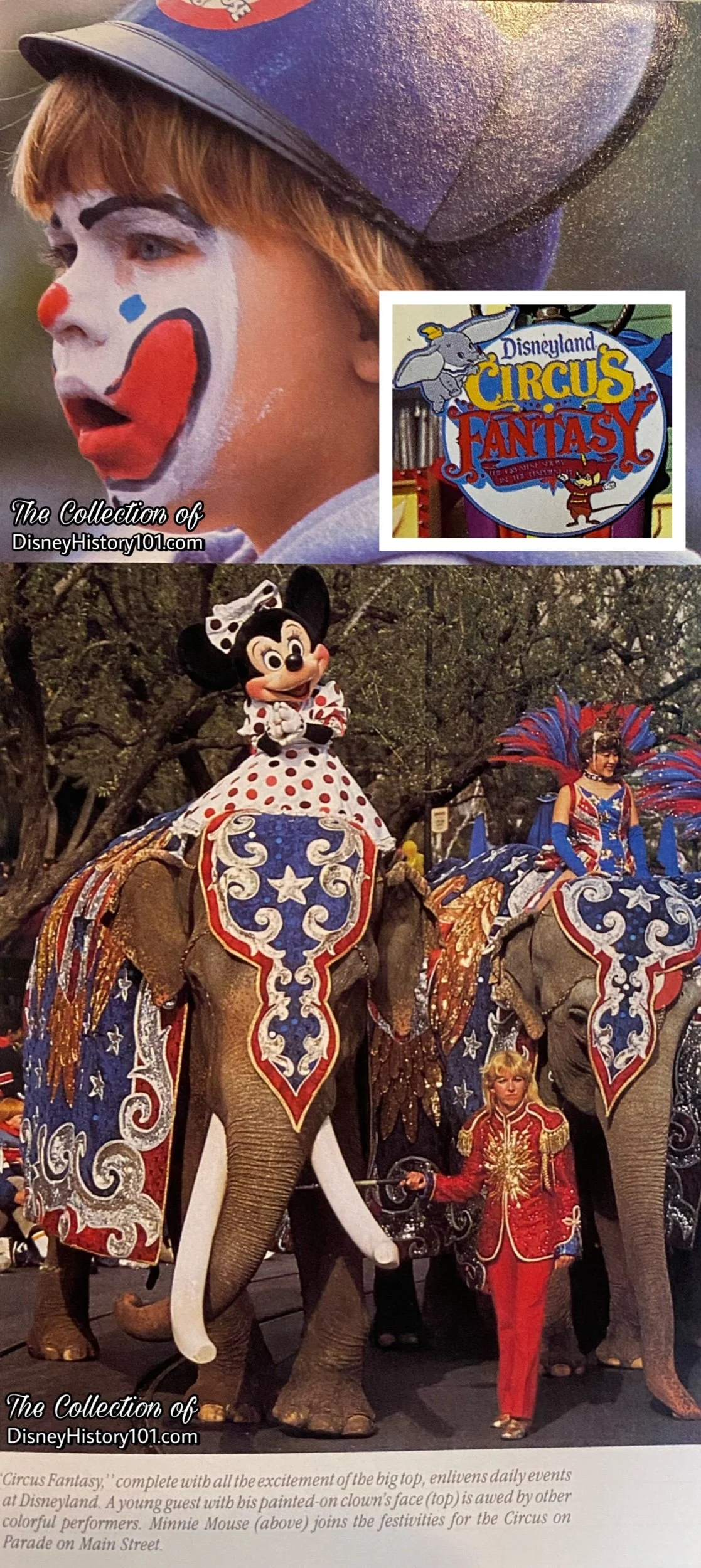
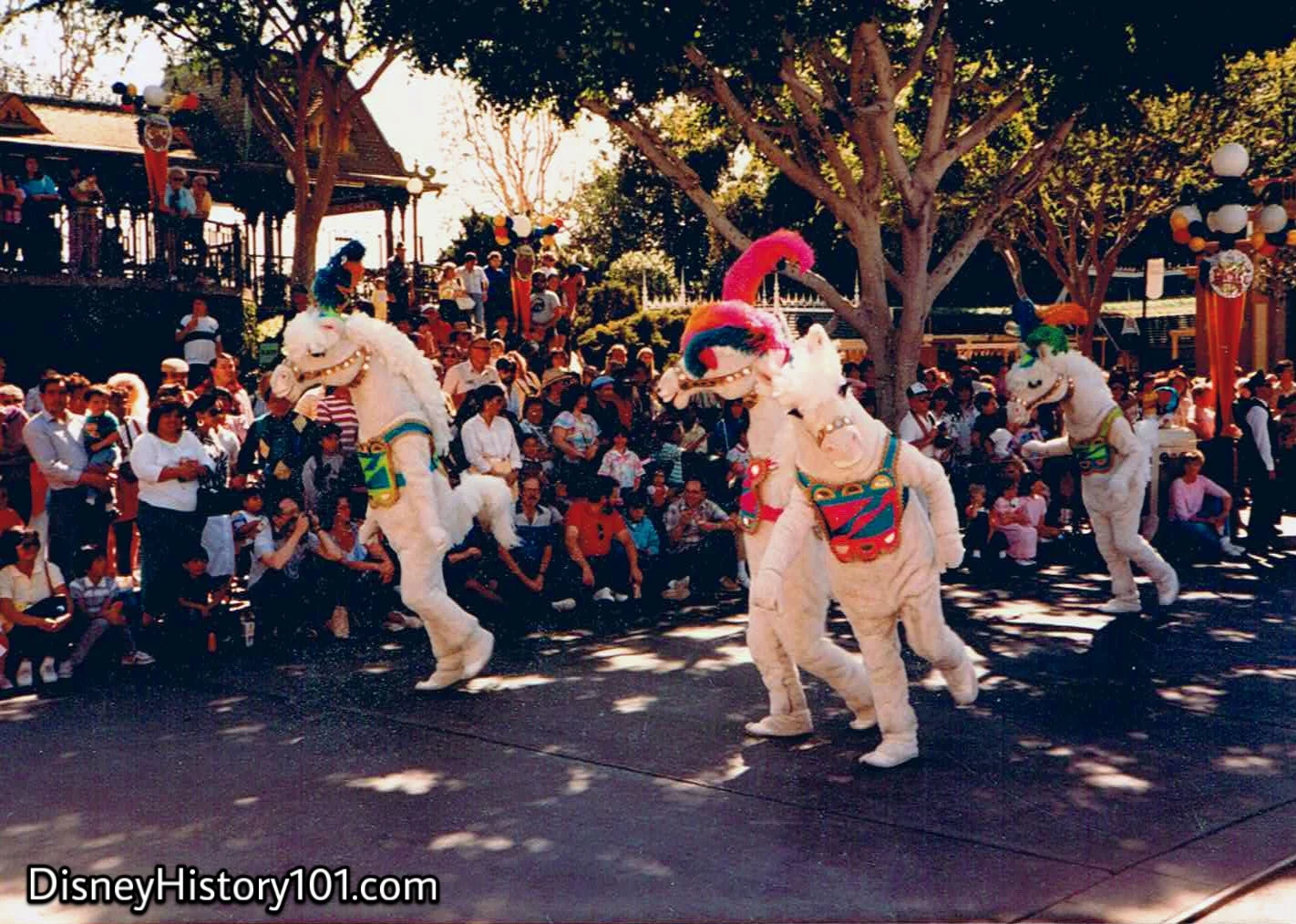
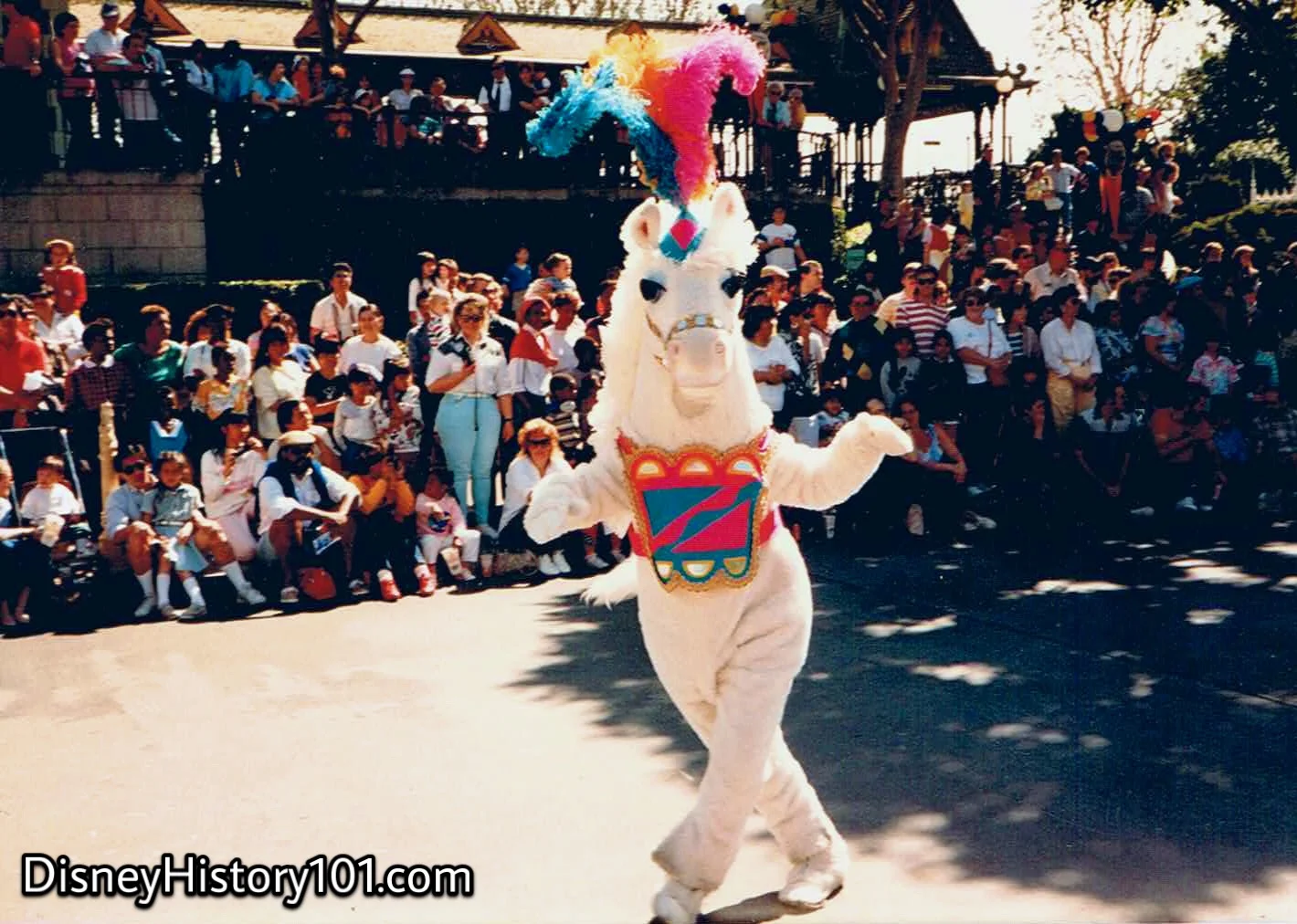
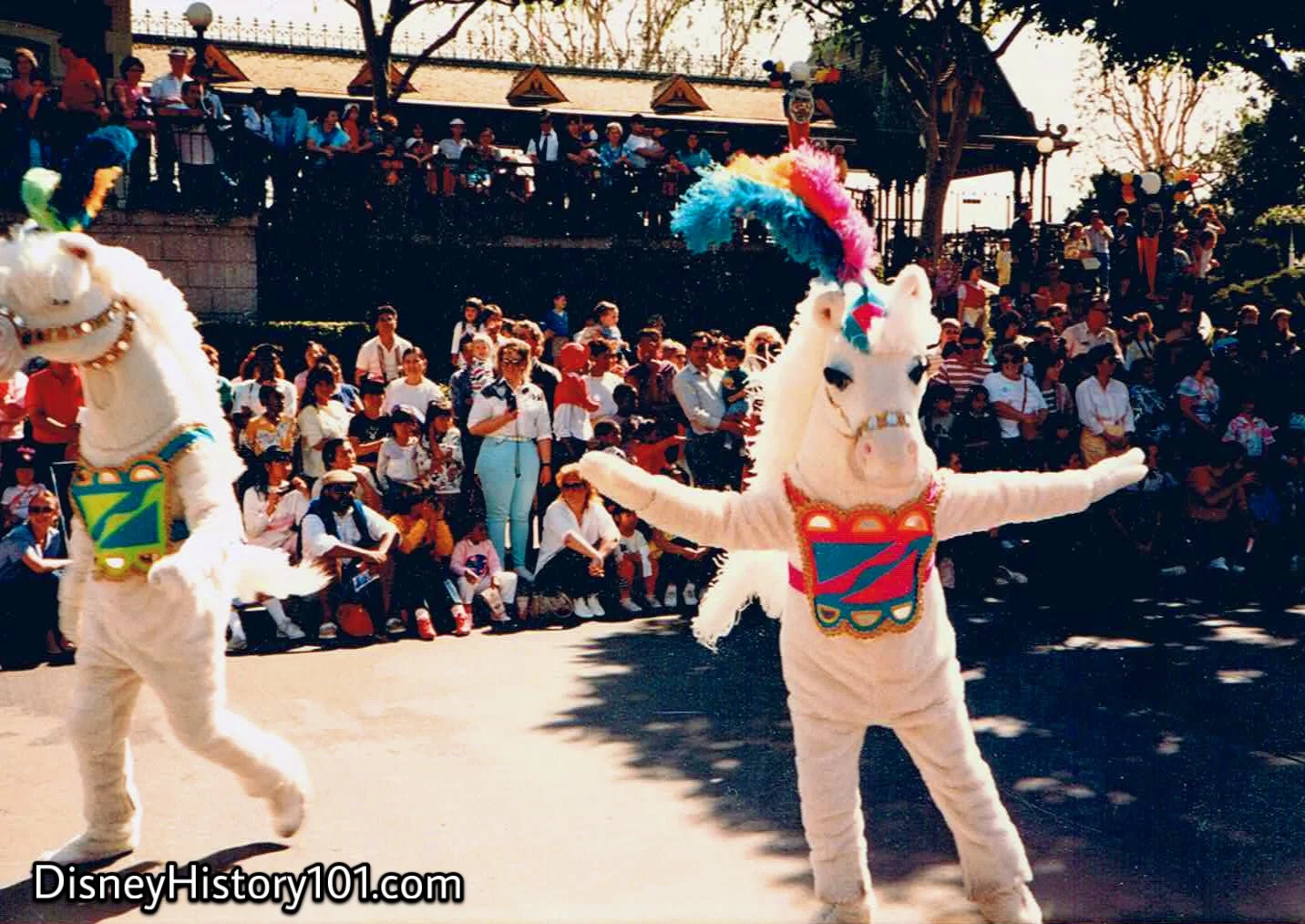
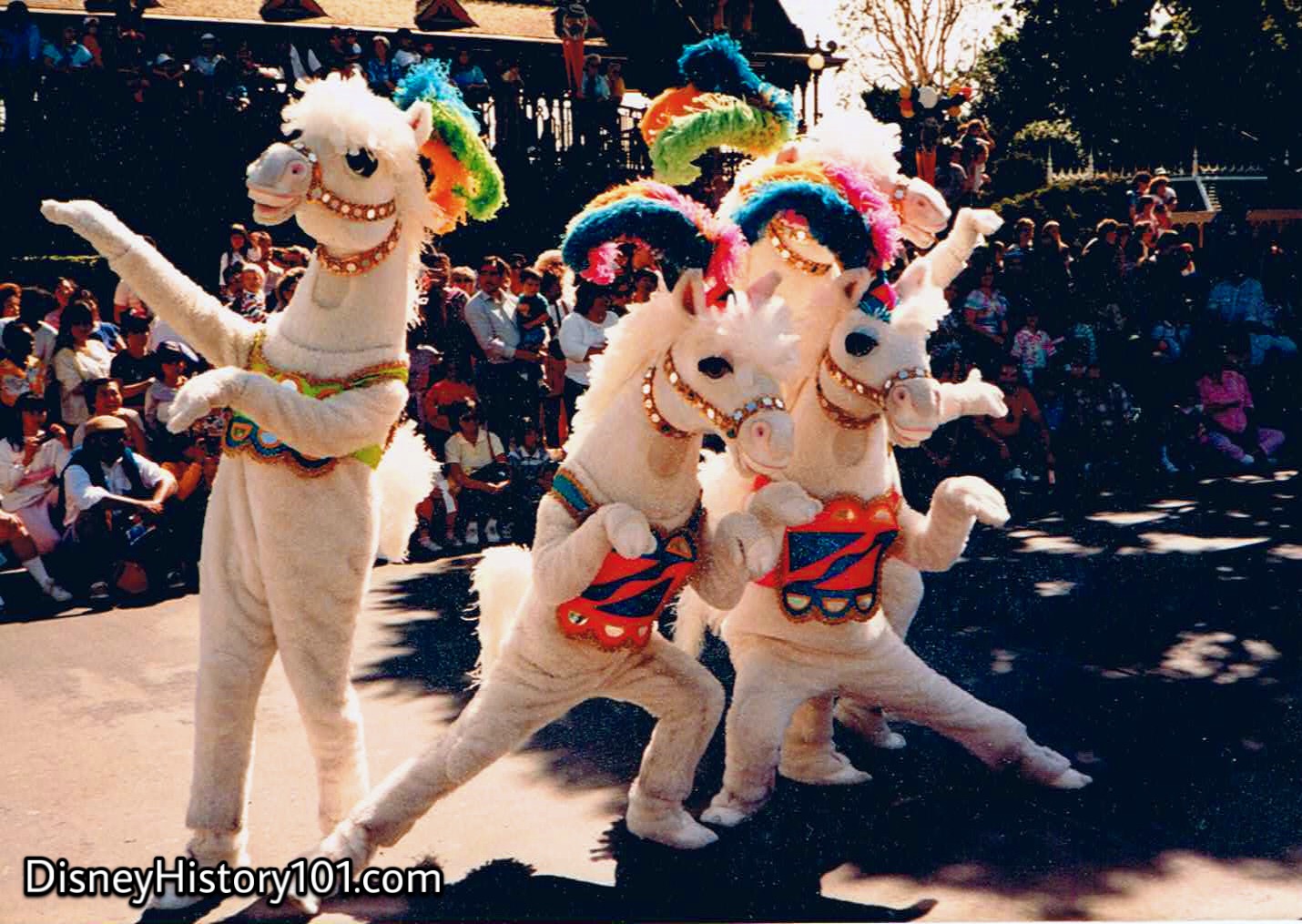
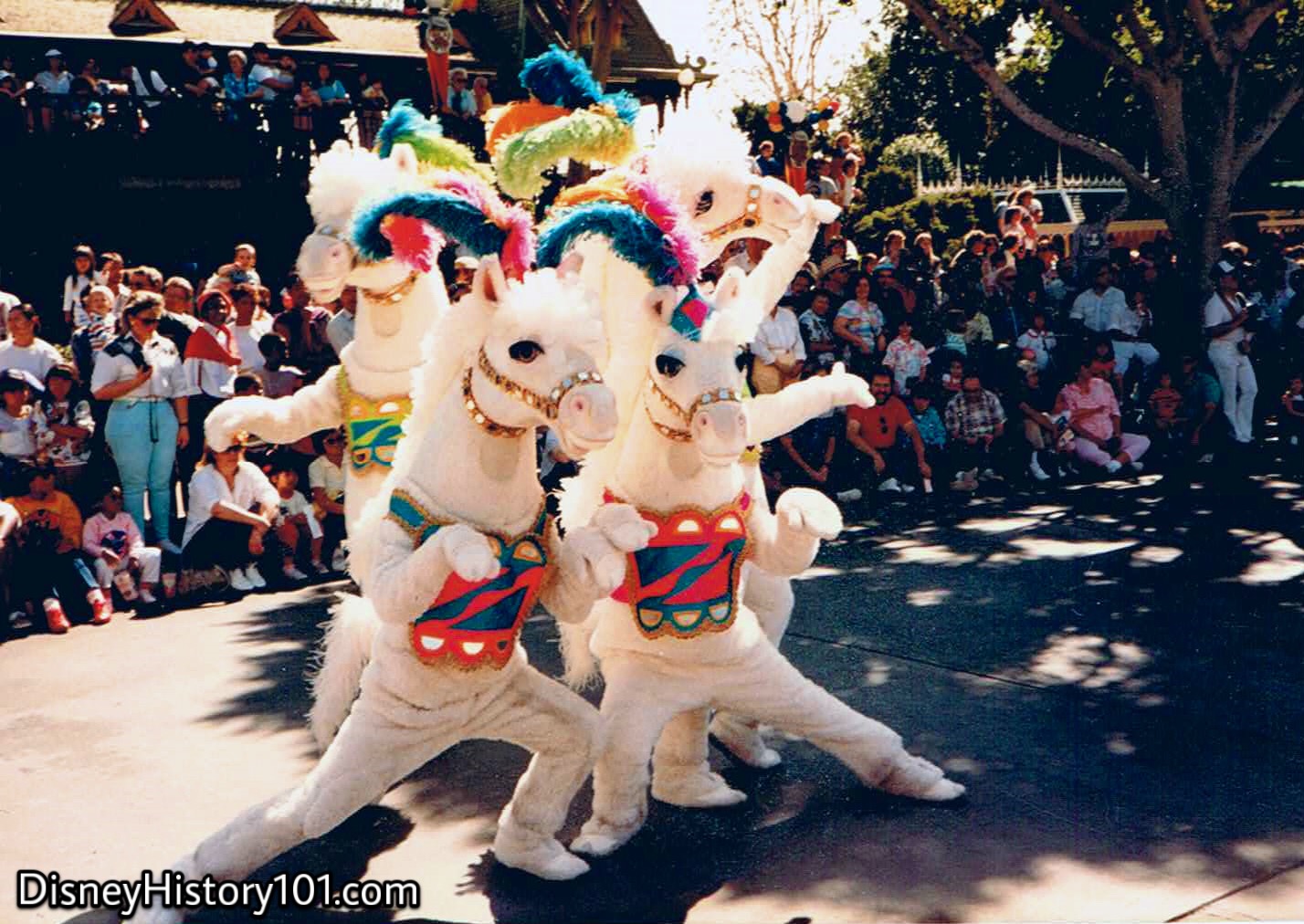
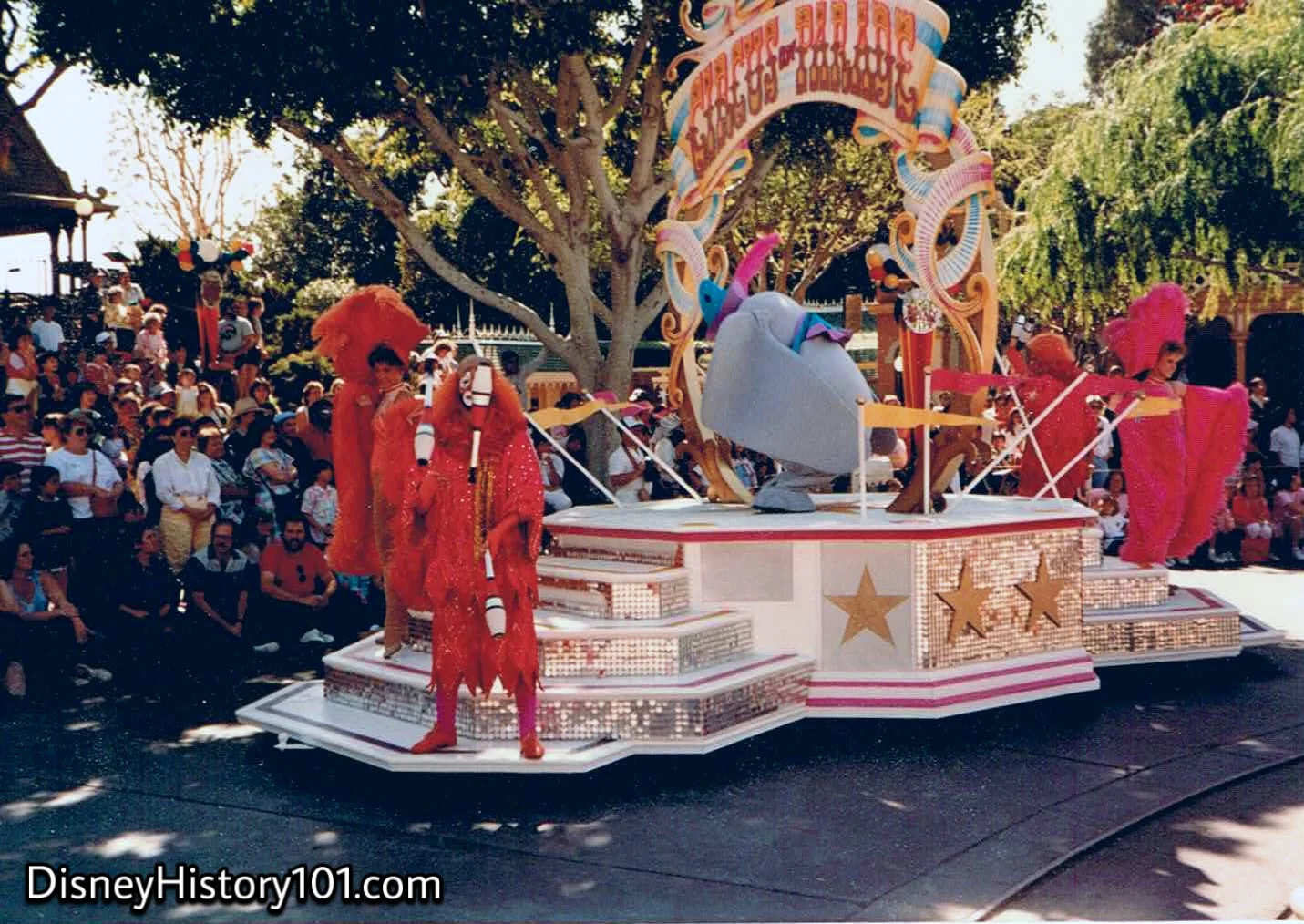
As a sidelight, the chimpanzees in this very parade “devoured the coins sewn onto their costumes,” according to Diana Kuriyama of Disneyland Entertainment Costuming (to Disneyland LINE, Vol. 20 ; No. 4). This would affect how Entertainment Costuming manufactured chimpanzee costumes for subsequent Circus Fantasy Shows. The same article (covering Circus Fantasy 1988) impressed the fact that the chimpanzees were familiar with costume fittings by that time. “When our Workroom Coordinator walked into the animal trailer for the costume fitting, one of the chimps grabbed the pants from her hands and immediately put them on. Then the shirt… Then he mugged a little and blew a kiss.”
The Giraffe Cage Float returned during Circus Fantasy 1988
You may recollect seeing this circus wagon carrying the tiger down the parade route during Dumbo’s Circus Parade (1979). Now, the car still bears the marquee of the previous circus-themed parade!
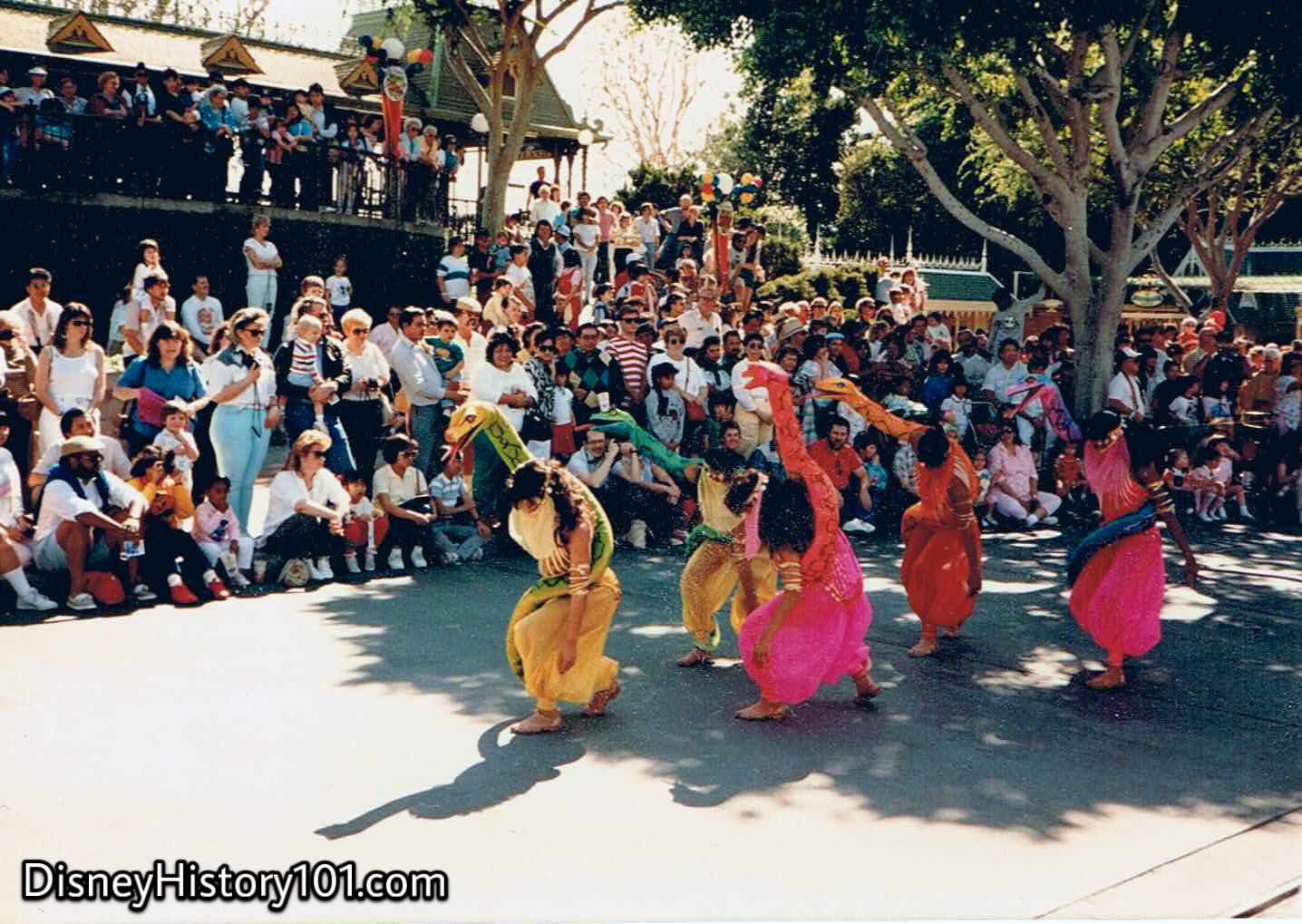
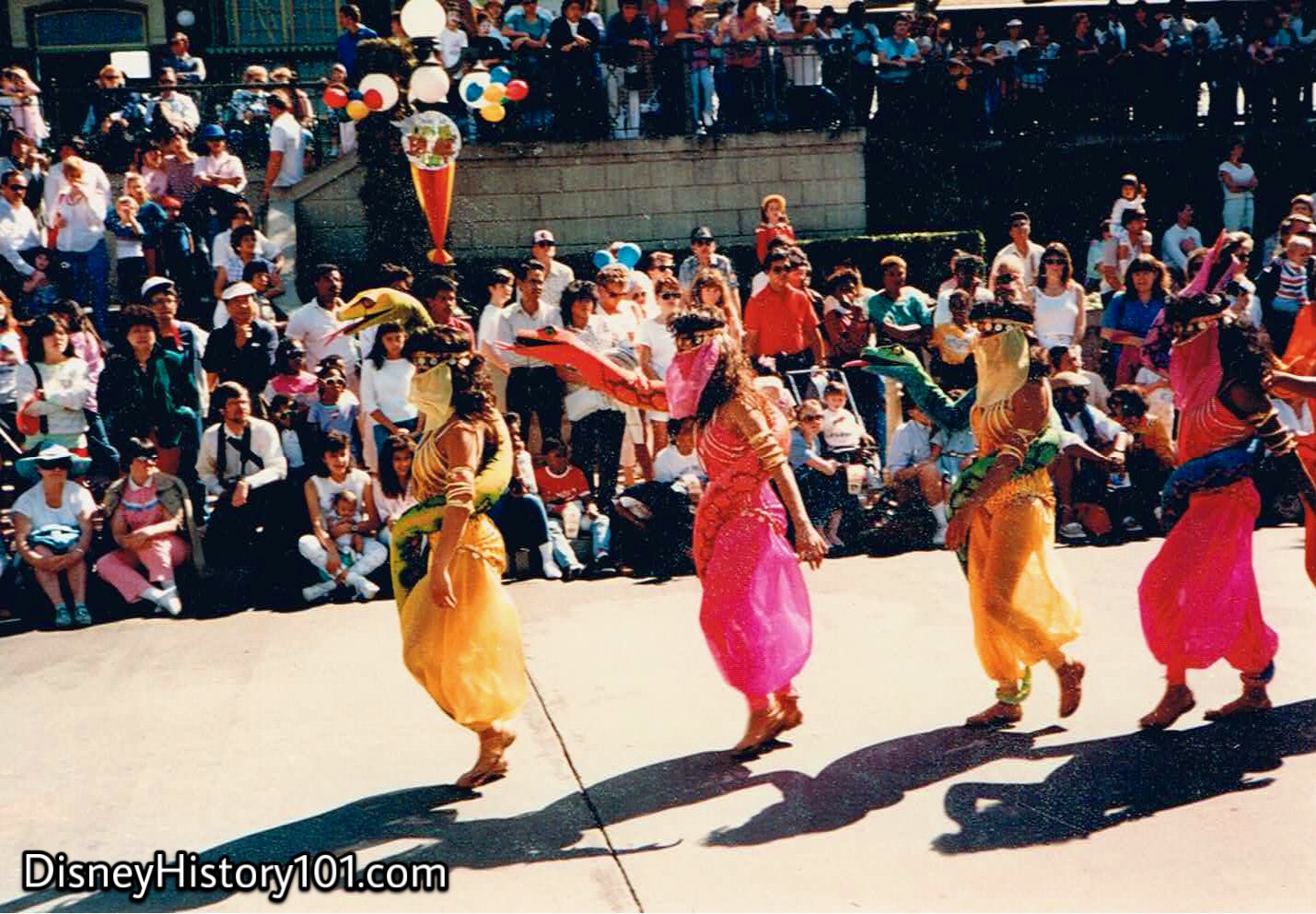
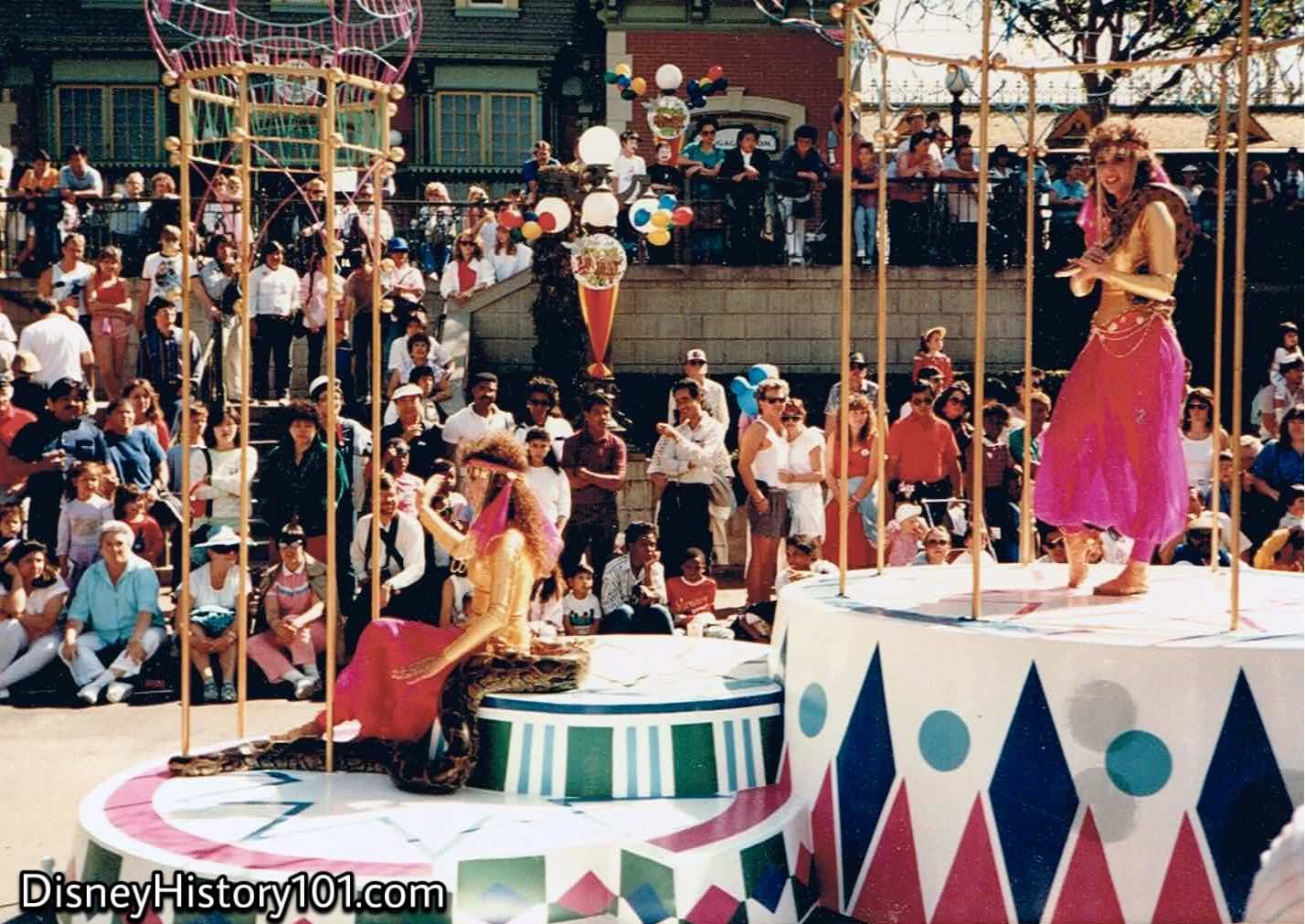
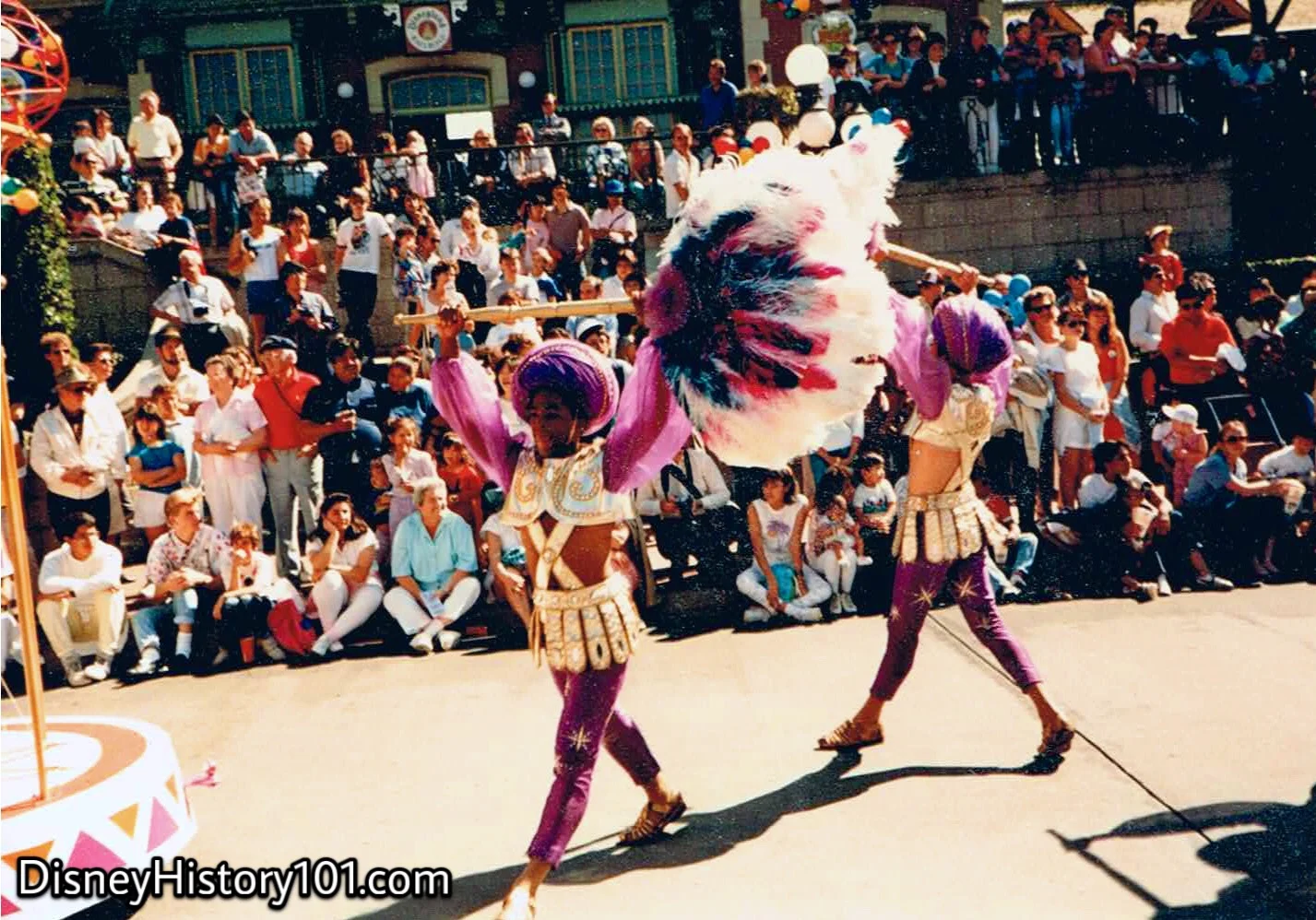
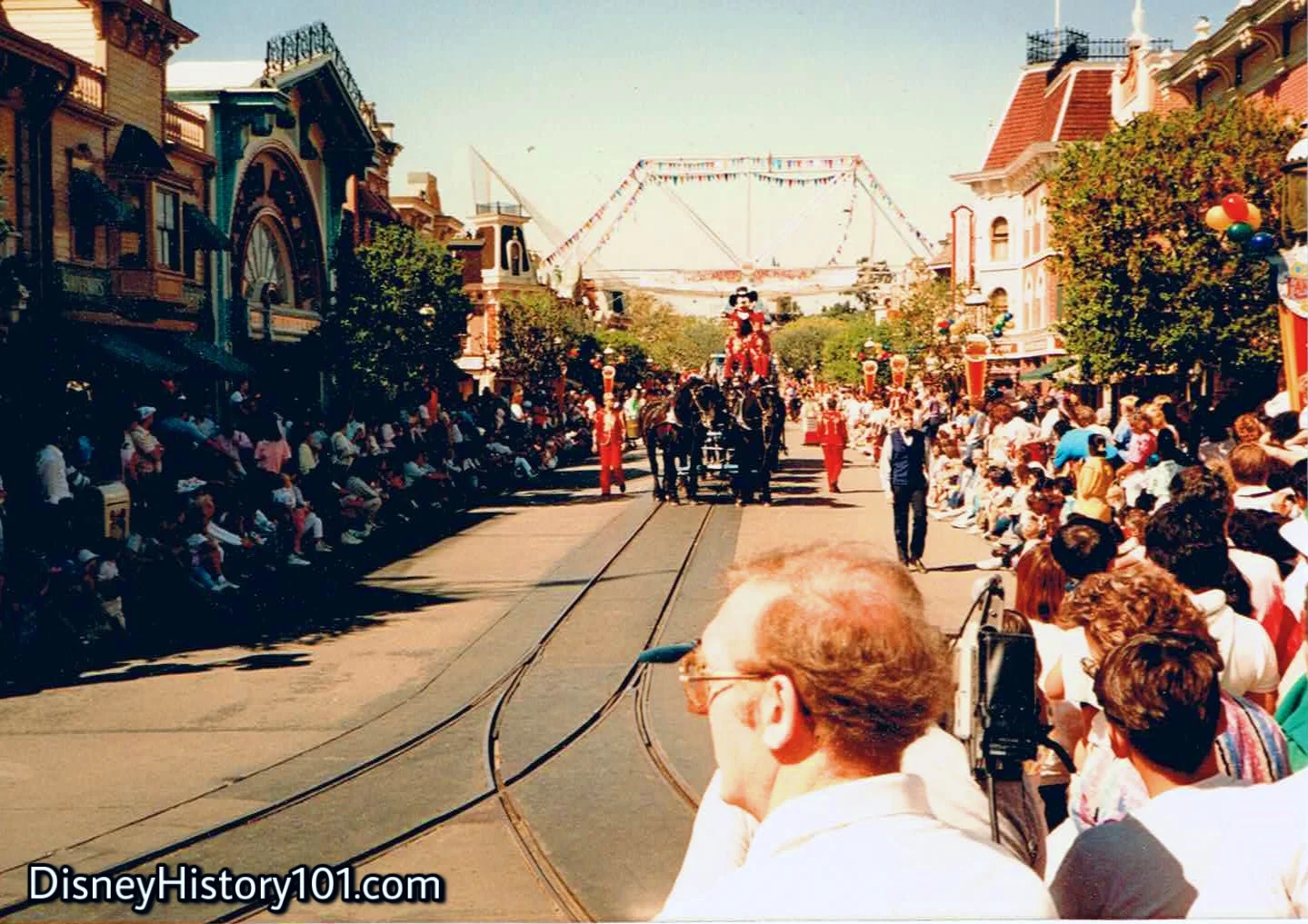
Your grandparents and your parents may recall the days when a parade heralded the coming of the circus! Now, a daily old-fashioned parade featuring live animals, circus performers, and (of course) a cast of Walt Disney’s characters, lights up the turn-of-the-century Main Street U.S.A.! We can feel the excitement building as the first unit makes its way under the trapeze net, and toward us!
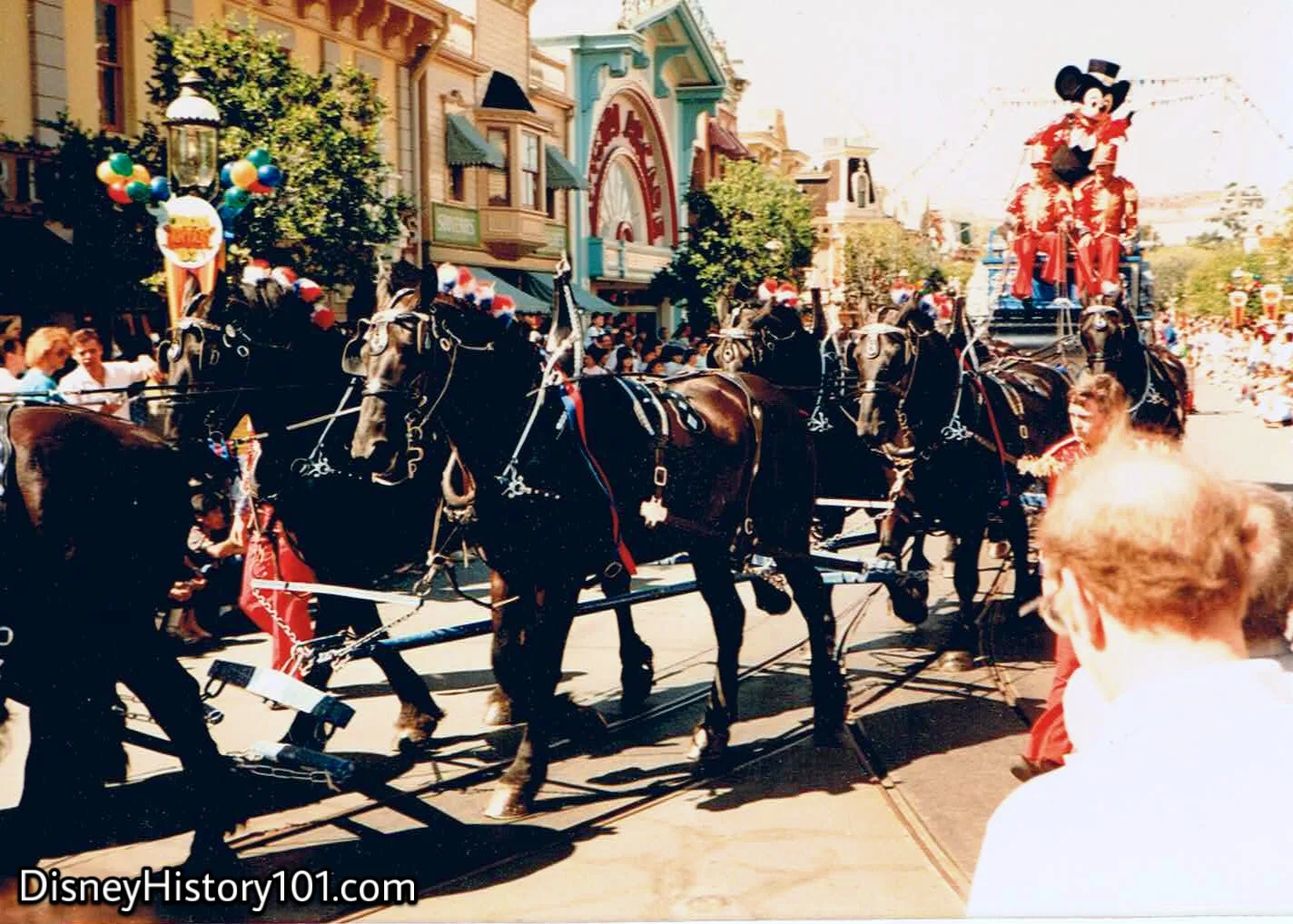
The first unit is lead by eight prize-winning Percheron draft horses!
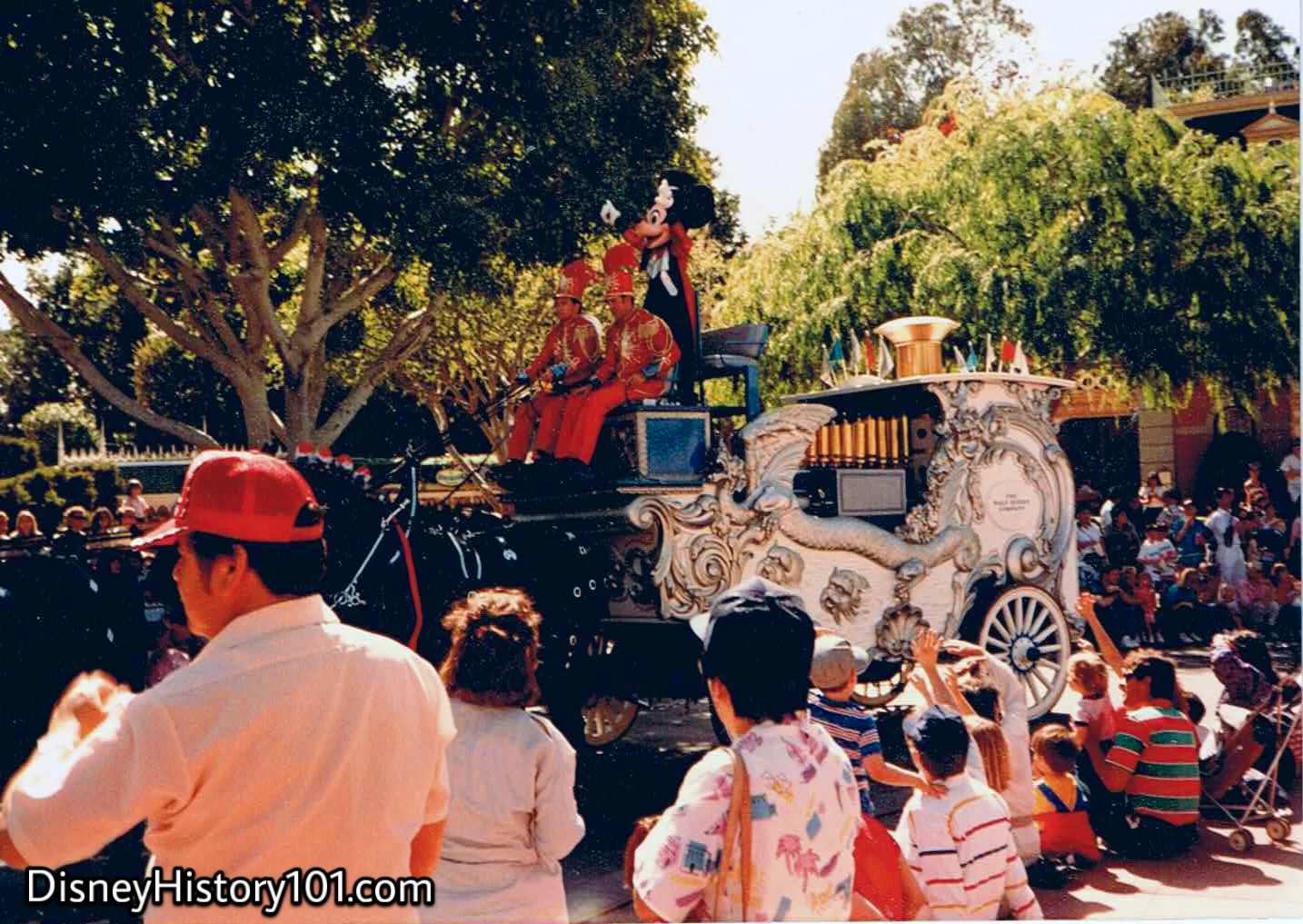
Finally, the traditional 1907-style Disneyland Dragon Calliope with its pipe organ (and pianist) stops to delight crowds periodically! You may recollect that this was one of nine circus wagons that Walt Disney purchased from Bradley & Kaye’s Kiddieland amusement park in Beverly Park. While the other cars were rehabilitated, Walt had this particular circa 1907 circus wagon redesigned, utilizing parts from other circus wagons. The result of the $50,000.00 overhaul, was a one-of-a-kind, steam-powered (and engineer-operated) “Dragon Calliope”!
The Dragon Calliope went on to become a constant feature of numerous events over the years, beginning with the Mickey Mouse Club Circus Parade in 1955. The Dragon Calliope was also featured in at least one Walt Disney Production - “Toby Tyler or Ten Weeks With A Circus” released in Sarasota Florida on January of 1960. The Dragon Calliope was notably featured among the circus units of the Independence Day parade of 1962. Two years later, Walt Disney donated the circus wagons to the Circus World Museum in Baraboo, Wisconsin, but he kept his custom-built Dragon Calliope!
The 1980s would see the Dragon Calliope utilized several times, and even receiving a minor refurbishment (of which two fine whistles were installed, in order to increase its musical ability two full octaves)! The Disneyland 25th “Family On Parade” would be one of the Dragon Calliope’s final Disneyland appearances. When the parade ended, the Dragon Calliope was shipped off to Walt Disney World (in Florida) to play a part on the Walt Disney World Tencennial celebration, before being utilized during three seasons of Disneyland’s Circus on Parade!
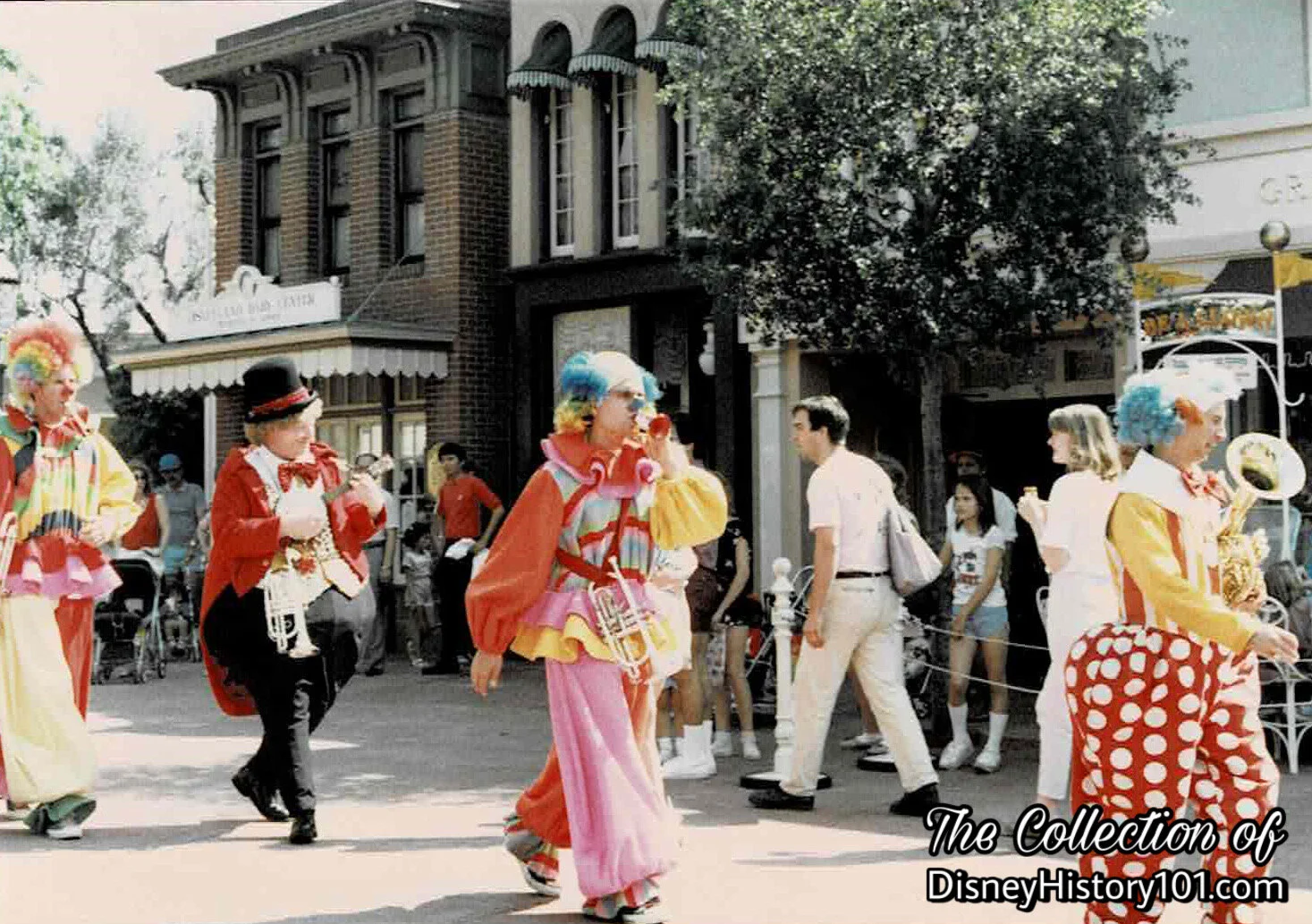
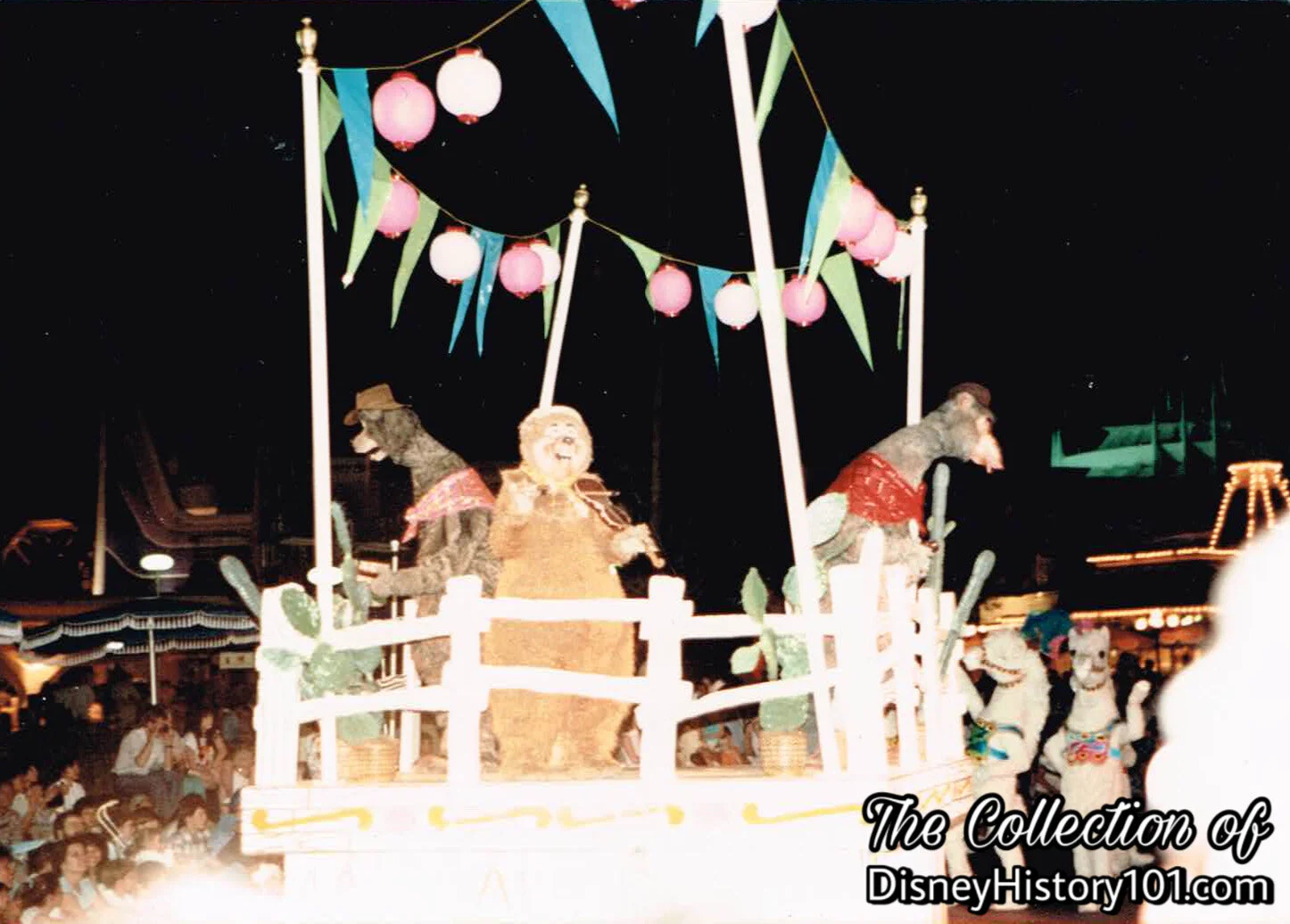
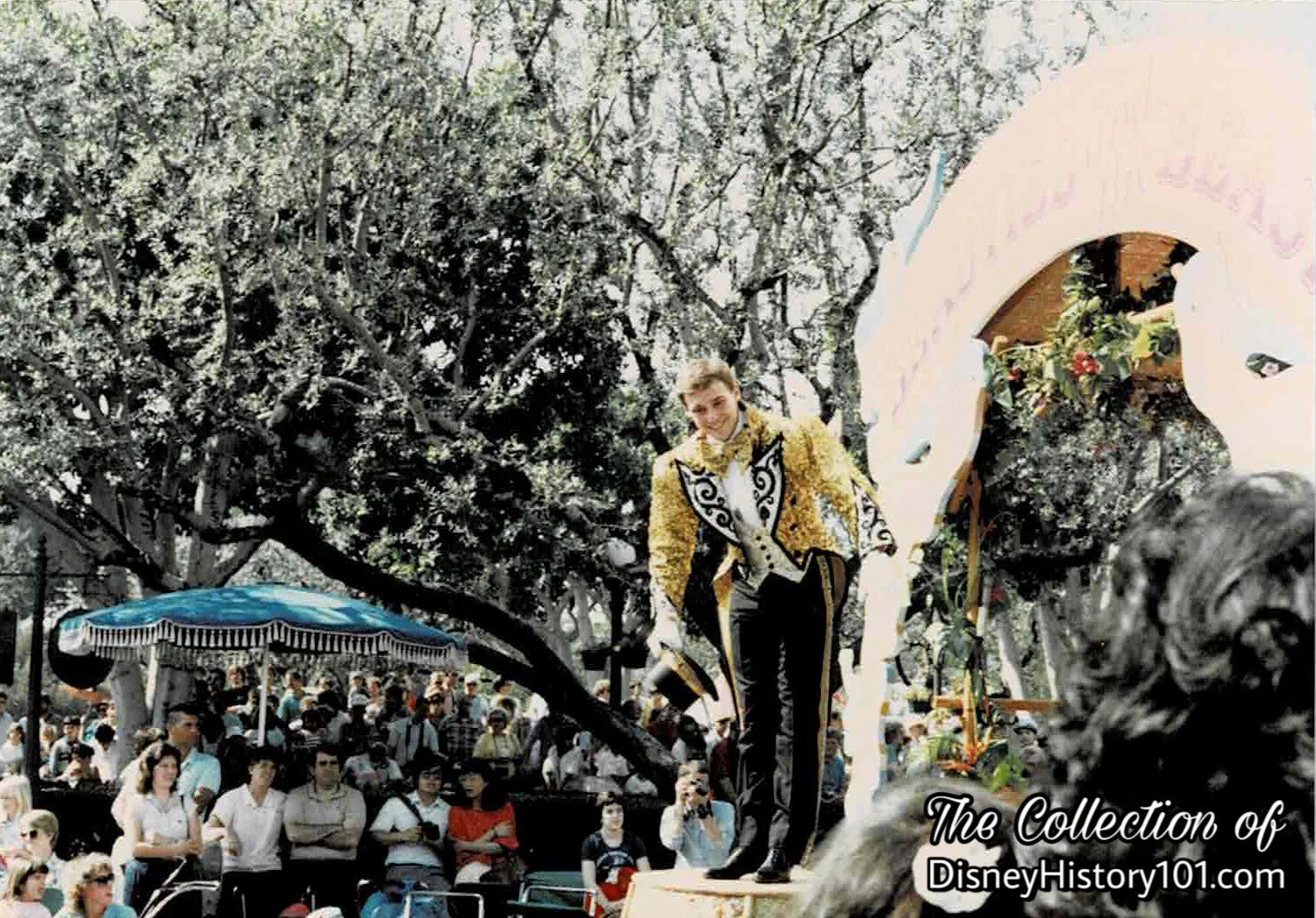
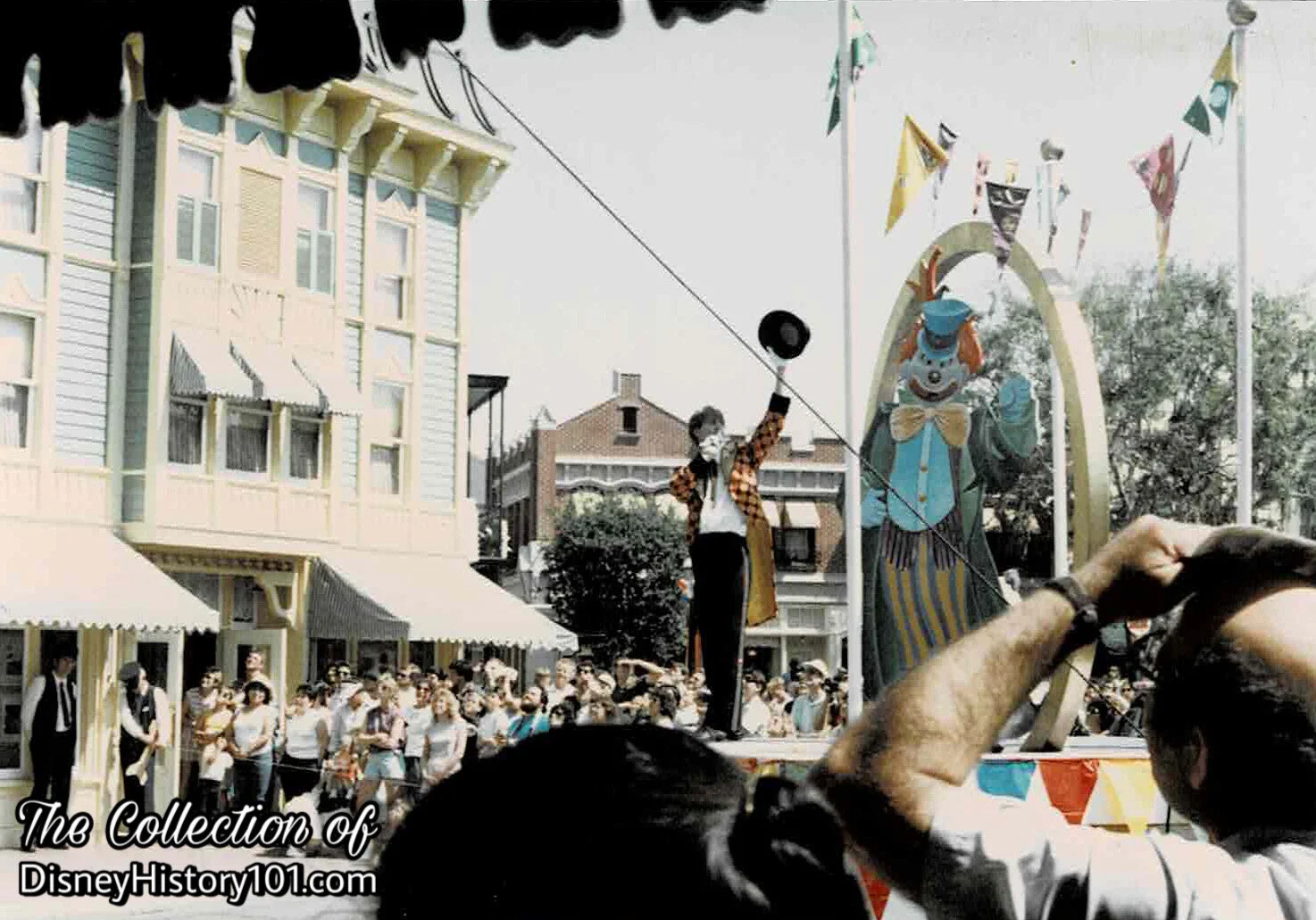
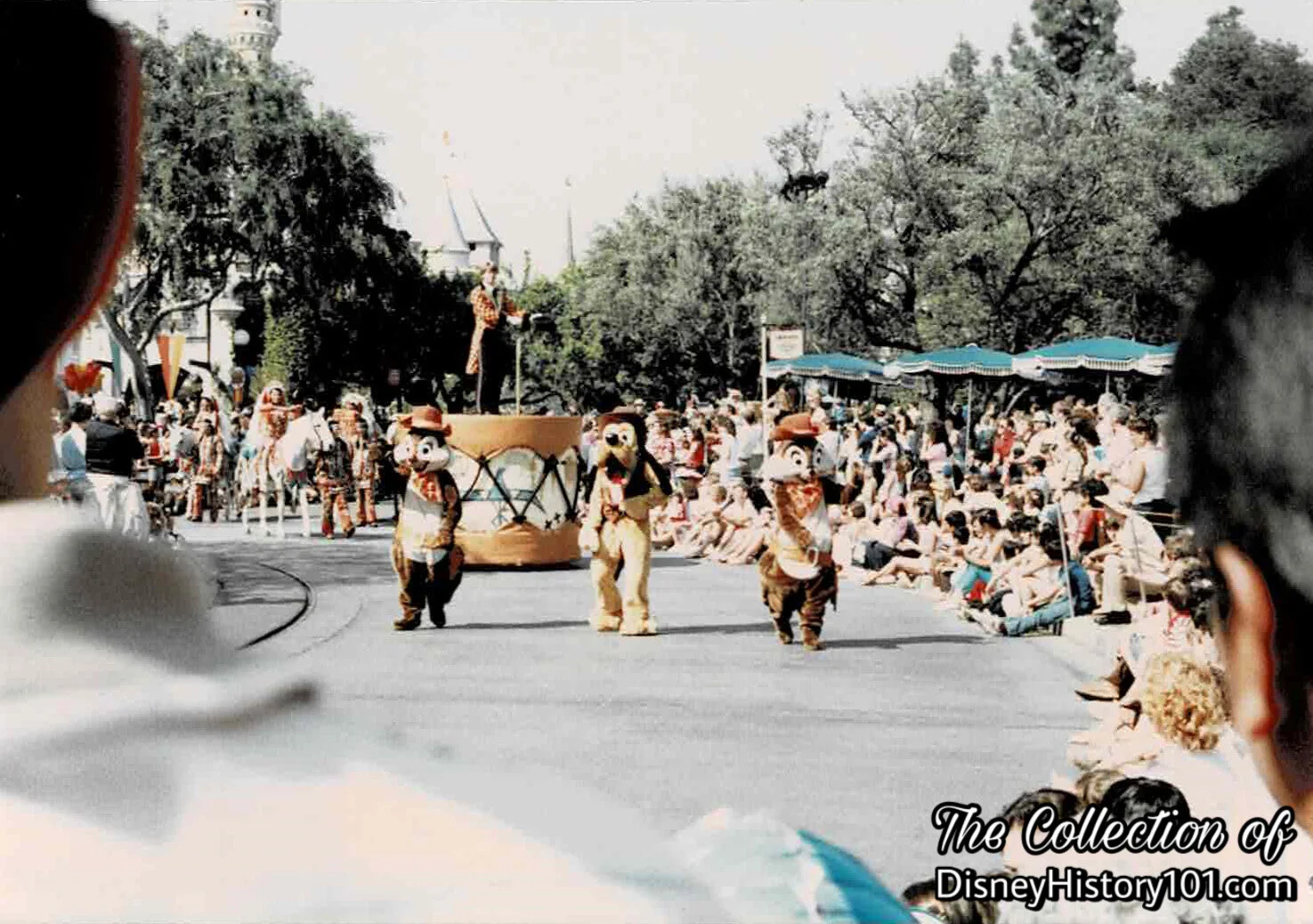
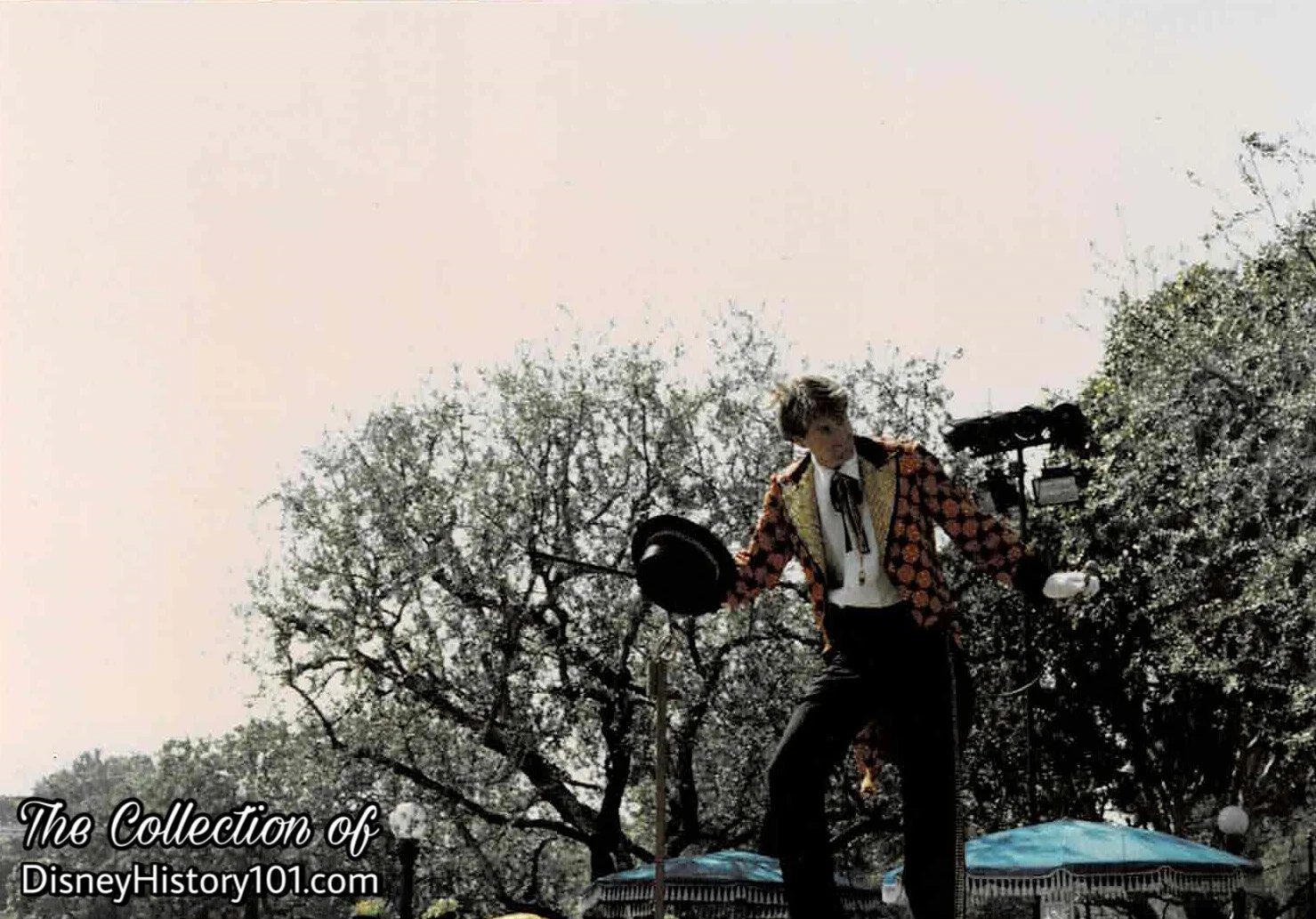
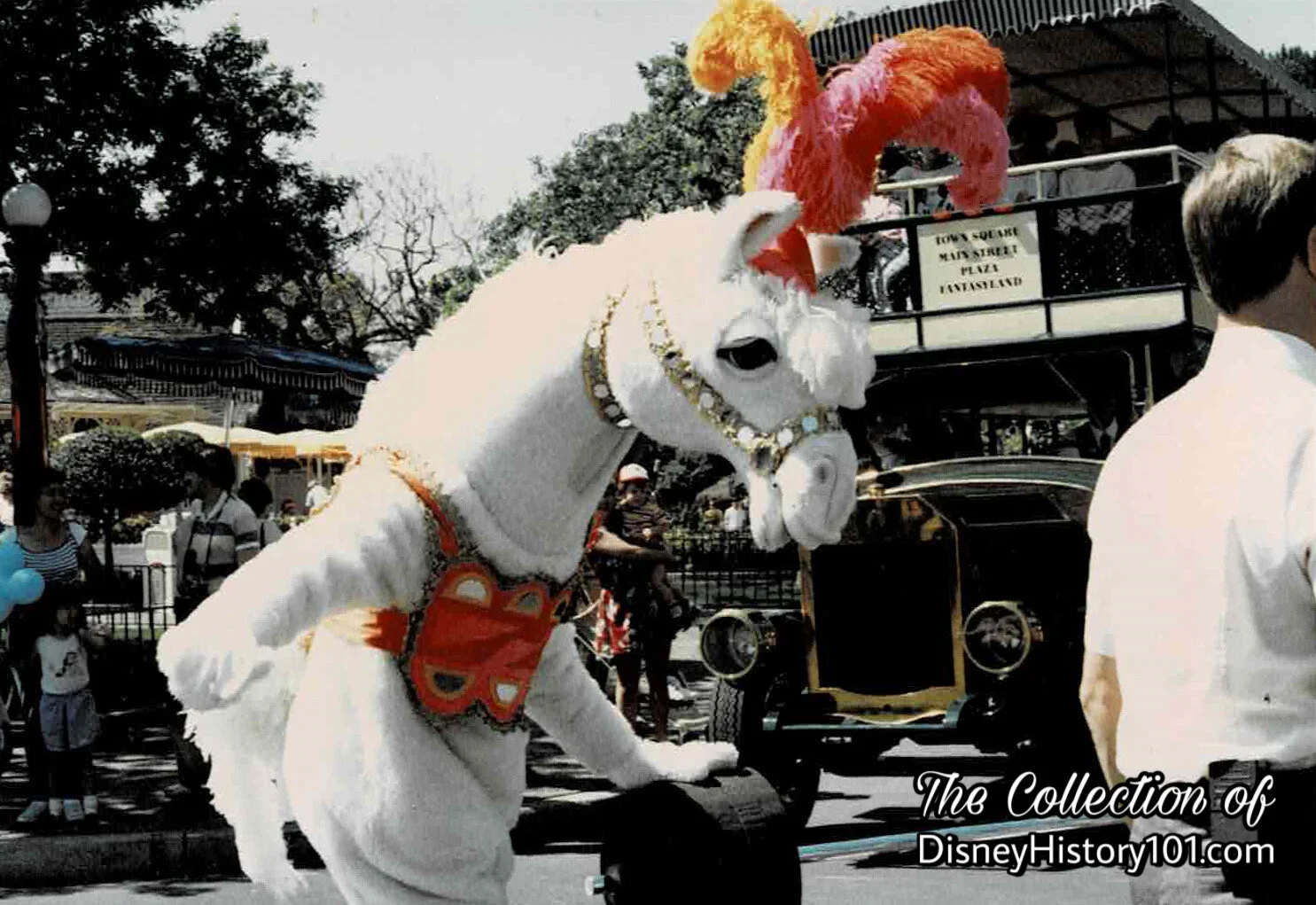
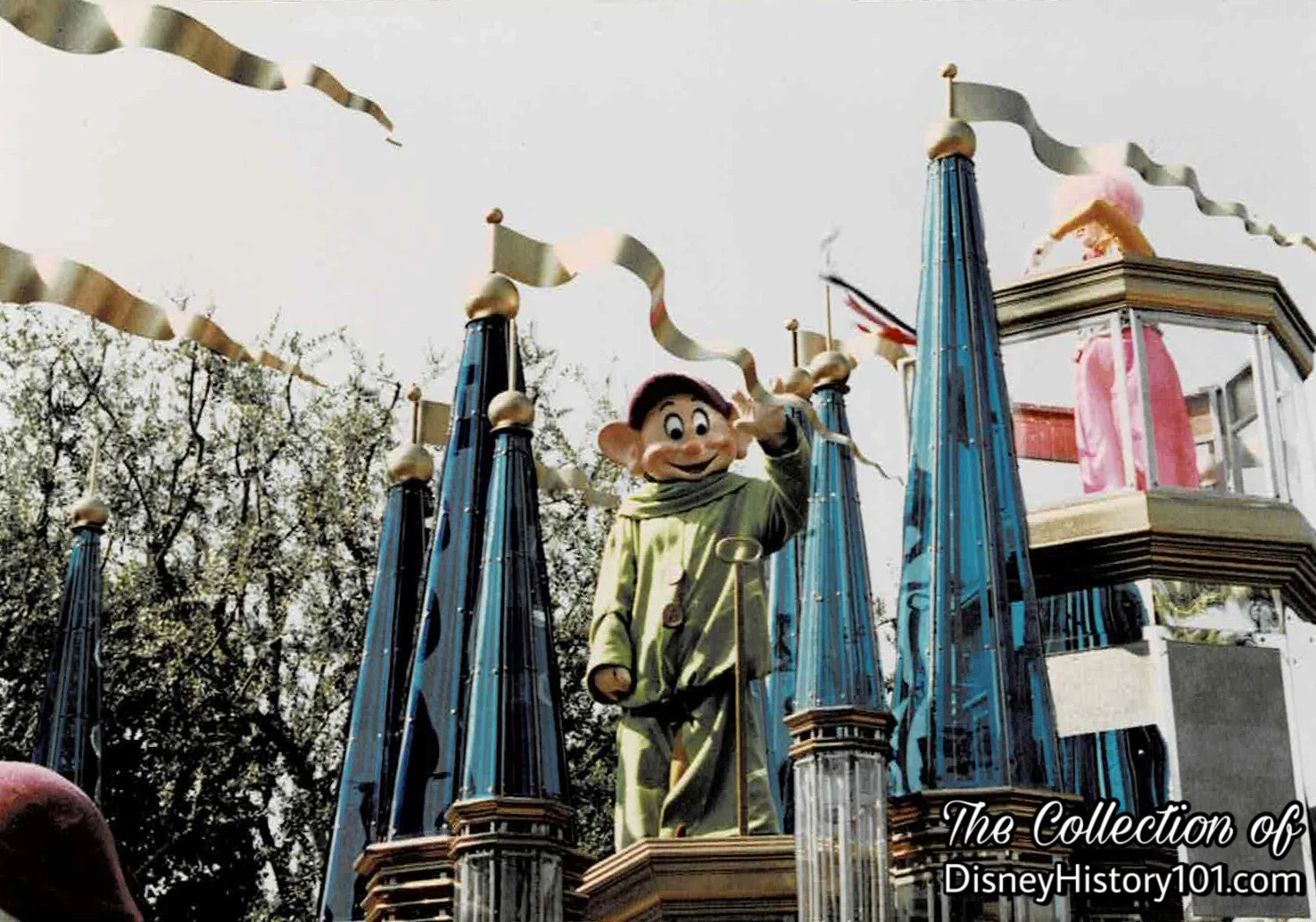
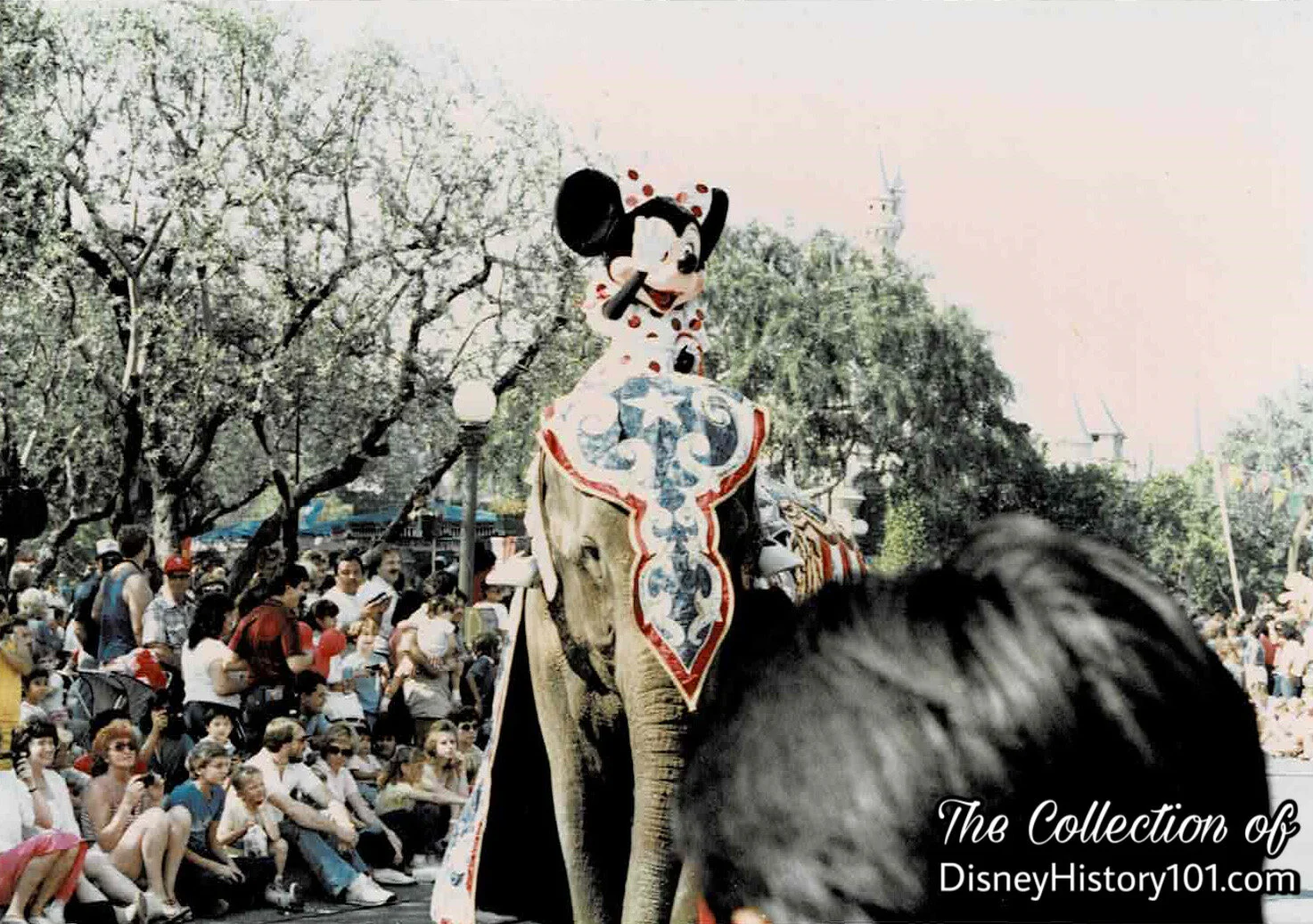
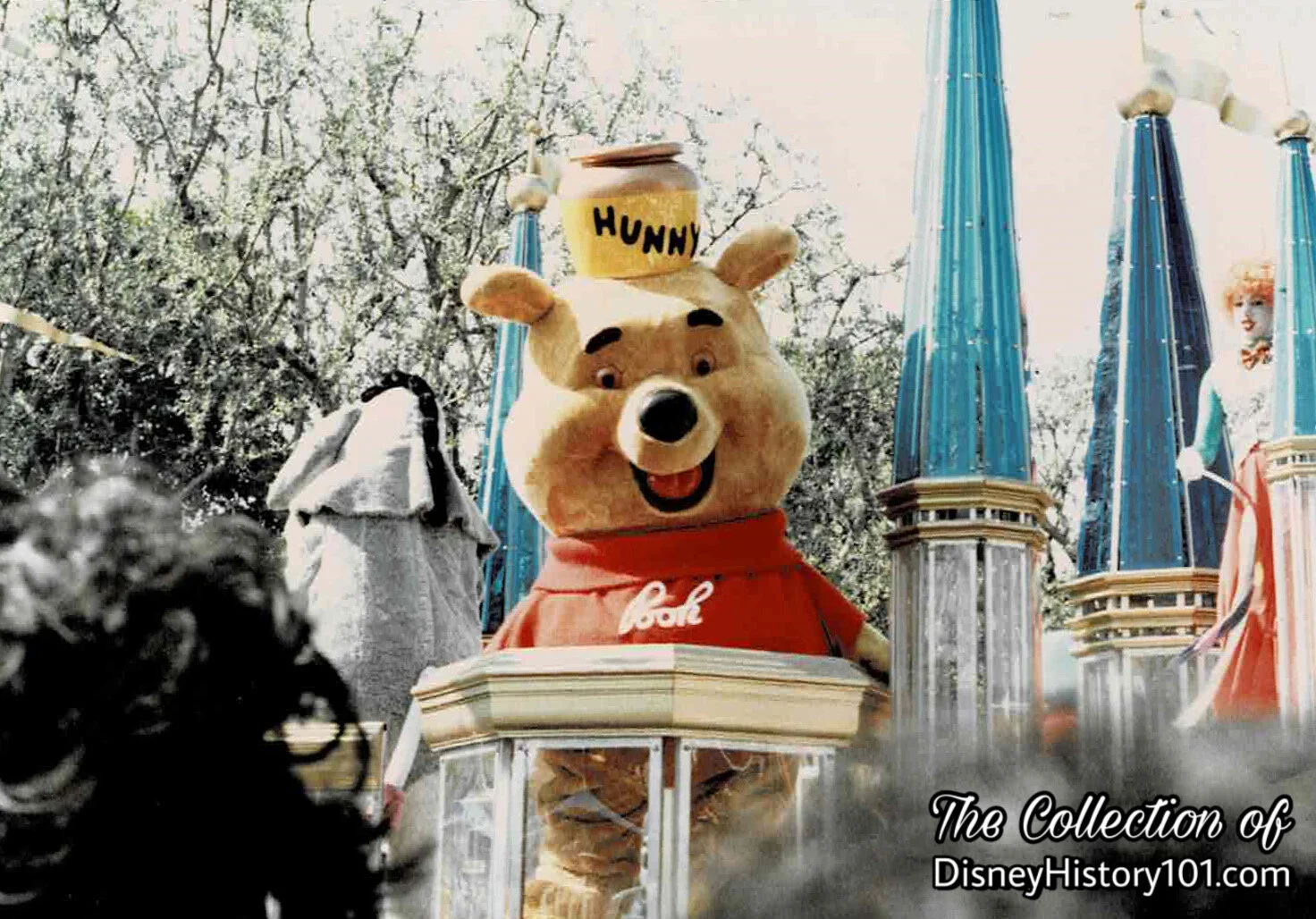
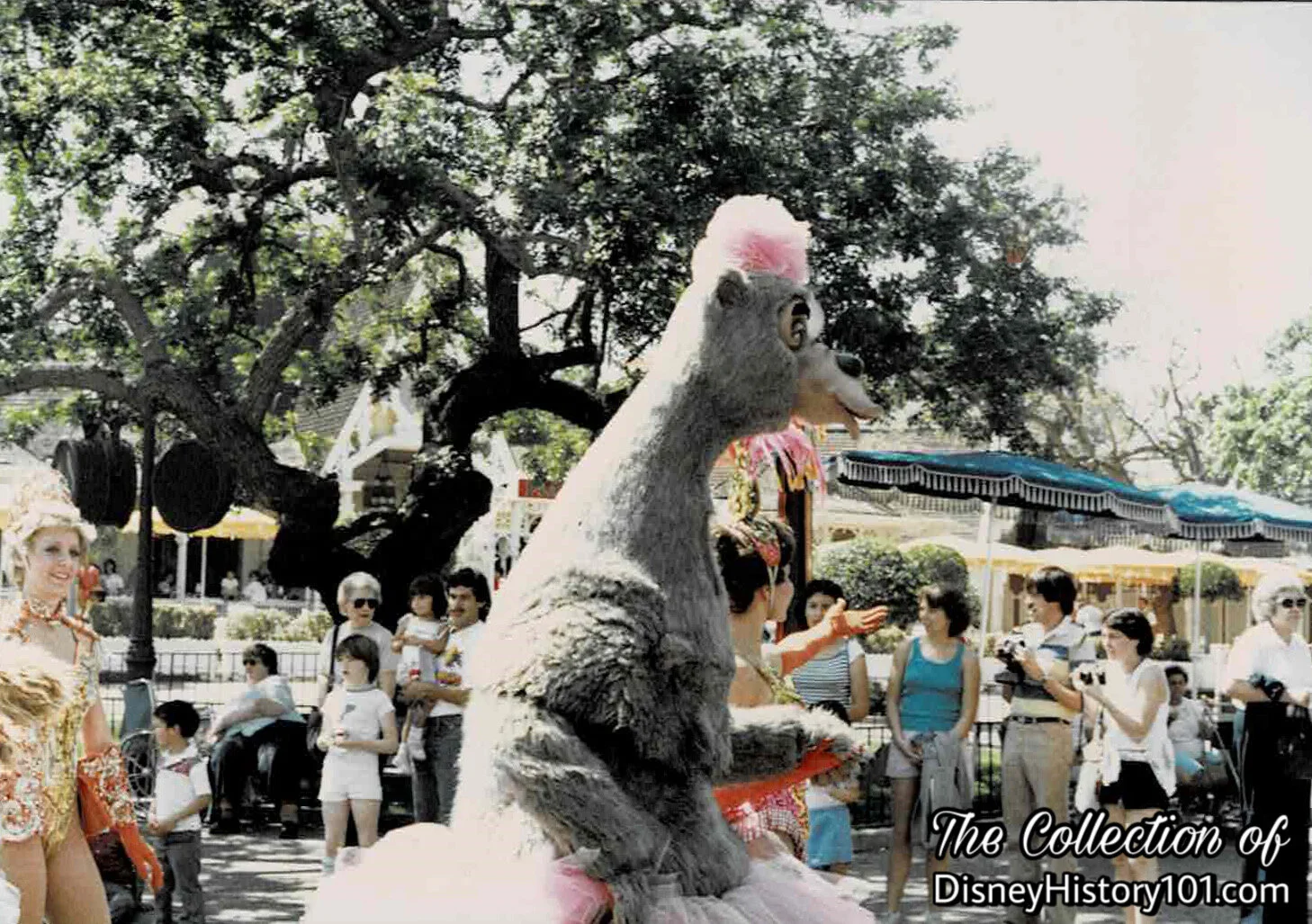
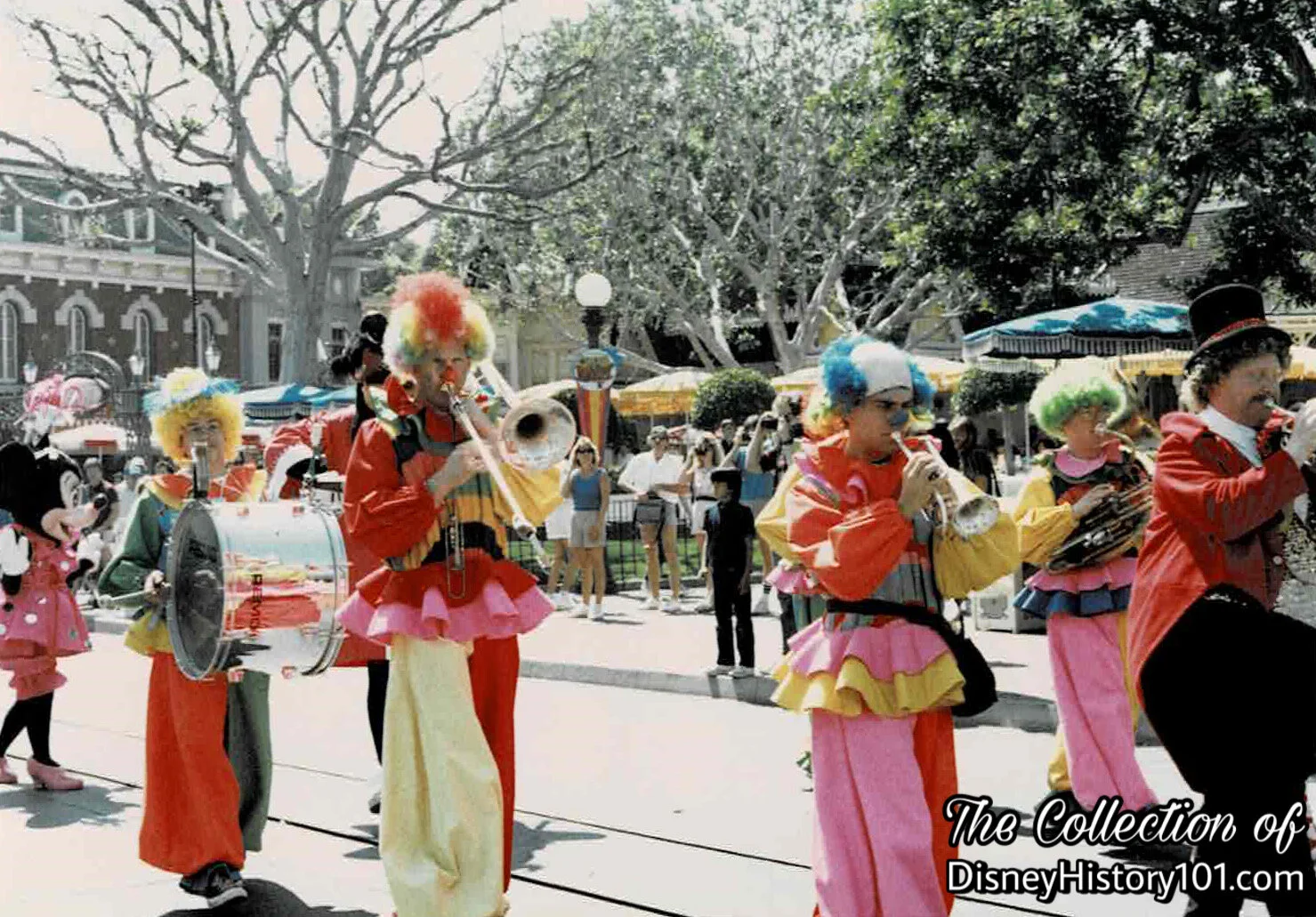
The final season of Circus Fantasy was presented by the Disneyland Entertainment Division and consultants like Ringling Bros. Barnum & Bailey Special Projects Manager Ron Severini! The Show was just “too big to fit into three rings”, and the entire show debuted Friday, January 15th (an entire day early) for a Los Angeles Parade featuring all the clowns, marching bands, performers, elephants, and Mickey Mouse. The entire Magic Kingdom was turned into the world’s largest big top for one last time! By 1988, Circus on Parade had become “an international cavalcade of exotic animals, clowns, acrobats, musicians, and dancers” led by those popular Disney characters! Clown Alley (with its backstage view of the world of clowning) at Carnation Plaza Gardens welcomed guests to run away and join the circus at Disneyland! Aerialists (like Clownmount Pictures presents ‘Terror Trolley’, and The Flying Españas) performed aerial acrobatics and death-defying tightrope walks over Main Street U.S.A., clowns strutted on stilts, and both a parade and Big Thunder Ranch showcased a menagerie of animals including a liger, a Brahman Bull, an American Bison, two pregnant camels, eland, parrots, “Jughead and Oscar” the ostriches, tigers and pachyderms! Videopolis was transformed into Circusopolis, and featured daily non-stop shows. Acts included Patricia White’s Lions and Tigers, Risley - the ancient art of foot juggling, Ali Hassani Acrobatic Troupe, the double-trapeze act -the Franconi Duo, Hawthorne’s Elephants, and Lady Rosaire (Pam Zoppe) and her Zoppe Chimpanzees (including the 35-year-old Judy who performed the role of “Cheetah” in television’s Daktari, and the young Newton. In addition, Disneyland Cast Members, their friends, and their family were auditioned for roles during late December of 1987!
The Wheel of Destiny was a high-powered circus thrill performed by the Ivanhoe Family in front of its a small world. There was a heart-stopping “Globe of Death” featuring two motorcyclists, while the spine-tingling Astro Skycycle races to the top of the Matterhorn while precariously balancing on a thin cable.
The 1988 first quarter report to Walt Disney Company shareholders briefly made mention of “the festive International Circus Cavalcade” which highlighted the event, and stepped off daily on Main Street. The final season was commemorated with an NBC television special - The Magical World of Disney presents “Disneyland’s All Star Comedy Circus”! The special (scheduled to air either December 4th or 11th, 1988), starred Rue McClanahan of the Golden Girls introducing “an array of compelling and amusing circus acts.”
The animals enjoyed special accommodations (for instance, the elephants were “sheltered in a tent stocked with water and hay. Stanchions… [kept] the area secure and private,” according to Disneyland LINE, Vol. 20 ; No. 4).
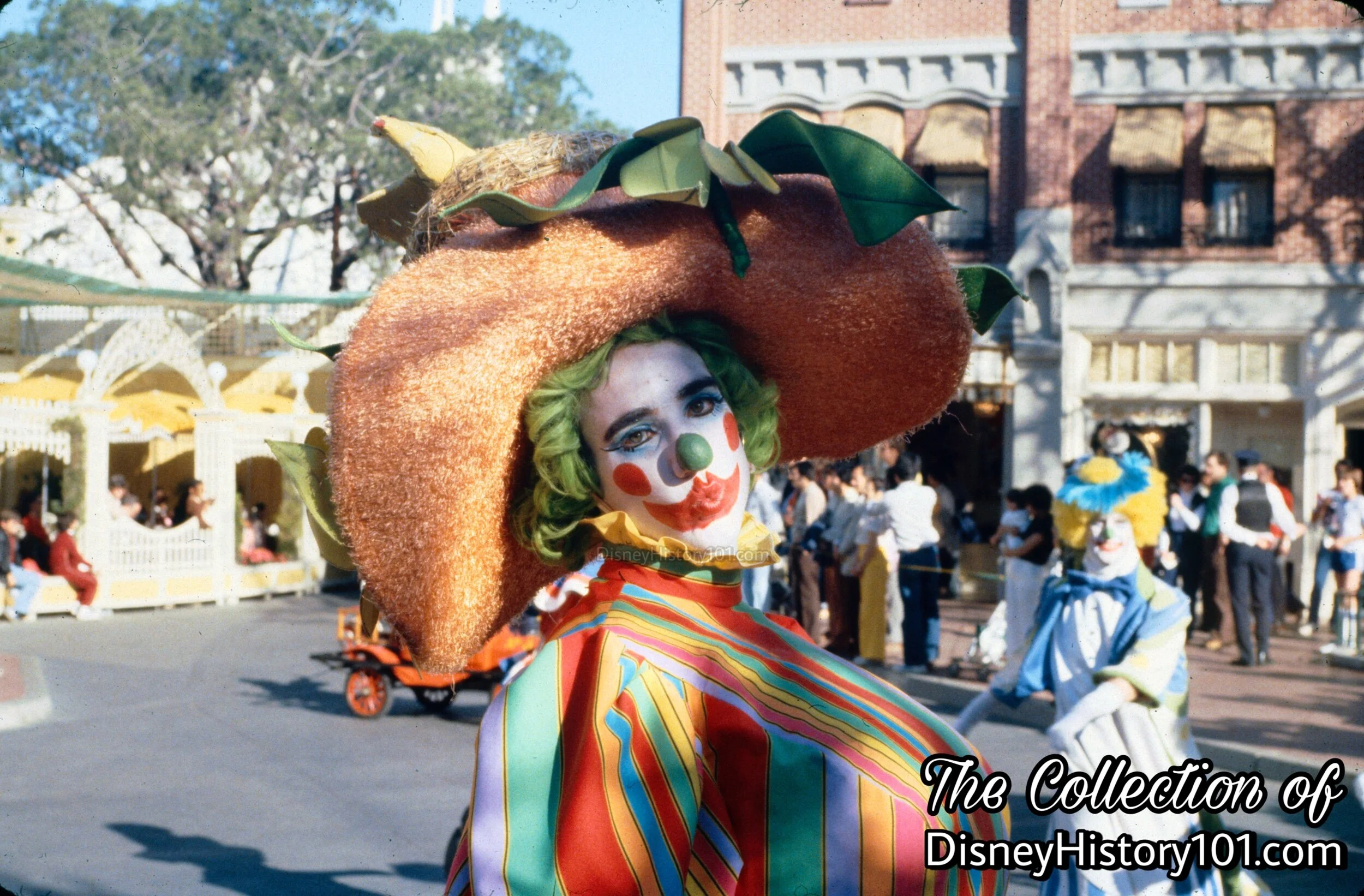
At the other end of Main Street U.S.A., the acrobat rig and net is slightly visible.
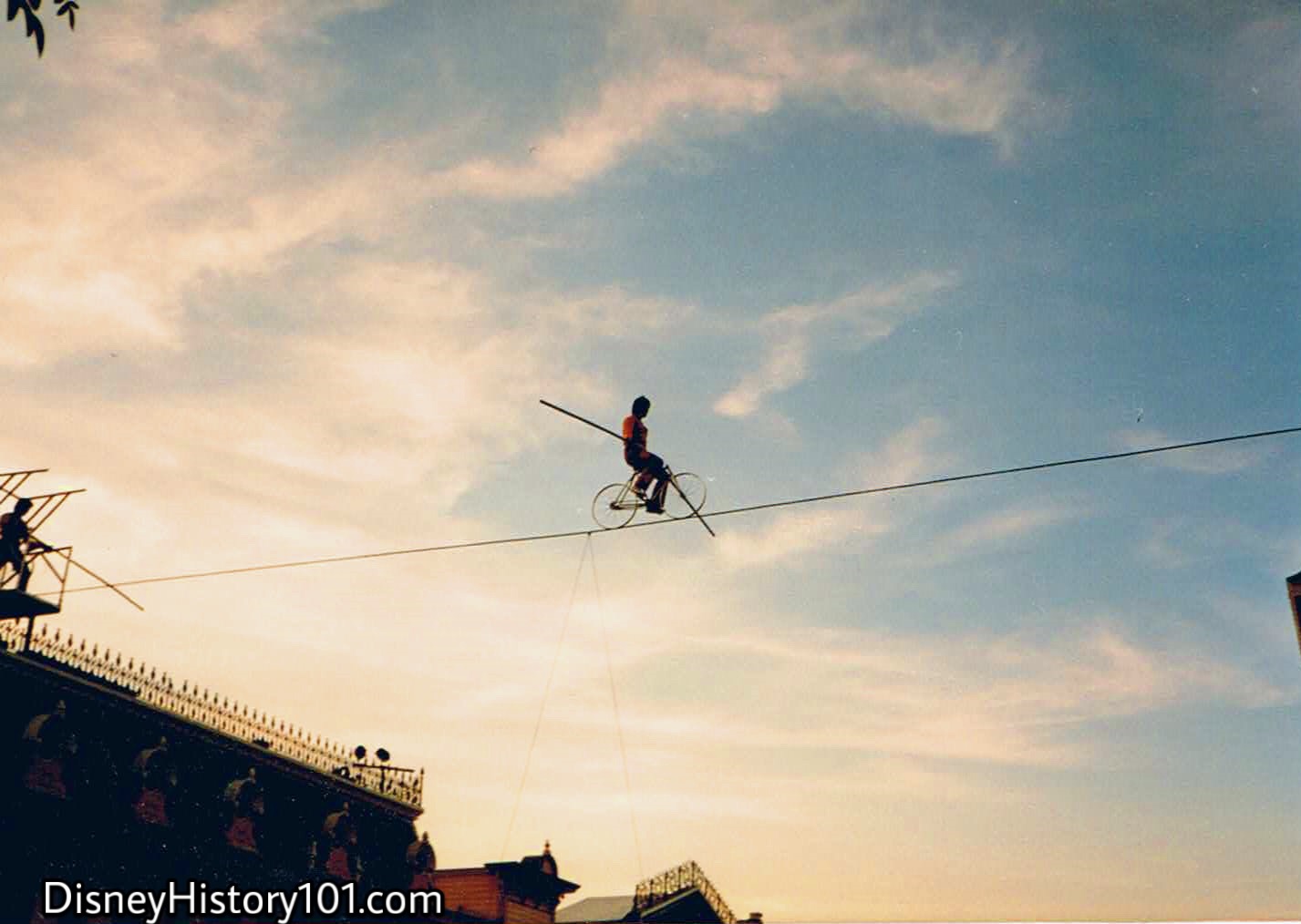
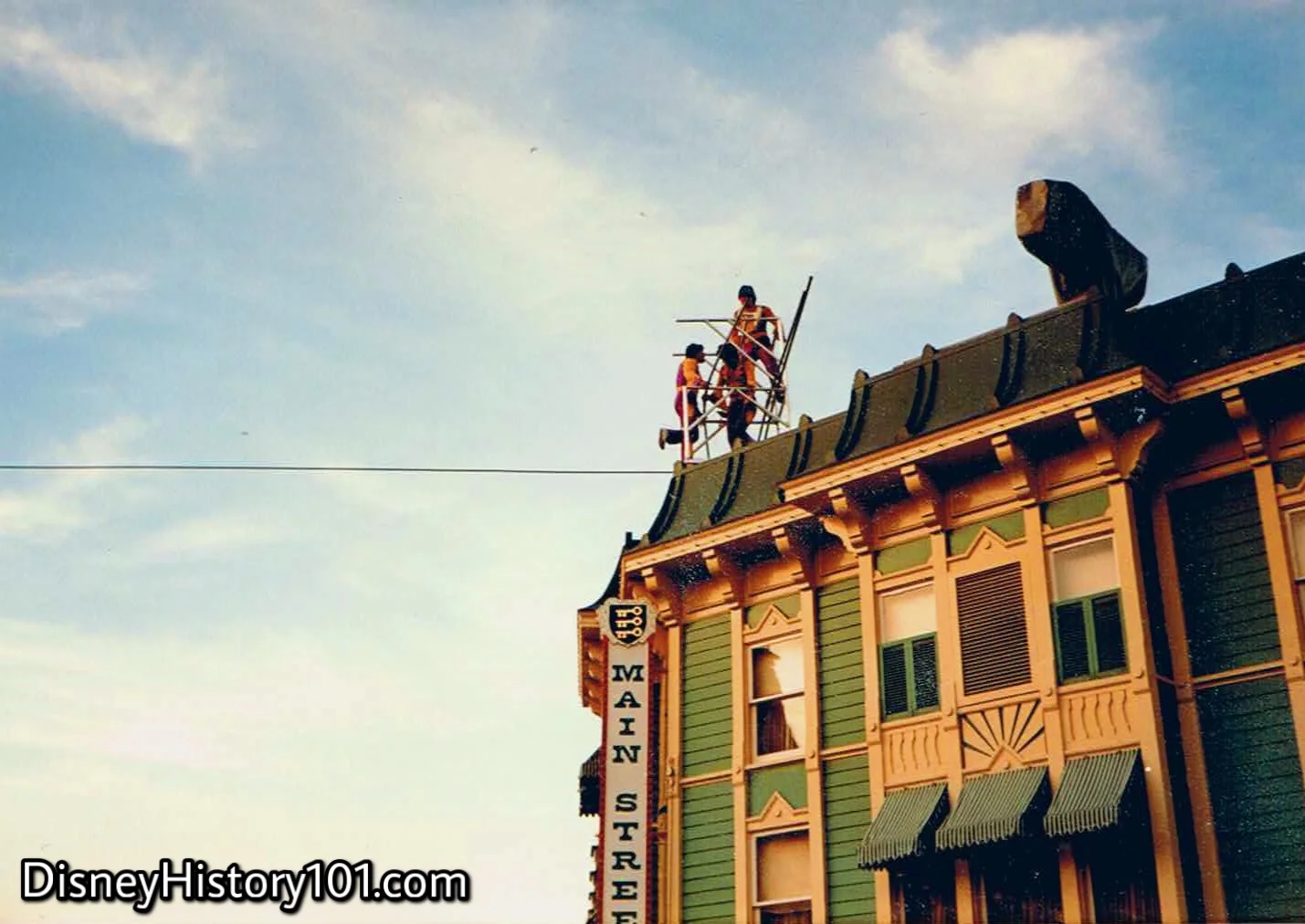
CLOCK OF THE WORLD (WORLD TIME CLOCK)
The dedication of Tomorrowland was once preserved on a plaque at the base of the Tomorrowland United States of America Flag Pole: “Tomorrow offers new frontiers in science, adventure and ideals : the Atomic Age … the challenge of outer space … and the hope for a peaceful and unified world.” Like it’s contemporary Avenue of Flags (featuring the mottos and emblems of the States of the Union) or much like the latter Spirit of Creative Energies murals (highlighting the creative and colorful children of our “small world”), the Clock of the World highlighted something something that connects us all - in this instance, time.
“Blue Sky and Design”
Diane Disney recalled that “Dad never forgot the Strasbourg astronomical clock that he discovered while working as : driver in France in 1918. The animated clock in the facade of the Small World ride was inspired by that venerable clock in Strasbourg.“ Diane Disney further shared how much her family loved clocks: “Our mother loved clocks,… and collected them. This beautiful brass lantern clock is the first one she acquired, and my favorite. It had the place of honor on our living room fireplace mantel. It chimed the Westminster Chimes, and did it every quarter hour, building up to a grand finale at the hour mark. Other clocks in our home chimed too, but this one was the best. A clock specialist came weekly to wind them all. It really was quite pleasant, living with all those clocks.” So it isn’t surprising that Walt Disney’s Disneyland would ultimately be filled with so many wonderful timepieces – from the Main Street Station clocktower to the facade of Its a Small World.
By July 1, 1954, George Whitney of Disneyland, Inc. directed Amusements, with Ron Miller overseeing analysis, philosophy, capacities, planning, operator training, and amusement procurement. By that time, early thumbnail sketches and other concept artwork seemed to be unencumbered by restrictions of budget, schedule or the laws of nature and physics. Though guided by Walt, his artists appeared to engage in “free-thinking,” as if implementing the modern “Blue Sky” Imagineering process. Almost any concept was permissible and considered a future possibility.
Like some advanced “High Concept,” final designs were quickly generated and approved for the Clock of the World.
Things were moving along by March 31, 1955, as a U.S. Time Corporation representative had sent a letter to Mr. Gabriel Scognamillo, Art Director of Tomorrowland for Disneyland Inc., reading:
“Confirming my conversation with you this afternoon, I have been in the process of designing the Tomorrowland clock. However, have been having considerable difficulty with the movement of the Torso. Since you no longer require this to revolve, this eliminates several major problems and will be much easier for us to fabricate.
It is my intention to make the hour wheel with 24 aluminum angles to which 24 segments of 1/4” thick plexiglass will be fastened. Each segment will have 4 screws to be attached to aluminum steel which will run in a vertical direction. To each segment will be applied 1/4’ thick numerals of plexiglass. For the daylight hours we recommend a milk white background with black numerals and for the night time, medium blue with white markers. The illumination on the hour wheel will consist of a neon tube completely circling the internal position of the markers for illumination and will be activated by a 24-hour time switch.
Insofar as the cyclometer design is concerned and for illuminating the minutes, I have not as yet determined how this will be done. Design of this particular phase is being worked on and as soon as something tangible has been realized, will advise you.
It would be appreciated if you would send us color swatches of the anodized gold for the map, gold for the sun, anodized silver for the background and anodized silver for the moon. It is also my understanding that you wish to apply Venetian mosaic glass to the base and to the roof.
In regards to our trade mark, we would appreciate having ‘Timex’ placed in a conspicuous place so that it will be readily visible. Your suggestions as to where this might best be put will be helpful.“
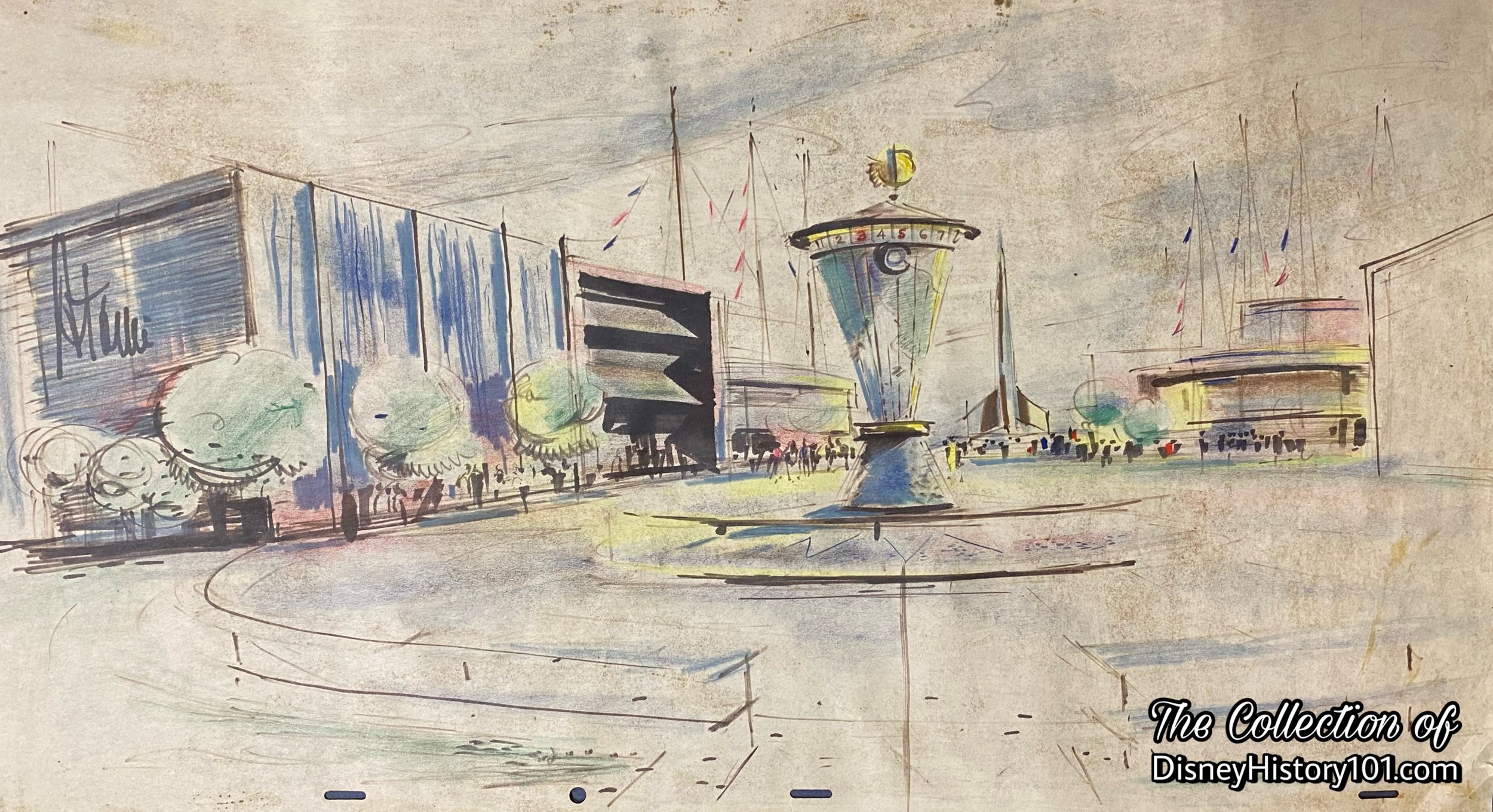
Perhaps some of these thoughts were behind Herb Ryman’s early quick “suggestions” that eventually depicted what would be known as “the Clock of the World.”
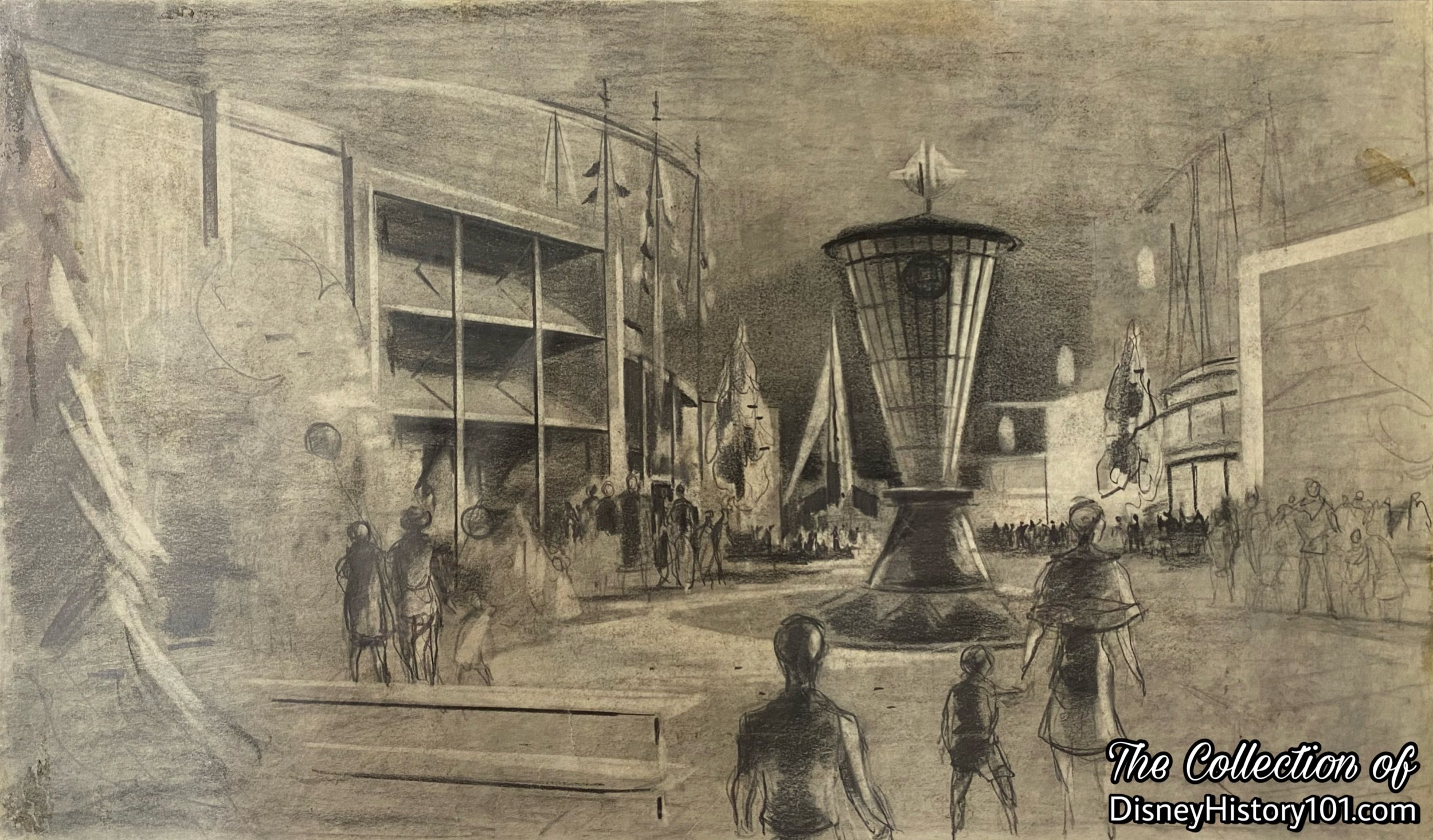
The “U.S. Time Corp. Clock” was designed by both U.S. Time and WED Enterprises. Some of the viable project Concepts (as pictured above), were supported by a well-developed business case and built expectation.
“Feasibility and Design Development”
Further phases such as feasibility, schematic design, design development, and production followed.
By May 26, 1955, Gabriel Scognamillo of Walt Disney Studios sent a communication to Mr. Ted Chartier of U.S. Time in Waterbury, Connecticut. He had already submitted the cost for modeling the Crescent Moon ($385.00) and an approximate estimate for casting & finishing the Moon. ($500.00). Scognamillo had already laid out the sun which would be an aluminum spinning ornament. However, he hadn’t calculated a price on this and needed to complete drawings. By that time, Scognamillo had been working on the numerals with goal of shipping them over a few days.
C. V. Wood called U.S. Time verifying receipt of photographs and engineering drawings of the clock that were being preparing for production, modeled after the large one they are making for the entrance to Tomorrowland in the Park.
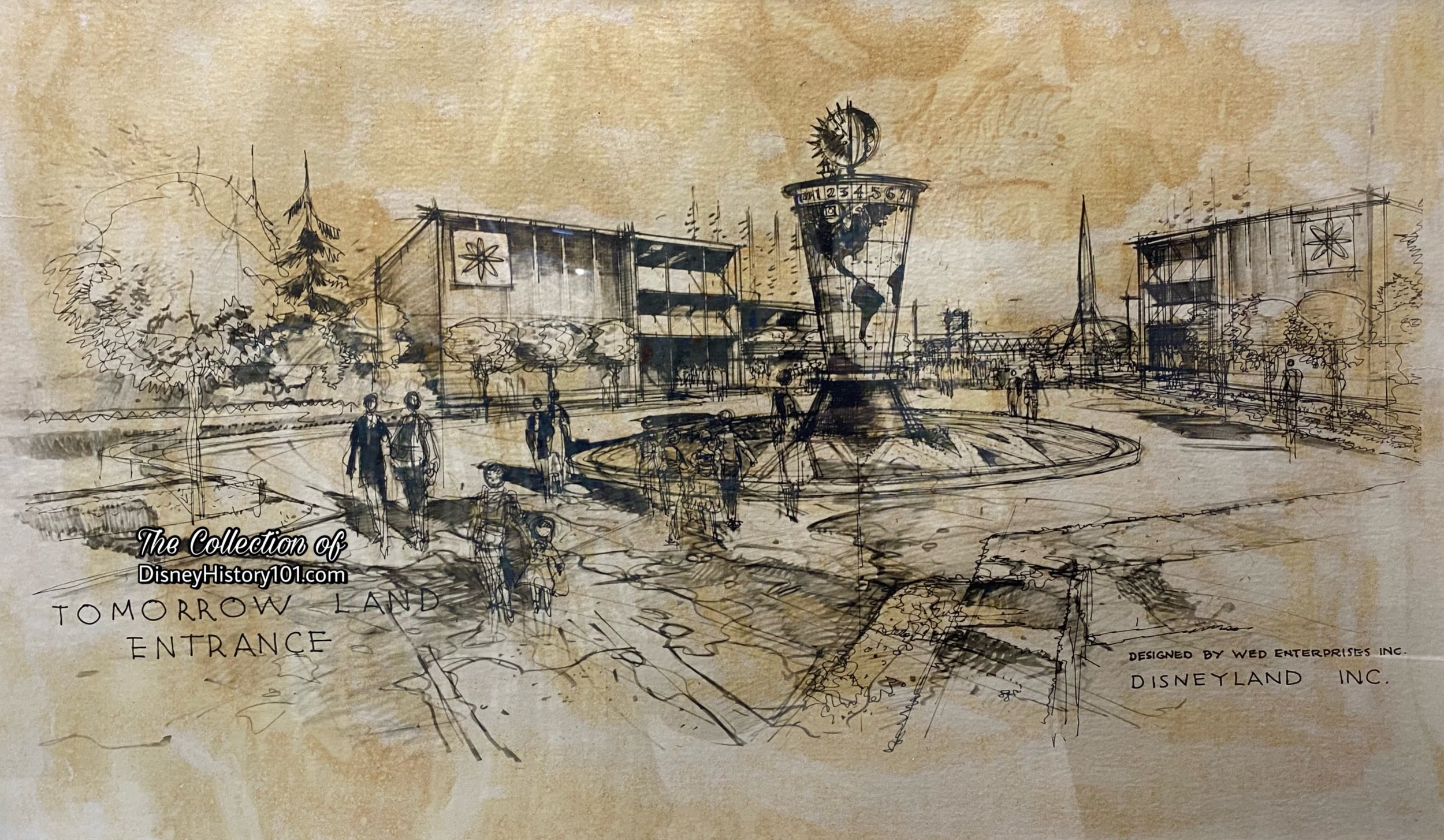
“Construction”
Timex was the official time in Disneyland, and was well represented throughout the Magic Kingdom. Timex was the sponsor of the Main Street Watch Shop and the same corporation that supplied Disneyland’s other memorable clocks on Main Street U.S.A. (as the Post Clock near Eastman Kodak, and the clock tower piece over the Main Street Station). Since 1955, the U.S. Time Corporation cared for all these clocks. According to the Guided Tour Script (1962), The World Time Clock was “provided by the Timex Corporation and designed by the Walt Disney Studios in Burbank, California.”
Speaking of Disneyland, F. M. Franz, manager of operations for MeNeil Construction expressed: "We feel sure there has never been anything built like this in Southern California, or elsewhere in the United States. Many of the items were constructed from artist’s sketches.”
The “U.S. Time Corp. Clock” was constructed by WED Enterprises. However, many of its parts and materials were made by numerous manufacturers. The steel supports and framework were accomplished by Griffith Equipment Company. The continents and oceans were being prepared by Rand McNally .
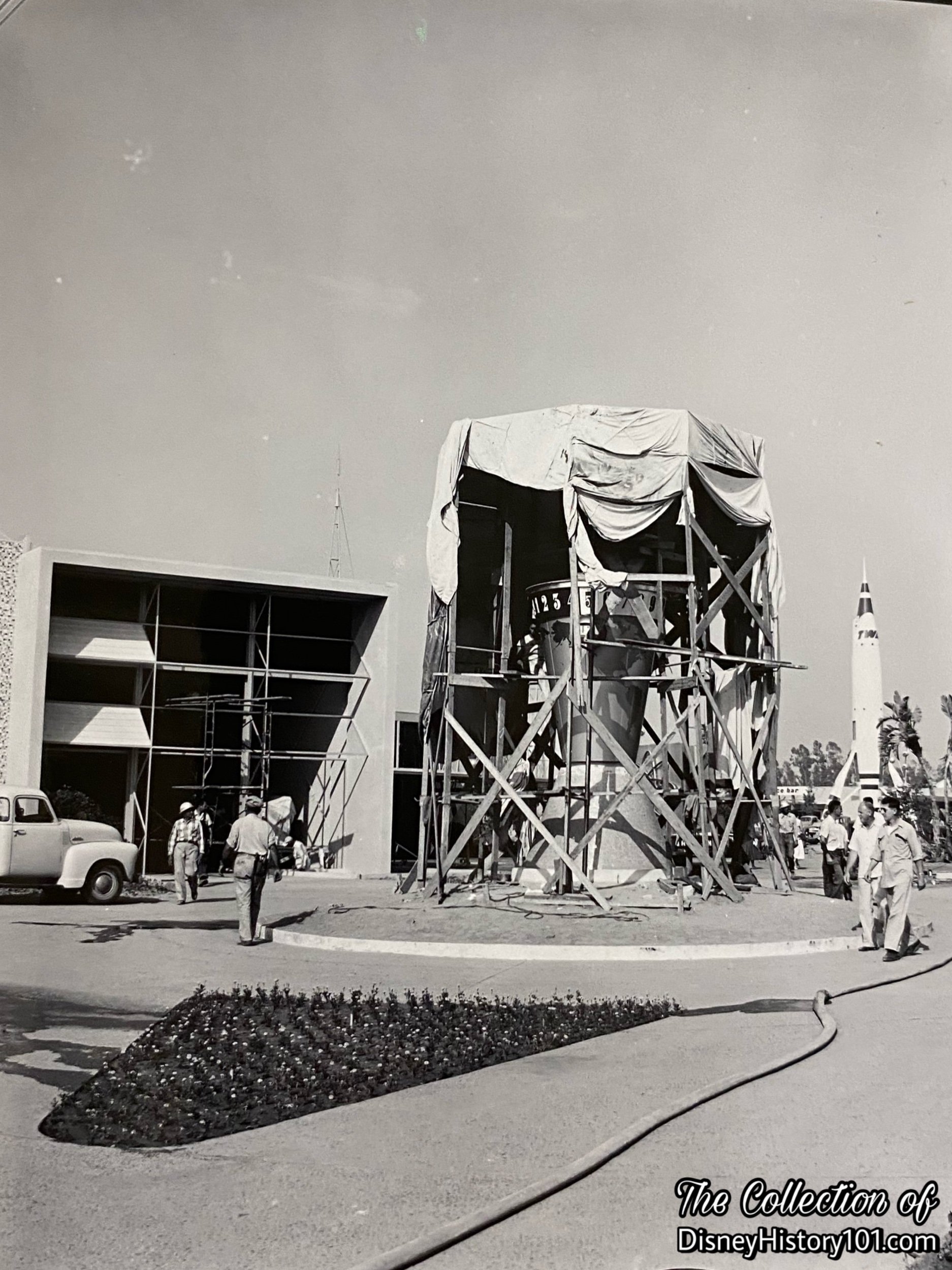
“Construction”
The construction crews didn't begin work on any of Tomorrowland until six months into the project.
Timex was the official time in Disneyland, and was well represented throughout the Magic Kingdom. Timex was the sponsor of the Main Street Watch Shop and the same corporation that supplied Disneyland’s other memorable clocks on Main Street U.S.A. (as the Post Clock near Eastman Kodak, and the clock tower piece over the Main Street Station). Since 1955, the U.S. Time Corporation cared for all these clocks. According to the Guided Tour Script (1962), The World Time Clock was “provided by the Timex Corporation and designed by the Walt Disney Studios in Burbank, California.”
Speaking of Disneyland, F. M. Franz, manager of operations for MeNeil Construction expressed: "We feel sure there has never been anything built like this in Southern California, or elsewhere in the United States. Many of the items were constructed from artist’s sketches.”
The “U.S. Time Corp. Clock” was constructed by WED Enterprises. However, many of its parts and materials were made by numerous manufacturers. The steel supports and framework were accomplished by Griffith Equipment Company. The continents and oceans were being prepared by Rand McNally .
As of June 2, 1955, C.V. Wood Jr. sent an Inter-Office Memorandum to Walt Disney regarding the best estimates that could be obtained at the time regarding the completion status of individual sections of the Park and Opening Day. C.V. wrote: “The Clock: This is very critical. Every effort has been placed on it. The works on the inside may not be ready.”
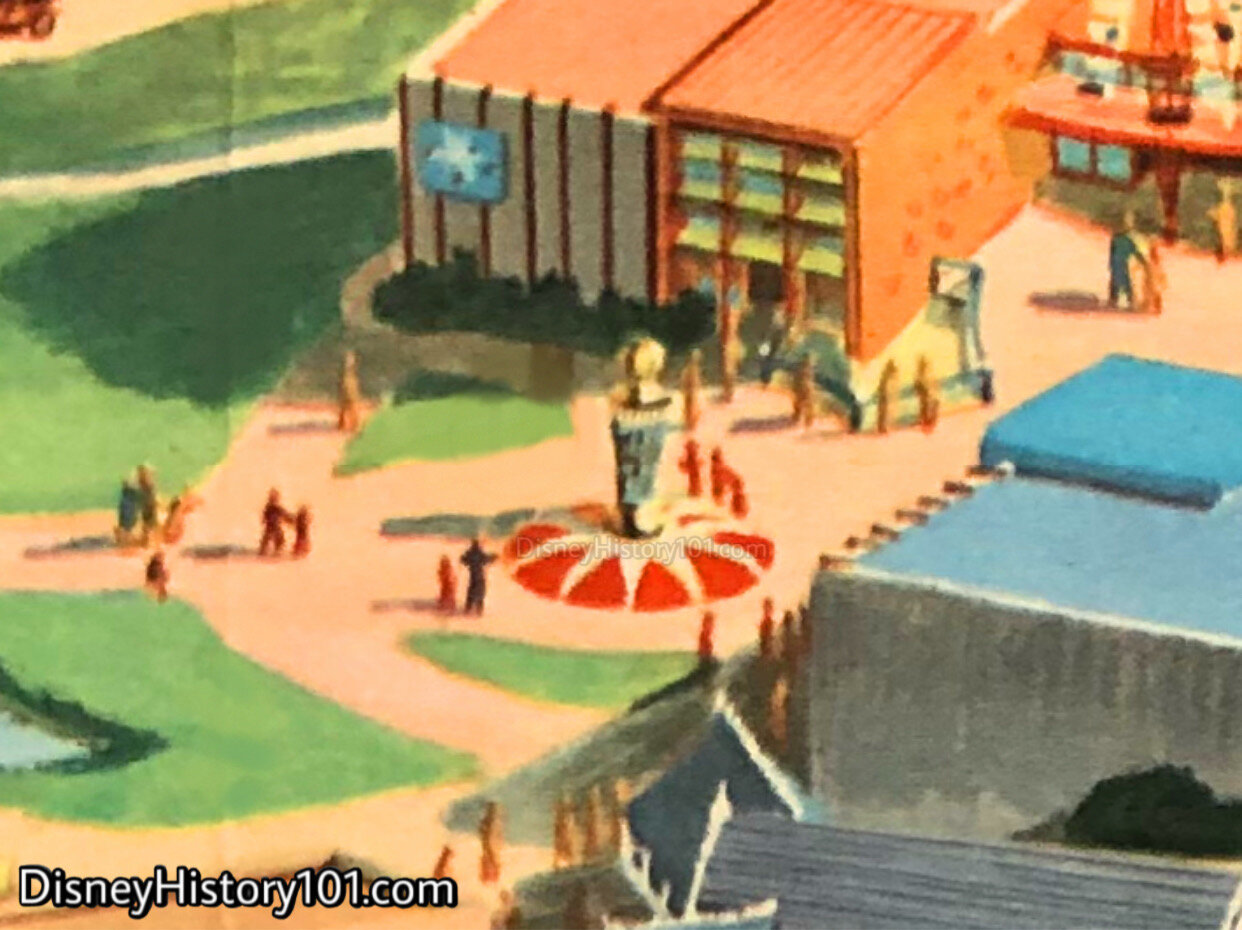
This illustration (pictured above ; produced for an early licensed Disneyland product), granted a glimpse of the International Time Clock - the first Tomorrowland attraction that guests would encountered, in the Entryway!
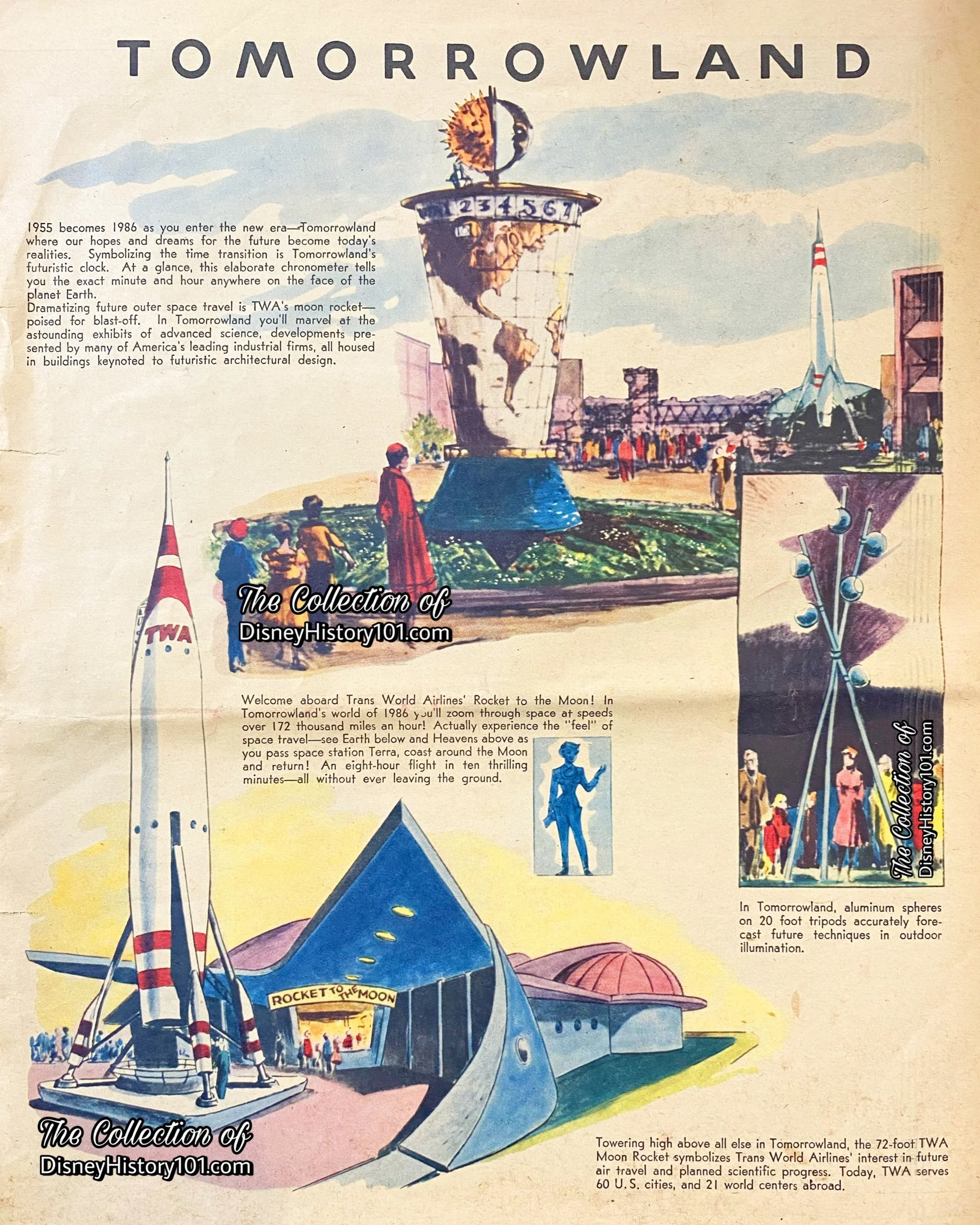
It could give guests the time for nearly anywhere in the world! In fact according to the Los Angeles Examiner (July 15, 1955), “At a glance, this elaborate chronometer tells you the exact minute and hour anywhere on the face of the planet Earth.”
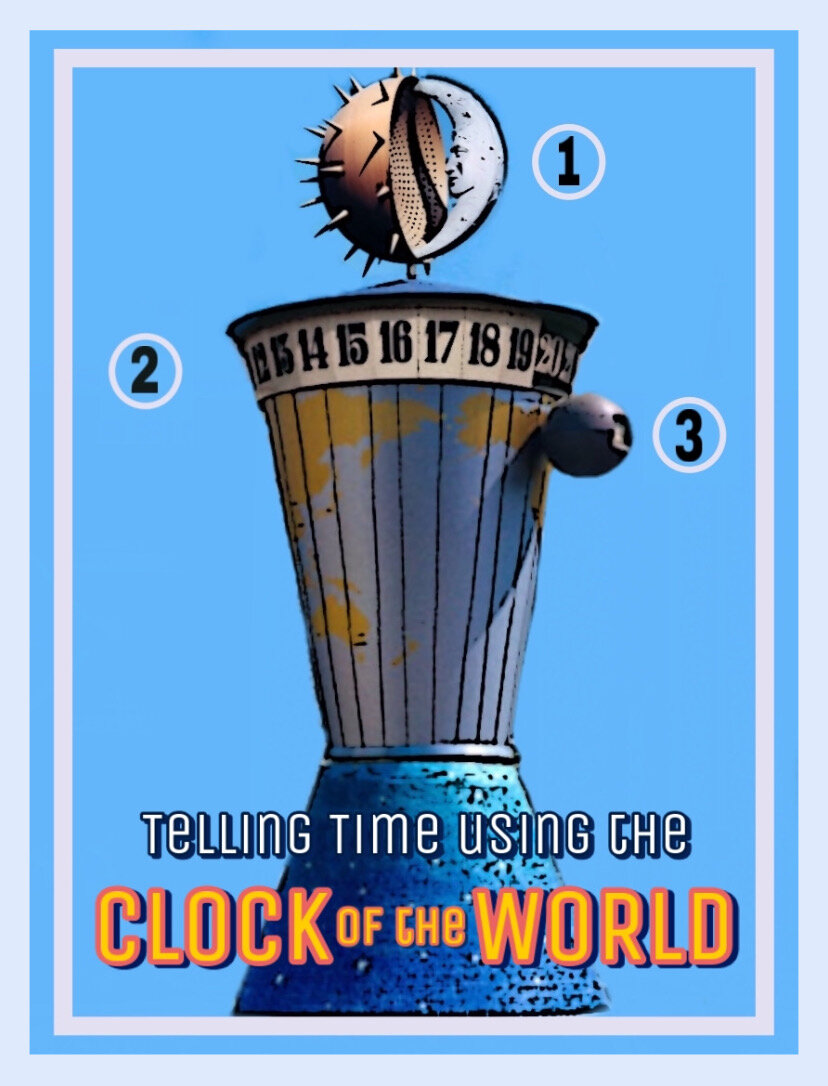
The presentation of the Clock of the World show on the vast DISNEYLAND “stage” was a distinct part of the Disneyland theater concept. It was a 24-hour clock, measuring time in a method similar to Military Time. The Sunsphere, the aluminum Band atop tiled base, and the Orb were essential time-telling components of the clock. According to Vacationland (Winter, 1958), “the dark numbers on white backgrounds are daylight hours ; white numbers with dark background are nighttime.” As you will note, guests often photographed the clock from the daytime side.
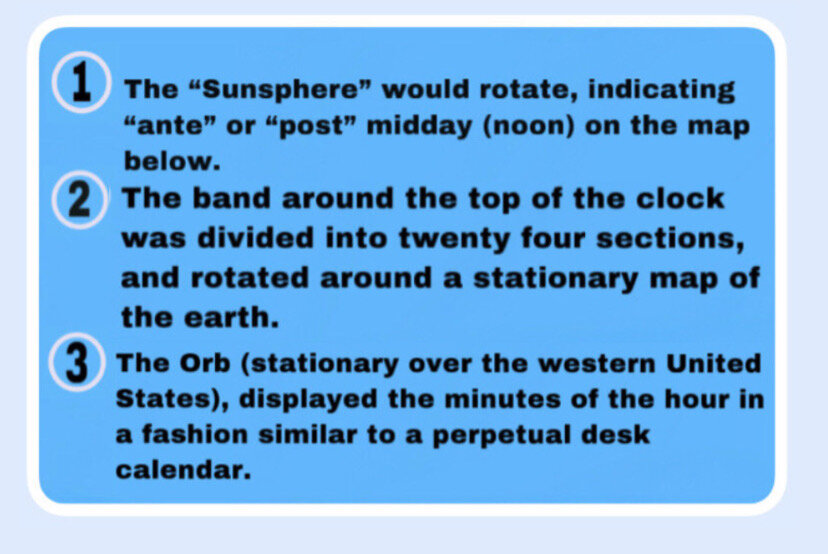
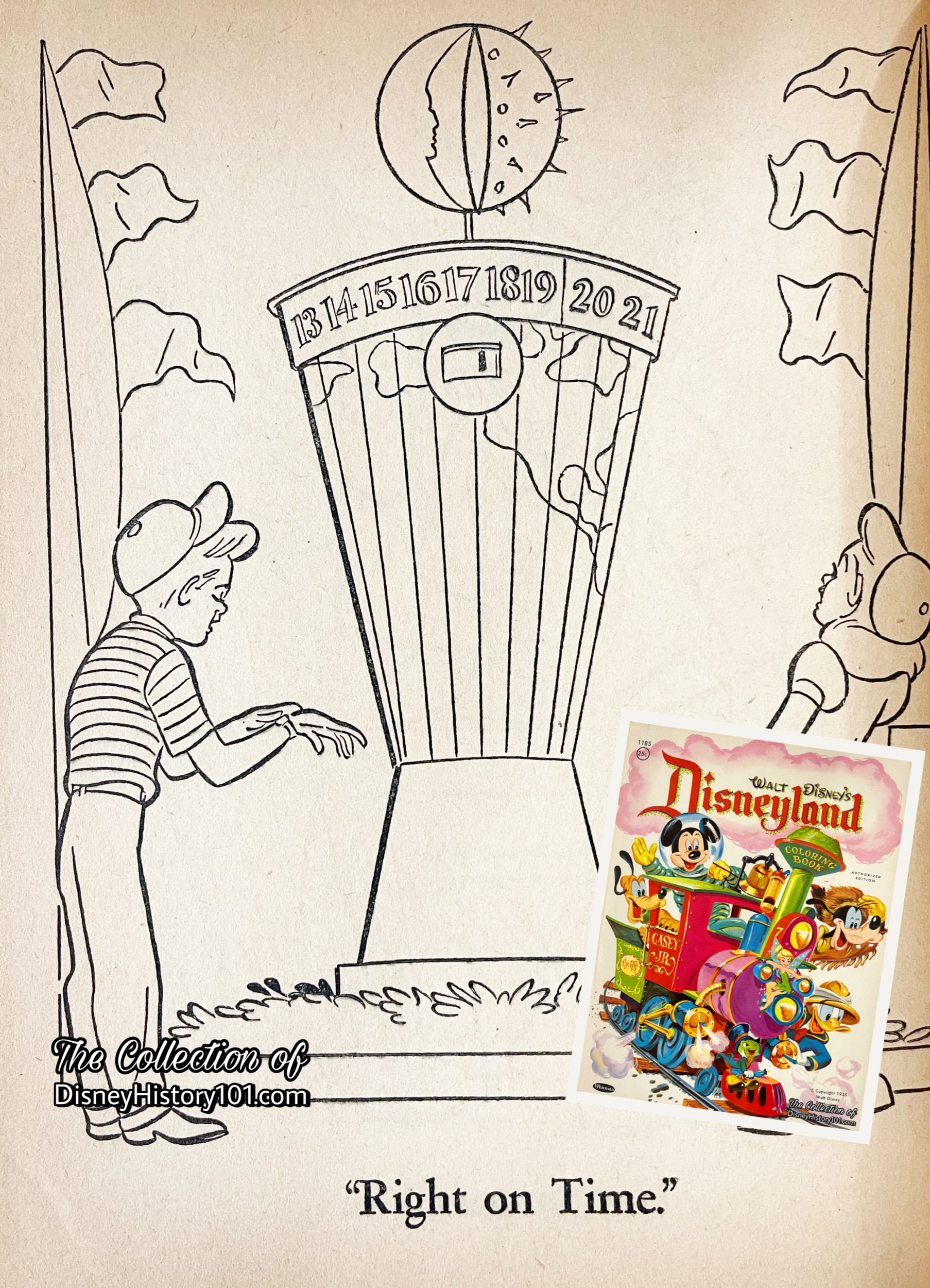
Once understood, this “elaborate” clock was quite easy to use, “showing at a glance the exact time at all the far ends of the world,” [The Story of Disneyland, published 1955 by Disneyland Inc.]. As this was the case, the Clock of the World was reckoned among “Disneyland rides and amusements” that “will delight the very young, the teen-ager, young married couples, the middle-aged, and grandparents alike,” as some of the Vintage Views testify [Anaheim Bulletin “Premier Souvenir Edition - Walt Disney’s Magic Kingdom - Disneyland” Insert ; Friday, July 15th, 1955].
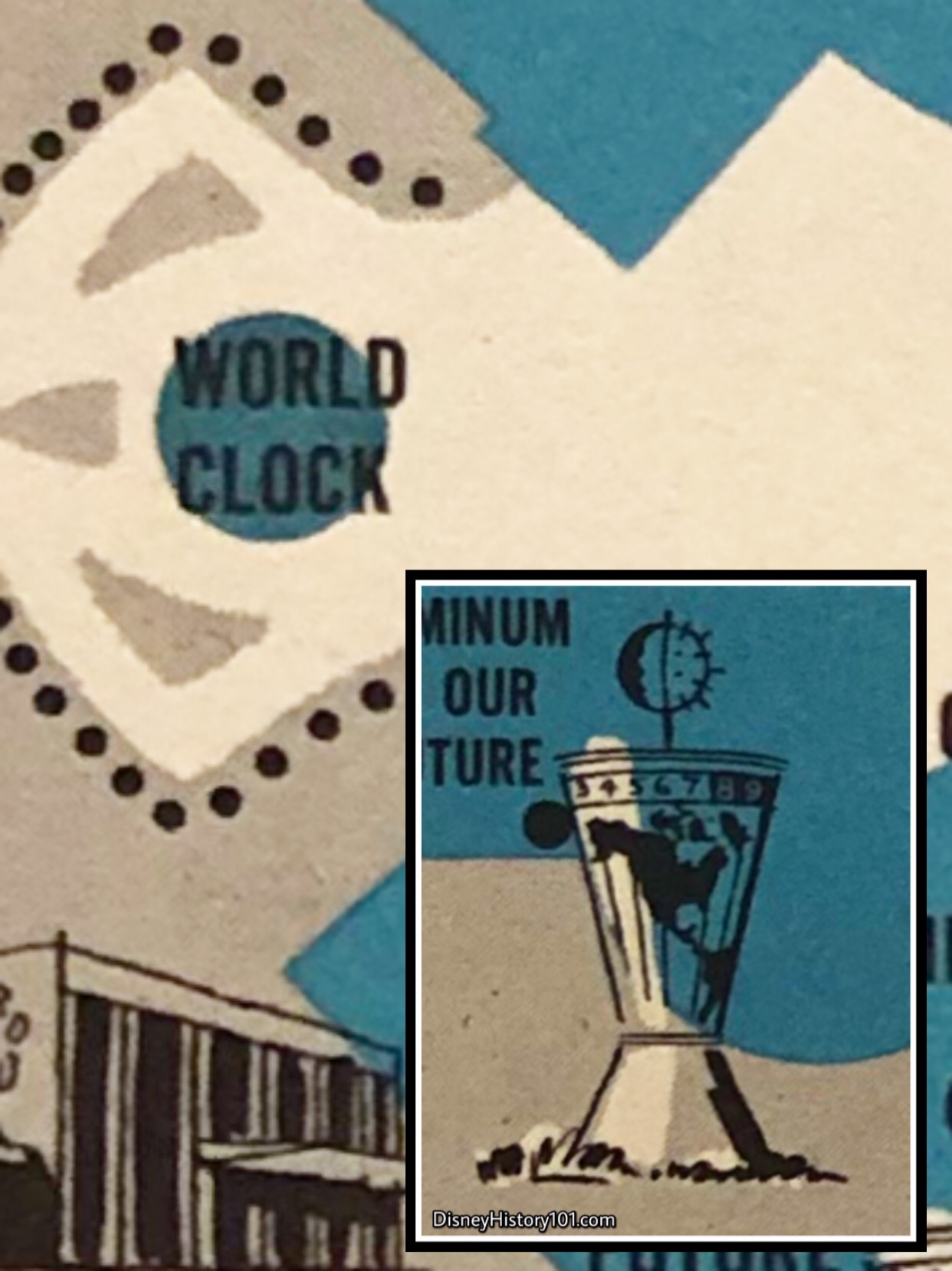
Since Disneyland’s opening day, the “World Clock”, “World Time Clock” or “Clock of the World” (as it is more commonly called) was an elaborate chronometer which served as an icon to further Tomorrowland’s theme of the future year - 1986.
Tomorrowland was in its infancy, its hub unfinished by opening day. At this “point in time,” it looks like American Motors presents CirCARama and Monsanto’s Hall of Chemistry are still works in progress. The attraction’s signs don’t even appear above the entrances of the halls. But by the year 1958, the 24-foot tall Clock of the World was one of 15 free educational shows and exhibits at Disneyland.

Still, the Clock of the World stands as “Tomorrowland’s first landmark,” according to “News From Disneyland” (a press release document published 1956). The Clock of the World welcomed visitors from around the world, to observe the time of day in their native time zone!
A decade before It’s a Small World, this was the Tomorrowland location of “just one moon and one golden sun.” Atop a roof, brass work, and plastic ring stood the gold-finish spun aluminum sun (with aluminum studs) and cast aluminum silver moon face. The latter measured 40 inches between points. Like some sort of “moon-spinner,” the entire piece would rotate. The moon and sun turned clockwise while the numbers would rotate counter clockwise.
The clock was covered with a map on top (with numbers on a separate ring), and stationary acrylic tile below on the base.
The Clock of the World and it’s surrounding planting area soon appeared in professional photographs shot for press-release material and publication. For instance, actress Spring Byington (of “December Bride) and child actor Bobby Diamond (of “Fury”) were photographed near the Clock of the World for their 1956 “TV Radio Mirror” photoshoot at Disneyland!
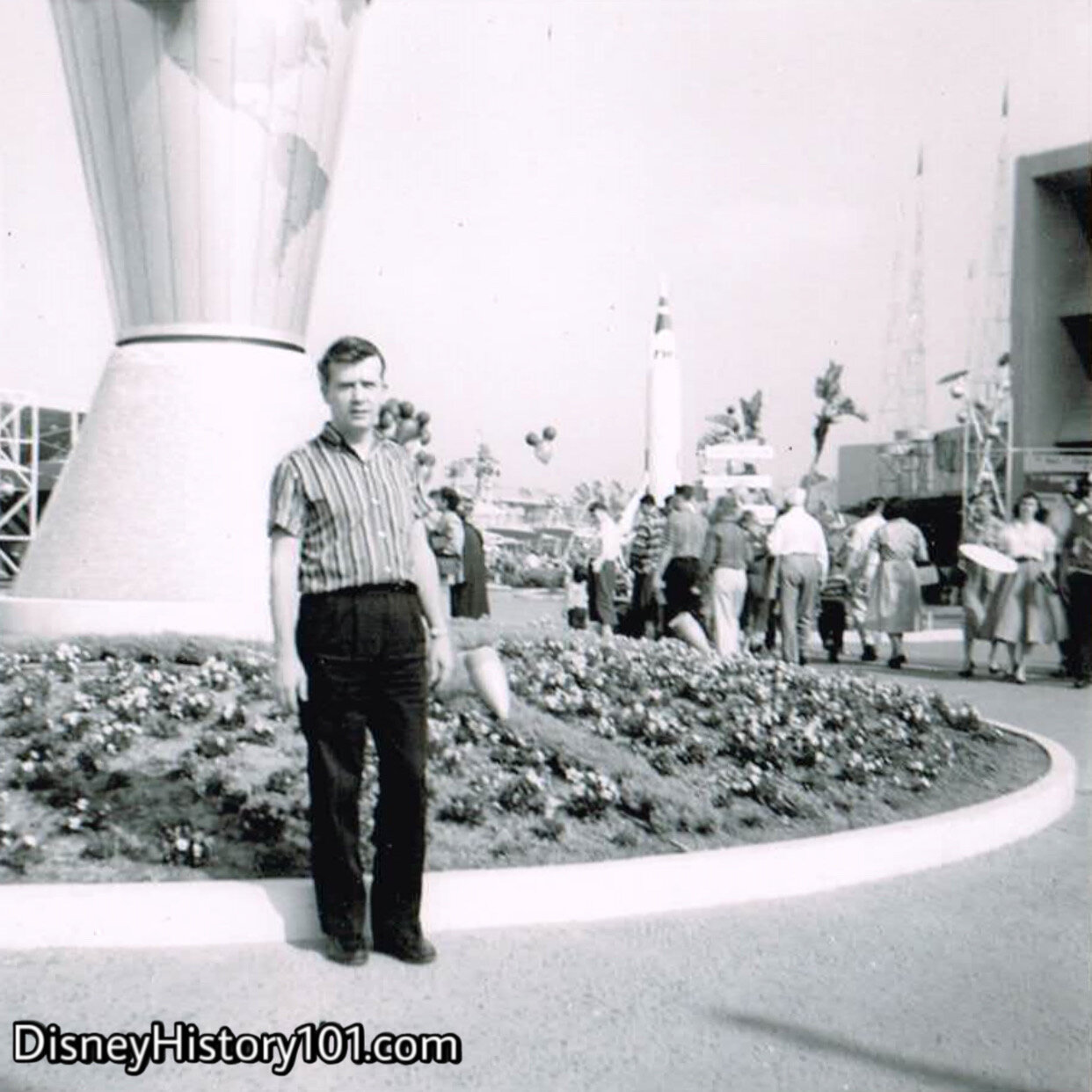
The Clock of the World (and surrounding bed of flowering buds) was certainly photogenic, and often served as a backdrop for amateur photographs.
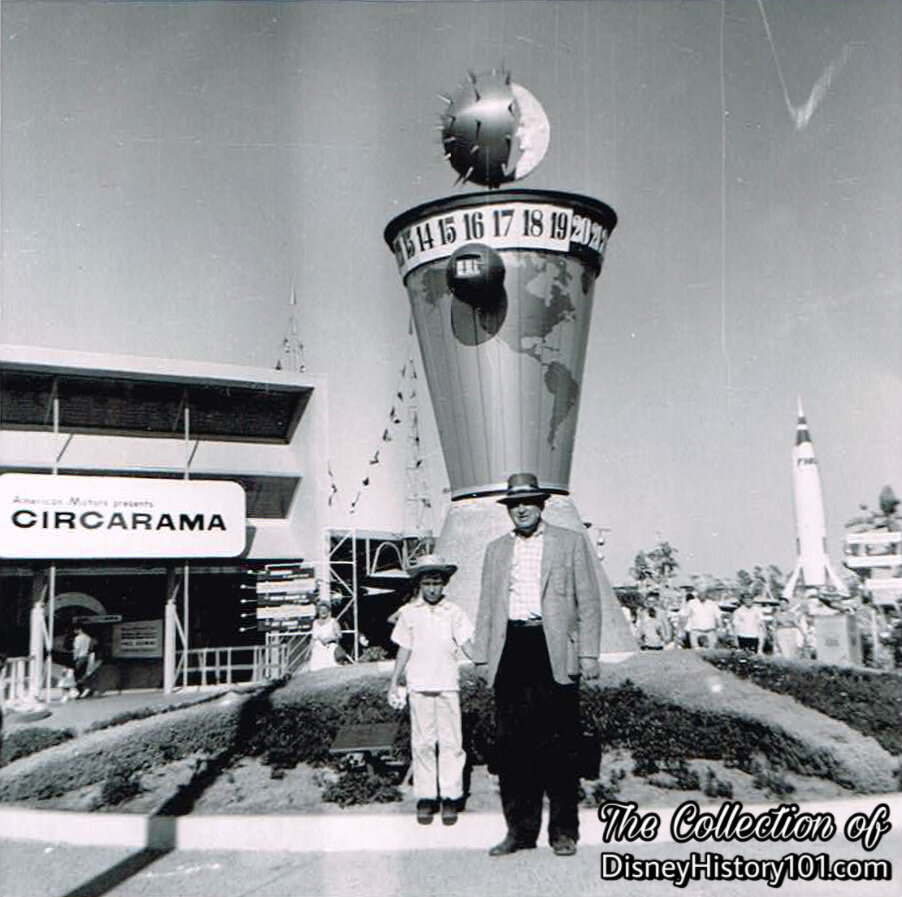
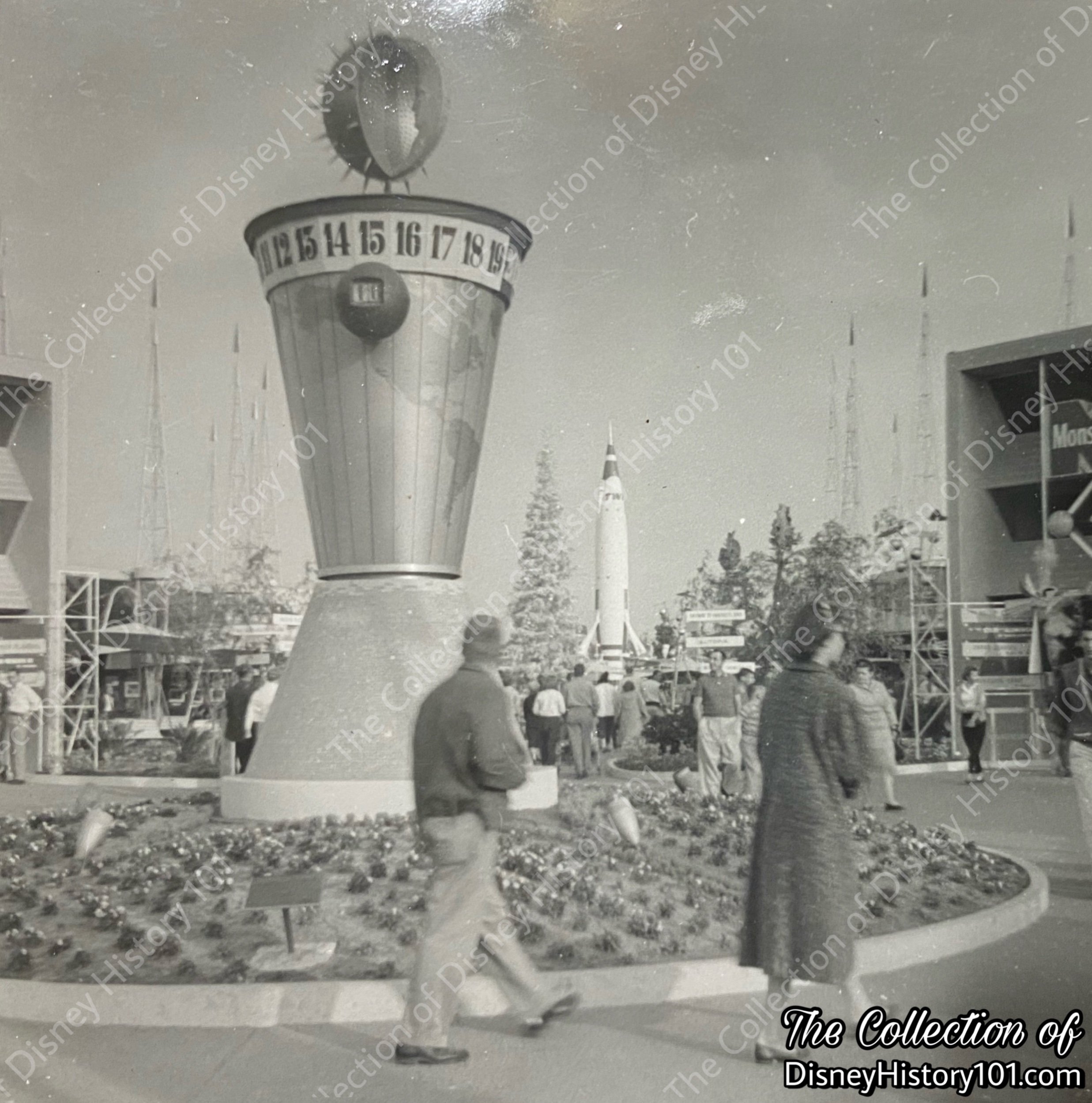
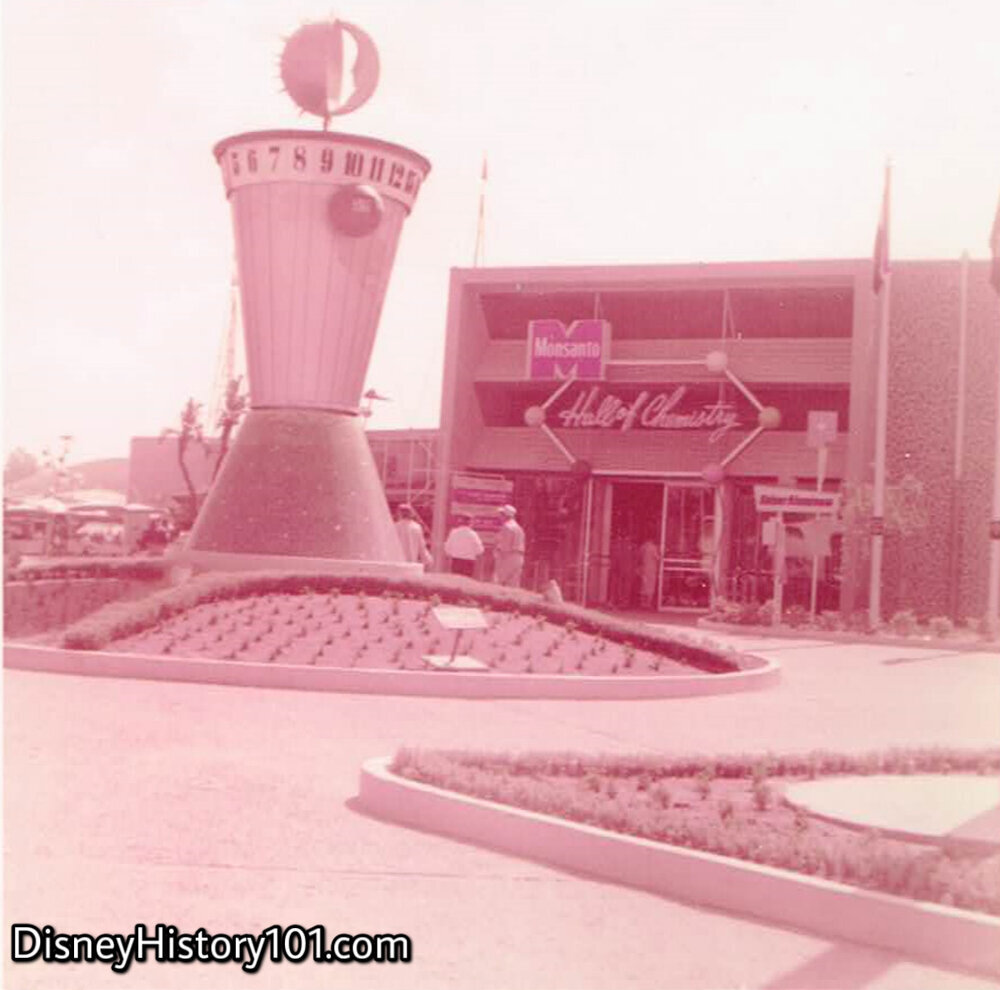
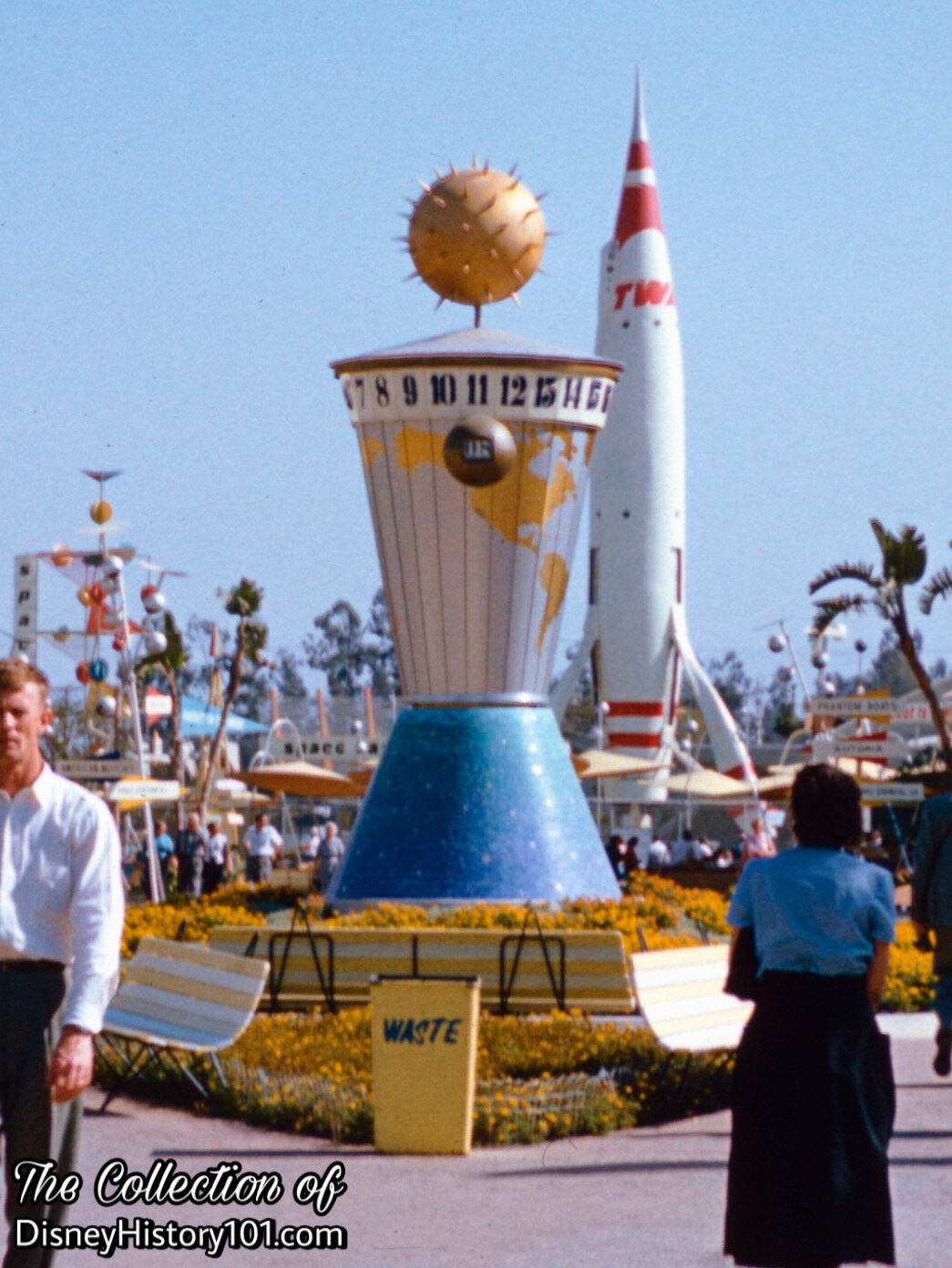
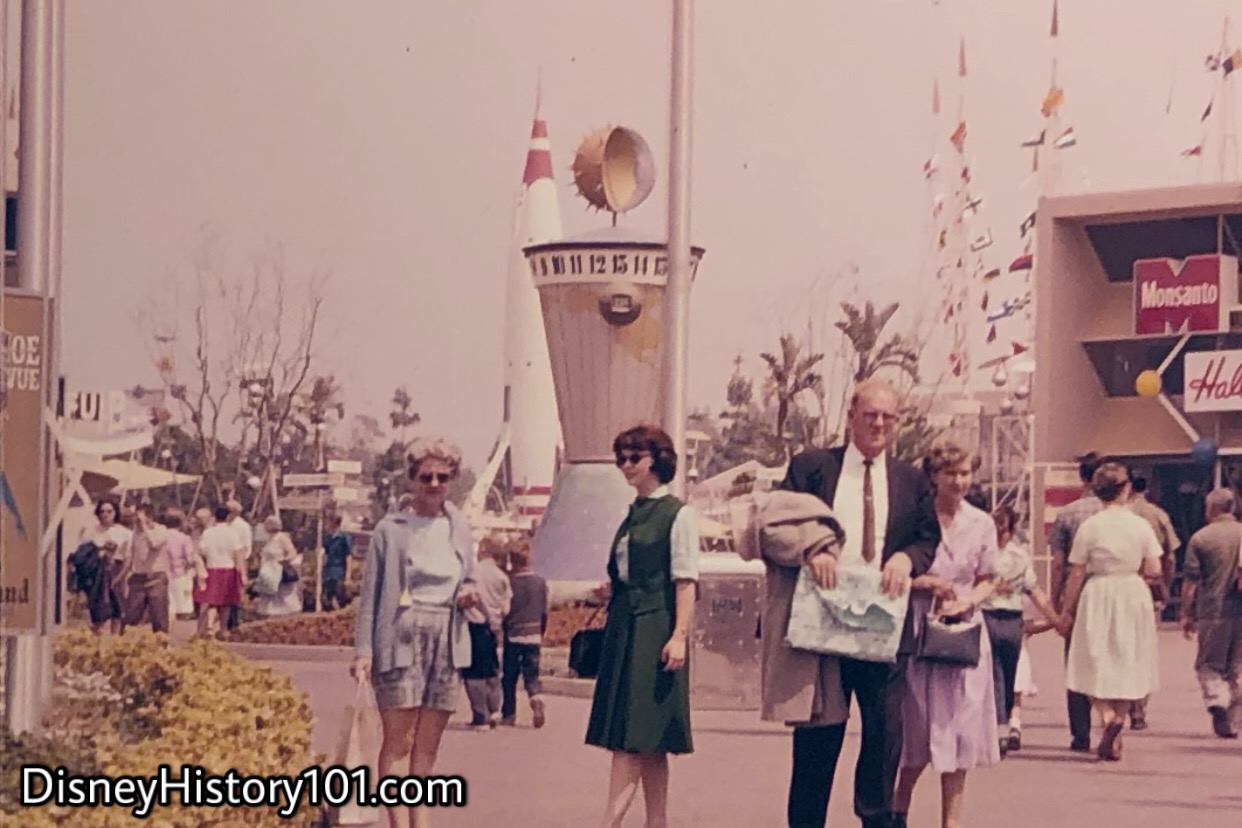
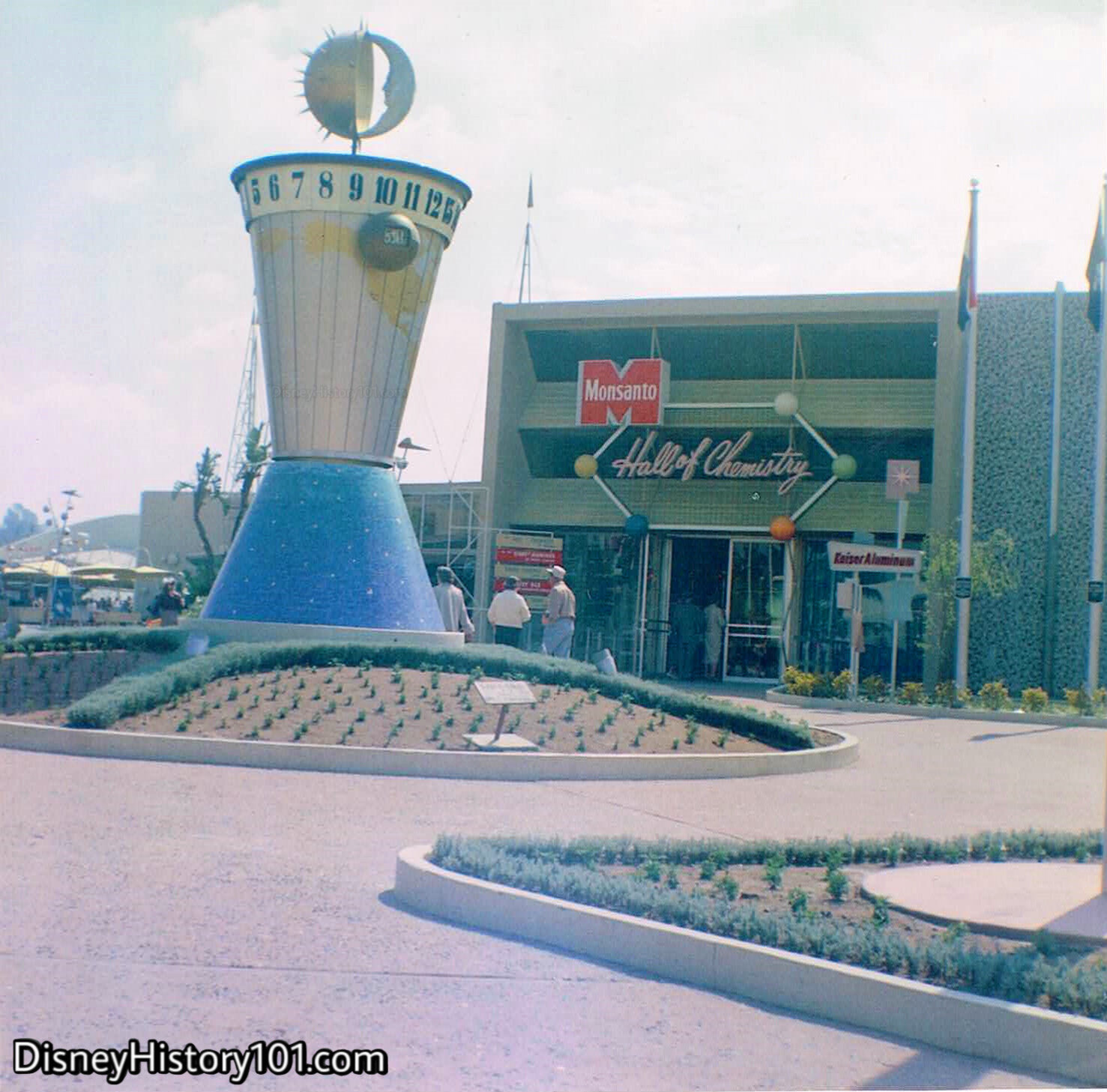
The Disneyland Dictionary (published 1958) described the attraction among the “Disneyland Particulars” in the following way: “A giant TIMEX clock gives world time, and is a landmark at the entrance to the land.”
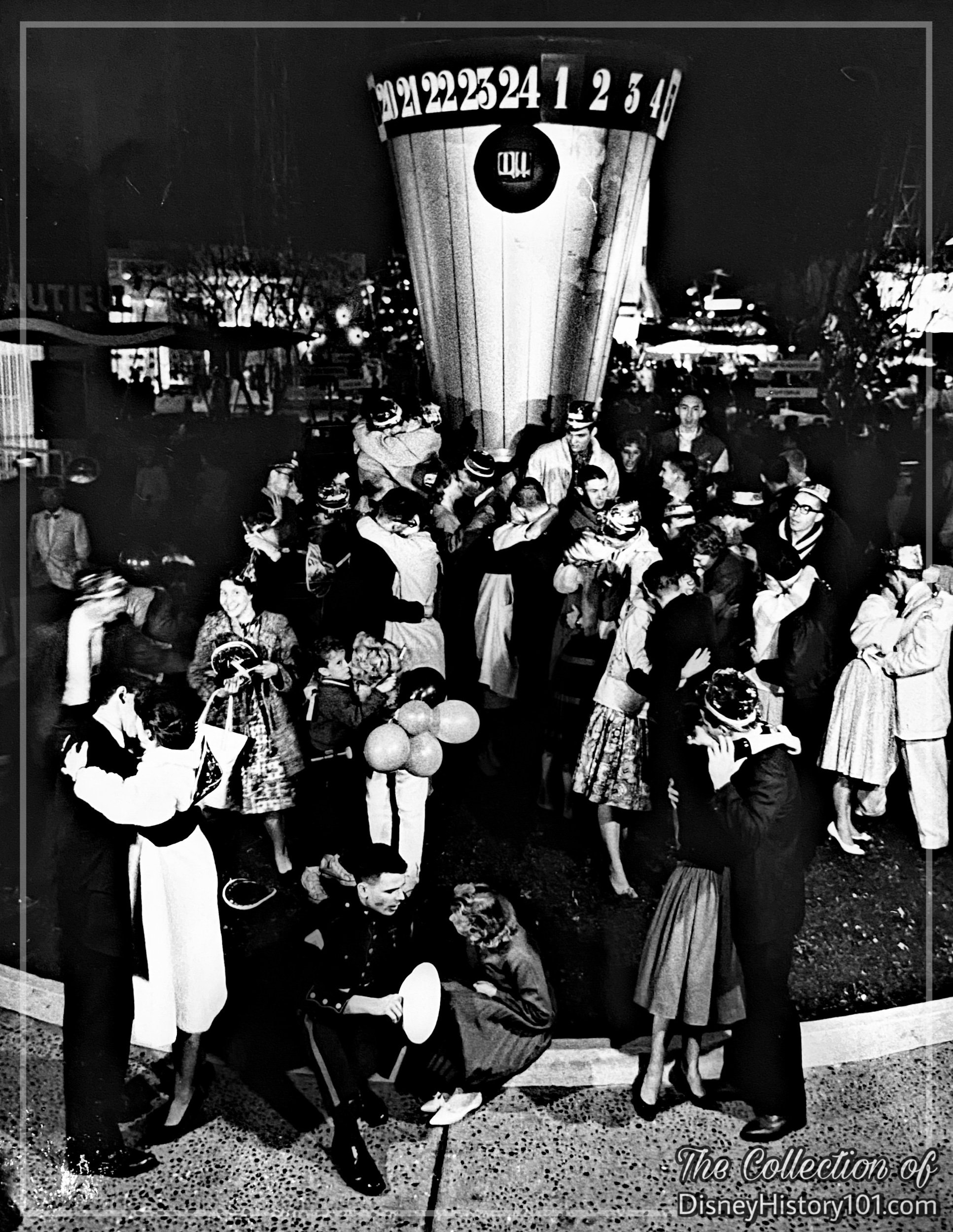
“When Corporal Laurie A. McGaw, stationed at El Toro Marine Corp Air Station in Southern California, found himself dateless with New Years Eve fast approaching, he set out on a reconnaissance mission to find a solution. Scouring a local newspaper one day, an advertisement caught his eye and provided the Marine Corp's imaginative answer. Disneyland, just a half hour away from El Toro, was having a New Year's Eve Party. The mission suddenly crystalized for Corporal McGaw. Disneyland has a ‘World Clock’ one that enables you to tell the time of day anywhere in the world. So, the Corporal reasoned, why not celebrate the New Year as it arrives as the clock strikes Midnight around the globe? And that's just how Corporal Laurie A. McGaw spent his New Year's Eve, 1961 ... and most of the afternoon as well. The gals? That was easy for a Marine in dress blues. He just stood by the clock, picked out the right one as she came by, and asked her for a kiss. Simple!
(Conveniently, the Disneyland clock is numbered in military manner. The number "I" is 1 a. m.; 12 is Noontime, and 24 - the 24th hour of the day is midnight.)”
A Press Release continues, describing the acquired kisses:
“LONDON & PARIS: Still daylight (4 p. m.) in California, but its midnight in London and Paris -- and the New Year has begun. The Corporal's first ‘date,’ Marilyn Huntsman.
WEST AFRICA AND ICELAND: Norma Allman starts the year on the right foot. Wow! said Corporal McGaw. (5 p. m. in California)
GREENLAND: Maybe the North country is cold, but Judy Wampler belped keep the Corporal warm. (6 p.m. in California)
BUENOS AIRES: Rebecca Morris and Corporal McGaw. (8 p. m. - California)
CHICAGO AND NEW ORLEANS: Photo #6: Sisters my Curtice and Mary Jo Curtice (r). (10 p. m. -California) Photo #7: Dorris Bruce. Photo #8: Geri Kirk.
DENVER AND DALLAS: Photo #9 and 10. Ginger La Hone (11 p. m. in California)
Finally, its New Years in California. But by this time - - - back gain with "first kiss" Marilyn Huntsman - -- Corporal McGaw has had it. ‘I may be disfranchised by the Marines for saying so, but I was tired. Besides, I've always wanted to spend a quiet New Years!!’”
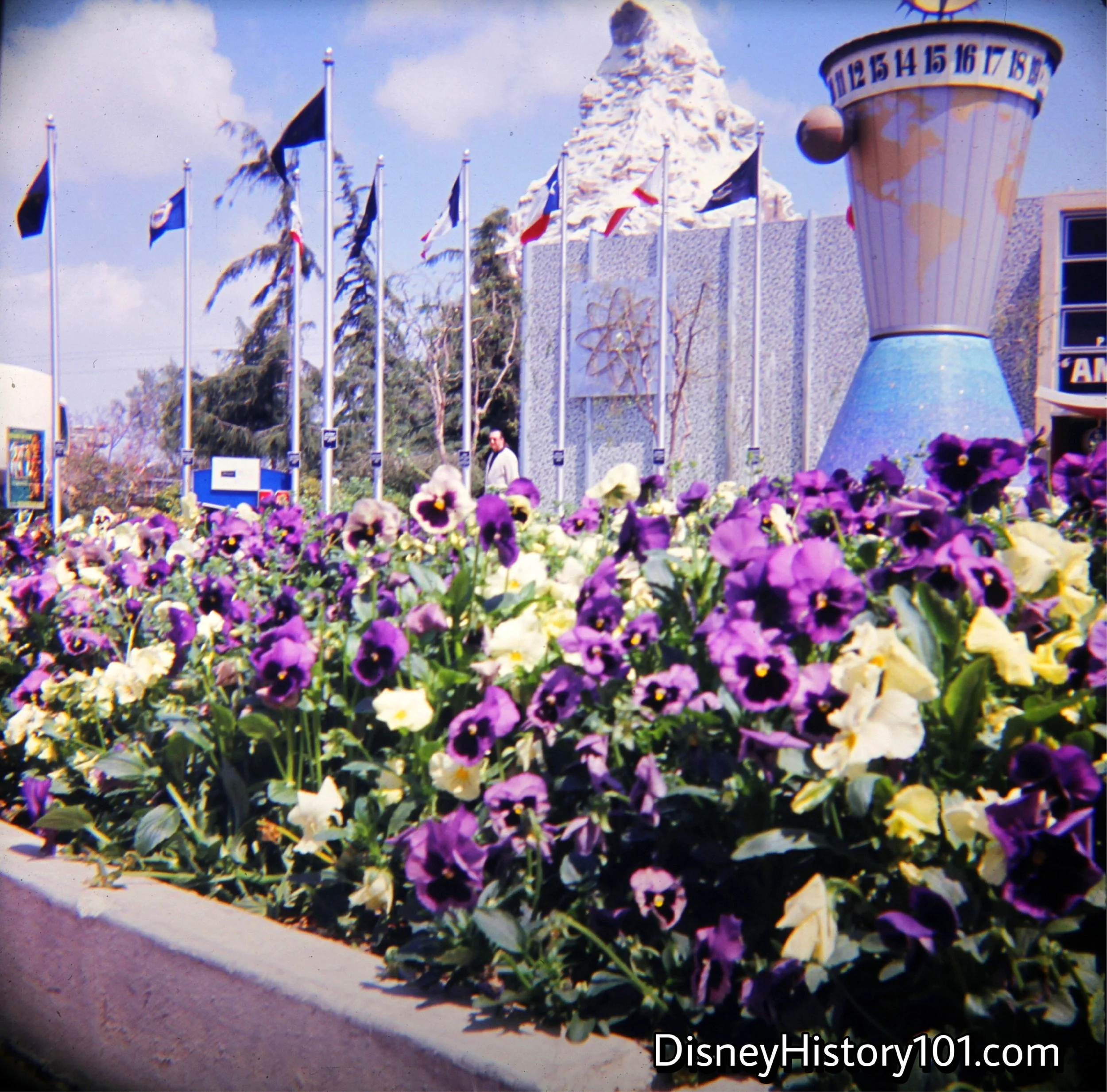
According to Disneyland World of Flowers (published 1965) : “The clock is perpetually encircled by flowers. . . in the winter time, violas.”
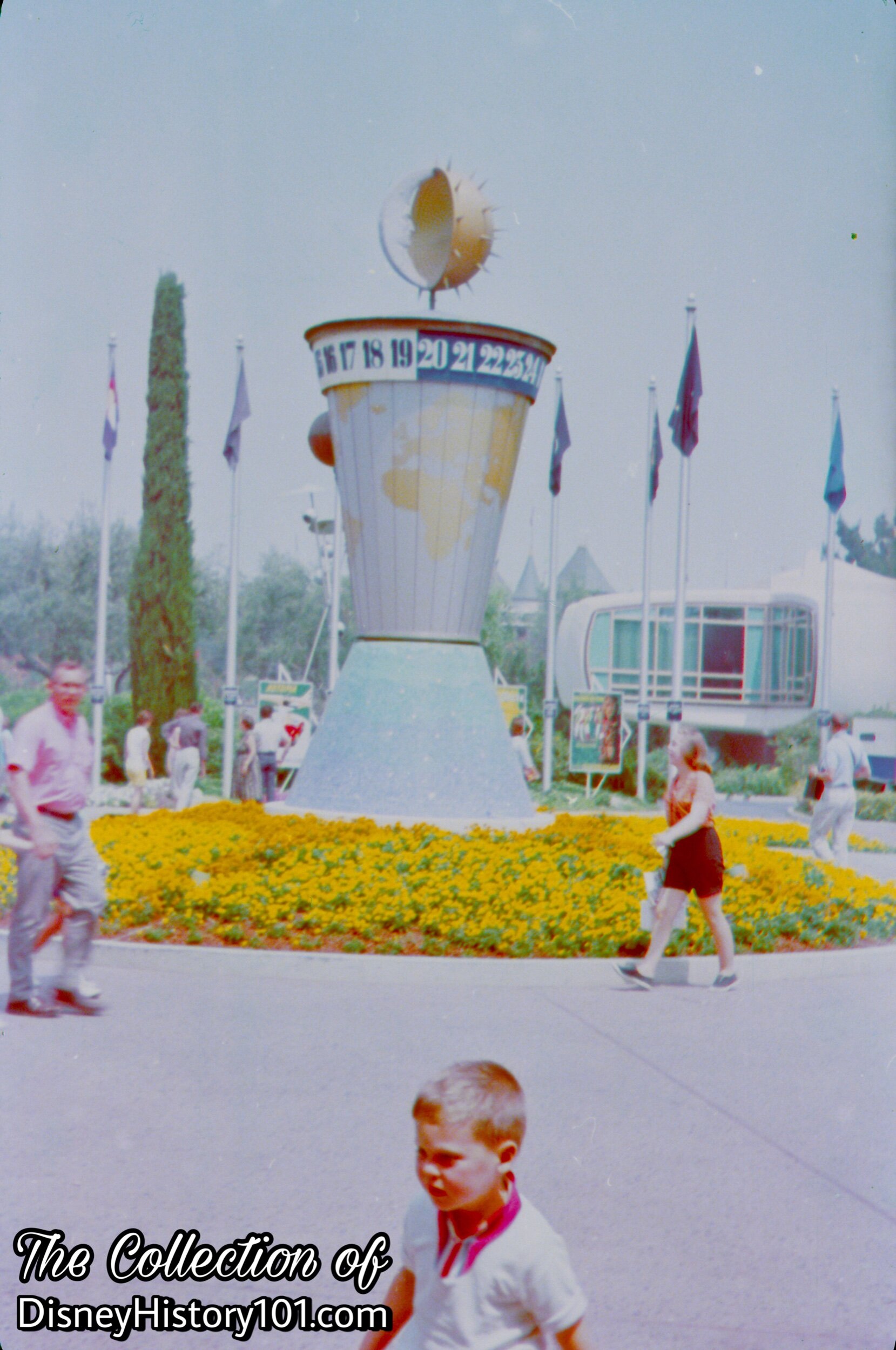
“Encircling the Clock of the World is a rich flower bed containing colorful annuals”, according to Disneyland World of Flowers (published 1965). To elaborate, “the clock is perpetually encircled by flowers. In the spring it is dressed with French dwarf marigolds.”
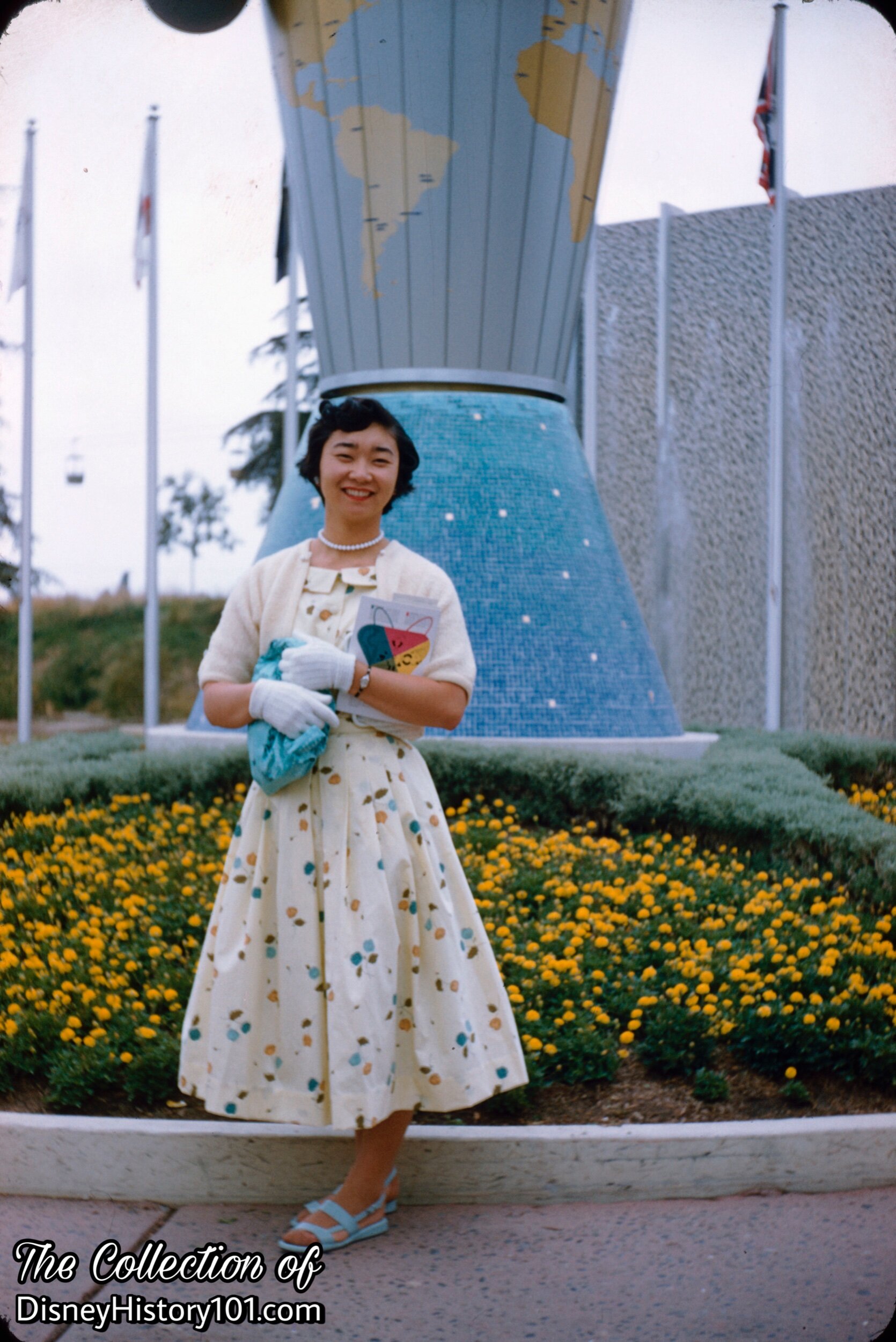
This guest must have utilized her copy of “The Story of Disneyland” (and its rear “Disneyland Guide Map”) to find the Clock of the World.
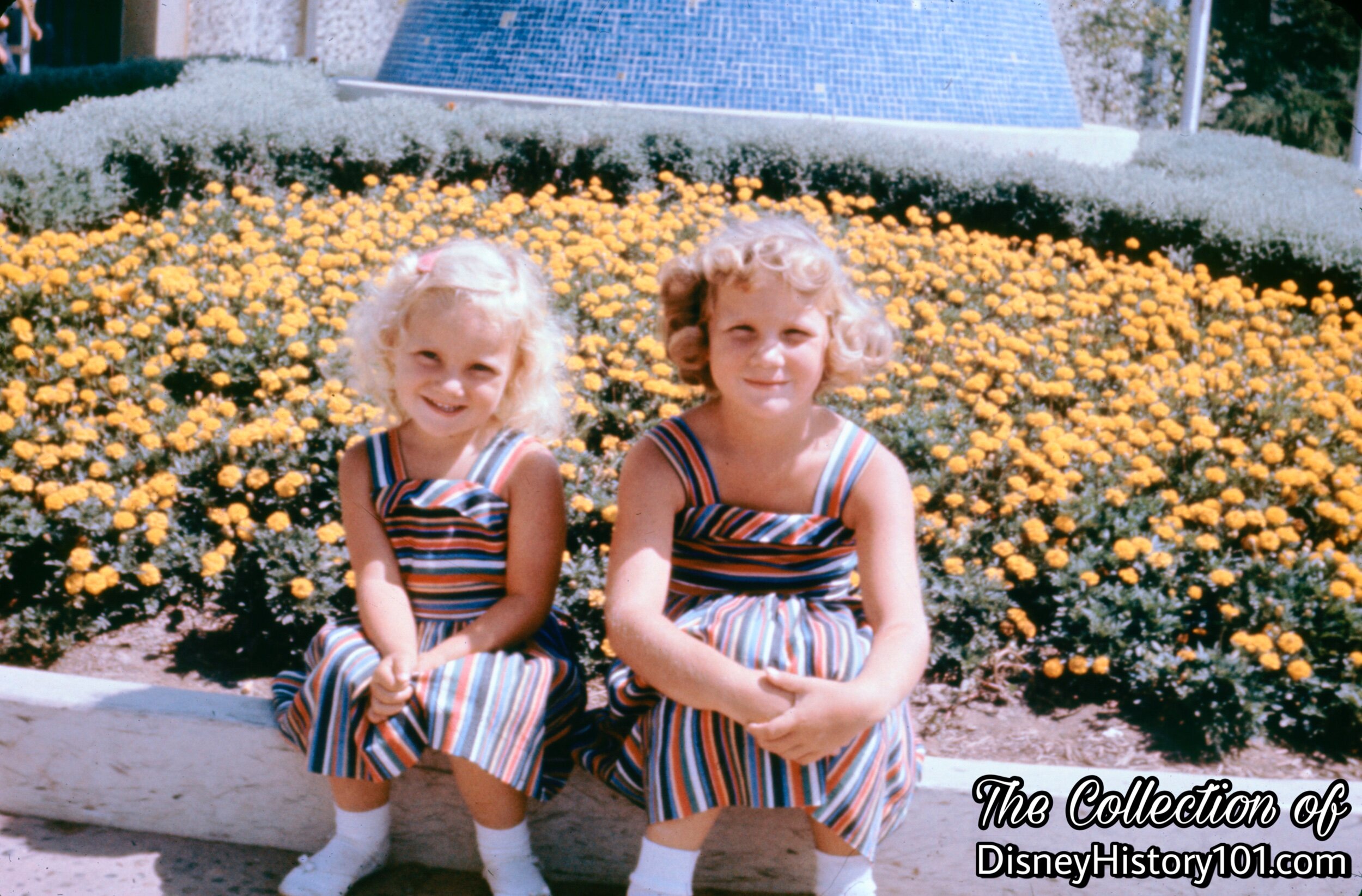
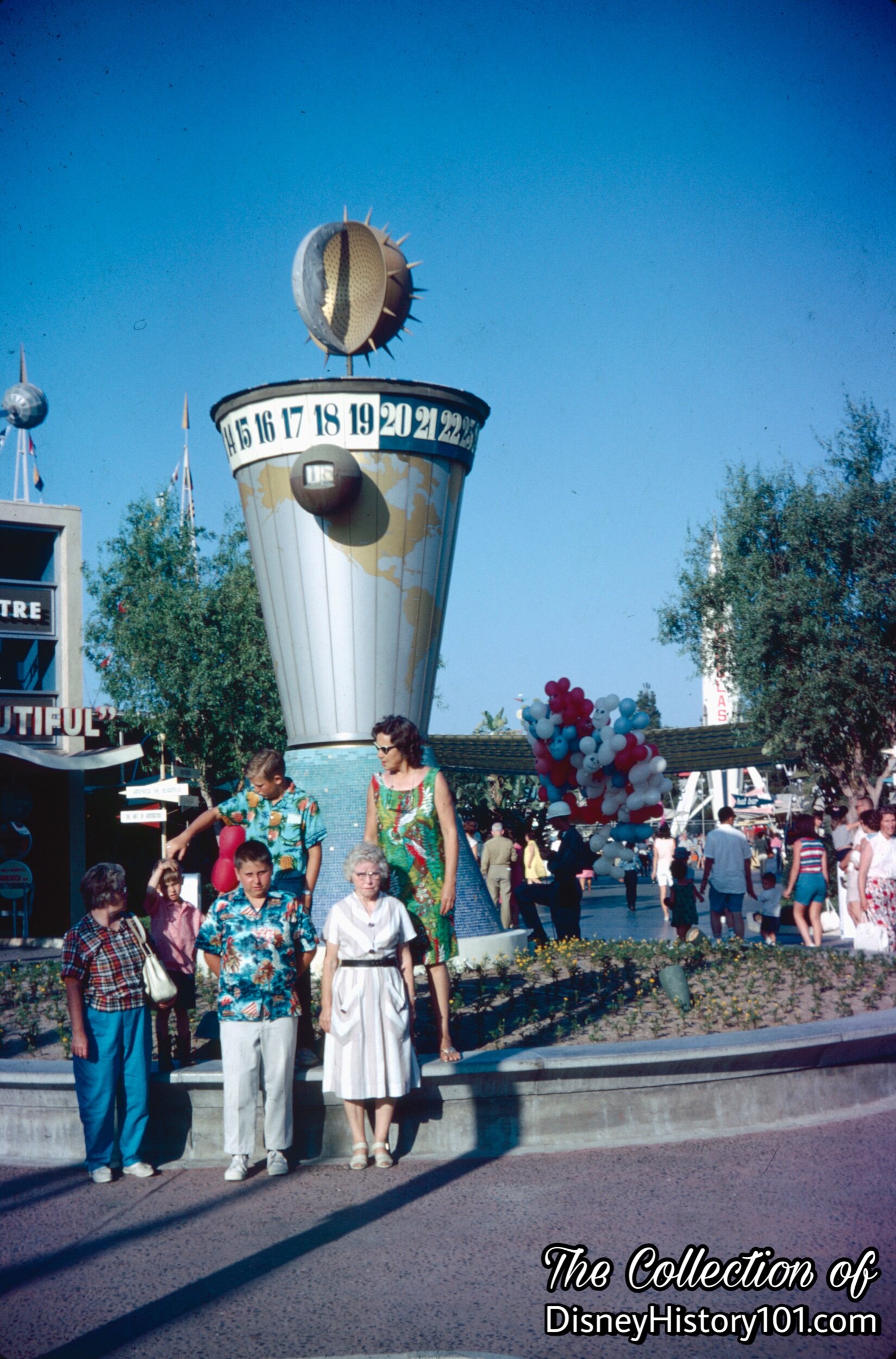
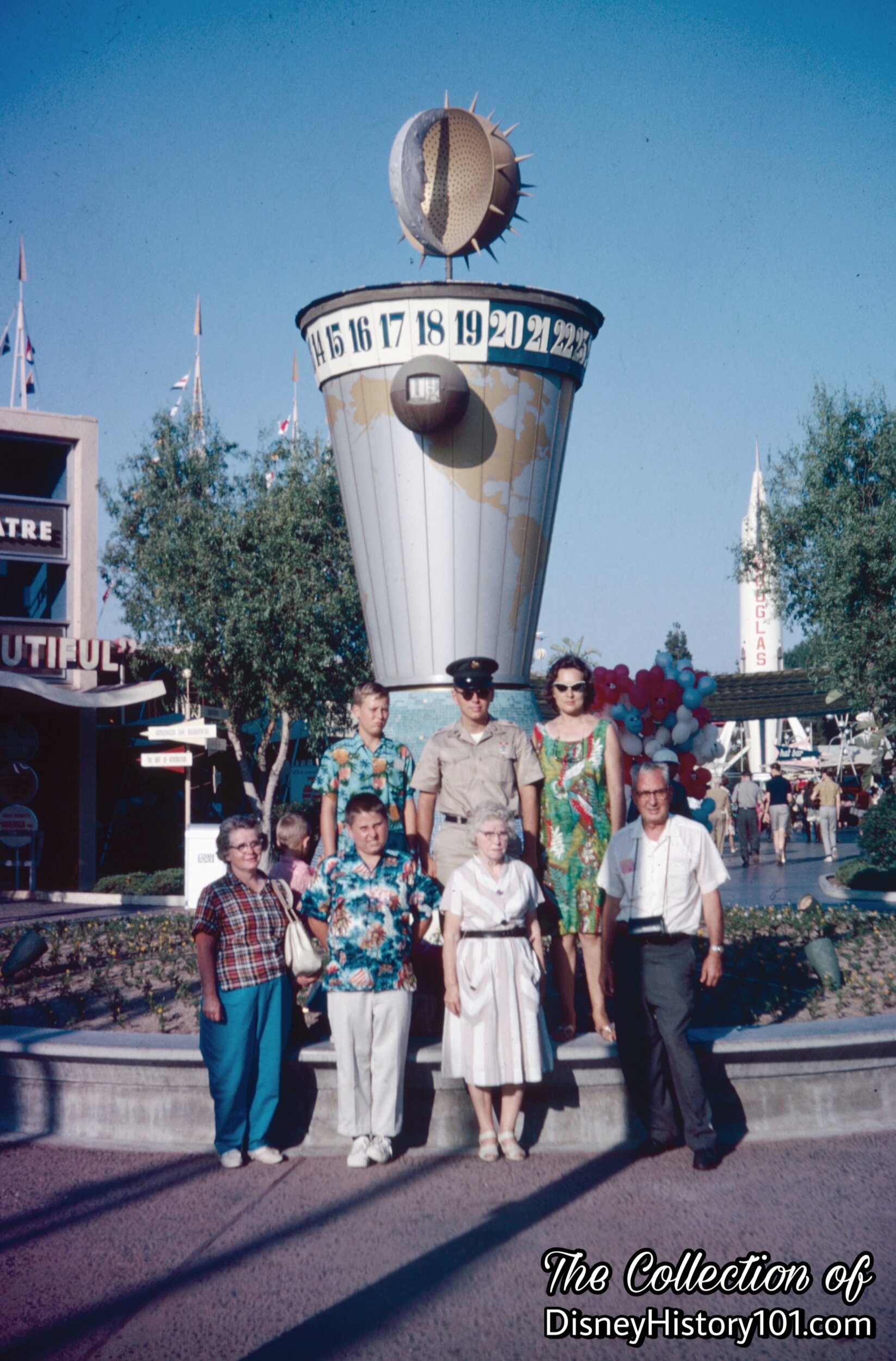
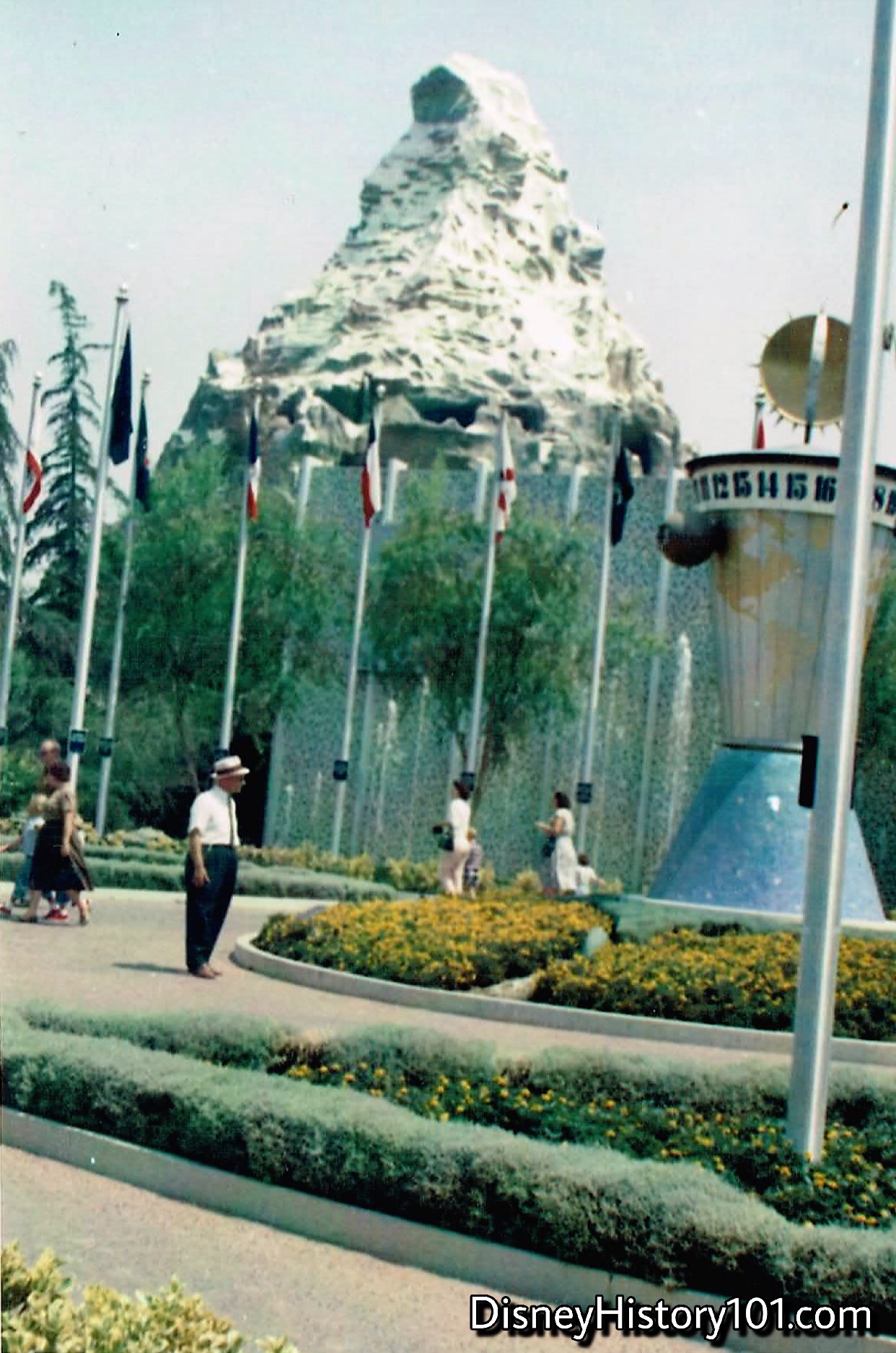
The numbers corresponding to the hours in a twenty-four hour day would rotate and align with locations on the map below.
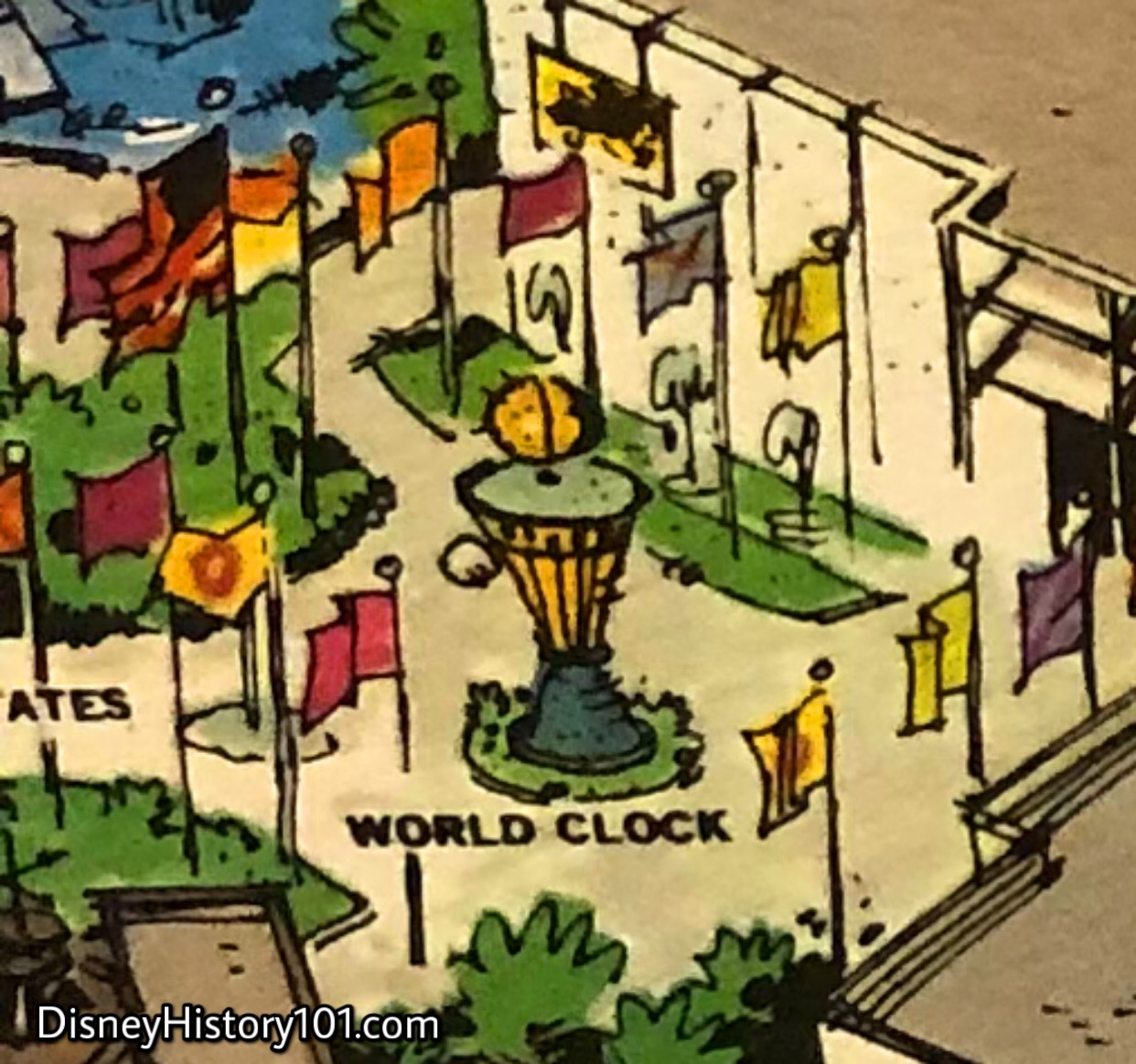
Flags of the States bordered the Entryway to Tomorrowland, and encircled the Clock of the World.
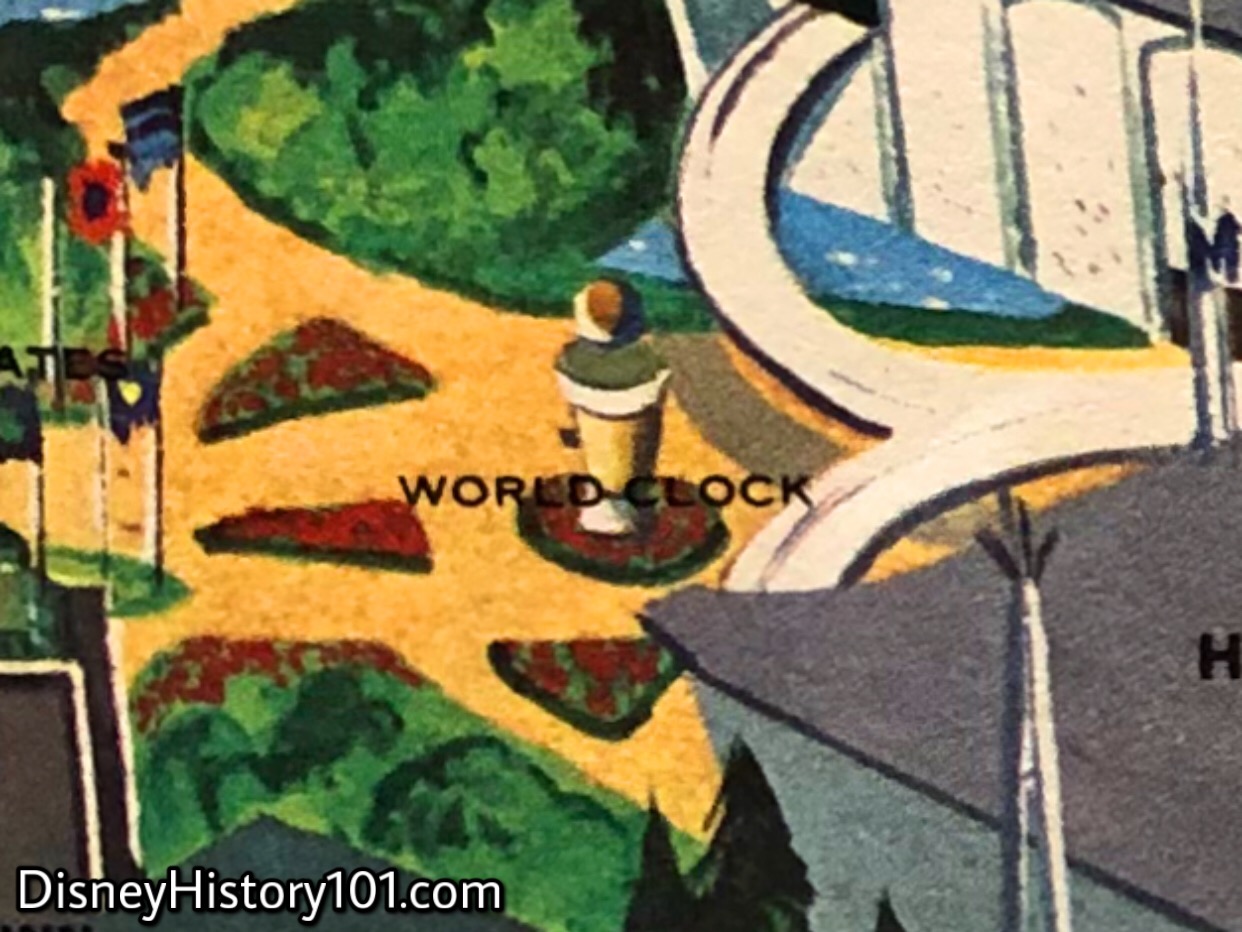
It looks as if the Clock of the World and the Avenue of Flags was originally assured a place in Tomorrowland, even after the addition of the PeopleMover, according to this map artwork.
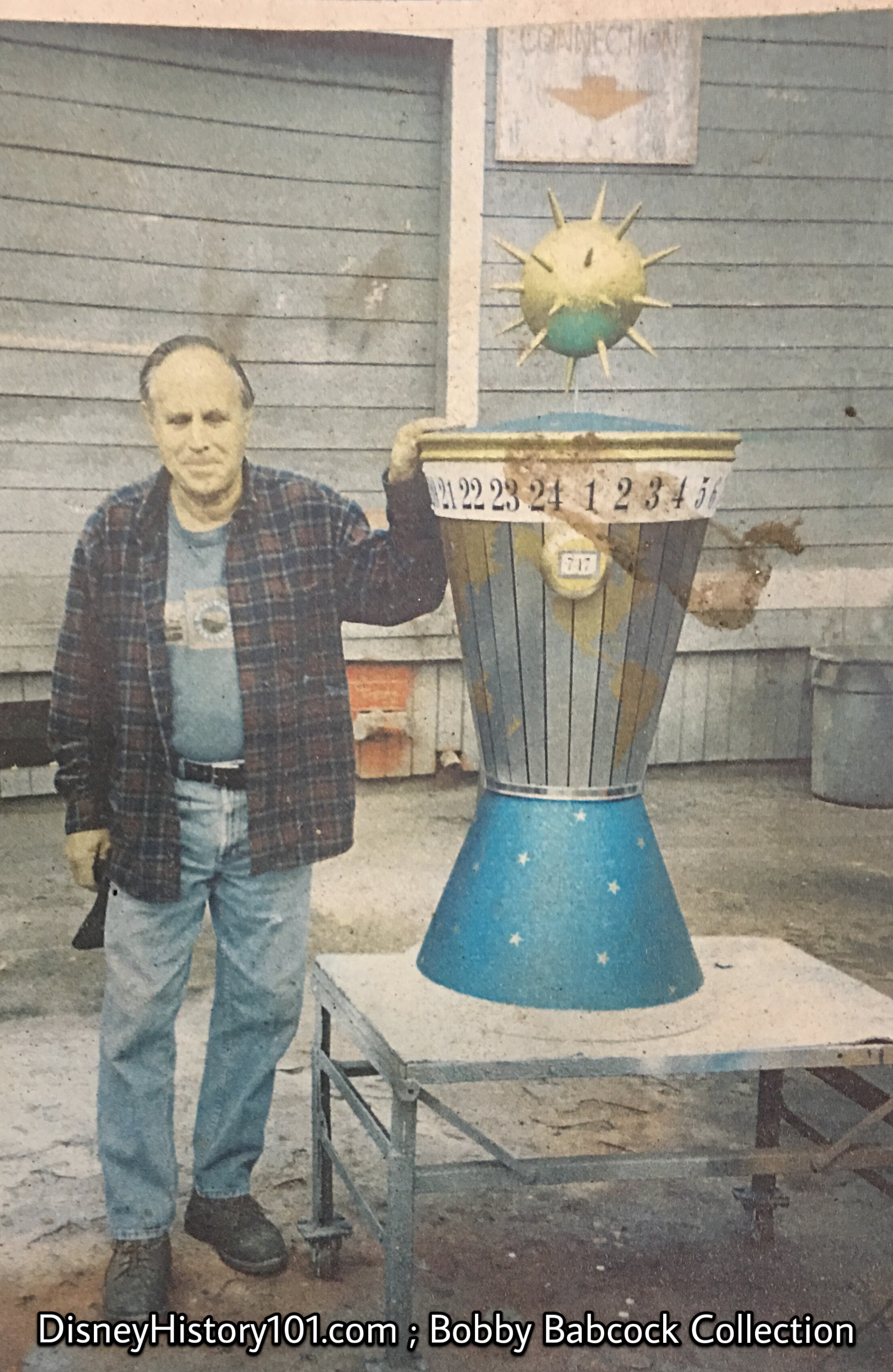
The Clock of the World returned to Disneyland (this time, in miniature form) for a Tomorrowland exhibit at the 60th anniversary celebration of Disneyland! This small scale representation was created by Bobby Babcock and his team of artists at local RWB Props.
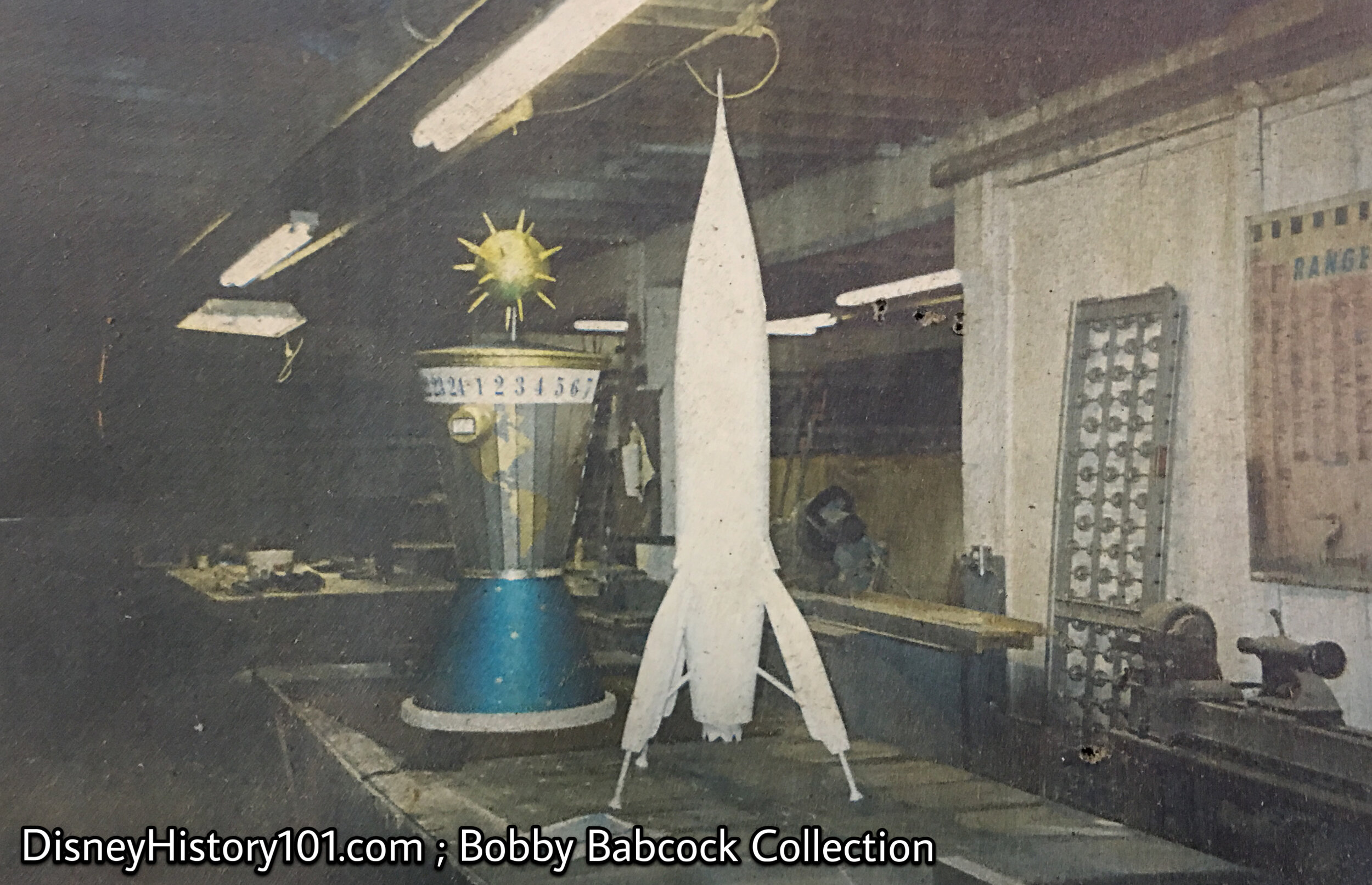
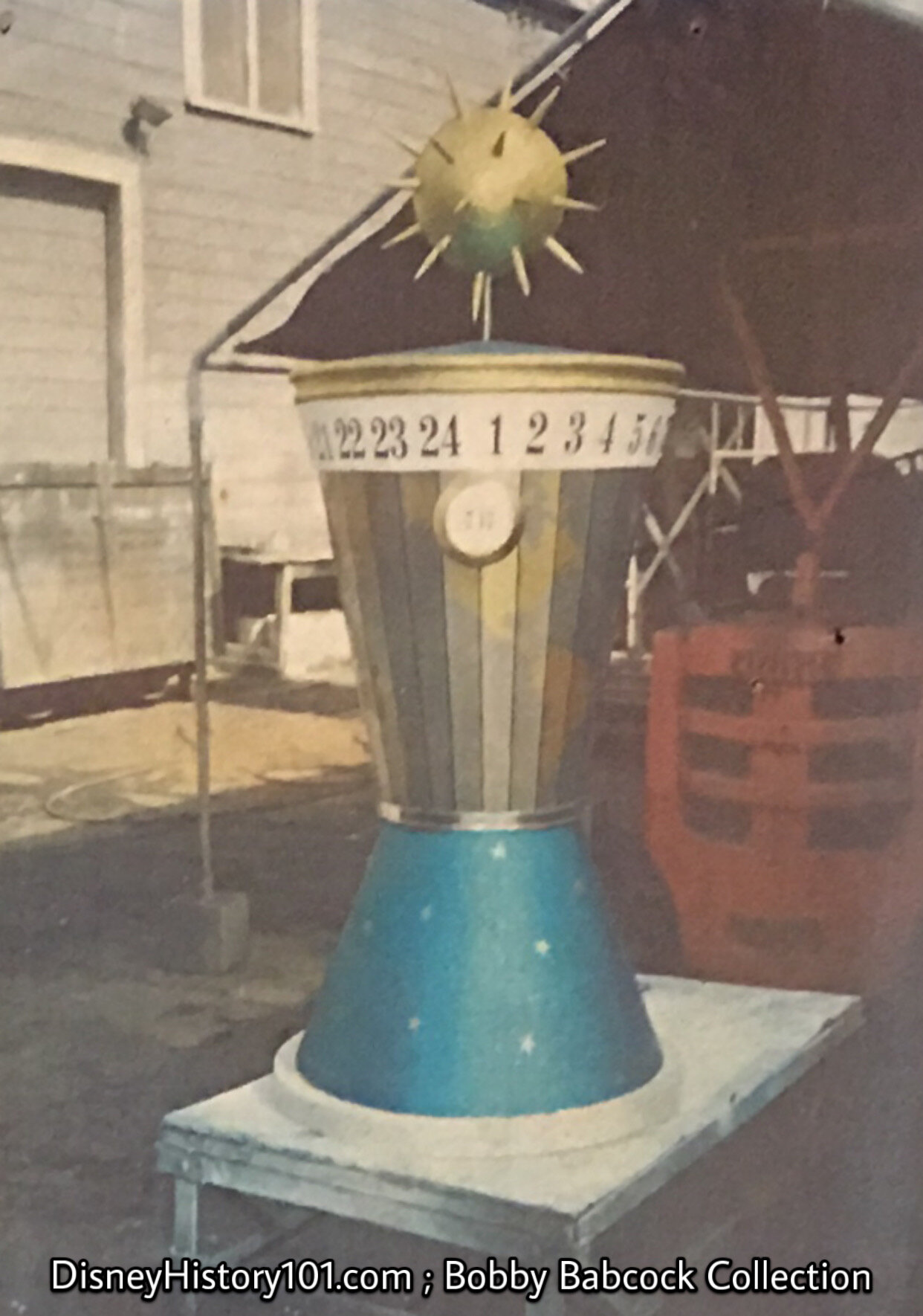
COCA-COLA REFRESHMENT CORNER
![Back in 1948, Walt was dreaming about a Park (to be located across the street from the Studio in Burbank). Some thoughts in the “Mickey Mouse Park” prospectus made mention of a “soda fountain.” [“The Spirit of Disneyland”] Fast forward to 1951,](https://images.squarespace-cdn.com/content/v1/5b3d7f804eddec6e826be0c9/1652735111840-4KSZW7W5Q5OPQCSTMKTC/3289F0DB-CFD2-4B59-B761-F8BC92836ACE.jpeg)
Back in 1948, Walt was dreaming about a Park (to be located across the street from the Studio in Burbank). Some thoughts in the “Mickey Mouse Park” prospectus made mention of a “soda fountain.” [“The Spirit of Disneyland”] Fast forward to 1951, when Walt Disney and Art Linkletter visited the famous entertainment complex Tivoli Gardens in Copenhagen. He was researching and talking notes to build a family entertainment center and Tivoli was much like what he envisioned. It was clean, directed to the entire family, fun, entertaining and educational. Walt noted how important it was to have a lot of places for guests to sit down and a wide variety of eating spots that served excellent meals.
Eventually, the idea grew into Disneyland and by 1954, Walt was searching for participants to lease shop and restaurant spaces at Disneyland, and help generate the necessary capital to fund construction of the Park. In a synergistic relationship, the companies (in turn) could sell their products and advertise their corporate names within Disneyland. Disneyland Participant Corporate Sponsors were carefully selected. High quality, long term corporate sponsors would provide incremental income that enabled Disneyland to enhance its show and attractions, offset some operating expenses, and capitalize on marketing opportunities.
Several of these “reliable old firms” sponsored the “abundance of restaurants devoted to pleasing all tastes and all budgets,” according to “The Story of Disneyland,” published 1955. Since 1955, the Coca-Cola Company had been an occasional sponsor of portions of Walt Disney’s Mickey Mouse Club television variety show, so this new relationship with Walt Disney Productions seemed like a natural progression.
“55er” Rima Bruce (who started with Jim D'Arcy in Food when all food was Lessee and typed memos and menus) recalled that “the phone never stopped ringing with everybody trying to get a food lease in the Park.“ By July of 1954, Raul Grizante of Disneyland, Inc. was overseeing food philosophy, area & location, food specialties, and beverages for Disneyland. Individuals like Nat Wyncoff provided the essential orientation for curious lessees, selling Coca-Cola on the idea of Disneyland.
Nat brought along various visual aids like sketches and one of Herb Ryman’s oil paintings of Disneyland. After negotiations, an agreement was reached, and the joint partnership (of the Coca-Cola Company and Coca-Coca Bottling Company of Los Angeles) became one of forty-seven lessees to sign a contact with Walt Disney Productions (in regard to Disneyland).
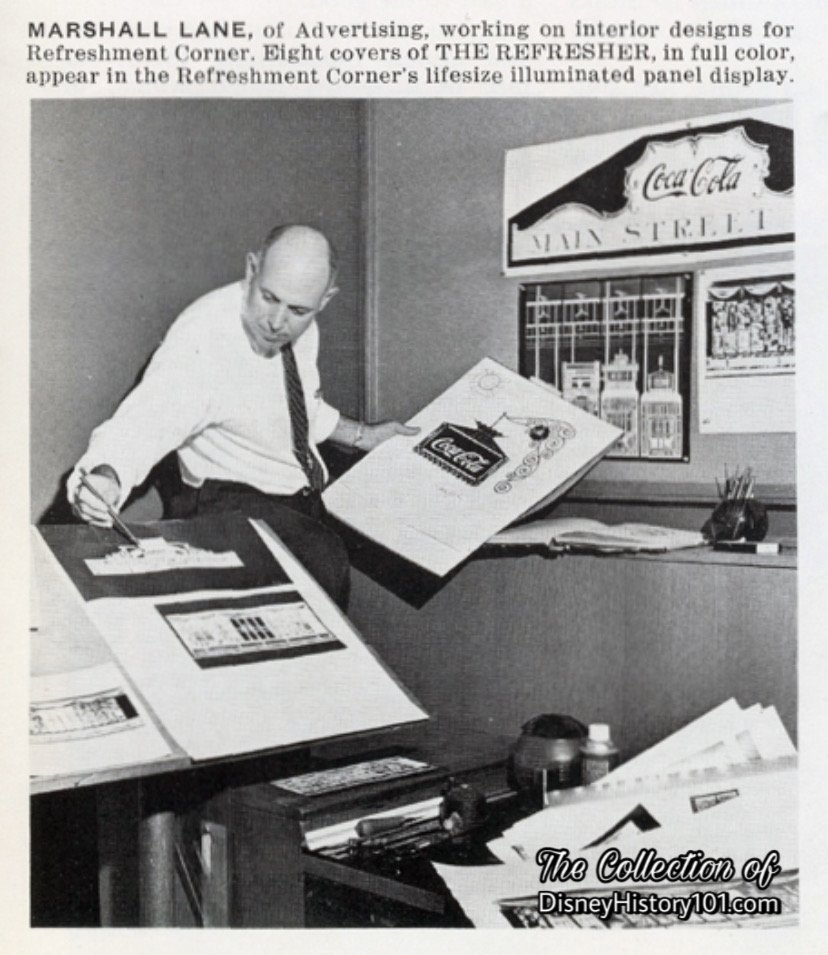
By July 1, 1954, George Whitney of Disneyland, Inc. directed Amusements, with Ron Miller overseeing analysis, philosophy, capacities, planning, operator training, and amusement procurement. Soon, the design and engineering was spearheaded by Marshall Lane and N.C. Harrison, Jr. of Coca-Cola Advertising. Like some advanced “High Concept,” final designs were quickly generated and approved. Some of these viable project Concepts (as seen above), were supported by a well-developed business case and built expectation.
“Architectural Designs by Lessees”
Disneyland, Inc. printed materials for Lessees detailing specifications for architectural designs of exhibit spaces. These were revised by March 16, 1955 and issued to Lessees.
All of the interior architectural drawings were done by competent registered architects or an approved display house of the lessee's choice. All of the designs submitted by the lessee's architect, whether for buildings or construction of interiors in DISNEYLAND, were approved as to the theme and general plan of DISNEYLAND as established by WED Enterprises, Inc.
Three sets of preliminary drawings were furnished DISNEYLAND, Inc. as soon as possible after signing of the lease. Two sets were retained by DISNEYLAND and one set was returned to the lessee’s architect with any revisions noted thereon and stamped “APPROVAL TO PROCEED TO FINAL DESIGN.” This stamp when properly signed and dated constituted the lessee’s authority to proceed with the final drawings.
The Lessees revised their final drawings to incorporate any revisions noted on the approved preliminary drawings, and submitted three sets of the revised drawings to DISNEYLAND. One set was returned to the lessee’s architect and any revisions noted thereon are to be incorporated on the original drawings. When the lessee had incorporated the final revisions on the drawings, two sets of transparent ozalids were forwarded to DISNEYLAND for approval. DISNEYLAND would stamp both sets “FINAL DESIGN APPROVED” and “LESSEE’S CONTRACT DRAWINGS”, and return one set to the lessee who could then release drawings for bid and/or construction.
While previews of the exhibits and shows of other Main Street U.S.A. Disneyland Participants (Carnation Company, Gibson Greeting Cards, Swift & Co., etc.) appeared throughout the “Disneyland” supplement (published July 15, 1955), the Coca-Cola Company was notably absent. However, a brief story of the exhibit’s progress was published in “The Refresher,” a Coca-Cola employee periodical. Before Disneyland opened, an article published in Pacific Coast Review (published July 15, 1955), briefly and ambiguously mentioned that “Coca-Cola's bar features a mage disappearing act for empty bottles.”
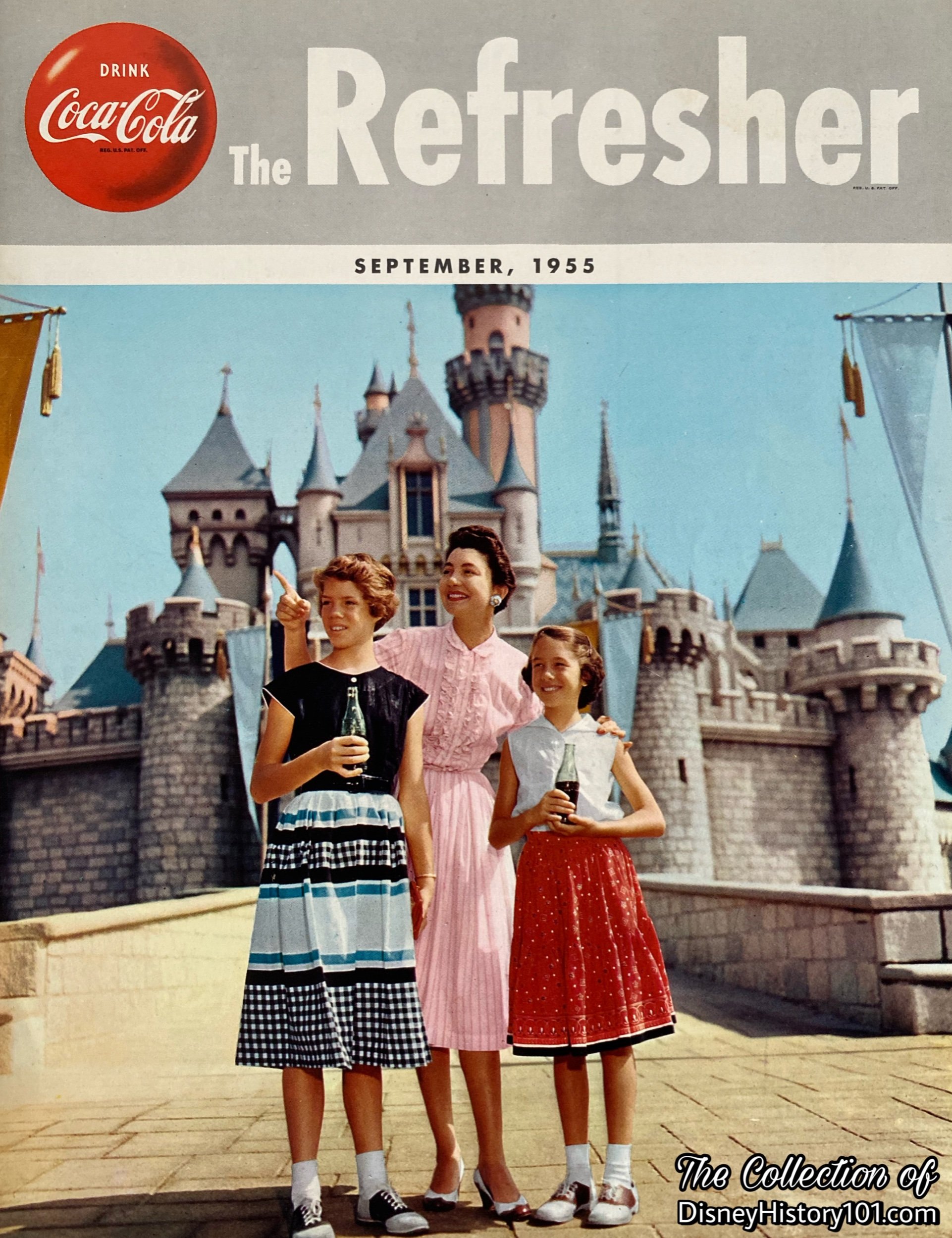
It’s interesting how much Disneyland’s corporate sponsors interacted with each other even during this formative era before the Park opened. Among The Refresher’s articles were items about Richfield Oil Corporation’s various telecast shows (which included a televised tour of the the Coca-Cola Bottling Company of California at Oakland). Of course, the highlight and cover story focused on the Coca-Cola Refreshment Corner on Main Street U.S.A. at Disneyland.
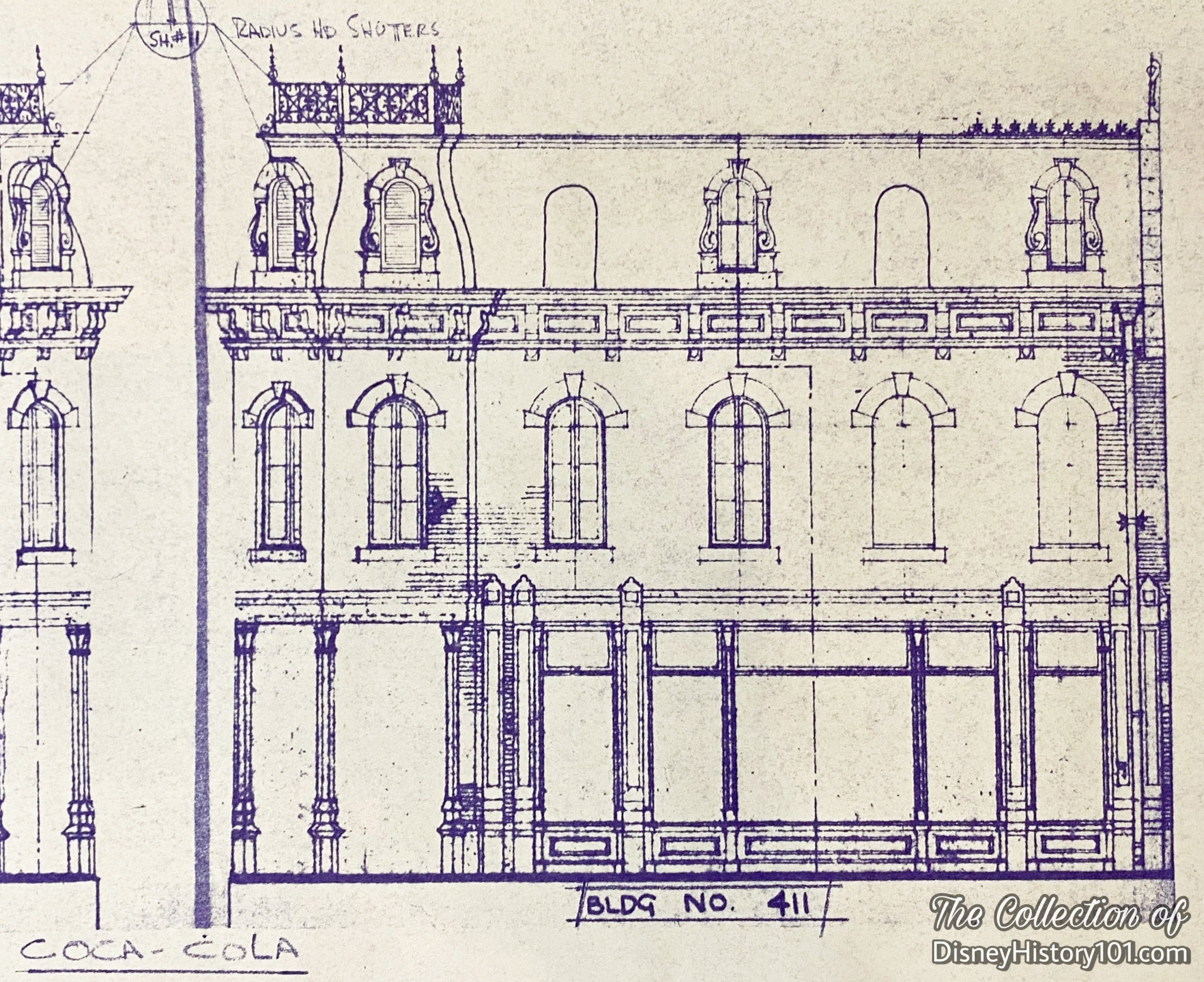
Next, architectural drawings of the three-story building helped define all designs, production and construction strategies, costs, schedule, and resource requirements. “Disneyland is unique in that some of the world's foremost creative artists and architects control all design at Disneyland.“ Models explored the various dimensional relationships, site-lines, flow patterns, ergonomics, and visual appeal to convey the desired creative intent.
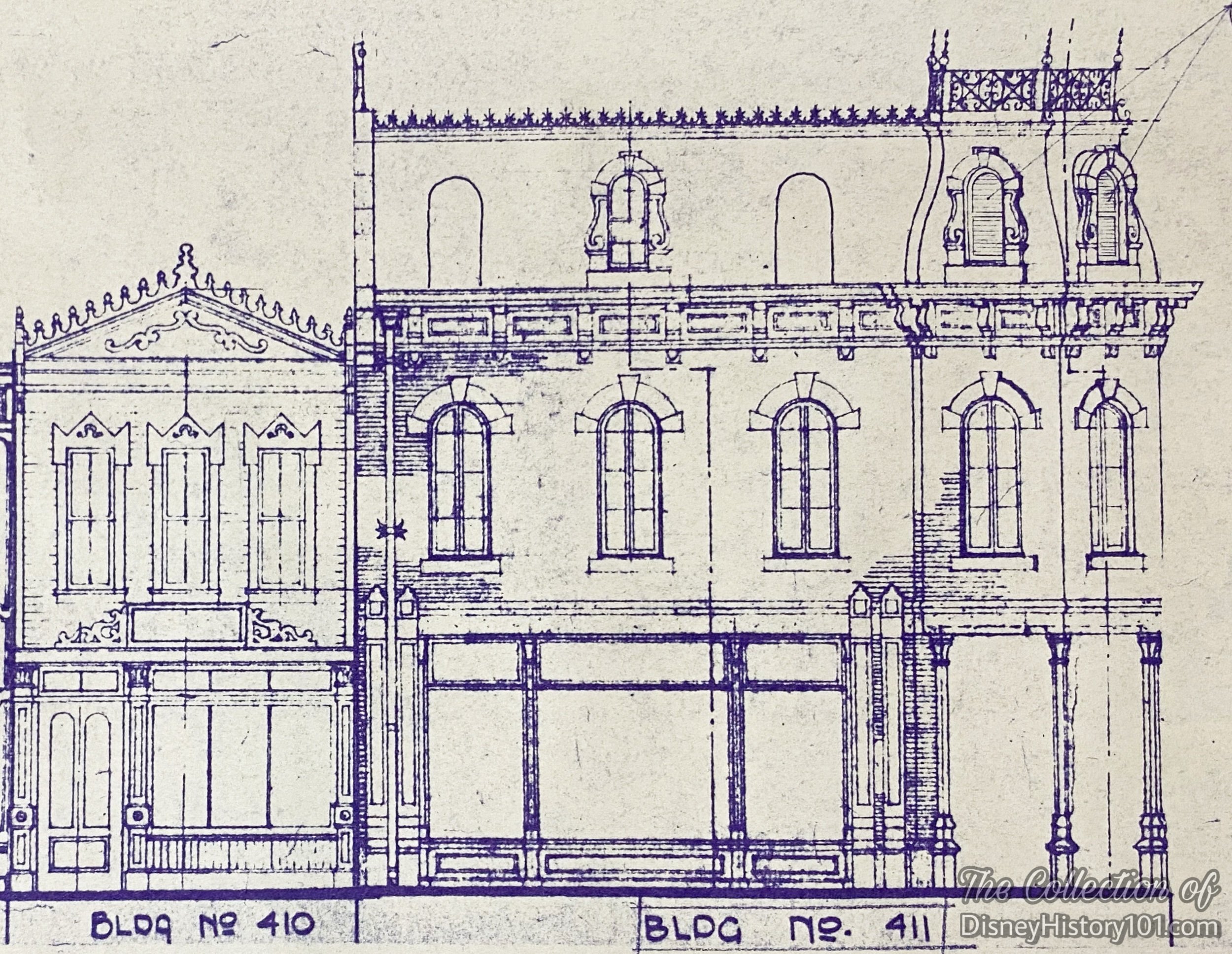
Then construction of Main Street Building #400 began. F. M. Franz, manager of operations for MeNeil Construction expressed: "We feel sure there has never been anything built like this in Southern California, or elsewhere in the United States. Many of the items were constructed from artist’s sketches.”
Forced perspective would make the buildings on Main Street appear taller than actually are. On Main Street the buildings would not be full scale. Ground floors were built about 9/10ths scale. Second floors measured up to 7/10ths scale. The scale on the uppermost floors would be smaller still.
First, a concrete foundation and slab floors were prepared, followed by wood frame construction (while store units would have a combination wood and rigid steel frame).
According to inserts published in area newspapers during July of 1955, Disney buildings were roofed by Pioneer Roof & Shingle Company (then located at 608 Mateo Street, Los Angeles, California; 7522 Westminster Avenue, Westminster, California). The roof covering was a variable, dependent on the architectural design.
“Newbery Electric Corp. took the rapid electrical con-structión of Disneyland in stride. The electrical installations were supervised by Roy J. Gruendler, manager of Newbery's Orange County district office located at 1335 Santiago Ave, Santa Ana.” By June 30, 1955, related Disneyland Site Work Fire Protection Utilities Plot Plans were prepared for Disneyland Inc., by J.E. Thomasson of WED Enterprises Inc.
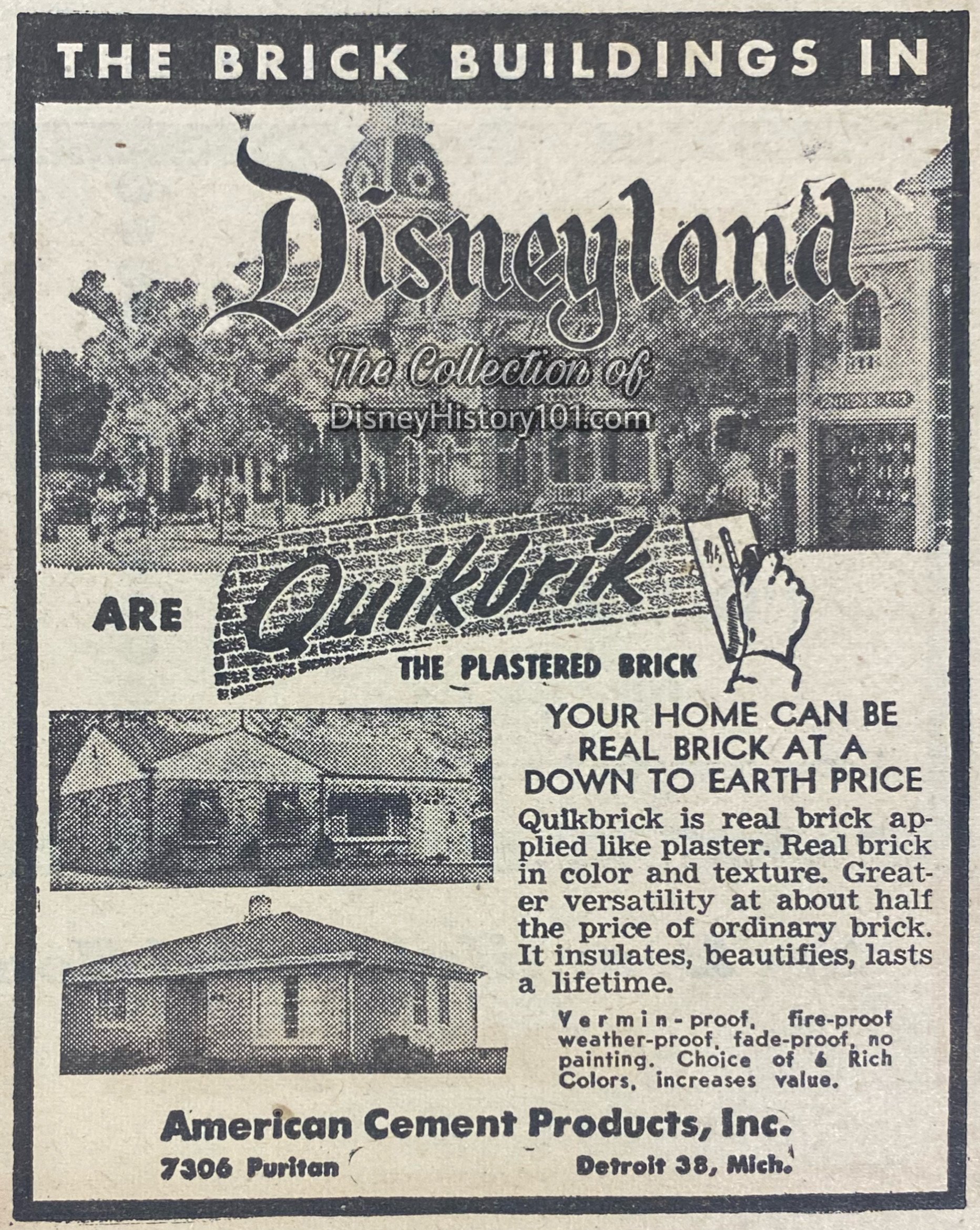
Larson Brothers Plastering Company of San Diego was a proud part of Disneyland. The company crafted the ornamental plastering and all brick used at Disneyland (including their amazing new plastered brick veneer).
The versatile Quikbrick (real colorful and textural brick applied like plaster) was about half the price of ordinary brick. It insulated, beautified, and was meant to “last a lifetime.” It was used on the facade.
The shop (as each on Main Street U.S.A.) possessed complete fire sprinkling systems. Ultimately, construction was wrapping up on the 1,283 square foot shop with an additional 1,775 square-foot basement under Disneyland.
By July 2, 1955, shadow gags were ordered. Painted signs, window, curtains, and shades were projected to be completed on time. The sound equipment was be installed, with completion of the tape recordings appearing to be fairly tight. As of June 2, 1955, C.V. Wood Jr. sent an Inter-Office Memorandum to Walt Disney regarding the best estimates that could be obtained at the time regarding the status of individual sections of the Park and Opening Day. C.V. wrote: “Building #410 - Coca-Cola: It is now estimated that this will be complete by the first of July.” As for the electric signs, a they were “in work,” and with the exception of the shoe store and the Bank of America, were to be completed.
As a sidelight, this was the only building in Disneyland with a basement. Soon, “the sign of good taste” was hung over the Architectural Facade at the corner of West Plaza and the 400 block of Main Street U.S.A.
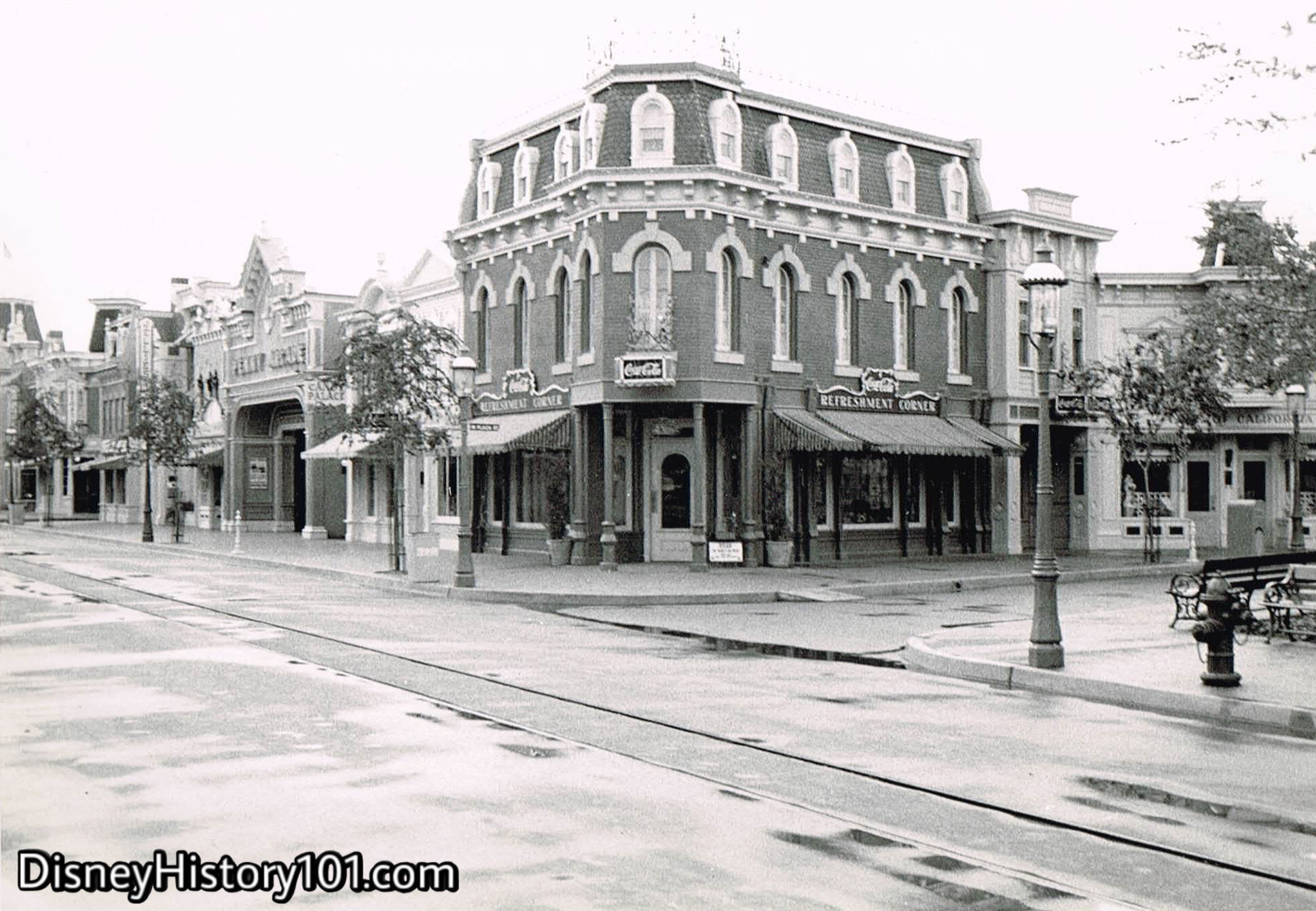
“Stop at the Corner for a Coke…and a smile!”
UPT Concessions and Coca-Cola presented the Refreshment Corner. It was estimated that the Coca-Cola Refreshment Corner had the capacity to serve 600 guests per hour. With that forecast, the Coca-Cola Refreshment Corner was destined to become one of Disneyland’s eating facilities which was predicted to contribute to accommodating “15,000 persons daily, hitting a peak of 60,000 on holidays and week-ends…” and one of “twenty restaurants and snack bars, capable of saving 8,000 hourly,” at least according to “Building A Dream” (prepared by the Disneyland, Inc. Public Relations Department).
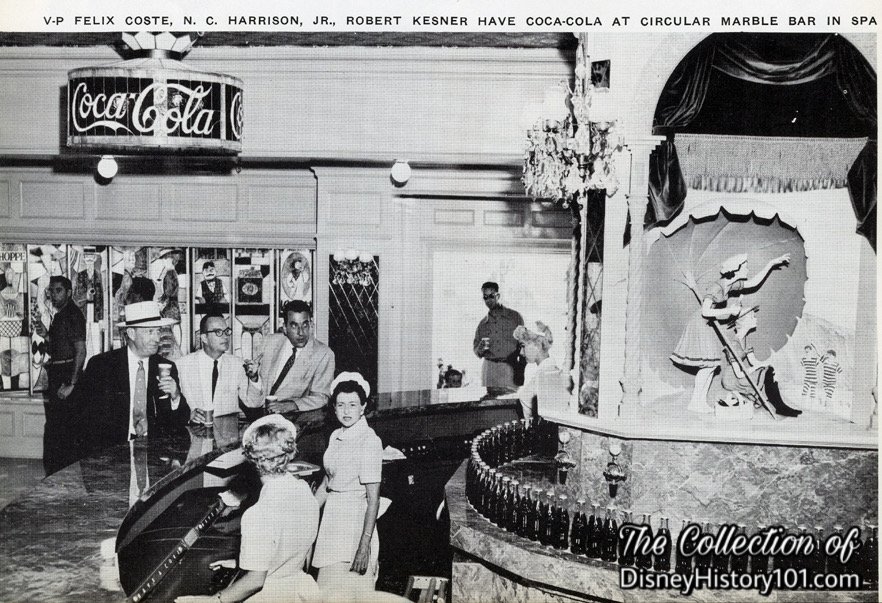
When the doors of this quick service restaurant opened for the first time, the menu initially only included Coca-Cola (originally served only in bottles). Here (overseen by Jim Baker of Disneyland, Inc.; under the management of Helen Case), guests could enjoy the “pause that refreshes,” at the Coca Cola Soft Drinks Parlor (as it was called in the c. 1955 “Your Guide to Disneyland”). Incidentally, cola sales at the Park were “astronomical” due to a recent plumbers strike and resultant non-operational drinking fountains. Helen’s daughter recollected : “I was only four years old. I remember hearing her talk about how busy they were, and they were serving right out of coke bottles. They would open two at a time to service customers. She really enjoyed it.”
Pre-mixed tanks were added to Coca-Corner during the next year (ending the situation where Guests would walk around with glass bottles). At that time, Coke was served without ice, as “the Coca-Cola Company wanted Guests top taste Coke at its full flavor, undiluted by ice.”
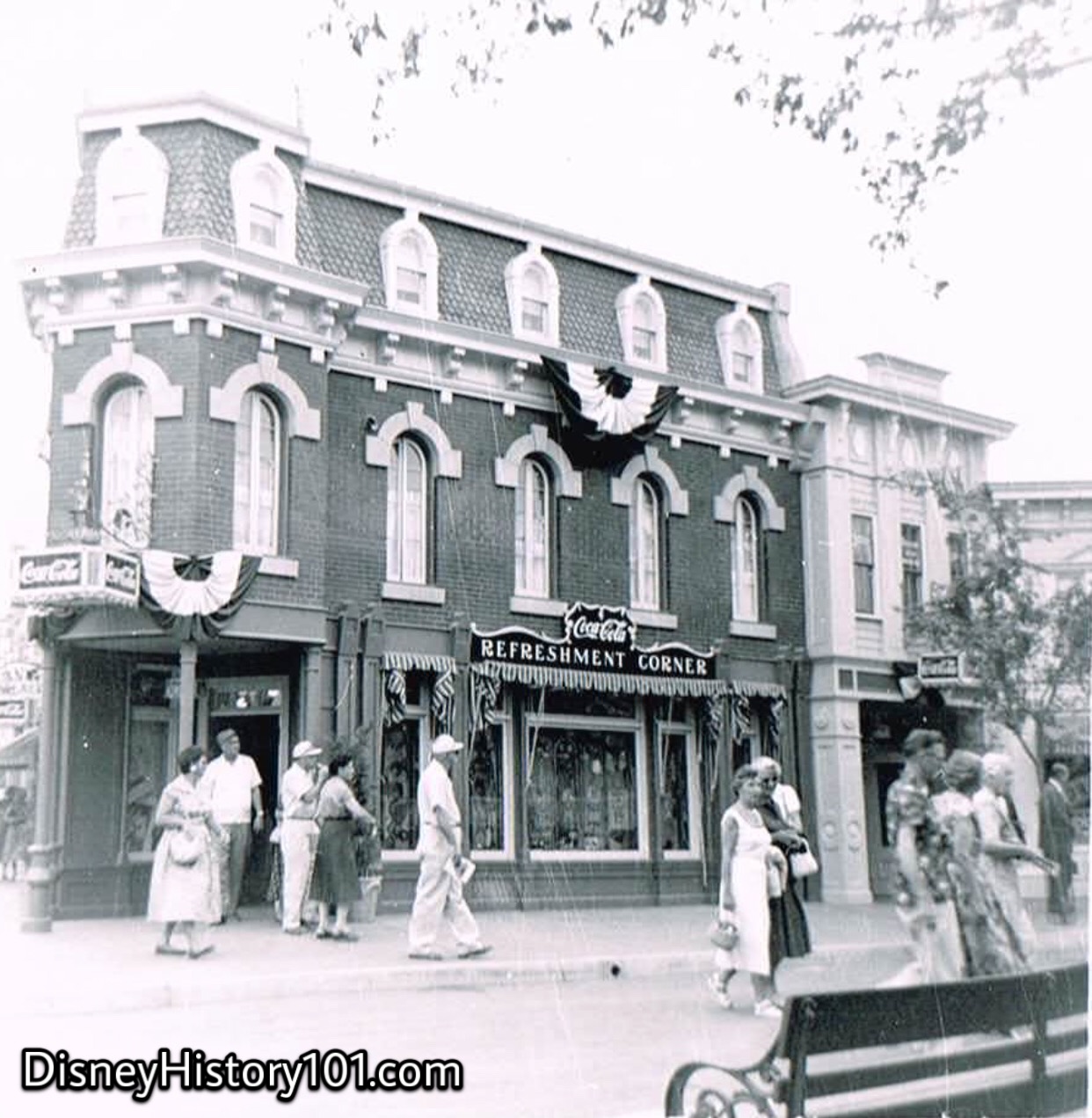
As Walt described to Bob Thomas (of Associated Press), “some industries will have exhibits, but all of them must be in keeping with the era.” Inside the dining room, was an exhibit (similar the Upjohn Pharmacy or the Wurlitzer Music Hall exhibits). According to Disneyland LINE (published for April 12, 1991), “Near two of the doors are replicas of antique thermometers, which were popular at the turn of the century. Commissioned by Coca-Cola especially for Disneyland, these thermometers were constructed by the Ohio Thermometer Company introduced to the Park in 1957.” Old-fashioned pictures and wire chairs added to the feeling of sitting in another era, while “dining in Disneyland.” Eight covers of THE REFRESHER, in full color, appeared in the Refreshment Corner's lifesize illuminated panel display. All of the entertainment occurred in the vicinity of three antique stained glass fixtures (valued at more than $5,000 each)!
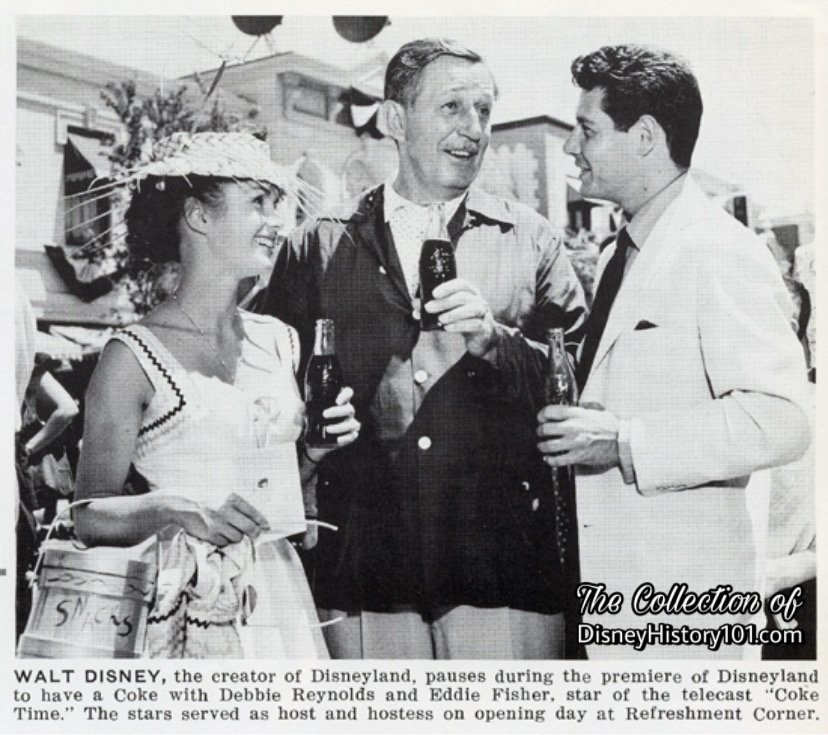
The Coca-Cola Refreshment Corner was also the only part of the Main Street Food Complex that offered guests continuous live entertainment while they enjoy their refreshments, either in the dining room or on the patio. According to Dave Smith (previous Chief Archivist Emeritus of the Walt Disney Archives), “In its early years, Disneyland did not have the atmosphere bands that are used today. In fact, in 1955 there was only the Disneyland Band and the small band in the Golden Horseshoe. The Firehouse Five Plus Two occasionally played, and there was a barbershop quartet and the Coke Corner pianist on Main Street, U.S.A.” [Disney Facts Revealed by Dave Smith, 2016] “When the Refreshment Corner opened with the Park in 1955…Eddie Fisher was the star of ‘The Coca-Cola Hour’, a musical variety show, and was on hand opening day with his fiancé, Debbie Reynolds.” That day, the duo was photographed pausing for a Coke with both Walt Disney and the Tomorrowland Spaceman. Both Eddie Fisher and Debbie Reynolds returned to Disneyland and signed autographs for fans, the very next day.
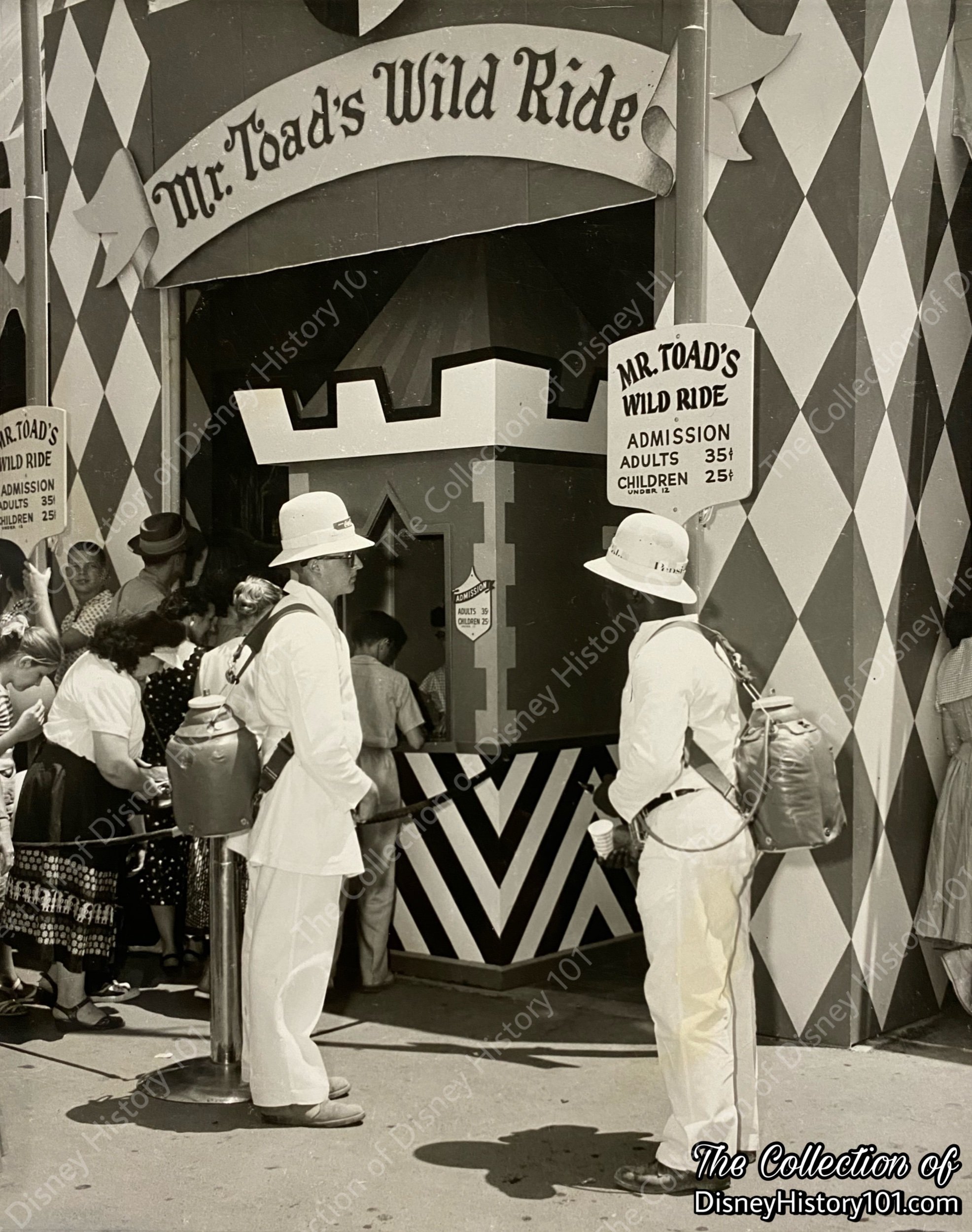
On December 10, 1955 Coca Cola bottling Co. of Santa Ana provided beverages for the First Annual Christmas Party.
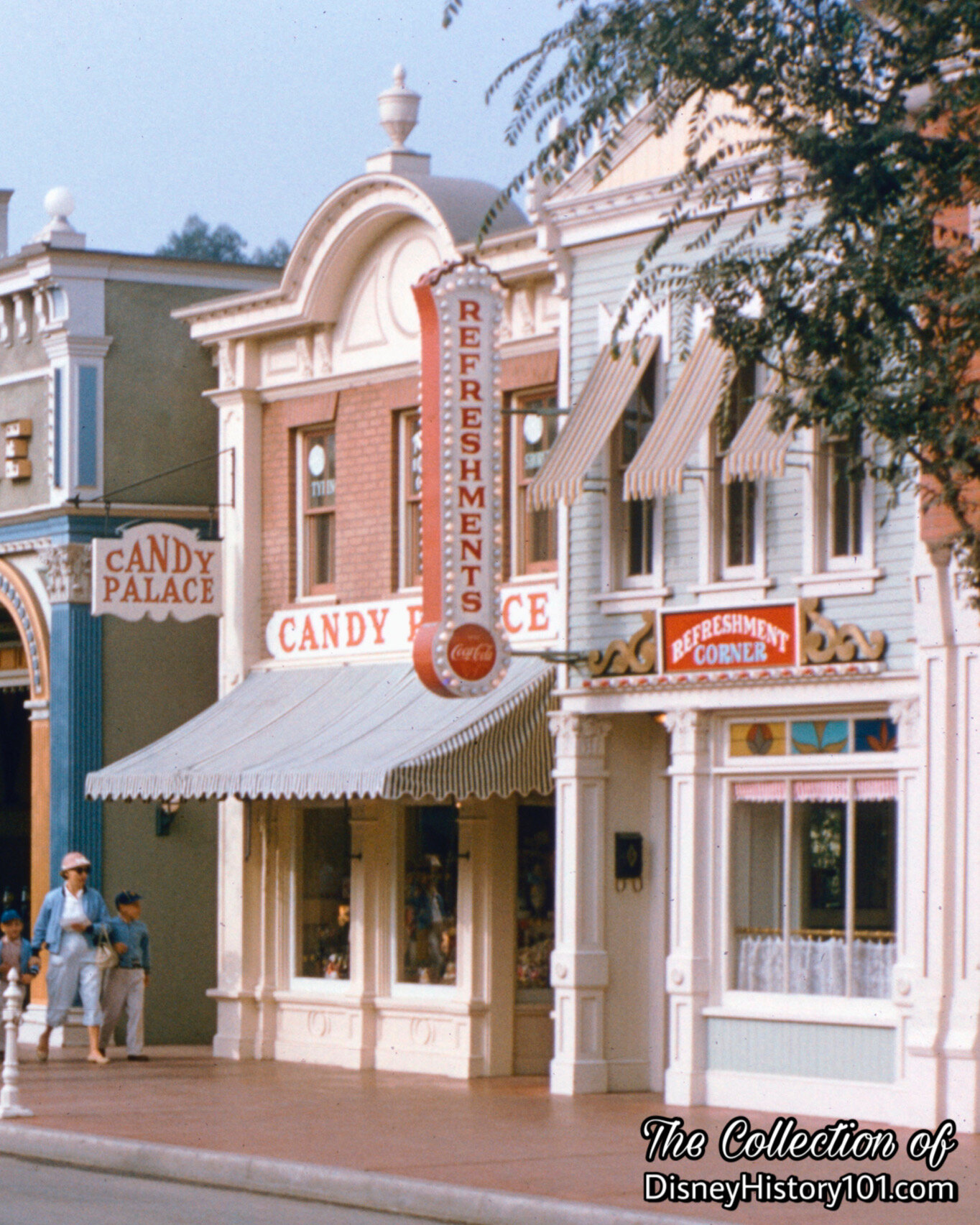
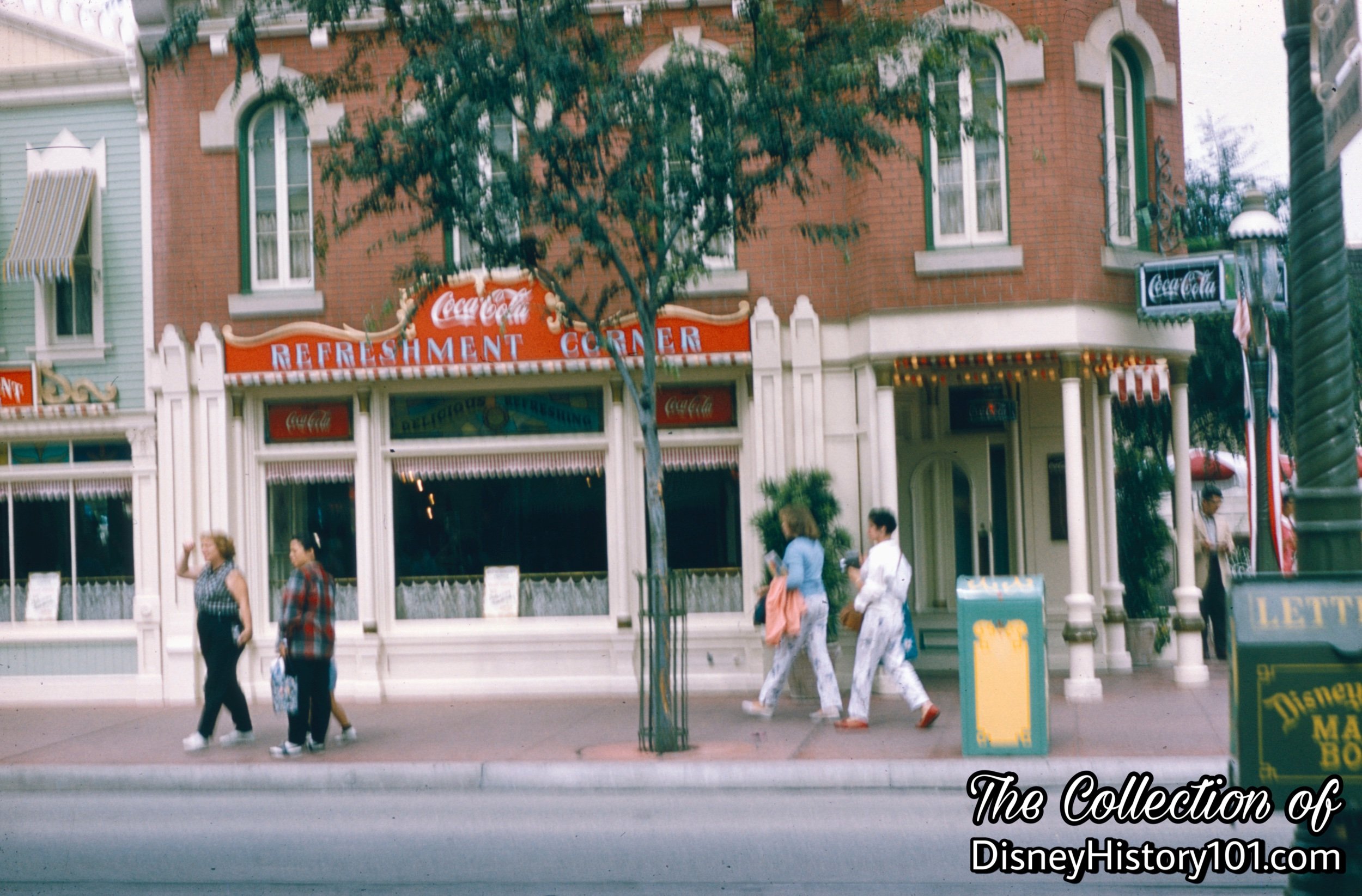
Beyond creating happiness, the Participant sponsored exhibit and leased space would provide a certain amount of income to Disneyland Inc., contributing toward the construction and growth of Disneyland. Why in 1958, Bank of America appraisers figured of the total income received from leases, 16.02% was derived from the selling of advertising rights and 40.12% from the leasing of space to concerns whose main reason for occupancy is for advertising purposes. The remaining 43.86% of the lease income was derived from stores that sell various products and food (like Coca-Cola Refreshment Corner).
By September of 1958, spaces occupied by the lessee included the exterior 312 square-foot Coca-Cola Side Walk Cafe (similar to the contemporaneous 216 square-foot Carnation Side Walk Cafe). Institutional lessee The Coca-Cola Company yielded some revenue for Disneyland Inc. - $22,825 for the fiscal year ending September 29, 1957 and $25,660 for the fiscal year ending September 28, 1958. By September of 1958, the Coca-Cola Company was still contributing a routine portion of accounts receivable to Disneyland, Inc. By 1959, the company was one of about 65 companies who used the park to publicize their wares, leased space in the Park to sell their wares, and from whom Disneyland collected advertising fees.
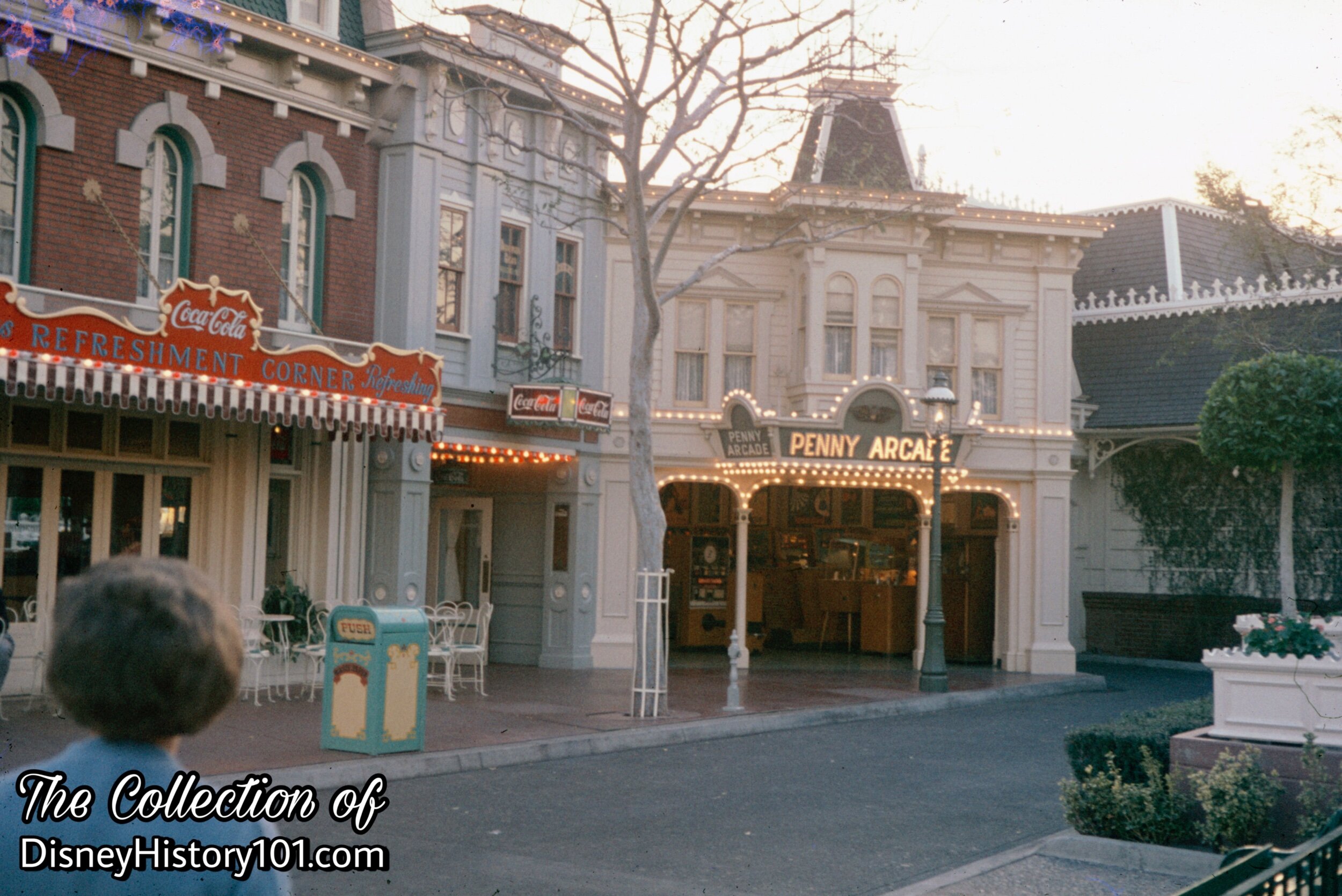
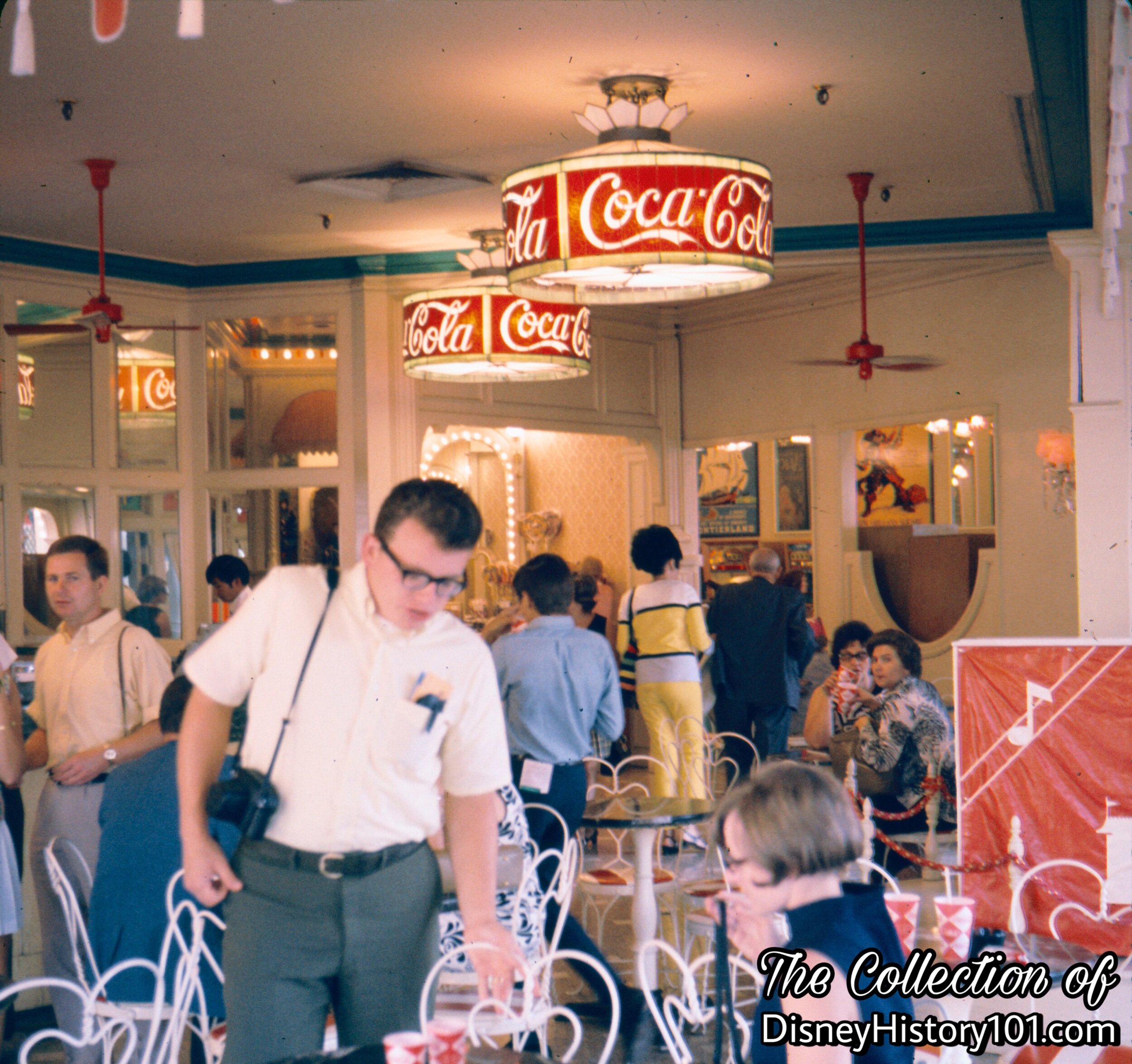
“Things Go Better With A Coke”
Now, its been said that “Coca-Cola makes good things taste better.” So eventually, (by 1958), the restaurant served pre-mixed Coca Cola and king-sized bottled Coke, and sandwiches. Soon, the Coca-Cola Refreshment Corner menu included hot dogs, cold sandwiches (as tuna, and ham & cheese), peanut butter and jelly sandwiches, chips, and even dessert options (as apple turnovers and brownies).
As a sidelight, by October 1959, Jim Baker (of Merchandising) was overseeing the Disneyland Food Administration and Souvenir Sales. By October of 1959, the company was (1) of over sixty-eight other firms playing a vital part in the team effort to bring happiness to Disneyland’s Guests. Some were small, specialized individual operators; some were huge companies such as Swift & Co. - the Bank of America - United Paramount Theaters (which you hear as UPT) - Carnation - Richfield - General Dynamics - Crane - and many others. These companies used the park to publicize their wares, leased space in the Park to sell their wares, and Disneyland collected advertising fees from them.
During the late 1960s, the “walk-away” restaurant (under the management of Max Sloan) still offered an assortment of beverages and light snacks for “people on the go.” Still, their most popular item was Coca-Cola. In fact, the crew once served “more than 350 gallons of Coke on a busy day,” according to Disneyland Line, September 27, 1979.
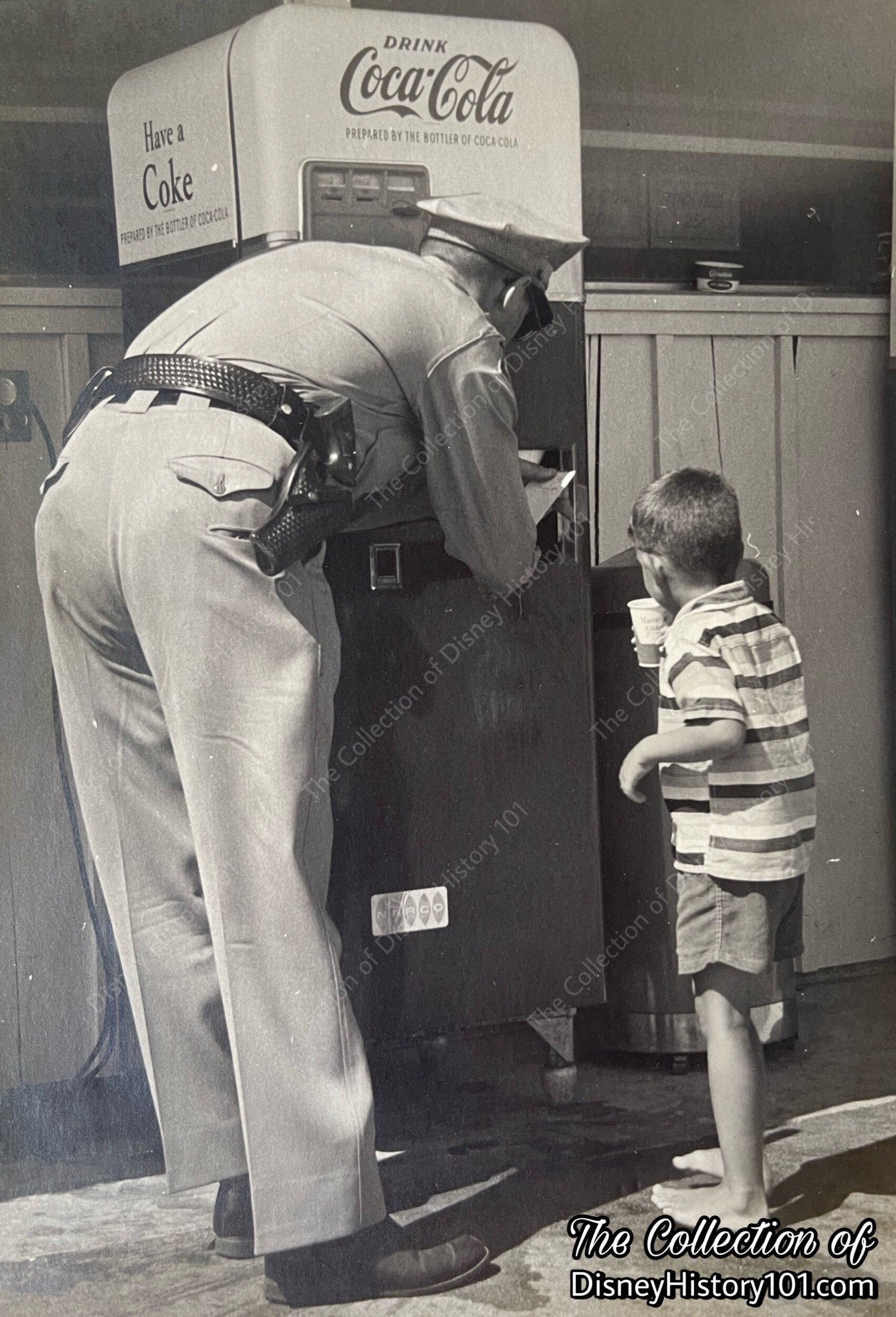
The Holidayland Picnic Area at Disneyland featured several kiosks and the Holidayland Snack Bar (managed by Myrt Westering of the Red Wagon Company). Myrt Westering, promised that “the facilities will be as modern and as up to date as modern food science can make them…… it is so arranged that the hot dogs will be HOT and the cold drinks will be COLD.” [“Disneylander,” May, 1957]. As aforementioned, bottles of Ice Cold Coca-Cola were available to Disneyland (and Holidayland) audiences. But after about a year, the Disneyland Operations team decided to do away with Disneyland carrying bottles. Pre-mixed tanks were added to Coca-Corner and Coke was served without ice, as “the Coca-Cola Company wanted Guests top taste Coke at its full flavor, undiluted by ice.” Once Holidayland opened, Guests enjoying a picnic could enjoy cups of ice-cold Coca-Cola through an arrangement with Dixie-Narco (manufacturer of contemporaneous Disneyland Dixie paper cups).
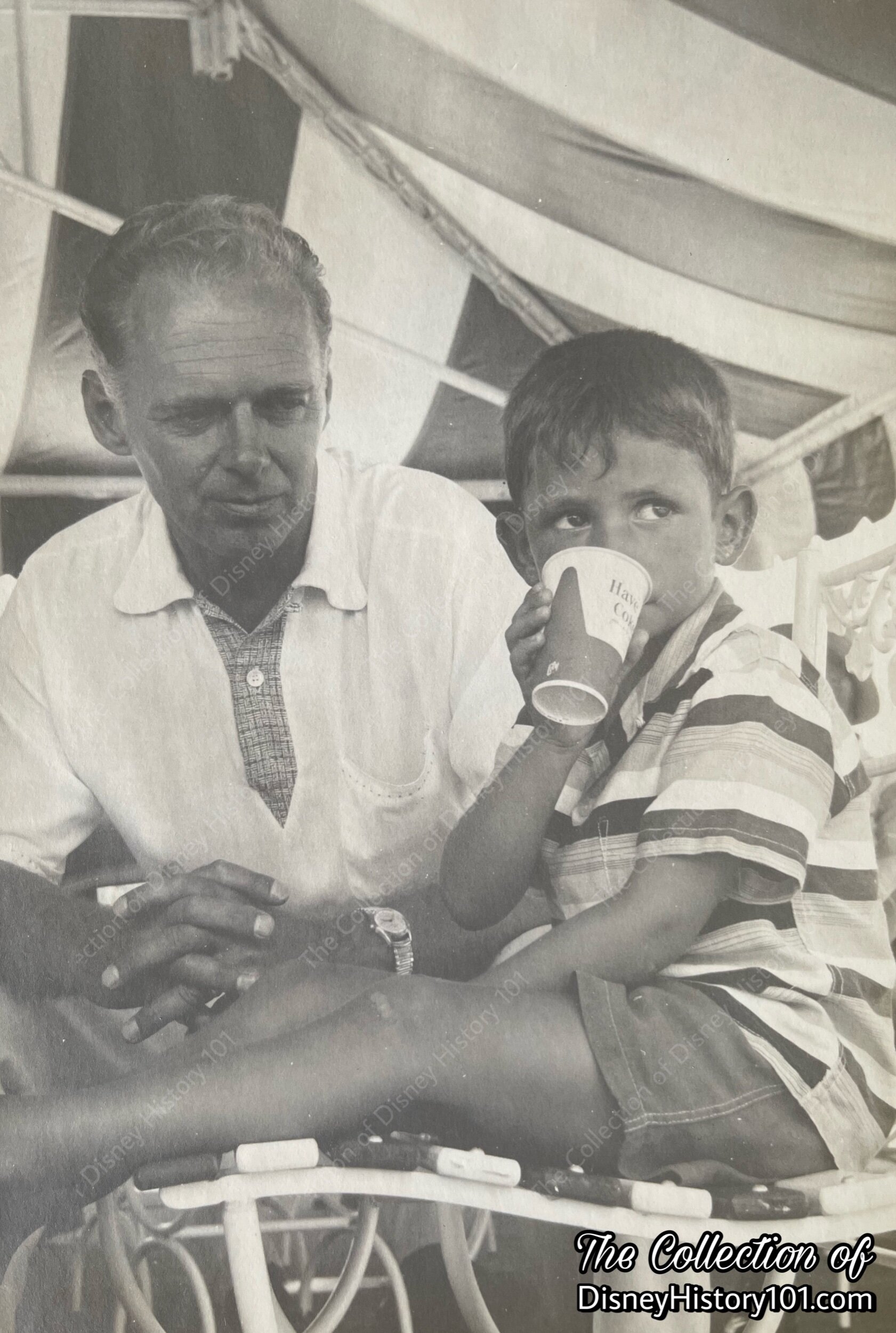
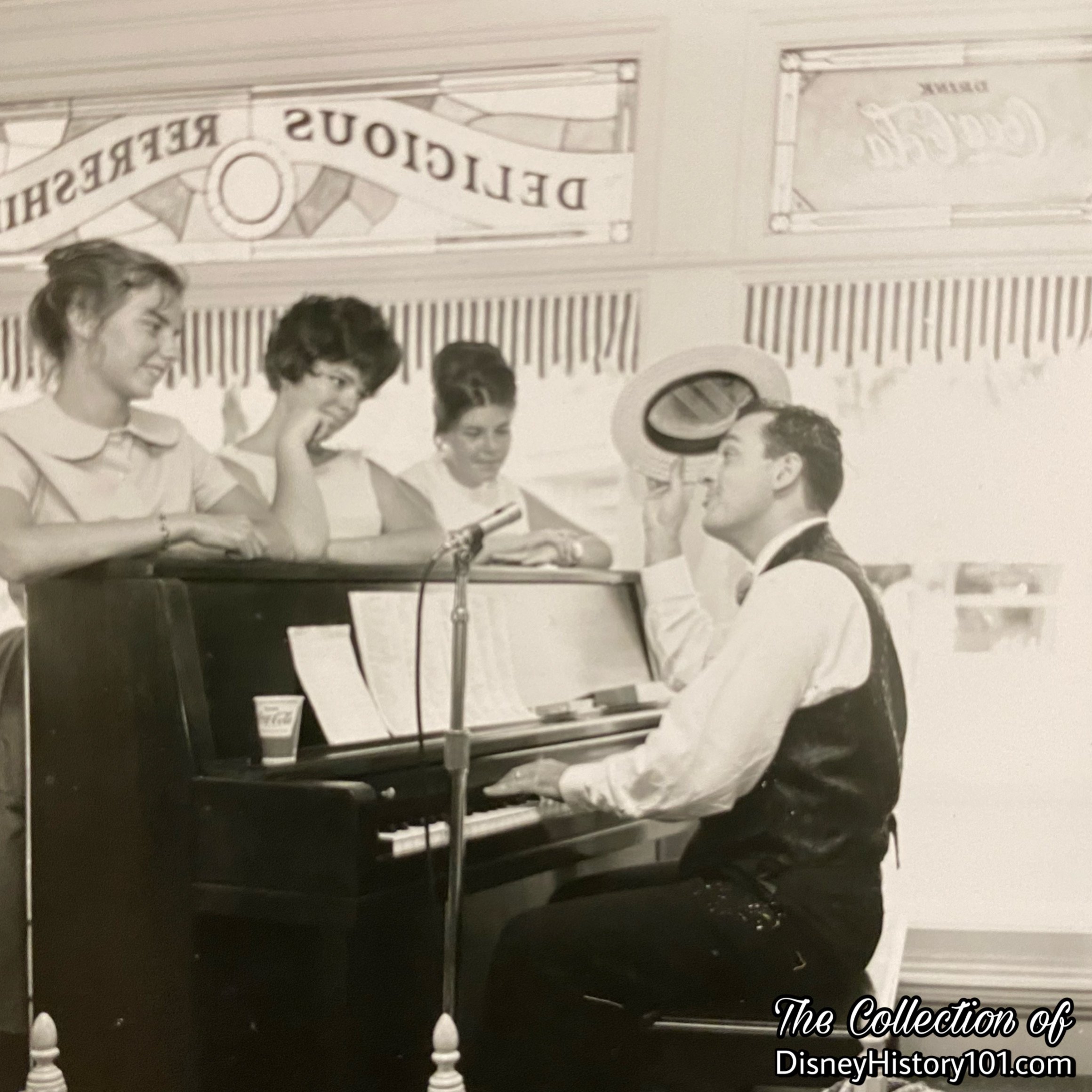
Coke Corner provided the setting for all sorts of entertainment, events, and promotions. The restaurant was temporarily utilized for Grad Nite Photo Locations and Grad Nite musicians who provided entertainment pleasure for guests. For example, David Rakes performed here during Grad Nite of 1962, bills advertise some unnamed “Folk Singer” for Grad Nite of 1963, and Denny Brooks played here during Grad Nite of 1964. The Varsity Duo was a regular act during the summer of 1968. A promotion during 1963, offered Coca-Cola customers the opportunity to open a bottle and “take Disneyland home with them” in the form of 18 miniature licensed character figures.
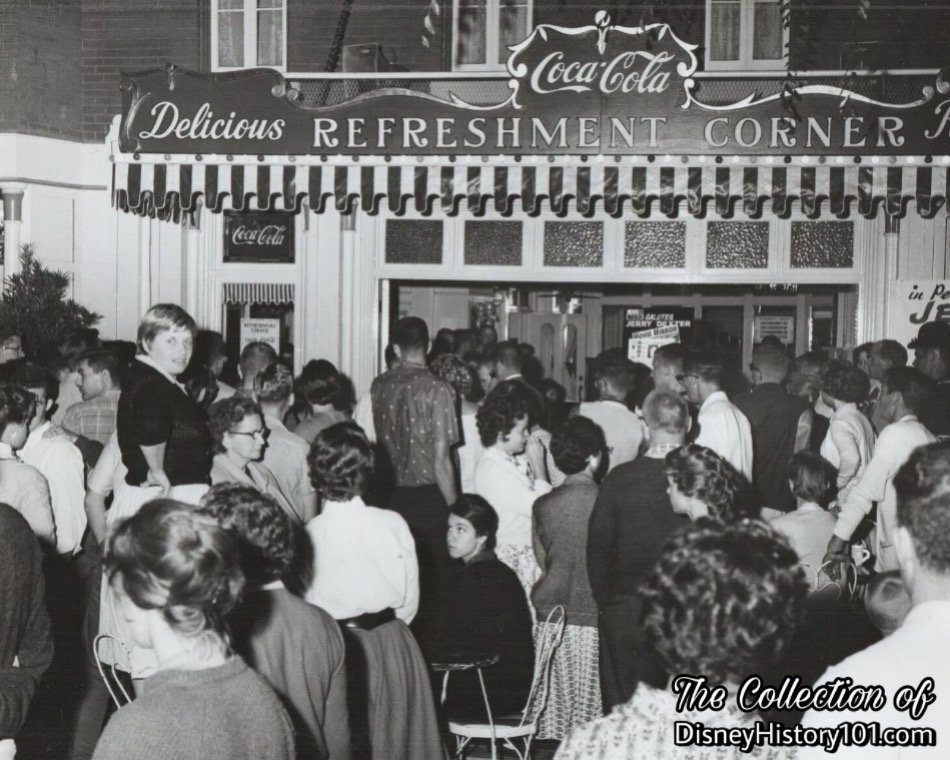
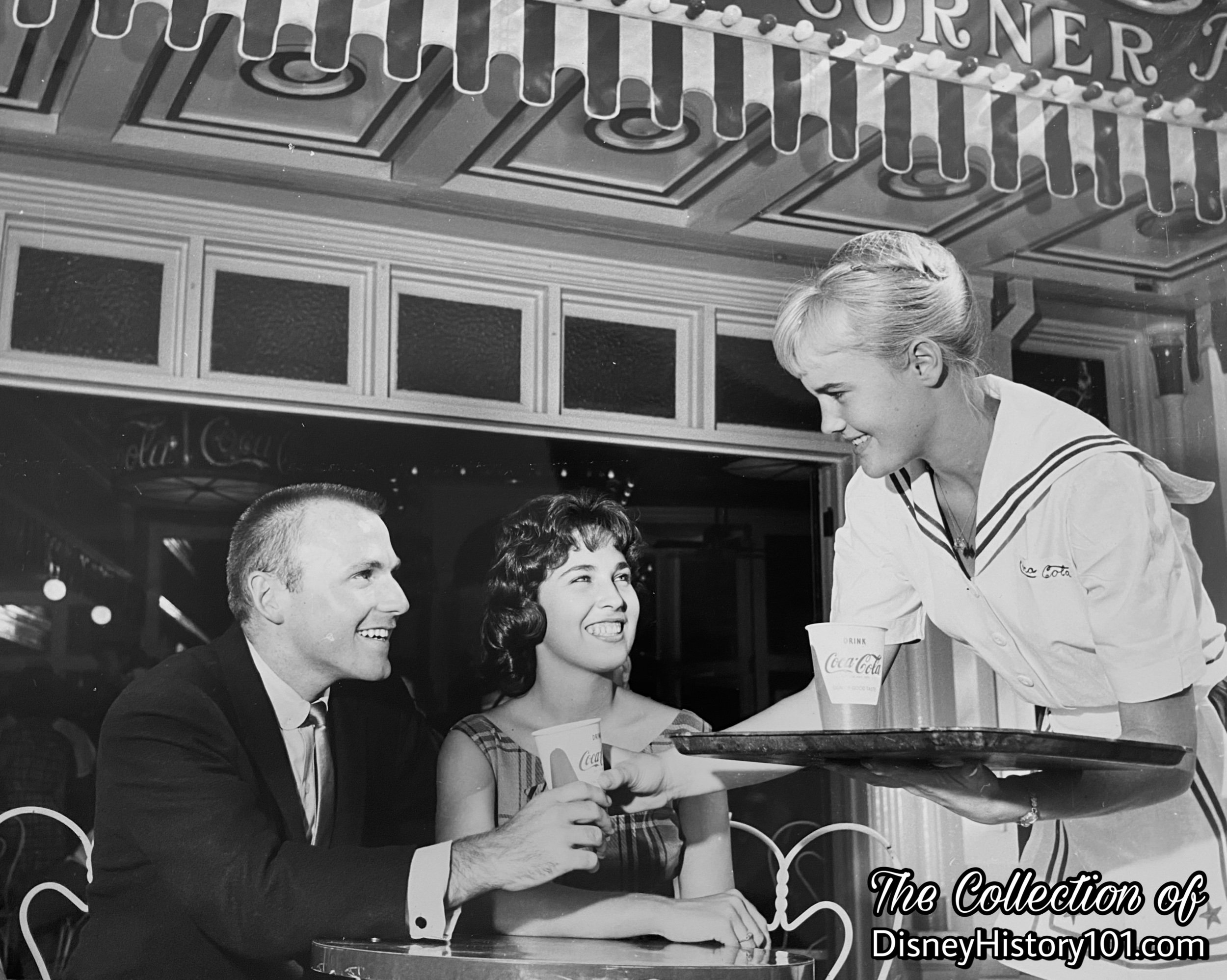
By January of 1958, the lessee also occupied the 312 square-foot exterior area known as Coca Cola Side Walk Cafe. During 1960, KMPC DJ Jerry Dexter hosted the program nightly on radio station KMPC - 710 on everybody’s dial, from 10 until midnight. Jerry also hosted the program live from Disneyland every Friday and Saturday night. In promotion, a Coca-Cola Refreshment Corner lessee Hostess Disneylander displays Disney Courtesy with a smile while serving Coca-Cola to KMPC DJ Jerry Dexter and another guest.
By 1960, Disneyland wasn’t the only theme park with a Coca-Cola Company sponsored exhibit. Freedomland had a Coca-Cola Company sponsored by Hospitality Area.
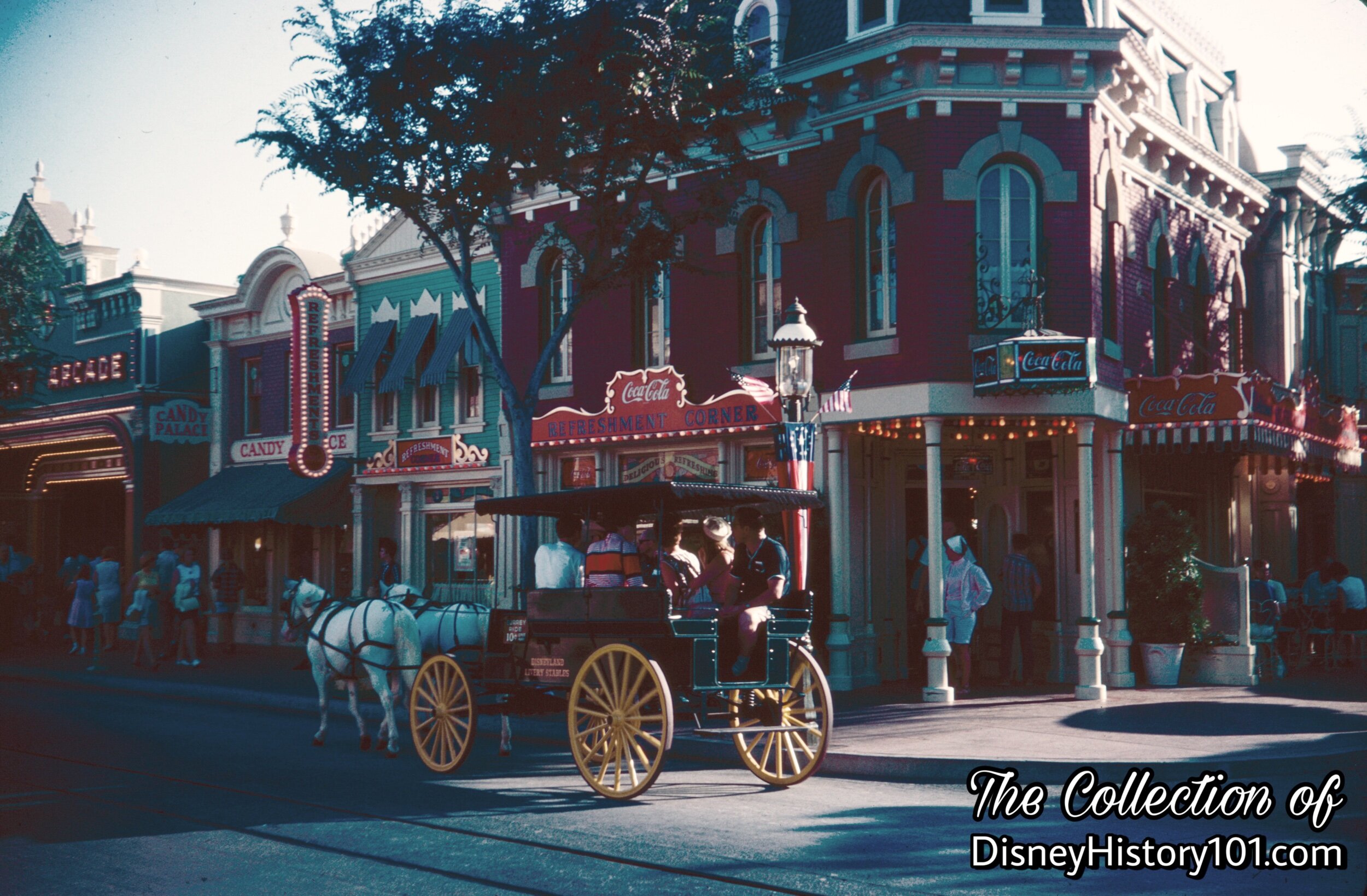
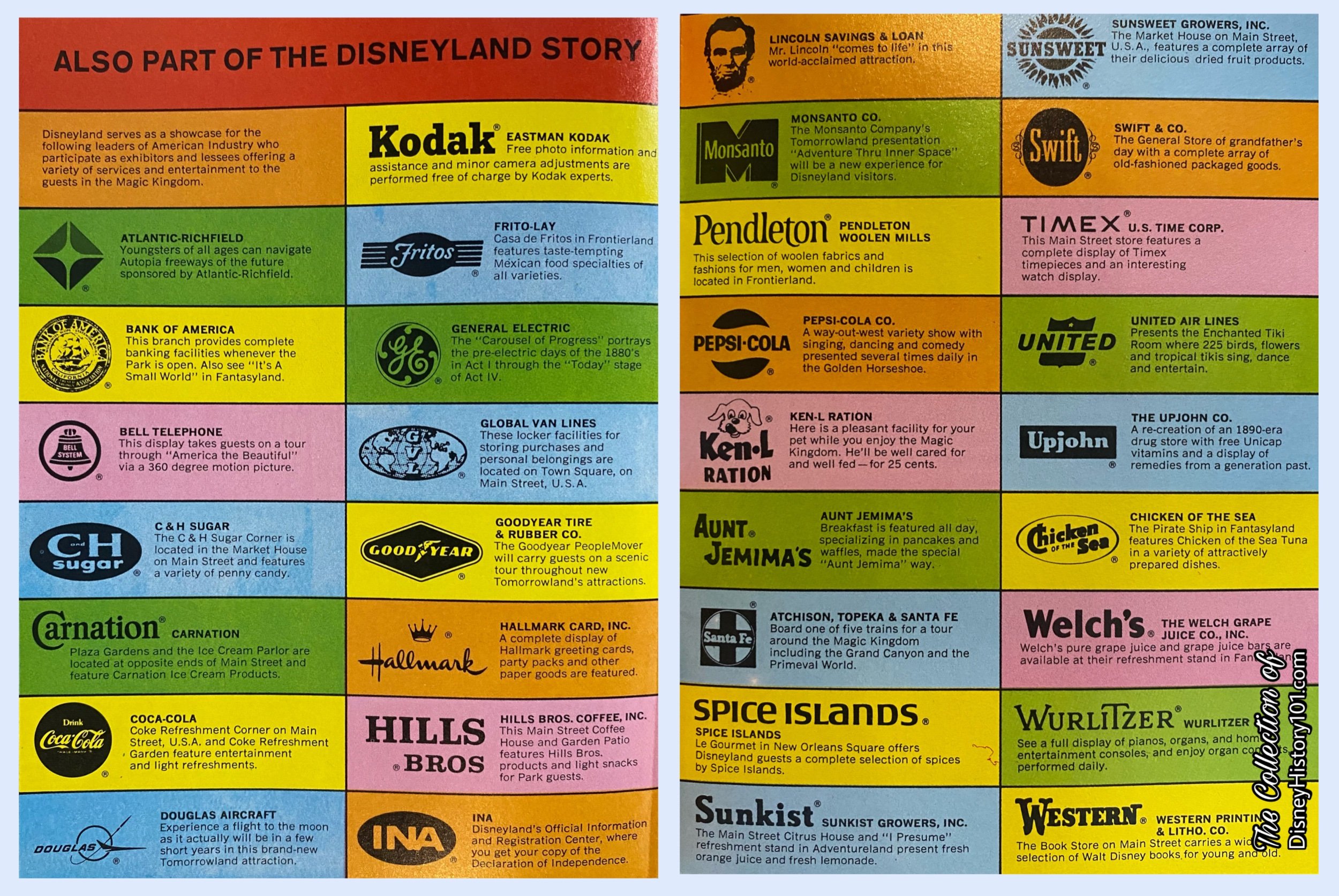
Music, as a basic ingredient of showman-ship, covers the Park. According to “THE DISNEY THEME SHOW - an introduction to the art of Disney outdoor entertainment”: “Important are the sounds which permeate the scene, for without them, the theme show is a silent movie . . . but with them it is a symphony of music, effects, and natural sounds that the finest stereo system in the world can't duplicate. These sights and sounds are provided not only by imagineered attractions and shows, but also through the multi-talented efforts of live entertainers . . . in special musical groups . . . in parades and pageants . . . providing an everchanging backdrop to virtually every area in the theme show.”
A variety of live shows entertained Guests throughout the day. Guests were encouraged to “gather ‘round the upright piano” for their favorite syncopated ragtime melodies, while honky Tonk daytime pianists exemplified the spirit of Disneyland, entertaining guests. For instance, during the winter season of 1967 (December 16th, 1967 thru January 1st, 1968), Rudy Pena played piano and sang melodies from “‘the good ol’ days’ in a fresh new spirit.” This Atmosphere Entertainment occurred “throughout the Christmas Holidays” (seven shows daily, between parades, from 10:00am to 5:00pm, except Mondays). [“Disneyland Holiday Talent Master Schedule,” prepared for the period of December 16, 1967 through January 1, 1968]
By November 26, 1972 through May 26, 1973, the Coke Corner pianist performed daily from 10:00 AM - 5:00 PM (Off Mon. & Tues.); 12:00 Noon to 7:00 PM on Sunday, and at Mix-in Parties. The Coke Corner Piano Player Sub performed 2 days a week.
“Honky-Tonkin’”
Perhaps one of the most famous of these talented pianist-singer extraordinaires is Rod Miller (who had a 36-year career, from 1969 to 2005). You may also remember nighttime pianist Judy Carmichael, or Ray Templan (who filled in during days off and vacations) would “tickle the ivories” and delight the audience with the sound of Ragtime! During the following decades, Johnny Hodges helped carry on the “four-handed” (and “five-handed”) piano legacy, from 1981 to 2006. “Ragtime” Robert was one notable pianist trained by the hands of the legendary Disneyland pianist Rod Miller! Robert would continue to carry the rhythm at Coca-Cola Refreshment Corner for a decade! You may listen to his story “From Solo Symphonies to Fourhanded Fantasia,” a Disney History 101 People Featurette, through the link above.
By 1969, the piano was 1 of 15 old-time band organs and pianos at Disneyland, some of which dated back to 1890. There just weren’t any replacement parts for these rare antiques. So, ARCADE MAINTENANCE performed the necessary versatile, creative, and inventive mechanical repairs. The Coca-Cola Refreshment Corner Piano was auctioned through “Celebrating 50 Years of Magical Memories” of Disneyland.
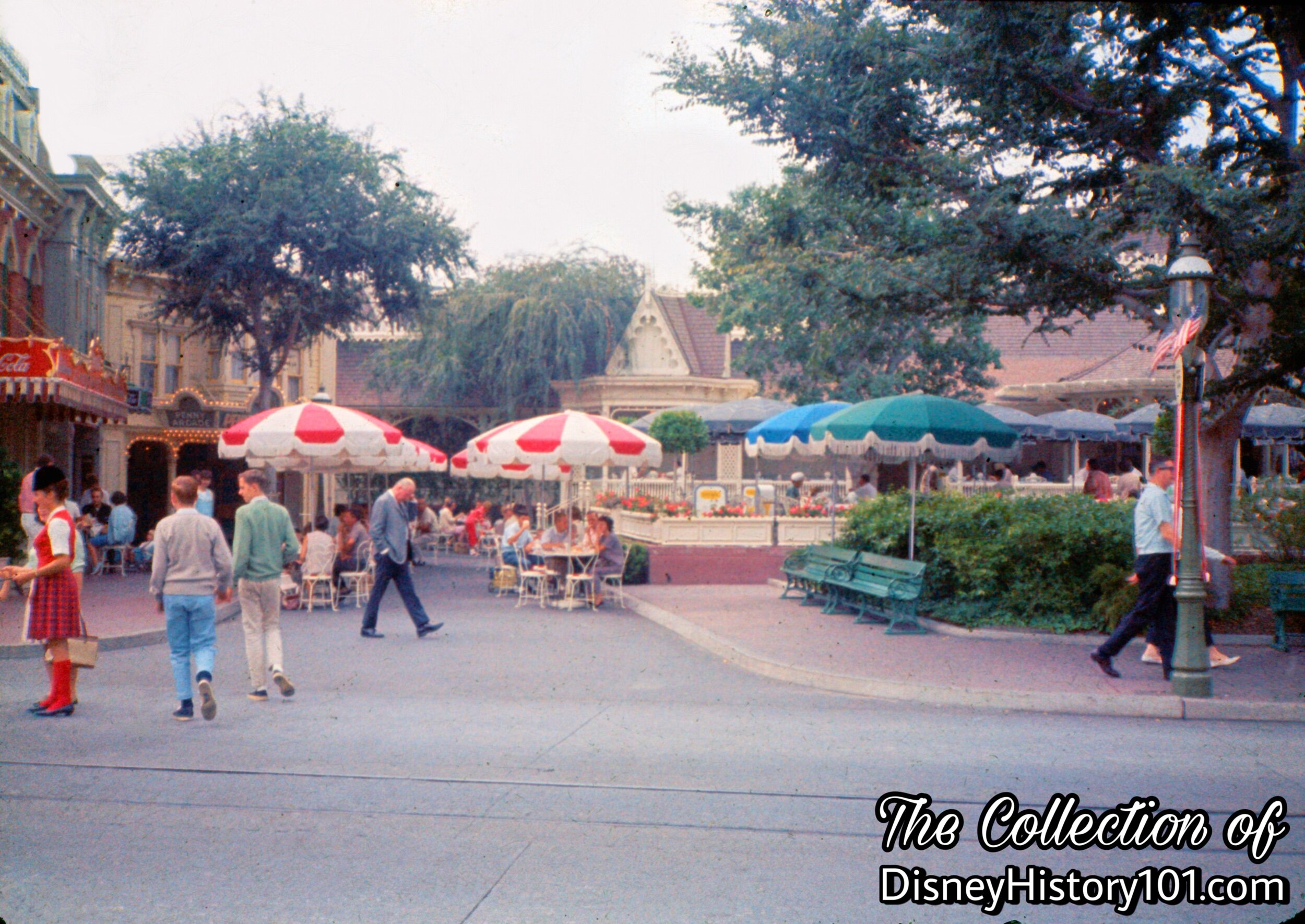
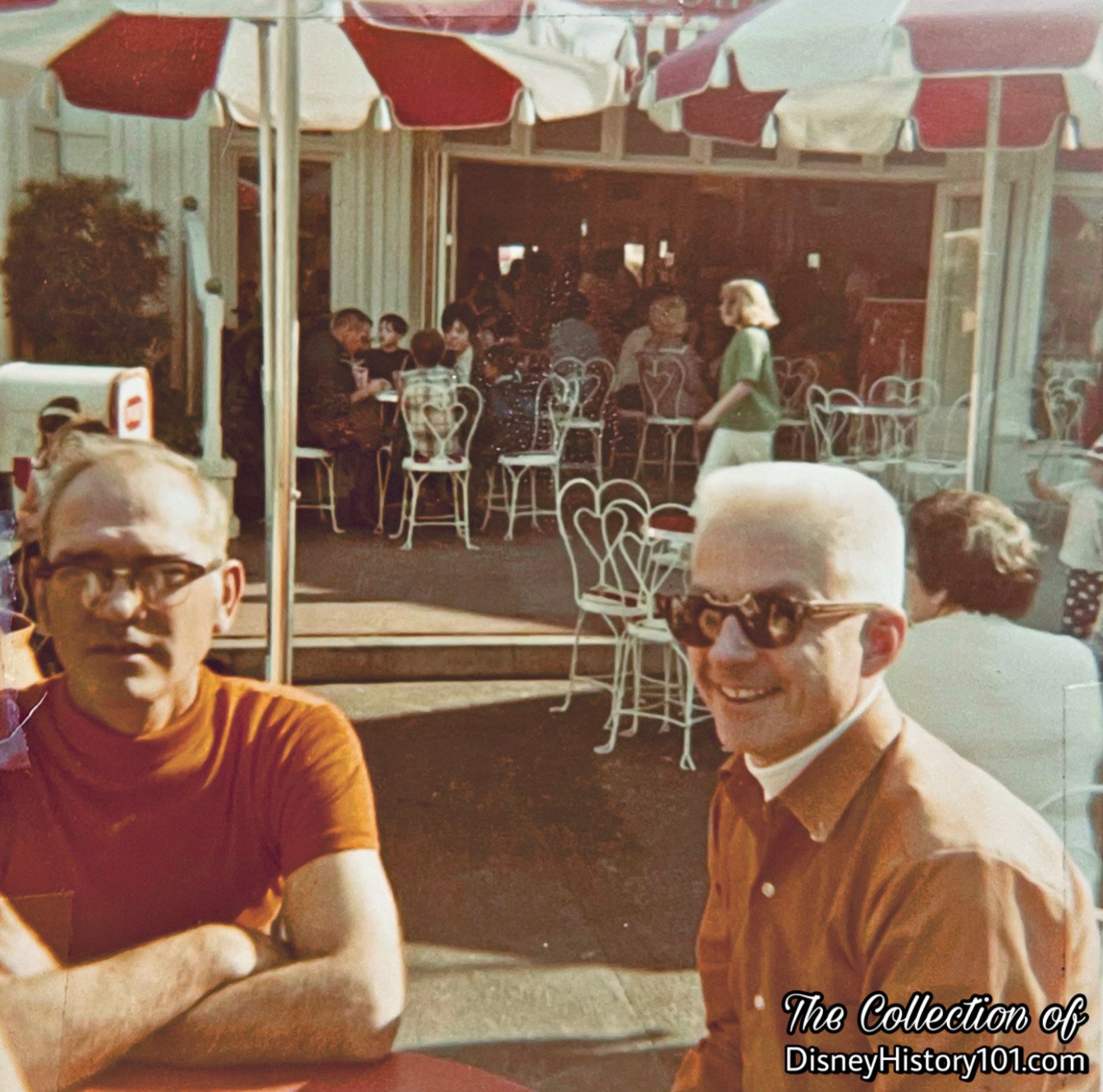
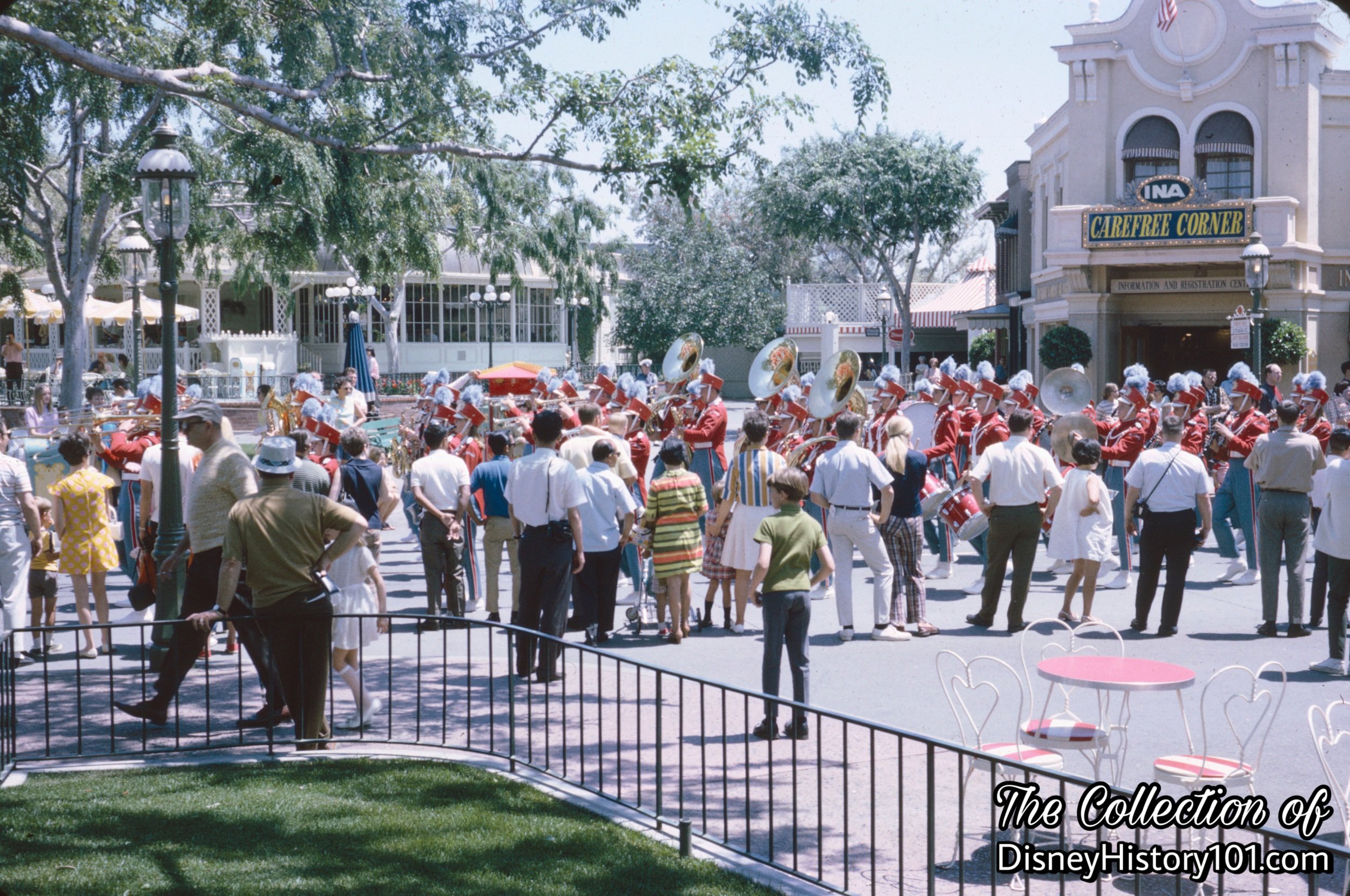
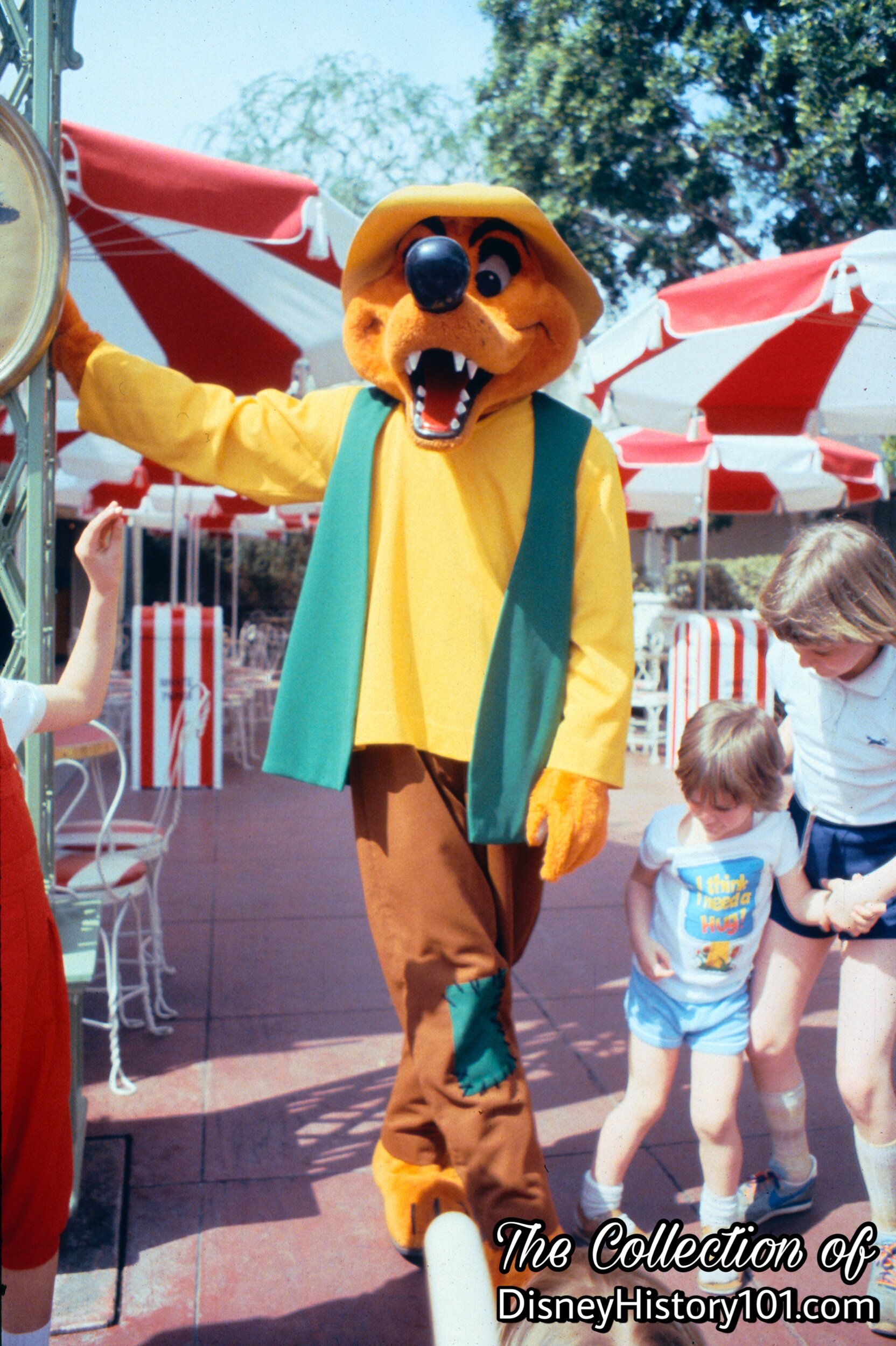

Coca-Cola Refreshment Corner became a popular place to meet up with friends!
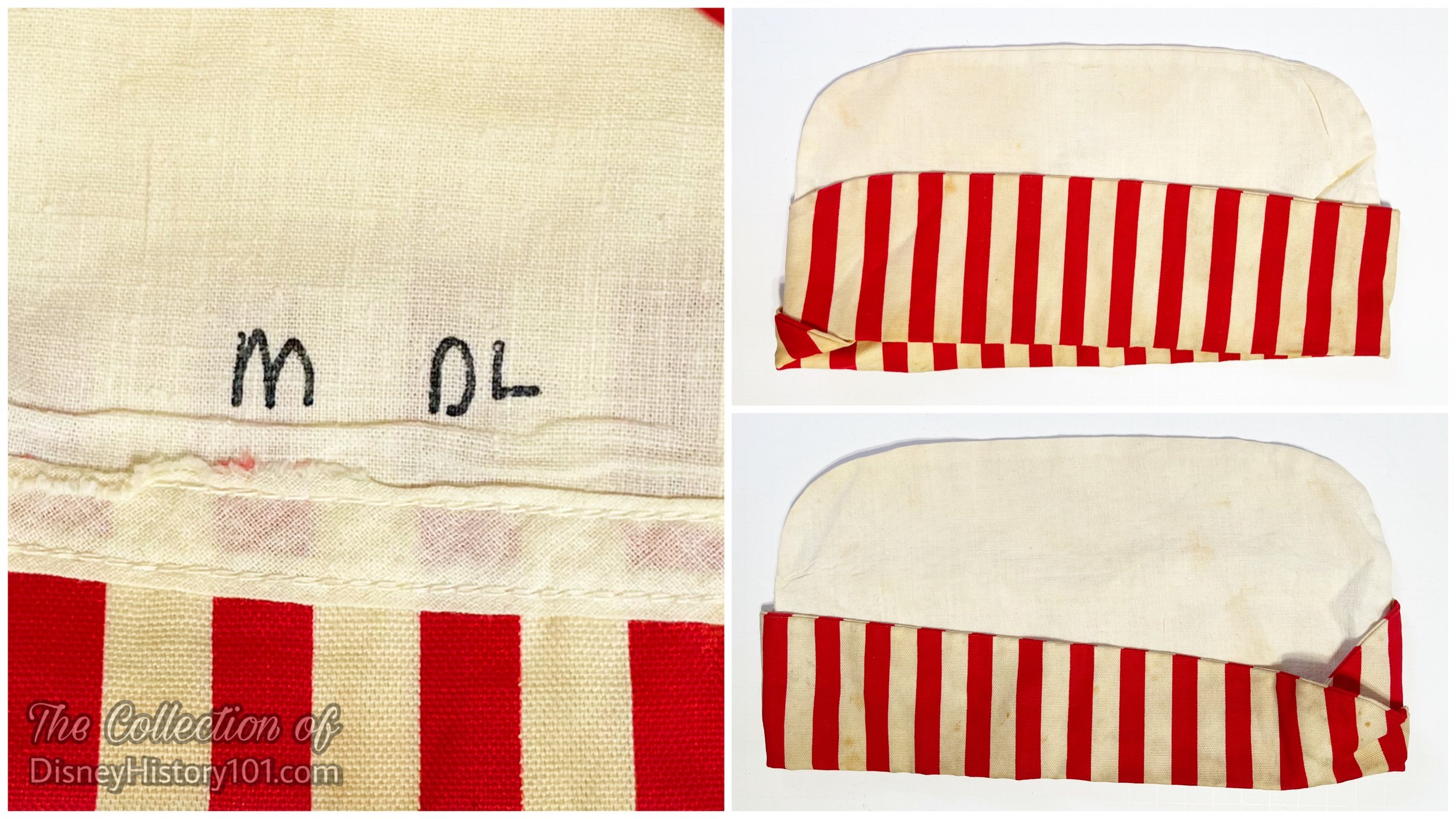
The Disneyland Food Division took over operation (in January of 1966), but the Coca-Cola Company eventually continued its Participation with Disney Parks. The location had some of the more than 160 soda fountain heads at Disneyland that delivered 10,000 gallons of various soft drinks to thirsty guests.
During December of 1980, film crews, production vehicles, and huge fans descended on Main Street U.S.A., as a (Coca-Cola-produced) television commercial was filmed at Disneyland. The commercial featured 115 international children and adults (representing “virtually all the nations of the world”)! A mixture of a shaved block ice, carbonic foam, and styrofoam simulated falling snowflakes over the Coca Cola Refreshment Corner on Main Street U.S.A., to the tune of “I’d like to teach the world to sing.”
During January 2 to 21, 1973 Coke Corner was closed for a 3-week rehabilitation.
About that time, the Coca-Cola Refreshment Corner menu remained rather simple, consisting of the Superdog, Hot Dog, Chili & Beans (served during cold periods), chips (Fritos, Doritos, Cheetos, and potato chips), soft drinks (Coca-Cola, Sprite, and Fresca), milk, and desserts (turnovers and brownies).
In 1981, the Coca-Cola Refreshment Corner with its soda shop atmosphere, refreshments, hot dogs and brownies produced $1,320,000 in revenue for Main Street Food. This was owning to VIPs of Disneyland (guests), its Main Street Foods hosts and hostesses (totaling 176 summer/118 fall), two Main Street Foods Stage Supervisors, and Main Street Foods Area Stage Supervisor.
On August 10, 1982, the Coca Cola Company also provided soft drinks to the Burbank Hangar 5 Production Crew who were producing films for the Horizons Pavilion at EPCOT Center. The company donated the beverage dispensor for the duration of the Hangar Rental; and also the first 1000 soft drinks. This agreement was instrumental in obtaining the Disney World Wide Beverage Account Contract for Coca Cola. This contract went into effect on October 1, 1982, and gave Coca Cola sole rights to distribute soft drinks to all Disney projects, both present and future. The Coca Cola Company soon also became a co-sponsor of the American Pavilion at EPCOT Center.
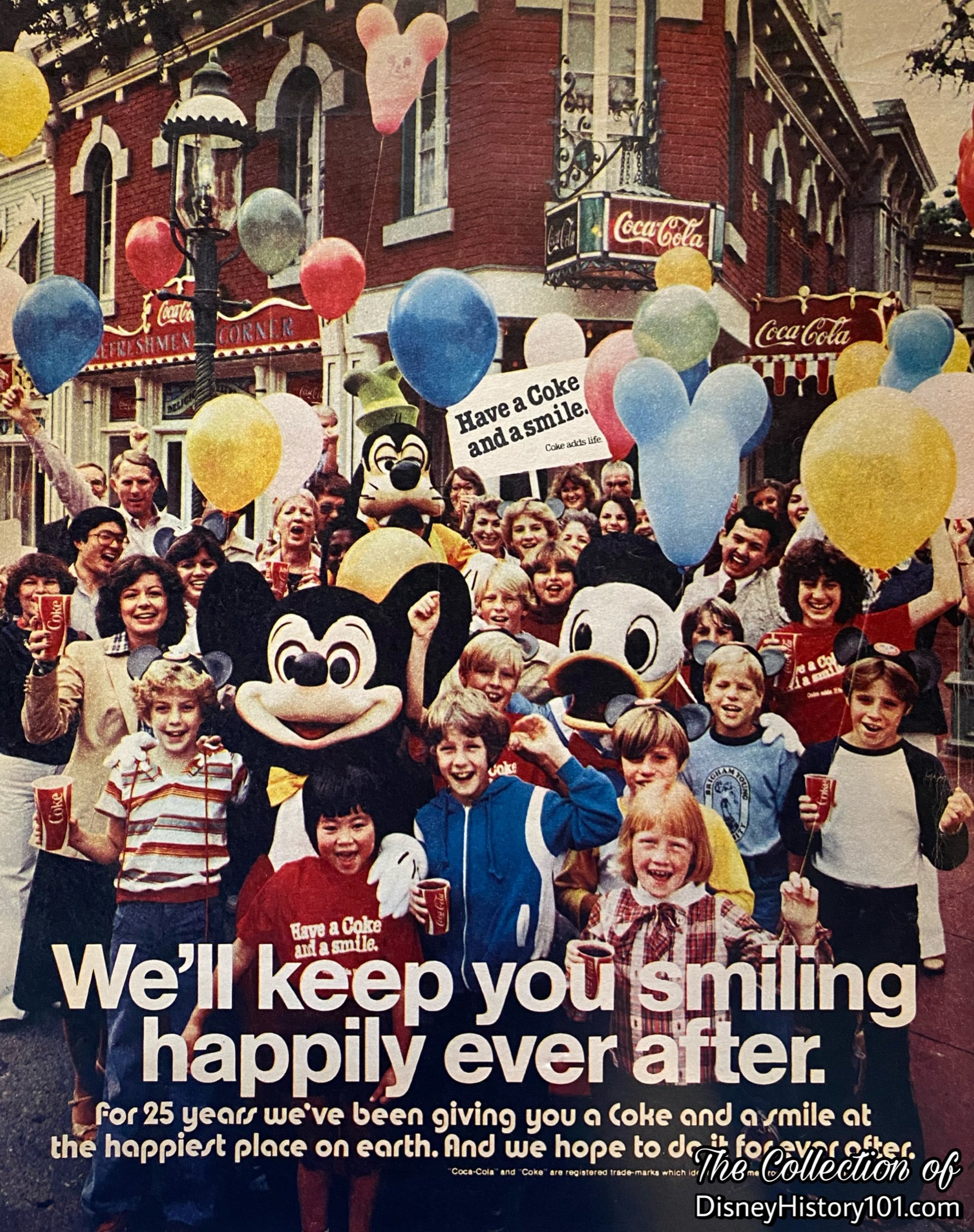
By the late 1980’s (c. 1989), big changes occurred when an extensive year-and-a-half negotiation led to a new 15-year contract between Participant Coca-Cola and the Walt Disney Company, which included “worldwide marketing rights involving Euro Disneyland, tie-ins with motion pictures, Consumer Products and more,” according to Disneyland LINE Magazine [Vol. 22, No. 12 ; March 16, 1990]. This arrangement was partially owing to Pete Clark (Senior President of Disneyland Participant Affairs Division), Jennifer Gray (Participant Relations Manager), and their team. According to “The Walt Disney Company” 1990 First Quarter Report shared: “Disney and the Coca-Cola Company… signed a global agreement that assures that Coca-Cola’s soft drinks will be available exclusively in all Disney time parks into the 21st Century.”
As far as Disneyland was concerned, the Coca-Cola Refreshment Corner was still a popular place for guests to find refreshments, beverages and light snacks, amidst walls decorated with authentic Coke advertising posters. According to Disneyland LINE (published for April 12, 1991), “Two display windows feature Coca -Cola memorabilia. The serving trays and artwork were reproductions, but the Coke bottles are the ‘real thing’. The bottles, including one which is at least 85 years old, were provided by Coca-Cola. Near two of the doors are replicas of antique thermometers, which were popular at the turn of the century. Commissioned by Coca-Cola especially for Disneyland, these thermometers were constructed by the Ohio Thermometer Company introduced to the Park in 1957. Inside, guests are surrounded by stained-glass windows, leaded glass lights fixtures and posters. The room is decorated predominantly in red and white, the Coca-Cola colors.”
Not long after in 1991, the Coca-Cola Corner Kitchen received a new steamer for cooking hot dog links. Then-Supervisor Derry Mellott shared with Disneyland LINE (published for April 12, 1991), “We can cook about 120 franks at a time in only seven minutes. The franks and buns are wrapped in a special foil and paper wrapper and placed in a warmer. Ideally, they stay in the warmer about eight to twelve minutes before the Guests received them.”
By the same year, cinnamon rolls and Minute Maid orange juice (made by Coca-Cola) were also served in the morning, and healthy turkey hot dog alternatives. Still, Coca-Cola products were a preferred refreshment of diners. According to the same article, “On a busy [c.1991] day, Refreshment Corner sells more than 650 gallons of soda including Coke, Diet Coke and Sprite. In addition, Guests purchase approximately 2,500 hot dogs, 20 dozen chocolate chip cookies, 200 brownies and 1,000 bags of chips.”
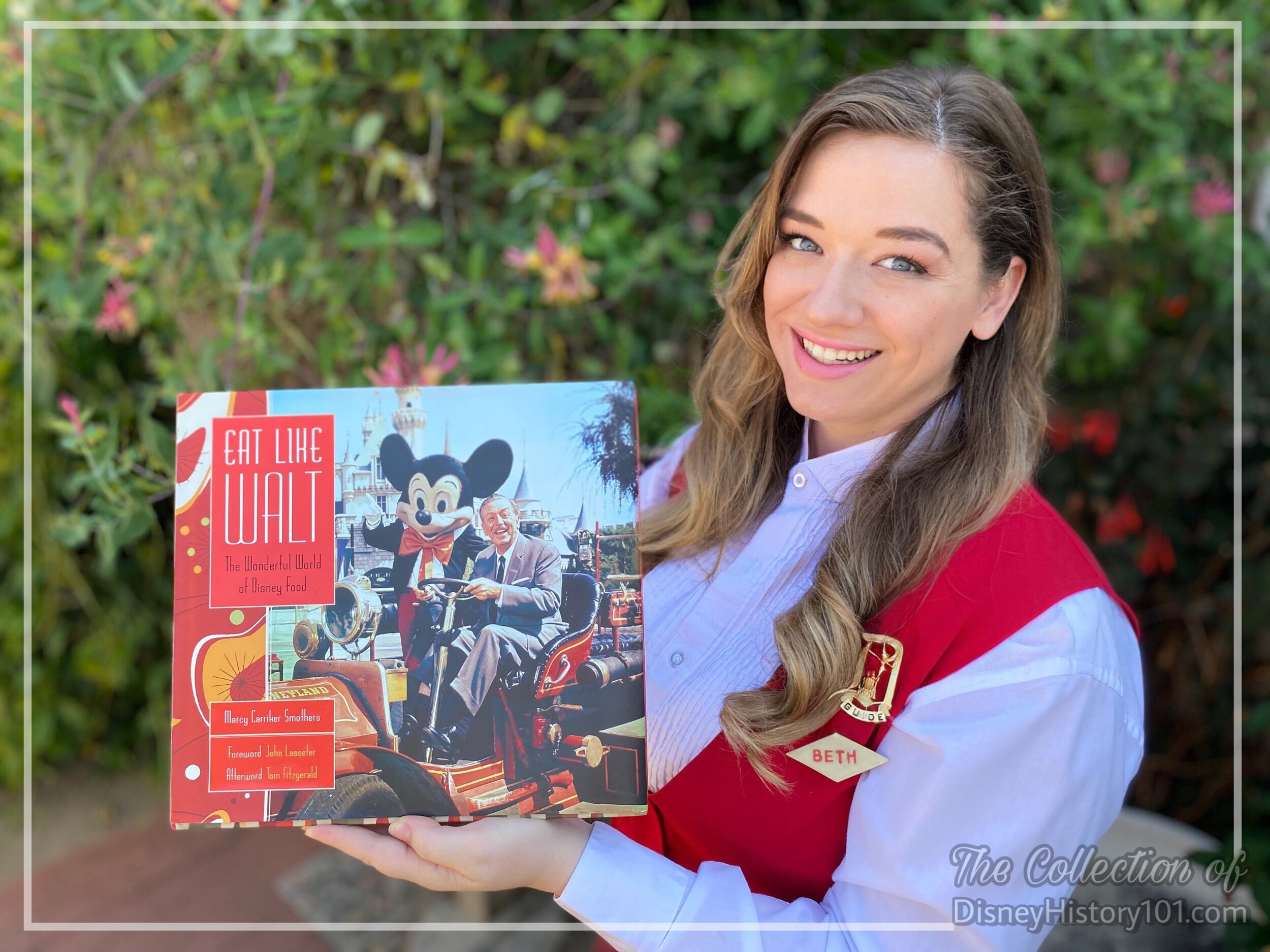
If you would like to read more about the Coca-Cola Refreshment Corner, it’s my pleasure to recommend adding Marcy Smothers’ “Eat Like Walt - The Wonderful World of Disney Food” to your personal Disney Home Library! Therein, Marcy has extensively researched and finely crafted a small section of a chapter dedicated to “Walt Disney’s Disneyland - Main Street U.S.A.” If you would like to bring the magic of Disneyland restaurants and concessions to your dining room table, “please step this way” toward www.eatlikewalt.com where Marcy has shared a few recipes for memorable Disneyland menu options, so you too can “Eat Like Walt.”
The Coke Corner would have a legacy at the Magic Kingdom. There, ragtime piano music kept spirits high on the way to Cinderella Castle.
When Tokyo Disneyland opened on April 15, 1983, the Coca-Cola Refreshment Corner would have a legacy of sorts with the Refreshment Corner specializing in hot dogs served with sides of chips, beverages and real “ragtime” piano. The restaurant would also have a legacy at Hong Kong Disneyland, through Main Street Corner Cafe Hostel by Coca-Cola. There, guests could enjoy an “innovative special menu blending together the popular beverage with good old western ‘comfort food’ in this first Coca-Cola themed restaurant launched in Hong Kong.”

During the 2000s, the Refreshment Corner received eye-catching new paint and a “Coke bottle green”-inspired terrazzo floor that leads to the Candy Palace.
In maintaining the magic after the Park closes, the staff take over with brooms, mops and dustcloths. Special attention was given to marred walls, posts and furniture. Items with marks that didn’t wash off were replaced or repainted. The Floors were waxed and buffed to preserve their beauty and protect them from the thousands of feet that scuffle over them each day.
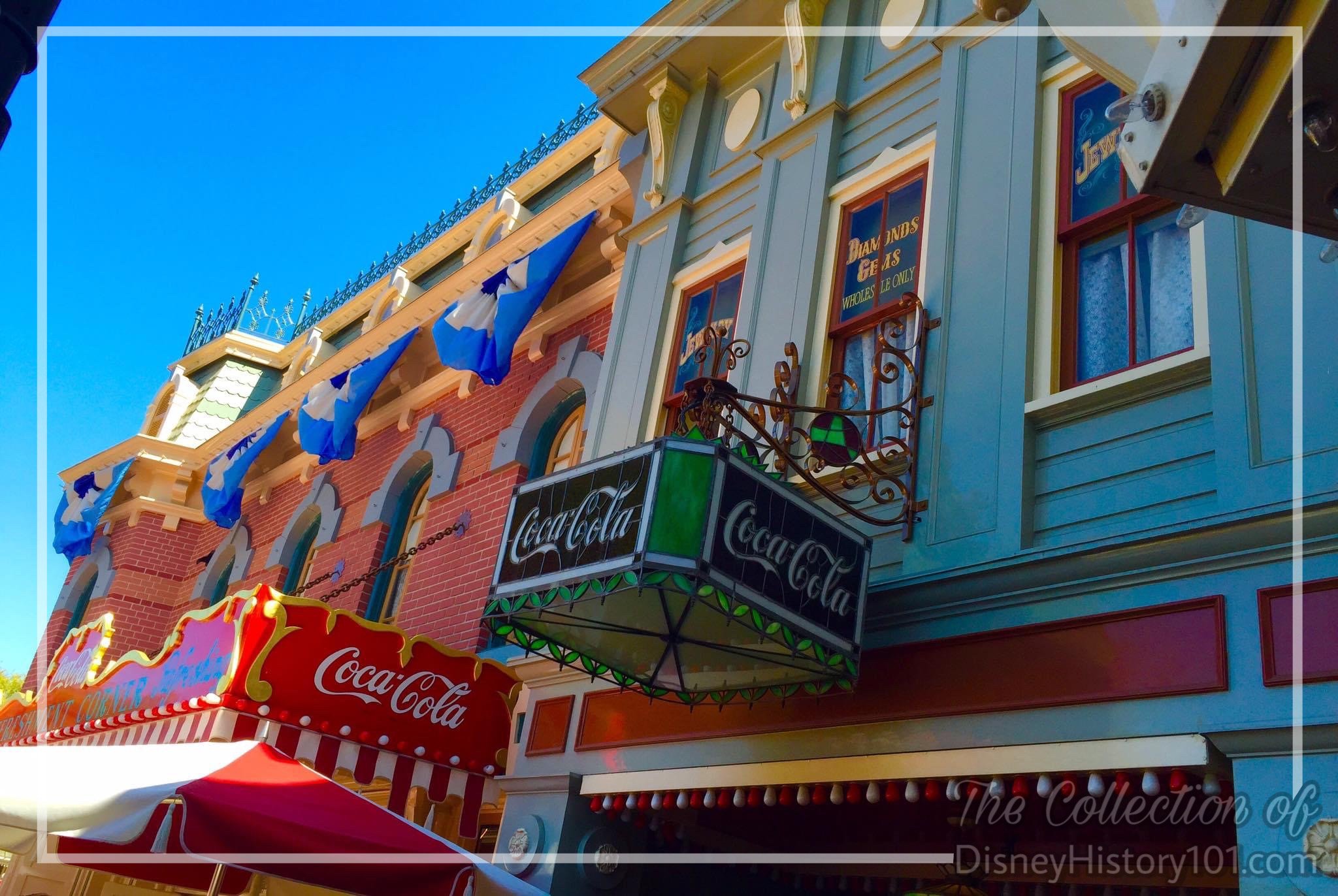
“We celebrate our people for the memories they created in the past.”
Martin Sklar once said “an individual's contribution can usually be found in the final product if one looks closely enough, but the Disney mind frame is to never point out ‘what I did’ to anyone.” However, a few outstanding individuals have been publicly recognized for their contributions and even ceremoniously honored by the Company.
There are thousands of windows at Disneyland.
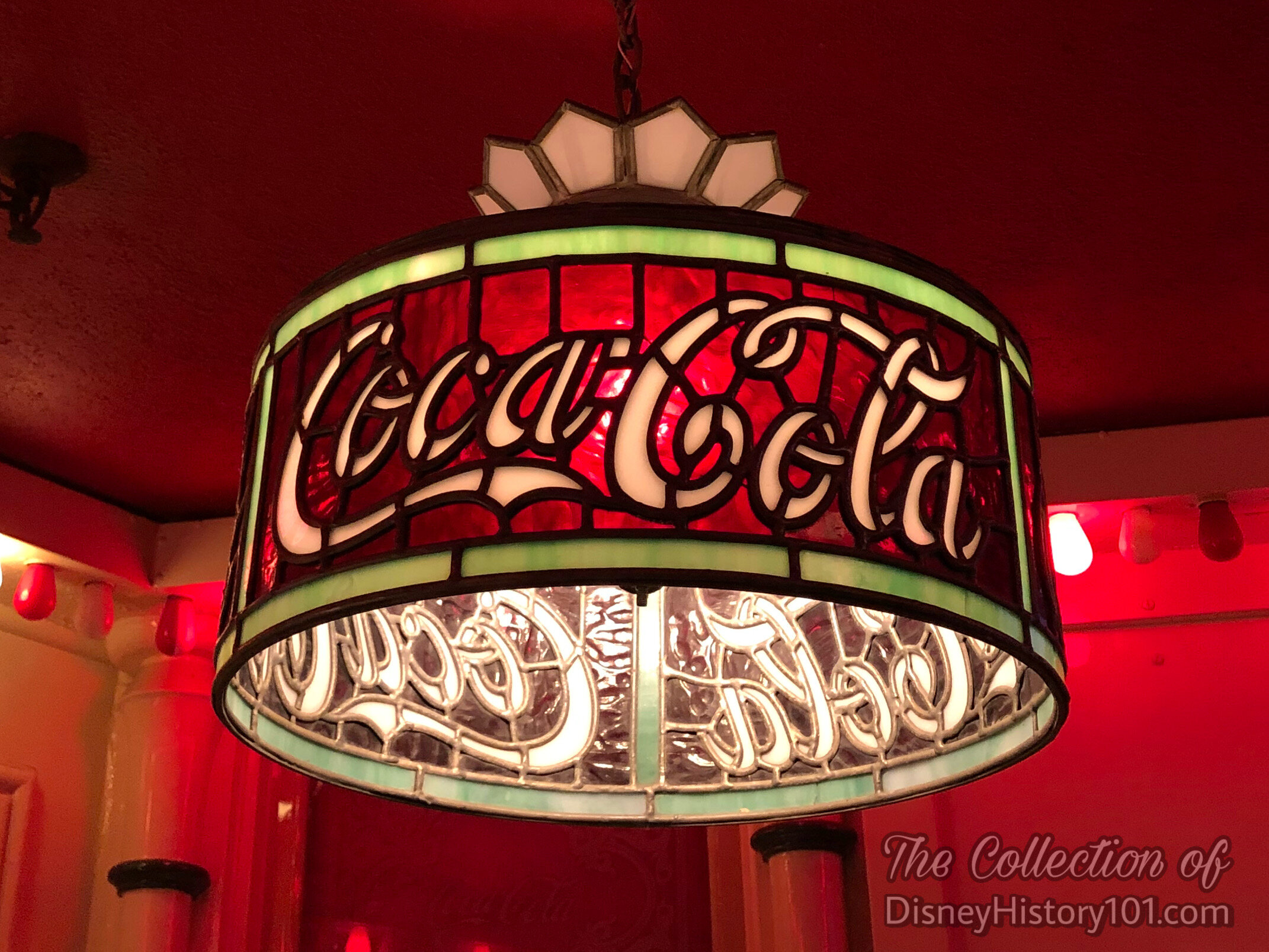
“Illumination”
Back in 1951, Art Linkletter was touring with Walt in Europe, and they visited the famous entertainment complex Tivoli Gardens in Copenhagen. Art noticed that Walt was jotting things down in a notebook as they were walking along. Art noticed that Walt “was struck by the fact that the park featured millions and millions of lights and that crews were constantly on patrol to service them.” This would influence Walt’s vision for Main Street U.S.A. at Disneyland.
On Main Street U.S.A., Details paint the story. Note the two separate types of lighting in and outside the Coca-Cola Corner restaurant: Character Lighting, and Functional Lighting. Character lighting is themed to the area to enhance the overall appearance and complement the interior, such as a chandelier or kerosene lamp. These add to the show, but don't necessarily create enough illumination for operation.
Since the beginning, all fixtures (including Functional and Character lights) were placed in their correct motif and many light fixtures of Disneyland were authentic antiques. Others, like Marshall Lane’s original decorative character lighting element designs have remained constant features of Coca-Cola Refreshment Corner to the present. The former Walt Disney Imagineering Principal Creative Executive Marty Sklar would probably agree that the small details like these make the story appealing.
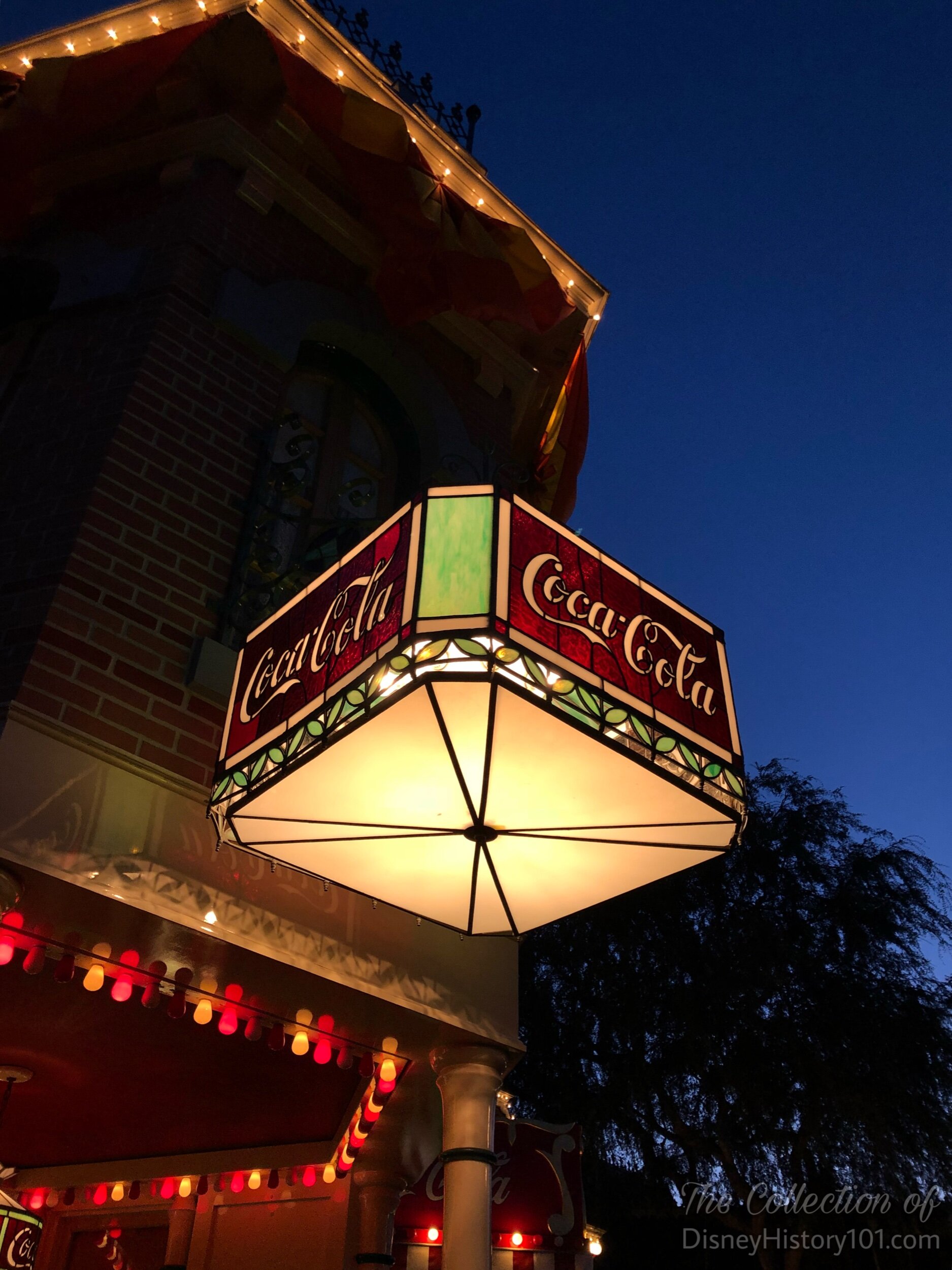
“The sign of good taste” in the present.
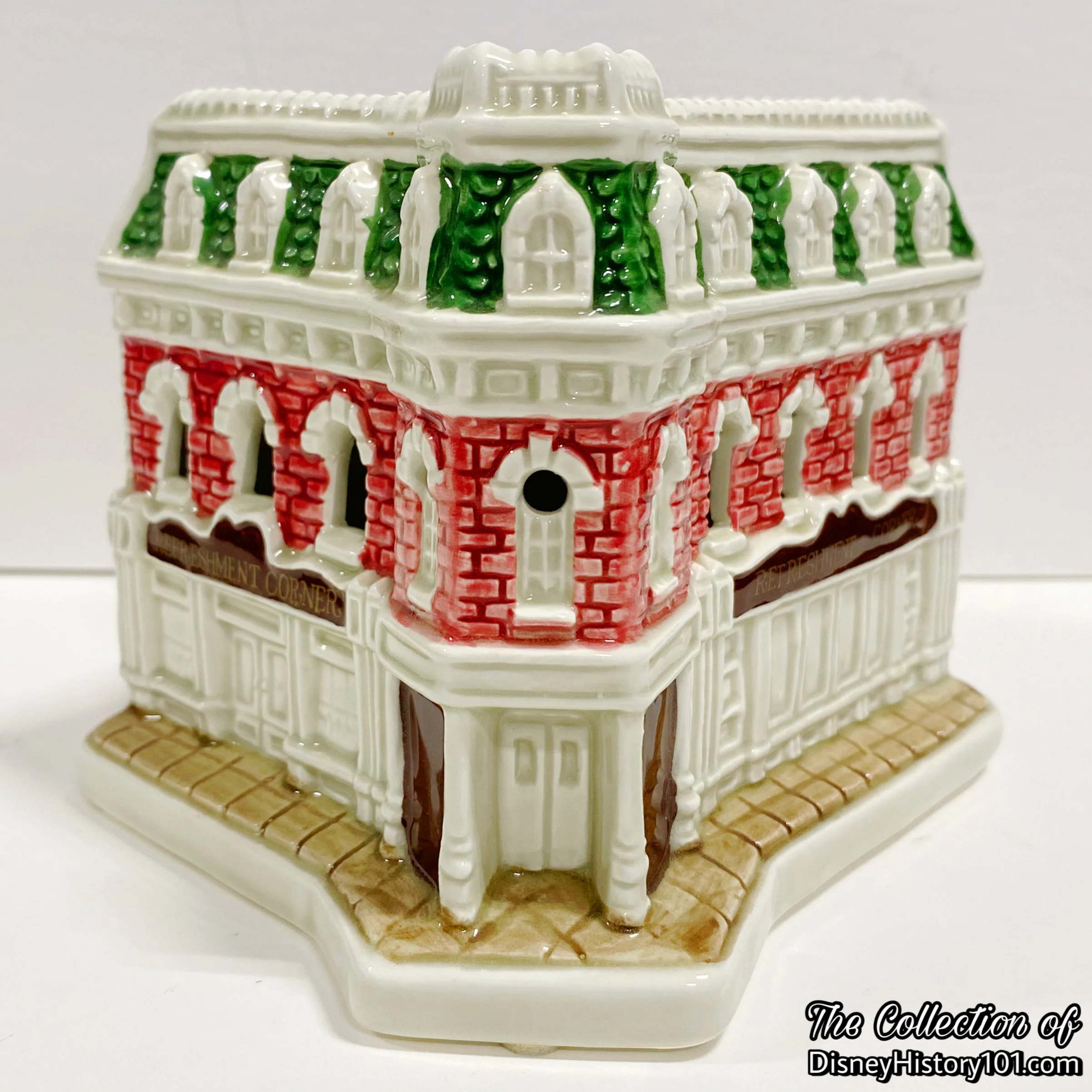
COLUMBIA
One can easily slip into the jargon of “ride,” but at Disneyland there are attractions, adventures, and shows! And there is a "story behind the story" of every attraction, every attraction is a living experience for the guest. Disneyland ride-through attractions or adventures have officially been defined as an “individual show, ride, or exhibit designed to produce an entertaining Guest experience. Disney attractions stir the imagination, enliven the senses, and provide the participants with positive, innovative entertainment, which is the essence of the DISNEYLAND Show.” It is important to review the story of the attraction, tell the story, explain it, and create interest. This is the story of the Columbia.
"The True-Life Columbia"
The Columbia Rediviva (or, “Freedom Reborn”) was the first United States ship to circumnavigate the globe in 1787 would come to inspire one timeless Disneyland adventure!
Our story begins in the colony of Plymouth, Massachusetts, founded in 1620. Now, the nearby forests furnished a seemingly never-ending supply of the best lumber to construct ships, and a shipyard was founded in Plymouth not even two decades later. It is here, that a number of one-masted ships called sloops were constructed for fishing and whaling, a tradition that continued for about seventy-five years. But soon, larger vessels were produced for the ocean trade. That is where the Columbia enters our story.
The original “Columbia” was built in 1787, a rather small vessel by comparison, reckoned to have been only 84 feet long, and weighed about 212 tons. The New England Merchants owned and operated ship Columbia left Boston Harbor (on September 30, 1787) under the command of Robert Gray. The armed ship sailed through the Pacific Northwest (where the ship took on a cargo of sea otter furs from the First Peoples) and onto the then-known Orient “where she traded furs for Chinaware, tea, spices, and silks.” This stock would be brought back to Boston Harbor, where it was sold to the local colonists. The original ship did not bear the designation USS, for it was privately owned by a trader (Joseph Barrell), but it did carry the American flag through oceans around the world for three years. All of this occurring 11 years before even Lewis and Clark’s expedition had reached the Pacific Northwest. During this time, the Columbia was occasionally joined by other vessels, as the Lady Washington (under the command of John Kendrick), departing from Boston en route to the American West. In fact, the Lady Washington and Columbia became the first American vessels to visit China and Japan.
“When she returned to her home port (in August of 1790), she had been at sea for 34 months and had logged a distance of 41,899 miles. During the last months of 1790, the Columbia began her second expedition, again under the command of Captain Robert Gray. During this voyage, Gray discovered the river which still bears the name of the historical vessel. Several more expeditions were made by the Columbia during her proud lifetime.” [Vacationland magazine, Summer, 1980]. Owing to this, many coves and harbors would have the names of Columbia crew members bestowed upon them.
Ultimately clipper ships and steamboats replaced these larger sea going vessels, rendering the Columbia a transportation mode of the past. Legends used to surround the fate of the Columbia. Was the Columbia windjammer subsequently utilized by a privateer, or did she wreck near the rocky shores of Nantucket? According to Massachusetts Historical Society and Library of Congress records, the “Columbia,” after making several voyages following the globe-circling trip, disappeared without a trace “somewhere in the Orient.”
While some believe the true-life ship was decommissioned and salvaged in 1806, one thing is sure - the Columbia’s spirit of exploration and adventure would live on in Walt Disney’s Frontierland nearly 150 years later!
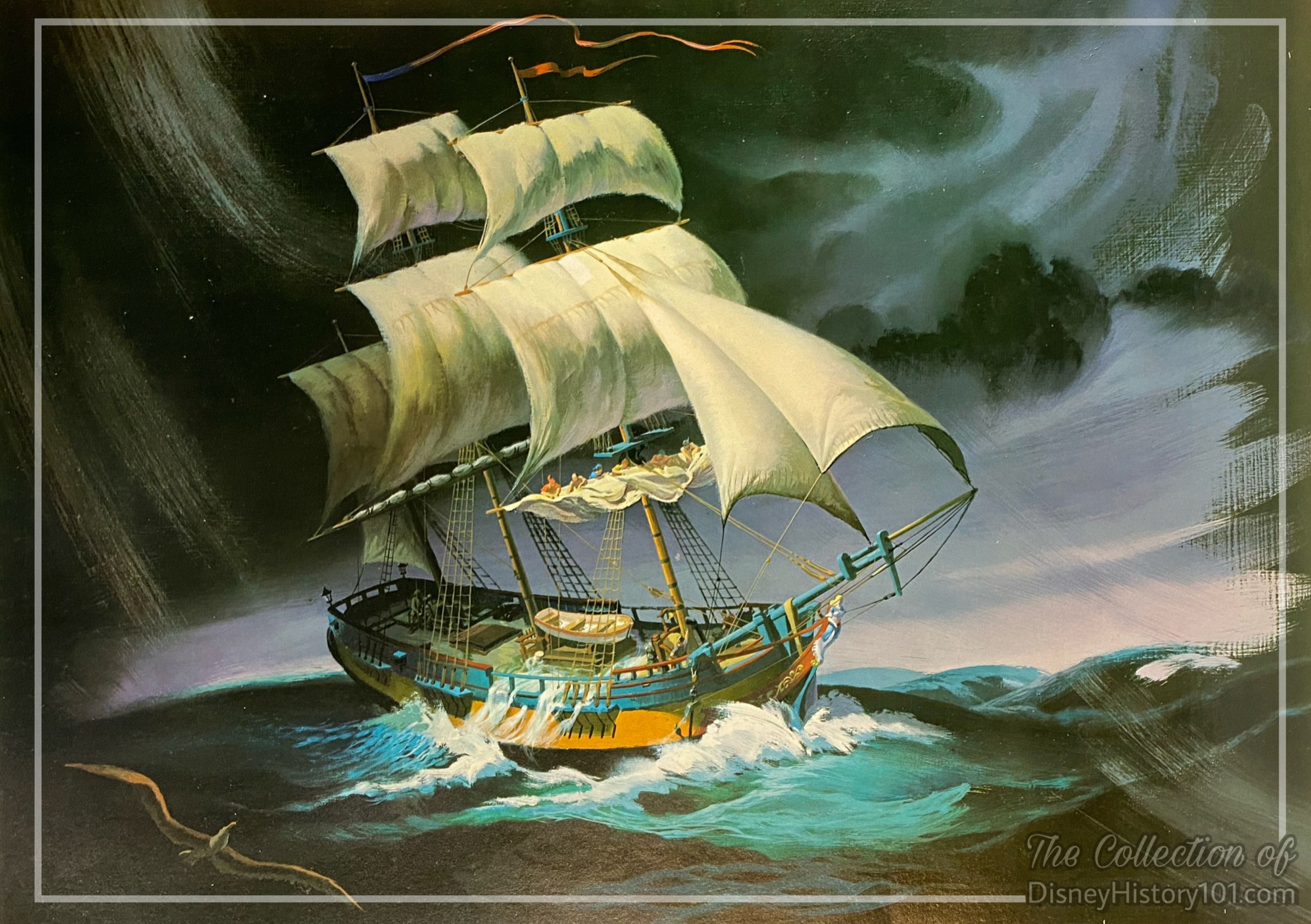
"Blue Sky for the Rivers of America"
According to “Welcome to Disneyland” (published 1958), on the eve of the first day of operation, “Walt Disney promised that it would ‘never be completed, but will continue to grow, to add new things, as long as there is imagination left in the world.’ Each year since opening in July, 1955, Disneyland has added new and unique attractions for the enjoyment of guests.” By 1957, Walt had a steamboat, river rafts, and canoes traversing the Rivers of America, but something was missing.
During a 1957 interview with one reporter, Walt Disney explained his initial plans to expand the Disneyland fleet. “I’m going to add another one,” he offered. “I’ve got to find the right kind of a boat. But it’s going to be a boat that has to do with our early commerce, you see. It might be Robert Fulton’s first steamboat or something like that. I’ll make a miniature of it that will carry people. The Clermont.” Yes, initial plans included a replica of the Clermont, the first commercial steamboat in the world that ferried passengers from New York City up to Albany beginning in 1807. But soon, Walt's attention turned to the Columbia.
The Columbia (of Disneyland’s own navy) partially owes its existence to Sunday meals shared between Dick Nunis and Walt Disney. Dick (in response to inquiry about his favorite part of Disneyland which is no longer there) shared : “I miss the old Chicken Plantation where I spent many Sundays sitting with Walt talking about the future of Disneyland. I remember one day the Mark Twain was coming around the bend, a Keel Boat was coming in, a Keel Boat was leaving, two rafts were crossing the River, two Indian War Canoes were racing each other, and Walt said, ‘Look at that, that’s a great show. What we need is another boat. And that’s when we decided to build the Sailing Ship Columbia.” (according to Disneyland LINE, Vol.25, No.28, published July 16th, 1993). The presentation of the Sailing Ship Columbia show on the vast DISNEYLAND “stage” was a distinct part of the Disneyland theater concept.
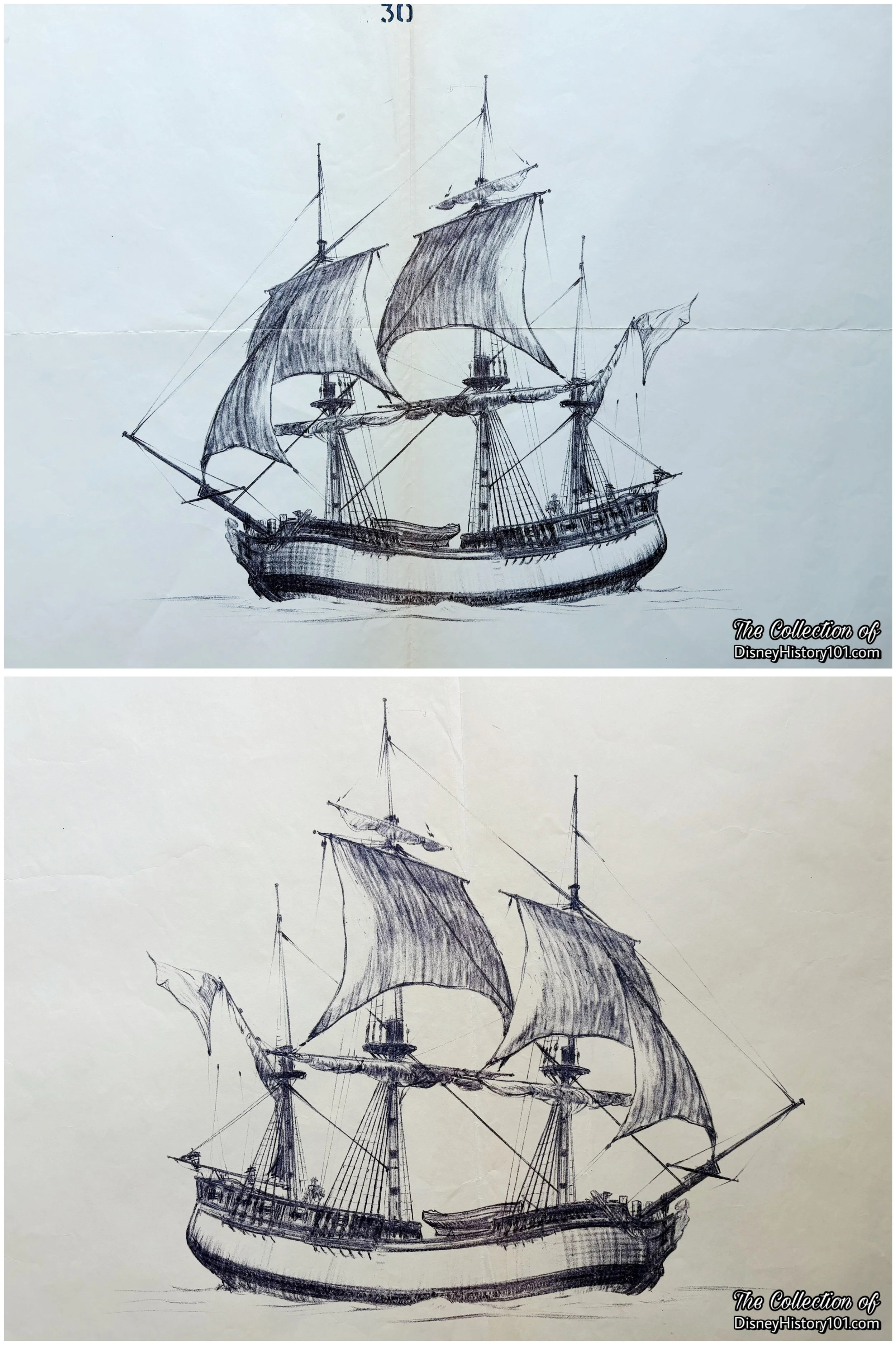
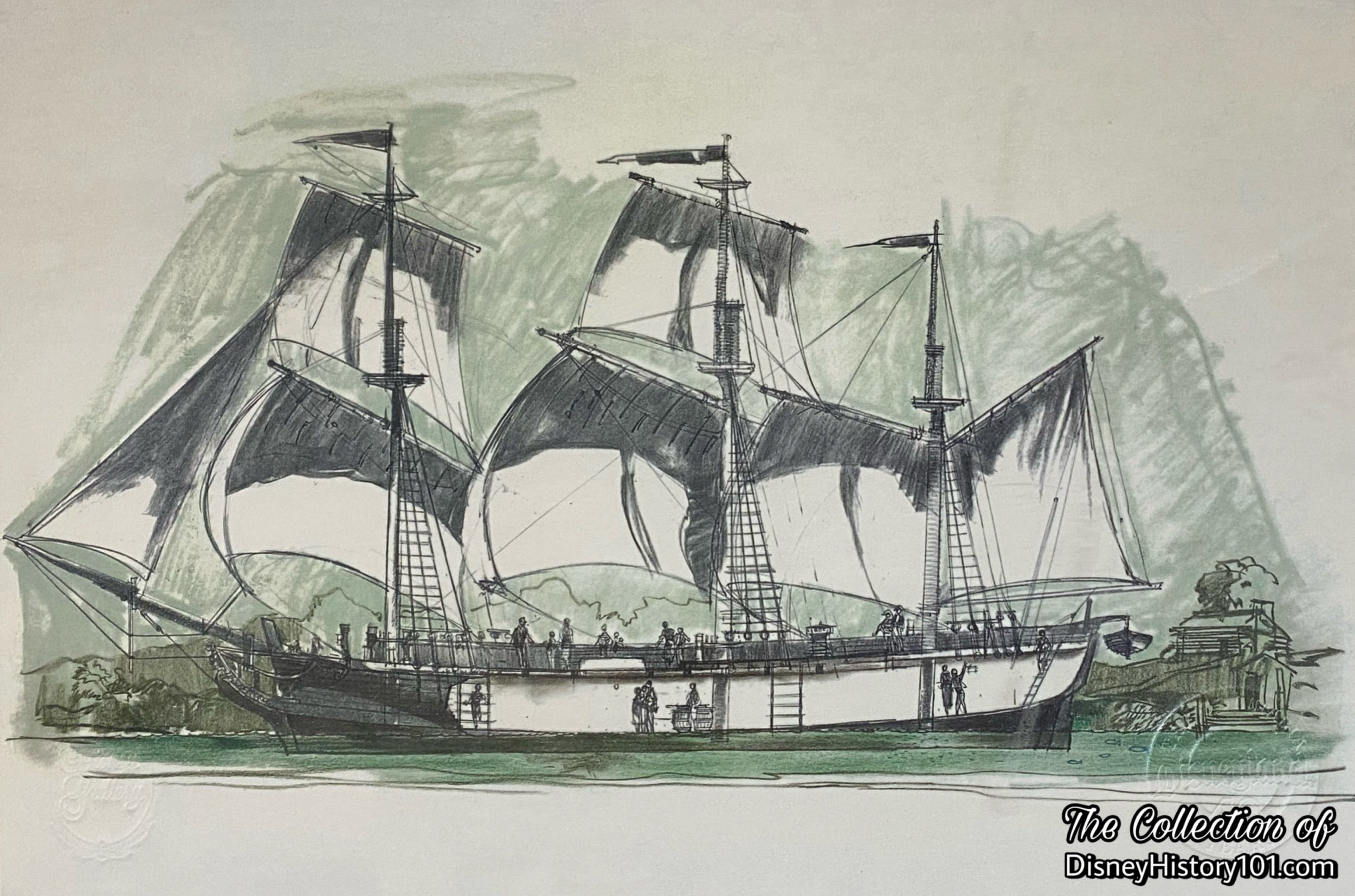
“Raise the Sails - Designing the Columbia"
Thanks to a million-dollar Disneyland expansion, design of the $300,000 namesake Disneyland version of the “gem of the ocean” had begun by the spring of 1957. Regarding most any project pursued, Walt Disney once said: “We have always tried to be guided by the basic idea that, in the discovery of knowledge, there is great entertainment as, conversely, in all good entertainment there is always some grain of wisdom, humanity, or enlightenment to be gained.” Few current Disneyland attractions embody the spirit of those words as much as the Columbia at Disneyland.
In developing the attraction, the original true-life Columbia was researched extensively, and designs were then created by architect Raymond E. Wallace of Palos Verdes. Since the original (c. 1785) plans of the Columbia had been lost, Ray conducted his research from the book “Voyages of the Columbia” and a 1.5” steel engraving of the ship, basing his blueprints on these. Ray’s designs for the Columbia (at Disneyland) were also inspired by those of the original’s “sister ship” the (c. 1787) HMS Bounty (which were still extant). As a “sidelight,” the Bounty had an equally fascinating story, involved in perhaps the most famous mutiny in history - that of Captain William Bligh and 18 crew members, who were put out off the Coast of Tahiti (we’ll revisit the Bounty later in this article).
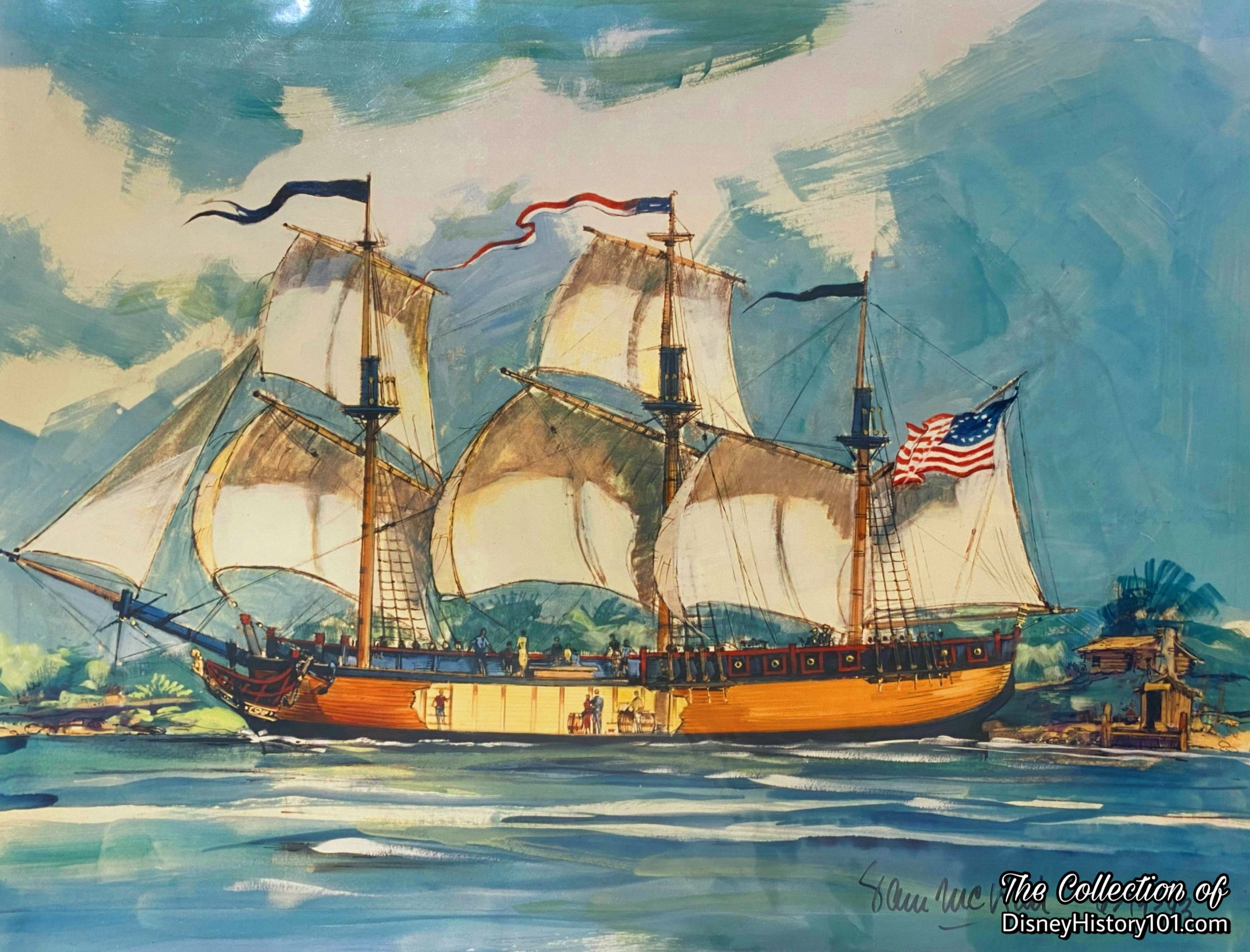
Like some advanced “High Concept,” final designs were quickly generated and approved. Next, architectural drawings were generated to help define all designs, production and construction strategies, costs, schedule, and resource requirements. Models were fabricated in order to explore the various dimensional relationships, site-lines, flow patterns, ergonomics, and visual appeal to convey the desired creative intent. In 1957, one Associated Press article “Plan Trip Into Drop of Water, Liberty Square for Disneyland” (by Bob Thomas, published April 20, 1957) briefly mentioned the models and sketches while divulging the big project. Upon being invited to Walt Disney Studio, Bob Thomas mentioned, “Walt gave me a preview of his ambitious plans at his Burbank studios. He showed models and sketches…plans call for an 1812 sailing vessel to ply the Rivers of America, along with the paddlewheeler Mark Twain.”
“Construction”
The ship’s hull was to be the same size as the original Columbia. Soon, the approximately 90-foot steel hull was being manufactured at Todd Shipyards in San Pedro, Wilmington. Bill Evans seems to have recalled (to “E” Ticket magazine, Spring of 1996) that the hull was built at Bethlehem Steel, completed by February 12, 1958, then trucked to the Park during the midnight hours of an evening in February 1958. It was then was lifted onto three flat cars, and brought from the Main Street Station around to the Frontierland Station where it was lifted off the train sideways and hoisted into the dry dock at Fowler’s Harbor.
Next, completion of Ship's carpentry, assembly and painting was performed at the park by Disneyland personnel under the direction of Joe Fowler (In Fowler's Harbor Frontierland). At the time, Joe Fowler (Disneyland Operations Committee) oversaw the Construction & Maintenance division including Engineering, New Construction, Maintenance, and Janitorial. It was assured that many of the same types of tools used in the construction of the original were now used to bring the Columbia back to life. These were utilized by a variety of sub-contractors and craftspeople.
“First, the steel hull was completely planked above the waterline. Oregon pine was chosen for the ends because of its long fibers… The deck was laid with planks of Douglas fir.“ “News from Disneyland” reported: “Among the unusual occupations represented by the workmen was that of Louis Baham, a caulker. Caulking consists of filling the seams between a wooden ship's planking with cotton and a tar substance called oakum. Baham's past experience on sailing ships included caulking the sides of ‘Old Ironsides’ when that famous ship was reconstructed following World War I.”
“Submarine batteries, weighing a total of over 20 tons, were the original power source for Disneyland's Columbia, and also served as ballast, to improve stability of the ship.“
While the hull (and many other parts) were the same size as the original, the masts were an exception. They would need to be smaller, or else they would dwarf the Matterhorn. The construction of the masts required a special lathe and were made by Cliff Wavel. “Next came the ‘stepping,’ or securing of the mast ends. Made of hollow spruce and laminated together, the two sections of the mainmast were carefully positioned by cranes.” A silver dollar was even placed under each mast, before it was ‘stepped’, according to ancient maritime and U.S. naval tradition.
“Construction on many of the Columbia's wooden trappings, such as the wheel, the capstan, the rails, the rudder and many other items was done at the Mill”, right at Disneyland. Parts (like blocks, dead-eyes, and special rigging) were manufactured by Bagby-s Wire Rope & Splicing Service. “The stays, shrouds and ratlines of the rigging are made of steel wire rope, wrapped with manila and are referred to as ‘Standard Rigging.’”
“Pacific Sailmakers, the same company who made the sails used in the films Mutiny on the Bounty and Captains Courageous, also made the original sails for the Columbia.”
The vessel would carry ten cannons like its namesake. “The windjammer's cannons were cast at Disneyland's Staff Shop.”
Final touches like paint were carried out by WED employees, also under the direction of Admiral Joe Fowler.
To top the whole vessel off, the ship would fly a 1777 13-star flag (representing the original 13 colonies) provided by Hortie-Van. As a sidelight, the only other two locations in Disneyland to fly a 13-star flag were the Frontierland Stockade Flag Pole, and one of eight Mark Twain DockFlagPoles.
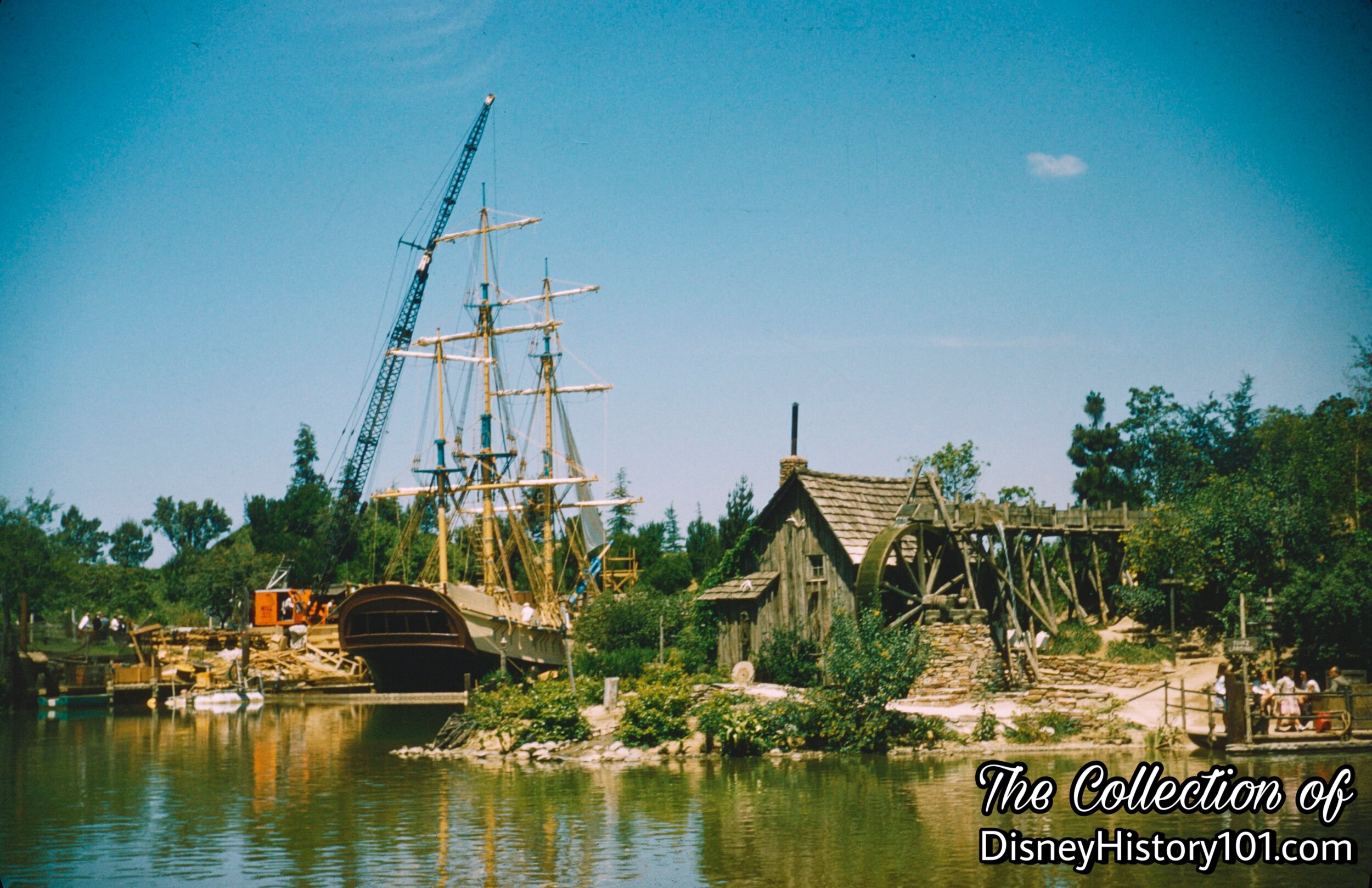
Pictured above, an on-site crane aids in some installments to the Columbia while harbored at the Frontierland Dry Dock! Frontierland’s newest attraction was scheduled to open in less than one month from this point. The representation of the 18th-century merchant vessel would soon circumnavigate the controlled channel of the Rivers of America at Disneyland!
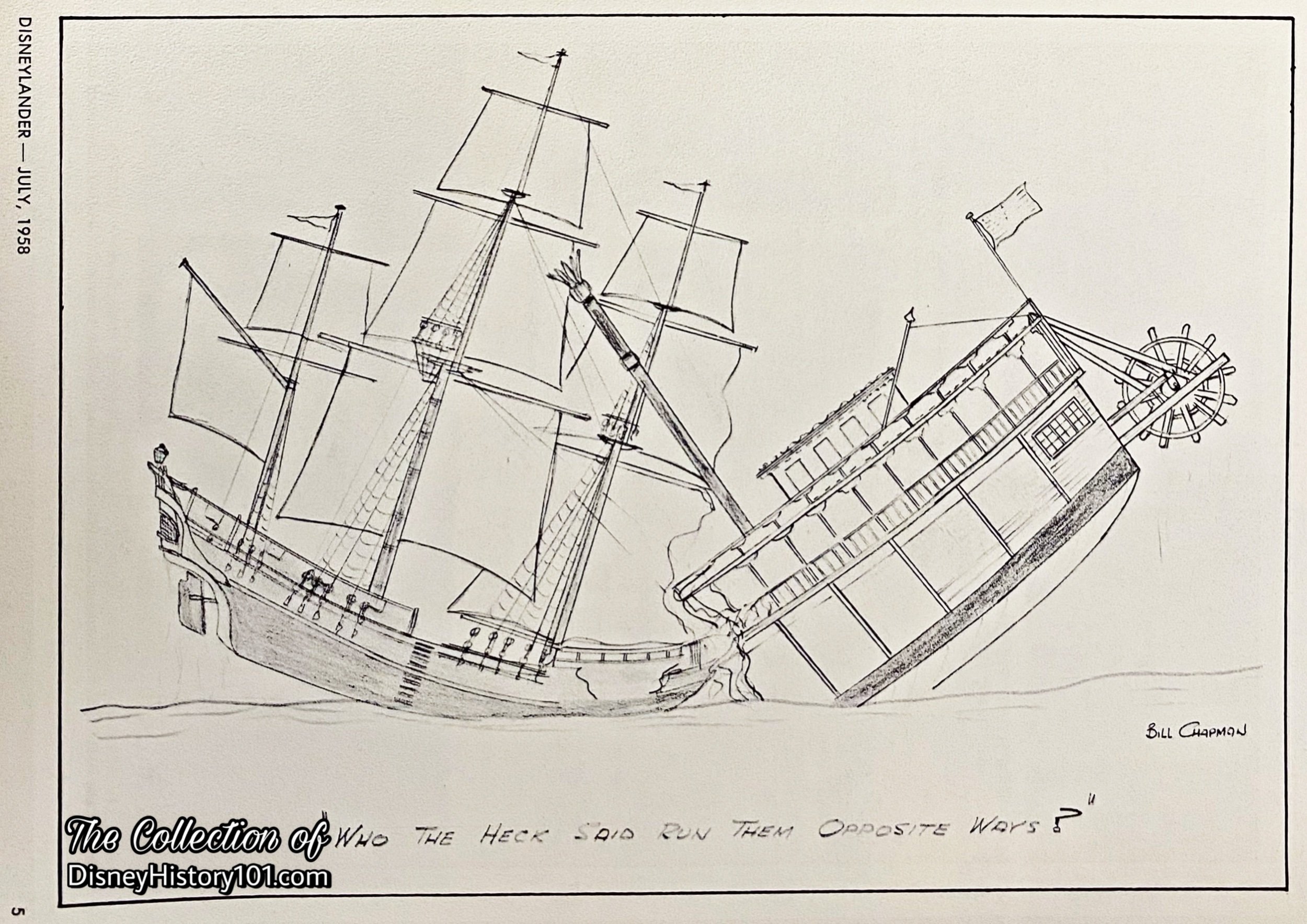
Though the Columbia would carry sails, it would actually be designed and constructed to be propelled under water by submarine battery-powered fan motors. These motors were enough to repeatedly carry the ship (and its passengers) on 20-minute journeys, along a 2,450 foot-long guide rail located at the bottom of the Rivers of America. Since it costs a fortune to drain the ride, Machinists (or highly skilled craftsmen) would learn scuba diving, and dive down to where the action is to check the equipment and the rails.
As for that shared guide rail, a precise water level (of the Rivers of America) assured that the vessel did not float off of the rail or drop onto the guide rail and break it. This shared guide rail makes the next few Vintage Views of an extraordinary nature.
Soon, the Columbia operated alternately with the Mark Twain.
The 1957 TWA publication “Let’s Talk About My Visit To Disneyland Anaheim California: A Note From Mary Gordon TWA Travel Advisor” teased and divulged new adventures heading to Disneyland (some years ahead of their grand opening): “Other coming attractions include: The Nautilus-Submarine Ride, Adventures in Science, Alice in Wonderland, Adventure Ride, Liberty Street (our American Heritage), a Full-Rigged, Three-Masted Sailing Ship, Thieves Market, New Orleans Square, and a Haunted House.”
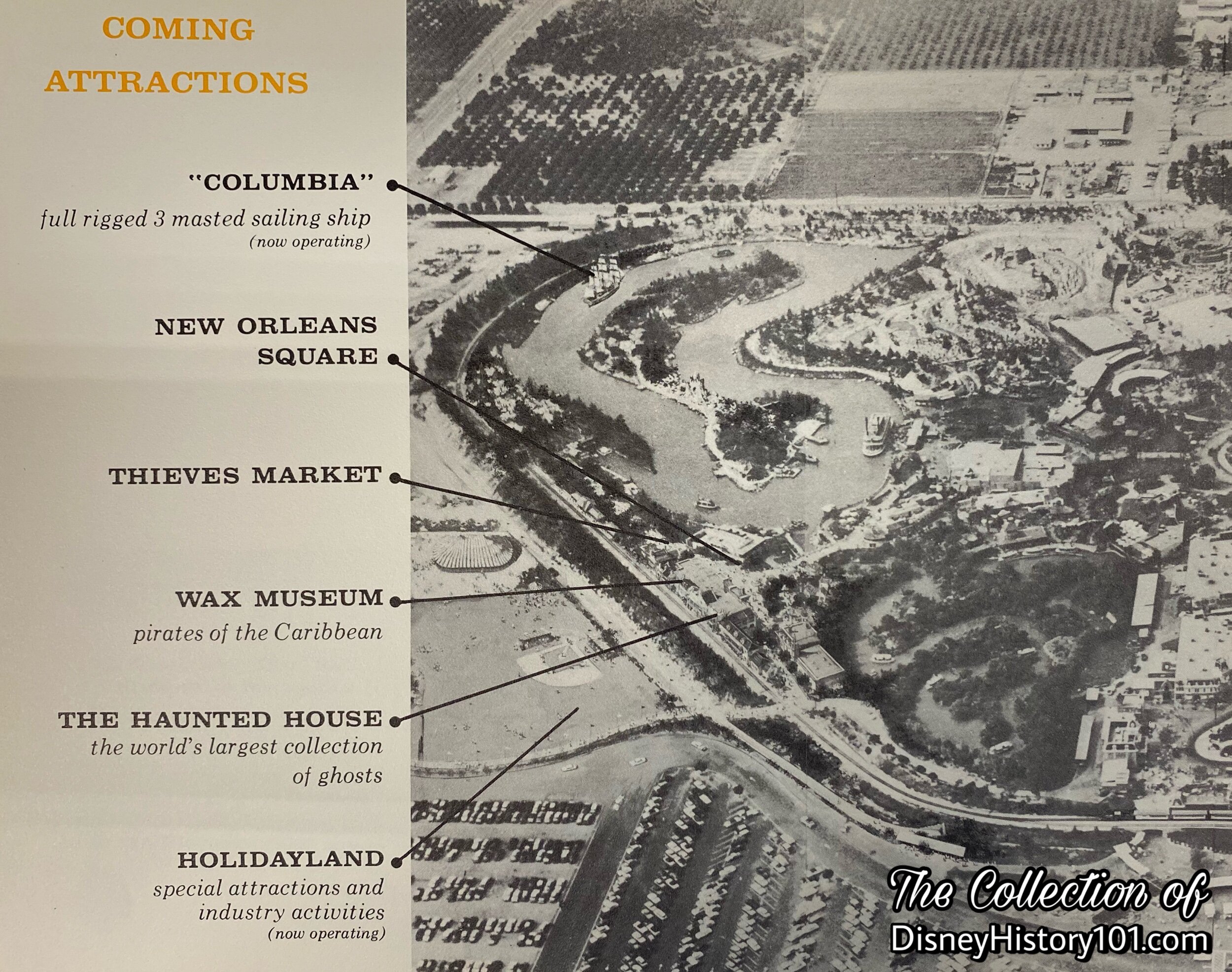
A two-page spread of “Disneyland, U.S.A.” focused on Disneyland’s future. Among the “planned additions and their proposed locations” depicted, is the Columbia. During the construction of 1958, an appraisal of the ride structure valued it at $1,400 while the equipment was valued at $211,400.
“Lively Now, Lively…We Sail With The Tide.”
Slightly before the summer of 1958, Disneyland Holiday magazine (published for the Summer of 1958) excited future guests of Disneyland, by advertising “the Queen of the River…the Columbia” as part of “the early West reborn in Frontierland” at Disneyland! The $300,000 Disneyland version of the “gem of the ocean” was based on the very same first United States ship to circumnavigate the globe in 1787. Upon embarking on your journey aboard Disneyland’s Columbia, “a voyage of discoveries on the rivers of America” awaits!
The ship was christened by Joe Fowler and the Mouseketeers on June 4, 1958. Ten days later, opening day came (on June 14, 1958; 5:00pm), with 300 invited Guests, official dedication festivities, and Dedication by Walt Disney and assisted by Art Linkletter. The newly appointed Admiral Richmond (of the United States Coast Guard) was among the guests that walked up the gangplank and aboard the Columbia. Then, the sailing Ship Columbia was christened by Mrs. A.C. Richmond, the wife of Coast Guard Admiral A.C. Richmond. Walt oversaw the Naval tradition, as Admiral A.C. Richmond and his wife presented a ship’s Bible to the Columbia’s acting skipper. The gesture was captured by photographer Mel Kilpatrick.
After the maiden voyage, Disneyland guests were officially admitted aboard the reproduction “full rigged 3 masted” (and armed) 18th-century merchant Sailing Ship Columbia. That summer, the Columbia became one of more than 40 rides and attractions that would nearly double the number of Disneyland’s original 22 Opening Day attractions. By 1959, Joe Fowler was Vice President of Disneyland Operations Committee and Doc Lemmon of Disneyland Operations was overseeing Operators of Rides & Amusements (like the Columbia), Livestock, Parking Lot, and Ticket Sellers.
Disneyland audiences passed colorful attraction posters while still in the “lobby” of the Disneyland Show! Near the Mickey Mouse Floral Portrait and positioned in a few other places around the Park, attraction posters (designed by Bjorn Aronson, c. 1958) heralded the Disneyland’s latest adventure - the Columbia! This particular poster is preserved through the Walt Disney Hometown Museum (Marceline, Mo), donated by the Legendary original Disneylander - Robert Penfield!
At Disneyland, signs were themed to support the stories with respectful graphics, colors, fonts, terminology, the overall design of sign, materials (wood, metal, banners, etc.), and verbiage used on the signage.
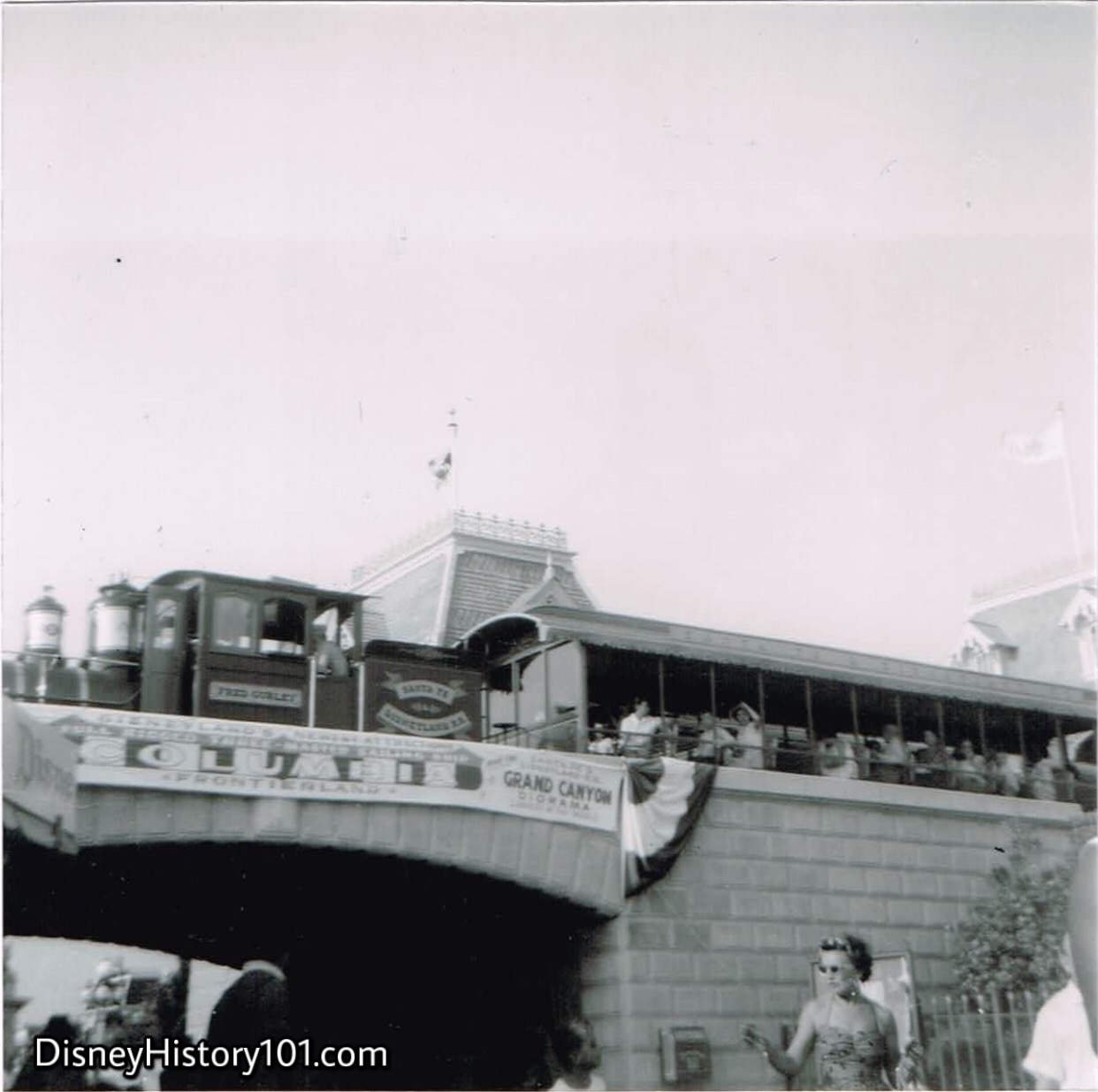
From the Marquee of Disneyland and its nearby Tunnels, guests were made aware of Disneyland’s newest attractions! While the rails of the Santa Fe & Disneyland Railroad granted Disneyland guests a magnificent view of the Grand Canyon, banners over the tunnels announced a new way to enjoy the Rivers of America - the sailing ship Columbia!
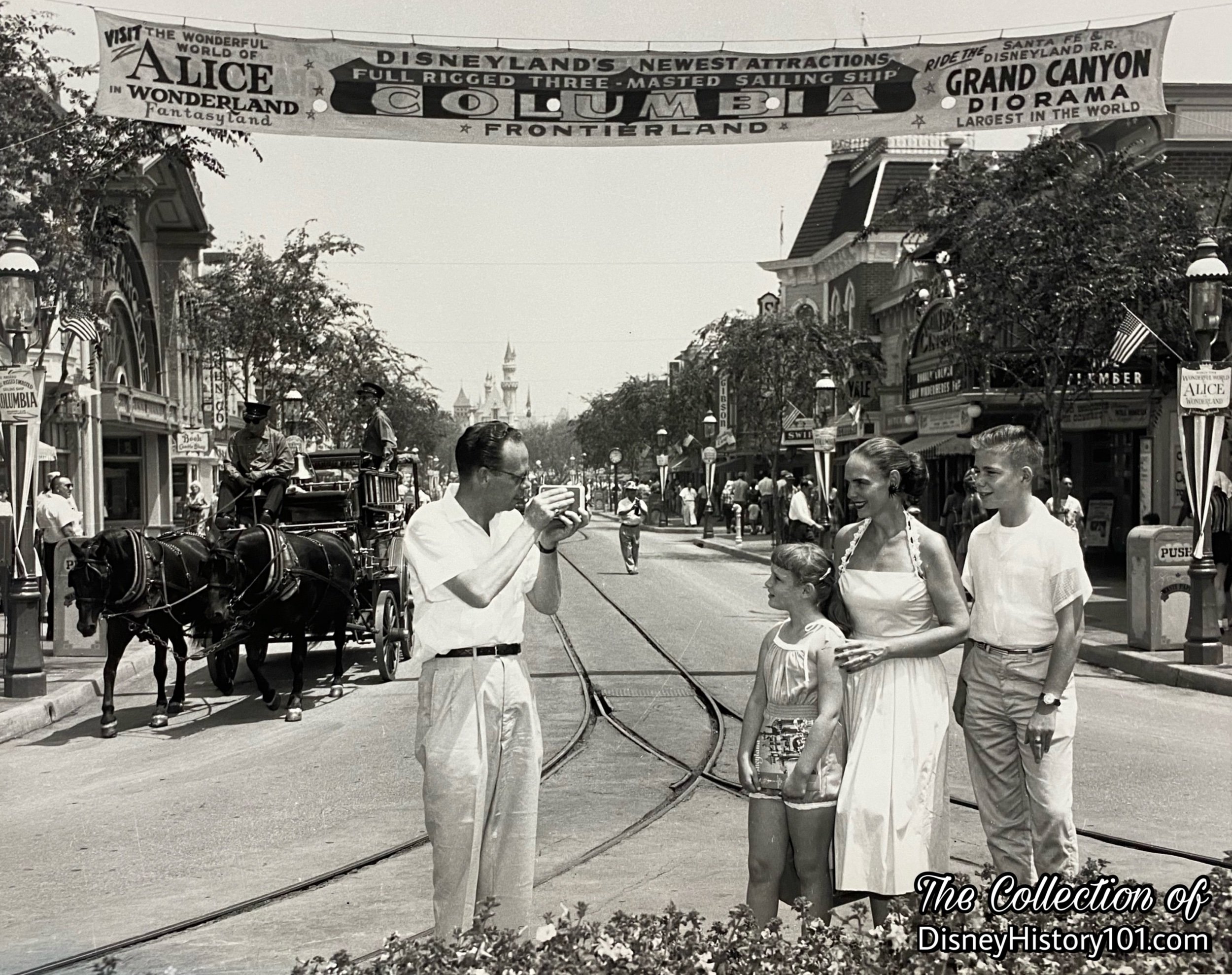
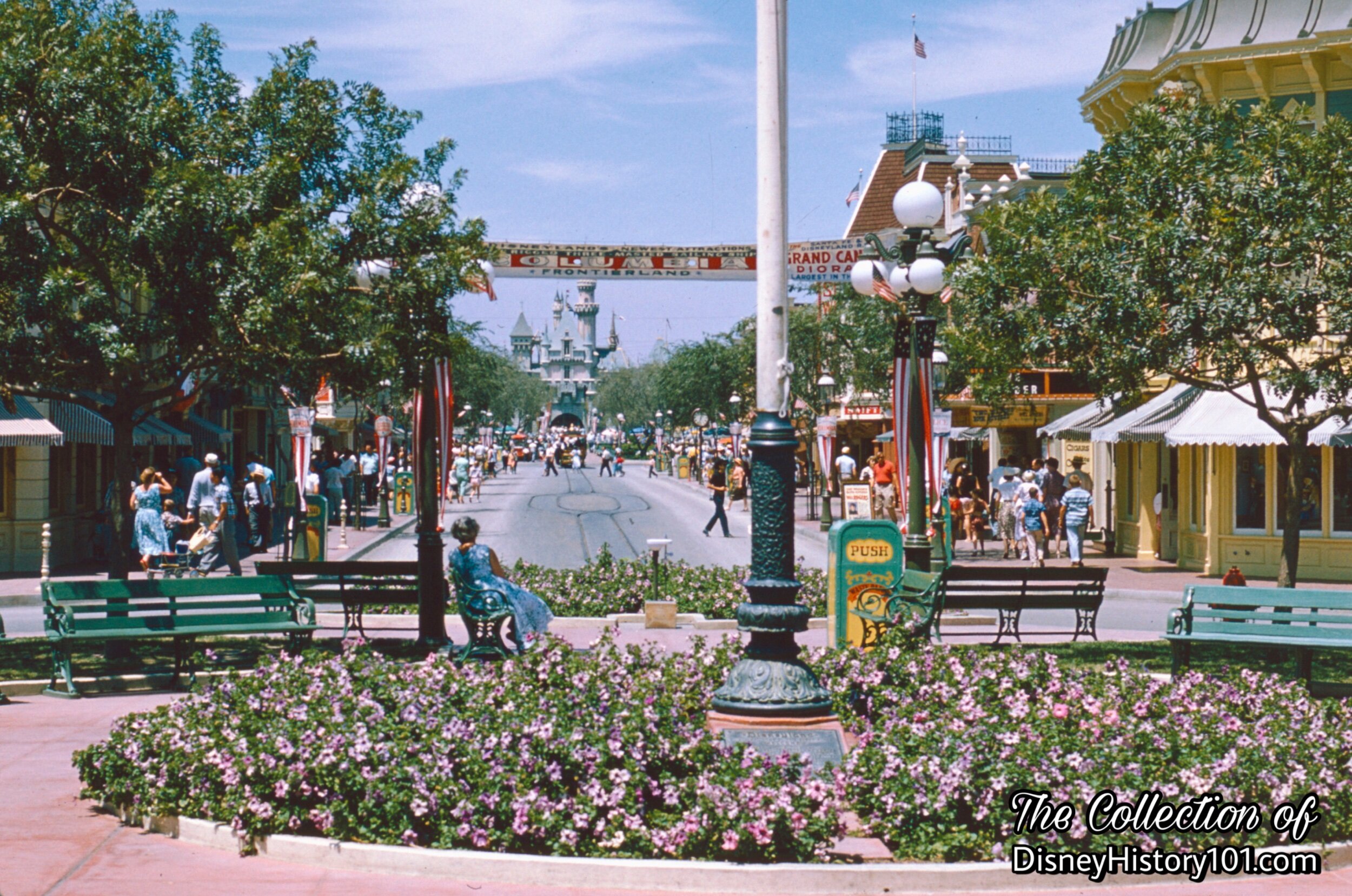
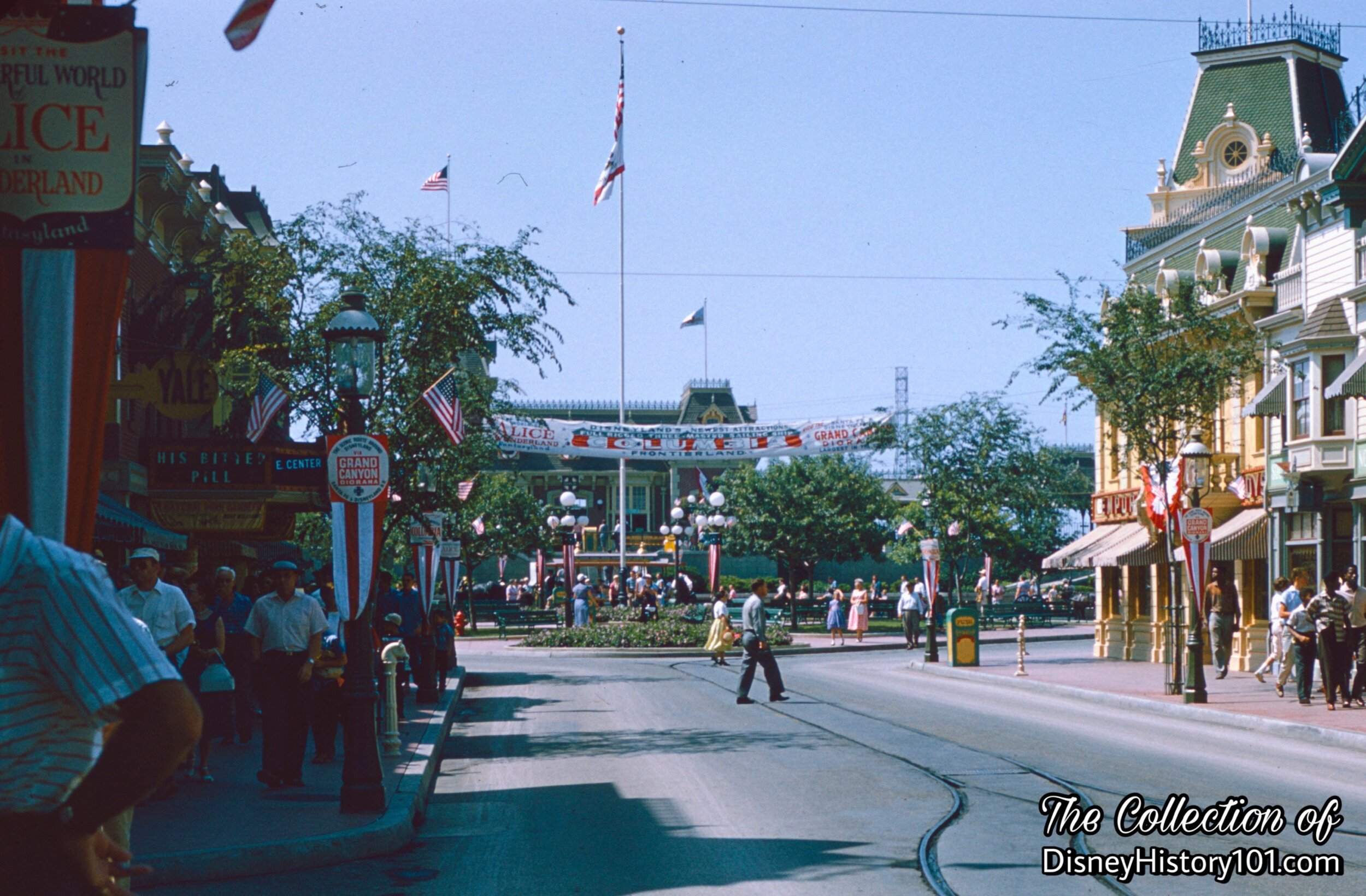
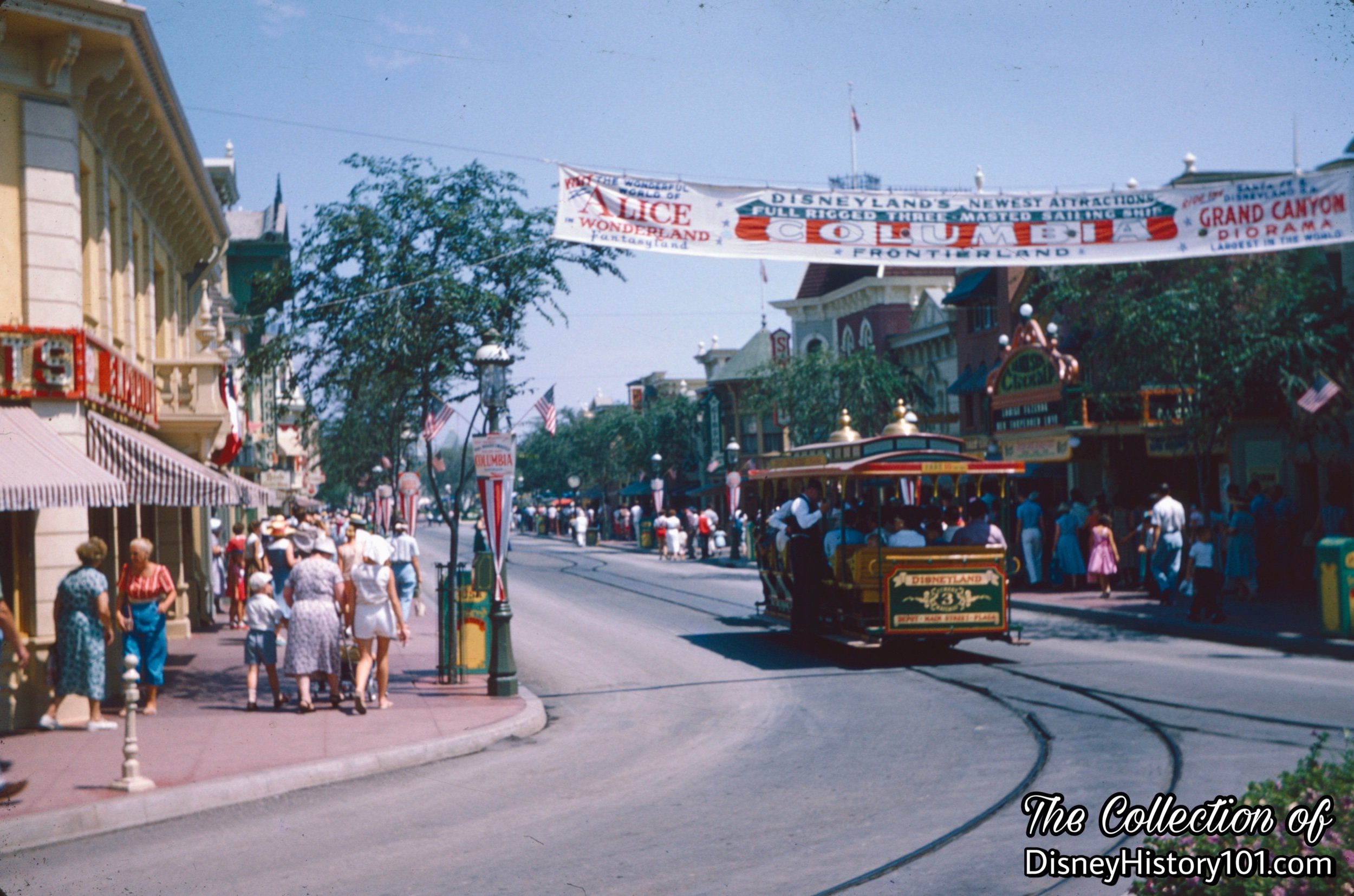
Banners and bunting strung across the Frontierland Stockade also heralded Disneyland’s newest attraction - the fully-rigged three masted Columbia!
“STATISTICS”
We now present a few astounding facts and figures about Disneyland’s modern reproduction of the “full rigged, 3 masted” (and armed) 18th-century merchant Sailing Ship Columbia!
Beam : 26 feet, 6 inches
Bowsprit : 45 feet
Guns : 10
Length : 92 feet overall (according to “Disneyland Dictionary” printed October 1959), or (by some Admissions, Media & Attractions accounts) 93 feet ; a “130-foot-long replica of the first American ship to circumnavigate the globe,” according to “Walt Disney Disneyland,” page 42, printed by Officine Grafiche Arnoldo Mondadori - Verona; first published 1964.
Main Mast : 84 feet
Maximum Passengers : 275 people
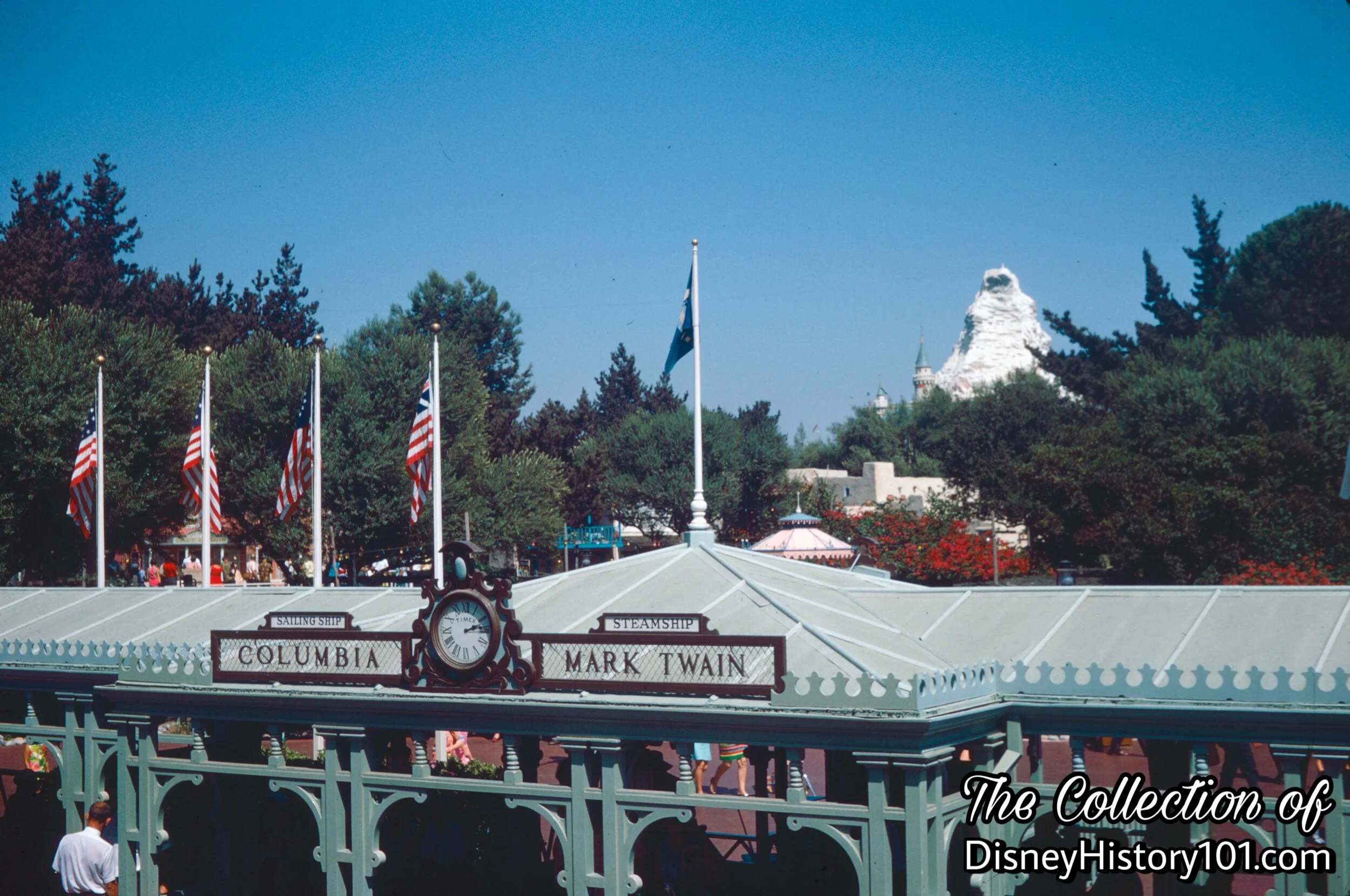
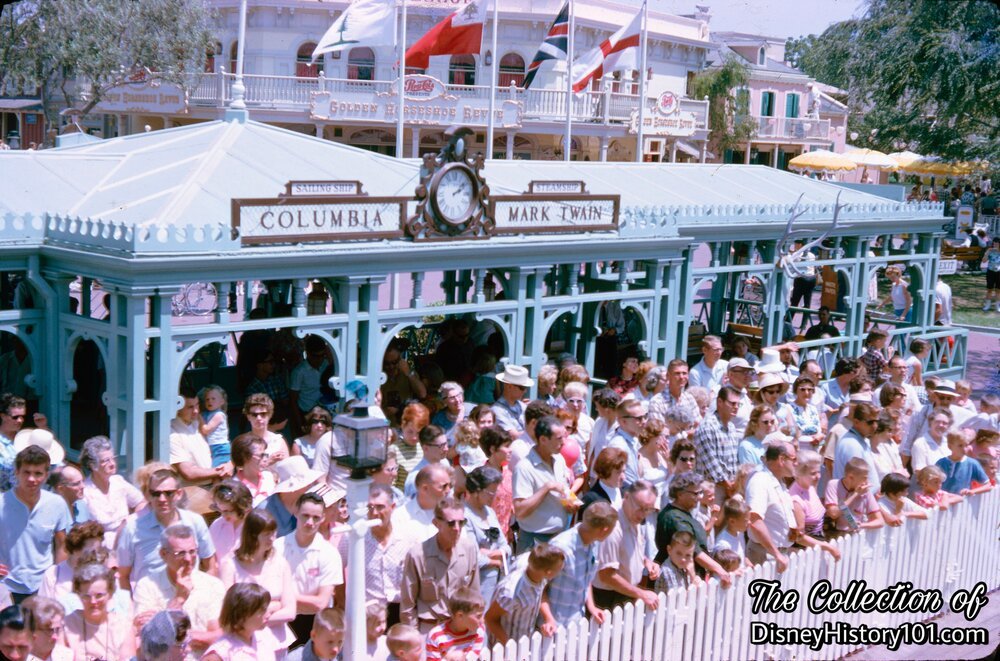

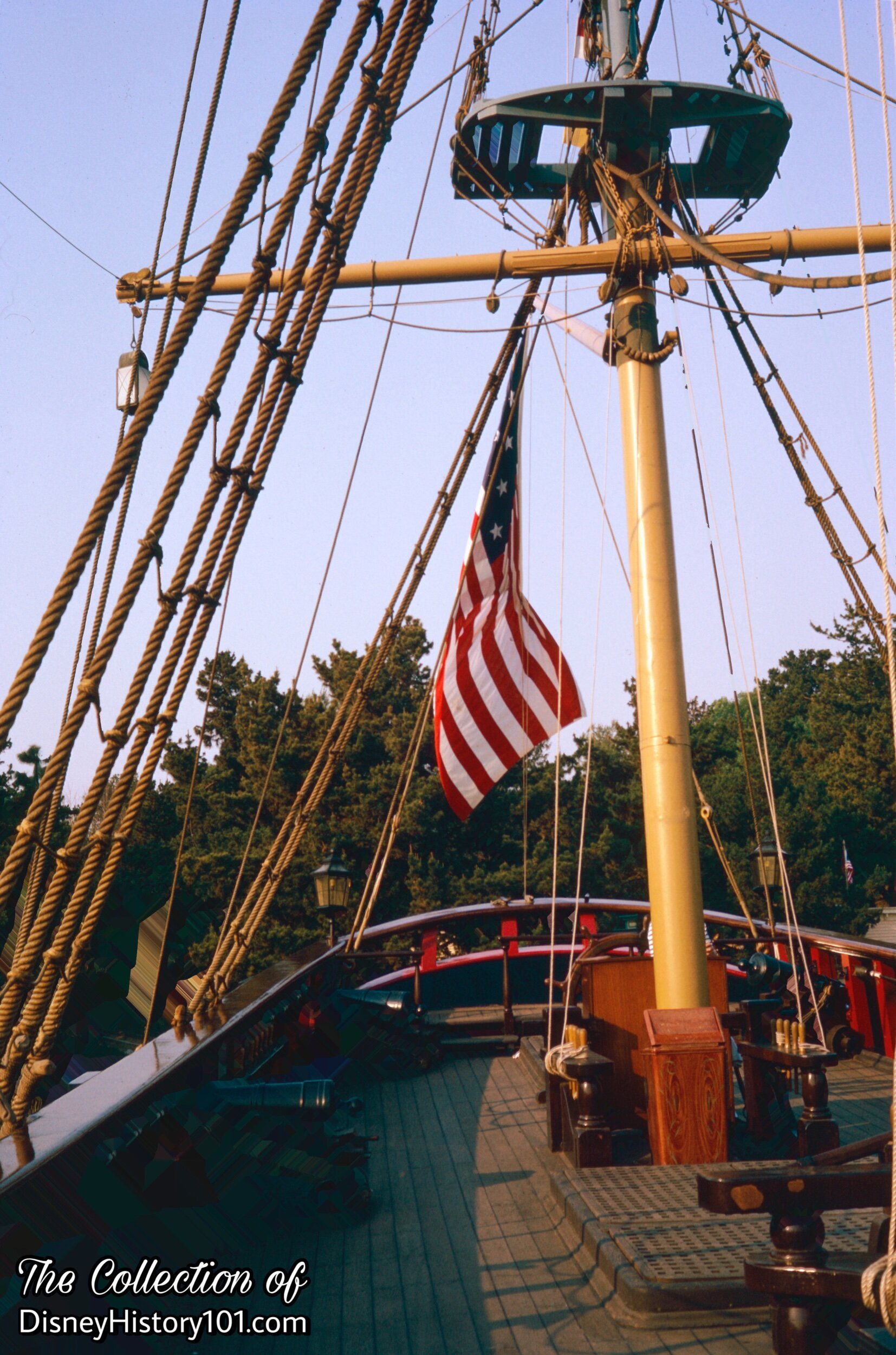
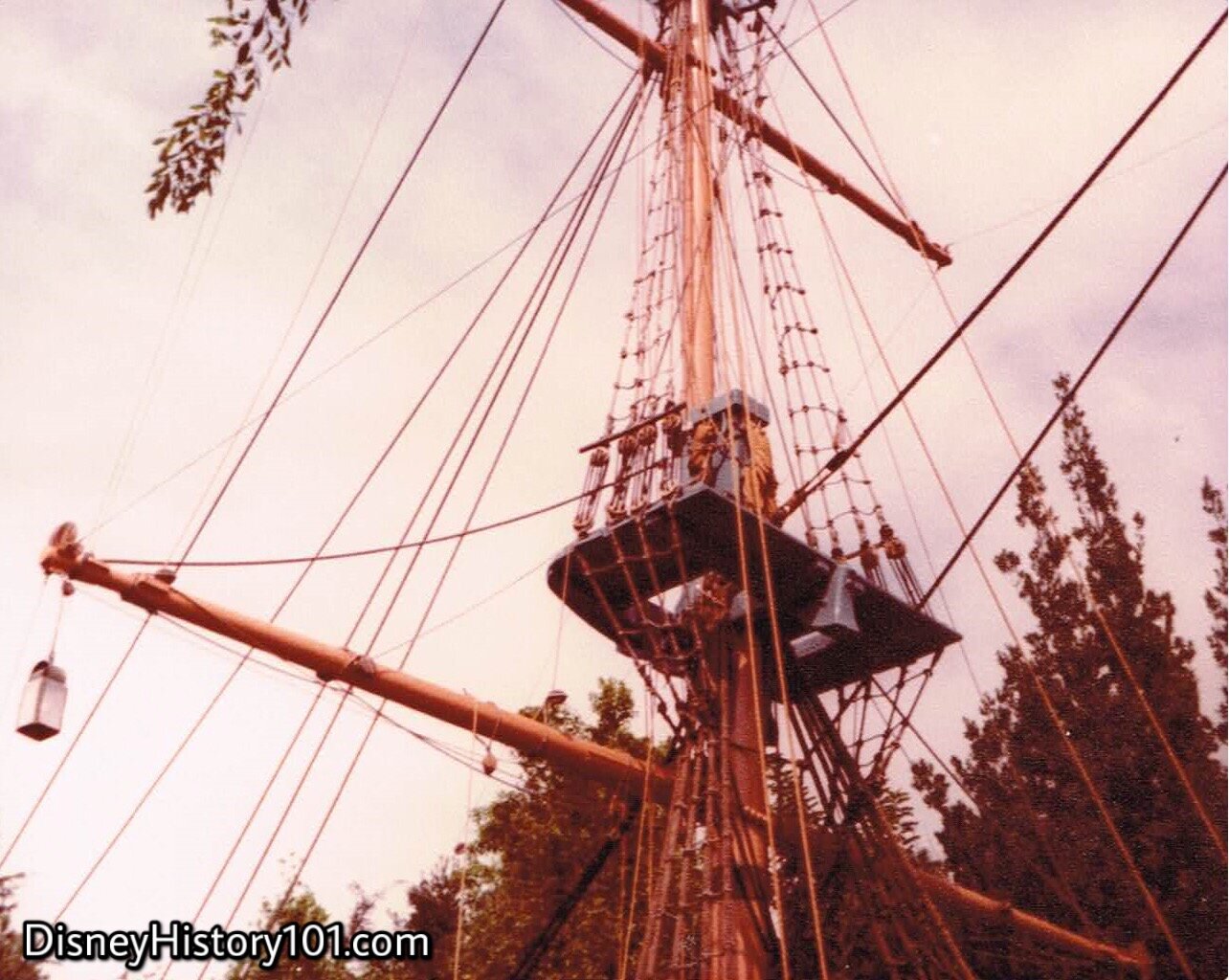
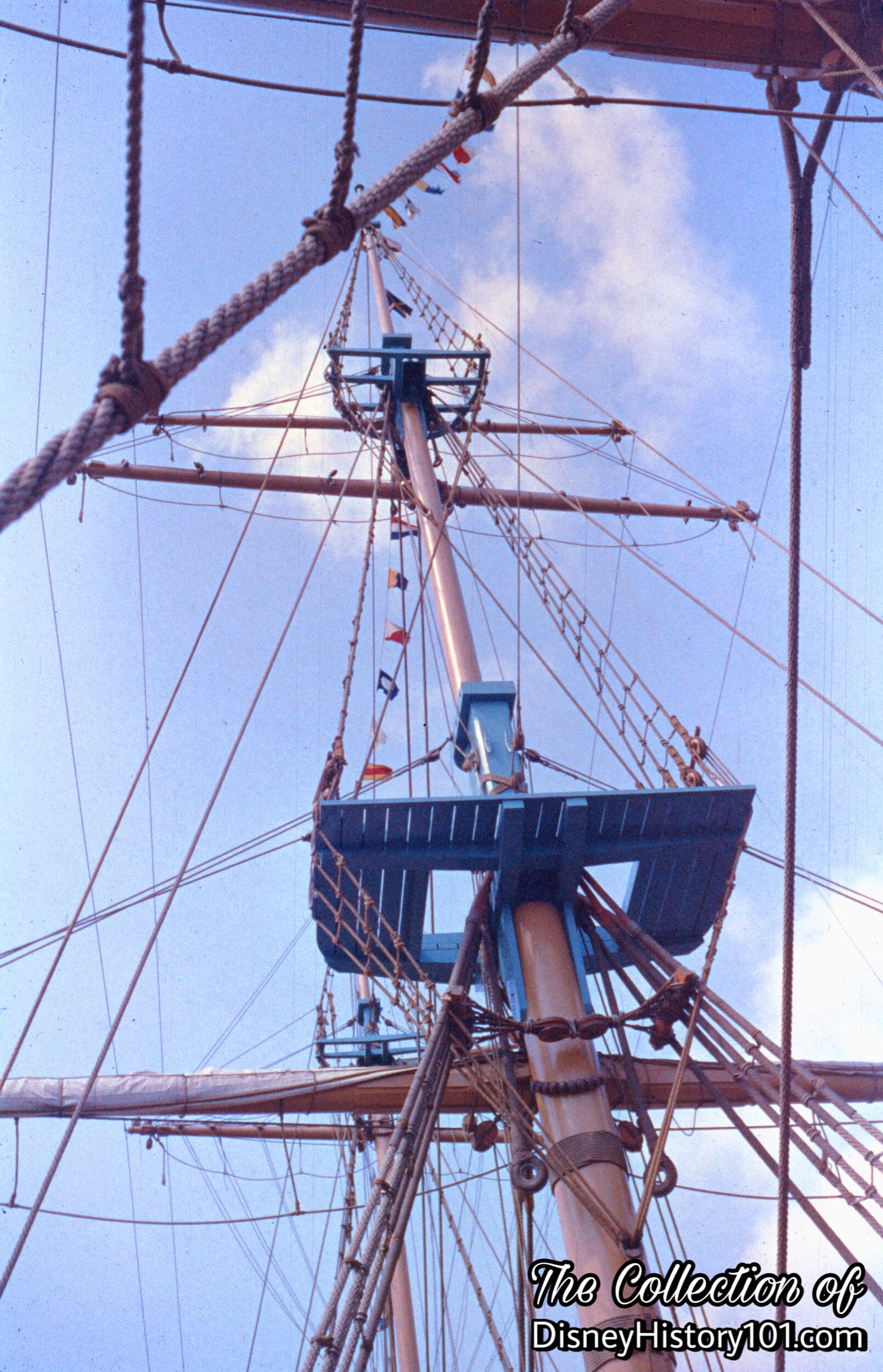
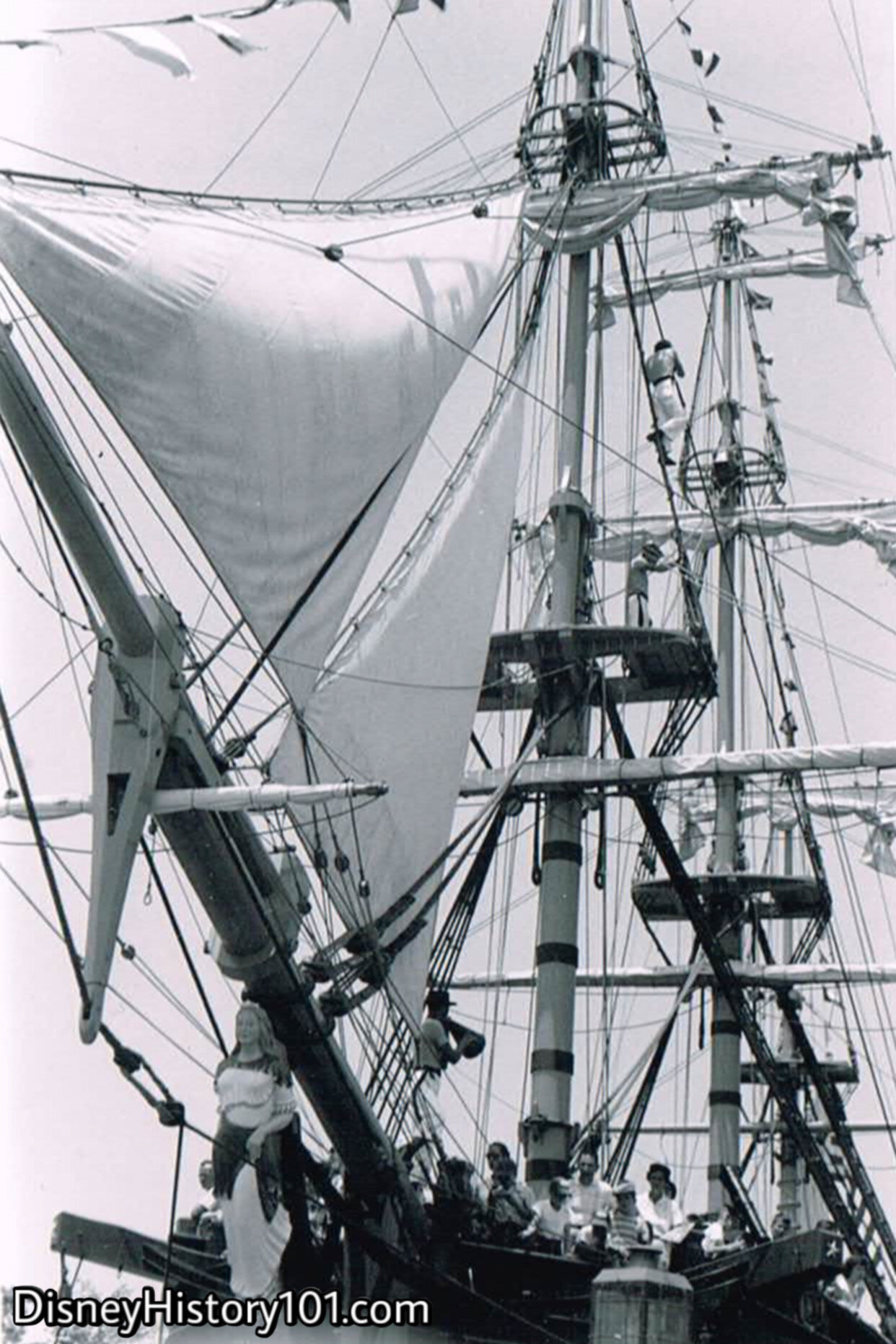
There were often Attractions Host Crewmen spotted near the Top of a Mast.
There’s adventure on the “high seas” (and Rivers) of America too! The Columbia’s “lookout” scans for adventure along the river banks from the bell headstock of the foremast. A number of notable Disneyland Cast Members and Walt Disney Imagineers had their start on the deck of the Columbia, like Randy Bright, who “enlisted in the Disneyland Navy,” during the summer of 1959. He became a lead on the Sailing Ship Columbia, and we would see him up climbing the rigging.
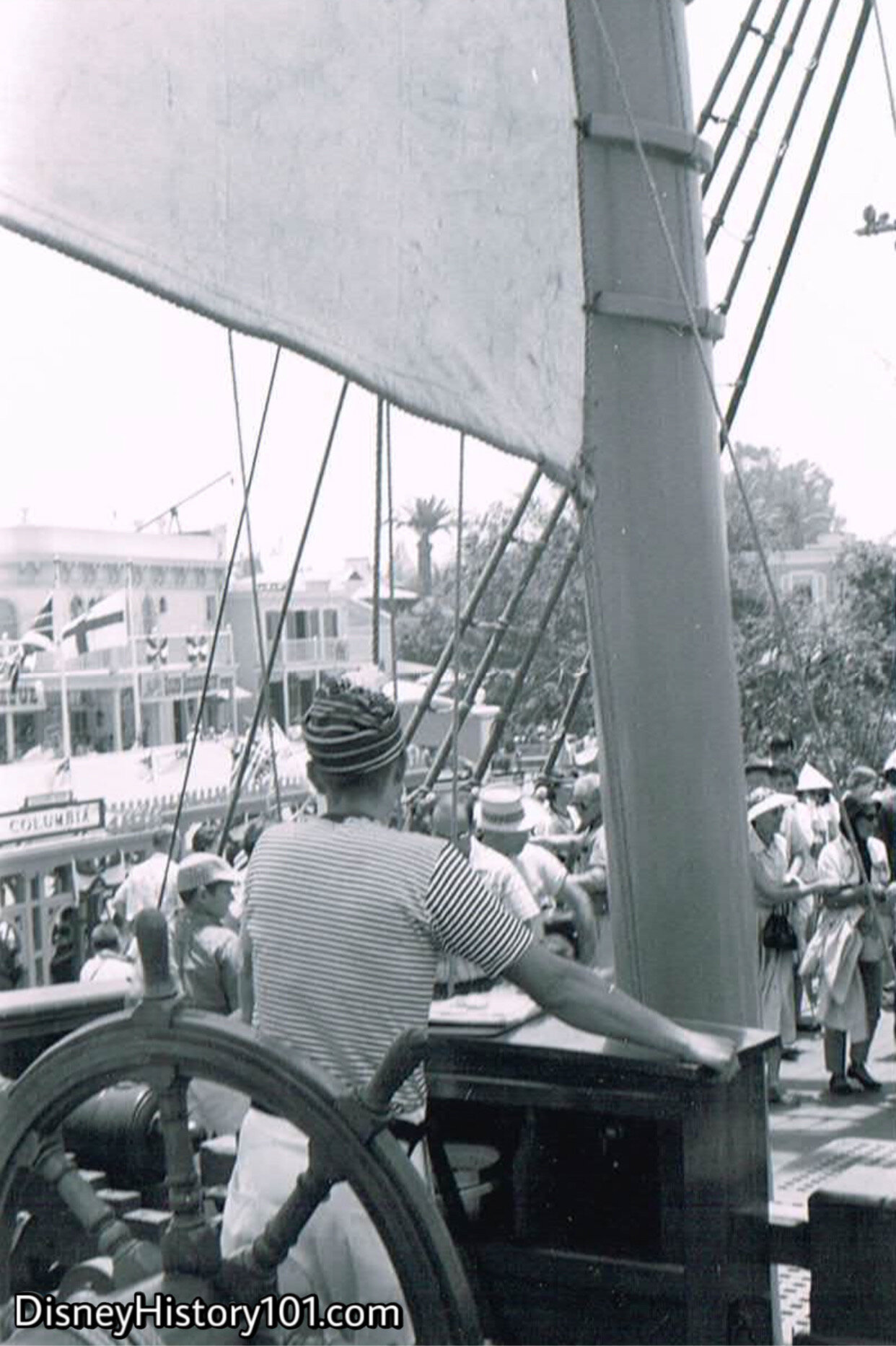
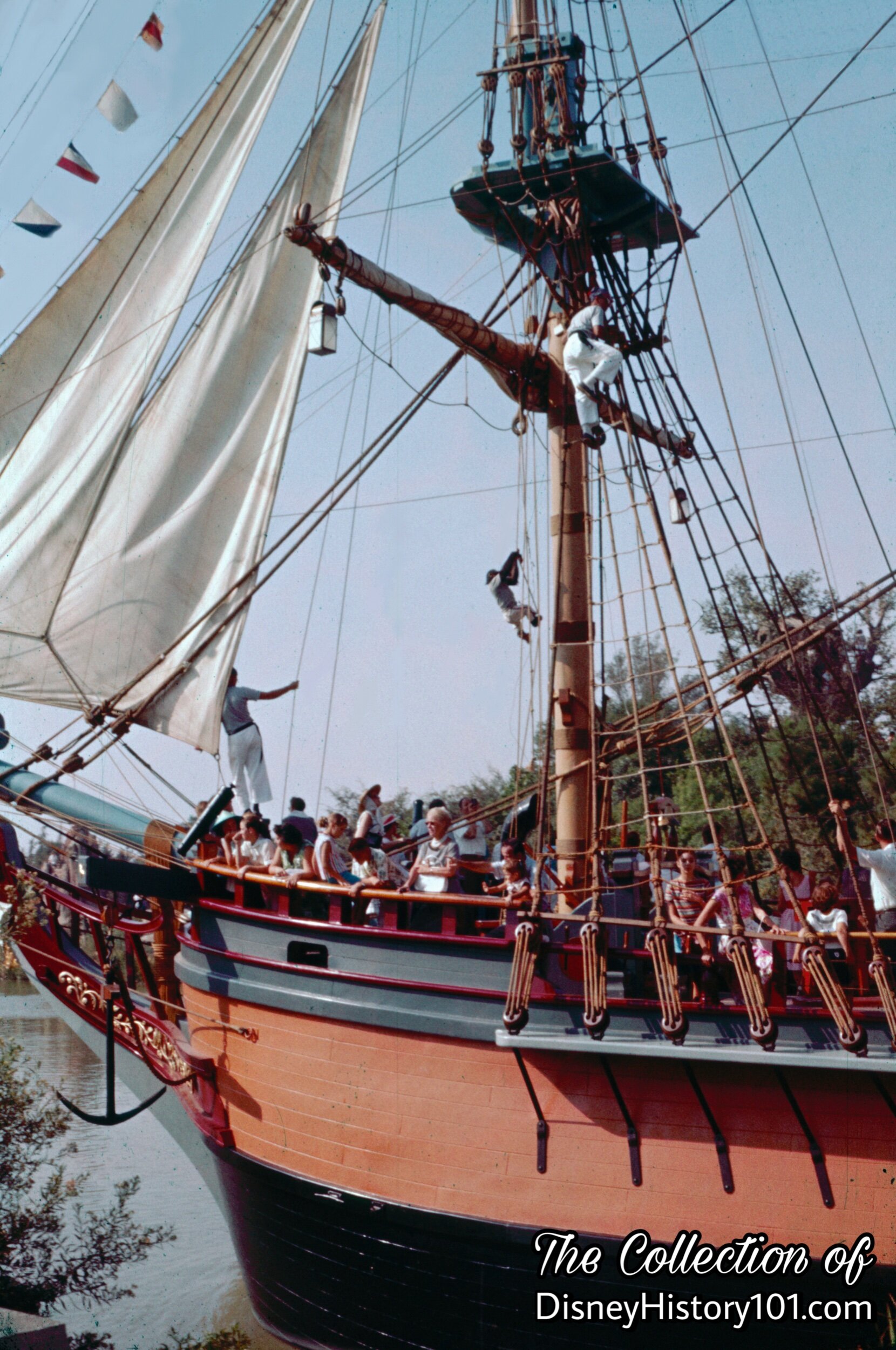
Long before Guests were wondering about what was below the deck, their attention was directed to high seas action in the rigging, high above the deck. You may feel like “the monkey’s uncle” to discover that the Columbia was once invaded by Mouseketeers, Wally Boag and the Pirates of the Caribbean, and even (during the summer of 1958)…chimps ahoy! These simian Cast Members actually “upstaged” their fellow human Cast Members, stealing the show.
This wasn’t the first time that chimpanzees entertained at Disneyland. Beatrice Dante strolled with her chimp Charlie, in the Mickey Mouse Club Circus Parade.
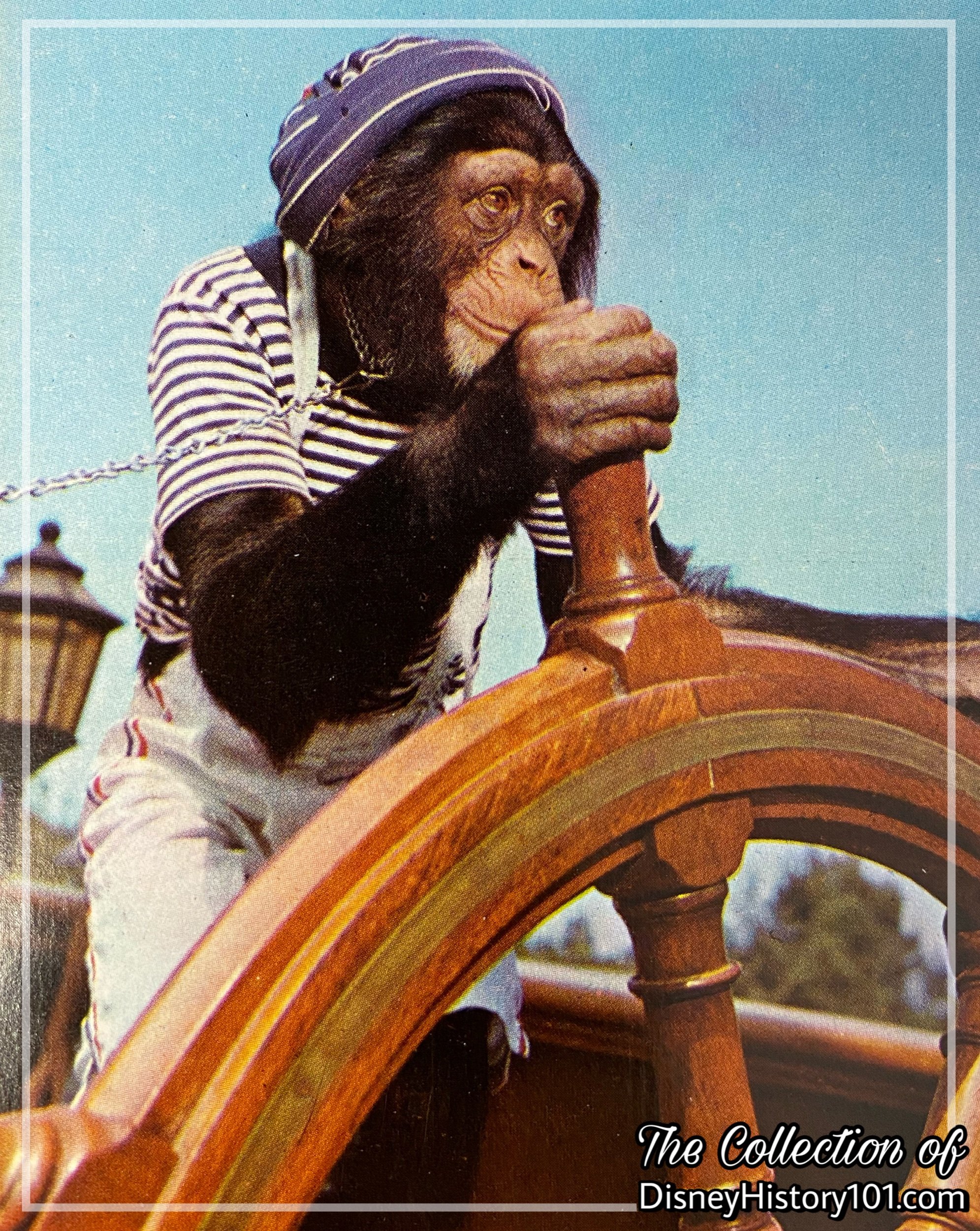
The whole affair continued for a few months until the barefoot executives would finally go home.
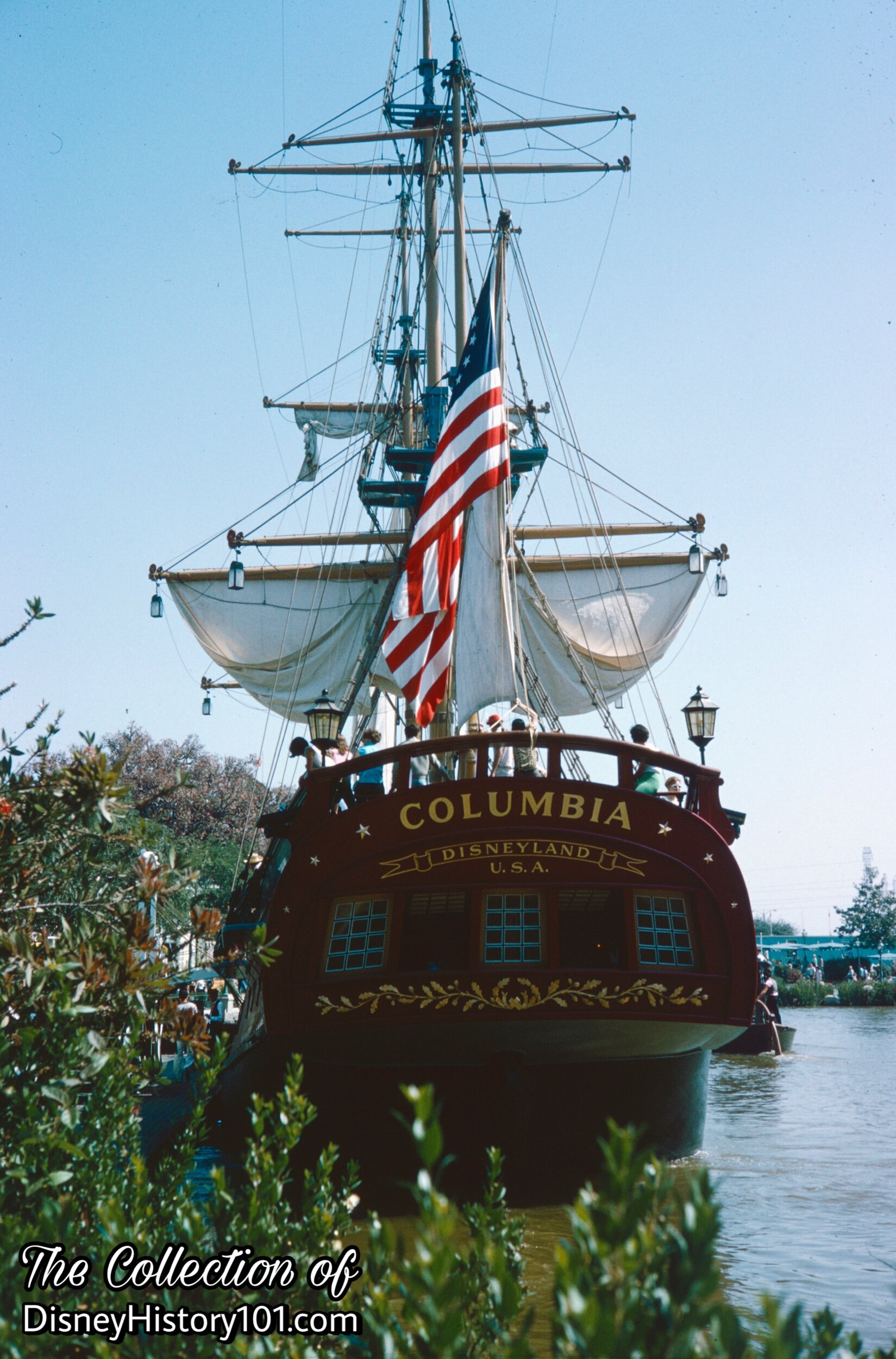
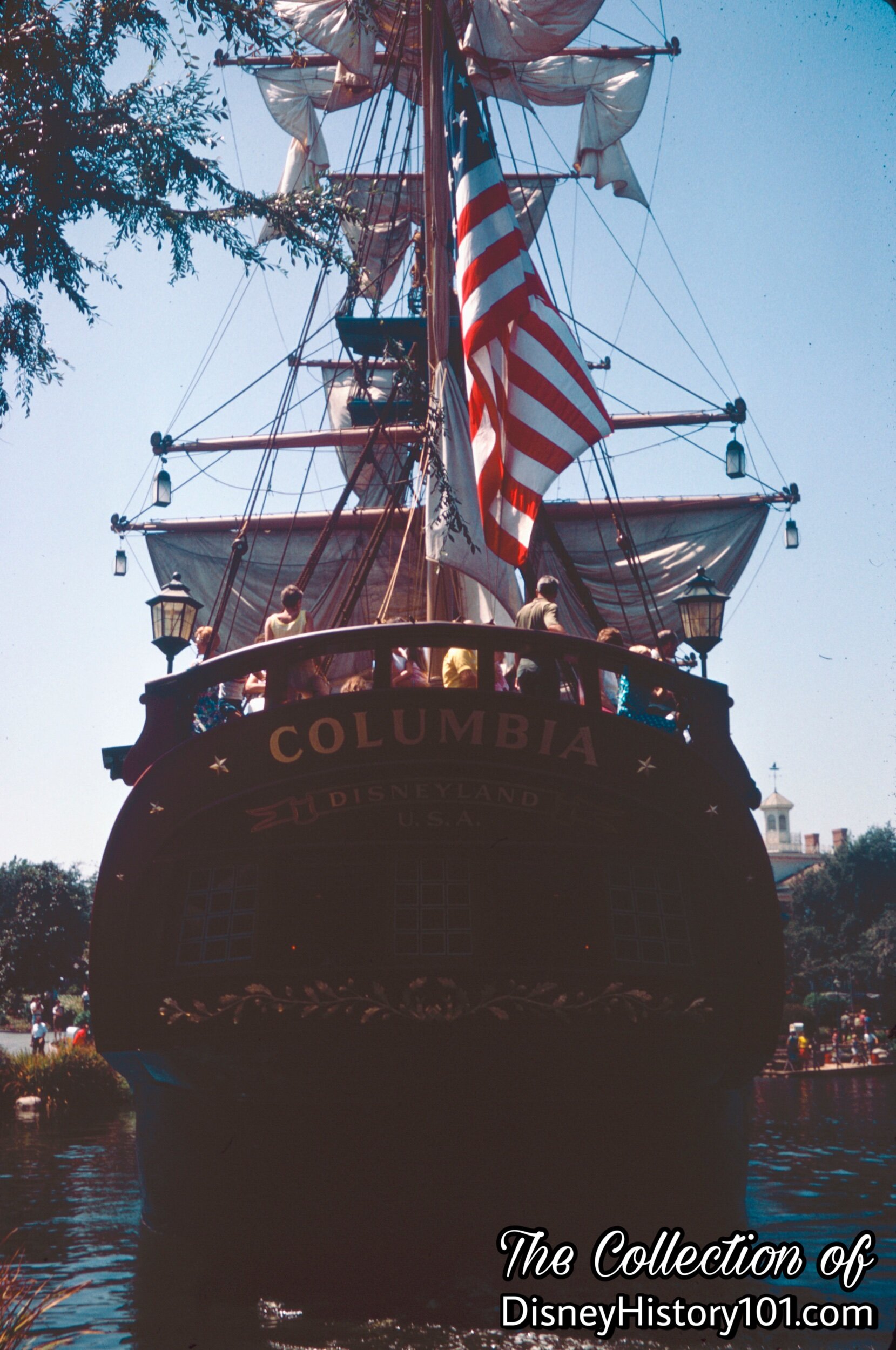
A 35-star flag is displayed aboard the aft portion of this replica of the first American ship to carry the United States banner around the world!

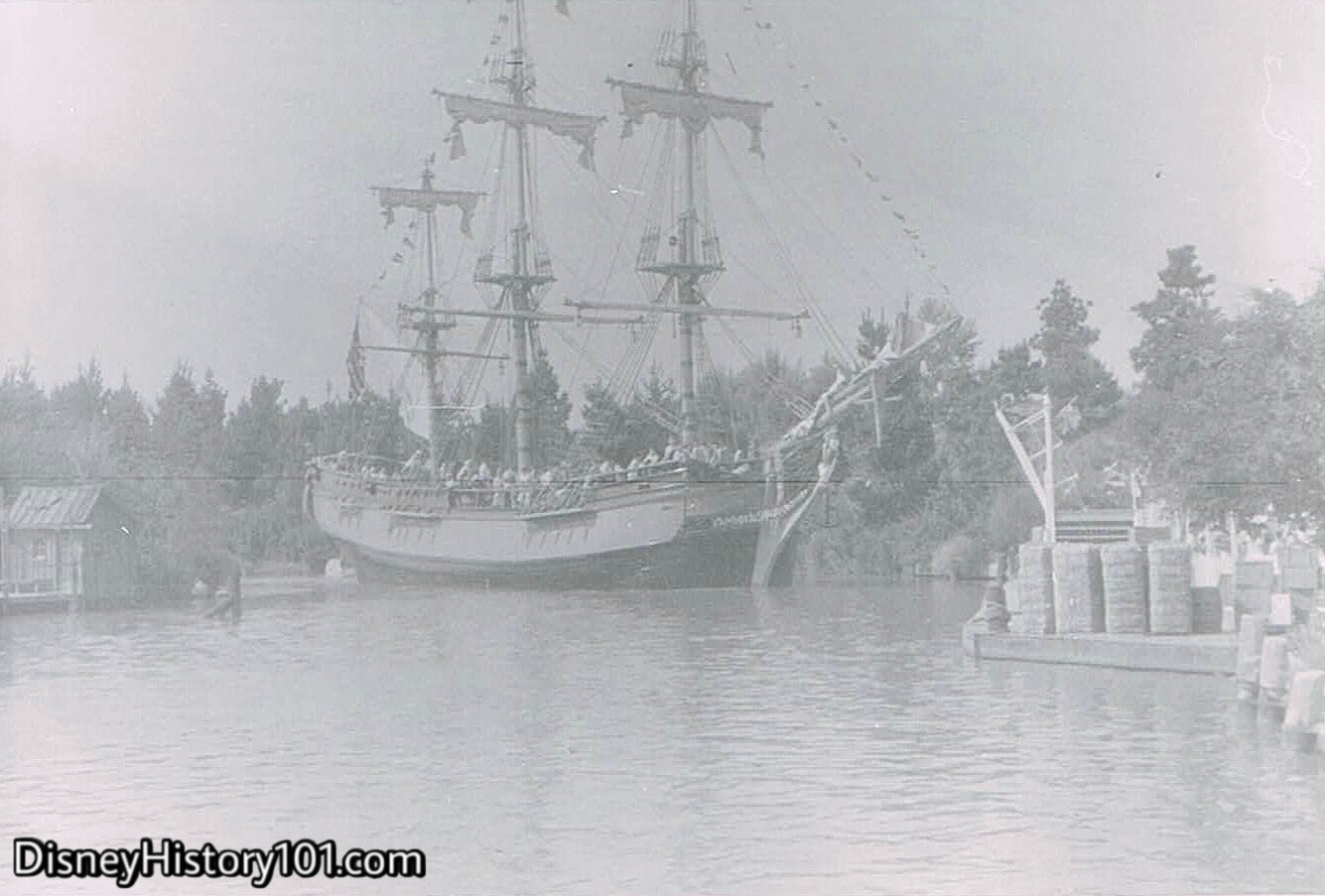
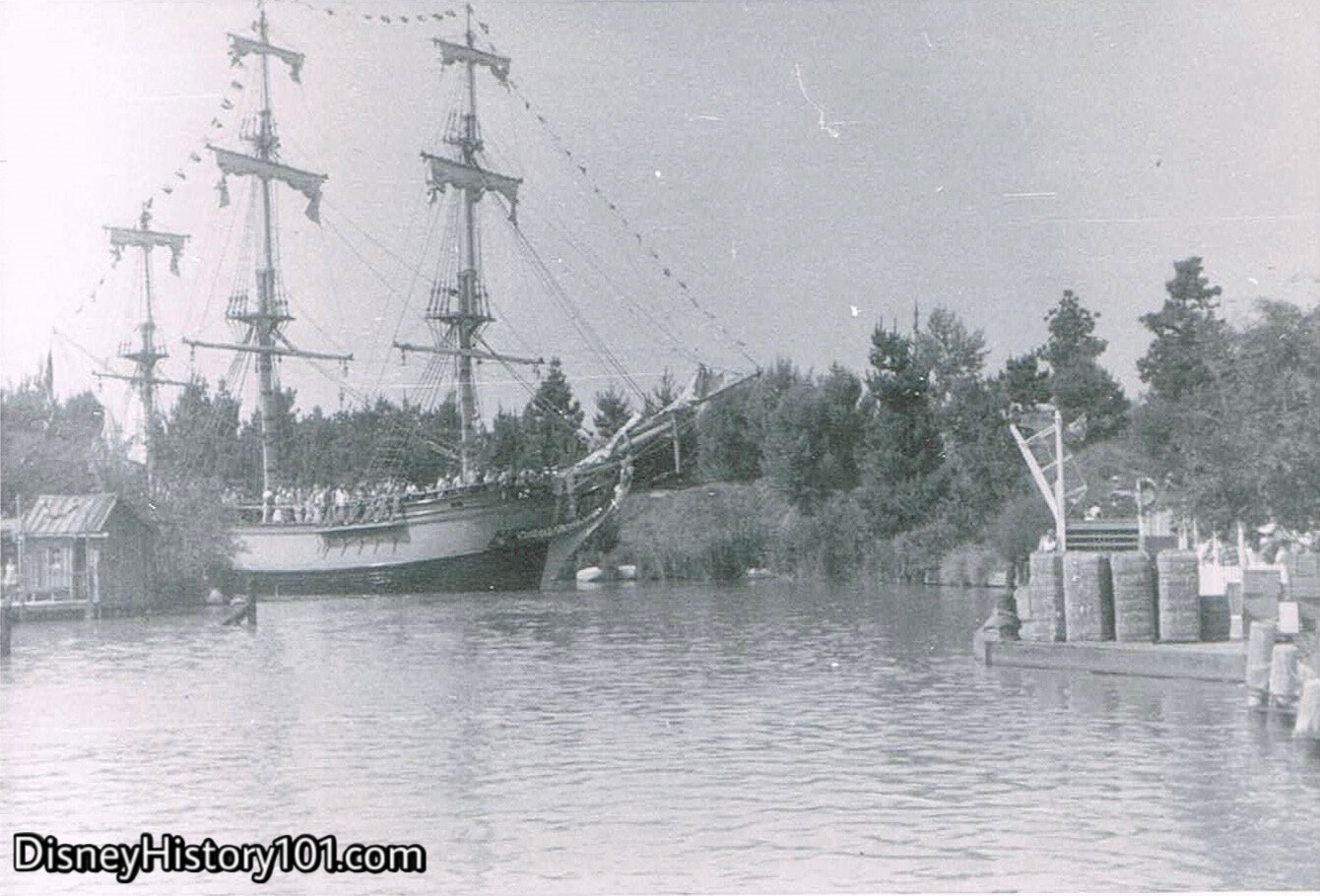
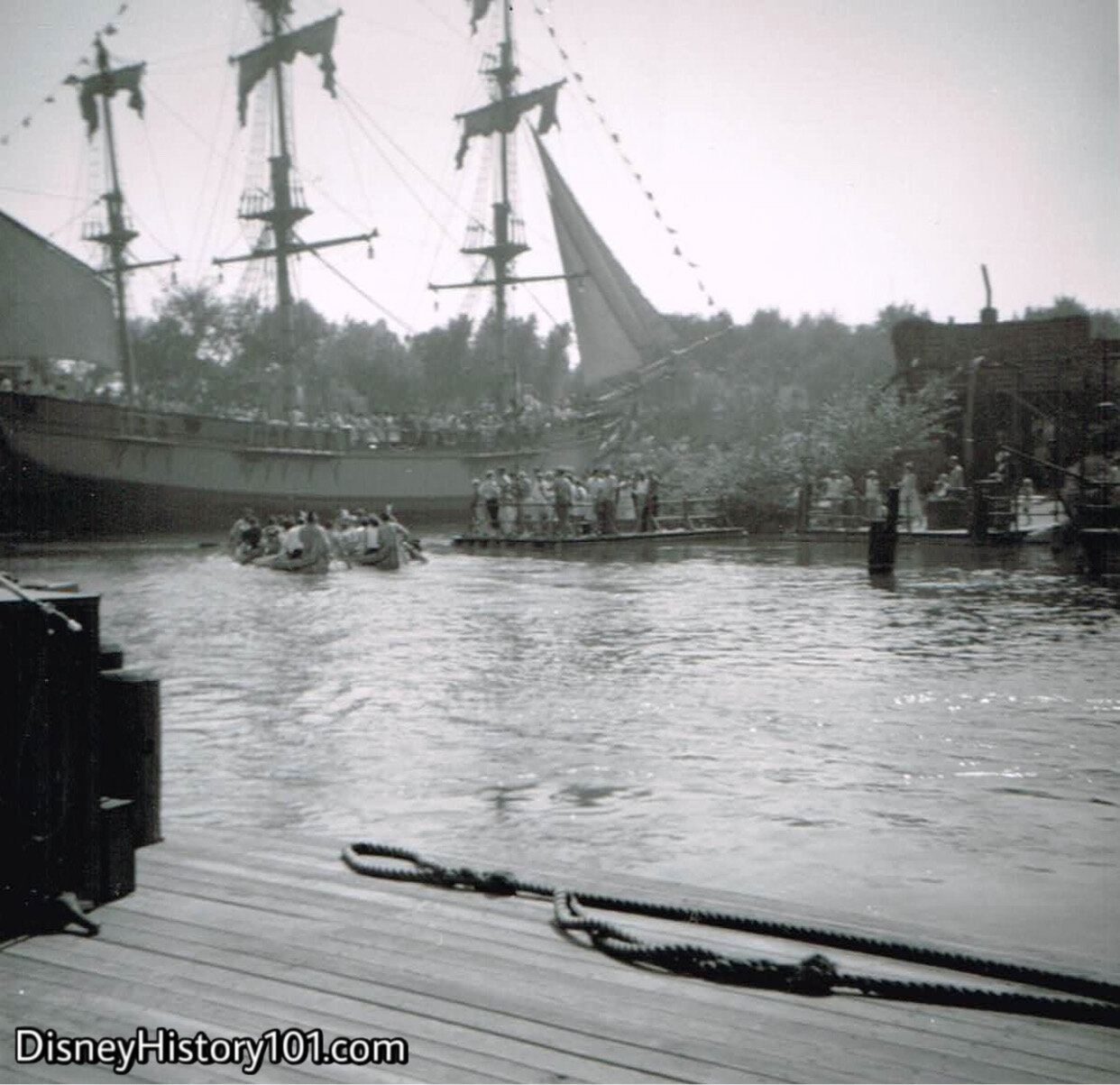
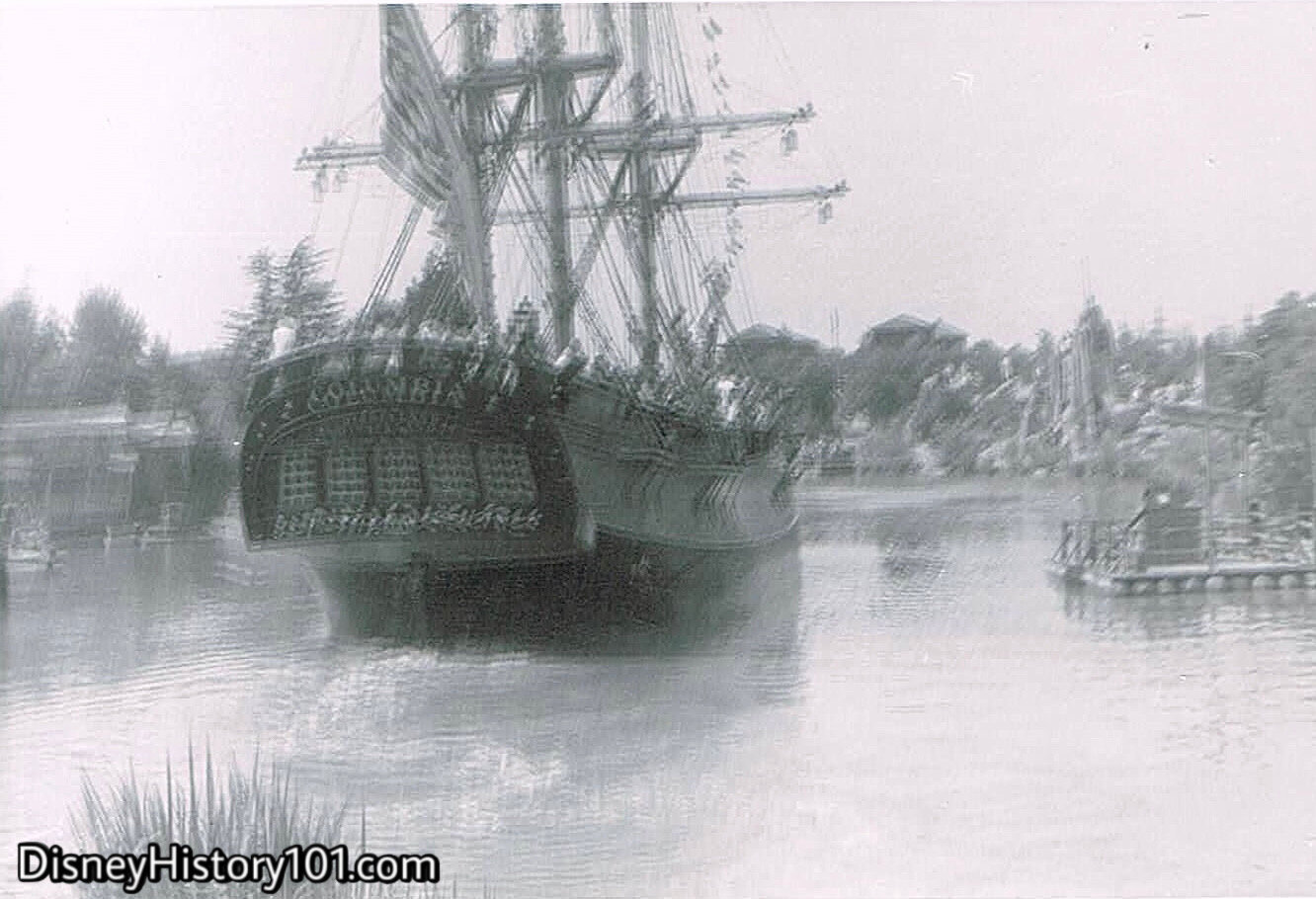
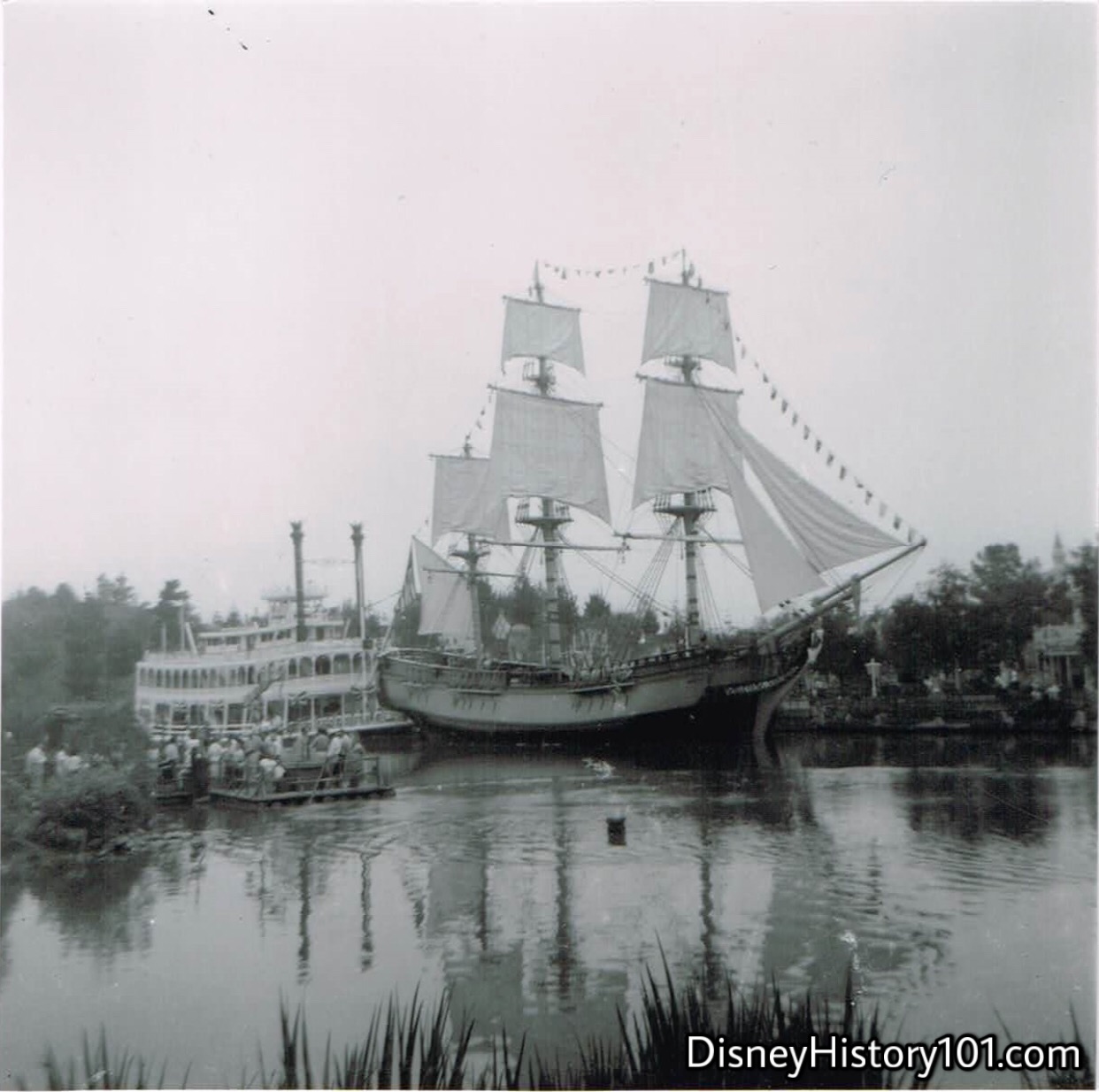
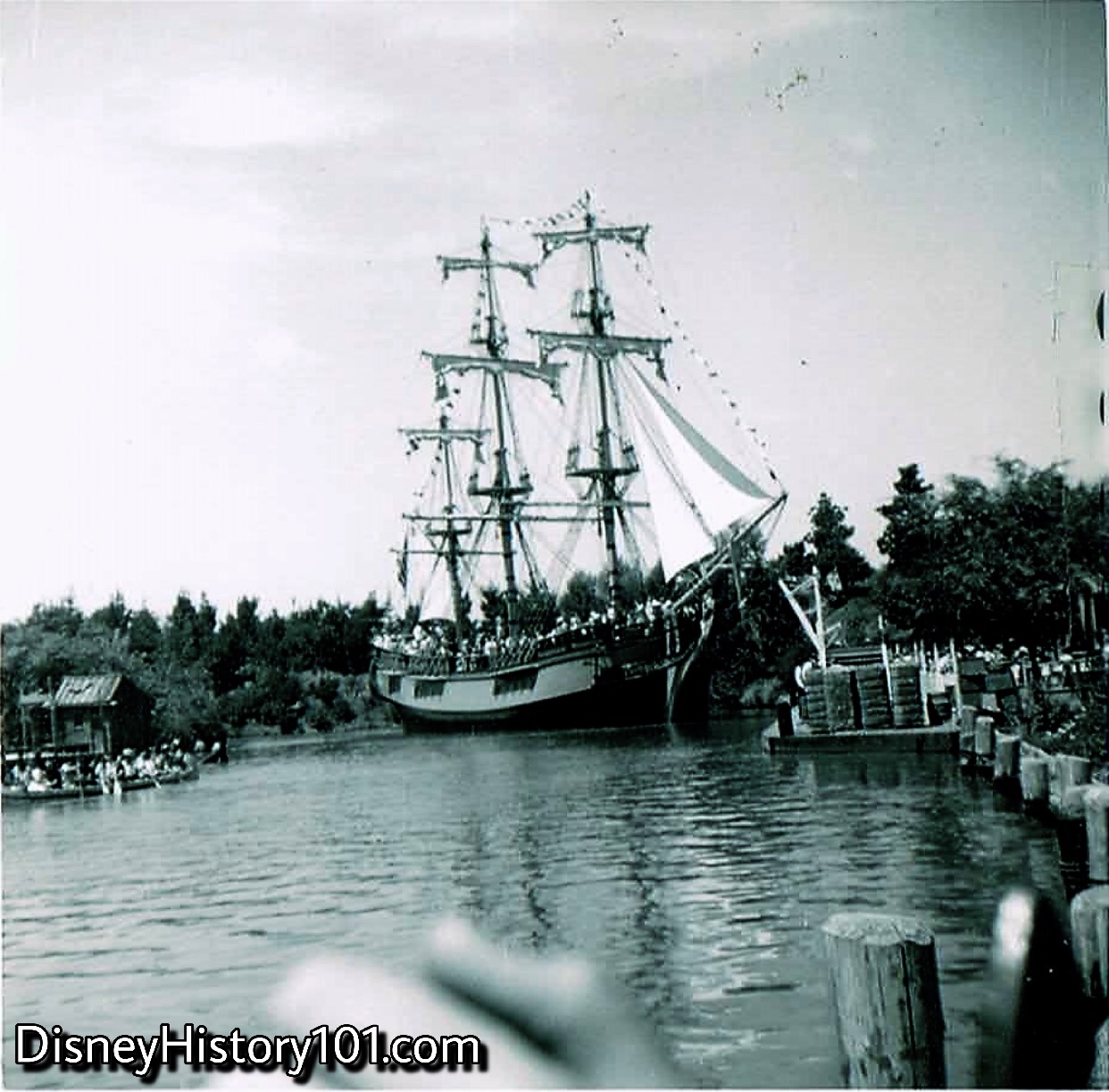
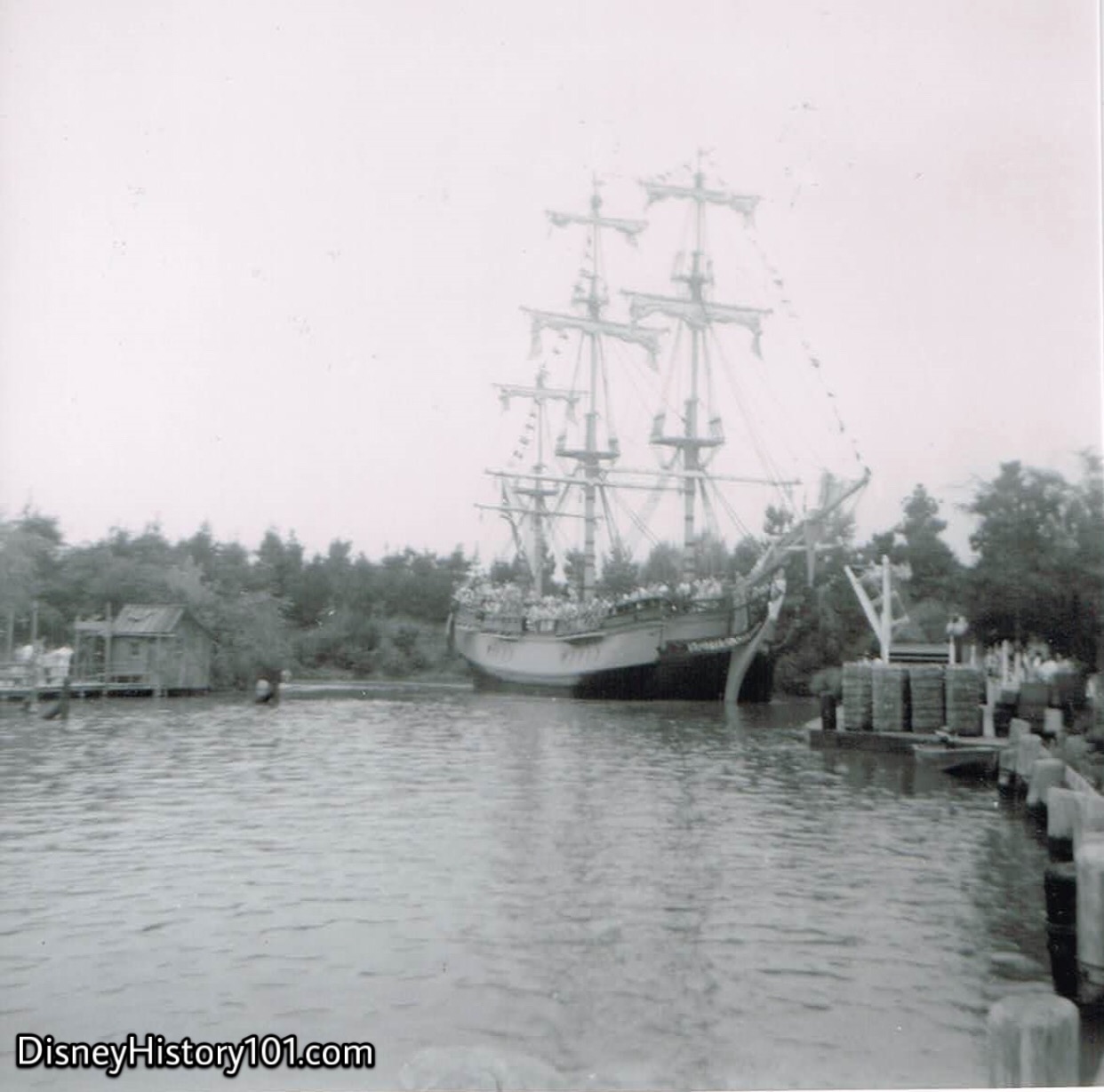
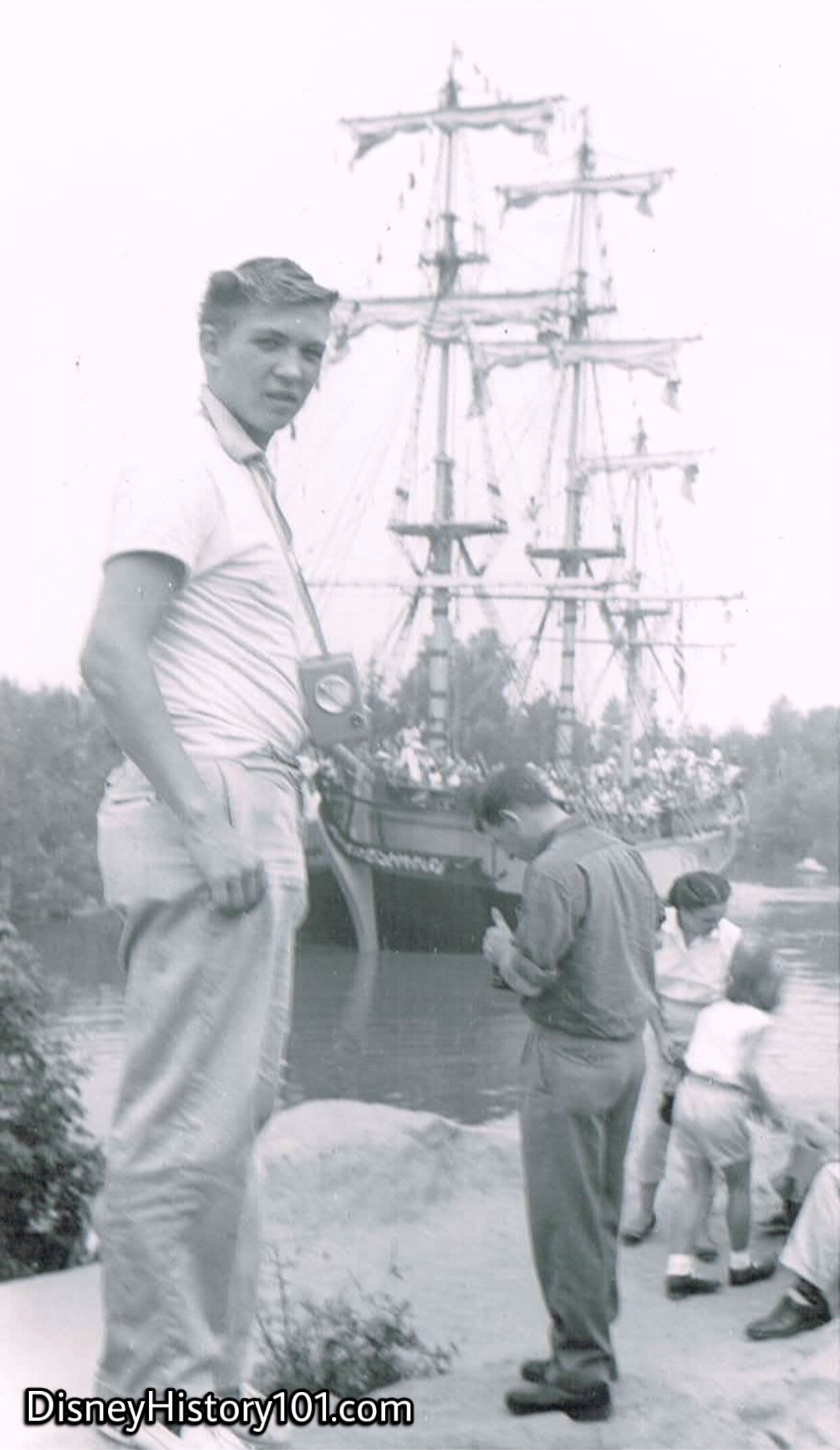
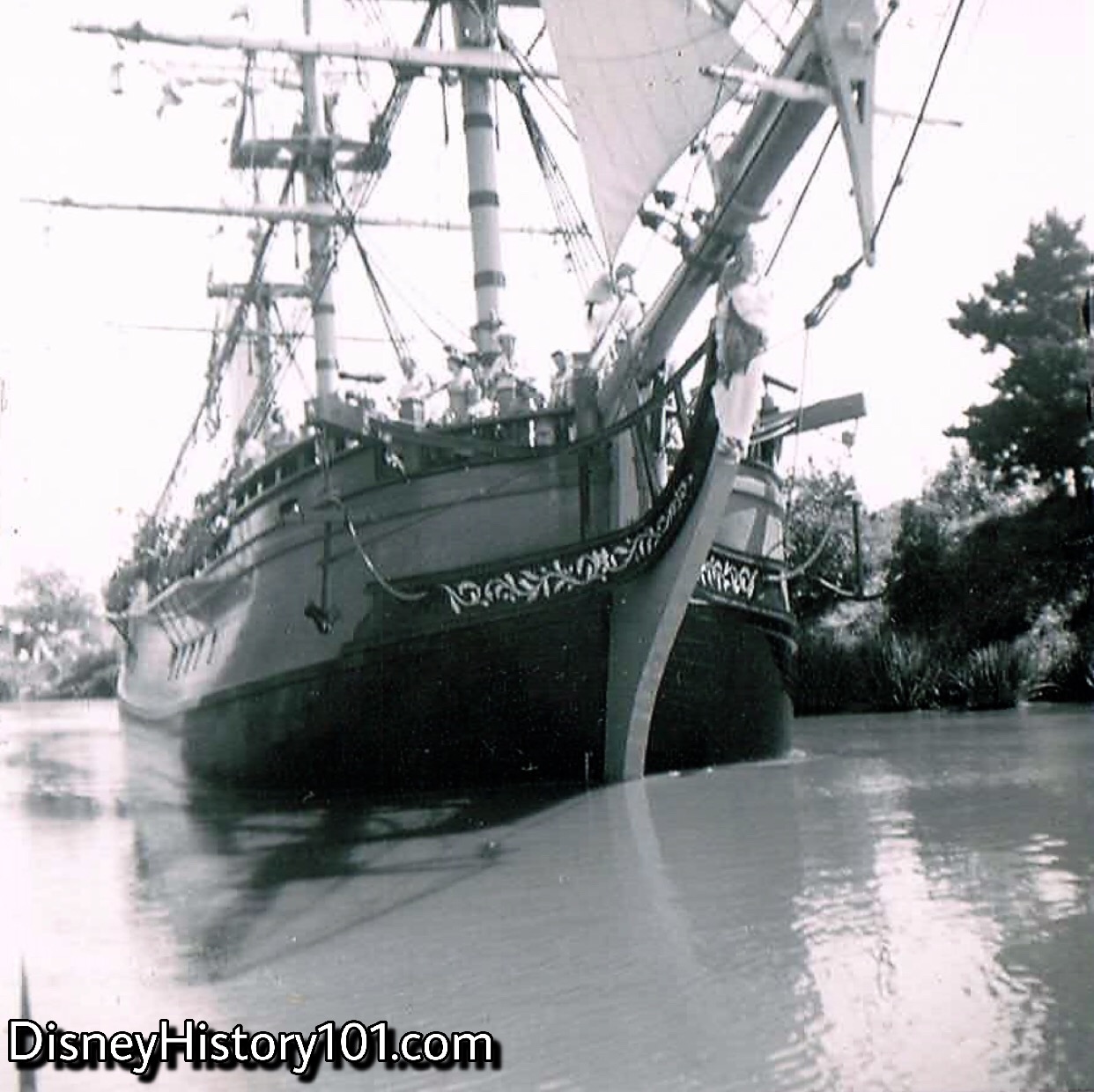
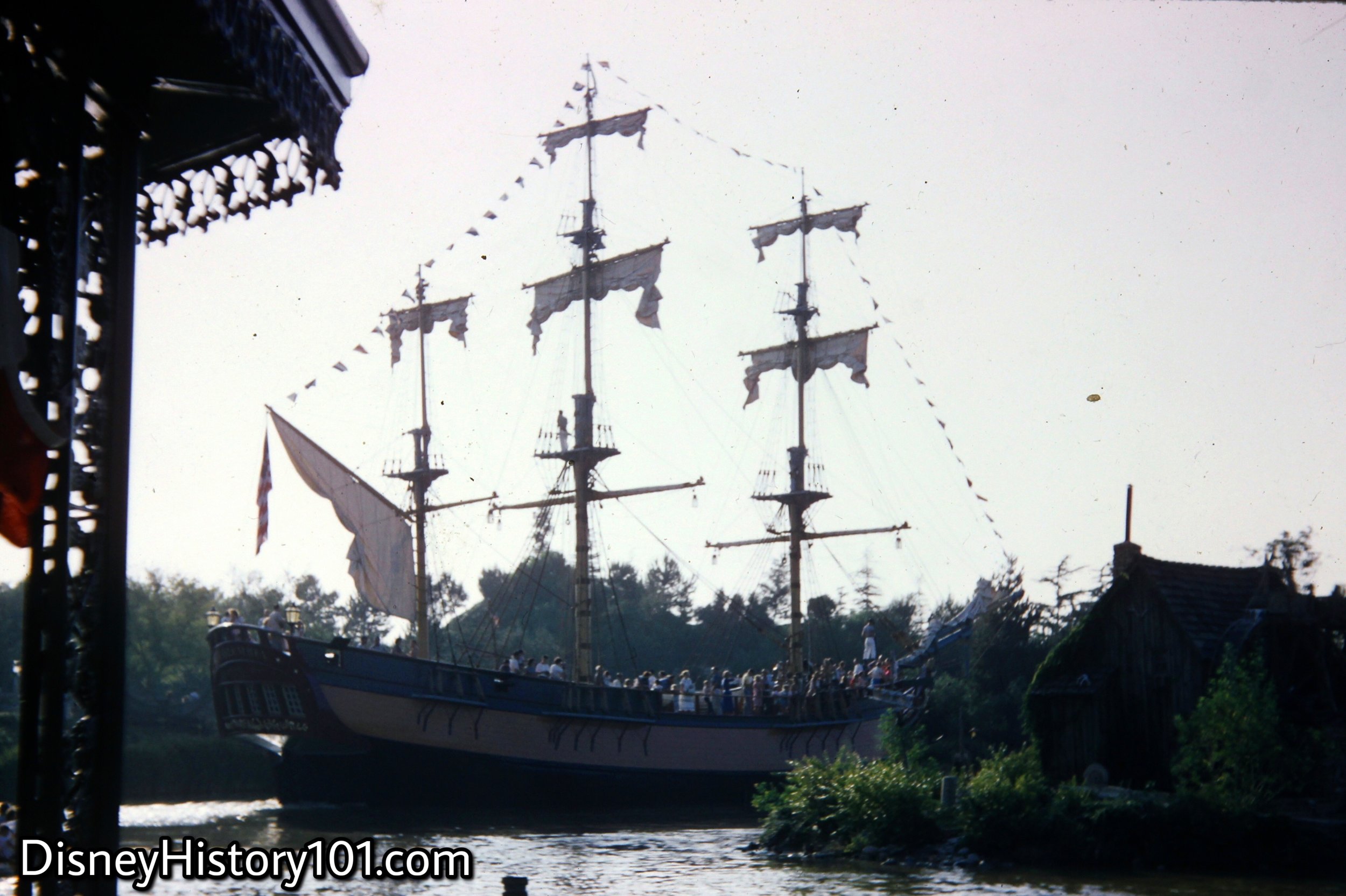
The Dixieland Band Stand was a relaxing location to enjoy New Orleans - style jazz while watching the Columbia set out down the Rivers of America!
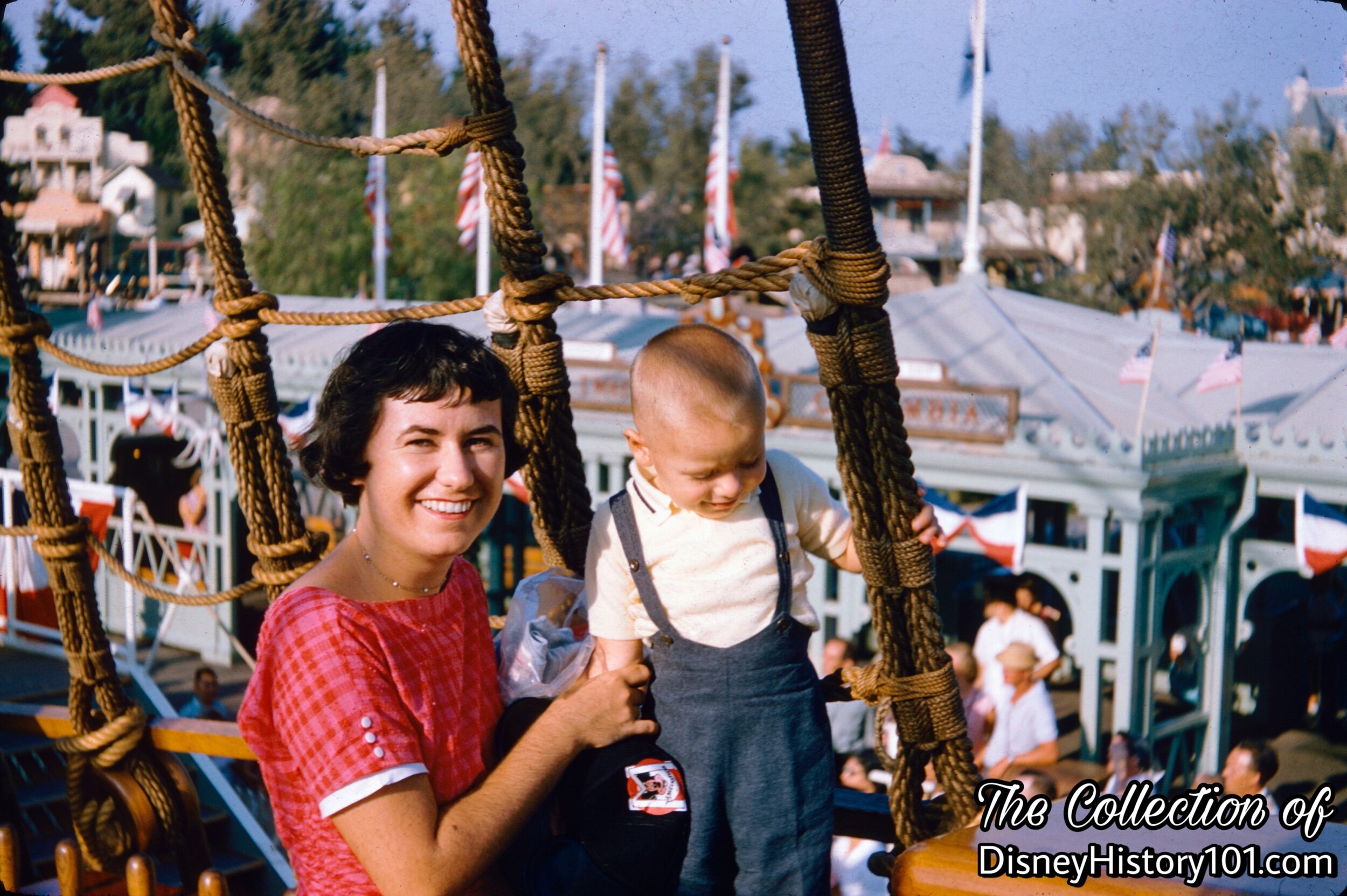
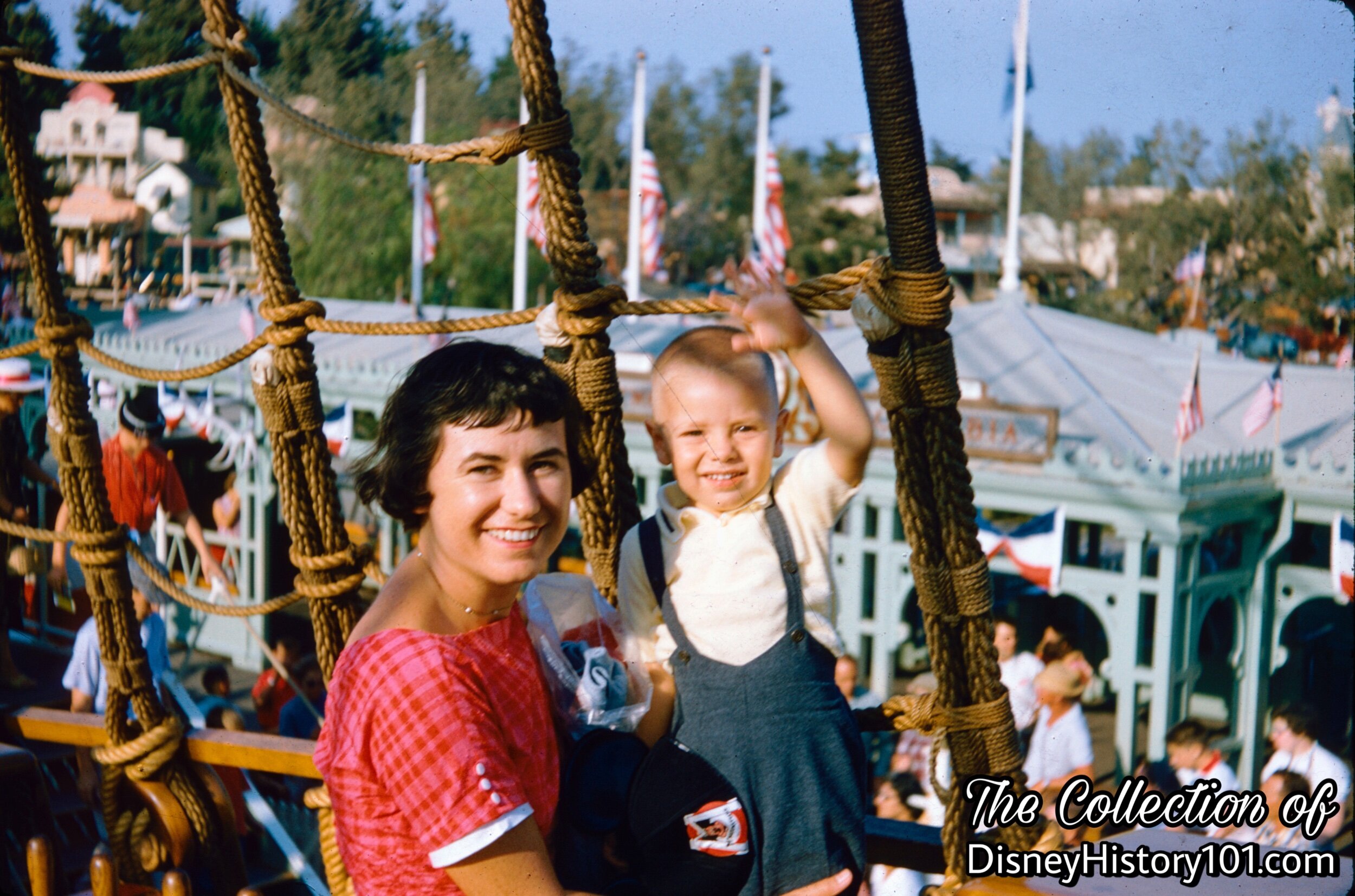
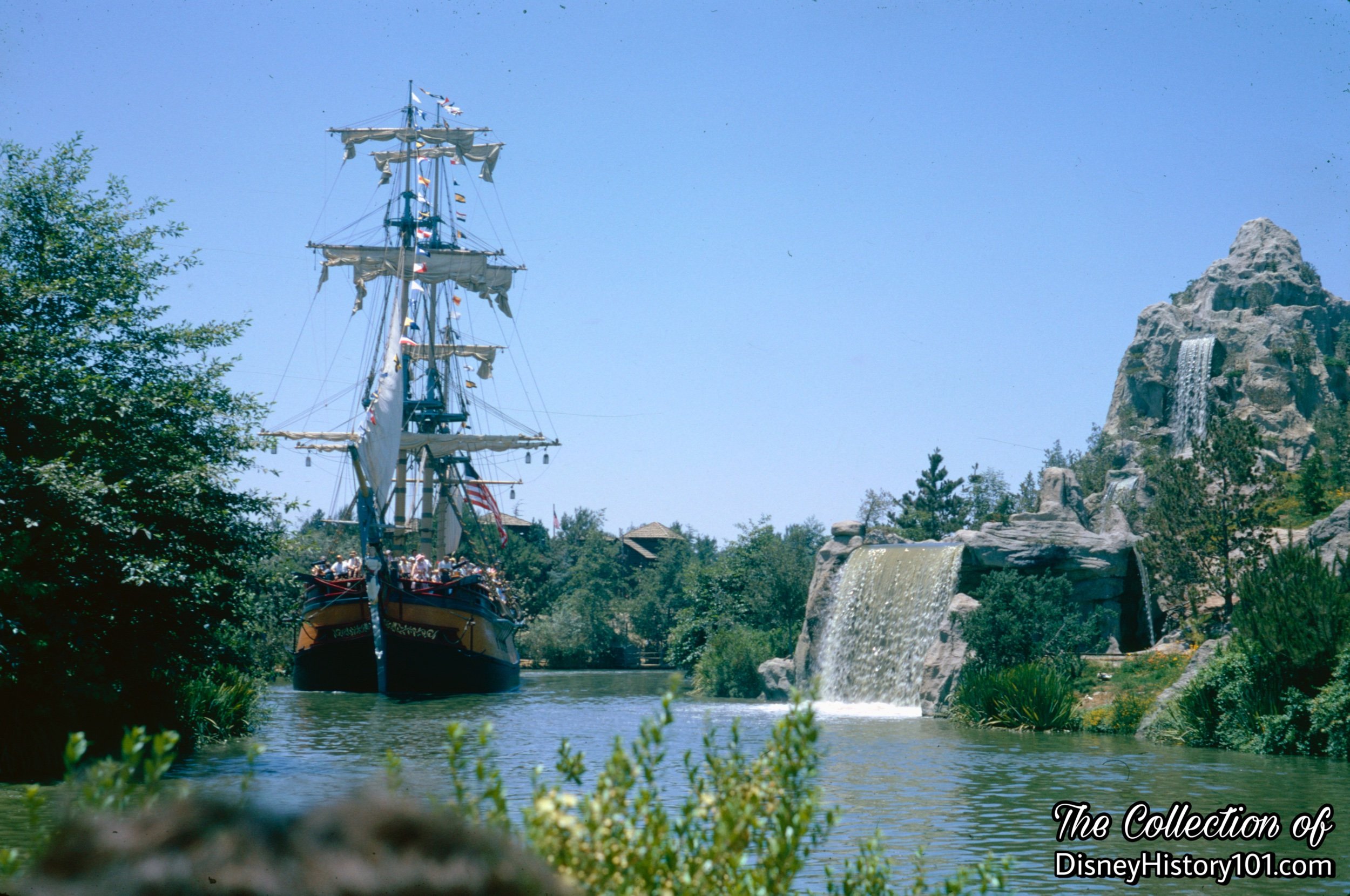
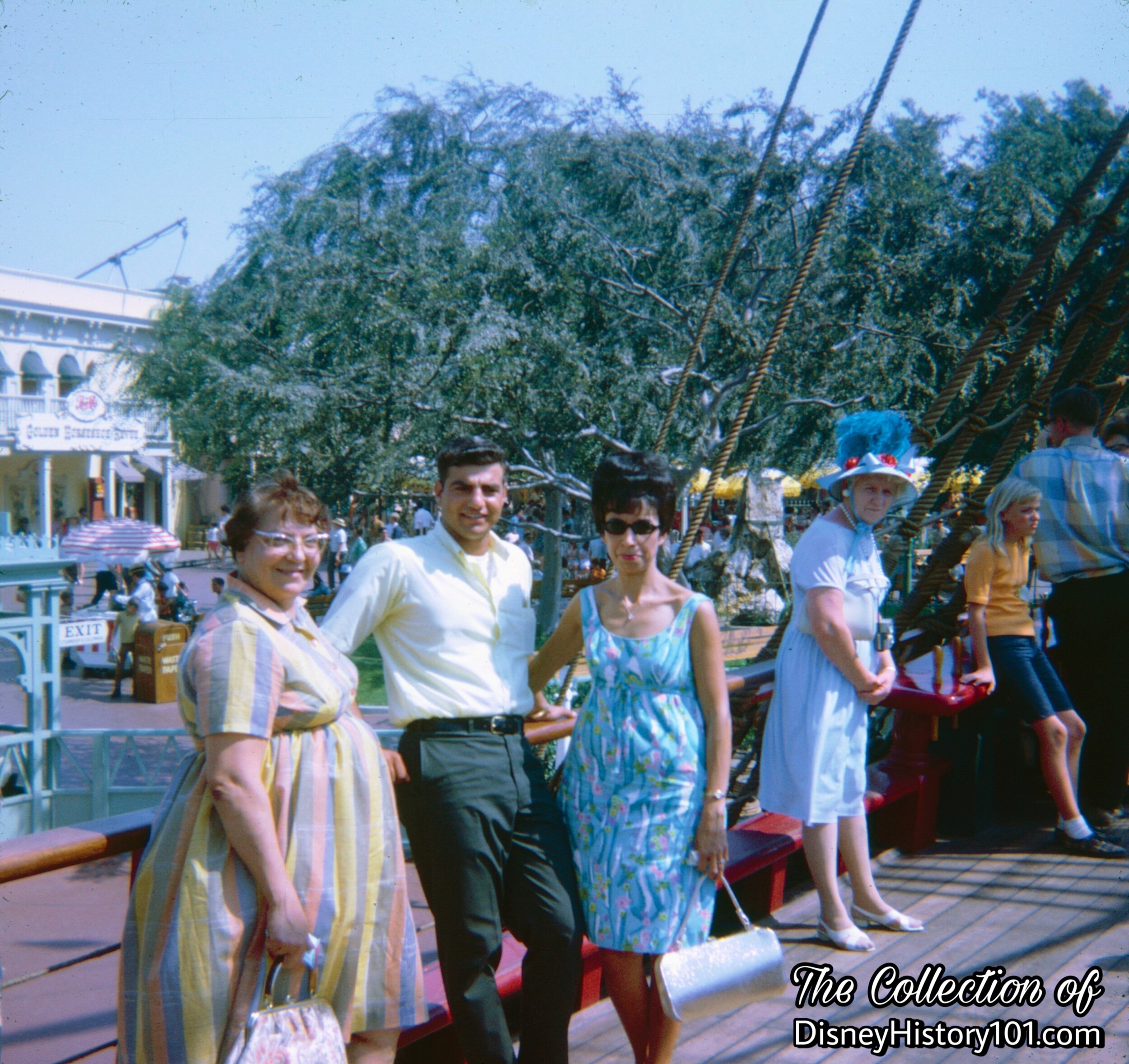
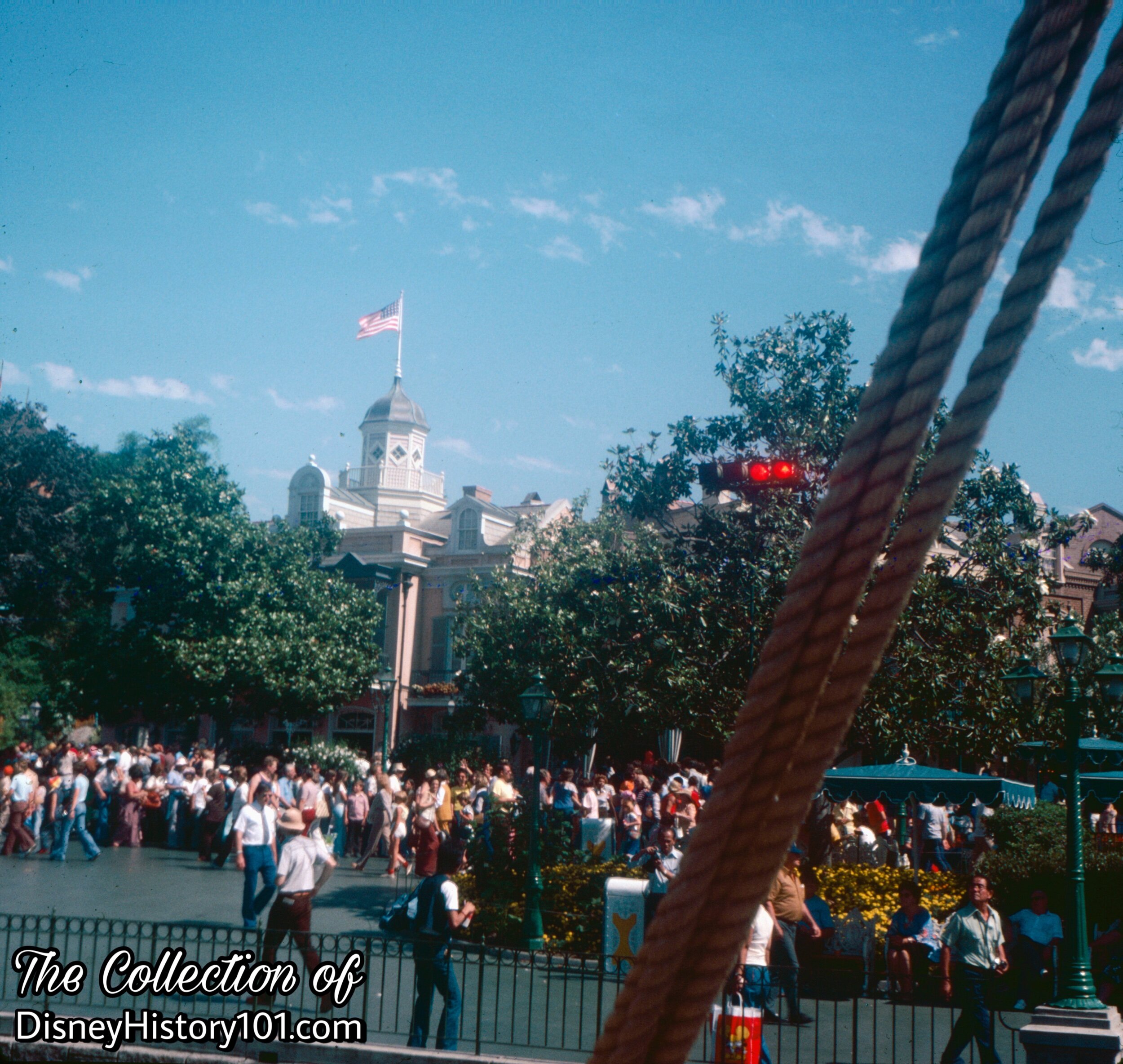
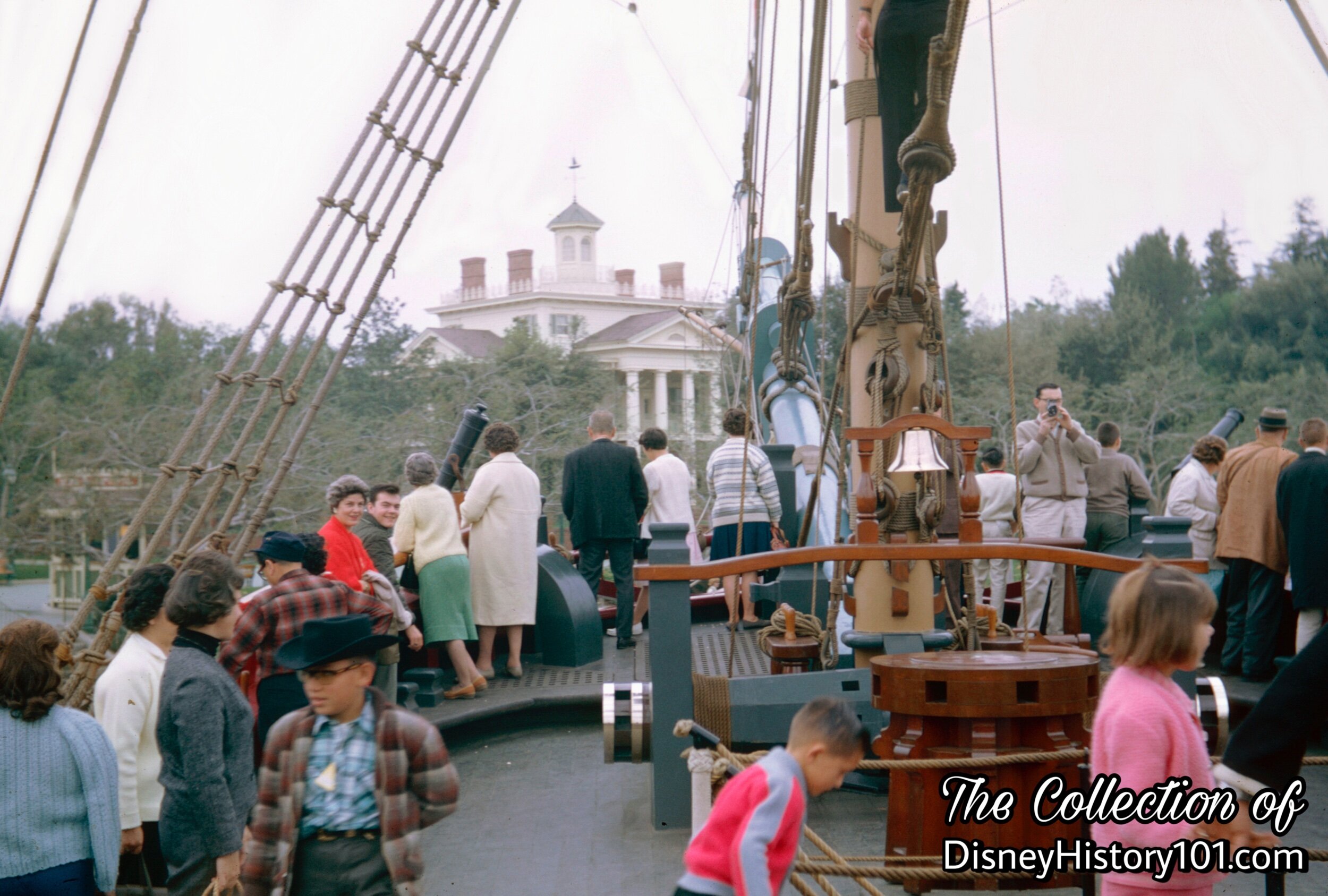
Nautical bells were once used to keep time or announce a dignitary’s arrival aboard. However, the Columbia’s nautical bells were mostly used to announce movements or stops.
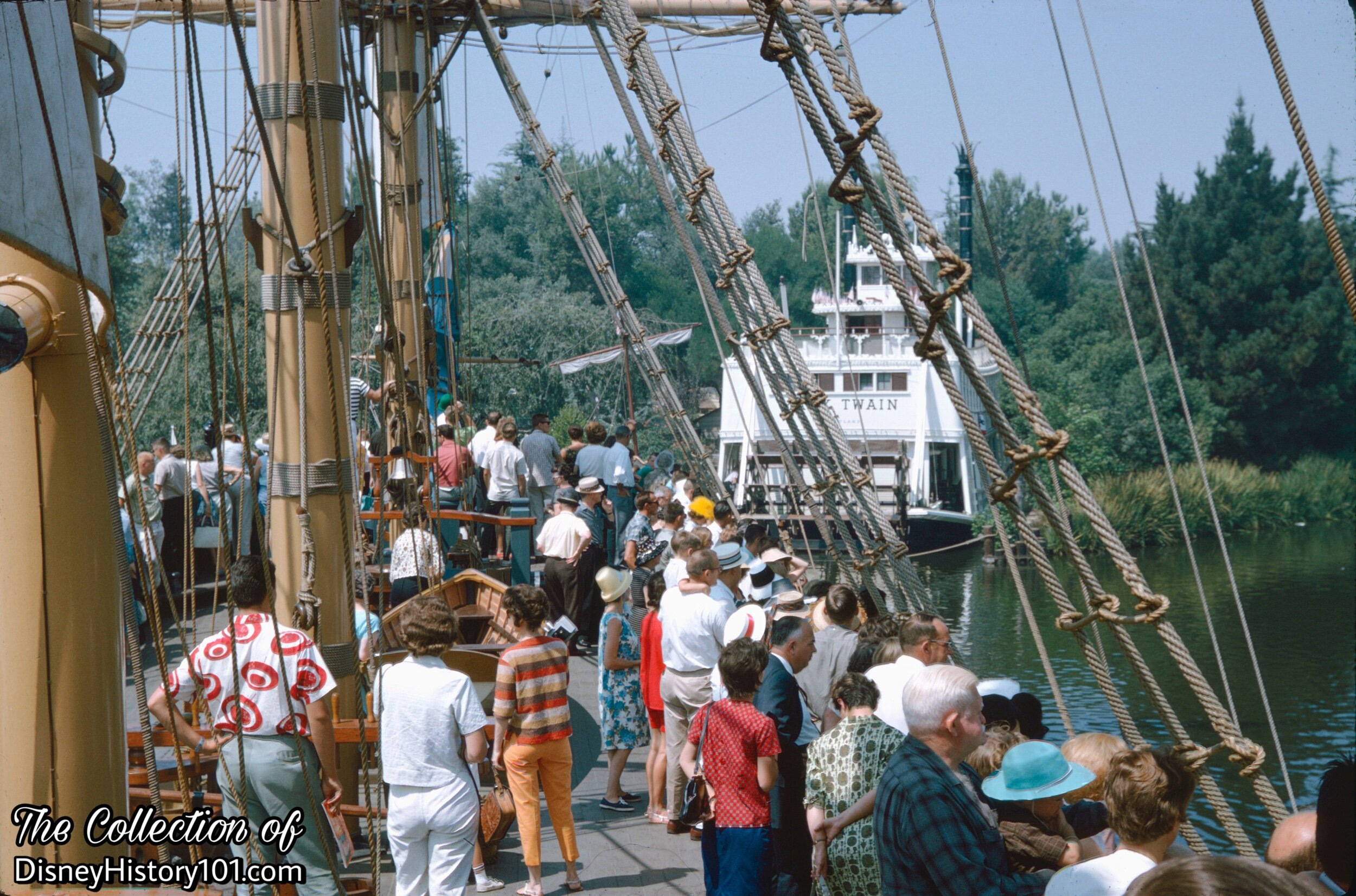
Step aboard Disneyland’s Sailing Ship Columbia, and circumnavigate the Rivers of America!
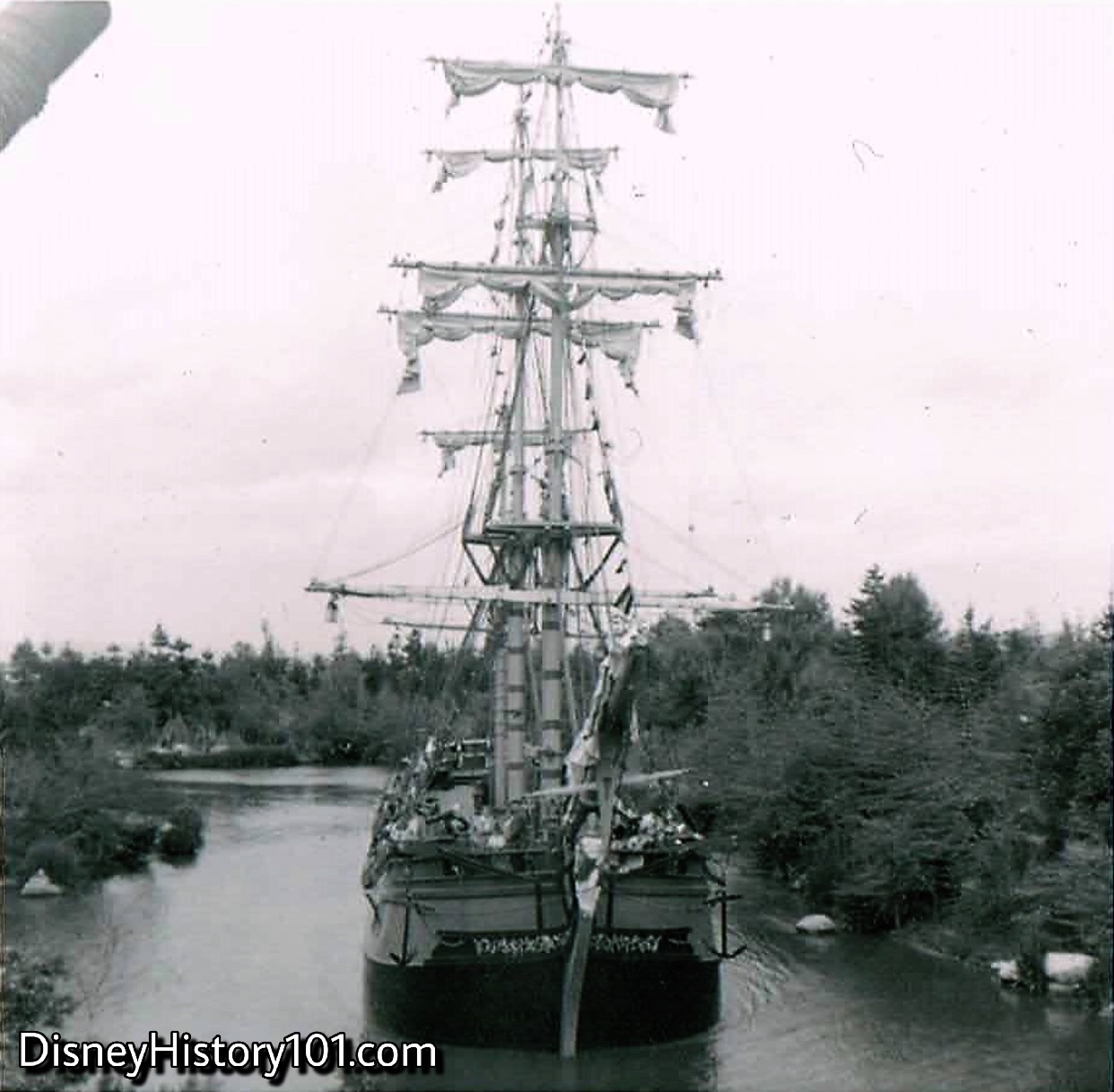
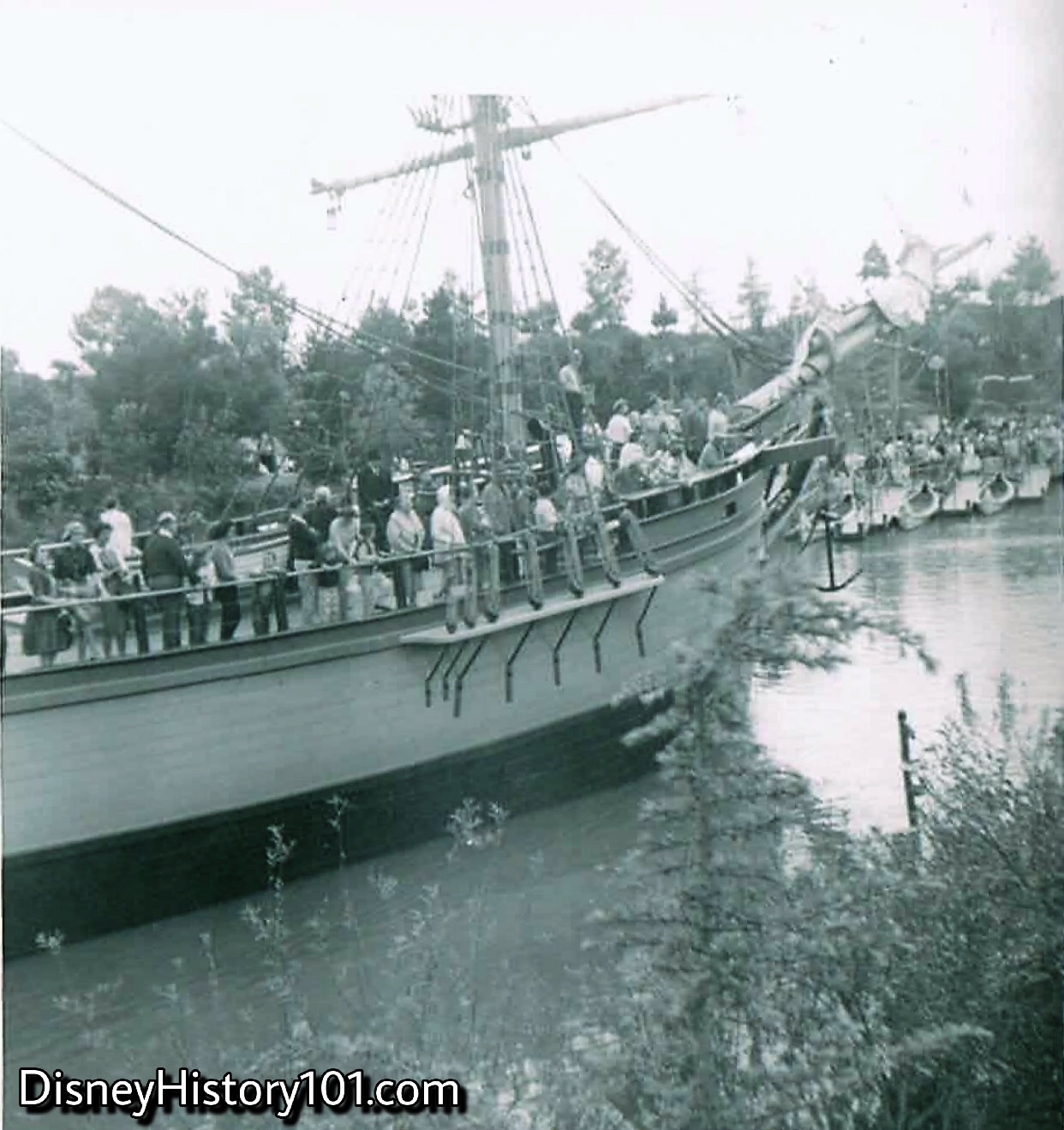
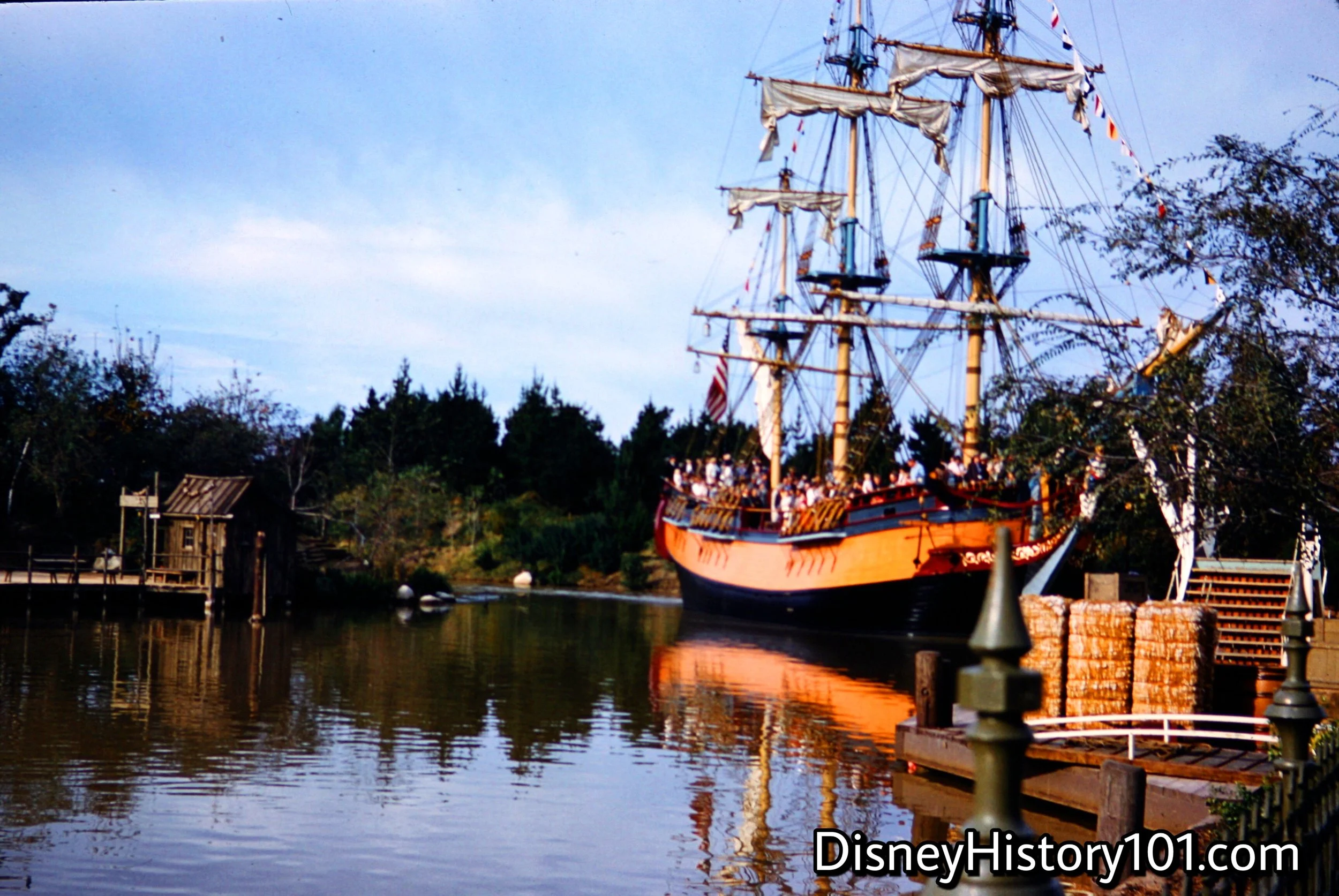
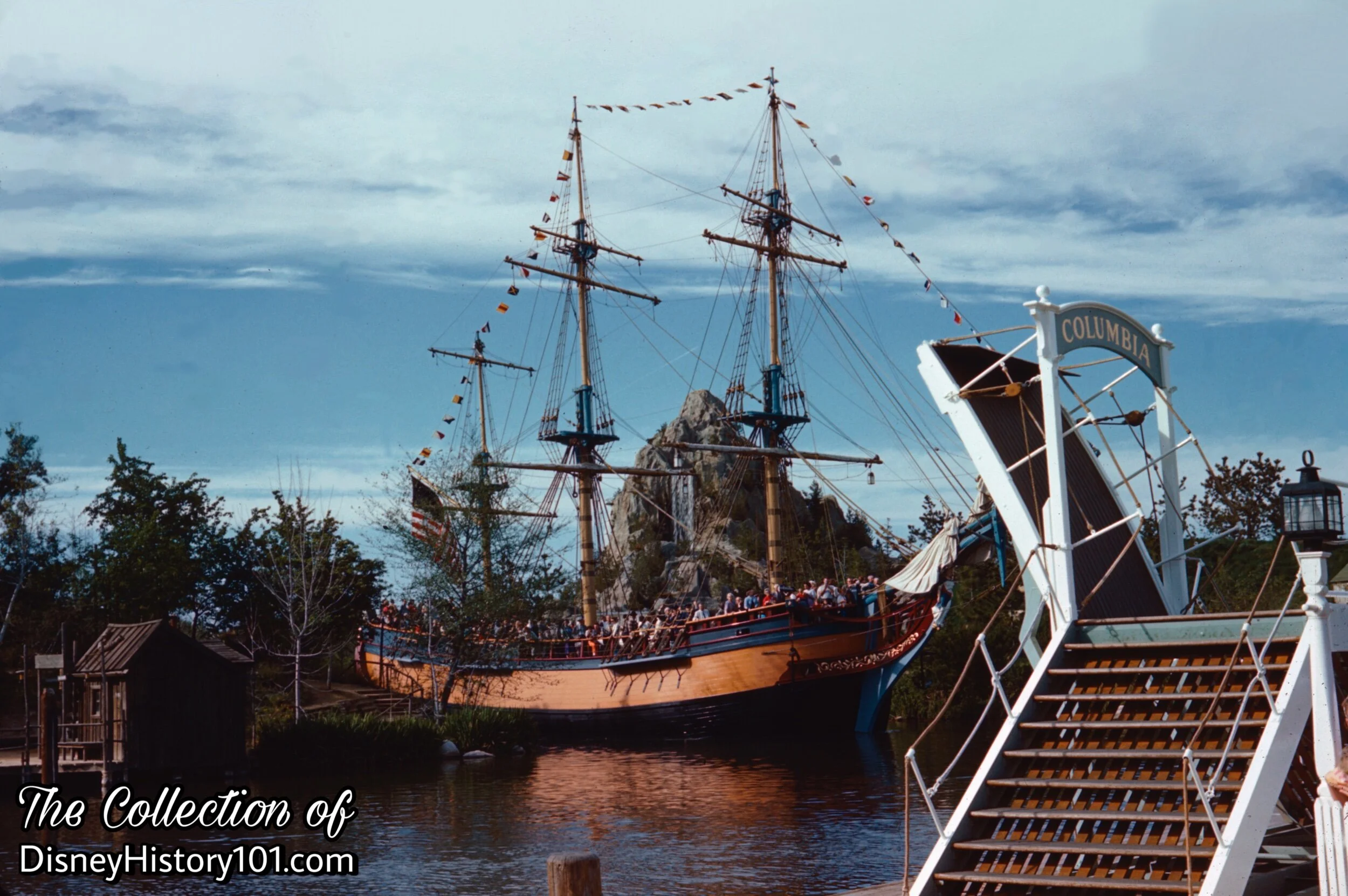

The upper deck of the Columbia granted passengers a preview of Fire Dance Circle and the rest of the Indian Village right along the shores of the Rivers of America. While this was the scene throughout most of the first decade, expansions along the Rivers of America included changes to the scene of the Frontierland Indian Village at Disneyland. By 1964, commentary was made how “The Indian Village first opened as a Plains Indian encampment. Today it pays tribute to the Blackfoot Tribe, the Crows and other tribes who inhabited the Pacific Northwest territory explored by the original Columbia and her crew,” according to“Walt Disney Disneyland,” page 42, printed by Officine Grafiche Arnoldo Mondadori - Verona; first published 1964.
The masts of the Columbia rise high above the Mexican Village in Frontierland.
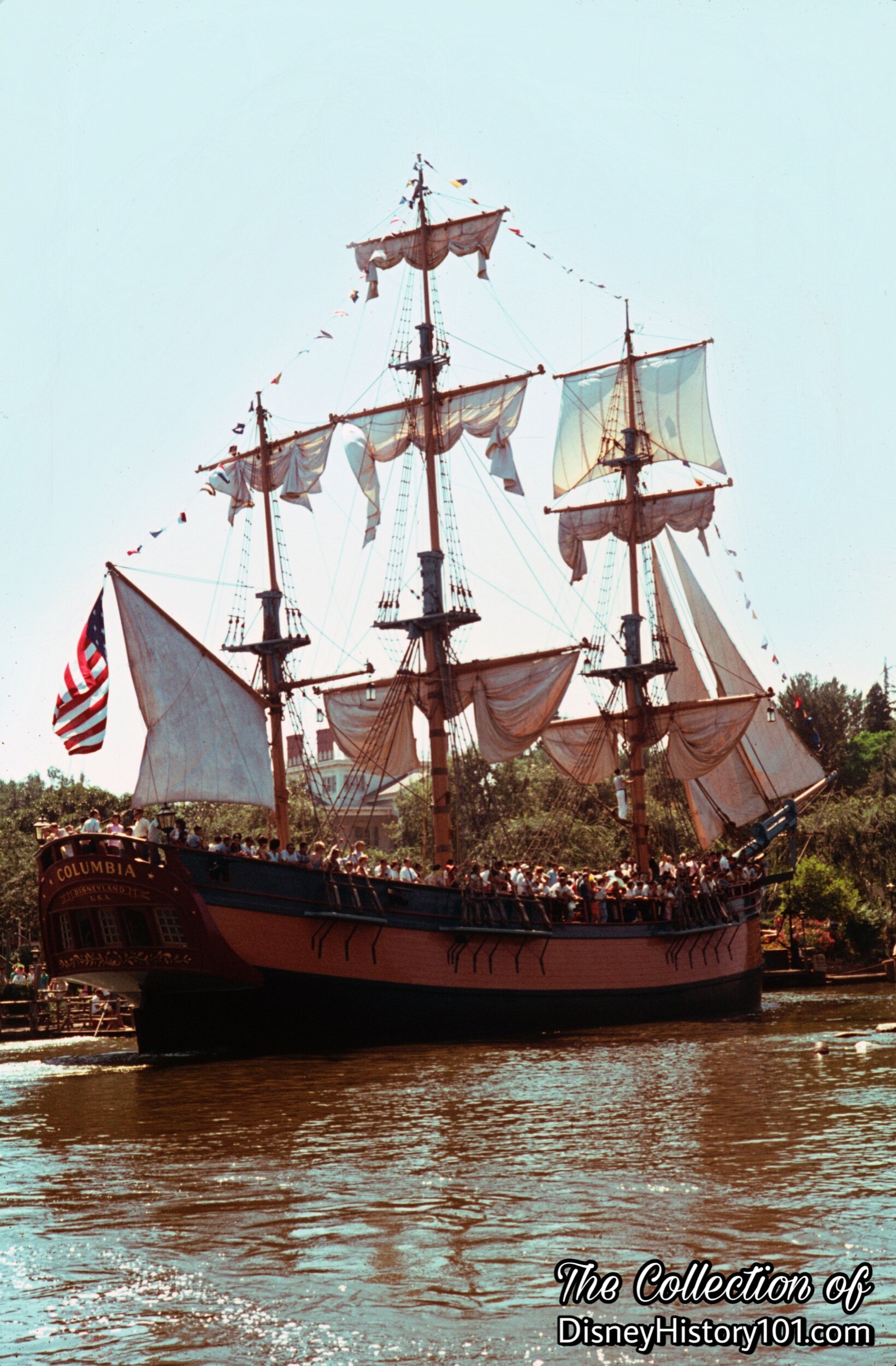
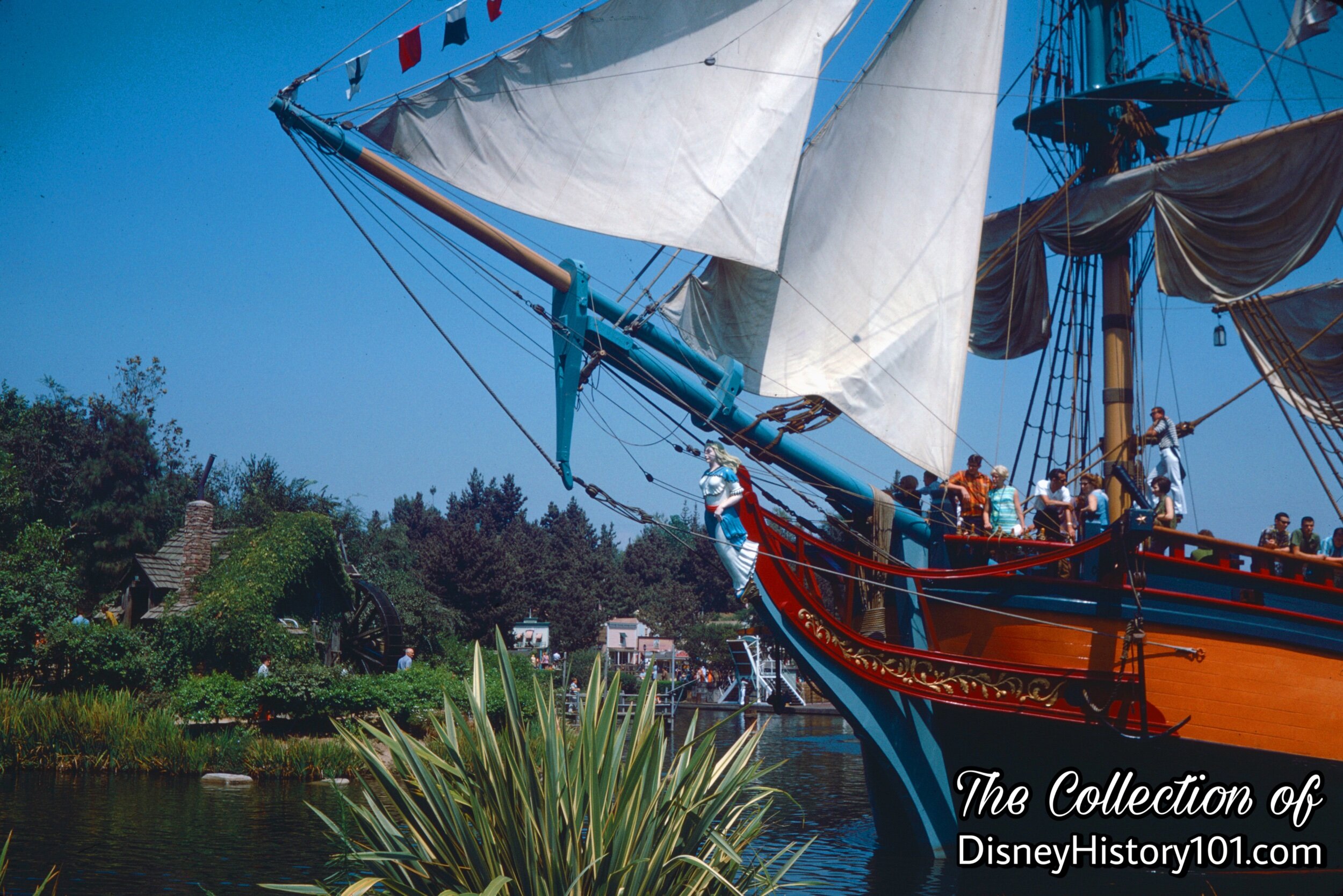
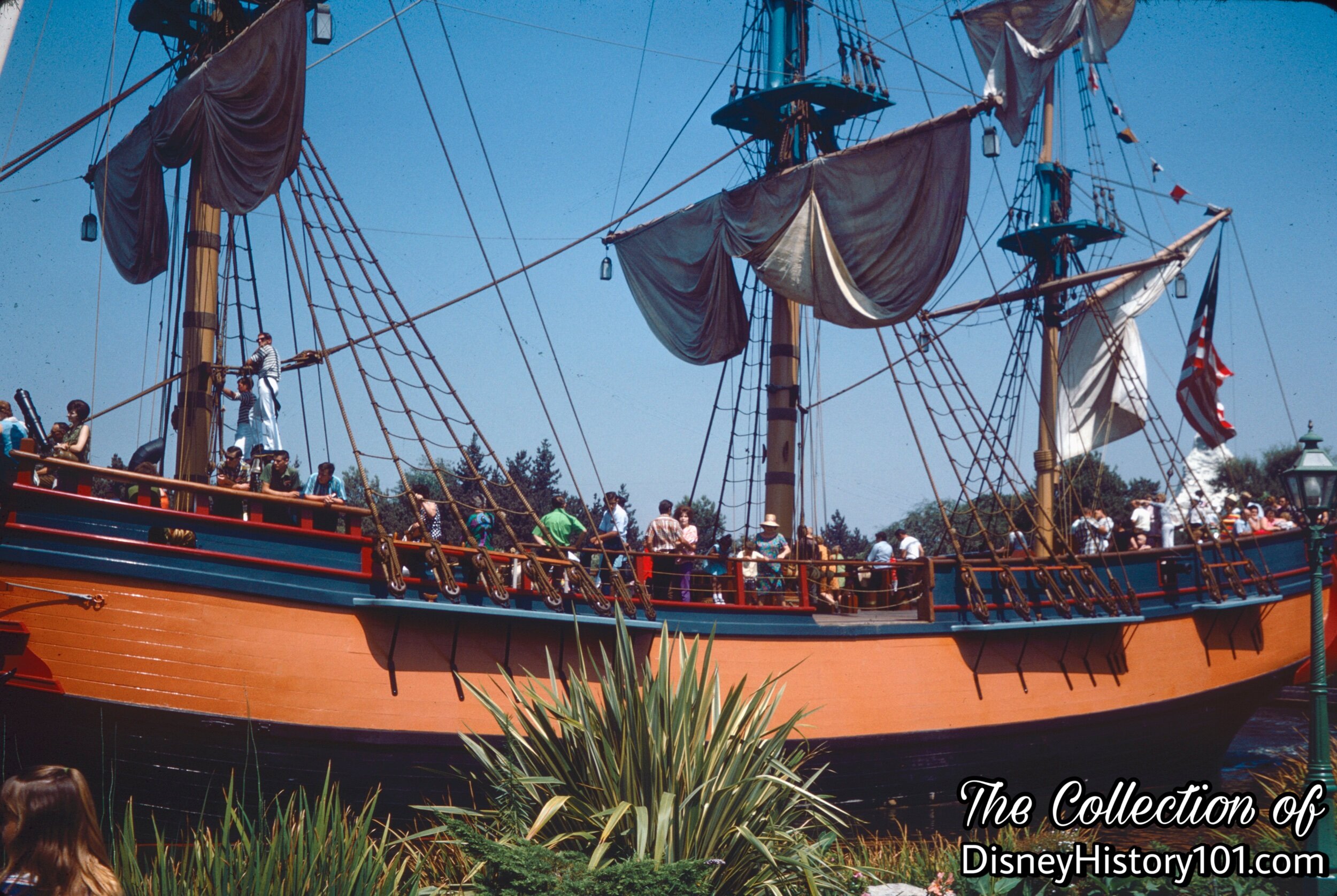
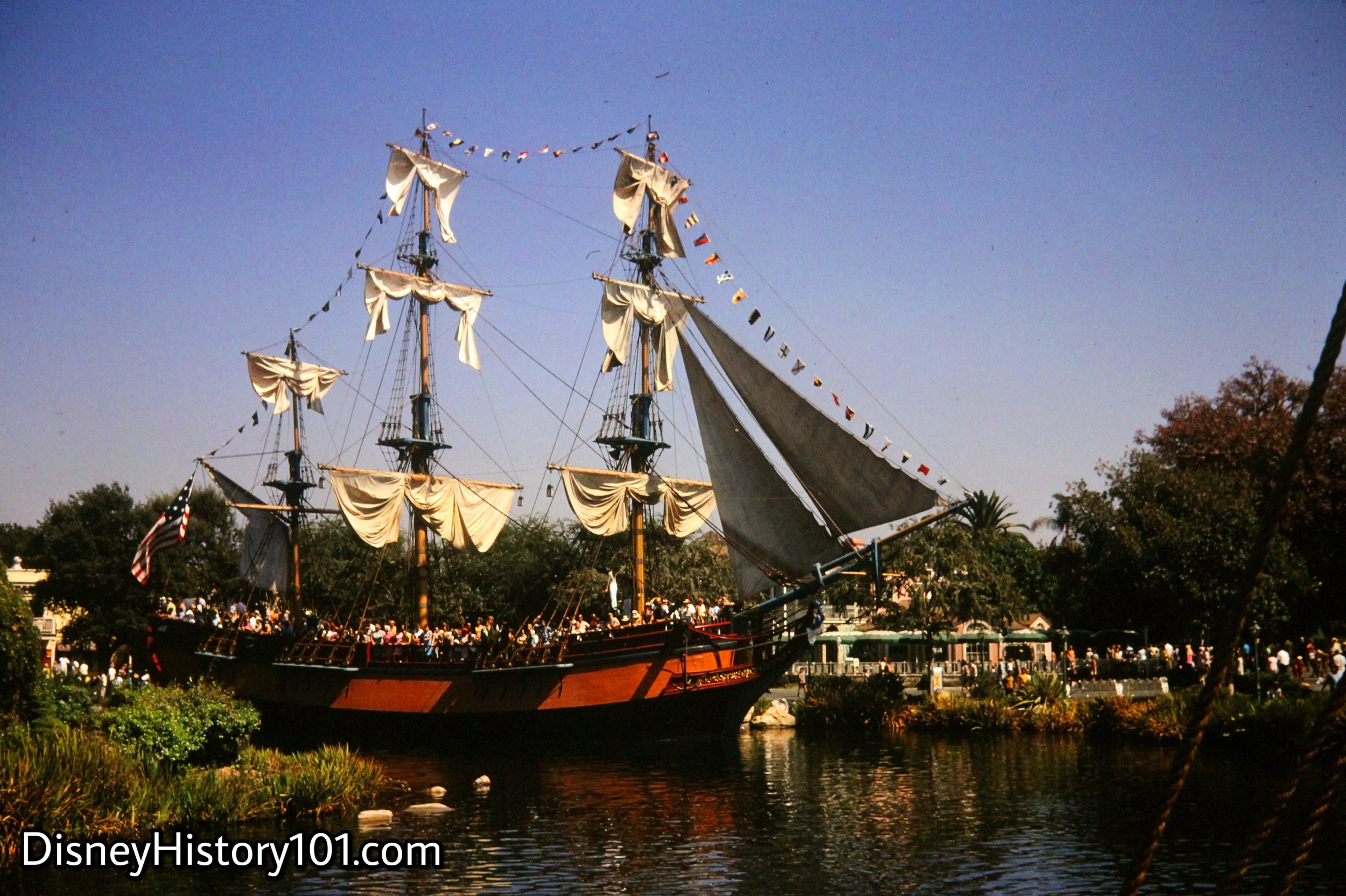
When it wasn’t circumnavigating the Rivers of America, the Columbia spent most of its time in Fowler’s Harbor.
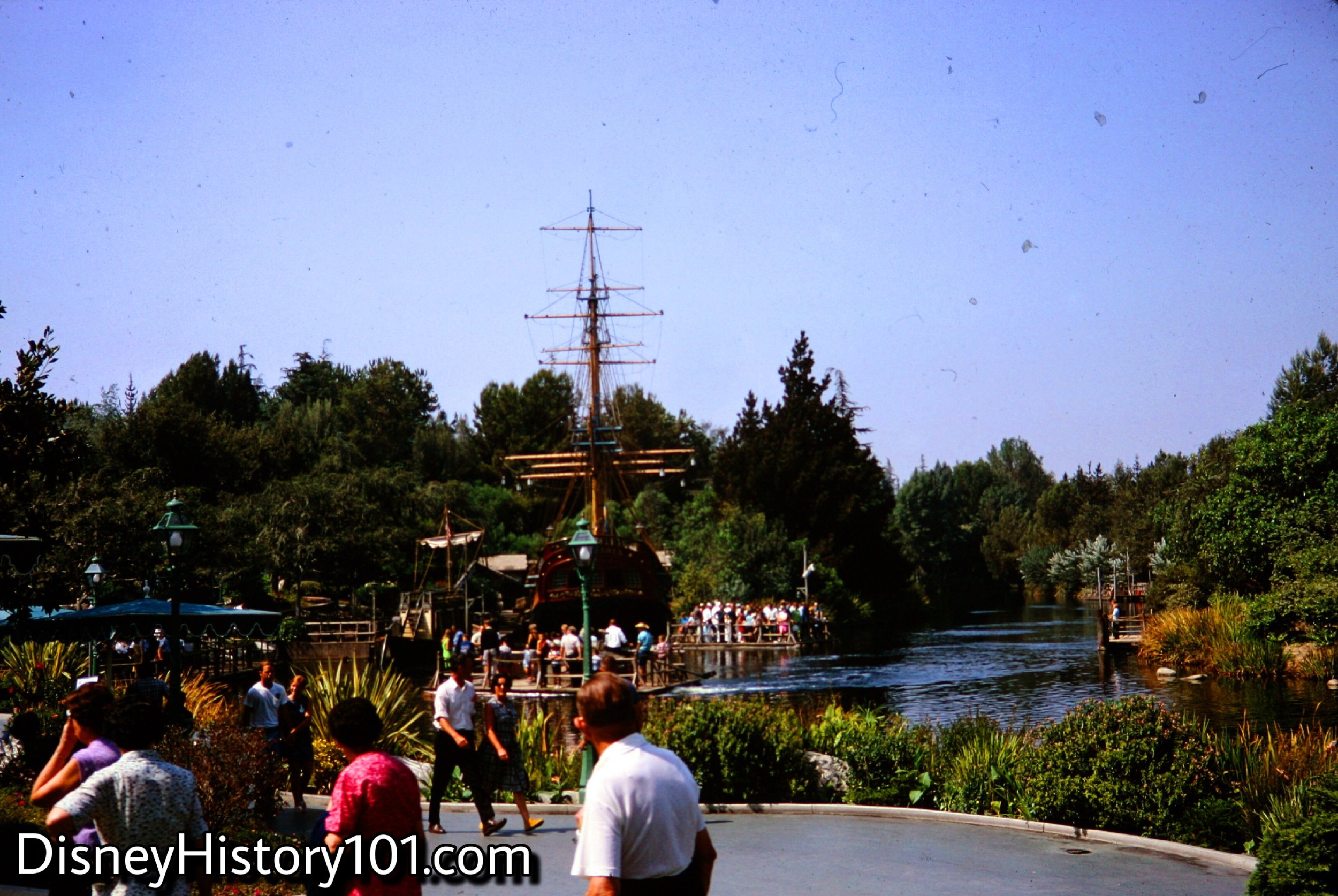
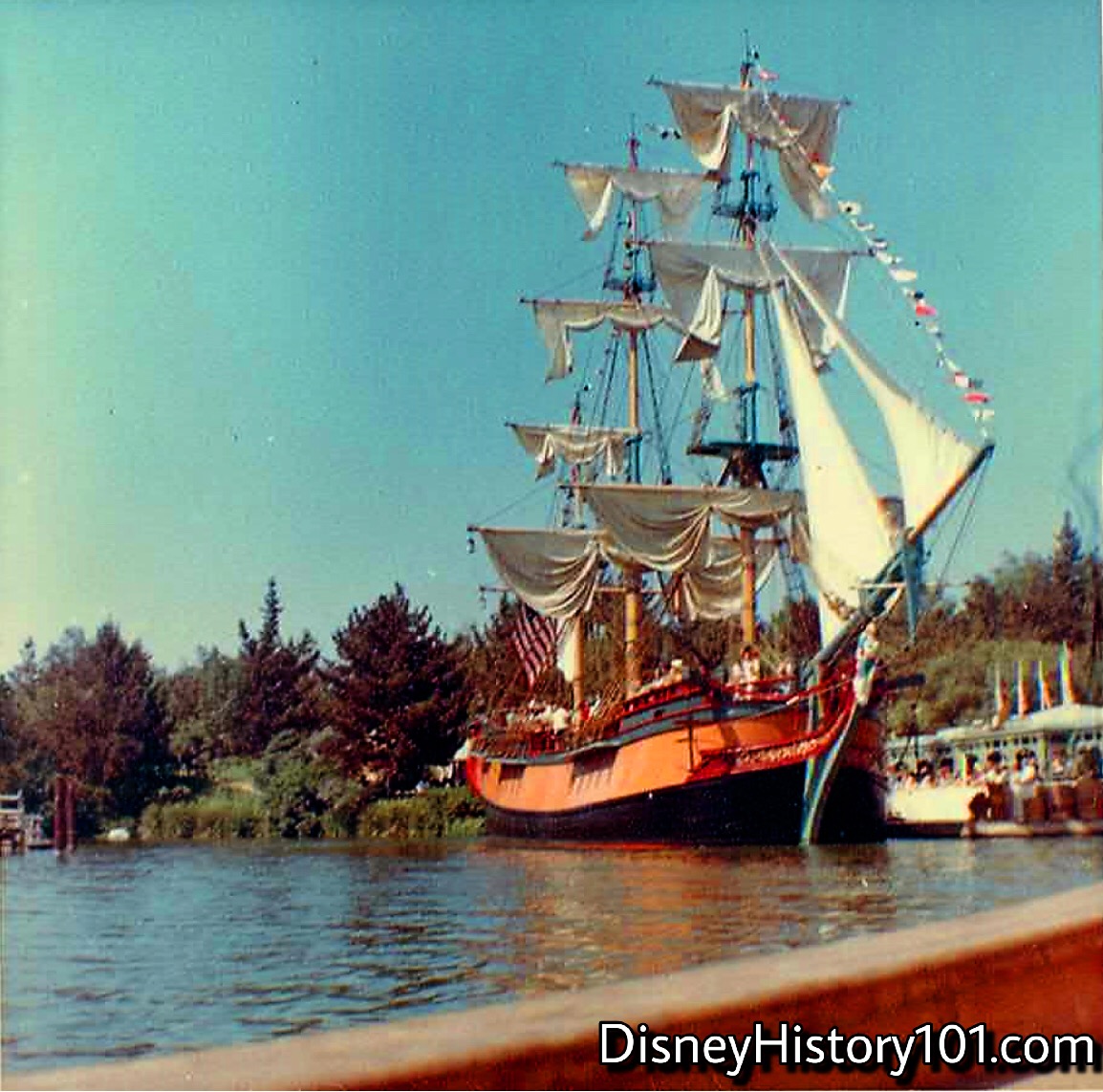

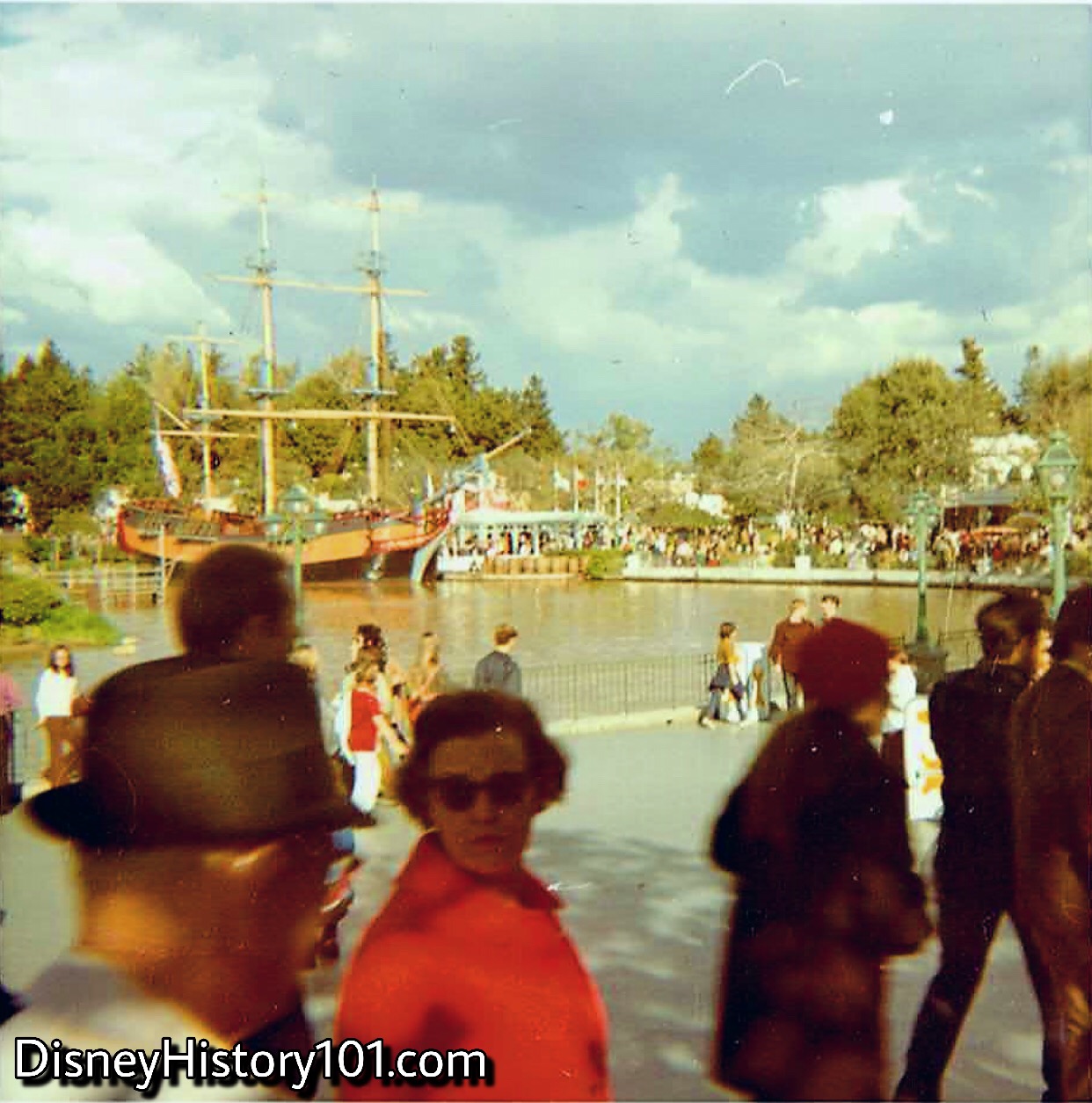
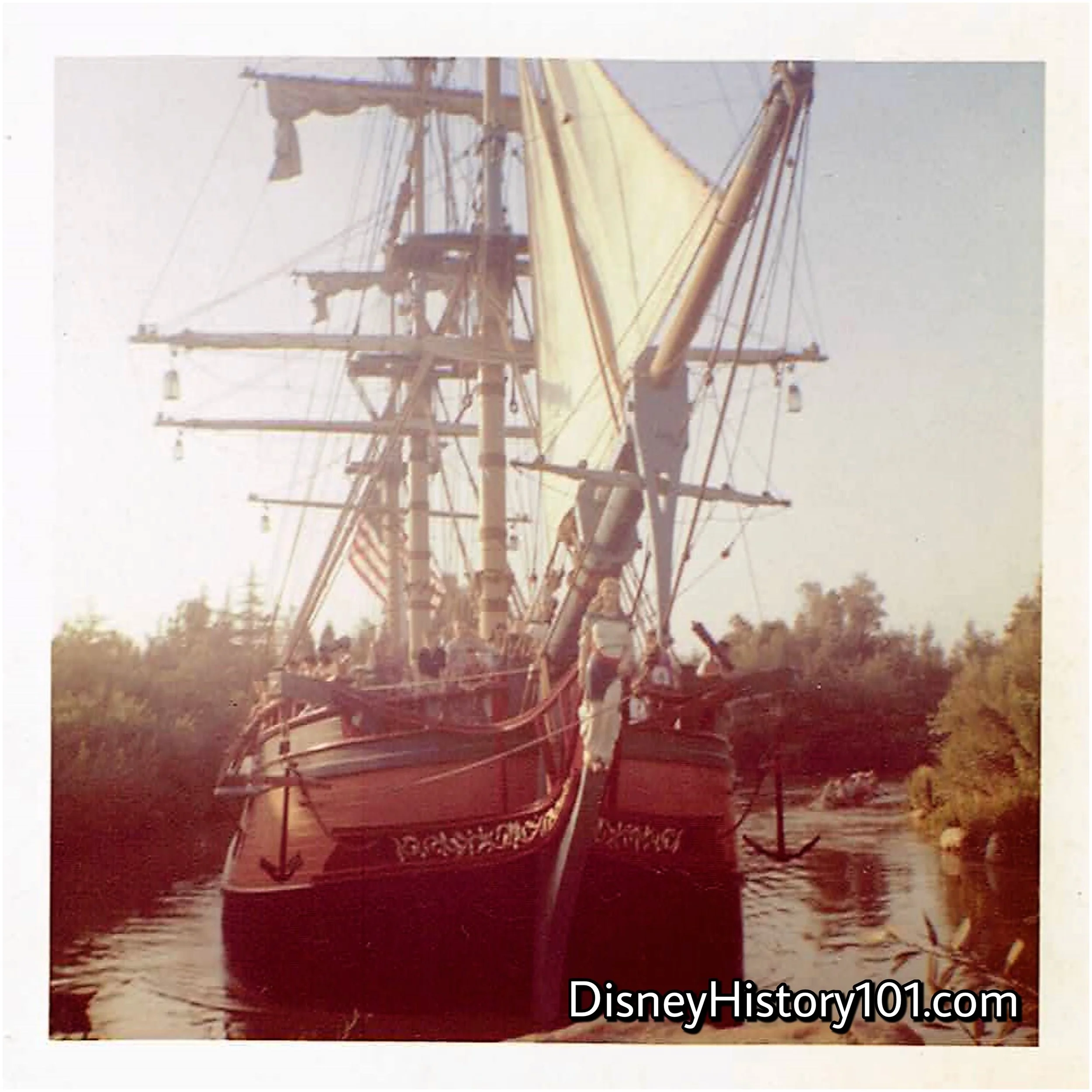
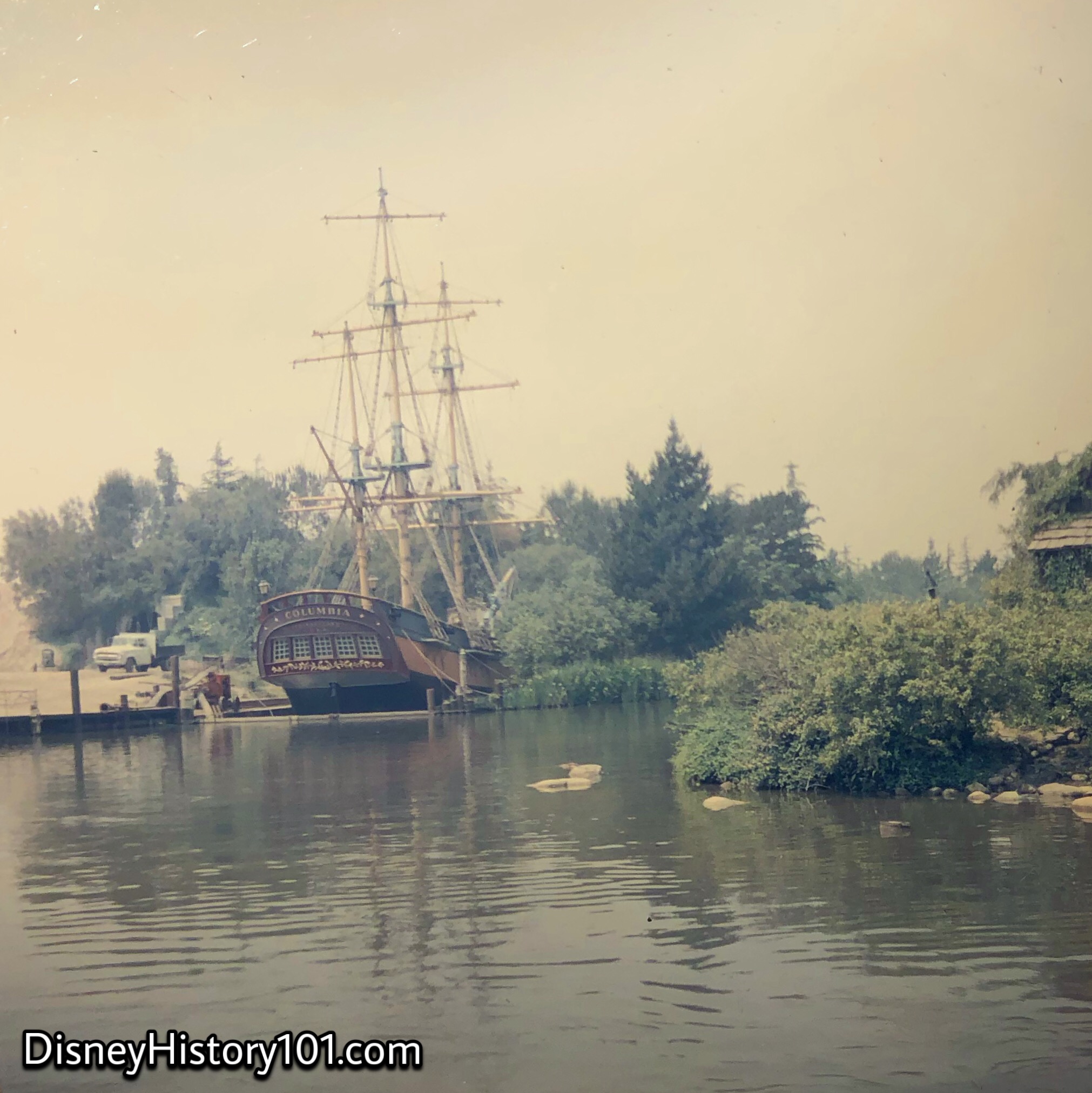
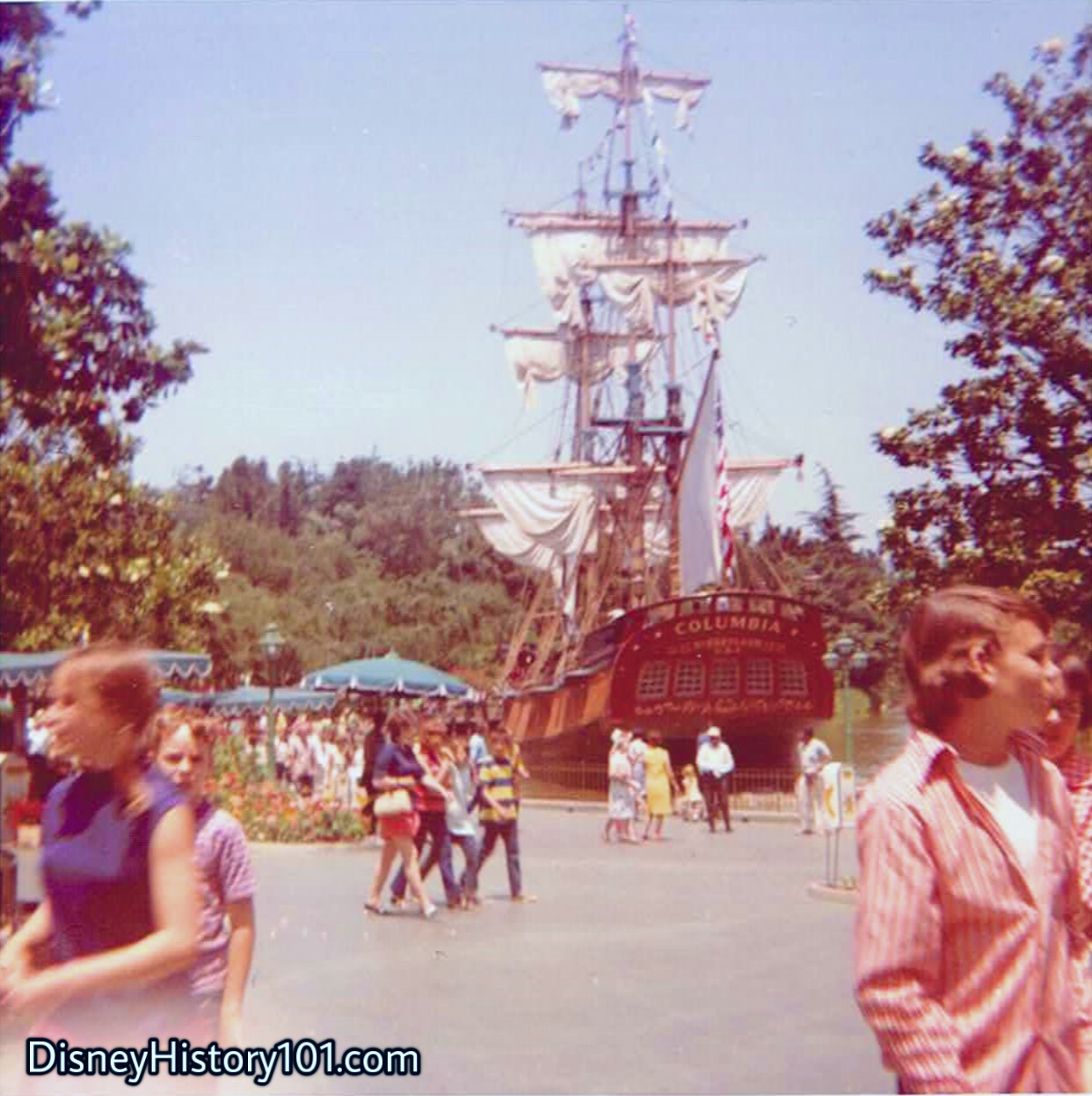
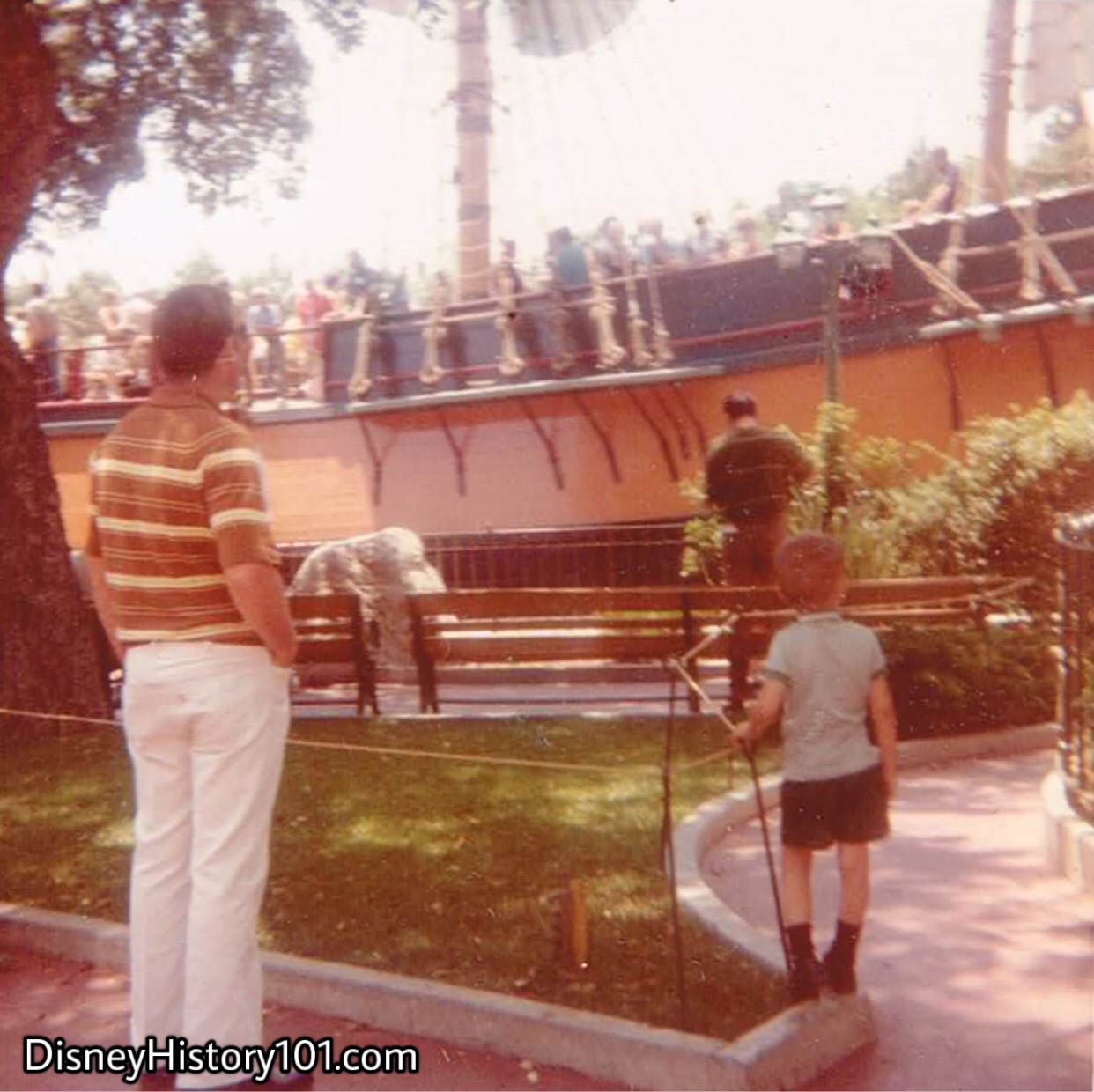
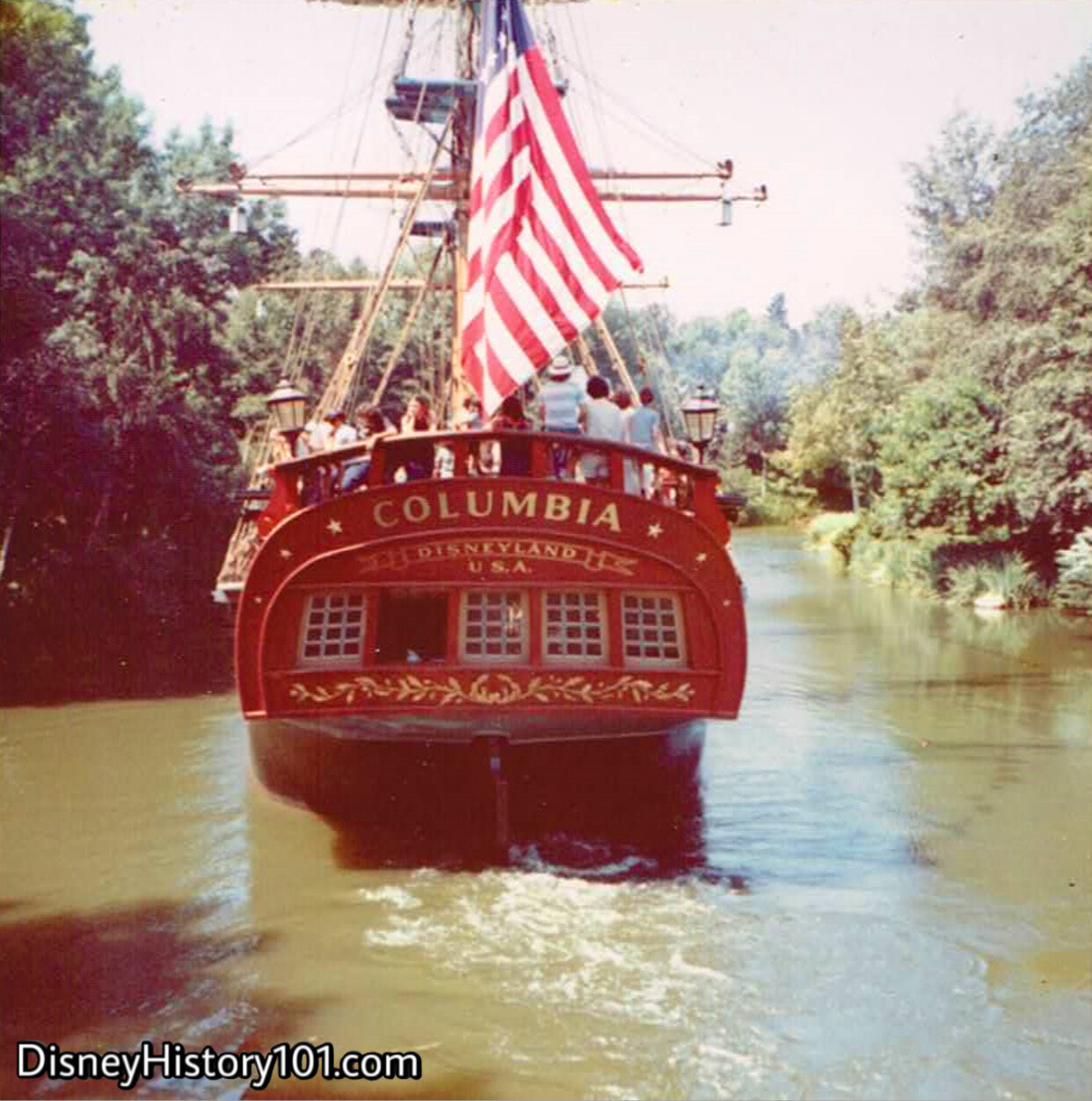
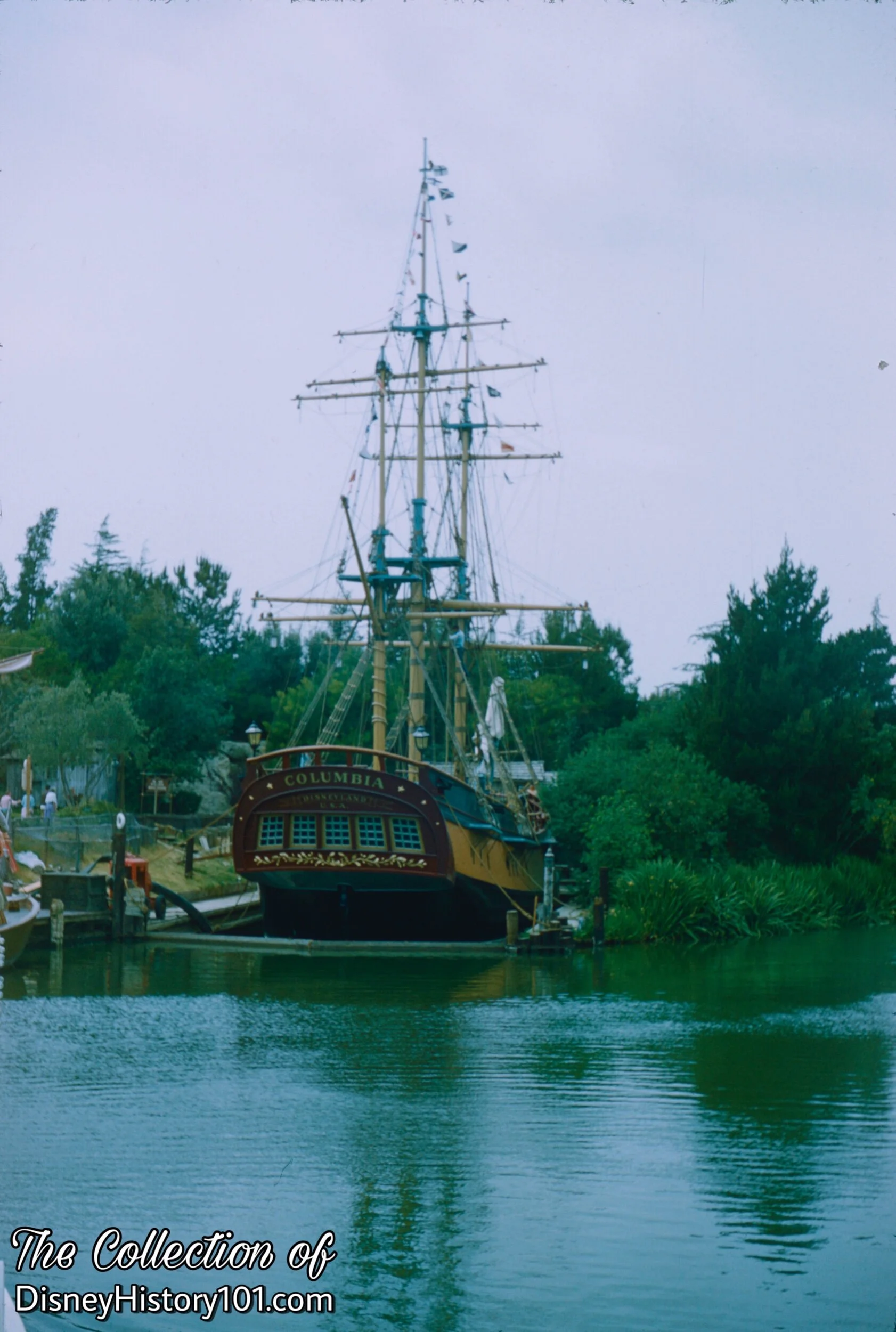
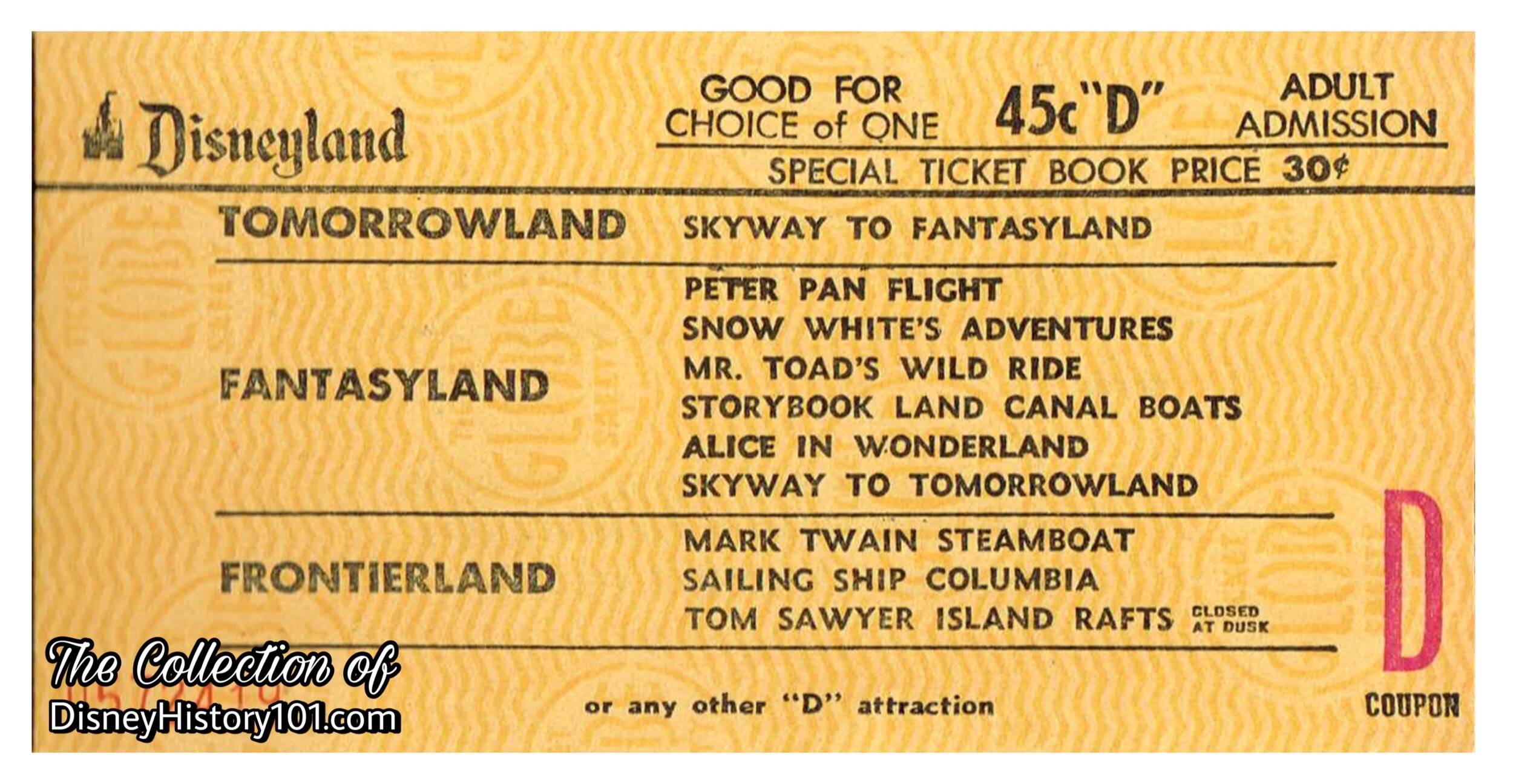
There was a 40¢ D Coupon cost of admission to board the replica of the first American ship to girdle the globe (as well as a visit to the Maritime Museum below decks). By 1965, that cost of admission was exactly one “D” coupon, or 60¢.
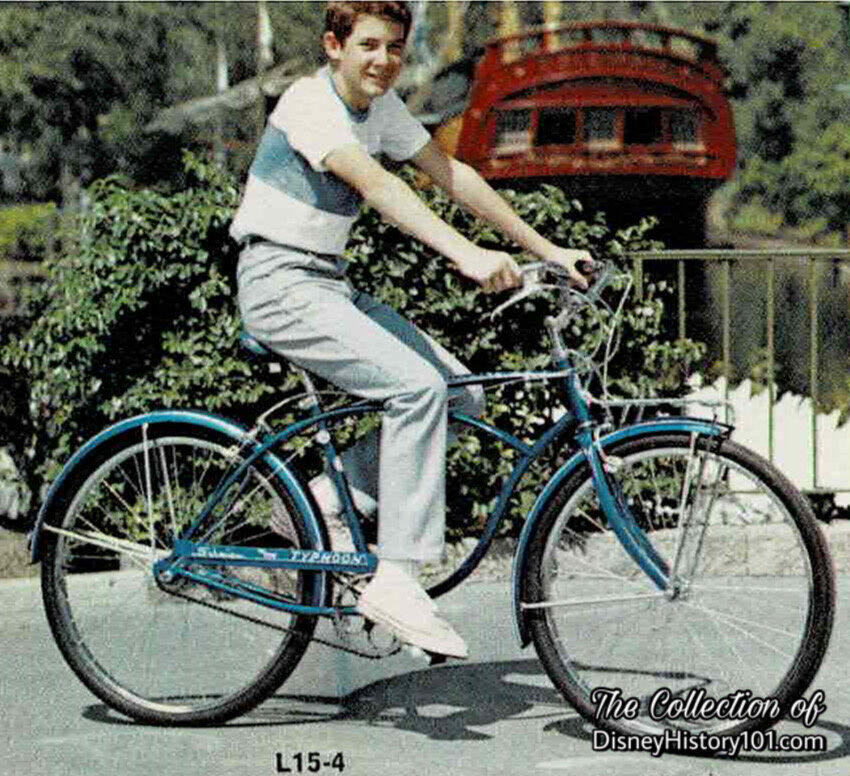
Herer, the a Schwinn Panther is appropriately photographed not far from the New Orleans Street area of Frontierland during the Tencennial year of 1965.
(*according to “Disneyland Rides & Attractions and Attendance Report,” 1981, page 50).
“The Disneyland of today is the sum total of so many additions and improvements that, in several cases, only the basic framework, the original theme of the realms remains unchanged,” according to “Walt Disney Disneyland,” page 42, (printed by Officine Grafiche Arnoldo Mondadori - Verona; first published 1964). A grand example of such an “improvement” is the Columbia attraction which opened to Disneyland Guests during 1958.
Six years after the debut of the Columbia, carpenters braved “sea sickness” while adding the finishing touches to a new exhibit (as it travelled around the Rivers of the World). Authentic antique lights and other fixtures in their correct motif were placed in their positions.
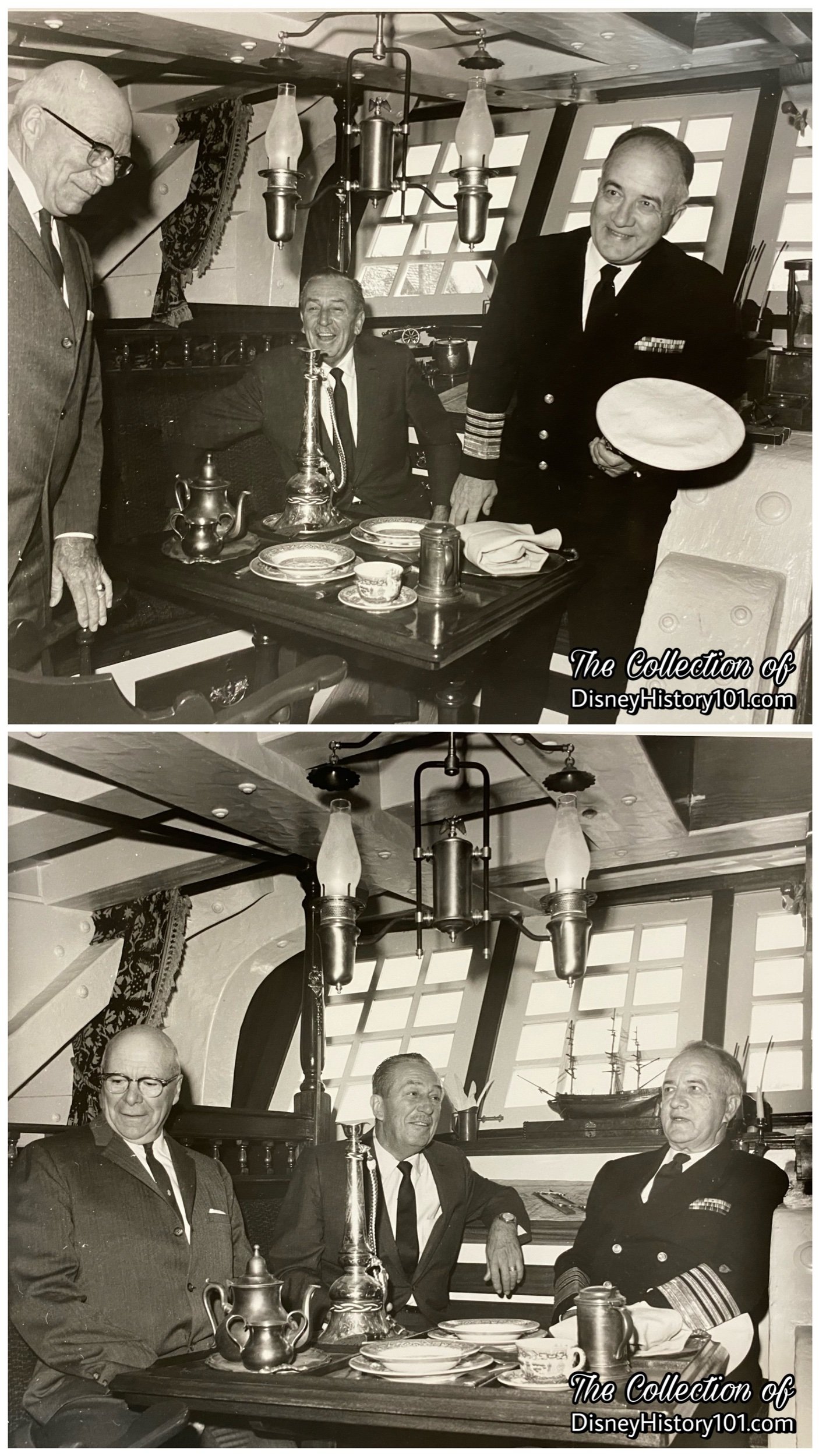
Finally (on February 15, 1964), the Columbia’s Below Decks Museum soft opened (with the official opening of the Below Decks Museum taking place a few days later, on February 22, 1964). This new free 179 square-foot exhibit was part of an expansion that brought total Park investment to $50.1 million. The exhibit took approximately 8 minutes to explode and with a 60-guest capacity, it had a theoretical capacity of 450 guests per hour.
After descending the ship’s ladder and into the waist, guests could finally see how 18th century American seamen lived. Visitors would see the “elegant Roundhouse of Officer's quarters, complete with dining tables, bunks, seats, navigational charts and equipment.” According to Line magazine, guests could now explore “the complete crews quarters made up of bunks, mess table, sick bay, pantry, navigational equipment…the finest carpentry, cabinetry and set design were employed to create the magnificent display, considered one of the world’s finest maritime museums”. Not to be missed, were the Captain’s Quarters at the stern of the ship - one of the most elaborate parts of the Below Decks Museum. There were two bunks, an eating table, seats, charts, library, personal gear, navigational equipment and antique maps. The Officer’s Roundhouse (on the starboard side of the deck) containing the first, second, and third mate’s cabins and antique cutlasses.
The same publication continues : “Considerable research of merchant ships of the era revealed that the officers of the Columbia lived aboard in reasonable comfort and elegance. The ship’s furniture and accessories were not unlike those found in the homes of officers of the gentry. All items which make up the interior of the Columbia at Disneyland might have been in vogue between 1750 and 1800.”
“Sail and rope-making equipment, as well as a sailmaker's store room and Bosun's locker are displayed. Sleeping quarters for the ships' seamen have also been authentically recreated. An open galley and forge are carried aboard the Columbia, as was true of the original ship. This feature was somewhat unique to the Columbia, which was outfitted in this manner in order to help build another ship once it reached the West Coast. Boat and sailing enthusiasts may be interested in the wooden ‘timbering’ or supports of the ship and in the artistic ropework evidenced on the ship.”
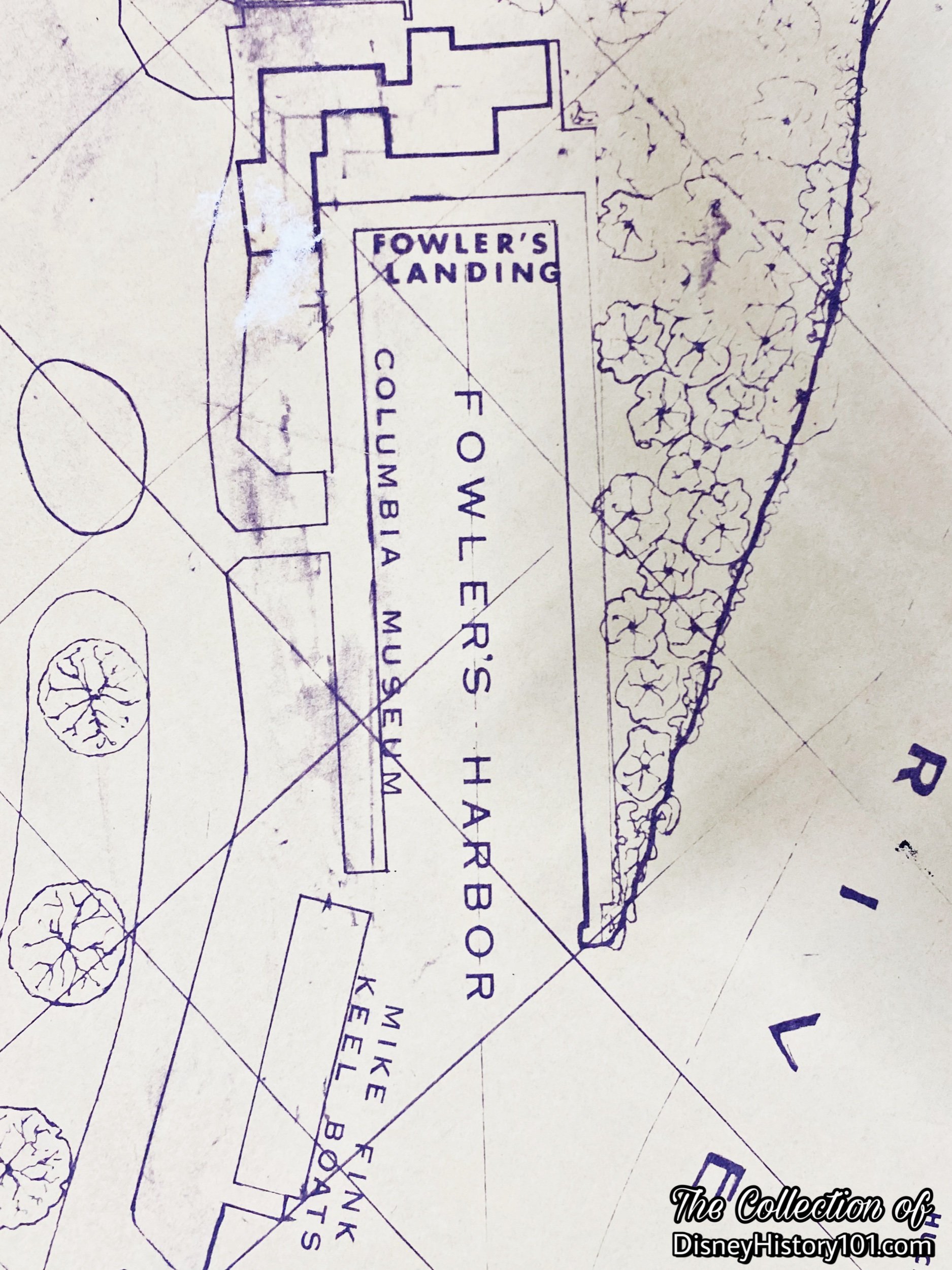
During the summers and on weekends, the Columbia joined the Mark Twain on the Rivers of America. However, during many Fall, Winter, and Spring months, the Columbia Museum moored at Fowler’s Harbor where it served as a maritime museum (see above). “During in-port days, the Columbia ties up in Fowler’s Harbor where guests may climb aboard to view this replica museum,” according to the “Disneyland Dictionary,” compiled by WED Enterprises, Inc. and WED Public Relations Department, c. 1968.
The Columbia was occasionally featured in promotional media, including television and magazine advertisements and television broadcasts. For instance, The Jonathan Winters Show (first aired on NBC c. March of 1965) featured a comedic segment where Winters portrayed Captain Bligh aboard the Bounty. The segment was filmed aboard the S.S. Columbia at Disneyland, and the entire show was screened at NBC Studios on March 26th, 1965. Less than a decade later, the Columbia’s Main Deck was also once used as a stage for a special recorded feature starring the Jackson Five, in 1974.
In the year 1984, the Rivers of America were drained, and the Columbia received a much needed refurbishment of it’s decks and rigging. Columbia creator Ray Wallace directed the re-rigging of the vessel, assisted by professional riggers (from outside Disneyland) to duplicate the intricate knots of the 26-year-old ship. Disneyland Craftsmen touched-up other features like the vessel head. A Line magazine describes “when this year’s rehab is complete, and the river once more flows around Tom Sawyer Island, the ‘Columbia’ will again lie quietly in her berth at Fowler’s Harbor. Here she will receive her guests in stately splendor until summer arrives and the majestic ship sets forth on yet another voyage.”
The former Walt Disney Imagineering Principal Creative Executive Marty Sklar would probably agree that the small details like these make the story appealing. An example of one such detail is the Carved Wooden Flying Fish.
The original Columbia (constructed 1787) was built within two years of another historic vessel - the Bounty (constructed 1785)! In 1789, the “Bounty” was led by a man named Fletcher Christian. The ship was captured by mutineers, and some of their descendants would go on to inhabit parts of Pitcairn Island in the South Pacific to the present.
The Bounty has been depicted a few times on film. Herb Ryman had worked on the MGM production of "Mutiny on the Bounty" (released 1935). In 1978 (and approximately 189 years after the mutiny took place), the film “The Bounty” (starring Anthony Hopkins and Mel Gibson) also attempted to capture this story. In recreating the Bounty sailing vessel for the film production, numerous faithful props were created (including a hand-carved fish). The Carved Wooden Flying Fish [according to Disneyland Line, Vol. 17, No. 41] is believed to be “probably made from Koa wood, carved by Fred Christian, the Great Grandson of Fletcher Christian… The carving was presented to the present-day Bounty shortly after its construction. Making the presentation was the Bounty’s Commander, Joe McGuire, a 35-year veteran of the sea whop served as a commander in the British Navy. Commander McGuire was responsible for much of the building of the Bounty, including designing the engine rooms. (Although the Bounty is an exact replica externally, she does not have modern equipment below decks.)”
A few years after the release of the film, the very same Carved Wooden Flying Fish was presented by Joe McGuire, to Disneyland, in October of 1985! On hand for the acceptance, was “Ray Wallace, the Columbia’s designer and her Honorary Captain as designated by Walt in 1958,… along with Bob Penfield, Maintenance Superintendent.”
Quite a few inspirational thoughts were conveyed on the occasion. Ray Wallace said, “It’s the men on those wooden ships who had the forthrightness and stamina to chase horizons, leading us to new worlds, and this gift is a great tribute to the officers and men of the Bounty and the Columbia. After 200 years, their saga will never die.”
Many things have been performed in the name of Show Quality for guests of the Columbia. Around the time Fantasmic opened, the crew of the Lady Washington (another of Ramond Wallace’s creations) temporarily docked at the Los Angeles Maritime Museum in San Pedro, visited Disneyland to see the Columbia, and meet Jeffrey Smith (of Tech Services) the designer in charge of the rigging. Jeffrey went on to become a temporary member of the Lady Washington crew when she was in port, performing research to enhance the Show Quality of the Columbia spiel delivery. About five years later (in 1998), the Columbia Crew had visited the Lady Washington (a recreation of a ship that sailed with the original Columbia) several times while located in her temporary port at the Los Angeles Maritime Museum in San Pedro. Cast Members like Mike Miranda, Matt Haynes, and others received history lessons about the 18th century vessel. [Disneyland Line, February 13, 1998]
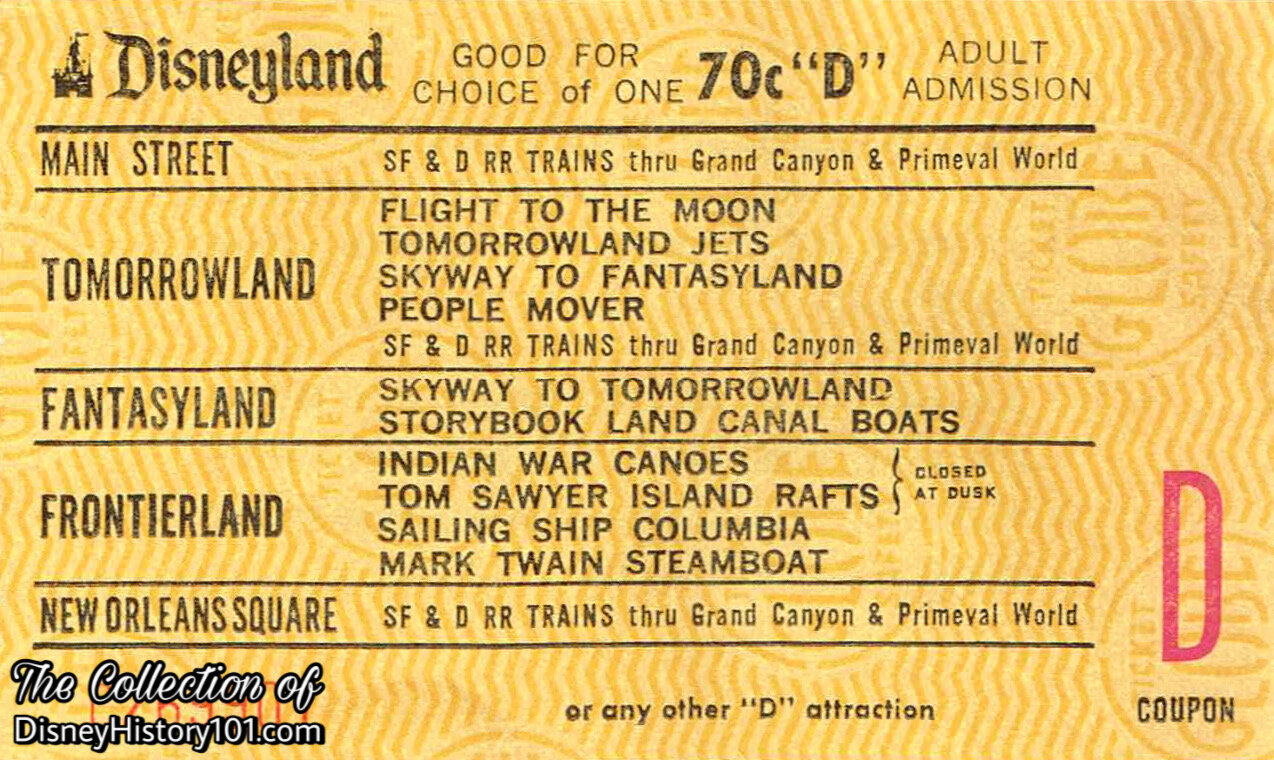
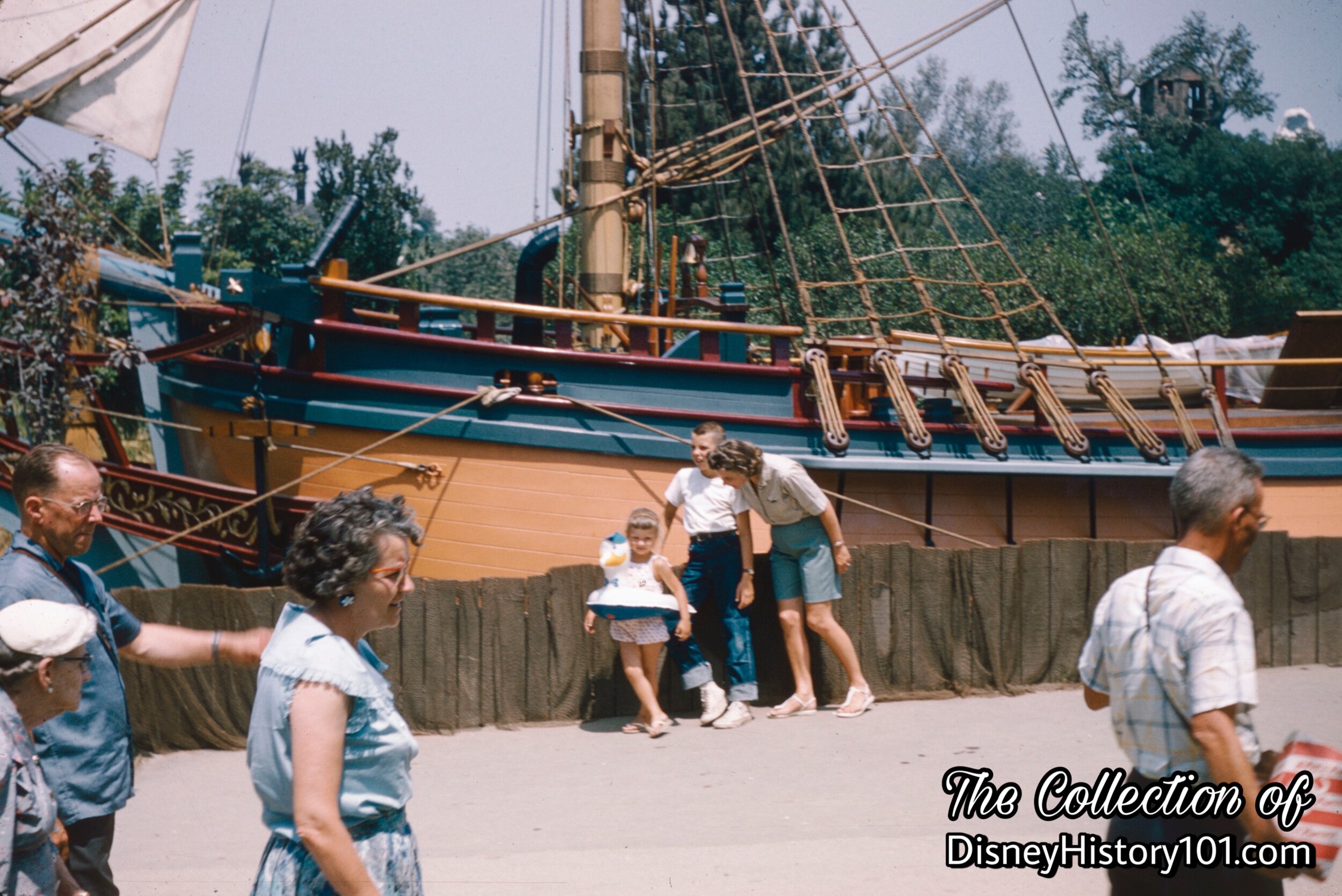
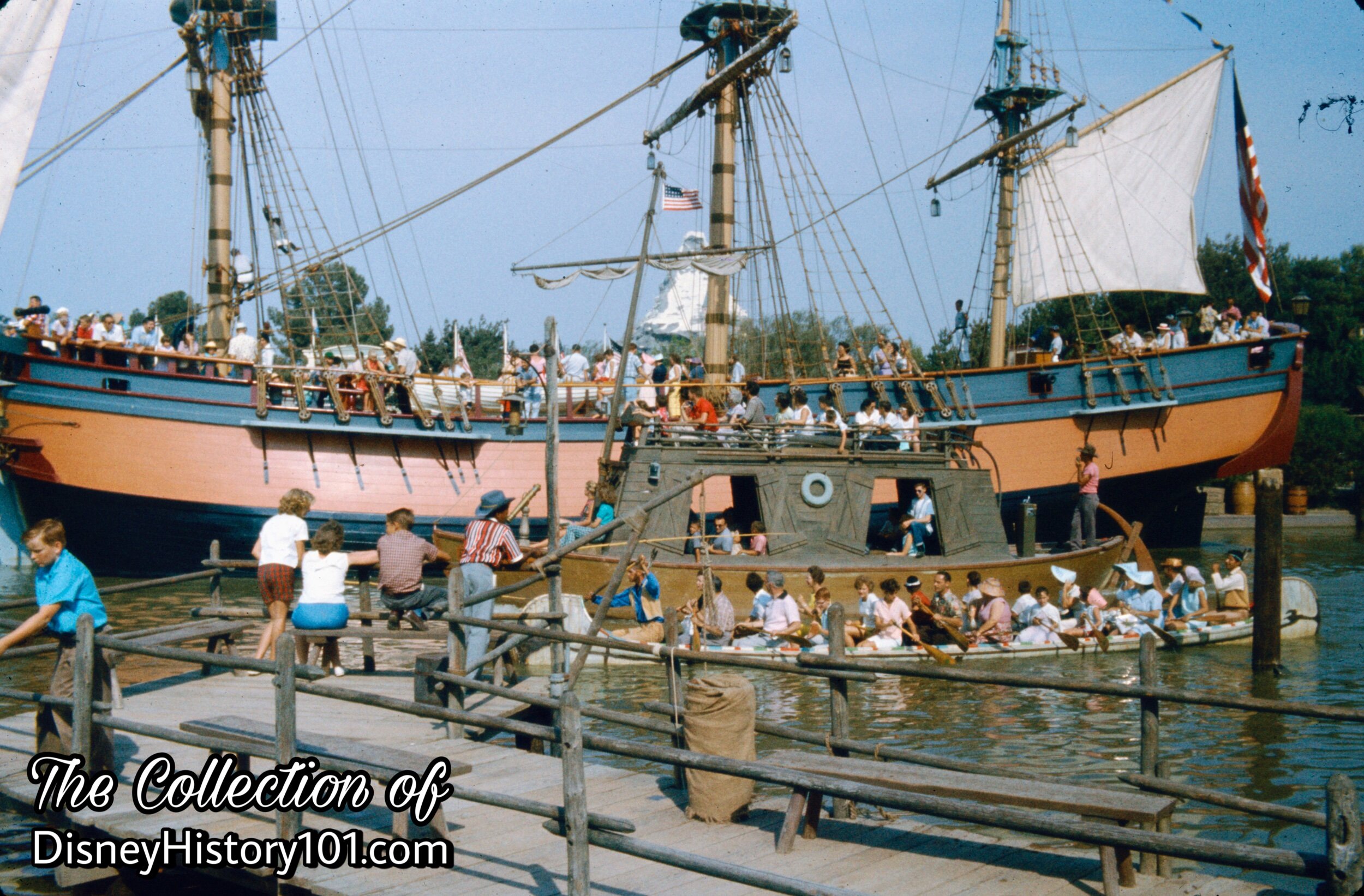
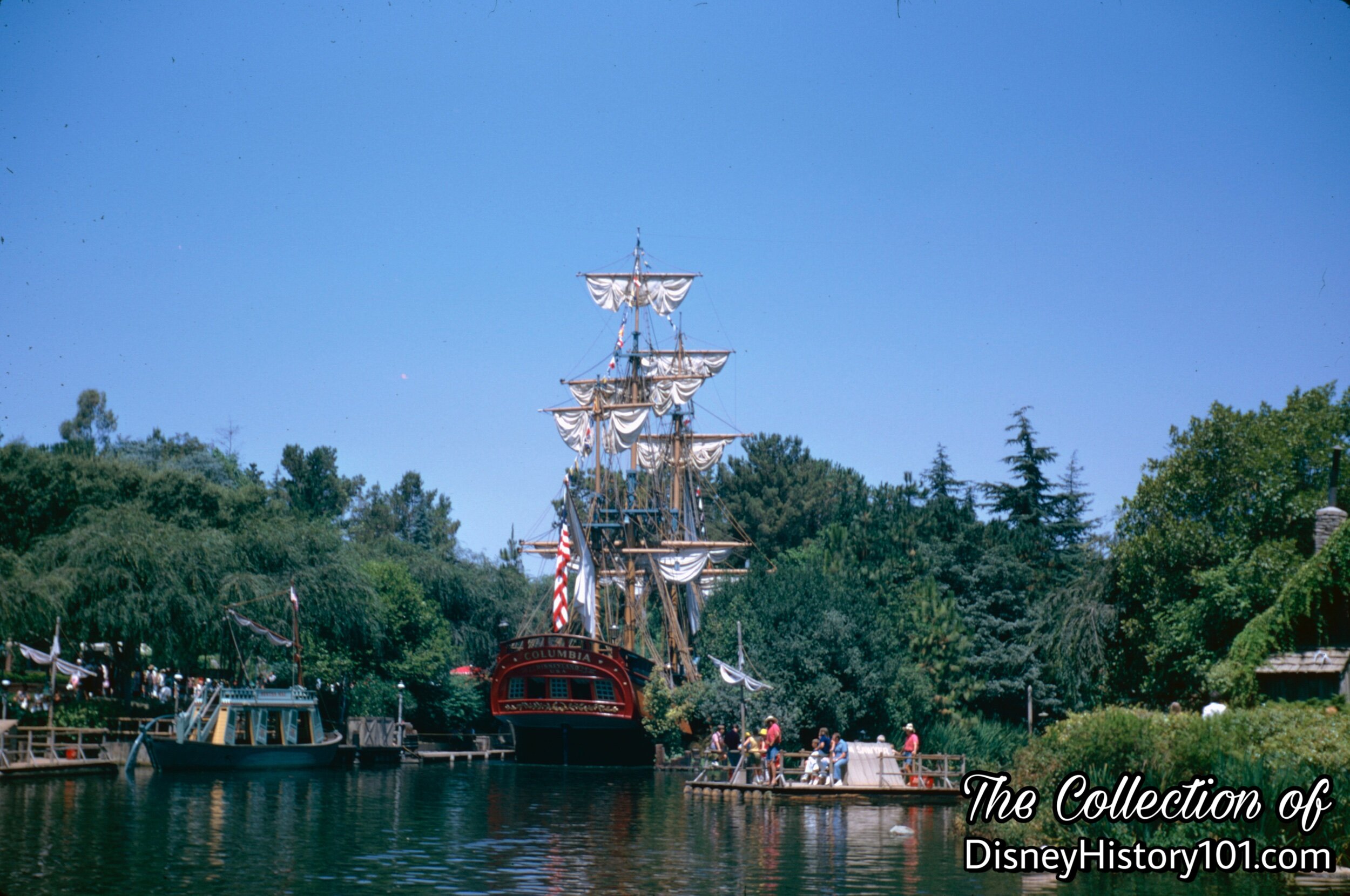
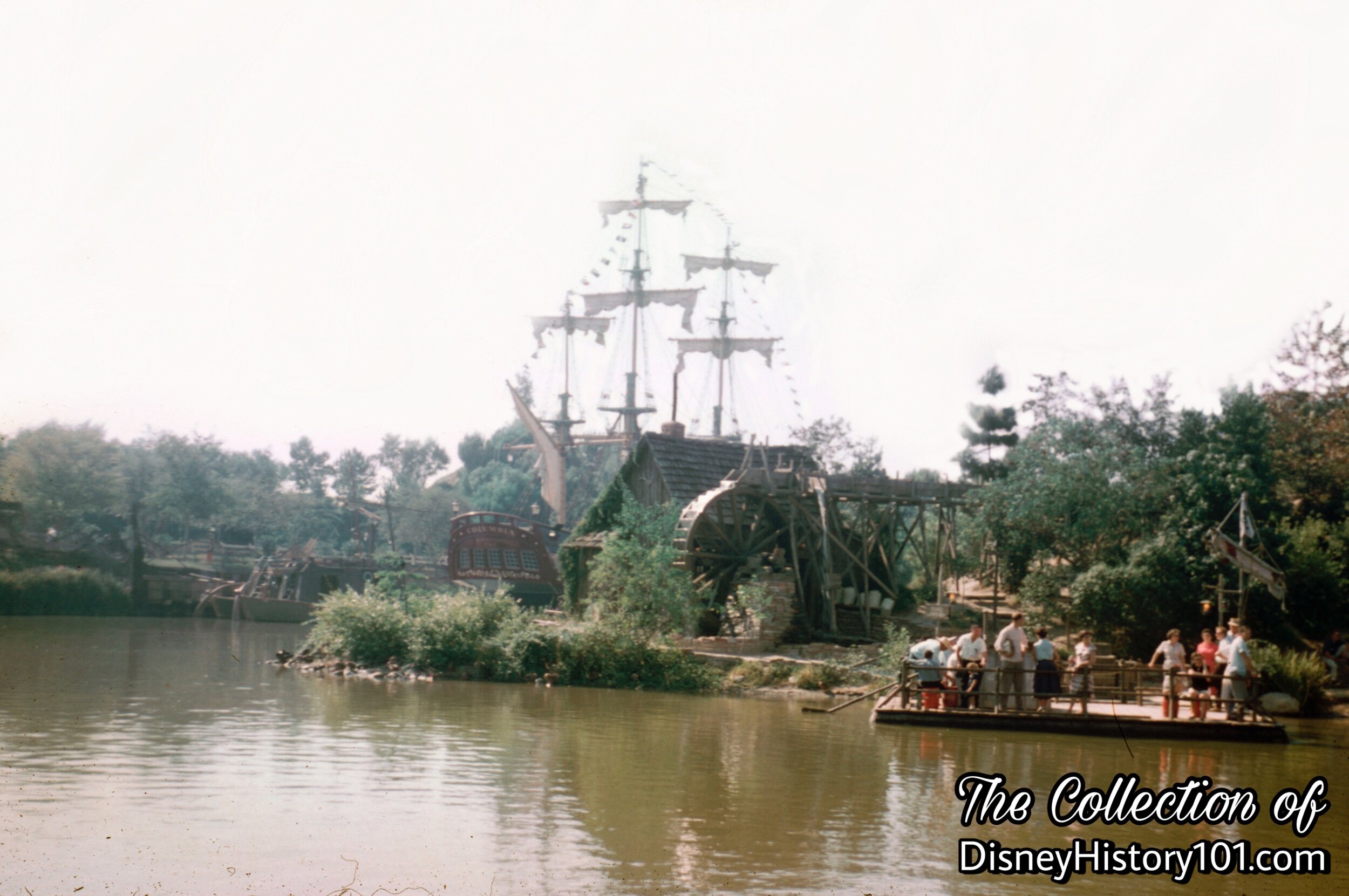
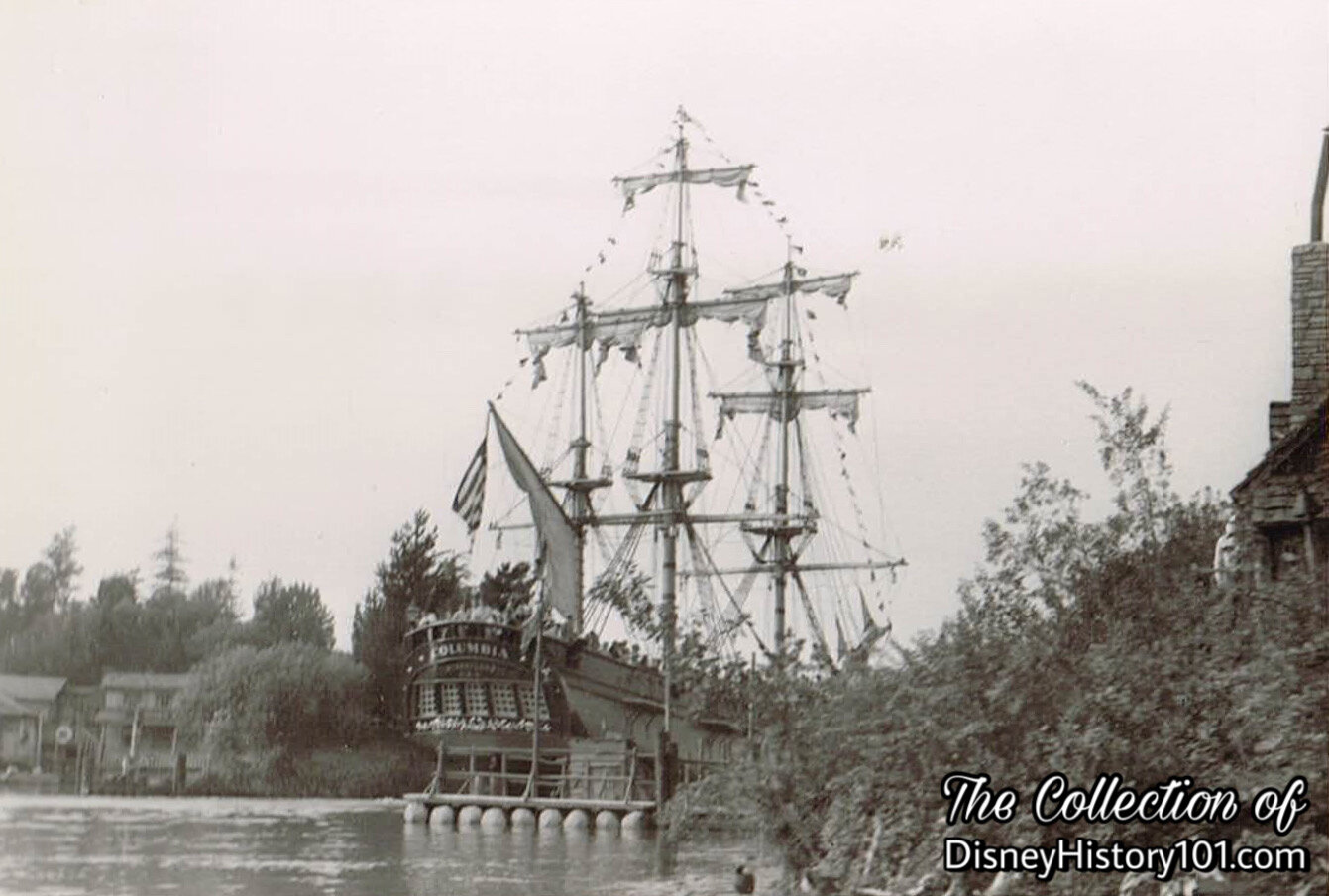
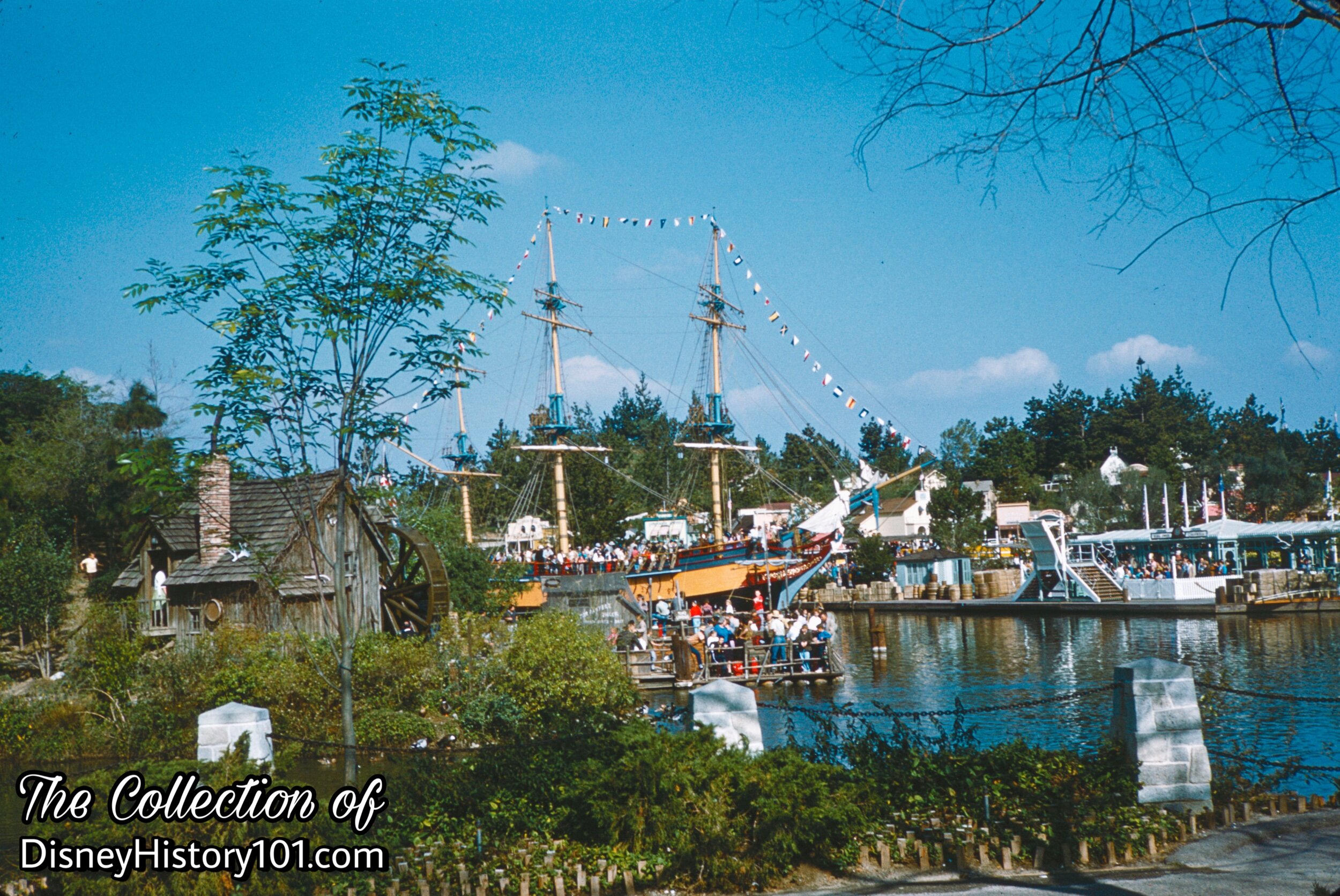
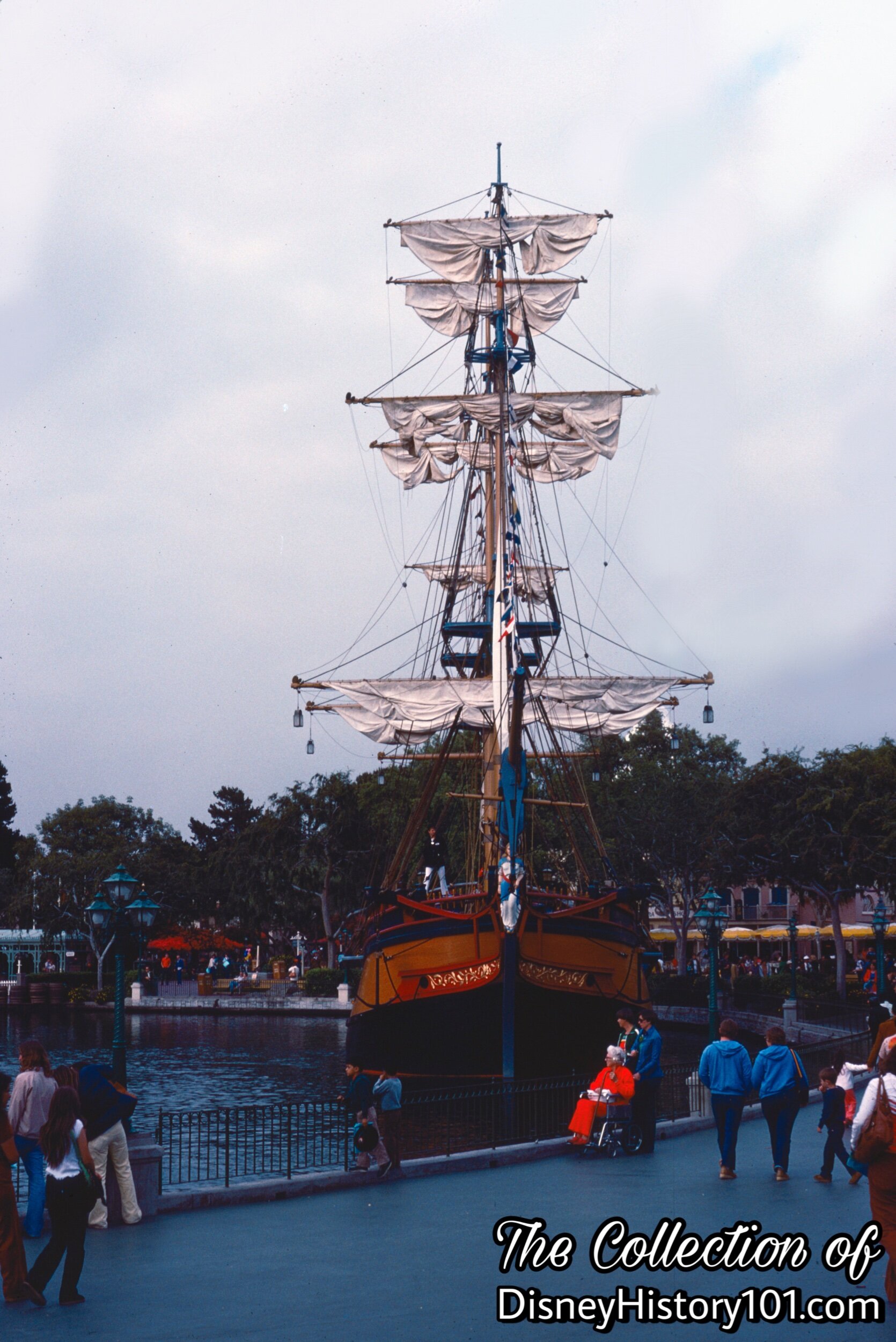
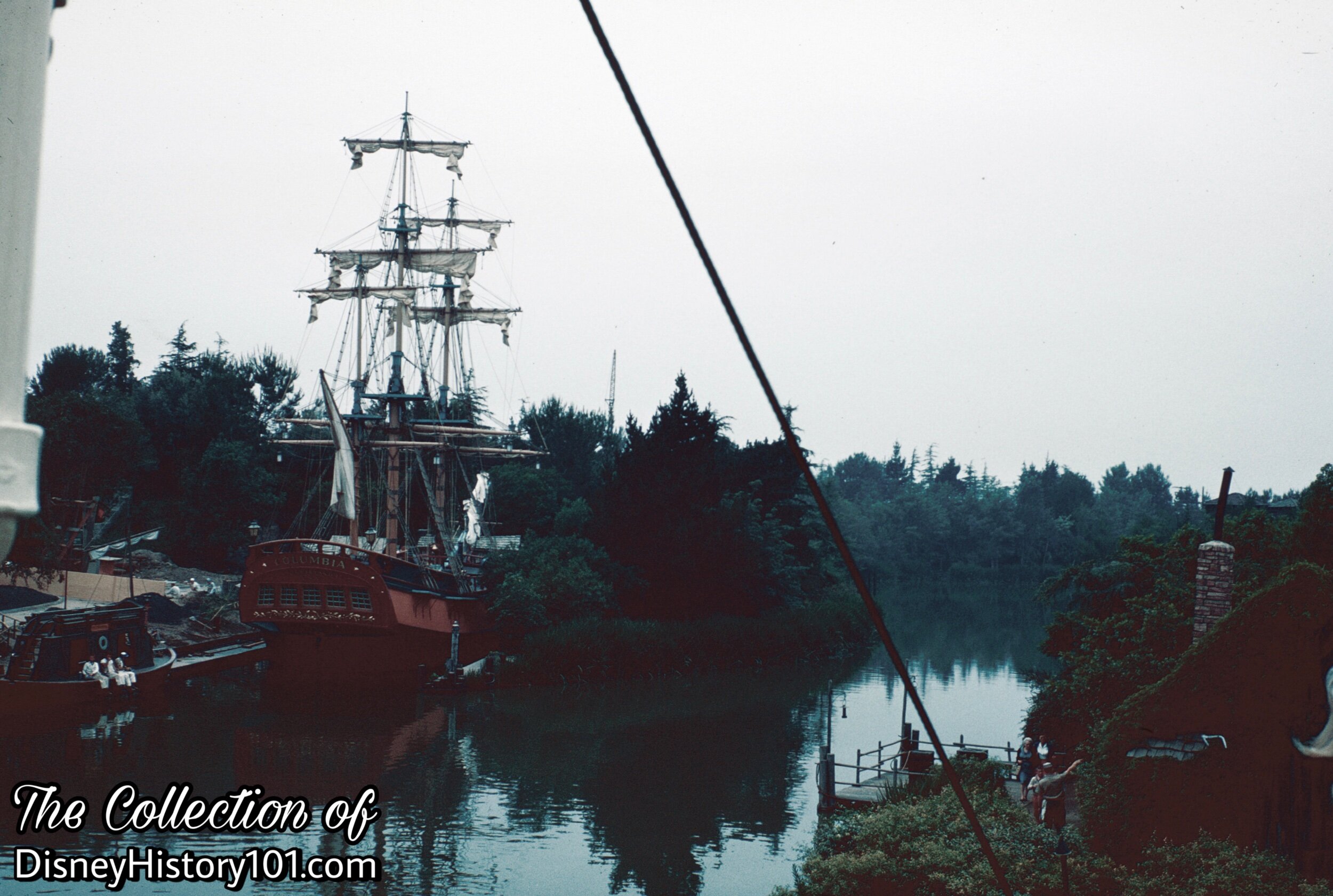
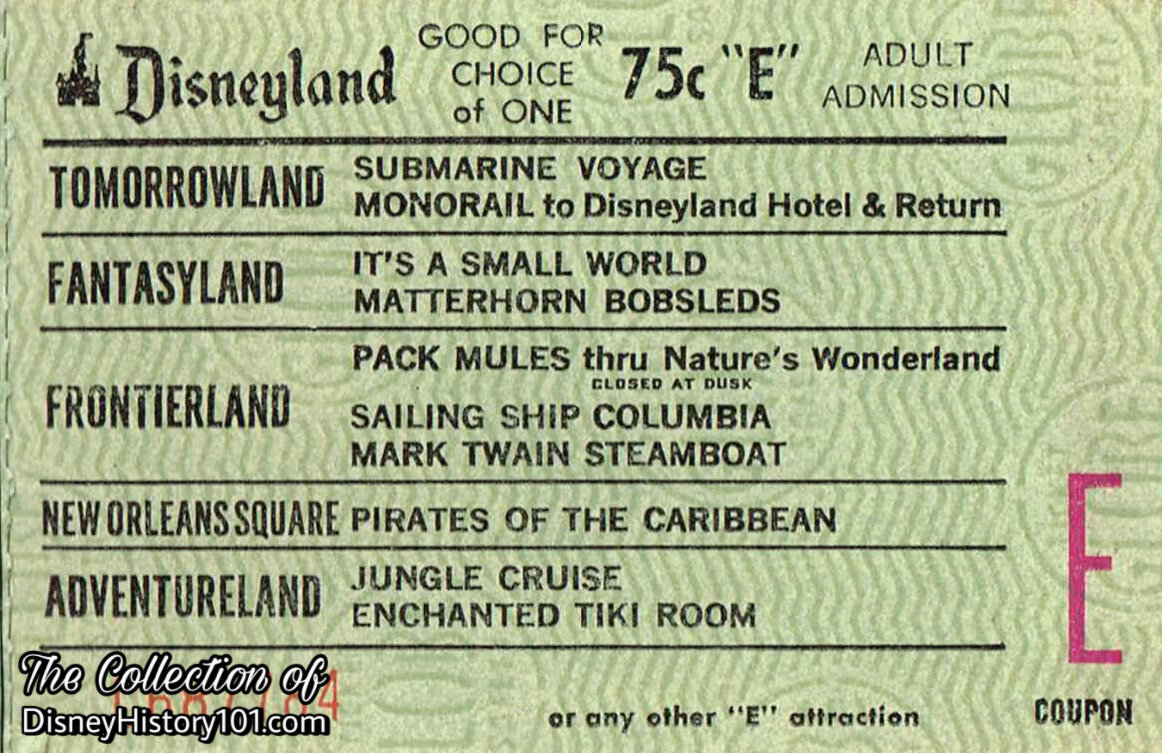
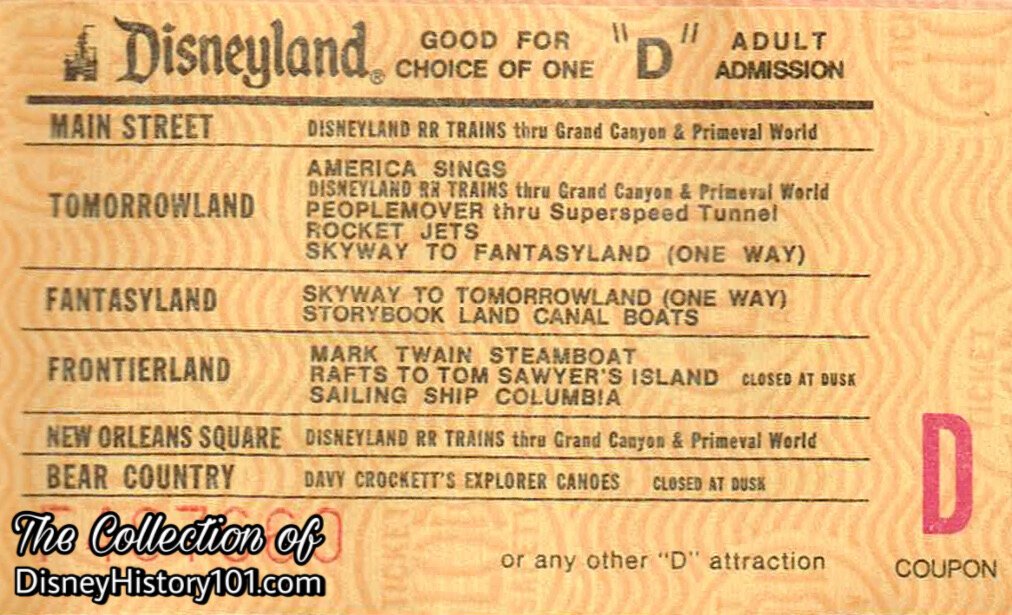
In 1992, the Columbia became part of a new nighttime spectacular known as Fantasmic! Perhaps owning in some way to this, the Columbia Operated during selected periods only.
As time allows Park Operations M-44 Machinists would repair or rebuild as needed, mechanical parts for Adv/Front. Assist the machinists with repairs to the Columbia as needed. The M-44 would fill out Mechanical Checklist cards and and Downtime Reports and turn them in to the Foreman daily. The Park Operations Machinists would also check all the fluid levels on the Columbia. Magic making MAINTENANCE MACHINISTS were challenged by unique new problems each day. A typical maintenance request representing part of a day's work may sound like: “Find a pair of prescription glasses dropped from Columbia, 100 yards from boarding dock... big river.”
Safety is a major concern of Engineering. Every year they would make a complete test and inspection of all structural parts of Disneyland. And since Guests would look to Disneyland for their safety the department team was continuously designing new guest and personnel safety devices.
Many changes and adjustments would contribute to a safe show. For instance, shops frequently do the wood and metal work for major projects such as the Sailing Ship Columbia.
The Submarine batteries, weighing a total of over 20 tons, were the original power source for Disneyland's Columbia, and also served as ballast, to improve stability of the ship. They were later replaced by diesel engines, and the ballast source also had to be replaced by 22 ½ tons of pig iron.
By 1969-1970, one Motorola 2-way radio (Handie Talkie HT 200) Frequency 154.60 MHz. was assigned to the Columbia. This was in relation to River of America operation of the Columbia and to be used for emergencies on the river, breakdowns and first aid requirements. The Price/unit was $758.00 without battery and antenna. Model #123 DEN 3110 A.W.
The “I Have an Idea” Program (est. 1978) would also come to yield many ideas that would influence and shape the efficiency and safety of how things were run. For instance, Disneyland Cast Member William Burnett had the idea to “attach floating keychains to key sets of attractions near the water, to support keys accidentally dropped in the water.” [Disneyland Line, March 1st, 1979]
During the 1990s, the wooden masts were replaced with steel masts.

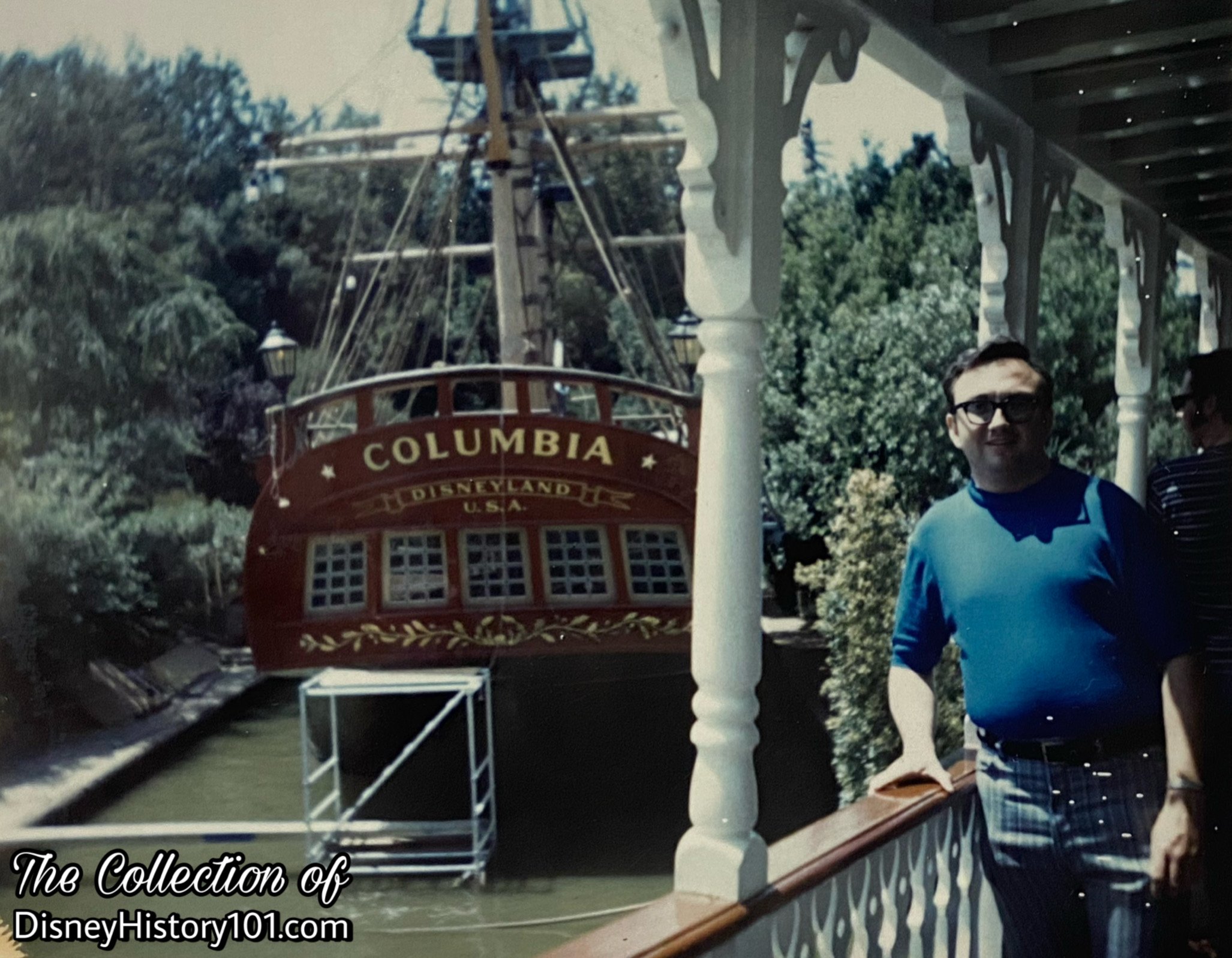
The Columbia would briefly cease operation during the winter season of 1962.
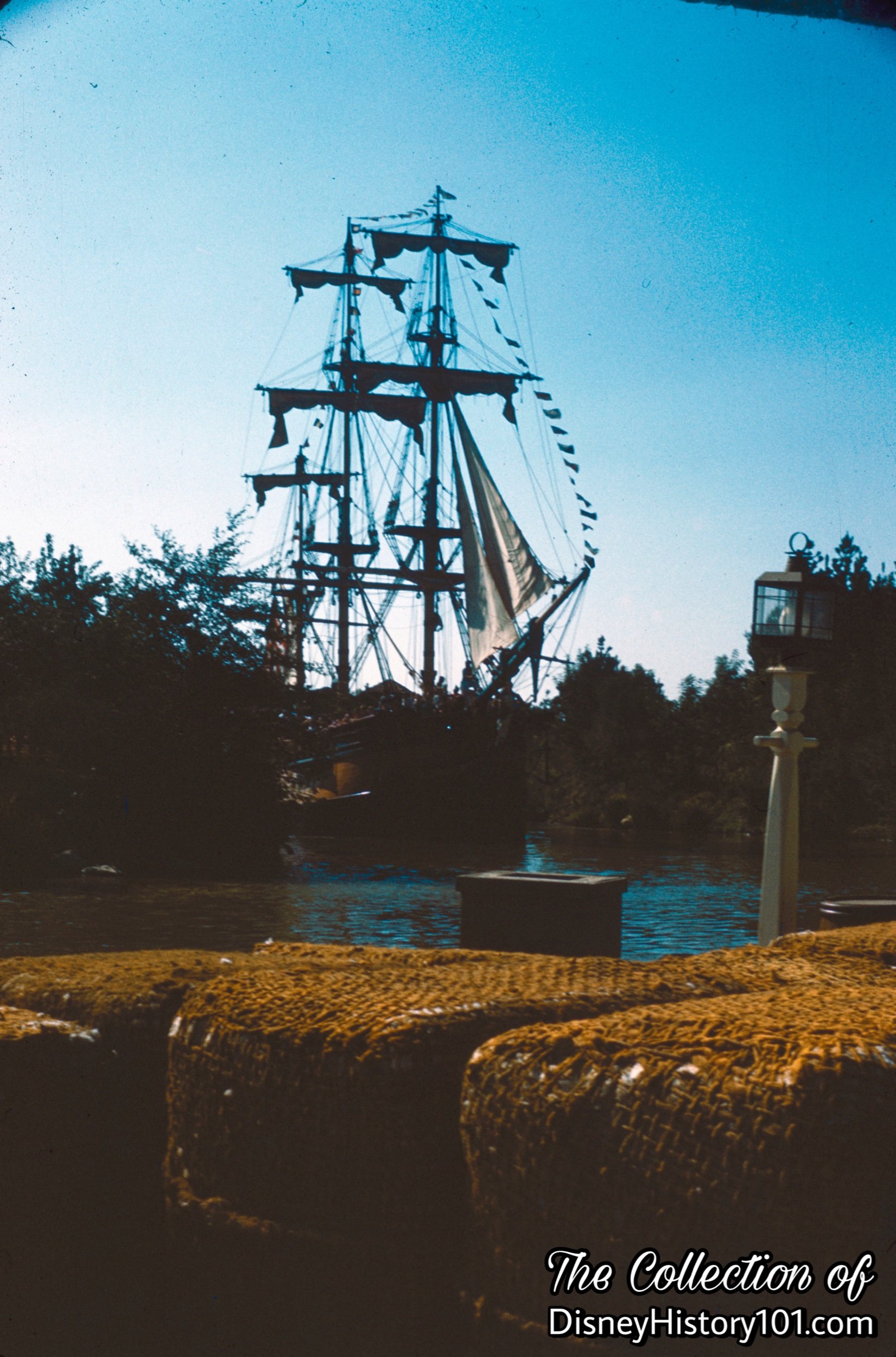
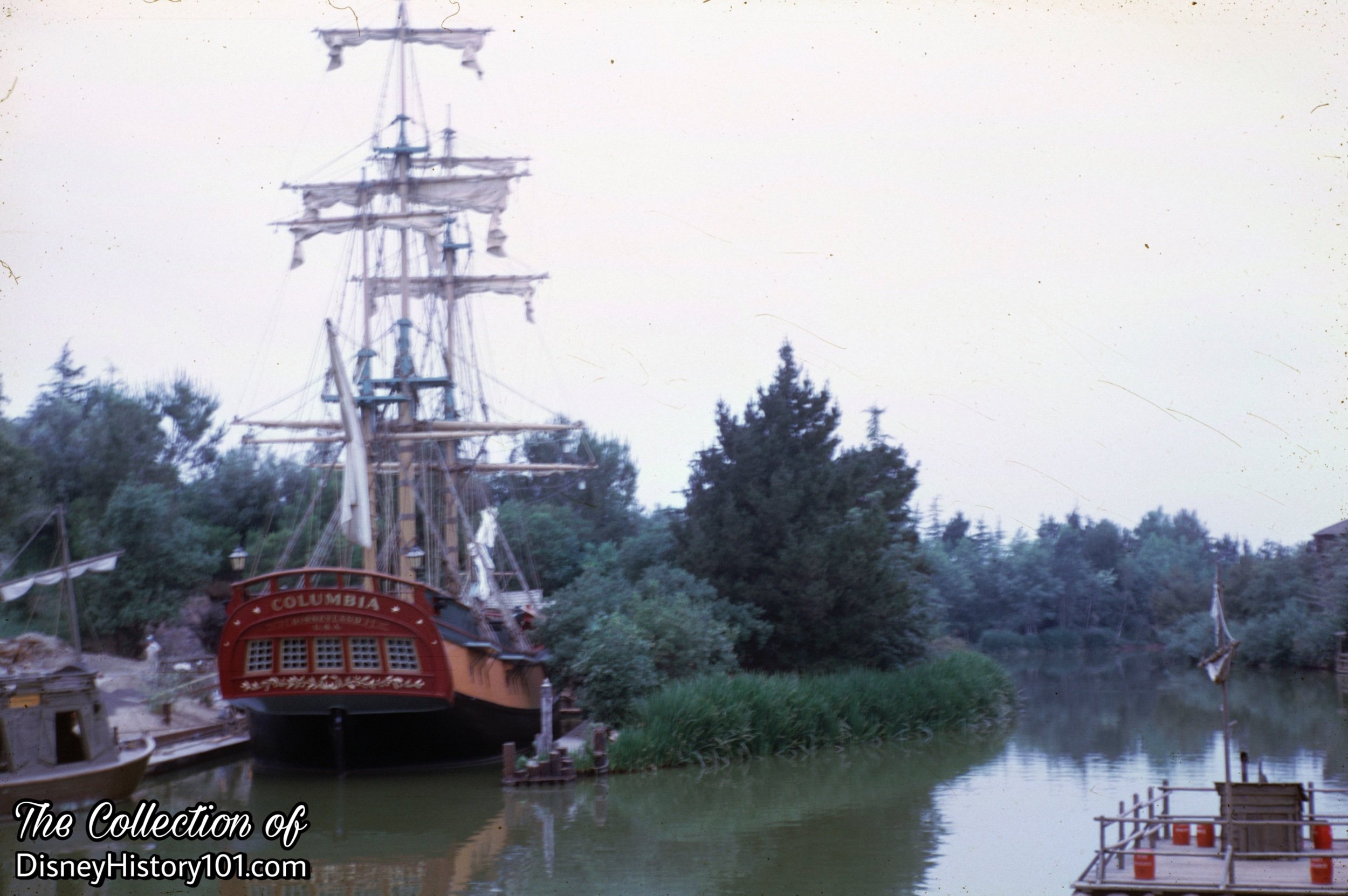

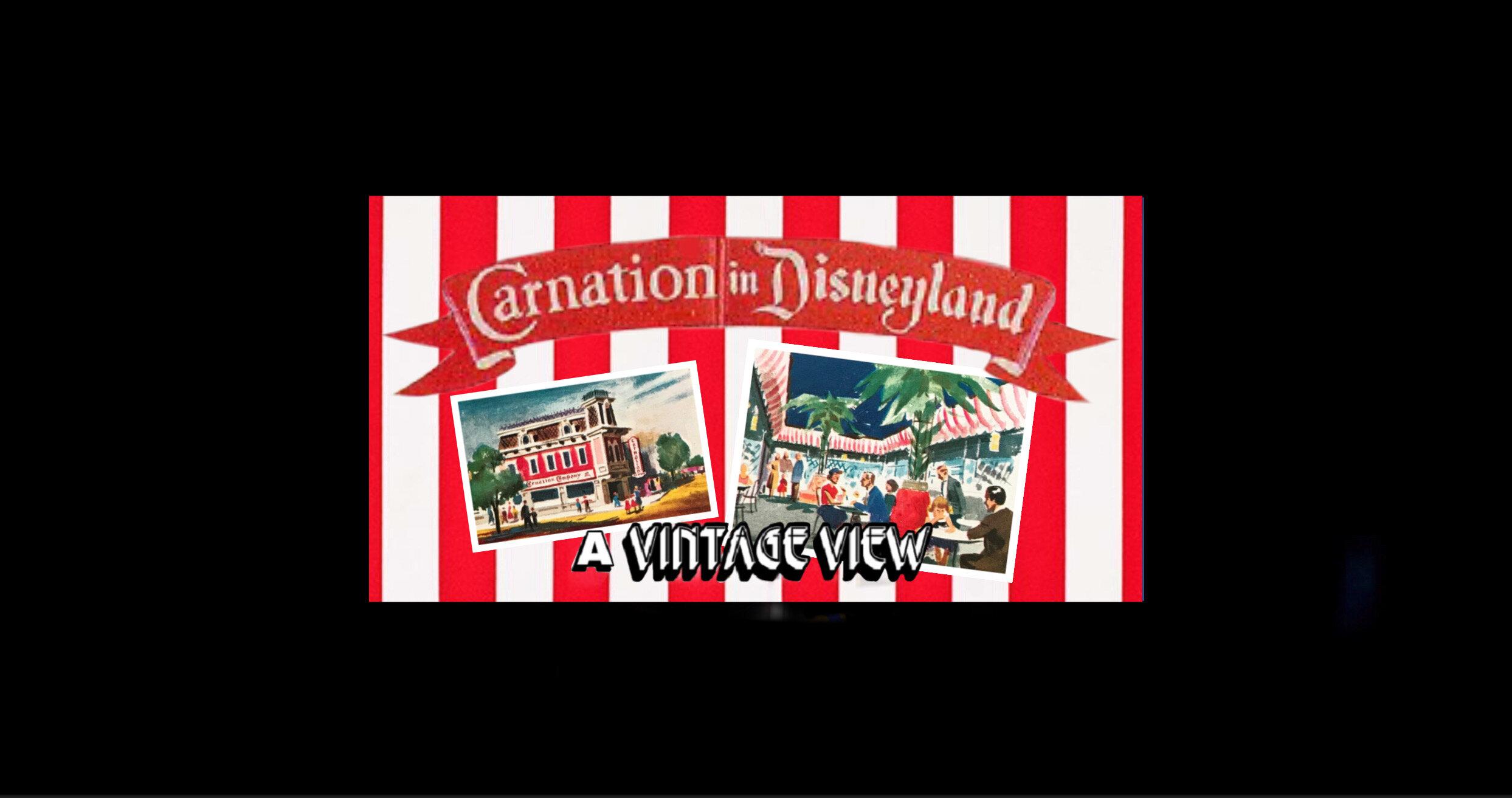
Quisque iaculis facilisis lacinia. Mauris euismod pellentesque tellus sit amet mollis.