“Your Guide to WALT DISNEY STUDIOS in Burbank”
“Prologue - Production Begins & Wraps for Hyperion Studios”
In 1926, the Disney Brothers Studio (in “Holly-mont”) moved to a new location at 2719 Hyperion Ave., North Hollywood. The rented facility was large enough to accommodate the Disney brothers and their ever-growing staff. As a result, many pioneering and progressive developments, and historically ground-breaking achievements in the fields of motion picture arts and sciences were performed at the Disney Brothers Hyperion Studio.
It was at the Hyperion Studios, where the first Oswald the Lucky Rabbit cartoon was produced. Then, Walt Disney’s first fully-synchronized sound cartoon “Steamboat Willie” starring Mickey and Minnie Mouse was completed there. The successful “Silly Symphonies” series was launched from Hyperion, as well as Mickey’s first color cartoon “The Band Concert”. One of the greatest inventions to influence animated motion picture science was the multi-plane camera, which gave a three-dimensional quality to animated films, and was developed for use at Walt Disney’s Hyperion Studio.
These led to critically acclaimed productions which had one Walt Disney a total of six Academy Awards between 1932 and 1937.
Back in 1929, Roy Disney had helped the Disney Bros. attain the financial stability to enlarge their studio, but this expansion was not fast enough for the ever-growing staff. A new studio was needed, a fact that was even talked about within the pages of several employee made gag journals that were printed off and passed around the small Hyperion Studio. An article composed for “Deadline” (below; published 1937) joked: “Not so long ago when a fellow in one department wanted to know how someone in another department was ‘coming along’, he hollered across the room to him. The whole plant was virtually in one room in those days.”

“The Mousetrap” (another unsanctioned and irreverent journal created by uncredited staff of the Walt Disney Studios, was titled after the namesake little café that was located across the street from Walt Disney’s Hyperion Studio). On several pages, the author painted a picturesque description of a new, larger studio within a fictionalized story of Walt daydreaming:
“By surface boulevards, subterranean tubes, and overhead viaducts, they converged on the studio. Three hundred and eighty gatemen checked them in at the three hundred and eighty gates of the studio which now covered thirty blocks, with four levels of sub-basements for parking. Animators each had two parking spaces, one for their car and one for their bonus- truck. Story department men arrived with two cars per man. They came Roman-riding like circus equestrians… Arriving employees were shot directly from their parking lot to their rooms through pneumatic tubes. There they snatched the pencils from the hands of the night shift and took up where the latter left off… In his sumptuous office on the twelfth Boor of the administration building. Walt picked up a phone… “Six zeppelin loads of new boys will arrive from Yugoslavia this morning and I've reserved the Queen Mary for a batch that will come from Finland next week. By the way, you’d better hire another hundred art instructors and as many blonde models. I expect to give these new lads a run for their moncy”… The carpenter shop called Walt to announce that nine new buildings of 1200 rooms, each would be completed by ten o'clock. “How about those new sweatboxes?” asked Walt. “Are they big enough?” “They’re big enough to serve until more are fnished this afternoon. They seat seven thousand each. The one in Unit J-39X is all ready for your meeting on Scene B-8 of F-19405. But watch out for wet paint.”
Walt hung up, put his feet on his desk, relaxed with his hands behind his head. “Ah! we’re expanding,” he mused. “We're getting Big!” Another phone rang, snapping Walt from his reverie. “This is the sound stage,” said the speaker. “That last recording of Mickey’s dialogue didn’t jell. Can you come over right away and say “Nuts?”

An excerpt of “Mousetrap” a gag magazine published 1937 jokingly made reference to a new studio.
Meanwhile, back in the real world, the Disney Brothers had taken on their most ambitious project to date, that of their first full-length cartoon feature, Snow White and the Seven Dwarfs. Walt knew that “whatever we accomplish is due to the combined effort. The organization must be with you or you don't get it done.” So his own staff increased exponentially, swelling to more than 1000 artists, animators, story men and technicians. All of these individuals were spread across the diverse departments, handling various processes involved in the production schedules of both short and feature-length films.
Walt Disney’s Snow White and the Seven Dwarfs was a success, and critics praised it as “a significant screen innovation which has charmed millions and provided a great new entertainment field for the motion picture industry.” The Walt Disney Studios “heightened the bar” across the industry, but especially for its own animated productions.
The public had proven there was a world market for Walt Disney’s product. While many projects were in the dreaming stages, production schedules moved forward to include “The Ugly Duckling” (a short film with a release date of 1939), and two-feature length motion pictures - “Pinocchio” (with a release date of February 7, 1940) and a “concert feature” (to be released November 13, 1940), that would eventually be billed “Fantasia”.
Larger production facilities were now suddenly necessary, with offices fitting for an impresario. So, Walt and Roy utilized the profits from his Snow White and the Seven Dwarfs, to meet the studio’s expansion needs by purchasing a 51-acre parcel of land in Burbank, California, and setting out to build the brand-new, $3 million Walt Disney Studio. A move to a larger studio was now imminent.
“Industrial Designer & Architect Kem Weber”
In 1939, a pioneering, forward-thinking, and pragmatic architect named Kem Weber was hired to design the brand-new Walt Disney Studio facility. Kem was already renown for shaping the aesthetic of American modernism and “West Coast style”, and would soon apply his talents to the architecture, industrial product design, interior design, and master craftsmanship of the Walt Disney Studios.
Some of Ken’s visions were more whimsical than pragmatic, as was “One of Kem Weber's proposals for the gate to the Disney studios [which] had an allosaurus-like light fixture looming over the gateway.“
But in the end, Ken’s “Streamline Moderne” style would win out, reshaping the Walt Disney Studio into a veritable model of versatility and efficiency that would effectually streamline film production, and define the worldwide corporate headquarters of Walt Disney Productions.
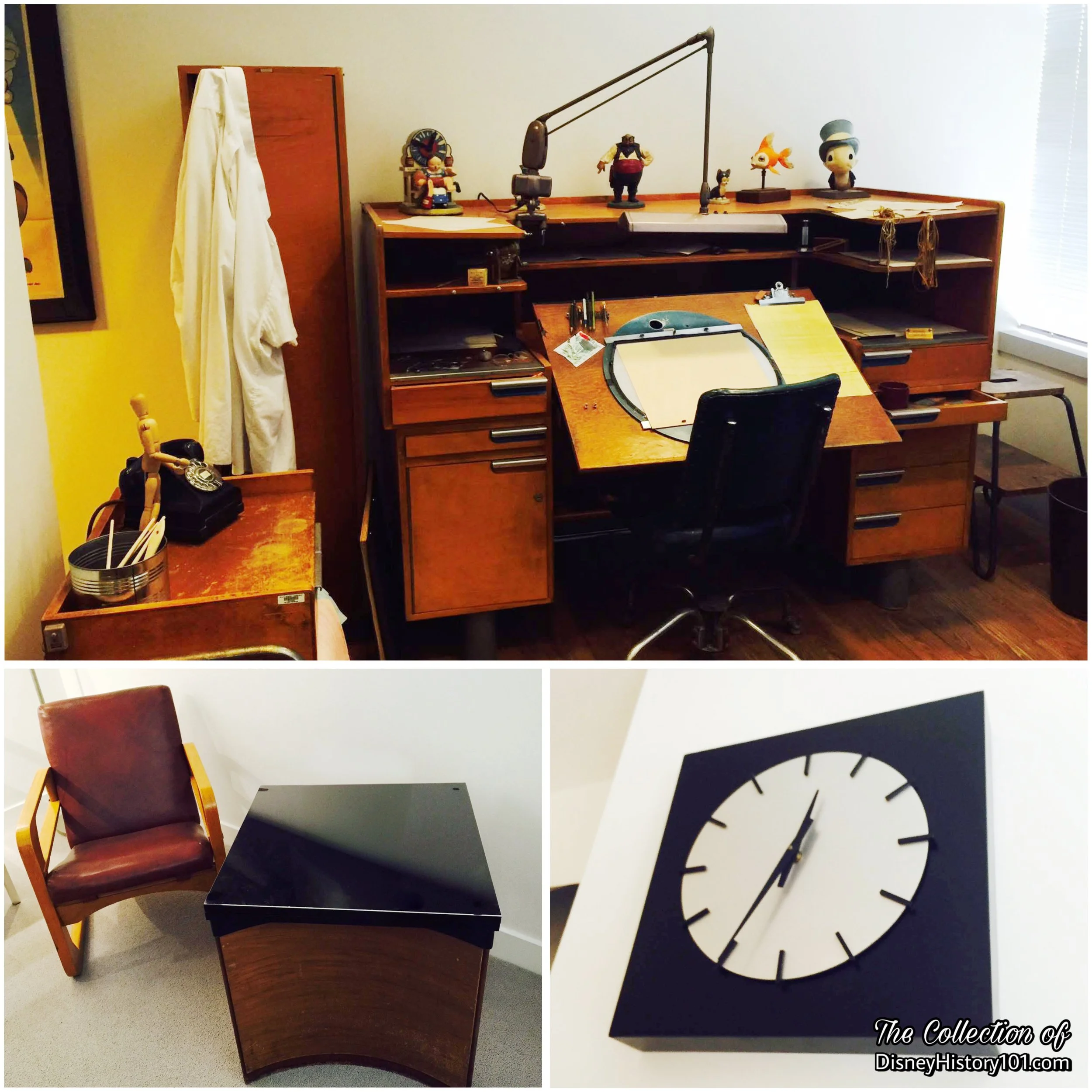
For instance, Kem Weber’s Airline Chair (designed circa 1934-1935) was not just a “chair” but a dynamic art sculpture that evoked speed through streamlined contours. Kem suggested this chair to Walt, for his Walt Disney Studios in Burbank, and a large order of 300 was filled through the Airline Chair Company of Los Angeles.
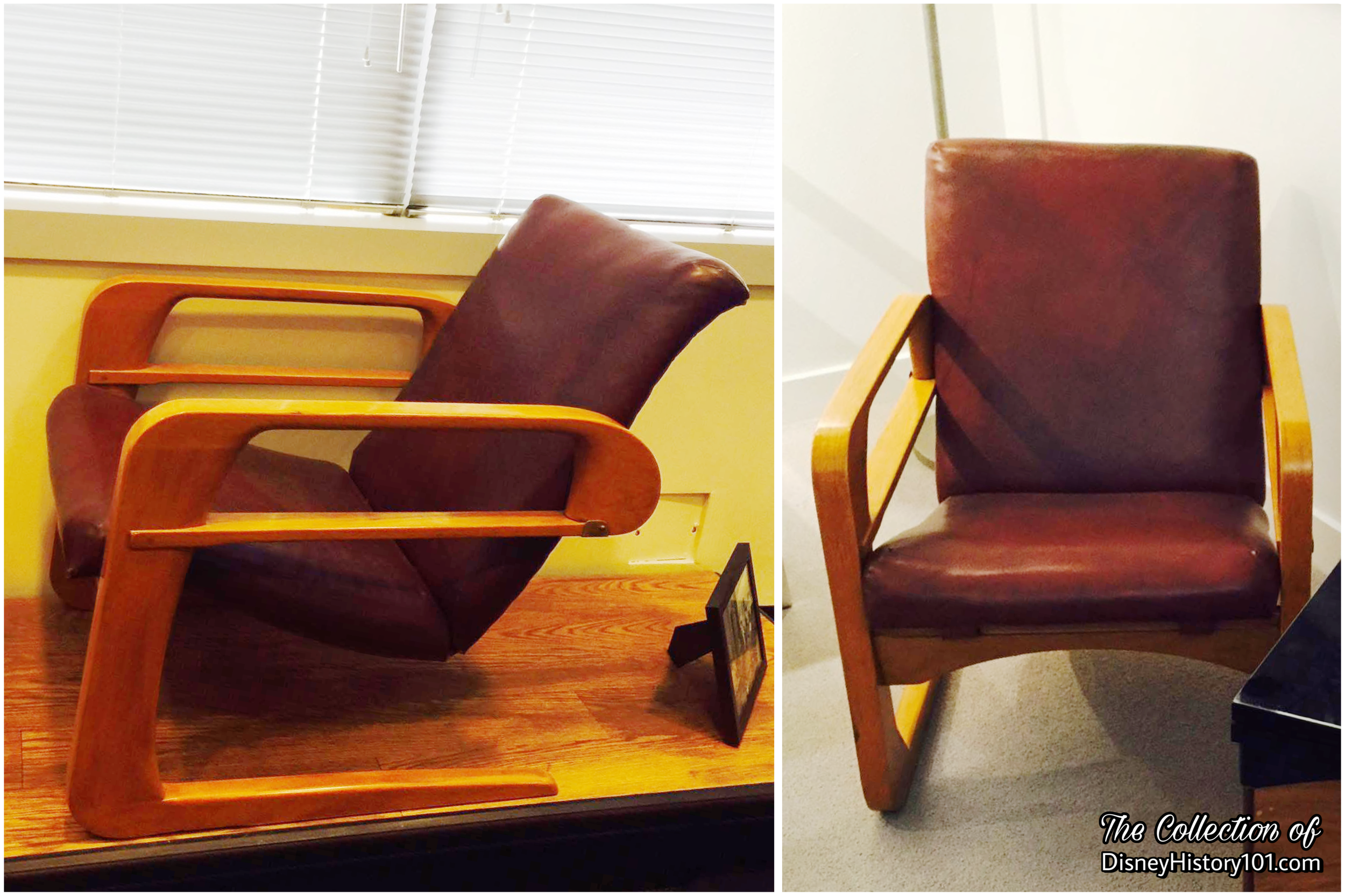
Original plans for the Walt Disney Studios included a Machine Shop, Processing Lab, areas to accommodate Ink & Paint, Reception, the Cutting Room, Cameras, a Print Shop, a Library, and a brand-new three-floor, eight-wing Animation Building. These were ergonomically placed around the property to create an efficient and comfortable working environment. (See Walt Disney Productions Directions Maps below.)
“Construction & ‘Moving Days’”
Construction of the new studio was scheduled for completion by January of 1940. There was a looming production deadline “just around the corner” for Walt Disney’s Pinocchio followed by Fantasia, and other projects, so it was necessary that construction of the new studio be completed by January of 1940.

A holiday card teased Walt’s next big project - Pinocchio!
On December 24, 1939, the staff of the Walt Disney Hyperion Animation Studio in Los Feliz, began their move to 500 South Buena Vista St. in Burbank. This move included the employees, equipment, and even three massive structures from the old studio location on Hyperion. By May 6, 1940, the move from Hyperion to Burbank was finally complete.

The need for a larger Walt Disney Studio is reenforced by the number of forthcoming projects. Trade Ads promoted Walt Disney Productions scheduled for release in 1940.
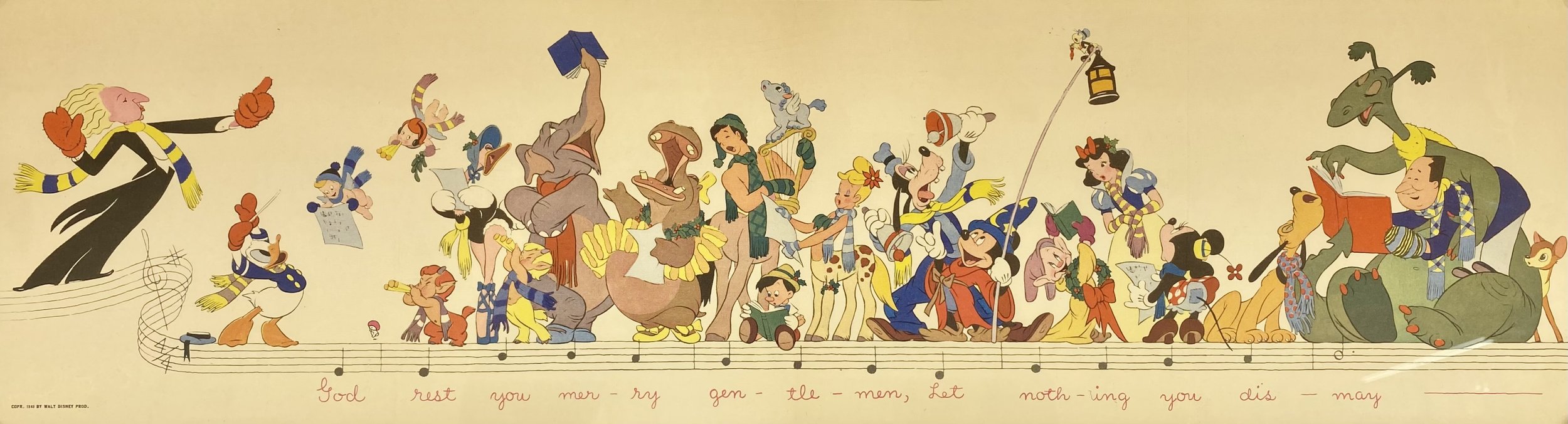
Both Fantasia and The Reluctant Dragon teased on this Christmas card.

The Ropes at Disney’s, published by Walt Disney Productions Personnel Dept., copyright 1943.
“Mickey Avenue & Dopey Drive - The Crossroads of the World”
Soon after the move was complete, The Reluctant Dragon (the first live action filmed at the studio; released June 20, 1941) offered audiences the opportunity to see what a working animation studio looked like.
A special directional sign prop was constructed for a scene of the film featuring actor Robert Benchley.
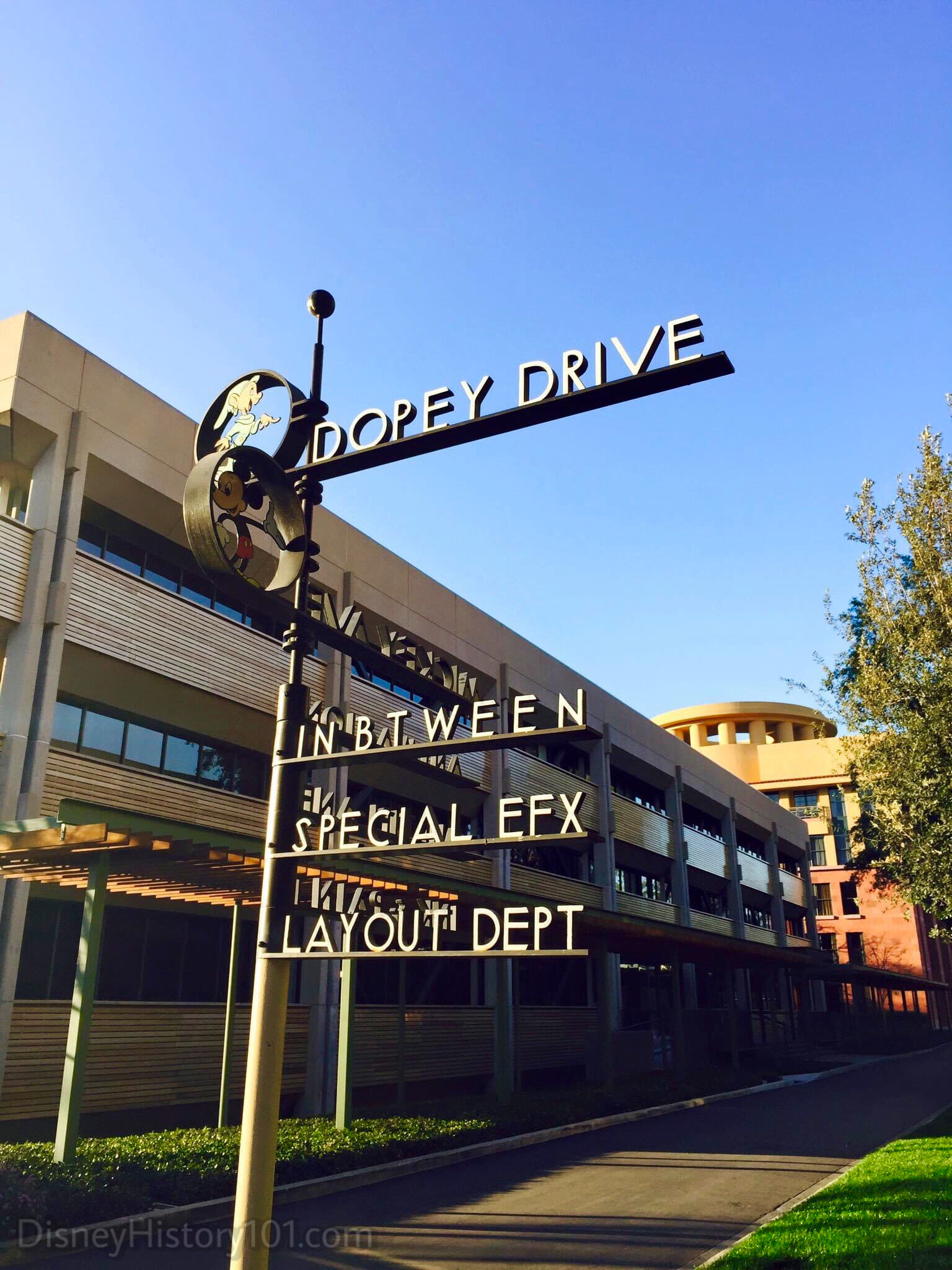
The corner of Mickey Avenue and Dopey Drive.
Today, a reproduction of the sign reading “Mickey Avenue” and “Dopey Drive” stands at the famous intersection. While the names of the streets point in their true directions, many of the featured departments are inaccurate bu today’s layout.

We’re at the veritable “crossroads” of Walt Disney Studios! Since June of 1941, Mickey Avenue and Dopey Drive at Walt Disney Studios (Burbank, California), has become known for this film prop! This is thanks to its appearance in the Walt Disney Production The Reluctant Dragon, and a certain photo featuring women of animation Eva Sinclair & Jackie Walker!

One of the oldest structures is actually the last remnant from the old Hyperion Studio facility. According to the Walt Disney Archives, the California Bungalow “was built in 1935 as the original home of the Disney Publicity and Comic Strip Departments. It was constructed at the Disney Studios on Hyperion Avenue in Hollywood and moved to the Burbank location as part of the construction in 1939-1940.”
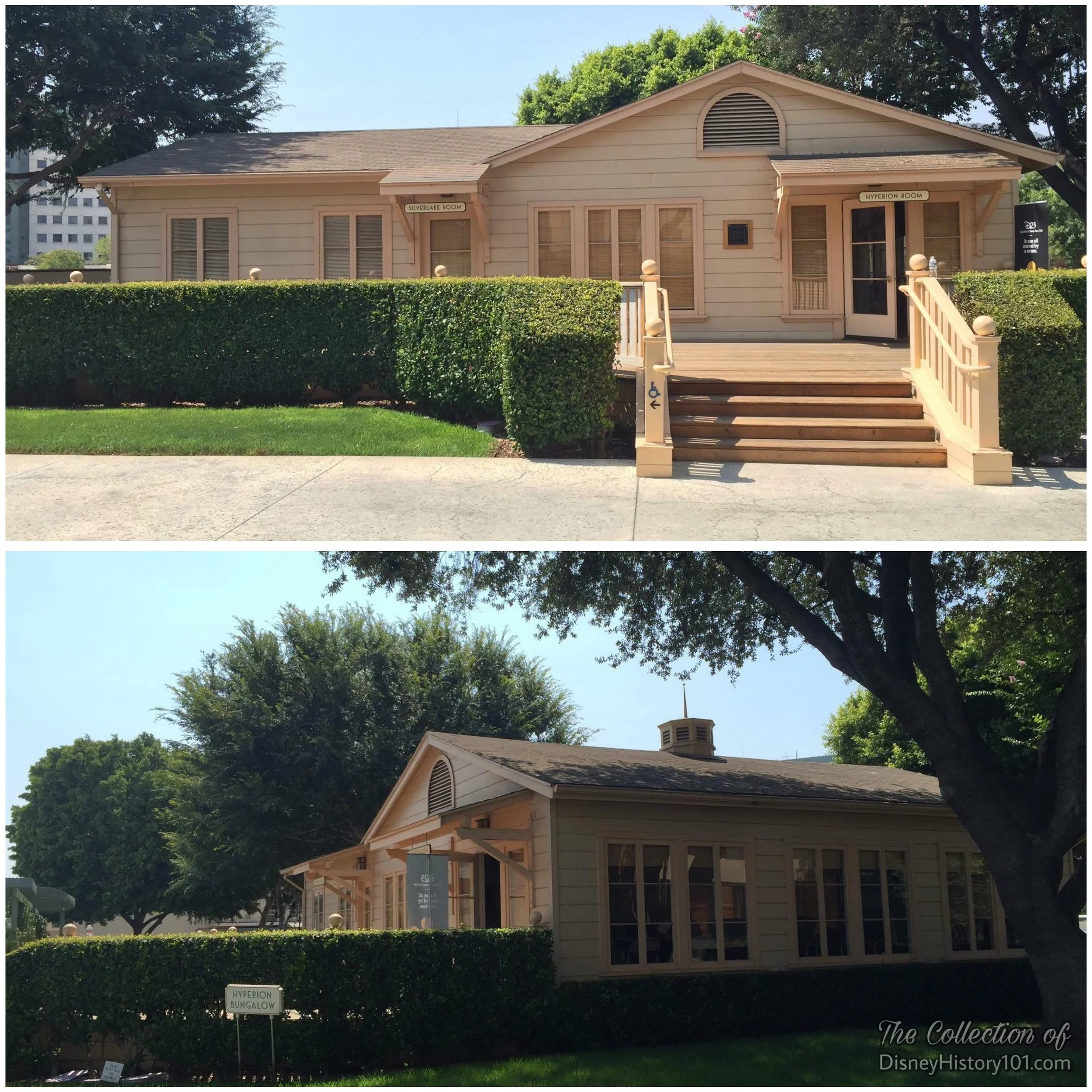
The California Bungalow, received its name in later decades, after it’s ‘California Bungalow’ type architecture, which sets it apart from the prevailing “streamline modern” style around the rest of the Walt Disney Studio.
“At the Disney Burbank lot, the Bungalow building housed many of the support services. Payroll, Publicity, Support, Traffic and finally the Post Office were located in this building.”

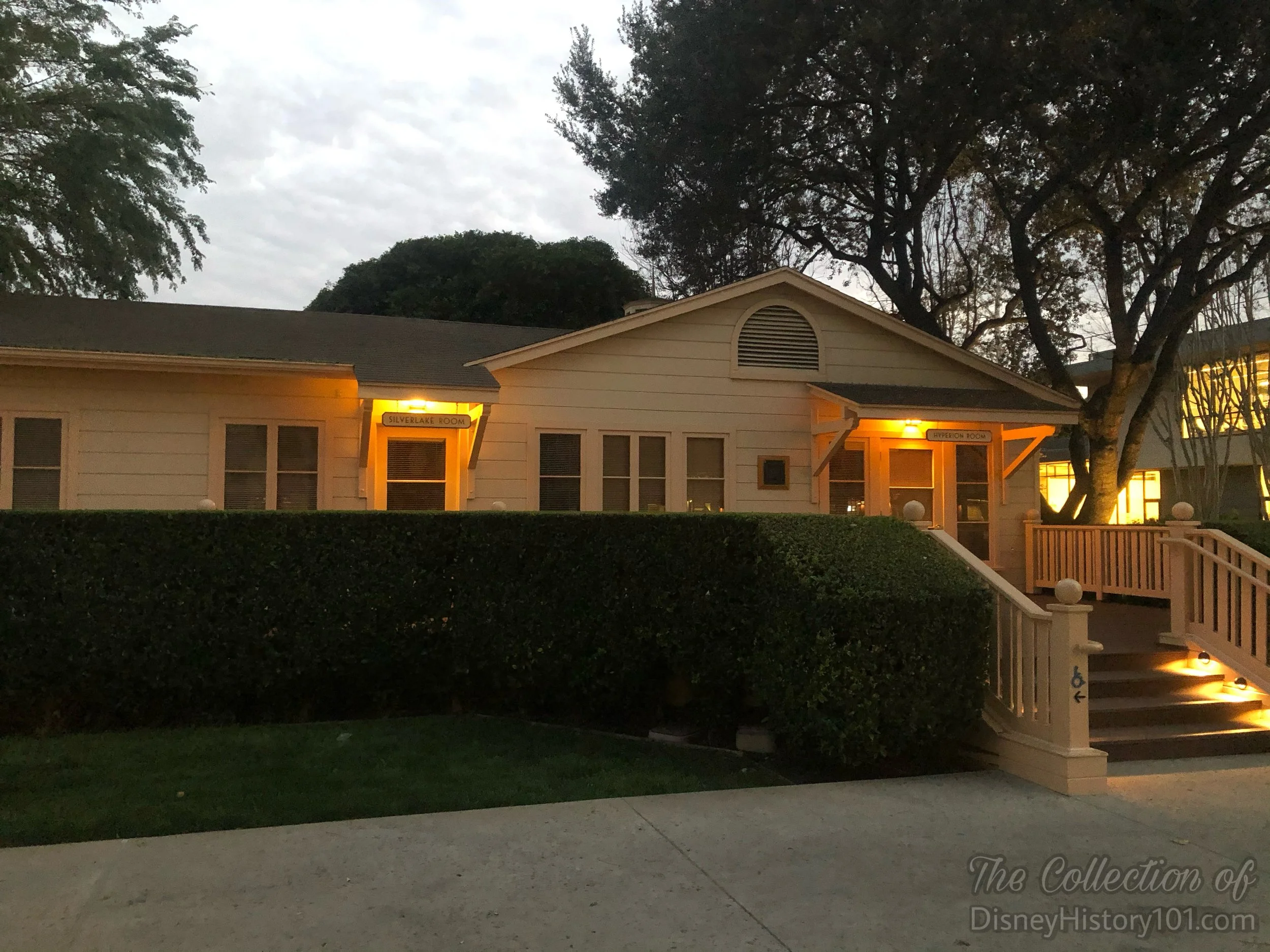
The entrance to the Hyperion Room of the California Bungalow.
“Its attractive style and utility, starting in the early years of the company, give it a special place in the history of the Disney Lot.”

The entrance to the Silverlake Room of the California Bungalow.
It appropriately houses two meeting rooms named the Hyperion Room and the Silverlake Room.

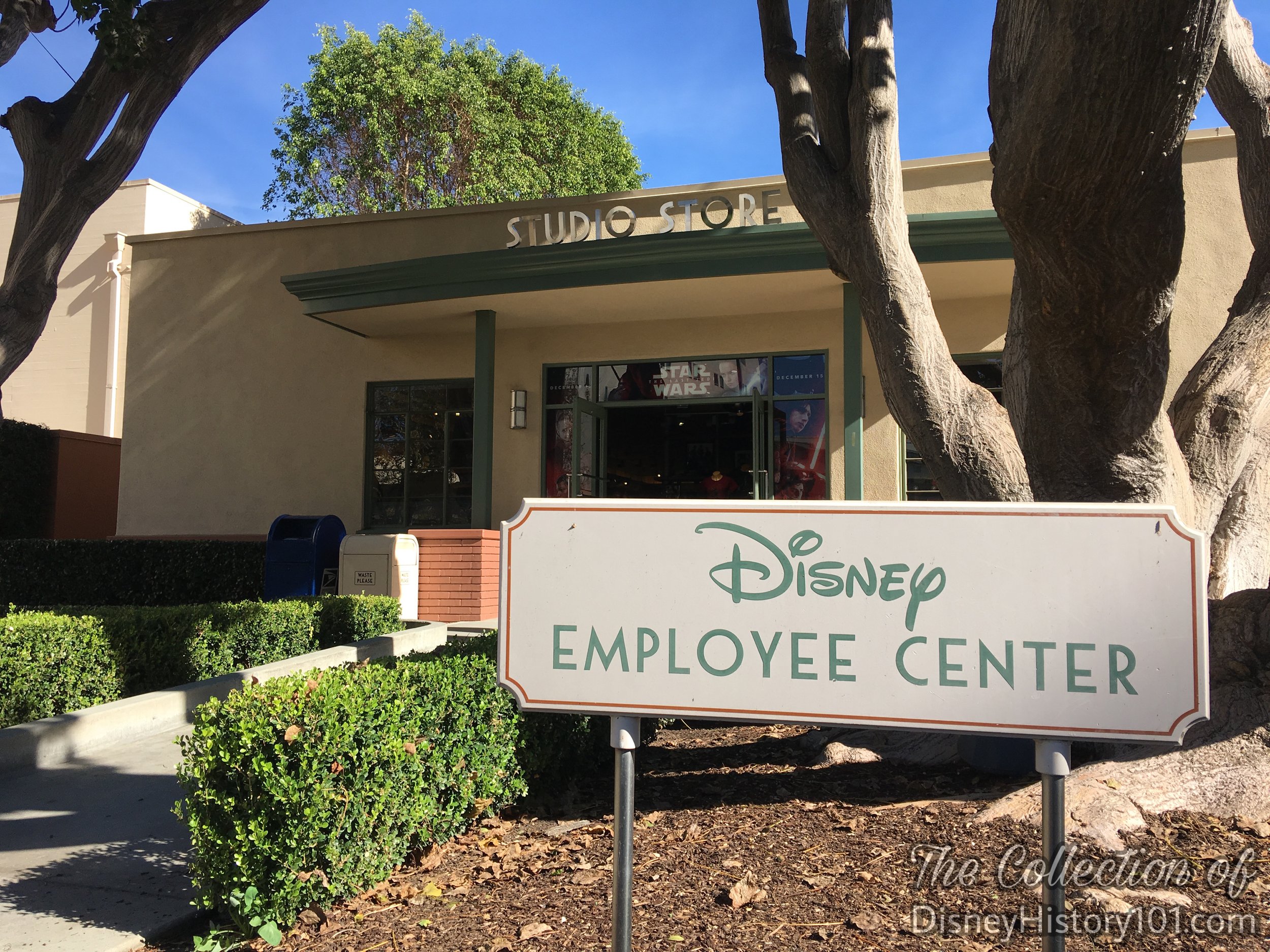
The Disney Employee Center Building is one of three structures from the old Hyperion Studio lot. It currently is home to the Disney Studio Store.

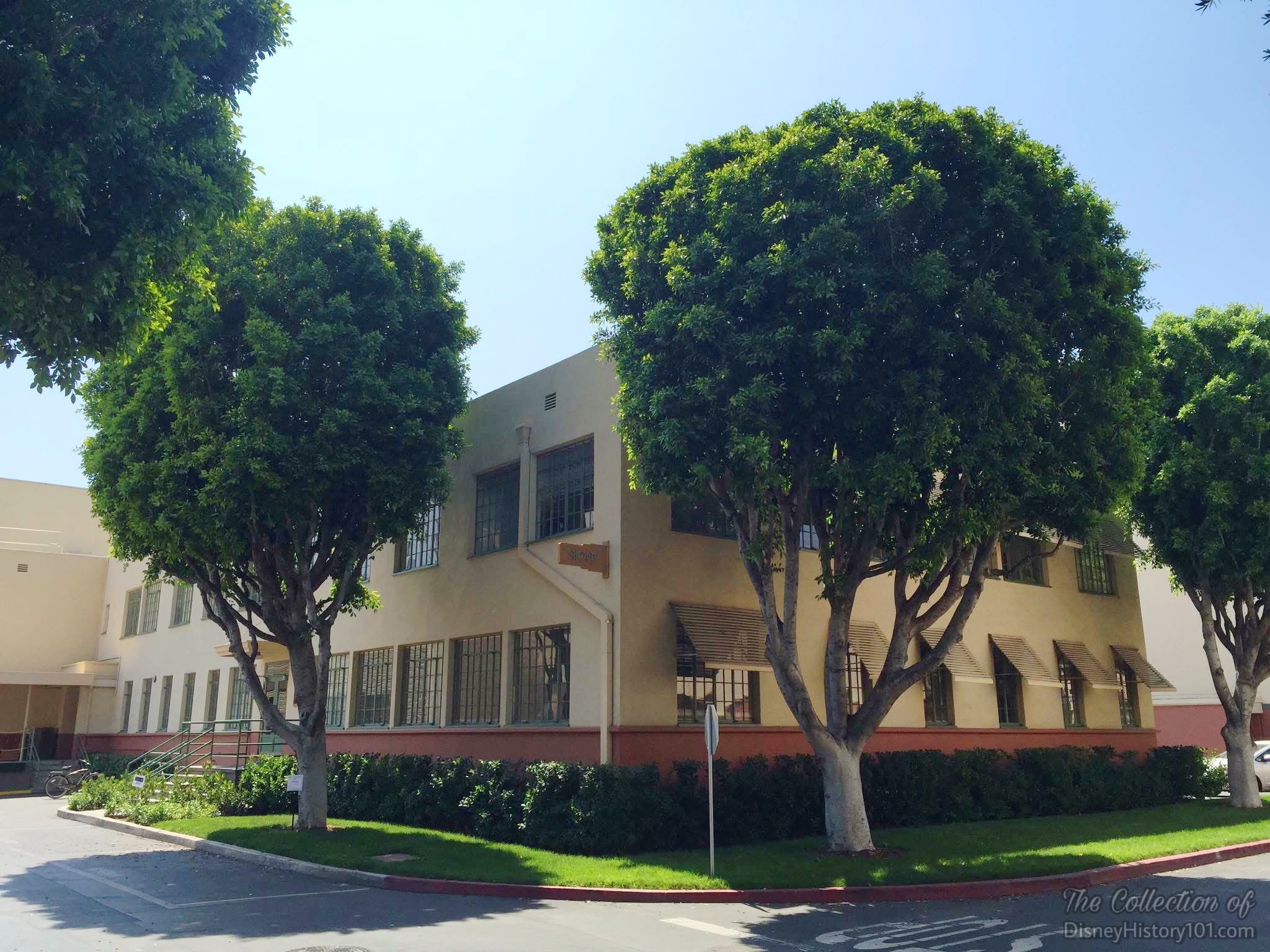
The Voice Casting Office Building was one of three buildings from the old Hyperion Studio. After it arrived on the Burbank lot, it was cast in a new role – as the Hyperion Health Club Building!

A sticker promoting the Penthouse Club.
American-Swedish fitness coach Carl Johnson’s resume included Athletic Clubs in New York and Hollywood, before he was hired as the resident fitness coach of the Walt Disney Studio Penthouse Club, according to an expert of Dispatch at Disney’s, published 1943 (below). Carl was an inspiration to animators who pushed pencils and paper most of the day.


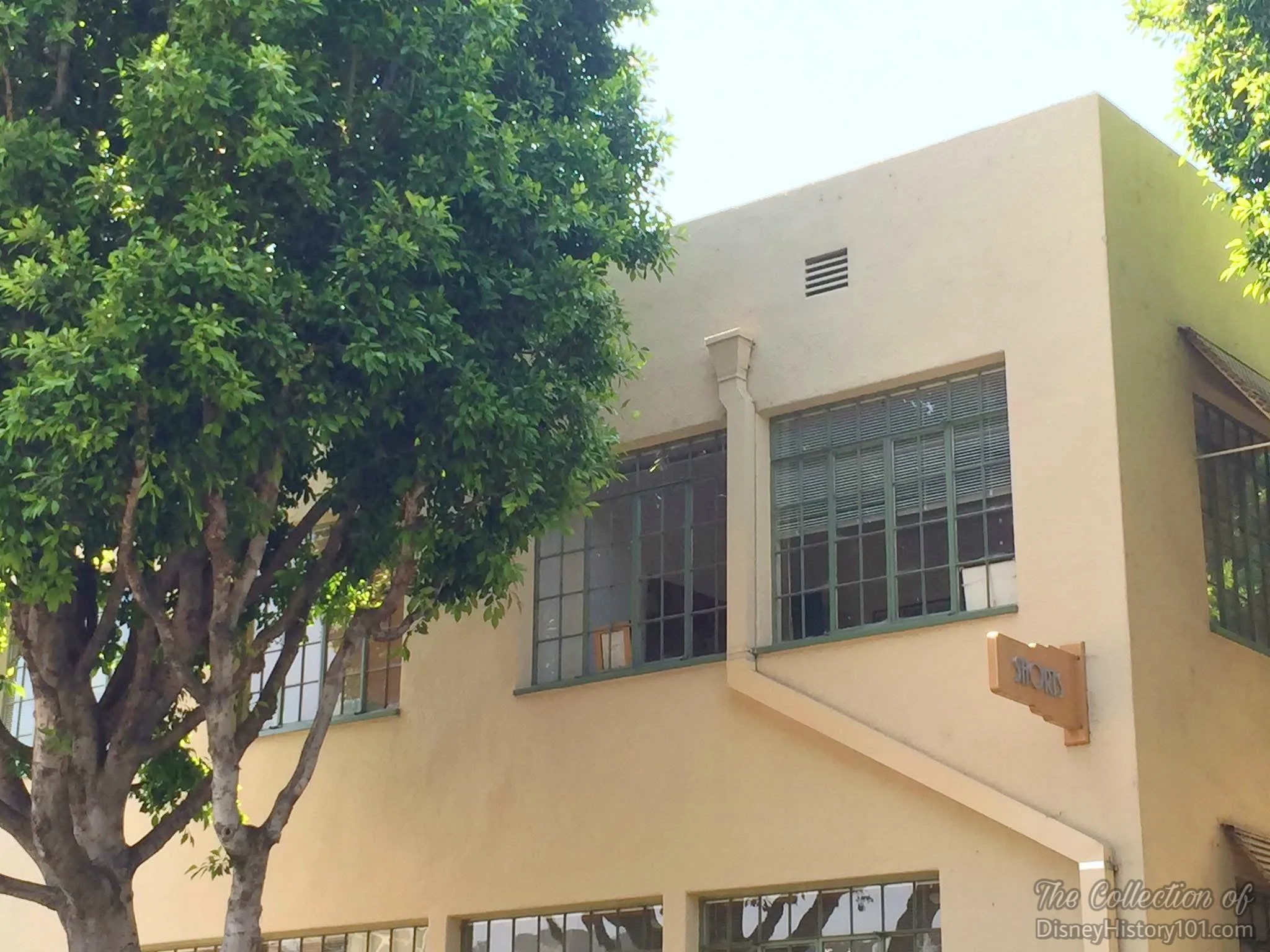
The old Shorts Building located at Dopey Drive and Minnie Boulevard. Many early short cartoons were produced out of this building including Mickey Mouse as well as feature-length film stars like Snow White.

When mealtimes occurred on the old Hyperion Lot, Walt and company had to bring their lunch to work, or search for local restaurants where they could find something to eat. At that time, many would go across the street, to The Mouse Trap cafe.
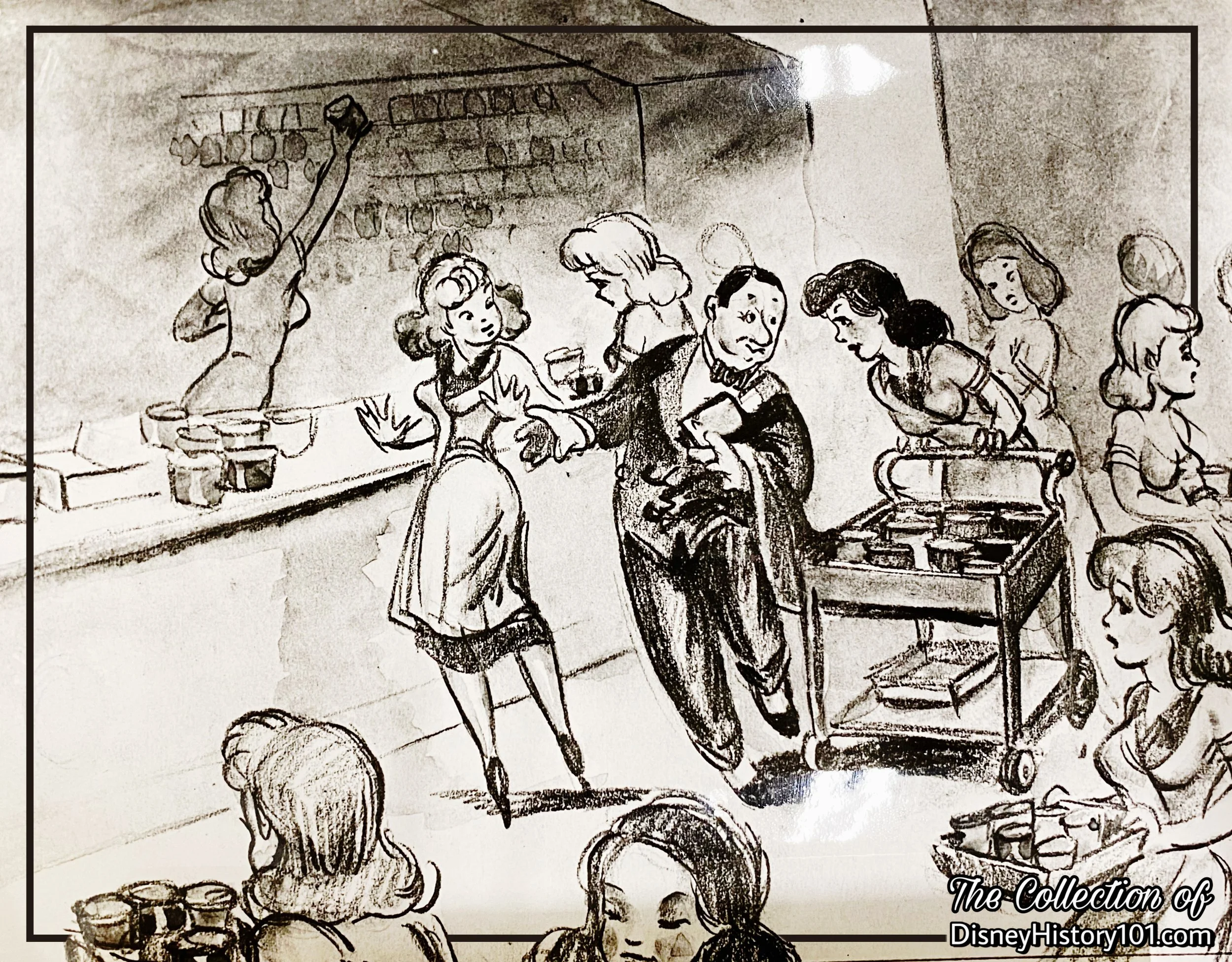
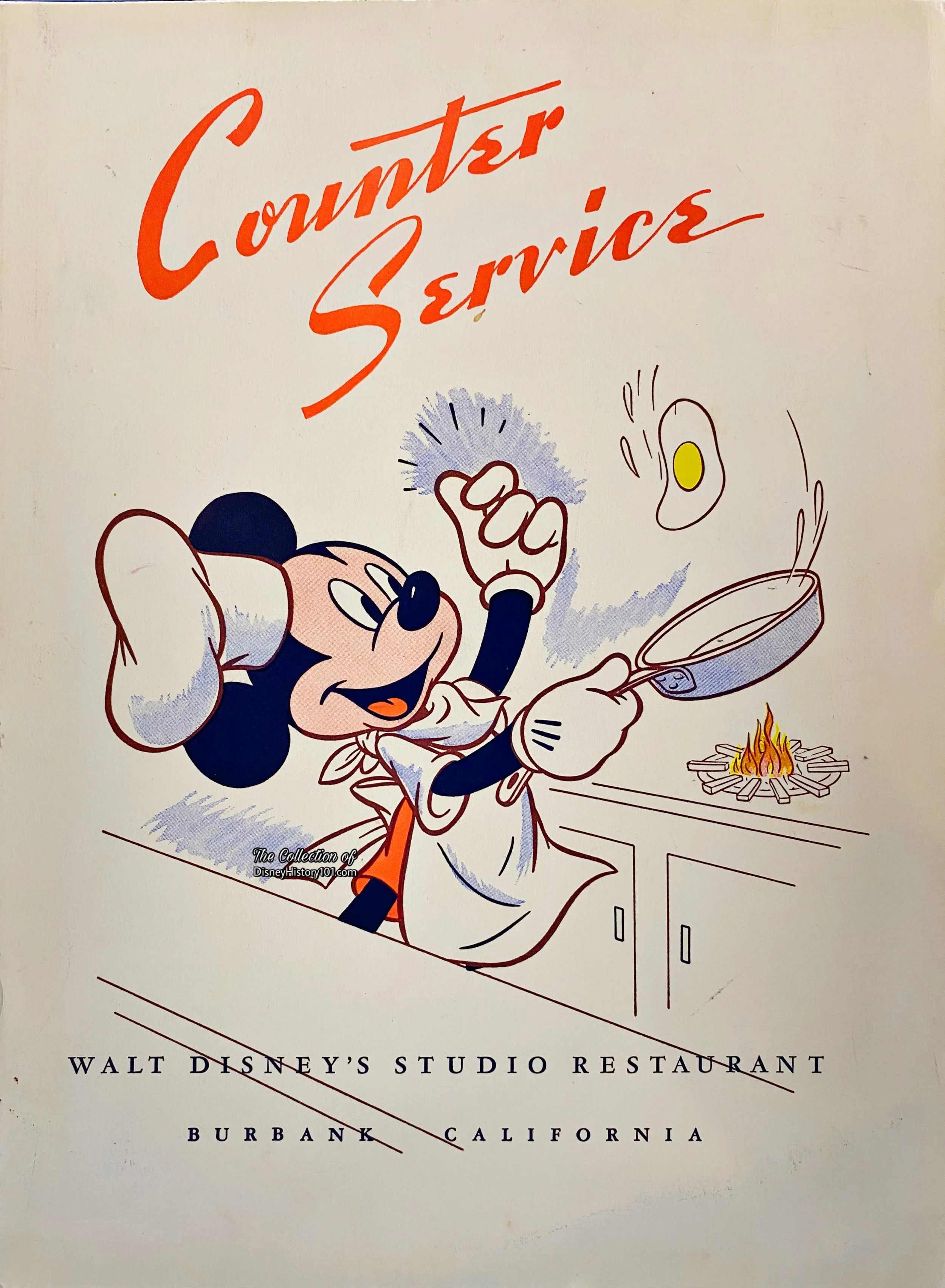
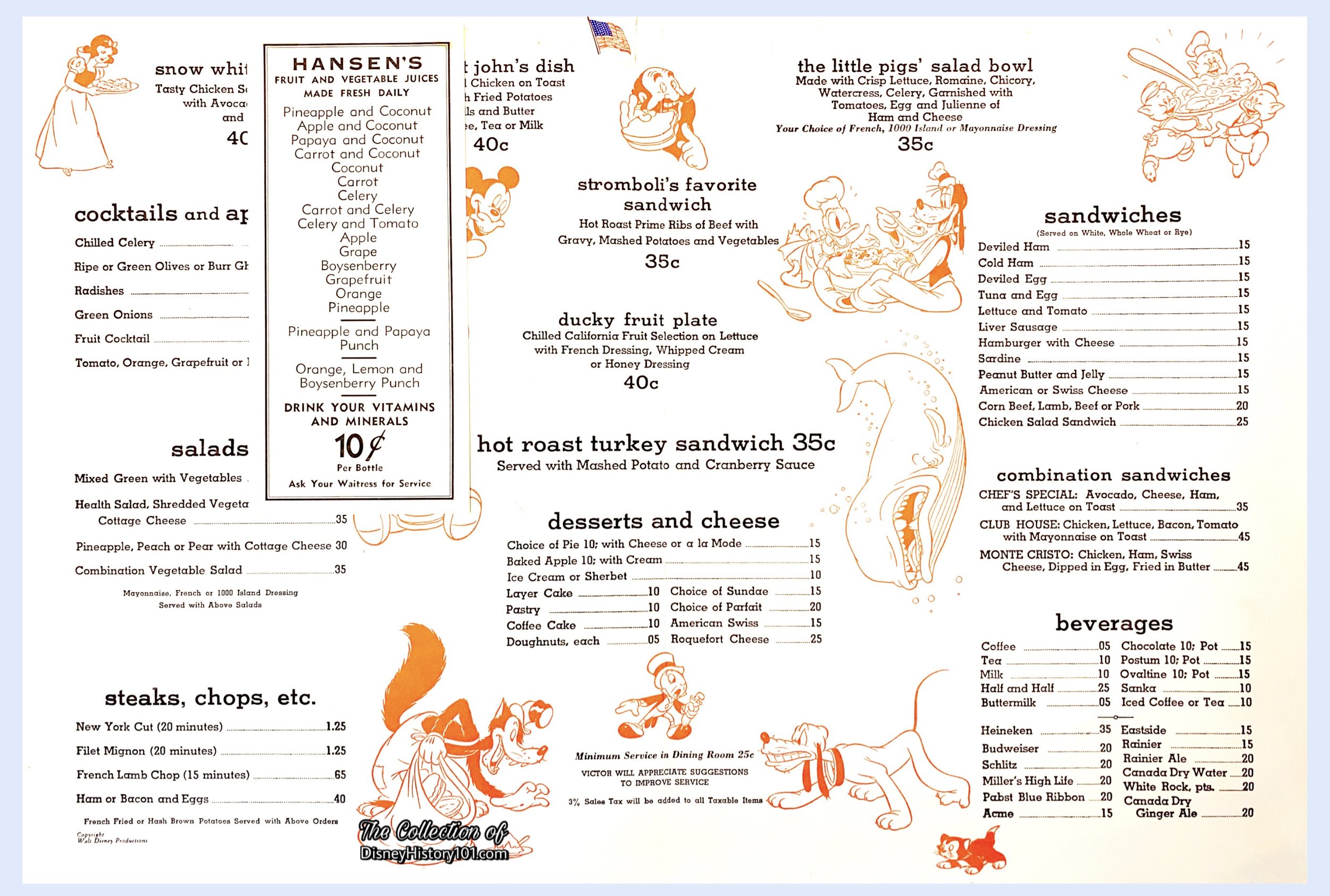
But the Walt Disney Studios in Burbank was different, equipped with its own counter-service “buffeteria” restaurant, appropriately named Walt Disney’s Studio Restaurant.
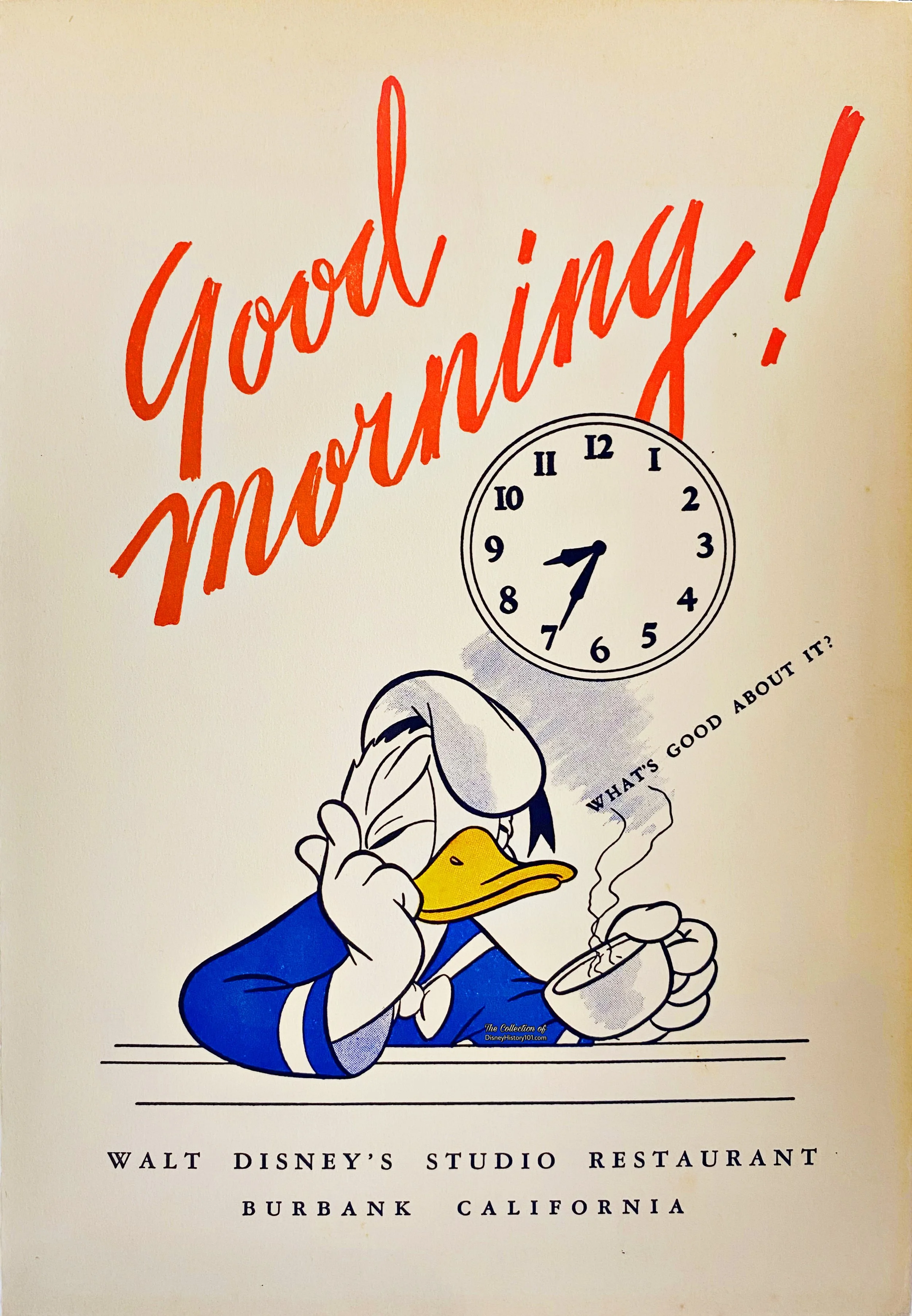

By the time that Van Arsdale France joined Disneyland, Inc. during Summer of 1954, he recollected, the “cafeteria… sold unbelievably… beer!” (See the Walt Disney’s Studio Restaurant counter service menu below)
The new Walt Disney Studio in Burbank would enable Walt to complete two features at the same time (beginning with his adaptation of Pinocchio and musical Fantasia, which were both on the production slate at the time).
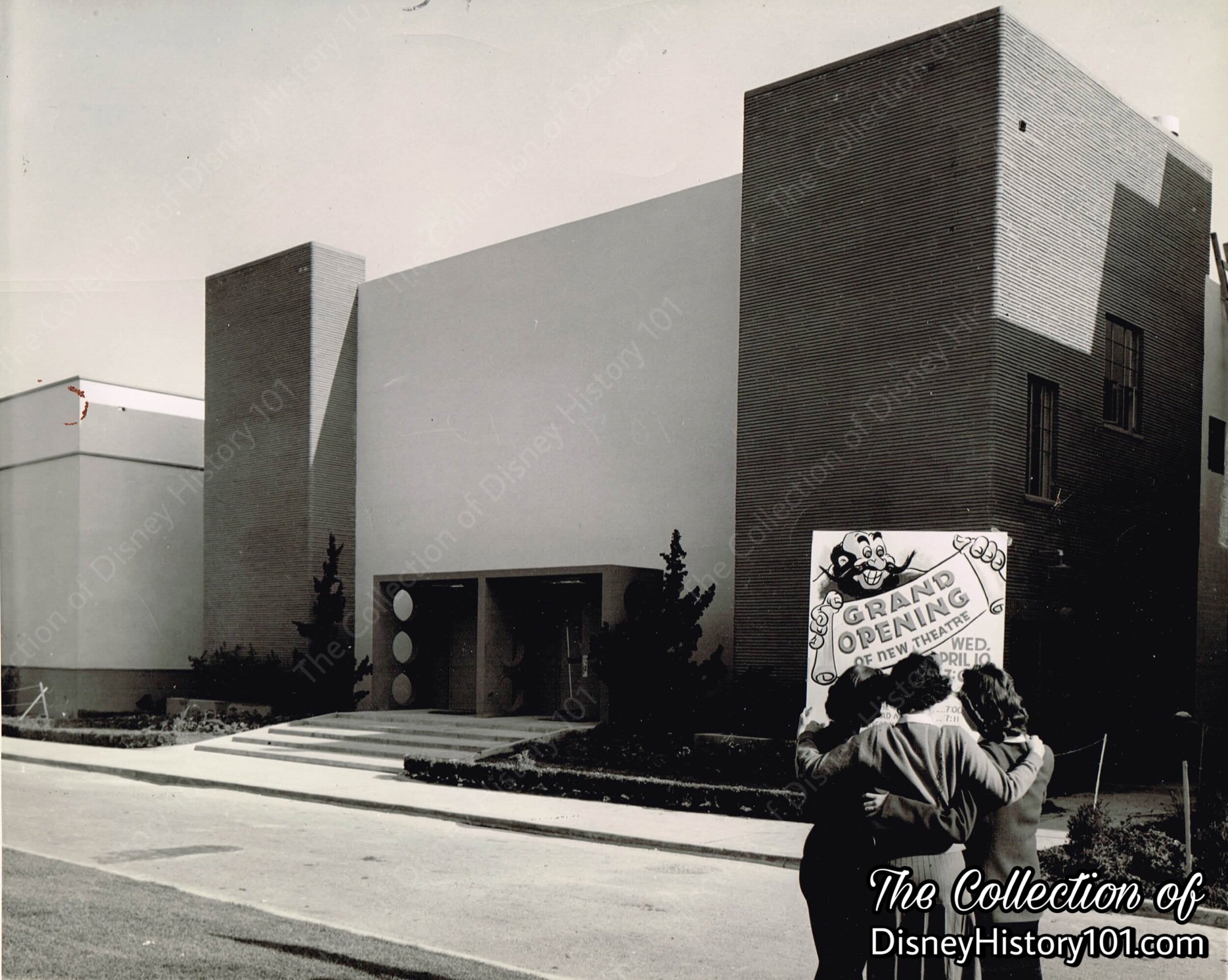
A sign featuring Stromboli advertises the grand opening of the Walt Disney Studios Main Theater on Wednesday, April 10, 1940.
Ahead of Pinocchio’s February release, the new Walt Disney Studio Main Theatre was scheduled to open its doors, on Wednesday, April 10th, 1940, premiering the new completed film for the studio staff. In the photo above, three Walt Disney Studio employees eagerly anticipate both the Grand Opening of the Main Theatre and Walt Disney’s Pinocchio.
The Walt Disney Studio Main Theater was streamlined with the geometry of Art Deco.
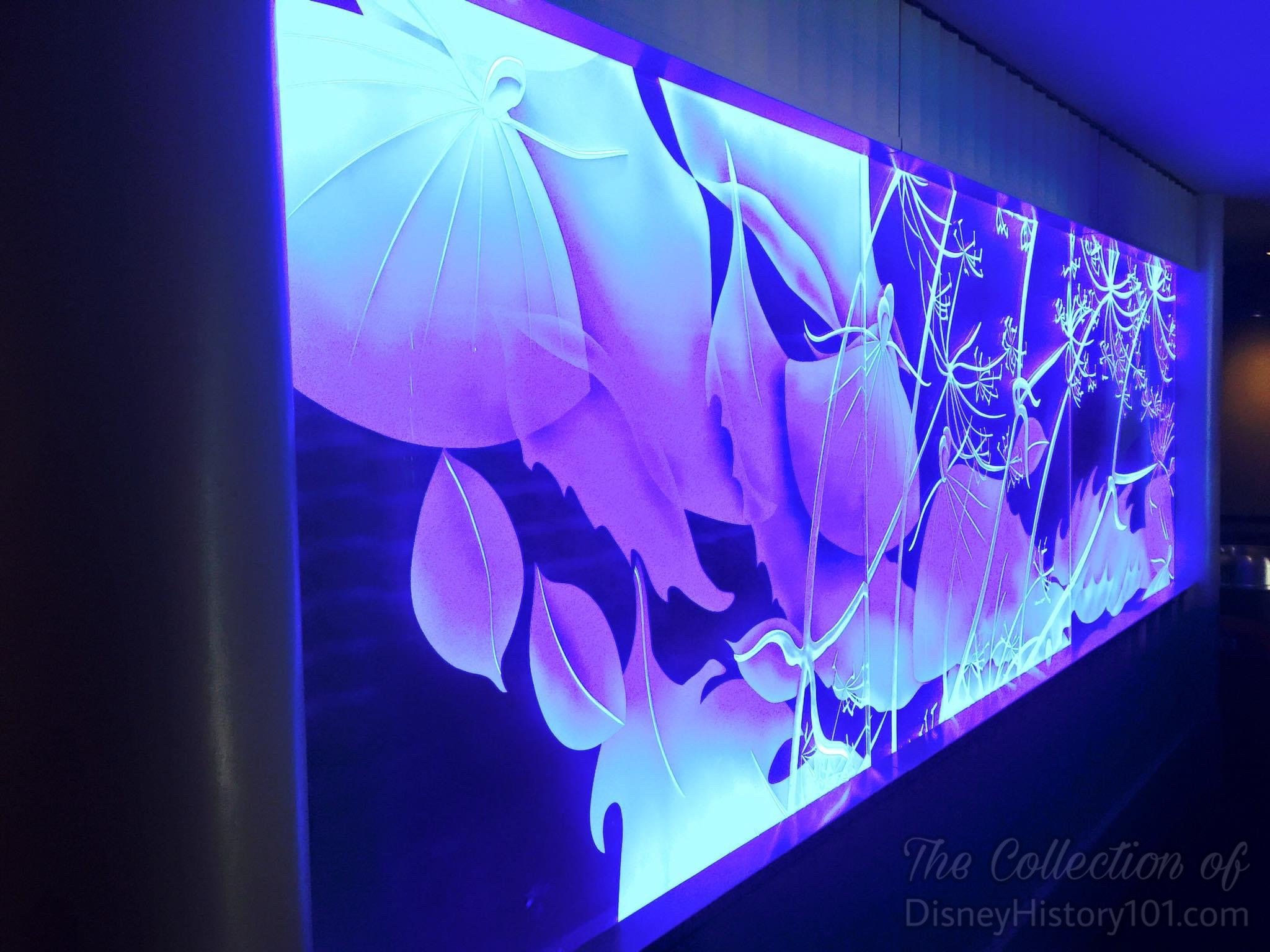
The delicate dandelions of the floral ballet from the “Nutcarcaker Suite” segment of Fantasia are memorialized in glass within the Walt Disney Studios Main Theater Lobby.

The delicate dandelions of the floral ballet from the “Nutcarcaker Suite” segment of Fantasia are memorialized in glass within the Walt Disney Studios Main Theater Lobby.
Eventually, the Walt Disney Studio came under the parent Company of Walt Disney Productions (formed by Walt and Roy Disney in 1923). Walt Disney Productions would continue to produce motion pictures for theatrical and television distribution and occasionally these would be screened at the Walt Disney Studio Main Theater.
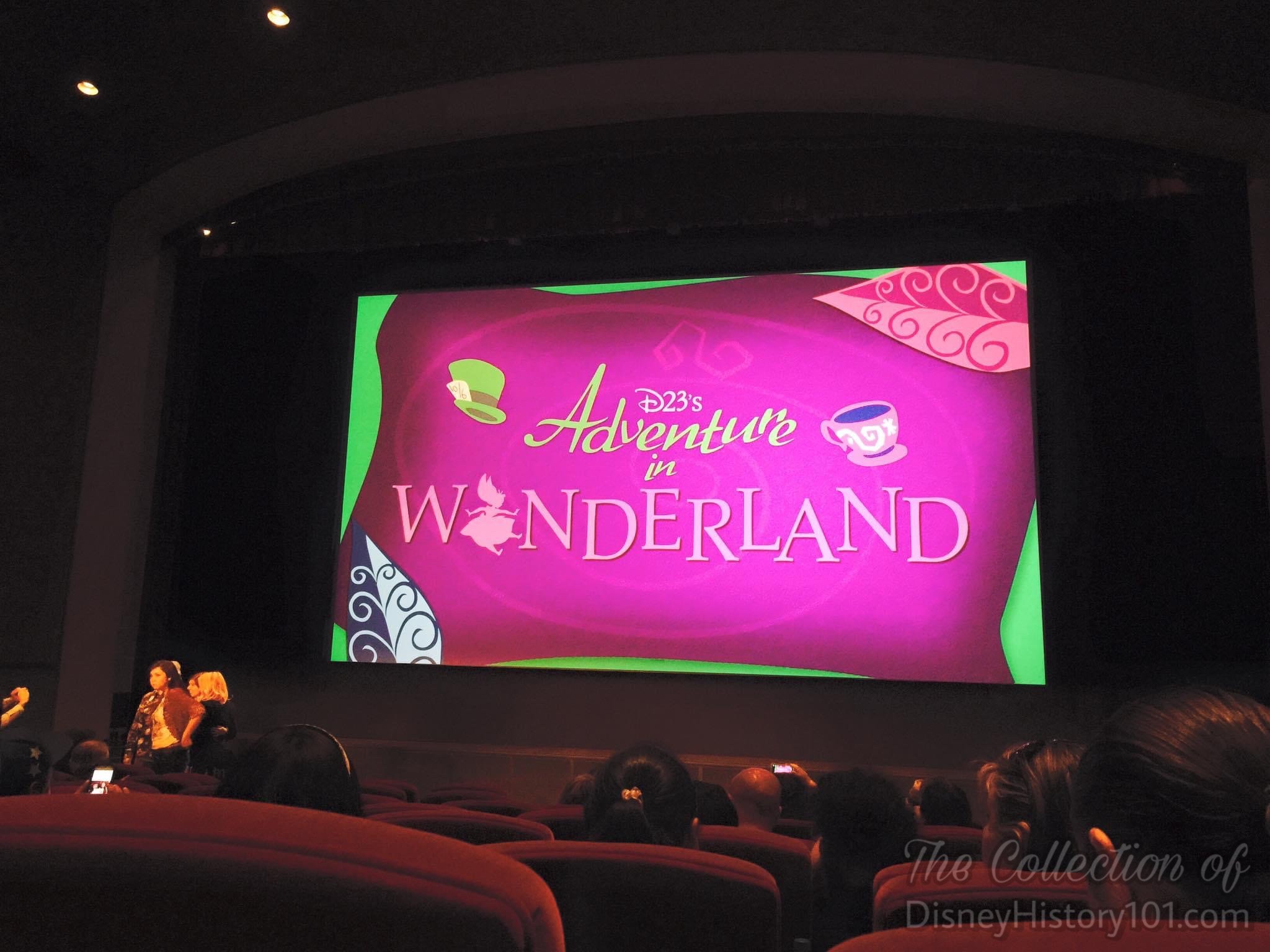
The Walt Disney Studios Main Theatre
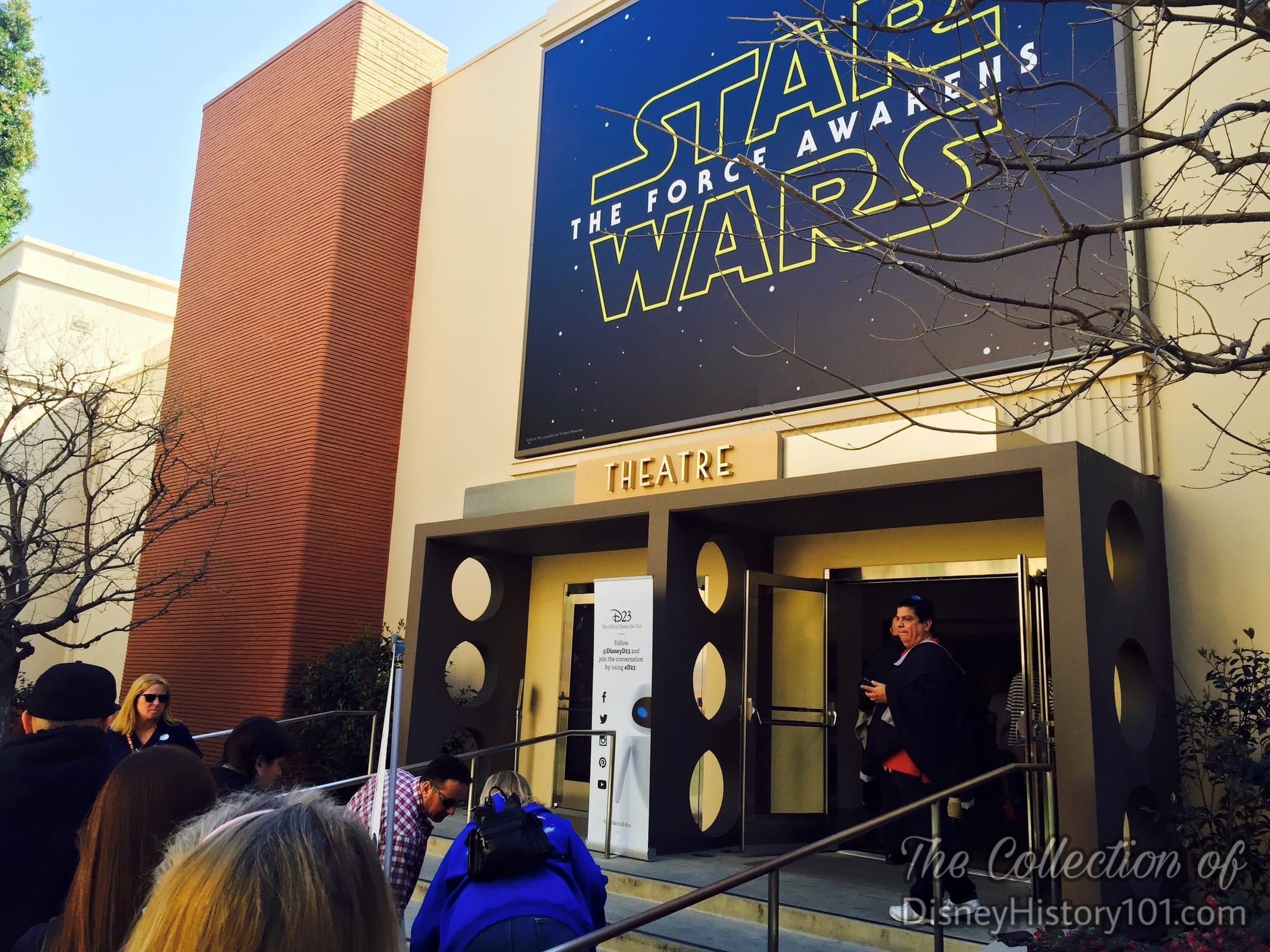
The Walt Disney Studios Main Theater decorated for a showing of Star Wars: The Force Awakens.
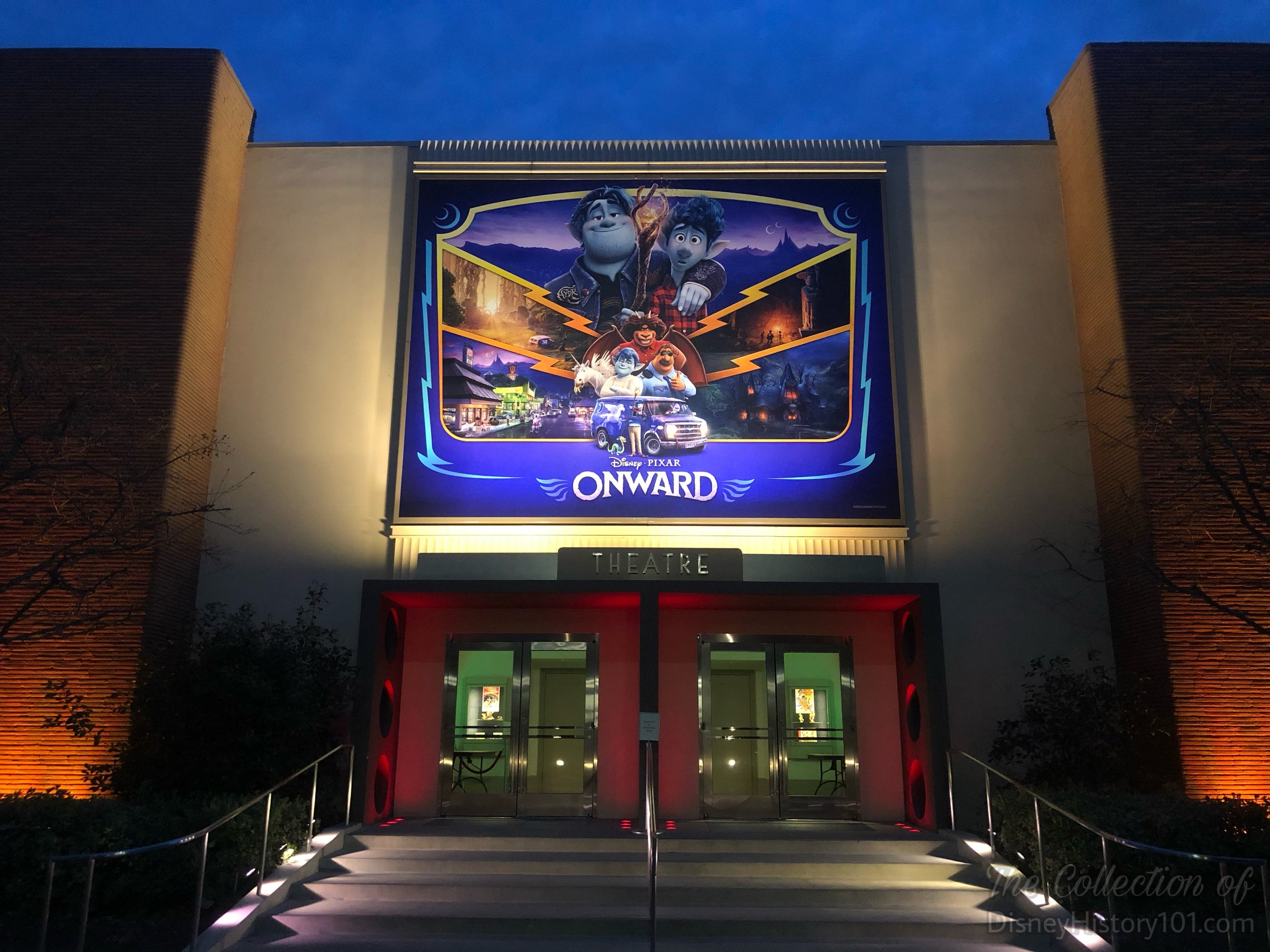
The Walt Disney Studios Main Theater decorated for Disney Pixar Onward.

“Clubs & Activities”
In the early days after the move, Walt arranged for the women Ink and Paint Department employees to enjoy daily Tea Time in one of the quiet corridors of the Walt Disney Studios.
By the time he was hired during the summer of 1954, Van Arsdale France mentioned how the Walt Disney Studio “was much more like a good-sized university.” He recalled that by that time the Studio was referred to as “the Campus.” Van France went on to describe aspects that he called “unbelievable” - “People playing ping pong, volleyball, basketball, softball, or just lying around the grass.” There was a gym for male employees and there were clubs formed.

Below, an adhesive sticker promoting the Walt Disney Studios Gem and Mineral Society.

The Walt Disney Studio Gem & Mineral Society was just one of several clubs that employees enjoyed. Pictured above is an official sticker promoting the Gem & Mineral Society.

This flagpole was presented to Walt Disney after he served as Chairman of Pageantry for the 8th Winter Olympic Games in Squaw Valley California, from February 18-28, 1960.
This is the only place in the world where you can view the Walt Disney Company flag, featuring Mickey Mouse.


The Walt Disney Productions “Huey” DC Generator.
However by 1972, the Walt Disney Studio was 1 of 24 companies operating under the parent company of Walt Disney Productions and its 1,500 employees were just involved basically in producing motion pictures and television entertainment.

You may have visited Walt Disney Studios, and noticed this gigantic DC “Huey” Portable Generator hanging out near the parking garage! This early form of a direct current generator would provide much needed power to studio equipment (like lighting, cameras, and tools) during the 1950s. It may surprise you to know that this “larger than life” generator derives its nickname “Huey” (not from Donald Duck’s Walt Disney Productions co-star nephew, but) from the Paramount Pictures’ popular animated star - “Baby Huey”!


A Walt Disney Studios Operations Chart; 1940s.

Cartoon Continuity Through the Studio Chart; approved May 3, 1946. This new, simplified chart shows the progress of cartoon production through the studio. This helpful, interesting and easily understood picture would help those in the organization grasp how a cartoon idea develops into the finished product.
“Walt Disney’s Working & Formal Offices”
Walt had two special offices on the Walt Disney Studio backlot, both located inside Suite 3H. Walt used his “Formal Office” for appointments with special guests visiting the Disney Studio. However, his “Working Office” was used for conferences with directors, writers, artists, and almost anyone involved in creating Walt Disney Productions. A third room functioned as a Receptionist’s Formal Office where Walt’s secretaries worked.
According to National Geographic (published August, 1963), Walt’s Formal Office had “become so crowded [with awards] that recently four cabinets of awards were placed in the Studio Commissary. Some of the employees promptly nicknamed the commissary the ‘Awards Room,’” adding that “He is proudest, perhaps, of the Audubon Society Medal awarded in 1955.”
As to Walt Disney’s Working Office, The Walt Disney Archivists report :
“Walt arrived here at 8:30 a.m. each day, and from then on, people were ‘in and out’ almost constantly - including producers, directors, writers, artists, and marketing and merchandising advisors. Walt also conducted day-to-day business affairs here with his brother, business partner and company co-founder Roy O. Disney. Meetings in this space sometimes were attended by ‘wall to wall’ people, as Walt’s secretary Tommie Wilck remembered. On occasion, visitors were known to have taken seats on the floor! Walt’s last scheduled meeting was usually at 4:30 or 5:00 p.m. - but then he would read and edit scripts here until he left for home, usually around 7 p.m. Behind his desk were scripts, treatments and project outlines for then-current projects that were in the works around the studio. From film productions to preliminary work on EPCOT, inspiration for many of the company’s endeavors at that point occurred in this very room.”
Walt kept pieces of his personal projects in his Formal Office. For instance, according to Designing Disney's Theme Parks: The Architecture of Reassurance, edited by Karal Ann Marling, “Walt set up cardboard dollhouses on his desk and fiddled with the furnishings: the inventory of the contents of his office taken at the time of his death in 1966 includes blueprints for twenty-seven such shoebox-style rooms.”
After all, Walt used his two offices for nearly 26 years. After his passing in 1966, the office doors were shut (allowing only brief entrance by the immediate family members to procure select mementos).
Some items were procured by employees. For instance, the Rotary Telephone which sits near Walt’s Formal Office Desk was owned by Pacific Bell and hidden by one of his former receptionists.
“Suite 3H ‘After Walt’”
Now after some time, the Walt Disney Studios was approached with a proposal by Dave Smith, to thoroughly archive the contents of the Walt Disney’s Formal & Working Offices. This proposal was accepted and the “Chief Archivist Emeritus” became the first person to enter, preserving and taking inventory of every item in the office, right down to the number of pencils on Walt’s desk. Many treasures were discovered, including a copy of a script for Steamboat Willie which was found in Walt’s office desk, in his possession for nearly 35 years. That Rotary Telephone that was hidden by one of his former receptionists was donated to the Walt Disney Archives.
After Dave “moved out” of Suite 3H, it was reopened, and first used by Ron Miller (Walt’s son in law and bridge to Walt and Roy during the mid to late 1970s). He was followed by Roy E. Disney, before the offices were closed yet again for a few years.
When the Suite 3H reopened, it was offered to Shaun Cassidy, then ABC, Cherry/Wind Productions CEO Marc Cherry (producer of The Golden Girls and Desperate Housewives).

Walt’s Working Office Desk.
“New Magical Opportunities for Walt’s Offices”
If you visited Disneyland beginning in 1973, you may recall seeing a recreation of Walt Disney’s Working & Formal Offices on display in “The Walt Disney Story” Exhibit at the Main Street Opera House. If you were a Disneyland Cast Member during the early 1980s, you may have also seen glimpses of Walt Disney’s Working Office inside the pages of the “Welcome to Disneyland” Orientation book. Some of you may have fond memories of the rarest privilege of all - to have been invited to the third floor (on the corner) and into Walt’s Working Office for a meeting.
For more than a decade (from 2001-2015), Walt Disney’s Offices were on display as a part of “Walt Disney Presents” at Walt Disney World.
During that time, they even made an appearance at the Reagan Presidential Library from July 6, 2012, through April 2013, as part of the special exhibition “D23 Presents: Treasures of the Walt Disney Archives.”
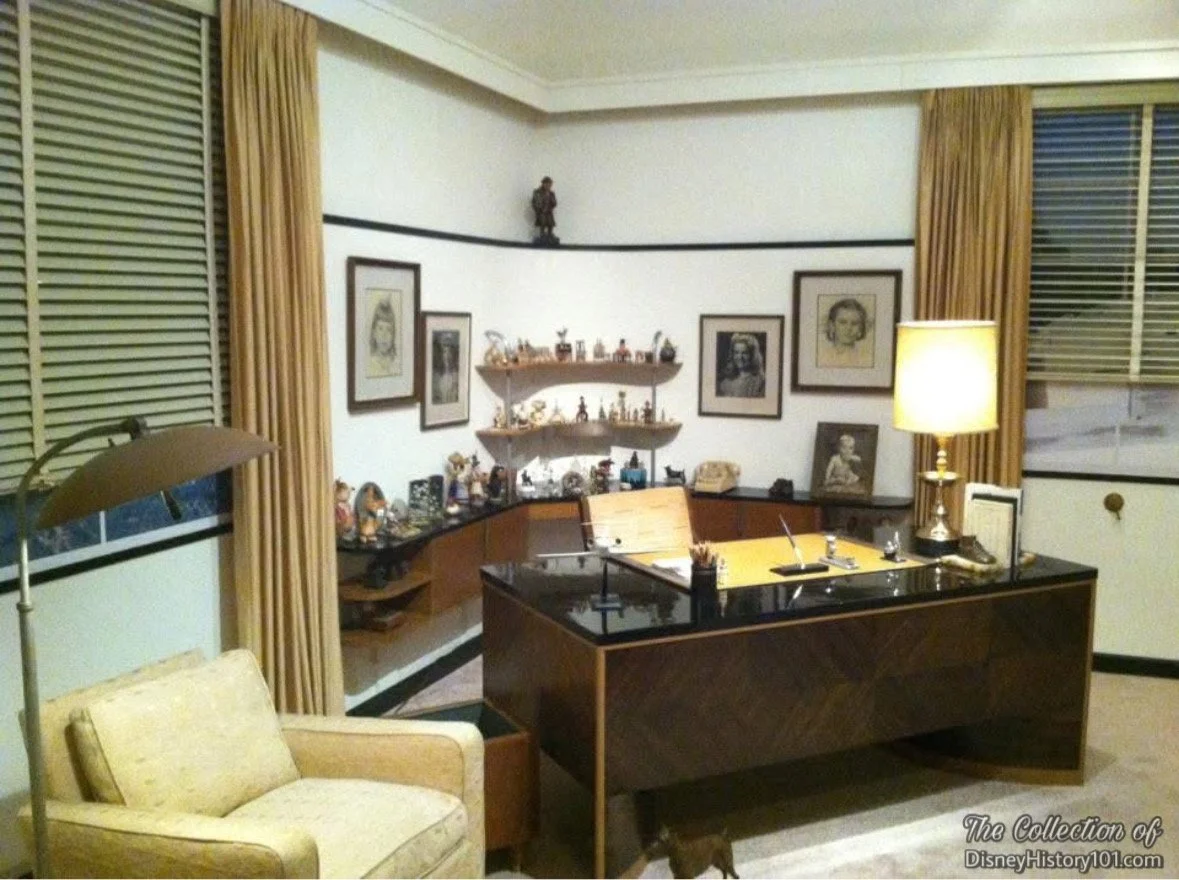
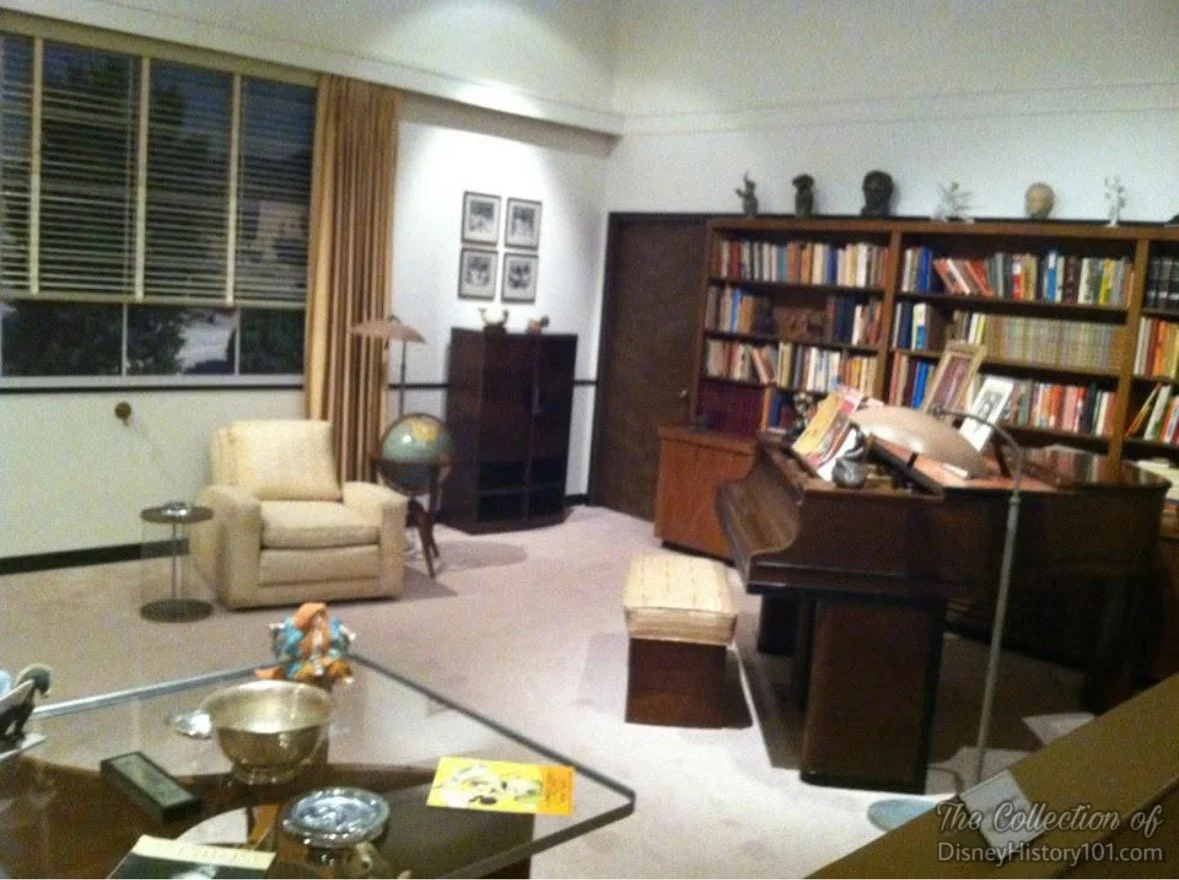
In 2015, the 75th anniversary of Walt Disney Studios offered a magical opportunity to reinstall Walt’s office belongings. Though portions of Walt's office had previously appeared within Disney Theme Parks in the past, his complete offices had never appeared in full, and in its place of origin.
This proved to be a monumental the task for the team of the Walt Disney Archives. The curtains smelled like smoke and required dry cleaning. The carpeting and blinds had been replaced by other tenants, and needed to be “sourced” from the era.
Using photographic documentation and Dave Smith’s catalogues as a guide, the archivists began the meticulous placement of nearly everything else that was authentically Walt’s – working scripts, calendars, hand-written notes. Each one was placed exactly where Walt left them. Accurate reproductions needed to be crafted, of a few items which were lost to time or too sensitive to display. After all the efforts, this would be the first time that Walt’s materials were back in his office since 1973.
Today, the offices appear to be filled with many of their authentic contents, placed as they were found by Walt Disney Company Archivist Dave Smith, in 1970. Now, please step this way into Suite 3H, as we provide Your Guide to Walt’s Offices!
“The Receptionist’s Office”
Even before heading into Suite 3H, we'll enter the same way that most Guests would! From the stairs, we make a quick turn to the left, and enter a hallway toward the Suite 3H Receptionist’s Office Waiting Room. On the way, we pass a number of familiar, framed artifacts.
We see the stunningly vibrant, “Disneyland, Anaheim, California (Near Los Angeles)” by Millard Sheets. The mixed media composition of paint, graphite and watercolor on paper was prepared for a 1965 promotional campaign for United Airlines.

“Disneyland, Anaheim, California (Near Los Angeles)” was created in paint and graphite by California watercolor artist Millard Sheets for a c.1965 United Airlines advertising campaign.
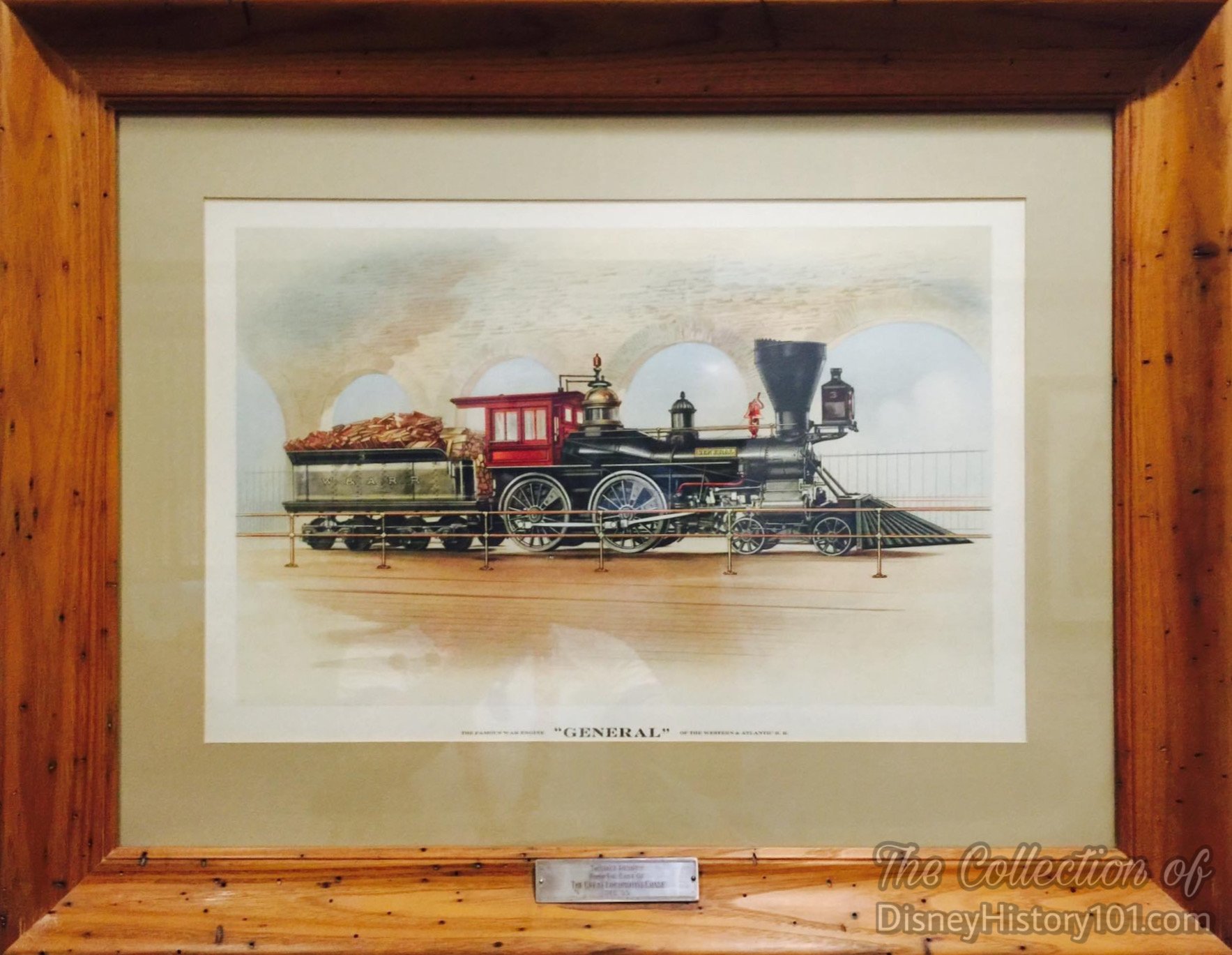
A lithographic print of the famous General War Engine was presented to Walt by the cast of The Great Locomotive Chase, c.1955.
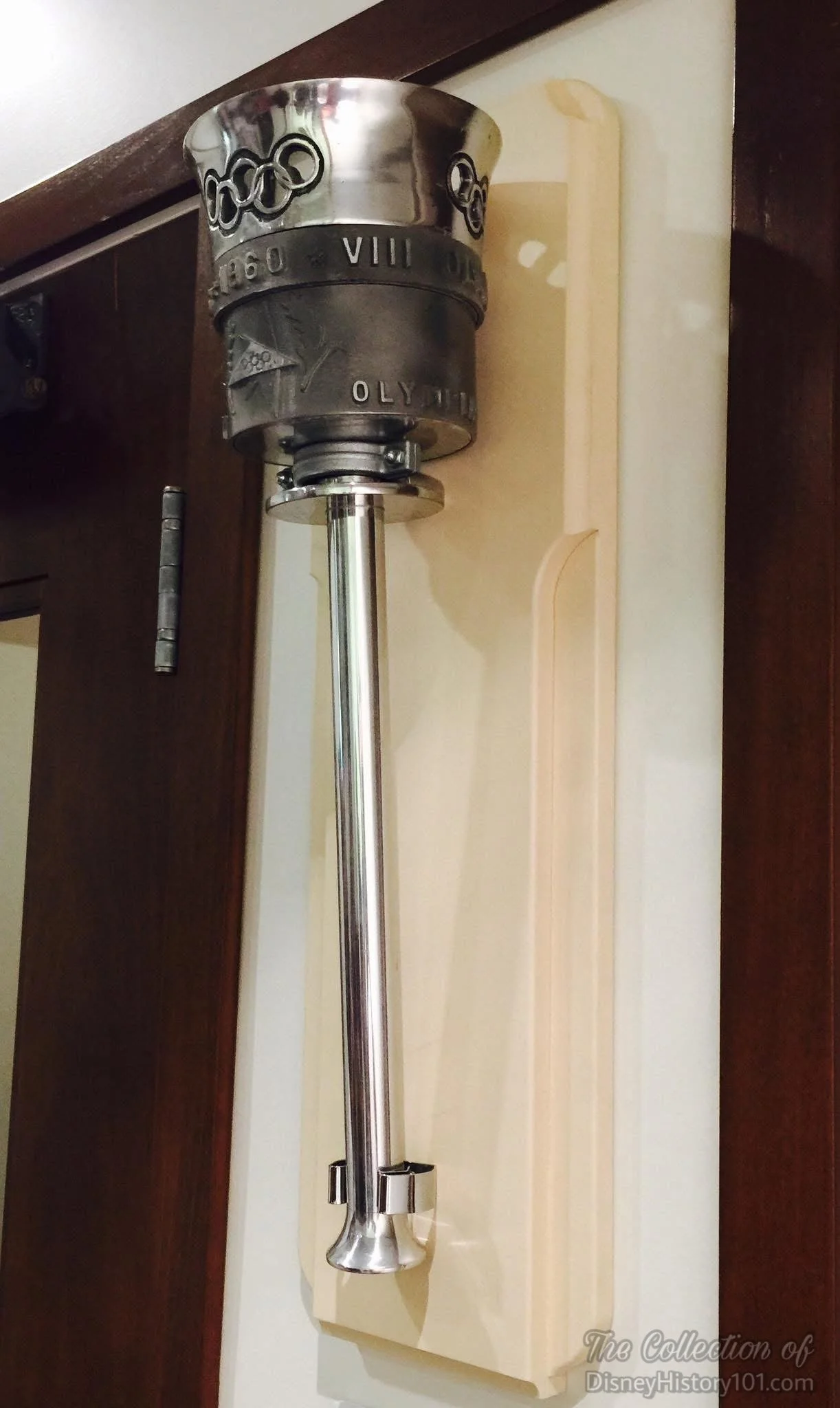
Just outside the a door hangs a reproduction of the 1960 Olympic Torch that was designed by John Hench when Walt Disney was Chairman of Pageantry for the Squaw Valley Winter Olympics. We take it all in, and open the doorway to the Receptionist’s Office.
This is the office that was used by Lucille Martin, Walt’s (6th and final) personal secretary & assistant starting in 1965.

Lucille worked in Walt’s office over a two-year period. After Walt’s passing, she continued with the company for 42 years. Lucille moved onto the role of executive assistant to Ron Miller as he ascended to President and CEO of the Walt Disney Productions. In 1984, the new Walt Disney Company CEO Michael Eisner asked her to stay on in that role to assist him. In 1995, Lucille was promoted to Vice President and special assistant to The Walt Disney Company Board of Directors, where she served as a liaison between the Company and the Board. She held that post up until her retirement from the Company in January 2006.
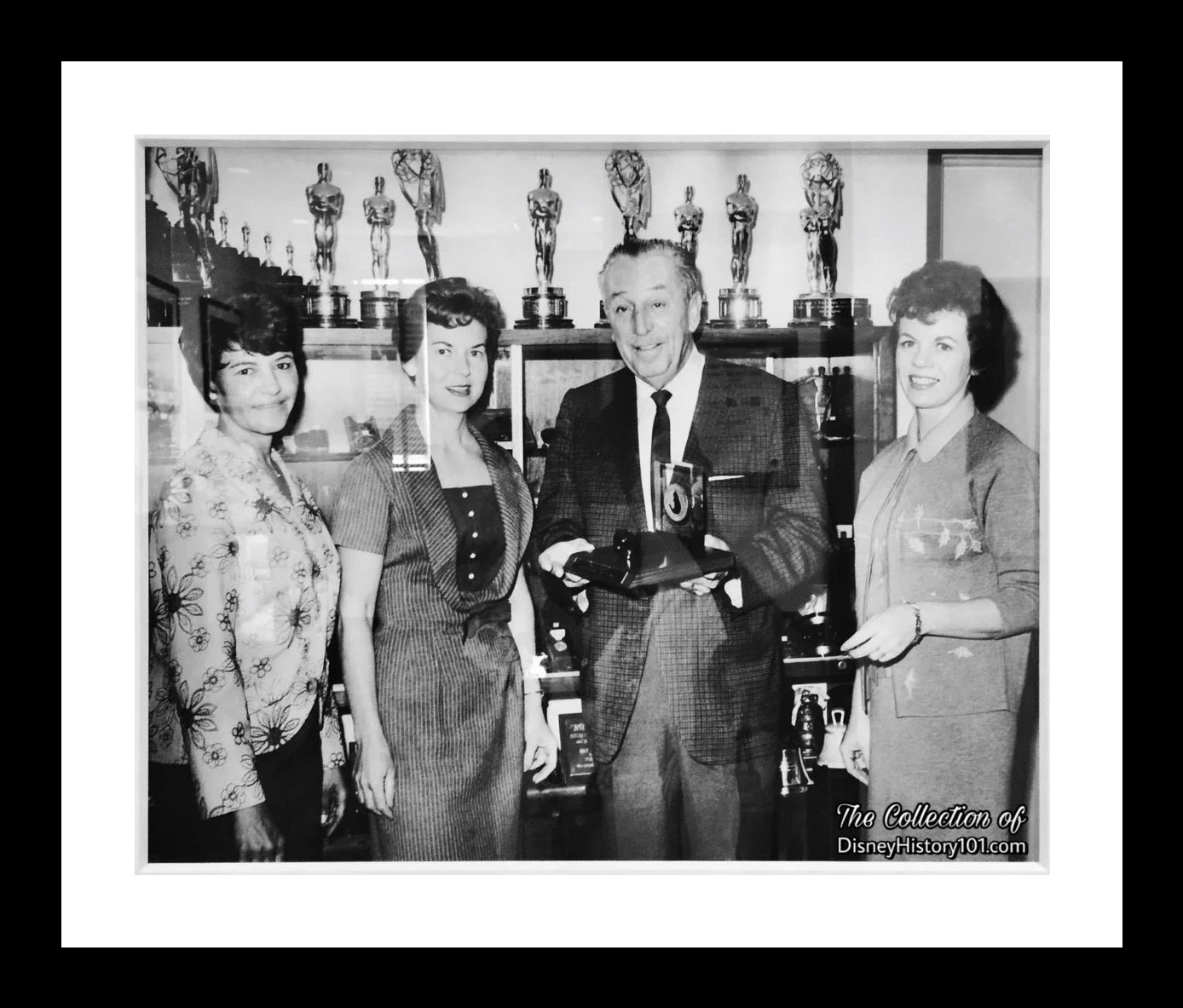
In the Waiting Room of the Receptionists’s Office was a wall-mounted display case that was once filled with awards given to Walt Disney. Today, it is furnished with prop reproductions that were prepared as set decoration for Saving Mister Banks. These include a stunning replica of Walt Disney’s Snow White and the Seven Dwarfs Honorary Academy Award®.
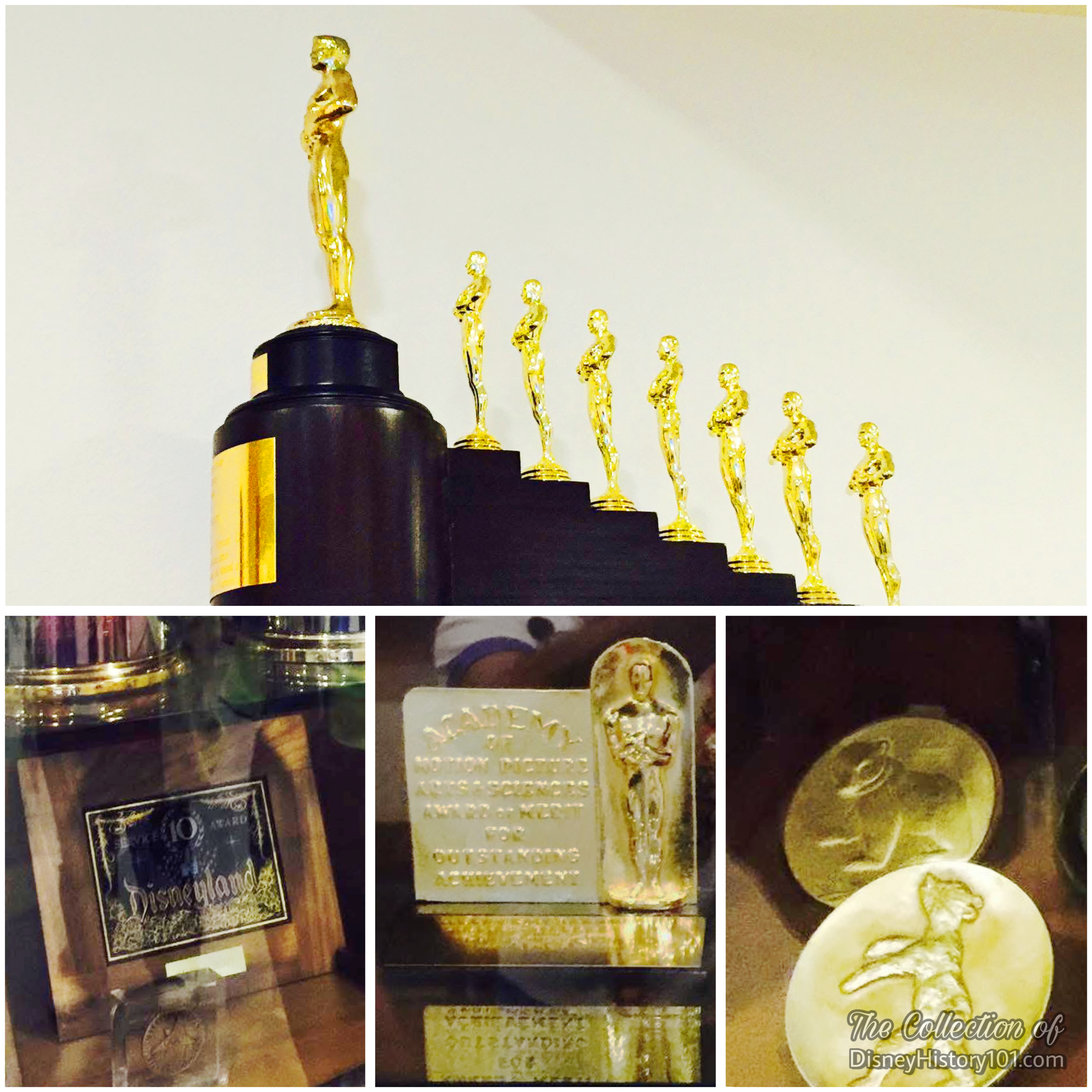
Here, Guests would wait and relax, until their scheduled appointment with Walt.
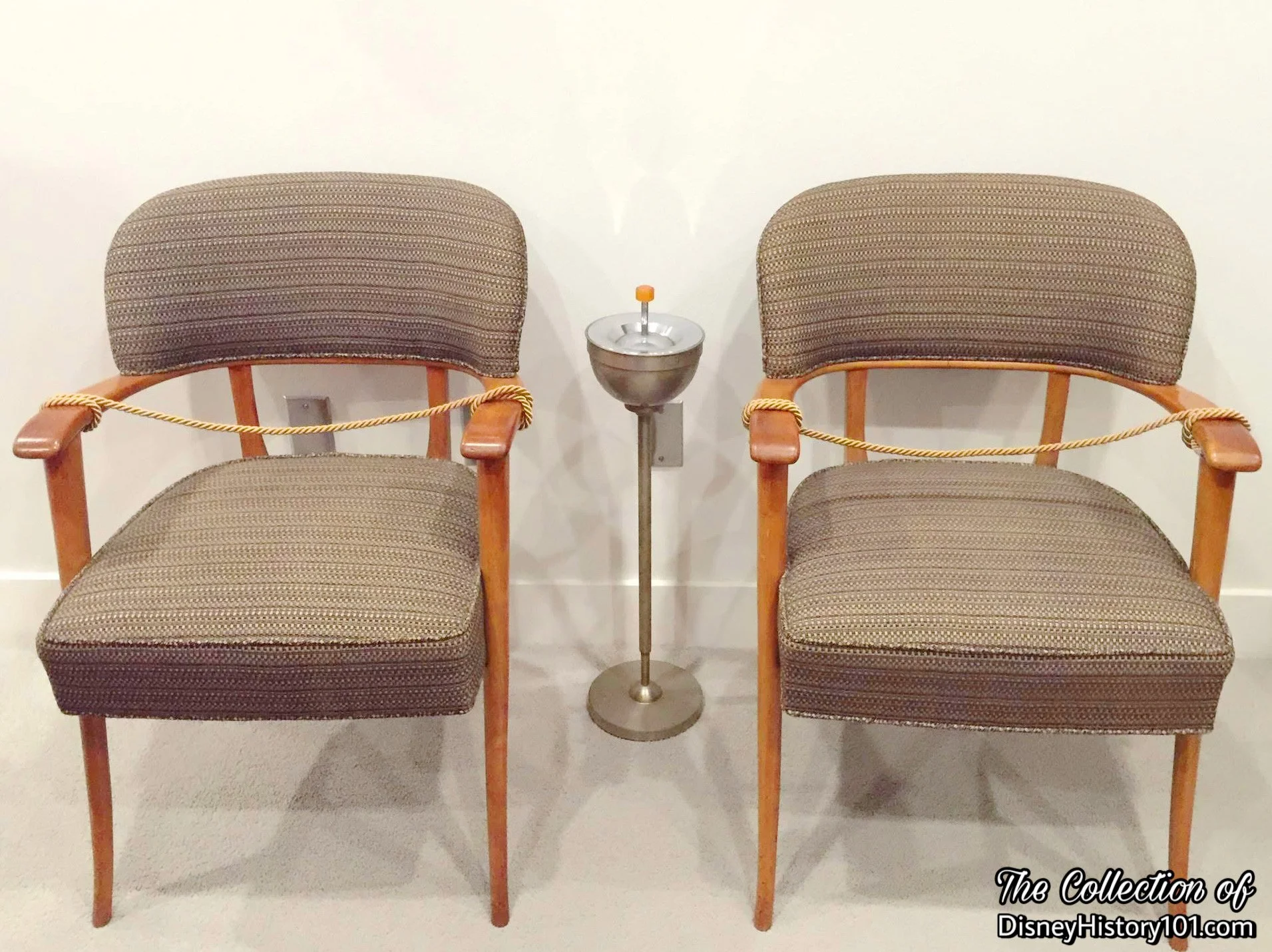

Amidst the excitement of entering and standing inside Walt Disney’s Formal Office, one can’t help but be enchanted by the sheer volume of gifts, documents, office furnishings, and awards, and personal memorabilia.
One of the first things we pass after entering is a Photograph of the Disney Brothers, Walt and Roy.

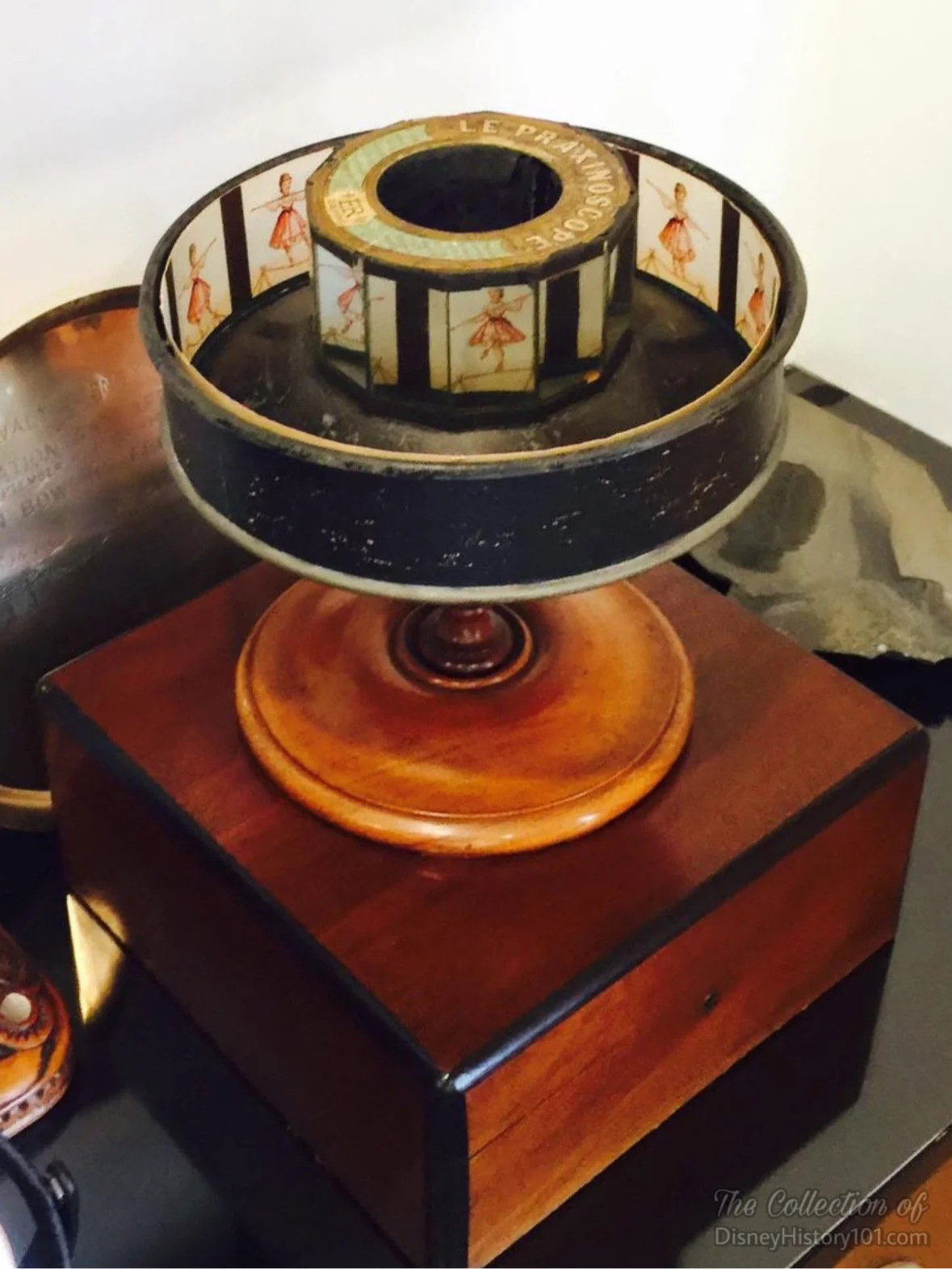
The hand-carved wooden figure was a souvenir purchased by Walt Disney on a visit to New Zealand. In the center of the cabinet is an electric Praxinoscope gyroscope sent to Walt by the company, as a sample of early animation technology. Walt was so proud of it that he used it in an episode of Disneyland.
Underneath the framed photo is a cabinet in which Walt stored scripts for movies. On top or a number of interesting things with storied histories. To the right is a Crystal. To the left (among other things) is a souvenir wood-carved “Tiki” figure which Walt purchased on a trip to New Zealand. The tray leaning against the wall is an award for Lawn Bowling.
But in the center sits a most-fascinating Praxinoscope, a gift from the manufacturer. The Praxinoscope was invented by Charles-Émile Reynaud in 1877, as an improvement on the zoetrope. Instead of viewing the animated action through the narrow viewing slits found on a zoetrope, the animated action inside a praxinoscope was meant to be viewed through a series of inner angled mirrors in the center of the drum. Walt would have used to the Praxinoscope to show Guests how animation has progressed.
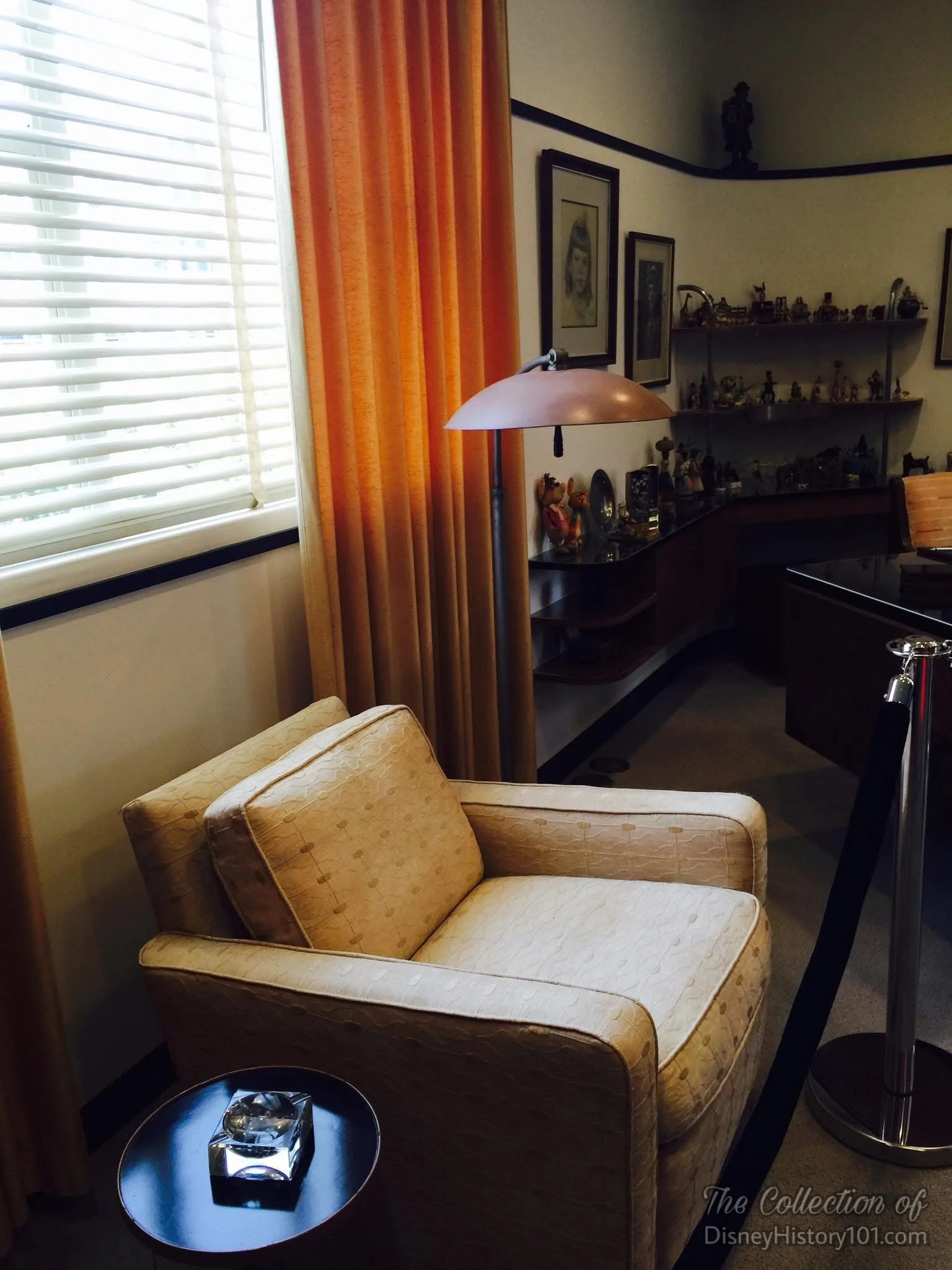
Walt Disney’s Formal Office was also well-lit with plenty of windows and electric illumination.
Walt Disney had a growing passion for miniatures ever since laying eyes on the Thorne Miniature Collection on display at the San Francisco Golden Gate International Exhibition of 1939. During the 1950s, Walt Disney made several trips to Europe, where he came across many fascinating, intricate miniature models, and figures, which were either purchased outright and brought home, or gifted by friends.

Walt’s tiny collection grew and when it was inventoried in the mid-1960s, the catalog exceed a thousand pieces. Some historians believe that Walt's strong enthusiasm for miniatures inspired not just the creation of Disneyland, but aided the development of specific attractions like Storybook Land and “It's a small World” and even some of the inventory purchased for the Decorative Gifts department of the Disneyland Emporium.

At home, Walt toyed with his small-scale trains. Around the Studio Shop, he made tiny pot-bellied stoves. In his Formal Office, he was surrounded by a small portion of his own miniature collection, which he proudly displayed in neat rows, behind his desk. After Walt, much of his collection was preserved through the Disney Family and can still be viewed at the Walt Disney Family Museum. Here in Walt Disney’s Formal Office, visitors can view a small representation of own Walt’s small world.

Walt’s Formal Office is decorated with many photographs of Diane and Sharon Disney as children and Norman Rockwell sketches of them. Behind Walt’s desk are drawings of Sharon on the left and Diane on the right.
On the wall, behind Walt’s desk are Four Photographs and Two Drawings of his two daughters (by Norman Rockwell, drawn when Diane was about ten years old). As a sidelight, Walt Disney and Norman Rockwell regarded each other highly. They were personally acquainted, corresponded regularly, and even traded gifts of art and memorabilia.
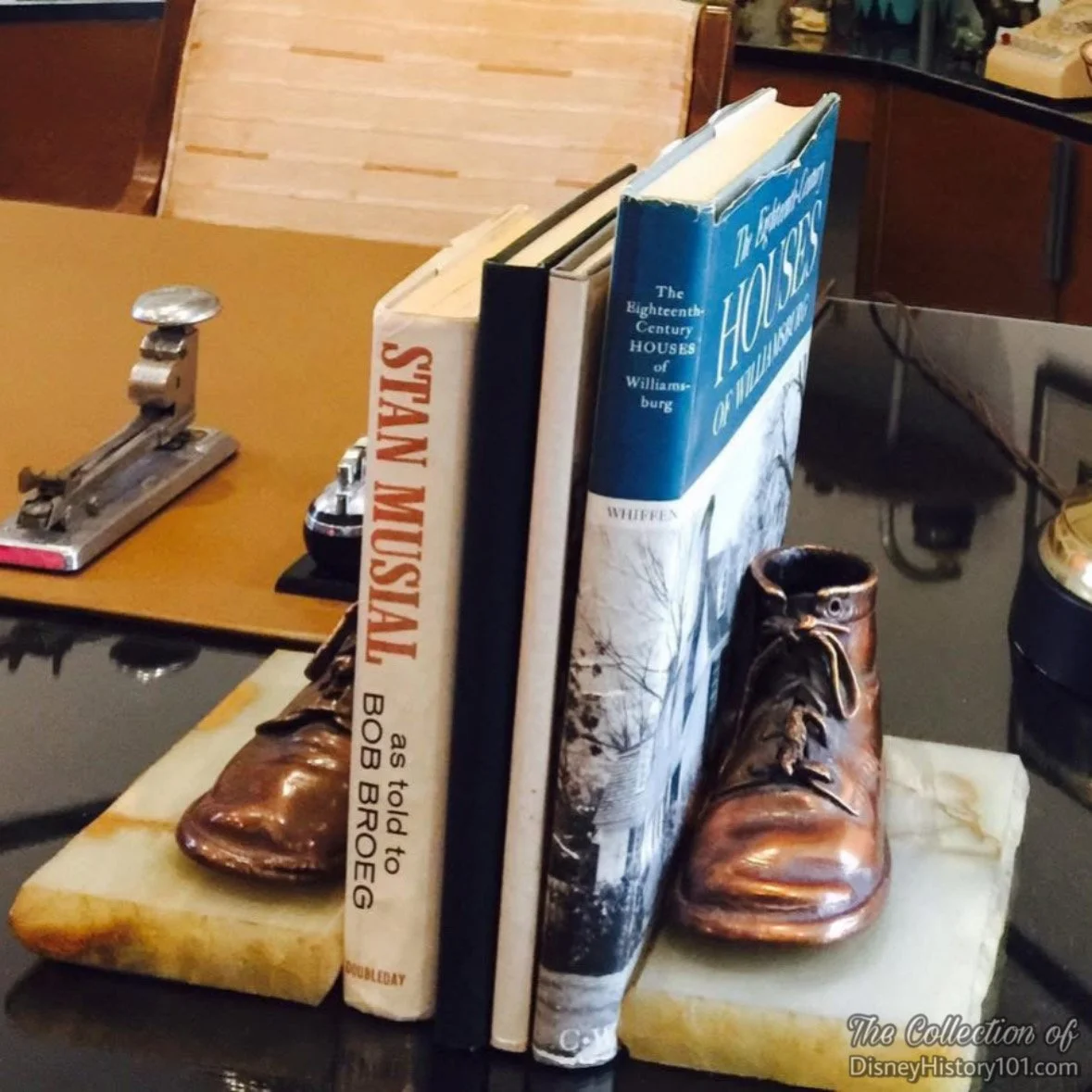
The photos and drawings of Diane and Sharon were originally mounted to the left and right of the shelf. Those of Sharon hung to the left, while those of Diane were displayed to the right. Walt loved his girls and his office is full of keepsakes from their lives. Throughout Formal Office, you’ll notice other mementos of Diane and Sharon on shelf behind the desk, on the walls, and atop the piano. Another sits to the right of Walt’s desk – Diane’s Baby Shoes, the pair of which he had “bronzed” as Bookends.
Turning to Walt’s desk, is another outstanding memento – an outstanding bell prominently positioned at the “bow”. Please CLICK the following gallery for a closer look.
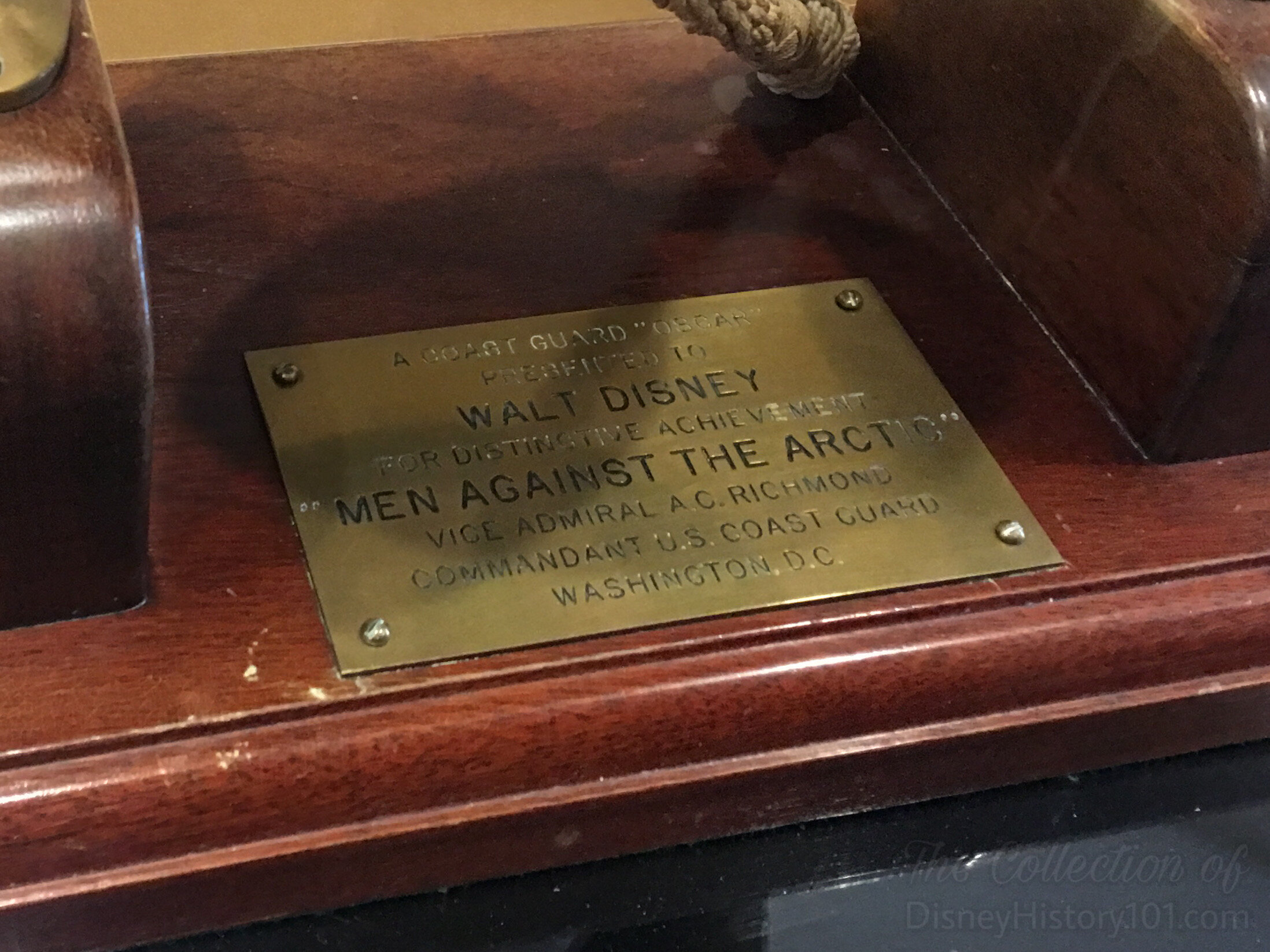
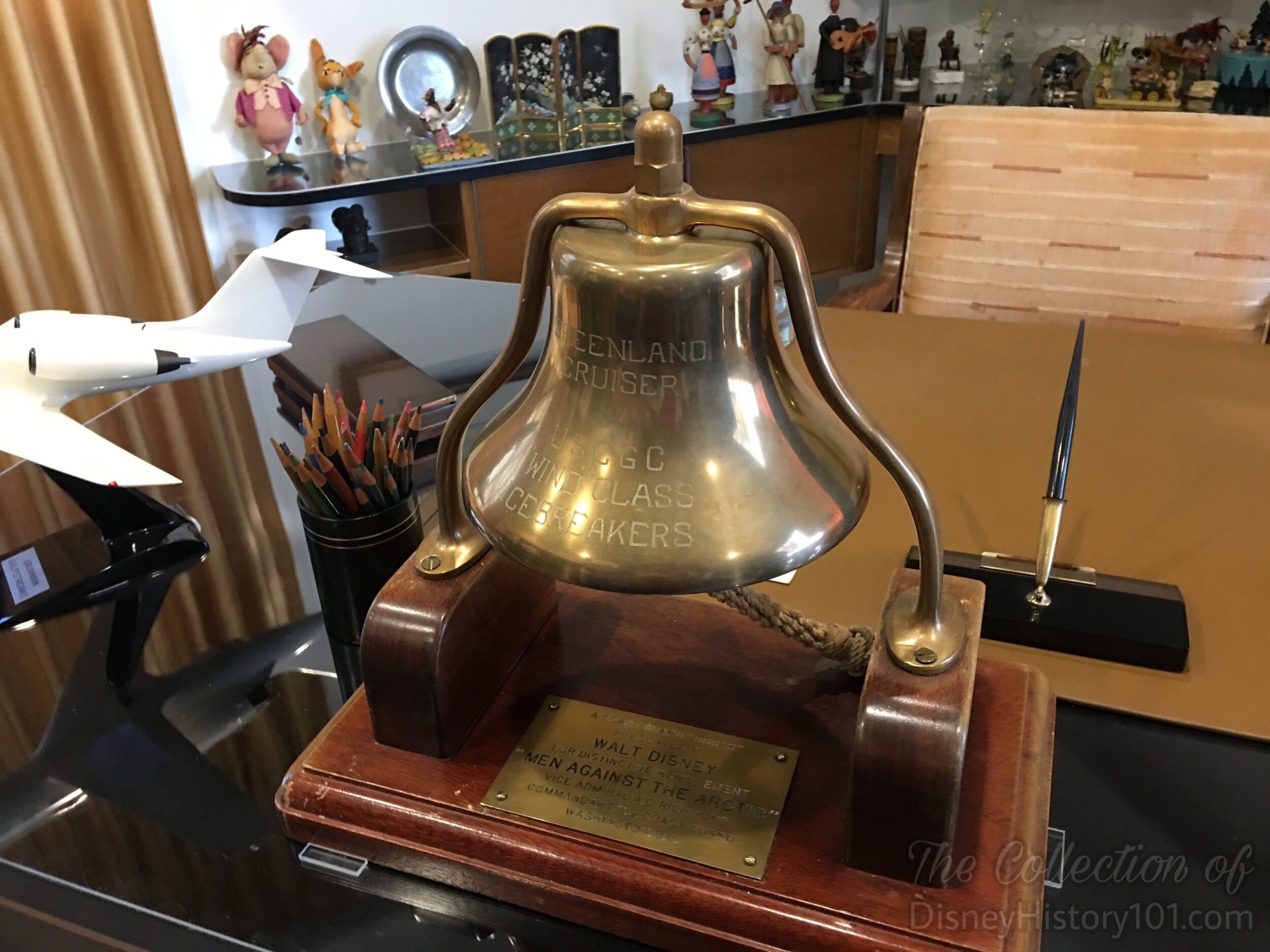
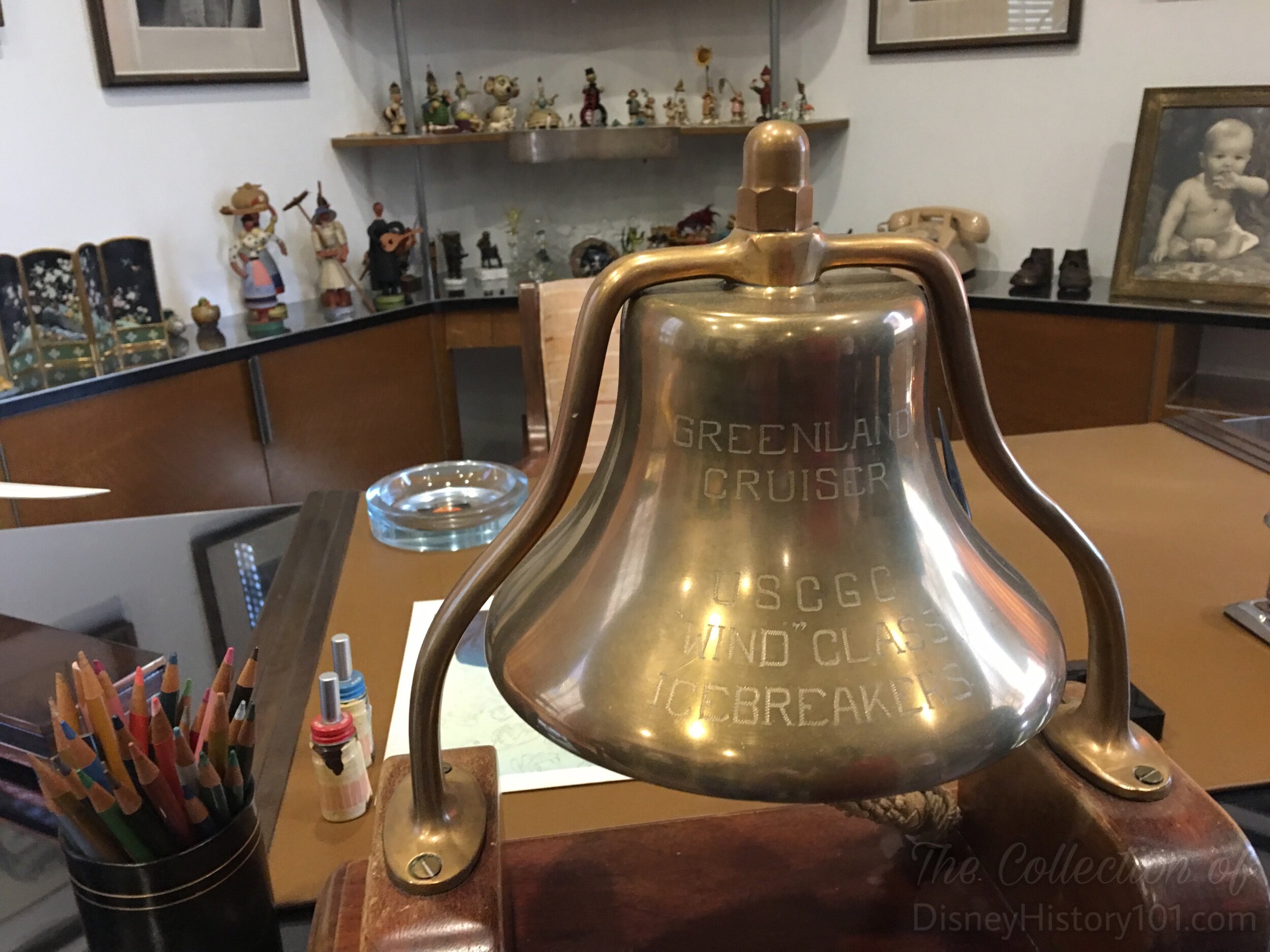
Upon inspection, you’ll notice a plaque inscribed that it was a gift from the Coast Guard to Walt, after his completion of “Men Against the Arctic.”
Walt’s True-Life People and Places Adventure: “Men Against the Arctic” was a 30-minute-long documentary directed by Winston Hibler, in which photographer Elmo Jones chronicled routines of U.S. Coast Guard icebreakers. The completed film was part of “the big entertainment parade” of 13 motion pictures that were scheduled for release during the 1956 theatrical season. In the end, the exciting, factual film won the 1956 Academy Award for Best Documentary Short. While the Academy Award was displayed elsewhere at the studio, this Men of the Arctic Bell Award gift was placed at the forefront of the desk in Walt Disney’s Formal Office.
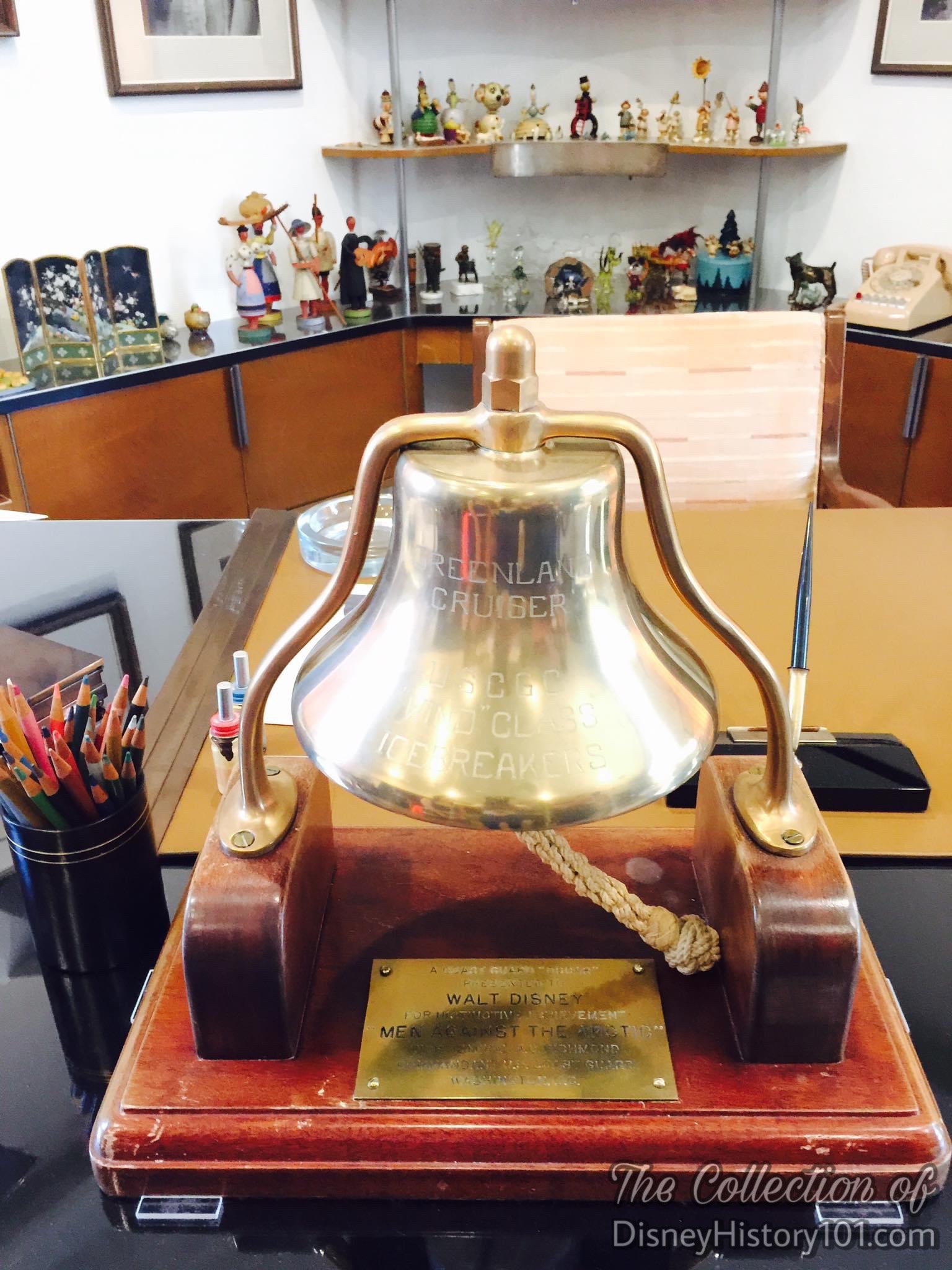
According to accounts, Walt would often work so intensely, that he did not hear Lucille call him when it was time for him to eat. Walt’s solution was that she should ring the bell to alert him of lunch time. So, Walt’s secretary Lucille would ring the “Men of the Arctic” Bell Award when it was time for him to go to lunch.

Of all the knick knacks in Walt’s Formal Office (including the large collection of miniatures acquired from travels and friends), I would like to direct your attention toward the small Grumman Gulfstream II Model Airplane. This was an aircraft that Walt considered purchasing at the time of his passing, and the Company purchased in 1985.
To the left of the bell was a small Grumman Gulfstream II Model, a gift of the Grumman Aircraft Engineering Corporation.
In letters to the Grumman Aircraft Engineering Corporation, Walt expressed his thoughts about the Gulfstream. He heard that it was “one of the finest aircraft built” and his pilots were happy with it. As a passenger, he remarked how “the comfort, the quiet and the beauty of this plane make it an outstanding one.”
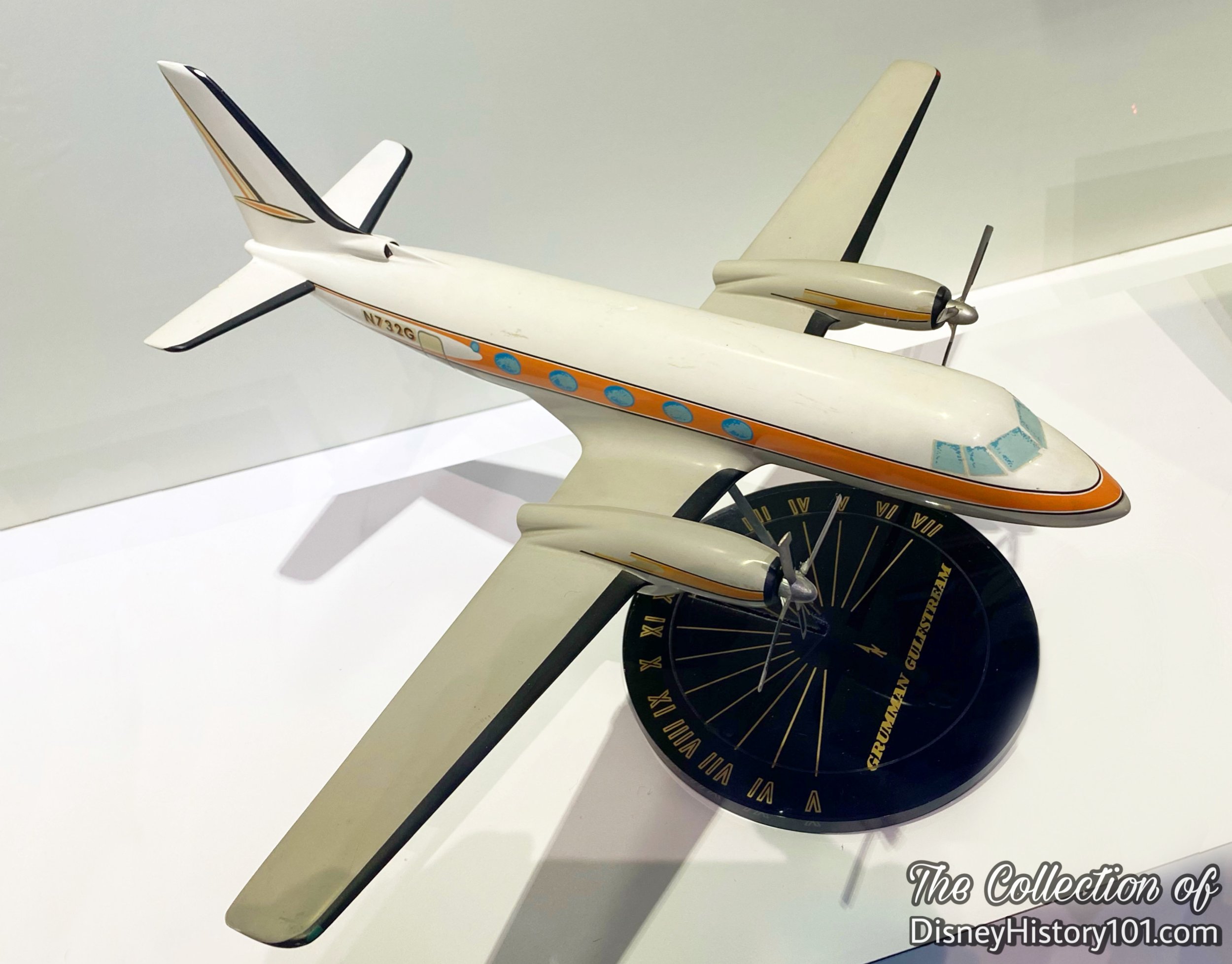
In his lifetime, Walt Disney supported aviation transportation and established the Walt Disney Productions Flight Department. Walt subsequently purchased four airplanes within the final five years of his life – two of them Grumman. In 1962, Walt ordered a new 1963 Beech Queen Air 65 (tail number of N234MM). In 1963, Walt bought a Grumman Gulfstream 159 (tail number of N732G) which was delivered during Spring of 1964. Next, in August 1965, Walt purchased a Beech King Air 90 to replace the Beech Queen Air 65. Finally, in 1966, Walt ordered the Gulfstream II (GII59).
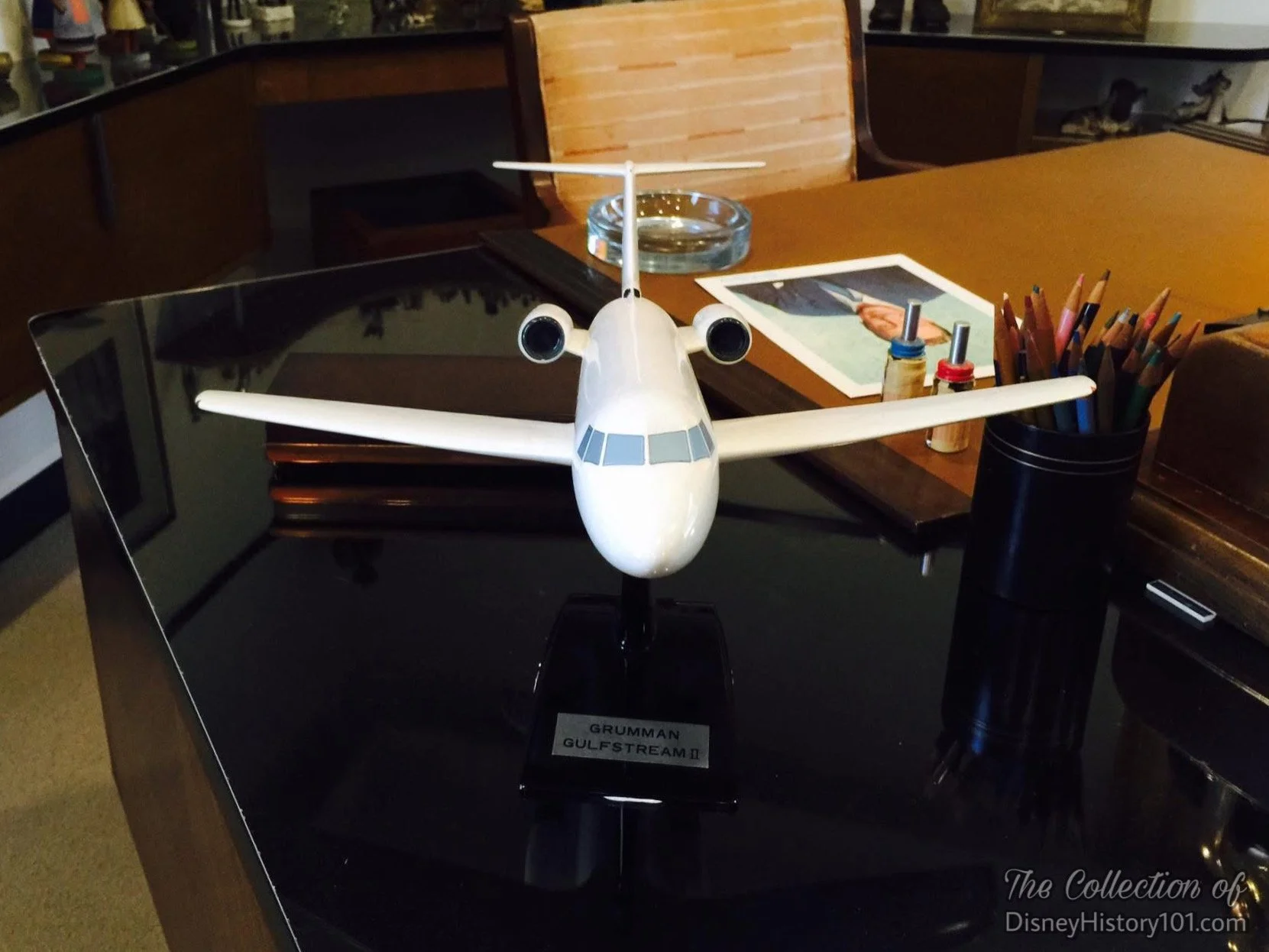
When Walt purchased the Gulfstream II, he could not resist displaying a beautiful miniature model of the aircraft that he referred to as “one of the most beautiful and practical Gulfstreams that we have seen.” While two other model planes were displayed on a table in his Working Office, and near his Formal Office desk, his Grumman Gulfstream II Model was positioned near the forefront of his desk, a reminder of the gift that accompanied his proud purchase from the Grumman Aircraft Engineering Corporation.
Beneath the window are several recognizable characters, each one a model that was used by Disney artists to help bring animation like Pinocchio, Bambi, and The Aristocats to life.
The large windows permitted natural sunlight to permeate office throughout the day, filtered by the blinds.
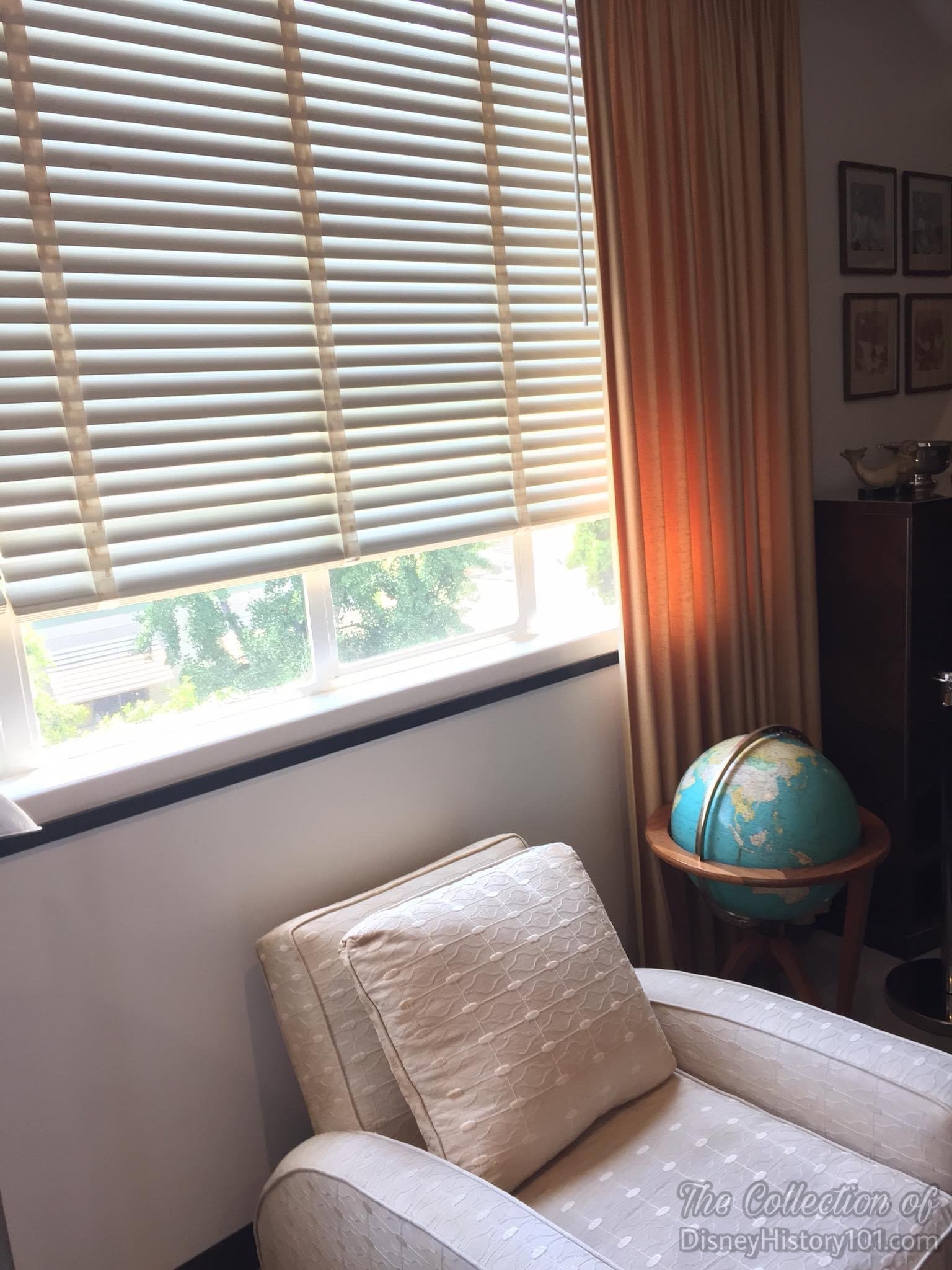
Walt Disney wisely said: “There is more treasure in books than in all the pirates' loot on Treasure Island and at the bottom of the Spanish Main and best of all, you can enjoy these riches every day of your life.”

Walt’s Formal Office Bookcase
Proving this belief are the sheer volume of literary works found within Walt Disney’s “Formal” Office 3H.

Walt’s Formal Office Bookcase
This office of Walt Disney Studios contains a library of books on a variety of subjects, by numerous writers. Many books on the shelf were sent by people who thought their work would make a great film. The cherished collection of tomes, which includes signed copies of works from C.S. Lewis and Upton Sinclair.
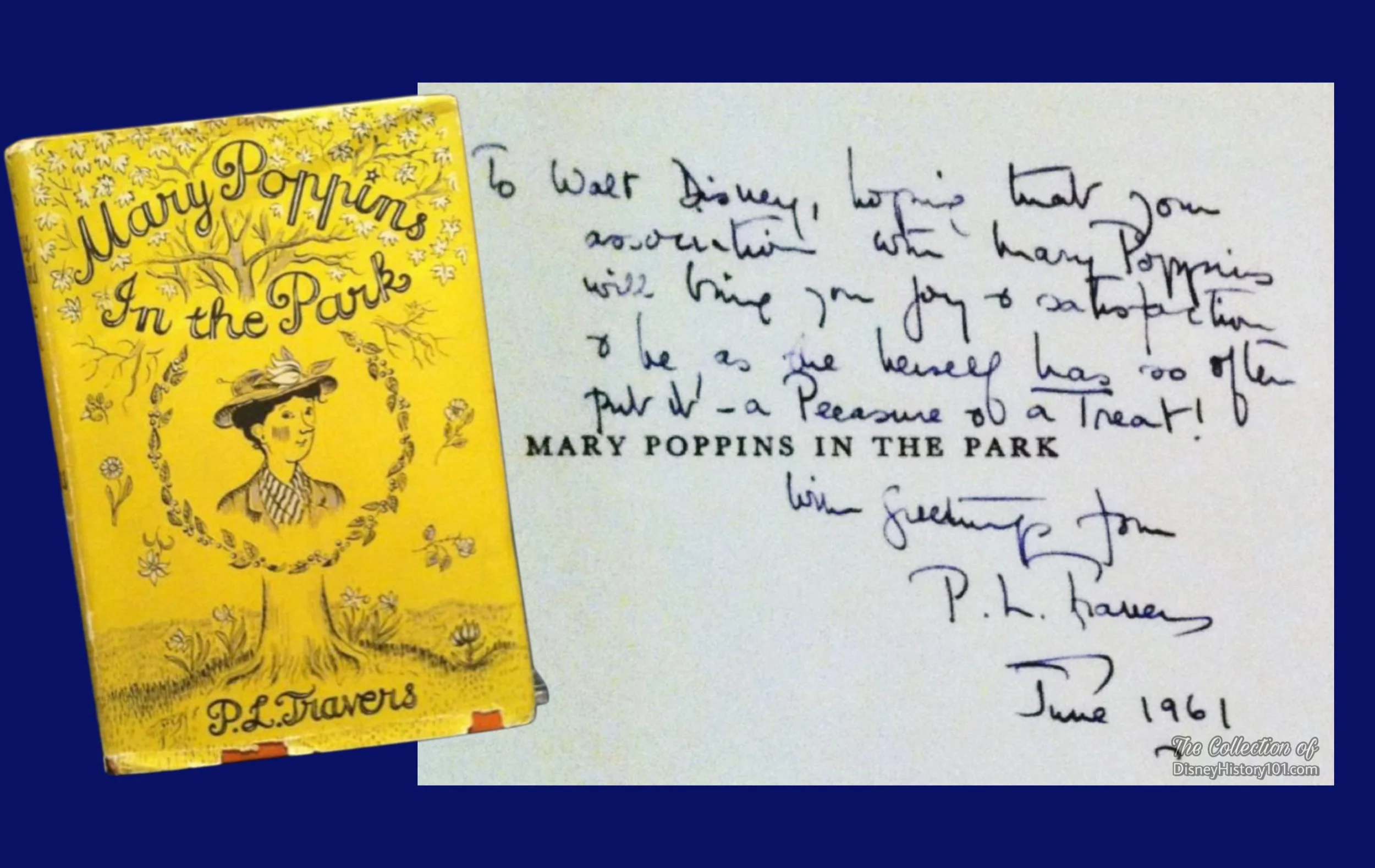
Some books inspired Walt Disney Productions like (“Mary Poppins” and “The Swiss Family Robinson”), while others were autobiographical and historic works of non-fiction. Many of these were autographed by their author, like the 1958 edition of “Mary Poppins in the Park” published by Collins (above), which was signed by P.L. Travers, along with a personalized message to Walt Disney, back in 1961.

Walt’s Formal Office Bookcase: Walt Disney’s Formal Office Bookshelf, with a better view of the ceramic and metal Mexican Doll Tin (seen right), a Danish Ceramic Horse with Rider, an Oriental Woman Ivory Figure on wood base.
The books on the shelves were meticulously placed back in their correct order as detailed by Dave Smith's catalog and photos. Nothing on the shelves (even behind the piano) is “out of place”, but placed exactly as Walt left it, down to the direction each book was facing.
The shelves were filled with more than books – keepsake figures. Not pictured, is a Japanese Doll Gift presented by Nikon Hogaku, under the auspices of the Professional Photographers of America, to Walt for his “outstanding achievement in fostering international understanding through photography” gifted by a Japanese organization in 1961. This was in reference toward Walt Disney’s People and Places released the short film “Japan”.
A small Lincoln Bust was one of six bronze replicas produced to commemorate the opening of the State of Illinois Pavilion at the 1964/1965 New York World's Fair.

Walt’s Formal Office Bookcase: The figures on top of Walt Disney’s Formal Office bookshelf consist of (1) Lincoln Bronze Bust (1 of 6 created to commemorate the opening of the Illinois Pavilion at the New York World's Fair of 1964-1965), (2) a German ceramic ice skater (perhaps related to his work with the Olympics), (3) a head of a boy, and (4) Johann Strauss.
Lower Shelf (out of sight): Fiat - silver; Aztec runner on pyramid - labeled "Homehaje postumo, 1966," Mexican.
The lower shelf of the bookcase holds an artifact described in records as a “Fiat” of silver and an Aztec Runner on Pyramid (a seemingly posthumous award labeled “Homehaje postumo, 1966,” Mexican.
Other bric-a-brac on the bookshelf includes an Ice Skater Figurine of a boy’s head produced in Germany, a Johann Strauss Ceramic, what is described in records as an “Oriental” Woman Figurine comprised of ivory on a wood base, a Horse with Rider Figurine of fine Danish ceramic, and a Mexican Doll of pottery and tin.
Kem Weber had purchased the c.1914 Knabe Piano and then took it apart and put it back together (after making some alterations). The result was a Custom Knabe Piano created for the office of Walt Disney. It was designed to fit into the tight office space, as well as blend in with the office decor.

Walt’s Formal Office Grand Piano: Pianists like Leopold Stokowski and the Sherman Brothers have sat at the bench in Walt Disney’s Formal Office. Atop the piano is a Mousecar, a photograph of Diane (resting on a red scrapbook presented at the Banshee’s testimonial luncheon in New York, October 2, 1947), another photograph of Diane holding a teddy bear, and a photograph of Sharon (just out of shot, to the right).
Now, Walt never learned to play the piano. But artists like Leopold Stokowski played some of the music from Fantasia on this piano.
Some evenings, Walt Disney would have a drink with composer Richard M. Sherman who (along with his brother Robert B. Sherman) wrote scores for films like Walt Disney’s The Jungle Book. Disney would simply say, “play it,” and Sherman knew what he meant. Richard would then play “Feed the Birds” from Walt Disney’s Mary Poppins (Walt’s favorite tune).
Atop, are more photographs of Diane Disney holding teddy bear and her sister Sharon Disney. Next to those is a Mousecar (the prestigious Disney equivalent of the Oscar). This one was presented to Walt by his brother Roy.
Also on top of the piano is a Red Box, containing Scrapbook that was presented to Walt at the Banshee’s Testimonial Luncheon in New York, October 2, 1947, which honored Walt and the 20th anniversary of Mickey Mouse.
When Walt Disney’s Offices were on display at Disneyland for many years, the area where the couch sits, was where protective ropes and a glass wall were in place, enabling visitors to glance into the exhibit. For the exhibit, Walt Disney Company Archives had to rebuild the wall and reproduce the sofa to re-create this space...
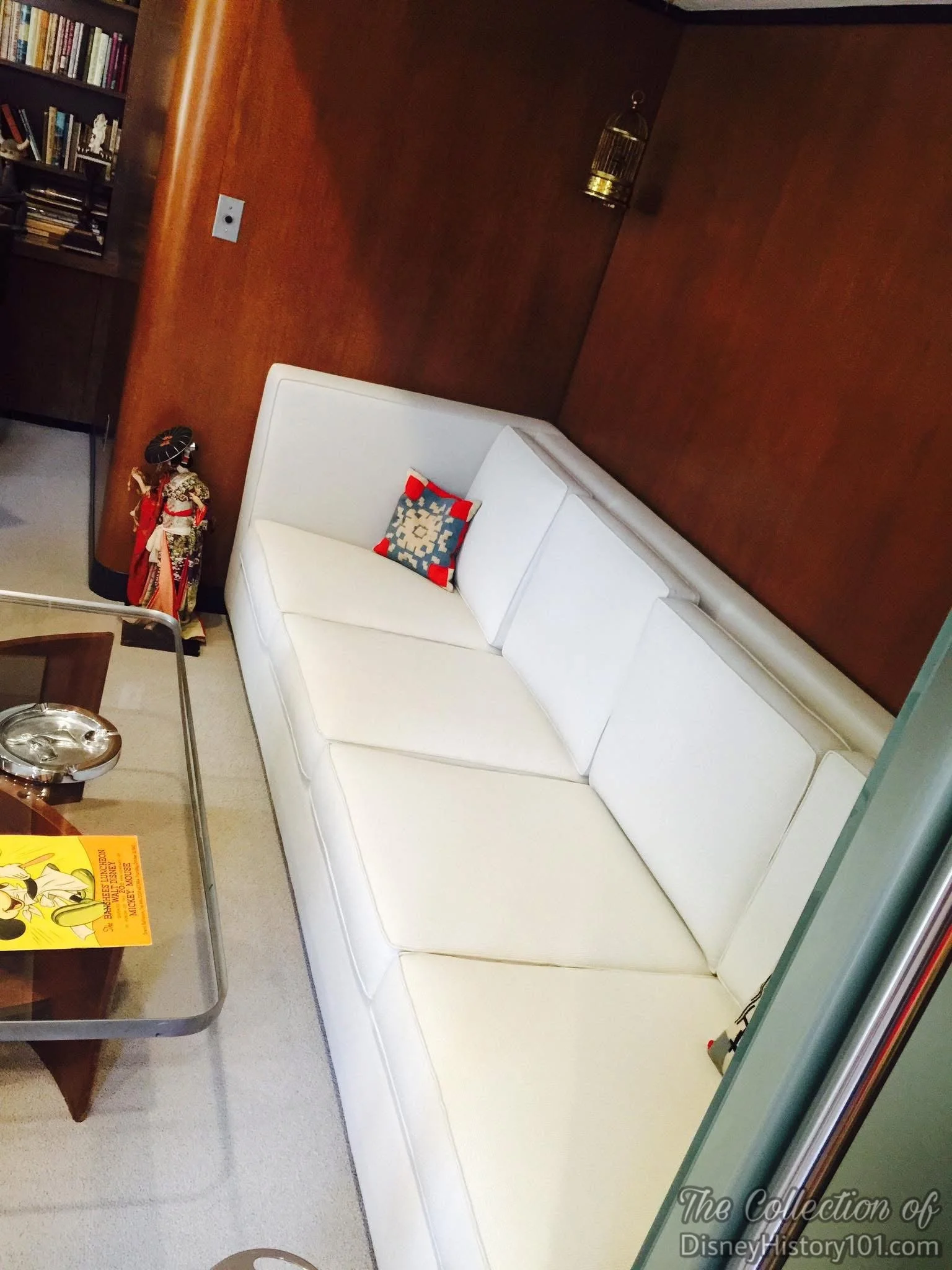
Suspended above the couch and on the coffee table are two Automatons that many believe to have influenced the Imagineering of Audio-Animatronics. The one on the right was manufactured by Bontems during the early 1900s.
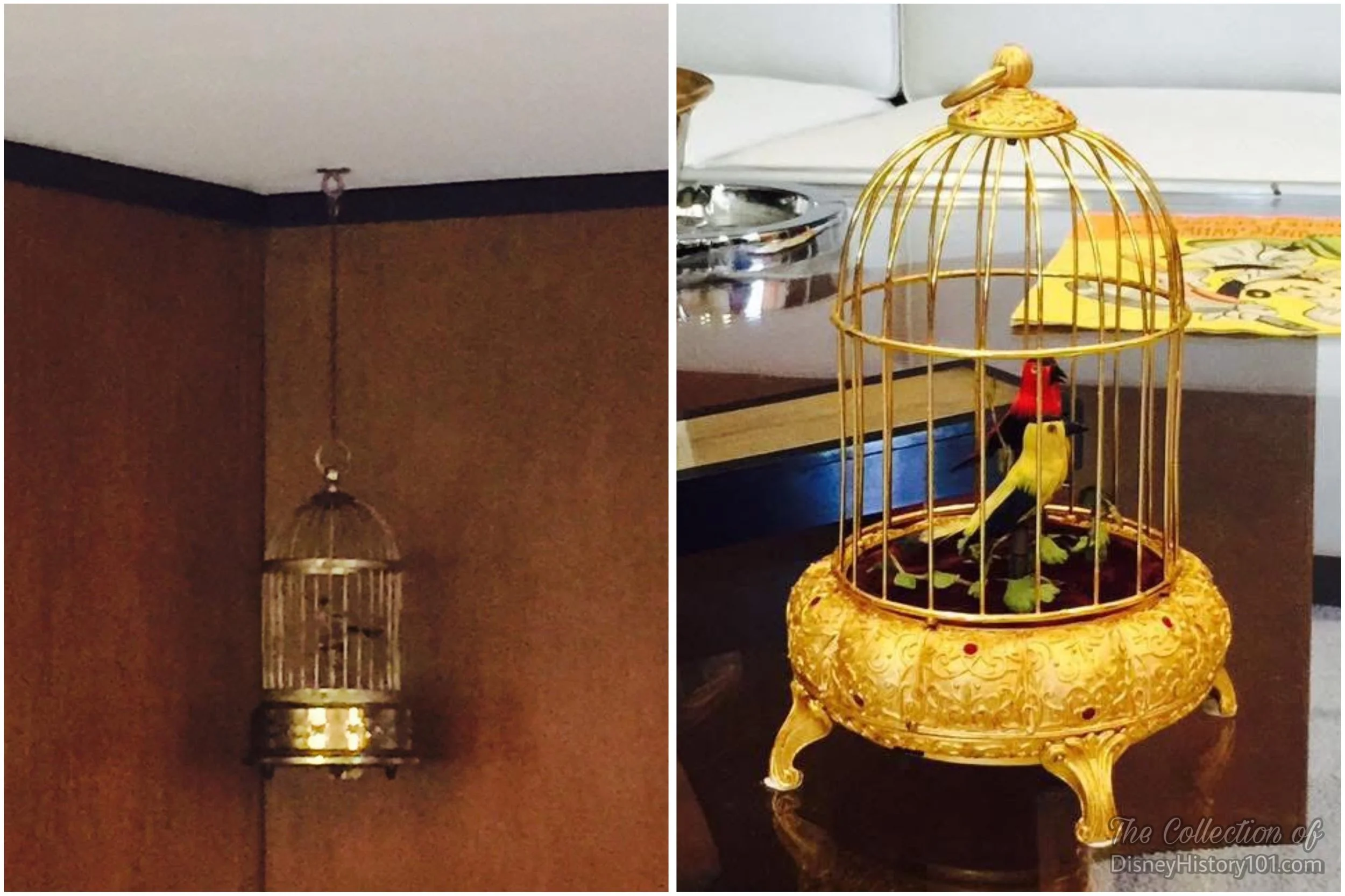
Walt Disney’s Formal Office
The one on the table no longer works, owing to the grandkid’s fascination with it (or so the story goes). You may have seen it on display in locations like Disney-MGM Studios in 2005.
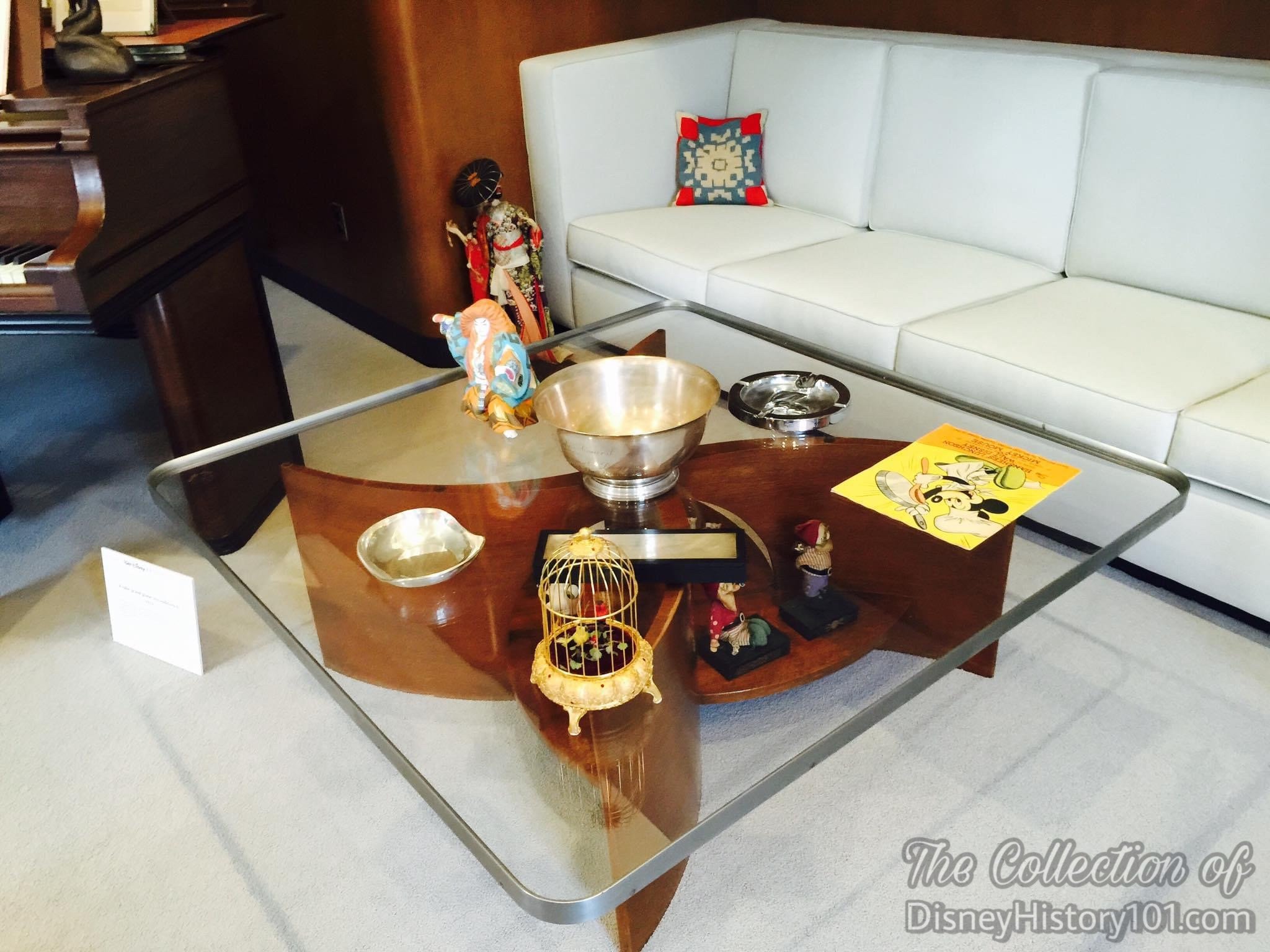
Walt’s Formal Coffee Table: Ashtray of forged metal with the figure of a dog’s head ; Program Banshee’s Testimonial Luncheon for the 20th anniversary of Mickey Mouse, 1947 silver bowl; the native son award, presented to Walt by the Greater San Francisco Chamber of Commerce in 1965; Cigarette Box “To Walt Disney, an early 1900s Bontems cage - mechanical bird which perhaps led to Walt’s interest in Audio-Animatronics (one of Walt’s grandchildren broke it) ; Kabuki Dancers - fine Japanese figurines (Walt never visited Japan, but the Company did much business there).
On the Coffee Table is an Ashtray of forged metal with the figure of a dog's head, a Banshee’s Testimonial Luncheon Program celebrating the 20th anniversary of Mickey Mouse, a 1947 Native Son Award Bowl of silver, which was presented to Walt by the Greater San Francisco Chamber of Commerce in 1965. There is also a Cigarette Box inscribed “To Walt Disney” and a Mechanical Bird Cage which was broken by one of Walt's grandchildren.
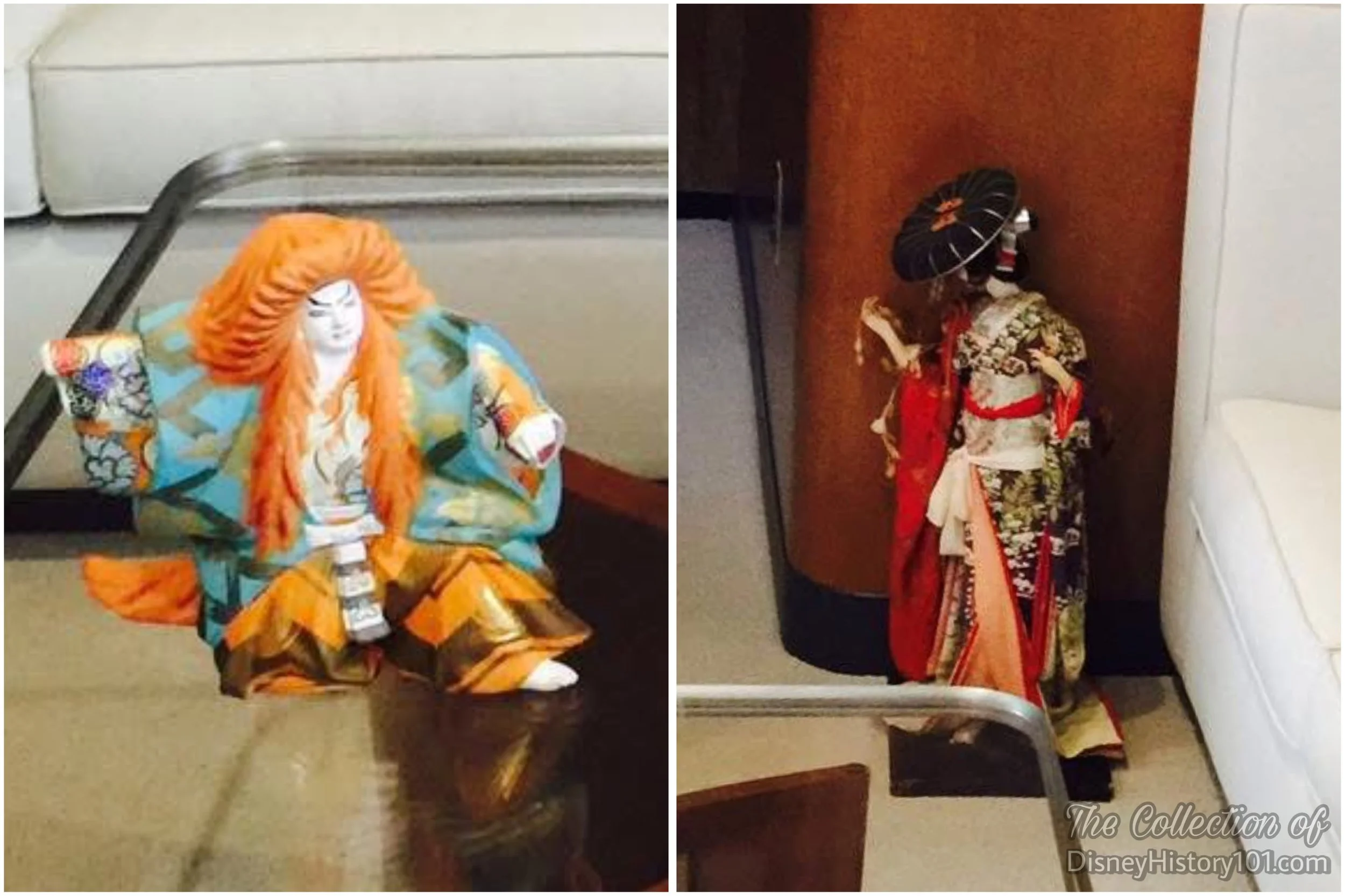
There are two Japanese Ningyo (Dolls) in this area – On the floor is a Costume Doll and on the coffee table is a Clay Doll. These were referred to in records as fine Japanese Kabuki Dancers Figurines with a note that though “Walt never visited Japan… the company did much business there.”

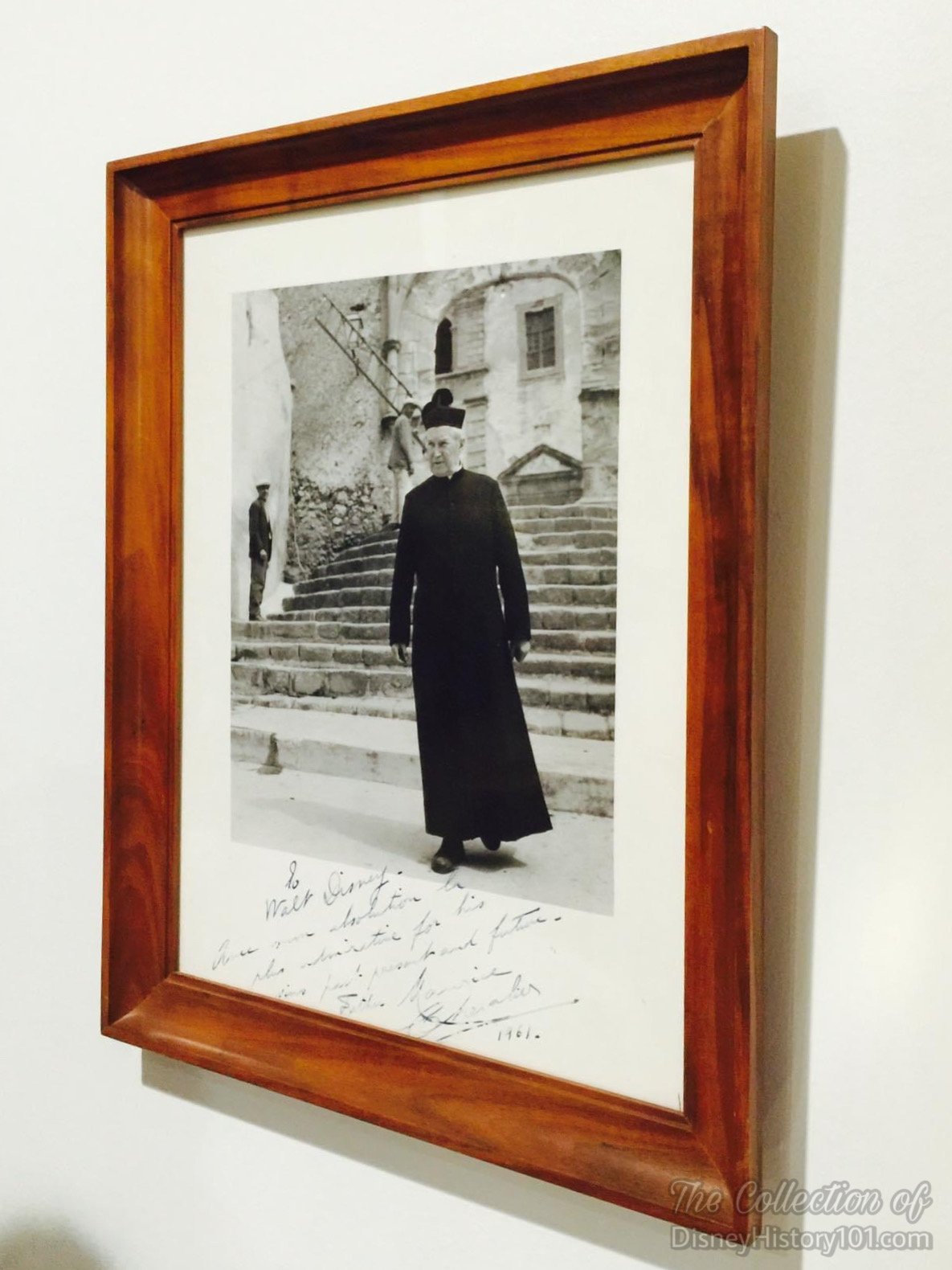
In his Formal Office there is a Maurice Chevalier photograph (on the wall) autographed to Walt, representative of their budding relationship. Back in 1961, Walt Disney flew to Europe, to view a rough cut of The Castaways starring the veteran actor Maurice Chevalier. On that trip, Walt purchased the rights to G. K. Wilkinson's novel, The Monkeys, which he adapted for the film “Monkeys Go Home” (in which Maurice Chevalier would also appear). Maurice admired Walt’s creative visions as much as Walt appreciated his artistic contributions to cinema and musical culture. After wrapping the latter motion picture in 1967, Maurice Chevalier divulged that he had never visited Disneyland, and a trip was arranged to Walt Disney’s Magic Kingdom along with his “Monkeys” costar Yvette Mimieux.
In Walt Disney’s formal office, there is a Chart (in rack at left of desk) containing the weekly schedule and cost report of production in progress at the Studio, a Briefcase (behind the desk) used by Walt to carry scripts home for study, a Phonograph (in drawers behind the desk) with speakers in the walls, a Winged Victory Award presented to Walt Disney for Cinderella, a Milestone Award presented to Walt by the Screen Producer’s Guild in 1957 for Walt’s historical contribution to motion picture history, an a trophy presented to Walt for Snow White and the Seven Dwarfs by the Venice festival of 1938.
While Walt met most of his Guests in his Formal Office, he transacted most of his day-to-day business in his Working Office. This was where he held most of his meetings here.
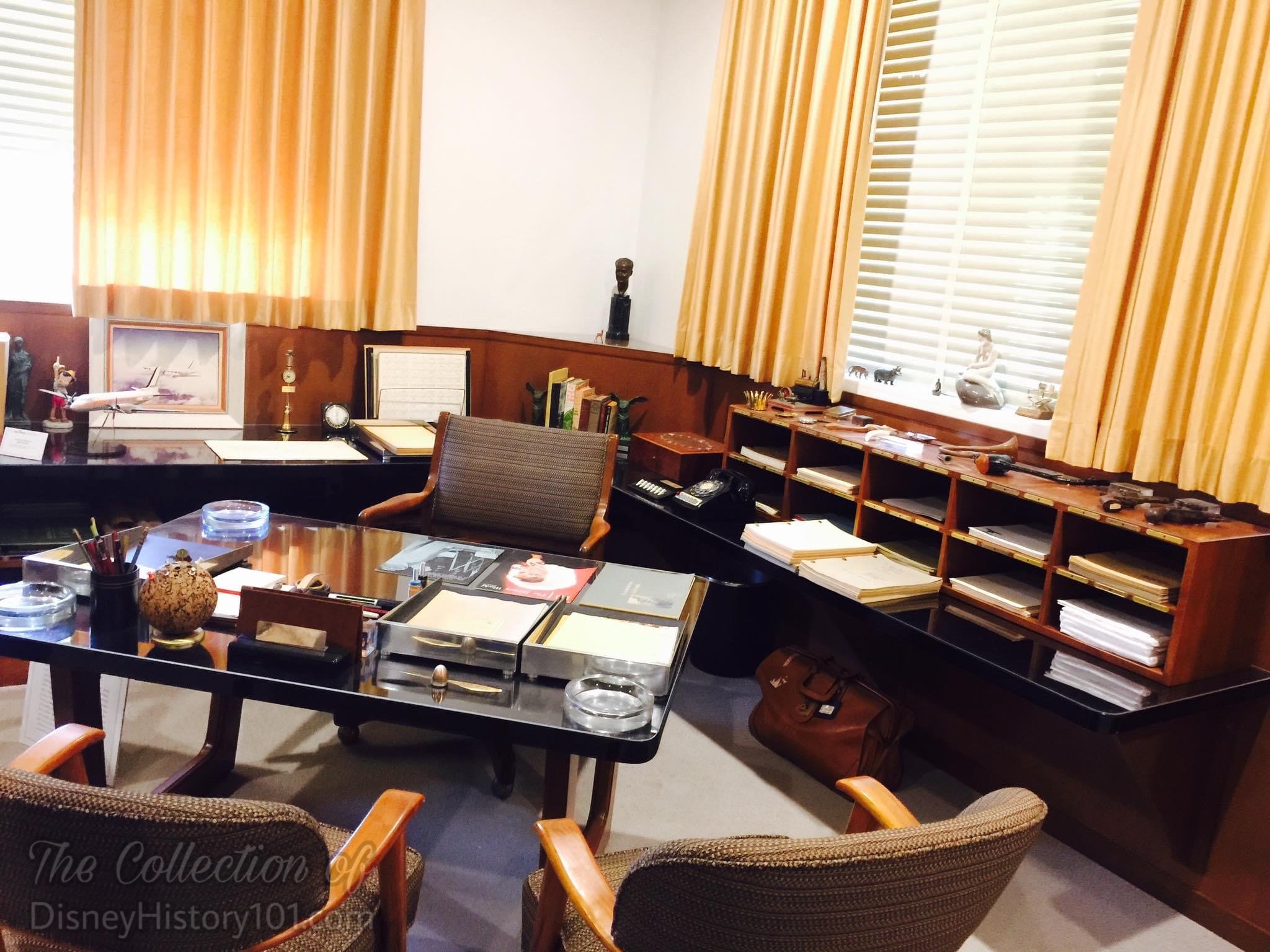
Atop his Walt’s Working Office Desk, was one award he always valued as the finest he ever received. In the center, one cannot miss a replica of Walt’s prestigious 1942 Irving G. Thalberg Memorial Award, a honor only periodically bestowed upon individuals for a body of work, by the Academy of Motion Pictures Arts and Sciences. As a film producer and pioneer, Walt Disney held the record in the motion picture industry for personally winning the most Academy Awards. In addition to many nominations, Walt received 32 Oscars total, and at the 14th Academy of Motion Pictures Arts and Sciences Awards Ceremony, he wasfurtherdistinguished by the exceptional 1942 Irving G. Thalberg Memorial Award“for consistent high quality productions.”
The true-life award is currently in the care of The Walt Disney Family Museum.
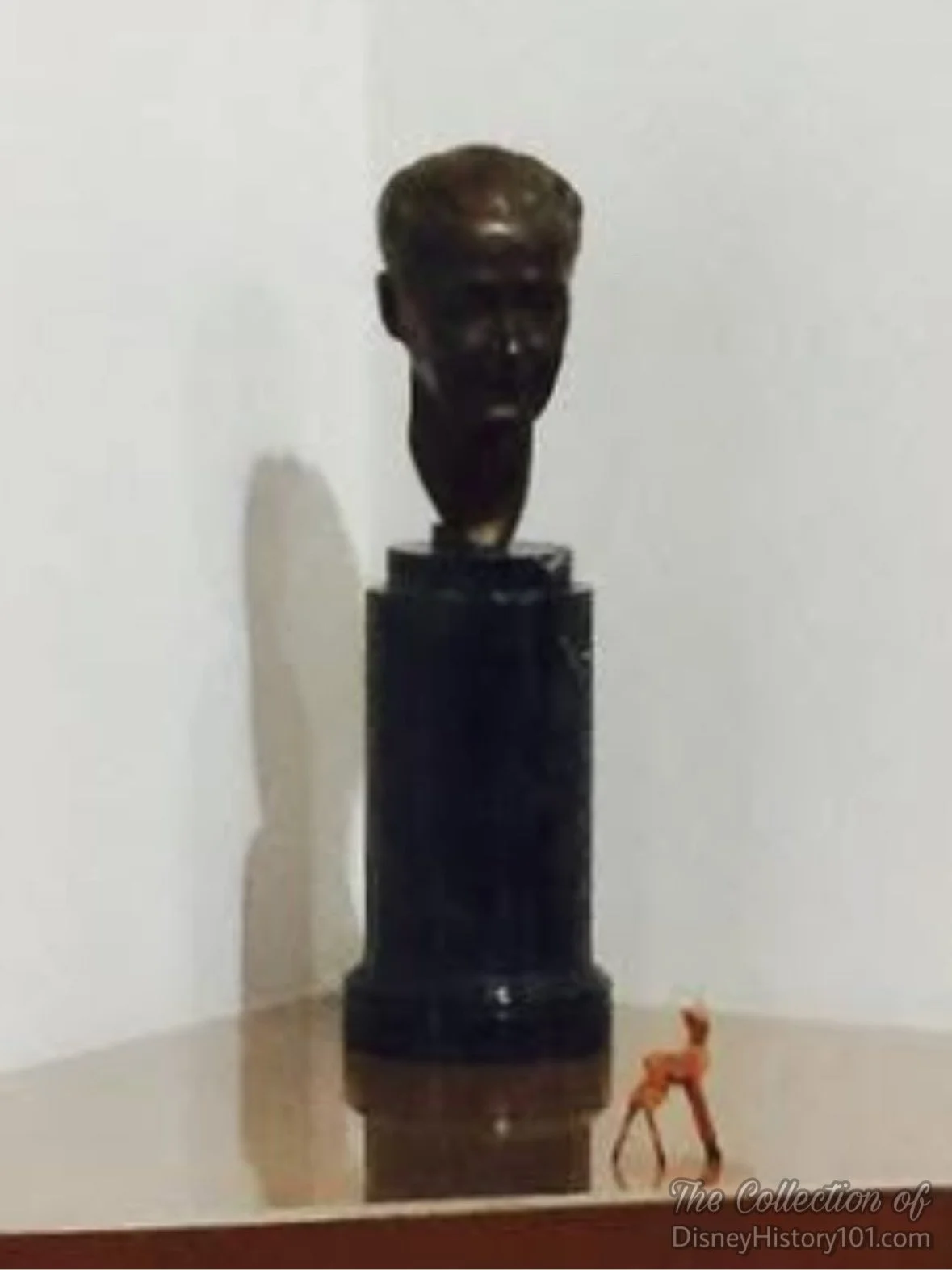
To the right is a small Hand-carved Deer, which Walt fashioned by himself.

Walt’s Working Office: In the corner of Walt’s Working Office, you’ll note the top of Walt’s Pigeon-hole Cabinet decorated with many mementos. To the left, a photograph of a Grumman Gulfstream in flight, a wooden box given to Walt by General Electric for his work on there pavilion at the New York World’s Fair of 1964 - 1965 (Walt kept his glasses inside),
The box located under Walt’s Thalberg Award was a gift used to store Walt’s glasses. It was a gift by General Electric for his work with the Progressland Pavilion at the 1964-1965 New York World’s Fair.

Walt’s Working Office Desk.
There are so many more miniature trinkets in Walt’s Working Office. While most of their stories are unknown, the small deer (to the left of the Thalberg replica) was hand-carved by Walt himself. Before the window (to the right), is a miniature hippopotamus that looks similar to a model used for the Jungle Cruise.
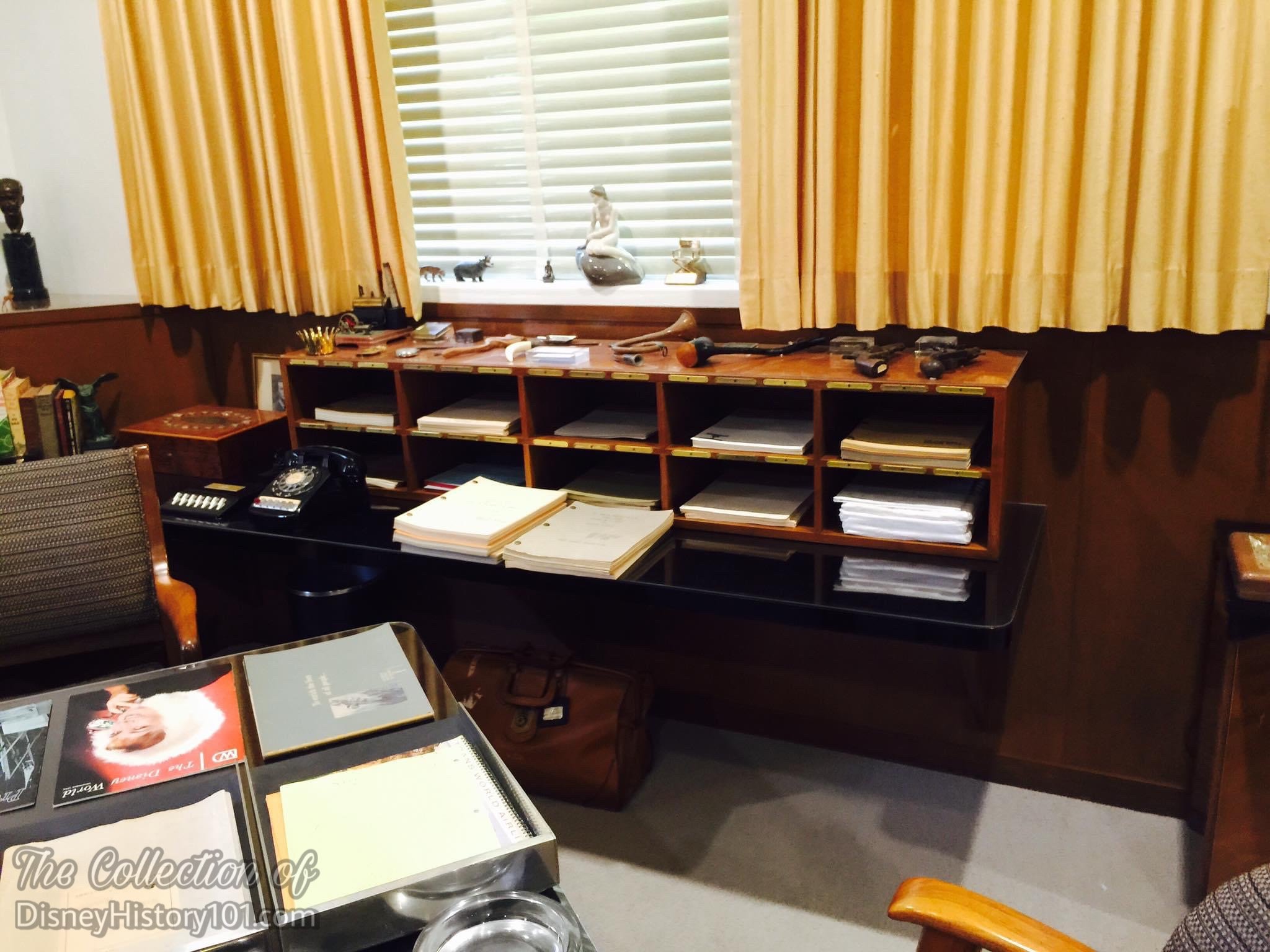
In the window, you may notice a ceramic Replica of Edvard Eriksen’s the Little Mermaid Statue in Copenhagen, Denmark. This was a gift to Walt Disney, presented by Hanne Plath (a Tivoli Gardens Tour Guide, who took part in the 1964 Disneyland Tour Guide Program).
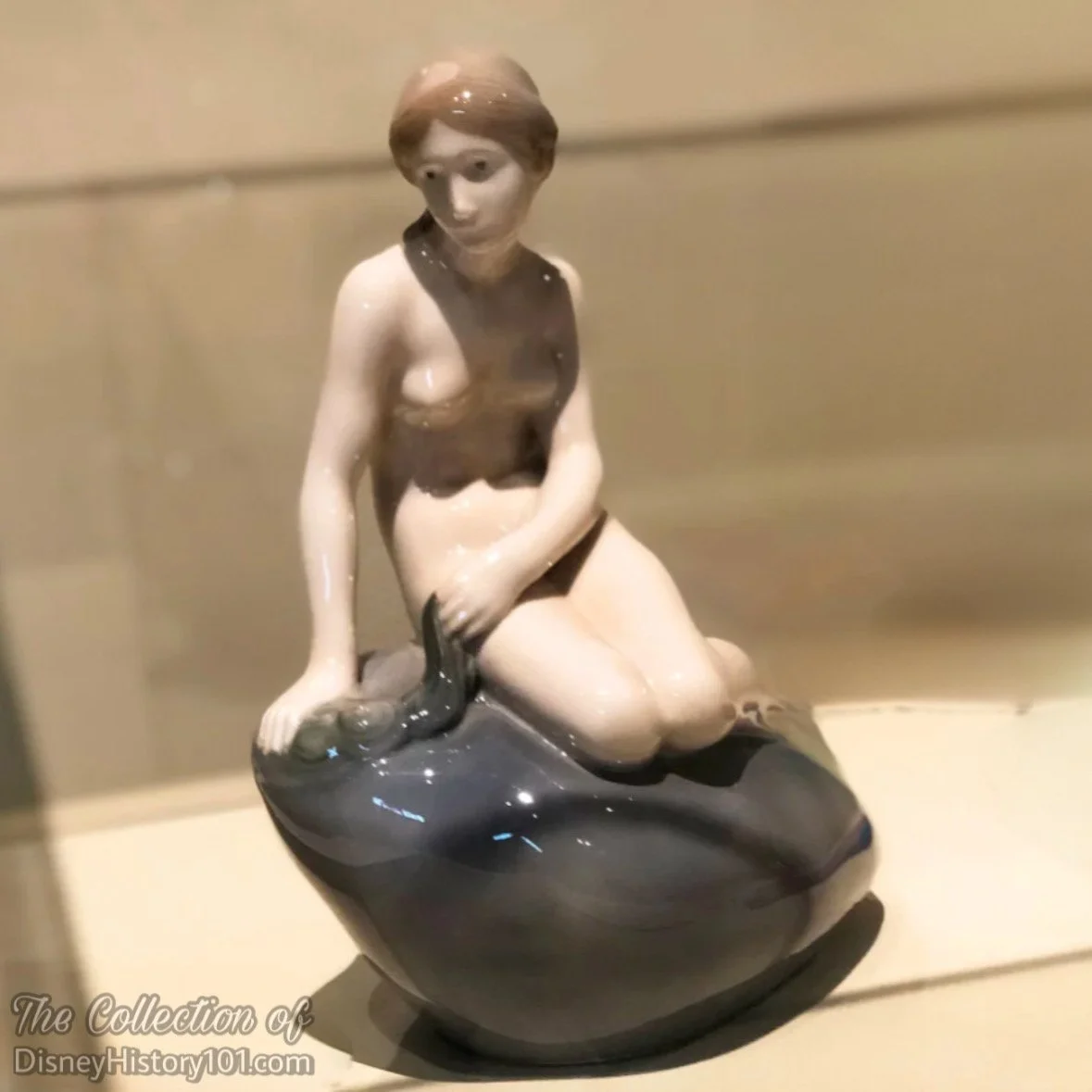
The Royal Copenhagen Porcelain Factory was renowned for their porcelain authorized reproductions of Edvard Eriksen’s the Little Mermaid statue in Copenhagen, Denmark. Walt (who had an affinity for the works of Hans Christian Andersen) no doubt cherished the hand-crafted replica, showing it off inside his “Working Office” at the Walt Disney Studios in Burbank! And a replica of this statue would even come to rest near Walt’s final resting place.
Walt’s actual phone (below) from his office was owned by Pacific Bell, but was hidden by his receptionist and later donated to the archives.
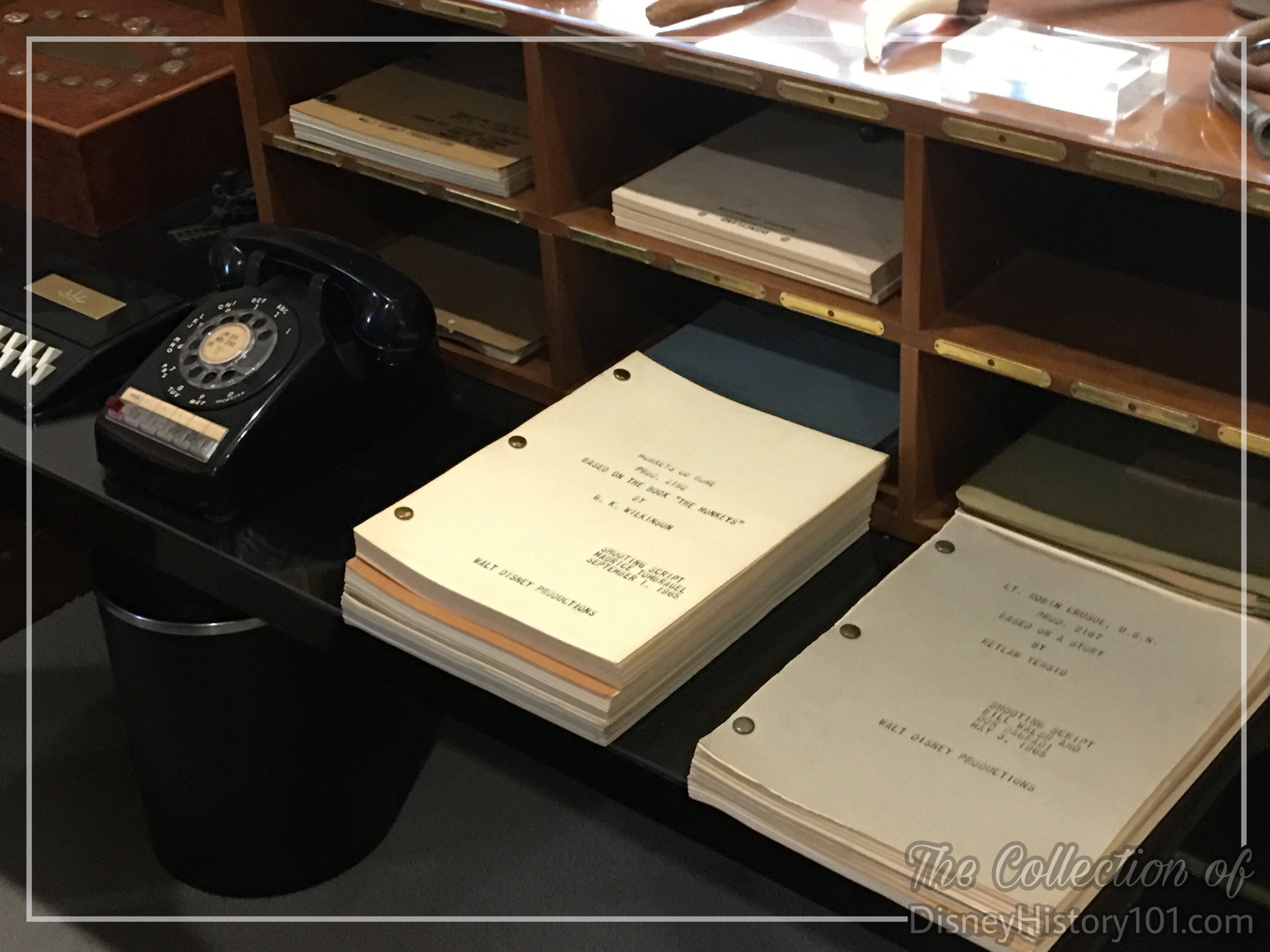
Walt’s Working Office Pigeon-Hole Cabinet - Walt kept his current scripts in the Pigeon-hole Cabinet.
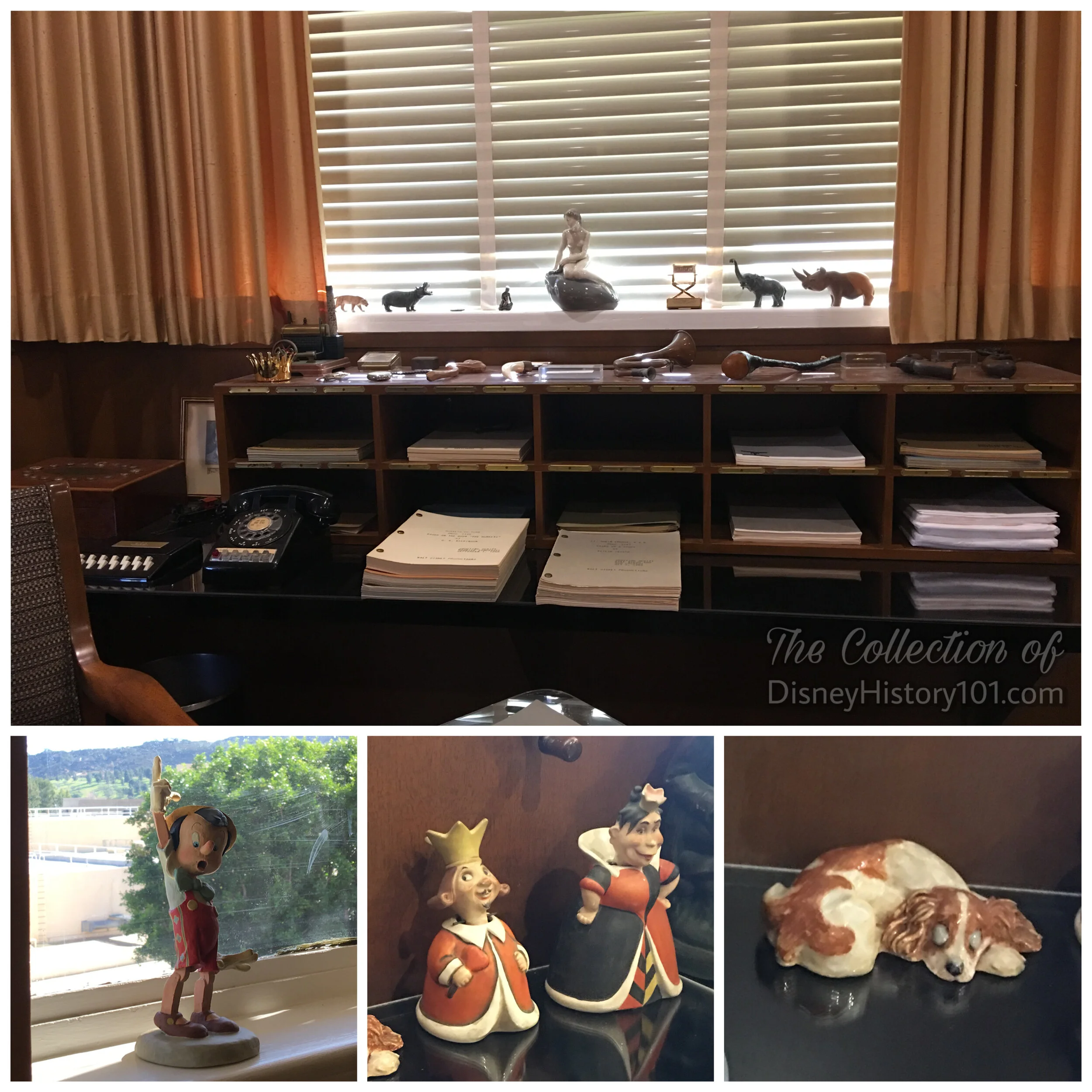
In addition to the three-dimensional character “statuettes” (or maquette) decorating Walt’s Working Office and Walt’s Formal Office, there are other trinkets atop Walt’s Pigeon-Hole Cabinet script organizer, including a Crown Disc presented to Walt by Joyce Hall of Hallmark, an Everett Dirksen Calling Card (autographed and encased in plastic), a Shillelagh presented to Walt by Tommy Steele, a hippopotamus figure (which some believe is similar to those of the Jungle Cruise) and a porcelain statue of the Little Mermaid.
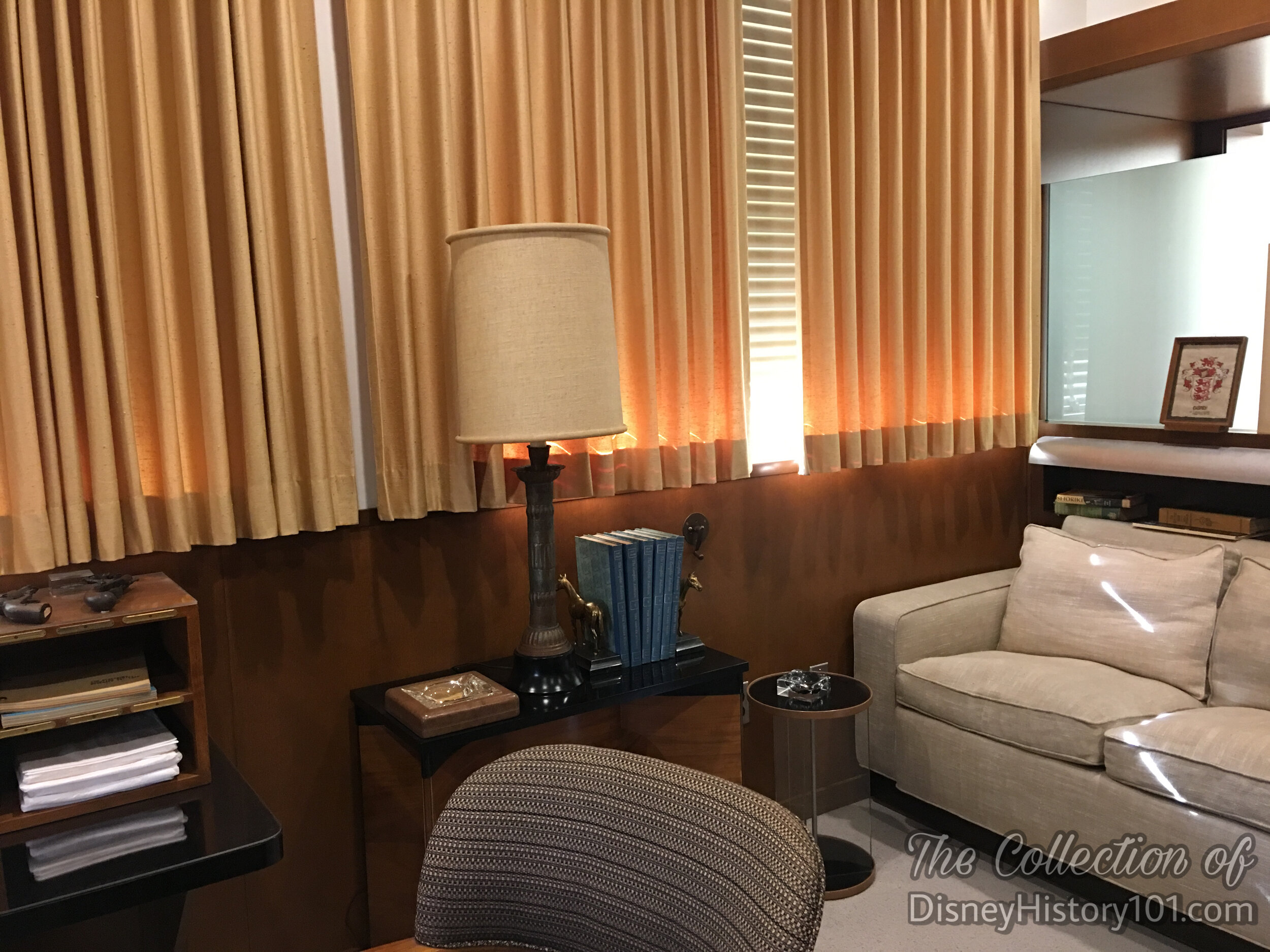
Walt’s Working Office.
The Sofa is not the original from Walt’s era (pictured below), but is a reproduction. The original went missing a long time ago.
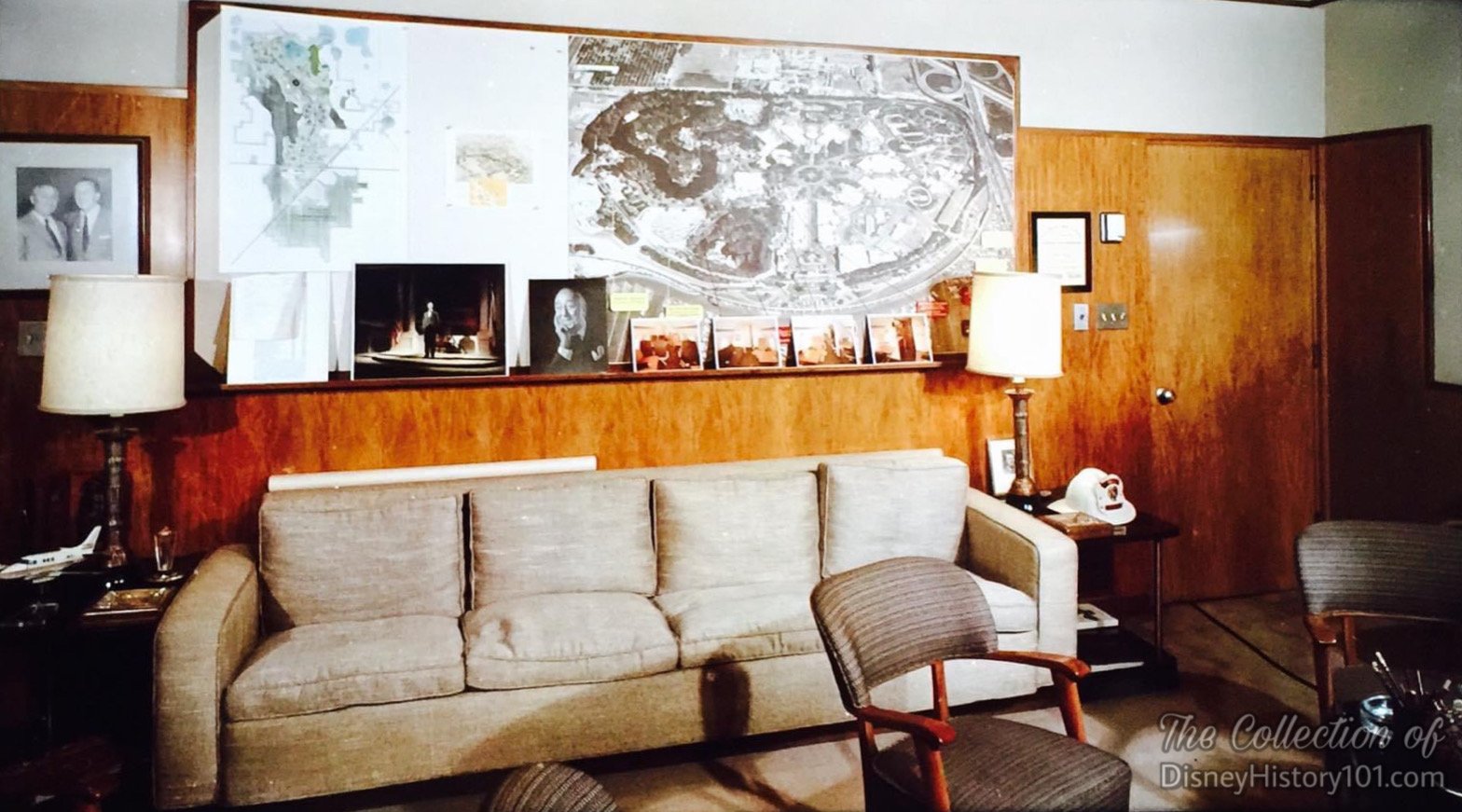
Walt’s Working Office: Note the Fireman’s hat on the end table. It is labelled “Honorary Chief, California Fire Chief’s Association, Walt Disney.” On the wall beside the bulletin board, is a photograph commemorating Walt’s honorary life membership of the Screen Actor’s Guild, awarded in 1955.
The sofa is clearly of another type, as the original couch went missing many years ago. When the office was on display at Disneyland (for a number of years), the area where the couch would have been situated was replaced with a glass wall, ropes and barrier, by the Walt Disney Archives.
What can’t be missed is a large-scale Bulletin Board and an impressive “blow up” of a 1966 aerial photograph depicting New Orleans Square under construction at Disneyland Park. This is the one that appeared in Walt’s appearance on The Jack Benny Hour, airing November 3, 1965.
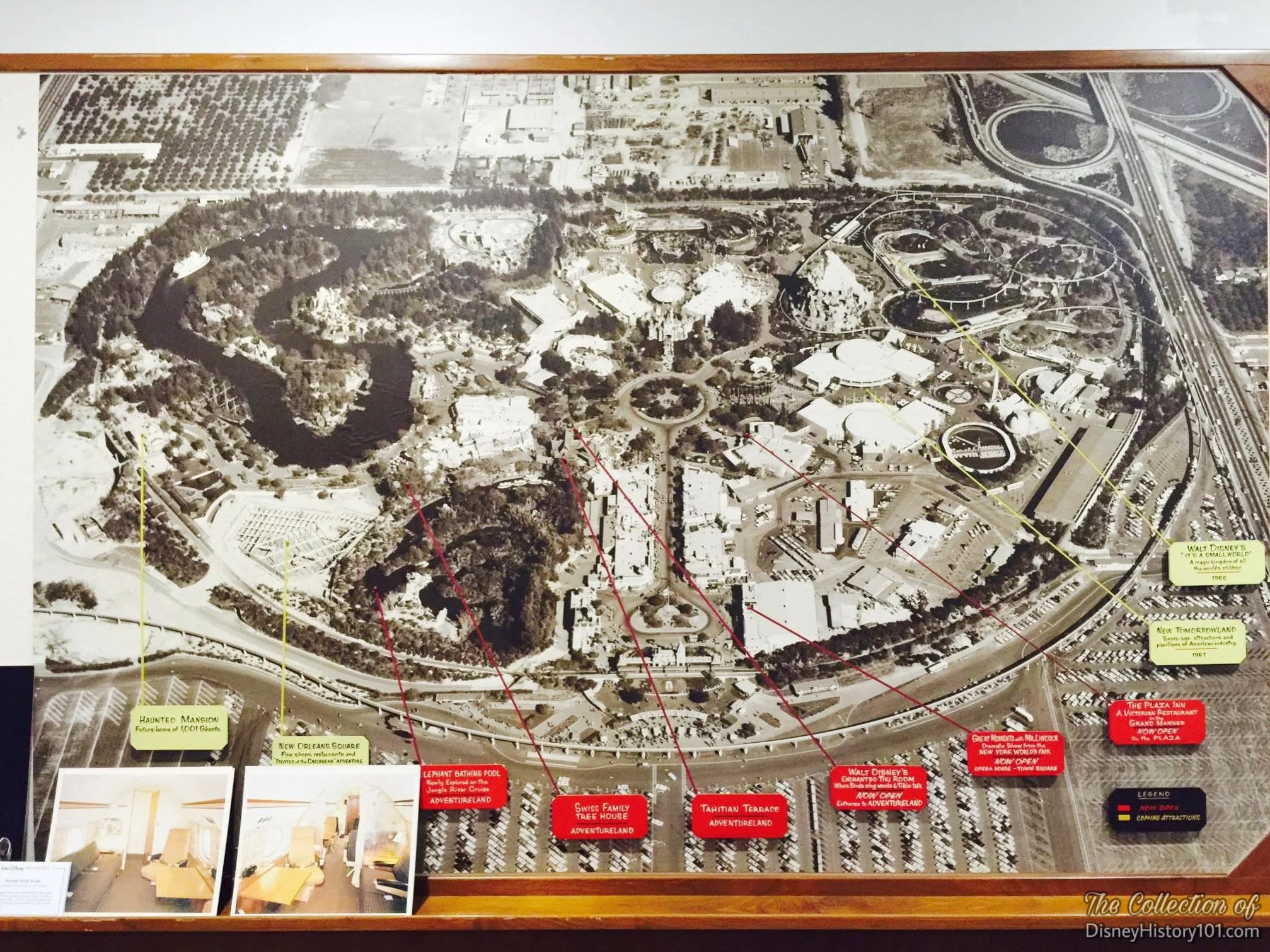
Looking over it you note the land parcels around its periphery and other areas coded with yellow and red placards, which were under development. The red identified “recently opened” attractions like the Swiss family Robinson Treehouse and Tahitian Terrace, while the yellow represented “future attractions” like the New Tomorrowland and the Haunted Mansion.

Walt’s Working Office Bulletin Board: Disneyland map, 1966 (shows New Orleans Square under construction); Ed Wynn - portrait by Dave Iwerks; Disney plane - four photograhs of the interior
Documents relating to Disneyland, a list of big rental pictures of 1965, with note from Card Walker, dated September 1966; photo of Mr. Lincoln Audio-Animatronics figure; a Cal Arts Campus - artist's sketch; Walt Disney World - third preliminary plot plan of the “Florida Project” - Walt Disney World Epcot Center.
The Aerial Photograph is flanked by Four Photographs of Walt Disney’s Plane interior, a Photographic Portrait of Ed Wynn by Dave Iwerks, a “Third Preliminary Plot Plan of Walt Disney World”, an Artist’s Sketch of Cal Arts Campus, a List of “Big Rental Pictures of 1965”, with Note from Card Walker, September 1966.
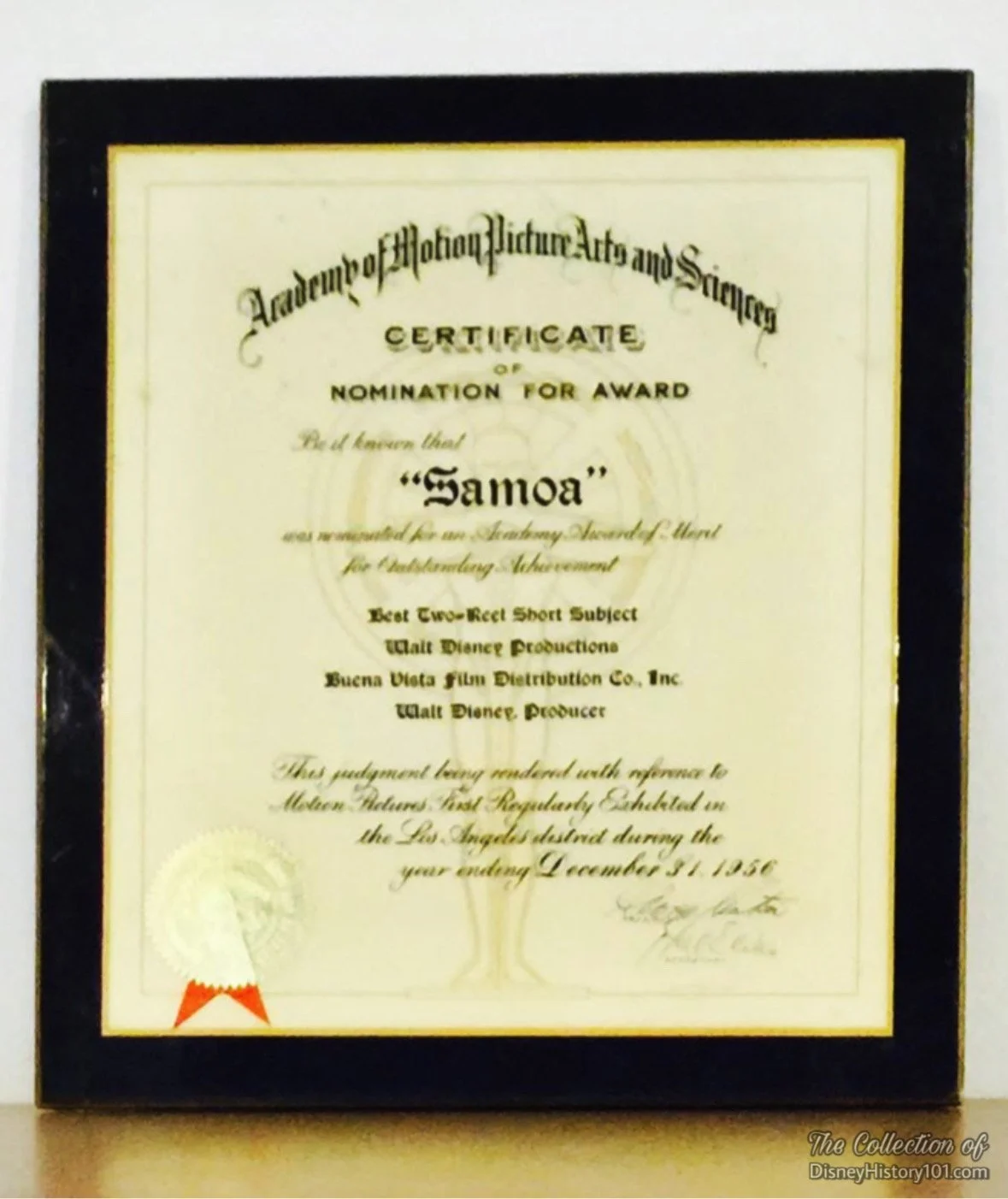
Though the film did not win an Oscar, Walt displayed the 1957 Academy Award Nomination for his Best Short (Two-reel) Subject “Samoa”. The documentary film presented the life and culture of Samoa with a runtime of 26-32 minutes long.
Atop a cabinet, there is also a Silver Bowl – a TV Guide Award, 1961-1962, for his best single dramatic program, The Prince and the Pauper.

Other individuals have used this office space after Walt’s passing, so the carpeting and blinds had to be sourced from the era, to simulate those which may have decorated Walt’s offices.
Behind Walt’s Working Office Desk were many awards and books which he valued. There was a Trophy presented to Walt for Snow White and the Seven Dwarfs by the Venice festival in 1938. The Milestone Award presented by the Screen Producer’s Guild in 1957 for Walt’s “historical contribution to the American motion picture.” The Winged Victory behind his desk, was presented to Walt Disney for Cinderella by a French magazine. Books behind the desk included the International Motion Picture Almanac, 1965 ; The Magic Bed-Knob, by Mary Norton (became Bedknobs and Broomsticks); Blackbeard’s Ghost, by Ben Stahl; The Heart of Our Cities by Victor Gruen (early Epcot research); The Year of the Horse, by Eric Hatch (became The Horse in the Gray Flannel Suit); Little Britches by Ralph Moody (became The Wild Country); Travels with Charley, by John Steinbeck; Abraham Lincoln, a play by John Drinkwater; The Modern Service of Commercial and Railway Telegraph by J.P. Abernathy, 1891.
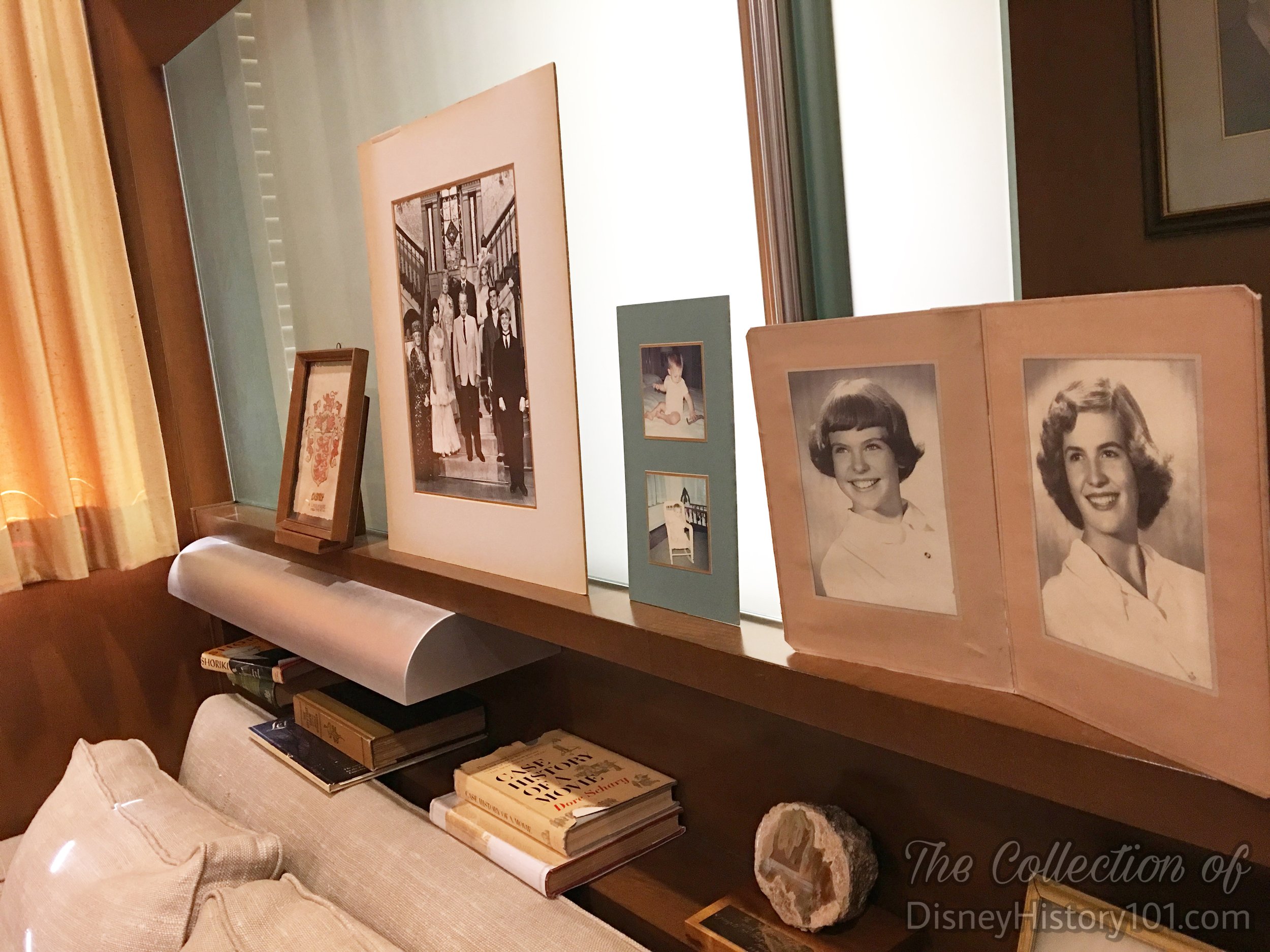
Walt’s Working Office.
There are a number of Animators Models - one-of-a-kind sculptures that were used by Disney animators to draw the different characters in various poses.
There are many important documents and publications in Walt’s Formal Office, like weekly scheduling charts and Studio cost reports (in the rack to the left of his desk). The Pigeon-hole Cabinet was used to store current scripts, while Walt’s briefcase usually contained scripts that he would carry home to study.
There was a Grumman Gulfstream I Model Airplane, a miniature of plane that Walt utilized during the 1960s (seen on display at Walt Disney Archives Presents “Step in Time,” part of “Disney 100 - The Exhibition” celebrating “Disney 100 Years of Wonder”). In fact, this is the exact style of craft Walt used to survey the land that would later be used for the development of Walt Disney World in Florida. The model was a gift from Henry J. Schiebel, Jr. Vice President of the Grumman Aircraft Engineering Corporation in Bethpage, New York. It was displayed near a photograph of a Grumman Gulfstream in flight. After receiving the model plane, Walt wrote Mr. Schiebel (on March 15, 1964): “Thank you for the beautiful model of the 732 Gulfstream. It sits on the bookcase behind my desk where I can - and frequently do point to it with pride. We just completed our first round trip to the East coast and it was a wonderful trip. As they say... ‘It's the only way to fly.’ From all I hear the Gulfstream is one of the finest aircrafts built. I know my pilots are very happy with it and, speaking strictly as one of the passengers, the comfort, the quiet and the beauty of this plane make it an outstanding one. I'm sure you can see we're very pleased.”
Below, is a model of the Beechcraft King Air 90, Walt Disney’s plane prior to the current models.

Walt’s Working Office: Beechcraft King Air 90 Model Airplane - the Disney plane prior to the current ones.

Walt’s Working Office Bulletin Board

Walt’s Working Office Bulletin Board - To the right of the bulletin board is Walt’s Screen Director’s Guild honorary life membership, 1955.

“Walt's Private Kitchen”
Few things may be more intriguing than the secretive cooking space connected to Walt's Working Office. The entire kitchen could be illuminated, and entirely concealed or revealed behind an electronically sliding door, with the push of a button.

Walt’s Private Kitchen was designed with the most modern cabinets, range, sink, and refrigerator that General Electric had to offer in 1940. They were installed more than two decades before Walt Disney collaborated with General Electric for the presentation of Progressland at the 1964/1965 New York World’s Fair.
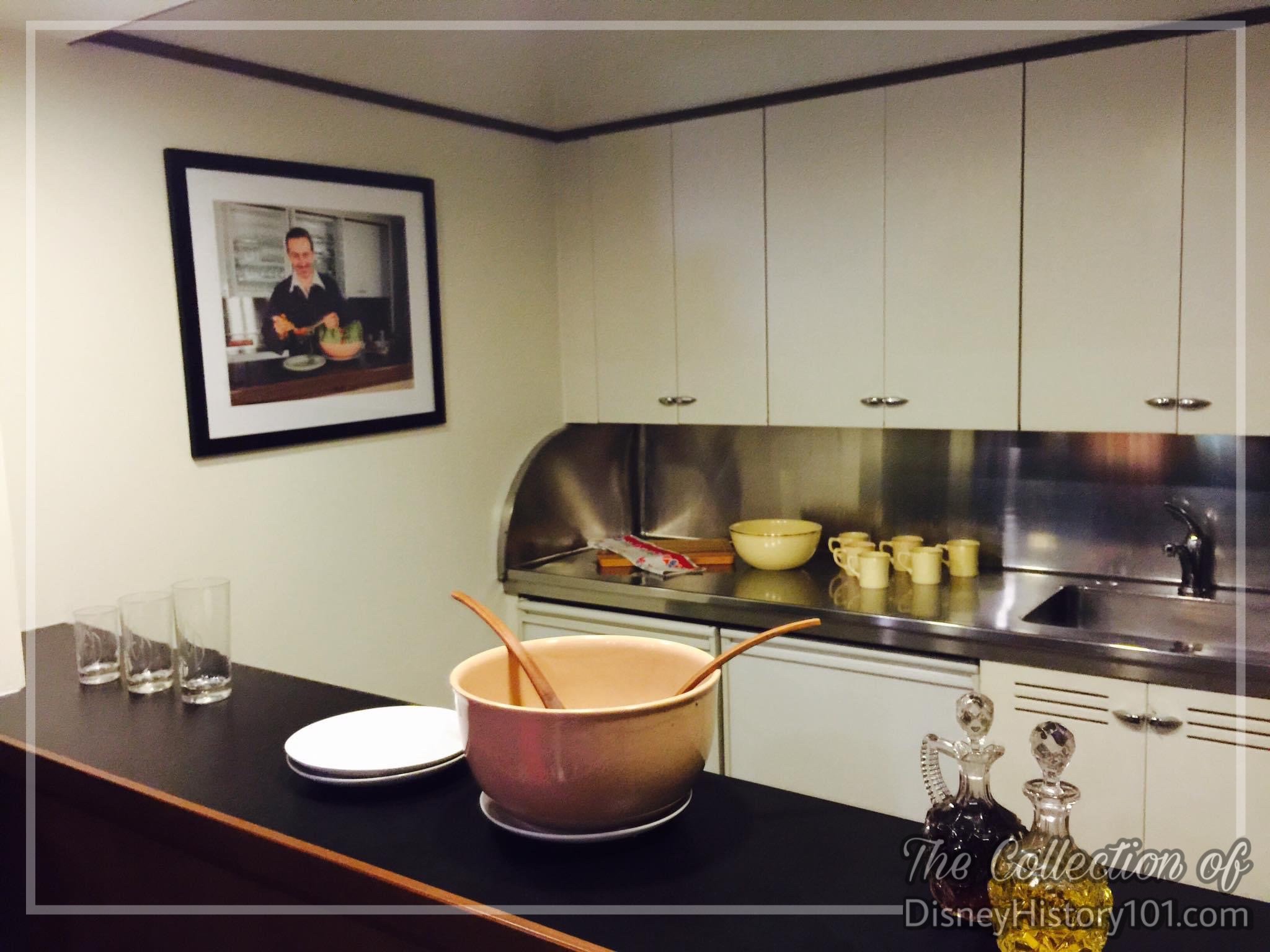
Walt’s Working Office Kitchen
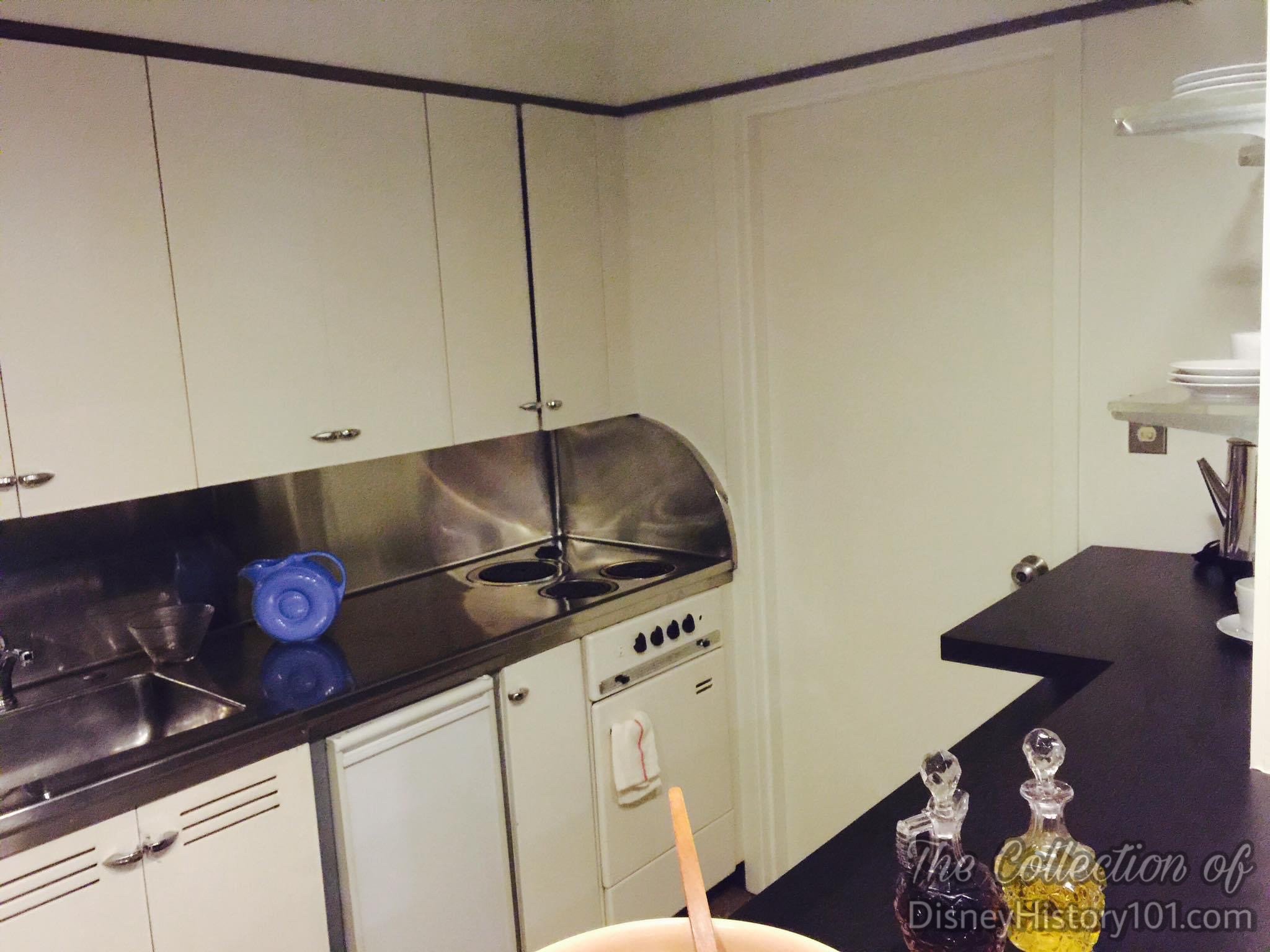
Walt’s Working Office Kitchen
Disneyland Foods Employee Dean Penlick recalled: “Walt's appetite was very plain, American. He liked hot dogs, hamburgers, chill.” Around his Walt Disney Studios Walt’s Private Kitchen was usually stocked with some of those same favorite foods and beverages which Walt preferred.
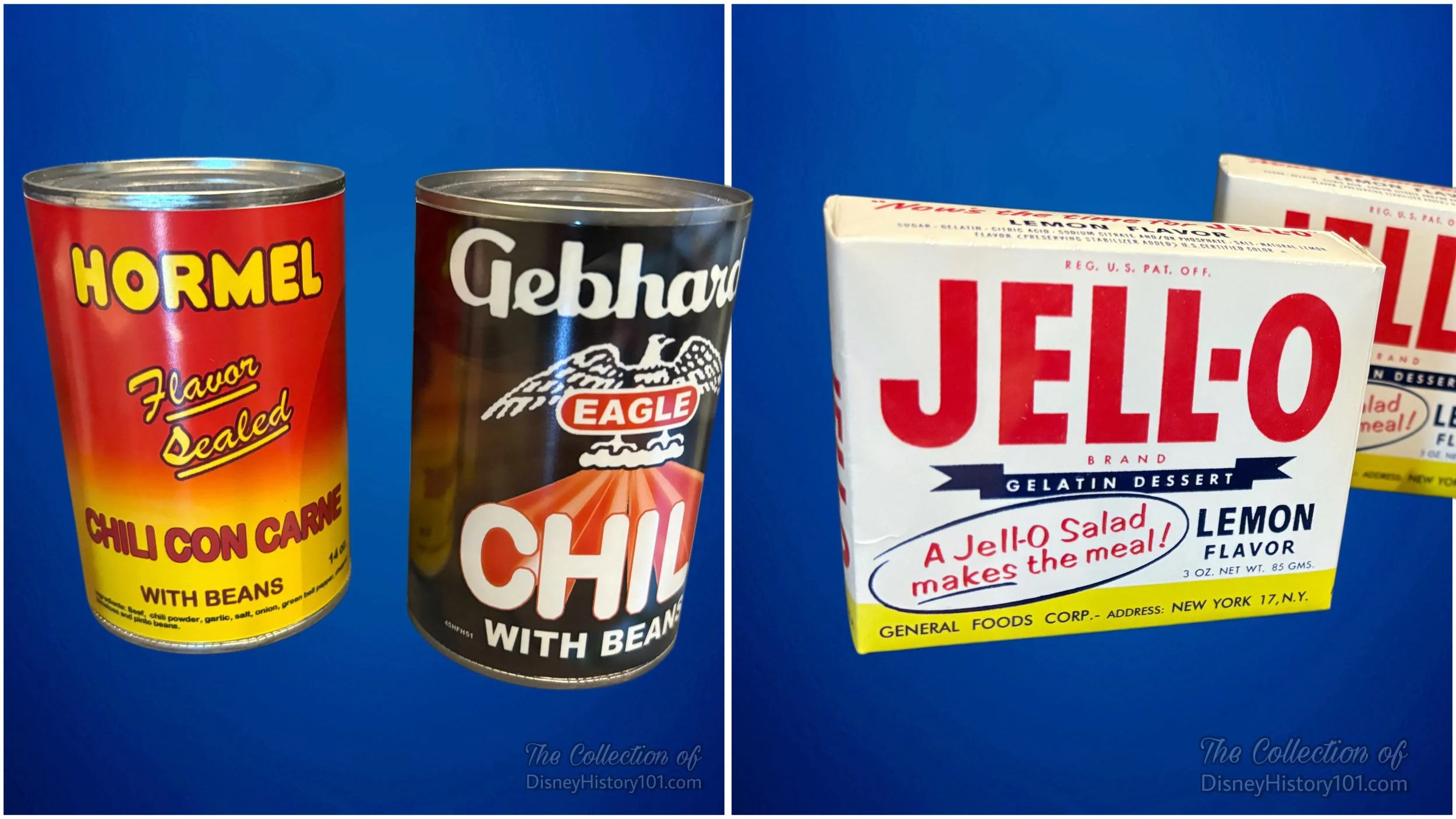
Walt was such a big V8 fan that it became a tradition to serve him a glass of V8 at noon.
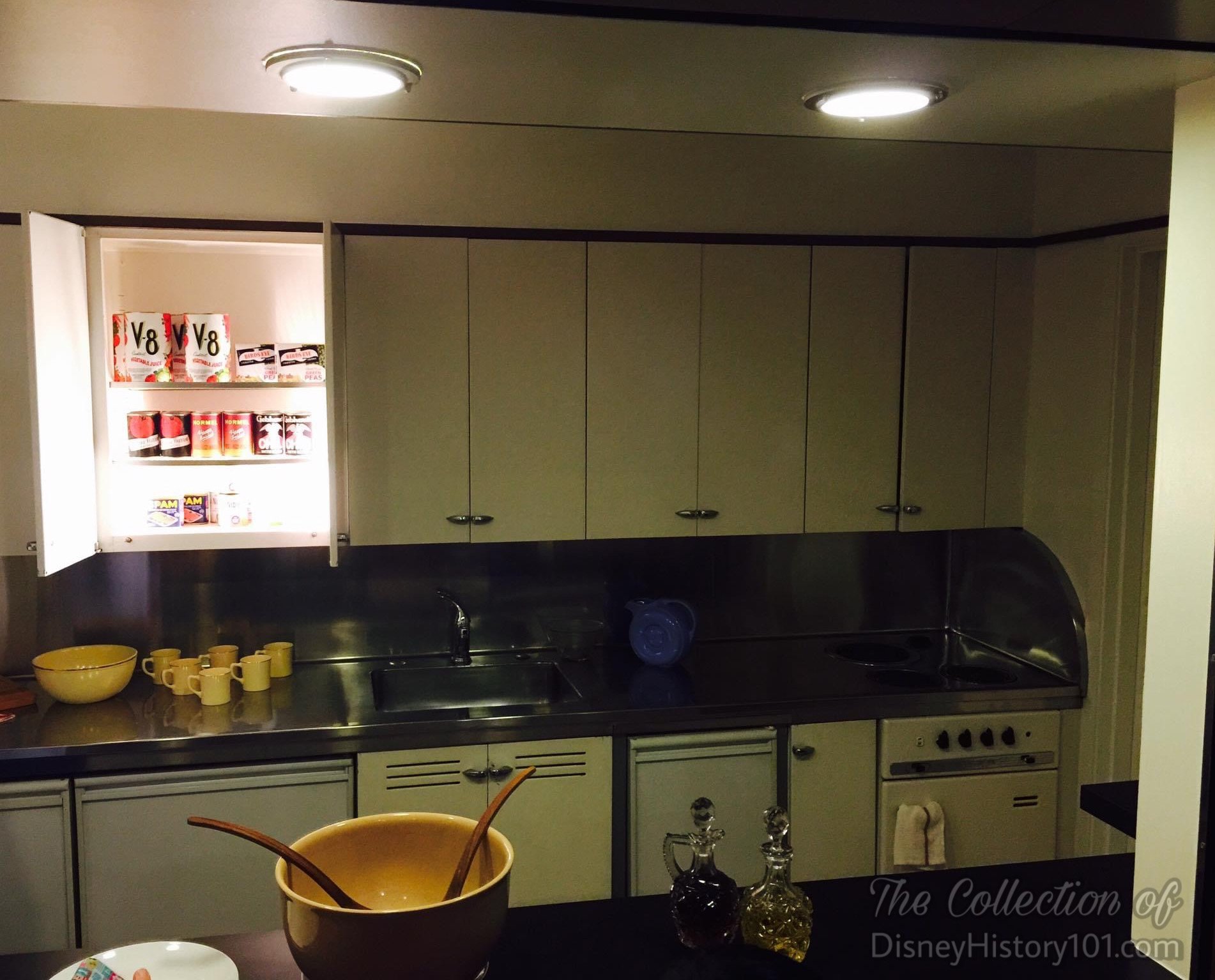
Walt’s Working Office Kitchen: featured c.1940s General Electric appliances (including a range, sink, and refrigerator), completely concealed by sliding shutter doors, electrically operated with the push of a button. Walt was a big fan of V-8, that it became a tradition to serve a glass at noon.
“Walt’s Private Quarters”
Walt Disney once lived only for his studio, working throughout the day and night. His new office at the Walt Disney Studios was designed with a private quarters, where he could catch a few hours’ sleep in a small bedroom.
Departing Walt’s Working Office, Guests pass through a closet where some of Walt’s personal effects are on display. This was a private area where Archivists explained “Walt would relax and sometimes get massages to relieve pain in his back so he could drive home.”
At one time, and elaborate training layout filled this entire room that adjoined his office.
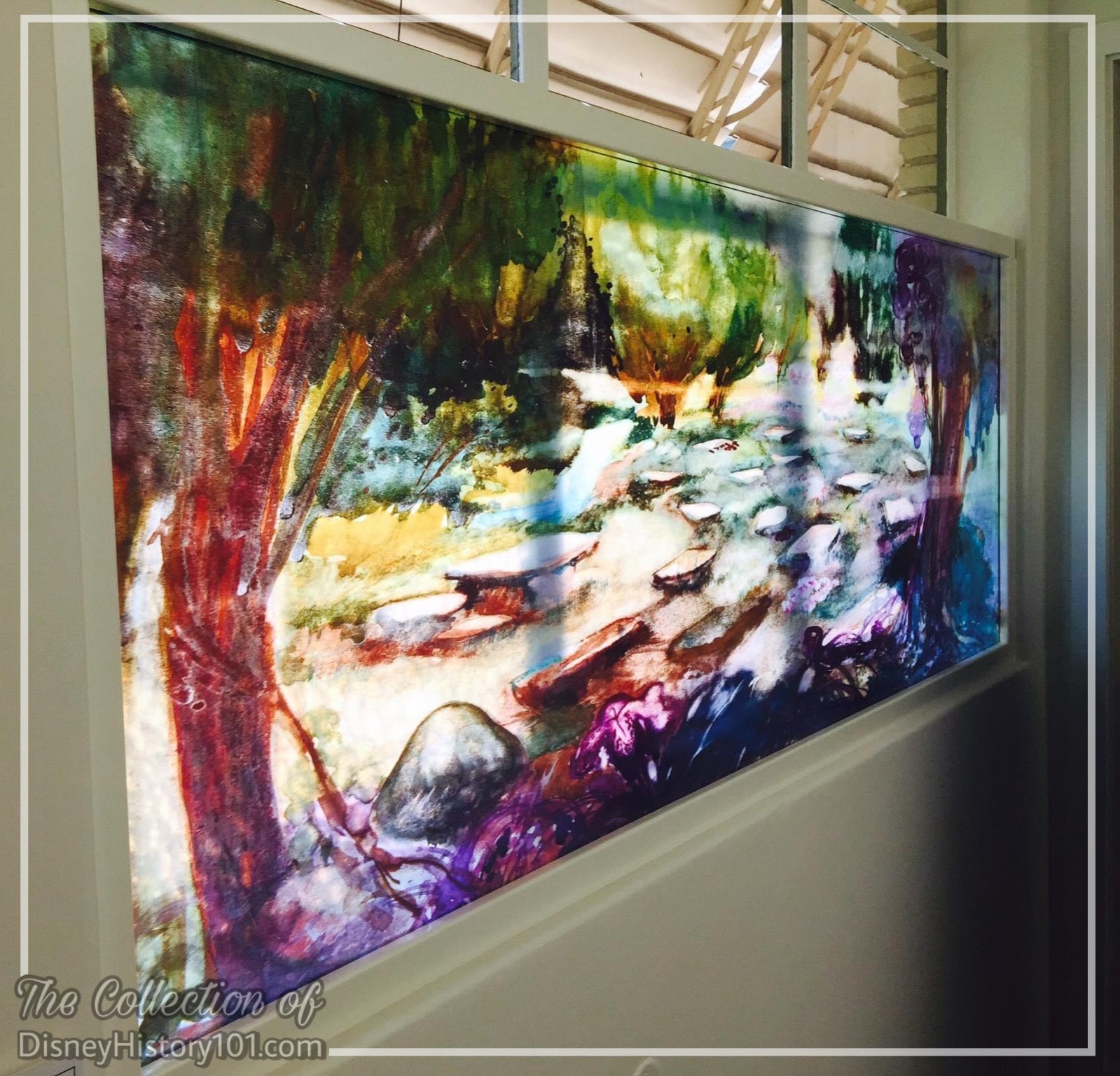
A facsimile of a developmental painting originally created by Artist J. Siegel for the Fantasia Pastoral Symphony, accomplished in graphite, gouache and watercolor on paper, c.1939.

Below, is the General Electric clock that was designed by Kim Weber around 1939-1940.
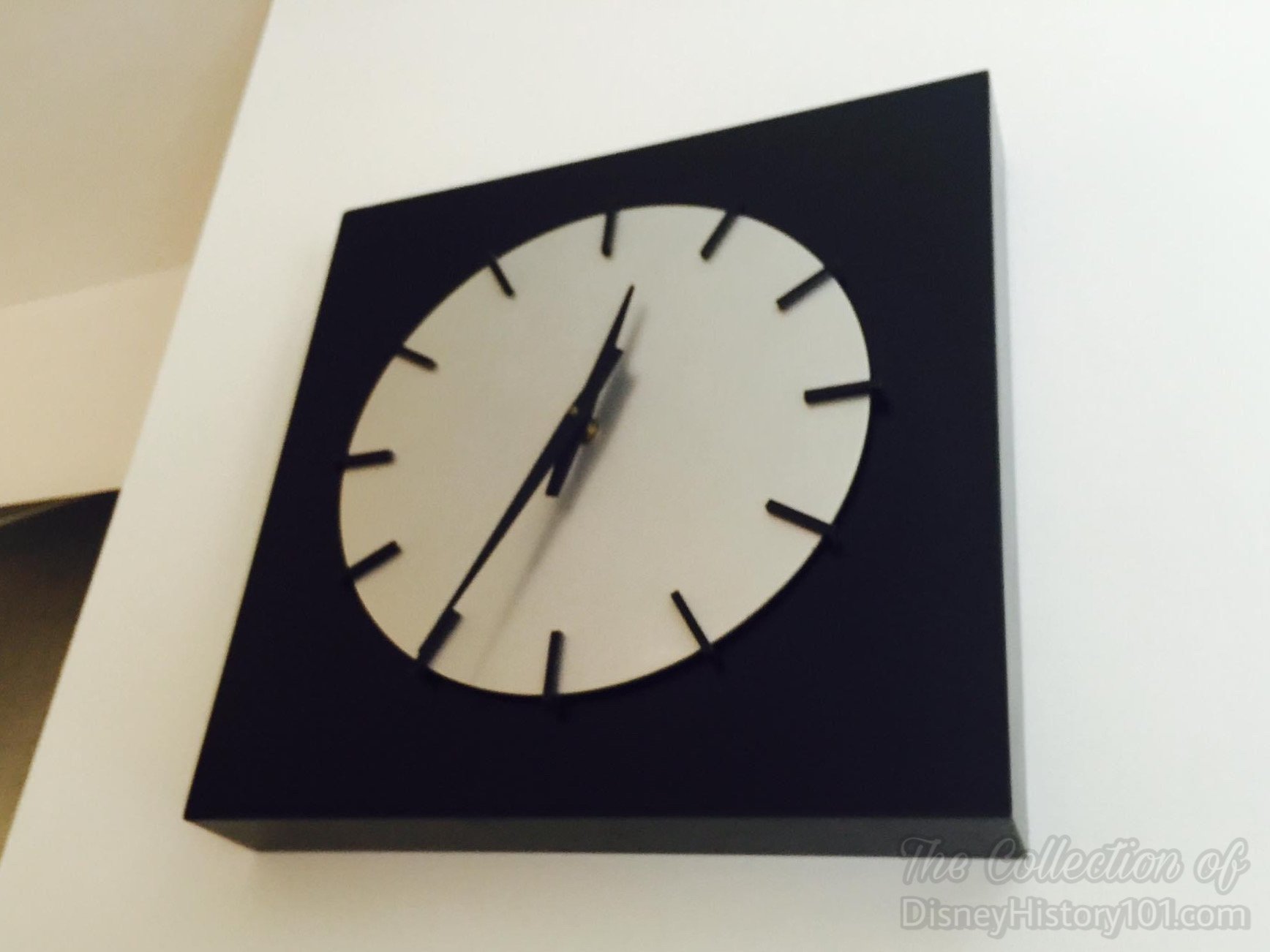
A General Electric Clock custom designed by Kem Weber (c.1939-1940) for Walt’s Private Quarters. A facsimile of a design for the clock is on display nearby. Kem also designed the Airline Chair (c.1934-1935) and a Small Table (c.1939-1940) which also decorated Walt’s Private Quarters. Similar tables were often “paired” to create larger workspaces.
A number of Walt’s personal affects were left behind in his Private Quarters - a c.1936-1941 Bank of America deposit book, a California Association of Highway Parolman sponsor card, a c.1930s chrome penlight made by Everyready, a c.1950s Edaville Railroad pass (from South Carver, MA), a c.1930s polo mallet, a c.1960s pair of reading glasses, a Remington 60 DeLuxe electric shaver, a Seattle World’s Fair Gold Pass, a straw hat, and more items. These things both humanize, and give dimension to the man whom many of us only know by the work that defined him.

On “Walt’s Role,” the “Walt Disney Productions Annual Report to Shareholders and Employees” for the fiscal year ending October 2, 1965, shared an interesting answer from Walt. “Responding to a question posed by the National Geographic, Walt Disney described in this way his role as the company’s creative catalyst. ‘You know, I was stumped one day when a little boy asked, ‘Do you draw Mickey Mouse?’ I had to admit I do not draw anymore. ‘Then you think up all the jokes and ideas?’ ‘No,’ I said, ‘I don’t do that.’ Finally he looked at me and said, ‘sometimes I think of myself as a little bee. I go from one area of the studio to another and gather pollen and sort of stimulate everybody.’ I guess that’s the job I do.’”
During 26 years (1940-1966), Walt created Disneyland, developed plans for Walt Disney World and EPCOT, oversaw television programming like The Mickey Mouse Club, and made animated classics including Cinderella, Lady and the Tramp, and Sleeping Beauty-all from within the now-refurbished walls of Suite ЗН!
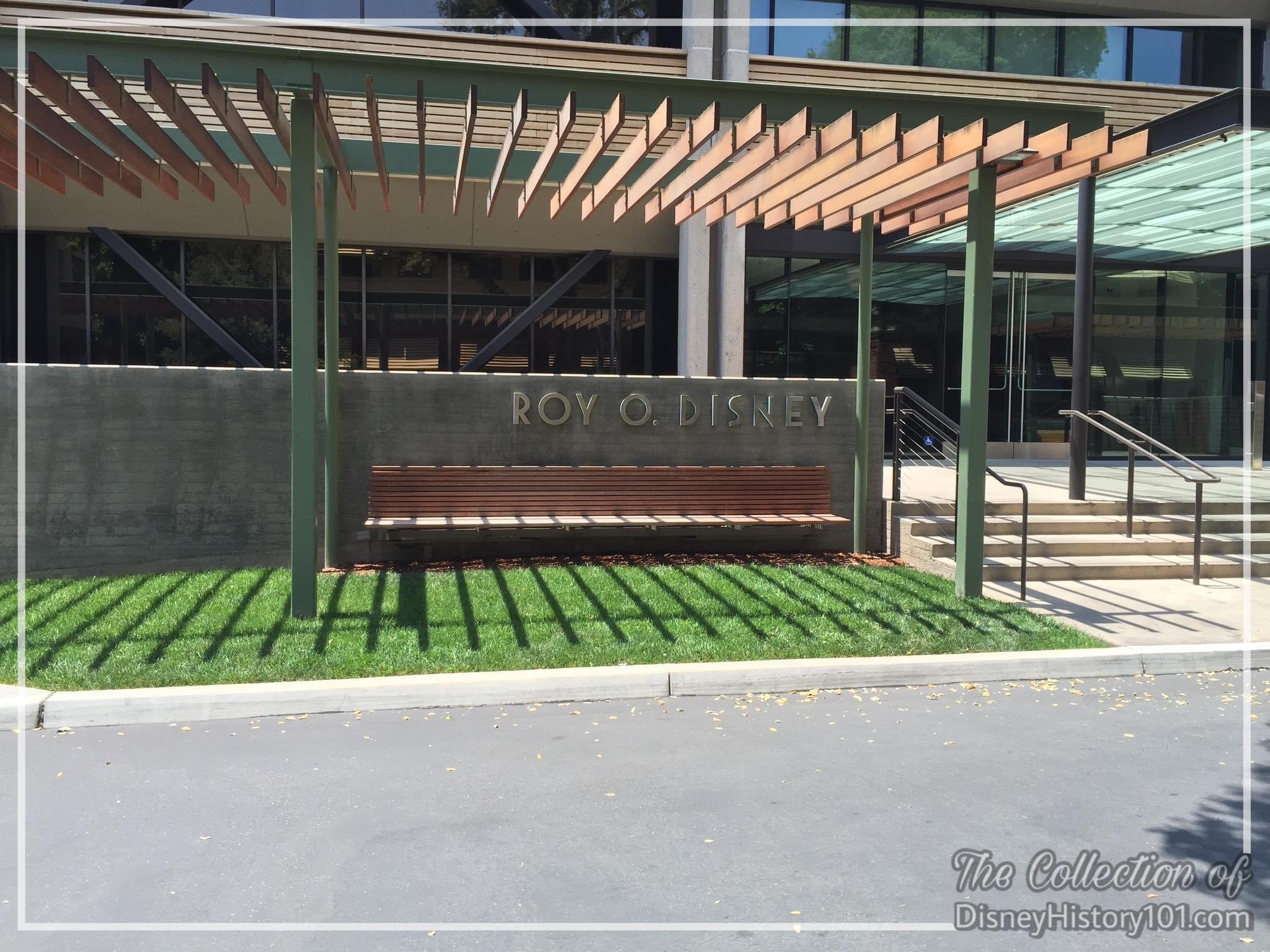
“The Roy O. Disney Marketing Building”
In September of 1976, Walt Disney Productions completed its ninth consecutive record year, by dedicating the new Roy O. Disney Marketing Building (shown in the pages of “Walt Disney Productions Annual Report 1976”).
“The Walt Disney Feature Animation Studios Building (Roy E. Animation Building)”
The Walt Disney Feature Animation Studios Building was designed by Robert A.M. Stern Architects, as a four-floor, 240,000 square-foot animation facility that served as the headquarters for Walt Disney Picture's Feature Animation Studios.

Marvel at what is tucked away inside the iconic ROY E. ANIMATION building!
Until construction was completed in 1994, animation production was virtually non-existent on the Walt Disney Studios’ Burbank lot for nine years. According to curators of The Walt Disney Archives: “The Animation Building opened in 1994, and followed on the heels of the worldwide success of ‘The Lion King.’” The official dedication and ceremonious champagne toast took place on December 9, 1994.


The Feature Animation Building would become home to many departments like Communications (located in the basement),
After fifteen years, the building was renamed the ROY E. ANIMATION Building in May 2010, in honor of the late leader who helped usher in a new golden age of Disney Animation.
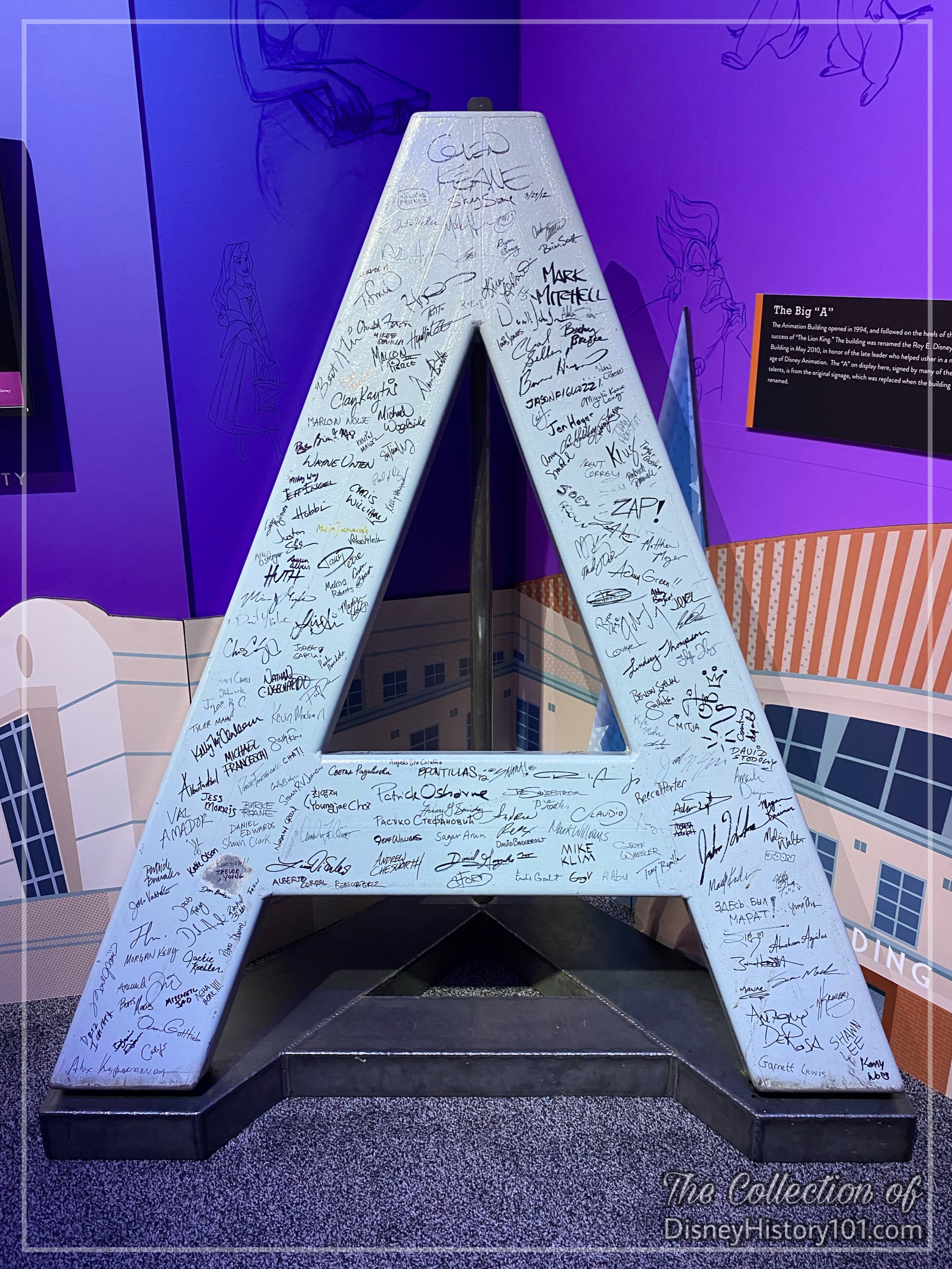
The “A” on display at a previous D23 Expo, signed by many of the Studio's talents, is from the original signage, which was replaced when the building was renamed. The building no longer holds animation facilities, but it currently serves as one beautifully rendered and iconic Burbank City landmark!
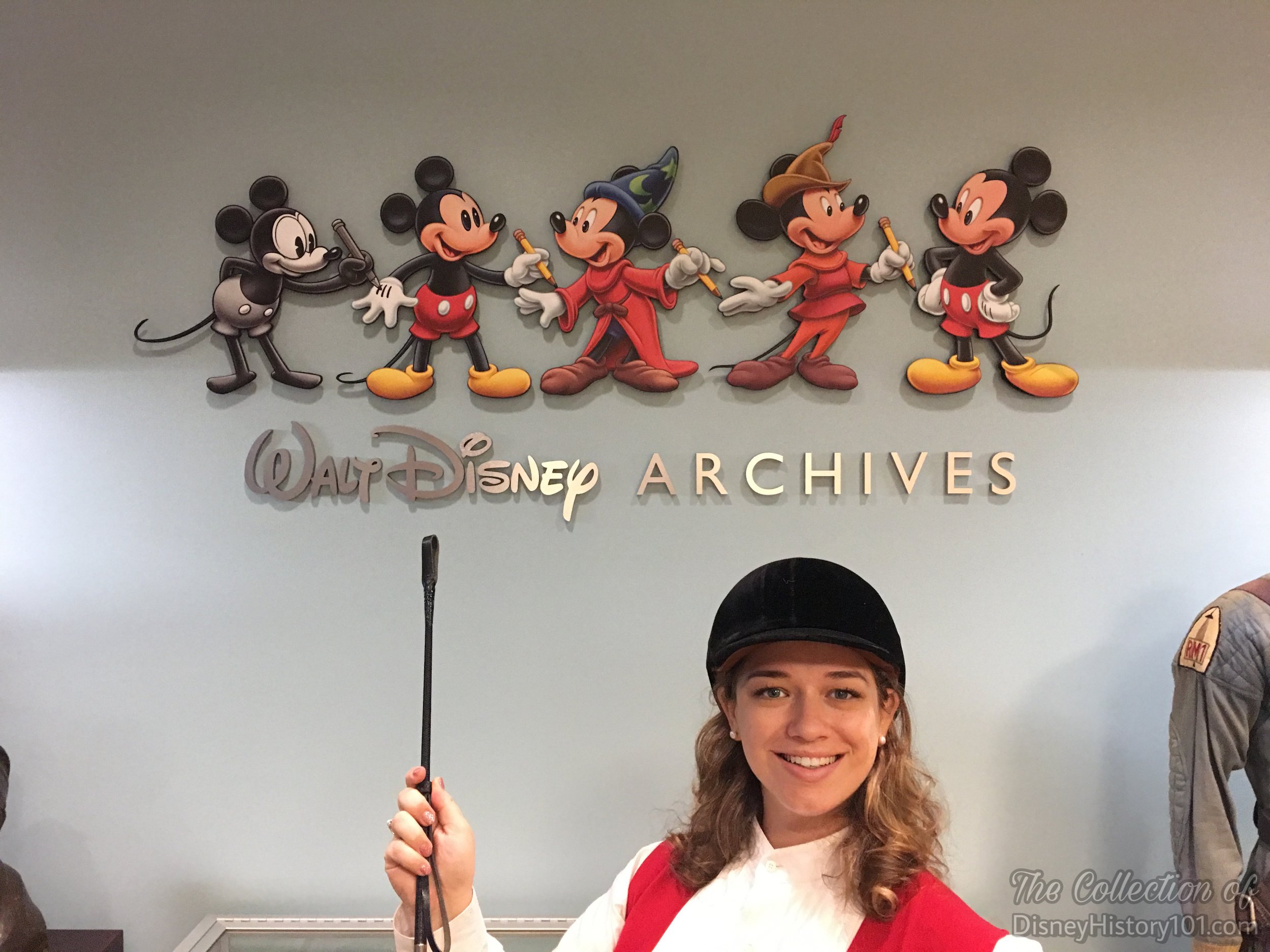
“The Walt Disney Archives”
By some accounts, the Walt Disney Studios previously lacked sufficient space to house an extensive archive. According to animator Ward Kimball’s account (in a letter addressed to Roger C. Nelson, proprietor of Remember When Nostalgia Shop in New Orleans, Louisiana; dated July 16, 1970, less than a month after the Walt Disney Archives was founded): The “Merchandise Department says that if they had kept just one, repeat ONE, of each franchised Mickey item, the combined collection would fill our entire 3-floored animation building!” Ward may have made this statement, firmly believing that “all of this accumulation” (of Mickey Mouse watch variations and toys) “will some day find its way into our contemplated museum at either the studio or at Disneyland.”
A version of this graphic (above) appeared perhaps for the first time in publication, on page 12 of Los Angeles Times WEST magazine, published October 13, 1968.
Within a few days of Ward Kimball composing his aforementioned letter, The Walt Disney Archives was first established under Director David R. Smith, on June 22, 1970. The goal of The Walt Disney Archives was to “collect and preserve the historical materials relating to the Walt Disney and the company he founded, and to make these materials available for researchers,” according to one Walt Disney Archives souvenir brochure produced during the early 1980s.
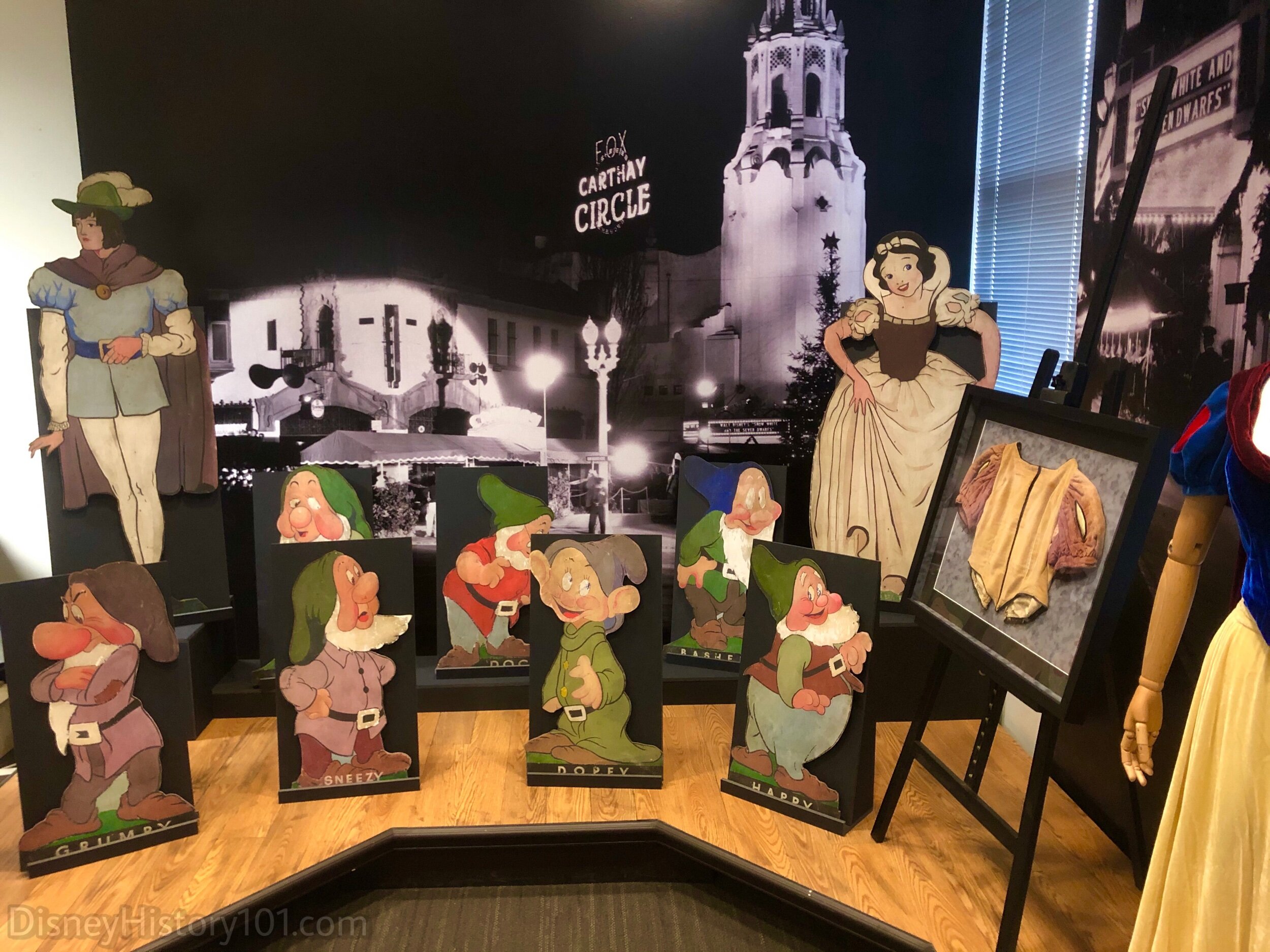
The Walt Disney Archives Reading Room proudly showcases a number of artifacts related to Walt Disney Productions and Disney Parks. Here, we can see a few of the Archives’ oldest artifacts, related to the original 1937 release of “Snow White and the Seven Dwarfs” - including these “standees” (believed to be created for a European release of the film), and (one of the oldest Walt Disney Archives costume pieces) a bodice worn during production, by Snow White live-action reference model, Marge Champion! You may recall that the Walt Disney Studios in Burbank (as well as the Walt Disney Archives) owes its very existence to the profits from the theatrical release of Walt Disney’s first animated full-length feature film - Snow White and the Seven Dwarfs!
Six years later (in 1976), the Walt Disney Archives appropriately moved into a two-floor office of the Roy O. Disney Building in order to accommodate the collection, its offices, and services. Therein the Walt Disney Archives Reading Room, temporary exhibits could be displayed and study could be performed. Unseen to most, the Walt Disney Archives would also contain Audio-Visual Rooms, an Office, a temperature and humidity climate-controlled Storage Area (for the preservation of artifacts and other historic materials), and a Workroom.
Some of the historic materials preserved within the Walt Disney Archives include, but are not limited to a collection of :
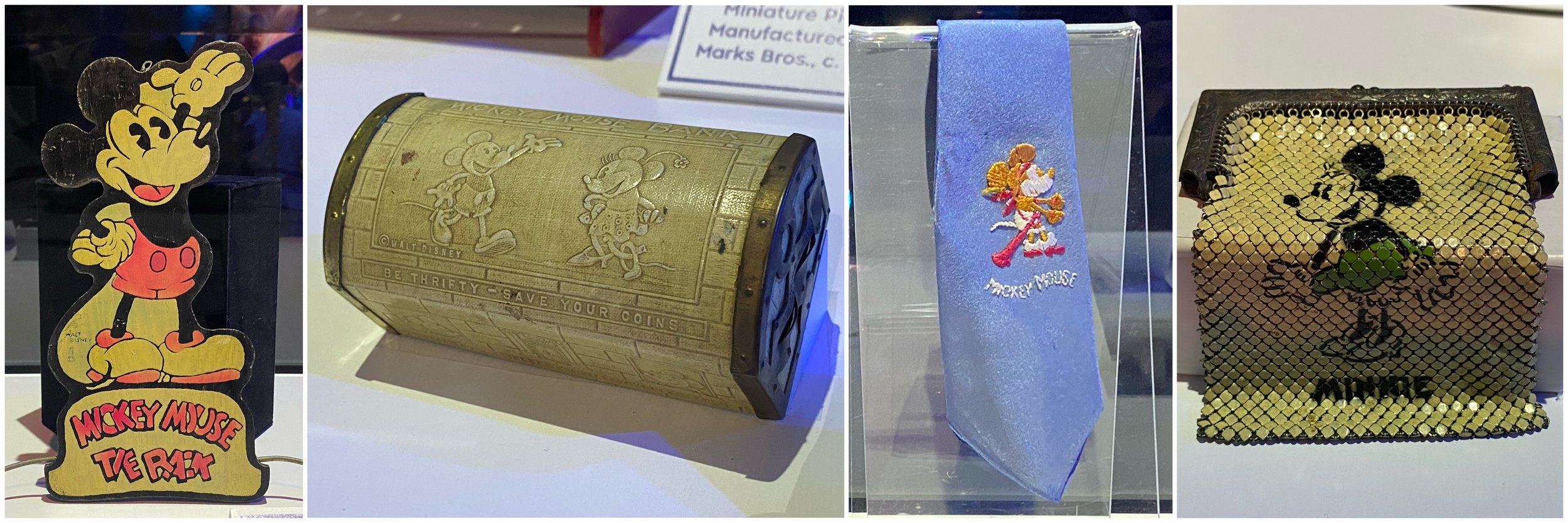
•Character Merchandise Samples (featuring the likenesses of Mickey Mouse and other Disney characters) and Facsimiles (as well as related catalogues, contracts, and photographs of items not currently part of the collection) dating from the 1920s to the present. This illustrious collection of vintage Disneyana has enabled the Archivists to answer questions for collectors and provide valuable information company-wide.
•a Film Collection which is housed in another facility. By 1959, master negatives of Sleeping Beauty and other Disney films were kept in a specially built, two story concrete “vault” at the Disney Studios. In this valuable vault inventory were some 17 cartoon features; 11 full-length live-action features; 4 full-length “True-Life” pictures; and nearly 500 short subjects, mostly cartoons and travel pictures from Disney's People and Places series.
•Music in the form of a collection of over 1,300 records produced by the Walt Disney Music Company, and “several hundred singles and albums of Disney songs by other recording companies, such as the first records put out in 1934 by RCA Victor along with tape recordings and sheet music.”
•“Oral Histories” or, “taped interviews with Disney employees, covering many different topics”, and “taped transcripts of… most interviews and speeches”.
•Original Artwork including animation drawings, backgrounds, layouts, renderings, story sketches, and some cels related to film production.

•Photographs (of both publicity and movie stills) and more than half-a-million Negatives
•Production Files including drafts and scripts (as well as many props and costumes related to Walt Disney Studio productions thru the decades)
•Publications (by some time in the 1970s, the “complete” and archived collection included “more than 900 titles of Disney books published in the United States, as well as some “foreign Disney books published in over 35 languages”, “domestic Disney comic books and magazines, along with most of the foreign ones, dating back to 1932”)
•Publicity Materials (both “clippings” and materials prepared for press release and publishing in newspapers and magazines).
•Theme Park Materials including Audio-Animatronic figures and materials, correspondence files (i.e. Inter-Office Communications and letters), models, photographs, plans (as elevations, floor plans, details, and much more), ticket and coupon media, restaurant menus, Park souvenir merchandise!
•Walt Disney “Office Correspondence Files” (spanning more than three decades, from 1930 until his death in 1966), including awards, gifts, office furnishings, personal effects, photographs, recordings, transcripts, and much more related to Walt Disney!

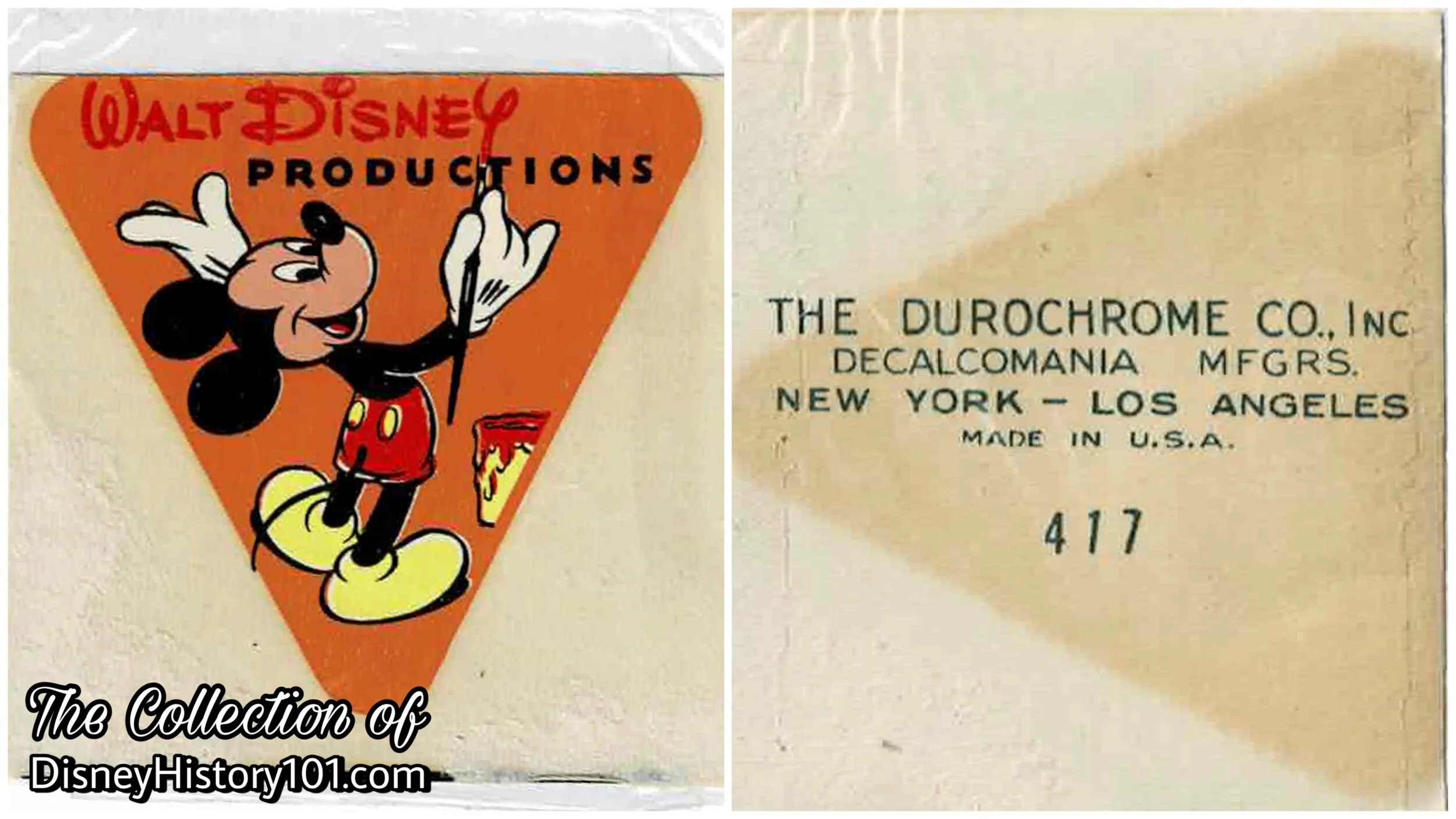
Walt Disney Productions Decal

Walt Disney Studio Tour Pin featuring the original studio logo.
“The Team Disney Building”
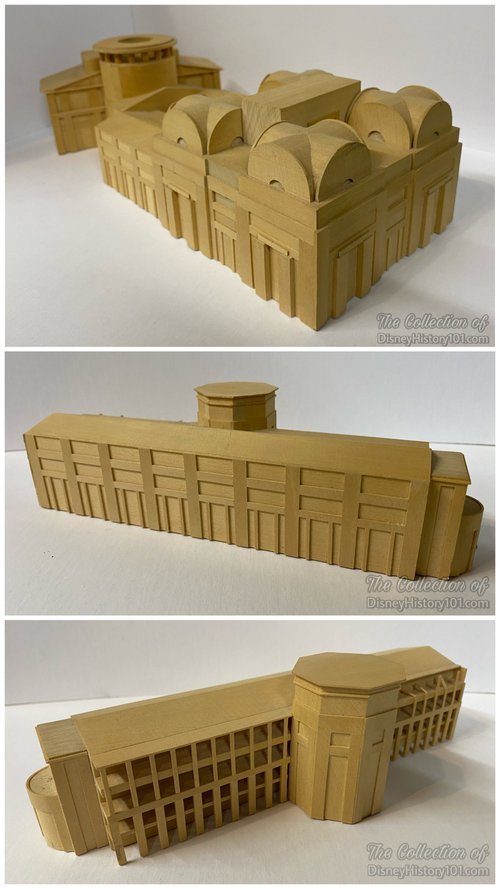
The Team Disney Building with its Seven Dwarfs holding top the pediment opened in 1990. It is a reminder of Walt Disney’s first theatrical success, which the studio is founded on.
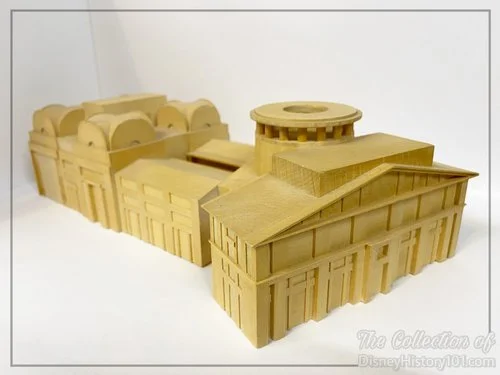
The structure was designed by Michel Graves (the same designer responsible for the Swan and Dolphin. The wooden model used for architectural renderings was created by Walt Disney Imagineer John Horny.

“The Partners Statue”
The Partners Statue was installed on the Walt Disney Studio Lot in 2003.

The Partners Statue.
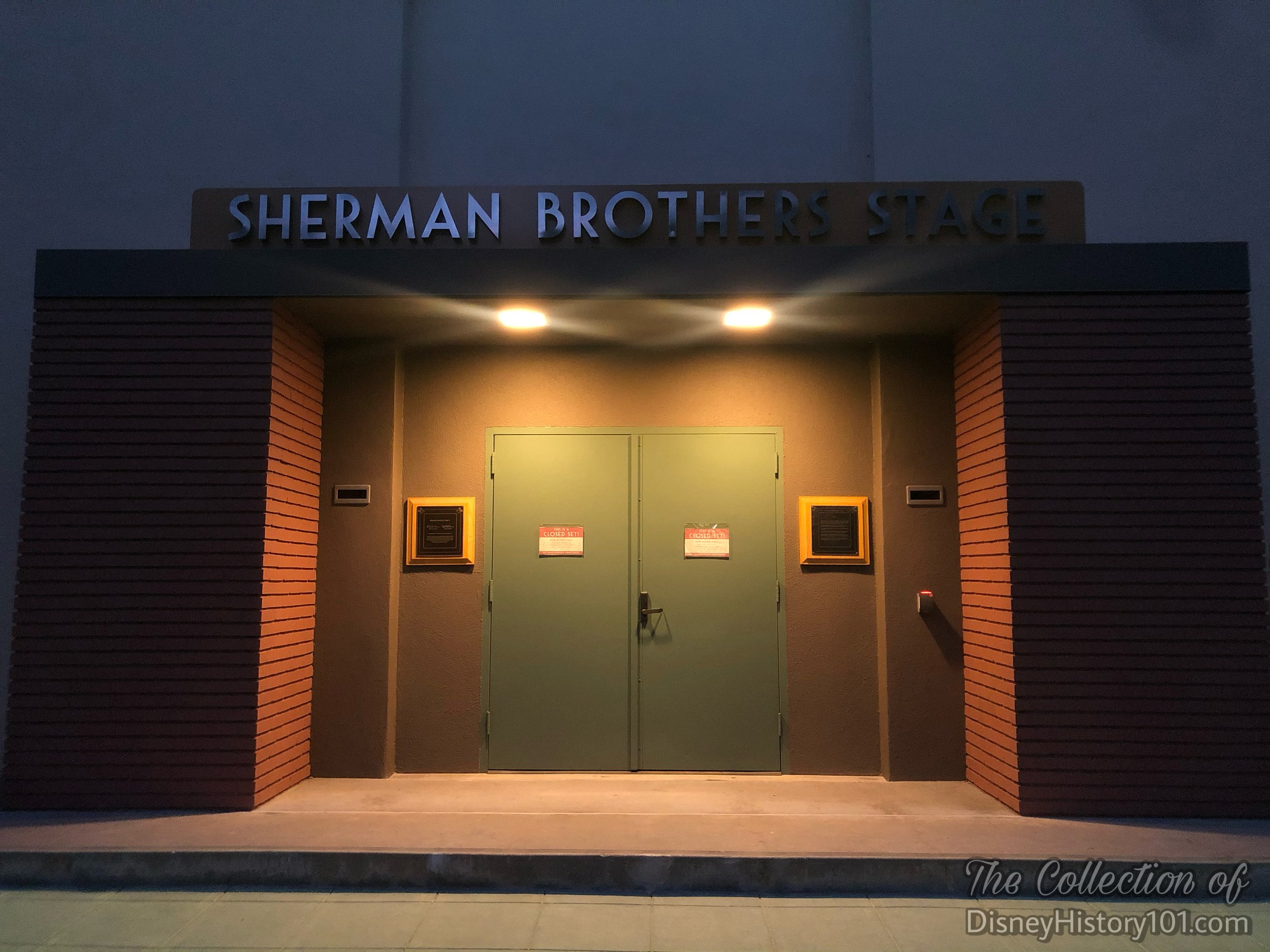
Other Sound Stages were added (Sound Stages 6 & 7 and a Support Building submitted for Walt Disney Studios development on December 7, 1995).

The Disney Studio Store and Disney Employee Center.






The camera had the ability to zoom (that is, to move up or back on a camera image by using a zoom lens).

Today, the Walt Disney Studios are located at 500 South Buena Vista, Burbank, California.

Leonard Nimoy visits Walt Disney Studios during the 1980s.
Leonard Nimoy had previously visited the studio regarding the production of “Standby… Lights! Camera! Action!” for Nickelodeon. One episode of the series took viewers behind the scenes of The Black Cauldron. Here, Leonard visits The Walt Disney Studios yet again, perhaps in relation to host “The Challenger Spirit Salute” at the Magic Kingdom on February 25, 1989.
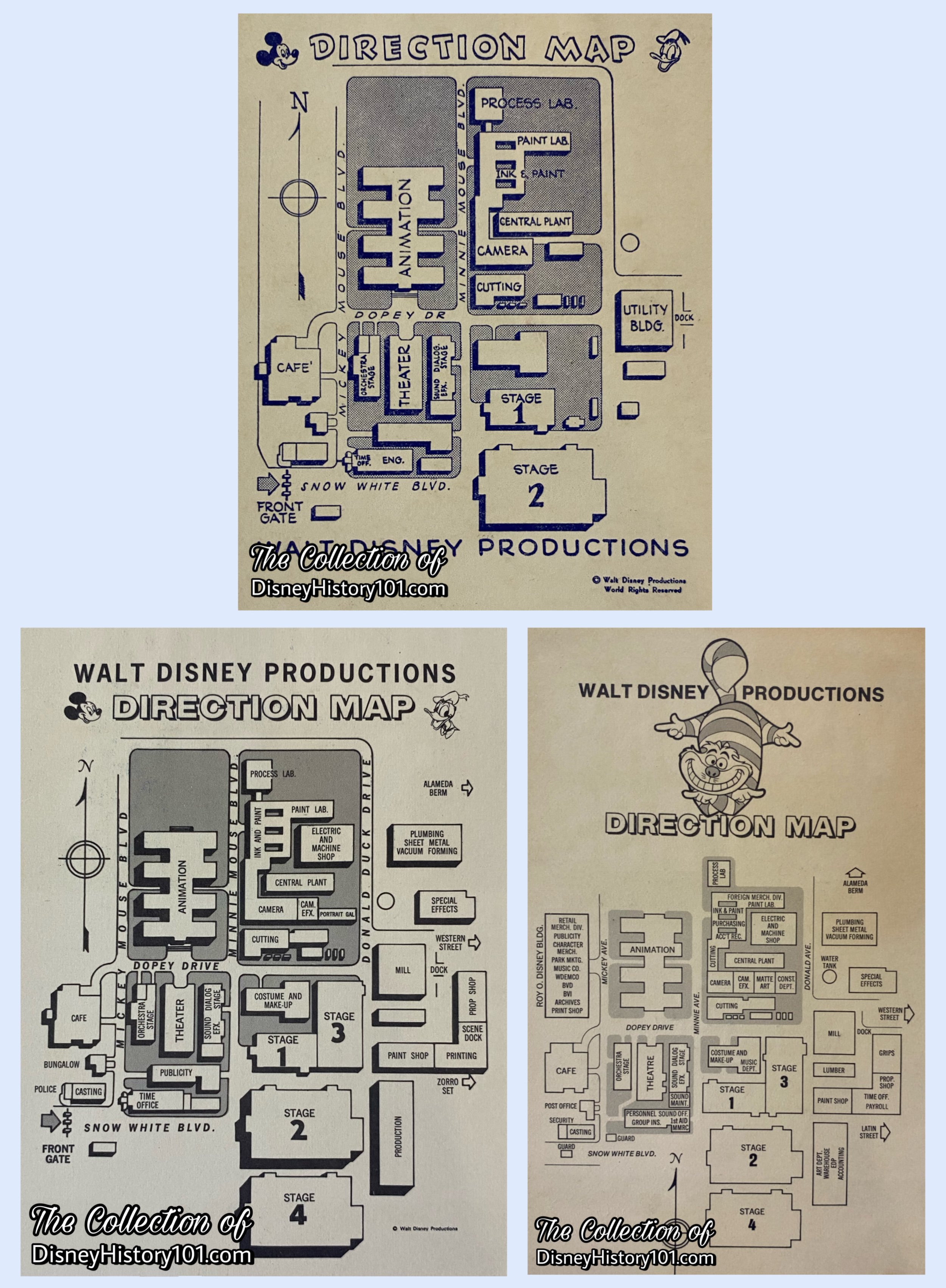
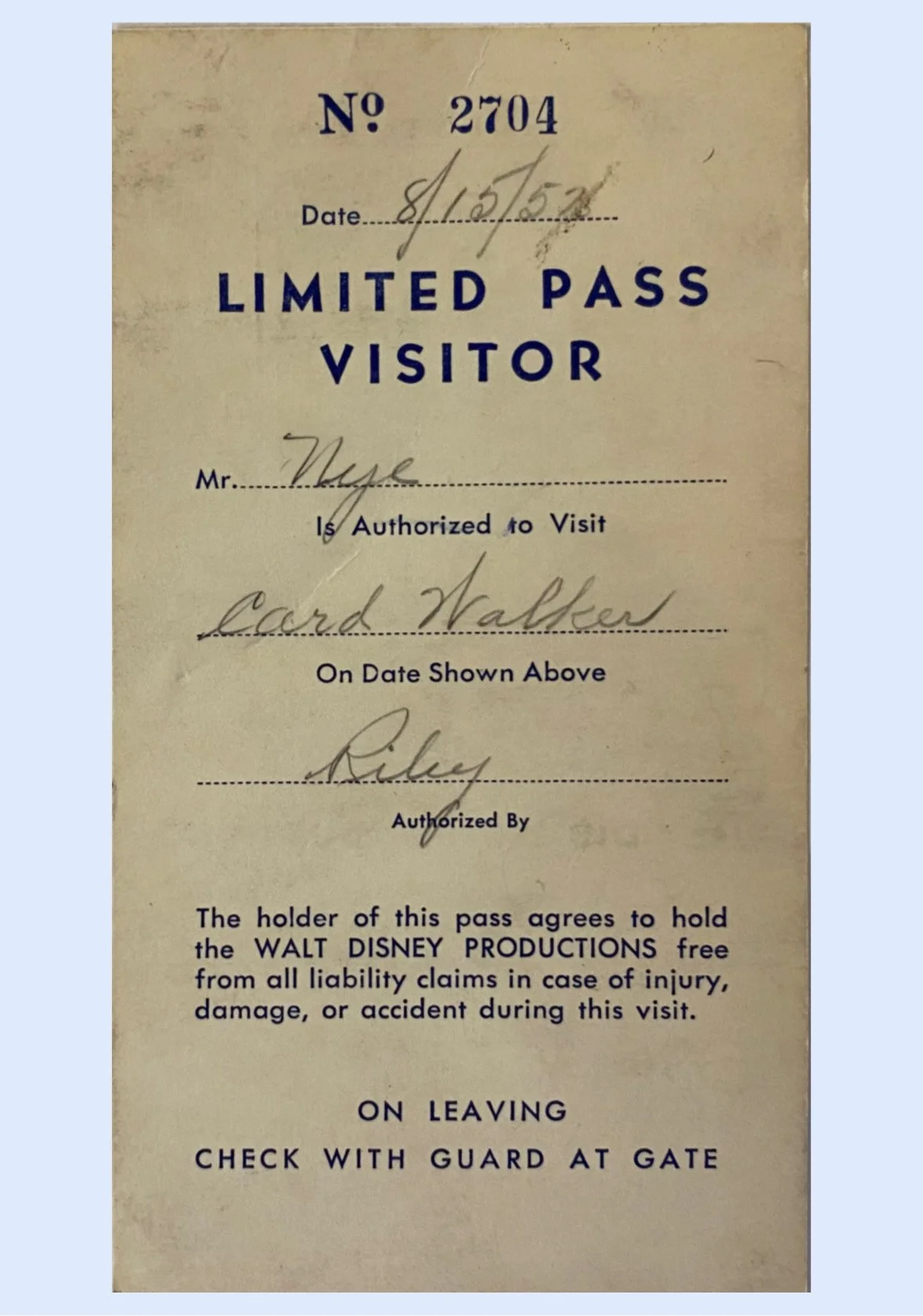
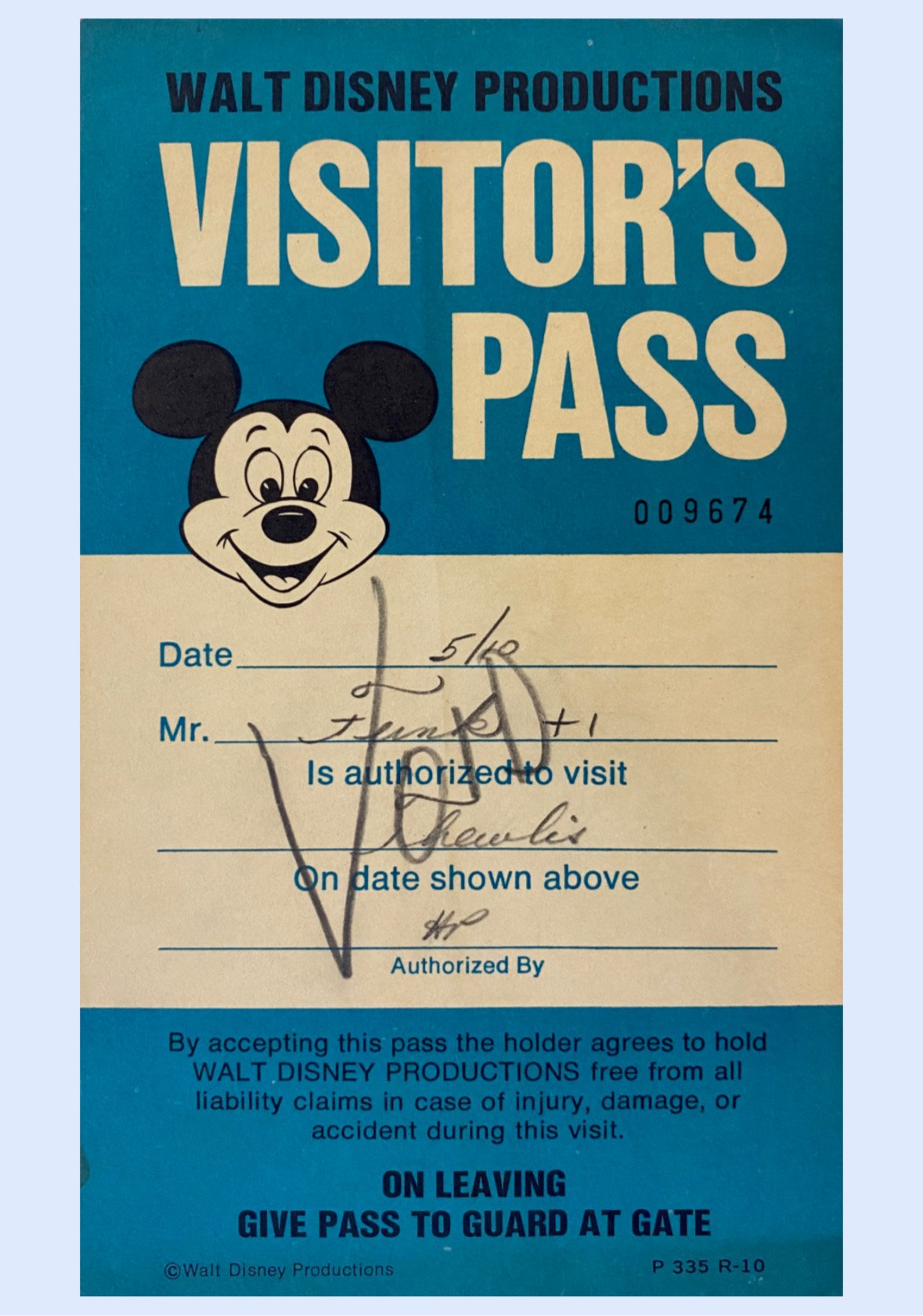
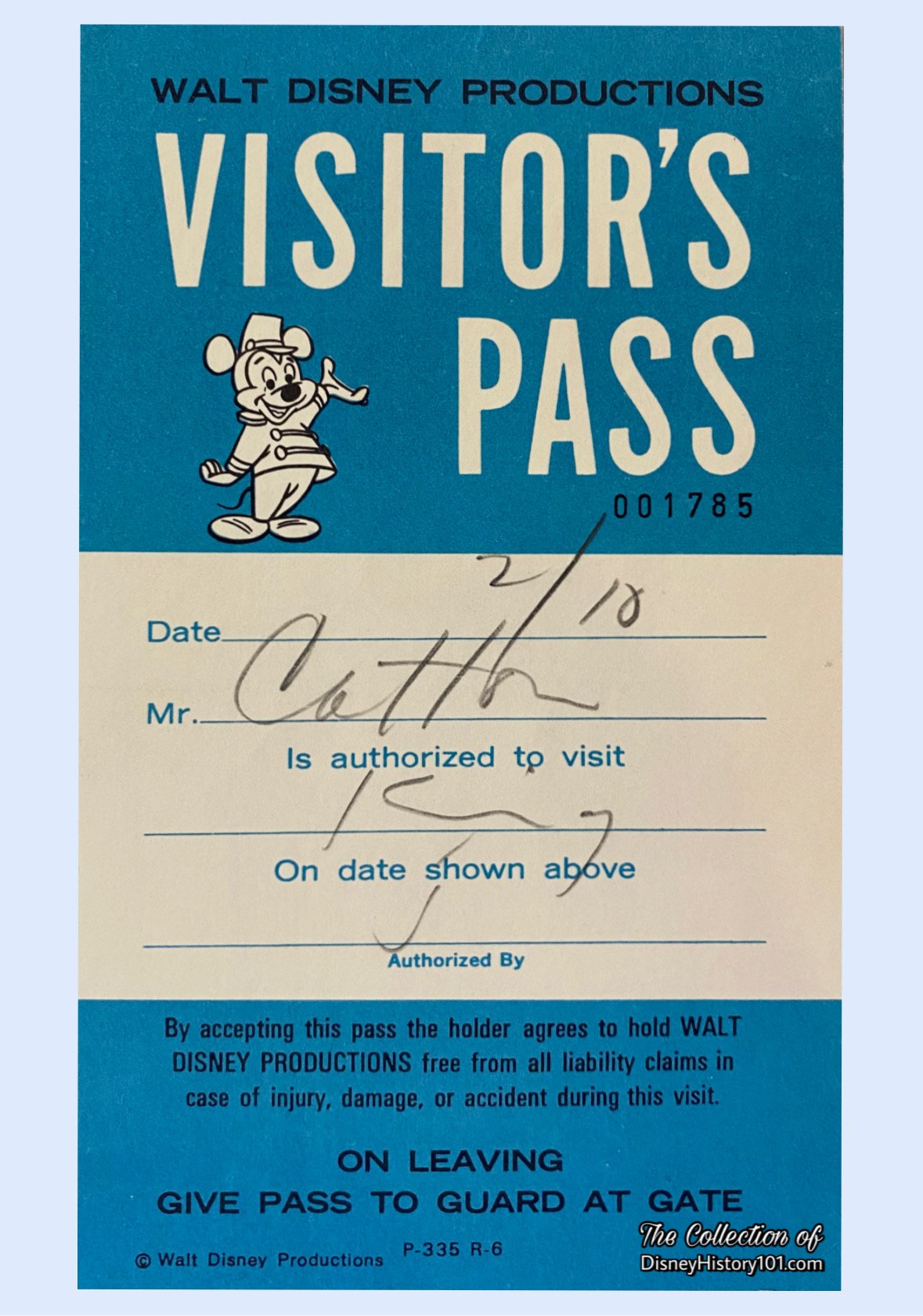
Walt Disney Productions Direction Maps were featured on the reverse of these circa 1950s Studio Guest Pass media. Many main streets of the Walt Disney Studios (like Minnie Avenue and the well-travelled Donald Avenue) were named after Disney Standard Characters.

Quisque iaculis facilisis lacinia. Mauris euismod pellentesque tellus sit amet mollis.