A Pre-View of the Walt Disney Family Museum exhibit (running from May 16, 2019 - January 6, 2020)!
Read moreDISNEY TREASURES of VAN EATON'S "ART OF ENTERTAINMENT"
PLEASE STEP THIS WAY, and join YOUR Field Guide Beth as we search Van Eaton Galleries’ May 4th auction exhibit for a few hidden “Disney Treasures”!
Read moreWALT DISNEY'S TRAINS
Please, step this way for a preview of Napa Valley Museum’s WALT DISNEY’S TRAINS exhibit with your Disney History 101’s Field Guide Beth!
Read more"THE MAGIC & FLAIR OF MARY BLAIR"
Step this way please, as we preview the FREE temporary Hilbert Museum exhibit featuring over twenty rare & never-before-seen Mary Blair pieces of art!
Read more“THAT’S FROM DISNEYLAND!” - THE FORMER RICHARD KRAFT COLLECTION
A look back at Richard Kraft’s extensive, never-to-be-repeated collection of one-of-a-kind Disneyland artifacts on display at That’s From Disneyland!
Read moreJEFF KURTTI on WALT'S TRAVELS

A brief Q & A with Jeff Kurtti (author “Travels With Walt Disney - A Photographic Voyage Around The World”), featuring excerpts from his most recent guest lecture at THE HILBERT MUSEUM of CALIFORNIA ART on Saturday, December 1, 2018.
HOW DID YOU COME TO WRITE A BOOK ABOUT WALT DISNEY’S TRAVELS?
“TRAVELS WITH WALT DISNEY - A PHOTOGRAPHIC VOYAGE AROUND THE WORLD actually grew out of another idea. I was doing a presentation on a Disney Cruise Line. I had done a presentation called Walt on The High Seas which was about him going on cruises. It was a cute little presentation for the cruise ship guests to see Walt. . . doing his sailing. A guy came up after the presentation and said, ‘You should have a little book about that (Walt’s travels by cruise ship) that we could get in the cruise line gift shop’. I made a pdf out my key notes, sent it to my editor, and asked, ‘Is there a book here?’ She responded, ‘There’s a book here, but you’re too narrow! People don’t know what a world traveler Walt was. They don’t know how much of an internationalist he was.’”
HOW DID RESEARCHING WALT DISNEY SHAPE YOUR VIEW OF ‘THE MAN’?
“The idea of Walt as an internationalist seemed strange to a lot of people because he’s viewed as…a reflection of the American mid-west and the values he came from growing up. . . in Marceline and Kansas City. To have confirmed to me how he was greeted in foreign ports for instance. . . he went to England and was actually bombarded in a press conference (a frenzy that went on for hours). . . I think the thing I discovered was that the affirmation of an idea that I had all along - this notion about Walt Disney…a narrowly-focused pedestrian world view - as “the consummate American” (in a negative way) was completely incorrect!”
“Walt spent much of his life personally and professionally seeking out the world to explore…bring home…and show us. He was a frequent and enthusiastic tourist. He was in foreign capitals and destinations around the world attending premiers or supervising a film production or just vacationing with his family… He became a citizen of the world - from Denmark to Argentina, from England to Greece. Austria, Chile, Canada, France - all of them welcomed Walt Disney as an emissary of his good name, good works, and his good reputation. And he brought back ideas, artistic inspirations.”
HOW DO YOU SUPPOSE A ‘SMALL-TOWN BOY’ LIKE WALT GREW TO APPRECIATE AND ENJOY TRAVELING?
“There was little variety or adventure for a boy who was growing up in the American Midwest in the early years of the twentieth century. It was limited, it was landlocked, and many people in this region never left the few square-miles surrounding their birthplace. For Walt however, the appeal of exploration was so strong and it was fueled by the tales of his immigrant and somewhat peripatetic relatives (his family ventured from property in Canada to Florida before Walt was even born). There were the tales of literary fiction - Walt was a reader when he was a kid. Then of course, he grew up in a little town called Marceline (which even to this day a train goes though there about every seven minutes). He grew up with that ‘call to roam’ as the poet says…From the earliest days, Walt wanted to move on.”
WAS WALT CHANGED OR SHAPED BY THE LOCALES THAT HE VISITED?
“In the summer of 1918 Walt was living in Chicago and did not want to return to High School. He was caught up in the patriotic fervor of World War I, and Walt remembered, ‘I just had to get in there’. Walt was only sixteen and seventeen was the minimum age for enlistment, so Walt hatched a plan to join the Red Cross Ambulance Corp. by forging his birth certificate…So Walt was to Company A of the Automotive and Mechanical section of the Red Cross Ambulance Corp. and you see photos here. He spent much of his time in Evacuation Hospital Number Five. He took full adolescent advantage of this sort of world tour he was involved in. He climbed a tree in Paris to try to catch a glimpse of President Woodrow Wilson. He played poker. He was a chauffeur for ‘Army Brass’. He was later relocated outside Paris to Neufchateau, a village on the countryside. He recognized and his brother recognized as he came home - Walt had made a transition from being a boy to being a man. That experience in Europe had transitioned him into adulthood.”

Jeff shared a rare treat of a previously ‘unknown’ trip Walt and family went on (some time before the release of Mary Poppins). The ship traveled throughout Polynesia and even docked in New Zealand, where Walt was interviewed by then Australia Broadcasting Corporation reporter Suzanne Baker (pictured on screen)!
DID YOU MAKE ANY ‘NEW’ DISCOVERIES ABOUT WALT DISNEY’S INTERNATIONAL EXCURSIONS?
“One of the things I didn’t get to feature in the book was this trip which I found referenced in files and travel notations in Walt’s desk diaries. This clipping that. . . Paul Anderson from Disney History Institute sent to me - it’s from an Australian TV magazine. In October of 1962, Walt and his kids and grandkids boarded the S.S. Mariposa which sailed from Southern California to the South Pacific. It docked in New Zealand. I never knew that Walt had this experience in New Zealand, Pago Pago, Bora Bora, Papeete, Nadi, and then Honolulu. I had no idea about this trip. It seems like it was a family excursion, but I could find precious little detail about it in any of the record. So, not in the book! I’m going to find out one of these days.”

WALT’S TRAVELS - Walt enjoys a walk on St. Stephen’s Green in 1959, Walt and Ward take a holiday during 1948 and enjoy Chicago’s Museum of Science and Industry, Walt films the penguins at the London Zoo during 1935, and Walt and daughter Diane explore the Henry Ford Museum on April 12th, 1940!
HOW HAS WALT DISNEY’S LIFE ENCOURAGED YOUR OWN LIFE AND WORK?
“I never wrote a book until I wrote a book. I never directed a documentary until I directed a documentary. There isn't a ramp up to that or stair steps to that. You sort of dive in and do it. That’s a lot of what Walt did - he dove right in and did it!”
HOW HAVE YOU PERSONALLY BENEFITTED FROM RESEARCHING WHERE WALT TRAVELED?
“I never have stopped learning about him. Someone had made a. . . comment about how I had wasted my life studying Walt Disney and his life’s work. I have a family and we’ve been all over the world and have done all that we have because of him (Walt) and the work that I've done with his company and in documenting his life.”

“Travels With Walt Disney - A Photographic Voyage Around The World” is available through fine book retailers for this holiday shopping season. What a “photographic voyage” - as page after page is filled with colorful rarely-seen photographs of Walt and family globe-trotting for business and pleasure!
"TREASURES FROM CAROLWOOD at THE MUZEO"
From now until January 20, 2019, see never-before-seen train related artifacts from Walt Disney’s personal life and work!
Read moreWALT DISNEY STUDIOS’ WORLD WAR II INSIGNIAS (THE HORVITZ & WIEZOREK COLLECTION)
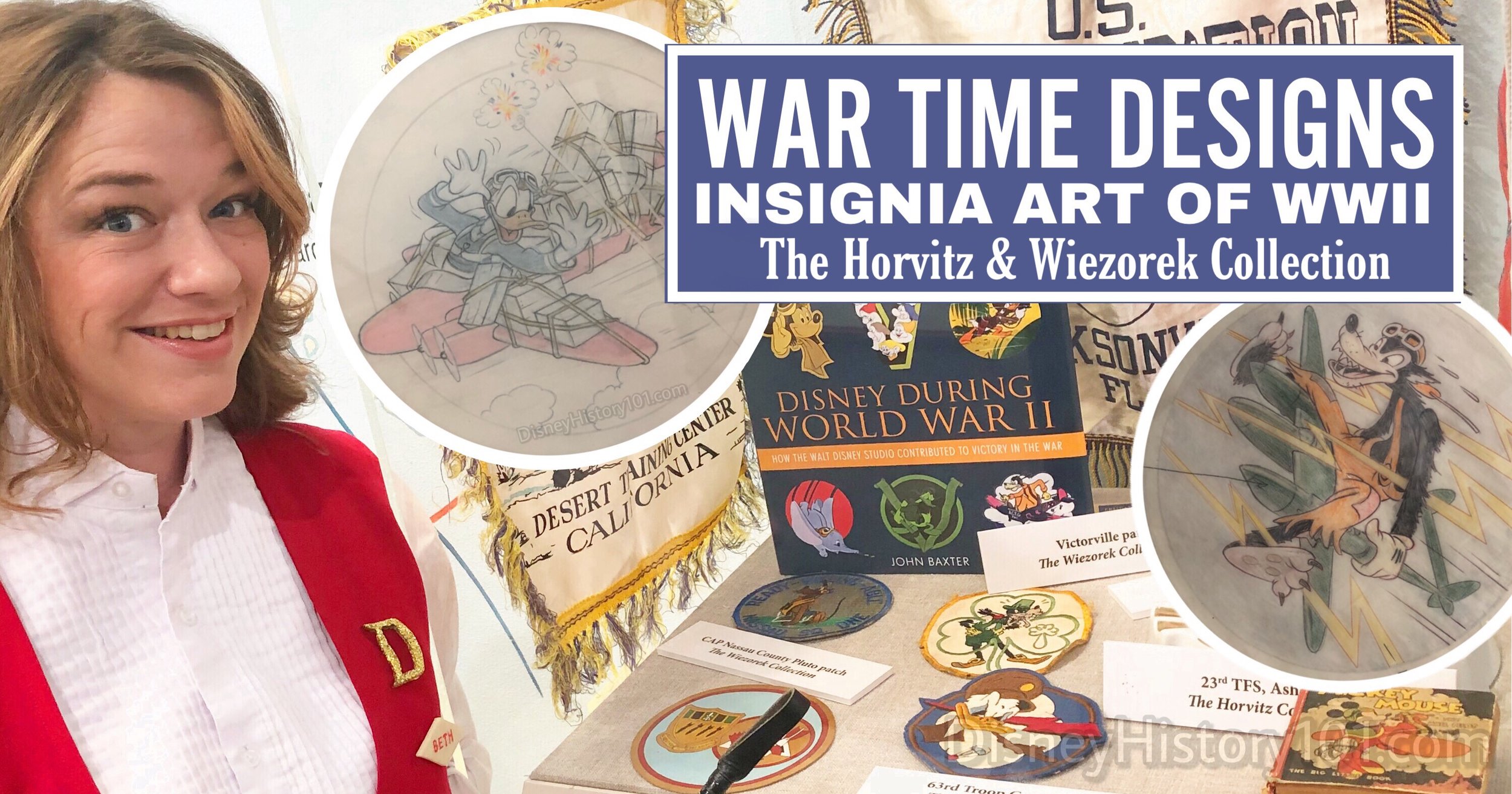
You may have heard of Walt Disney’s support of wartime efforts. According to one newspaper insert published July of 1955: “When World War II broke out, scores of highly trained Disney technicians streamed into every branch of the armed service, and the studio turned unreservedly to the service of Uncle Sam.”
The Horvitz & Wiezorek Collections are two of the most extensive privately owned collections of Walt Disney Studios World War II insignia that Disney History 101 has ever had the privilege of viewing! It was previously on display at The Palm Springs Air Museum from November 11th - April 15th, 2018. The Walt Disney Studios Military Insignia Department (under the direction of Hank Porter), sanctioned approximately 1,200 symbols representing bases and squadrons during the war. Other notable artists (like Roy Williams of Mickey Mouse Club fame) contributed designs.
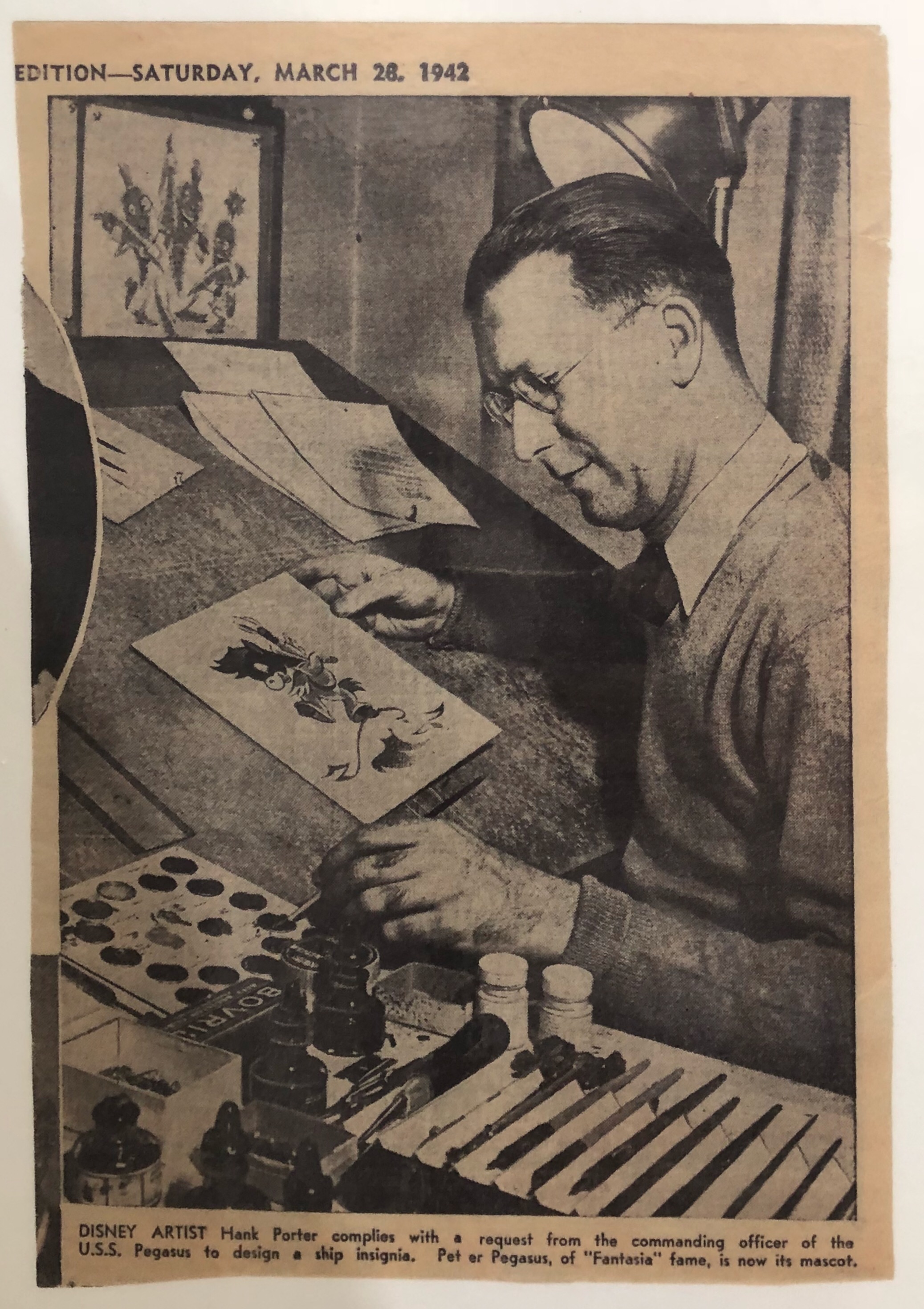
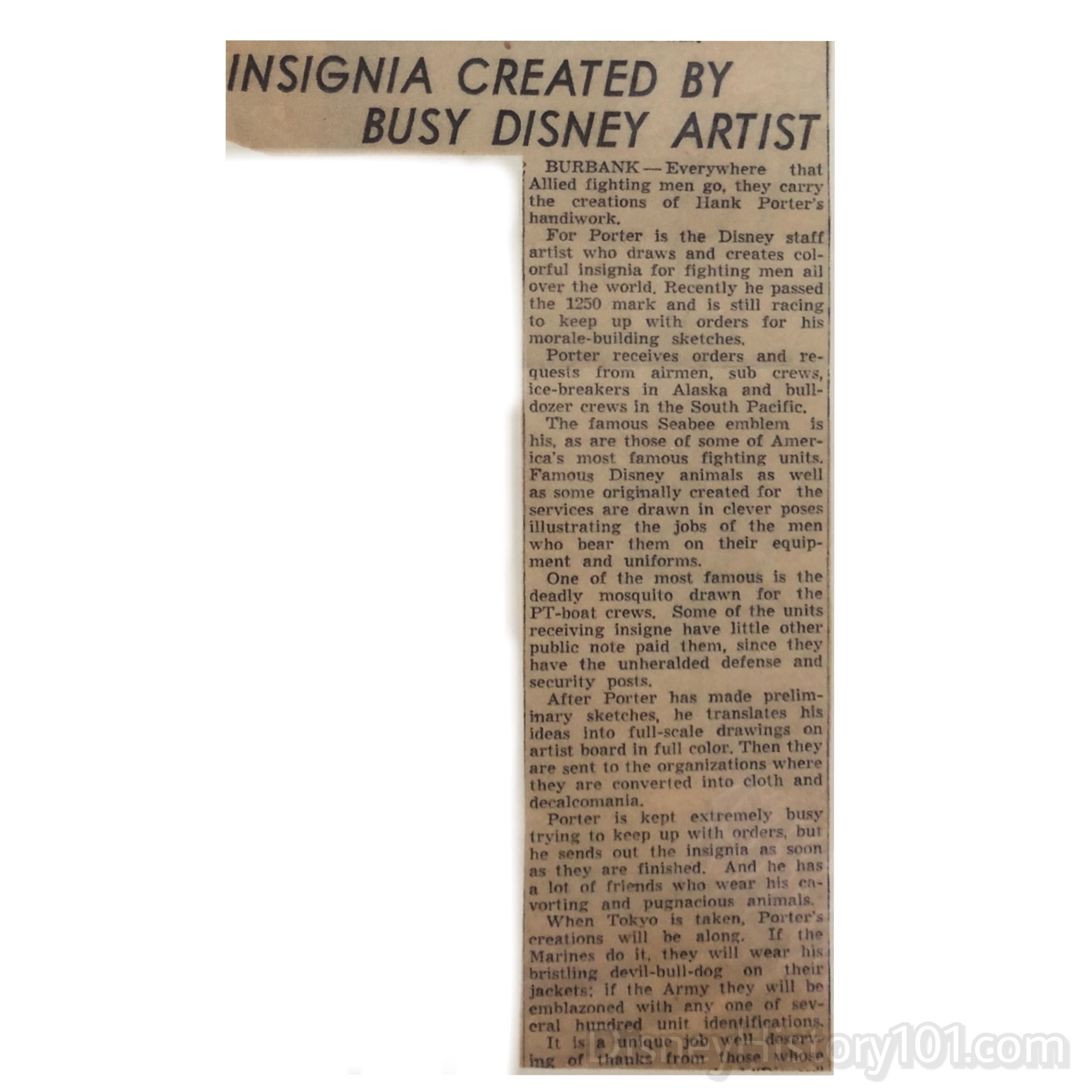
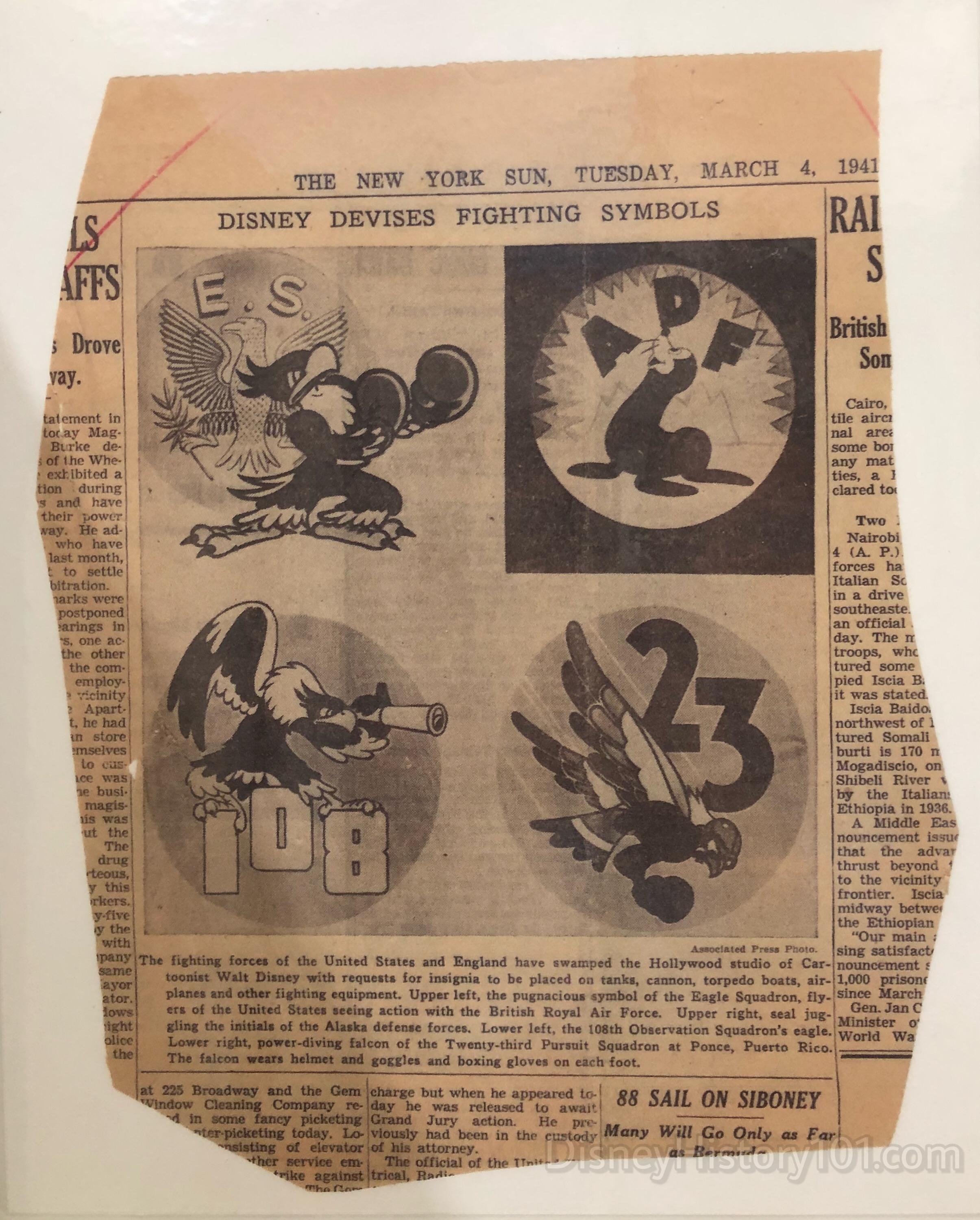
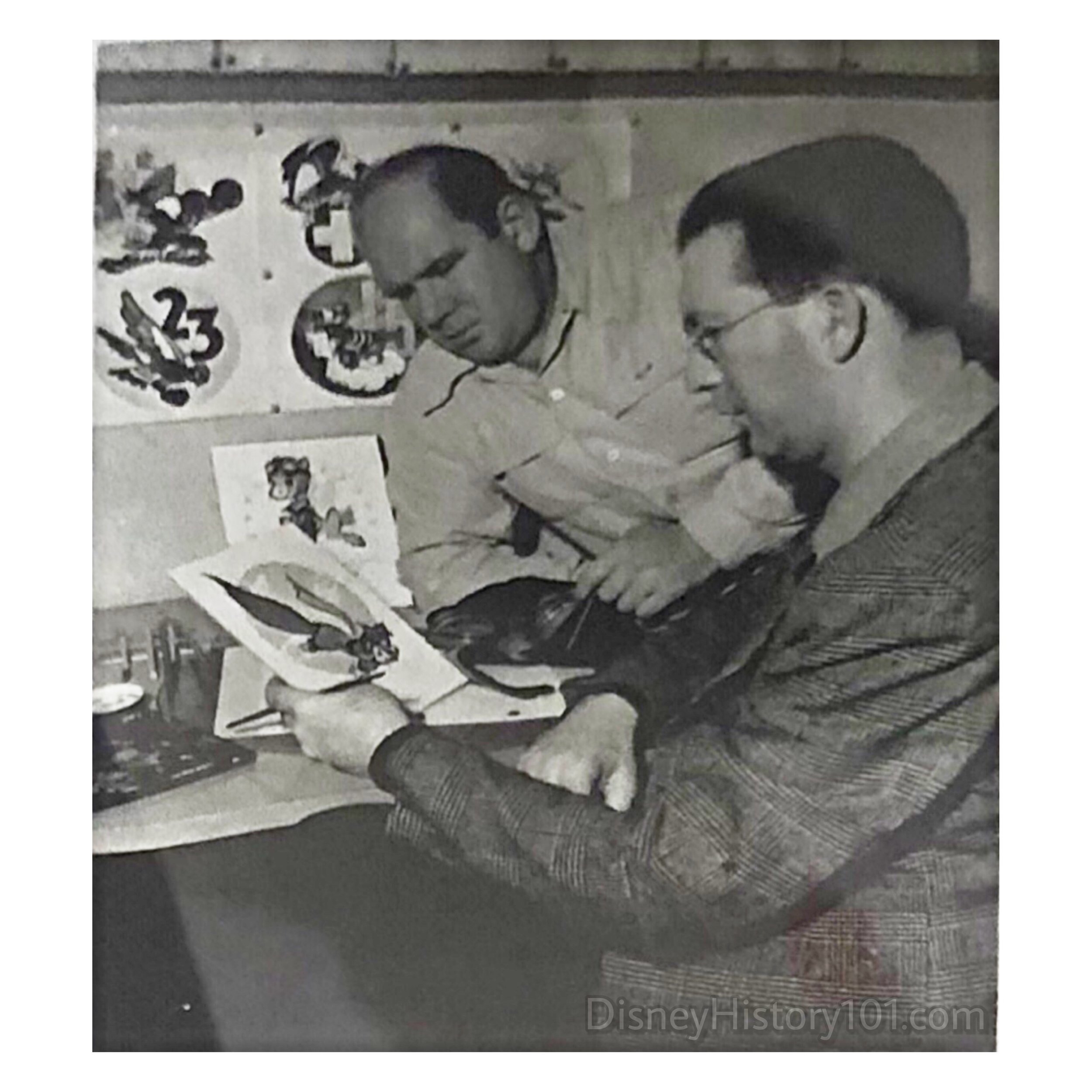
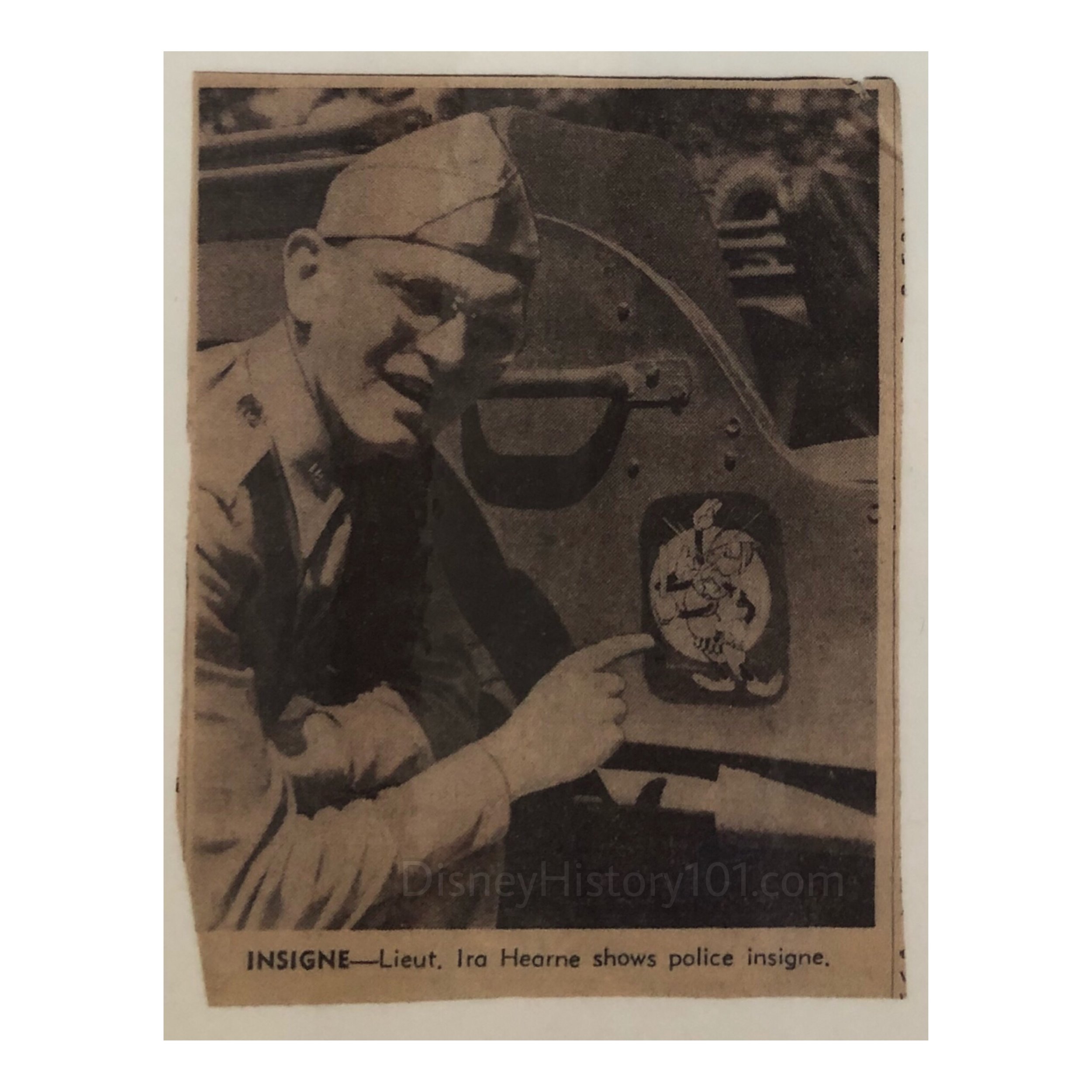
Many of these were produced for American Military branches upon request, and a good number of them were even commissioned for American allies. Please step this way, as we examine some of these historic pieces of artwork and the stories behind them. Your personal tour of The Horvitz & Wiezorek Collections starts HERE!

During World War II, the U.S. Army moved onto the Walt Disney Studio lot, on December 8, 1941. The intent was to draft Mickey and all of his pals to support the war effort - from recycling or selling war bonds. All manner of Disney Characters soon appeared on posters, on billboards, in newspaper publications, and in theatrically released public service announcements.
Short films were produced for training while some called were produced with the intent of combating propaganda. One Donald Duck short film (released January 1, 1943) entitled “Der Fuehrer's Face,” featured a tune so popular that the film won an Academy Award.
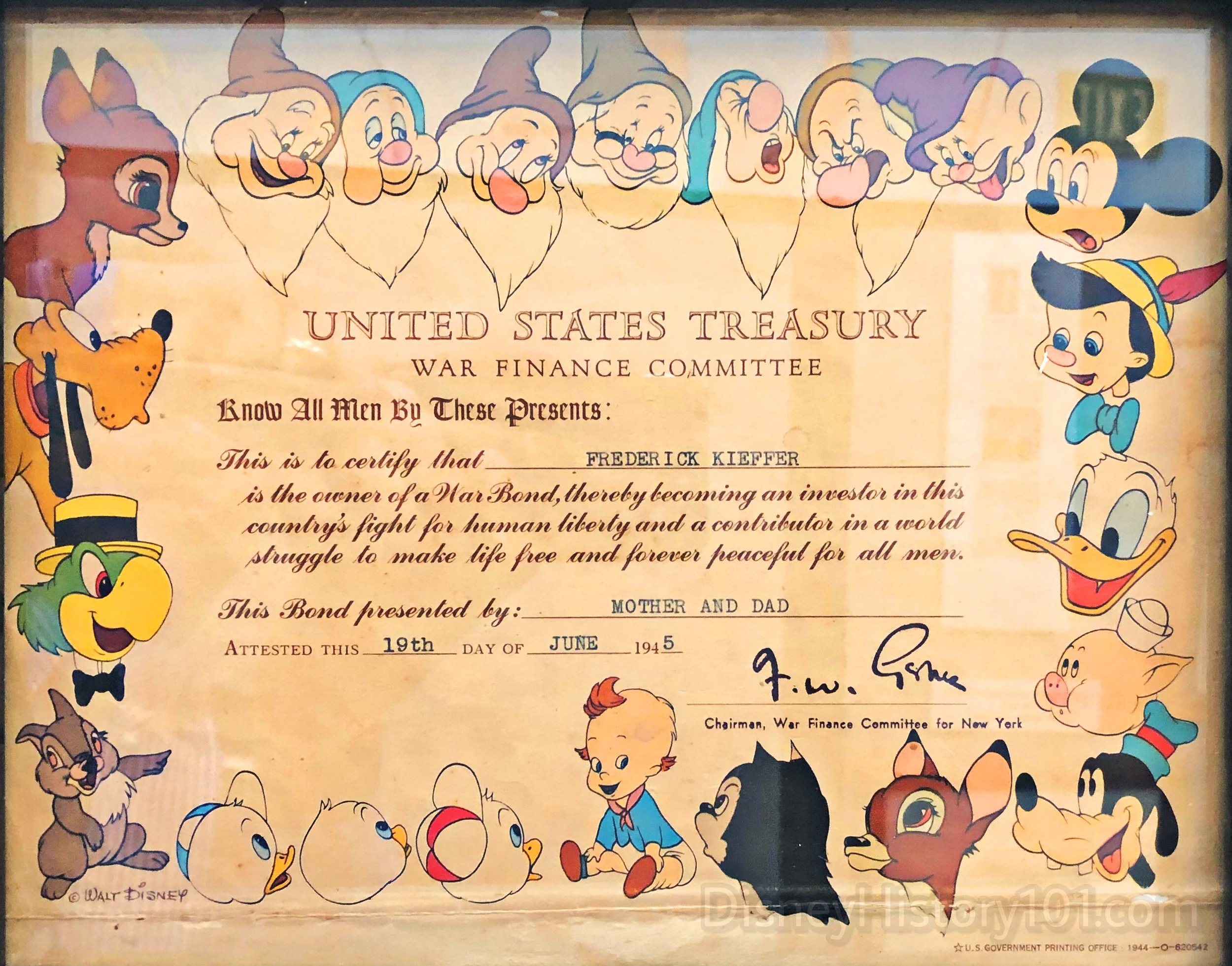
If that wasn’t enough, the entire animated cast of Walt Disney Studios went to war, appearing as divisional mascots with about every branch of the United States Military. A multitude of squadrons, bases, and entire forces sent insignia requests to Walt Disney Studios. Minesweeper patrol units, Naval Bases, Aviation Repair Units, and Naval Construction Battalions are just a few diverse groups who inquired about usage of Walt Disney Studios Illustration Department’s creative works. In response to most letters, a license was granted through Kay Kamen so that the party may mass-produce the logo for non-commercial purposes. Whether insignia concepts were rejected or approved, individuals were notified by mail. Please CLICK on the following image and explore a brief collection of letters to and from Walt Disney Studios.
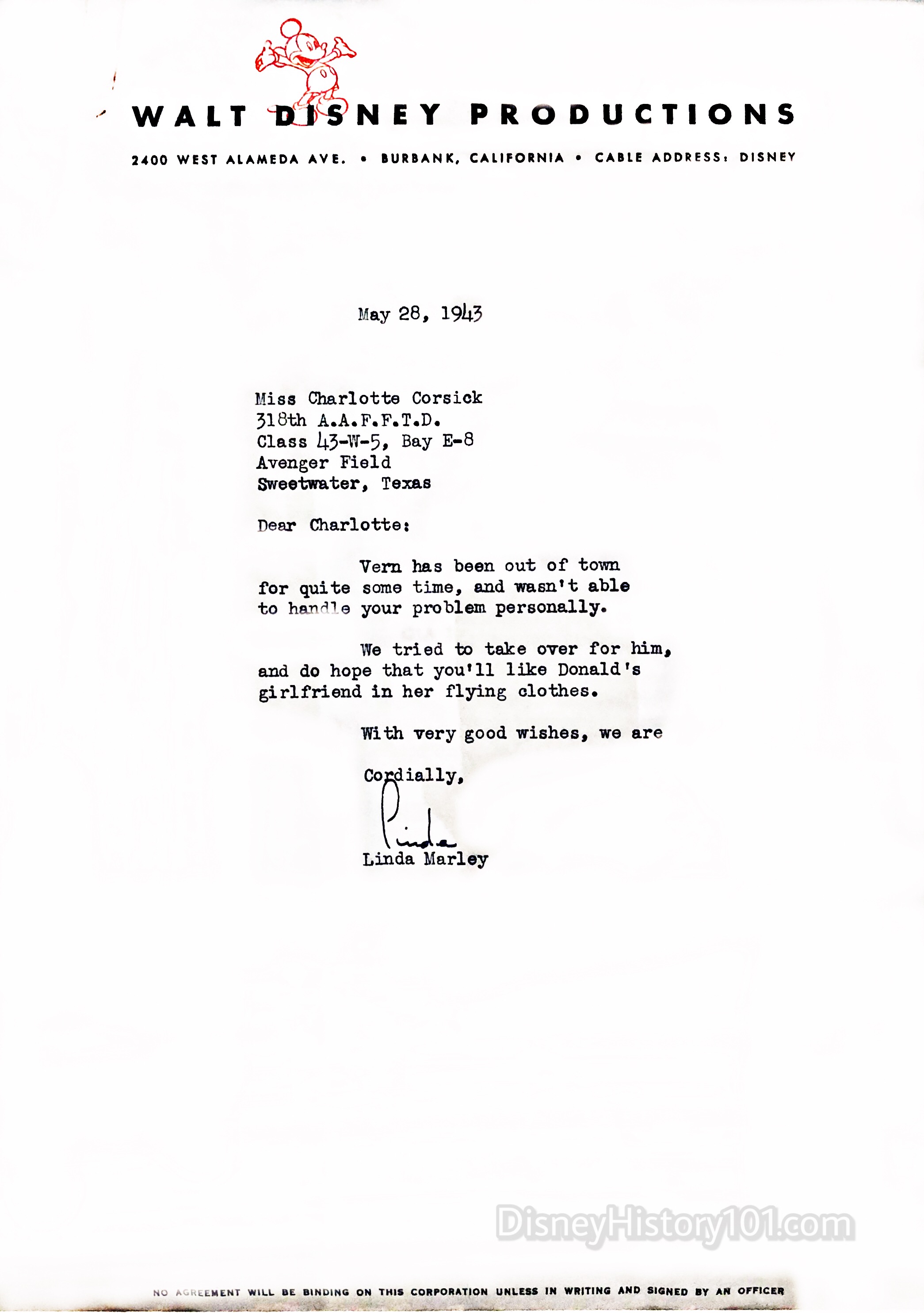
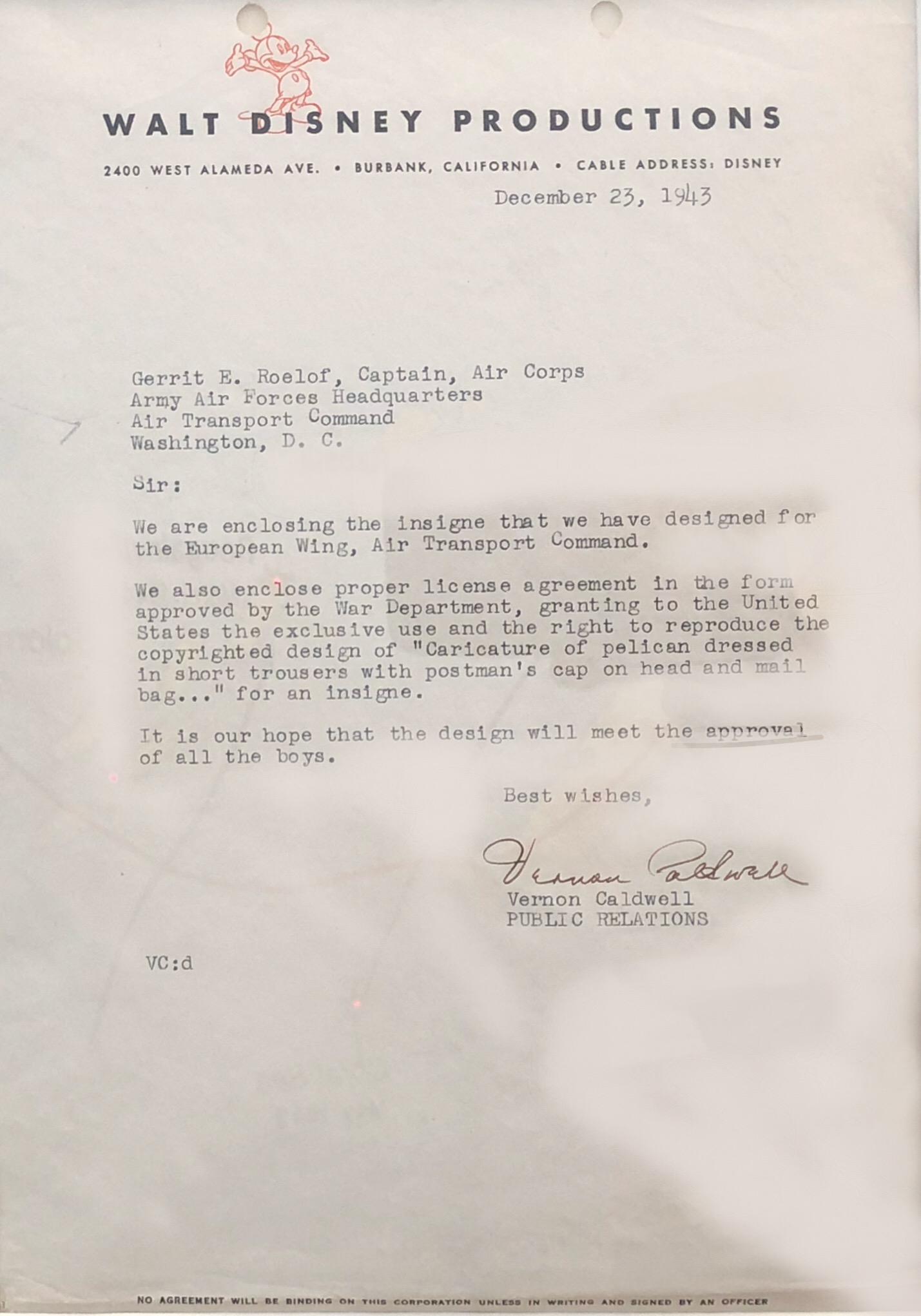
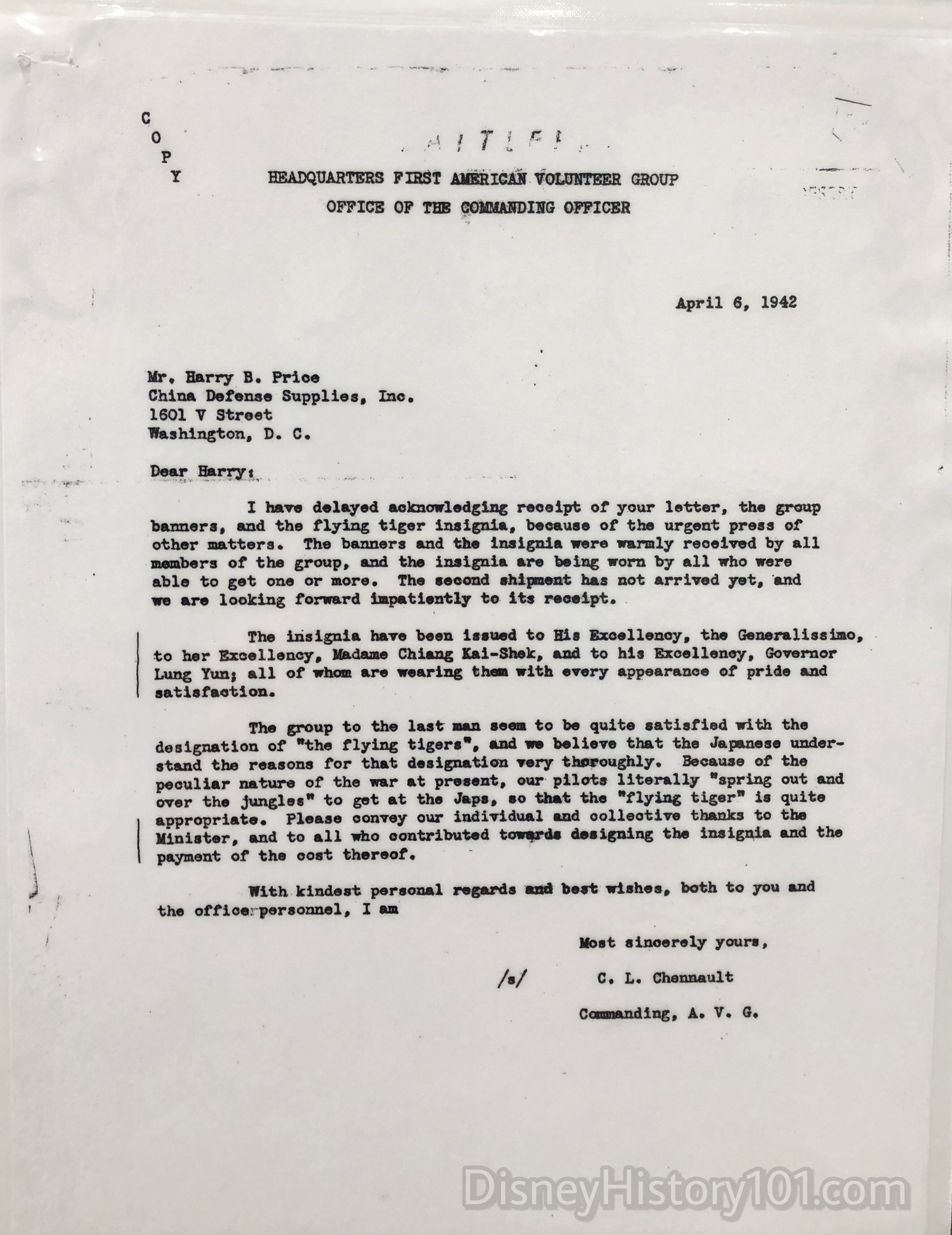
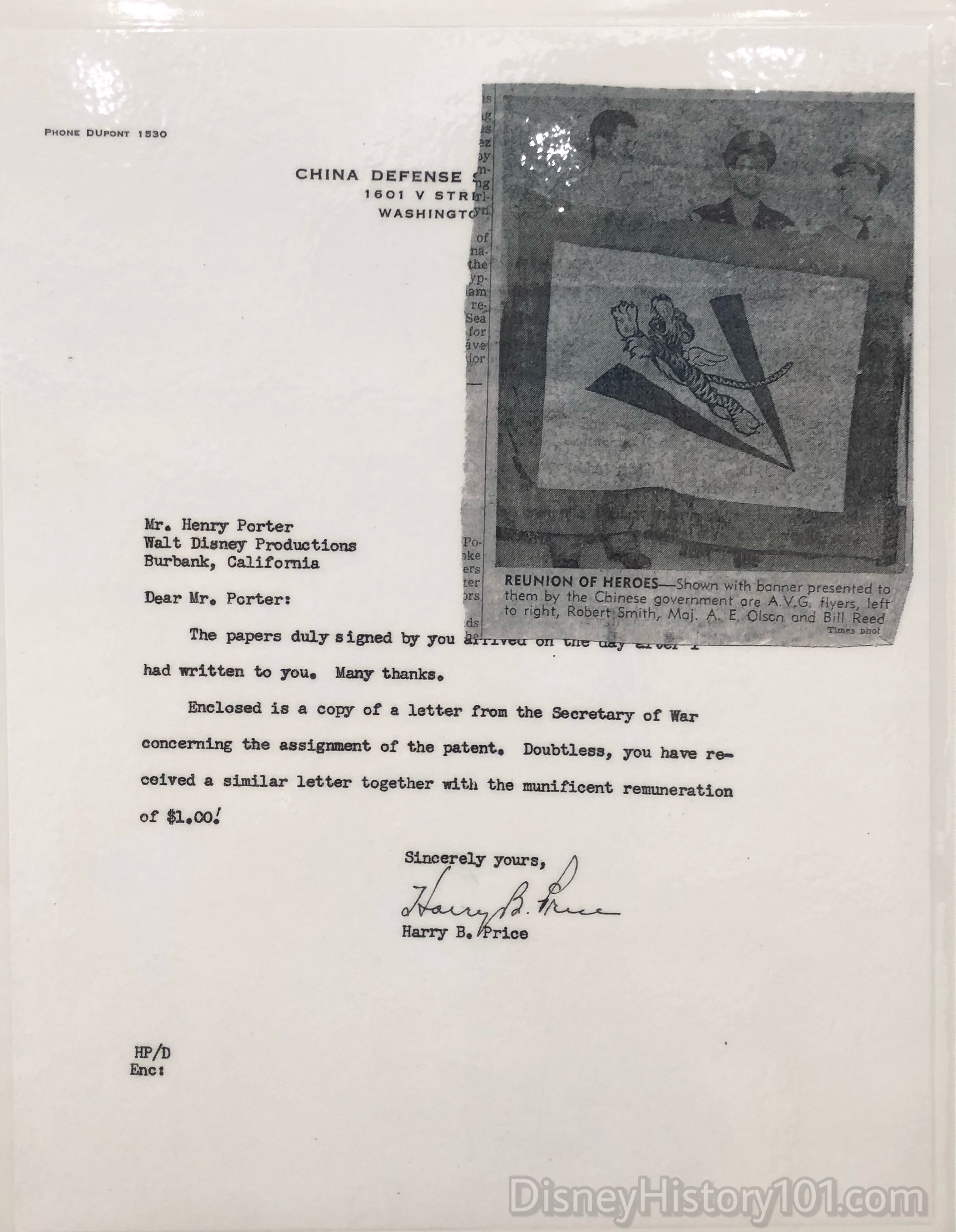
We were not surprised to see a couple of insignia designs featuring Mickey Mouse.
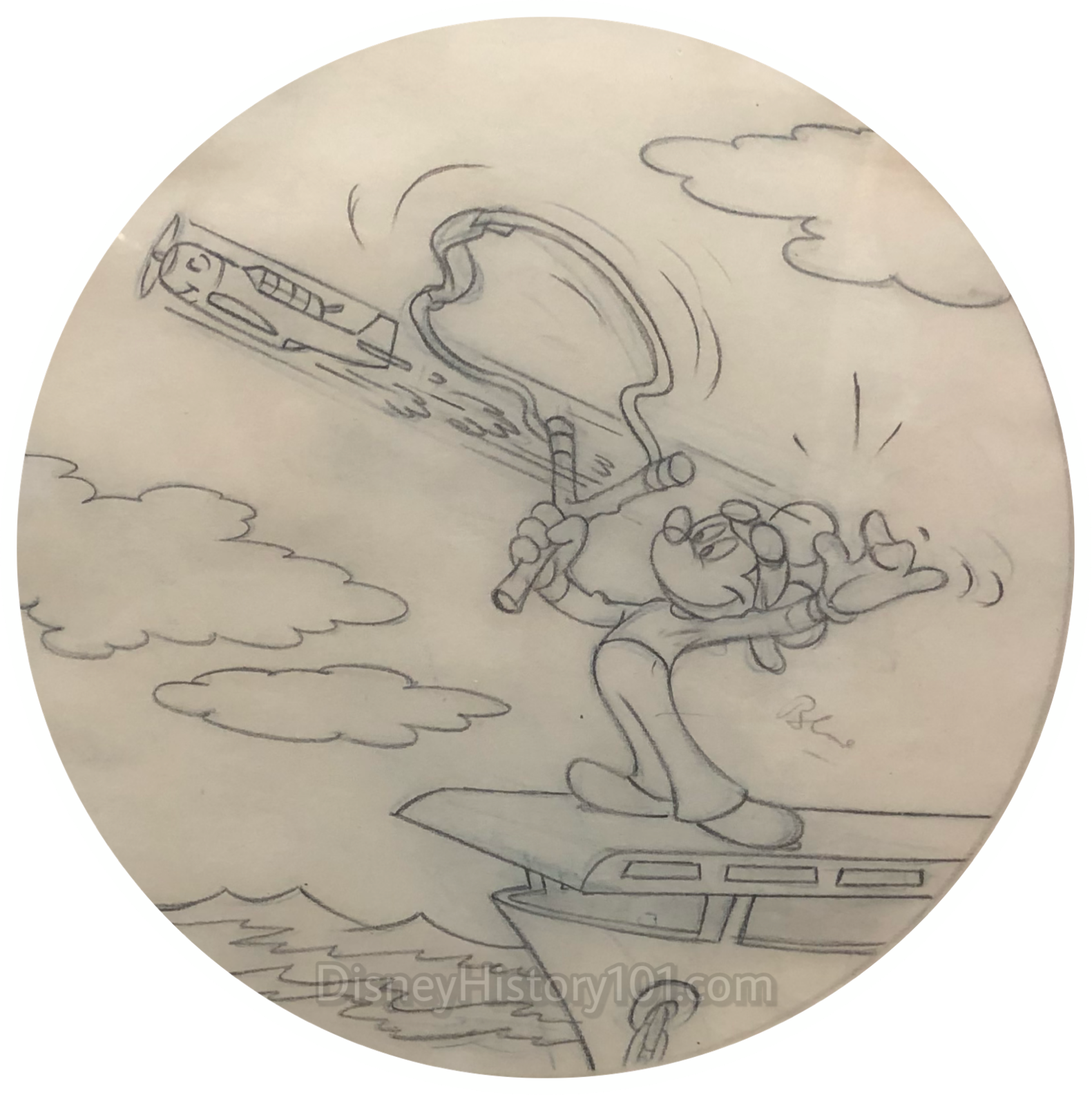
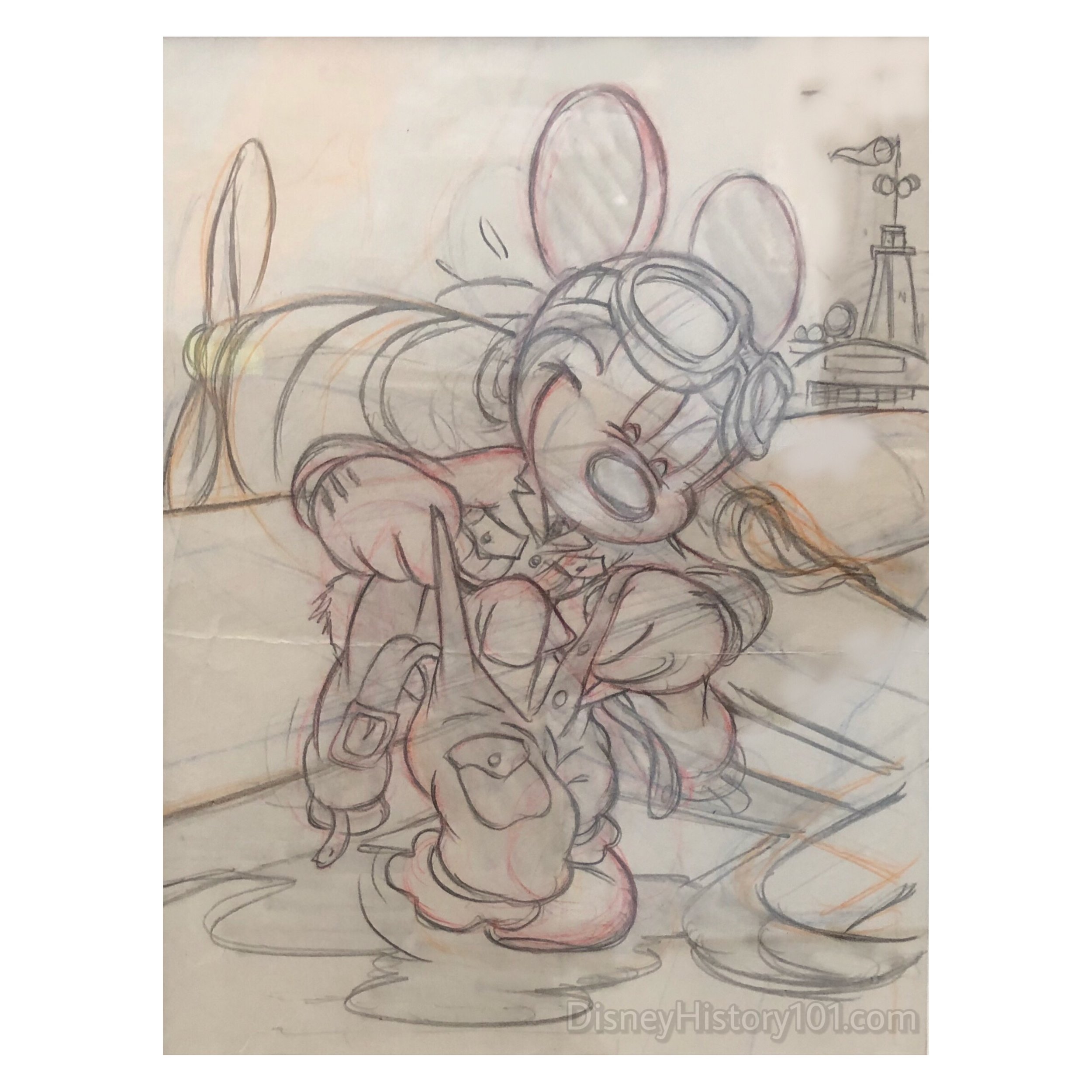
Mickey was a popular character license request for war time insignia, but there was one other co-star that seemed to overshadow him in terms of popularity! It all began with the 1943 anti-Nazi propaganda short Der Fuehrer’s Face. It’s star’s popularity took to the skies (literally), and the most requested character to be featured in character insignia was. . . Donald Duck!
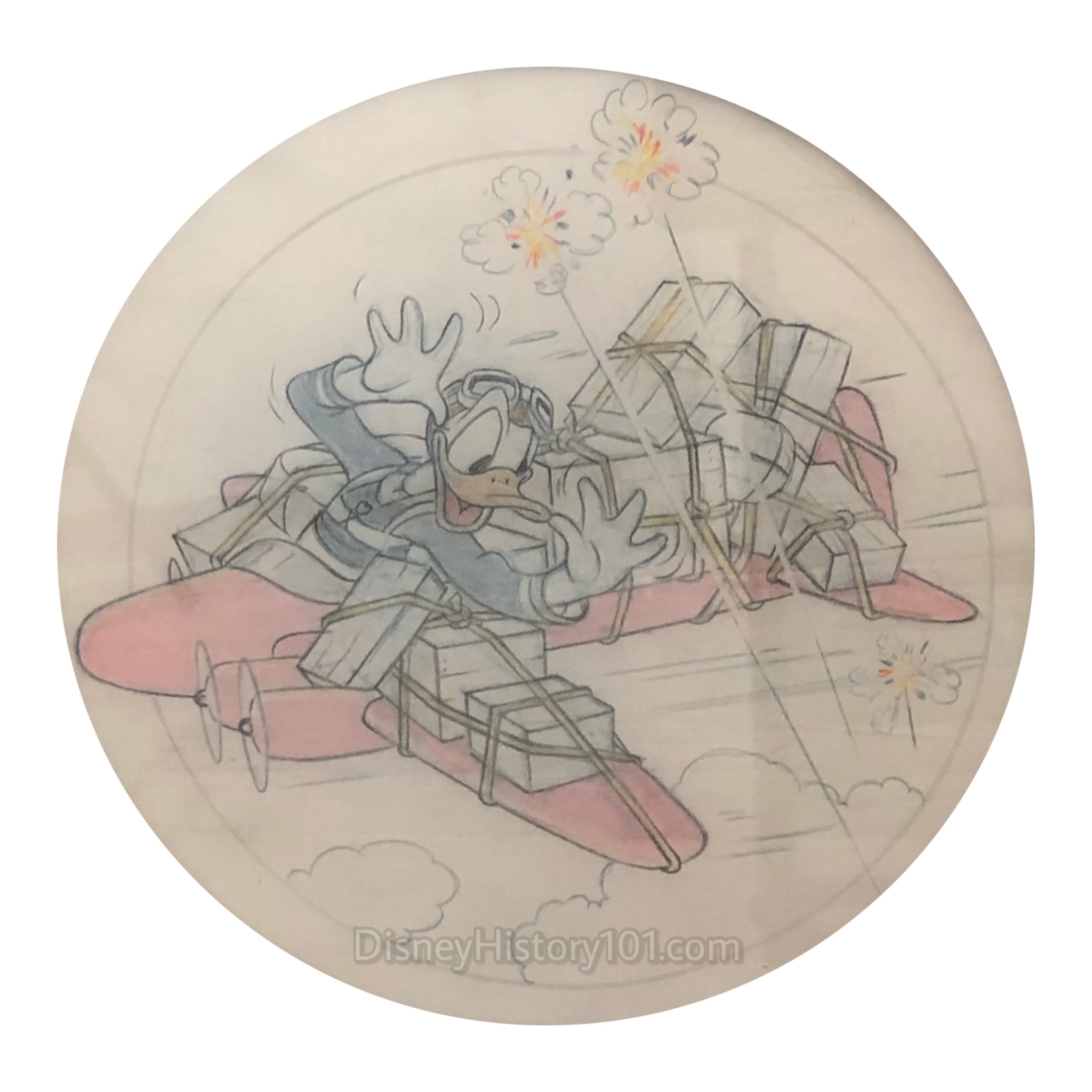
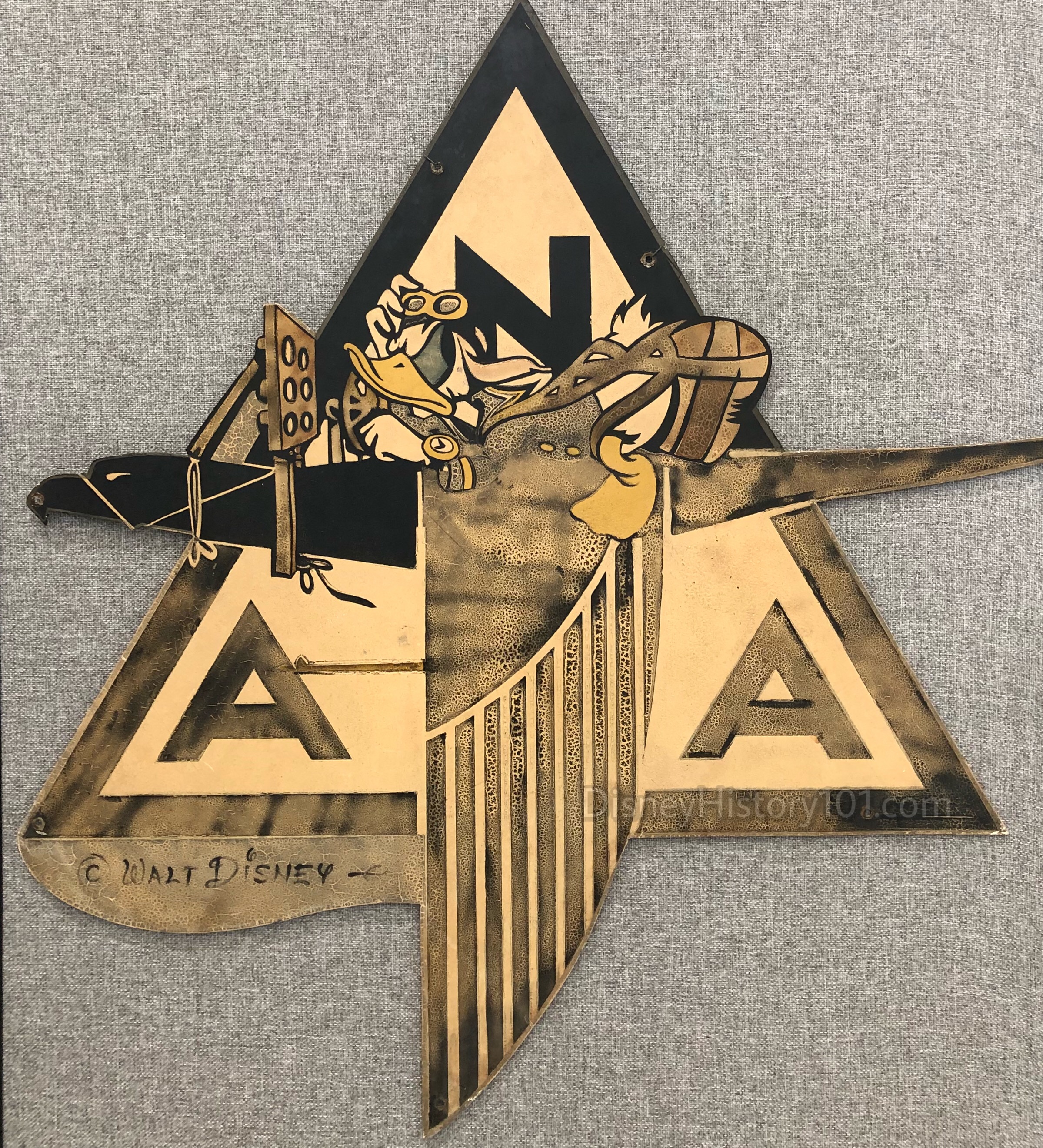
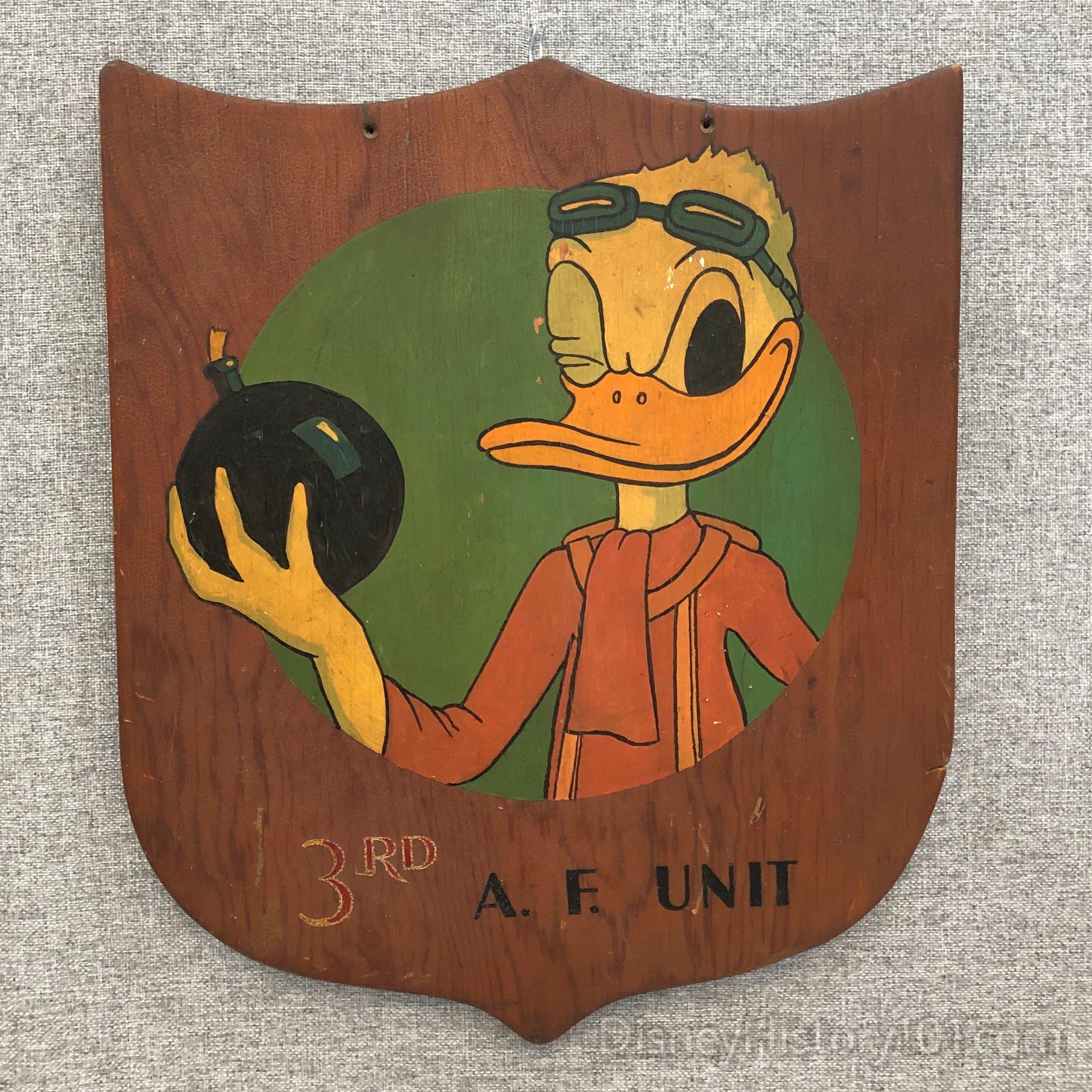
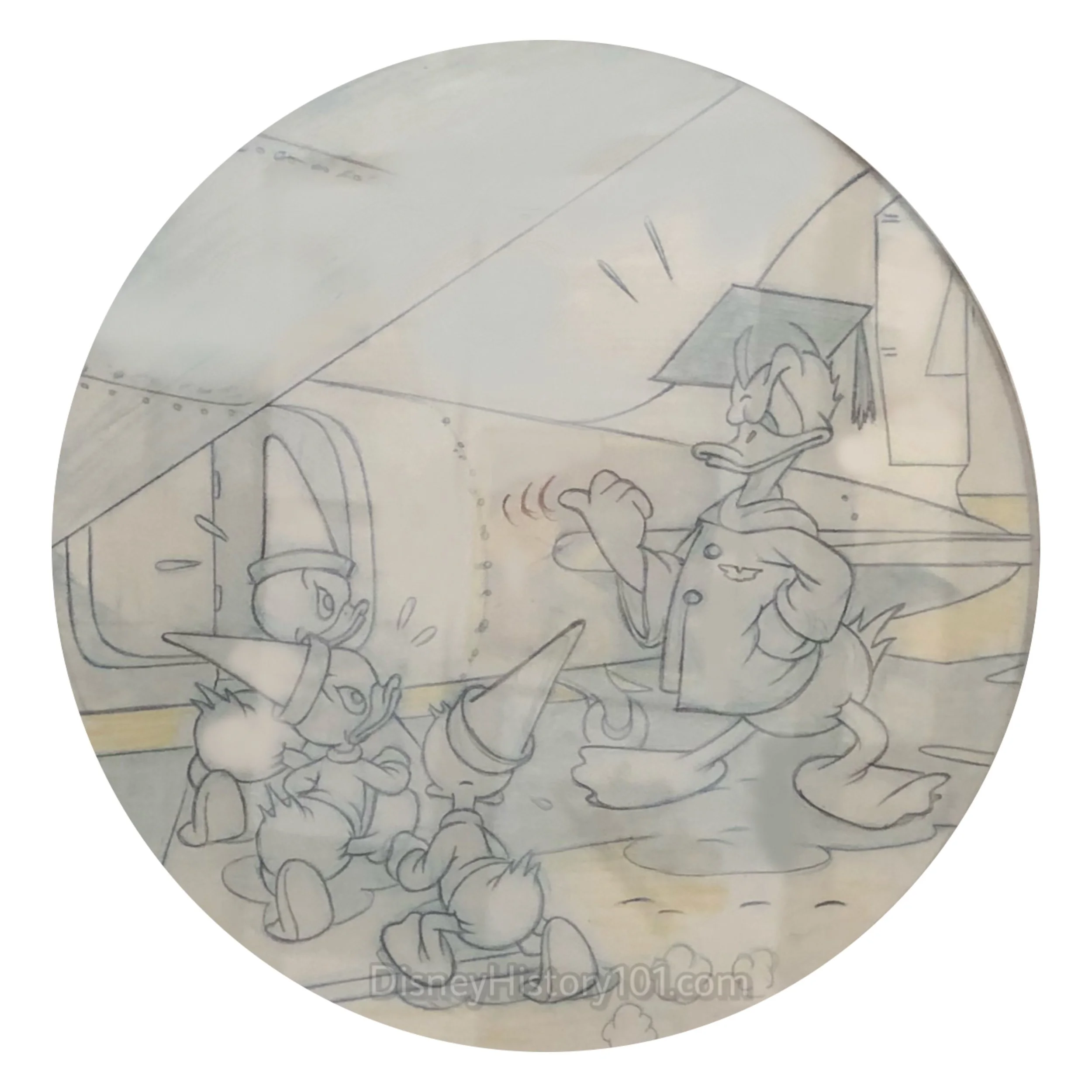
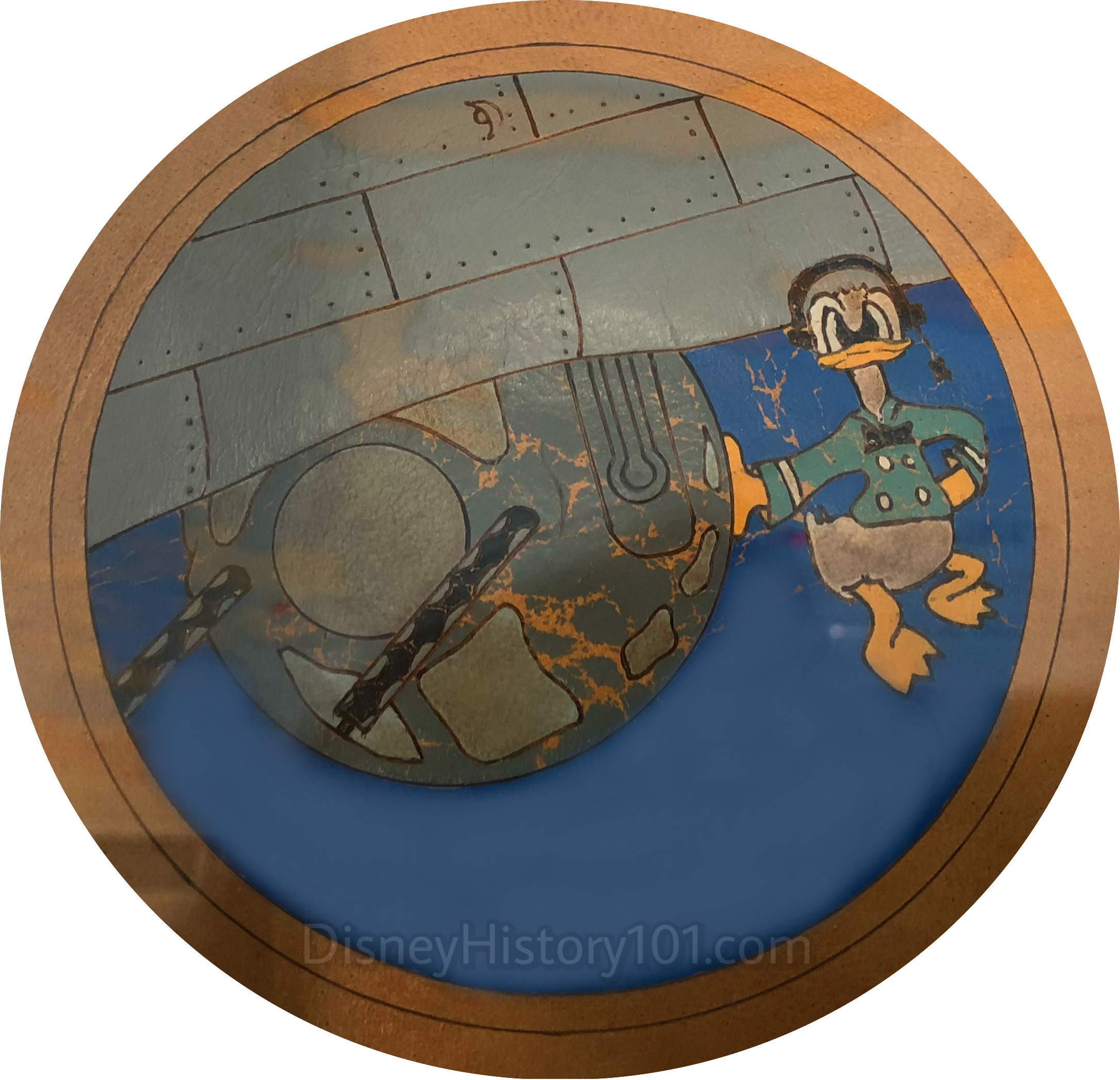
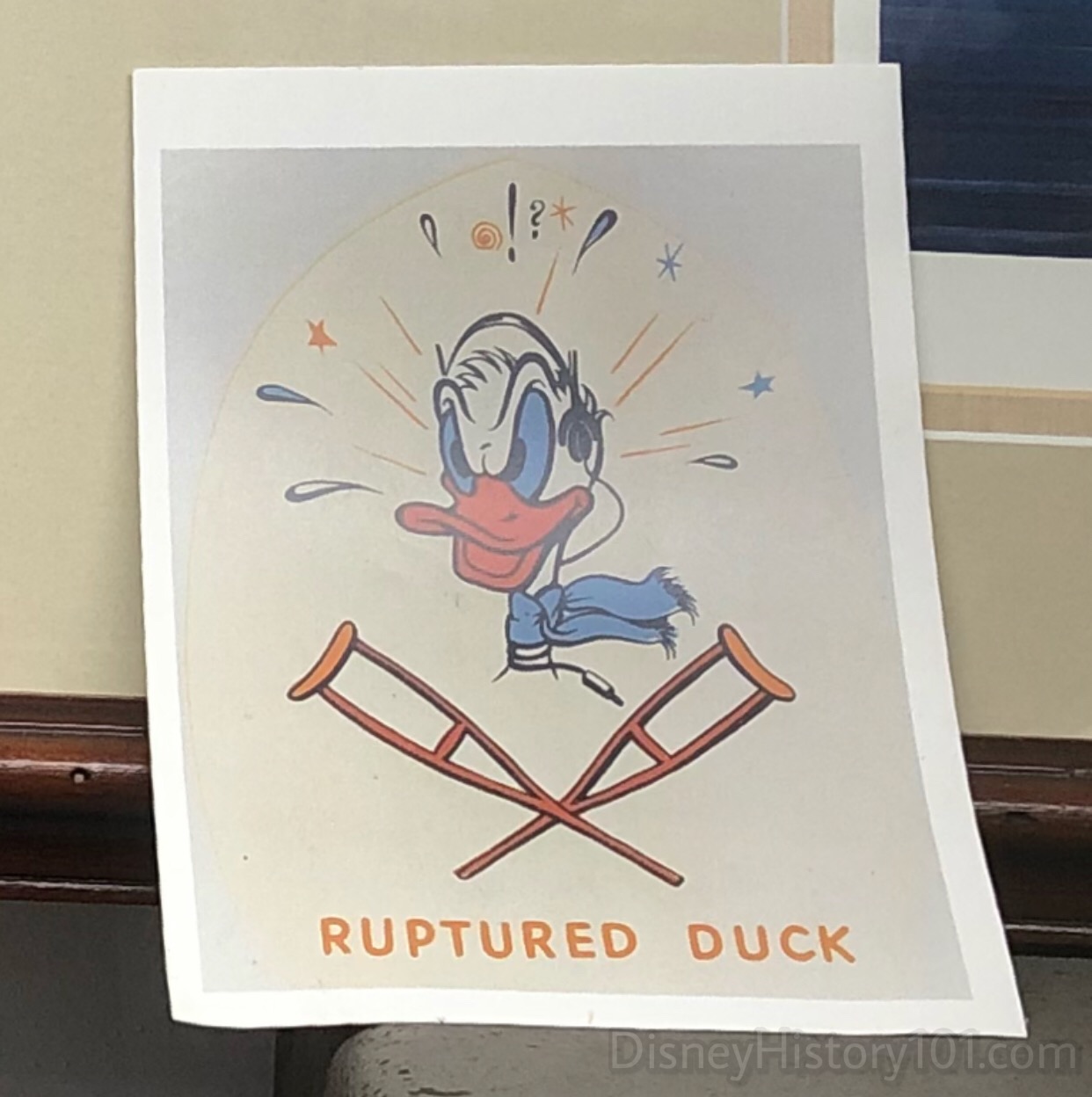
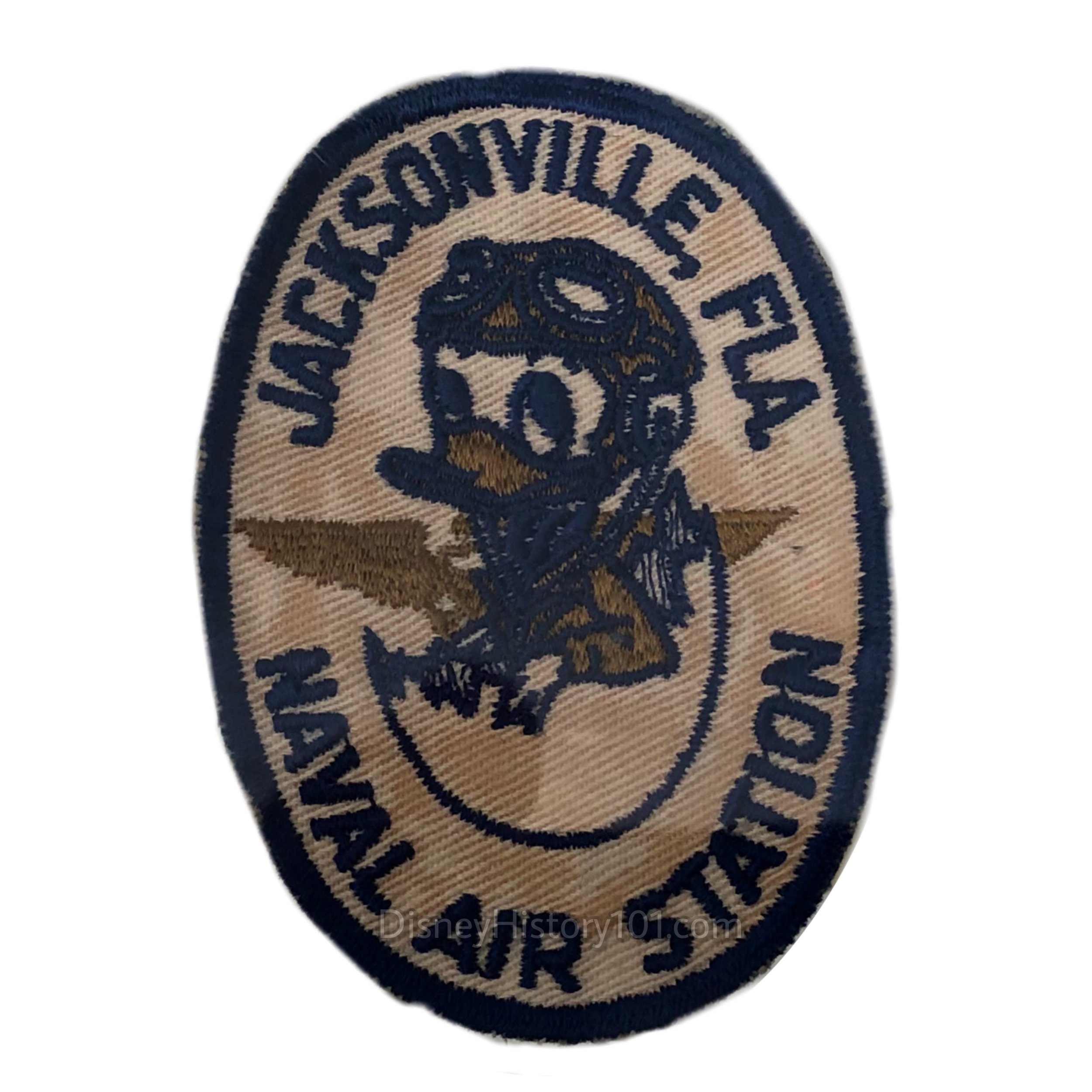
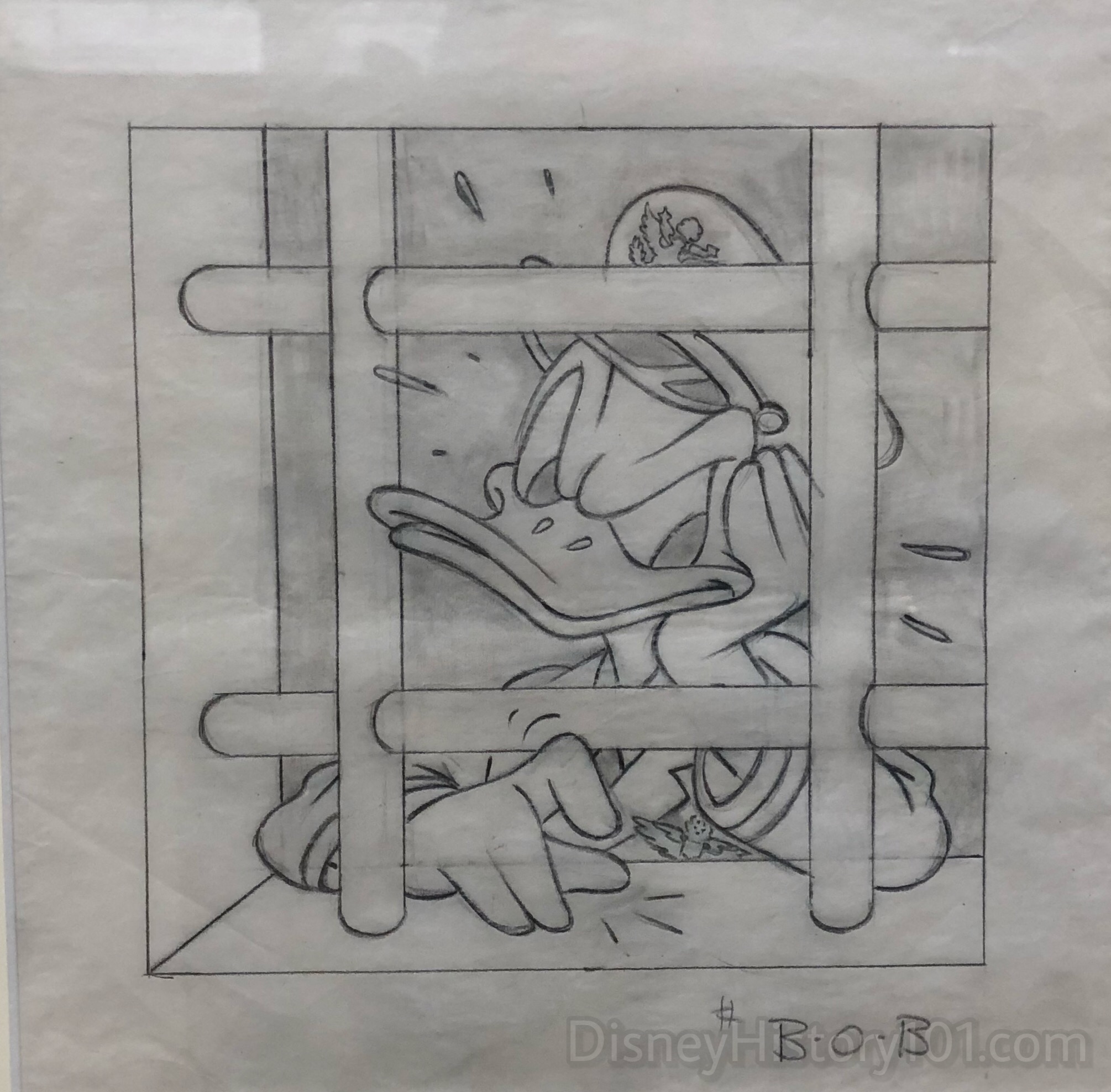
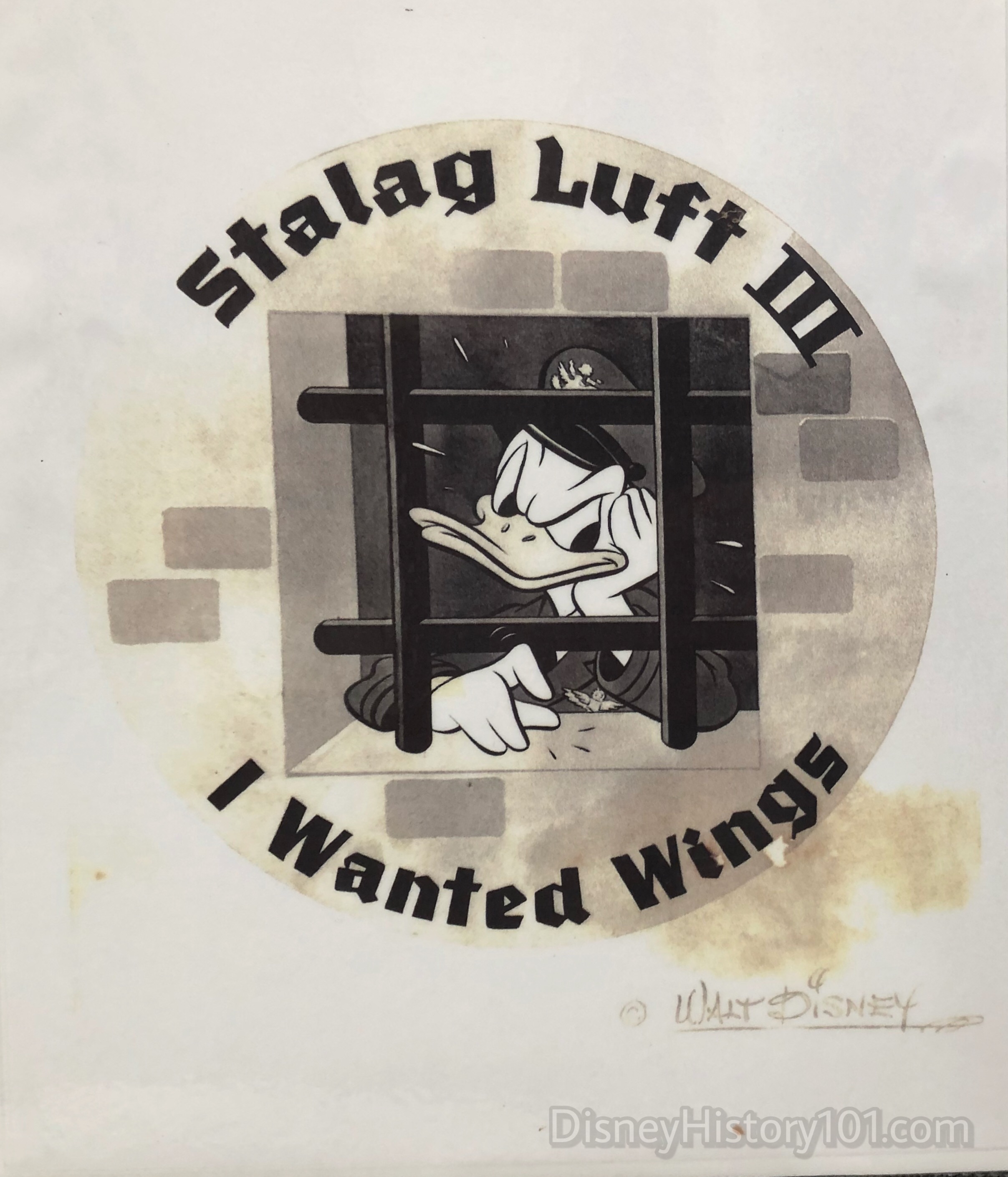
Donald Duck may have been featured in at least 146 of the 1,200 designs, but many lesser- known characters were also sought after. These requests came from both United States forces and European allies who had a fondness for Walt’s work. Many Silly Symphony characters appeared as insignias - Abner (“The Country Cousin”, 1936), the Three Little Wolves (from the wildly popular 1936 sequel), and even the star of The Ugly Duckling (from Walt Disney’s 1939 version). The 1941 feature film The Reluctant Dragon may not have been popular with critics and audiences, but it’s animated star was memorable enough to be specifically requested by at least one Air Force squadron. Please CLICK the following image to explore a gallery of these character insignias!
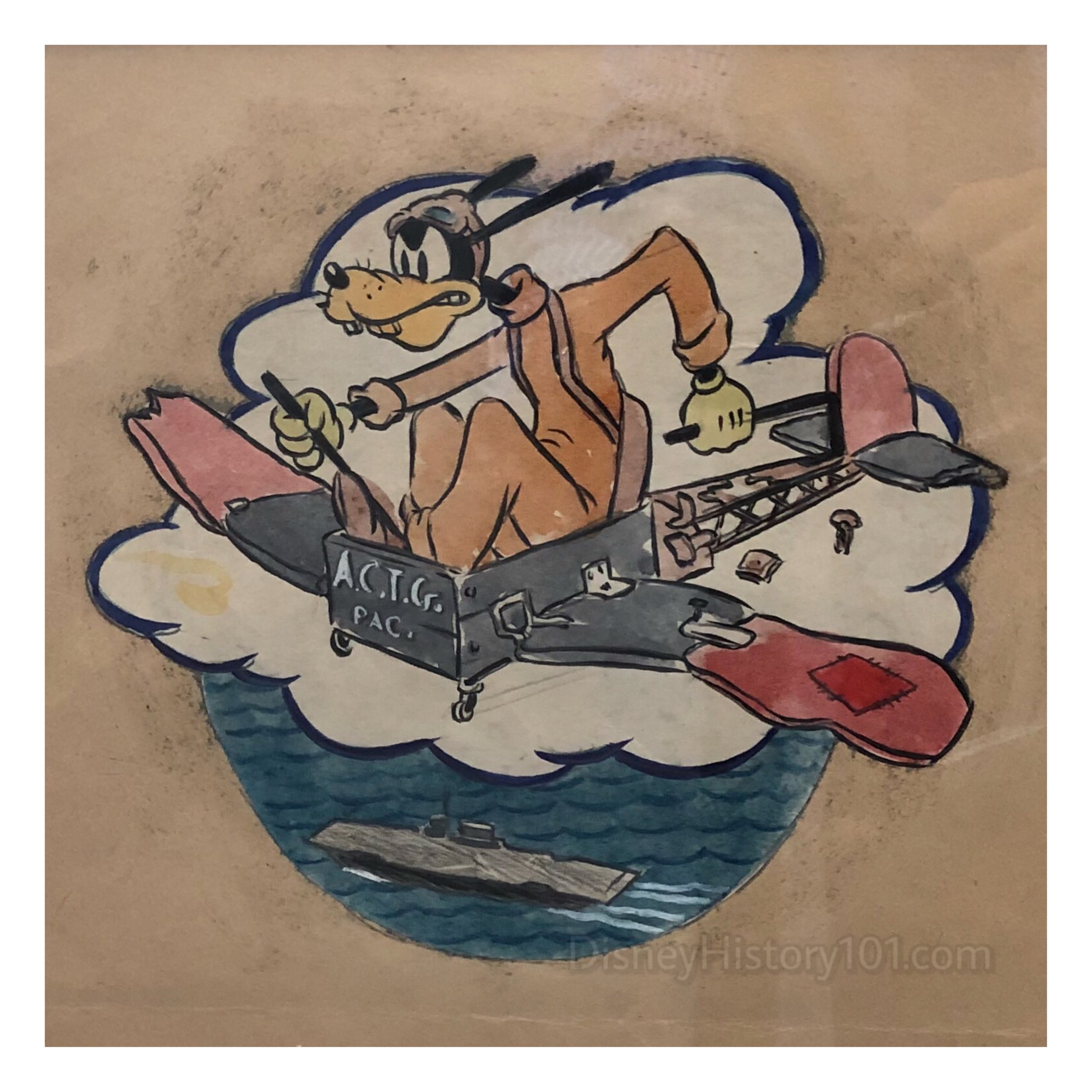

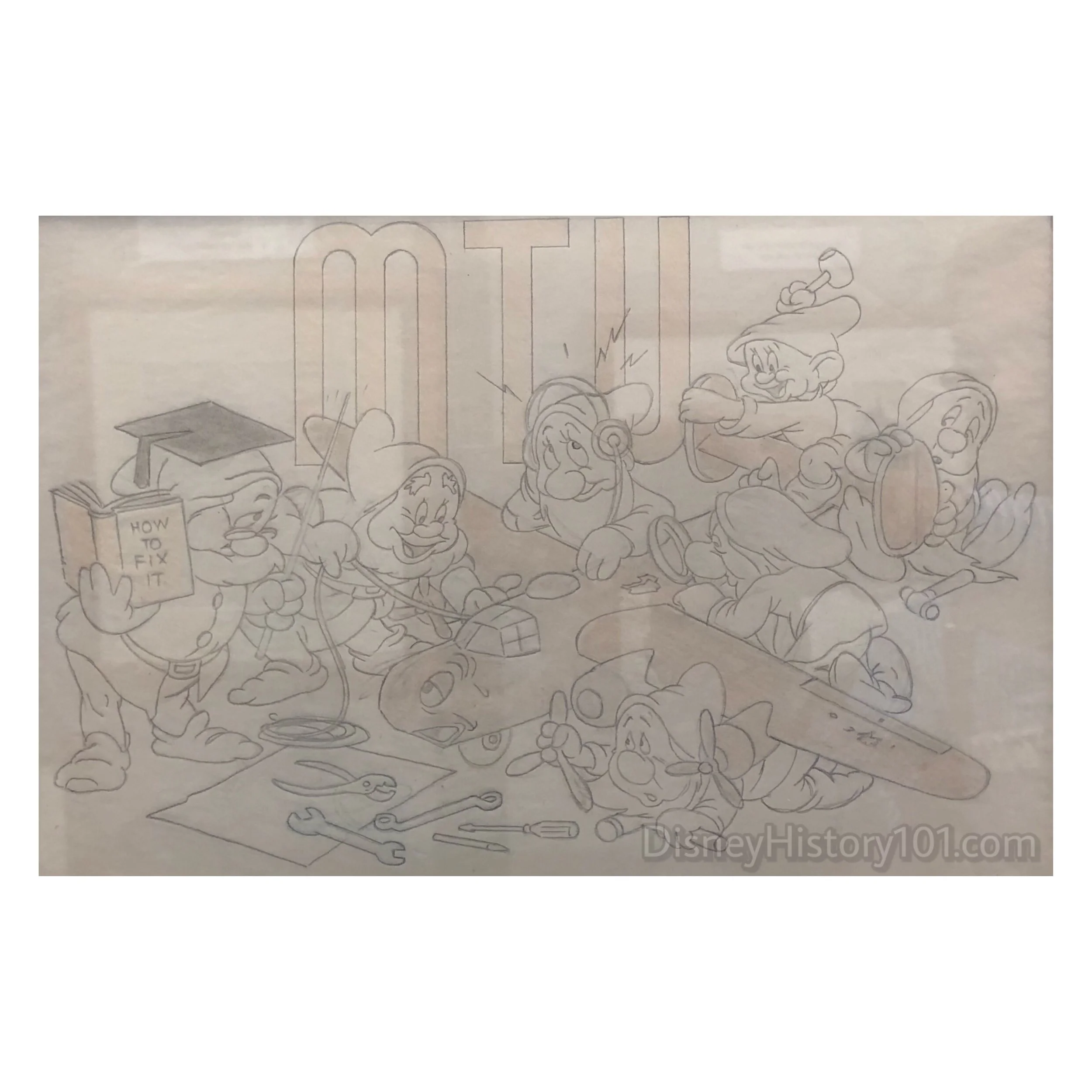
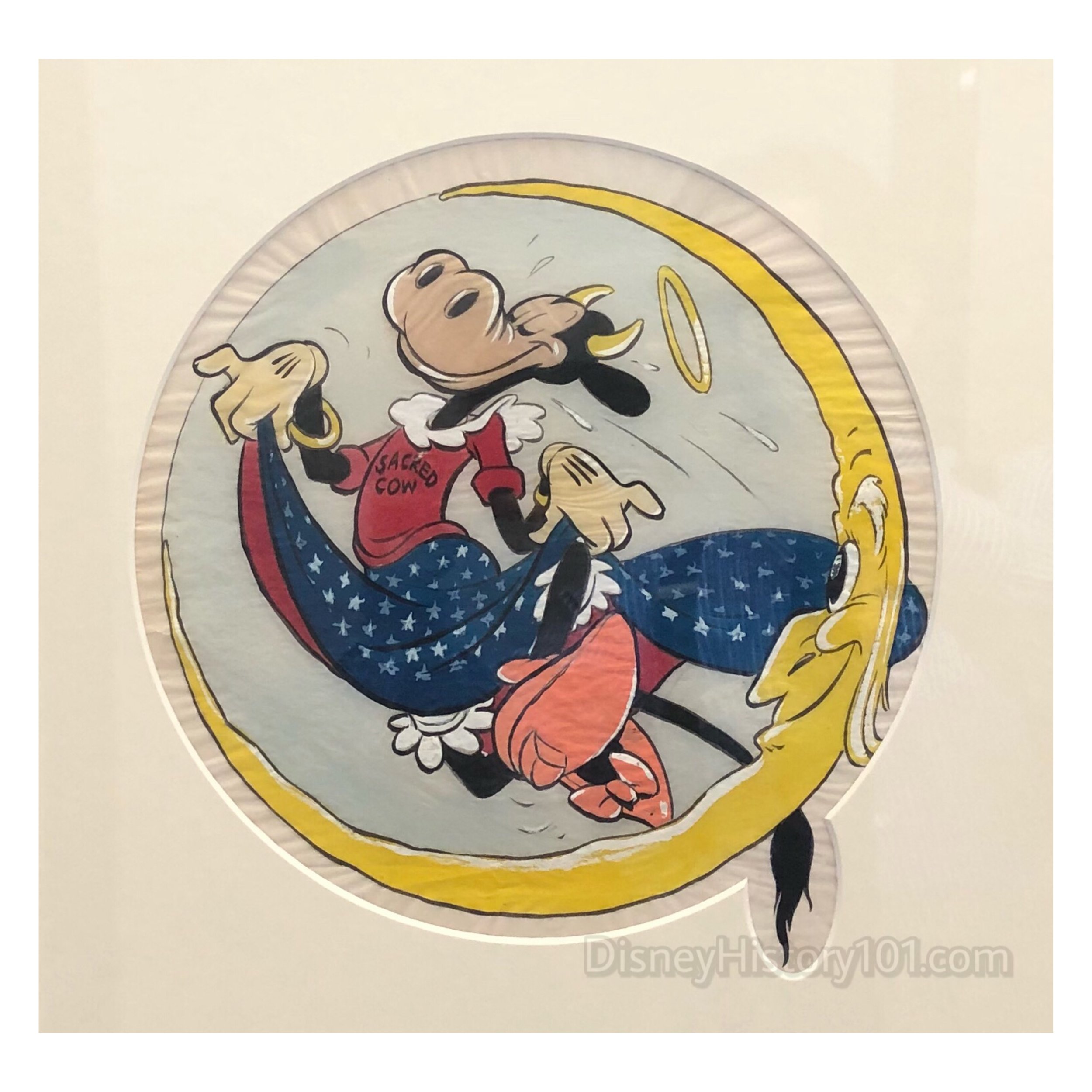
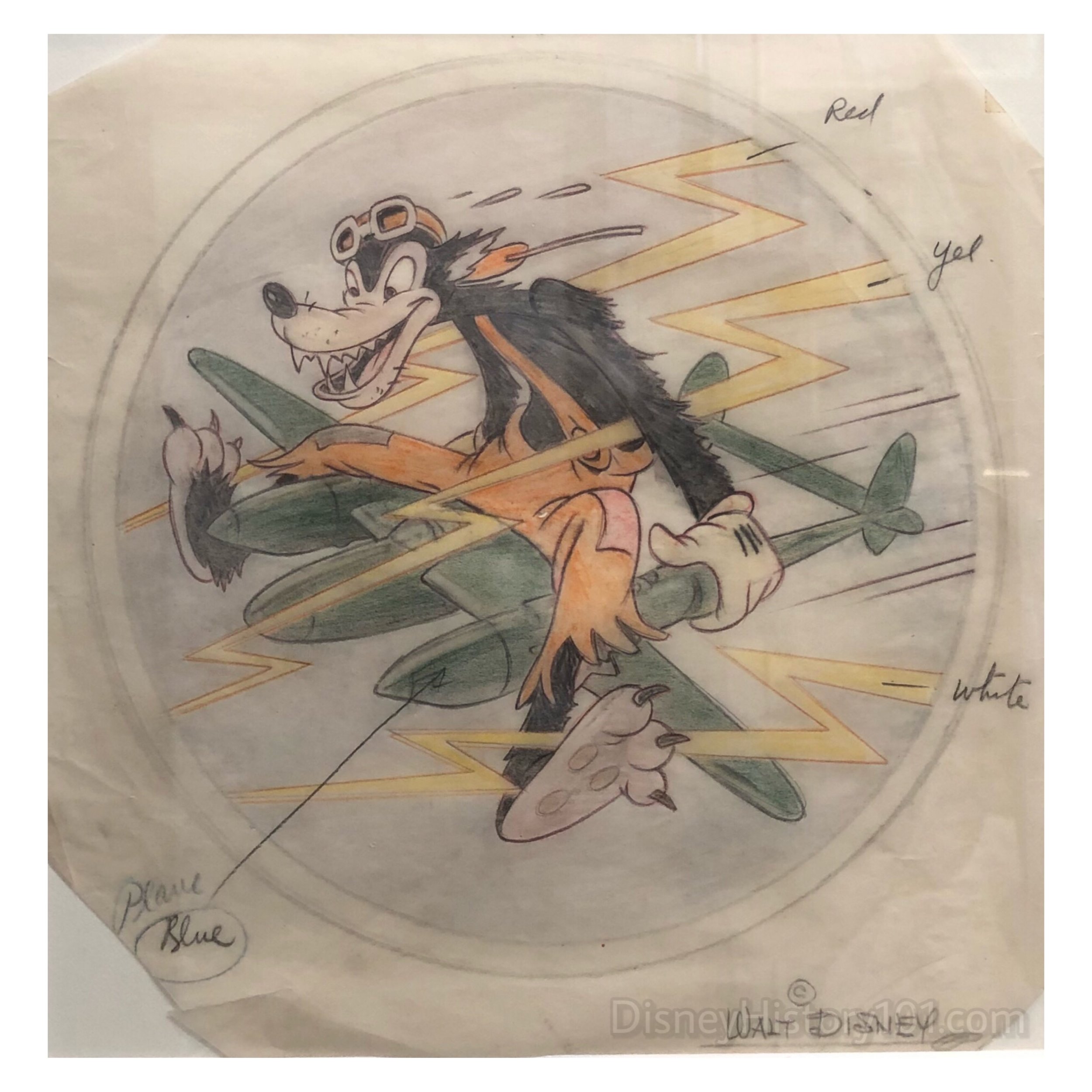
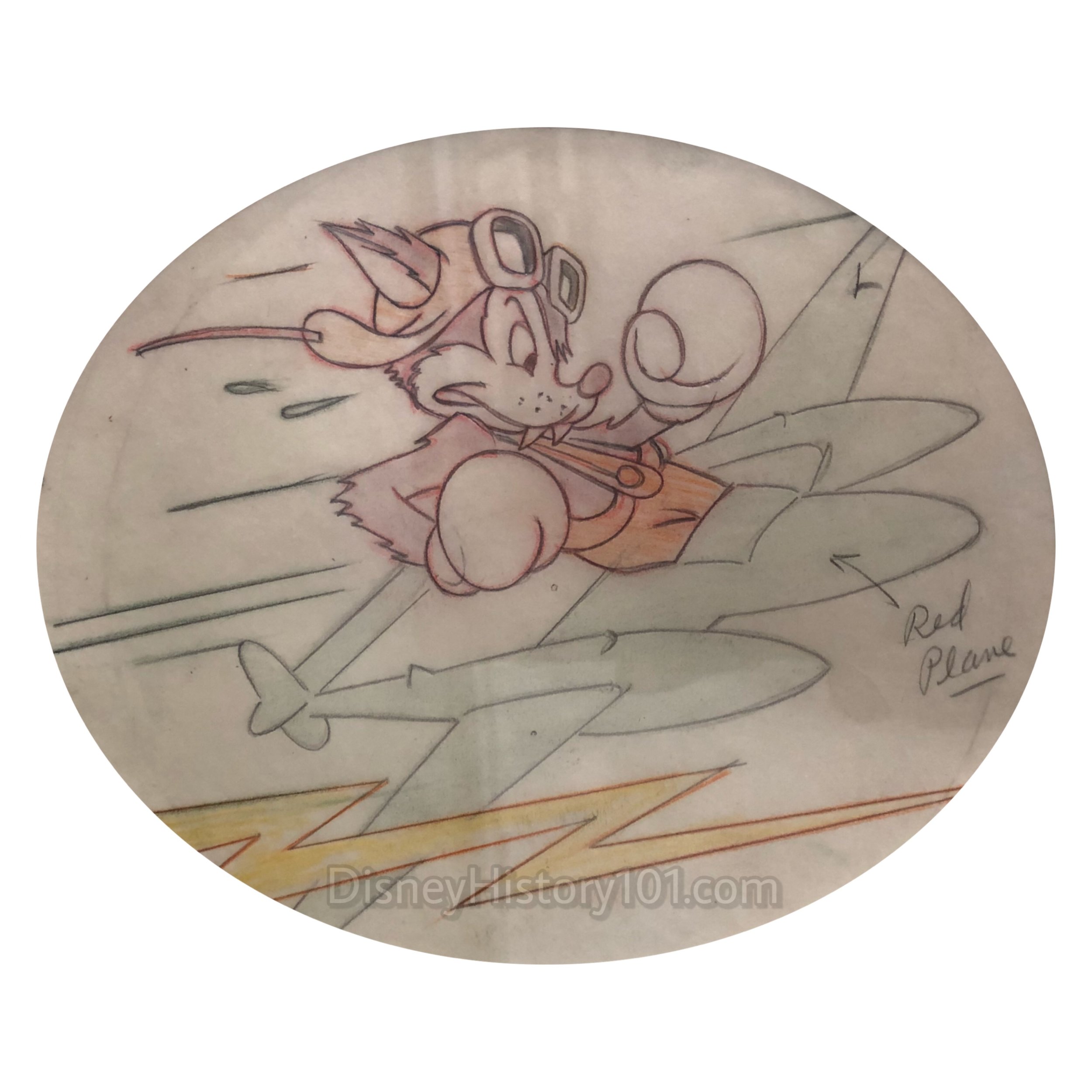
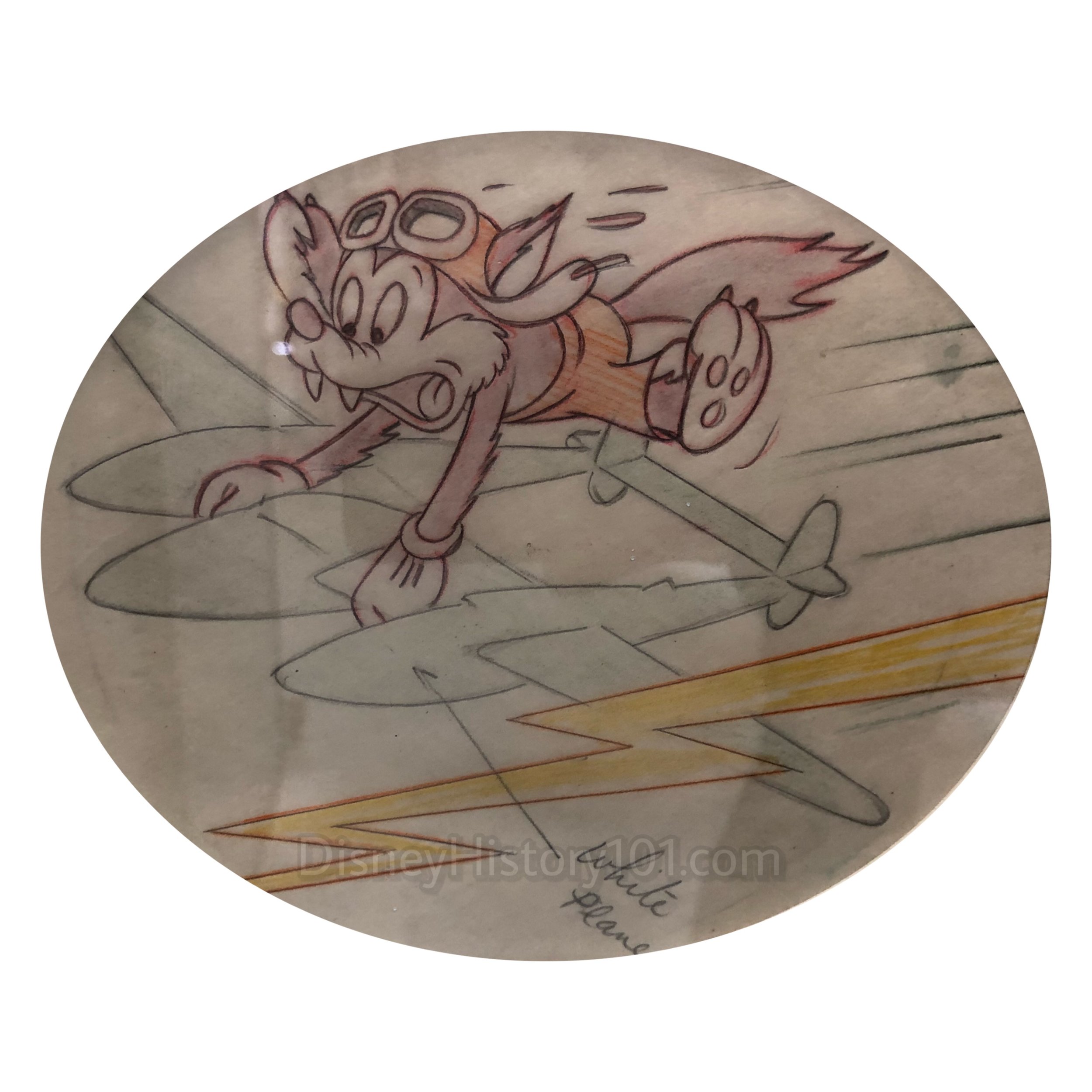
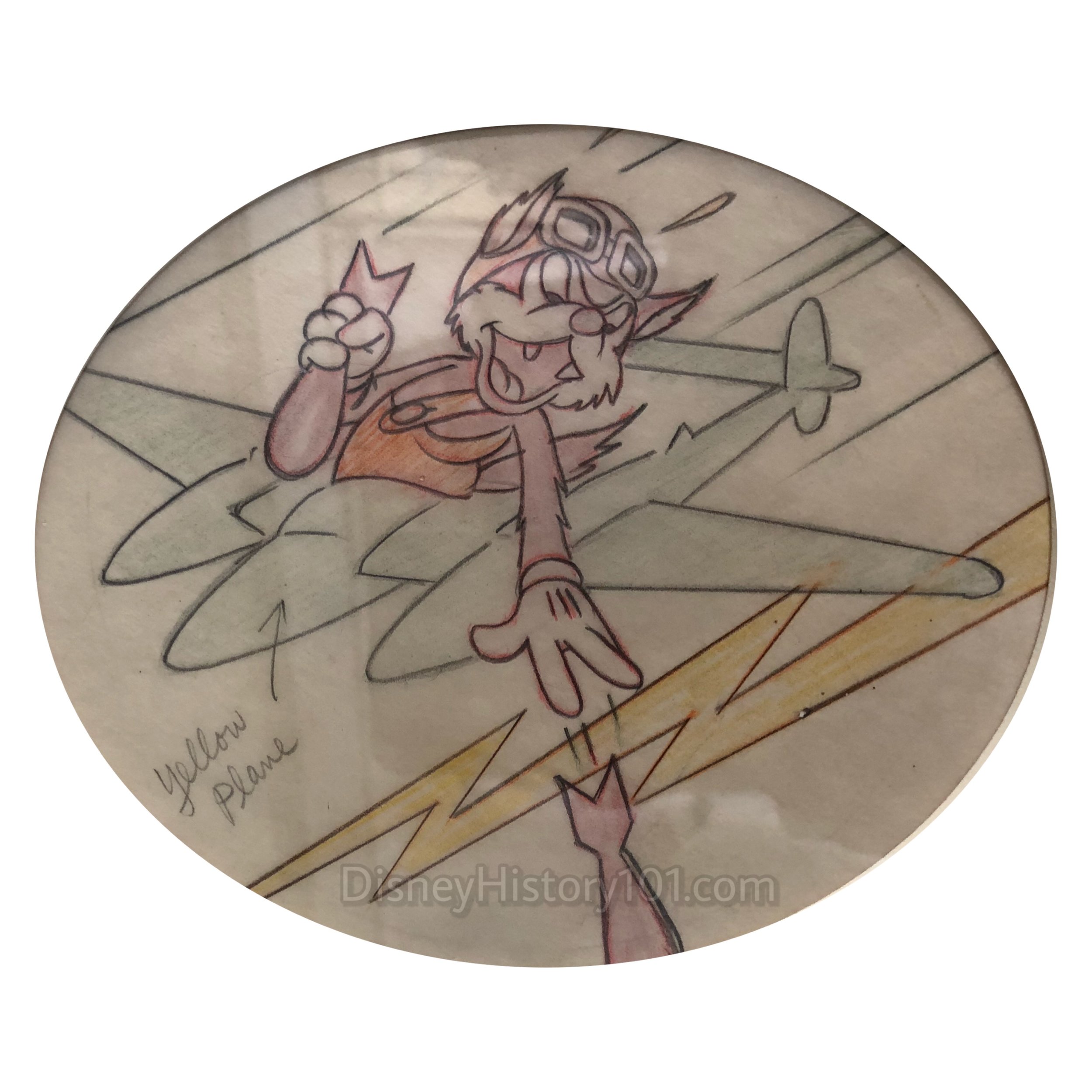
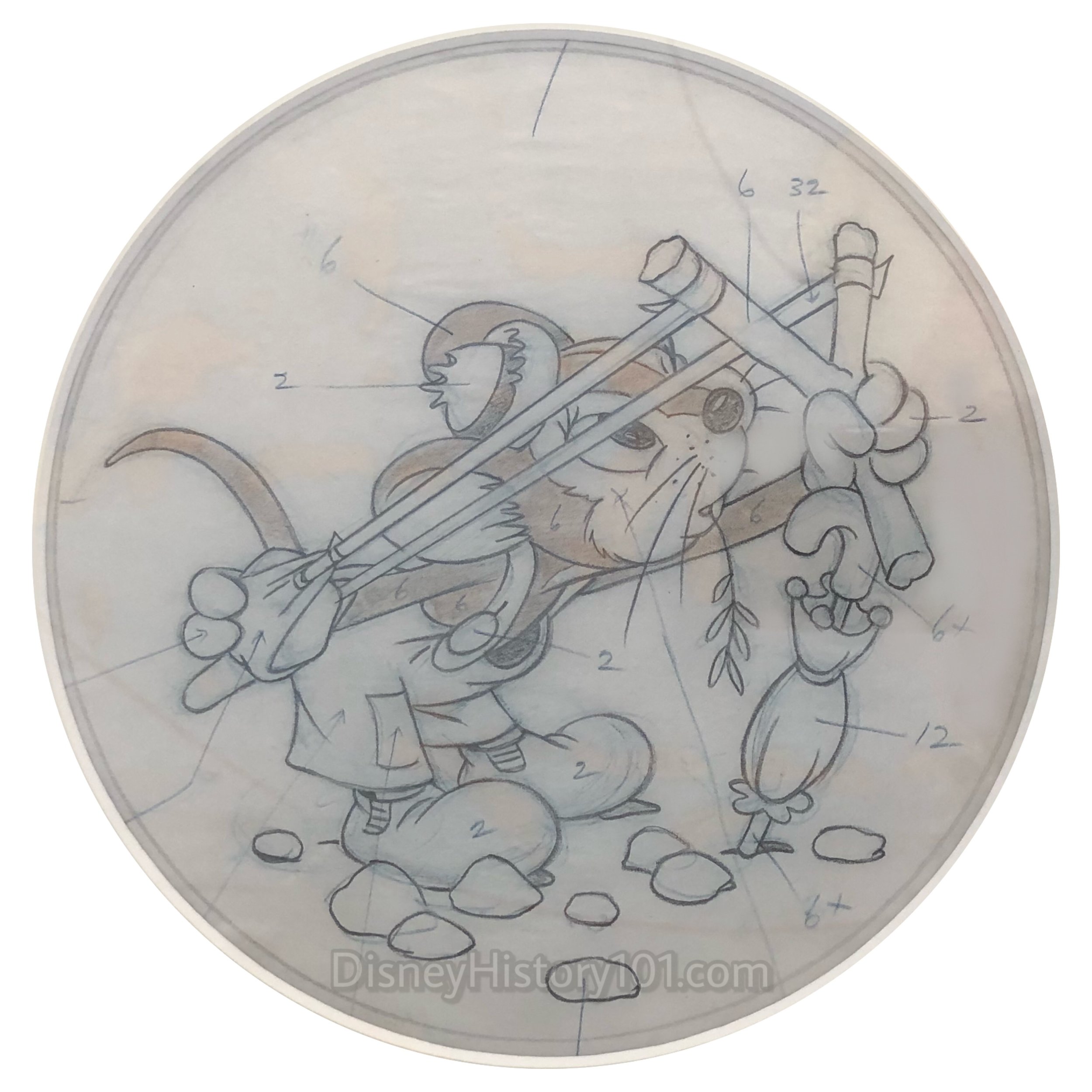
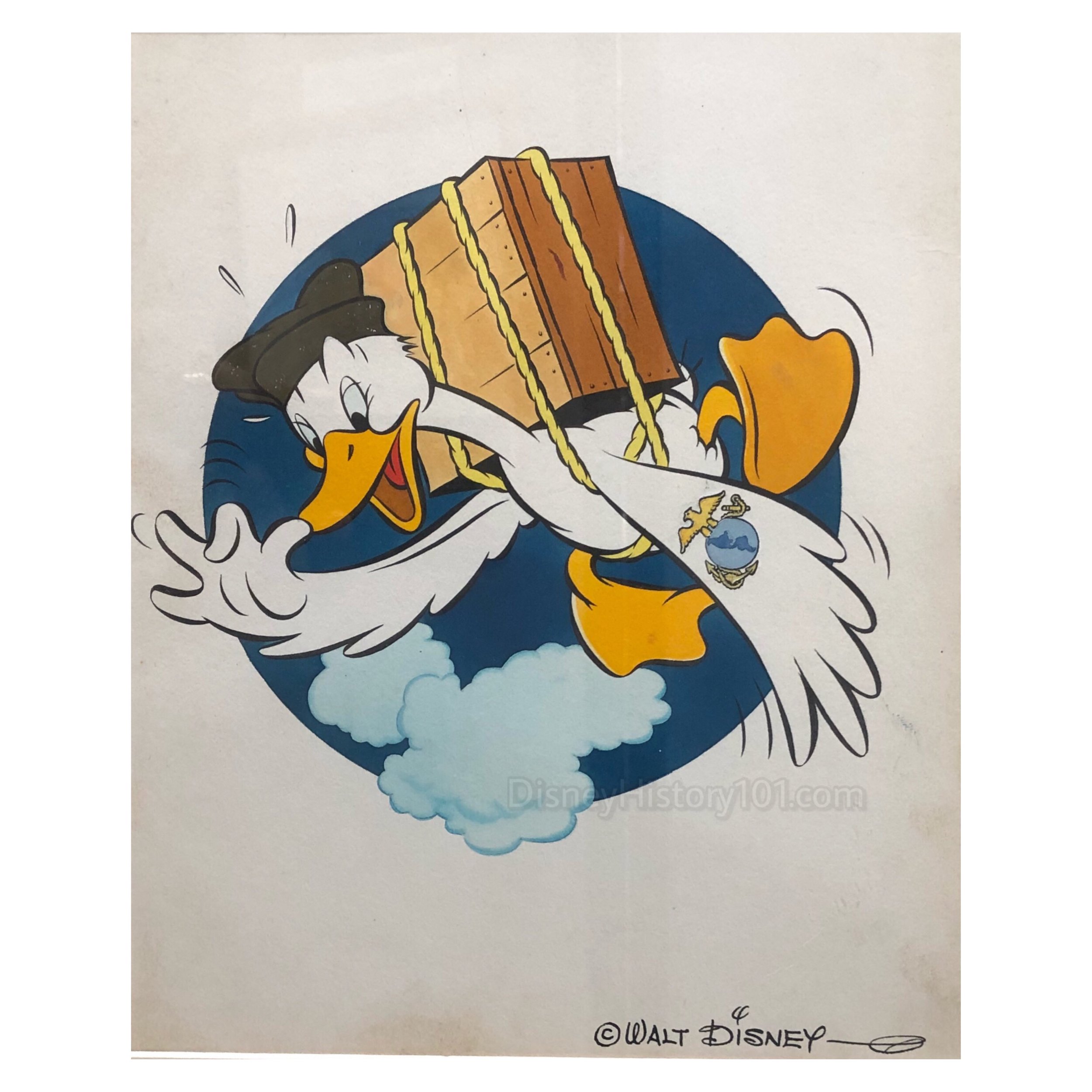
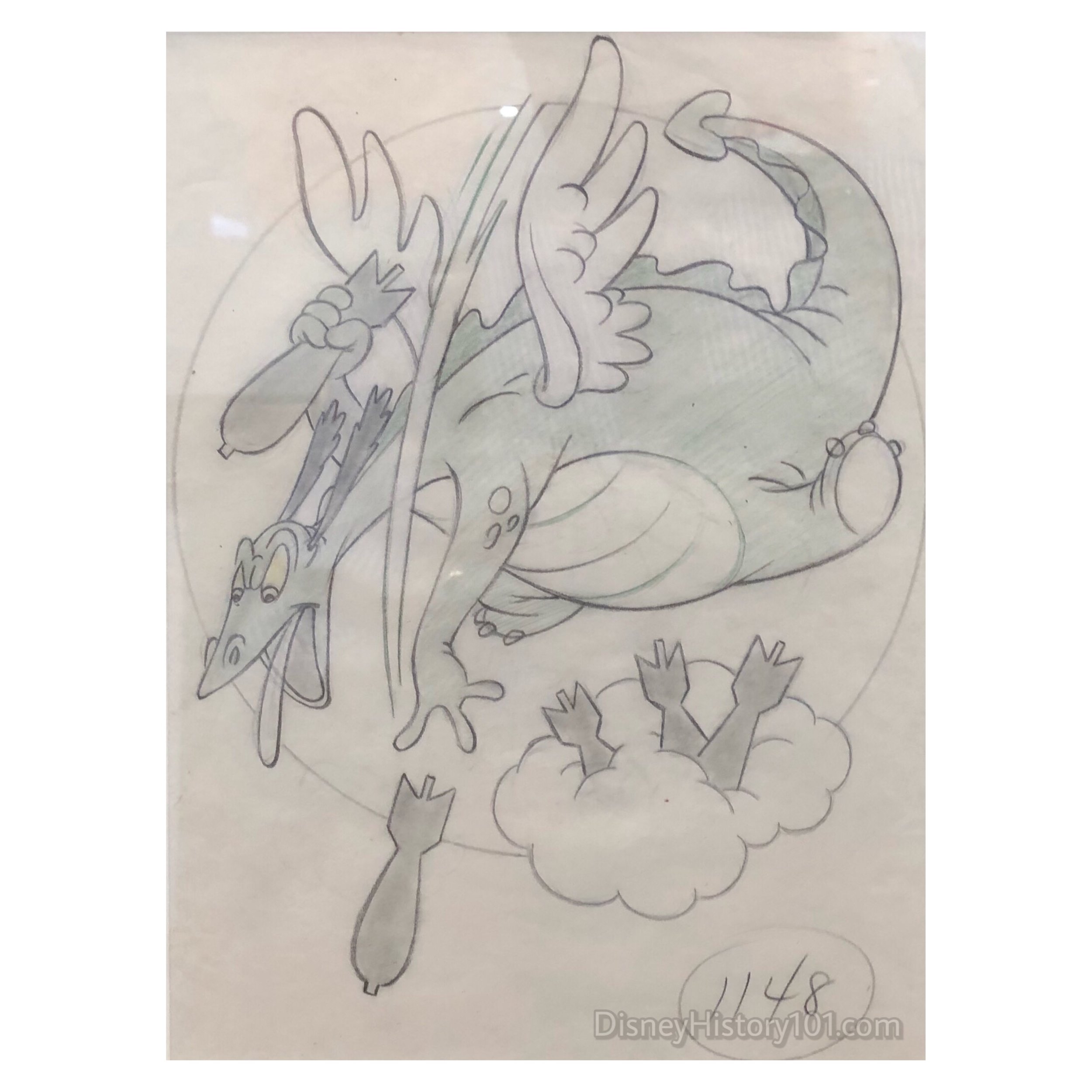
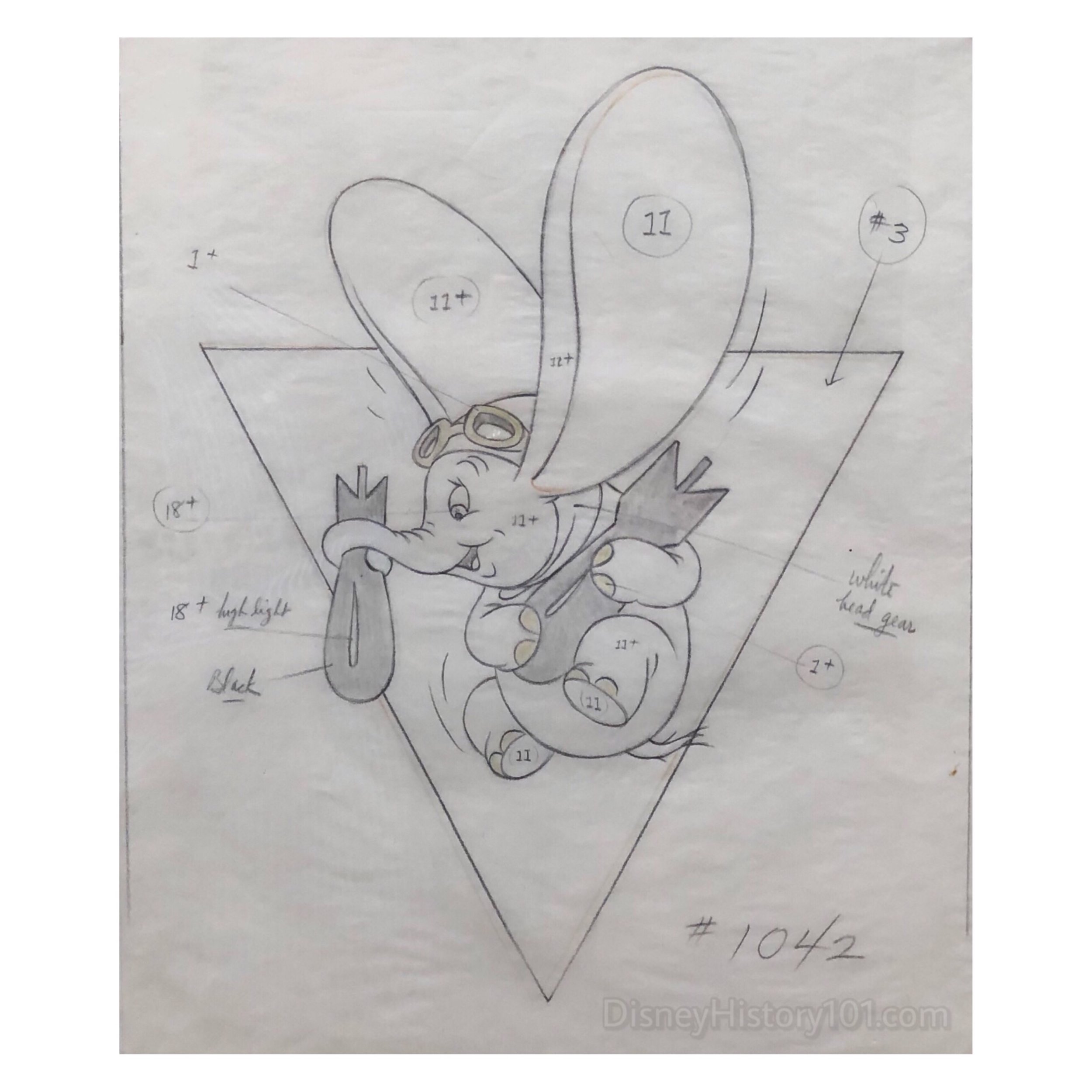
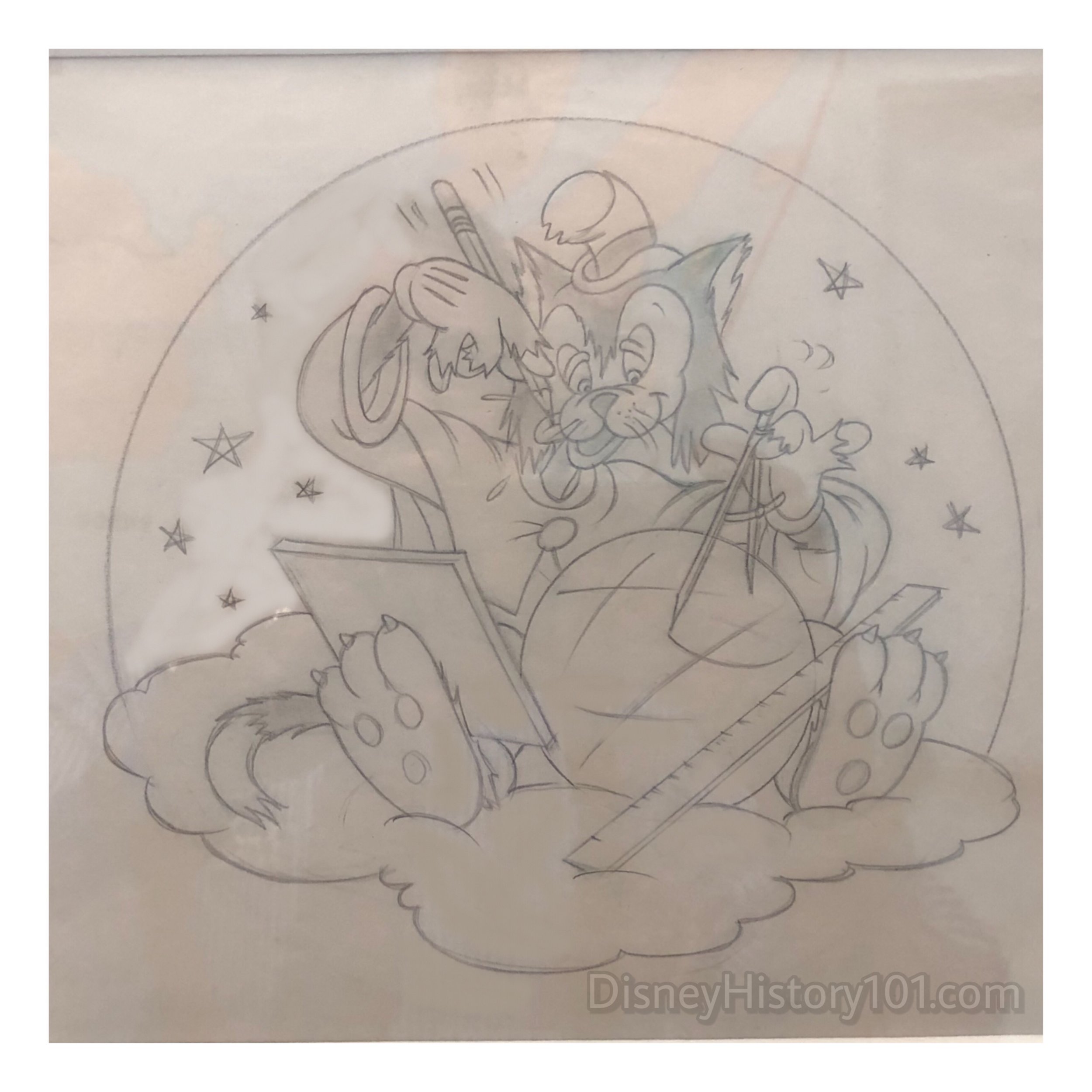
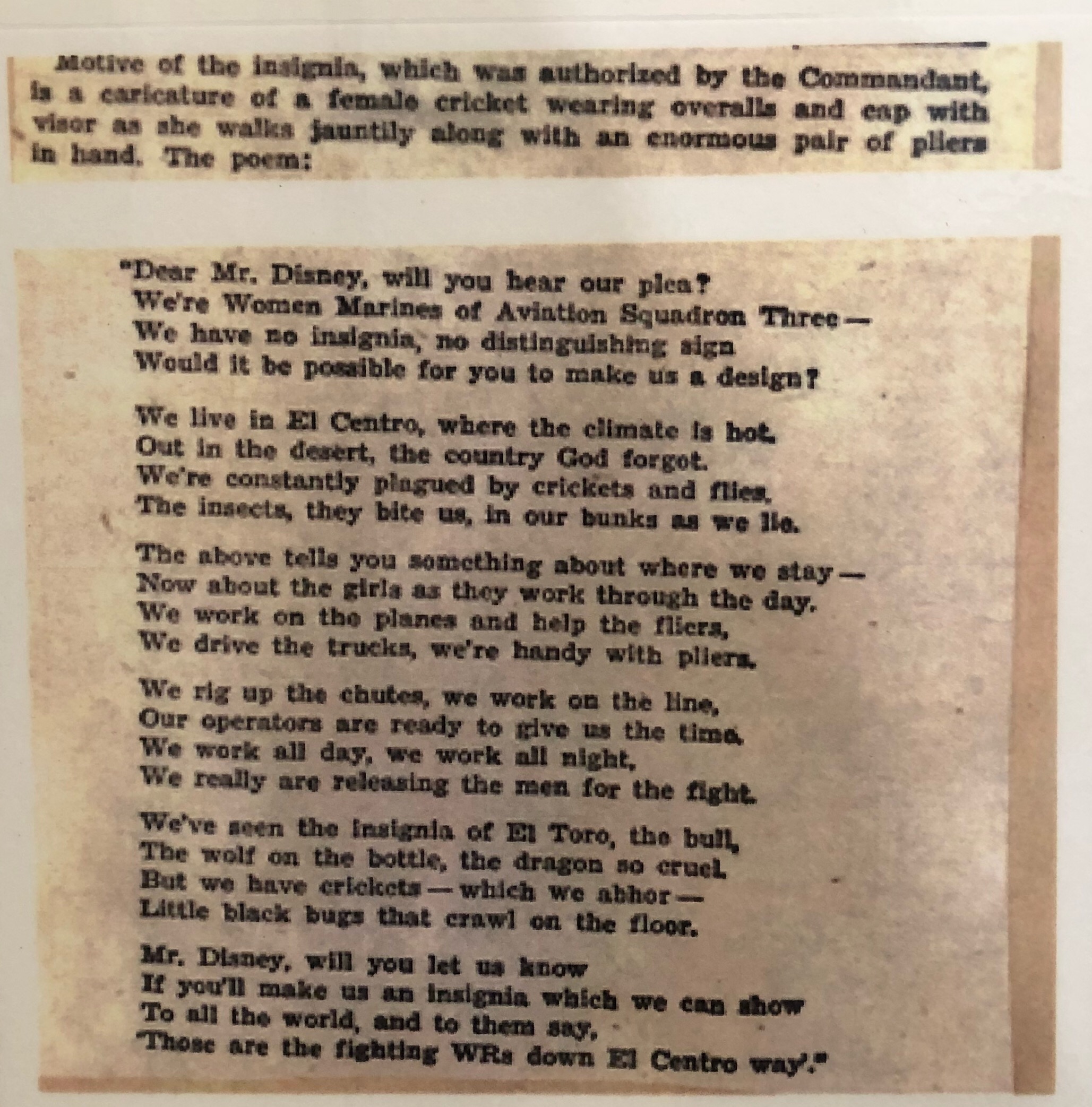
Female squadrons would make specific request for female character insignia which Walt Disney granted. Perhaps the most famous of Walt Disney Studios’ female character insignia is Roald Dahl’s female gremlin (Fifinella), which was granted WASP (Women Air Force Service Pilots). But other specific requests for female characters like Minnie Mouse and Daisy Duck were also made. The women of one squadron at El Centro Marine Base were so interested in a Walt Disney Studios mascot that they wrote their entire request in poem. Please CLICK the following image to explore this artifact and a short gallery of female insignia related artifacts.
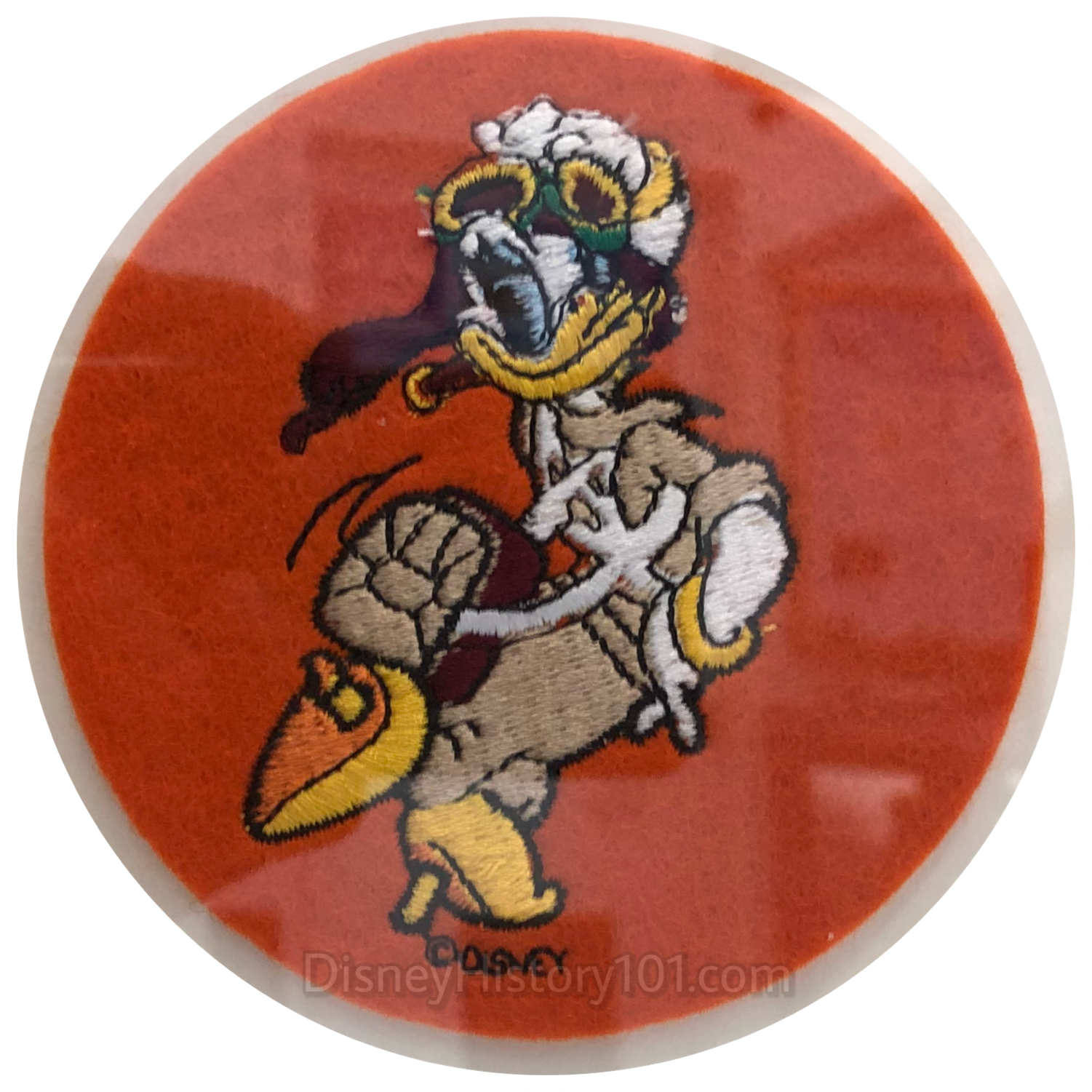
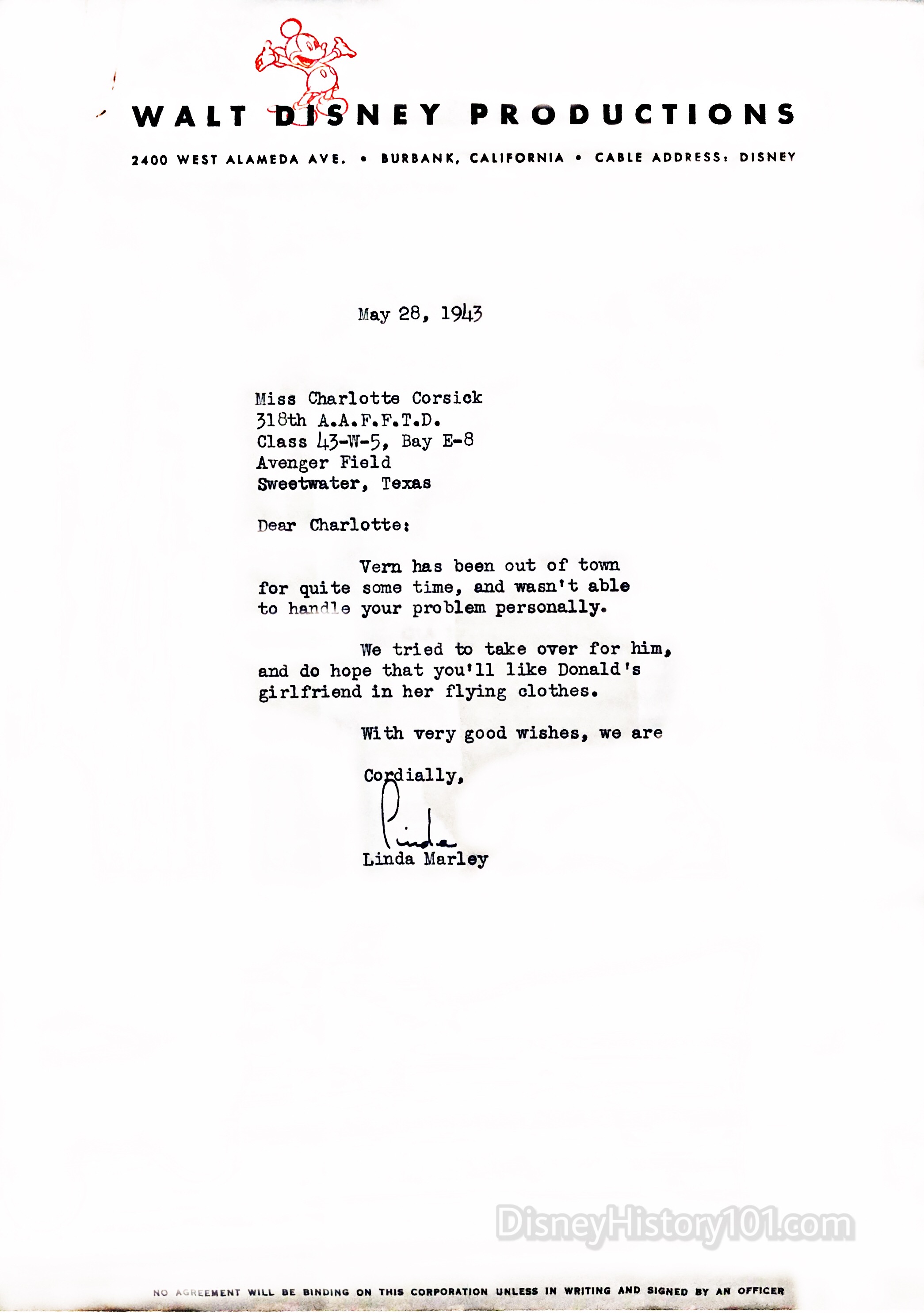
There were also plenty of custom characters created by Walt Disney Studios that were utilized for war-time efforts.

This streamlined, Art Nouveau-stylized insignia was painted by notable background artist Gustav Tengrenn and Walt Disney Studios War Insignia Department personally for HAP ARNOLD! Henry Harley “Hap” Arnold was an American general officer who held the grades of General of The Army and General of the Air Force, promoted to full General during wartime (1943), and appointed to five-star General of the Army.

THE U.S. NAVY SCOUTING SQUADRON 11, pencil. This insignia is reminiscent of The Department of Agriculture Lend Lease Insignia, as well as some designs produced for Victory Through Air Power!
Perhaps one of the most intriguing “Disney” character insignias wasn’t even produced by Walt Disney Studios.

During World War II, Walter Lantz Studios received a request for the beloved “Walt Disney version” of Oswald the Lucky Rabbit! This came after more than a decade of Walter Lantz’ theatrical Oswald the Lucky Rabbit shorts. The studio complied and produced this insignia for UNITED STATES NAVY V.O.3. OBSERVATION SQUADRON, and is currently part of the Horwitz Collection.
Though the majority of licensed character insignia seemed to end with the collapse of the Axis Powers and Allied victory of 1945, insignia continued to be produced even after the war was over.

Insignias graced aircraft even after World War II, like this Shere Khan on the side of this Grumman F7F-3 (Model G51) Tigercat. This particular aircraft (pictured) continued it’s service postwar into the mid-1950s. When Walt Disney’s The Jungle Book was released during the mid-1960s, this insignia was added to the heavy fighter aircraft.
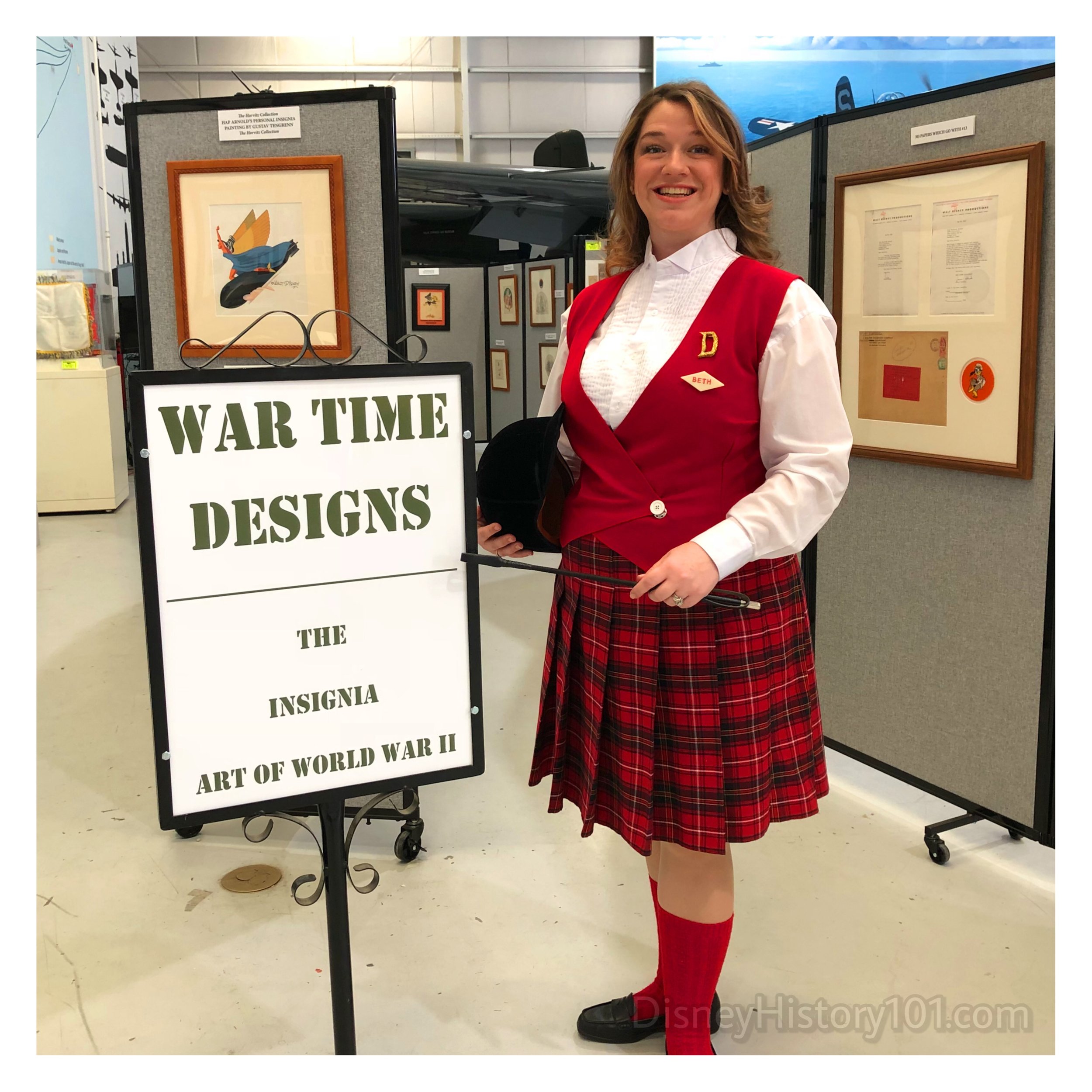
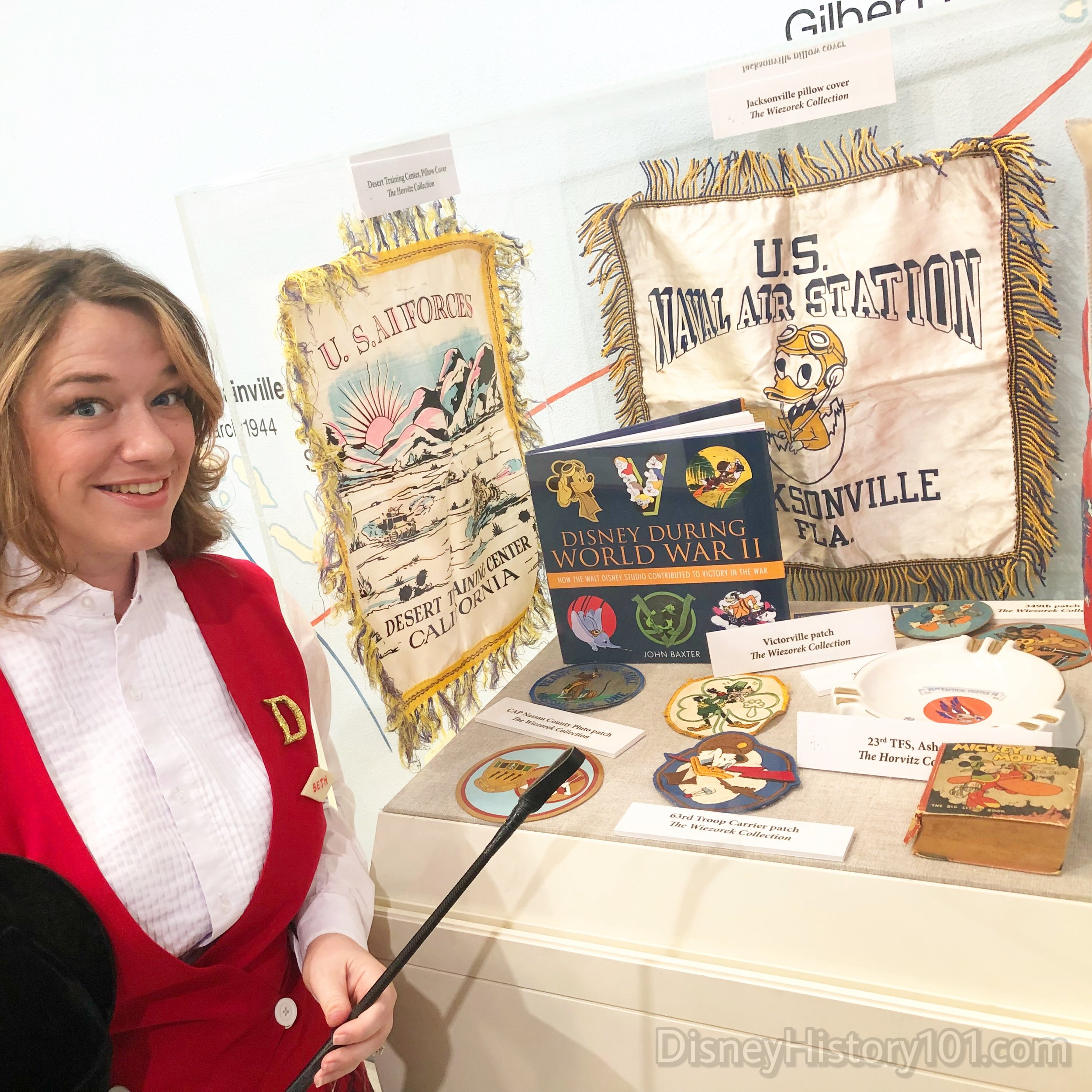
There was nothing funny about World War II - by many accounts it was the deadliest war in human history. At the time, these (sometimes humorous) logos gave their representative members a bit of homegrown nostalgia and deepened their sense of pride. Outside of publication, The Horvitz and Wiezorek collections are two of the most extensive collections of original sketches and paintings of these insignia that we have ever encountered and had the privilege to share with you. The pieces we viewed today represent only a small fraction of what was actually on display. Hopefully this collection (from a never-to-be-repeated era of Walt Disney Studios Illustration) will not be forgotten, but continue to make further appearances in the future for the education and appreciation of future generations!
"LOS ANGELES ARTIST CONTRIBUTES TO MICKEY : THE TRUE ORIGINAL EXHIBITION"
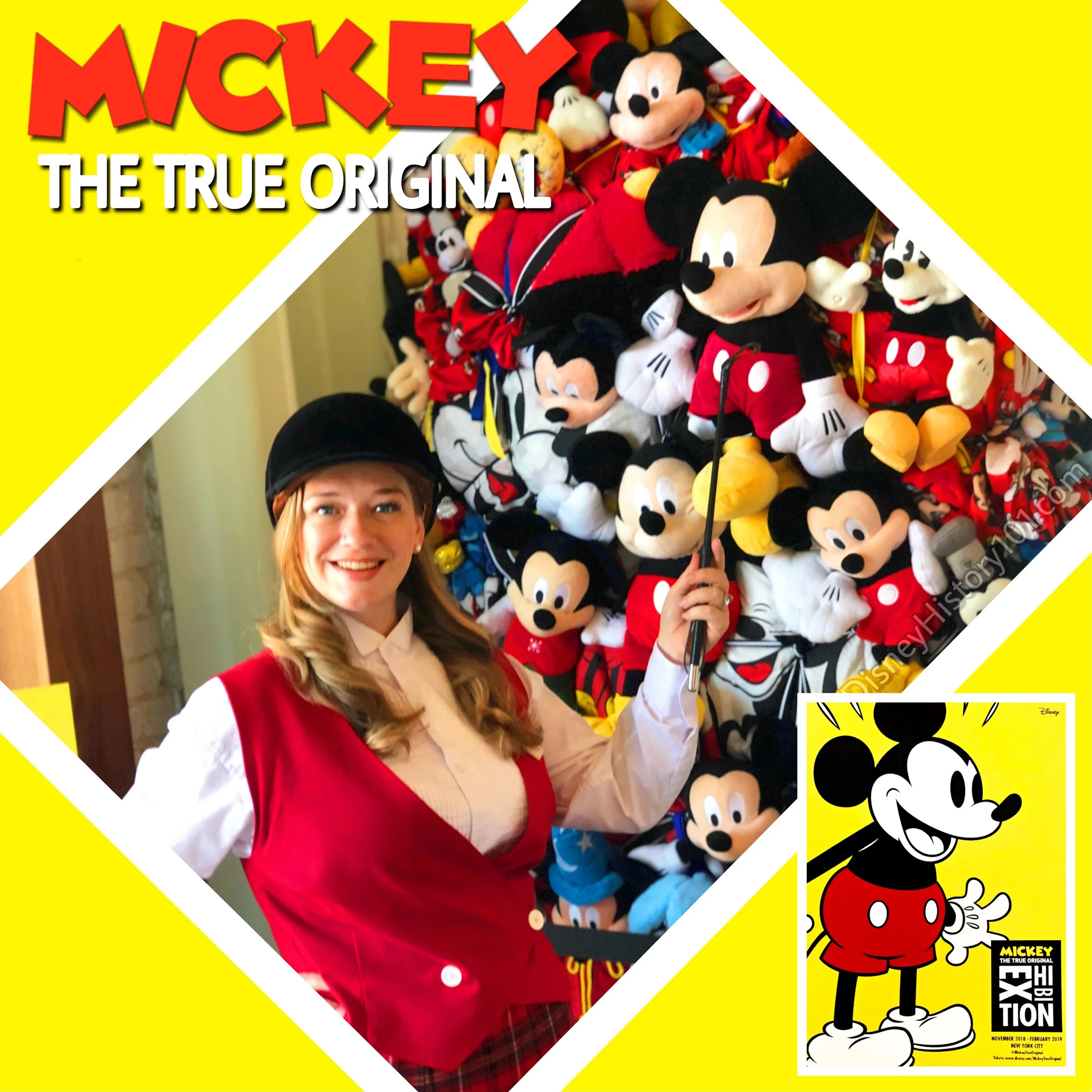
Hey there, hi there, you’re as welcome as can be! Mickey fans both young and old are preparing for the biggest celebration yet of “the guy they call little Mickey Mouse”! Artists from across the country have been selected to create artistic homages to Mickey Mouse. Among them, is local Los Angeles artist Shinique Smith, who created “BALE VARIANT NO. 0026 (ODE TO MICKEY MOUSE, MY FIRST LOVE)”.
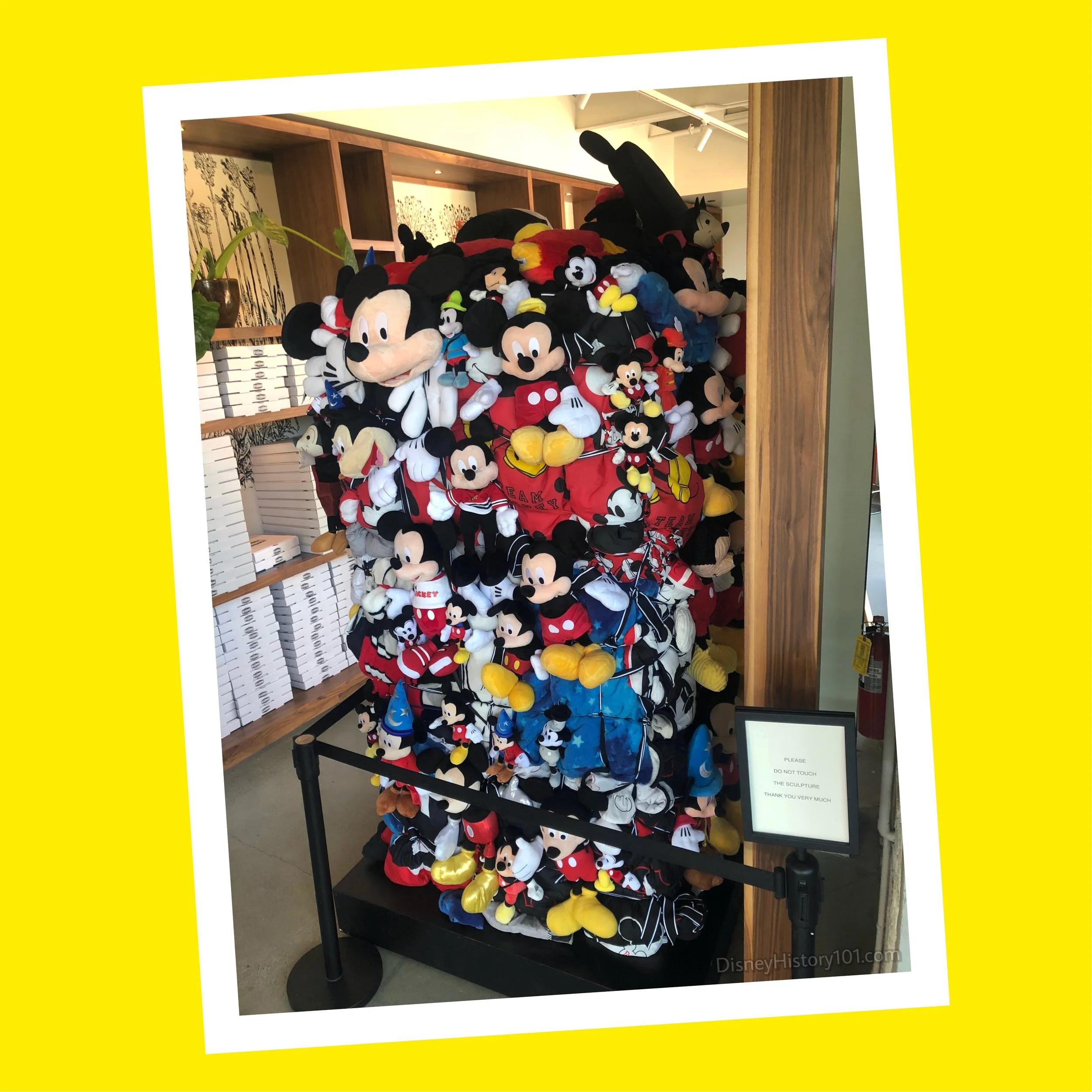
BALE VARIANT NO. 0026 (ODE TO MICKEY MOUSE, MY FIRST LOVE)
by Artist Shinique Smith
MICKEY : THE TRUE ORIGINAL EXHIBITION is a celebration of Mickey’s 90th anniversary, taking place in New York City from November 2018 - February 2019. Our Disney History 101 correspondent will be on hand to bring you the entire experience! If you would like to see more of Shinique’s sculpture before it heads to New York, it will be on display at Lupetti Pizzeria from October 10 - 23, before being shipped off to New York for the big exhibition.
We look forward to seeing you there!
LUPETTI PIZZERIA
710 EAST 4TH PLACE, LOS ANGELES, CALIFORNIA 90013
"MICHAEL GIAIMO on THE INFLUENTIAL EYVIND EARLE"
This article contains excerpts from Michael Giaimo’s lecture at The Hilbert, with some text by our Disney History 101 correspondent.

In recent years, the work of the late Eyvind Earle has gained much appreciation among scenic aficionados and Disney art fans alike! Eyvind Earle Trust has collaborated with numerous galleries and museums in order to present collections of his work for public viewing. Eyvind’s very aesthetic continues to influence the works of other artists, including the artistic style of the highest grossing animated film of all time! Michael Giaimo (Art Director, Production Designer - Walt Disney Studios) explains the impact that Eyvind had on his own art direction over various projects for Walt Disney Studios like Frozen (2013), and the upcoming Disney Animation release Frozen 2 (2019).

A demonstration of Eyvind Earle’s “jewel-like” colors - “Ancient Forest”, “Mist in The Dark Woods”, “Empty Kingdom”, and “Waves of Golden Fire”. Some images may be subject to copyright.
“EYVIND’S AESTHETIC”
“Eyvind’s work was very formal. Most of his compositions were about horizontal and vertical planes. He’s extremely shape oriented. He has these incredibly strong shapes and then elaborate detail and strong silhouettes, which he uses to create a growth of trees or a castle on a mountaintop, and a strong geometric shape holding it all together.”
“Eyvind created jewel-like colors and he was talented at pulling and massaging analogous colors together. Oranges and greens, cool greens and dark greens side-by-side. Nothing casual about his work at all. Sleeping Beauty is a pageant.”
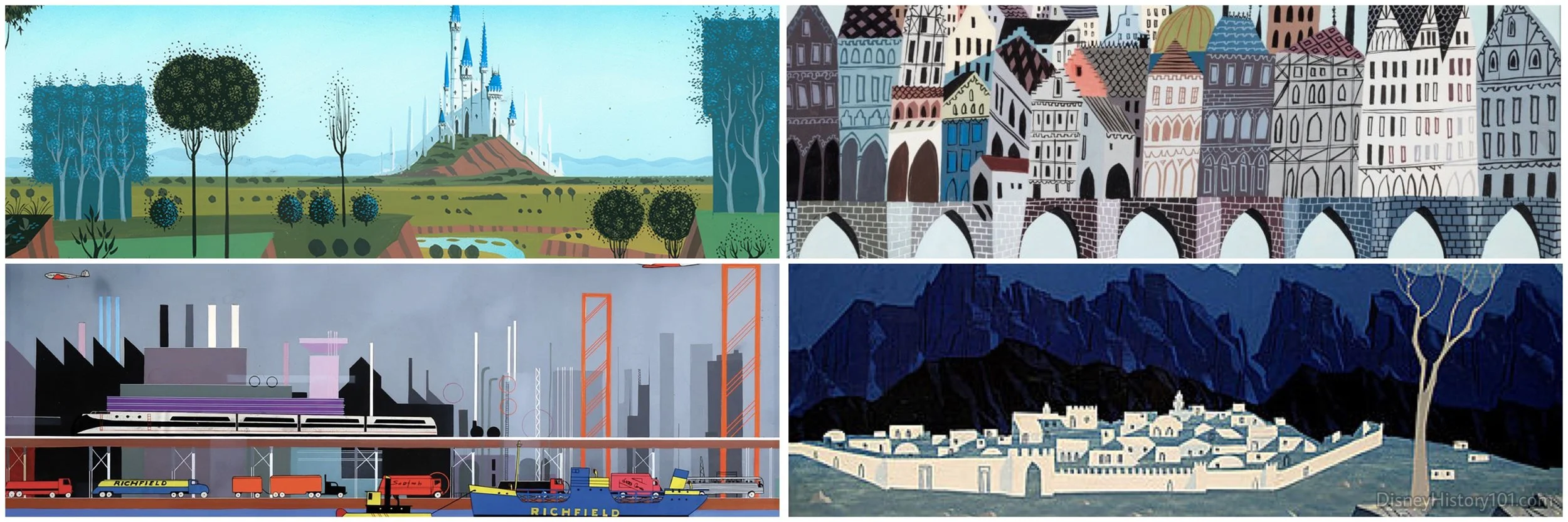
NO ONE LIVES HERE - Even Eyvind’s backgrounds produced for various features are devoid of people! (Clockwise from upper-left) “Sleeping Beauty”, London Bridge segment of “The Truth About Mother Goose”, “The Story of Christmas”, and “The World Beneath Us”
“There is a sort of peacefulness to his work, and that is what draws you into it. Nature seems to have been a place of comfort for Eyvind and seemed to take over in his life. That is what Eyvind shares with us. Eyvind’s work may be called elegant, sublime, beautiful, and meticulous, but never joyful. It’s colorful, and yet a bit of melancholy hangs over it. There is a certain quiet to his work. No one really walks through it. It is exquisite, but quiet. Pulling you in, and pushing you away at the same time - keeping you at an arm’s distance.”

Eyvind’s color studies and thumbnail story scenes showcasing his figural icons.
Sleeping Beauty’s character designs accompanying Eyvind’s work were vertical, and had vertical planes running throughout them. Some artists found it restrictive, but others like Milt Kahl and Marc Davis would embrace his style. “When Eyvind paints figures, he doesn’t paint people. He paints icons - like statues. There’s a reason for this.”
“THE EMPTY KINGDOM of A LONELY SOUL”
In order to understand the aesthetic of Eyvind’s personal work, as well as his countless contributions toward Walt Disney Studios’ features and short films, one must understand Eyvind Earle - the man. Yes, tucked behind the groves of trees lies a deeply layered back story - one of disappointment, loss, and tragedy.
Eyvind had a very tough childhood. Eyvind was born in New York (in 1916), but his family moved to Hollywood in 1918. Though Eyvind grew up during the depression era, his father (an artist) came from a wealthy background. Eyvind’s mother was the fourth wife of Eyvind’s father, and from all existing accounts, it seems that Eyvind’s father was difficult to live with. He was perhaps (what some may call), mentally abusive to Eyvind.
One day, he took Eyvind along with him on a holiday to Palm Springs and never returned to his wife. While Eyvind lived with his father, he was given an ultimatum - read 50 pages of a book each day, or produce a piece of artwork. It was at the age of ten, that Eyvind recollected a paint brush was first put in his hand.
Eyvind had an older brother (whom he did not know), because he died swiftly as a result of polio, when Eyvind was just 1 1/2 years old. Eventually Eyvind too contracted polio, and the result was that half of his face was left paralyzed. Eyvind was always self conscious about this, even around the studio.
All of these events and experiences translated themselves into Eyvind’s work in some way or form. Eyvind Earle’s art has much mystery to it. You want to wander into his forest, and (as you’re doing so) you may wonder what’s beyond that grove of trees. It helps us understand the mystery that we all are. His work has many, many, layers. It’s not just “surface art”.
“After Walt Disney’s Sleeping Beauty, Eyvind Earle might have stayed on, but some were not kind to him. There is a “Disney house style” and then there are stylists that come to Walt Disney Studios (like Eyvind Earle). Some (like Marc Davis and Milt Kahl) championed his style, but some did not embrace his style. When Eyvind left, he was one of the very talented and prolific few who managed to go on and build a fine art career. Walt Peregoy (an incredible artist), always wanted to have the career that Eyvind did, but wasn’t able to. Eyvind established his own animation studio, and even produced a feature film about Christmas. It was beautiful.”
“CARRYING THE VISUAL LEGACY OF EYVIND EARLE”
“I was about five years old when Sleeping Beauty was released, in fact it’s the first film I remember. As a young boy and as a teenager, it had real staying power for me. I knew that it was something special, and yet I had no idea how his work would influence my own at Walt Disney Studios.
“POCHAHONTAS - PAINTING WITH ALL THE COLORS OF THE WIND”
The writers saw Pocahontas as a “quasi-sideways-’West Side Story’” version of Pocahontas. I did some design pieces for them, and they liked my work, and told me that they would love me to direct the art for the film.
“I was attracted to the project, and happy to work on something different. Pocahontas was sort of a ‘tone poem’. There were no ‘yucks’ (that were common in previous features), and few contemporary references in the film. It was certainly true to it’s own self. The backgrounds of Walt Disney Animation’s previous release The Lion King, had this quasi-naturalistic fantasy feel to the settings. As for the artistic direction of Pocahontas, I decided that I would honor the narrative. I would not create something that goes against it - I would support the narrative.”
“We took some research trips to Virginia, and after observing the flat planes and Virginia pines, I suggested that the Eyvind Earle aesthetic was the way to go. The cool and the warm temperatures against each other. Like Eyvind, I was not afraid to use black in our characters. I gave our villain Governor Ratcliffe a palate that was very unnatural to the forest, because he was the intruder. An unnatural color palate heightened the tension in the situation…Katzenberg wasn’t to happy about Pocahontas’ palate, and made comments about wanting more shadows. Mike Gabriel and Eric Goldberg championed the palate. (As a side note, Katzenberg left a month or two later). I wouldn’t be here without Mike and Eric. You certainly need your champions.”
“There was no interaction between the villain of the story (Ratcliffe) and the heroine (Pocahontas), and a slight loss of dynamic due to that. At one point, they played with the idea of Pocahontas getting captured (which would have allowed for this interaction). If that would have worked, I would have liked to see that.”
“There was never another artist that was given so much liberty to create a look of a feature film like Eyvind was given for production of Sleeping Beauty.” About the period spanning production of Pocahontas, Michael relates, “We were never given the similar time span and financial situation to produce a film like Sleeping Beauty.” But, similar to Sleeping Beauty, “all the time, work, and labor shows on the screen. It (Pocahontas) was really a labor of love.”

You can see the E.E. influence in Michael Giaimo’s work (top).
“THE COOL AND WARM PALATE OF FROZEN”
“When you start working on a film, you don’t need to know where you’re going. You really have to feel your way around it. I came back to Walt Disney Studios in 2009 when a 2-D hand-drawn project entitled The Snow Queen was in production. Tangled wasn’t to be released until 2010.”
Two weeks after I arrived, they suddenly ‘shelved’ The Snow Queen. The reason for this, was that The Princess and the Frog had come out, but wasn’t as successful in the box office as they had hoped. There were some that believed 2-D animation was no longer viable. The then head of the studio questioned whether we should continue producing ‘fairy tales’. I was not around for Beauty and the Beast and The Little Mermaid. I ‘missed the boat’ and wondered if I would ever work on a bona fide Disney fairy tale.”
“With the success of Tangled, The Snow Queen was brought back. The question of whether it should be produced using hand-drawn animation was reconsidered…but they decided to make The Snow Queen a CG film.”
“The story of Frozen was not anywhere near the original. We first envisioned a charming and lighthearted film, but it did not resonate with the audience. After the presentation, we went home and returned with three very different story ideas. Ultimately, it was decided that Frozen was to be a ‘sister story’.”
“Pinocchio took place in the Northern Swiss Alps, and Sleeping Beauty had a proto-renaissance-Gothic feel to it’s settings. Visually, a lot of development had been done on The Snow Queen before all this. Considering where Hans Christian Andersen lived, I was looking at all things Scandinavian (and other locations from there to Russia). The fjords were something that we thought we could use, that hadn’t been done before in a Walt Disney animated feature.”
“That’s when the Eyvind Earle horizontals and verticals came back into play, but in a CG way.”

“Another thing I loved about Norway were the stave churches. I thought they were something unique. We applied Eyvind’s aesthetic to the steeples, squeezing them all the way to a pinpoint. Notice the castle and how we pushed those shapes, in addition to the decorative details.”
“To put the castle at the bottom of the fjord (as opposed to the top of a mountain), would be so incredibly dramatic. I’m glad that the rest of the art department went along with it.”
“In 2D it was easier to create instant graphics that read graphically, but with CG the camera is moving more. The exquisite and raw color palate was influenced and affected by the camera and lighting movement. Still, I came to embrace the CG world. Johnn Lasseter taught me that CG feature animation is a hybrid of live action and animation - you have to study both. I love 2D artitsts like Eyvind Earle and Walt Peregoy, but I also look to direction and production of live action films.”

“Again, horizontals and verticals came to play within our character designs - all of their pleats and folds, as well as the use of triangles became part of their composition. In early concepts, Anna was a saturated icon against the cool palate of Elsa and the snow palace.”
“We also studied snow flakes (their six-sided, diverse array), with college professors giving us presentations. We had research trips, which helps us to incorporated the snow flake into the columns of the ice palace. The back of Elsa’s cape has six sides - like a snowflake.”
“Last year we released a 22-minute short film. I wanted to create a “costume movie”. We did our best to create complex outfits for a CG world - spending months , even a year to create these costumes. For the special, we created two new outfits for Anna and Elsa. We created color palate that connects them (now that they’re sisters). This new palate pulls them together. We then created emblems like the ‘goat’ and ‘Yule bell’, as well as a special holiday palate for Arendelle. We took all those details and decorated the castle with them!”
Michael never officially met Eyvind Earle (though he had been in his presence several times). Still, Michael’s praises and respect for the artwork of the late master Eyvind Earle run high, like the Norweigan fjords that grace his Frozen backgrounds!
The Eyvind Earle influence doesn’t stop with the Art Direction of the feature films. “Half of my job is being responsible for consumer products, walk around costumes in the parks, and other things associated with the visual look of the franchise. It’s kind of interesting - you’re always looking for new ways to showcase these characters.”
“I like to think that Disney ‘owns’ animation in a way - a unique hundred-year-old legacy. The unique thing about working for Disney is belonging that legacy, which includes Eyvind Earle, Fred Moore, Glen Keane and so many others! I have always tried to bring what I loved about 2D animation, into the world of CG animation. In incorporating the styles and aesthetic of ones like Eyvind Earle into projects we were working on, I was bowing to their color palate, style, and arrangement.”

Here, Michael took time to answer a few questions of budding animation students, and autograph their Art of Frozen hard copies!

Michael Giaimo’s lecture on Eyvind’s influential aesthetic was so enjoyably thorough, that the audience was briefly left speechless before a rousing applause. After the presentation, it was permissible to take pictures, and Michael was eager to meet all of the animation students, fine art aesthetes, and general Walt Disney animation fans. We stayed until the very end, and watched as he kindly, and warmly took time for each and every person in attendance! Bravo!
We look forward to more Disney-related lectures and presentations at the Hilbert Museum of California Art! For more information about upcoming events, feel free to visit : hilbertmuseum.com
THE HILBERT MUSEUM OF CALIFORNIA ART
167 N. ATCHISON STREET
ORANGE, CA 92866
(714) 516-5880
TUESDAY - SATURDAY, 11am - 5pm
SUNDAY and MONDAY, Closed
"FLOYD NORMAN at THE HILBERT"

The HILBERT MUSEUM of CALIFORNIA ART at Chapman University is currently trending among California art aficionados for it’s regular evening exhibitions which blend music, visual arts, and popular guest speakers. It also isn’t any secret that Mark and Janet Hilbert collect a good amount of Disney-related artwork. On SATURDAY, OCTOBER 8th, 2018, Chapman University students and a handful of VIP guests were treated to a very special discourse delivered by (animator, writer, comic book artist, and Disney Legend) Floyd Norman!
“BACKGROUND ART & THE ARTIST’S BACKGROUND”
The surrounding WESTWAYS California scenic paintings became the perfect backdrop for Floyd Norman’s “animated” life story this evening. Nestled amidst the works of some former Walt Disney Studios colleagues (like Lee Blair, Dorothy Sklar, and Ralph Hulett), Floyd quickly immersed the audience into his experience coming into Walt Disney Studio’s animation department, during the late 1950s. For an introduction, Floyd aptly chose to begin with a tribute to the 1959 release - Walt Disney’s Sleeping Beauty. He then highlighted a some of the valuable contributors toward the film - spotlighting the hundreds of backgrounds produced by Eyvind Earle’s background unit. (Feel free to watch the full introduction below.)
Floyd was always interested in visual storytelling, even before ending up at Walt Disney Studios. “When I went to Santa Barbara High School, I did something radical. I somehow convinced my teachers to let me do comic books instead of term papers. I felt like I better expressed myself using the medium of the comic book, rather than sitting down and typing. The Vice Principal O.K.’ed it, so I was able to create my term papers as comic books.” More than a decade later, Floyd had the opportunity to expand his knowledge and learn many valuable things about visual storytelling from masters like Milt Kahl, Vance Gerry, and even Walt Disney.
“WORKING WITH A ‘STORY MASTER’”
Most artists who went to work for Walt Disney Studios had a life-changing experience when Walt evaluated their strengths and placed them in a position that suited them. On this, Floyd relates :
“I came to the Walt Disney Studios many years ago, to join the animation department (because my dream was to become a Disney animator. I started in 1956, and had been with the studio for practically a decade before Walt Disney decided that I was not an animator. I was a story artist.
I didn’t know I was a story artist, but in 1956, I found myself upstairs in 2C (on the second floor of the Animation Building) on a Monday morning, starting a rewrite of The Jungle Book back in 1956 - something that I never thought would happen. All I wanted when I was a young kid was a job at the Walt Disney Studio. I never ever thought that I would work with Walt Disney himself, but there I was in 1956, in the story room with Walt Disney. An incredible time…for a young kid like myself!”
Floyd presented a photograph of Director Eric Larson and Walt Disney, standing in a hall of the old Animation Building. “Now keep in mind that what we do - our processes are driven. Everything we do when we tell a story, the art always starts first. This is a very significant photograph of Director Eric Larson and Walt Disney, standing in the hallway of 2B (the wing where Eyvind Earle had his background unit on Sleeping Beauty). You’ll see in this photograph, that the walls are lined with Eyvind’s paintings from the feature film Sleeping Beauty.”
Floyd shared the following words of wisdom for storytellers : “One of the things that Walt Disney taught us was to be very conscious of the characters in your film. The audience has to connect with the character. The audience has to love the characters. If the audience doesn’t care about the characters, it doesn’t matter what happens to them. They just won’t connect.”
“WORKPLACE EQUALITY AT WALT DISNEY STUDIOS”
All good lectures end with Q & A discussions, and Floyd’s presentation was no exception to the rule. Floyd briefly answered some common inquiries, like what it was like for a minority at Walt Disney Studios during the 1960s. I just love hearing Floyd adamantly speak on the subject of Walt Disney Studio’s workplace equality.

THE FACES OF A “PROGRESSIVE” STUDIO - Here is just a sampling of Walt Disney Studio’s diversity during the 1950’S and 1960’s - (left to right) FLOYD NORMAN, RICK GONZALES, EVA SCHNEIDER, and WILLIE ITO.
Floyd was hired by and worked with Walt. So, it isn’t a wonder when Floyd so quickly comes to Walt’s defense, putting any spurious or dubious rumors of a racist Walt Disney to bed. Some may feel that Floyd’s presence at Walt Disney Studios during the 1960s broke down barriers. In response to those thoughts, the humble animator shared the following words of truth :
“I was just Floyd Norman - just another artist, just like everybody else. So, I feel I’m often given too much credit for ‘breaking down barriers’. There wasn’t any barrier. Walt Disney didn’t have a barrier that said ‘You couldn’t work here because you’re a woman, or because you're a minority. You can’t work here because you’re from someplace else.’ Walt Disney was only interested in talent. WHO you were, or WHAT you were didn’t matter. Walt was interested in what you could do. He was interested in your ability and your talent, and that didn’t matter who you were or what you were.”

THE “MEN OF THE HOUR” - California scenic collector Mark Hilbert and Storyman Floyd Norman with one of eight Eyvind Earle paintings gifted The Hilbert, by The Eyvind Earle Trust.

I simply couldn’t resist a photograph with one of my favorite Walt Disney Studios gag artists!
For more of Floyd Norman’s accounts and experiences, you can check out MR. FUN’S JOURNAL @ floydnormancom.squarespace.com/mrfun.
For information about future Disney-related speakers, or general information about THE HILBERT MUSEUM OF CALIFORNIA ART’s Walt Disney Productions’ artist collection, please visit :
http://www.hilbertmuseum.com/
"THE TUNES BEHIND THE TOONS"

Saturday, August 11th, Richard Kraft took opportune advantage of his pop-up exhibit ("That's From Disneyland"), to host a rare screening of Dave Bossert's "The Tunes Behind the Toons".
Dave's 28-minute euphonious documentary takes it's viewers through the process of how music is composed for animation. The film opens during the silent era of theatrically released animated shorts, and their musical accompaniment - whether a lone pianist or a complete orchestra. Next, we explore the early days of Carl Stalling's pre-Warner Brothers contributions toward Walt Disney's Silly Symphonies, and duos like Richard and Robert Sherman or Howard Ashman & Alan Menken whose collaborations produced some of the most memorable music to come out of Walt Disney Animation Studios. The 2013 documentary toured the festival circuit in 2014, but sadly has yet to be publicly released in any format by Walt Disney Animation Studios Special Projects.

"Music itself is a supporting character to the overall film, and in some sense and in some parts of the film it becomes the Lead. It's there to support the action and grab you emotionally." The film "really was a passion project...it was something I really wanted to do, and the Disney Studios allowed me to do it - which was really terrific!", states Bossert. Dave credits the film's materialization to numerous individuals like Ameriacn composer Mark Watters, producer Brian Briskman, and Richard Kraft.
Richard Kraft and Dave Bossert share the brief origin of the documentary that briefly tells the story of the emotional relationship between music and Walt Disney Studios' features!
Following the documentary, Richard Kraft conducted a panel discussion - introducing his audience to four diverse orchestral arrangers and writers for Walt Disney Studios' feature films and Disney Parks attractions.
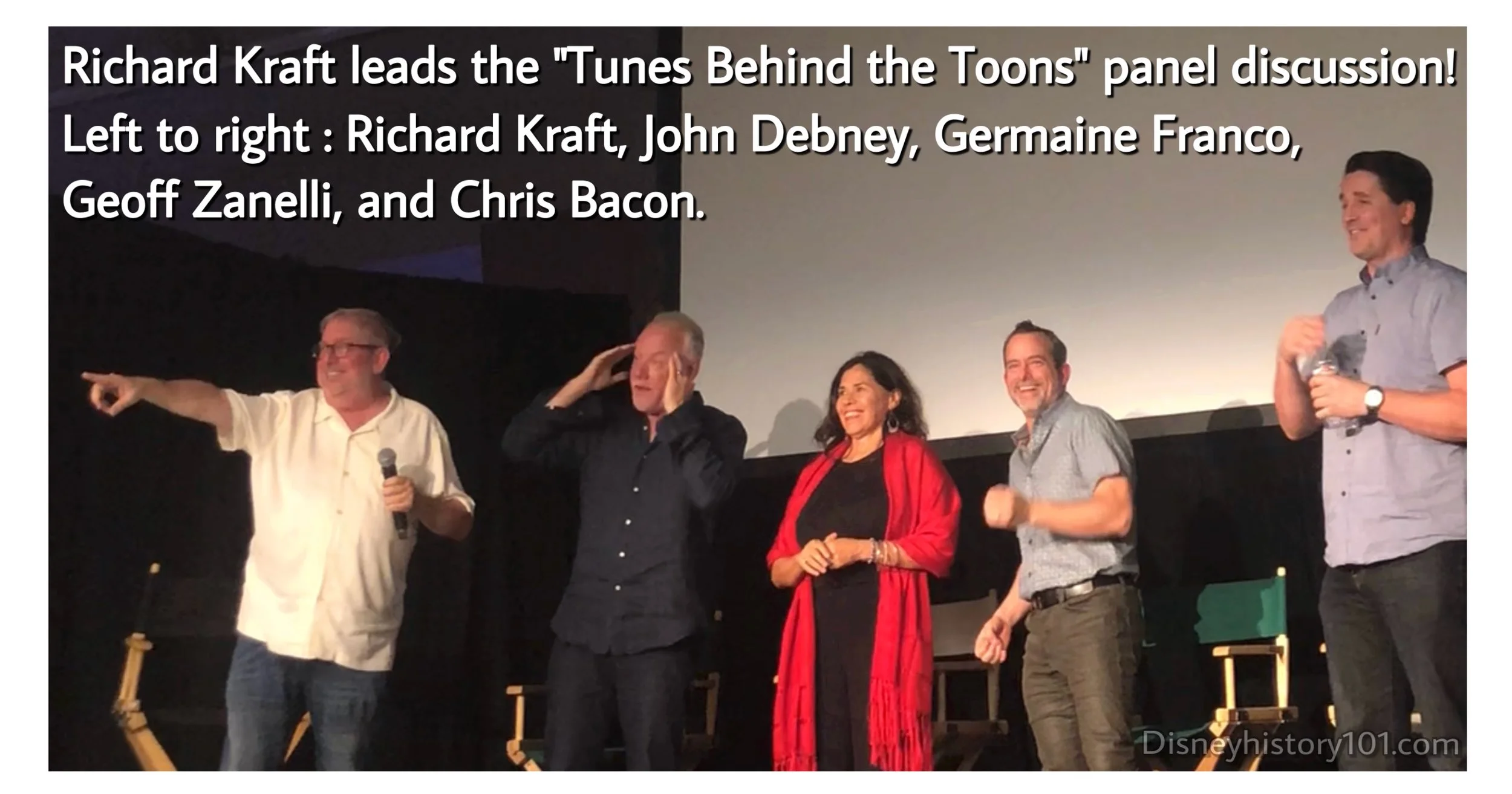
“Now, it’s pretty common to get credit for the works you do. The term ‘ghost writer’ - you can’t apply it anymore, ‘cause we’re not ghosts.”
JOHN DEBNEY
Most of us were already associated with John Debney's wonderful adaptation of George Bruns' score from Walt Disney's 1967 release, The Jungle Book. But there were many new things that were revealed to us about the 62-year old American composer. Richard Kraft relates how John's father, Lou "was the clapper boy for the live-action reference footage on 'Snow White [and the Seven Dwarfs]'. Then, he grew up to become a major producer at Disney...Lou Debney had a young son John Debney (who did not know fully what he wanted to do with life), [so] he brought him to Richard and Robert Sherman's room."
Debney continues, "I think I was about seven. I was really, really shy and I didn't say much. I don't remember what they were working on. But I remember how they were working. One would pound something out on the piano, and then Robert would say, 'No.No.No.' Then they would kind of argue for a little while.'" John didn't know that he wanted to be a film composer at that point, but "after that day I realized that I wanted to do something like they do", recalls Debney.
John remembers what he calls "flashes" of memories from his childhood, spending moments on the Walt Disney Studios Burbank Lot. One particular moment stood out enough to share, about the time when they were shooting the Feduciary Bank sequence for Mary Poppins. "I remember seeing this old, old gentleman (who was Dick Van Dyke in makeup), and...he came over to me and was in character,...and he grabbed my cheek."
When John finished college, he applied for a staff job at Walt Disney Studios, which ultimately led to his first big break - filling in for James Horner and scoring Hocus Pocus, (an experience which he describes as "scoring roughly 80 minutes of music in about two weeks"). John's Disney resume is extensive, yet we were still surprised to find how much music he scored for Disneyland, and other Disney Parks worldwide. He had the privilege to re-record all of the music utilized in Disneyland's New Fantasyland (debuting in 1981). John worked on the score for Phantom Manor at Disneyland Paris, a score which he describes as "reminiscent of Grim Grinning Ghosts". John also rescored Disneyland's Haunted Mansion Holiday tracks to adapt all of Danny Elfman's songs, an addition that has become a seasonal mainstay ever since. While working on the Disneyland 5oth anniversary film, John had an interesting experience. He was scoring music to footage taken in the Golden Horseshoe theatre when (as the camera moves over the crowd's reaction to performers) he noticed a familiar face in the crowd - his father's. He was now scoring a scene featuring his father Lou Debney (a former film composer and conductor for Walt Disney Studios).

GERMAINE FRANCO
It was especially refreshing to meet female composer and song writer Germaine Franco. Franco is most known for her Oscar winning song "Remember Me" ("COCO", 2017), and additional orchestrated music provided for the film. In addition to compositions produced for Pixar and Walt Disney Studios Animation features like Mars Needs Moms (2011) and Toy Story 3 (2010), Germaine has made numerous contributions to Dreamworks' animated feature length films over recent years, and gained more notoriety over her score for DOPE (2015). In fact, Germaine bears the distinction of becoming the first Latina composer invited to join the Academy of Motion Pictures Arts and Sciences' Music Branch.
During the production of COCO, she practically elected to record the music in Mexico rather than use Los Angeles musicians. Germaine humbly shares, "Tom Mac Dougall (who's the executive at Disney Music Animation - he really wanted us to go to Mexico, and so did the film-making team (Lee Unkrich and Adrian Molina). They knew that we could get a great sound here, but they felt that having the real musicians of Mexico (we had fifty musicians) would make a huge difference in the sound."
"I felt like there was such a commitment to the story and how the music moves the story forward. So much collaboration and discussion about that, and the attention to detail in music, but at the same time a vast freedom to 'just write'."
GEOFF ZANELLI
Geoff had recently completed work on Pirates of the Caribbean : Dead Men Tell No Tales, when he was offered another job - twelve days to score Christopher Robin (five of those days were spent with an orchestra in a recording studio). Geoff describes scoring Winnie the Pooh as "a little slower than all the other adorable bears out there. He's all heart. There's a lot of talking even in the movie, and he's a bear of very little brain. But, the point is that he's a bear of very big heart. You have to get into his emotions. It's not a very technical scoring. It's emotional scoring."

CHRIS P. BACON
Richard Kraft introduced Chris Bacon - a composer he met while teaching a class with the film scoring program at USC. Chris went on to score a number of attractions for Disney Parks, like a walkthrough Wonderland attraction for Shanghai Disneyland. This project was challenging, as the attraction featured several zones at which guests move at their own pace. Further, Chris had to adapt Danny Elfman's themes but not in the style they were written for the films.
Chris also contributed scores to Tokyo Disneyland's Jungle Cruise attraction, specifically the Elephant Bathing Pool section. Tokyo's jungle Cruise stands alone, as the only version of the attraction to feature a musical audio track.
On the experience, Chris shares :
"In typical Disney fashion, everything is so carefully laid out for what the experience is going to be - for every inch. Now, something like this a little different, because it's not like some of the linear rides (which can be like scoring a film or a game)...People are going to go at their own pace, so you don't know when they're going to be over it."
Chris remembers fondly riding the Indiana Jones attraction at Disneyland for the first time. "That was the first time I felt like I was riding a movie. I think that has strongly influenced everything they've done since then." Chris is also inspired by other's work, naming Soarin' Over California "one of the best scored attractions." You can listen for Chris' work in the upcoming film HOWARD, a documentary chronicling the life of Broadway and Walt Disney Studio lyricist Howard Ashman, directed by Don Hahn.

On hearing this, Richard then gave a brief interlude, sharing an interesting anecdote in which he revealed the secret origin of Soarin' Over California's score :
"That was written because Jerry Goldsmith (who was my client at the time) got fired from the movie [Disney's] The Kid. He got fired before he started. The settlement I made with Disney was that you have to pay Jerry in full, but he doesn't want to take your money having done no work. So, you can apply half the money you pay him for a future Disney project. James Newton Howard was supposed to score Soarin' Over California, and they called and said, 'What about Jerry?' Jerry and I drove to California Adventure Theme Park (which was a pile of dirt and some buildings). We sat in those chairs and we watched Soarin Over California...Jerry said, "Show it again. Show it again." Then we went to SONY Studios to record the music. You can imagine what a dream this was for me! The great Jerry Goldsmith writing music that will be in the attraction...for eternity."
Fin
By the end of this unique star-studded experience, we feel acquainted with individuals who make invaluable contributions toward the cinematic storytelling process. We absolutely have to thank Richard Kraft and all involved for instilling in us, a far deeper appreciation for every major and minor note within our favorite Walt Disney Studios films & Disney Parks attractions. But even more than that - we now have a greater understanding and appreciation for the hard-working individuals who expend much of their talent, time, and energy to arrange all those notes!
"THAT'S FROM DISNEYLAND"
Richard Kraft’s grand Disneyland auction exhibition!
Read more“THE ENCHANTED WORLDS OF EYVIND EARLE”
AMERICAN MASTER EYVIND EARLE at THE HILBERT MUSEUM for a limited time.
Read more
Quisque iaculis facilisis lacinia. Mauris euismod pellentesque tellus sit amet mollis.