FANTASYLAND THEATER (and MICKEY MOUSE CLUB THEATER & DISNEYLAND DRAMA CLUB)
*Some sources (as “Disneyland Admission Media Rides and Attractions Report, published 1971), also state August 25, 1955 as the soft opening date. Another publication states August 27, 1955.
“Your Role in the Disneyland Show” has been referred to Disneyland as “a gigantic outdoor ‘show’” where “any area open to our guests is considered part of our ‘set’ and ‘on stage’.” This would include any and all Stages set within that Stage.
“Setting the Stage”
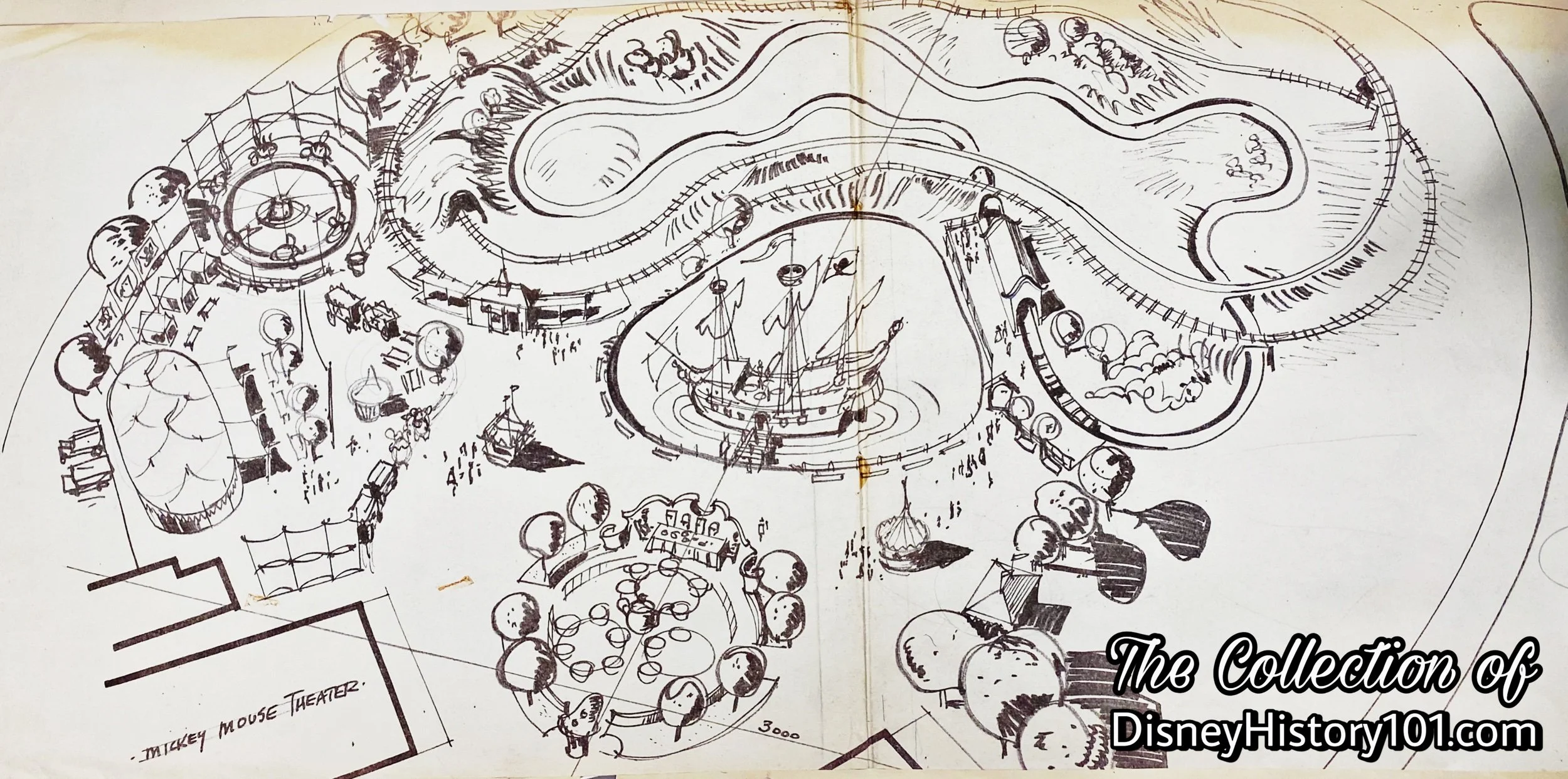
Disneyland was a miracle of showmanship in many ways! The presentation of the Mickey Mouse Club Theater show on the vast DISNEYLAND “stage” was to be a distinct part of the Disneyland theater concept. Some of Marvin Davis’ earliest c.1953 drawings of “Mickey Mouse Mark” (to be constructed on some 50-acre plot), featured a “Theater Group” attraction building. According to the 1953 Disneyland Prospectus, page 5, “Mickey Mouse, the best known personality in the world has his Mickey Mouse Club Headquarters in Disneyland.” Though the Mickey Mouse Club Theater ended up situated in Fantasyland for most of its duration, that was not the original plan for its location. The same Prospectus continues, “Located on Treasure Island, in the middle of the river, a fantastic hollow tree and treehouse serves as the Club meeting place. The hollow tree is several stories high, with interesting rooms , and lookout spots for club members. There is a Pirate Cove with buried treasure on the Island. . .and direct from this location the Club presents the Mickey Mouse Club Television Show.” So, according to the original plans, the Mickey Mouse Club Theater would have been based on what came to be known as Tom Sawyer Island (in the middle of Frontierland’s Rivers of America)! Can you just imagine taking a raft to get to the theater?
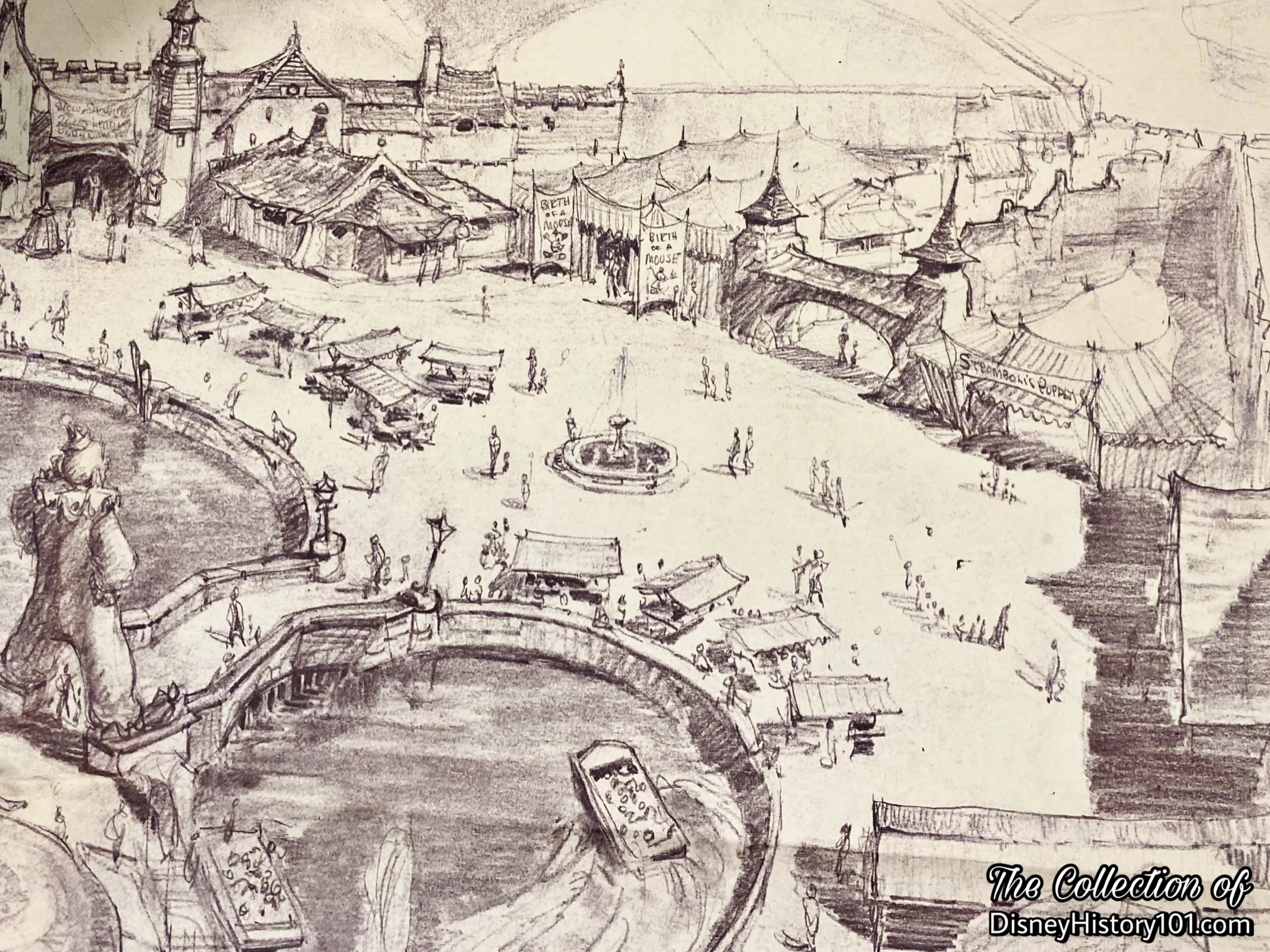
Amidst his loose line work, Walt Disney Studio artist Bruce Bushman (who was also affiliated with Bradley & Kaye) suggested a Stromboli Puppet theater in an area inspired by Pinocchio’s village, a gravity-flow canal ride featuring Monstro the Whale, a circus midway-themed dining area entered through a towering clown arch, a sailboat in a lagoon, and remembering that “it was all started by a mouse,” his detailed designs also included a “Birth of a Mouse” show. [The Disneyland News, Vol.1, No.9 published for March 10, 1956.]
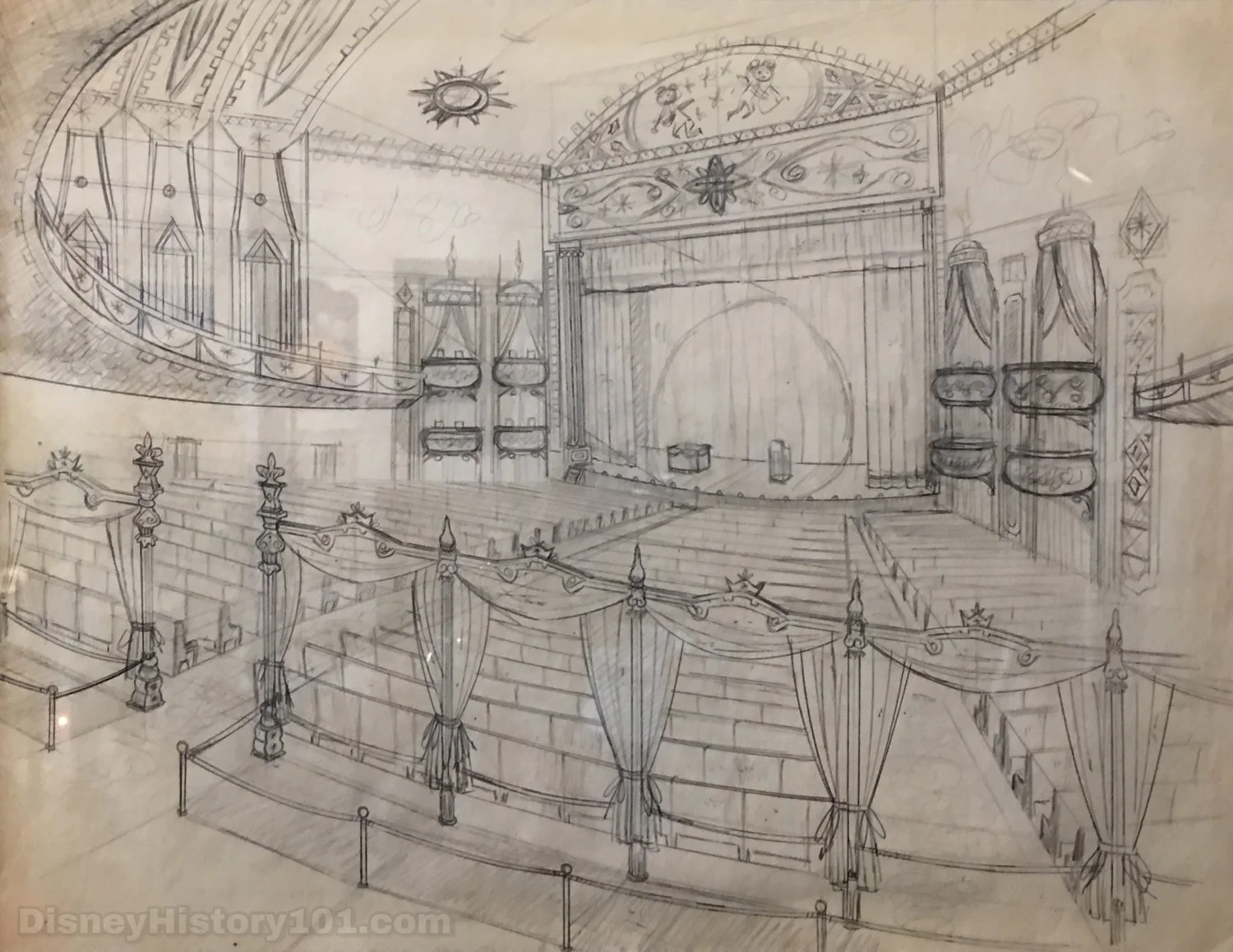
By July 1, 1954, George Whitney of Disneyland, Inc. directed Amusements, with Ron Miller overseeing analysis, philosophy, capacities, planning, operator training, and amusement procurement. Knowing Walt’s audience, Bruce Bushman (who served as Art Director, for the Mickey Mouse Club television series) created a number of concepts for Disneyland during 1954. Early thumbnail sketches and other concept artwork seemed to be unencumbered by restrictions of budget, schedule or the laws of nature and physics. Though guided by Walt, his artists appeared to engage in “free-thinking,” as if implementing the modern “Blue Sky” Imagineering process. One of Herb’s projects was the design of a Mickey Mouse Club Theater with much added pomp and grandeur, while reflecting the feel and theme of the television variety show. Like some advanced “High Concept,” final designs were quickly generated and approved. Though the final product of the interior would look very different from this drawing, this particular dream would become a reality in 1955!
Next, architectural drawings helped define all designs, production and construction strategies, costs, schedule, and resource requirements. Models explored the various dimensional relationships, site-lines, flow patterns, ergonomics, and visual appeal to convey the desired creative intent.
Air-conditioning controlled dust, and a practical mechanical application of the technology was essential in the attraction where projection equipment and film was used.
Soon, one authorized “Disneyland Information & Nomenclature List” (prepared by Bill Cottrell of Disneyland Inc., May 25, 1955) announced the working title as the “Mickey Mouse Theater,” with no further description or notations made about the attraction. This theater (where movies and stage acts would be shown) would come to be owned by Walt Disney Productions and be one of few attractions owned by another Disney organization and operated by Disneyland, Inc. for a 5% management fee.
As of June 2, 1955, C.V. Wood Jr. sent an Inter-Office Memorandum to Walt Disney regarding the best estimates that could be obtained at the time regarding the completion status of individual sections of the Park and Opening Day. C.V. wrote: “Mickey Mouse Theater: It appears very doubtful that it can be completed by our opening.”
”Mousekartoon Time”
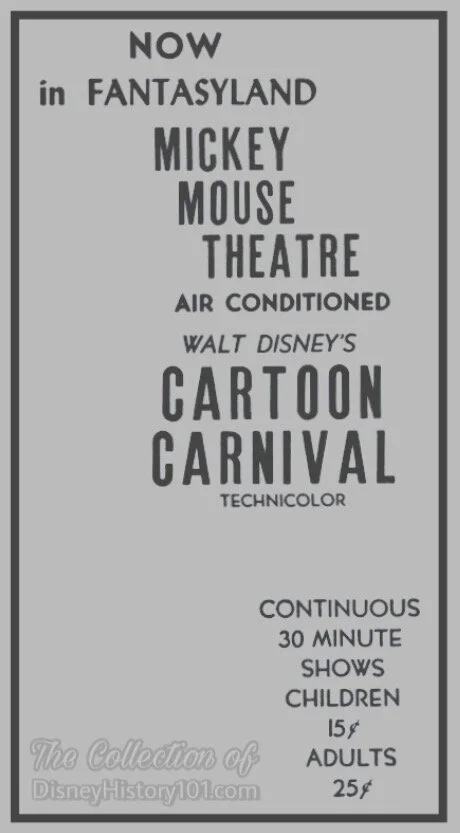
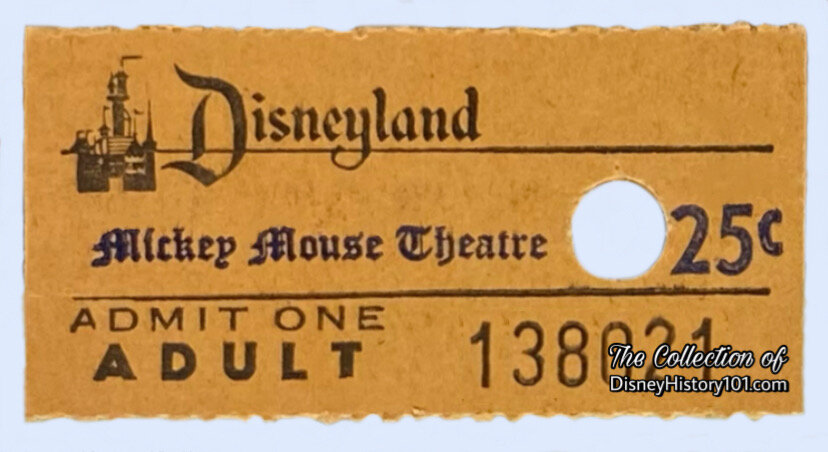
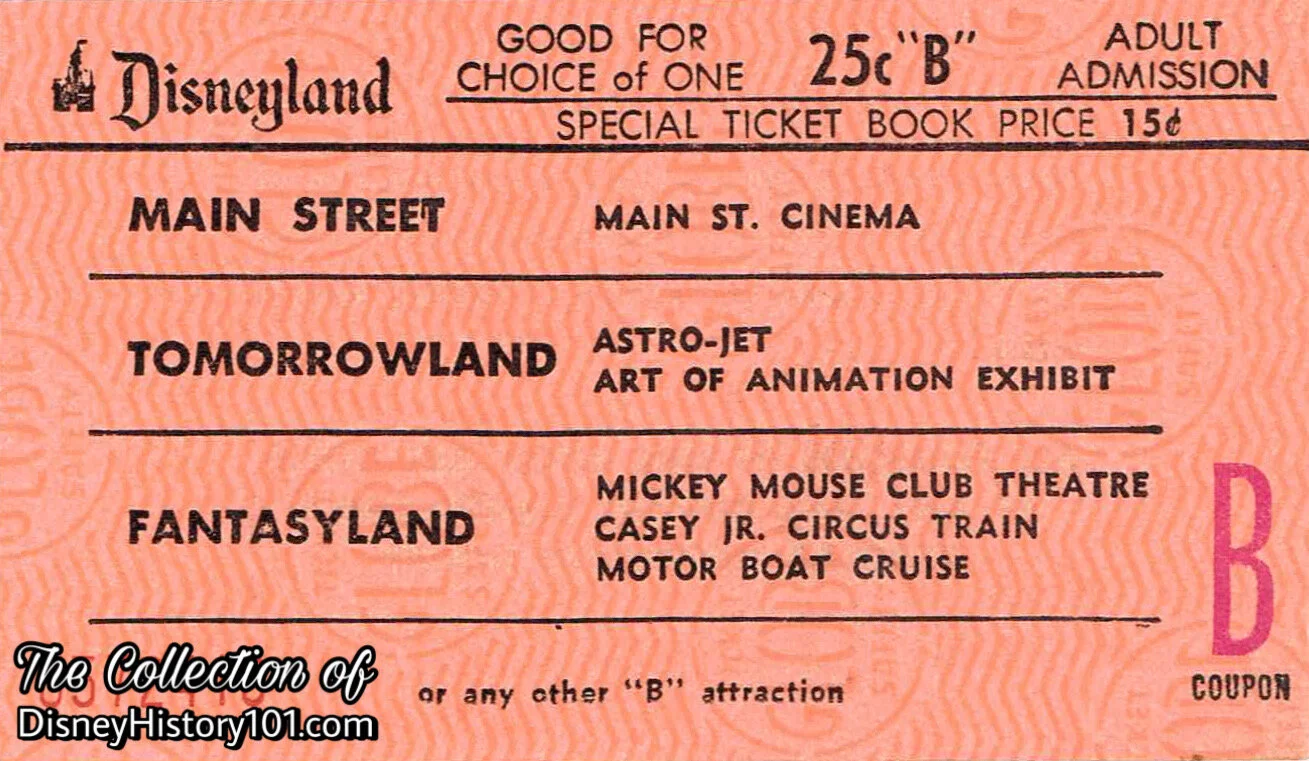
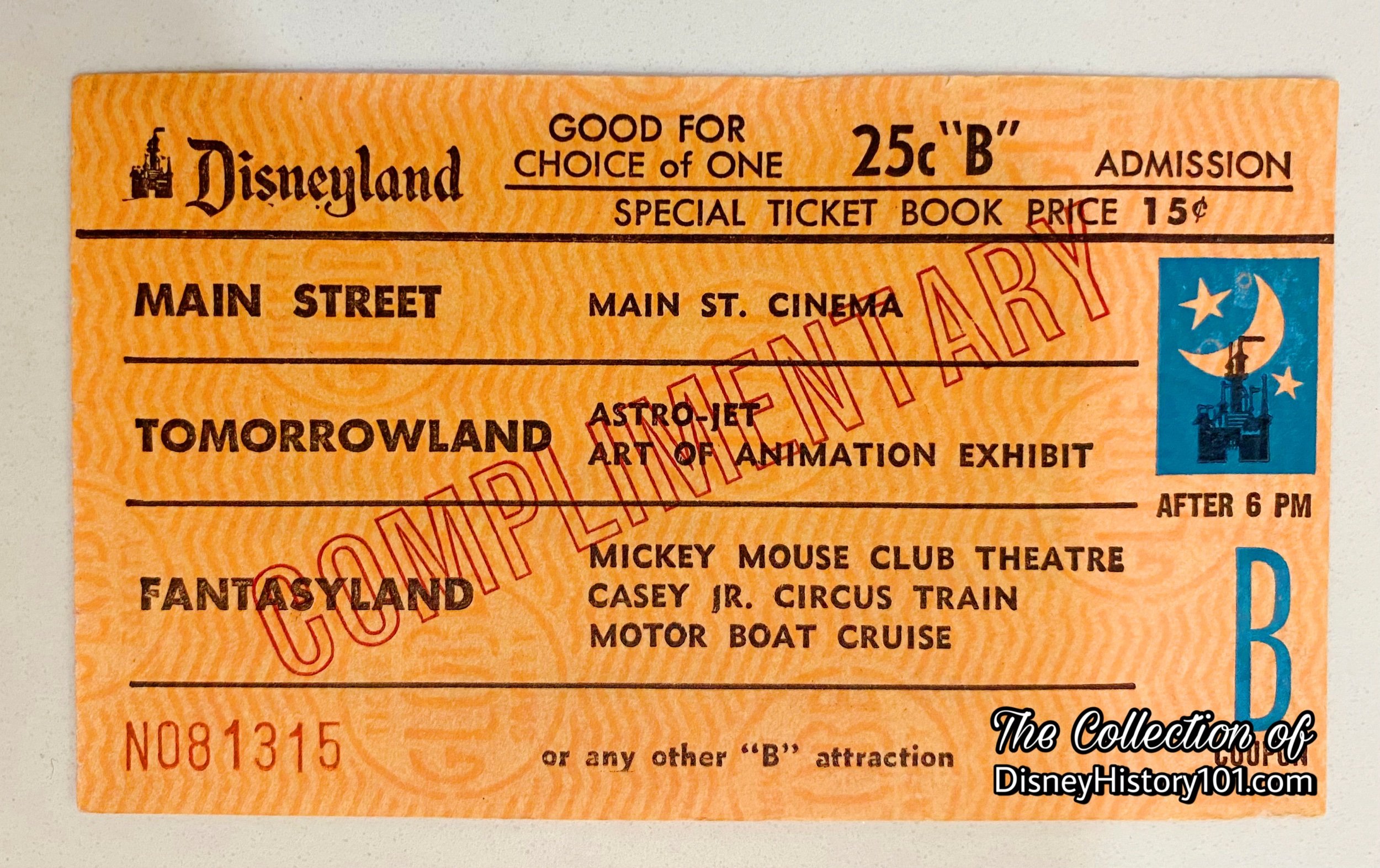
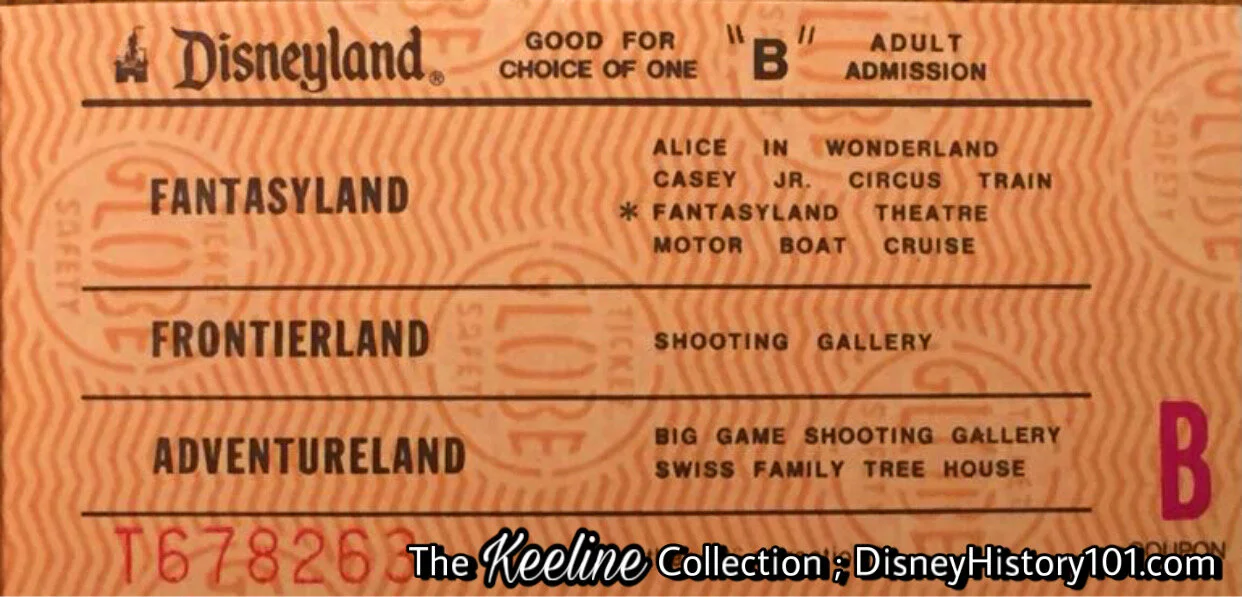
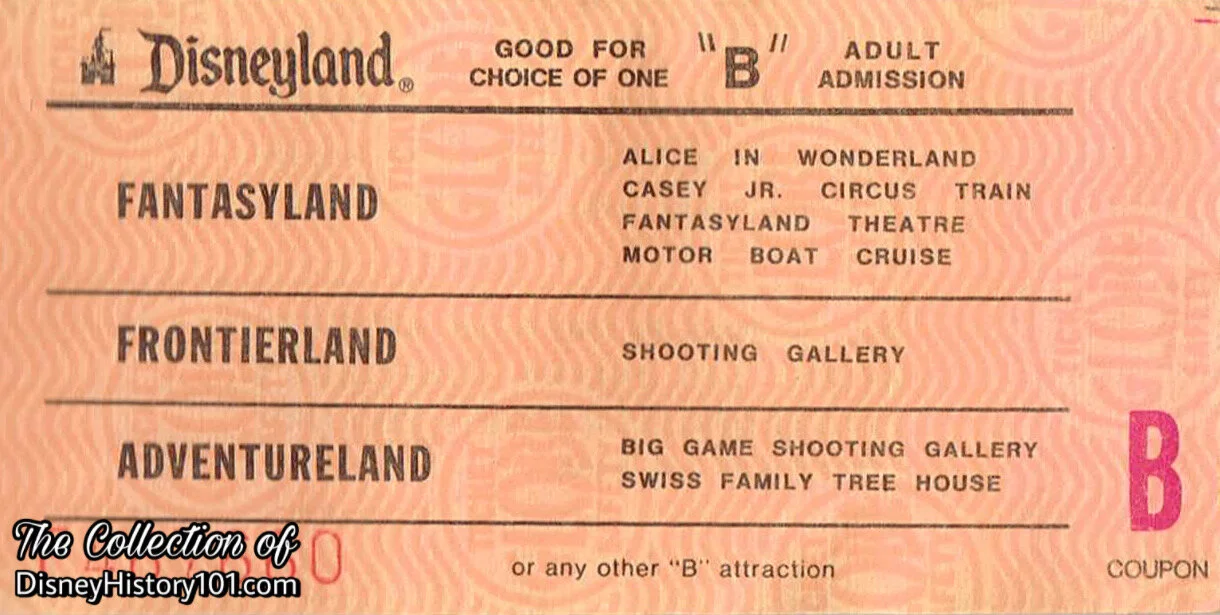
Despite Mickey Mouse and Minnie Mouse introducing the theater on the live telecast, July 17th, 1955, the Mickey Mouse Club Theater did not open its doors to Audiences until sometime thereafter. The Mickey Mouse Club Theater (variously referred to as “Mickey Mouse Club Cartoon Theater” and “Mickey Mouse Theater”), opened its doors (as 1 of 22 initial major attractions at Disneyland), during August of 1955. “The Story of Disneyland” (published 1955, by Disneyland Inc.) described the Mickey Mouse Theater as an attraction “where films for children will be shown.” Continuous 30-minute shows were one “B” Coupon, (or, 15¢ for children and 25¢ for adults).
To elaborate on this description of this unique theater, the 400-seat Mickey Mouse Club Theater was perhaps the very first theater to exclusively show cartoons (and “Mousekartoons” at that) in the all of the United States. The theater’s primary entertainment - “Mousekartoons” - was clearly indicted by the crest over the entrance. Like other Fantasyland attractions the signage of the Mickey Mouse Theater also featured a medieval-style Escutcheon, containing a Coat of Arms with Mickey Mouse Club logo, a projector, and a strip of film!
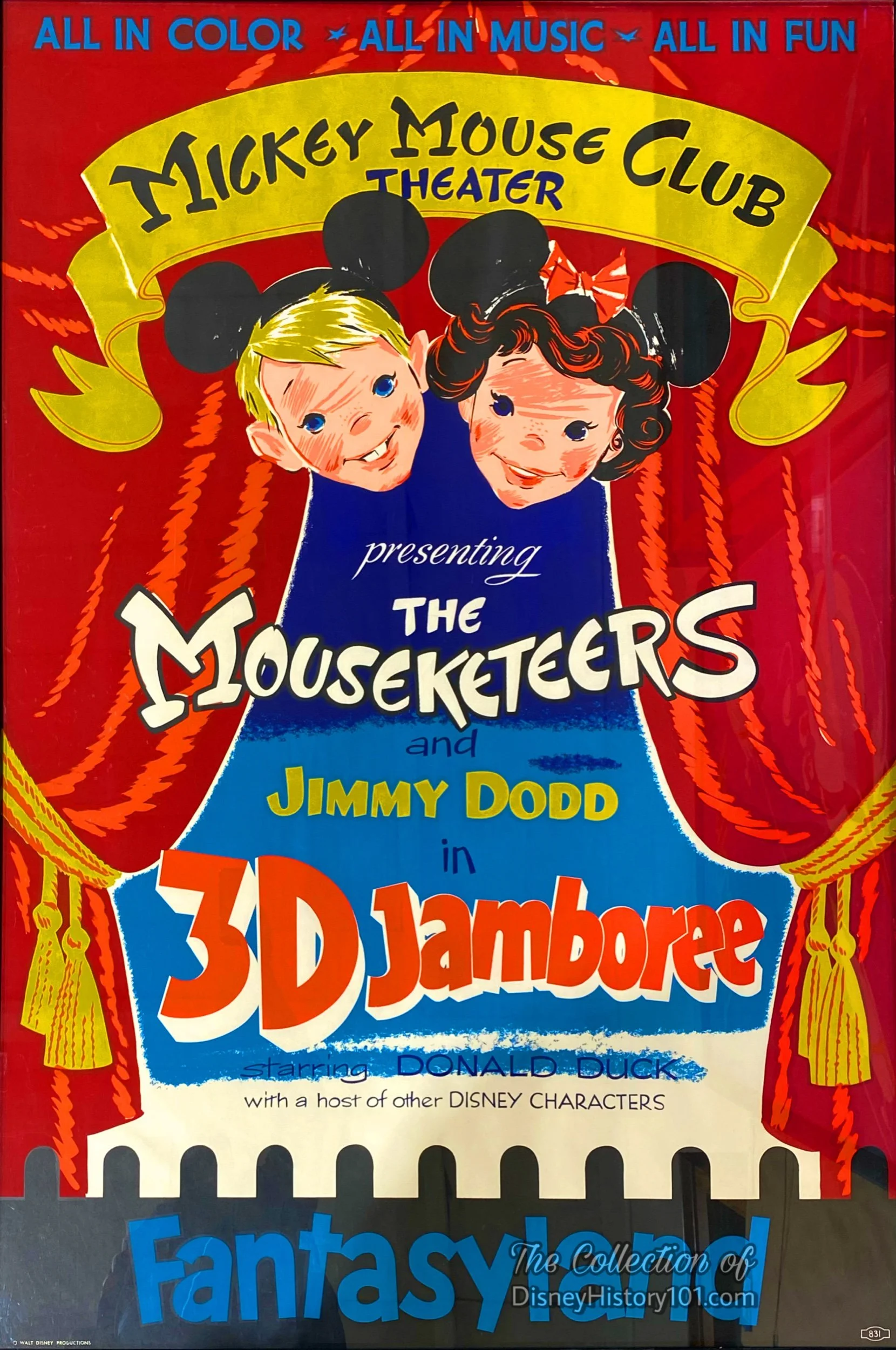
The initial 30-minute program included short films Lambert the Sheepish Lion, Out of Scale, The Big Wash and Squatter's Rights. Its main (and first) live attraction was the cast of the Mickey Mouse Club, who performed on the stage during that very first summer. All “Honorary Mouseketeers” were invited to the show - the Mouseketeers and Jimmy Dodd starring in cinematic productions like the 12-minute 3-D Jamboree. For those across the United States that only owned a black and white television, this was a rare opportunity to see your favorite Mouseketeers in glorious eye-popping Technicolor! During the first winter holiday season of 1955, a special “Holiday Show” was advertised in The Disneyland News (Vol.1 -No.6 ; published December 10, 1955).
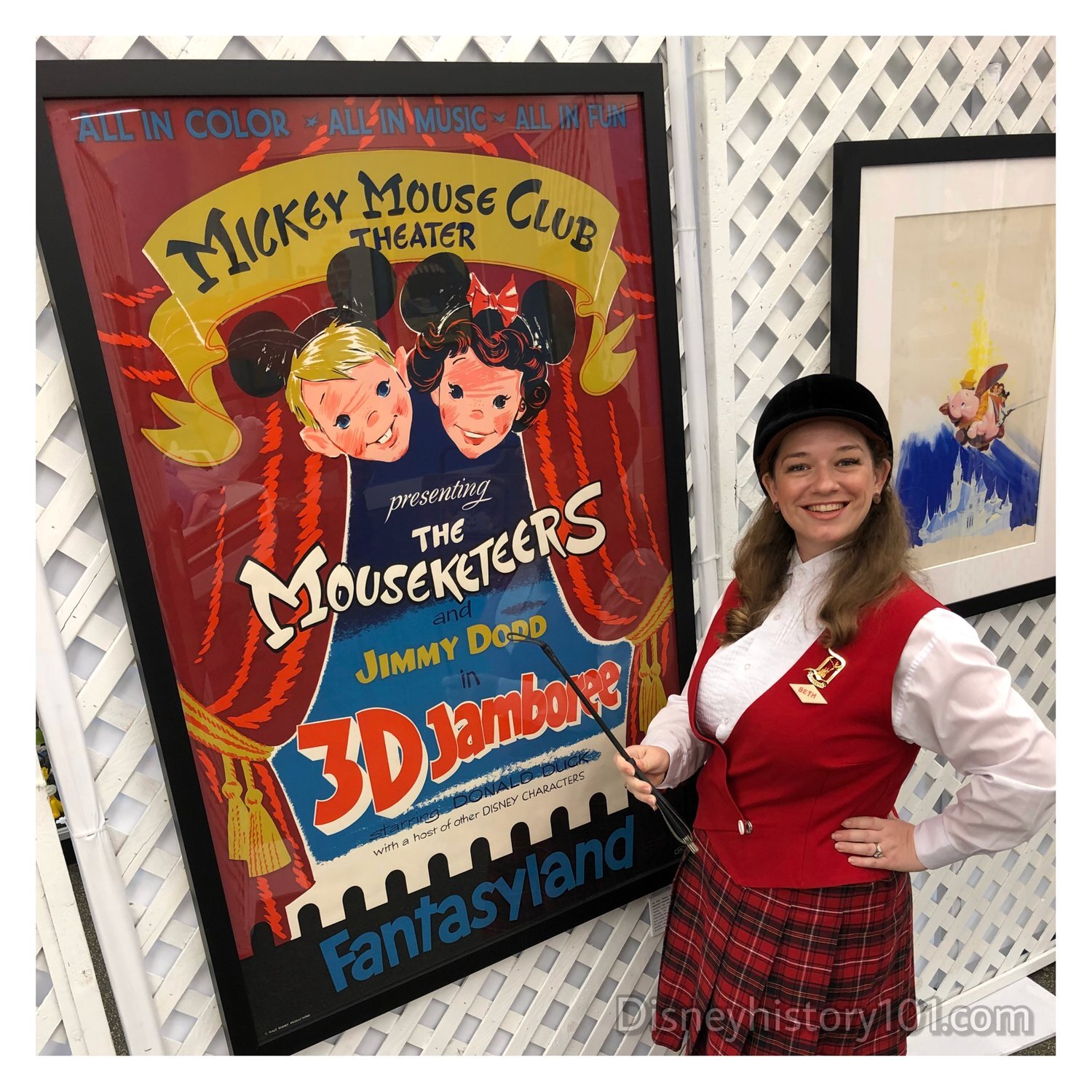
This artifact (of the former Richard Kraft Collection) gives us an idea what the posters for “The Mouseketeers 3-D Jamboree” looked like, as they hung outside the Mickey Mouse Club Theater. The Mouseketeer graphic (featuring the heads of both a male and female Mouseketeer) was similar to the one used on television! Not advertised on this poster for the special Technicolor 3D film (containing footage of the Mouseketeers) was the Donald Duck cartoon “Working For Peanuts” and “Adventures in Music: Melody.” The innovative films included live action and animation and featured Chip and Dale, Donald Duck, and the Mouseketeers. In this way and others, the Mickey Mouse Club Theater of Disneyland would begin to synergistically work with Walt Disney Studios and keep the Disney characters before the public.
In 1956, George Mills Jr. was in a movie at the Mickey Mouse theatre showing the growth and development of Disneyland.
Products occasionally referred to the Fantasyland attraction. For instance, Jiminy Cricket (portrayed by Cliff Edward) made reference to “Mickey Mouse’s own theater” in the High-Fidelity recording of “A Day at Disneyland” with Walt Disney and Jiminy Cricket (published 1957).
The admission price soon saw a 5¢ raise. This new “B” Coupon (then 25¢ Adult Admission and 15¢ Child Admission) price of the show stayed consistent throughout 1956 and 1957. This was not extraordinary, as it was an admission price similar to that of another contemporary show (Keller’s Jungle Killers). The Mickey Mouse Club Theater was especially well worth the price on hot summer days, as the attraction was one of three air conditioned attractions in the Park (including TWA Rocket to the Moon and Slue Foot Sue’s Golden Horseshoe).
“Mousekartoons & Special Engagements”
The Mickey Mouse Club Theater more commonly, routinely presented 30 fun-filled minutes of Walt Disney’s Technicolor cartoon movies per showing. However, for the first Christmas Festival in 1955, a special seasonal holiday show was prepared. According to The Disneyland News (December 10, 1955): “‘The Night Before Christmas,’ starring Santa Claus himself, headlines the bill of four Walt Disney Productions cartoons. Costarred with Santa is Mickey Mouse in ‘Mickey's Circus’; Donald Duck with Chip'n'Dale in ‘Toy Tinkers and Goofy’ and Donald, who meets penguins and a walrus in ‘Polar Trappers.’ The Fantasyland Theater's Christmas season show follows the holiday atmosphere set by the park's Yuletime decorations. Admission to the full half-hour show is 25 cents or by use of one of the tickets in the ticket book. The theater is open from 11:30a.m. to 7:30 p.m. six days a week.”
Some of the cartoons screened were “3-dimensional color movies,” according to Vacationland (Summer, 1957). Double features of Walt Disney Productions’ other color short films often showed, like “Pecos Bill” and “Gaucho Goofy” (c. 1958).
The Mickey Mouse Club Theater was also utilized for the occasional photo shoots, special showings and events. During Disneyland’s second year of operation (in June of 1956), “foremost vaudeville and nightclub stars” briefly appeared in two-a-day vaudeville shows presented by the American Guild of Variety Artists (during their Ninth Annual Convention, held at the Disneyland Hotel). The Mickey Mouse Club Theater also briefly entertained the members of the “National Associating of Amusement Parks, Pools, and Beaches”, which Disneyland hosted from September 18-20 (Tuesday through Thursday), of 1956. As a “sidelight” one of the foremost members in attendance was the organization’s President, George F. Schott, who once served as advisor of Disneyland planning, construction, and operation. After two full days of exploring Walt’s innovative expansive theming, and original rides (like the Mine Train & AstroJets), “Thursday’s program included another look at Disneyland, a special showing at the Mickey Mouse Club Theater in Fantasyland of a film on the construction and story of Disneyland”.
Also in 1956, actress Spring Byington (of “December Bride) and child actor Bobby Diamond (of “Fury”) were photographed outside the theater (after watching some Walt Disney cartoons) for their 1956 “TV Radio Mirror” photoshoot at Disneyland!
By 1959, Joe Fowler was Vice President of Disneyland Operations Committee and Doc Lemmon of Disneyland Operations was overseeing Operators of Rides & Amusements (like the Mickey Mouse Club Theater), Livestock, Parking Lot, and Ticket Sellers.
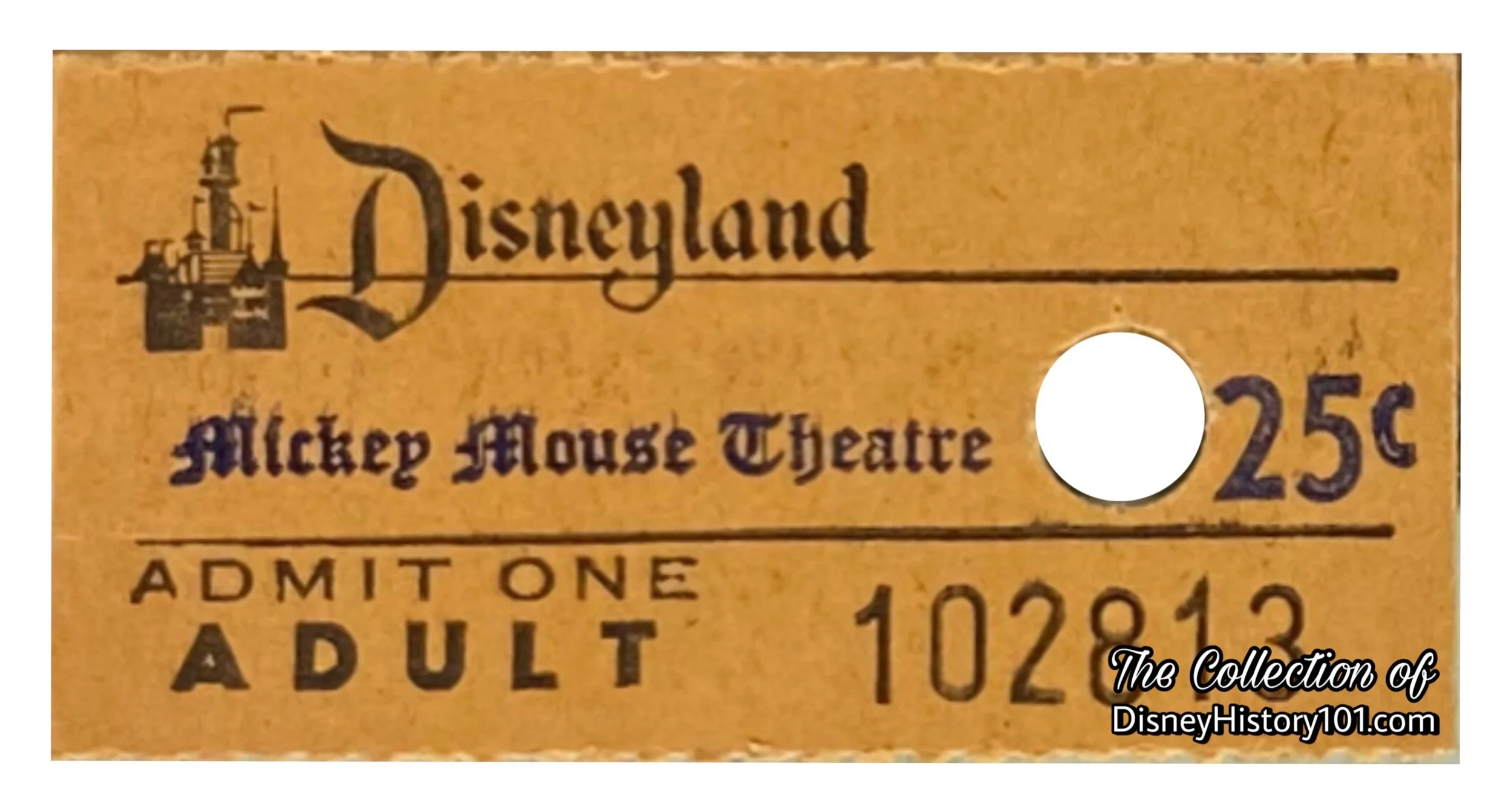
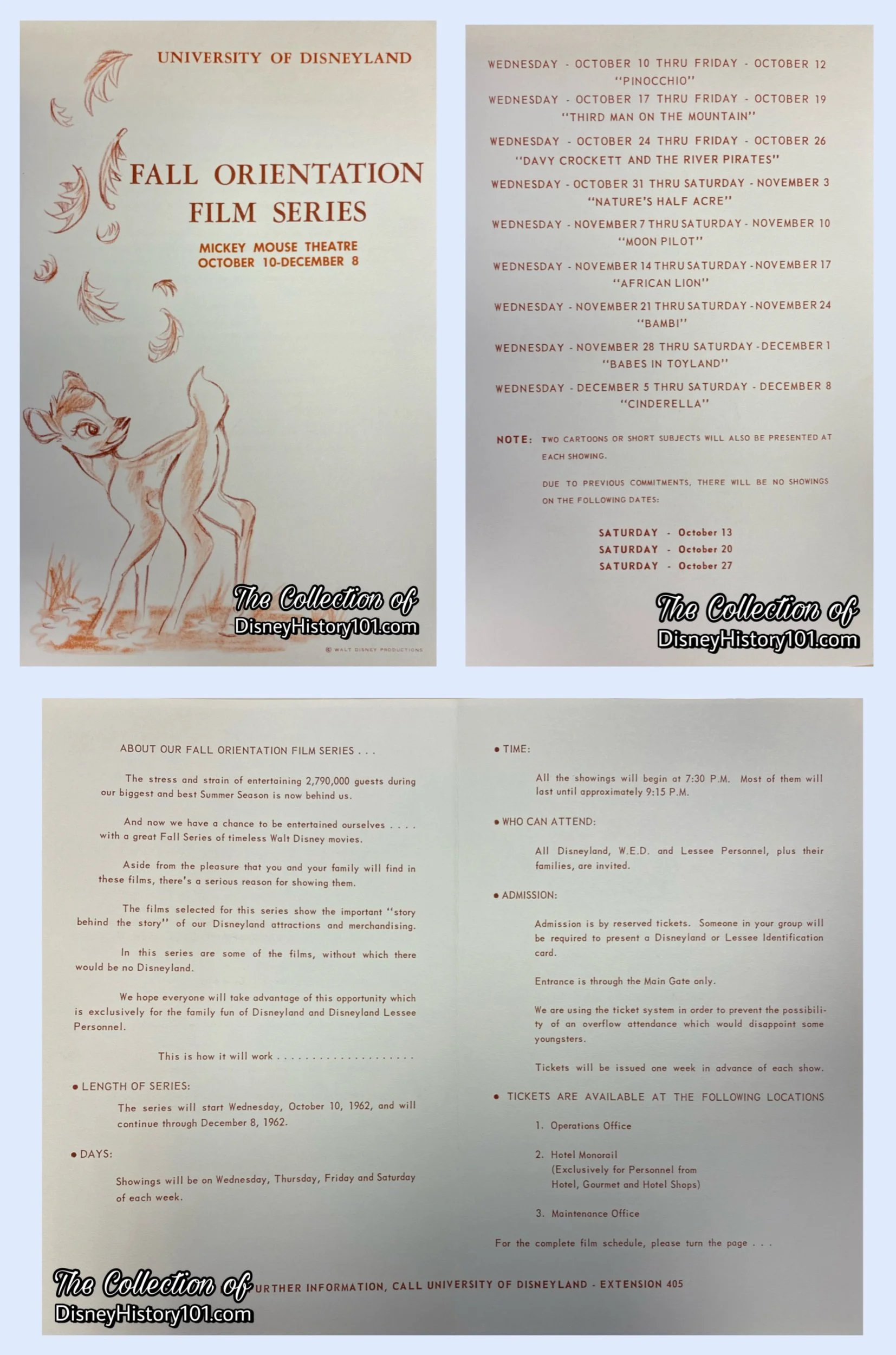
In 1962, the Fall Orientation Film Series presented by the University of Disneyland was held at the Mickey Mouse Theater (on most Wednesdays thru Saturdays, from October 10th thru December 8th). These were special feature film presentations (with short films attached), for “all Disneyland, W.E.D. and Lessee Personnel, plus their families”(including those of the Disneyland Hotel, Gourmet and Hotel Shops), beginning at 7:30p.m. and ran until 9:15p.m. during those dates. Tickets were available at the Operations Office, Hotel Monorail, and Maintenance Office. Films screened included Walt Disney’s Pinocchio (October 10-12), Third Man on the Mountain (October 17-19), Davy Crockett and the River Pirates (October 24-26), Nature’s Half Acre (October 31-November 3), Moon Pilot (November 7-10), African Lion (November 14-17), Walt Disney’s Bambi (November 21-24), Babes in Toyland (November 28-December 1), and Cinderella (December 5-8).
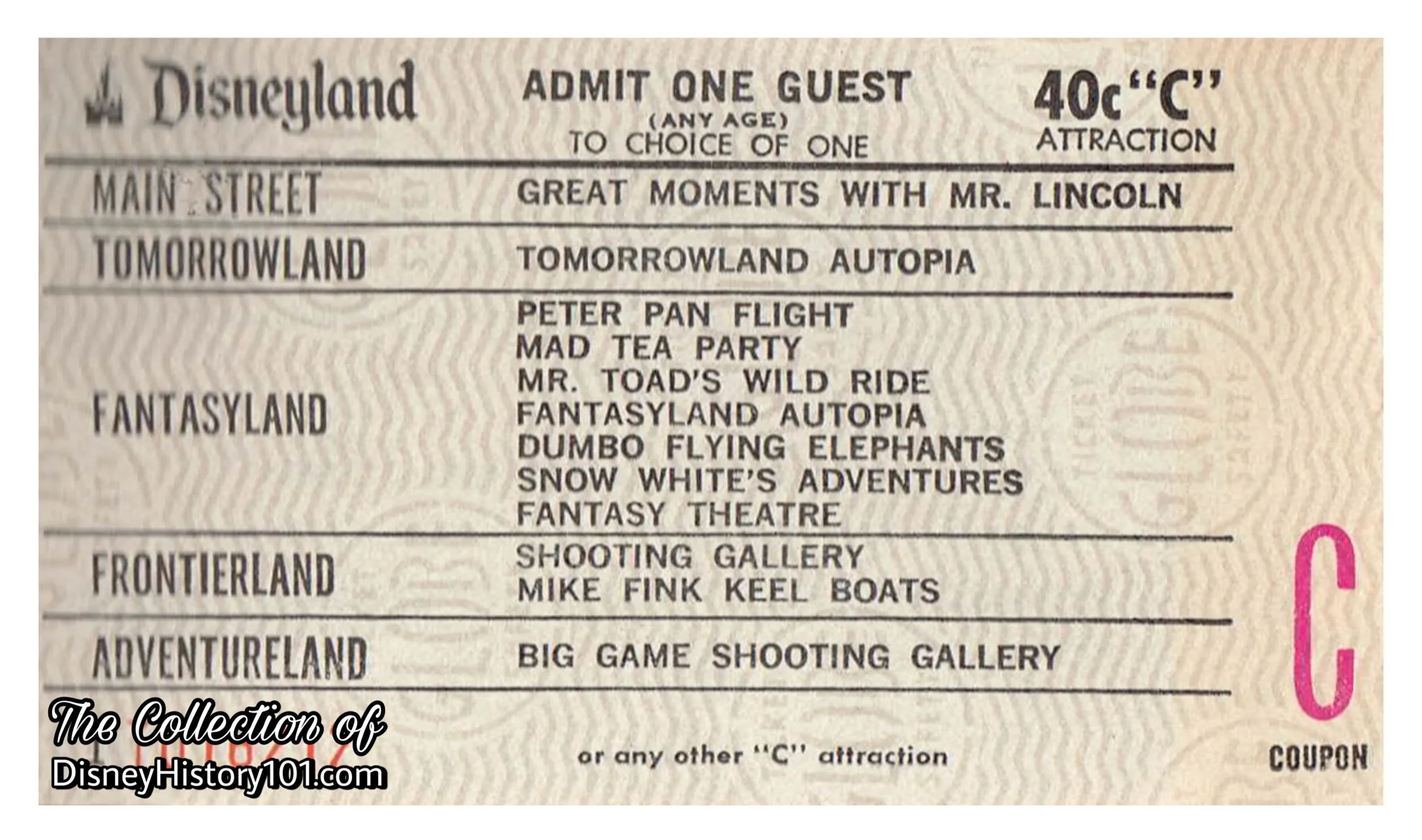
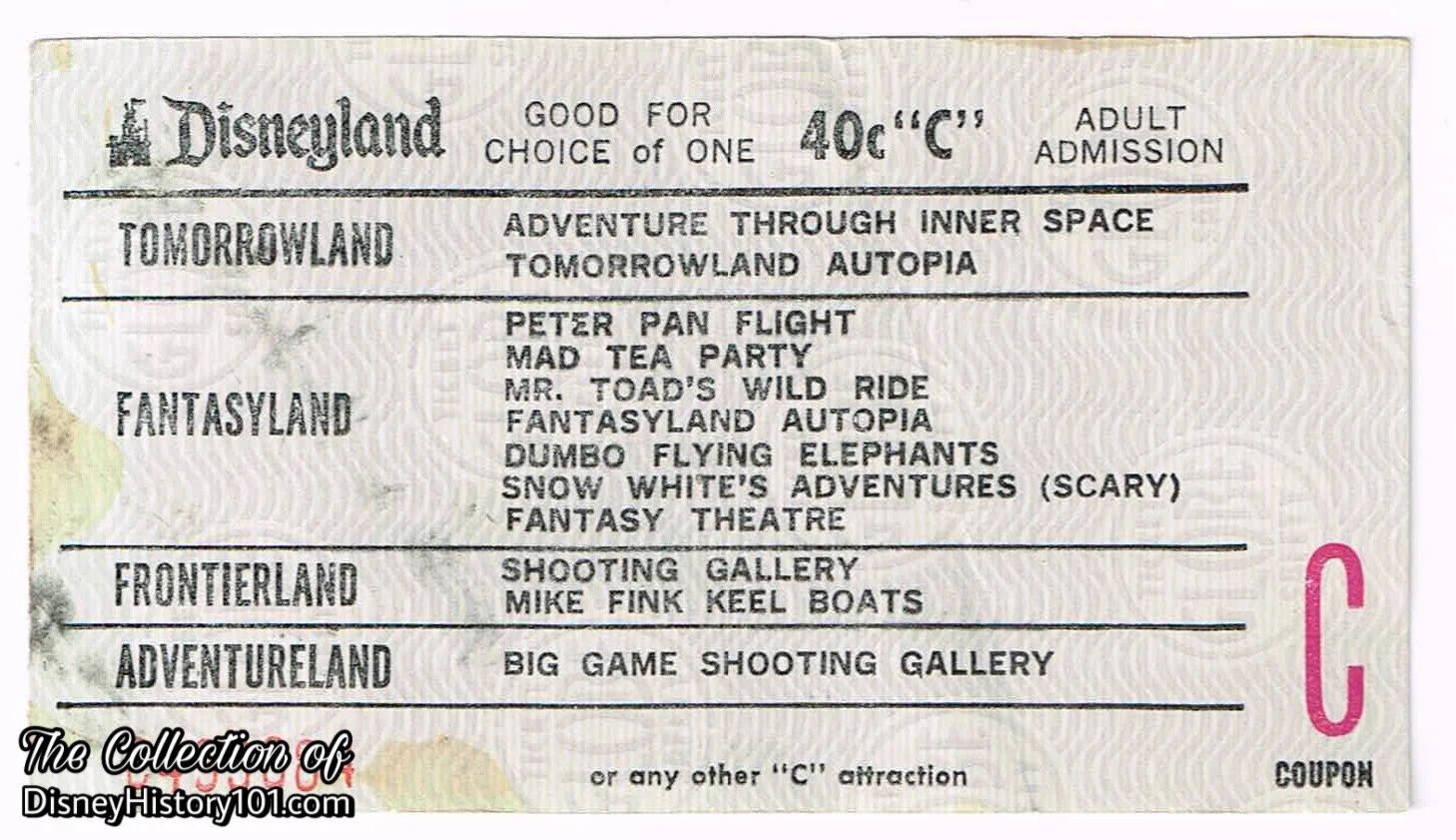
A year before the theater was renamed, the Mickey Mouse Club Theater was also the location of exciting “live” recording of The Famous Ward Gospel Singer’s record album and concert, on April 18th, 1963. The concert (under the Direction of Gertrude Ward) contained a selection of 12 songs (including “Down By The Riverside”, “Something’s Got Ahold of Me”, “Never Grow Old”, “Dry Bones”, “I’m Getting Nearer”, “Shadrack”, “Deep Down In My Heart”, “He’s Got The Whole World In His Hands”, “Keep Your Hand On The Plow”, “Daniel Saw The Stone”, “We’re Marchin’ To Zion”, and “Come On In This House”). The record album was produced by Camarata, and distributed for home-listening through Buena Vista Records. Just before the curtains closed on the Mickey Mouse Club Theater stage for the final time, a print of Walt Disney’s Dumbo would be shown, during 1964. This was part of the University of Disneyland’s Disney Film Orientation Program, that made younger employees knowledgeable about Walt Disney’s classic stars that they may not be familiar with. Remember, this was long before the advent of widely distributed home-viewing formats (like the video tape) streaming services, or the internet, so average folks had no access to home copies of classic Walt Disney Productions short films or feature length films.
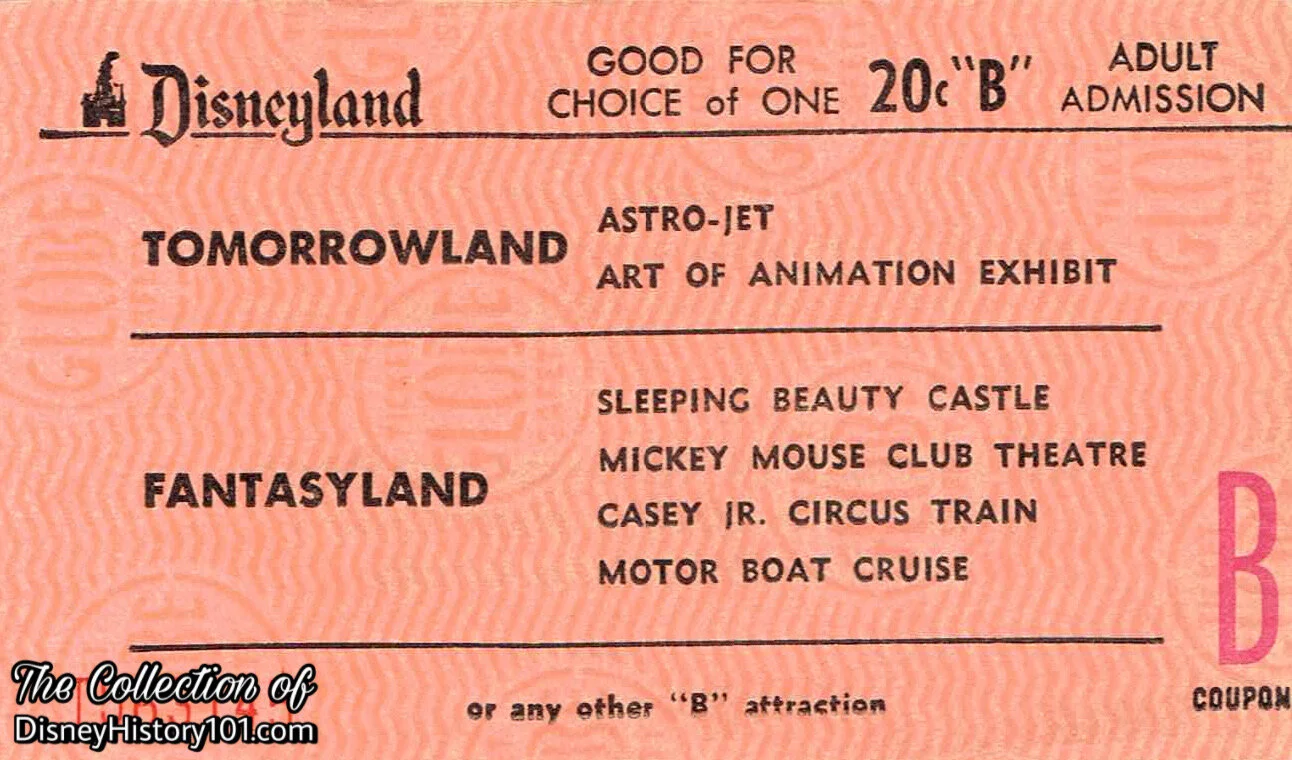
Though printed and distributed during the Summer of 1960, this Disneyland “B” Coupon still bears the original admission price of 20¢. Adult Guests would exchange these to view 30-minute cartoons, which ran from 11 a.m. to closing!

The Mickey Mouse Club Theater was situated on the west side of Sleeping Beauty Castle, between Snow White’s Adventures and the Welch Grape Juice concession.
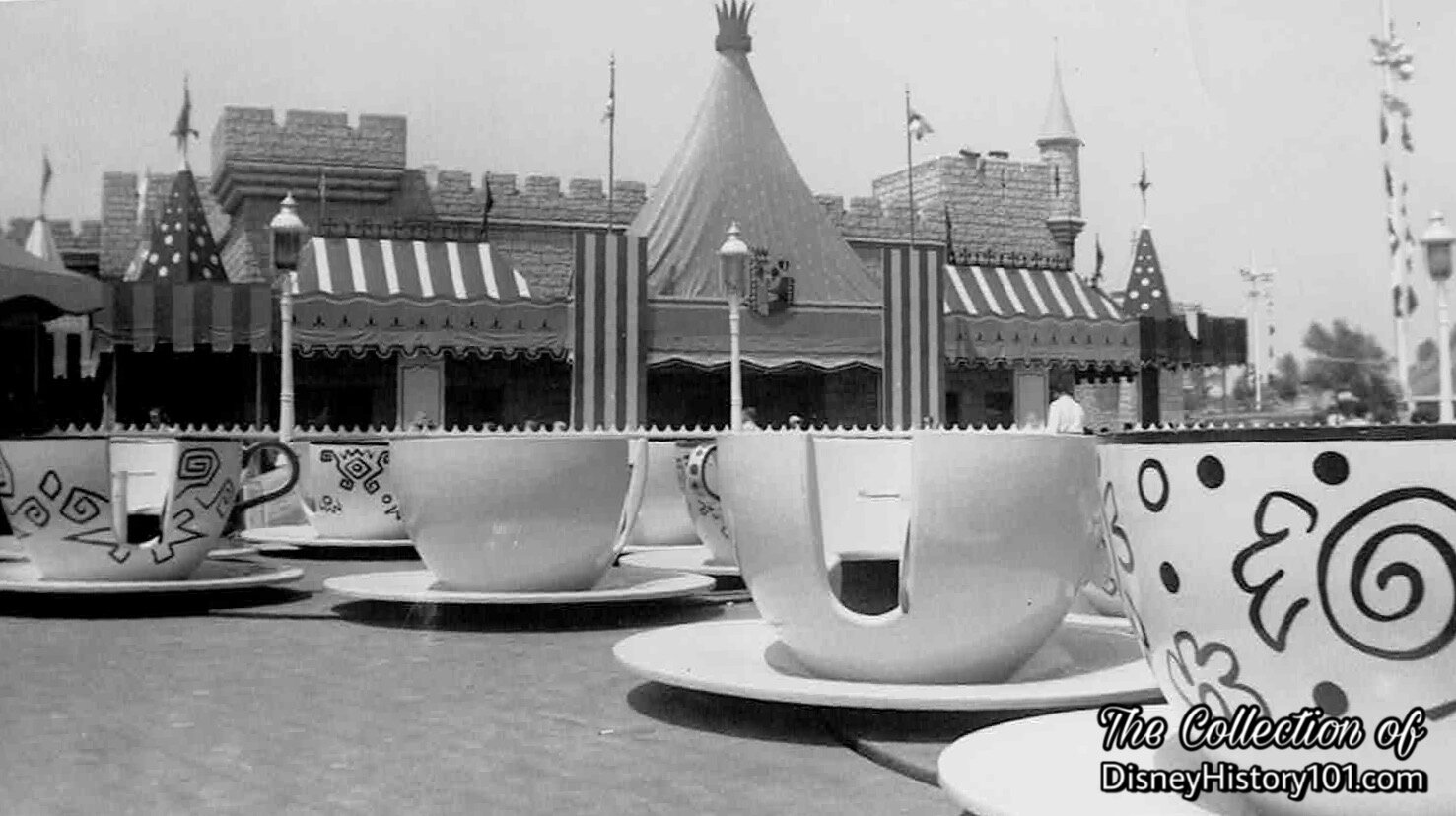
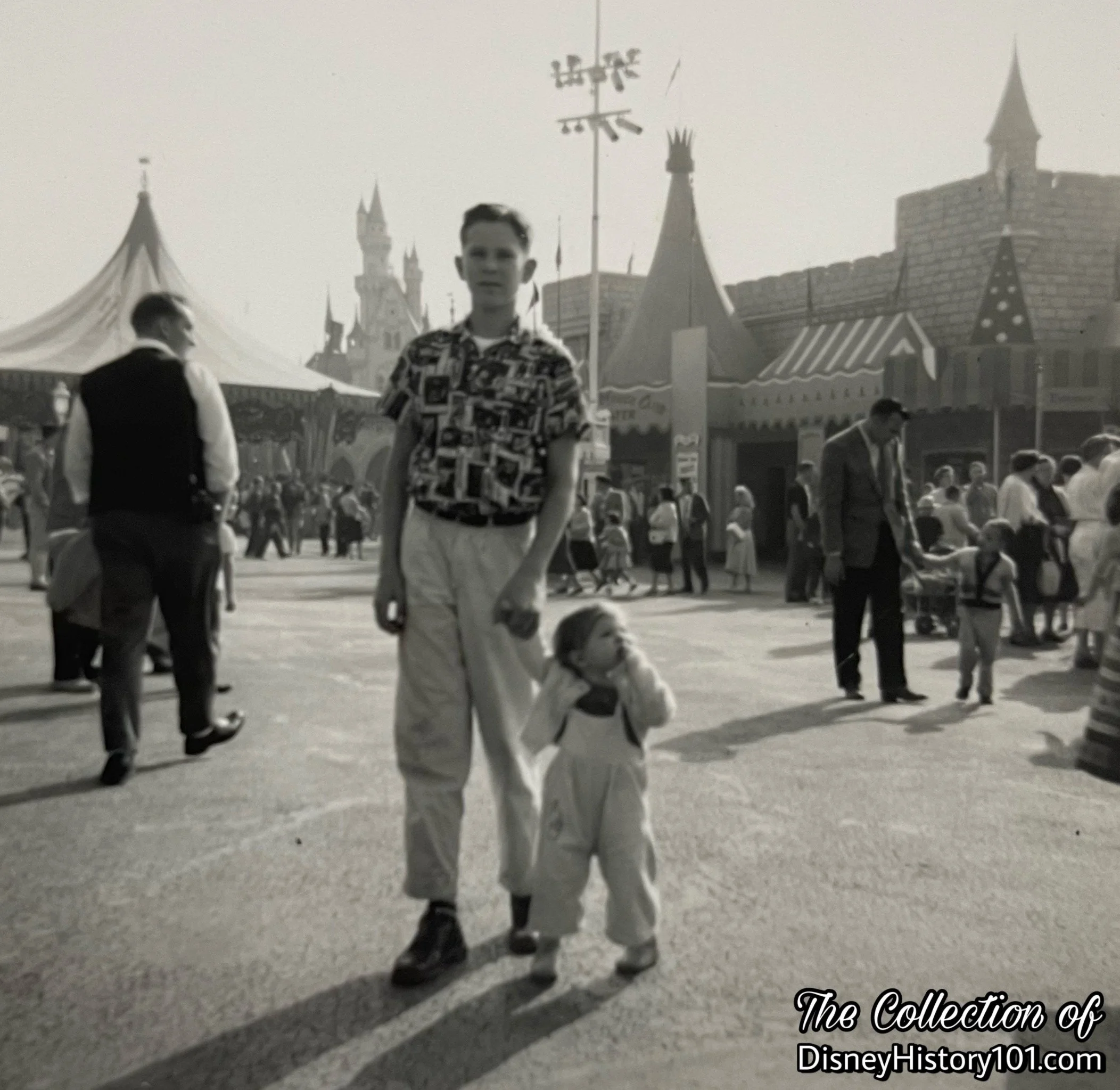
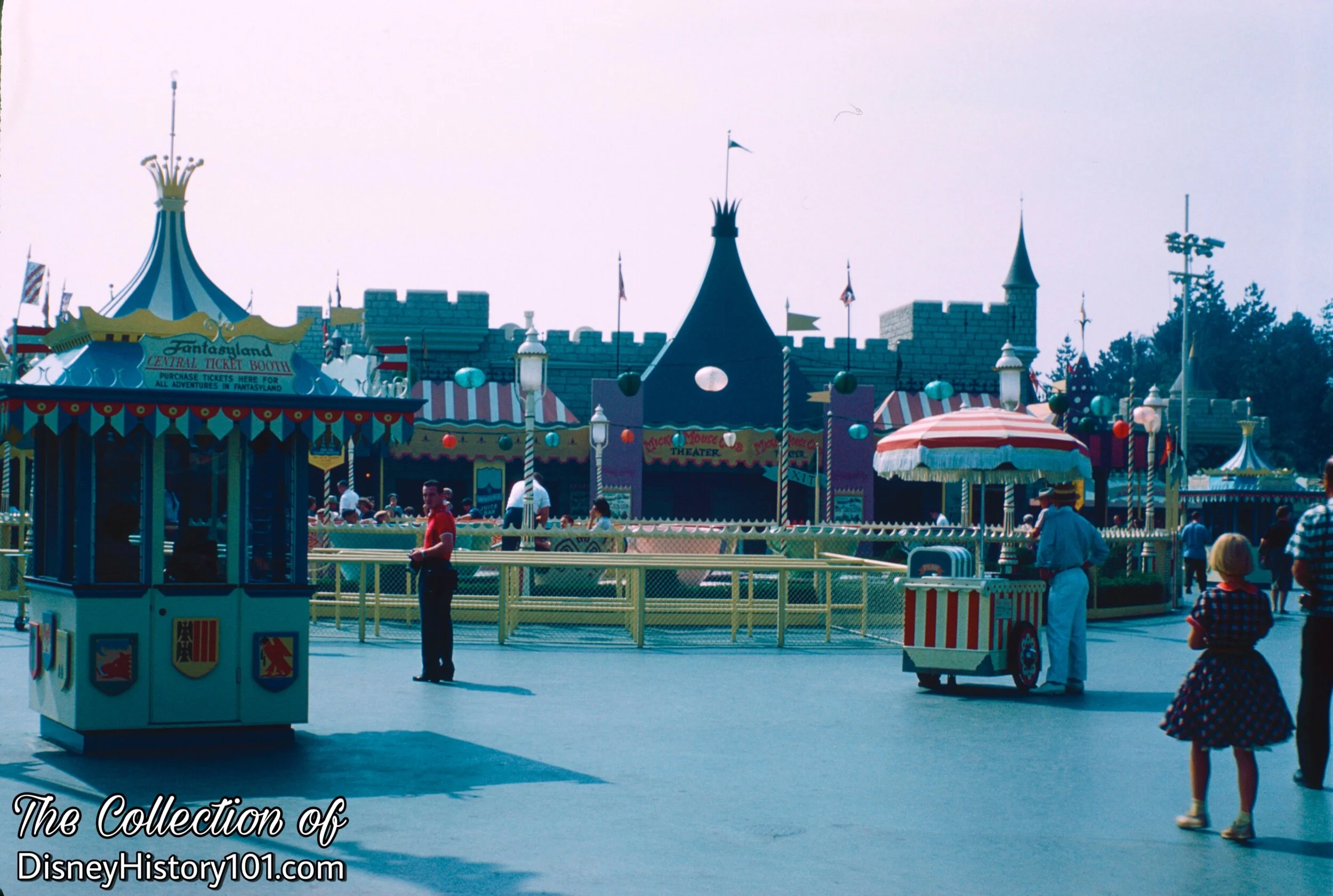
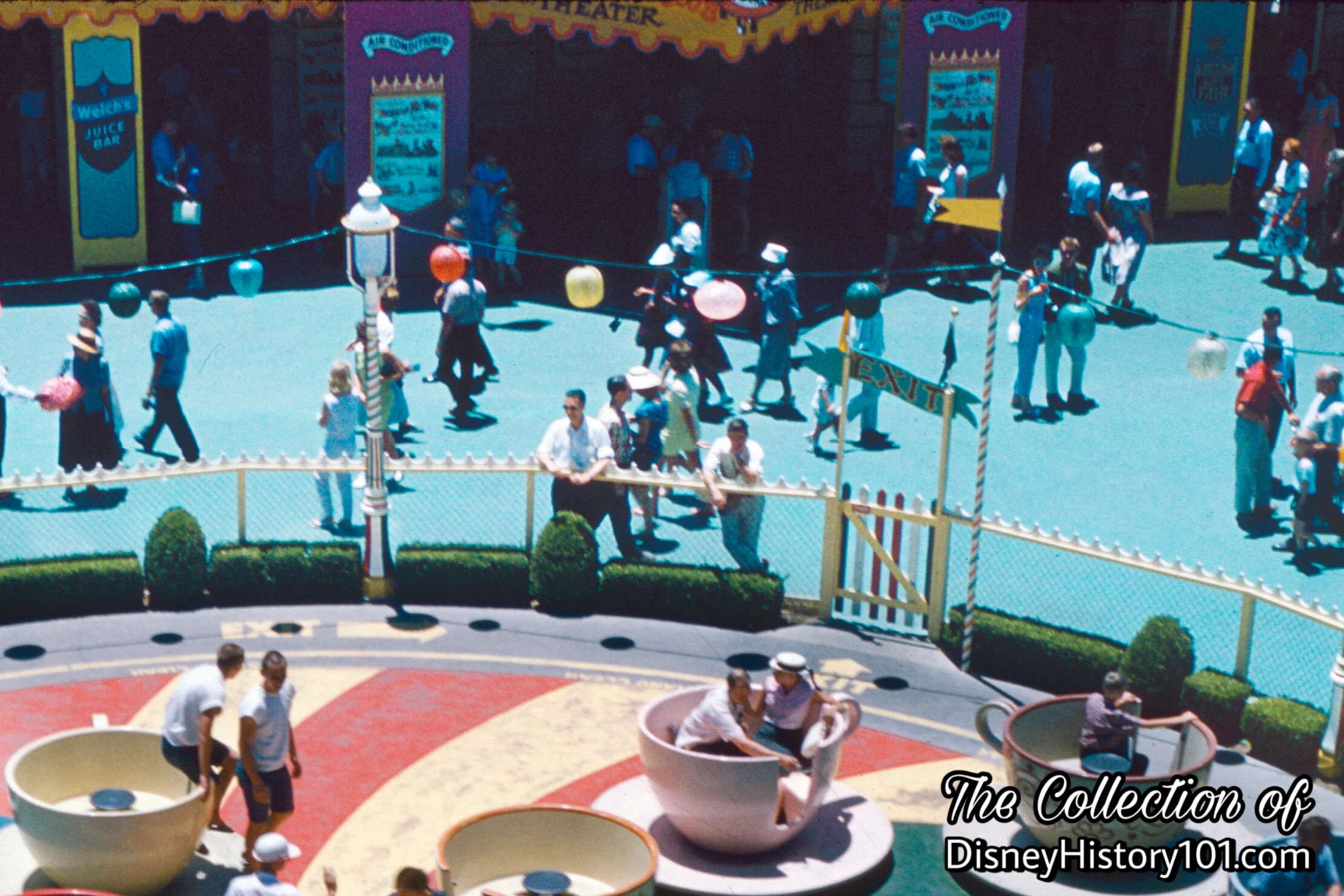
The Mickey Mouse Club Theater offered a change of pace from the Mad Tea Party and Fantasyland’s other “moving” adventures. The air conditioned theater was especially inviting on a warm summer days.
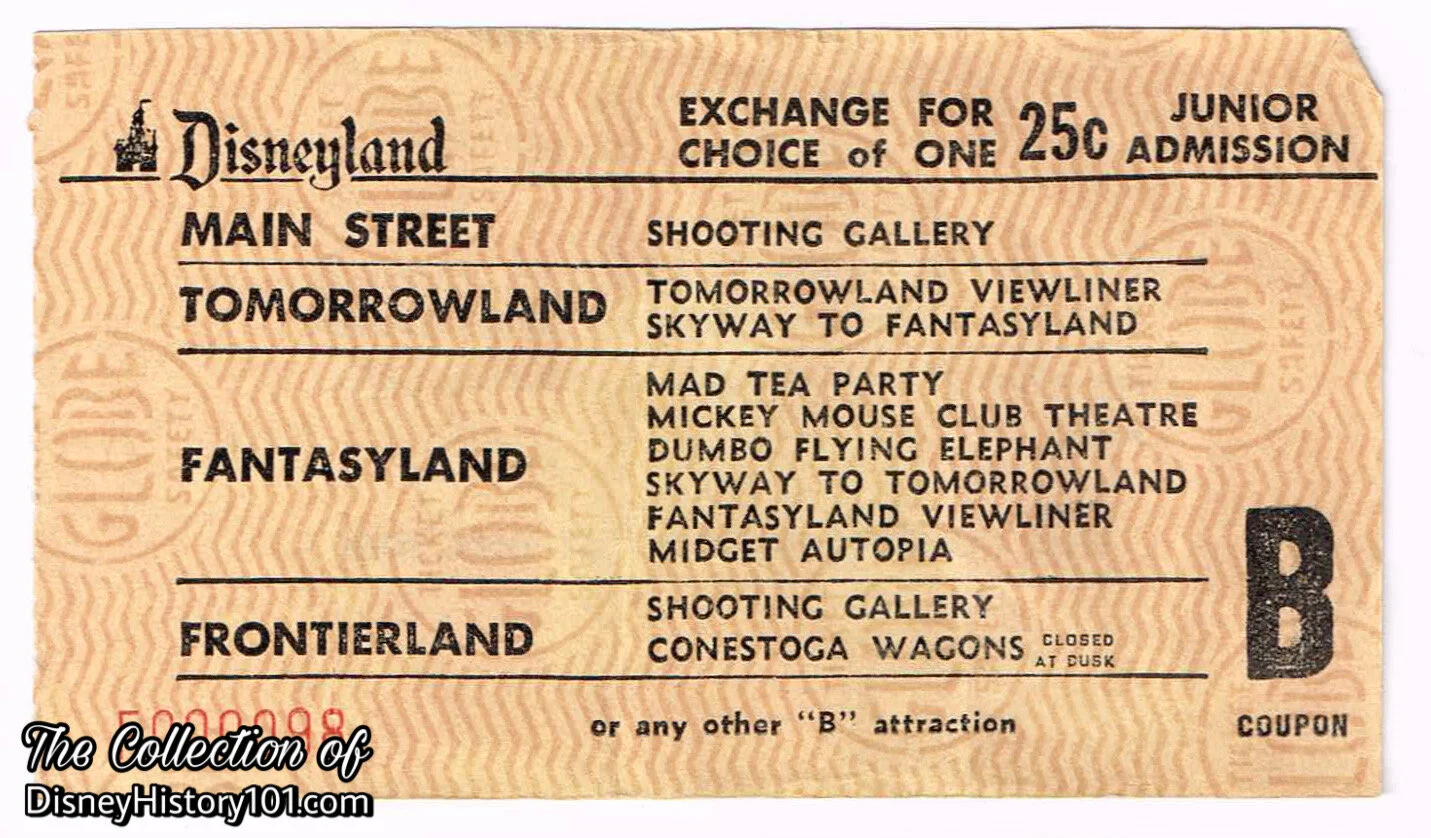
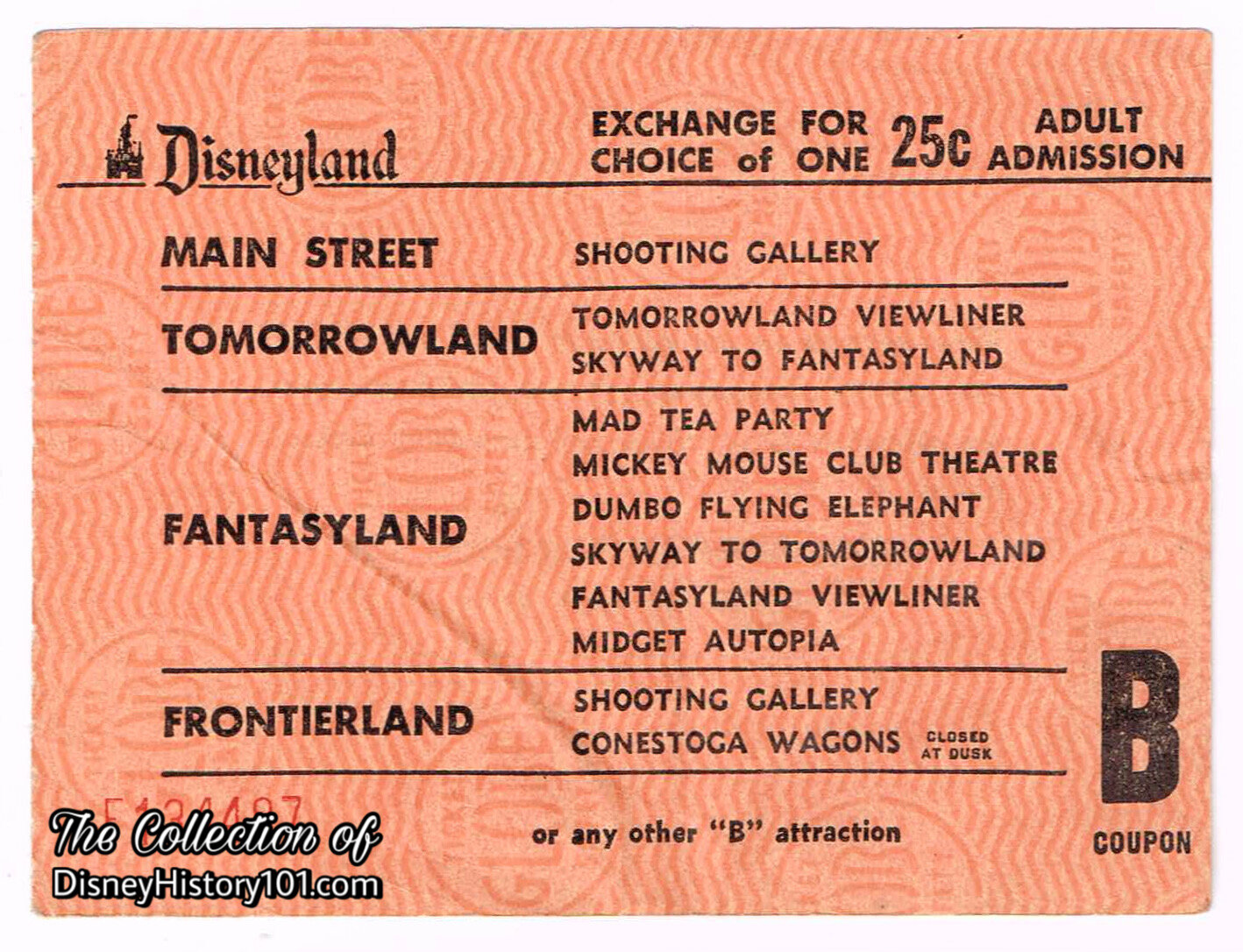
The Mickey Mouse Club Theater would briefly cease operation during the winter season of 1962.
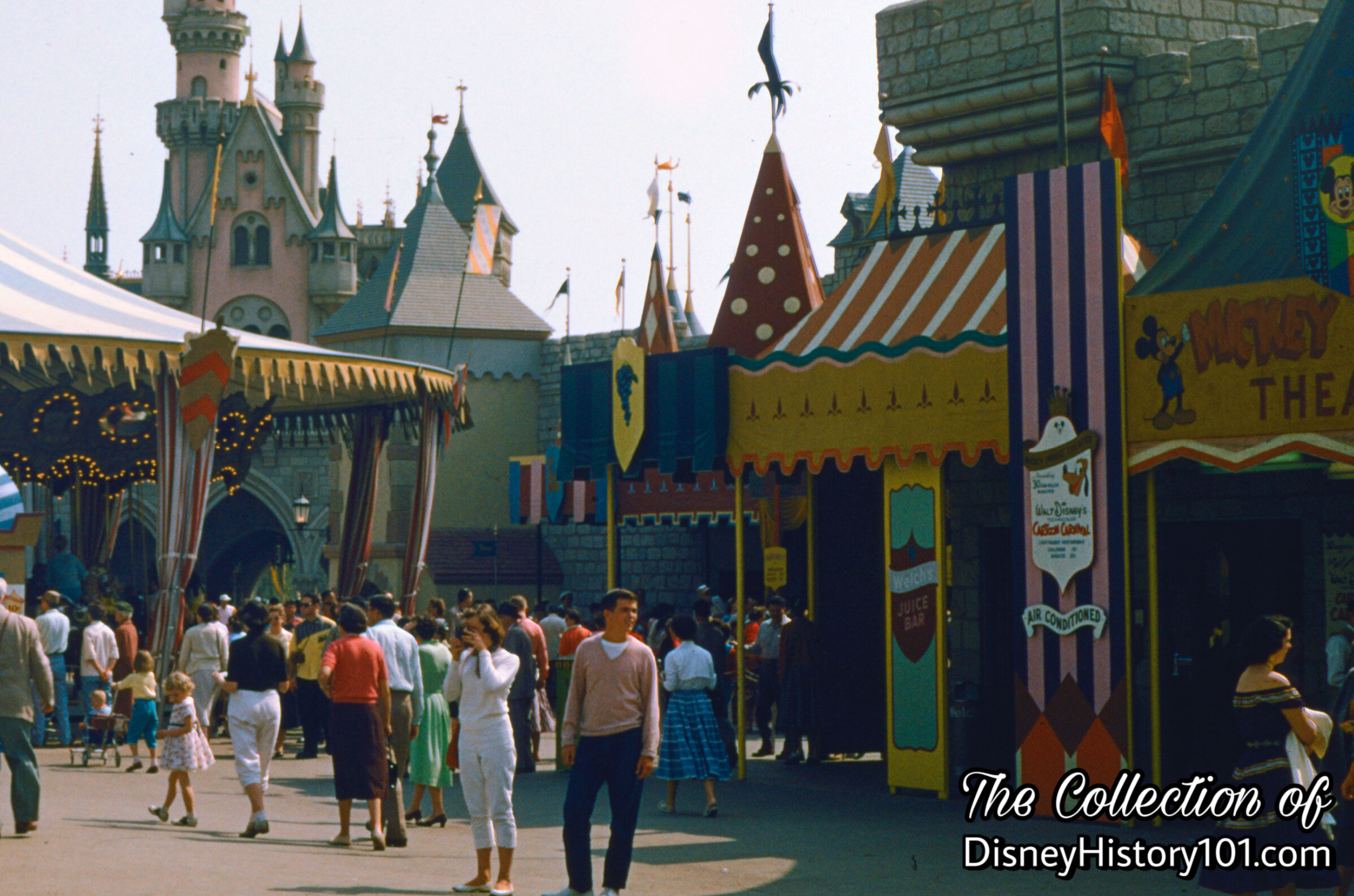
The Mickey Mouse Club Theater marquee advertises “Walt Disney’s Cartoon Carnival” in this Vintage View. When the Mickey Mouse Club Headquarters was temporarily set up in the Main Street Opera House, the venue would gain a slightly new look and a new name.
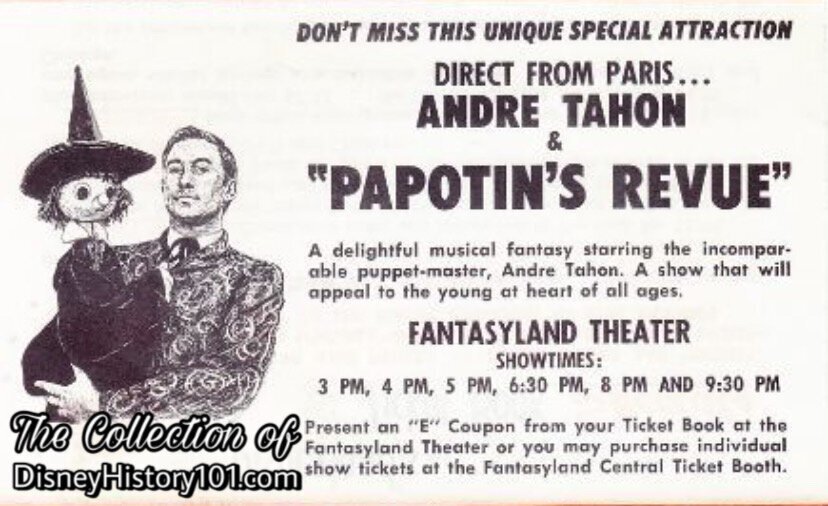
“Mous-Ka Puppets”
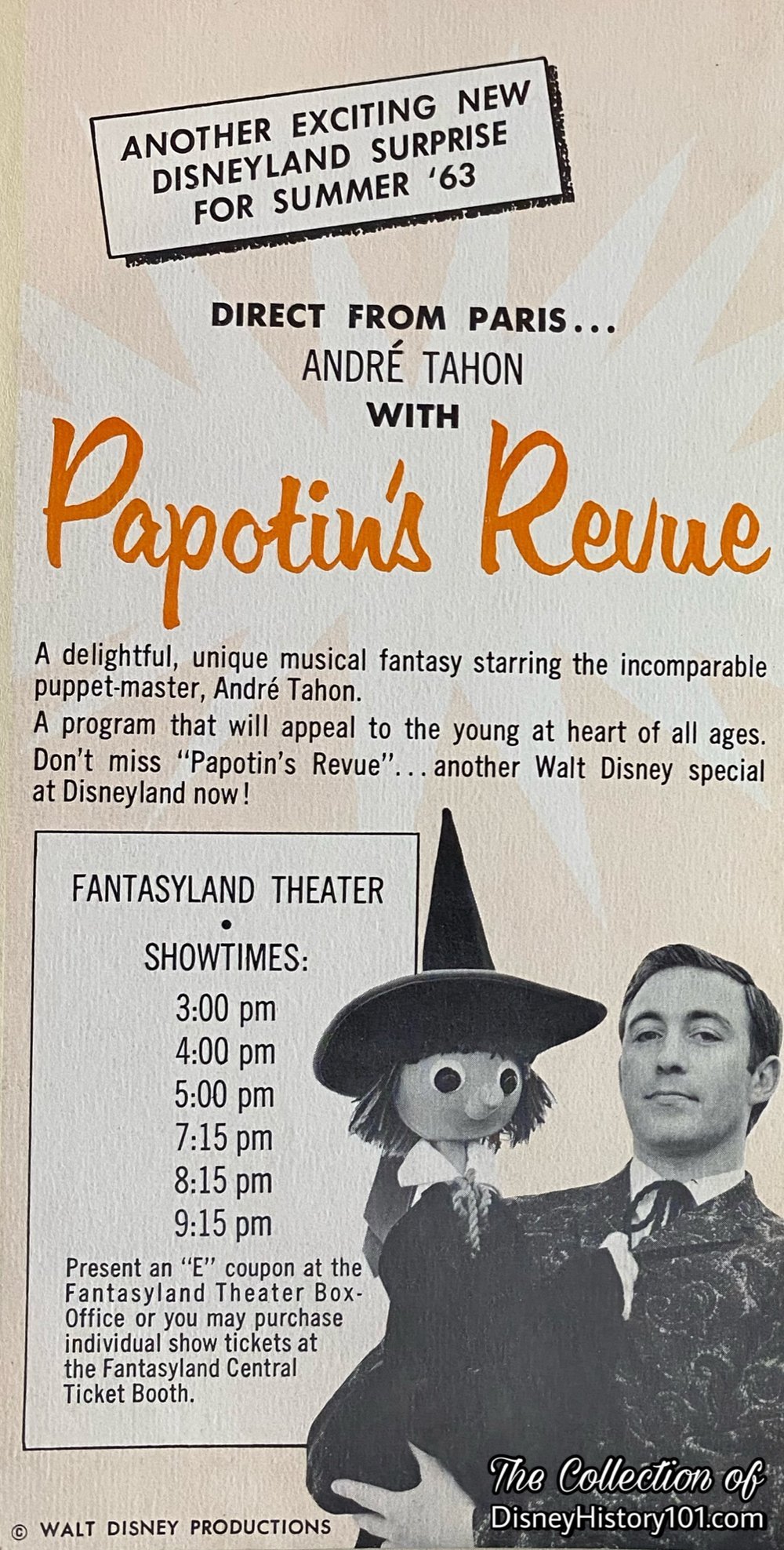
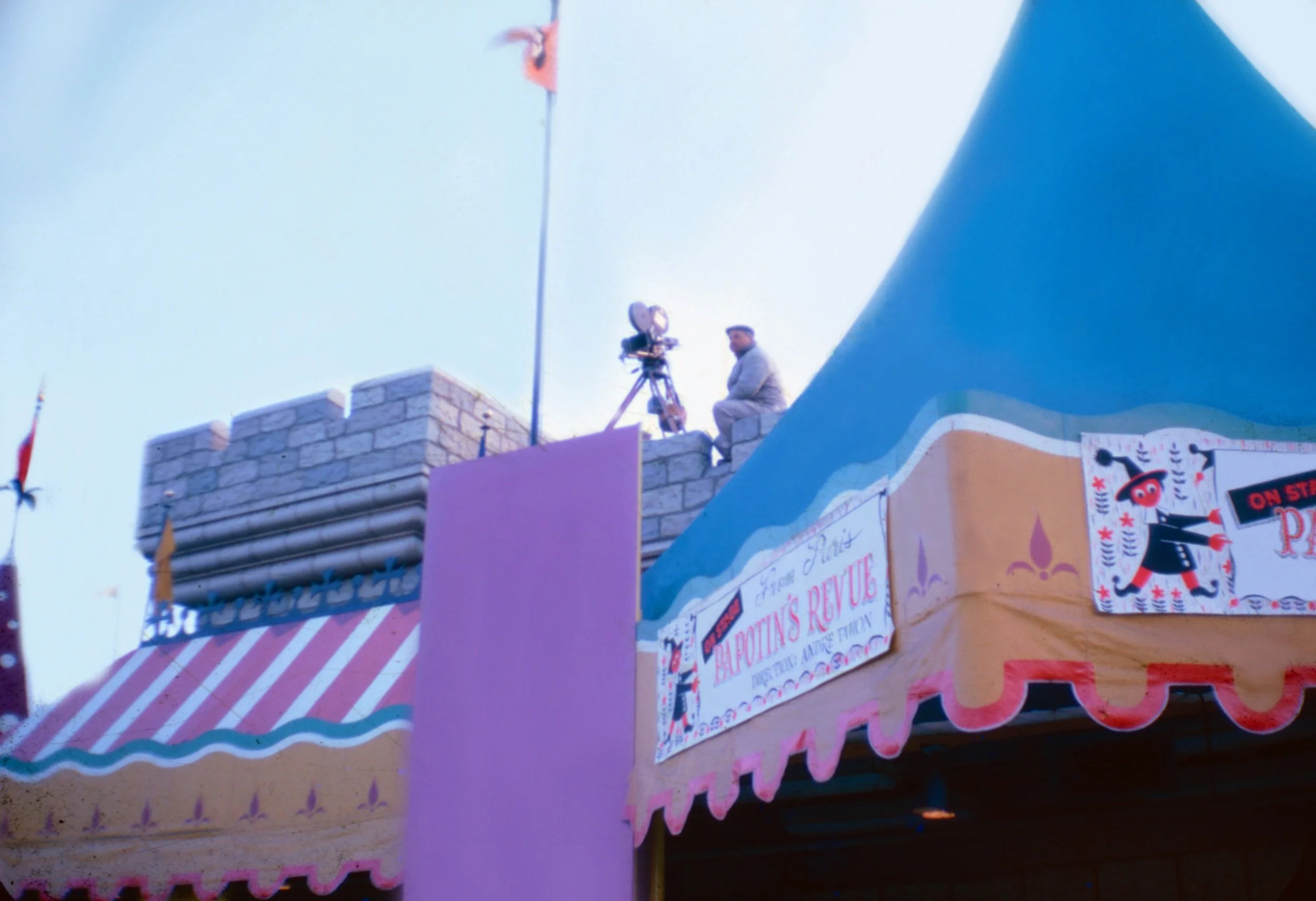
Puppeteers and their animated friends were a common sight in Disneyland during Walt’s era. Some participated in parades (like puppeteer Jack Shafton in Fantasy on Parade). There were others, like French puppeteer André Tahon, who performed six of his unique “E” Ticket musical fantasy Shows (with pre-recorded music) daily, April 6th through September 8th of 1963. John Zweers, Bob Mills, and Bob Baker were just a few more master puppeteers and performance artists to bring their shows to Walt Disney’s grand show - Disneyland! Before January of 1964, they would perform from the Fantasyland Theater Stage and another smaller stage which was located in Tinkerbell’s Toy Shoppe. Tickets for the former were available at the Fantasyland Theater Box Office and the Fantasyland Central Ticket Booth.
The original Mickey Mouse Club ended its televised run during the 1960s. It was then (in 1964), that Mickey Mouse Club Theater was renamed Fantasyland Theater. The old 400-seat “Mickey Mouse Club Theater” was now rehabilitated with 450 seats (to increase guest capacity). During operational hours, Disneyland guests still enjoyed Walt Disney shorts in the air-conditioned auditorium. Long before DVDs, and streaming services, the Fantasyland Theater offered a rare opportunity to watch Walt Disney Studios’ animated classic characters on a big screen (the way that Walt intended). Walt Disney Productions’ short films were shown here, as well as pieces starring the Mouseketeers of the Mickey Mouse Club.
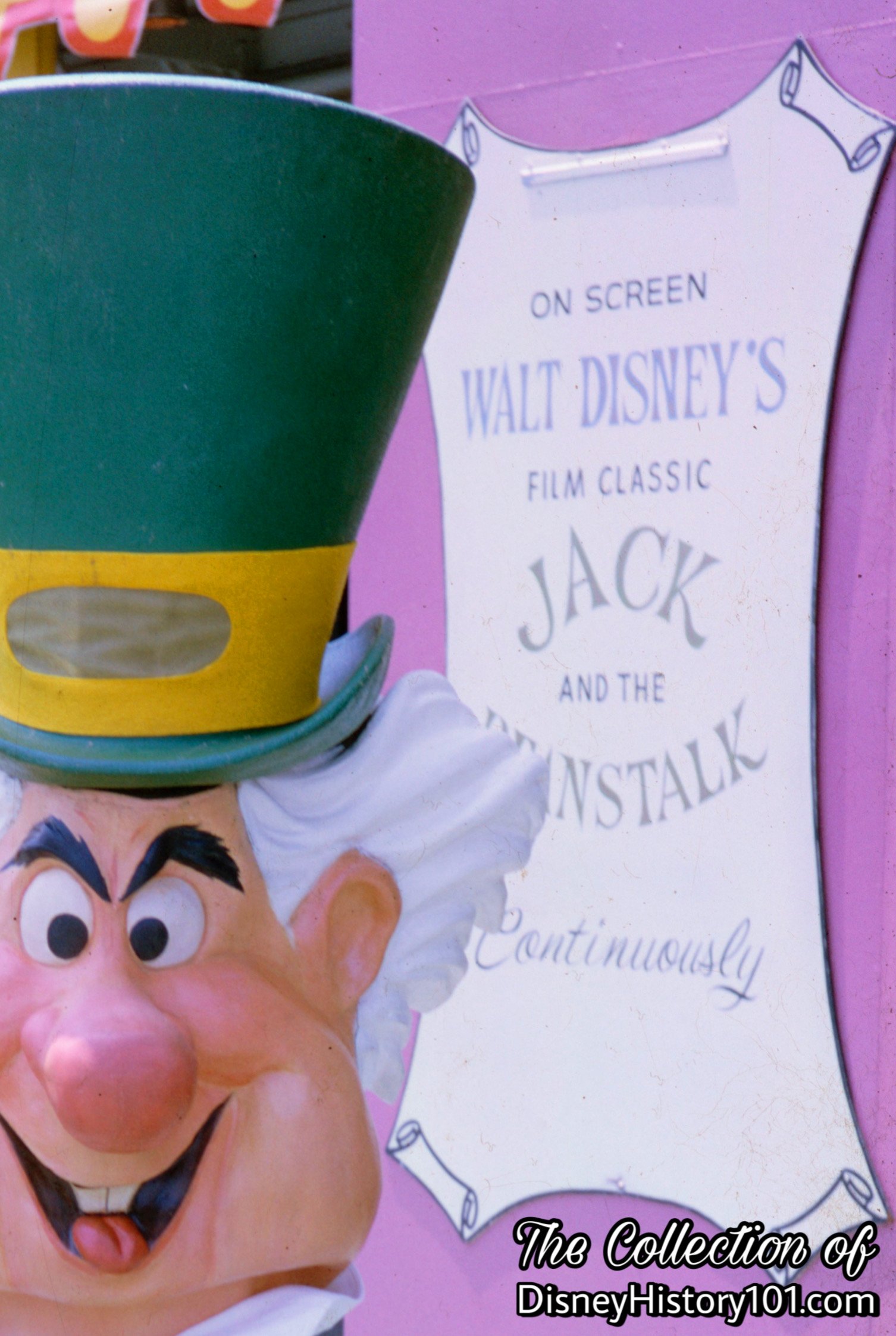
One of the first films shown (in the summer of ‘64) was “Mickey and the Beanstalk” (billed as “Walt Disney’s Jack and the Beanstalk” on posters).
In late 1965 thru 1966, “Pecos Bill” returned for a double feature with “Rugged Bear” starring Donald Duck.
“Mickey Mouse presents ‘The Wonderful World of Wizardry’” at the Fantasyland Theater, for seven performances daily (from 12:00N-7:30pm), from December 26th, 1967 thru January 1st, 1968. “The majic show” featured “the wizardry of Mickey Mouse, Pluto, Goofy and Alice in Wonderland performing several famous illusions live on stage.” During this same winter period, both the White Rabbit and Mad Hatter made regular appearances at the Forecourt Fantasyland Theater, greeting guests as part of the Character Program, “throughout the Christmas Holidays” (daily between parades, from 9:00am to 11:45am). [“Disneyland Holiday Talent Master Schedule,” prepared for the period of December 16, 1967 through January 1, 1968]
Winnie the Pooh and the Honey Tree also ran during 1968. By that year the seating capacity has been expanded to a maximum of 452 guests (with a theoretical hourly capacity of 904). The following year (c. 1969), the Academy Award winning Winnie the Pooh and the Blustery Day came to Fantasyland Theater, accompanied by a stage show featuring the residents of the Hundred Acre Wood. One Disneyland Admission Media Rides and Attractions Report [prepared in April 1971, by Disneyland Research Department] divulged that 4,964,907 guests had visited the Fantasyland Theater during its hours of operation. During the early 1970s, a Cartoon Festival starring Mickey Mouse and Minnie Mouse introduced younger generations to the comedy duo, on the big screen - the way that Walt Disney intended them to be viewed. This Cartoon Festival continued throughout the decade, with other shows like the Disneyland Music Education Program’s “Fun With Music” (a c. 1976 live educational music-oriented show which taught children about “the most creative means of expressing our feelings thoughts, moods, and emotions” - music) appearing intermittently.
The Fantasyland Theater was also utilized for a variety of special events. Occasionally (during summers of the 1960s), the theater was used for staging the live bands of Grad Nite Humdinger shows. In 1966, the Employee Opinion Poll (conducted by Cal-Tech) was held at the Fantasyland Theatre. During the Winter-Spring (of 1966-1967), Cal-Tech conducted the Employee Opinion Poll from the Fantasyland Theater, the poll given to every person who worked for the Park at the time. During 1967, Card Walker orchestrated a special presentation from the Fantasyland Theater stage, for top theater chain owners across the country. Family Film Festivals soon included screenings of live action Walt Disney Productions like Return from Witch Mountain, Candleshoe, The Apple Dumpling Gang, and The Strongest Man in the World. On October 14 & 15 (Saturday and Sunday), 1978, a special two-day limited engagement showing of ‘The Three Caballeros’, “Walt Disney’s popular salute to South America” was featured at the Fantasyland Theater. One of the last screenings was a special early Disneyland Cast-only screening of the 25th Anniversary Birthday Commercial (for all who were involved - both in front fo the camera and behind-the-scenes) debuted Saturday, December 9th, 1980, 9:30a.m., in the Fantasyland Theater. Then, the Fantasyland Theater closed on December 20, 1981.
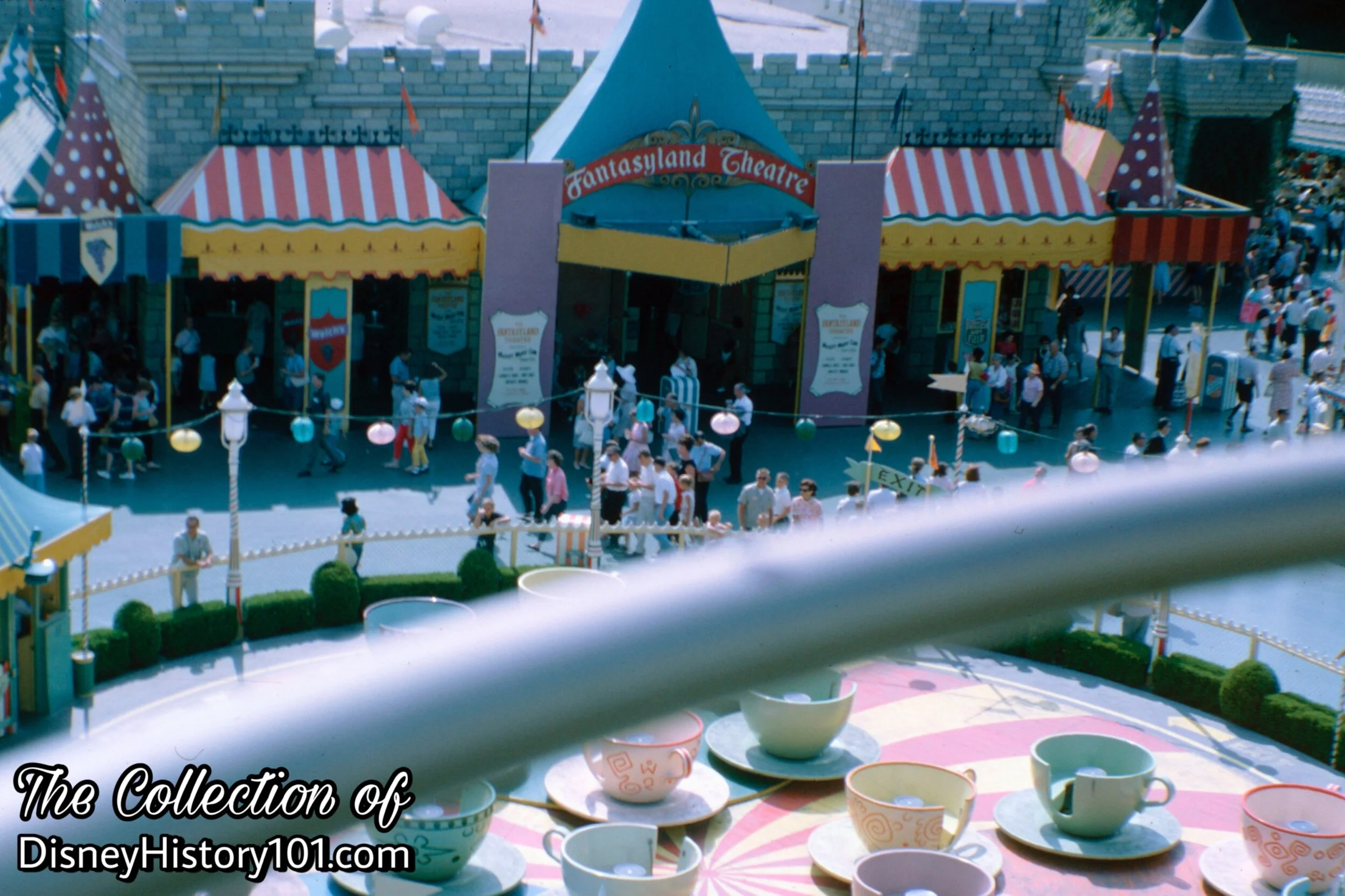
A special Mickey Mouse Club show (advertised on posters rather than the theater marquee) received top billing during 1964.
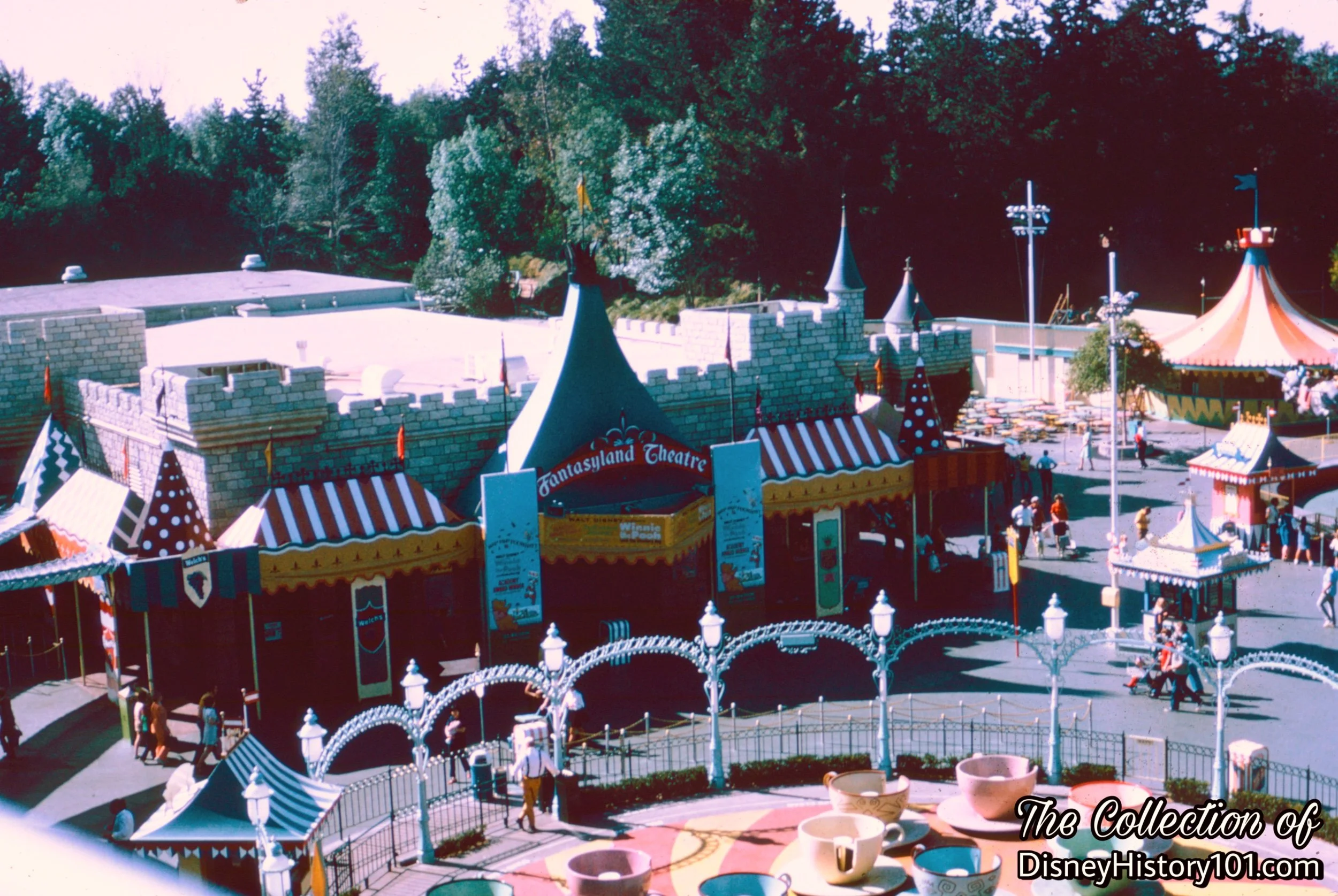
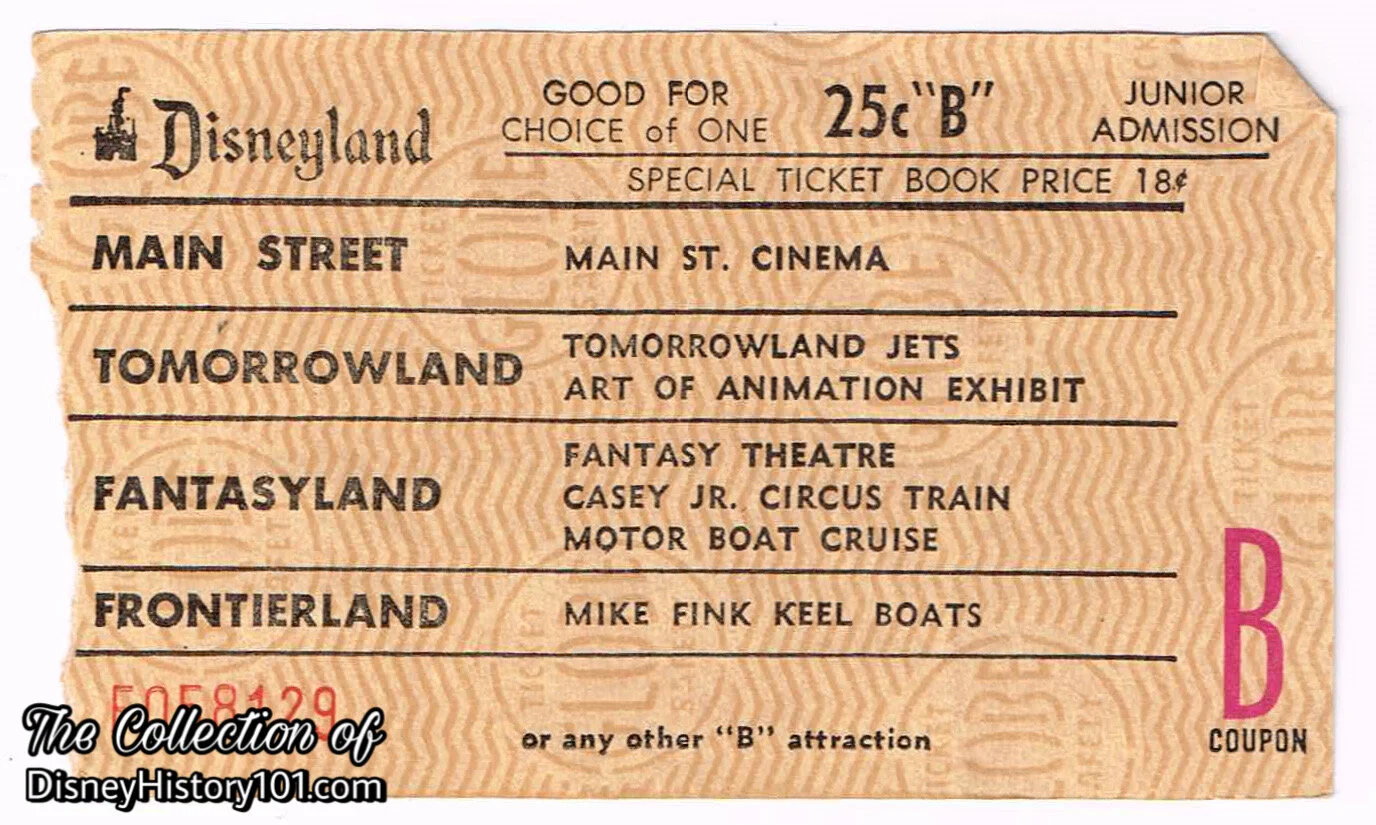
During early days of the all-new Fantasyland Theater, the admission price of the preceding Mickey Mouse Club Theater was retained - 25¢!
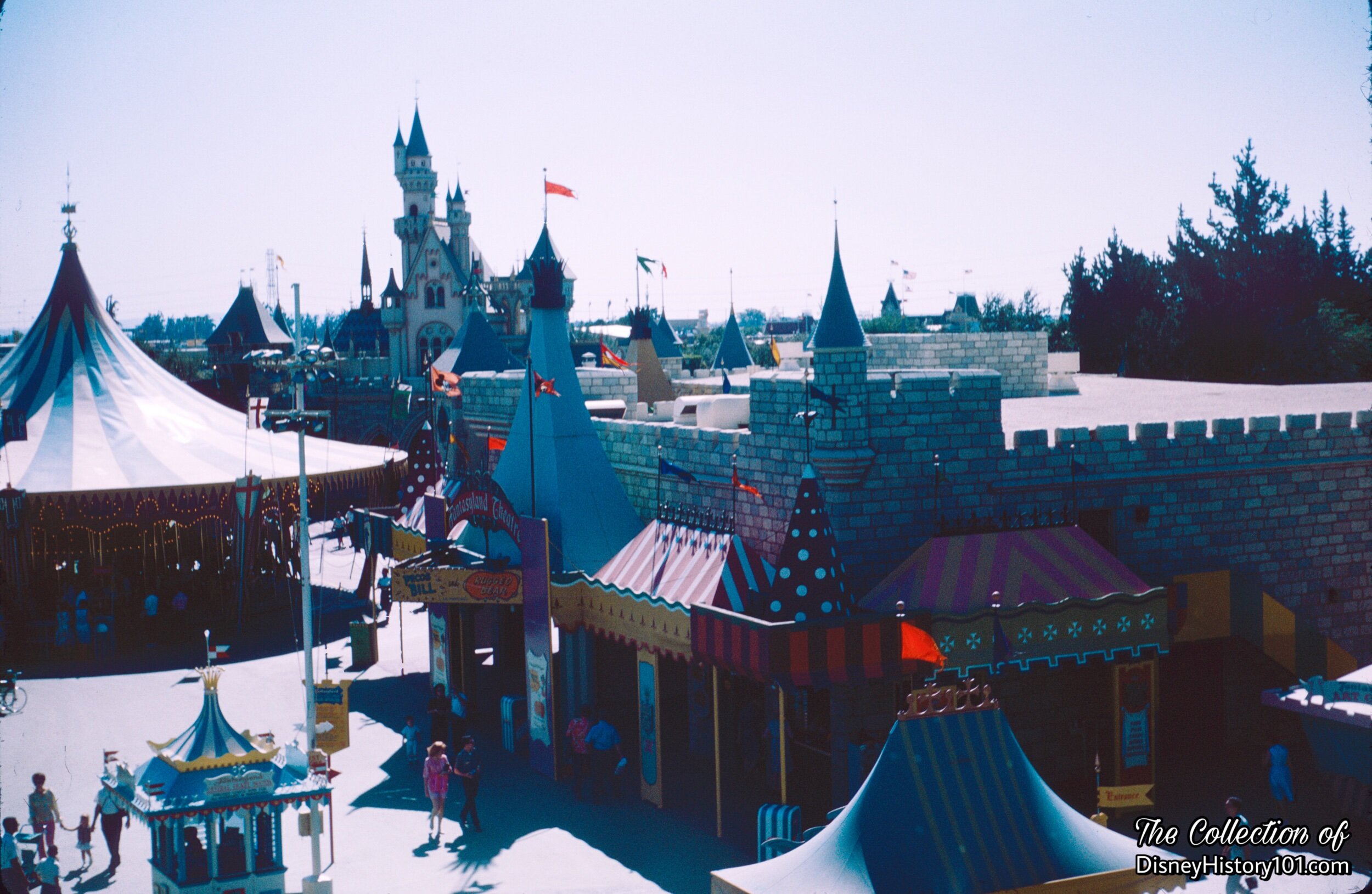
Short films Pecos Bill and Rugged Bear now showing at the Fantasyland Theater as a double feature!
In 1965, the University of Disneyland presented the Fall Film Festival at the Fantasyland Theater. Shows included the son of flubber, Bambi, kidnapped, the living desert, babes in toyland, and Savage Sam.
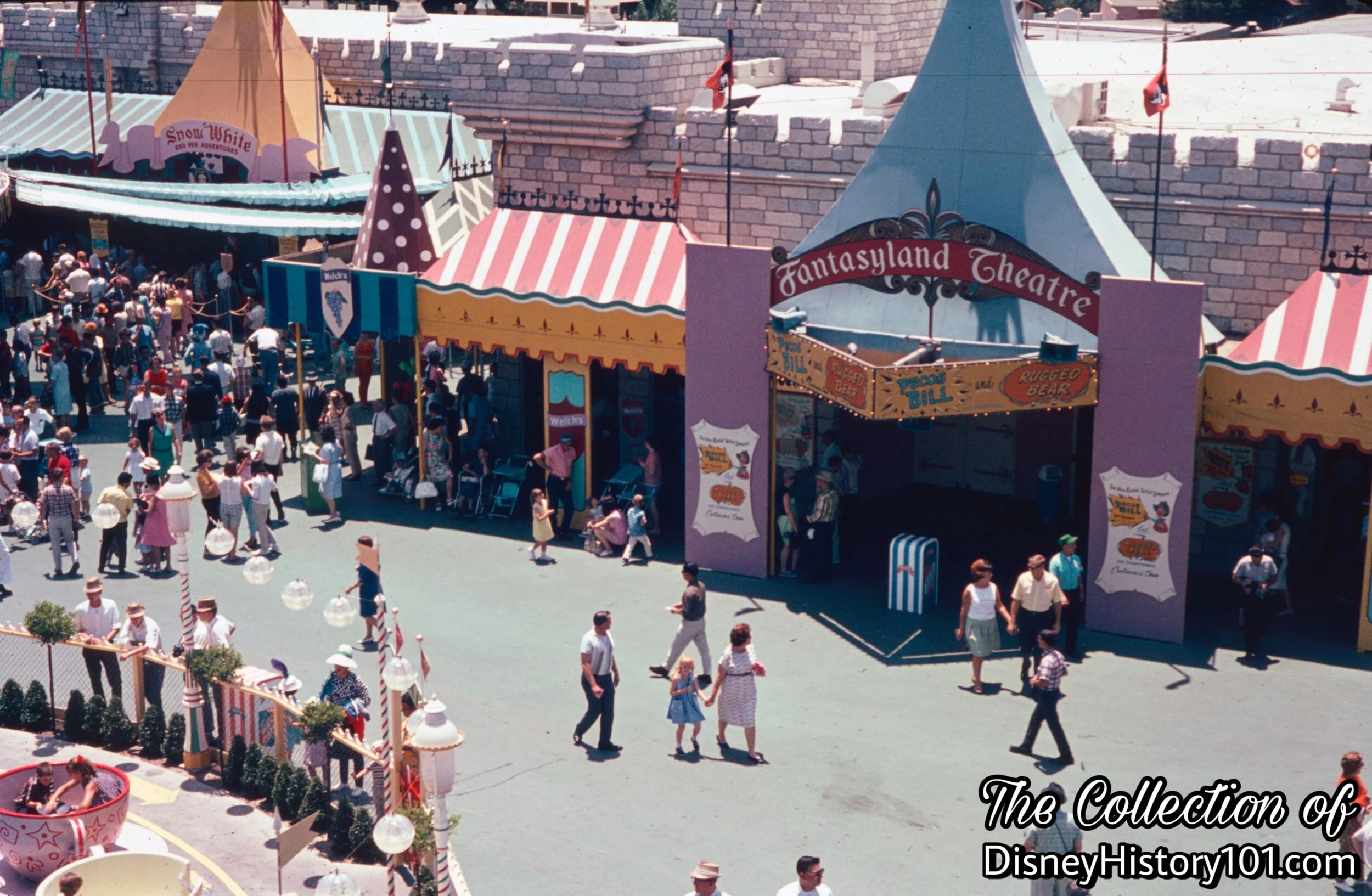
More than a decade after they were released, the Melody Time (1948) short Pecos Bill, and the Donald Duck and Humphrey Bear short Rugged Bear (1953) would play in a double-feature at Fantasyland Theatre!
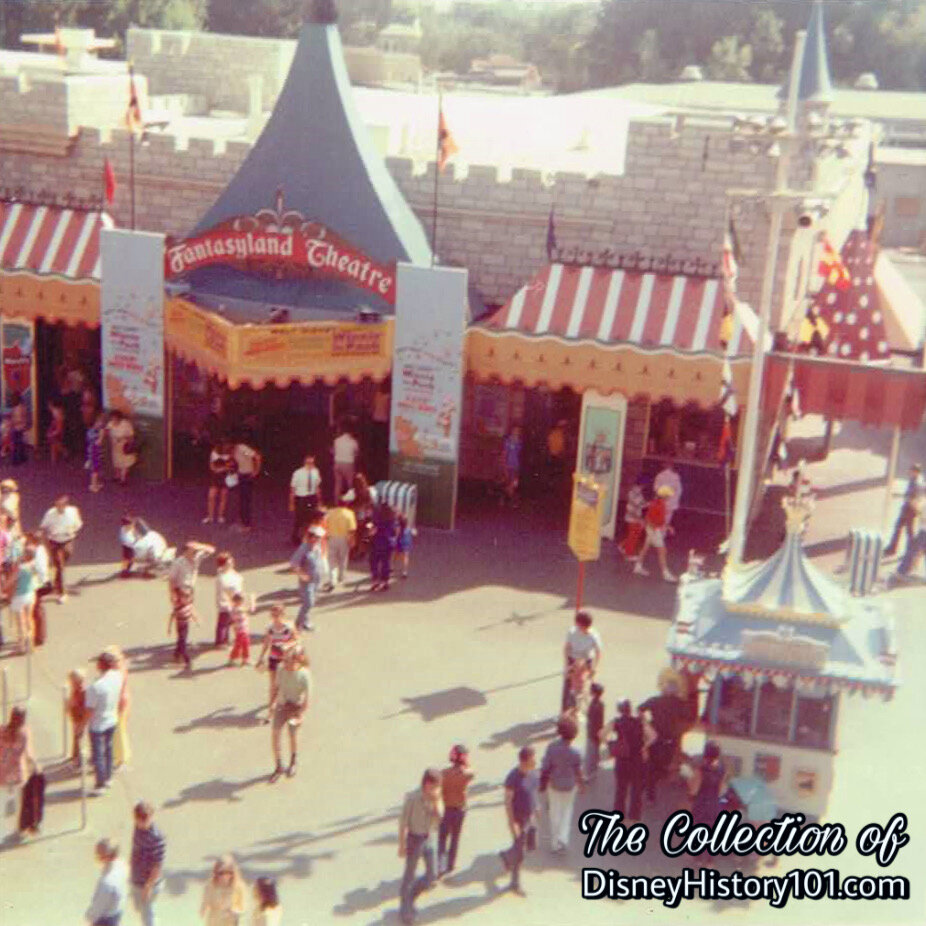
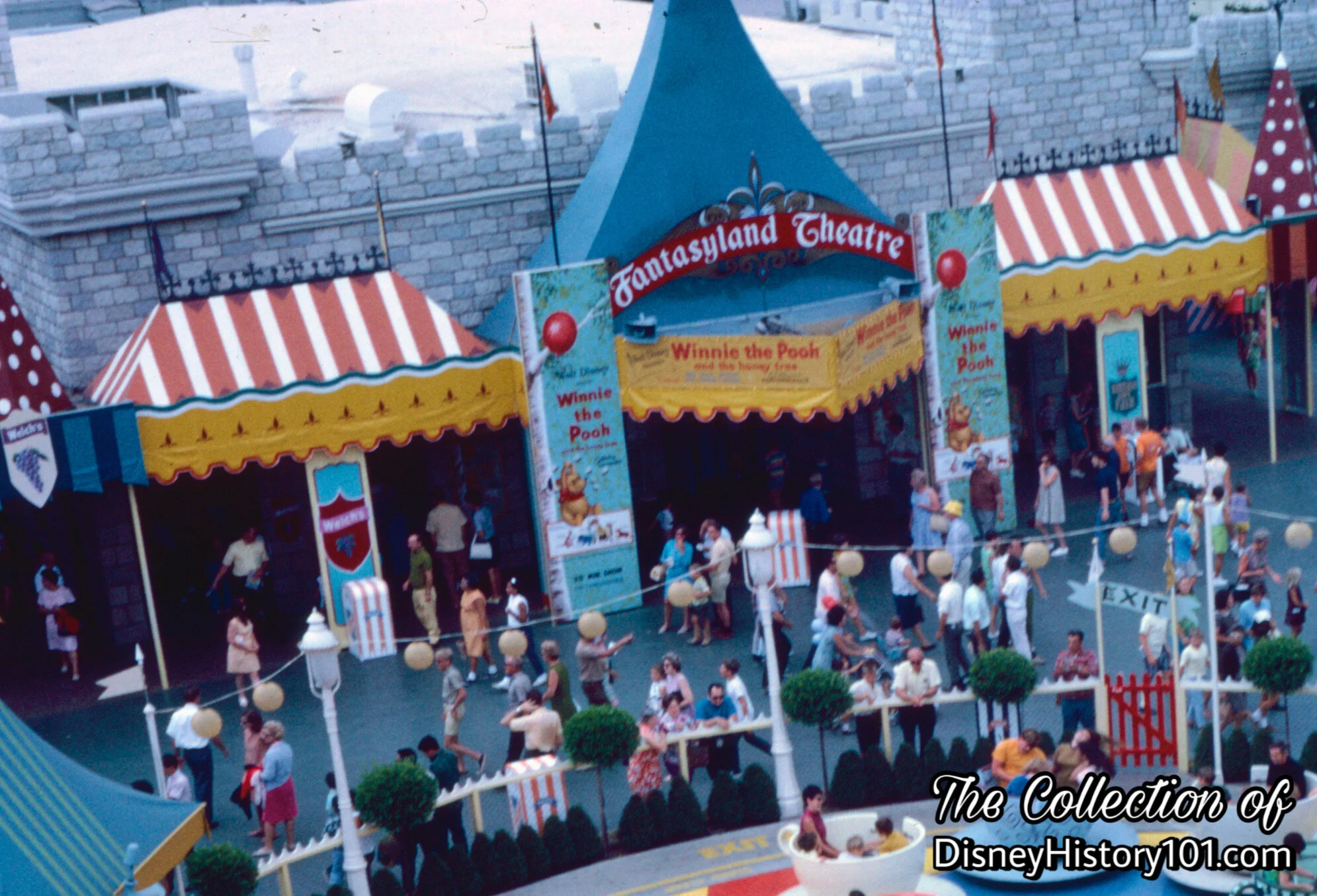
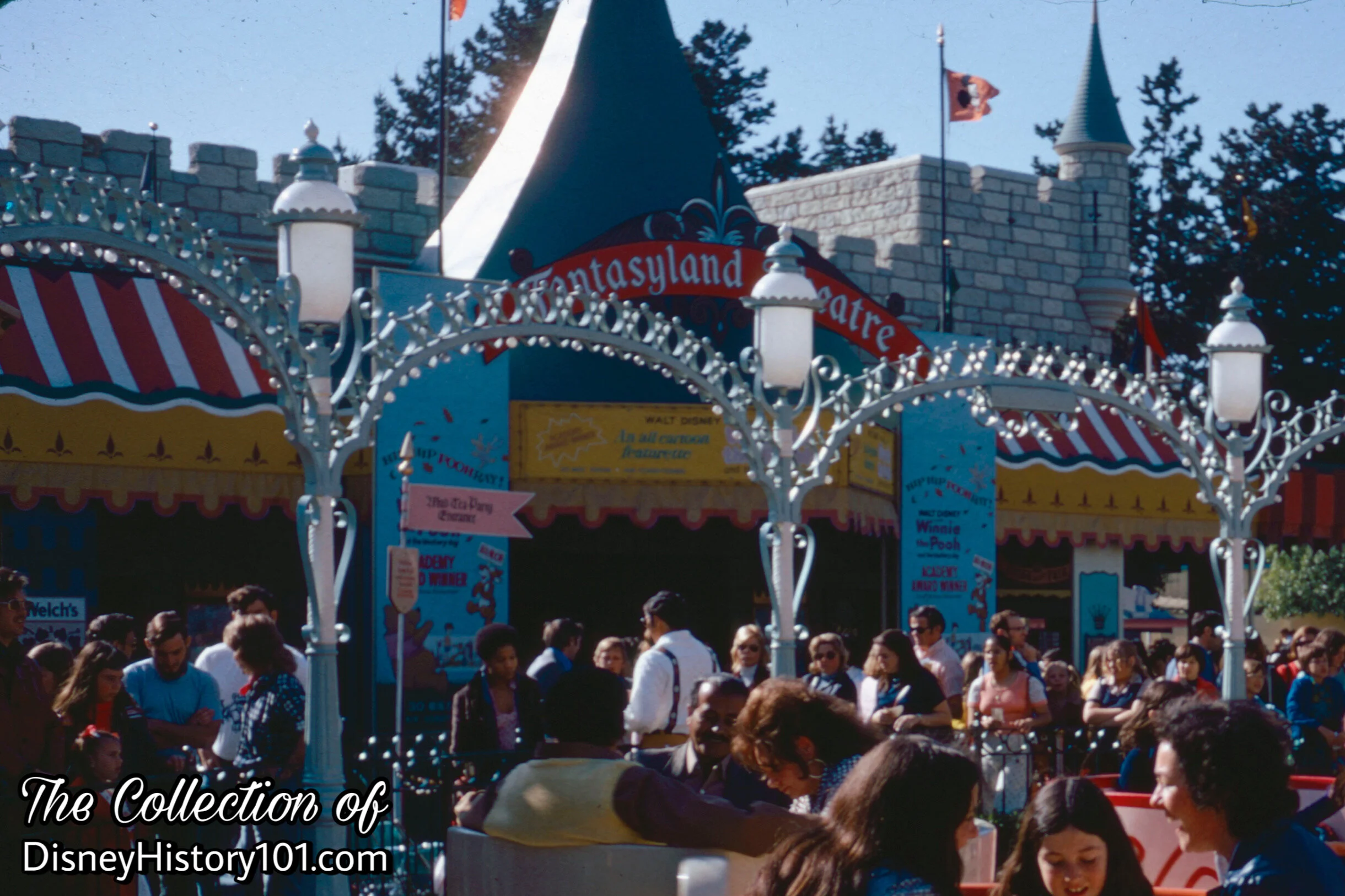
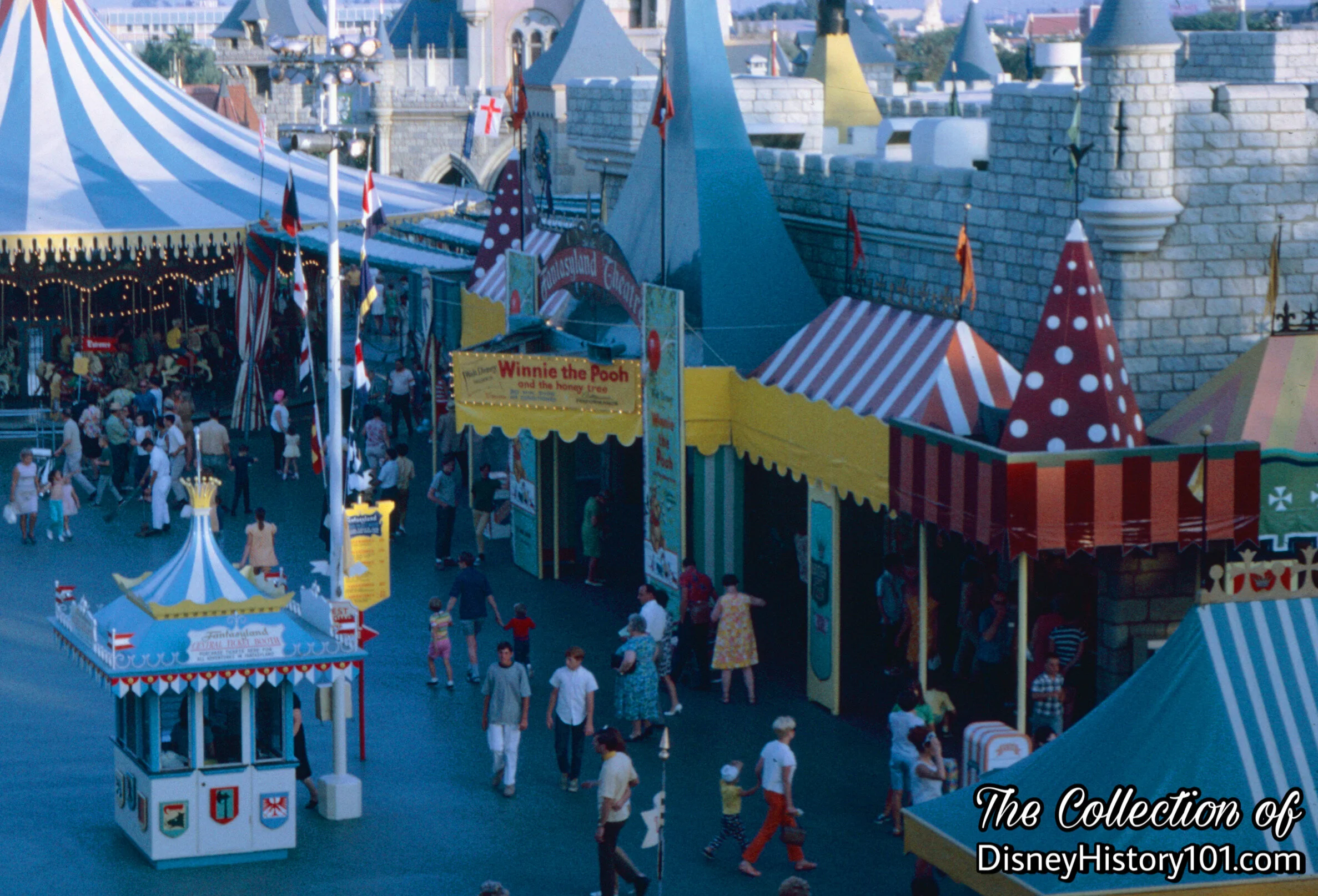
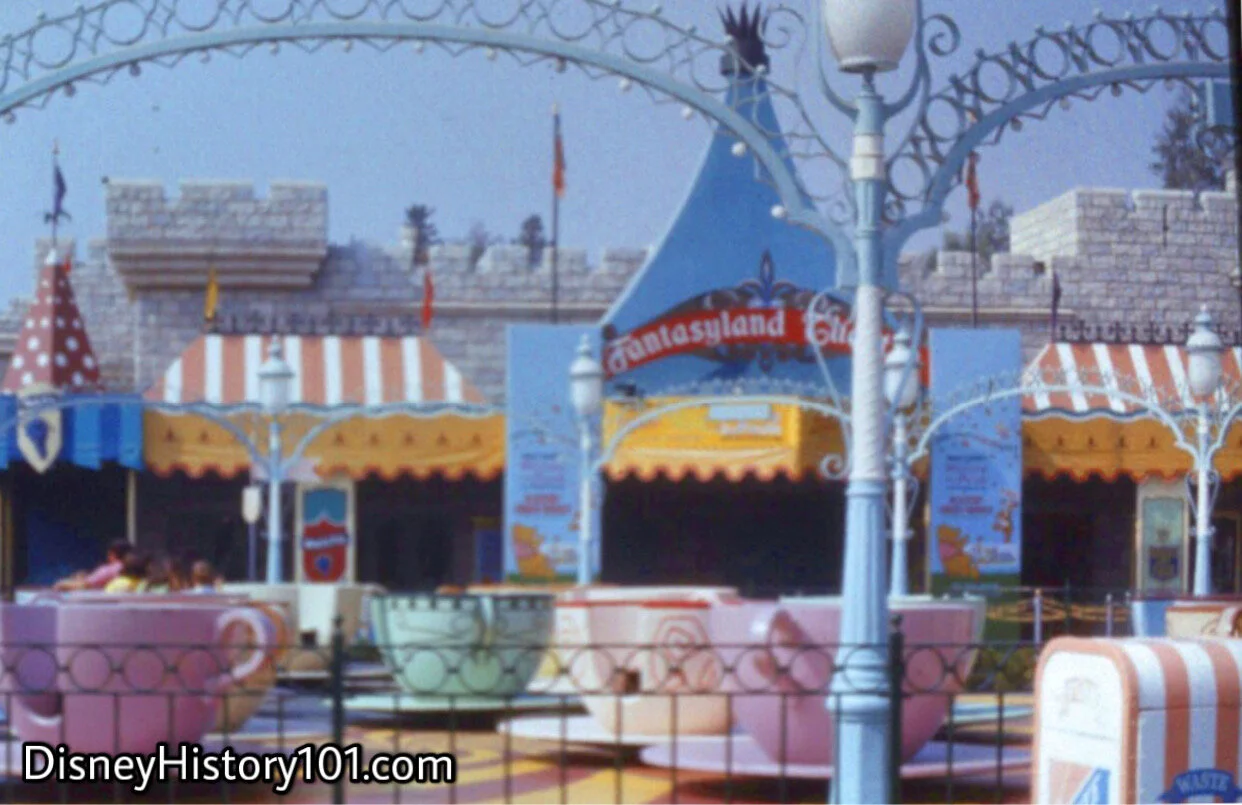
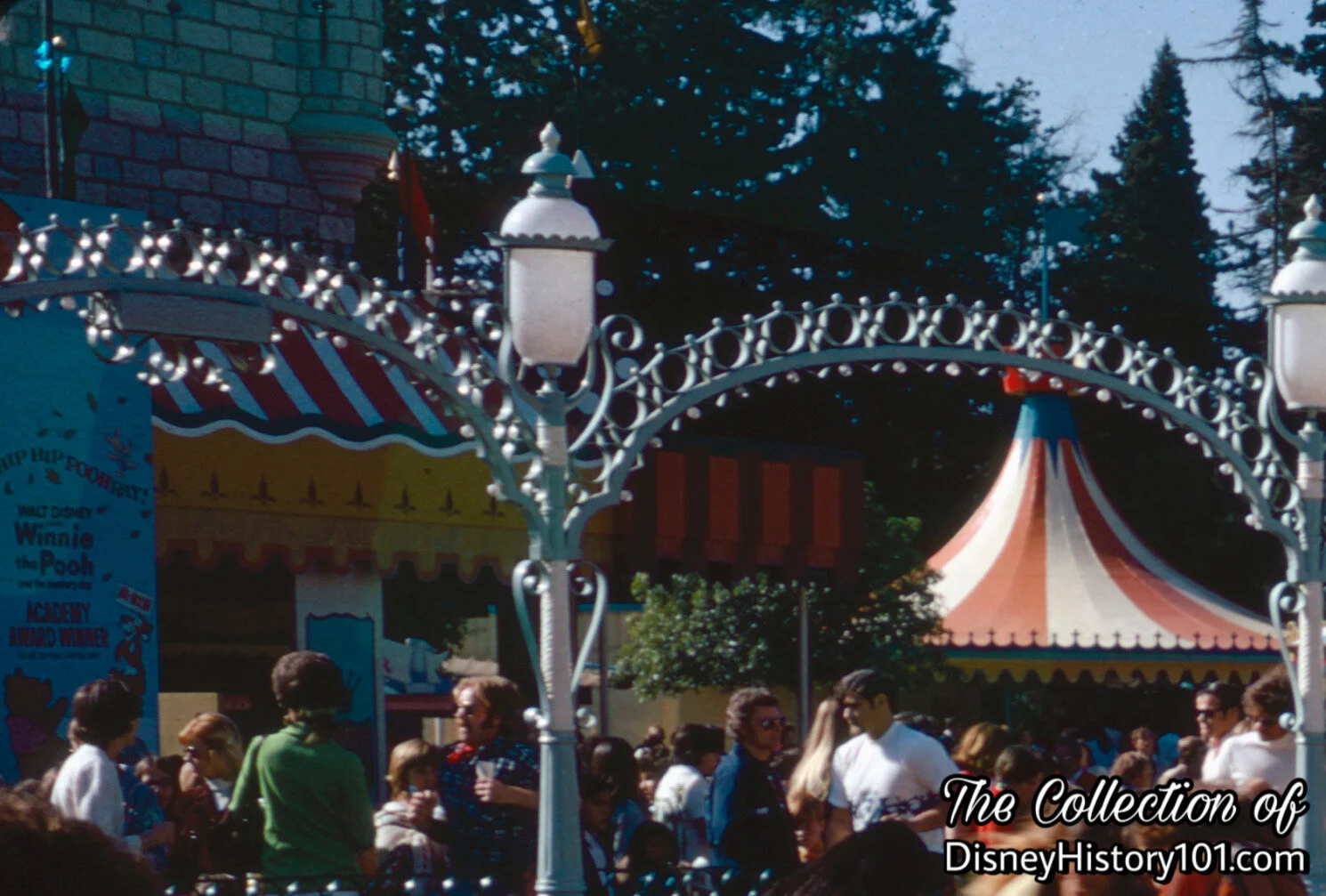
We can vaguely see the marquee, which advertises a Winnie the Pooh feature.
The 18-minute film, A Visit to Walt Disney World was shown at the Fantasyland Theatre immediately preceding the festival attraction, Bambi on Friday, May 2, 1969 at 7:30 p.m.
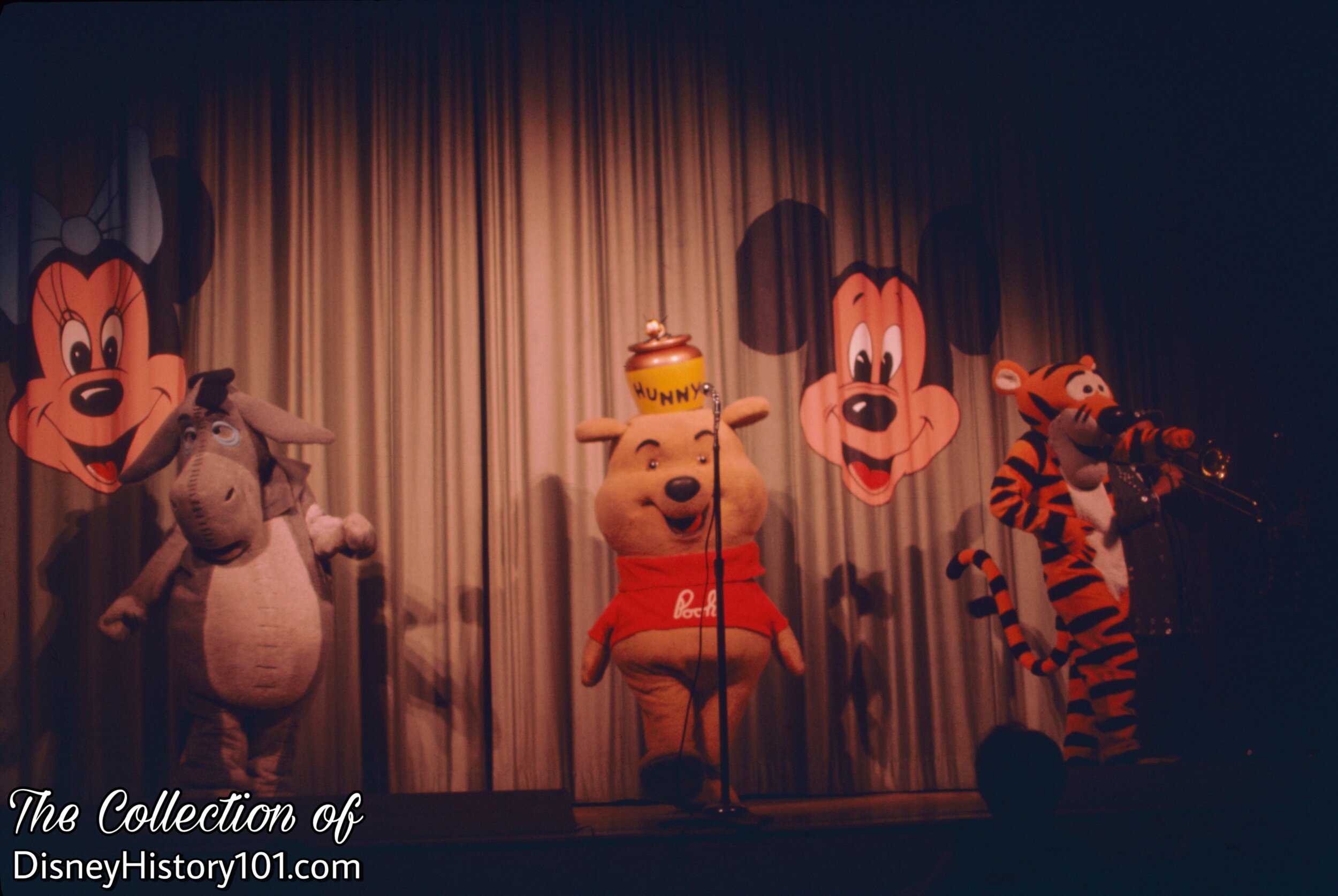
Winnie the Pooh and his “Hundred Acre” neighbors and members of the Pearly Band (like clarinetist Jack Martin) perform for the audience at the Fantasyland Theater.
During January 8 to 21, 1973 the Fantasyland Theater was closed for a 2-week rehabilitation.
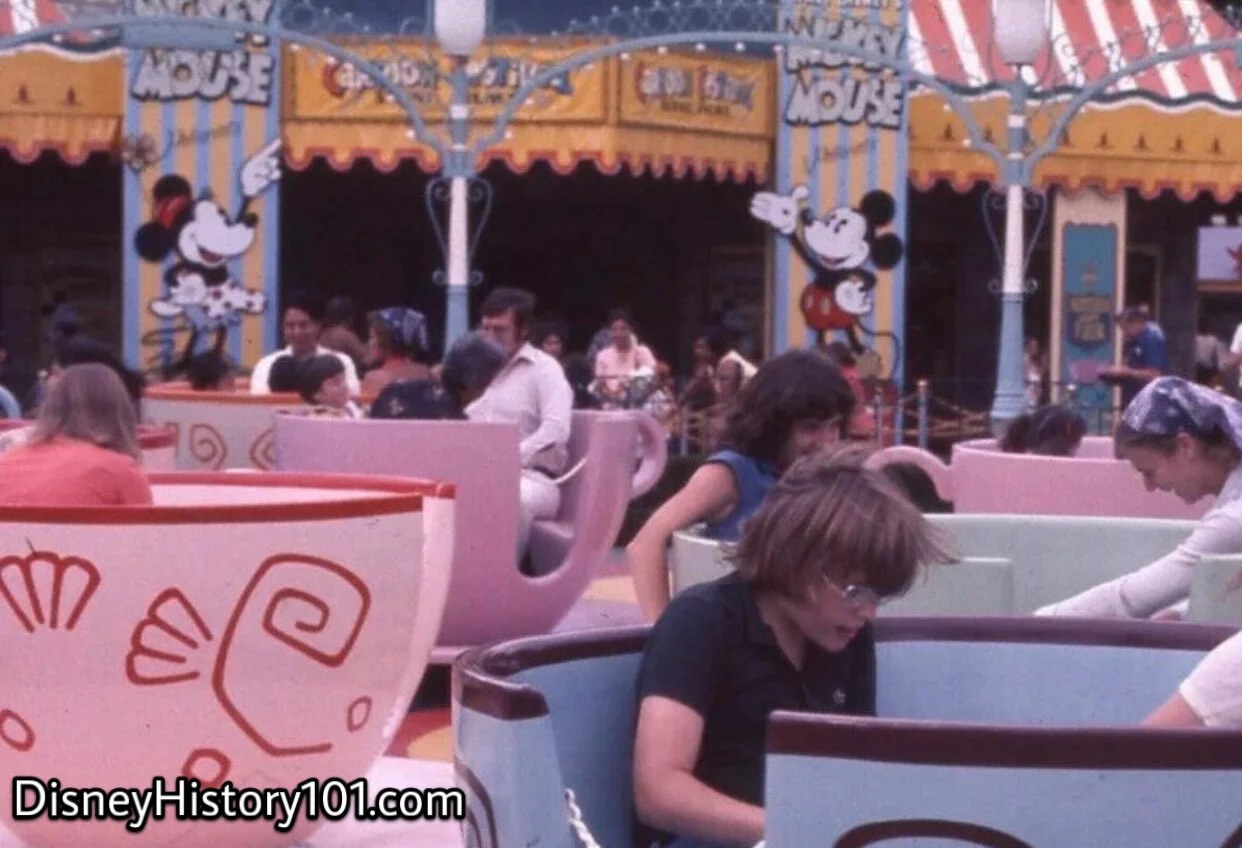
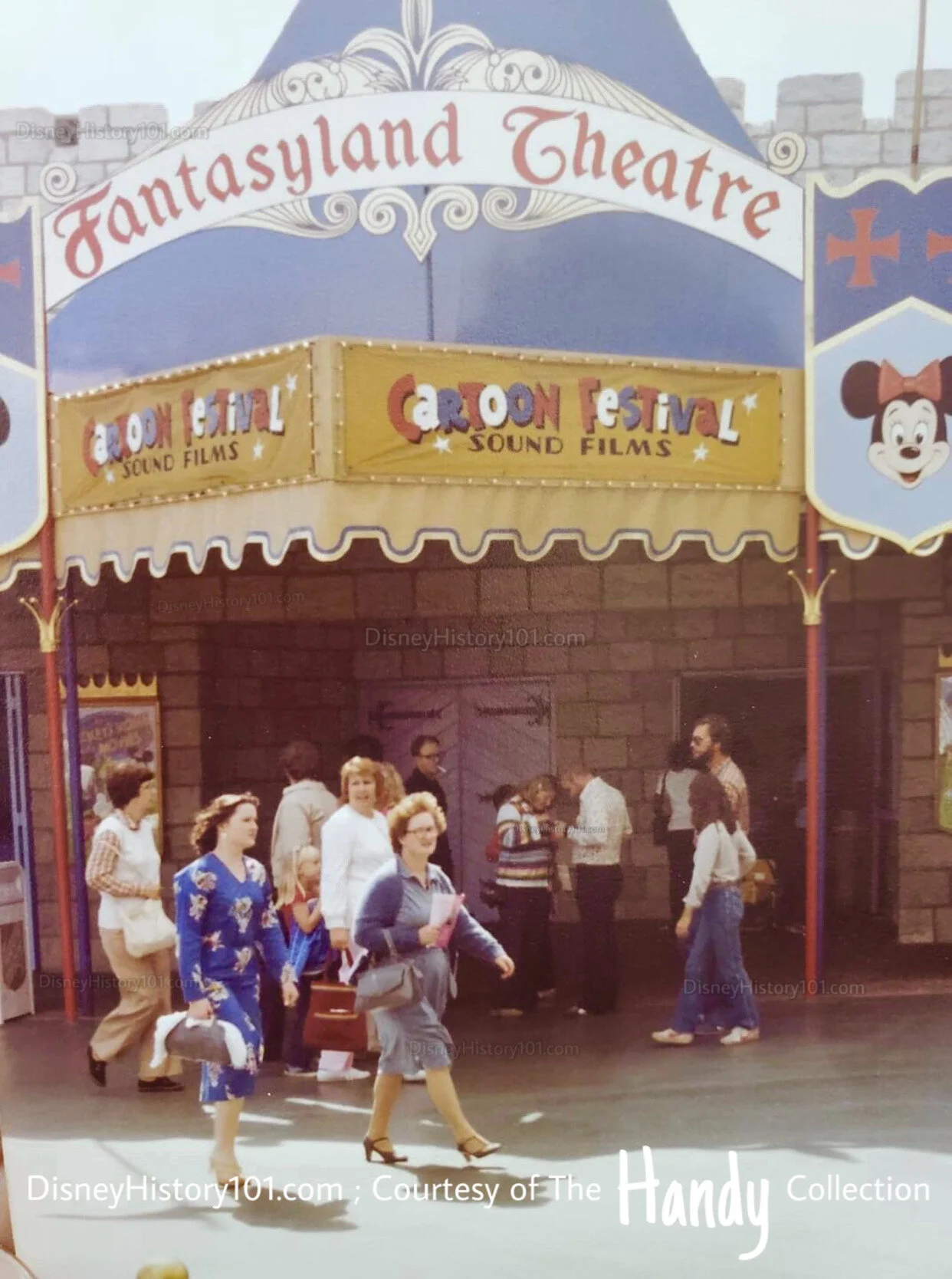
The “Sound Films” which played in the Fantasyland Theatre during this Cartoon Festival introduced Mickey Mouse to a younger generation who may have only known him from the New Mickey Mouse Club and his appearances in the Disney Parks. These limited time screenings included such timeless classics as “The Band Concert” (1935), “Through The Mirror” (1936), and “Mickey’s Trailer” (1938).
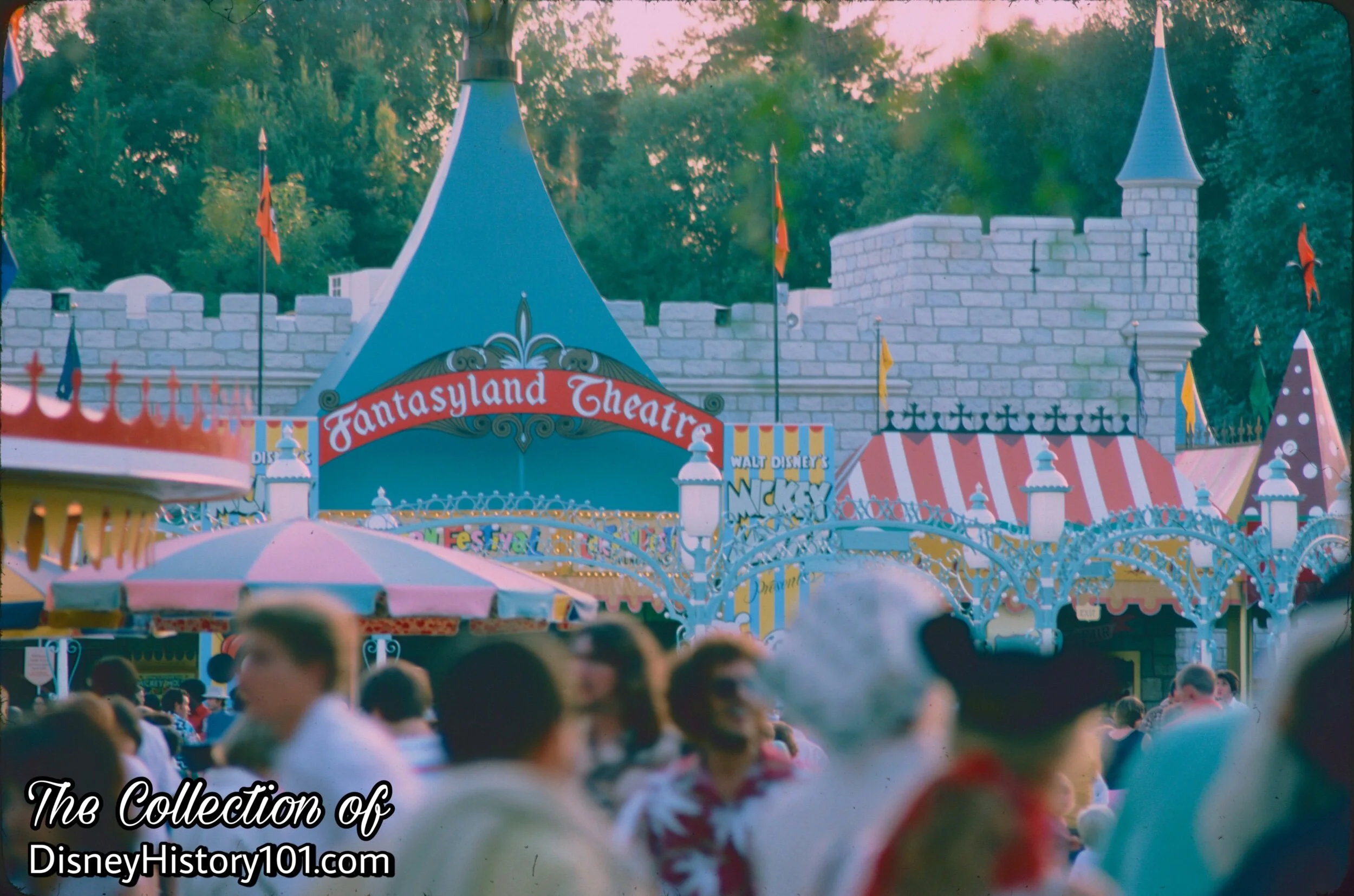
A Cartoon Festival starring Walt Disney’s Mickey Mouse and Minnie Mouse is held at the Fantasyland Theater.
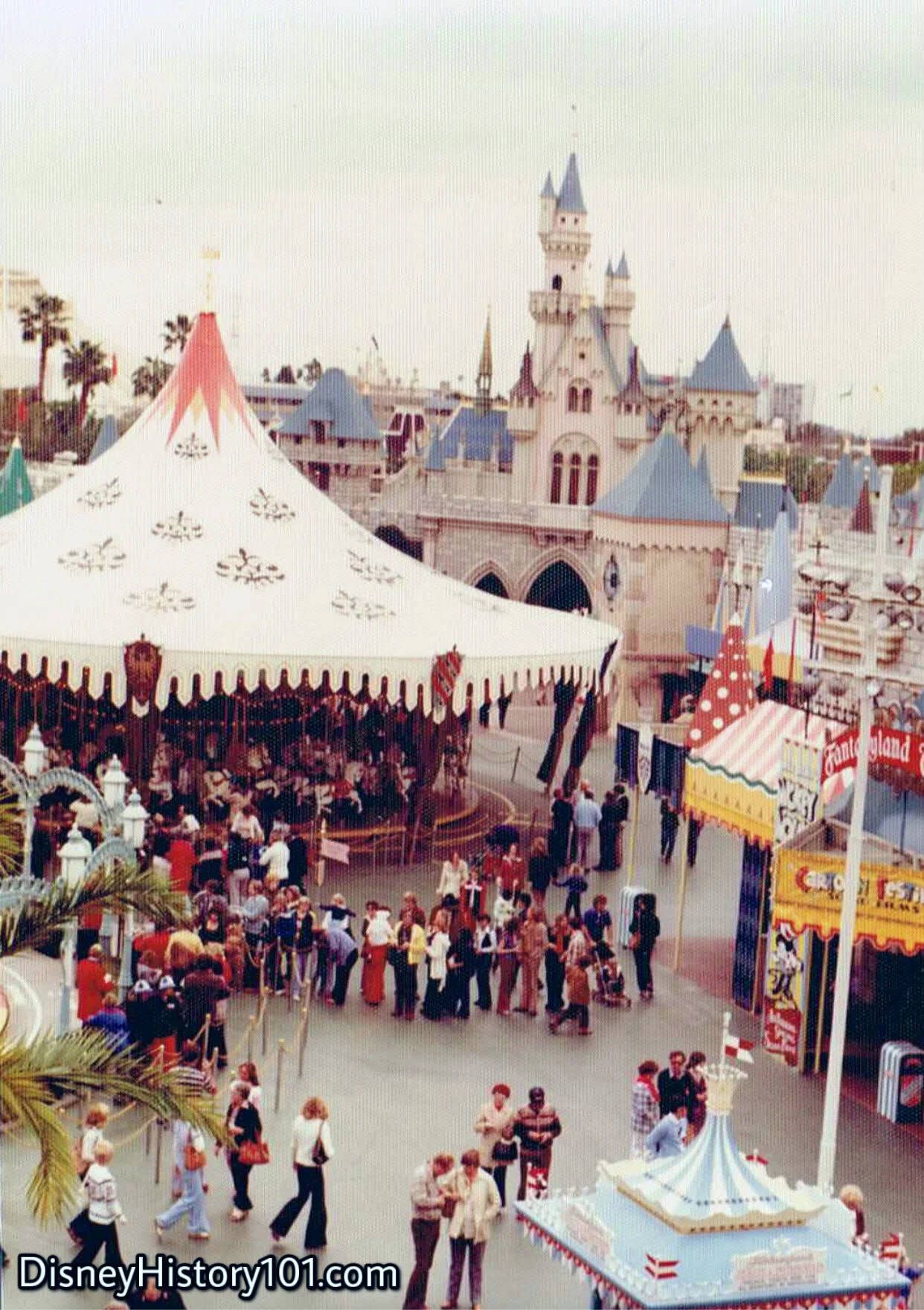
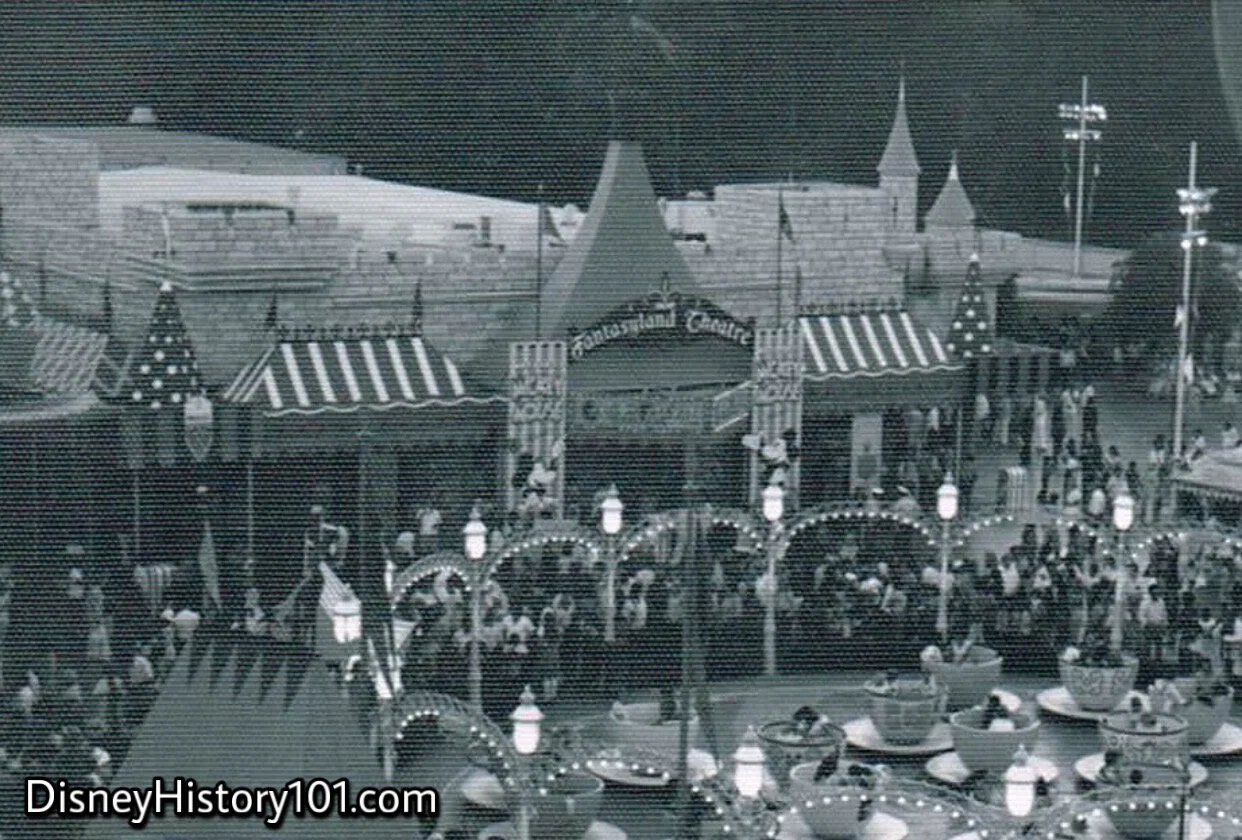
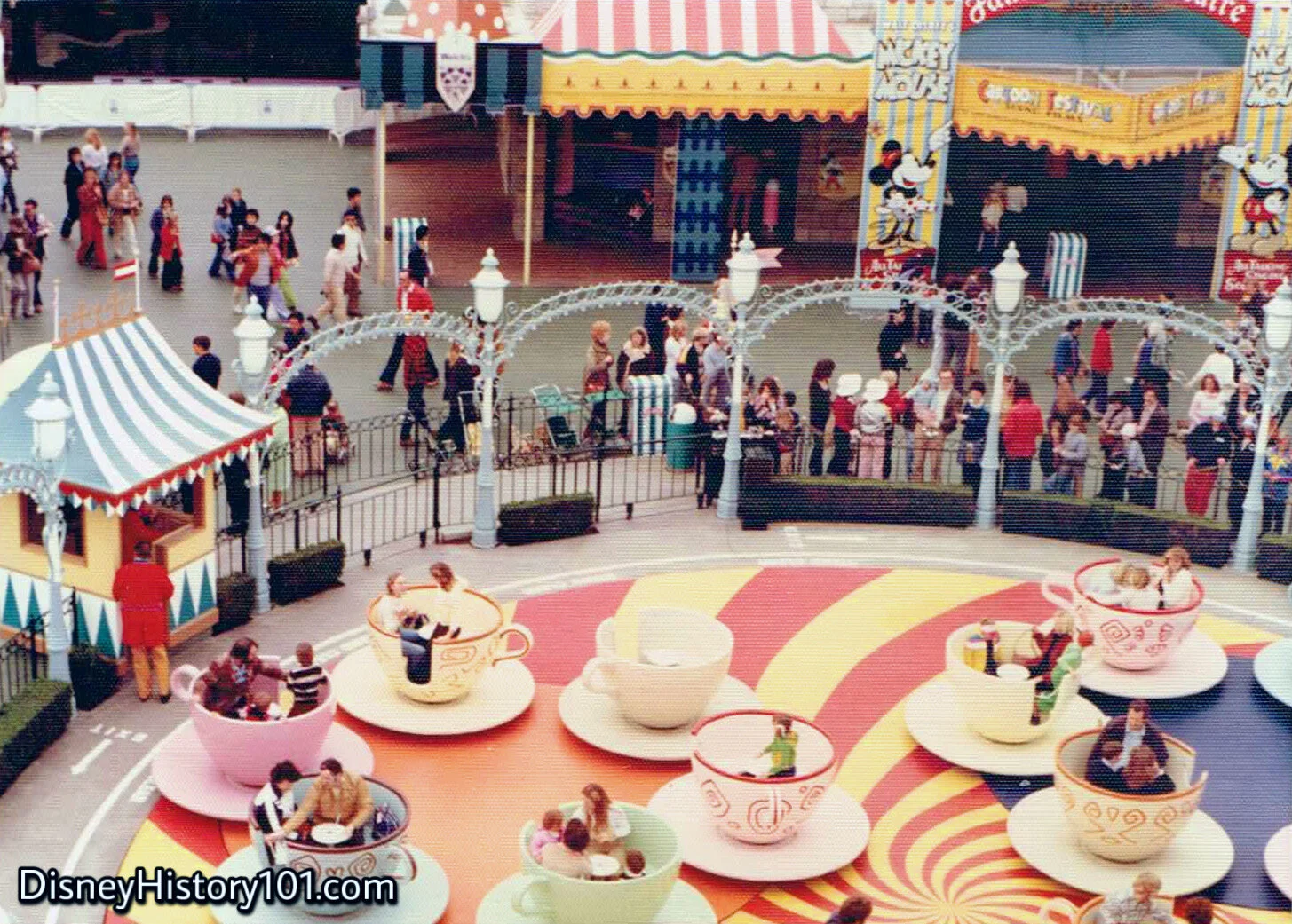
Several 1930s Mickey Mouse short films would reintroduce Mickey and Minnie Mouse to an entire new generation that may have never seen a “classic mickey Mouse” cartoon on the big screen! This Cartoon Festival would continue into 1975 - during the American Bicentennial celebration held at Disneyland.
“Maintenance of Magic”
During each day, Disneyland Park Operations M-42 Machinists would, at least once, check all attractions in Fantasyland and discuss with each Attraction Lead and problems, defects, or any other feedback regarding the department. M-42 Machinists would also respond to all downs and delayed openings in the Fantasyland area whether or not it was mechanical. Upon arriving at an attraction, they would determine whether what the failure was. M-42 would determine which crafts were needed, determine an estimated time of repair, notify M-1 and assist with crafts when necessary.
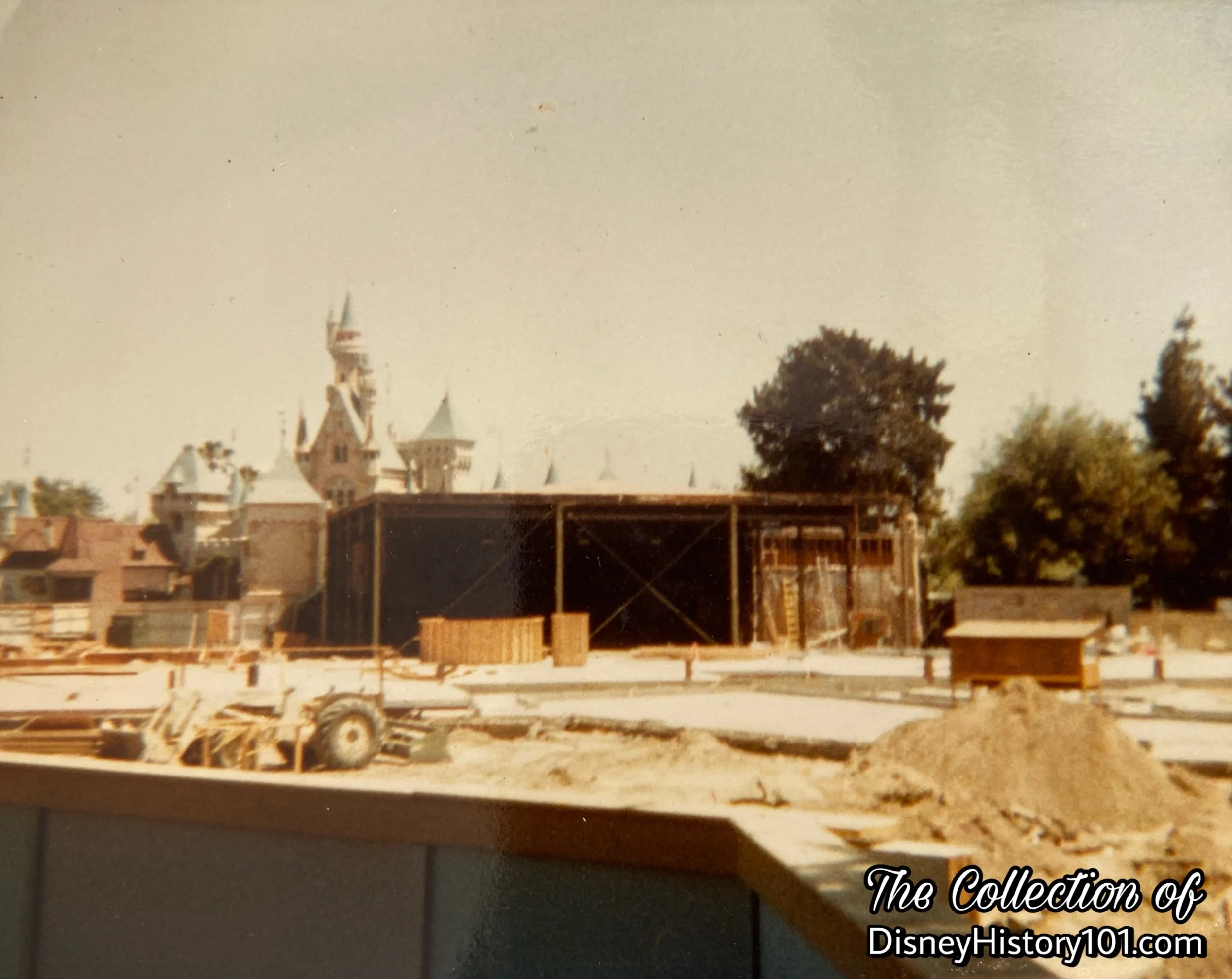
Ultimately, the Fantasyland Theater’s curtains fell, and its closed its doors for the final time. During 1981, construction would begin on a new adventure contained in Sleeping Beauty Castle complex’s East side, as part of New Fantasyland! We invite you to “please, step this way” , as we take one last look back at a very unique aspect of the Fantasyland Theater - the Disneyland Drama Club productions!

During the 1960s, hard working Disneyland employees were rewarded periodically with scheduled luncheons, family picnics, film festival screenings featuring popular Walt Disney Studios films, and field trips to fun and exotic locations. Industrial Basketball games, Volleyball tournaments, and softball leagues allowed for exercise and introduced a spirit of healthy competition and challenge. In addition, various clubs (focused on skiing, the arts, Christian fellowship, square dancing, to name a few) helped Disneyland’s employees bond and befriend each other. These opportunities to enjoy a little recreation with like-minded Disneyland Cast Members were all owing to one organization called the Disneyland Recreation Club (we’ll hear more about their origin below)!
But, did you know, that Disneylanders were seasonally treated to limited stage productions of plays presented from the Fantasyland Theater Stage, by the Disneyland Drama Workshop? It is very appropriate that we take a rather extended interlude to introduce our next Fantasyland Theatre- related subject, as it was most enjoyed among Disneylanders during the 1960s and the 1970s.
Some of the earliest evidence of staff-produced play productions on Disneyland property date back to the 1960s. Spring Tonics 1960 (a series of Disneylander-produced skits) was held on May 25th, 26th, and 27th in the Mickey Mouse Club Theater. About this time period, at least one other play production was performed. The granddaughter of a former Main Street Concessions Manager [a certain C. S.] recently shared her remembrance of this show in Disneyland : “Grandma performed in this theater. Grandma would sing and dance. She had a smile that just melted your heart. I can remember her reading her lines for the play she would be in, in the Mickey Mouse Club Theater. Grandma was in the play Arsenic and Old Lace.”
By 1962, the Disneyland Recreational Club supported a “little theater group” known as the Disneyland Players.
According to Tom Pletts (a latter member of the Disneyland Drama Club), “[The] Disneyland Drama Club…existed [a few years later] in 1966, very briefly. It was begun by executive Bill Carden, but ended after only one bill of one -acts at the Hotel.” This production featured several acts - ‘The Case of the Crushed Petunias’, ‘If Men Played Cards as Women Do’, ‘Escurial’, and ‘Separate Tables’ were each directed by a different Disneylander and starred a small, unique cast. Tom continues, “Bill had been transferred to another part of the company, I think, and he was the sole instigator. Fun while it lasted, though.”
Fast forward about five years, to 1971 - the heyday of the Disneyland Drama Workshop (or, Disneyland Theatrical Production Club). If you were lucky enough to have a family member who worked for Disneyland, you may have had the opportunity to visit Fantasyland Theater after hours for at least 1 of 16 total productions :
•The American Dame (1970)
•Greensleeves’ Magic (February 22-25, 1971) - the second Drama Workshop Production
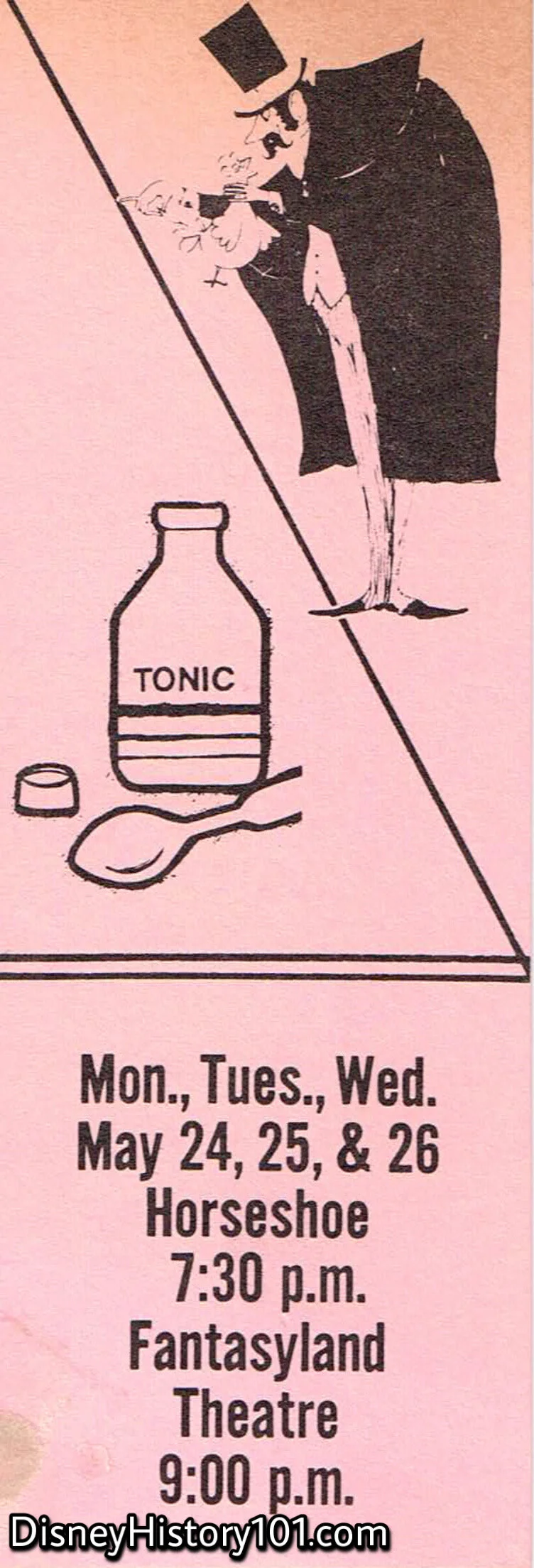
•Chicken Ranching for Fun and Profit (May 24-26, 1971)
•Spring Tonics (1971) - a skit performed for the park’s summer banquet
•Bye Bye Birdie (November 1-4, 1971)
•Story Theater (January 8-11, 1972) including Henny Penny, The Elves and the Shoemaker, The Robber Bridegroom, The Fisherman and His Wife, and The Lion-Hearted Kitten
•Jane Eyre (scheduled for February of 1972, but unproduced)
•Rumplestiltskin (February 28, 29 ; March 1, 2, 1972)
•You Can’t Take It With You (May, 1972)
•Lil’ Abner (October 1972)
•Wait Until Dark (March 12-15, 1973)
•Story Theater (1973) - a collection of one acts
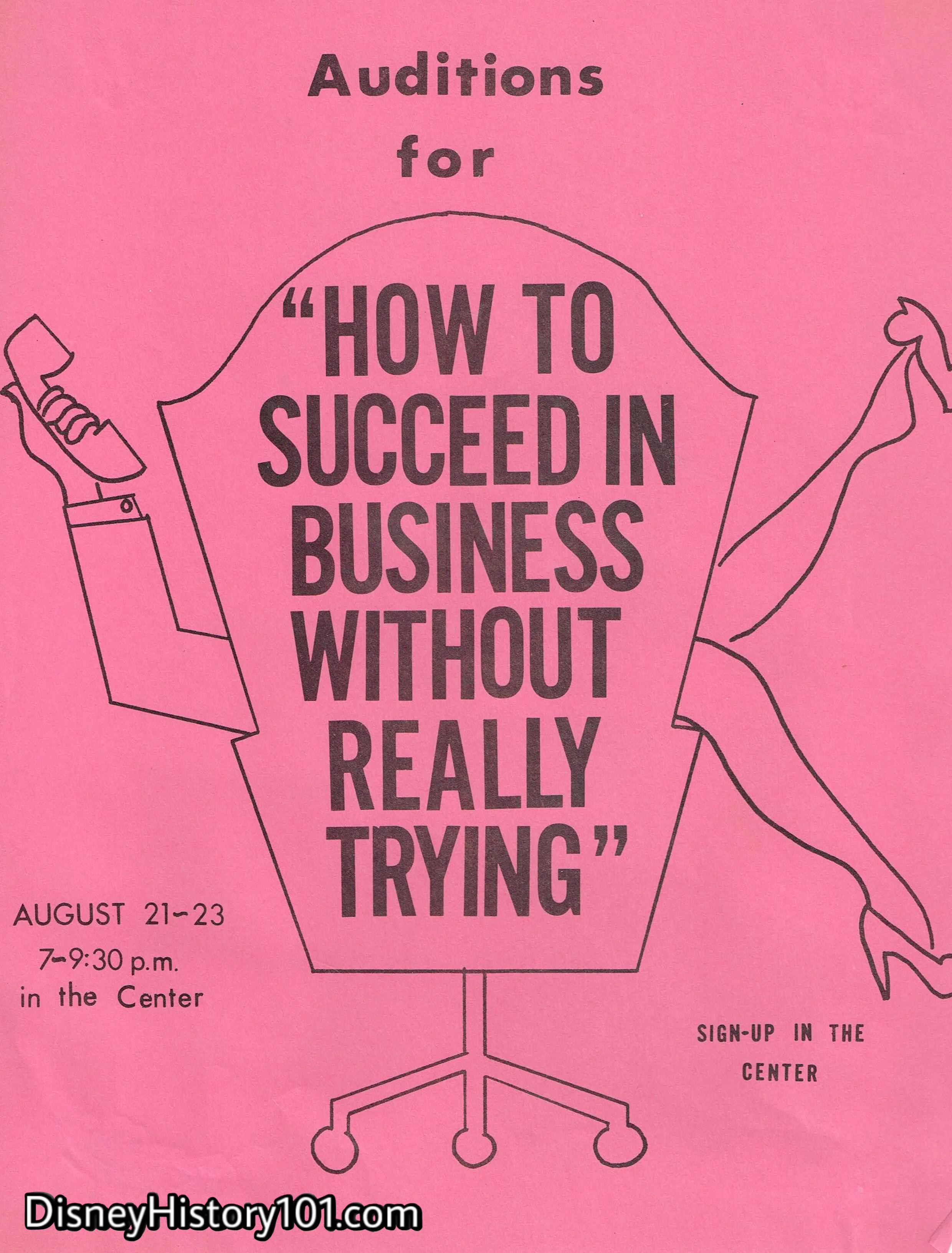
•How to Succeed In Business Without Really Trying (October 15, 16, 17, 18, 1973)
•Little Mary Sunshine (1974)
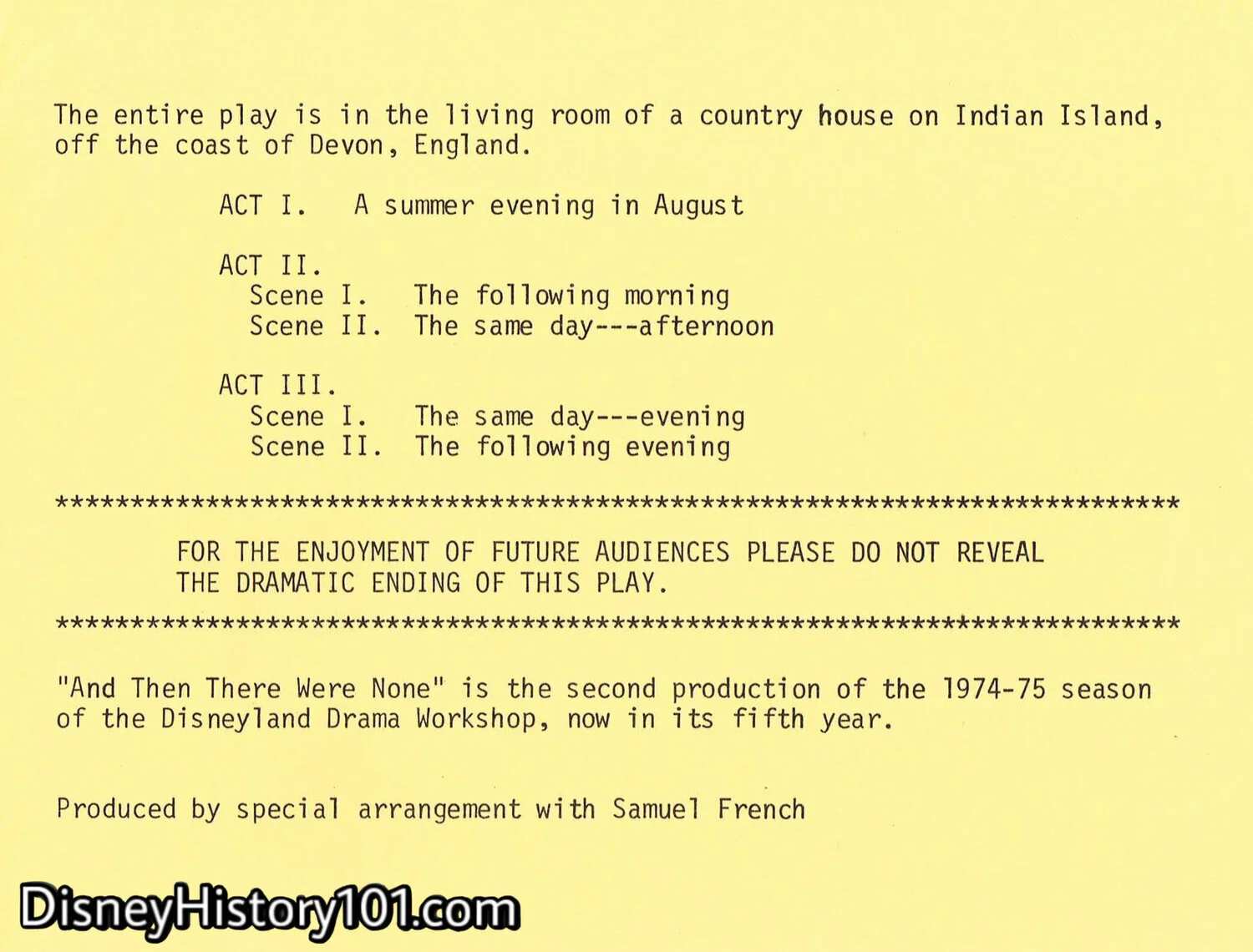
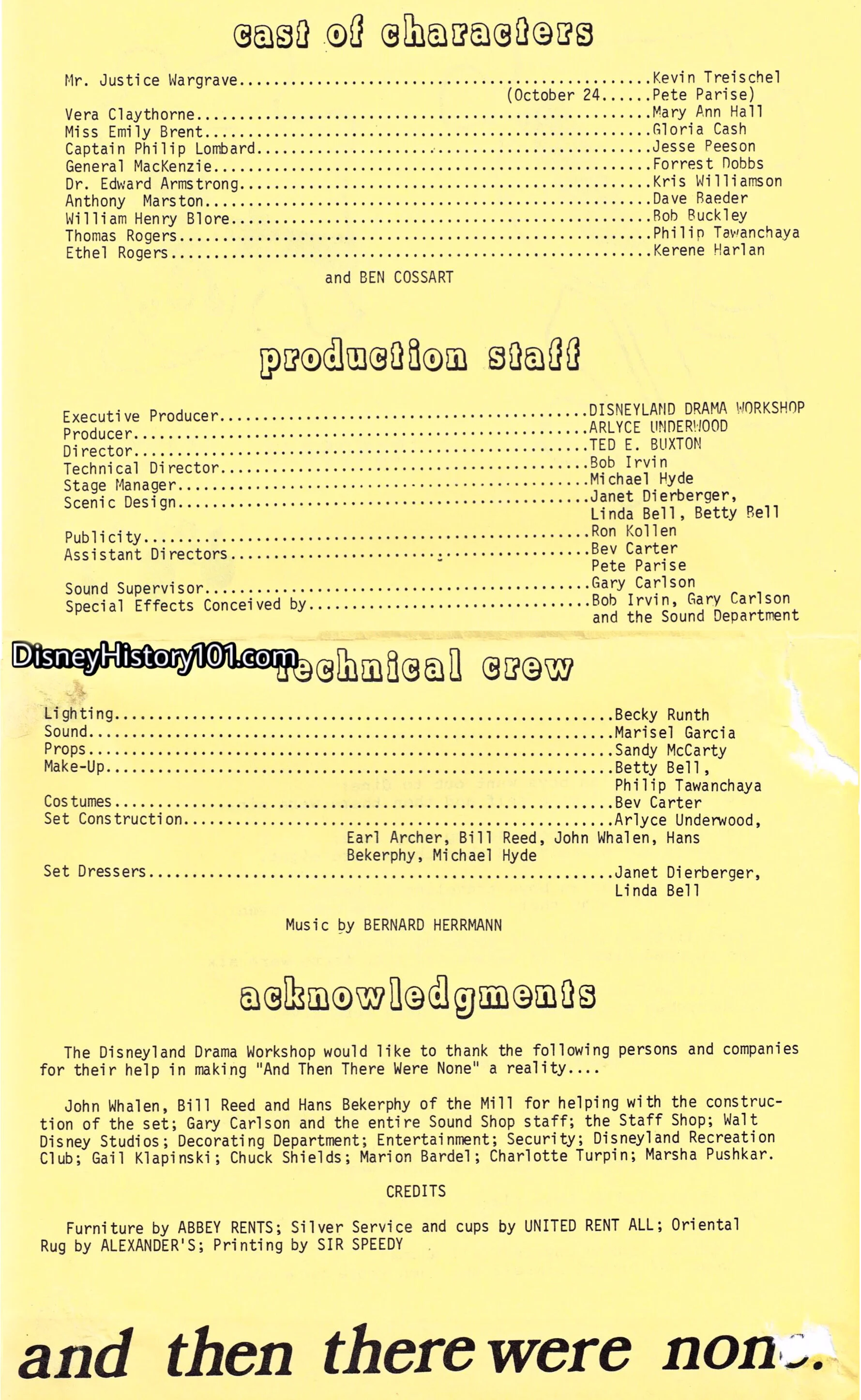
•And Then There Were None (1974)
•The Goodtime Dance Company (September, 1975)
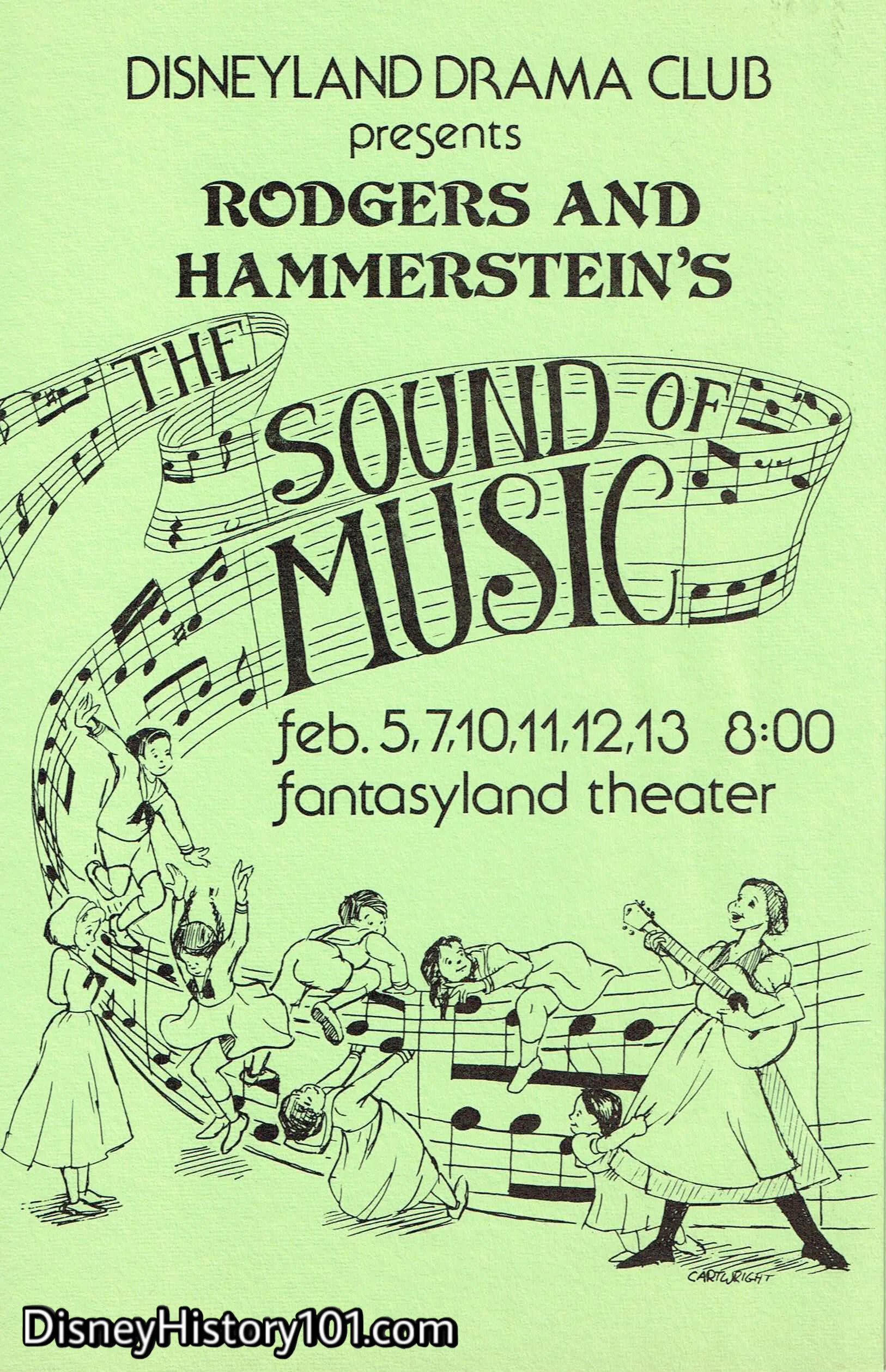
•The Sound of Music (February 5, 7, 10-13, 1975)
•The Fantastics (1975)
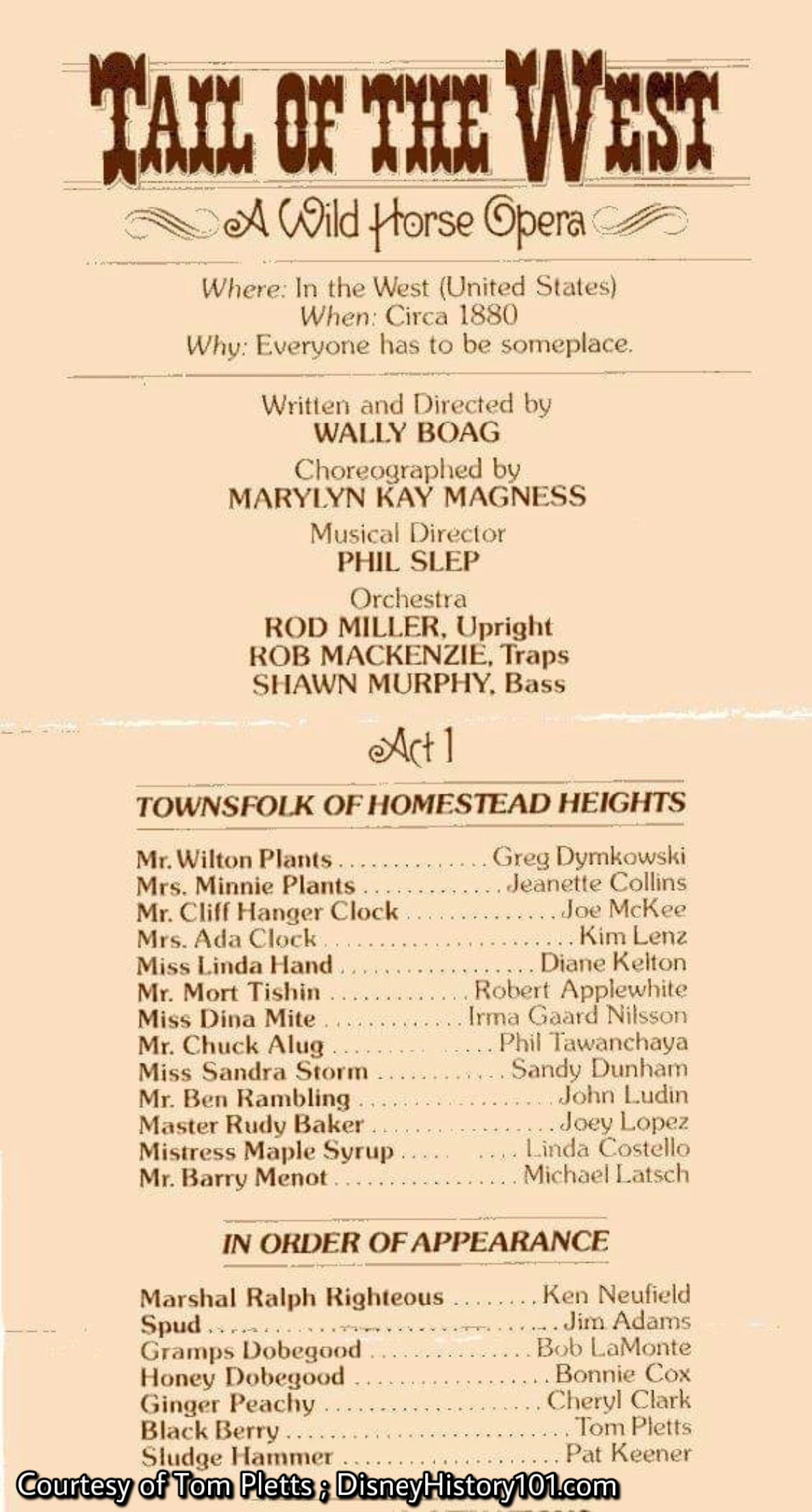
•Tail of the West (February 3-5 ; 10-12, 1976)
•Come Blow Your Horn (c. 1976)
•The Boyfriend (1978)
•Damn Yankees (date unknown)
•Come Blow Your Horn (1987)
At times a production was scheduled, announced in LINE Magazine, but never produced. One such example was a production of Jane Eyre (which was considered during early 1972), but did not garner enough interest. A few of these were directed and written by Wally Boag, and each one starred a talented cast of Disneyland employees. Disneylander Earl Archer was a charter member of the Disneyland Drama Workshop and had been involved in every production since its establishment until (at least) 1974. If you worked at the Park during this era, I am sure you will see some faces that you recognize in the following sections!
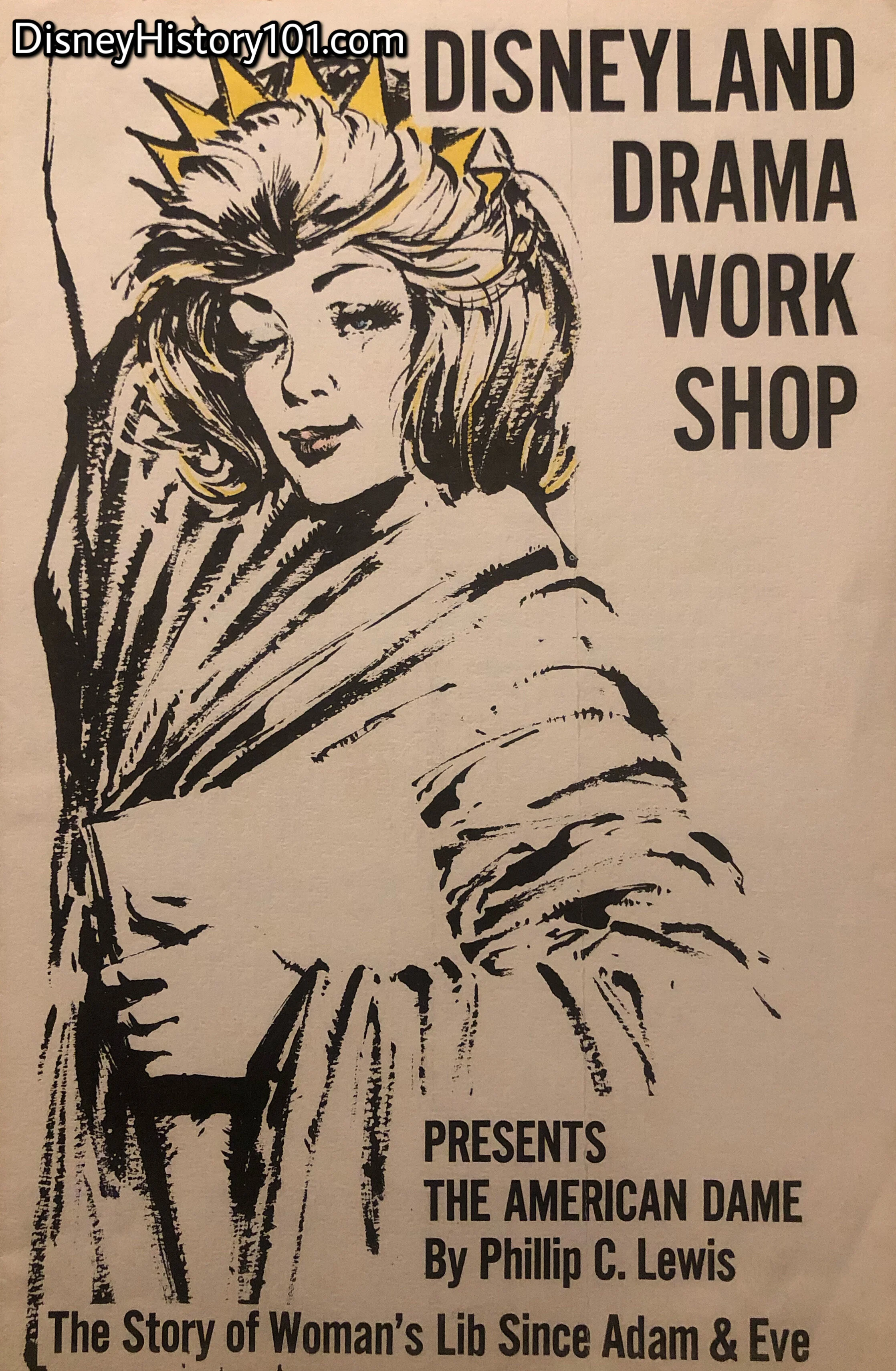
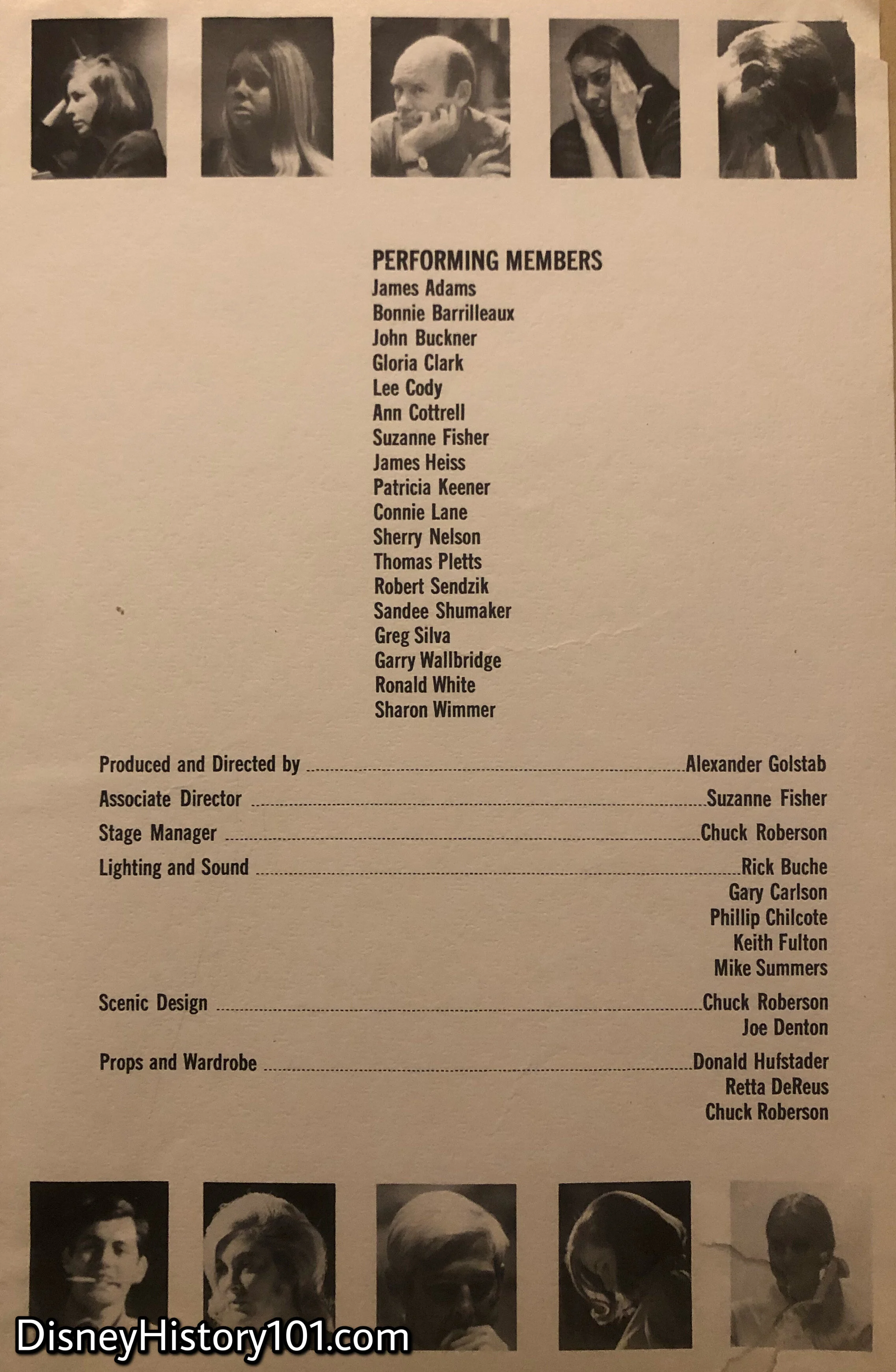
The very first Disneyland Drama Club Workshop production was ‘The American Dame’, presented (appropriately) in the 400-seat, air-conditioned, Fantasyland Theatre! Alex Goldstab (a Disneyland Entertainment Manager), produced it just before relocating to support the newly established Character Department of Walt Disney World’s Magic Kingdom.
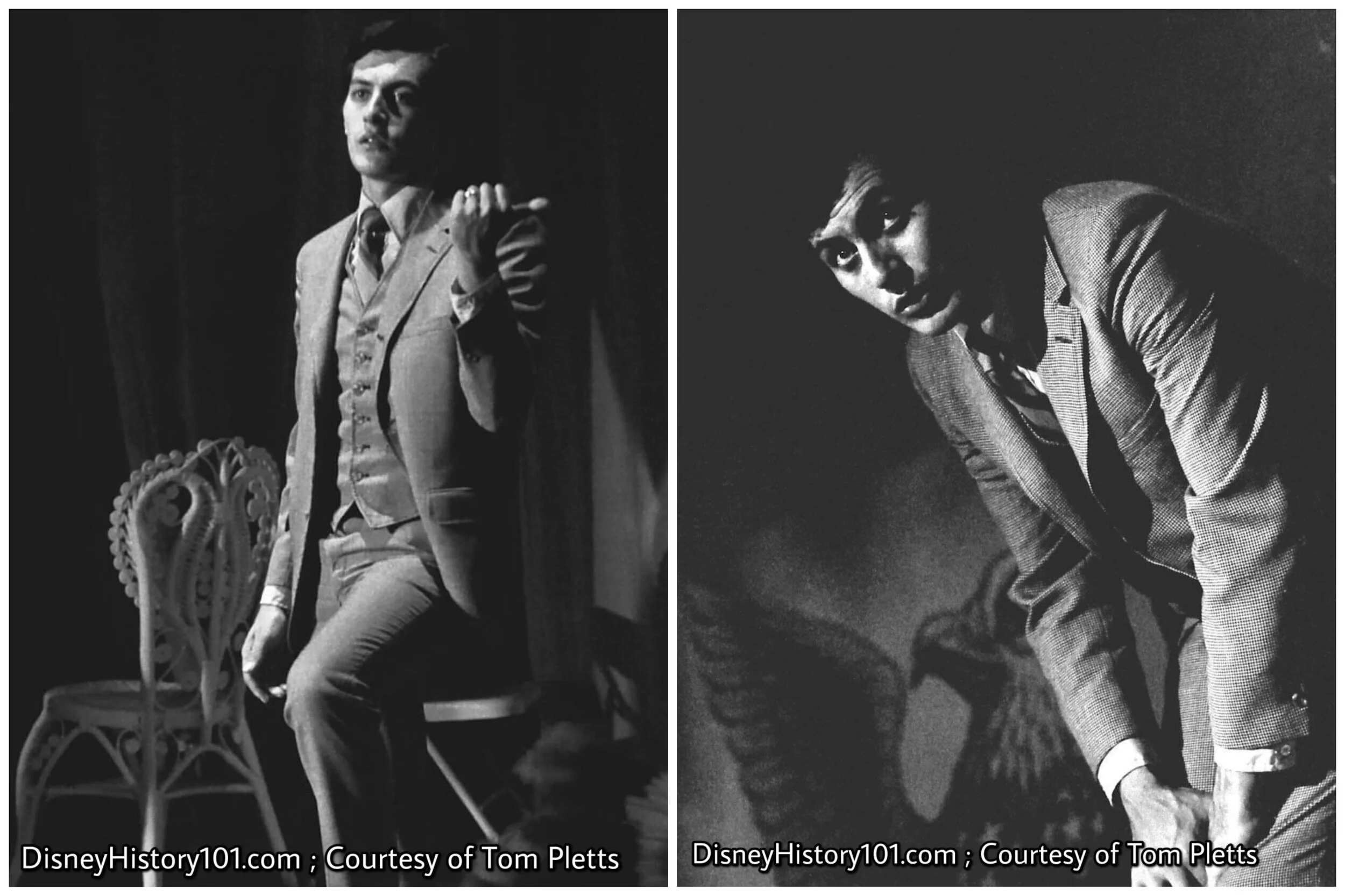
Alex Goldstab (Entertainment Division ; The American Dame Producer) sets the lights for the show. Tom Pletts recollects, “Having professional staff help us with our shows was a tremendous boost!” After the production was over, Alex Goldstab (Entertainment Division ; The American Dame Producer) left for Walt Disney World in Florida. He was missed by all who worked with him!
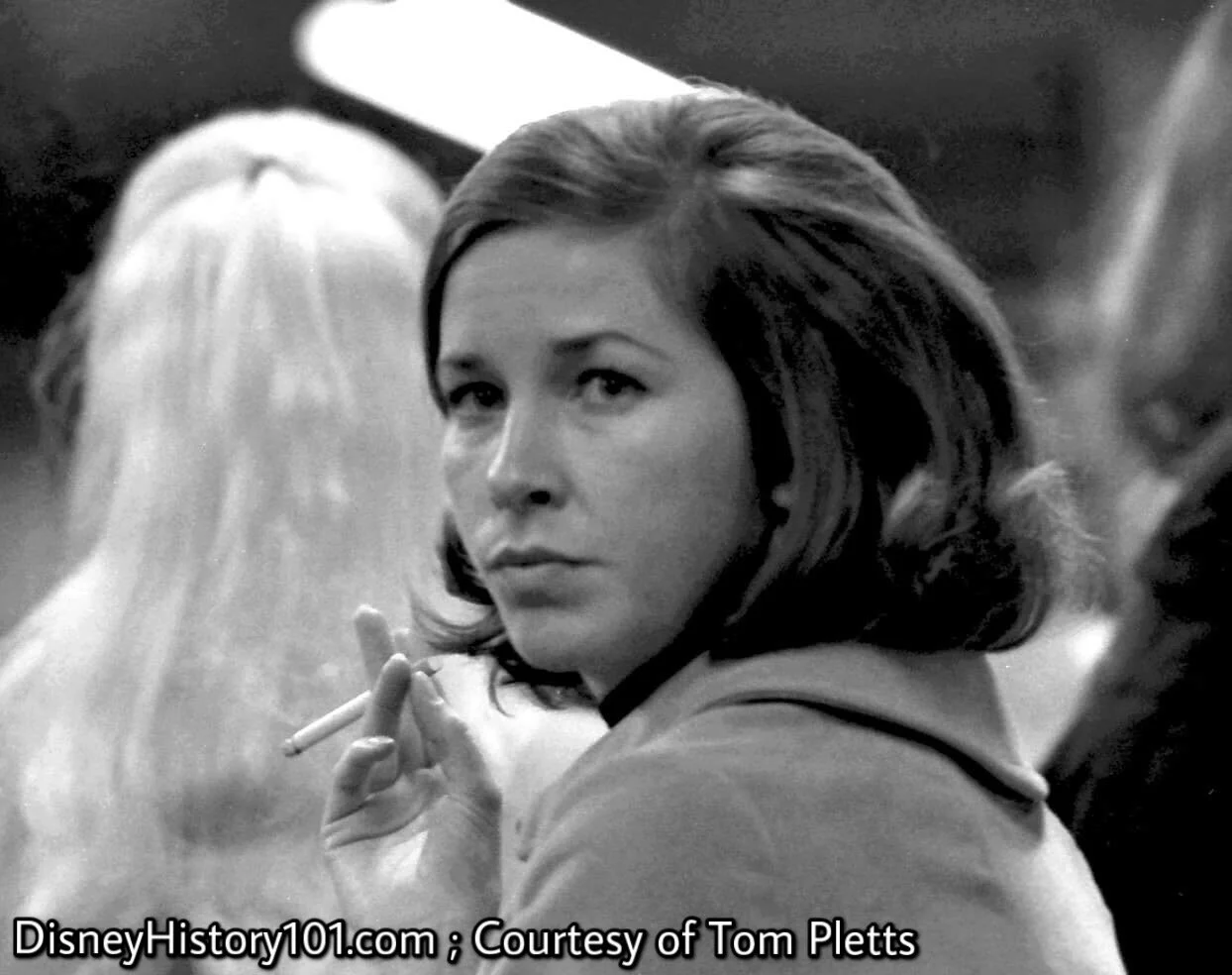
Kathy Bell (who isn’t listed among the program’s credits for The American Dame), was influential in this production.
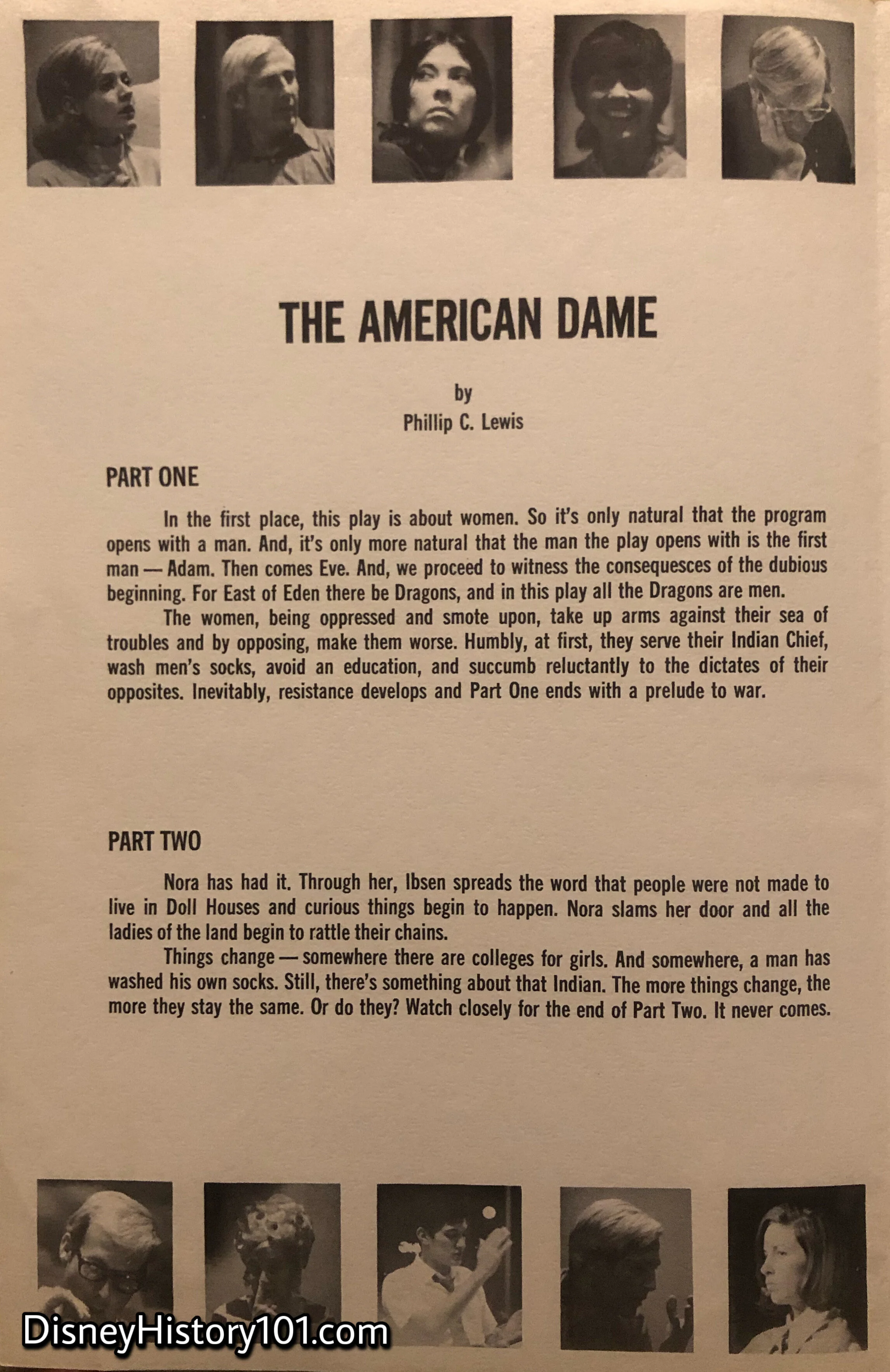
Connie Lane (former Disneyland Ambassador of 1966, and Disneyland Drama Club member) recollects the production : “It was effervescent! We were doing a great show, in the Fantasyland Theatre and doing something that hadn’t been done before at Disneyland. The show was meant to be a study of American Womanhood. We all had several roles.”
“In the show, I did two or three sketches. In one, I was a pioneer moving west with my spouse. In another, I was making excuses for just being a passenger while my wife drove our car. Pleasant, fun stuff.”
-Tom Pletts
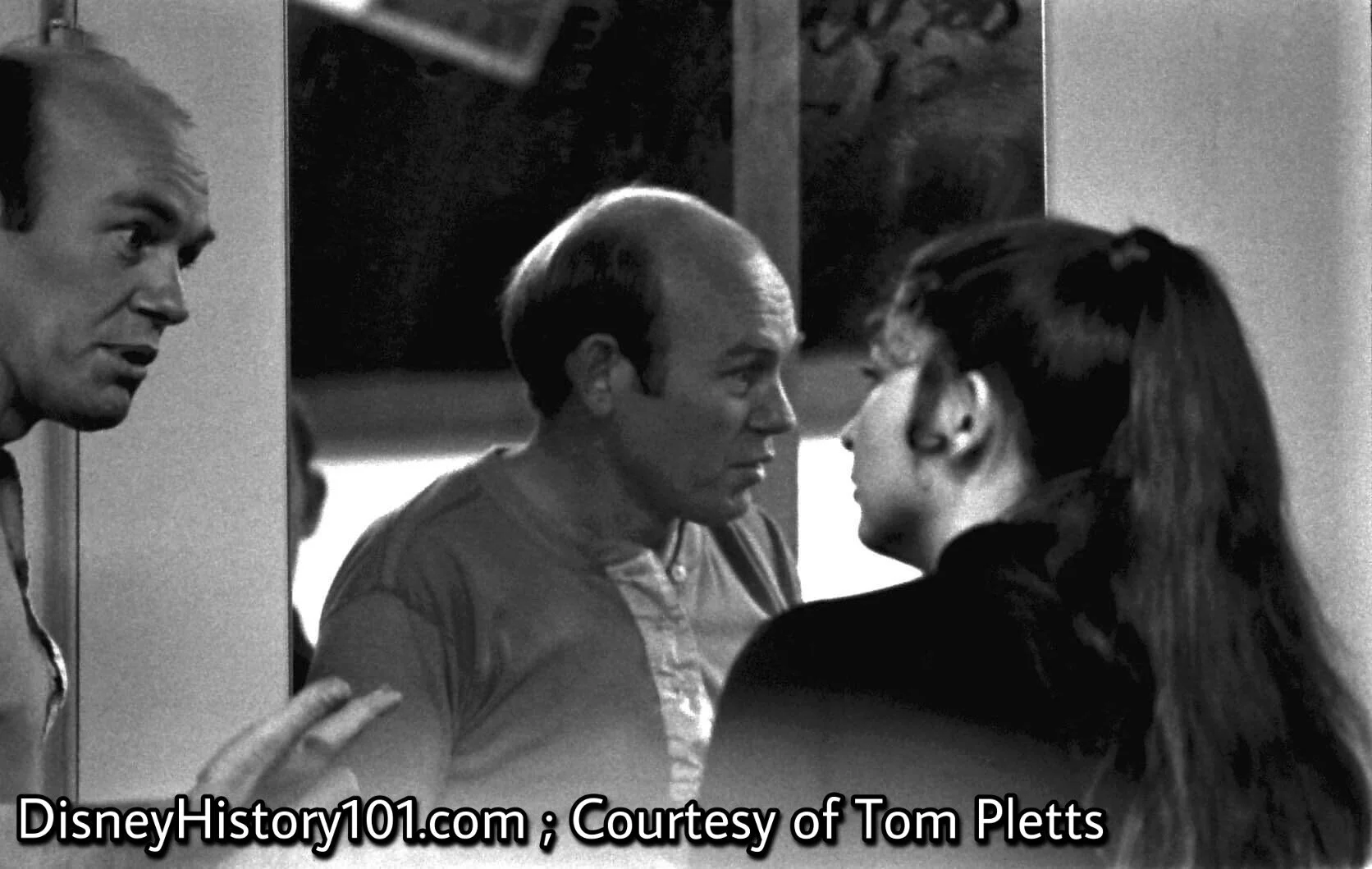
The American Dame cast member Tom Pletts has a conversation with cast member Pat Keener at the backstage makeup mirror.
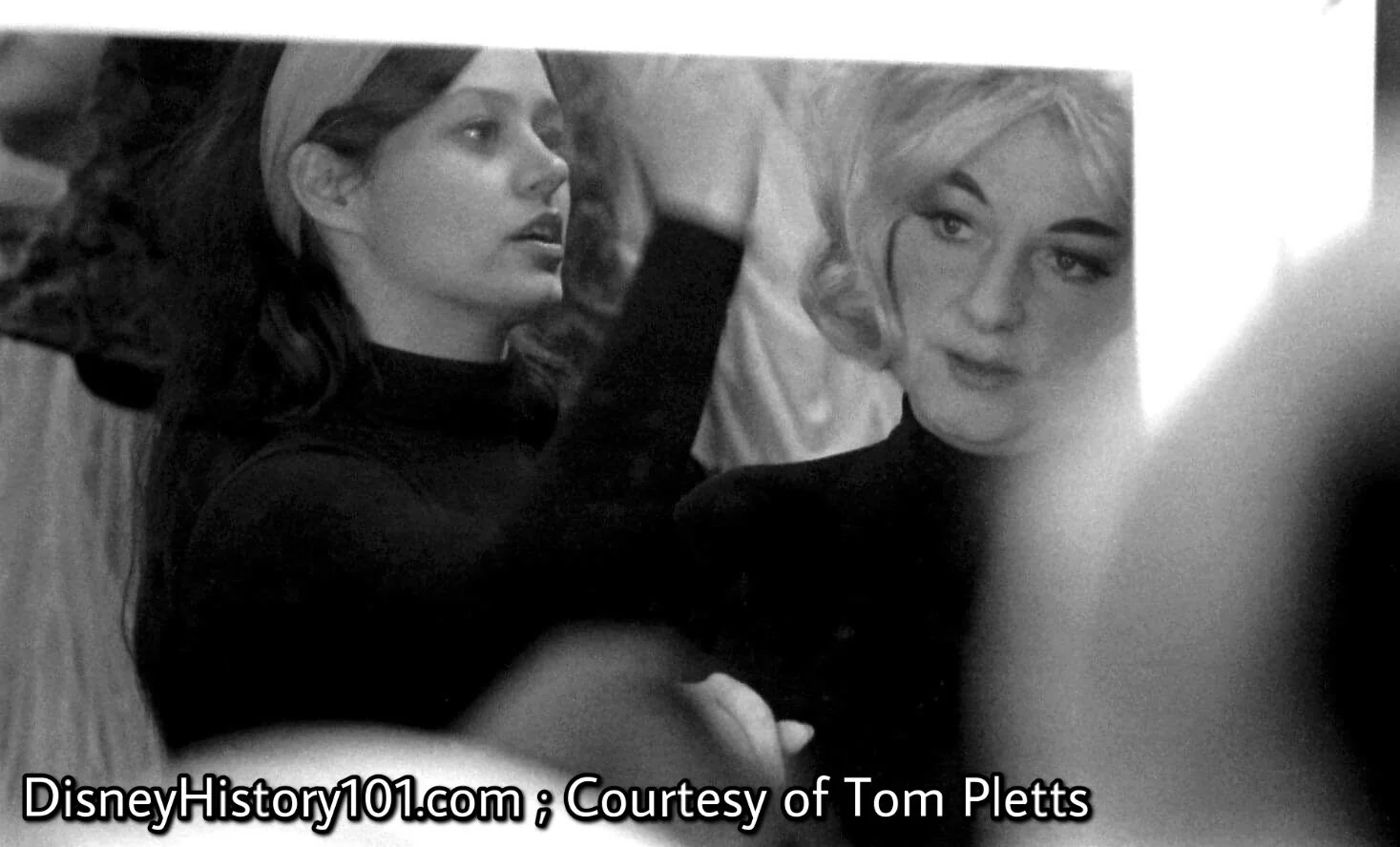
The American Dame Cast Members Sharon Wimmer and Ann Cottrell in makeup.
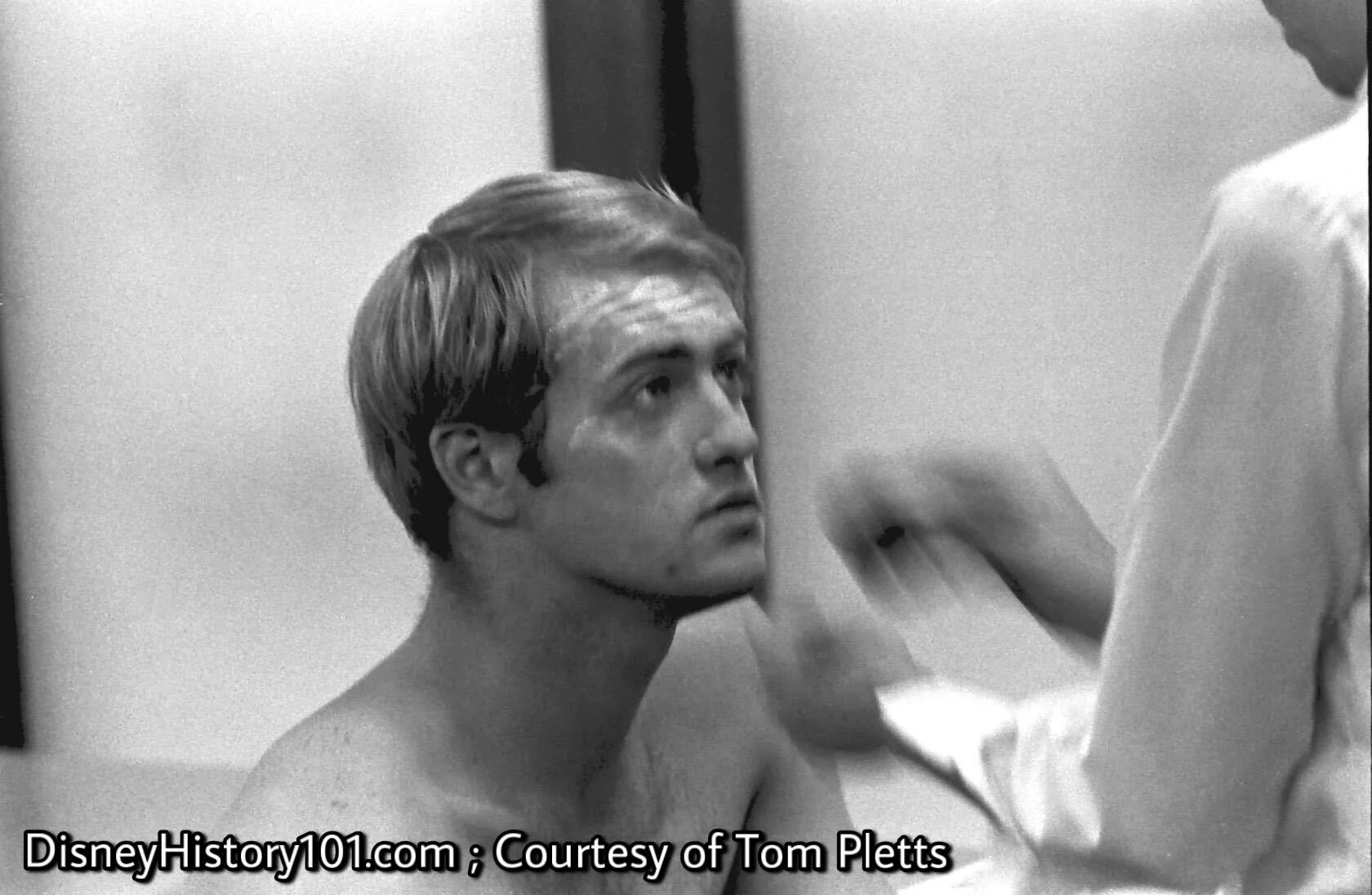
The American Dame actor Bob Sendzik gets assistance with his makeup while backstage.
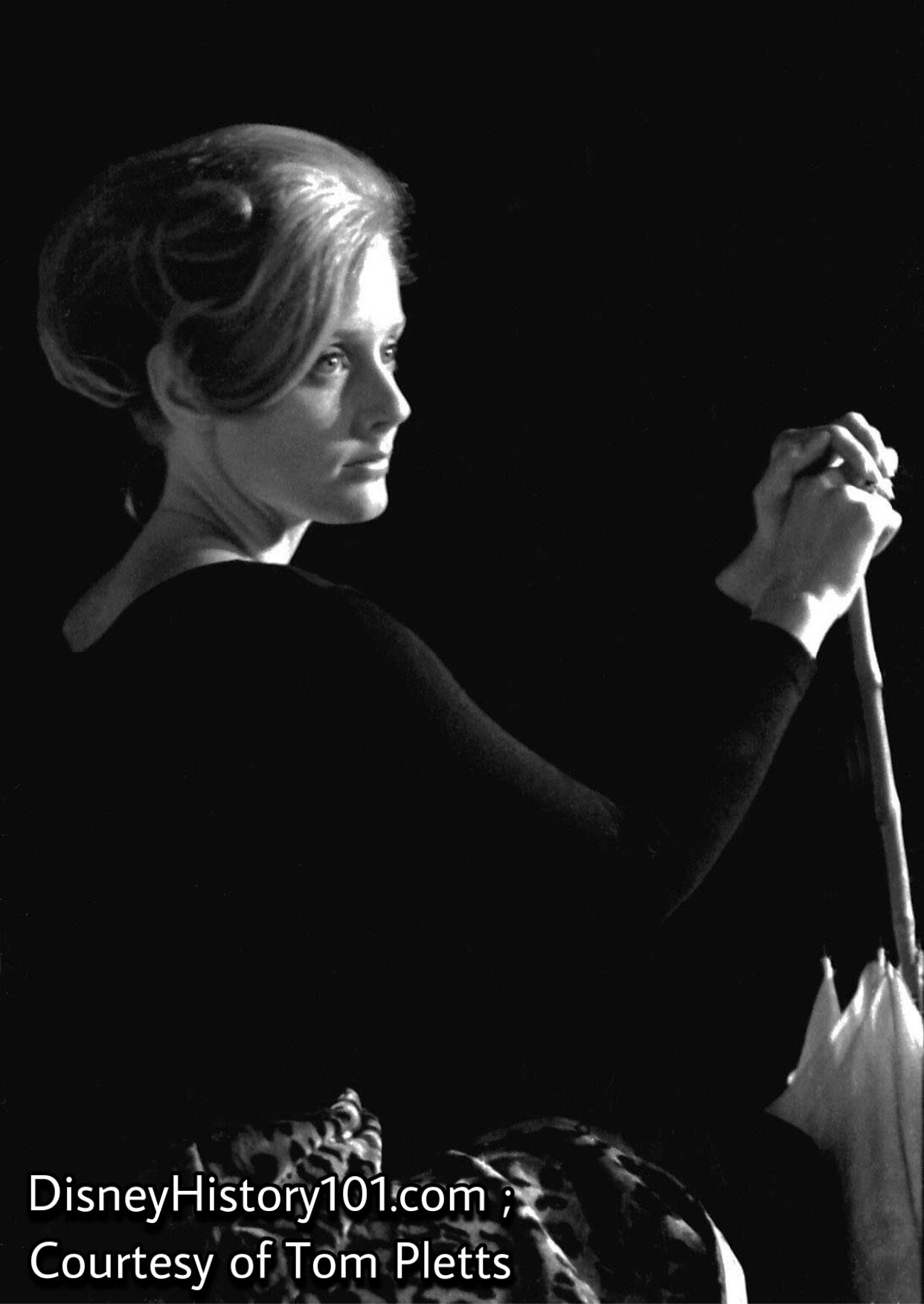
The Disneyland Drama Club production of The American Dame starred many familiar faces from around the Park. Here, Connie Lane (Disneyland Ambassador of 1966 ; Disneyland V.I.P. Hostess) readies for her part.
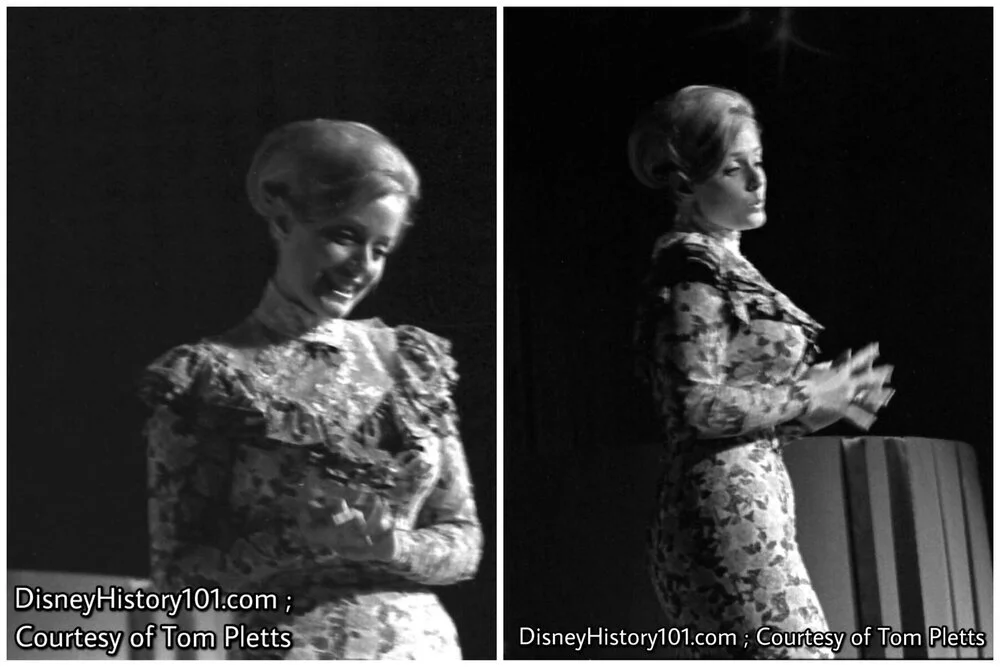
Connie Lane remembers : “I was able to wear one of Betty Taylor’s dresses for the show, [and] I was in heaven. [It was] off white ‘silk-looking’, lots of heavy beading, HEAVY! It took two dressers to help me fit it and secure the zipper…I was under strict orders not to get the hem dirty.”
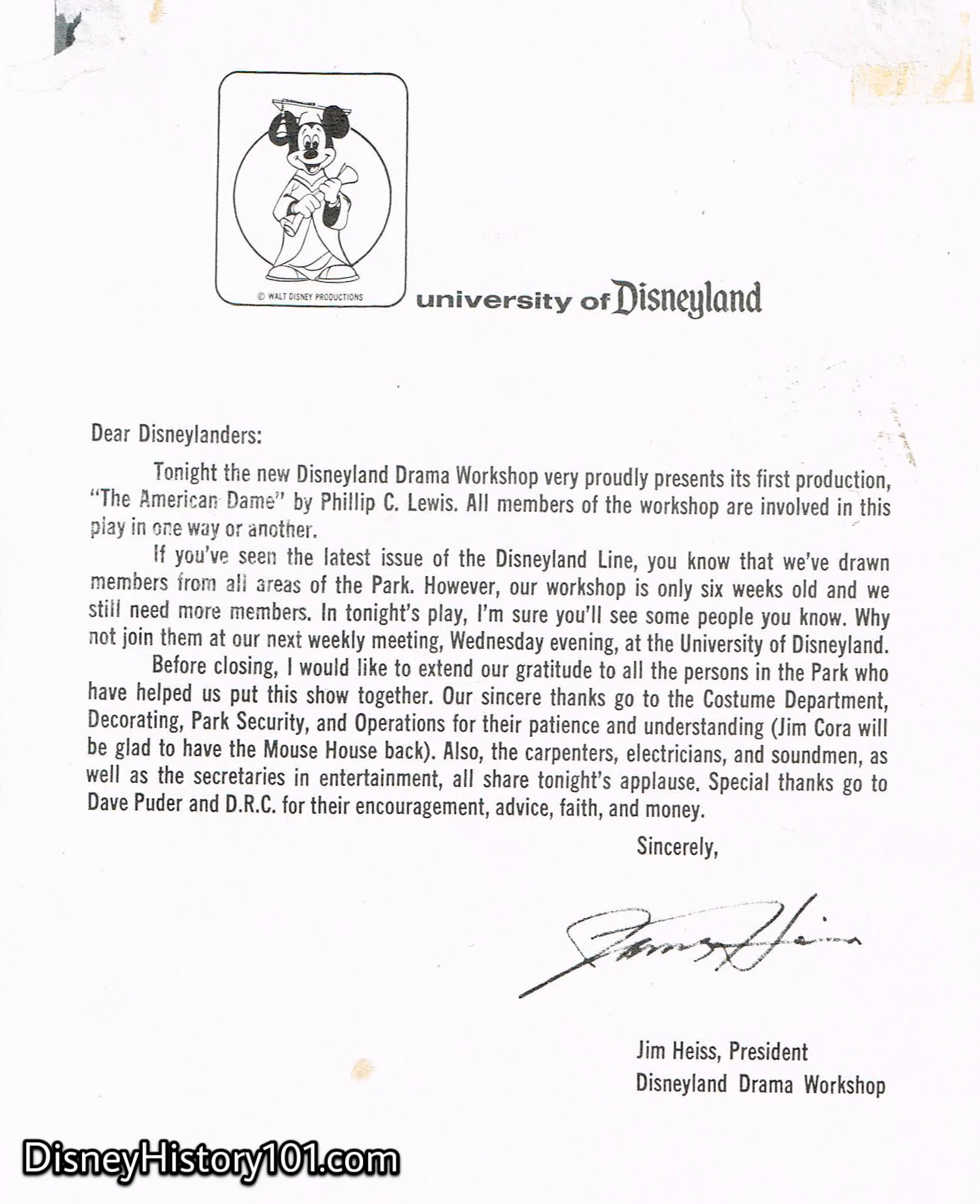
Inside The American Dame program, an accompanying formal letter from Jim Heiss invites fellow Disneyland Cast Members to join the Disneyland Drama Club of the University of Disneyland. The letter concludes with a special pre-show thanks to all Disneyland Cast Members of the D.R.C. (Disneyland Recreational Department) and the Disneyland Costume Department for their support of this production.
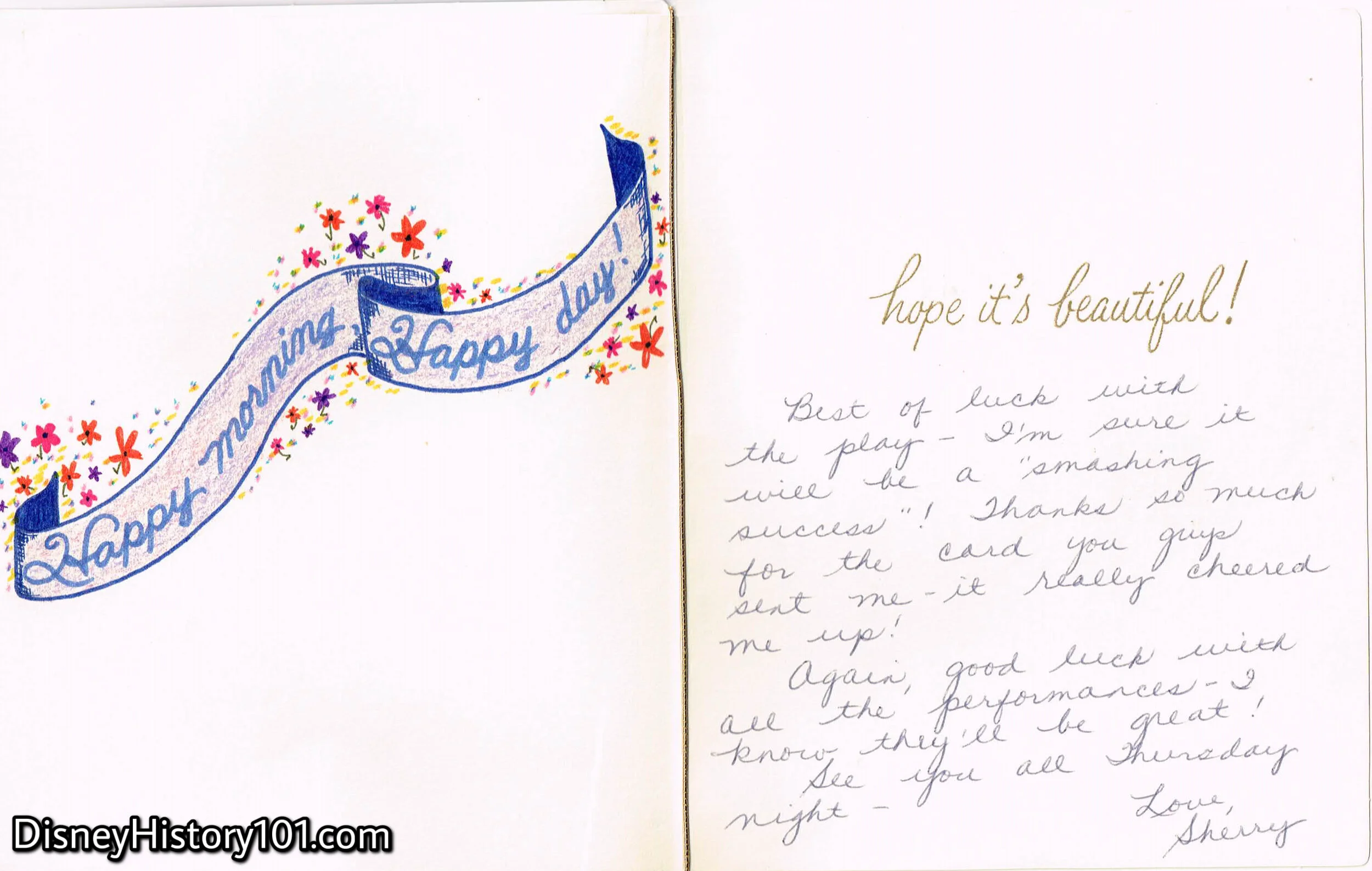
Sherry Nelson was scheduled to perform, but incurred some sort of illness or injury that prevented her from being involved. Before the opening performance, Sherry sent her well-wishes to the cast and crew of the Disneyland Drama Club’s production of The American Dame.
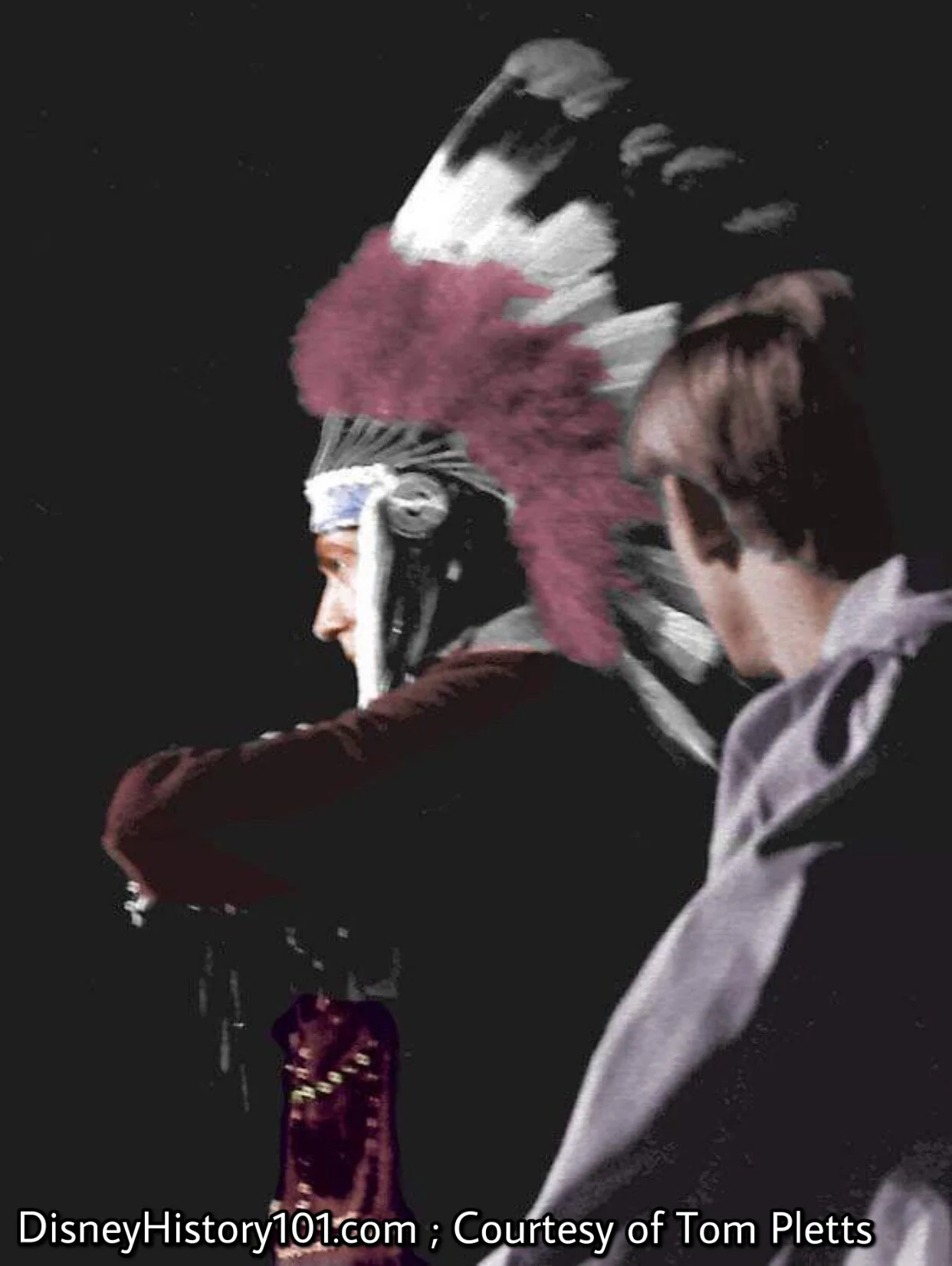
The American Dame also starred Disneyland Drama Club President Jim Heiss (background) and Jim Adams (foreground), both in supporting roles.
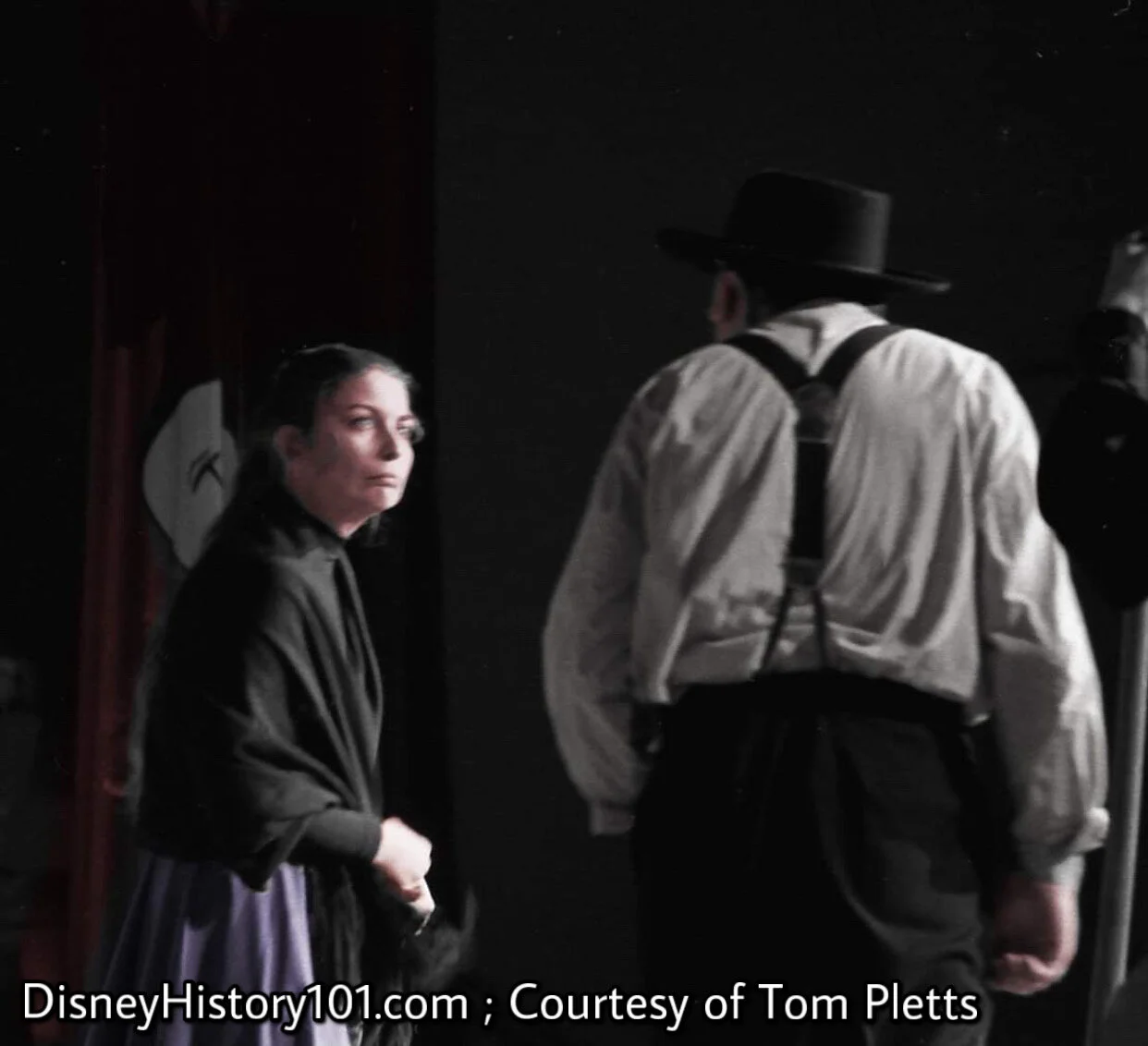
A pioneer and his wife moving West with his spouse, portrayed by Pat Keener (left) and Tom Pletts (right).
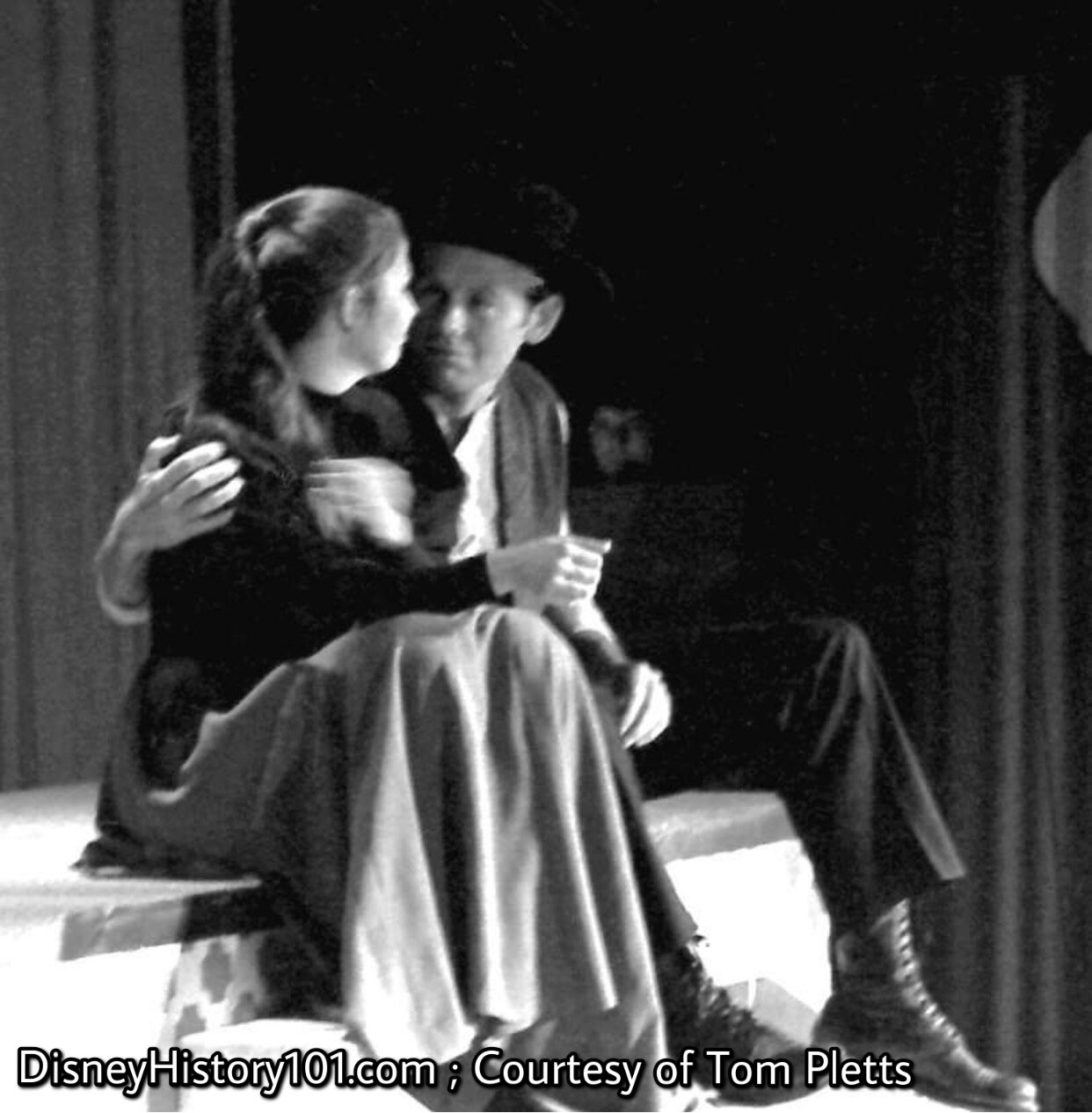
The Pioneer’s Wife (portrayed by Pat Keener), holds the reins on the schooner as the couple heads West!
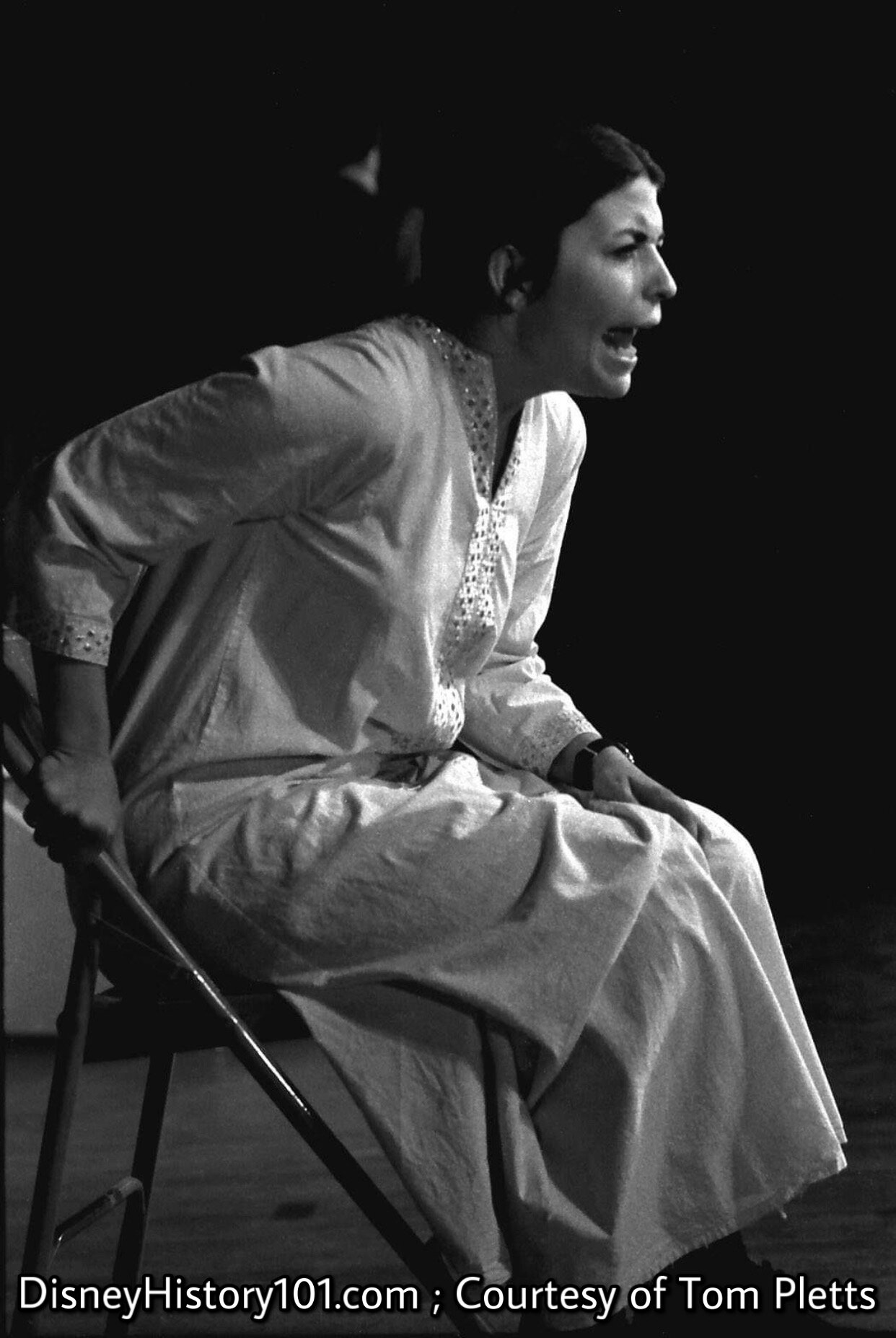
Pat Keener making sure everyone’s awake.
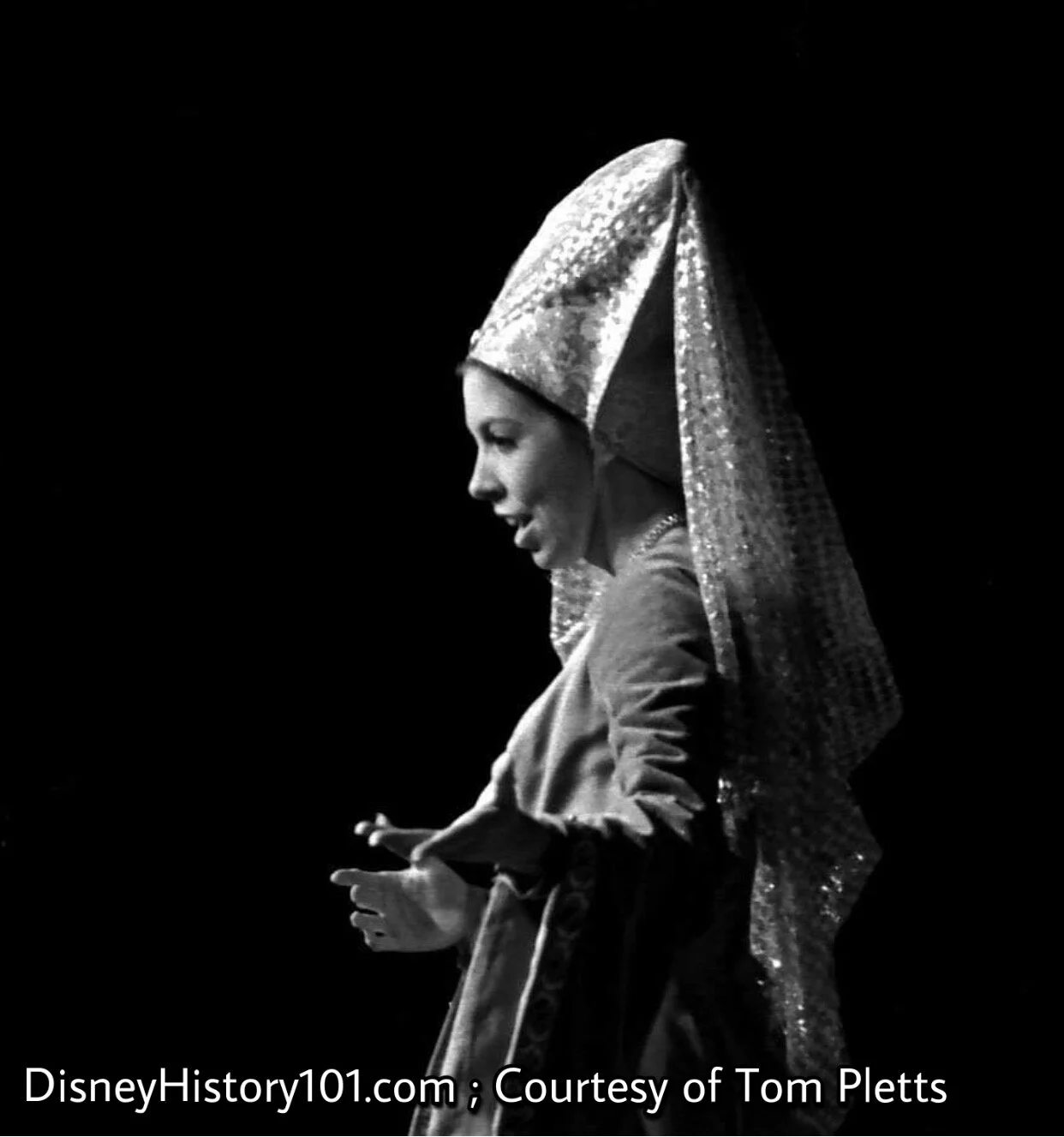
Suezanne Fisher
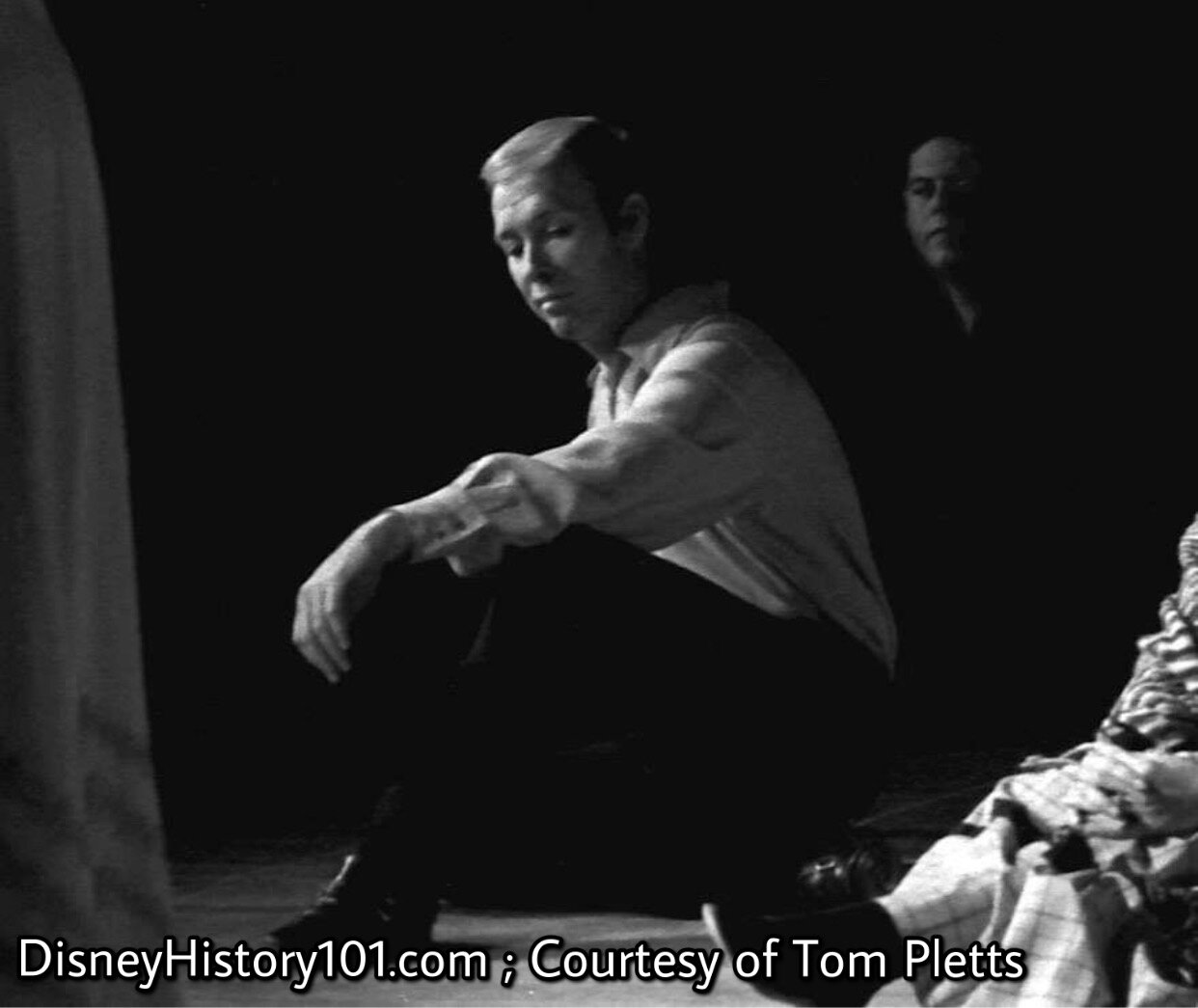
Johnny Buckner
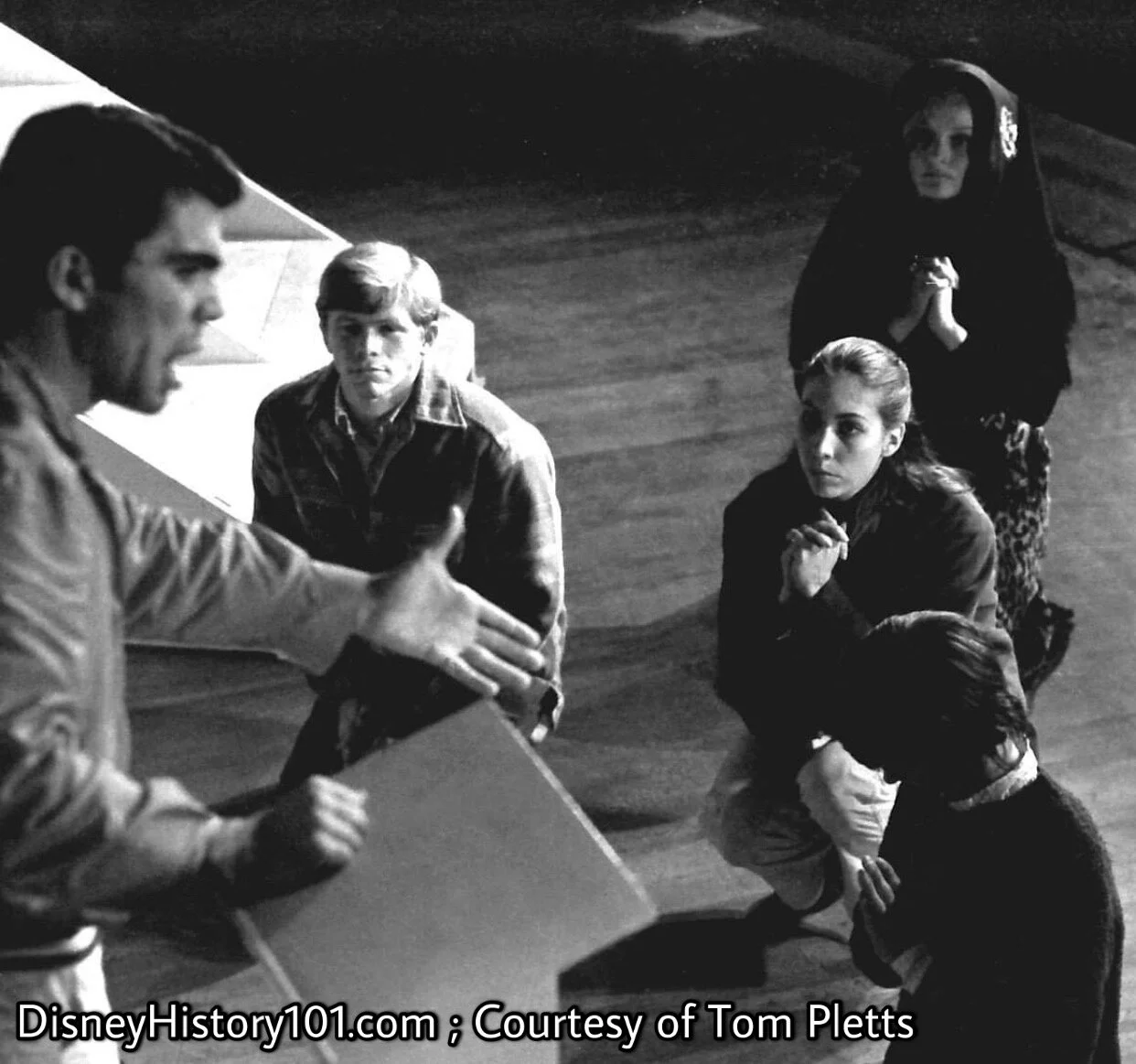
The Preacher Scene including (left to right) : Greg Silva, Jim Adams, Suezanne Fisher, Sherry Nelson, and Gloria Clark (bottom right).
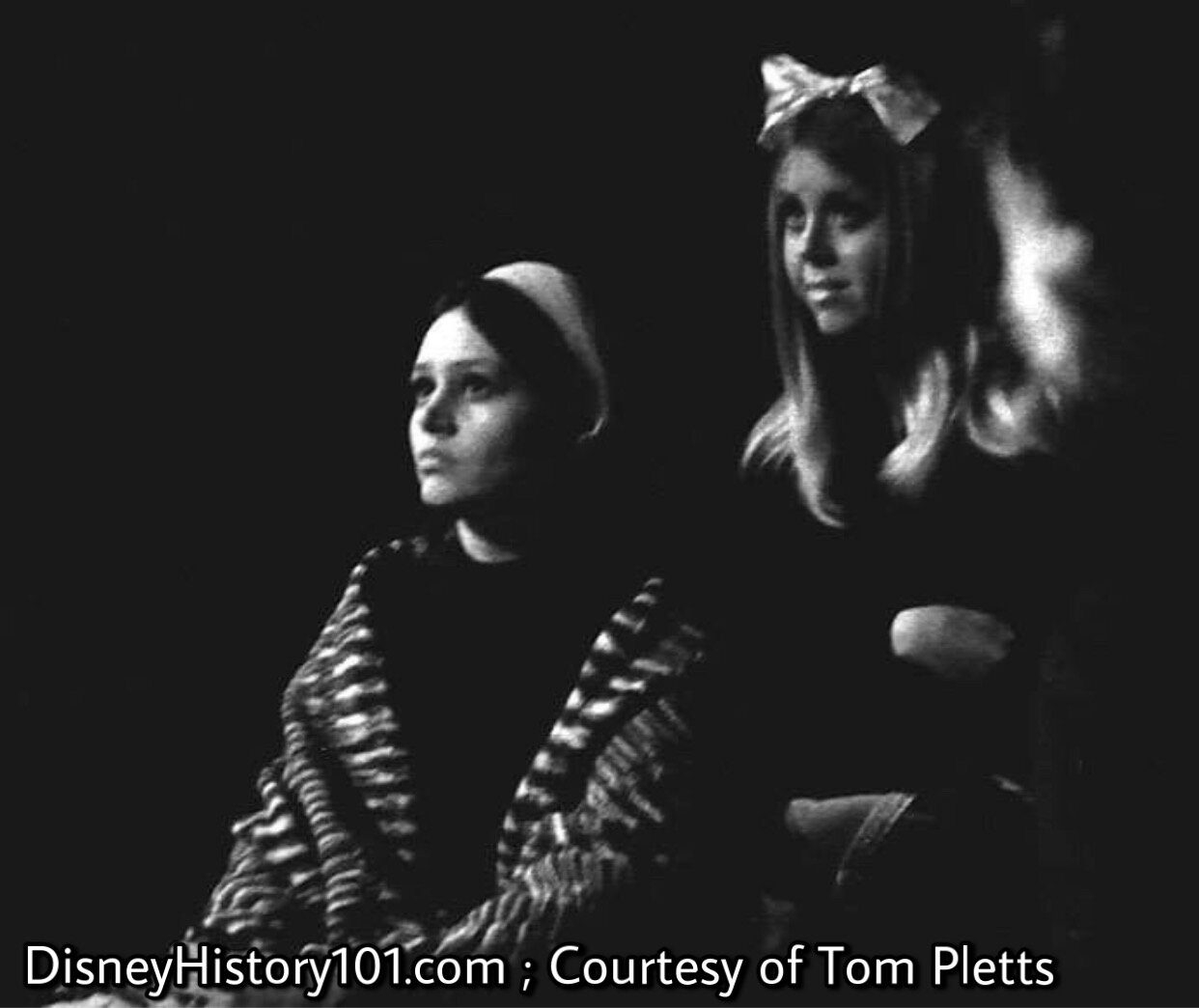
Sharon Wimmer and Sandie Schumacher
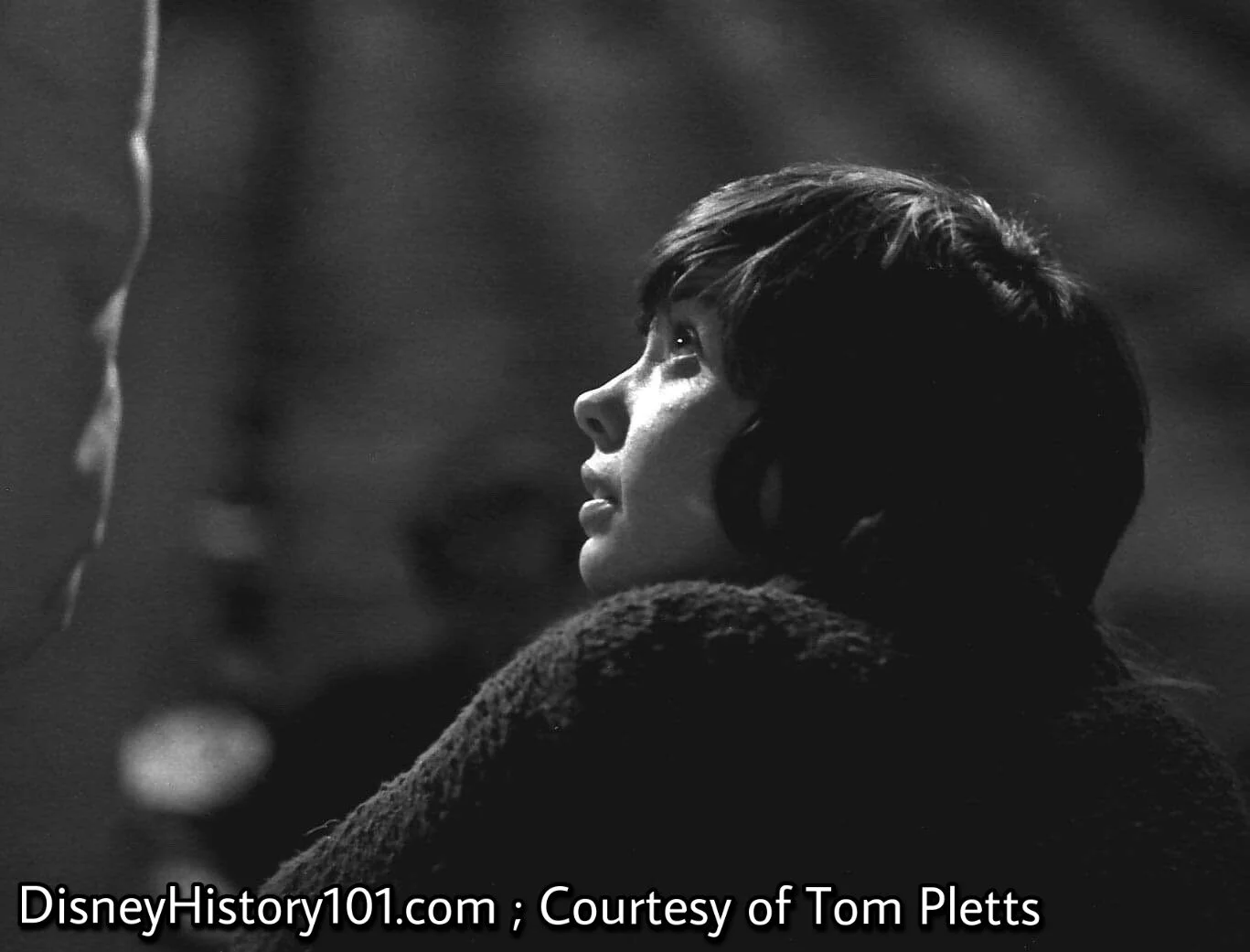
Gloria Clark in The American Dame.
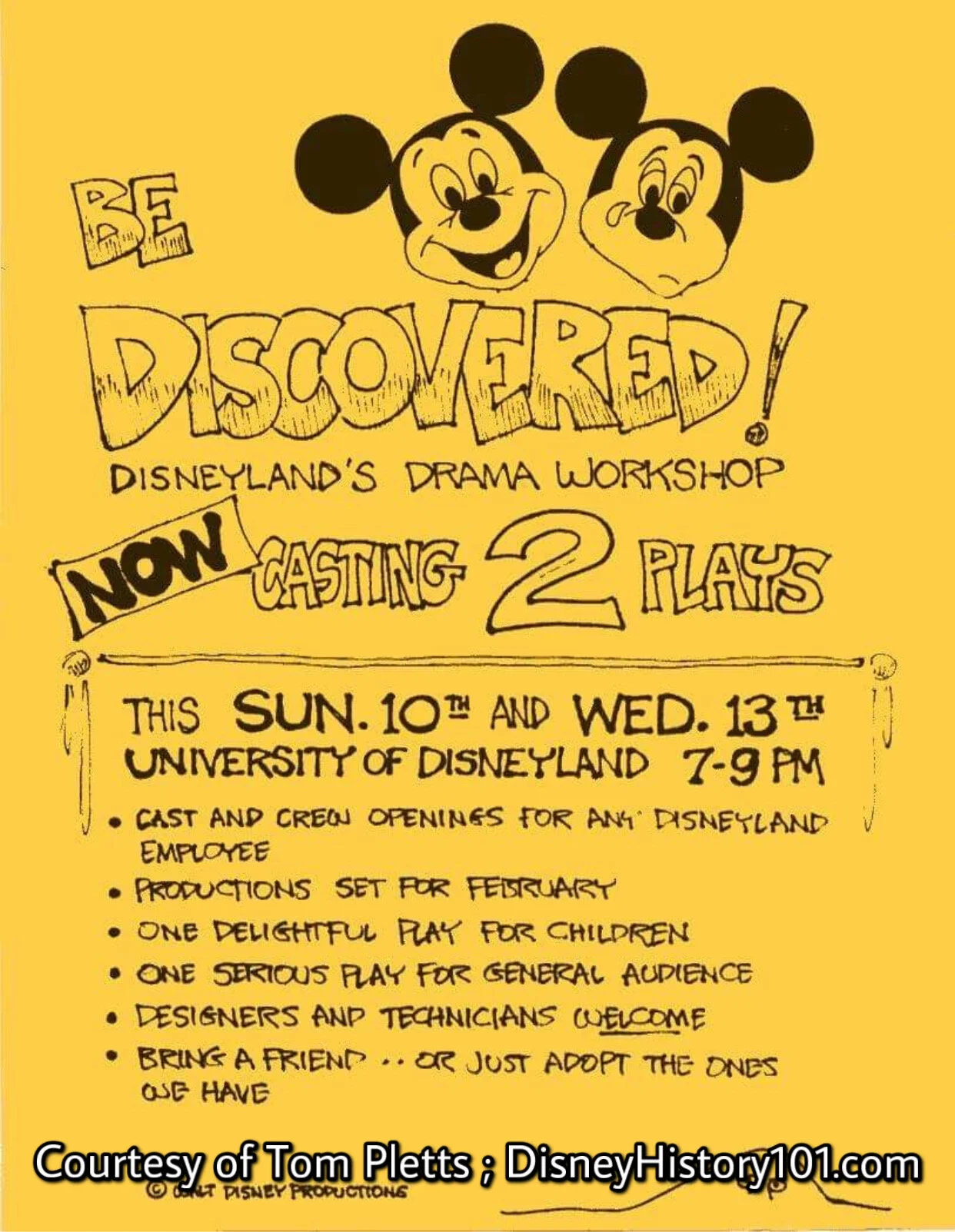
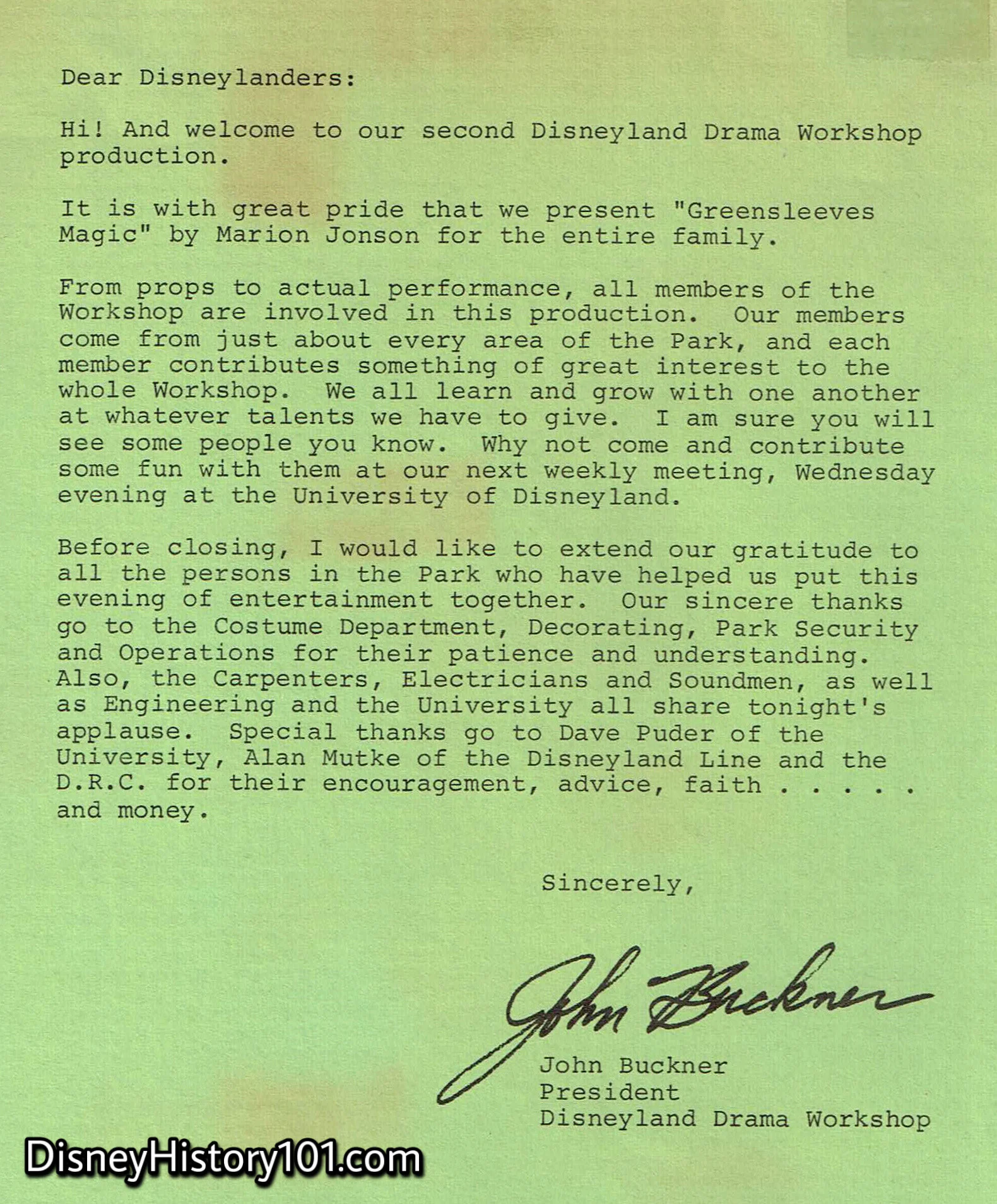
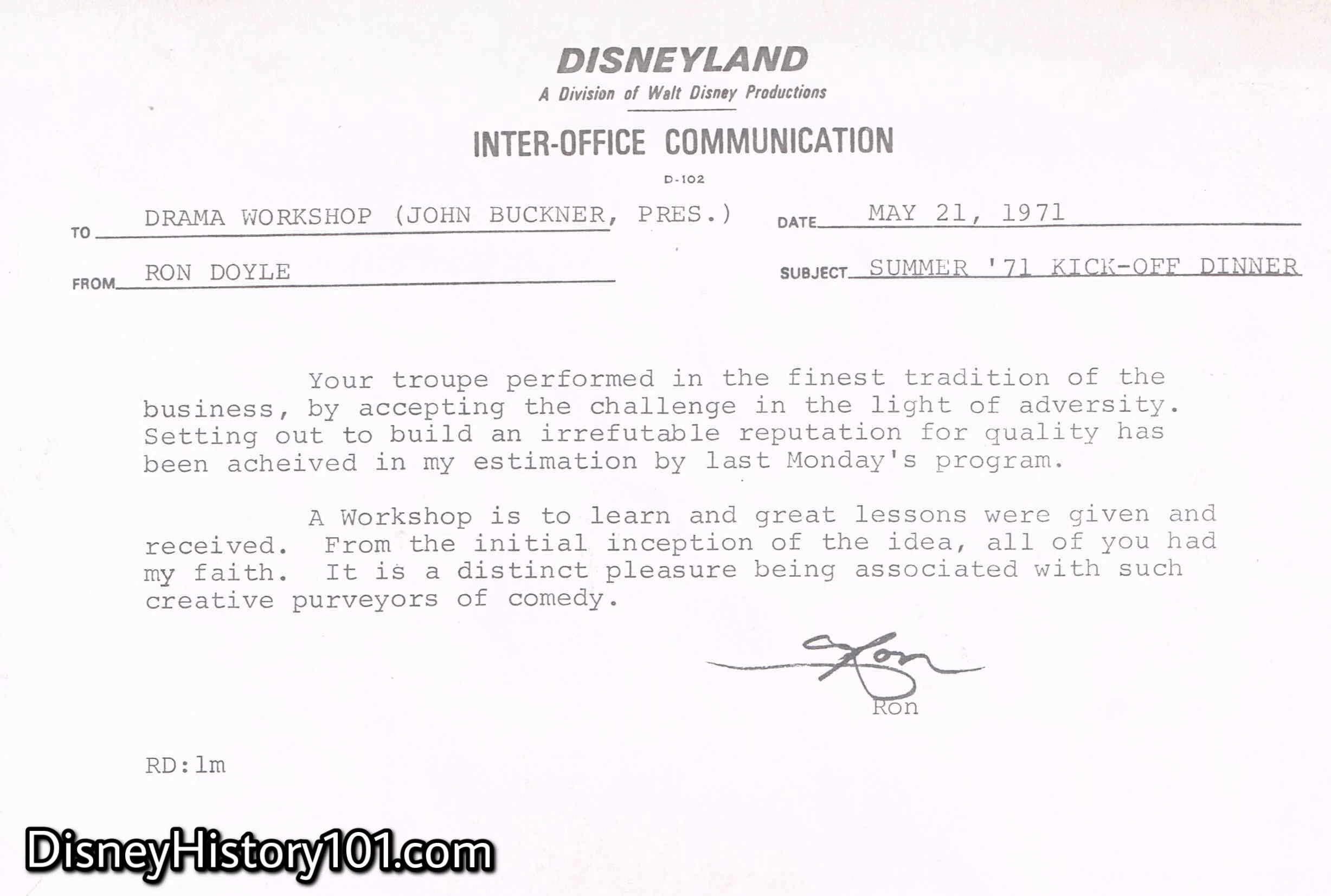
By 1971, John Buckner had replaced Jim Heiss as the Disneyland Drama Workshop President. Now that the Disneyland Drama Club’s production of The American Dame had been produced as a smashing success (owing to its Disneyland cast Members), work began on casting two major plays to be produced during the following year. Word of this was heralded throughout the lands, courtesy of the Disneyland Recreation Club. In addition to these productions, the troupe also performed for Cast Members at the “Summer ‘71 Kick-Off Dinner.”
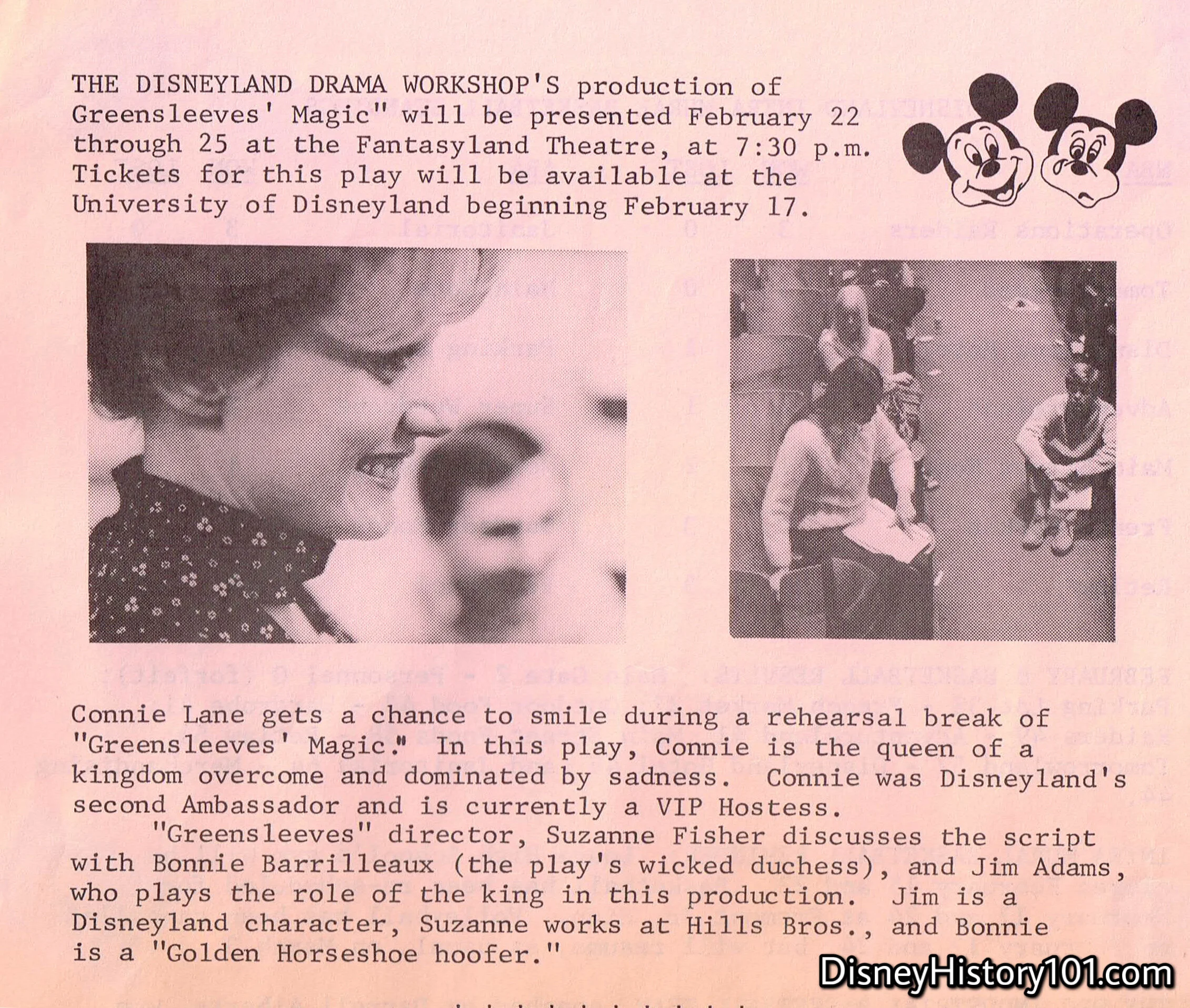
Many of the stars of the previous production (The American Dame) returned to support this second Disneyland Drama Club production of “Greensleeves’ Magic”.
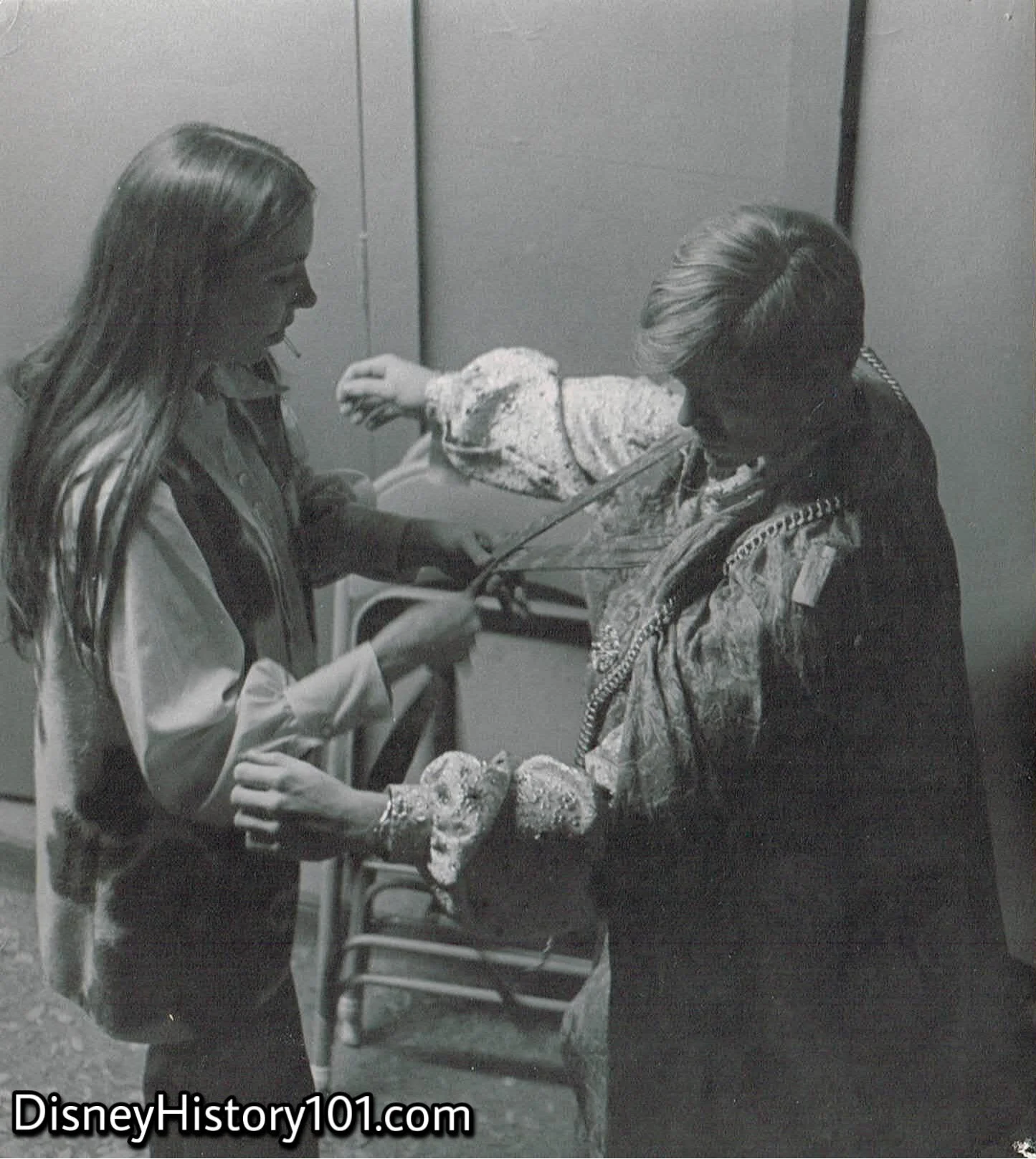
The previous Disneyland Drama Club production borrowed many costumes from the Entertainment Costume Department. Now, many costumes were made special for Disneyland Drama Club’s 2nd production - “Greensleeves’ Magic”! Here, Jim Adams receives a costume measurement and alteration.
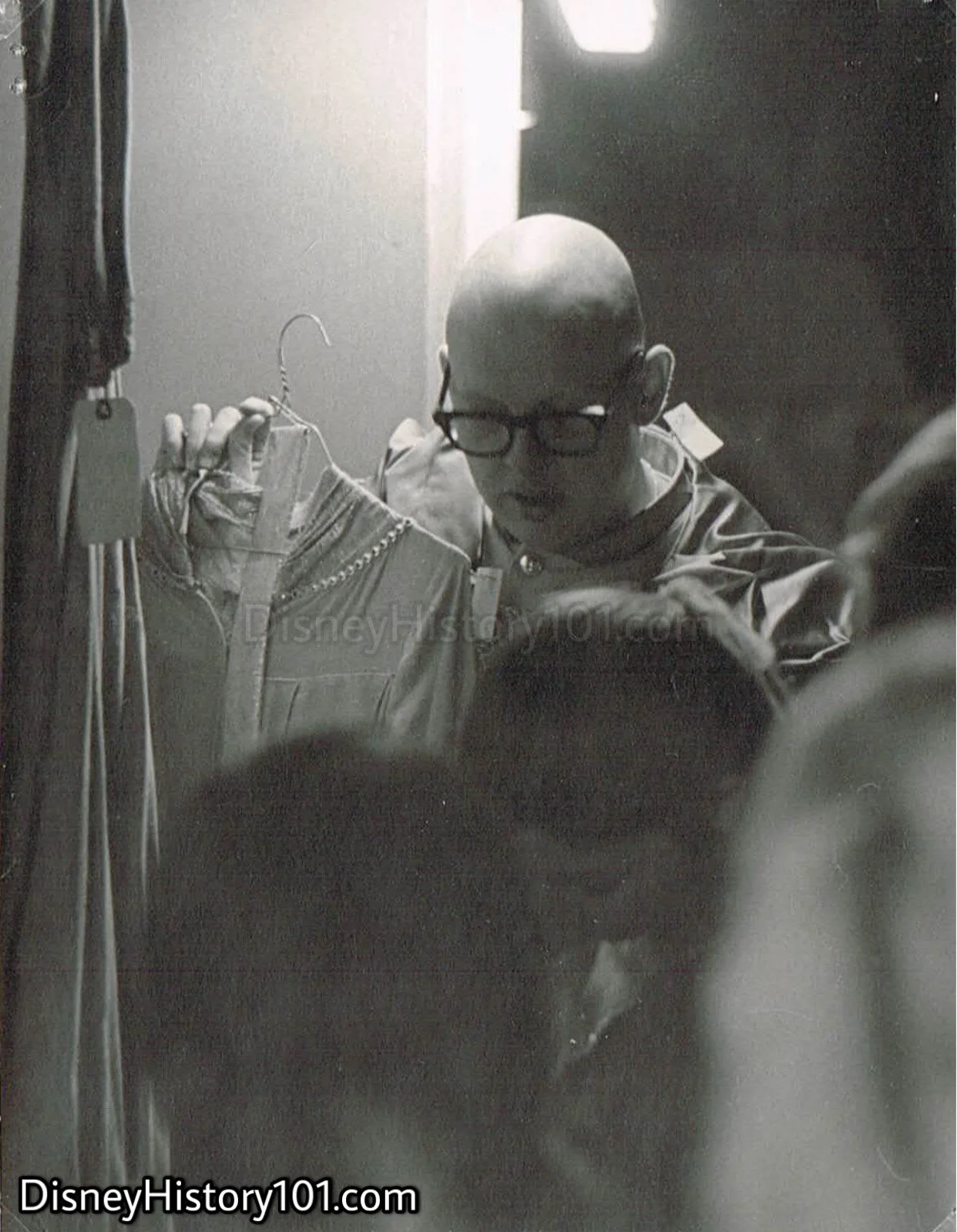
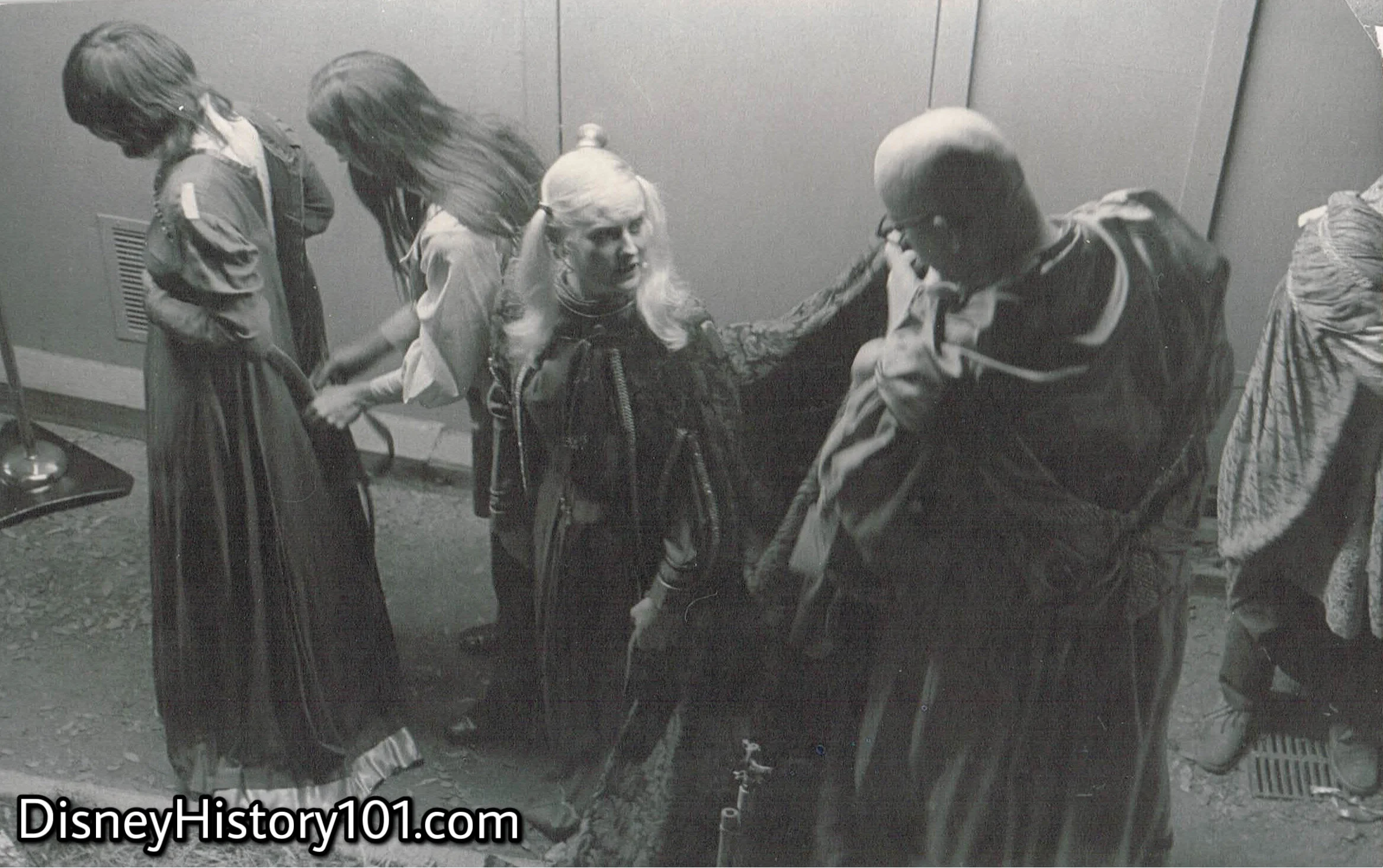
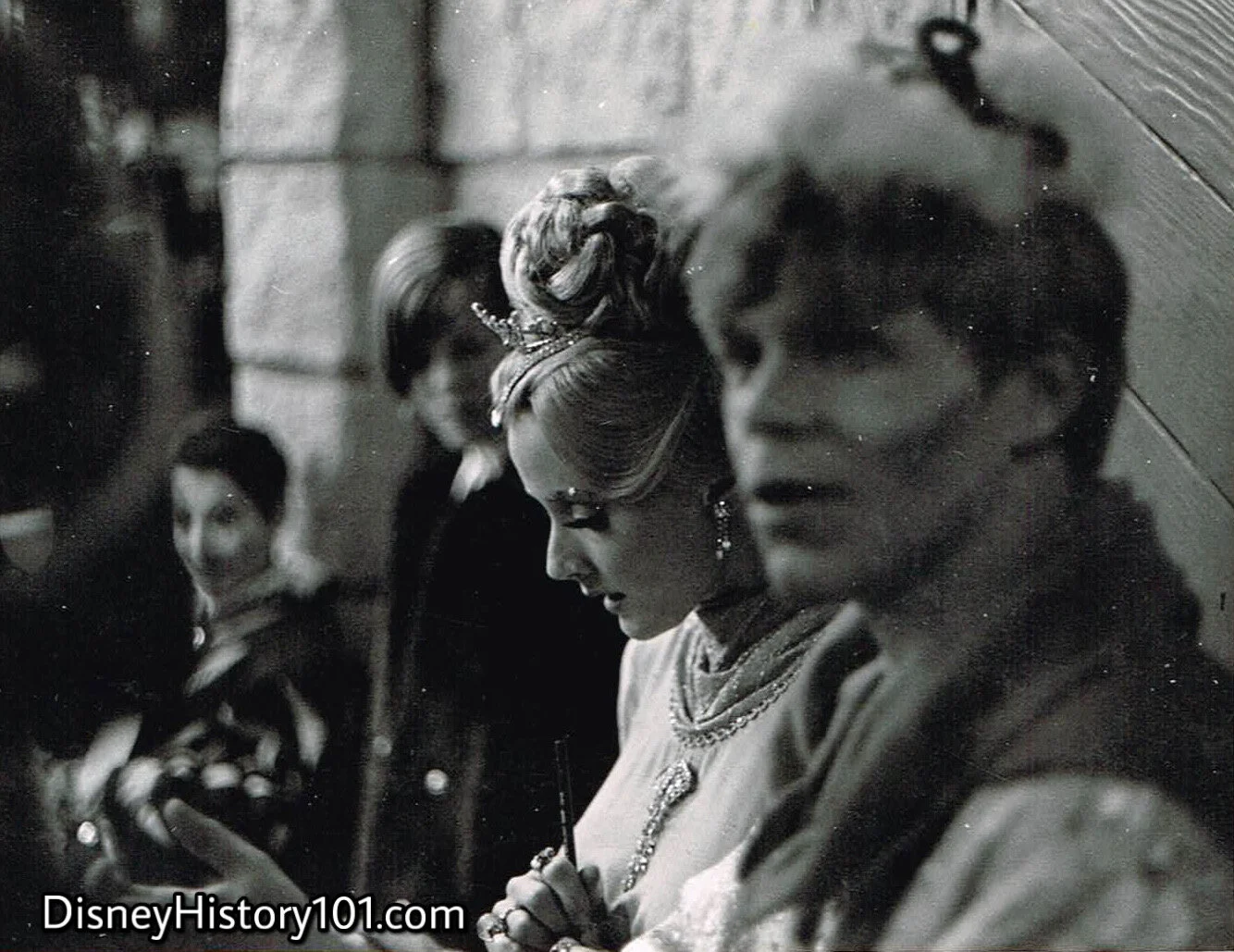
Connie Lane as The Queen and Jim Adams (foreground)
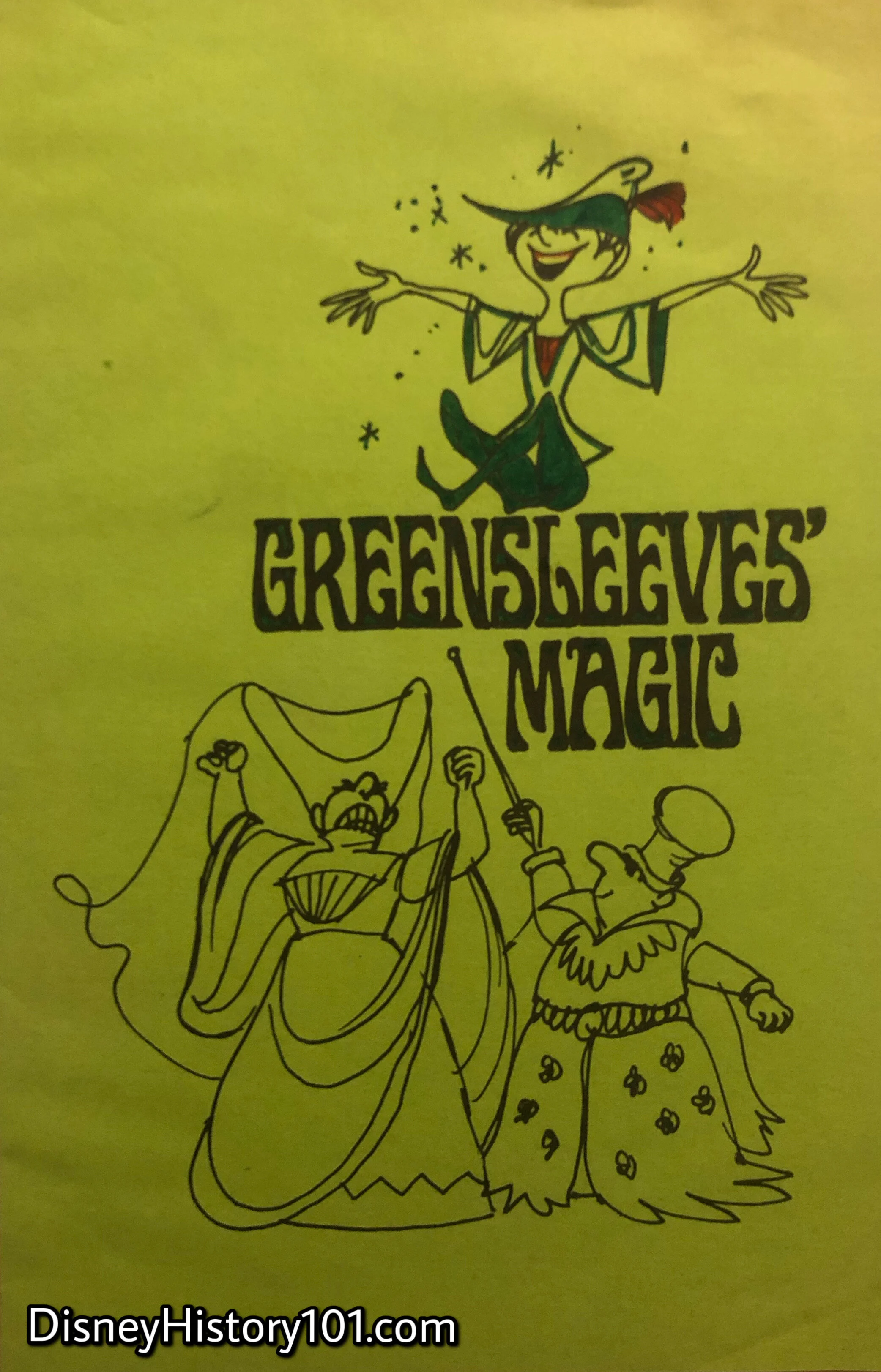
This artwork has been attributed to renowned Disneyland portrait artist Chuck Boyer. If you’re not familiar with the name Charles Boyer, its likely that you’ve seen his work hanging around Disneyland. Charles Boyer would go on to produce many visual tributes to parades and performers of Disneyland - from the Disneyland Band to the Royal Street Bachelors. During the 1980s, Charles produced many pieces to advertise seasons of Circus Fantasy and Fantasy On Parade. For now, Charles Boyer would support the Disneyland Drama Club with artwork utilized for their programs and posters.
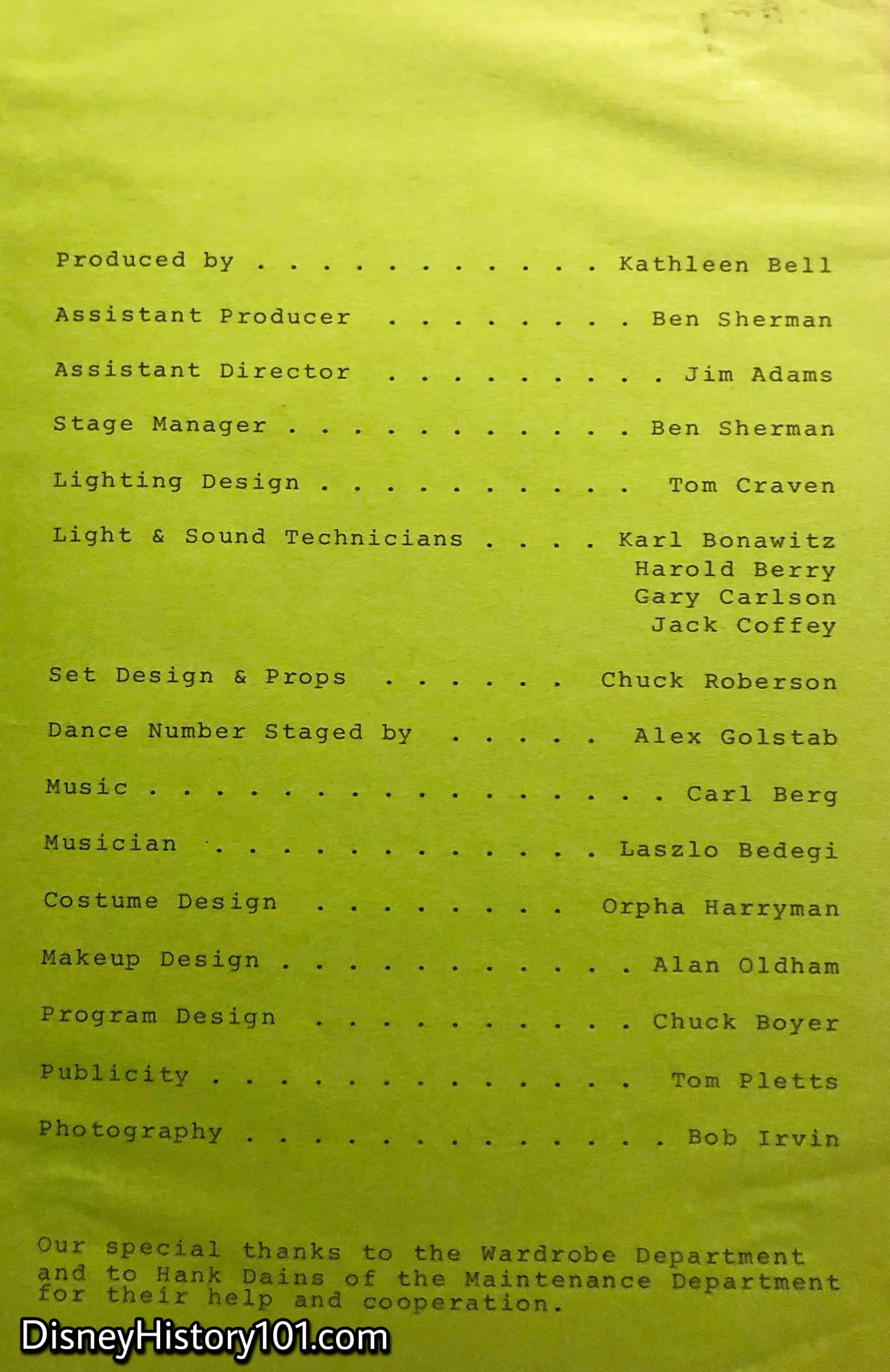
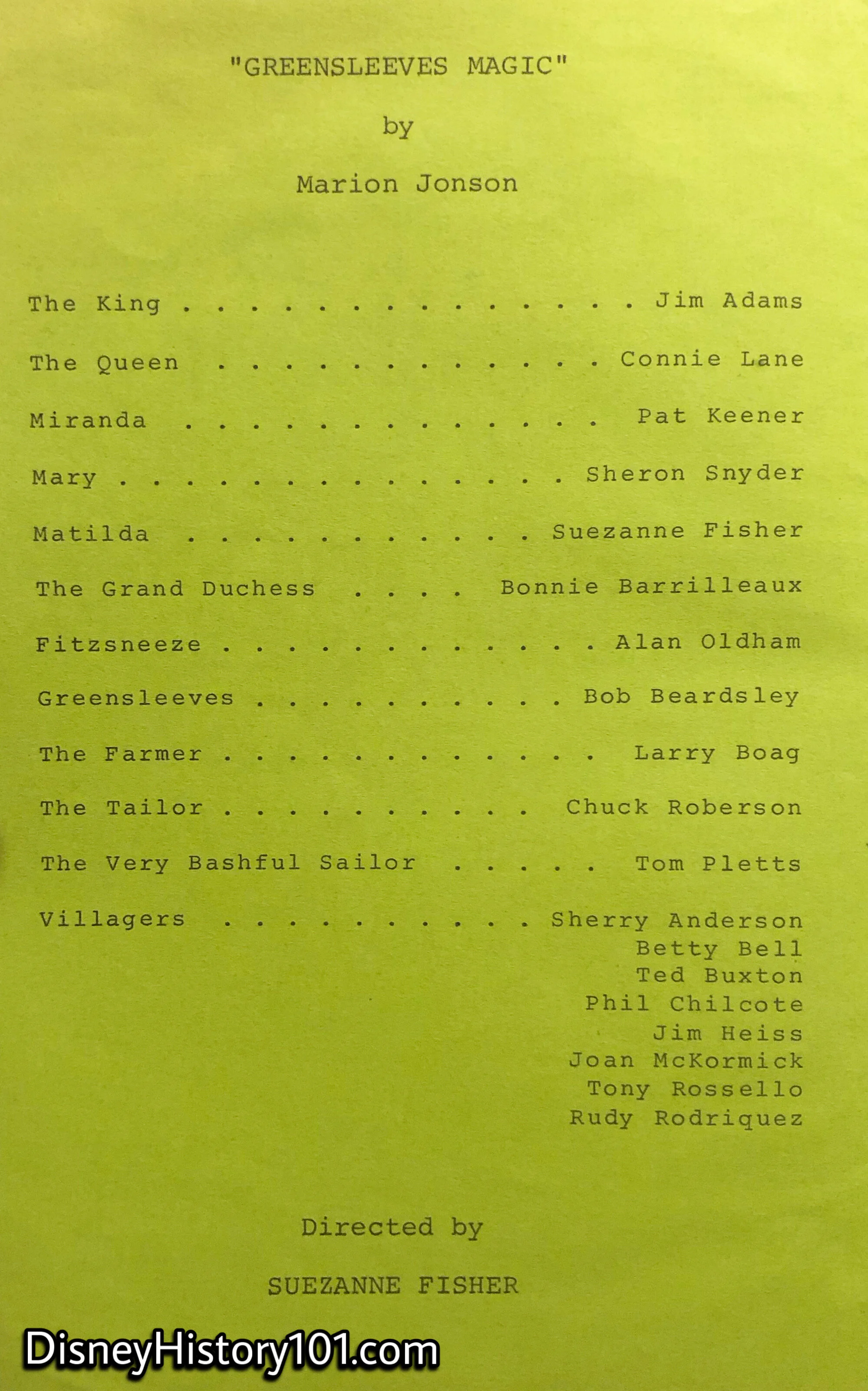
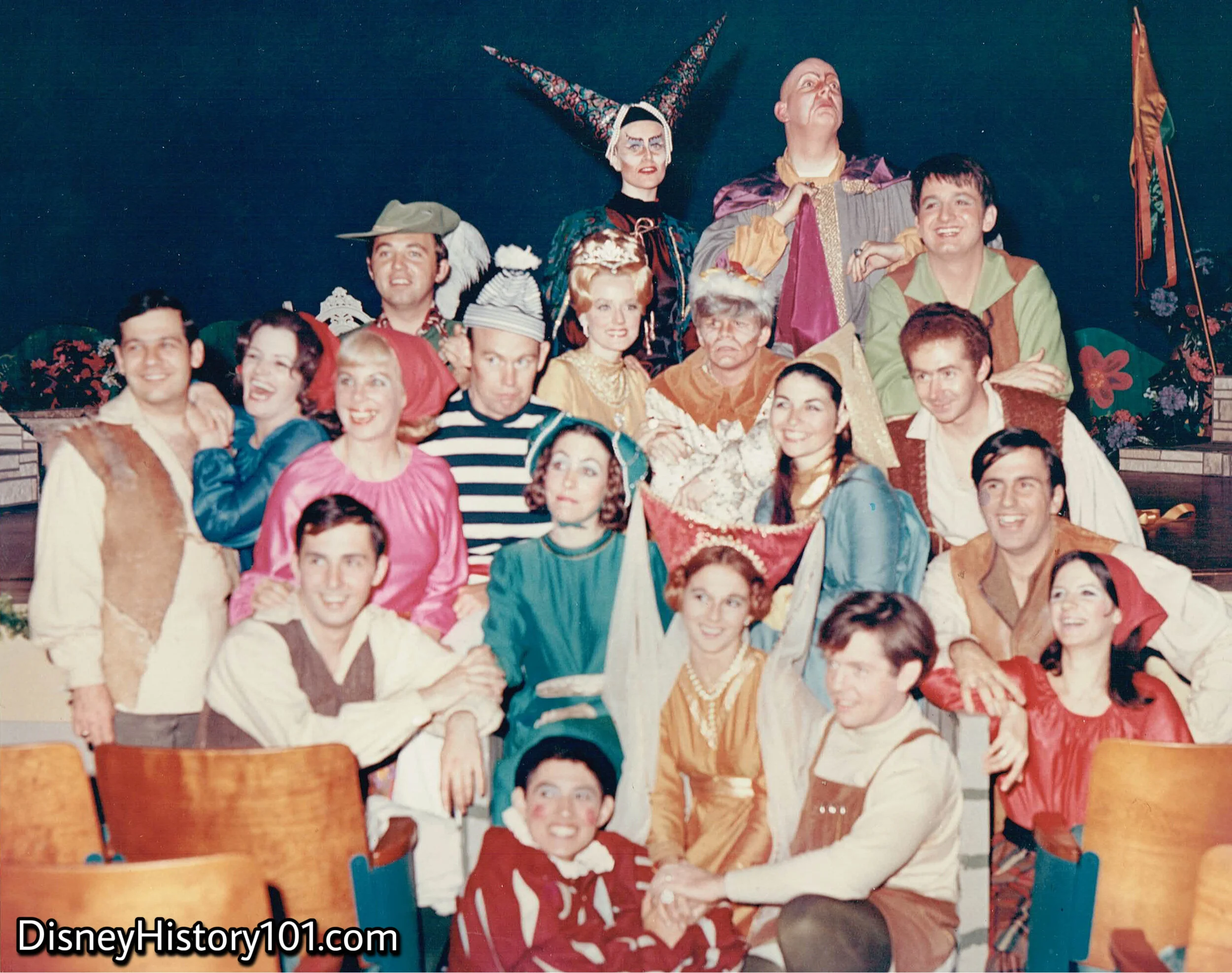
“It’s hard to imagine Bonnie as a villain ever. I just don’t remember the plot well enough to visualize her in that role. But there I am in the picture with her(in the striped shirt, as the bashful sailor). Disneyland Ambassador Carol DeKeyser is the laughing one on the left. Ambassador Connie Swanson is the blonde in gold satin, upper middle, character Jim Adams is just below her (in character). On the far right, the redhead in a red vest is the founder Jim Heiss. Next to him is the wonderful Pat Keener…Oh, the guy above Jim : Bob Beardsley, who played Greensleeves!”
-Tom Pletts
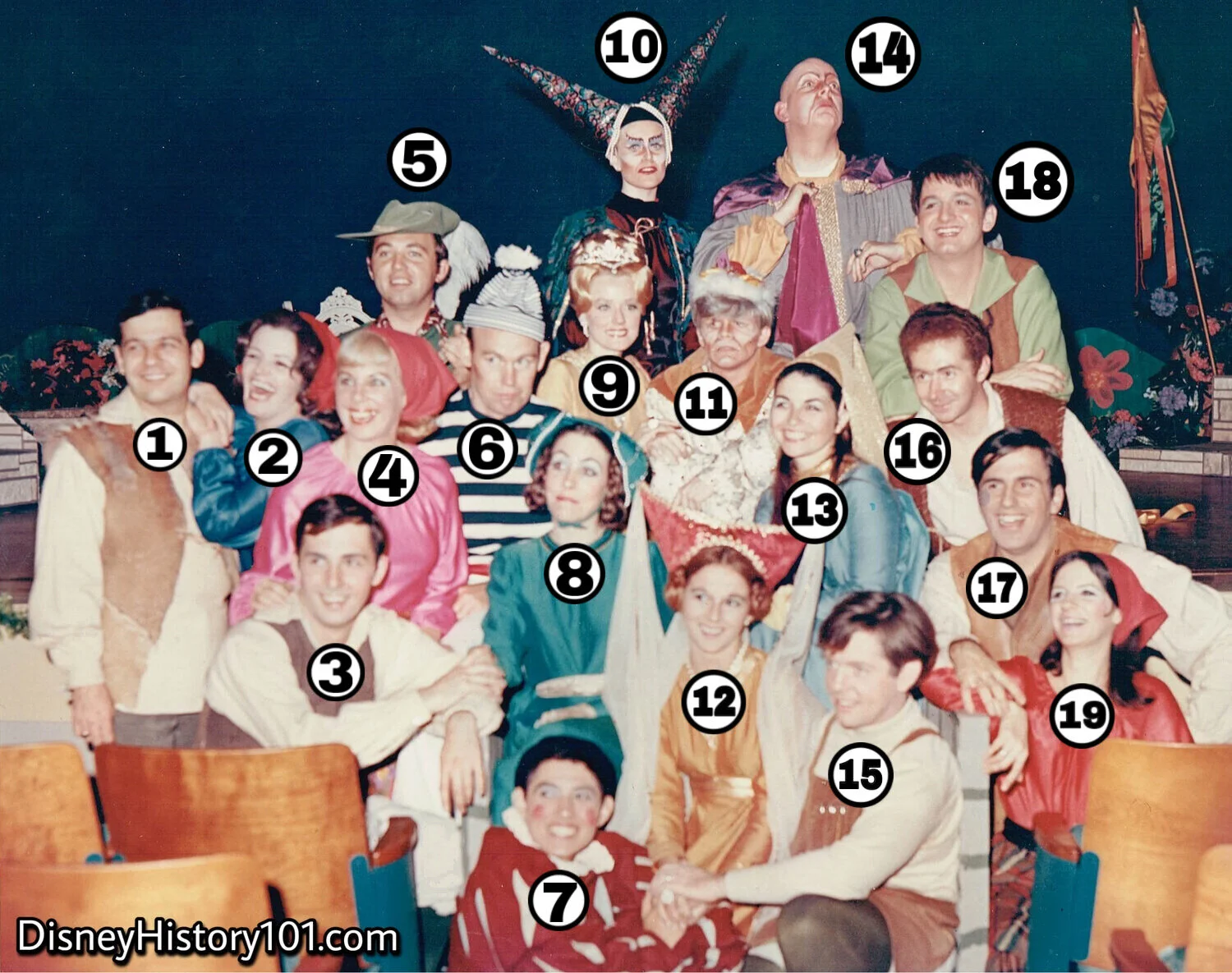
(1) ?, (2) Carol DeKeyser Masters, (3) Craig Carmen, (4) Betty Bell, (5) ?, (6) Tom Pletts, (7) ?, (8) Suezanne Fisher (the Hills Bros. employee who directed this production), (9) Connie Swanson Lane, (10) Bonnie Barrilleaux (a “Golden Horseshoe hoofer”), (11) Jim Adams, (12) ?, (13) Patricia Keener Chandler, (14) Alan Oldham, (15) Chuck Robertson, (16) Jim Heiss, (17) Phil Chilcote, (18) Bob Beardsley, (19) ?
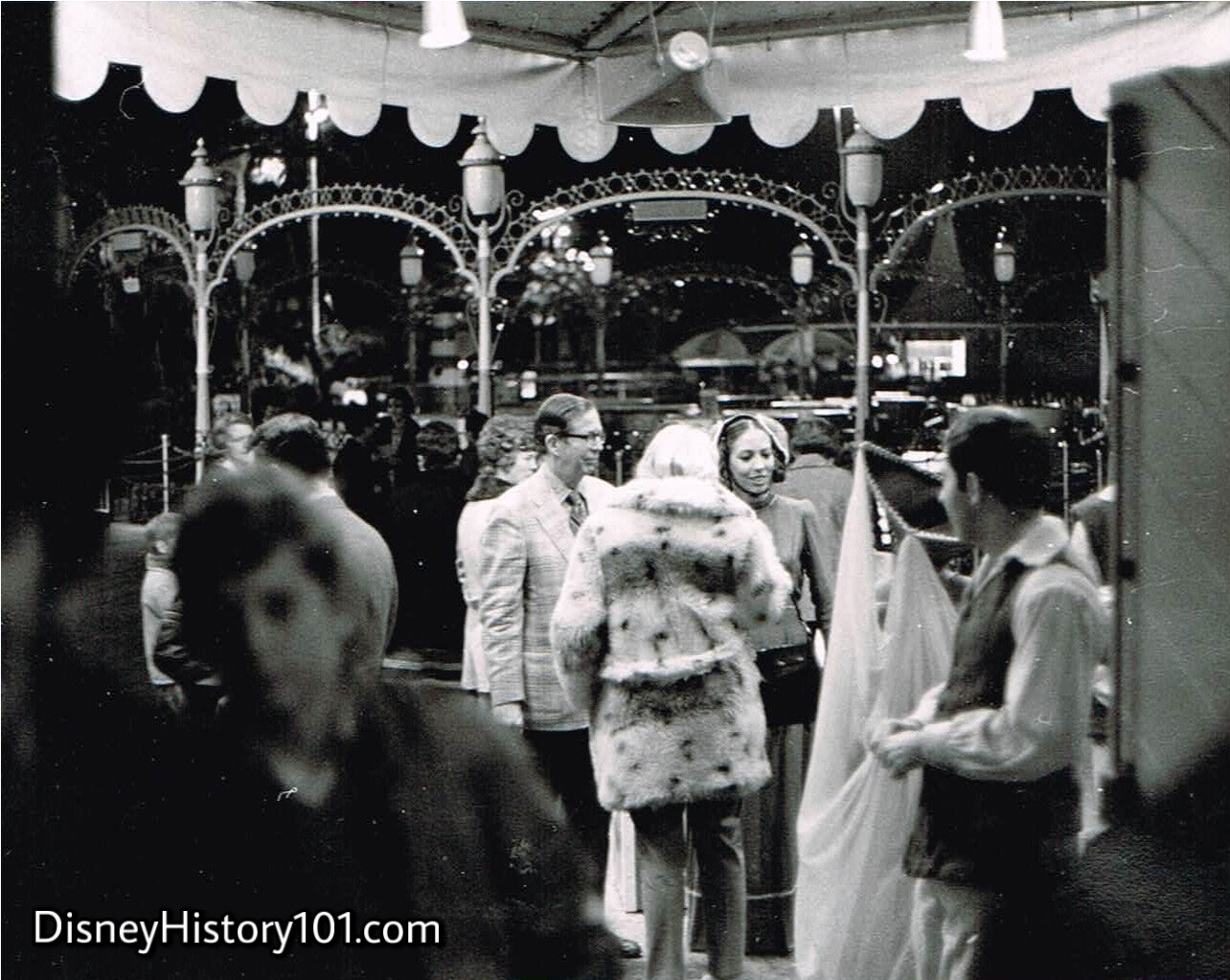
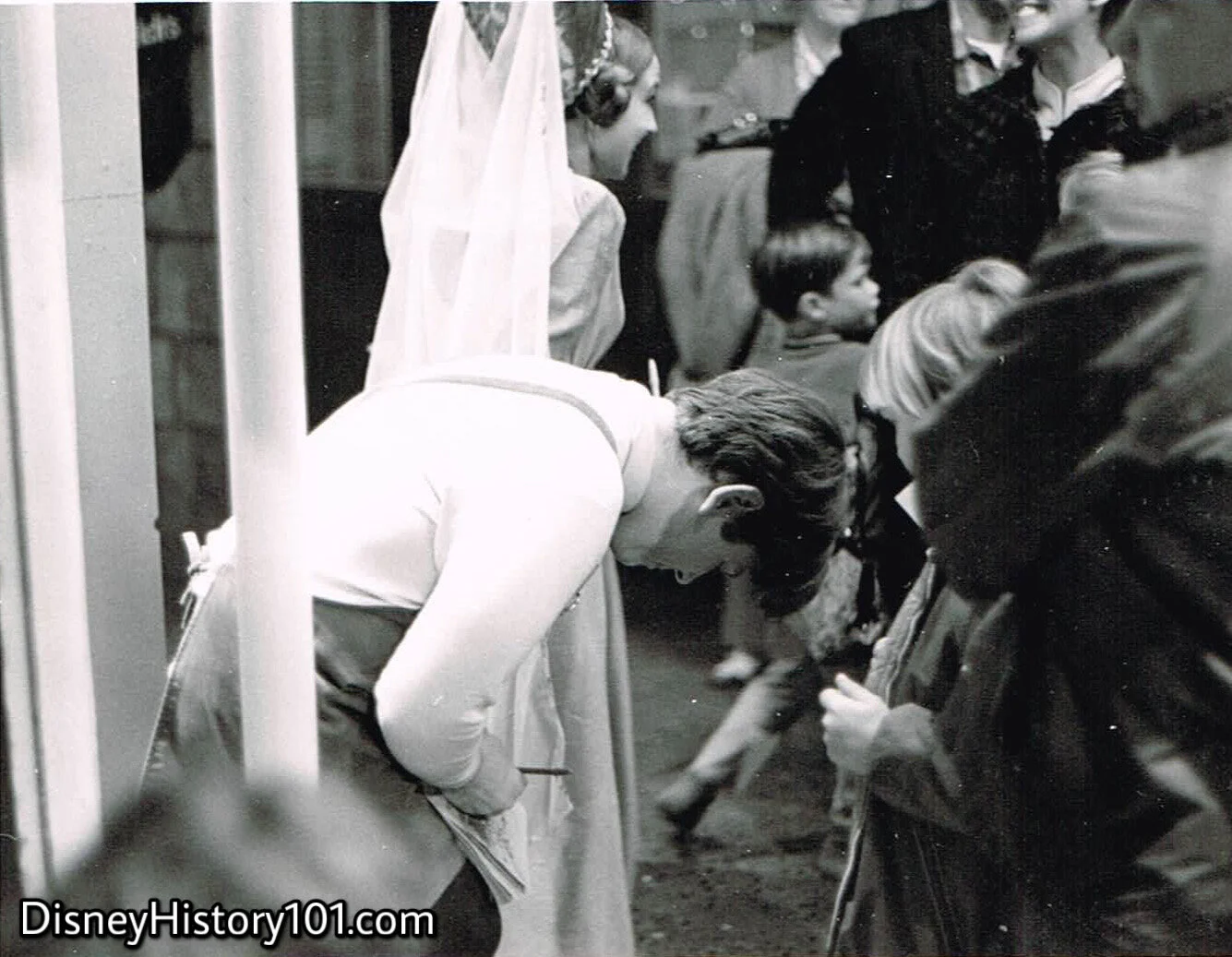
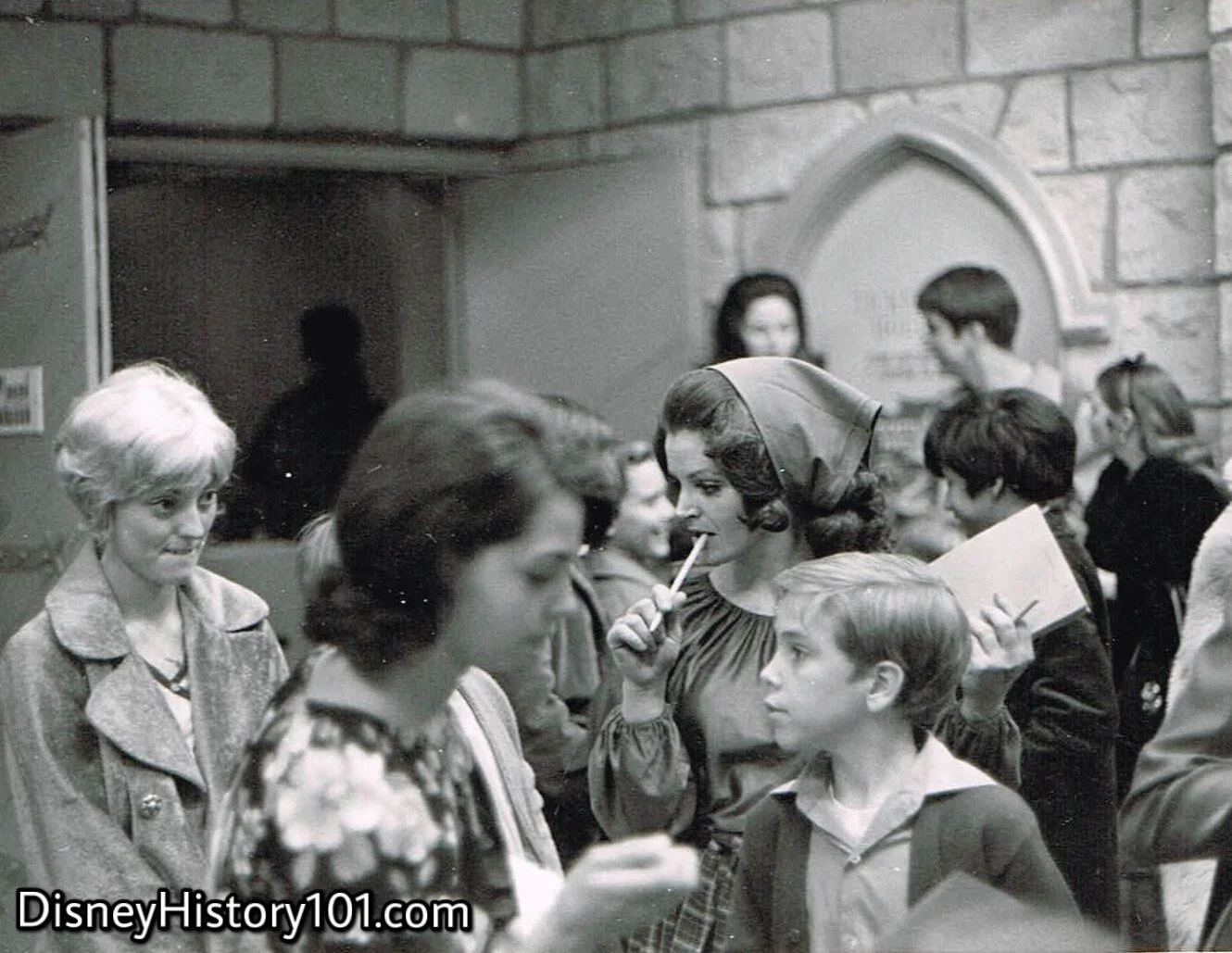
With this production, it became a tradition to meet the audience (and autograph their playbills) after each show. Straight thru the crowd, Suezanne Fischer greets guests between the Fantasyland Theatre and Mad Tea Party Cups.
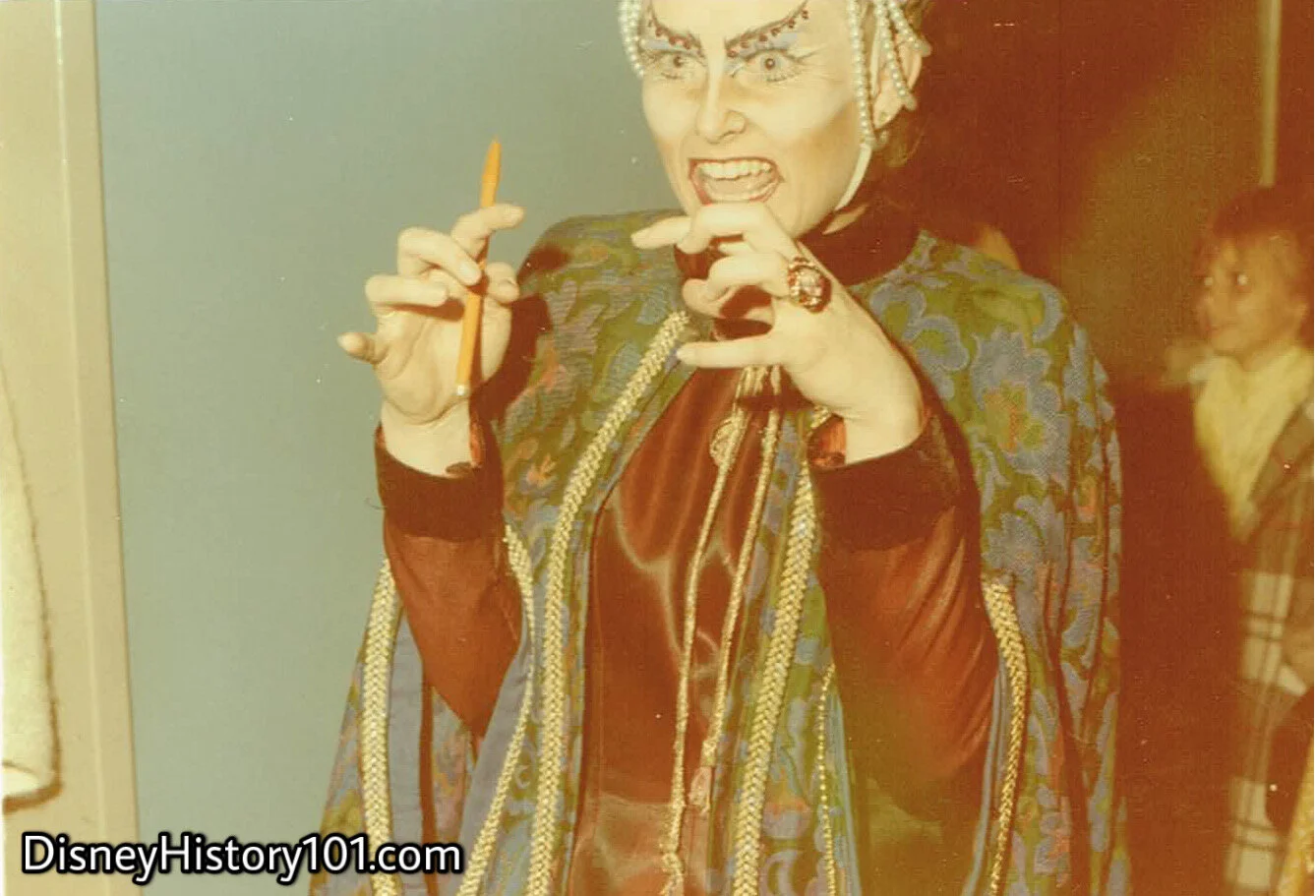
The “not-so-evil” Bonnie Barrilleaux (as The Evil Duchess of Greensleeves’ Magic) strikes an “Evil Pose” for a guest’s camera.
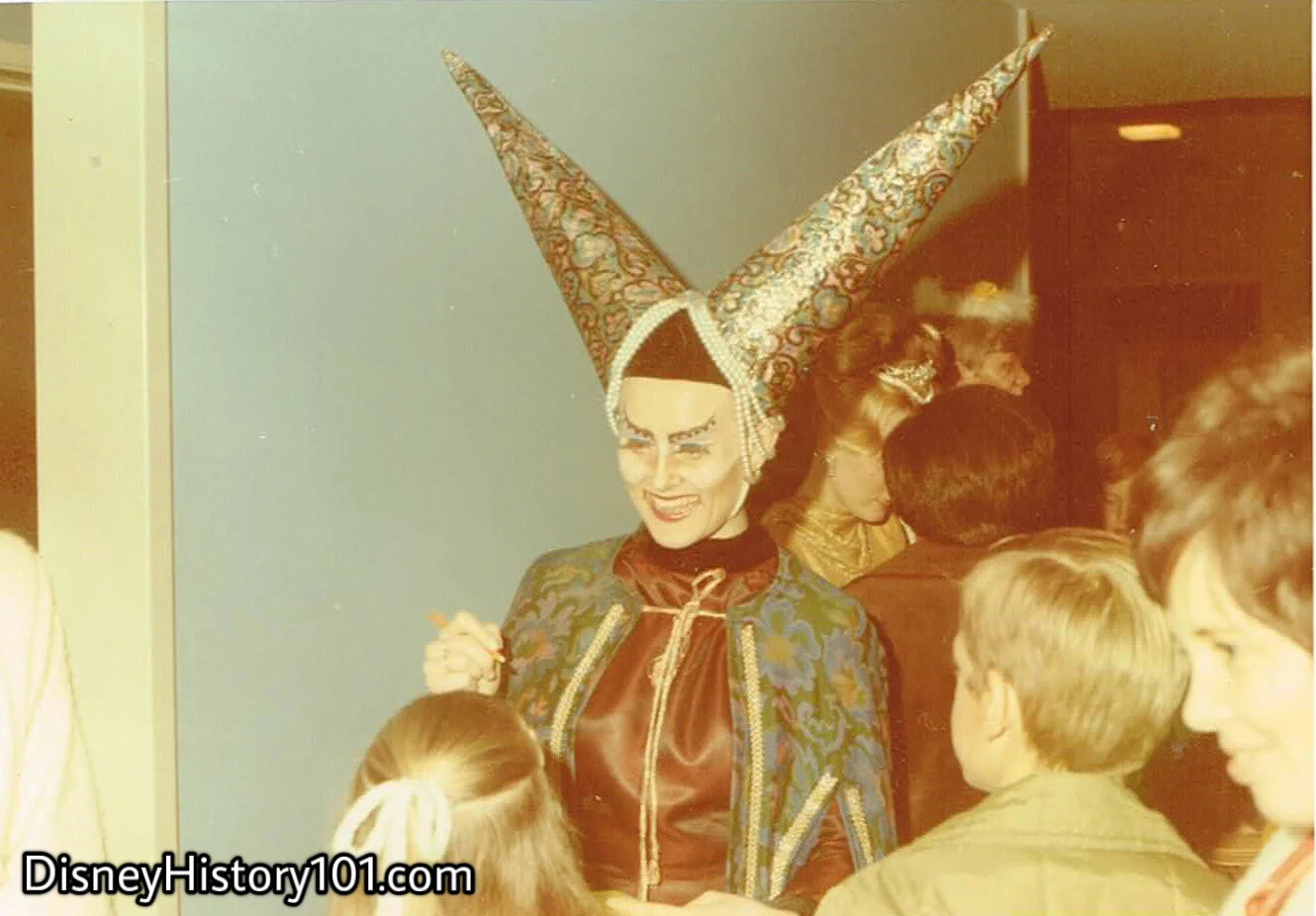
Bonnie Barrilleaux (as The Evil Duchess in Greensleeves’ Magic), greets guests in a not-so-evil manner.

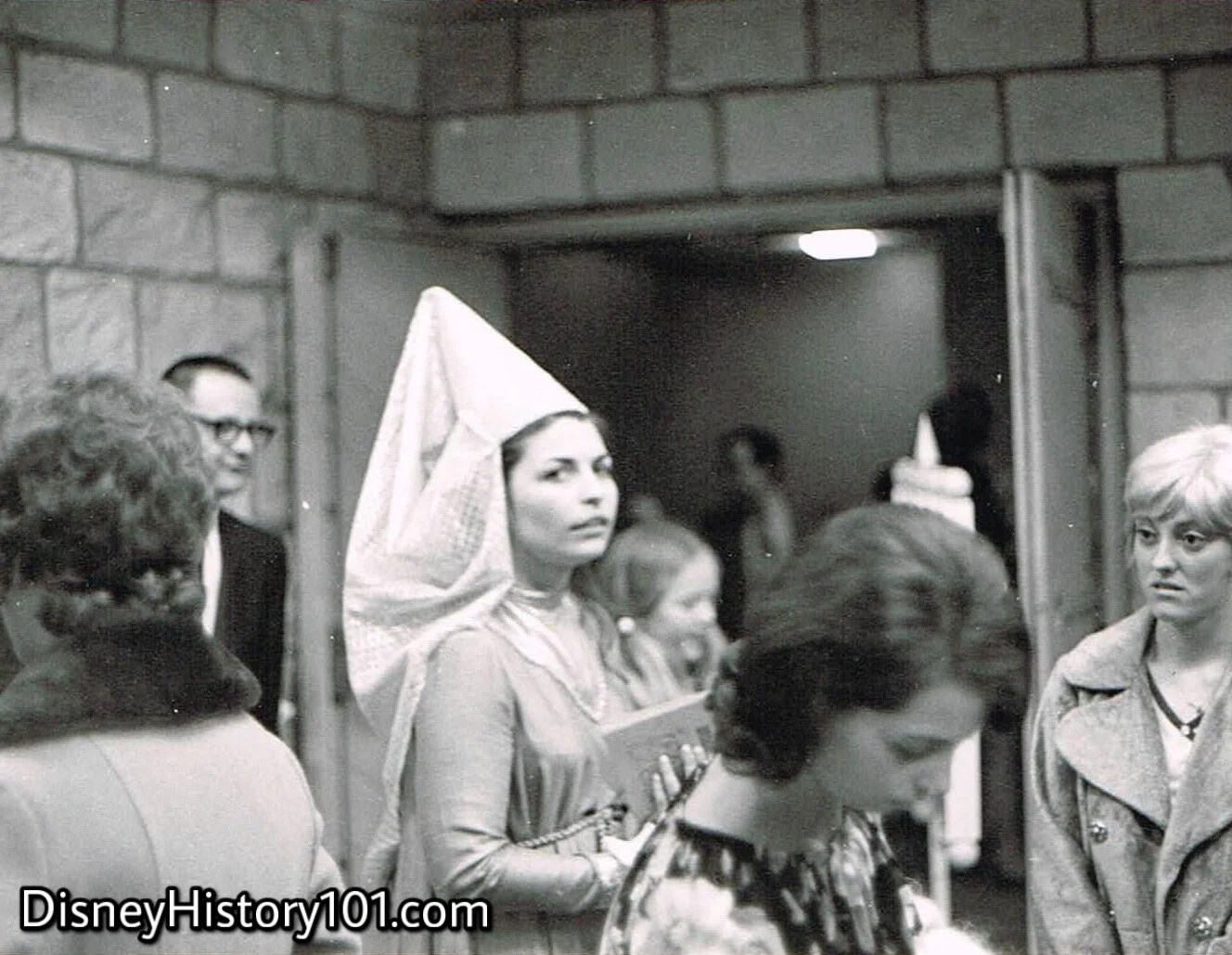
Pat Keener after the show.
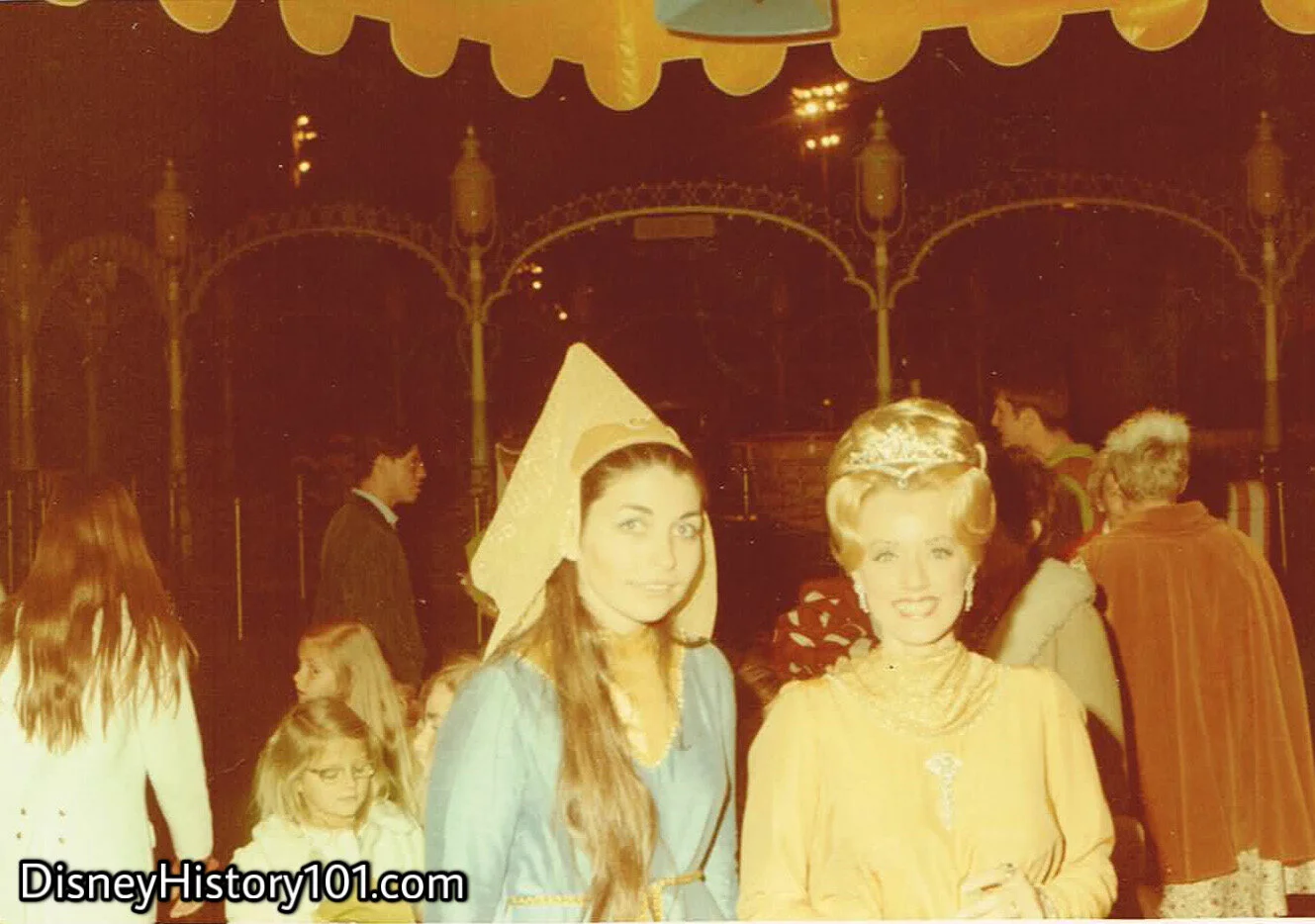
Pat Keener (who played Miranda) and Connie Lane (who played The Queen) pose for a photograph near the Fantasyland Theatre entrance after the show.
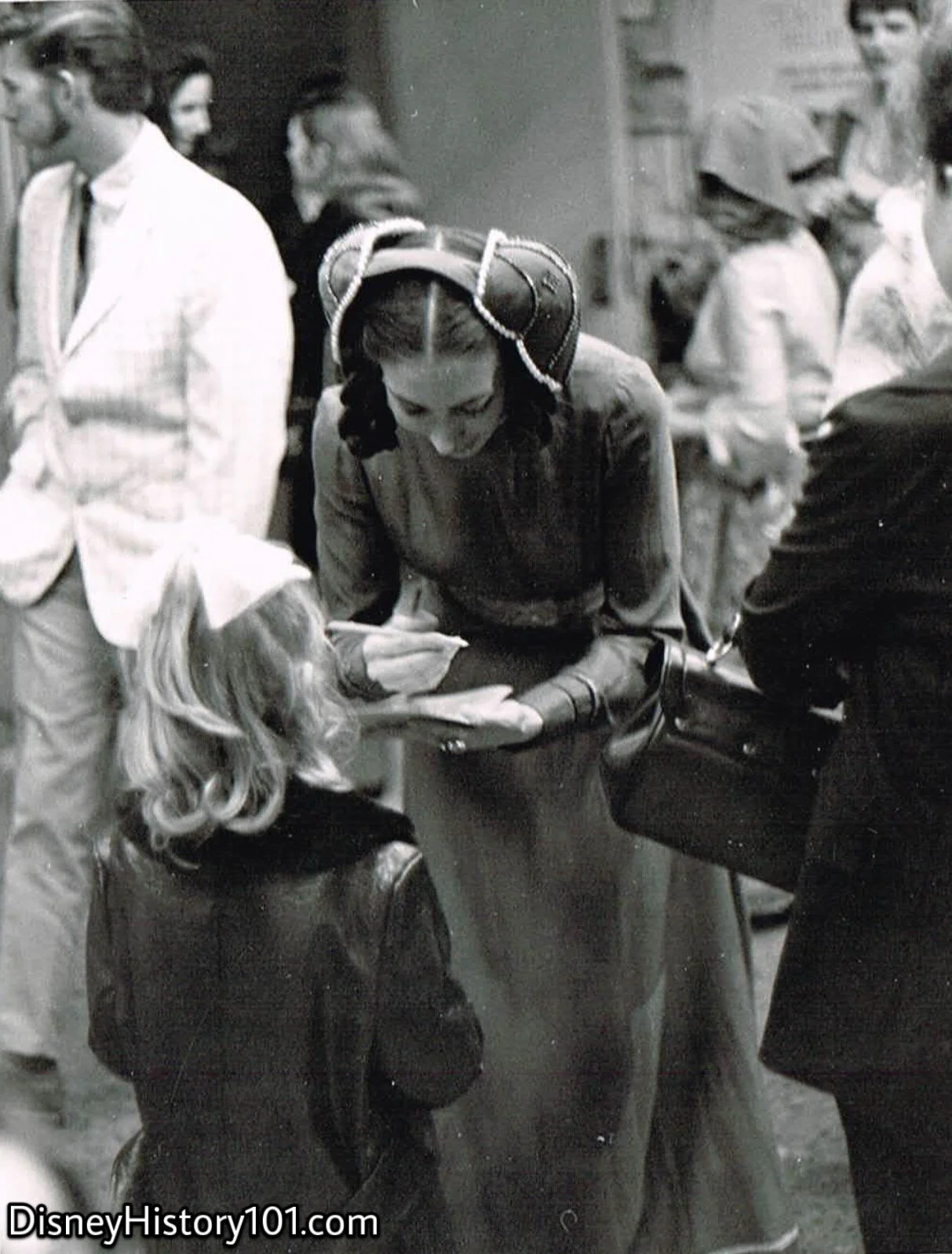
Suezanne Fischer (who played the role of Matilda) takes some time to autograph a program for one of her fans.
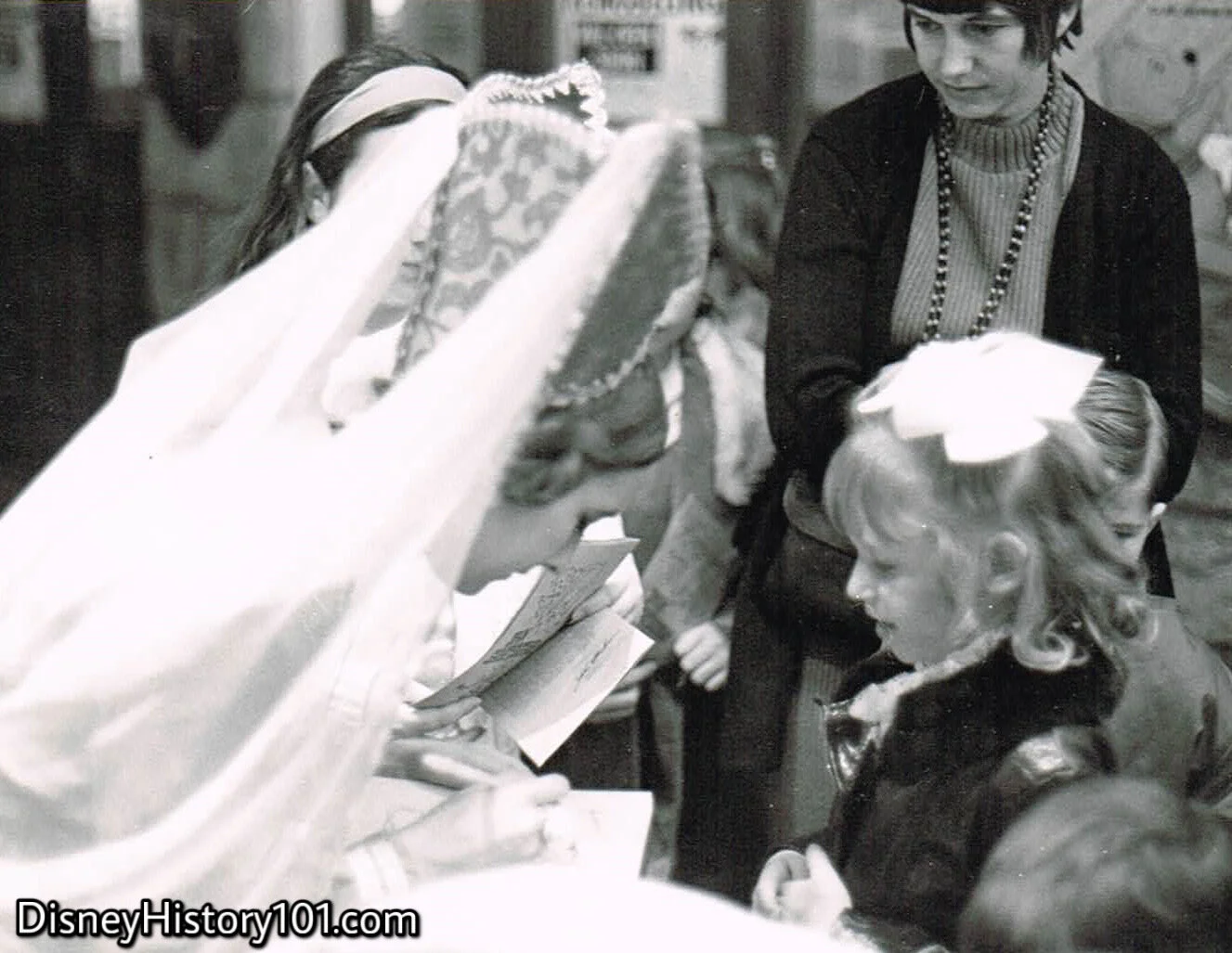
It became a tradition to autograph Playbills of younger guests after productions.
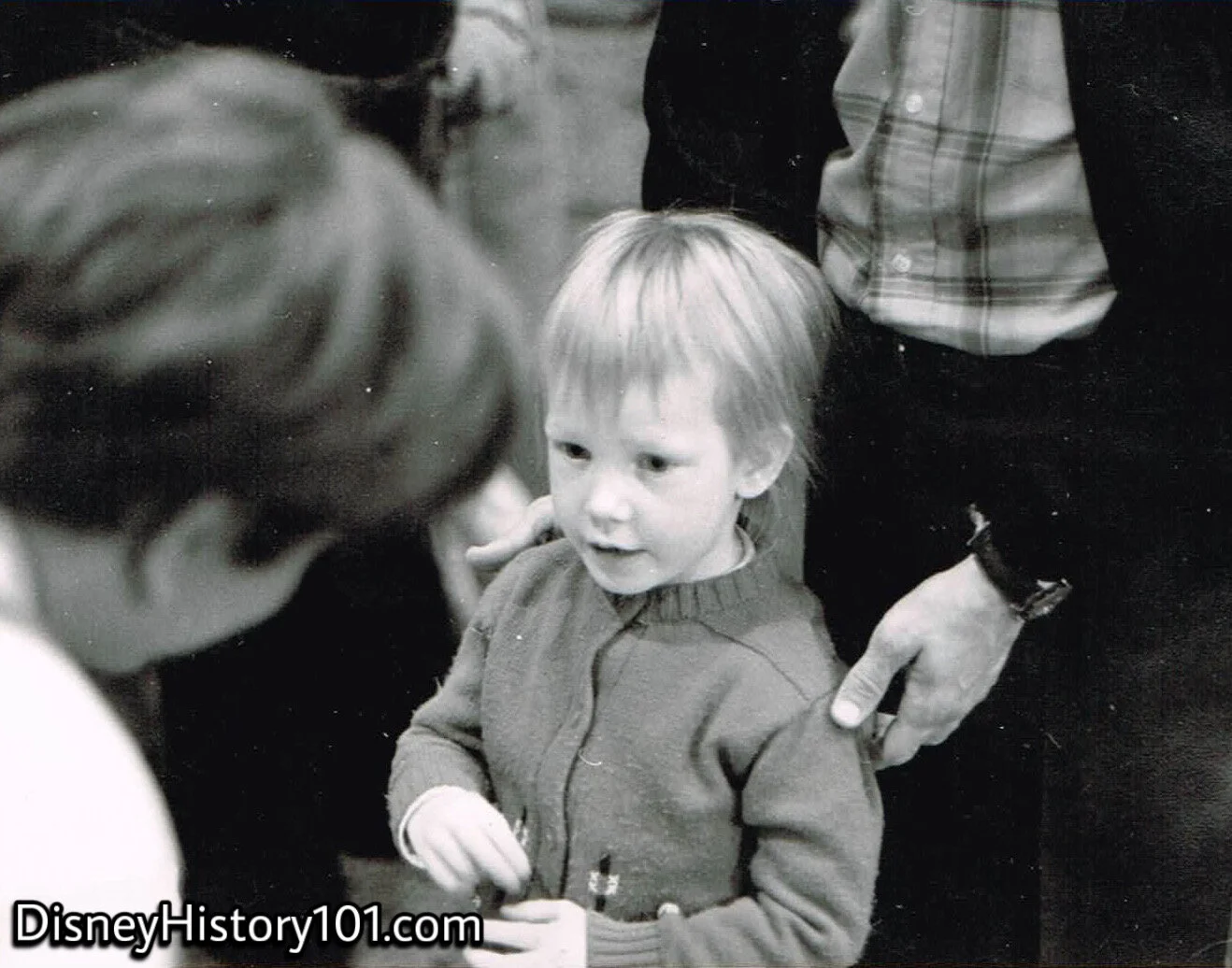
“Greensleeves’ Magic was nearly taken out of the Park to entertain more kids, but wasn’t Disney’s material.”
-Tom Pletts
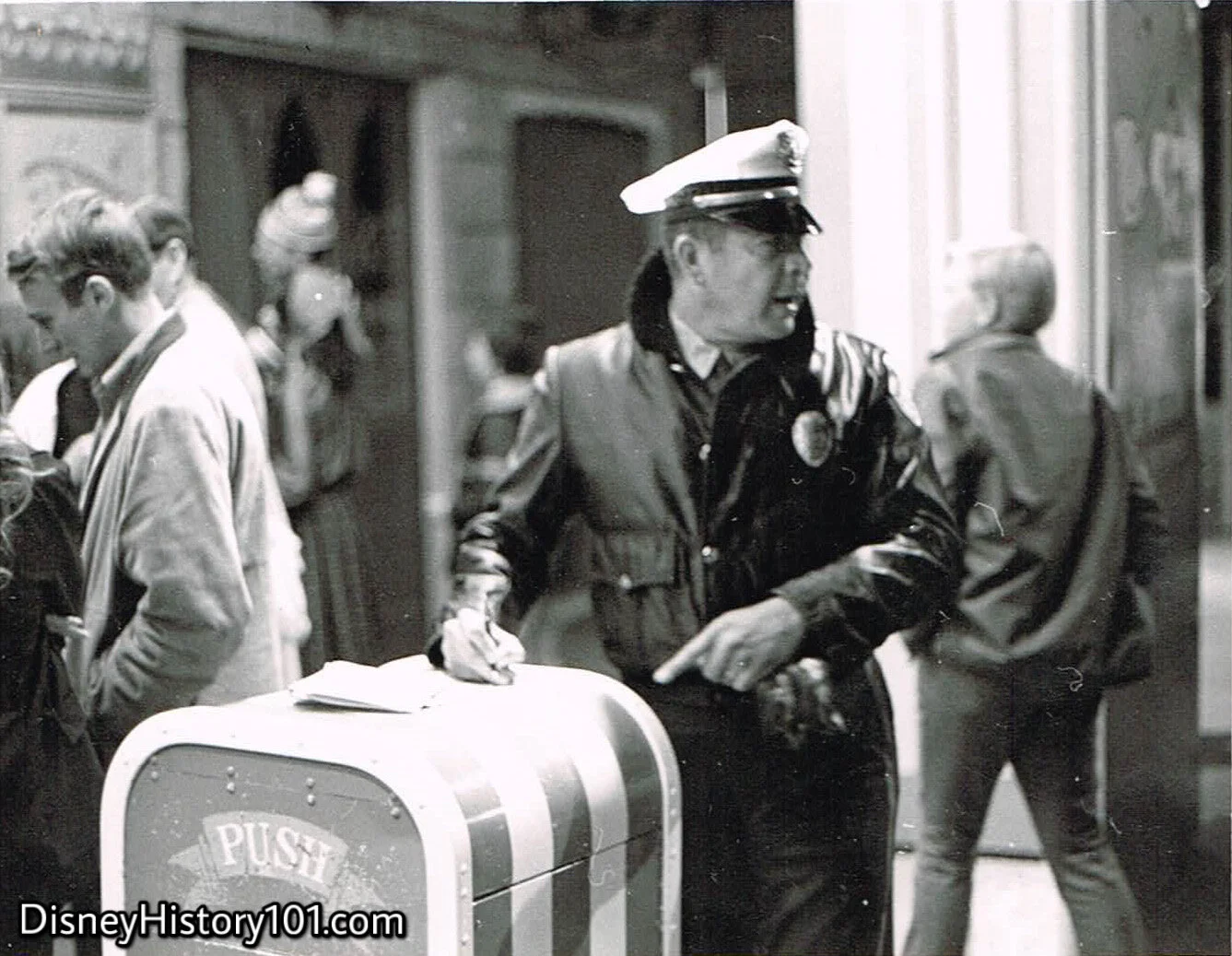
The Fantasyland Theater house was packed, but did not exceed the occupancy limit.
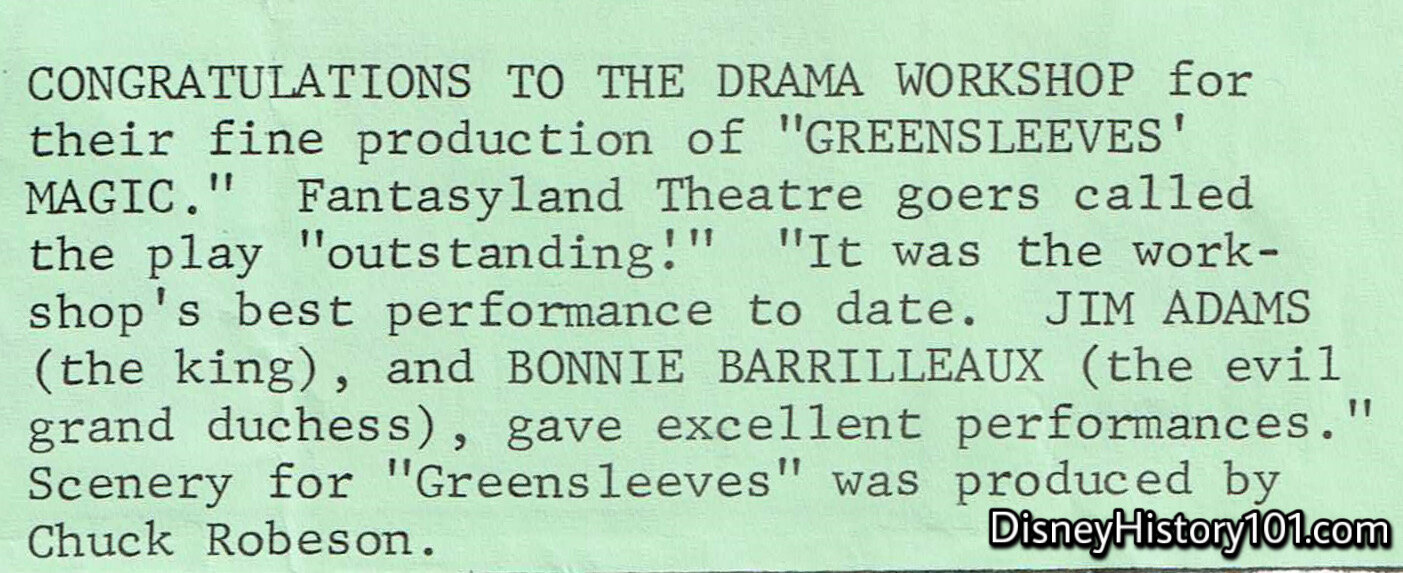
Accolades from the writing department of Disneyland’s own in-house periodical publication for employees.
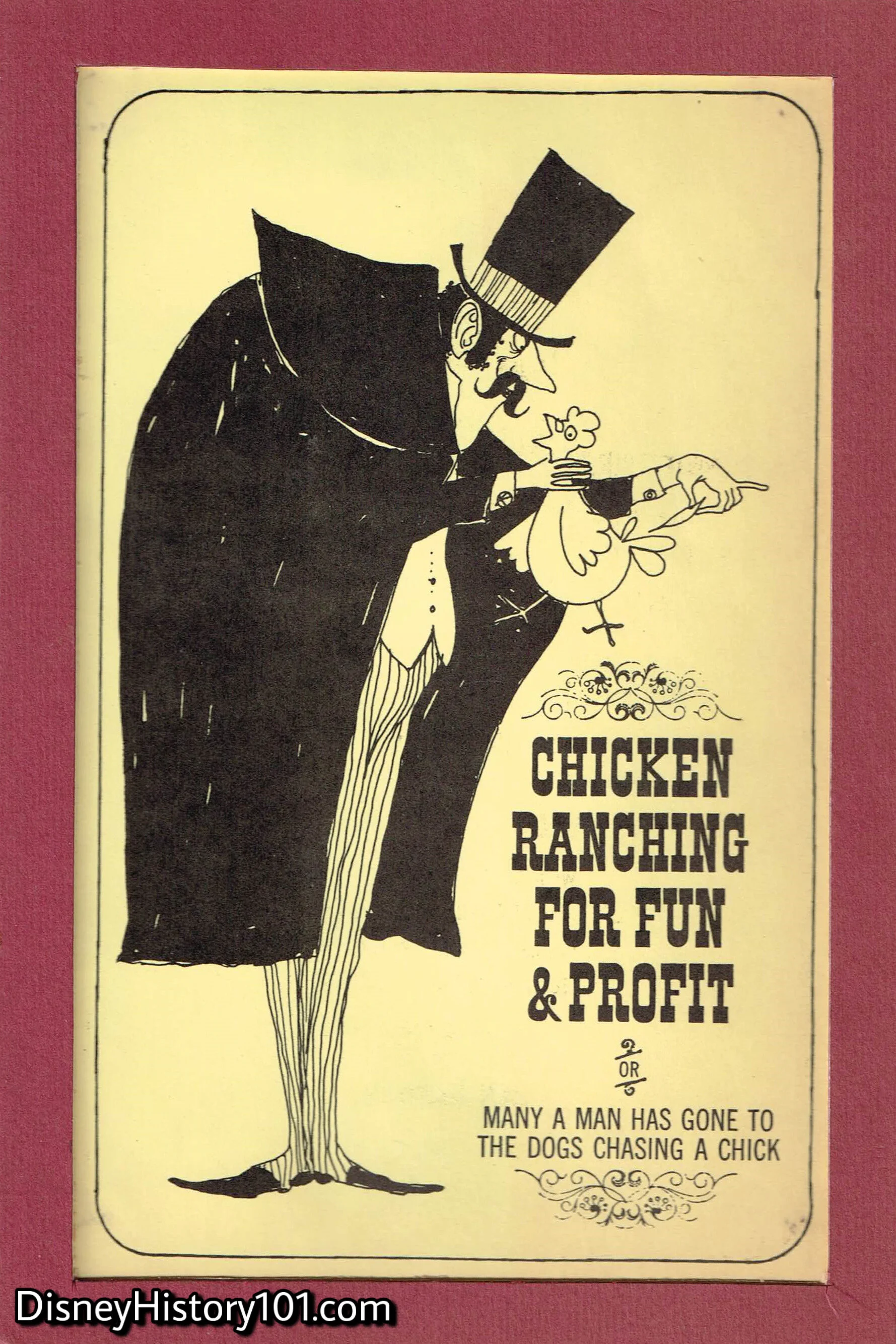
Again, Disneyland’s own portrait artist Chuck Boyer would provide artwork for another program cover. Disneyland Drama Club Alumn Tom Pletts remembered, "He was very kind to our little drama group.”
But what was this third Disneyland Drama Club production about? Cast Member Tom Pletts (who portrayed “Grasper Quick”) recalled the Plot this way : “The villain Grasper Quick was going to foreclose on Widow Blues’ chicken ranch unless her daughter, Sugar Blues, married him. Sugar’s boyfriend and hero, Victor Virtue, and his friend, cheerleader Frank Funster vainly try to help. Sugar attempts to bribe Grasper by sending him all the eggs ; but, since he’s been secretly feeding her chickens gunpowder (don’t ask), they blow up his mansion (off stage, of course). It’s all sprinkled with running gags and a catchy tune or to. Fun stuff.”
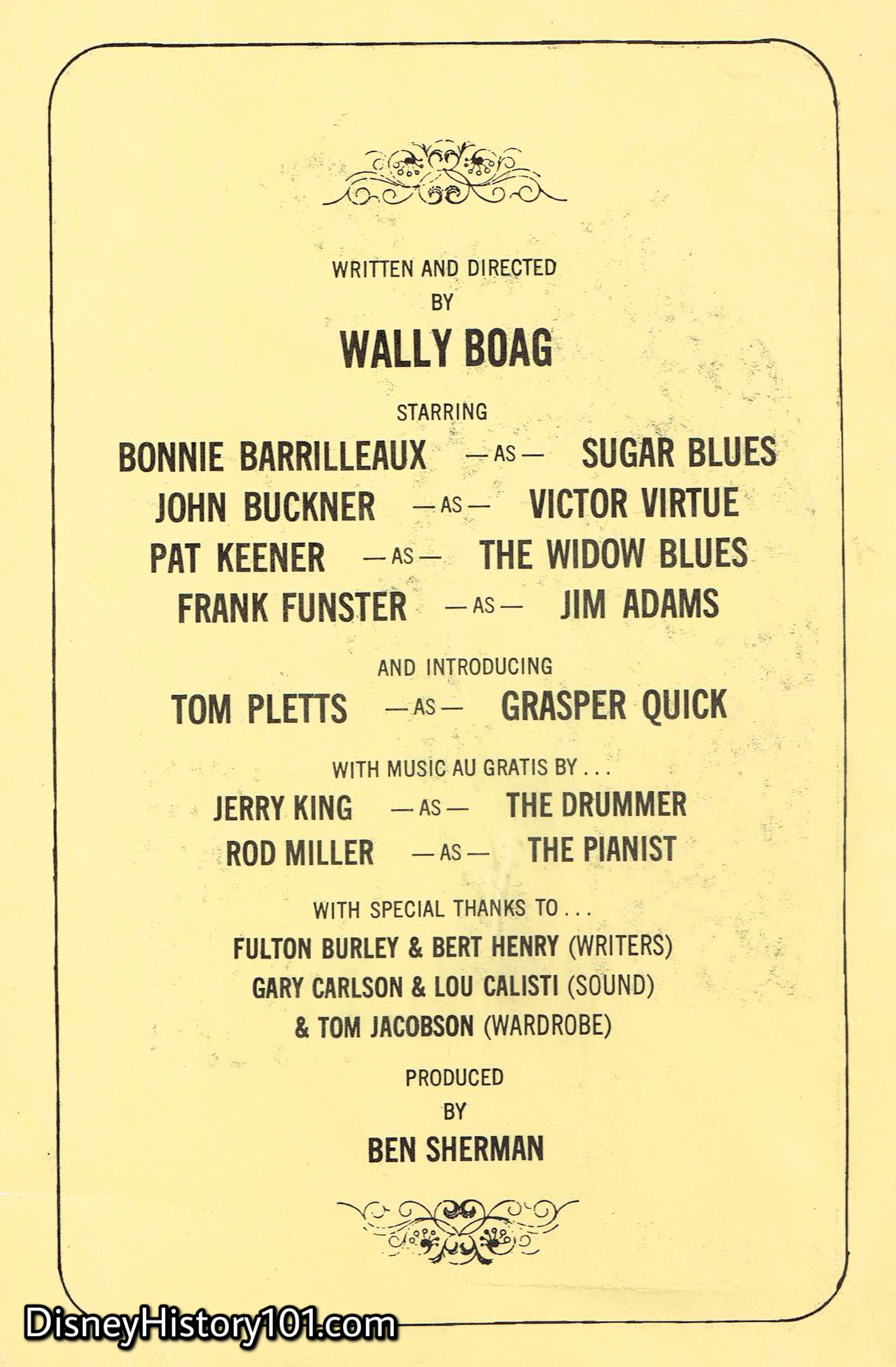
Cast member Tom Pletts continues : “It’s kind of a ‘Vaudevillain’ comic melodrama, and is only 30 minutes long (for audience turnover). Its title is ‘Chicken Ranching for Fun and Profit’…or, ‘Many A Man Has Gone to the Dogs Chasing a Chick’. Authorship is credited to Wally Boag, Fulton Burley, and Bert Henry. Jerry King, the regular [Golden] Horseshoe drummer provided the rim-shots for us ; Rod Miller, the Coke Corner pianist, played excellent ragtime to keep the mood. I still get pumped for a show start when I hear ‘Maple Leaf Rag’!”
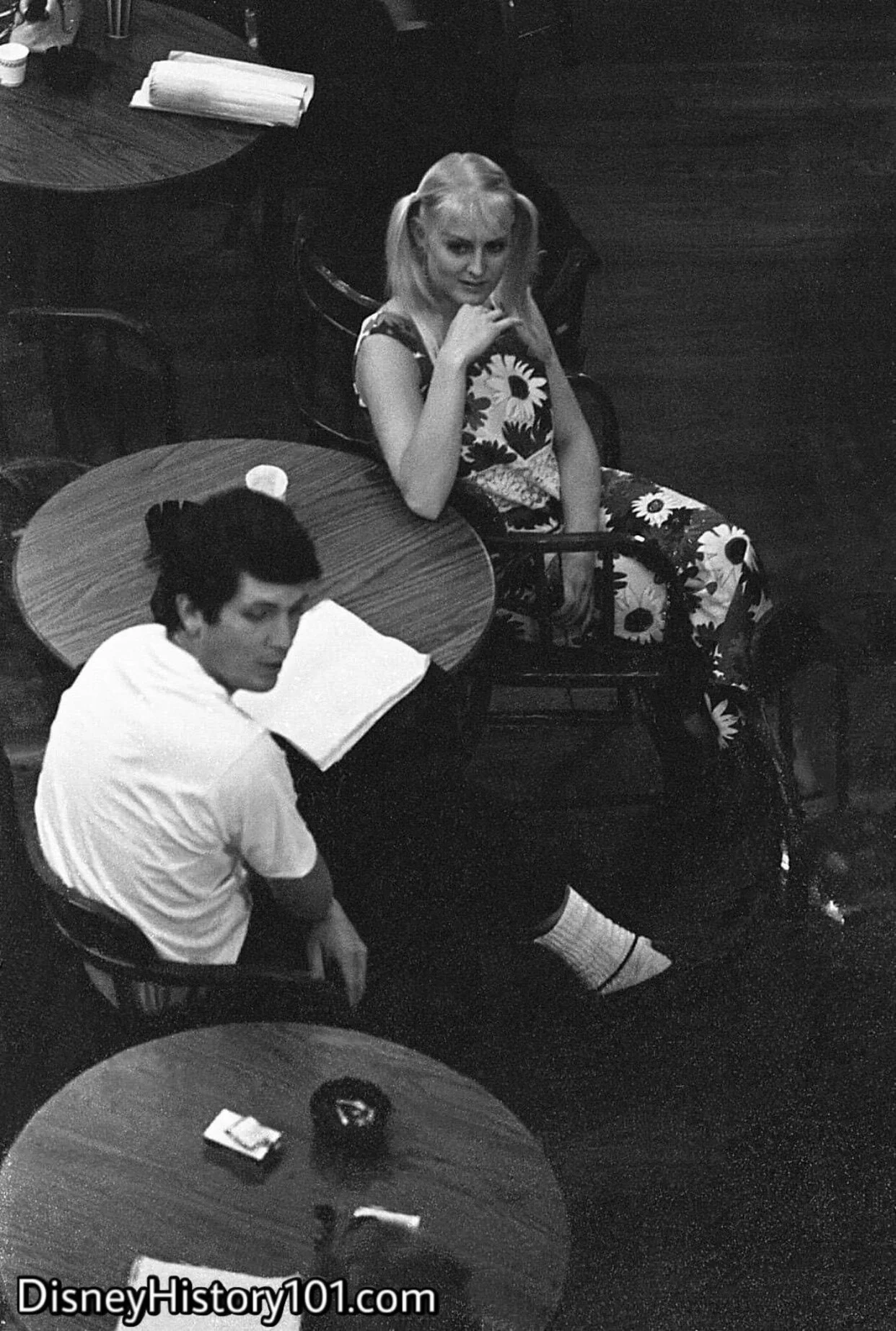
Ben Sherman and Bonnie (Sugar) get some direction while sitting in the dining area of the Golden Horseshoe Theater.
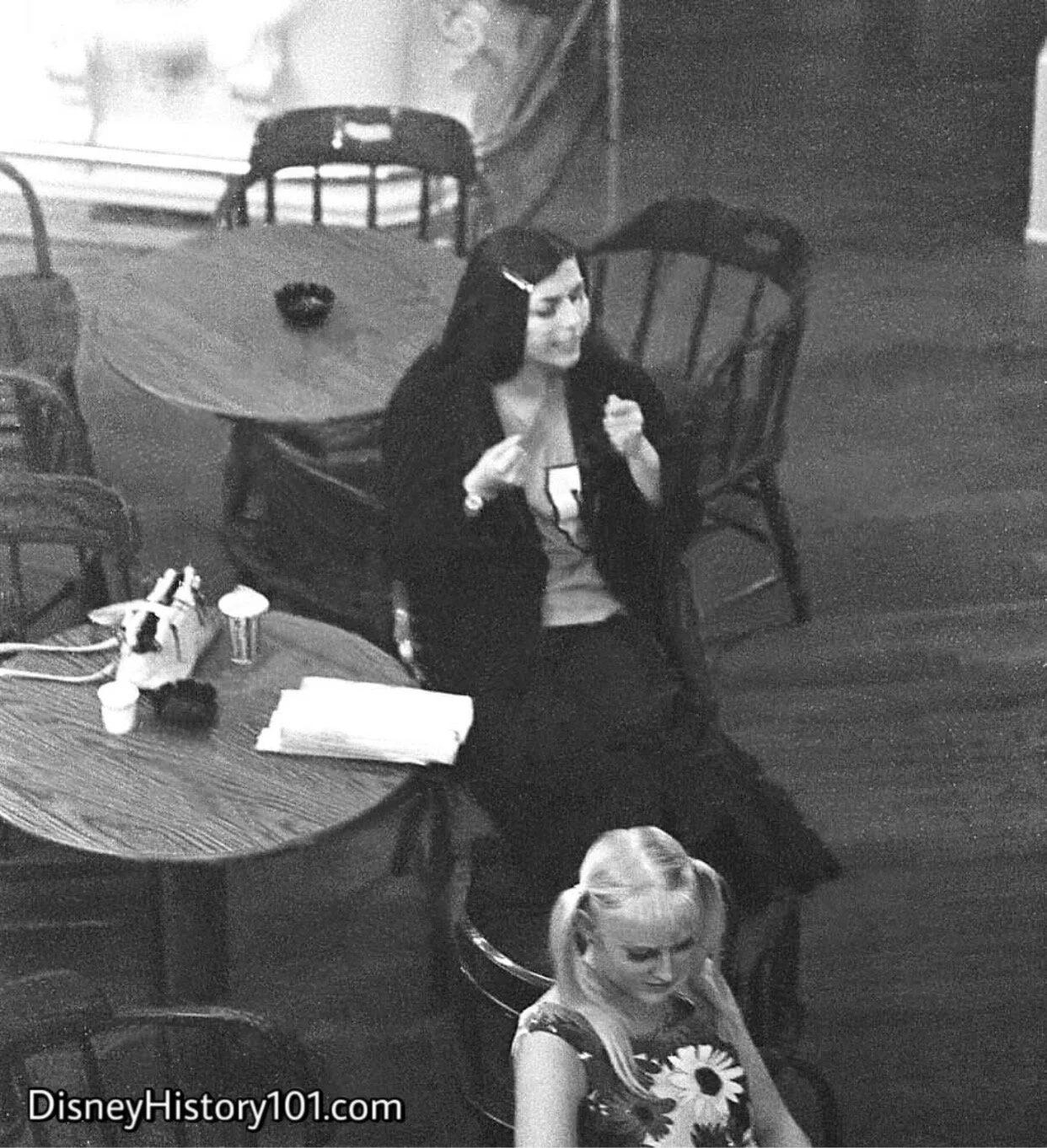
Pat (Widow Blues) and Bonnie at rehearsals.
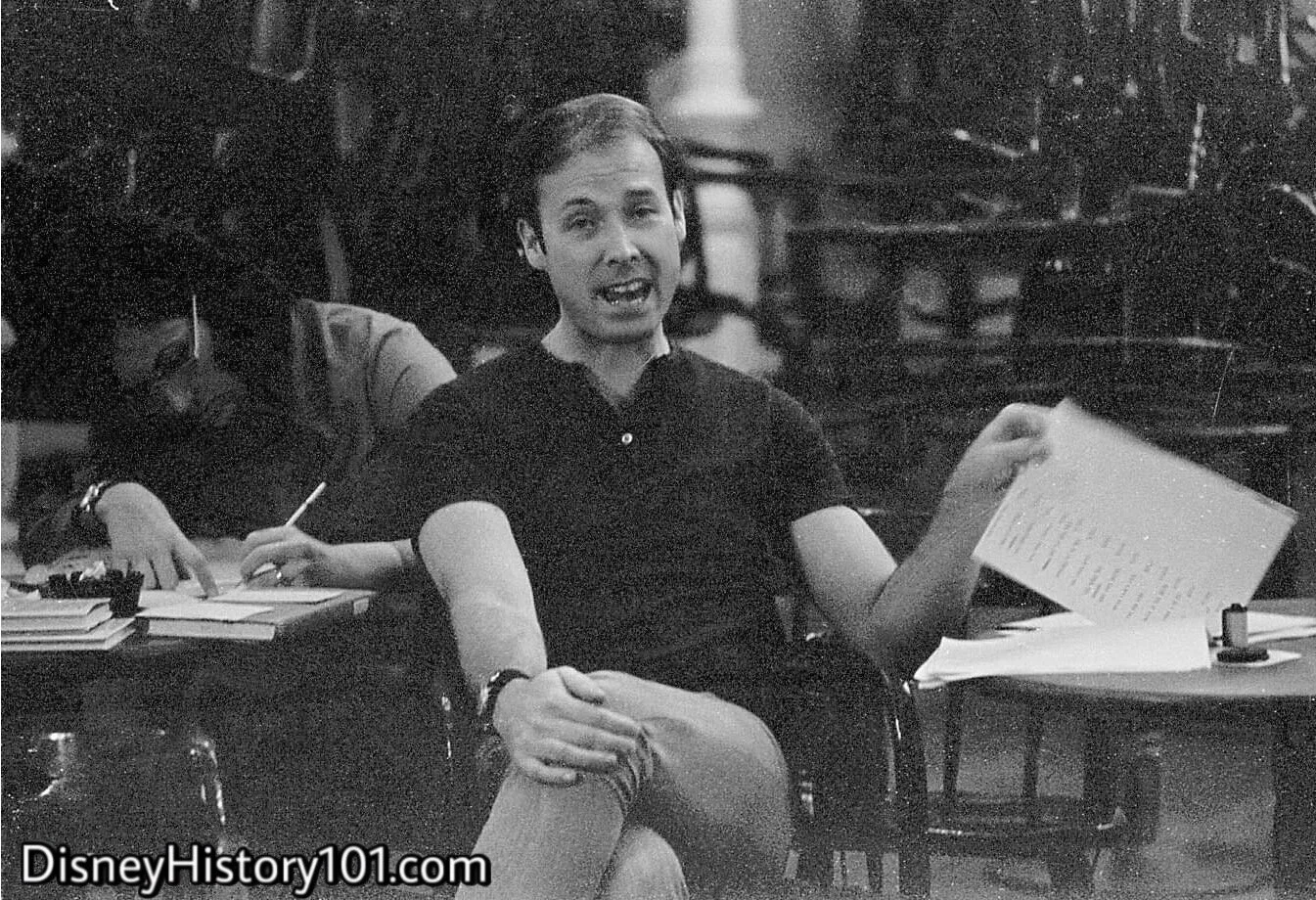
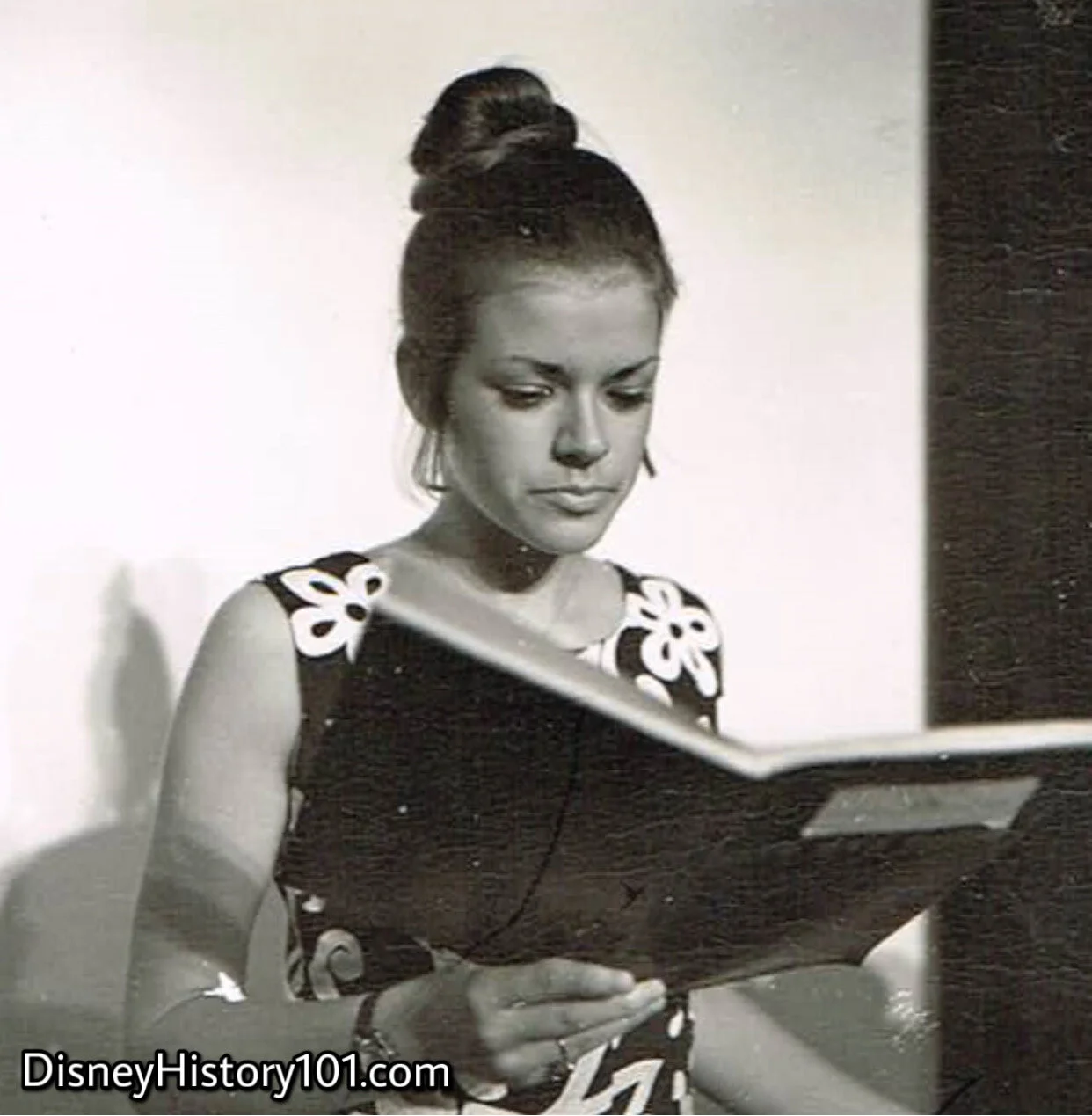
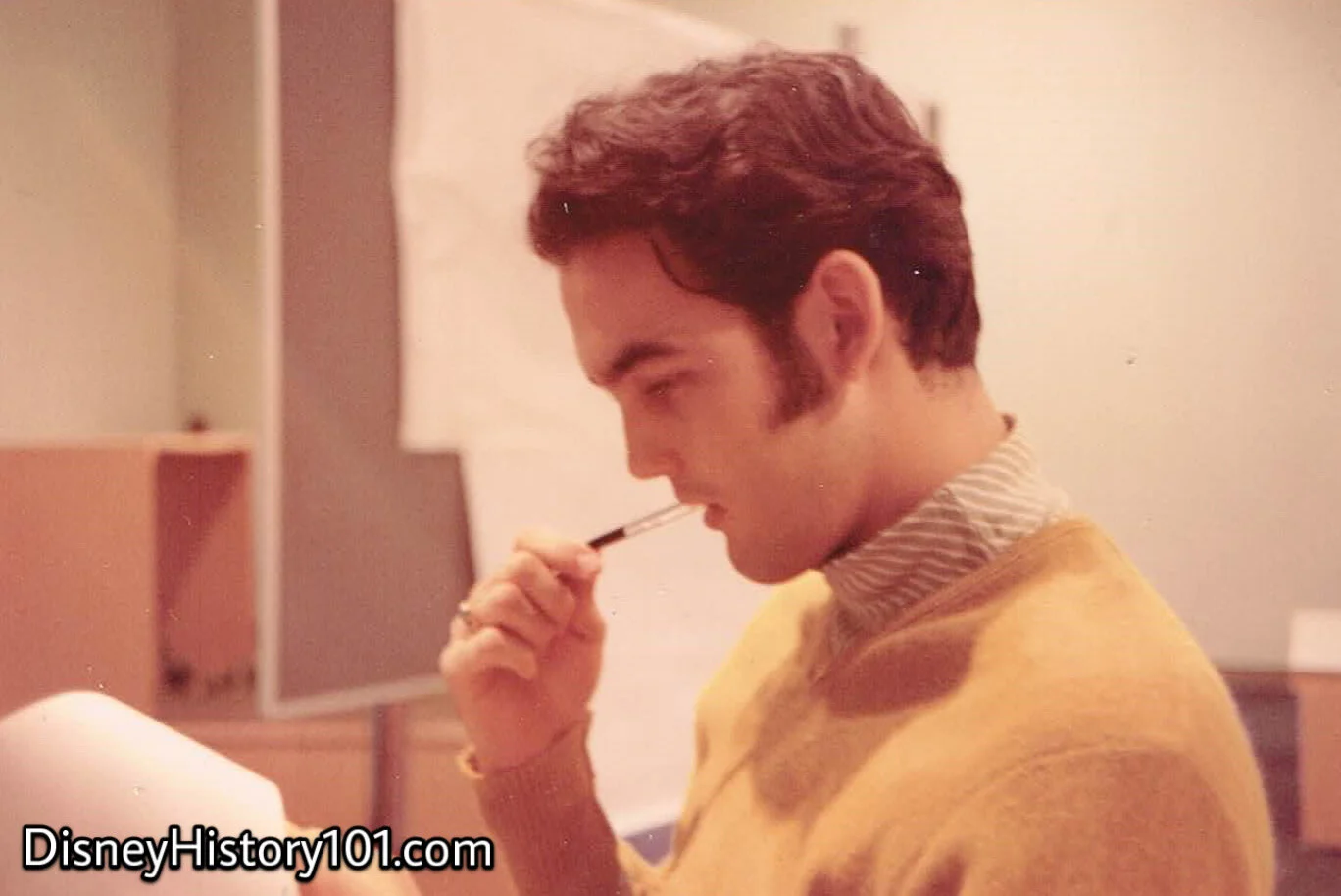
Johnny Buckner (Victor Virtue) and an unidentified book worm look over their scripts.
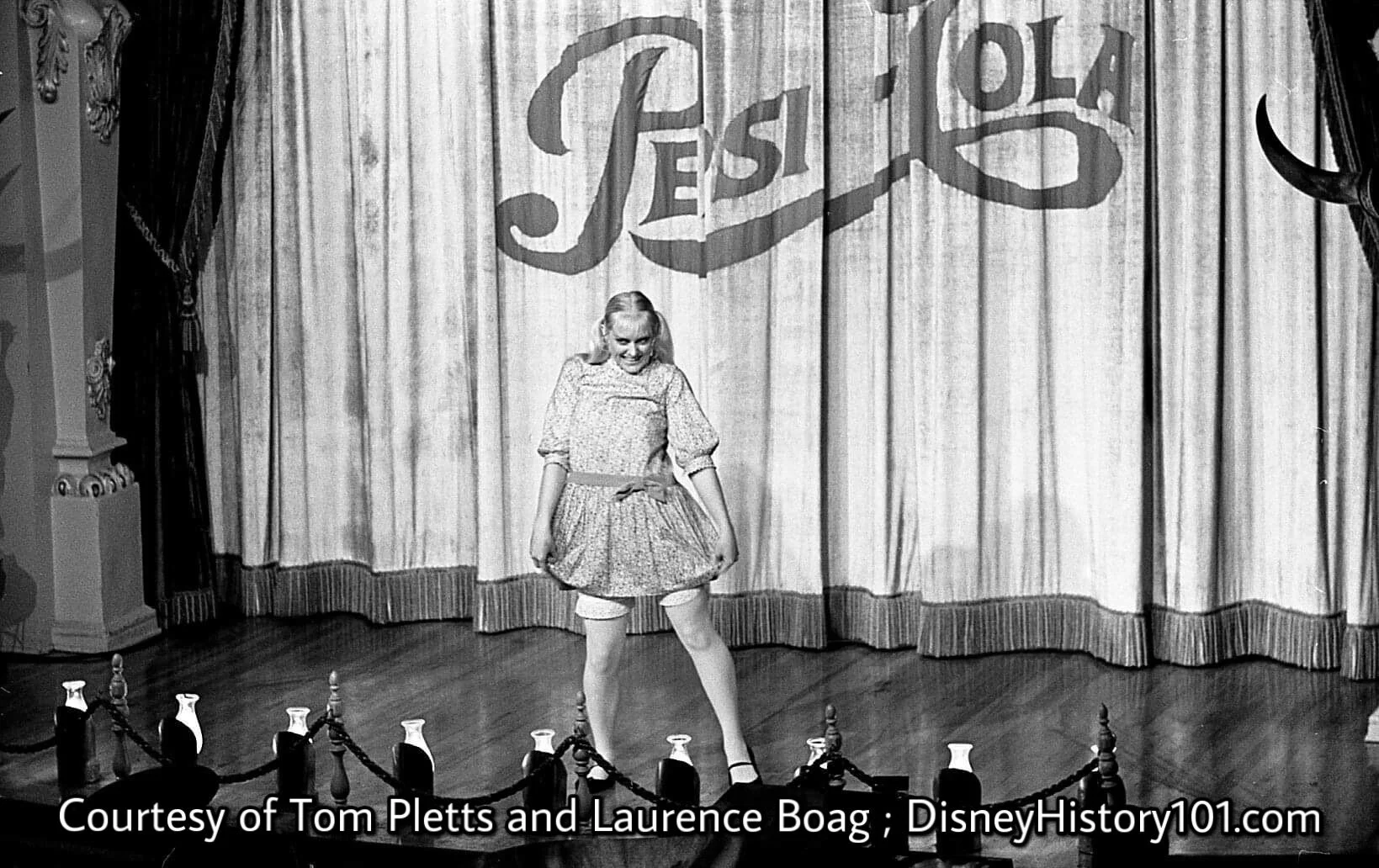
The following photos were taken at one of the “Chicken Ranching” performances held inside the Golden Horseshoe Saloon. The show also ran in the Fantasyland Theatre, but we don’t have any current “Vintage Views” available.
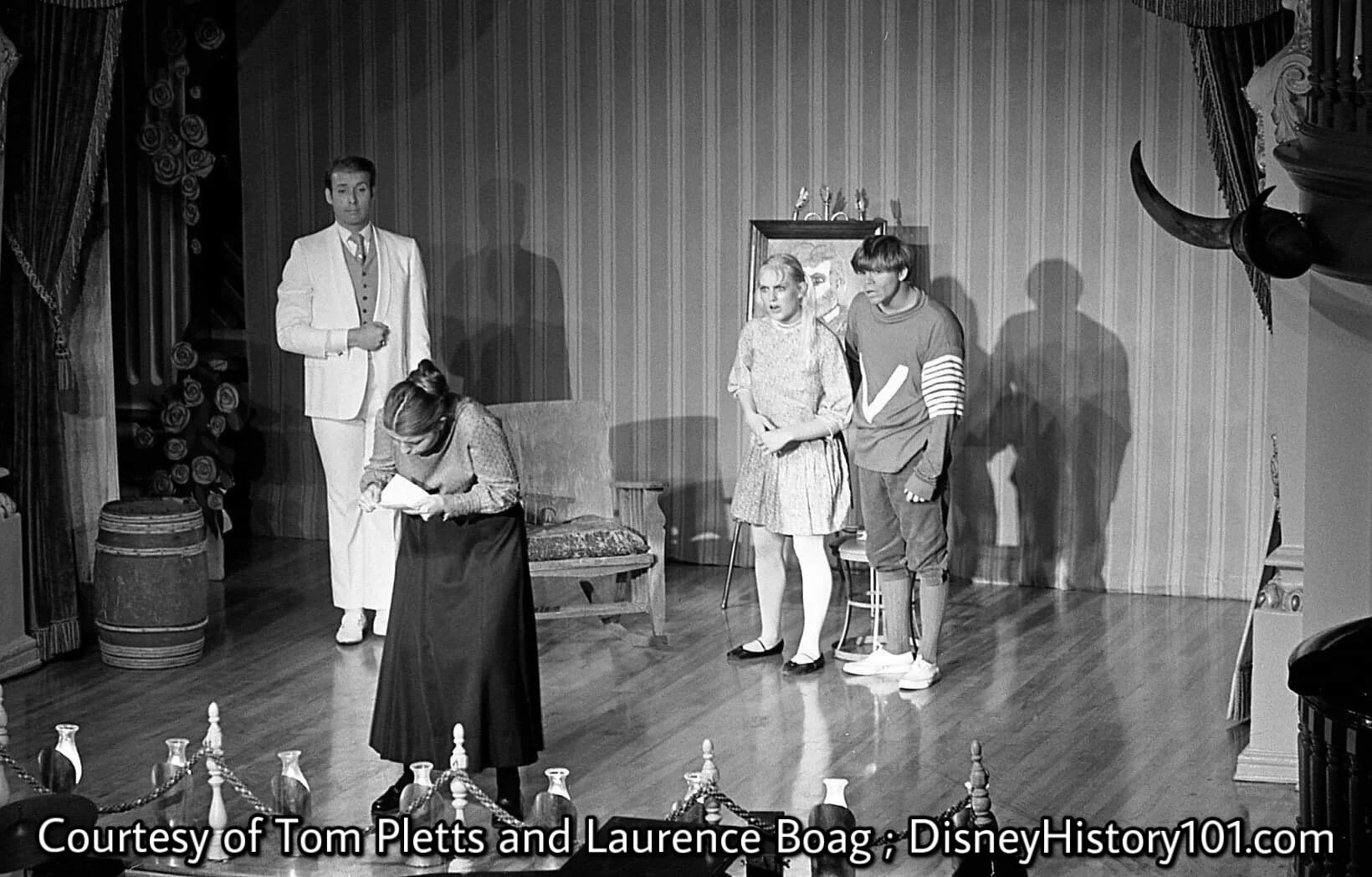
Tom Pletts remembers, “In the foreground, you’ll notice Pat Keener, the Widow Blues, reading a ‘mort-gage’ (as Wally preferred).”
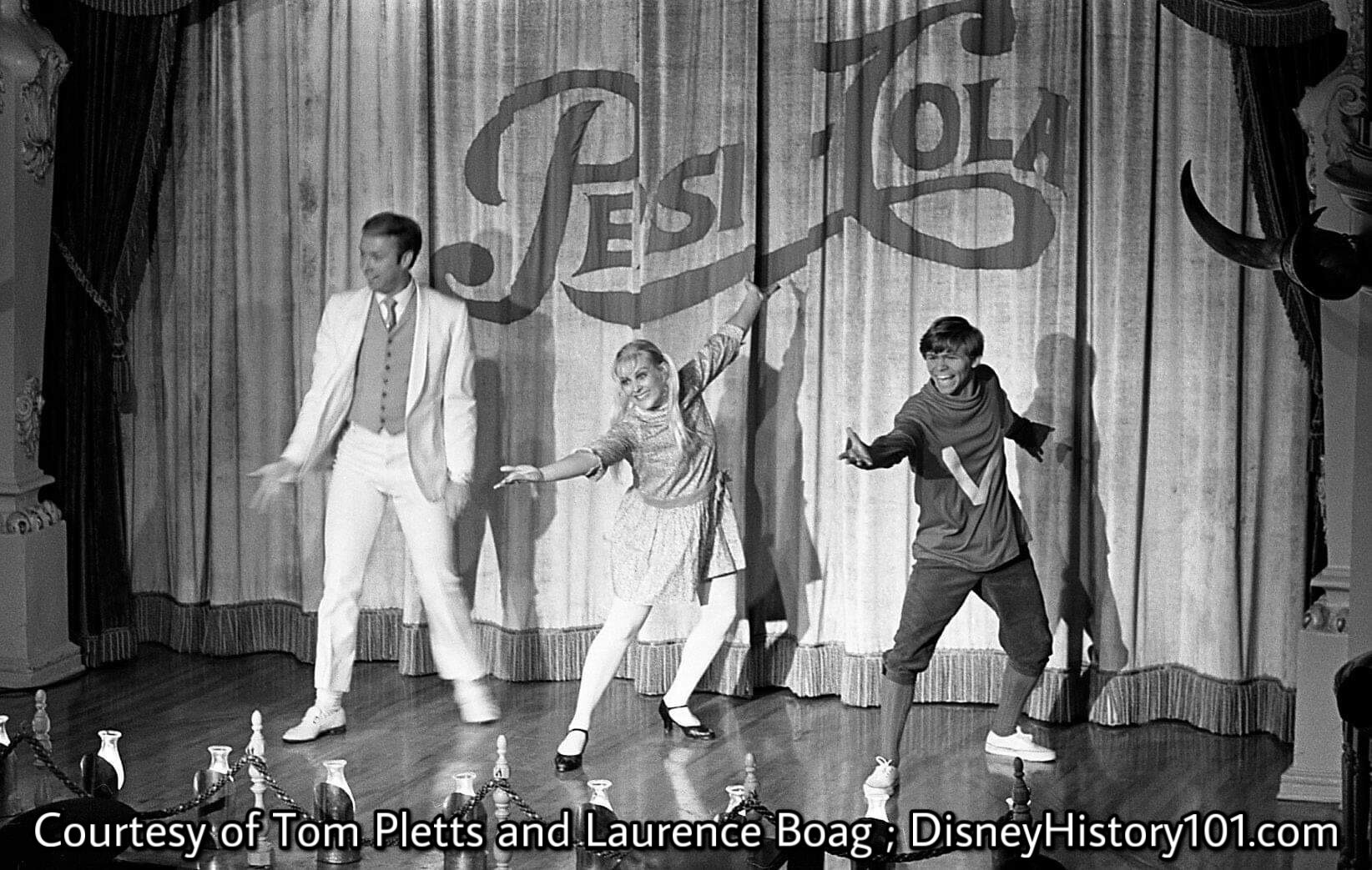
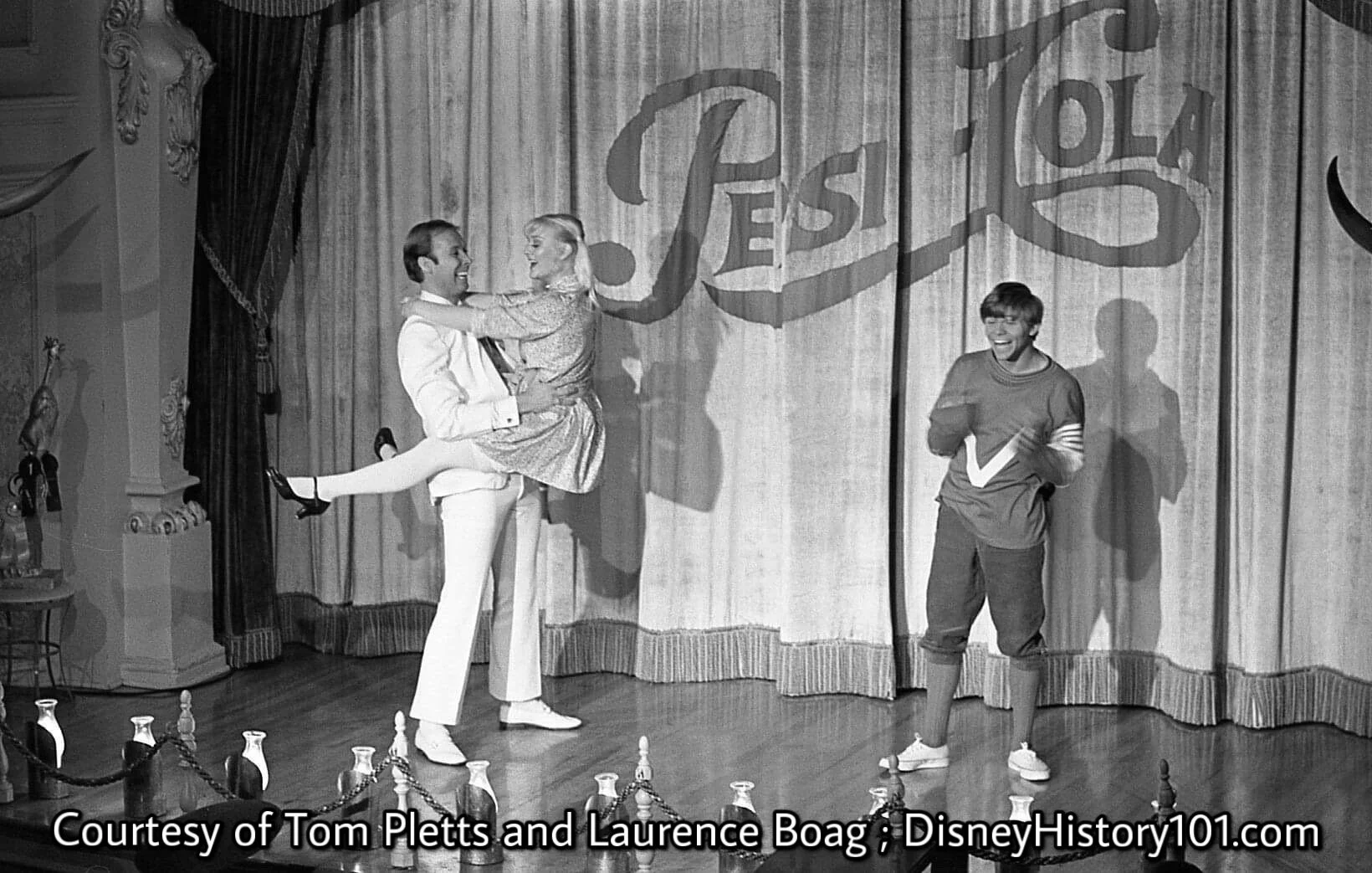
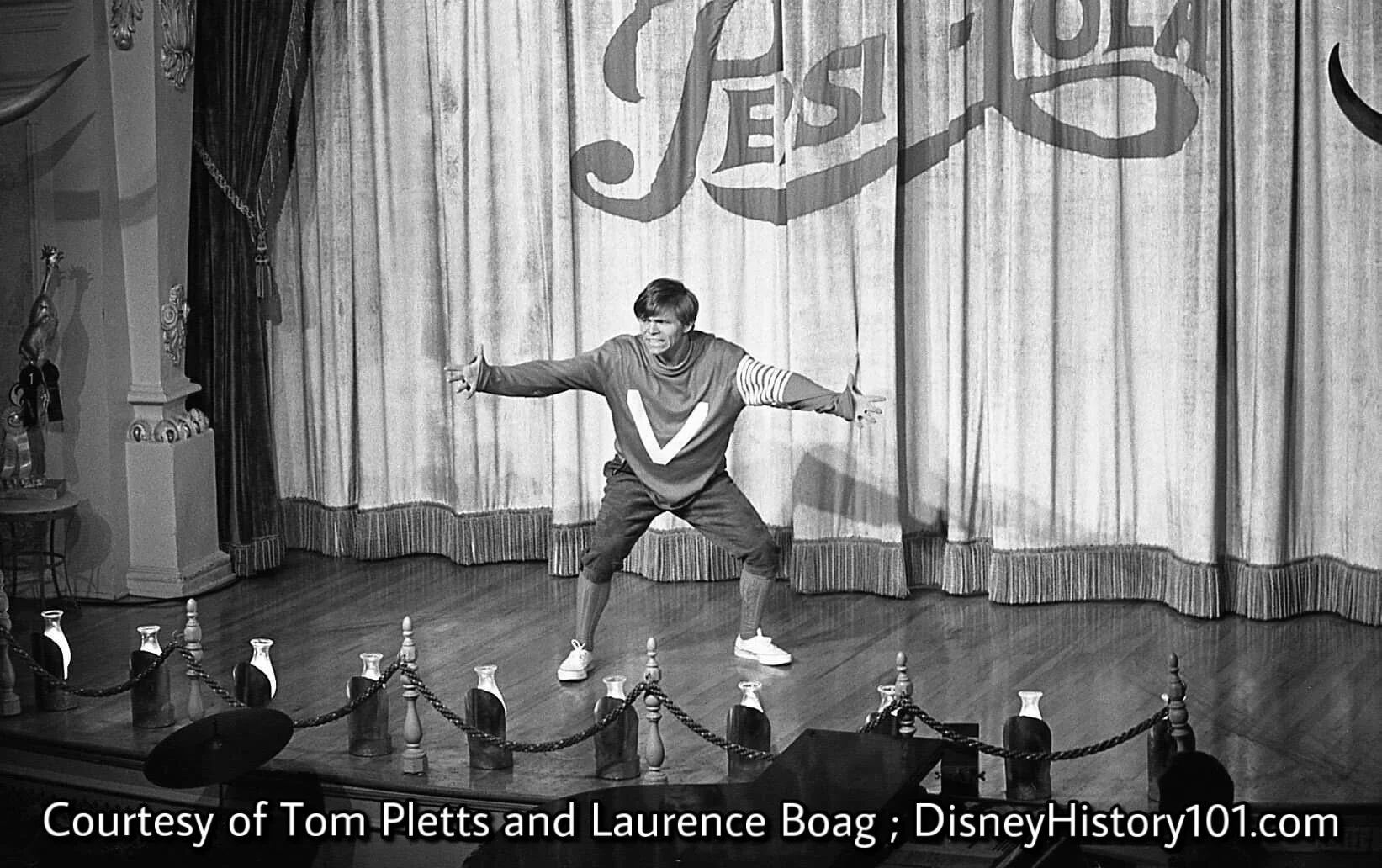
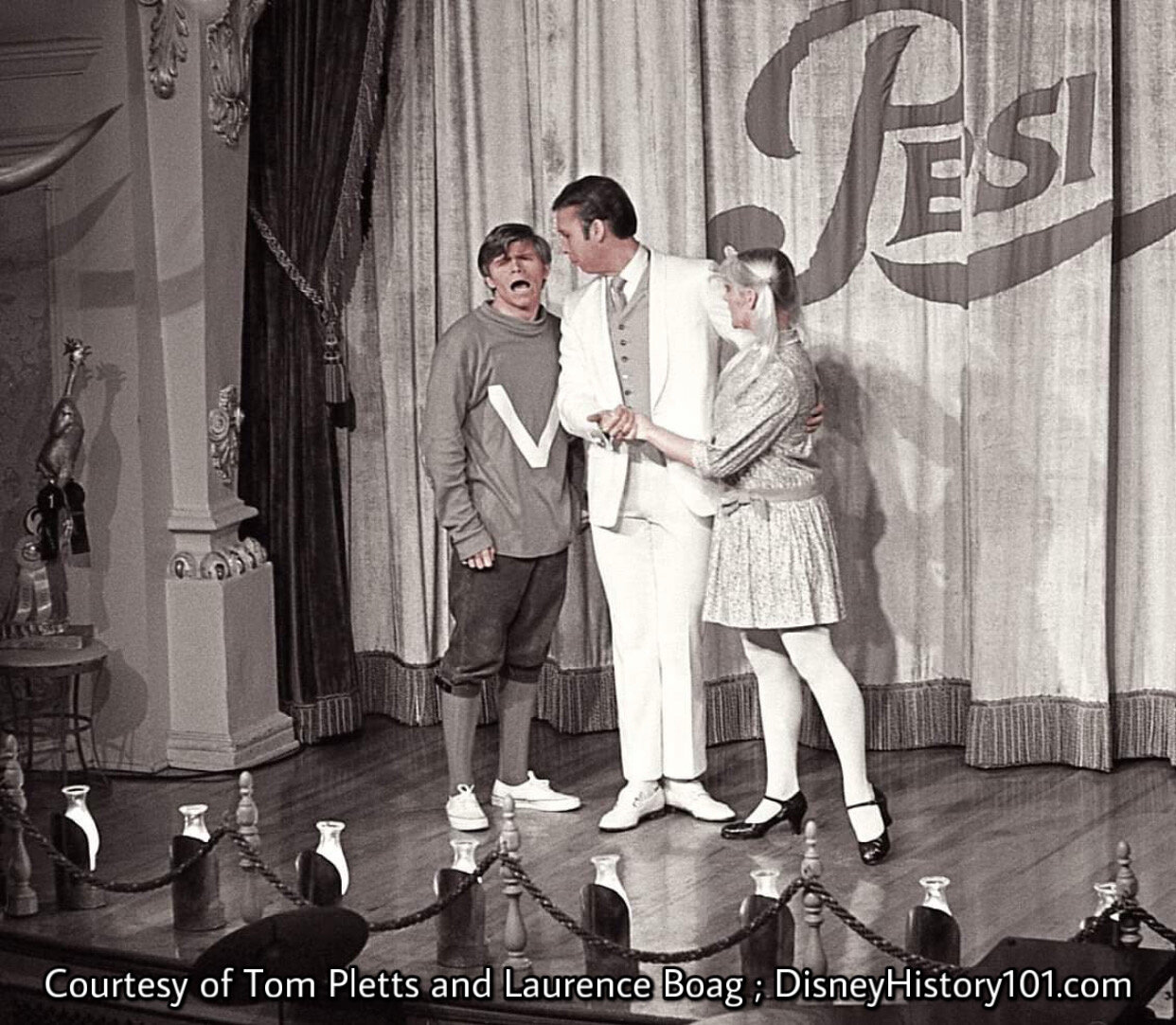
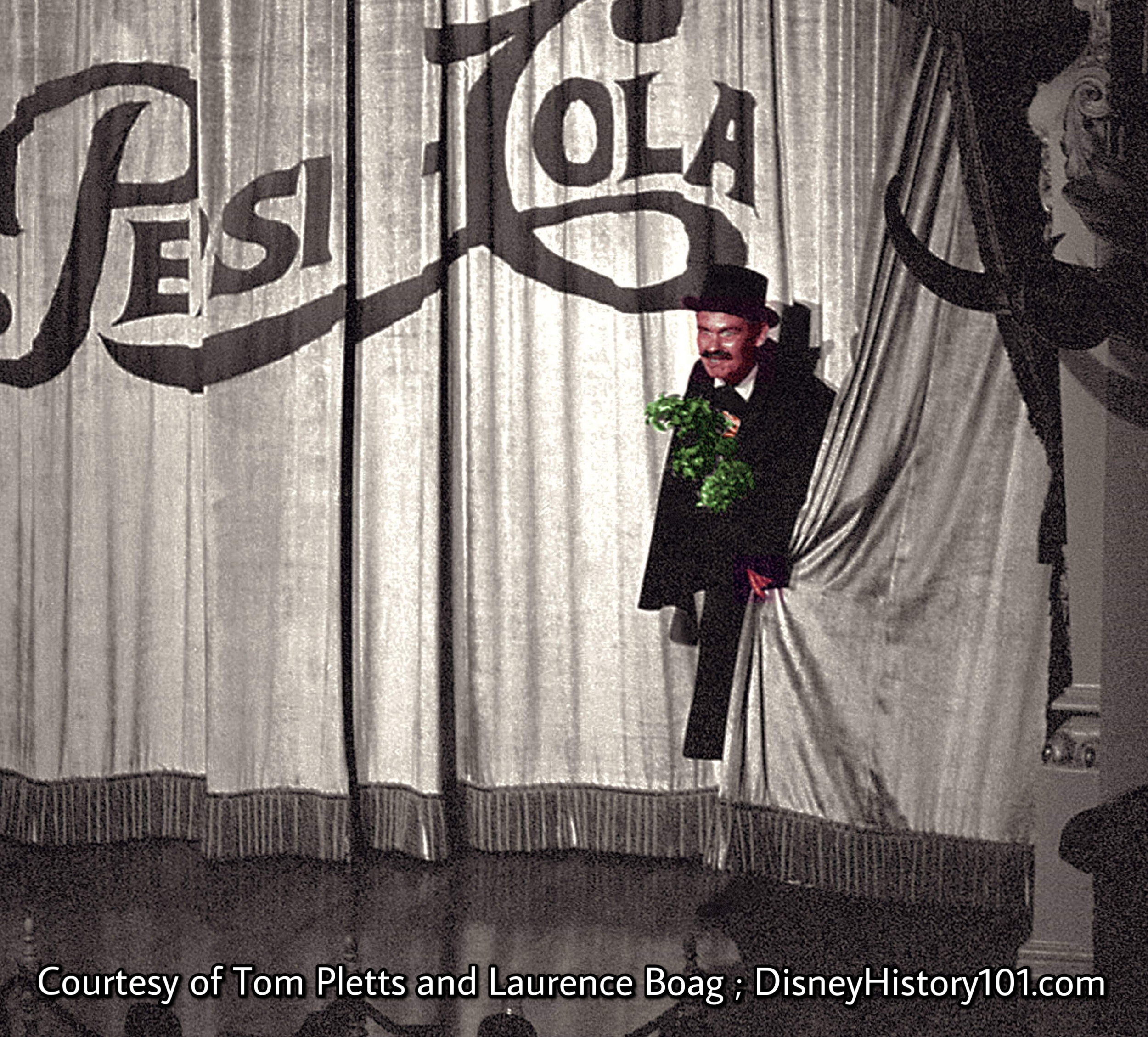
Tom Pletts recalls, “I’m hiding behind a ‘bush’…”
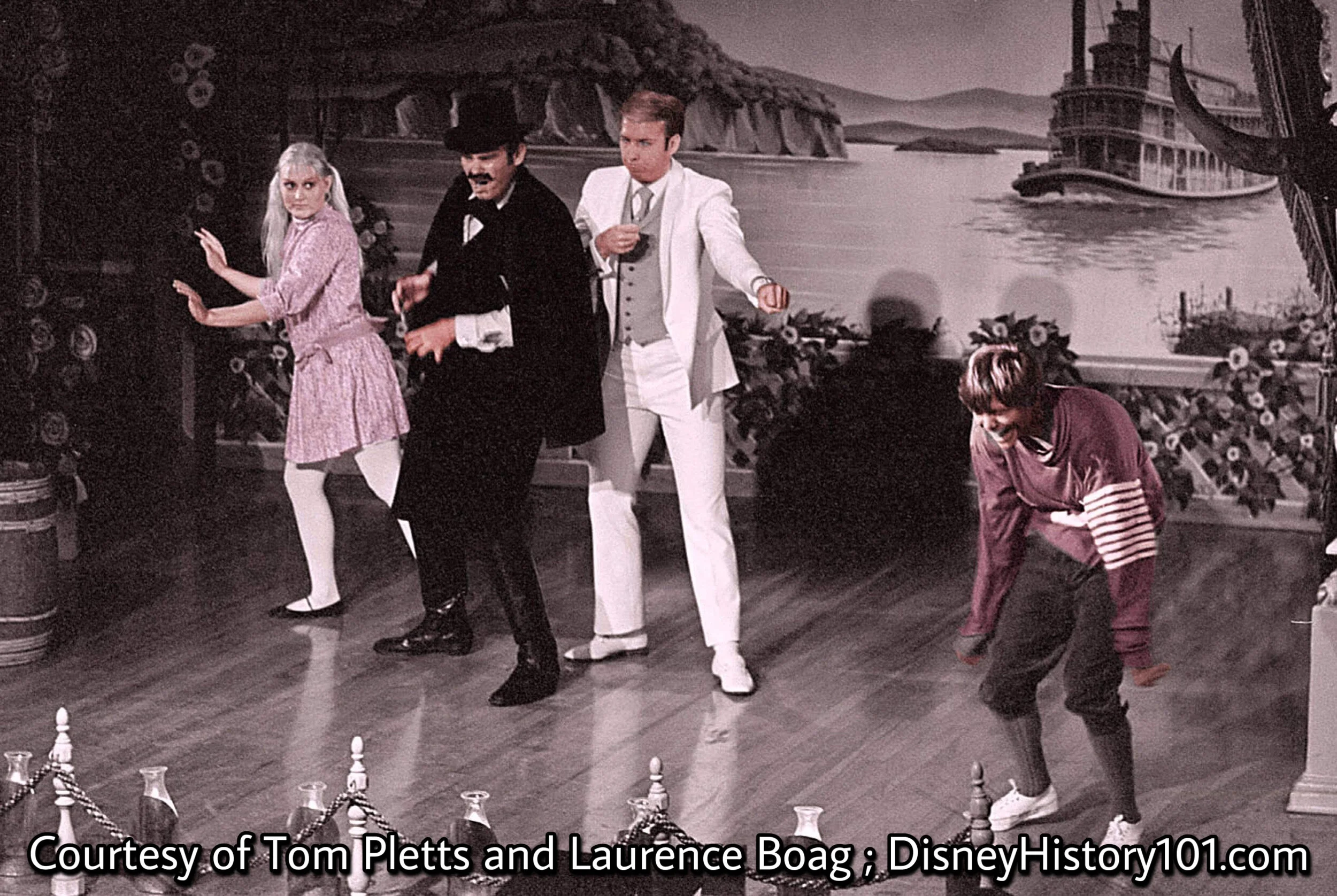
Tom Pletts continues, “…and in the midst of a chase scene, Funster makes us play a game. Too much fun.”
(From Left To Right) : Bonnie as Sugar Blues, Tom Pletts as Grasper Quick, Johnny Buckner as Victor Virtue, and Jim Adams as Frank Funster the “Yell Leader”.
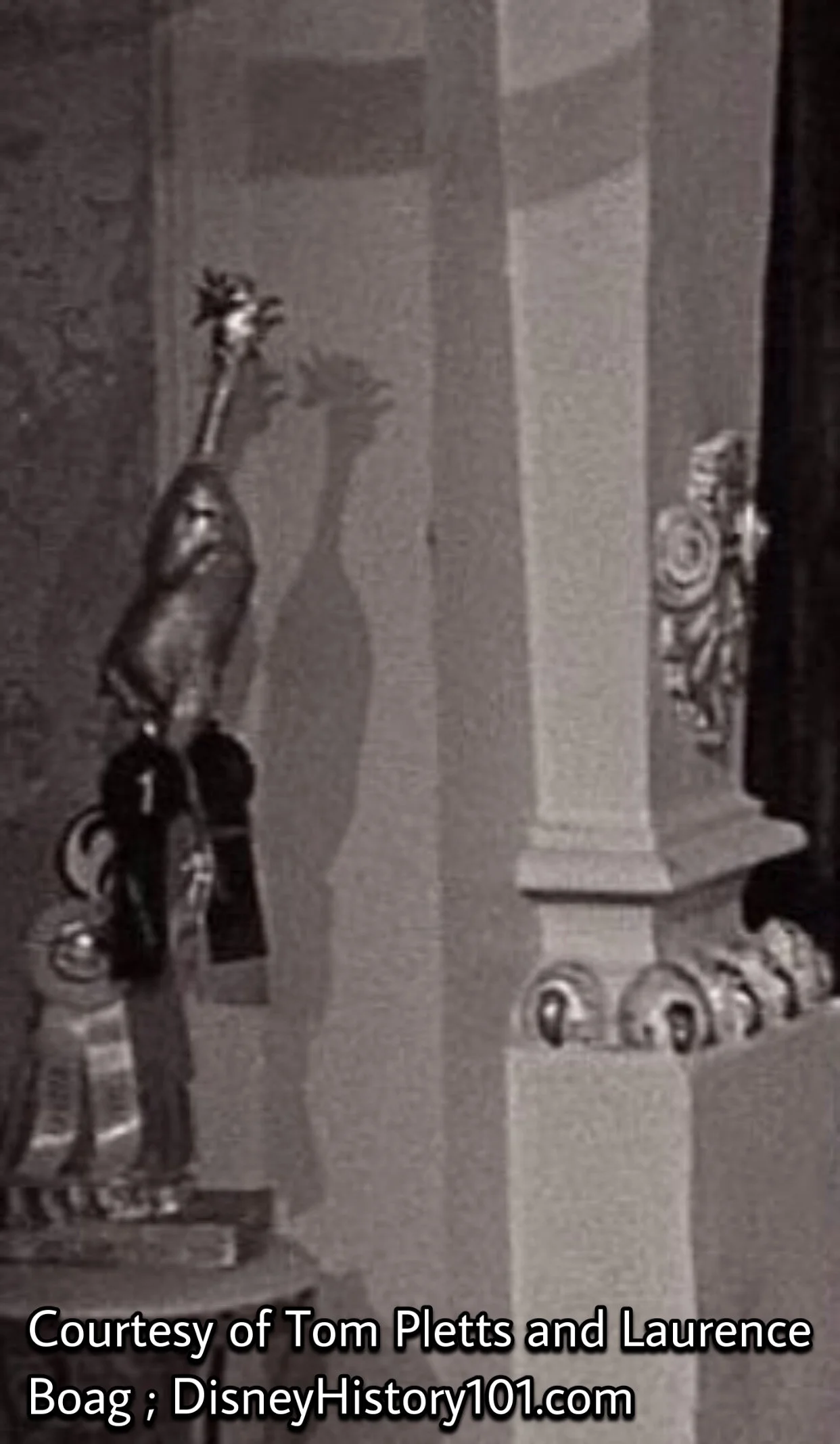
We asked Tom Pletts about this funny looking prop to the stage left, and he excitedly exclaimed : “That’s a ‘Chicken Trophy’! I don’t remember if it was employed in the show other than as a prop. It just got called that because it looks like a gold-plated rubber chicken!”
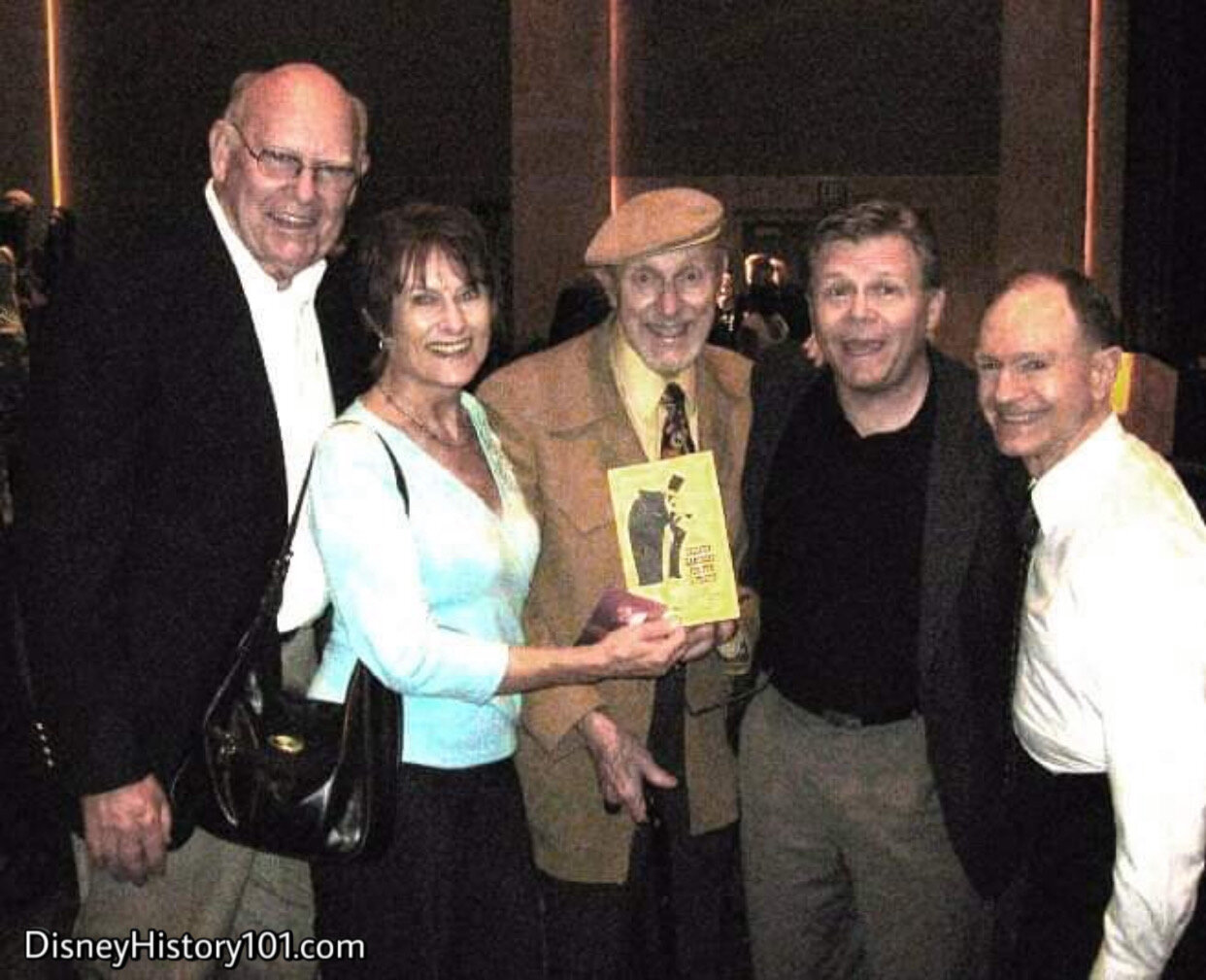
[Photo: Courtesy of Tom Pletts]
Tom couldn’t help but share this related memory : “Here’s a Chicken Ranching For Fun And Profit mini-reunion during the gathering for Fulton Burley’s memorial at the studion. (From Left to Right) Grasper (Tom Pletts), Sugar (Bonnie), an aging Wally Boag (“The Great One”), Frank Funster (Jim), and our ragtime pianist (Rod Miller).”
“The Show Goes On”…
Where the two previous Disneyland Drama Club productions had a limited run during one week, “Chicken ranching For Fun & Profit” was perhaps the first production to be extended. Tom Pletts (who portrayed the character of “Grasper Quick”) recollects : “The company decided to present our show to the public one night a week through the summer, and then for Private Party nights in the fall. AGVA limited the number of performances unless we joined their union ; so the Park shut us down after 50+ shows.”
(Artwork by Tom Pletts)
The very first “Spring Tonics” appeared May of 1957! The show was described as “a combination pep rally and an annual review, their inspired madness provided a satiric reflection on the Disney Way,” according to an article published in Disneyland LINE (Vol 12, No. 29 ; July 17, 1980).
The 1958 Spring Tonics was known as the “Annual Brain Wash at the Mouse House” with special scripts written by Disneylanders. Van France coordinated the show, Bud Coulson was the MC, and Jack Sayers presented the “brainwash” portion of the show (with more than a few interruptions by Trinidad). Vesey Walker and the Disneyland Band, Wally Boag, Don Novis, Betty Taylor, the Golden Horseshoe Girls and orchestra were highlights of the program. Memorable acts included Frank Heidemann pickin’ oranges in ‘52.
In 1961, Disneyland employees attended the Annual “Spring Tonics” show in the Mickey Mouse Theater and heard a special talk given by Joe Fowler, Disney Vice-President, after the performances.
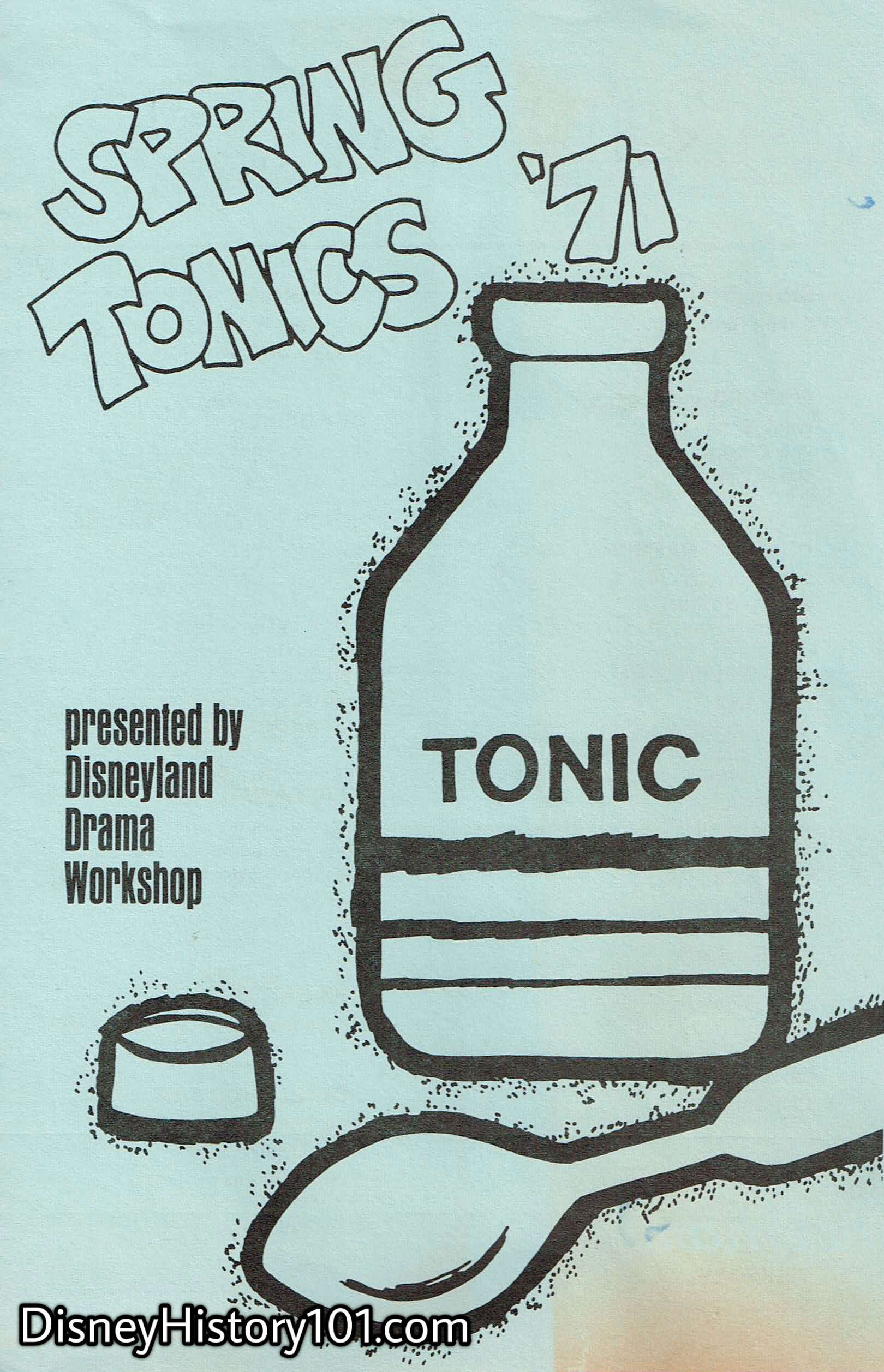
But according to Backstage magazine (published Summer, 1965), the tradition of “Springtonics” (a spoof of Disneyland operations, as presented by the management) had completely disappeared by the year 1965. Bob Penfield briefly mentions fondly remembering these very “Springtonics in the Mickey Mouse Theater - a skit that was a spoof of everything and it was put on by management,” to Disneyland LINE (Vol.25, No.28). Now (two decades later), it looks as if “Springtonics” had been revived. If you’re wondering what the “Spring Tonics ‘71” show was all about, Tom Pletts has your answer :
“Spring Tonics was a pre-summer kick starter for Disneyland employees in the early years. Wally headlined a cast that did cute sketches about Park Operations, and got everyone in the mood for the season. Our show merely revived it, with Wally’s help. It was performed on the Tomorrowland Terrace stage (I think) at the same time as our Golden Horseshoe melodrama, so I didn’t get to be in it or see it. But I drew the program for it…‘71 Spring Tonics revived an early Disneyland tradition. ‘72 we performed skits for the park’s summer banquets, for leads.”
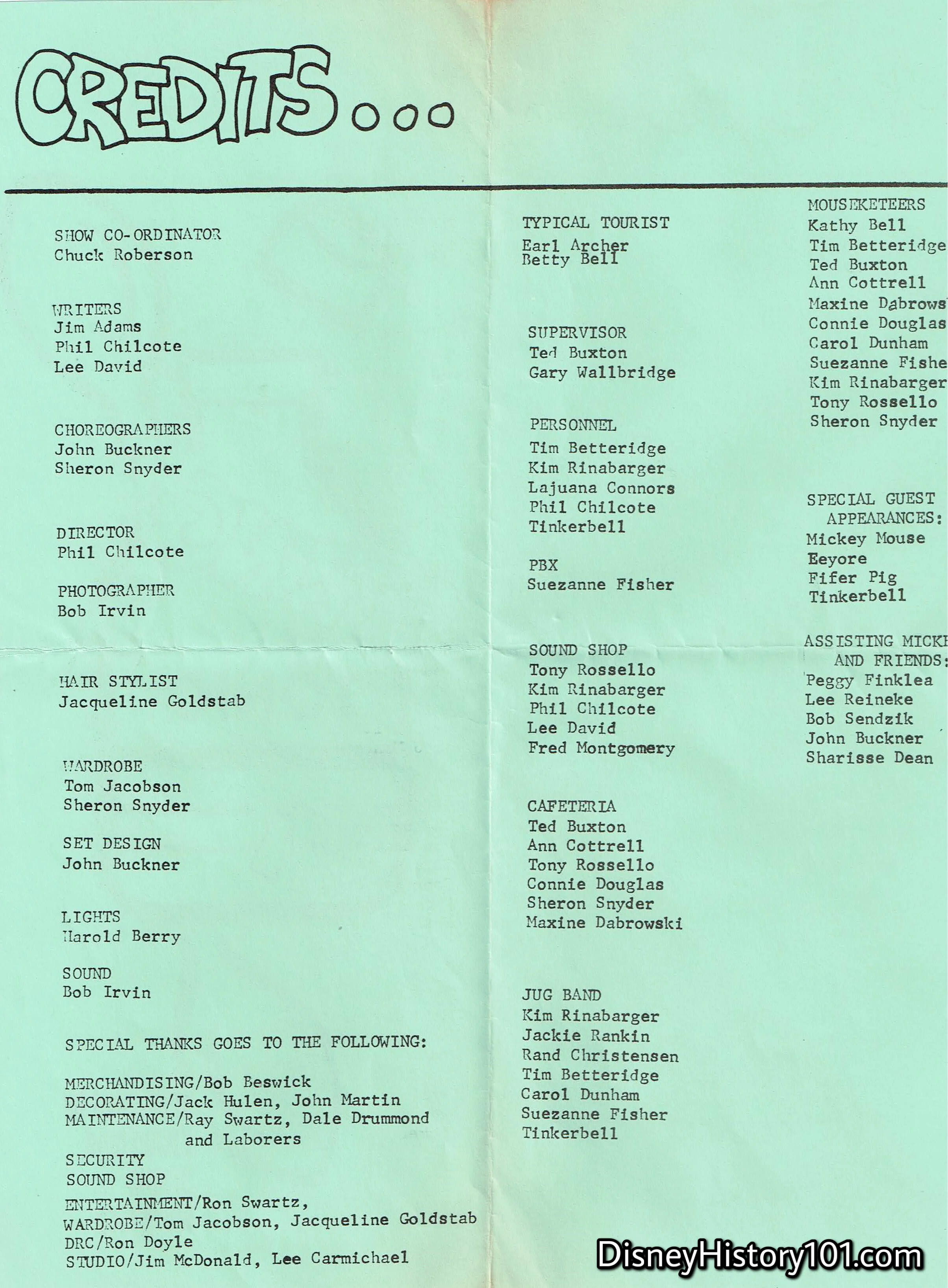
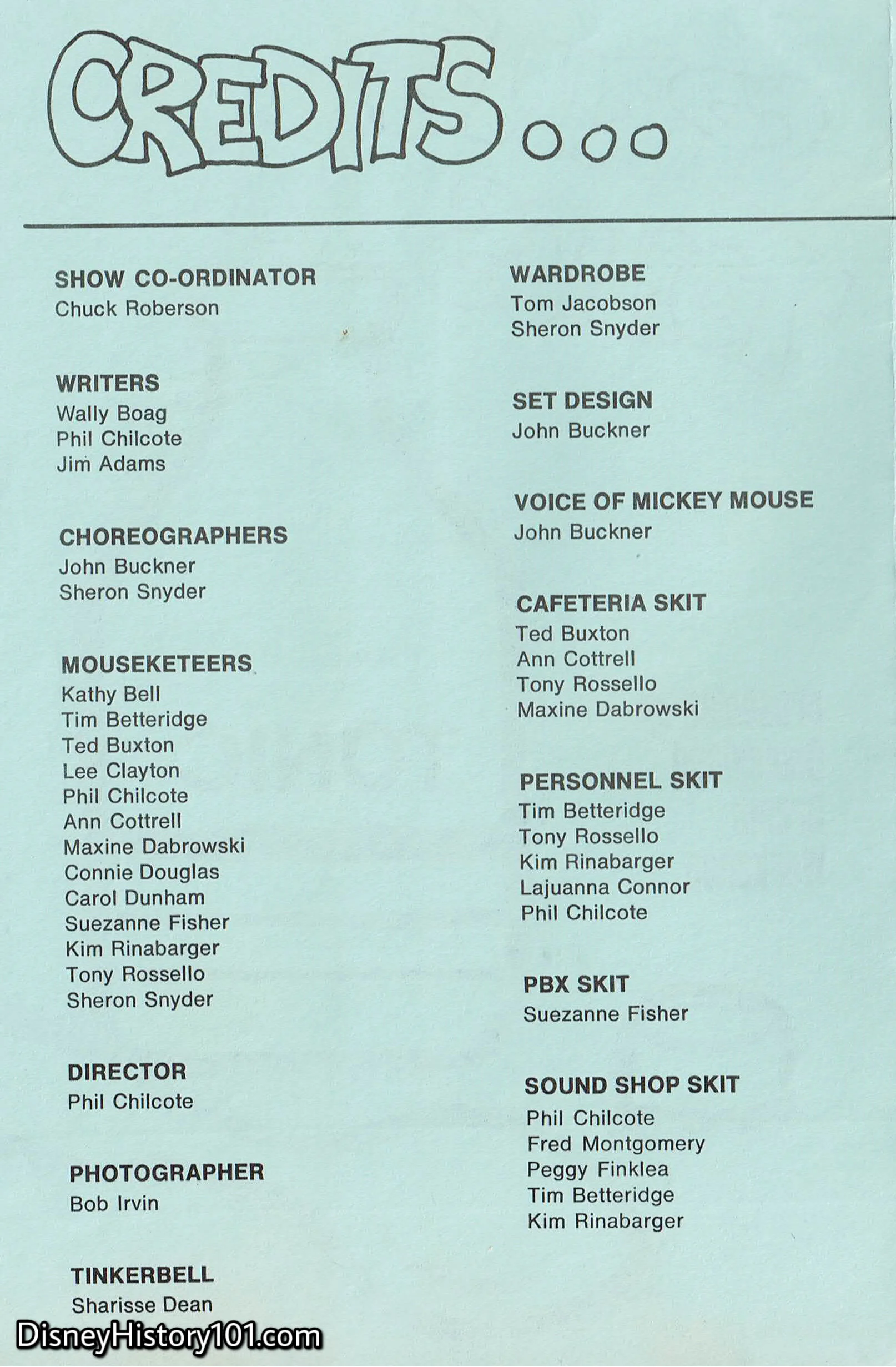
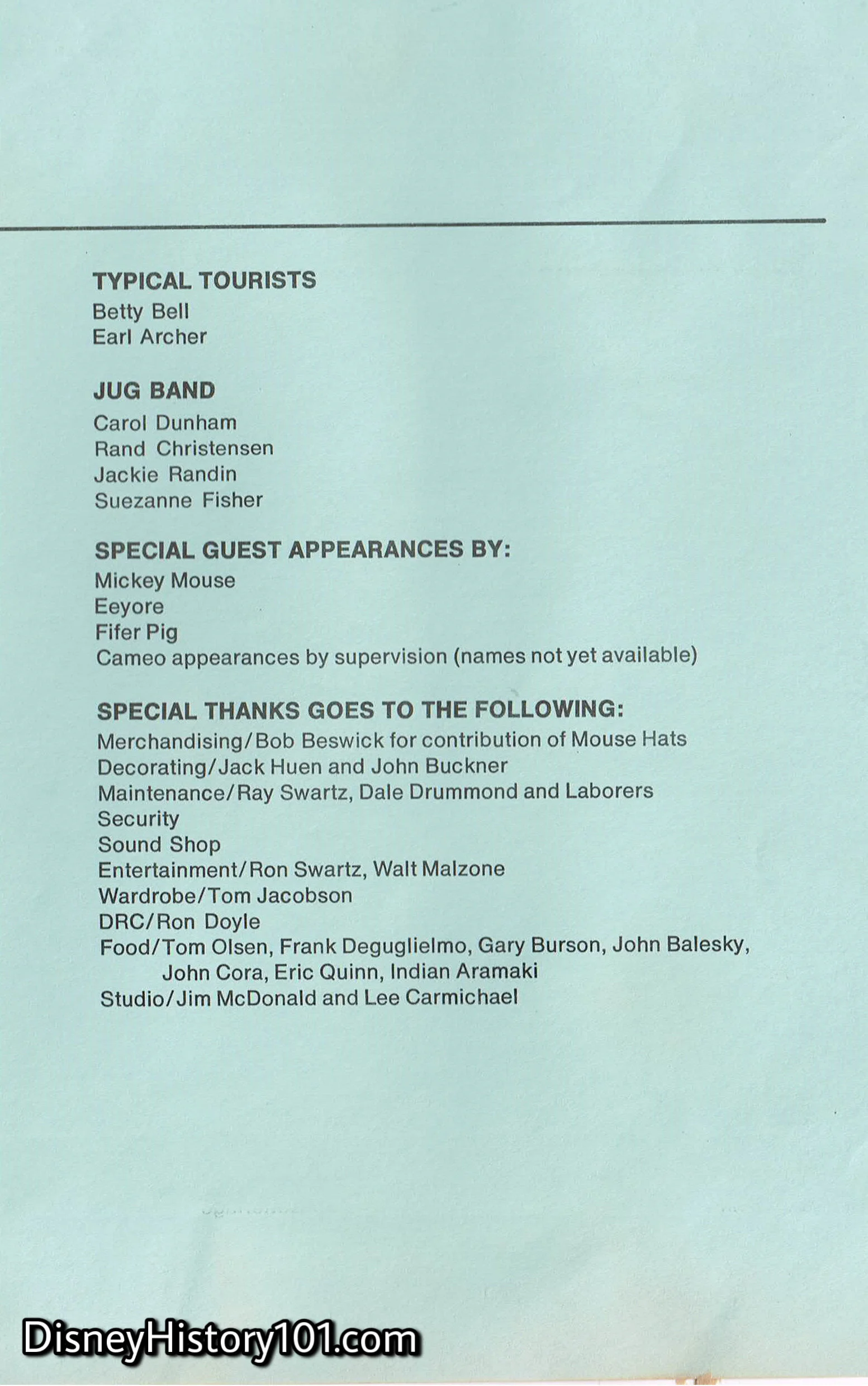
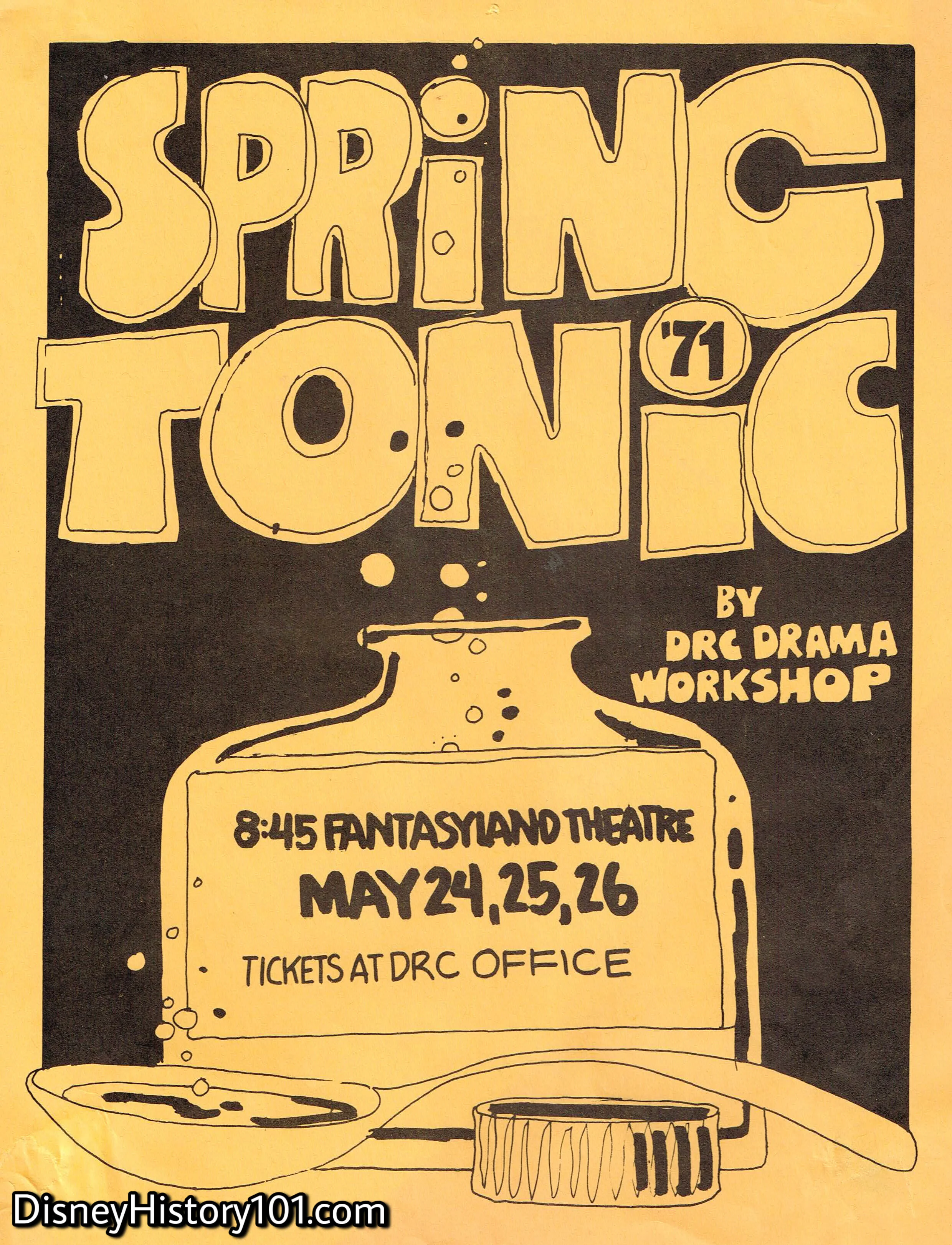
Tickets for this employees-only production were sold through the Disneyland Recreation Club.
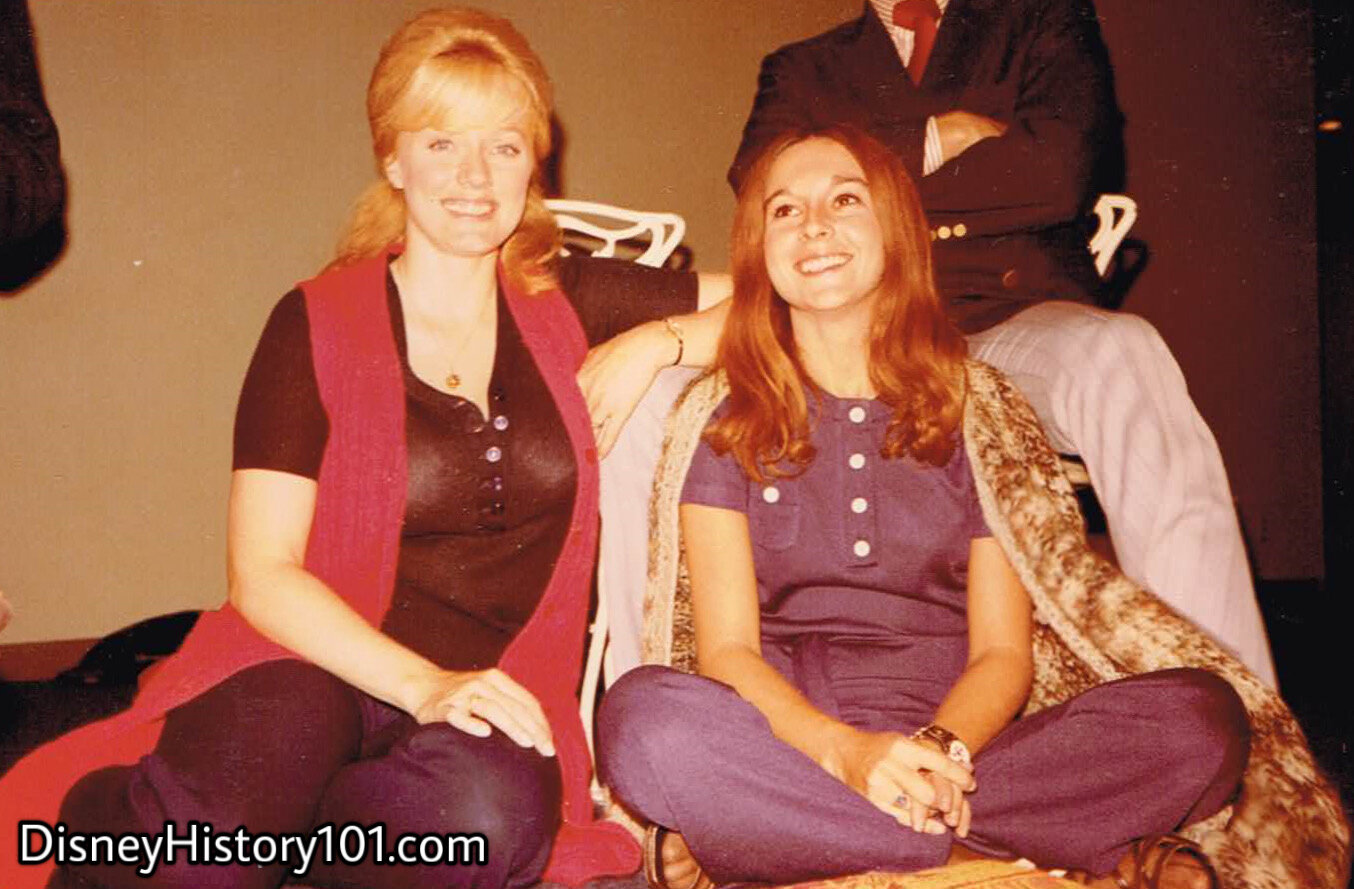
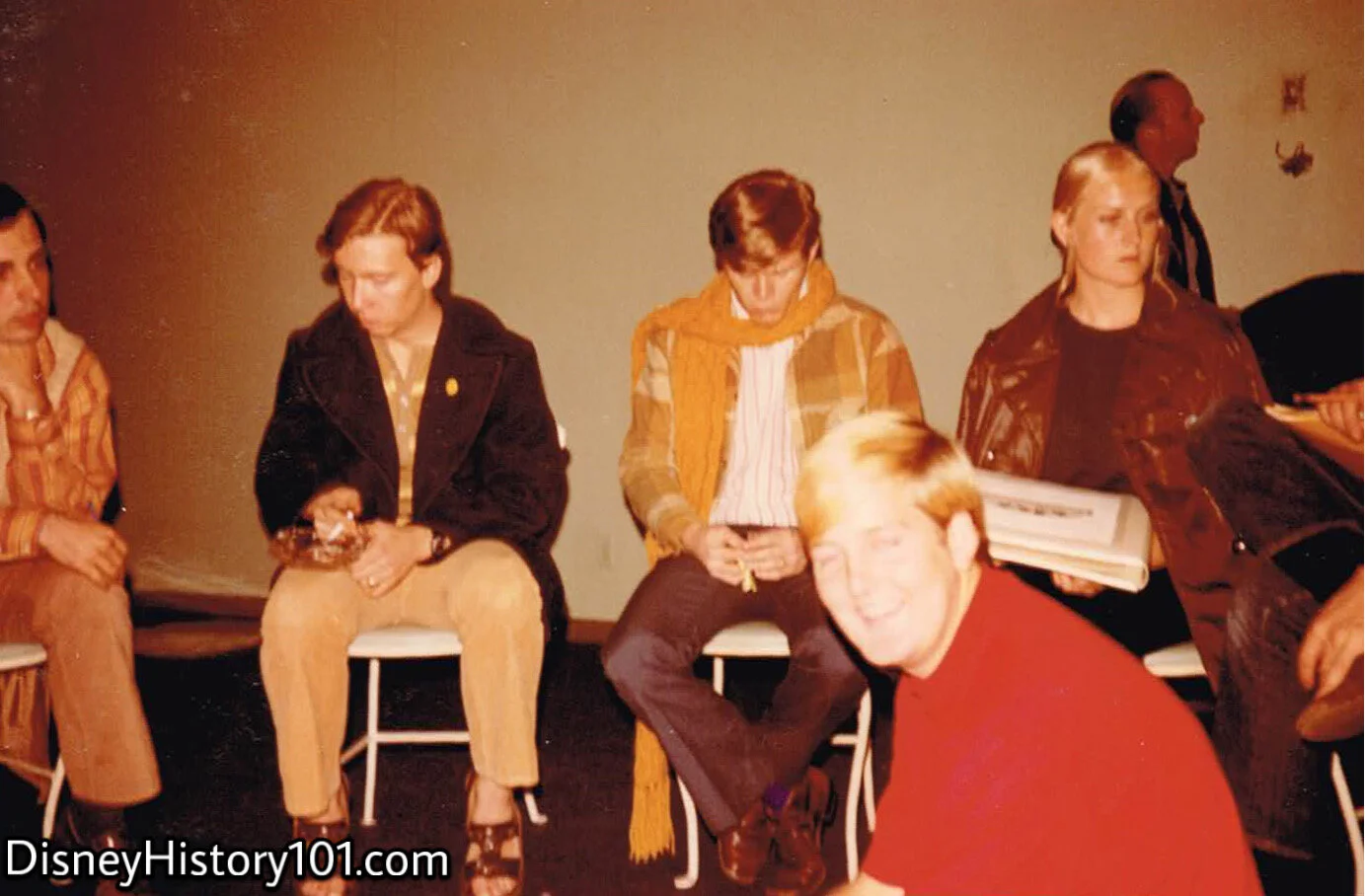
Jim Adams (with his head down) and Bonnie Barilleaux (on the right)
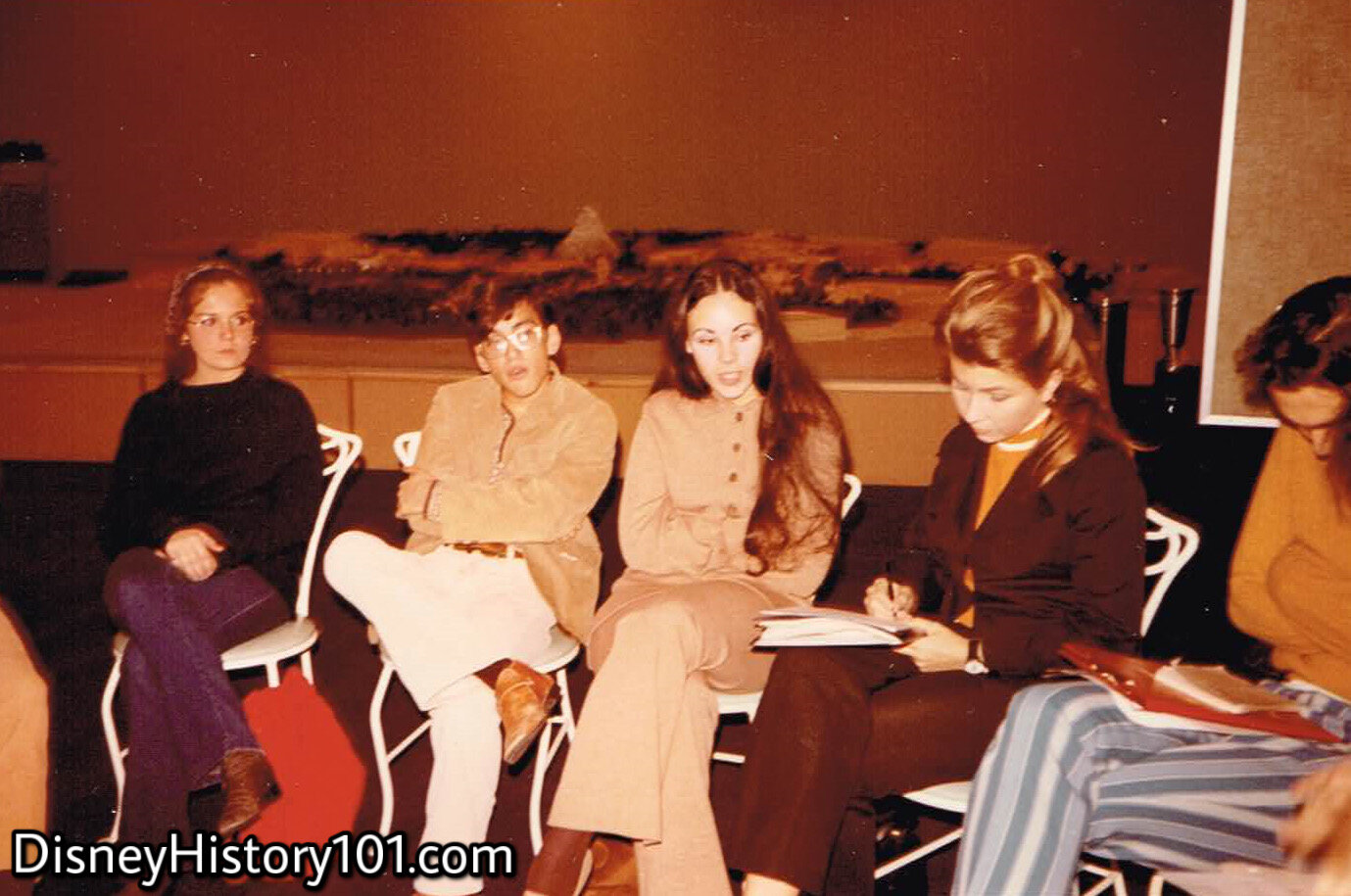
Left to Right : Unidentified, Lee Lomask (Stage Manager), Anita Trammell (as Ursula Merkle), hard-working Fantasyland Graveyard Working Leader Rhonda Treischel (as Rosie Alvarez), Bruce Langford (as Conrad Birdie).
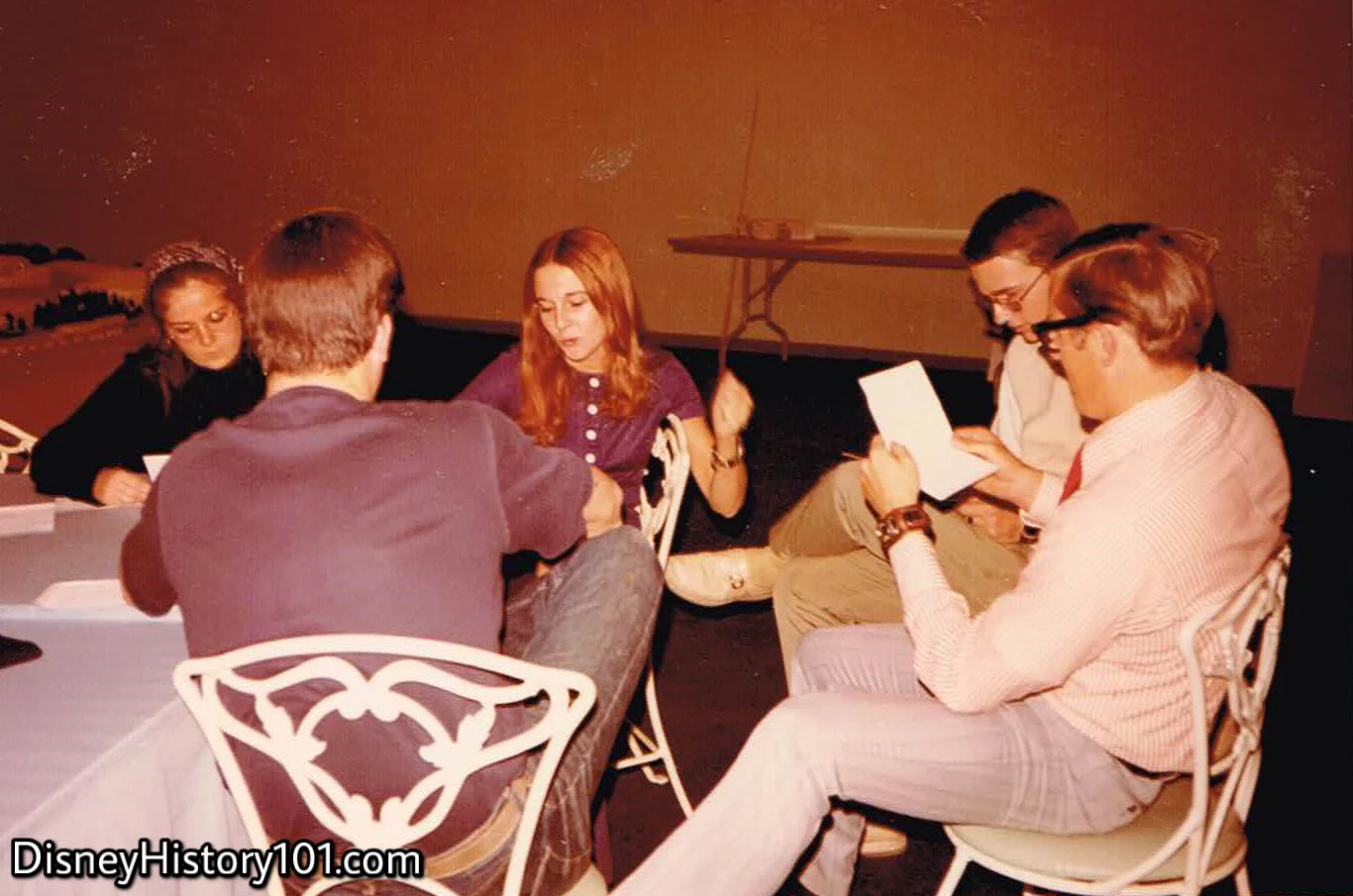
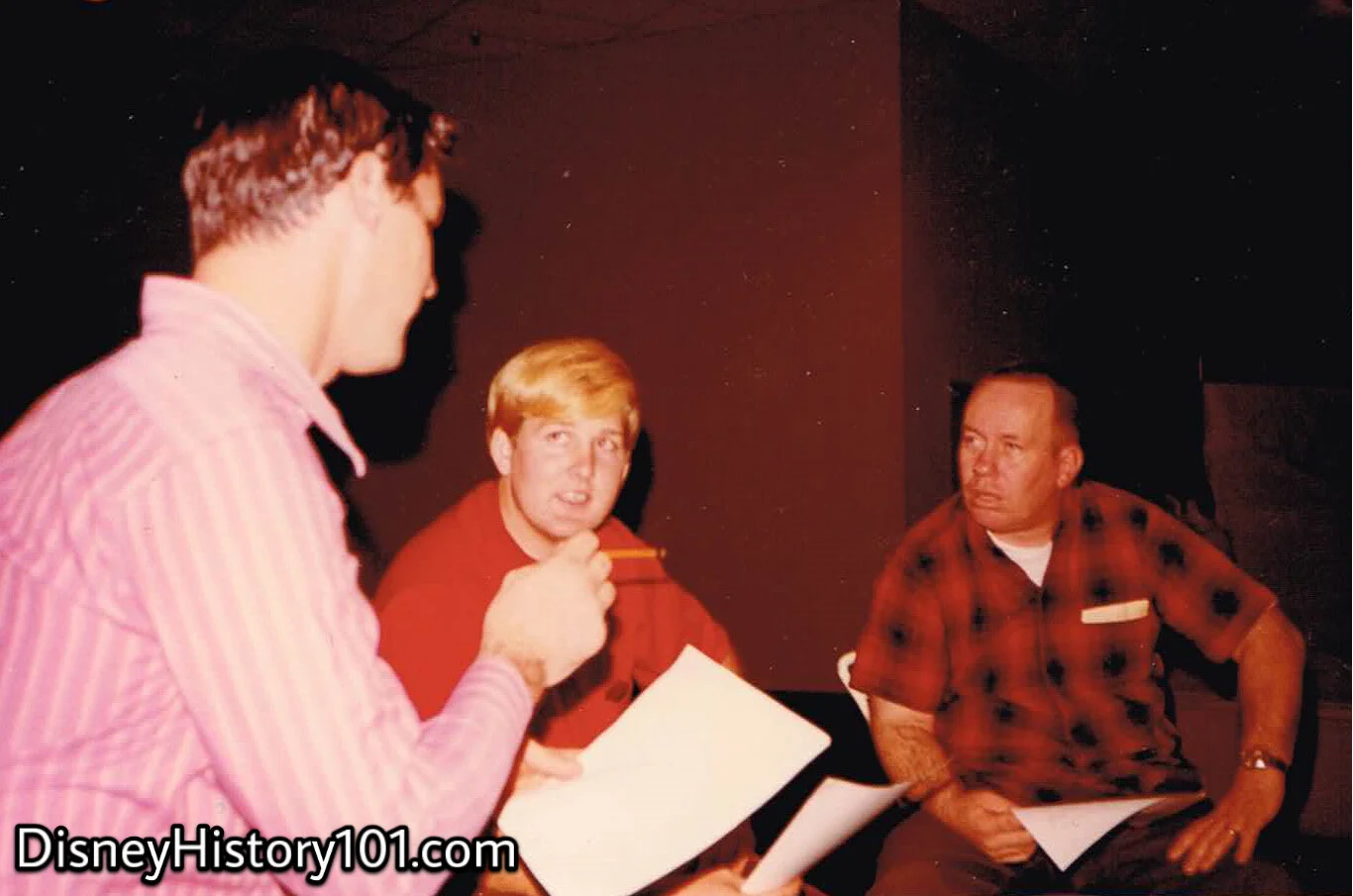
Earl Archer (in plaid on the right).
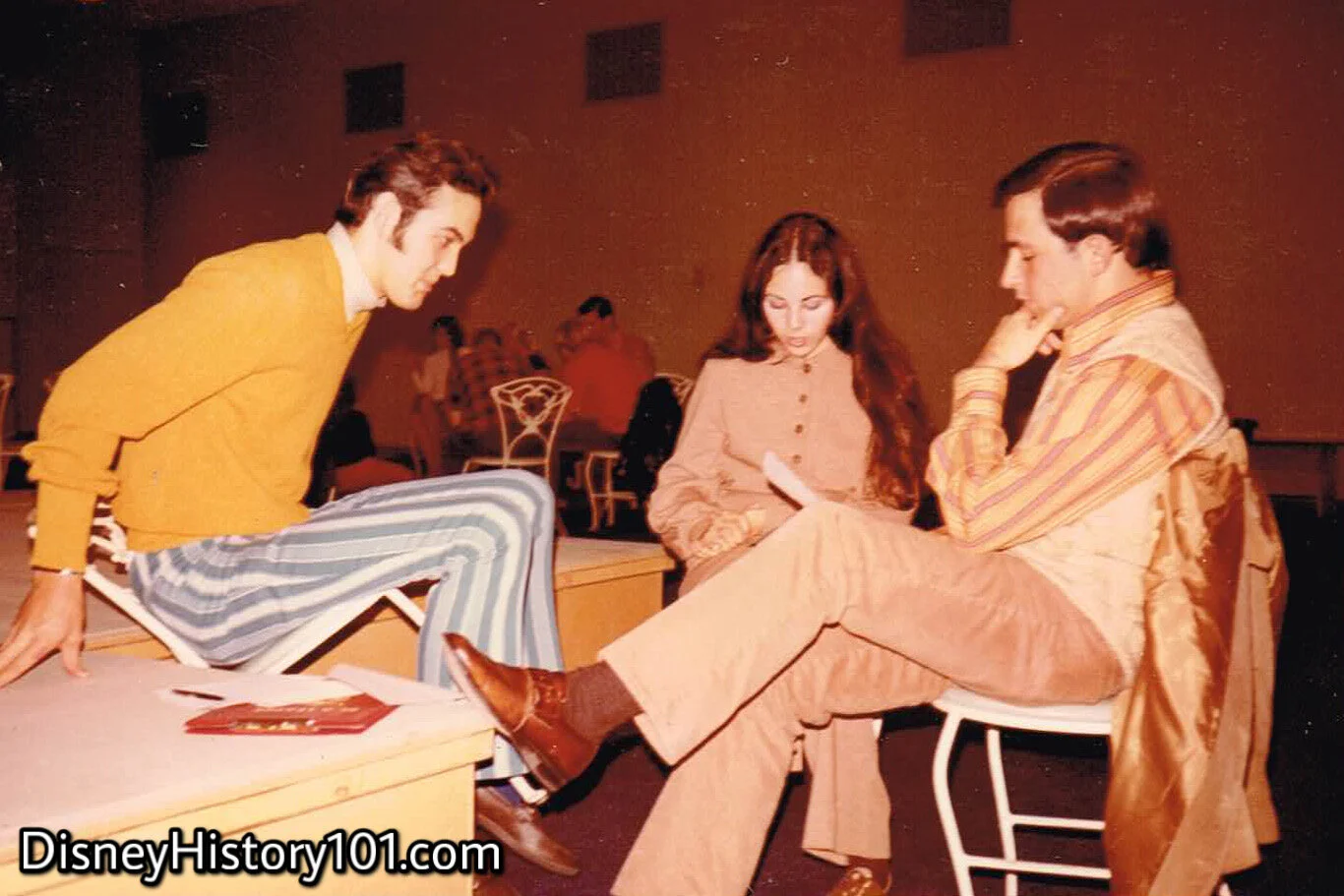
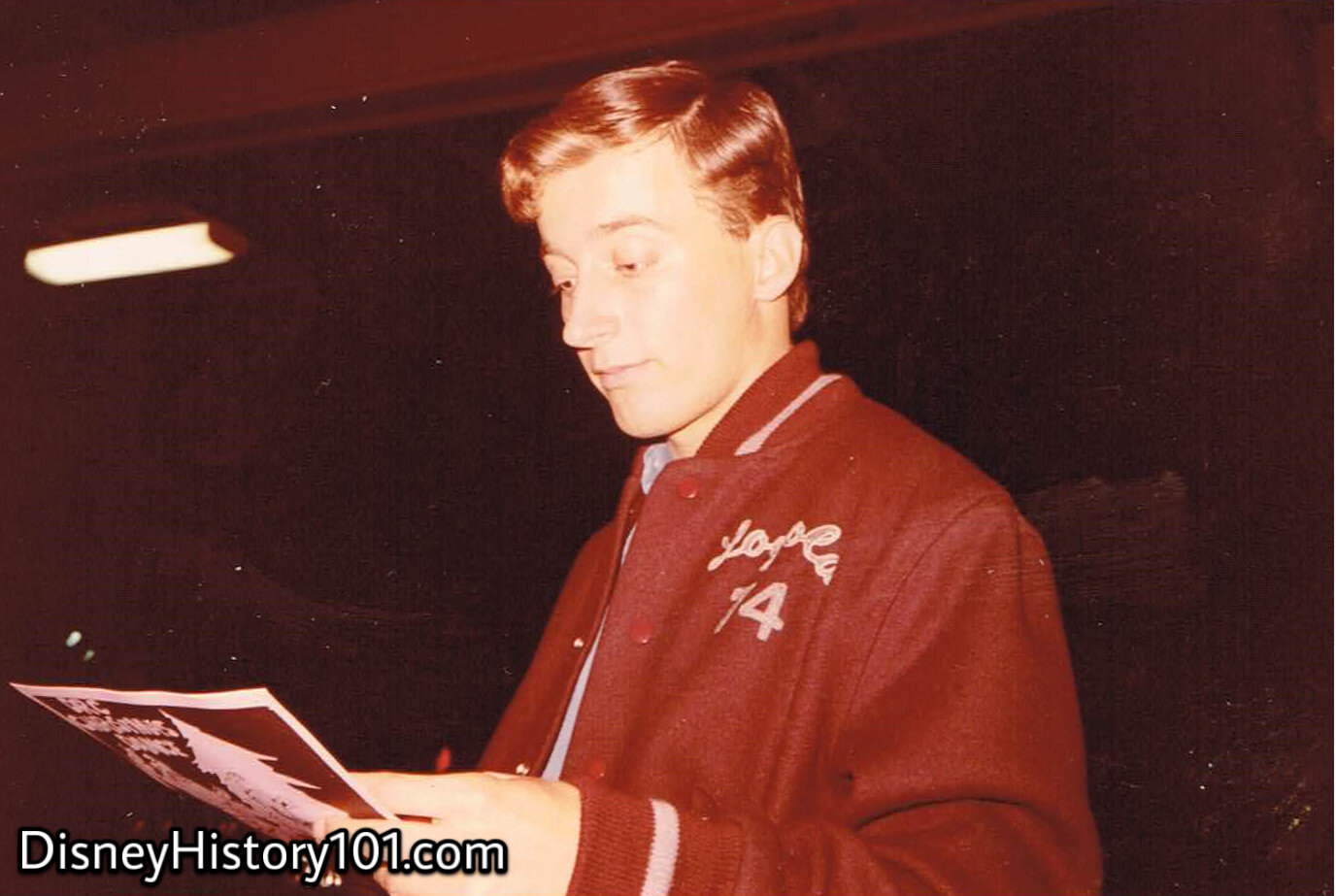
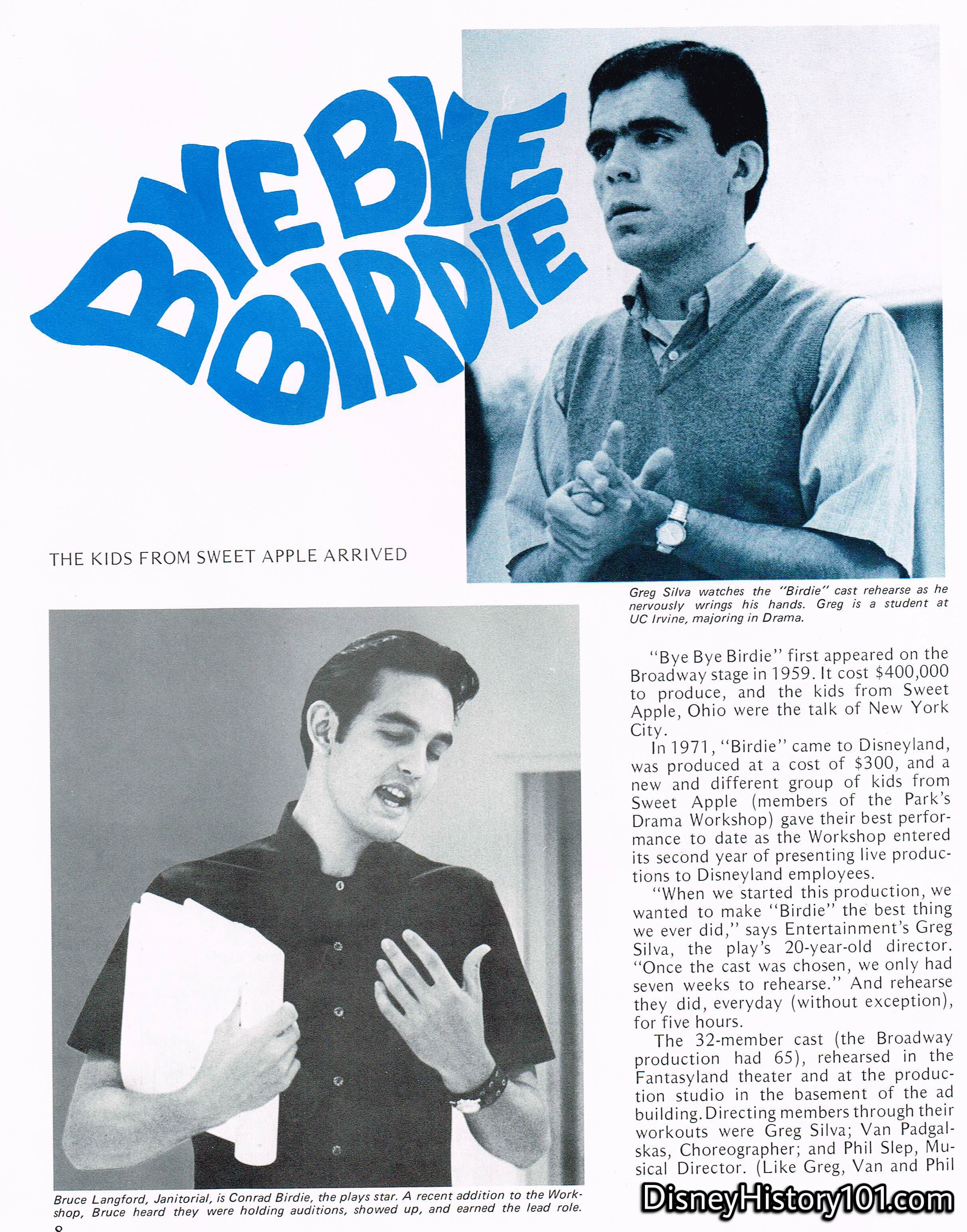
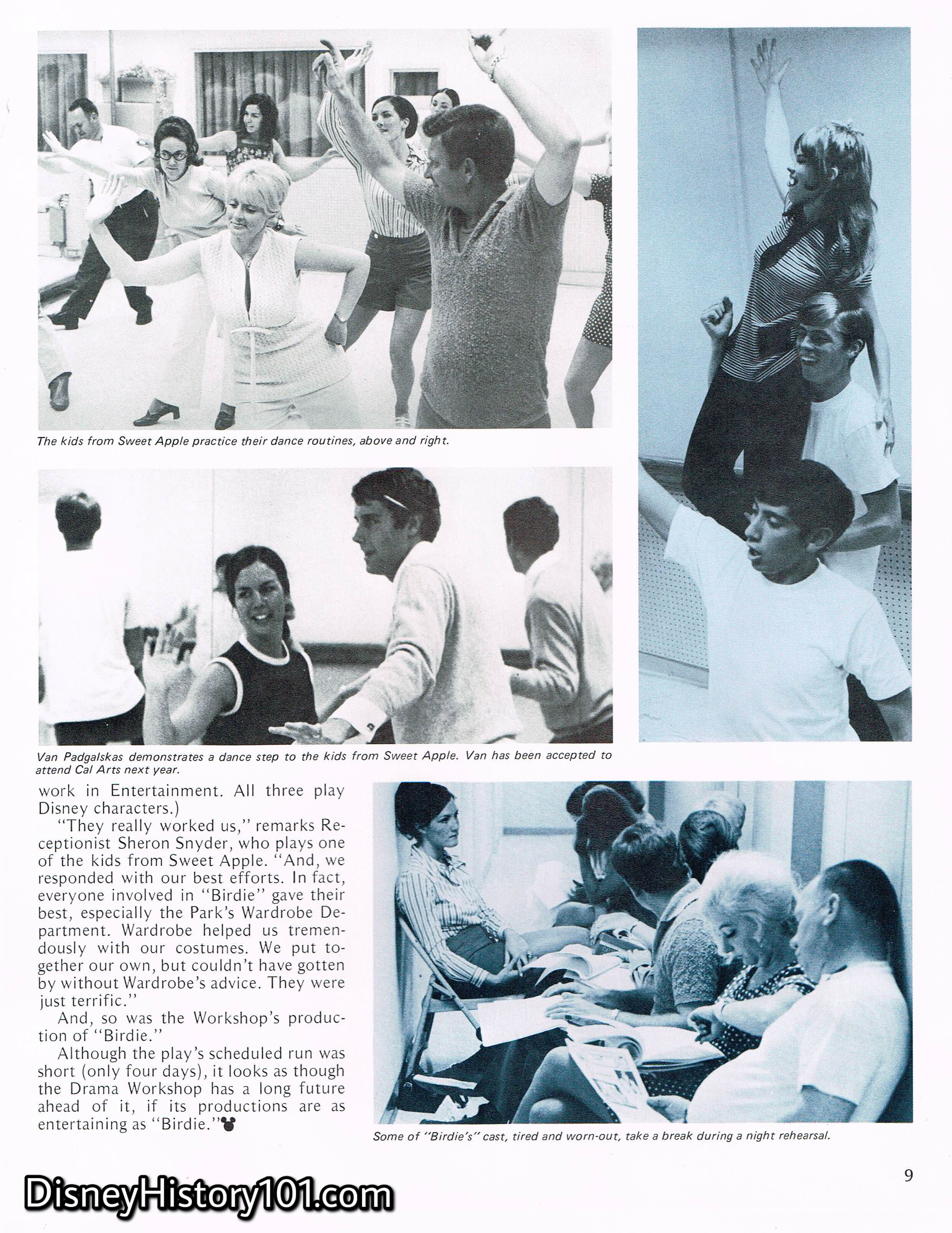
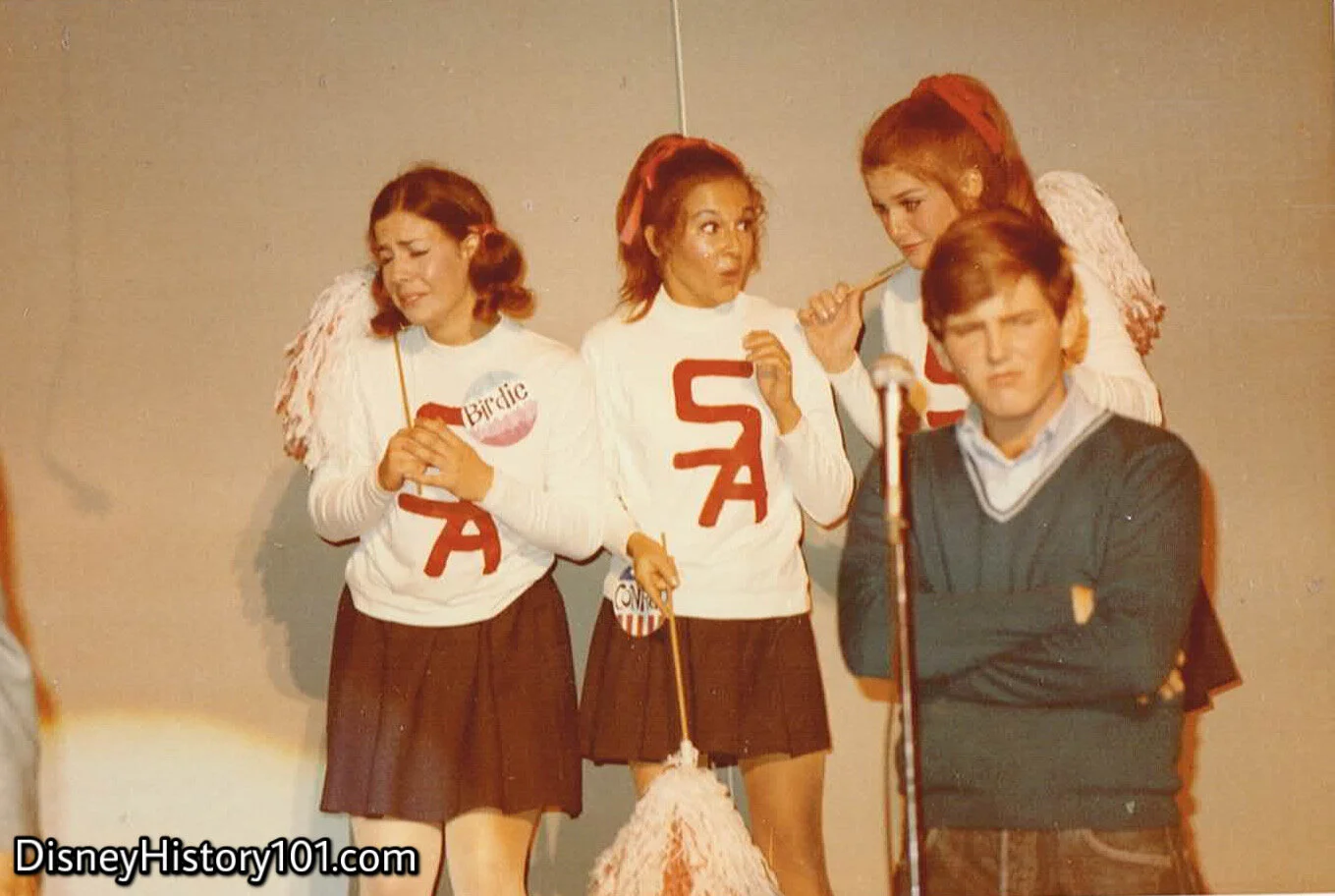
This issue of Backstage Magazine featured other articles of contemporaneous events (Disneyland’s first Country Music Spectacular, Bear Country development and construction, and the opening of Walt Disney World) which helped understand the era that this production of Bye Bye Birdie was performed. These exciting updates gave us an inside sneak peek at what would surely be the Disneyland Drama Club’s most anticipated production to date!

Bob Jani (who much live Disneyland and Walt Disney World entertainment of the 1970s has been acredited) was invited to attend the Disneyland Drama Club production of Bye, Bye, Birdie. Due to conflicting scheduling arrangements, he could not make it, and sent this letter to Ted E. Buxton of Disneyland’s Publicity Department.
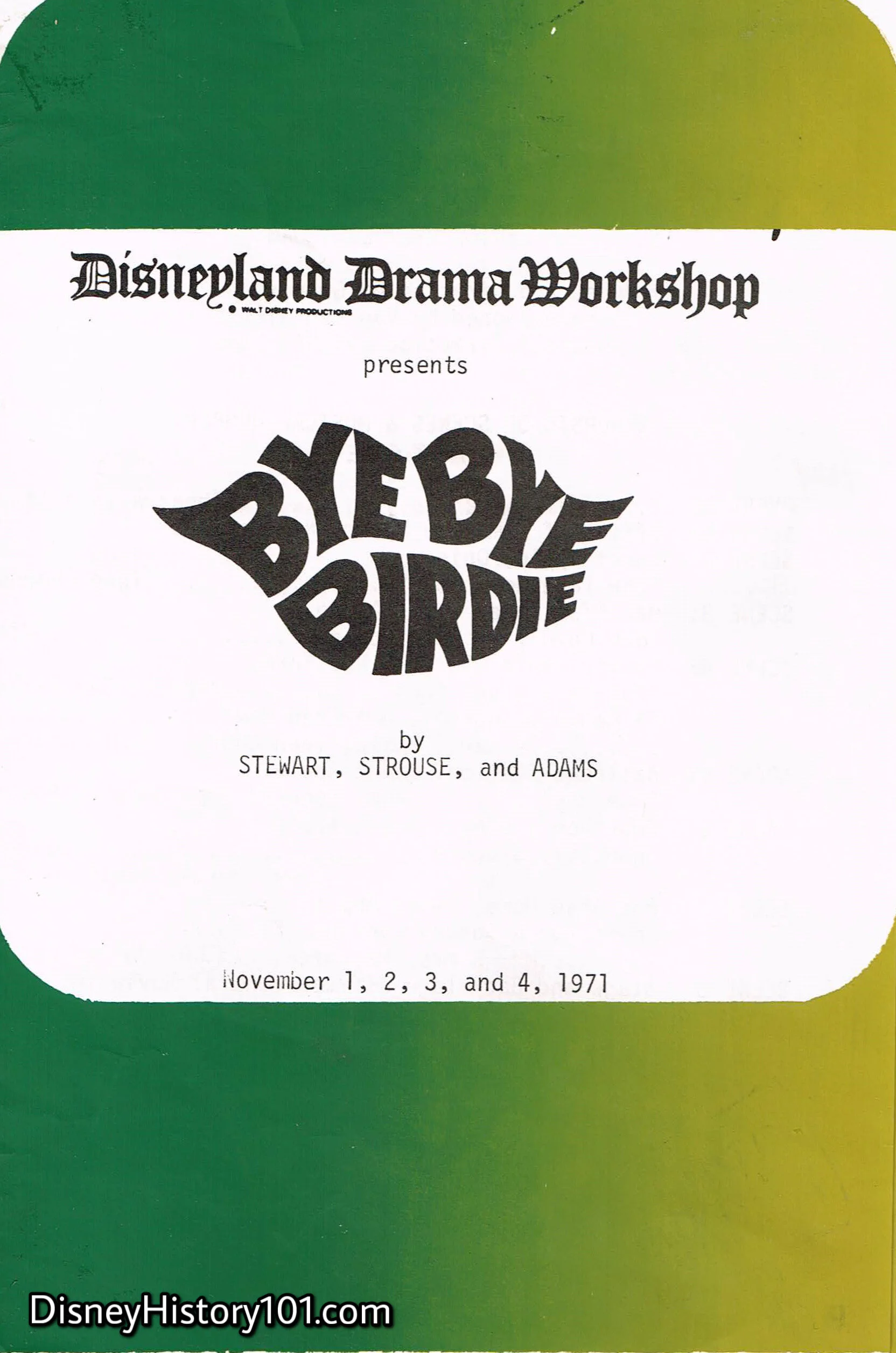
Jim Stewart (who played the part of Harvey) recalls being a part of this Disneyland Drama Club production :
“Man, this brings back memories.
I started at Disneyland at the end of summer 1971. I worked at Club 33 as miscellaneous kitchen help. I worked with the [Disneyland] Drama Club during my stint in the park. The play that I was involved with was ‘Bye, Bye Birdie’. I still have my Bye Bye program, signed by many of the cast members. The director Greg Silva did an awesome job. Also, Van, the choreographer did a great job, and when I would get frustrated was so good at motivating me to do my best. I accomplished far beyond what I thought I could do. Many of the props and stage sets I was able to get from my Drama Teacher at Orange High School where we had performed the same play twice. I played several parts, as well as worked on the shows program.
I had a lot of fun with the part, even though I was told I was typecast. Was also on the television crew, and worked with publicity. The silk screen for the front cover as due to an error when I had the programs printed. Greg Dymkowski stepped up to bat and worked on this project for the silk screening. It was such a fun project and had a ball doing it.“
As you look over the pages of the program for the Disneyland Drama Club production of “Bye, Bye, Birdie”, note the sheer size of the cast and crew involved (especially in comparison with previous productions “The American Dame” and “Greensleeves’ Magic”).
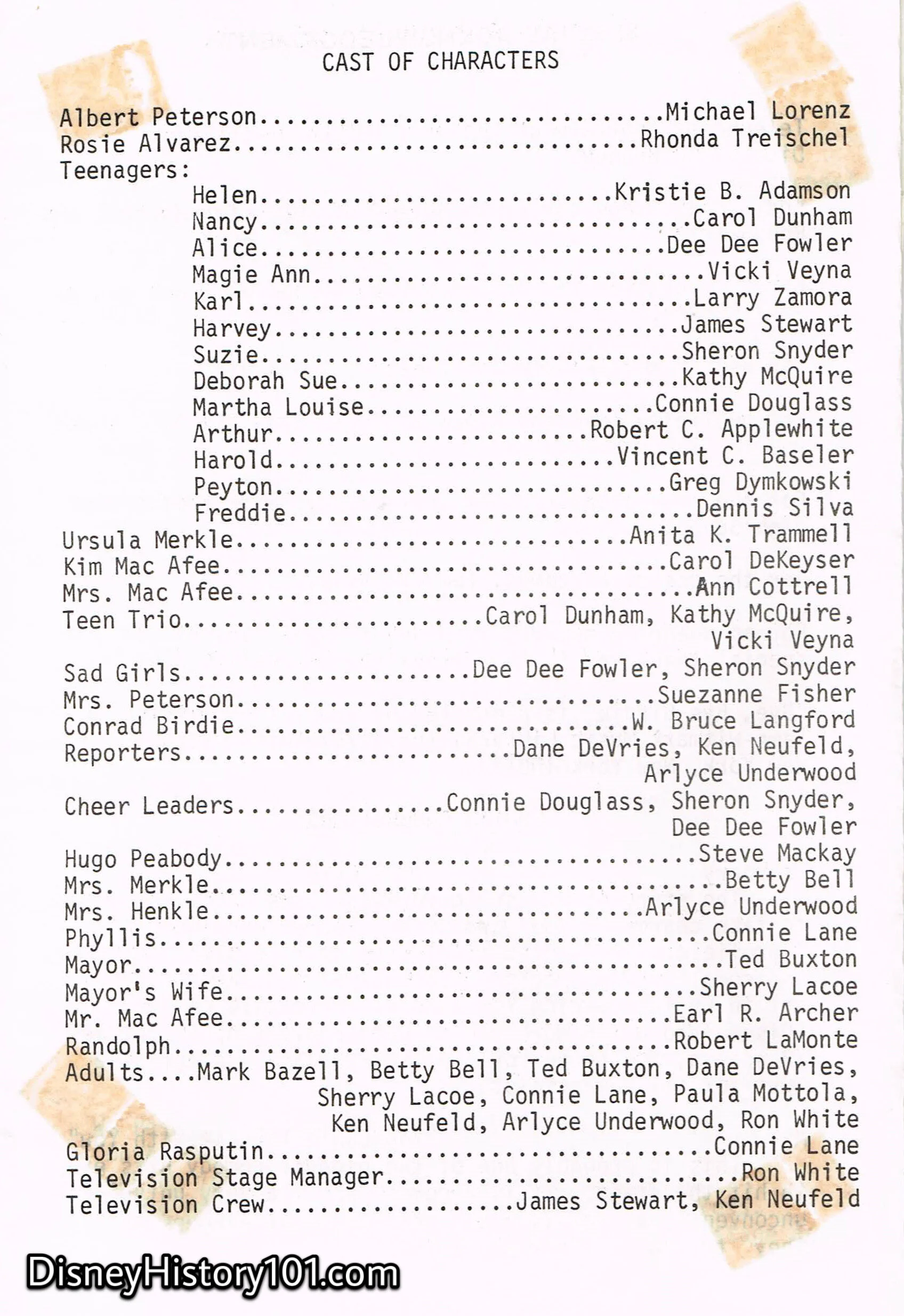
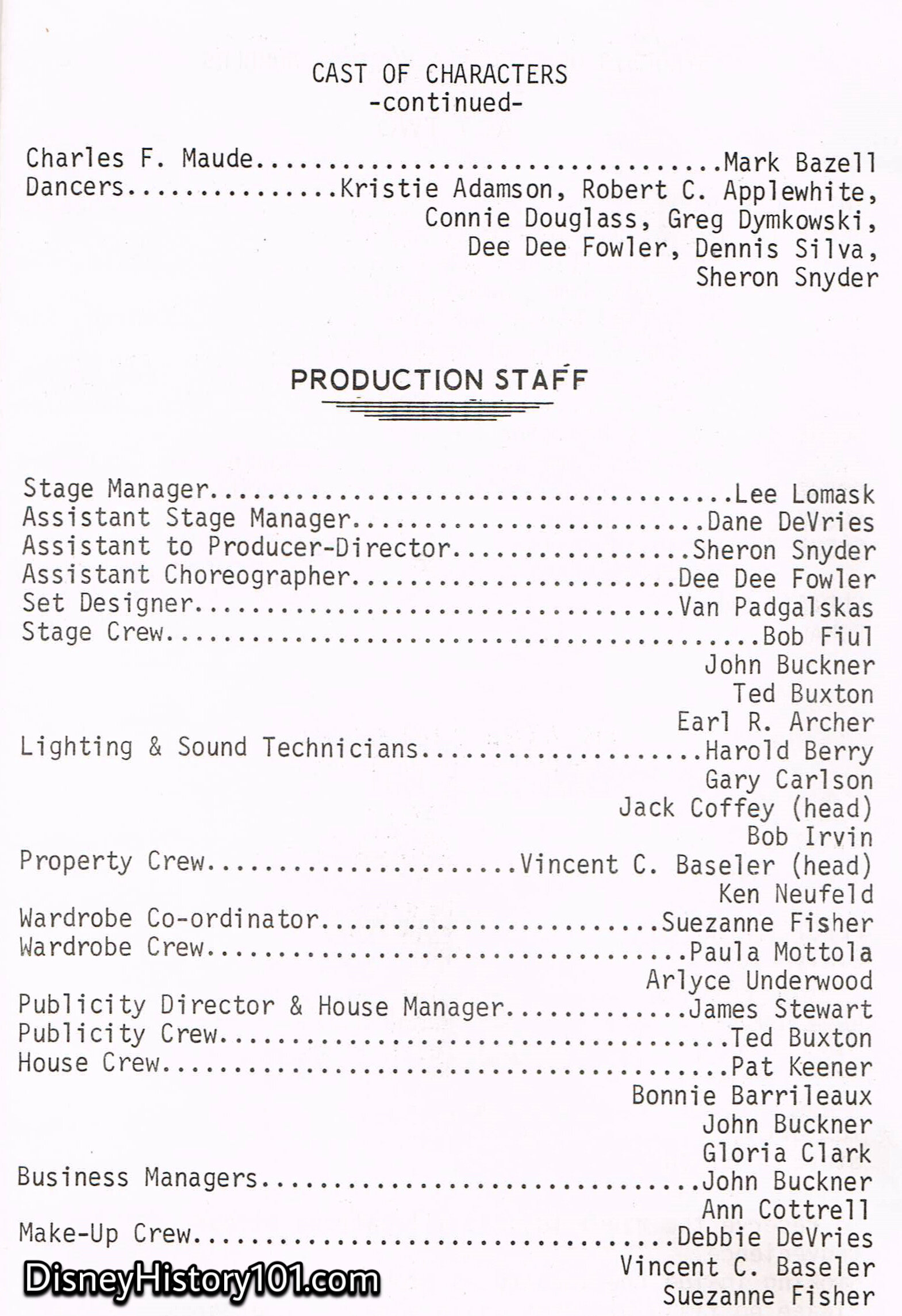
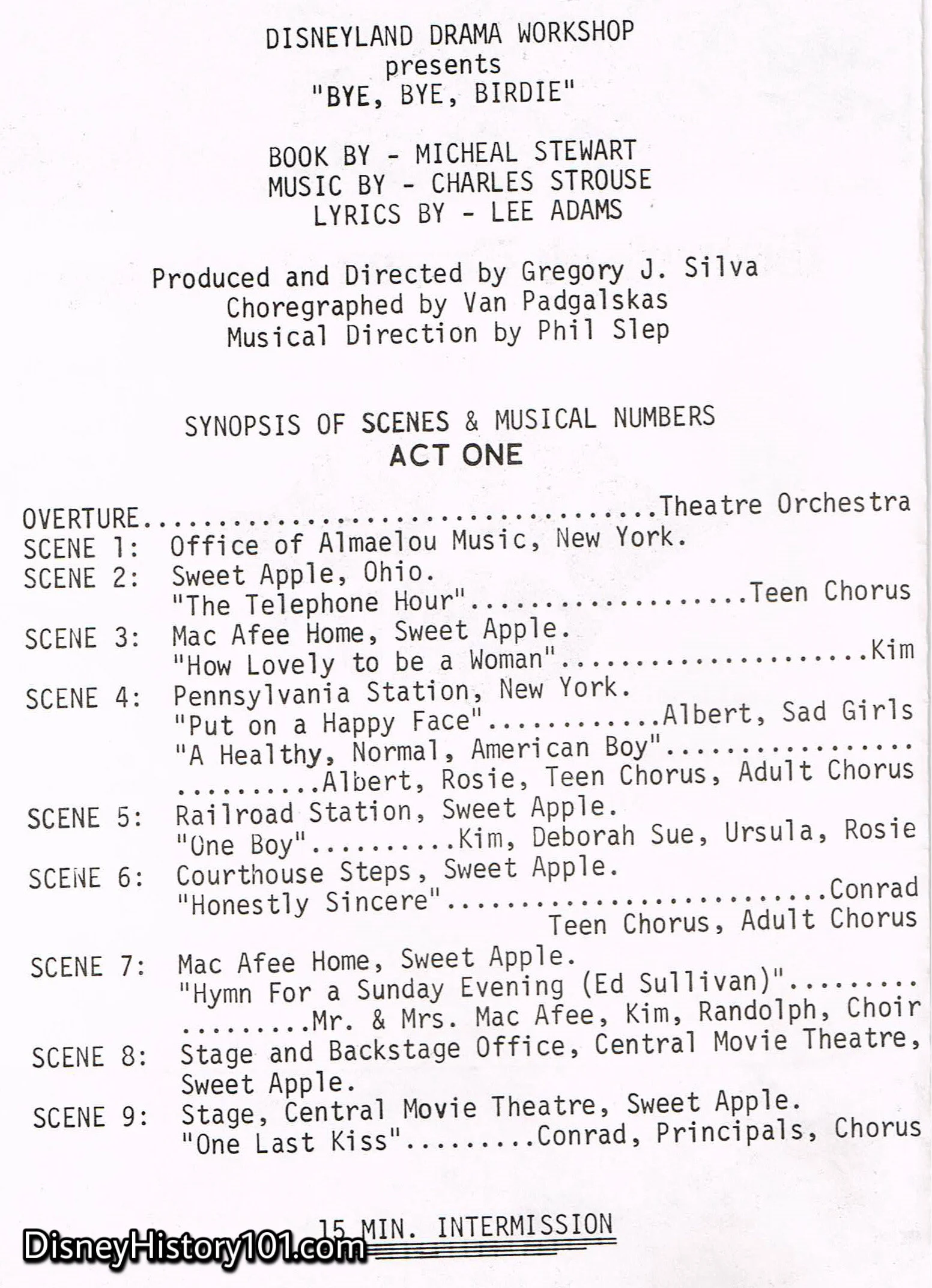
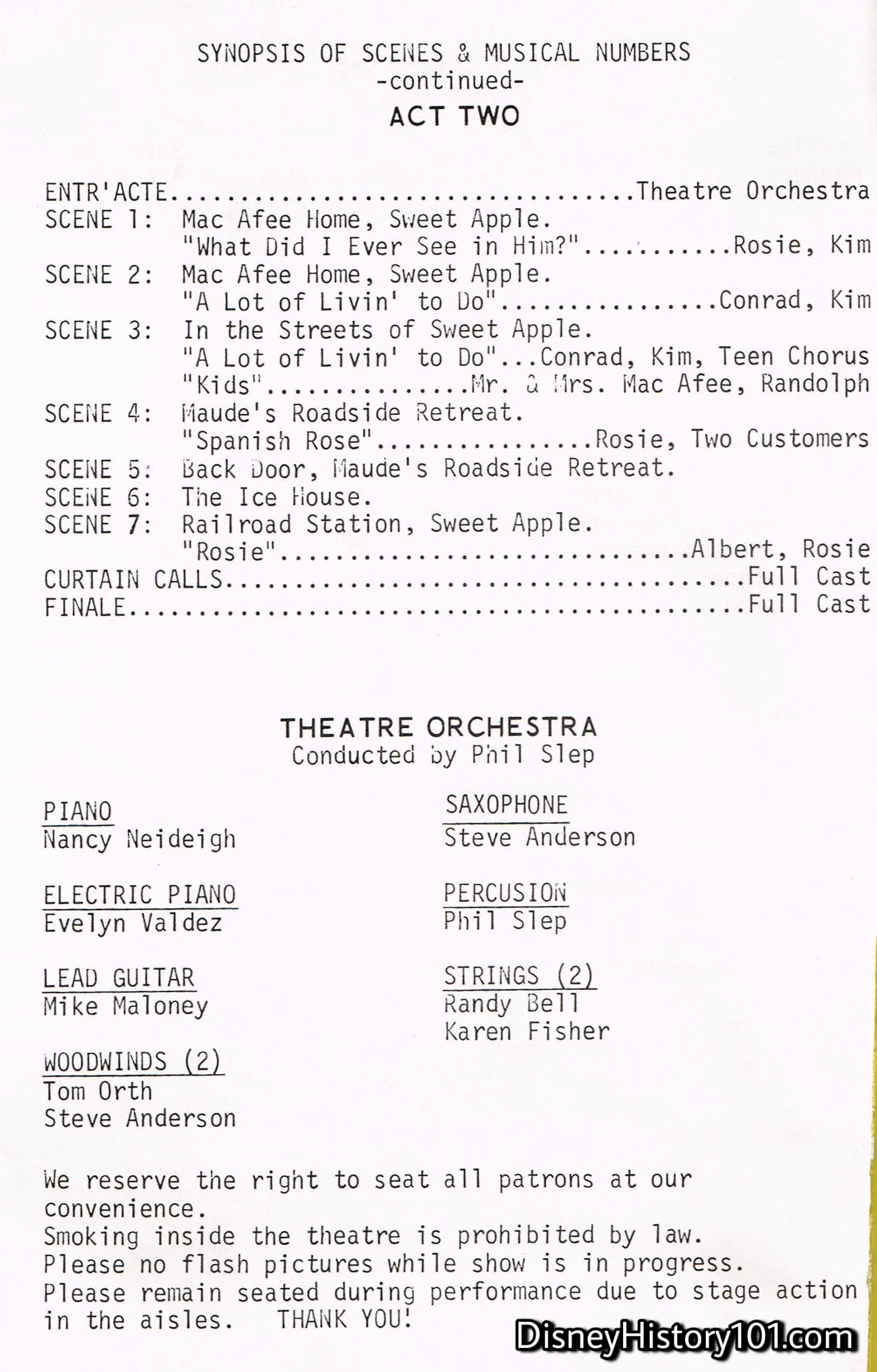
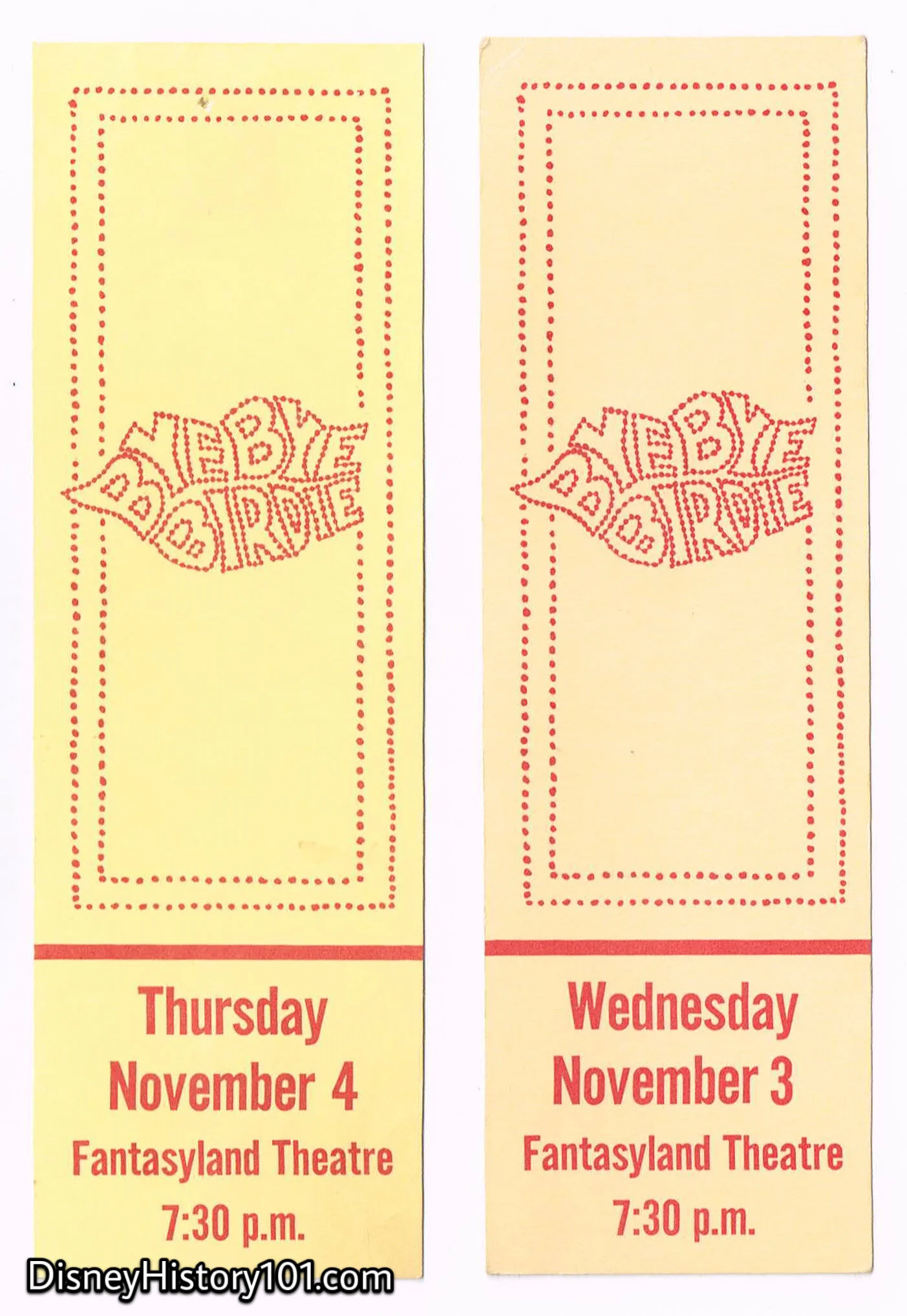
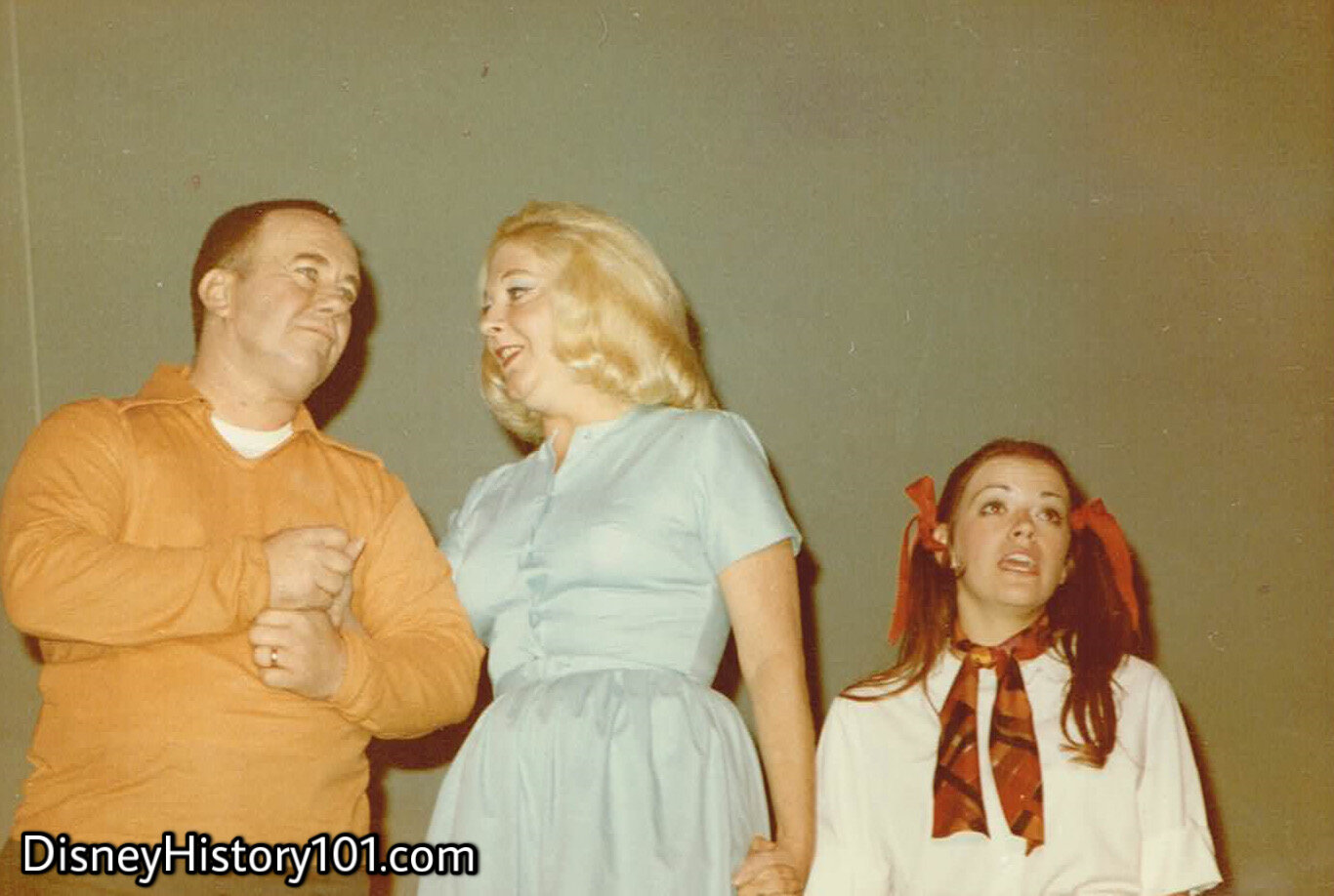
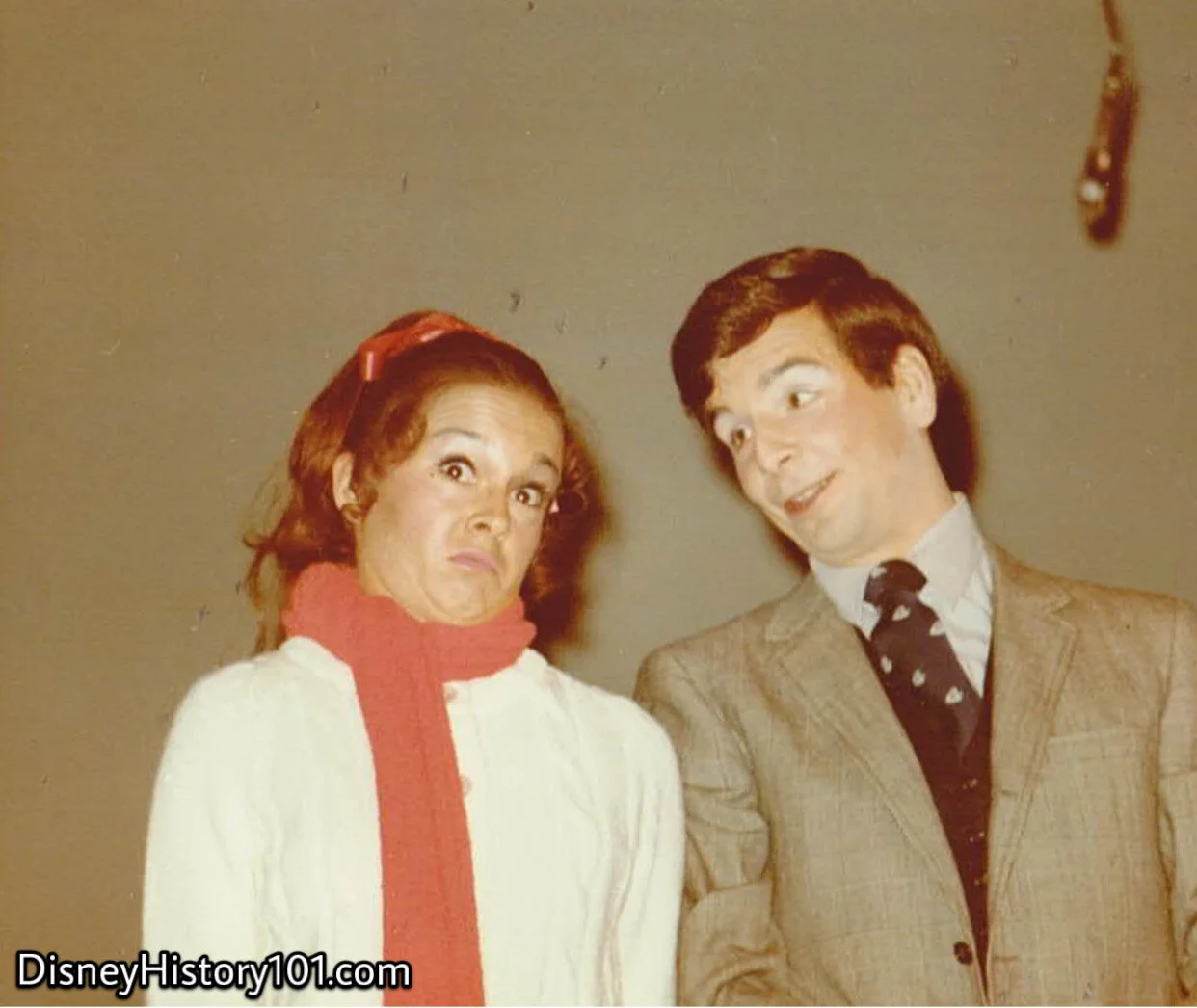
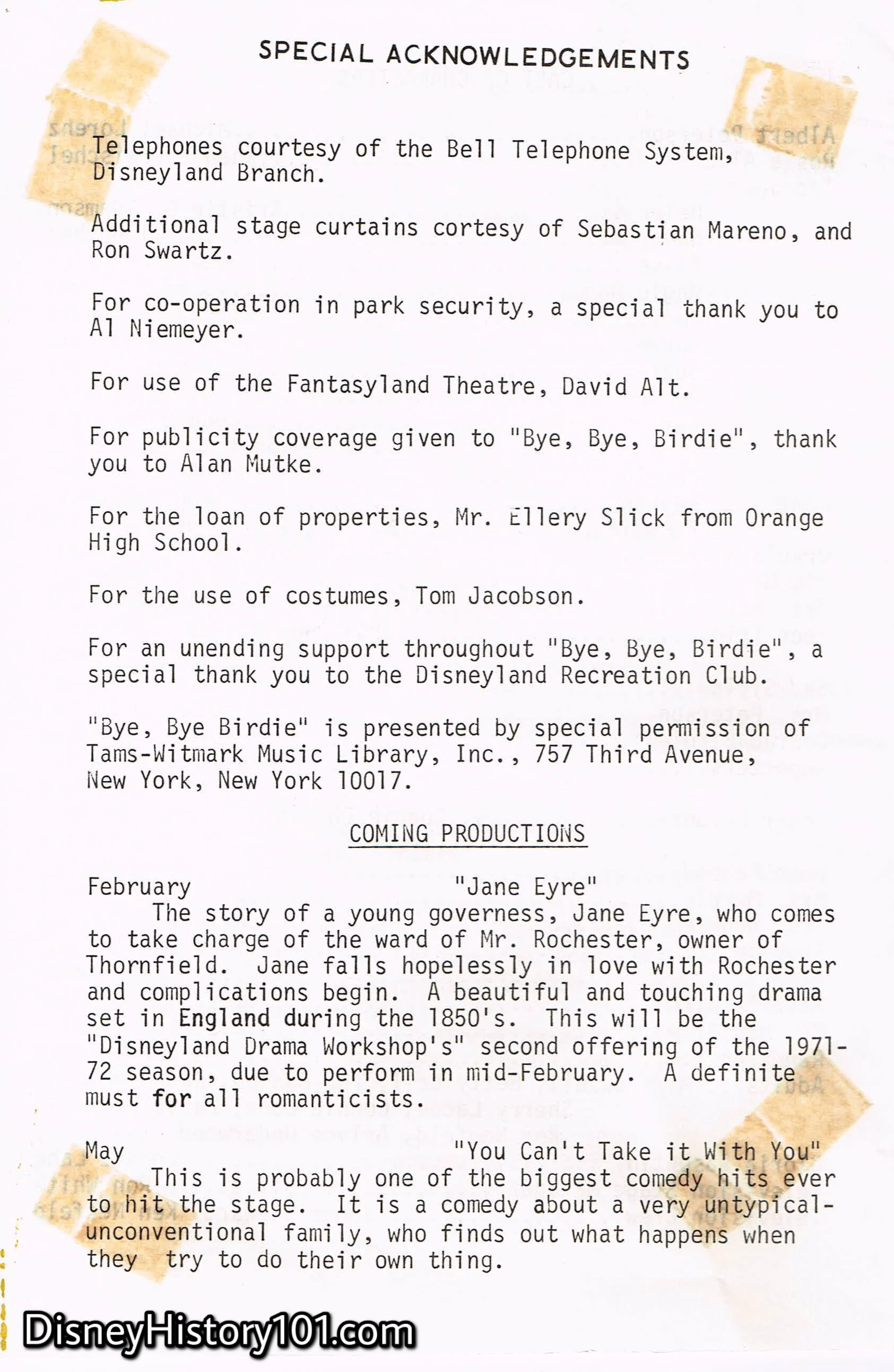
Both “Jane Eyre” and “You Can’t Take It With You” were scheduled as Disneyland Drama Club “Coming Productions”, but only one of these will generate enough interest to become a reality. Still this future production was still moths away, and (though not advertised here) another exciting production - “Rumplestiltskin” - would come along first!
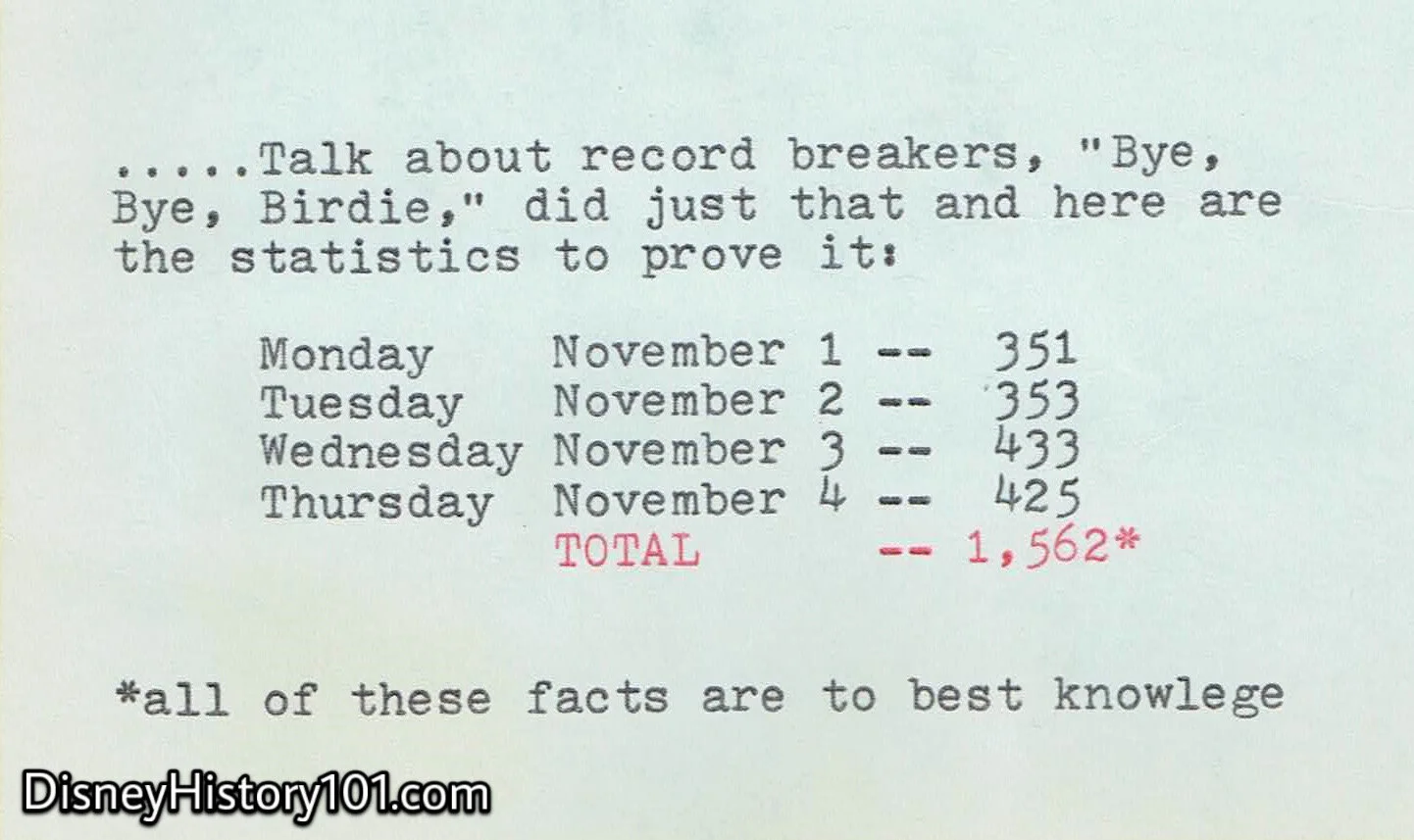
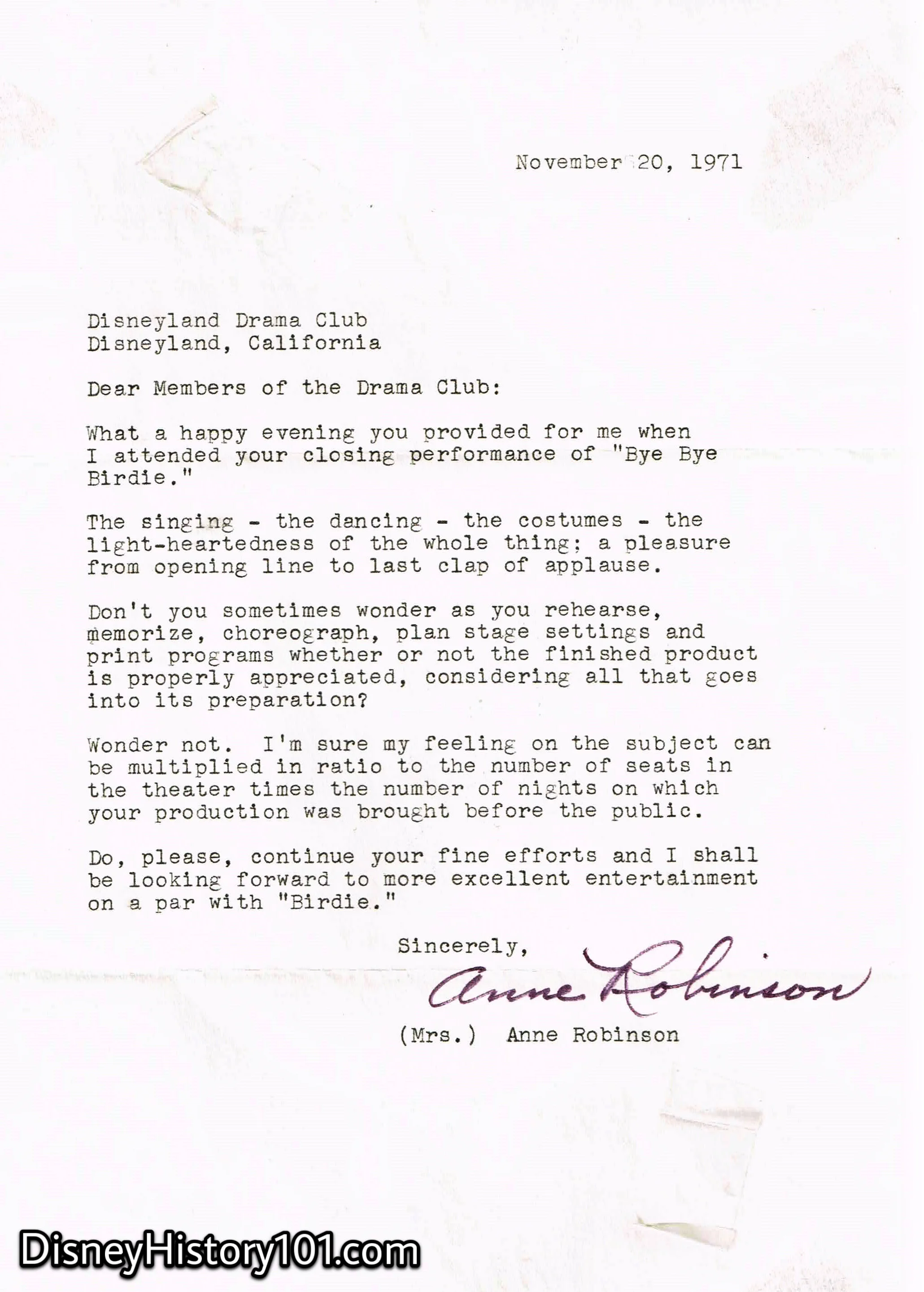
At least one guest wrote a letter of thanks to the Disneyland Drama Club, for their production of “Bye, Bye, Birdie”.
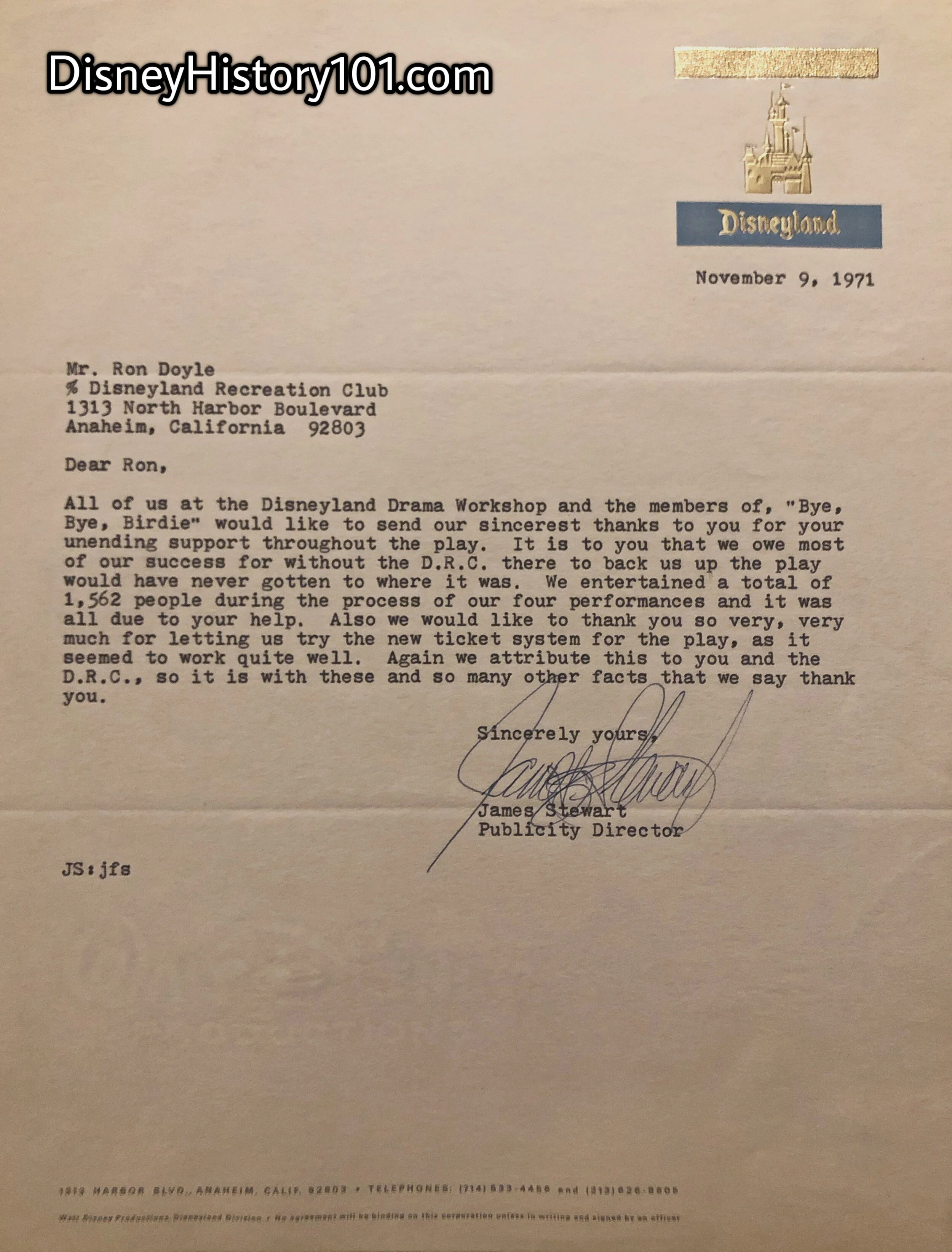
During the late 1960s and 1970s, the Disneyland Recreation Club was a supporter of many of Disneyland’s own “in-house” extracurricular employee organizations - softball leagues, chess clubs, christian clubs, and many more! The Disneyland Drama Club was appreciative of all the support that it’s members received from the Disneyland Recreation Club, that the President often expressed thanks by way of letters like this one.
If you ever had a role at Disneyland during the first 50 years (or so), then you likely were admonished at some time to “know your D.R.C. council.” With all this talk about the D.R.C., you may be wondering just what it stands for. If you were only a guest of Disneyland, then you may have never heard of the D.R.C., or Disneyland Recreation Club. The Disneyland Recreation Club was formed only a “few months after the drawbridge of Fantasyland Castle was lowered,” according to a column by Bob Penfield (published in Disneyland LINE, Summer of 1965).
The D.R.C. owes its existence to several individuals including Van Arsdale France (of the University of Disneyland), Jan Ayers (of Group Insurance), and others.
It was one of many clubs (or, organizations) comprised of Disneyland Cast Members at the Park and the Hotel (all persons became members of the DRC when they began their employment with Disneyland). Y’know, a wise Mouseketeer once sang, “A good clean sport, a good clean mind will do a lot for you!” Holding a high value to those ethics may be one reason why the company itself, would financially sponsor recreation and entertainment for its employees (or, DRC members).
1956: For instance, the First Annual “End of Summer” Dance in honor of part time employees (who “improved every phase of the Park’s operation”) was held September 7th, 1956 (and these “Via Con Dios Dances” became a tradition during the first decade). The Disneylander periodical (published by the Disneyland Recreation Club) preserves information on many of these events. The First Annual Disneyland Christmas Party was held on December 10, 1956. “The originator and arranger for basic detail was your Disneyland Recreation Club. The council Felt honored and privileged by the success of this party.”
1957: During May of 1957, Iris Schuller (of Latin Imports at the Disneyland Hotel), hosted a series of six self-improvement classes for women (e.g. Makeup and Hair Styling, Walking and Posture, Figure Control and Co-ordination, Personality and Charm, Voice and Diction, and Wardrobe and Color Co-ordination). By 1957, the DRC sponsored a Basketball Team, Bowling League, Softball Team (the first team in the Industrial “A” League of Anaheim to complete a season undefeated), and Toastmasters Club.
1958: Tournaments of the very first Disneyland Golf Club were organized. Futurama Bowl in nearby Garden Grove hosted bowling tournaments. The first meeting of the Gun Club was organized and held in January of 1958. The Garden Grove Women’s Club hosted the very first Sweetheart Dance on February 14th, when Disneylanders were encouraged to have a Date Night of their own.
1959: The following year (in the Winter of 1959), the D.R.C. sponsored the “Ben Hur” Theater Party - four busses carried 219 Disneylanders and their friends to a theatrical showing of the newly released Ben Hur. Many of such outings were subsequently scheduled.
1961: The D.R.C. Spring Frolics party awarded prizes like a color TV. The DRC 1960-61 Bowling League reached a grand climax at the Annual banquet held at the Garden Grove Elks Club. Trophies were presented to 29 individuals and the sponsors of the Silhouette team, the league champions. Hills Bros.' team finished in second place followed by Chef's Linen in third.
By the summer of 1965, the D.R.C. had supported a Disneyland Masonic Club, “the Gun Club, the Chess Club, Golf Club, Bowling, Softball, Basketball, the Square Dance Club, the Riding Club, and the Intra-Mural Slow Pitch Softball League, which was almost always dominated by supervisors,” according to Bob Penfield, in Disneyland LINE (of Summer, 1965).
A number Disneyland employees ran for DRC office, in order to be elected as the fortunate few who volunteer for the particular responsibility (and pleasure) of planning, organizing, and working recreational events that their fellow Disneyland Cast Members would enjoy! The DRC came to have a President (like Bob Phelps, c.1968), a Vice President, a Treasurer, a Chairperson, a Club Advisor, a Secretary, a Social Advisor, and a Sports Advisor. Weekly meetings of the D.R.C. council would be held at the University of Disneyland (usually, in the morning, weekly) and suggestions for new clubs would be passed before the D.R.C. Council. These were not managed by the DRC, but merely suggested for their approval and support. If you liked skiing, bowling, mountain climbing or golfing, there was a Cast Activity Club for you. Thanks to the D.R.C., Disneyland had a Basketball Club, a Bowling Club, Chess Club, a Golf Club, a Gun Club, a Intra-Mural Slow Pitch Softball League, a Riding Club, the Trap and Skeet Club, a Softball League , an American Sign Language Club, a Christian Fellowship Club, a Square Dance Club (called the “Disneyland Squares”), a Disneyland (ballroom) Dance Club, the Disney Animated Film Club, the Anglers Club, a Disneyland Chapter of the Weight Watchers Club, and many more recreational organizations to choose from. And, who could forget the annual Disneyland Canoe Races? Many (fellow cast) members of these clubs would shine bright with stellar talent that would have otherwise been unnoticed, if not for these clubs (who knew Vesey Walker or Ray Van De Walker liked to golf?). Again, these clubs would not have existed, if not for the approval and support of the DRC!
In turn, the various Disneyland Recreational Club occasionally supported and helped promote events for organizations held within the Park! For instance, in 1969, the Disneyland Hotel Embassy Room hosted the Disneyland Recreational Club Christmas Dance (featuring a buffet with prizes), on December 14, 1969, from 8:00 p.m. to 1:00 a.m. Then, there were those aforementioned “Disneyland Squares” (of over 150 members, including their club founder, resident barber, and “caller” Don Drew), who helped welcome near 12,000 guests to “Disneyland’s Country Music Spectacular” held October 16, 1971. Despite a little rain, the event was a big success, and paved the way for the “Country Music Night at Disneyland”. Though the Disneyland Squares membership would triple, allowing them to become self-supporting, and not relying on D.R.C. funds through the 1970s, one must recognize that this all started with the immense support of the Disneyland Recreation Club!
The DRC Federal Credit Union was established in 1968, originally housed in room 287, on the 2nd floor of the Administration Building (on the Harbor Boulevard side). Within just 3 short months, it had grown to more than 500 members, turning payroll deductions into loans for employee members.
The Disneyland Recreation Club also published the “Disneylander” for employees of Disneyland, Inc. This publication was followed by the quarterly Disneyland Backstage magazine, which was co- published by the D.R.C. and the University of Disneyland.
By November of 1972, The Center opened (with its Quiet Room, Credit Union, Group Insurance Offices, Career Planning and Placement, and other facilities). You may recollect enjoying a coffee of hot chocolate at The Center while enjoying a few moments of quiet or watching a few minutes of television while taking a break. The Disney University Manager’s Office was also located at The Center. But more importantly (and on track with our topic), The Center became the location where Disneyland Cast Members would sign up for Disneyland Recreation Club events.
The face of the Disneyland Recreation Club Council Board changed frequently, with new members joining the Disneyland family annually (and of these, DRC Chairperson Candidates appearing on the DRC Election Ballot, hoping to win a spot on the Council). These lucky individuals would continue to support the “new sign-ups”, hear and approve the new suggestions for clubs, or handle and track the discount tickets sold for concerts, games, and other D.R.C. sponsored events. Perhaps you recollect scanning the pages of “Disneyland LINE” magazine for the “DRC Calendar of Events”, or contacting the Center for more information. Without a doubt, the most memorable ticketed events (arranged through the DRC through the years) include the DRC Annual Family Picnics, the Annual Christmas Parties and Dances (like the one held in 1964 when Wayne Van De Walker attended with Diana Reed), the Annual Canoe Races, those DRC summer softball leagues (about 800 Disneylanders supported the men’s and women’s divisions during the summer of ‘77 alone) and annual outdoor feasts, the trips to Dodger Stadium or excursions to Hawaii, and that time tickets were made available to see Disneyland Alumni “Steve Martin In Concert” (during December of 1977)!
As we recall his words of wisdom (published in Wisdom magazine, December of 1959), we’re sure that Walt would have continued to approve of these activities (sponsored by the D.R.C.) which help Cast Members to “get away from the grind” : “I have had fun on the job. I have never have been able to confine that fun to office hours.”
Ultimately Cast Activities was formed to “organize all Resort-wide Cast events, activities and recognition programs including Sports Leagues, Spirit of Disneyland Resort, Service Awards, Little Monsters, Family Holiday Party, Cast Film Screening and Canoe Races.”
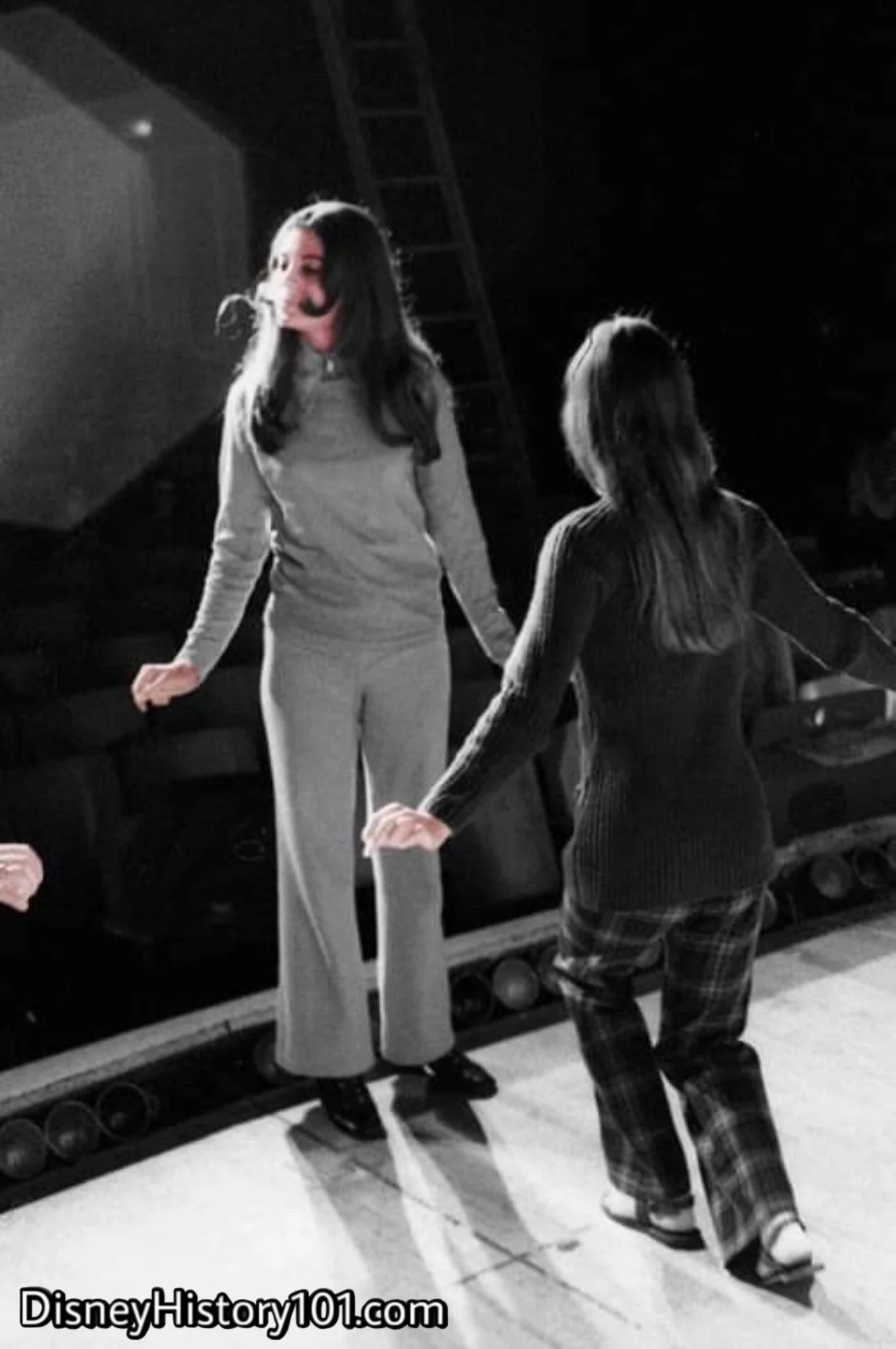
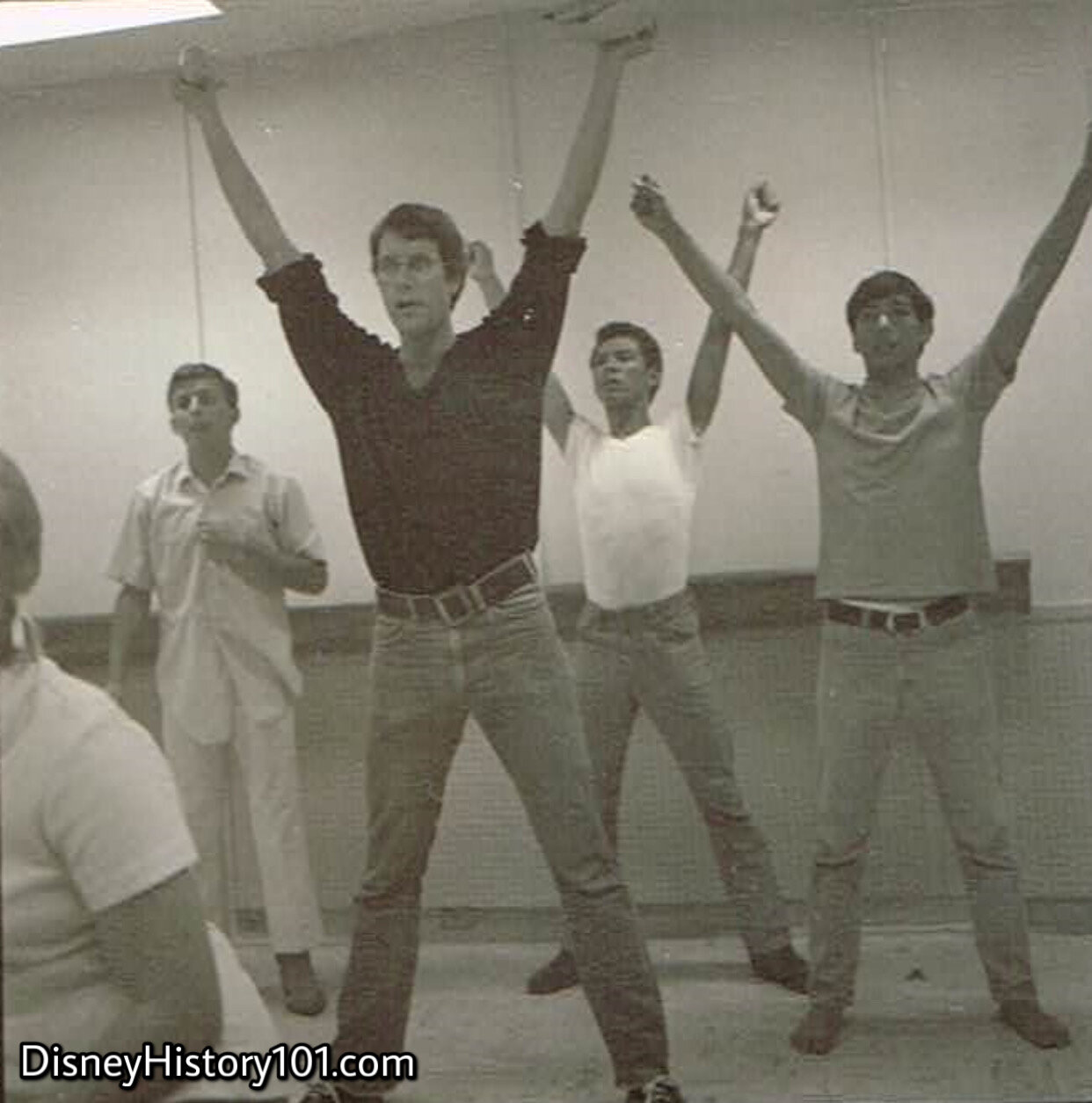
Barnett Ricci, the Park’s chief choreographer, directing movement
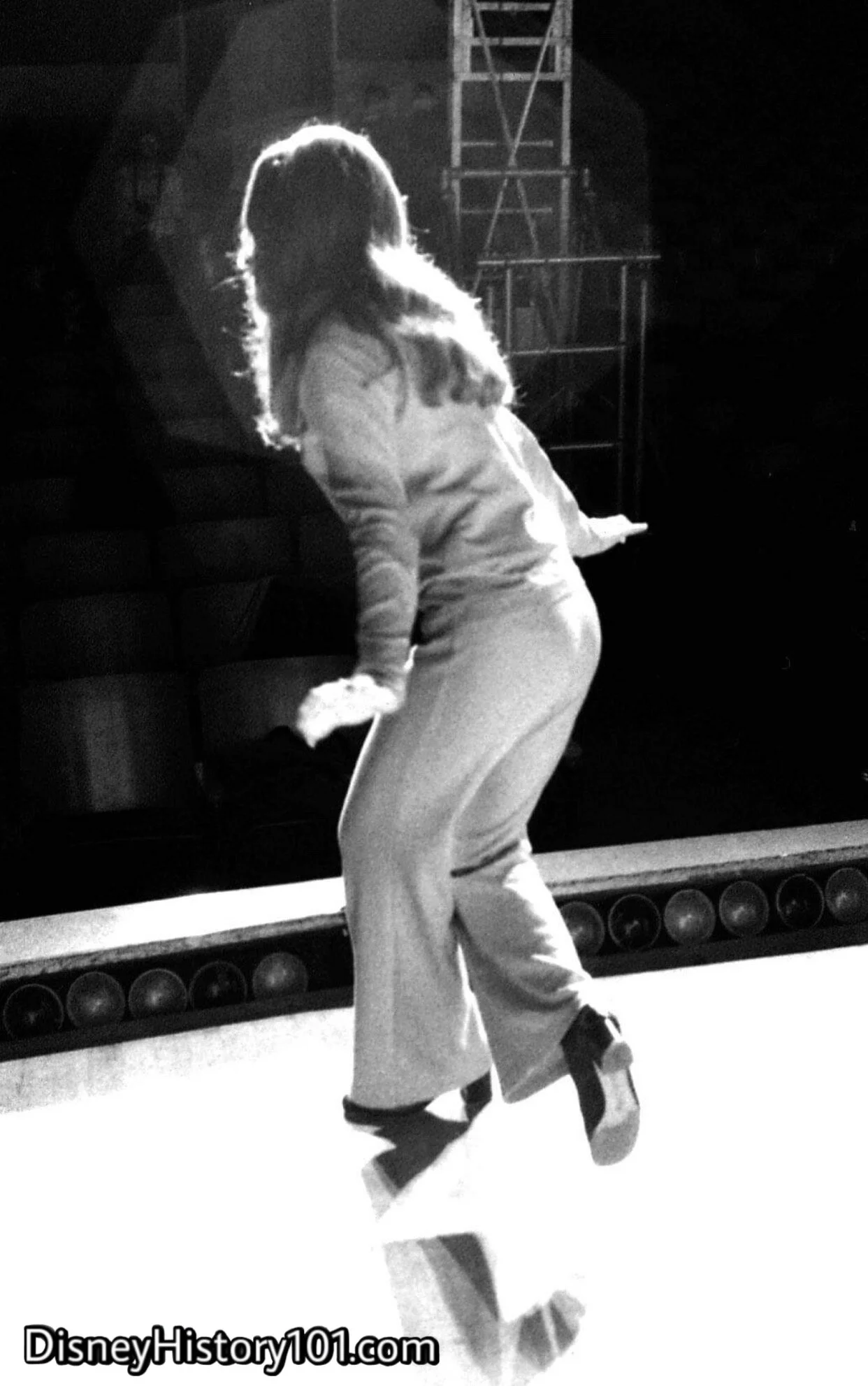
Barnett Ricci demonstrates movement.
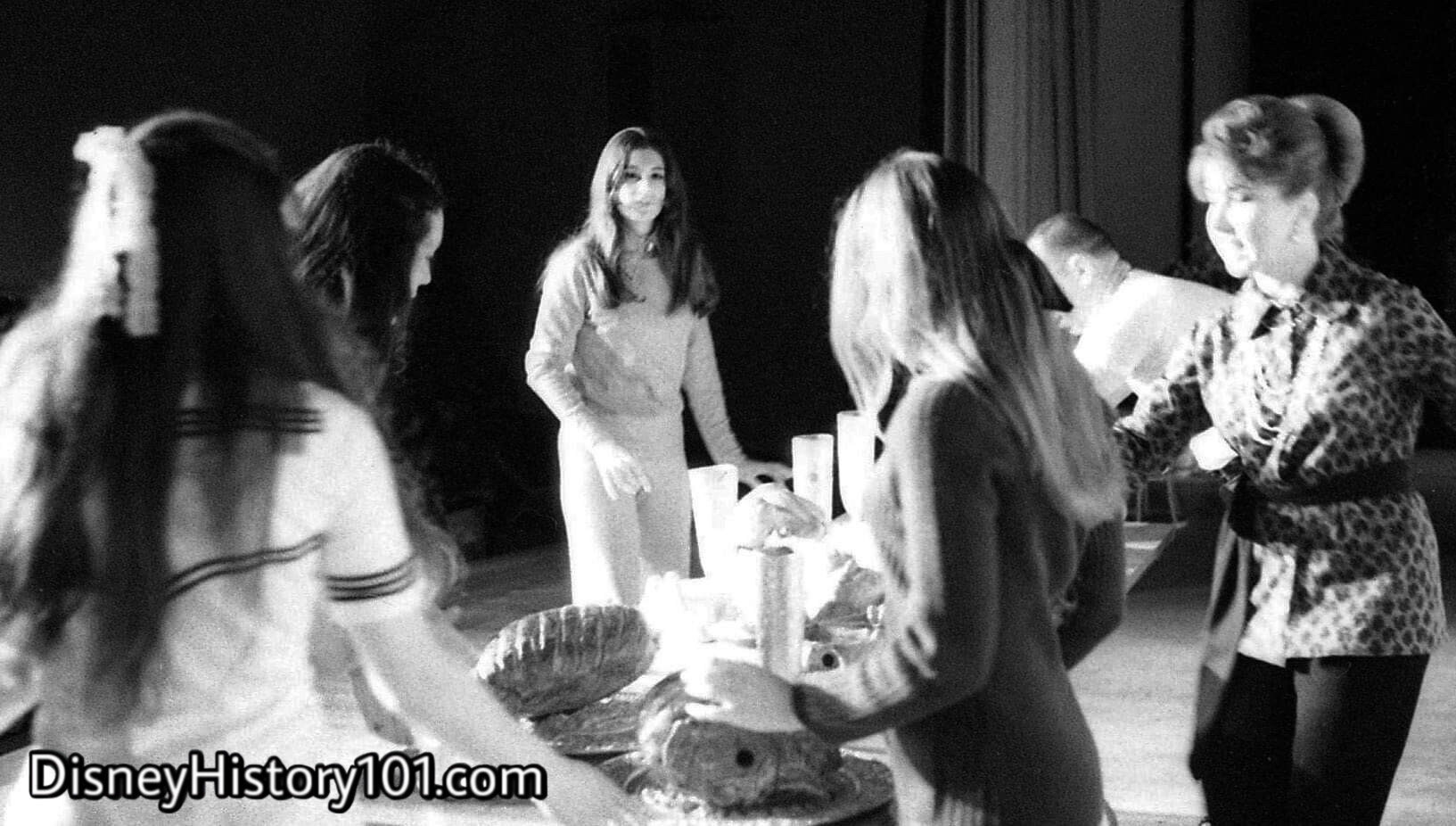
Barnett Ricci (Disneyland Entertainment Show Choreographer) blocking the Feast Scene.
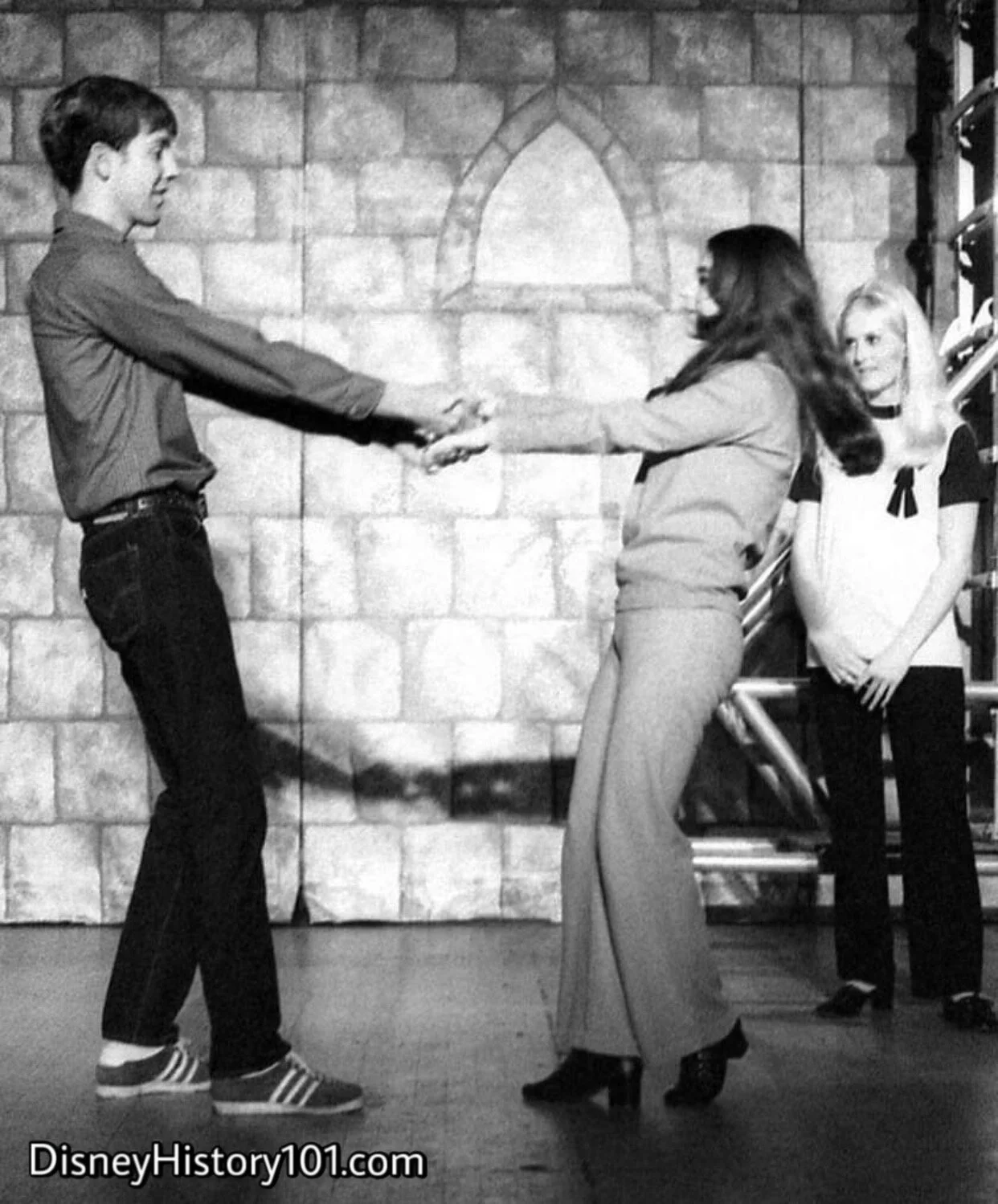
Barnett Ricci teaching Jim how to dance
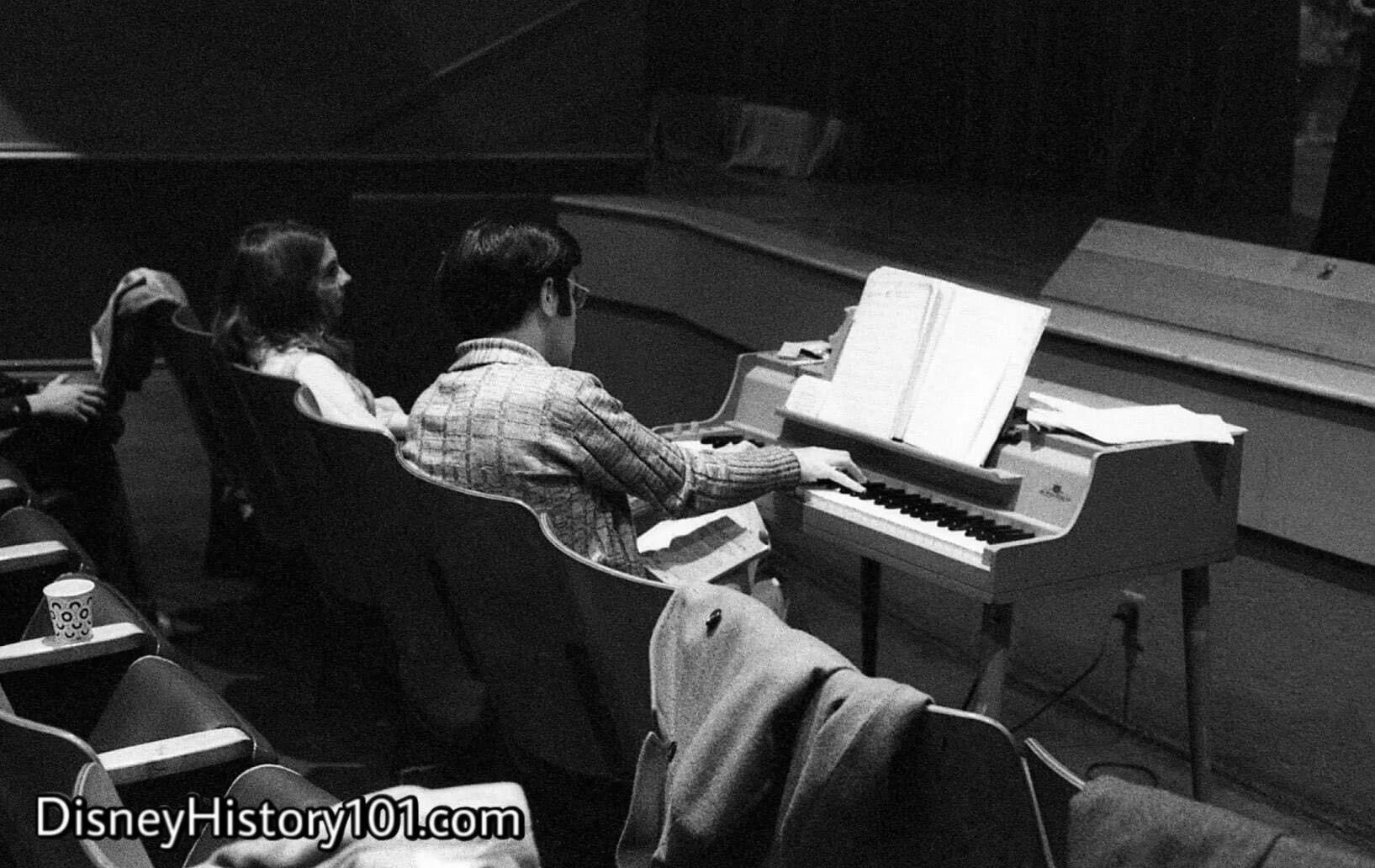
Barnett Ricci sits with our conductor Phil Slep, and his ‘orchestra’
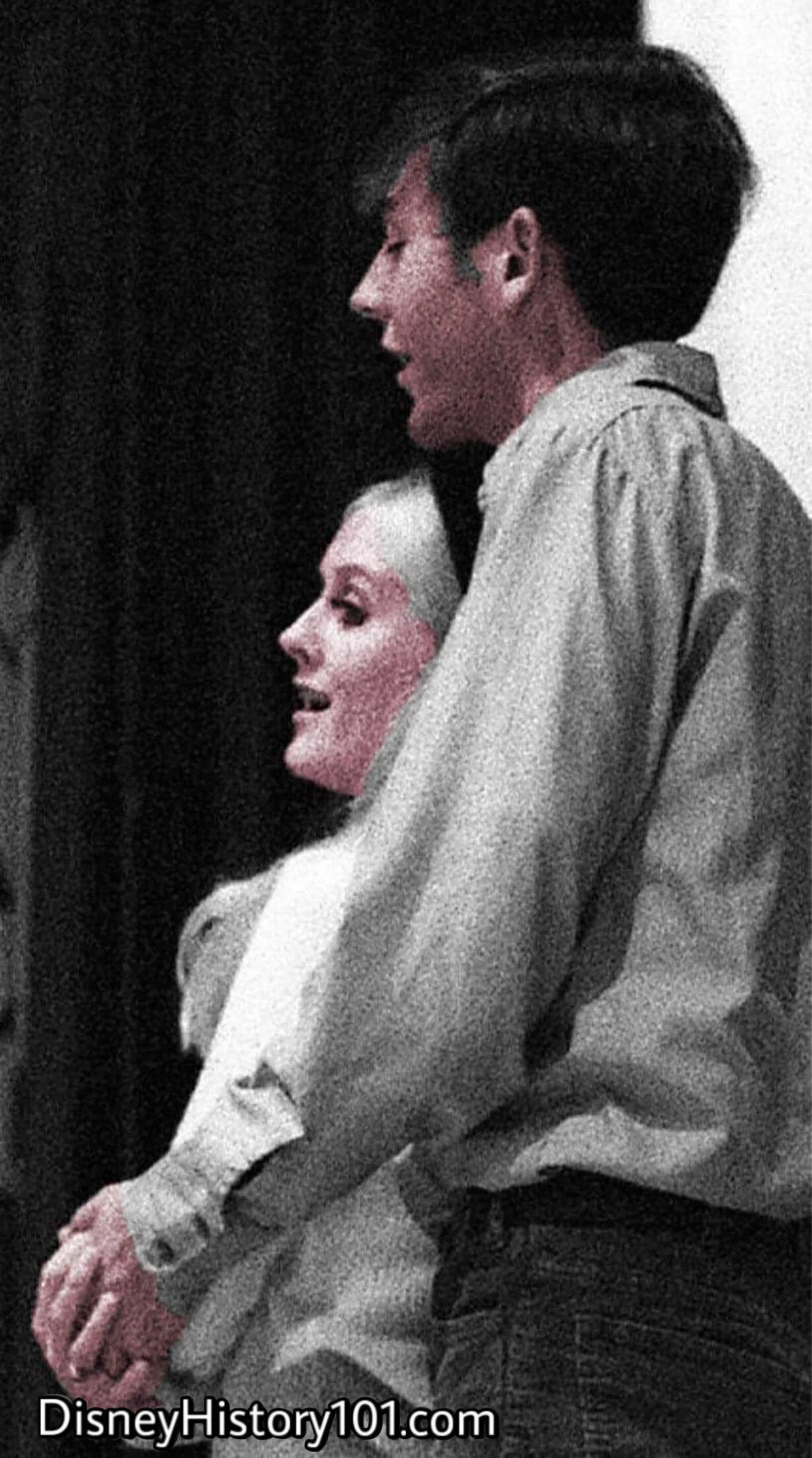
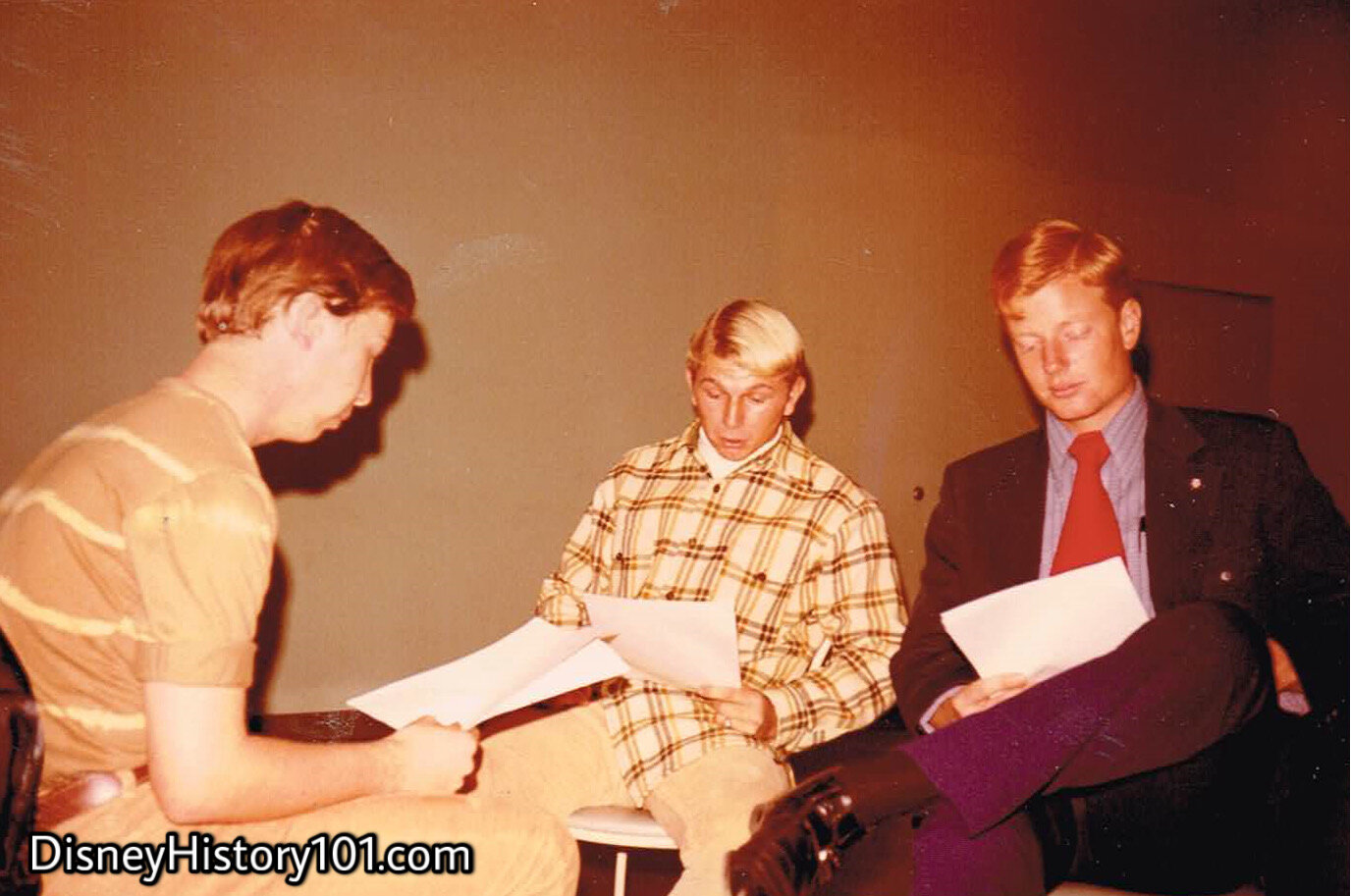
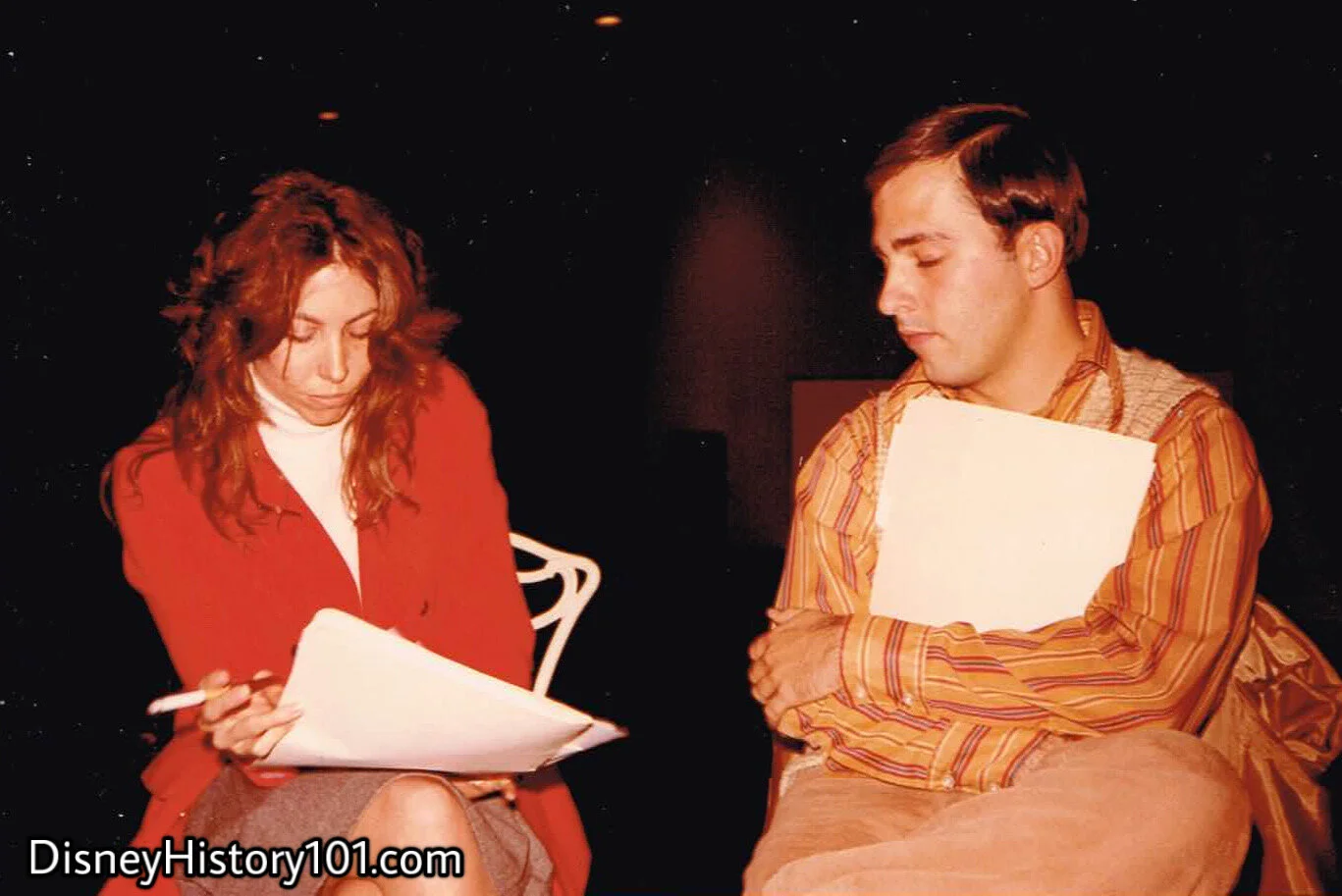
Bonnie and Jim rehearsing
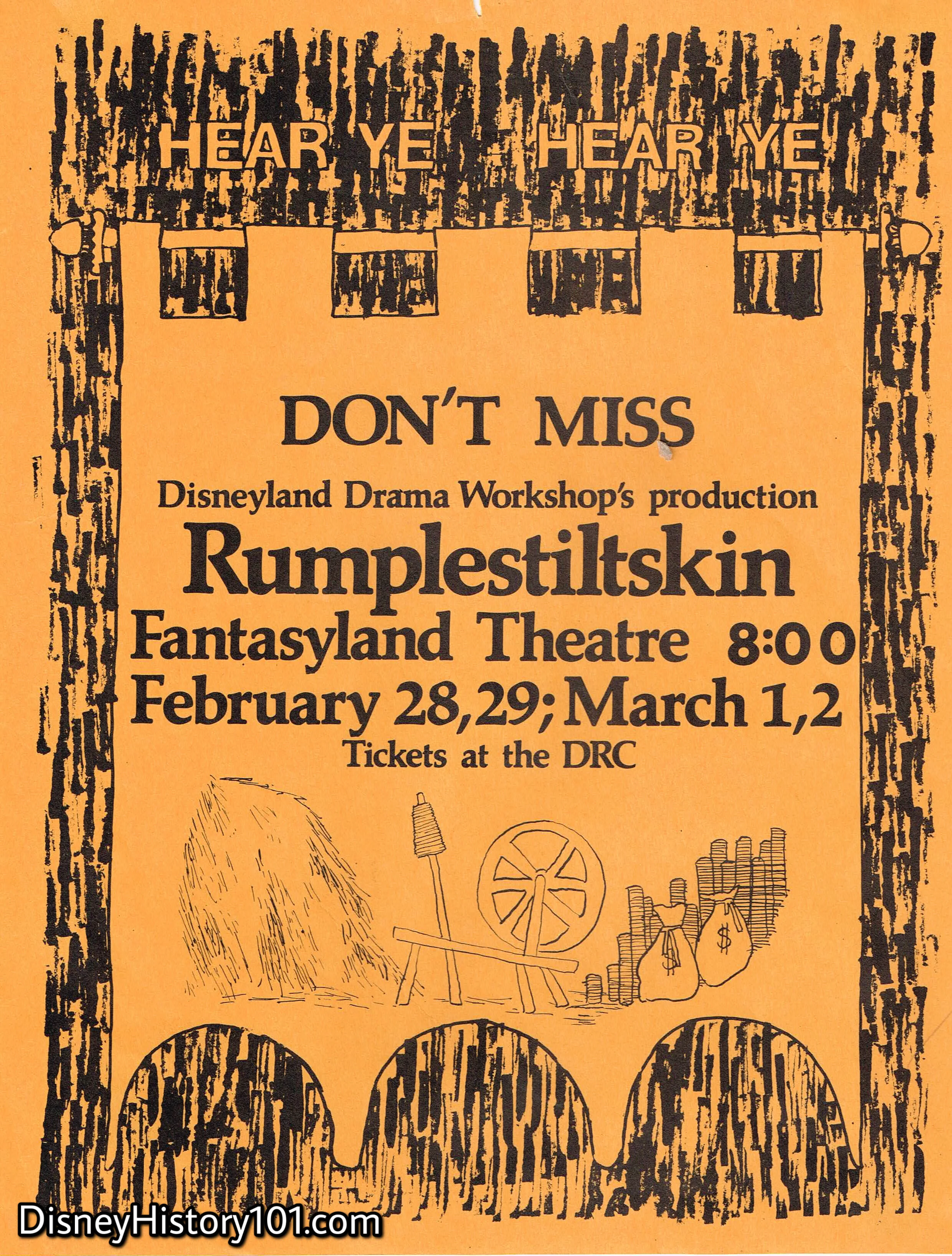
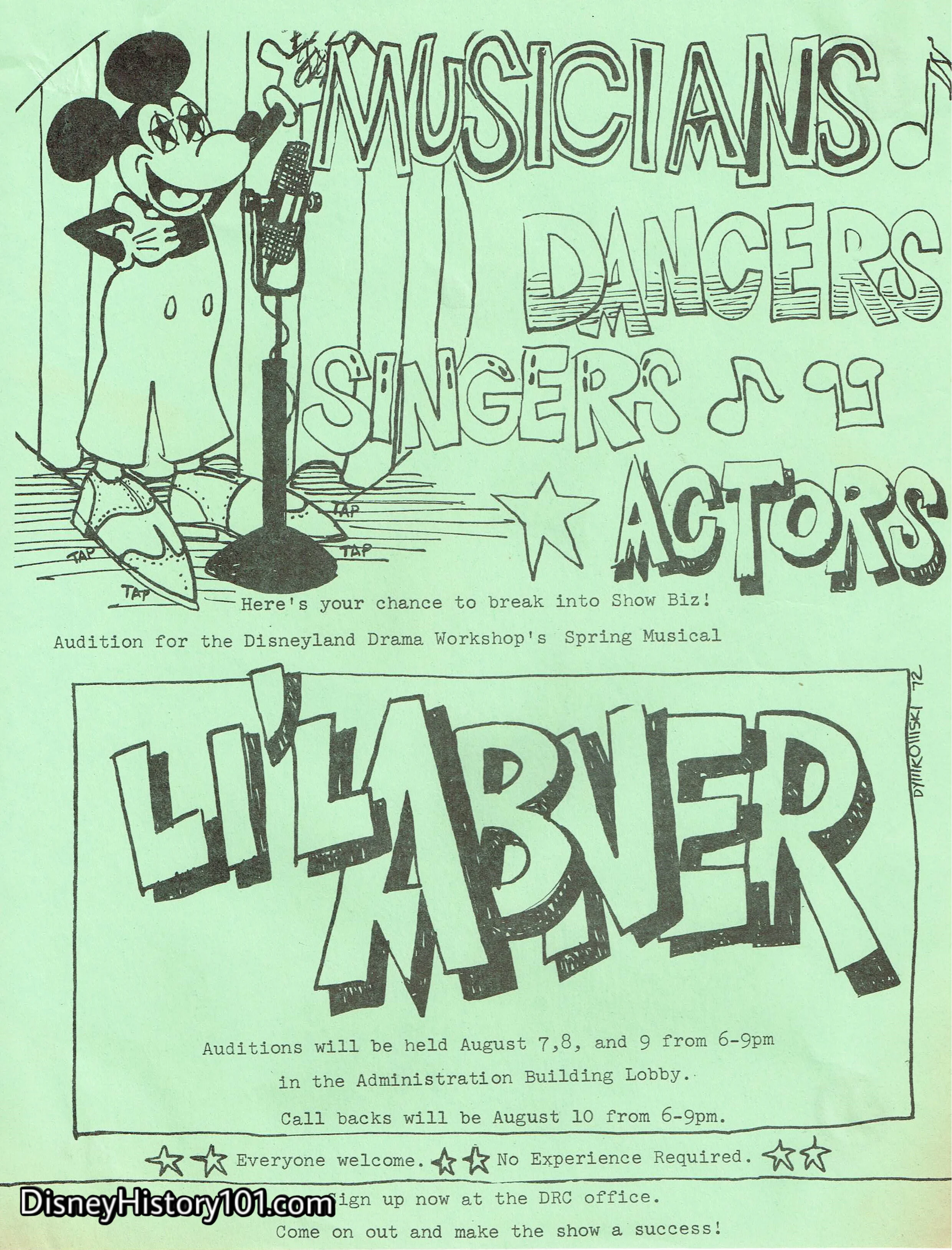
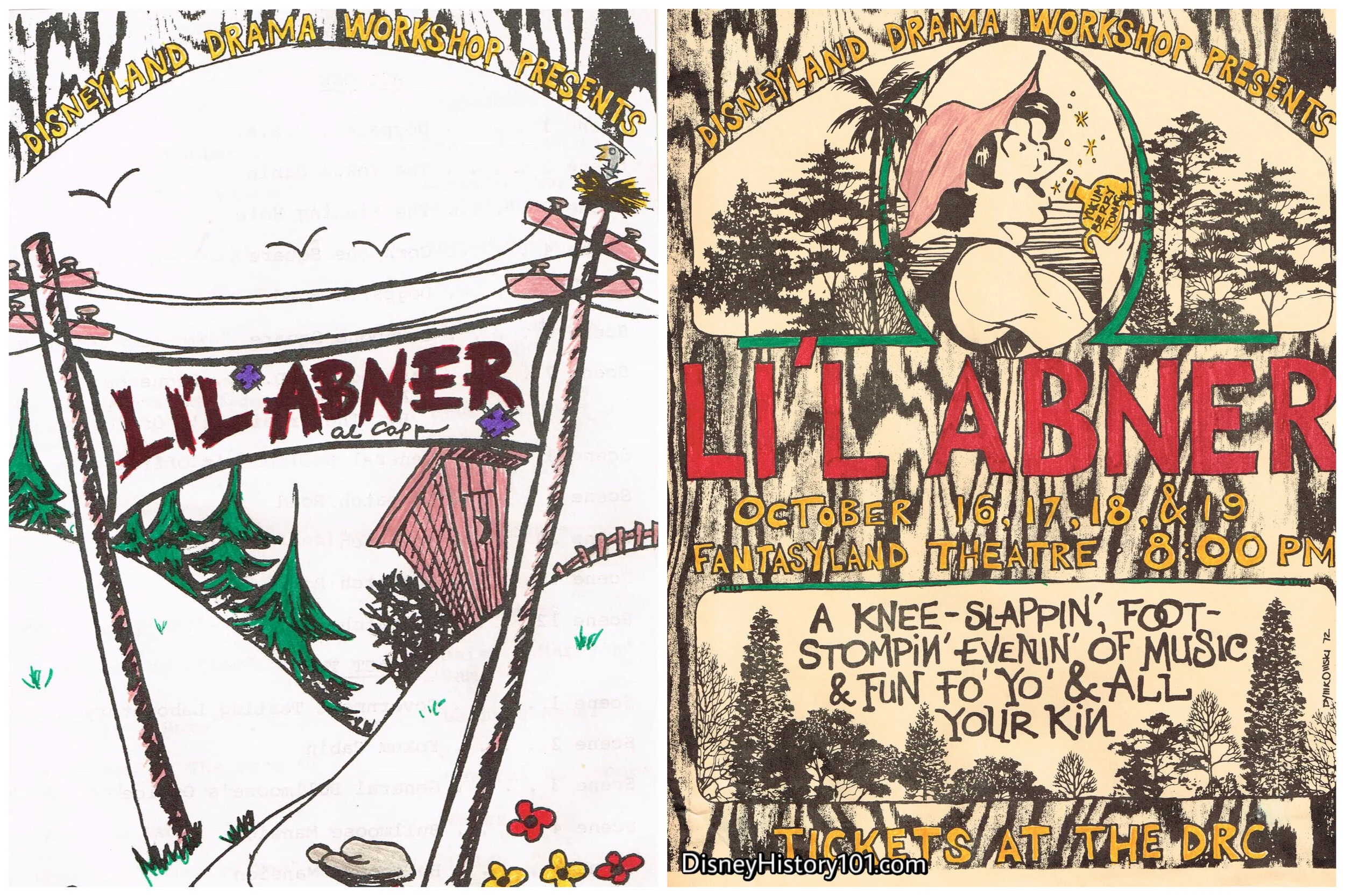
You may have seen these flyers hanging around the D.R.C. during 1972.
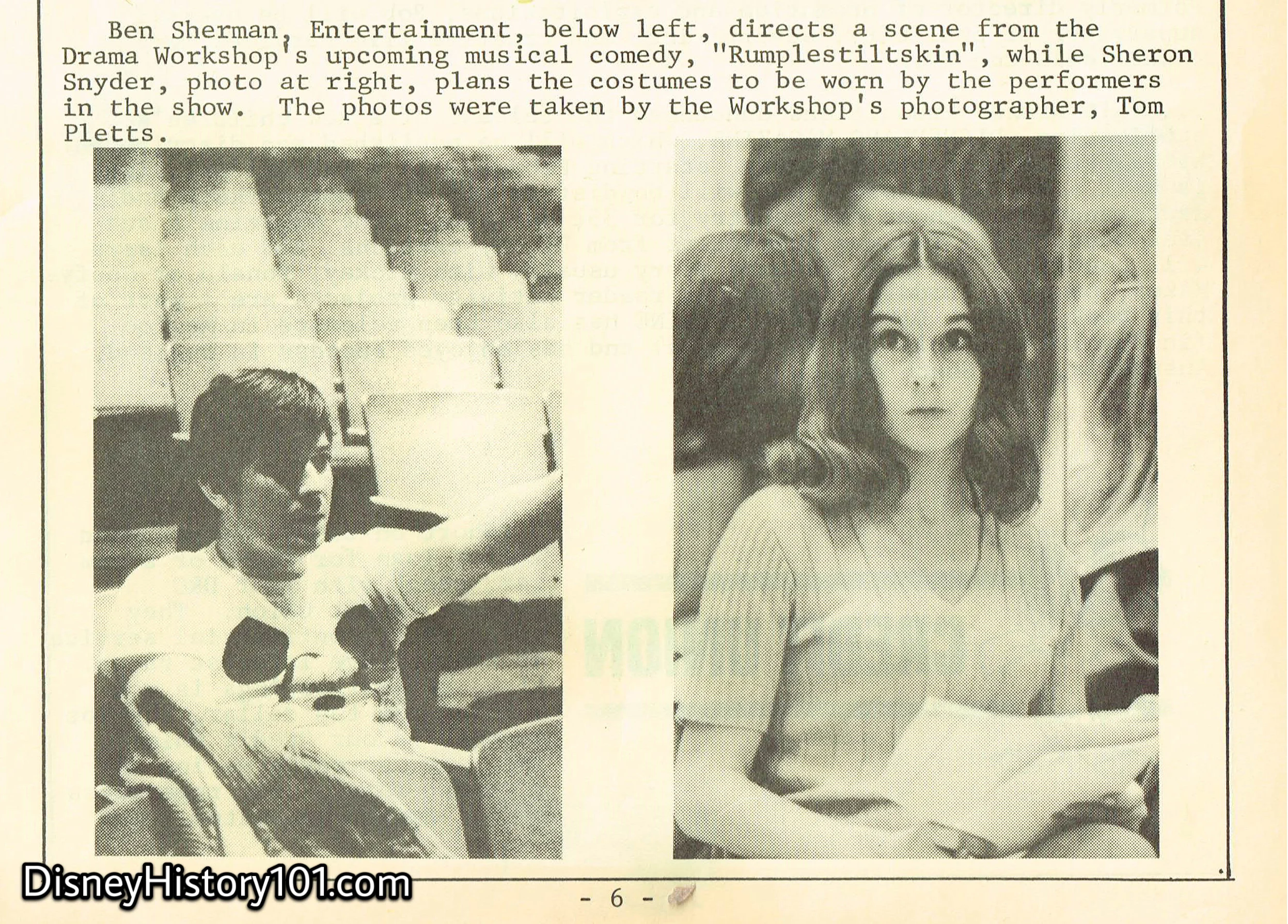
Tom Pletts (in looking over this Disneyland LINE article) recalled : “Ben Sherman, by the way, also produced ‘Chicken Ranching [for Fun & Profit]’. His Park job was managing and producing Character events, parades, & such. Smart guy, and very nice. He’s become a writer.”
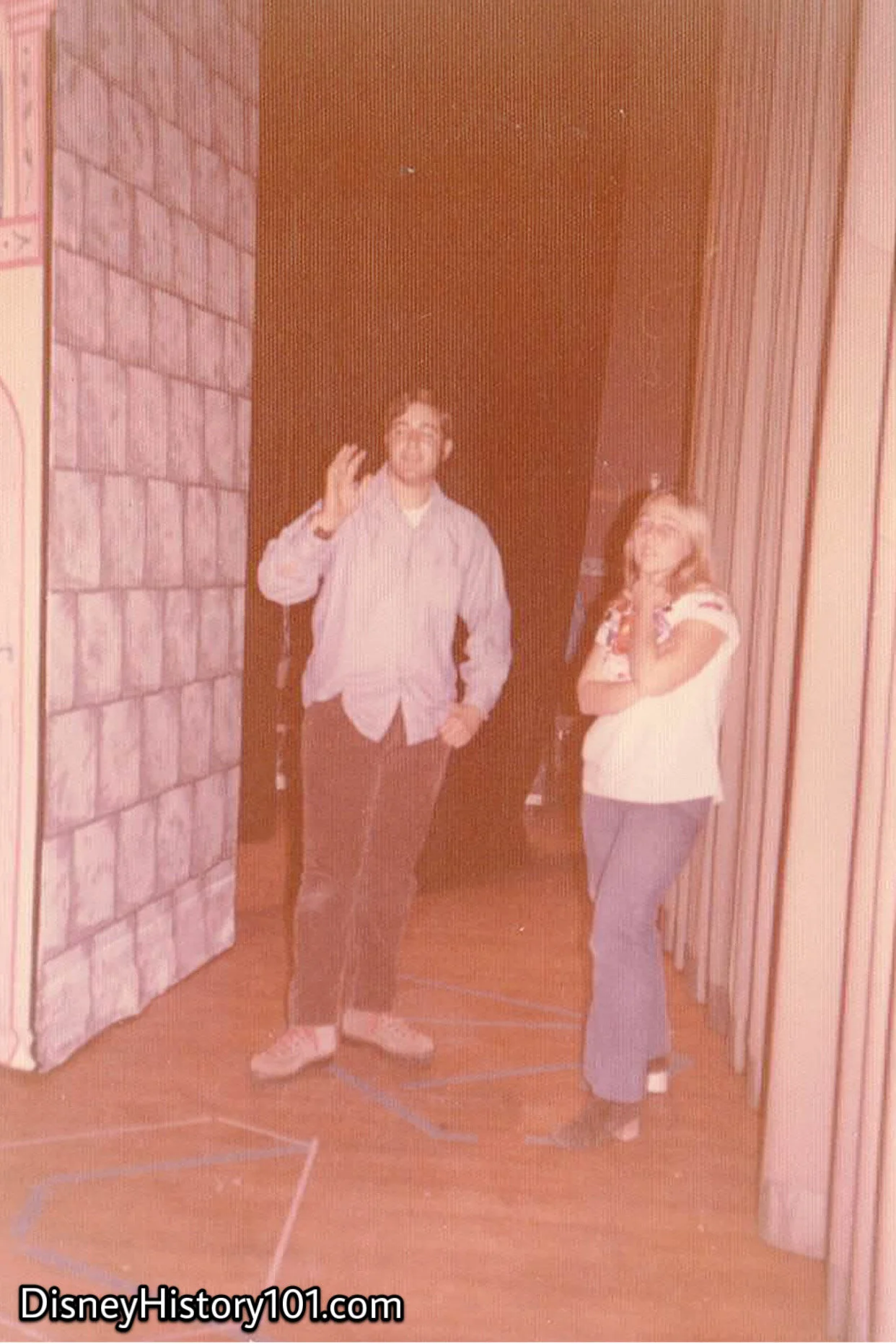
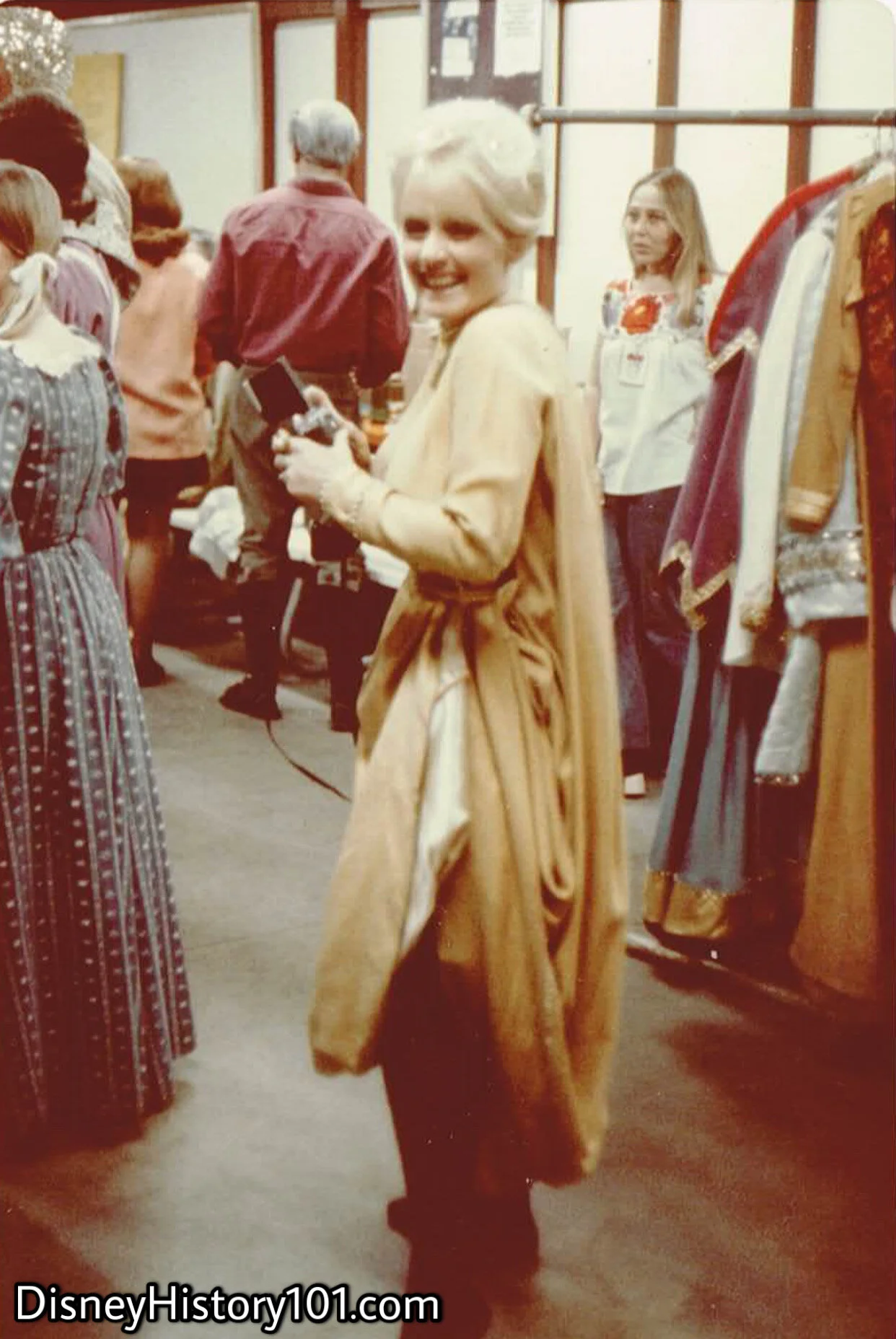
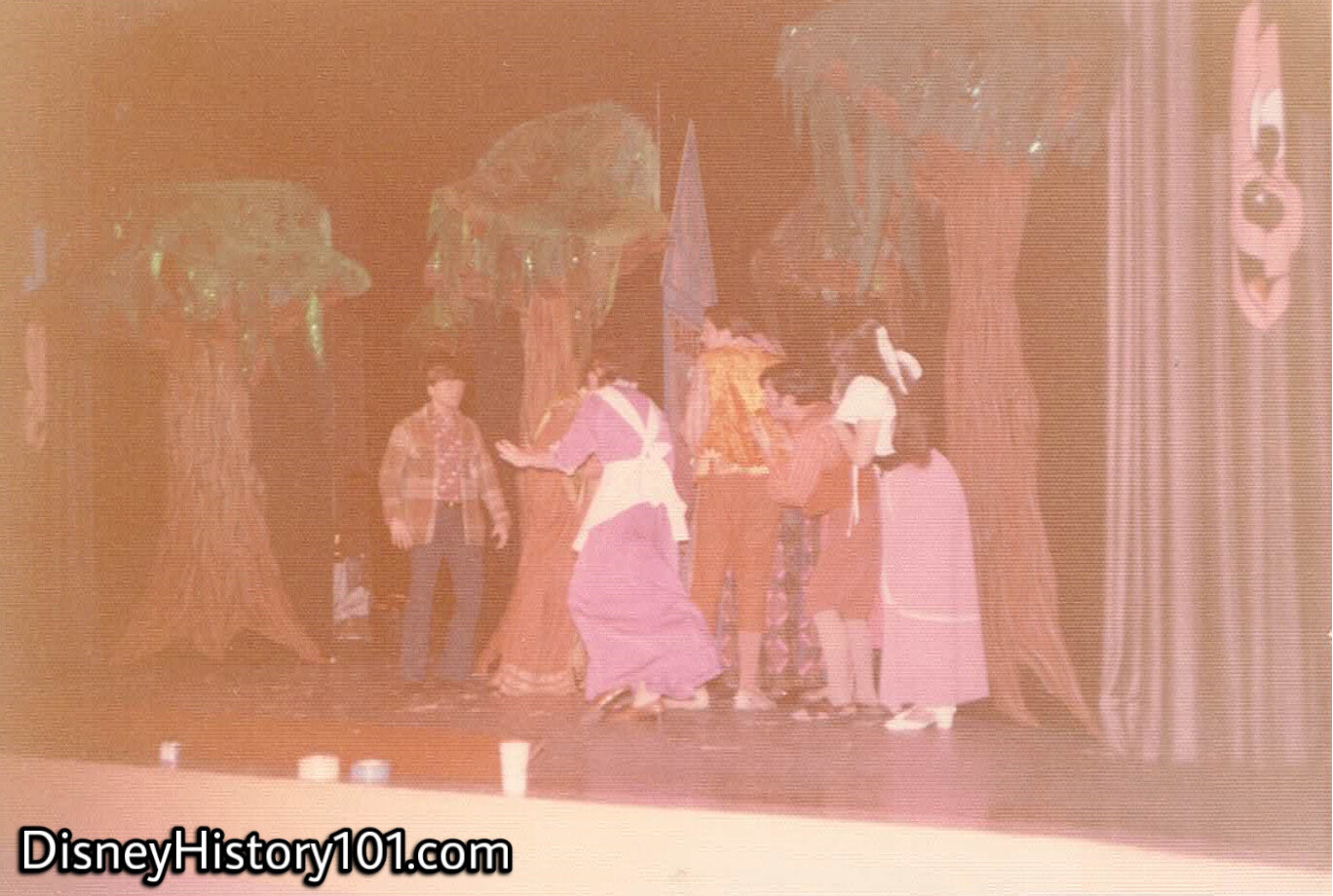
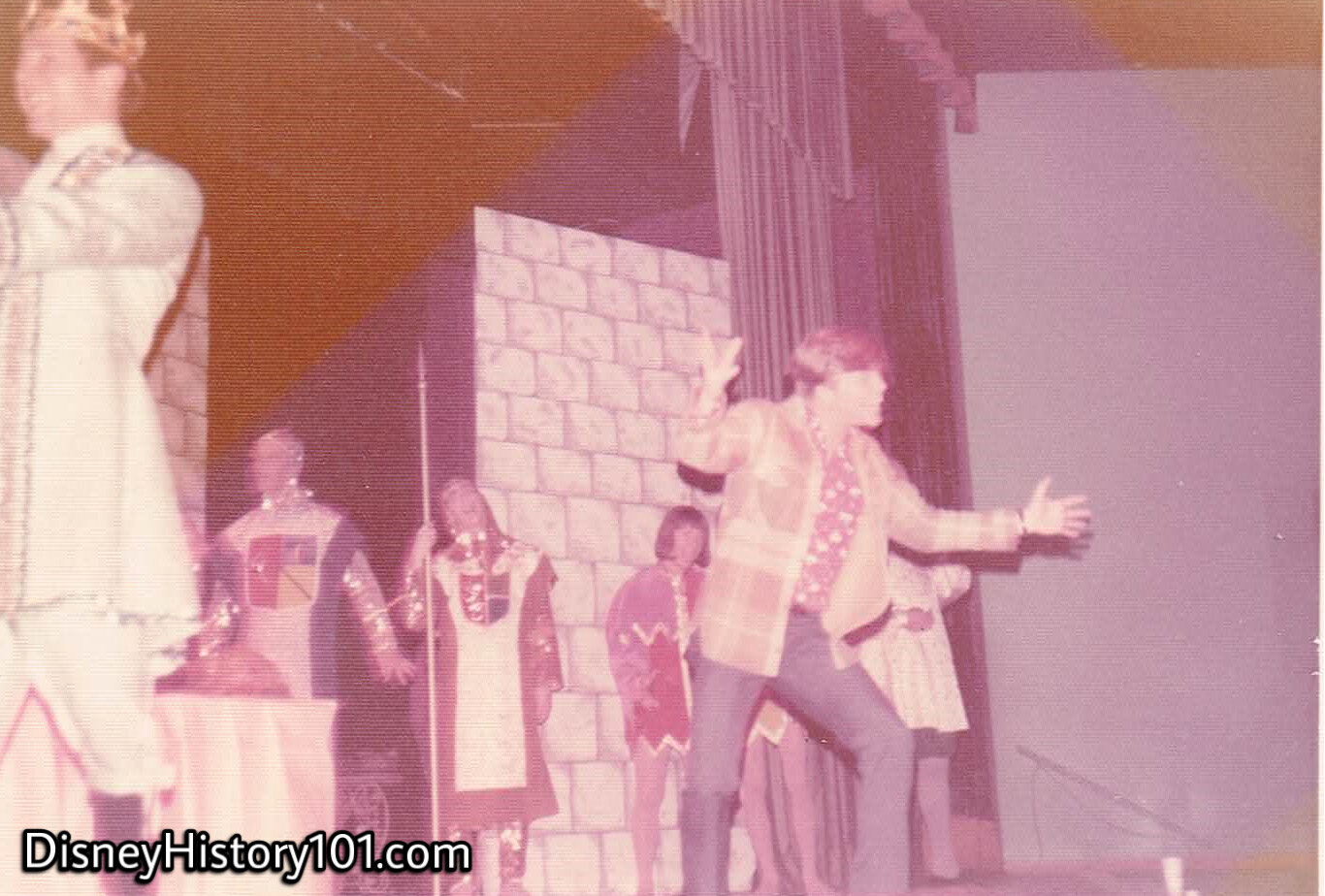
Jim Adams rehearsing his role of Rumplestiltskin.
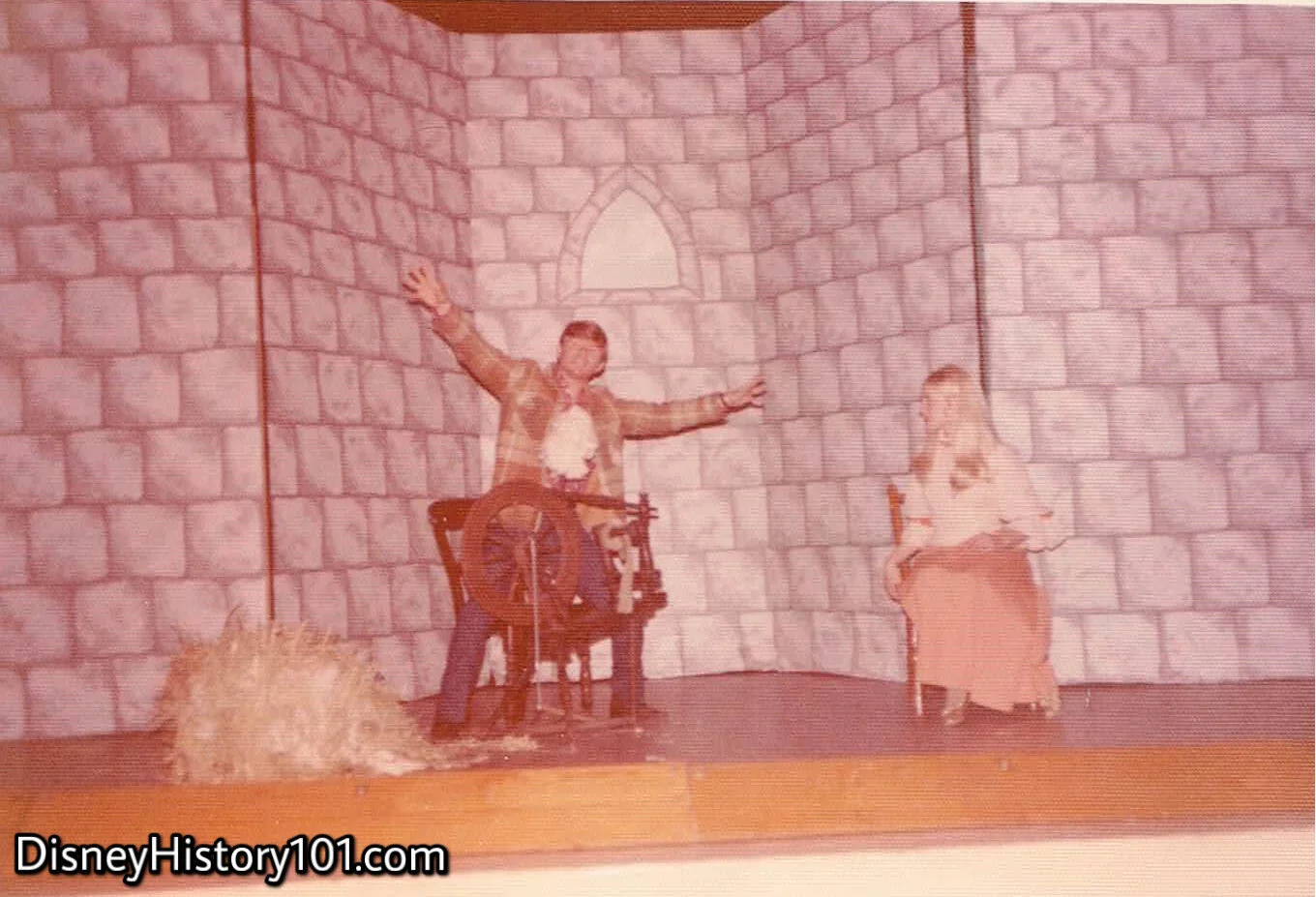
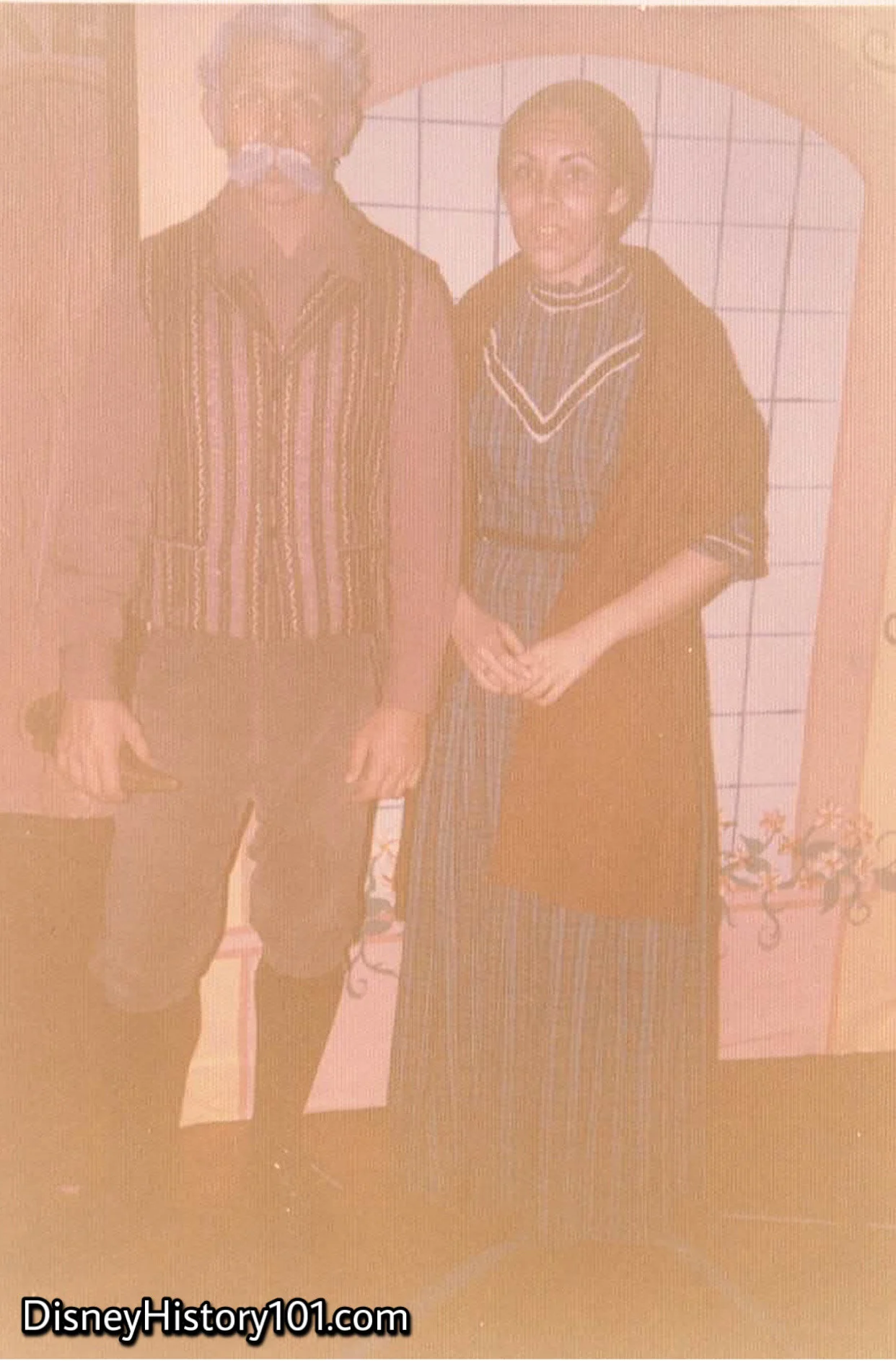
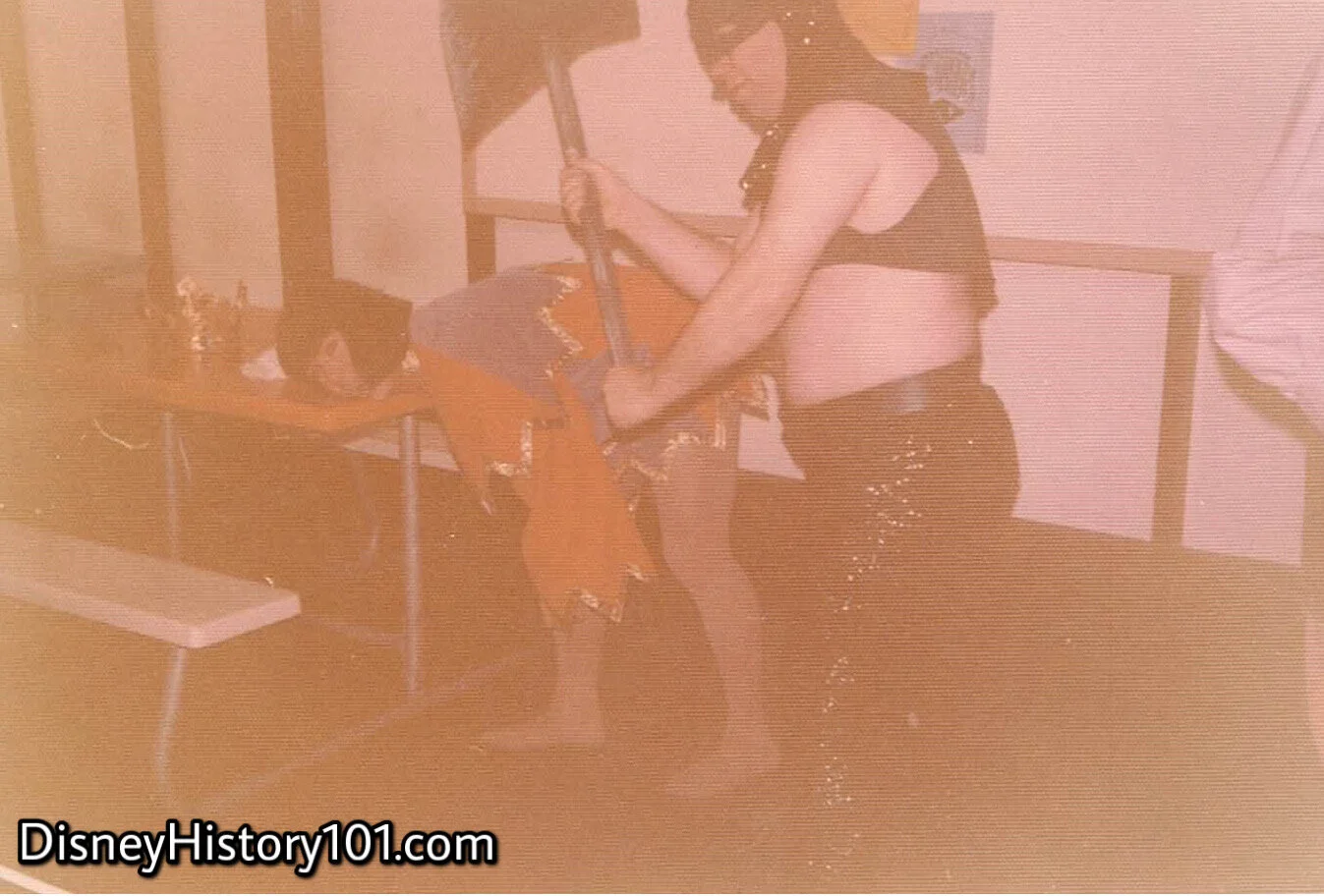
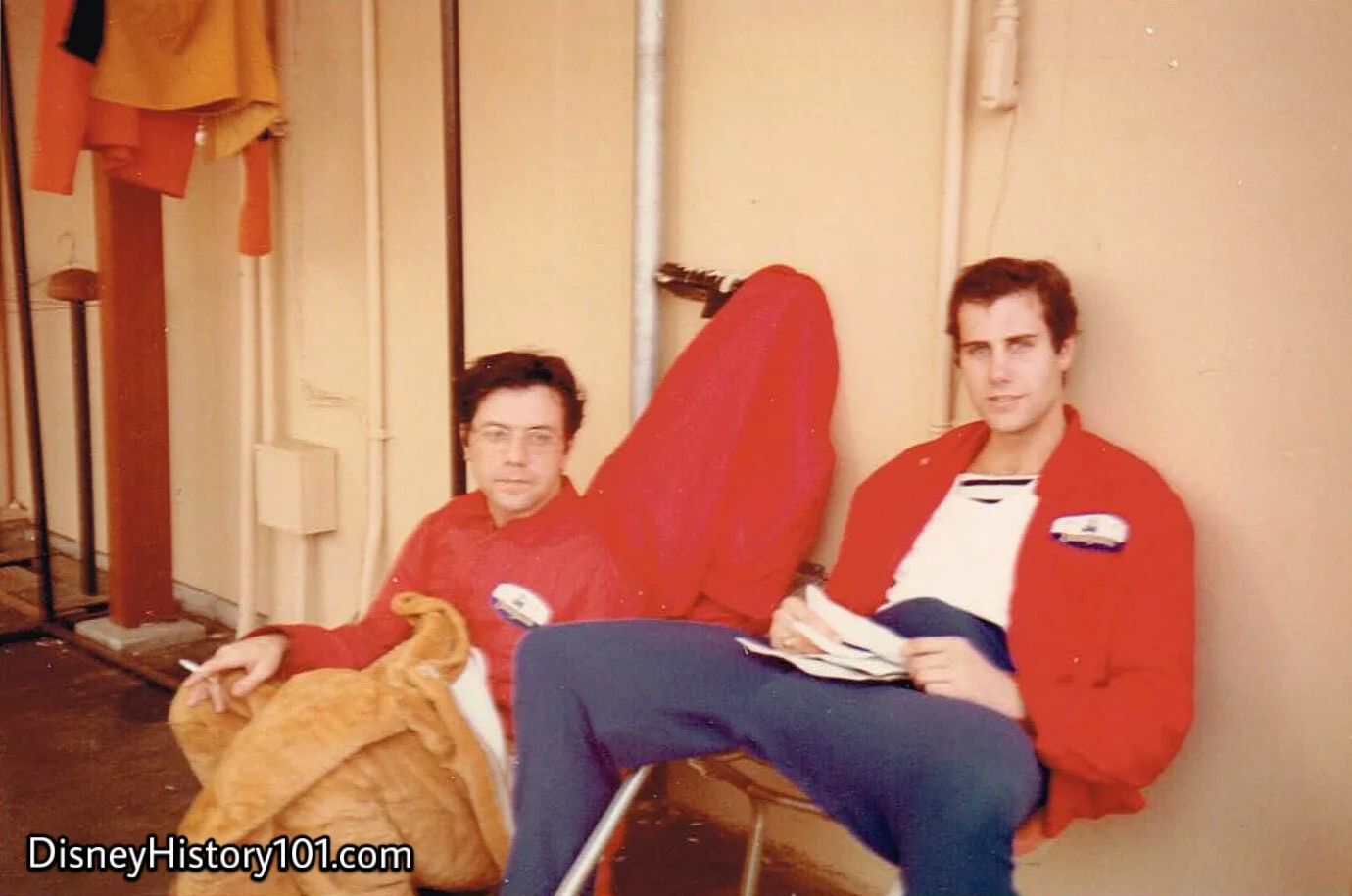
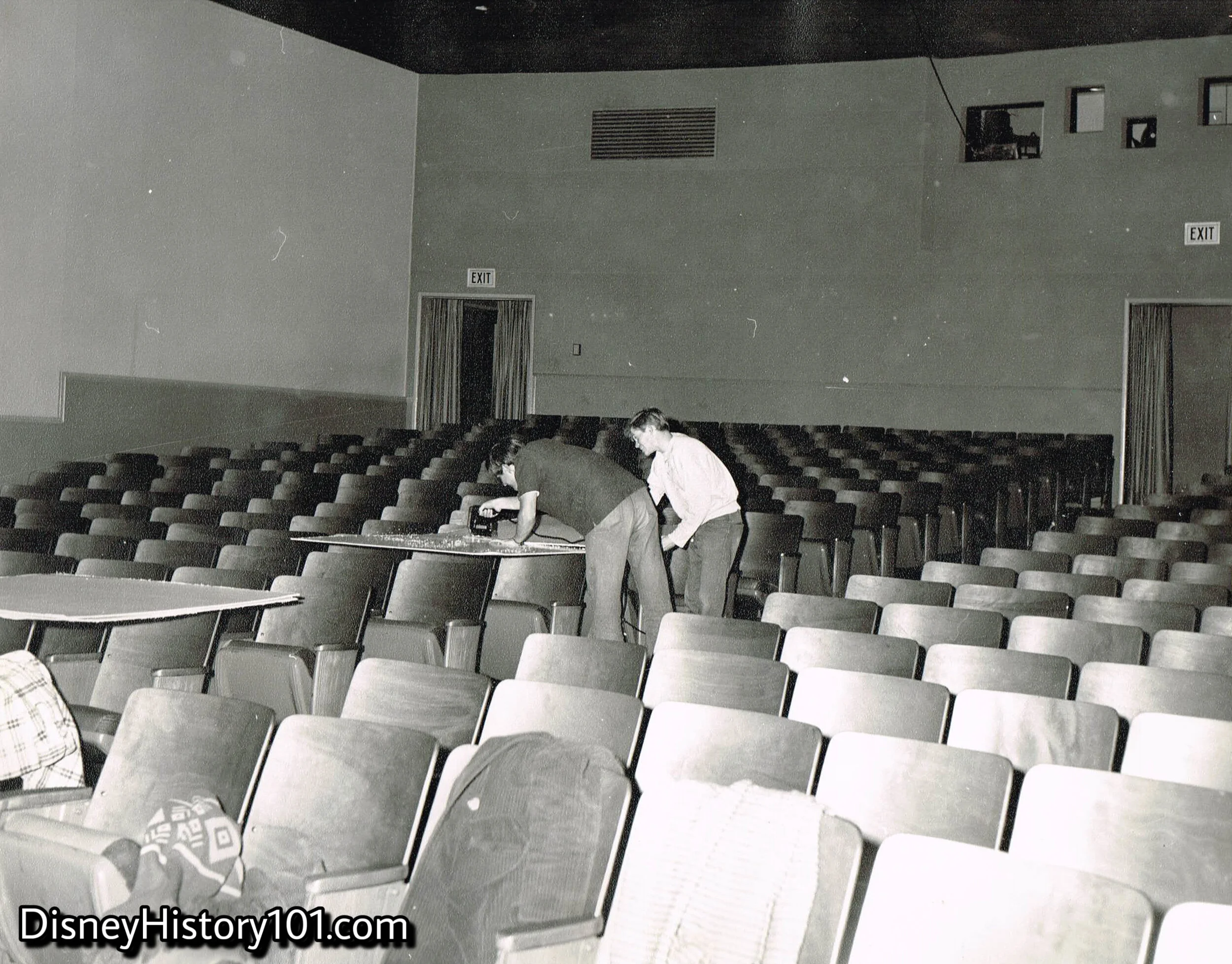
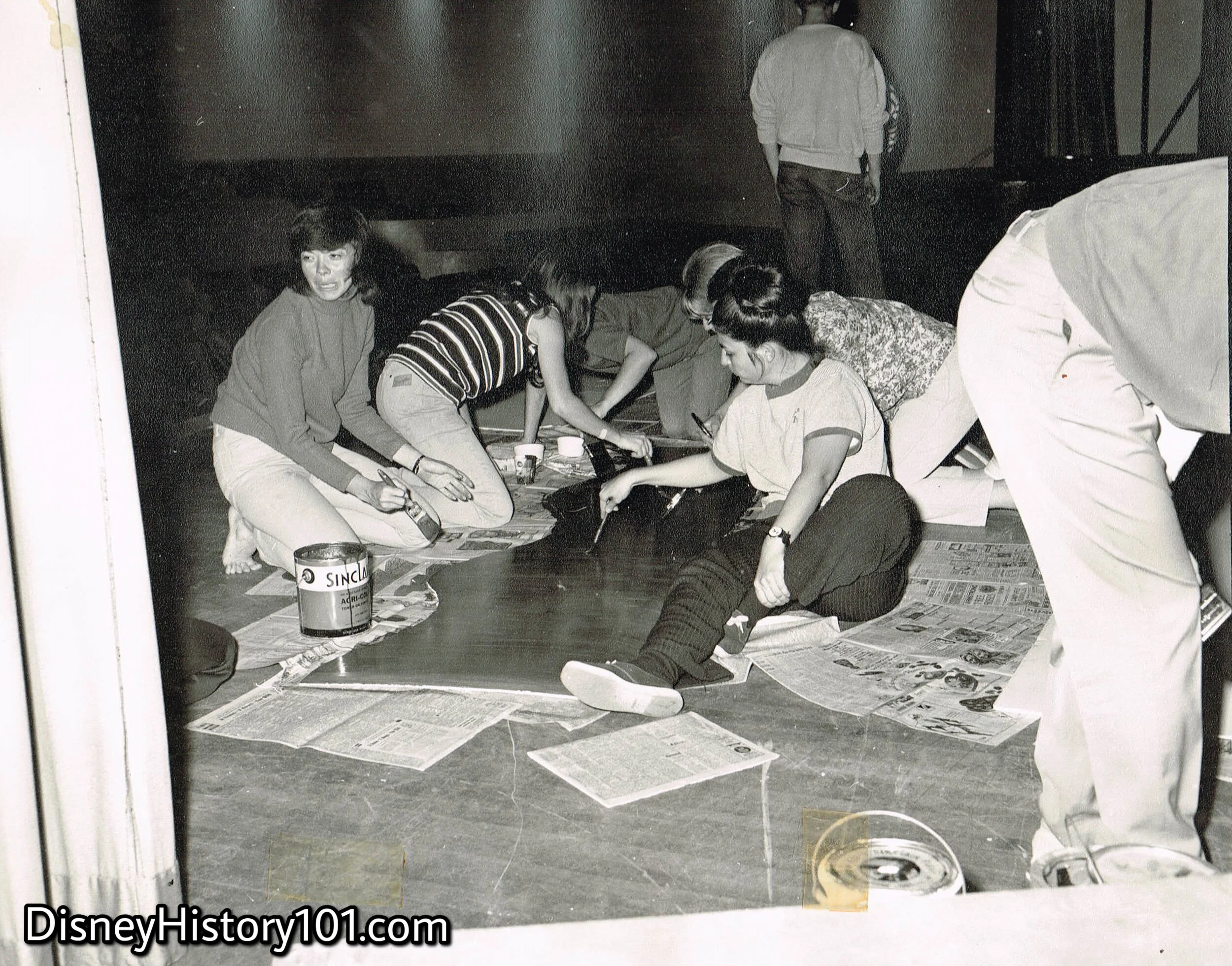
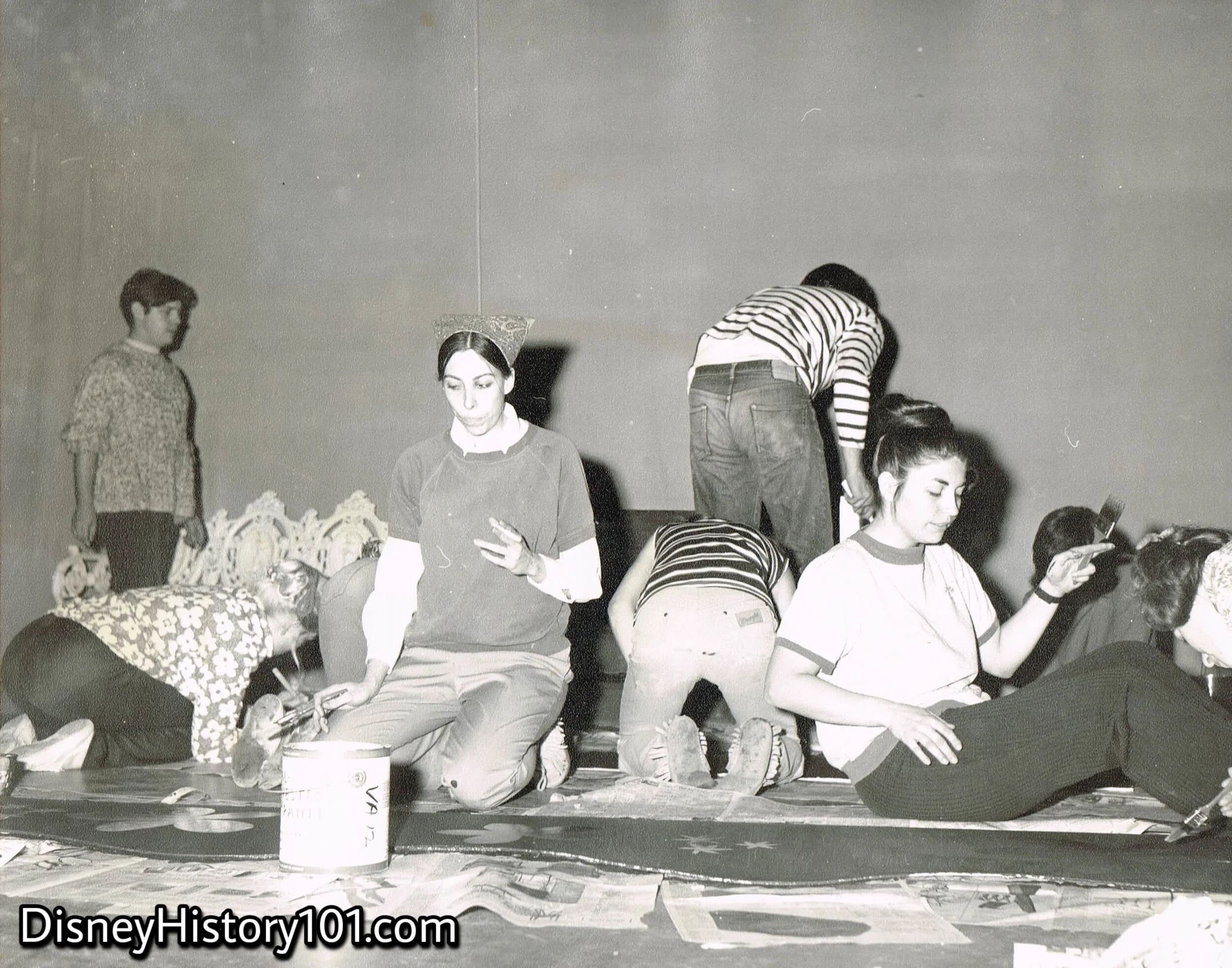
Tom Pletts remembers : “That’s Earl Archer, wielding the ax. There was a Fantasyland break area behind the theater, which was used for make-up, costumes, relaxing, and fooling around.”
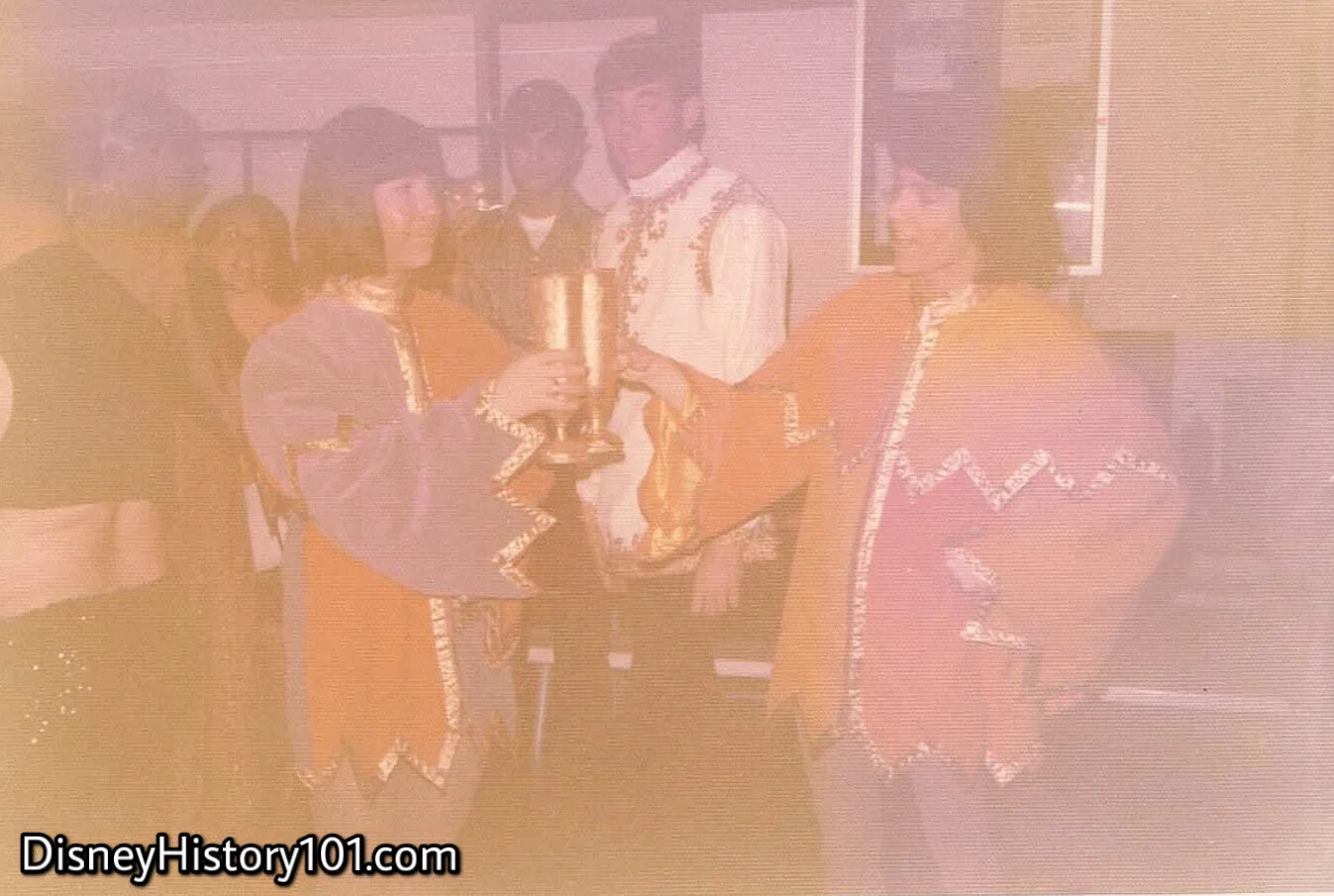
Here, a few miscellaneous cast members of Rumplestiltskin pose for a photograph while backstage.
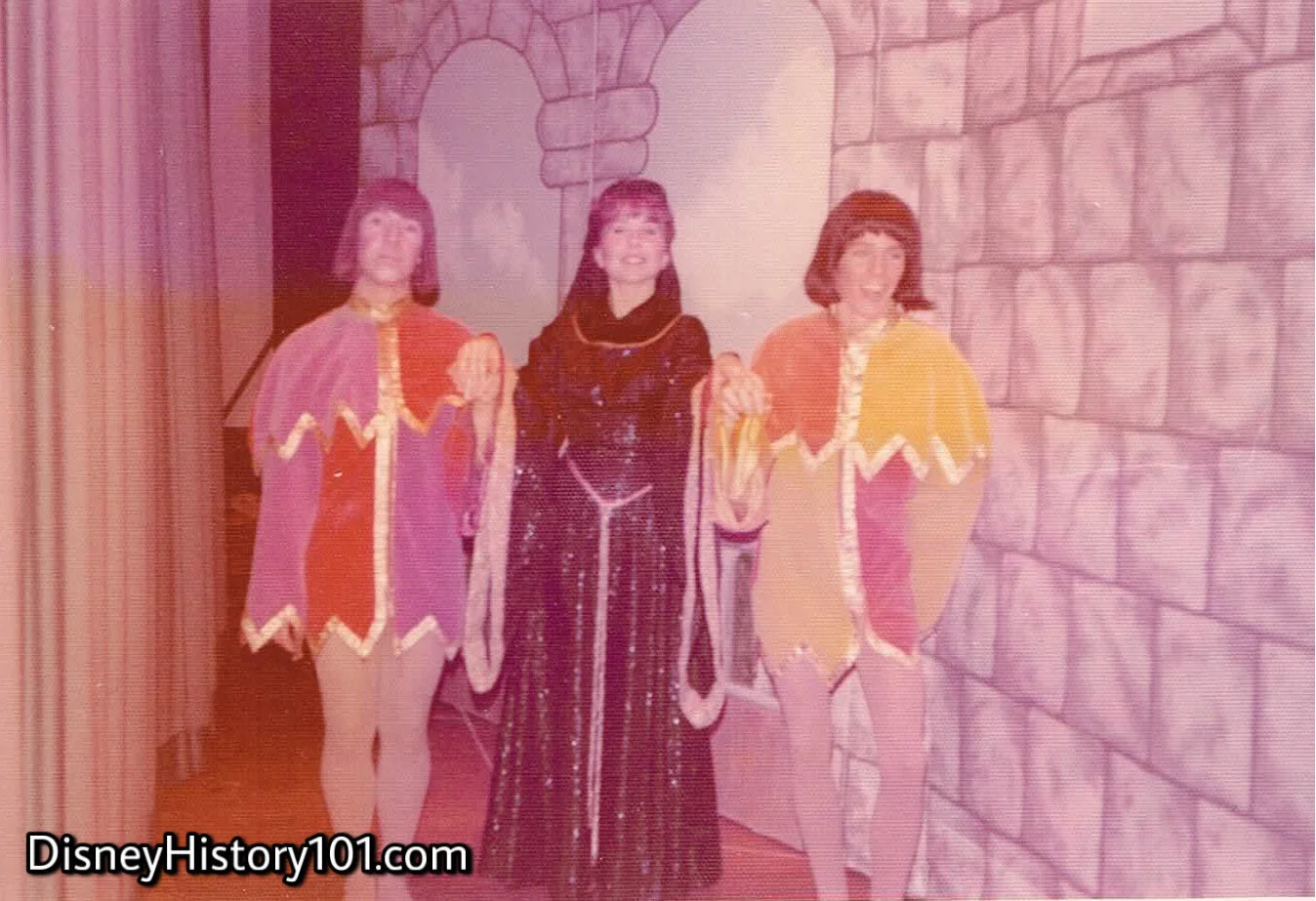
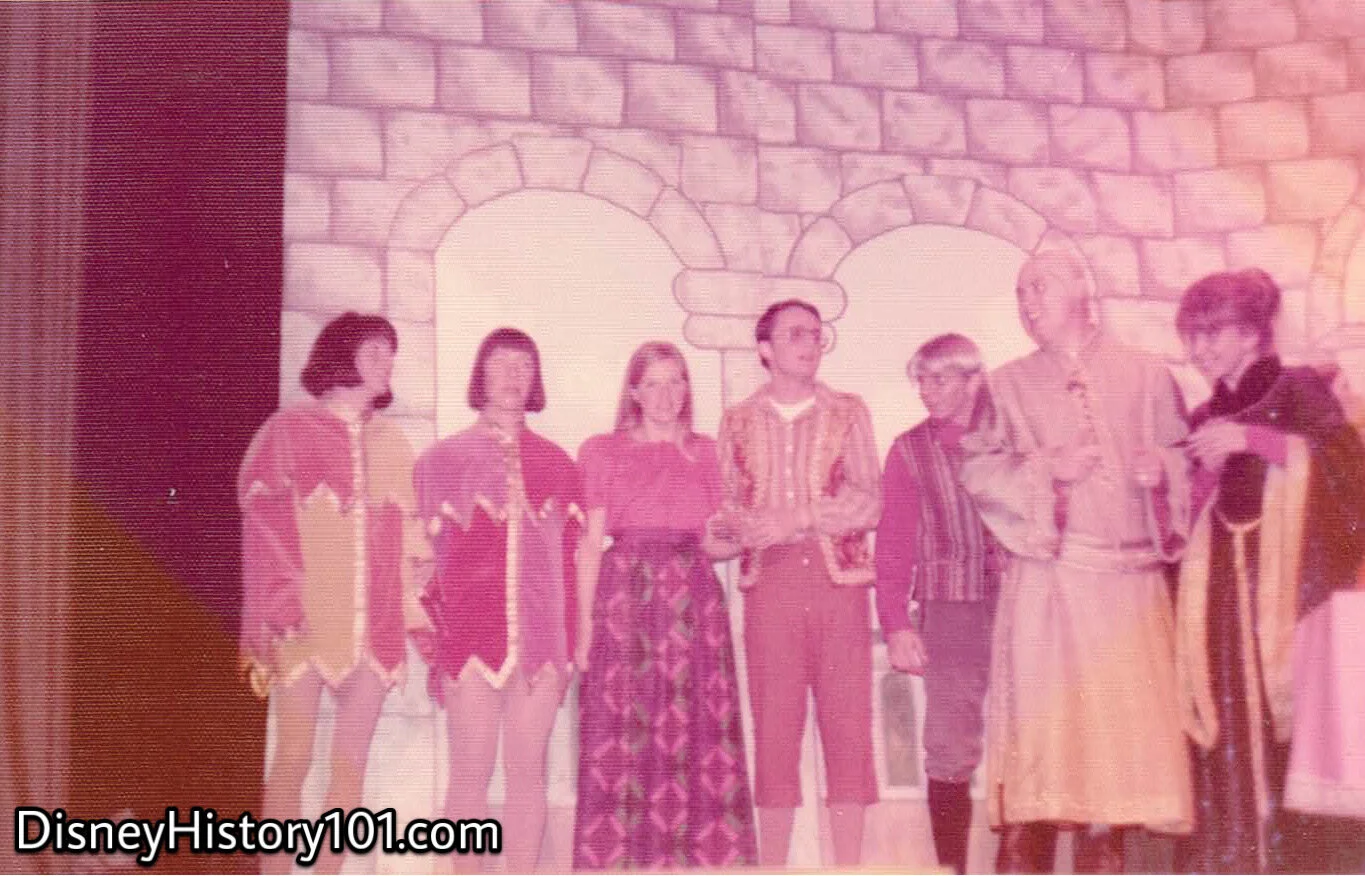
Don Payne (who portrayed the Prime Minister) forgot all about a particular element of his costume until he saw this Vintage View : “The Prime Minister was dressed in a green, brocaded robe…I had completely forgotten that I wore a bald cap for that part! Threw me…until I saw the enlarged image.”
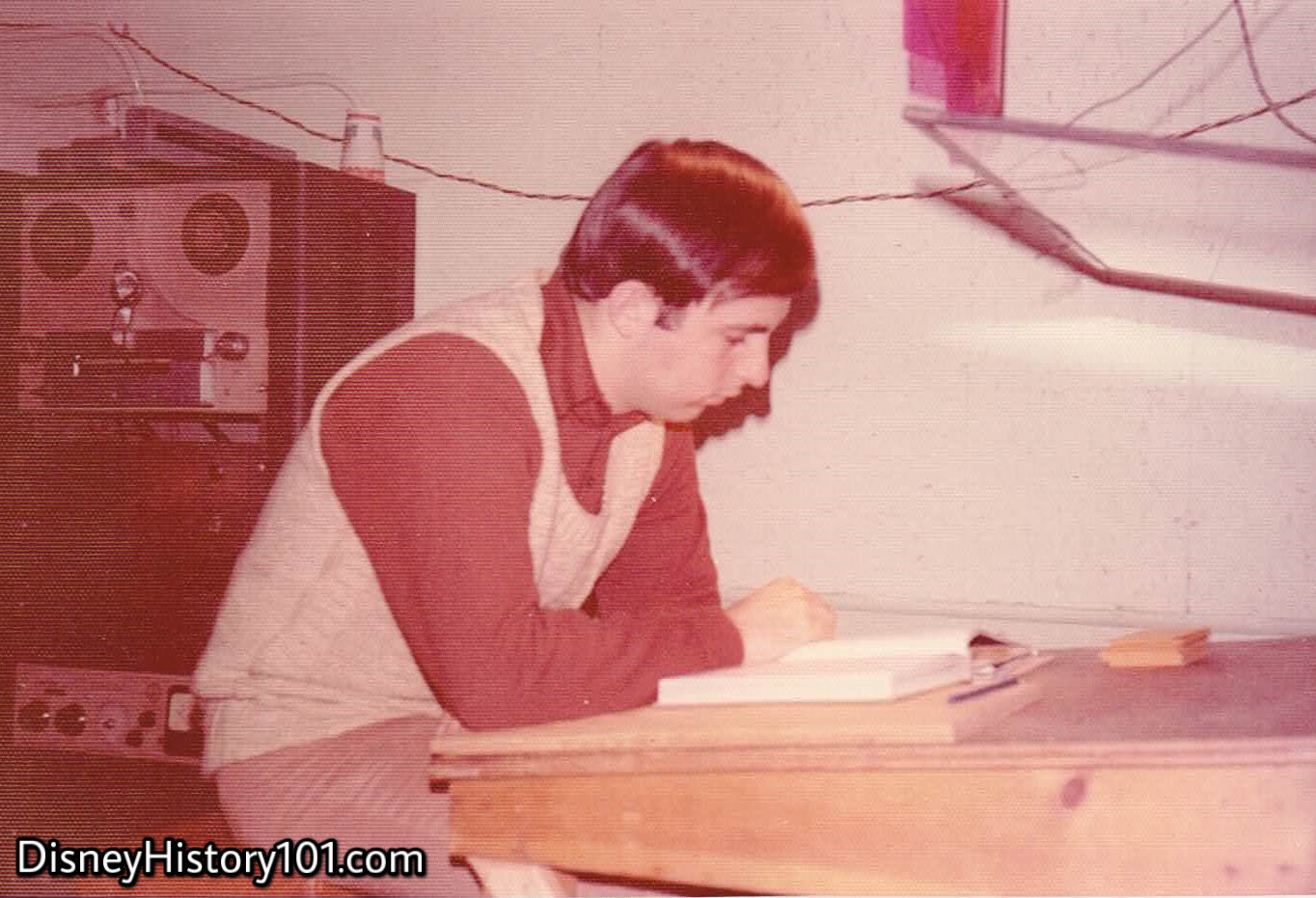
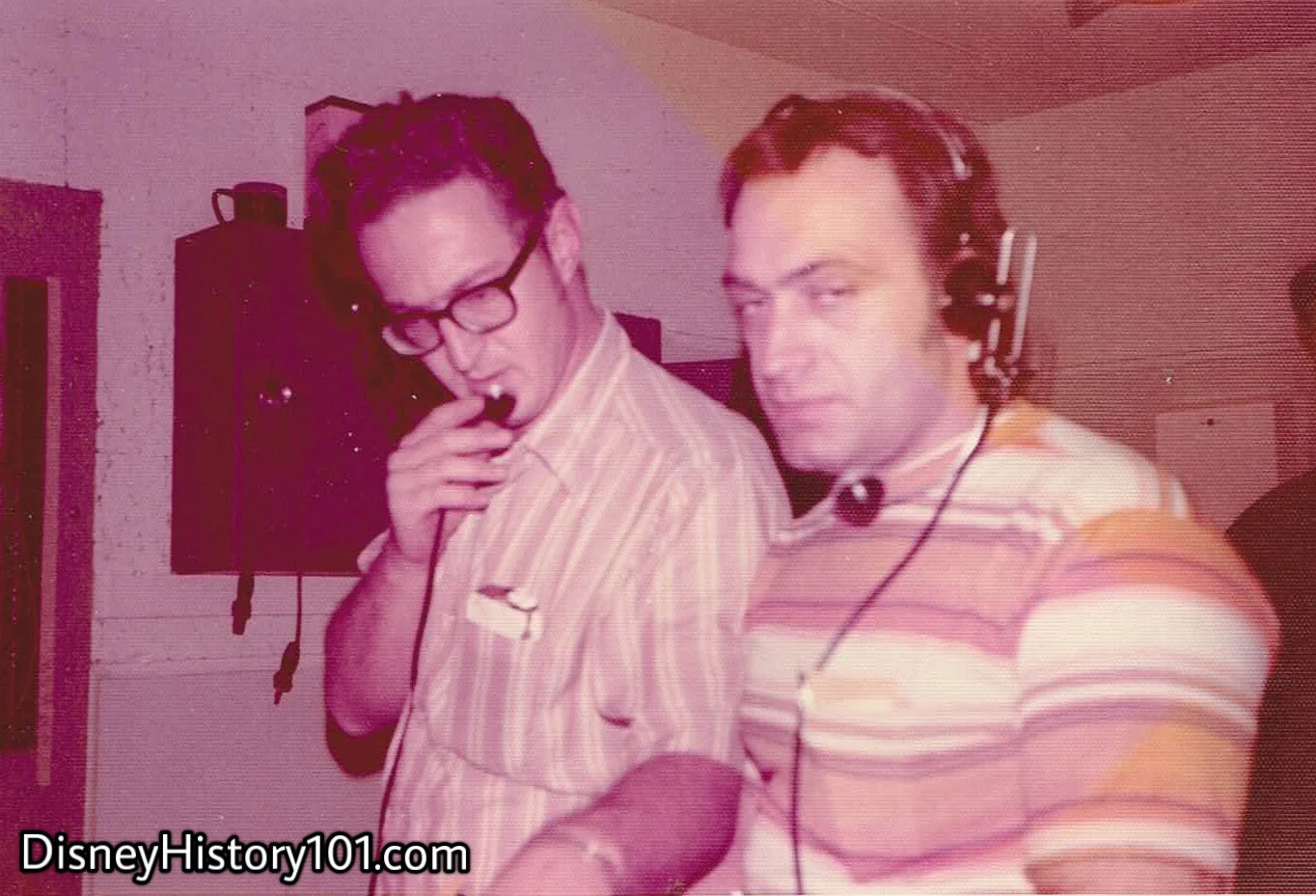
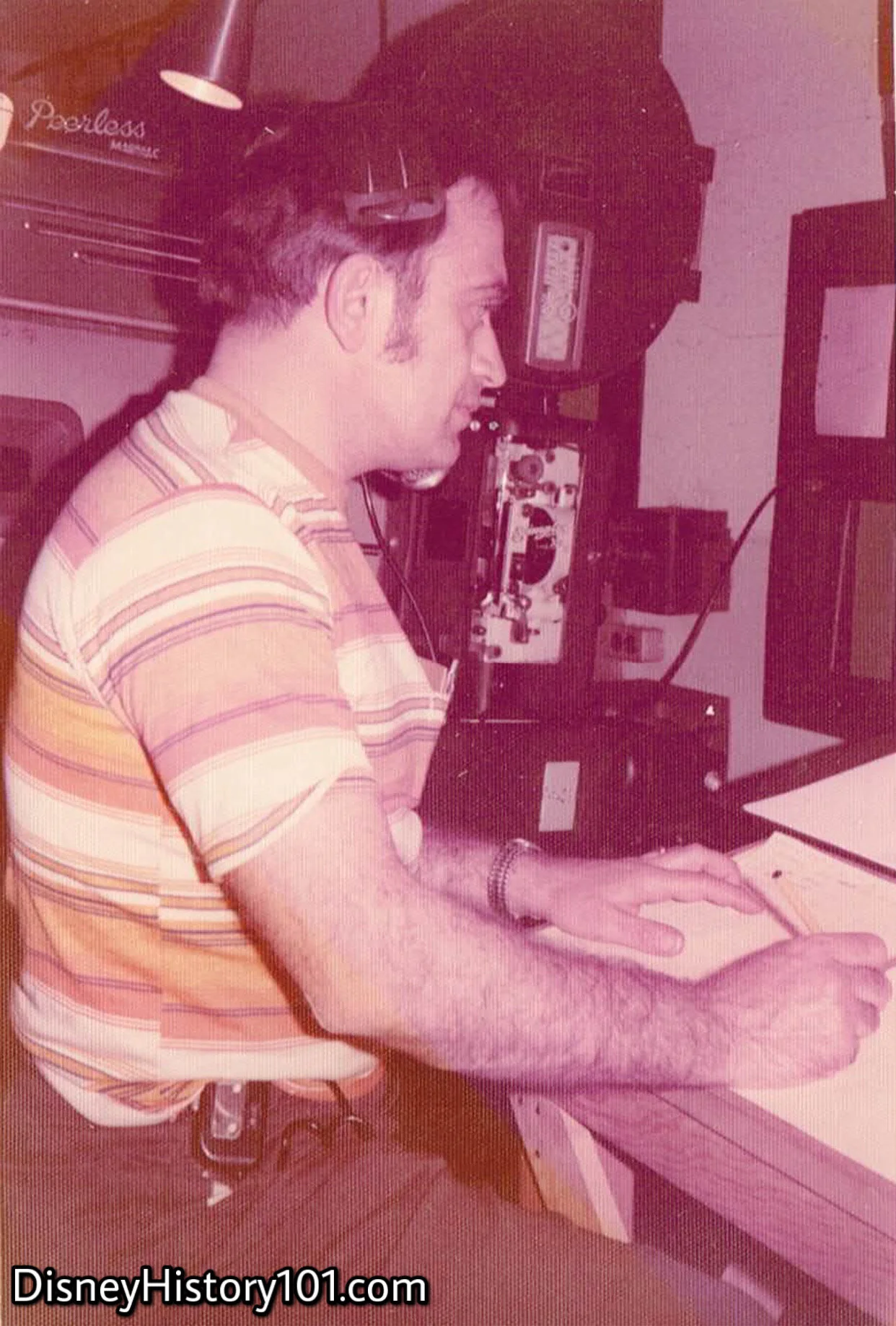
“The Sound Department was interesting as to who was responsible for what and when. They tried to explain it, and it all worked well ; but all I knew was that some were IATSE (the Studio Union) and some weren’t. Really good guys, though!
They were so generous with their time and expertise so we could have proper lighting. The Mill worker too, helping us build sets ; and the Wardrobe folks offering costume solutions. Of course, some of us worked with a number of them on various attractions and venues. They were all knowledgeable and to know. I don’t remember the name of the man in the horizontal stripes, but I was always confident things would go well when he was around.”
-Tom Pletts
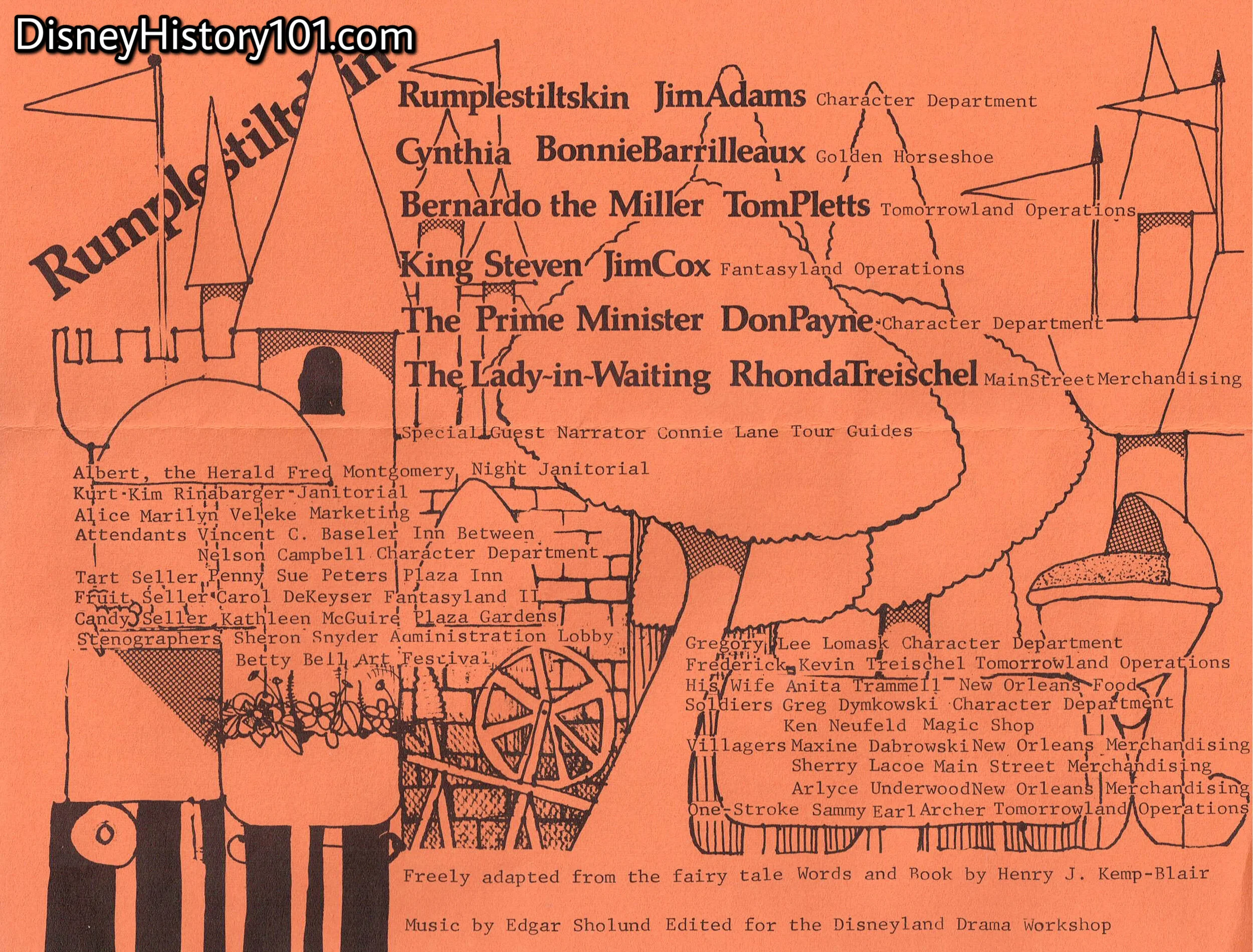
Now, I would like to direct your attention to the diverse job descriptions of the Rumplestiltskin cast. Many of these Disneyland Cast Members did much more in their personal lives than work for Disneyland and appear in Disneyland Drama Club productions. For example Penny Peters (had four years of Food Service up to this time and) currently worked at the Plaza Inn and the Inn Between. Unbeknownst to most, these amazing Cast Members also have another life away from Disneyland, and for Penny Peters (a CalState Long Beach graduate with a BA in psychology), she is a teacher of the emotionally handicapped in Tustin.
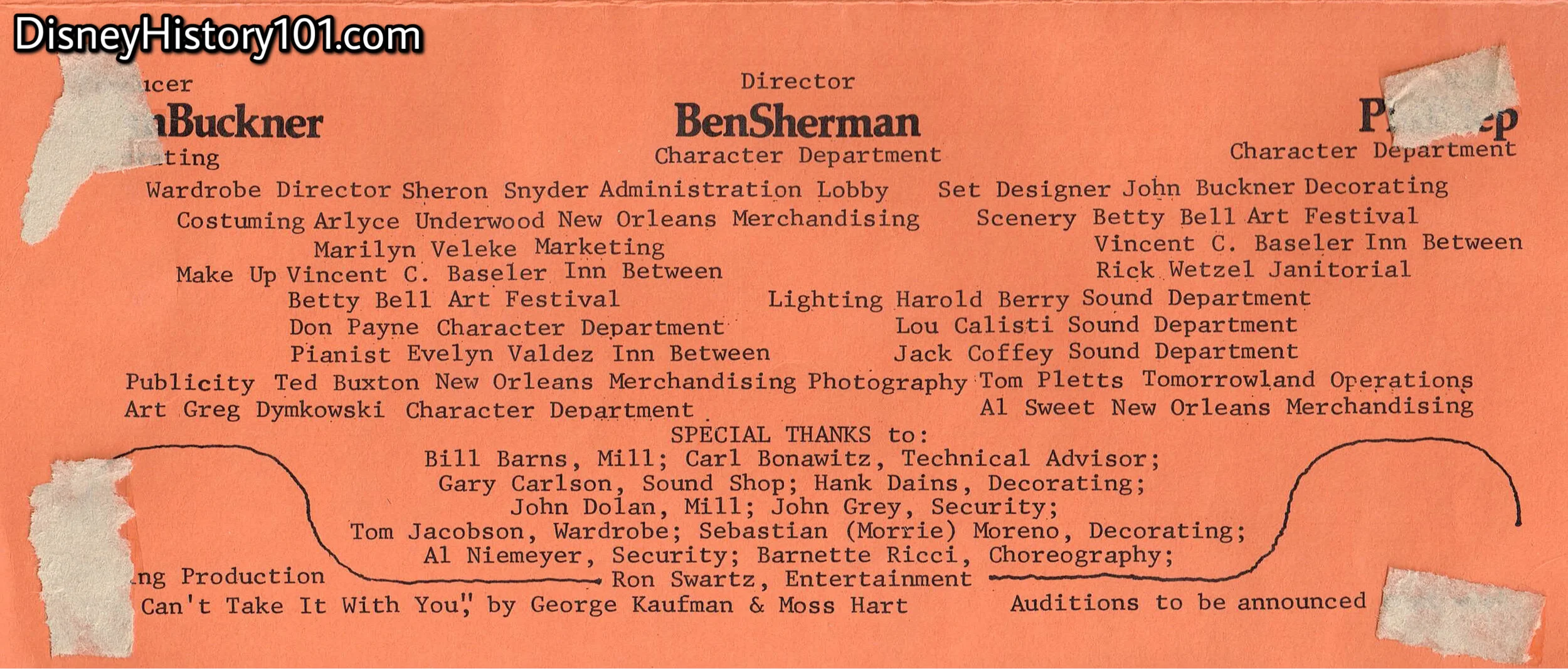
Note the announcement of the next Disneyland drama Club production “You Can’t Take It With You” at the bottom of the page.
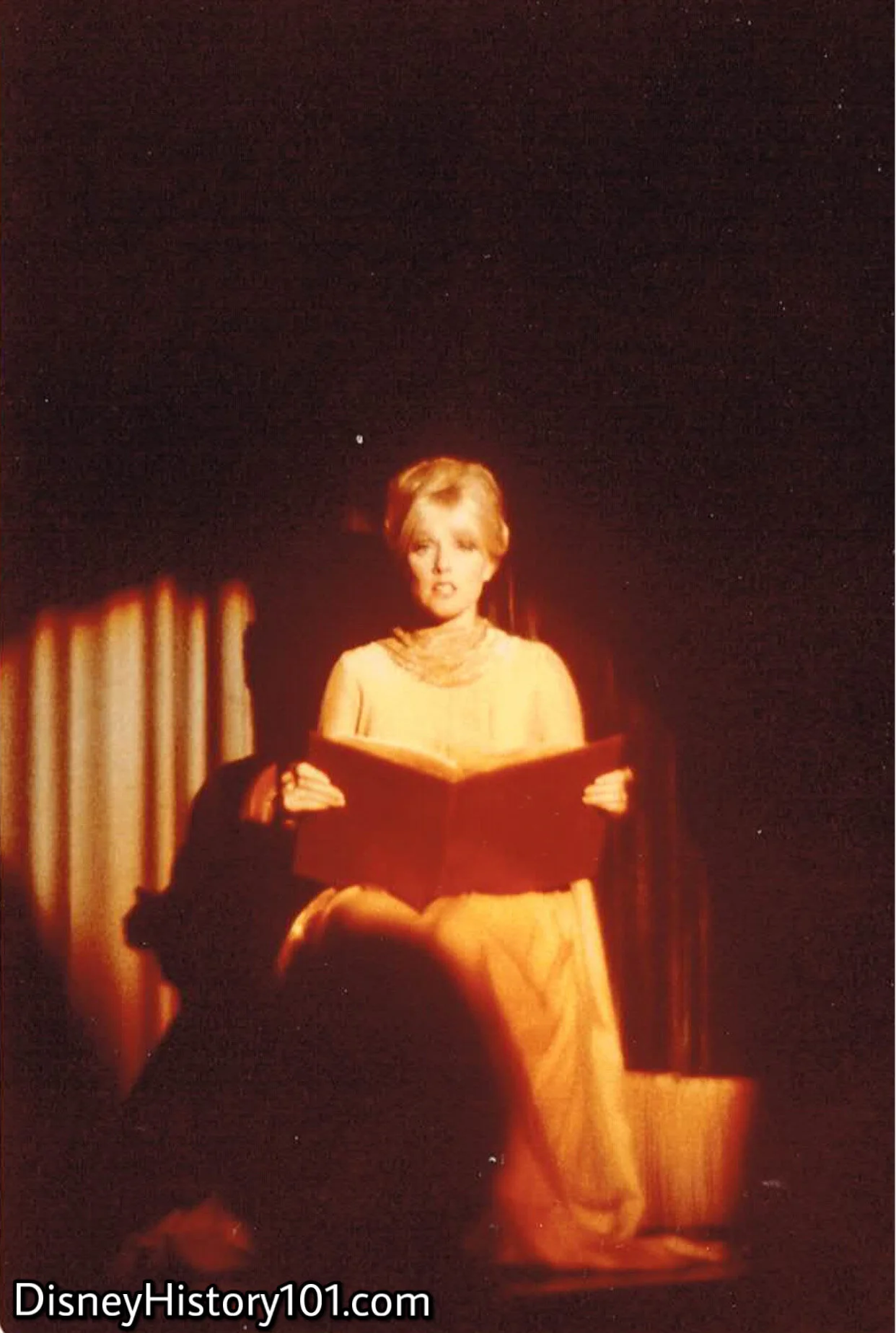
Connie Lane (then, V.I.P. Tour Guide and 2nd Disneyland Ambassador) portrays the “Special Guest Narrator” of the story.
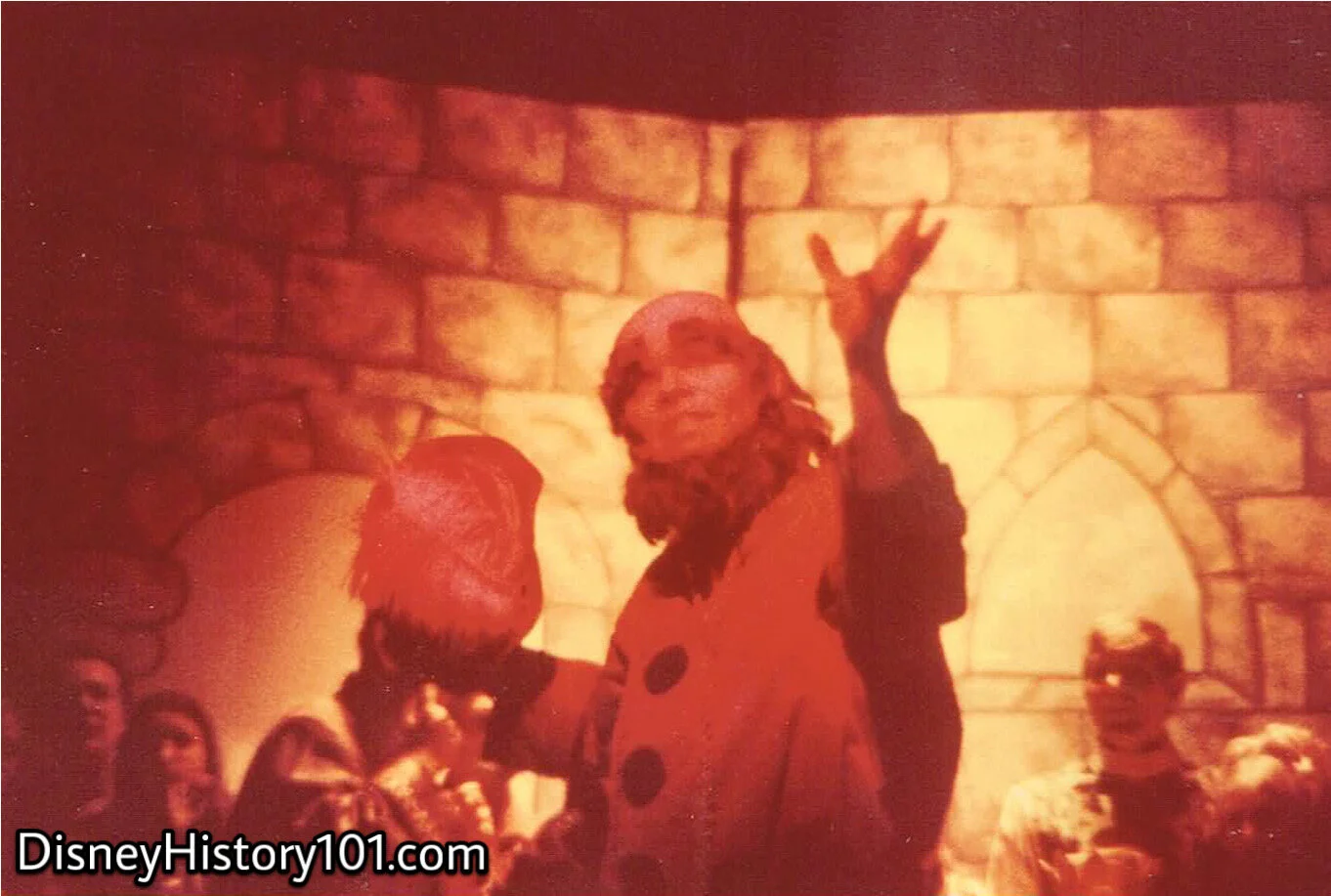
Pictured here is Jim Adams (Character Dept.) as the lead character Rumplestiltskin. Don Payne recalls : “I built Rumplestiltskin’s beard…which Jim Adams wore for each performance. The beard was built with a liquid latex base and crepe hair. I had made the base very thick so the appliance would last for all the performances. That sucker was DURABLE!”
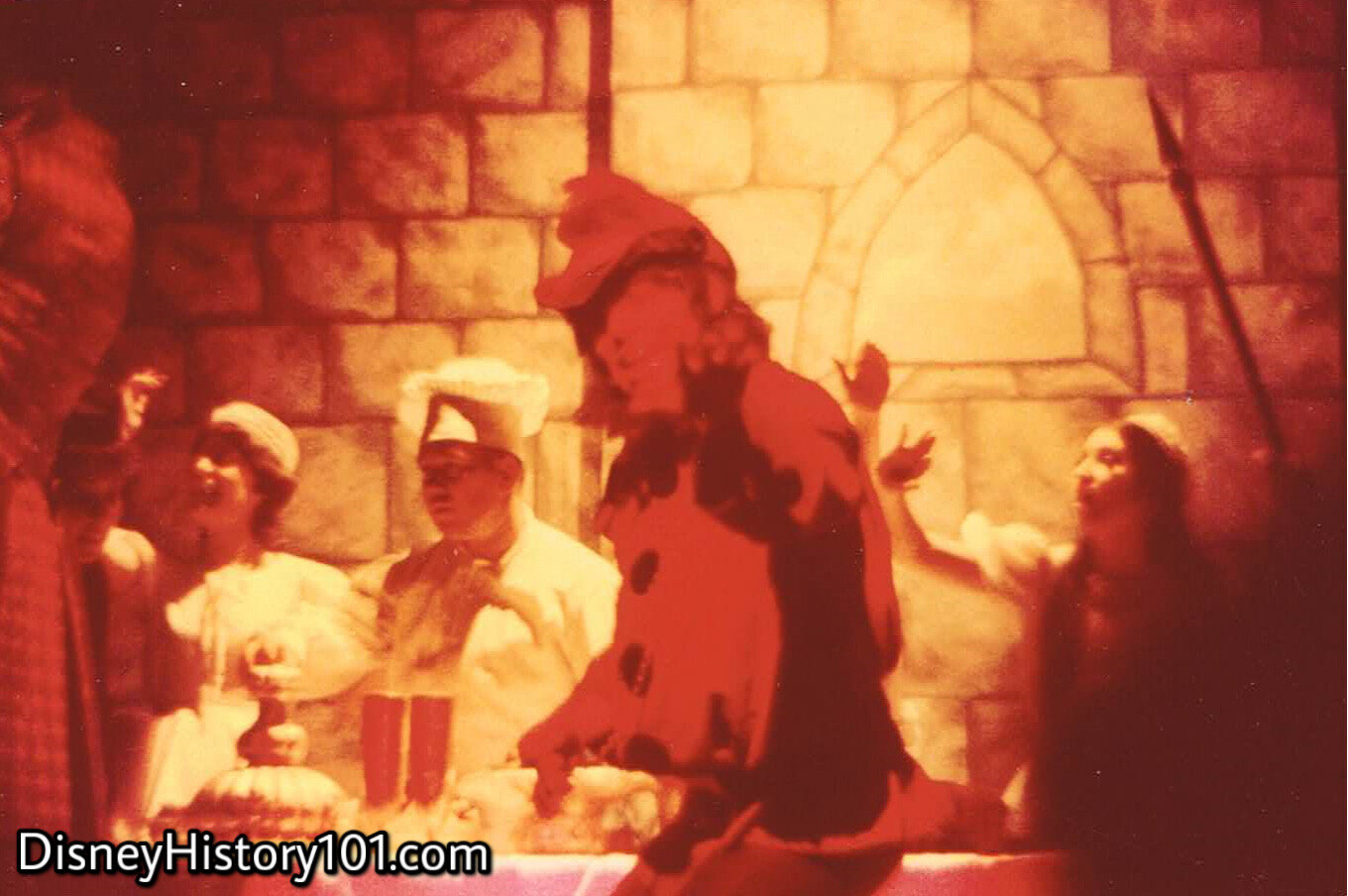
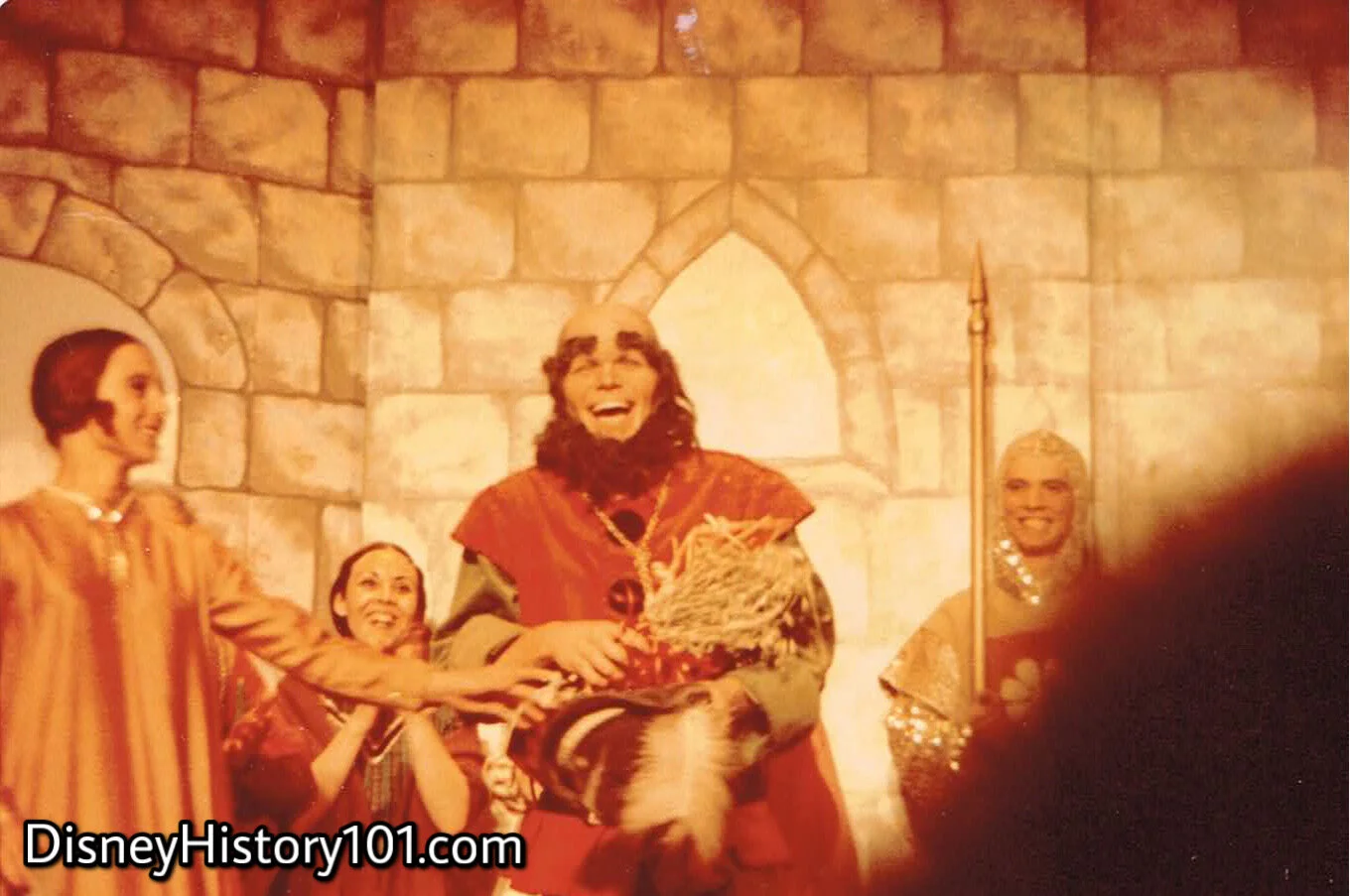
Don Payne shared these recollections of the background of Jim Adams (the Disneyland Character Dept. employee who portrayed Rumplestiltskin in the Disneyland Drama Club production) : “You’re looking at Jim Adams (Character Department) as Rumplestiltskin! According to a long-time friend, “Jim had been a gymnast in High School and could do amazing flips and moves.” He worked in the Character Department, and later at the Golden Horseshoe! With friend Don Payne, the duo wrote, produced, and directed the “Annual Main Street Easter Walking Race” which was used for years even after they both left Disneyland.”
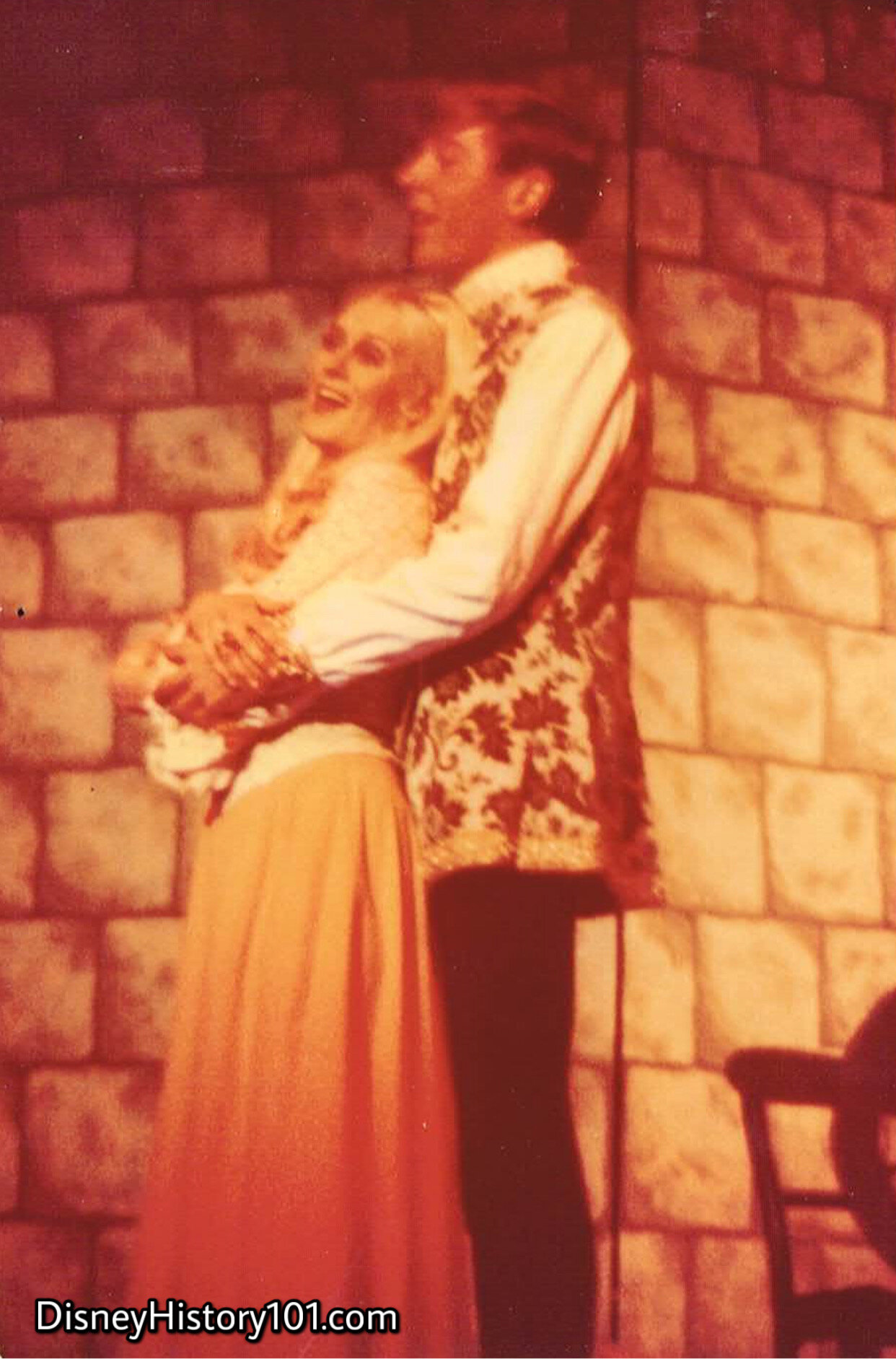
Bonnie Barrileaux (a Slue Foot Sue’s Golden Horseshoe Revue Can-Can Dancer, an assistant, and Disneyland park choreographer) and Jim Cox.
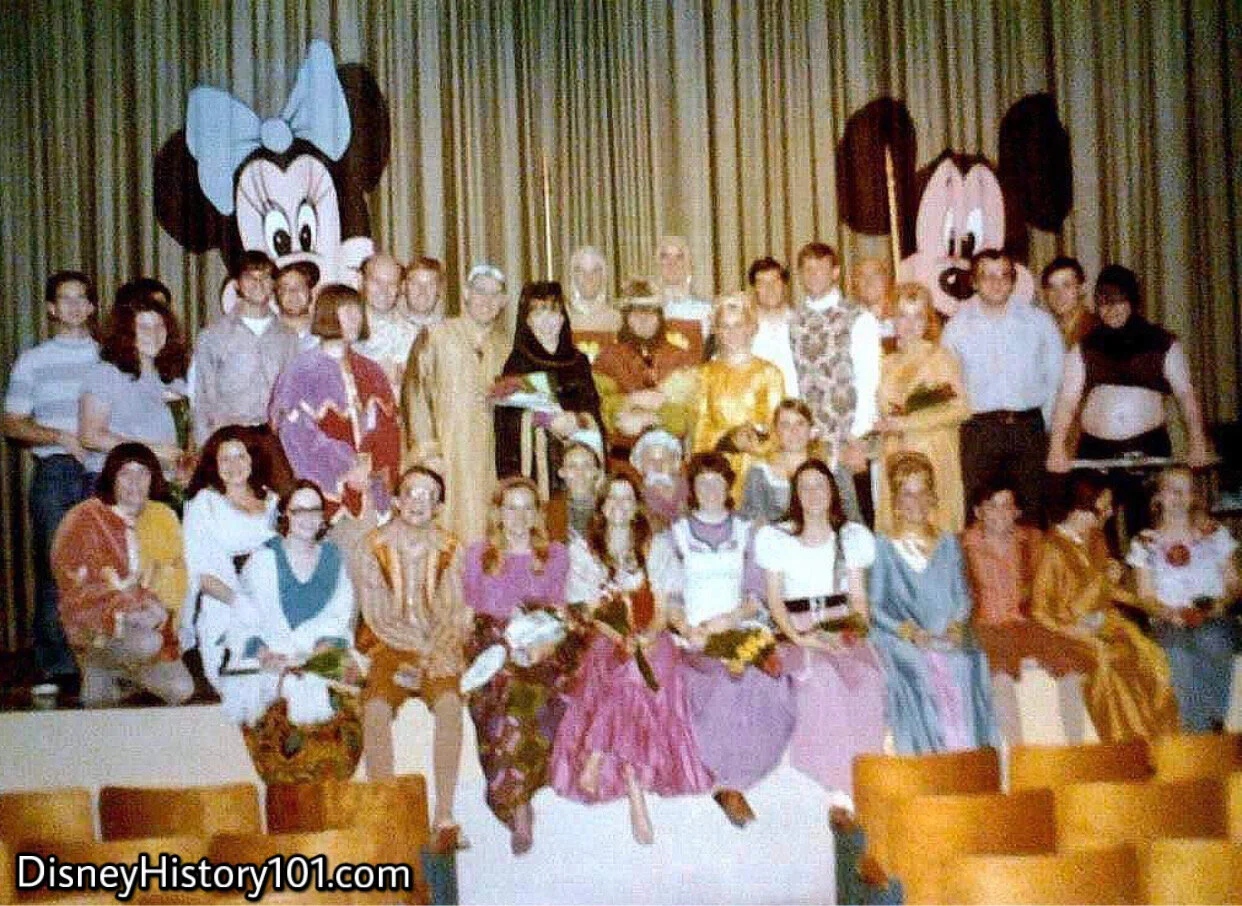
Tom Pletts remembers : “There were several things that impressed me : Jim Adams’ exuberance and talent, which was infectious! Phil Slep’s musical direction, Barnet Ricci’s grace and patience with the choreography, Ben Sherman’s handling of the cast and crew and all the details, and my discovery that I’m a klutz at dancing.”
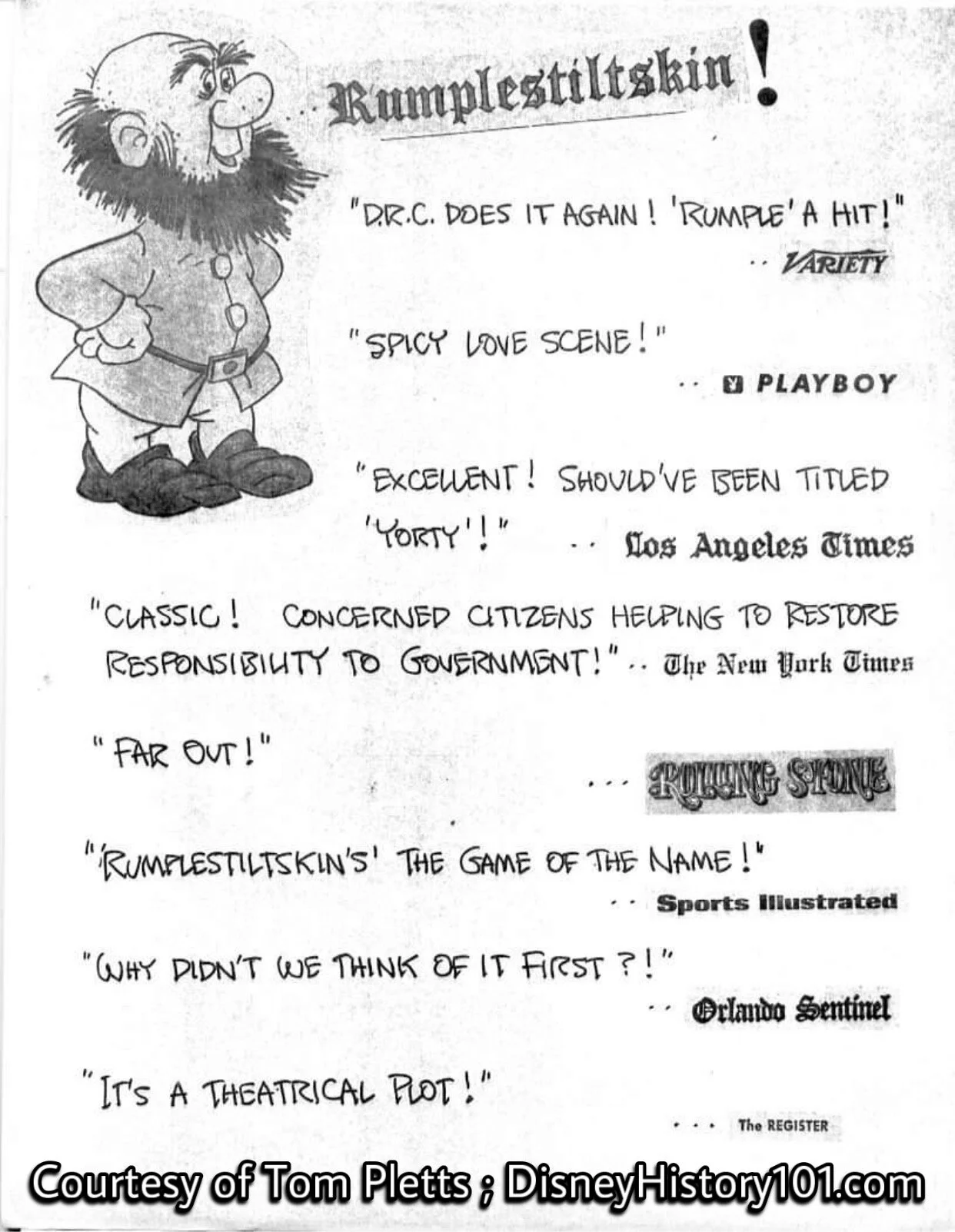
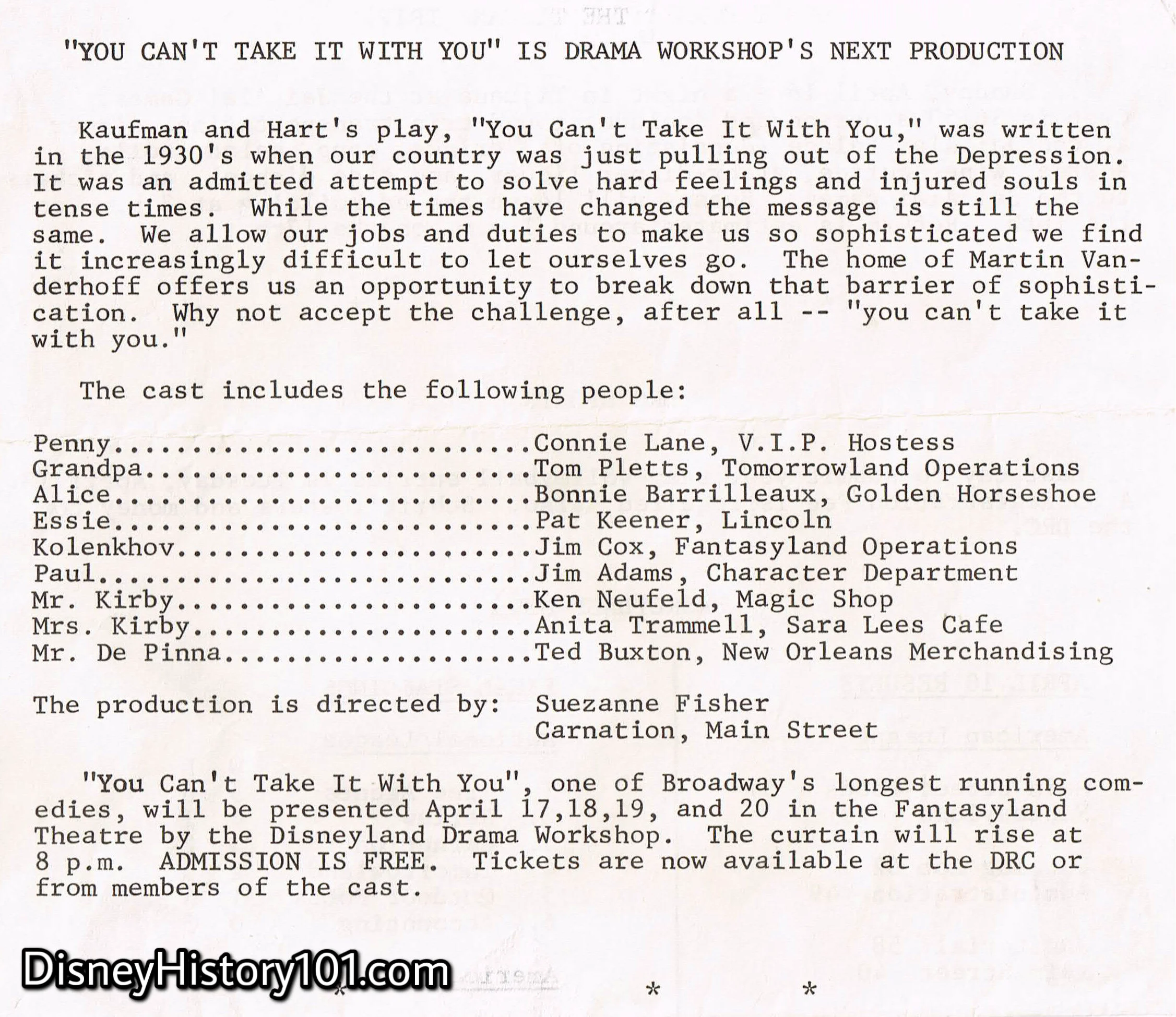
The official title of the Disneyland Drama Club’s next production was announced here, including its cast members, and showtimes.
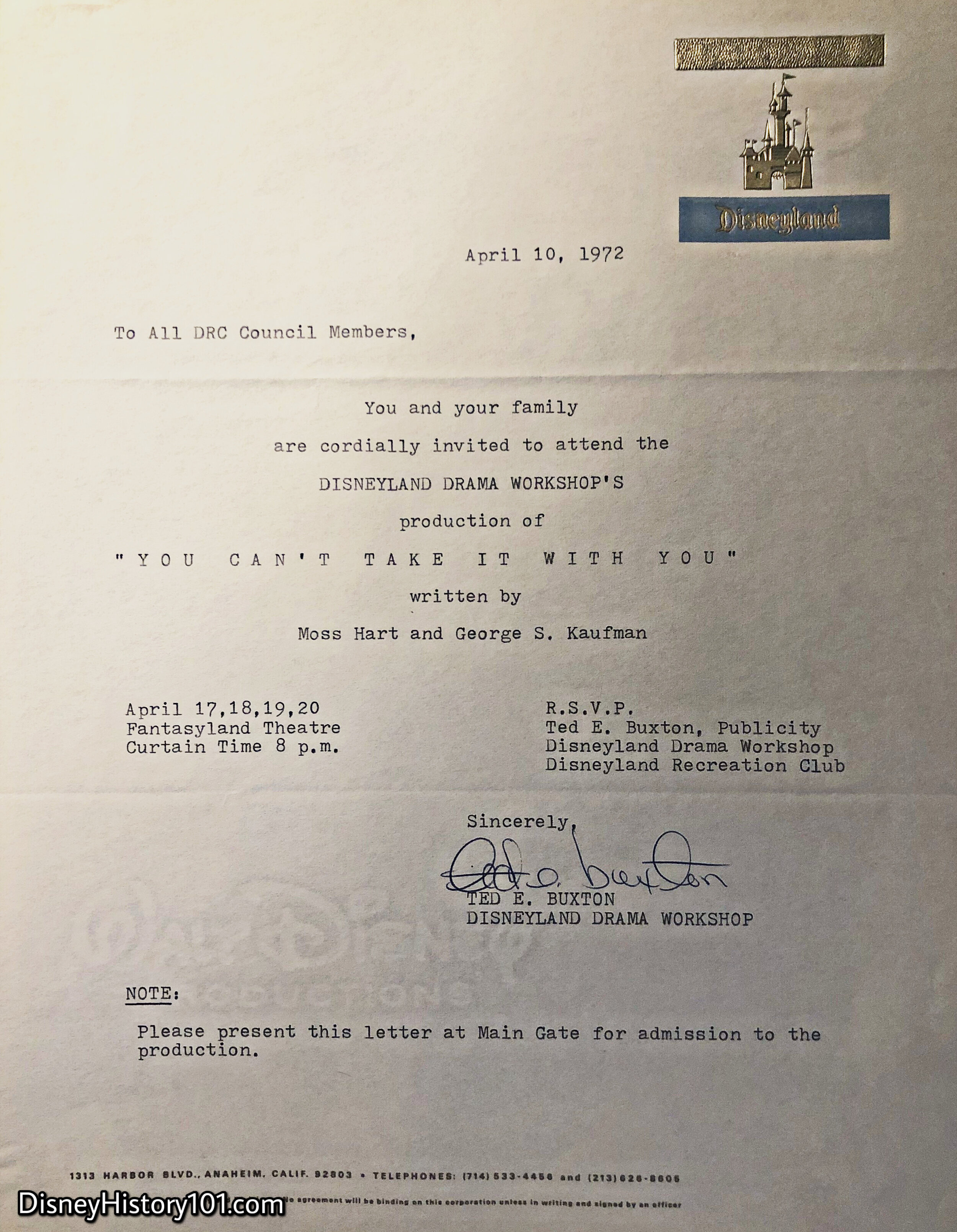
The Disneyland Drama Club was so grateful for the support of the Disneyland Recreation Club, that they personally invited the current D.R.C. Council Members to the show. Pictured, is a copy of one such Admission Letter for “You Can't Take It With You”.
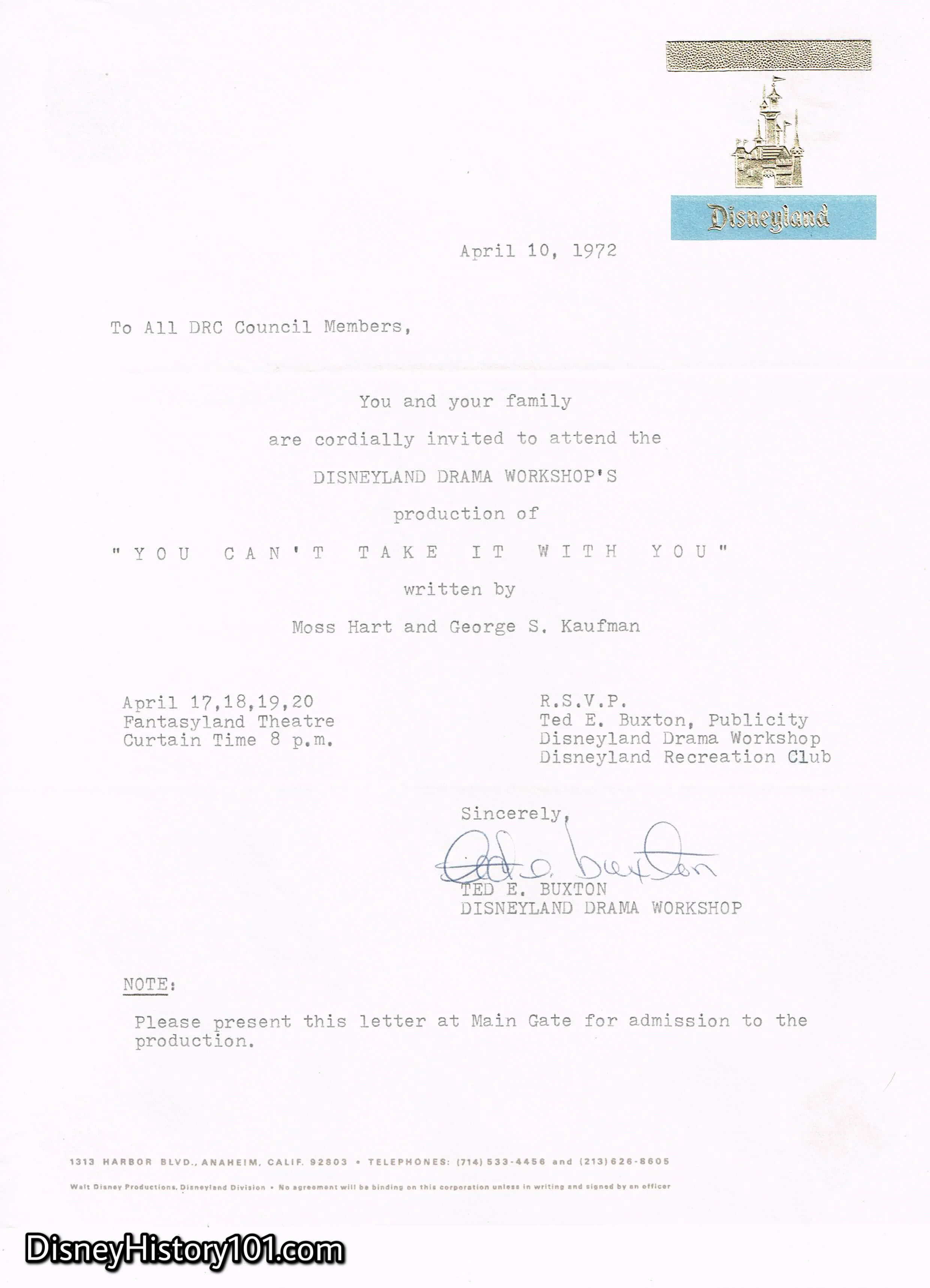
Present members of the Disneyland Recreational Club were invited to attend the Disneyland Drama Club’s production of “You Can’t Take It With You”.
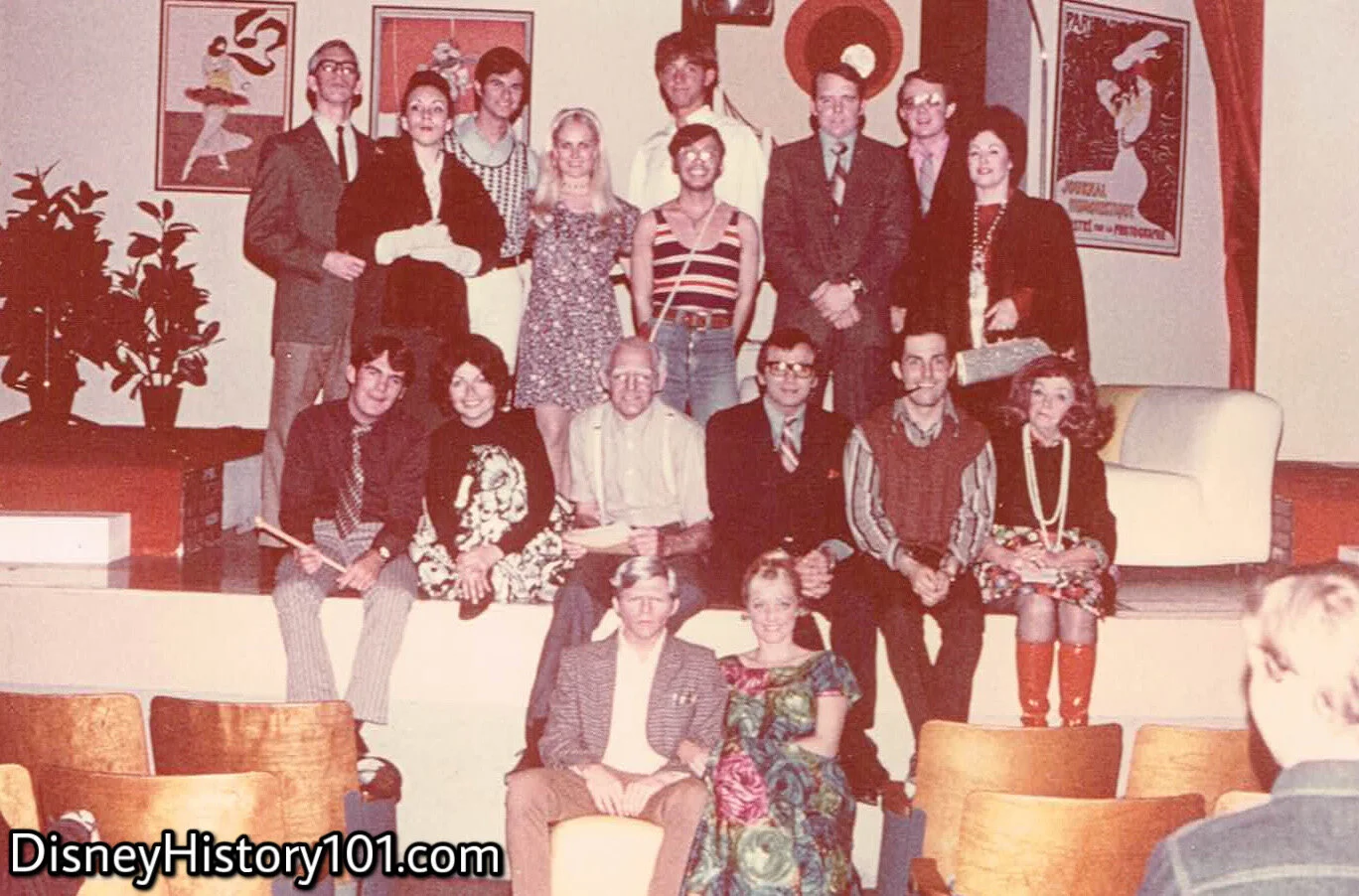
Again, the production value and size of cast and crew increased (as compared to the previous Disneyland Drama Club production of Rumplestiltskin).
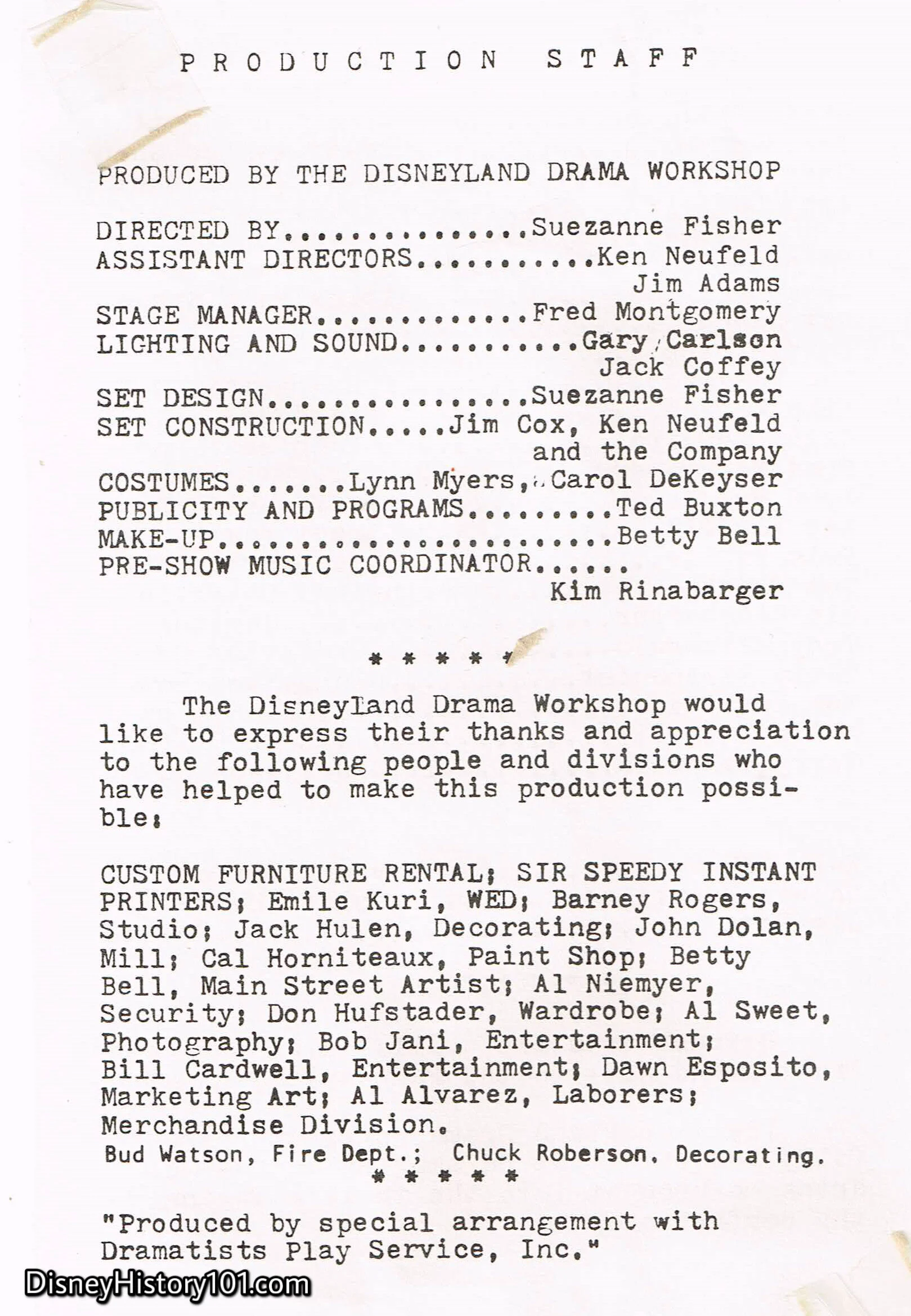
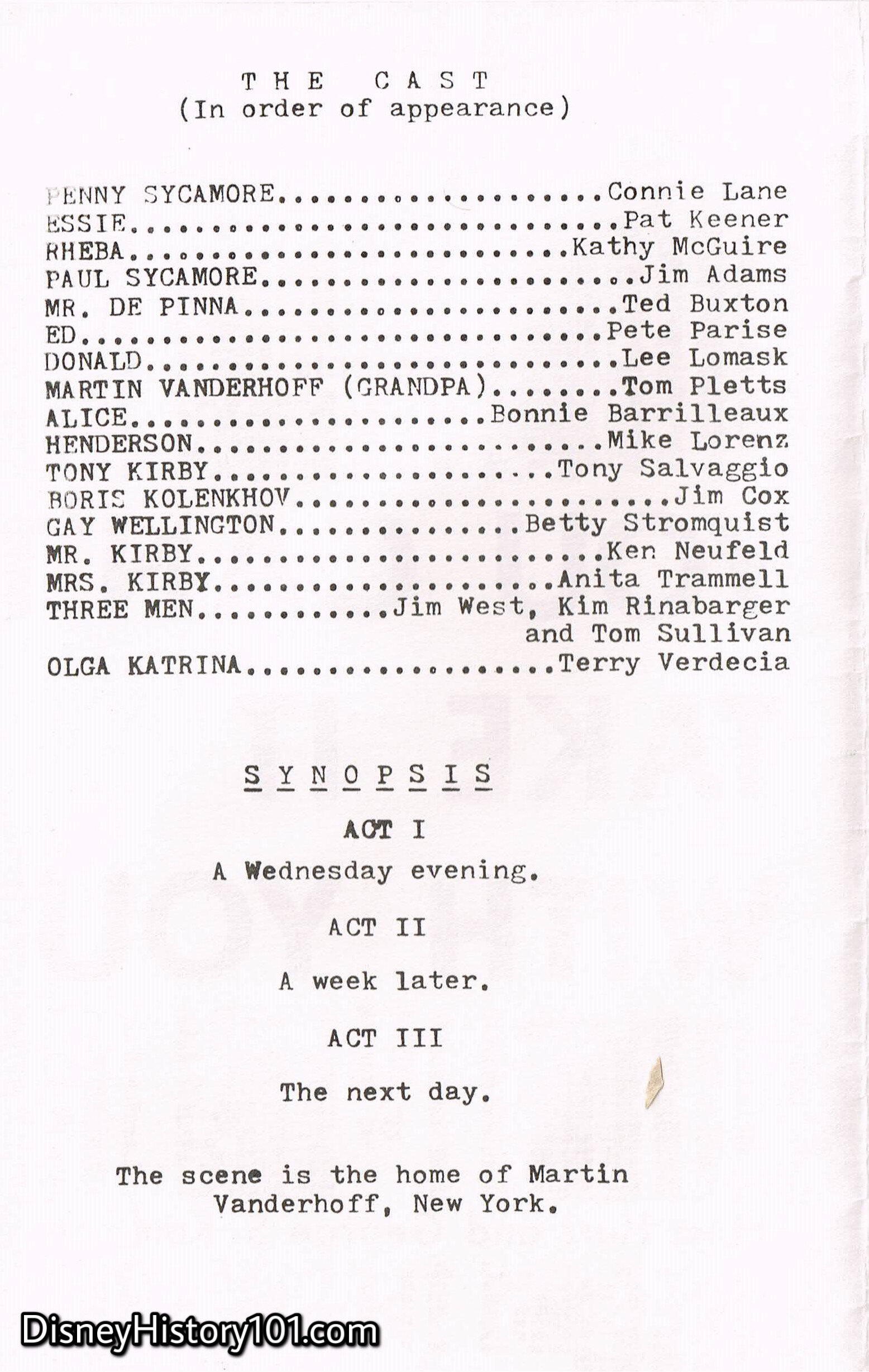
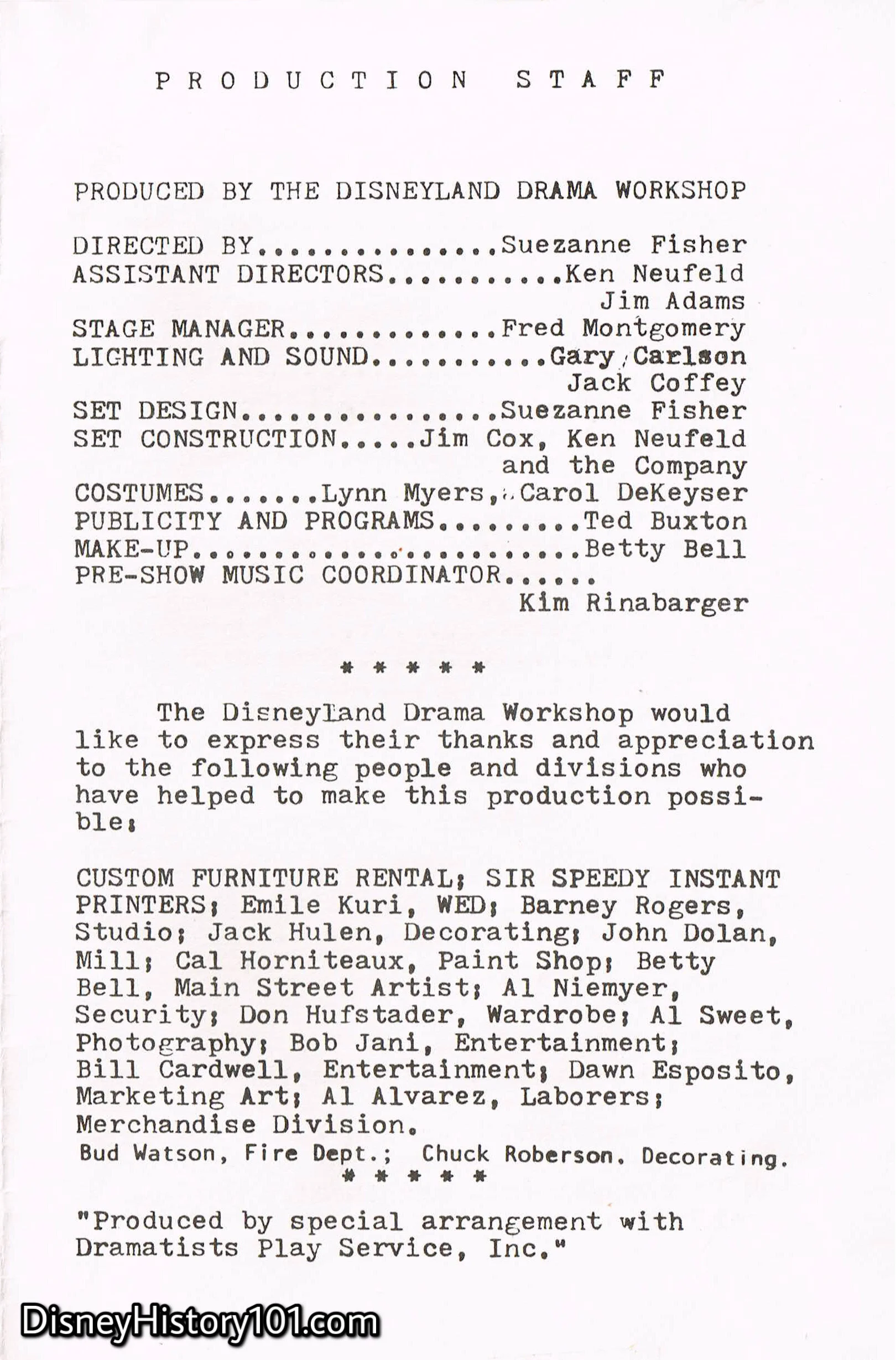
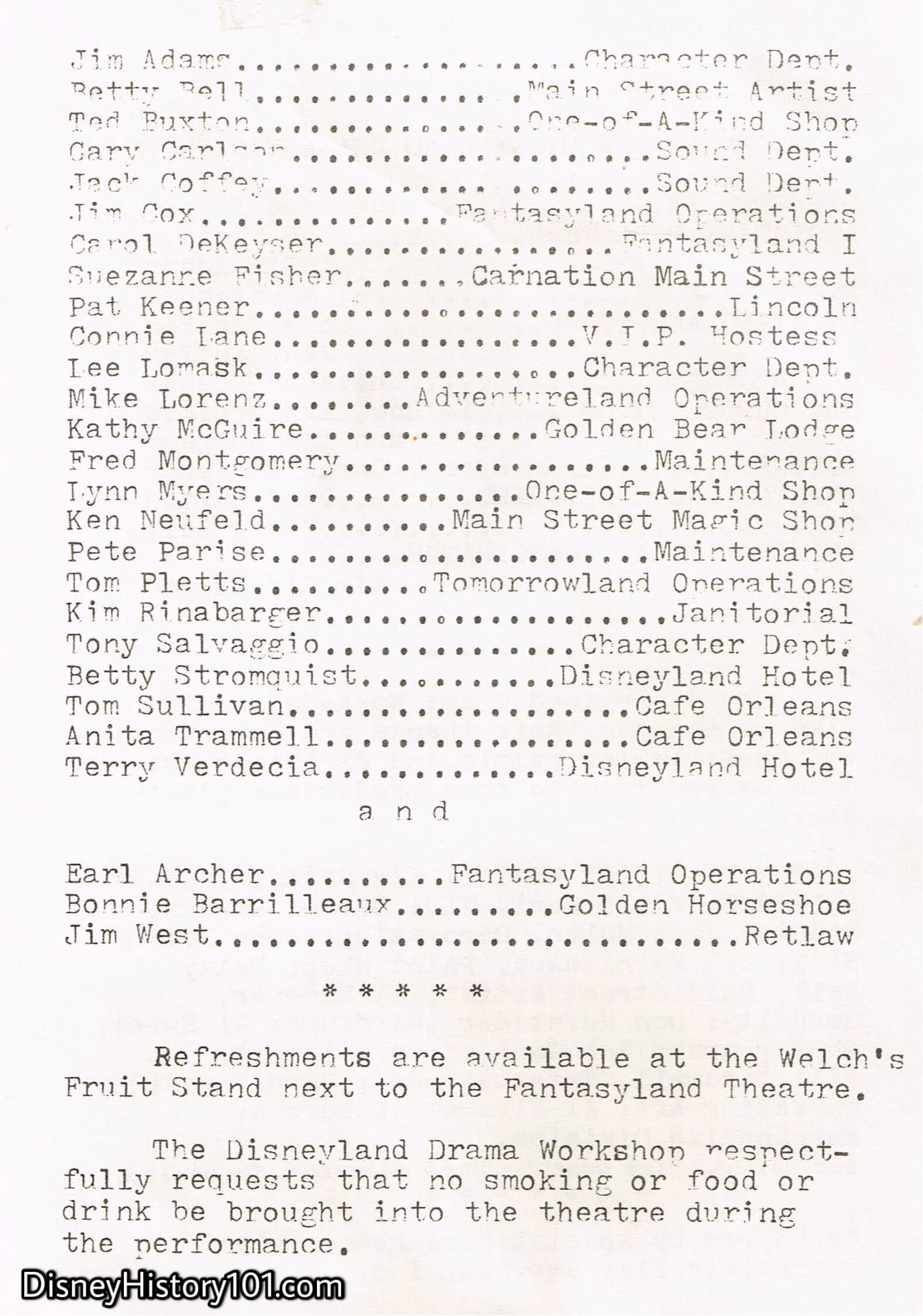
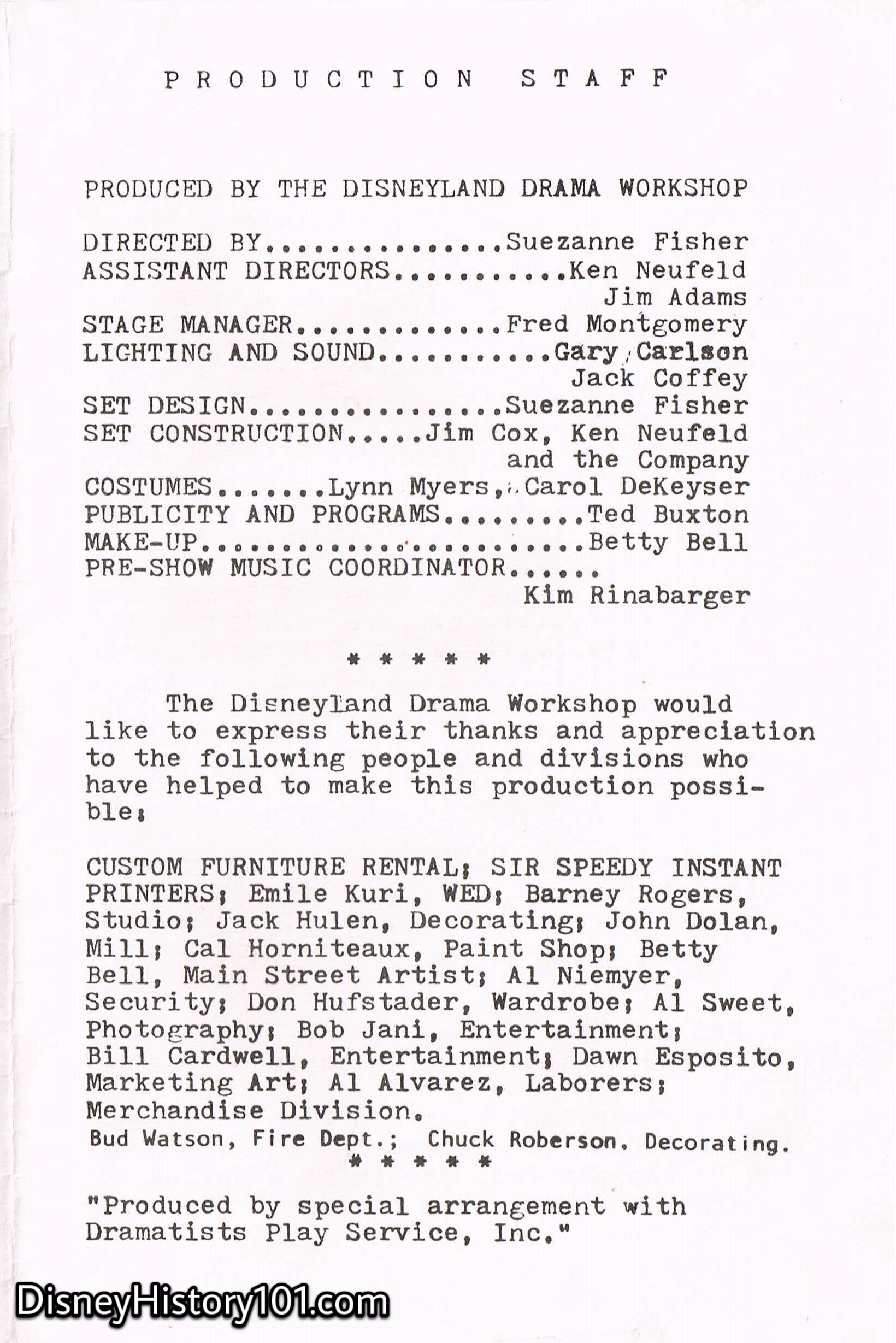
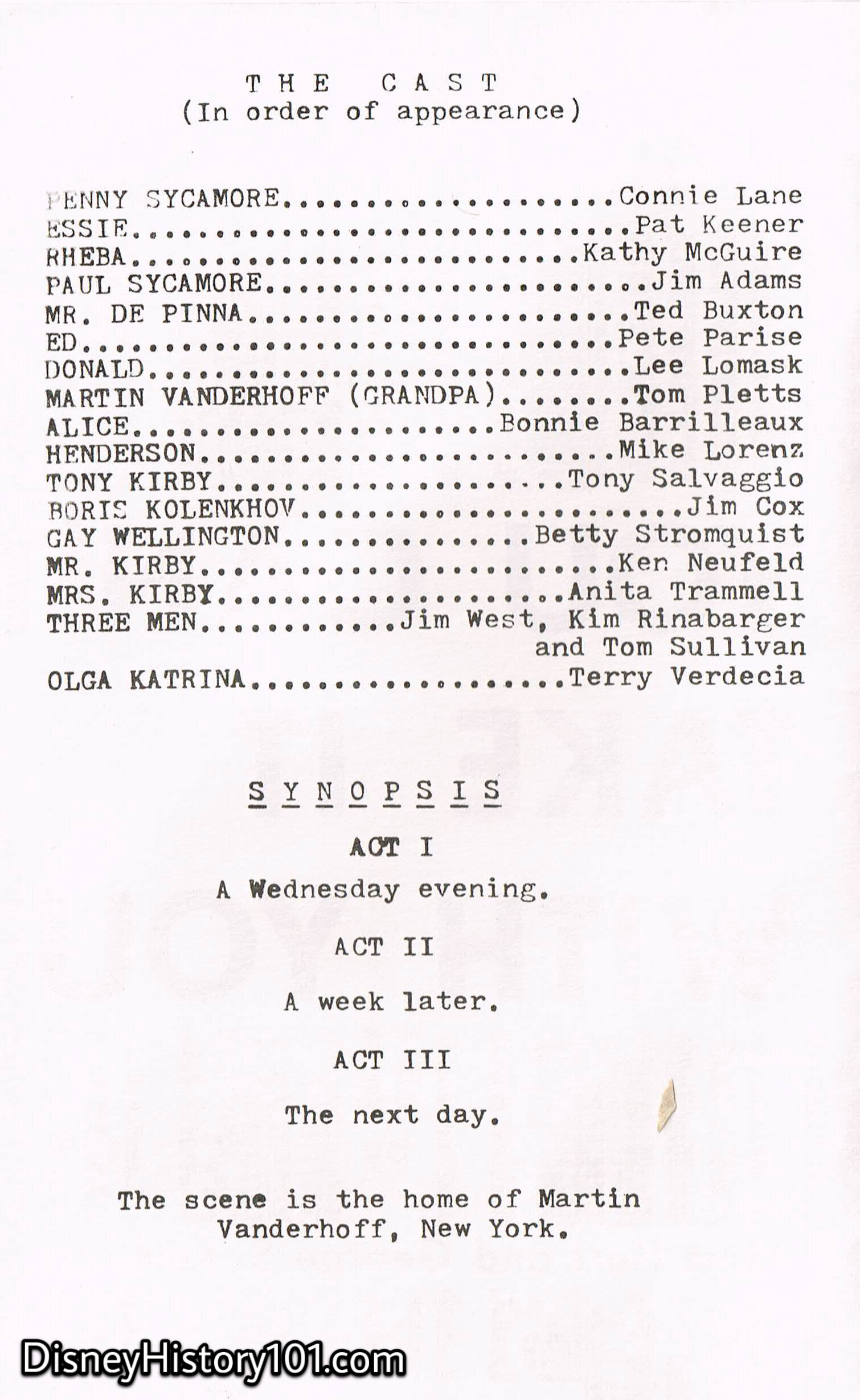
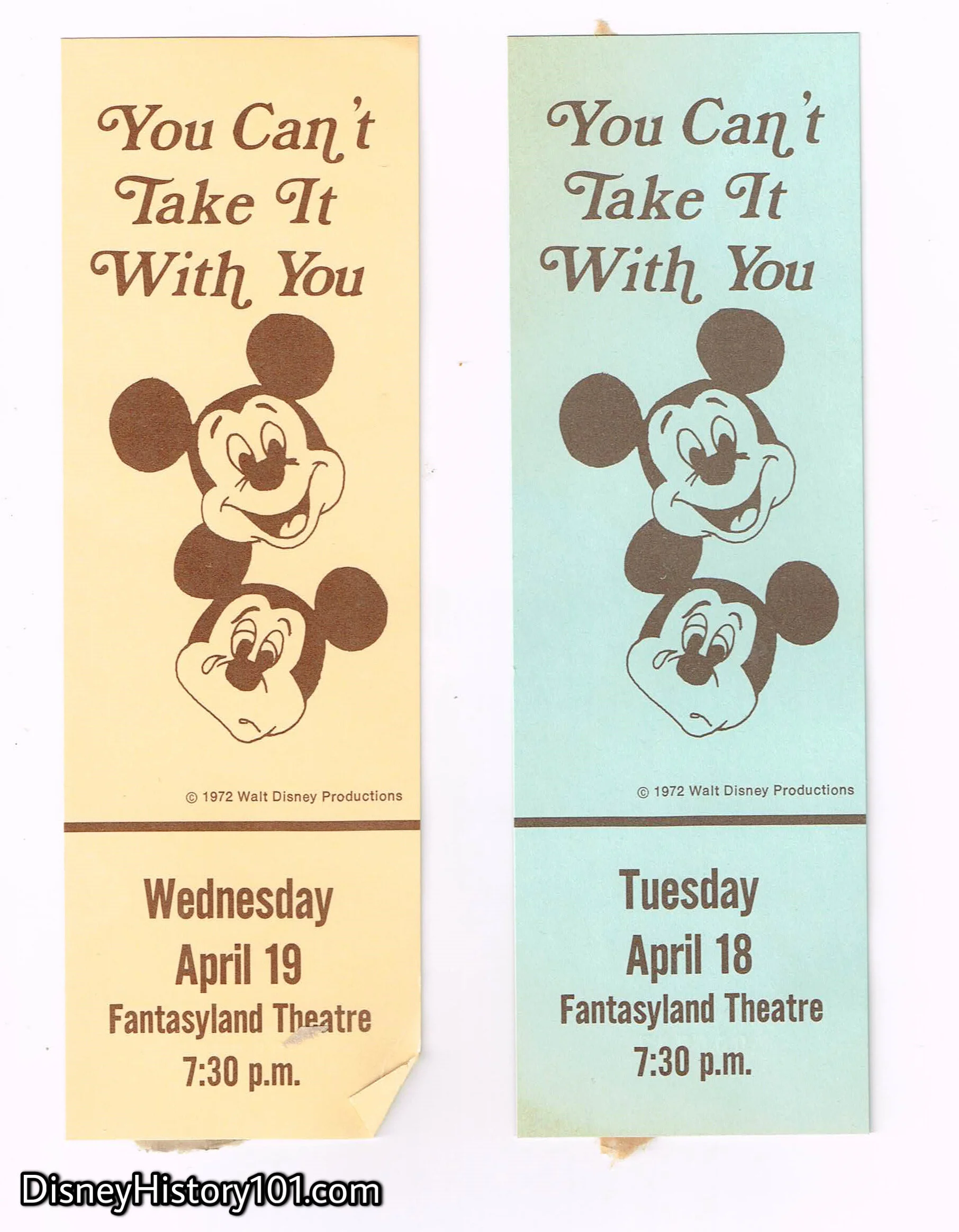
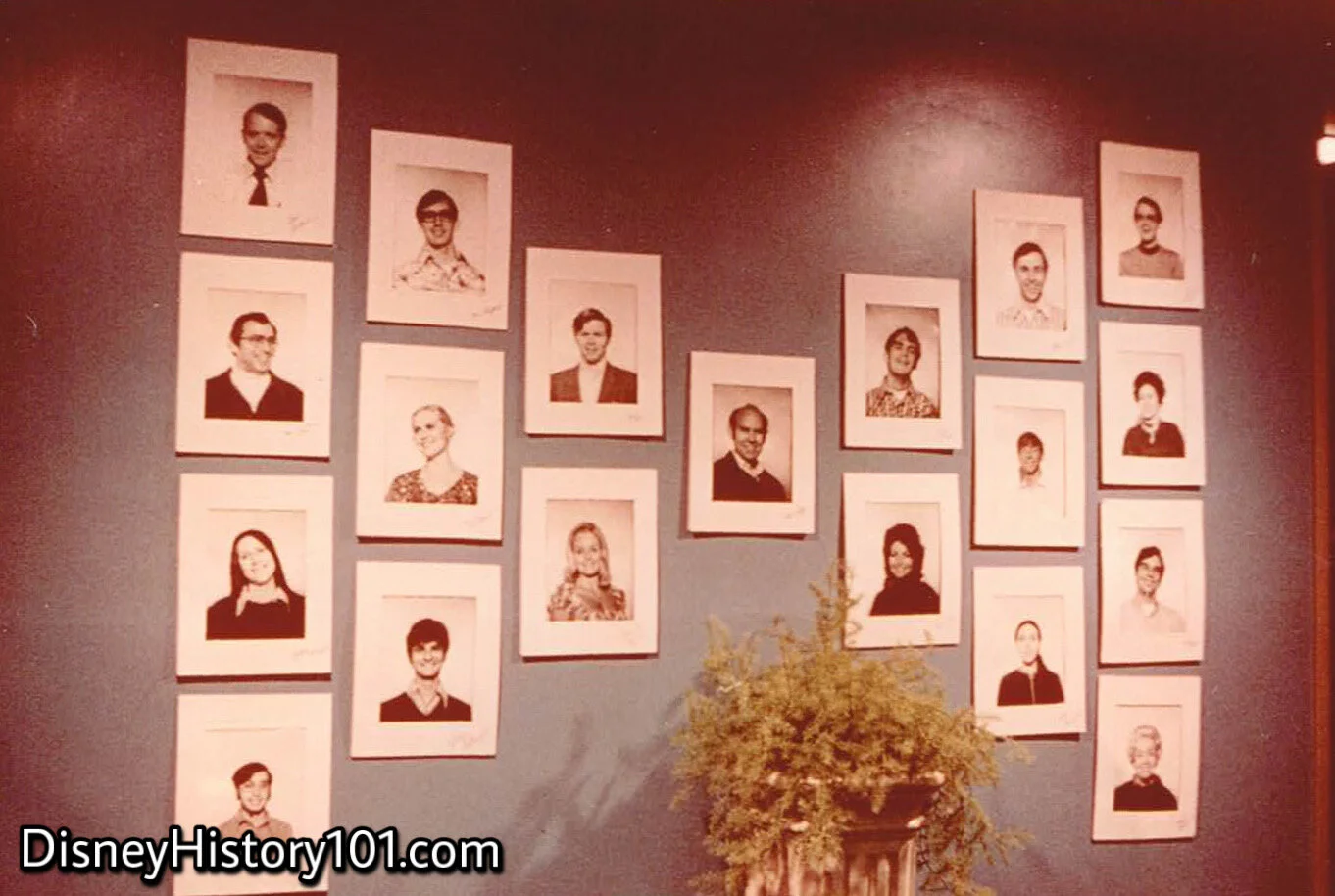
(Rows, Left to Right) :
Row 1 : Kim Rinabarger, Jim West, Anita Trammell, and Lee Lomask
Row 2 : Ken Neufeld, Bonnie B., and Tony Salvagio
Row 3 : Jim Adams and Connie Lane
Row 4 : Tom Pletts
Row 5 : Pete Parise and Pat Keener
Row 6 : Tom Sullivan, Jim Cox, and Kathy McGuire
Row 7 : Terry Verdicia, ?, Mike Lorenz, and Betty Stromquist
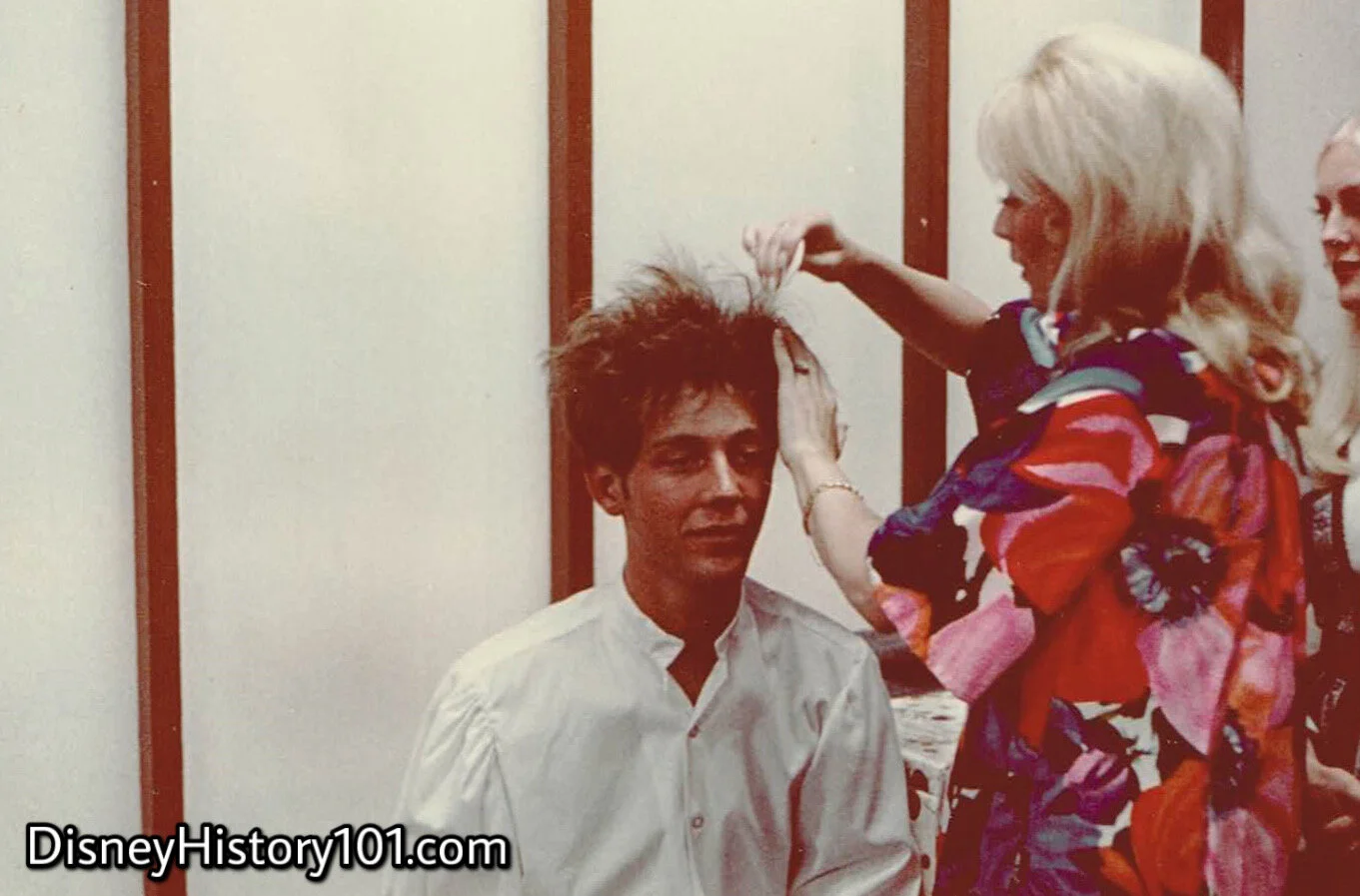
Jim Cox’s (in the makeup chair, backstage) receives some treatment to his hair for his portrayal of the character of Boris Kolenkhov.
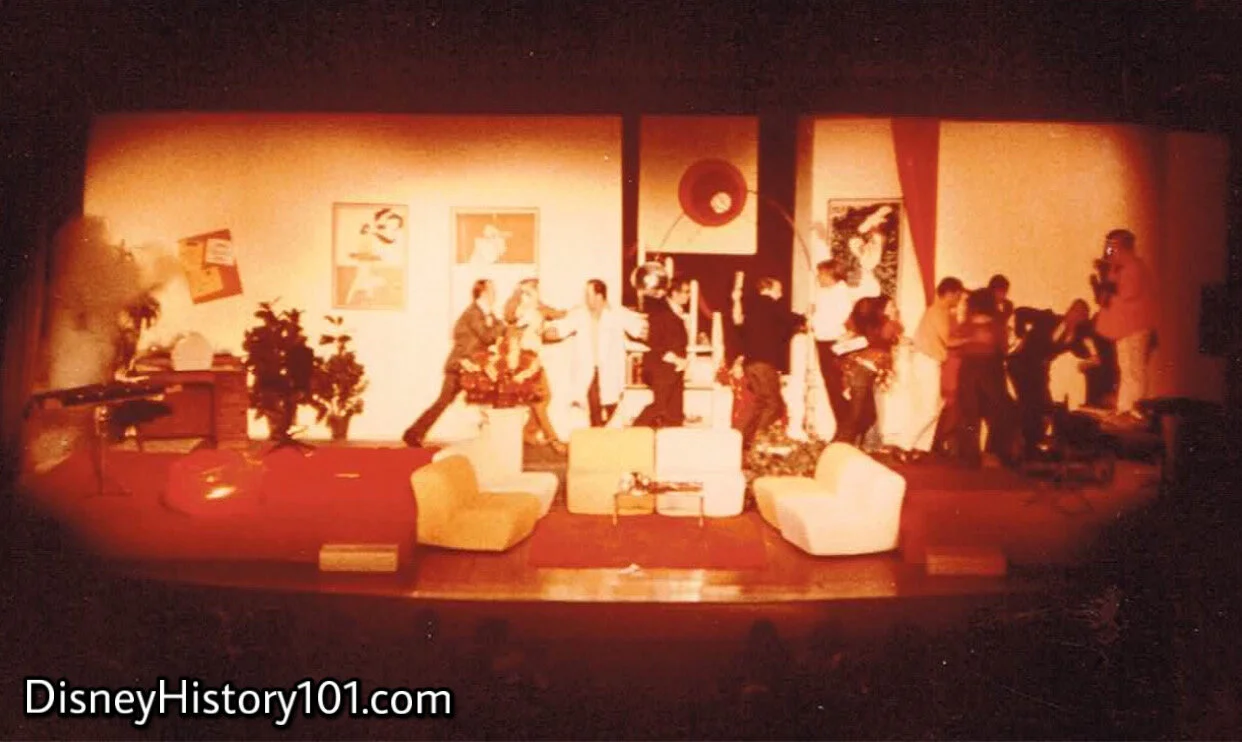
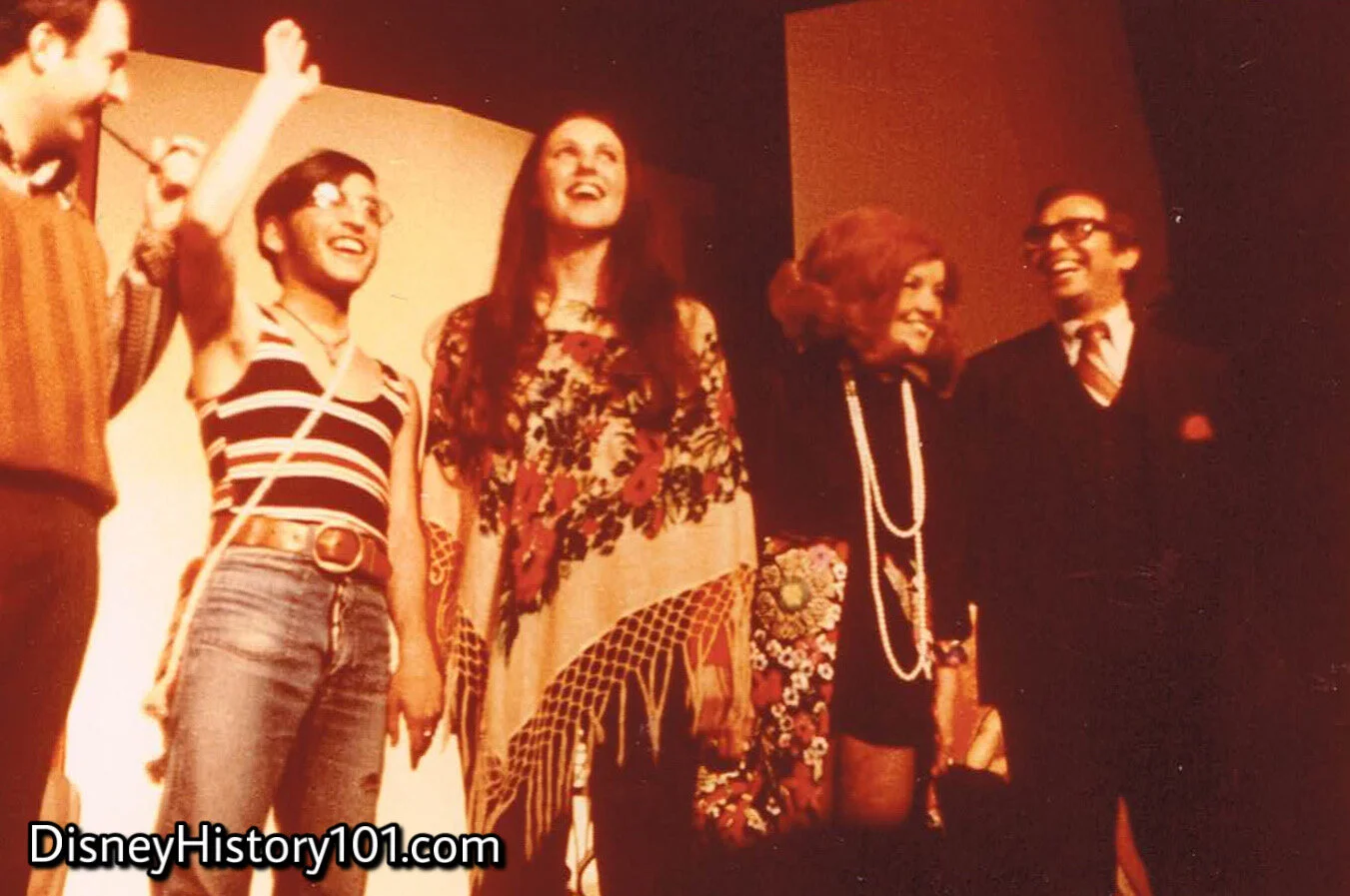
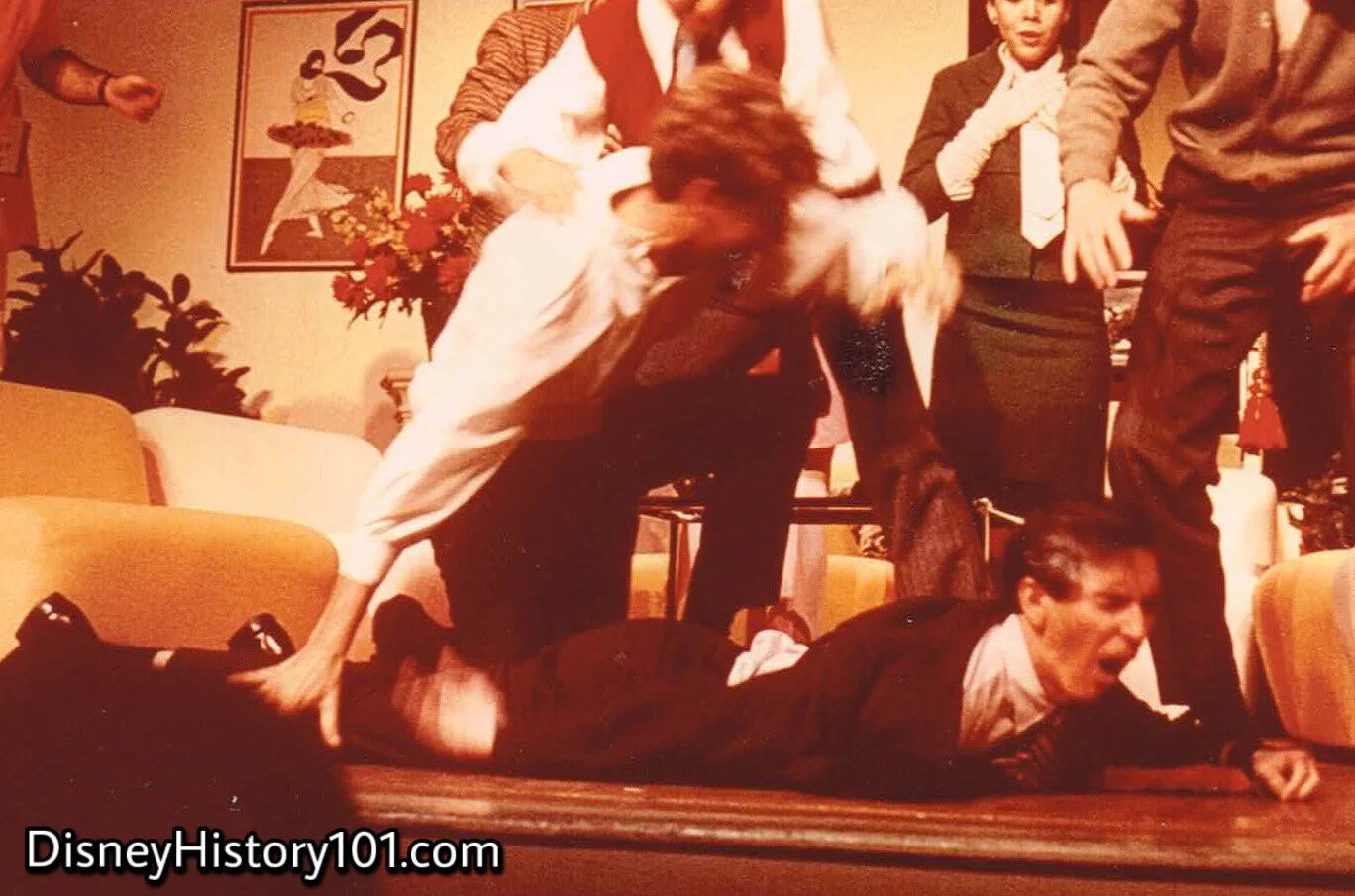
Ken Neufeld “works his magic” on the floor, Jim Cox on top of him, Anita Trammell horrified, and me in the cardigan, making gestures.
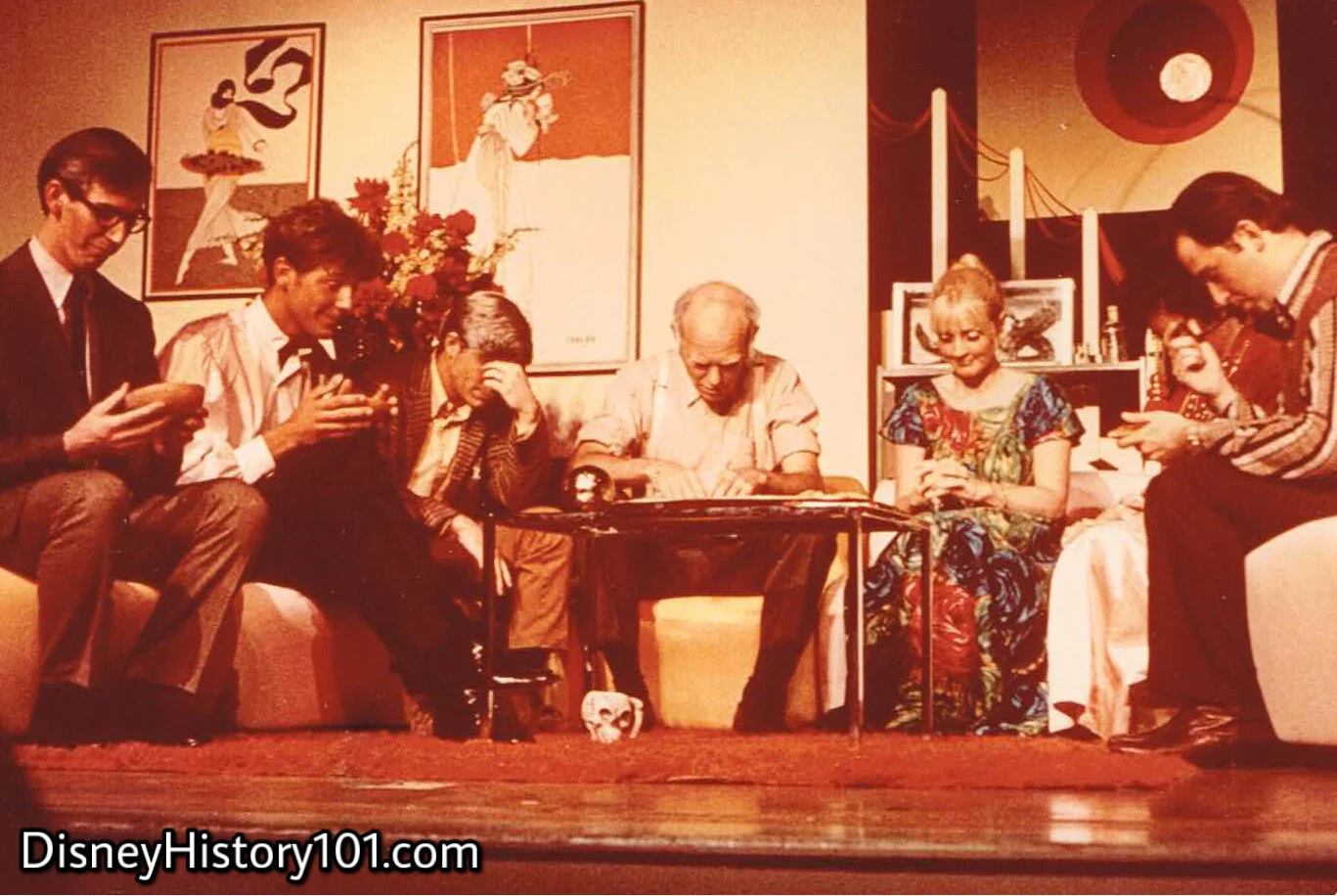
Neufeld, Cox, Adams, Pletts, Lane, Kathy McGuire and Ted Buxton
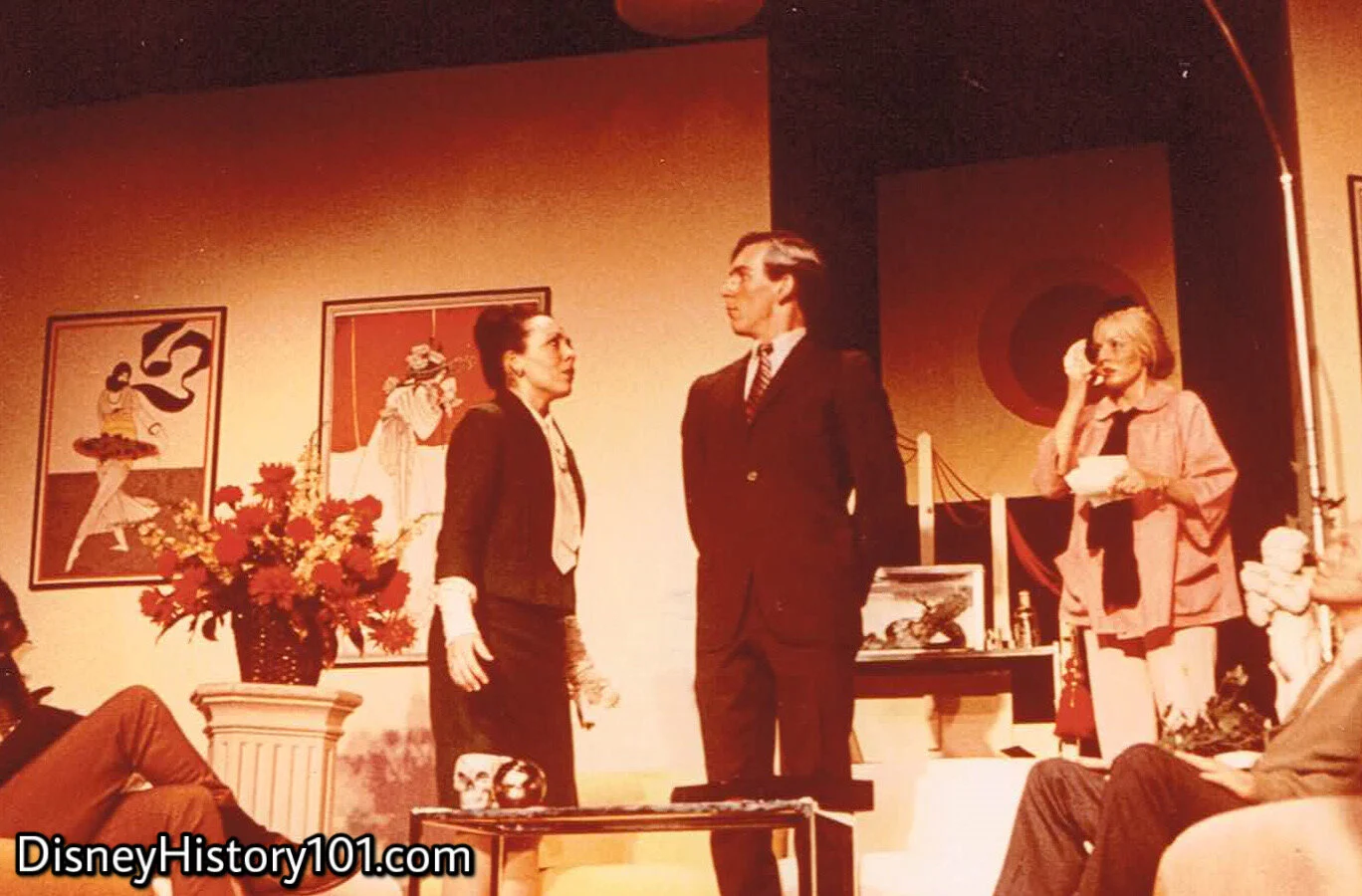
Adams, Trammell, Neufeld, Lane, and Pletts
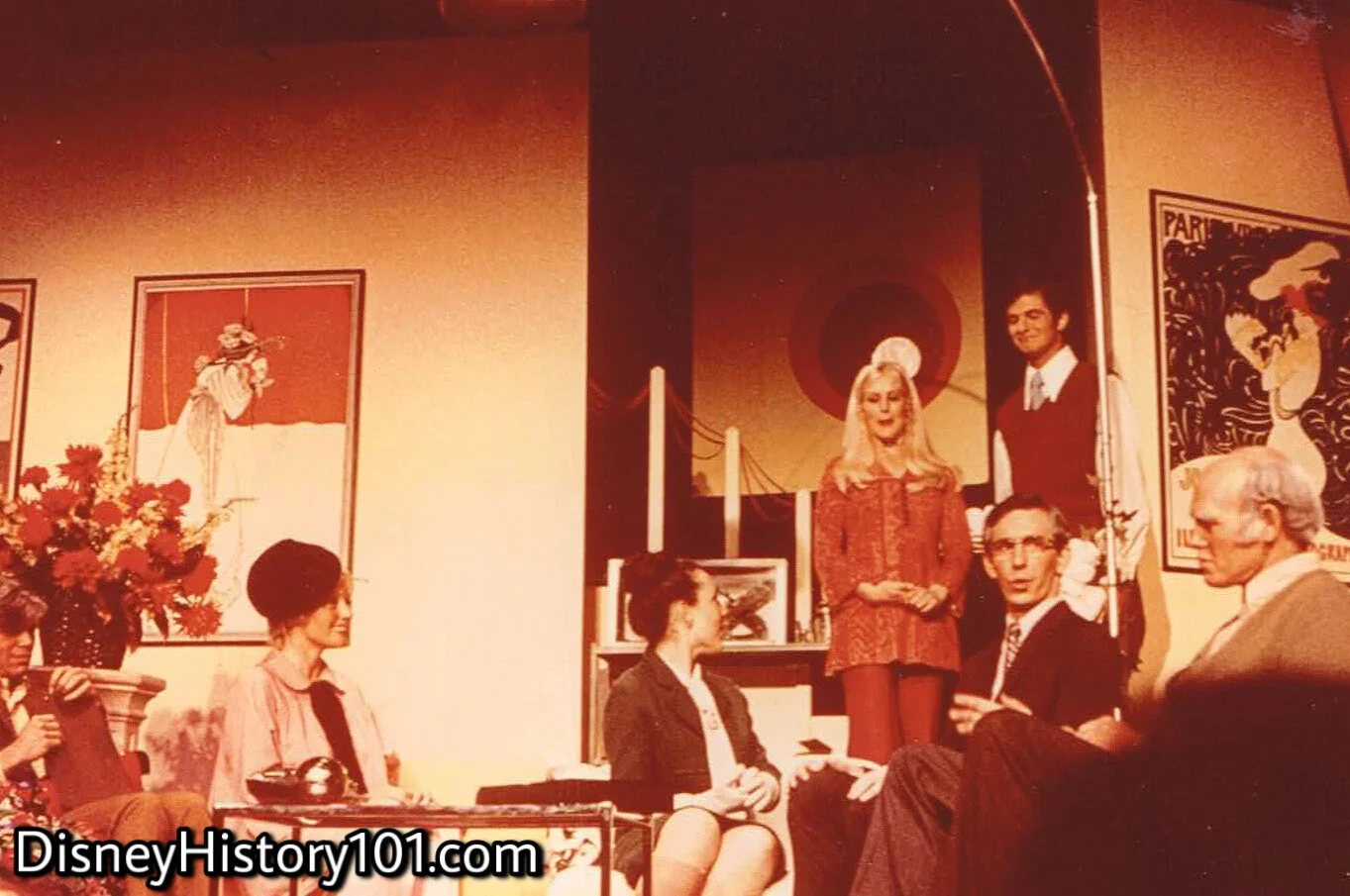
Bonnie B and Tony Salvagio (standing in the back) ; (Seated Left to Right) Jim Adams, Connie Lane, Anita Trammmell, Ken Neufeld, and Tom Pletts
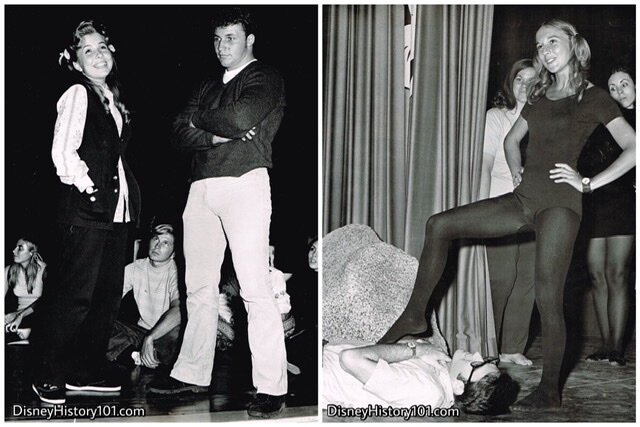
Left to Right : Rhonda Treischel (whose brother Kevin Treischel also played a minor role as one of the “Cronies”) and Randy Pangborn (as Daisy Mae and Li’l Abner), and Richelle Bowe (a “Dogpatch” Wife) rehearse.
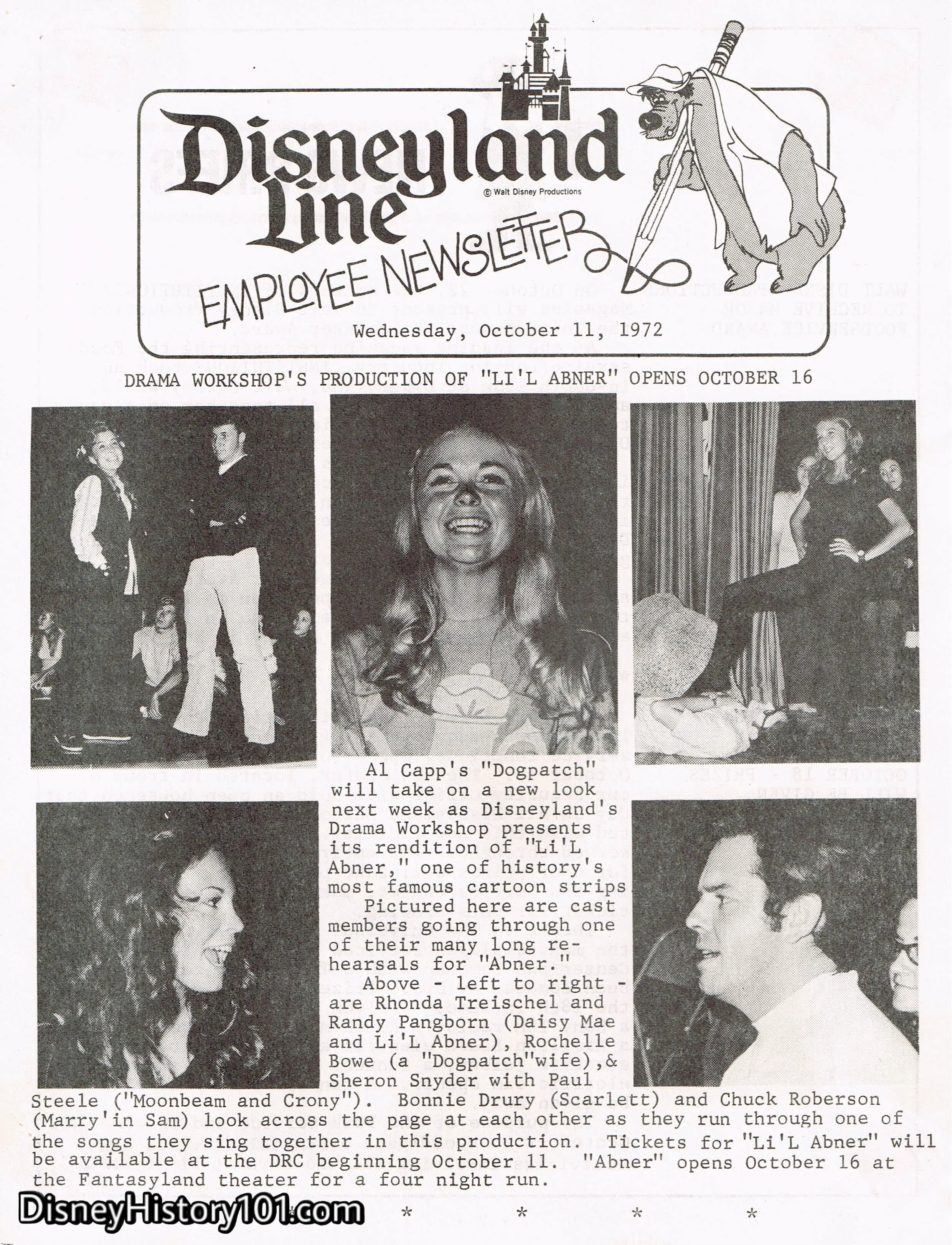
Not pictured above, was Betty Bell (15-year employee of the Merchandising Division) who in her spare time constructed and decorated the sets for the Disneyland Drama Club productions, including Lil’ Abner. She also provided make-up for the casts (“for which she received the Drama Workshop’s ‘Stellar Award’”), according to Disneyland LINE (published Wednesday, November 8, 1972).
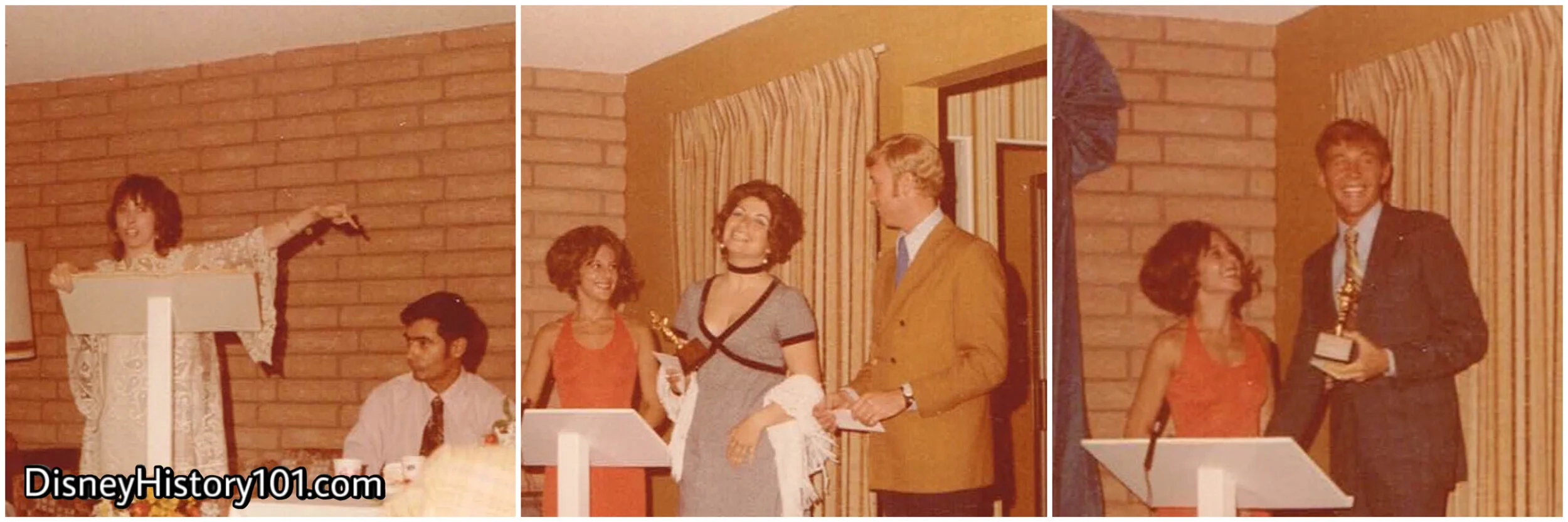
(1) Jim Heiss, Suezanne Fisher and her friend.
(2) Sheron Snyder and Johnny present a Stellar Award to Pat Keener for her performance of Essie
(3) Sheron Snyder presents Jim Cox with a Stellar Award for his performance of Boris Kolenkhov
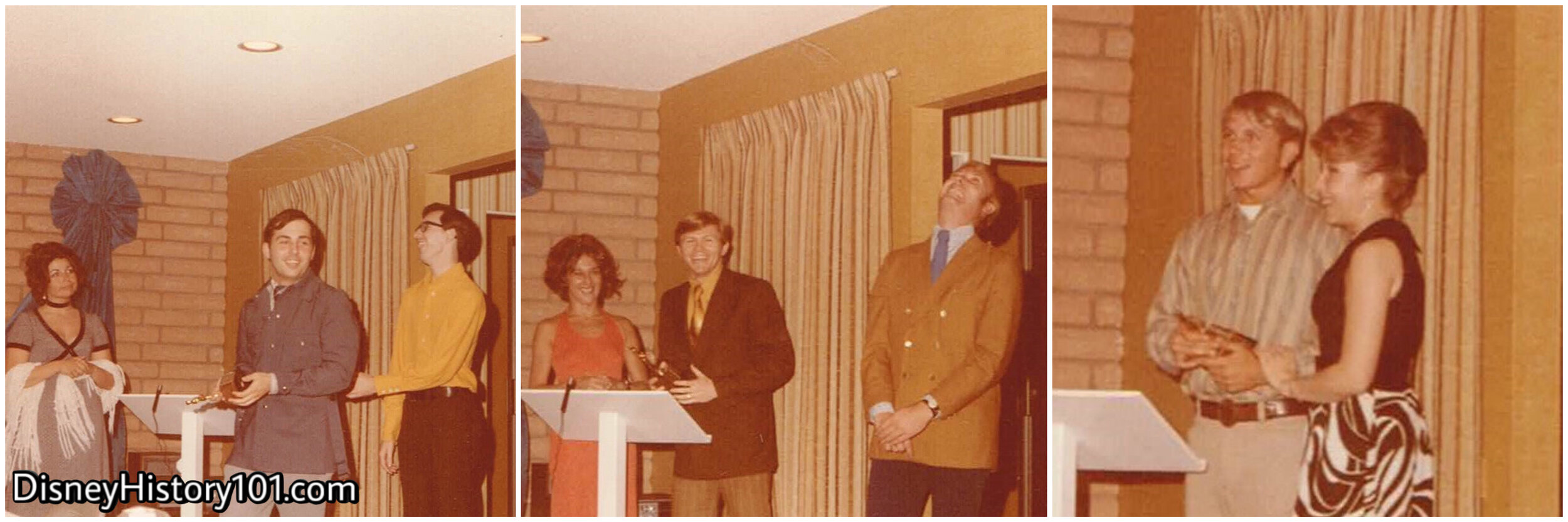
(1) Ted Buxton and Ken
(2) Jim Adams cracking up Sheron, John, and everyone else.
(3) Kevin Treschel and sister Rhonda.
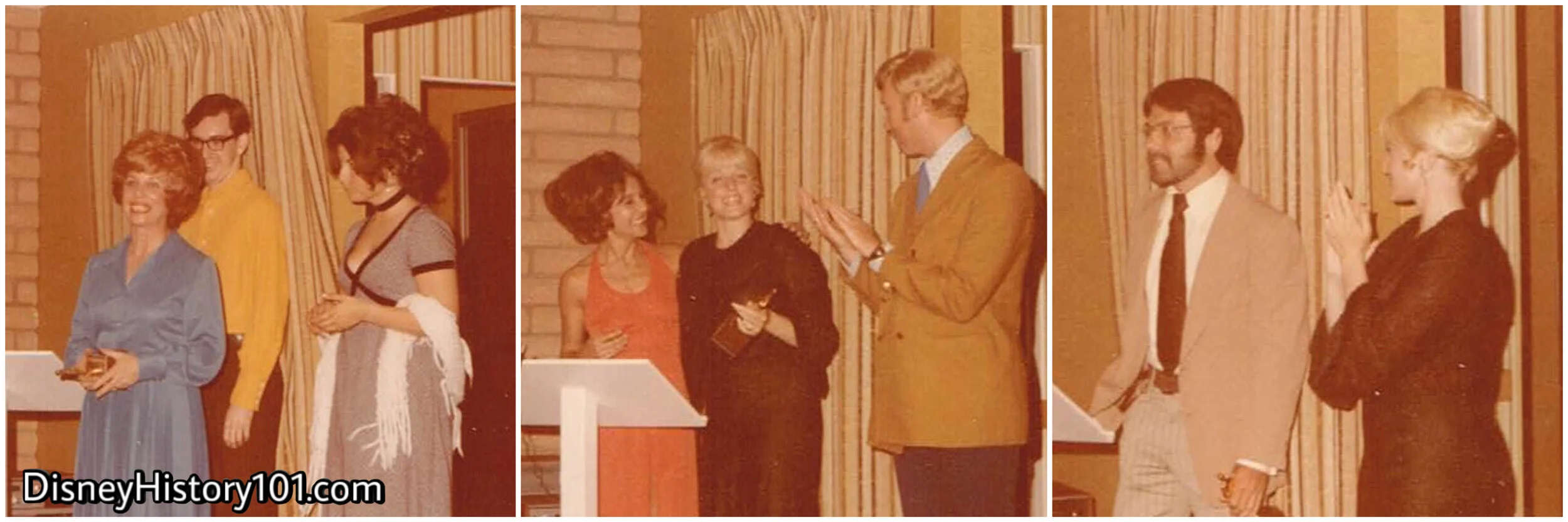
(1) Betty Bell receives her Stellar Award for her makeup work in “You Can’t Take It With You”, while Ken Neufeld and Pat look on.
(2) Sheron and Johnny present a Stellar Award to Connie Lane for her performance of Penny Sycamore in “You Can’t Take It With You”.
(3) Phil Slep receives a Stellar Award award for Musical Direction of “Bye Bye Birdie”, while Connie applauds.
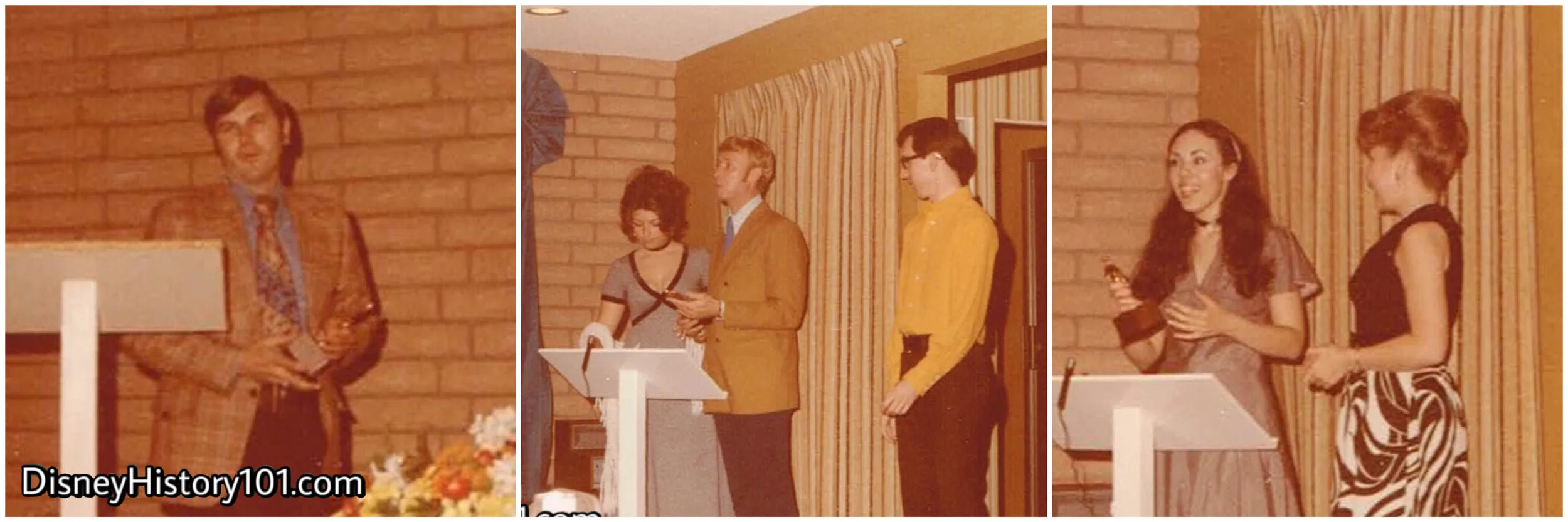
(1) …”For the use of costumes in ‘Bye Bye Birdie’ - Tom Jacobson!”
(2) “Peaches” Keener, Johnny B. and Ken N.
(3) Kathy McGuire and Rhonda
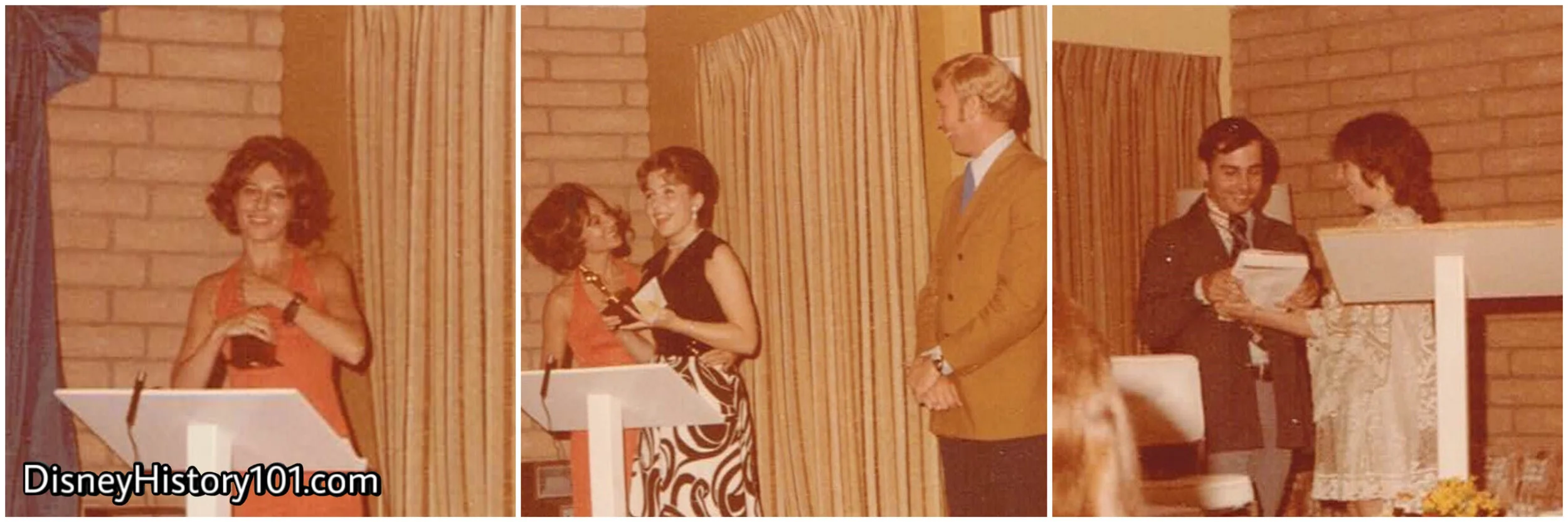
(1) Sheron
(2) Rosie Alvarez with Rhonda Treischel, while Rhonda receives her award for her performance in “Bye Bye Birdie”.
(3) Suezanne presents Ted Buxton with a special Stellar Award for Publicity and Programs.
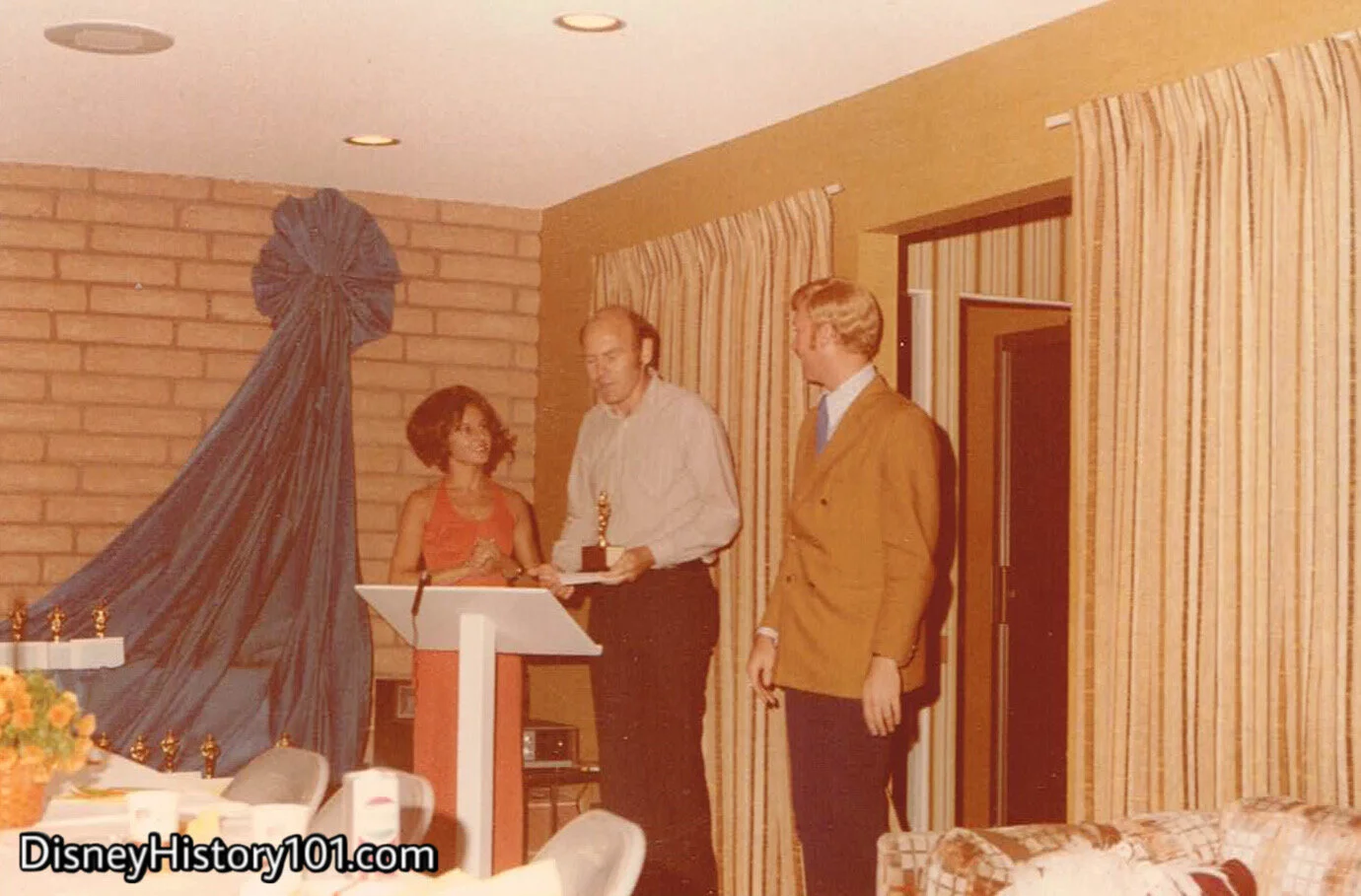
Tom Pletts receives a Stellar Award for his performance of Martin Vanderhoff (Grandpa) in “You Can’t Take It With You”.

On December 13 and 14, 1972 the Drama Workshop began casting for ”Wait Until Dark.” Casting was performed in the Center, with production taking place in late February of 1973, and rehearsals beginning soon after.
Disneyland Drama Club production Cast Member Tom Pletts recollects the next Disneyland Drama Club production for its very different tone, which was produced (oddly enough) during the year of the “Walt Disney Productions - 50 Happy Years of Family Entertainment” celebration at Disneyland. Tom recalls :
“It was definitely a thriller. In fact Park management first vetoed our doing it, and only relented because it wouldn't be presented to the public. It had been a recent hit movie, based on the original play. Audrey Hepburn played the blind lady, and Alan Arkin was the villain in that film. I hadn't seen it though. The extreme tension is what prompted us to opt for screen credits in lieu of a curtain call at the play's end.
I can’t remember how often we signed [autographs] after shows, but we always met the audience after our shows. Except once. After “Wait Until Dark”, we hid in a break room. That play ended like a movie, with credits on a screen, and no curtain call. To do that, we established the screen with an opening prologue sequence. It was different.”
“Add Bonnie Barillieux to the cast list for Wait Until Dark. In the play, her character is just a corpse offstage, and is only referred to; but we used pictures of her in a prologue sequence, so we could establish at the beginning our use of the screen that would also display our closing credit photos. Clever? Bonnie was used to playing the heroine, but in this one she was stealing drugs from Jim Adams' character. (I avoided using the obvious play-on-words.) In the prologue, we showed her being chased through LAX, and handing the drug-filled doll to a perplexed Greg Dymkowski.”
According to Disneyland LINE (published Wednesday, March 28, 1973), “Other credits should go to Ben Cossart, Ted Buxton, Arlene Underwood, Bob Irvine, Gary Carlson, Phil Chilcote, Chuck Roberson, Jim Cox, Jane Cline, and Lee Lomask.”
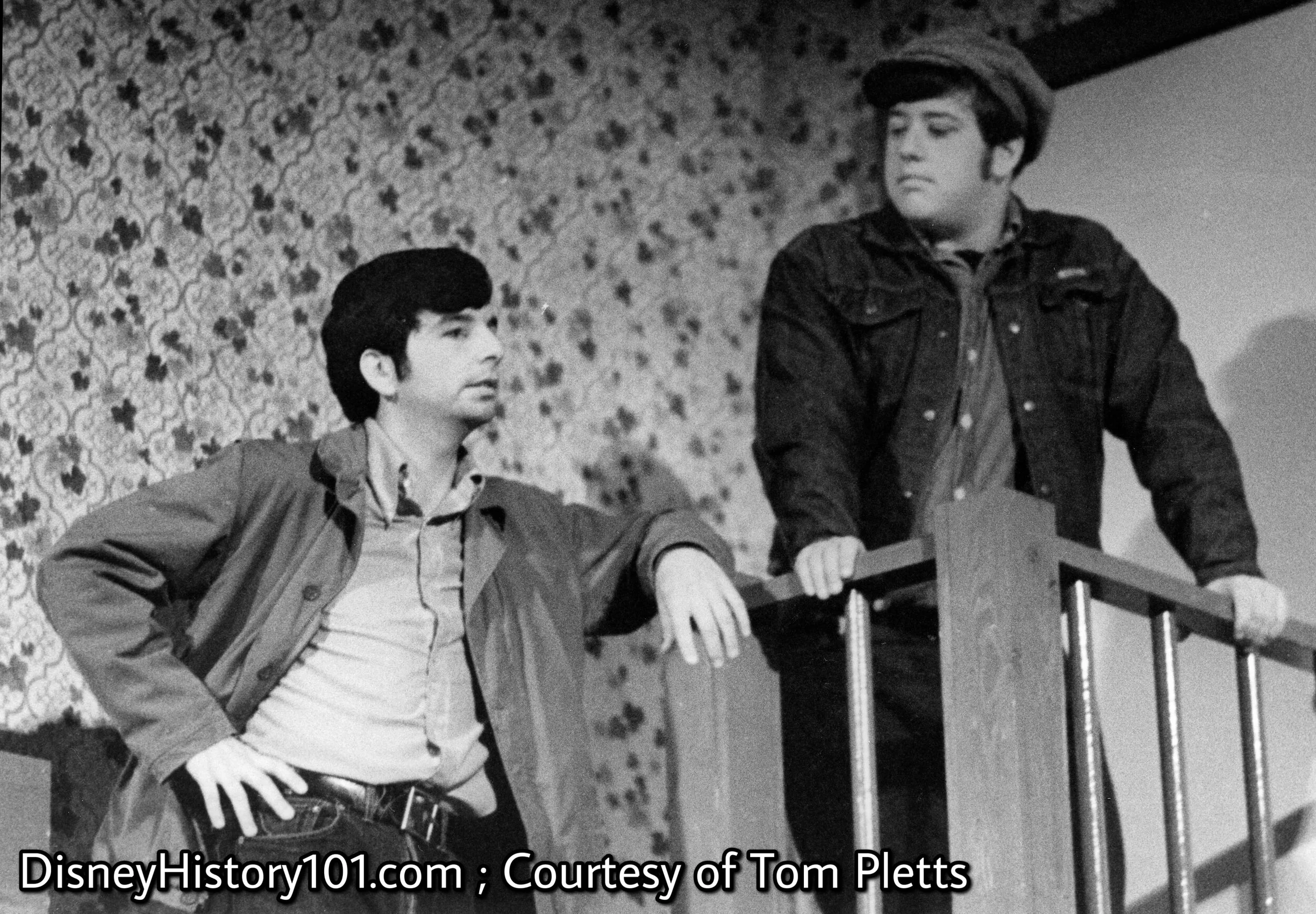
Mike Lorenz and Chuck Hilburn as the two con men.
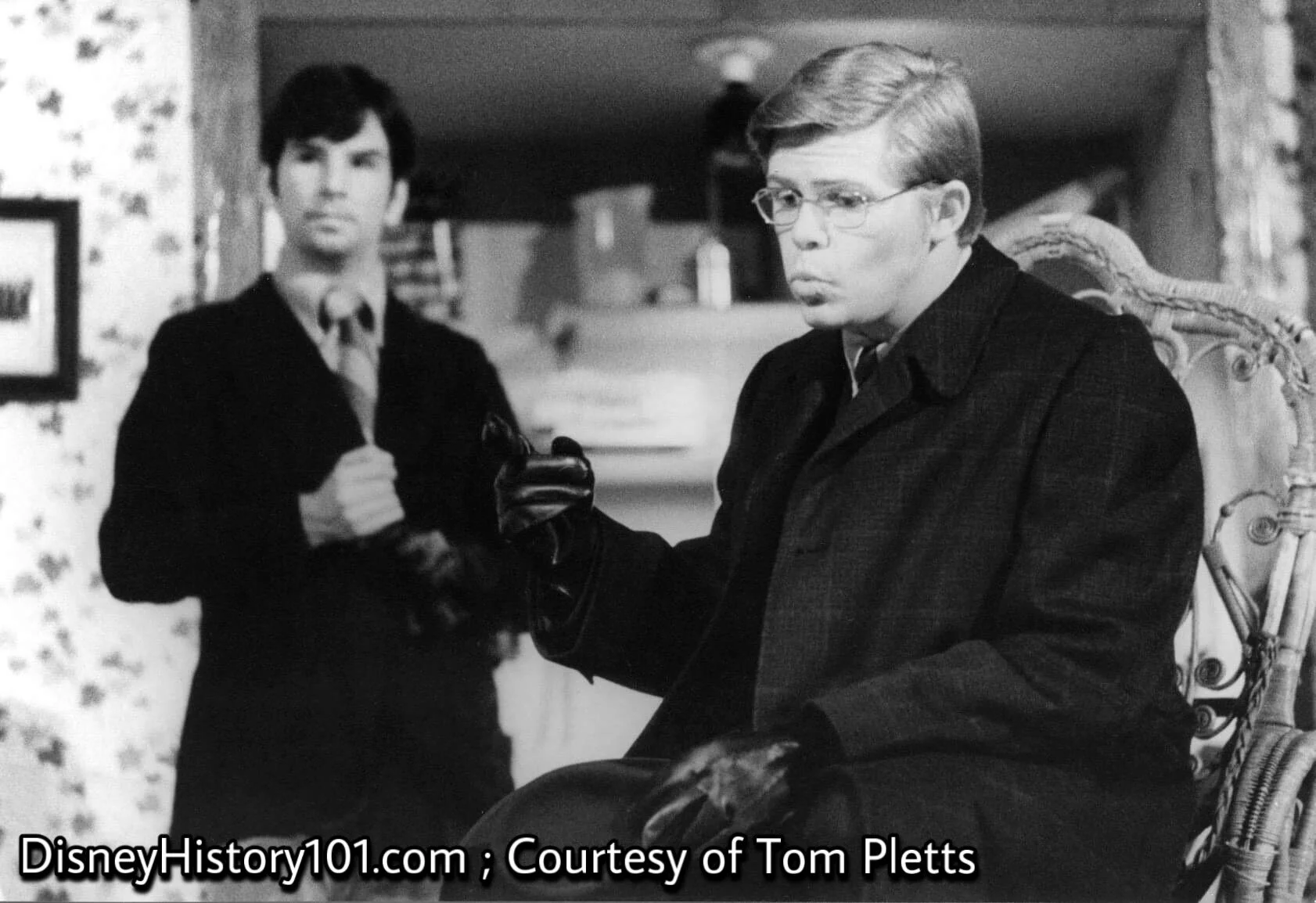
Mike Lorenz and Jim Adams (portraying the “Drug Dealer”) for the Disneyland Drama Club production of "Wait Until Dark".
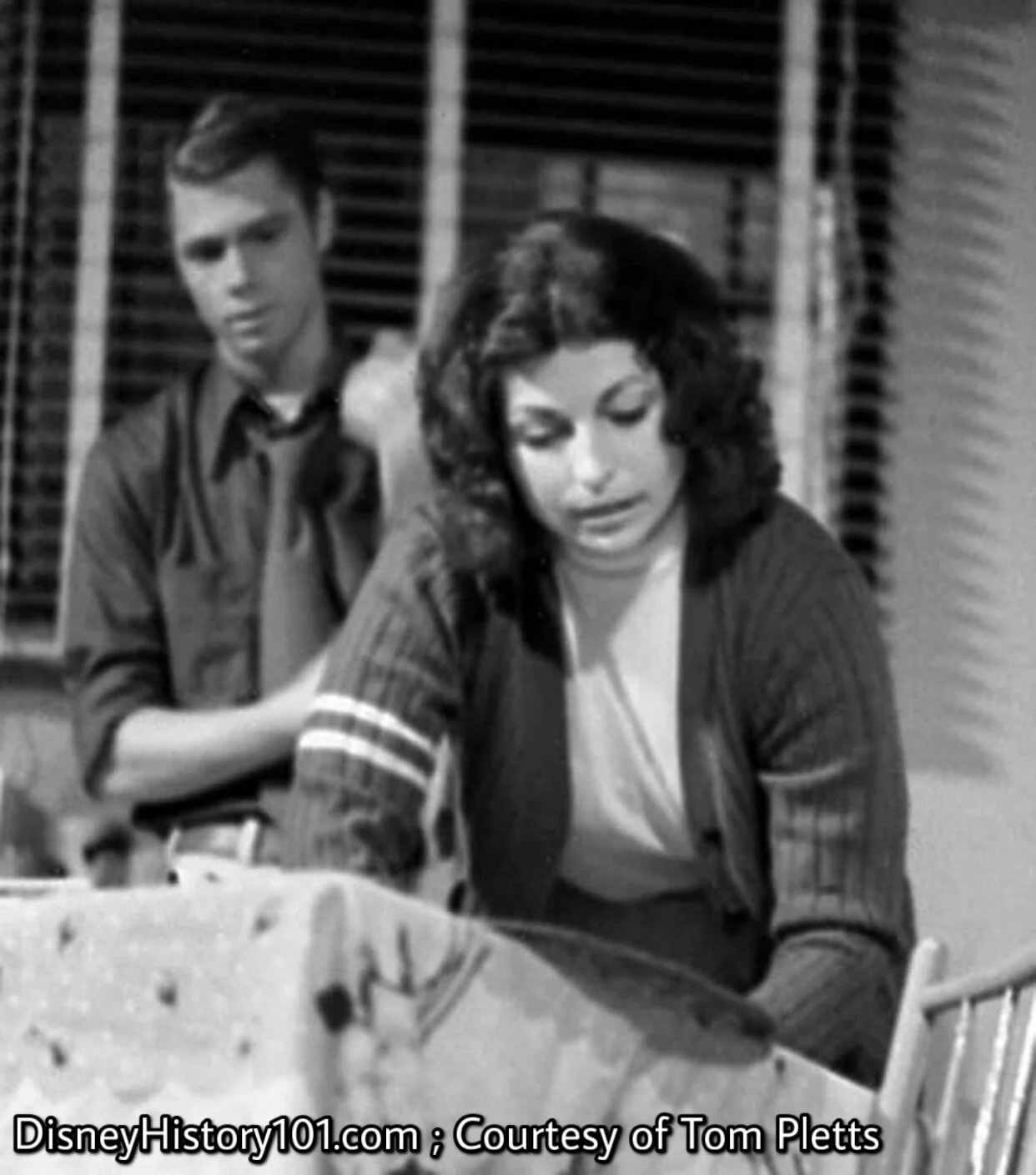
Greg Dymkowski and the “blind” Pat Keener portraying “The Victims”. Tom Pletts recollected : “To do the role, Pat learned how the blind function, by attending a school for the blind.” Accoding to Disneyland LINE (published Wednesday, March 28, 1973), “The Braille Institute was the technical advisor.”
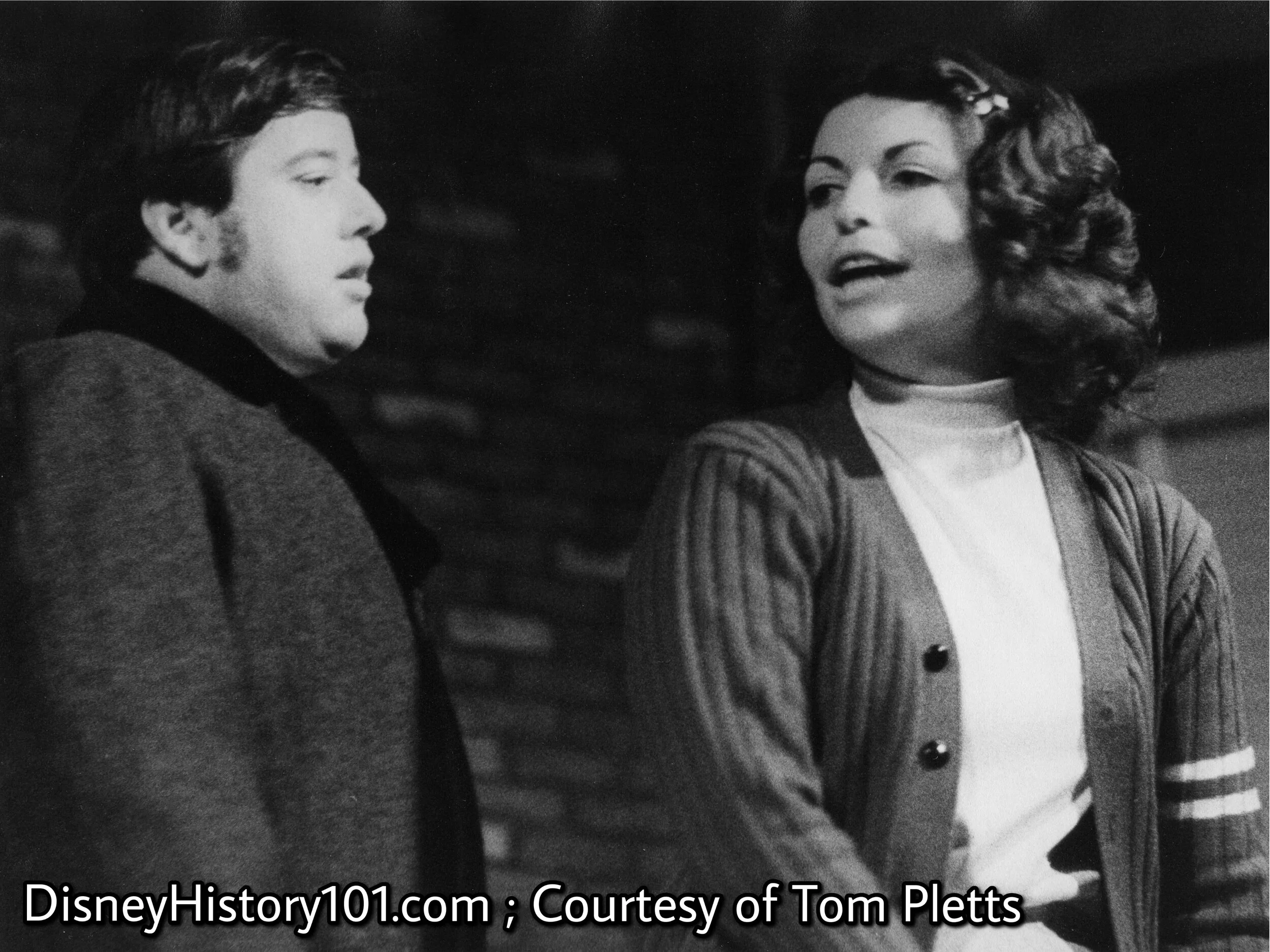
Chuck’s character conning Pat’s character in this scene.
“Wait Until Dark” Director Tom Pletts remembers : “From the few rehearsal schedules I've kept, and my recollections, each production took about a month or so to put together. Rehearsals were planned around the Park's hours, the availability of the stage, and the cast members' (literally) work schedules. We'd squeeze in an average of 15 rehearsals. Wait Until Dark had close to 30!”
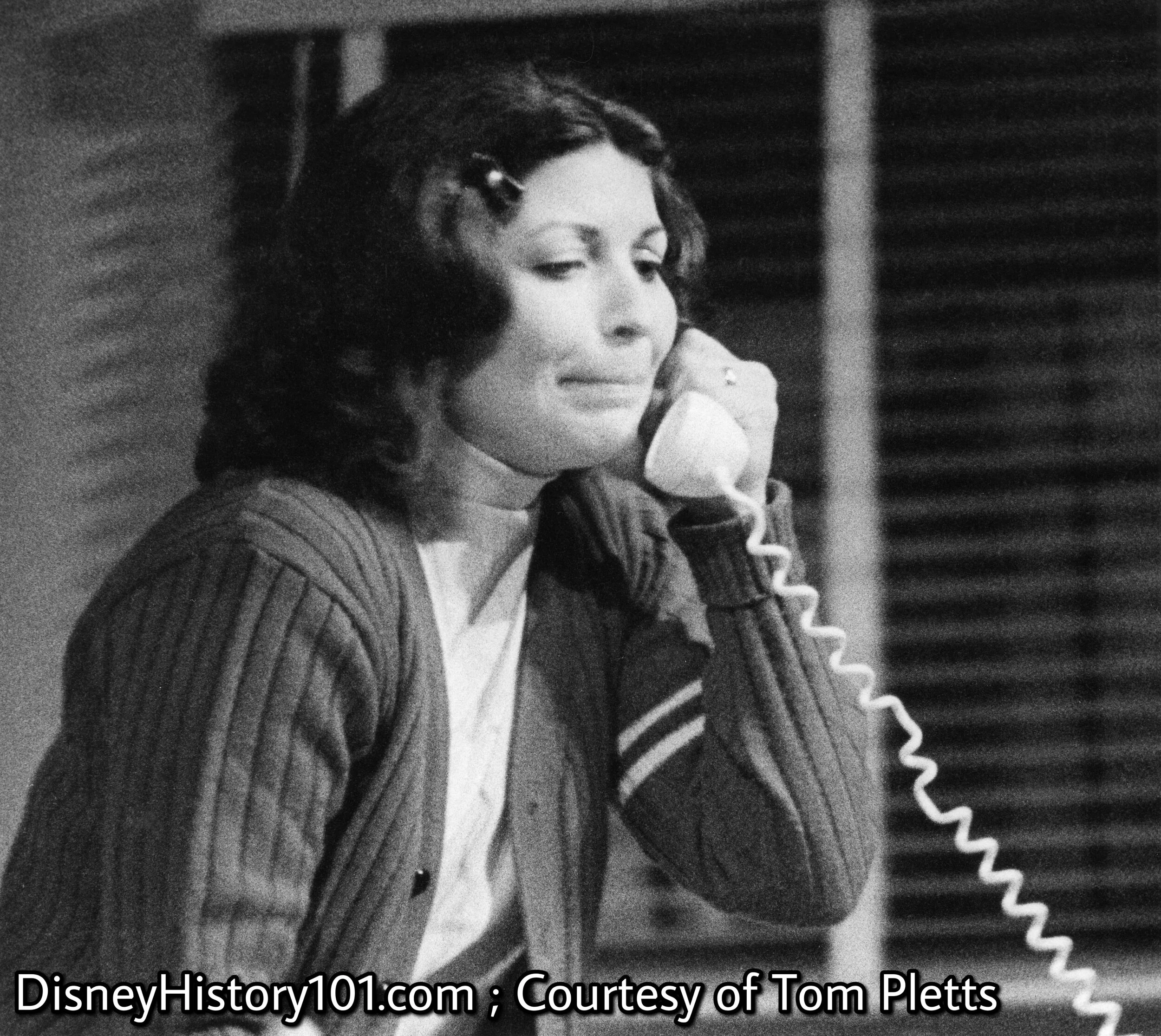
Pat being conned by phone.
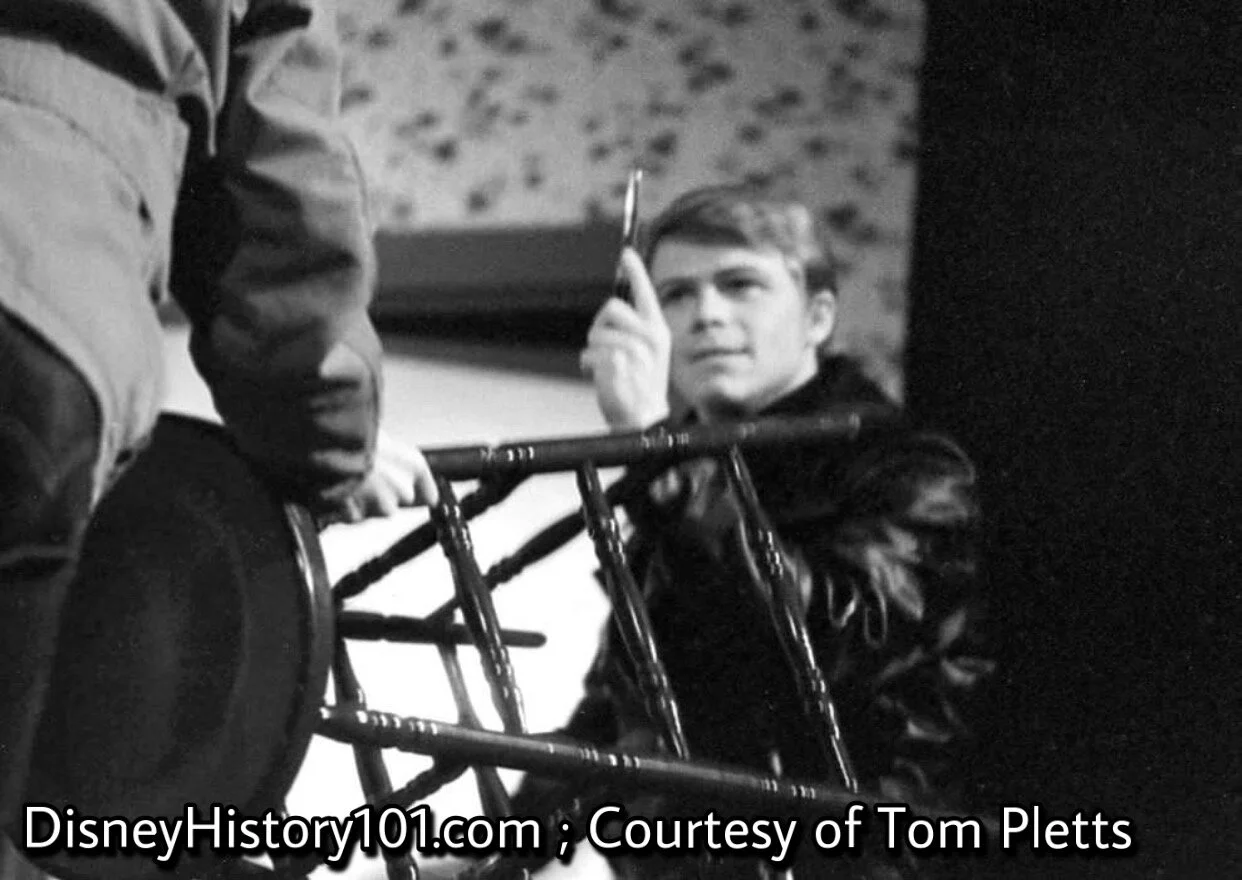
Jim’s character persuades the con men to do their job.
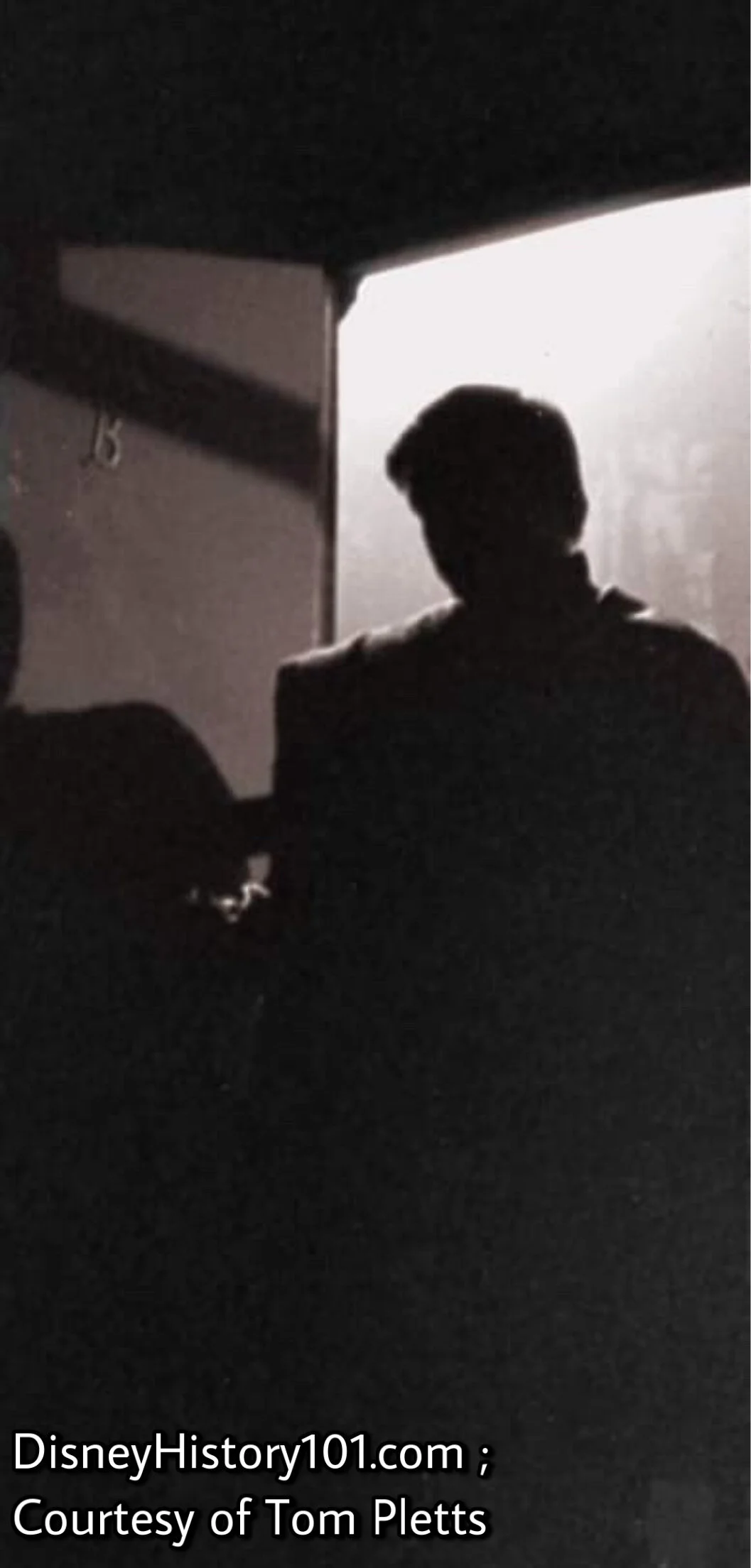
Jim Adams’ character enters ominously.
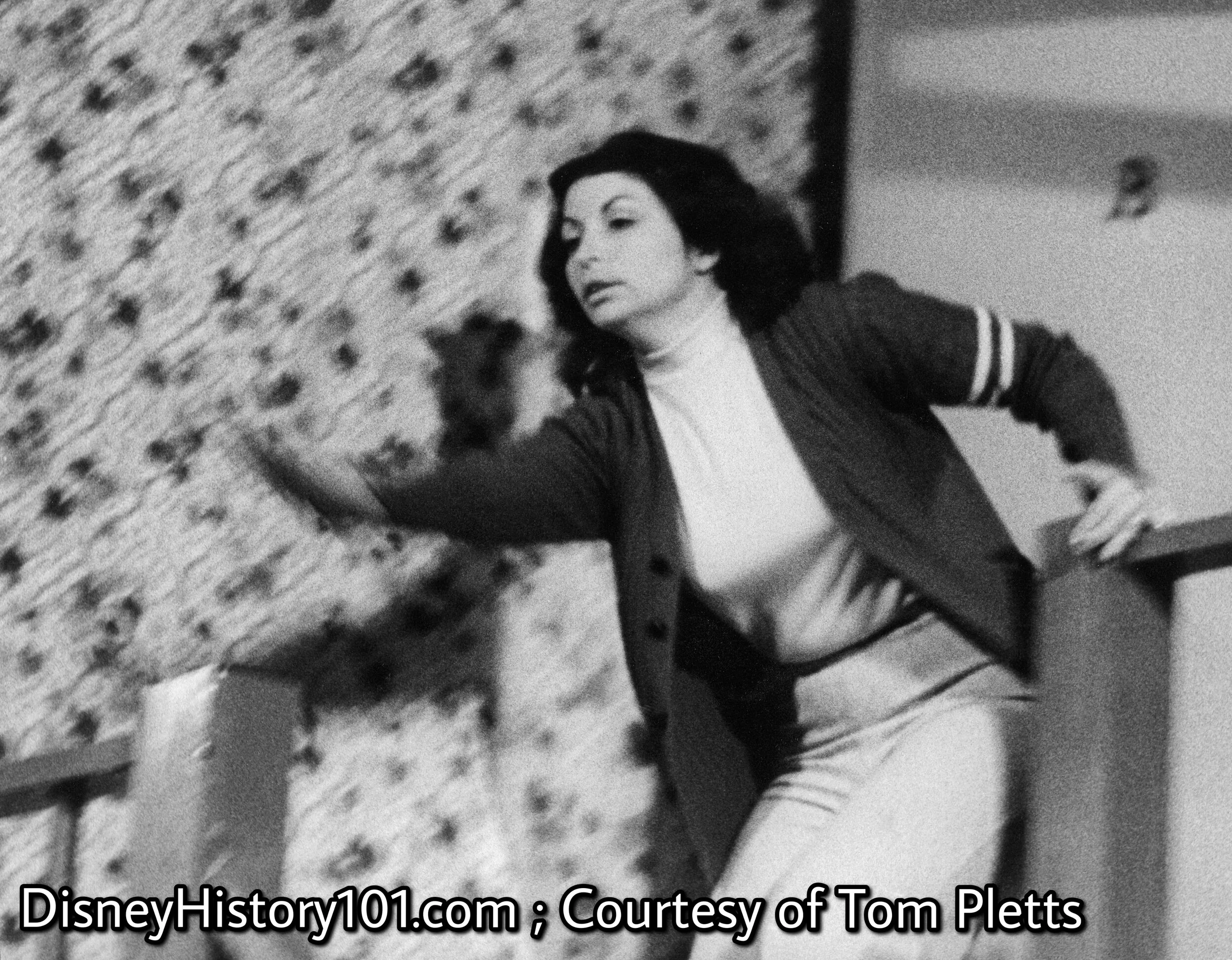
The “blind” Pat moves quickly down the stairs.
By the end of its run, the exciting and suspenseful “Wait Until Dark” saw an audience of more than 1,500 Disneyland Employees. Accoding to Disneyland LINE (published Wednesday, March 28, 1973), “Since this was the workshop’s first attempt at performing a heavy dramatic piece, all of the accolades they have received are even more meaningful.”
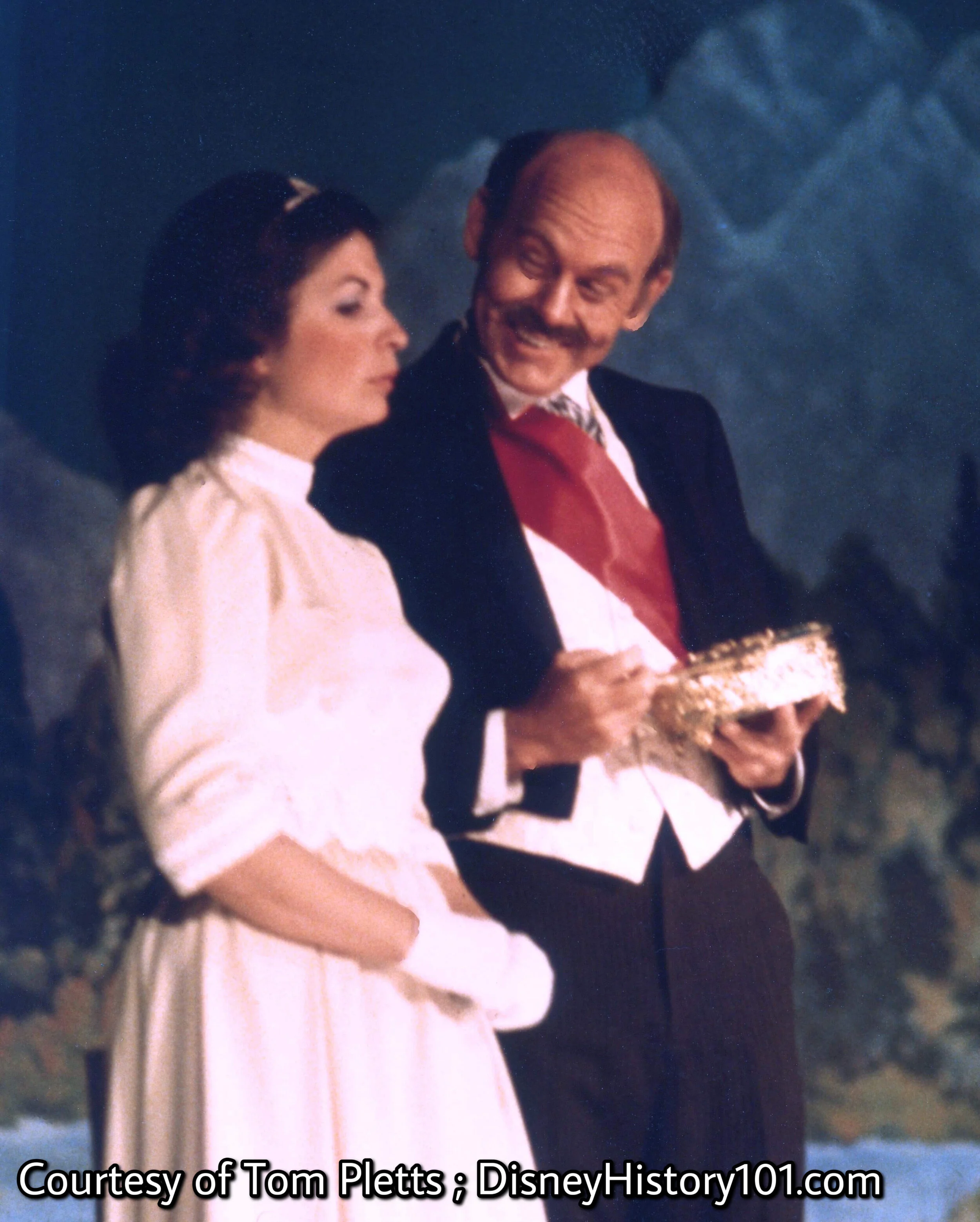
“A Rare ‘Vintage View’ of Little Mary Sunshine”
(Photo : Pat Keener and Tom Pletts)
Cast Member Tom Pletts remembers : “Little Mary Sunshine…was the last show I had any involvement with, and [worked with] some new people I hadn’t worked with before. I just remember it was fun. I don’t remember much about the plot - It had a mountie, an Indian, a lecherous dignitary (me), and Pollyanna, and it seemed so farcical. I’d actually seen UC Irvine’s slick production of it earlier, as it was their first play.”
Stars included Janice Knowlton (Mother Superior). If you performed in this musical, we would love to hear your story.
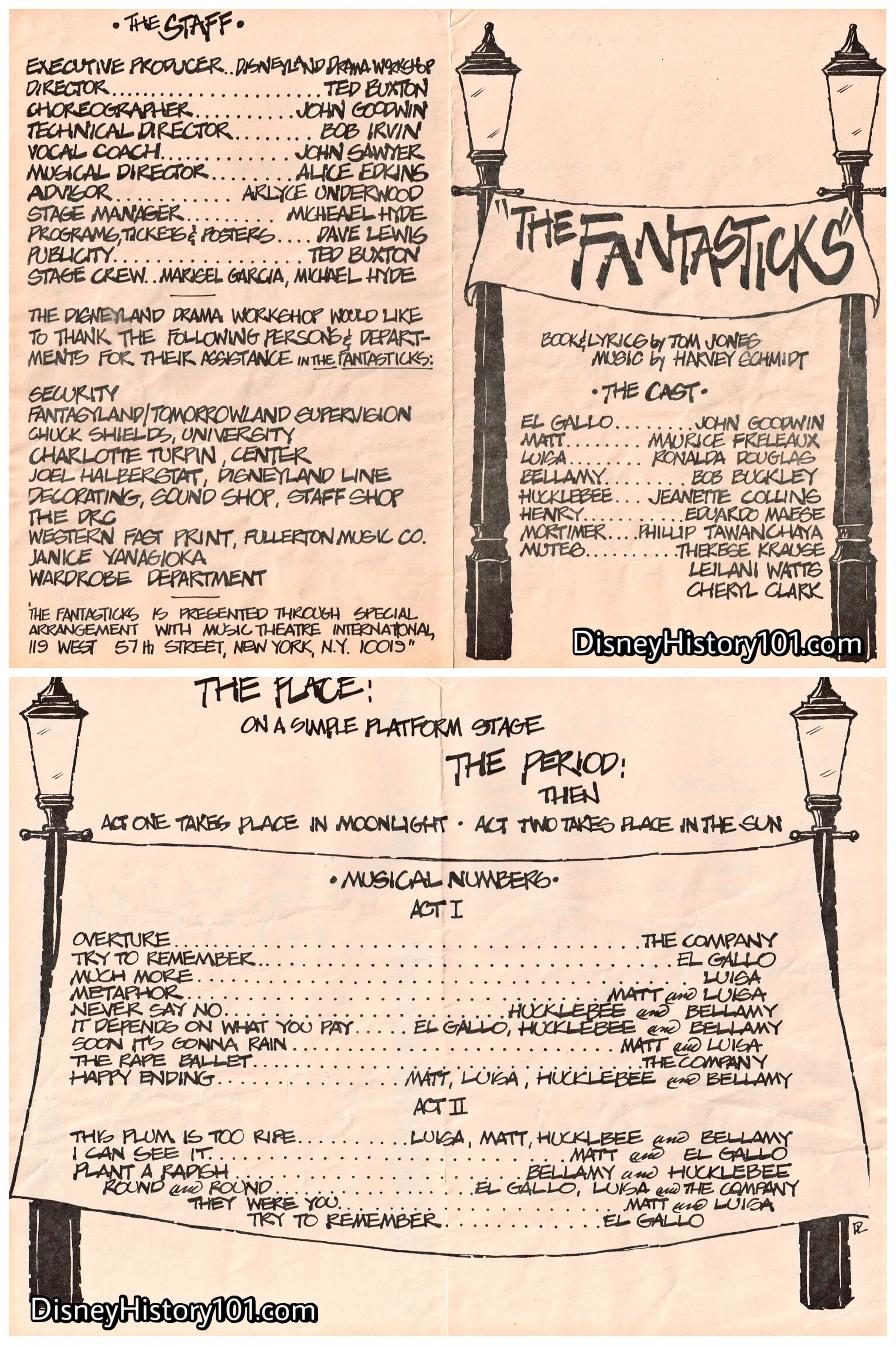
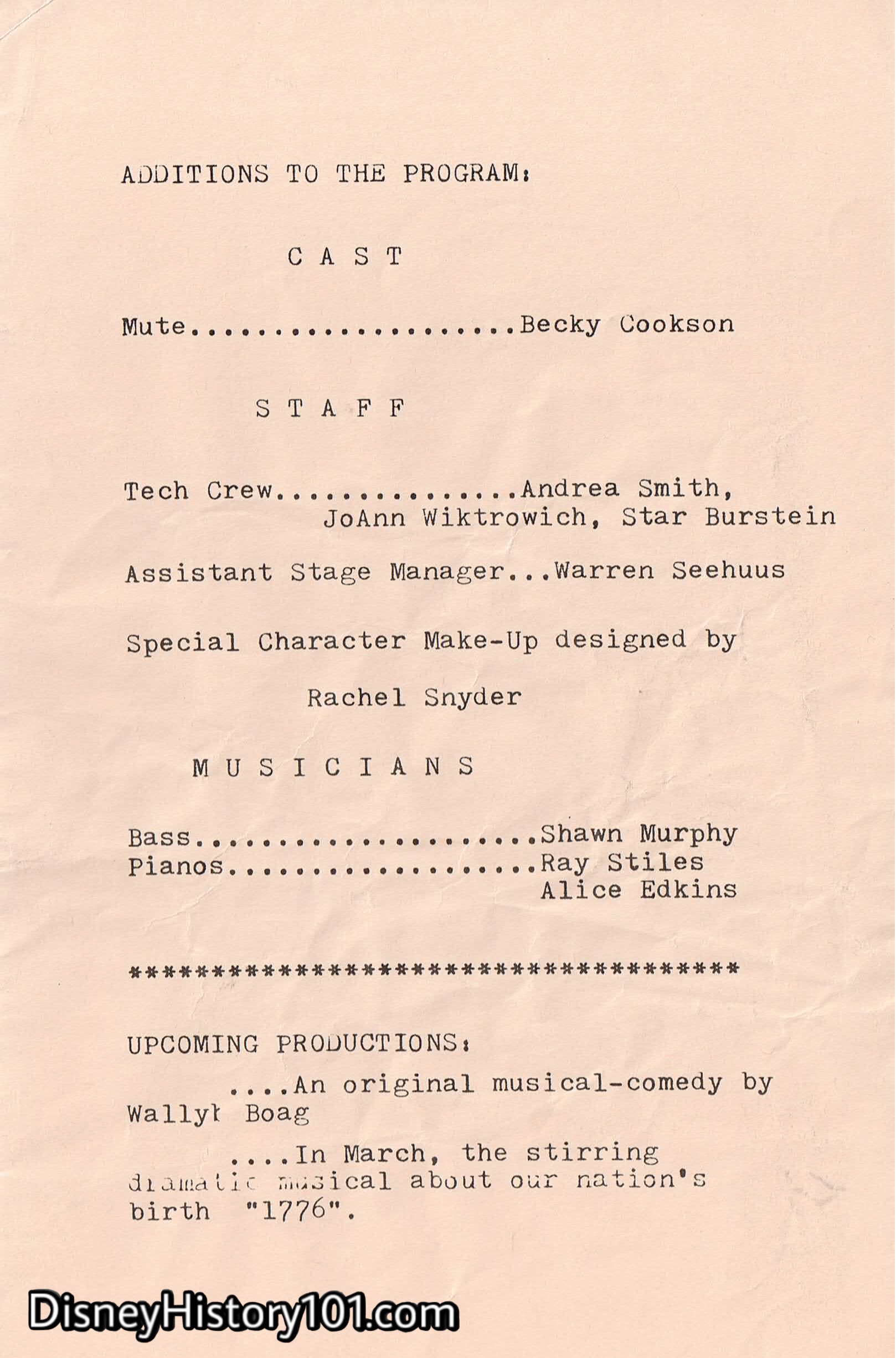
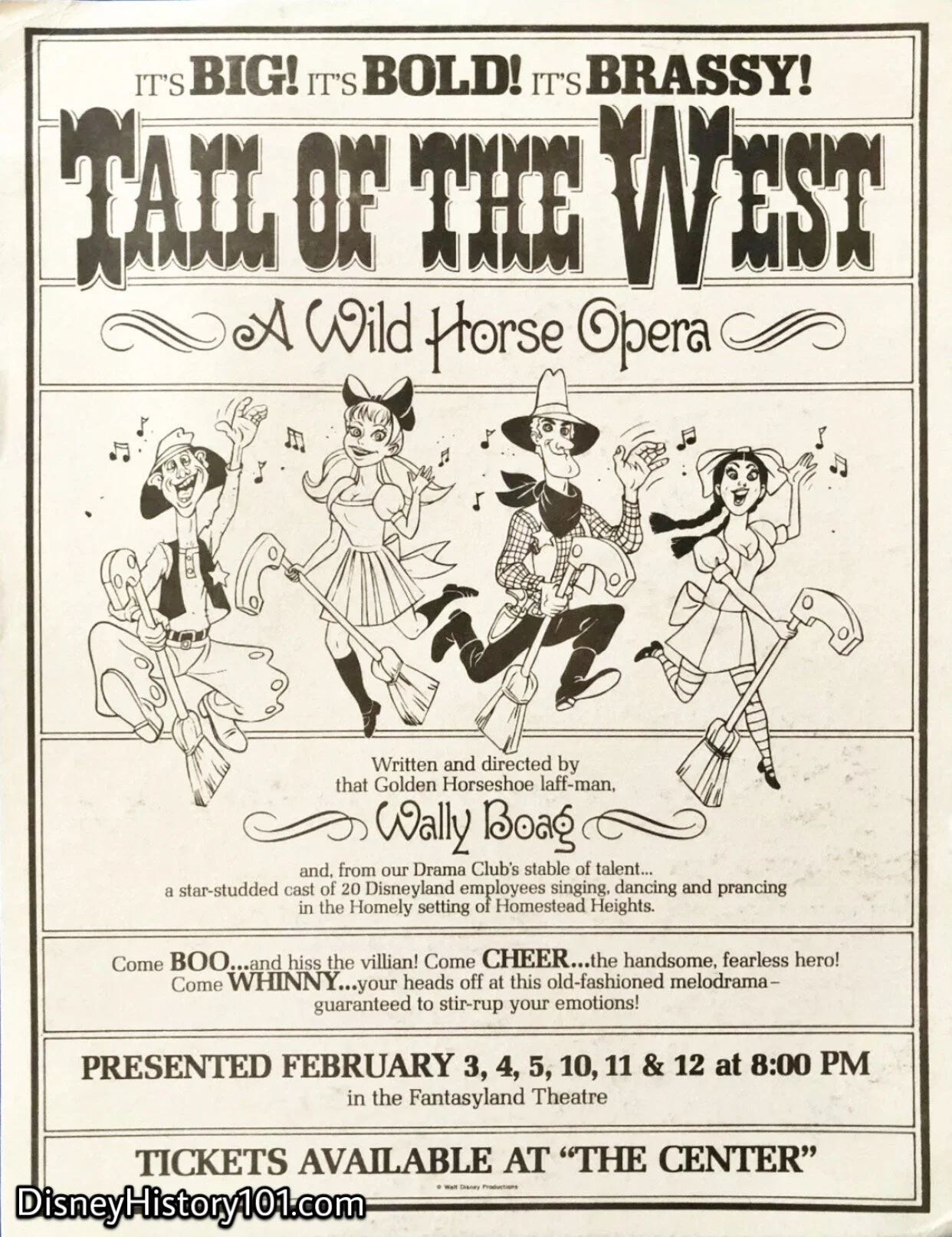
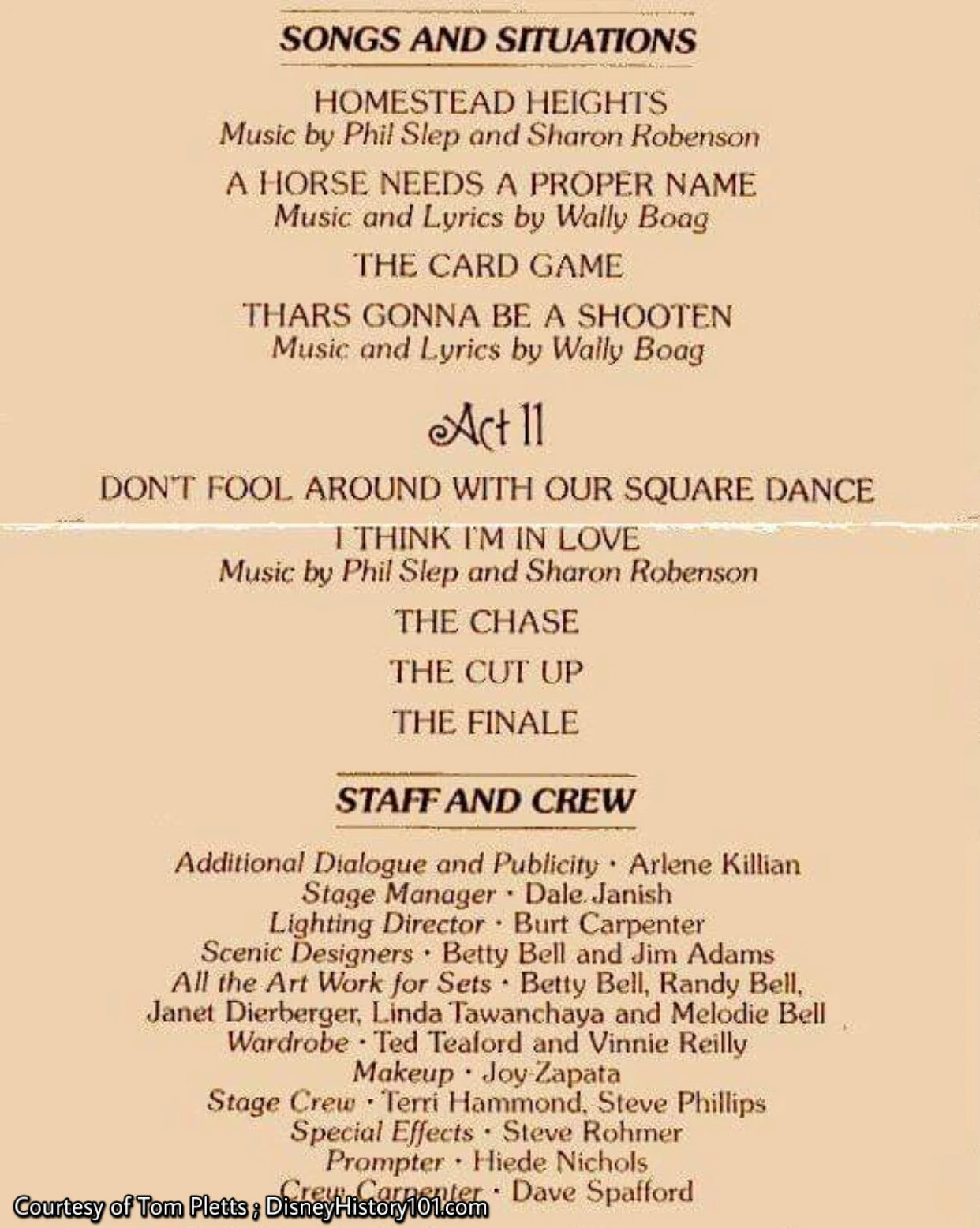
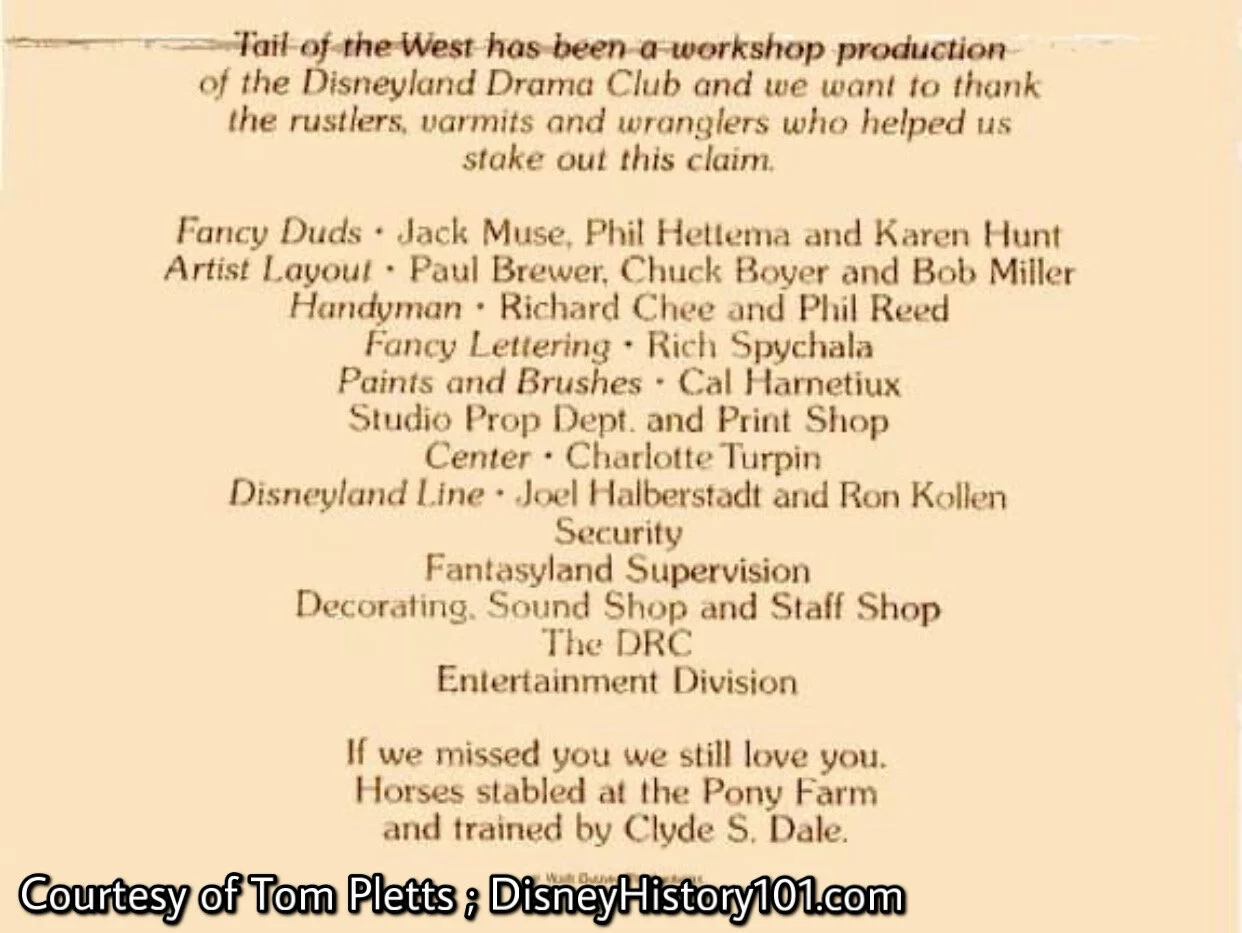
Tom Pletts recalled this production : “‘Tail of the West’ is/was a vaudeville-styled melodrama, with a chorus and production numbers. The story: after the townsfolk extol the virtues of Homestead Heights, their new Marshall and his deputy find a name for their horse by doing a Lone Ranger sketch and dance (it's hard to explain). The heroine's grandfather loses the deed to his ranch (and the town's water rights) PLUS the hand of his granddaughter in a silly poker game with the villain (me). The deputy is talked into a shootout with Blackberry, but neither wins; so the heroine steals back the deed from the villain's pocket. After a strobe-light chase scent involving nearly everyone, she finally hides it! So he attempts to get it back by torturing her, poking swords through a trick box with her inside. The hero arrives in the nick of time, of course, and he engages the villain in a slow-motion sword fight (really). The town then rejoices, all of the romances are resolved and the audience applauds. This was performed in the Fantasyland Theatre to give us more room for the dance numbers. My assigned mate was the deplorable Sludge, which was played by the actually delightful Pat Keener.”
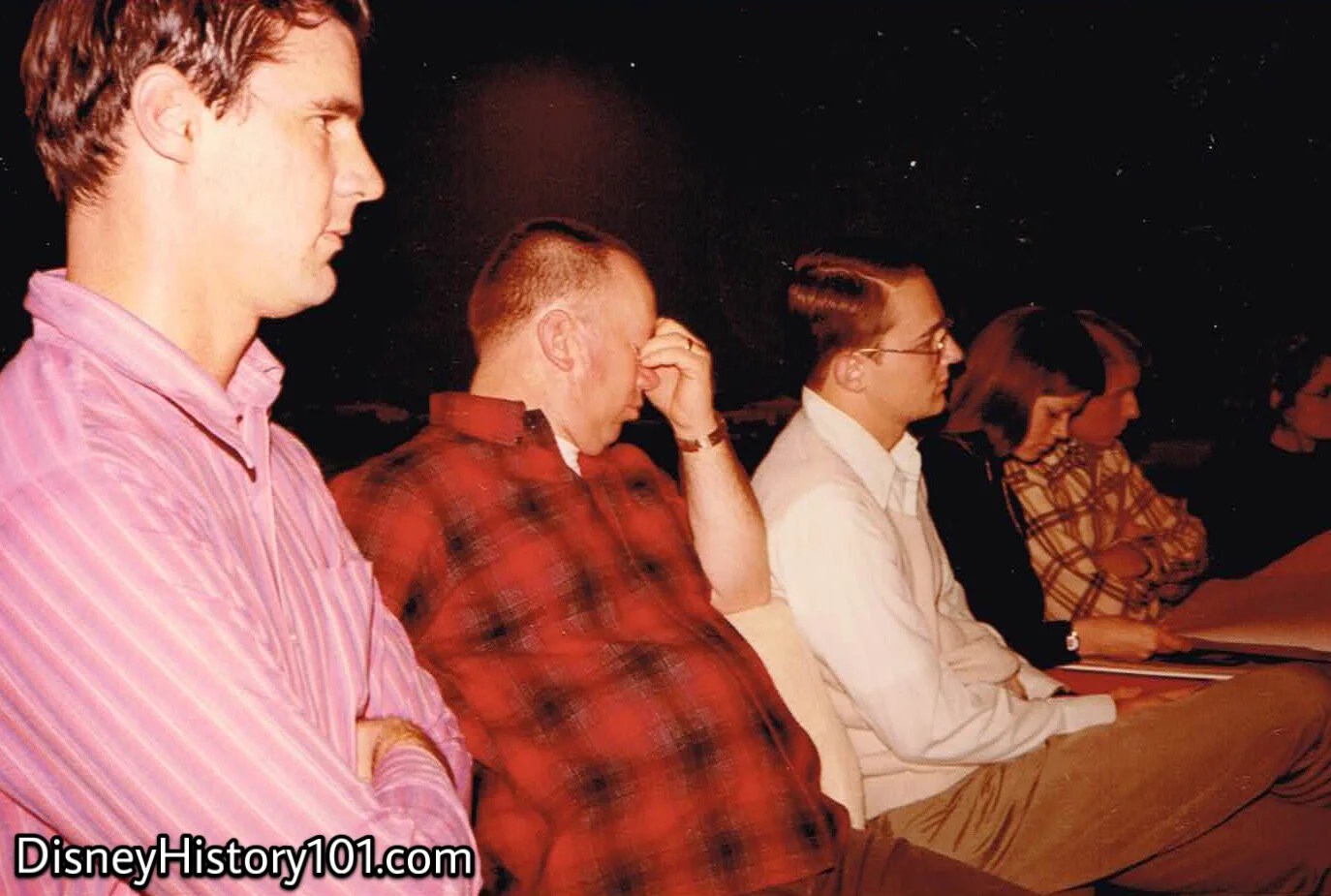
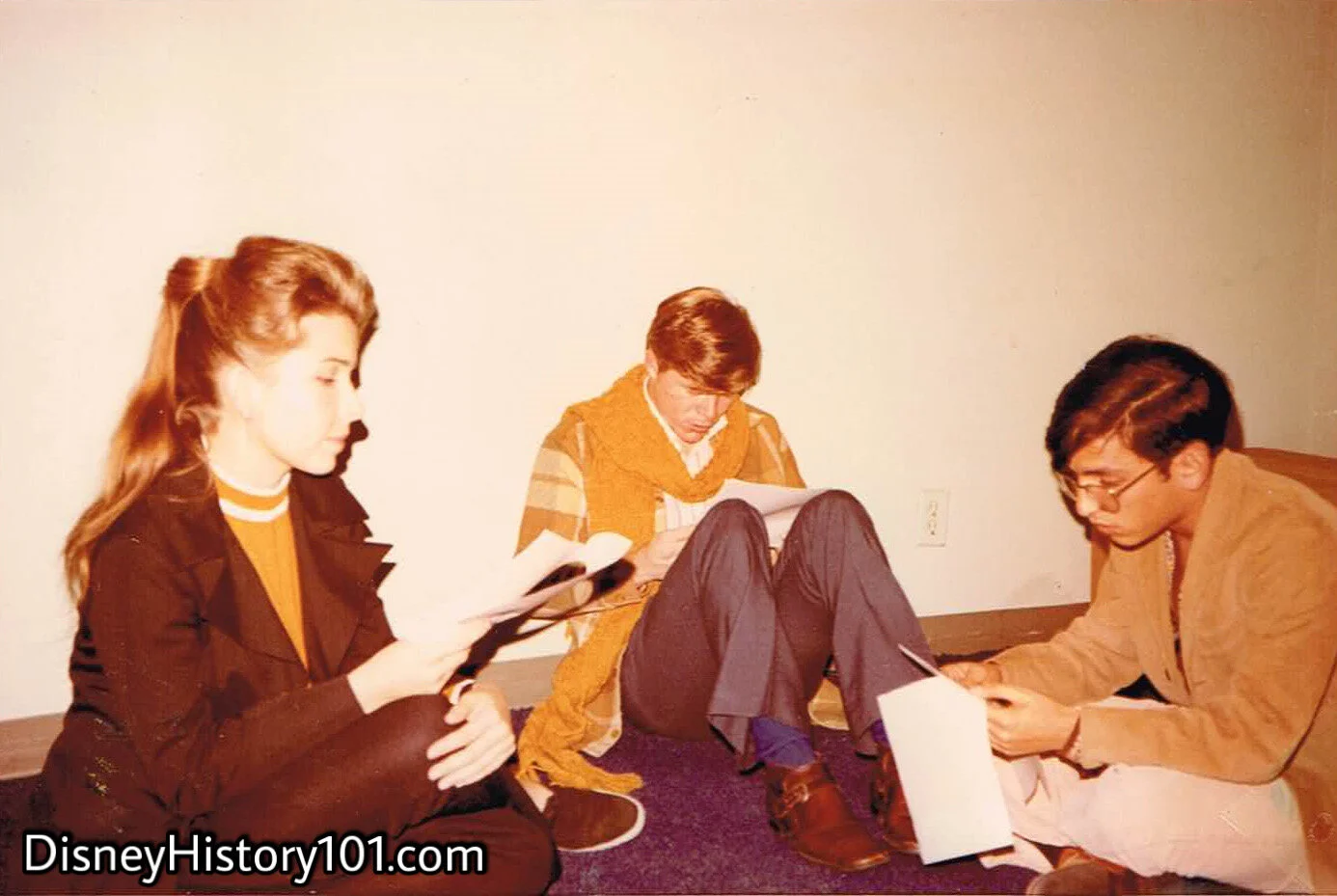
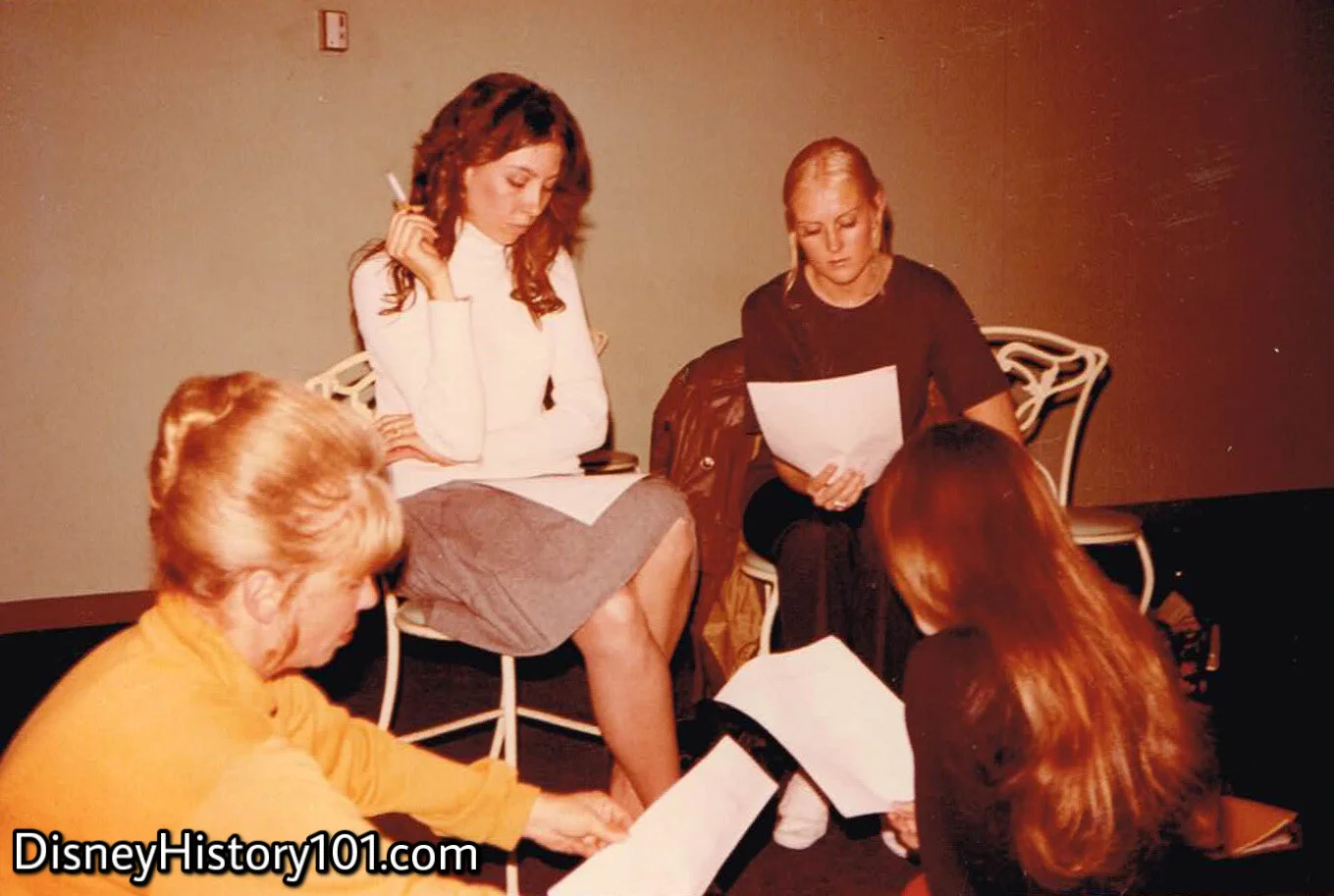
Earl Archer and others prepare for a table read.
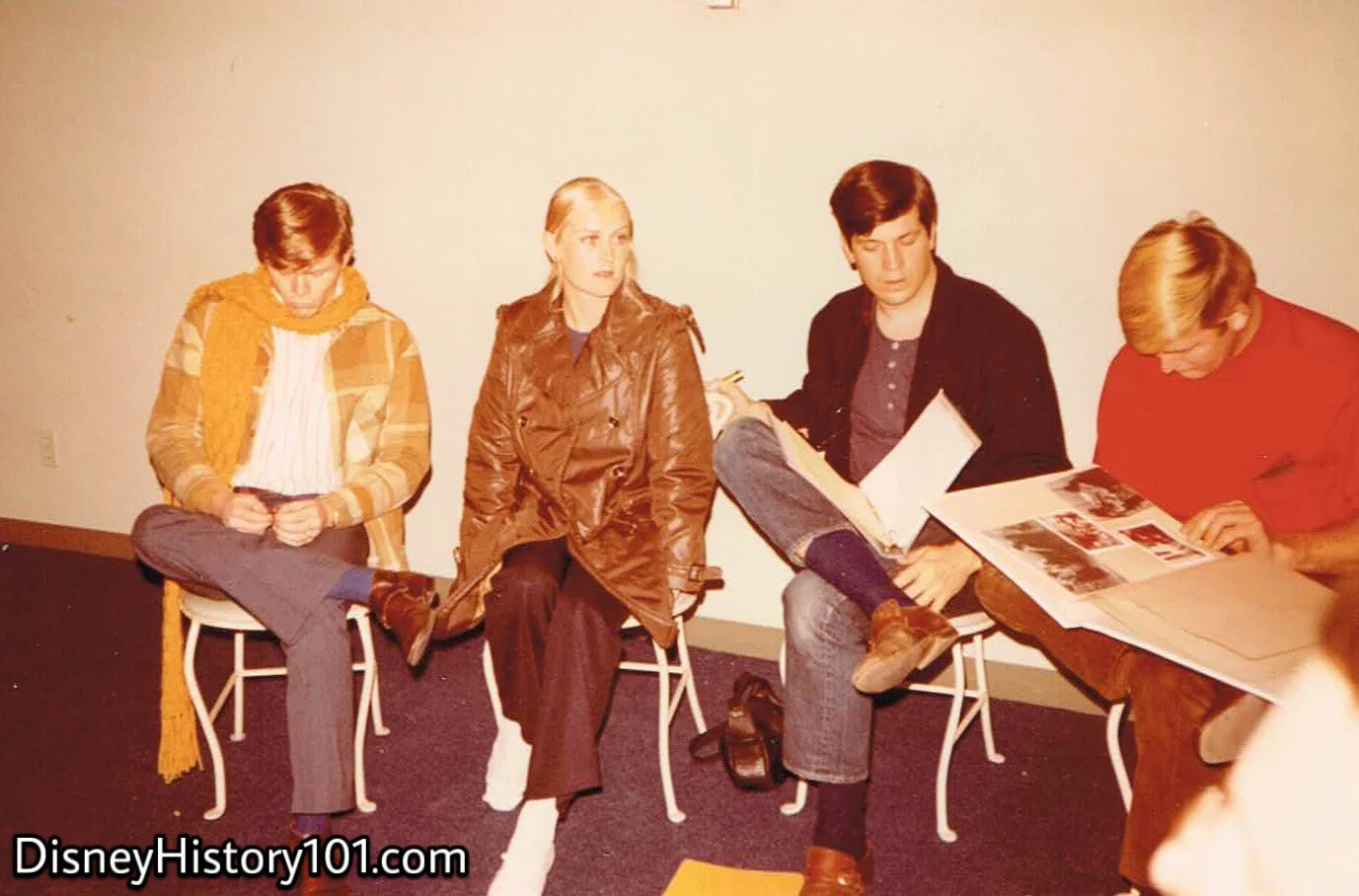
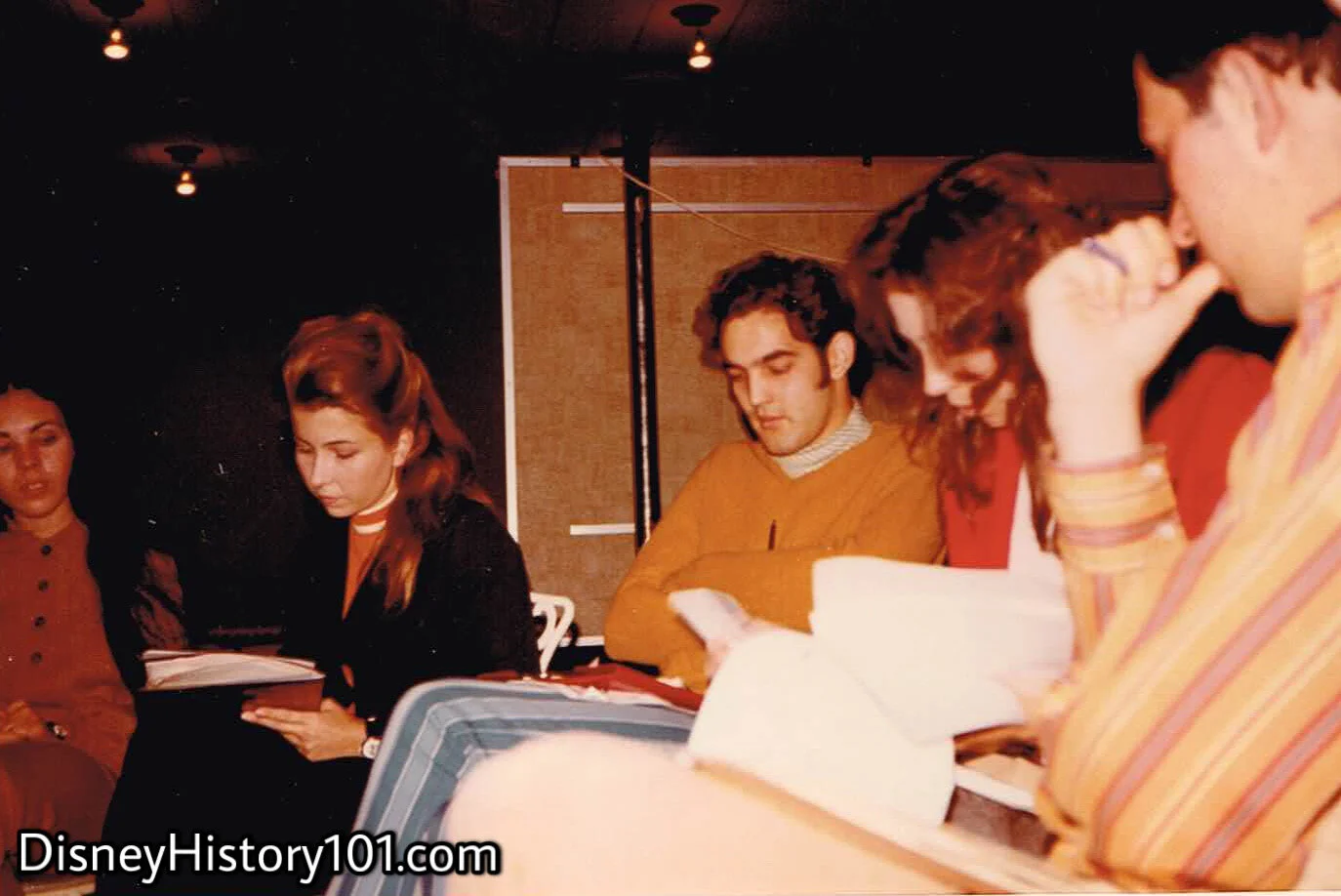
Vocalist Rhonda Treischel (of Fantasyland Merch) is sitting second from the left.

FLYING SAUCERS

*(“Disneyland Rides & Attractions and Attendance Report,” 1981)
One can easily slip into the jargon of “ride,” but at Disneyland there is a "story behind the story" of every attraction, every attraction is a living experience for the guest. Disneyland ride-through attractions or adventures have officially been defined as an “individual show, ride, or exhibit designed to produce an entertaining Guest experience. Disney attractions stir the imagination, enliven the senses, and provide the participants with positive, innovative entertainment, which is the essence of the DISNEYLAND Show.” It is important to review the story of the attraction, tell the story, explain it, and create interest. This is the story of Flying Saucers.
The presentation of the Flying Saucers show on the vast DISNEYLAND “stage” was to be a distinct part of the Disneyland theater concept. “Please step this way,” as we explore the story of how other-worldly Flying Saucers descended upon Tomorrowland for half-a-decade.

“Blue Sky for a Bumper Ride”
The idea of a “bumper ride” had been around since Disneyland’s design and development phase. Why, back in 1954, Bruce Bushman created concept art for “Duck Bumps”, a water-based Donald Duck-themed Fantasyland attraction (that would have possibly been situated somewhere near the “Pink Elephants” and the “Mad Tea Party” attractions). The vehicles would have been distinctly unlike most at Disneyland - individually-controlled by Guests. Soon, Popular Mechanics (December of 1954) even made mention of “Donald Duck boats” among the landmarks of the Disneyland project.
Meanwhile, Herb Ryman created the iconic “Aerial Over Disneyland” concept drawing! A contemporaneous document called “The Disneyland Story” was produced (on September 3, 1954), in order to tell the story of what guests would experience upon entering Disneyland and Tomorrowland. After a detailed 2-page description of the Rocket to the Moon attraction, the document plainly states : “We will have other outer space rides that we will develop as the Park progresses.” Further, Walt Disney himself, on the eve of Disneyland’s first day of operation, promised that “Disneyland will never be completed. It will continue to grow, to add new things, as long as there is imagination left in the world.” Disneyland opened, and though “Duck Bumps” never materialized, Tomorrowland debuted with one major space adventure - TWA’s Rocket to the Moon and its Rocket Pylon!
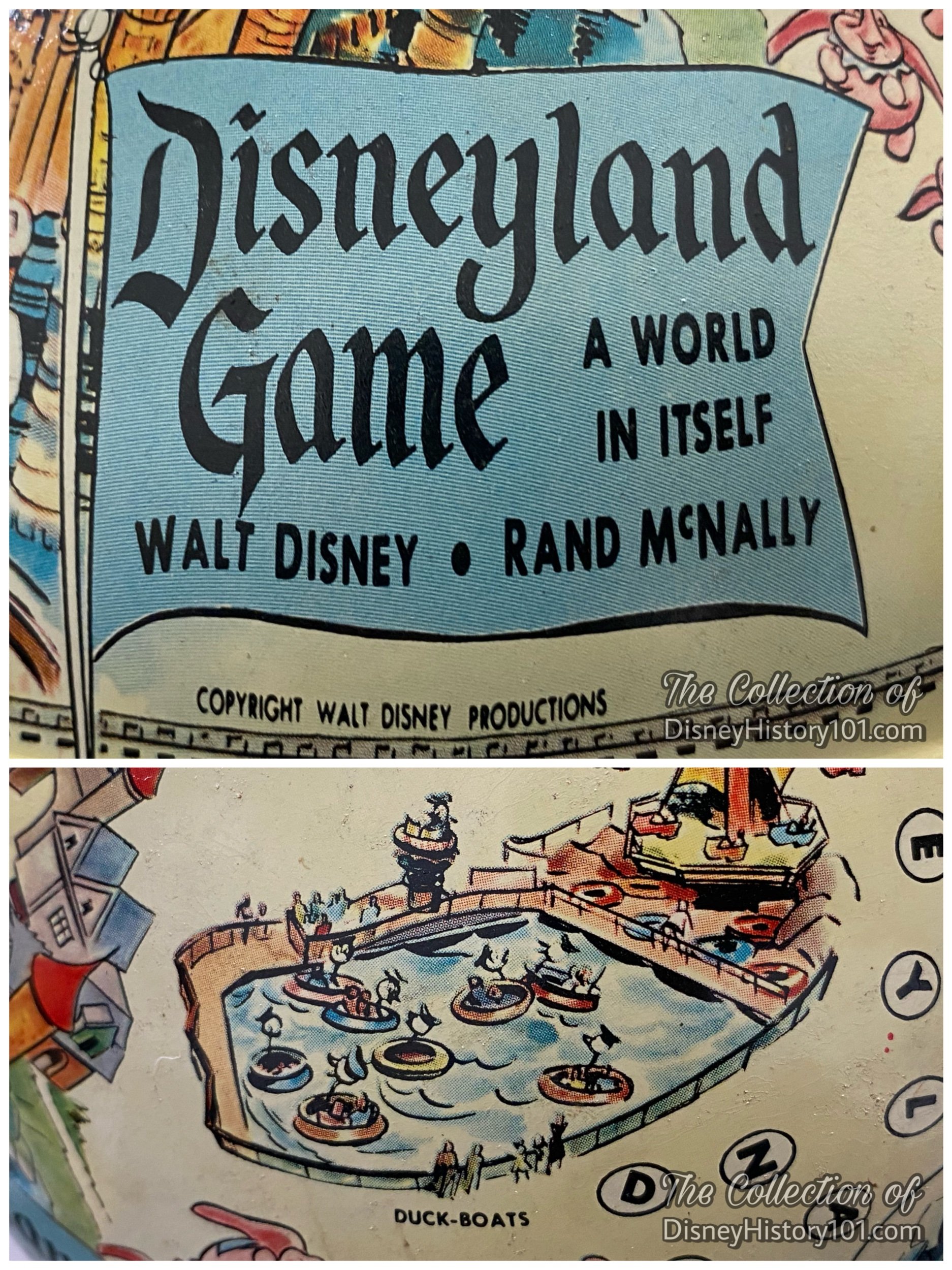
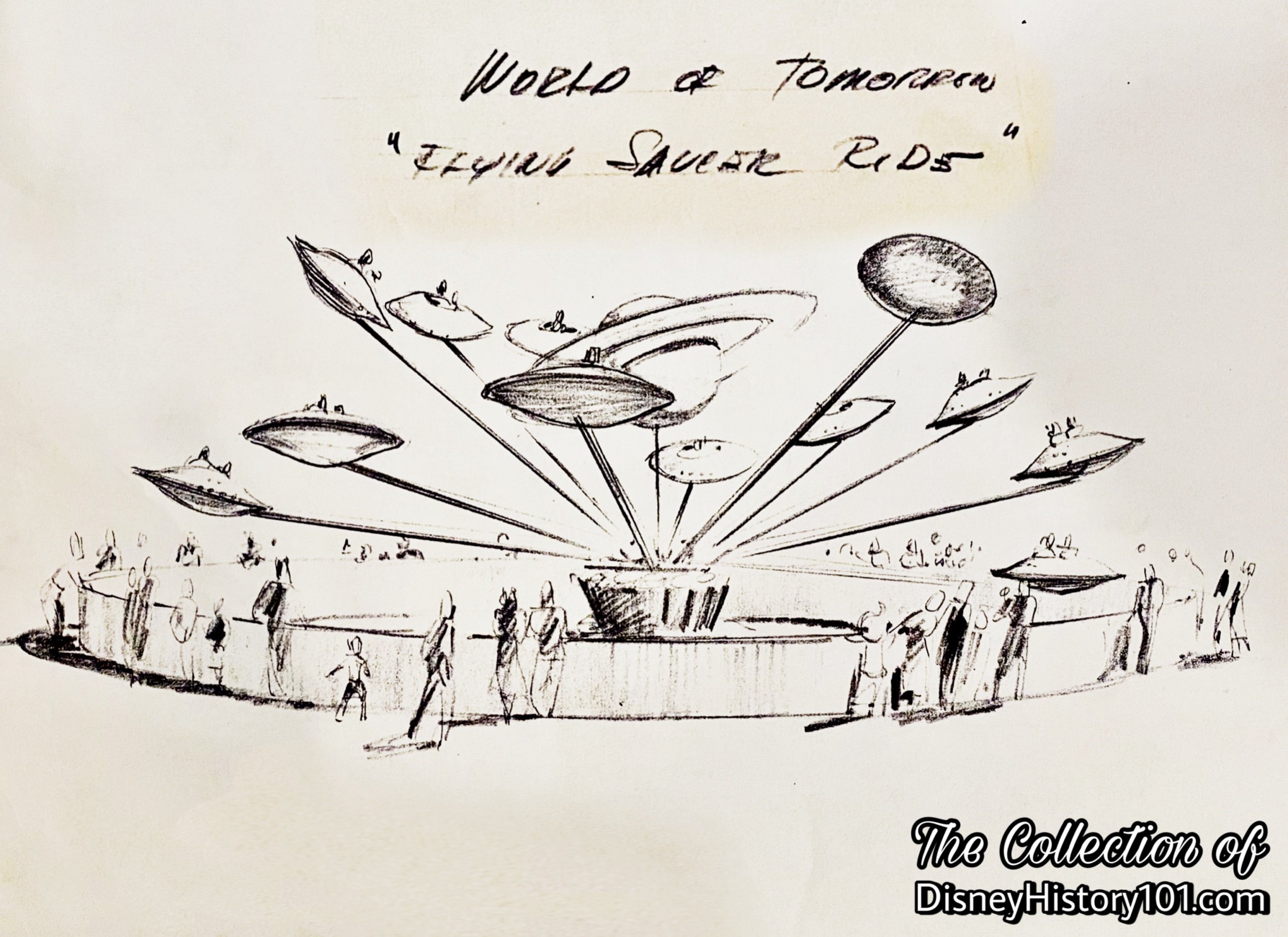

Tomorrowland soon came to house many other outer space-themed adventures - from the AstroJets to Space Station X-1 - and (as Walt promised) another truly “out of this world” adventure was to descend upon Disneyland!

Remember that Walt Disney had earlier said : “Disneyland will never be completed. It will continue to grow, always adding new things to provide its visitors with exceptional and entertaining attractions.” In Walt’s eyes, Disneyland was “like a piece of clay,” because if there was something he didn’t like, he wasn’t stuck with it. He could reshape and revamp it. After years of personally reshaping and revamping, Walt divulged: “I’m not the perfectionist anymore. It’s my staff - they’re the ones always insisting on doing something better and better.”

Nets overhead may have been intended to keep out any unwanted waterfowl.

Bob Gurr who (had a hand in the design of many Disneyland vehicles) came up with the “ornamental design” of the Flying Saucers (pictured in the patent figure facsimile above). He remembered : “In those days, everybody had a hovercraft project. It was a neat idea…a ‘big buzz’ at the time, and a lot of people were working on some form of hovercraft project simultaneously….Arrow’s concept of moving the motive force out of the vehicles to underneath the floor was a novel idea…I was now recognized by the United States government as a ‘Flying Saucer Inventor’, a title which placed me in good company with all the other flying saucer crack pots of the time.” Other artists like Wilson “Bill” Martin (who had left 20th Century Fox, to work on Walt Disney Productions’ Disneyland project in 1954) made contributions to the design of the project, Bill’s former talents as art director applied to the attraction.

“The Science of ‘Science Fiction’ - Engineering The Flying Saucer”
These four fleets (of 16) alien vehicles were not unidentified, but (in fact) on the “creative menu” and manufactured by a very terrestrial (earthly) company called Arrow Development (of Mountain View, California) and National Research Associates Inc. Utilizing Arrow for the project was practical, as Arrow Development had (from 1953 to 1955) both researched and developed many of the ride systems, tracks, and vehicles for many of Disneyland’s Opening Day attractions. This Ed Morgan and Karl Bacon (founders of Arrow Development) accomplished through their own streamlined engineering process. Utilizing Arrow Development was also convenient, as Walt Disney Productions had purchased 1/3 of Arrow Development in 1960. As for National Research Associates Inc., they had been in the business of developing air-cushion systems for the United States Army and the Marines. Now, technology that was good enough for military applications, would (by Ed and Karl) be applied to Walt’s next addition to his vision of Tomorrow!

Now, the saucers would not truly fly, but operated in an arena that was not too different from an air-hockey table. Disneyland Vice President Joseph W. Fowler revealed (in “Disneyland News”, Vol.1, No.1, 1961) that “‘Disneyland has been experimenting with the Flying Saucers in Northern California for some months. Because of the air-cushion principle involved, we have kept the tests completely under wraps. However at this time we can reveal that each saucer will be a self-contained unit in which one guest pilots his own ships in free flight.” According to Roger Broggie : “We had figured that we could move a two-thousand pound payload if we had an air jet below with valves that allow air to come up through holes in the floor.” The Flying Saucers were capable of “catching some air” - when the weight was perfectly centered, air beneath the saucers was capable of blowing the vehicles up to 8 inches off the ground! Otherwise, guests controlled the vehicle utilizing the round handles, and tilting their body in the direction they wanted to travel.
Notable scientist Willy Ley (who was once a technical consultant for Tomorrowland) once commented: “I consider it possible that we can get visitors from space, but I do not think flying saucers are it.” Despite Dr. Ley’s scorn of the though of flying saucers, some six years after Disneyland opened, official Press Releases heralded : “Flying Saucers are reported heading toward Disneyland. No figment of the imagination, flying saucers are destined for the Park, to become one of Walt Disney’s latest attractions for the 1961 season”, according to Vacationland (Summer, 1961). Those who would recollect seeing Bruce Bushman’s c. 1954 concept drawings of “Duck Bumps” (a Fantasyland attraction which never fully materialized), would realize that seven years had transpired since that original concept. It had now been both re-worked and re-themed, and a form of the original attraction idea was finally becaming a reality!

“First on Earth - Flying Saucers”
Joe Fowler (Disneyland Operations Committee) oversaw the Construction & Maintenance division including Engineering, New Construction, Maintenance, and Janitorial relating to the Flying Saucers. Soon a yellow and white construction barrier appeared with a sign depicting an "Astrogram" reporting “Flying Saucers… First on Earth.”
Like something out of War of the Worlds, flying saucers were making waves, over the radio when Chief Engineer John Wise gave a talk on local Radio KNX regarding the new Flying Saucer adventure. Promotional media also made mention of flying saucers at Disneyland. For instance, during 1961, “Anaheim... Future Unlimited” was published by the Anaheim Chamber of Commerce. Inside, the words of Marty Sklar (of WED Enterprises) referred to: “Tomorrowland, home of Flying Saucers, America's first monorail train, rocket ships and submarines.”

Yes, Walt Disney’s newest $400,000 attraction (of a $2.5 million expansion) allowed Guests to “fly” one of 64 air-cushioned Flying Saucers by themselves (or together with a friend), over 16,000 square-feet of Tomorrowland-scape! The Flying Saucers at the Disneyland Spaceport were located in a little nook of Tomorrowland (not far from other flight-based adventures)!
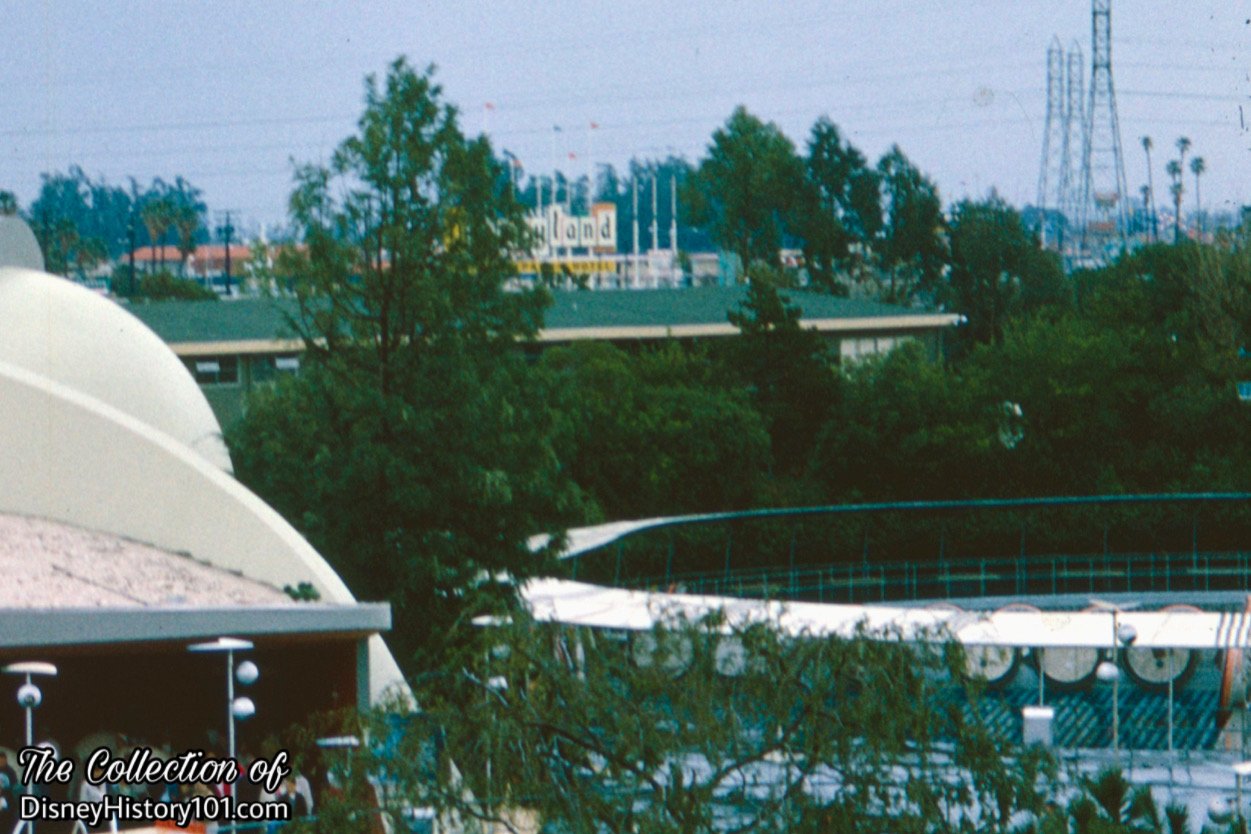
Unlike other individually-controlled attractions (like the Autopia vehicles or the Motorboats), the Flying Saucers were not tethered to a track or guide rail. Apparently one of the few things that could hinder their flight was water (see above).
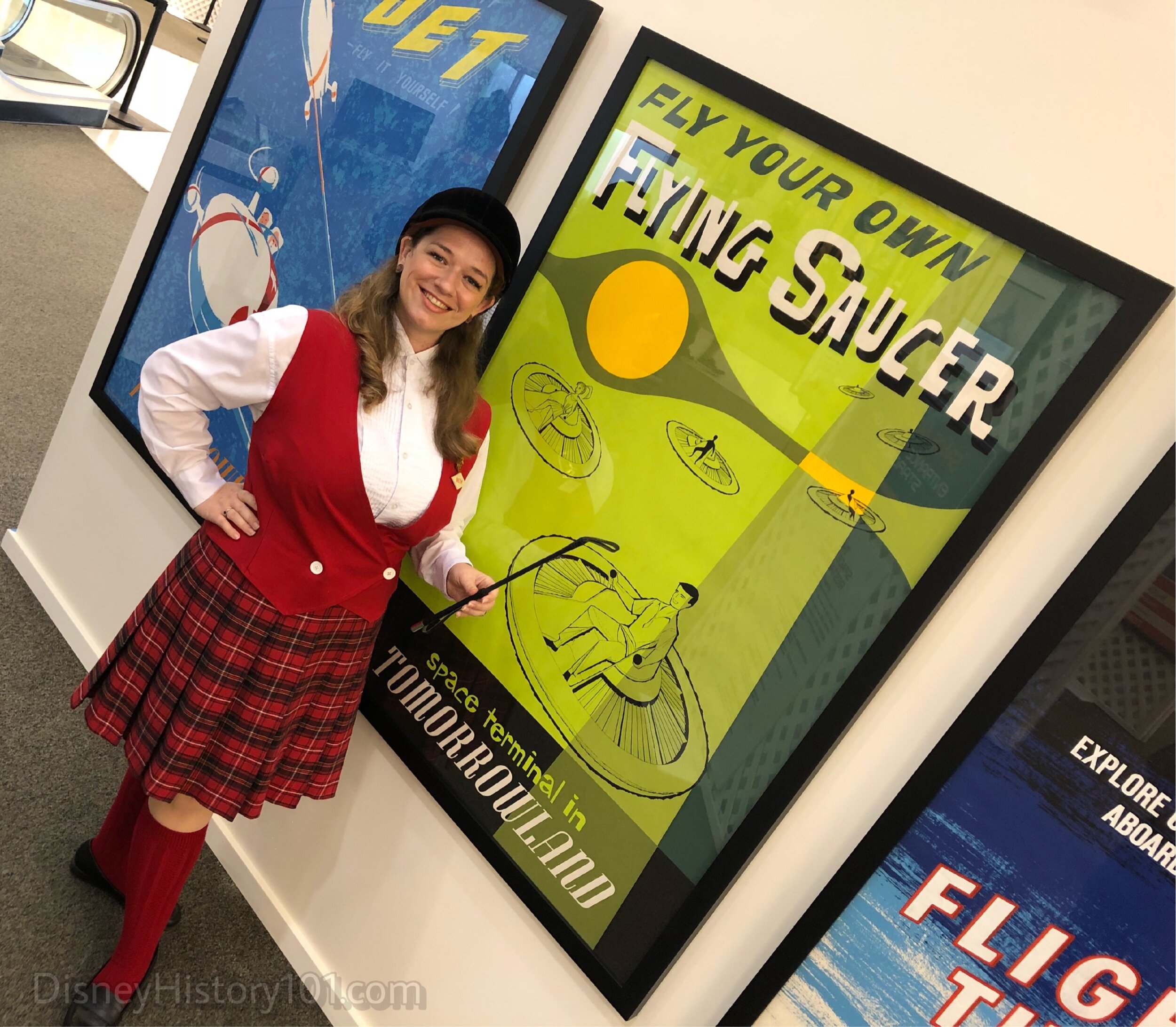
A Flying Saucers attraction poster was designed by Rolland Fargo Crump, who is most famously known for his contributions toward several of Walt Disney Productions’ 1964/1965 New York World’s Fair exhibits and attractions (in addition to some pretty “far out” artwork).


High over Main Street, “Disneyland ‘61” Banners advertised Tomorrowland’s newest “extra-terrestrial” additions, including the Disneyland-ALWEG Monorail System and the Flying Saucers!

In August of 1962, Lloyd Richardson, Larry Clemmons, Joe Marquette, and Jack Leppert (of the Walt Disney Studio) filmed and shot scenery of the Flying Saucers for Studio Production #3185. “Balloons” and “beach balls filled with air” were requested. It was also requested that “all saucers…be in operation at the [sic] same time,” and for “ride operators who know how to fly saucers dressed as guests.”
On August 30, 1962, their account describes how they “arrived at the Flying Saucer ride in Tomorrowland and surveyed until 2:00. Half of the Flying Saucer ride was closed due to our production from 2:00 to 3:00 (1 hour). The laborer (Baker) delivered us 100 blown up balloons and 10 blown up beach balls. With the Saucers in the dock or loading position, we put all the Balloons and Beach Balls in with the guests. We then started the ride up. We immediately lost all of the Balloons. We were only able to capture limited footage of the balloons in with the ride. We were taking footage of the guests with the Beach Balls on the Flying Saucers. Crowd reaction shots of the gallery and one brief shot of the cameraman in the Flying Saucer.” You may have seen the final footage later on some Wonderful World of Color Episode.
In addition to press releases, some magazines (like Amusement Business) spotlighted Disneyland’s newest adventure in the columns of their periodicals.
In advance of the opening, The Disneylander contributor Joe Fowler commented: “A brand new 1961 attraction that will begin to operate soon is the Disneyland Flying Saucer adventure. Just what the impact of this ride will be on our guests imaginations is anyone's guess, and we'll have to wait a few more weeks to know the full story. We feel, however, that we may have another Matterhorn Bobsled on our hands when it comes to queue lines.”
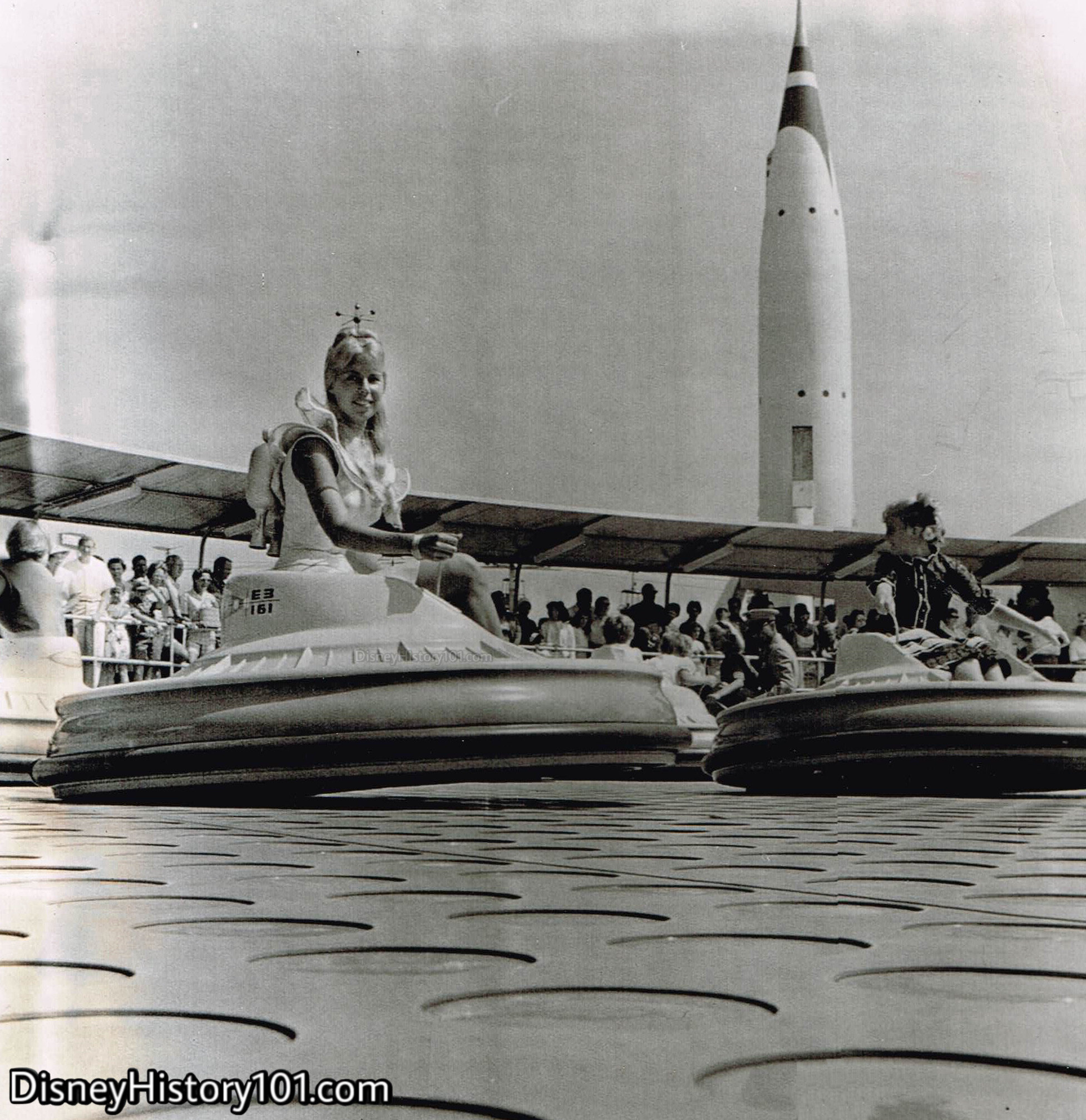
For immediate press release, the preceding image of Space Girl gaining a little altitude, accompanied the following caption in numerous news journals :
“‘Space Girl’ Donna Fox (left foreground) takes to the air in Disneyland’s newest - Flying Saucers. The single passenger ride is motivated by air blasts coming from the many circles on the floor. Passengers weight directs craft in the direction of lean combined with control handles which cause spin. The Disneyland Space Station had its opening 8/14.” It was not unusual to see the Disneyland Cast of Characters riding aboard Flying Saucers. Do you remember seeing Vesey Walker directing from the Disneyland Spaceport, while the Disneyland Marching Band performed sets while riding aboard Flying Saucers?
Many notable Disneylanders supported the Flying Saucers stage at the Disneyland Show, including “55er” Homer Holland and Ron Hemminger (c.1966).


By the October of 1962, the Flying Saucers was operating with all 64 Flying Saucers, exclusively during weekends. This was common during winter operating schedules.
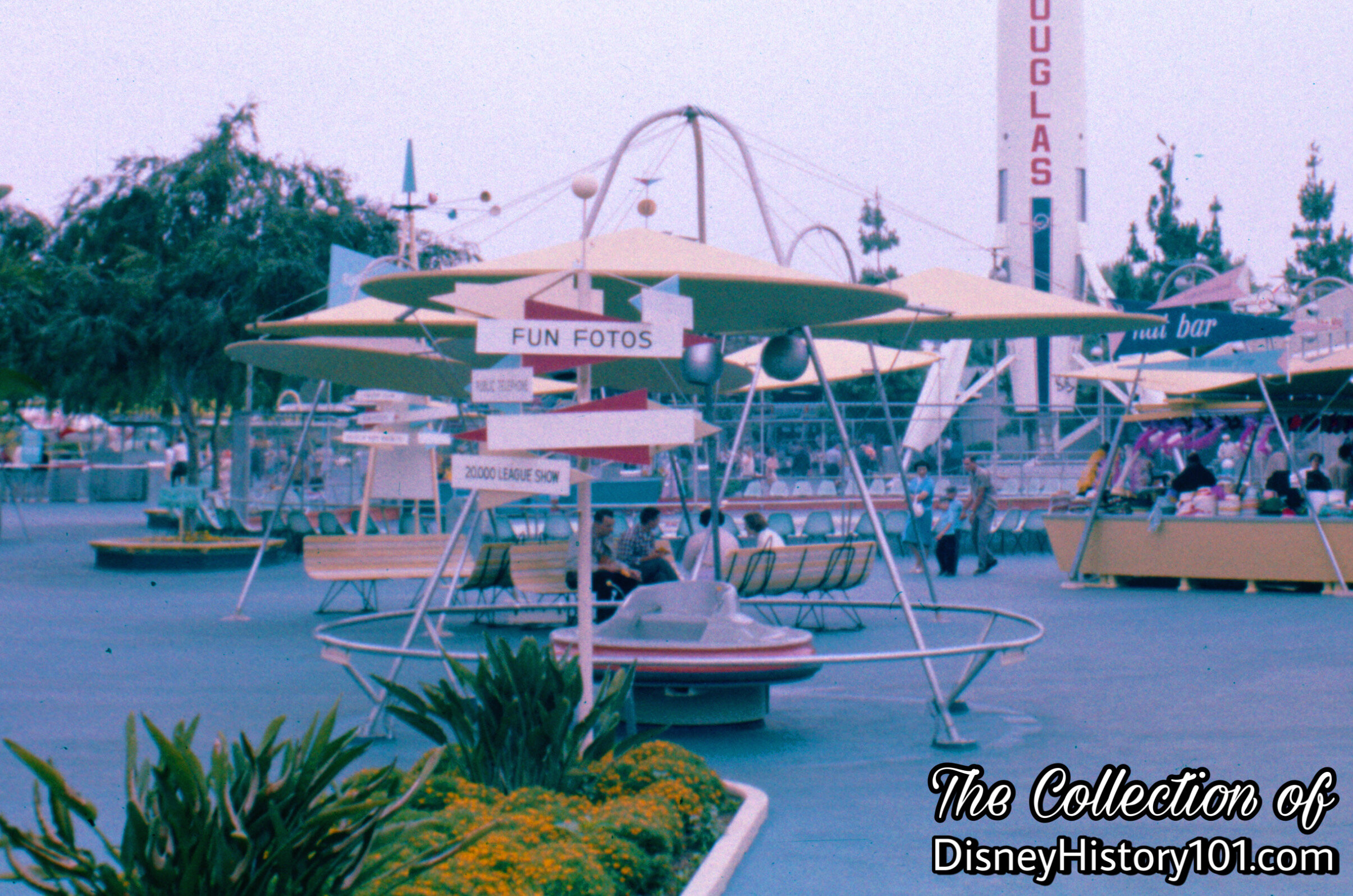
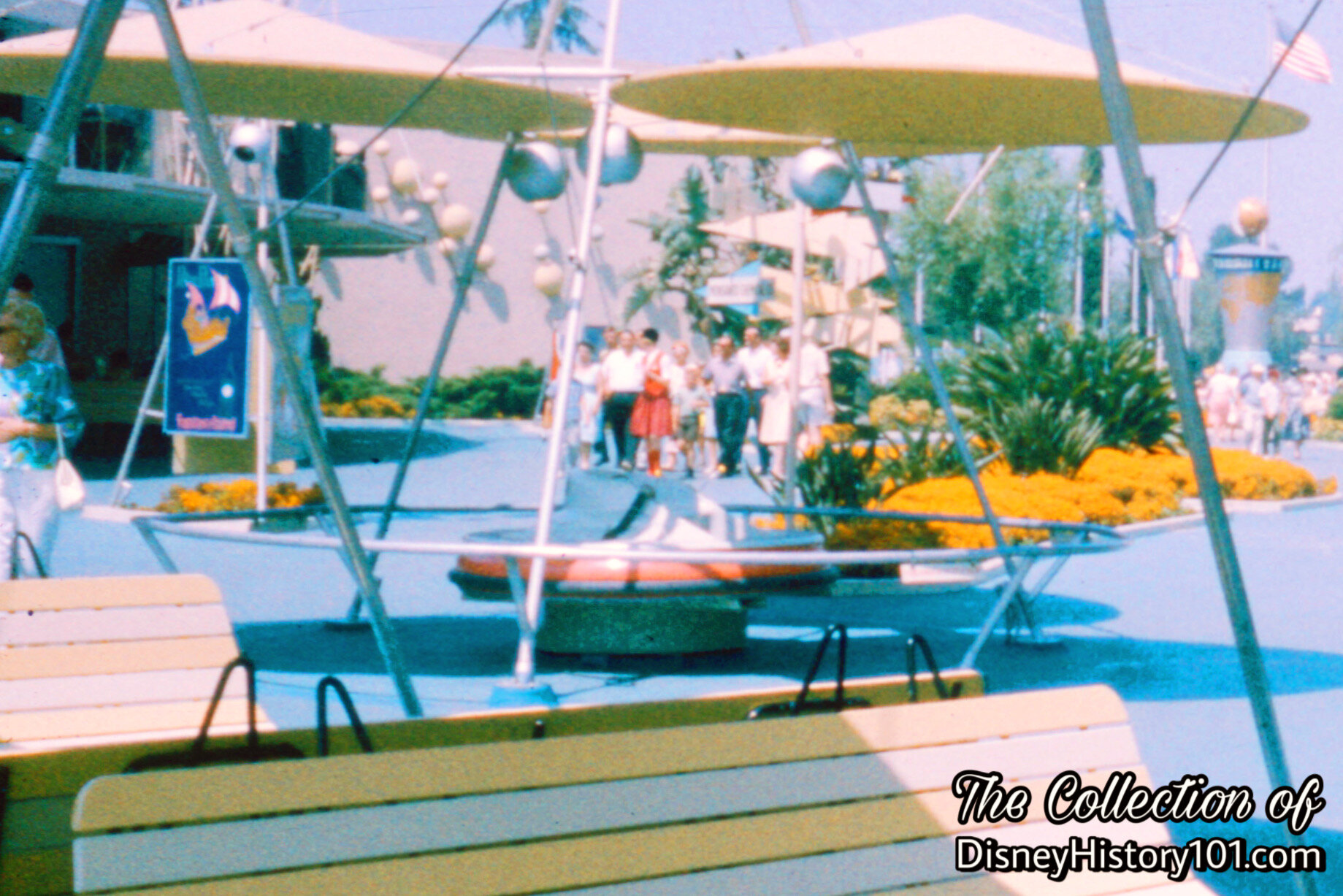
Similar in style to the “Walt Disney’s Autopia Car Exhibit” Free Exhibit, one of the Flying Saucer vehicles was put on display for guests’ viewing pleasure, or a “Fun Foto” opportunity!


During an era when the Douglas Moonliner I would begin to tower over the Tomorrowland Skyline, the Flying Saucers would dominate the terrestrial area of Tomorrowland!

Ride along with family.
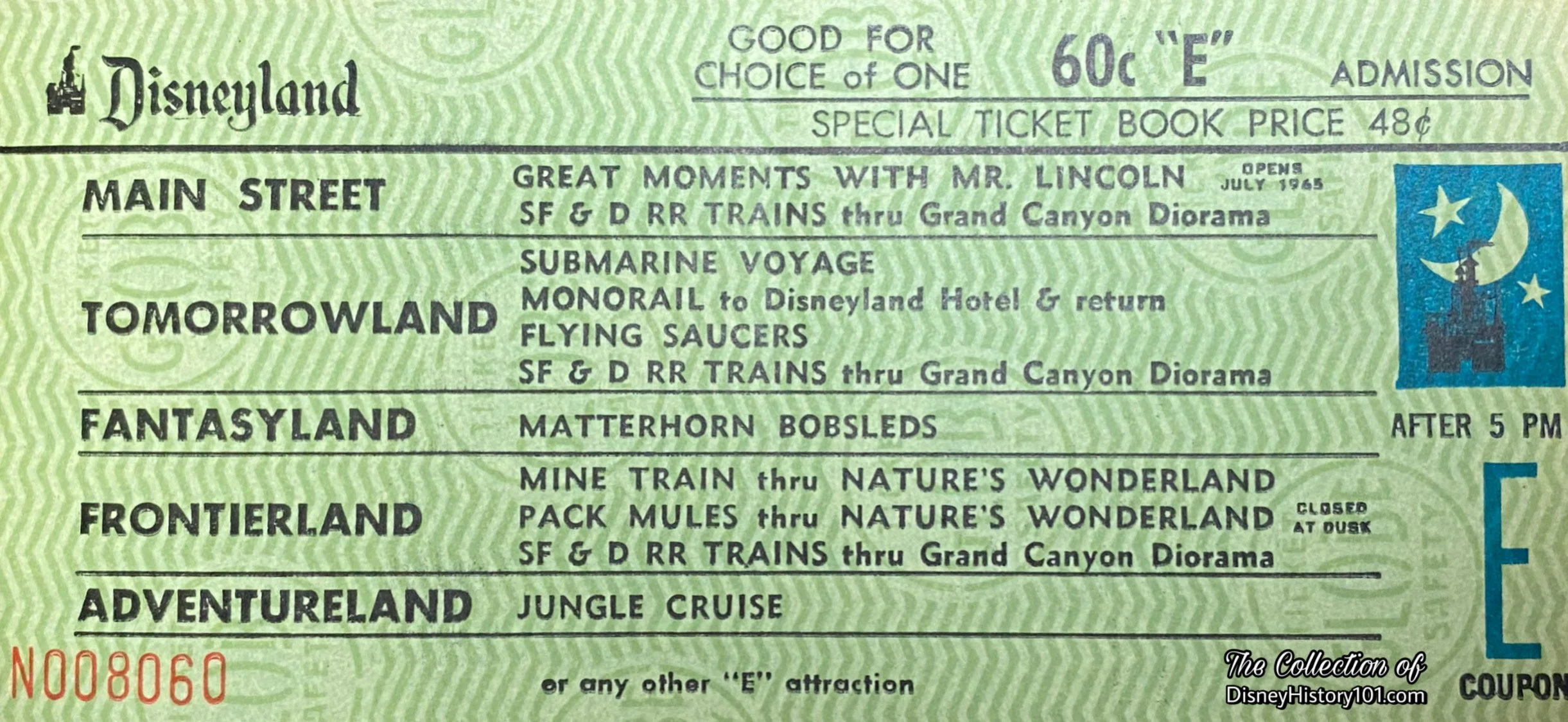
While listed in the Coupon Book as a “E,” the Flying Saucers was closed weekdays during the winter season of 1962-1963, operating only on weekends.

In 1965, the cost of admission for piloting your very own Flying Saucer to thrills and fun was exactly one “D” coupon, or 60¢ - the same fare required to charter a bobsled down the icy slopes of the Matterhorn, or to board a Mine Train for an excursion through the magnificent Rainbow Caverns!
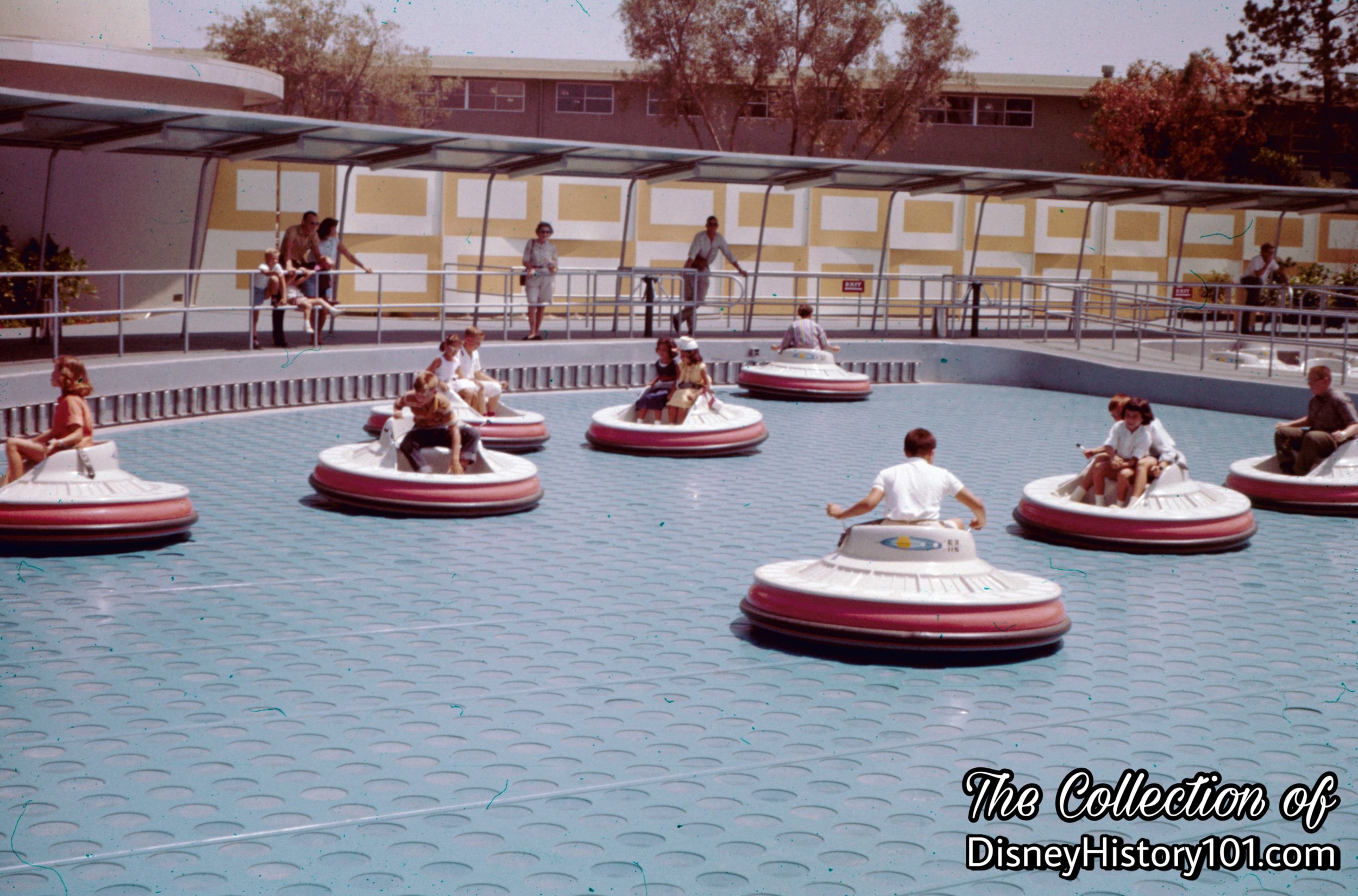
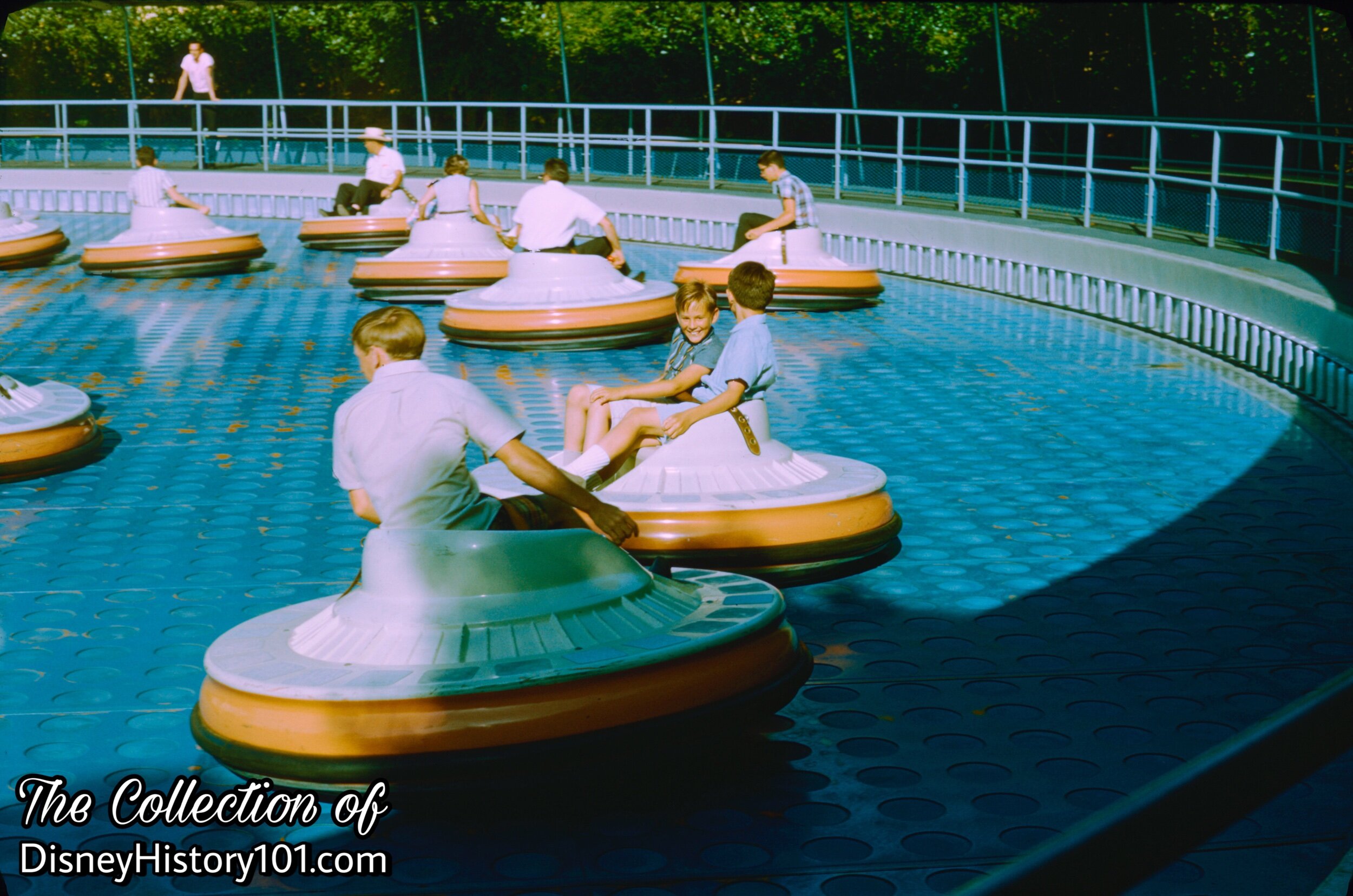
Ride along with a friend!


Hover over Tomorrowland-scape on your own!


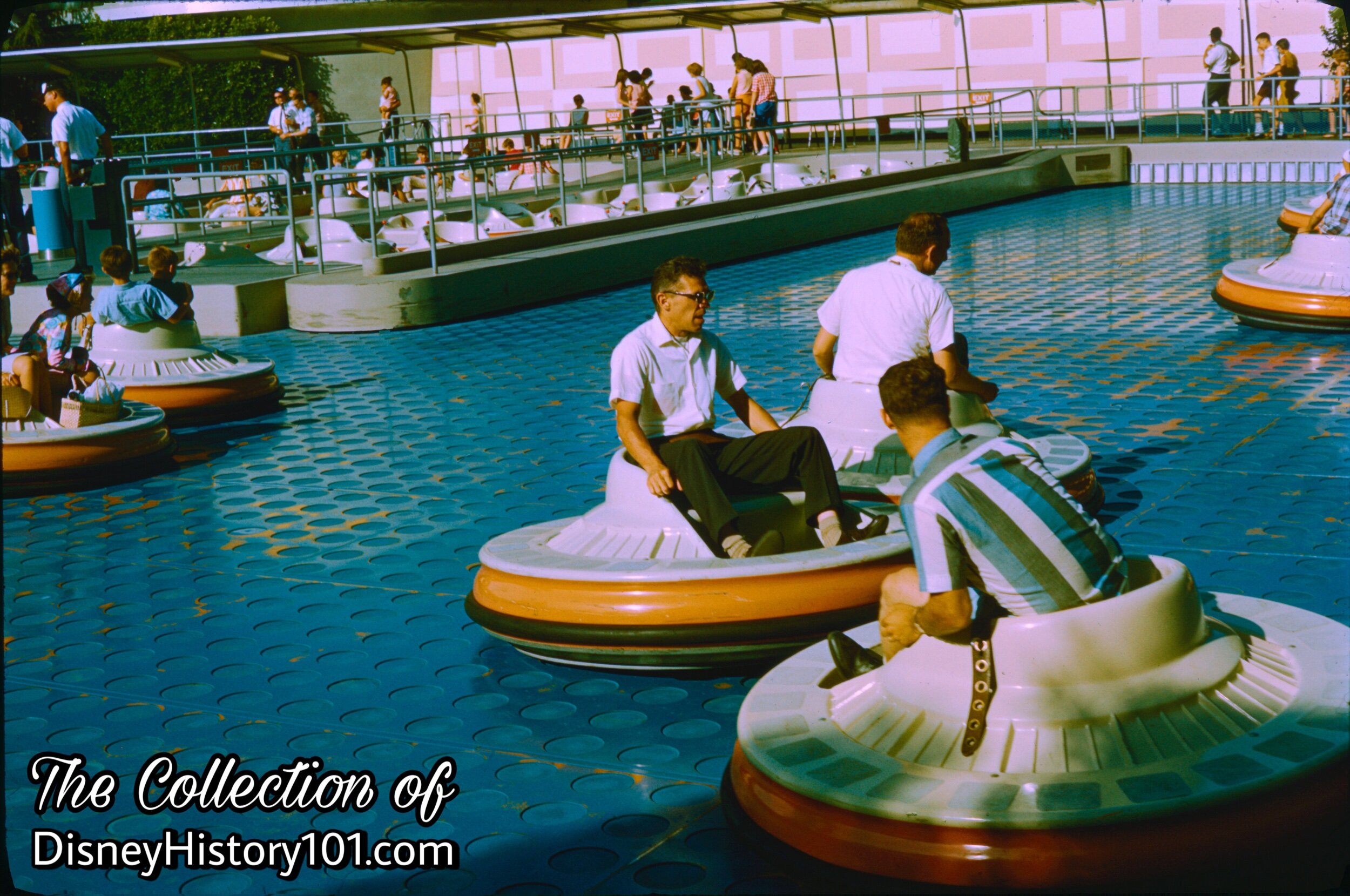
Apparently, the Flying Saucers were fun for kids of all ages! (Fun Fact - According to Disneyland Holiday magazine, Winter 1957 - 1958 : “among visitors to Disneyland adults outnumber children 3 1/2 to 1.”) This accounts for all the adult Flying Saucer pilots pictured!
Notice the loading area in the background of the previous photos. Guests never need set a foot onto the blue textured area. When the ride time transpired, a mechanical “boom” would sweep across the field. This would corral the fourteen Flying Saucers into the Loading Area, while releasing another set of fourteen Flying Saucers for a few minutes of fun!


Though enjoyable, the Flying Saucers required a great deal of maintenance, especially on hot days. But for a moment, let’s take another look at these most memorable (and positively “identifiable”) “flying” objects, during a time when Flying Saucer sightings were a daily occurrence in Tomorrowland!


Guests chose "flight patterns" by shifting their weight.
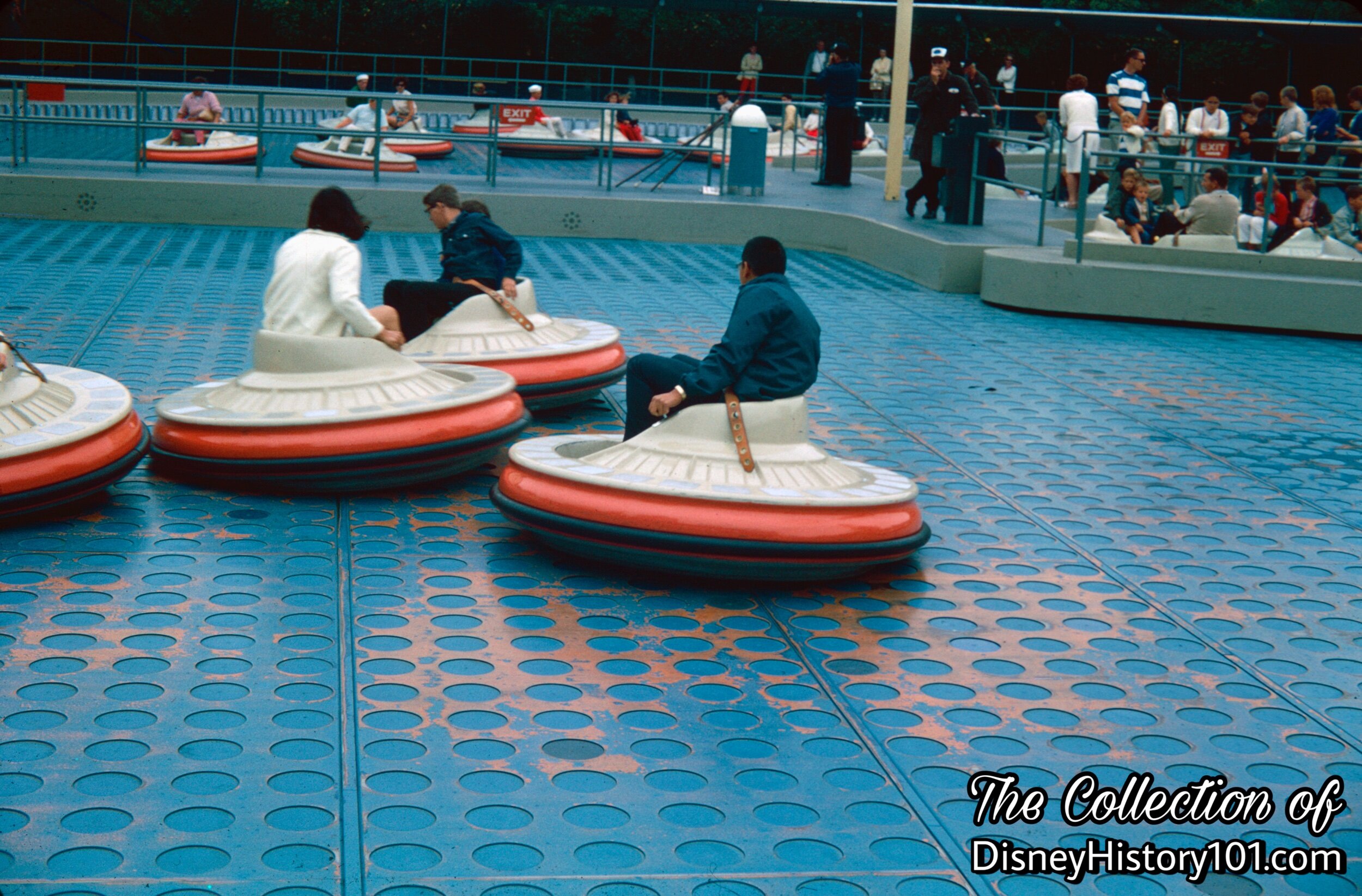

…and that’s something to cheer for!

Media (above) depicted the Flying Saucers while another page teased: “Walt Disney and his ‘imagineers’ at WED Enterprises - the team that created Disneyland and four major shows at the New York World's Fair--are now at work on the boldest, most ambitious of future developments: design of a New Tomorrowland. To research ideas for this exciting project (scheduled to open in Summer, 1967) Walt and his creative staff visited Houston, Huntsville and Cape Kennedy, discussing the latest Space Age wonders with America's astronauts and scientists -including Dr. Werner Von Braun. In New Tomorrowland, guests will experience the sensation of racing through distant space. A towering structure will serve as spaceport and theme center. And a unique new ‘People Mover,’ the WEDway, will carry guests on a scenic tour - even weaving in and out of new exhibits by some of the foremost companies in American industry.”
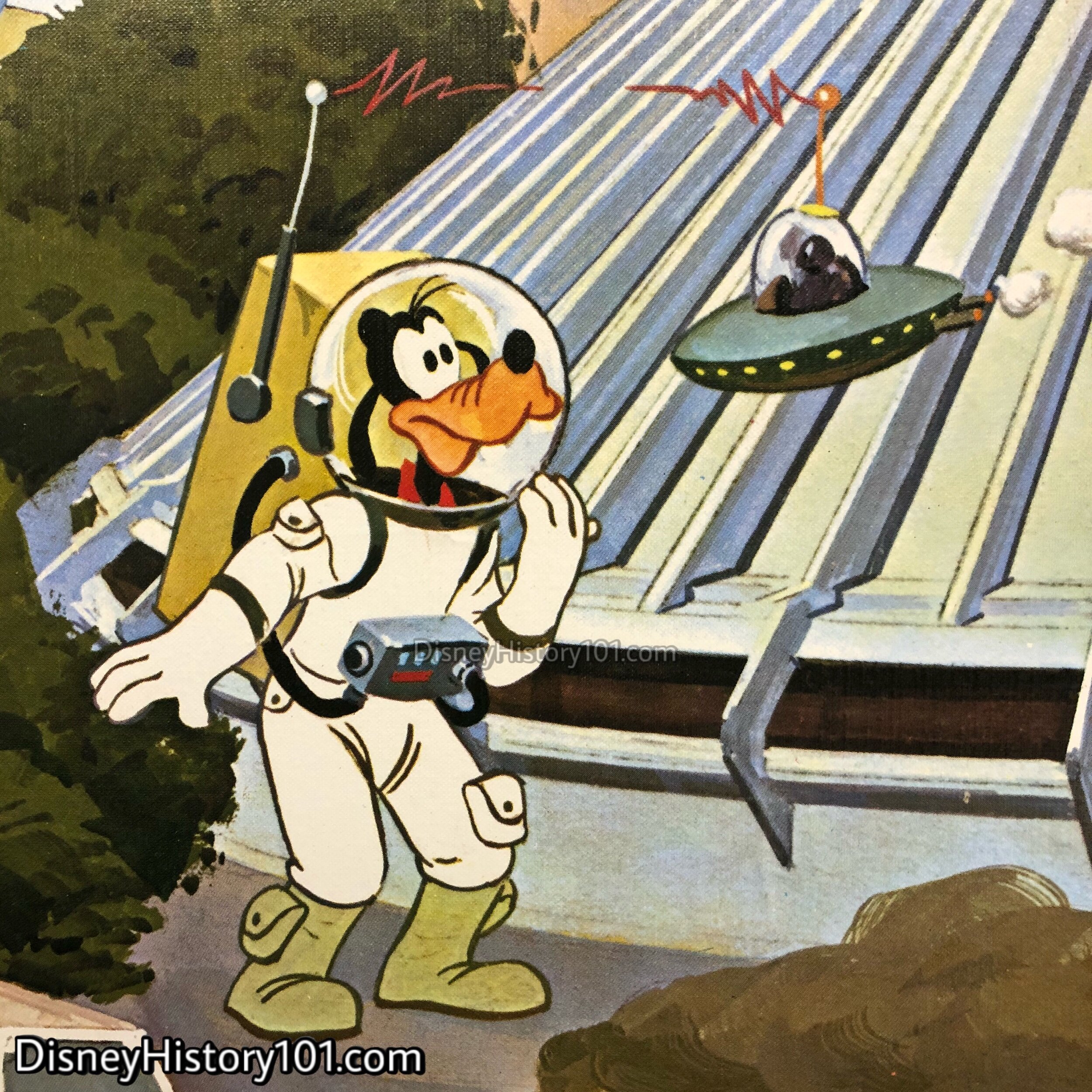
A contemporaneous mural depicts Goofy (in a spacesuit), near the site of the “Rocket Flight Attraction” building (also referred to as “Space Voyage” in early documentation). Goofy appears to be puzzled by the presence of an unidentified flying object before him.

“THE UNIDENTIFIED FLYING ROCKET ATTRACTION”
Internal materials printed in 1966 revealed that “Immediately following Labor Day this year, the Flying Saucers will be taken out and then relocated later under the new space attraction… Space Ride - A new thrill adventure similar in principle to our Matterhorn Bobsleds, where guests will soar through space and around and through a mountain some 200 feet in height.”
Though a “Rocket Flight Attraction” was planned to open during the early 1960s, the Flying Saucers were still detailed on souvenir maps (See Map Excerpt, Late 1960s). Disneyland Plot Plans produced during this era depicted the path of a future Wedway through the area of the Flying Saucers’ Loading Zone, indicating a potential future for the attraction.


“CLOSURE”
Walt once divulged, “When we consider a new project, we really study it. And when we go into that new project, we believe in it all the way.” [“Walt Disney Productions Annual Report to Shareholders and Employees Fiscal Year Ended October 2, 1965”]
All together, the interactive Flying Saucers operated a good half-decade - from 1961 to 1966. According to the Walt Disney Archives, “more than 5 million guests took flight in Disneyland’s Flying Saucers - that’s almost 1 million guests per year.” In fact, the exact total of guests aboard the Flying Saucers was 5,313,882 (according to a study taken in 1971).
Years later, a “Rocket Flight Attraction” (which would allow guests to soar in a different type of vehicle), and a new entertainment venue called the Tomorrowland Stage (adjacent to the soon-to-be Space Mountain Amphitheater) opened in its place. That particular “Rocket Flight Attraction” would “land” inside Space Mountain on May 27, 1977. By this time, the Flying Saucers had long since vanished (on September 5th, 1966) in favor of the upcoming “New Tomorrowland” project!
The Flying Saucers was once considered a “future project” for Tomorrowland at The Magic Kingdom. The Flying Saucers did have a legacy (of sorts), as their aesthetically appealing design would even go on to influence the shape of the enormous structure that housed Space Mountain!

Flying Saucers and alien encounters nearly had a legacy in tableaux envisioned by Marc Davis, for the Disneyland Railroad and in an original experience planned for the Tomorrowland PeopleMover.

The Flying Saucers lived on through occasional exhibit displays (like the Walt Disney Family Museum; pictured above) and exclusive & limited-edition merchandise (pictured below).
Far in the future (by 2008), the name would live on with a shop known to Disneyland Cast Members and Guests as “Flying Saucers Hats”.

Tomorrowland Flyin-Saucers were available in red, blue, yellow, and orange, retailing at .59¢ each. The toy was “engineered and made of unbreakable plastic” to fly “straight, curves, circles, skips.”


This model was once offered exclusively through the Disneyana Shop in honor of New Tomorrowland expansion of 1998.
GRAD NITE at DISNEYLAND
“The 1950’s & Walt’s ‘Special Arrangements’ For High School Graduates”
During the 1950’s, Walt Disney’s Disneyland (both the television program and the new Park in Anaheim, California) consumed the interests of people (including juniors and young adults) everywhere! As Disneyland continued to make headlines, certain special arrangements between Walt Disney Productions and educational institutions occurred. Through special arrangements with Walt Disney, many Elementary Schools were named in honor of him (beginning with Walt Disney Elementary of Tullytown, Pennsylvania). Through other special arrangements with Walt Disney, events were themed after Walt Disney or, (in the case of the University of Oregon’s Canoe Fete) with Walt Disney’s Disneyland.
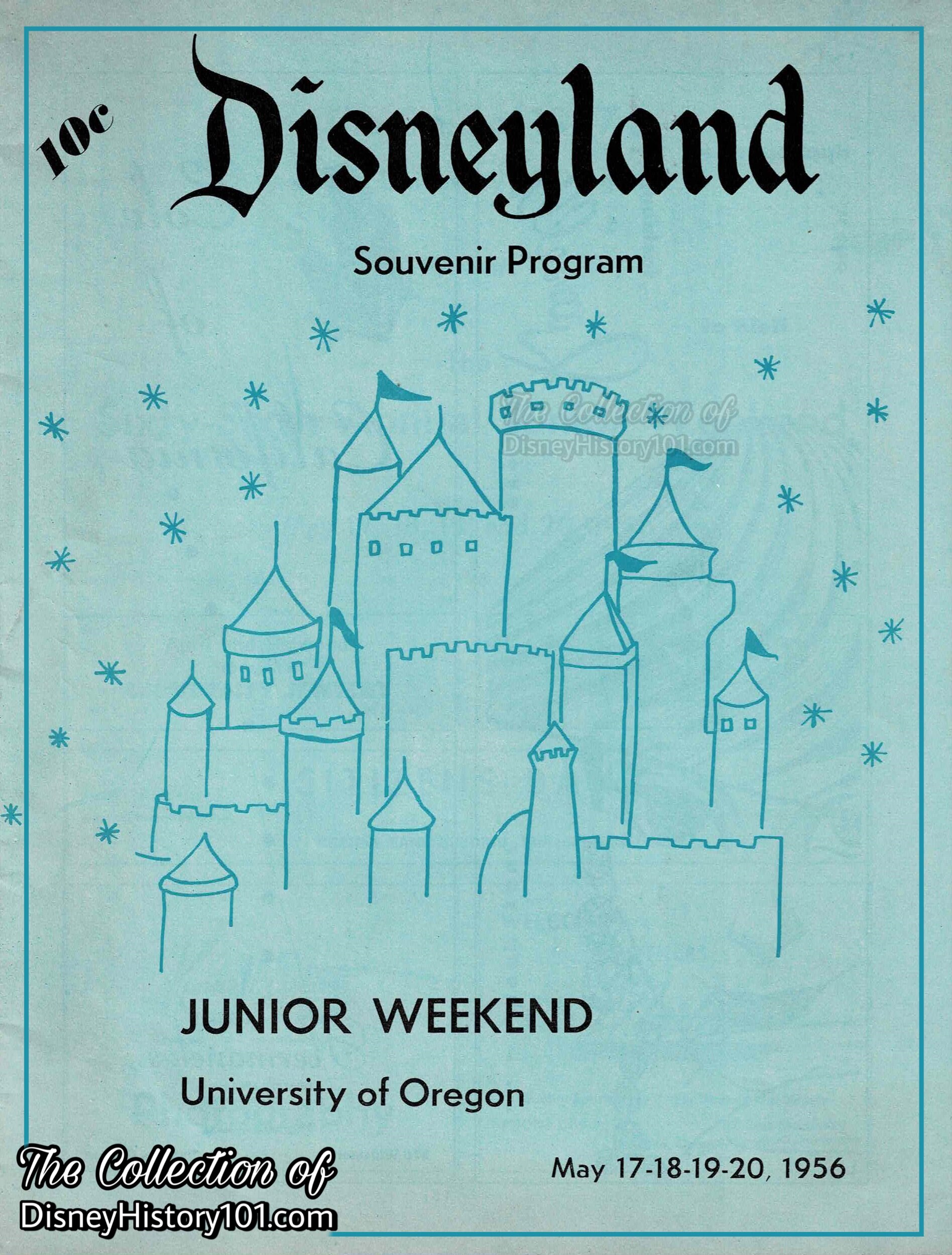
Now, Walt often took a special interest in inspiring the members of tomorrow’s society - many senior graduating classes! Long before Disneyland began to offer Private Parties to organizations, some graduates of local Southern California High Schools celebrated their graduation at both Disneyland and the Disneyland Hotel. For example, before the MAGIC KINGDOM® was even a year old, the 1956 senior class of John C. Fremont High School (of Los Angeles, California) visited Disneyland! They enjoyed many of the popular adventures and free exhibits of the five cardinal lands - Main Street, Adventureland, Frontierland, Fantasyland, and Tomorrowland! Disneyland also hosted the first “Back to School Dance” on September 12th, 1958, which several schools attended. Then, Fullerton Union High School attended a “Graduation Dinner-Dance” at the Gourmet Restaurant at the Disneyland Hotel on June 18, 1959, from 8:30 p.m. to 2:00 a.m. - for a donation of $4.00 per guest. The following year (in May of 1960), Disneyland hosted their first Private Party in the Park. At that event, Park operating hours were reserved for a specific group and not open to the general public. At this time, it became clear that Disneyland had the ability to serve as a venue to entertain and celebrate large parties (including those of young adults’ successful completion of their studies).
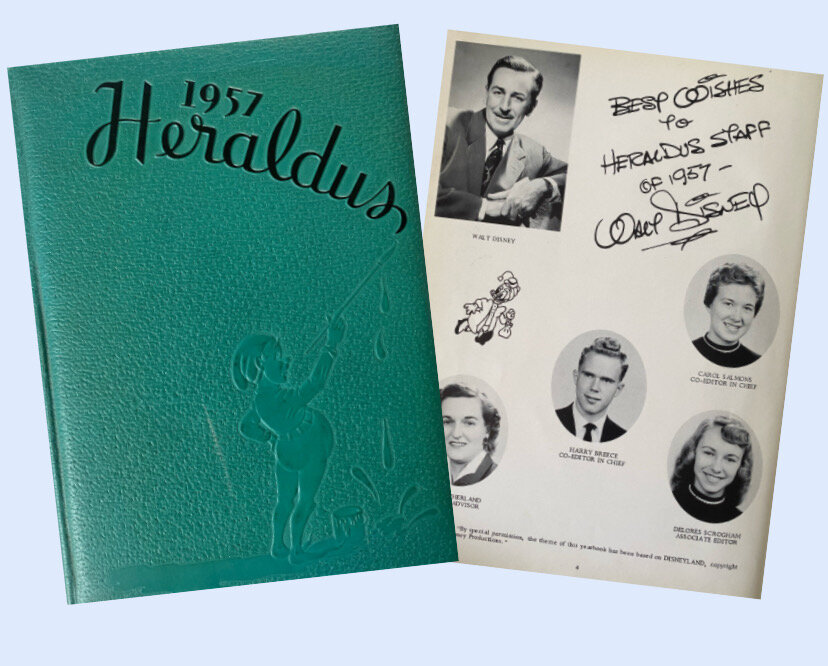
The senior graduating classes of schools (as the Chowchilla Union High School Class of 1956, the John C. Fremont High School Class of 1956, the West Virginia Cedredo-Kenova High School Class of 1957, the 1957 graduates of Mocassin Fallbrook, California, the 1957 graduates of Paramount Senior High School (in Paramount, California), the Texas Amarillo High School graduating class of 1958, or the Lemoore High School Class of 1959) published yearbooks featuring licensed Walt Disney characters in a Walt Disney or Disneyland theme, “by special arrangement with Walt Disney.” Perhaps your old senior high school yearbook also carried a similar Disney theme! Or maybe the students of your alma mater did something like The Girls Association of one school (Alameda High School) who presented “When You Wish Upon a Star” - a musical tribute (in the form of a stage production) to Walt Disney’s Disneyland, held March 27, 1958.
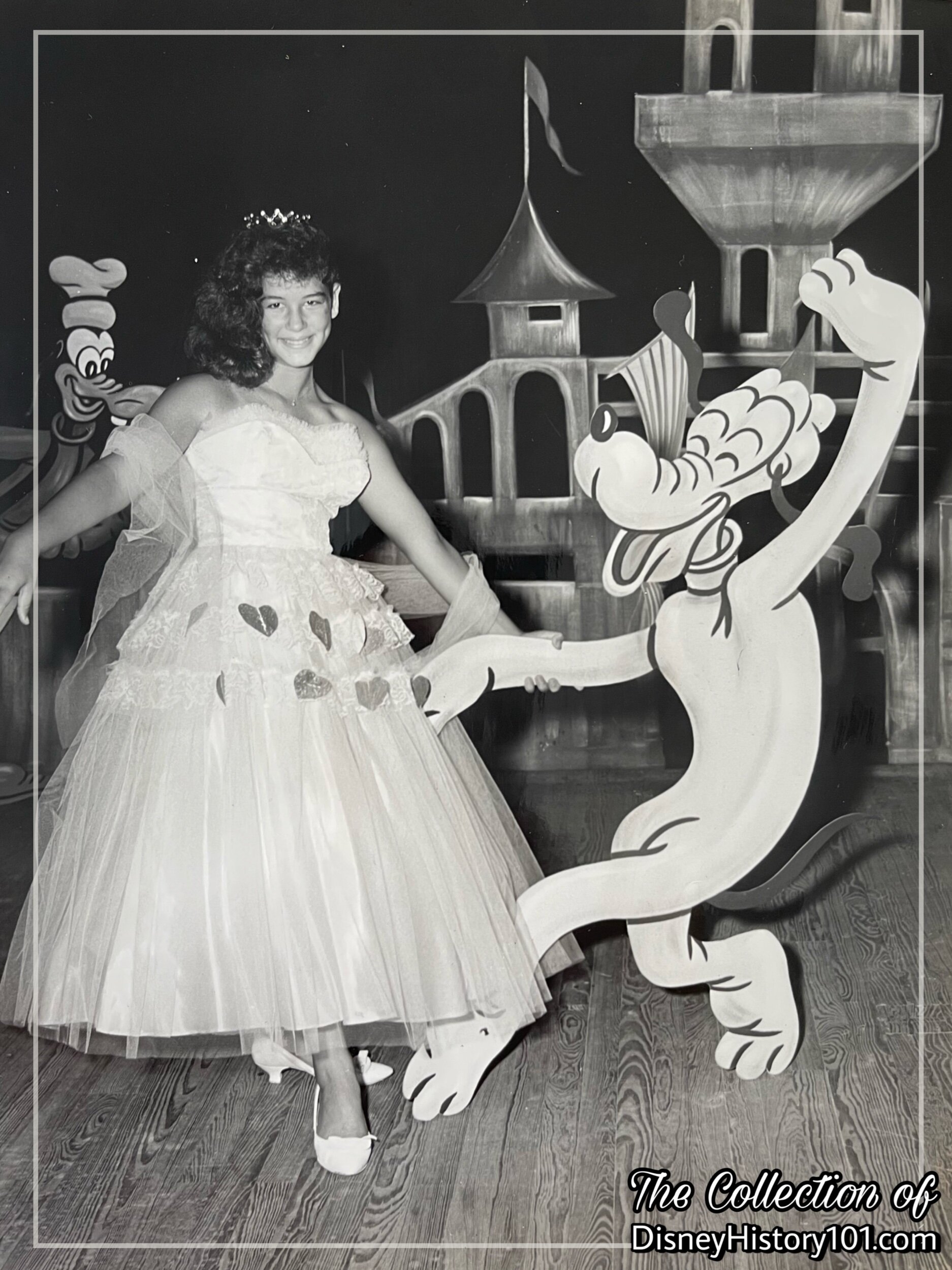
“1961 - The First Annual Grad Nite Party At Disneyland”
The following year (with audiences in mind), Milt Albright (the Disneyland employee previously behind the success of Holidayland), orchestrated and sold the first official all night annual Disneyland Grad Nite Party - “the biggest happiest Grad Nite party ever” held in the United States! This was held for more than 8,500 students from 33 schools, on June 15th, 1961. Admission at the time was $4.64 (plus 36 cent Federal Tax and the $1.00 price of a Souvenir Photo). Special performances included Benny Goodman (who, only just previously drew a great attendance of guests during Memorial Day Weekend of 1961), Teddy Buckner, Arvon Dale, The Elliott Brothers, Tommy Sands, and Annette Funicello! Souvenir Photos (included with ticket price), Souvenir Autograph Books and Souvenir Programs (containing the names of schools attending, and performer biographies) helped guests commemorate the evening!
1962 : The staff of Disneyland was prepared (as much as can be expected) for the graduates according to Doris Klein of the Associated Press. “Here’s the 1962 version Disneyland style : A stalwart senior climbs onto the electric monorail. Fortunately the current’s turned off. Some early birds go into the park the day before and stash a few 80-proof pints in the bushes. But the security guards remember last year ‘and all the places,’ says a grad, sipping coffee. A couple of rugged types try to climb the Matterhorn. But the roller coaster shooting out of the make-believe mountain - and the guards below - cut them short of the summit. It was all part of the hijinks at the famed amusement park’s blockbuster all-night graduation party.”
According to the same reporter, “Everyone had to be dressed up. ‘Man, if we could come in Bermudas and sweet shirts, this place would really be a roust,’ said one dark suited grad. For the price of admission, they could go on all the rides for free and twist all night to any one of the eight bands. And they were locked in until the busses could pick them up again at 5:30 a.m.” During two all-night Grad Nites, more than 26,000 appropriately attired ladies and gentlemen (Southern California High School Graduates from some 79 schools) arrived by bus or authorized chaperone, ready to dance and enjoy select attractions of a moonlit magic kingdom, for two nights, from 11p.m. to 5a.m. Among these (on June 14th alone) were the graduates of Arcadia, Aviation, Bell Gardens, Birmingham, Bonita, Burbank, Burroughs, Compton, Colton, Corona, Dominguez, Duarte, Eagle Rock, Edgewood, El Segundo, Fallbrook, Ganesha, Hueneme, La Habra, La Puente, Los Altos, Mar Vista, Mayfair, Mira Costa, Needles, Newport Harbor, Orange, Oxnard, Palos Verdes, Pasadena, Pomona, Redlands, Redondo, Santa Ana, Santa Ana Valley, Temple City, Tustin, Van Nuys, Verdugo Hills, Victor Valley, and Yucaipa.
Music, as a basic ingredient of showman-ship, covers the Park. During 1962, a special “Grad Nite at Disneyland 1962” album starring the Elliott Brothers orchestra was released thru Buena Vista records. Three tracks (“La Raspa”, “That’s All”, and “Goodnight Sweetheart”) preserved “musical memories of that most wonderful night of your life”. “As you play this record in years to come, these…and other…wonderful memories will love again as you listen to the tunes of Grad Nite at Disneyland played by the Elliott Brothers Orchestra.”
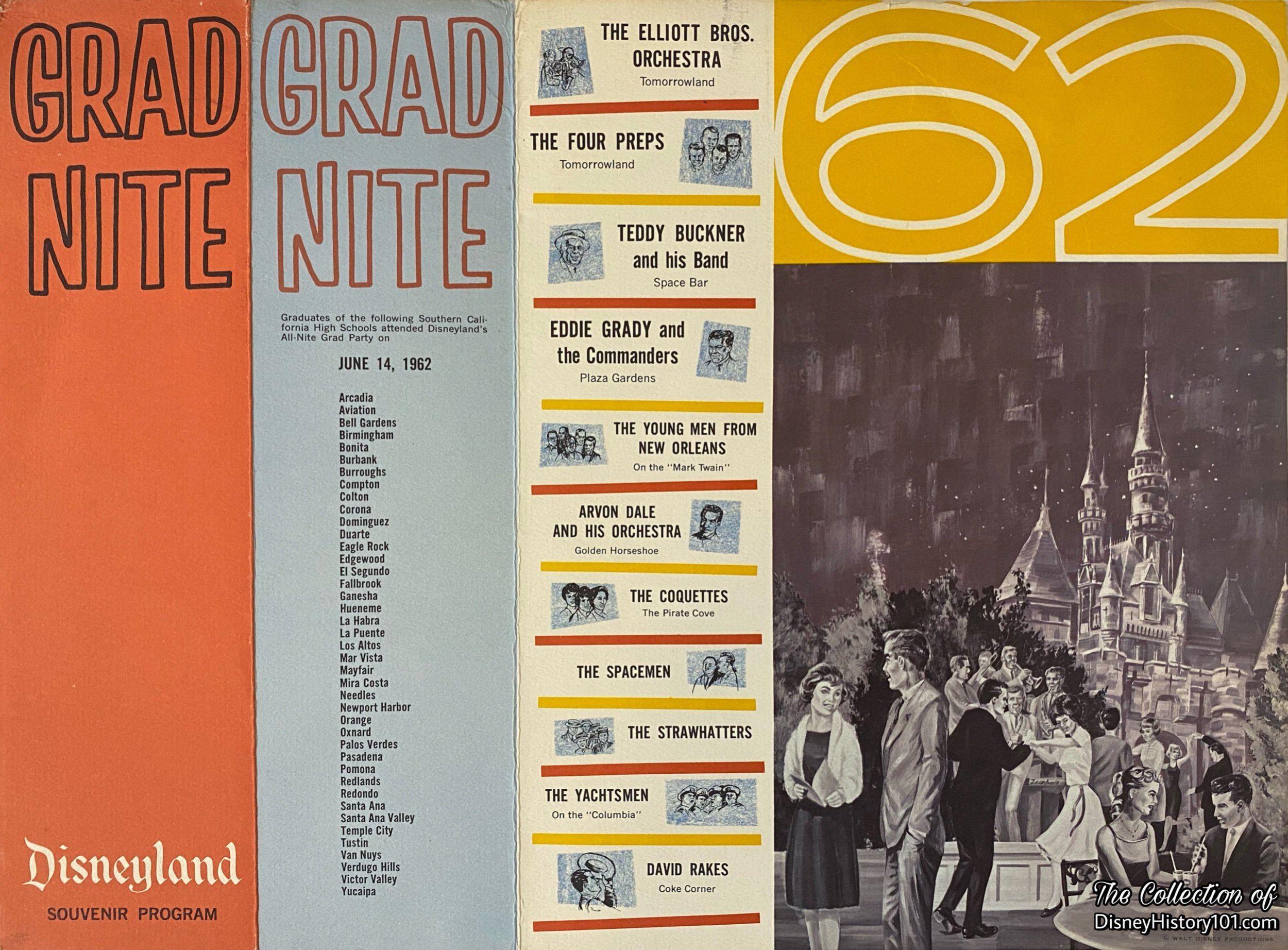
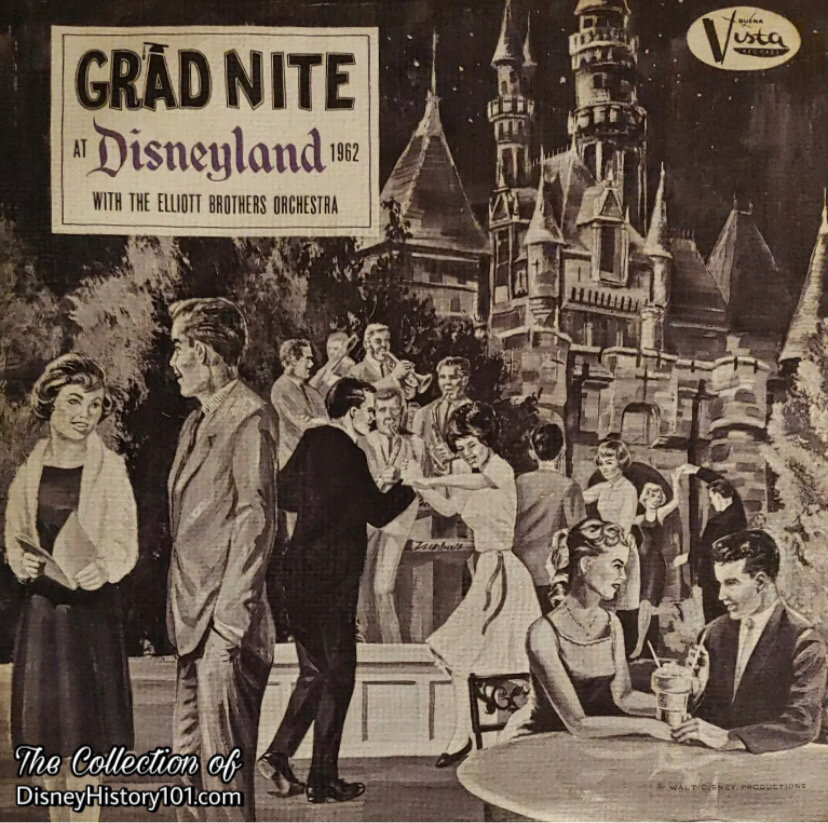
“GRAD NITE PHOTO LOCATIONS!”
What Grad Nite would be complete without a commemorative photograph? “Have your picture taken early! No photos after 4 a.m. You may have your souvenir photograph taken at any of the special locations set up in Disneyland. Please have your photo ticket stub and a completely filled-out return photo card with you before reaching the photographer.”
“GRAD NITE RULES”
“Our discussions with graduates, parents, and faculty members indicate the necessity to once again stress the importance of the following in regard to proper dress :
(1) Boys must wear coats and ties.
a. Only suit coats or sports coats permitted.
b. Sweaters or jackets are prohibited.
(2) Girls must wear date dresses
a. No mini-skirts are permitted. It is felt that skirts should be no shorter “than 1 inch above the knees”. [This rule was a result of a meeting between Disneyland representatives and school officials and senior class representatives from 250 Southern California high schools, during the year 1967. The decision was announced, and published in local newspapers during May of 1967.]
ANYONE NOT DRESSED IN ACCORDANCE WITH THE ABOVE, WILL NOT BE PERMITTED.”
Strict dress codes were in force, and (no matter the decade’s trending styles), many graduates dressed accordingly as you will see in the following photographs!
Another rule - “No alcoholic beverages are allowed in Disneyland at anytime” was printed on Disneyland Grad Nite tickets printed in 1969. It was important that guests adhere to this rule, because at this time, “no alcoholic beverage…[was] sold in Disneyland” for the good of the “wholesome environment of Disneyland,” according to “Disneyland U.S.A.” (published 1958).
Disneyland’s annual Grad Nite event was expanded to three evenings for 1963! One publication prepared in 1963 (and published in 1964) mentioned “three high school Grad Nights, marathon affairs that last until dawn,” according to the author of “Walt Disney Disneyland,” pages 51 & 52, printed by Officine Grafiche Arnoldo Mondadori - Verona; first published 1964.
Just one evening alone saw the following twenty-four schools attended Grad Nite (Friday, June 21, 1963) - Bell High, Canoga Park High, Crescenta Valley High, Susan Miller Dorsey High, Granada Hills High, Ulysses S. Grant High, Hollywood High, John Francis Polytechnic High, Abraham Lincoln High, Los Angeles High, Manual Arts High, James Monroe High, Reseda High, San Pedro High, Santa Monica High, South Gate High, Sylmar High, William Howard Taft High, Van Nuys High, Venice High, Venice High, Verdugo Hills High, George Washington High, Westchester High, and David Starr Jordan High.
Perhaps you were a Graduate of one of these High Schools, enjoying unlimited use of your favorite Disneyland attractions (shooting galleries excepted, of course), enjoying the evening’s entertainment, and dancing to your favorite popular songs (perhaps with your Grad Nite date)!
After the third evening, “40,000 happy high school graduates” had attended Disneyland’s Grad Nite of 1963! According to “The Disneyland Diary” some “35,000 celebrants” attended Grad Nite of 1963.
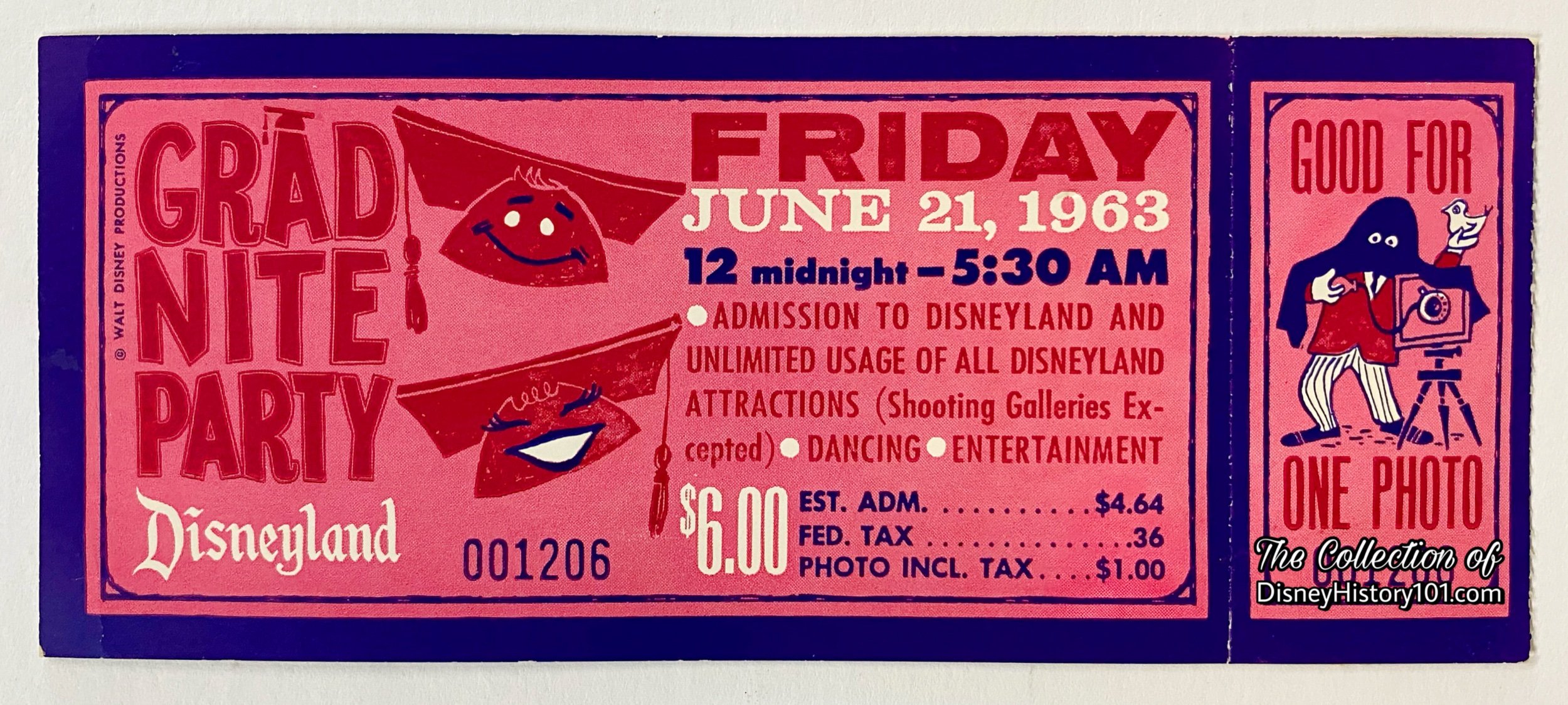
The Elliott Brothers Orchestra at the Plaza Gardens, Jimmy Henderson and His Orchestra in Tomorrowland (opposite “Art of Animation”), The Spacemen with Kay Bell at the Space Bar in Tomorrowland, The Young Men from New Orleans aboard the Mark Twain, The Firehouse Five + 2 on the Oak Tavern Patio, the Yachtsmen aboard the deck of the Columbia, The Strawhatters at the Plaza Gardens and Tomorrowland, the Royal Tahitians at Tahitian Terrace, Ward Singers (directed by Gertrude Ward) at Slue Foot Sue’s Golden Horseshoe in Frontierland, and the Gonzales Trio in Frontierland! All the while those swingin’ DJs of KFWB Channel 98 Radio broadcast live on-the-air from the Plaza “Hub” at Grad Nite at Disneyland! Just take a look at the following handbill administered at the Disneyland Main Entrance Gate during the event.
One publication described the previous year’s festivities: “three high school Grad Nights, marathon affairs that last until dawn. These special events have been highly successful,” according to the author of “Walt Disney Disneyland,” pages 51 & 52, printed by Officine Grafiche Arnoldo Mondadori - Verona; first published 1964. So successful were the 1963 Grad Nights, that as early in 1964, plans were being “laid for four Grad Nites with schools as far away as Lake Tahoe in Nevada scheduled.” And so, in just one night alone (June 18, 1964), 30 schools attended Grad Nite at Disneyland! More than 50,000 High School seniors (from 130 high schools) attended all four Grad Nite Parties in June!
For their entertainment pleasure, many of what would become standard bands at Disneyland Grad Nites would perform for guests. Entertainers for the evening included the Young Men From New Orleans, Denny Brooks, the Elliott Brothers, the Strawhatters, Hootenanny, the Ward Singers, the Astronauts, the Mad Mountain Ramblers, the Spacemen with Kay Bell, and the Royal Tahitians! For the first time ever, an exciting prize “gift of major dimensions” was awarded to one lucky graduate - a brand-new white 1964 Mustang, and KFWB channel 98 was live and on the air for this promotion!
The “Tencennial edition” of Grad Nite Party at Disneyland (1965) featured a number of performers for the graduate’s entertainment pleasure - Bill Elliott and the Date Niters, The Vibrants, Young Men From New Orleans, Bud and Scott, The Yachtsmen, The Strawhatters, Mickey and the Invaders, Stewart Clay, Royal Tahitians, Clara Ward Singers, and the Disneyland Humdinger starring Eddie Hodges and Kelly Garrett. A special highlight of the evening’s entertainment was the “sentimental journey of swing” by Les Brown and His Band of Renown (featuring Butch Stone, Susan Mario, and Stumpy Brown from the 20,000 Leagues Under The Sea stage in Tomorrowland. Local radio personality and DJ Larry McCormick broadcast the sounds of the gala gradation on station KFWB channel 98, live and direct from Disneyland from midnight to 6a.m. In addition, one flashy new 1965 “mighty Mustang” (along with its gold exterior and black vinyl top) was the exciting prize for one lucky Grad Niter. (A fun sidelight, is that the Mustang was also “the modern Cinderella Coach”, in synergistic promotion of Walt Disney’s latest silver screen sensation.)
Souvenir programs contained the following special message from Walt Disney :
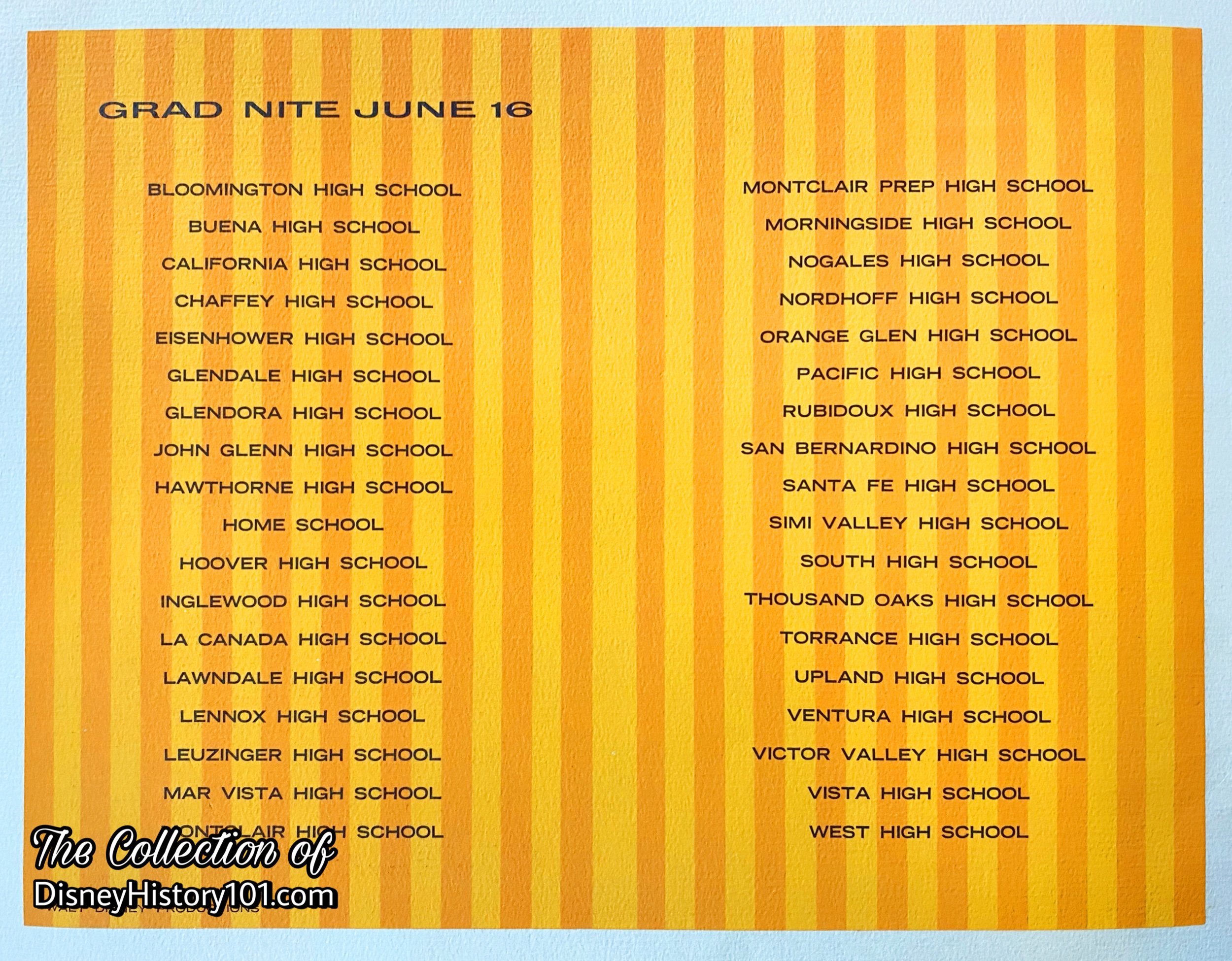
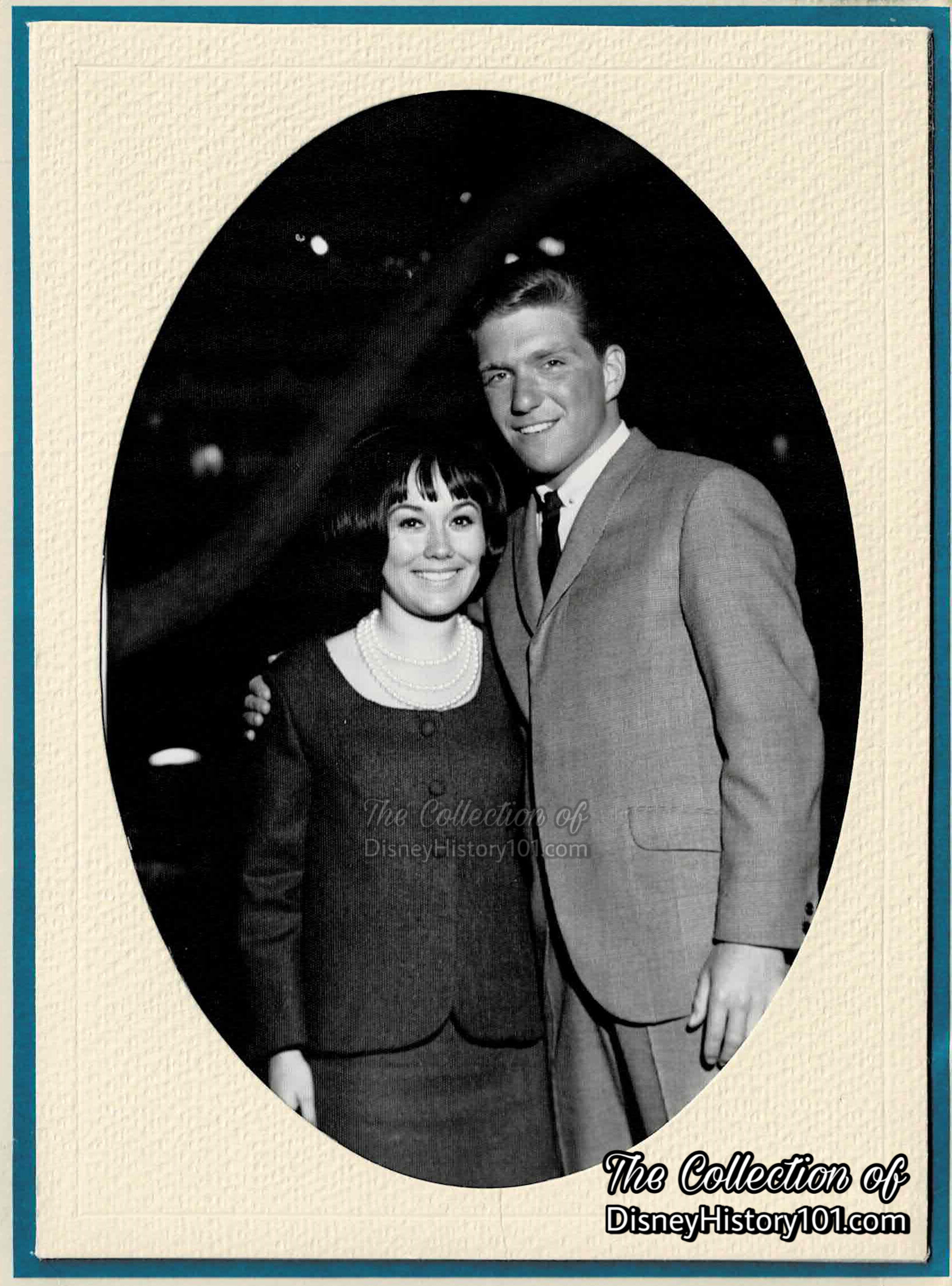
According to “The Disneyland Diary,” “more than 50,000 celebrants from 138 High Schools attended four all-night Grad Parties.”
This was the year of Disneyland’s Tencennial Celebration and the 6th Annual Grad Nite at Disneyland! $7.00 Admission included ($5.55 estimated admission, .45¢ Federal Tax, $1.00 photo), unlimited use of rides and attractions (excluding shooting galleries), dancing, entertainment! The sounds of the two-night, all-night party celebration was hosted “live and direct from the hub of Disneyland” by KFWB’s Genial Gene Weed, and lasted from 11p.m. to 5a.m. The nightly entertainment included many top name performers - the Disneyland “Humdinger” at the 20,000 Leagues Under the Sea Exhibit Stage (starring Mel Carter with H.B. Barnum, Tina and the Mustangs, the Humdinger Dancers, and the Womenfolk), the Association from the Golden Horseshoe Stage), the Royal Tahitians (at Tahitian Terrace), the Young Men From New Orleans (abroad the Mark Twain), Bill Elliot and the Disneyland Date Niters (at the Plaza Gardens), Deep Six (at the Oaks Tavern), the Clara Ward Singers (at the Fantasyland Theater), the Regents (at the Space Bar), Bud and Len (at Coke Corner), Hearts and Flowers (near the Mine Train), and the Port Royal Steel Drums (aboard the Pirate Ship)!
Lastly, guests had the chance to win a grand prize (tickets advertised a brand new 1966 Pontiac GTO - “the official car of Grad Nite ‘66” and “a gift of rare dimension,” as well as the 1965 Ford Mustang, and the 1966 Ford Mustang)! One grand prize was awarded on June 5th, 10th, 15th, 16th, and 17th. Each car was “fully equipped and rarin’ to go”!
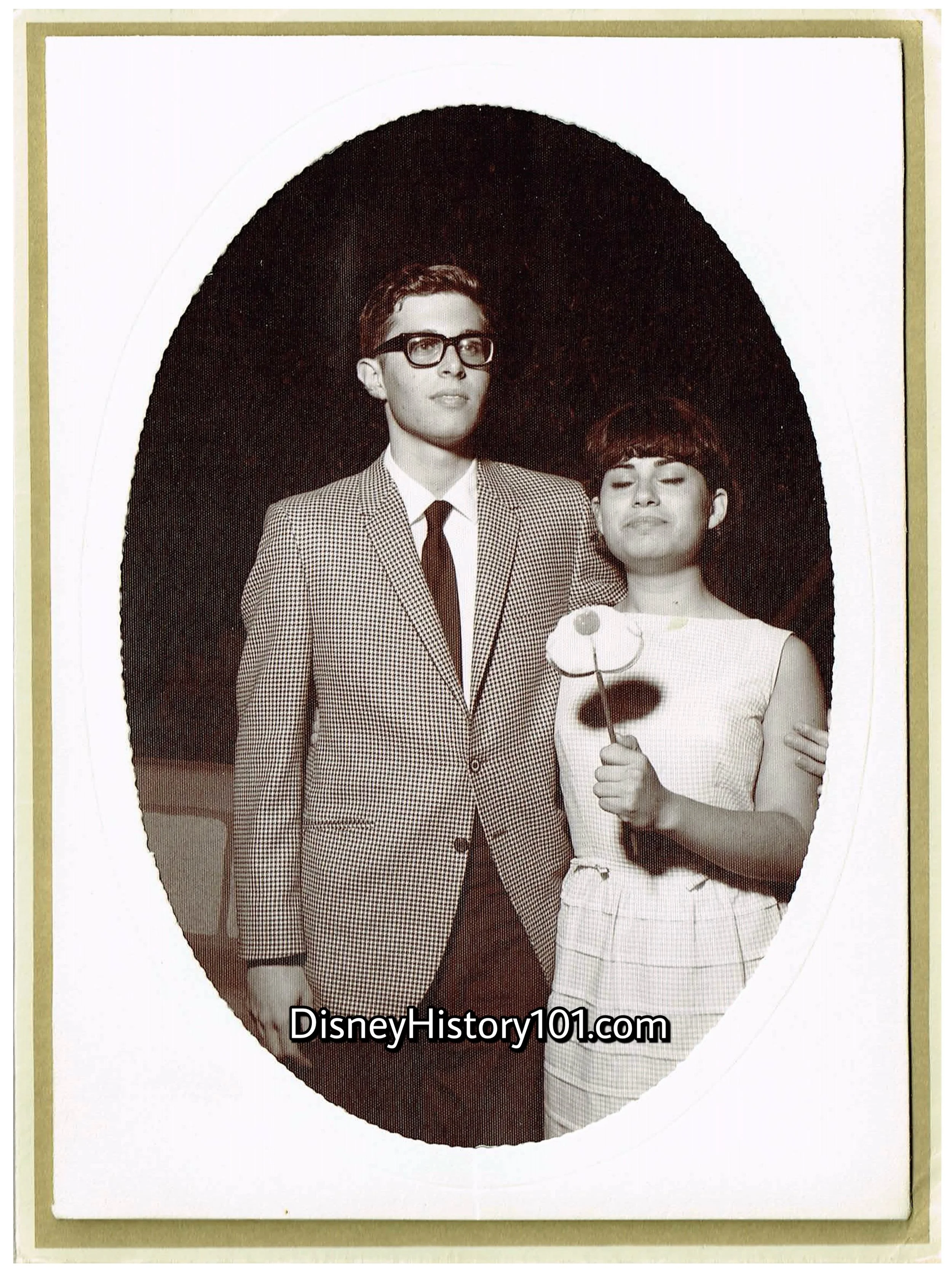
Approximately 60,000 Seniors of 33 High Schools attended five all-night Grad Nite ‘66, including Arcadia High School, Aviation High School, Bell Gardens High School, Burbank High School, John Burroughs High School, California High School, Colton Union High School, Compton High School, Corona Senior High School, Costa Mesa High School, Dominguez High School, Duarte High School, Edgewood High School, Hueneme High School, La Habra High School, La Jolla High School, Mayfair High School, Mira Costa High School, Orange High School, Palos Verdes High School, Pasadena High School, Poway High School, Redlands Sr. High School, Redondo Union High School, Reseda High School, Santa Ana Senior High School, Santa Ana Valley Senior High School, Santa Fe High School, Sierra High School, Thousand Oaks High School, Tustin High School, U.S. Grant High School, and Verdugo Hills High School.
To these graduates of 1966, Walt Disney gave the following special message (published within Grad Nite ‘66 souvenir programs):
“Today we live in uncertain times which offer unlimited challenges to your generation. We are now on the horizon of space and the threshold of new discoveries in science. These conquests lie within your reach, if you are willing to take on the obligations of the future.
On this, your most important step in life, let me take the opportunity to wish you the best in the future.
In the years to come I hope you will look back on Grad Nite ‘66 at Disneyland as a happy and memorable experience. We’ve enjoyed having you.”
As late as May 5th, 1967, it became apparent that the new Tomorrowland Stage areas would be unavailable for the Grad Nite Humdingers. So, Bill Sullivan and Ben Harris scheduled the use of the Fantasyland Theater for the live entertainment shows!
It was a challenging month, as the Fantasyland Theatre was being used for several events during the month of June 1967. There were the Grad Nite Humdinger Shows, and the preview week of Humdinger, Vaudeville, and Country Jubilee. After all the Grad Nite performances, Card Walker’s staff needed the theatre for a special event presented for the top theater chain owners across the country. So, time was clearly of the essence. By June 9th, repairs were underway on the old curtains, teaser, and old blue cyc (which has worn out). Preparations like staging, lighting, and rehearsals took place inside the small theater.
On June 15, 1967, local radio station KFWB’s Tom Murphy and Bill Taylor broadcast live from Disneyland’s hub. One lucky Grad Niter would win his or her own “Grad Nite Special” - a brand new 1967 Mercury Cougar - “the car of the year”! Other acts included Coke Corner Duo (at Coke Corner), Dobie Gray and His Band (at the Oaks Tavern), Aunt Dina’s Quilting Party (near the Mine Train), Bill Elliott and the Disneyland Date Niters (at the Plaza Gardens Stage), Ward Gospel Singers (at The Golden Horseshoe), The Regents (at Plaza Inn), The Royal Tahitians (at Tahitian Terrace), The Aggregation (at The French Market), The Young Men (on the Mark Twain), and The Individuals (in the Fantasyland Entertainment Area). The Fantasyland Theater hosted the “Disneyland Humdinger” show starring a slew of performances by Randy Sparks and the New Society, Tammi Terrell, The Aubrey Twins, and The Mustangs!
“Our discussions with graduates, parents, and faculty members indicate the necessity to once again stress the importance of the following in regard to proper dress :
(1) Boys must wear coats and ties.
a. Only suit coats or sports coats permitted.
b. (Casual) sweaters or jackets are prohibited.
(2) Girls must wear date dresses.
a. No mini-skirts are permitted. It is felt that skirts should be no shorter than 1 inch above the knees.
ANYONE NOT DRESSED IN ACCORDANCE WITH THE ABOVE, WILL NOT BE PERMITTED.”
At the end of the 1967 “Grad Nite Parties” in June, some 250 high schools from “Needles to San Francisco” and their 75,000 high school seniors celebrated at Disneyland. According to another source, “more than 76,000 high school seniors celebrated their graduation at Disneyland…at five special all-night ‘grad parties.’ Better than one of every three high school graduates in Southern California were inside Disneyland on these five evenings alone”, according to “You’re In Good Company - A Report To Disneyland Lessees, Summer ‘68”.
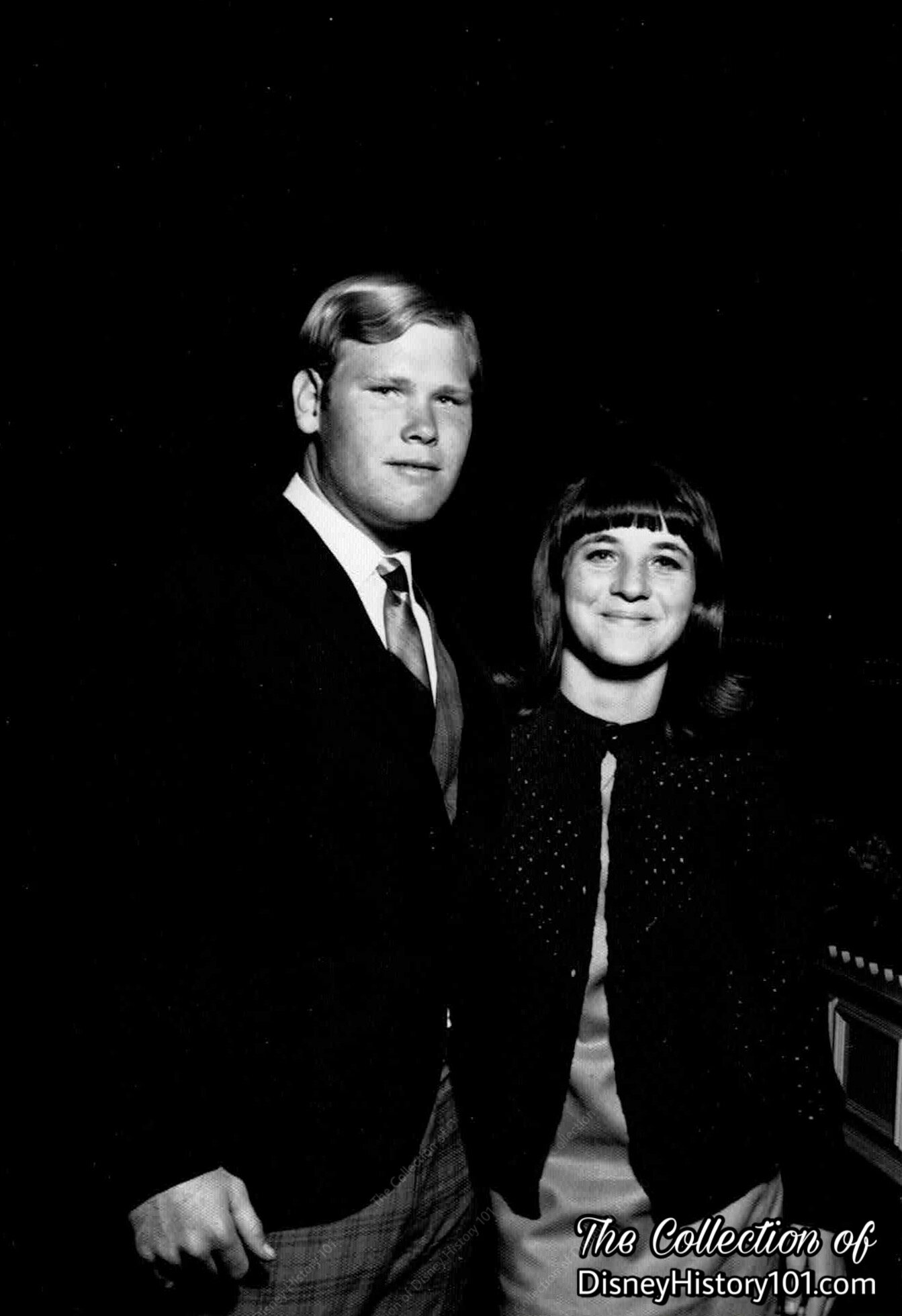
Paula Dinkel (Future Walt Disney Imagineering Principal Show Lighting Designer) recalled: “I attended Disneyland Grad Nite in the spring of 1967 and got to ride the newly opened Pirates of the Caribbean with my high school sweetheart. The park was a wonderland that night! I was curious about what was going on with that spooky mansion nearby and imagined what could be behind those lit windows on Main Street.”
This was the eighth annual Grad Nite at Disneyland! More than 300 High Schools were represented in the all-night 1968 Grad Parties, 2,000 grads traveling by air from Northern California to Disneyland! This number would increase greatly by the following year (1969), when more than 100,000 high school graduates would attend one of seven all-nite Grad Parties. Some High Schools (like local La Puente High School) would even memorialize their visit to Disneyland with photographic imagery appearing in their class of ‘68 yearbook.
For your dancing and entertainment pleasure, enjoy the live sounds of the Joe Tex Orchestra, Revue, the Levee Loungers, Bill Elliott and the Disneyland Date Niters, the Five Americans, Sam the Sham Revue, the Clara Ward Gospel Singers, the Honey LTD., the Royal Tahitians, the Mustangs, the Young Men from New Orleans, the Spats, and the Enchilada Brass!
Nine photo locations include : Carnation Cafe (Main Street U.S.A.), Plaza Pavilion, Right of Sleeping Beauty CastleEntrance, Left of Sleeping Beauty Castle Entrance, Frontierland Entrance, Sleeping Beauty Castle Courtyard Exit, New Orleans Square Riverbank, It’s a Small World in Fantasyland, and Bell Telephone’s America the Beautiful!
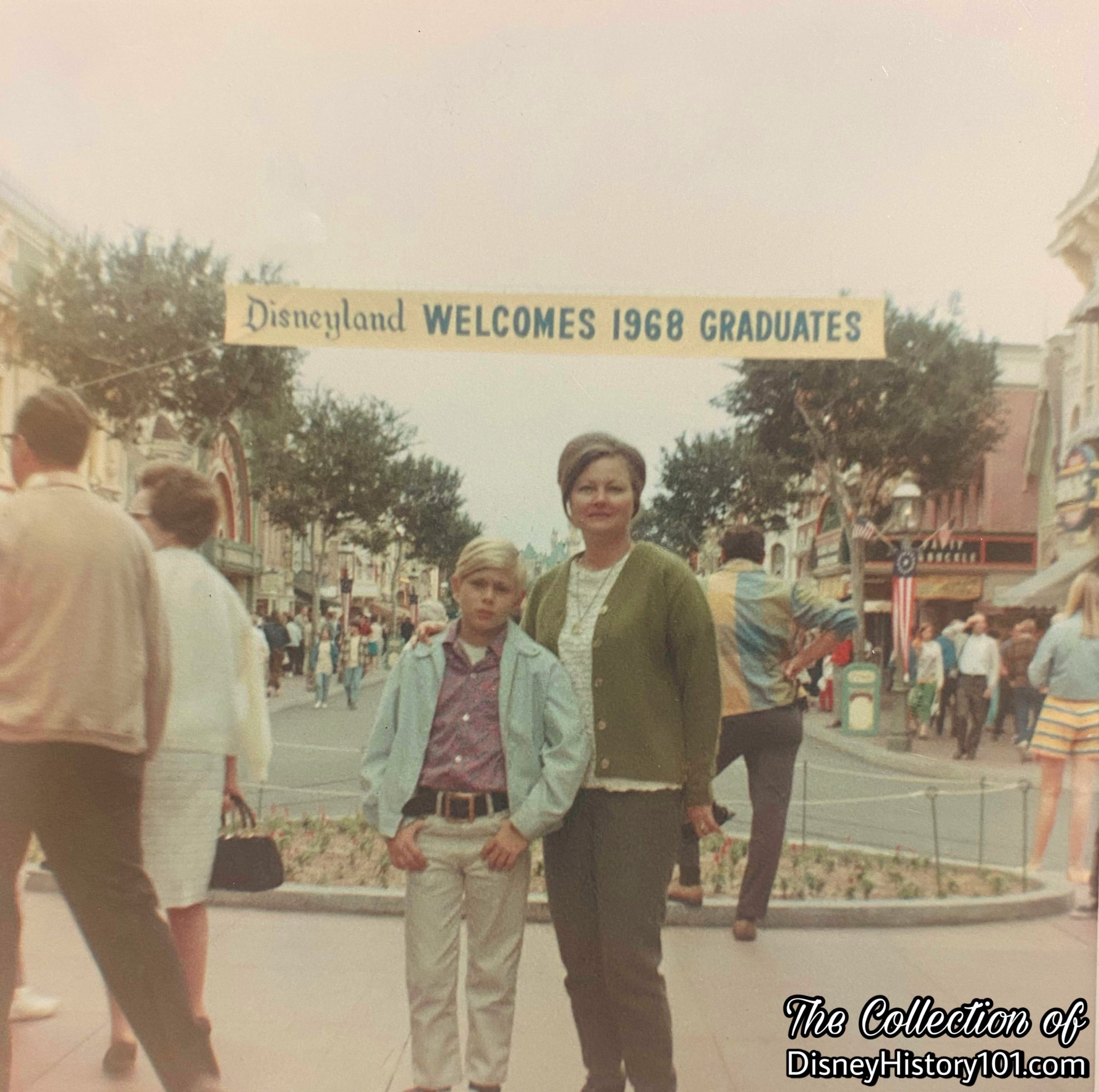
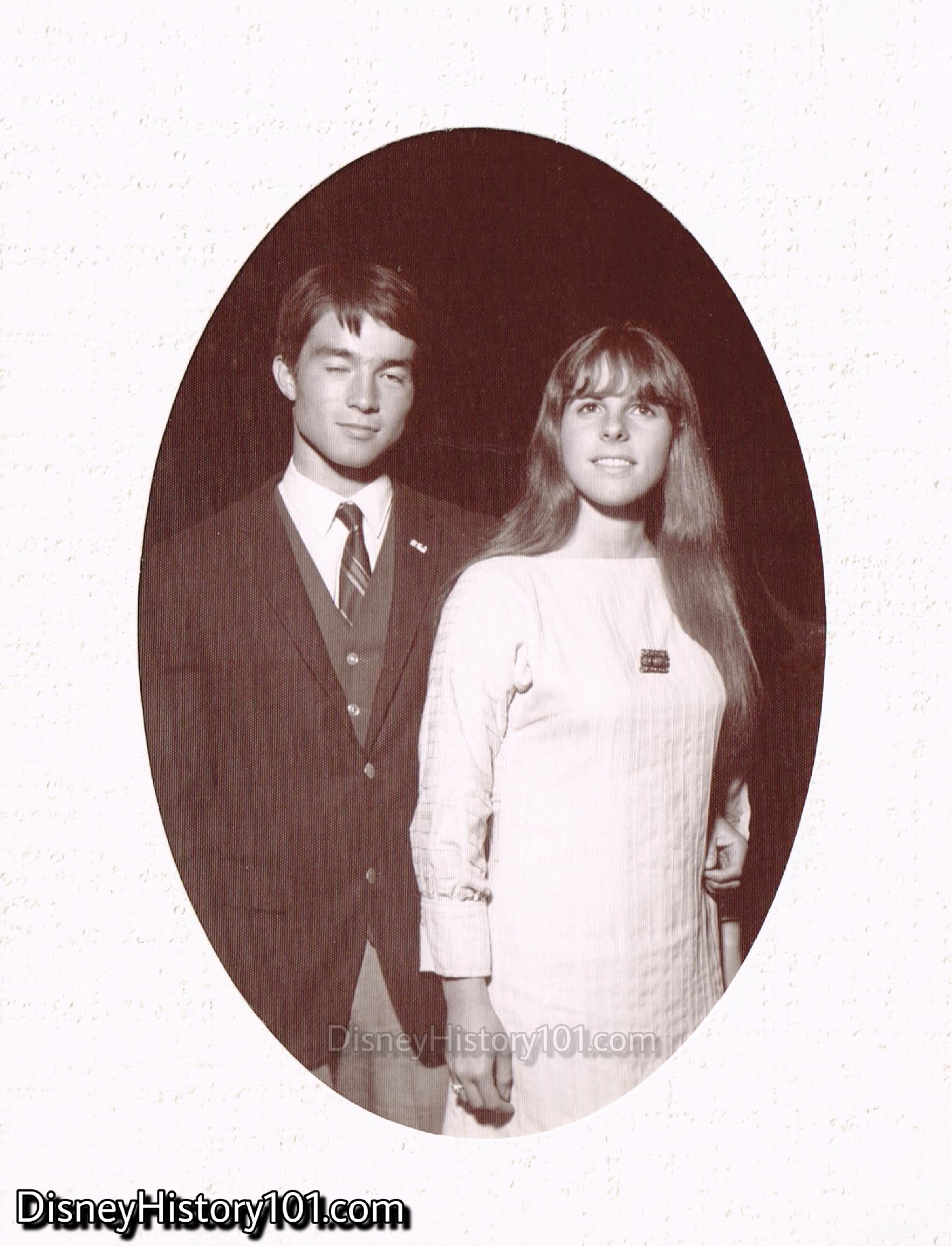
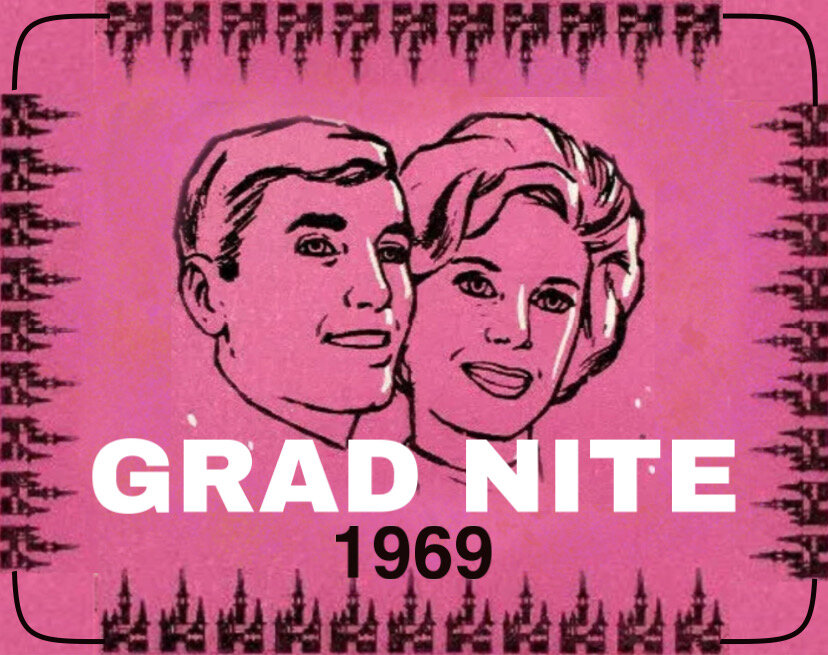
Some 90,000 high school graduates (from 58 schools) attended seven All-Nite Grad Parties in June. On June 11th, 1969 alone, were the graduates of Albany High School, baxter High School, Bloomington High School, Bonita High School, Chaffey Union High School, Channel Islands High School, Colton Union High School, Convent of the Sacred Heart, Del Oro High School, Eisenhower High School, El Segundo High School, Foothill High School, Galileo High School, Glendora High School, William S. Hart Senior High School, Harvard Military School, Holy Family High School, Leland High School, Lincoln High School, Lowell High School, Montclair High School in Montclair, Montclair College Prep of Van Nuys, Newbury Park High School, Newport Harbor High School, John W. North High School, Northview High School, Oakmont High School, Ontario High School, Orange Glen High School, Our Lady of Loretto High School, Pacific High School, Petaluma Senior High School, Romona High School in Riverside, Rancho Cotate High School, Rio Mesa High School, Riverside Polytechnic High School, Rubidoux High School, St. Andrews High School, St. Francis High School, St. Joseph High School of Santa Maria, St. Joseph High School of Lakewood, St. Mary’s Academy, Saddleback High School, San Bernadino High School, San Gorgonio High School, San Jacinto High School, San Marcos High School, Sir Francis Drake High School, Sonoma Valley High School, South High School, South Hills High School, Summerville Union High School, Torrance High School, Vista High School, George Washington High School, West High School, Westmoore High School, and Ygnacio Valley High School.
Guests may have remembered thrilling to Disneyland’s Rocket Jets as they soared over Tomorrowland and the Matterhorn Bobsleds zooming high over Fantasyland. All the while, The Righteous Brothers Starring Bobby Hatfield, Tommy Roe, Shango, Merrily Rush and The Turnabouts, The Willie Mitchell Soul Review, The Friends of Distinction, Pak, The Young Tahitians, Los Gallos, and The Sound Castle entertain the future graduates of 1969 in a night to remember!
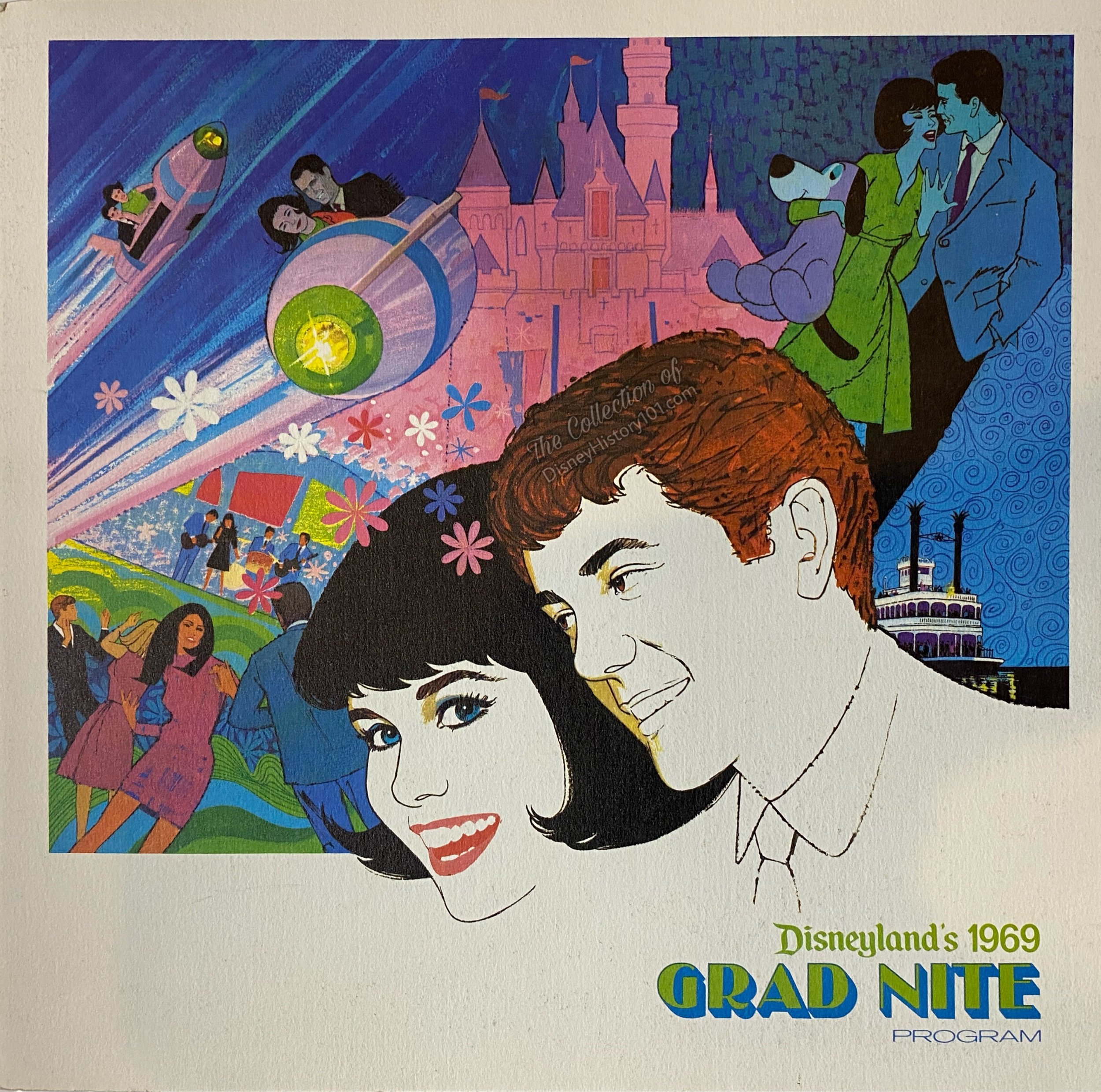
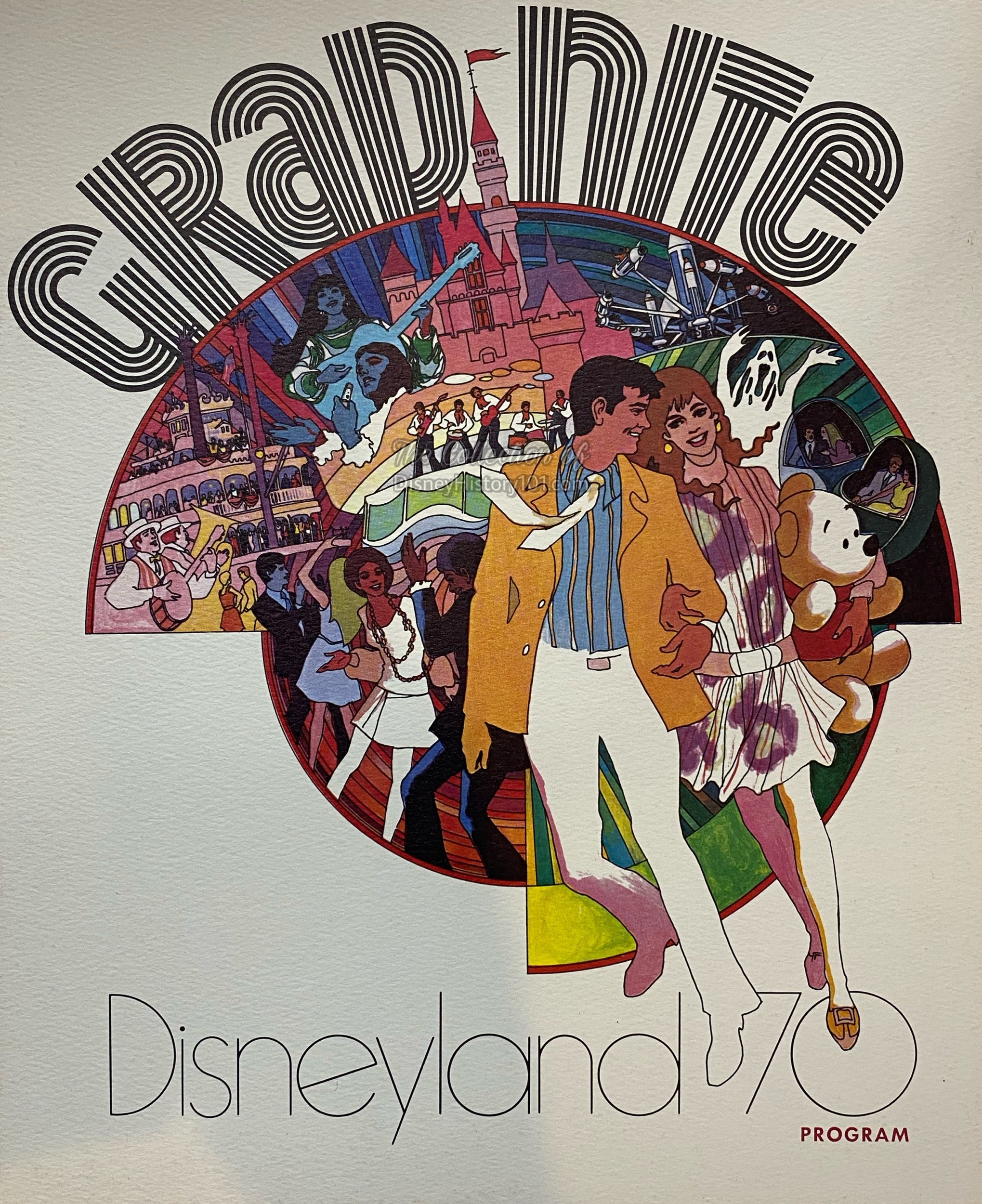
Forty schools attended Grad Nite Disneyland ‘70 on June 10th, 1970. For their “listening pleasure”, there are performances by The Raiders Featuring Paul Revere and Mark Lindsay, The Friends of Distinction, Billy Joe Royal, Jackie De Shannon, Rufus Thomas with the Bar Kays and Sunday’s Child, The Clara Ward Singers, Teddy Buckner, Tahiti Revue, and Los Gallos!
According to one source: “the 90,000 mark was topped in number of High School students celebrating all-night Grad Nite Parties at Disneyland. As of this year over half a million graduates had observed commencement celebrations at Disneyland since the first Grad Nite in 1961.” [The Disneyland Diary] “Disneyland Dimensions” (prepared for 1970) reported a more specific figure: “Through 1970, 549,094 grads from 2,114 senior class have celebrated commencement at Disneyland during 45 all-night parties.”
On June 11, 15, 16, 17, 1971, Sixty-one schools attended Disneyland’s Grad Nite 1971 - “an evening just for you”! Admission (plus tax and a photo) was $9.00, for six hours in Disneyland, from 11p.m. to 5a.m.!
Prohibited attire for the gentlemen was adjusted to include “sandals and canvas shoes” and “jackets and sweaters (including turtleneck and letter sweaters)”. For the ladies, the length of the miniskirts “should be no shorter than 4 inches above the knees while standing”. Another fascinating list of regulations included Ladies pantsuits, which were now permissible, but restricted to the following : “Fabric should be of dressy material as velvet, crochet, crepe, satin, polyester, etc. Jacket and pants must match. Jacket must cover derrière. Jacket must be worn at all times to retain formal appearance.” Other prohibited attire included “slacks and slack suits, capris and capri sets, hip huggers, jeans, jumpsuits, culottes, pedal pushers, and mumus.” “Anyone not dressed in accordance…will not be permitted.”
Live evening entertainment for your enjoyment includes Smoky Robinson and the Miracles, Linda Ronstadt, Mark Lindsay, the Staple Singers, We Five, the Kaui-Pono Polynesians, Teddy Buckner, The New Dixie, Rebellion, and the Sound Castle Ltd.!
Friday, June 11th, 1971, 100 schools attended the party!
Grad Nights were held June 2, 8, 9, 13, 14, 15, 16, 1972.
Schools attending Grad Nite ‘72 included: AGOURA
ALTA LOMA
ATASCADERO
BANNING
BASSETT
BLOOMINGTON
BONITA
CAJON
CANYON
CHAFFEY
COLTON
COSTA MESA
DOS PUEBEOS
EISENHOWER
EL MODENA
EL SEGUNDO
ESTANCIA
FONTANA
FOOTHILL
FOUNTAIN VALLEY
GAHB
W. S.HART
HAWTHORNE
DAVID STAR JORDAN
JOHN F. KENNEDY
LAKEWOOD
LAWNDALE
LEIGH
LENNOX
LEUZINGER
LONG BEACH POLY
MILLIKAN
MISSION VIEJO
MONTCLAIR
NEWPORT HARBOR
NORCO SR
NORDHOFF
NORTHRIDGE MILITARY ACDY
OAKHURST
ONTARIO
ORANGE
PACIFIC
PARK AVENUE
PATTERSON UNIFIED
PETALUMA SR
PIEDMONT
POMONA UNIFIED
ROOSEVELT
JOHN A. ROWLAND
ROYAL
ROYAL OAK
RUBIDOUX
SADDLEBACK
SAN BERNARDINO
SAN GORGONIO
SAN MARCOS
SANTA BARBARA
SANTA PAULA UN
SIMI VALLEY
SOUTH
TORRANCE
TUSTIN
TWENTY-NINE PALMS
UNIVERSITY
UPLAND
VILLA PARK
WEST
GLEN A- WIESON
WILSON
WORKMAN
Yucca Valley
Atmosphere entertainment included the Coke Corner Piano Player, Los Camperos at the Mine Train Station, Banjo Kings on the Mark Twain, and Kaui Pono's Polynesians at Tahitian Terrace. Dancing/Atmosphere included The Grass Roots and Sound Castle Ltd. at Tomorrowland Terrace, the The Great Crowd at Plaza Gardens, Teddy Buckner Band w/ vocalist Jewel Hall at French Market, and Wild Oats at Bear Country.
Admission was $9.00 for six hours, from 11a.m. to 5p.m. Admission included a free color photo at one of twelve locations to serve guests. Grad Nite 1975 occurred May 30, and June 11, 1975
The following guidelines have been established to help maintain the Grad Nite Party atmosphere. A reminder was adjusted to read : “No alcoholic beverages, marijuana, or dangerous drugs are allowed in Disneyland at anytime.” Inappropriate attire for the ladies was adjusted (in accord with changing fashions) to include “hotpants, separate sets, jeans, jump suits, bare midriff outfits, and tennis shoes”.
Entertainment for the evenings included The Hues Corporation, The Jimmy Castor Bunch, The Pointer Sisters, Skiles and Henderson, The Four Tops, B.J. Thomas, Teddy Buckner and His Jazz All Stars, Arthur, Hurley, and Gottlieb, and Gloria Gaynor. Other acts included the Polynesian Revue, Sunshine Balloon, and “Class of ‘27” (the newest show at the Golden Horseshoe).
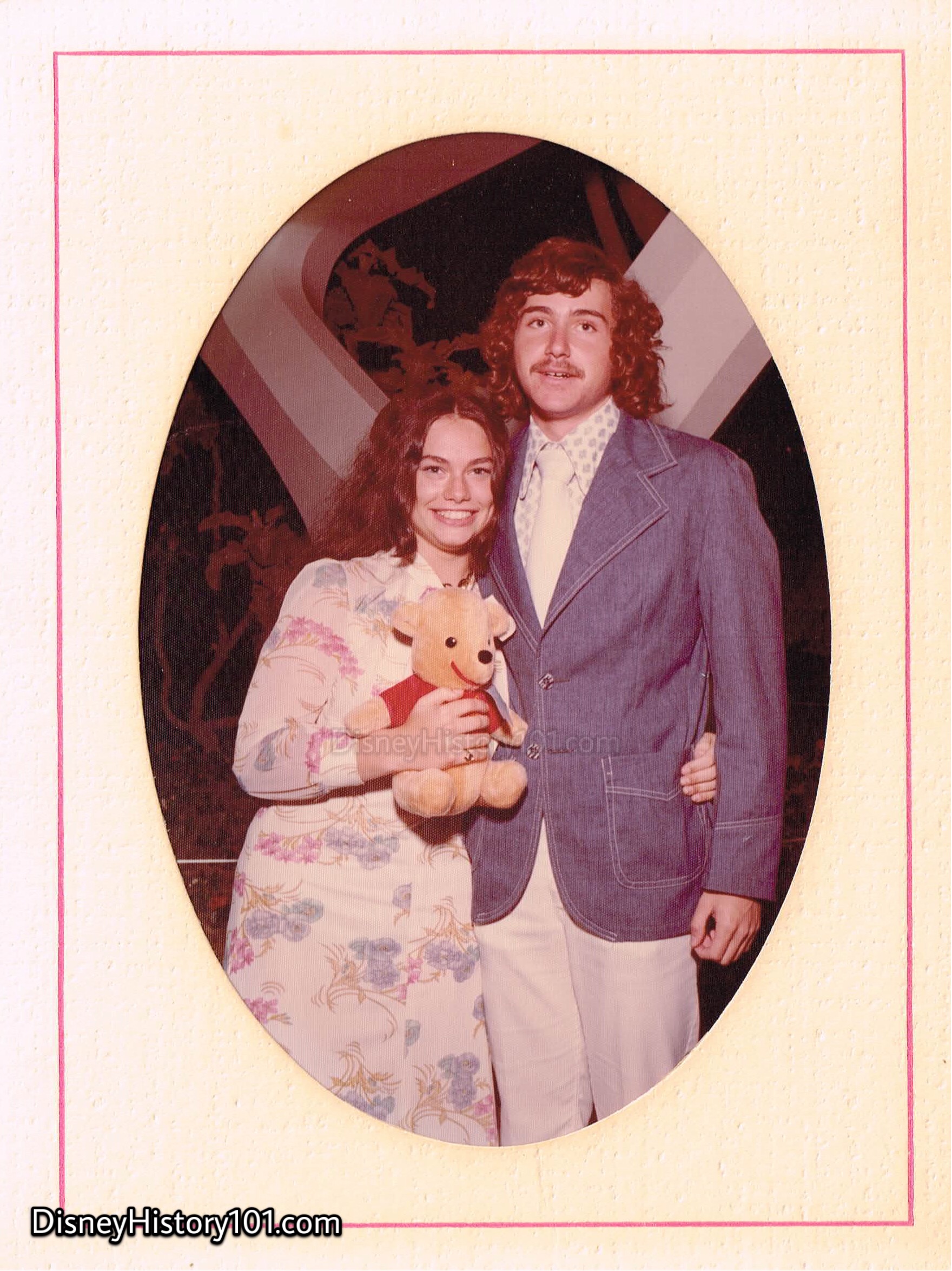
Disneyland’s Grad Nite ‘76 presents live entertainment from 11 p.m. to 5 a.m., on Friday, June 4th and Thursday 17th, 1976.
Appropriate attire guidelines were adjusted with the changing fashions of the era. If ladies selected “a sleeveless jacket”, “it must be of the same fabric and color of the slacks and should be hip length. Brushed blue denim pant suits are acceptable as long as they are not tie dyed or faded styling. Dressy shoes, boots, platform shoes, sandals should have straps.” The inappropriate ladies attire was adjusted to include : “separates (i.e. vest/slacks/blouse ensembles), bare midriff outfits, jeans, jean jackets, rubber thonged sandals, hiking boots, fur or fake fur jackets worn as a substitute for pant suit jacket, jumpsuits, culottes, hot pants, or shorts.” For the gentlemen, attire regulations were also adjusted to include “leisure suits worn with shirt and tie”, “waist length” or “maxi length” “sport coats” with lapels.
The following acts appeared - Natalie Cole (on Tomorrowland Terrace), Miracles (in Town Square), Larry Groce (in Plaza Gardens), Flash Cadillac & the Continental Kids (on Tomorrowland Terrace), Cecilio and Kapono (in Town Square), Papa Doo Run Run (in Plaza Gardens), Mission Mountain Wood Band (at the Golden Horseshoe), Teddy Buckner and His Jazz All Stars (in the French Market), Sunshine Balloon (near Its a Small World), Ray Stiles (at Coke Corner), and the Polynesian Revue (at the Tahitian Terrace)!
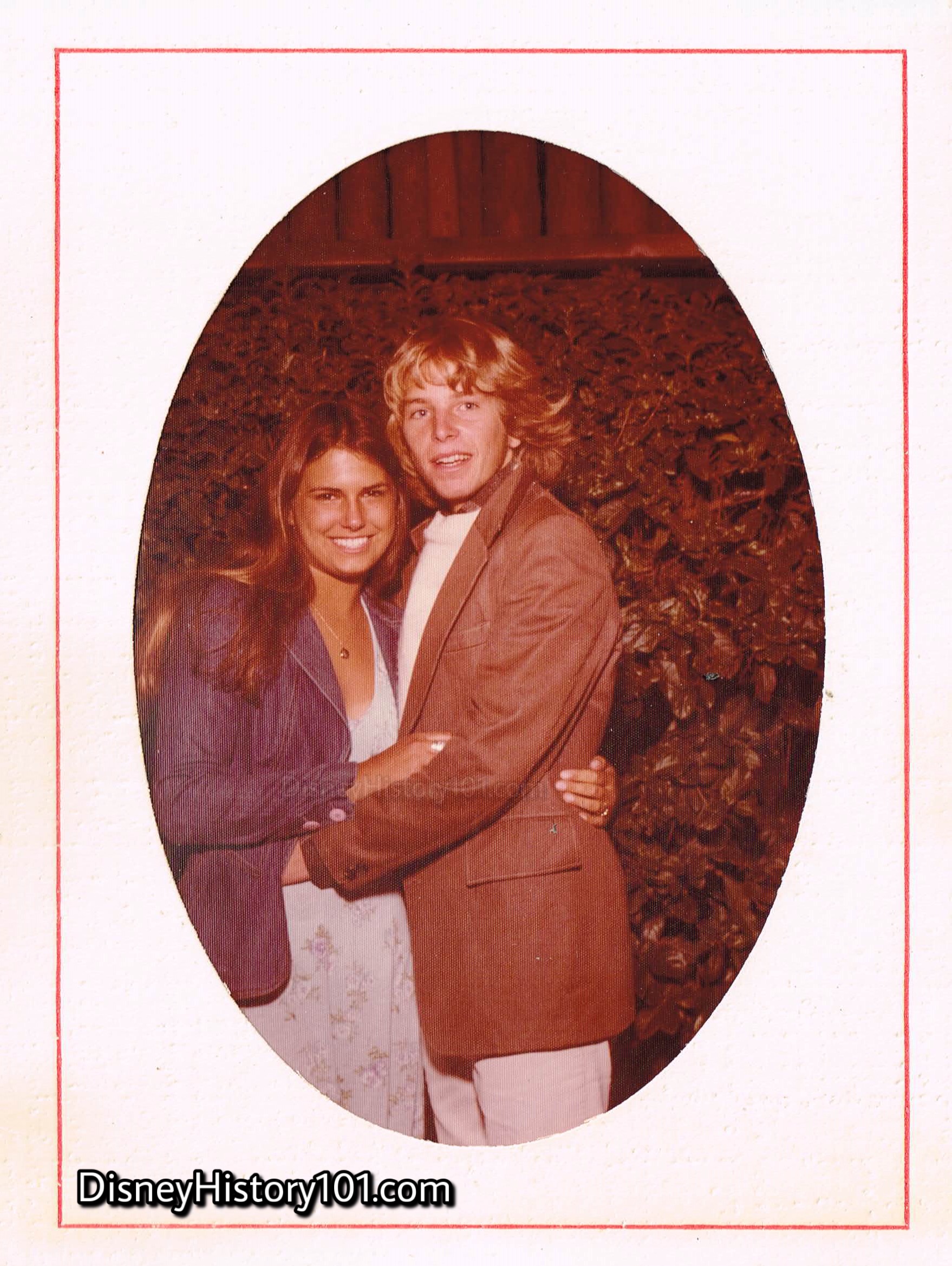
Before the night slipped away, this lucky couple captured their memory of “Disneyland Grad Nite ‘76” at 1 of 12 photo locations.
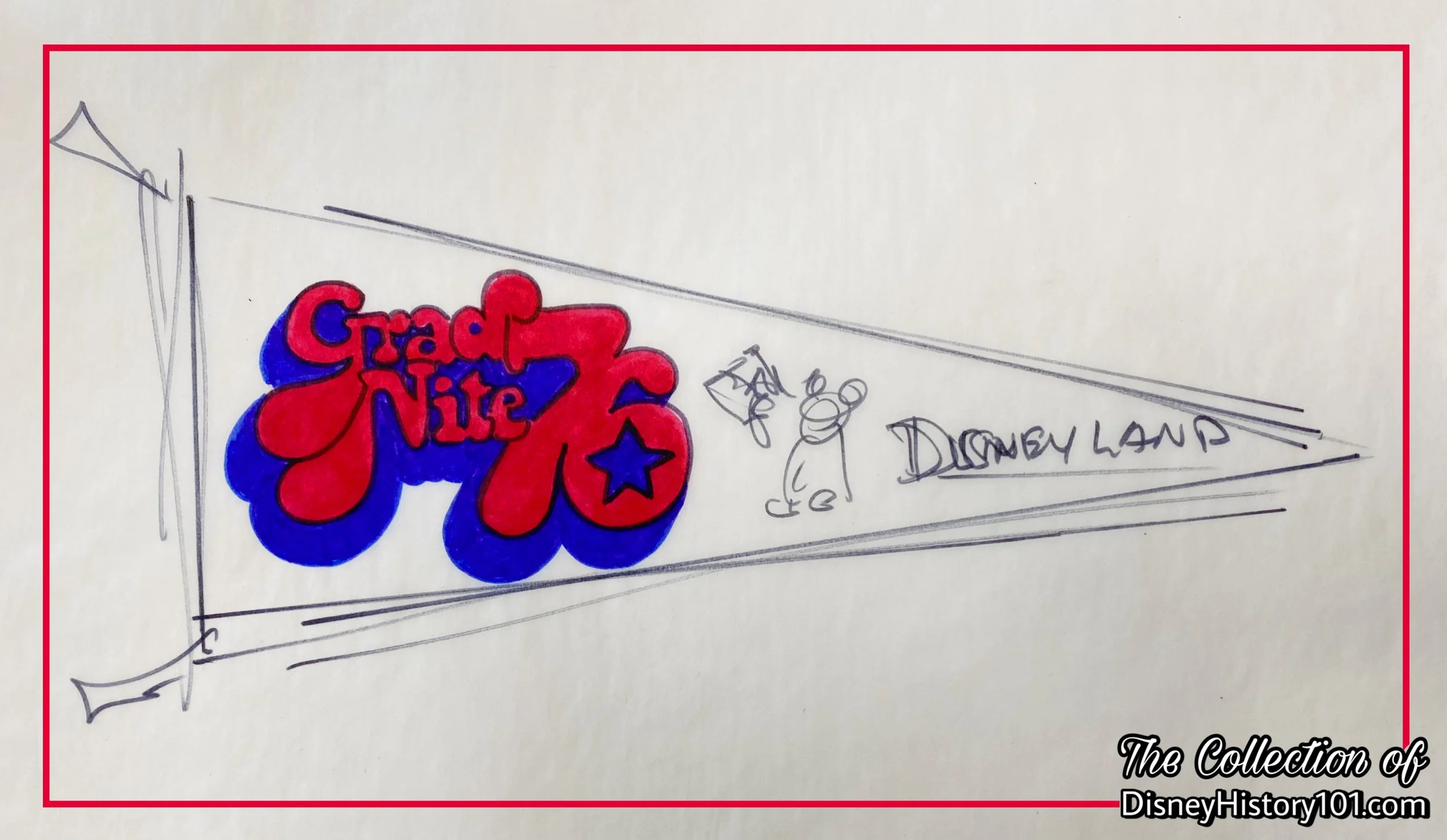
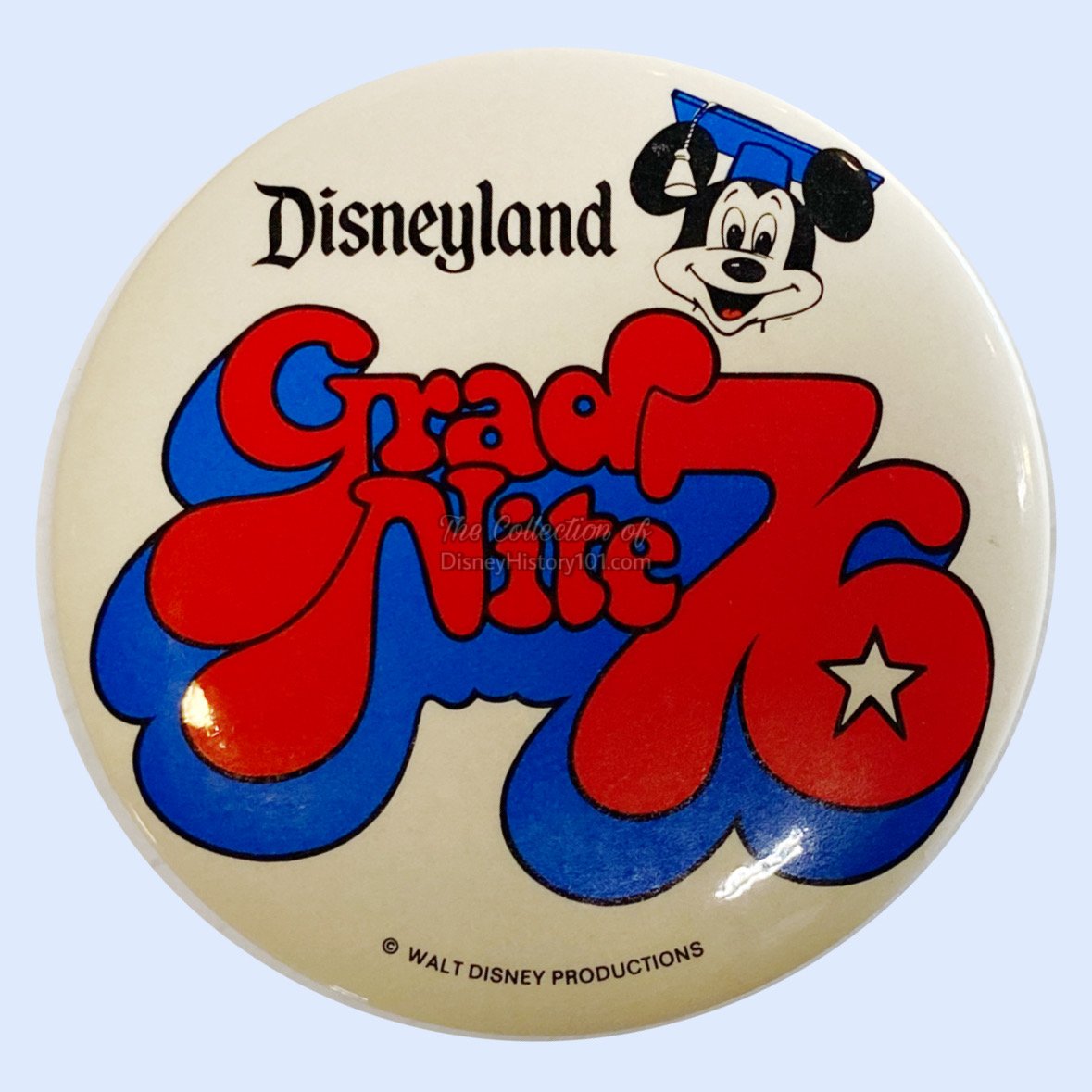
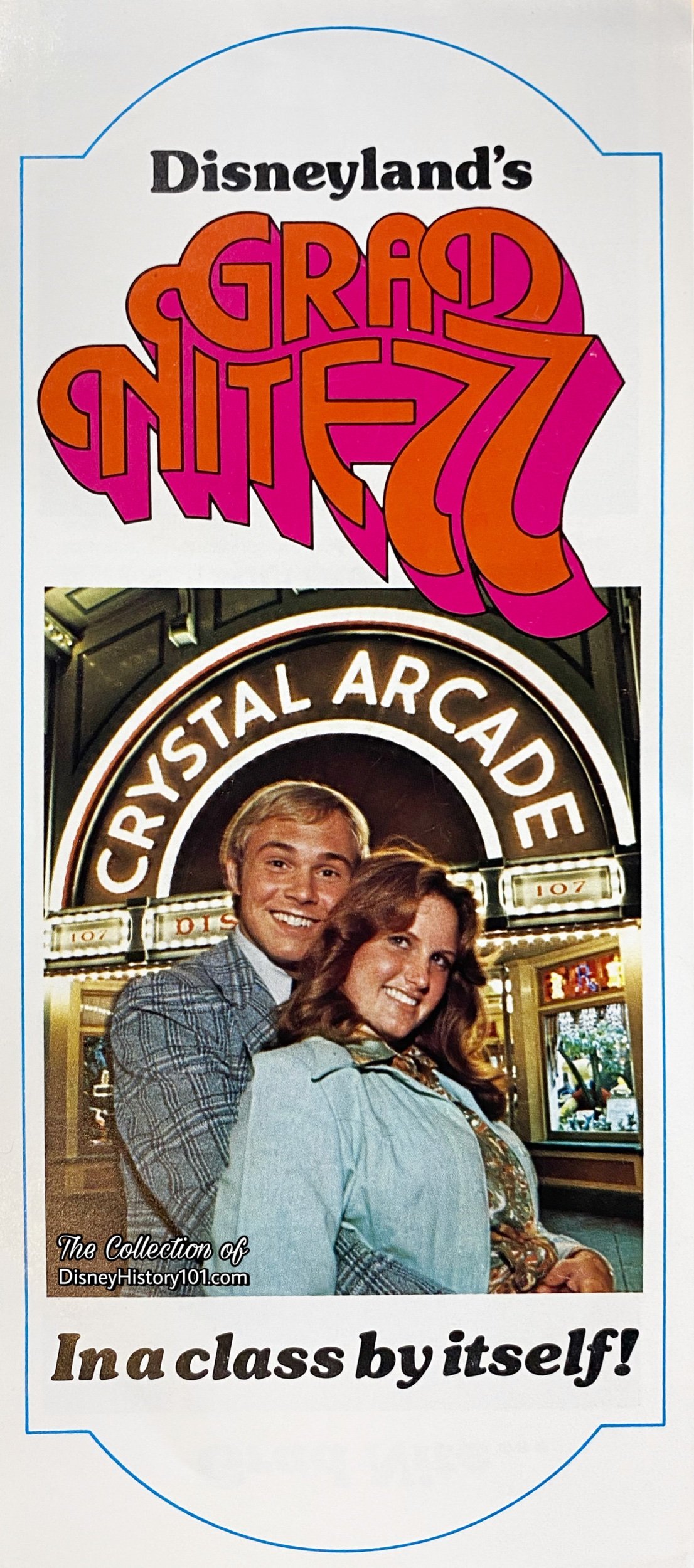
In 1977, seven Grad Nite celebrations were attended by a record 128,900 high school seniors and their dates, representing a total of 777 schools.
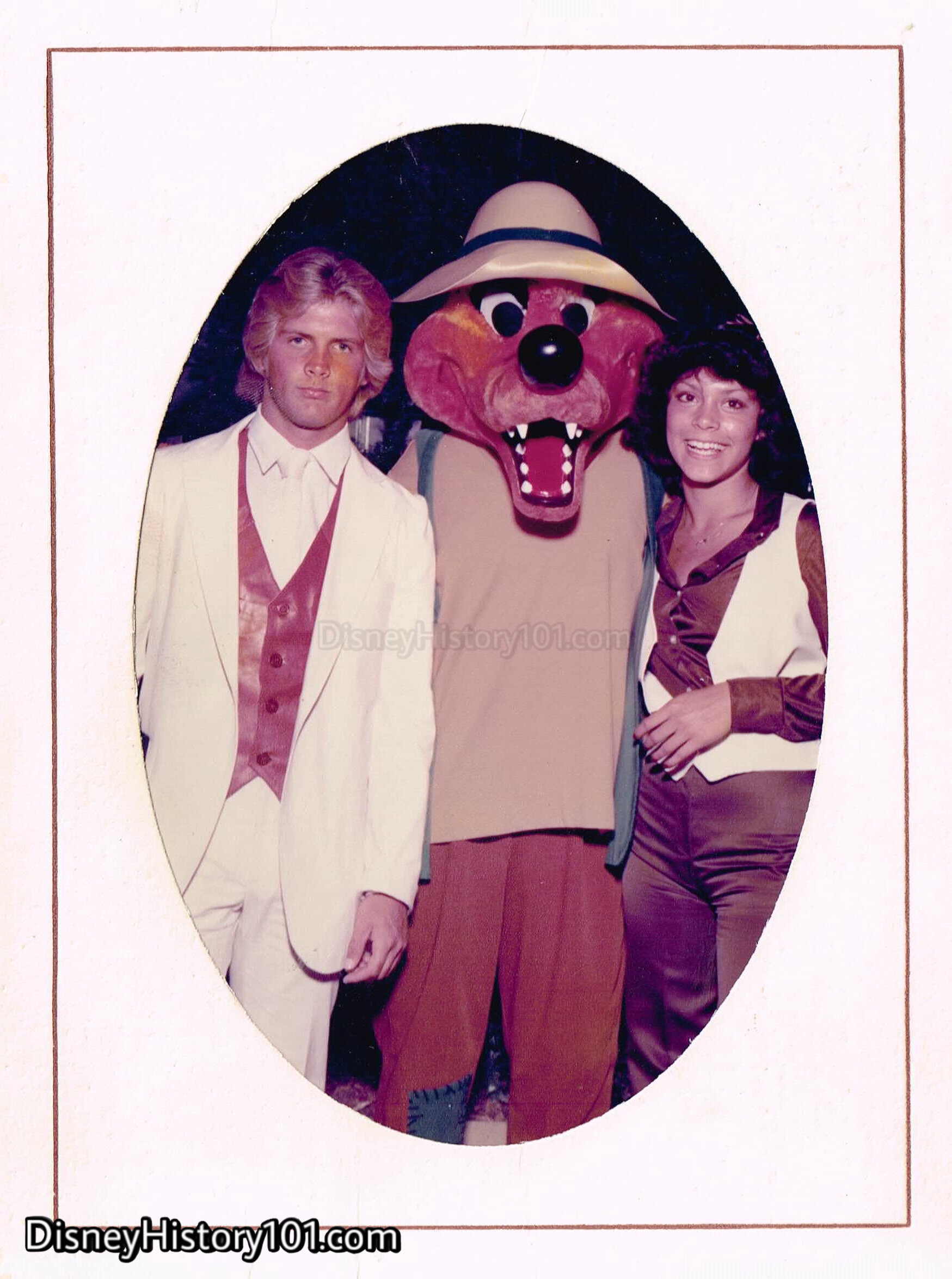
![“It [certainly] takes people” , and The Disneyland Line (June 22, 1978) showed gratitude for the individuals that made the last Grad Nite for 1978 happen. Underneath a cover photo of two sleepy-looking Cast Members, the headline read : “everyone c](https://images.squarespace-cdn.com/content/v1/5b3d7f804eddec6e826be0c9/1609967644103-38YK0T02KLD4PSYSVI8K/FB7028B1-A986-400E-9AF4-3CC8306480E9.jpeg)
“It [certainly] takes people”, and The Disneyland Line (June 22, 1978) showed gratitude for the individuals that made the last Grad Nite for 1978 happen. Underneath a cover photo of two sleepy-looking Cast Members, the headline read : “everyone can finally get some sleep. Cast Members deserve a special thanks for staying awake to make Grad Nite ‘78 a success.”
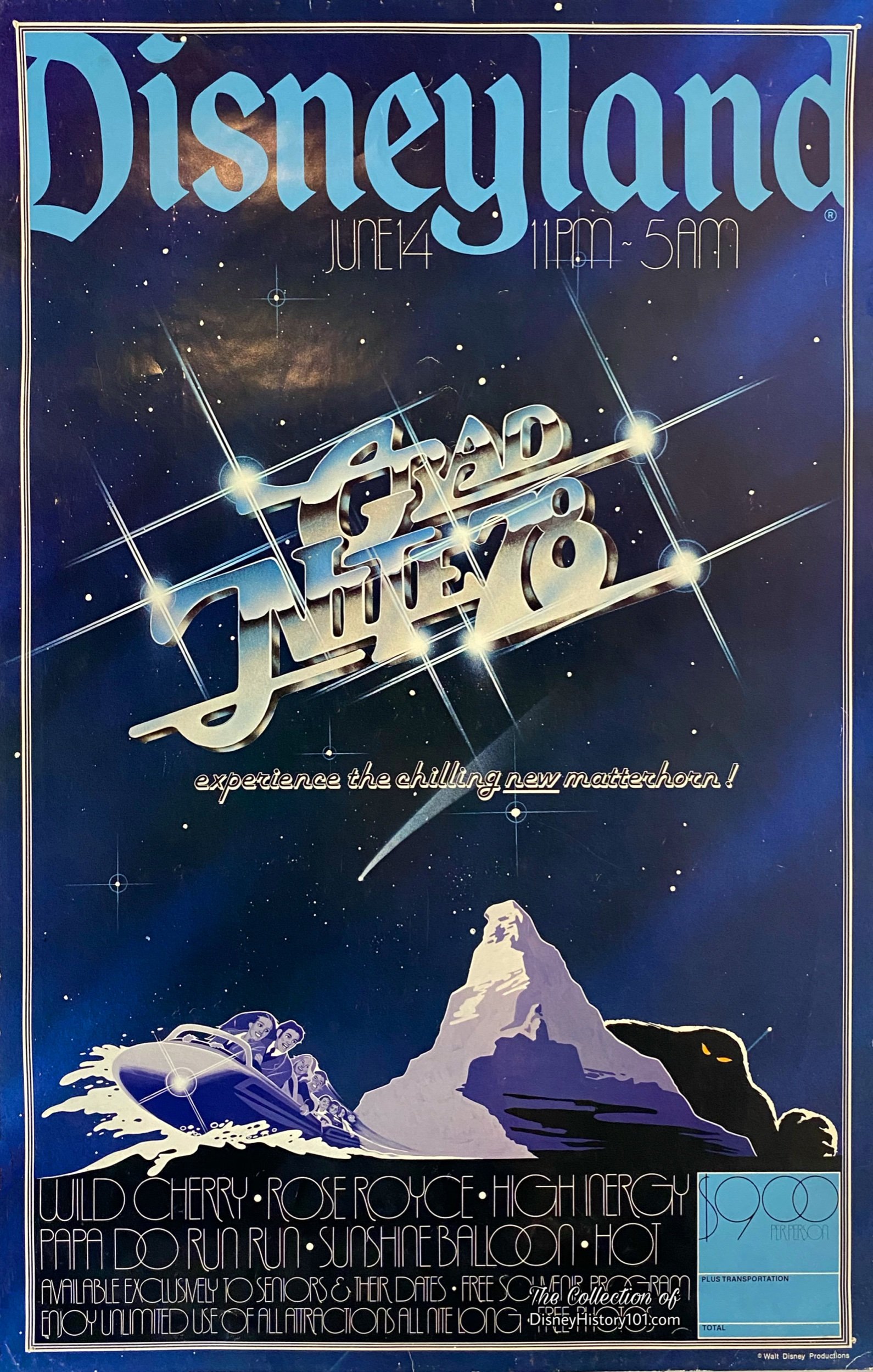
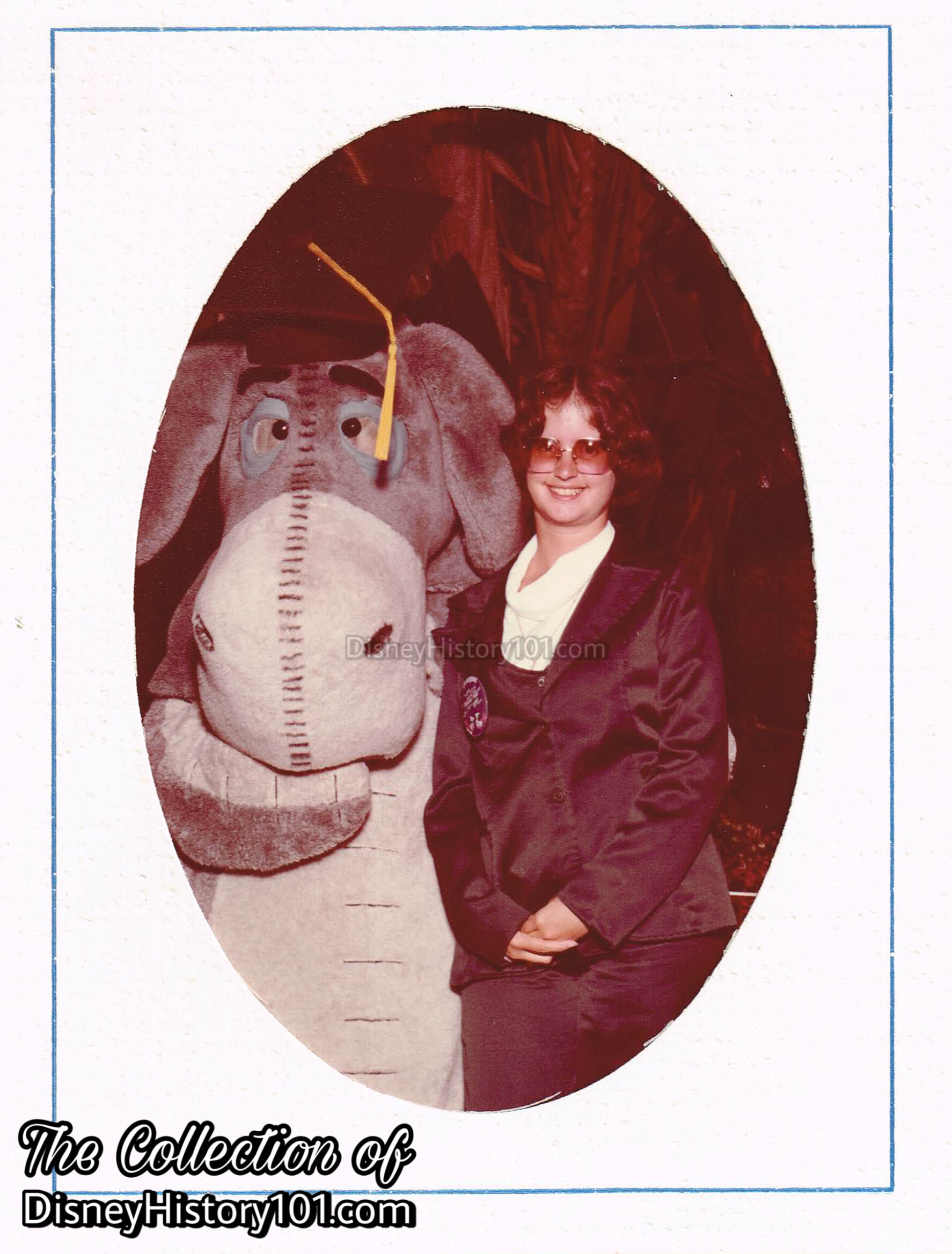
During the late 1970’s, Senior Sales Representative Jane Weber (who joined Group Services in 1976) was responsible for arranging Disneyland Grad Nite parties! How was a Grad Nite Party “sold” to school representatives during this era? “A final meeting with school representatives is held in the early spring here at Disneyland and in San Jose. A basic outline of the party, a slide show and an in-house band performance are presented at this time along with distribution of tickets and promotional materials”, according to Disneyland LINE magazine (published March 8, 1979). There were a total of 58 schools (on Wednesday, June 11th, 1979), and a total of 73 schools (on June 8th, 1979) that attended Grad Nite ‘79 at Disneyland, finding that “It’s electric!” The “night to remember” included entertainment provided by Rose Royce and The Glass Family (on the River Stage), First Choice and The Raes (on the Space Stage), Arpeggio and Sunshine Balloon (on the Tomorrowland Terrace), Papa Doo Run Run (at the Plaza Gardens), The Bill Martinez Disco Show (on The Golden Horseshoe Stage), the Polynesian Revue (at Tahitian Terrace), and the Coke Corner Pianist (at the Coca-Cola Corner)!
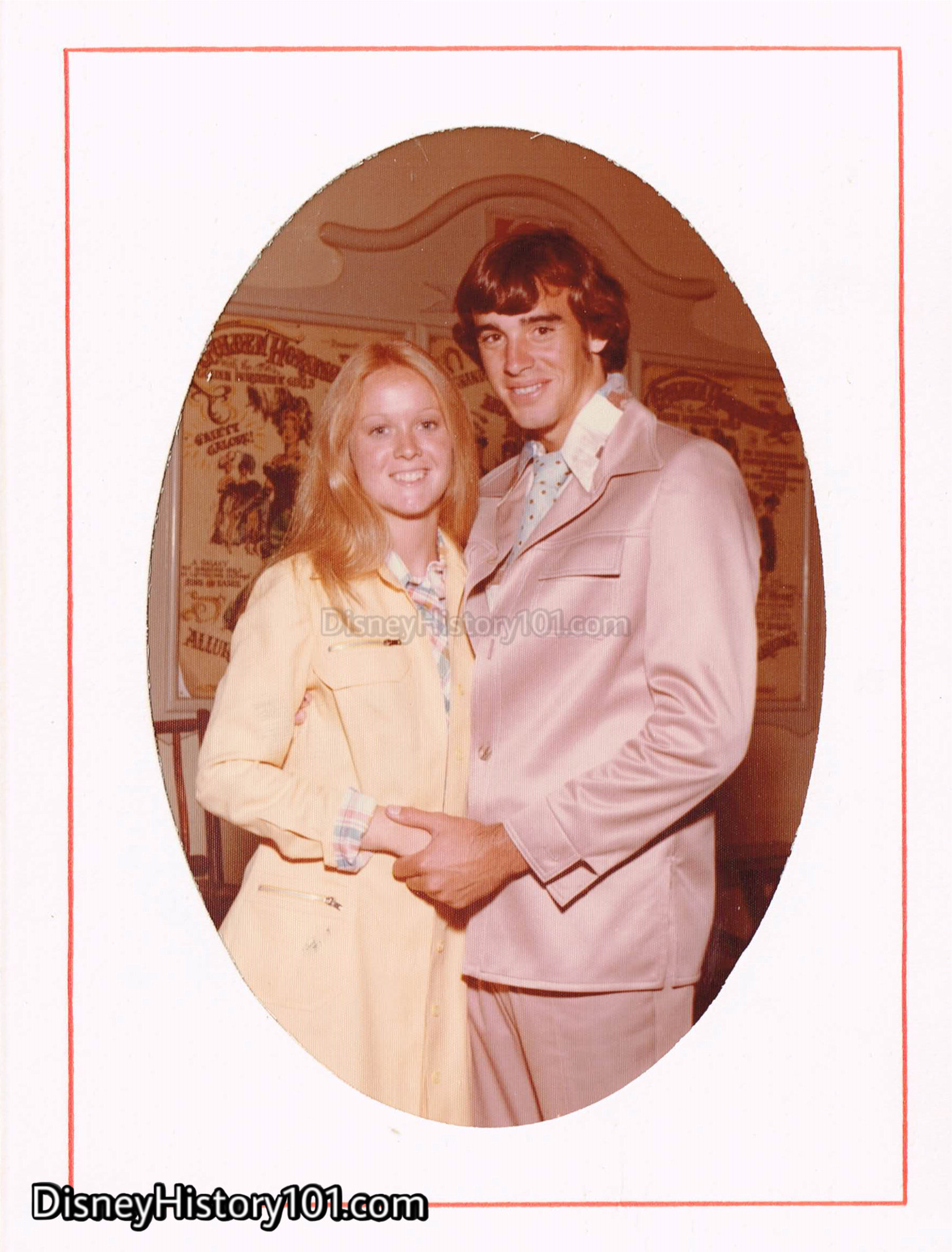
Kool & The Gang, Shalamar, Papa Doo Run Run, Montezuma’s Revenge, Tierra, Seawind, Fantasy, and Sunshine Balloon put Grad Nite ‘81“In a class by itself?” Forty-two schools attended June 19th, 1981!
These included Agoura High School, Alhambra High School, Phineas Banning High School, Bell High School, Belmont High School, Birch High School, Calabasas High School, Carson High School, Cerritos High School, Cleveland High School, El Camino Real High School, El Monte High School, Fontana High School, Benjamin Franklin High School, James A. Garfield High School, John Glenn High School, Alexander Hamilton High School, Huntington Park Adult School, John Burroughs High School, David Starr Jordan High School, John F. Kennedy High School, Le Grand High School, Locke Senior High School, Maranatha High School, Monrovia High School, Morningside High School, Mountain View High School, Nathaniel Narbonne High School, North Hollywood High School, Theodore Roosevelt High School, Rosemead High School, John A. Rowland High School, San Fernando Valley Christian High School, San Leandro High School, Santana High School, George Miller Schurr High School, Sylmar High School, Trouble Free Ed School, University High School (L.A.), West High School, Westchester High School, and Woodrow Wilson High School.
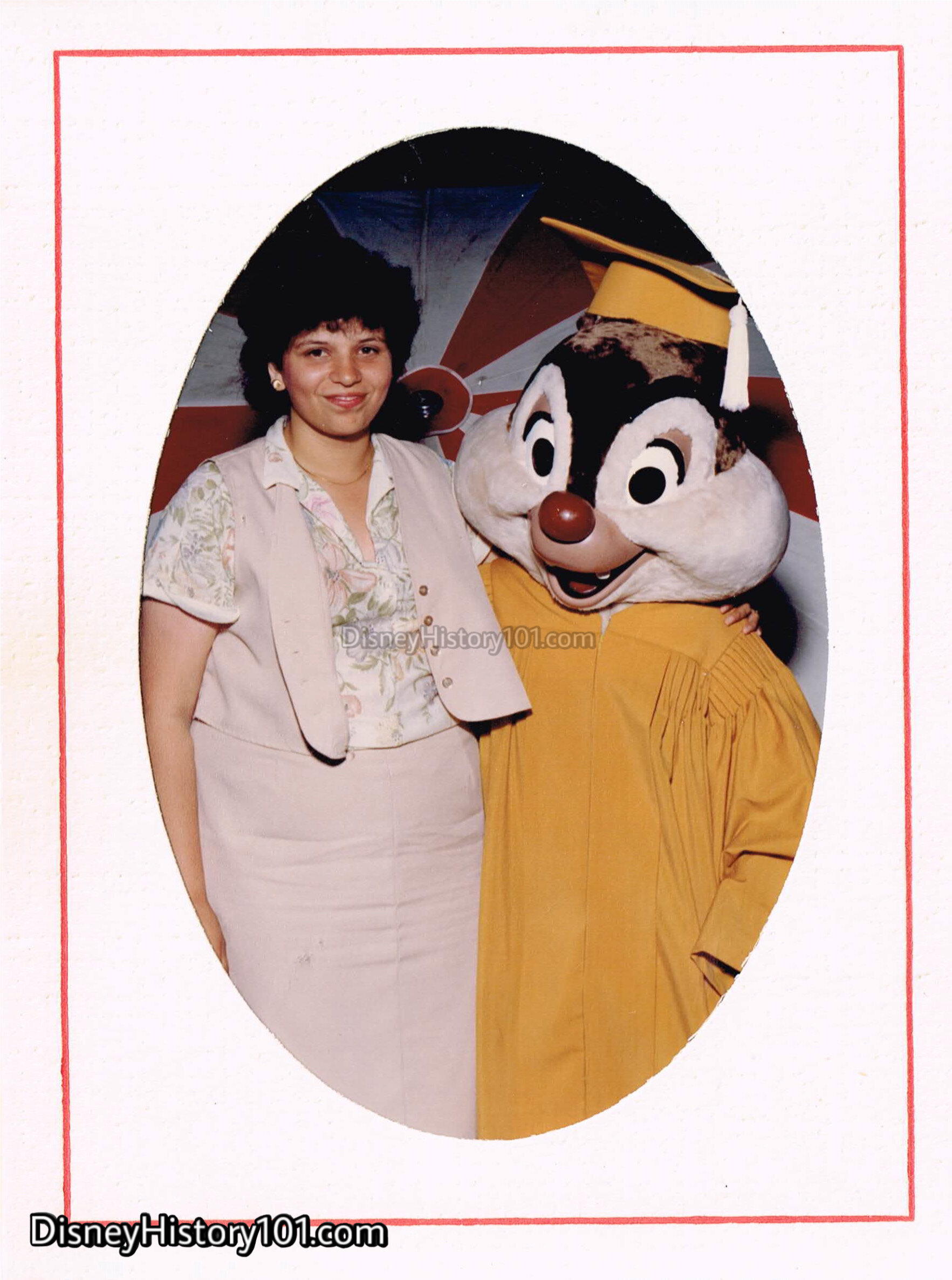
Do you remember those adorable Winnie the Pooh stuffed Grad Nite souvenirs?
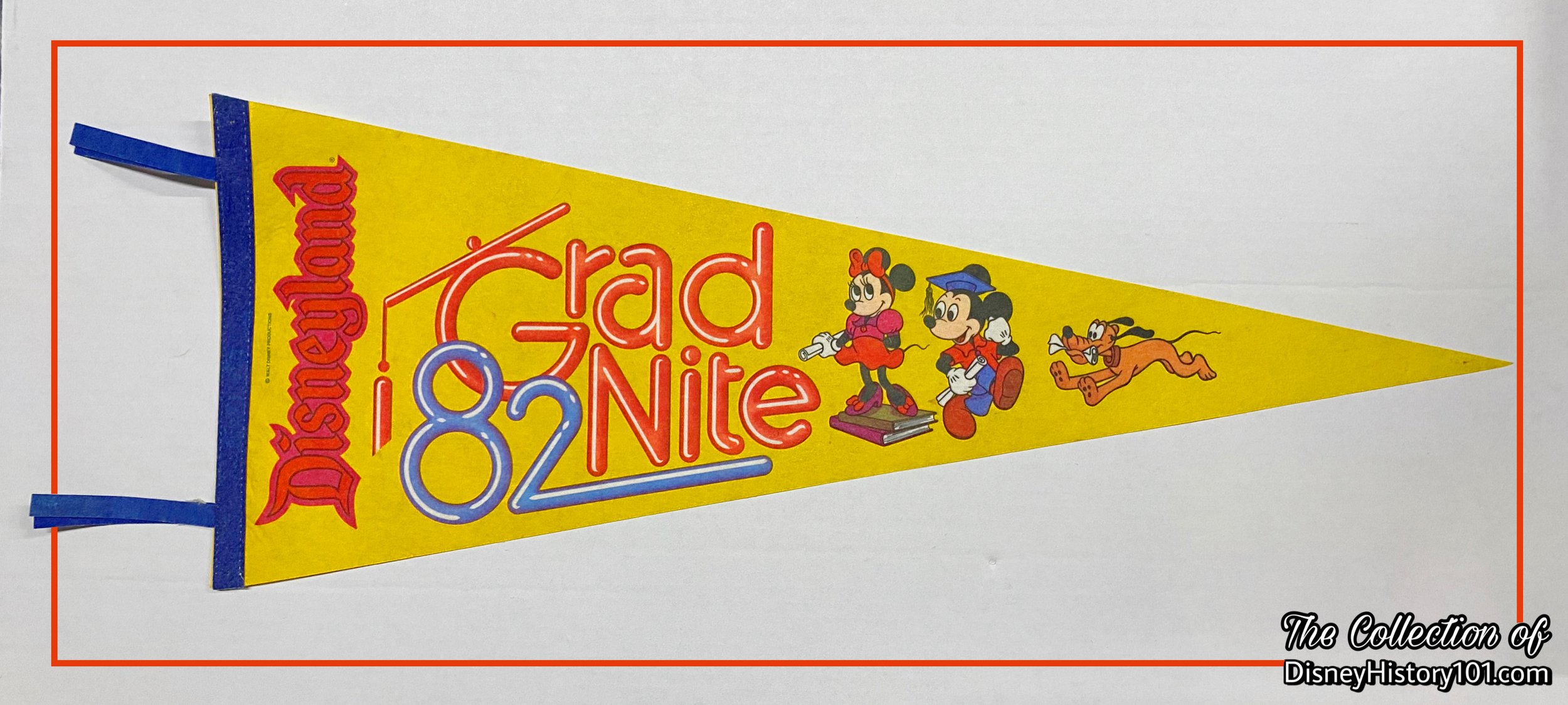
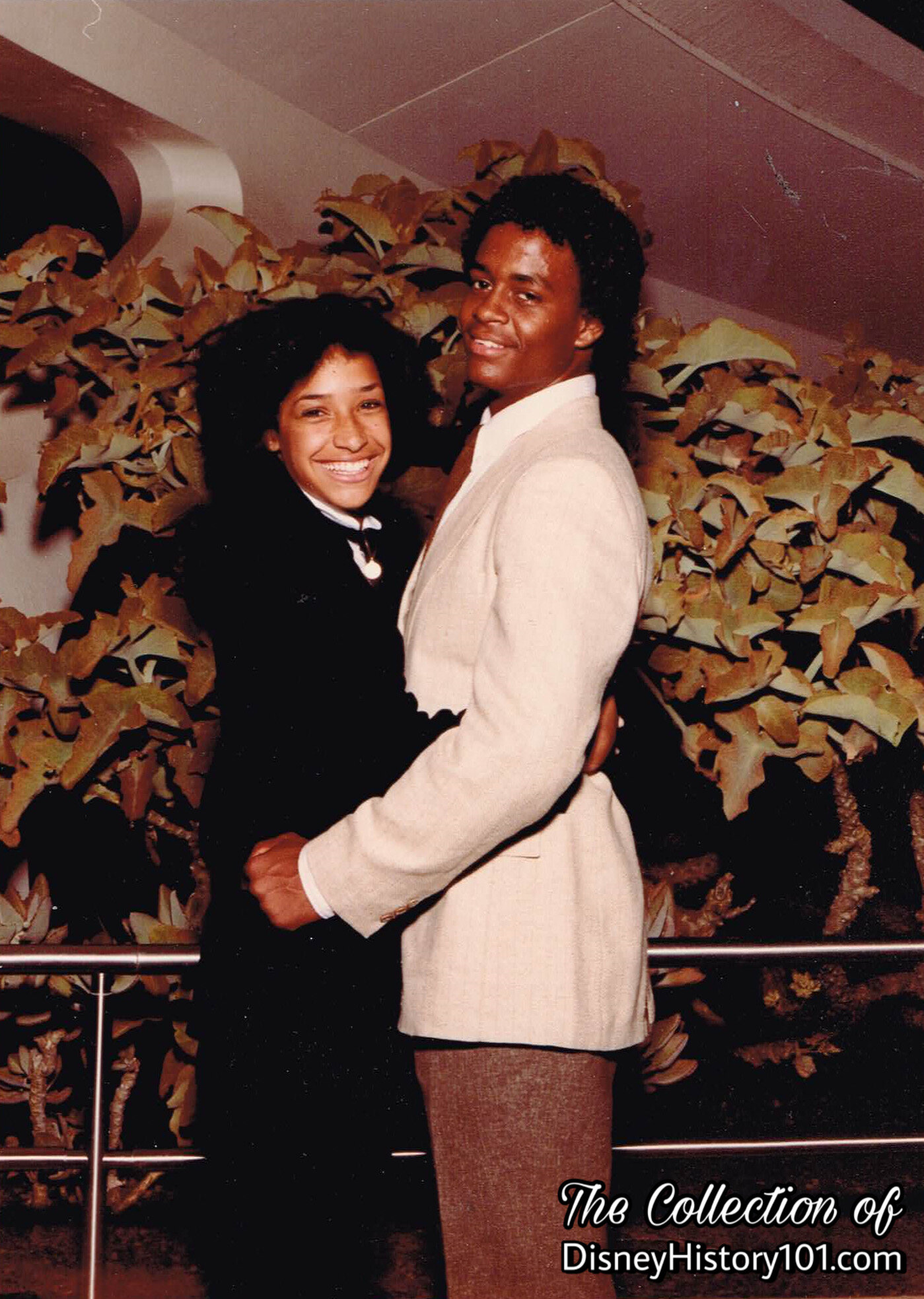
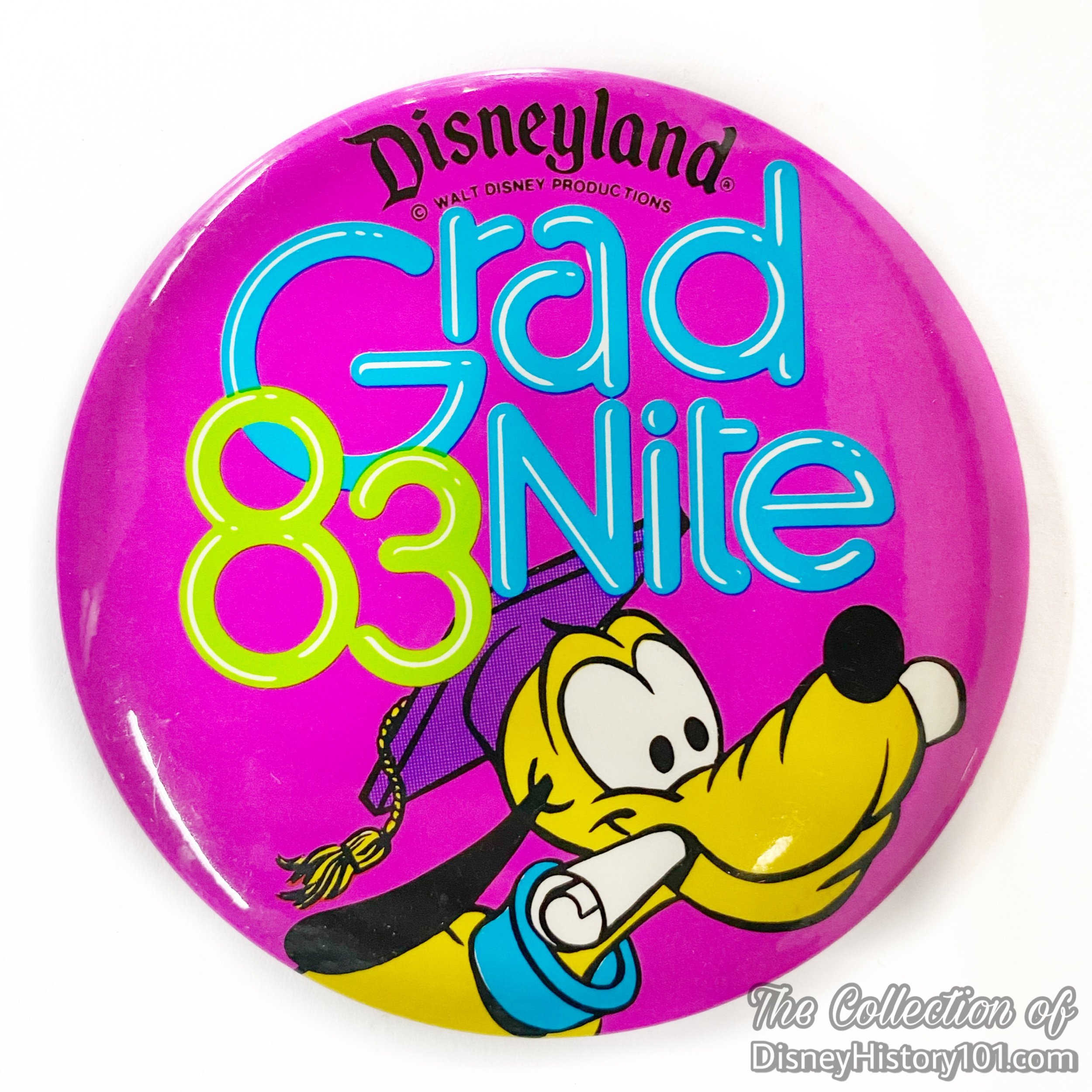
By 1985, Disneyland (since Grad Nite of 1961) had hosted 2,351,185 grads from 13,509 senior classes, through 159 all-nite Grad Parties.
During 1987, eight Grad Nite Parties were attended by seniors and their dates from 1,022 high schools, totalling more than 130,000 participants. Schools from 13 states and Mexico were represented. The figure brought the 27th year Grad Nite totals to 2.7 million students during 175 all-night parties.
Four years later (in 1989), the 29th Grad Nite brought 2.9 million students - seniors and their dates - (from 1,002 schools; from 16 states and Mexico) during 192 all-night parties.
In 1996, Marty Sklar (Walt Disney Imagineering President) commented on the Grad Nite program: “Grad Night is an effort by parents to provide a safe and sober on-site celebration for all of the graduating high school seniors. Our goals are to entertain the seniors in a fashion unparalleled by anything they have experienced, provide them an evening to share with just their class, and send them away from high school with a positive feeling. All this while keeping them sober and safe.”
“Admission Thru the Years” - The Admission Price Generally Included Admission to Disneyland, unlimited use of all rides and attractions (disclosing shooting galleries and arcades), and entertainment and dancing!
1961 : $6.00
1963 : $6.00
1965 : $7.00
1966 : $7.00
1967 : $8.00
1969 : $9.00
1971 : $9.00
1972 : $9.00
1973 : $9.00
1975 : $9.00
1976 : $9.00
1979 : $10.00
1981 : $11.00
1982 : $11.00
1984 : $12.00
1985 : $14.00
1986 : $16.00
1993 : $28.75
1998 : $45.00
2020 : $92.00
So, perhaps you decided to order reprints of your photographs. Maybe you, your parents, your girlfriend, or your boyfriend wanted a reprint of your Grad Nite Photo. They could be ordered by completing this form and mailing it (with full payment) in the envelope provided.
Photographs generally arrived in manila-colored envelopes with Disneyland mailing stickers on them.
Grad Nite at Disneyland is still a Private Party featuring Disney Enterprises, Inc. products like merchandise and entertainment specifically designed for graduating high school seniors.
GUIDES, GUIDED TOURS & AMBASSADORS
Good morning (or afternoon) . . . I’m Disney History 101 - Field Guide Beth, and today, I’ll be your personal guide for a very special tour of the lore, and behind-the-scenes story of Disneyland Guided Tours! While I cannot hear any of your questions, I will do my best to answer common inquires raised about each of our stops (or, “stations”). Along our tour today, we’ll explore the history of the Disneyland Guided Tour Program, take a look at the changing fashion of Disneyland Hosts and Hostesses, and examine the history of Disneyland Ambassadors to the World before ending our tour with a stroll through the original Disneyland Tour Gardens! “Please, step this way” as our tour will now begin.
“Why Guided Tours Are Needed”
“Since the beginning of mankind, the fable-tellers have not only given us entertainment but a kind of wisdom, humor, and understanding that, like all true art, remains imperishable through the ages.” - Walt Disney
The popular Disneyland Guided Tour has always been especially recommended for “first time guests” or “limited-time visitors”. The reason is that “first-time guests” generally want to see everything, and make every minute of their visit count. Some guests visit Disneyland from near and far - from other states, and at times other countries, and perhaps may never be able to visit Walt Disney’s Magic Kingdom again in their lifetime. So, along the Disneyland Guided Tour, these special guests are taken on an exciting tour of “Disneylandmarks”, lead by a charming Disneyland Tour Guide who tells the fascinating story of the Magic Kingdom’s history and growth. The “safari through the unique lands of the Magic Kingdom” included the “sidelights of Disneyland as well as the highlights”! Whether you have been a first-time guest or a returning guest, you may have enjoyed a “personally guided tour of Disneyland” in the past. Now, I invite you to please step this way was we explore an abridged historical tour of what has been heralded as “A Wonderful Way to Explore Disneyland” - the Disneyland Guided Tour!
“‘Kings and Commoners’ Enjoy Disneyland Before Guided Tours”
Even before the Disneyland Show debuted to the public, every Guest received the V.I.P. treatment. Members of the press were often invited to visit Disneyland as a “sidewalk inspector” of the greatest construction show on earth (even before there were any sidewalks), in order to divulge the sights in store for readers of news journals and periodicals. Many of these members of the press (like Bob Thomas of Associated Press) were personally given tours by Walt Disney. For example, toward the beginning of her article “Walt’s Wonderland” (published July 10th, 1955), Florabel Muir mentioned, “I’ve just taken a tour of this unique, $17,000,000 wonderland that Disney beamingly refers to as ‘160 acres of happiness.’ My guide was the boss himself. Like a kid who’s got the toy he’s always wanted, 53-year-old Walt bubbled with boyish pride and excitement as he ushered me into his brand new world of make believe.”
When Disneyland first opened in 1955, the tradition of V.I.P. treatment of all Guests officially began, as “attendants and guides” would “clear certain areas of Disneyland in preparation for… ceremonies,” and directed members of the International Press to these areas. Subsequently, Walt Disney still personally (occasionally) took the lead in both caring for and responsibility of touring some VIP Guests around Disneyland. During Disneyland’s first fabulous decade, you may have seen Walt Disney personally set time aside to show his magic kingdom to such guests of note, as King Mohammed V of Morocco (1957), Richard Nixon and his family (1959), Prime Minister Jawaharlal Nehru of India (1961), the Shah of Iran and Empress Farah (1962), and many, many, others. Some V.I.P. Guests were family friends. Kay Malins (who once served as a Disneyland Guide) recollects how Walt and Lillian personally invited both of her parents (Rush & Inez Johnson of Marceline Missouri) to Disneyland, and spent the day touring them around his “Magic Kingdom.” It is clear, that since the beginning, whether you were “the President of the United States, the Shah of Iran, or the family from Dubuque, Iowa,” exploring Disneyland at the side of an official (and knowledgeable) Disneyland Guide has always been considered “a wonderful way to enjoy Disneyland”!
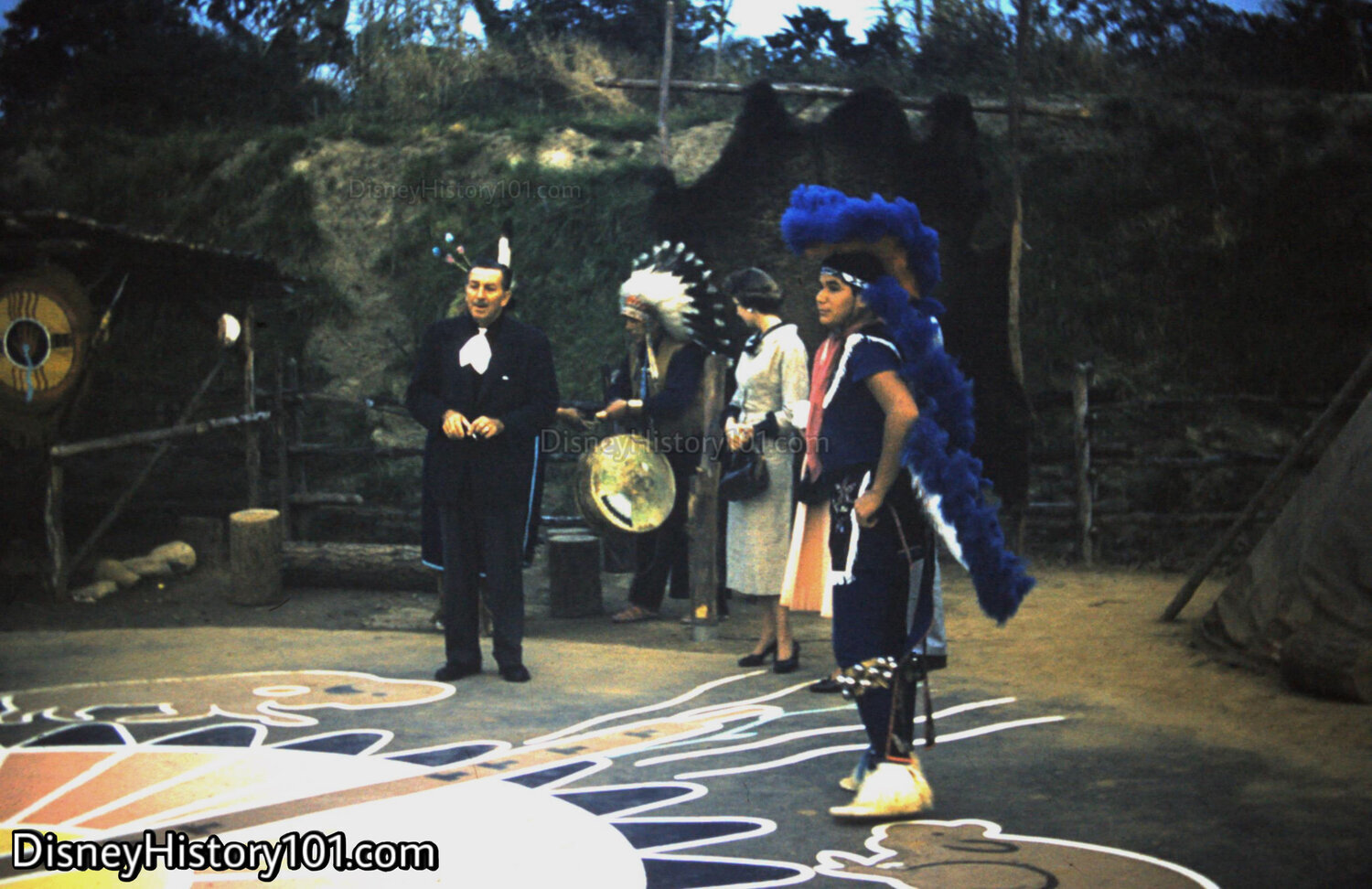
Pictured above, we see Walt Disney filling the role of Disneyland Tour Guide for (Mumbai) India-born actress Merle Oberon (pictured) and her guests Lord and Lady Dalkeith (outside of the scene)! Among other attractions, Walt was especially excited to show off Adventureland’s Indian Village to his guests! Below Walt and Lillian present Belgian King Baudouin with a memento (the official Disneyland flag) after personally touring him around "some of the more familiar rides" of the Magic Kingdom.
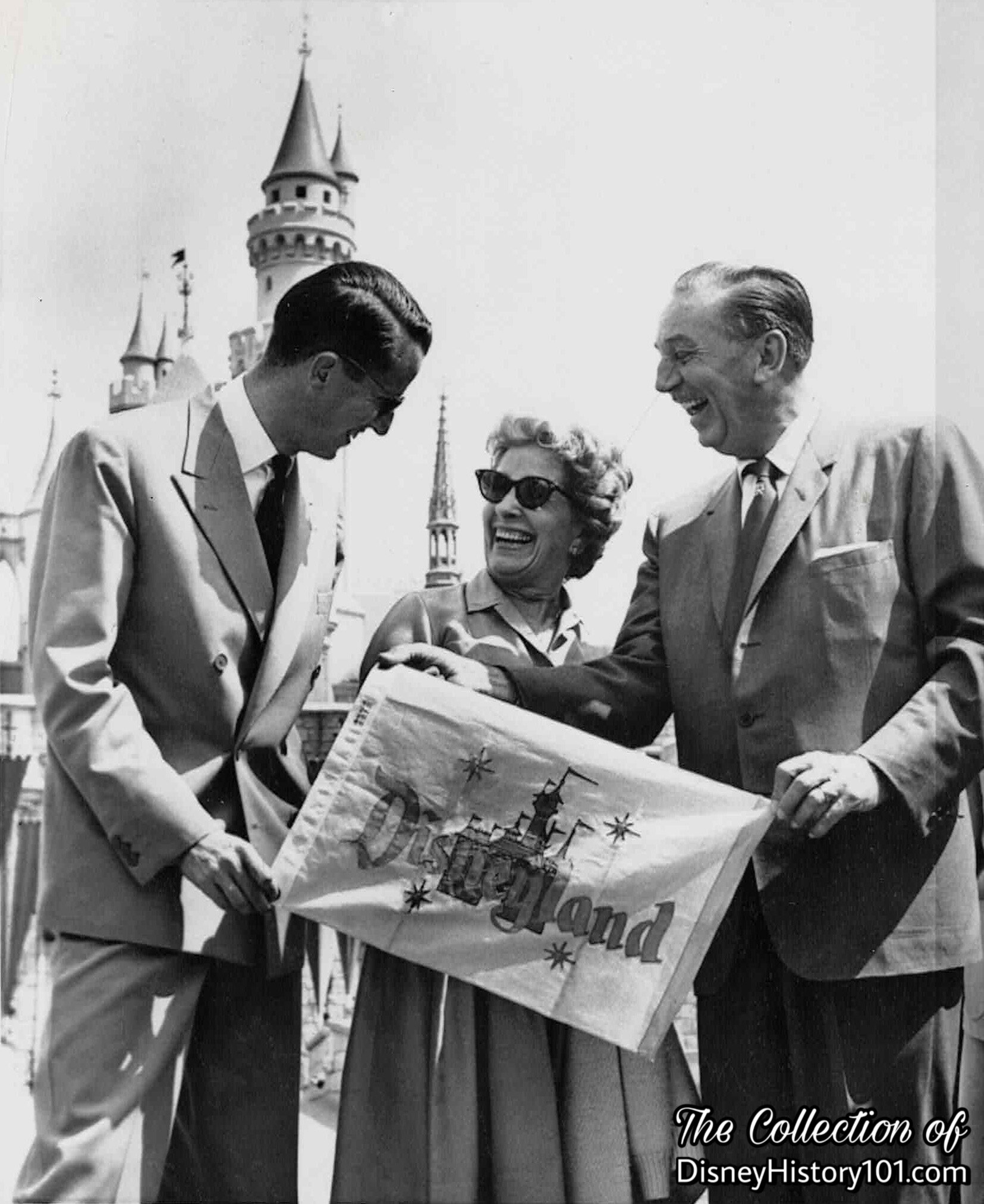
Now as time marched on, Walt became increasingly busy with many projects, and it wasn’t possible to personally give tours (like the one pictured) to all his VIP guests. In addition, ordinary Guests of Disneyland generally wanted to see everything, and make every minute of their visit count. Despite Disneyland’s revolutionary “hub and spoke” design, some guests may have (at times) felt a little lost while visiting the vast acreage of Walt Disney’s Magic Kingdom for the first time. Though Guide Books (which were printed as early as 1955) included “the maximum amount of information in a limited space which was available”, and Disneylanders (like the old-fashioned policemen) were “always available to answer Guest’s questions on a specific subject”, it is clear that Guests still needed assistance navigating and becoming familiar with Walt’s Park.
Even before Disneyland opened, the idea of a Disneyland Tour Guide was approached in an unlikely source - licensed merchandise. As early as 1955, the "Walt Disney's Disneyland Fun Box" by Whitman contained both a Game Board and a Card Game, featured several references to a Disneyland Guided Tour. The souvenir (sold from 1955-1965), predated the Disneyland Guided Tour Program by three years, and was still being sold by the Tencennial Celebration.
Of particular interest is one early “Donald Duck in Disneyland” Dell Giant Comic (first published in 1954) depicting Mickey Mouse, Donald Duck and friends meeting with a male Disneyland Tour Guide (years before the Disneyland Guided Tour Program came into existence).
It appears that Walt Disney was preoccupied, so he asked a Disneyland Tour Guide to show the gang around! As a sidelight, this seems to be the very same Tour Guide that makes an appearance on the cover of Walt Disney’s Fantasyland Game (manufactured by Parker Brothers in 1955). Anyhow, in this publication, the Guided Tour of Disneyland naturally begins in Town Square.
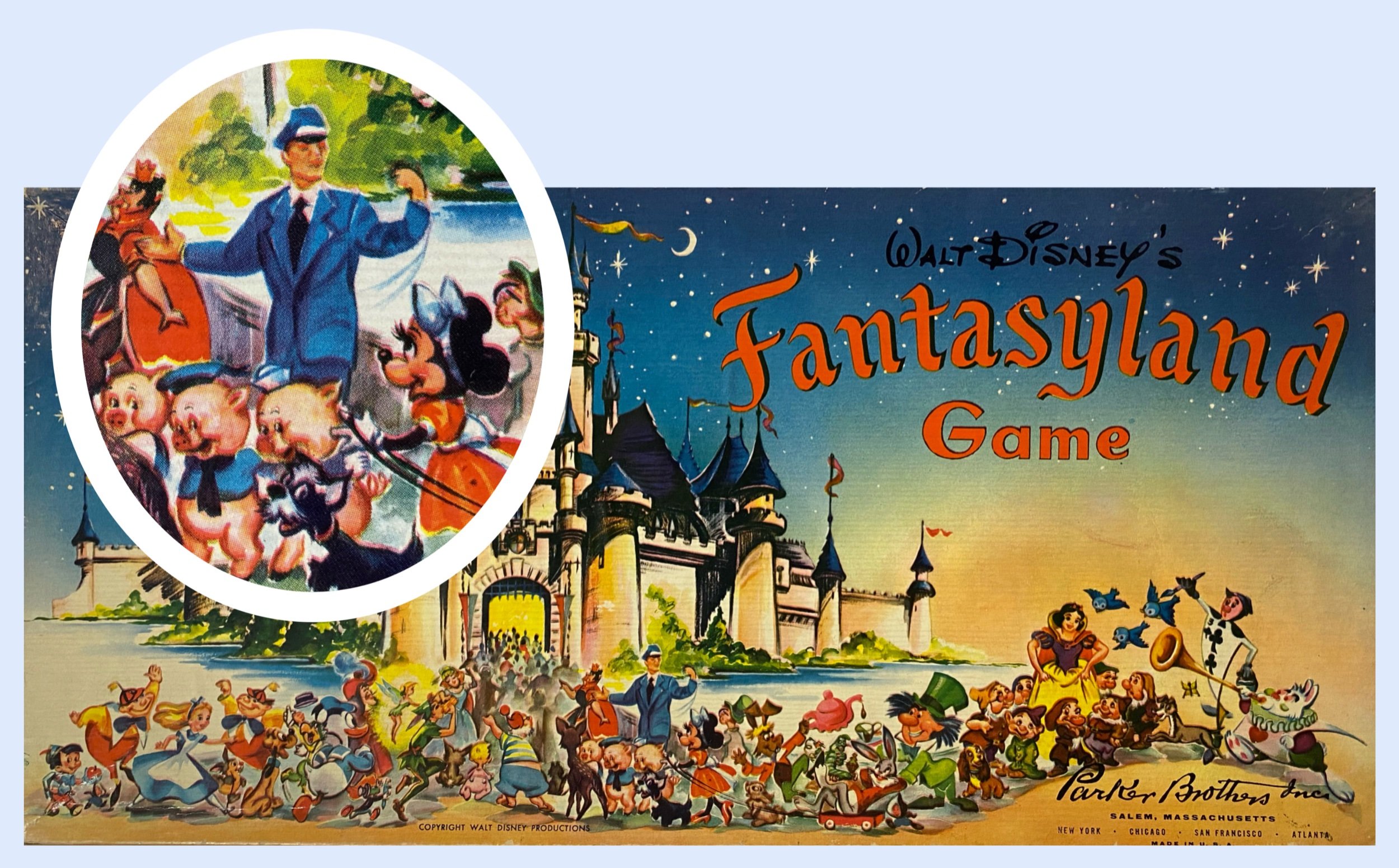
In response to guest’s needs, a program was started, which made possible “numerous special privileges, including guided tours of the park, reserved eating facilities at one of Disneyland’s fine restaurants, a group reservation for the Golden Horseshoe Show, a welcoming banner on Main Street and a special welcoming Concert by the Disneyland Band,”(according to The Disneyland News, Vol.1 ; No.8, page 3, published February 10, 1956). I would like to redirect your attention to the fact that a Guided Tour of the Park was offered to groups as early as spring-summer of 1956. The same publication elaborates : “All parties are met by a member of the Guest Relations staff at the Main Gate upon their arrival. They are then guided into Town Square, where an orientation and official welcome to Disneyland are given. Many times a conducted tour of the Park is prearranged. Normally the staff member will meet the group again at lunch or dinner to assist in any possible way.”
A few months later (by August of 1956), many “school groups and children’s groups” took advantage of this provision through the Disneyland Youth Services Department Lead by “Dorothy Mannes”, while the national and local “Convention and Industry Groups” were scheduled with the help of C.L. Blackburn. An article entitled “Customer Relations Department Provides Tour Services” ran in “The Disneyland News” (Vol.2, No.2 ; August, 1956 ; page 2). As you read the following excerpt, documenting this pivotal point in “Tour Service” history, note the terms “host service” and “guided tour” :
“The planned tour, a longtime favorite with travelers, is an increasingly popular way of visiting Disneyland… Advantages of planning a scheduled tour through the Park’s Customer Relations Department are many, Administrative details such as parking, ticket purchase, food service are taken care of and host service with guided tour is provided.”
This (of course) was a stepping stone to something much grander, and what would be heralded “a wonderful way to enjoy Disneyland” was soon in the works (within two years, that is)! For now, this Guided Tour of Disneyland would accomplish a specific need of visitors, all through the proven diplomatic and service-oriented leaders and otherwise valuable people of Disneyland!

Customer Relations Division polls and interviews would support “research and analysis to develop new ways and means to solidify Disneyland’s position as the number one tourist attraction I the nation.” The sum of these polls and interviews would reveal something very important about Disneyland guests! According to the article “The Disneyland Tour Guide Story” :
“Our continuing research indicated that there were many guests who were interested in having a guide to introduce them to our giant [then 70-acre] Disneyland stage. We found that these guests fell into several different groups : those suffering from freeway fright,…those who feel lost, …those from foreign lands, …those who don’t want to miss anything, …older people, …those in a hurry, …large families, …habitual tour takers.” Of these, about 53% were visitors who resided in California, while about 47% were visitors from “out-of-state”, by 1958, according to “Disneyland U.S.A.” (published 1958).
After a little investigation, Walt found that Cicely Rigdon was taking the time to help Guests plan their day, suggesting attractions and entertainment. Walt recruited Cicely to help create a team. With guests’ interests in mind, conference sessions were held (c. September of 1958) in the “Disney Room” of the Red Wagon Inn, and (under the direction of Tommy Walker) work began on offering a Guided Tour service. The earliest versions of Disneyland Guided Tour instructions would provide Hostesses with points of interest, as they lead their groups along the tour route (and its “stations”) through Walt Disney’s Magic Kingdom. These were drafted during the Fall of 1958 (c. September/October). In addition to Tommy Walker, several other individuals were involved, including :
Ruth Boehike, Bud Coulson, Ron D’Arcy, Van France, Carla Gammon, Pete Henderson, Evelyn Heupel, Larry Hutcheson, Donna Jackson, Bep Jones, Derry Kempf, John Killefer, Pat Kimbell, Pat Mc Cormick (who would serve as one of Disneyland’s original Guides, and later as Crane Bathroom of the Future Exhibit Manager) was involved in some capacity, Jack McDonald, Monty McGill, Ben Ohre, Mike Pickering, Jack Sayers (Executive Policy and Planning Committee Member ; Park Management Chairman ; Director of Customer Relations and its Guest Relations), Marty Sklar, Bill Skiles, and Dave Young.
Even while these final details of the Guided Tour Script were being hammered out, an advertisement was run in Vacationland (Fall, 1958) for “a new Fall-Winter service for tourists”. The aforementioned article “The Disneyland Tour Guide Story” continues : “After an extensive training program [which by this time included both orientation classes and a tour of Backstage areas], a small pioneering group began the guided tour program in September of 1958.” Yes, even those Disneylanders who were fortunate to have experienced the Disney University Orientation program (held five months before Disneyland’s premiere opening day) would now experience a new “orientation” with some of Walt’s personal philosophies, as well as the policies which would “create happiness” for visitors through the Disneyland Guided Tour Program.
![As we will now see, the oft suggested Disneyland Guided Tour would upgrade “levels of service, quality, [and] values,” as well as meet guest’s changing needs. This would be accomplished by way of a guided tour administered by the proven diplomat](https://images.squarespace-cdn.com/content/v1/5b3d7f804eddec6e826be0c9/1607755460738-TXGKPU36JRQKCDM1U4K6/IMG_8987.jpeg)
As we will now see, the oft suggested Disneyland Guided Tour would upgrade “levels of service, quality, [and] values,” as well as meet guest’s changing needs. This would be accomplished by way of a guided tour administered by the proven diplomatic and service-oriented leaders and otherwise valuable people of Disneyland!
“ANNOUNCING! A NEW FALL-WINTER SERVICE FOR TOURISTS - DISNEYLAND’S GUIDED TOUR OF 1958”
Yes, by September 26th, 1958, preliminary drafts of the “Guided Tour Narration” were “shaping up” (this accomplished only after many Disneyland Inc., Guided Tour Conference Meetings). The drafts came to be broken down into “Stations” and related guest-focused responsibilities. Meanwhile, during the very same month (of September) Disneyland’s first Guided Tour was advertised in Vacationland magazine!
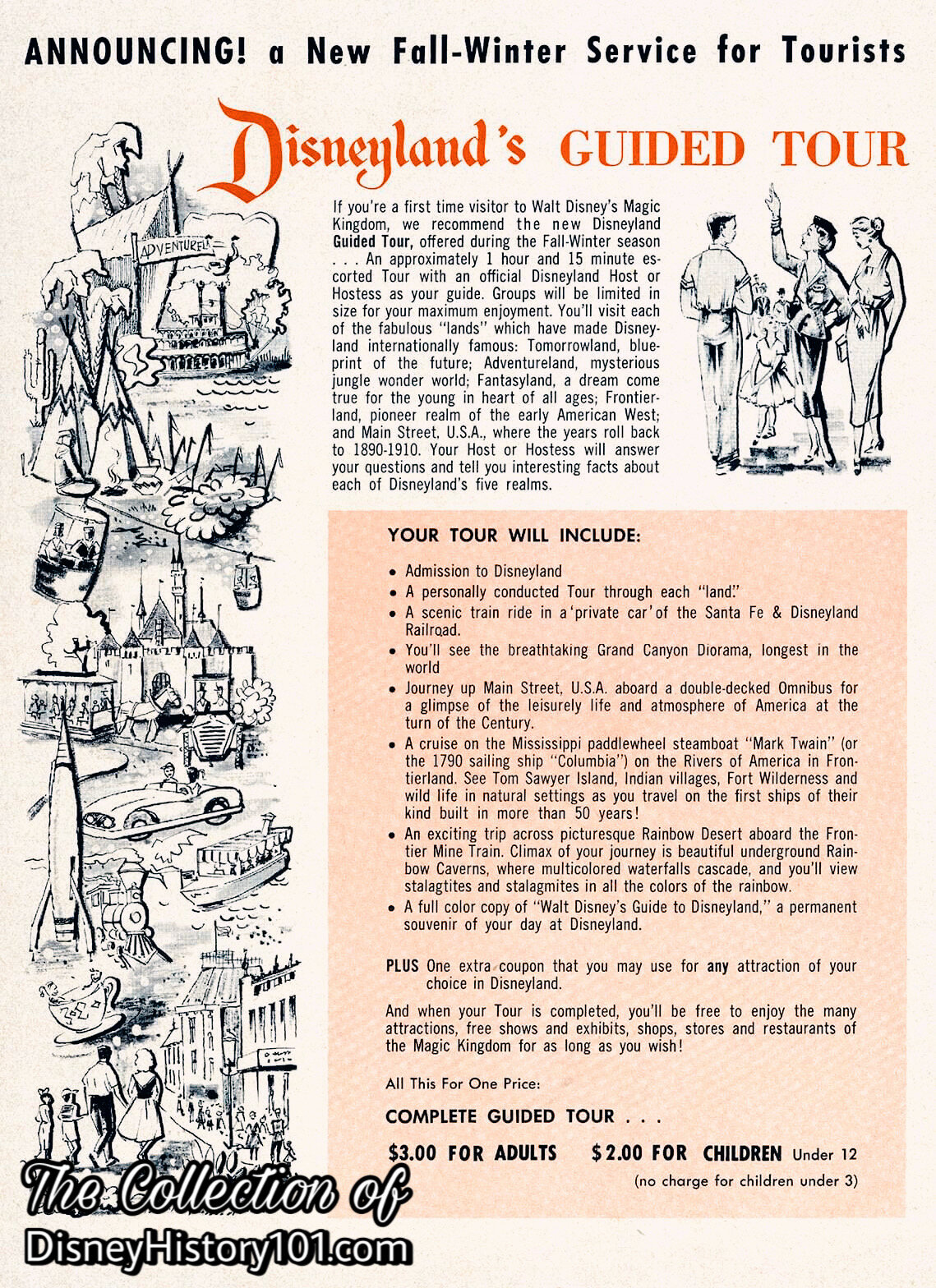
Disneyland’s Guided Tour of 1958 promised “an approximately 1 hour and 15 minute [to 1 hour and 45 minute] escorted Tour with an official Disneyland Host or Hostess as your guide.” During the tour, a Host or Hostess escorted groups of guests that were “limited in size [of approximately 25 people] for…maximum enjoyment”. Each of the famous lands was visited during the tour, including “Tomorrowland, blueprint of the future ; Adventureland, mysterious jungle wonder world ; Fantasyland, a dream come true for the young in heart of all ages ; Frontierland, pioneer realm of the early American West ; and Main Street U.S.A., where the years roll back to 1890 - 1910. Your Host or Hostess will answer your questions and tell you interesting facts about each of Disneyland’s five realms.”
The original 1958 Disneyland Guided Tour included :
•Admission to Disneyland
•A personally conducted Tour through each ‘land’.
•A scenic train ride in a ‘private car’ of the Santa Fe & Disneyland Railroad.
•You’ll see the breathtaking Grand Canyon Diorama, longest in the world.
•Journey up Main Street U.S.A. aboard a double-decked Omnibus for a glimpse of the leisurely life and atmosphere of America at the tour-of-the-Century.
•A cruise on the Mississippi paddlewheel steamboat ‘Mark Twain’ (or the 1790 sailing ship ‘Columbia’) on the Rivers of America in Frontierland. See Tom Sawyer Island, Indian Villages, Fort Wilderness, and wild life in natural settings as you travel on the first ships of their kind built in more than 50 years!
•An exciting trip across picturesque Rainbow Desert aboard the Frontier mine Train. Climax of your journey is beautiful underground Rainbow caverns, where multicolored waterfalls cascade, and you’ll view the stalagtites and stalagmites in all the colors of the rainbow.
•A full color copy of ‘Walt Disney’s Guide to Disneyland’, a permanent souvenir of your day at Disneyland.
PLUS One extra coupon that you may use for any attraction of your choice in Disneyland.
And once the Guided Tour is completed, guests had plenty of time and freedom to enjoy the many attractions, free shows and exhibits, shops, stores, and restaurants of the Magic Kingdom for as long they wished!
Even during the first year, some attractions which guests experienced during the escorted tour varied. According to Main Gate handbills published for the Fall-Winter of 1958, the tour had increased from “approximately 1 hour and 15 minutes” to an “approximate 1 hour and 45 minute” experience. By that time, the tour had come to include the “famous Jungle River Cruise in Adventureland, where life-like hippos, alligators and gorillas rule, and lush tropical plants and flowers flourish,” and a “Space Trip to the Moon in Tomorrowland.” Still, the Disneyland Guided Tour was truly a fantastic way for the “first time visitor” or the returning guest (“from more than 100 foreign ports of call”) to experience the unusual, different, and unexpected side of Disneyland, at only $3.00 for adults, and $2.00 for children ages 3 to 12!
The first group of eight Disneyland Tour Guides were “only female Guides,” (according to “Guest Relations - Exceptional Guest Service” by Rebecca Visca of Guest Relations, published in Disneyland LINE, Vol.27 ; No.35), and of particular note is Disneyland Tour Guide Carla DeVillez. Carla bears the distinction of giving the very first Disneyland Guided Tour, during September of 1958, under Tommy Walker’s direction! Her example would help mold the program for years to come, and many guides would follow in her pioneering footsteps. If you’ve ever wanted to ask Carla what it was like, her experience of leading the first Disneyland Guided Tour Group was first published in “A World of Smiles” (a publication, produced in limited quantities for the Guided Tour Program Staff of 1965).
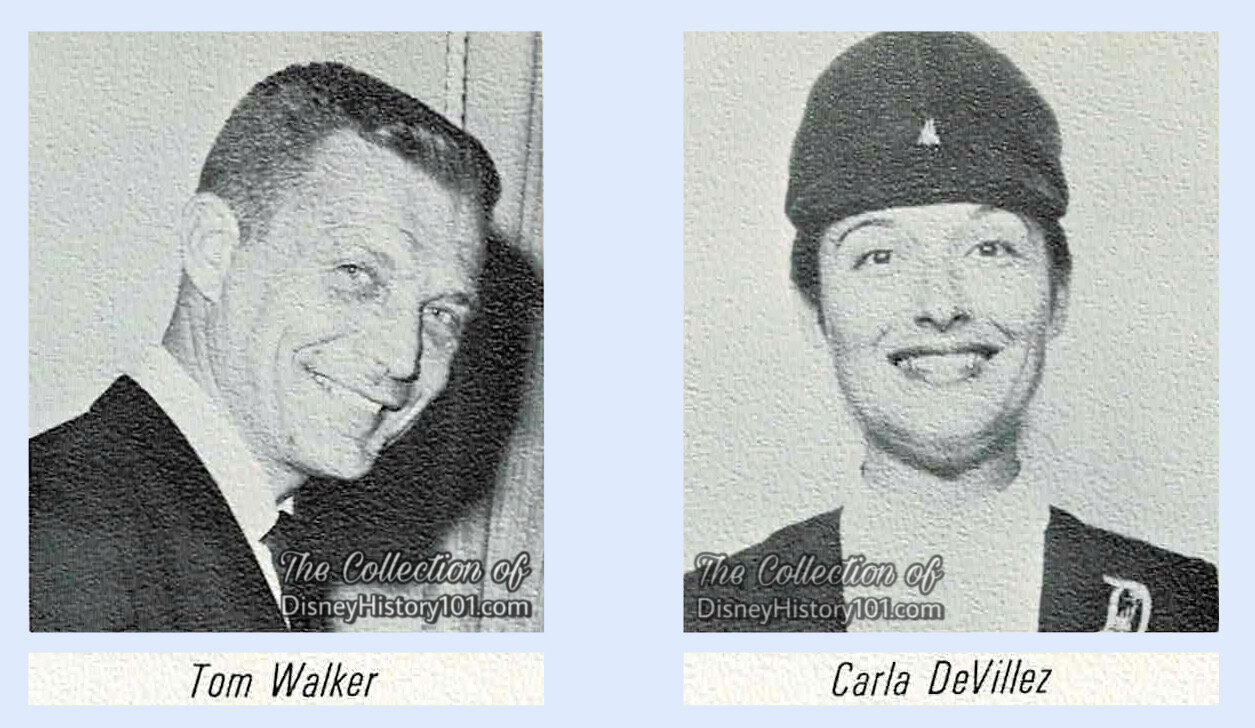
Carla shares : “In this I started my career as a Tour Guide in 1958, having been selected from the employees already working in the park. I was selling souvenirs in Guide Booth #1 when Larry Hutcheson (Hutch), asked me if I'd like to join this experimental program. It was not definite at that time whether or not there'd be a guided tour of Disneyland, but Guest Relations wanted to experiment with the possibility. There were five of us asked from various jobs in the park. Donna Partin, who you all know as #1 Hostess, Bep Jones, a ticket seller, Bill Skiles and Pete Henderson, two young comedians performing at Plaza Gardens, (better known now as Hub and Bub on the Mouse Mouse TV Show) and myself. Can you imagine Disneyland with only five guides? And boys, too!
We had meetings and meetings and meetings. We had eight weeks of training sessions. We learned about the park from stem to stern. We went out on our own and asked questions all around of the various foremen and supervisors. We had a horticultural tour. We had to ride all the rides. I remember one particularly interesting session. It was on a Monday or Tuseday when the park was closed. We all came in and Bob Reilly took us into Nature's Wonderland and we saw how the dyes were mixed with waters, we saw the various pumps on the Fantasyland side of the ride, and were instructed as to how the Caverns operated.
Then the big day arrived. Hutch said, ‘Come on, Carla, let's go out to the gate and get some guests to take the first guided tour.’ It was strictly complimentary. I was very nervous. We approached two families who consented to give it a whirl. At this time we were using a kind of megaphone, or voice gun. It wasn't loud enough in a noisy place and was too loud in a quiet place. None the less, we had a gay tour. I was, of course, anxious to show off my vast knowledge of the Magic Kingdom, so I filled those poor folks full of facts and figures. I believe the tour took a little more than 3 1/2 hours. We didn't have the Monorail or Submarine in those days, but we did take the following rides: [Santa Fe & Disneyland Railroad] Train, {Double Decked] Omnibus, Jungle [River Cruise] , Mark Twain, Alice in Wonderland (or other ride in Fantasyland, it was left up to us), and the [Rocket to the] Moon Ride. When I returned from that first tour, of course, everyone wanted to know all about it. We spent another week working out bugs and finally the tour ticket went on sale.
We planned for every possible incident in Guided Tours except one. We were drastically understaffed. That first day literally everyone took a tour. Tommy, Hutch, Secretaries, Managers, Directors, — anyone who set foot in City Hall took a guided tour. Needless to say, we grew rapidly and today we are one of the most successful departments in the entire park.”
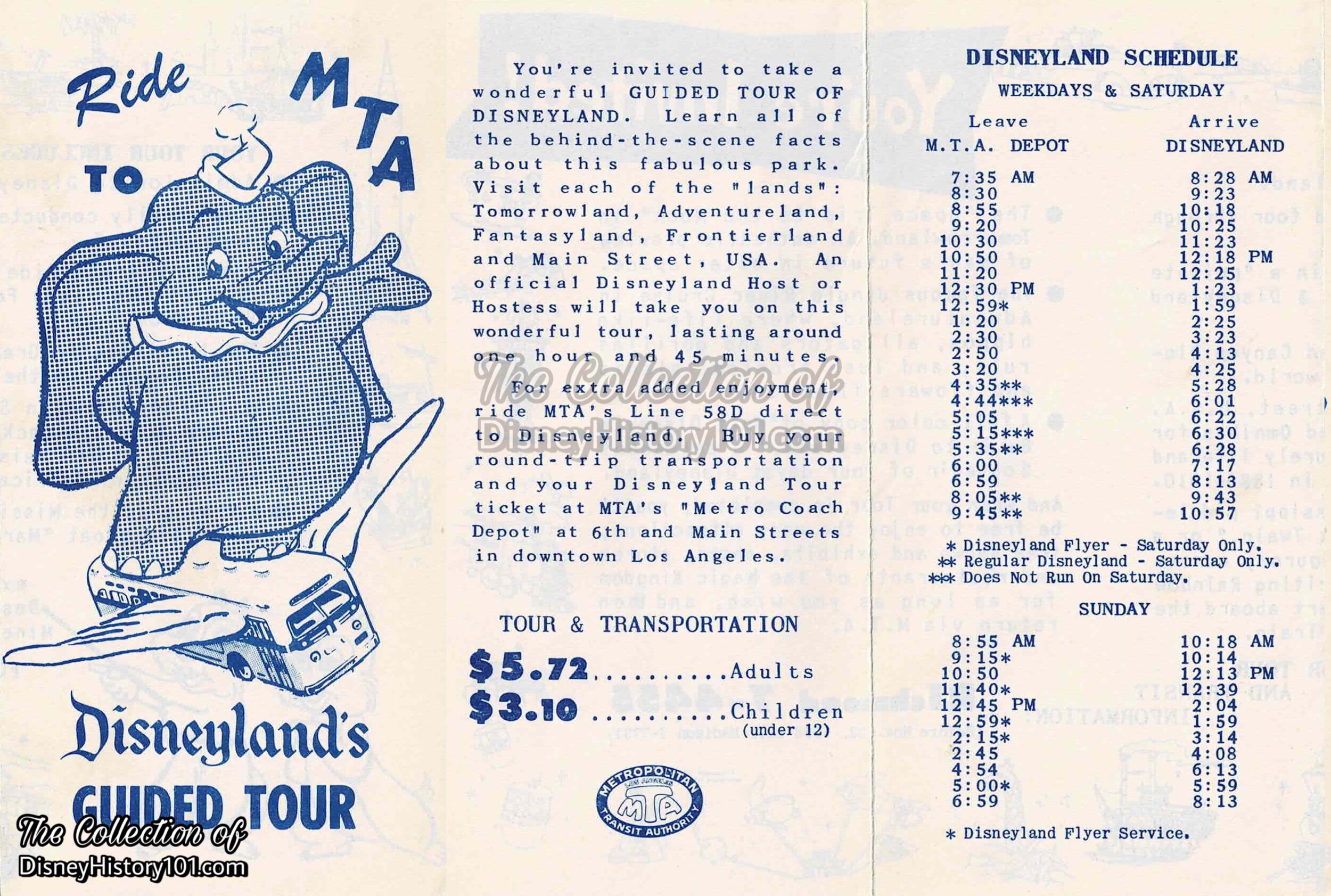
The Disneyland Guided Tour was offered in coordination with a Metro Coach Depot promotional package, to attract local Los Angeles area residents. The package included MTA’s line 58D direct to Disneyland from Los Angeles Metro Coach Depot (at 6th and Main Street). The highlight of the package was the inclusion of a wonderful one-and-a-half-hour tour of Disneyland’s five lands, lead by one of Disneyland’s Hostesses, who were ready to (according to advertisements) dispense “all the behind-the-scenes facts.” The entire package cost $5.72 for Adults, and $3.10 for Children (under 12 years old). By this same time, the most knowledgeable and informative Disneyland Guides would also learn the MTA bus schedules to Los Angeles “by heart”!
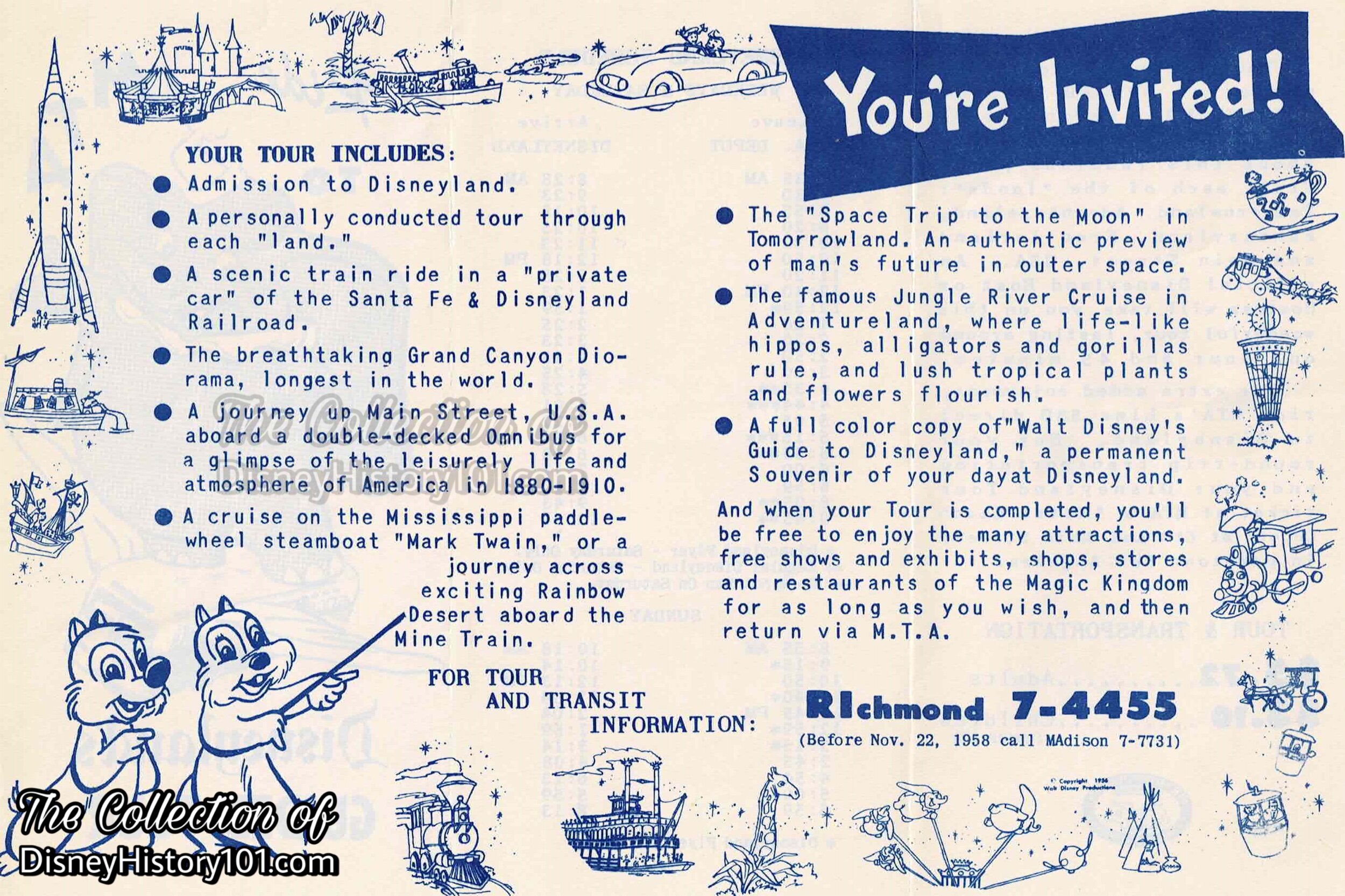
As a “sidelight”, I especially love Chip’s use of a pointer, which predates Disneyland Tour Guides’ usage of the riding crop by a couple of years.
The first Disneyland Guided Tours of 1958 (led by a group of eight Guides), were a success! According to Fall-Winter schedules published and distributed during the following year (of 1959), the Disneyland Guided Tour service had been “acclaimed for its personalized convenience by more than one-half million visitors during the Fall-Winter season last year.” Now, even “more guests [were] wanting guided tours than there were guides to serve them” (according to the article “The Tour Guide Story”). In the following months “Volunteers [seven of them] were recruited from all divisions to help fill the demand,” and what was first a “new Fall-Winter service for guests” would become “a wonderful way to enjoy Disneyland” for guests!
Soon, Vacationland (spring of 1959) divulged the success of the Guided Tour, stating: “Public Opinion Polls conducted continuously at Disneyland reveal that fully 100% of Magic Kingdom guests who have taken the Tours found them extremely interesting and informative! Comments about the Guided Tours from Disneyland guests have ranged from ‘wonderful’ to ‘thoroughly enjoyable.’ Almost unanimously, people interviewed said they would ‘highly recommend’ the Tours to their friends.”
All involved were not content to “rest on their laurels” and only a month after the first Disneyland Guided Tour debuted, the official “Guided Tour Narration” (for the duration of the 1 hour, 45 minute tour) was still in development. Scripts dated October 10th, 1958 detail the “Steps” (like “Meeting the Group and Departure” and the “Ominibus”).
At this time, Disneyland was receiving many telephone calls daily, so it was decided to establish a Public Relations Department (later referred to as Disneyland Guest Relations), under Director Jack Sayers and Assistant Director Tommy Walker). A program was formed to accommodate large groups of guests, and conventions of (200 to 5000) guests at a time. Soon (c. September of 1959) this department was staffed by new Tour Guides Anne Mae Wing and Cicely Rigdon (who was initially hired to sell tickets at the Main Entrance in 1957, and had transferred to Guest Relations, in September of 1959). The Department was now comprised of a few of the eight original Disneyland Tour Guides, and a few others (while Carla DeVillez would remain, Pat McCormick was promoted to manager of the Crane Bathroom of the Future). In fact (in September of 1959), “Cicely and Anne joined the program, along with 27 other girls and 3 boys,” according to “A World of Smiles” (published 1965). “Back then…Guest Relations was actually a combination of Entertainment and Public Relations”, according to Disneyland LINE, (January 22, 1981, Vol.13, No.3). While not leading Tour Groups, Disneyland Tour Guides would now (under the nighttime management of Bob Norie) assist with “Customer Relations” by answering telephone calls that would come into the Park.
As far as Guided Tours were concerned, what originally began as a seasonal service provided by a select few (as Tommy Walker, Donna Partin, Bep Jones, and Carla DeVillez) invited by Larry “Hutch” Hutcheson, had soon grown into a department of 32 Disneyland Tour Guides (29 females, and 3 males) - all of the Disneyland Customer Relations Department - by late 1959. Yes, in addition to all the girls (like Anita McKee), there were male Disneyland Tour Guides during 1959. In fact, as a “sidelight”, I would like to add that future comedians Pete Henderson and Bill Skiles (mentioned earlier, by Carla DeVillez) were Disneyland Tour Guides during 1959. Anyhow, the winter holiday season gave Maggie Albright the opportunity to host most of the Disneyland Tour Guide staff at a Christmas party held at her Santa Ana Canyon home, during December of 1959.
Soon after her transfer to Guest Relations, Cicely Rigdon began to make observations and “have an idea” (or two), as she recollects to Disneyland LINE,“After I became a Tour Guide, the thing I thought was really needed was better training for the program. Anybody could walk through the Park and find their way around ; they didn’t need a guided tour for that. But there was so much to say about what made this place tick ; there were so many stories about what was involved in building Disneyland. That’s what I thought the Tour Guides should be talking about. We should be storytellers,” [Disneyland LINE, Vol. 16, No. 13 ; March 29, 1984]. The article continues : “Cicely became the lead and eventually the supervisor of Guest Relations”.
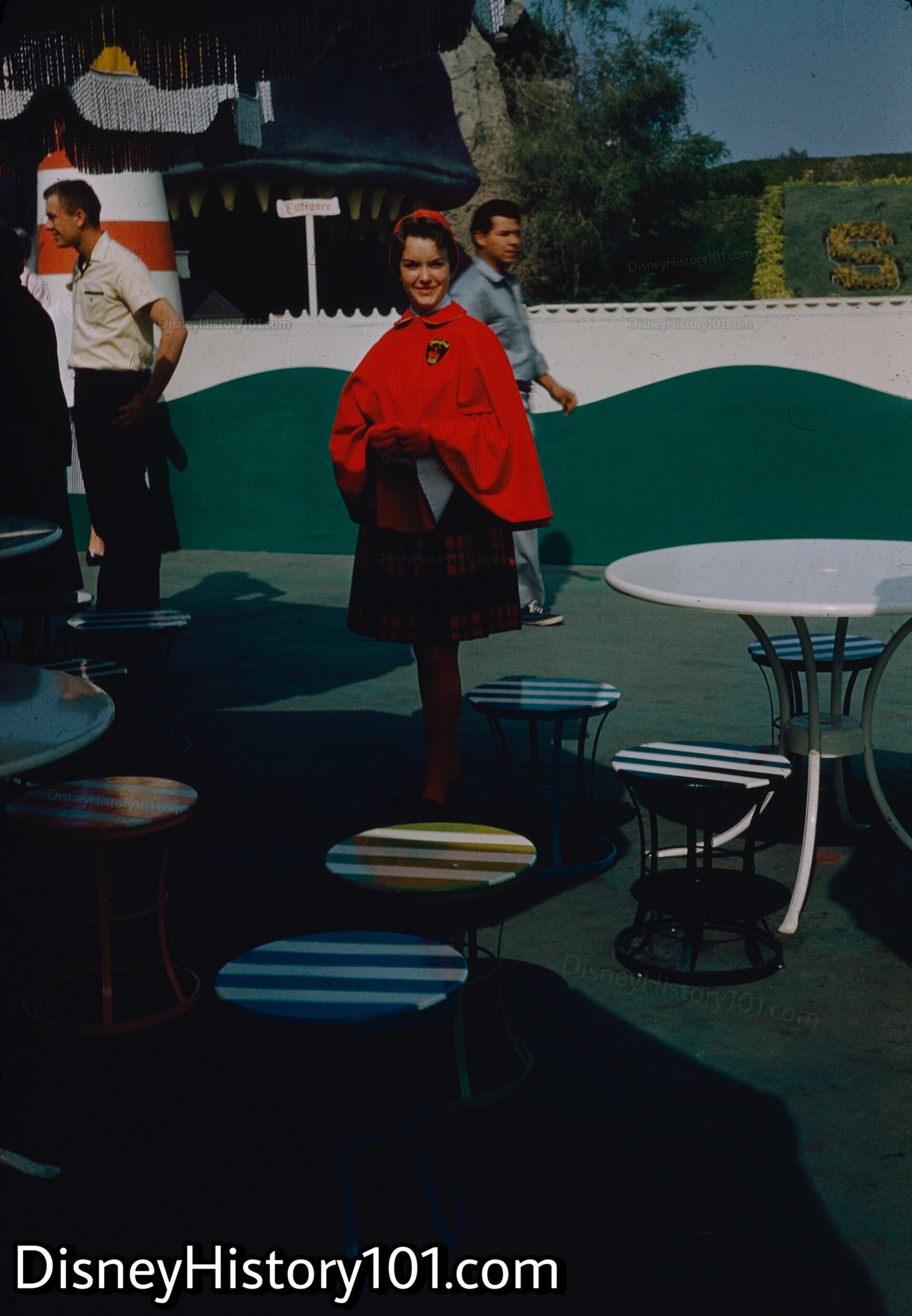
By the time this Vintage View (above) was captured, the Disneyland Guided Tour Program grew to a “staff of 35” when Arlene joined, according to “A World of Smiles.” Here, we see one of Disneyland’s own “storytellers” (and an expert “on the past, present and future of Disneyland”) standing poised near one of the Fantasyland UPT Concession Stands and the construction barrier of the Storybook Land Canal Boats.
As a “sidelight,” we must make special mention of a Disneyland employee named Barry Lane, who was hired (by Ralph Quick) as one of the few male Disneyland Tour Guides, during April of 1960. (Yes, there were male Tour Guides in the beginning.) According to Vacationland published for the spring of 1959 (only months after the first Guided Tour) commented: “An official Disneyland Host or Hostess is your guide for your Tour.” Less than two years after the program began, it had grown to include “a combination of men and women”, according to the article “The Tour Guide Story”). Barry worked for two and half months in this capacity, before transferring to another role in the Park. He describes the experience of attempting to memorize a script that was approximately nine pages long, with only one opportunity to perform a trial Tour before being put on the stage. As this was the case, Barry described the feeling of being “lost” during his very first tour. Just when Barry was fitting into the role, something happened that would change his career with Disneyland. During June of 1960, the Disneyland Guided Tours was on hiatus for the summer (as was done back then), and at this time it was decided that male Tour Guides would be discontinued until further notice. Barry had become one of the last male Disneyland Tour Guides to be hired during the formative era of Disneyland’s seasonal Guided Tour service.
Though this was the end of an era for the Disneyland Guided Tour service, things were now looking up for Barry Lane. He continued to work for Disneyland, was re-cast as both as a Jungle River Cruise Host, and cast for a role aboard the Mark Twain. Later, while fulfilling a role at Slue Foot Sue’s Golden Horseshoe, Barry had several encounters with Walt Disney. It was also here (at the Golden Horseshoe), where Barry would meet Connie (a Disneyland V.I.P. Hostess), and the two would eventually become husband and wife!
Guides occasionally waited for guests outside Disneyland Main Entrance Gate. “Back then… Guided Tours were not given during the busy summer months,” according to Cicely Rigdon (for the “It Takes People” spotlight, published in Disneyland LINE, Vol. 16, no. 13). Here, a Disneyland Tour Guide is dressed in her cape for cold winter weather, as she waits to welcome a Guest outside the Disneyland Main Gate on a damp morning.
![Disneyland Tour Guides of the early 1960s initially met the “outlined factors…for [all] Disneyland employees” (See “Facts About Employment With Disneyland for The 1962 Summer Season”, below). But Disneyland Tour Guides were essentially the fac](https://images.squarespace-cdn.com/content/v1/5b3d7f804eddec6e826be0c9/1620766237418-81YX27ACZRRSD591NE3D/6C438BF7-BA37-424D-B96F-C6F02D1156D9.jpeg)
Disneyland Tour Guides of the early 1960s initially met the “outlined factors…for [all] Disneyland employees” (See “Facts About Employment With Disneyland for The 1962 Summer Season”, below). But Disneyland Tour Guides were essentially the face of Disneyland (in a way not expressed by ride operators, merchandise employees, or concession workers). This is attested to by Two Wonderful Ways to Enjoy Disneyland (published 1961). The publication described the Disneyland Tour Guide this way : “Being well versed in the lore of Disneyland, this interesting and attractive young woman will give you insights and information that will add greatly to the pleasure of your day at Disneyland.” Since this was what guests expected, Cicely Rigdon’s Guided Tour Program would further develop leaders, by building upon Disneyland’s present standards and practices to assure this higher standard was met. Soon, these Hostesses were molded into exemplary role models that would both capture and reflect the Spirit of Disneyland! “Just as the imprint of the famous Castle means Disneyland to so many people, so should the imprint of Disneyland's courtesy and good cheer on the part of its hosts and hostesses mean Disneyland.”
In interview with Parade Magazine (published March 26, 1961, for The Advocate, Baton Rouge, Louisiana), Tommy Walker described the results of these refined methods upon those that were cast (that is, interviewed, voice-tested, selected, and trained) for the role of what was (briefly) referred to as the “Disneyette” :
“We interview about 10 girls for each one we hire. When we look for… [sic] her personality and warmth and genuine regard for people. We don’t care if she’s 18 or 30, single or married. Does she speak clearly? Does she smile? Can she project her voice? If a girl is multilingual that’s an advantage. Right now we have girls who speak French, German, Spanish, Japanese, and Arabic.
‘When we accept a girl’, Walker adds, ‘we put her in our training school for two weeks. She’s give a Disneyland dictionary, full of factual data on all the sites, rides and exhibits. She studies this carefully, then memorizes answers to the questions most frequently asked - for example : How large is Disneyland? How many employees? How much did it cost?’” In the rare event that a Tour Guide did not know the answer to a guest’s question, she would not provide false information, but respond politely : “I don’t know, but I’ll find out for you.”
Tom Walker continues : “The girls meet among themselves to discuss common problems, such as what to do with women who need to feed their babies, or what to o about people who go into a restroom and never come out, or what to do about people who get lost.”
During that same year of 1961, most girl Guides worked “a six-hour day at $2 an hour, five days a week”. Not withstanding this, Tom Walker concludes : “The Disneyettes describe their job as “the dream job of all time’.” Clearly, the 40 “on duty” Disneyettes were developing the necessary skills to help guests “enjoy Disneyland in such a wonderful way” by 1961 - all thanks to careful screening and the new additions to the Disneyland Tour Guide Program! Clearly, Disneyland Tour Guides (and Disneyettes included) have always been much more than just an “attractive” face! Attesting to this fact, is the account of one guest (as retold by Wally Boag, c.1965 Backstage Disneyland Editor) : “The sight of a very watersoaked Tour Guide being escorted over to Wardrobe to receive dry clothes and a new hair-do. We found out later that she had jumped into the big river to rescue a small tot that had fallen in…” [Backstage Disneyland, Vol.4 No.4]
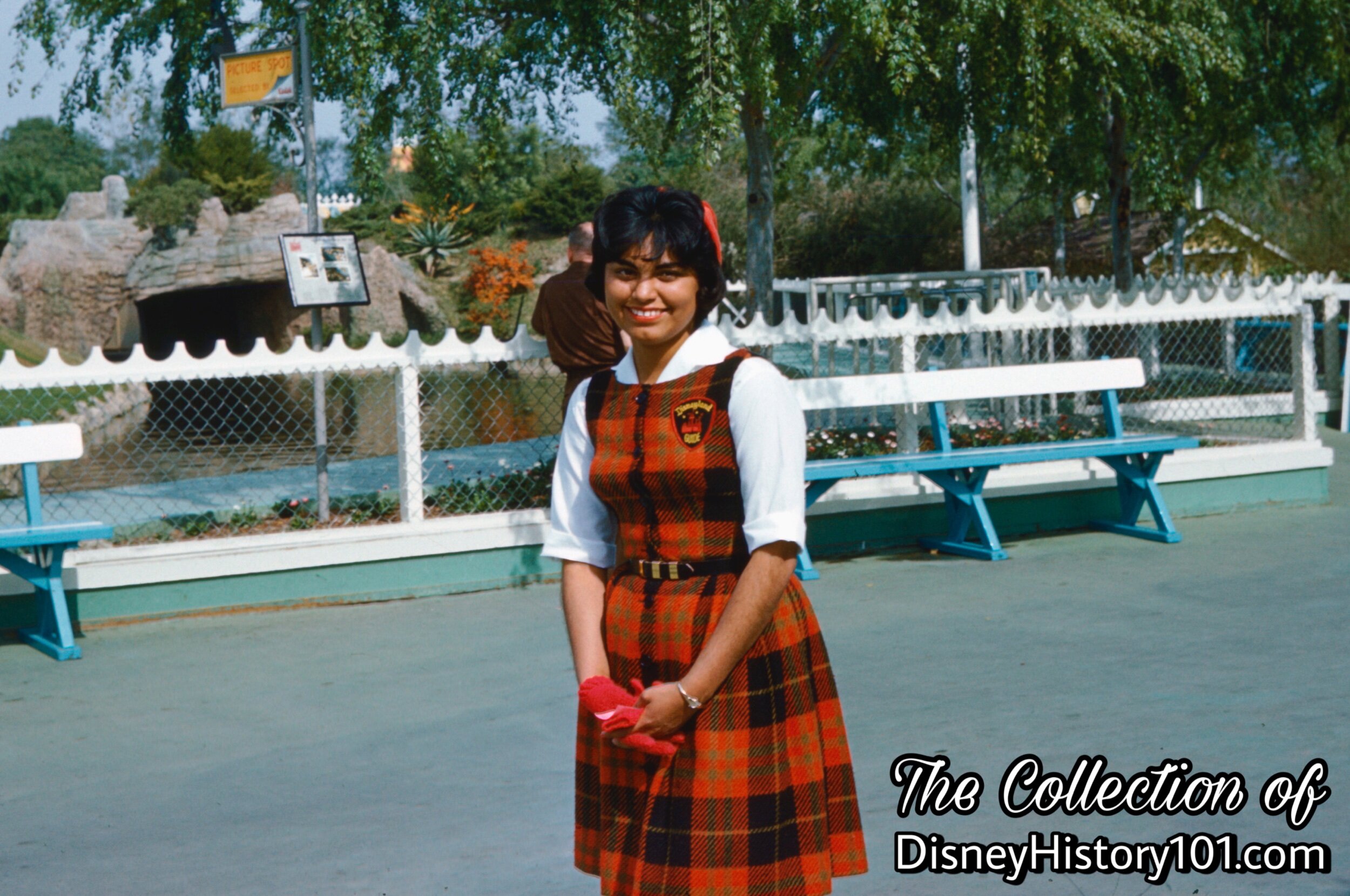
By 1961, the Disneyland Guided Tour was celebrating its fifth year running, and had entertained visitors from more than 100 foreign countries. Vacationland comments, “several of the attractive young ladies who conduct the unique two-hour safari are linguists, with four different foreign languages represented among the group.” According to Vacationland (Spring, 1962), “many of the girls speak two or more languages. Included in the staff are young ladies who can converse in Spanish, German, French, Norwegian, Danish, Hungarian, Portuguese, and Japanese. When a visitor enters Disneyland for a Guided Tour and finds someone who speaks his or her language fluently, the experience is a heartwarming one, for both Guide and the foreign visitor.” According to Bob Matheison “supervisor of the tours” (in an interview with Vacationland magazine), even when the tour was long over, Disneyland Tour Guides would “get letters from all over the world thanking them for their courtesy in answering questions” (no doubt in their “mother tongue”). By 1961, the two to two-and-a-half hour Disneyland Guided Tour (by one of Disneyland’s 22 - 60 multilingual Guides) was one of “two wonderful ways to enjoy Disneyland” (the other being the “Big 10” and “Jumbo 15” ticket books). The value and price of the Disneyland Guided Tour had improved in quality and (appropriately) admission increased slightly, to $5.00 for Adults (12 and over), and $3.00 for children (under 12).
The following year (1962), Disneyland Guest Relations was led by Mr. Donald Novis (that certain “golden tenor” of the Golden Horseshoe Revue)! By this time, Ben Harris (of Disneyland Production) was involved in interviewing Tour Guide Applicants, and also performed speech auditions for Disneyland Applicants (which included some Disneyland Tour Guides). By this time, the group of Disneyland Tour Guides had grown again, in many ways.
Marty Sklar (according to his recollection) wrote a new script “to inaugurate the Disneyland Guided Tours… in 1962.” This was (as he said) “in an effort to understand the guest experience firsthand,” and so Marty led the first tour himself. “The second and third tours were led by Dick Nunis, director of park operations, and Jack Lindquist, the head of marketing.” As Marty described: “when we sat down afterward to review the reactions of our guests, we had input from the operators about how it functioned and the marketers about how to sell it, plus of course my own comments and revisions based on the direct reactions, observations, and timing I had experienced in leading the first Disneyland Guided Tour.”
Now, the Disneyland Guided Tour scripts or “spiels” were 11 pages long, and included a tour of five “top attractions and rides,” according to one c.1962 brochure. It seems that Hostesses would require ears like Mickey Mouse and a retentive memory like Ludwig Von Drake. Each Hostess would be a walking talking encyclopedia. It was said that “these young ladies are well acquainted with all the background information about Disneyland to add to the enjoyment of your visit.”
By this time, Ben Harris also worked with the Disneyland Tour Guide Supervisors to check the narration of Tour Guide spiels, develop promotional material for the Tour Program, and help shape the Tour Training Program. For instance, after the extension of the Disneyland-ALWEG Monorail to the Disneyland Hotel, Ben Harris (Production Department) began to have regular meetings with Chuck Currier over a new special project that would commence a Hotel Tour Program. Ben described his work with the Tour Guides on one particular day (Wednesday, April 18th, 1962) this way : “met with Chuck Currier and discussed [the] Tour Program from the Hotel. Chuck talked with the Guides and gave a brief rundown of the Hotel activities and answered their questions. He is presently preparing writer information concerning the Hotel, its different shops, and special activities, which can be incorporated into the Tour Training Program. Chuck was most cooperative and expressed great interest in the Tour Program at the Hotel.”
In addition to all this, the Disneyland Guide was now expected to “put herself in the place of the hundreds of persons she may come in contact with in a single day, and be prepared to answer any questions put to her, no matter how difficult they may be,” according to Vacationland, published 1962. Among the Disneyland Tour Guides (during 1962), were those who were fluent enough to translate the script (and answers to those difficult questions) into even more languages than in 1961 - including English, German, Norwegian, Spanish, French, Hungarian, Greek, Danish, Flemish, Japanese, and Chinese! As an added Guest Service, “altogether they speak 11 different languages,” according to Donald Novis in “The Happiest Job I’ve Ever Had” (published in the Long Beach Independent, October 8, 1962). The number of the exceptional Disneyland Guided Tour staff had also grown to support peak periods of Disneyland guests with “62 girls in the summer, 26 in the winter.” Some of these (c. 1962-1963 Tour Guides) included Theresa and Reiko. Finally, during December of 1962, Tour Guides assisted the Candlelight Procession.
The Disneyland Tour Guides certainly epitomized a process that Walt called “Performance Excellence” - encouraging Cast Members to strive to excel each day in the fulfillment of their individual roles and responsibilities in an environment consistent with defined Disney behaviors. The Disneyland Tour Guides were continually challenging themselves and each other to try new methods of working more effectively and efficiently. Teamwork was regarded as essential in accomplishing these efforts.
After all the polishing, it was high time that the most exemplary Disneyland Tour Guides - “the creme of the crop” - were praised through a new tradition - the “Disneyland Tour Guide of the Year” award established in 1962! Iris Umemoto (1962), Reiko Cox (1963), Diane Darnell (1964), and Suzanne Fuller (1965) were among the first to have such a distinguished honor bestowed upon them (and by Walt himself, at that). These new annual traditions of accolades and other constant praises bestowed upon all of Disneyland’s Tour Guides would only continue to groom the growing group of “cheerful, friendly, well-built, knowledgeable” Disneyland Guides into true leaders in the field of Disneyland Guest Service!
As the “grooming” continued, so did the screening. By 1962, Chuck Whelan (of Disneyland Personnel) divulged that “one job in six is for a female,” according to an article by Al Carr (published May 12, 1963, in the Los Angeles Times). Considering this, it seems that the odds of being selected to become one of Disneyland’s Tour Guide Hostesses had decreased by the early 1960’s, but in actuality the odds of being selected increased from the years 1961 to 1962. According to comparative statements made in Parade Magazine (published March, 1961) and Vacationland magazine (published Fall, 1962), the odds went from one out of every ten, to “one out of every four or five applicants is hired” for the role.
“‘IT’S BEEN MY PLEASURE’ - THE GUIDE’S GUIDE!” - Disneyland Tour Guides have always been carefully screened - given a voice test and personal interviews. According to Vacationland (Fall, 1962), only “one out of every four or five applicants is hired”. Once hired, the hires were given a copy of these inspirational guides for Disneyland Guides - “It’s Been My Pleasure”!
“‘Hello.’ We’re glad you made it through the obstacle course which we more generally refer to as our employment procedure and have now officially joined us as a tour guide.
This guide for guides is designed to help you orient yourself in your role in our Disneyland show…an introduction to your training program which will be an easy and pleasant experience…like boot camp in the Marines.
We debated about the title, and finally arrived at ‘It’s Been My Pleasure’ as being most definitive for your part in our cast.
As a tour guide, you’ll have an opportunity for a most rewarding personal relationship with our guests. If you properly fulfill your role…and we know you will…you will receive many a heartfelt ‘thank you’ from the guests in your group.
A ‘thank you’ is a rewarding acknowledgment of appreciation from those you help and serve…verbal expression of the fact of a job well done.
Since it is your role to help and serve others, a ‘thank you’ from a guest will give you a feeling of fulfillment and satisfaction for which the most logical rejoinder is ‘It’s been my pleasure.’
We know you’ll have the opportunity to say ‘It’s been my pleasure’ many times …and that you’ll enjoy a memorable and satisfying experience as part of our Disneyland cast.”
-Introduction to “it’s been my pleasure”, The University of Disneyland, c. 1960s
A slightly later updated version of “It’s Been My Pleasure” reflects the newest fashion of the Disneyland Tour Guide on the cover! As a sidelight, the phrase was created by Dorothy Manes (of Youth Activities).
Now according to one sanctioned publication: “some would say the training booklet sets a standard for employee-guest relations impossible to achieve. But kings and commoners alike who have visited Disneyland would disagree. Seemingly ‘impossible’ things are does as a matter of course at Disneyland.” [“Walt Disney Disneyland,” pages 58, printed by Officine Grafiche Arnoldo Mondadori - Verona; first published 1964]
“International Guideudveksling” - During 1963, Disneyland Guest Relations was under the new management of Bob Wormhoudt. That year, Disneyland would participate in its first annual Tour Guide Exchange Program! These opportunities to become “Goodwill Ambassadors” were truly edifying for participants of both parties involved. During the very first year, Disneyland exchanged Chief Disneyland Hostess Donna Partin with a park that helped inspire Disneyland (and according to Walt’s observation of its “courteous employees,”was “what an amusement park should be”) - Tivoli Gardens!
In 1964, Disneyland engaged in the program again. A Tour Guide Press Party (with refreshments) was held in the Tour Guide Lounge, May 13th, 1964, and Disneyland Hostess Carole Tully (“Miss Disneyland 1964”) was sent to Copenhagen, Denmark, while Tivoli Gardens Tour Guide Hanne Plath was (one of such Tivoli Gardens Guides) sent to Los Angeles. As part of the exchange, Hanne spent almost two months with Carole Tulley, as they toured her around Southern California, flying to the New York World’s Fair with Walt. Then Hanne and Carole went to Copenhagen (where Hanne departed). Then Carole travelled to London, Paris, Rome, Stockholm , and Lappland and then back to Copenhagen again.
As a “sidelight”, I would like to recall a familiar artifact and memento of this occasion. The story goes : “Upon arrival, Hanne had a gift for Walt.” Here, Ed Ovalle (Walt Disney Studio Archivist) introduces us to the trinket personally given to Walt Disney by Hanne Plath (a Tivoli Gardens Tour Guide, taking part in the second exchange program with Disneyland’s Tour Guide Program). The Royal Copenhagen Porcelain Factory was renowned for their porcelain authorized reproductions of Edvard Eriksen’s the Little Mermaid statue in Copenhagen, Denmark. Walt (who had an affinity for the works of Hans Christian Andersen) no doubt cherished the hand-crafted replica, showing it off inside his “working office” at the Walt Disney Studios in Burbank! And so a replica of this statue would even come to rest near Walt’s final resting place.
The program was a success, and “Senior Hostess” Donna Jackson would be sent to Copenhagen in 1965, in exchange for Ida (?) of Tivoli Gardens.
By 1964, the Disneyland Guest Relations Department consisted of Bob Wormhoudt (Manager), Ruth Scofield (Department Clerk), Cicely Rigdon (Assistant Supervisor), Anne Daniel (Lead Tour Guide), Maggie Albright (Chief Hostess of the Mickey Mouse Club Disneyland Chapter), Donna Partin (Chief Hostess), Nora O’Keefe (City Hall Receptionist), and Ruthe Homer (Information Letters Clerk). As a sidelight, it is worth mentioning that while proven exemplary and capable, all of these leaders exhibited the tendency to stray from the idea of self-importance, remembering that “the only ‘Mr.’ here is ‘Mr.Toad.’”
“An Assured ‘Fit’ For The Role“
Disneyland Tour Guides were often referred to (or, “billed”) as “pretty” and “attractive.” Partially responsible for this was their reputation for a high standard of “dress and grooming,” in which the Cast Member costume has played an essential role since the beginning.
Since the beginning, Disneyland Tour Guides perpetuate the Disney Look - Representing the Company Brand.
A complete set of appropriately themed apparel (both garments and accessories) has had the power to help audiences easily identify the Cast Members belonging to an area or position. Basically, the costume contributes toward effecting the Disneyland show in a non-verbal way. In this case, assuring that the applicant ‘fit’ the role of Disneyland Tour Guide.
Since 1961, a pre-employment check was made to ensure that the applicant’s Wardrobe size was accurate. This requirement was not a form of discrimination, but mainly due to budget (as early Disneyette costumes - as all Disneyland costumes - were generally only produced in a particular range of sizes). These requirements applied to all Disneyland employees (many of whom worked under Union jurisdiction by the early 1960s).
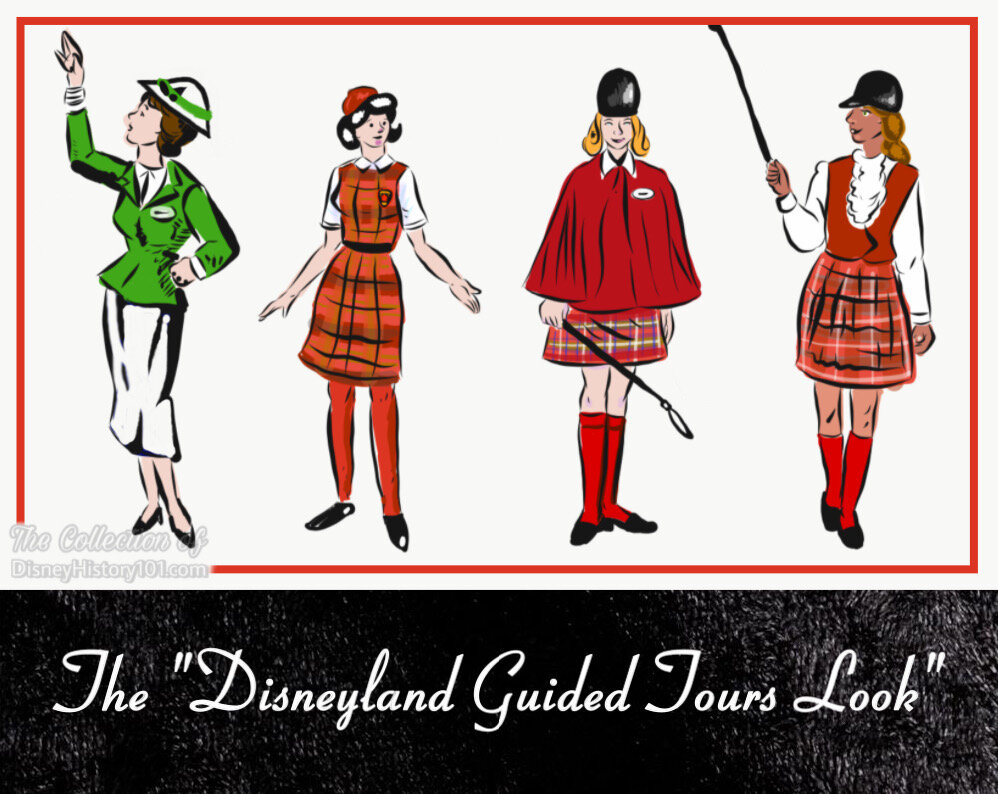
One edition of “Your Role in the Disneyland Show” speaks of costumes: “The actors and actresses in our Disneyland Show wear ‘costumes,’ each of which has been specifically designed to reflect the role one plays in the show. ‘Uniforms’ are worn in the Military Service and by the local high school football team, but not ‘on stage’ at Disneyland. Take pride in your ‘costume’ it is designed to add to your natural attractiveness and means you are part of the show.” Great care was taken in designing the Guided Tour Wardrobe costume. According to “A World of Smiles” (published 1965), “many colors, designs, and shapes - that is the history of tour guide uniforms.”
• 1958 (Winter) - The original Disneyland Tour Guide “uniforms” (yes, they were occasionally referred to as such) were simple and “tartan-less” - “white skirts and sun hats with green blouses,” according to “A World of Smiles” published 1965. This was because “the first Tour Guide costume consisted of whatever the Cast Member wore in their regular job (Disneylanders including Attractions Hosts and administration employees made up the first corps of Guides).”
• 1959 (Winter) - Another somewhat contemporaneous (yet, later) image shows one Tour Guide wearing a collared shirt and dark-blue colored skirt (without a tartan pattern), as well as a dark Pendleton blazer. “Shortly into the program, Lulu Miller in Wardrobe came up with a uniform consisting of a red Pendleton blazer and blue skirt for the gals, red blazer and blue pants for the guys.”
• 1960 (Winter) - By the winter of 1960, the “Disney look” of the once (c. 1961) -billed “Disney-ettes” consisted of a one-piece, plaid patterned woolen “jumper” dresses. This garment would be combined with a “red leotard,” in a look that would first become associated with the appearance of the Disneyland Tour Guide! Though on a first-name basis with Tour Group guests, the ensemble did not include a name tag or pin - only a Disneyland patch! Still, the inclusion of plaid would lead to great things a few years later. During the winter 1960, the Disneyland Tour Guide costume also acquired the addition of red capes for cold weather days.
According to one source, “By 1960, an early plaid prototype consisted of a pinafore, including a fashionable red beanie and gloves! Plastic nametags and the famous ‘D’ pin had nor get been created. Instead, an embroidered patch with the castle logo and the title of ‘guide’ denoted the Cast Member as an official host. This prototype lasted about a year and in 1961, evolved into the costume we know today. It was a collaborative effort between Park managers, Costuming and WED Enterprises (later Walt Disney Imagineering). The distinct influence of Scottish dress, combined with a riding uniform, made it a very unique costume. The ‘look’ was very recognizable and was a style not already used in the Park. This theme allowed the Guides to ‘jockey’ to each land and fell the stories of the Park. Wait even referred to the girls as Guest Jockeys!”
• 1962 - the look of Disneyland Tour Guide costume had changed to one that would become enduring and iconic - similar to that of horse jockeys or polo players! According to an article published one year later in the Long Beach Independent (October 28, 1962), “The Tour Guides wear scarlet capes, white shirts, scarlet vests, plaid skirts, red socks, blue riding caps and they carry riding sticks - for pointing out the sights, not whacking visitors.” Owing to this new wardrobe, the Disneyland Tour Guides were often referred to as “Guest Wranglers”. The cape was the only element of the previous costume incarnations that was retained. Of special note is the Disneyland Tour Guide “plaid” tartan which had also changed, since the original “Pendleton plaid” dresses. Around 1961, the specific tartan that would become associated with Disneyland Tour Guides for years to come was selected and approved!
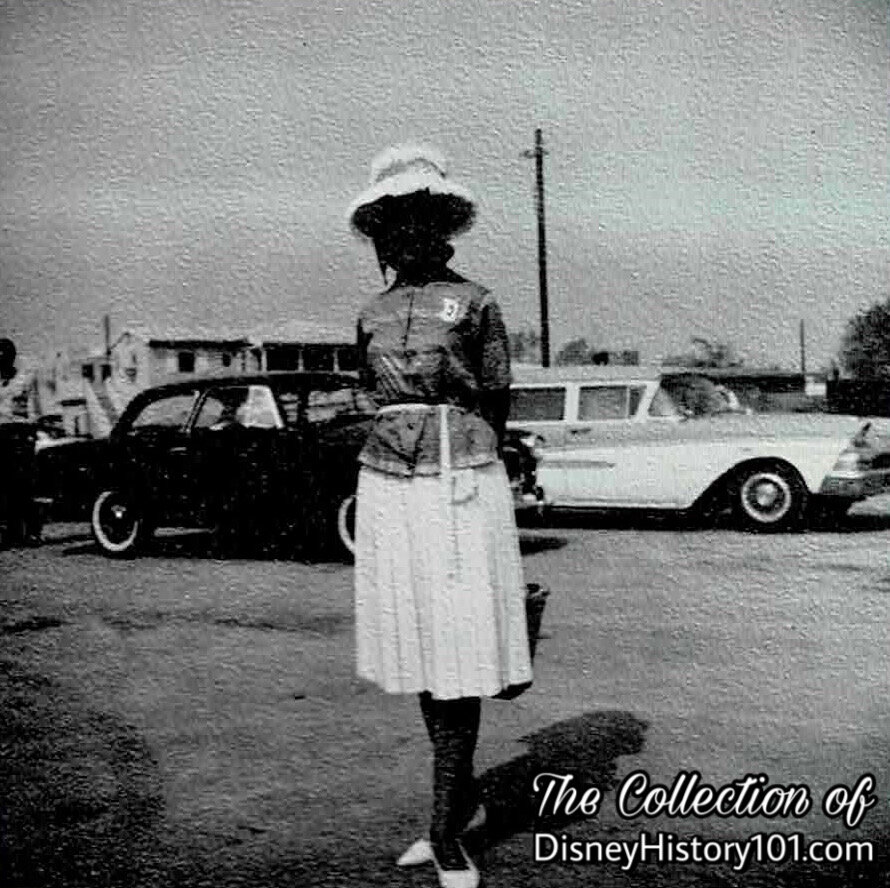
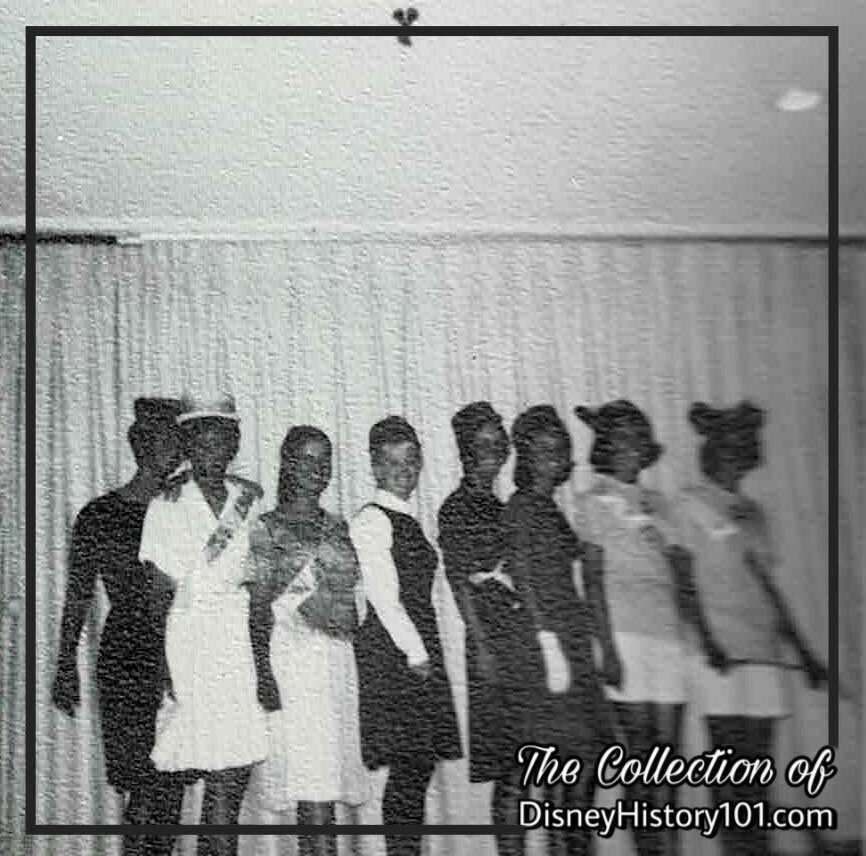
In recent decades, Disneyland Tour Guide costumes have retained a plaid tartan (though the pattern now flows a slightly different direction on the cut of the skirts). In addition, a secondary color (navy blue) forces the contrasting warmer colors to “pop”. Against this color scheme, the essential accents, like buttons, castle pin, “D” pin, and most-important name tag, stand out to the eyes!
“WHAT CLAN ARE YOU FROM?” - Disneyland’s “clan” of Disneyland Tour Guides is clearly identifiable to the many Disneyland Cast Members and guests that are familiar with Disney Park’s various “tartans.” This is a close-up of actual current “Disneyland Tartan.” The true-life name of the Disneyland “plaid” pattern is true Royal Stuart Tartan (also referred to as “Queen’s Royal Stuart Tartan” as it is the same personal plaid of Queen Elizabeth II). It debuted during the Tencennial year of 1965, the same year that Guided Tours moved next to City Hall. When other Disney Parks would open (from EPCOT Center to Tokyo Disneyland), each of their Park’s “plaid” would feature a differing style as well as a name of tartan that would separate the wearer (and Guide) from those of other Disney Parks!
It’s a FACT that each and every Disneyland Guide acquires one of these Sleeping Beauty Castle pins (and wears it proudly) after Tour Day One is complete! The next time you take a guided tour of Disneyland, you may notice this “little beauty” over your personal Guide’s riding cap.
Another early 1960s addition to the Disneyland Tour Guide “uniform” (yes, they were occasionally referred as such in the early years of Disneyland) was the distinguished “D” pin! The original pins were manufactured by the N.S. Meyer Company of New York (founded in 1868, and maker of military insignia). Each original Disneyland “D” Guide Pin was comprised of gilded sterling silver, and plated in 14 karat gold. In addition, each pin design bears the likeness of Tinkerbell sprinkling pixie dust from her wand over the iconic Sleeping Beauty Castle. It’s a fact that once the applicant is approved to give Guided Tours of Disneyland, they are administered one “D” pin.
“It seems the Royal Stewart plaid and "D" pin effectively conveyed a presence of heritage, pride and honor as the official hosts and storytellers of Wait's Magic Kingdom. The Tour Guide Costume is truly a Disneyland Classic.”
While Guides wore metal badges, Disneyland Cast Members wore metal badges with just a number until plastic nametags replaced them in 1962.
The N.S. Meyer Company would go on to produce pins for Guides, Hosts, Hostesses, and Guest Relations Cast Members of the Magic Kingdom in Walt Disney World, in Orlando, Florida.
Disneyland Tour Guide emblem design heavily influenced those of other Disney Parks Guest Relations to come. One example is this (now retired) Euro Disney (or, Disneyland Paris) Guest Relations Tour Guide pin (above), featuring Tinker Bell sprinkling pixie dust over Le Château de la Belle au Bois Dormant (or, “Castle of the Beauty in a Sleeping Wood”).
”Guides and The Disneyland Look”
You may have heard of the Disney Look. Every detail of a neat, natural appearance (including grooming, etiquette, and wardrobe) was to be maintained to the official standards of Disneyland. These appearance guidelines were eventually outlined in The Disney Look handbook.
Long before this publication, Cicely Rigdon put into practice a system of checks to assure proper use of cosmetic makeup and reassure that the Guide’s skirt was of proper length. After receiving their first wardrobe “fitting,” these became a daily occurrence before each shift began. To quote Cicley Rigdon’s poem “Golden Rules” (published in “A World of Smiles”, published 1965) :
“Because we want the best for you
Pink lipstick, girls is just tabu.
And if you wish to look your best
Leave all the hardware off your vest.
The hat looks best straight on the head,
Clean and repair shoes on the feet you tread.
No nail polish Disneyland says to us
And eye make up NO, sir please don’t fuss.
And if you don’t want to see a cop
Please don’t steal another’s crop.
Remember girls we love you dearly,
And mean it really quite sincerely
But rules are made for one and all
And for my sake do not fall.
For Tour Guides never never shirk their duty
After all they have natural beauty.”
Within these boundaries and guidelines, the wardrobe of the Disneyland Tour Guide has changed in some ways through the years - from its founding in 1958, to its formative years of the early 1960s, and beyond! The design grow to become more than just “functional” (meeting the specific needs of this Disneyland Cast Member). The ensemble would eventually change into a distinct with aesthetics that would visually separate Disneyland Tour Guides. This so-called “Disneyland Look” (or “Disney Look”) would help guests readily distinguish a Disneyland Tour Guide from other Disneyland employees (including concessions, merchandising, and ride operators)!
By the 1970s, the Disneyland Tour Guides had the pleasure of wearing more than plaid. In addition to guiding Tour Groups through Walt Disney’s Magic Kingdom and assisting with Guest Relations, Annual Fashion Shows (sponsored by the Disneyland Recreation Club) became a tradition. In fact, by 1973, Disneyland Tour Guides were modeling popular designs by Lido Fashions during the “I Am Woman” Fashion Show! On very rare occasions, Hostesses wore tasteful and fashionable ensembles while guiding organized groups or special V.I.P. guests through Walt Disney’s Magic Kingdom. Few conditions like extreme weather conditions (e.g. Code 90, extreme wind, or rain) permit proper adjustments to the costume. If a costume was damaged or spoiled, the working lead was contacted.
While on the subject of “the Disneyland Look” I am also reminded of a few words published in one c. 1981 Disneyland Orientation Book which reads : “As a result, the Disneyland Look became world famous ad established a trend for many other enterprises. Preserving this image has not been easy. Hair and clothing styles have changed radically from year to year. Right now, as you read this, there is probably some new grooming trend emerging. And we all feel pressure to conform to contemporary standards. But Disneyland is NOT contemporary. It is yesterday, tomorrow, and fantasy. And our costumes and appearance must fit those themes.”
Guides wait to meet guests near Disneyland’s Entrance and Ticket Booths! We wonder if the gentleman in the photo on the right is Disneyland’s first Public Relations Host Bob D’Arcy, Bob Norie (eventual night-time Guest Relations Supervisor), or Mr. Leinburgher (the “Tour Guide Glee Club Director”).
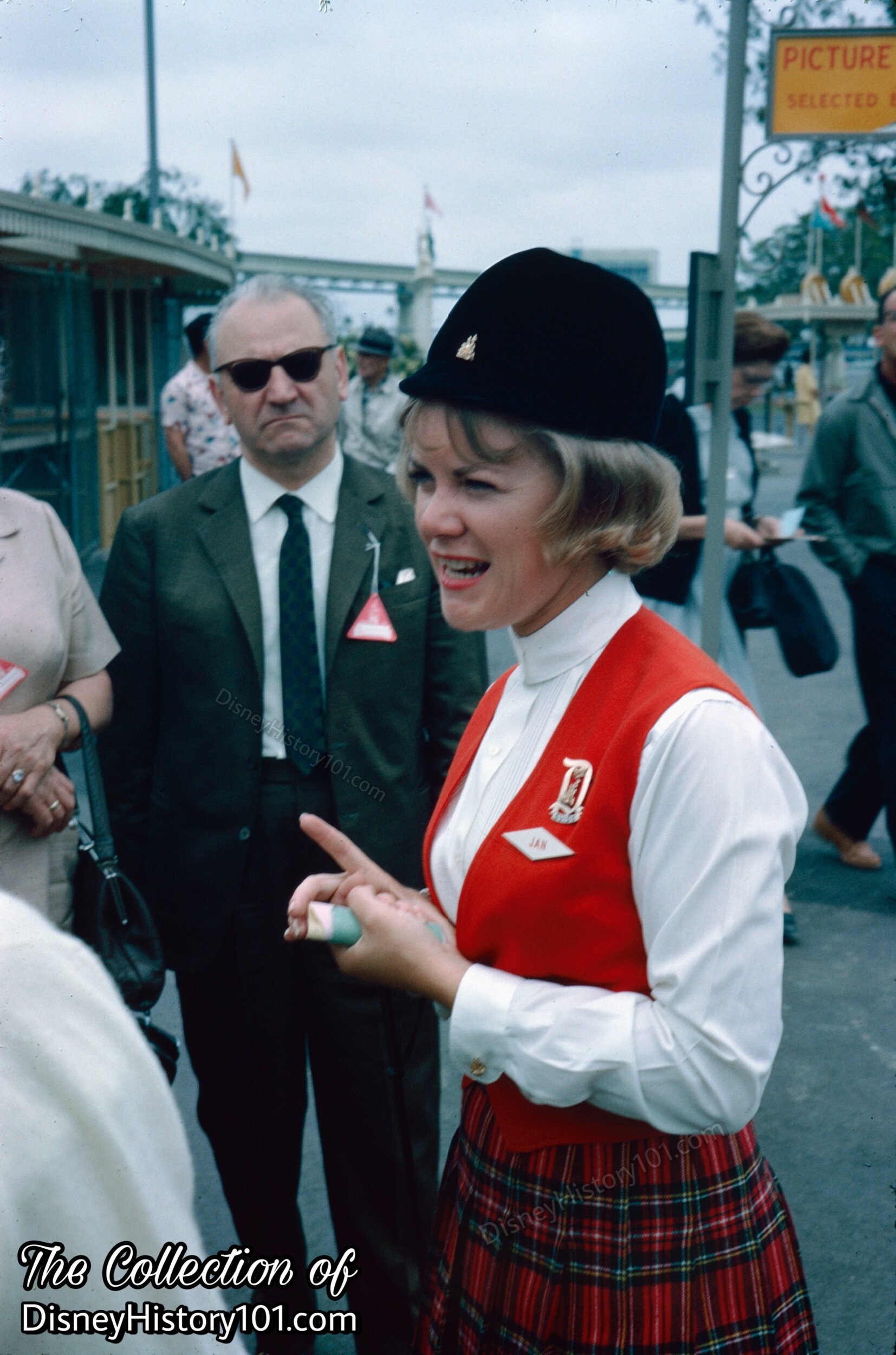
Now that the Disneyland Tour Guide has her costume in place, and the proper appearance, the Disneyland Guided Tour is almost ready to begin! At this time, the Disneyland Tour Guides takes the “opportunity to meet each person individually”. At this time, tickets were collected from each person as they entered Disneyland’s staging area. In the remaining meantime (before the tour departed), Hostesses took the opportunity to mingle with their guests and establish a “friendly atmosphere”.
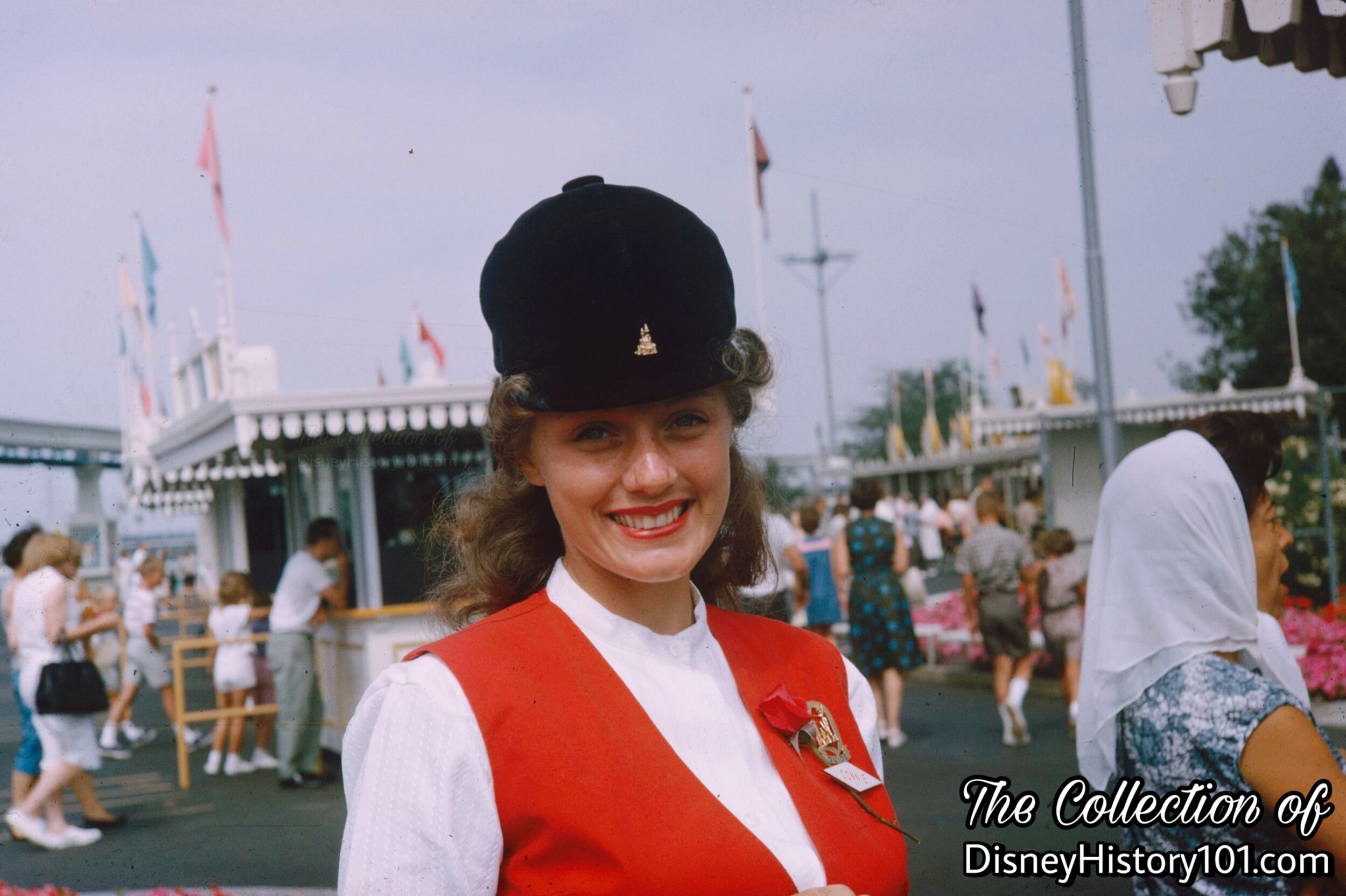
Tour Guides would enter their group and gather the guests’ attention (even in non-verbal ways). The current Guided Tour Manual states : “Use those eyes. Make regular eye contact with each of your guests during the tour.” The beginning of the recommended Guided Tour Narration generally begins with a formal and proper introduction towards the guests. “My name is Connie [last name]. I will be your Hostess for your tour through Walt Disney’s Magic Kingdom. As we are a first name organization here at Disneyland, please call me Connie. I really enjoy introducing Disneyland to our guests, especially if I feel that I’m adding a little to your enjoyment, so if you have any questions while we are on the tour please feel free to ask me.”
All this could seem a little “Animatronic” (that is, “routine”) in delivery, if not expressed naturally. So, it still continues to be of the utmost importance for Disneyland Tour Guides to “have fun in [their]… role, and express it.” Yes, it is crucial to make eye contact, carry a pleasant facial expression, and maintain positive body language while interacting with guests, for this has a bearing on the Disneyland show! As Dick Nunis encouraged Disneyland Hosts and Hostesses : “It is essential that we preserve the informal friendliness which is the basic tradition of the Disney organization. It takes a happy crew to produce a happy show.” But even more, remember where this happiness springs from. Like Walt Disney said in 1955 : “It is you who will make Disneyland truly a magic kingdom and a happy place for the millions of guests who will visit us now and in future years… In creating happiness for your guests, we hope that you will find happiness in your work and being an important part of Disneyland.” [“Your Guide To Disneyland,” Form No. T-1-5-55, published by Disneyland, Inc.]
Connie (pictured above) must have done this in an exemplary way, because three years later she was selected to become the second Disneyland Ambassador to the World!
Display and usage of “First Names” is a Disneyland tradition since before the 1955 opening. Around the Walt Disney Studios in Burbank, Walt and Roy implemented an unusual policy where their employees called them by their first names. Walt Disney’s own Assistant Lucille Martin recalled that “Walt was very personable” remembering that “he wanted me to call him by his first name. I was used to saying ‘sir.’ Particularly with Walt, I kept saying, ‘sir.’ And he would say, ‘No, Walt.’ So one day he gave me a little drawing, showing a little girl marching, with a placard that said, ‘Down with sir.’”
“Your Role in the Disneyland Show” states: “It's been a tradition at Walt Disney Productions to call everyone by their first name. When Walt opened the Park, he wanted to ensure this same informal and friendly atmosphere so first names have always been used at Disneyland.” Van Arsdale France remembered: “I'd always called bosses by last. names with a solid ‘Mr.’ until I got to know them. Here it was the policy… subliminally enforced to call people by their first names, especially Walt and Roy.” This first name policy was one of Walt’s personal philosophies which was impressed upon Disneylanders through Orientation handbooks published c. 1955 by the Disney University.
An article published in Disneyland LINE (Vol. 12, No. 29 ; July 17, 1980) accounts this particular tradition of “First Names”, among the “radical concepts” that would distinguish the “Disneyland Model” from those of other amusement parks. By the Tencennial, instructional books prepared for those serving as “Ambassadors of Happiness” at the New York World’s Fair issued the reminder: “It is not Mr. Disney... It's ‘Walt.’”
All Disneyland Cast Members would be issued a name tag and it was worn with pride. Since the Disneyland Guided Tours conception and establishment (in 1958), Disneyland Tour Guides have been part of a “first name organization,” as founded by Walt Disney. This meant that Disneyland Tour Guides would wear their (Disneyland Wardrobe-issued) names tags clearly displayed to guests on their uniforms.
The first “name badges” (or “nameplates”) were brass, which required some regular maintenance. On this note, Disneylander Bob Penfield had his brass name badge gold plated, so that he wouldn’t have to polish it every day. These held both the Disneyland Cast Member’s name and Cast Member’s employee number.
But soon (in 1962), plastic Nametag, “name badges” (or “name tags”) were introduced. [As a sidelight, there is a wonderful collection of Disneyland Name Badges at name tag museum.com] The Disneyland Guided Tours Name Badges were made distinct - diamond-shaped (similar to the one pictured in the title block of this section), while later ones (c. 1967 on onward) were oval-shaped (pictured below). Unlike modern Disney Parks Name Badges, these early Disneyland Guided Tours Name Tags carried no “home cities or home towns,” no countries or states of origin, and no space for service award pins - just the employee’s name!
According to a special issue of Disneyland LINE (published June 15, 1978), July 5th, 1978, was a historic day for Cast Member Nametags, as new oval-shaped Disneyland “Mickey Tags” (featuring the likeliness of Mickey Mouse for the first time ever) were distributed along with employee paychecks (and thereafter distributed by the Entertainment Costuming Department). This was fitting, as by this time, Mickey Mouse was not only “one of the most recognized symbols that ever existed,” but the most-beloved representative of the Walt Disney Productions corporation. At the same time, “Service Award Tags” (featuring a space for one service pin) not bearing the likeness of Mickey Mouse were also available. Both of these Name Tag styles were to be worn by all employees throughout Walt Disney Productions. You may have had the pleasure of receiving yours, right from the hands of Mickey Mouse, as a part of some new and ceremonious Disneyland and Disney Parks “tradition!”
Guests of Tour Groups eventually wore nametags as well! While meeting the group, Tour Guide Hostesses encouraged guests to fill out his or her own Identification Badge with their name and present home state. This helped the Tour Guides and guests to mix, and worked to establish a friendly atmosphere.
By 2000, the organization was still a first name organization and the Cast Image and Appearance Manager at Creative Costuming and guidelines assured this aspect of the Disney Look - that Name Tags were still worn with pride on the left shoulder area. Name Tags could feature the hometown city, state, country of a Cast Member. Name Tags could also hold up to two pins, including the Service Pin, Partners in Excellence Pin, or the 1971 Opening Team Pin, in addition to pins representing language skills, represented by up to two Language Pins).
Disneyland Guided Tour Identification Tags were provided for every member the Tour Group, free of charge. You may notice that the Disneyland Guided Tour Identification Tags (like the ones pictured below) have occasionally come in different shapes. The original Guided Tour Identification Tags were triangular-shaped. These were manufactured in different colors (like red, yellow, or blue). This was in the event that one Guided Tour Group becomes mixed with another Guided Tour Group on some of the rides. These tags would help a Disneyland Tour Guide to quickly identify the guests in his or her Tour Group.
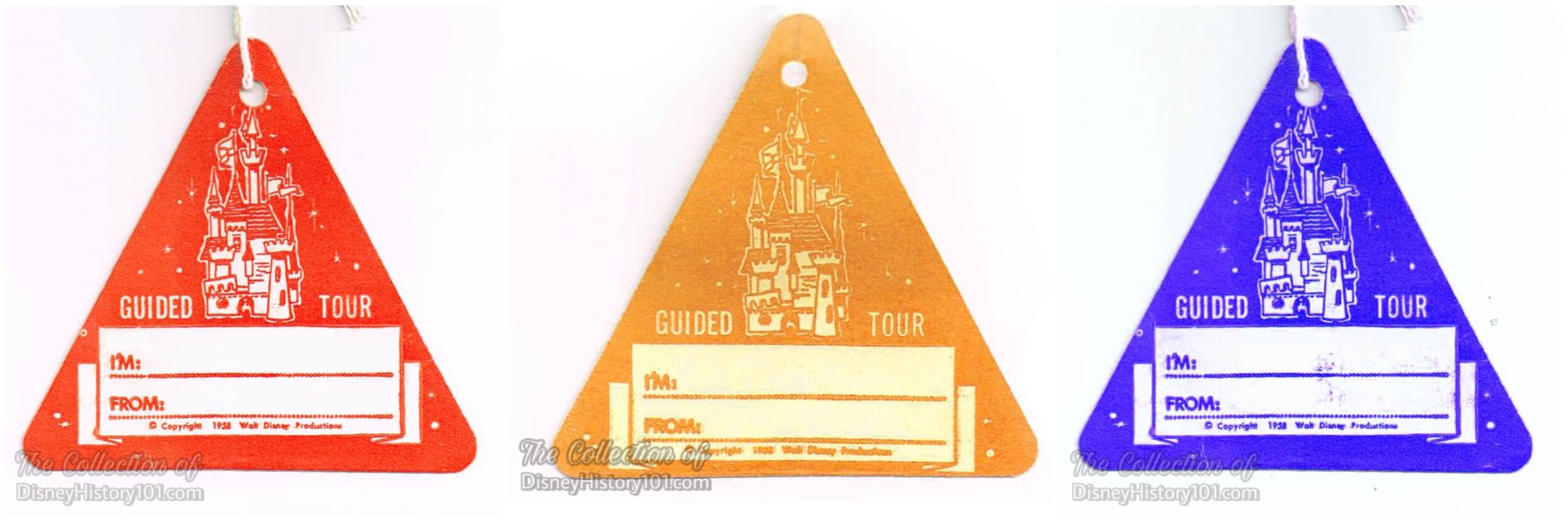
According to the current Guided Tour handbook : “In the first ten years or so, these were in the form of triangular hang tags. Different colors were given out on different days of the week. Colors included green, blue, yellow, orange, and black, and red.” The Disneyland Tour Guide would attach a similarly colored hang tag to her crop, for the benefit of the guests in the Tour Group. These tags would become a tradition, with “Disneyland- The Happiest Place on Earth” brochures (prepared 1960, by Walt Disney Productions for Group Services) mentioning that “Identification Tags for every member of the group are available free of charge.”
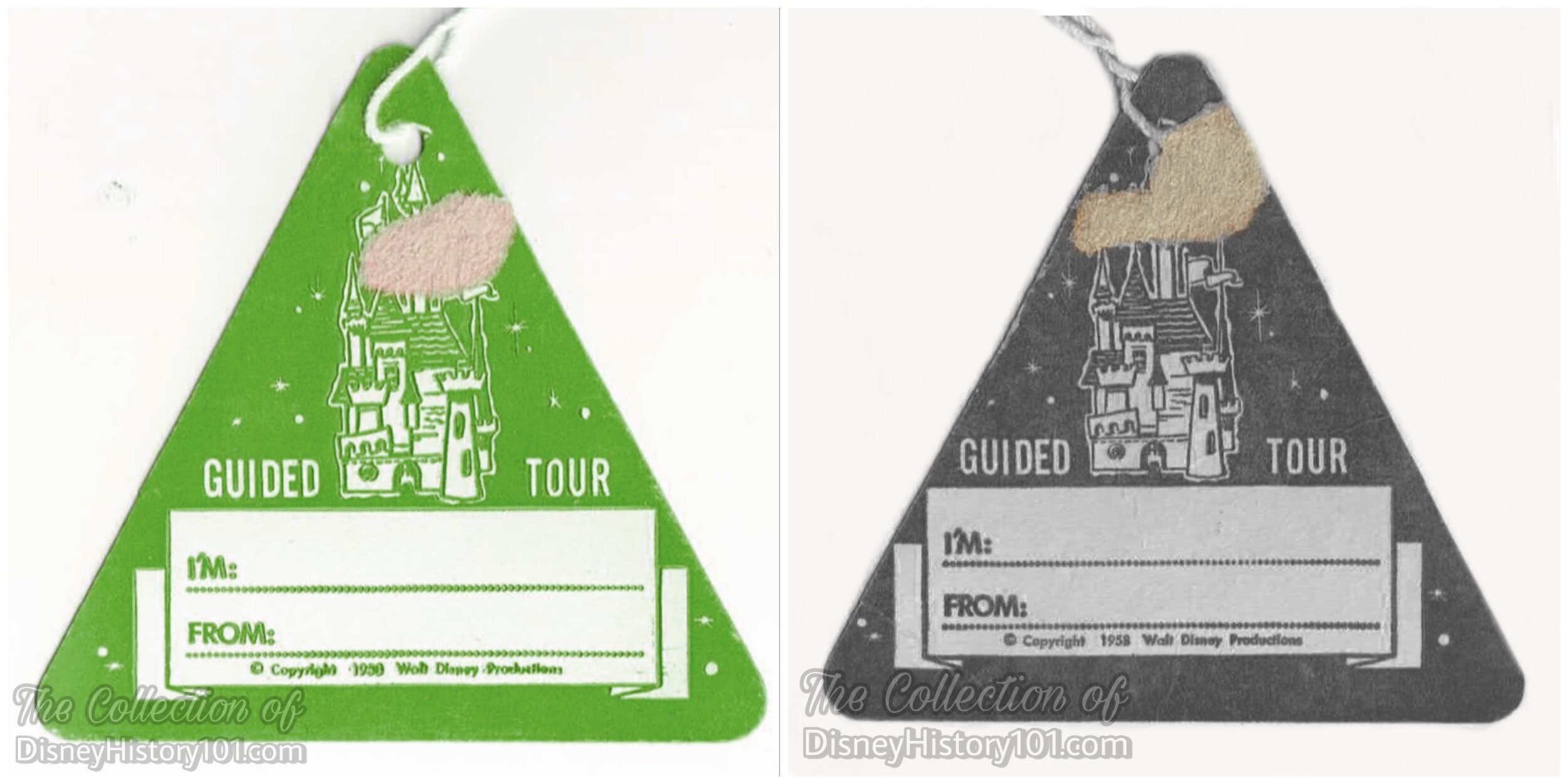
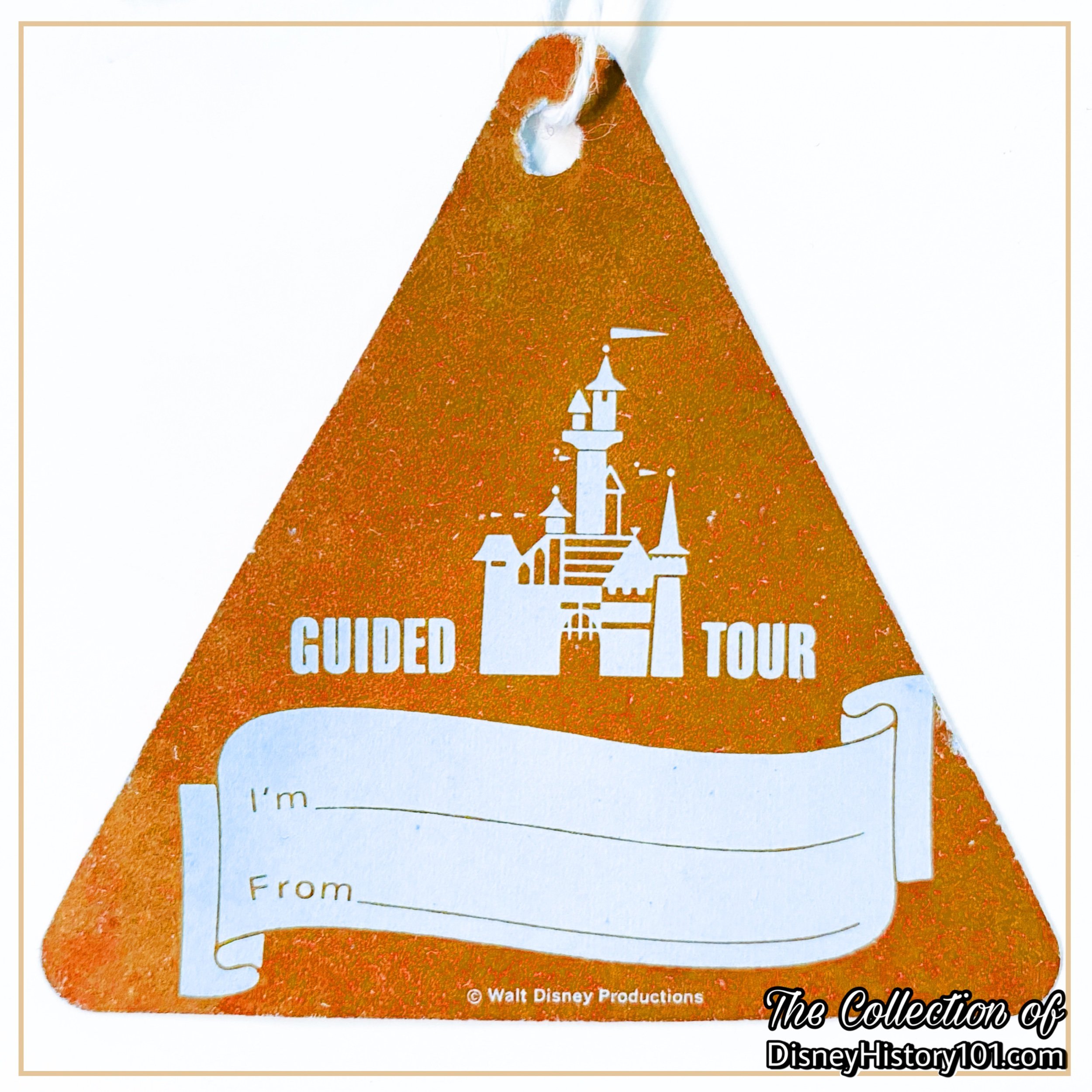
This is the view as we prepare to depart from the Guided Tour Gardens Gate. Now, we are “leaving the world of today, entering the world of the turn of the century - Main Street, U.S.A. - [circa] 1890 to 1910.” If the Guided Tour began at the Main Gate, the inscription on the plaque over the tunnel was read aloud, before the Tour Group headed through the tunnel to the Railroad Station or Omnibus Station (depending on operation).
In the early days of Disneyland (c. 1958), Guides would start the official Disneyland Guided Tour by taking them to Station 3 to the right of the Entrance Tunnel (where a map of Disneyland was located). The purpose of this stop was to inform the guests of where they were headed, as well as which attractions they could expect to see through the coarse of the Guided Tour.
In recent years, a Braille Map has been installed in Town Square (just outside Tour Gardens). This map enables all guests (even those visually impaired) to know what to expect along their Guided Tour of Disneyland. Some years ago, with the help of my young friend Belle (pictured right), we were able to enact this scene!
A Tour Group begins their tour in Town Square, on Main Street, U.S.A.
A Disneyland Tour Guide stands in Town Square, ready to cross Main Street with guests. In addition, Great Moments with Mr. Lincoln (which had opened two years prior to capturing this Vintage View) resulted in a new “stop” along the Guided Tour of Disneyland.
Near the Central Plaza (or, Disneyland “Hub”), a kindly and informative Guide helps her group across the street. Though we don’t see any dangling identification tags, we presume that this couple may be enjoying Disneyland via a V.I.P. Tour!
On Main Street, near Coca-Cola Refreshment Corner.
“Please move toward me, so we do not block the footpaths…This section of the Park represents America from the Revolutionary War to the final taming of the great Southwest - Frontierland.” - Guided Tour Narration Excerpt, c. 1958.
What you are about to see (in the preceding and following Vintage Views) are rare sights indeed! Disneyland Tour Guides meet briefly outside Slue Foot Sue’s Golden Horseshoe in Frontierland. Generally, “chatting with other Tour Guides when On Stage…[or] turning your back on a guest” was discouraged. Of course, Disneyland Tour Guides would conduct Orientation Tours for new Hosts and Hostesses, so there is a high likelihood that is what is happening here.
Here, Disneyland Tour Guides meet outside the Adventureland Bazaar, perhaps while one Tour Guide’s group is aboard a Jungle River Cruise boat. There is no doubt in our mind that these two Disneyland Tour Guides are not engaged in a personal discussion, but rather some engaging group discussion involving the guests.
While Disneyland receives many informative letters about the appearance of Hosts and Hostesses, guests could be distracted by minor things like “a missing button, a spot on a costume, a dangling bobby pin, or an untucked shirt,” according to one reminder on personal appearance. Fortunately, the latter rarely happens thanks to what you see in the previous Vintage View of the Tour Guide Waiting Room - Cast Members supporting the Disneyland show and treating each other like VIPs by “showing respect for everyone, regardless of job, race, religion, or age.” The beautiful proceeding c. 1963 photograph (excerpt) of the Tour Guide Waiting Room accompanied an article describing an average “Tour Guide’s Day.” In particular, it’s a typical day in the life of Disneyland Tour Guide Jan (possibly Jan Parker, formerly of Hawaii). The article begins with a rare description of what occurs around 9:30 am, in “a lounge-type room” in the Disneyland Backstage. “Lockers line one wall, mirrors on another. On the wall hangs a sign : ‘Smile, you’re on television.’ Several attractive young women are making last minute adjustments in hair styles, shoeshines, and hat straightening. These are Disneyland Tour Guides, starting a typical day in the Magic Kingdom. They are preparing to go ‘on stage’ to make your visit to Disneyland, a never-to-be-forgotten one.” This scene proves what Walt acknowledged: “Everything here at Disneyland and the Studio is a team effort.”
I like how despite being a part of such an “attention-demanding” profession, they are extending the same courtesies and respect toward each other as they would extend to guests Onstage, “regardless of job, race, religion or age.” As a “sidelight,” this image reminds me of a specific excerpt from yet another manual [The Nature’s Wonderland Story - Operations Procedures”] : “The odds are that you won’t be courteous to our guests if you start the day by elbowing other Host or Hostess in front of the wardrobe mirror. We practice courtesy with each other. This leads to our being, as they say in the movies, ‘A happy crew,’ and ‘a happy crew’ has little trouble passing this happy contagion on to our guests.”
With that principle in mind, we return to the aforementioned Vacationland (Winter/Spring ; 1963) article, which ends this way :
“But what about Jan. Well, she’s back at the lounge, combing her hair, or polishing her shoes, or chatting with the girls, or looking for the answer to one of your questions. But she won’t be gone long because after a quick break for lunch, she’ll be back at Town Square, ready to meet and greet new visitors to this land of Magic Entertainment.”
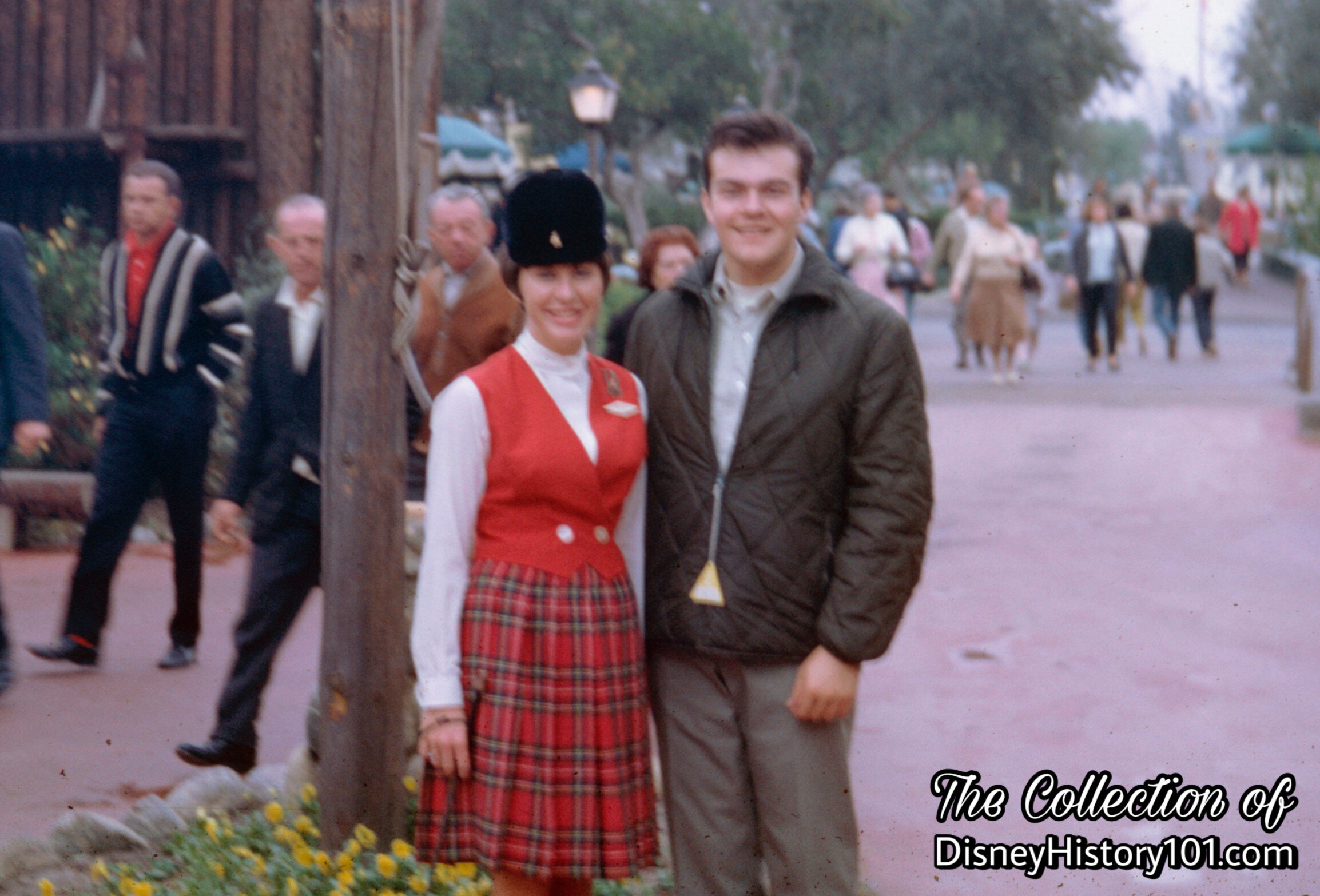
This same year (1964) Dick Dyer joined the staff of supervisors leading the Disneyland Guides during the summer. Just inside the Frontierland Stockade, a Disneyland Tour Guide and presumably a guest of her Tour Group pose for a commemorative photo near the Flag Pole and American Humane Association Plaque.
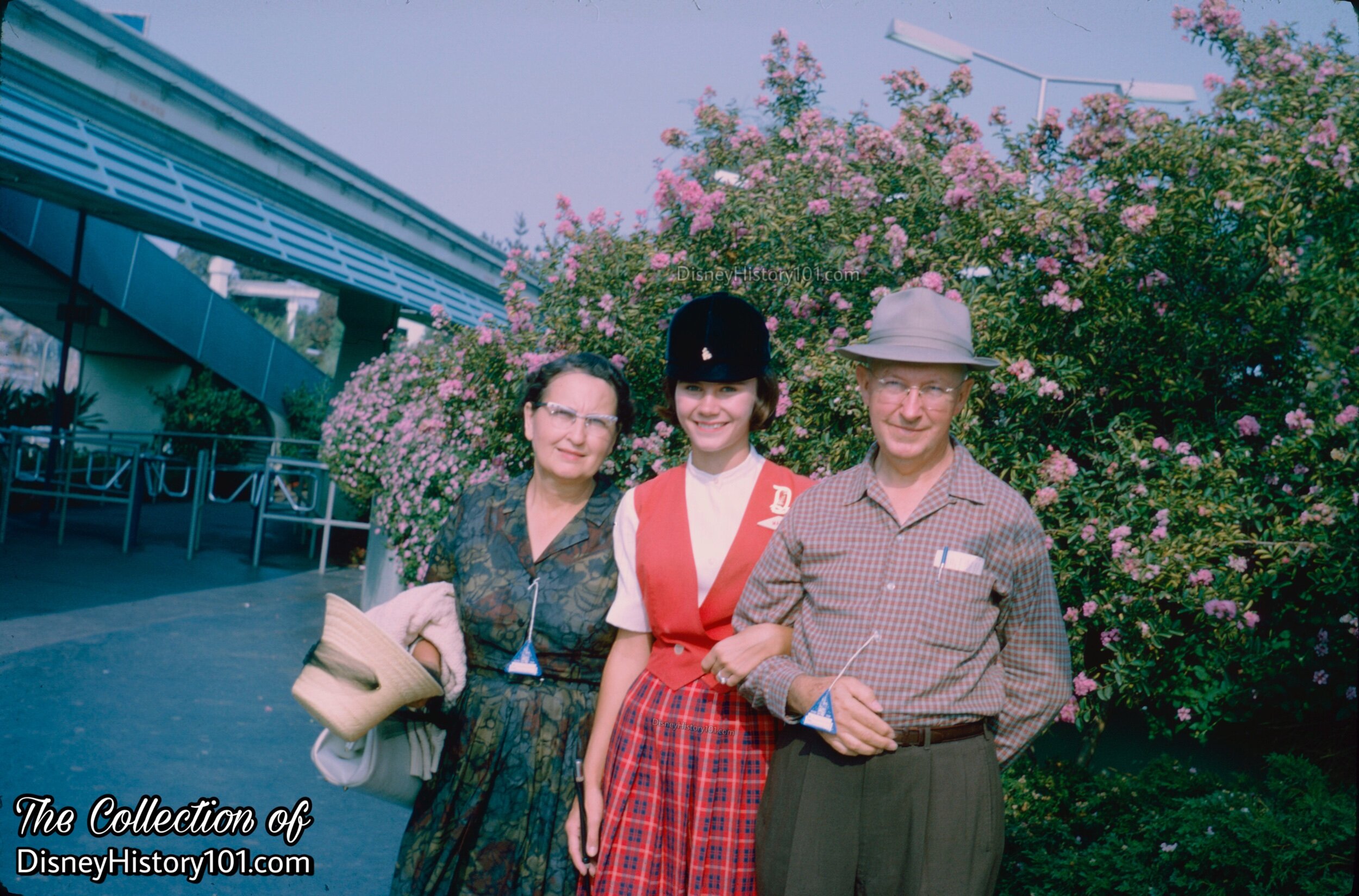
Basil and Leola make a memory with their Disneyland Guide near the Submarine Lagoon and Monorail Station with its Speedramp!
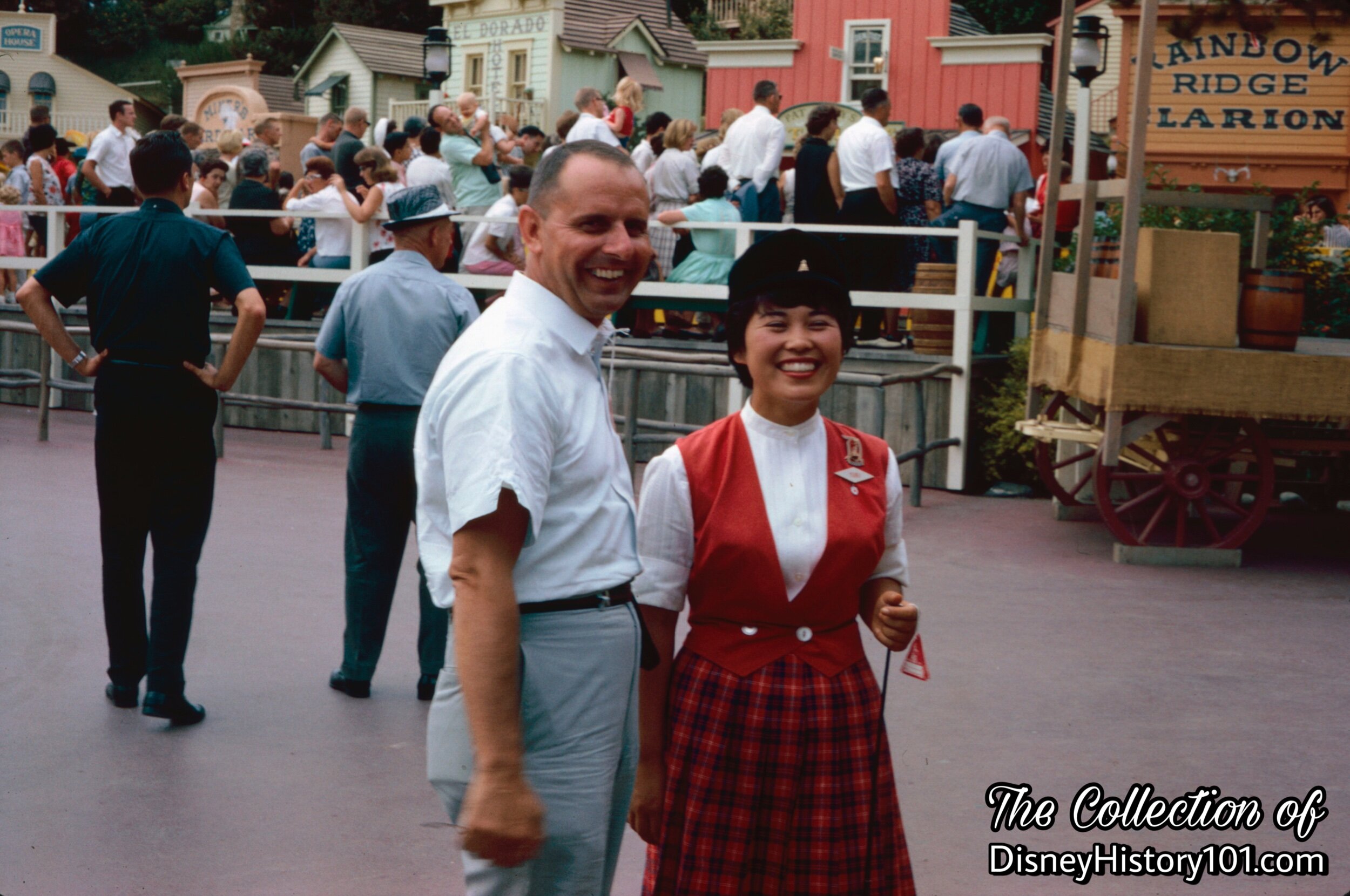
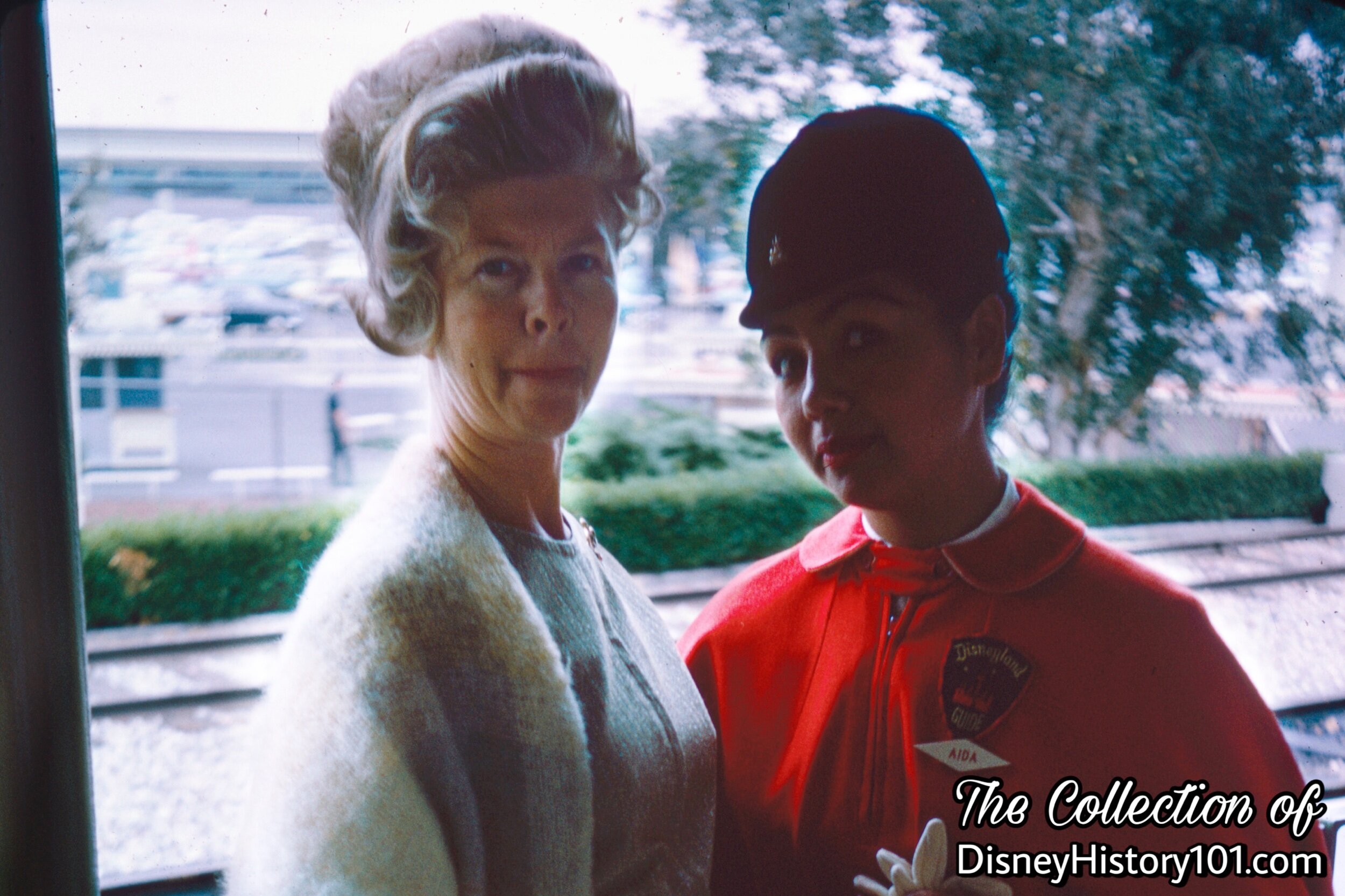
Hostesses were reminded to never turn their back on a guest while taking tickets and using a counter. Even in the case of a bilingual tour group requiring an interpreter, Hostesses spoke to the guest. This was a job which must be done, but attention to the guest was their first concern as demonstrated by Alice Shinmoto (above).
“Disneyland is People,” and this is especially evident through the friendly and courteous examples of the Disneyland V.I.P. Hostesses and Disneyland Tour Group Guides like Alice (pictured above). For this reason, Disneyland Hostesses (and Hosts) of this “people to people production” were often spotlighted in advertisements, in brochures, and within the pages of Vacationland. The “People” pages of Backstage Disneyland magazine would continue to occasionally familiarize Disneyland Cast Members with fellow Guest Relations Hostesses like Anne Daniel (1964), Rita Walther of West Germany (1966), Shelia Mallory (1977) or Linda Cope (1977).
Speaking of the Disneyland Tencennial Celebration… the role of the Disneyland Tour Guide had become even more defined and refined by the year 1965! A special meeting of the Disneyland Customer Relations Department (Ben Harris, Bob Wormhoudt, Cicely Rigdon, D. Dyer and the Guest Relations Staff) was held on August 29th, 1965. The subject of the meeting were the “Guest Relations requirements.” According to “A World of Smiles” (published 1965), this, was owing to Tommy Walker (for the creation and continued growth of the program), Bob Wormhoudt (Disneyland Guest Relations Manager, 1963), Bob Norie (Disneyland Guest Relations Nighttime Supervisor), Cicely Rigdon (Disneyland Guest Relations), and Dick Dyer (Disneyland Marketing).
Disneyland Tour Guides were frequently featured in publications intended for guests, often introducing Guides by their first name, like Theresa (a native of Switzerland, pictured above), who joined the Disneyland Tour Guide staff c. 1962-1963.
“A World of Smiles ‘65 - Dedicated to the Summer Tour Guides 1965” was published in a limited quantity for the staff of Disneyland Guest Relations (and those Disneyland Cast Members affiliated with the Disneyland Guided Tour Program). The publication was intended as a retrospective bringing “memories and a proud recollection of the Tour Guide Program.”
A couple of pages focused on the “progress” of “yesterday.” Four entire pages contained photographs of almost 82 Tour Guides. A few Tour Guides were distinguished. For example, “the busy four” (Reiko, Arlene, Theresa, and Trudy), who select girls for the tours, Main Gate Service and for buses, and “form the tours in the garden, and keep the show going with a smile.” “The tabulating two” (Jill Young and Pat Fairchild) who tabulated surveys and produce the results via typewritten reports for a full eight-hour day.
Reiko Cox (pictured above) was a new Tour Guide for 1962, equipped to deliver the tour script in Japanese. Her story is briefly told in Backstage Disneyland (published December of 1962).
Tour Guides sure knew how to relax and have fun! Back in 1965 (alone) the “Red Socks” were the victors of employee softball games (“topping the league”), against other teams (including Jungle, Submarine, and Marketing). “Even first timer, Cicely, was able to drive a few runs,” according to “A World of Smiles.”
Then (during July of 1965), the “Tour Guides… became the guided,” on “a trip to the Walt Disney Studio and WED.” That particular tour included a stop by the set of Lt. Robinson Crusoe (where Dick van Dyke appeared) and then watching Fred Mac Murray and Vera Miles practice their lines for “Follow Me Boys.” Finally a visit to WED revealed “what Disneyland’s future look will be… [including] the miniature of the Blue Bayou.”
Finally, “in a test of physical skill and coordination, the Tour Guides captured the women’s trophy in the recent canoe races. Lead by captains, Dalores Bramblett and Suzi Palomares, and the steering skill of Dale and Larry, the Great Tour Guides encircled Tom Sawyer’s Island in four minutes and thirty-one seconds. Storybooklanders and Ticket Sellers took, consecutively, second and third places. The outstanding group of rowers included such greats as ; Jill ‘Jump’ Young, ‘Radiant’ Rita Walther, ‘Beautiful Barbara Bennett, ‘Lovable’ Lynn Heuke, ‘Exciting’ Erica Jeide, Cheri ‘Stroke’ Lender, ‘Marvelous’ Marcia Miner. In the cheering section, special thanks goes to ‘Amazing’ Arlene Tafoya.”
This Backstage Excerpt proves that “it takes people,” as these six Disneyland Tour Guides (and others) were responsible for enveloping and mailing some 4,500 copies of Backstage Disneyland to readers! Disneyland Guest Relations Hostesses also were personally assigned to attend to V.I.P. and celebrity guests for the debut of Fantasy on Parade.
The “People” pages of Backstage Disneyland magazine would continue to occasionally familiarize Disneyland Cast Members with fellow Guest Relations Hostesses like Anne Daniel (1964), Rita Walther of West Germany (1966), Shelia Mallory (1977) or Linda Cope (1977).
Guests sure love taking photographs of their Tour Group Guides like Disneyland Tour Guide Marge. About the same time that Marge was a Hostess, 1,365,000 Guided Tour Tickets had been used from the program’s beginning until the Spring of 1966, according to a statement by Carl Freeberg (Admissions Department Manager), in Backstage Disneyland (published Spring, 1966)! About this time Guides had many additional responsibilities, including issuing Surveys to Guests.
Hostesses were instructed to “not visit with other employees while on work station.”
Approaching “its a small world.” During 1967, more than 200,000 guests experienced a most-memorable visit to Disneyland, through the eyes of one of Walt Disney’s personal representatives!
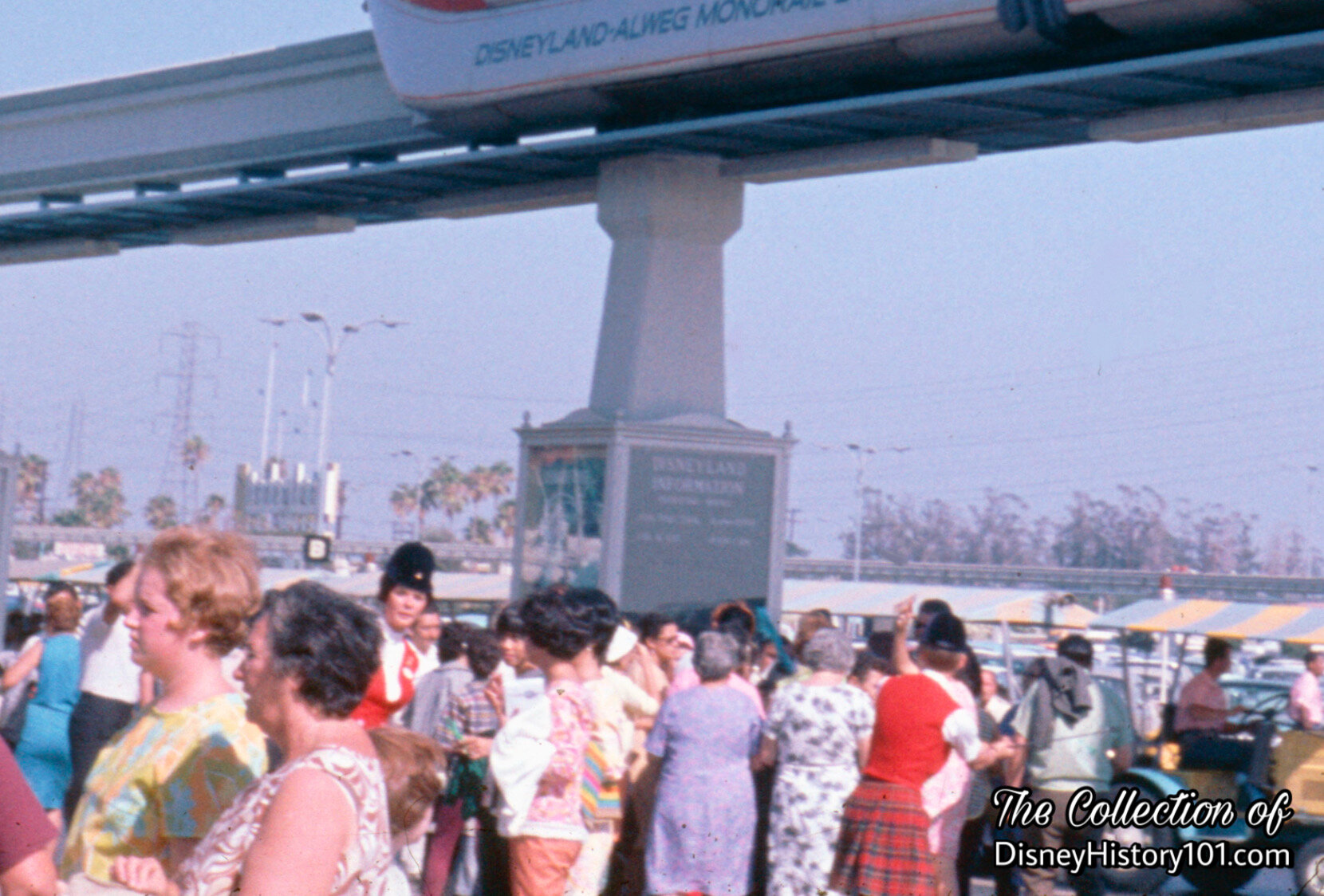
This Vintage View impresses many facts, including “until you are Backstage… You are always On Stage.”
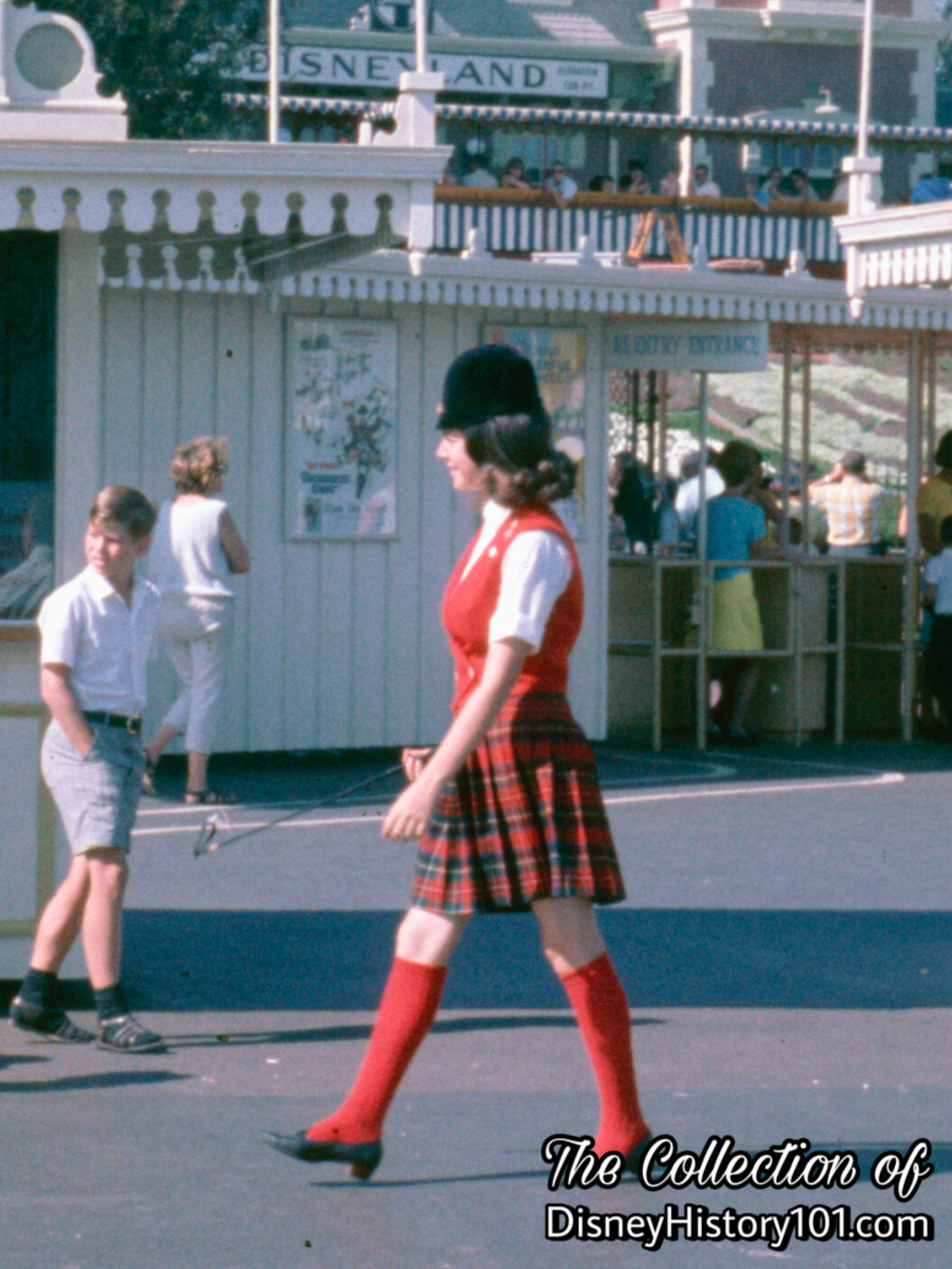
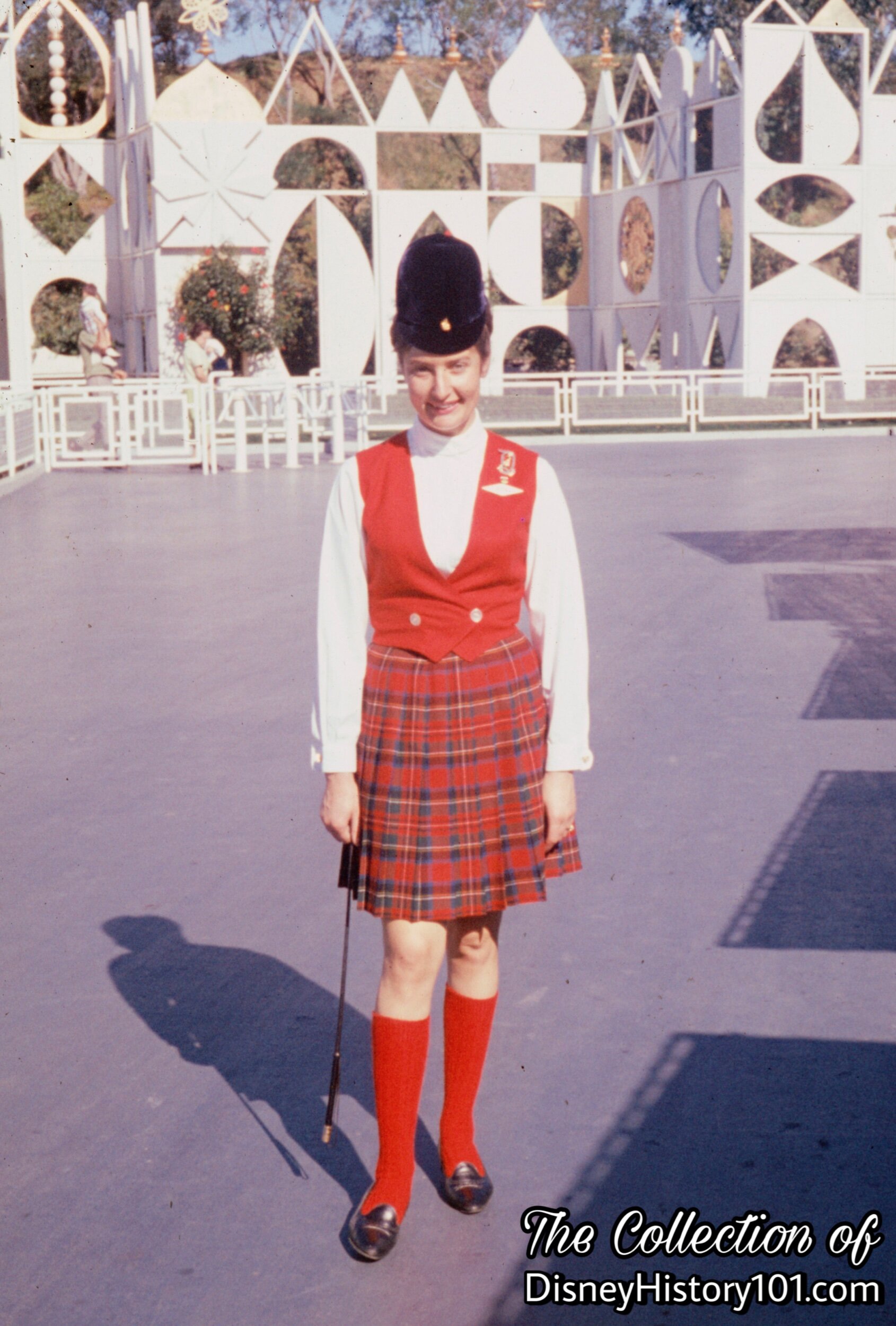
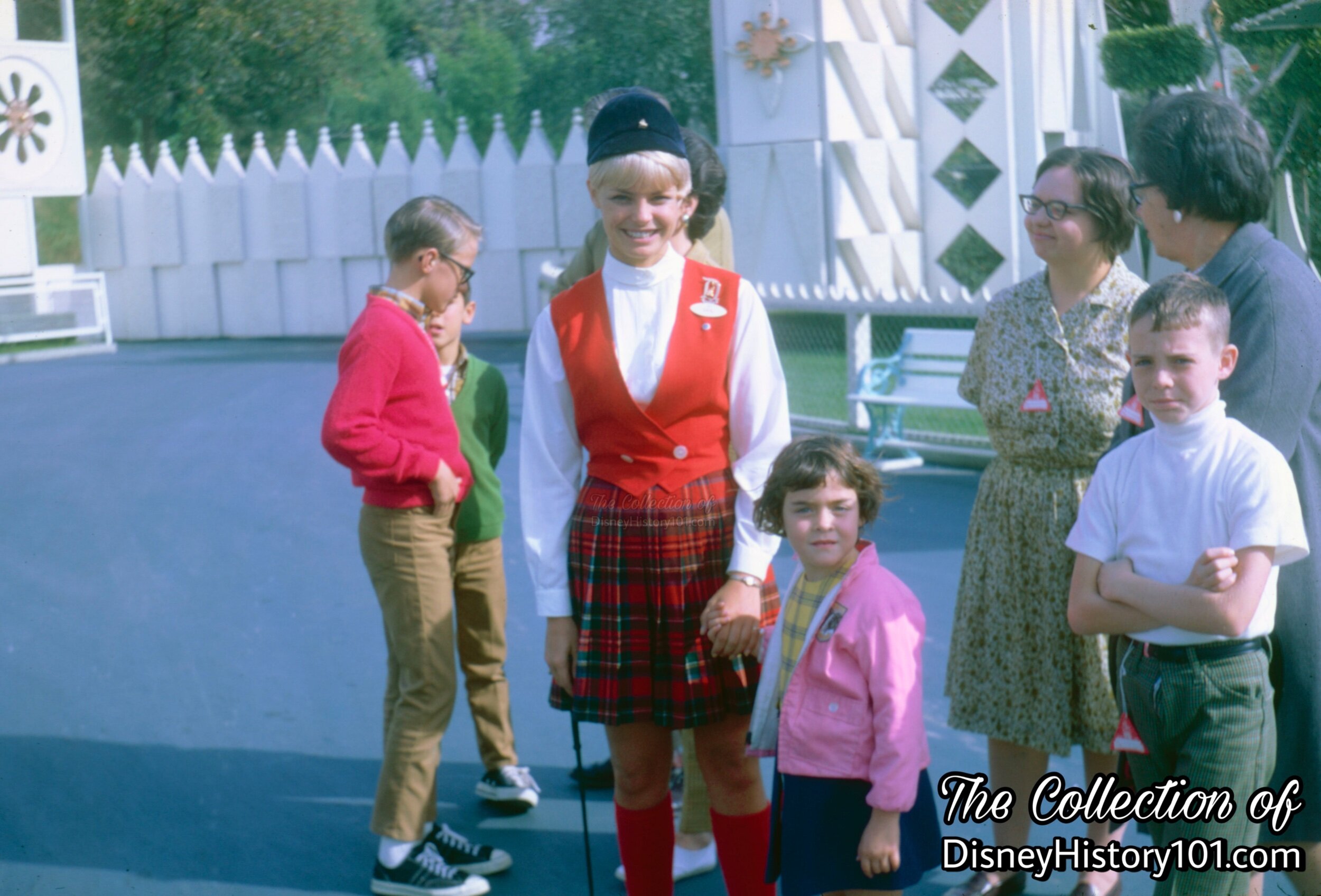
Guests (“Hank, the girls, and Gail”) with their Disneyland Tour Guide. By 1968, Donna served as Chief Hostess under Mary Jones (Public Relations Rep.) and Bob Wormhoudt (Public Relations Manager).
This same year (of 1969), some of the staff of Guest Relations fulfilled the role of VIP Hostesses for celebrities attending “Herbie Day” at Disneyland (also referred to as “Love Bug Day at Disneyland”). For instance, Connie Swanson tended to Dean Jones (star of the “Herbie” franchise).
Truly all who come to this happy place will find : “We love to entertain kings and queens, but at Disneyland every guest is a VIP.” (Walt Disney’s Disneyland - A Pictoral Souvenir and Guide, c. 1963). Yes, Disneyland Hostesses have always taken the lead when it comes to active interaction with guests of all ages and backgrounds (and especially children), as evidenced in this Vintage View.
Willie proves that a smile was essential, and a genial and friendly personality was the Disney style. Disneyland Tour Guide Willie demonstrates the art of ‘Guest Wrangling’ with her guests - a FIRS group!
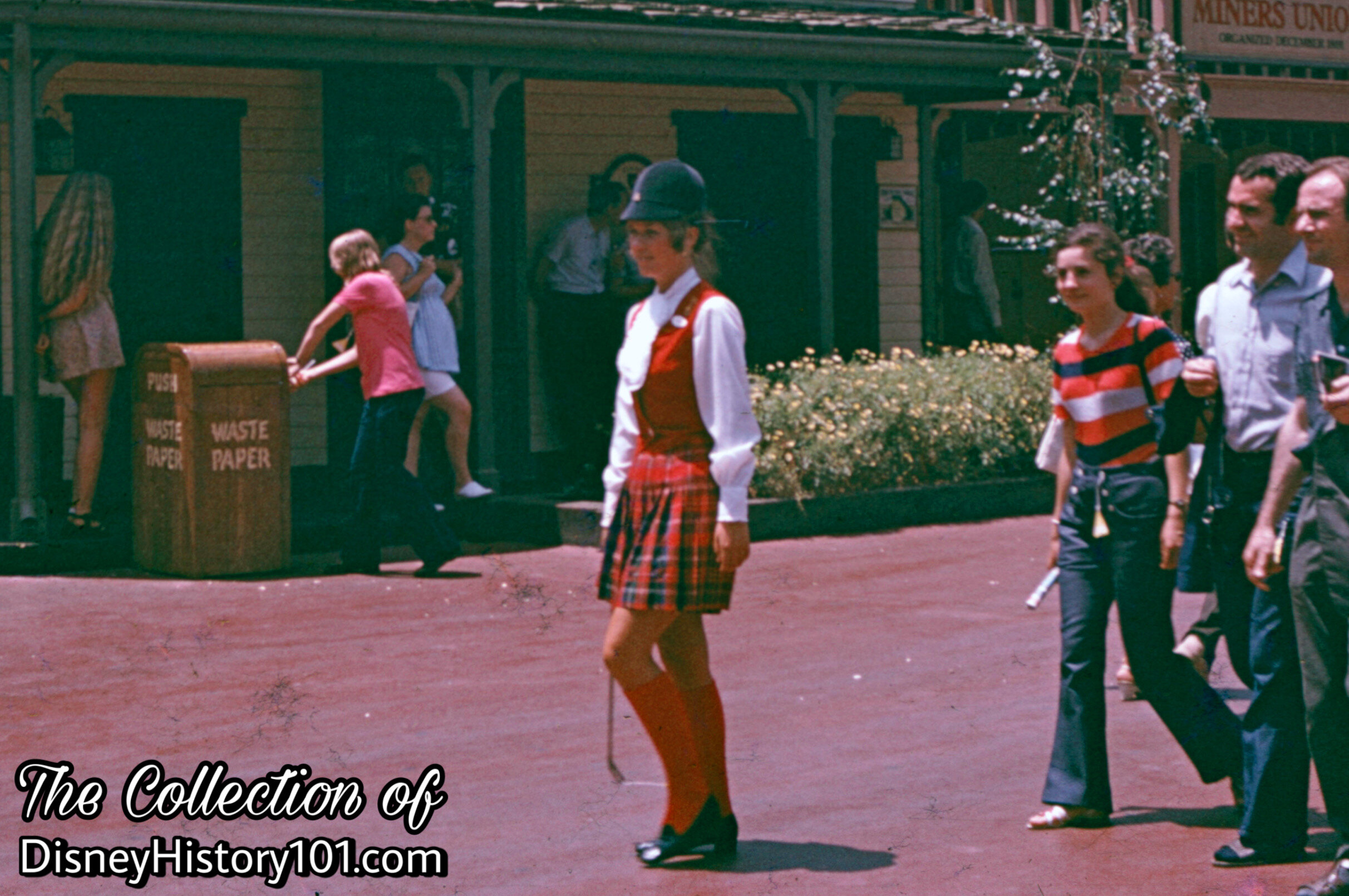
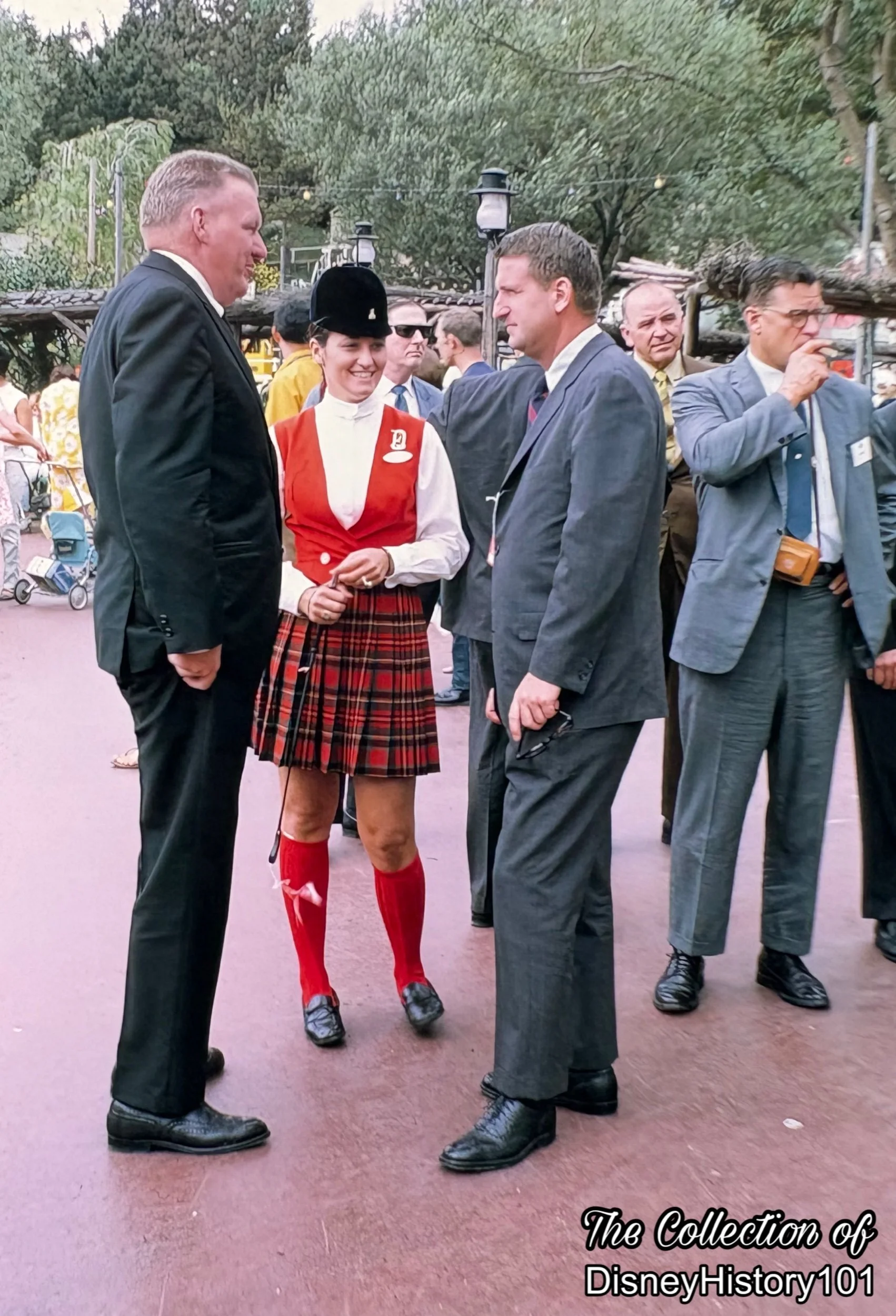
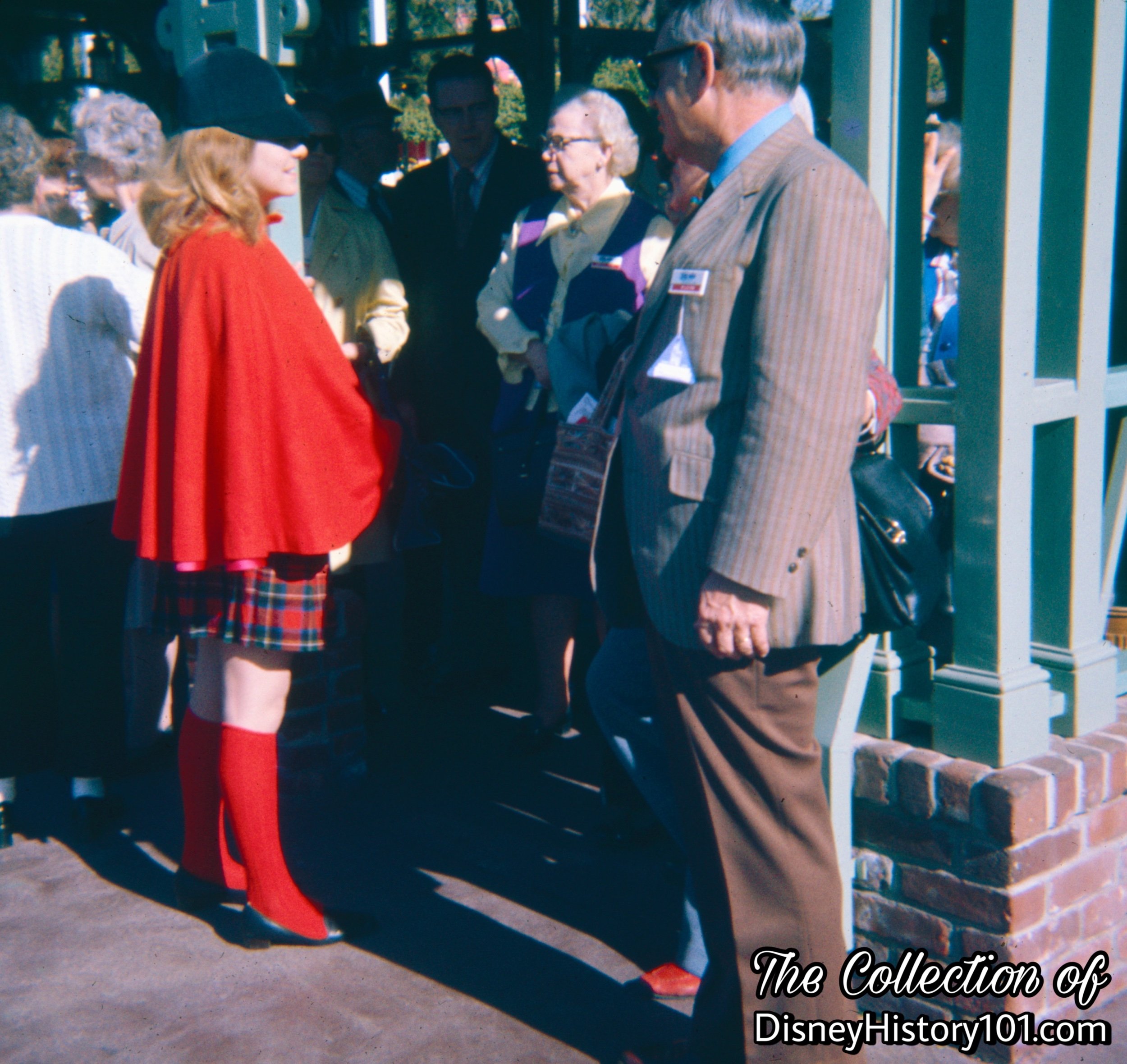
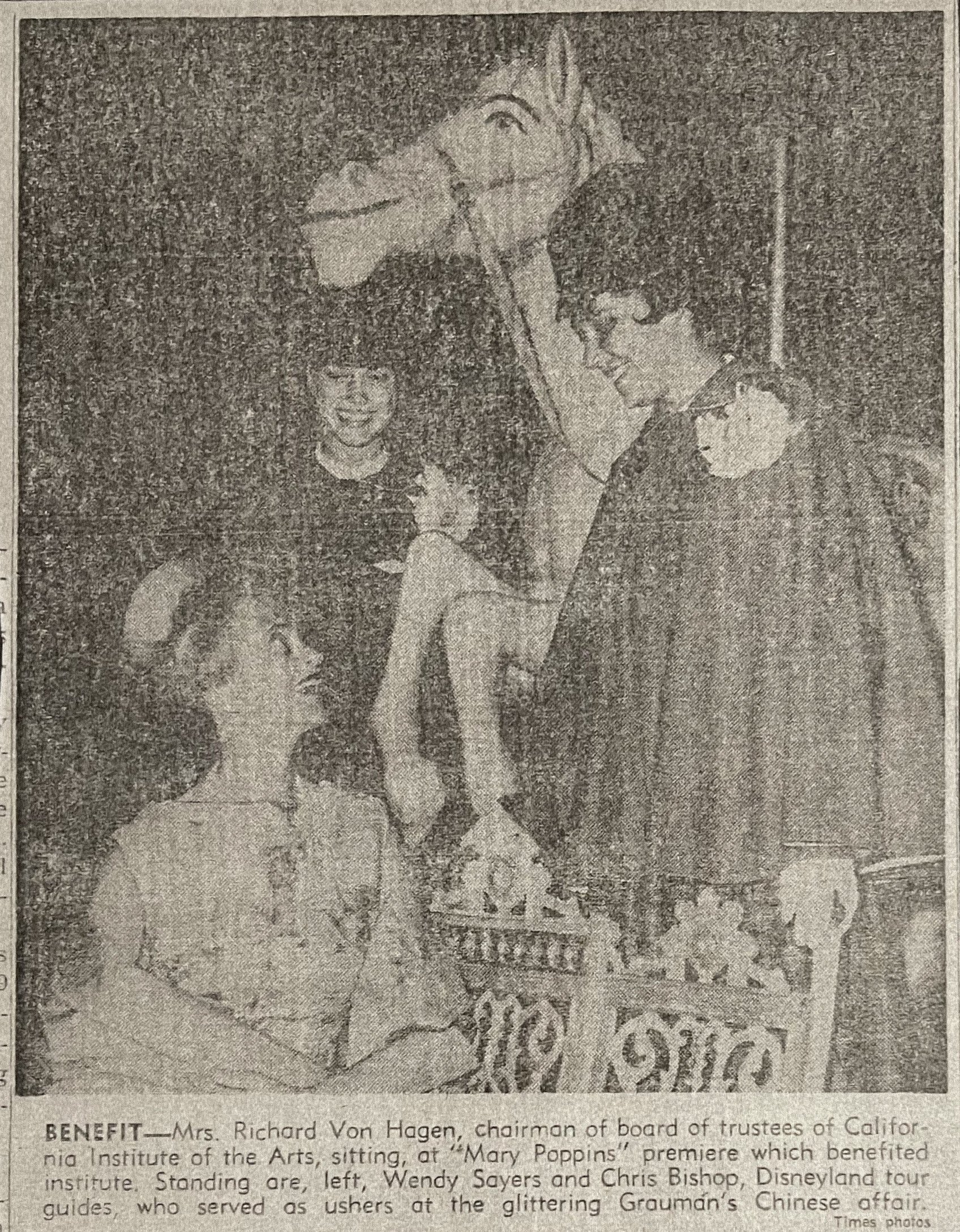
Disneyland Hostesses (and not just Disneyland Ambassadors to the World) occasionally supported events outside Disneyland. For instance, as far back as April of 1964, Ben Harris (of Production) travelled to Grauman’s Chinese Theater in order for a “picture survey for future promotions.” Very soon thereafter, Disneyland Hostesses (like Wendy Sayers and Chris Bishop) began a Disneyland tradition when they appeared at the premier of Walt Disney’s £2,600,000 film Mary Poppins at Grauman’s Chinese Theater on August 27th, 1964.
As far back as April 12, 1964, Ben Harris of Disneyland Production visited Grauman's Chinese Theatre to picture survey for future promotions. The postcard image (above) was photographed in 1967.
It may be hard to see from this vantage (above), but (if you look closely) you can see the many Disneyland Hostesses that supported the world premier of Walt Disney’s Jungle Book at Grauman’s Theater in Hollywood, California, on October 18th, 1967! As a “sidelight,” the event (attended by the Disneyland Guides) was the first “Family Premiere” for a Walt Disney Production (for underprivileged children of the Los Angeles area), with proceeds benefitting the animal acquisition program of the Greater Los Angeles Zoo Association. Later, while “touring for the Carnation promotion, Mickey Mouse and a Disneyland hostess… [were] greeted by Governor of Arizona, Jack Williams, at the Arizona Retail Grocers Convention,” according to “A Report To Disneyland Lessees, Summer ‘68.” A Disneyland Hostess “Emily” appeared alongside the Osmond Brothers in the c. 1970 “Disneyland Showtime” episode of “The Wonderful World of Disney.”
In 1971, Disneyland hired the distinguished Martha Blanding as the first full-time Black Tour Guide. She would go on to Host VIPs like Elton John, Cher, Diana Ross, Cary Grant, Bob Hope and other celebrity royalty as they visited “the happiest place on earth”.
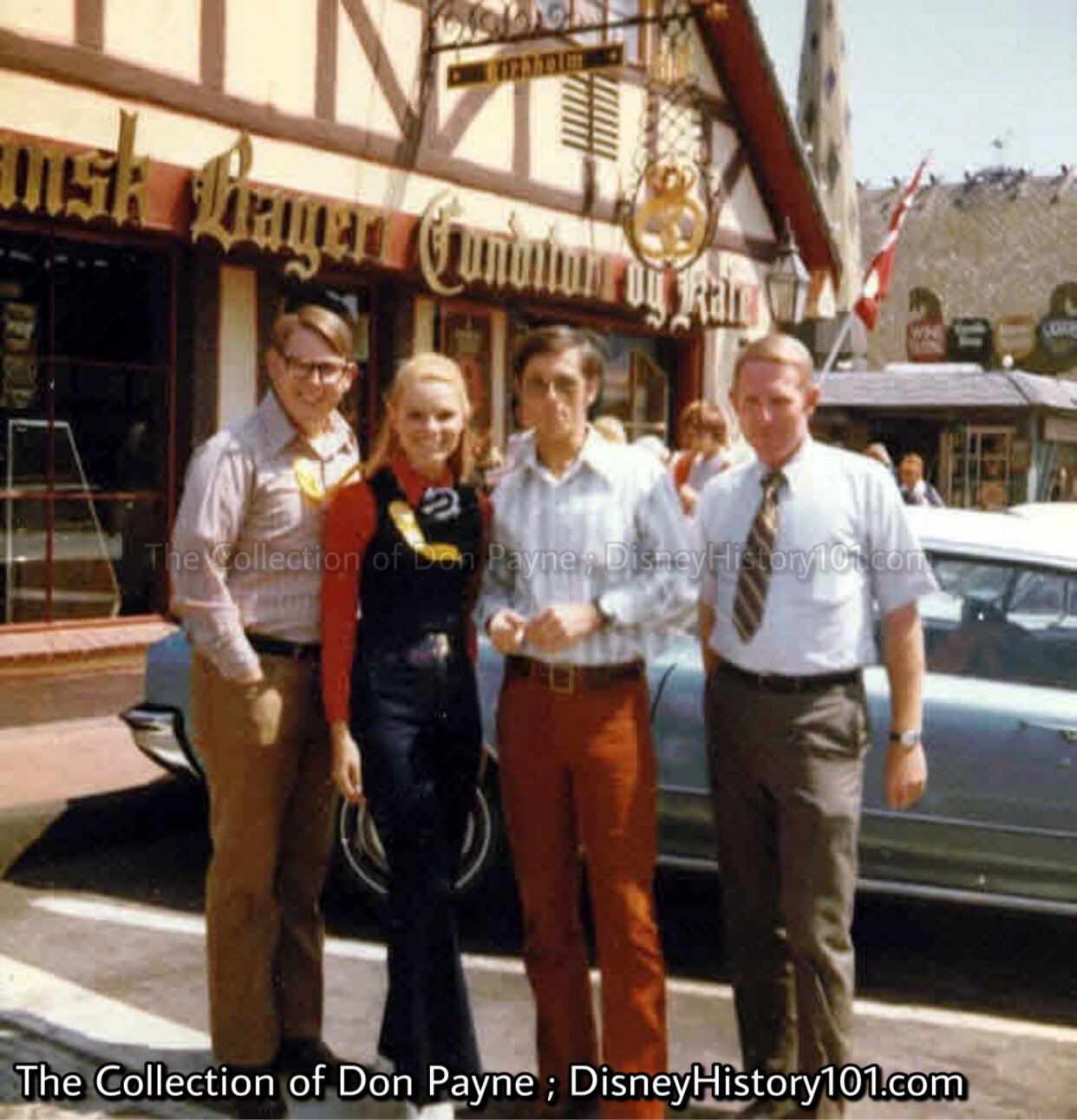
Disneyland Tour Guides occasionally engaged in Promotional Tours for Walt Disney Studio feature films & new Disneyland attractions. Promotion of the Country Bear Jamboree (June 13, 1972), with Don Payne (Wendell), Joan Valent (Disneyland Tour Guide), Mike Neumeister (Shaker), and Dick Dyer (Director Disneyland Marketing).
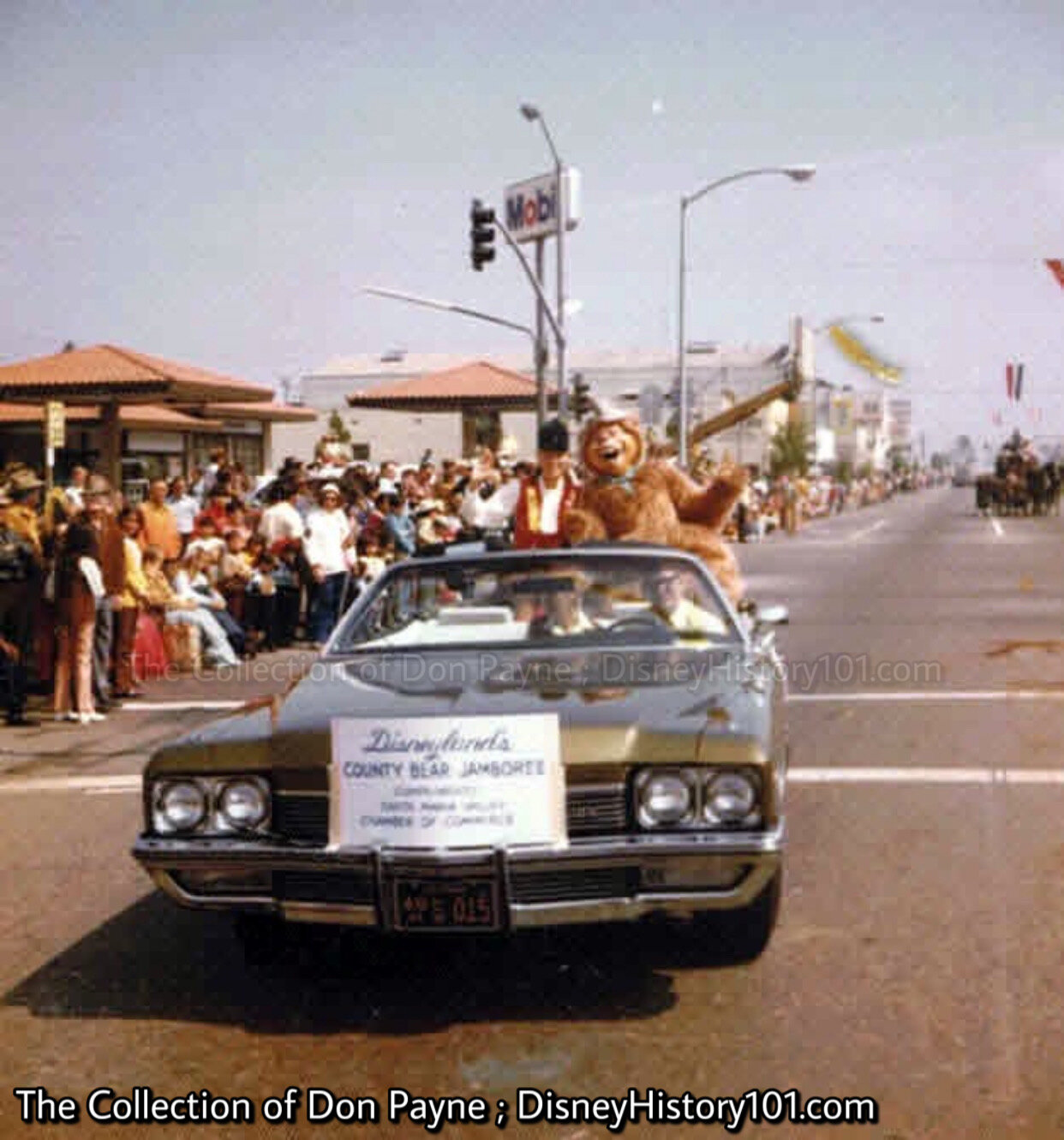
Santa Maria City Parade June 3, 1972, Joan Valent (Disneyland Tour Guide) and Wendell Bear promote the opening of the Country Bear Jamboree!
In addition to all these responsibilities, the staff of Disneyland Guest Relations also knew how to relax! New traditions were added, like the Guest Relations Annual Banquet which offered an opportunity for relaxation, refreshment and bonding with fellow Hostesses and Hosts (during the early 1970s, about 200 attended these department functions).
From the 1970’s thru the 1980’s, the annual Tour Guide Cookbook (in which Guest Relations Staff submitted recipes), allowed Guides to share their creativity with fellow Disneyland cast Members who purchased copies. Perhaps you recall pleasing “you palate with such treats as Mango Ice Cream, Hungarian Spatzle, Chilighetti, Peach Yam Bake, or even Harpo’s Quiche.” (Thank you, Alicia Tello, Kathy Pitarra, Sherri Mason, and Judy Abel.)
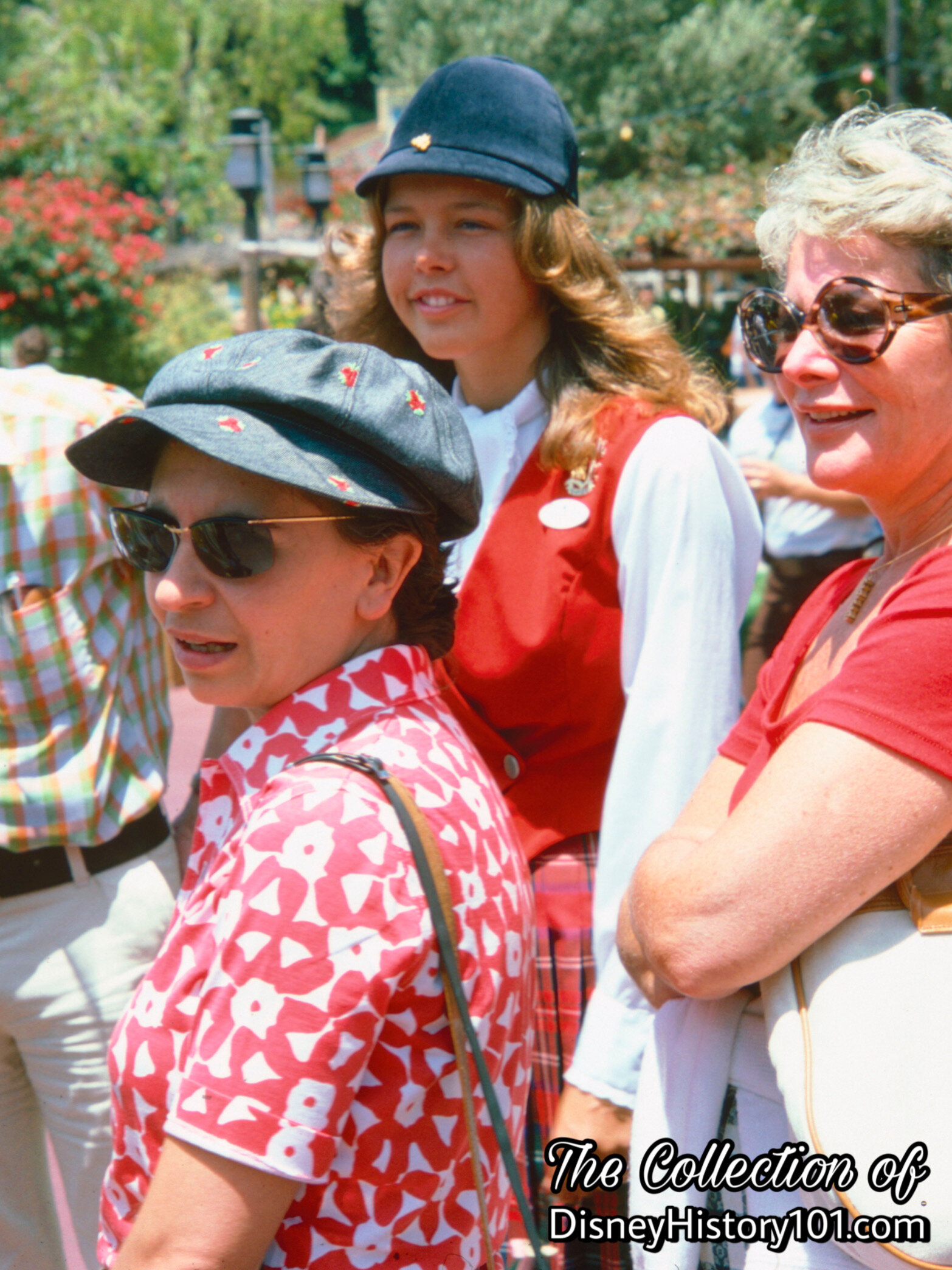
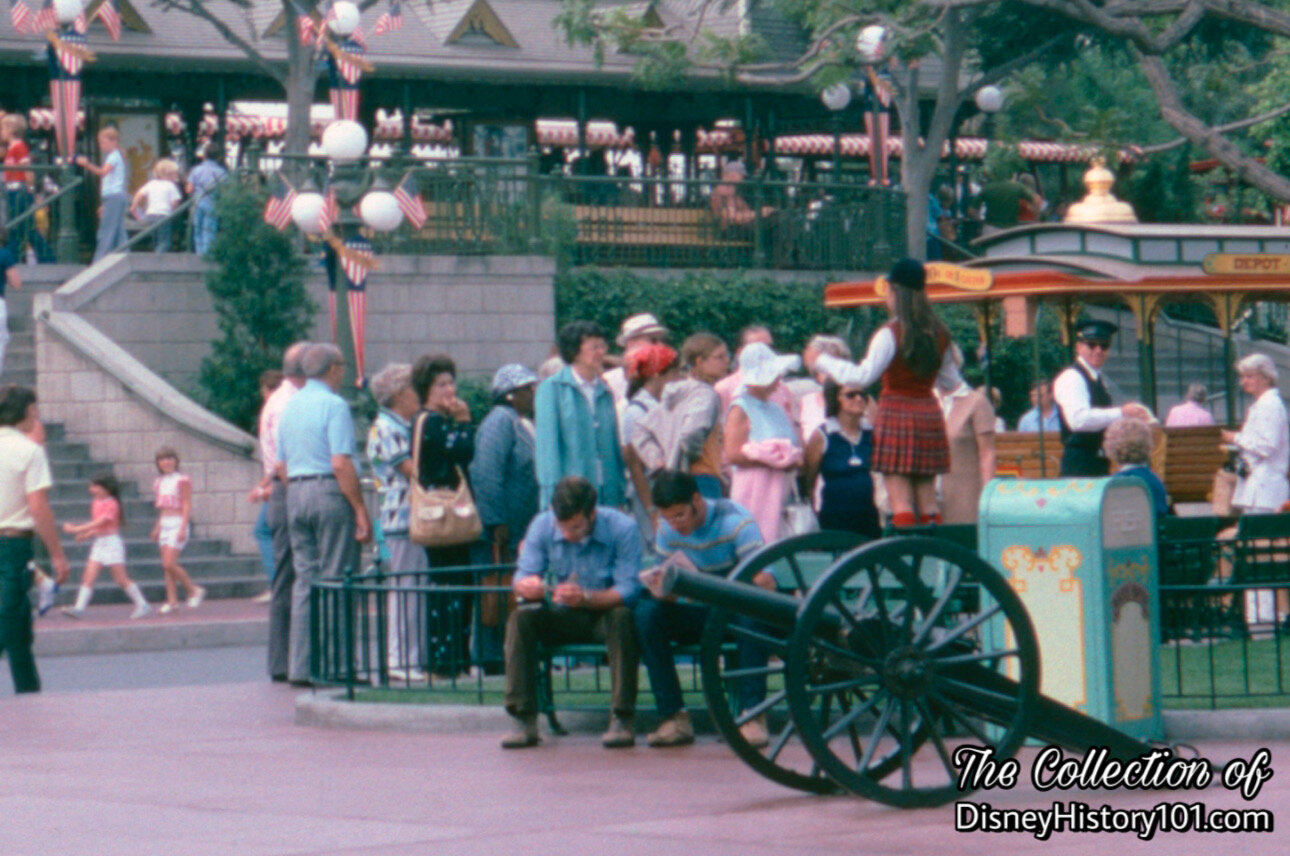
All the while, Disneyland Guided Tours and V.I.P. Tours never ceased!
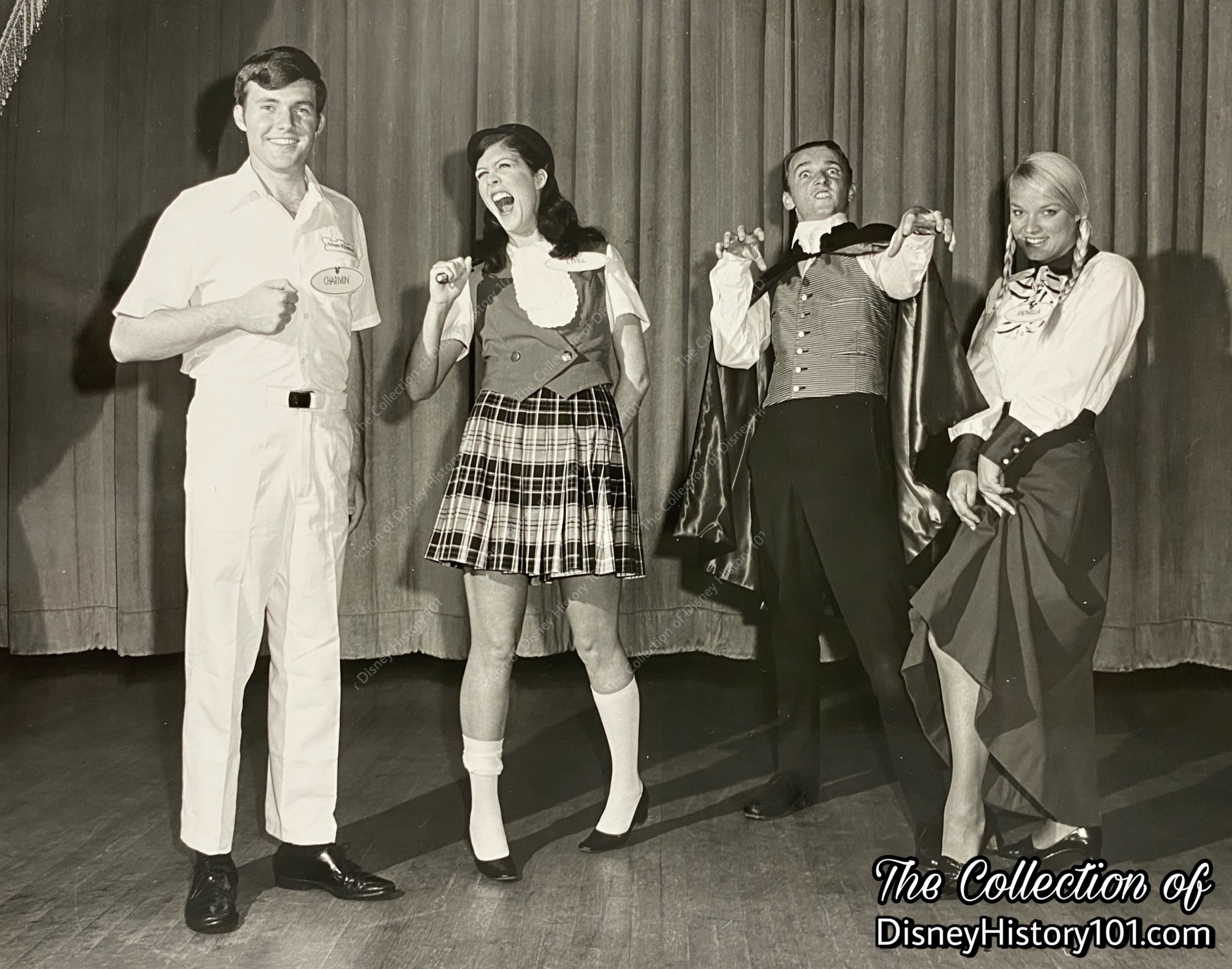
Van Arsedale France recalled: “‘Old Timers’ still remember what we called ‘The Spring Tonics,’ a morale builder for permanent cast members. Although it was fun, it was a serious attempt to improve morale by bringing some serious problems out in the open and laughing about them.”
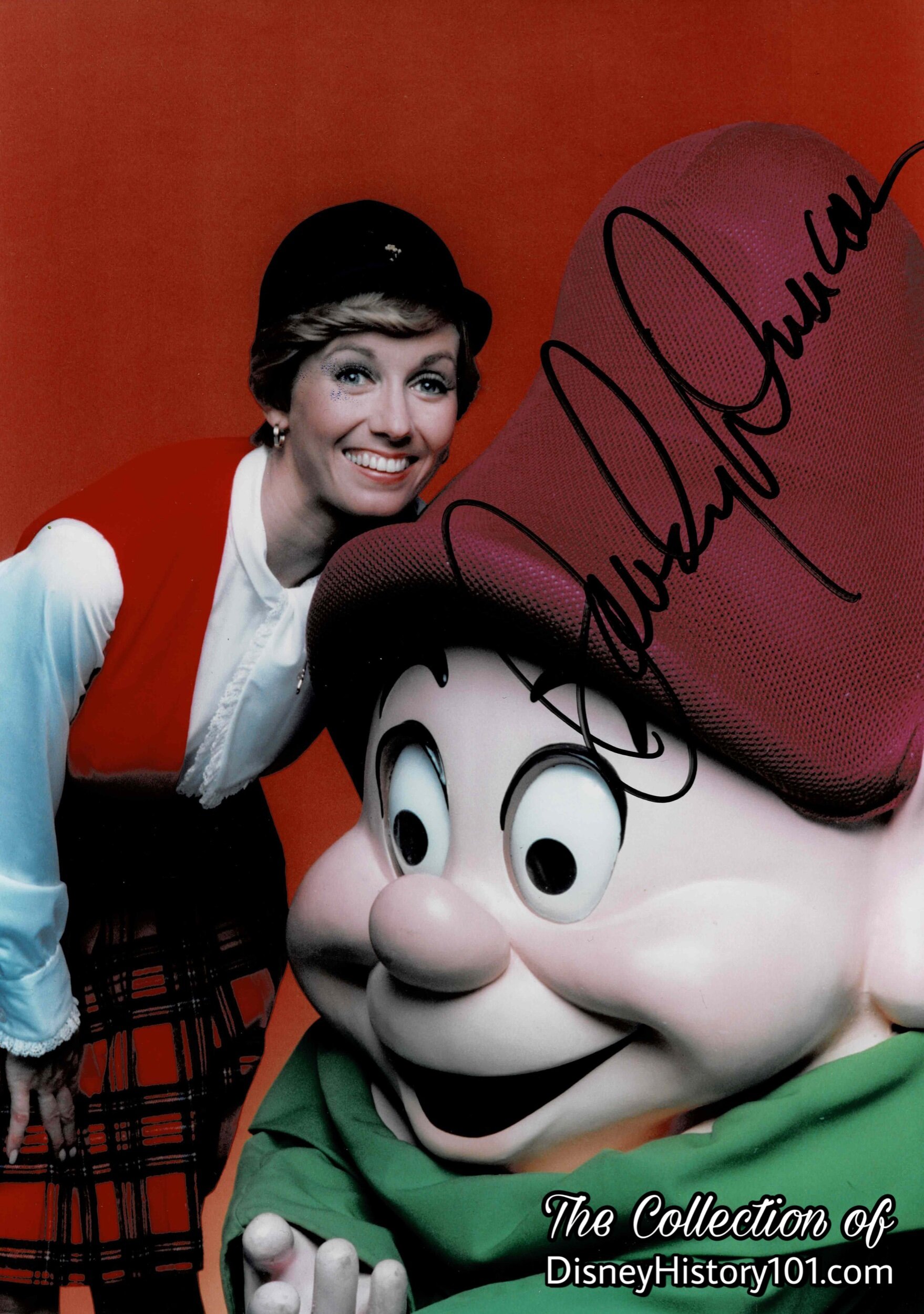
Actress Sandy Duncan portrayed a Disneyland Tour Guide in the “Christmas in Disneyland” television special of 1976!
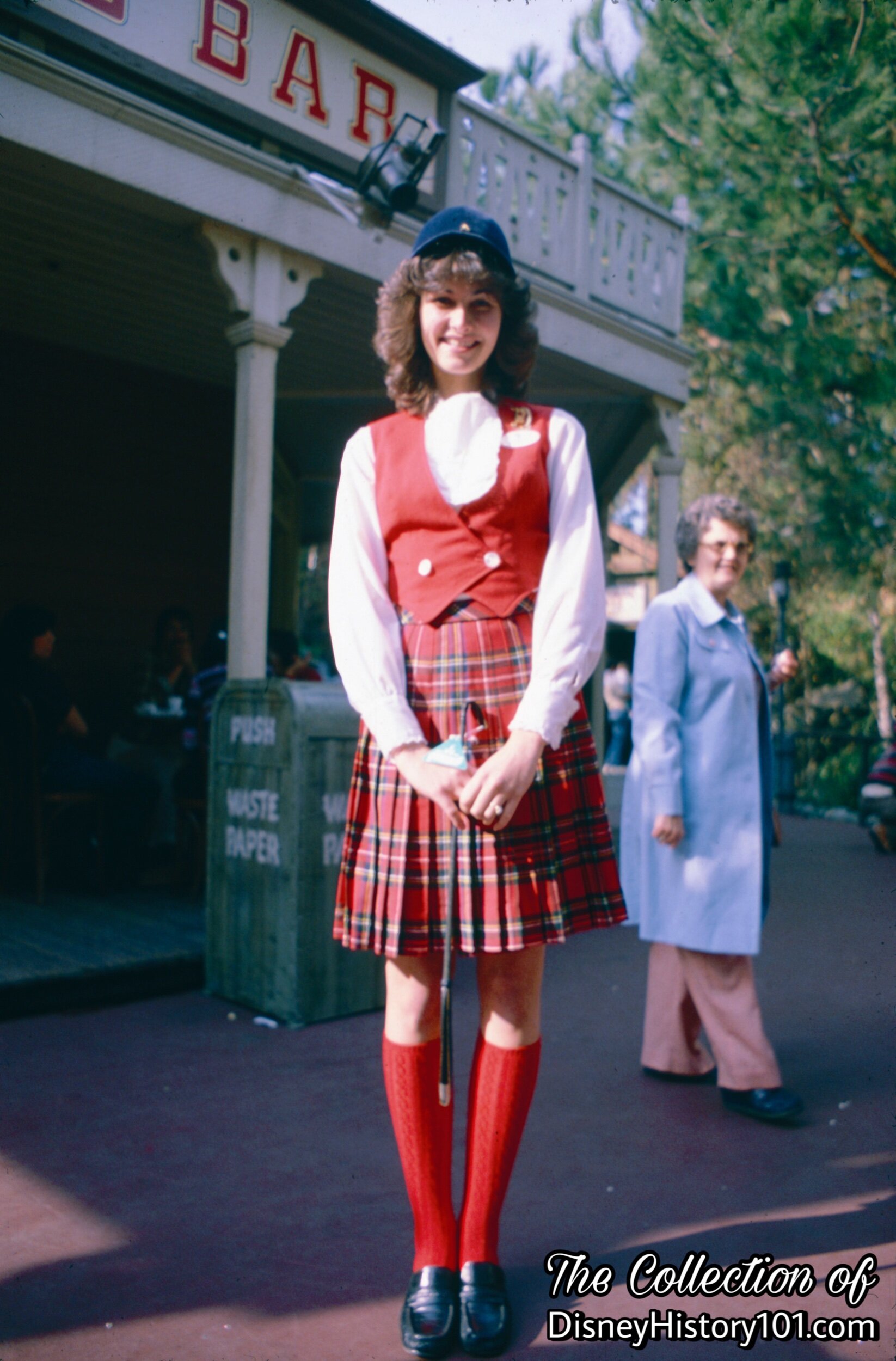
During 1941, Walt Disney became known as an ambassador of goodwill when the government organization Coordinator of American Affairs encouraged him to visit Latin American lands and make new friends. Walt not only select 15 of his artists to come along for the adventure, but his friends Donald Duck, Goofy and a few other animated stars.
Since then, Walt became renown as an “International Ambassador,” representing the United States and Walt Disney Productions before other peoples and in other lands. This was especially true during 1964, when Walt Disney was well represented at the 1964 season of the New York World’s Fair not just in-person, but by Walt Disney Productions-produced exhibits and displays, but by Walt Disney Studio Employees and Disneyland Hosts and Hostesses. The term “employee” was frowned upon, guides clarifying: “We are not ‘employees’… each of us is an ‘Ambassador’ or an ‘Ambassadorette’... official representatives of happiness.”
Some Disneyland Guest Relations Hostesses and Disneyland Tour Guides were among these “Ambassadors of Happiness” representing the park at the 1964/1965 New York World’s Fair. As a “sidelight” Cicely Rigdon fondly remembered her trips to the World’s Fair alongside Walt Disney. Regardless of the role they performed within the Walt Disney Productions family, all who were chosen to represent the Park in New York or anywhere else in the world were to perform their roles as “Ambassadors of Happiness!”
Walt’s pal Mickey Mouse exemplified the spirit of Disneyland and has likewise been referred to as an ambassador - the “Ambassador of Happiness” as Disneyland’s official greeter, according to Vacationland (Summer, 1963). This is a role Mickey has fulfilled since 1955, including during his visit to the 1964/1965 New York World’s Fair. In 1958, Mickey Mouse began to be assisted in this role of Ambassador by the Disneyland Tour Guides. This tradition has resulted in the Disneyland Resort Ambassador - “an official representative of the Cast that reflects and promotes Disney ideals and communicates the Disney philosophy to the world. The role of the Disneylands Resort Ambassador enhances the magic to our Guests, our Cast Members, and our community.”
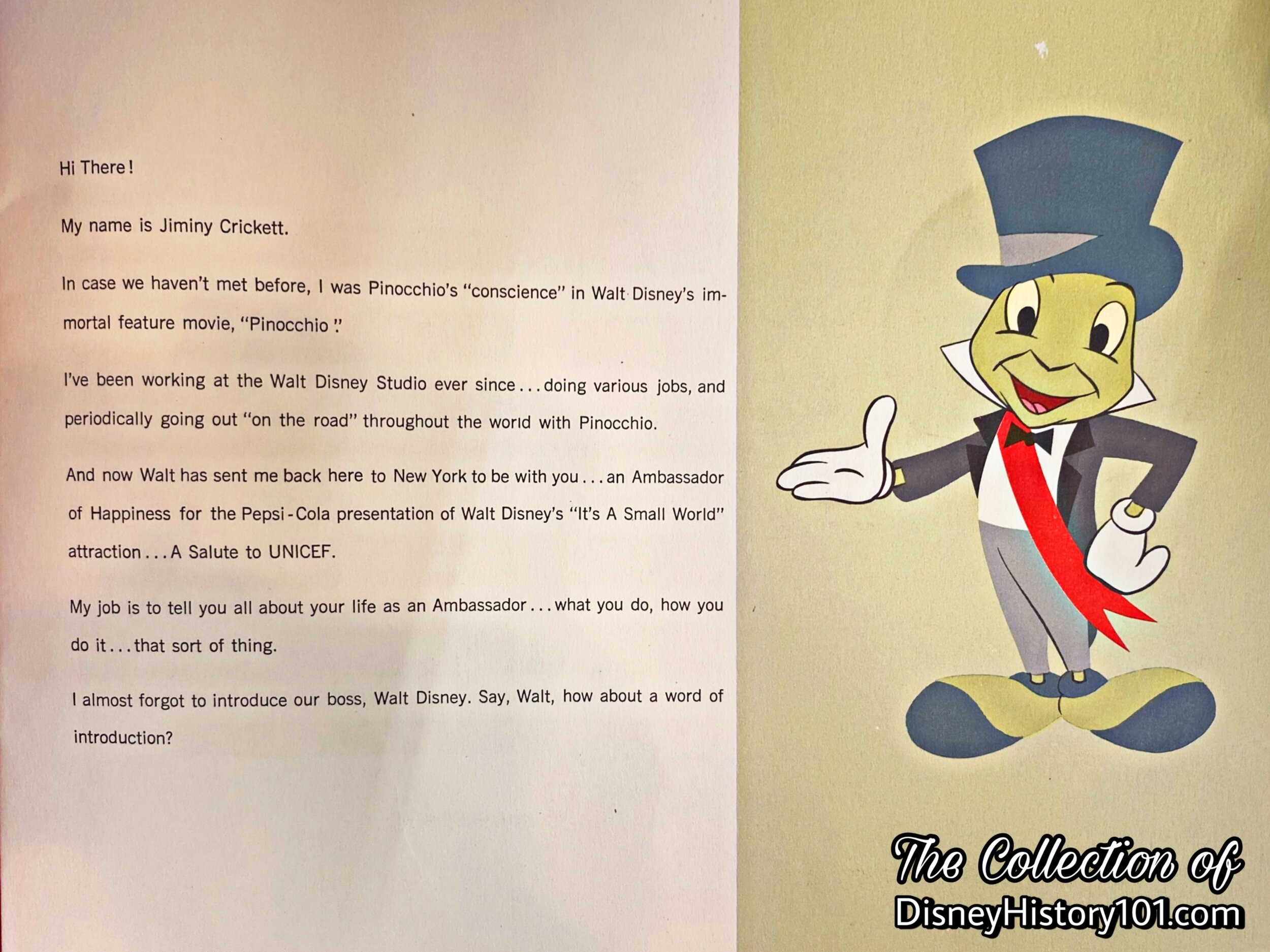
The end of 1964 was also the beginning of the celebration year of “Disneyland’s First Fabulous Decade”! With that, another distinguished role in the Disneyland show would lighten Mickey Mouse’s role further, when the Ambassador Program was established thanks to the creative mind of Jack Lindquist (and original Guide Cicely Rigdon serving as Ambassador Program Administrator)! The program (and role of Disneyland Ambassador) was certainly not a beauty competition in search of “the prettiest” Tour Guide or Hostess, and it wasn’t absolutely based on the accruement of facts and knowledge. The program would search (foremost) for someone who had a special (even, exemplary) “special feeling for Disneyland”…someone who was proud to represent Walt Disney and his imaginative dreams that have brought so much happiness to countless people around the world! Gwen Welsh [a c. 1970s Ambassador Program Coordinator] perhaps best summed up the role this way (to Disneyland LINE) : “It’s a year of hard work…self-improvement, wearing a genuine smile until it hurts, remembering at all times that you are Disneyland to the people who see you, and then finally its achieving those few minutes of a sudden glow you feel inside that tells you what you are doing is good, right and fun, because you’ve let people know that Disneyland is just that - good, right, and fun.”
With that, I invite you to please step this way (imagining yourself in attendance at a sort of “Ambassador Tea”), as we explore the following section. The following portion of the gallery has been dedicated to the role of the Disneyland Ambassadors, featuring some highlights (and “sidelights”) from their service to Disneyland (and diplomatic envoys the world) through the years!
1965 : Julie Reihm (Casaletto) was chosen “Miss Disneyland” 1964, (the First Disneyland Ambassador), in honor of the 10th Anniversary of Disneyland, in 1965. The “Walt Disney Productions Annual Report to shareholders and employees” (for the fiscal year ending October 3rd, 1964), reported : “As ‘Miss Disneyland,’ she will play an important role in the Tenth Anniversary observance throughout 1965. Miss Reihm will travel to most of the 50 United States and many foreign lands. Current plans call for a European tour followed by trips to South America, Canada and the Far East. She will meet people from all walks of life extending an invitation to the many special Tencennial events at Disneyland and bringing a personal touch of Disneyland to those she meets.”
And so Disneyland’s Tencennial Ambassador, Miss Julie Reihm carried the Disneyland spirit of happiness around the United States and many foreign countries (across Latin America, Asia, Australia, and Europe) assisting Walt Disney in making both domestic and international appearances. Julie co-starred with Walt Disney himself, in the “Disneyland 10th Anniversary” episode of Walt Disney’s Wonderful World of Color, first aired 1965. Julie recollects (to a c. 1977 Disneyland LINE reporter) : “The highlight of my year was to see Walt smiling from ear to ear about a new idea - a new project, and feeling his boyish excitement. He was a genius of an artist.”
Owning to these appearances, Julie had the pleasure of meeting many wonderful contributors (like Mary Blair and Rolly Crump), and see many attractions in development (like the “Museum of the Weird” which became the “Haunted Mansion”). The First “Ambassador to the World” also travelled to “Europe, Canada, Mexico, Australia, New Zealand, Japan and throughout the United States,” according to “The Disneyland Diary”.
Julie was even transformed into a “cutout” paper doll (ask your parents about these), featuring both of the outfits she wore for the filming of the “Disneyland 10th Anniversary” episode.
The "Walt Disney's Vacation in Disneyland" A Gold Key Comic, (Published 1965) was a tribute to Disneyland’s “first fabulous decade”! The comic featured stories starring Donald Duck, Mickey & Goofy, Scrooge & Gyro, the Big Bad Wolf, Daisy, Minnie, Grandma Duck, Clarabelle, and Scamp with Chip n Dale. Of course the setting of all of these stories was the Disneyland Stage, and various thematic elements based upon popular Park adventures. Inside the cover, were quite a few images “Celebrating Disneyland’s Tencennial”, including this brief paragraph introducing Miss Disneyland, Julie Reihm to the world (pictured above)!
Julie was highlighted in this newspaper supplement excerpt (published some time during Disneyland’s Tencennial celebration, and before the end of Julie Reihm’s term as Disneyland’s first Ambassador). In a few words, she briefly shares what serving as Disneyland Ambassador to the World has meant for her!
According to Dave Smith (Chief Archivist Emeritus of the Walt Disney Archives), years after having the pleasure of serving as Disneyland Ambassador, “she is now Julie Reihm Casaletto, living with her husband in Virginia. She returned to college after her year as the first Disneyland Ambassador and never rejoined the Disneyland payroll, henceforth only returning to Disney for occasional special events. She was named a Disney Legend in 2015.” [Disney Facts Revealed by Dave Smith, 2016]
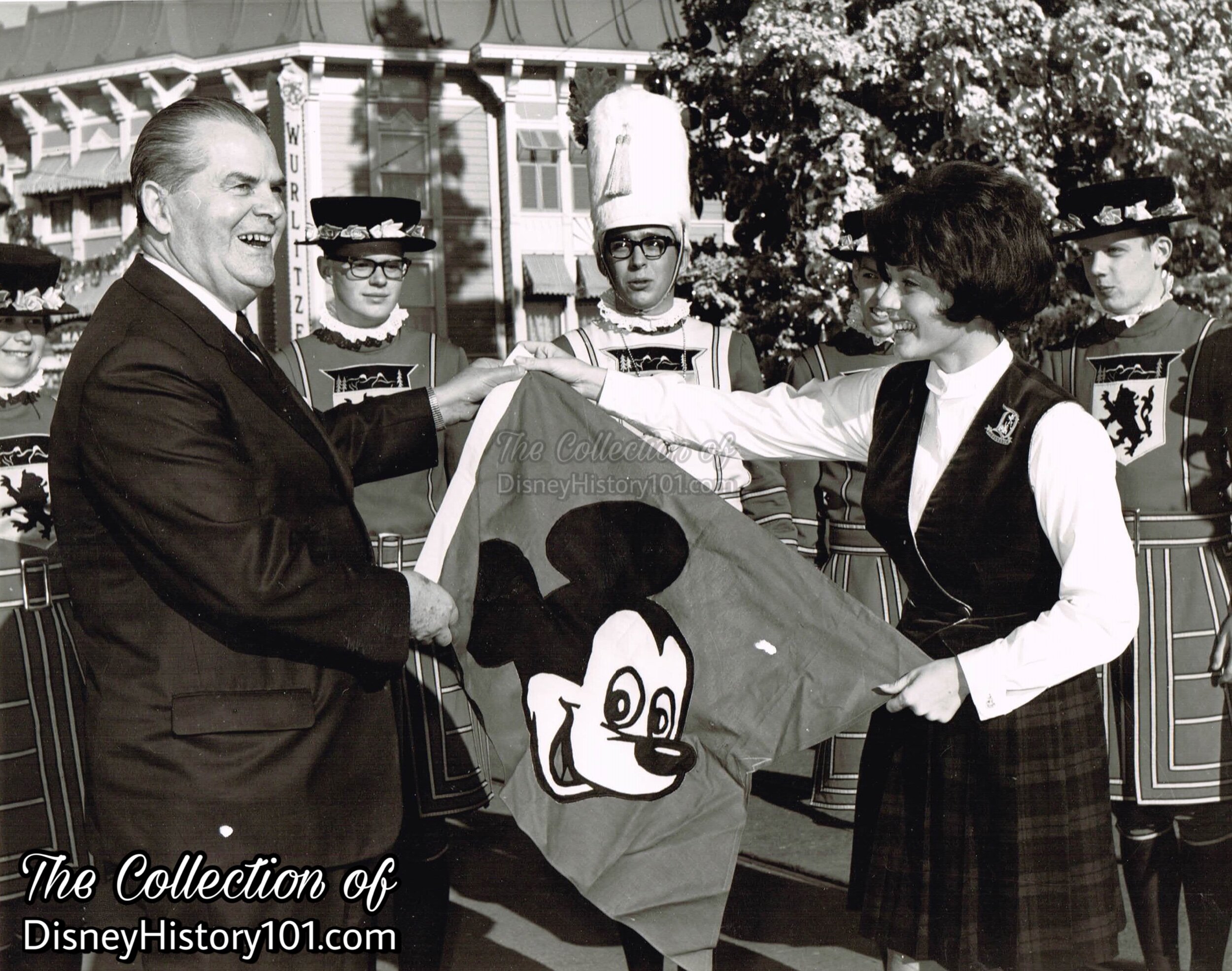
1966 : Ambassador Connie Jean Swanson (Lane) “toured the West Coast and other areas of the United States, plus Scandinavia, South America and Canada,” according to “The Disneyland Diary”. Among many aspects of her service, Ambassador Connie Swanson presented Premier William Andrew Cecil Bennett with the official flag of Disneyland during December of 1965! Connie (who was featured in a photoshoot with Walt, at Walt Disney Studios) once recalled (for c. 1977 Disneyland LINE) being part of what she called “the Old School of Disney” - “people who grew up in the shadow of Walt and experienced his fire and insight.”
1967 : Marcia Miner was first Ambassador to the World at Disneyland! For instance, when the 53rd Rose Bowl competitors visited Disneyland, Marcia helped host the Purdue Boilmakers and the USC Trojans. When Emperor Haile Selassie of Ethiopia was visiting Southern California in April, in order to deliver a speech (and receive an honorary degree from the university), Ambassador Marcia Miner (Phillips) welcomed him to Disneyland (on April 23rd), and personally chauffeured him down Main Street U.S.A. in a parade, aboard one of the Horseless Carriages.
She departed for the 20-day, 18-city tour celebrating Snow White and the Seven Dwarfs’ fifth release.
Marcia Miner also welcomed convention and trade show delegates from across the nation to Anaheim’s $15 million Convention Center which opened July 12th, 1967. Marcia can be seen in numerous advertisements published in a full-color nine page supplement appearing in “The Look” on June 13, 1967. Her contributions helped promote the “new” Disneyland (of the last three years) and its corporate sponsors in a magazine (the largest of its kind) circulation of eight million (that is, 40 million readers)!
However, Marcia also travelled the United States of America during her term.
Press Photo Caption : “For the City of Anaheim, California, the Disneyland family welcomes convention and trade show delegates from across the nation to the new $15 million Convention Center to be completed in time for its grand opening July 12 this year. Goofy left, with Disneyland’s World Ambassador Marcia Miner, Mickey and Pluto are next door neighbors in Walt Disney’s Magic Kingdom.”
Marcia also had time to promote Walt Disney’s Disneyland for this campaign, and even donning a space helmet for the opening of McDonnell Douglas’ Flight to the Moon (photos published in Disney News magazine, during the Fall of 1967).
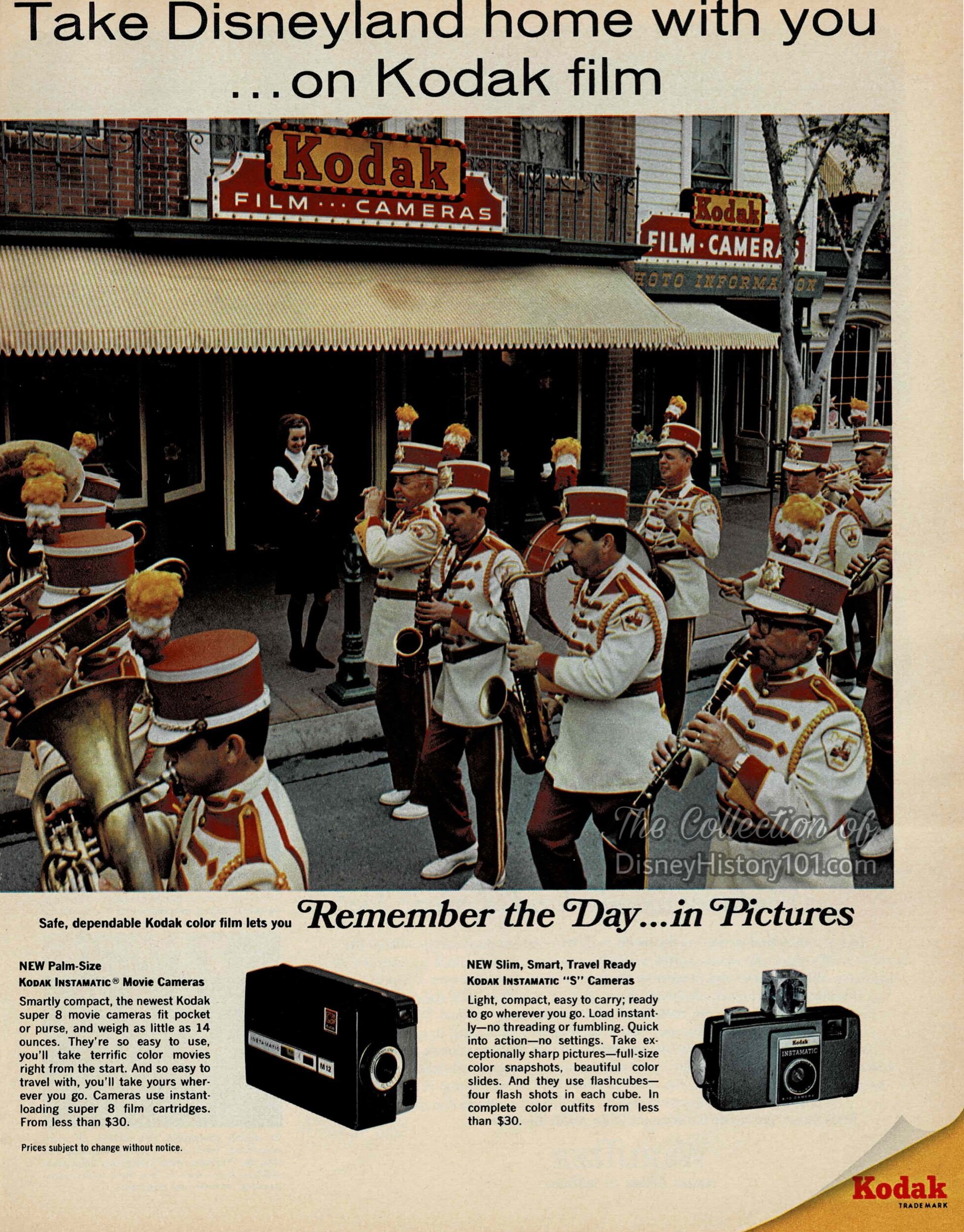
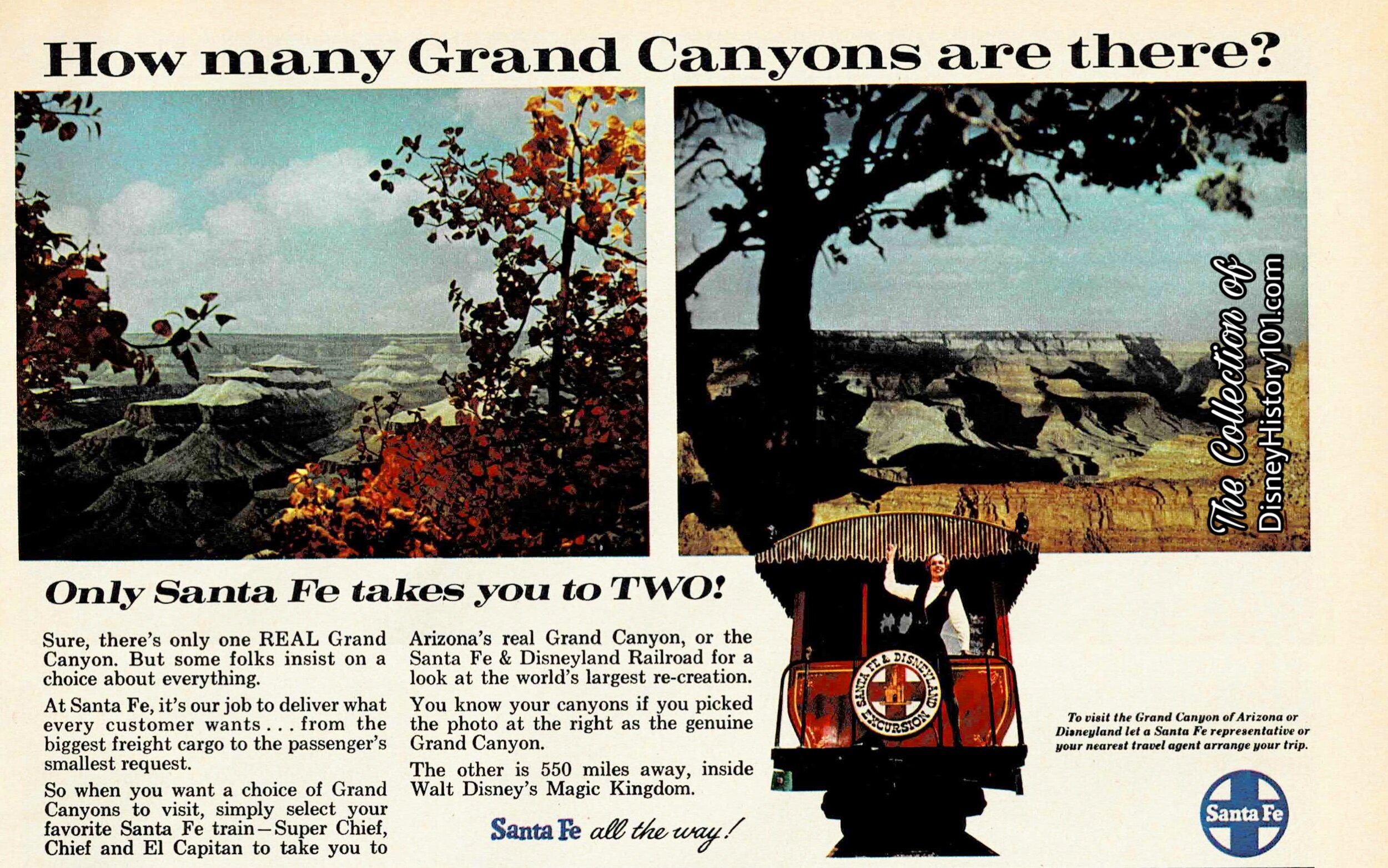
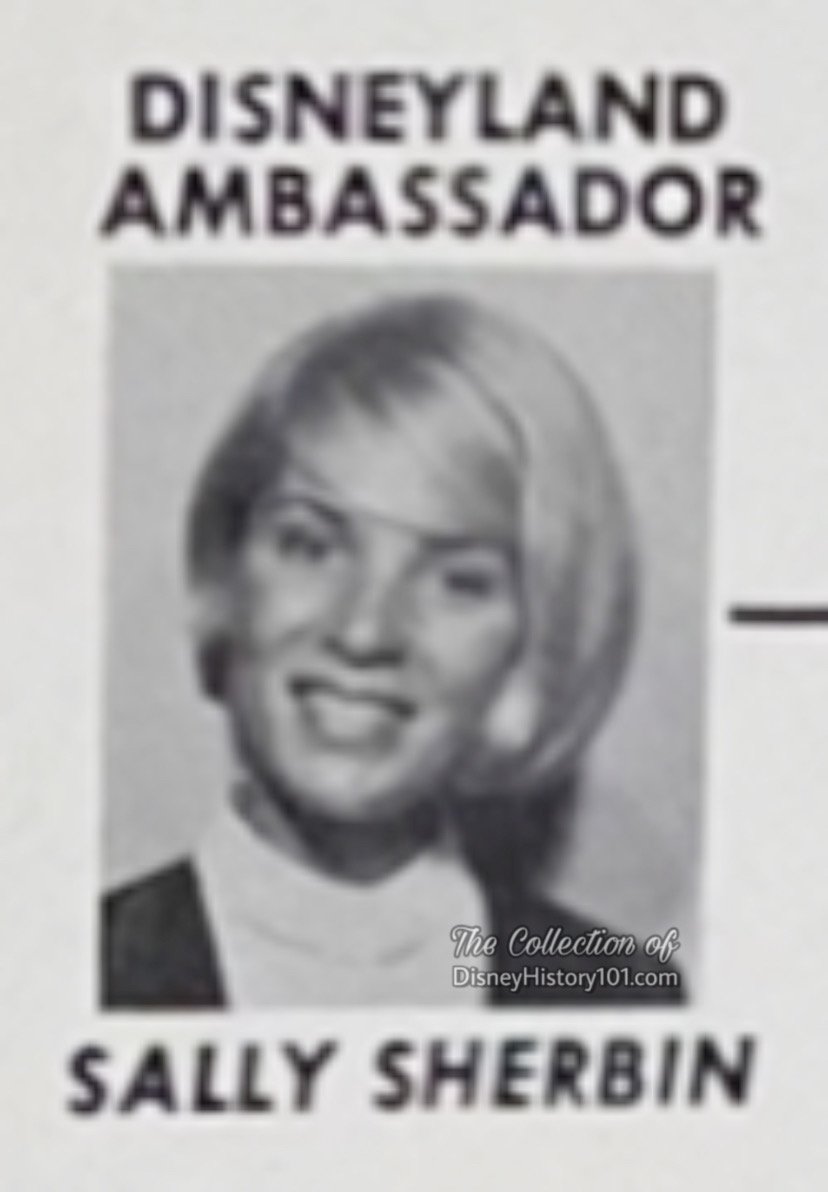
1968 : The finalists - Carla Blank, Jeannie Heaton, Peggie Fariss, Marcie Pickler and Sally Sherbin (all between the ages of 18 and 25) - met in Town Square and were presented bouquets of flowers. Then, the multi-lingual Sally “Sausha” Sherbin (a former Tour Guide and Carousel of Progress Hostess) was selected to represented the Park (and some 5,000 “Disneylanders”) as Disneyland Ambassador to the World. After being presented to the Anaheim City Council (and being named “Anaheim’s World Ambassador”), the Orange County Board of Supervisors named her “Orange County’s Official Ambassador.” One of her first duties came as she represented Walt Disney and Disneyland (as well as Anaheim and Orange County, California) in the Miami Orange Bowl Parade honoring “The Wonderful World of Color of Walt Disney”!
While at home, Sally had the pleasure of escorting several notable individuals! Sally escorted Florida Governor Claude R. Kirk, who had hosted her during the Miami Orange Bowl Parade. Sally escorted Laos Crown Prince Vong Savang (personally driving him around the Park). About this experience she recalled a “most embarrassing” moment to Disney News (Winter, 1967-1968): “‘The prince couldn’t speak English, but I knew French and we were so engrossed in conversation that I missed my turn driving the lead car and ran over Goofy’s foot - stalling the car on his long shoe, that is!’ Later, Prince Savang smilingly awarded Sally a Laotian good luck charm for being ‘the best driver in Disneyland’.”
Sally made a “guest appearance at… [the] Carnation Fun and Flavor Sweepstakes program. Altogether with Mickey Mouse, Sally and other members of Disneyland’s staff made more than 100 appearances on television, radio, and in-person at local supermarkets to assist the Carnation campaign,” according to “A Report To Disneyland Lessees, Summer ‘68.” This was a three-week-long promotion tour of the west, requiring a lot of traveling and appearances. Sally remembered one of her biggest challenges to “Disney News” (published Winter 1967-1968): “Probably the most challenging thing I’ve found is maintaining my enthusiasm on a 12-day tour, from city to city, from radio to TV station. Keeping myself in the same semblance that I started the tour with is the toughest…I love every minute of it, though.”
After the Carnation-Disneyland campaign, Sally left for New Zealand in order to help “inaugurate New Zealand Airlines and become that nation’s guest for a week.” Sally recalls, “One of the most exciting things I ever did was drive to Aukland from Tauranga, a 120-mile trip that involved driving on the left side of the road through a country that looked like something out of a fairy tale - it was all forests and hills.”
Sally also escorted Swedish Princess Margaretha during her visit to Disneyland. Sally also toured the South Seas, and even visited children’s hospitals during her term.
1969 : Shari Bescos (Koch) helped Host “Herbie Day at Disneyland.” Shari was also part of the Fantasy on ParadeTitle Unit (riding with the Guest Parade Grand Marshall). She soon travelled western states (like Oregon, Arizona, and California), and even helped judge a California Junior Miss Contest. Shari Bescos also travelled to “major Eastern cities, seven South American countries and such Far East destinations as Japan, Thailand, the Philippines, and Honk Kong,”according to “The Disneyland Dictionary.”
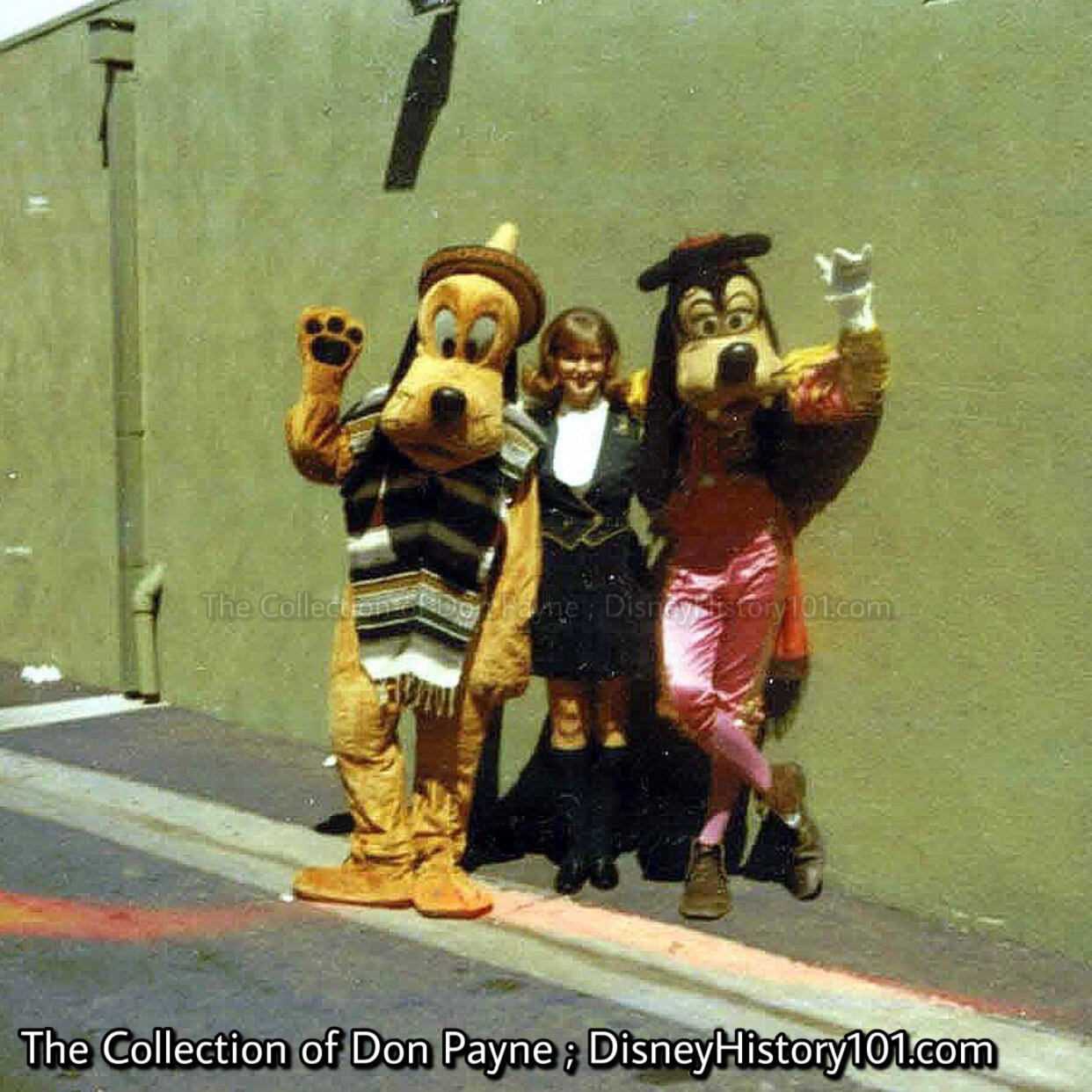
1970 : During mid-November of 1969, twenty-year-old Catherine Birk (a Paris, France native), was selected to become the new Ambassador to the World! Catherine was a fairly new employee (hired April of 1968). She was the last Ambassador to represent the company as a whole, because Walt Disney World would open the following year (with its very own Ambassador). Catherine remembers several highlights from her unique Ambassadorship this way :
“I was fortunate to travel in the U.S. I also spent 3 months traveling to 12 European countries.” As a sidelight, these countries included Ireland, France, Denmark, Spain, Switzerland, Germany, Belgium, Norway, Holland, England, Scotland, and Sweden. Catherine continues: “I met with a number of dignitaries in addition to making personal appearances, [and] providing TV and radio interviews. I hosted many special visitors st Disneyland. The most memorable and exciting was spending a day with Buzz Aldrin (a few months after his walk on the moon!) and two Russian cosmonauts [Major General Adrian G. Nikolayev and Vtali Ivanovich Svastyanov ; during October of 1970]. Something I will never forget.”
Catherine had the opportunity to tour Europe during her Ambassadorship.
This is all very impressive, but Ambassadors weren’t just the face of Disneyland to international dignitaries. They also visited schools, senior centers, and hospitals, bringing joy and inspiration to the young, the old, and those that could not make the journey to Disneyland. On this very special note, Catherine Birk (1969 Disneyland Ambassador) shared one of these particularly memorable moments with us : “I visited many hospitals visiting children and bringing Disney characters with me to cheer them up. It wasn’t easy to see so many children struggling so much. I remember one paralyzed girl who had spent a long time in the hospital without ever speaking…until Mickey and I walked into her room. She smiled with such joy and said ‘Mickey Mouse’! All the attendants and nurses were crying. And so was I.”
The Original Press Caption (with a misspelling of Catherine’s Name) Reads : “Touring Soviet Spacemen, escorted by U.S. Astronaut Col. Edwin (Buzz) Aldrin, posed with Mickey Mouse and Disneyland ambassador Kathy Burke as they visited the famed amusement park at Anaheim, Calif., yesterday. Left to right : Maj. Gen. Adrian G. Nikolayev ; Aldrin; Vitali Ivanovich Sevastyanov ; Mickey and Kathy Burke. A sign behind the space trio read : “Moon Flight.”
1971 : Marva Dickson (Thomas)
1972 : The first time you met Emily Zinser Benedick may have been when she co-starred with other Disneyland Cast Members in “Disneyland Show Time,” aired 1970. Now, Emily became Disneyland Ambassador on November 26th, 1971, and was immediately busy with many responsibilities. One of her first local duties (during late December), was to give a personal tour of Disneyland to Kristy Lee, Queen of the 64th Portland Rose Festival. During the second week of January 1972, Emily made her first trip to Walt Disney’s Magic Kingdom.
The following artifact [by the previous owner’s description] is “a vintage notecard inscribed in ballpoint pen and signed by Emily Zinser... the official 1972 Disneyland Ambassador.
Here, Emily sends a ‘thank you’ note to Ben Harris, a member of the Walt Disney World Ambassador selection committee (and previously, on the committee for Disneyland's Ambassadors).”
[As a sidelight, Ben Harris was a former Disneyland employee who operated the trains of the Santa Fe & Disneyland Railroad, including the Viewliner Train of Tomorrow. He went on to become assistant to Disneyland Entertainment Director Tommy Walker, and for seven years he served on the early three-person panels to select ‘Miss Disneyland’, an early form of the Disneyland Ambassador Program. By 1972, Ben briefly relocated to Florida in order to support the realization of Walt Disney World. At some point before Ben Harris departed from the company, he was instrumental in the arrangements made for Disneyland Ambassador Emily Zinser’s stay during her East Coast Ambassador training program.]. [After returning home], Emily thanks Ben for the resort's support in hosting her for her first visit to Walt Disney World following the October 1971 grand opening.]
“The card was sent to Ben's attention at the Polynesian Village resort but was forwarded to his new office at the Contemporary Resort Hotel. Notably, the card's design was later used by Disneyland to promote the park's 20th Anniversary season in 1975.”
On January 15th, Emily was Grand Marshall in a parade celebrating the tenth anniversary of Villa Park (a neighboring landlocked community of Orange County). The humanitarian work of Disneyland Ambassadors would continue for a number of years. In 1972, Ambassador Emily Zinser would visit patients of an orthopedic hospital along with her friend Mickey Mouse. During the Fall of 1972, Jim Hicklin (of KMPC Radio’s Airwatch News Reporter) welcomed his first honorary flying bear (Liverlips of Bear Country) aboard his helicopter. Disneyland Ambassador Emily Zinser, Mickey Mouse, Wendell, and Shaker were on hand for the celebration and small ceremony in honor of the flying reporter. Emily also hosted events for Disneyland employees, like the Lead Foreman “End-of-Summer-Dinner”, held during the Fall of 1972, for more than 2,000 Food Service Division Park Employees. April 8th, 1973, Emily also hosted the special opening of The Walt Disney Story (presented by Gulf Oil), meeting with the late Walt Disney’s wife - Lillian Disney Truyens!
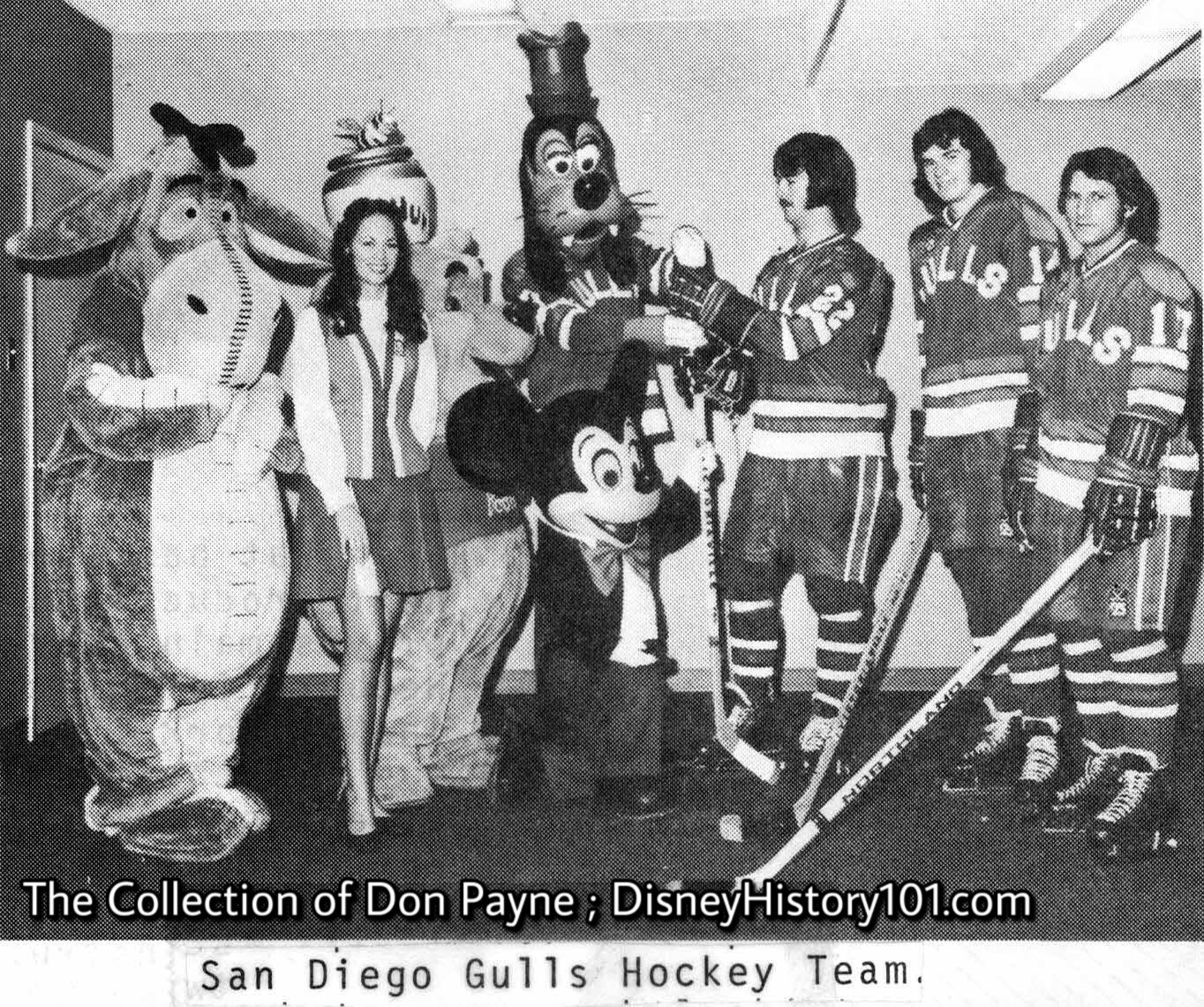
1973 : Bonnie Drury Cook was named Disneyland Ambassador (representing Disneyland and Walt Disney Studios), on November 16th, after which she would appear in the Macy’s Thanksgiving Day Parade in New York, on November 22nd and the Orange Bowl in Miami, Florida. Bonnie’s first tour was of local television stations in Bakersfield and Fresno, after which she was featured on local news broadcasts. Bonnie made many official visits - to Japan, Taiwan, Hong Kong, Philippines, Thailand, Singapore, Indonesia, and Australia, but one of her most memorable experiences happened in California. Bonnie had the pleasure to collect Toys For Tots on the streets of San Francisco (starting at 4am) aboard a fire truck, and hold a koala bear in her arms. Another notable experience occurred when she had the pleasure to serve as Hostess to the Queen of Thailand. After her year as Disneyland Ambassador, Bonnie went on to serve as a programmer for a local independent television station.
1974 : Carol DeKeyser Masters got her start in the Foods Division in 1970, working at Carnation Plaza Gardens. Carol first applied in 1973, was chosen as a finalist for the title. Upon not being selected that year, she decided to try again, and was selected as Disneyland’s 1974 Ambassador to the World. Carol had the pleasure of helping inaugurate Disneyland’s newest attraction America Sings! During 1974, Carol DeKeyser would go on to “extend friendship and special greetings from Disneyland all over the world”. When President Gerald Ford’s son John visited Disneyland, he took a ride aboard Dumbo with Ambassador Carol DeKeyser. Upon reflection, Carol especially felt rewarded over visiting youngsters in the children’s hospitals, alongside Mickey Mouse, and bringing the young children a smile. After her Ambassadorship, Carol would go on to serve the Park as a Club 33 Hostess for a time.
1975 : Kathy (Smith) Hall hosted the first ruling Japanese monarch - Emperor Hirohito. She recollected memorizing so many things - who every one of the visiting dignitaries were, where each of them would sit, and even the Latin names of all the plants and trees in Disneyland (because the Emperor was a renowned botanist). She recalls constantly memorizing regulations, laws and facts during her term. Kathy would go onto serve as Market Development Specialist for the Magic Kingdom Club.
1976 : Christina Schendel Walker (1976 Disneyland Ambassador) held the title during a very special time in Disneyland history - that of Disneyland’s celebration of the American Bicentennial! She went on to a career as a Marketing representative. When asked about her favorite Walt Disney quote, she often replied, “He was once asked what his favorite creation was, and Walt replied, ‘A smile on a child’s face’”, according to Disneyland LINE. Sometime after her service she had the opportunity to share a scrapbook of her globe-trotting adventures in the Ambassador Program (persevered in newspaper clippings and photos) with fellow Cast Members in the Center!
1977 : From the castle moat, actress Julie Sommars heralded Susan Donald Edwards (attractions Hostess in Tomorrowland) as 1977 Disneyland Ambassador to the World. A luncheon at Main Street Plaza Inn offered member of the press to formally meet the newest Ambassador to the World. After the official ceremonies, Susan Donald rode in a carriage (drove by Day Sechler, Area Supervisor of Disneyland Pony Farm) down Main Street U.S.A., part of a parade held inter honor. In November Susan was off to Walt Disney World to train alongside Debbie Bennett (the newest Walt Disney World Ambassador), and then the duo headed back to Disneyland for their west coast Training. Television and radio interviews, good will visits to hospitals (including a meeting with the Oregon State Governor) along a Washington/Oregon tour, and community celebrations (like Disneyland’s Japanese Festival), are just a few examples of Ambassador Susan Donald’s activities! Susan had the pleasure to act as Hostess to some of Walt Disney’s personal friends like Mervyn LeRoy, and even traveled to Manilla to promote The Shaggy D.A., and took a good will trip to Tokyo Disneyland!
1978 : On Friday November 11, 1977 (at 11 a.m.), four Disneyland Ambassador to the World Finalists assembled at Walt Disney World, for Disneyland’s 14th Ambassador to the World selection ceremonies held in Cinderella’s Castle Forecourt. Actress Sandy Duncan (The Cat From Outer Space) presiding as “Mistress of Ceremonies”. Tricia Clark, Raellen Lescault, Gail McKenzie and Laurel Whitcomb were participating finalists. Entertainment included singing and musical arrangements performed by the Disneyland Band and the Kids of the Kingdom.
Ambassador Raellen Lescault Weiler was selected as Disneyland Ambassador, and during the months of November and the first week of December, she and Walt Disney World Ambassador Vicki Jaramillio enjoyed three weeks of extensive training together at Disneyland and Walt Disney World in Florida. Ambassador Raellen Lescault Weiler travelled to New Zealand to promote Walt Disney Studios films being released there! She and her traveling companion (Goofy) made several presentations to various dignitaries on behalf of Walt Disney Productions. Raellen toured Portland, Oregon (including Pendleton Woolen Mills, Mt. Hood, and the U.S.S. Sterett) after which she was named Honorary Grand Marshall of the Portland Rose Festival for the Grand Floral Parade.
For the first time ever, Raellen and four Ambassadors served as commentators along the route of Disneyland’s Traditional Old-Fashioned Easter Parade of 1978. Raellen also had the pleasure of meeting the Prime Minister of Denmark, the King and Queen of Malaysia, and the Royal Family of Nepal. During June she hosted the Ambassador of Bangladesh, the Swiss Ambassador’s wife and daughter, and the Prince of Thailand. Raellen also assisted with a Disneyland LINE article (published August of 1978), about the Disneyland Bakery, and she had the pleasure of modeling the light-weight and comfortable Pendleton Woolen Mill’s new sheer wool line in a photo advertisement published in Vacationland magazine during the Spring of 1979.
These informational brochures did more than pique Cast Member curiosity in the starring role, but they also served as year books, containing some photographic highlights for the previous still current Disneyland Ambassador.
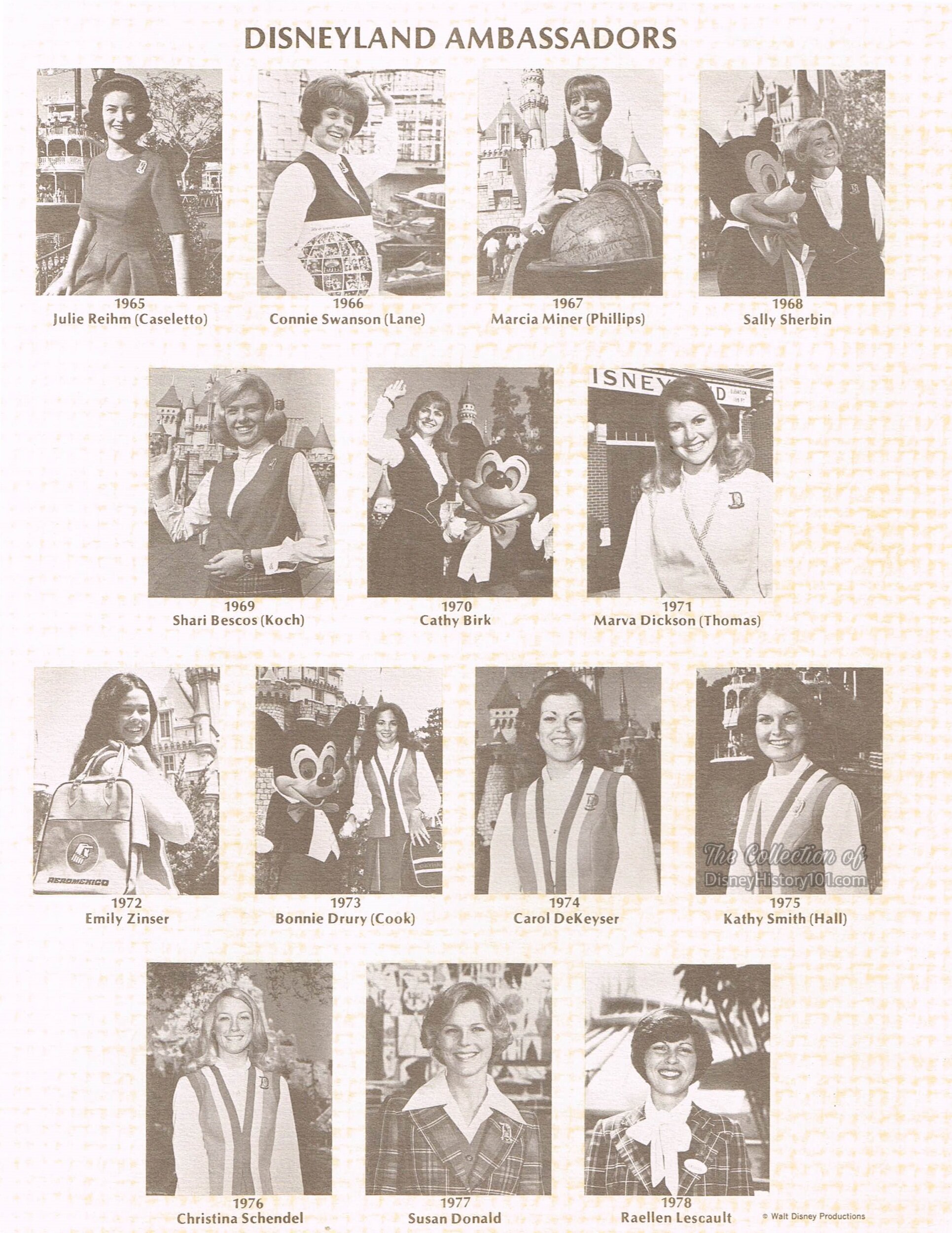
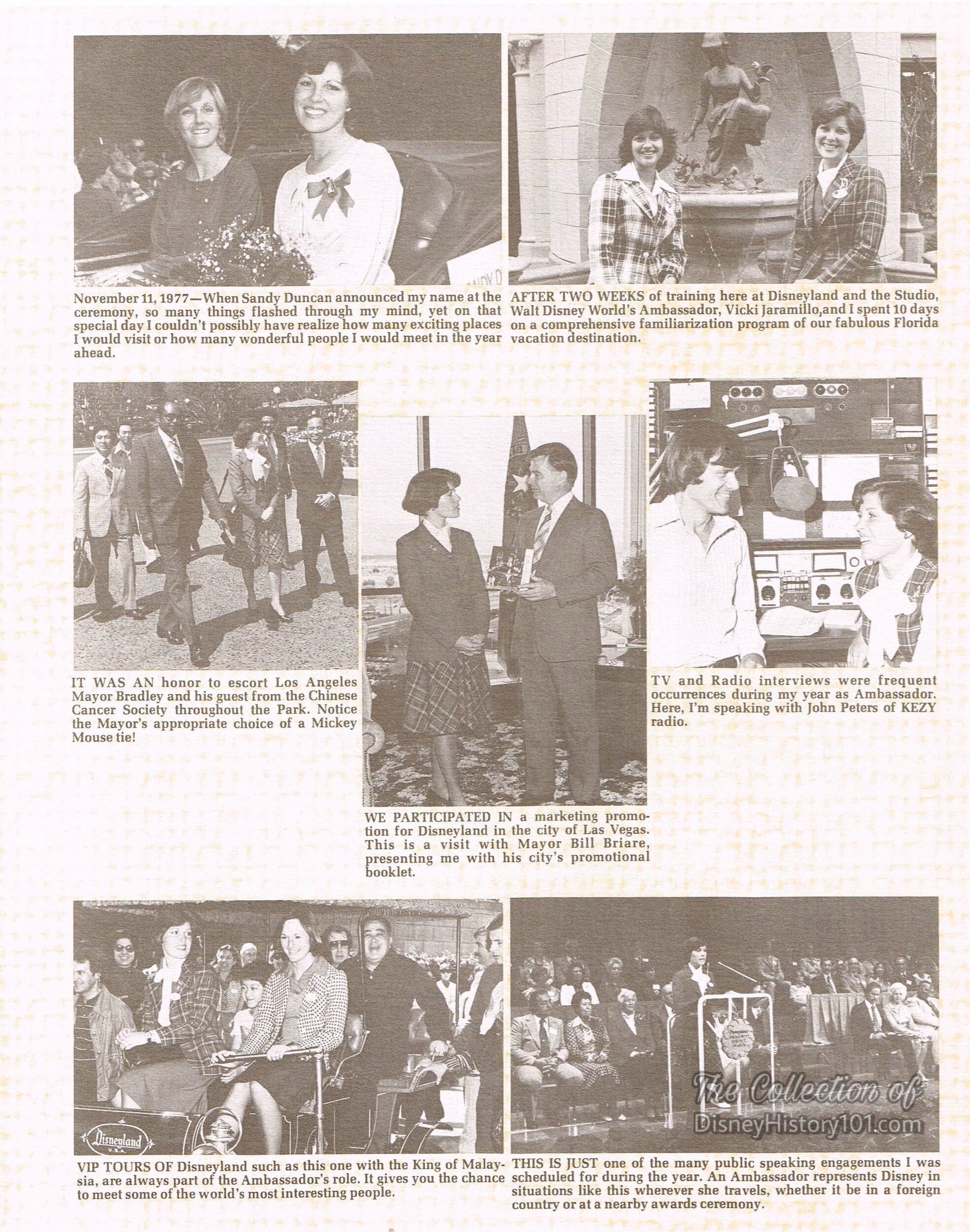
Pictured Above : Disneyland Cast Members considering applying for the role of Disneyland Ambassador would fill out this form to attend the Ambassador Informational Tea held at Disneyland University.
1979: Leona cohosted the Walt Disney World Golf Classic alongside three other Ambassador finalists. After returning home, Leona Dombroske was named 1979/1980 Disneyland Ambassador in a special ceremony at Space Mountain Theater! She served during the Disneyland 25 Family Reunion celebration year, and according to her statement recorded in a brochure (during 1980), “I attended many affairs here in the Park, and had the opportunity to work many departments, such as adverting, promotions, publicity, public relations, participant development, community affairs, employee relations, and entertainment.” All of this work was carried out amidst four international trips, meeting so many different people, and spanning 67,000 miles by half of her year! By then she had travelled to New Zealand. Leona also visited the Alkmaar Cheese Market, Heineken Brewery, engaged in a television interview at the Flora-Disney Theater (in Amsterdam), and toured a working windmill (in Holland) via KLM Royal Dutch Airlines. Leona also made two trips to Singapore (one aboard Singapore Airlines’ inaugural flight from LAX to Singapore), stopping over in Honolulu, Tokyo, Guam, Hong Kong, and Montreal. Back home, she had the privilege and honor to visit children confined to local hospitals, help musician Count Basie celebrate his 75th year, welcome new Disneyland Participant Polaroid (manufacturer of her new Polaroid camera which she brought along in her journeys), and speak at the Disneyland Annual Community Service Awards ceremony and banquet!
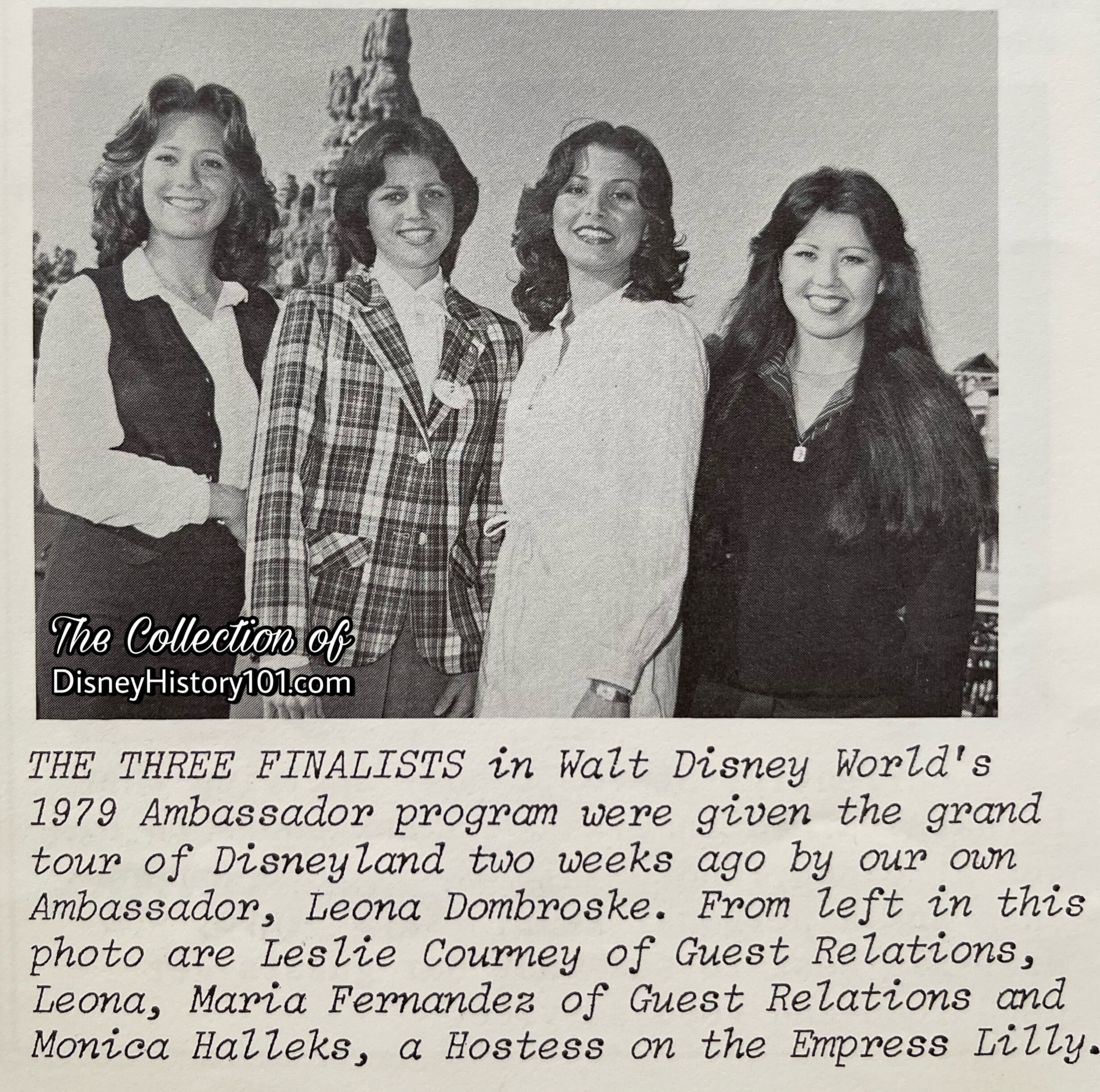
1980 : Disneyland LINE (August 14, 1980) advertised “You could be the 1981 Disneyland Ambassador to the World.” This year’s Ambassador Nancy Englert Murray had been with Disneyland since 1973. She presented highlights of her year at the Ambassador Tea event held August 25 thru 29, 1980. During her ceremony, the 22-year-old Tomorrowland attraction hostess was presented a bouquet of flowers by The Black Hole star Joseph Bottoms.
1981 : “Four Hostesses were named finalists” in the “1981 Ambassador to the World Program on Tuesday, October 7. Entertainment Division Hostess Donna Hogle (of Huntington Beach), Guest Relations Hostess Roberta Nedry (of Garden Grove), Adventureland Foods Hostess Naomi Otsubo (of Fountain Valley), and Guest Relations Hostess Willie Van Der Zwaag (of Ontario) travelled to “Walt Disney World for the Walt Disney World Golf Classic before returning to California for that breathtaking moment when” the 1981 Ambassador to the World was announced on November 5th. The 1981 Disneyland Ambassador - Willie Vander Zwaag (Burckle) had previously been selected as a Tour Guide of the Year finalist in 1978 and 1980. After hard work and patience, Willie Van Der Zwaag (of Ontario, California) was named the 17th “Emissary of Goodwill” in a ceremony taking place Wednesday morning, November 5th, 1980. Presiding over the ceremony was actor Elliott Gould, Mickey Mouse, and 1980 Ambassador Nancy Englert to “pass the crop”. Past Disneyland Ambassadors “Connie Lane, Sasha Sherbin, Sheri Bescos Koch, Marva Dickson Thomas, Emily Zinser, Bonnie Drury Cook, Carol DeKeyser, Christina Schendel Walker, Susan Donalds Edwards, Raellen Lescault, and Leona Dombroski” appeared according to Disneyland LINE (Vol.12, No. 46 ; published November 13, 1980). Trumpeters from atop Main Street Station, a performance of “It Takes People” by the Kids of the Kingdom, and a colorful balloon release signified the crowning of the 17th “emissary of goodwill”, and new Disneyland “Ambassador to the World”! Willie welcomed heads of state and dignitaries to Walt Disney’s Magic Kingdom. As Ambassador to the World, Wille Van Der Zwaag even welcomed Elaine, a new 1800 lb. chestnut Belgian mare foal as she arrived at Disneyland Circle D Ranch.
1982 : Joanne Crawford was announced As the newest Disneyland Ambassador on the cover of Disneyland LINE (Vol.13, No.44, November 5, 1981). She Was visited by Walt Disney World 1982 Ambassador Jeanne Thiele (during the Ambassador Training Program), and then swiftly departed for her tour of Walt Disney World in early December. During her Ambassadorship, Joanne visited Walt Disney’s hometown of Marceline, Missouri, visited young patients of a Minneapolis hospital, appeared on one of Portland’s local Channel 8 News broadcasts, would travel from Singapore to Germany, and even appear at the White House!
As a sidelight, Cicely Rigdon (who had been with the Guest Relations Department for 20 years by now, and was acting Guest Relations Area Stage Supervisor) became Ambassador Coordinator of the Ambassador Program in 1982. According to Disneyland LINE (Vol. 16, No. 13 ; March 29, 1984), she had “travelled all over the world with our Ambassadors and Mickey Mouse.” This was a role that Cicely fulfilled (alongside 13 Ambassadors) from 1982, until her retirement in 1994. After her retirement, Cicely was honored with a window above the Disney Showcase Shop which reads “Ambassador Finishing School ; Cicely Rigdon ; Instructor.”
1983 : Disneyland Ambassador Mindy Wilson (Fisher) described her activity during 1983 to Disneyland LINE writers. During November of 1983, Mindy helped ready Ellen for her Ambassador training, presented a live Christmas tree to the people of Los Angeles, visited schools celebrating Mickey Mouse’s 55th birthday, and acted as a master of Ceremonies for “our Distinguished Service Awards Banquet”. She adds, “In December, our Family Christmas Party, ‘Operation Christmas’, the opening of the Disney Glendale Theater and our Candlelight Ceremony kept me very busy.” Mindy had the opportunity to meet Mrs. Disney, tour New Zealand and Australia and meet New Zealand’s Prime Minister Brian Muldoon, and meet Delegations from the People’s Republic of China. She also participated in the opening of New Fantasyland and Tokyo Disneyland. There is no doubt, that “each day has brought a new experience”, according to Mindy!
1984 : Ellen Coleman (Marchese) (an age 21 Tour Guide in Guest Relations), was chosen to be the 20th Ambassador of the World! Ellen was a resident if Whittier, California, a graduate of Cal State Fullerton, and a major in communications.
1985 : Melissa Tyler (Wackerman) was on hand Saturday, August 24th, to welcome Disneyland’s 250-millionth guest (three-year-old Brooks), and parents Bruce and Connie Burr.
1986 : Barbara Warren served as the magic kingdom’s 22nd emissary - Ambassador to the World! She spread goodwill while acting as the park’s official hostess, escorting visiting dignitaries, traveling through the United States and abroad, and serving as Disneyland’s official spokesperson!
1987 : Kendra Howell
To be selected as a Disneyland Ambassador Semi-Finalist was no small thing, and even these exceptional runners-up of Disneyland’s Cast Members were appreciated!
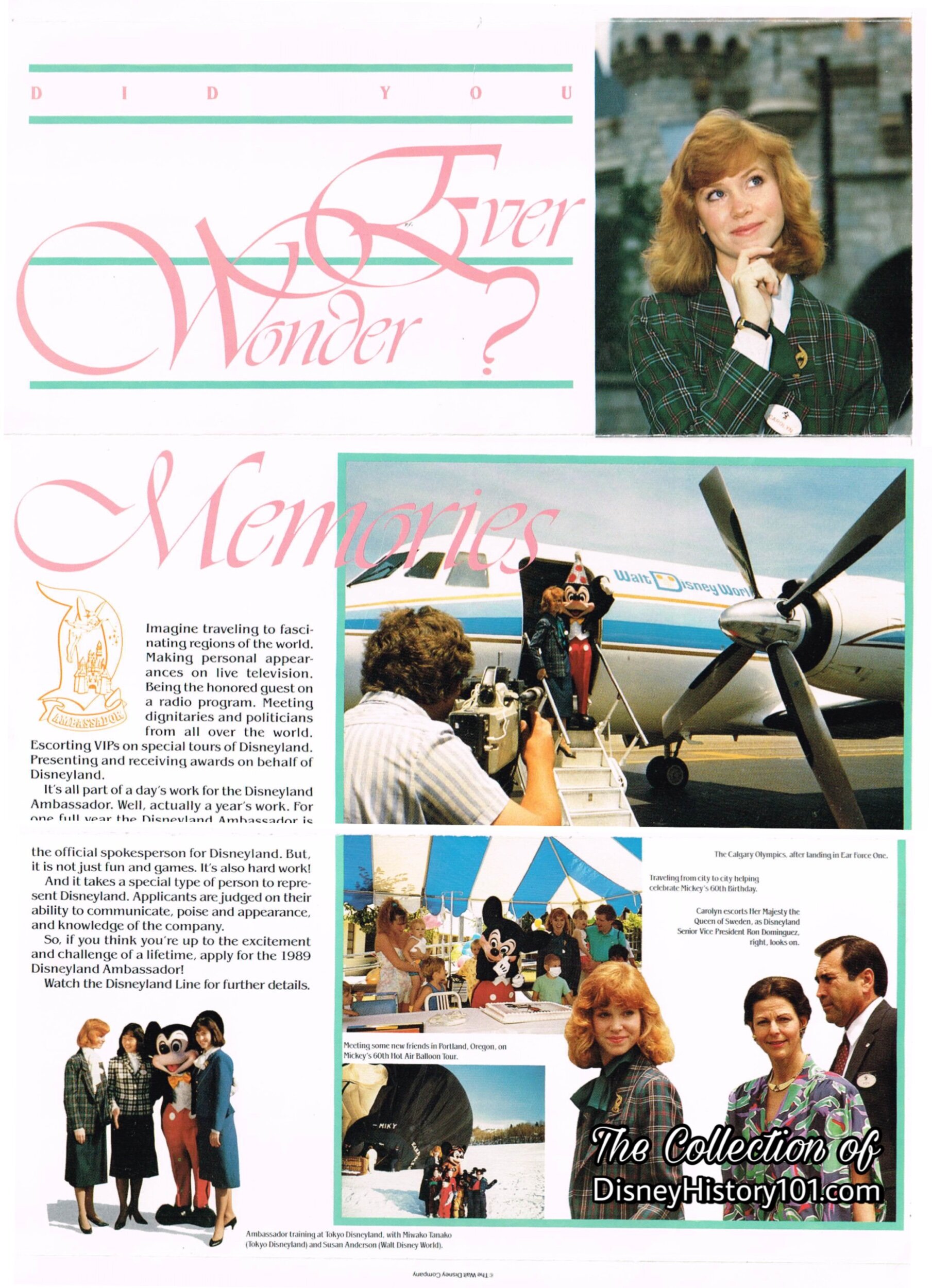
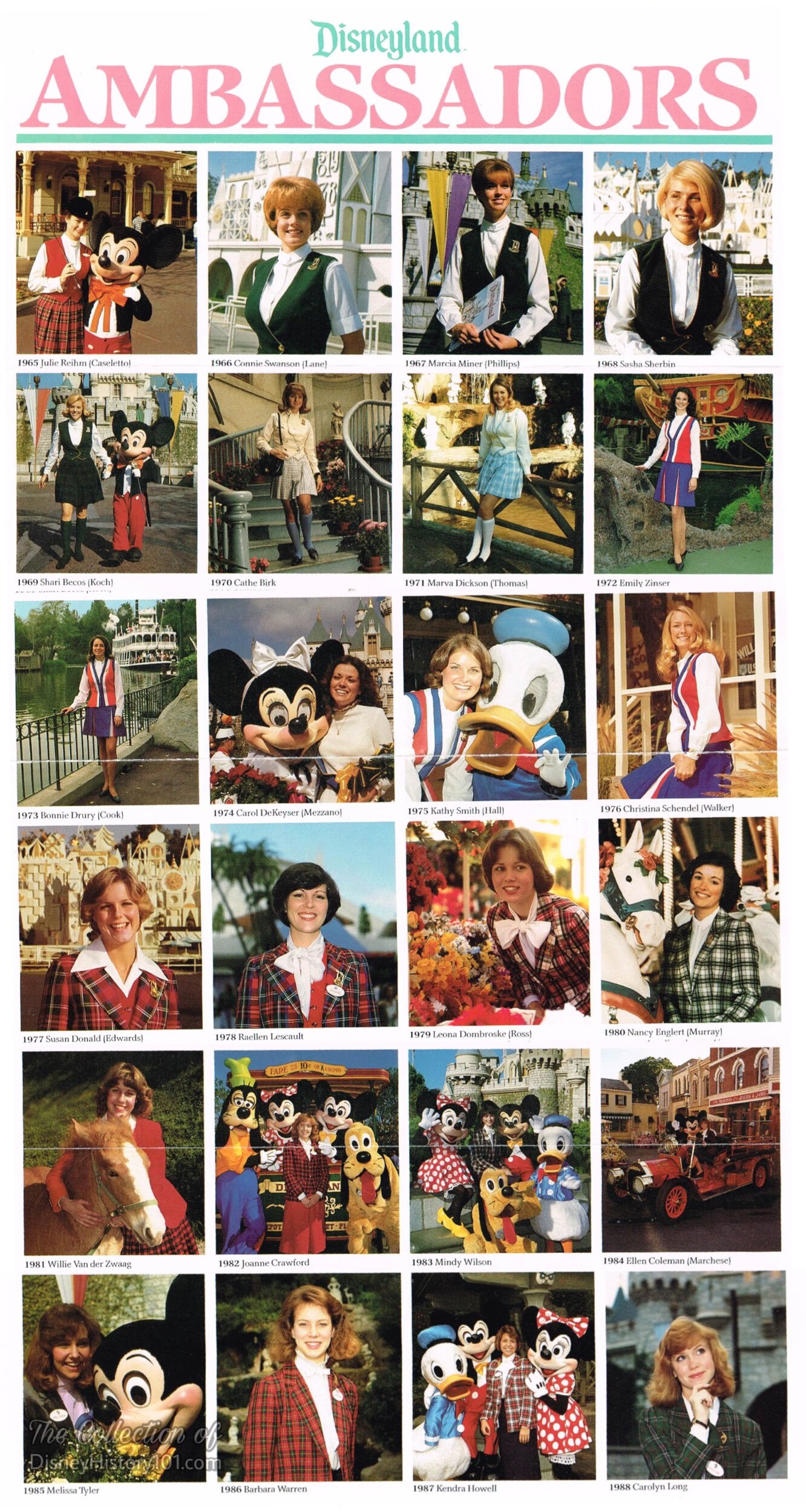
This page of the “Ever Wonder” brochure (published 1988) is dedicated to Disneyland Ambassadors of years past! It is most personally enjoyable to note the change of fashion - from plaid green patterns, to those patriotic “mod” designs (around the American Bicentennial), and then back to those fashionable Pendleton plaids (i.e. coats and skirts) yet again!
1988 : Ambassador to the World Carolyn Long served during the second season of Disneyland State Fair, hosting the Miss America runners up, as they visited Disneyland in honor of their home states! Carolyn enjoyed meeting famous Cast Members and learning about the company during her term. Highlights of Carolyn’s Ambassadorship included meeting Michael Eisner at Walt Disney Studios, travelling to Discovery Island, and (alongside Walt Disney World Ambassador Susan Anderson Kuhnlein and Tokyo Disneyland Ambassador Miwako) visiting the historic Asakusa District in Japan!
1989 : In 1989, Ambassador Wendy Freeland Schoeman would visit Mercy Hospital in Williston, North Dakota, where she would introduce patients (like young Matthew Peterson) to Mickey, Minnie, and Goofy. Her schedule was full of so many additional humanitarian events. In Line (August 4, 1989 ; Volume 21, Number 31), she shared just a few of these thoughts :
“The past few months have been exciting and busy! In May, the Creativity Challenge awards ceremony took place at Videopolis, where students from the Orange County area were recognized for their talents and fine arts. Disneyland also was the stage for the Children’s Miracle Network Telethon, which was viewed nationwide and, for the first time this year in Russia and China.
In June, I participated in the Portland Rose Festival where I had the opportunity to ride in the Rose Parade and attend festival events. In July, I traveled to Minneapolis for the Aquatennial.
Recently, I was the official Hostess to the President of Portugal, Dr. Mario Soares, as he visited Disneyland. The President and his wife were extremely nice and had a delightful day in the Magic Kingdom.”
1990 : Jennifer Faust had the pleasure of presenting Joe Montana (San Francisco 49ers Quarterback) with a special trophy of Mickey Mouse wearing a No. 16 jersey.
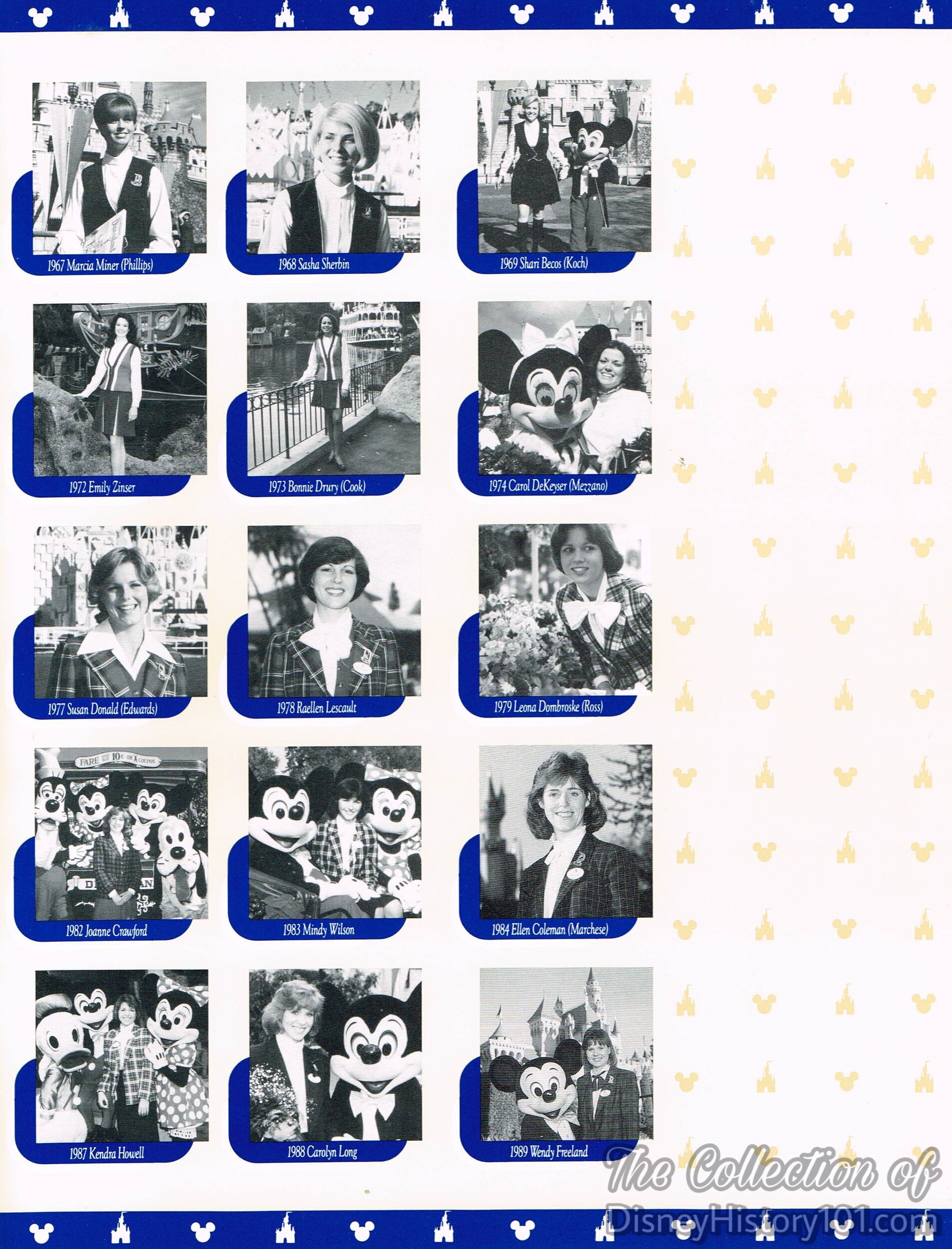
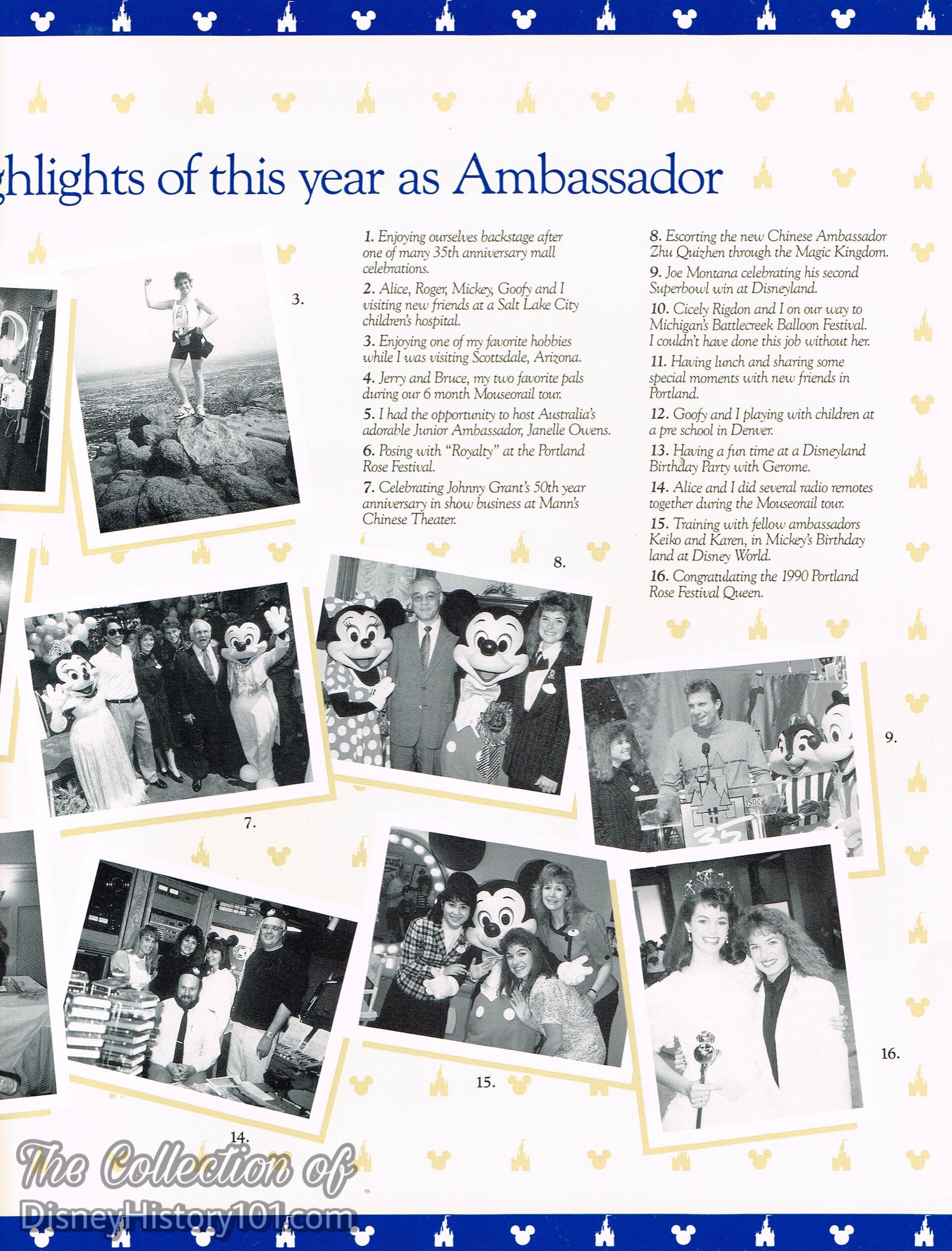
1991 : The 1991 Ambassador finalists were announced in Disneyland LINE Vol.22, No.36 (published September 7, 1990). Jill Ornelas Dowd was announced! Disneyland Ambassadors around the world (Disneyland Ambassador Jill Ornelas, Disney World Ambassador Kerry Kalus, Tokyo Disneyland Ambassador Ayari Nakamura and Euro Disney Ambassador Sabine Marcos) gathered for the Walt Disney World Resort 20th Anniversary! Jill was featured on the cover of Disneyland LINE (Volume 22, Number 44) published November 2, 1990.
1992 : Ambassador Suzanne Palmiter Campbell (21 years old) served as the 1992 “Ambassador to the World” - the 28th Park Ambassador! She was announced by Jack Lindquist, with a ceremony held at the Magic Kingdom in Anaheim, and was featured on the cover of Disneyland LINE magazine (November 1, 1991 ; Vol. 23, No. 45). Suzanne was a former Critter Country Restaurants Hostess, Lead and Trainer. She was a Disney University Leader, escorted dignitaries, spoke on radio and television, and traveled through the United States and abroad. But perhaps her most memorable honor was representing Disneyland at the April 12th opening of Euro Disney in France!
1993 : Ambassador Finalists (Kathryn Byrne, Sacha Jackson, Wendi Waldron, and Kathleen Mitts) were chosen from among Disneylanders during the fall of 1992. Kathleen Mitts was chosen!
1994 : Bonnie Delehoy
1995 : This year saw a Disneyland Ambassador Team of three selected - Gerry Aquino, Julia Onder Bannon and Michelle Tryon. Of very special note in 1995, was the honoring of Cicely Rigdon with a Main Street Window over the China Closet. The honor was well earned, for Cicely’s efforts in developing the Tour Program, managing the Ambassador Program, in addition to other contributions to the magic of Disneyland Guest Relations. The window reads: “Ambassador Finishing School, Cicely Rigdon, Instructor.”
1996 : The Disneyland Ambassador Team of four consisted of Chris Allen, Gina Armendariz, Janet Tanasugarn, and Heather Thompson Putnam!
Pens like this were created for Disneyland Ambassador Team Members like Janet Tanasugarn.
1997 : Ten Ambassador Finalists were chosen on October 25, 1996 - Gary De Vaughn, Cathie Milam, Mitch Henyan, Christina Mc George, Jeff Sekido, Heather Beach, Robyn Schatz, Isabel Lopez, John Van Winkle, and Geryl Anderson. Once final selections were made, the 1997 Ambassador Team was announced in a ceremony on Wednesday, November 20th! Mickey and Disneyland President Paul Pressler announced the Disneyland Ambassador Team during November of 1996 - Robyn Schatz Sarvis (Guest Services), Christina Mc George DeFrancesco (Disneyland Pacific Hotel), and Cathie Milam (Guest Relations).
1998 : Oscar Carrasco, Dorothy Stratton
2003 : Matt Ebeling
According to one source, these pins were awarded by Ambassadors, to Disney Parks Cast Members upon achieving their 20th year of service. We are in currently search of more information about this pin.
1999 - 2000 : Dorell Mitter and Jennifer Simis
2000 - 2001 : Heri Garcia and Doina Roman Osborne
2002 : Matt Ebeling
2003 : Daina Baker
During 2015, this special medal was presented to former Disneyland Ambassador Julie Reihm Casaletto in celebration of the Disneyland Ambassador program’s 50th “magical milestone” year!
Now, I would like to present a few “sidelights” about this amazing "50 Years of Goodwill" Medallion that was presented Miss Julie Reihm!
•The banner reading “1965 - 2015” alludes to 50 years (since) the very first Ambassador of Goodwill! The ends of the same banner feature two sets of initials “WD” (Walt Disney) and “JL” (Jack Lindquist) in honor of the two individuals to which the Ambassador Program owes its existence!
•The outer rim of the medallion features the initials of all 50 Disneyland Ambassadors from 1965 to 2015! Look for “JR” (Julie Reihm) and note the initials of all subsequent Disneyland Ambassadors of Goodwill listed consecutively in a clockwise fashion.
•The bottom half of the medallion showcases five Disneyland logos associated with the Disneyland Ambassador Program (counter-clockwise) : 1. The logo seen on current Disneyland Guide pins - Tinker Bell sprinkling pixie dust over Sleeping Beauty Castle, 2. The Disneyland Ambassador Program Coat of Arms, 3. The Original Disneyland Tour Guide emblem of Tinker Bell (without a wand) was featured on the original Disneyland Guide Pins, 4. the Disneyland Resort Coat of Arms, and 5. The Walt Disney World Ambassador Program emblem.
•Lastly, the center of the medallion features the recognizable “Partners Statue” in the center of a Compass Rose!
The look of the Disneyland Ambassador “D” Pins changed rarely over the years. One example are the special Disneyland Ambassador “D” Pins which were manufactured for the celebration of Disneyland’s 50th year in 2005.
You may wonder - “What’s the difference between the Disneyland Guides and Disneyland Hosts & Hostesses?”
The terms “Hosts” and “Hostesses” actually have their origin with the Disneyland Model first employed during the 1955 opening of the Park! The terms were part of the “radical concepts” that distinguished Disneyland from other amusement parks. Technically, all Disneyland Cast Members are considered “hosts and hostess,” according to training booklets and even sanctioned publications like “Walt Disney Disneyland,” pages 58, printed by Officine Grafiche Arnoldo Mondadori - Verona; first published 1964.
Still, according to Disneyland nomenclature, the term can apply to a Cast Member of Disneyland Guest Relations, which will be elucidated below. Despite similarities in their wardrobe, there is actually a big difference between the type of tours lead by the two Guest Relations groups - Guides and Hosts & Hostesses.
•Disneyland Guides are currently trained to conduct at least one type of Disneyland Tour (i.e. “Cultivating the Magic”, “Happiest Holidays”, or “Walk In Walt’s Disneyland Footsteps”). Disneyland Tour Guides may grow so proficient at performing their role of leading a particular Disneyland Tour, that they may even be assigned to regularly lead groups though such a tour. In the present, they may lead a Tour Group comprised of (up to) 25 guests.
•Disneyland Hosts and Disneyland Hostesses were an added tier of Disneyland Tour Guides with their foundations in the late 1960s. While Disneyland Tour Guides led large Tour Groups, Disneyland V.I.P. Hostesses differed, in that they offered Guided Tour services to smaller groups or individuals interested in exploring Walt Disney’s Magic Kingdom.
While we are in the subject, you may wonder “Who is considered a V.I.P. at Disneyland?” One publication prepared for Disneyland Cast Members answered that question clearly, in the following way : “Everyone's a V.I.P. Since our opening, Disneyland has entertained dignitaries from around the world. We are the place that presidents and celebrities insist on visiting. Of course, we are happy to entertain these famous people, but we consider every guest a V.I.P. a Very Important Person. We have invited them to visit us. We entertain them one at a time, with the same consistent courtesy.”
With that in mind, we better understand the role of Disneyland Hostesses and Disneyland Hosts, who are currently trained (and carry the adequate knowledge and capability) to offer the service of a Private V.I.P. Guide to a maximum of 10 Disneyland guests per Host or Hostess.
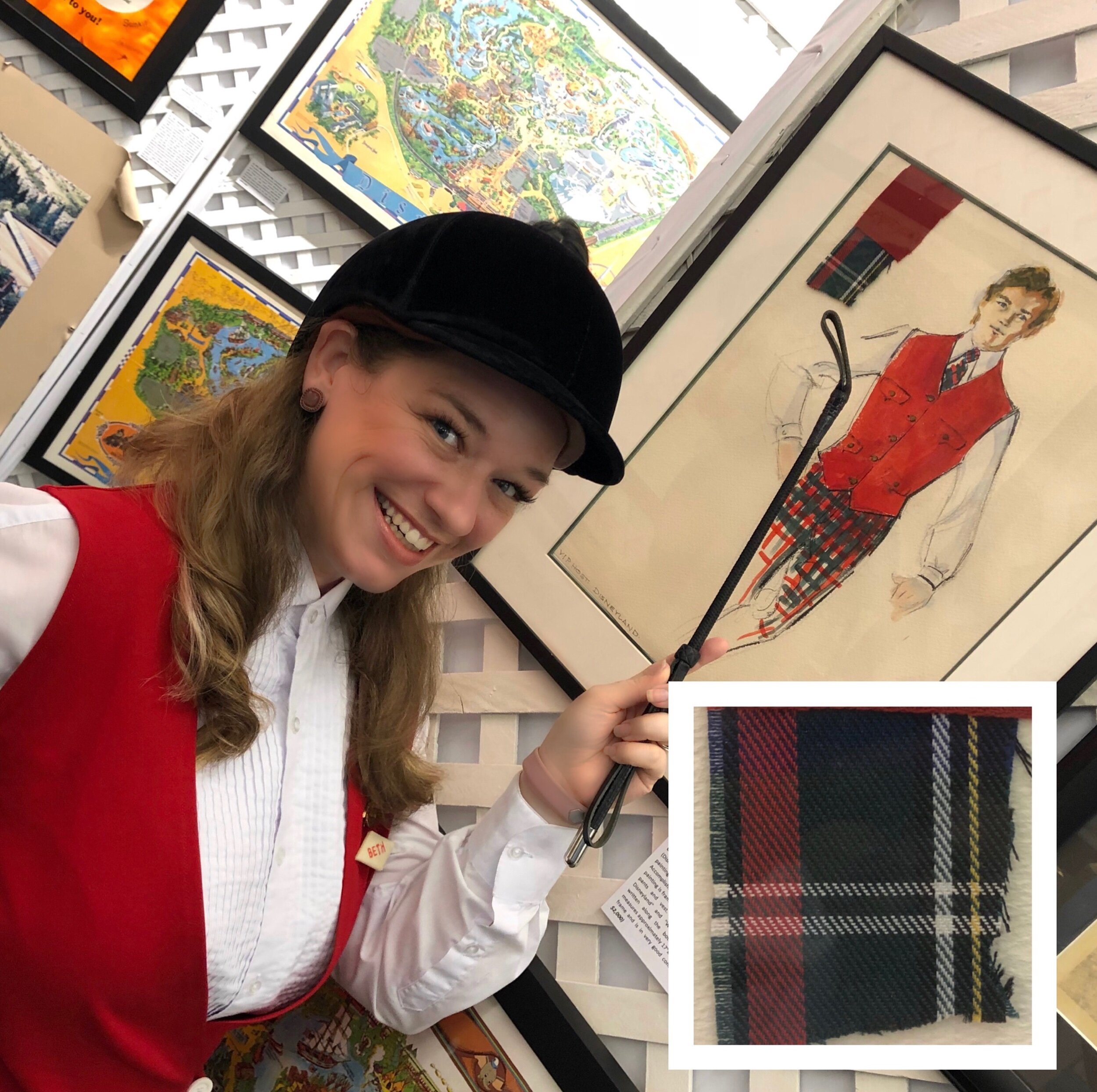
Costumes are usually created by the Disneyland Wardrobe Department, with occasional help from studio artists. Decades after the Royal Stuart Tartan plaid pattern was selected by Cicely Rigdon, it was utilized again for Host slacks.
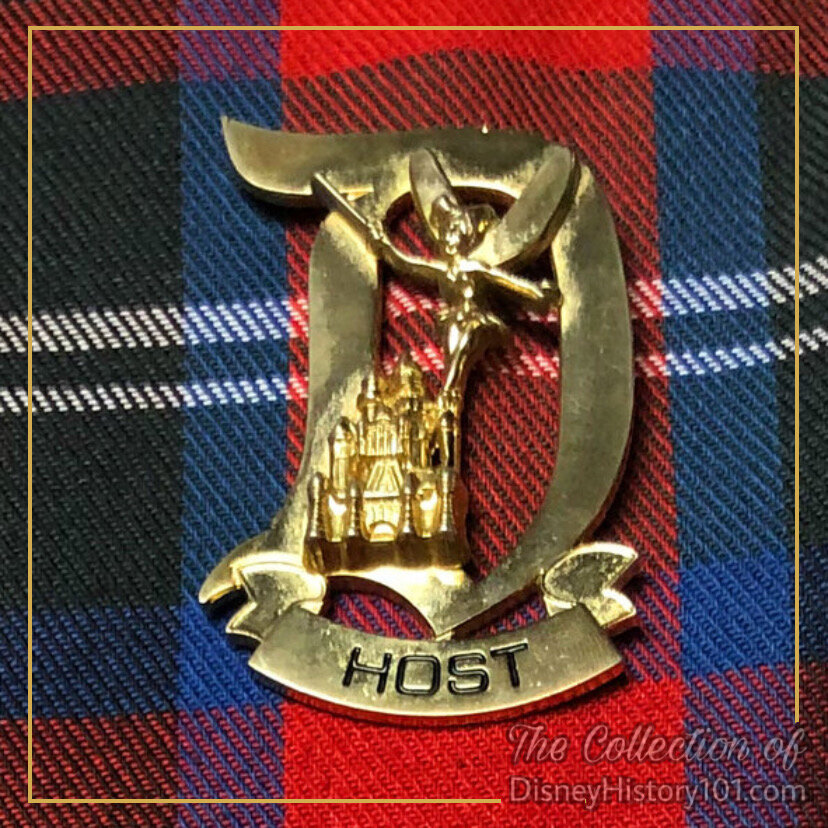
Disneyland Hosts and Disneyland Hostesses are dedicated to making your first and subsequent visits a very pleasant and treasured experience! Once Disneyland Hosts and Disneyland Hostesses are trained (and carry the adequate knowledge and capability) to lead offer the service of a V.I.P. Guide to a maximum of 10 Disneyland guests in one group, they earn their Host “D” pin! Today, Disneyland Tour Guides and Disneyland Hosts & Disneyland Hostesses are still readily distinguished by their wardrobe, which includes a “D” pin bearing the title (Host, Hostess, or Guide) of their distinguished starring role in Disneyland’s show!
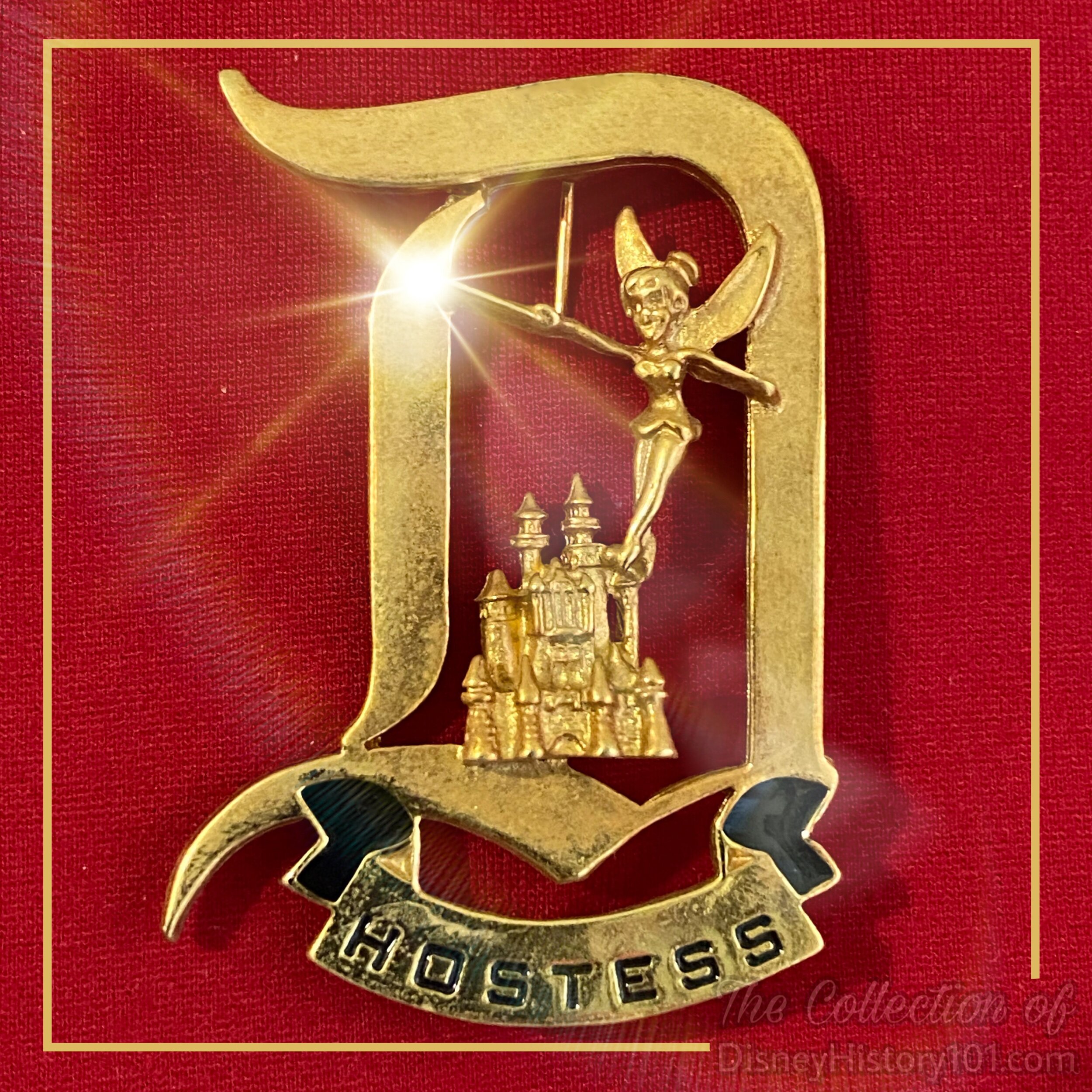
Once Disneyland Hostesses are likewise trained (and carry the adequate knowledge and capability) to lead offer the service of a V.I.P. Guide to a maximum of 10 Disneyland guests in one group, they too earn their Hostess “D” pin!
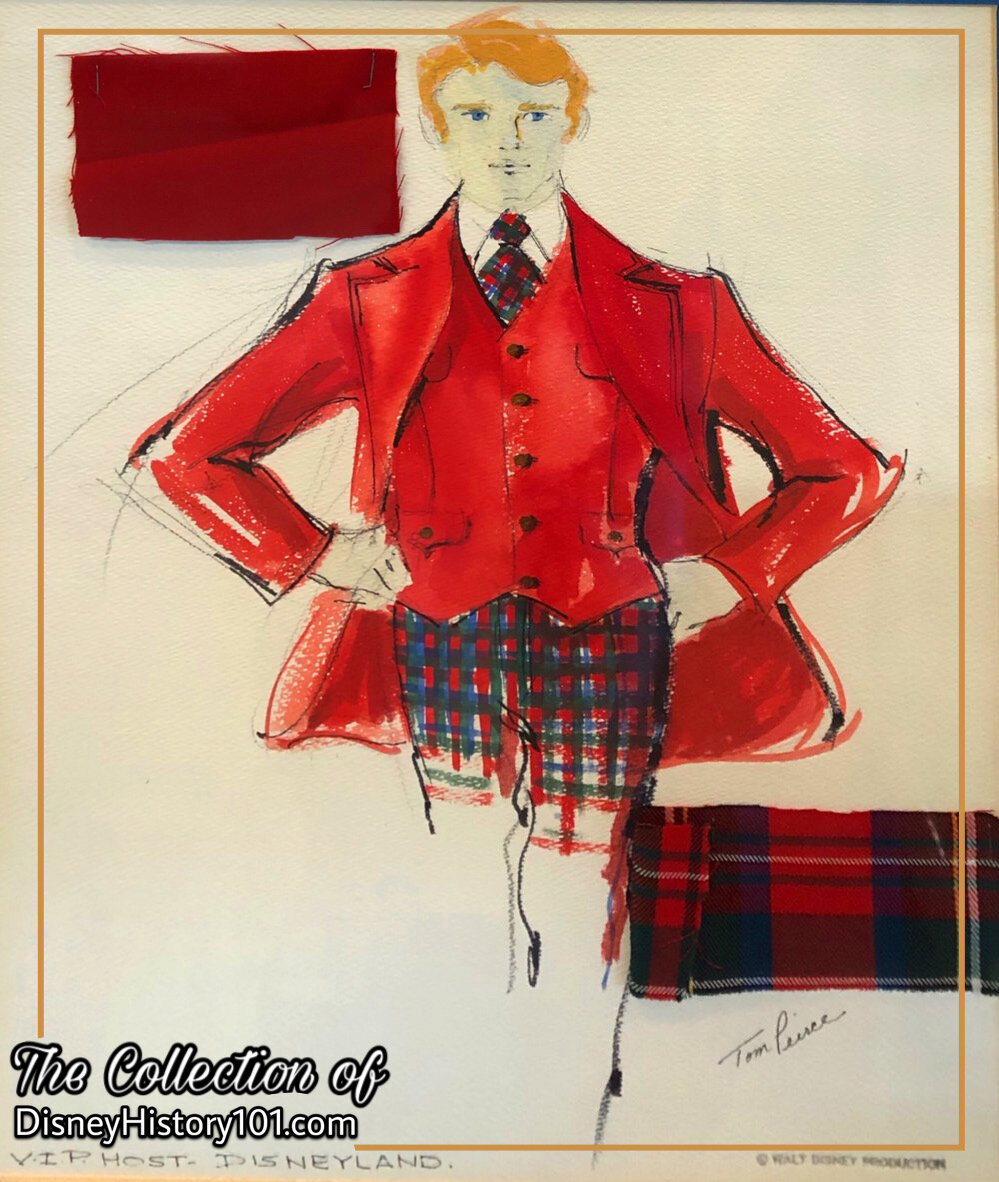
A designer, worked with infinite care to design the apparel that Cast Members wore. In looking over this drawing of a V.I.P. Host costume, I am reminded of the encouraging words printed in one edition of “Its Been My Pleasure” : “Your costume, created by our Disney artists and the Disneyland Wardrobe Department, was designed to fit the role that you play in our Disneyland Show. It's essential that you wear it as the designer planned it.”
This is a swatch of fabric similar to that utilized to create vests of c. 1960s Disneyland Guides. This particular swatch of fabric was once suggested for the blazers of c. 1980s Disneyland Hosts!
As long ago as the early “trial-run” days of the Disneyland Guided Tour (c. 1958), guests could acquire a Guide near the Disneyland Main Gate Entrance. Guests would be able to purchase a Disneyland Guided Tour package from one of the Ticket Kiosks even before entering the Disneyland Main Gate Entrance. Soon, plaid-clad Disneyland Tour Guides (draped in red capes on cold winter days) were often found waiting for guests who were willing to embark on a tour of Walt Disney’s Magic Kingdom. In addition, the Staff found at the Information Kiosks (located around Main Street) were veritable “walking, talking information booths, answering phones and correspondence,” providing direction and other general information to guests. Guests asked general questions about DISNEYLAND, granting opportunity to assist by responding in a positive manner.
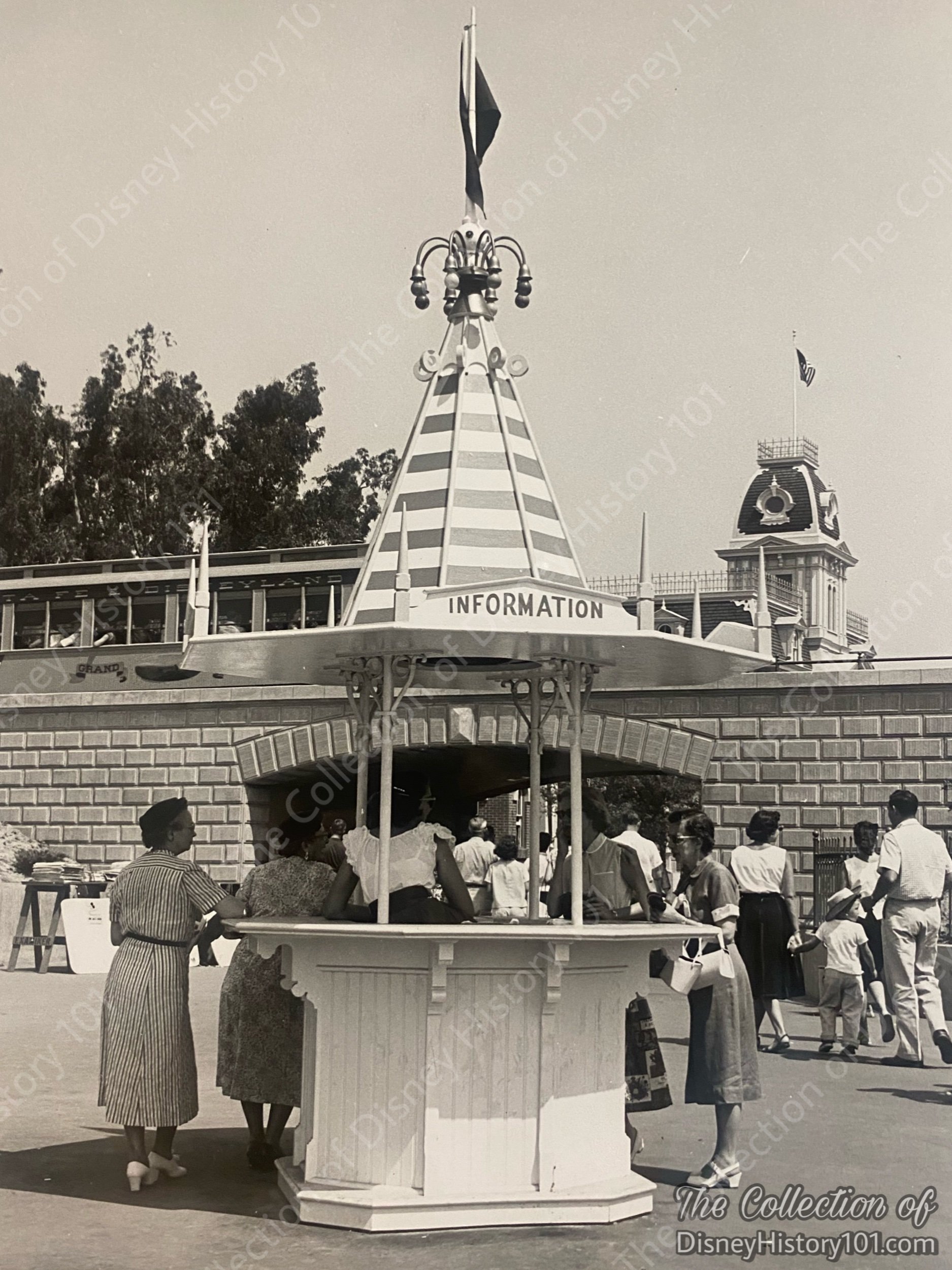
“For Your Information” - While Disneylanders had to know the nearest location of Restrooms, Telephones, Mail Boxes, Purchasing of Film, etc., Gift Stands in all Lands once administered information about Disneyland.
The Disneyland Guided Tour Headquarters (or “tour station” as referred to in “A World of Smiles” ; 1965) would also be set in various locations - first, near the Pablum Baby Station at the North end of Main Street U.S.A., far from its present location near the tunnels on Main Steet U.S.A.
During 1960, there was a Tour Guide Desk located in the Plaza Area.
By 1961 (and within three years after the start of the Guided Tour guest service), a Guided Tours kiosk (serving as a “Dispatch Desk” of sorts) was stationed near Disneyland City Hall. Guests were genuinely greeted by a Hostess here and then (with great patience), the tour was explained. Then they were sent a few feet away, to the Guided Tour Registration Area (on the steps, left of Disneyland City Hall). This was where guests “checked in” and wait for their Guided Tour to begin.
Disneyland Hosts and Hostesses were usually well aware of general information regarding restaurants, shows, parades, events, and directions, and (not withstanding the attractive INA Carefree Corner hostesses) the Disneyland Tour Guides found at the Guided Tours kiosk were “the creme of the crop” in this regard - veritable “Information Experts”! Disneyland City Hall had always been the main site of a “help desk” (when Disneyland first opened), but this new Guided Tours Kiosk (or, “dispatching desk”) located to the left of City Hall, was also dedicated to providing information to guests, and offering Disneyland Guided Tours.
Now, as the popularity of the Disneyland Guided Tour was on the rise during the early 1960s, there became a need for a larger waiting area for guests.
“Guided Tours Garden, Herb Ryman. Circa 1961. The equestrian-inspired architecture ties in with the jockey-themed costumes.” Eventually Guided Tour Gardens was established as a hub for all Disneyland Park Tours. Guests entering Disneyland were reminded : “If you’re holding a ticket for one of our informative Guided Tours, you’ll find the Tour Garden just to the left of City Hall.” Here, Guests awaiting their Disneyland Guided Tour could rest on the benches in the cool shaded area, to the right of Disneyland City Hall.
Before the tour began, this was the place where Guides took the “opportunity to meet each person individually”. At this location, tickets were collected from each person as they entered Disneyland’s staging area. While waiting for their tour to begin, pictorial Disneyland Souvenir Guides (like “Walt Disney’s Guide to Disneyland”) were distributed to each person participating in the Guided Tour, and guests would write their names and present home states on their Identification Tags. If anyone would like to purchase film before the Guided Tour began, the nearby Souvenir Stand carried a full stock of several kinds. In the remaining meantime (before the tour departed), Hostesses took the opportunity to mingle with their guests and establish a “friendly atmosphere” under the cool shade of the trellis.

On November 25th, 1964, Ben Harris (Production), C. Romero (Assistant WED Treasurer), Roland Crump (Assistant Art Director), and M. Clark (WED Treasurer) met for lunch, in order to discuss “Tour Guide Modifications & New Booth.”
By 1965, one contributor to “World of Smiles” (published for Guided Tour Hostesses) shared: “Looking to the future, we see a new dispatching desk for the Tour Garden.” Soon (in 1965), Guided Tour Gardens received a new Dispatching Desk, while the Disneyland Guided Tour received modifications in the form of a new route as well as new stations. Despite all this, Disneyland Tour Guides staffed two to three Disneyland Guest Relations locations in 1974, when INA Insurance Company departed from the Carefree Corner near the Central Plaza Hub.
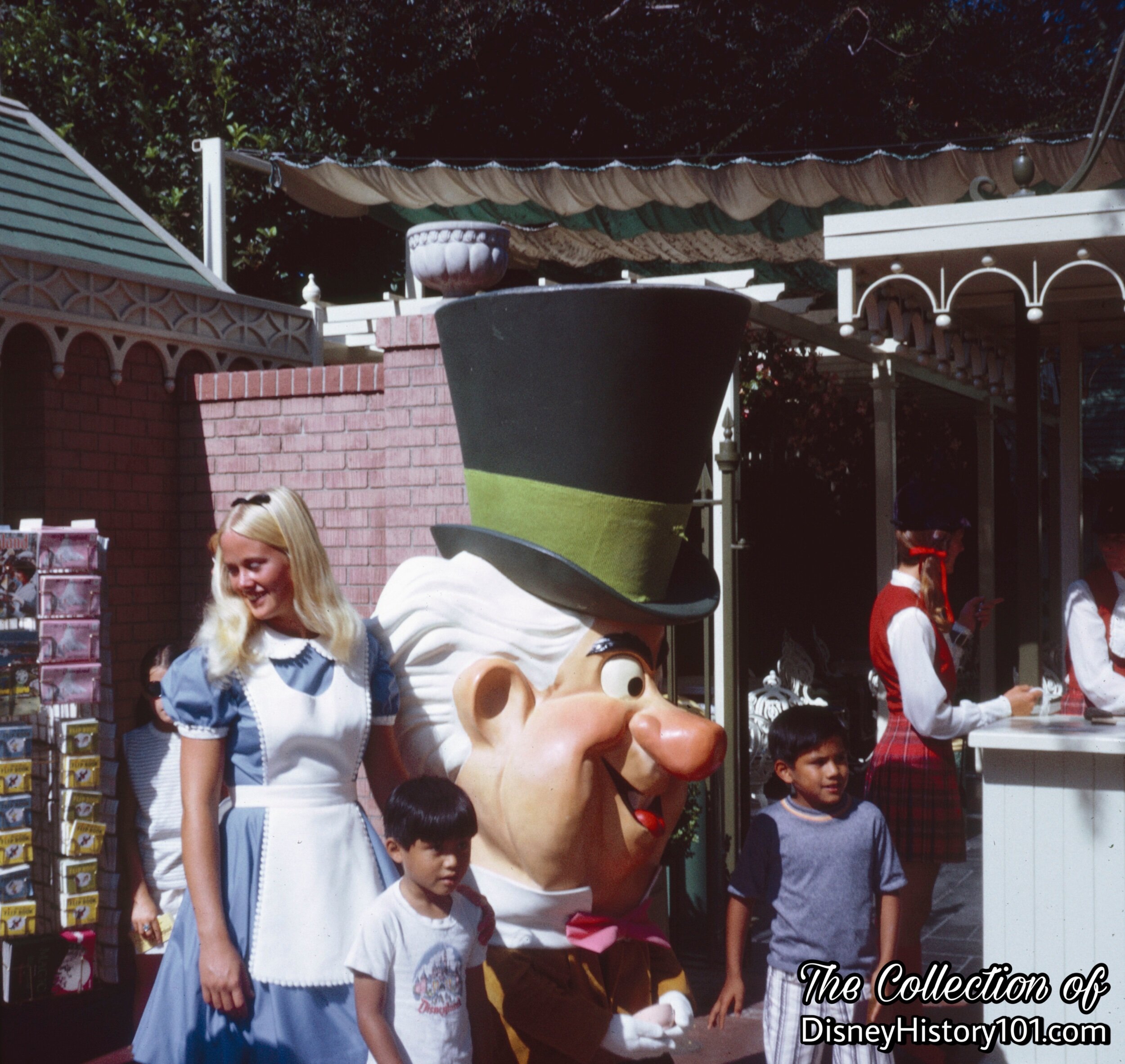
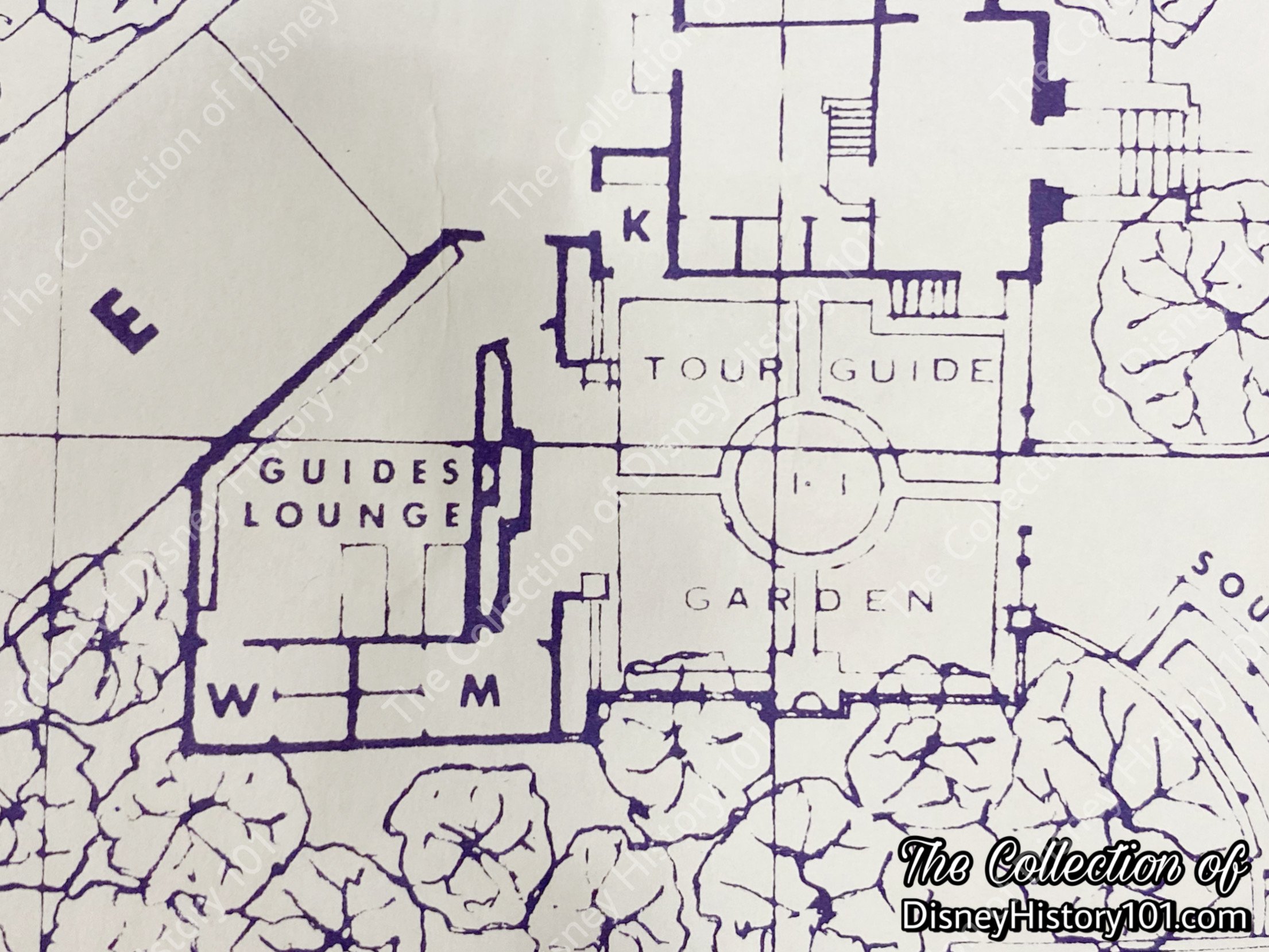
“Audience Waiting Areas” are especially designed as part of the attraction to make the guest's time waiting in line as comfortable as possible.
You may recall that the Disneyland Guided Tour was originally intended for non-peak attendance periods (like the winter season). Speaking of the winter season, it looks as if the neighboring floral bed is decorated with poinsettia for winter season - a lovely place to meet your Disneyland Hostess!
During the 1990s you may recall seeing a statue in Tour Gardens. According to “Did You Know” (published 1991), “The statue in the Tour Gardens [was]… a statue of Rebecca which was copied. Emile Kuri wanted to get a statue that wasn’t copied as much as Rebecca but never got around to it.”
Today, Guided Tour Gardens serves a similar purpose - as a quiet nook (conveniently located at the front of Main Street U.S.A., next to Disneyland City Hall), where guests can both inquire about and book Guided Tours at the Guided Tour Kiosk. It is also here, from which Disneyland Tour Groups wait to embark on their tour of Disneyland!
The original was rectangular in shape, and large enough to often accommodate just one or two Tour Guides. It had a roof similar (but not the same) in style to Disneyland Main Gate Ticket Kiosks. It did not have shutters or windows, but was open-aired all around, leaving the Tour Guide visible and approachable from practically every angle. It was located in front of Disneyland City Hall.
The second incarnation was similar, only a little larger, to accommodate more supplies and Guides. During the eras of these two (aforementioned) Disneyland Guided Tours Kiosks, neither of them were located in Guided Tour Gardens.
This third incarnation of the Disneyland Guided Tours Kiosk (pictured) can be closed and locked during hours of non-operation (as other kiosks or stationary concessions carts throughout the Park).
A photograph of Julie Reihm (Disneyland’s first Ambassador) sits in Guest Relations inside Tour Gardens. The next time you visit the magic kingdom, please step this way and examine it!
One shadow box (kept inside the Guided Tours Kiosk) showcases a few pieces of ephemera related to the Disneyland Guided Tour Program, including a pair of Disneyland Guided Tour Tickets, a 1978 Disneyland Guided Tour Brochure, and a “Miss Disneyland Cutout” (August, 1965) of Julie Reihm.
While visiting, you my note that benches allow guests to sit a spell, before their magical Tour begins. These benches are different in style from those wrought iron ones present during the 1960s, but still carry a similar feel.
For Guest convenience, Guided Tours Garden feustures a “Companion Restroom” which is wheelchair accessible.
Unseen to Disneyland Guests are a Cast Members Restroom, and a Boardroom (which is occasionally utilized for meetings).
In recent decades, tables and chairs have been added to accommodate more guests in the waiting area. Often, this where guests of a Disneyland Guided Tour may be gifted some unique souvenir pin, button, or other unique item. This is also where guests may perhaps be served meals, light snacks, or refreshments, at the conclusion of their tour.
By 2008, Guide 1 and Guide 2 offered Souvies, Candy, Plush Toys, Key Chains, Autograph Books Pens
“GUIDED TOURS - WONDERFUL WAYS TO ENJOY DISNEYLAND”
“The popular Guided Tour is especially recommended for “first time guests.” But according to Disneyland Today brochures, Guided Tours are for the “first-time visitor or limited-time visitor”. Visitors are taken on an exciting tour of Disneyland by a charming Guide who tells the fascinating story of the Magic Kingdom’s history and growth. In addition to the initial Disneyland Guided Tour, there have always been perks. Early Guided Tours came to include admission to Disneyland and a selection of six of the park’s popular attractions. Occasionally gifts like a pictorial Guide to Disneyland were offered. In recent years, tours have come to include gifts as collectible pins, lights snacks, meals, and rarely-seen backstage views of the Park! Owing to the value of the magic, it’s only natural that admission prices have changed thru the years!
1958 : The Complete Guided Tour was $3.00 (for Adults) and $2.00 (for Children Under 12), with no charge for children under 3. This price included General Admission to Disneyland, admission aboard six attractions and adventures, a full-color copy of “Walt Disney’s Guide to Disneyland”, and an admission coupon for any other attraction of their choice in Disneyland. By the Fall-Winter of 1958, the Complete Guided Tour prices increased by 50 cents - $3.50 for adults, $2.00 for children under 12, and still no charge for children under 3.
1959 : Disneyland’s “approximate 1 hour and 45 minute” Guided Tour (from Spring to June 1, 1959) included admission, “a personally conducted tour through each land”, a “scenic ride in a ‘private car’ of the Santa Fe & Disneyland Railroad” passing “the scenic Grand Canyon Diorama, largest in the world”, a “cruise aboard the Mississippi paddlewheel steamboat ‘Mark Twain’ on the Rivers of Frontierland ; or a trip across the Rainbow Desert and into the Underground Rainbow Caverns on the Mine Train”, a “Space Trip to the Moon”, and a “famous jungle river cruise”. During this year, the price was both $3.50 and 3.00 for Adults, and $2.00 for children (under 12), with no charge for children under 3 years.
1960 : By 1960, the Disneyland Group Services department was an asset in assisting “all phases of planning and scheduling your guided tour” of Disneyland! Groups of 25 or more qualified for a 10% discount on “Big 10” and “Jumbo 15” Ticket Books.
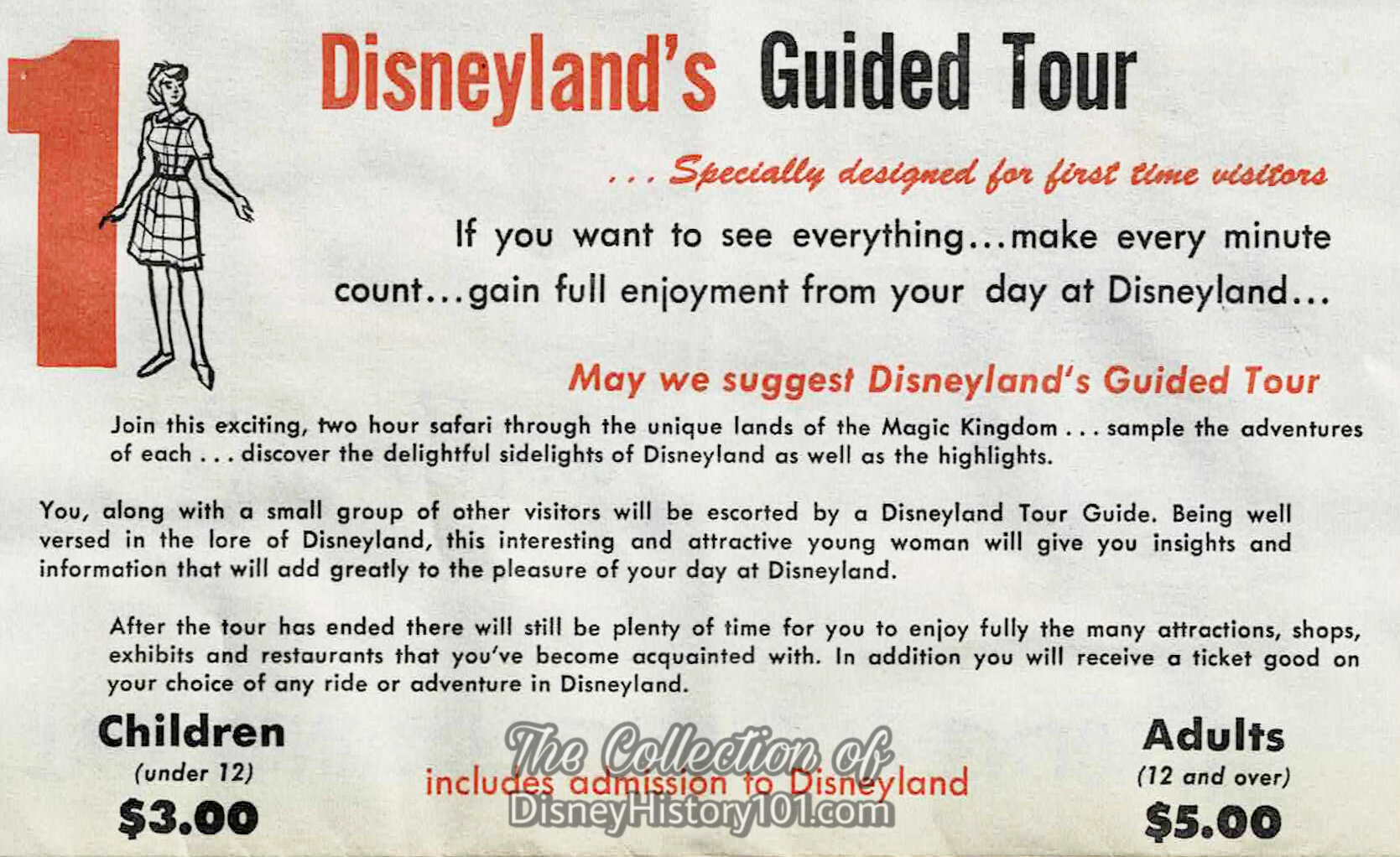
1961 : The admission prices for this personally-guided, two-hour “safari through the unique lands of the Magic Kingdom” began the new year at “$4.00 for Adults (12 and over), and $2.50 for children (under 12)” according to Parade Magazine (published March 26, 1961) and both “2 Wonderful Ways to Enjoy Disneyland“ and “3 Wonderful Ways to Enjoy Disneyland” (published early 1961). However, the year 1961 saw a minor increase in admission prices. By the Fall, the admission prices of the Disneyland Guided Tour (which included admission to Disneyland) were now $5.00 for Adults and $3.00 for children under 12.
1962 : According to “Information for Disneyland Visitors Summer ‘62,” the Disneyland Guided Tour was “A personalized way to see Disneyland with a small group of visitors escorted by one of Disneyland’s Guides. These young ladies are well acquainted with all the background information about Disneyland to add to the enjoyment of your visit. The tour includes many of Disneyland’s top attractions and rides and averages about two hours in length.” The admission for Children under 12 was $3.00, while adult admission was $5.00.
1963 : Admission for this personally-guided, two-hour “Happiness Trip” of “all four lands” (including your admission to Disneyland) was $5.00 for Adults and $3.00 for children under 12.
1964 : Admission for a personally-guided, two-hour “Happiness Trip” (“including 6 major attractions, a Main Gate Admission & the Guided Tour Service”) of Disneyland was still $5.00 for Adults and $3.00 for children 3 - 11.
1966 : During 1966, admission for this personally-guided, two-hour “Happiness Trip” was $5.50 for Adults and $3.50 for children under 12. According to Carl Freeberg (Disneyland Admissions) approximately 1,365,000 Guided Tour Tickets had been sold up to 1966.
1967 : During 1967, admission to Disneyland and a Personally Guided (two-hour) Tour of all four lands’ exciting attractions cost $6.50 for adults & juniors, and $3.50 for children (under 12). After the tour, group members received “a ticket good for another Disneyland attraction.”
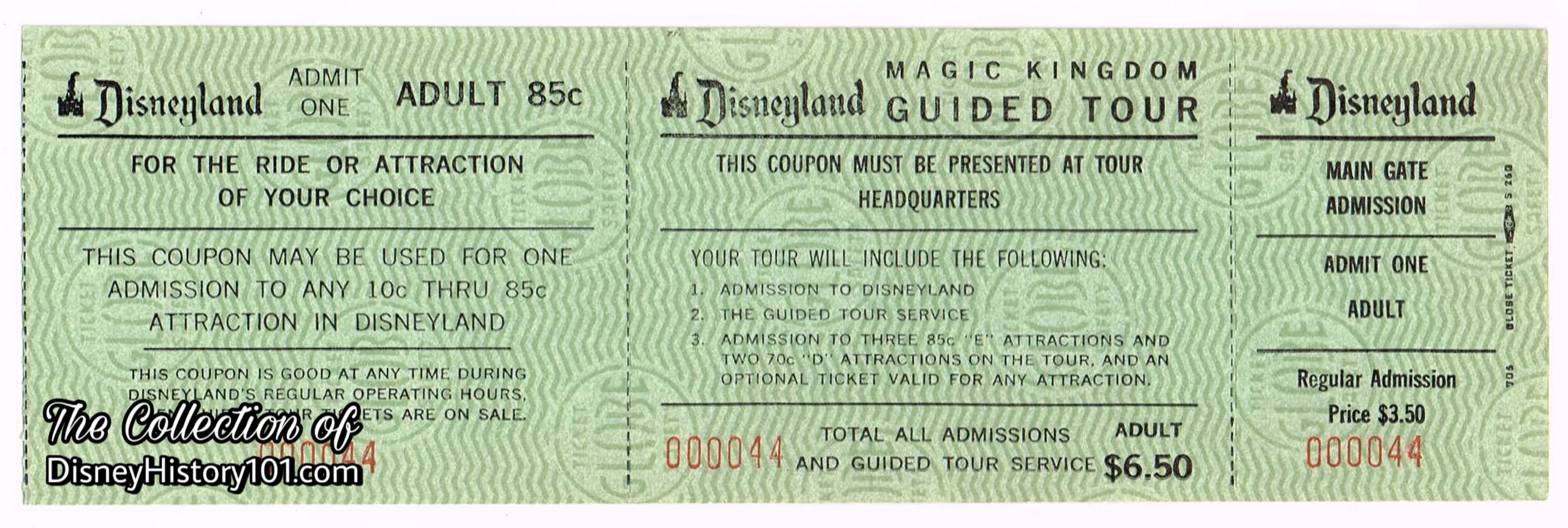
1968 : Both Adult and Junior Disneyland Guided Tour admission cost $6.50, while the Children’s Disneyland Guided Tour admission cost $3.50.
1969 : From 1955 to 1969, “every President of the United States since 1946 except Lyndon Johnson, 15 princes and princesses, six kings, and a number of Prime Ministers and Premiers, several maharajahs, Congo Tribal Chiefs, Ambassadors, three queens, and a number of noted Russians - save one” have visited Disneyland. (Disney News, Fall, 1969) Each one of these V.I.P. guests was in need of (at least) one Disneyland Tour Guides!
During 1969, admission to Disneyland and a Personally Guided (two-hour) Tour of all four lands’ exciting attractions cost $6.50 for adults and $3.50 for children (under 12). At the completion of the tour, a complimentary ticket good for another Disneyland attraction was given to each guest.
1970 : Both Adult and Junior Disneyland Guided Tour admission cost $6.50.
1972 : Your two-hour tour (including admission to Disneyland) was only $6.50 for adults and $3.50 for children under 12. “And at the end of the tour… [guests would] receive a ticket good for another Disneyland attraction.”
1973 : Two-and-a-half-hour Personally Guided Tours of Disneyland’s seven lands (and “admission to seven of Disneyland’s most exciting attractions”) were still “designed for ‘first time’ or ‘short time’ visitors! Admission was as follows - Adults ($7.00), Juniors 12 thru 17 ($7.00), and Children 3 thru 11 ($4.00).
1975 : By Disneyland’s “Celebration Summer” admission for a Personally Guided Tour of Disneyland “provided by your attractive Tour Guide,” was $7.50 (for Adults), $7.50 (for Juniors, 12 thru 17), and $4.50 (for children, 3 thru 11).
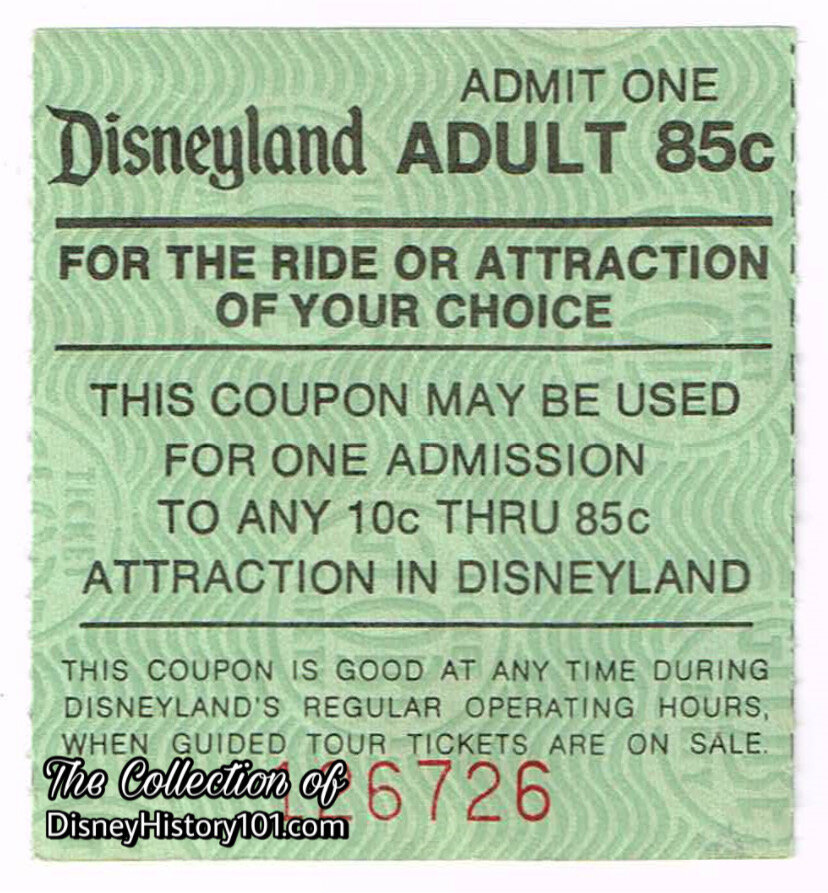
In addition to the initial Guided Tour, there have always been perks. Some early Guided Tour packages included admission to Disneyland and a selection of six of the park’s popular attractions. If there were any “first time” guests among the group, they may subsequently enjoy experiencing some attractions that were not visited during the duration of their Guided Tour with the help of a complimentary attraction coupon (included in the ticket price).
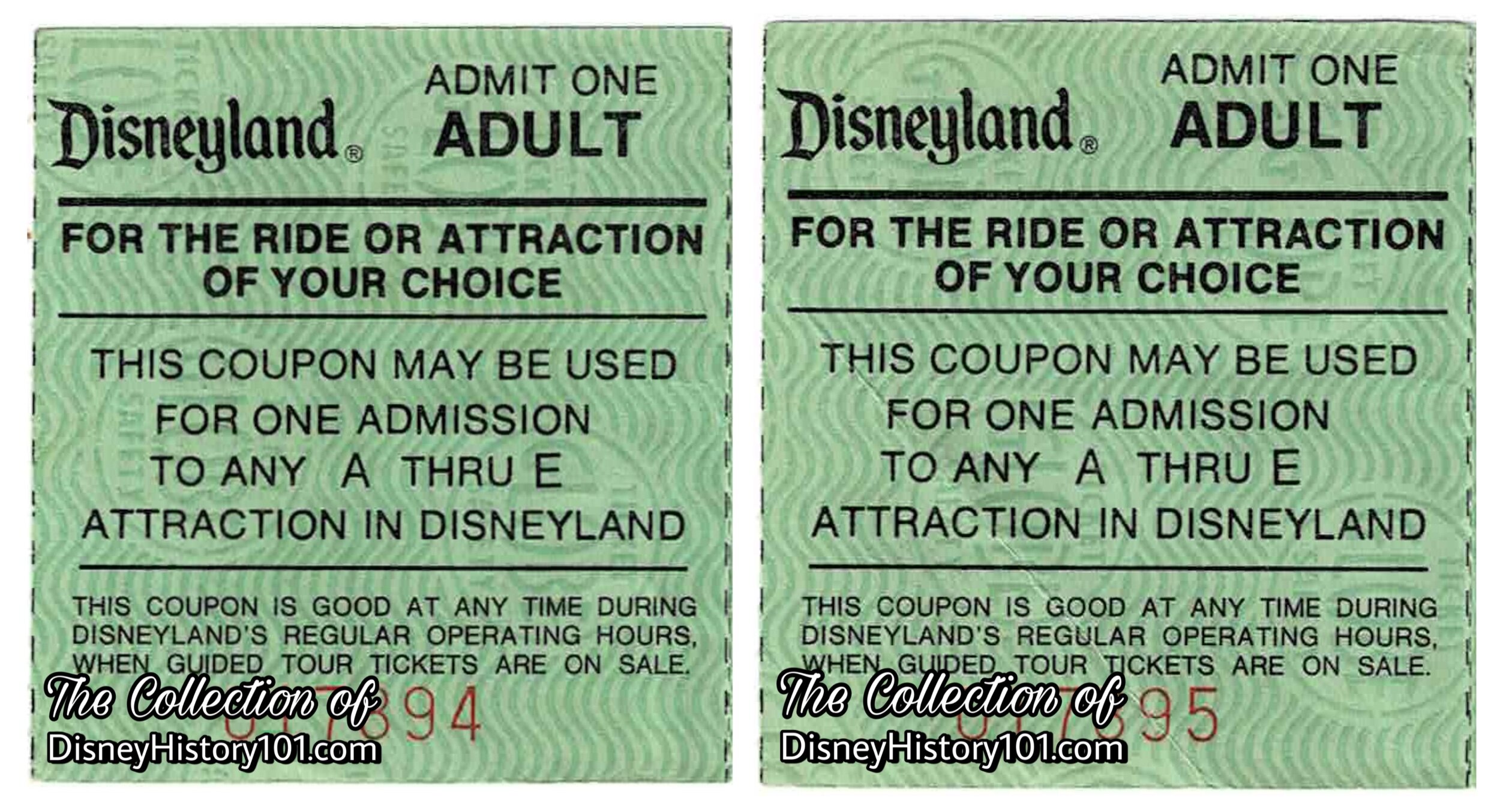
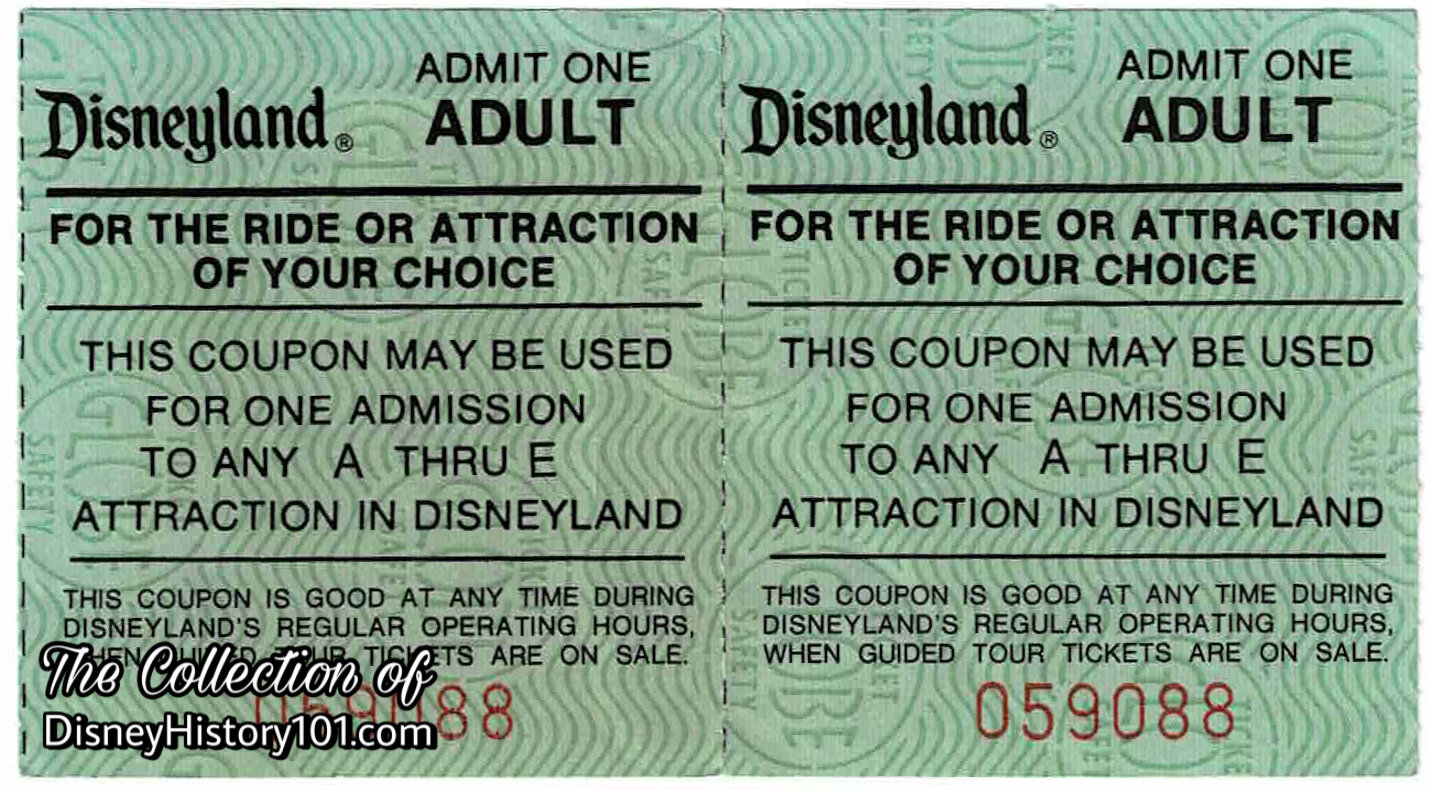
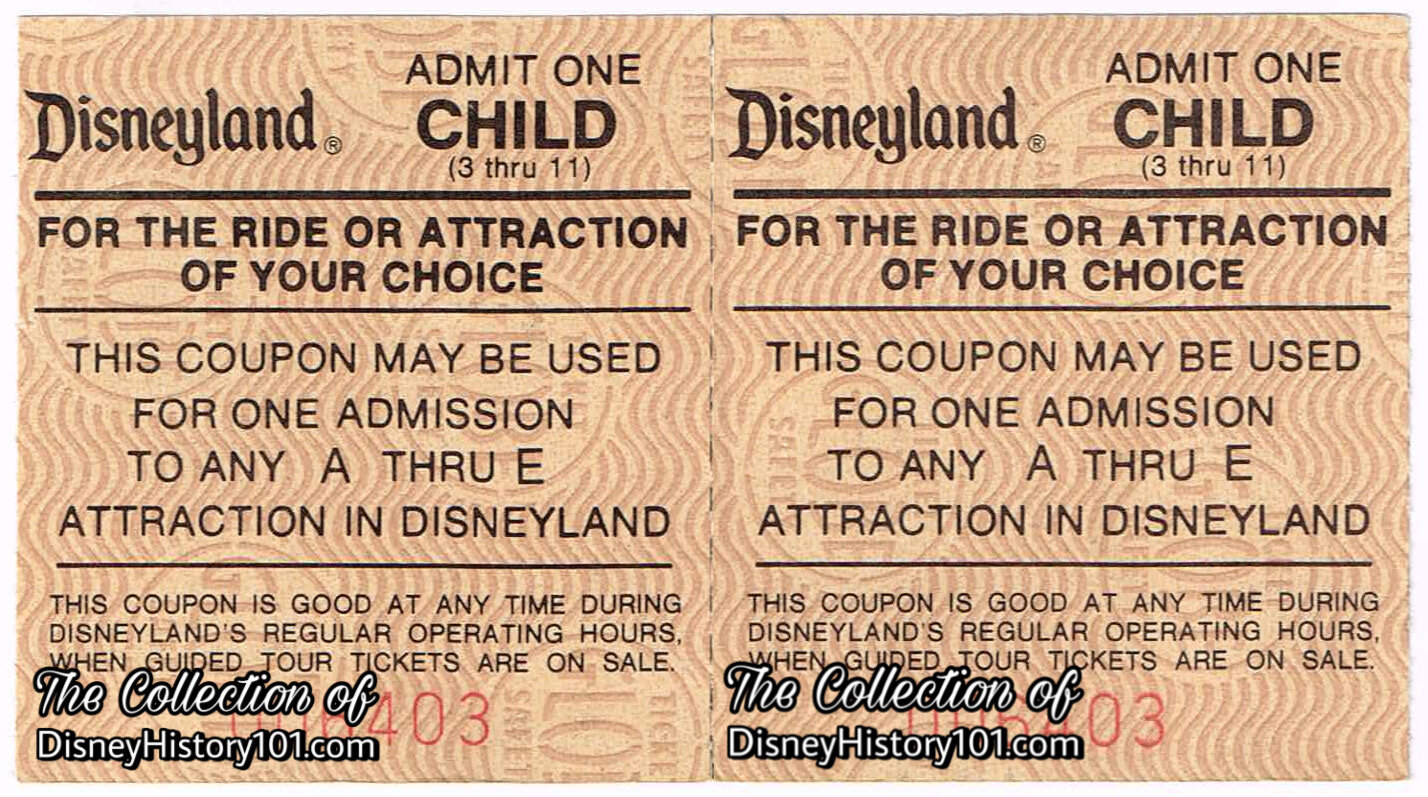
1976 : Guided Tour prices had three tiers - Adult tickets were $8.00, while Juniors (12-17) were also $8.00, and children (3-11) were $5.00.
1977 : By 1977, the now two-and-a-half hour Disneyland Guided Tour was crafted for the “first time or short time visitors”, and the economical prices had three tiers - Adult tickets were $8.50, while Juniors (12-17) were also $8.50, and children (3-11) were $5.50. By 1977, sevens ran throughout the theme of the tour, as the Disneyland Guided Tour of “Disneyland’s seven lands” included admission to “Seven of Disneyland’s Most Exciting Attractions”.
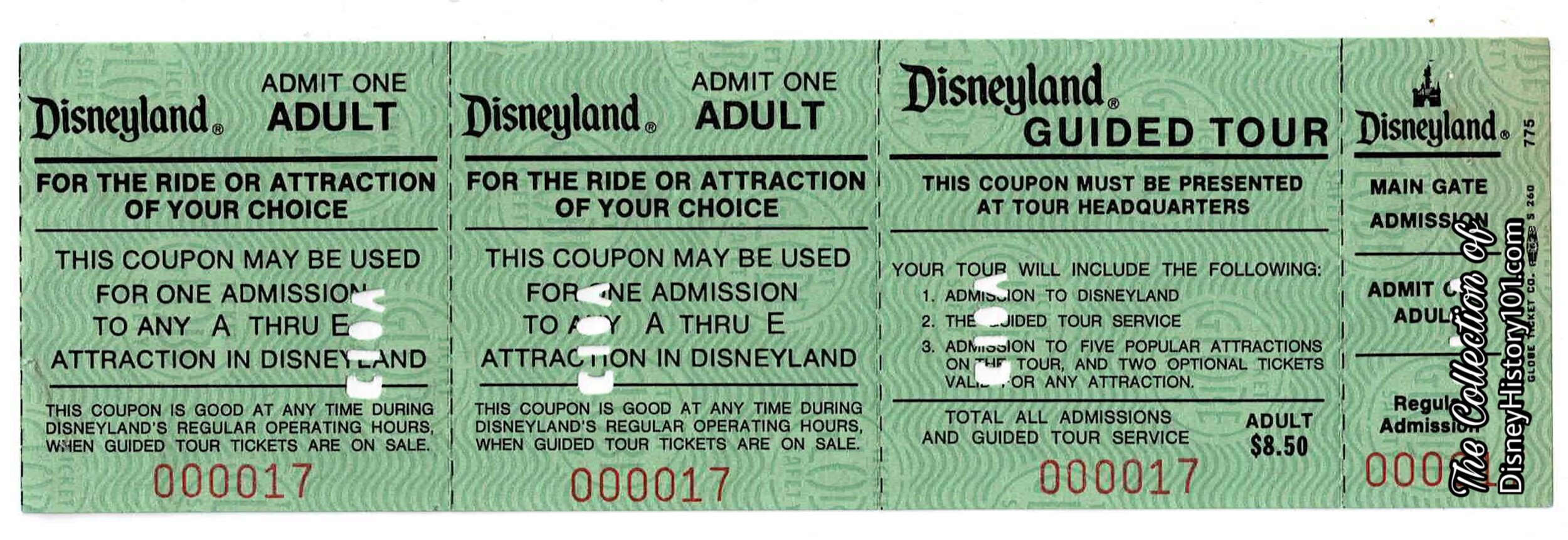
1978 : Guided Tour prices had three tiers - Adult tickets were $9.50, while Juniors (12-17) were also $9.50, and children (3-11) were $6.50.
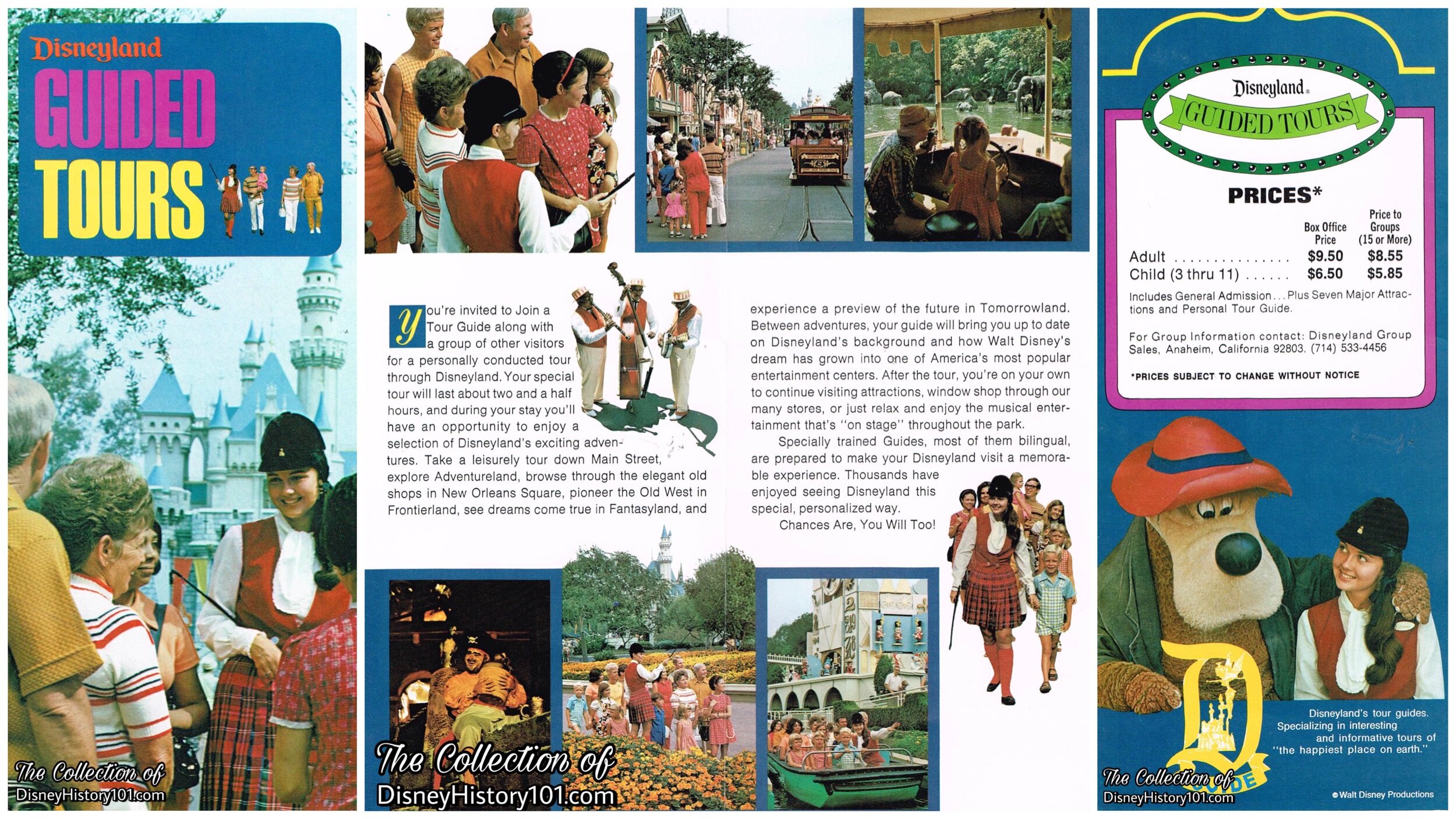
1980 : Disneyland Guided Tour admission prices during the Park’s “Silver Anniversary” were as follows - Adults $11.00, Junior $11.00, Child’s $7.00! Truly, it was still one of “the best ways to see Disneyland”!
1981 : During June of 1981, there were 54 Tour Guides, “and the number climbs to 80 during peak seasons”, according to the Area Stage Supervisor Cicely Rigdon (Disneyland LINE, Vol.13, No.3). That very year, admission for a Disneyland Guided Tour was $10.25 (adults), $9.00 (Juniors 12-17), $8.50 (Children 3-11). $11.00 for adults and “juniors” (12-17), or $7.00 for children (3-11) includes the two and a half hour tour of seven themed lands, admission, and seven exciting adventures!
1983 : Beginning June 16th, 1983 (the same day that Attraction Coupons were retired), Guided Tours were included with Passports (at $16.00 for Adults and Juniors, and $10.50 for Children).
1984 : Many guests arriving in Los Angeles (for the 1984 Summer Olympics) would also perhaps visit Disneyland for the very first time! The 3-hour Guided Tour (advertised as one of “the best ways to see Disneyland”) was $5.00 for adults and $4.00 for children 3 to 12. The Guided Tour was also available with One, Two, and Three-Day Passports. During 1984, four Guided Tours were offered every day that Disneyland was open. These were led by 1 “of 47 young men and women who have been trained to serve,” according to the Disney News (Summer, 1984).
1985 : By the Fall, Guided Tour admissions were $6.50 (adults), and $5.50 (children 3 thru 12).
1986 : The Price for Guided Tours were in a state of fluctuation, typically rising slightly during the winter season. For instance, the three-hour Guided Tours (including Admission and unlimited use of attractions were $24.90 (for Adults) and $18.90 (for Children 3 thru 12). But, from November 28th, thru the end of the year, Guided Tour prices were $26.50 for Adults and $20.20 for Children Ages 3 thru 12.
1987 : At the beginning of the year, Guided Tours were still $26.50 for Adults and $20.20 for Children Ages 3 thru 12 (the same winter season prices from 1986). By February of 1987, Guided Tours ($28.00 for Adults, and $21.00 for Juniors [children 3 thru 11]) during 1987 included the three-hour Guided Tour, a One Day Passport admission to the Park, and “unlimited use of attractions (except arcades) at the end of the tour”! [Today at Disneyland ; Monday, February 16th thru Sunday, February 22nd, 1987]
With guests in mind, a number of Disneyland Guided Tours have been dreamed up and offered by Disneyland through the years. Perhaps you have enjoyed Disneyland through one of the following Guided Tours:
•Disneyland V.I.P. Guided Tour
•Halloween Tour (launched 2007)
•Disney’s Happiest Haunts Tour (launched 2008)
•A Walk In Walt’s Footsteps Tour (c. 2002)
•Holiday Time at Disneyland Tour (launched 2008) - “Experience Yuletide cheer on the ‘Holiday Time at Disneyland Park’ Guided Tour. You’ll hear enchanting tales of the Holidays from Disneyland Park’s past and a whimsical sneak peek into Disneyland California Adventure Park.” The tour once included “two popular holiday themed attractions, reserved seating for ‘A Very Merry Christmas Parade, a delicious treat and warm beverage, a collectible pin and tour button. ‘Holiday Time at Disneyland Park’ lasts approximately 3 hours and is offered from [approximately] November 12th through January 6th.”
•The Happiest Hotel on Earth Tour (launched 2010)
•Cultivating the Magic Tour (launched 2012)
•Discover the Magic (launched 2012)
•Walk in Walt’s [Disneyland] Footsteps Guided Tour (launched 2012) - The new Tour excluded Club 33, while still including Walt Disney’s Apartment. During 2015, the tour included The Disneyland Dream Suite.
•Welcome to Disneyland Resort Tour
•The Grand Circle Tour (launched 2018). The Grand Circle Tour was added, increasing Guests' appreciation for the significance of the Disneyland Railroad, and including a themed donut.
Guided Tours in recent years have included such exclusive elements as peeks inside Walt Disney’s Firehouse Apartment or Club 33, a souvenir shrubbery, lunch and desert, exclusive pins, and much more!
“A Walk in Walt's Footsteps”
The official Disneyland storytellers would take Guests through Walt Disney’s original Magic Kingdom with tales of the challenges, hard work, excitement and fun that went into creating “the Happiest Place On Earth”. Around 2002-2003, the tour was offered exclusively to Annual Passholders Nov. 15 - Dec. 15. The tour price was $49.00 for all ages (no discounts applied). Annual Passholders could purchase up to (5) tickets per tour, and were required to show or verify their Annual Pass at the time of purchase. Tickets could be purchased from three locations at Disneyland Resort: Ticket Booths, Guest Services, or in the City Hall Lobby. Annual Passholders were not required to accompany their Guests.
The Tours were 3.5 hours in length and accommodated 15 Guests. Tours met at Tour Gardens Dispatch and departed from Disneyland's Main Entrance - in front of the West Gate, located next to the Newsstand Shop. It was important to arrive 10 minutes before the tour departed.
Some highlights of the tour experience included:
A unique visit to Disneyland's first attraction featuring Audio-Animatronics™, Walt Disney's Enchanted Tiki Room
A peek at the lobby of Club 33
A private lunch on the patio of the Disney Gallery
An exclusive collectable trading pin
Identification Tags and Name Badges were occasionally distributed to identify guests of some of these seasonal or limited run Disneyland Tour Groups. The artwork (which is seen on this Tag) was once available to Disneyland Cast Members in the form of a limited lithographic print.
Disneyland Guided Tours have always been known for exclusive souvenir gifts as part of their experience! During the second year of operation (1958), full-color copies of “Walt Disney’s Guide to Disneyland” was given as a permanent souvenir of a Guest’s day at Disneyland. As the aspects of tours changed (and new ones were added), the gifts have come to include pins (of varying kinds - even “hinged” and light-up), lanyards, and buttons (some of which have occasionally been “subject to change without notice”).
The Guided Tour Complimentary Souvenir has also been implemented at many Disney Parks worldwide (e.g. Tokyo Disney Sea).
A couple of illustrations (above) featured “Walt Disney’s Disneyland Coloring Book” and “Walt Disney’s Disneyland 128-Page Coloring Book,” (both by Whitman Publishing), introduced young aspiring “colorists” to the Disneyland Tour Guide. For some, those plaid tartans probably posed the challenge to stay within the lines.
It’s not hard to see why occasional merchandise (made available to both Guests and exclusively to Disneyland Cast Members) has commemorated the beloved Disney Parks Tour Hostess and Tour Host! You may have seen some of these Disneyland Tour Hostess or Tour Host - inspired pins, ornaments, bean bag dolls, and many other types of merchandise! One of my personal favorites is this loyal and adorable homage to the classic Guided Tours Hostess Wardrobe, a Disneyland 50th Anniversary Pewter Figure designed by Kevin Kidney & Jody Daily.
Now, Minnie Mouse has appeared as a Guest Relations Hostess or Tour Guide (often as an example of appearance) within occasional publications prepared for Disneyland Cast Members (like the “Disney Courtesy Policies” booklet). Now, (likely inspired by some of these illustrations) the “Minnie Mouse Tour Guide” by sculptor Costa Alavezos (pictured above) was produced both as a limited 9” figure in “The Art of Disney Theme Parks” line, and as an ornament.
These approximate 9-inch Bean Bag Plushes capture likenesses of Mickey Mouse and Minnie Mouse and the fashions of the male and female Disneyland Tour Guide.
“Disneyland Tour Guide Legacy”
Disneyland Tour Guides have played an essential role in the story of Disneyland. Even an episode of The Wonder Years Season 2 was planned to feature a Guided Tour Hostess. While this background character did not make the final cut, it was our pleasure to loan our “D” Pin and Castle Pin to the production.
We once had the great honor and privilege to be among the “Walk In Walt’s Disneyland Footsteps” Tour Group lead by a new Disneyland Hostess - Victoria! Once our Tour was complete, we couldn’t help but applaud her presentation and enhancement of the Disneyland show. In addition to the magical and memorable look at Walt Disney’s Disneyland, we now had a greater understanding and appreciation for these friendly, personable, and knowledgeable Disneyland Cast Members, as well as the personable services they provide guests each day at Disneyland! This particular Hostess would go on to acquire the knowledge and skill to become a Disneyland V.I.P. Tour Guide as well!
But, the Main Attractions of Guided Tour Gardens are still the very people who continue to prove just what it “takes…to make the dream a reality”! Even more, these veritable models of “Guest Relations” pulsate with the “Spirit of Disneyland,” are of exemplary “good grooming and etiquette,” and are also some of the most intrinsically friendly and knowledgeable Disneyland V.I.P. Tour Guides you’ll ever meet. I am (of course) speaking of Connie (to my right) and Esteban (on my left), pictured above!
Quite often today, Disneyland Tour Guides get their start at Disneyland working for the Park in some other capacity for six months to a year, before transferring to the Disneyland Guest Relations Department. But after applying, the present Disneyland Tour Guides are trained (and carry the adequate knowledge and capability) to lead at least one type of scripted Disneyland Guided Tour, with a group of (up to) 25 guests! This may include memorizing a script some 25 pages in length, and delivering it without improvising or deviating from the script in any way. The best Disneyland Tour Guides (like Shaun) deliver these lines with true intrinsic feelings (that seem second-nature) stemming from a heartfelt passion for Walt Disney’s Magic Kingdom!
If you are a former Disneyland or former Disney Parks Host or Hostess, and once served as a Disneyland Guide or in Disneyland Guest Relations, “It would be my pleasure” to share your “Guided Tours Story”. Pease contact us at DisneyHistory101@gmail.com, and our team of historians are eager to meet you!
THE HAT BAR (also HATMOSPHERE & MOD HATTER)
The foremost product of Disneyland is (and has always been) happiness! Many factors contribute to happiness, including (but not limited to) licensed merchandise inspired by the character of Disneyland or Walt Disney’s Characters.
The Hat Bar was a popular location for guests to find a souvenir hat that suits them (as you will find out if you “go on a-head”).
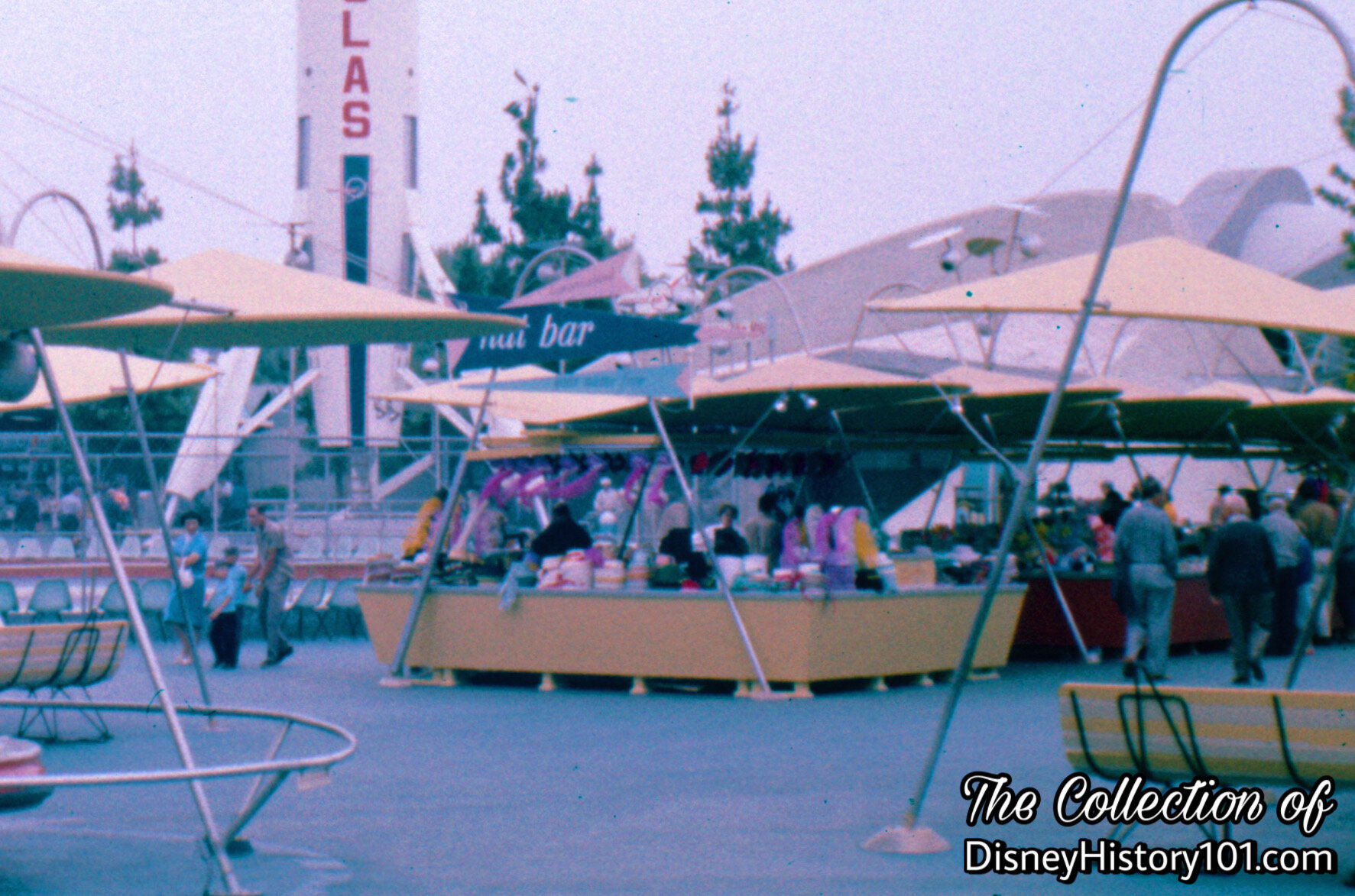
Now there have always been several merchandise locations around Disneyland to find fashionable and protective headwear. There was the Mad Hatter Store on Main Street and in Fantasyland, as well as the Davy Crockett Museum (in Frontierland).
If you were looking for beanies, bucket hats, paper Disneyland half-hat visors, pith helmets, student caps, coonskin caps, the Peter Pan Hat and Captain Nemo Hat by Elrene, Hardee Hats, Cowboy Hats, Zorro Hat and mask sets, Bikester “Disneyland” Hats (also known as the “Tomorrowland Keppy Kap”), Prince Philip hats, Pinocchio hats, Tyrolean hats, Robin Hood hats, Pirate hats, Mickey Mouse Hats, Donald Duck hats (with a squeaky beak ; personally designed by Walt Disney Productions character merchandiser - Vince Jefferds ), Mary Poppins Hats, and Benay-Albee’s official Mickey Mouse Club Mouse-ke-ears Hats (in Mickey and “Minny” styles), . . . The Hat Bar shop (in Tomorrowland) had what you were looking for (and more)!
Clearly, Disneyland provided an additional major sales outlet for licensed Disney merchandise, while the licensing promoted the park through games, books, toys, and lots of headwear. Disneyland also turned concessionaire Benay-Albee into a licensee that manufactured merchandise featuring properties owned by Walt Disney Productions.
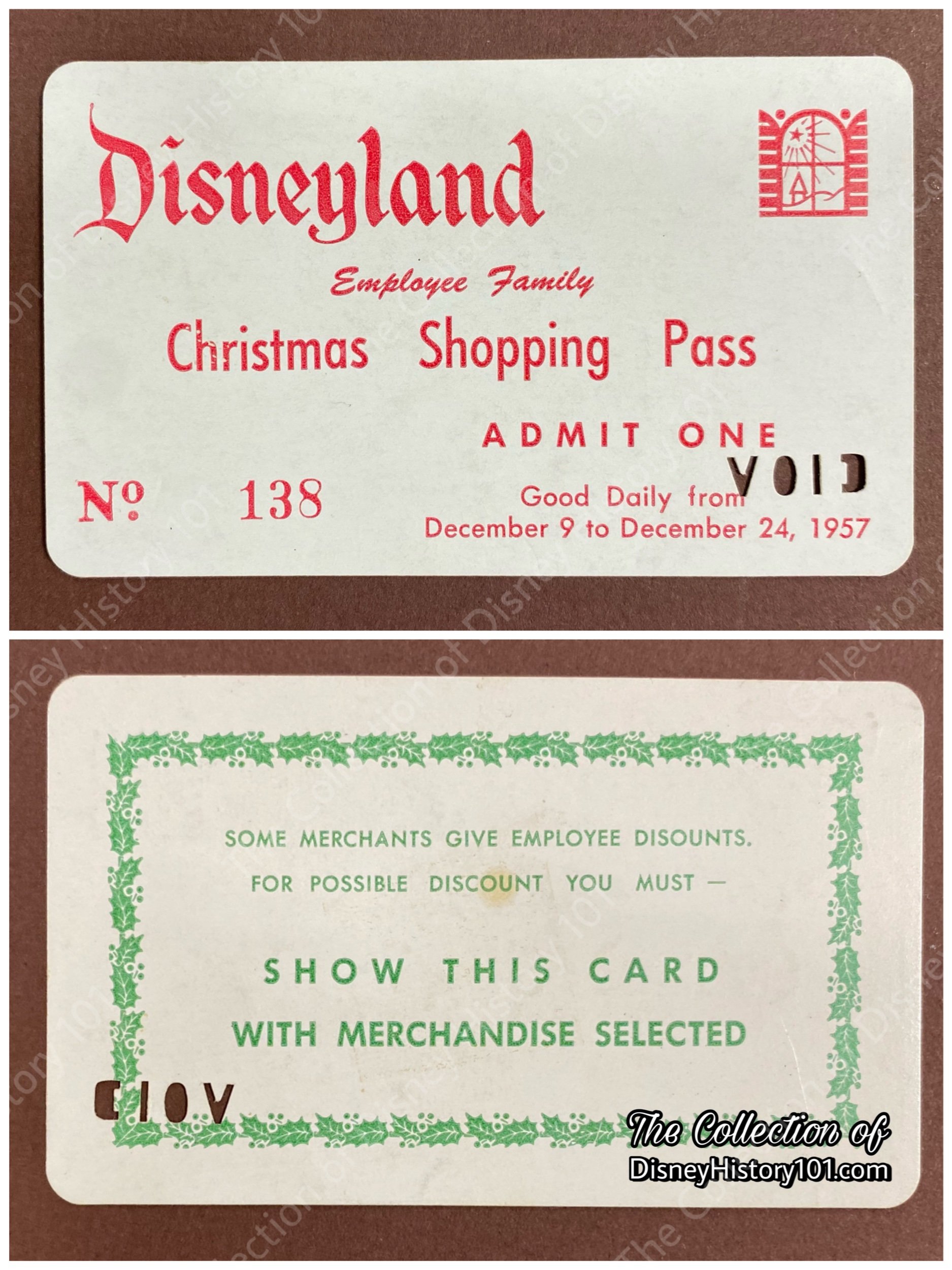
The 1957 TWA brochure “Let’s Talk About… My Visit to Disneyland, Anaheim, California: A Note from Mary Gordon TWA Travel Advisor” mentioned: “We learned that to fully explore Disneyland takes two days, so early next morning we were at the gates of the park again. The second day we spent more time shopping in the 50 inviting shops, and the youngsters bought inexpensive souvenirs to take home to friends.” Among those Inviting shops was The Hat Bar in Tomorrowland and Mad Hatter in Fantasyland!
Many of these locations were operated by the Benay-Albee Company. The corporate synergy would prove beneficial for both parties. Just a few years later, the commercial lessee Benay-Albee Novelty Company brought much revenue for Disneyland, Inc. For instance (in Tomorrowland alone), the commercial lessee brought revenue of $17,316 for the fiscal year ending September 29, 1957 and $12,985 for the fiscal year ending September 28, 1958. An additional $2,751 was yielded for the fiscal year ending September 28, 1958. By September of 1958, the Benay-Albee Novelty Company was still contributing a routine portion of accounts receivable to Disneyland, Inc.
The Benay-Albee Company (manufacturer of some hats) even occasionally covered percentages of construction and maintenance costs (as when a marquee was constructed and maintained for the front West Plaza entrance of the Mad Hatter Store on Main Street from 1957-1959).
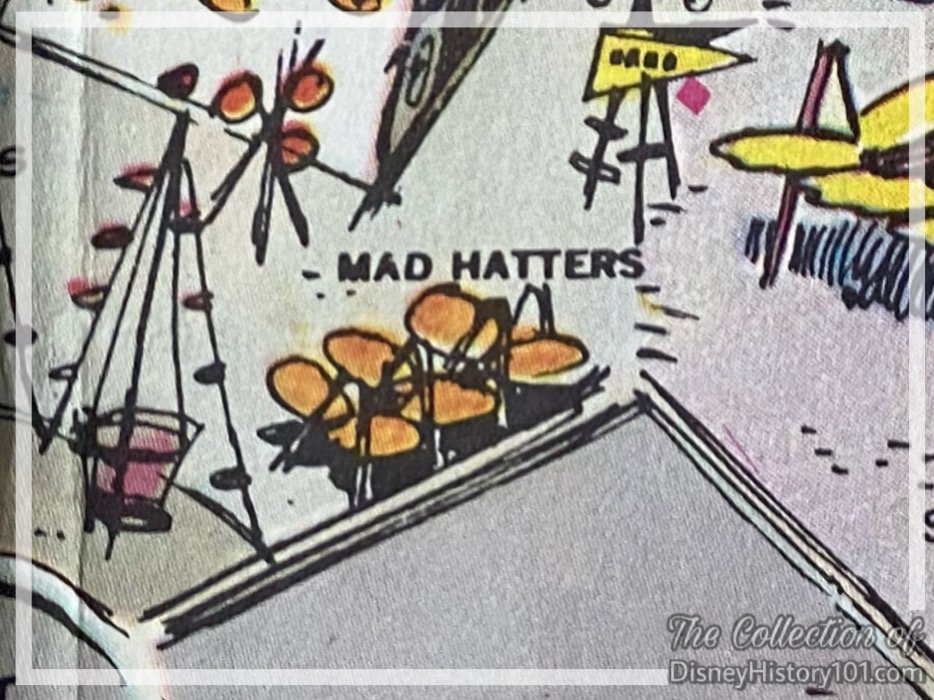
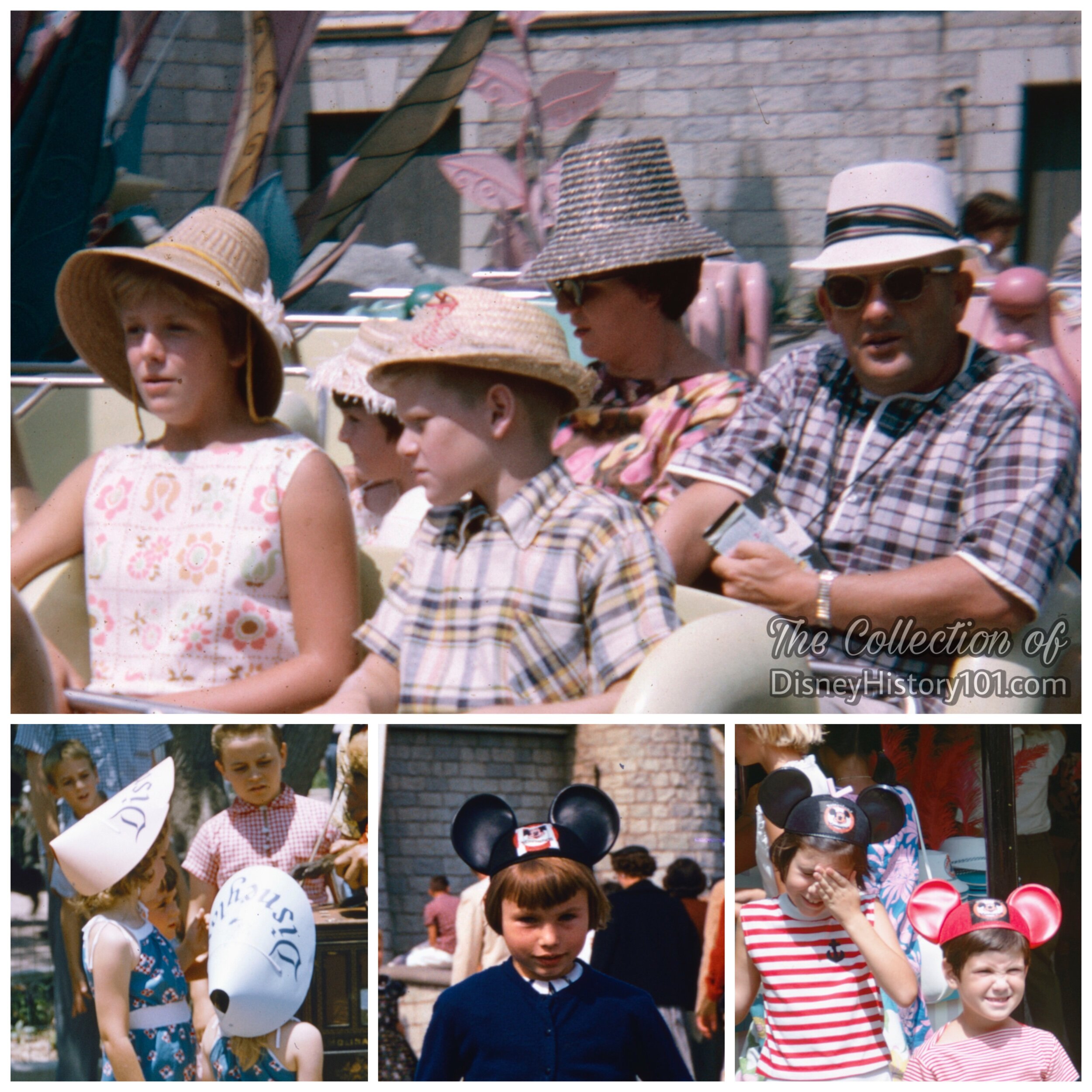
Hats became so associated with the Disneyland experience, that they were often featured in promotional material, like the television commercials filmed at Disneyland July 15th and 16th, 1964.
As a sidelight, when boarding a thrilling adventure, Attractions Hosts and Hostesses informed everyone in the vehicle to hold onto their hats and glasses. If a guest lost an article, Hosts and Hostesses made a sincere effort to locate it and make a positive identification.
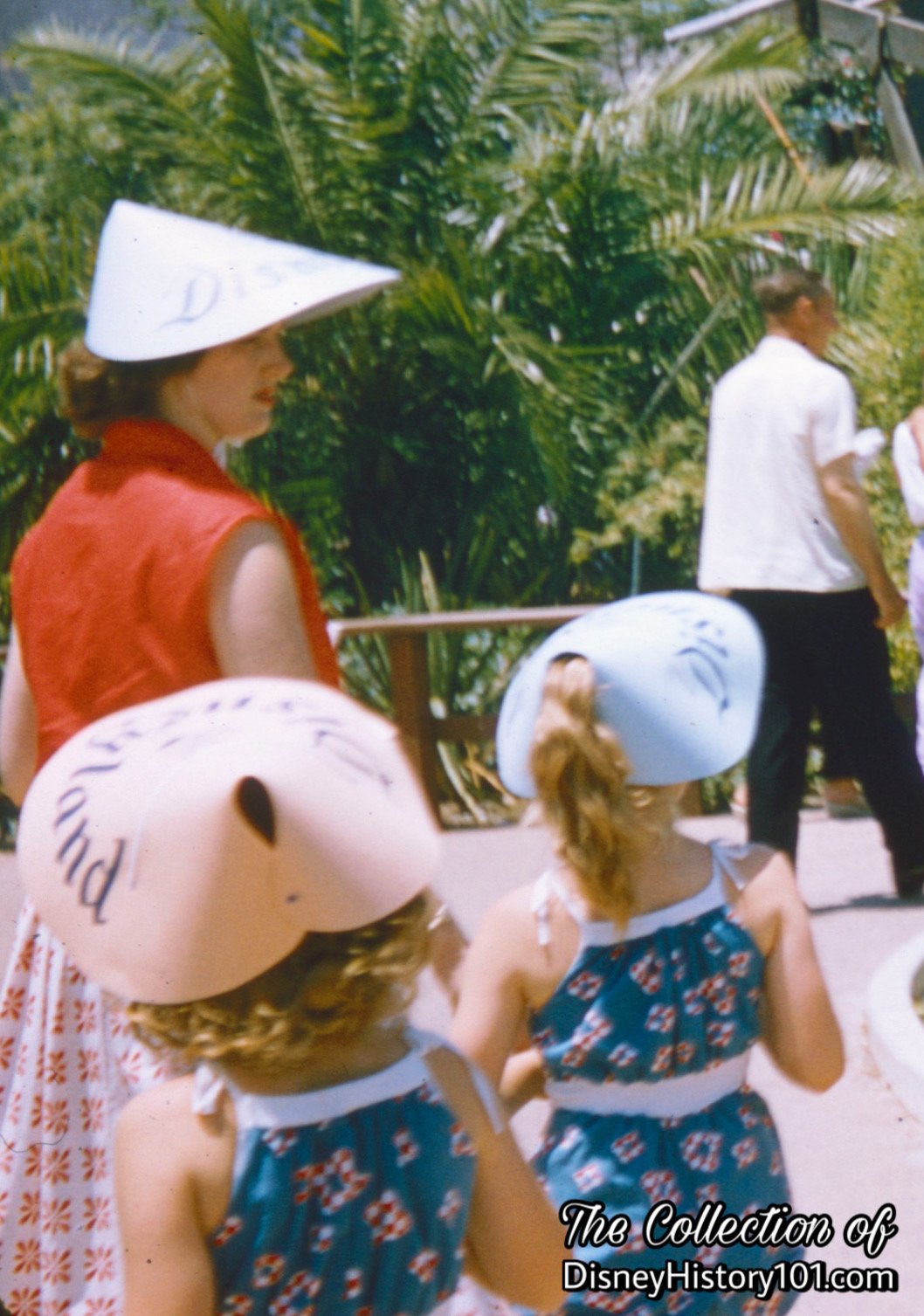
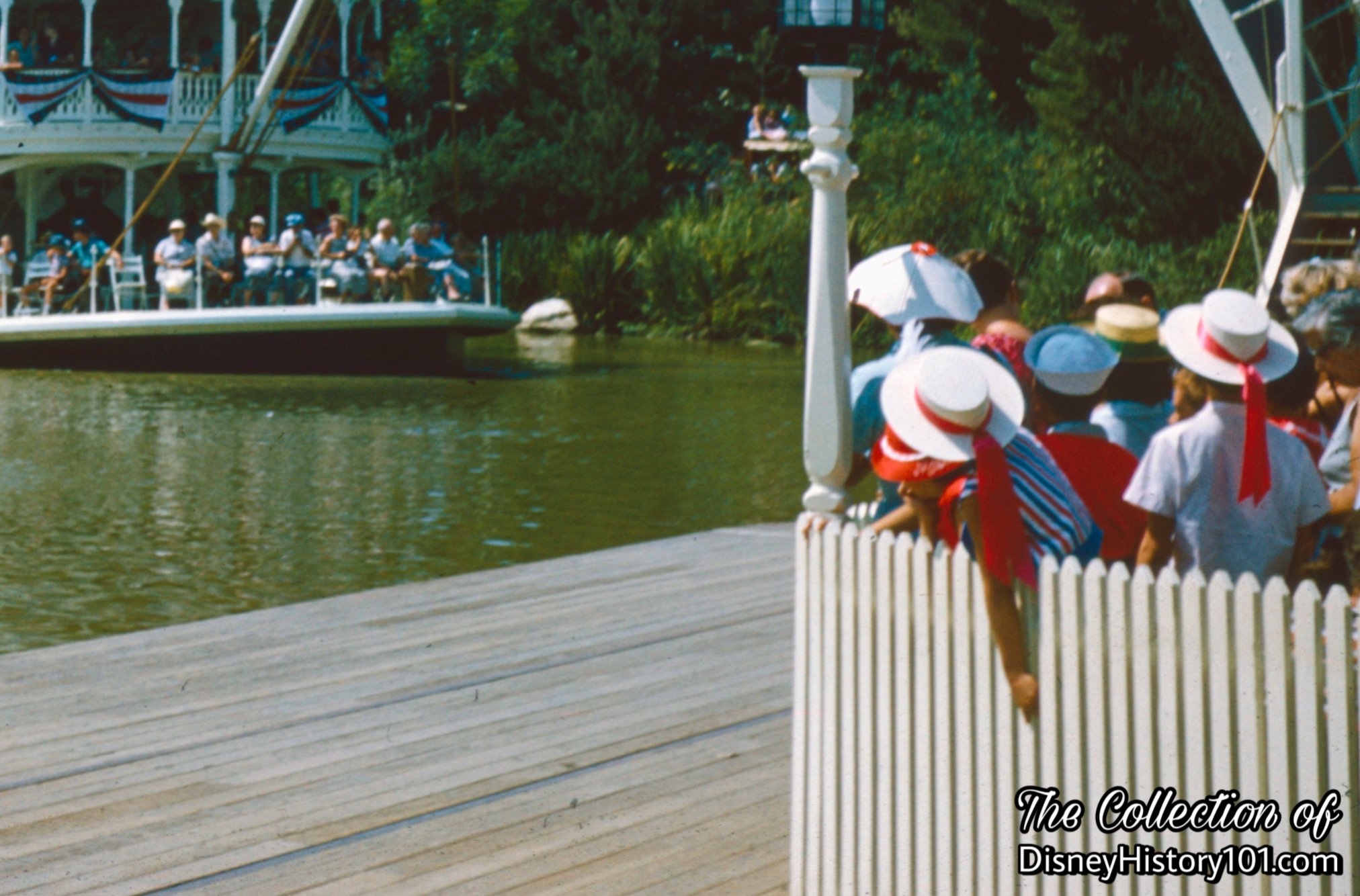
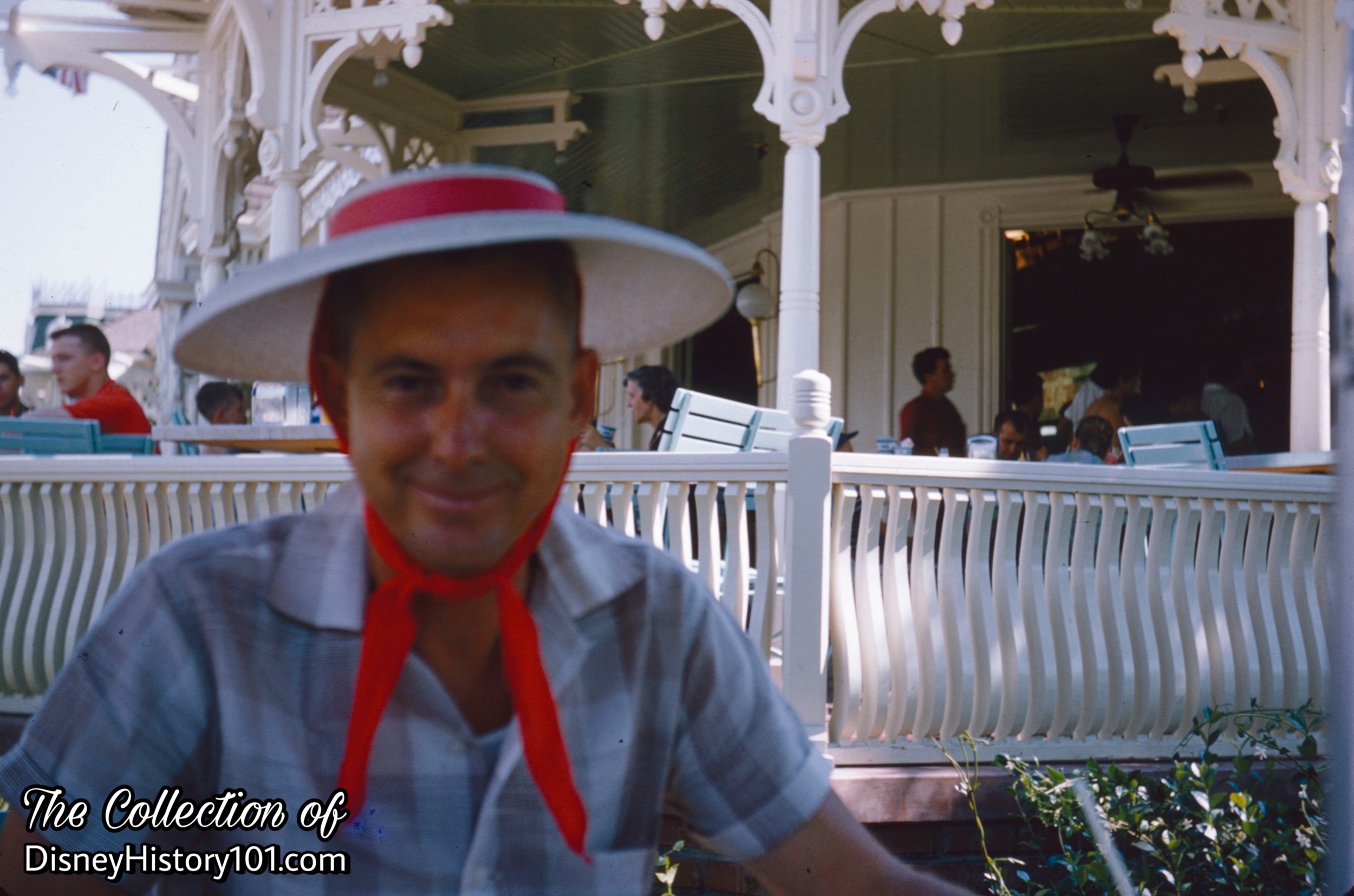
Mickey Mouse Hats with names sewn onto them have assisted Cast Members in connecting with guests, calling them by name.
The Mad Hatter shop of Fantasyland was originally a leased by the Benay-Albee Novelty Co. when it opened at Disneyland during June of 1956!
Since the beginning, the 891 square-foot Mad Hatter Shop was a popular location for guests to find a personalized “gay and unusual” novelty hat that suits them (as you will find out if you “go on a-head”). There were some 25 styles to choose from by September of 1956, according to contemporaneous issues of The Disneyland News, page 3. Guests looking for hats of any description would find that The Mad Hatter shop had what they were looking for (and more)! There was a colorful variety of unique Disneyland hats including beanies, bucket hats, paper Disneyland half-hat visors, pith helmets, student caps, coonskin caps, Hardee Hats, Cowboy Hats, Zorro Hat and mask sets, Bikester “Disneyland” Hats (also known as the “Tomorrowland Keppy Kap”), Derbies, Peter Pan Hats (by Elrene Manufacturing Co. of N.Y.), Prince Philip hats, Pinocchio hats, Tyrolean hats, Robin Hood hats, Pirate hats (with sword “through” the head, Benay Albee Novelty Company Mickey Mouse Hats (with the nose that “squeeks”), Donald Duck hats (with a squeaky beak ; personally designed by Walt Disney Productions character merchandiser - Vince Jefferds), Mary Poppins Hats, Benay-Albee’s Cinderella novelty hats (with the ribbons and braids), and Benay-Albee’s official Mickey Mouse Club Mouse-ke-ears Hats (in Mickey and “Minny” styles).
Two years after the shop opened (by September 28, 1958), Disneyland Inc. opened job number 4062-511 for both the design and development of the Mad Hatters' Shop marquee. The marquee (for the Main Street lessee) was in developmental progress at a total cost of $3,875 (estimated Disneyland Inc. share) and lessee share of $1,500. By October 1958, the “Disneyland Dictionary” described the Mad Hatter Shop operated by Albee Novelty Co. with a scope of sales included selling and sewing names on “novelty and personalized hats.”
The Mad Hatter Shop soon offered the free service of personalizing purchased hats, with sewn, embroidered names. According to Vacationland (Summer, 1960) and “The Disneyland News” (Vol. 1, No. 1, of 1963), “Carl Ritter, Disneyland’s Peter Pan, watched as a man walked up to the Mad Hatter’s Hat Shop with identical twin boys, about eight years old. The man bought two hats and had the boy’s names sewn on them. He told the Mad Hatter : ‘They’re my nephews, and I never can remember which is which.’ As the man walked off, with his back to the twins, they quickly changed hats!” The Mad Hatter Shop was one of Disneyland’s more popular souvenir shops, and a testament to this fact are the number of celebrities that have been photographed there over the years - like child actor Kevin Corcoran (as seen in Jack and Jill, May of 1960) and comedian Jack Benny. On one occasion, “motion picture star Betty Hutton… bought fake eyelashes in Merlin’s Magic Shop and a pirate hat with a special sword that appeared to go right through her head [likely purchased through the Mad Hatter],” after visitors recognized her and asked for autographs. “The disguise worked perfectly. No one recognized Miss Hutton, but people continued to stop her. This time they wanted to know where they could buy ‘a hat like that crazy one you’ve got on!’”
The number hats sold also speaks volumes about the shop’s popularity. In fact, by 1977, an average of 1,500 pairs of Mickey Mouse ears were sold on good days, during peak periods.
Well, The Mad Hatter Shop ultimately joined the Fantasyland Merchandising group, when its lessee departed after nearly two decades of loyal service (during January of 1977). But one of the biggest changes would occur during one Alice in Wonderland refurbishment (that took place during the early 1980s). Then, the Mad Hatter Shop was notably relocated and redesigned to a look similar to its present incarnation. By April 14, 1984, the new Mad Hatter location debuted, with pre-existing elements (like the tree) becoming part of Disneyland history!
The Mad Hatter on Main Street U.S.A. has some architectural elements reminiscent of watercolor “97A” (depicting Alice looking towards a “Mad Hatter” shop) which was created by David Hall (1905-1964; employed at Walt Disney Studios from 1939-1940) during the production of Walt Disney’s Alice in Wonderland.
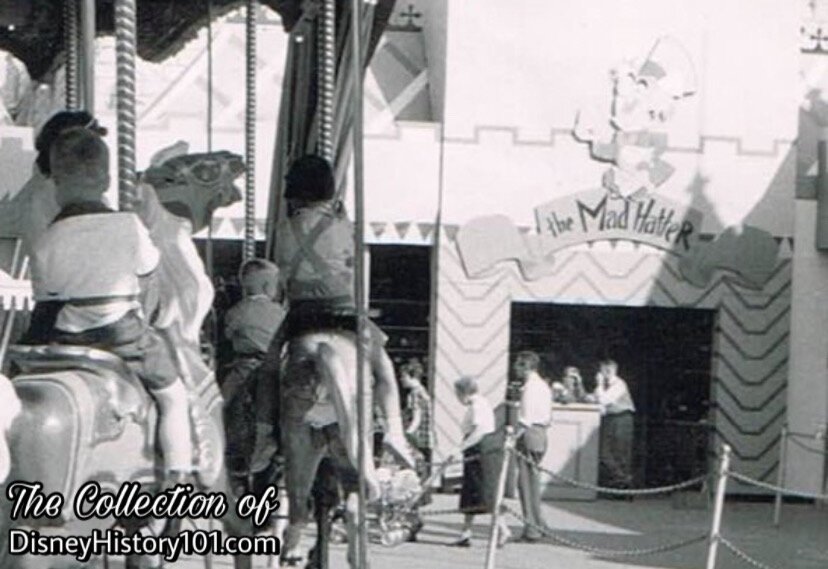
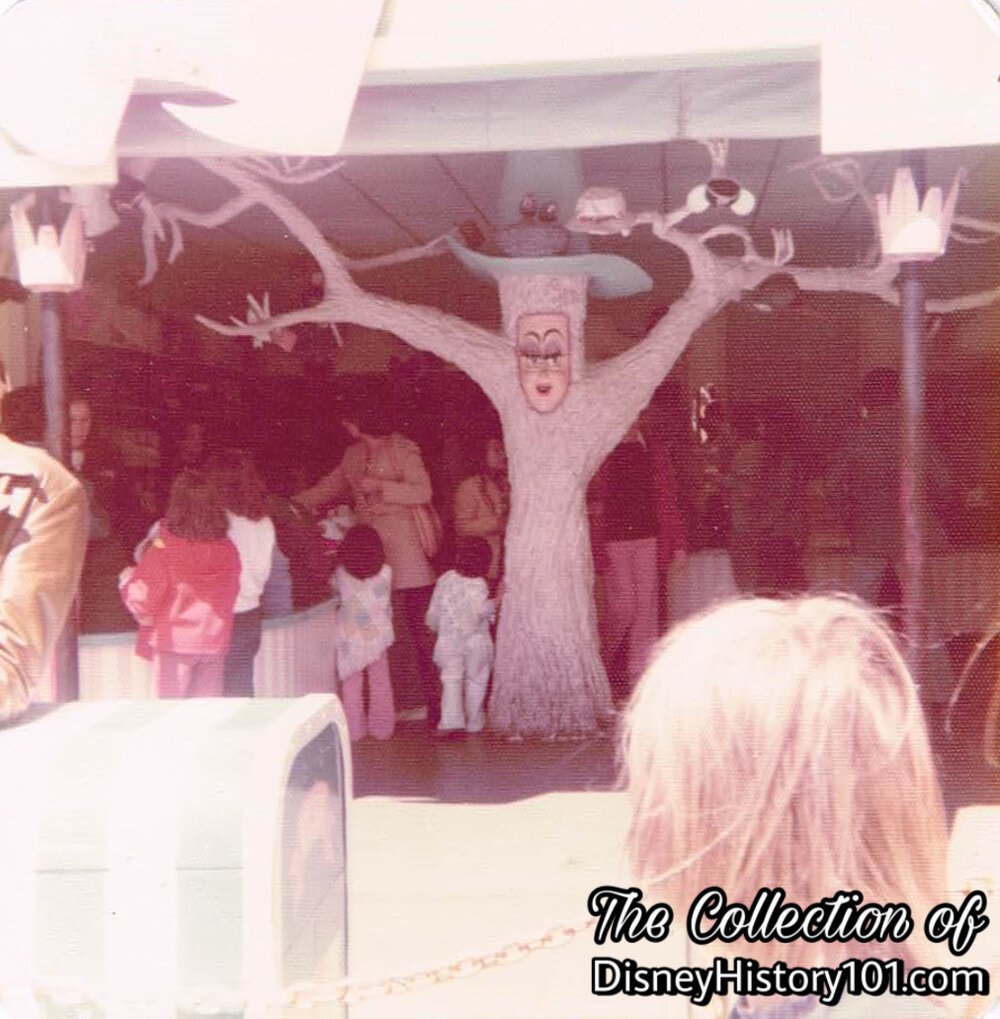
The shop created tangible memories for Guests through Merchandise and Show.
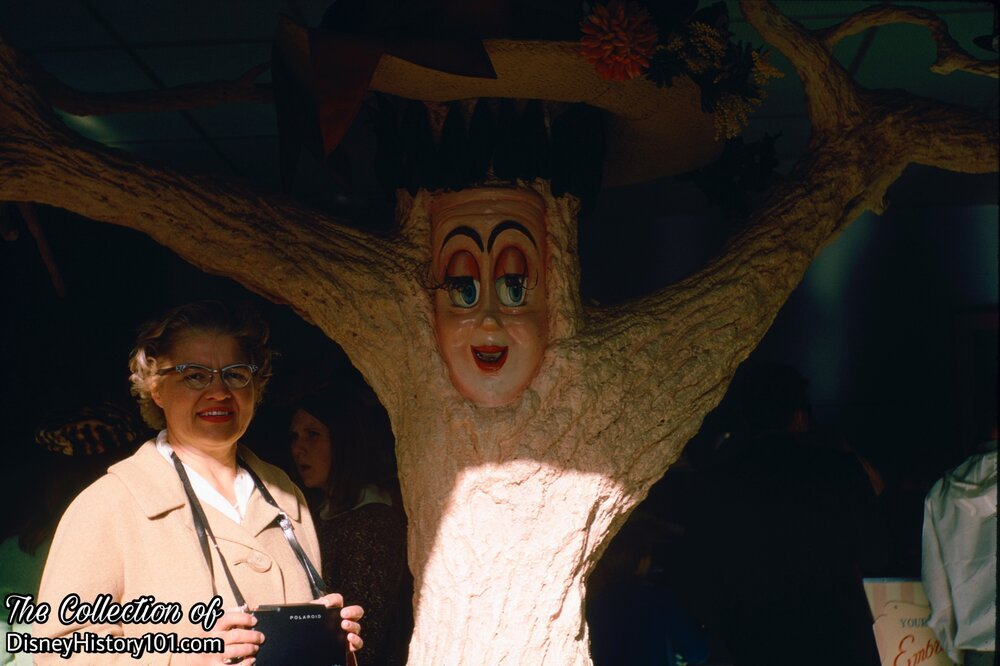
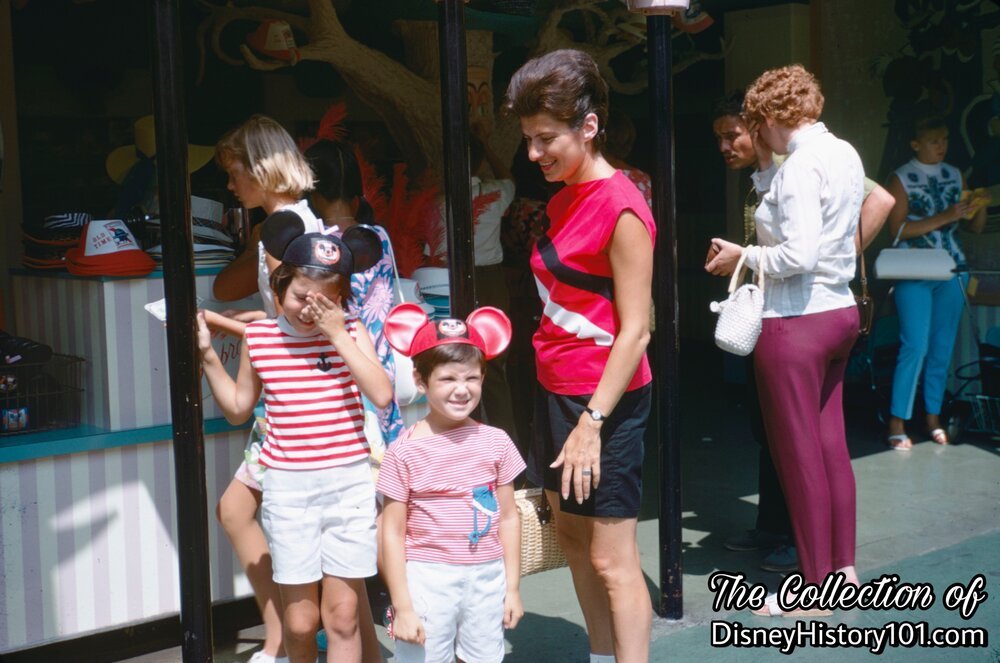
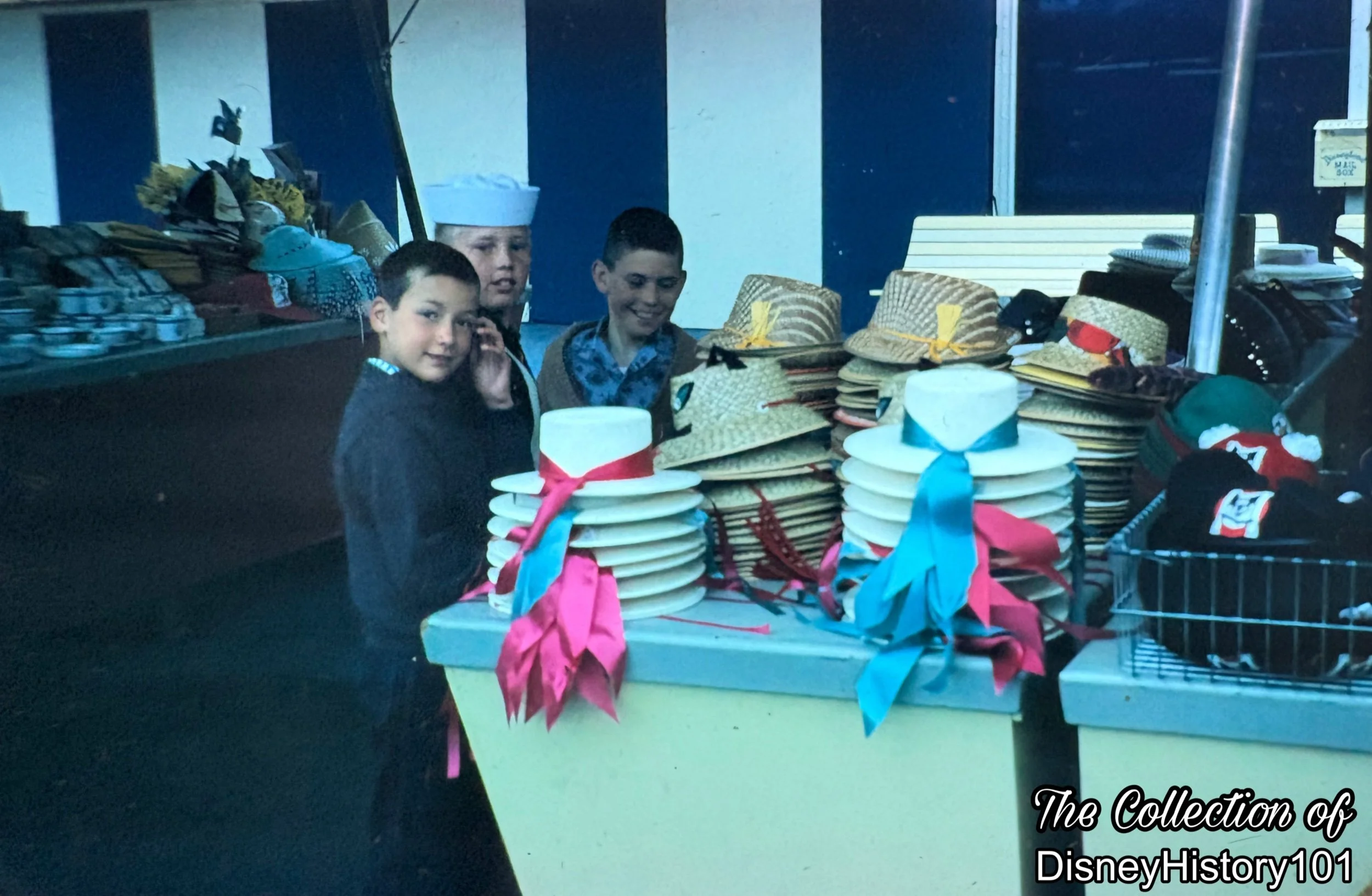
This Mad Hatter Shop fabric sticker was donated to us from the collection of the late Jack Kehoe (of Disneyland Security).
By (April-June) 1981, WED Imagineering surveys of the 891 square-foot Mad Hatter Shop were conducted, in relation to New Fantasyland. Proposals for expansion to a 2,206 facility were made.
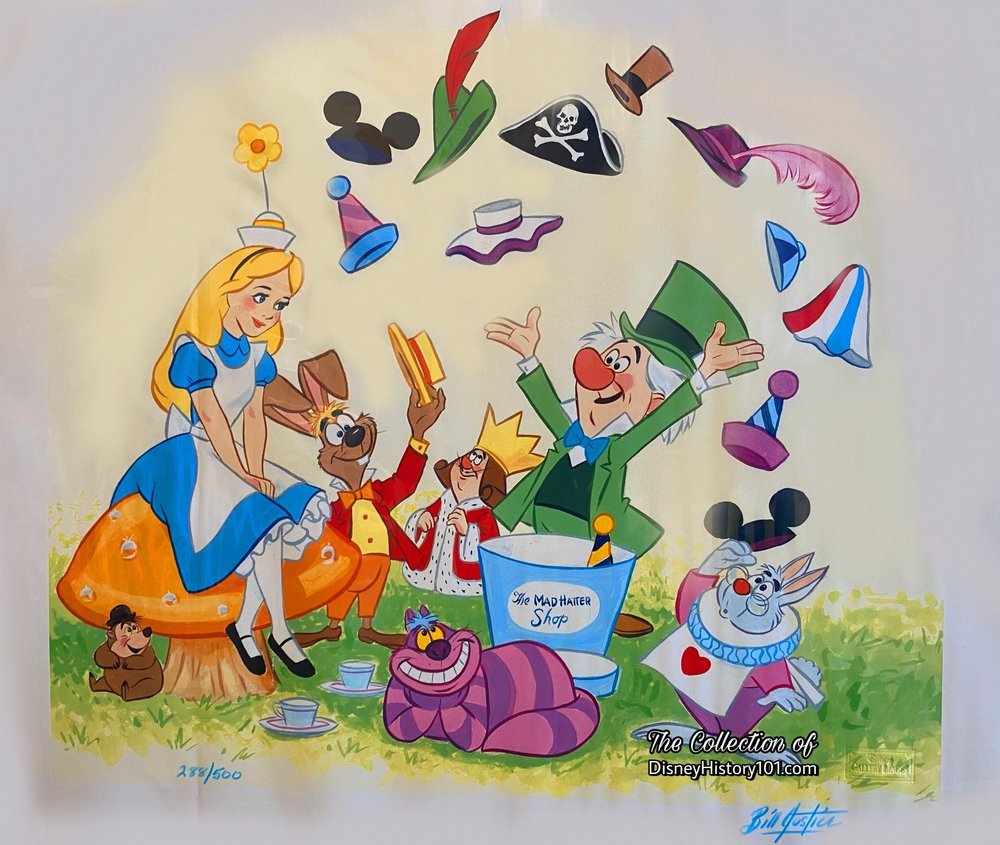
All art work, posters, etc. of Disneyland were created by the Walt Disney Studios. A mural was designed and created by Walt Disney Studios artist Bill Justice in 1977. This was not Bill’s first Disneyland contribution. During the 1960s, the team of Walt Disney Studio Character artists Bill Justice and John Hench partnered with Chuck Keehne (Chief of the Walt Disney Studio Wardrobe Department, from 1955-1979) to oversee the creation of 40 new Disneyland Characters that could“stand up to the rigors of every day use among the guests." Now, years after the mural was demolished, a print commemorating Bill’s Mad Hatter Mural was offered through The Disney Gallery.
Beginning in 1956, the Donald Duck Hat by Benay-Albee (complete with squawking bill) was available at many shops where novelty hats were sold, including the Disneyland Hat Bar.
Hats have helped guests express pride for their favorite Walt Disney characters. These Donald Duck Hats by Benay-Albee would perhaps inspire the Goofy Hat (a Disney Character Fashion manufactured during the 1970s and 1980s by Atlas).
(Courtesy of the Keeline Collection)
The “Bikester” and the “Sportster” (also commonly called “Keppy Kaps,” though another model was specifically referred to as such) were both manufactured by the B.F. McDonald Company of Los Angeles, California (and Houston). This particular model (D-500) was a popular seller with Disneyland guests (parents in particular), due being “the only children’s hat with a Life-Guard Protection”, according to contemporaneous advertisements. This is because all Bikesters and Sportsters were “formed of shock-proof Butyrate”, and featured a “scientifically engineered Head-cushion Protecto-Liners” (adjustable, vinyl-covered, foam head-cushion bands). Aesthetically, the Disneyland Bikesters (or, “Disneyland Sports Cap”) were “permanent-decorated in two gay colors”, with “reinforced tubular welded colorful rim bead”. This yellow Disneyland Bikester (Model D-500) branded with the insignia of the five cardinal Disneylands, was available for just a brief period. During this period, the “Disneyland Souvenir Gifts” catalogue (published 1958) offered them as the “Tomorrowland Keppy Kap,” in either White (item HW-1) or Yellow (item HW-2), for $1.00 each.
(Courtesy of the Keeline Collection)
The rare yellow Disneyland Bikester (Model D-500) was also branded with the insignia of the five cardinal Disneylands, and was available for just a brief period.
(Courtesy of the Keeline Collection)
The rare yellow “Disneyland” (also branded with the insignia of the five cardinal Disneylands) was available for just a brief period.
(Courtesy of the Keeline Collection)
The rare yellow “Disneyland” (also branded with the insignia of the five cardinal Disneylands) was available for just a brief period.
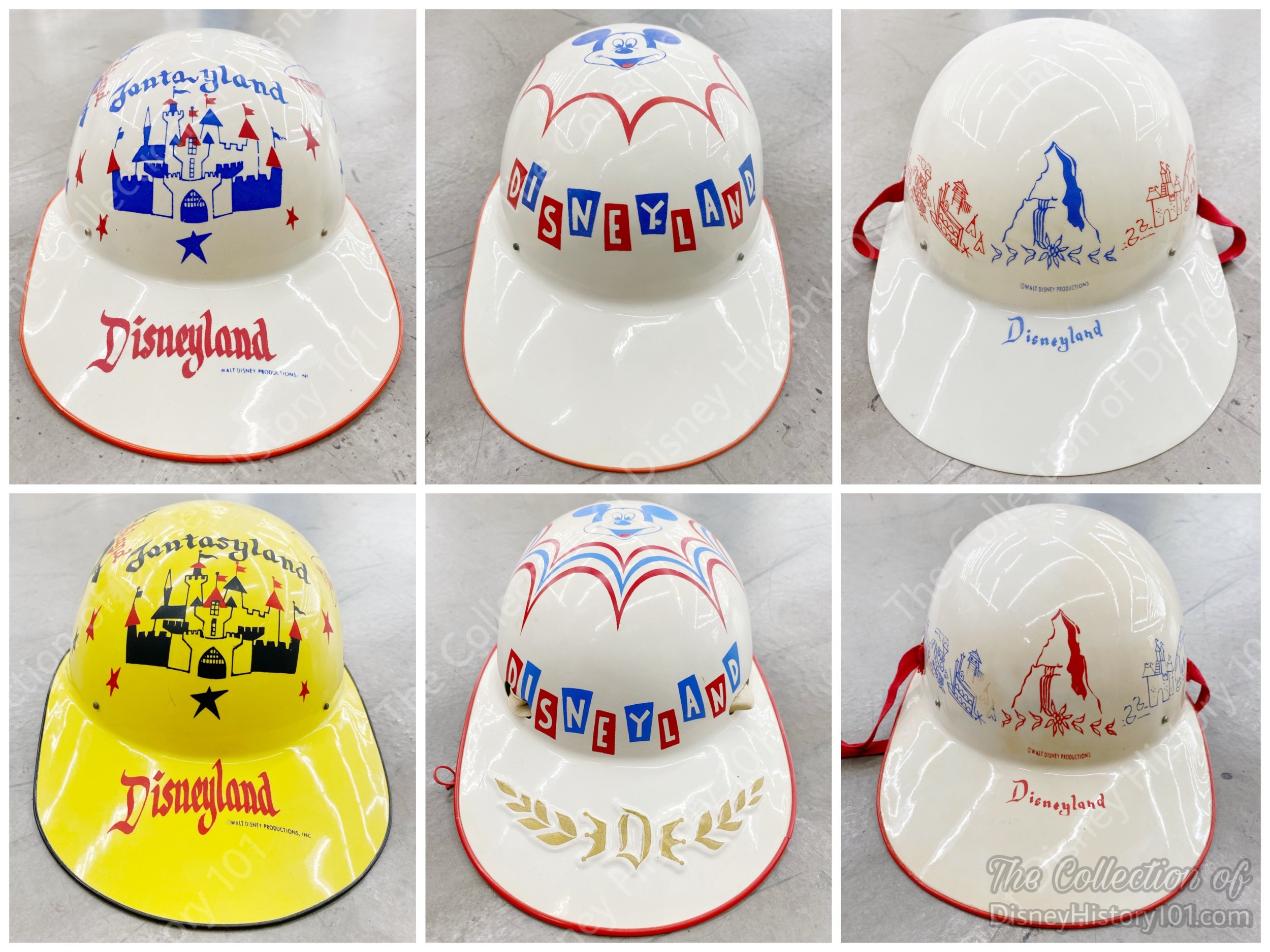
One other model of the “Disneyland” featured the Disneyland name across the front, with Mickey Mouse on top. Still another Keppy Kap featured the Matterhorn prominently displayed on the front of the Kap.
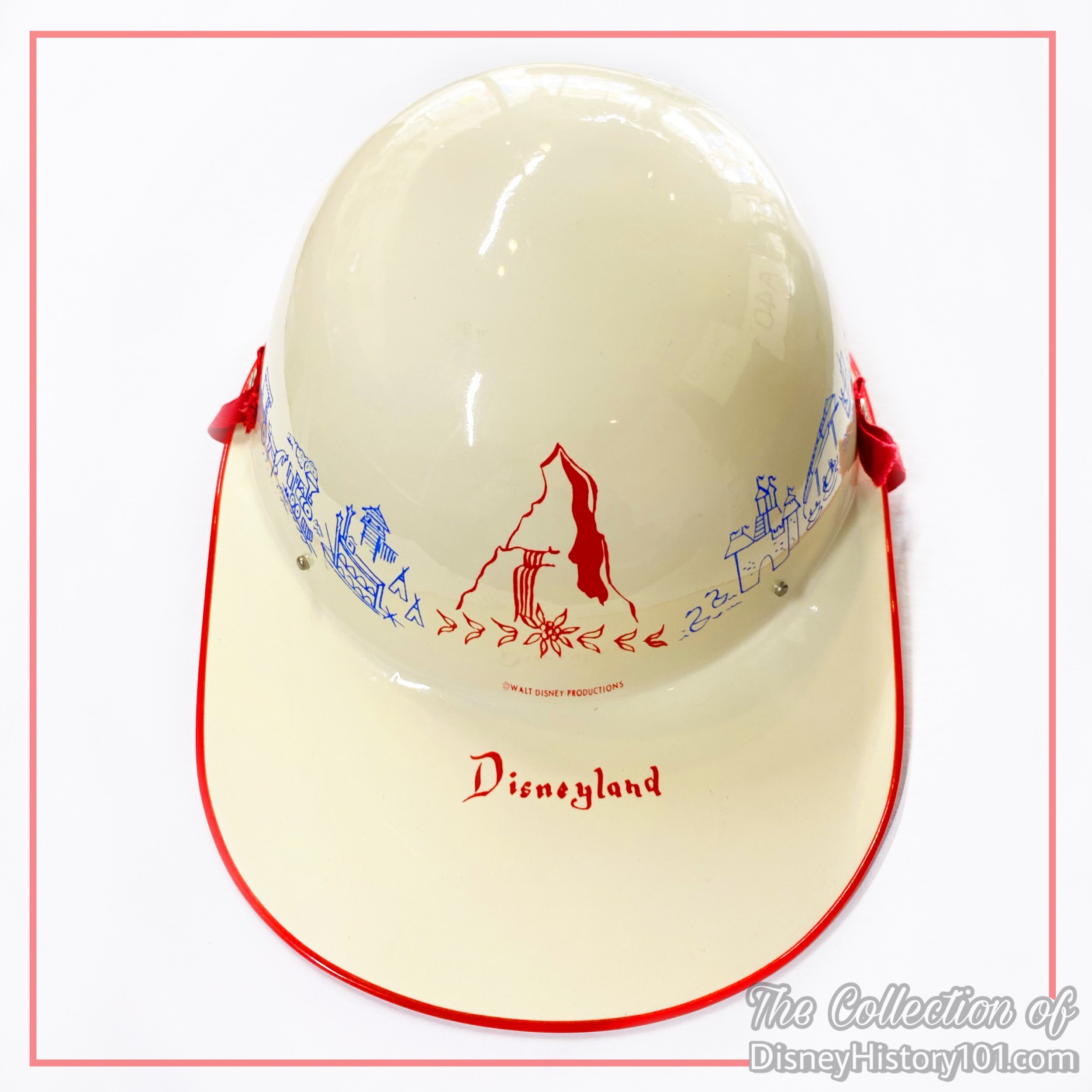
The Keppy Kap (depicted above), according to one catalogue, was described in the following way: “shatterproof sports helmet is tops with boys and girls. White with colorful montage of Main Street, Fantasyland, Frontierland, Adventureland, Tomorrowland. Helmet has expandable band to fit all head sizes.” The Keppy Kap originally retailed for $1.00.
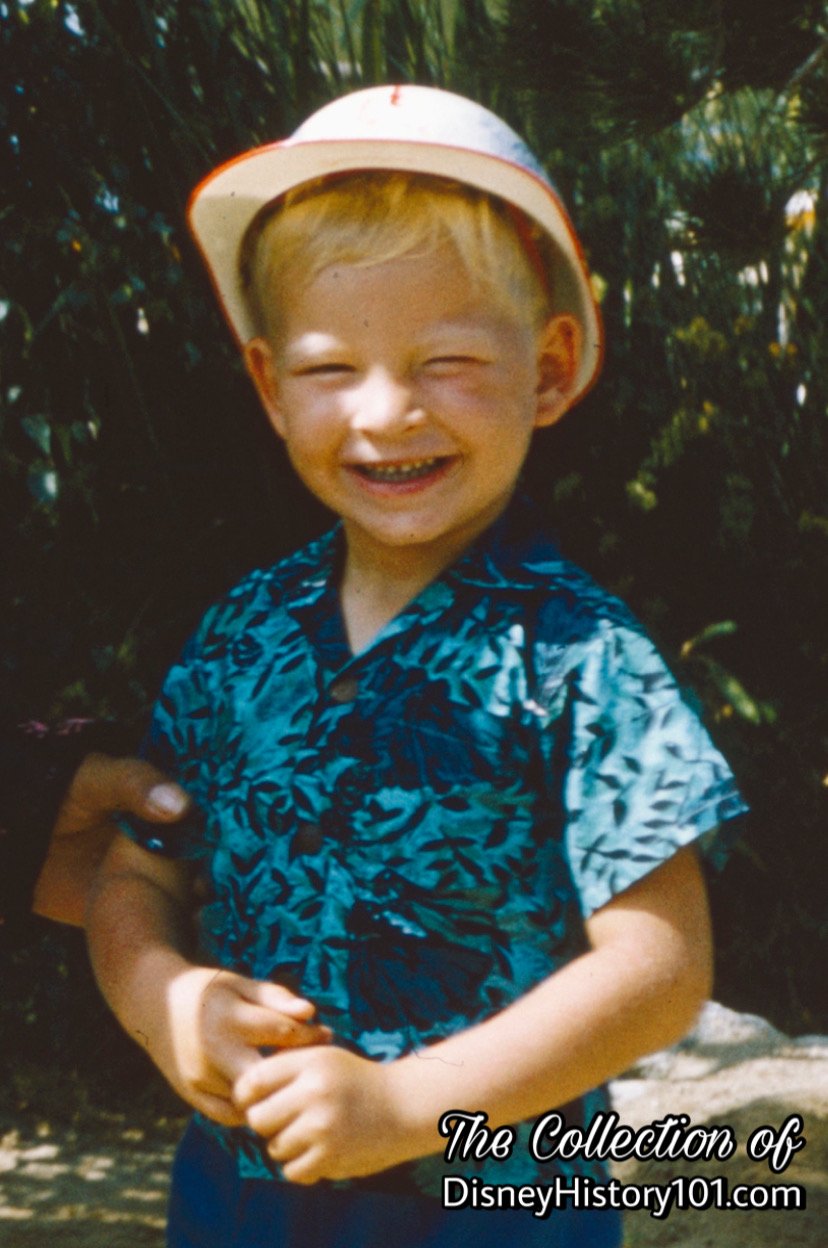
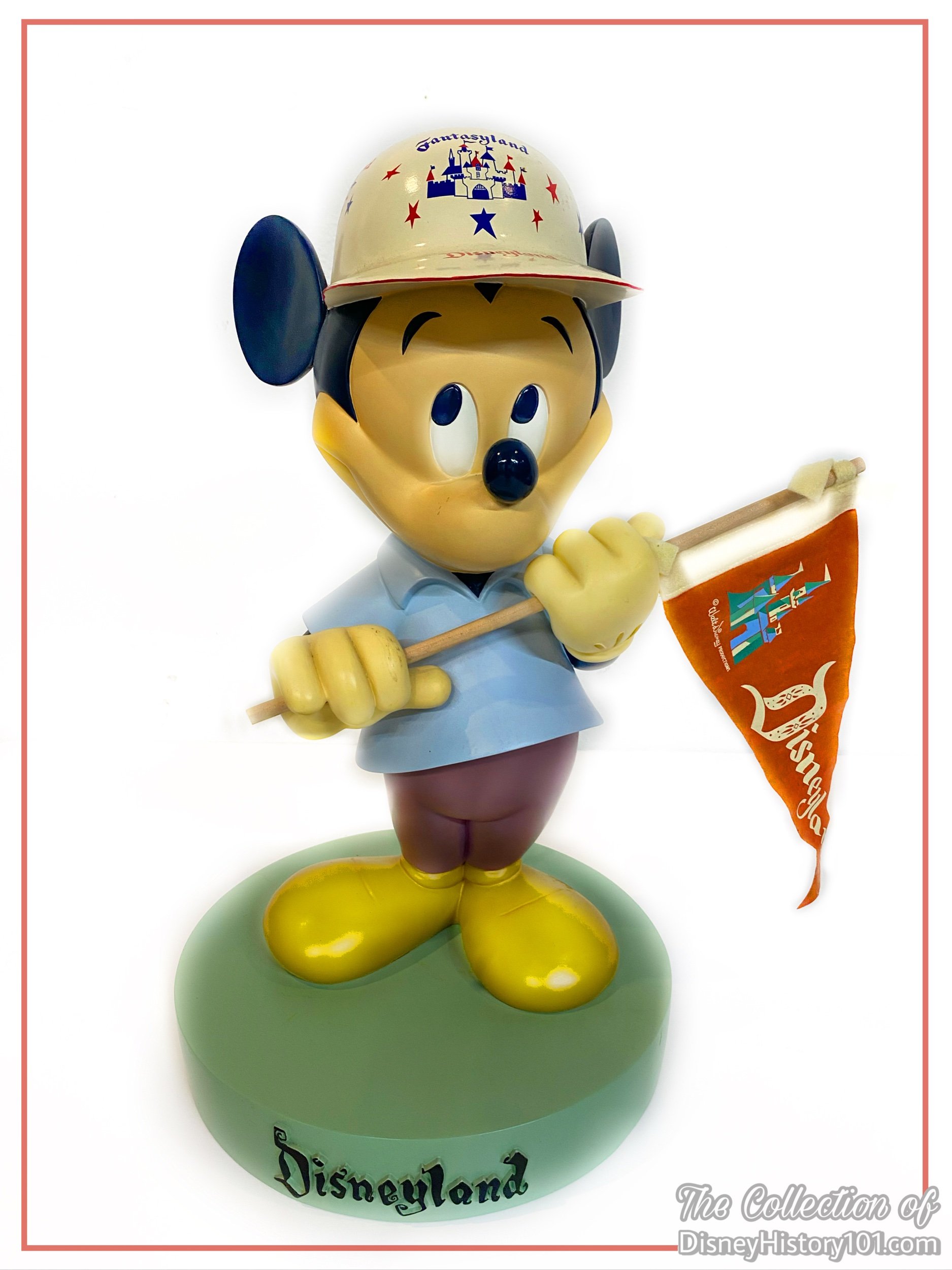
Pith helmets like the one pictured above were available to guests heading into the wilds of Adventureland (both at Disneyland and the Magic Kingdom in Walt Disney World).
This 100% wool Super Western Hat was manufactured by the Benay-Albee Manufacturing Company of Brooklyn, New York.
Both of these hats were very popular around Frontierland parts (as well as Fantasyland parts) of Disneyland.
You might be familiar with his famous “coonskin” cap and that's really no surprise since Disneyland sold $300 million worth of the caps and other Davy Crockett souvenirs.
These Benay-Albee originals were 100% felt (60% wool, 40% rayon), quality crafted, Union made in the U.S.A., and originally retailed for $1.29 each! These hats were still popular by 1967, as attested to by the various Guests wearing them in the pages of the souvenir "Disneyland, U.S.A.: Summer '67" ".
Magic Kingdom Club members were invited to see Zorro in person at Disneyland, on Thanksgiving Weekend (November 26th, 27th, 28th, and 29th). Needless to say, the Benay Albee Original Zorro Hat & Mask Sets were very popular with visitors during this event proven by “the littlest outlaws” pictured above.
Other events where special hats were offered included New Year’s Eve Celebrations at Disneyland. For instance, hats provided by the Jacobson Hat Company provided decorative hats for guests during the New Year’s Eve celebration of 1967.
“Mickey Mouse Ear Hats”
Roy Williams is best-known as the adult co-host of “The Mickey Mouse Club,” which Walt nicknamed Roy “The Big Mooseketeer.” Roy was responsible for creating those famous “Mickey Mouse Ears” hats for the Mickey Mouse Club.
Now that the Mickey Mouse Club was back on television (and the Mickey Mouse Club was Headquartered at Disneyland), the opportunity was presented for the Benay-Albee Novelty Company, Inc. to bring their popular Mouseketeer Cap to Disneyland!
Of course, if you were a kid in the 1950s, if you weren't wearing a coonskin, you were wearing Mouse Ears. Mickey Mouse Hats have proven to be popular with both television and Disney Parks audiences “through the years wherever we may be.” Even wandering adventurers in the vicinity of the Temple of the Forbidden Eye have been known to wear a pair of Mouse-ke-ears (or, Mickey Mouse Hats).
As early as 1969, Mickey Mouse Hats were further developed (by individuals like Bob Davis, Sue Elwart, Jack Olsen of the Disneyland Merchandising Department) for Walt Disney’s Magic Kingdom at Walt Disney World. These were developed by the Disneyland Merchandise Division which (around c.1974) under the direction of Paul Brewer became the Creative Services Department who later created merchandise and promotional art, Emporium window displays, park merchandise and food packaging, souvenir, promotional, and interior design ideas.
Mickey Mouse Hats have continued to be popular with audiences in recent decades. The hats have come to incorporate the character of popular Disney characters, park attractions, and events (like the Golden Ears produced in honor of the 50th anniversary of Disneyland). In the present, hats help Disneyland audiences participate in the magic like never before! “Glow with the Show” Mouse Ears change colors in harmony with the nighttime spectaculars.
The MOD HATTER (1967) offered comfortable, decorative, “way-out” hats of every description; souvenir and decorative hats including Mickey Mouse Ears. The Hatmosphere (1988-2006) was an updated incarnation of that Walt-era Tomorrowland shop. By 1998, the Hatmosphere offered headgear of the future, popular Character hats, and Guest of Honor name badges.
Desiree (former Hatmosphere employee) remembers : “I really enjoyed the hat shop because I loved the looks on kids faces when you handed them the hats with their names on [them], but some days were really boring because it was slow and that shop was so small. You could clean, stock, and organize when it was slow. There was nowhere to go and not much to do…I liked to keep busy, so I preferred other shops.”
HOLIDAY FESTIVALS & PARADES

The Disney family had a fondness for the holidays. According to the Walt Disney Hometown Museum: “At Christmastime, Ruth and her older brothers helped their father find the perfect pine tree and decorated it at home with strings of popcorn and wild berries.”
Disneyland was a miracle of showmanship in many ways! In keeping with the American custom, it was the scheme that the major seasonal holidays would be observed at Disneyland, some of the earliest prospectus documents and plans including a “Holidayland.” In that realm, the festivities would change as the seasons with Halloween, Thanksgiving, Christmas, and New Years motifs. And so holidays have been a tradition at Disneyland since its first operational year - 1955!
Through the following formative years, both group activities and special events were scheduled to coincide with these major holidays. These scheduled events (particularly the festivals and parades) of Disneyland’s winter holiday season activities are of particular curiosity and interest to us - not just because they have changed so much through the decades. Disneyland’s winter season once helped introduce an entirely new land, establish some new Park traditions, and made the way for a number of additional themed parades over the years. You may recall attending the “Christmas in Many Lands Parade” also called “Parade of the Nations” (1957), “Christmas Around the World” (1958 - 1961), “The Parade of the Toys” and “Parade of All Nations” (1960 - 1964), “Fantasy on Parade” (1965 - 1976 ; 1980 - 1985), “A Very Merry Christmas Parade” (1992), “A Christmas Fantasy Parade,” and many more through the decades. Today, the presentation of seasonal parades on the vast DISNEYLAND “stage” continue to be a distinct part of the Disneyland theater concept. These seasonal events further the Show Quality of Disneyland’s own parade and entertainment culture - both in its operation and art form, for years to come!
Now, I invite you to “please step this way” (back to the year 1955), as we visit Disneyland’s first ever winter season festival!

“The First Annual Christmas Festival at Disneyland”
“Once upon a wintertime” of November 24th, 1955 thru January 8th, 1956, Disneyland hosted an annual Holiday Festival. The first “Christmas Show Parade” ran from Thanksgiving of 1955 to January 2, 1956. Disneyland’s very first Annual Holiday Festival included music (provided by more than 80 “music aggregations,” wandering groups of carolers, and the Disneyland Band).
Dick Irvine, chief art director and Emil Kuri, top set designer, had both worked on planning and construction of Disneyland (from the blueprint stage to final painting) and were put in charge of the decorating by Walt. “The Studio Library was consulted and hundreds of magazines, books, drawings and paintings of the turn-of-the century era were consulted. From these sources a picture of an 1890 Christmas scene emerged and was put down as drawing and blueprint… Studio craftsmen more than 40 artists-were set to work painting the numerous coutout displays that line Main Street.” The Disneyland News (Vol.1, No.6, Page 1; December 10, 1955)
There were holiday decorations (thousands of lights, wreaths, garlands, popcorn strings, Christmas trees, and cutout displays) in step with the era, spread across Disneyland’s entire 60 acres. According to The Disneyland News (Vol.1, No.6, Page 1; December 10, 1955): “Securing materials for the park's decorations was another problem. In order that the evergreen boughs and branches last through the six-week Christmas season trucks were sent far north, to areas where the frost had already hit. The frost, Emil, explains, seals the sap in the branches so they will keep their natural color. The garlands brought back were then flameproofed at the Burbank studio, before being sent to Disneyland for use in the decorative theme… A lengthy search for the tree to be used in the Central Plaza took Disney crews over many northwestern states till the perfect tree was found: the top 30 feet of an 80 foot giant growing near Lake Tahoe was cut and now glows brilliantly.”
The Magnolia Park Bandstand (then located in a nook, just west of Sleeping Beauty Castle) was transformed into the “Christmas Bowl” where old-fashioned Yuletide concerts were performed.
According to The Disneyland News (Vol.1, No.6, Page 1; December 10, 1955): “From Main Street's Santa Fe and Disneyland RR Depot to Holidayland and the Mickey Mouse Club Circus, all of the Magic Kingdom glows with the bright and cheerful Yule decorations. The Main Street area--from entrance tunnels to the Christmas Bowl is joyously lit with 38,000 varicolored Christmas bulbs.” Even the Mark Twain was decorated with Christmas lights and a large Christmas tree “similar to those placed in the Pilot Houses of the river boats of half-a-century ago.”

That’s not Vesey Walker’s band! But, it sure looks like a school marching band is making their way past Sleeping Beauty Castle (and the Plaza) as they head for the Disneyland Christmas Bowl at the Gazebo just off the Plaza. According to the original (c. 1955) handbill, very first “Christmas Bowl” featured “leading church and school choral groups from all over the West” which provided “Special Holiday Entertainment in the Christmas Bowl every day.” Another (later) source described how the entertainment “consisted primarily of visiting school bands and vocal groups from all over Southern California,” according to Backstage magazine, (published Summer of 1965). In fact, this particular holiday season “featured scores of youth music groups performing” in the Christmas Bowl, according to “The Disneyland Diary.” For instance, Garvey Elementary School Band (perhaps located in Rosemead, California) performed at the very First Annual Holiday Festival at Disneyland, and its contributors received commemorative plaques celebrating their part.

For a brief period, the Gazebo Bandstand was host to Vesey Walker’s Disneyland Band throughout the year, as well as many high school marching bands and “civic musical from all over Southern California and as far away as Louisiana” (like the Christmas Bowl Dancers) performing during the very first Christmas season at Disneyland. [See the “Disneyland 1st Anniversary Souvenir Pictorial] The Disneyland News VOL. 1, No. 6 (December 10, 1955) published a photo of the Fresno High School Warrior Band in concert.
The Christmas Bowl was first performed under the Bandstand (just off the Plaza) during the 1955 winter season (between Thanksgiving of 1955, and January 8th, 1956). In interview with Disneyland LINE (published March 24, 1995), Gunter Otto, former Landscaping Supervisor sentimentally recalled a special conversation with Walt Disney during this time : “I remember Walt coming over to the Christmas Bowl at Magnolia Park (near the current Pirates of the Caribbean entrance) on Christmas Day 1955. He shook hands with everyone and wished them a merry Christmas. He then asked me if I was homesick for Berlin, Germany. When I was slow to answer, he looked me in the eye and said, ‘Don’t look back, look forward. You are one of us now.’ And so it was for 35 years.”

The very first Disneyland Christmas Festival was even more, as it introduced a whole new land - Holidayland (first located between Fantasyland and Tomorrowland). Holidayland (which was originally conceived as “Recreation Land”), included the Mickey Mouse Club Circus starred Jimmie Dodd as the Ringmaster, Roy “the Big Mouseketeer” Williams, television’s Mouseketeers (like Darlene Gillespie as “Tinker Bell”), and many other children ranging from “ages 8 to 14”! The Mickey Mouse Club Circus was a temporary show (running from Thanksgiving Day of 1955, until January 8, 1956). As a sidelight, Keller’s Jungle Killers was held over from February 18, 1956 to September 9, 1956.

The Mickey Mouse Club Circus was produced by Walt Disney, managed by Ben Chapman, and staged by both Hal Adelquist (co-creator and Associate Producer for television’s Mickey Mouse Club) and Walt Disney Studio “gag artist” and “Big Mooseketeer” Roy Williams! Artistic Direction of this “gaudy and gilded circus of the good old days” was owed to Bruce Bushman, who once (from 1954 to 1955) provided many original concept drawings of potential Fantasyland adventures and attractions (many of which became reality). The diverse and colorful wardrobe was provided by Chuck Keehne.
The big show (which cost more than $300,000 to produce), featured more than 80 animals and more than 70 performers, appropriately underneath a circus tent with a 2500 guest capacity! The seventy-five minute show (led by Ringmaster Jimmie Dodd, songwriter and musician of The Mickey Mouse Club television series) had 12 headlining acts. Many of these co-starred television’s Mouseketeers - Sharon Baird, Karen Pendleton, Mike Smith, Doreen Tracey, Dennis Day, Dickie Dodd, Billie Jean Beanblossom, Tommy Cole, Darlene Gillespie, Mark Sutherland, Cubby O’Brien, Lonnie Burr, Ronnie Steiner, Judy Harriett, Lee Johann, Johnny Crawford, Bonni Kern, Nancy Abbate, Mary Sartori, Don Underhill, Mary Espinosa, Annette Funicello, Bronson Scott, and Bobby Burgess - for the first time in-person!
The show’s lineup opened with the set of Professor George Keller’s Feline Fantastics, which did not utilize “whips, gun, or chair”, and featured panthers, leopards, Bengal tigers, and mountain lions (among 30 cats). There was Ted DeWayne and his troupe of acrobats and gymnasts performing human pyramids, and the Flying Alexanders. The show’s second act featured “The March of the Clowns” (like Bob-O the Clown of television’s Mickey Mouse Club, or Klinko the Clown and his miniature automobile). The clown act helped set the stage for the “Aerial Ballet” featuring Tinkerbell and Peter Pan alongside 24 Mouseketeers. There were camels, dogs, the world’s only twin baby elephants, horses (like Serenado the musical horse), llamas, ponies, and seals in the “Animal Varieties” act. A Christmas tree rising from the center ring triggered the climax of the show! The “Flying Alexanders” with their breathtaking aerial summersaults and soaring fly-through s” astounded audiences. The highlight of the show was a procession of pageantry (which would become a Disneyland tradition) - the “March of the Toys” (the “Living Toys” from Walt Disney’s “Babes in Toyland”) and Walt Disney’s characters courtesy of the Ice Capades (including Mickey Mouse and Minnie Mouse, Donald Duck, Goofy, Pluto), and even Santa Claus riding in a sleigh pulled by “matching ponies” in the “Christmas Tree Finale”. All of these acts were performed to music directed by Tommy Walker (son of Vesey Walker, Director of the Disneyland Band). This entire show ran twice daily on weekdays, and three times daily on weekends.
In addition, Walt had a number of “forgotten” antique circus wagons restored for Holidayland. The “Souvenir of The Mickey Mouse Club Circus” (published 1955) states, “Taking it upon himself as a public trust, and deserting to perpetuate the happier things of our American heritage, Was searched for and found these original circus parade wagons. Researchers, artists, designers, special craftsmen and wagon builders were enlisted by Walt in his desire for authenticity in their rebuilding. Circus historians and ‘old-timers’ were brought in as consultants. And since Walt Disney believes that any heritage worth bringing back to life is worth putting back into actual use, these circus wagons were put back into service. Proudly they’ll roll again up Disneyland’s Main Street on their way to the Big Top.” Of the cars restored was a “Steam Calliope, a Beauty Wagon, Whiskers Wagon, White Ticket Wagon [featuring ornate hand-carved figures in cameos], the [1890] Swan Band Wagon, the Green Cage, the Swan and Fawn, and the Shell Cab”, according to the Pasadena Independent (published December 18, 1955). General admission for the grand Mickey Mouse Club Circus show was just 50 cents, and reserved seating $1.00 (this was of course, separate from Disneyland General Admission). The Mickey Mouse Club Circus was covered in a wonderful 2-page spread full of photos, in The Disneyland News (Vol.1 -No.6 ; published December 10, 1955).

When the Mickey Mouse Club Circus first opened on November 24th (Thanksgiving Day), there was a parade of the entire cast, led by Grand Marshall Walt Disney (wearing a cowboy hat) and Co-Grand Marshall Fess Parker (dressed in his Davy Crockett duds)! Mouseketeers marched along the route, bearing standards, which introduced the various parade units. The Disneyland Band was piled high inside the Swan Band Wagon, while school bands marched along the route. The sky-blue and gold-accented Beauty Wagon was pulled by six horses dawning red feather plumes on their head. There were elephants, clowns, and the Steam Calliope providing the keynotes of popular melodies and piping white clouds of steam down the route (with engineer in tow). As a “sidelight”, a few gloriously colorful moments were preserved in “Disneyland U.S.A.” (released by Buena Vista Film Distribution, December 20, 1956). This circus was one of Walt’s dreams (seen in Harper Goff’s early c.1951 drawings of Mickey Mouse Park to be built along Riverside Drive in Burbank), and a true labor of love (judging by all the details added to the big show)!
After the parade, the festivities continued with a costume contest held for youngsters dressed as either “Disneyland or Disney characters” (as advertised in local newspapers). The first 1000 children to arrive dressed as Disneyland or Disney characters received Mickey Mouse Club Records. Again, television’s Mouseketeers appeared (this time, from from 1:30p.m. to 4:30 p.m.), and helped judge the costume contest.
After all the festivities, the popular Keller Animal Show was held over for the year of 1956. In addition, subsequent Annual Holiday Festivals were quite often held during two-week periods of the winter season, when children were typically on vacation from school.

1956 : The scheduled entertainment of the 1956-1957 Holiday Festival (for a second year in a row) predominantly consisted of visiting school bands and vocal groups from all over Southern California. The stars of The Further Adventures of Spin and Marty and Annette Funicello even made appearances (in costume) in Magnolia Park, posing for photographs and signing autographs for fans. Still, Christmastime business (from November to January) brought peak amounts of Guests into the Park, and the income generated would help fund new Disneyland adventures! On this subject, one Associated Press article “Plan Trip Into Drop of Water, Liberty Square for Disneyland” (by Bob Thomas, published April 20, 1957) preserved Walt’s words this way : “I had $700,000 for this year’s work and managed to get another $600,000. What convinced the moneymen was our Christmas business. We had 35,000 customers in one day.” The Columbia, the Grand Canyon Diorama, the Sleeping Beauty Castle walk-through, the Monsanto House of Tomorrow, and many other attractions owe their existence (in part) to funds generated from Disneyland’s winter festivals and parades, which drew record crowds of customers into the Park!

Garlands and wreaths “deck the halls” and banners of Sleeping Beauty Castle and its drawbridge.
During this time, both Dick Irvine (chief art director) and Emile Kuri (set designer) were put in charge of seasonal decorations at Disneyland by Walt. According to The Disneyland News (Vol.1 - No. 6; published December 10, 1955): “Studio craftsmen more than 40 artists - were set to work painting the numerous cutout displays that line Main Street. Securing materials for the park's decorations was another problem. In order that the evergreen boughs and branches last through the six week Christmas season trucks were sent far north, to areas where the frost had already hit. The frost, Emil, explains, seals the sap in the branches so they will keep their natural color. The garlands brought back were then flameproofed at the Burbank studio, before being sent to Disneyland for use in the decorative theme.”
“December 10, 1956, to numerous people, holds no special significance. To the employees of Disneyland, it will remain as a day to be remembered. On this date was presented to all Disneylanders and their families, the First Annual Christmas Party… Fourteen hundred and twenty-eight smiling faces were present everywhere one looked. The nine hundred children beamed as Fantasyland unfolded around them, inviting gaiety in its every corner.”

“A Procession of Holiday Parades Begins - 1957”
1957 : Disneyland Holiday magazine announced: “The ‘old-fashioned Christmas’ theme of Disneyland's first two Christmas time celebrations will be expanded this year, with new features planned. Once again there will be carolers to serenade you, festive decorations along Main Street, huge Christmas trees with multi-colored lights, and many special Christmas programs.” It wasn’t until the year 1957, that the first Christmas Parade was added to the third Annual Christmas Holiday Festival in the form of the “Christmas of Many Lands” (also called “Christmas in Many Lands”) festival and parade. “When the… Christmas Parade was first proposed, the Park Operating Committee spoke against it. They argued that it would be poor economics to spend $350,000 on a parade when the holiday crowds would come without the attraction. Walt rejected negative arguments: ‘We can’t be satisfied… even though we’ll get the crowds. We’ve always got to give ‘em a little more. It will be worth the investment. If they ever stop coming, it’ll cost ten times that much to get ‘em back.” [“The Spirit of Disneyland,” page 43 ; Prepared 1984 by Walt Disney Productions.] Other promotions were generated to invest in maintaining the “crowds,” like the Disneyland Employee Family Christmas Shopping Passes issued, good from December 9 thru 24, 1957.
The theme of the annual parades has changed much since 1957 - from the multi-cultural and multi-national themes to parades of toys and even those saluting the realms of fantasy! Even before this year, a diverse array of individuals, organizations, clubs, and historical societies had been welcomed at Disneyland. But by Disneyland’s Third Annual Holiday Festival (from December 16, 1957 thru January 5, 1958; December 15 to December 23 according to some sanctioned sources), an unprecedented assortment of dancers, singers, and other entertainers from a host of organizations around the world would now take part in the traditional winter season festivities at Disneyland! For example, there were 115 guest youth choruses involved with the 1957 Christmas Festival (according to “The Disneyland Diary”). Some individuals (like the Consulate General of Austria, or the Dutch “Little Wooden Shoe Dancers”) would return to make even more “outstanding contributions” in a tradition that would span the festivals of future years at Disneyland. All of these were to be overseen by Tommy Walker of Disneyland Incorporated Customer Relations, and son of Disneyland Band Director Vesey Walker.
As mentioned, something else was added - the very first Christmas Parade! Yes, Walt Disney served as Grand Marshall of the “Christmas Parade of All Nations” at 2 p.m., on December 22nd, 1957. For the procession, Walt Disney Studio artist Bruce Bushman portrayed Santa Claus. The parade route started through the west side of Town Square, rounded the Town Square Plaza (where the huge tree was located) before heading down Main Street U.S.A. (with its brightly-colored Christmas trees, garlands and wreaths overhead, and shop windows decorated with their own unique international theme), where it rounded the Central Plaza (with its large Christmas tree), and ended in Frontierland! In addition to the parade, some Holiday Festival participants performed dances and songs from their native countries at various locations around the Park (The Plaza, Dairy Bar in Tomorrowland,and the Magnolia Park Bandstand in Frontierland), following the parade (from 3:30 to 6:45 p.m.). A total of nine guest choirs performed in a mass choir in the Plaza Hub, under the direction of Dr. Charles C. Hirt of USC. While showcasing different cultures, the parade also depicted the traditions of 20 nations. Pictured above, you’ll see the Tokuyae Classical Dance Group of Los Angeles, representing Japan, appearing in the Parade of All Nations Disneyland. The Tokuyae Classical Dance Group of Los Angeles would later be invited to join in the opening-day festivities during the debut of Its a Small World (almost a decade later, on May 28, 1966) at Disneyland, and to participate in seasons of “Festival Japan” (three decades later, including that coinciding with Disneyland’s 30th anniversary on October 12 & 13, 1985).
As a “sidelight” and final thought, it rained so hard on the originally scheduled day, that the entire parade was postponed for one whole week. But the efforts were worth the wait and Disneyland was grateful. After all, it was arranged that the members of dance groups and organizations would be awarded commemorative plaques (commissioned by Perma Plaque, of Hollywood, California). In synergistic advertisement of the Winter season festivities, “Christmas In Disneyland” (a DELL Giant Comic) was released, featuring a garland-draped Sleeping Beauty Castle on the cover and a special holiday-themed story inside!


With audiences in mind, Disneyland hosted its First New Year’s Eve Party on December 31, 1957. And it was during the 1957 season, which one of “the best… bands in the world” came to Disneyland! The Ohio State Marching Band performed in the Tournament of Roses Parade and at the 44th Rose Bowl Game (both held January 1, 1958). But even before those momentous events, they had the honor to March down Main Street during Disneyland’s Third Annual Holiday Festival!
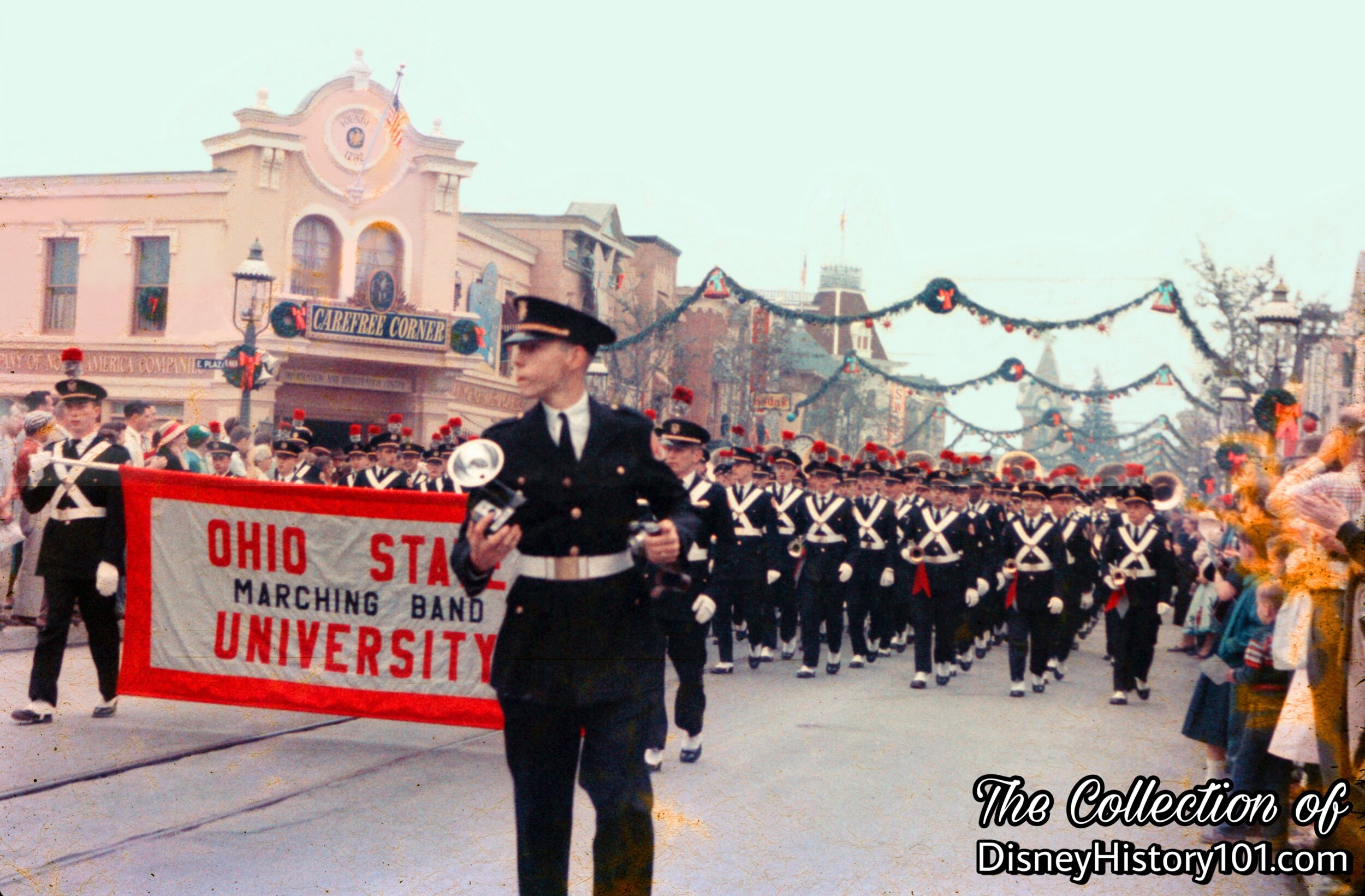


1958 : The 4th Annual Holiday Festival (of 1958) featured more than 3,500 marchers in the first “Christmas in Many Lands” Parade (including the Anaheim Choraleers in the Park’s very first official Candlelight Procession)! “55er” electrician George Short most-memorably recalled “The Christmas Candlelight Processions were very impressive”, as he had helped to set up the sound for them.
Today, this “ceremony is only performed on one weekend during the holiday season and features a massed choir of 1,000 voices, a full orchestra and a celebrity Guest narrator in a presentation of the traditional Christmas story in Town Square on Main Street, U.S.A.” The first Candlelight Ceremony was held at Disneyland on December 20th, 1958. Dennis Morgan was the very first narrator, while the years that followed would see John Wayne, Cary Grant, Henry Fonda, Jimmy Stewart, James Earl Jones, Rock Hudson, Edward James Olmos, Gregory Peck, Marie Osmond and Louis Gosset, Jr. narrate. During the early years of Disneyland’s holiday festivals and parades, the contributions of participants were further recognized through plaques given them.

Sometime c.1957, Herb Ryman produced a chalk and gouache concept of a gigantic “75 ft. Christmas Tree on a hill” (perhaps Holiday Hill) near the “Holiday Park Entrance.” While this wasn’t to be, another type of tree would take form. Another event - the “Living Christmas Tree” was scheduled for December 24th, 1958.
The accompanying original press release caption reads : “CHRISTMAS CAROLS AT DISNEYLAND — More than 800 choir singers will take part in two nights of caroling at Disneyland Dec. 19 and 20, a major feature of the Park’s Tenth Annual Christmas Festival. Here the singers are shown in Disneyland’s Town Square. The festival will feature a giant ‘Christmas in Many Lands’ Parade on December 20 followed by Walt Disney’s ‘Parade of the Toys.’ The Toy Parade will also be featured each afternoon through Dec. 31.”

1959 : After the 48-foot Christmas Tree was decorated with the help of Chuck St. John (of Hortie Van) seated in a “boatswain’s chair swinging from a crane,” the Christmas in Many Lands Parade would entertain guests with its international theme, during the 1959 season! Wandering Carolers (in costumes by Lulu Miller and Ann Shemkus) also entertained visitors of Disneyland during the Winter of 1959. Lastly, the third Annual Christmas Dinner was held for Disneylanders during December of 1959.
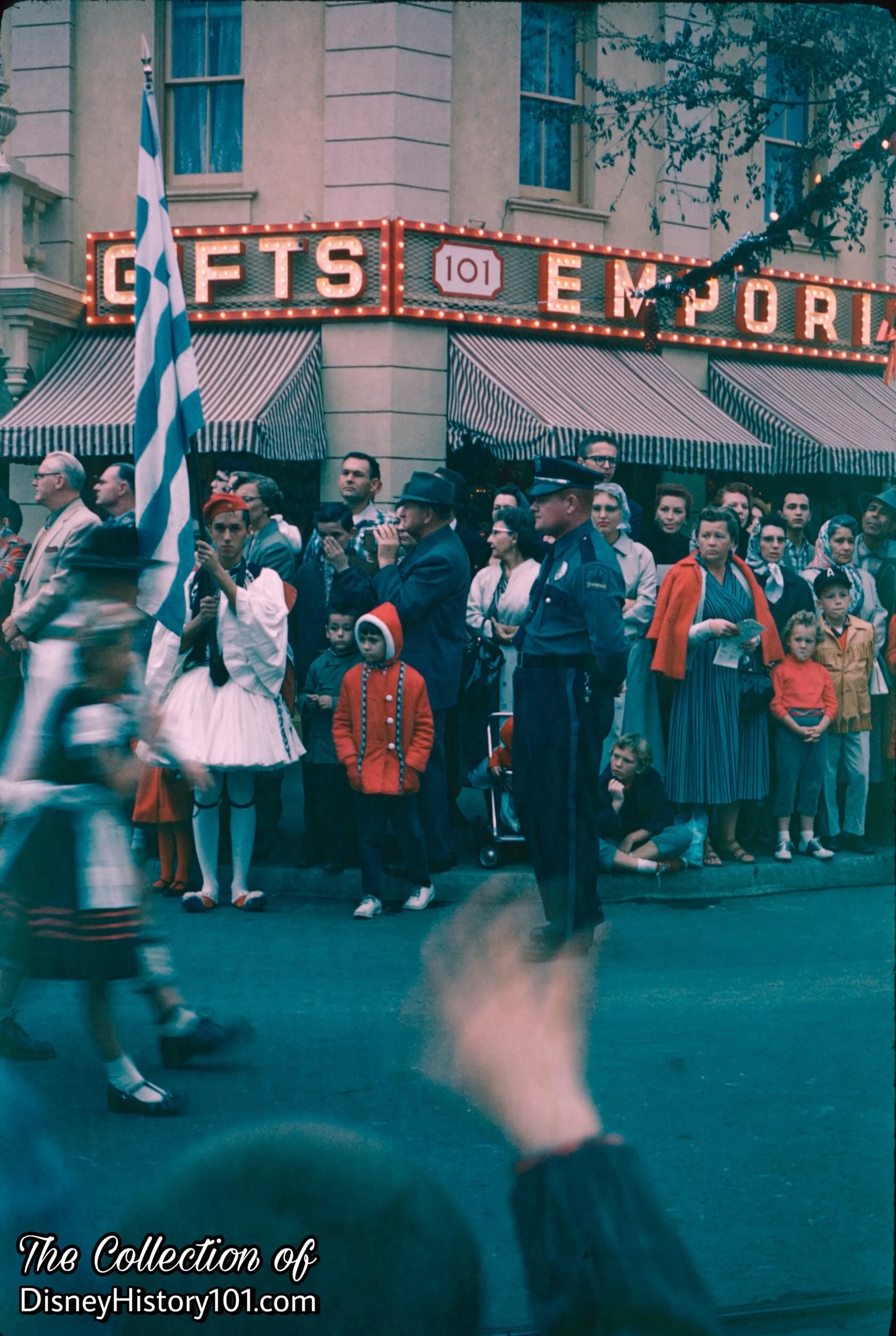
Grecians wearing traditional clothing, carry the flag of their native land, after emerging from the west side of Town Square, and marching down Main Street U.S.A.!


1960 : The “Parade of the Toys” was a daily veritable “march of the toys” and “people…from fairyland and folklore”, which debuted on December 18th, 1960 - before Disneyland’s Tencennial (becoming a facet of Disneyland’s “first fabulous decade”) - and running until December 31st, 1960! The “Parade of the Toys” was an additional unit of the “Christmas in Many Lands” parade which made its debut on December 20th, 1960! One of the most notable features of the “Parade of the Toys” was that Walt Disney again served as Parade Grand Marshall (alongside granddaughters Joanna and Tammy Miller, in a covered curve-dash auto), while “the leader of the club” Mickey Mouse dressed in a Band Leader costume, stood atop “The Big Bass Drum” - a huge drum float. This was also the first year that the “living” toy soldiers made their debut, and became a winter-time holiday tradition at both Disneyland and Walt Disney World to this day!
Much work went into the traditional “Christmas in Many Lands” parade and associated activities (like the Candlelight Procession and Massed Choir Program), to make this the biggest Holiday Festival ever in honor of the Park’s “Tenth Annual Christmas Festival”! To top the whole festival off, a total of 800 choir singers took part in two nights of candlelight caroling in formation in Disneyland’s Town Square (following the parades), on December 19th and 20th, of 1960! Many foreign groups (from near and far) were invited to join in the associated festivities. There were Danish Folk Dancers, English Folk Dancers, Danish Folk Dancers, Austrian Mountain Dancers, Los Angeles Chinese D & B Corps members, and Armenian Folk Ballet members to name just a few of the participants. All together some 3,500 participants (more than any prior parade) brought the “Christmas of Many Lands” parade to life!
1961 : Bill Justice recalled: “In the fall of 1961 Walt called a meeting in my room and said he wanted a giant toy parade to help publicize Babes in Toyland. As one might expect, Walt had specific ideas about parades. He told me, ‘Bill, we're not in competition with the Rose Parade.’ He said not to make the floats too huge or out of scale. He was thinking of the little kids. They had to be able to see without looking up so far they fell over backwards.”
(December 17 - December 31 ; 1:30 & 5:15 Daily) The second annual “Parade of the Toys” premiered on Sunday, December 17, 1961, with Grand Marshall Walt Disney (alongside granddaughters Joanna and Tammy Miller in matching red petticoats) leading the pageant in the yellow “curve-dashed” automobile, (without a cover). The next day, the parade began to run twice daily, from December 18th - 31st. While this winter holiday season event still featured characters from the Ice Capades, it was a veritable promotion (or, “cross pollination” as Roy Disney would put it) of Disneyland and Walt Disney Productions’ recent theatrical release “Walt Disney’s Babes In Toyland’ (which had premiered three days prior on December 14th, 1961)! According to Vacationland magazine : “All based on the wonderful animated toys from the new Walt Disney motion picture ‘Babes in Toyland’ (opening in theaters across the country just before Christmas), the unique Disneyland toy procession features a ‘wooden toy soldier band’, a variety of floats, wooden knights on horseback, a procession of costumed Disney characters, and of course, Santa Claus and his sleigh - drawn by eight of the most comically reindeer ever created.” A team of horses pulled “the Biggest Bass Drum” bearing the title, “Walt Disney’s Fantasy on Parade”! The parade featured “living” toy Scottie and Poodle (dogs), a giant toy clown that gaily bobbed back and forth while waving to the crowds, a twelve-foot tall winking porcelain doll, “living” toy bunnies, and a Mouse Trap Band Float. Vacationland magazine also adds : “The unusual floats include such highlights as three huge singing carolers in front of a beautiful stained glass window, the humorous ‘mouse trap band’, dancing marionettes and a cannon-firing battleship.” The seven-foot tall “live” toy soldiers and Comic Reindeer would also return for their second year in a row, to match alongside other “living” and animated toys. A number of publications (like Jack and Jill magazine, December, 1961) advertised and documented the jolly Parade of the Toys at Disneyland, while the stars of Football squads (tailbacks Bobby Smith and Mike Haffner of UCLA, and quarterback Sandy Stephens and halfback Dave Mulholland of Minnesota) visited Disneyland for a Press Photoshoot with the “Disney-style reindeer”. Some of the folk groups performed around the Park before the debut parade (as one Japanese group did in Magnolia Park).
In addition, while many of the following parades ran twice daily (especially in later years), the “Parade of the Toys” ran an impressive three times daily, through January 1st, 1961!
1962 : The festivities of the Disneyland Eighth Annual Holiday Festival were brought to life by 2,500 participants, another 1,000 Christmas carolers (in the Candlelight Procession which took part on the Sunday before Christmas), and some 25,000 guests!
To assist the Parade Formation, a P. A. System was placed on a tower at the entrance to the reserve parking lot north of the Harbor Employees entrance. A mike was placed on the top of a tower and another at the bottom. A P. A. System was also placed on tower next to band building.
A Parade Intercom - a private line communication - was placed between the points of the Hills Brothers Gate, Town Square, and City Hall Balcony.
Even before the festivities began, the Walt Disney Studio Christmas Show Committee arranged for Dr. Charles Hirt and the Disneyland Carolers performed at the Walt Disney Studio Employee’s Children Shows on Saturday, December 15, 1962. When the group completed their performance, at the studio, they took their wardrobe with them and proceeded to Disneyland. A table for luncheon was reserved in the name of the "Disneyland Carolers" at the Red Wagon. Then a Disneyland wardrobe mistress assisted the ladies, while the head of the wardrobe department, Chuck Keehne, assisted the gentlemen.
Among these were the usual cast of characters in this year’s Toy Parade - Mickey Mouse (and his close pal, Paul Castle), Donald Duck driving a car, Snow White (Jacque Cothran) and the seven Dwarfs, Chip and Dale (Tom Galliger and Bill Teague), the cast of Alice in Wonderland, Flora, Fauna, Merriweather, and eight Reindeer. A menagerie of animals marched (including ostriches, a cheetah, adult and baby llamas, two hyenas, a zebra, tiger cubs, a lion cub, three elephants, camels, a donkey, and even a bear). There were also quite a few unusual character performers appearing in this year’s procession - four Hippos, four French Balloonists, and even Raggedy Ann and Andy! Floats with sound included the Mouse Band, Can-Can, Choir Boys, and Santa's Sleigh. The Disneyland Band was in Town Square facing the train station using two stand mikes feeding Town Square only. Walt Disney and Jack Lindquist rode as guests of honor in one (of the four) Disneyland DMC Vehicles.
The Christmas in Many Lands theme was still ever present - a float bearing the Flags of All Nations around a giant mock-up of the earth was one of the highlights! From Palestine to Switzerland - many clubs and organizations from around the world were welcomed as Disneyland’s guests this year, as they kept their customs and traditions alive while enjoying time with their families. The traditional “Yule Log” was pulled along the route and the carrying of a festive roast boar represented the customs of medieval England! Finland’s Old Man Christmas with his elves, Norway’s traditional Santa Claus with his pet goat, Yugoslavian musicians riding a sleigh, a Mexican unit (featuring the Señorita Drum & Bugle Corps.) with piñatas filled with candies and gifts, a Chinese unit and float bearing a glittering dragon, a Japanese unit of youthful dancers and a traditional Japanese Boat float, were among the entries in the pageant. A total of twenty-four foreign floats were entered into the competition, with three winners awarded cash prizes (ranging from $25.00 to $100.00)!
Various university and high school marching bands (like Tennyson High School, University of Wisconsin Badger Band, University of Southern California Trojan Band, Ben Davis High School, Amos Alonzo Stagg High School) were invited to perform. The two university bands (soon to appear at the Rose Bowl), would march out of the Hills Bros. Gate, and present a concert near Town Square before continuing down the route.
Announcers (like Dick Wesson) were situated atop buildings (City Hall Balcony; Roof of Upjohn Pharmacy; Roof of Pendleton), and platforms or towers on the south end of Plaza Hub along River front near Aunt Jemima Restaurant where they could describe the parade units for Audiences below! Finally, once the reindeer-driven toy train (pulling Santa’s sleigh) reached Town Square, a traditional massive balloon release was triggered sending hundreds of colorful balloons skyward during the climax of the parade! Aside from the parades, groups of wandering carolers were a feature of the 1962 winter season’s festivities.
After all was done, representatives of those participating schools and organizations were awarded commemorative plaques “in appreciation of their outstanding contribution toward the Disneyland Eighth Annual Holiday Festival!
1963 : The 9th Annual Holiday Festival gala saw “The Parade of Toys” a daily fixture during Christmas week. In addition, the “Christmas of Many Lands” Parade saw international groups and respective native toy-themed floats, overseen by Bob Matheison, and led by the Grand Marshall - Walt Disney and his Disneyland Marching Band! Disneyland Backstage (Spring, 1964) published the following funny anecdote (as told by Millie Malley) : “‘Just a few months ago’ behind Main St., they were getting ready for the Parade of the Toys. Tom Campbell was hustling everyone into place. He was standing just in front of one of the cannons. The White Rabbit who was to pull the cannon, wanted to see if he could fire it with his costume on. He triggered it, there was a loud boom and a shower of confetti. Poor Tom just stood there, confetti all over him and the rabbit saying ‘I didn’t know it was loaded’.” We can imagine scenes like this commonly played out during parade rehearsals.
The “Christmas of Many Lands” Parade was narrated by several celebrity announcers. The voice of Dick Tufeld (who is known for voicing the Robot from television’s Lost in Space, and who narrated several episodes of Zorro and The Wonderful World of Color) emceed a portion of the parade route. Dick Wesson (the voice of the introduction of Disneyland’s television series) also narrated a portion of the parade route. George Church III (star of recent Broadway production “Pal Joey”, 1963) would also help present the parade by providing narration!
Various school marching bands (from Maryknoll All Girl, Anaheim High, Azuza High, Antelope Valley, Burbank, Bakersfield, Bolsa Grande Huntington Beach, and others) filled out the gaps of the parade units. The Armenians brought their Hajji Baba, while the Austrians brought their Lippazaner. The Danish were represented by a steadfast toy soldier, while the Chinese gifted a china Doll to the parade procession. In between these units were other floats like a Jack-in-the-box, and a float holding a massive amount of flags from various countries. The entire event was concluded with a release of a flock of pigeons.
The “Christmas of Many Lands” Parade opened to Disneyland’s largest crowd yet (outside of the peak summer season) - an astounding and record-breaking Park attendance of 42,000 guests! During the parade, 33,000 people gathered along the route (according to a letter to George Church III, from Ben Harris (Disneyland Production Coordinator, Disneyland Customer Relations Division Manager, dated January 8, 1964). This “provided very difficult crowd control problems”.
The Candlelight Procession and the Massed Choir appeared at Disneyland, on Sunday, December 22nd, 1963. Roll checks and rehearsals of the choir and Candlelight Procession members occurred that same day. According to Charles K. Dargan (Disneyland Talent Supervisor), the Candlelight Procession began “at the Fantasyland Castle area, moving up Main Street to Town Square where the singers” would “form a vast choir in front of the Train Station.” The same five carols that were sung the preceding year were used, allowing for easy memorization of the titles, publishers, lyrics, and octavo numbers. The result was that the “visual as well as the musical effectiveness of this procession” would be “considerably enhanced,” by Charles’ account.
1964 : Under the direction of Chuck Corson (Disneyland Talent Manager), Ben Harris, and Tommy Walker, the theme of this 10th Annual Holiday Festival (held 2:00p.m. on both Saturday, December 19th, 1964 and Sunday, December 20th, 1964) was the Christmas “Parade of All Nations” (or, “Christmas of Many Lands”) - an “international folk festival” featuring the toys and peoples representative of many lands. More than 3,000 participants efficiently representing 27 foreign groups (in addition to High School Marching Band and Drill Team Units) entered a total of 25 floats in the pageant this year. The maximum number of participants allowed in each group was 40 (in addition to musicians). The diverse acts included an Armenian Folk Ballet troupe and “Aman-Or” unit (led by Miss Karoun Tootikian), Austrian Mountain Dancers and Mozart’s Annual Christmas Concert (led by Charles Bausback), the Los Angeles Chinese Drum & Bugle Corps (led by Al Chew), American Sokol Organization of L.A. St. Nicholas Visit (with angel and devil) unit from Czechoslovakia (led by Mrs. Nekuda), Danish Folk Dancers and Christmas Candle unit from Denmark (led by Director Mr. Christensen), acts from England (led by Miss McFarland), acts from France (led by Director Madame Danjou), acts from Germany, representatives of the American Hungarian Cultural Society (led by Mrs. Marie Elek), the India Art Group and a Diwali “Festival of Lights” unit (led by Miss Sushila Janados), The Irish Rinnceoiri Na H Eireann and a parade float of a Candle in the window of an Irish Cottage (led by Director Mrs. Edith Stevenson), Italian Folk Dance Workshops (led by Mr. Nate Moore), Japanese Kansuma Kai and Christmas on a Floating Tea House float (led by Mrs. Fujima Kansuma), the Eye-Ographic Holyland Exhibition of Jordan and Bethlehem Bell Tower unit (led by Mrs. Pearl Baker), Korean Dancers and a Traditional Korean Wedding Unit (led by Mr. Phil Kim), Corina Valdez Dance Studio (led by Corina Valdez and Monsignor Ramon Garcia), Norwegian Viking Folkdancers of Long Beach (led by Mr. Thor Matland), the Philippine Folklore Group (led by Mrs. Leonor Neri Tice), the Polish International Alliance (led by Mrs. Jadwiga Wielkoszewski), San Diego Highland Dancers Association (who had previously appeared in the “Disneyland ‘59” parade and pageant) and Scotland “Wee Kirk in Heather and Cottage & Beast” unit, Lilly Aguilar Folklorico Dancers (who had previously appeared in the “Disneyland ‘59” parade and pageant) and their Nativity Scene led by Director Lilly Aguilar, Swedish Folkdance Club of Los Angeles (led by Mr. Nils Johanssen), Swiss Folk dancers of Inglewood (led by Hans Zander), two acts representing the United States - (American Square Dancers ; led by Ray and Charlotte Cox & Westchester Larists ; led by Dr. Tillman Hall), West Indies Euafasam Dancers (led by Mrs. Jean Otero), and the Yugoslavian Slovenian Dance Group Pacific Circle 65 with Island of Triglav unit (led by Mrs. John Ercek)! Also featured were 35 Boy Scouts of America (led by Bill Bent), 8 vans full of animals, the International Children’s Choir the Barbarette’s Drill Team, the Western High School “Silhouettes” Drill Team of Anaheim, 11 groups of equestrians, and the Westchester Lariata and a Night Before Christmas Float (led by Director Tillman Hall).
By the Fall fo 1964, there were some costumes being stored in the Production Warehouse, which could be repaired at a cost. Numerous Disney Characters appeared courtesy of Ben Harris’ Ice Capades, including (according to Inter-Office documentation, dated September 10, 1964) Mickey Mouse, Minnie Mouse, Pluto, Goofy, Chip ‘n’ Dale, Snow White and the Seven Dwarfs, (3) Pigs and the Wolf, Alice in Wonderland, Mad Hatter, White Rabbit, Pinocchio, Foulfellow, Captain Hook, Peter Pan, Sleeping Beauty, Prince Charming, (4) Hippos, (1) Donald Duck Car (very small), Ludwig Von Drake, Thumper and Flower, (3) Good Fairies, Gideon, Gus-Gus Mouse, Jacques, (1) Scotty Dog, (1) Shaggy Dog, (1) Large Brown Bull, (1) Pansy Bull, (1) Fifi Dog, (1) Lucifer Cat, (6) Rabbits (assorted colors), (1) Evil Witch, and “as many of the toy solders as can reasonably be repaired… (20 of such soldiers… were [sic] in reasonable condition.”
The “land” of Disneyland was also represented by the Dapper Dans and the Disneyland Carolers. Not to be outshined was the Disneyland Marching Band, under the direction of Vesey Walker. As this procession was quite large and involved many outside parties, there was a concern that the parade may exceed the planned one hour. Assistants were stationed along the parade route giving signals (by hand motions) indicating a need to speed up or slow down as they proceed.
On December 18th, 1964, Ben Harris (Production), G.Mills, D. Narath, Bob Mathieson, P. Crammings, C. Hanaford, J. Taylor met for dinner, in order to discuss the “night rehearsal of floats & drivers and final arrangements with operations and maintenance” as well as “Disneyland Parade Staff.” Some of the talent groups (as the Scottish Bagpipe Bands, Jean Robbins’ famous Barbarettes All Girl Drill Team, the International Children’s Choir led by pianist Naomi Parker, Austrian Folk Dancers, and the Japanese Kansuma Kai girls) were featured in a “pre-parade show” on the Tom Sawyer Island Stage (in sight of the shoreline 2,000-seat bleachers), at 12:30p.m. (one and a half hours before the 2:00p.m. parade began).
This 1964 version of the daily Parade of the Toys coincided with the Babes in Toyland Village Exhibit at the Main Street Opera House. Fantasy on Parade Unit’s vehicles and props were themed around Walt Disney’s soon-to-be-released feature film “Babes in Toyland”, and were created under the direction of Chuck Fowler (Disneyland Maintenance Supervisor of the Disneyland Props Department) with some involvement from John Kuri (Emile Kuri’s son), as well as George Mills and Joe Bowman (who were both of Disneyland Maintenance)! Naturally, the toys of Disneyland were represented by a marching toy soldier band featured in Babes in Toyland, (and under the direction of Bob Reynolds). Babes in Toyland wasn’t the only Walt Disney Production to be featured in the Christmas Parade of All Nations. Goofy rode his Goofy’s Gondola, breaking-down periodically along the route (and based on the evidence of a plaque, the Dizzy Lizzy and Ollie Hutton appeared in the 10th Annual Holiday Parade of 1964). The stars of “Walt Disney’s Emil and the Detectives” (Cindy Cassell, Roger Mobley, and Bryan Russell) rode in one electric car (from which the top was temporarily removed), bearing their names on signs attached to the sides of the vehicle. For the finale, 2,000 pigeons were released from boxes atop the Main Street Station Platform.
Eddie Meck’s Disneyland Publicity Department arranged for a promotional television spot featuring the Characters (Mickey, Goofy, Pluto, and three of those Reindeer) decorating the Disneyland Christmas Tree.
It was common to station announcers throughout the park. The Legendary Jack Wagner (the Capitol Records voice ; formerly of KHJ radio) returned to Disneyland this year, to served as one of five announcers. He was stationed in Frontierland near the bleachers. Others included John Hilliard (on the Pendleton roof), Jack Sayers (in the center of the Plaza, in front of the Castle), George Church (on the Hallmark roof), and Bob Matheison (from the City Hall balcony). Disneyland wagon carts also transported special guests along the route!
Disneyland made many preparations and accommodations for the representatives of the 27 foreign groups. All of these individuals needed to be given clearance to various gates (located on Harbor Boulevard and West Street) around Disneyland. Donations were collected to help with expenses of the floats (which were built atop 4-wheel, flat-beds). Free parking (near the Golf Course) was arranged. Before the parade, some light lunches were provided, and after the festivities, Holiday Festival Participants enjoyed complimentary refreshments (by Pepsi-Cola, Coca-Cola, Hills Bros. and Carnation Farms), as they enjoyed the rest of their stay at Walt Disney’s Magic Kingdom! Well before December 20th, 1964, it was deemed that the parade would be such a success, that another subsequent International Folk Festival would be planned for 1965. On the evening of November 5, 1964, a Dinner Planning Meeting was held inside the Disneyland Hotel’s Poolside Room with Tommy Walker and representatives of the 27 foreign groups featured in the Christmas Parade of All Nations. Tommy’s idea was that “each group would be staged at an area within the Park and would present various dances of their countries.” The idea was favored among all present and a possibility of Easter time was discussed (due to school activities and summer vacations).
Other important matters (Christmas Parade physical arrangements involving the Maintenance and Operations Staff were still being discussed by December 14th and 18th.
The Candlelight Procession included a number of songs (“O Come, All Ye Faithful”, “Angels From The Realms of Glory”, “Joy To The World”, “Hark! The Herald Angels Sing”, and “God Rest You Merry, Gentlemen”) which were sang while processing, and then repeated until the Candlelight Procession Ceremony was completed! The Massed Choir was accompanied by Charles Shaffer (Dr. Hirt’s church organist), on December 19th and 20th. In the end, the total General costs to bring the 10th Annual Christmas Festival to life was just over $24,000 (less than the preceding year’s general cost of $27,196). Total costs including Parade of All Nations costs (including float building allotment for the 25+ foreign groups) brought total expenses to $71,339!

“Trying out their new season coats, these comic reindeer are getting ready for the second annual ‘Parade of the Toys’, to preview December 17, in Disneyland, and parade twice daily through December 31. They are part of the 110 toys, all live or animated, that appear in this Christmas event.” These silly looking reindeer were a crowd favorite for decades, often featured on promotional material and even Holiday passes (c. 1974).

Fifi actually pre-dates Disneyland, and was created for an Ice Capades segment entitled “Fifi in Paris”. Now,“Fifi gets a real adjustment before she begins her daily march in the Disneyland ‘Parade of the Toys’ December 17 - 31. This toy dog is nearly seven foot tall and has to ‘lives’ - one north, and one south.” In addition to Fifi, another dog seasonal character owes his existence to the Ice Capades - Scottie. Jack Colter and John Dauphinais usually portrayed halves of the dog characters like Fifi and Scottie.
Did anyone else notice the walk-by cameo of Rolland Fargo Crump on the right side of the shot? You know, Rolly helped create set pieces for Babes in Toyland.

Bunny costumes like this one were first created for the 1957 Ice Capades (with special permission of Walt Disney). The first Ice Capades segment (where they were featured), was a 1957 production of “Disneyland”. The characters were successful, and at least 16 Bunnies appeared again in the 1959 Ice Capades production of Walt Disney’s Snow White and the Seven Dwarfs segment. Now, “Behind the scenes, a giant Rabbit tests his fur in preparation for the second annual ‘Parade of the Toys’ to preview in Disneyland December 17. Following the opening festive day, the Toys will parade through the Magic Kingdom twice daily through December 31.”
Later, the pink, yellow, and green colored Bunnies would continue to appear at Disneyland during the annual Easter-time parades (as during c. 1962), tossing candy eggs into the crowd!
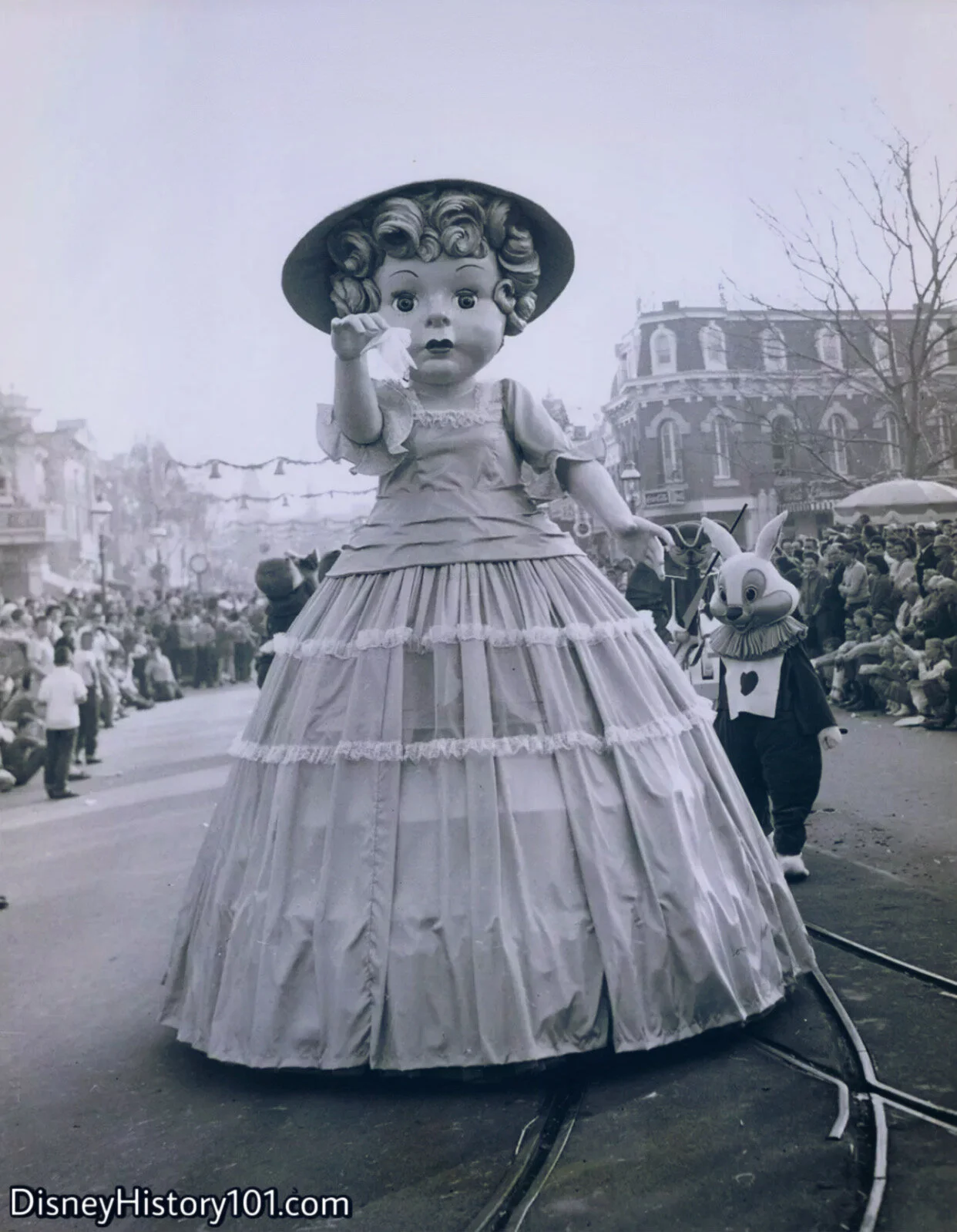
“Twelve feet tall, this winking doll actually marched under her own power down Disneyland’s Main Street in the annual Parade of the Toys.” Every now and then, she would pause along the route, and blink her eyes (as baby dolls do), winking at the crowd!

Speaking of Babes in Toyland, it looks like artists are applying some of the final touches to the Toy Soldiers. The Toy Soldiers of “The Parade of Toys” were created in the Disneyland Staff Shop.

Now, Fifi greets guests (and guests pet Fifi’s fur) as she struts down the parade route in Fantasyland, near Alice in Wonderland!


“French Balloonists march with their striped balloons”, according to Jack and Jill magazine (published December of 1961).

The second incarnations of Mickey Mouse, Minnie Mouse, and the Three Pigs (originally appearing in John H. Harris’ Ice Capades), made an appearance in Disneyland’s Parade of the Toys!


1965 : Before I begin, I must divulge that much of this information comes owing to Bob MacKinnon (who had the good sense to document Fantasy on Parade of 1965).
Now, in preparation for the Christmas season, rehabilitation was carried out on all of the rides at Disneyland. But in addition to this, something new was added to the eleventh annual holiday festival held during the 1965 winter season, at Disneyland. At one Walt Disney Studio presentation, Chuck Corson (Disneyland Talent and Production Manager) began with the words, “Walt Disney is happy to present Fantasy on Parade!” Soon after, Walt Disney formally introduced the world to Fantasy on Parade with the following words : “At Disneyland, we do our Christmas planning early, looking forward to it lot a lot of happy kids. These are some of the models for our Christmas Fantasy on Parade. We prepare for this event as we do for all of our other attractions. Every Christmas season thousands of children and their families line the curbs of Disneyland’s Main Street making it the happiest street in the world.”
More than a year’s worth of work was performed by the Disney organization to bring the 40-minute Fantasy on Parade to life! Many individuals were involved in production of Fantasy on Parade - Wayne van De Walker who oversaw all arrangements for Fantasy on Parade, Marvin Marker (Disneyland Talent Coordinator), Sonny Anderson and John Hilliard (Sound and Music Coordinators), Tom Mahoney (Choreographer), and many others.
“Fantasy on Parade - Prop and Wardrobe”
Hank Dains (who normally oversaw the Park’s Interior Design and Drapery) now oversaw the production of parade vehicles. These included new vehicles (like the Scarecrow Band Hay Cart), and rehabilitated vehicles (like Santa’s Sleigh). Many parade vehicles and props were created and attended to by the Carpentry Shop, the Mechanic Shop, the Metal Department, the Paint Shop, and the Staff Shop. The electric “Whirlybug” cart technology (later employed for and popularized by the Main Street Electrical Parade) was investigated in order to adapt them into carriages for the Christmas toy floats.
By October of 1965, meetings were held with Ben Harris, Dains, Justice, Elkins and Wolfe pertaining to the coordinating of Christmas costumes. New Characters (like the ”Three Eggs” and Winnie the Pooh) were designed and color coordinated by Bill Justice (Parade Art Direction), “translating sketches into three dimensional performers.” New costumes (i.e. that of Mickey Mouse) were also designed and provided by both Lella Easton and Berny Wolf (animation character designer, and current Supervisor of Parade Character Costumes), with some heads (like those of the Scarecrows’) fabricated by Bud Washo’s Staff Shop.
Trooper lights (for the rooftops) were rented for the entertainment areas, and A-7 Speaker sound amplifier systems (in radio amplifier units) were set up along the Parade Route (including a sound system of Dahlquist’s design, installed in Sleeping Beauty Castle), overseen by Dean Narath (Disneyland Sound Manager) and Anderson. Heating Units were acquired. Five Parade Tower Announcer Locations (with telephones) as well as rented bleachers and chairs for guests, were set top in locations along the route.
Some of the Fantasy on Parade Cast (like Mickey Mouse and his friend Paul Castle) were involved in promotional stills and 35mm live-action footage (requested by Phil Bauer) that were shot November 10th, 1965. In addition, television promotion increased during a period from December 8 though 14, 1965.
Rehearsals took place on the evenings of December 15th, 16th, and 17th (the 17th was a dress rehearsal). “It was backed with months, and even years of preparation. The parade was run almost like an army. Section Captains, Division Captains, etc., were all created to help make the parade run as smoothly as possible.” This was necessary for the great multitude of performers and dancers among its units (including the banner bearing members of the Concord Unicyclist Team), floats, musicians (including the UCLA Bruins Marching Band), and even animals (like Norbu the Gorilla and even a baby elephant that pulled a calliope). Backstage Disneyland Editor Wally Boag recalled (in “Letters to the Editor”) his contribution as a “tumbler” alongside John Evans, Bill Sales, Don Feher, and Sandy Sheklow, under the oversight of Marvin Marker (of Disneyland Entertainment): “John, Sandy, and I lived in a motel near Disneyland for the two weeks and had a ball getting up at 10 ‘o clock, eating a big breakfast, going to ‘work,’ at Disneyland and generally doing whatever we wanted to - no parents. The two other boys, Bill and Don, commuted from Los Angeles.”
Disneyland’s own entertainers included Bud and Scott (of the Coca-Cola Corner), the Dapper Dans, the Disneyland Band, the Disneyland Carolers, the Frontierland Gunfighters, the Golden Horseshoe Revue Cast, the Gonzalez Trio, quite a few Indian Village Representatives, the current Space Man & Space Girl (of Tomorrowland), The Young Men From New Orleans, and (of course) the Disneyland Characters. In addition to all these Fantasy on Parade Cast Members, and Disneyland Guests Services Hostesses and Hosts (to attend to the celebrity guests), there were “over 505 people behind the scenes. There were also 65 animals in the parade,” according to Disneyland Backstage (Spring, 1966). Some of these animal acts came from far away locations, like Charlie Allen’s Performing Bears and Zebras (of Pleasant Grove, Dallas, Texas).
Soon the Tencennial Newsletter announced the “Disneyland Christmas Parade to Take on New Look”: “Disneyland guests will find something new and exciting awaiting them this Christmas. The annual Disneyland Christmas Parade will take on a new look as ‘Fantasy On Parade’ be has its premiere performance this year. Most of Walt Disney's famous movies will be represented by favorite characters from them. Alice in Wonderland, with her shuffling deck of cards, the dancing mushrooms from Fantasia, and even a few of the beautiful dolls from Walt Disney's "It's A Small World exhibit at the New York World's Fair. All of these, plus many more, will combine their musical fantasy to bring Disneyland guests the most unusual and entertaining parade ever.
The premiere performance of ‘Fantasy On Parade’ will be held on Saturday, December 18 at 8 p.m. Movie stars from throughout the entertainment world will be present that night to witness the first showing of this uniquely ‘Disney’ parade.
The parade schedule for the remainder of the Christmas Season is as follows:
Dec. 19 - 3 p.m. and 8 p.m.
Dec. 20-25 - 1 p.m. and 4 p.m.
Dec. 26-Jan. 2 - 3 p.m. and 8 p.m.
Dec. 31 - 1 p.m. and 4 p.m.”
The $175,105.42 production of Fantasy on Parade (presented by Disneyland’s Entertainment Division), debuted a day early, on December 18th, 1965, to a host of celebrities (like Annette Funicello, Buddy Ebsen, Dean Jones, Dick Van Dyke, Fred MacMurray, James MacArthur, Jerry Lewis, Karen Dotrice and Matthew Garber (the two kids from Mary Poppins), Michael Landon, Pat Boone, Tom Lowell, Vera Miles and many others). Fantasy on Parade was so popular that it ran beyond its last scheduled event date of December 31, 1965, for two additional days (until January 2nd, 1966)!
Walt, Lillian, and Jack Lindquist (then Disneyland Director of Marketing) rode in one of Disneyland’s 1903-inspired curve-dashed autos. They were followed by a Fanfare Unit, and Drum and Bugle Corps. atop horses heralding the beginning of Fantasy on Parade at “Disneyland’s Storybook Castle”!
Mickey (riding “the biggest bass drum in the world”; pulled by six white ponies) led the procession down its route, keeping the beat with his baton, followed by a succession of royal trumpeters on “horseback” and cartwheeling acrobats! As a note, the Biggest Bass Drum in the World was used before, and was in need of some repairs before the big parade. A new, smaller horse-drawn calliope was also included in this Fantasy on Parade!
“As usual, Donald Duck gets in the act,” driving his bright red roadster with his nephews aboard.
Winnie the Pooh strolls along with his friends from the Hundred Acre Wood, and his favorite (oddly, anthropomorphic) Honey Tree (the creation of which can be seen in the Walt Disney Productions Annual Report of 1965, page 10). In these early days, Rabbit carried Piglet in his arms, though he had yet to be featured on screen (which is likely why Piglet wore a blue sweater during this first “come to life” Disneyland incarnation of the character).
The Arabian Knights Unit with Sultan Ali Baba and a Harem of dancing girls is followed by a comical Camel, drummer, flutist, and boy playing the cymbals.
Captain Hook (aboard his pirate ship, the Jolly Roger) fires at Peter Pan, Michael, Wendy, and John flying atop their bed (while they’re followed by a Pirate Band).
Pink circus elephants on parade are the stars of the Dumbo Unit, as they perform tricks while doing handstands, in time with their unit. Bongo the Bear and Lulubelle perform a second ring act, as they they “walk” the parade route precariously balanced atop balls. Members of the Disneyland Marching Band provide the old circus tunes and those goofy circus horses (in clown paint) gallop by!
Who’s afraid of the Big Bad Wolf? Apparently no one, for the Big Bad Wolf, and the Three Pigs offer a brief interlude, interacting with guests as they make their way down Main Street!
A Pluto Unit entitled “Dawg Gone”! When Pluto puts on a dog show, he goes “all out”. Pluto’s true-life dog performers (in human clothing) emerge from his dog house (at specific places along the route), and perform tricks while walking on their hind legs.
They were followed by the Mary Poppins and the London Chimney Sweeps Unit (Alexander Goldstab, Rolf Haas, and Ray Oja) doing their rendition of “Step In Time” played by Bert’s One Man Band, the Pearly Band, and a couple of Keystone Kops.
“Pinocchio and Company” featuring a gypsy’s wagon (driven by Stromboli) and Honest John (walking a true-life bear on a leash), are followed by the famous Reluctant Dragon (as he blows smoke at the audience), and Goofy’s Gondola (a clown car that would belch smoke, bellow fire, and blow a “tire” (a balloon that would pop). All of this while Minnie Mouse rides passenger!
From “the world’s biggest caterpillar” would emerge a butterfly ballet, as a quartet of “ladybugs” played saxophone. At the end of the act, the butterflies would go back into their “cocoons”.
Snow White and the seven Dwarfs (debuting in Disneyland, from their appearances at the New York World’s Fair of 1964-1965) would move their diamond mine cars down Main Street, and (when before Main Street Station) would release a flock of doves into the air! They were followed by an cavalry of cards (portrayed by an all-girl drill team and a band) and the Alice in Wonderland Unit, featuring the White Rabbit, Alice, the and the Mad Hatter!
The Fantasia Follies Unit, with ballerina ostriches, hefty hippos, and Mushrooms twirling around a Bacchus statue float, offered another musical interlude to “The Dance of the Hours.”
The main act of the Barnyard Unit weren’t the Chickens “fresh from the farm,” ready to engage in a “good old fashioned country hoe-down.” It was the horse-drawn Hay Cart full of rockin’, rollin’, and-a-swingin’-scarecrows! Time and again a couple of eggs would hop out of the hayride and lay an egg or two with the Farmer and the Farmer’s Wife!
Those marching Toy Soldiers (from Babes in Toyland) were followed by the most famous of all reindeer, before the big finale Santa (portrayed by Tim Hahne, as seen on the cover of Backstage Disneyland Vol.4, No.4 ; December of 1965) riding his sleigh surrounded by children’s stuffed toys. Among the toys around the sleigh are popular dolls likenesses of cartoon characters Mickey Mouse, Winnie the Pooh, and Magilla Gorilla (if you don’t believe us, just see for yourself)!
A train (a version of Casey Junior colored like the “Toys For Tots” logo) pulls six toy block gondolas which all together spell “T-H-E-E-N-D”. These (in a Disneyland tradition) release thousands of colorful toy balloons in front of Main Street Station, symbolizing the ‘final curtain’ to Fantasy on Parade! As a “sidelight” you may recall that Walt Disney Productions became a proud sponsor of “Toys For Tots” - Casey Junior became the official logo of the organization, and Walt was scheduled for an August 3, 1966 (7 am) commercial shoot (with a Toys For Tots barrel full of colorful toys of Walt Disney Productions - licensed characters, all of which were fabricated through Disneyland, Inc.).
Would you like to watch this first Fantasy on Parade? Portions of the 40-minute parade were immortalized on film, as part of “Disneyland Around the Seasons” (Wonderful World of Color, Season 13, Episode 14). It originally aired on December 18th, 1966, as advertisement for the second Fantasy on Parade, that would debut the following day.
More than 1,000 carolers took part in an hour of Christmas music on Sunday December 17th, and the Winter Season Holiday Festival’s Candlelight Procession which began at 5:15 P.M., December 19th, 1965.
1966 : Much preparation went into planning and coordinating the entertainment events and making arrangements for the winter season entertainment. Bill Justice (Parade Art Director), Lella Easton (Wardrobe), and Ed Winger (Staff Shop) helped coordinate colors and materials, and fabricate props and floats. Some of the costumes were provided though Western Costume. A calliope was rented from Hudgins Bros. (of San Fernando, California).
Maintenance Staff (Coordinator Hank Daines, Ted Crowell, Arnold Lindberg), Custodial Staff (Chuck Boyajian and John Martin), and Dean Narath (Sound Department) made arrangements for Christmas events.
“After Walt”
The second Fantasy on Parade was advertised by Walt Disney himself, in the Walt Disney’s Wonderful World of Color episode “Disneyland Around the Seasons,” which aired December 18, 1966 (just three days after Walt passed). The episode utilized footage from the previous year’s Fantasy on Parade for the promotional segment. The second year of “Fantasy on Parade” debuted the following day, on December 19, 1966. You may recall that (though marketed as a holiday themed parade), many of the units and floats were based on Walt Disney’s films and the theme of Disneyland’s diverse lands. Announcers (as the Pendleton plaid-clad Disneyland Hostess in the Plaza) were situated atop areas with a clear vantage of floats and units. In addition to the wreaths, garlands, bows, and bells, the archway leading through Sleeping Beauty Castle was decorated with a banner reading “Happy New Year”! Despite all the preparations, and the grandeur of the show, this would be one Fantasy on Parade that no one would forget.
An article (published December 28, 1966) by journalist Mark Gibbons of “The Motion Picture Exhibitor” mentioned : “Less than 100 hours after its creator’s passing, thousands thronged Disneyland’s 10th annual Christmas pageant, ‘Fantasy on Parade.’ As if they had just leaped off the master animator’s drawing board, more than 400 costumed characters from the Disney cartoon world came to life and paraded down Main Street. They were all there - Mickey and Minnie Mouse, Donald Duck, the Three Little Pigs, Snow White and all the Seven Dwarfs - and in the wonder-world they created . . . There was no thought of death.” Most of this observation was correct, with the exception of the final portion of that statement, as attested to by many former Disneyland employees who worked that very somber day.
Bill Justice recalled: “The following day I went to Disneyland. Few guests were there. The Park had already been decorated for Christmas. I just walked around, looking at the decorations and listening to the Christmas music. Disneyland, as Walt said in his dedication, "is a happy place" and Christmas a time of joy, but neither could be found that day.“
Entertainment employee Don Payne (Character actor ; Golden Horseshoe Lead) worked recollects the second Fantasy On Parade (1966) vividly : “I was there at a unique time. Frankly, I feel that it was the ‘Golden Age’ for Disneyland. It was December of 1966, around 9:30 a.m., my 18th birthday, and my very first performance. Walt and his family were supposed to be there and they had set seats up in Town Square. Then, they made announcements that we might close the park. But the show went on. I can recollect going to the spot where Walt and family was supposed to sit. I remember thinking, ‘That’s where he was supposed to be sitting’. The area was roped off, and the seats were empty.”
The second year run of “Fantasy on Parade” continued with encore performances of the one-hour parade running twice a day.
1967 : The “Disneyland Holiday Talent Master Schedule” (prepared for the period of December 16, 1967 through January 1, 1968, listed the Divisions and Units of the 1967 edition of “Fantasy on Parade” :
Divison I
Unit 1 : Pageantry
Divison II
Unit 2 : Mary Poppins
Unit 3 : Pinocchio
Unit 4 : Peter Pan
Unit 5 : Pluto
Unit 6 : Fantasia
Unit 7 : Alice in Wonderland
Unit 8 : Winnie the Pooh
Division III
Unit 9 : Circus
Unit 10 : Goofy’s Car
Unit 11 : Harem
Unit 12 : Snow White
Unit 13 : Caterpillar
Unit 14 : Song of the South
Unit 15 : Cinderella
Unit 16 : Three Pigs and Wolf
Division IV
Unit 17 : Barn Yard
Unit 18 : Small World
Unit 19 : Jungle Book
Unit 20 : Santa Claus
More than a year in the making, a sneak preview of the new Fantasy on Parade was performed (at 3:00pm, Saturday, December 16th). This was followed by the Grand Premier of Fantasy on Parade (at 9:00pm, Saturday, December 16th). The parade opened to Hollywood celebrities and their families, before beginning its twice-daily appearance from December 17th-30th, 1967 (with the exception of the 24th & 25th, when the parade was performed at 3:00pm only). The final performance date and time of Fantasy on Parade was 3:00pm, Sunday, December 31st, 1967.
Fantasy on Parade premiered this year, during the busiest Christmas season in park history to date! This was a different type of parade from any preceding it, in the history of the Park. According to Disney News (Winter 1967/1968), “Instead of the usual band and float procession, Fantasy on Parade is a series of marching shows, each stopping periodically along the Main Street U.S.A. parade route to perform colorful dances and skits. Even the music is different as Mary Poppins Chimney Sweepers, a comic calliope and The Toy Soldiers Band replace the traditional uniformed bandsmen.”
Equipment was gathered (rented and purchased) including lighting equipment for entertainment areas, and heating units.
Many individuals were involved in production this year, including (but limited to) Hank Daines (Maintenance Coordinator), Bill Justice (Art Director), Ed Winger, John Kuri, John Martin, Eric Wesson and Leila Easton. A calliope was rented (from Hudkins Bros. in San Fernando). Of the 25 show units, three new performing units of “the wackiest, wildest, and warmest characters from the Land of Make-Believe” were added to Fantasy on Parade during 1967, based on Walt Disney’s Cinderella, Song of the South, and (for the first time ever) The Jungle Book. Yes, Baloo, King Louie, and Colonel Hathi made their Disneyland parade debut, along with a cigar-smoking eight-foot rooster, and what have been described as “mammoth Small World dolls”. The stars of Walt Disney’s Winnie the Pooh - Rabbit and Piglet, Kanga and Roo, Eeyore, Owl, and Pooh Bear - also appeared. Finally, Santa Claus was introduced by eight “Silly Reindeer”! [See “Disney News,” Winter 1967-68]
To accommodate visitors, the parade ran twice daily. Disneyland’s seasonal hours were also extended to accommodate the influx of parade-going guests, with a midnight closing daily (except for Christmas Eve - 6pm, and Christmas Day - 7pm). During this time the parade would run twice daily at 3:00 p.m. and 8:30 p.m., from December 18th thru January 1st (with just one show occurring daily at 3:00 p.m., on December 24, 25, and 31).
There were also more than 1,000 carolers who took part in the 13th Disneyland Candlelight Procession of massed choirs (held for one hour, beginning at 6:00pm, on Saturday and Sunday, December 16th & 17th), while supplementary entertainment was provided by the Magic Kingdom Carolers (also officially billed as “Disneyland Christmas Carolers” according to nomenclature lists). The Disneyland Christmas Carolers were under the direction of Dr. Charles C. Hirt and lead by Mr. Robert G. Hasty, and dressed in “the style of Charles Dickens” costumes. The Disneyland Christmas Carolers appeared at various times and locations during the day, from December 16th, 1967 thru January 1st, 1968. Of course they appeared within the Candlelight Procession, in the Christmas Parade, and even performed a special solo Christmas Carol Concert from the steps of the Main Street Train Station (which was broadcast throughout the Park). [“Disneyland Holiday Talent Master Schedule,” prepared for the period of December 16, 1967 through January 1, 1968]
“More than 1,500 feet of garlands, 5,000 pine cones, sparkling ornaments, lights, bells and hundreds of other special decorations” enhanced the winter show, according to Disney News (published Winter 1967-1968). Th same publication continues : “A huge white fir Christmas tree which traditionally stands at the entrance to Main Street and Town Square” was “purchased in the Mt. Shasta region of Northern California and brought to Disneyland on a flatbed truck. After the long jaunt from up North, the tree is first sprayed with 75 gallons of green fire retardant paint for color and safety. Then 70 gallons of adhesive is applied so the tree can be flocked with tiny styrofoam beads. A large crane is used to lift the mend equipment for the spraying jobs, and again for the final phases of decoration, including the stringing of more than 2,000 colored lights and the same number of ornaments. The tree is then moved by crane down Main Street and placed on Town Square where many large decorated packages are placed underneath, adding to the Yuletide theme.”
Owing to this entertainment spectacle, a “record one-half million Guests visited Disneyland during the Christmas holidays, 61,088 in a single day”, according to “A Report To Disneyland Lessees, Summer ‘68”.
1968 : From a wealth of Disneyland Inter-Office Communications (dated April of 1968) it can be discerned that by the spring of 1968, many plans were in motion relating to 1968 Fantasy on Parade. Bob Jani (in group meetings) was exploring “the maximum number of new ideas for possible inclusion in this year’s parade,” from the “Parade Title Unit” to the “Major Parade Units” (each with their own “Open-Book Title Units”).
More than 80 new Disney characters and unique floats were added to Fantasy on Parade’s 25 show units during 1968! The parades were held twice daily for two weeks starting with the premier performance December 21st, at 9 p.m. According to “Two Wonderful Ways To Enjoy Disneyland” (published for December of 1968), the 1968 Fantasy on Parade - “a wonderful world of imagination” - featured “the wackiest, wildest, warmest cavalcade of Disneyland characters ever assembled.” Uncle Scrooge appeared atop a Money Bag Float, and Pluto appeared with an oversized dog house and a troupe of canine gymnasts. This year introduced the cast of the Hundred Acre Wood from “Winnie the Pooh and the Blustery Day” and the “Woozil Band”, as well as the smiling animated tugboat “Little Toot”! There was a Coach to Pleasure Island, Donald Duck and His Nephews (aboard a motorcycle and sidecar), Cinderella in her shiny orange Royal Coach, and Mr. Toad (aboard his own motorcar). There was a carousel float in the Mary Poppins Unit, and giant tea pots in the Alice Unit. The Queen of Hearts had a royal band, and a Band of Knights appeared with the Sleeping Beauty Unit. Familiar characters like Br’er Bear and Br’er Fox (grasping Br’er Rabbit by his ears, searching for a place to toss him into the Briar Patch) marched along. Col. Hathi’s “Elephant Patrol” appeared alongside Walt Disney’s newest stars of The Jungle Book - King Louie, Baloo, and Mowgli.
The Candlelight Procession of 1968 was held (at 6 p.m.) twice - once on December 21st, and once on December 22nd.
1969 : Fantasy on Parade featured the “Biggest Bass Drum”, Br’er Bear and Br’er Fox (grasping Br’er Rabbit by his ears, searching for a place to toss him into the Briar Patch) returned, the silly reindeer, Toy Soldiers, Goofy, Cinderella aboard her pumpkin carriage, and Mickey in his sorcerer’s apprentice robe!
Bill Justice (Art Direction), Tom Linville, Don Hufstader, Sonny Anderson, Marvin Marker were all involved in this year’s production.

1972 : The Candlelight Procession kicks off Fantasy on Parade (December 16, 1972 - January 1, 1973).
1973 : The Christmas Tree was lit at 4 p.m. (with an estimated attendance prediction of 17,000, in comparison with the 1972 attendance of 16,538).
1976 : Art Carney (as “Gramps”) introduces Christmas Fantasy in Disneyland in the ABC televised special “Christmas at Disneyland” (airing Wednesday, December 8, from 8-9p.m. on ABCTV), starring Sandy Duncan and Glen Campbell! The special would leave many remembering “the night it snowed at Disneyland…or did it?” (Okay, truth be told, the ice rink between the Market House and Town Square was in actuality a layer of plastic tiles sprayed with silicone and foam.)
Anyhow, from December 13 to December 31 (of 1976), the battalion of wooden soldiers marched with a special Christmas Unit of the Christmas Fantasy at Disneyland holiday parade.
1978 : The Very Merry Christmas Parade ran twice daily - once from “its a small world”, and once from Town Square.
1979 : (December 21 - 31) Though Fantasy on Parade did not run during 1979, it was replaced by “A Very Merry Christmas Parade”, which featured similar units (including a Babes in Toyland soldier unit).
1980 : (December 20, 1980 - January 4, 1981) After a three-year hiatus, a thirty-minute version of Fantasy on Parade performed during Disneyland’s 25th Anniversary - the Family Reunion! It ran twice daily, for sixteen days. Knights on horseback, a fanfare of trumpets and drums, white ponies, Court Dancers, a Crystal Coach, and a Royal Band were among the Opening Unit and 350 participants of the pageant (a record-breaking number of performers in a Disney parade up to this point)! Units reenacted scenes from popular Walt Disney Motion Picture classics (including Mary Poppins, Cinderella, Pinocchio, and Alice in Wonderland), as they made their way from the Small World Gate, down Matterhorn Road and Main Street U.S.A., all the way to the Egg House Gate! Huge moving holiday scenes, (like the North Pole Post Office where the Seven Dwarfs help sort mail), were fabricated. The soldiers from Babes in Toyland also returned to join the march for this holiday spectacular, and puppets came to life in one of the scenes entitled Santa’s Toy Shop.
Many major changes occurred with how parades were run, since Disneyland's 25th Anniversary Family Reunion Parade of 1980. Computers commanded the operation, transmitting to 23 high-powered antennae buried beneath Main Street. All previous parades were narrated by “live commentators stationed at six points along the route… [and] lighting was also done manually in coordination with the narration. While the ‘human touch’ is nice, the drawbacks are obvious when a parade must be presented twice daily. Then the tape system was introduced, an improvement, but still subject to occasional lapses. This is the system that, until now, has guided our parades from Small World to Main Street and back again.
To encapsulate the present system : Each parade unit carries (and broadcasts at a standard level) its own musical theme. A common tase emanates from Audio Central (above Bank of America) and is transmitted to various speakers by way of the Matterhorn. The main problem with this system, aside from the heavy equipment required, is that there can be no smooth transition from unit to unit. As each unit enters a new zone, it must compete with the one preceding it. At times the result can be unnerving cacophony.
The microprocessor, which acts as the ‘brain,’ is a product of Berkey Colortran, a company specializing in dimmers for theatrical productions. A Ranko system from Sacramento is the actual switching mechanism which sends the proper sounds to the appropriate speakers. As the sound travels through the speakers, a Neve Control (courtesy of an English company) alters the level to ensure a blending effect in background music between units.
And where do those cleverly concealed antennae get into the act? Each antennae indicates a specific ‘zone.’ This signal is, in turn, sent to Audio Control which then sends a command to the transmitter on the Matterhorn. For example, Unit # 20 arrives at Zone 1. The antennae passes on this information to Audio Control, ‘Unit #20 at Zone 1.’ Audio Control commands the transmitter, ‘send music for Zone 1 of Unit 20.’ This music is received by the unit and played over its own speakers.
Also hidden along Main Street’s Parade route until commanded by the computer to make their appearance are the special lighting units. Pneumatic lifts carry these light trees into a working position at Parade Time.
With the installation of a new system, a few alterations had to be made on existing complimentary equipment. For instance, a new fiberglas enclosure for speakers was designed at WED and built here by our versatile Staff Shop. The actual parade units themselves also needed minor adjustments. Each unit will now carry a receiver for sound and a transmitter for location. Although it may sound more complicated, the net result is that the parade units will be carrying far less equipment than what the present system requires.
Work on the project began in early March, 1979 at Walt Disney World with engineers from both Parks collaborating on the effort. The schedule calls for complete implementation by March, 1980. Zoned lighting will be in effect for our ‘Very Merry Christmas Parade,’ but in a manual mode.
If the system does well during its ‘internship’ here at Disneyland, it’s slated to be incorporated into several facets of Walt Disney Productions - - Walt Disney World, Tokyo, even EPCOT! For a system that began as an ‘underground operation,’ a bright light os shining at the end of the tunnel.” [Disneyland Line, December 13, 1979]
Many individuals are responsible for this progress - Project Manager Jerry Hefferly, The Disneyland Engineering Department (comprised of Ernie Bucher, Ben Longo, Tom Zaczyk, and Rick Medrano), WED/WDW engineers (John Haupt, Mike Sommer), Chuck Graff and Bob Ridge (of Kirwood Electric), Maintenance Area Supervisor (Jerry White) and many others.
1981 : Trees dances down Main Street U.S.A., drum floats were re-purposed, and Dancing Snow People (Snowmen and Snowomen) were added to this version of the 16-day Yuletide show!
1982 : The Snowpeople returned to join a cast of 400 performers!
1983 : Your imagination will run wild right before your eyes with the Flights of Fantasy Parade! The Walt Disney Productions Quarterly Report (for nine months ended August 12, 1983) included the “all-new ‘Flights of Fantasy on Parade’ at Disneyland” on its cover.
1984 : More than 500 of your favorite Disney characters, colorful floats, dancers, marching bands starred in this 19th Fantasy on Parade, twice daily!
1986 : Fantasy on Parade’s final year!
1987 : (November 30th - December 6th) “The New Very Merry Christmas Parade” of 1987 featured Disney’s newest stars - The Gummi Bears! Parades occurred two times daily (December 17-23, 26-30 & January 1), and once a day (December 24, 25 & 31), from Town Square to its a small world and its a small world to Town Square! A Candy Shop float featured Donald Duck , Chip ‘n Dale, and the Gingerbread Men and Gingerbread Women.
The Christmas Tree Lighting Ceremony was held (not once, but) multiple times from November 28th thru December 25th. There were also Christmas Fantasy Follies (at the Plaza Gardens) and “The Magic of Christmas” on theVideopolis Stage.
1988 : (November 24th - January 2nd) A Very Merry Christmas Parade featured units like The Queen of Hearts and her entourage of playing cards!
1996 : A Christmas Fantasy Monday thru Friday, 4 p.m.
2012 : A Christmas Fantasy Parade was held twice daily (at 3:00pm and 5:30pm).
It appears that this is the point where we “Step-Down” (that is, the point in the backstage area where our parade of Vintage Views ends).


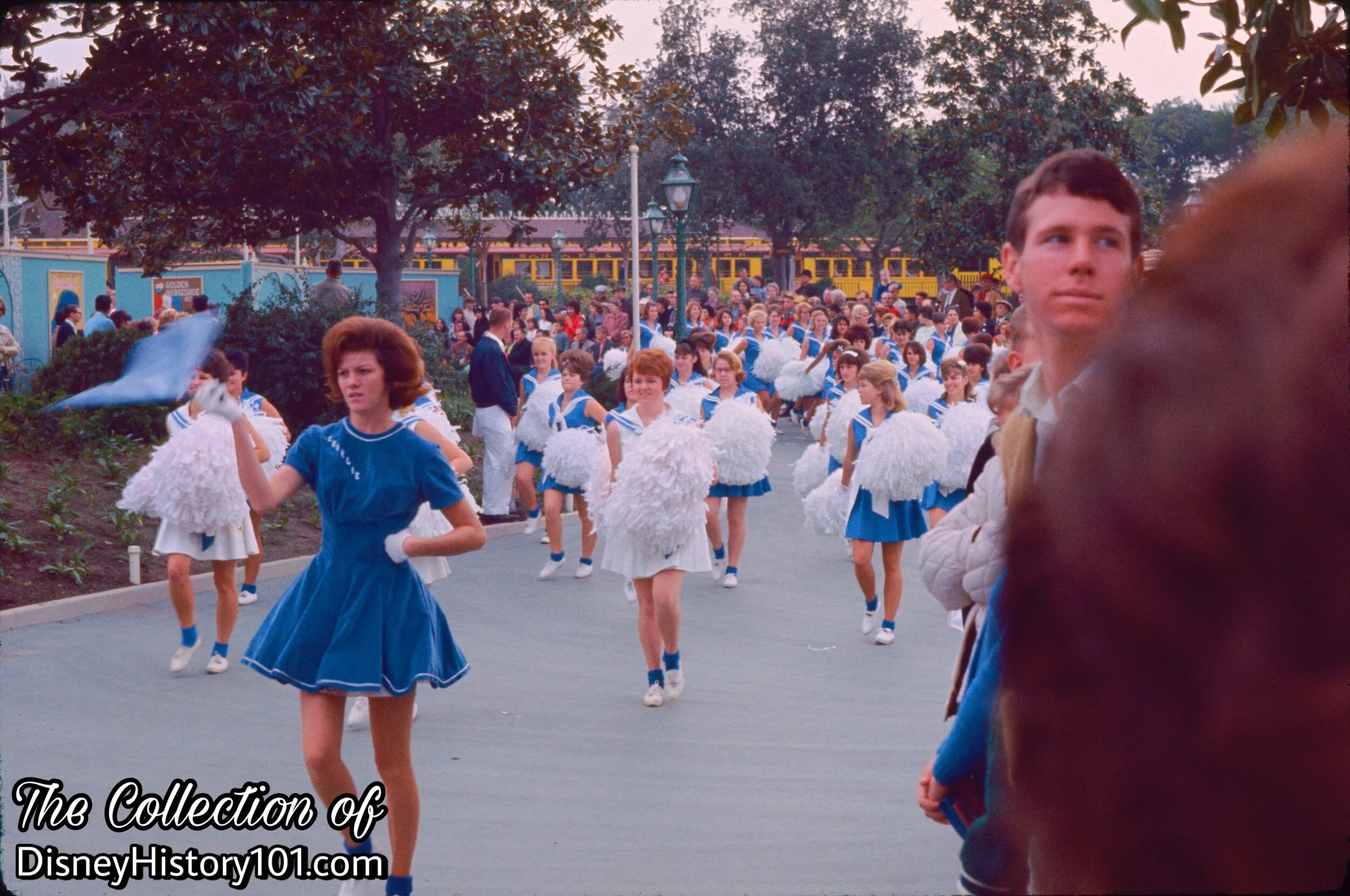

Various school marching bands (from Maryknoll All Girl, Anaheim High, Azuza High, Antelope Valley, Burbank, Bakersfield, Bolsa Grande, Huntington Beach, and others) filled out the gaps of the parade units and provided lively musical themes. Here, the talented students of the Mayfair High School (of Lakewood, California) have the pleasure of leading the festivities today in Walt Disney’s “magic kingdom” during December of 1965! When the cheer leaders and marching band members are all done performing, they’ll enjoy the rest of their day enjoying the festive atmosphere on Main Street U.S.A., in Fantasyland, Frontierland, and Tomorrowland.


Mayfair High School is followed by another marching band (perhaps members of the Juniors Reserves Officers Training Corps.), seen bearing the flag of the United States of America in this seasonal procession.

Have you ever seen anything like the “Goofy’s Gondola”? You may recollect Goofy driving the old jalopy that periodically broke down along the 1964 parade route. Now, Goofy drives another new car - the “Dizzy Lizzy”. The show car was in reality a 1908 Ford Model T that was owned by Ollie W. Hutton (a retired Motor Cop, and friend of Walt Disney). Ollie’s “Dizzie Lizzie” seen in the Santa Ana Christmas Parade of 1964. The vehicle was altered with the help of Bob Gurr, to be perform in the seasonal parades and daily parades down Main Street at Disneyland during the 1960s.
How did it perform all those fancy moves? According to its current caretakers : “The wheelbase was offset so the weight distribution would easily allow the front-end of the car to lift into the air. The weight was controlled by passengers and sand bags. There were two levers that would control the rear brakes individually to allow the car to make turns while doing a wheelie. Its only fitting that Goofy was the only one to drive the car [during parades].”
Because Ollie was the only one that knew how to operate the vehicle, a special c. 1920s-era costume was designed for the Goofy costume - the same one that Mr. Cook would wear. Ollie would wear these while driving his automobile (renamed “Goofy’s Gondola”) and performing at Disneyland! By December 17, 1964, Mr.Hutton was granted West Street Security Gate & Harbor Gate clearance from Saturday, December 19th through Thursday, December 31st, 1964. Ollie and his car would perform “in the big Christmas Parade Sunday, December 20th and in all of the Daily Toy Parades.”
Goofy’s Gondola performed in Disneyland’s big Christmas Parade (held on Sunday, December 20th, 1964), and was so popular that it was brought back for a 1965 season (pictured above).
Soon, Goody drove a wreck that shot fire and sprayed water.


Maude “the Comedy Mule” usually wore ice skates (and before this point, had two sides to her character John Dauphinias & John Colter). The duo was also known for their Ice Capade portrayals of Fifi the poodle and Scottie the terrier. Maude was one of 20 acts featured in the 1957 Ice Capades.

Now, the popular Maude “the Comedy Mule” comic strip character comes to life once more, to greet Disneyland’s guests in the 1964 Parade of the Toys! This is perhaps the only time in the Park’s history, that it was permissible for a Disneyland Cast Member to engage in “horseplay”.


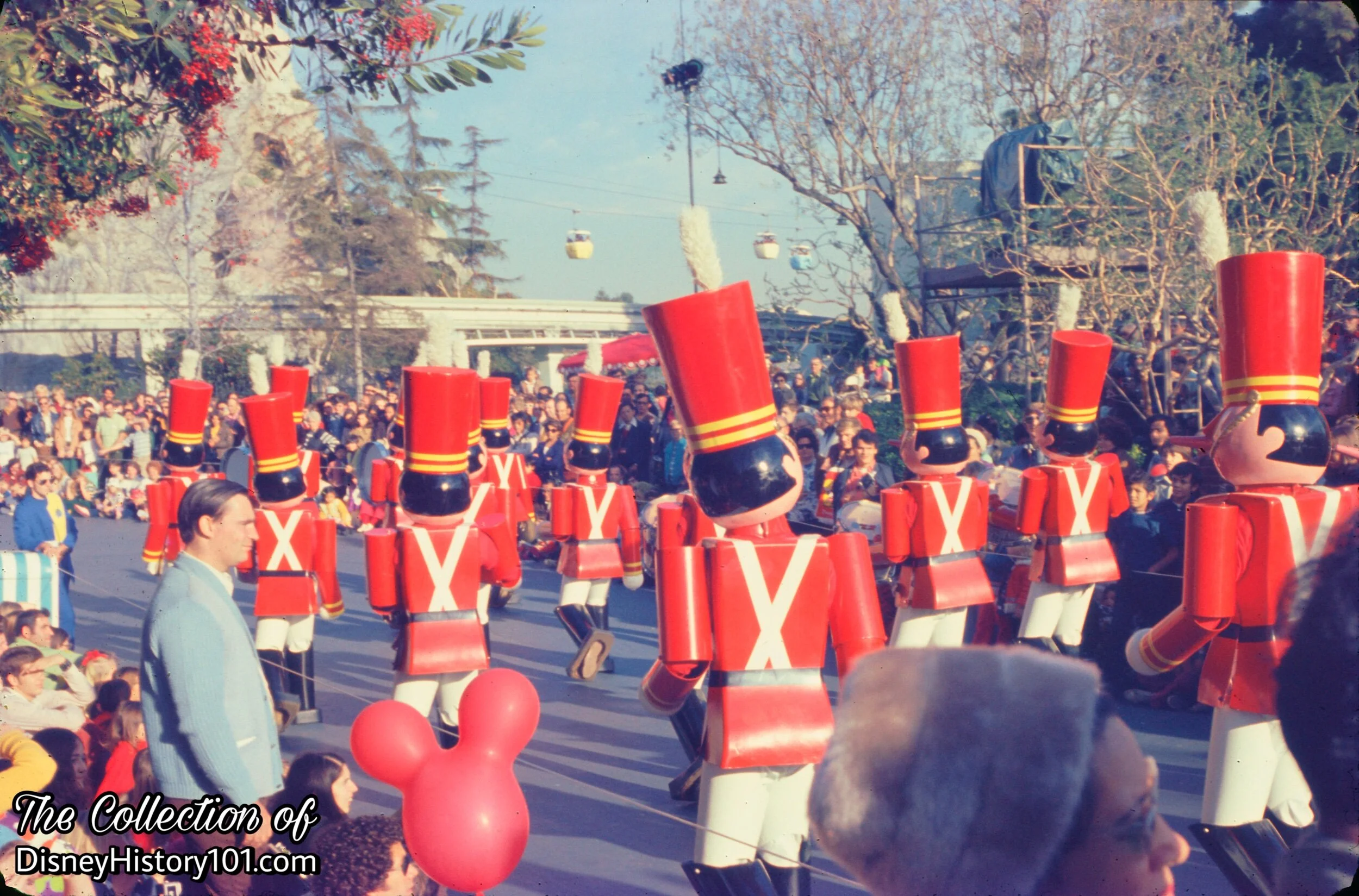

Some of Disneyland’s later toy soldier heads were built and maintained by Bobby Babcock and his crew at RWB Props! Disneyland’s Toy Soldier costume design (based on the characters featured in Walt Disney’s Babes in Toyland feature film) was popular, and versions of this costume would go on to appear in many other seasonal parades outside Disneyland, like the Hollywood Christmas Parade.
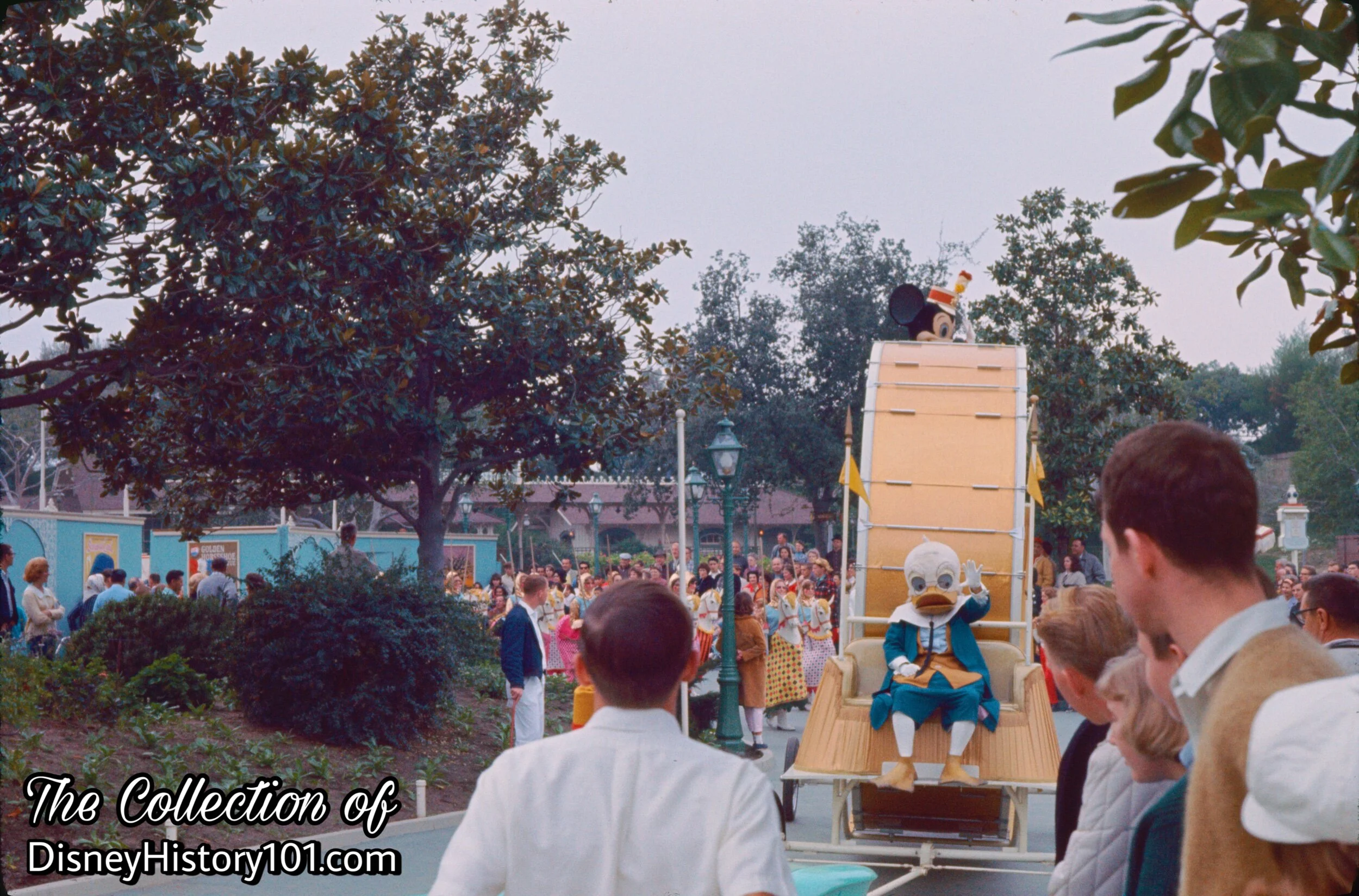
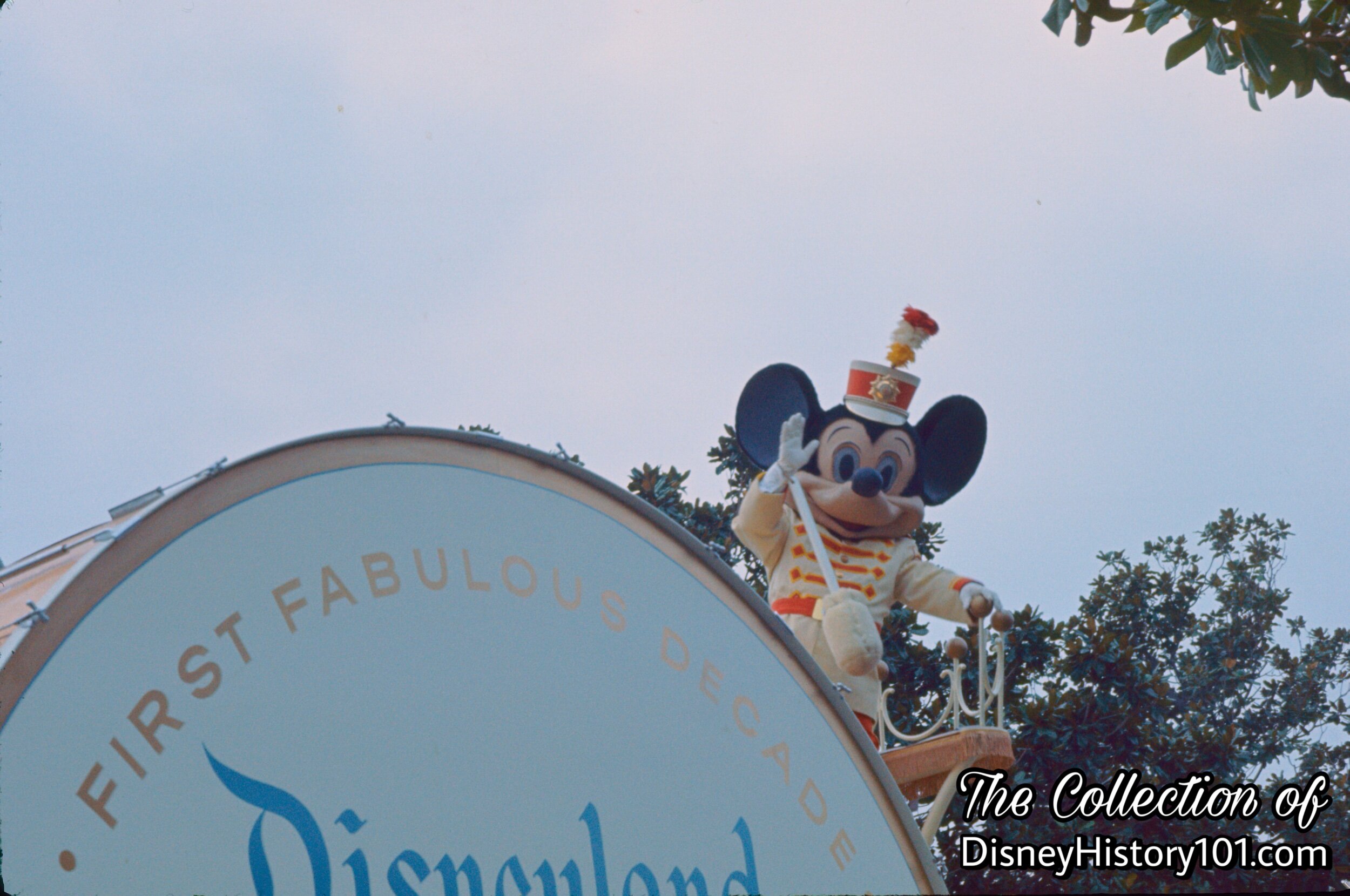
“Biggest Bass Drum”
It is believed that the Biggest Bass Drum was designed by Dean Tavoularis (Choinard artist, first hired as an in-betweener for feature film, before moving to live-action, and prop designs for “Disneyland, U.S.A.” the 1960’s Radio City Music Hall production). It is also believed that Carroll Clark (who served as Art Director for “Disneyland U.S.A.” the very same Radio City Music Hall production) also contributed to designs. Previously, both Dean and Carrol were nominated for Oscars for their Art Direction of the Absent Minded Professor and Mary Poppins. Now, the duo would be responsible for one of the most memorable units in Disneyland parade history!
The Big Bass Drum was definitely co-created by renown percussionist Remo Belli (founder of Remo) and debuted during the annual Disneyland Christmas Parade of 1961. “There appeared for the first time a bass drum measuring 10’ - 7" in diameter, and perched on top was Paul Castle in the character of Mickey Mouse. That parade launched a new beginning for Paul. He became a roving ambassador, not only for Disneyland, but for all of Walt Disney Productions.”
The drum also appeared in the half-hour Tencennial parade of 1965. In a rare instance, the details of the drum were divulged in a contemporary article published in the Herald Examiner of Los Angeles, California, on Thursday, February 11, 1965.
Whether pulled by Owen Pope’s miniature ponies or some popular Disney Characters (like Pluto and Goofy), the Park’s ten-foot, six-inch Biggest Bass Drum (featuring one of the world’s largest Weather King brand drum heads), would become the highlight of Fantasy on Parade! Though Purdue University, the University of Texas, and the University of Arkansas tried to hold the title of “biggest bass drum”, Disneyland’s was still “the tallest of them all” by 1967, according to Disney News, Winter 1967-1968.

Mickey (in full Disneyland Band regalia) stands atop the “Biggest Bass Drum in the World”!


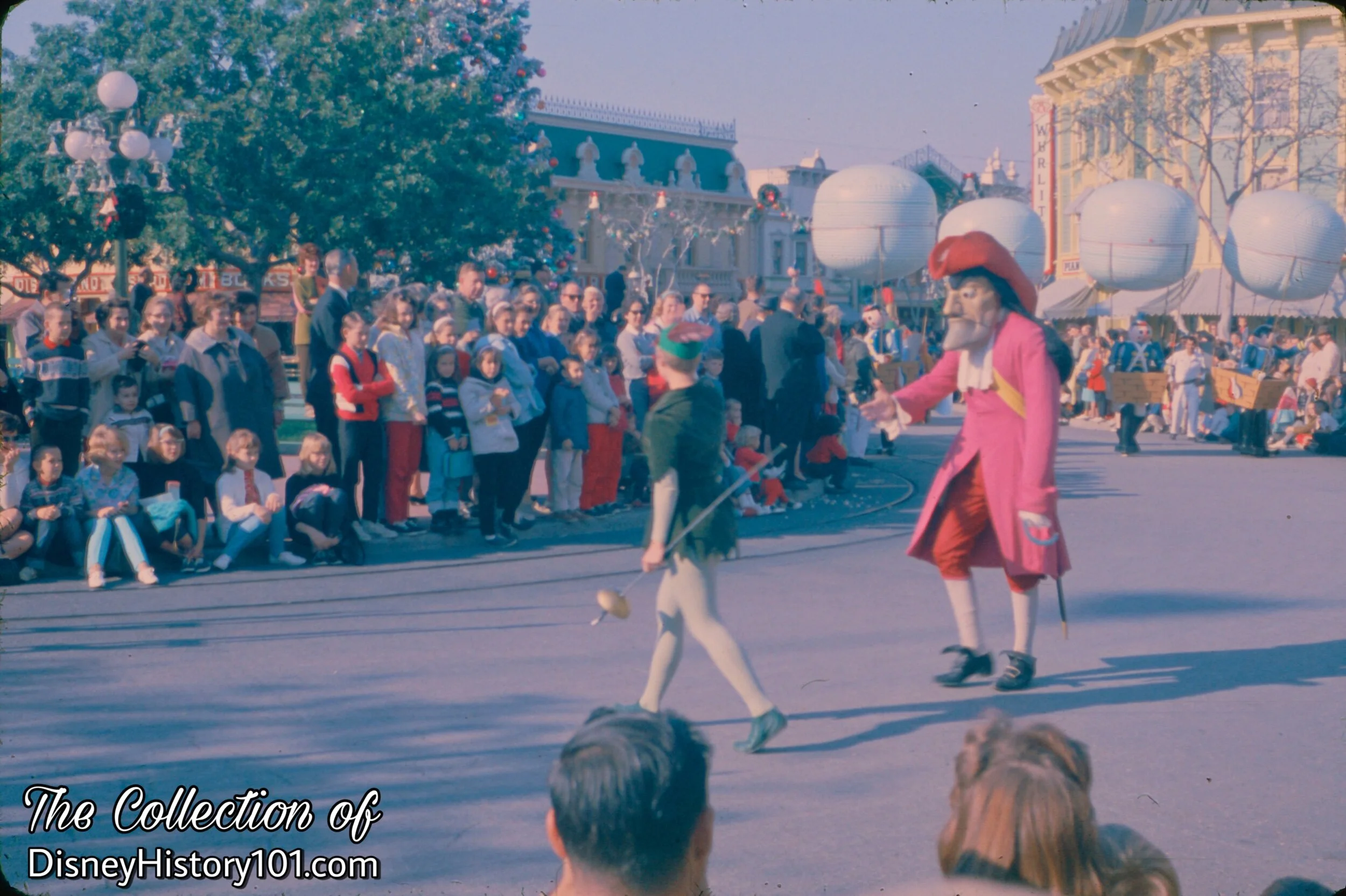


Chip ‘n Dale (the indistinguishable versions seen from 1960 - 1968), pull a toy canon and wooden toy soldiers on horseback in “Parade of the Toys”!

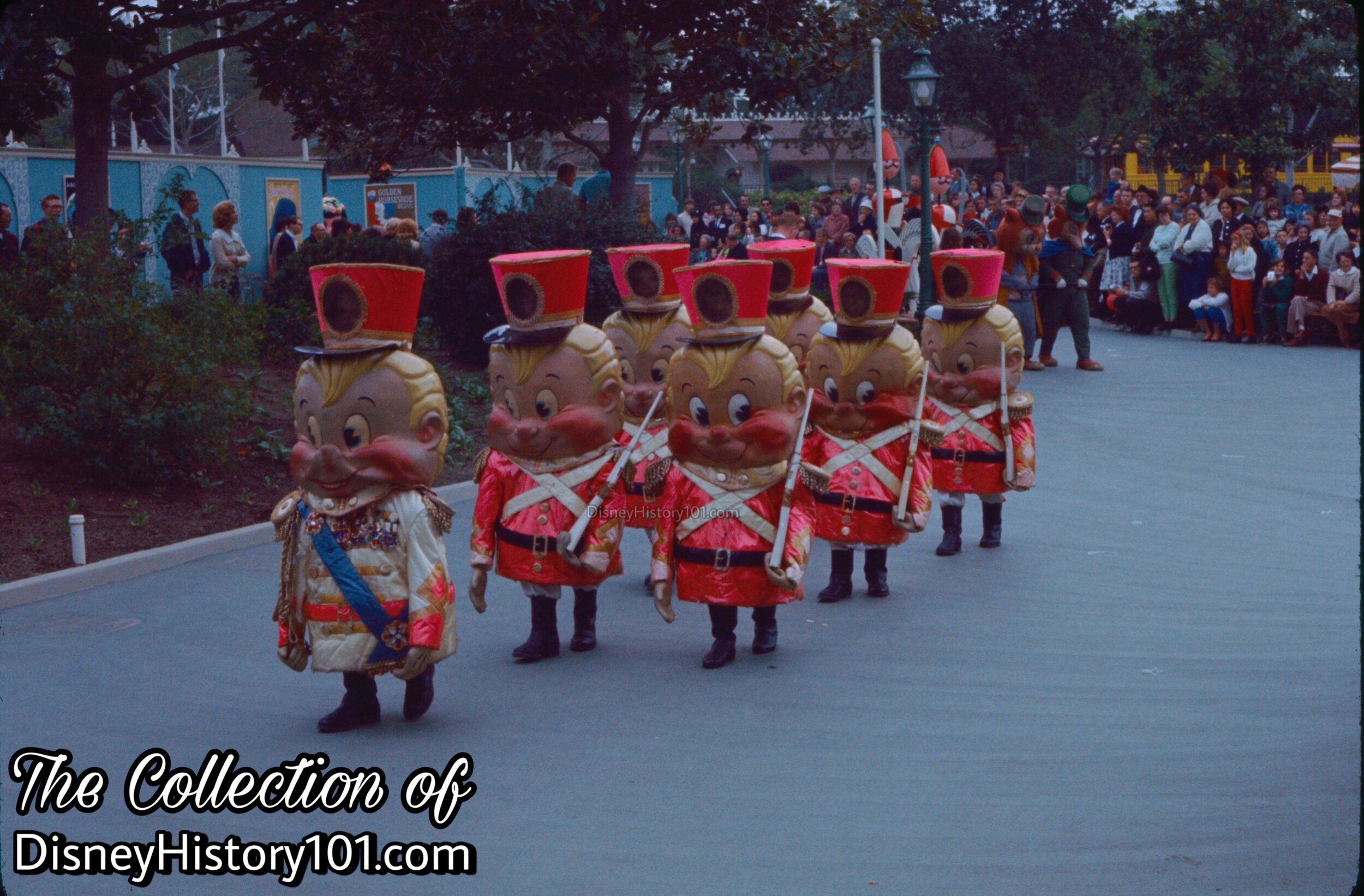
You may have first seen these little soldiers in the Ice Capades’ production of The Wizard of Oz presented by John Harris (and not Walt Disney). To clarify, these were not licensed Walt Disney characters, but rather original versions of the popular characters made just for the Ice Capades of 1961.
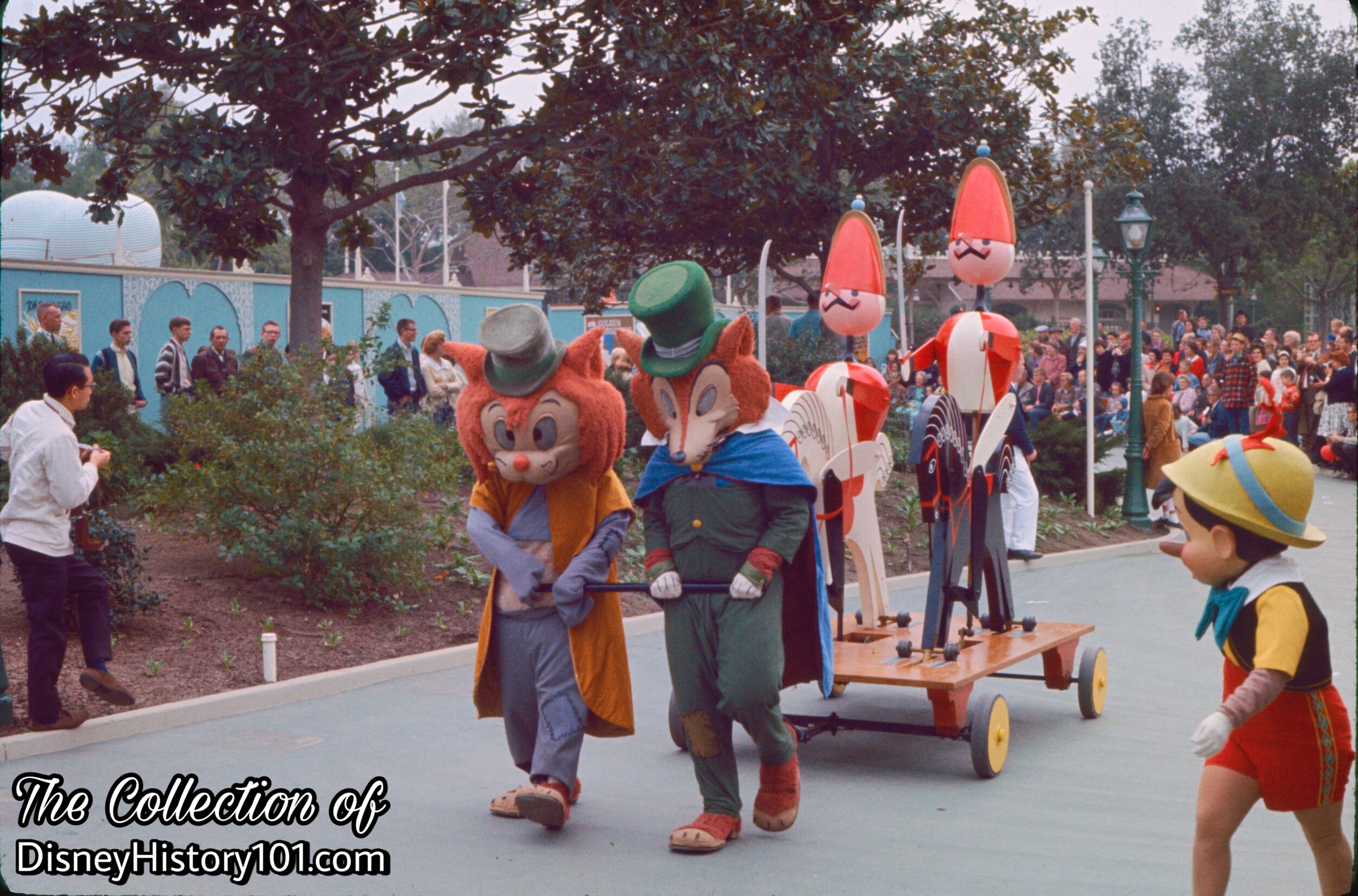
The next unit features the cast of Walt Disney’s Pinocchio (Honest John, Gideon, and of course, Pinocchio)!

These toys (with turning keys, and moving parts) were getting ready for their big debut in the Backstage Disneyland Area, c. 1961. Many of the large floats had fun animated features, like the flag reading “bang”, which would jettison from the canon before retracting.
After moving on from the Staging Area (behind the Jungle Rivers of the World), the toys assembled in the Parade Formation Area (not far from the Frontierland Station). All of these performers, floats and units would emerge from a certain part of the Backstage Disneyland Area (the future site of the Haunted Mansion attraction). Once On Stage via the Santa Fe & Disneyland Railroad Tunnel (of a greater height clearance than the Indian Village pedestrian tunnel) which bordered the Indian Village, the parade units would start to proceed down the Parade Route.
Guests sitting on the highest section of the bleachers catch a glimpse of the Parade Formation Area (as seen in the previous Vintage View).

Prior to this, they had appeared in the “Disneyland ‘59” pageant and parade.

These animated knights and toy steeds were around in 1961.

Sitting in his wagon is the giant toy clown, gaily bobbing his head from side to side and waving to the crowds.

“The Legend of a Gypsy Wagon”

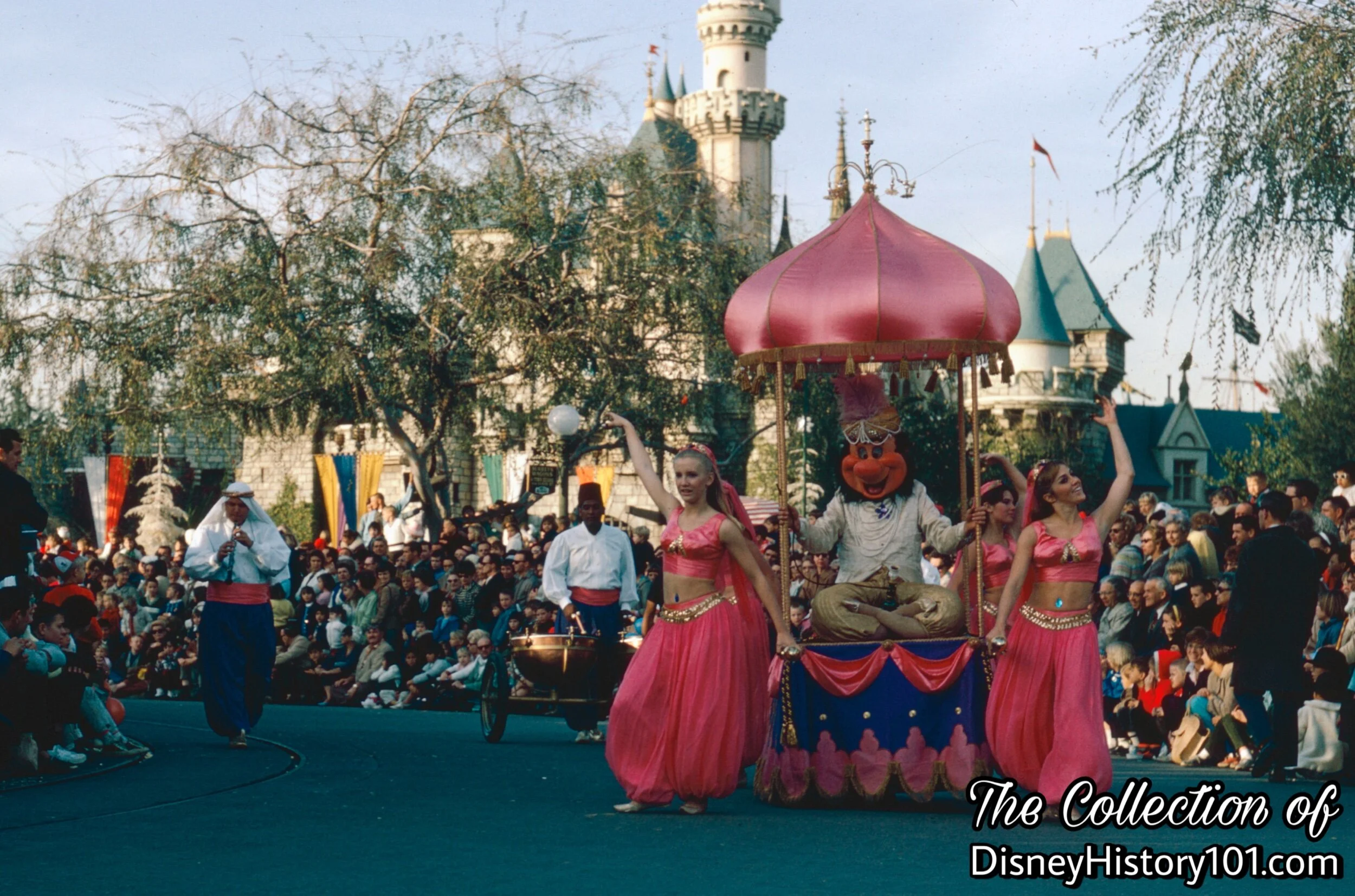
Walt once said (on “The Disneyland Story”), “We hope that it [Disneyland, the place] will be unlike anything else on Earth…a city from the Arabian Knights”.


Bill Justice created the designs for these dolls.

The talented pups of Pluto’s Dog House Unit (including a dog walking another dog whom we like to call “Pablo the Dancing Chihuahua”) are a tough act to follow, even for Mickey’s pup, Pluto!


“Ha-Rum-Pah-Pah!” Mickey Mouse rides and plays (what has been called) “the Biggest Bass Drum In The World”.
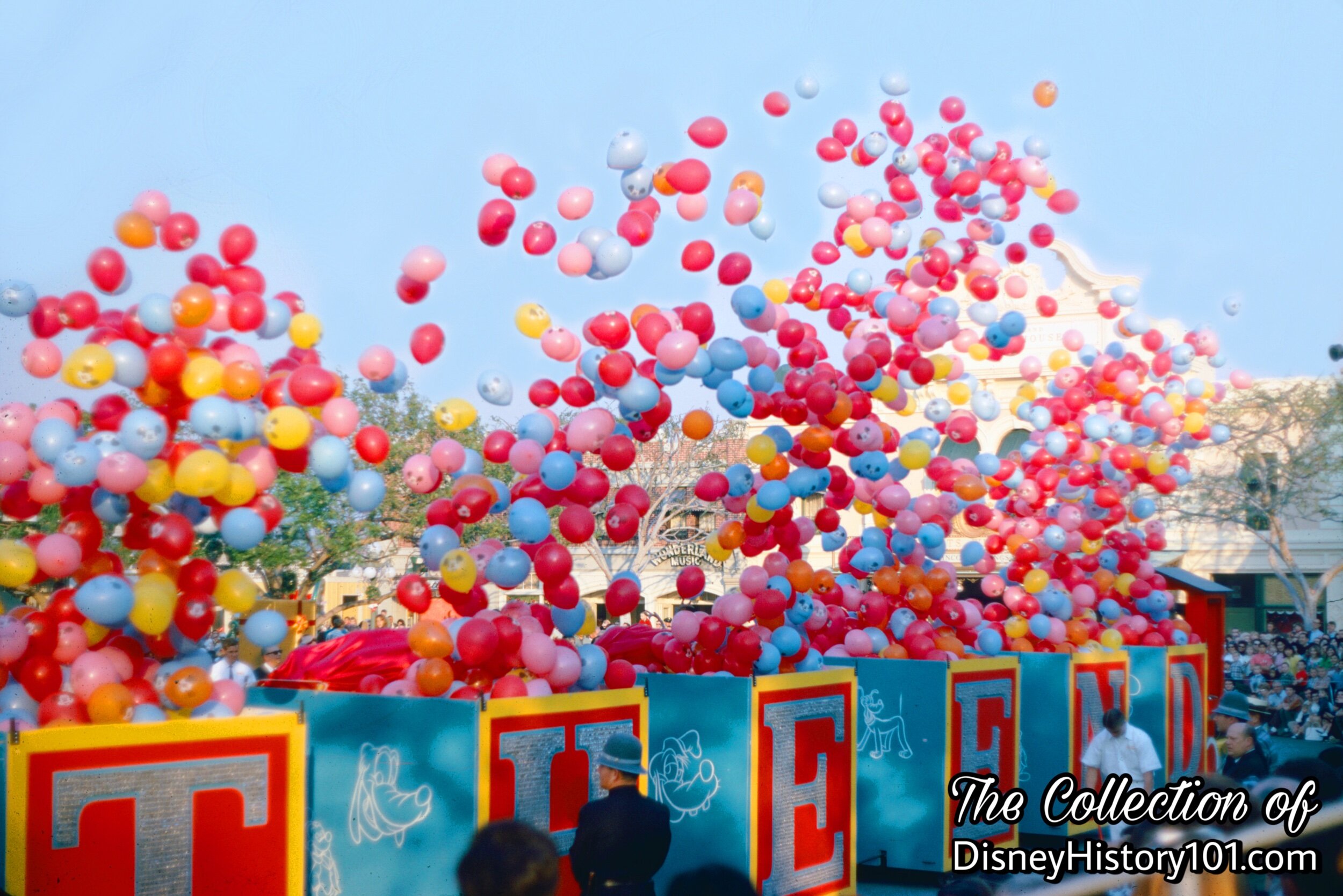
The Fantasy on Parade Blocks were fabricated by Bud Washo. At the right moment, the cue was given and balloons were released.


The “Royal Drumline” follows the leader of the band.
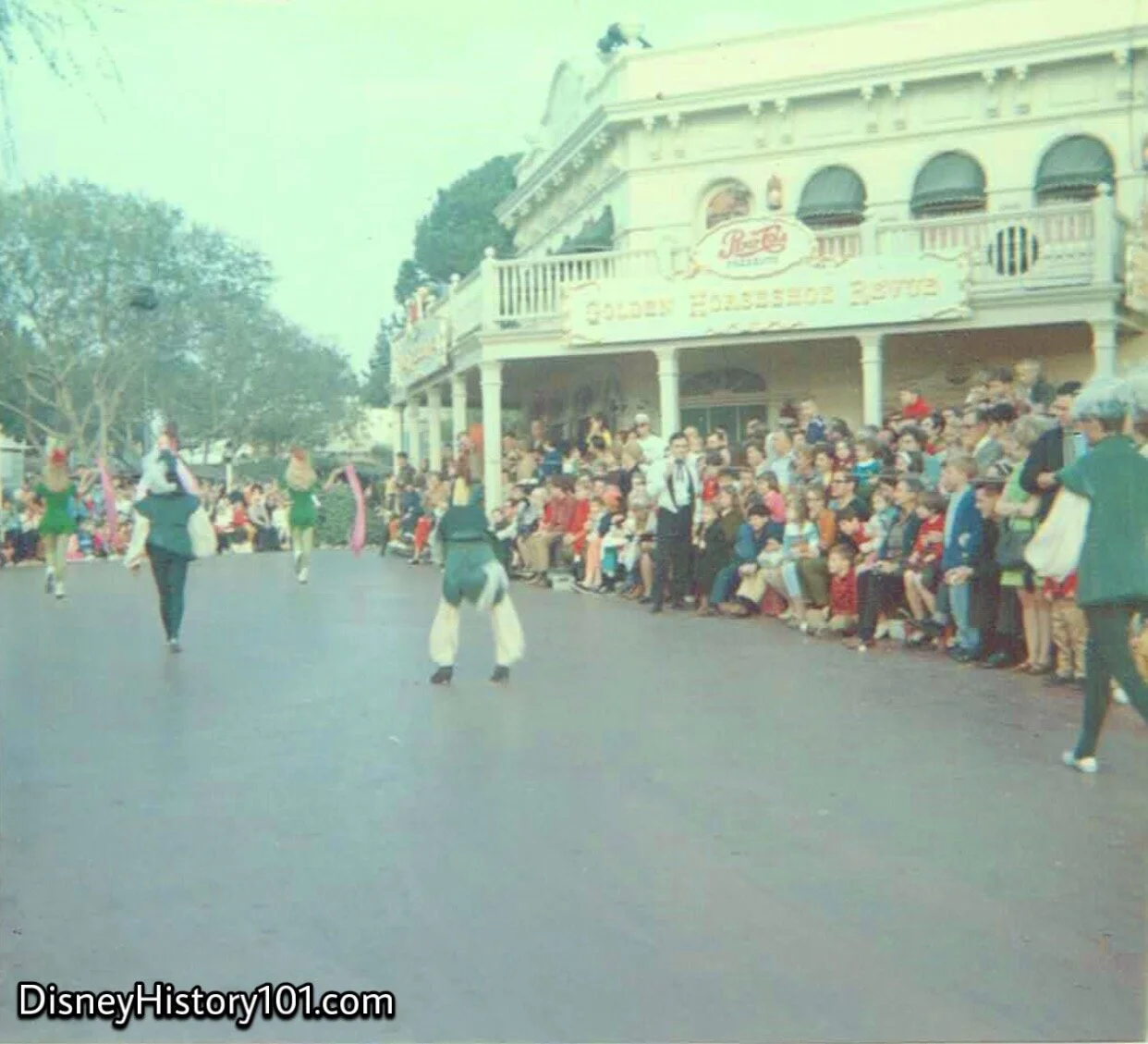

The head of the 28-foot “fire-breathing” Reluctant Dragon.


It looks like we’ve caught the “tail-end” of Pluto’s Dog Show unit. You may recall this memorable Fantasy on Parade tradition had true-life dog performers in it - including a dog walking another dog!

“For a little over a month I was a comedic/acrobatic matador in the Ferdinand the Bull unit Disneyland Christmas parade 1966. I'm the Matador on the left. I was 18. My teammate and fellow Matador [was] Mark Fessler on the right. We were members of the Anaheim High School gymnastics team...designated as Parade Aides.”
HOW DID STEVE LIVE A FANTASY (performing in a Disneyland Parade)? Steve explains :
“My brother Stan would become a permanent part-time [sweeper] for five years, earning his way through college from 1960 to 1965. [As for] myself, I became a sweeper in 1967, and my area was the new Tomorrowland Moon ride on swing shift. I did that, part time seasonal through 1968. I'd entered College in ‘66, and my brother Stan (about a month before Christmas), called me on the phone and said I should go down and talk to Chuck Boyjian (Supervisor of Janitorial). ‘He'll get you a job sweeping’. So I called personnel...went down there...filled out an application and had to see Chuck.
He told me that he had great respect for my brother, that he was one of the hardest workers, and since I was his brother he'd like to put me on...I could start during Christmas Vacation. That's when I told him that I was already going to be working the Christmas parade as a matador in the Bull Unit. And that's when he nearly exploded asking me, ‘You're not going to be spilling popcorn all around like Wally Boag in last year's parade are you?!’ And I kind of laughed and said, ‘No, that's not part of our routine.’ Apparently Wally played a matador in the previous parade (spilling popcorn as part of his act), but unfortunately Chuck's sweepers would have to...sweep it all up. The poor janitorial crew had enough just cleaning up after the guests, so Chuck was not too happy about Wally's adding to it.
However to me personally, it was kind of a boost to my ego to know that I was following in the footsteps of the ‘Clown Prince of Disneyland’, Wally Boag!”
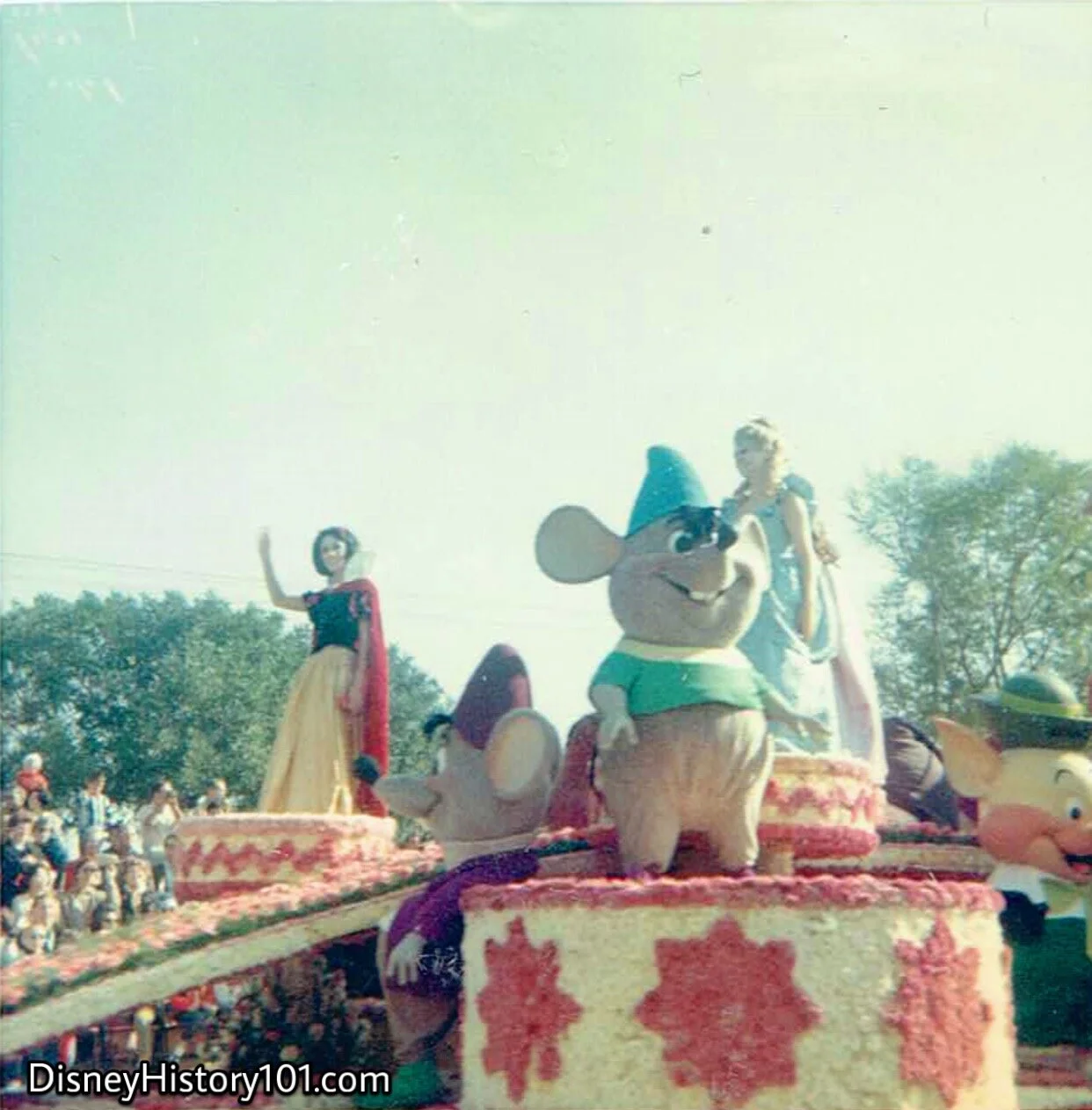

A close-up of the world’s longest (46-foot) multi-colored caterpillar, leading a butterfly ballet, to a lady bug saxophone quartet!


Many years later, the following letter was sent to the editors of Disneyland Line (January 31, 1980) :
“Dear Disneyland,
Happy Anniversary! My husband and I met during your 1969-1970 Christmas Parade. (I was Maid Marion and he was in the dragon) and we will be celebrating our seventh anniversary this February. We have two beautiful little girls and owe it all to ‘the Magic Kingdom.’ Thank you.”


Pluto’s Dog Show unit.

The Fantasia Unit was comprised of “Chinese Mushrooms”, colorful ballerina ostriches and ballerina hippos, and a mobile statue of Bacchus, which had appeared only a few years prior, in the Ice Capades production of Walt Disney’s Fantasia!
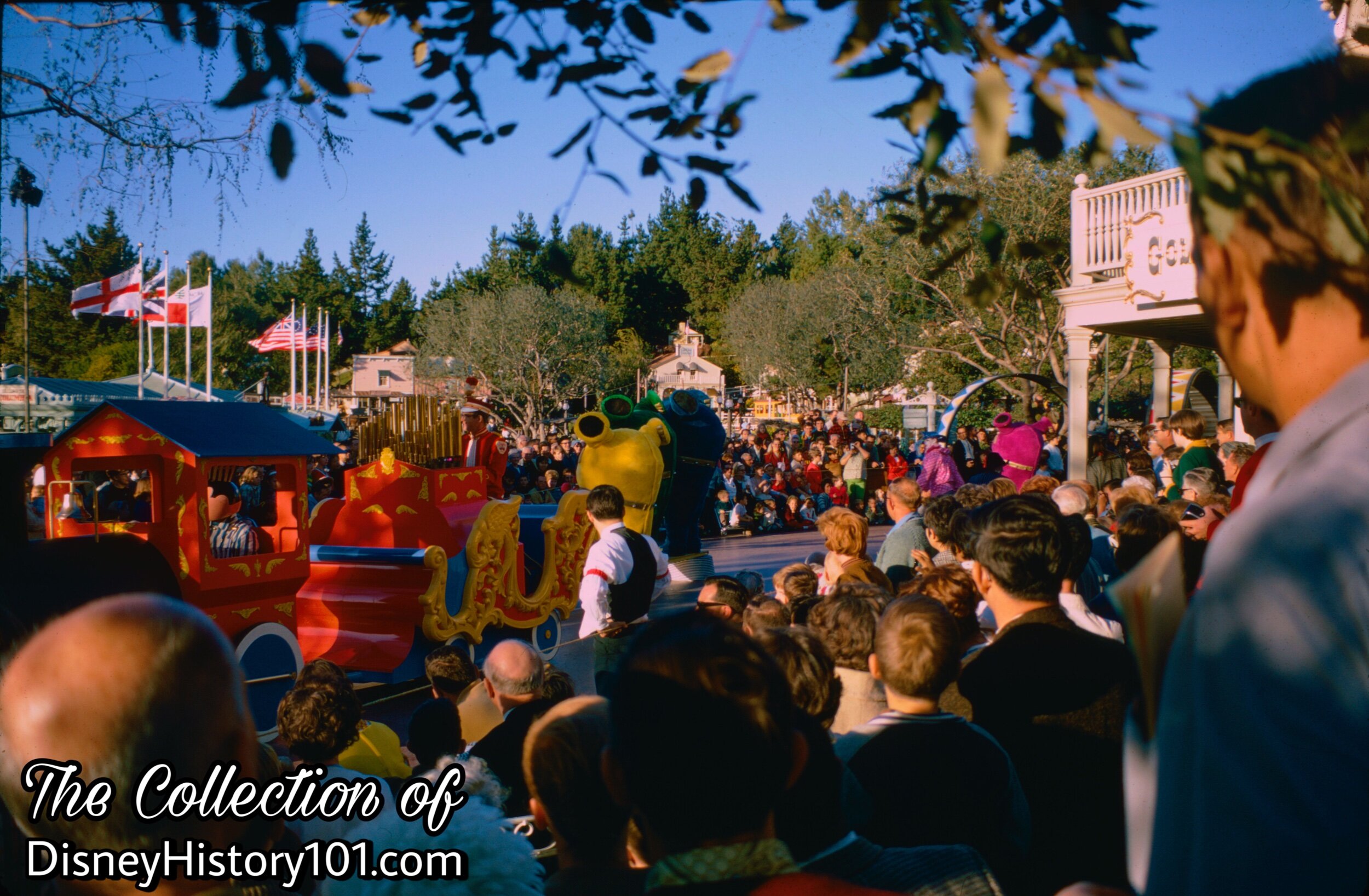

Bands played far enough at intervals between units, to help them keep step.

The Seven Dwarfs march to the tune of “Heigh Ho” as they make their way along the river front.


The Fantasyland Unit featured valiant knights riding steeds.

The world’s longest Caterpillar periodically stops along the route as beautiful Butterflies emerge, and dance to a ladybug saxophone quartet!

Goofy’s Jalopy (also known as “Cook’s Comedy Car”) would experience technical difficulties along the route. The act was so popular, that his son Jack would build a duplicate automobile, and continue the act and his father’s legacy (for more than four decades).


The stars of Pinocchio greet guests!


The Adventureland Unit featured live animals, including an adorable baby elephant.


“And here comes Captain Hook’s Pirate Ship!” Captain Hook gives the commands, “Fire Mr. Smee!” and “Shoot them down, Mr. Smee!” To which Mr. Smee responds, “Aye, aye, Captain!”
Atop the king-size” bed are Peter Pan, Michael, John, and Wendy.

The Wonderland Unit features those popular characters from Walt Disney’s 13th feature-length animated film, released back in 1951. These characters were recently seen at the New York World’s Fair of 1964-1965, where they welcomed and greeted new friends from all over the world, at the UNICEF Pavilion.

Alice, Mad Hatter and White Rabbit are followed by cards - a sixteen member all-girl drill team!

Most days, Alice and the Mad Hatter can be found chasing the White Rabbit through Fantasyland. Now, in Fantasy on Parade, a brigade of cards files down Frontierland’s main thoroughfare, part of the Wonderland Unit.

The Alice in Wonderland Unit begins with the march of the cards!

A procession of the “children of the world” begins, aptly titled the Small World Unit, with a small world of lands and cultures represented - from Asia to America!

One of the Thai “children of the world” makes her way down Main Street U.S.A.

Babes in Toyland Unit


Since the mid-1950s, Walt Disney Studios had worked with charitable organizations, like the “March of Dimes”, producing animated commercial campaigns in support of polio research. Following the Santa Claus Unit was the Casey Junior Unit (symbol of “Toys for Tots”).

Mr. Toad commandeered the automobile in the 1969 Fantasy on Parade, after Donald Duck and his nephews previously drove the vehicle (e.g. 1964).

During the 1970s, dress rehearsals were generally held in the morning, a day before the big Sneak Preview Opening of Fantasy on Parade. By the 1970s, Fantasy on Parade was still being held for just two weeks during the holiday season. For instance, Disneyland’s 1971 edition of Fantasy on Parade was held daily between December 18, 1971 to January 2, 1972. These parades were generally held twice daily (once at 2 pm and a second parade at 9 pm). The only exceptions were December 24th, 25th. 31st, and January 2nd, where holidays mandated a sole 2 pm performance (but no 9 pm parade).
Fantasy on Parade was so popular, that it inspired souvenirs like the hardcover “Fantasy on Parade” - a Golden Press collection of stories featuring characters like Lambert the Sheepish Lion, the Reluctant Dragon, Little Hiawatha, and even Walt Disney’s Zorro!

Don remembers, “We had to sleep the entire parade. One of the hardest gigs we ever had at Disneyland.”
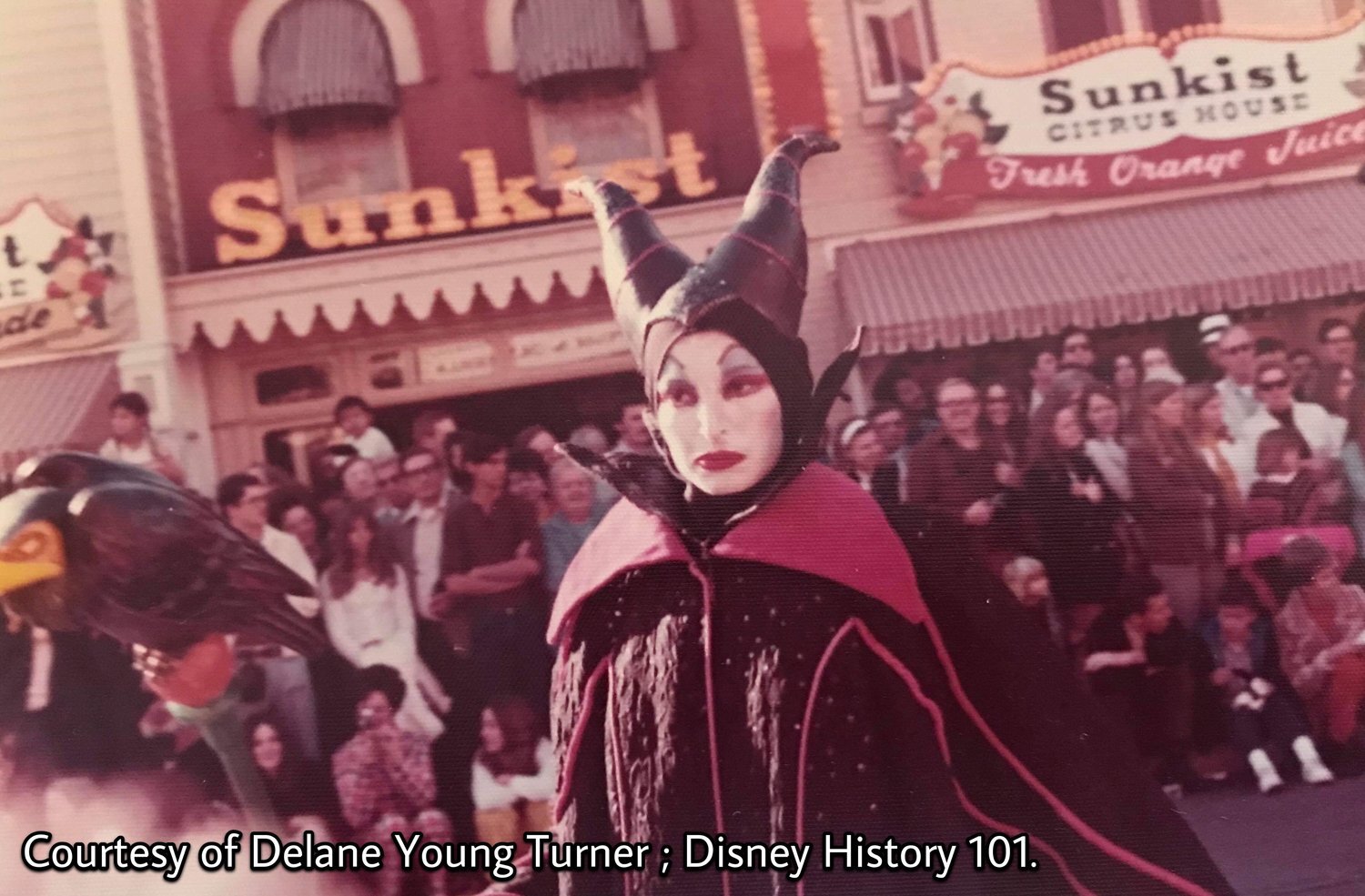
“To be ‘with it’ is a show term. It means getting in the mood of the show. This is no place for a Grouchy Gus... a Sad Sam or a Harried Harriet in our cast. Disneyland is a fun show… not a sad story.” Unless your name is Maleficent. Maleficent the Queen was part of the Sleeping Beauty Unit (Division I of Disneyland’s Fantasy on Parade line up during 1971).

Scrooge Mc Duck was also part of Disneyland’s Fantasy on Parade Division I during the 1970s. Before the Money Truck, Scrooge drove the Money Motorcycle!
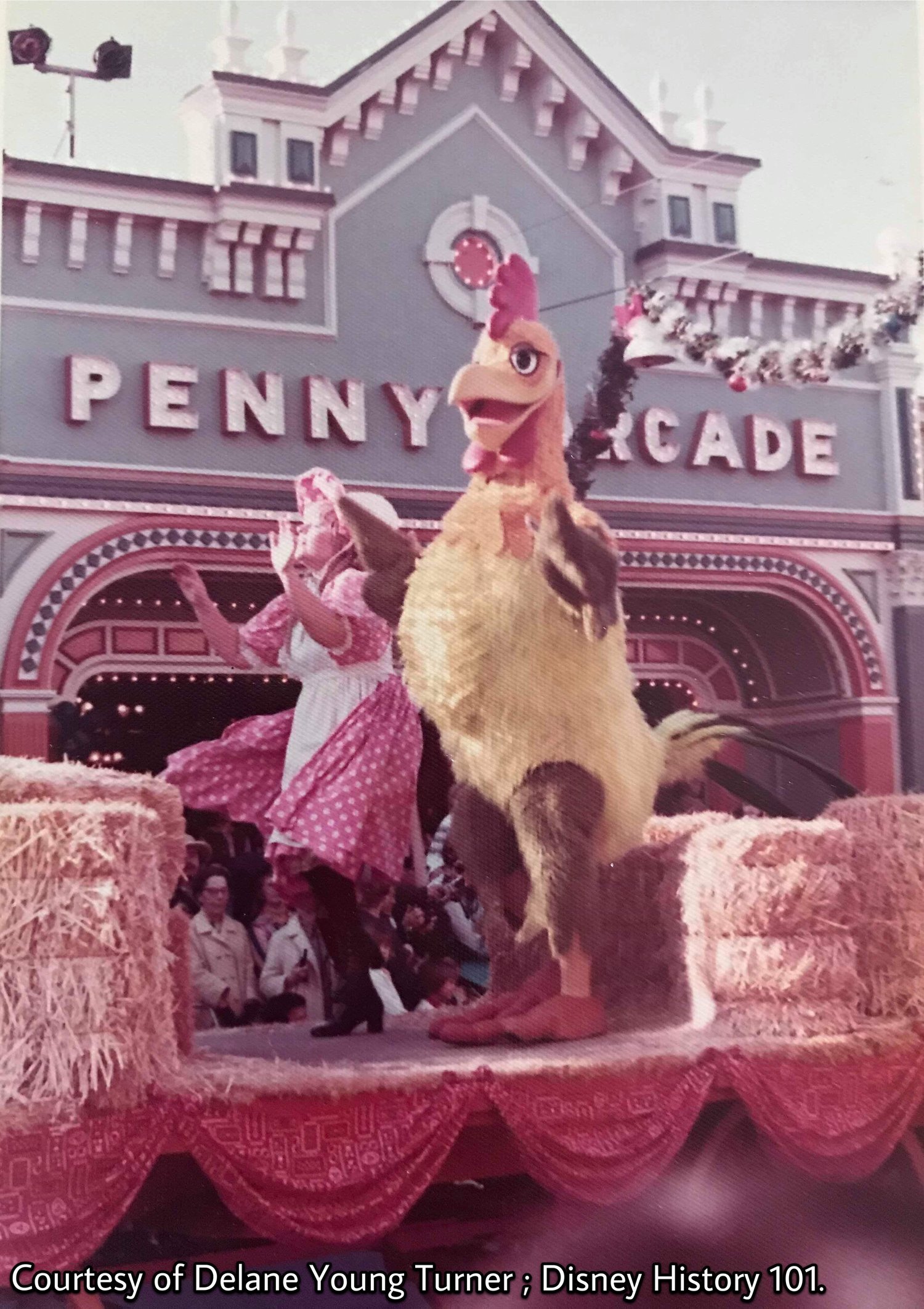
In 1965, the “Fat Lady” costume, “Scarecrow Band” costumes, and hat for the “Sway-Back Horse” were originally provided by Easton, while the “Two Hens and Rooster” costumes were originally provided by B. Wolf. Bud Washo manufactured the “Scarecrow Band” heads. The “Farm Cart” was originally provided by Gene Holter.

Don Payne recalls : “I was cast as Clara Cluck in Fantasy on Parade. We had a choreographed routine sitting on the wagon. A woman was cast as the Farmer’s Daughter. There were girls in orange tights wearing fiberglass eggs, and there were roosters too. A band followed us and we would stop and do a routine, then move down the route. Back then it was more about interacting with guests. We would shakes hands with people, take pictures and pose with guests.
One time, Walt White smuggled eggs inside his costume. ‘Henrietta’ would stop, squat, and then she would ‘lay’ an egg on Main Street. The Rooster would stop, look at the egg, and then step on it! It was not part of the choreography, and wasn’t safe. But people laughed, and it got good results!”


Small “in scale” characters were often a part of holiday parades - Donald’s nephews briefly played the part of “back seat driver”, Br’er Fox clutched the likes of a much smaller Br’er Rabbit in search of a briar patch to toss him into, and Eeyore tows Piglet in a wagon (pictured).


Mickey dons his sorcerer’s apprentice outfit he first wore in Fantasia (released November 13, 1940) as he leads a group of broomsticks down the Fantasy on Parade route (December 21 thru January 1)! It’s all part of the “50 Happy Years of Family Entertainment” celebration at Disneyland!

Fantasy on Parade

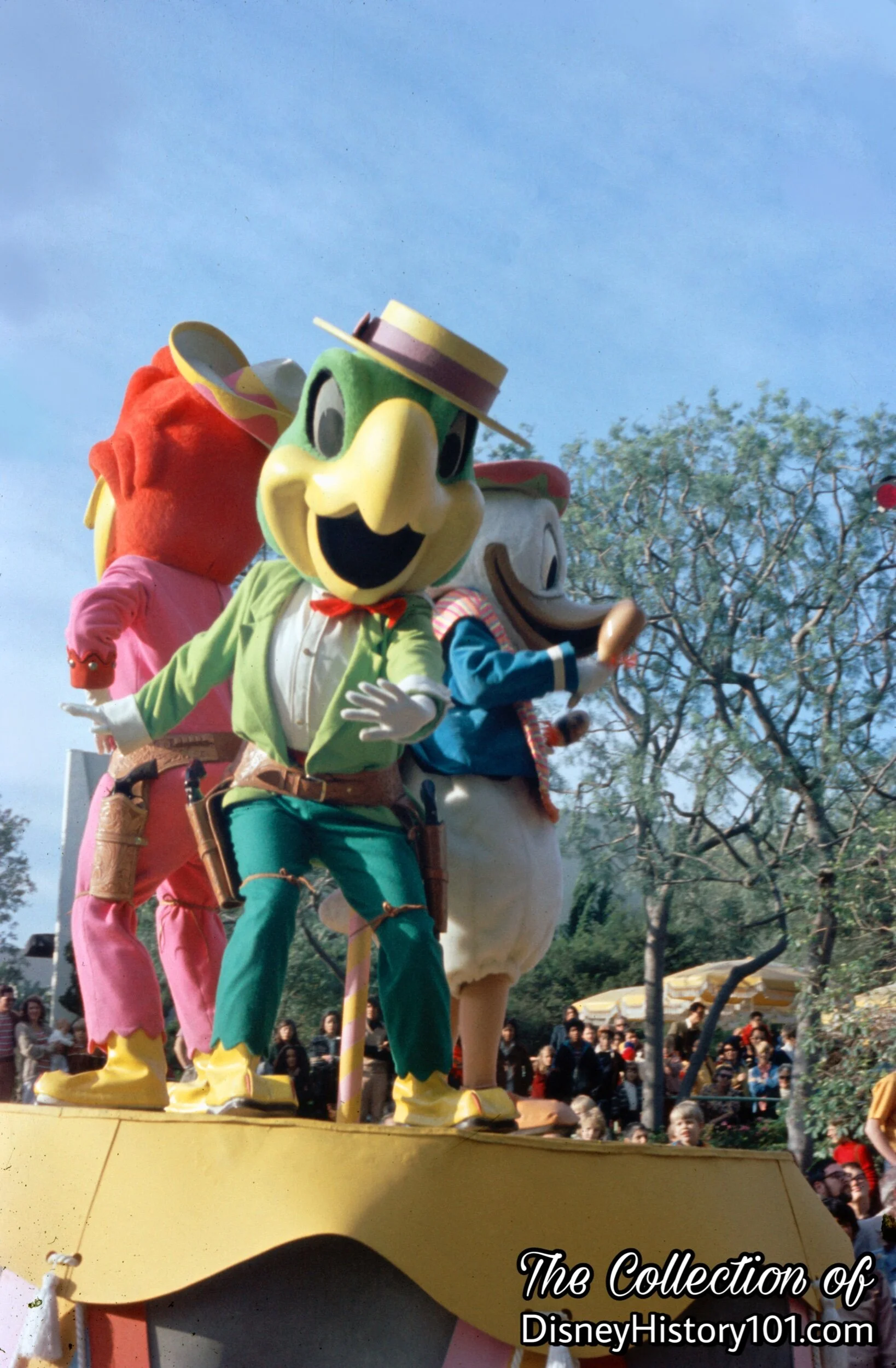

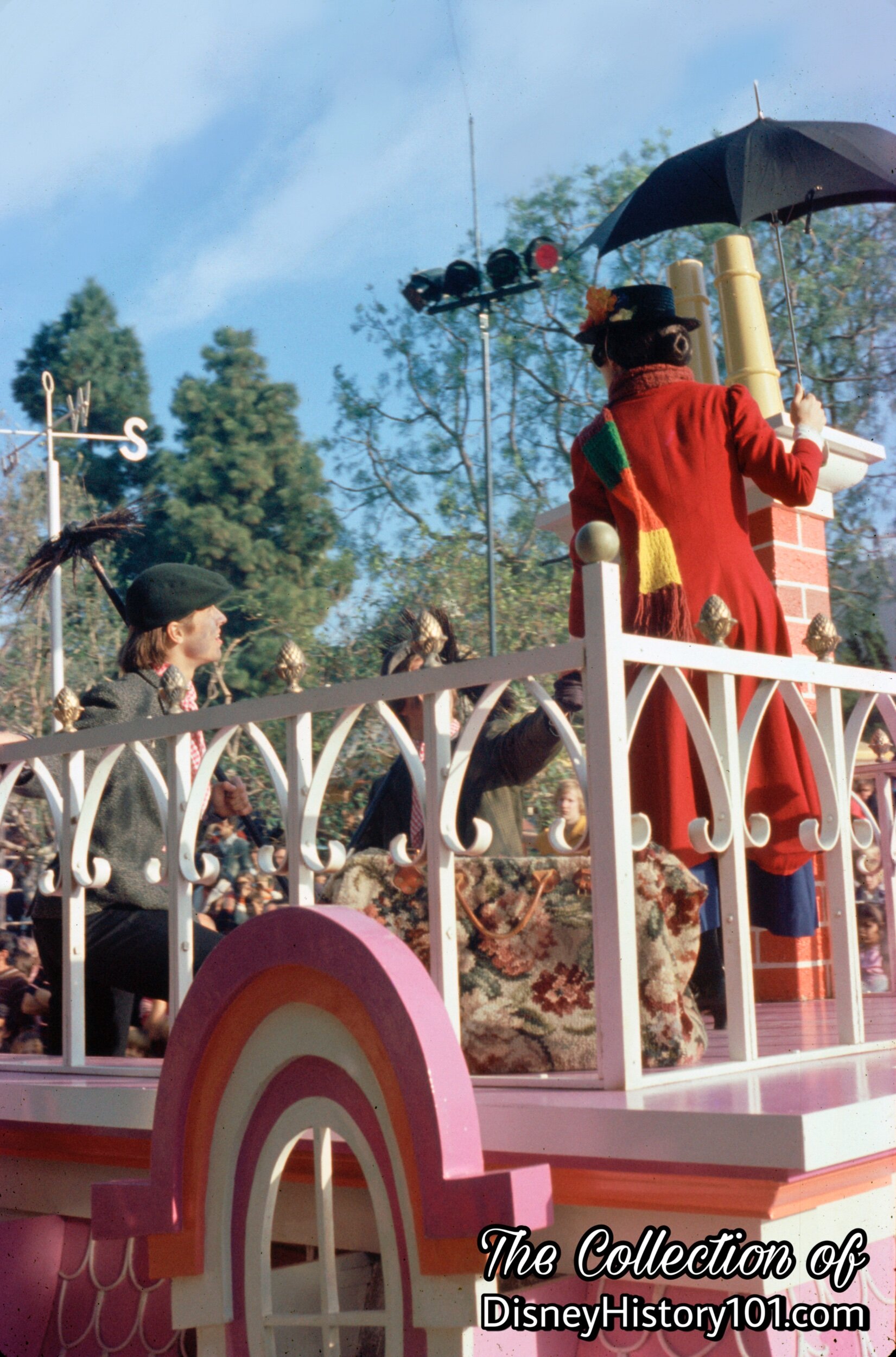


“I’m the shaggiest candidate you ever saw, and I’m runnin’ for the D.A.” during Fantasy on Parade! Long after his theatrical debut (on March 19, 1959) and theatrical rerelease (in 1967), Wilby Daniels takes advantage of the holiday parade, to campaign for District Attorney.


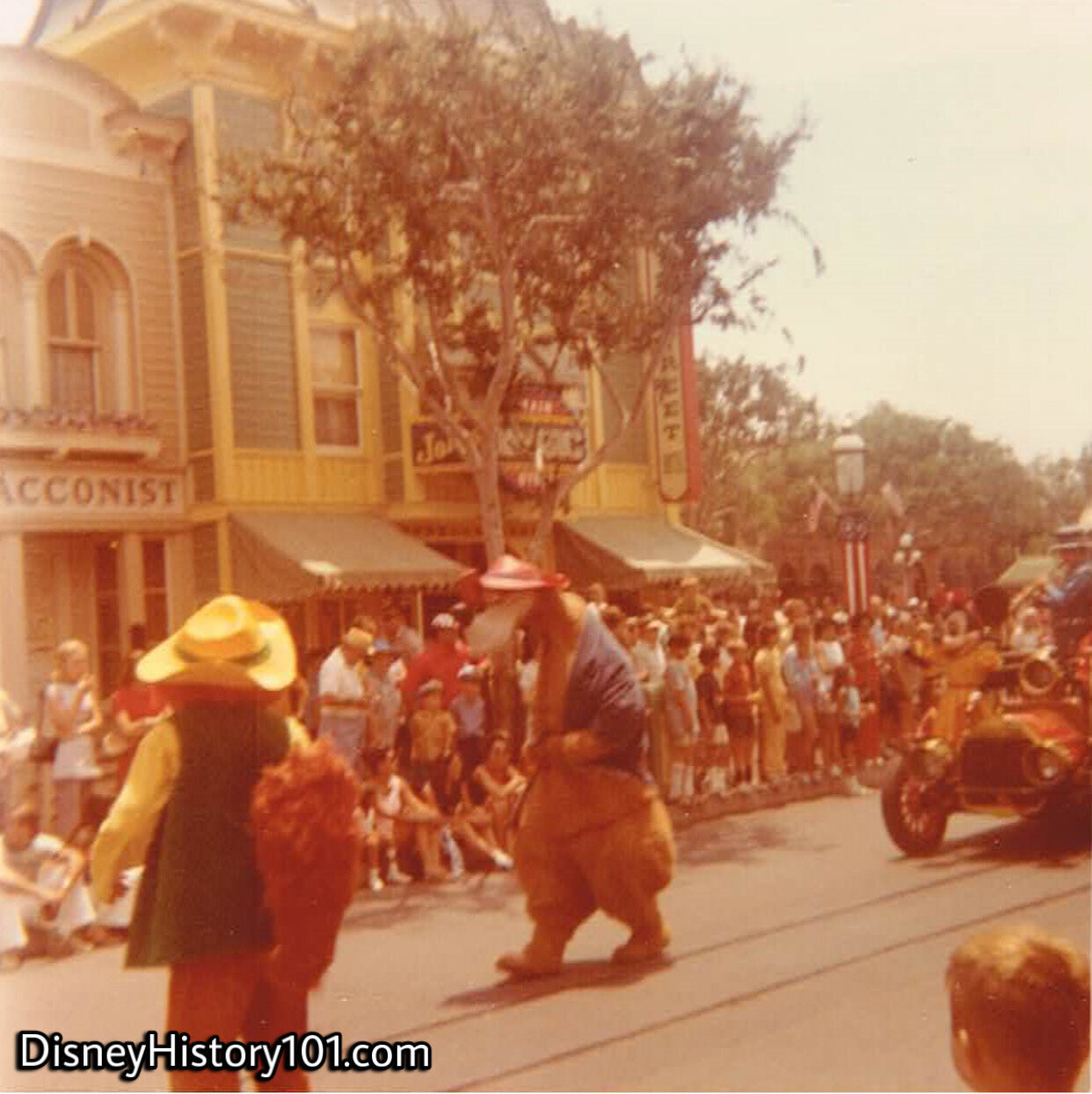


The usual cast of characters returns, but you’ll also note the inclusion of the Snow People (which debuted in 1982).


In this official Disneyland publicity photograph (contemporaneous with the “50 Happy Years of Family Entertainment” campaign, “Mr. and Mrs. Snowman visit Disneyland daily between December 21 and January 1 during the Park’s ‘Fantasy on Parade’. The are joined by hundreds of friends, including numerous characters from many Walt Disney film classics, as they promenade through the center of Disneyland.”

“Are you ready for a New Years ‘Mad Tea Party’?…Look who’s in those tea pots! The Cheshire Cat! Must be Catnip Tea! And there’s ‘Door Mouse’! It IS Catnip Tea!

By 1982, the Butterfly Ballet Unit would still perform, sans saxophone-playing insects and “the World’s Largest Caterpillar”.


Prince John greets his adoring public from his royal carriage!

To put this parade unit in perspective, Walt Disney’s Song of the South was first released 36 years earlier, on November 12th, 1946. Since then, the film had been rereleased theatrically in 1972 (for the 50th anniversary of Walt Disney Productions), in 1973 (as a double feature with the Aristocats), during the 1977 “Fall Family Film Festival” at Disneyland (from November 14 - 17, 1977), and most recently theatrically released in 1980 (coinciding with the 100th anniversary of Joel Chandler Harris’ writings). Disneyland Cast Members had the opportunity to watch it again, at the Disneyland Fall Family Film Festival during November of 1980.
Now (by the winter of 1982), the cast and story of Song of the South was fresh and resonating in the minds and hearts of several generations of children, and still beloved (perhaps) by many of the children who had seen the film during its first theatrical release. Here, in Fantasy on Parade, Uncle Remus waved to crowds from a horse-drawn buggy, and guests waved back to the storyteller!
Four years later (on November 21st, 1986), Song of the South returned to “theaters everywhere.” Three years after that, it was decided to attempt to further preserve the unforgettable music and tone of Uncle Remus’ fables of Br’er Rabbit, Br’er Bear, and Br’er Fox (as portrayed in the 1946 release) in a new Disneyland adventure! Splash Mountain would would open to the public on June 17th, 1989! Why was Song of the South (a Walt Disney Production more than 40-years-old by this time) selected as the theme of a new Disneyland attraction. Disneyland LINE (Vol.18, No.34 ; published August 21, 1986) provided the answer this way : “All our films are considered as possible attraction themes. But money will not be committed until the film has proven to be popular over an extended period of time.” Considering the box office receipts from the re-releases (in recent years), and merchandise sales, the characters and story of Song of the South still resonated with a wide array of demographics, and would prove a viable and successful theme for Splash Mountain at Disneyland and other Disney Parks!

“Looks like the Wicked Witch is giving sleep-apples away for presents this year!” A voice from the float invites you to “have an apple, dearie? They’re good for you.”

“Hold onto your hounds kids! Here comes that mean ol’ Dogcatcher, ‘Peg-Leg Pete! And he’s after our playful pal Pluto!…Hey, Pete! Your jalopy jailbirds have flown the coop! Hey, Pluto! With THESE guys you could make a fortune in the flea market! But you’d have to start from scratch!”
As a “Barking Reminder”, we must inform you that “pets are not permitted in the Park and should not be left in your vehicle. Kennels, are located to the right of the Main Entrance Ticket Booths. They offer individual enclosures and food for a nominal fee for the day.”

A form of this float appeared in the Mickey’s Boo-To-You Halloween Parade in 2023.

The Disneyland 25th Anniversary floats appeared in Fantasy on Parade during 1980. The Jungle Book float featured a swinging’ ensemble of jungle guides!

A Pumpkin Carriage (a different one) first appeared in the Opening Day Parade.


Make way for the Reluctant Dragon!


The first incarnations of those two-ton ballerinas (in a way that would probably make Ken O’Connor smile) - “the Hefty Hippos” - have been a feature of Disneyland parades as early as 1962. The 1957 Ice Capades stars can briefly be seen (wearing blue tutus and slippers) in a Fantasia-inspired unit during Disneyland Around the Seasons’ coverage of Fantasy on Parade 1965 on Walt Disney’s Wonderful World of Color. Now, these second incarnations of the performers, dance down Main Street U.S.A.

As usual Disneyland tradition, the brigade of Toy Soldiers also appeared!

“Twelve of King Arthur’s knights canter past…” as they did during the “Parade of Toys” in 1961, (according to “Jack and Jill” magazine, published December of 1961).


Music for the Toreador and Bull Unit was provided by a Small Mariachi Band.


As a “sidelight”, the Scarecrow Hay Cart was initially designed by Dahlquist with the capability of storing amplifiers. Once the design was approved, a Hay Cart was purchased with the help of resident equine specialist - Owen Pope.


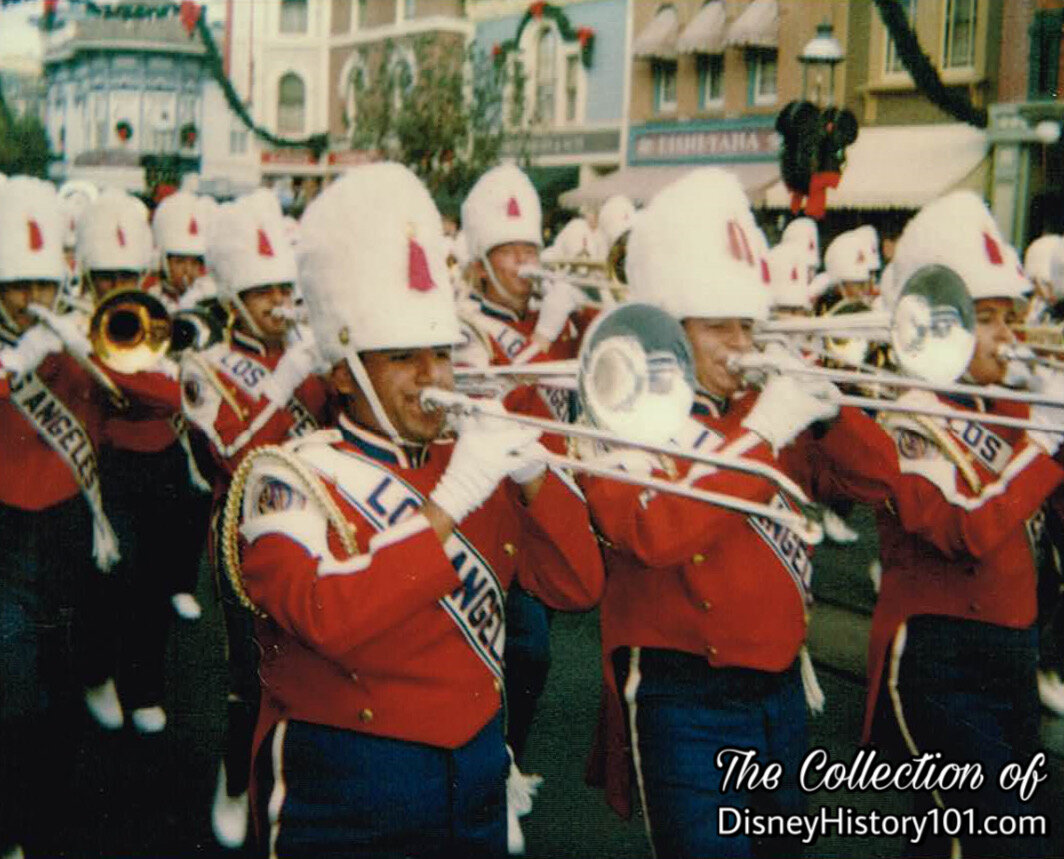


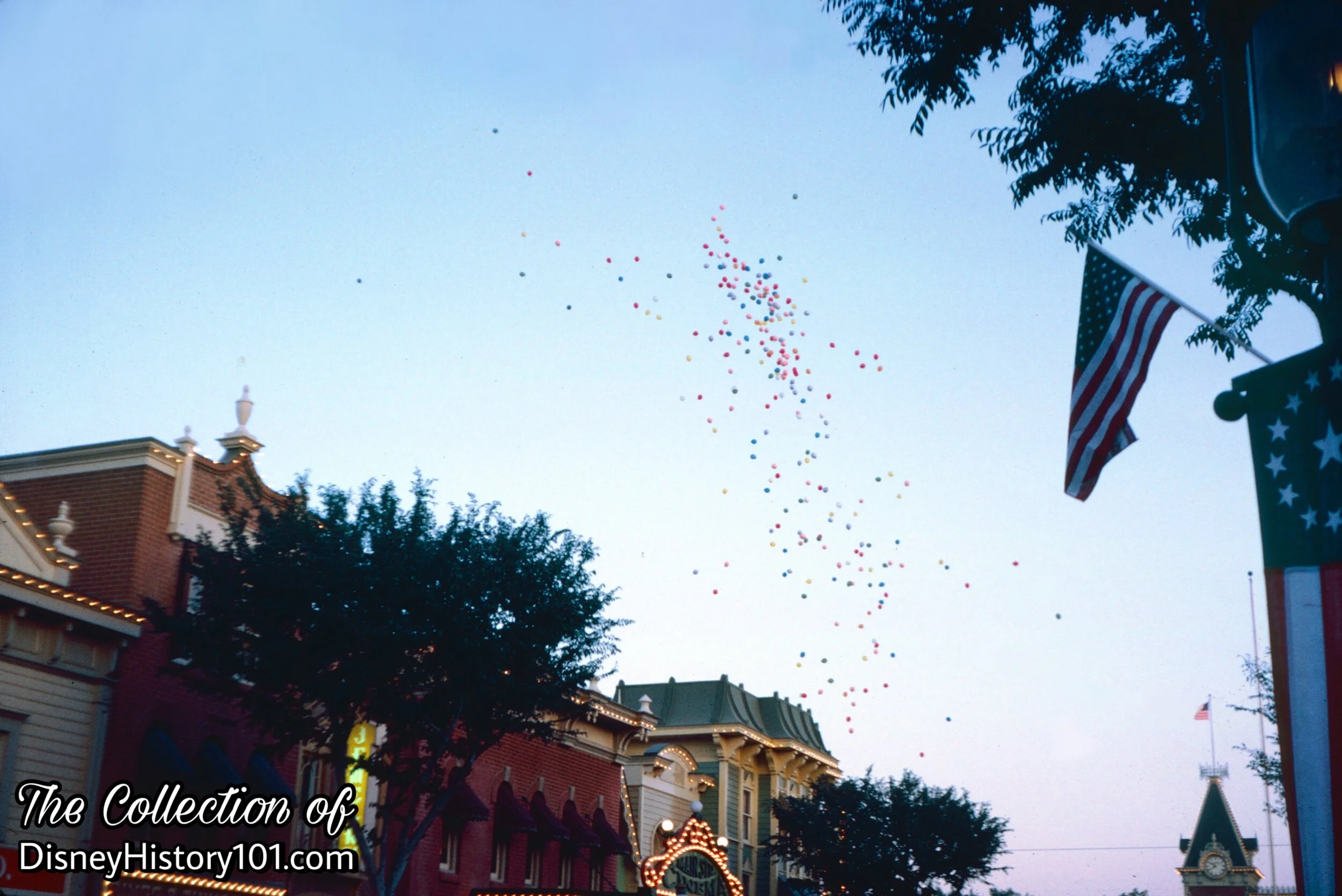


The wacky, balancing, Playful Pink Elephant first debuted in Fantasy on Parade, 1966.

The official Flag of Disneyland, which was flown over Disneyland City Hall, the Main Street Station, Guest Relations, the Disneyland Fire Department, and even “Big Bass Drum” in the world. A big bass drum would soon appear in the Walt Disney World Opening Day Extravaganza Parade.


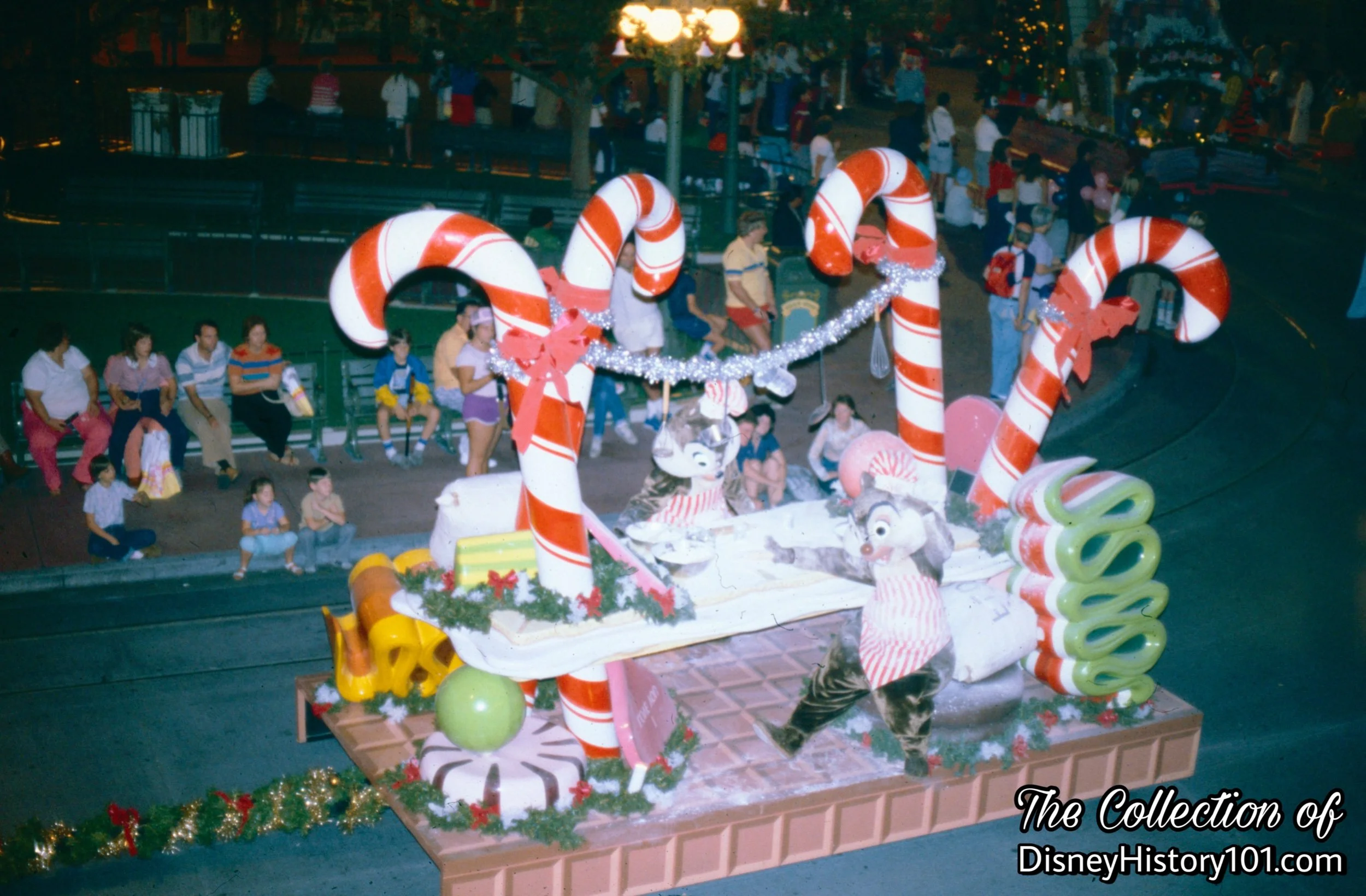

Winter season holiday parade tradition would continue with “La Parade de Noël.”
HOLIDAYLAND
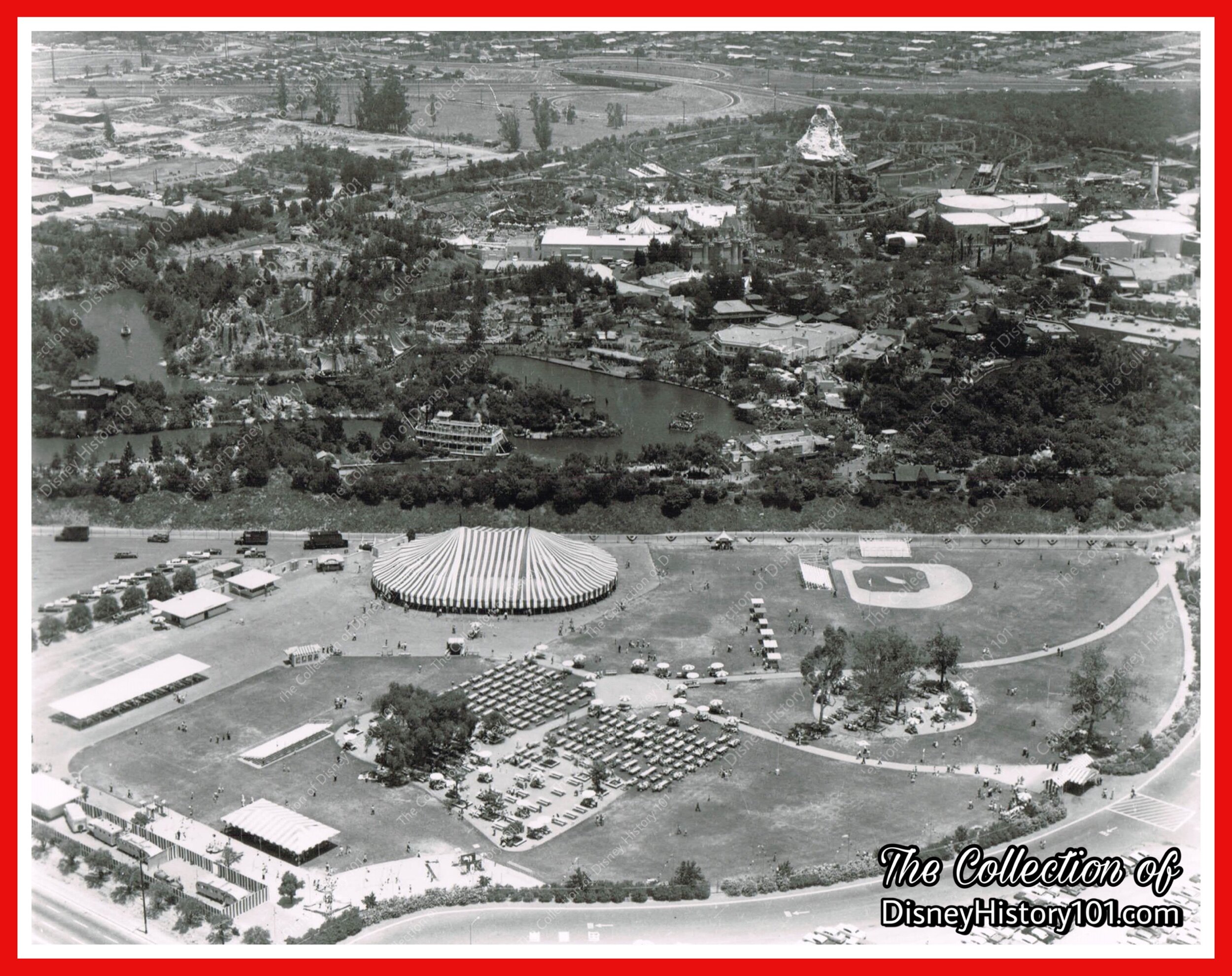
Walt Disney, on the eve of Disneyland’s first day of operation, promised that “Disneyland will never be completed. It will continue to grow, to add new things, as long as there is imagination left in the world.” A year later (in 1956), and as Disneyland was ever-expanding, many ideas would be submitted before Walt Disney. Some ground shaking concepts (like George Whitney’s “Pompeii Attraction”) would never see the light of day. But many other Disneyland attractions would debut during 1957, and some of these would endure (i.e. the Sleeping Beauty Castle walk-through exhibit, the Monsanto House of Tomorrow). Still, others would unfortunately be short-lived (i.e. the Viewliner Train of Tomorrow). Now, we invite you to explore what is undeniably Disneyland’s least photographed (and least understood land), and what has even been called a “lost land” of Disneyland. “Please, step this way” as we embark on our tour of. . .
Since the beginning, Walt believed that “people need play as much as they need toil,” as related to Wisdom magazine, December 1959. It isn’t any wonder that the earliest drawings of a Mickey Mouse Park (to be proposed for an 11-acre triangular plot near Buena Vista and Riverside Drive in the City of Burbank, California) featured details of a “picnic area” and an adjacent “carnival”. As Disneyland’s development continued throughout 1953, some Disneyland concept drawings and documents like the “Proposed Diagramatic Layout of Disneyland” (Marvin A. Davis’ plot plan, produced for WED Enterprises, by September 12, 1953) included both Holiday Park (Fantasyland and the World of Tomorrow) and Recreation Land (located in an area between “Frontier Land” and “Fantasy Land.” As we will see, the features contained within the concepts of these seemed proposed attractions seem to have heavily contributed to the outcome of the future Holidayland!
According to the October 8, 1953 Disneyland Prospectus (prepared by Bill Walsh of WED Enterprises for Disneyland Inc.), Recreation Land was to be “A Leisure Land - a shady park set aside for reservations by clubs, schools, or other groups for picnic and special outings. A catering service supplies special foods or lunch-in-a-basket. There is a little old-fashioned bandstand and a pavilion for dancing and entertainment and an area for games.” According to the same documents, Holiday Land was to be “a showplace of special attractions that change with the seasons. Its theme is as current as the calendar. Its decorations, entertainment, or exhibits follow the flowers in Spring, with the Flower Festival…the Mardi Gras and special Easter activities. Mother’s day…St. Valentines Day…Boy Scout Week. Summer brings the Fourth of July…and Circus Time…with a Circus Parade down Main Street…and under the big top, a one-ring circus with special acts from all over the world.”
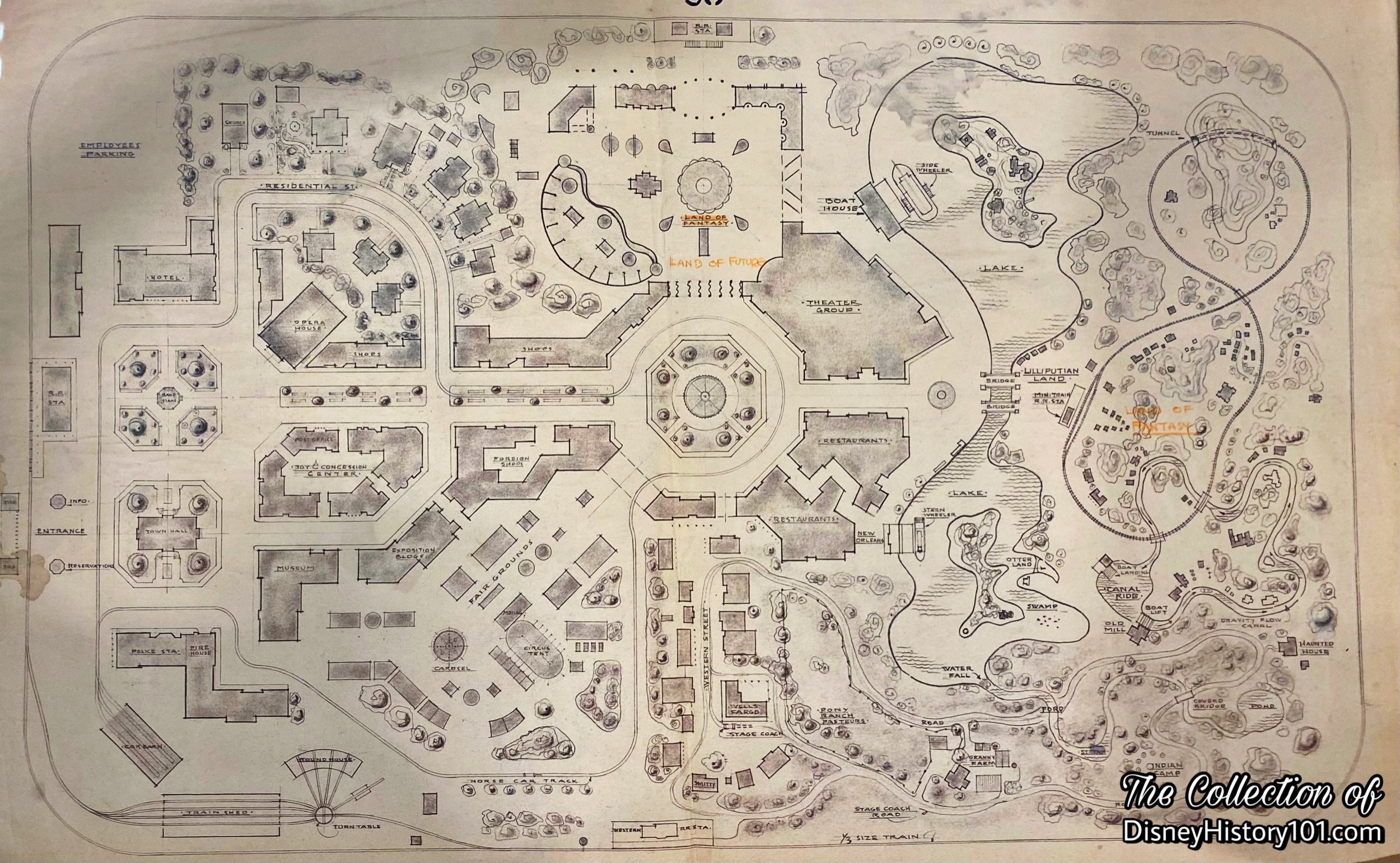
The “Schematic Aerial View of Disneyland” (produced by Herb Ryman) has gained some notoriety when few have come to auction in recent years, yet it was first published in periodicals like Popular Mechanics, December, 1954. This and a portfolio of colored sketches by Herb Ryman, Bruce Bushman, Harper Goff, and others was prepared for Dick Irvine and Nat Winecoff to take back East to sell the Disneyland concept to prospective licensees.
Herb’s drawings (as well as their photostat and hand-traced copies) continued to feature a land of circus tents and wagons, and another area called Holiday Park, which was to be located West of Main Street U.S.A., south of a “Frontier Country.” It seems that these were to be two separate areas accessed from the Central Plaza of Disneyland. A short time after this drawing (pictured below) was created, what has been called the 1954 “Disneyland prospectus” by some, continued to mention the inclusion of picnic areas at Disneyland.
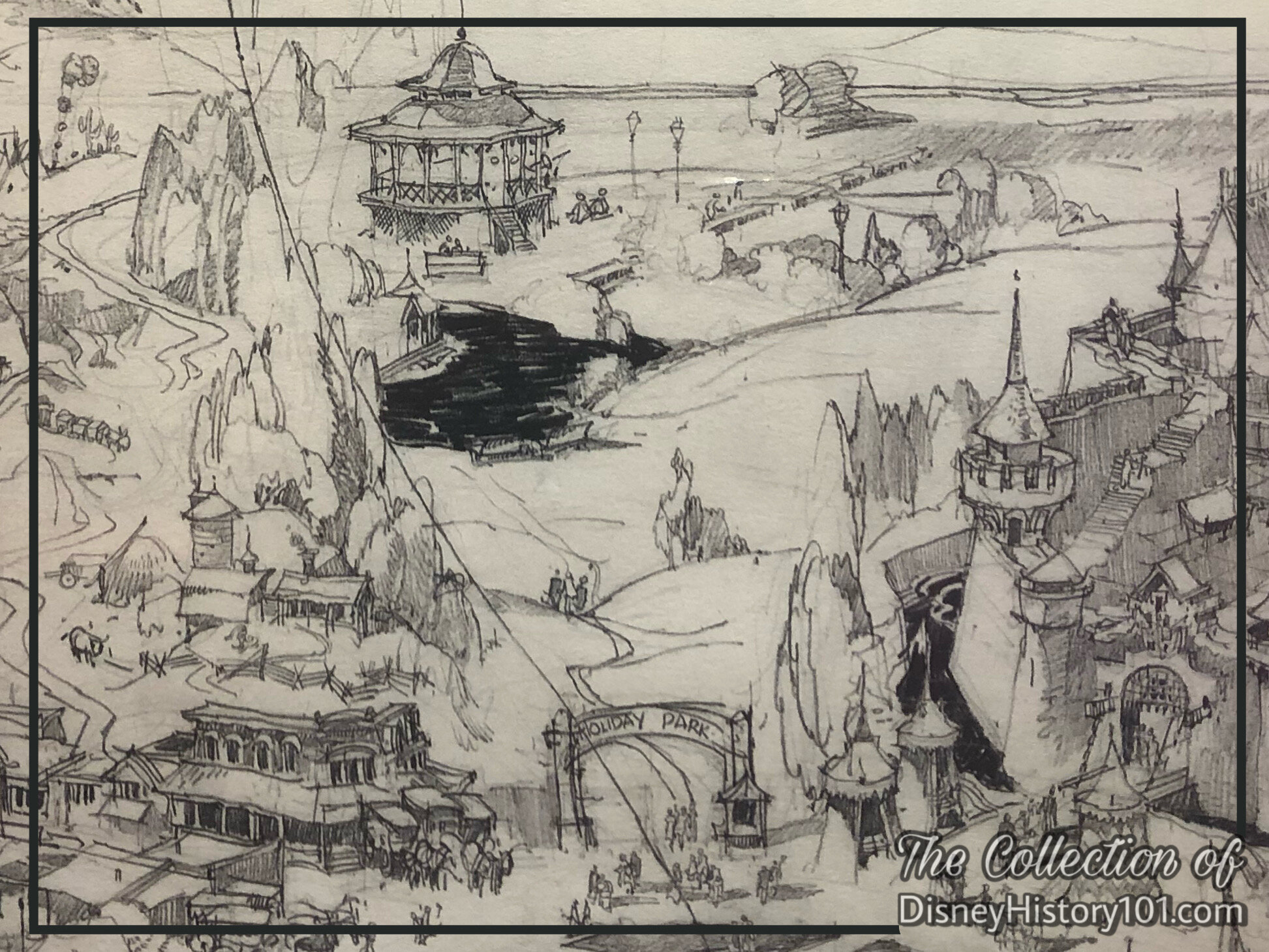
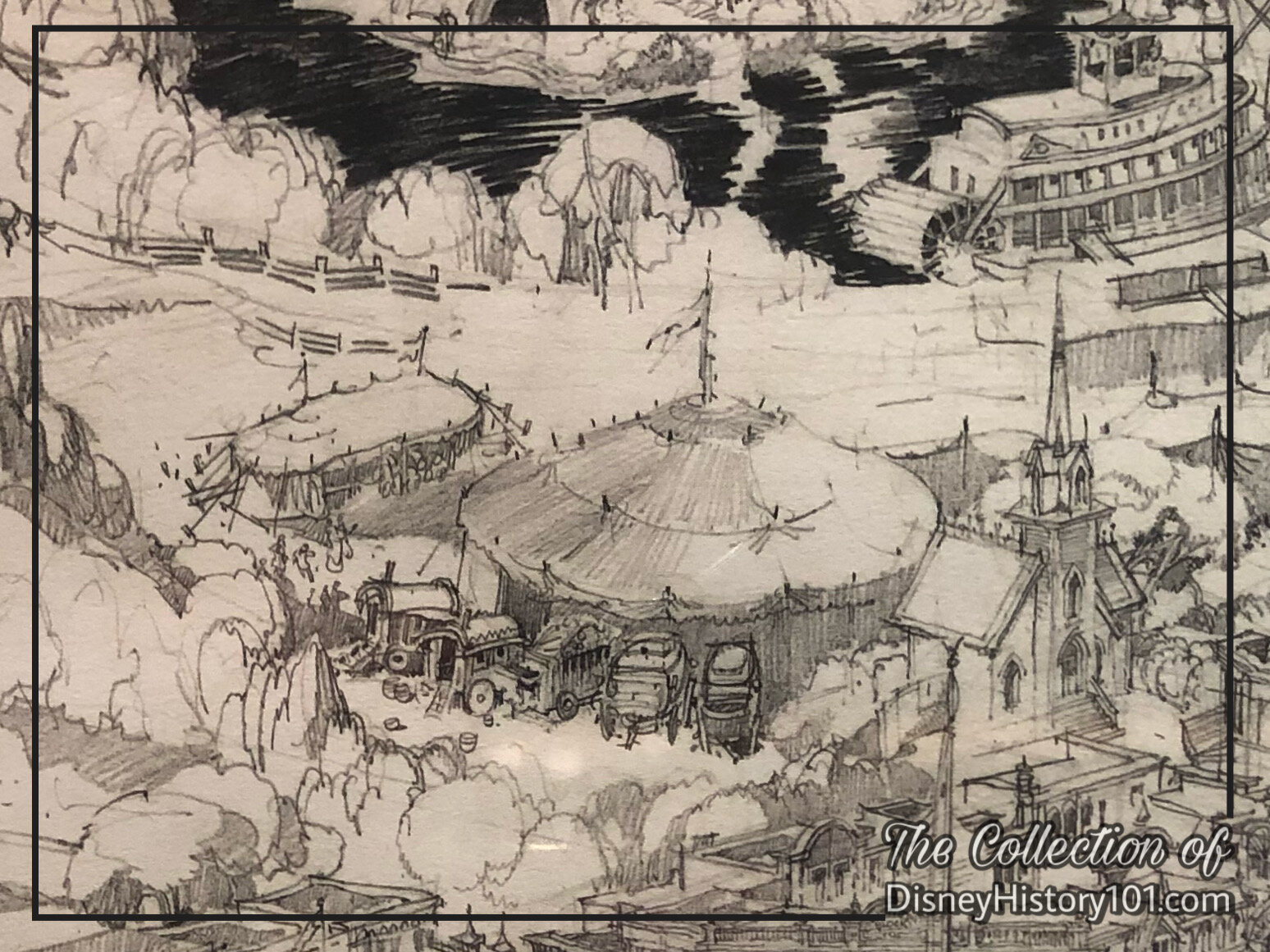
Fast forward to August of 1954 - during the “excavation” phase of Disneyland - when a good portion of the 350,000 cubic yards of dirt (most of it excavated for the waterways) began to be piled into the 15-foot-high berm that would surround Disneyland. The rest of the dirt was formed into a “mountain” (now realized on the North-East side of the Park) from which guests could hike and survey a spectacular panoramic view of the Park from benches. The area was home to one original gasoline-powered motorized pump left on the parcel of land that would become Holiday Park (used occasionally as a booster when water pressure dropped). This entire area was called Holiday Hill (or, “Holiday Park”, as seen in Marvin Aubrey Davis’ Plot Plan drawing below)!
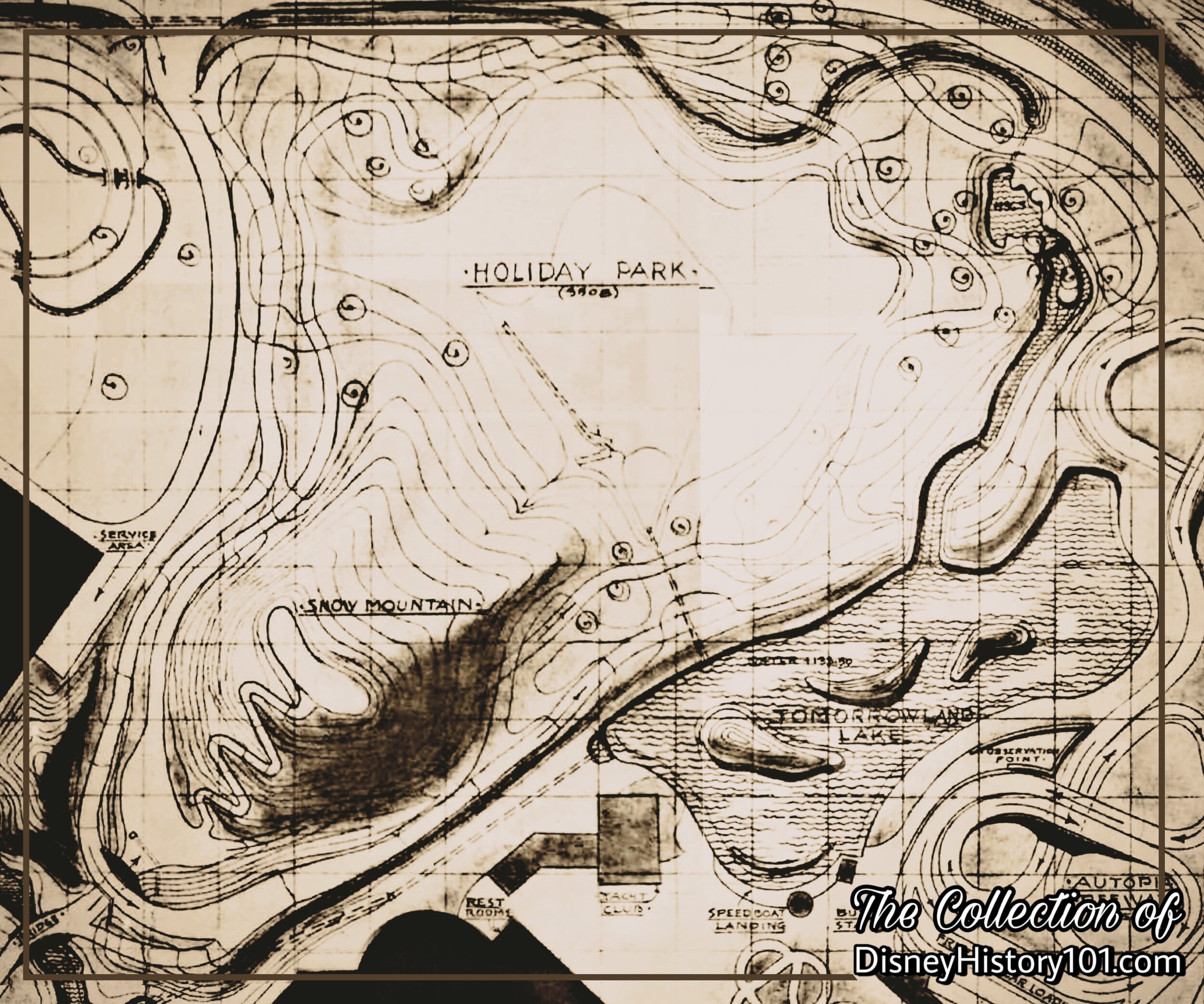
Many ambitious plans for Holiday Hill surfaced. One of the earliest (c.1953) concepts for “Holiday Land” described what it would look like in the winter, mentioning an “ice skating rink, sleigh rides,” a “Christmas Tree Lane that leads to Santa’s home in the North Pole,” and “Bob-Sled Hill with real snow.” Some of these ideas were still being considered by 1955, and this is testified to, by the words of Walt’s friend (and Hollywood columnist) Hedda Hopper. In her “Looking at Hollywood” column (published May 22, 1955), Hedda divulges “One hill is covered with pines, and he’ll have a snow machine working full time, so that kids in this area who’ve never had a sleigh ride can rent a sled and sail down hill.” While the snow never materialized, Skyway Cabins (and Guests on winding footpaths) would reach their highest point in Disneyland from the top of Holiday Hill. In fact, the Skyway’s tallest battery-bearing pylon would be placed here a year later. This tree-topped hill rose (to the east) over Fantasyland (as seen in some aerial footage of “Disneyland, U.S.A.” a “People and Places” feature film, released in the U.S. on December 20, 1956 through Buena Vista Film Distribution Company).
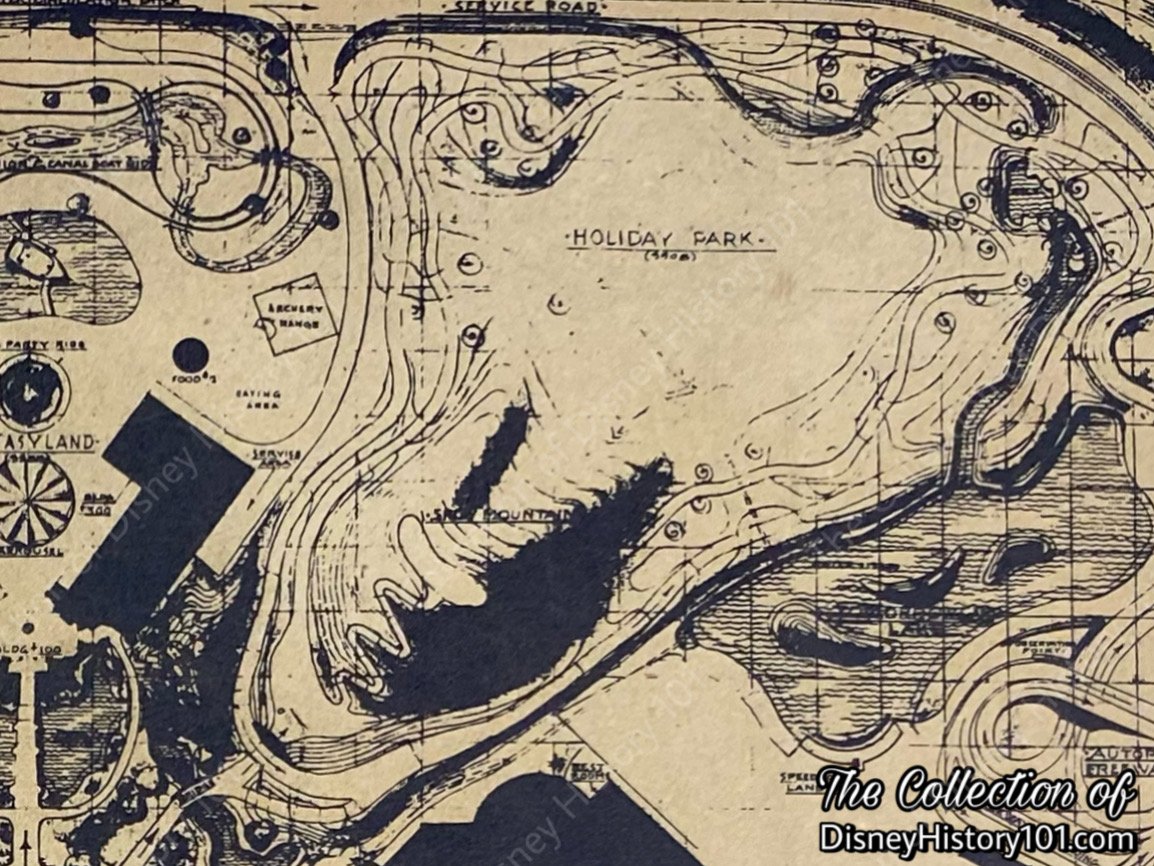
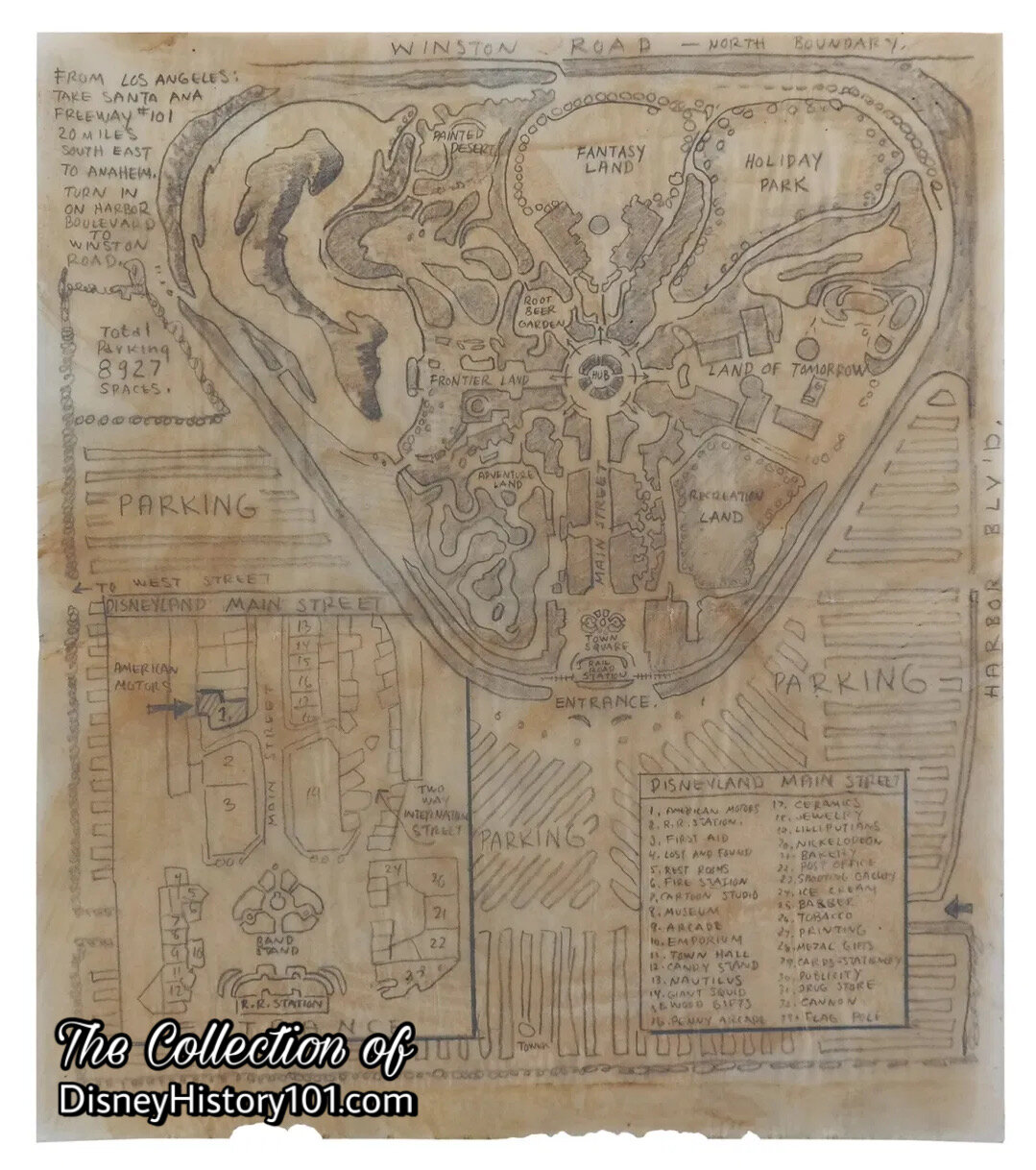
Pictured Above : This hand-drawn map created for American Motors Corporation includes an area labeled Recreation Land, and another area labeled Holiday Park (in an area similar to the 1st incarnation of Holidayland)!
As ambitious as those plans for Holiday Hill were, it seems that most of the land’s developments took place in its shadow - Holidayland! Yes, from November 24, 1955 thru January 8, 1956 (and not even a year before Disneyland celebrated its first year of operation), the first incarnation of Holidayland opened to guests, with entry via Fantasyland! What was a Holidayland experience to be like?
Articles in magazines (like “Travel”; published July, 1955) prepared audiences for the many adventures and attractions that they would encounter in Disneyland - including Holidayland! Artwork prepared for this television tray (one of the earliest pieces of licensed Disneyland merchandise, pictured below) gave future visitors an idea of what the circus might look like. A very similar piece of artwork (likely by the same unknown artist) appeared in the “Mattel Musical Map,” another early piece of licensed Disneyland merchandise.
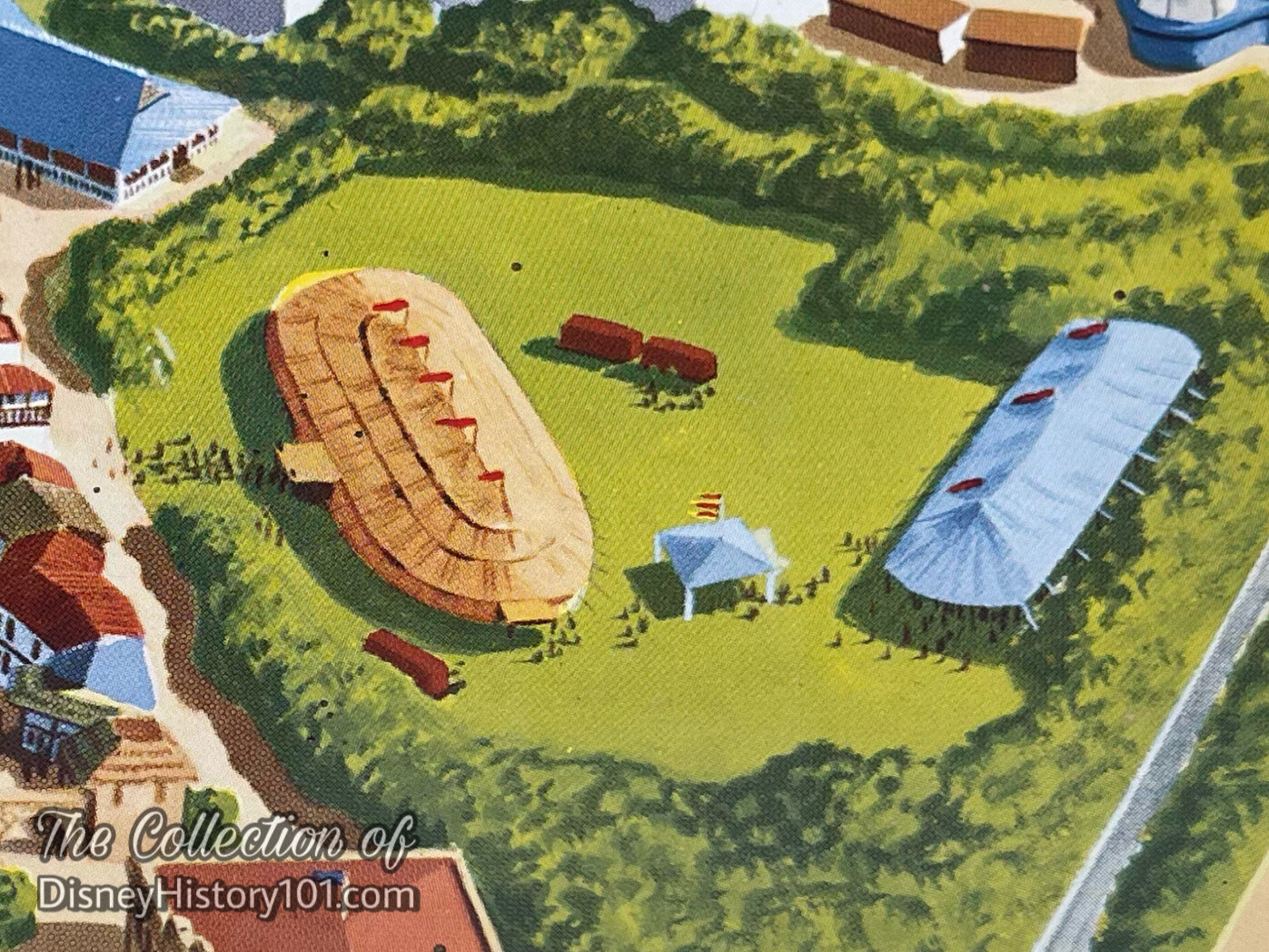
Some of these viable project Concepts (as above), were supported by a well-developed business case and built expectation.
Pictured Above : This wraparound cover of Walt Disney's "Donald Duck In Disneyland" (published from c. 1954-1955) featured a number of elements that gave a good idea of adventures awaiting Disneyland visitors. Just off to the right (below the rocket ship), sits a striped circus tent, many months before Disneyland (and Holidayland with its Mickey Mouse Club Circus) would open to Guests!
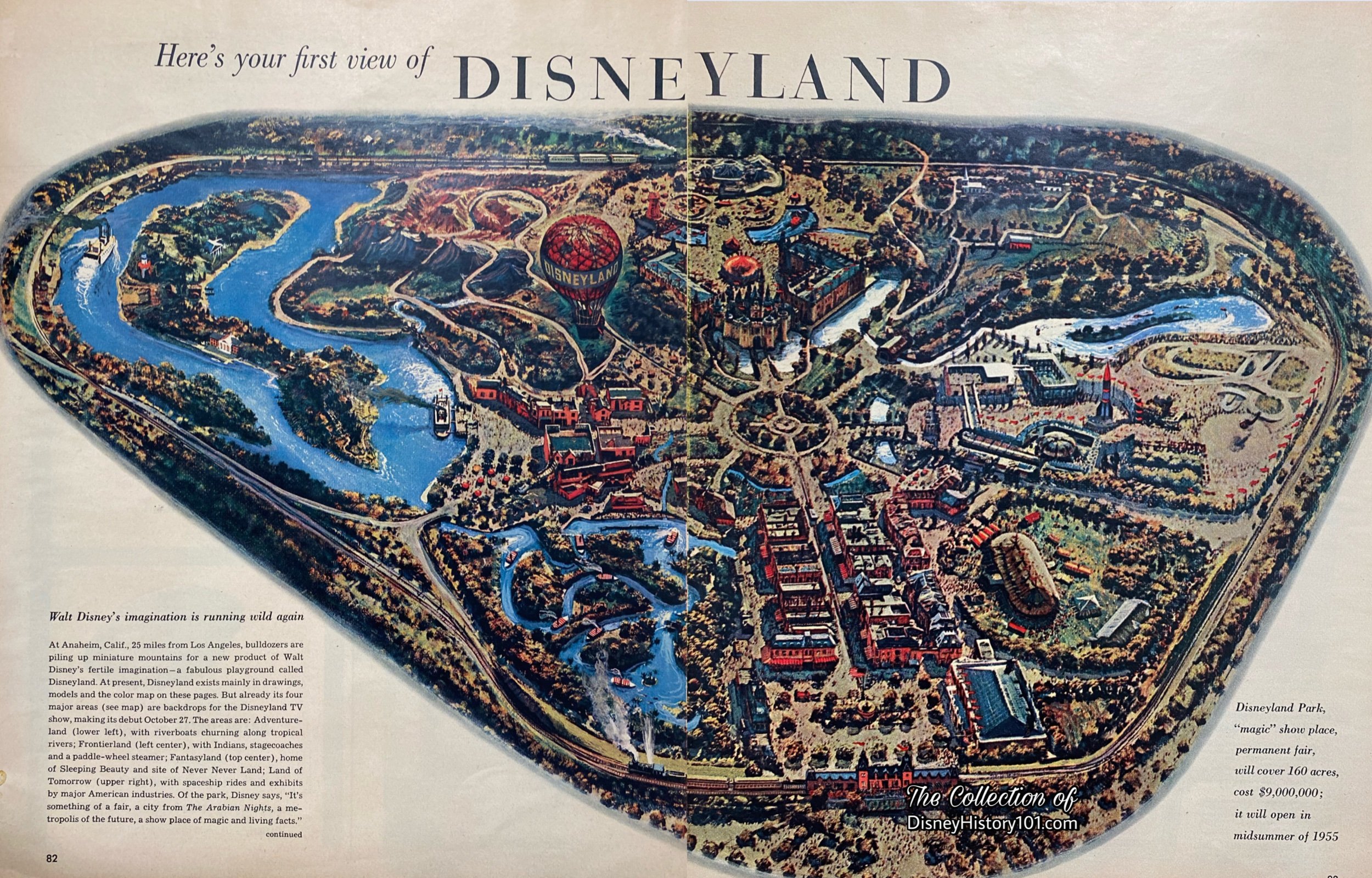
“Ev’ryone Loves The Circus - And That Includes The Merry Mouseketeers”
Holidayland (which was originally conceived as “Recreation Land”), would provide a stage for the Mickey Mouse Club Circus (a $30,000 Disneyland addition) that would come to include a veritable “talent roundup” of television’s Mouseketeers as well as top acts from major circuses - all under the world’s largest candy-striped tent! The Mickey Mouse Club Circus was a temporary show which began Thanksgiving of 1955, and ran until January 8, 1956. It was produced by Walt Disney, managed by Ben Chapman, and staged by both Hal Adelquist (co-creator and Associate Producer for television’s Mickey Mouse Club) and Walt Disney Studio “gag artist” and “Big Mooseketeer” Roy Williams! Artistic Direction of this “gaudy and gilded circus of the good old days” was owed to Bruce Bushman, who once (from 1954 to 1955) provided many original concept drawings of potential Fantasyland adventures and attractions (many of which became reality). The diverse and colorful wardrobe was provided by Chuck Keehne.
The big show (which cost more than $300,000 to produce), featured more than 80 animals and more than 70 performers (many of them, children ranging from “ages 8 to 14”), appropriately underneath a circus tent with a 2500 guest capacity! The seventy-five minute show (led by Ringmaster Jimmie Dodd, songwriter and musician of The Mickey Mouse Club television series) had 12 headlining acts. Many of these co-starred television’s Mouseketeers - Sharon Baird, Karen Pendleton, Mike Smith, Doreen Tracey, Dennis Day, Dickie Dodd, Billie Jean Beanblossom, Tommy Cole, Darlene Gillespie (as “Tinker Bell”), Mark Sutherland, Cubby O’Brien, Lonnie Burr, Ronnie Steiner, Judy Harriett, Lee Johann, Johnny Crawford, Bonni Kern, Nancy Abbate, Mary Sartori, Don Underhill, Mary Espinosa, Annette Funicello, Bronson Scott, and Bobby Burgess - for the first time in-person!
The show’s lineup opened with the set of Professor George Keller’s Feline Fantastics, which did not utilize “whips, gun, or chair,” and featured panthers, leopards, Bengal tigers, and mountain lions (among 30 cats). There was Ted DeWayne and his troupe of acrobats and gymnasts performing human pyramids, and the Flying Alexanders. The show’s second act featured “The March of the Clowns” (like Bob-O the Clown of television’s Mickey Mouse Club, or Klinko the Clown and his miniature automobile). The clown act helped set the stage for the “Aerial Ballet” featuring Tinkerbell and Peter Pan alongside 24 Mouseketeers. There were camels, dogs, the world’s only twin baby elephants, horses (like Serenado the musical horse), llamas, ponies, and seals in the “Animal Varieties” act. A Christmas tree rising from the center ring triggered the climax of the show! The “Flying Alexanders” with their breathtaking aerial summersaults and soaring fly-throughs” astounded audiences. The highlight of the show was a procession of pageantry (which would become a Disneyland tradition) - the “March of the Toys” (the “Living Toys” from Walt Disney’s “Babes in Toyland”) and Walt Disney’s characters courtesy of the Ice Capades (including Mickey Mouse and Minnie Mouse, Donald Duck, Goofy, Pluto), and even Santa Claus riding in a sleigh pulled by “matching ponies” in the “Christmas Tree Finale.” All of these acts were performed to music directed by Tommy Walker (son of Vesey Walker, Director of the Disneyland Band). This entire show ran twice daily on weekdays, and three times daily on weekends.
In addition, Walt had a number of “forgotten” antique circus wagons restored for use in pictures, and then brought to Holidayland. The “Souvenir of The Mickey Mouse Club Circus” (published 1955) states, “Taking it upon himself as a public trust, and deserting to perpetuate the happier things of our American heritage, Was searched for and found these original circus parade wagons. Researchers, artists, designers, special craftsmen and wagon builders were enlisted by Walt in his desire for authenticity in their rebuilding. Circus historians and ‘old-timers’ were brought in as consultants. And since Walt Disney believes that any heritage worth bringing back to life is worth putting back into actual use, these circus wagons were put back into service. Proudly they’ll roll again up Disneyland’s Main Street on their way to the Big Top.” Of the cars restored was a “Steam Calliope, a Beauty Wagon, Whiskers Wagon, White Ticket Wagon [featuring ornate hand-carved figures in cameos], the [1890] Swan Band Wagon, the [Barnes Circus] Green Cage [wagon], the Swan and Fawn, and the Shell Cab”, according to the Pasadena Independent (published December 18, 1955). General admission for the grand Mickey Mouse Club Circusshow was just 50 cents, and reserved seating $1.00 (this was of course, separate from Disneyland General Admission). The Mickey Mouse Club Circus was covered in a wonderful 2-page spread full of photos, in The Disneyland News (Vol.1 -No.6 ; published December 10, 1955).
When the Mickey Mouse Club Circus first opened on Thanksgiving Day, there was a parade of the entire cast, led by Grand Marshall Walt Disney (wearing a cowboy hat) and Co-Grand Marshall Fess Parker (dressed in his Davy Crockett duds)! Mouseketeers marched along the route, bearing standards, which introduced the various parade units. The Disneyland Band was piled high inside the Swan Band Wagon, while school bands marched along the route. The sky-blue and gold-accented Beauty Wagon was pulled by six horses dawning red feather plumes on their head. There were elephants, clowns, and the Steam Calliope providing the keynotes of popular melodies and piping white clouds of steam down the route (with engineer in tow). The circus lasted for only a few months, but before being discontinued, the beige Mickey Mouse Club Circus tent, those restored circus wagons, the opening parade, along with a certain tree-topped hill (rising to the east, over Fantasyland), can readily be seen preserved on film, in some aerial footage of “Disneyland, U.S.A.” (a “People and Places” feature film, released in the U.S. on December 20, 1956 through Buena Vista Film Distribution Company). Remember, that the circus was one of Walt’s dreams (seen in Harper Goff’s early c.1951 drawings of Mickey Mouse Park to be built along Riverside Drive in Burbank), and a true labor of love (judging by all the details added to the big show). The popular headlining act, Keller’s Jungle Killers was held over from February 18, 1956 to September 9, 1956. Though this version of Holidayland was dismantled, that wasn’t the end of the red-and-white circus tent, or the Holidayland dream!
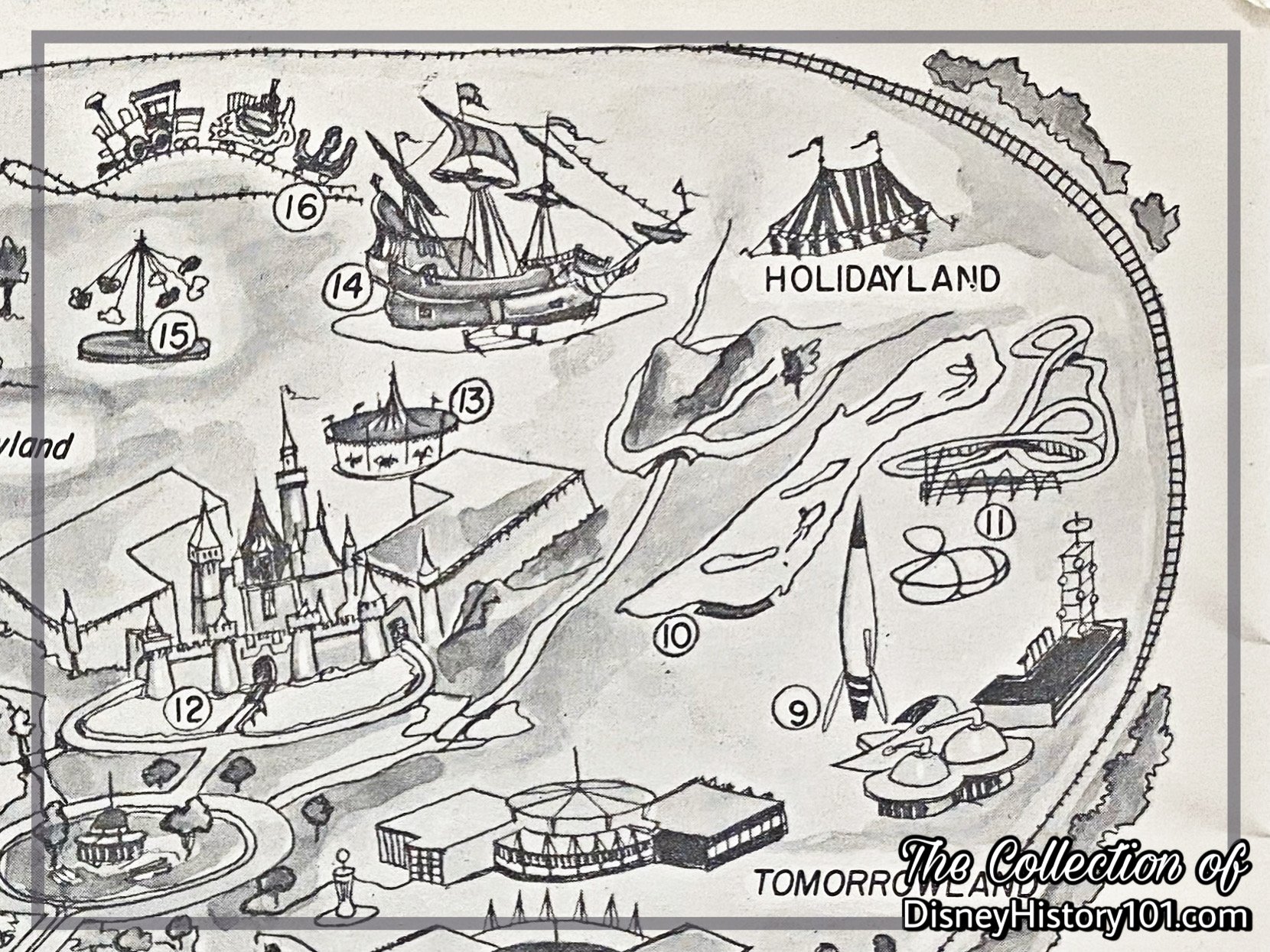
Santa Fe & Disneyland Railroad tickets would have allowed passage from Fantasyland to Holidayland (in its early incarnation), and from Holidayland to Tomorrowland. According to “The Nickel Tour,” “In the early days, train passengers needed a separate ticket for each leg of the journey! This ticket was apparently printed before the Park opened, as it features a Holidayland Station that was never built!”
“Albright’s Bright Idea & The ‘Traditional American Holiday’”
Holidayland (in its final and most memorable realization) may have partially been the brainchild of Milt Albright (Missouri native and Walt Disney Studio Payroll Department Junior Accountant, since c.1947), but it wasn’t the first time he was affiliated with a conceptual idea for Disneyland. During 1953, Disneyland was being conceived and Milt created a miniature car for the Autopia, which was also in progressive stages of development at the time. Though Walt was unimpressed with Milt’s car (the design lacked brakes), he was impressed with Milt’s innovation. Walt soon hired Milt as a Disneyland Manager of Accounting, during the spring of 1954.
Soon, Milt became affiliated with the Disneyland Public Relations Team, and as plans for Disneyland’s expansion were being discussed, he became involved in yet another project for the Park. Now, many of Disneyland’s aspects saluted Americana - from the Mississippi sternwheeler navigating the frontier rivers of America to the soda fountain and pharmacy of its turn-of-the-century Main Street U.S.A. Milt’s next project (which was in stages of concept, research and development), was an entire new Disneyland land - “a recreational park devoted to the traditional American holiday”!
It is perhaps at this time, that Herbert Ryman created one of the last “Holiday Park Entrance” concept drawings of Holiday Hill inside Disneyland, featuring a 75-foot Christmas Tree (prospectively for the future winter season of 1957). During this time, Dick Irvine (chief art director) and Emile Kuri (set designer) were put in charge of seasonal decorations at Disneyland by Walt.
Yes, during Disneyland’s fabulous first decade, many new attractions opened to the public including an entire new “land”! This new “land” was created and designed with audiences in mind, “to accommodate requests for large organizations, principally industry,” and under the direction of Disneyland University Founder and Chief Emeritus Van France. You see, during the summer of 1956 the very first “Day at Disneyland” events were attended by the employees of some 250 Industry Groups in California which had joined the Industry Plan. Some members of these had made some form of “requests… for a special event area to hold picnics, parties and meetings.” [“Disneyland, U.S.A.” published 1958]
Now, at that time Disneyland was surrounded by a sufficient amount of acreage to accommodate future growth. Drawings suggested for new “land” were developed for an area encompassing a western portion of the Parking Lot and other land between Disneyland’s western Berm and West Street. Yes, work on the “Picnic Area” was moving forward by the spring of 1957, according to a WED Incorporated Inter-Office Communication to Walt from Dick Irvine (dated March 12th, 1957). “Bill Martin has a schematic ready for discussion. Myrt Westering is working on the plans for the catering building and the self-service refreshment building. The area has been completed grading will start Wednesday, March 13.”
Van next appointed Milt Albright Manager of Holidayland, over a Holidayland Picnic Committee of Disneyland employees. Many of the Vintage Views (below) are excerpts from contact (proof) sheets once belonging to Milt Albright.
According to the “Disneylander” (May, 1957), the Holidayland (or, “Holiday Land”) Picnic Committee came to include “Bill Stewart, Van France, Howie Vineyard, Cap Blackburn, Bob Carbonnel, Tommy Scheid, Bob Reilly, Barbara Bray (Secretary), Marty Sklar, Jack Sayers, Dick Stovall, Tommy Walker, Ray Webster, Earl Shelton, and Larry Tryon.” This team had such a fantastic set of skills to support Holiday Land. For instance, before Disneyland, Jack Sayers had previously been with the original Gallup Poll, performing studies for Walt’s movies and was west coast manager of LOOK Magazine when he was hired by Walt. Van Arsdale France was hired by C.V. Wood in July of 1954 to help with hiring.
(The photo above may have been shot inside the old Brown House on West Street, Youth Activities & Holidayland Headquarters)
Contemporaneous postcards described Holidayland as “a new concept in facilities for group activities,” while brochures called Holidayland a new area “devoted to the traditional American holiday.” Here was a group activities center for company picnics, dances, conventions, and special events. Guests usually enjoyed activities and games, softball, volleyball, dancing, horseshoes in the pits, a children’s play area, and picnicking in a shaded picnic area. Holidayland was open daily (at 10:00am) and parking for Holidayland guests was generally free. Reservations and general information about Holidayland could be acquired through the Disneyland Group Sales Department (extension 437), and calling them through either Disneyland KEystone 3-4456 or MAdison 6-8605.
Reservations and Information regarding the use of Holidayland facilities could be obtained from Group Services of the Public Relations Division.
“Every day’s a holiday in Holidayland!”
Disneyland Map excerpts give Guests an idea of what to expect in their visit to Holidayland. First of all, Holidayland (though a land itself), was never accounted among Disneyland’s other cardinal five lands. In fact, Holidayland was its own separate entity (located outside the berm), and even had its own entrance and separate admission (as we will see).
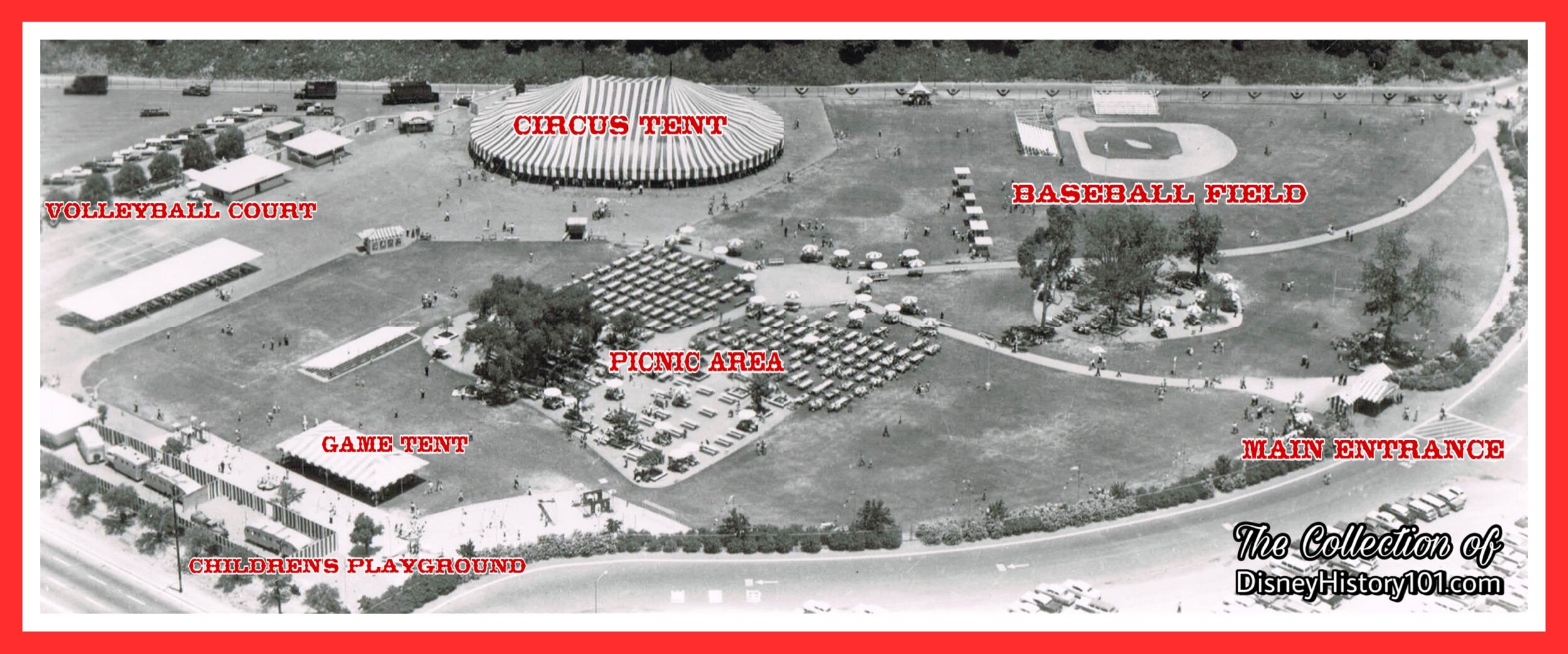
The presentation of the Holidayland show on the vast DISNEYLAND “stage” was a distinct part of the Disneyland theater concept. While the Amusement Area of Disneyland covered sixty-five (65) acres (by 1959), Holidayland was (9) acres of completely fenced-in, landscaped grounds. Once through the Holidayland Main Gate Entrance (located on the southern side of the park), Guests found that Holidayland had two “lands” of its own - beyond the Baseball Field (and bleachers) sat two “Picnic Areas” and a “Circus Tent” and an Activity Tent (or, “Covered Pavilion,” typically seen utilized for board games and games of BINGO). Beyond the Shaded Picnic Areas were several attractions including a Children’s Playground Area (along the west) with the newest, specially designed and exclusive children's playground equipment. The playground was near the Restrooms and an Office Building, Horseshoe Pits (with equipment supplied by Holidayland), and Refreshment Stands (a Self Service Food Building, a Snack Stand and Dinner Service Building, Snack Stand #1, and Snack Stand #2 offering coffee, soft drinks, and yes, even beer). On the other side of a large lawn, sat “the world’s largest candy striped” Circus Tent featuring a Band Stand and Stage where events (pageants, contests, and band performances) were held. There was also “modern restrooms and first aid facilities… a super market type refreshment stand, [and] a fully equipped public address system.” [Disneylander, May of 1957] The First Aid Tent had its own extension (296).
You may notice Mickey Mouse Club Circus wagons scattered around Holidayland in the subsequent photos. Paved sidewalks lined with benches and a few lamps, connected these major attractions.
Holidayland also had men’s and women’s restrooms (located in separate structures on the North side of Holidayland), telephones, and plenty of garbage receptacles for guest’s convenience. In case of low pressure, water was provided by a pre-existing gasoline-powered pump located at the east end of a meter pit on the property.
All of Holidayland was located just on the other side of landscaper Bill Evans 20-foot-tall, raised, dirt berm. Owing to the perimeter around Disneyland, the guest activity of Holidayland was concealed and did not infringe upon the realms of Frontierland and Adventureland.
The vast area of Holidayland was described as “Disneyland’s eight-acre, private playground” though it was actually 9-acres (that is 36,000 m2). The sheer size of Holidayland simply can’t be comprehended on a Disneyland novelty souvenir map. However, it can be somewhat understood in this captured memory from a Telco Division Picnic. Due to the wide open space, up to 7,000 guests could visit Holidayland at one time. In the foreground, guests assemble for an epic race near a roped-off area. Despite the “Disneylander’s” promise that “with these facilities, it is not necessary to have the traditional fat man’s race, the three-legged race, and other games which are sometimes hazardous,” race competitions of this type were still popular and held at Holiday Land. At the time, anyone inquiring about holding a special event at Disneyland’s “private playground” need only “call the Group Sales Dept., Disneyland KEystone 3-4456 or Madison 6-8605.”
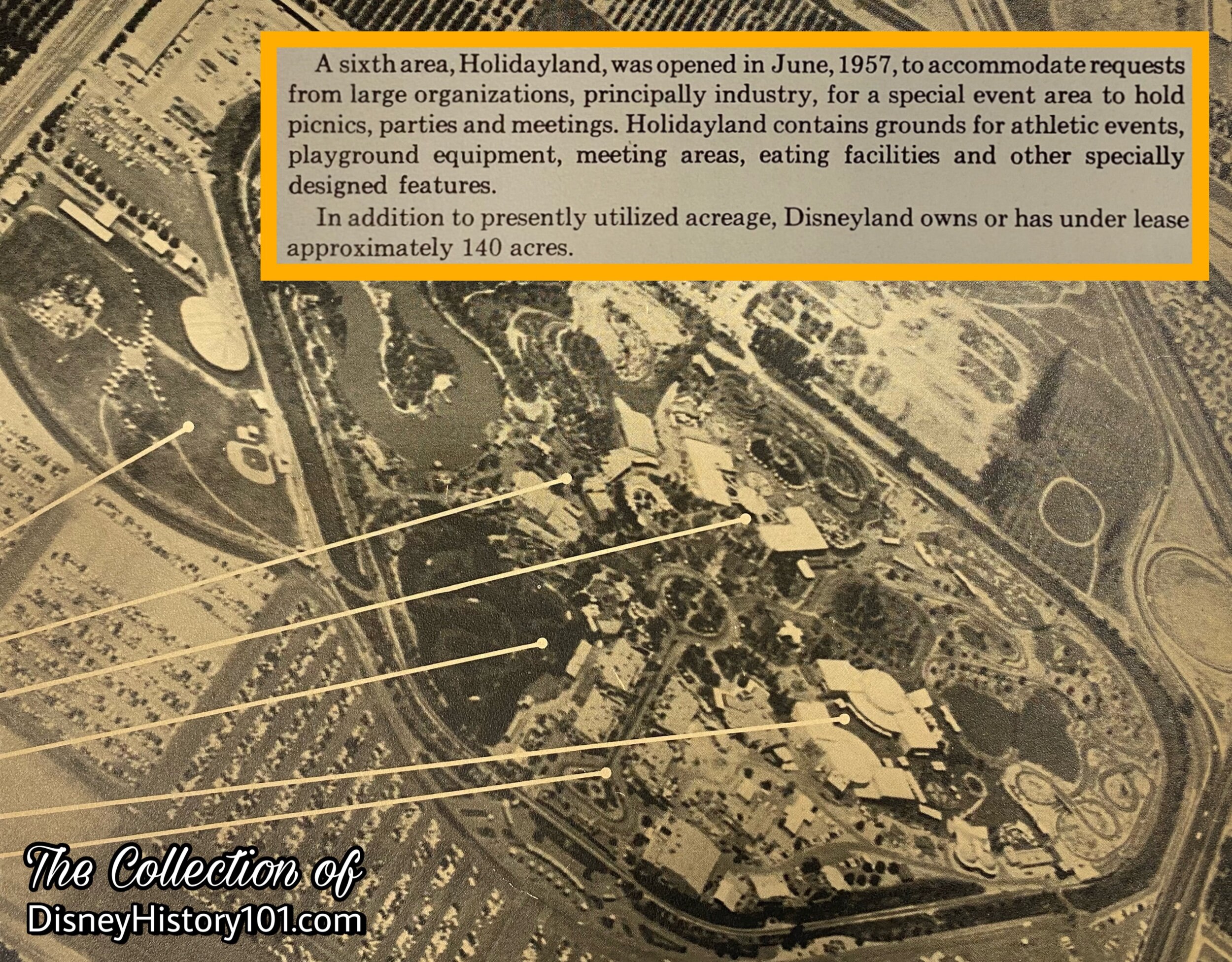
“Corporations & Organizations Salute ‘the Great American Pastime’”
One of Holidayland’s very first scheduled organized group picnics was for the Los Angeles Elk’s Lodge #99, occurring on the same day that the dedication of Holiday Land occurred, on Sunday, June 16, 1957. This was less than two years after the opening of Disneyland. A total of 5000 members and their families attended the event, challenging Holidayland’s Guest capacity capability.
Walt welcomed Guests: “It is with the greatest pleasure that I welcome you to Holidayland,” said Walt Disney, “where the guiding spirit is - FUN!”
“‘I remember the first picnic only too well,’ “55er” Milt Albright recalled. ‘There was only one small restroom for the ladies and one for the men. The wait for the ladies’ room was one hour long. I'll never forget the look of disbelief, shock, and dismay on Walts face as he came up to survey the incredible sight… the longest queue line in the Park, the ladies’ rest room.’ To this day, Milt has a photo of himself with Walt, taken by a staff photographer as Walt surveyed the line. Oh, the look on Walt's face.’ So out came the "Honey Wagons," movie studio lingo for the portable restrooms used on location filming. The trailers were lined up along the west side of the picnic grounds, and soon brought the situation under control.” [The Nickel Tour]
Arrangements were “proceeding rapidly for the bookings of other large group gatherings during the summer months.” [Disneylander, May of 1957] A variety of scheduled events ensued, including “Disney Studio Day at Holidayland and Disneyland” (held on Saturday, October 5, 1957). Brief footage of some of the event’s features & activities (Balloon vendors, the Potato Derby, Pie Eating Contest, and Bobby Burgess & Doreen Tracy’s Mouseketeer performances) have been amazingly preserved on film in the “An Adventure in the Magic Kingdom” episode of Walt Disney’s Disneyland (airing in 1958)!
Though we can’t recall any of the dates they were held, Bob Penfield (Supervisor of Disneyland Construction Services) fondly recalled “Holidayland and the [Disneyland] employee salaried vs. hourlies football games” played here. Another Disneylander Ben Harris remembered what he called the Holiday Land End of Season baseball games played here, from about 1958 to 1963. Ben described “Disneyland’s Supervision Team - Nunis, Reilly, Conk, Ater, Penfield, Sully, Hoelshire, Harris, etc. versus the Parking Lot Champs.”
Though technically on Disneyland property, Holidayland was actually a separate recreational park (located outside the berm), with its own separate admission, and its own Main Entrance turnstiles. Guests of Holidayland entered thru the candy-striped Holidayland Main Gate, located on the west side of Disneyland, near what is now a complex of New Orleans Square show structures. The Holidayland Main Gate held two windows often utilized for ticket sales and distribution (see photos below). When these windows were not in use, they were concealed by doors featuring Disneyland attraction posters. Owing to the fact that Holidayland was often rented for events, the names of the rentees (often clubs, families, companies, and fraternal organizations) were featured on the letter board over the entrance.
In the following Holidayland Main Entrance Vintage View section, notice the organizations and corporations that made use of Holidayland, when their names appeared on the marquee over the Holidayland Main Entrance Gate (from 1957 to 1961)! Note memories of numerous organizations, like the Local International Brotherhood of Electrical Workers, the Southern California Gas Company, Crane Company, U.S. Junior Chamber of Commerce (“Jaycees”), and many, many more are represented in the gallery. Even rival Warner Brothers Studio rented Holidayland for at least one corporate picnic during the late 1950s.
Guests could enter Holidayland as a singular guest. Guest admission for Holidayland during the summer of 1960 was was $1.20 (Established Price, $1.18 plus Federal Tax 2¢) for Adults, and 20¢ for Juniors.
The Holidayland Main Gate decorated for the Southern California Gas Company Party. Since Opening Day of Disneyland, the Southern California (Counties) Gas Company provided clean and economical gas to Disneyland’s modern automatic attractions, and ultra-modern cooking appliances to its dining destinations.
The U.S. Junior Chamber of Commerce (“Jaycees”) rented Holidayland to hold a pre-election party sponsored in part by Pepsi-Cola (the very same sponsor of Slue Foot Sue’s Golden Horseshoe Revue). Election bills of Richard Lynch and Bob Cox were posted over the entrance and Disneyland attraction posters on the sides of the Main Gate. You won’t see this done in very many of the subsequent photographic documentation.
You may recall that Crane contemporaneously sponsored the Tomorrowland Bathroom of Tomorrow exhibit (with its operable Flying Saucers and Industrial Flow displays). Now, the Holidayland Main Gate is decorated for the Crane Company Party, as employees flock through the turnstiles.
The side entrance is utilized for the N.A.P.C. event.
The Holidayland Main Gate decorated for the Crane Company and National Association of Plumbers and Contractors Party.
The Holidayland Main Gate decorated for the Continental Can Company Party.
The Holidayland Main Gate decorated for the I.B.E.W. Local 11 Family Picnic.
The Holidayland Main Gate decorated for the Beneficial Standard Life Insurance Family Picnic.
The Holidayland Main Gate decorated for the Union Oil Company and L.A. Refinery Picnic.
The Holidayland Main Gate decorated for the Telco Division Picnic. This particular image was once featured in the Disneylander published July of 1958.
The Holidayland Main Gate decorated for the Hallamore Family Picnic.
The Holidayland Main Gate decorated for the Hallamore Family Picnic.
The Holidayland Main Gate decorated for the Certified & S. Artan Families.
The Holidayland Main Gate decorated for the Firestone Supervisor Club Picnic.
The Holidayland Main Gate decorated for the Collier Carbon and Chemical Corp. Picnic.
The Holidayland Main Gate decorated for the Tubesales Family Festival.
The Holidayland Main Gate decorated for the Tubesales Family Festival.
Holidayland Main Entrance welcomes the Electrodata Family Festival.
The Holidayland Main Gate decorated for the Moore Business Forms Rediforms Picnic.
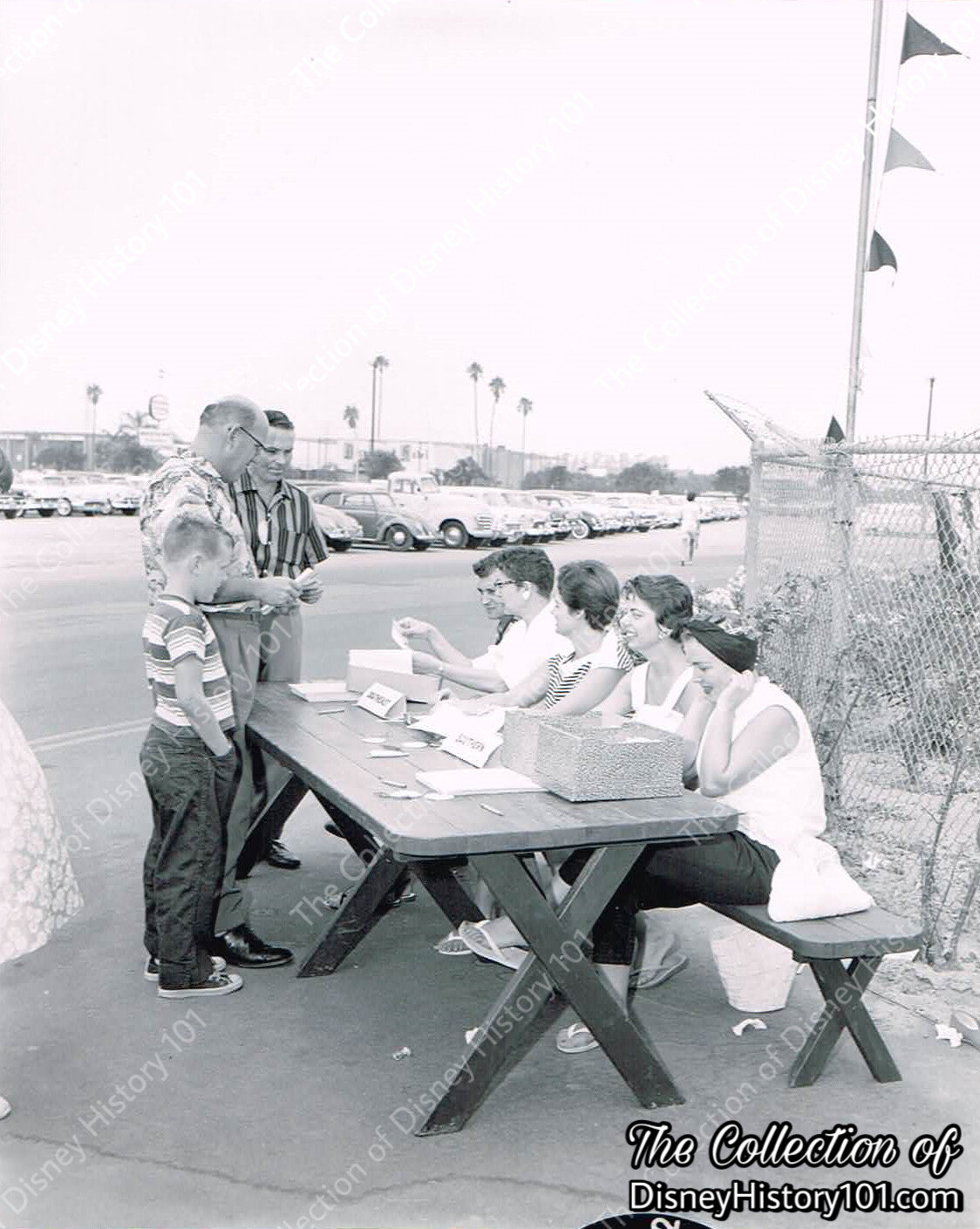
Guests parked in the Reserved Parking Area at a regular Disneyland fee of 25¢.
It looks as if some form of welcoming committee was set up on a bench near the Parking Lot, to welcome employees and family members of the Southern California Gas Company. This location was utilized to distribute special Holidayland Identification Tags to guests attending this event.
The Holidayland Picnic Area was the veritable hub of Holidayland, as concrete paths led to other Holidayland features (a second Picnic Area, the Circus Tent, and Baseball Field) from this central location. The Holidayland Picnic Area offered complete food and catering services through several quick service kiosks and the Holidayland Snack Bar (managed by Myrt Westering of the Red Wagon Company). Myrt Westering, promised that “the facilities will be as modern and as up to date as modern food science can make them…… it is so arranged that the hot dogs will be HOT and the cold drinks will be COLD.” [“Disneylander,” May, 1957] Here, guests could purchase food, refreshments, deserts, and beverages (coffee, soft drinks, and perhaps a Disneyland first - the “bottomless beer mug”). These kiosks were located against Disneyland’s western barrier (with Frontierland’s tree-lined berm seen just beyond). Telephones were also located here, not far from the dining area - numerous benches shaded from the sun by large trees and umbrellas.
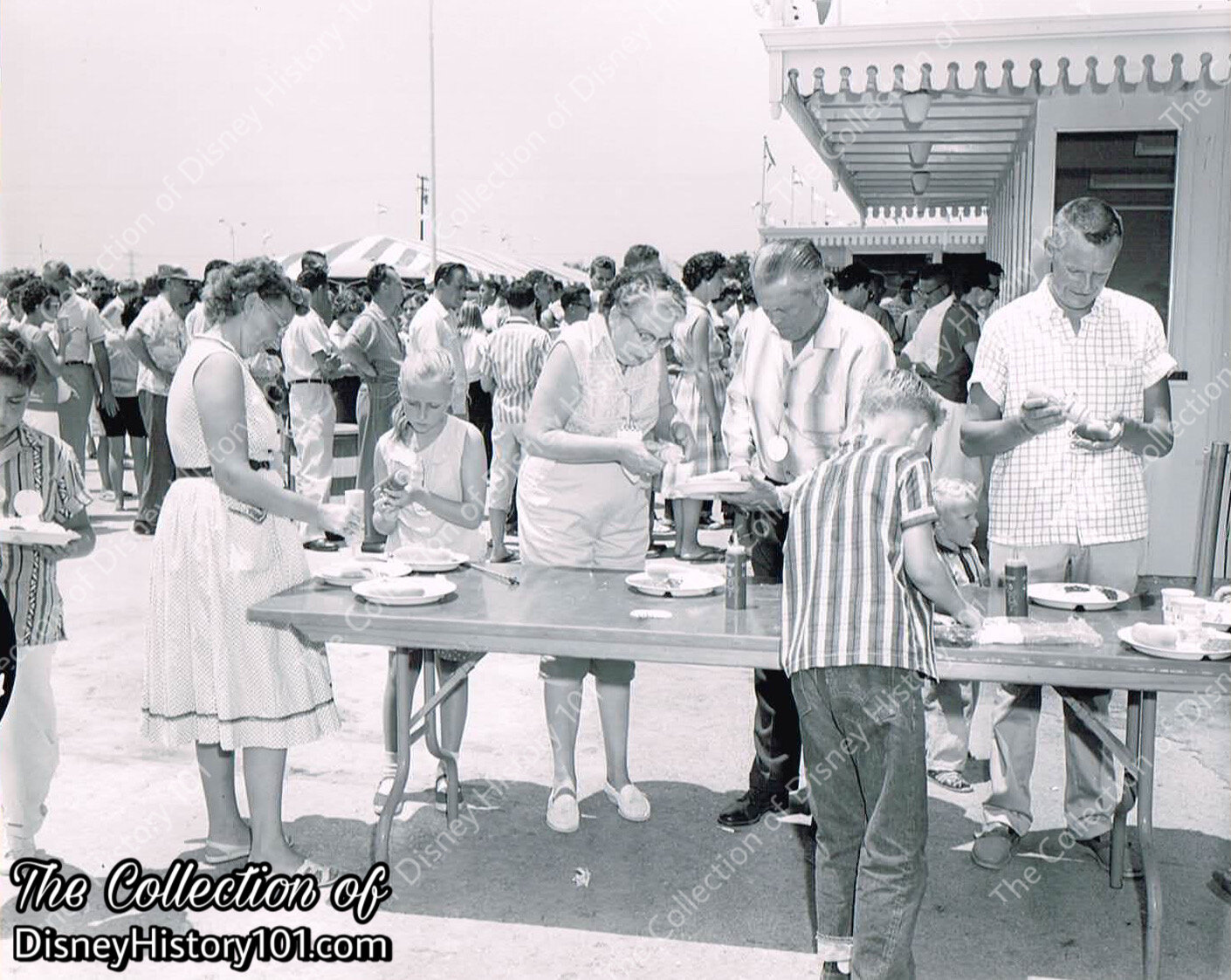
The Holidayland Refreshment Stand was a quick service (counter service) location that offered many menu items (courtesy of institutional lessee Red Wagon Company) - several salad options, hot dogs, barbecued ham, barbecued beef, and rolls, (as seen in this Moore Business Forms Rediforms Picnic memory). Institutional lessee Swift & Company’s lease of Holidayland areas would yield very little revenue for Disneyland Inc. - $36 for the fiscal year ending September 29, 1957 and $364 for the fiscal year ending September 28, 1958.
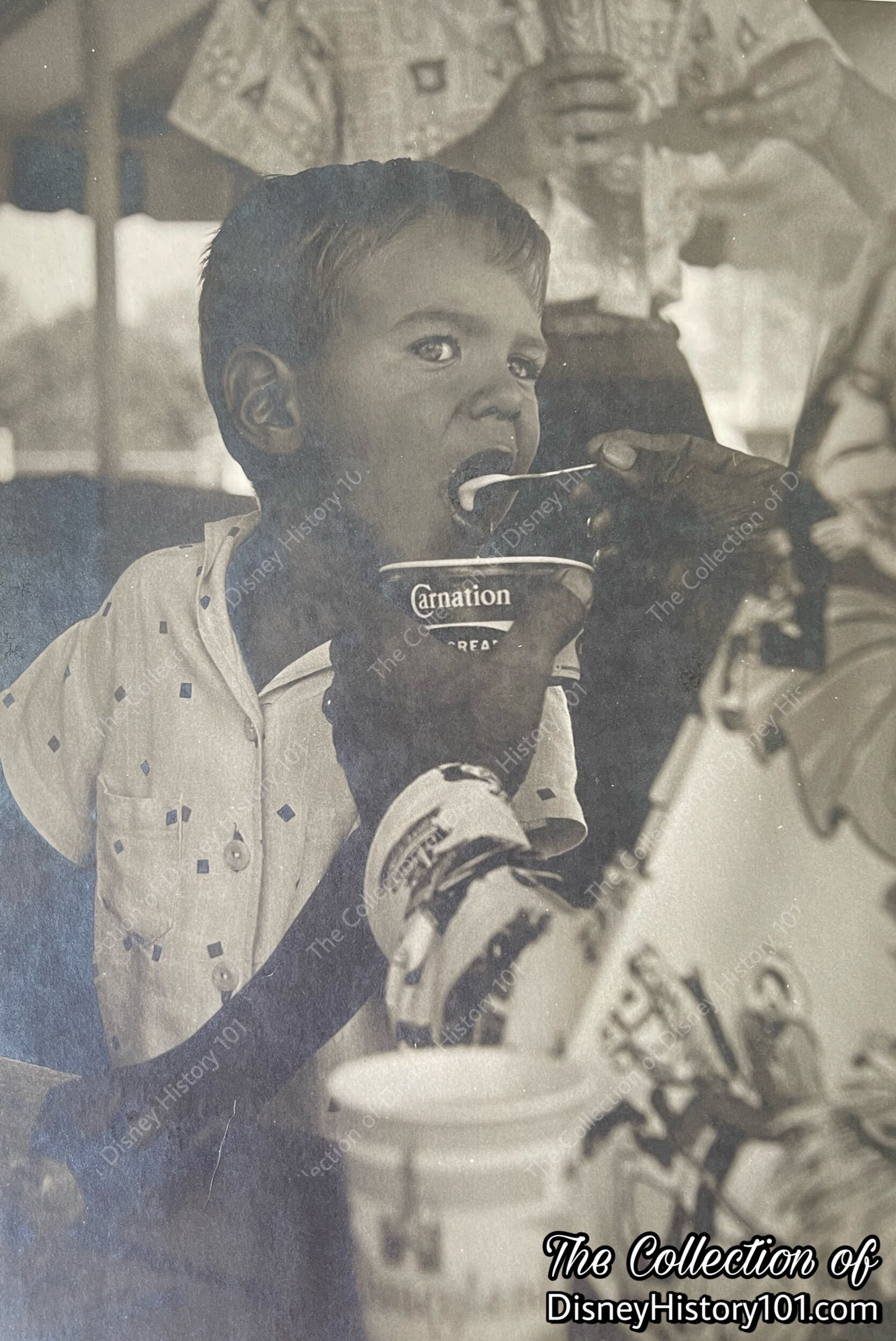
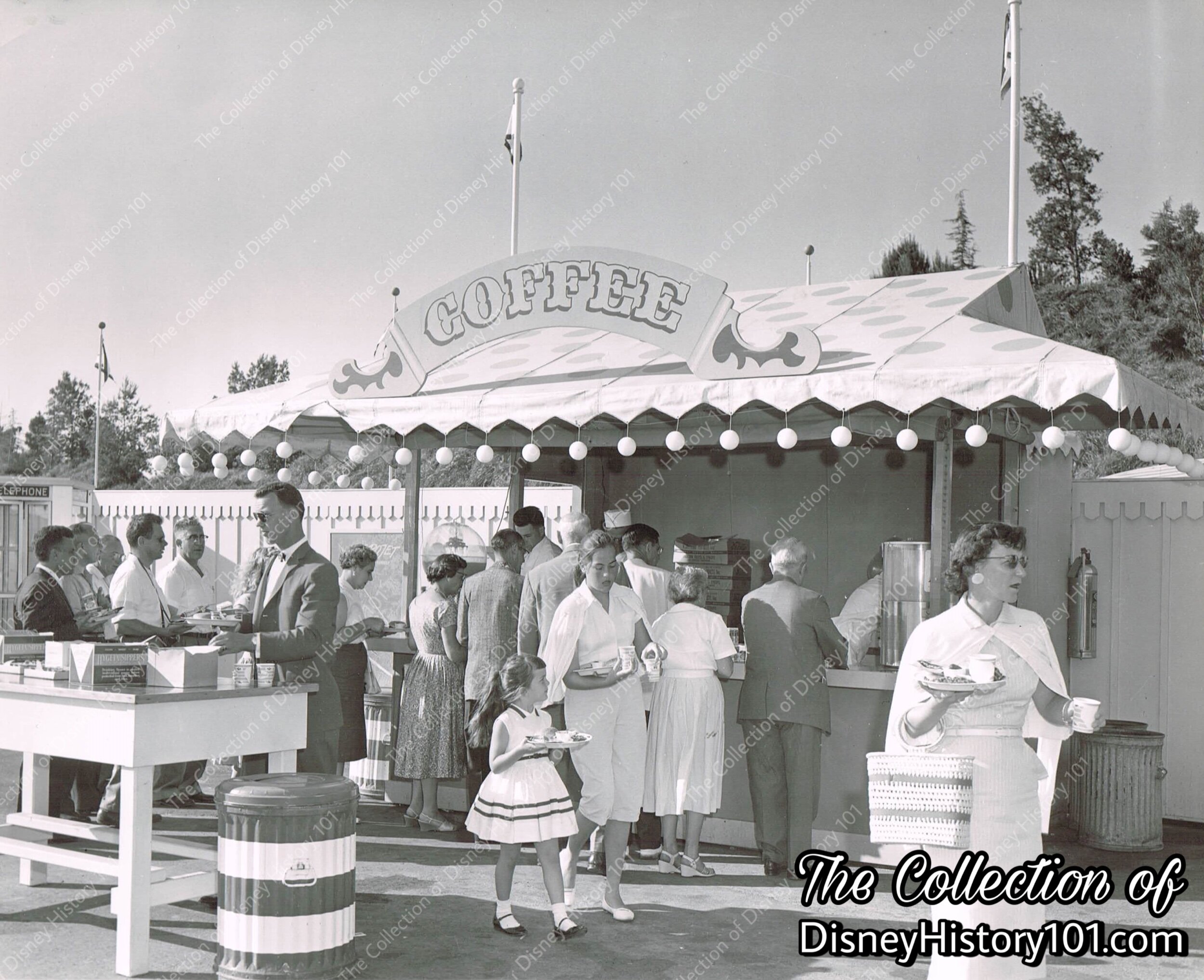
Coffee and cold drinks were readily available here, as well as condiments. You may also note the telephone booth for guest’s convenience (on the left side of the Vintage View).
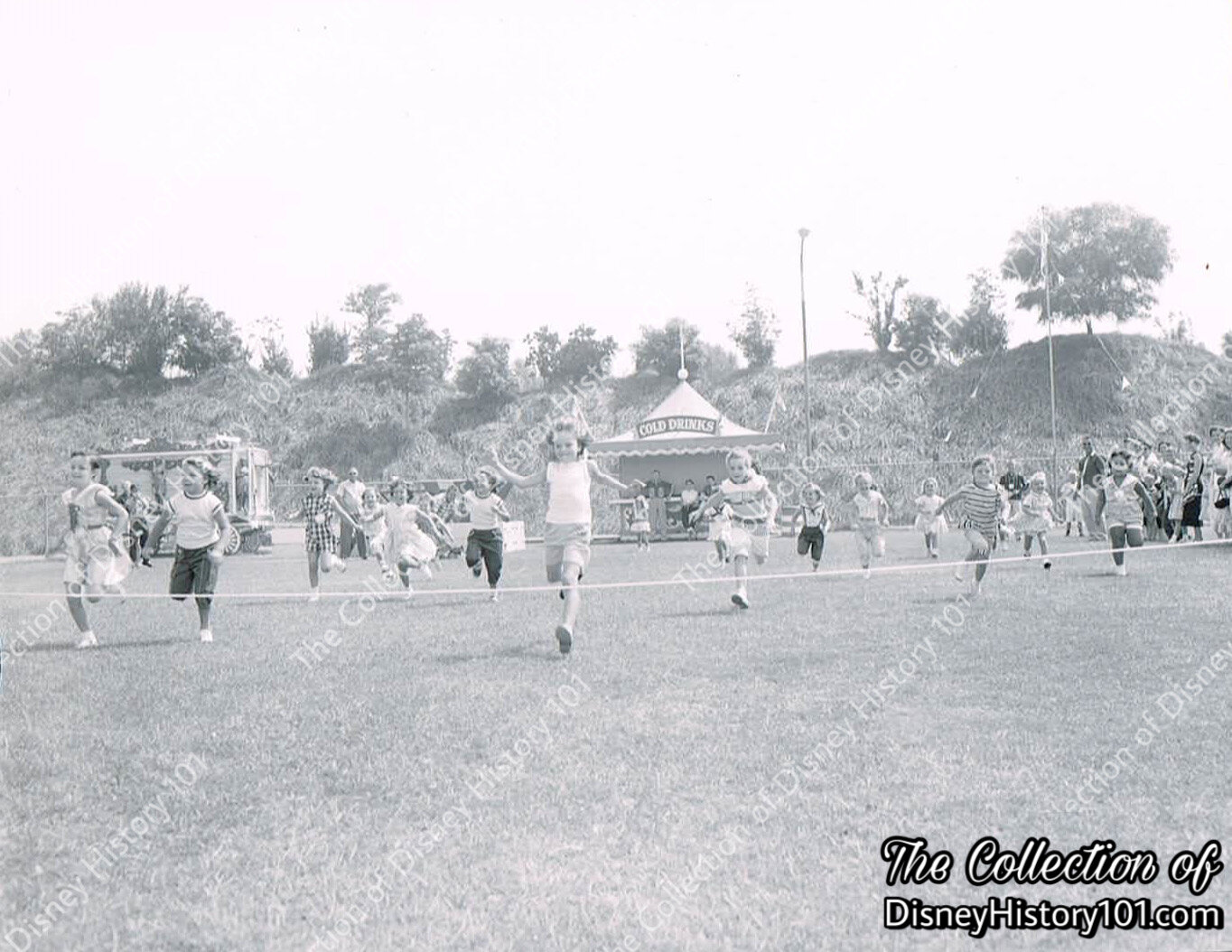
Kiosks were also placed outside the Picnic Area, like this Cold Drinks kiosk, seen on the far end of the lawn near the berm, at the Firestone Supervisor Club Picnic. This stand likely catered to general guests.
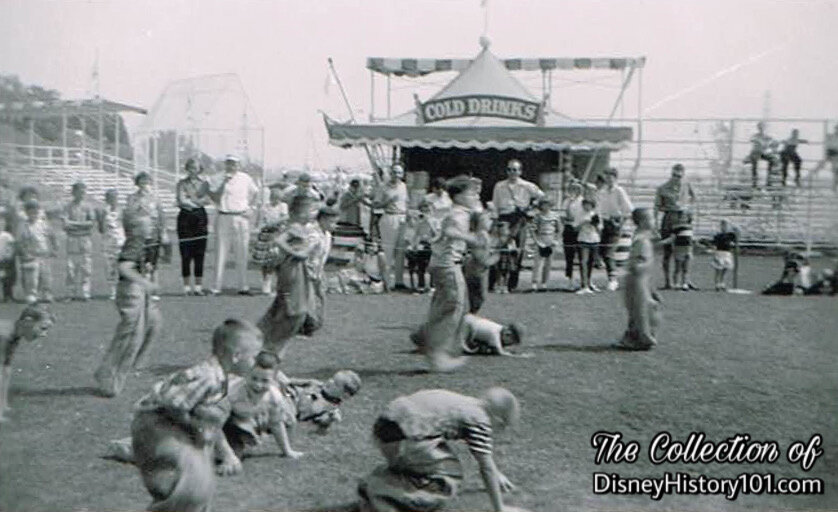
This Vintage View (captured during the Electrodata Family Festival) depicts the Cold Drinks Kiosk in a different location near the Softball Field.
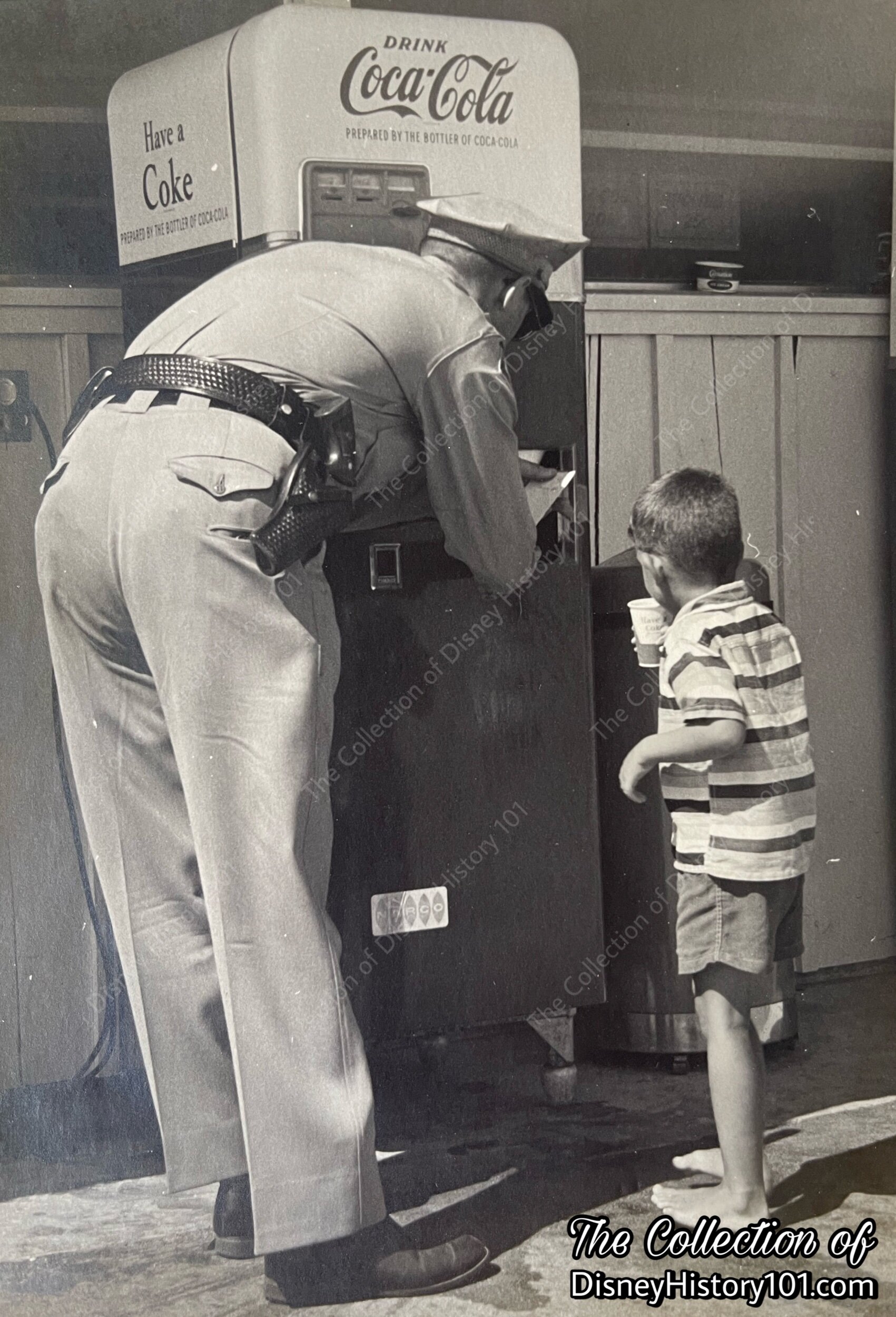
Back in 1955 (through a special arrangement between Walt Disney Productions and the Coca-Cola Company and the Coca-Coca Bottling Company of Los Angeles), bottles of Ice Cold Coca-Cola were available to Disneyland audiences. But after about a year, the Disneyland Operations team decided to do away with bottles. Once Holidayland opened, visitors enjoying a picnic could enjoy cups of ice-cold Coca-Cola through an arrangement with Dixie-Narco (manufacturer of those contemporaneous Disneyland Dixie paper cups).
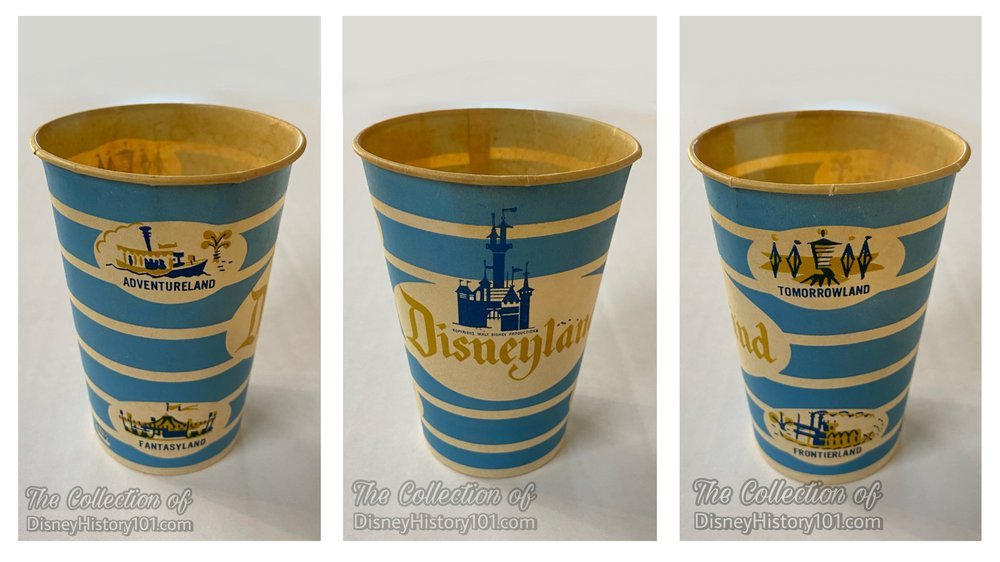
The DIXIE CUP division of the American Can Company opened the doors of their Anaheim facility in 1952. The neighboring business came to be located at 901 E. South St., Anaheim, Cal. With a staff of nearly two hundred people under the direction of J.D. Mitchell, the center operated as a manufacturing and distribution point for their product quality paper cups to seven of the Western States.
The business partnership between Disneyland, Inc. and the Dixie Cup Company (America’s #1 paper cup company) was profitable. By September of 1958, the Dixie Cup Company was contributing a routine portion of accounts receivable to Disneyland, Inc.
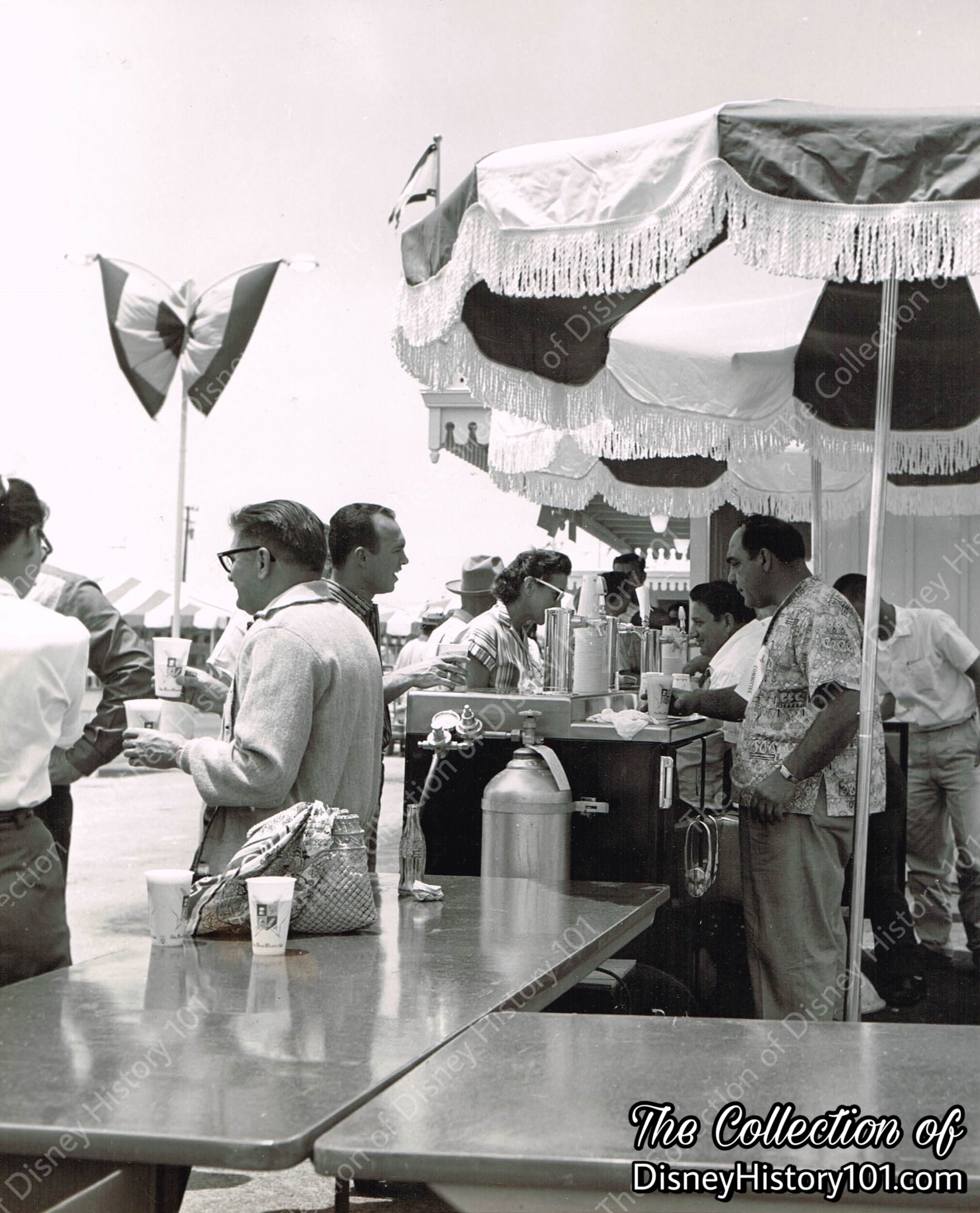
“Disneyland and Beer”
Members of the Holidayland Picnic Committee dispense carbonated beverages to guests at this event (pictured above). Bottles of Coca-Cola, and cups of Maxwell House Coffee and Carnation Milk were available at this location. This is also where the “bottomless beer mug” was dispensed.
The latter was truly a rare offering, as Walt was firmly against beer being sold inside Disneyland, a stand made clear during the research and development phase of Disneyland. “Successful amusement park owners… told him he was doomed if he did not have a liquor sponsor” or “failed to sell beer in the Park. Walt ignored them.” Even before the Park opened, numerous articles (as one published in Printer’s Ink, July 15, 1955) shared: “No beer or liquor will be sold in Disneyland Park.” Florabel Muir (of the New York Daily News) reported, “With a couple of exceptions, every diversion… will be available to… visitors. One exception is liquor. Disney has even banned beer, though the suds makers made him some mighty tempting offers.” Harper Goff recalled about opening day, that despite the Press allowed to bring alcohol to Disneyland on opening day, the Park would “not… serve it or have it for sale” due to “Anaheim’s old-standing laws”… [and not getting an adjunction on it].
Disneyland Security Hosts were instructed “No alcoholic beverages or those under the influence of alcohol are allowed in the Park at any time.” As for the Disneyland staff, the c.1955 employee orientation handbook “You Will Create Happiness” prohibited the possession or the scent of alcohol on employees this way : labelling it as a “taboo” which “prohibits drinking [alcohol] by hosts and hostesses within Disneyland, or having the odor of liquor on your breath while at work.” This was especially the case for Attractions Hosts and Hostesses as Santa Fe and Disneyland Railroad Engineers and Firemen who abided by Rule G - The railroad rule against drinking.
It is worthwhile to mention that in 1955, the little Gourmet Restaurant at the Disneyland Hotel did serve expertly prepared cocktails with their fine meals. Two years later, Disneyland Drug Store (also located at the Disneyland Hotel) began selling liquor. However, these offerings were outside the Park and never allowed in Disneyland.
Now by the time Holidayland was open (in 1957) things hadn’t changed at Disneyland. In The Story of Walt Disney by Diane Disney as told to Pete Martin (1956), Walt’s own daughter stated: “No liquor is sold, not even beer… Father says if he dispensed alcohol in his park it would attract an element that he doesn’t want.” At least two publications commented on the resolution. “Disneyland U.S.A.” (published 1958) stating: “no alcoholic beverage…[was] sold in Disneyland” for the good of the “wholesome environment of Disneyland”. The TWA publication “Let’s Talk About My Visit To Disneyland Anaheim California: A Note From Mary Gordon TWA Travel Advisor” also noted that “no alcoholic beverages are served within the Park.”
“Beer at Holidayland”
However this was not the case at the concessions kiosks of Holidayland which was still technically reckoned as part of Disneyland Park’s acreage but not located inside the periphery of Disneyland. “Walt thought beer was a basic part of a picnic,” recalled Jack Taylor, the first operations supervisor at Holiday-land. This being the case, this kiosk was the only place where alcoholic beverages were sold (on Disneyland property, but not in the Park). “The beer at Holidayland didn't bother Walt,” Milt agreed, “even though you didn't dare mention alcohol in connection with Disneyland.” [The Nickel Tour]
The Nickel Tour told the tale of “one picnic that did sell and sell real well… set up for a major labor union, who purchased more than 10,000 tickets for the picnic. As soon as the picnic began, the beer was already flowing in an endless stream. ‘By the time they headed into the Park,’ Milt recalls, ‘they were drunker than hoot owls.’ Disneyland survived the day, but it was the last time beer was allowed at a picnic if the guests were going to enter Disneyland.”
In the end, it was decided that Alcoholic beverages would not be sold or permitted on Disneyland property for more than two decades. Disneyland remained determined in this regard until the Walt Disney Company changed their no-alcohol policy during May of 1986. In the present, some of the most exclusive locations in the Park offer a “Disney Family of Wines,” bottled beer, draft beers, and even absinthe selections… For now (c. 1957), beer was briefly offered at just one location at Holidayland!
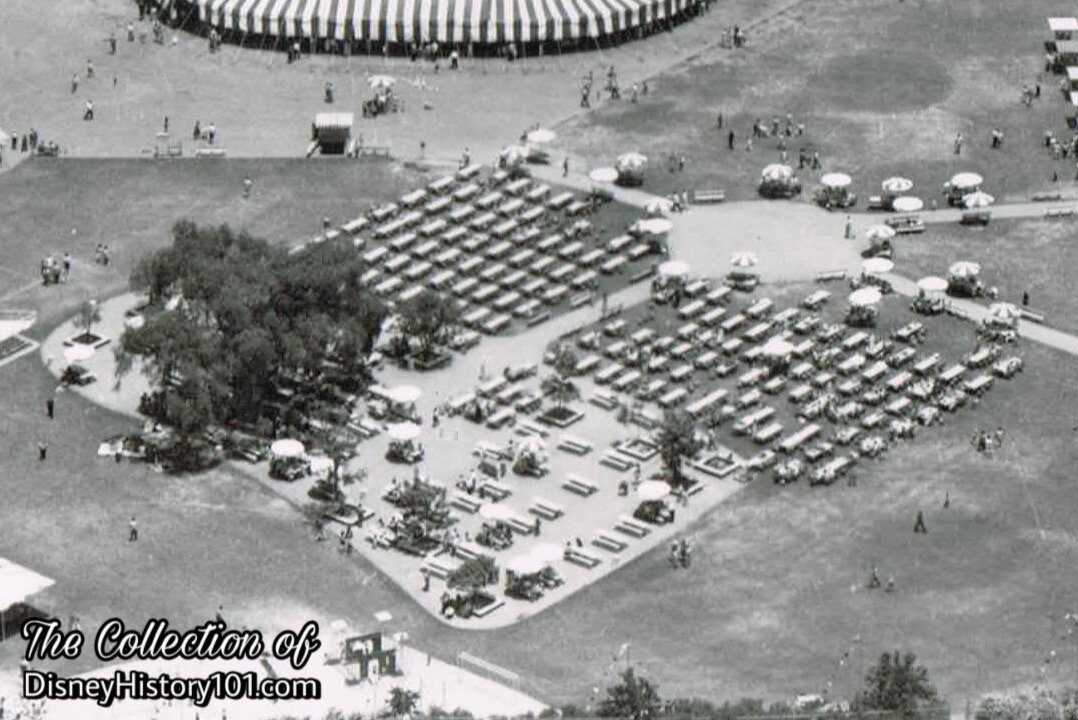
The paths that run along the Picnic Area were ideal for parking cars for the Road Lord’s Car Club “Car Day & Autocade” event, mentioned earlier. But typically, benches lined the paths for the convenience of picnickers.
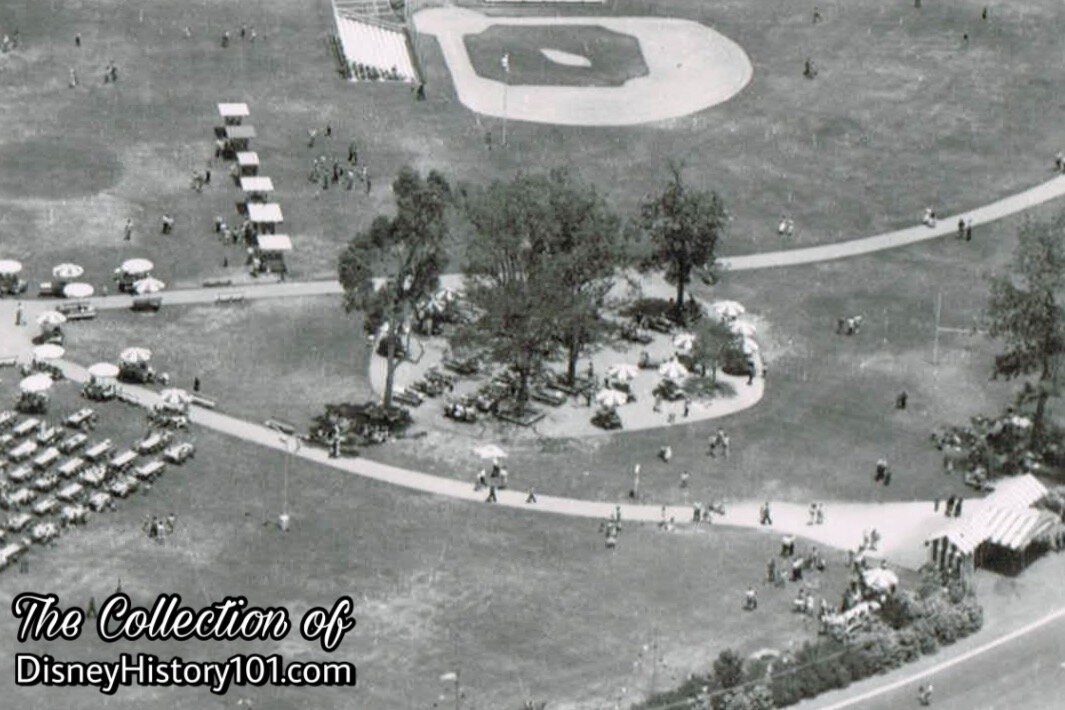
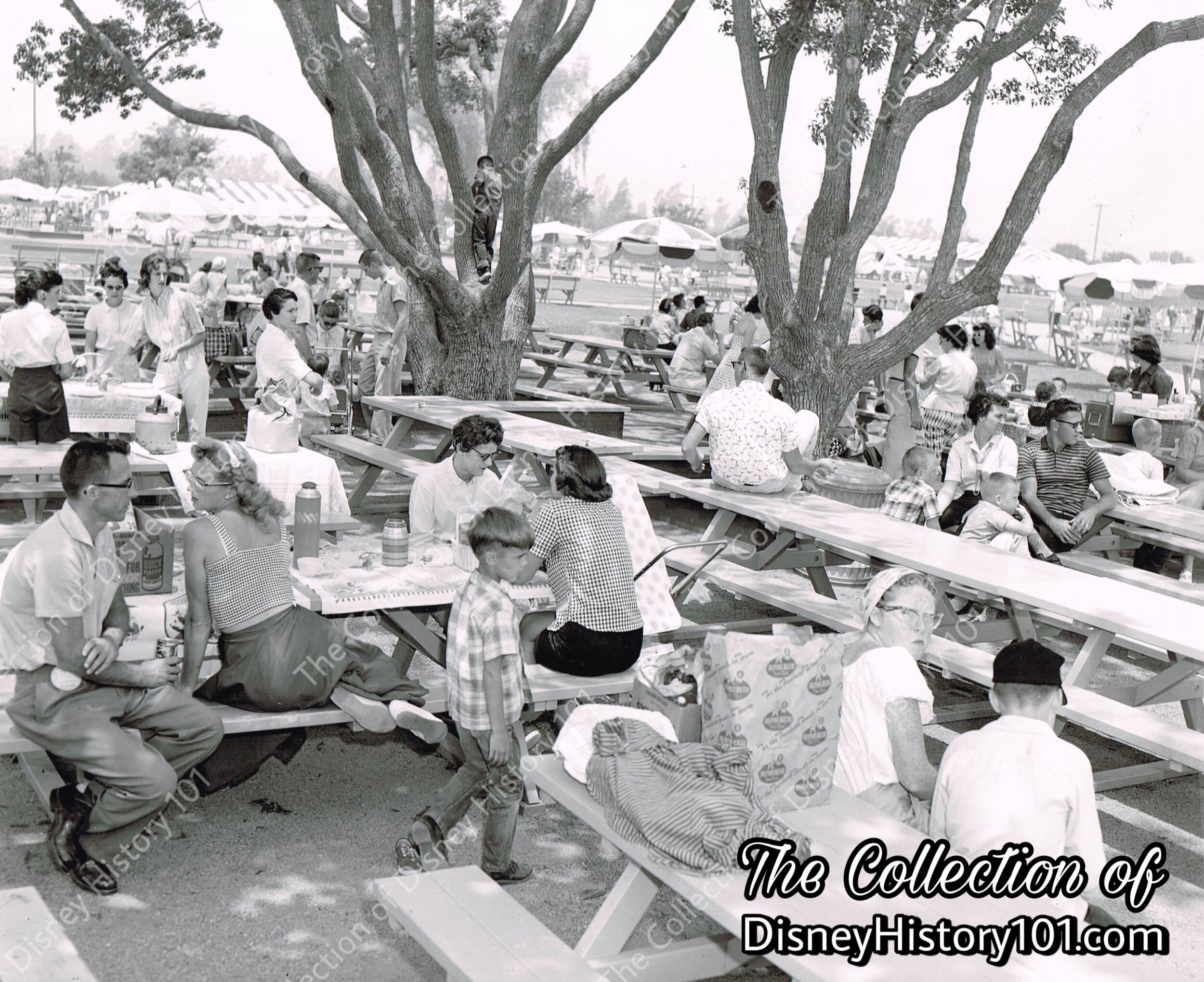
Holidayland had few shade trees. One of the few naturally covered sections was the Picnic Area, located near these large trees. If you couldn’t find a seat in the shade of these trees, there were also plenty of tables bearing umbrellas.
The rarely photographed Holidayland Volleyball Court nets offered athletic alternatives to softball games - badminton and volleyball (Equipment supplied by Holidayland).
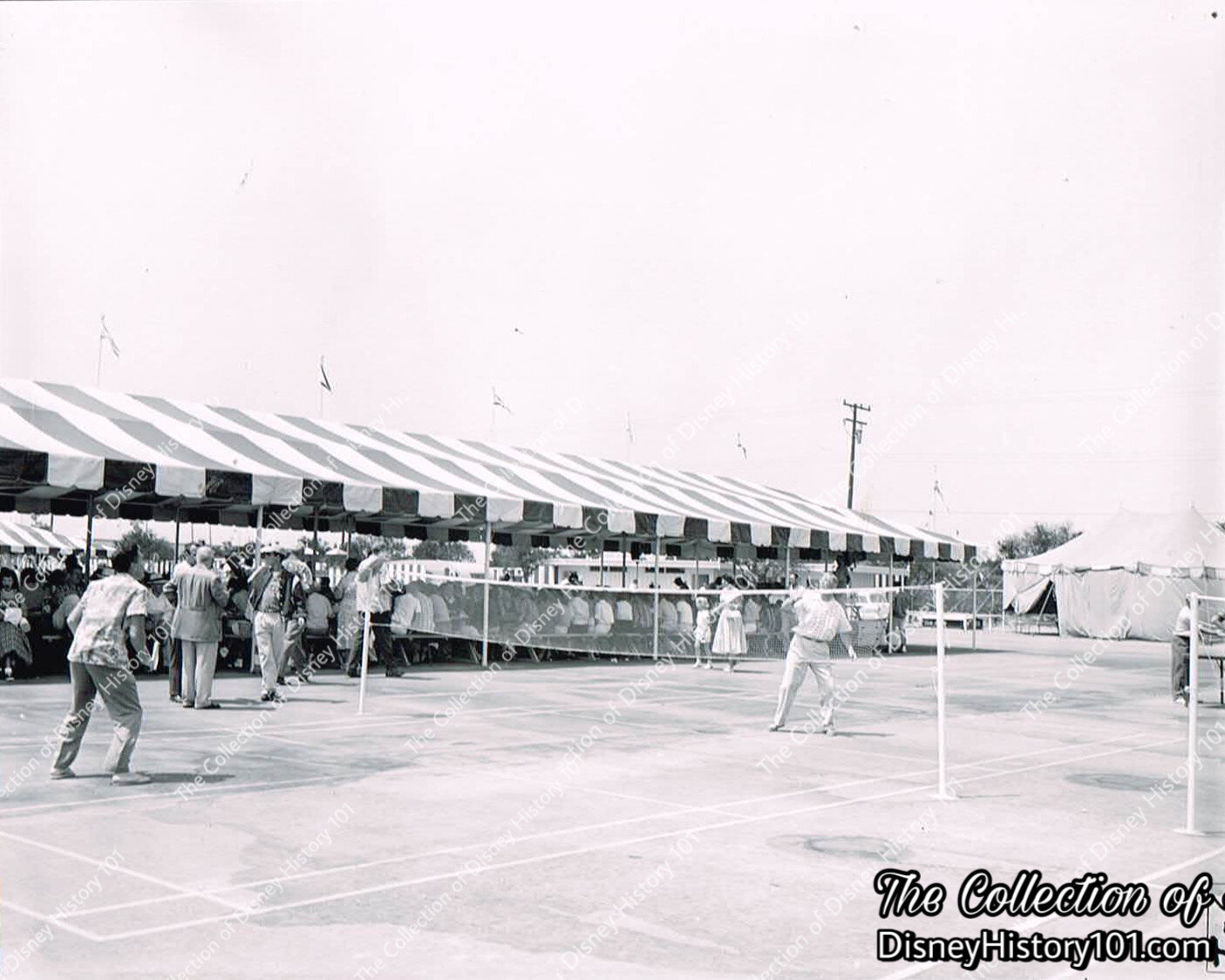
Southern California Gas Company employees and their family members enjoy a volleyball competition.
The Activity Tent or Game Tent was typically utilized for games that required hard surfaces to play on. Guests usually enjoyed games of cards or BINGO here. Guests could also observe the adjacent Volleyball competitions from the shade of the Holidayland Game Tent’s canvas covering.
Southern California Gas Company employees and their family members made good use of the Holidayland Game Tent.
Southern California Gas Company employees and their families enjoy a game of BINGO.
(Southern California Gas Company)
In addition to BINGO, there were also pie-eating contests.
Speaking of games, Holidayland’s vast grassy lawn was home to numerous types of races during its years of operation. Both children and adults competed in relay races, wheelbarrow races, head-carrying races, potato sack races, and many more! Tug-of-war competitions, and games of horseshoes were also held here.
A children’s race at the Tubesales Family Festival.
A children’s race at the Firestone Supervisor Club Picnic.
A children’s race at the Tubesales Family Festival.
Children of all ages engage in a friendly competition at an unidentified event.
A girls’ head-balancing race.
A boys’ head-balancing race.
A mens’ head-balancing race.
Wheelbarrow races were a common sight.
Wheelbarrow races at the Certified & S. Artan Families Picnic.
Another Vintage View of wheelbarrow races at the Certified & S. Artan Families Picnic.
Instructions of another competition are explained to the Electrodata Family Festival game contestants.
Adult guests of the Electrodata Family Festival prepare balloons for another competition.
Once the balloons are ready, the young guests of Electrodata Family Festival await the beginning of the games!
The children of the Electrodata Family Festival await their sacks, as they prepare for a Potato Sack Race.
The children of the Electrodata Family Festival prepare for an exciting Potato Sack Race to begin!
The children of the Electrodata Family Festival “get set” on the “mark” for the Potato Sack Race to commence! In the background, a musician plays the organ aboard one of the circus wagons.
A potato sack race at the Southern California Gas Company Picnic.
A potato sack race at the Certified & S. Artan Families Picnic.
An unidentified competition (perhaps a three-legged race) ensues at the Certified & S. Artan Families Picnic.
A race at the Moore Business Forms Rediforms Picnic.
A fruit rolling race at an unidentified family picnic.
An unidentified competition at the Firestone Supervisor Club Picnic.
An unidentified children’s contest at the Telco Division Picnic.
A men’s competition at the Moore Business Forms Rediforms Picnic.
An unidentified race at the Firestone Supervisor Club Picnic.
An unidentified race at the Firestone Supervisor Club Picnic.
A tug-of-war at the Certified & S. Artan Families Picnic.
A tug-of-war at the Certified & S. Artan Families Picnic.
A tug-of-war at the Certified & S. Artan Families Picnic.
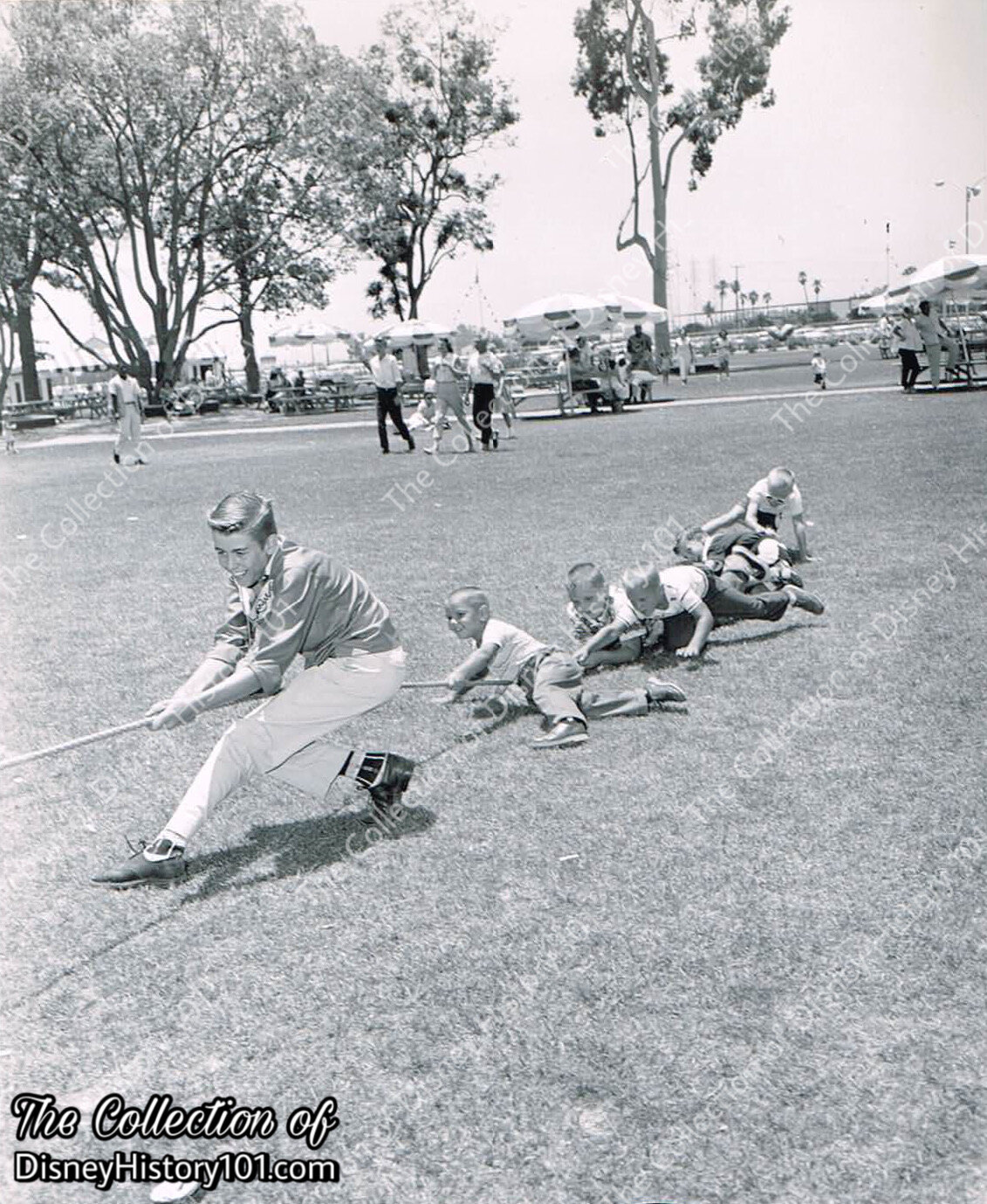
A tug-of-war at the Certified & S. Artan Families Picnic.
Just beyond the entrance of Holidayland, guests were greeted by its most memorable attraction - the Children’s Playground. The Holidayland Children’s Playground was a sand lot enclosed by a fence, and shielded on one side with flowering bushes. The Holidayland Children’s Playground featured several pieces of mostly primary-colored playground equipment featuring mostly galvanized mains (manufactured by American Playground Equipment of Anderson, Indiana, U.S.A.) Near most of the newest commercially available playground equipment devices seemed to have been ordered - a castle-themed piece with slides called the American Castle Glide, American Heavy Duty Swing Sets, the shimmering pastel M-4 Merry-Go-Round (with flowering pennants on poles), a snow-white and vermillion runged Heavy Duty “Horizontal Ladder”, another (ME-3-R) Merry-Go-Round (featuring brightly colored steel crescents above), a Sleeping Beauty Castle-inspired jungle gym, and a most memorable Westward Ho! - themed slide.
These were currently the strongest, most-durable, and safest playground equipment available for schools, parks, and recreation centers across the country. The following testimonials were added to one American Playground Equipment Catalogue published 1957. Many of this playground equipment was made available for order by catalogue. Some of this playground equipment (as the M-4 Merry-Go-Round) was also featured at the neighboring world famous Disneyland Hotel.
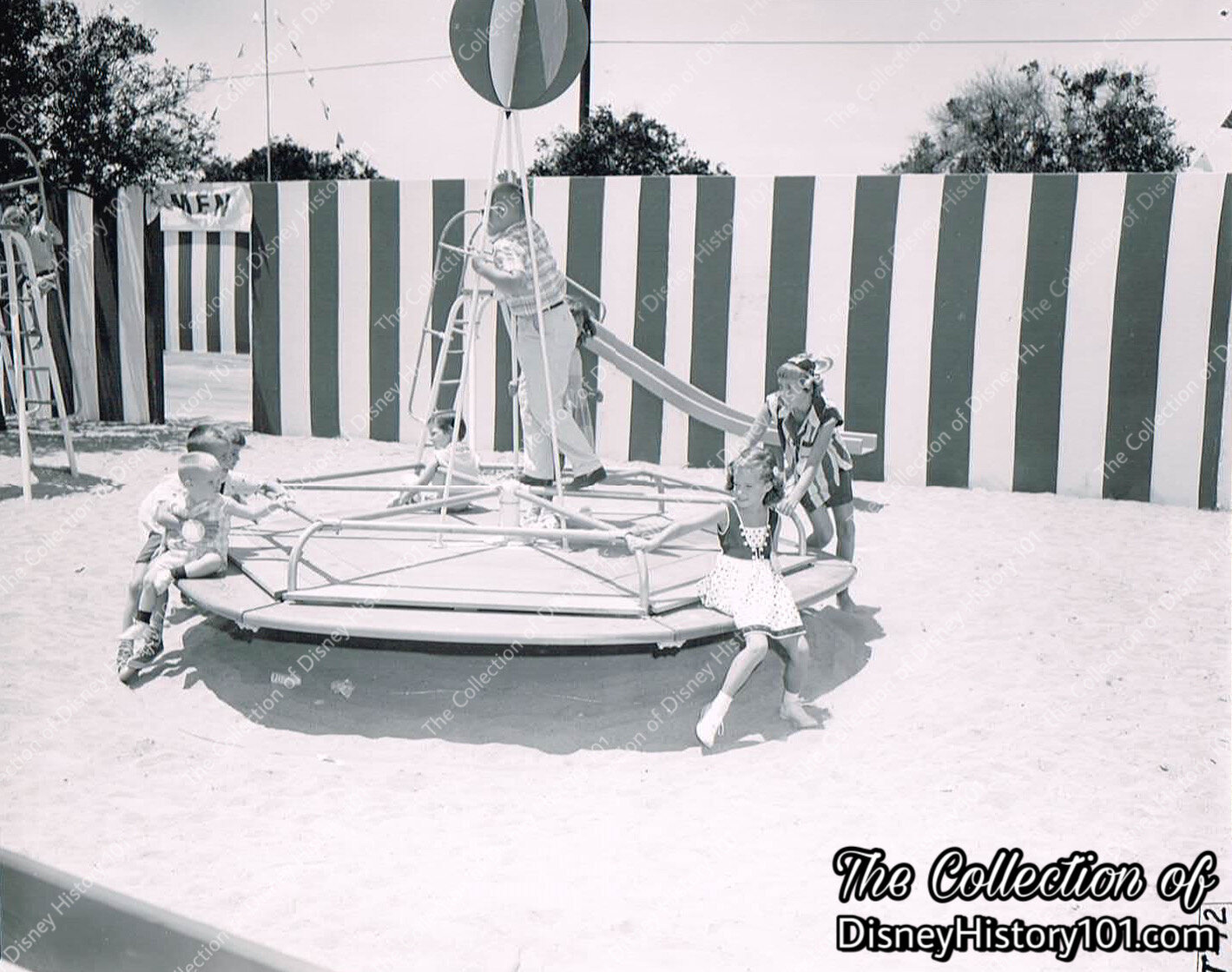
Merry-Go-Rounds (or “Roundabouts”) were common pieces of playground equipment during the 1950s and 1960s, as seen in this memory of the Certified & S. Artan Families Picnic. This model ME-3-R Merry-Go-Round was manufactured by the very same American Playground Device Company of Anderson, Indiana, U.S.A. The Disneyland Hotel and Holidayland models featured additional triangular galvanized spire, triangular steel deck plate, and six colorful half-circles of sheet steel, to “impart some of the pageantry and excitement of Disneyland”. These colorful additions were included among American Playground Device’s commercially-available merchandise of 1957.
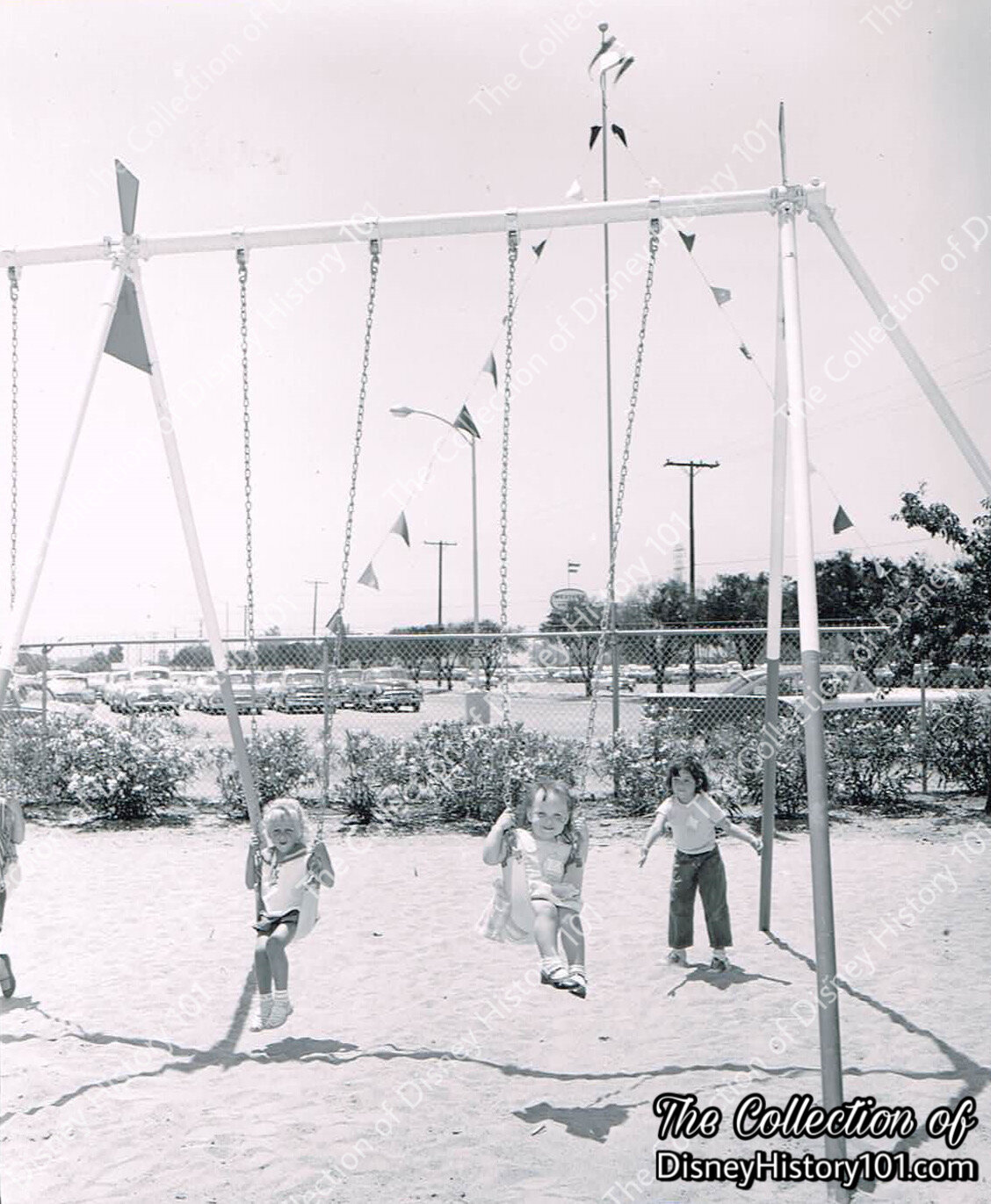
Younger guests of the Certified & S. Artan Families Picnic enjoy the American Heavy Duty Swing Set. As with the other play equipment, colorfully festive geometric forms were added.
The Holidayland Children’s Playground featured several pieces of playground equipment, including two slides (or, “glides” as they were so-called by The American Playground Device Co.). One of these “glides” is most memorable - the custom-built “Westward Ho! Slide”, seen in this preserved memory from the Hallamore Family Picnic. The only other place in the world to have one was Walt Disney Elementary in Marceline, Missouri.
It has been said that Holidayland lacked adequate lighting for nighttime events. Though this may be true, the land did have lighting in the Parking Lot, and near the Children’s Playground, as seen in this preserved memory from a Certified & S. Artan Families Picnic.
Guests of the Certified & S. Artan Families Picnic enjoy the Westward Ho! Slide play equipment, while (it appears) that some children prefer to play around a Mickey Mouse Club Circus Wagon and “The Whiskers Wagon” (seen in the background).
Young Guests were safe thanks to the protection of Disneyland Security Officers.
American Playground Equipment currently manufactured the strongest, most-durable, and safest playground equipment available for schools, parks, and recreation centers across the country. Some of their playground equipment (as the M-4 Merry-Go-Round) was featured in two locations at Disneyland - at both Holidayland and the neighboring world famous Disneyland Hotel. American Playground Equipment first replaced the older equipment at Playland - the Disneyland Hotel’s kiddie playground. After the equipment was successfully installed at Holidayland, a photoshoot was arranged (in which television’s Mouseketeers - Cubby O’Brien, Annette Funicello, Bobby Burgess, Sharon Baird, Darlene Gillespie, Tommy Cole, Doreen Tracey and Karen Pendleton - were featured enjoying the equipment). Guests of all ages enjoyed American Device Company’s playground equipment at both Holidayland and the Disneyland Hotel, and these very models were then made available to public consumers! The following testimonials were added to one American Playground Equipment Catalogue published 1957.
After the equipment was successfully tested at Holidayland, Tommy Walker (Disneyland Inc. Customer Relations Division) wrote Norman R. Miller (American Playground Device Company Vice President) the following words (in a letter dated November 1st, 1957) : “It gives me a great deal of pleasure to tell you how pleased we at Disneyland are with your unique and practical playground equipment. The freshness of appearance as well as the safety and design factors have made your equipment a welcome addition to Disneyland’s Holidayland. Congratulations on making so many young people so happy.”
Don Daley (Disneyland Hotel Resident Manager) wrote Warren P. Miller (American Playground Device Company President) in a letter dated October 11th, 1957 : “We have found this equipment to be outstanding in design and execution, and completely safe in every respect. Since hundreds of children a day make use of the playground equipment, our first consideration, naturally, was to provide them with the best. From literally hundreds of our guests we have received nothing but the finest compliments and we, in turn, want to pass their compliments, together with ours, on to you. We wholeheartedly endorse this equipment and highly recommend it for use in any playground area.”
Clearly, this “cross-pollination” advertising was mutually beneficial to both Disneyland Inc. and the American Playground Device Company!
While the kids played with the American Playground Device Equipment, the adults engaged in competitive sports at the Baseball Diamond.
What would a salute to “the great American pastime” be without baseball? The Holidayland Baseball Field was a regulation softball diamond located near Disneyland’s western perimeter fence and berm. Equipment was supplied by Holidayland. Two seating areas (bleachers) were available (one on each side of the “cage”), as well as two covered sections of each bleacher seating area. Due to the position of the Holidayland Baseball Field in relation to Disneyland’s perimeter fence, few (if, any) “pop fly” balls ever made it over Disneyland’s berm, and in into Adventureland.
A guest takes a swing at the Collier Carbon and Chemical Corp. Picnic.
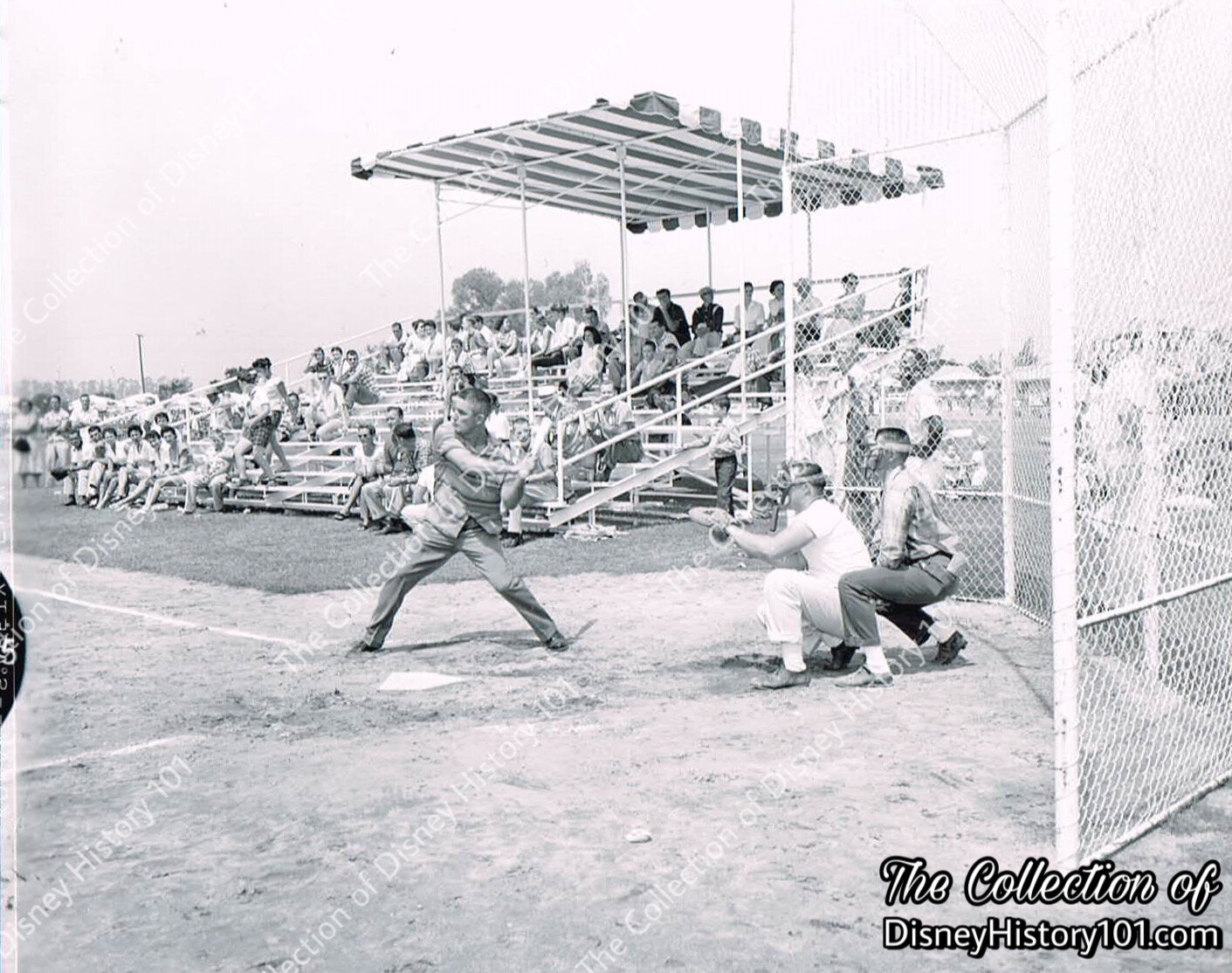
Southern California Gas Company
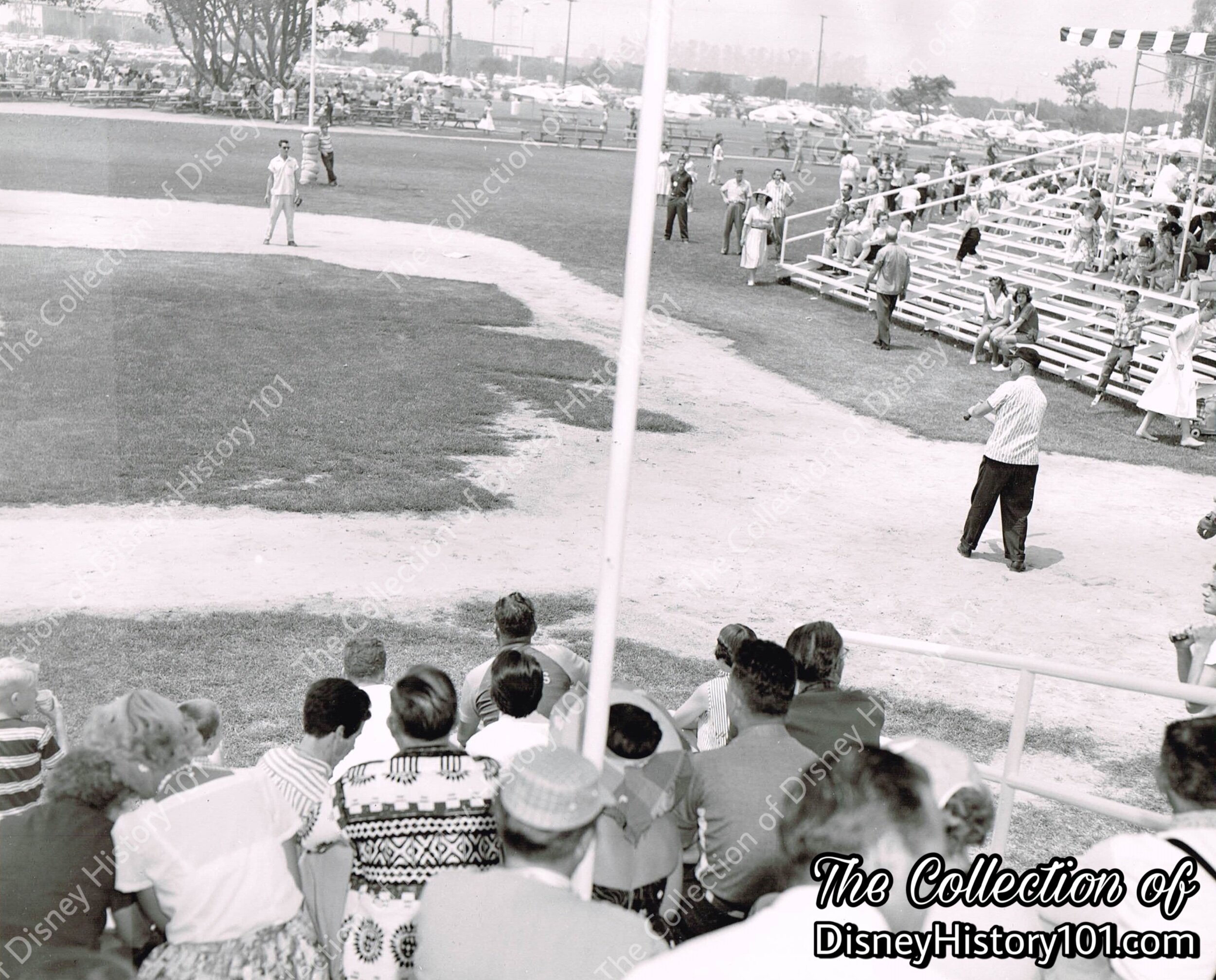
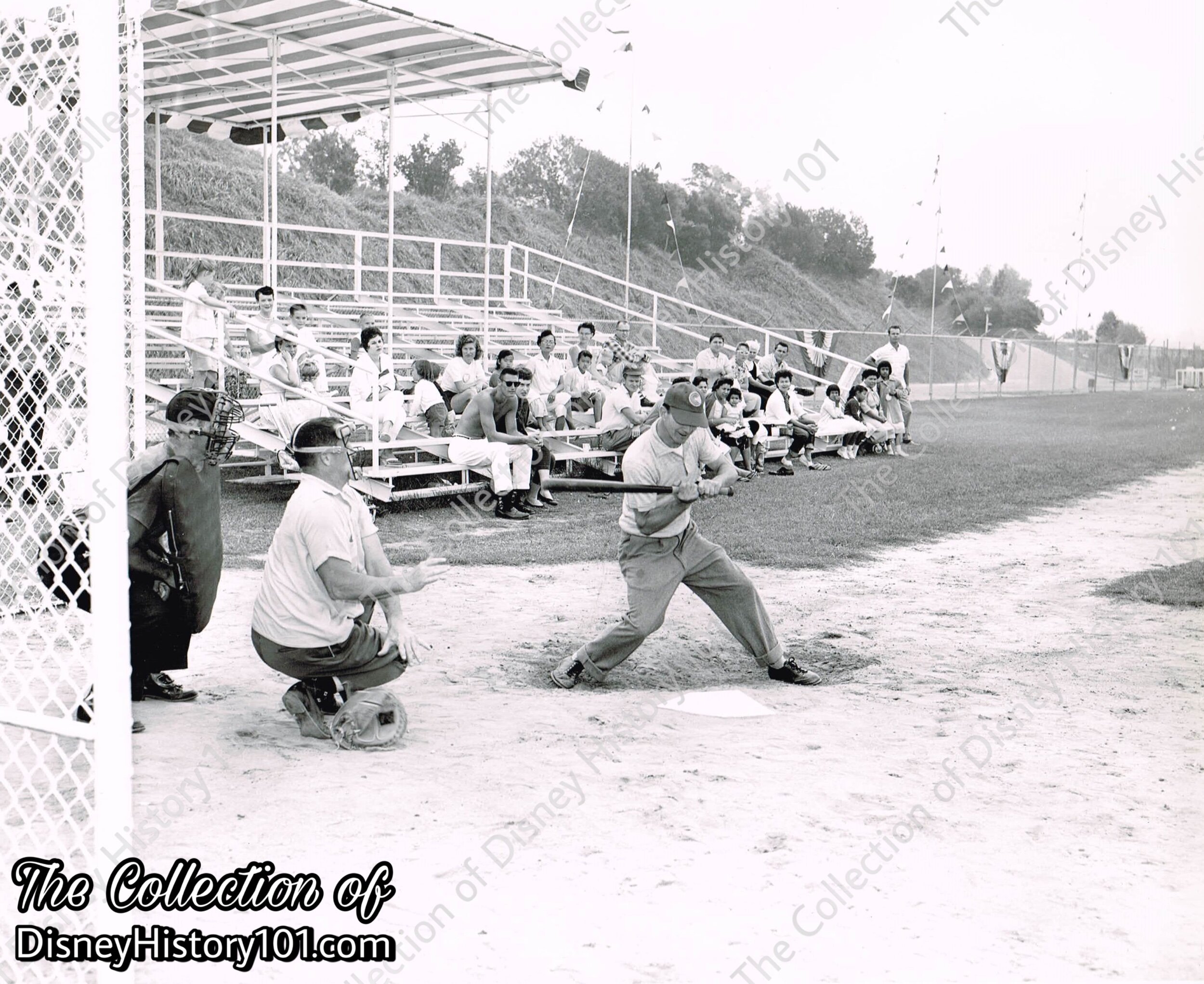
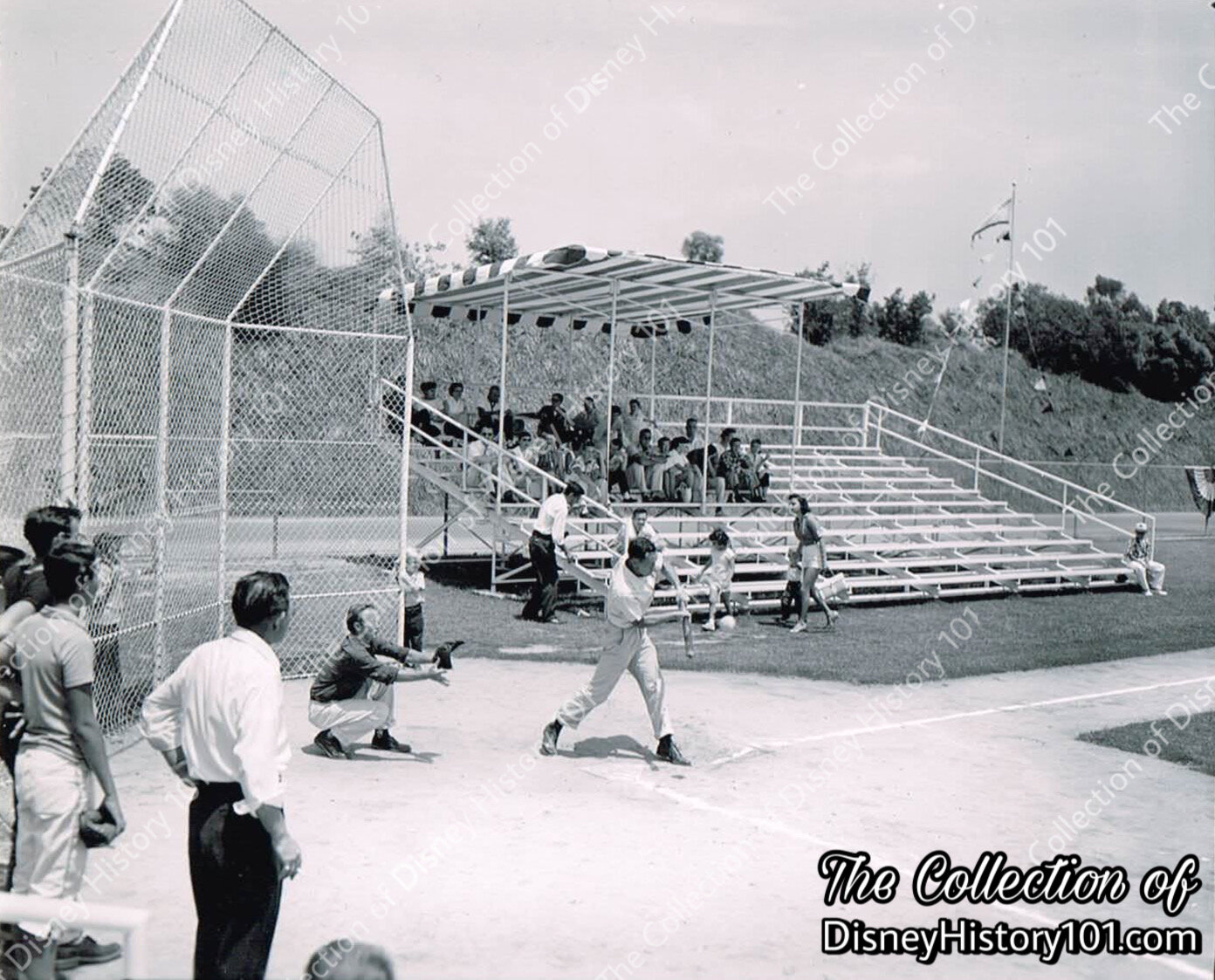
Hallamore Family Picnic
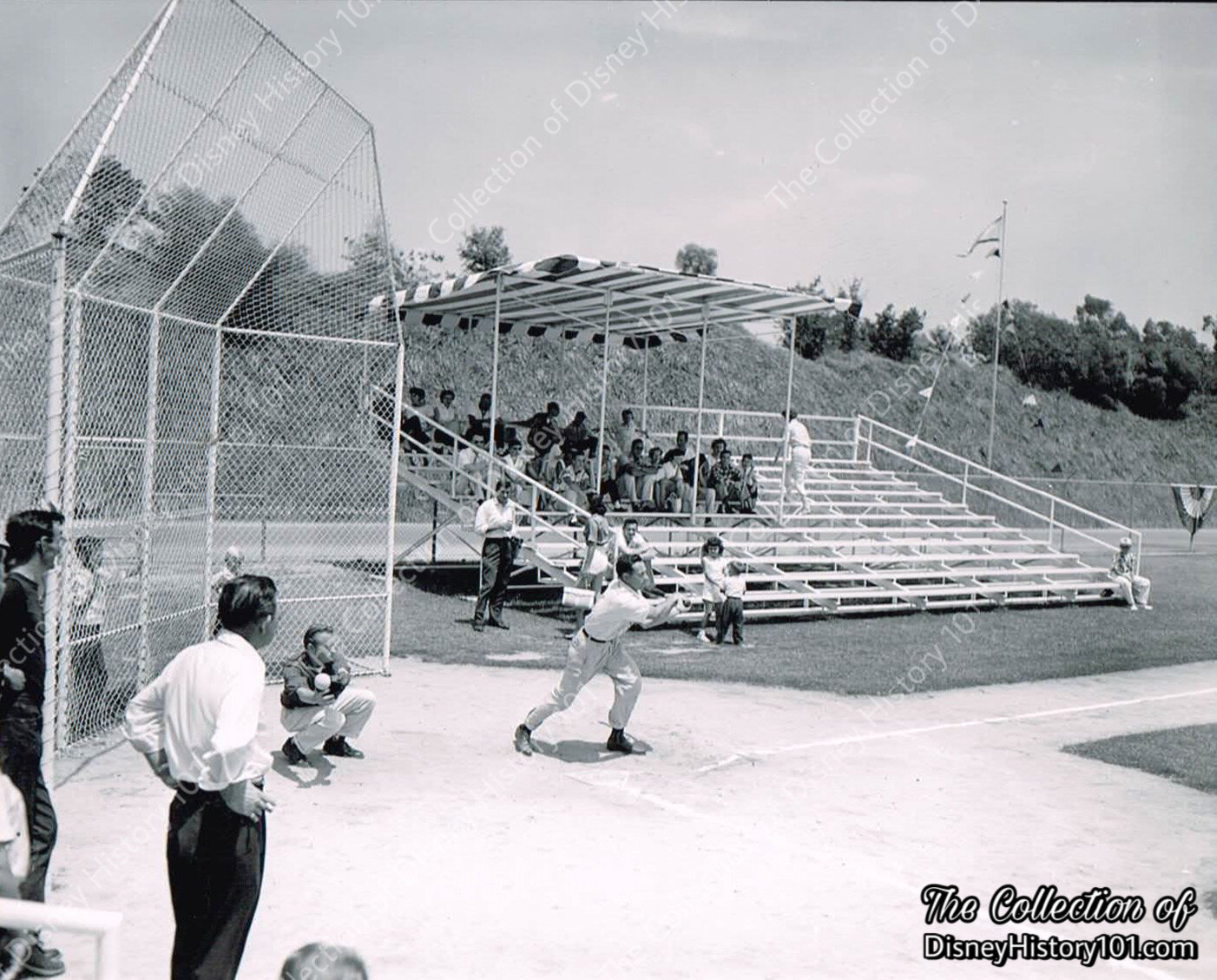
Hallamore Family Picnic
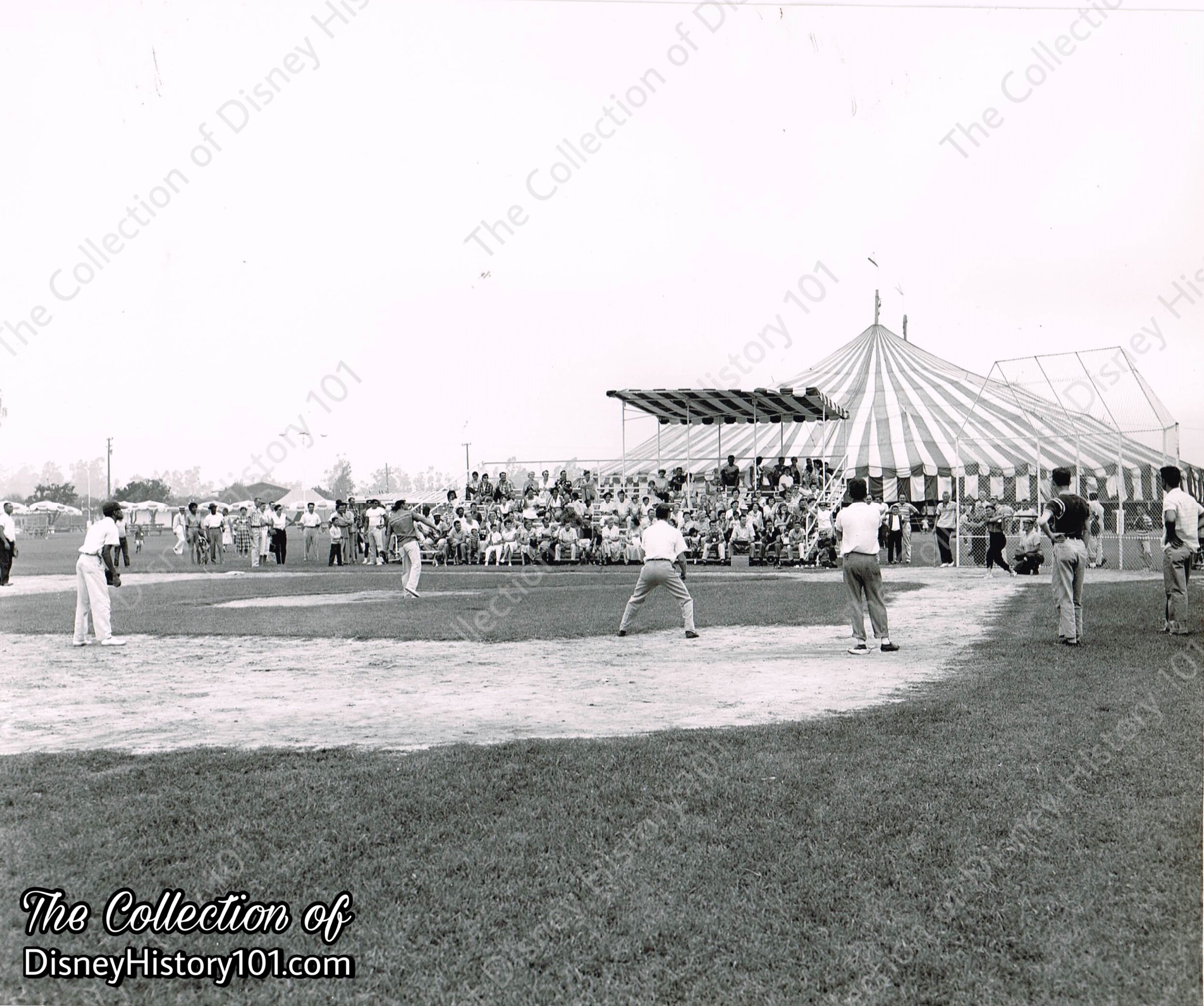
Continental Can Company gathered a good amount of players and spectators for their company party. The bleachers were unusually packed with standing room only, near the “hot corner”.
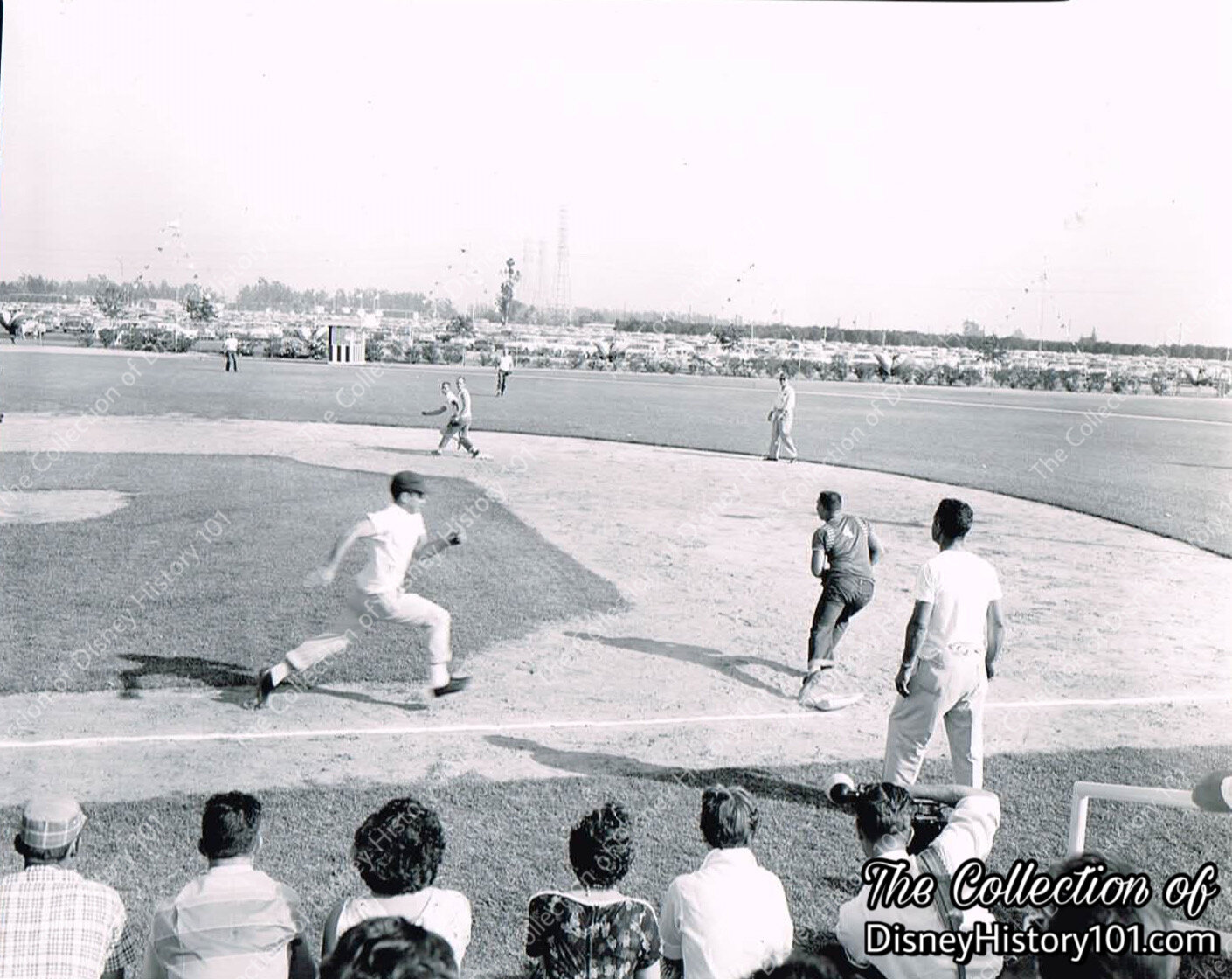
A guest runs for first base at the Collier Carbon and Chemical Corp. Picnic.
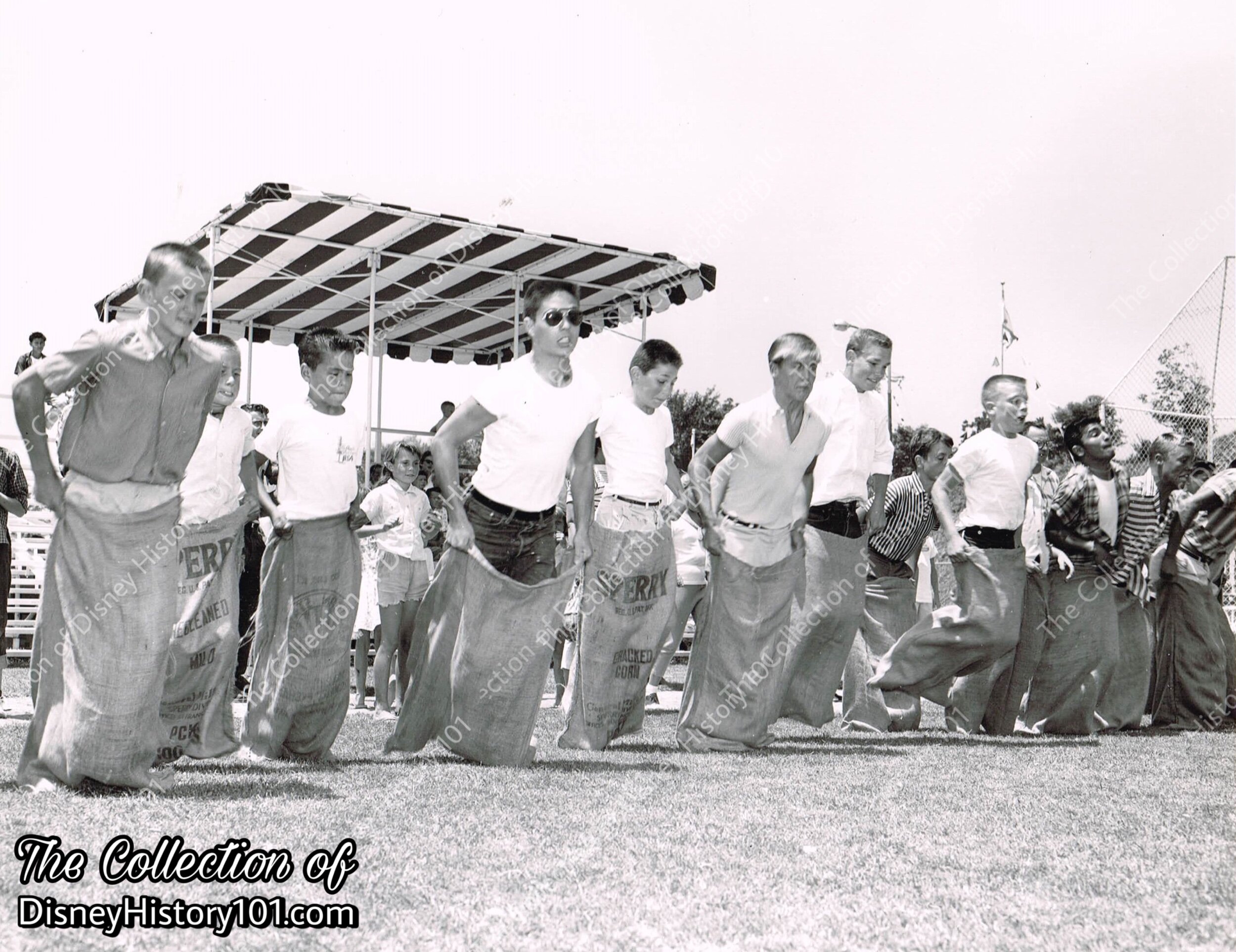
The Holidayland Baseball Field was occasionally utilized for other sporting events and contests, the most popular of which seemed to be the potato sack race!
In the background, you may note the Shell Cab Wagon (one of the old Mickey Mouse Club Circus wagons), which was likely moved out of the Circus Tent while it was in use.
While a game carries on behind them, a couple of young guests hang out on the back of one of two Holidayland Baseball Field grand stands. The young guest on the left seems to be playing with his Holidayland name tag, dangling in the breeze. As there were few trees outside the Picnic Area, this was one of the few places to shade yourself from the summer sun.
As a sidelight, it is fascinating how baseball performed a role around the Studio and at Disneyland. On the importance of the sport, Walt once commented: “Every man is captain of his caree and there must be cooperation all around if he is to get what he wants out of life. There is no better time to begin learning this lesson than when we were young, and I think there is no better means of teaching it than through sports programs as well-organized and supervised as Little League baseball. Baseball is a great teacher of an important secret of living: the giving and taking in the group, the development of qualities and behavior that will stand us in good stead through life in pursuits both personal and professional.”
“The world’s largest candy-striped circus tent” (previously home to the Mickey Mouse Club Circus and Keller’s Jungle Killers) cost more than $30,000 to construct. The 19,700 square-foot tent (or, approximately 185 feet by 130 feet), located along Disneyland’s western perimeter fence. The giant circus tent can be seen located behind Main Street on post card #0001.
Though the “big top” originally seated 2,500 guests, the now 4,000 guest capacity Circus Tent was utilized for showcasing Holidayland’s main acts on the Entertainment Stage. The corporate and secular organization events often featured a variety of Disneyland performers from this stage, including the Indian Village representatives, the cast of the Golden Horseshoe Revue, the Strawhatters, or the Mexican Village’s Gonzales Trio!
Tables and benches for seating 2,400 people at one time, we’re all shaded or under the “Big Top!” The tent was heated, which was perfect for winter season events held inside (as the Mickey Mouse Club Circus of 1955). The floor beneath was paved and glazed for square-dancing. Since the days of the Mickey Mouse Club Circus, the tent was advertised as being “heated for your comfort.” Now, guests could enjoy meals and entertainment in the cold hours of the fall evening.
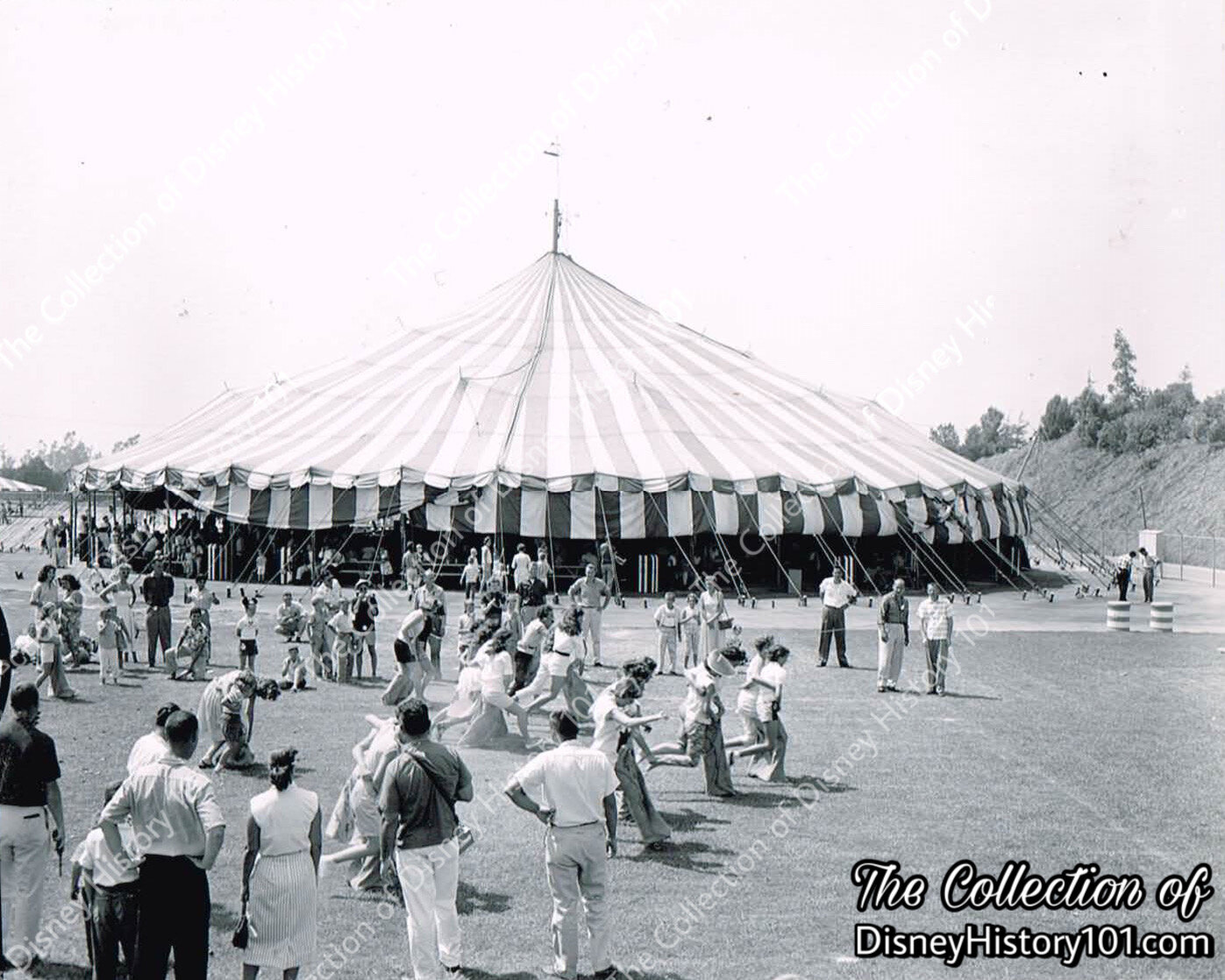
Competitors race at an event of the Hallamore Family Picnic.
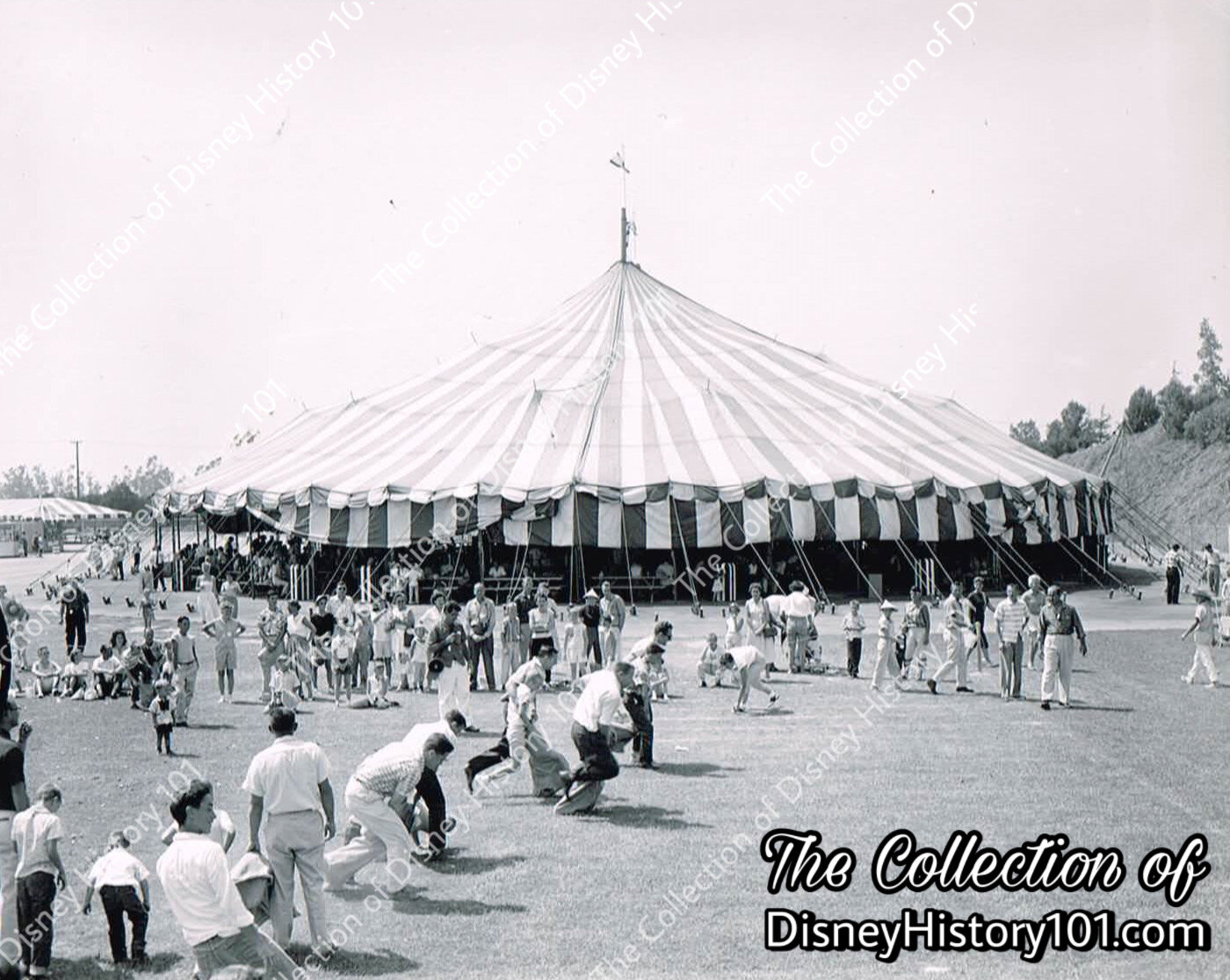
Hallamore Family Picnic
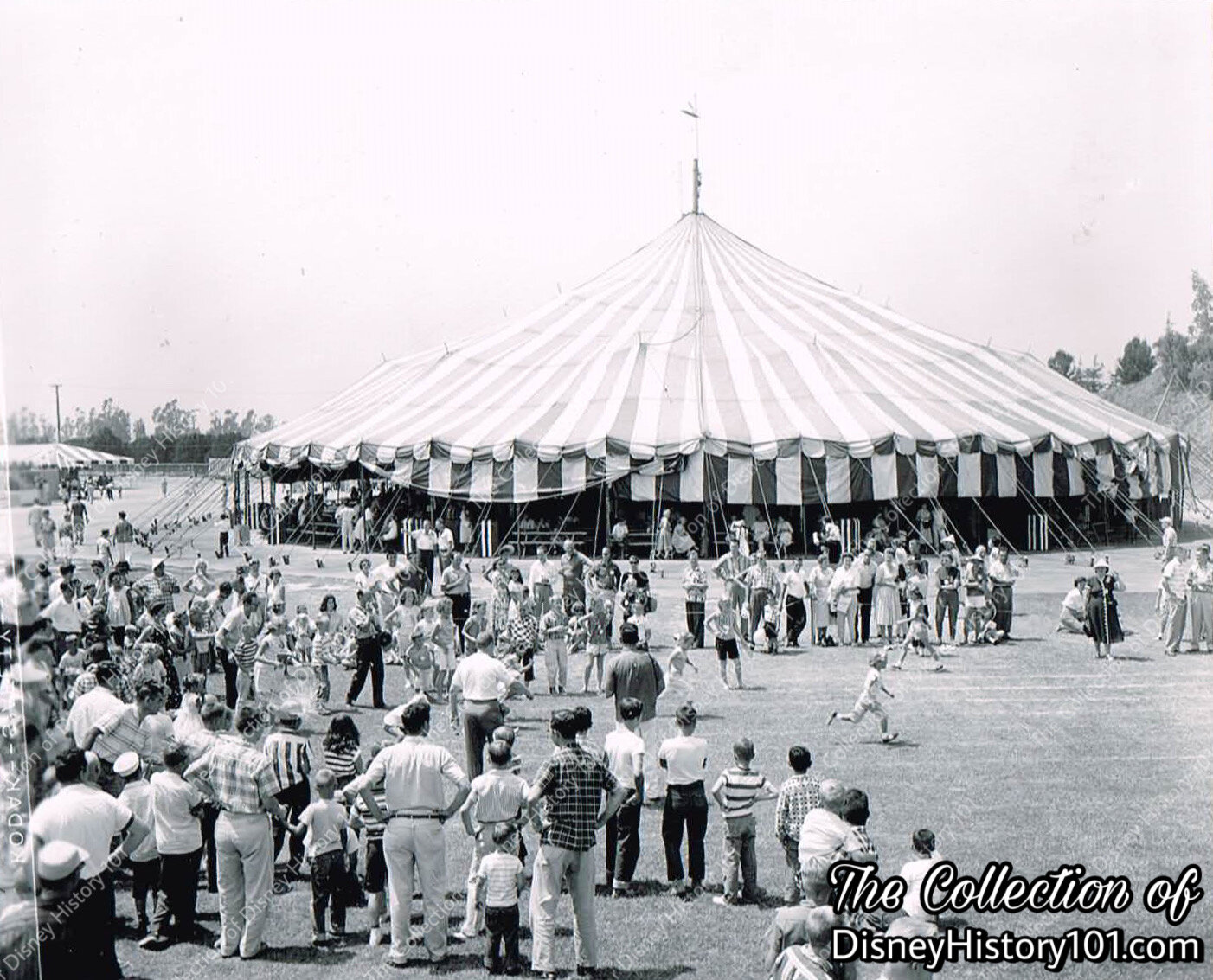
Spectators assemble around the field of a Hallamore Family Picnic game.
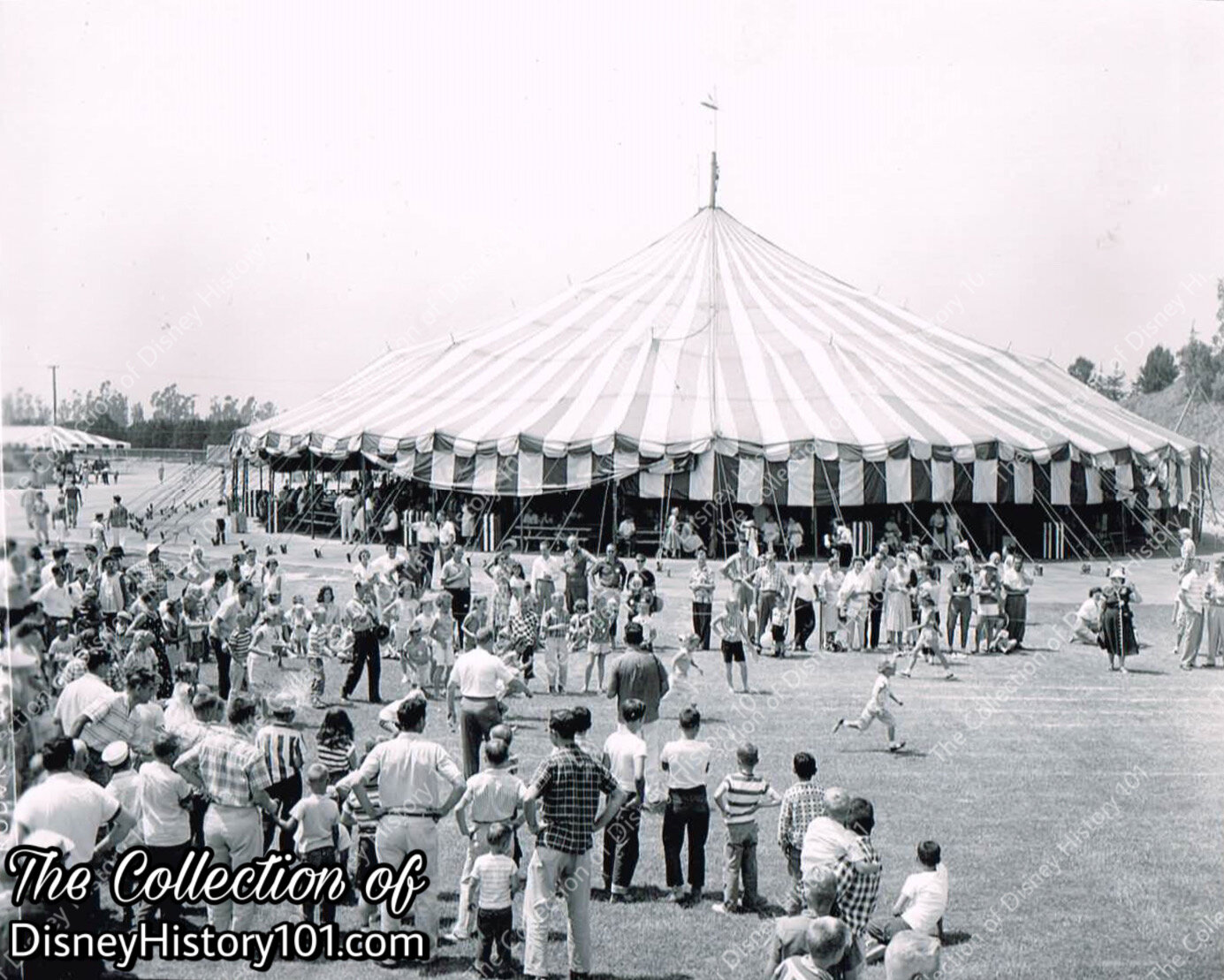
Hallamore Family Picnic
This was a popular location for square dancing. These Junior Chamber of Commerce members enjoy a refreshing cup of Pepsi-Cola while they raise their hats and cheer!
This Pepsi-Cola sponsored event (in honor of the youth organization Jaycees) featured some of the world’s finest music performed by the Disneyland Marching Band. Vesey Walker and the Disneyland Band were no strangers to performing in “the world’s largest candy striped tent” as they performed in the venue when the Mickey Mouse Club Circus (and the original incarnation of Holidayland) was located between Fantasyland and Tomorrowland.
This unidentified event featured a Dance floor and stage inside “Big Top” to host pageants of sorts.
Hallamore Family Picnic
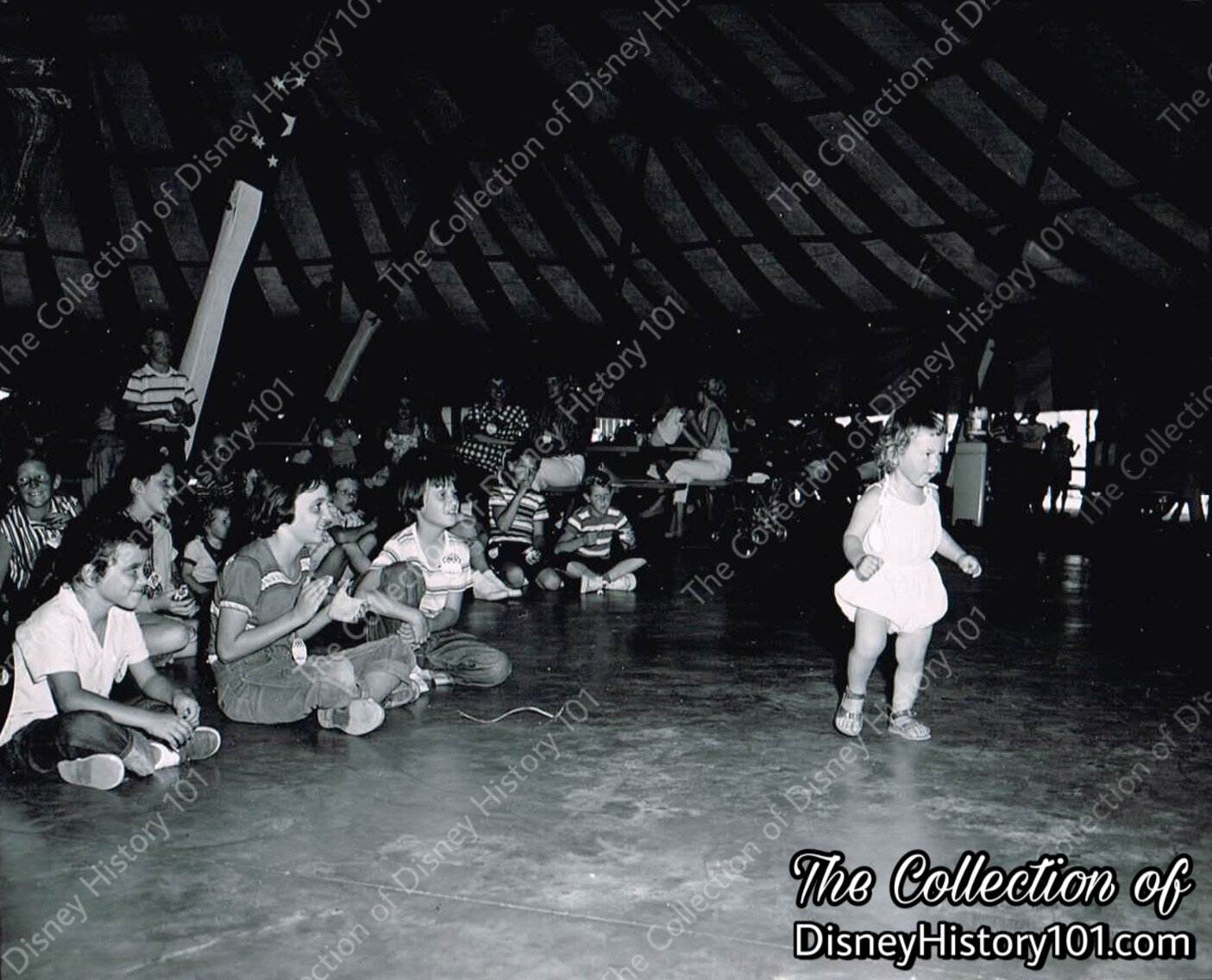
Hallamore Family Picnic
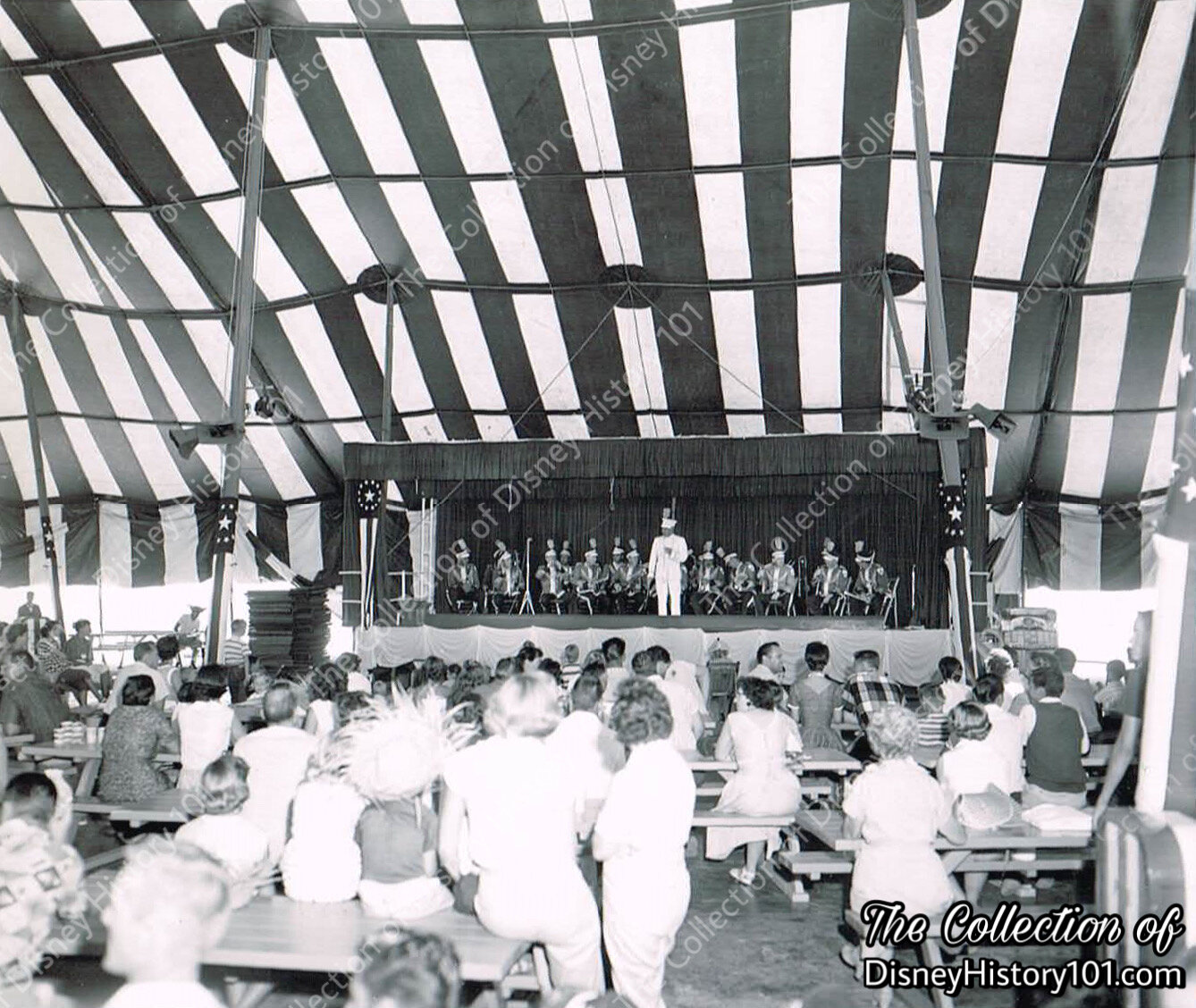
Note the speakers above in this Hallamore Family Picnic photo. Holidayland had a complete public address system.
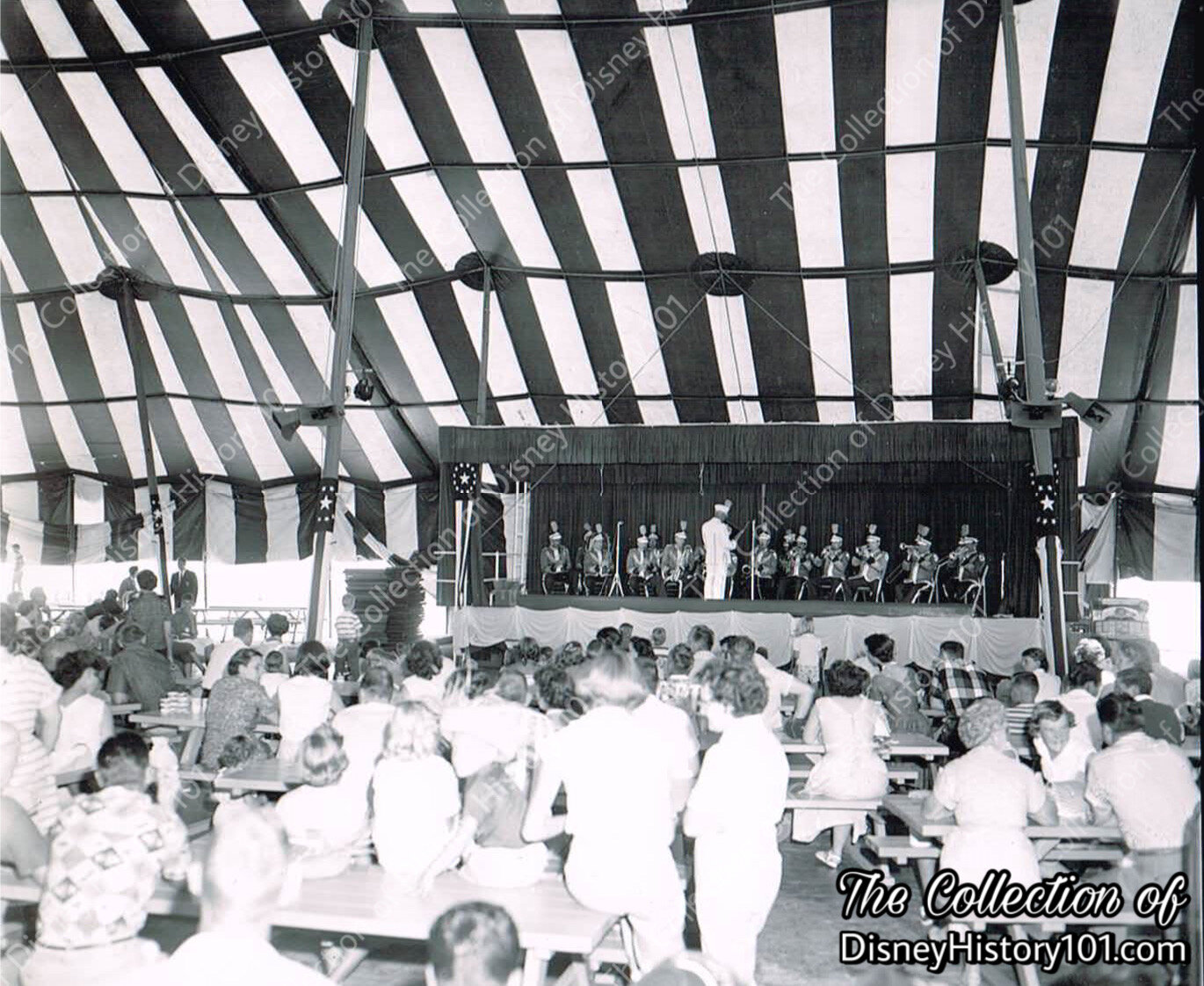
Hallamore Family Picnic
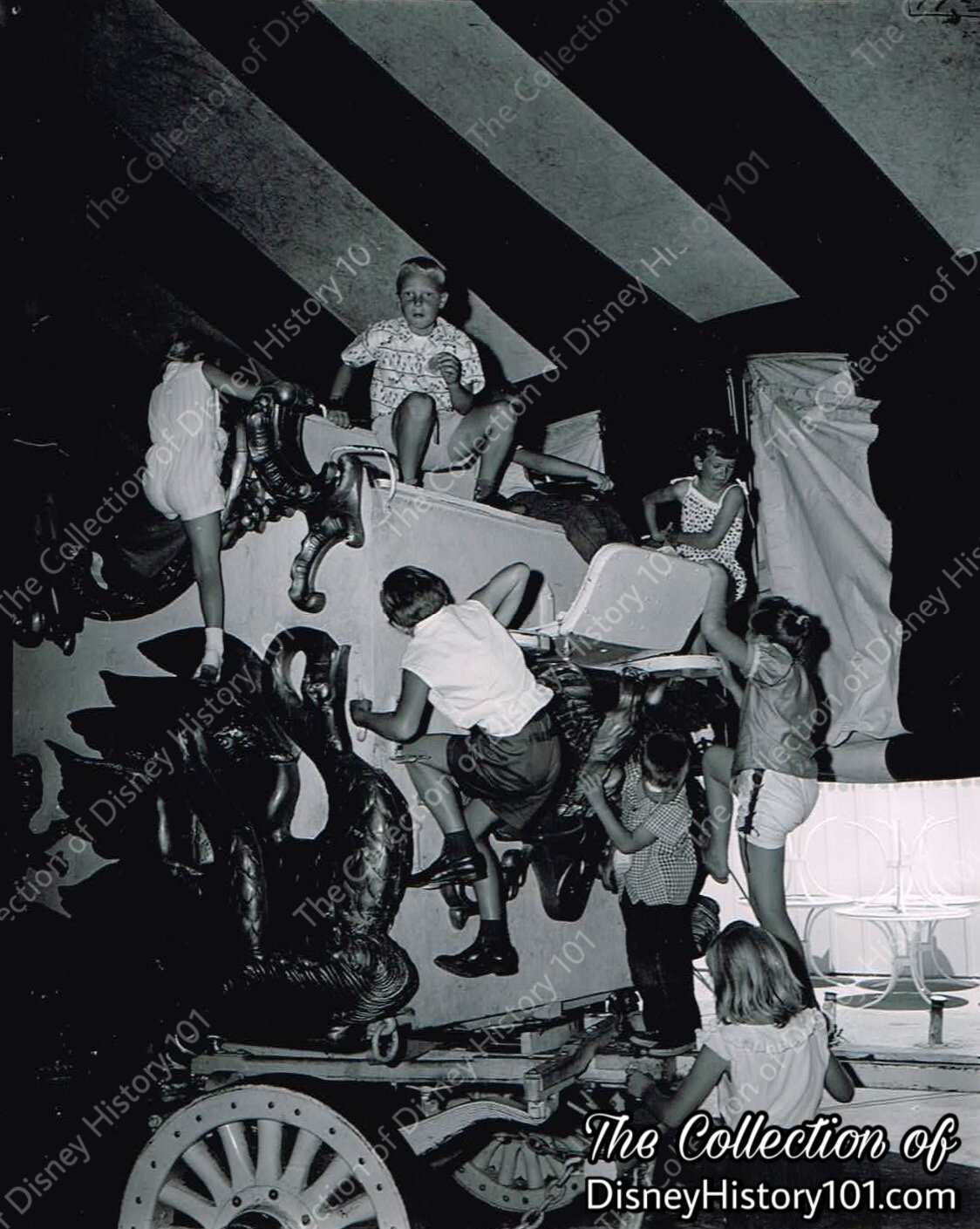
Younger guests were also occasionally found photographed climbing on what is clearly not playground equipment - the restored antique gilded wagons previously utilized in the Mickey Mouse Club Circus. Here, the younger guests climb aboard the old Bradley & Kaye Swan Band Wagon at the Certified & S. Artan Families Picnic. The Nickel Tour comments on the subject: “The wagons. unfortunately, were quickly torn to pieces at the hands of rampaging kids.”
Sometimes the Circus Tent was used as a dining area. This memory of the Collier Carbon and Chemical Corp. Picnic features an unidentified woman wearing a costume reminiscent of the “Harvey” girl costume worn by the Main Street Train Station Concessions Manager.
Collier Carbon and Chemical Corp. Picnic
Collier Carbon and Chemical Corp. Picnic
Collier Carbon and Chemical Corp. Picnic
A variety of live Disneyland entertainment was available to entertain Guests throughout the day. The Gonzales Trio (a regular Frontierland Mexican Village act) could be requested, and typically performed during large parties, as seen at the Collier Carbon and Chemical Corp. Picnic. During this era it was common to enjoy such popular Disneyland acts and performers (as Marshall Lucky and Sheriff Dodge, the Indians (of the Indian Village), the Disneyland Band, and the Strawhatters) in Holidayland. They could be requested and rented for large events. If you sold a minimum number of tickets to your picnic, the Mouseketeers would even perform from the Holidayland Stage.
Not far from the Swan Band Wagon, The Gonzales Trio creates the festive atmosphere of the Collier Carbon and Chemical Corp. Picnic!
Note the “tent removed.” The Nickel Tour commented: “Holidayland's first season ended with one of those mysterious omens we love so much... the infamous Santa Ana winds that howl across Southern California each fall. The winds attacked the candy-striped circus tent with a vengeance, literally tearing it to shreds.”
The small structure (rendered in pencil) may have been Disneyland, Inc. Job #032-50-47. By 1958, Disneyland, Inc. opened and closed Job #032-50-47 for the installation of an 81’ x 16’ chain link and canvas storage unit in Holidayland. After totaling costs by Disneyland and the Studio (for General construction, Labor, Outside purchases, Studio Overhead, Roof and front panel - Storage unit) and Sub Contracts (including Guardian Fence), the entire project cost $658.78.
After the festivities were finished, guests were encouraged to visit Disneyland. A rather large Ticket Booth structure can be seen (next to the Coffee Kiosk) in these preserved memories from the Moore Business Forms Rediforms Picnic.
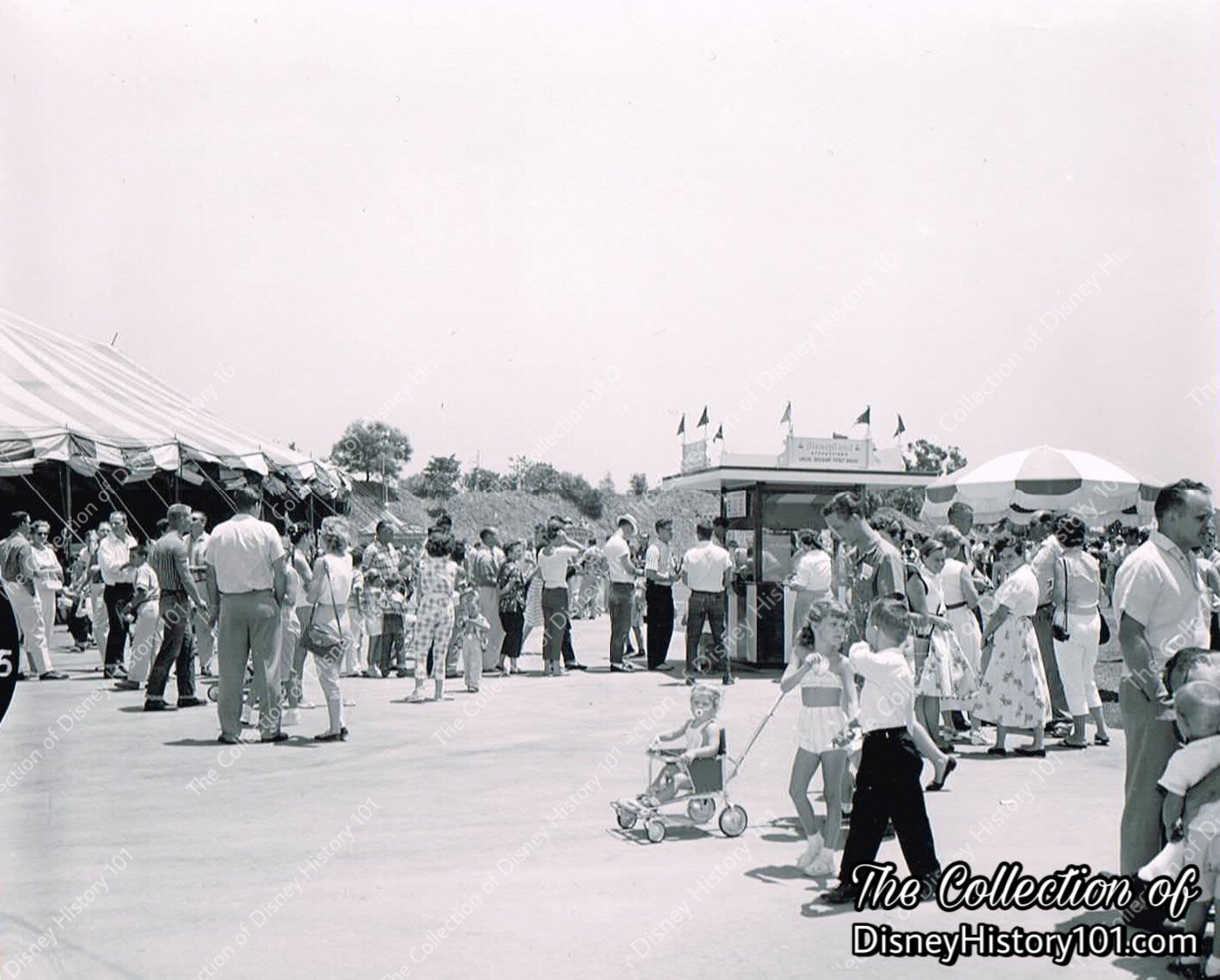
In a paved and level area of Holidayland (near the Circus Tent), stood a Disneyland Ticket Booth, as seen in this memory captured at a Certified & S. Artan Families Picnic.
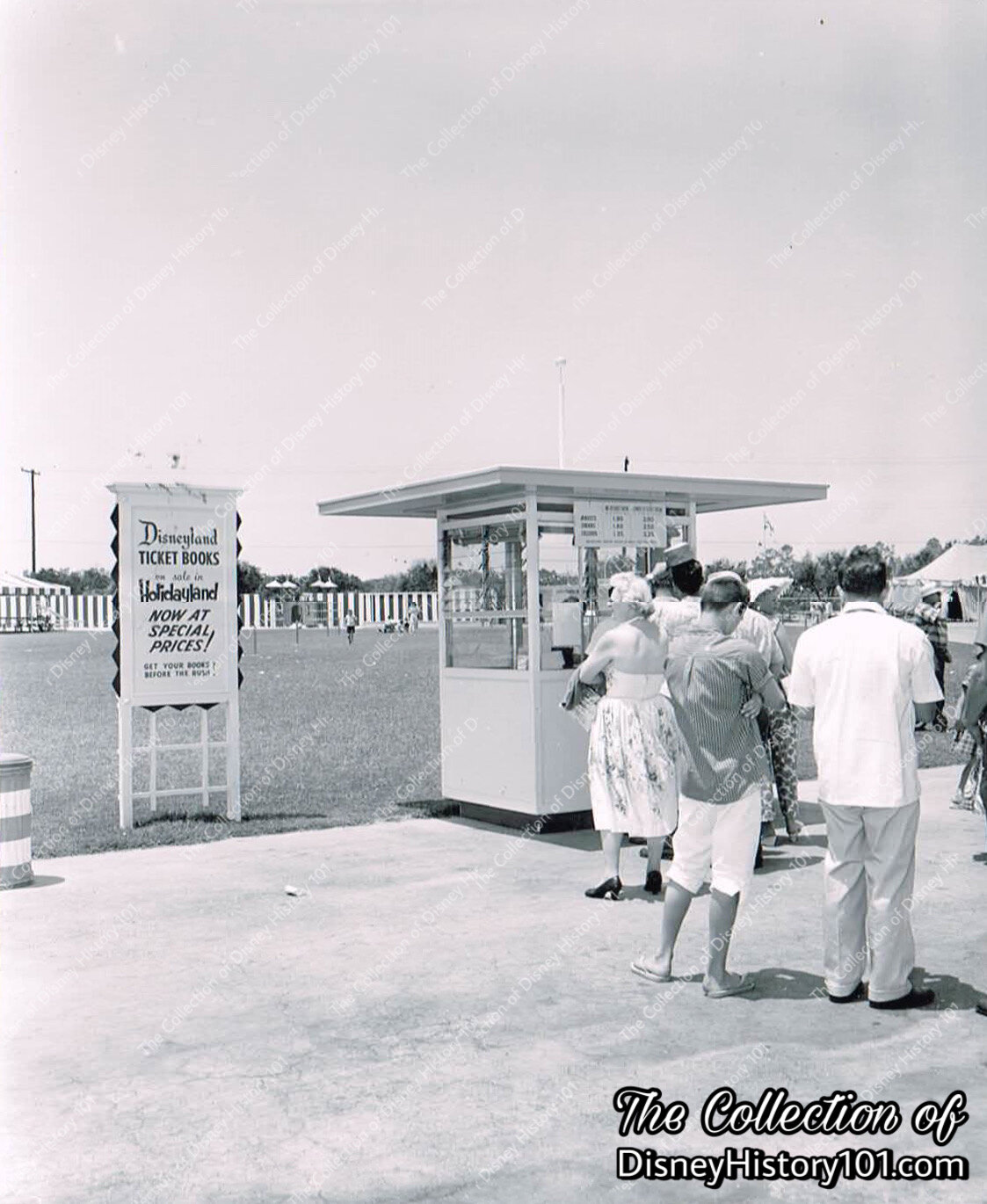
According to “The Nickel Tour”: “Guests at Holidayland could see the Santa Fe & Disneyland Railroad trains traversing Frontierland, and could hear the blast of the Mark Iwain's whistle as it steamed along the river.” However, “admission to the Park was not included with the picnics… And that was a big mistake. ‘It was a terrible concept that failed miserably,’ recalled Milt Albright, Holidayland's original manager. ‘Walt whipped the guys responsible for it, and, unfortu-nately, I was one of those guys.’”
Soon, in 1958, Milt Albright founded the Magic Kingdom Club, which “offered discounts and special admission tickets to card holders. At its peak, the Magic Kingdom Club boasted nearly 6 million members associated with more than 30,000 companies worldwide.” These Magic Kingdom Club memberships were also sold (through the Holidayland Ticket Kiosk), to employees of companies that utilized Holidayland for events. Many Holidayland guests (like these Moore Business Forms Rediforms Picnic guests pictured above) take advantage of the Disneyland Big “15-Ride” Coupon books at “special pricing” - a 10 % reduced price of $3.60! After the founding of the Magic Kingdom Club brought many more visitors to Disneyland and Holidayland, something amazing followed!
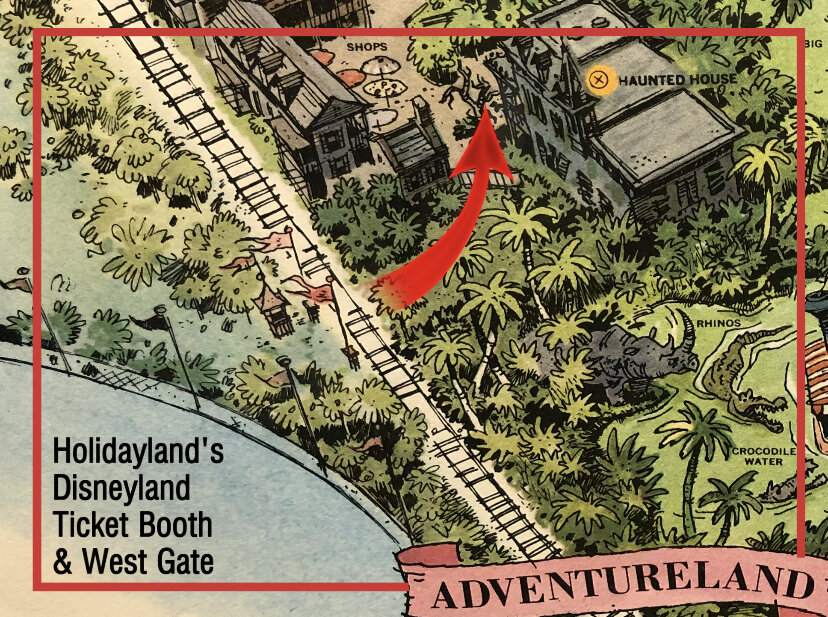
When Disneyland was being designed, Walt intended for only one main entrance in which all guests would pass. Now, an adjoining “entrance from Holiday Land to Disneyland, to be used exclusively by picnic and convention groups,” was part of the original plans, according to the “Disneylander” (May, 1957). However, the first Disneyland Dictionary (printed October of 1959) made no mention of this entrance stating: “There is only one Guest Entrance - it is located at the South end of the Park, facing the Parking Lot.”
When it was installed, such a gate allowed guests (with Disneyland tickets) to enter Disneyland through the “Special Gate” (as it was labelled on some tickets) located near the Santa Fe & Disneyland Railroad Frontierland Station. From there, guests headed over or through the tree-lined berm, and came upon Magnolia Park, just southwest of the Rivers of America. The author of The Nickel Tour profoundly remarks on this subject: “This short-lived deviation marks the only time in its history that Disneyland has ever had a second guest entrance.” Even with the coming New Orleans-inspired additions to Frontierland, it seems that the idea of maintaining Holidayland’s own Disneyland Entrance Gate (the Holidayland Gate) was briefly entertained.
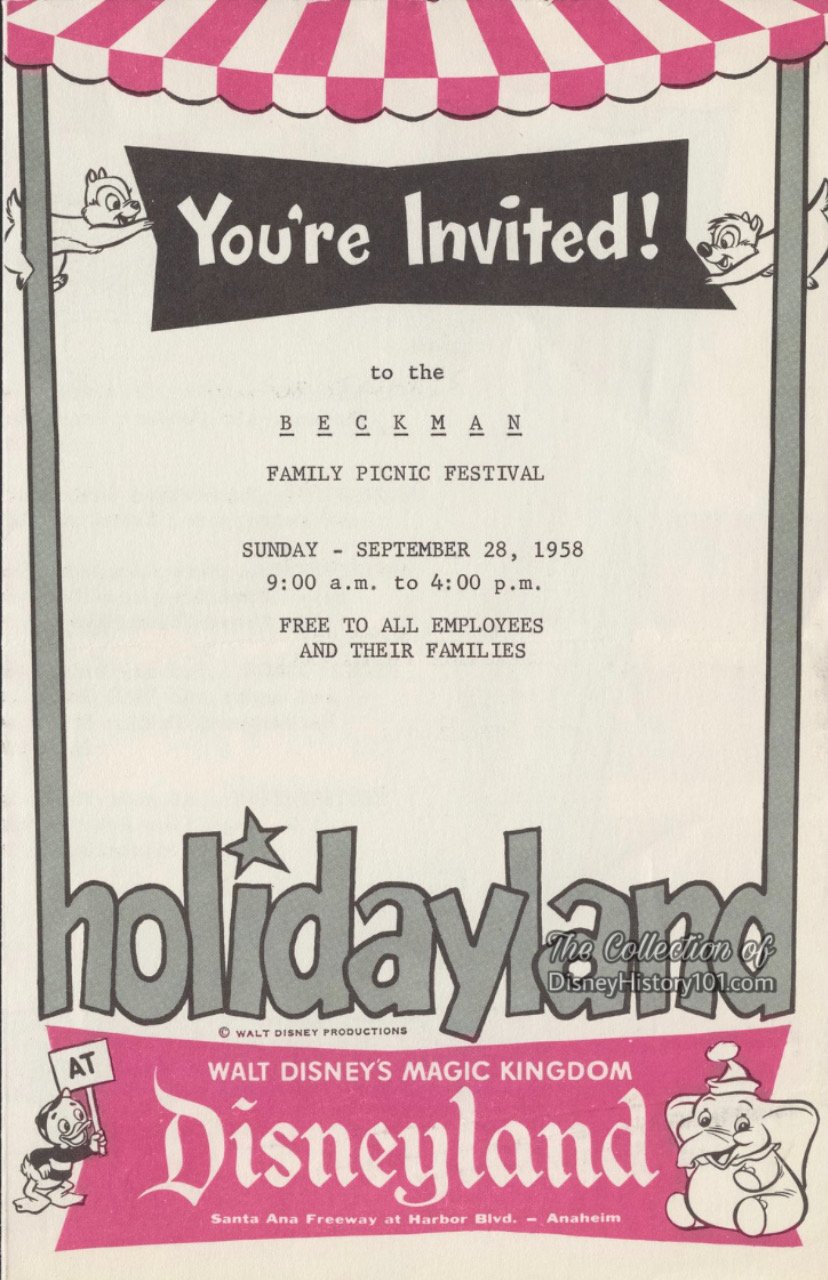
By 1958, a structure (located on West Street) once known as the “Brown House,” had a Holidayland sign hung over it and was used by the Holidayland staff like Dorothy Manes (Youth Activities). The staff was in charge of scheduling all youth groups through college age, such as Boy Scouts, etc., into the Park. Conventions, tours and adult parties were brought into the Park and Holidayland by Walt Roberts and staff. Young men in the Industrial program were bringing people from all over Southern California into Disneyland via the 20-ride ticket book which was available to any organization - as well as booking picnics into Holidayland for 1958 and as far ahead as 1959. This program was being guided by Don Norman. During 1958, the Brown House staff had set a goal of 582,000 Disneyland quests in the current year.
The year 1958 brought the “Kid’s Amateur Dog Show” to Holidayland (during March of 1958). Another big organized event occurred when Disneyland and Holidayland hosted a massive 3-day event - the Fifth Annual California Square Dance Convention, held on April 11, 12, and 13, 1958. The members of 49 separate clubs belonging to the Western Square Dance Association attended the convention. Workshops and various types of dances (both round dancing, and square dancing) were held in Holidayland’s various tents (the Main Tent and the “Round Dance Tent”) as well as on the surrounding grounds of Holidayland. This was a huge event attended by Mr. and Mrs. Goodwin Knight (the Governor and his wife) among other notable individuals.
Owing to some of the guest capacity, an 8’ x 16’ chain link and canvas Storage Unit was added during 1958, at the cost of approximately $808.39 (between Disneyland and the Studio).
Beckman Instruments, Inc. held their Family Picnic Festival on September 28, 1958. This was the peak of Holidayland! By September of 1958, Holidayland Park assets were appraised at a total value of $158,743. The figure included $108,749 of land improvements including landscaping and paved areas ($88,865), an entrance marquee ($6,199), additional fencing ($6,858), and canvas shade control ($6,827). The figure also included a food catering building ($20,627), public rest rooms ($20,274), ticket booths ($4,087), and props and dressings ($5,006). Sometime later, an 8’x6’ chain link and canvas storage area (Disneyland Inc. Job #032-50-47) was constructed by the Studio and sub-contractor Guardian Fence (at a cost of $658.78).
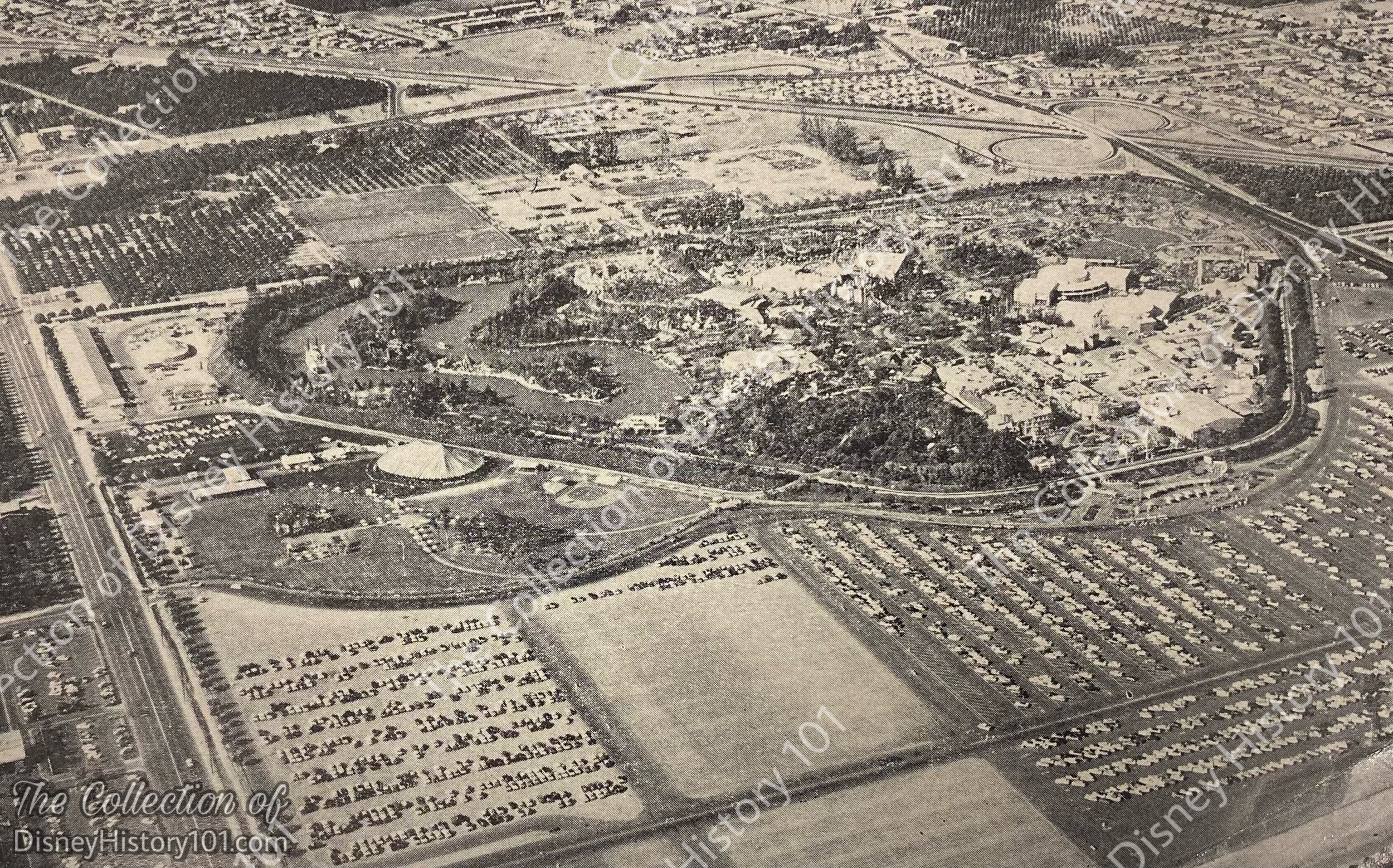
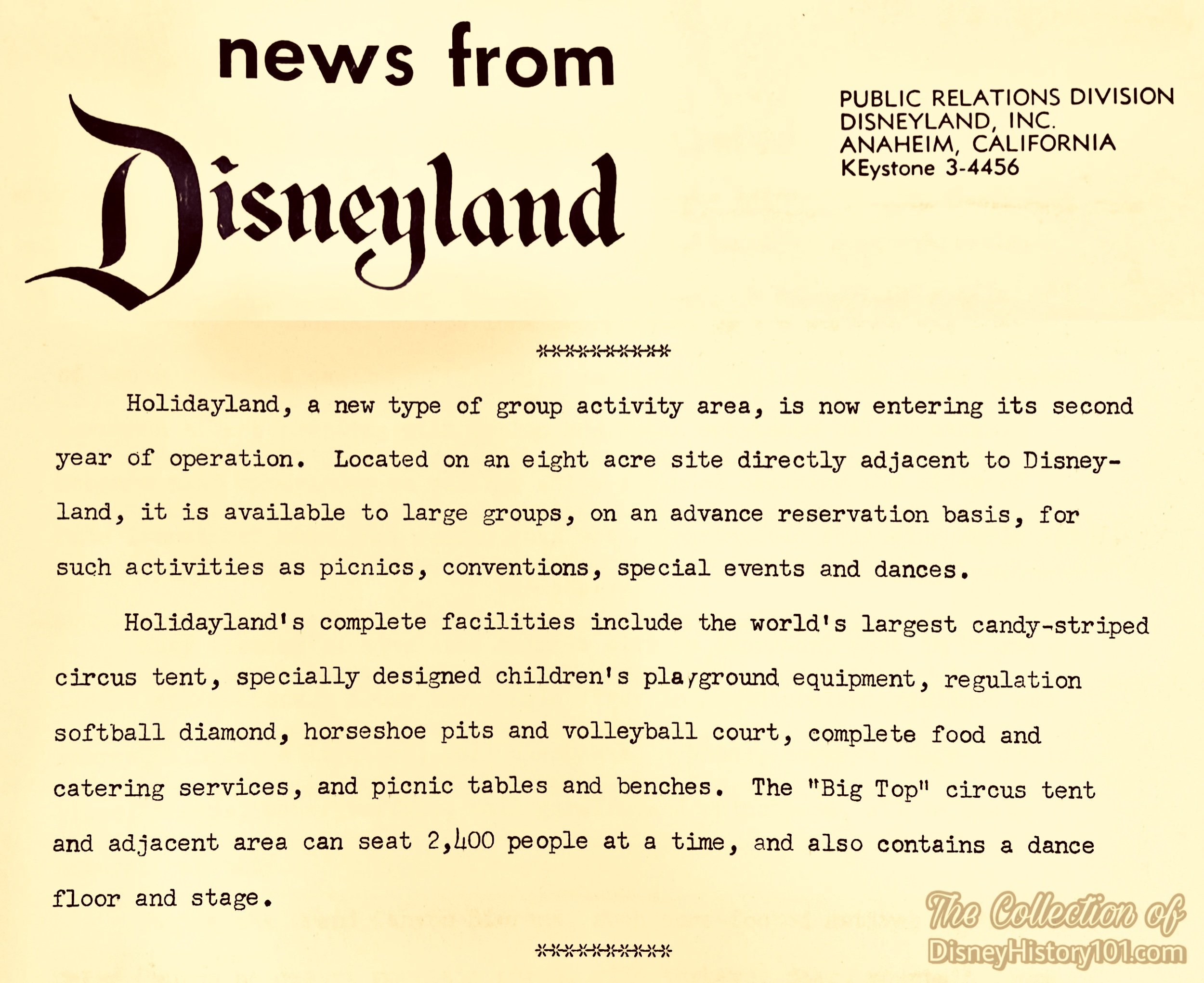
Holidayland celebrated “Disneyland ‘59.” A banner was draped across the Holidayland stage within the Circus Tent. The Al Malaikah Shriners and their families had a picnic in Holidayland and a parade in Disneyland (on May 23, 1959). The Road Lords’ organization held the “Car Club Day & Autocade” - their first (and only) annual show held at Disneyland - on September 5, 1959. Participants drove their auto entries down Main Street U.S.A., before heading to Holidayland for exhibition, judging, and an awards ceremony under “the big top”. This event was well-chronicled and published in “Rodding and Re-Styling” during March of the following year (and excerpts of that article can be seen below). This is perhaps the only periodical to memorialize Holidayland in such a pictorial fashion!
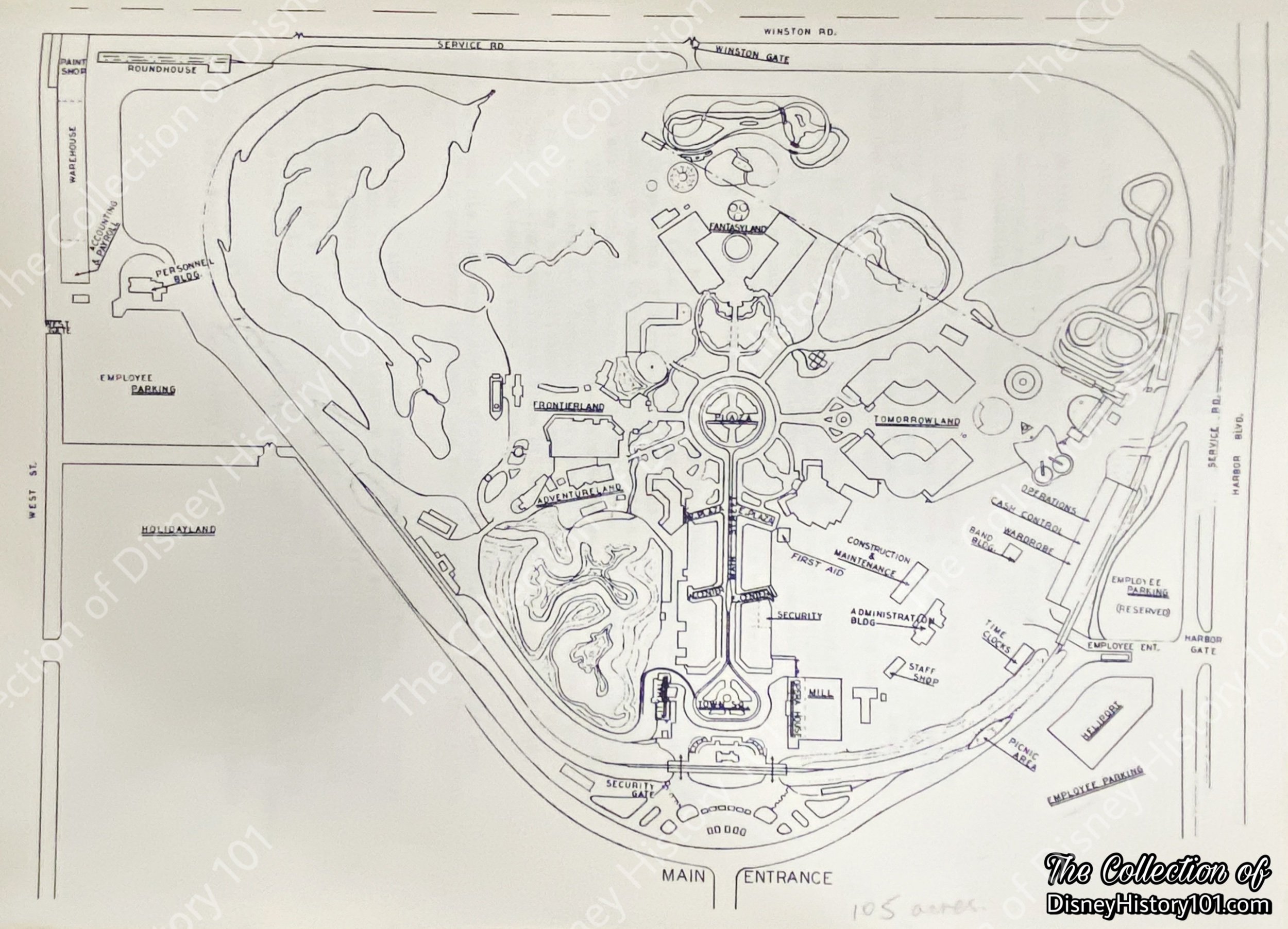
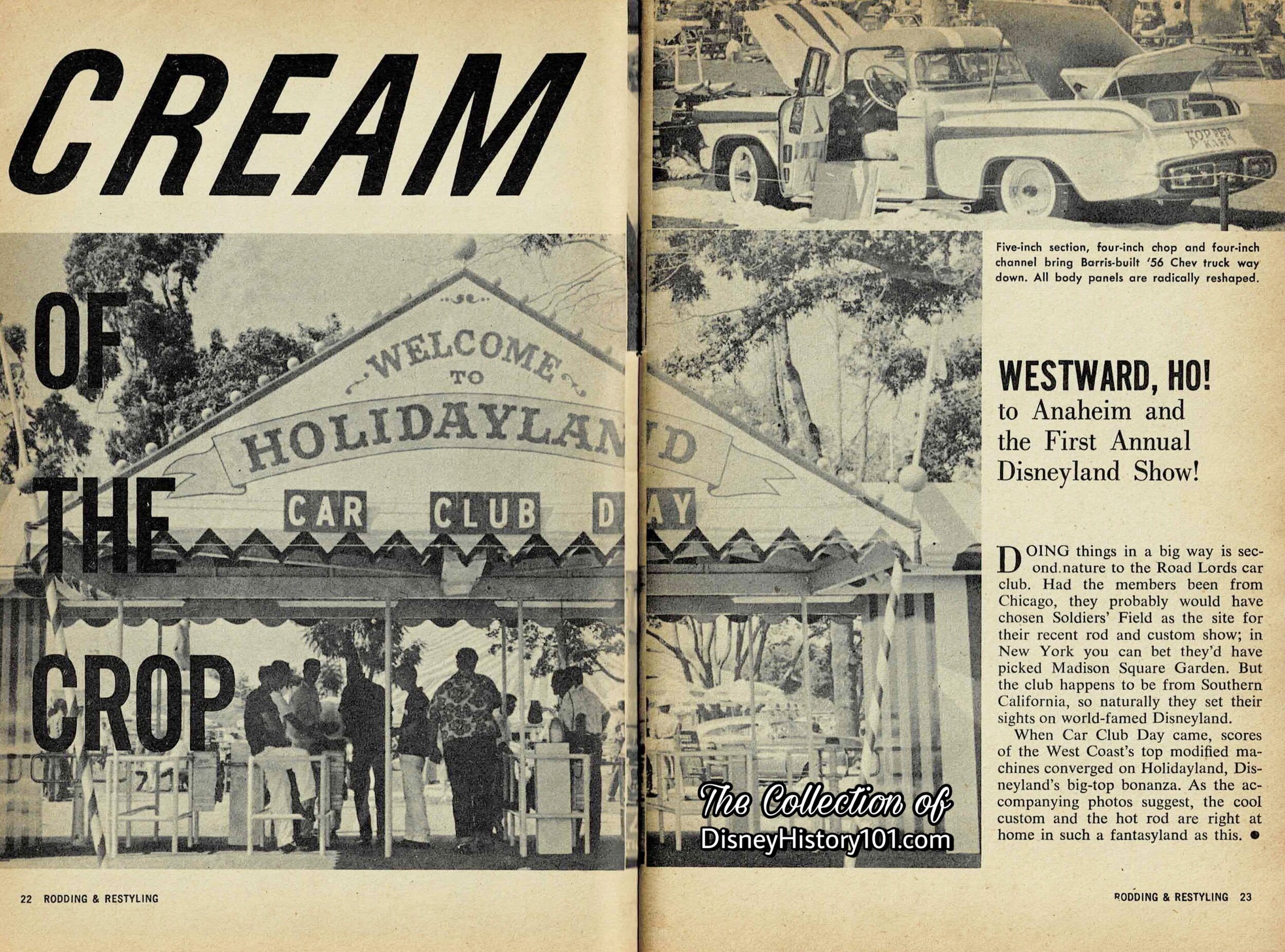
The Road Lords’ Car Club Day included an exhibition of custom motorcycles (one pictured on the following page).
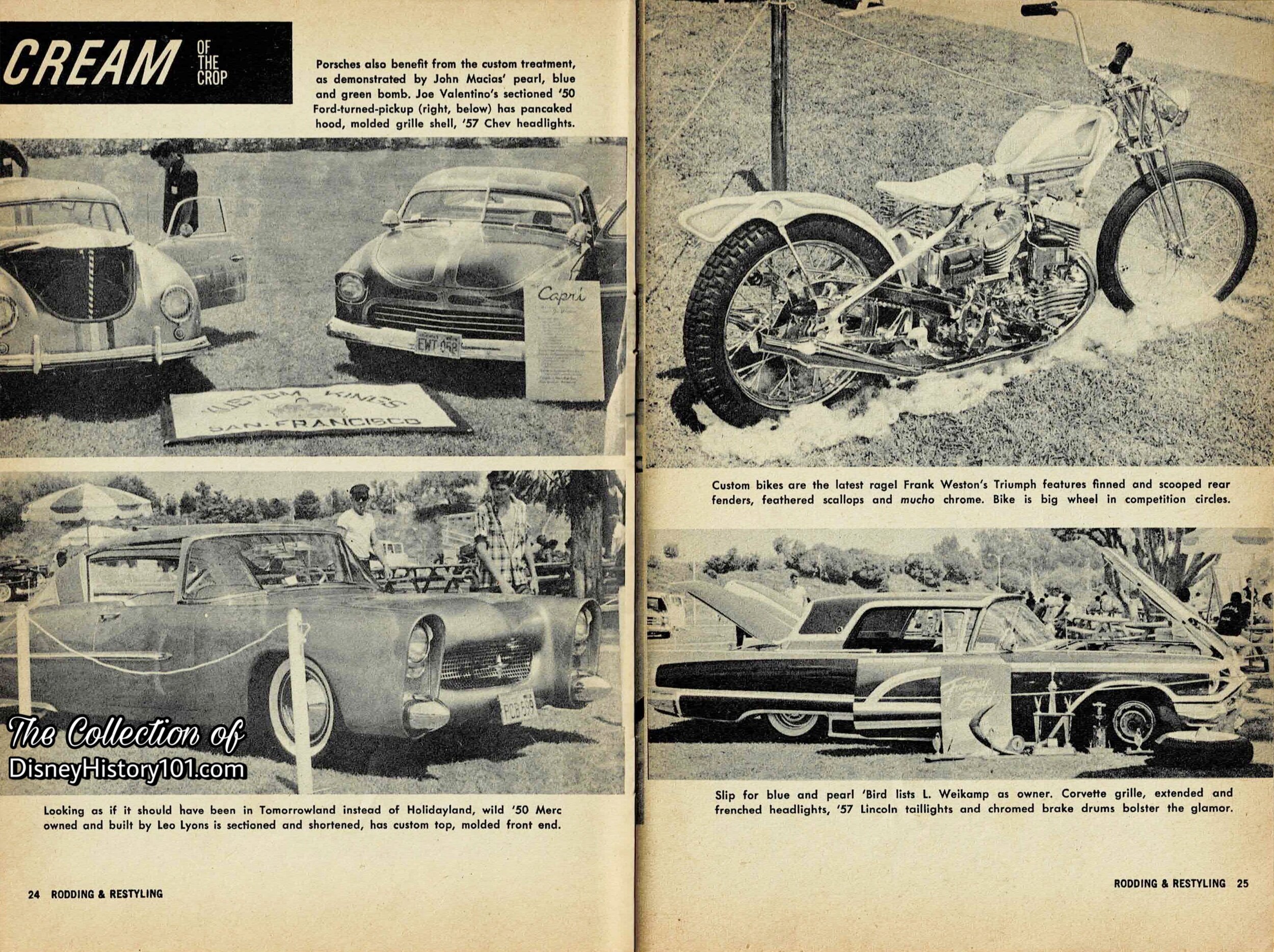
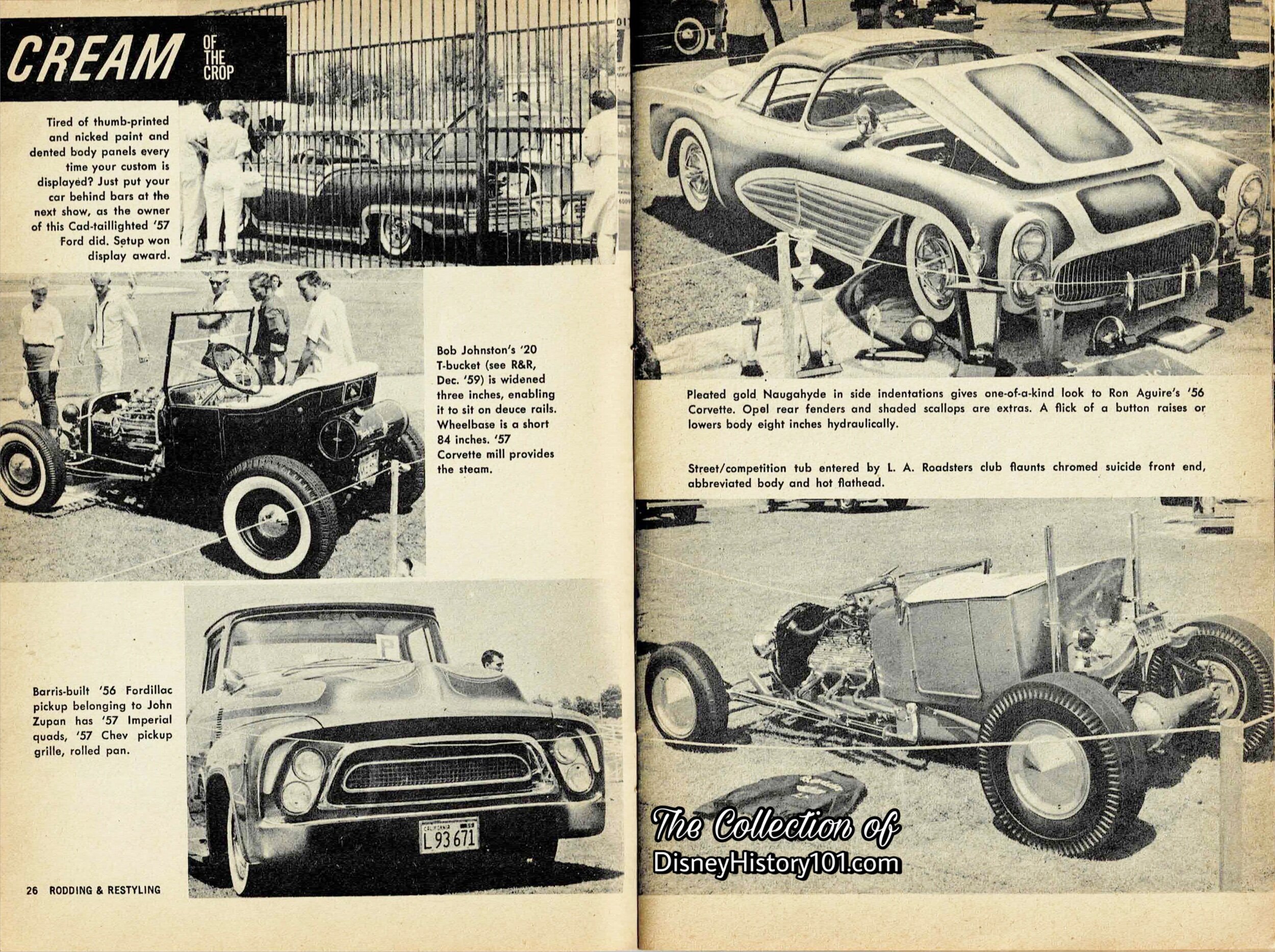
Custom hot rod designer Ed “Big Daddy” Roth debuted his “Outlaw”, the “Excalibur” at this car show.
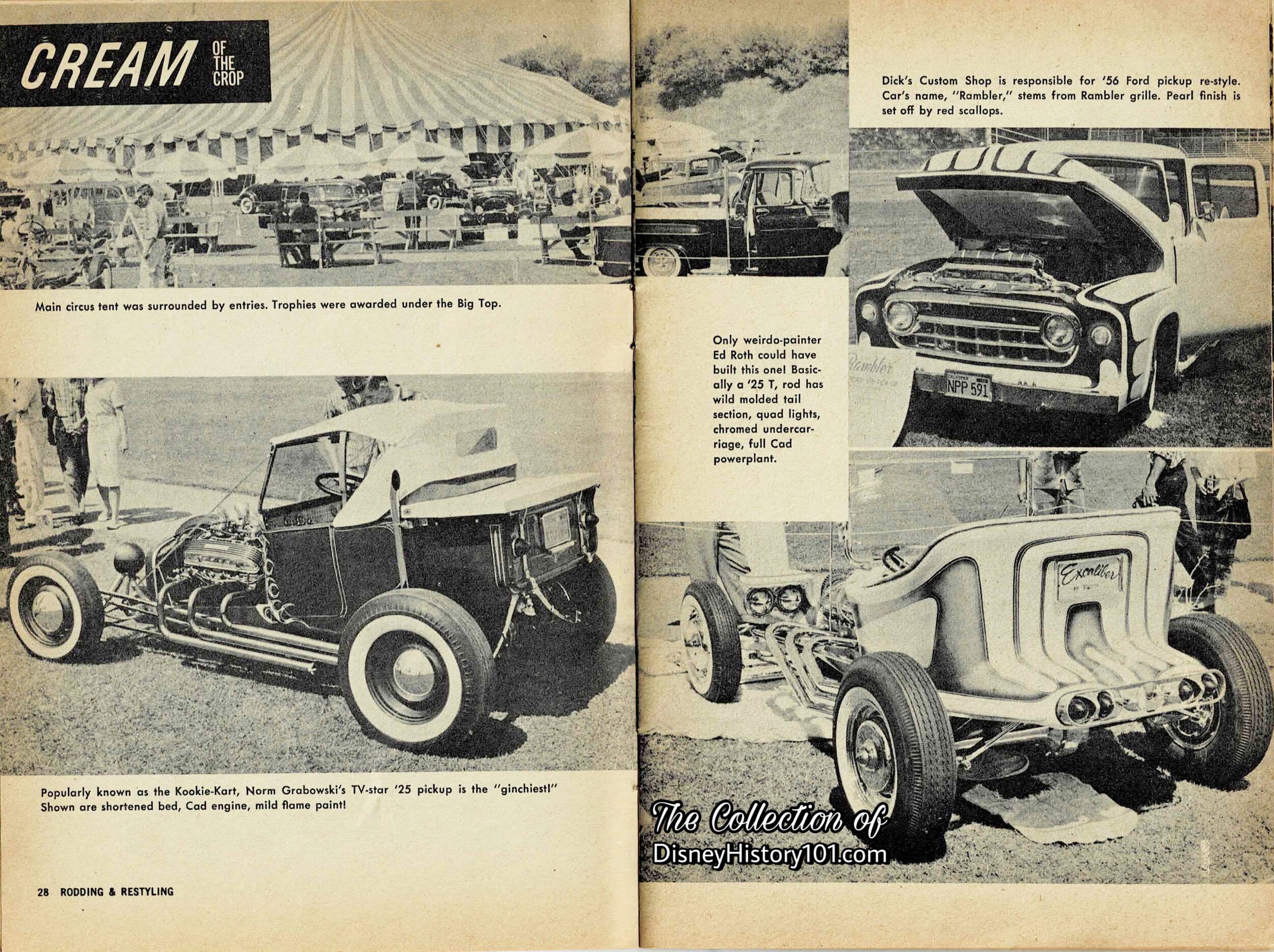
Also of note, Holidayland hosted their first National Pop Warner Disneyland Bowl December 15th, 1959. This would become a Disneyland tradition for the duration of Holidayland’s operation and for many years thereafter! Perhaps owing (in part) to the latter, a 1-year insurance liability policy was taken out at a premium of $3,010, in 1959.
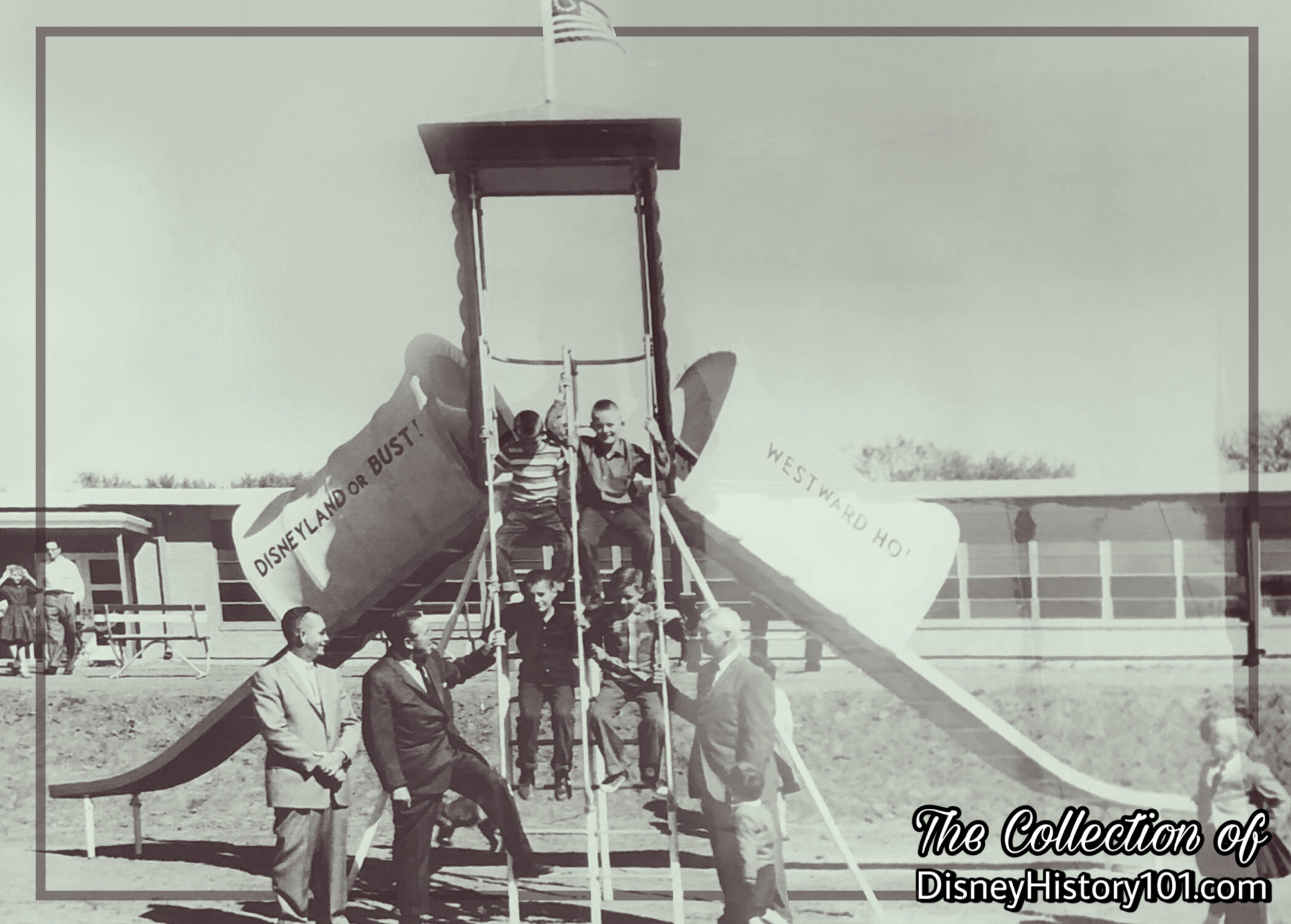
“The Final Year of Holidayland Operation”
By 1960, Milt Albright had become the founder of the Magic Kingdom Club and Tim Hahne (of Disneyland Construction and Maintenance) had transferred to the Disneyland Operations Division, as Holidayland Supervisor. He would continue to oversee the Park for the last year of its operation. The year saw an Old Fashioned Fourth of July picnic on Monday, July 4, 1960. During 1960, Walt Disney gifted and dedicated the Holidayland Westward Ho! Slide to Walt Disney Elementary in Marceline, Missouri.
By the time the Monorail reopened (during the summer of 1961) with its new length of track to the Disneyland, its passengers would have received passing glimpses of Holidayland on their way to the Disneyland Hotel (at least for a couple of months). One of the last major (and noteworthy) events held at Holidayland was a Press Preview of Disneyland’s summer season held June 16th, 1961 [*some sources cite June 10th, 1961].
By 1961 new Disneyland adventures were being added for unveiling in 1962 and 1963. These included a completely new Jungle Cruise, the “world's largest” Tree House, a unique new concept in restaurants, and a “Safari Shooting Gallery” debuting during the Summer of '62. For 1963, a Haunted Mansion, New Orleans Square and the Blue Bayou Mart are being readied. Disneyland, “The Happiest Place on Earth” was becoming a permanent resident of Anaheim and doing its part in helping the community grow. However, Holidayland was clearly not on the menu.
So while Private Parties at Disneyland (introduced during the prior May of 1960) would continue for years to come, the Holidayland turnstiles would close for good, during September of 1961. All together, Holidayland had operated for a total of four years and three months, all-the-while hosting events and picnics for a variety of corporations and organizations and their families.
This was a little odd because the City of Anaheim was in search of more spaces for parks and recreational spaces. In fact, by 1961, the City of Anaheim only had a total of five community parks and six neighborhood parks either fully developed or in the process of development. The community parks had facilities to serve large residential areas with many types of recreation like lighted ball fields, buildings equipped for meetings and recreation, in some cases municipal pools, picnic facilities, and similar facilities necessary for major park activities. Future city plans (under the direction of William Stronach) were calling for the development of an additional three community parks while eight additional neighborhood park sites were being developed.
This was to the end that many local Anaheim area merchants supported the development and maintenance of recreational areas, parks, and playgrounds through taxes paid. Anaheim area residents were petitioned (through newspaper advertisements) to patronize such local merchants, and help to provide revenue for those facilities.
So why did Holidayland close? Milt Albright recalled in 1988: "It wasn't any one thing that killed Holidayland… It was just the combined effect of a whole lot of little things."
First, “Holidayland picnics were… getting more and more difficult to sell, and now, with the added cost of Park admission, group picnics were getting too expensive for all but the biggest organizations… Worse still, there were no lights for nighttime events, so evenings were out. That meant Holidayland sat unused five days a week.“[The Nickel Tour] As a result, Holidayland yielded little revenue for Disneyland Inc. after expenses of operating (labor and employee benefits; materials and supplies) and repairs and maintenance (including labor, employee benefits, materials, and outside services). For instance, a total of $10,935 (in addition to $1,644 lessee space rental; less direct expense of $7,567) for the fiscal year (52 weeks) ending September 29, 1957 and a total of $34,730 (in addition to $4,539 lessee space rental; less direct expense of $37,773) for the fiscal year (52 weeks) ending September 28, 1958.
Second, Holidayland (like other lands, adjoining properties, service areas, and utilities) was full of Depreciable Park assets totaling $158,743 by September 28, 1958. These were assets that included $108,749 of land improvements, $44,988 in buildings, and $5,006 in props and dressings. This was a huge expense for Disneyland.
Lastly, so much of what Holidayland had to offer had become redundant. You may recollect that “Holidayland, was opened… to accommodate requests from large organizations, principally industry, for a special event area to hold picnics, parties and meetings. Holidayland contains grounds for athletic events, playground equipment, meeting areas, eating facilities and other specially designed features.” [“Disneyland, U.S.A.” published 1958] By this time, the neighboring Disneyland Hotel also featured “grounds for athletic events, playground equipment, meeting areas, eating facilities” and much more, to match these specific requests and needs of industry guests.
“Holidayland Area Redevelopment”
By 1964, a portion of the area formerly known as Holidayland was still being put to use, but merely as a “Formation Area” for the 1964 Christmas Parade. However, it was during the development of one of Disneyland’s largest expansions, that Holidayland disappeared. Yes, New Orleans Square show buildings (Pirates of the Caribbean and The Haunted Mansion) and later years Backstage Outdoor Vending and SQS/DQS Buildings stand on former Holidayland area!
According to “The Nickel Tour” (published in 1995): “Holidayland is now a parking lot for employees, and all that remains of the picnic grounds is one giant pepper tree, the first-aid station, and, ironically, the permanent restrooms that were built to handle the crowds that never came back… Today, the Haunted Mansion stands where the giant tent is, while Pirates of the Caribbean takes up the baseball field.
The original entrance to Holidayland-the portal through which happy picnickers passed--was for many years a rarely used service entrance in a chain link fence. On the fence was a sign that read ‘Holiday Gate.’ The true meaning was no doubt lost on the new generations of Cast Members, most of them not old enough to remember the missing land of Disneyland. Finally, in 1994, the gate was swallowed up as construction began on The Indiana Jones Adventure: Temple of the Forbidden Eye (the second-longest attraction name in the park's history!)”
By 2005, the former site of Holidayland was serving as New Orleans Square and Critter Country.
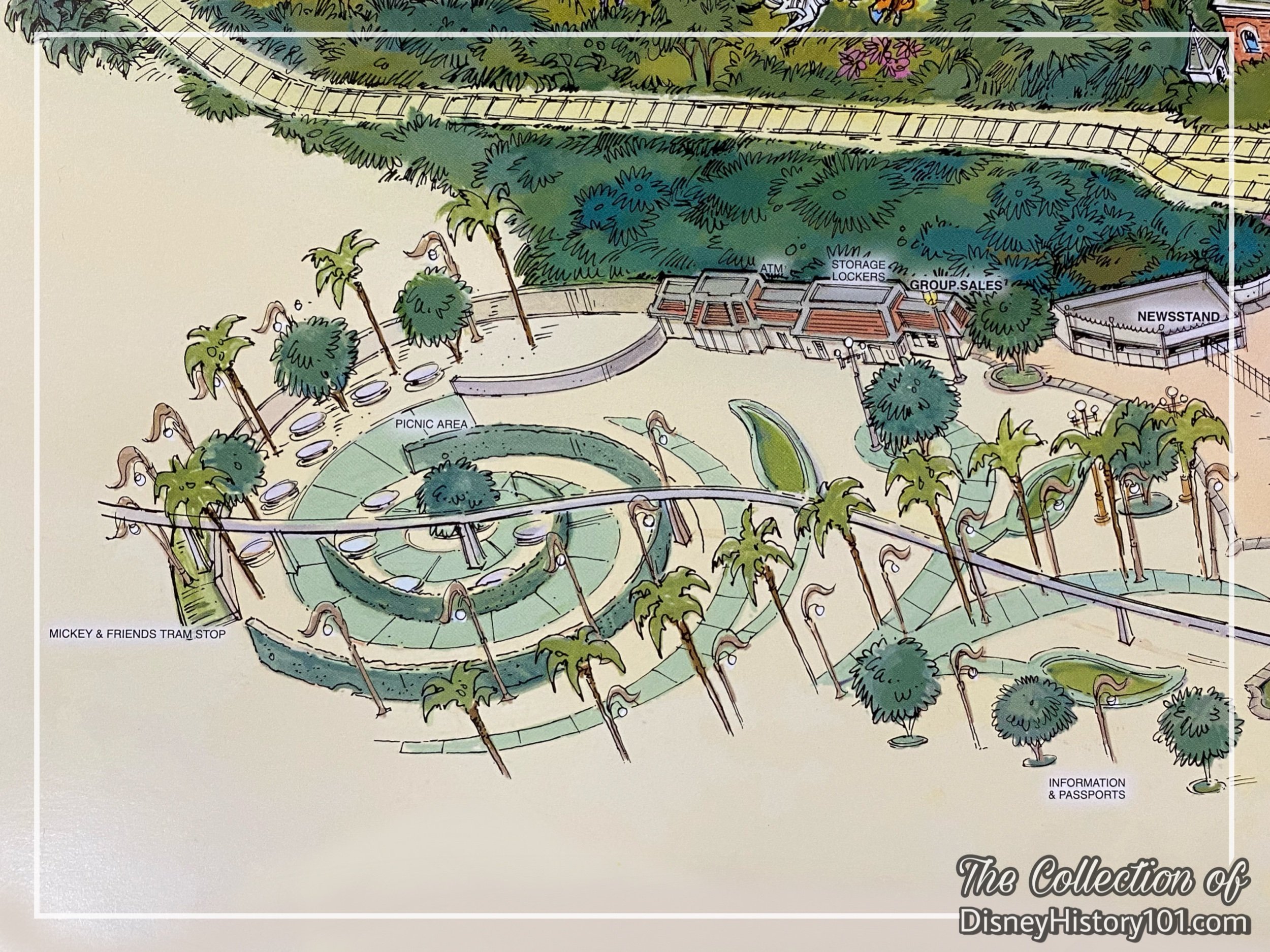
Holidayland had a legacy (of sorts). For a number of years, a Picnic Area would sit (South West of Disneyland; near the Group Sales Building) on part of the location where Holidayland once stood. As food and beverages could “not be brought into Disneyland,” guests could relax, find refreshment, and enjoy any items they brought, while in this Picnic Area, before entering the Park.
Almost a decade later, the idea of “Holidayland” was considered yet again. This time, for possible installation during Phase One of the East Coast Magic Kingdom theme park development at Walt Disney World (see the 1969 “Preview of Disney World” brochure excerpt above).
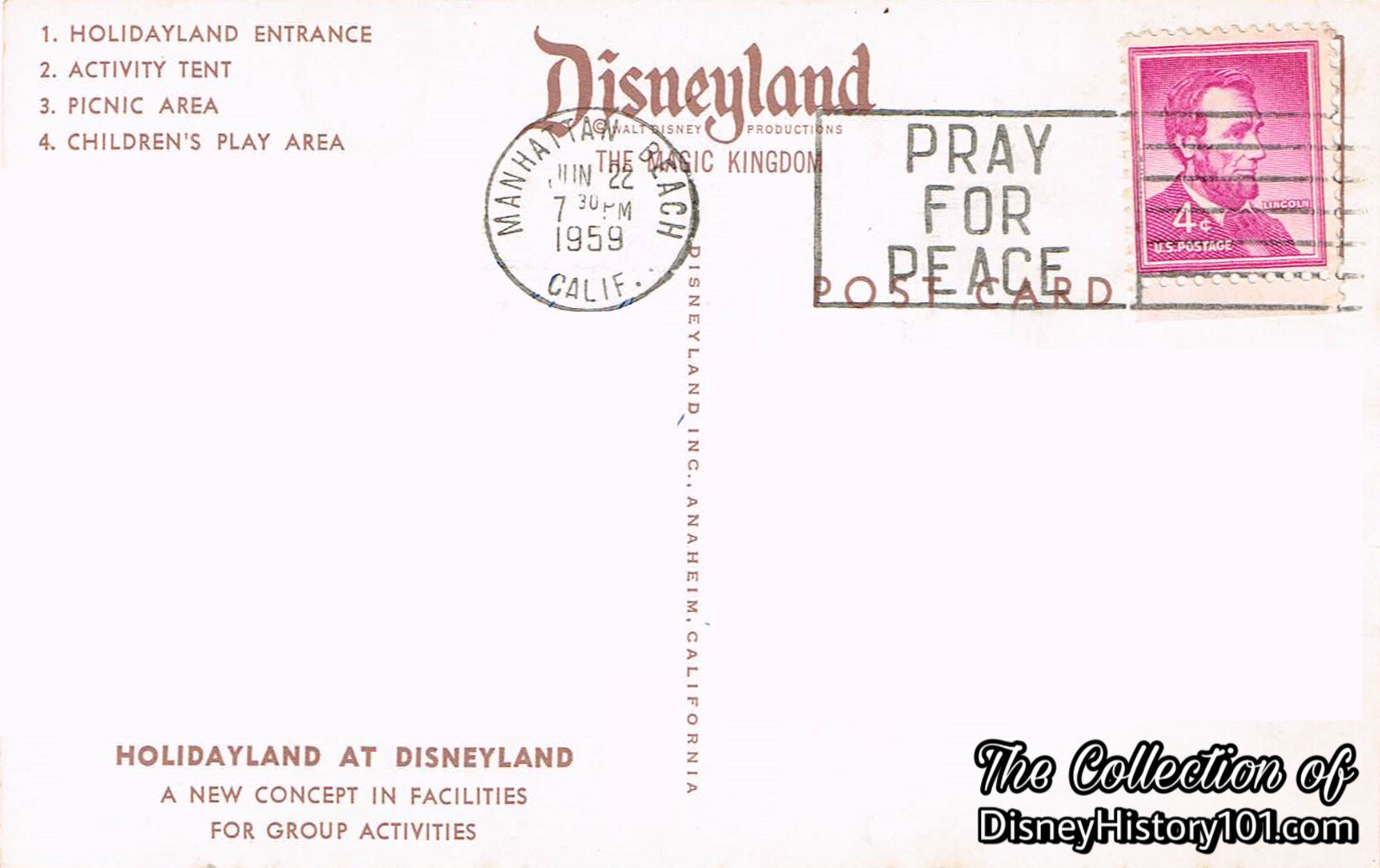
Our tours (via Vintage View online galleries) at Disney History 101, often end in the Gift Shop, and Holidayland is no exception! For those who visited and remember Disneyland’s “new concept in facilities for group activities,” Holidayland was certainly “something to write home about.” Disneyland Merchandisers knew this, and made sure that guests could (at the very least) find one style of Holidayland postcard at select Disneyland shops!
Holidayland didn’t have a lot of iconic landmarks to be utilized for licensed merchandise. Owning to this, is the absence of Holidayland merchandise. In fact, this rarely seen postcard may be the only Holidayland merchandise ever produced. Not withstanding this rarely seen memento, those fortunate enough to have visited this short-lived land at least once in their life, still carry the cherished memories of their experience at Holidayland, which are far more valuable than any tangible souvenir may have been!
“Here is a photo of the Westchester Lariats taken in Holidayland just before we formed up for the Disneyland Christmas parade in December 1959.
I am in the middle, front row. My sister Shelley is behind me a little to the right. My brother Tom is last on the right, and my sister Maureen is in the second row, second from the right. Long before the Electrical Parade and other extravaganzas DIsneyland invited local dancing groups and high school bands to perform in the parades. In return we received free admission. It was lots of fun.
It is interesting to note the international flavor of the parade. Behind us you can see a Pipe Band, and just to the right behind us are Mexican dancers, and over to the left are Middle Eastern dancers. Thanks, Mr. Disney for giving us so many happy memories.”
HORSELESS CARRIAGES (MAIN STREET D.M.C. VEHICLES)
“Walt was reared in the mid-western town of Marceline, Missouri.”
“As with other lands, he wanted Main Street to be a Main Street - authentically recreated to get the feel of a typical small town thoroughfare of the 1900 era with which he was familiar.” Take a close look at Main Street. “Note the results of years of research to determine and design a composite Main Street of the typical small town of the early century. Note the demanding attention to detail designed and built into every nook and cranny by Walt and his ‘Imagineers’ at WED Enterprises. This same demand for detail is designed into Main Street vehicles.”
Many Walt Disney Studios employees were fascinated with horseless carriages like Ward Kimball. As a result, cars and early horseless carriages appeared in quite a few preceding Walt Disney Productions, the most-outstanding of which is The Nifty Nineties (1941).
Above: Collection of the Walt Disney Family Foundation | 1999.3.1745
In 1948, Walt Disney visited the 1948 Chicago Railroad Fair with his friend animator Ward Kimball. On the way home, the two “railfans” also made a visit to Henry Ford's outdoor museum tribute to Americana called Greenfield Village, located in Dearborn, Michigan. It was Walt’s third visit to the history museum within his lifetime. Ward later recalled that Walt enjoyed the entire experience so much that it was all he talked about on the train back to Los Angeles. When Walt Disney returned home, he composed a memo which laid out in great detail his ideas for a themed amusement center.
Walt Disney even bought this collection of circa 1903-1915 antique Automobile models, during the earliest days of the Disneyland project, in order to research vehicles for Main Street, U.S.A.
“Horseless Carriages and the Grand Opening of Disneyland”
Obviously, the fastest way to move people over the extended areas of Disneyland is with moving vehicles. If you watch Dateline Disneyland (aired July 17, 1955), you’ll notice Bob Cummings and others riding plenty of antique “Locomobiles”. During that same parade, a 1901 automobile that shuttled Walt down Main Street and cameras captured Danny Thomas on a horseless carriage. But you will notice none of Disneyland’s soon-to-be iconic Horseless Carriages. A trip down Main Street aboard a replica of America’s classic autos was not an opening day attraction in Disneyland.
Disneyland even hosted their first Horseless Carriage Day (featuring the Horseless Carriage Club of Southern California) on September 25th, 1955 (*26th according to some sanctioned sources). Still, it was not until after Disneyland’s very first winter season of 1955 (with peak crowds of Guests filling the Park), that enough revenue was generated to begin expanding Disneyland’s realms, leading to the creation of the Park’s own red DMC Horseless Carriage.
At Disneyland there is a "story behind the story" of every attraction, every attraction is a living experience for the guest. Disneyland ride-through attractions or adventures have officially been defined as an “individual show, ride, or exhibit designed to produce an entertaining Guest experience. Disney attractions stir the imagination, enliven the senses, and provide the participants with positive, innovative entertainment, which is the essence of the DISNEYLAND Show.” It is important to review the story of the attraction, tell the story, explain it, and create interest. This is the story of the Horseless Carriages.
You may have recalled hearing that Walt Disney, on the eve of Disneyland’s first day of operation, promised innovation, that “Disneyland will never be completed. It will continue to grow, to add new things, as long as there is imagination left in the world.”
“Main Street vehicles play an important part in the Disneyland show. First, they are essential to the staging of Main Street, U.S.A. The contrast to the hustle and bustle of our modern world and its streamlined modes of transportation is sharp and penetrating. Suddenly, as a guest comes onto Main Street, the entire mood changes. The years roll backward. back to Main Street, U.S.A., circa 1900. It wouldn't be Main Street without the leisurely clop-clop of a horse-drawn surrey, or the chug-chug of a horseless carriage.”
Second, they serve as much-needed transportation for our guests. They provide a convenient and colorful way to reach the heart of the Magic Kingdom - or back to Town Square after a long day in the Park. Third, hosts assigned to operate these vehicles play an important part in answering questions - giving tips and directions - to guests who are either starting out or winding up their day at Disneyland. Their role falls into what might be called our ‘first impression - last impression’ group. They can start guests off on the right foot - in the right mood, and send them away with a warm feeling - and a desire to come back.
A year later, the first Disneyland Horseless Carriage (or “1903 DMC”) began operation during the summer, on May 12th, 1956 (according to “Disneyland Admission Media Rides and Attractions” report, published 1971). Yes, the “1903 DMC (or, Disneyland Motor Club) Vehicles” (today known as the 1905 Horseless Carriages) began operation as part of Walt Disney’s promise of an ever-expanding Disneyland. The purpose of these show quality-enhancing vehicles was a simple one. According to Walt Disney’s Guide to Disneyland (published 1961), the replica 5/8 scale classic “1905-era automobiles began to carry guests to the entrances of Disneyland’s five cardinal lands”!
Now, both the years 1903 and 1905 have been referenced in their working titles, so you (like myself) may be wondering which year these vehicles are actually based on. The simple answer is found in the Operation Manual, which states : “The Horseless Carriages are sometimes called the ‘1903’s’ - but you could pick any year - 1904, ‘05, ‘06, and be just as accurate. These little cars are of WED ‘composite’ design. On the basis of extensive research, Studio designers created a horseless carriage which was a composite of the design and size of gas-driven cars of that early period in automobile history. And our Horseless Carriages are a little bit of everything.” “Walt Disney’s Magazine” (Vol. 2, No. 5 ; 1957) described the “make” of the DMC’s this way : “The resulting vehicles were antiques but they were of no particular make of car, and being completely new they were unique.”
The DMC Horseless Carriages were both designed and constructed by the Director of Vehicle Design Robert Gurr, in fact, they were referred to as “Gurrmobiles” for perhaps the first time in “Walt Disney’s Magazine” (Vol. 2, No. 5 ; 1957). The six-passenger “put-puts” (manufactured by WED designers and craftsmen at the Walt Disney Studios) were made to run on a Hercules two-cylinder water-pump engine. Horseless Carriage Red contained a Hercules engine I.D. NXB-436113; Horseless Carriage Yellow contained a Hercules engine I.D. 436150.
The design (with it’s fringed canvas top) is not based on any true-life auto engine, but you wouldn’t be able to tell from the outside, as this dreamt-up engine mimics the pops, sputters, and shaking of gas-driven cars of the era. Now, “all parts were similar to those used in the cars of those early years… they actually were brand new stock parts,” according to “Walt Disney’s Magazine” (Vol. 2, No. 5 ; 1957). The horns, lamps, wheels and other parts were authentic auto parts, and convincing enough to support the Horseless Carriage’s “Show”! In addition, the Horseless Carriages featured removable “fringed canvas tops” for passenger comfort.
With audiences in mind, Walt believed firmly in the importance of these vehicles, despite a few outspoken opinions that the Main Street vehicles would not make a profit. Testifying to this is a story that speaks volumes of more than the craftsmanship: “A staff member was concerned that the Main Street vehicles would be vandalized. Walt discarded the notion. ‘Don’t worry about it. Just make them beautiful an you’ll appeal to the best side of people. They all have it… all you have to do is bring it out.” [“The Spirit of Disneyland,” page 43 ; Prepared 1984 by Walt Disney Productions.] And so with an optimistic view of Disneyland Guests and the respect that Disneyland would command in mind, these particular Main Street vehicles were born.
The DMC Horseless Carriages didn’t go into service at the same time. The red DMC Horseless Carriage began operation on May 12th, 1956, (according to “Disneyland Admission Media Rides and Attractions” report, published 1971). The yellow Horseless Carriage began operation December 9, 1956. The Horseless Carriages were two (of several) exciting attractions debuting during 1956, that increased ride capacity, and (owning to this) one day in August saw a peak total of “197,547 individual rides” enjoyed by Guests (according to a letter from Walt to Ward Kimball, dated January 23, 1957).
By April 11th, 1960, coupons designated them as “Main Street Motor Vehicles” (and other documents referred to them as “Electric Cars”) differentiating them from the Surreys and Horseless Carriages. The Horseless Carriages were “A” Coupon attractions (the same as a few other horse-Drawn attractions, including the Horse-Drawn Surreys, Horse-Drawn Fire Engine (and later Motorized Fire Wagon), and a “spin” on one of King Arthur Carrousel’s mounts. By 1968, there were three Horseless Carriages operating on Main Street U.S.A. One Disneyland Admission Media Rides and Attractions Report [prepared in April 1971, by Disneyland Research Department], a total of 3,984,611 guests had taken a ride aboard one of the Disneyland DMC Horseless Carriages.
The Horseless Carriages were “put-puts" of 1903 vintage complete with fringed canvas tops, make trips between Town Square and the Plaza.
Just as the addition of the Columbia (alongside the steamboat, keel boats, canoes, and rafts) helped paint a picture of changing times of Frontier America, the Horseless Carriages (alongside the Surreys, Horse-Drawn Streetcars, and Omnibuses) would create a portrait of a booming small town in North America at the turn-of-the-century.
The Horseless Carriage - Red would briefly cease operation during the winter season of 1962.
Both the red and yellow Horseless Carriages were frequently utilized for parades, as seen in this Vintage View from the Collection of Don Payne (who was “very close to Pluto” for a number of years).
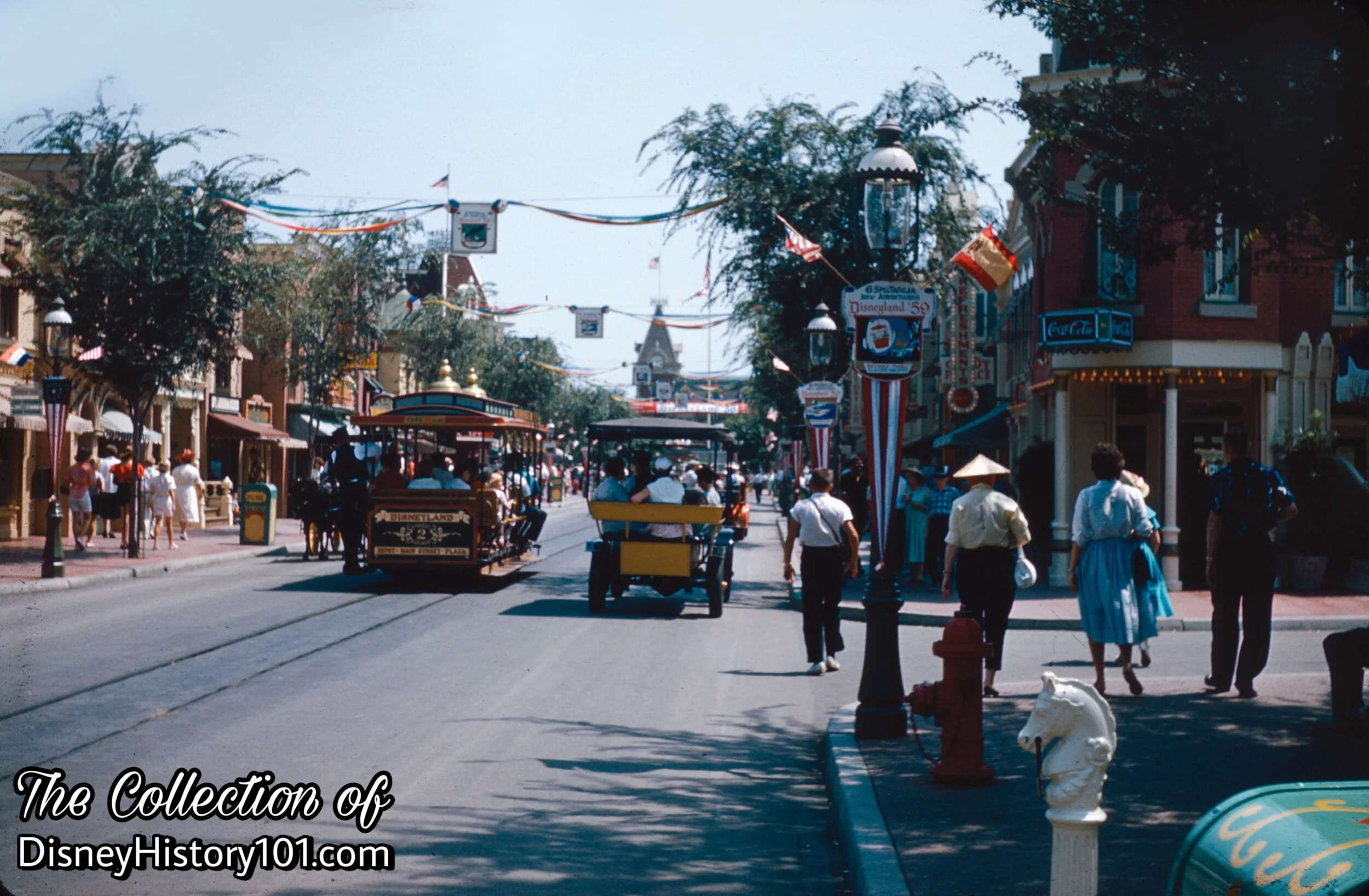
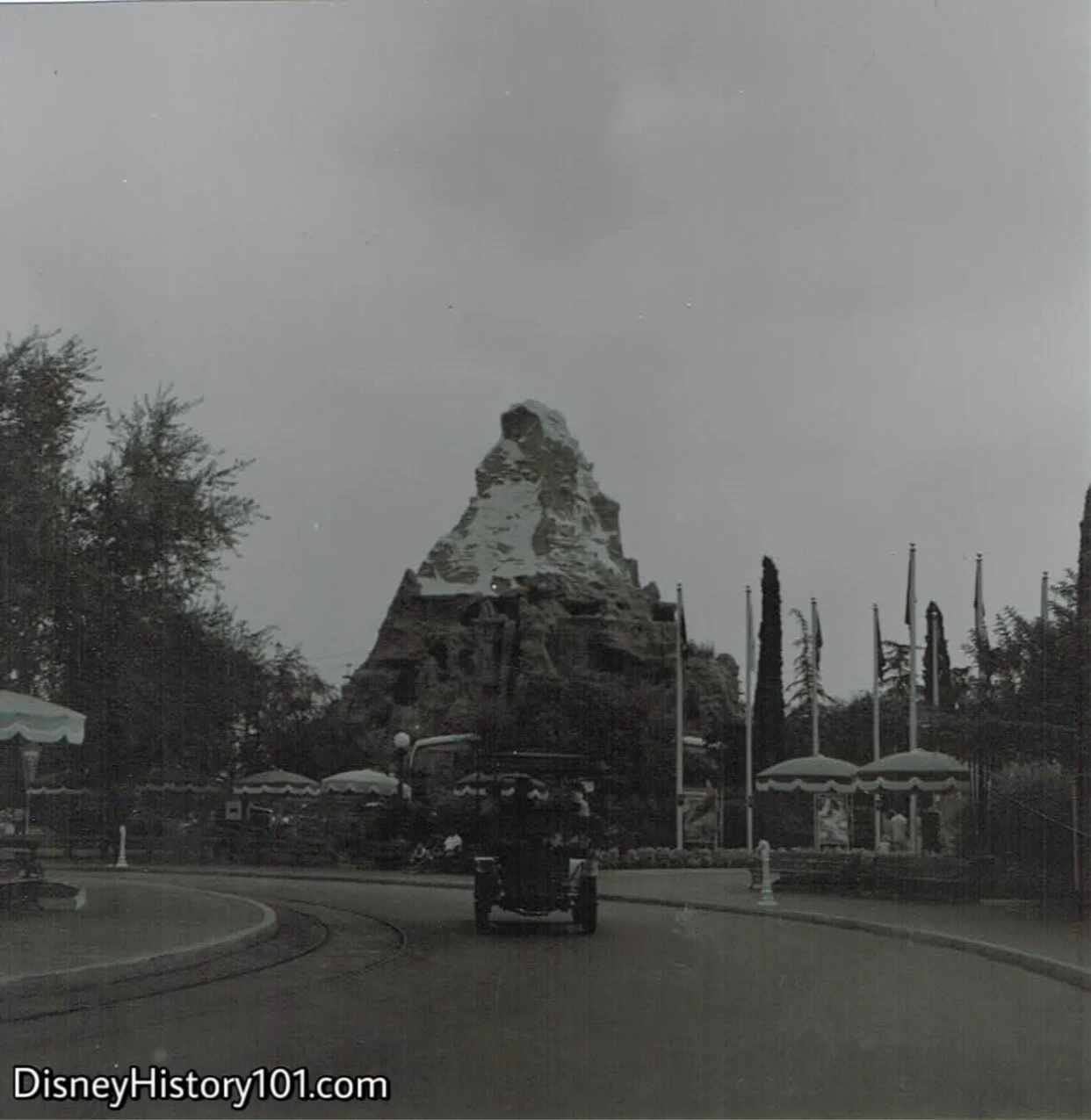
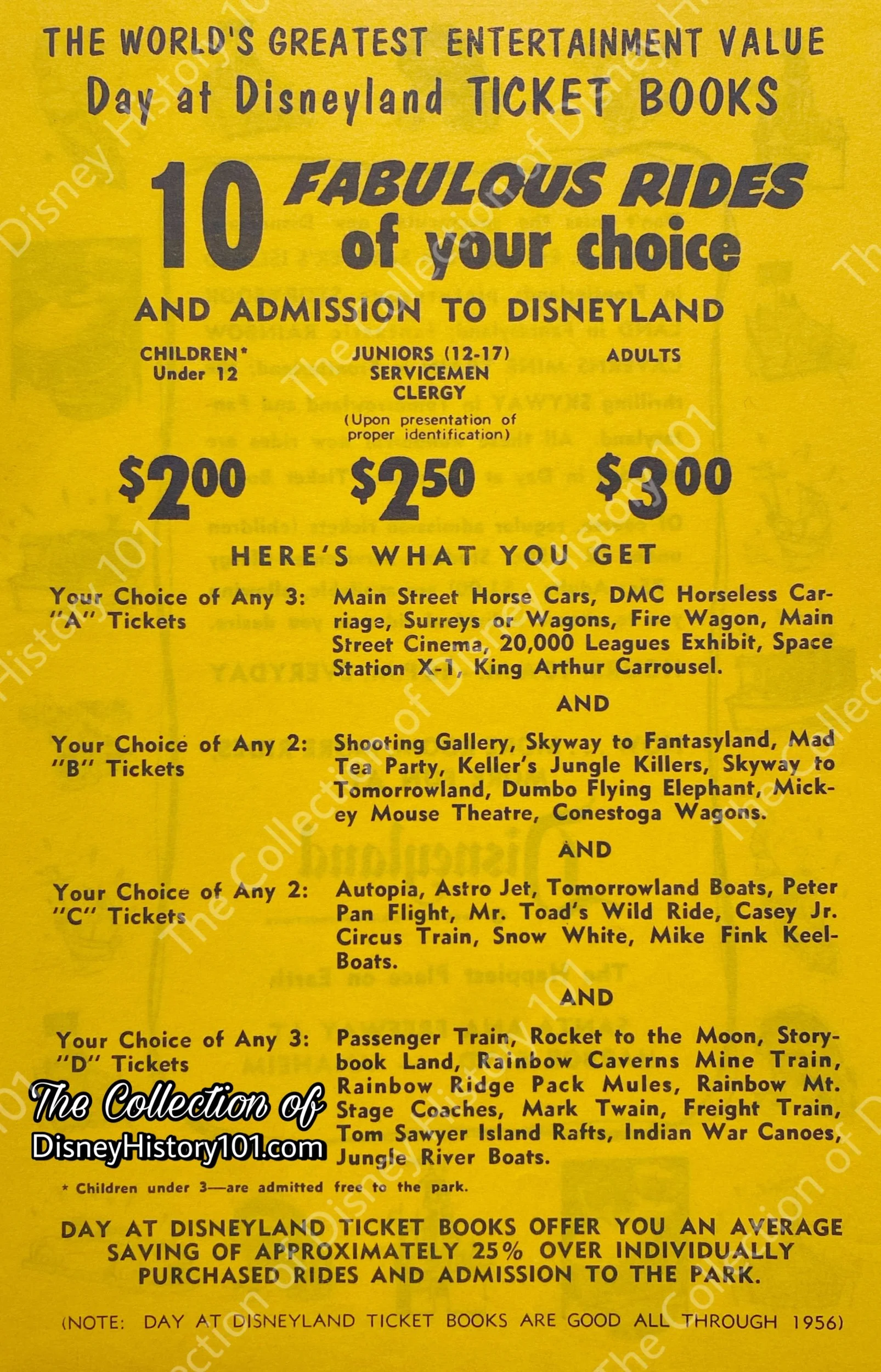
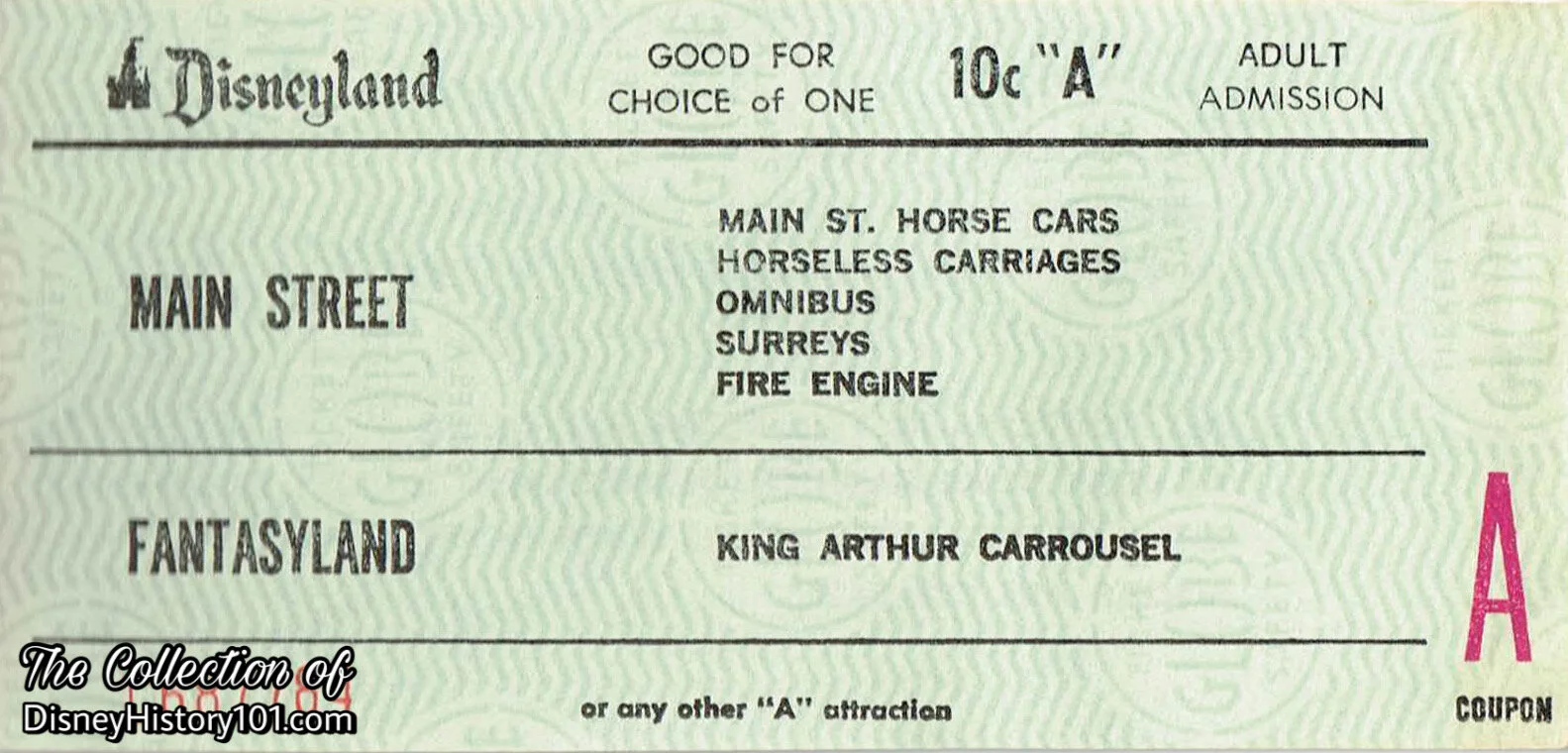
Admission during 1958 was one “jumbo” “A” coupon (the price of 10 cents, for one adult), the same as the Omnibus, or the King Arthur Carrousel.
By 1959, Joe Fowler was Vice President of Disneyland Operations Committee and Doc Lemmon of Disneyland Operations was overseeing Operators of Rides & Amusements (like the Horseless Carriages), Livestock, Parking Lot, and Ticket Sellers. By October 1958, the “Disneyland Dictionary” described the route in the following way: “Town Square, down Main St., circles Plaza; Return trip - Plaza, Main St., to Depot.”
The Horseless Carriages inspired similar attractions at other theme parks like Freedomland (in Baychester, Bronx, New York) which opened in 1960 with “Horseless Carriage: antique car ride through New England.”
By 1958, the total value of the Horseless Carriages was appraised between $10,500 and $12,600.
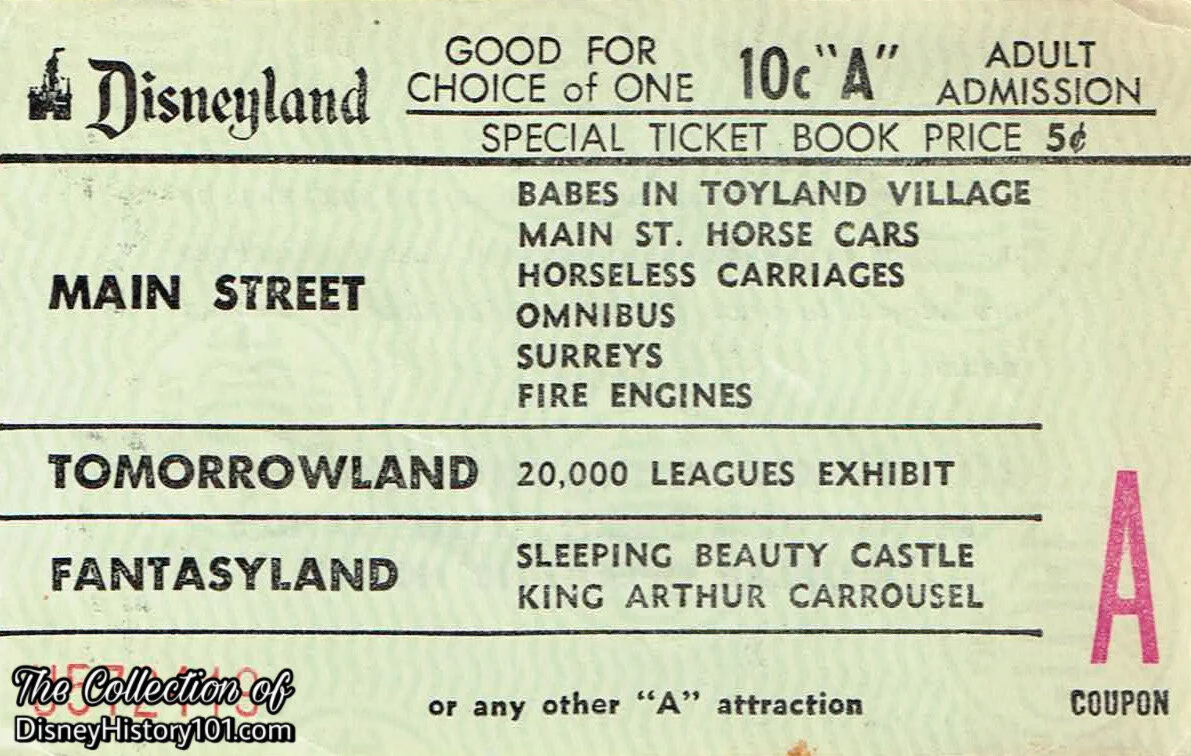
By the summer of 1960, the Horseless Carriages were still “A” Coupon attractions! Admission during 1961 to 1963 was one “jumbo” “A” coupon (the price of 10 cents, for one adult) - the same as the 20,000 Leagues Under the Sea Exhibit, and the Babes in Toyland exhibit.
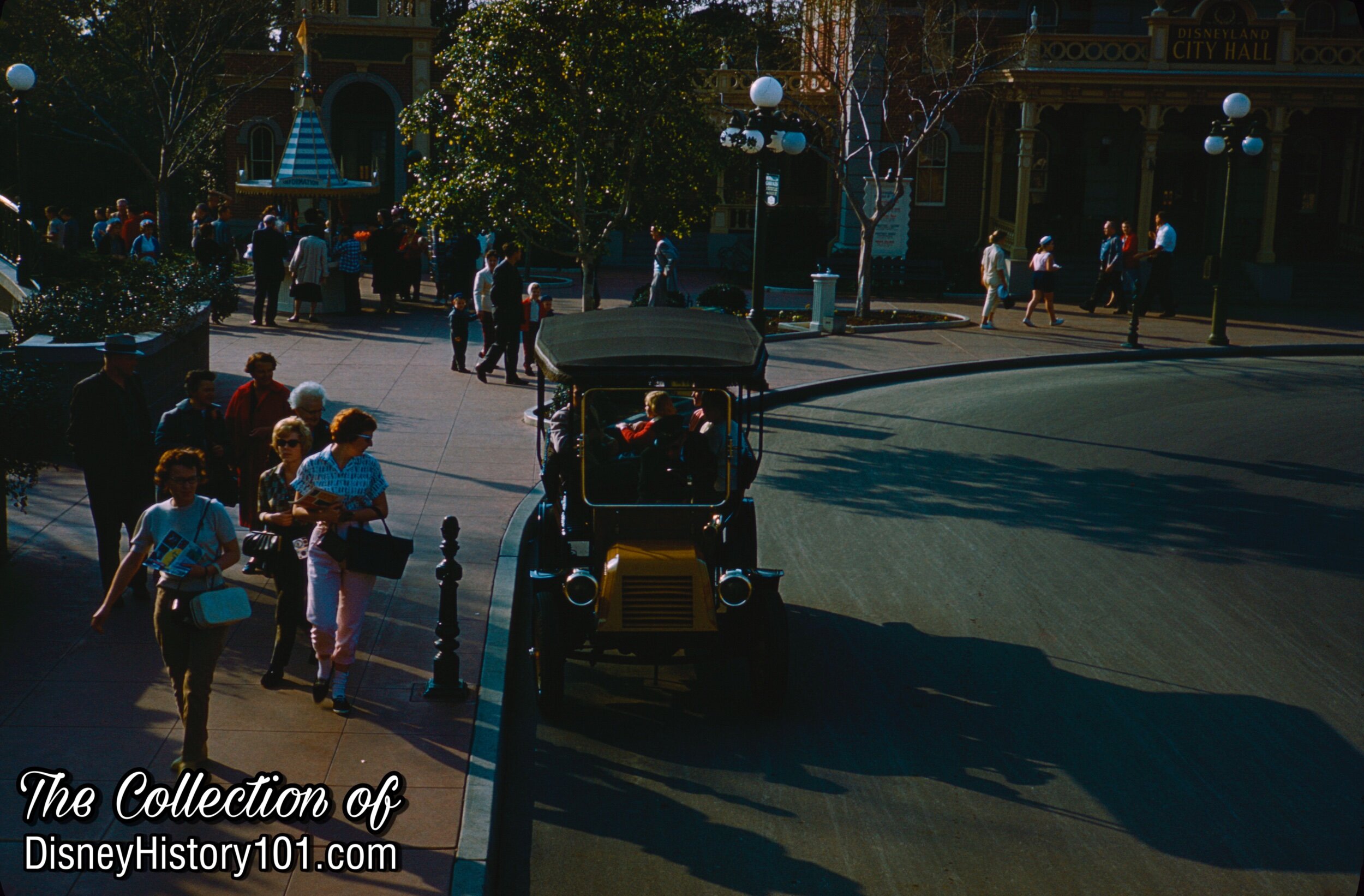
The Horseless Carriage - Yellow and Red were closed weekdays during the winter season of 1962, operating on weekends. The “Ride Operating Schedule” effective October 3, 1962 described the attraction as having a 91 Guest capacity during winter week end days and a maximum daily capacity of 91 Guests. The schedule appeared to indicate that either Red or Yellow were used in this capacity.
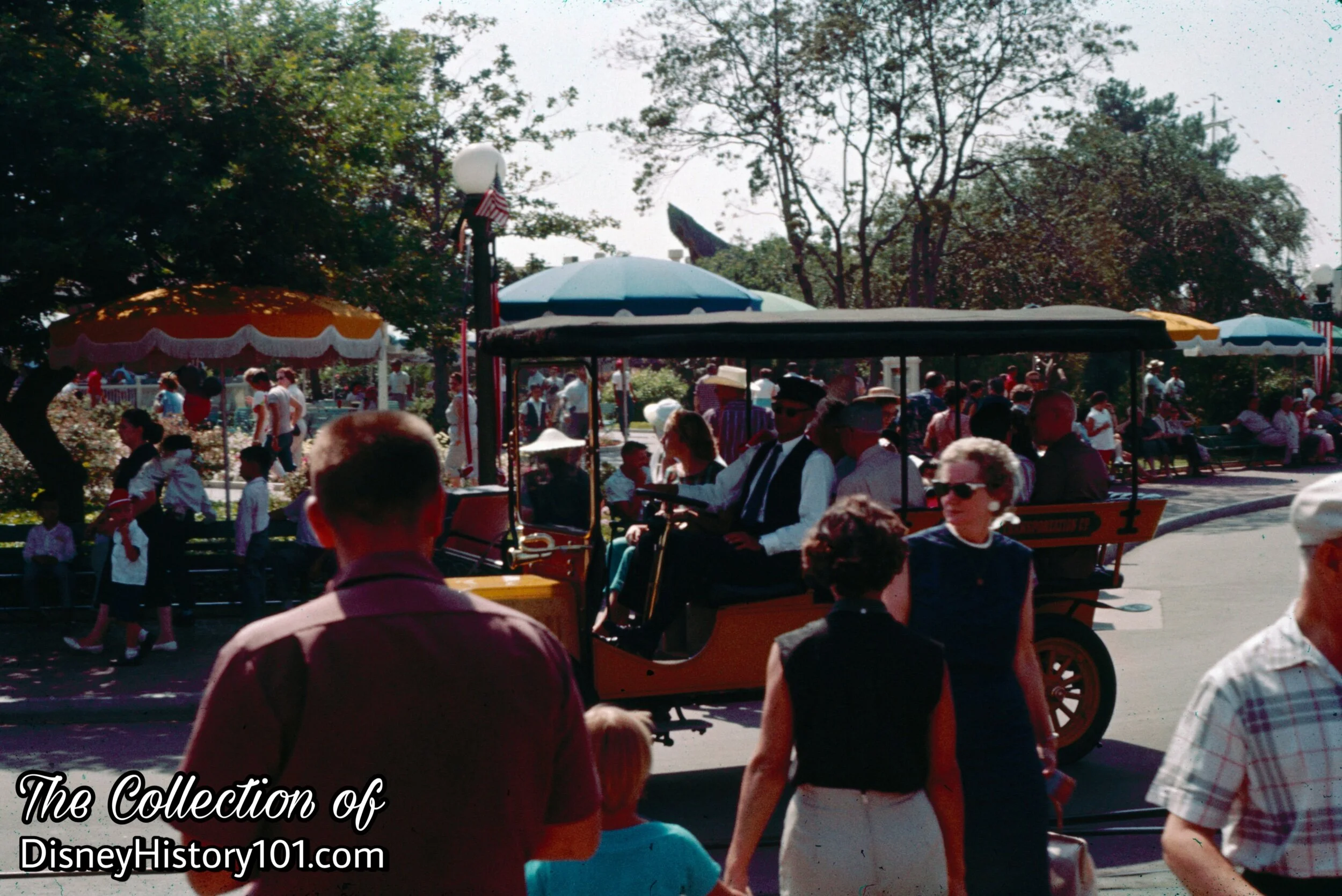
The importance of the attraction ceasing operation during some performances was emphasized in a short piece published in Backstage Disneyland, 1965: “Jack Whittington, Main Street foreman, will always remember the day the Chinese Girls Drill Team performed on Main Street. The girls paraded up to Carefree Cor-ner, gave an interesting exhibition of their skill, and then marched back down the street to presumably make their exit. So Jack gave the order for the vehicles to resume their usual functions. Much to his amazement, half of the Drill Team wheeled around and started another tour up the street. This must have been a sight to behold. There they were girls marching, with drums beating, batons flying, whistles blowing, trying to dodge street cars, Omnibuses, and horseless carriages with their horns honking and bells ringing. There's never a dull moment for the Main Street Supervisors.”
However in parades, the ‘03 cars were also used in parades and shows. Above, Donald Duck rides aboard an ‘03 car driven by Operations. A number of Disneylanders operated the ‘03s, like Fred Brown on yellow (in 1967).
Once upon a time, when guests boarded one (of two) Horseless Carriages (or any DMC, including the Omnibuses), the fare was payed with either a Disneyland Letter denomination Coupon, or a small amount of change currency. When guests payed with coins, they were deposited in a meter, which was attached to the front passenger side of the vehicles.
By 1981 Main Street Vehicles contributed $24,000 in revenue (of $94,576,000 area sales) for Center Stage at Disneyland.
Main Street Vehicle Hosts, Hostesses and guests enjoy adjustable bench seats owning to an idea of Mike Leslie (c. 1978-1979).
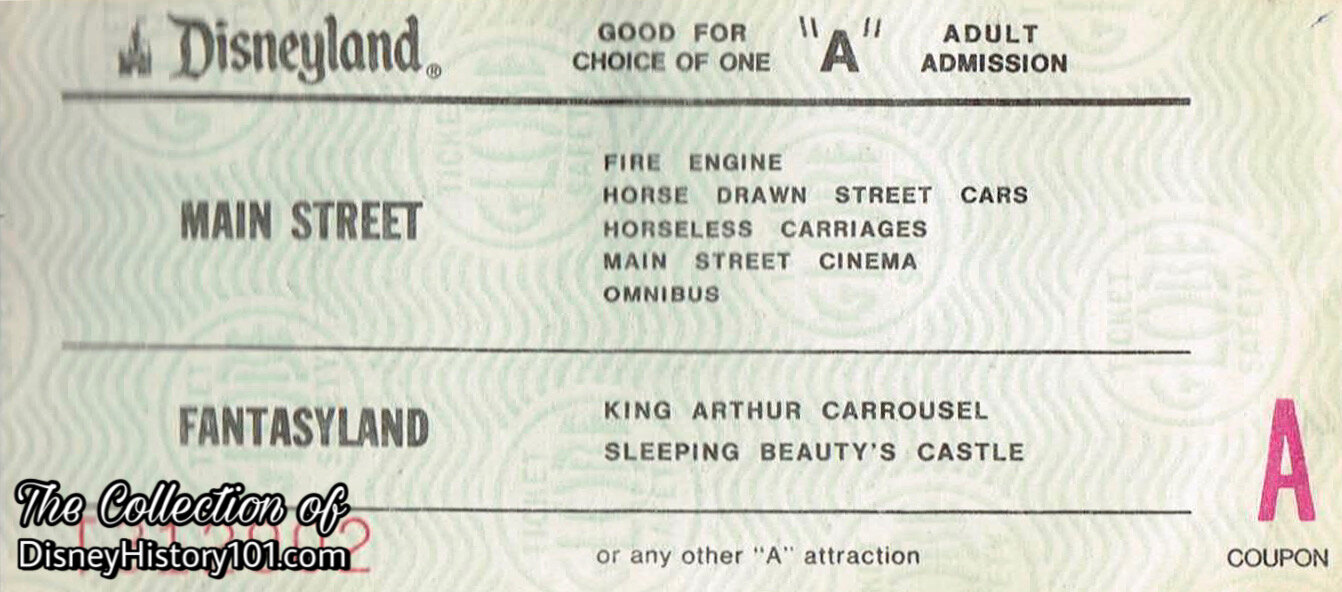
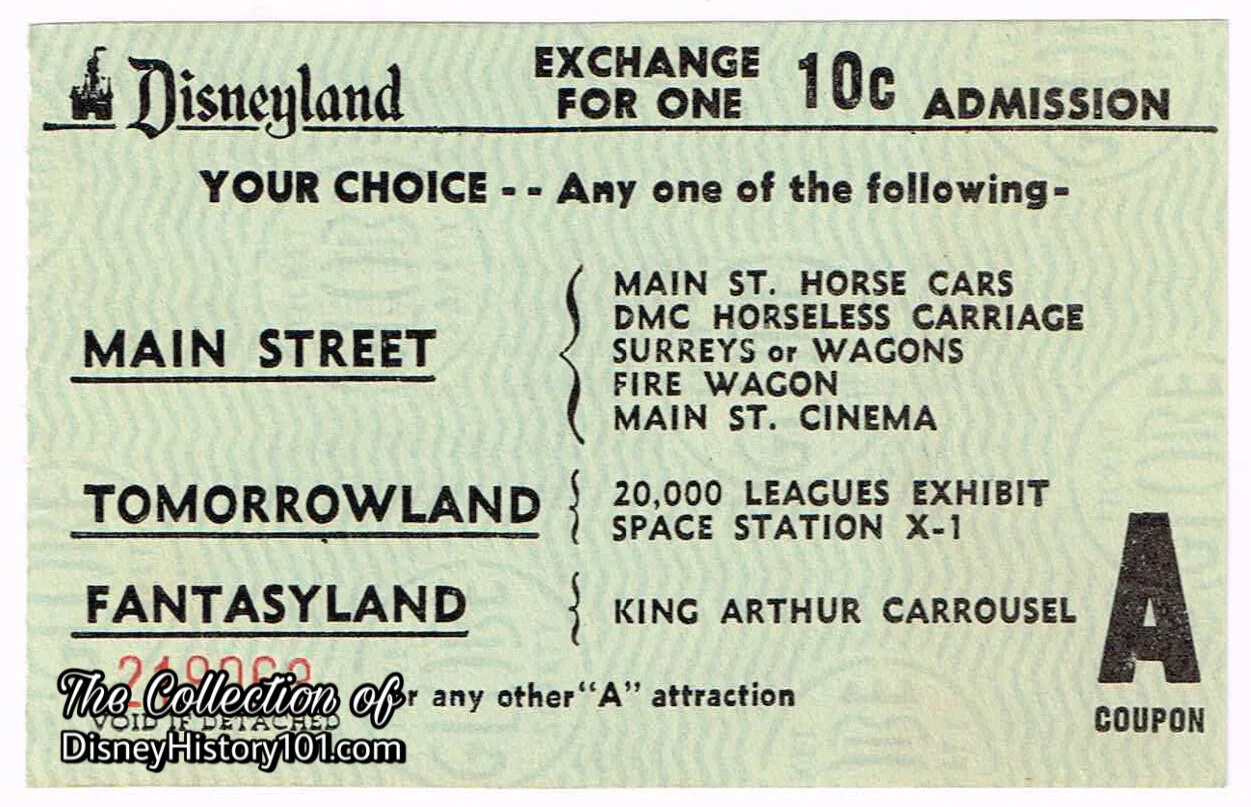
Hosts and Hostesses re-create Main Street, U.S.A. and their show is played up to Walt Disney standards. Hosts show an enthusiastic personality - an appearance, smile, and both outgoing and enthusiastic personality. They wear proper attire, a prescribed wardrobe in good repair and properly worn at all times. Hosts deliver an interesting narration - a good one. They know their facts, state them in an interesting way, and give them with enthusiasm. Hosts have a sparkling and clean appearance, that is essential to Disneyland showmanship. Hosts do their part in keeping their vehicle clean at all times. They are “popcorn picker-uppers”. Their realistic performance is most-important, living their role. The Disneyland DMC Host is a conductor or driver at the turn of the century - only much more friendly and courteous!
By 1996, the Main Street Vehicles (Fire Engine, Horseless Carriage, Omnibus, Horse-Drawn Streetcars, ‘03 Red, ‘03 Yellow, Double-decker touring bus (5/8-scale), and Horse-powered trolley cars were presented by National Interrent.
According to “THE DISNEY THEME SHOW: an introduction to the art of Disney outdoor entertainment; Volume 2”:
“What we create here is a storybook realism… an essence of realism and authenticity... more utopian in nature, more romanticized, more like what guests imagined it would be. All the negative, unwanted elements are carefully programmed out, while the positive elements are not only retained but in some cases even embellished for better entertainment.” On this note, “the old-time horseless carriages on Main Street do not backfire and throw out black smoke… they run on special clean-burning fuels.”
Even more, the Horseless Carriages (red and yellow) are still available to guests today, at a most “reasonable rate” - they’re absolutely free to ride to your heart’s content (after the price of Disneyland Park admission, of course)! This signage pays homage to the countless Horseless Carriages which moved through this entryway (during parades and shows of all sorts). This sign is posted near the “Egg House Gate” (and former prospective site of the International Street entrance).
In recent years the Horseless Carriages have been accounted as part of the Main Street Transportation Co., the fictitious business for the old-fashioned gasoline-powered Main Street vehicles. Each morning we excitedly anticipate the traffic that comes through these double doors on the west side of Town Square in Main Street U.S.A. Some of our favorite vehicles are the smallest ones - the two Horseless Carriages, and one of the occasional four “Runabouts” that emerge!
Disneyland actually looses money on Main Street vehicles, but they are vitally important to the showmanship of Walt’s recreation of Main Street U.S.A. These are essential, operated by the “first impression” and “last impression” representative host of Disneyland.
In the present, Main Street Vehicles cruise up or down Main Street, U.S.A. at Hong Kong Disneyland.
The replicas of America’s classic autos had a legacy at the Magic Kingdom at Walt Disney World, with the Horseless Carriage and Jitney.
“‘Too many people,’ he sighed. ‘Naturally, I like to see the place filled with people. But it makes it hard for me to get around,’” according to Bob Thomas (Associated Press Reporter, April 27, 1960). “Sometimes it’s not so bad if I keep moving. But when I stop for a moment, people recognize me and start gathering around. I’m a friendly kind of fellow and I don’t want to disappoint them. But if I get bogged down, I don’t get a chance to see the things I want to see.”
Walt’s own daughter Diane recalled: “Once when autograph seekers swarmed around him, I heard one determined woman remark, ‘I’m going to stand right in his way so he can’t get by!’” [The Story of Walt Disney by Diane Disney as told to Pete Martin]
Owning to this, Bob was soon tasked with creating a new model of vehicle to transport Walt around Disneyland! On April 11, 1960, the Electric Cars were added to Main Street U.S.A. These were a short-lived mode of Park transportation, and were removed the same year, in August of 1960.
Though retired as an attraction, the “curve-dashed” autos have carried many V.I.P. guests (in addition to Walt) throughout Disneyland’s realms, for a number of decades! Important dignitaries, and government officials (like Japanese Emperor Hirohito and Empress Nakago, 1975) rode as passengers aboard these custom turn-of-the-century-style vehicles. Now, Bob Gurr - “the original Imagineer” - shares the origin of the Disneyland 1903-inspired “curve-dashed” Horseless Carriages, in this Disney History 101 People Feature!
One great way to see Disneyland, was aboard one of the curve-dashed Horseless Carriage automobiles that were especially built for Disneyland V.I.P. Tour groups. In the early years (c. May 11, 1960 - January 27, 1962), it was common to see these autos carrying guests and their Tour Guides (through Adventureland, Frontierland, and even Tomorrowland) to the entrances of attractions in a service called the “Mobile Magic Carpet Ride.” The “Mobile Magic Carpet” had a separate admission price (of about $50) from that of Park Admission, or a Guided Tour, but was well worth the price for those (who like Walt), could not stay in any particular “on stage” Park location for too long. The special service had a brief run (starting April 11, 1960 and ending January 27, 1962), but had magically transported a total of 74,212 guests by the time it ended (according to a “Disneyland Admission Media Rides and Attractions Report” compiled for 1971; “Disneyland Rides & Attractions and Attendance Report,” 1981, page 50).
Disneyland is in the habit of selling a belief in fantasy and storytelling, and if the background isn’t believable, people won’t buy it. Marty Sklar recalled “walking through Disneyland with Walt Disney when a publicist drove up to them near the Mike Fink Keel Boats. Disney was horrified: ‘What,’ he asked, ‘are you doing with a car here in 1860?’” This story may explain why the Mobile Magic Carpet was discontinued. That urge for ersatz-authenticity has lived on into the present.
Though the “Mobile Magic Carpet” service did not last long, the “curve-dashed” autos continued to carry many guests (and occasionally their V.I.P. Guides) throughout Disneyland’s realms, for a number of decades! Important dignitaries, and government officials (like Japanese Emperor Hirohito and Empress Nakago, 1975) rode as passengers aboard these custom turn-of-the-century-style vehicles.
The four curve-dash “Runabouts” were first built as a way for Walt Disney to navigate the crowds while taking his VIP guests on a tour of Disneyland. In later years they continued to transport VIP guests around the park.
These automobiles were also utilized for parades (pictured). In December of 1962 and 1965, Jack Lindquist (then Director of Marketing) rode aboard one of the Curve-Dashed Horseless Carriages (along with Walt and Lillain ; the latter in 1962) in the Disneyland Christmas Parade.
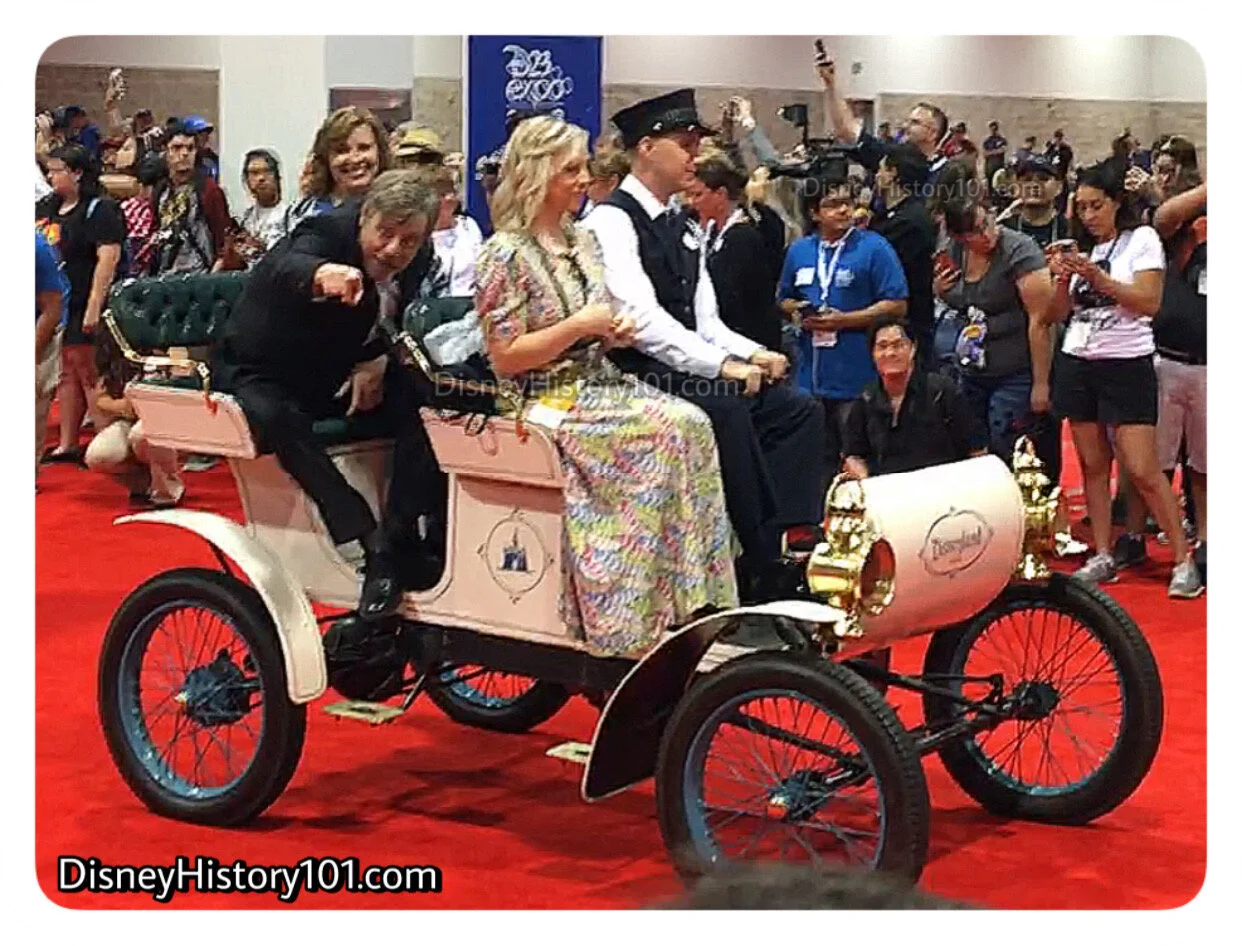
In our present era, these iconic Disneyland antique vehicles have even made quite a few appearances outside Disneyland. Here, Mark Hamill (in honor of his Disney Legends induction) rides one of the "Curve-Dash" Horseless Carriages at D23 Expo when it was held at the Anaheim Convention Center.
The vehicles would even have a legacy among Disney Parks worldwide. Why, by the spring of 2003, the “Main Steet Taxi” was among the concepts for Hong Kong Disneyland. These horseless carriages were to be replicas of “America’s first automobiles,” transporting guests down the middle of Main Street, U.S.A. In addition, would be a “Paddy Wagon” described as “a replica of an early police transport used to take suspects to jail,” also to be utilized for carrying guests down Main Street, U.S.A.
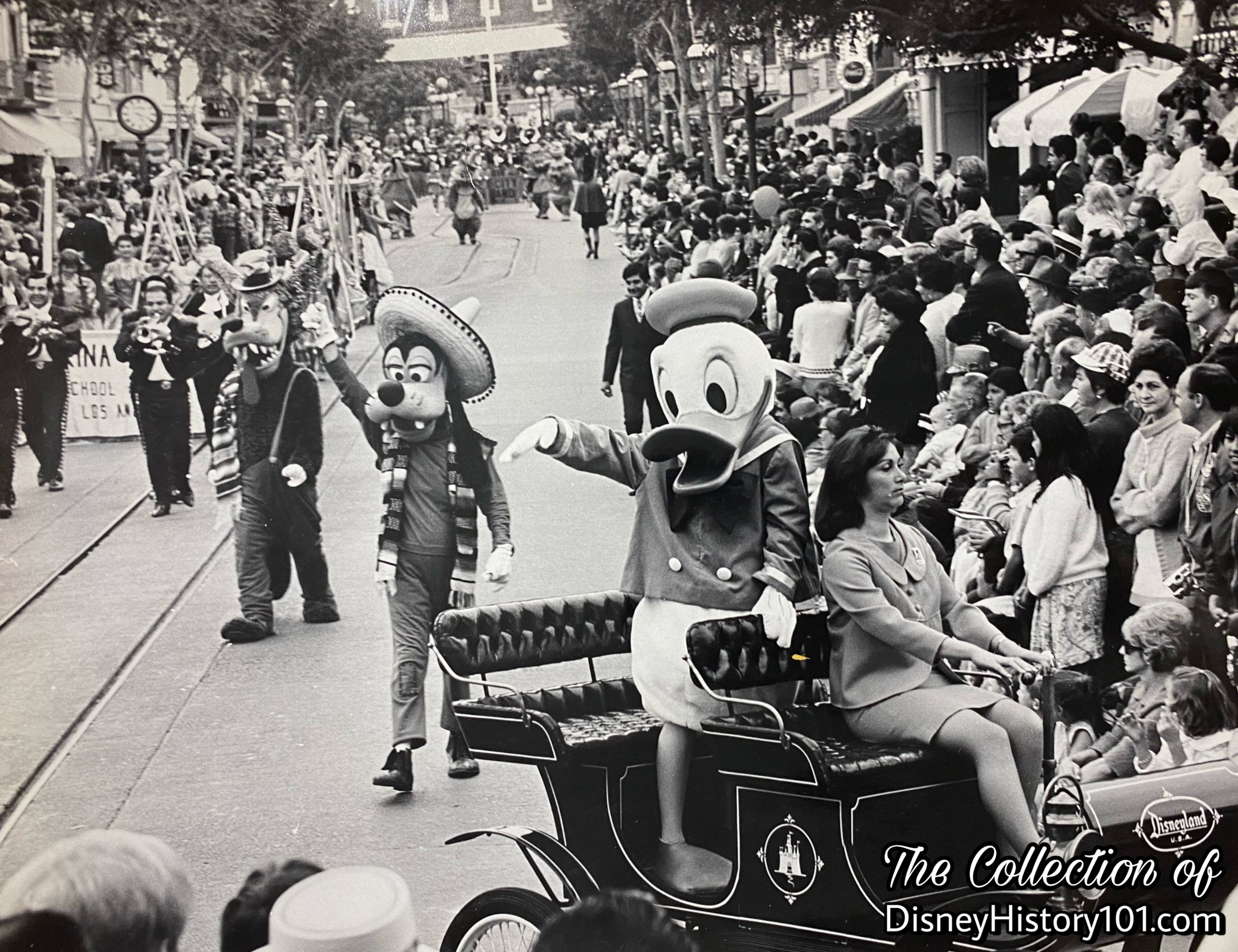
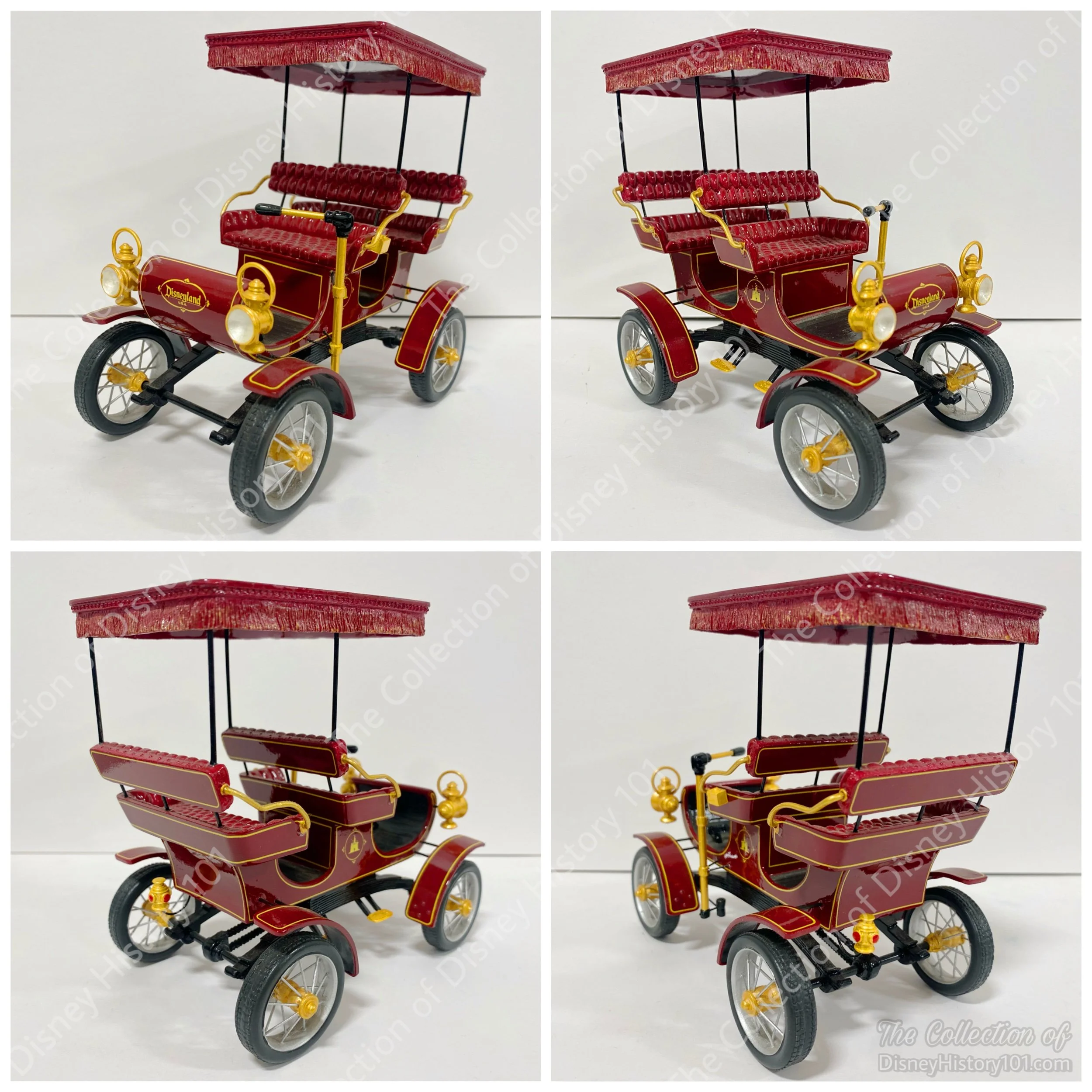
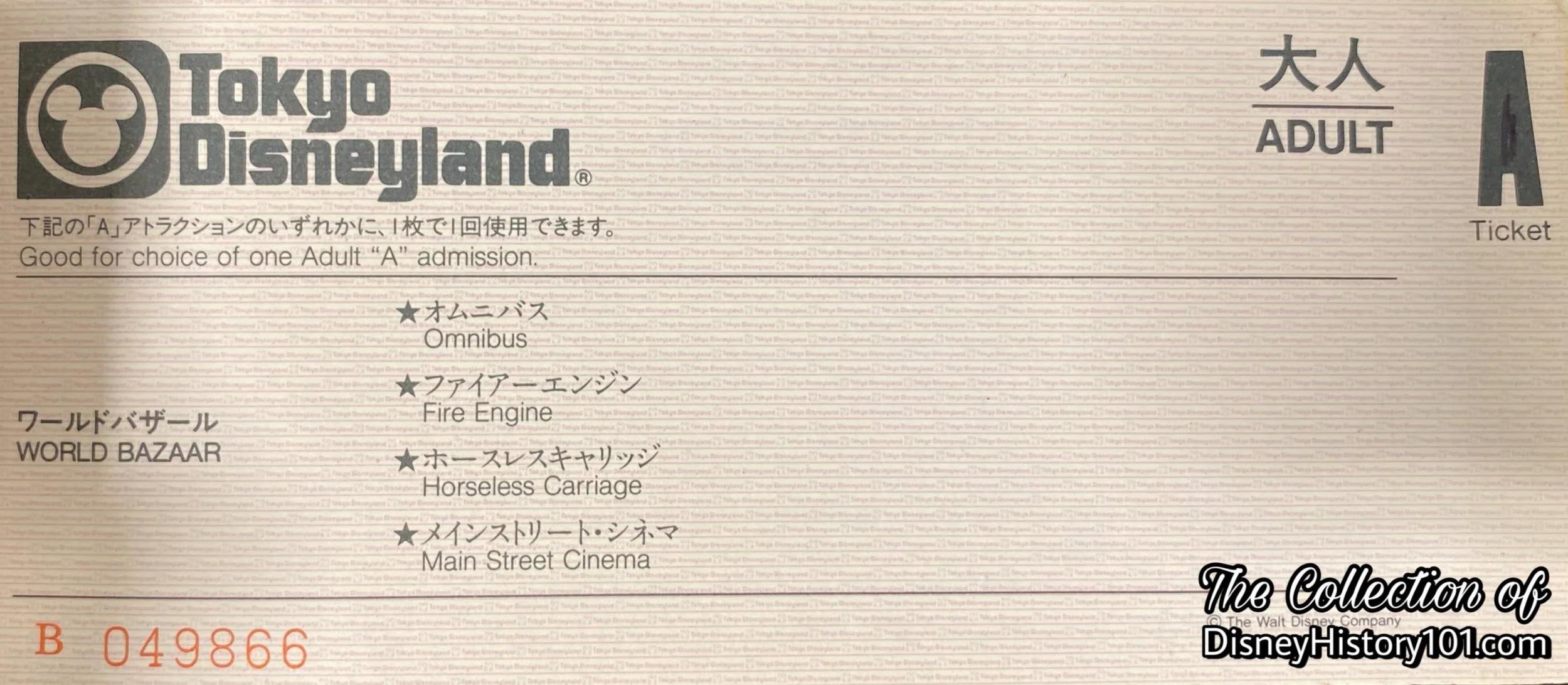
INDIAN VILLAGE (AMERICAN INDIAN VILLAGE)
INDIAN WAR CANOES (DAVY CROCKETT'S EXPLORER CANOES)

One can easily slip into the jargon of “ride,” but at Disneyland there is a "story behind the story" of every attraction, every attraction is a living experience for the guest. Disneyland ride-through attractions or adventures have officially been defined as an “individual show, ride, or exhibit designed to produce an entertaining Guest experience. Disney attractions stir the imagination, enliven the senses, and provide the participants with positive, innovative entertainment, which is the essence of the DISNEYLAND Show.” It is important to review the story of the attraction, tell the story, explain it, and create interest. This is the story of the Indian War Canoes.
Now, it was a year after the Indian Village originally opened in Adventureland, and the attraction had grown beyond a show to include an entire section of Frontierland along the shores of the Rivers of America! Originally, guests explored the river via the Mark Twain, or one of the Mike Fink Keel Boats. But now, the Indian War Canoes attraction soon proved the truth of Walt Disney’s promise of an ever-expanding Disneyland!
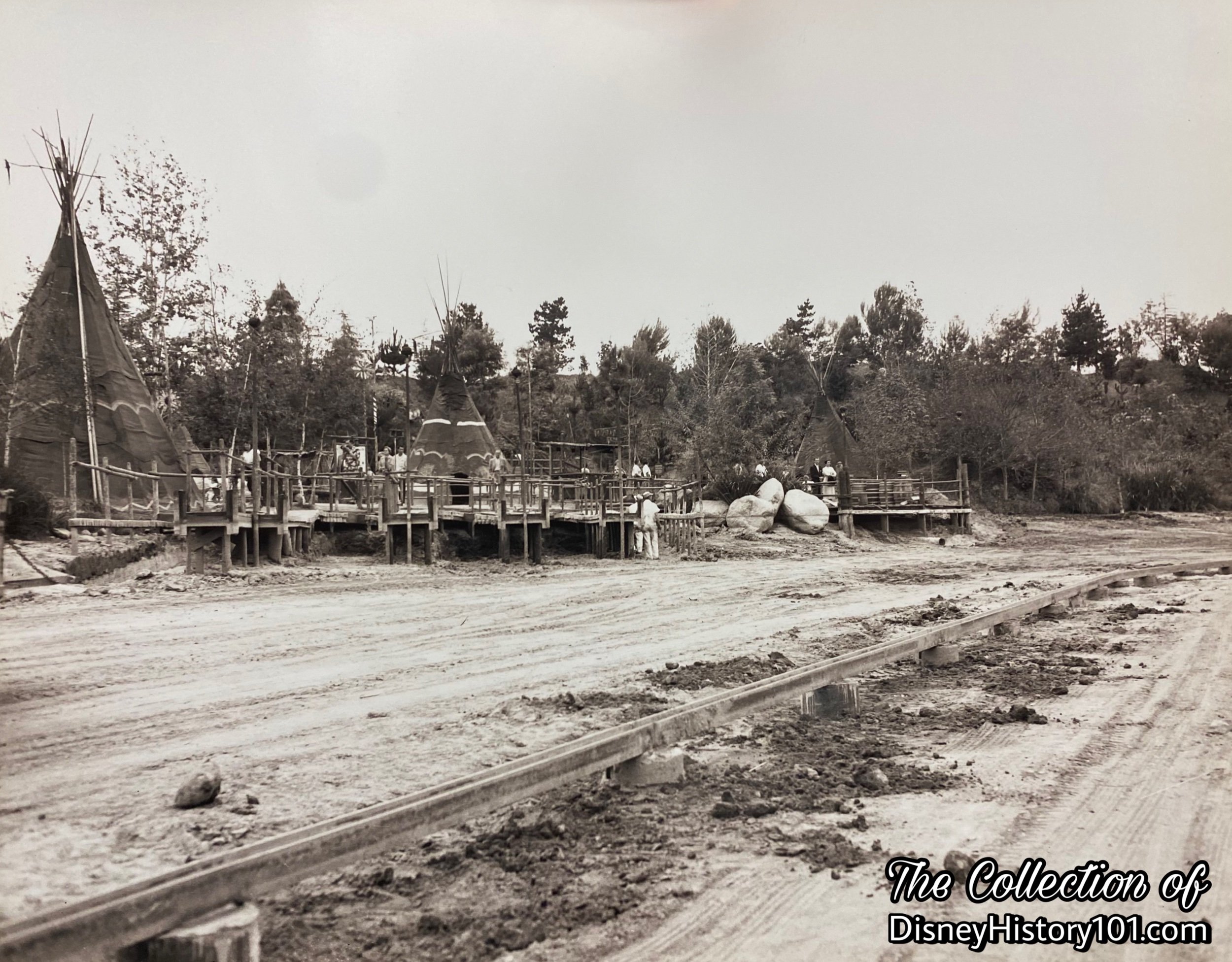
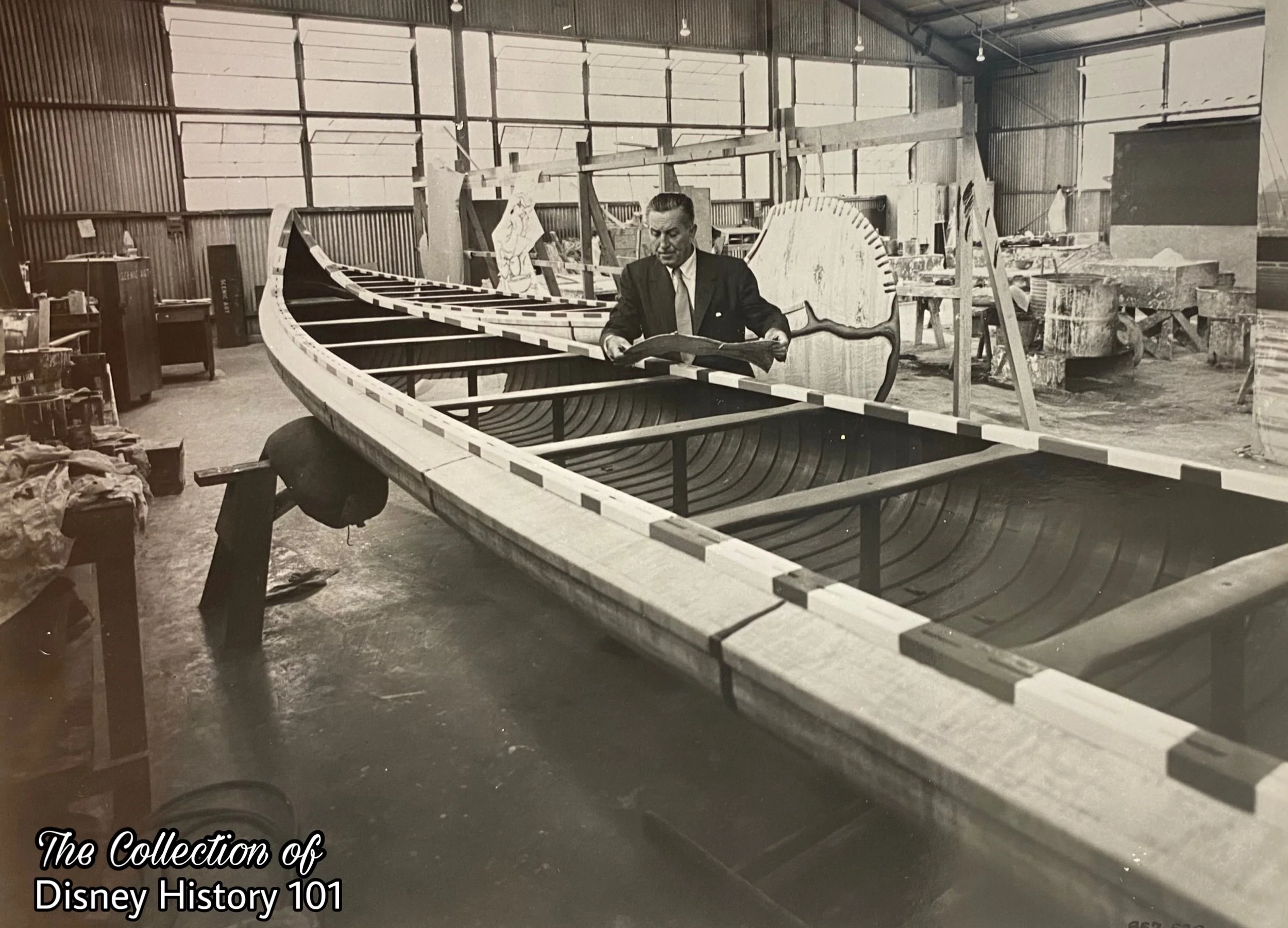
Now, it was a year after the Indian Village originally opened in Adventureland, and the attraction had grown beyond a show to include an entire section of Frontierland along the shores of the Rivers of America! Originally, guests explored the river via the Mark Twain, or one of the Mike Fink Keel Boats. But now, the Indian War Canoes attraction soon proved the truth of Walt Disney’s promise of an ever-expanding Disneyland!
The first fleet of six canoes were constructed by the Oldtown Old Canoe Company in Old Town, Maine. Each was crafted of varnished wood covered in canvas and some 30 feet long with bench seats capable of accommodating one “bowman,” one “sternman,” and a 16 guest capacity. According to Disneyland LINE Magazine (published June 11, 1993) : “The first canoes were shipped by train to Disneyland where risings on each end were added for a more authentic look. The canoes were covered with a canvas-like material to give the appearance of birch, which was used by Native American tribes in the Northeastern section of the United States.”
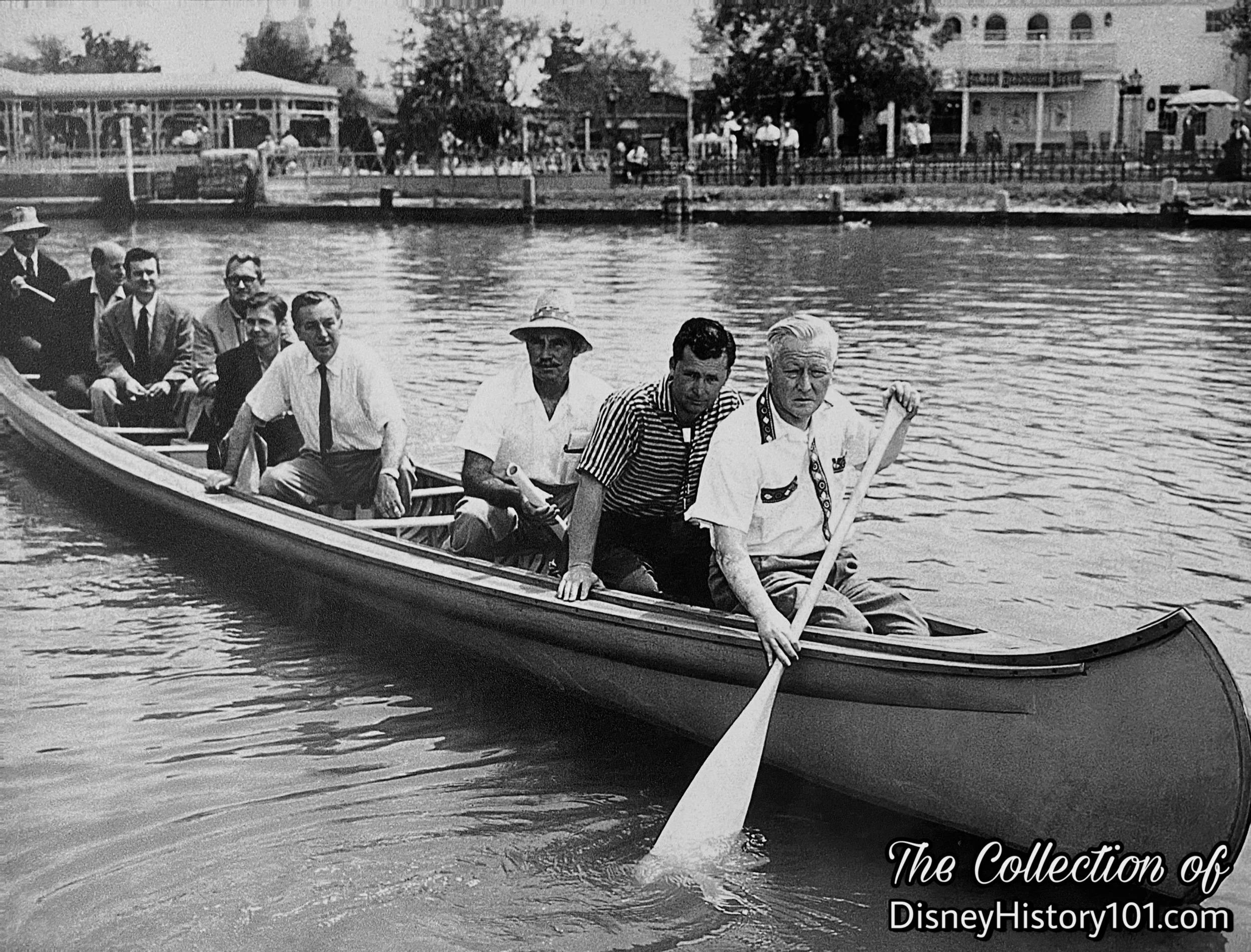
In May of 1956, canoe operations were tested with Joe Fowler (USN, retired; Park Management and Operations ; Construction and Maintenance) and Jack Reilly paddling, Dick Irvine, Bill Cottrell, Vic Green, and George Whitney (Park Management and Operations), Walt Disney, Bill Evans (third in row, in the hat), and Ray Miller around the Rivers of America. Bill Cottrell (who was present in the Canoe) later noted that “Walt had an ability to put himself in the shoes of the common man.”
On opening day of July 4, 1956, guests would “experience an exciting adventure along the churning rapids of forest waterways,” paddling and stroking their way around those very Rivers of America (just like the early inhabitants and pioneers), all before dusk of course. The new thirty-five foot Indian War Canoes departed from the Indian Village (along the south bank of the Rivers of America), passing two other Indian villages along the waterfront. Your Indian Guide would help you paddle like a pioneer down the back waterways of Frontierland’s River, observing waterfalls and other formations, and wildlife. Where the paths of the Mark Twain steamboat and the sailing vessel Columbia would take them around the white water rapids, the long-established route of the Indian War Canoes would often set course through, and face them.
Disneyland's authentic Indian Village was patterned after those of the northwest plains First Peoples. This village was the embarcation point for the war canoes.
Early Disneyland maps (printed inside The Official Guide to Disneyland, 1956) label the Indian War Canoe Ride, announcing the new attraction at the end of Wilderness Trail, along the western shore of the Rivers of America! The Indian War Canoes were accounted among the many exciting attractions debuting during 1956, that increased ride capacity, and (owning to this) one day in August saw a peak total of “197,547 individual rides” enjoyed by Guests (according to a letter from Walt to Ward Kimball, dated January 23, 1957).
During 1958, an appraisal of the ride structure valued it at $2,200 while the equipment was valued at $14,800.
When the Indian Village was relocated to a larger area in Frontierland, a new attraction was added - The Indian War Canoes! By this time (in 1957), we could see some new developments taking place just across the river. But even before the island was able to be traversed, Disneyland guests could examine the new area from afar, by navigating the Rivers of America via steamboat or (for a different vantage) the Indian War Canoes! These canoes are returning to the dock, and their passengers likely have a better view of those coming attractions.
Indian Village Cast Members (some of them, performers), were also trained in Ride Operations for the Indian War Canoes attraction, which departed from the Indian Village! As with all other Indian Village attractions, concessions and merchandise locations in the Area, the Indian War Canoes were staffed only by Native Peoples (like Philip White Eagle, Pete Homer;c.1962, Fred, and Timothy), through the Bureau of Indian Affairs.
Principally, male Indian Village Disneylanders were selected for the operating positions established by the attraction's Working Lead, but some female Indian Village employees were also known to work within rotation on the Indian War Canoe dock. Usually the women were assigned to take admission tickets, and assist Guests in and out of the canoes! “Ray Van de Warker, Office Support Services Department Manager, was nicknamed ‘Catfish Jones - King of the River’ in his early days on the Rivers of America. He [operated the Keel Boats, and] was also known as ‘The Great White Fur Trader’ - the only Caucasian Cast Member in the Indian Village”, (according to Disneyland LINE, Vol.25, No.28, published July 16th, 1993)
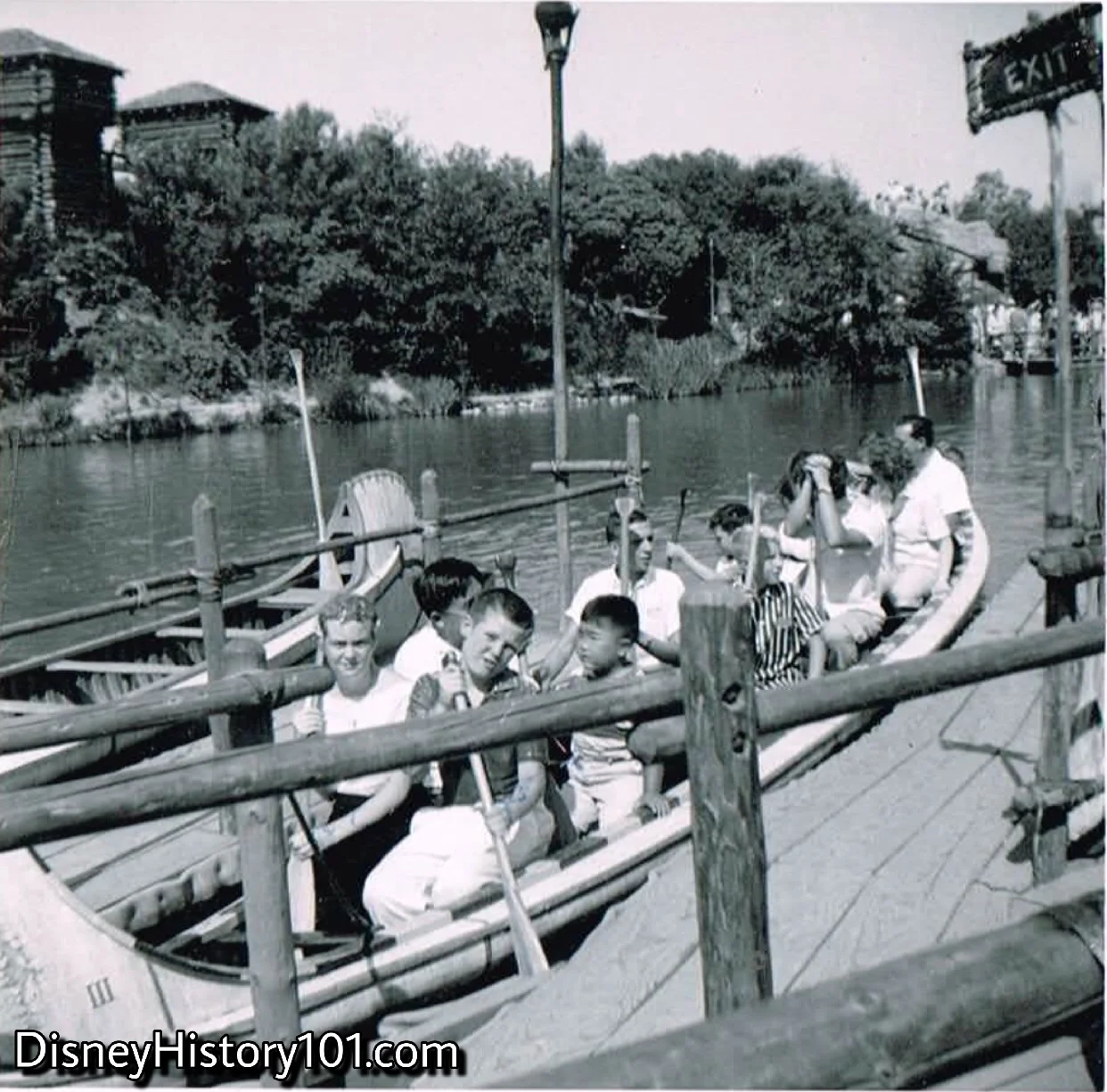
The attraction was popular among guests of all ages - offering the opportunity to experience exploring the Rivers of America, just like the “first American” peoples once did! On one day in the month of August, 1958, Disneyland's visitors took a total of 5,600 boat trips on the Park's nine (9) water rides (including the Indian War Canoes).
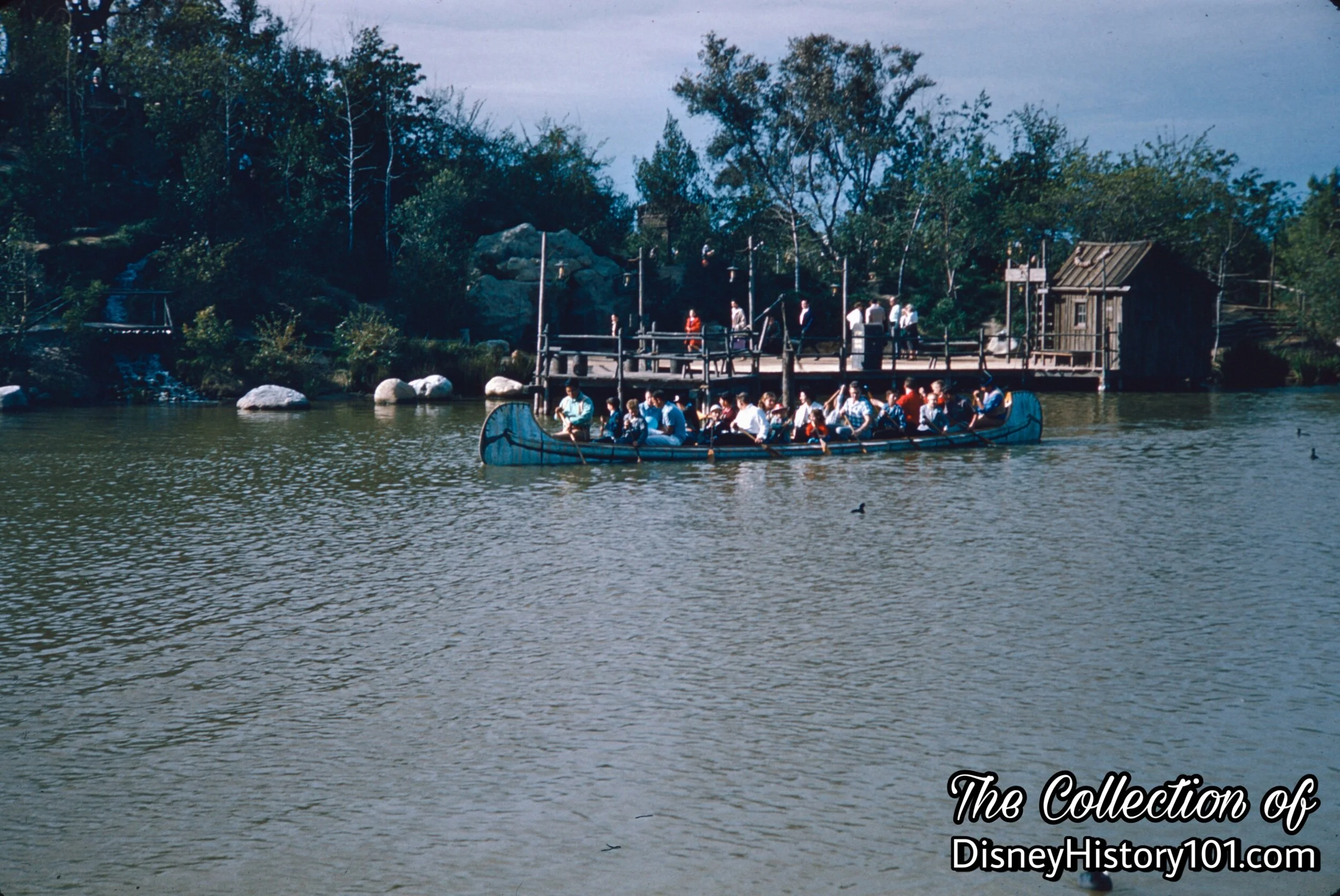
In the early days, the vegetation scattered across Tom Sawyer Island was new and sparse. In fact, it was so low, that guests paddling aboard Indian War Canoes (along the West side of the island), could see many of the attractions on the East Side of the island (like Suspension Bridge). Your Indian Village Guide would highlight some of these new and mysterious contraptions.
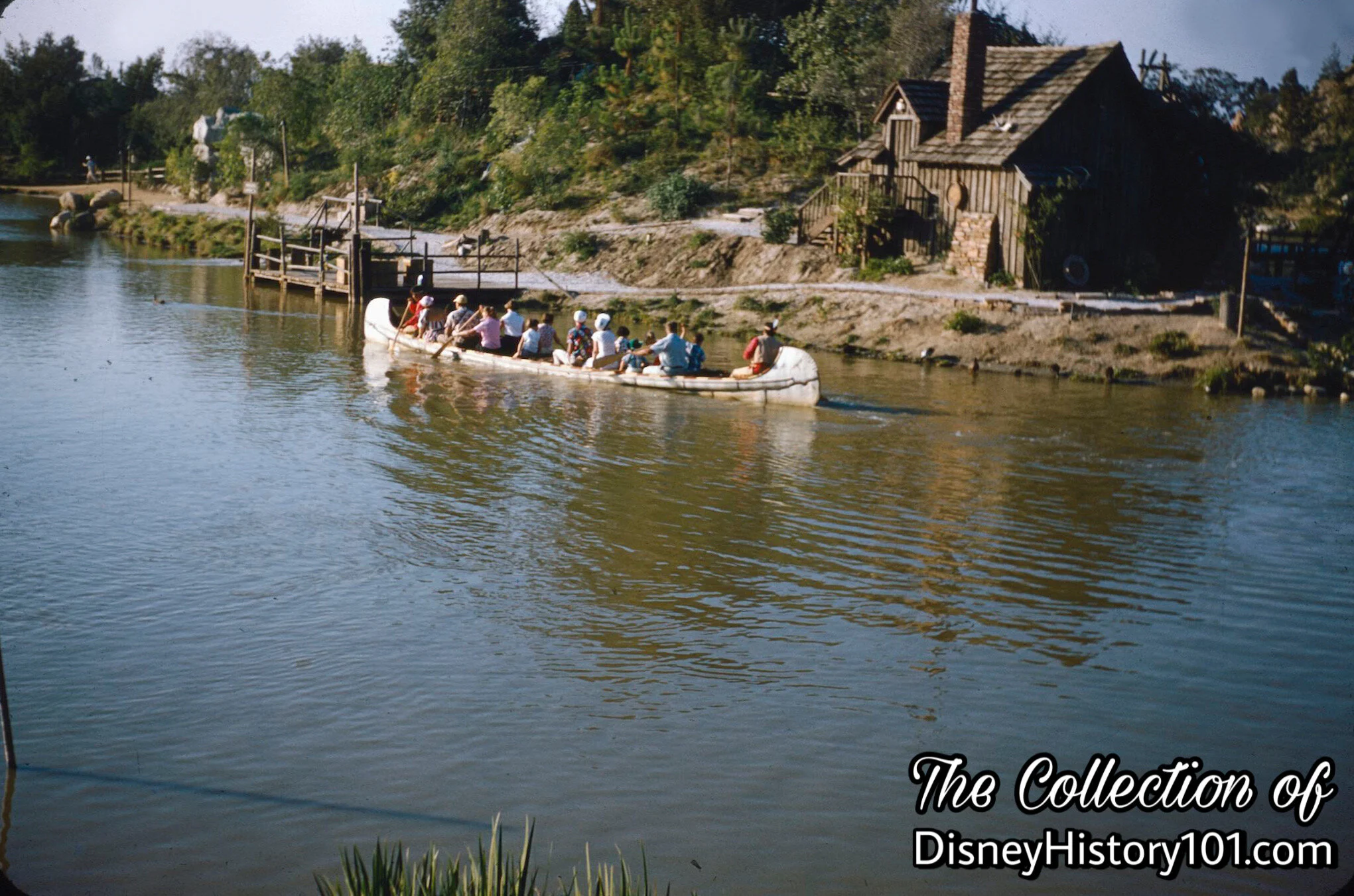
Unlike the Columbia or the Mark Twain, the Indian War Canoes had the ability to maneuver close to the shores of Tom Sawyer Island.
By 1959, Joe Fowler was Vice President of Disneyland Operations Committee and Doc Lemmon of Disneyland Operations was overseeing Operators of Rides & Amusements (like the Indian War Canoes), Livestock, Parking Lot, and Ticket Sellers.
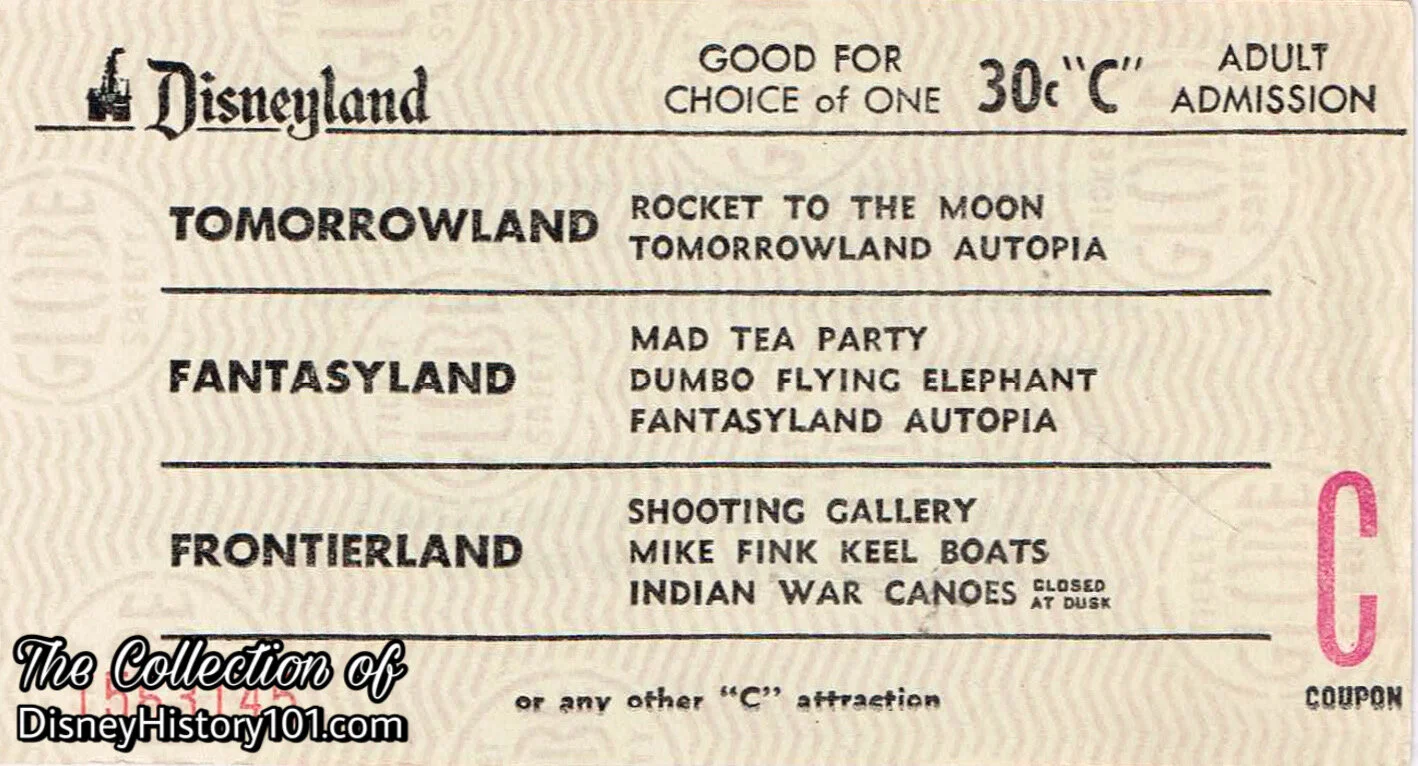
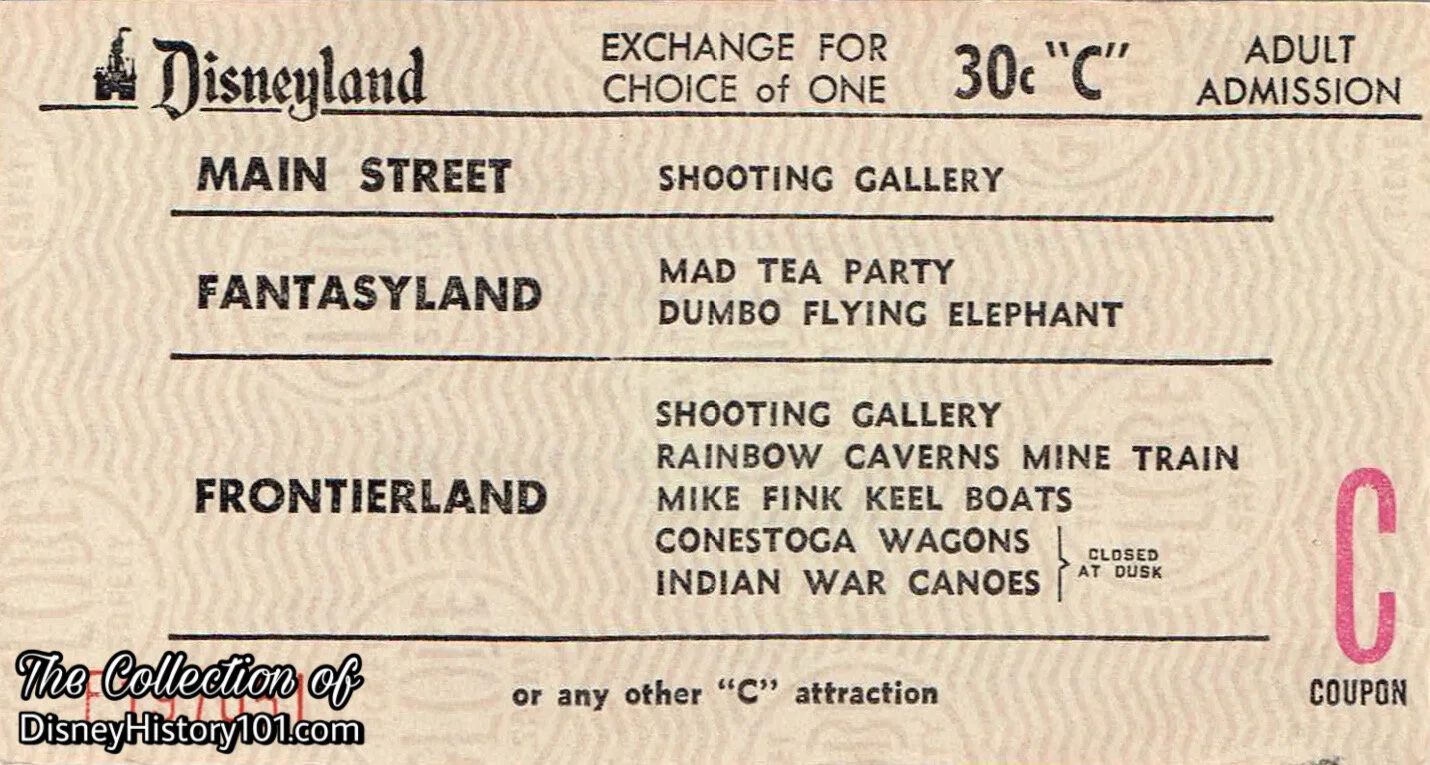
The Indian War Canoes adventure was closed weekdays during the winter season of 1962, operating on weekends.
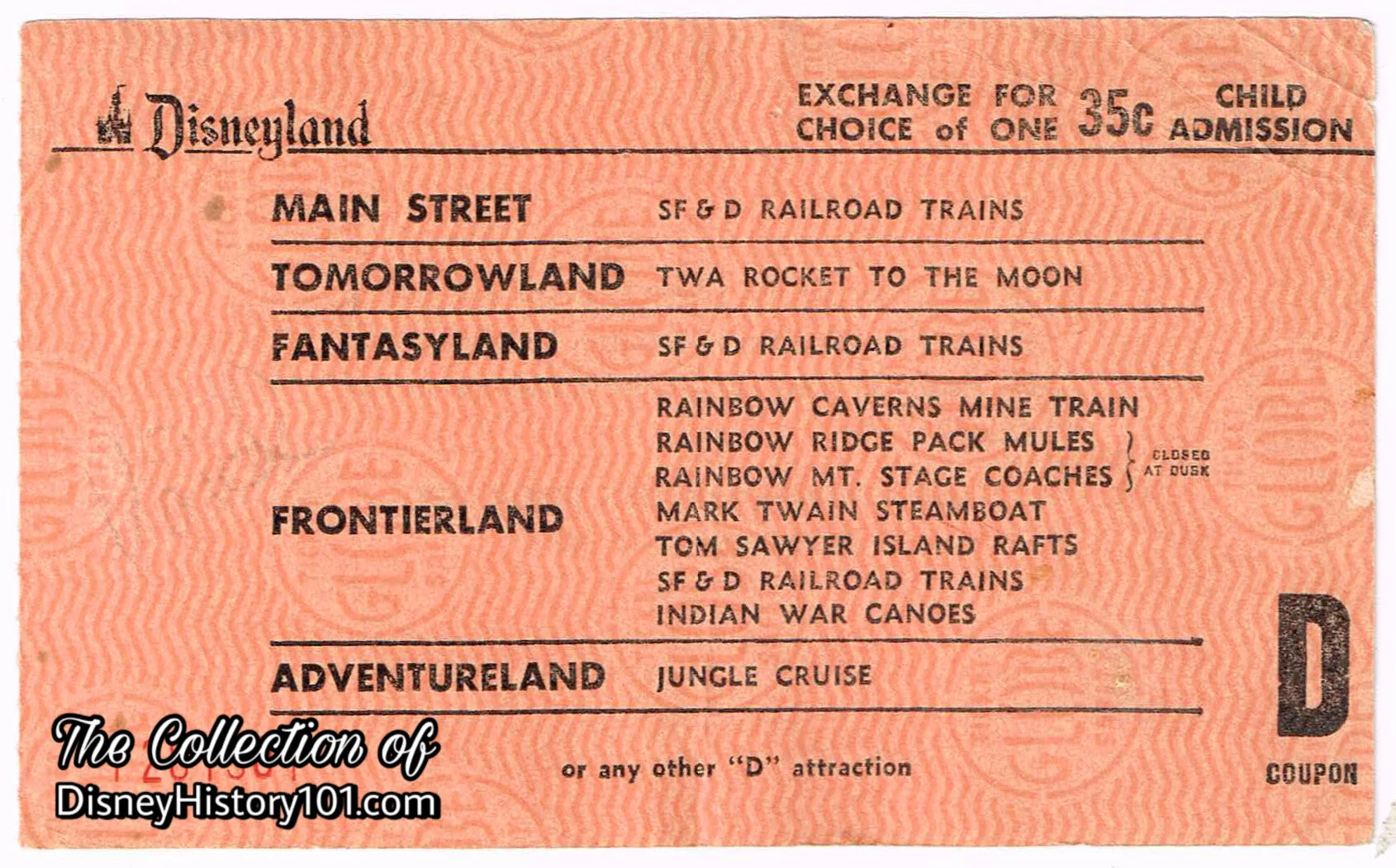
After the success of Disneyland, developers of the amusement centers saw the benefit of an Indian canoe ride in their parks. On June 19, 1960, Freedom Land, U.S.A. opened in the Baychester Area of Bronx, New York, an entertainment center “founded on the inspiring story of America and its people”. One of its opening day attractions was a Chippewa War Canoes: lake ride near its Indian Village, of its “Chicago: 1871” Area.
Disneyland’s Indian Village offered one of the few Disneyland ride experiences that wasn’t tethered to a track. The Indian Village Rafts (belonging to that infamous character from the Tom Sawyer novel - Injun Joe), and the Indian War Canoes! In this early photograph, we can see the original Indian War Canoe Docks, where the boats were stored in a parallel (60 degree) position while loading or not in use.
While the Indian War Canoe Guides would keep a safe distance from Big Thunder Falls, their “established canoe routes” would take them close by the Twin Sisters Falls (just around the river bend).
The river can be a busy place for the Columbia, Mark Twain, several rafts, two Keel Boats, and some half-dozen canoes in the water all at the same time. The Attraction Hosts must make sure to yield the right-of-way to the Mark Twain and Keel Boats (because they are on a guidance system and have less maneuverability). The Keel Boats and rafts must yield the “right-of-way” to the canoes, as they have unseen engines and the canoes do not. Canoes will often yield the right-of-way to rafts and Keel Boats which are docking.
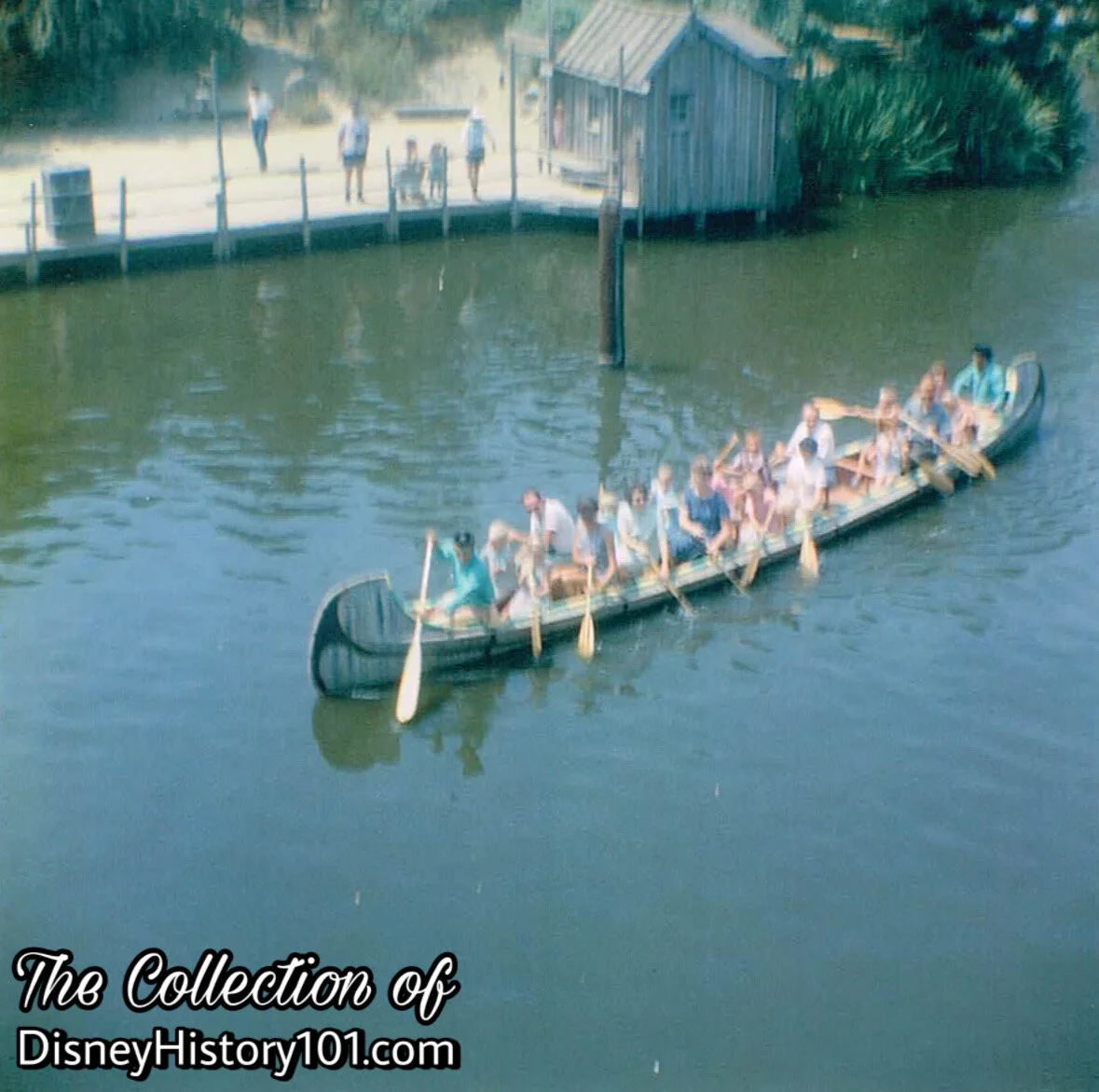
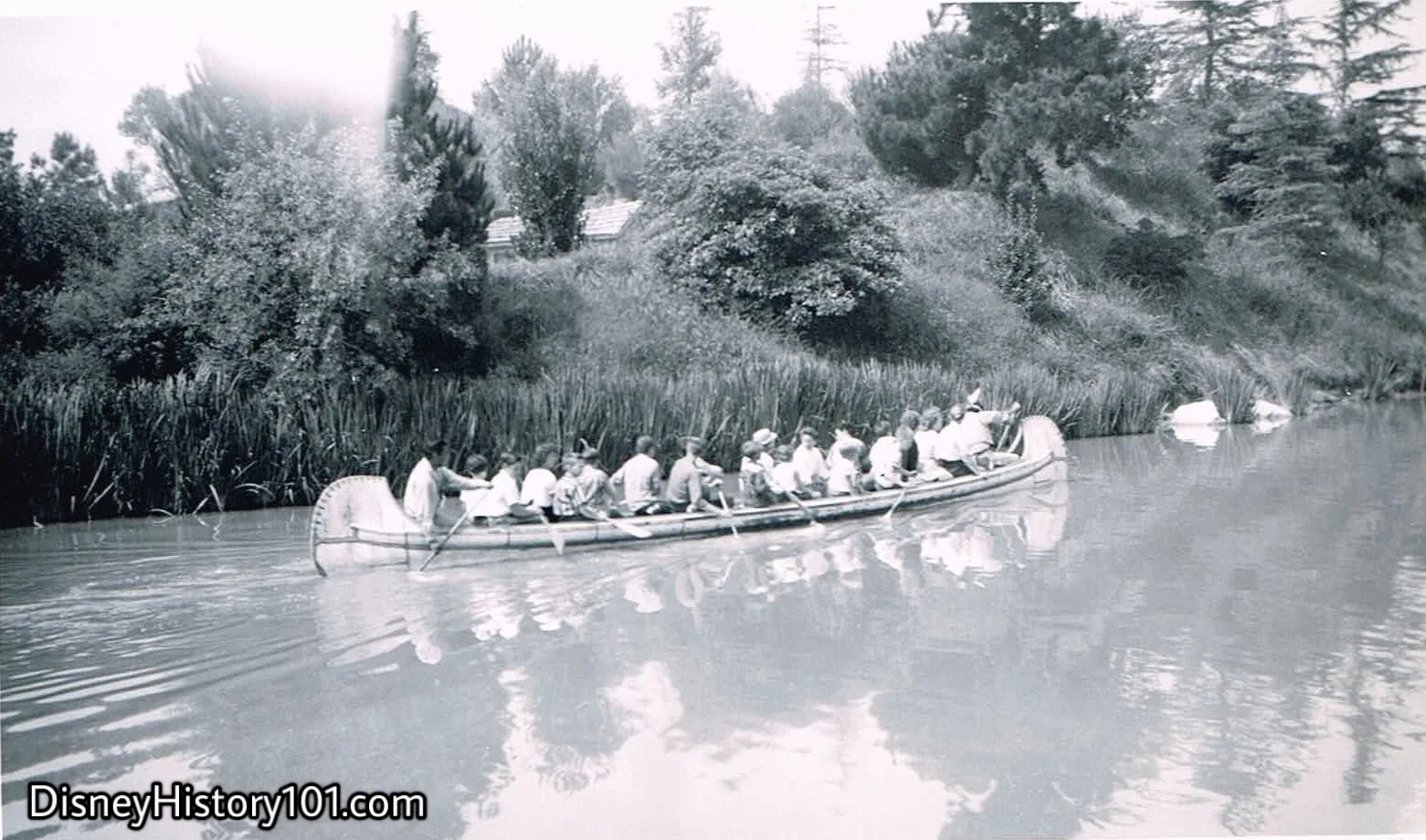
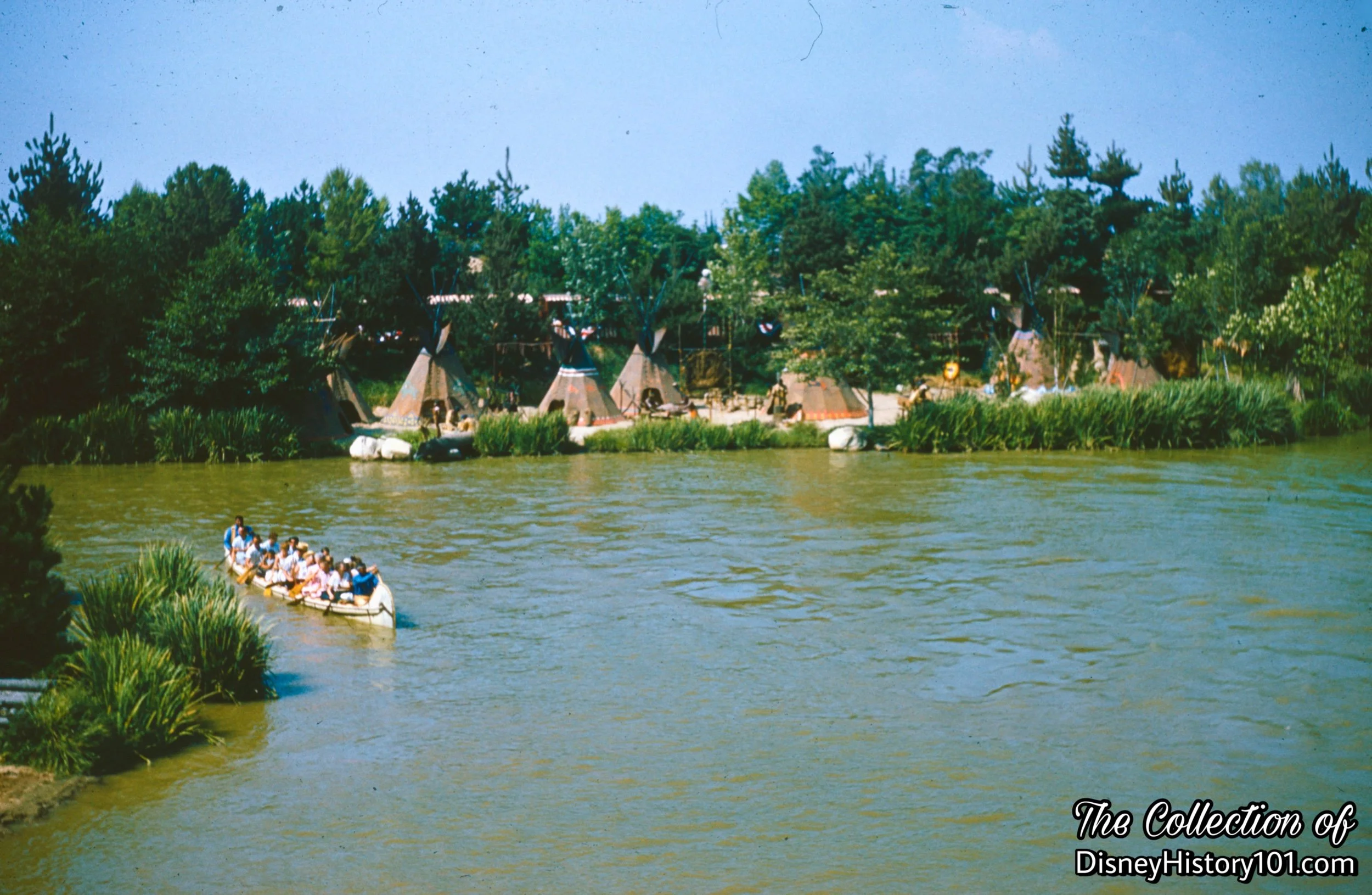
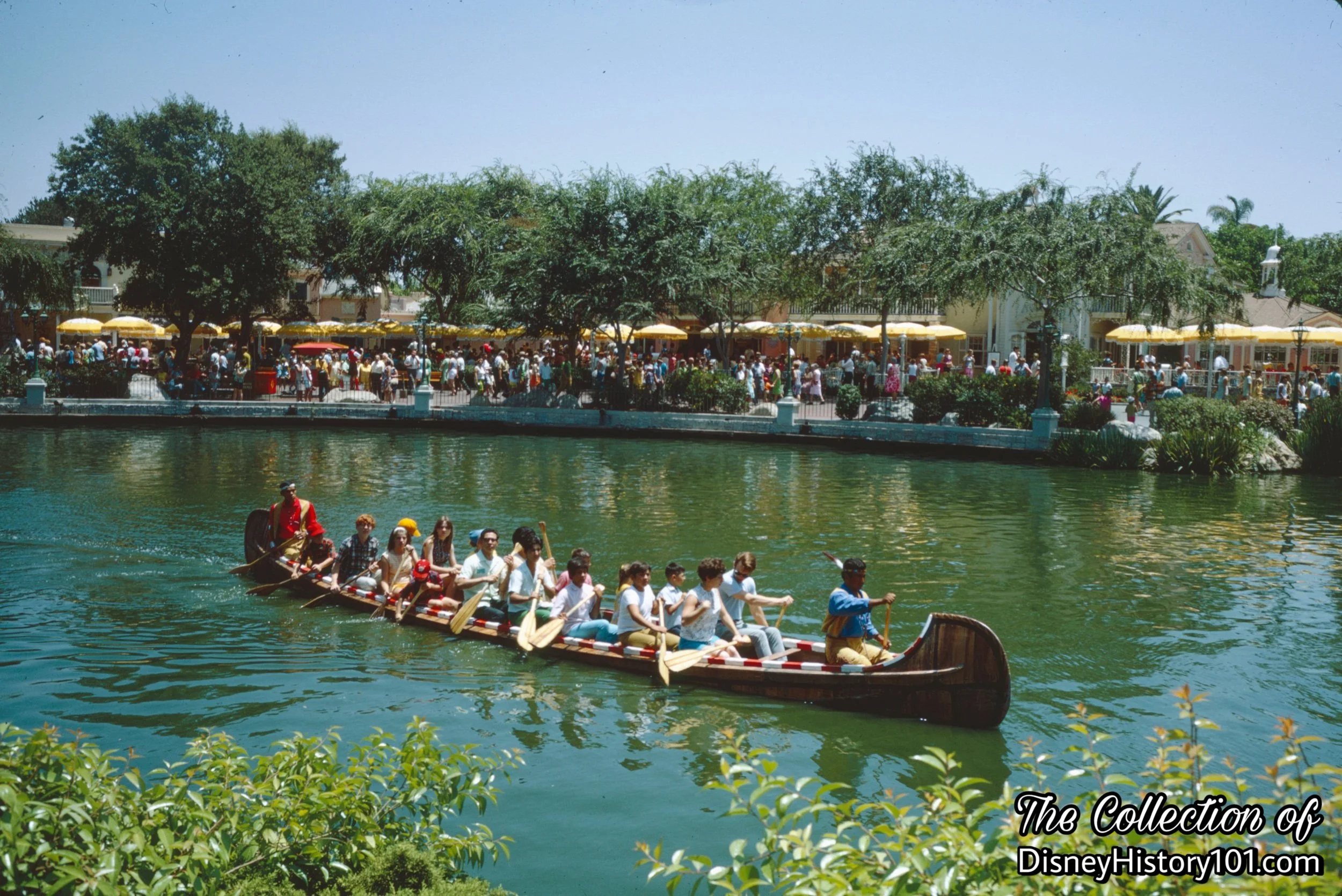
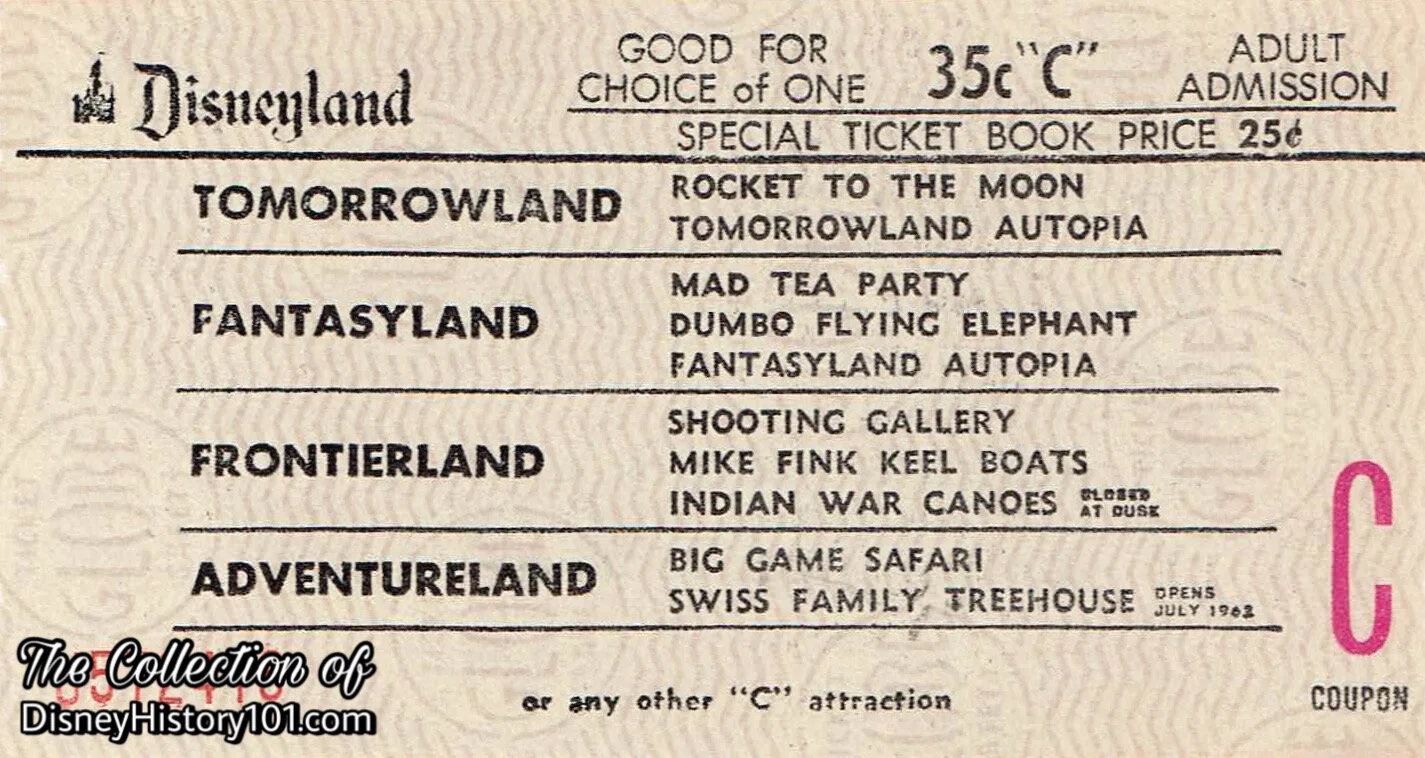
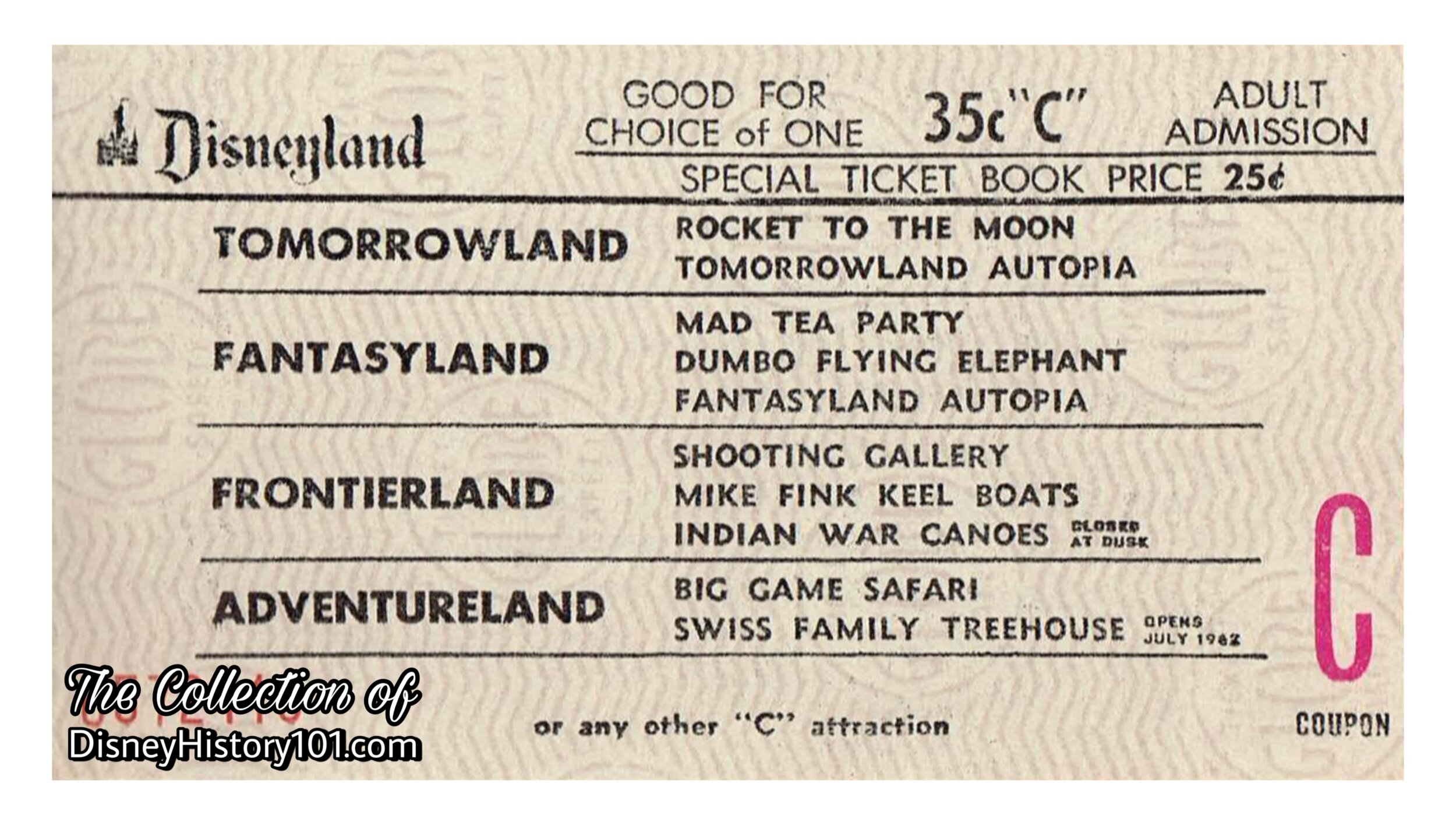
During the 1962-1963 winter season, the Indian War Canoes operated only on weekends.
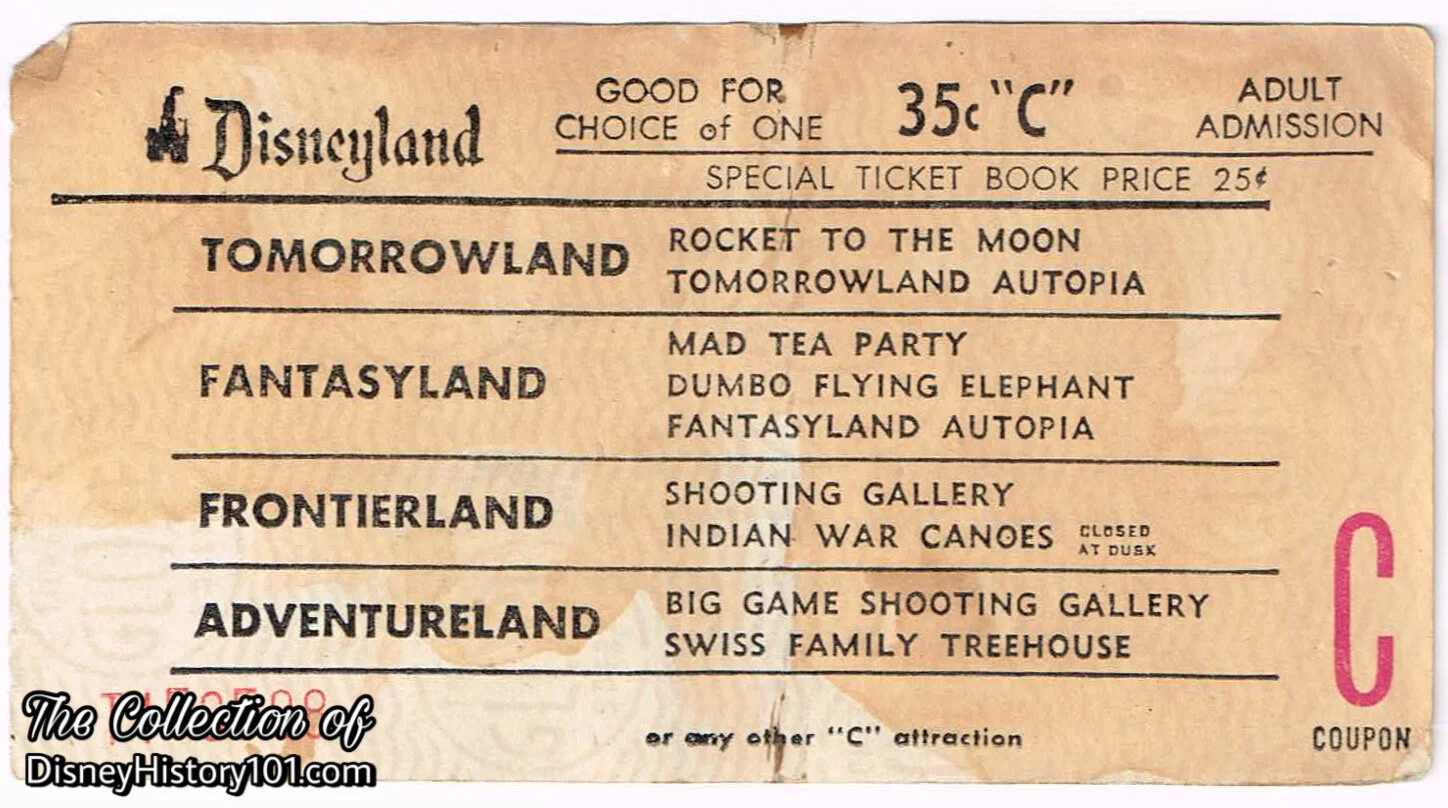
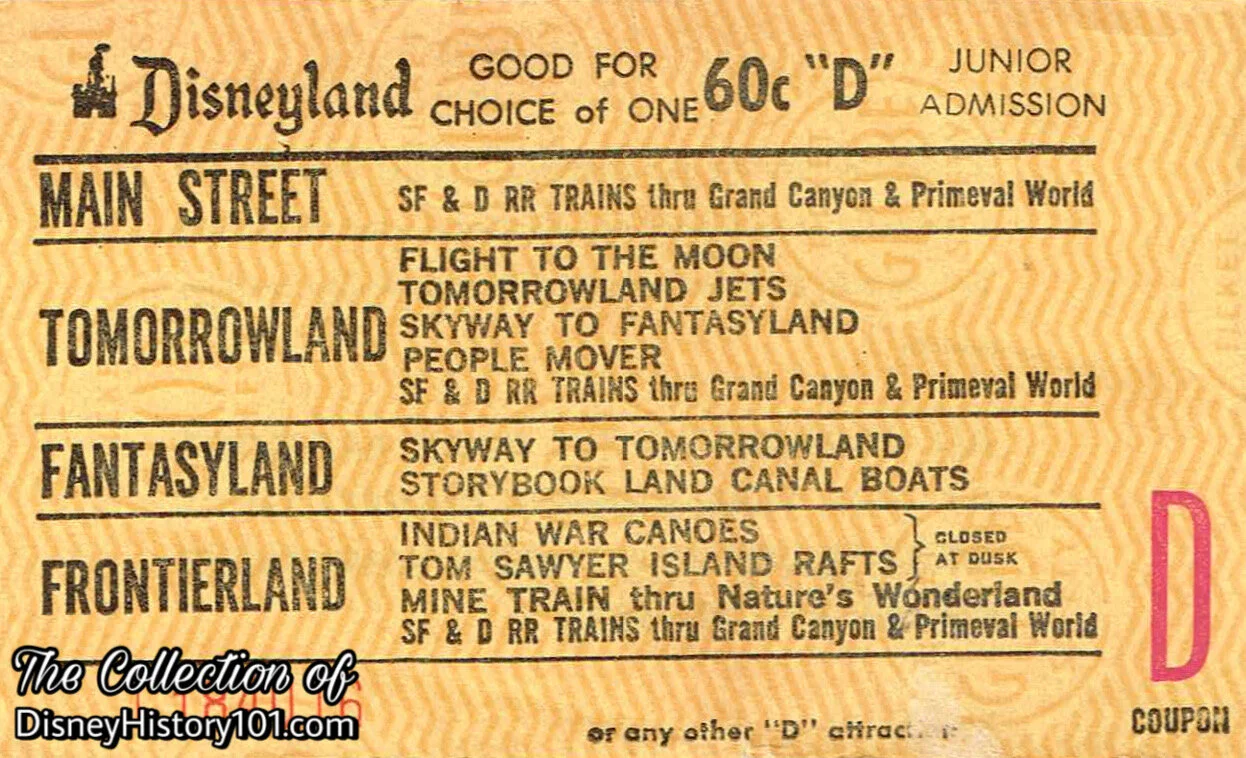
In 1965, the cast of admission for rowing your own canoe “under the guidance of a real Indian guide” (According to INA Guides), was exactly one “D” coupon, or 60¢.
Jon Burke and Tim White Eagle paddled canoes during the 1960s.
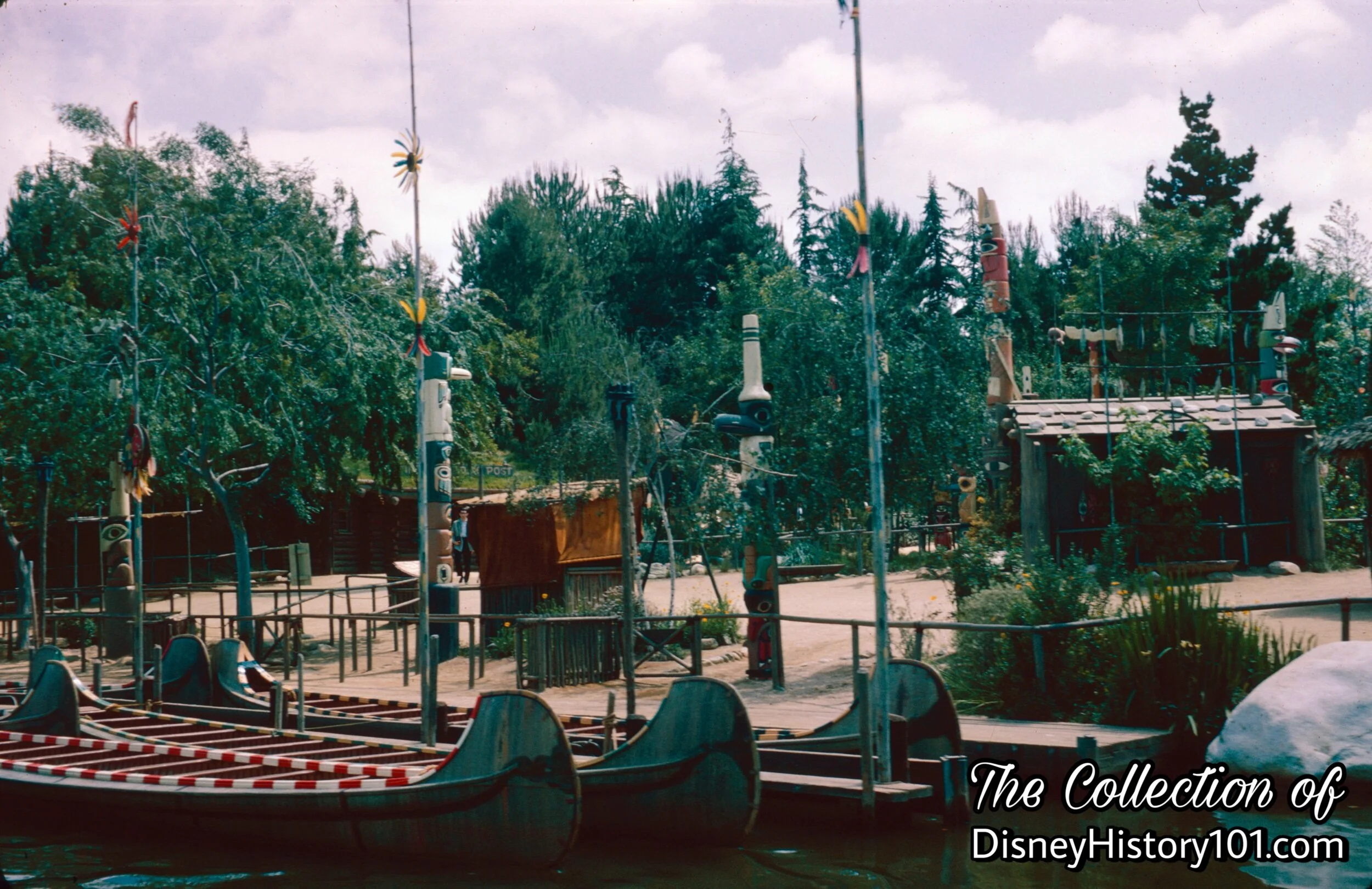
There were often lines for two Indian Village attractions - Fire Dance Circle, and the Indian War Canoes! During the 1960s, an expansion of the Indian Village brought new Pacific Northwest attractions. Fire Dance Circle was moved to the back of the Indian Village and a new Indian War Canoe Dock was constructed. The boats were now docked one in front of the other, and not in parallel rows like before. This new dock design allowed guests to easily and safely board boats.
By December of 1965, canoes were manned by Cast Members like Jon Burke and Tim White Eagle. Ray Van De Warker recalled: “I met Walt on many occasions. One time he walked up behind me in the Indian Village and tapped me on the shoulder. He had his grandchildren with him. He said, Would it be possible for me to take a ride? I paddled him arounc the River and he got soaking wet, but he really enjoyed it.”
An Indian Guide routes his War Canoe close by Tom’s Landing (located on the Tom Sawyer Island’s Southern shore, just East of the Old Mill).
Even with the addition of Pacific Northwest attractions, the Indian War Canoes’ docks maintained their position, centrally located in the center of the Indian Village.
While the Keel Boats were not always operational (and docked near the Indian Village), the Indian War Canoes would still embark on excursions down the Rivers of America!
Departing the Indian Village, we head further into Indian Territory with our Indian War Canoe Guide.
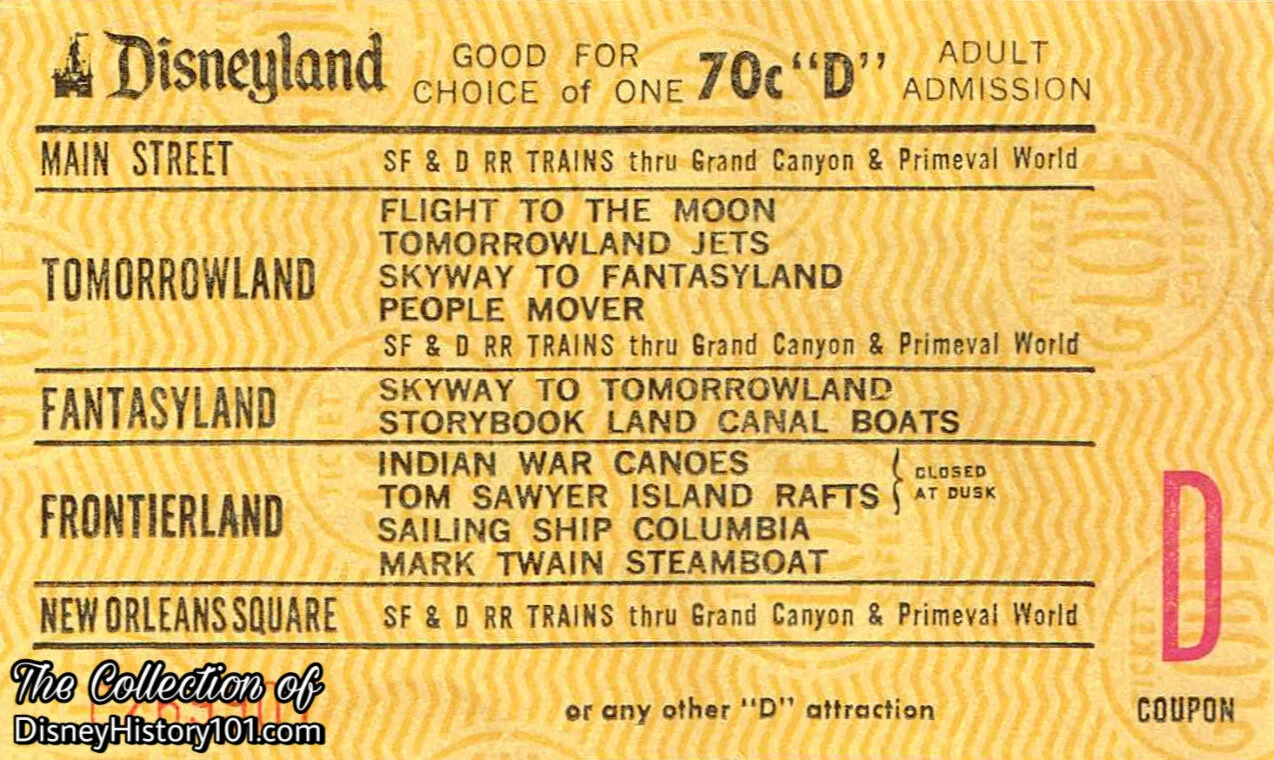
Changes were in the wind during the early 1970s that would mean the end of an era for the Indian Village. By the time the region was renamed Bear Country, the Davy Crockett craze wasn’t over. So, it was only natural that the attraction was rebranded as the Davy Crockett Explorer Canoes (on May 19th, 1971)! The attraction was open each morning, one hour after the Park opening, and closed at dusk.
A few months later (in October of 1971), the Indian Village would close, but one of its last vestiges - the canoes -would continue to carry guests down the Rivers of America! The new land - Bear Country would include a redesigned and relocated loading area for the canoe ride.
By 1984, the (6) 300 pound Canoes (comprised of both old and new fiberglass canoes) had a length of 34’ 6”, 4’7 1/2” beam, and a capacity of 18-20 passengers in each canoe. When full, the old canoes weighed 950 lbs. while the new canoes weighed 1,100 lbs. The Davy Crockett Explorer Canoes were staffed by 12 Cast Members during the winter months, and up to 24 Cast Members during the peak summer months. Each canoe is staffed by two Attractions Hosts, one in the back of the canoe (in charge of steering), and one in the front of the canoe (in charge of the safety of the passengers).
Davy Crockett Explorer Canoes temporarily went away for a seasonal period of refurbishment, but “returned” on July 29, 2017. The adventure continues to operate during periods of peak operation. Today, Davy Crockett's Explorer Canoes are one of the only tributes left to the "king of the wild frontier" in Disneyland.
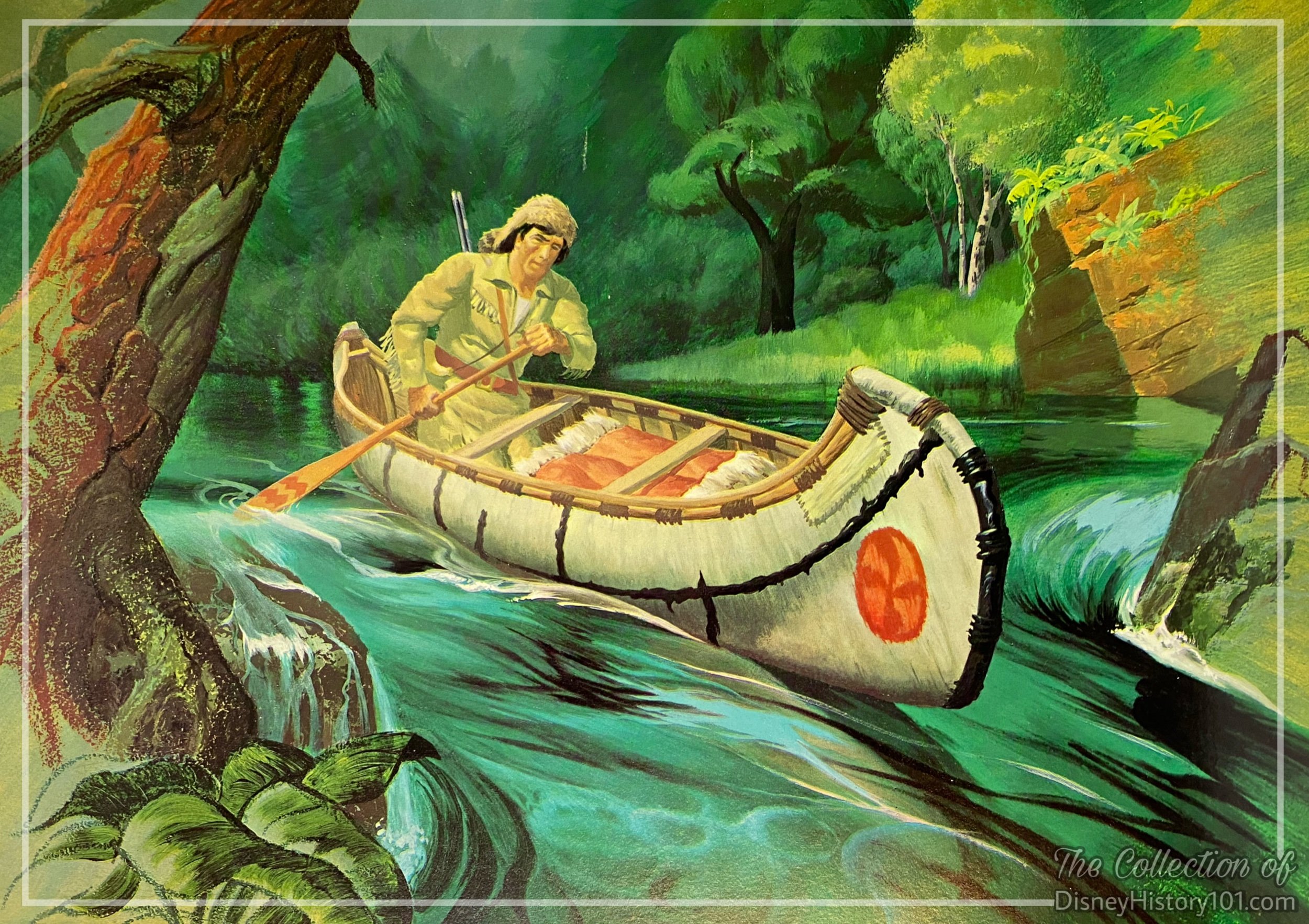
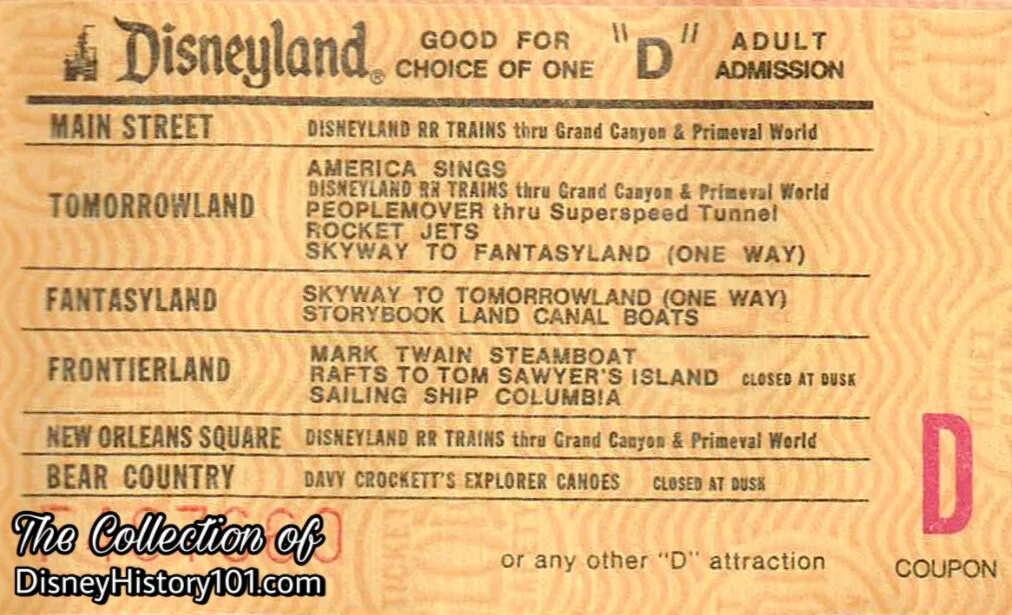
By 1973, the Davy Crockett Explorer Canoes’ admission was still one “D” coupon (no cash value).
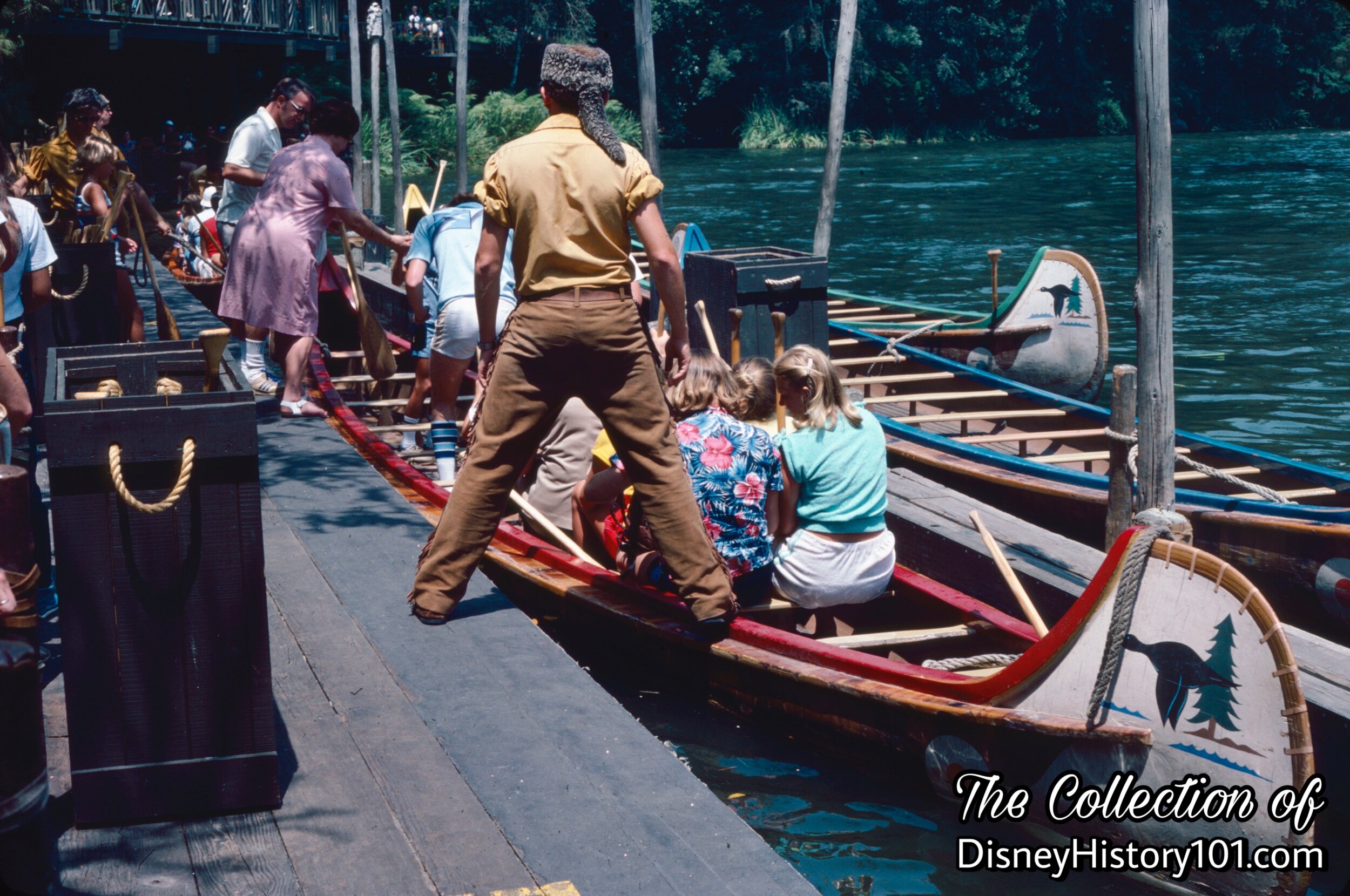
May 19th, 1971, the Indian War Canoes are renamed Davy Crockett Explorer Canoes.
Davy Crockett Explorer Canoe maneuvers its way near the waterfront of Frontierland.
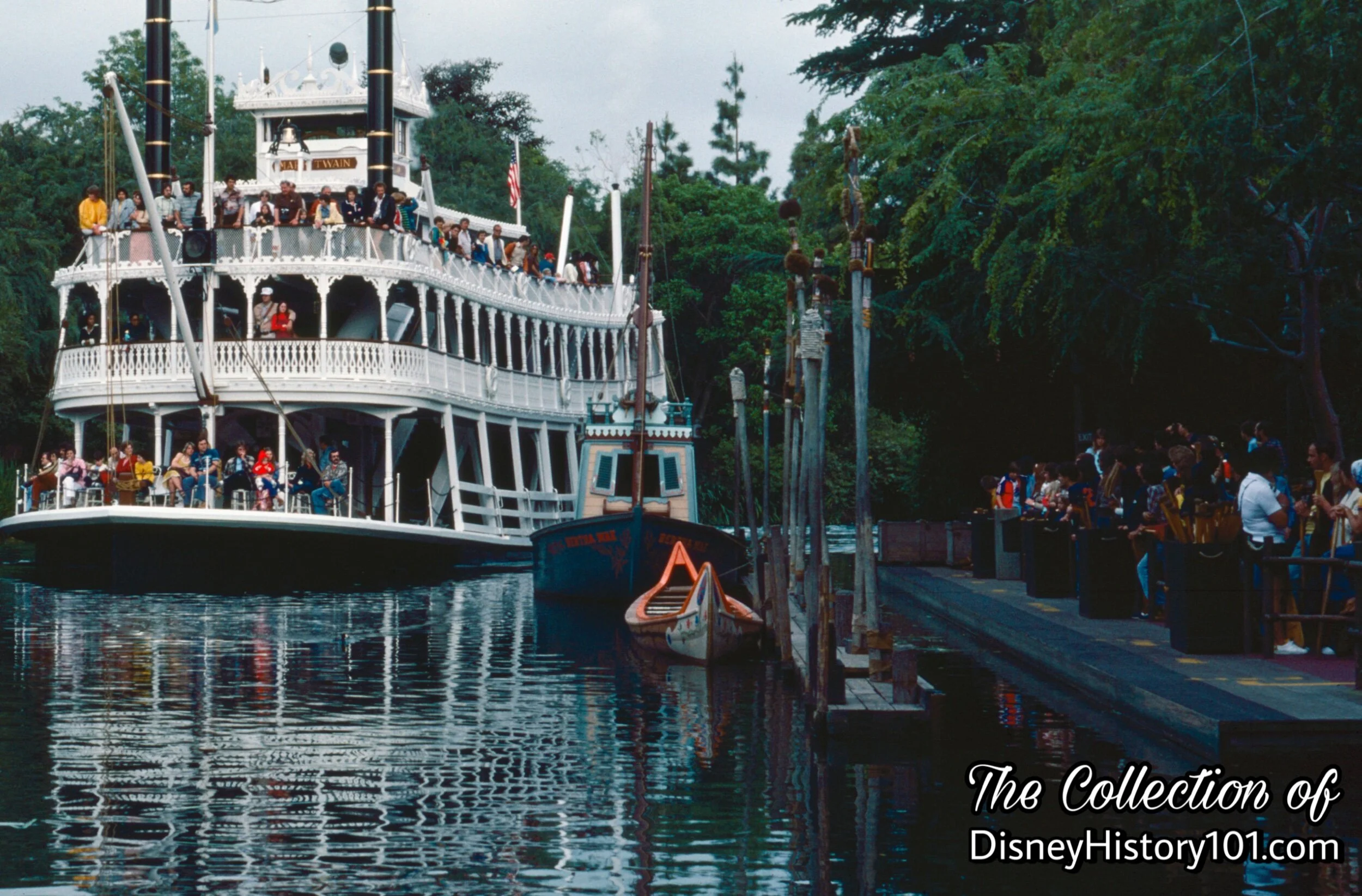
One of Davy Crockett’s Explorer Canoes sits docked near a Keel Boat.
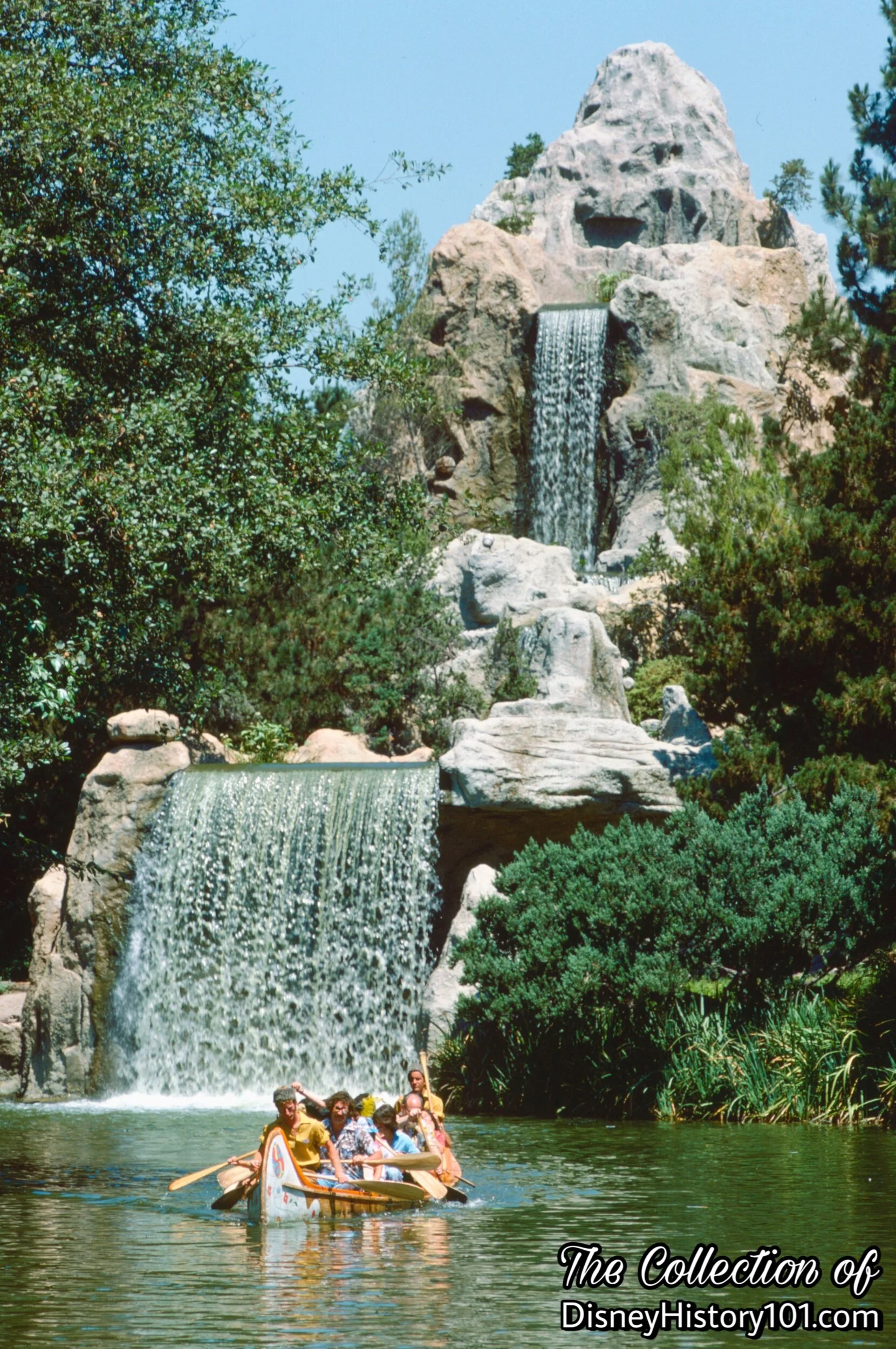
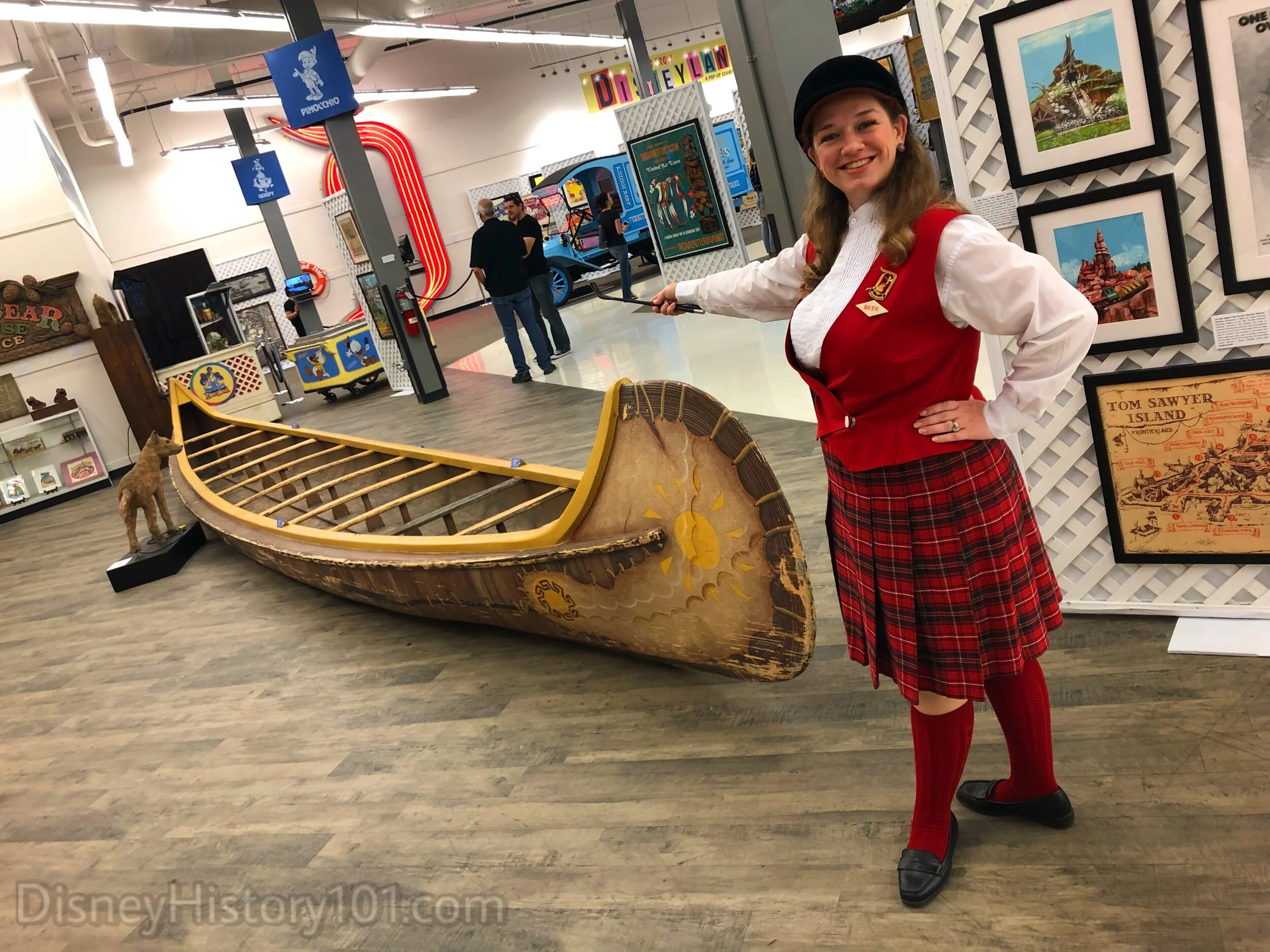
“The First Canoe Fleet”
The first fleet of six canoes were constructed by the Oldtown Old Canoe Company in Old Town, Maine. Each was crafted of varnished wood covered in canvas and some 30 feet long with bench seats capable of accommodating one “bowman,” one “sternman,” and a 16 guest capacity. According to Disneyland LINE Magazine (published June 11, 1993) : “The first canoes were shipped by train to Disneyland where risings on each end were added for a more authentic look. The canoes were covered with a canvas-like material to give the appearance of birch, which was used by Native American tribes in the Northeastern section of the United States.”
“The Second Canoe Fleet”
The second fleet of canoes were manufactured by Arrow Development of “birch bark” wood construction, then covered in Fiberglas and painted to look like a War Canoe. These were 35 feet long (or, according to the c.1959, “Disneyland Particulars,” each of the six measured 36 feet, 6 inches), with a height of 10 feet, 6 inches above water, with a beam of 9 feet and 8 inches. Some of the original Oldtown canoes (which were rebuilt by Disneyland) were still in use by 1959, described in “Disneyland Particulars” as measuring a length 34 ft. 6 inches with a beam of 4 ft. 7.5 inches. The newer Arrow Development canoes had a capacity of 20 (18 Guests and 2 Guides) and were still in operation by 1968, according to the “Disneyland Dictionary,” compiled by WED Enterprises, Inc. and WED Public Relations Department, c. 1968.
“The Third Canoe Fleet”
Eight 35-foot long canoes had full birchbark-styled Fiberglas bodies, with paint molded right into the material. By 1972, there were six such “explorer canoes” (each seating 18 guests and two wilderness guides) which departed from the Golden Bear Lodge Restaurant. It has been recorded that these travelled “at a speed of 2.6 miles per hour… 20 expeditions per hour… a maximum of 369 explorers per hour.”
“The Fourth Canoe Fleet”
By the late 1990s, there were 10 new canoes were made of Kevlar, and thus, were 500 pounds lighter. These canoes were also “unsinkable,” with portable pumps and flotation devices installed. The new Canoes were also three feet longer (at 38 feet), having the capability to carry an even larger guest capacity of 20 guests, instead of 18. Nine of the canoes were kept on stage, with one out-of-service at the Staff Shop for a year-round cycling.
“Much is said about "togetherness"…. but it's very important” at Disneyland! Every person in the Cast is important and tries to help each other. According to “Your Role in the Disneyland Show,” there were (and are) no “barriers between ‘officers and men.’”
During 1963, the Disneyland Canoe Races began as a healthy team-building challenge between workmates! Cast Members would form teams of paddlers which competed with each other for top honors... the challenge being to row the ⅝ mile stretch around Tom Sawyer's Island the fastest. According to the employee book “Your Role in the Disneyland Show” (published 1971), “the canoe races…which are voluntary…reflect a high degree of self-discipline. We prefer to discipline ourselves.”
Bob Penfield relates to Disneyland LINE Magazine (“30 Years in a Row”, published August 27, 1993 ; Vol. 25 No. 34) about that race : “I was working on the Jungle Cruise that year, and we formed a team called the Jungle Bunnies. Well, we challenged a canoe team from the Indian Village. Those Indians beat us every time, but we sure had fun. The very next summer the official Disneyland Canoe Races were begun. I think they did it to keep us out of trouble.”
From that simple challenge, was born a time-tested (and typically ten-Cast Member [and ten oar] per canoe) Disneyland tradition, that has continued to encourage team-building performance down to this day!
According to Disneyland Backstage: “The second annual Canoe Race was held the latter part of June and the first of July. There was quite a bit of interest this year, in fact there may have been too much. A couple of canoes were damaged and the third annual canoe race may be a long time in coming. I sure hope not as it seems a shame everybody should be scalped for what a few stray renegades did But overall it was very successful with a couple of teams being com. posed of girls. It got to be a common sight to see the Fantasyland, Adven-tureland, Monorail and Tour Guide crews going around the Rivers of America at 7:00 a.m. The winner of the race was determined by elapsed time. They had to start from a dead stop and were not allowed to go thru the rapids Again it was proven that it's not so much how fast you paddle as it is how you make the turns and the amount of teamwork included.
The Tour Guides won the Women's Division and a congratulation is in order for CECILY RIGDON'S covey. As for the Men's Division theirs was a very hard fought battle for two days before the Champion was de-cided. Again it was the Adventure. land team composed primarily of Jungle Cruise operators. This was the second year in a row for them and their name will again be inscribed on the trophy in the Cafeteria. While they were doing it they set a new record as they did the circuit in 3 minutes and 59 seconds. RAY VAN DE WARKER who says the Jungle Cruise is known as the Home of the Champions was there to congratulate CHUCK JURVA, WAYNE KROK, JIM EASTMAN, RICK JONES, KEN CHILDERS, TOM ORMSBY, JACK LEWIN, LARRY HIGBY, KURT DEGEL-MAN, and GREG MILLER for their effort.”
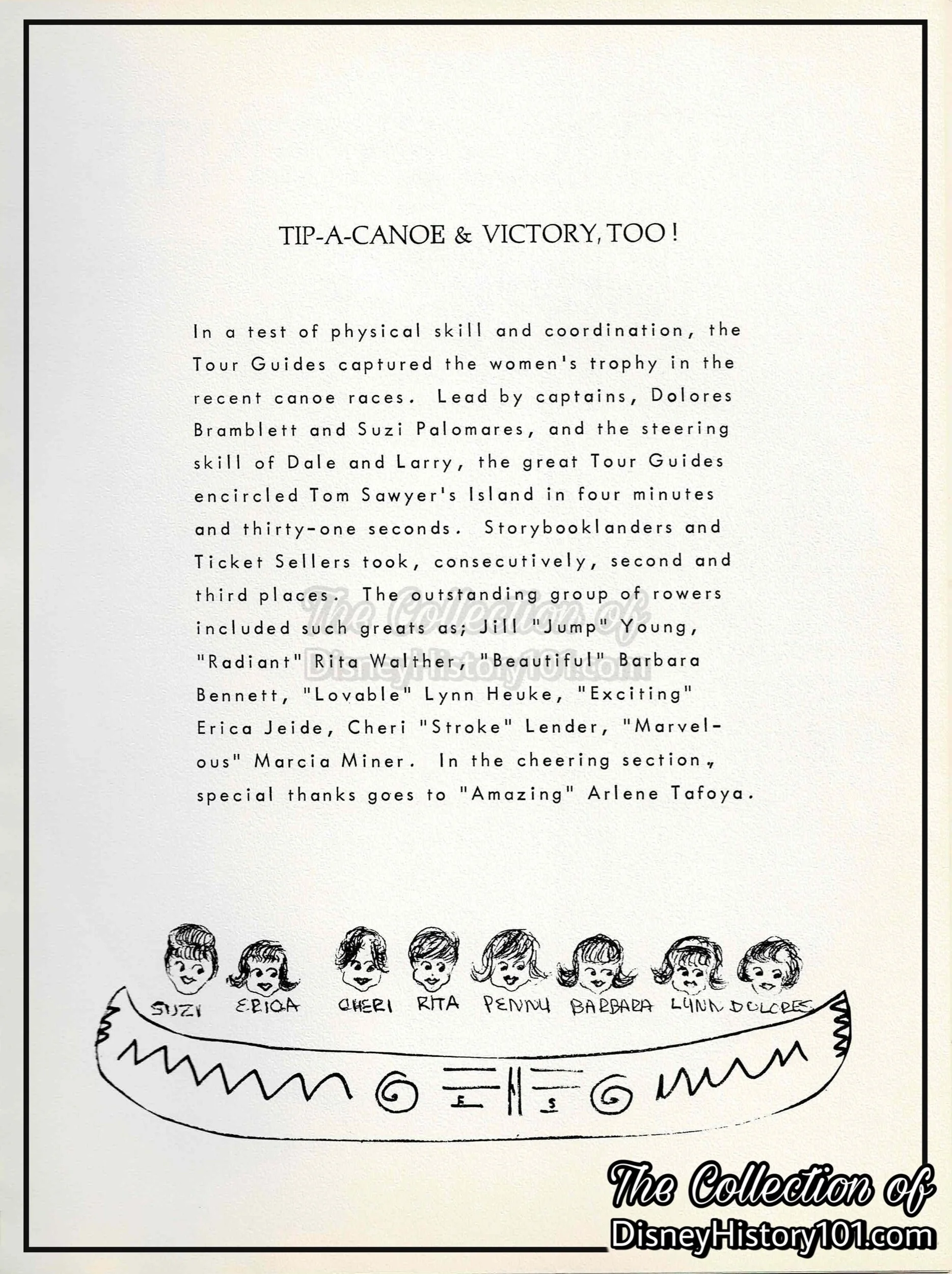
Since that first competition, a lot has changed. The wooden canoes have been replaced by Fiberglas and Kevlar, and the original 10 teams have grown to 77. A Mens Division, Womens Division (see the “World of Smiles” Excerpt above), and Coed Division have been added to the competition! “If you’re not into rowing but still want to be a part of the tradition, Cast Members could help staff the event as a Canoe Official…Sign up at Cast Activities in the Disneyland University or call the tie line for more information.”
The 17th Annual Canoe Race of 1980 had Men’s, Women’s, and “Mixed” (Coed) Teams.
One of the fun activities included naming the teams! Did you ever hear of the ”Rowman Empire” or “Blazing Paddles”? Were you one of the “Hotel’s Life Guards”, the “Mississippi Queens”, or the “Superstrokers”? If you were around in 1995, then perhaps you recall the all-women “Two Bit Oars” or the co-ed “Rescue ‘n’ Rhythm”? Maybe you remember the sight of “Guys in Ties” (yes, a canoe team wearing ties) - one of 77 area teams to pass under the finish line banner in 1997?
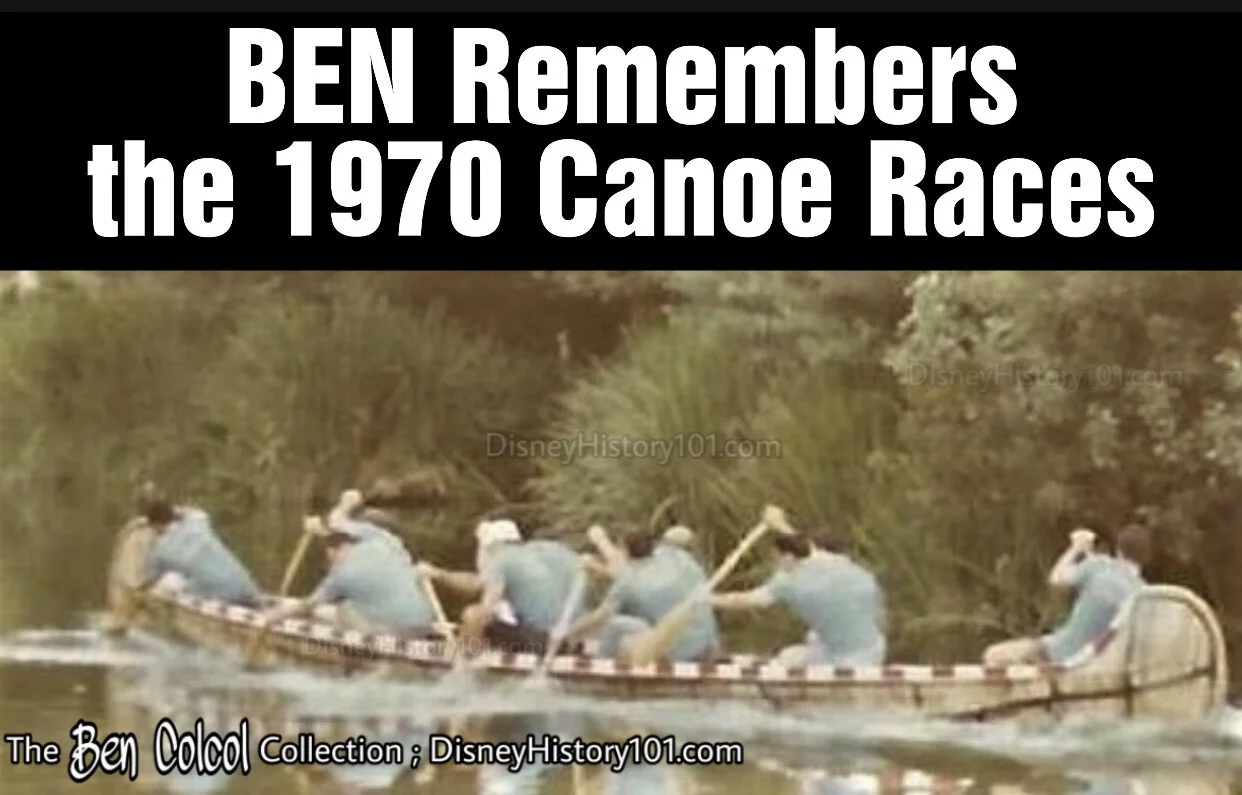
“The Engineering Department in 1970 were mainly guys in our 20s, some were early 30’s (Graduate Industrial Engineers). We had no females. I was 26 years old, kind of in the middle of the pack. I went to work for Disneyland after I completed my Army Draft obligation of 2 years in 1969. Young and eager for adventure, Disneyland fulfilled all of that young exuberance.
It was the summer of 1970 that we started to organize and field a team. We had some team members that had competed the previous year. They were our core members, all two of them. The rest were rookies.
I should note in the 70’s Disney employees were mostly part time working in between school semesters-college jocks. In the Engineering Department, only the Director, Manager, & Secretary were full time. Most of us were students.
The Indian War Canoe Races were (at the time) a Disneyland Intramural competition between the different lands. No outsider spectators. This was strictly ‘in the park participation’. We were given time slots to practice (from 7:00am to 9:00am). In those days the Park did not open until 10:00am. After practice we all retired to Aunt Jemima’s Pancake [House] for free breakfast. It was marvelous camaraderie.
Our team elected the name ‘La Canoe Key Strokers’ (sorry we were not politically correct then). Our first practice run around Tom Sawyer Island was reminiscent of the Key Stone Cops! Arm strength when paddling on the left lasts 60 seconds (at best maybe 90 seconds). Then you need to switch to the right. We all agree that the verbal signal to change sides was ‘SWITCH’. When the Team Captain called ‘SWITCH’, paddles flew all over the place and into the water. It was comical, needless to say we came to a hilarious stop!”
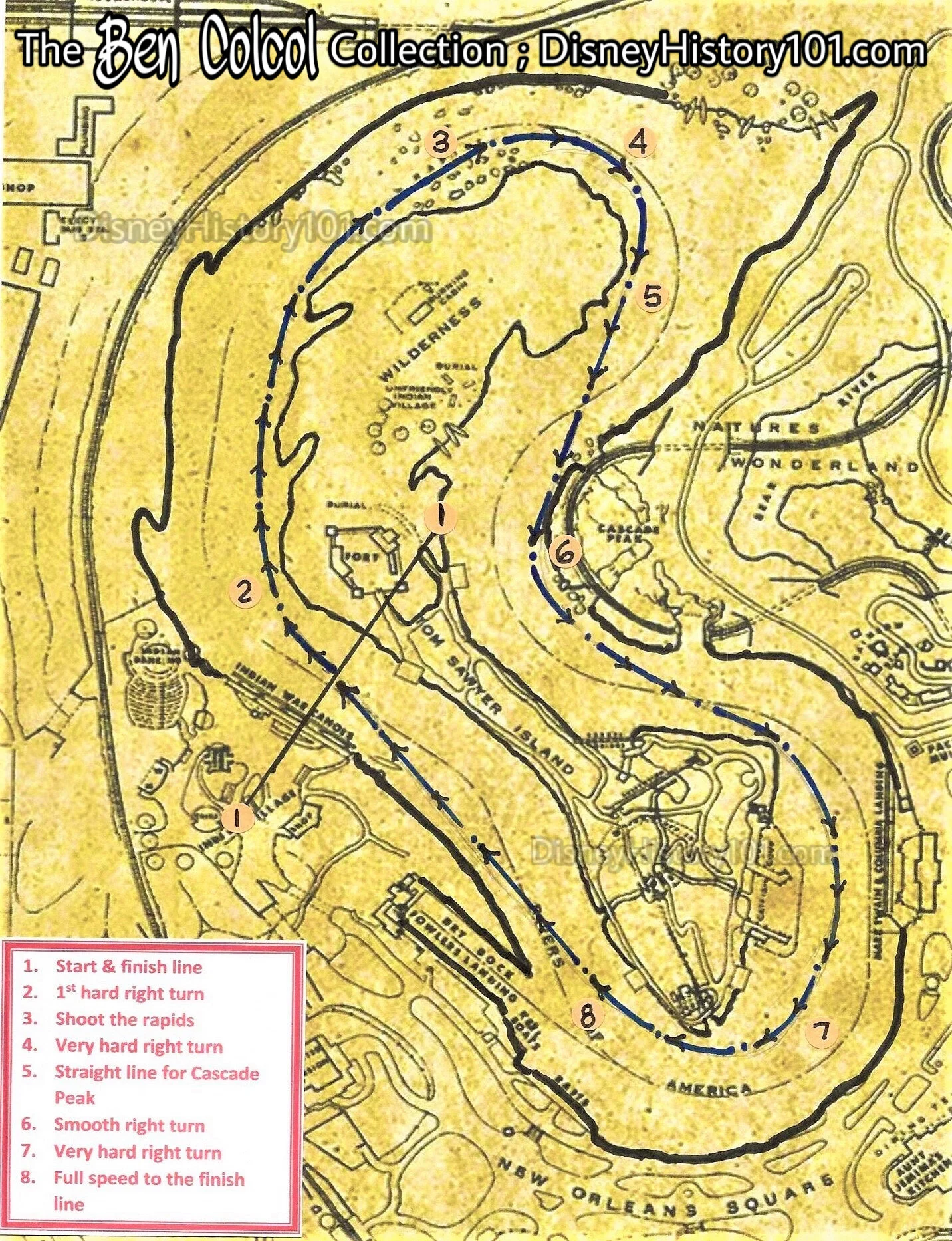
Each team started and finished at the Davy Crockett’s Explorer Canoe docks. Each canoe started about 1-minute intervals rowing the entire course around Tom Sawyer Island. The teams were timed individually.
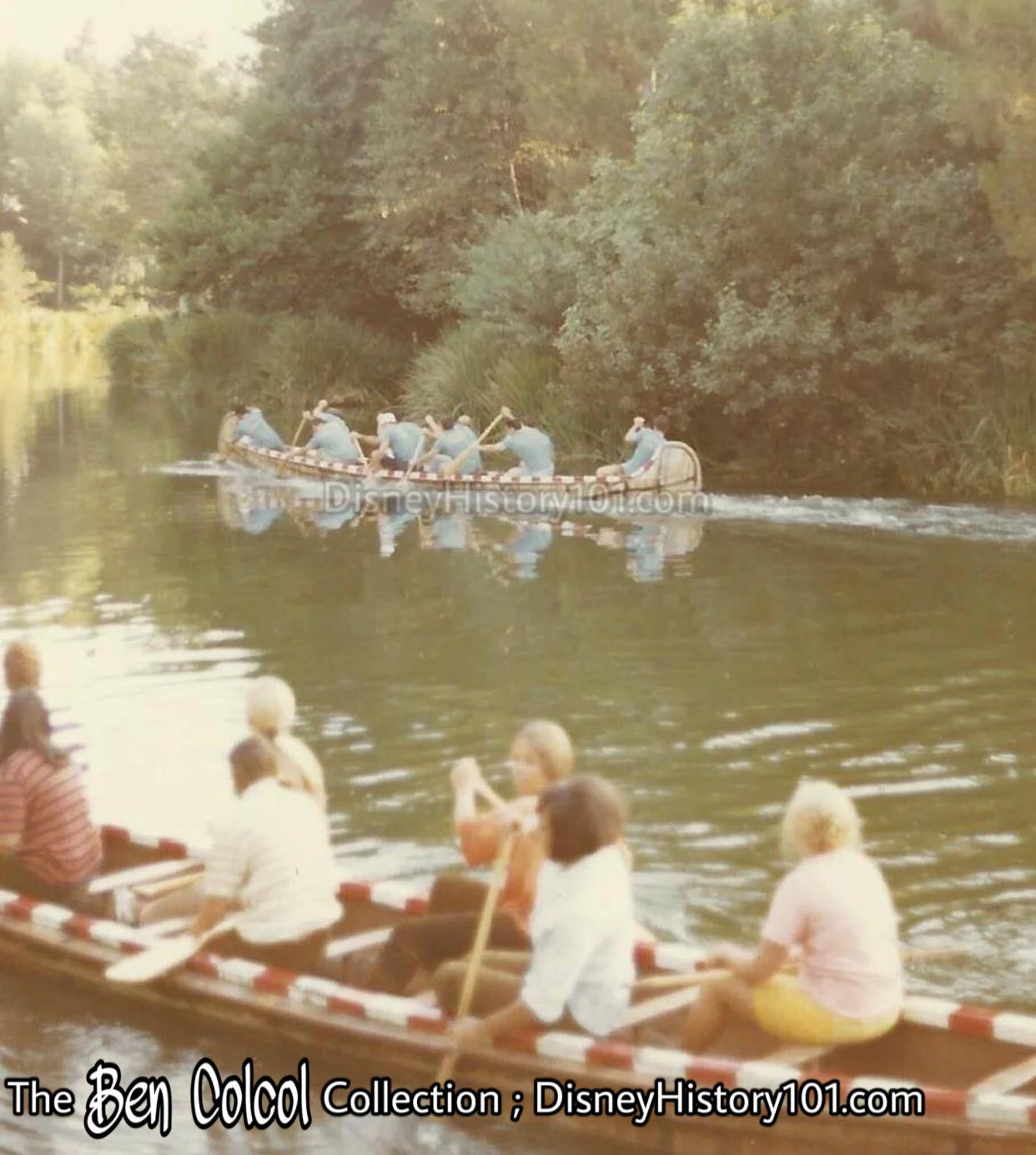
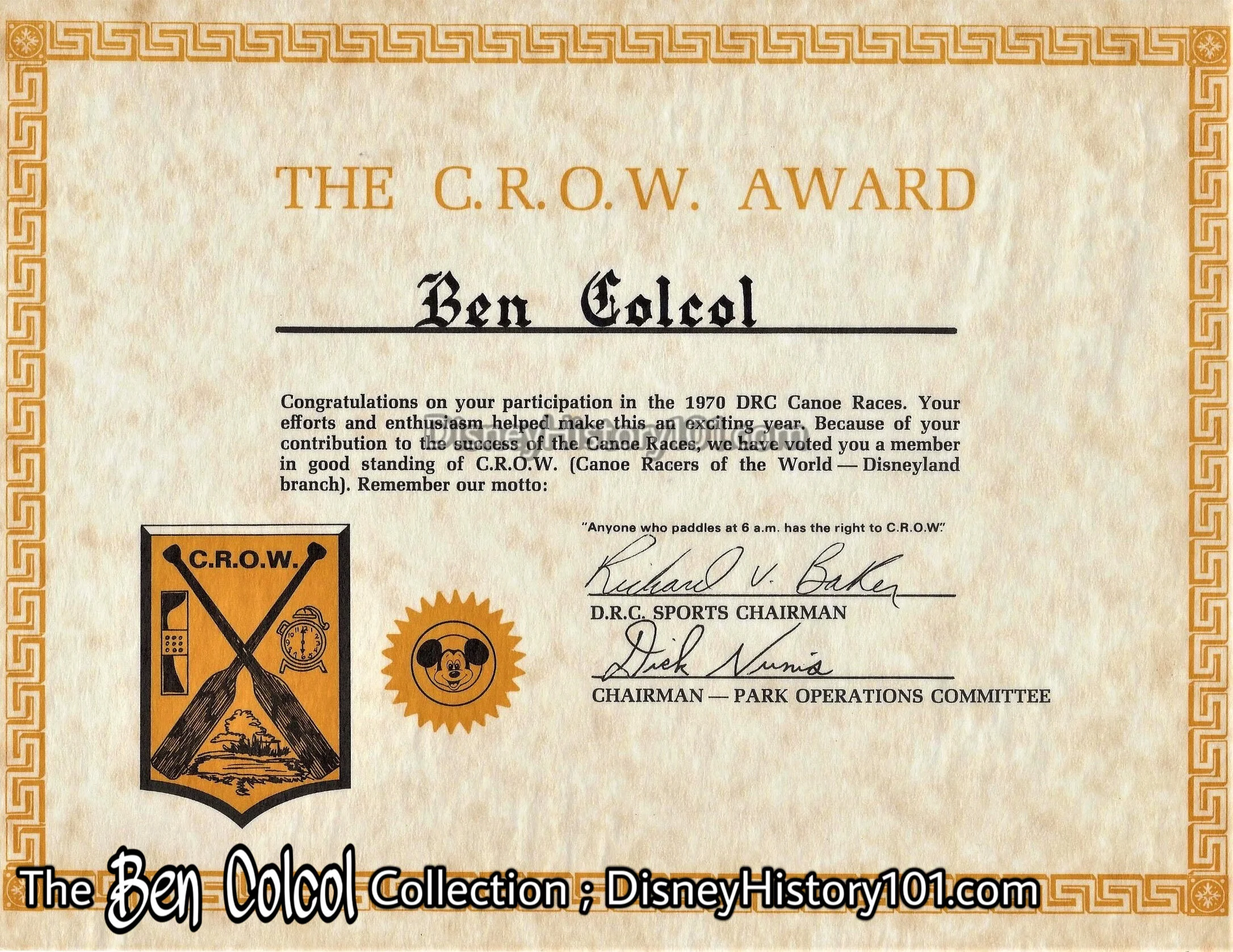
“Canoe Races of the World” awards were given to participants. Perhaps you still have yours, framed or preserved in a scrapbook somewhere.
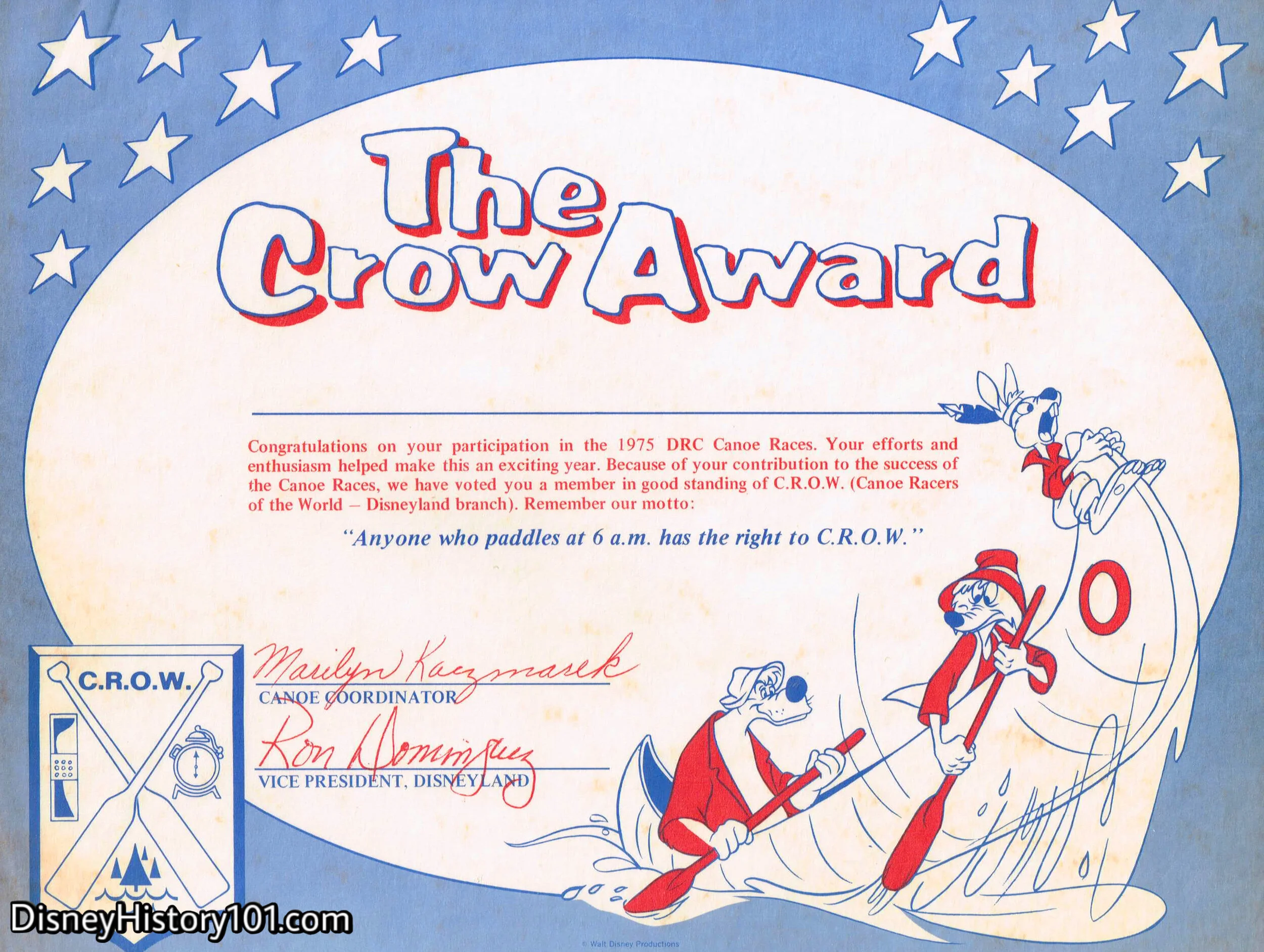
“What? The canoes are closed? So it would seem, yet while our summer guests caught a few more hours of shut-eye, fun-loving Disneyland warriors paddled off into the early morning sun (and occasionally into the rivers!)”, according to Backstage (published the summer of 1977). Meanwhile, C.R.O.W. would have a legacy at Walt Disney World Magic Kingdom, and despite the closure of Davy Crockett Explorer Canoes in 2004, the “Annual Canoe races of the World” would celebrate its 35-year anniversary in 2008. The cast Member races were comprised of more than 80 Teams of 8-10 cast Members. By that time, the races were also hosted at Disneyland Paris and Tokyo Disneyland.
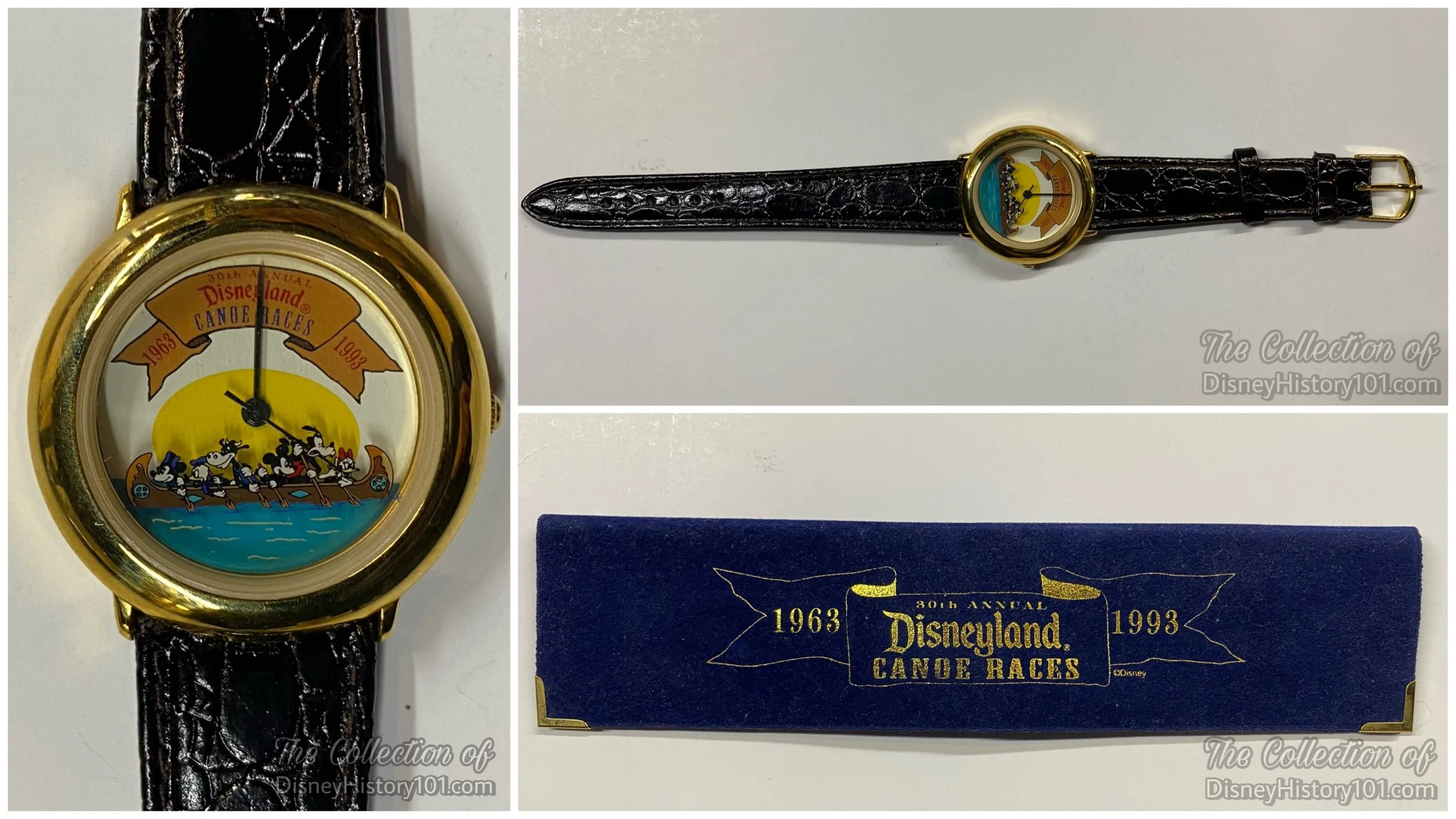
Occasionally limited edition merchandise was offered to Disneyland Cast Members. During the 25th anniversary, a commemorative medallion by Lewis Buckle was issued in an edition of 100.
By the 1980s, Caviness Woodworking Co.., Inc. "Feather Brand" paddles (of Calhoun City, Miss.) were utilized by Disneyland and some of these were occasionally gifted to cast Members who volunteered for Officials.
The name Davy Crockett’s Explorer Canoes continues to be a seasonal attraction, operating from dawn until dusk. Still, we recognize this attraction as one of the last remaining vestiges of Disneyland’s Indian Village! The unique experience and the view from these canoes is highly recommended, and not to be missed. As we paddle away, we can still hear the resonating beats of the Fire Dance Circle drum and paddles splashing in the water, as they ripple across each wave of the Rivers of America.
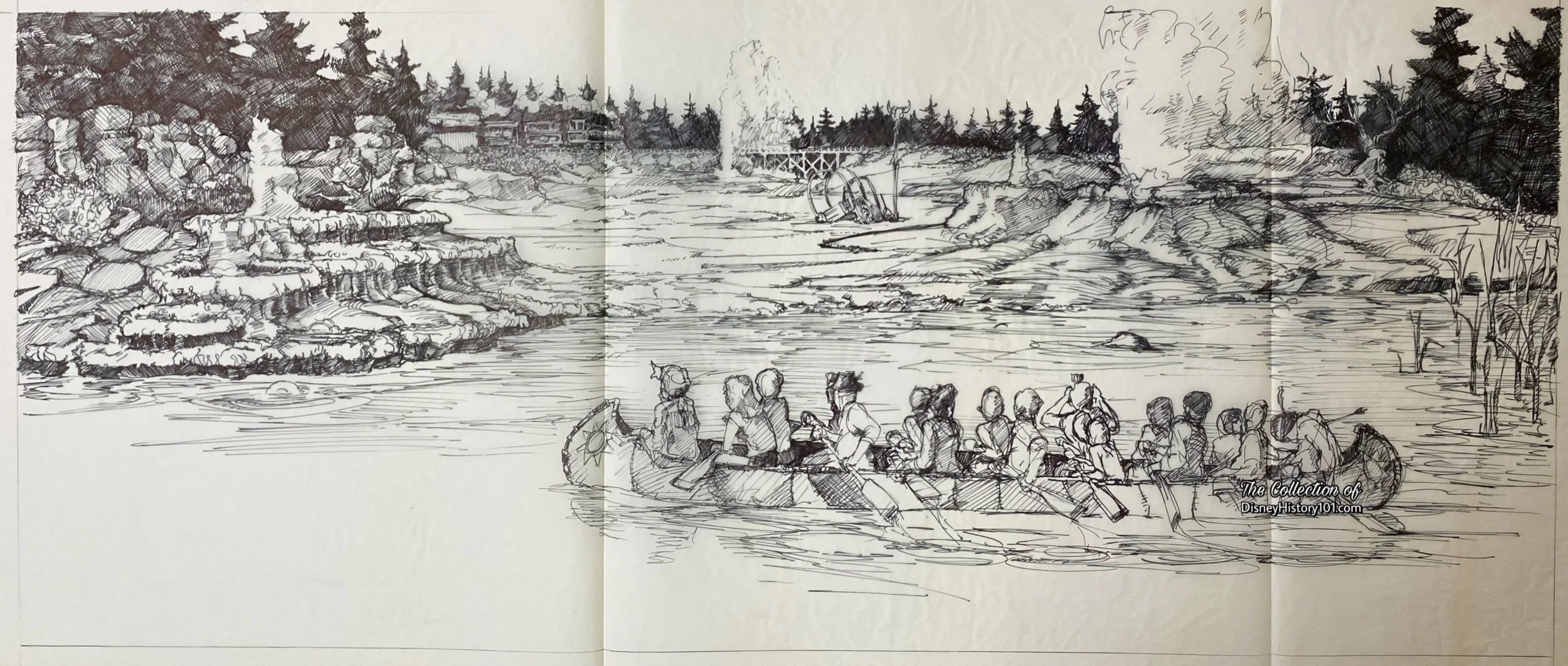
Indian War Canoes have a Legacy with Disney Parks. Walt Disney World Vacation Kingdom Resort Hotels offered War Canoe Excursions (at $1.00 per person) among their recreational watercraft. Fort Wilderness offered canoes (at $1.00 per hour per person; $5.00 per day), Canoe Breakfast Rides (at $2.00); Canoe Night Nature Excursion (at $1.00 per person).
Quisque iaculis facilisis lacinia. Mauris euismod pellentesque tellus sit amet mollis.