BIG THUNDER MOUNTAIN RAILROAD
(November 8, 1980 - )
A WED philosophy is that there is no bad idea. During the Blue Sky stage, the earliest stage in Imagineering project development, almost any concept is permissible and a future possibility.
“We say that because if you get in a meeting and somebody comes up with something and someone turns to him and says, ‘That's a stupid idea!’ you'll probably never get another idea from that person. So, we try to create an open environment where people can say anything. Quite often, something that sounds dumb at the time will turn out to be just the little spark that sets everything off Somebody will come in later and say, You know, I thought what so and so said was dumb, but I’ve been thinking about it and I think there's a little gem here.’ Its amazing how many times that happens…‘ Marty said that he's been around so long and has discussed so many ideas that he has seen many resurface after many years. ‘When that happens, I know from experience that a lot of them won't work, but I don't say, 'Well, you know what? We tried that 20 years ago and it won't work; because so much changes. If we went back through our archives, we'd probably find a lot of things that we could do today that we couldn't do at the time because the technology wasn't there.’“ [“Ripley’s Legends - pioneers of the Amusement Park Industry” by Tim O’Brien, Volume One]
Thunder Mesa was to originally include “a tabletop mountain, typical of those found in southwestern deserts… a pueblo style village… a series of exciting adventures.” Inside would be the Western River Expedition ride. [“Preview Edition of Walt Disney World - The Vacation Kingdom of the World”]
The Walt Disney Story post-show area briefly displayed a working architectural model of the Western River Expedition and Host Hoot Gibson (with the help of an Audio-Animatronic storybook) introduced the attraction.
Soon, Walt Disney Productions had revealed that it’s newest phase of construction would involve a $50,000,000 expansion including many attractions like a Treasure Island and shopping center on Bay Lake, a golf course and club at Lake Buena Vista, and for the Magic Kingdom, the Walt Disney Story, Pirates of the Caribbean, Plaza Pavilion Restaurant, Swan Boats, Tom Sawyer’s Island, Big Thunder Railway, a PeopleMover in Tomorrowland, a Western town in Fort Wilderness, and Space Mountain. Thunder Mesa - the first major expansion of Frontierland - was moving forward by 1973. It was described as a “Wild West ‘iron horse’” that would “take quests on a clattering downhill race around hairpin turns, over a deep valley, past teetering rocks and desert wildlife.” While the high-speed western adventure was scheduled for construction in 1974, later reshuffling led to deferment of the Big Thunder Railway, which by 1976 was still in the planning for the near future.
Within the pages of the 1976 Shareholders Report, it was announced: “In order to provide an additional 1,800 rides-per-hour capacity in the ‘Magic Kingdom’ theme park, the Company plans the construction of the Big Thunder Railway, an exciting ‘thrill ride’ mine train attraction, for opening in late 1978.”
Frontierland’s Big Thunder Mountain story begins in the small mining town of Tumbleweed (similar to Disneyland’s little mining town of Rainbow Ridge). “The wildest [$17 million] ride in the wilderness”
Model-maker Fred Joerger (who was hired c.1953 to craft the “Barber Shop Quartet” show for “Project Little Man” of “Walt Disney’s Disneyland”) had distinguished himself as Disneyland’s “resident rock expert” by crafting the rocks from plaster, would make similar contributions to Big Thunder Mountain at Walt Disney World Magic Kingdom.
Walt Disney World Shops would employ disciplines found at MAPO, supporting MAPO with in construction manufacturing.
Around 1997, Attractions Hosts and Hostesses at Big Thunder Mountain Railroad handed out gold nuggets to small children who didn’t meet the height requirement.
The town of Thunder Mesa would come to serve as a gateway to the Old West at DISNEYLAND PARIS Theme Park.
FIFTEEN YEARS OF MAGIC (WDW)
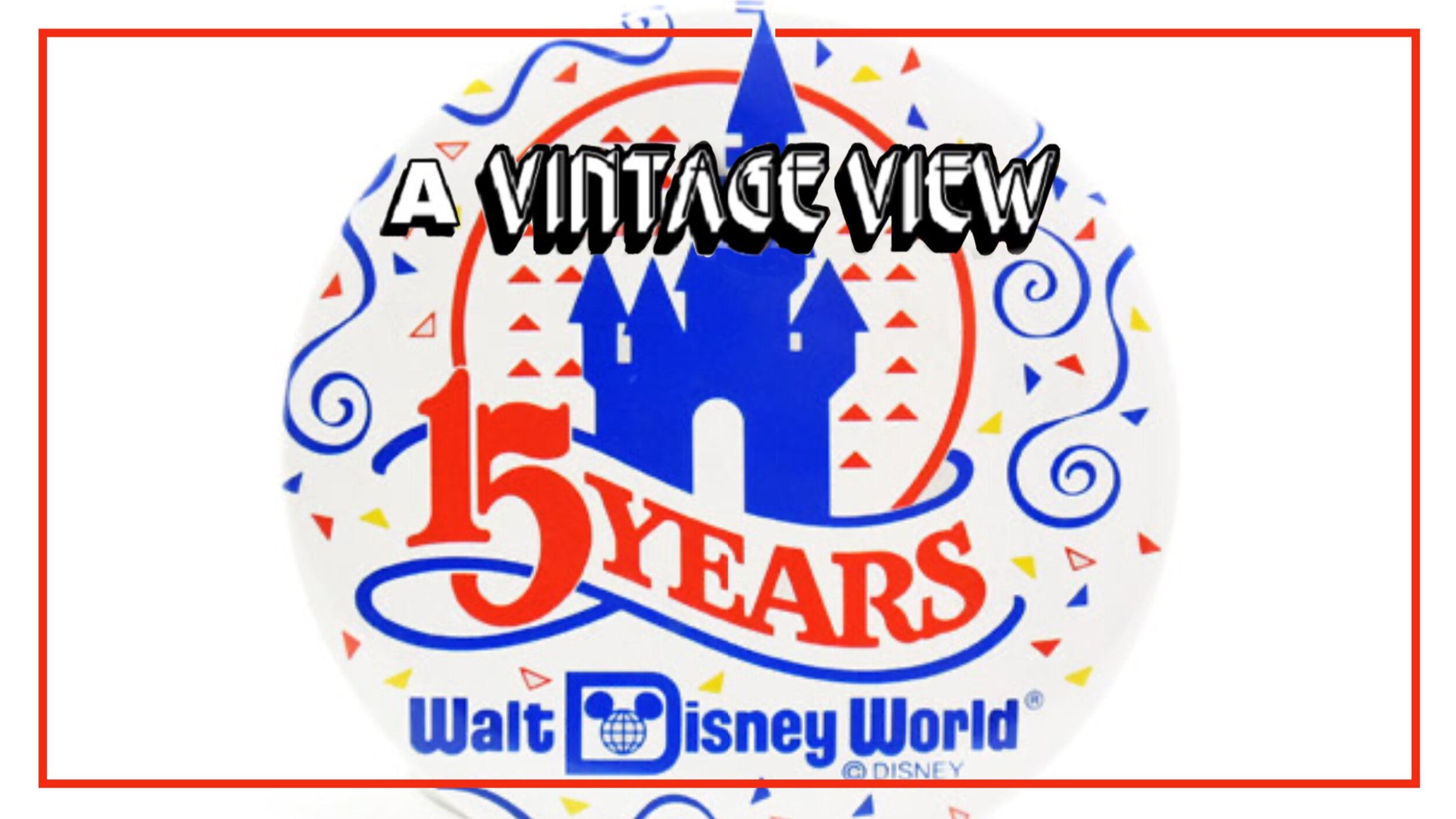
“Fifteen Years - We’re Having A Party…and ‘We’re Gonna Party All Year Long’!”
Visitors from both near and far travelled to WALT DISNEY WORLD® Vacation Kingdom in Florida, for the biggest, year-long celebration (to date), an all-new parade party spectacular, and their chance to win big prizes with “Walt Disney World’s 15 Years of Magic”! Just how great of an audience visited Walt Disney World during 1986 was a staggering figure. According to an article published by the Orlando Sentinel (February 23, 1987), “1986 was a record year for its Florida parks…the attendance had risen 11 percent from fiscal 1985”… with 74 percent of Walt Disney World Guests hailing from states other than Florida. To be exact, “attendance at The Magic Kingdom and Epcot Center totaled more 23.9 million during Disney’s 1986 fiscal year, which ended September 30.”
SPECIAL EVENTS :
Many year long festivities marked the 15th Anniversary Celebration of the MAGIC KINGDOM Park® in 1986.
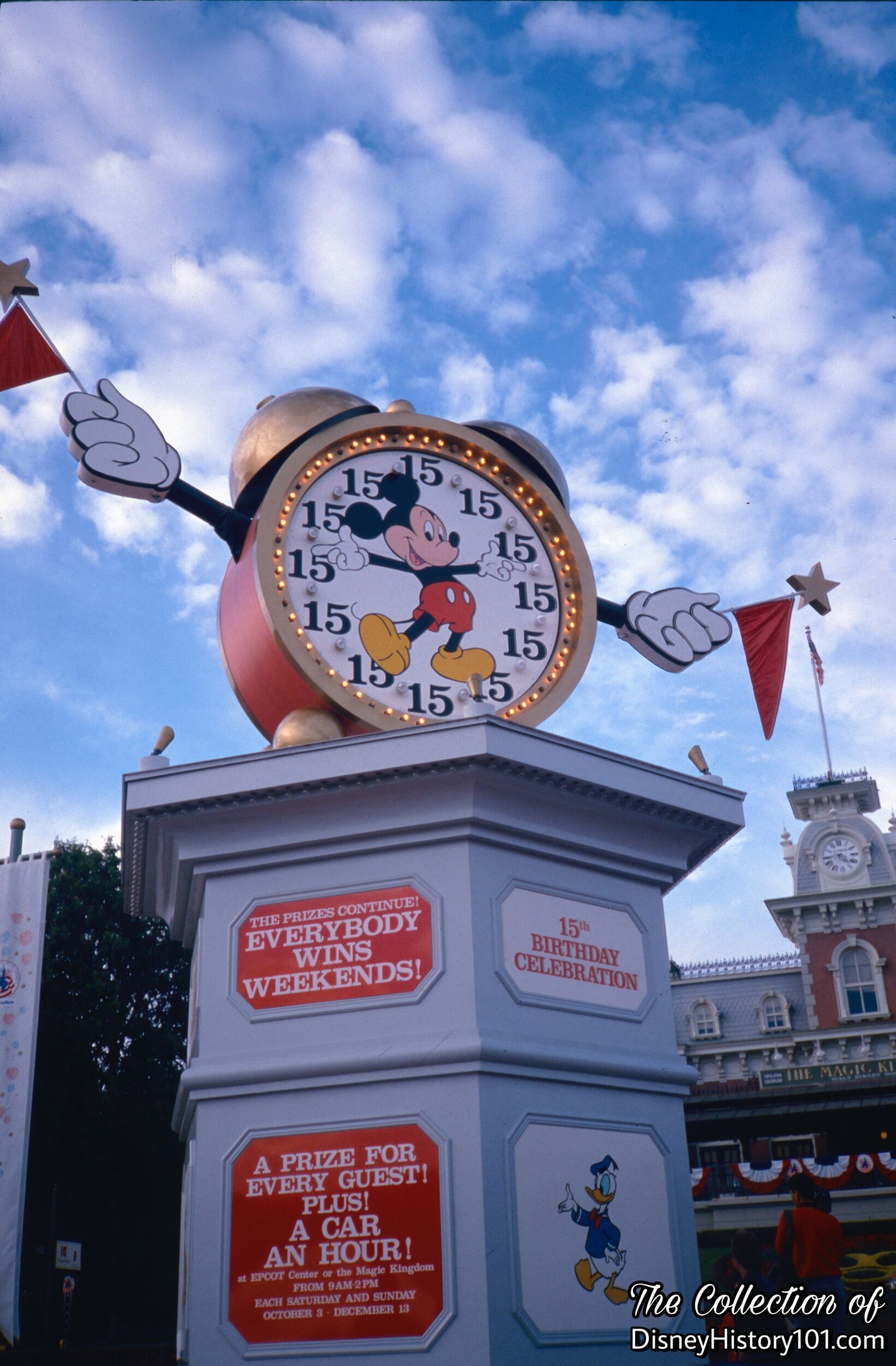
The Walt Disney World 15th Anniversary Prize Clock bore free gifts for guests entering the Parks - every fifteen minutes!
“Walt Disney World’s 15 Year Anniversary Celebration” - To top the festivities off, ABC Television broadcasts the two-hour special Walt Disney World’s 15th Birthday Celebration on ABC, November 9, 1986. The special features loads of special guests including Ronald Reagan, the Monkees, Charlton Heston, Ted Kennedy, the Everly Brothers, Dolly Parton, Warren Berger, O.J. Simpson, Ray Charles, Justin and Justine Bateman, Gladys Knight, Charlie Daniels, and Air Supply.
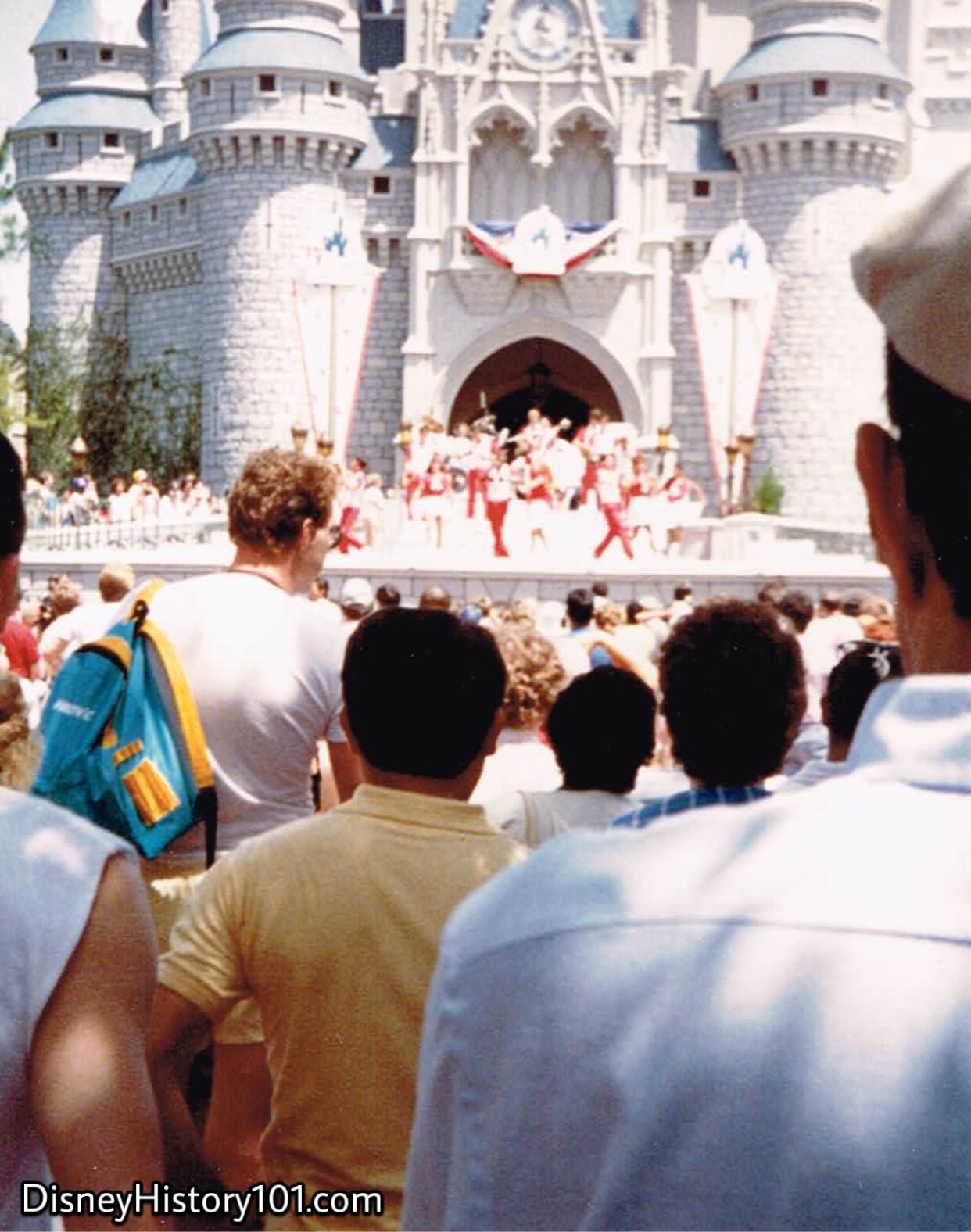
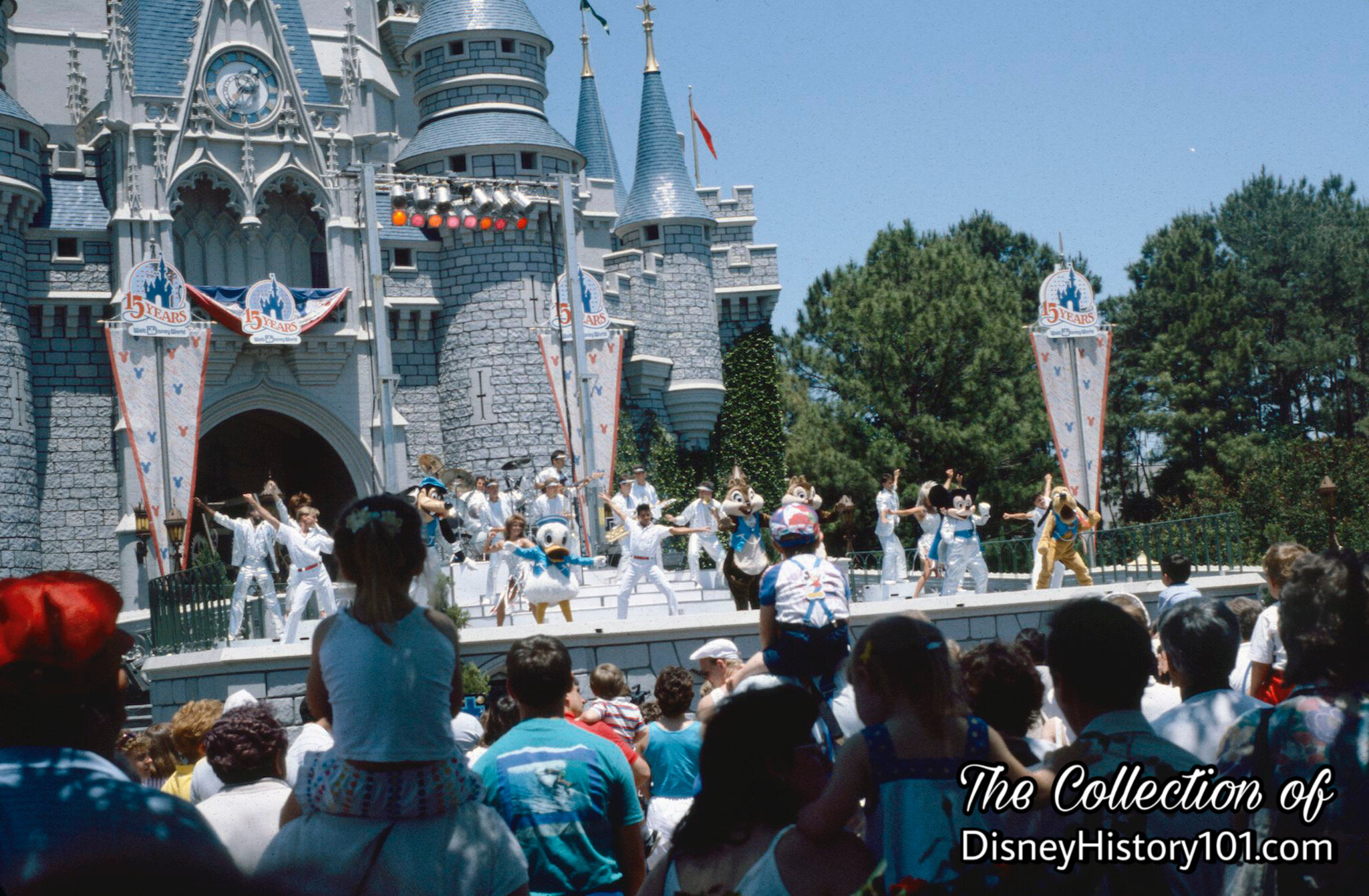
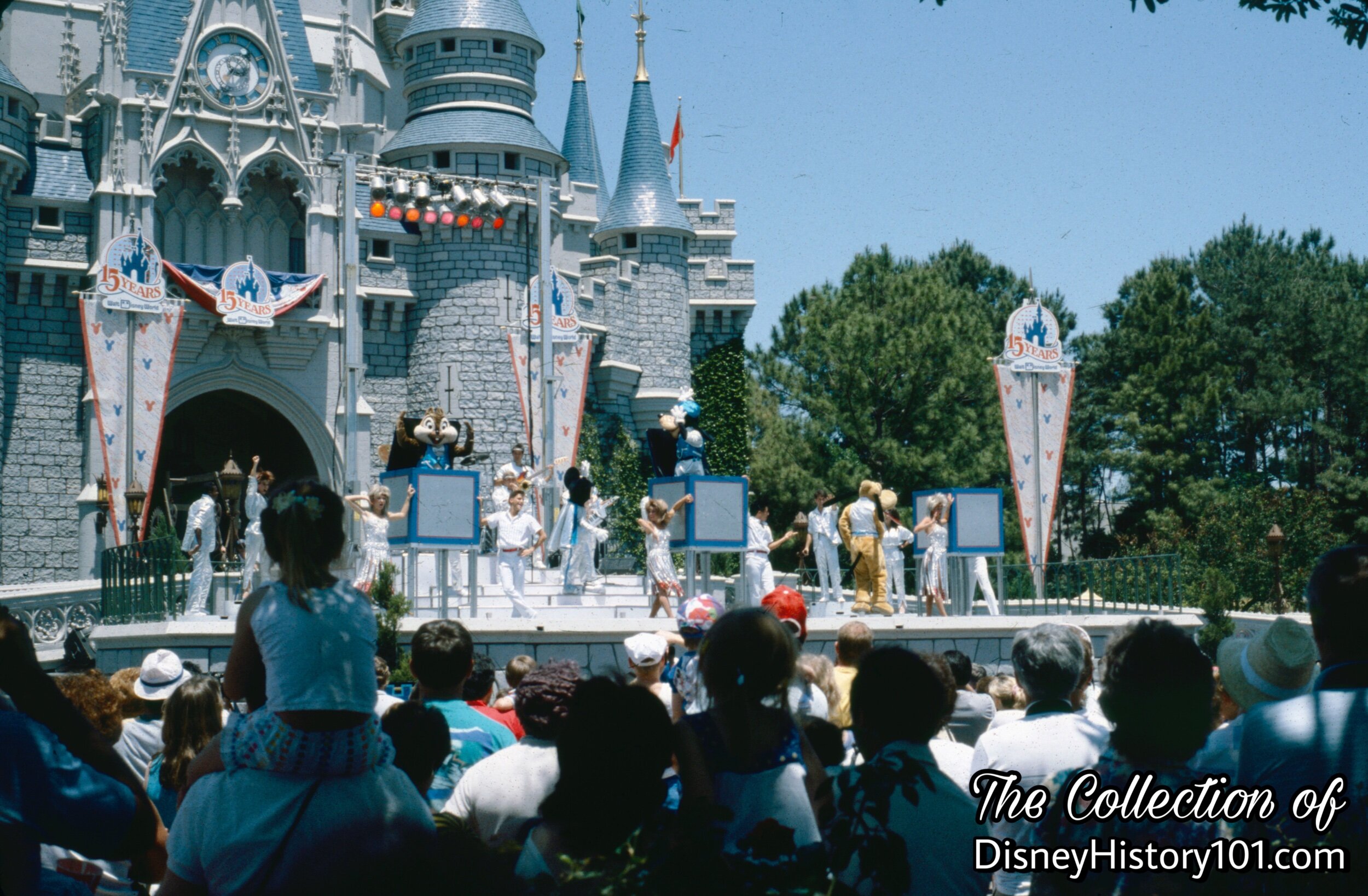
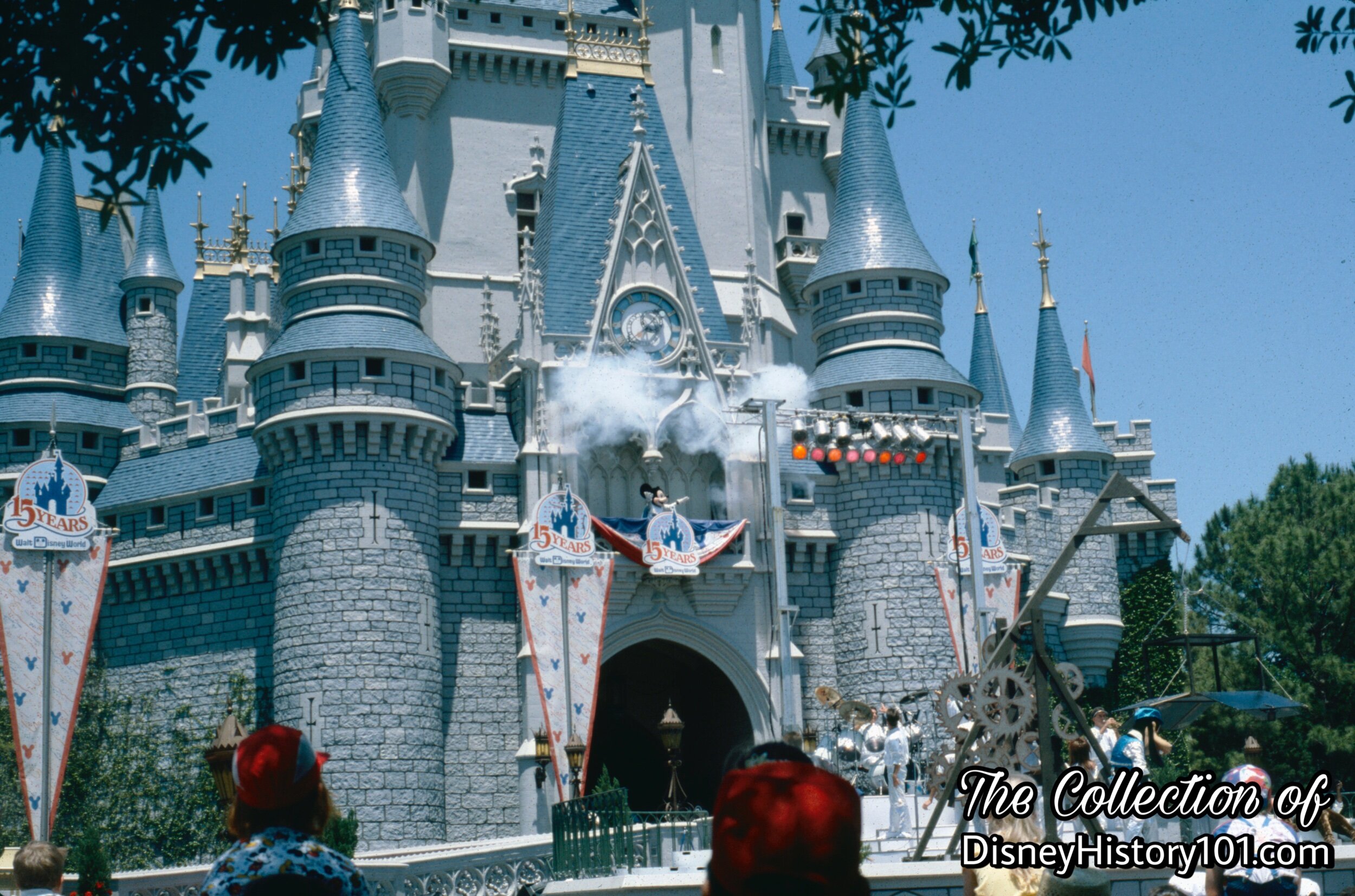
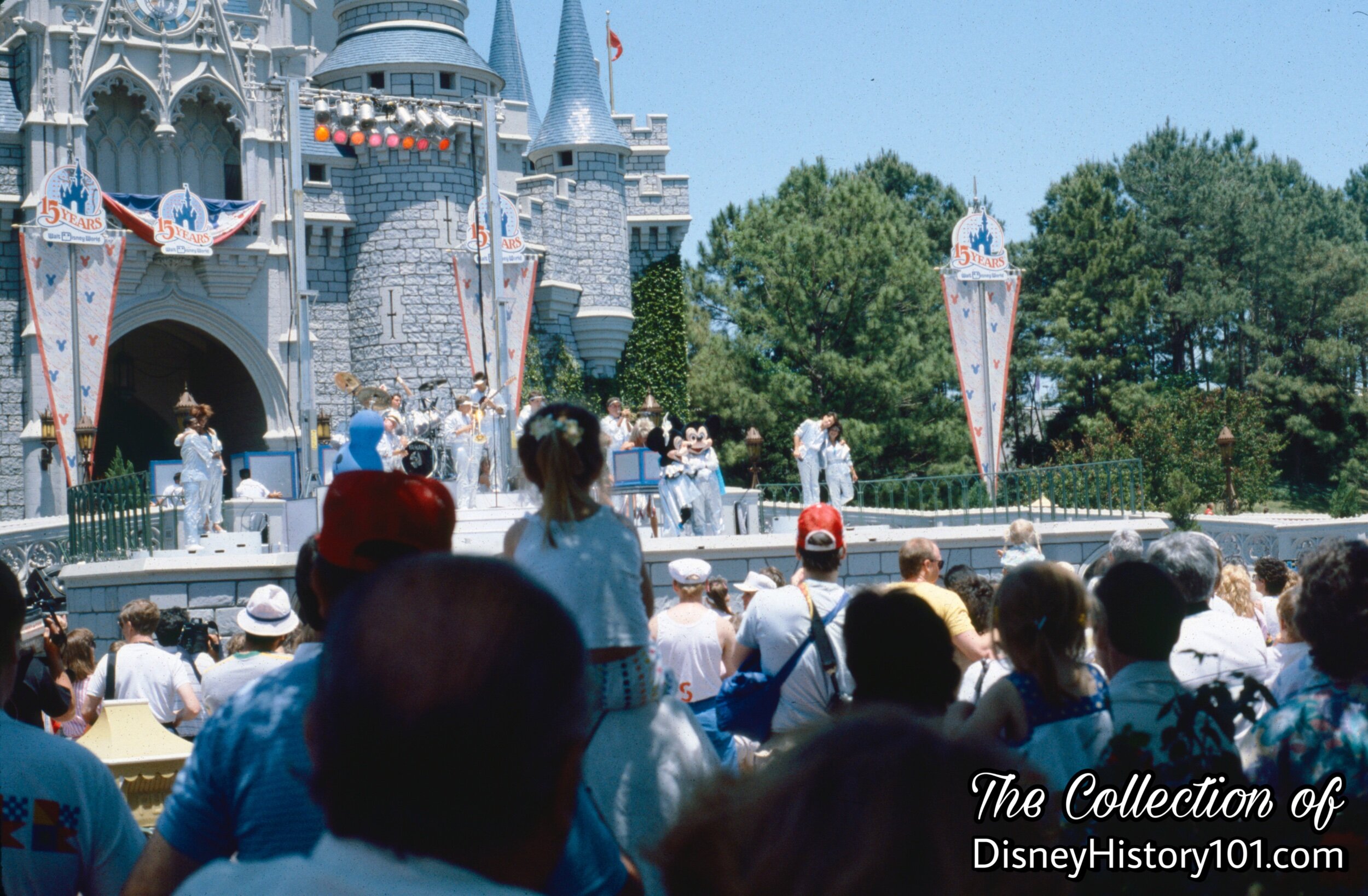
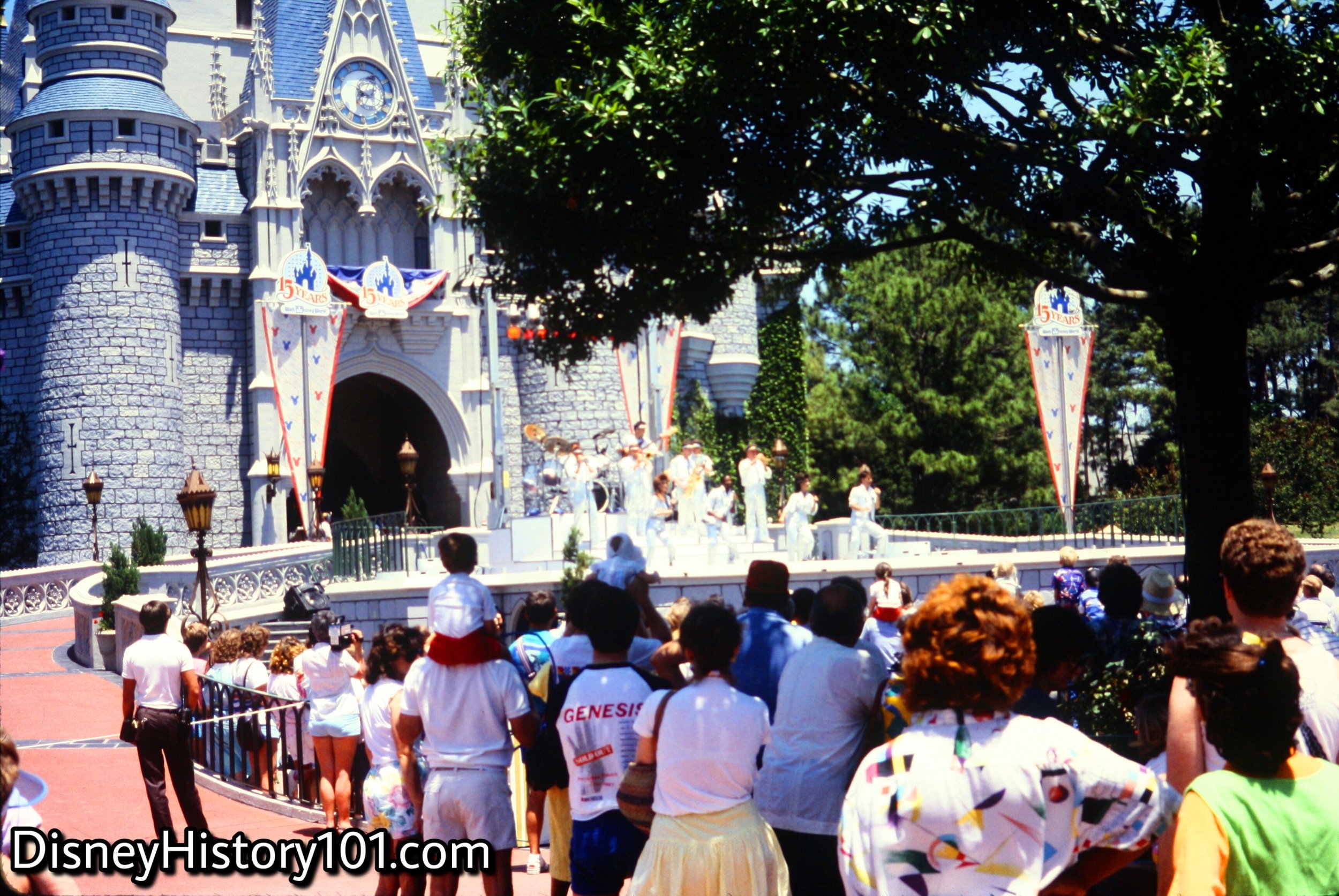
“15 Years of Magic” - Walt Disney Entertainment department developed new shows like “15 Years of Magic.” Mickey conjures up 15 Years of Magic Kingdom Memories in this daily stage production on Cinderella’s Castle Forecourt!
“15th Birthday Parade” - “Singers, dancers, and lots of fun spill into the streets of the Magic kingdom every day at 3p.m. beginning at Town Square on Main Street U.S.A. During the holiday season, the 15th Birthday Parade featured “yuletide floats, fun, and fantasy”, according to The Walt Disney World News (Winter, 1986).
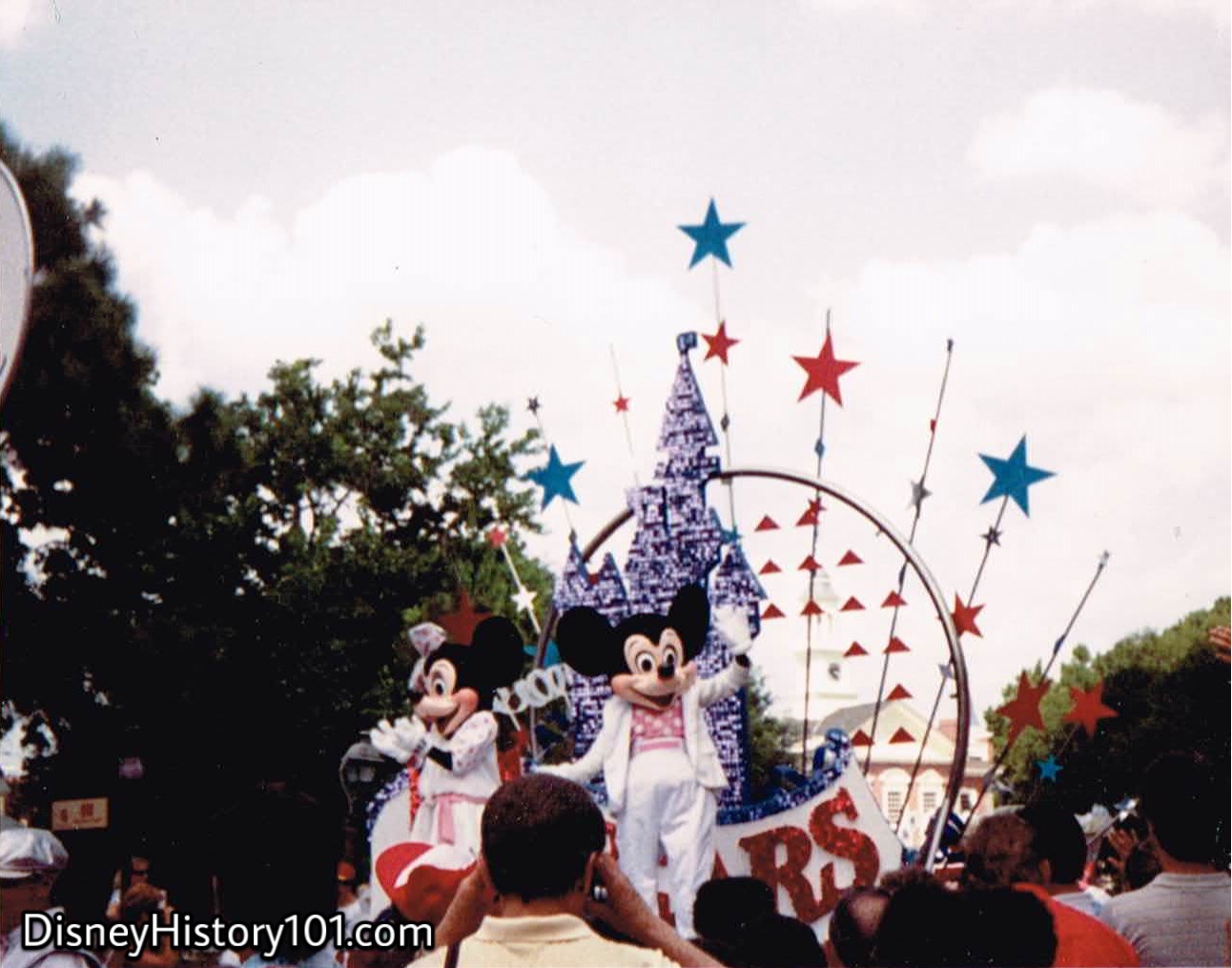
A special edition of the Main Street Electrical Parade featured a special “15 Years” anniversary float (which was later reused for a number of anniversaries at both DISNEYLAND® and the MAGIC KINGDOM® Park).
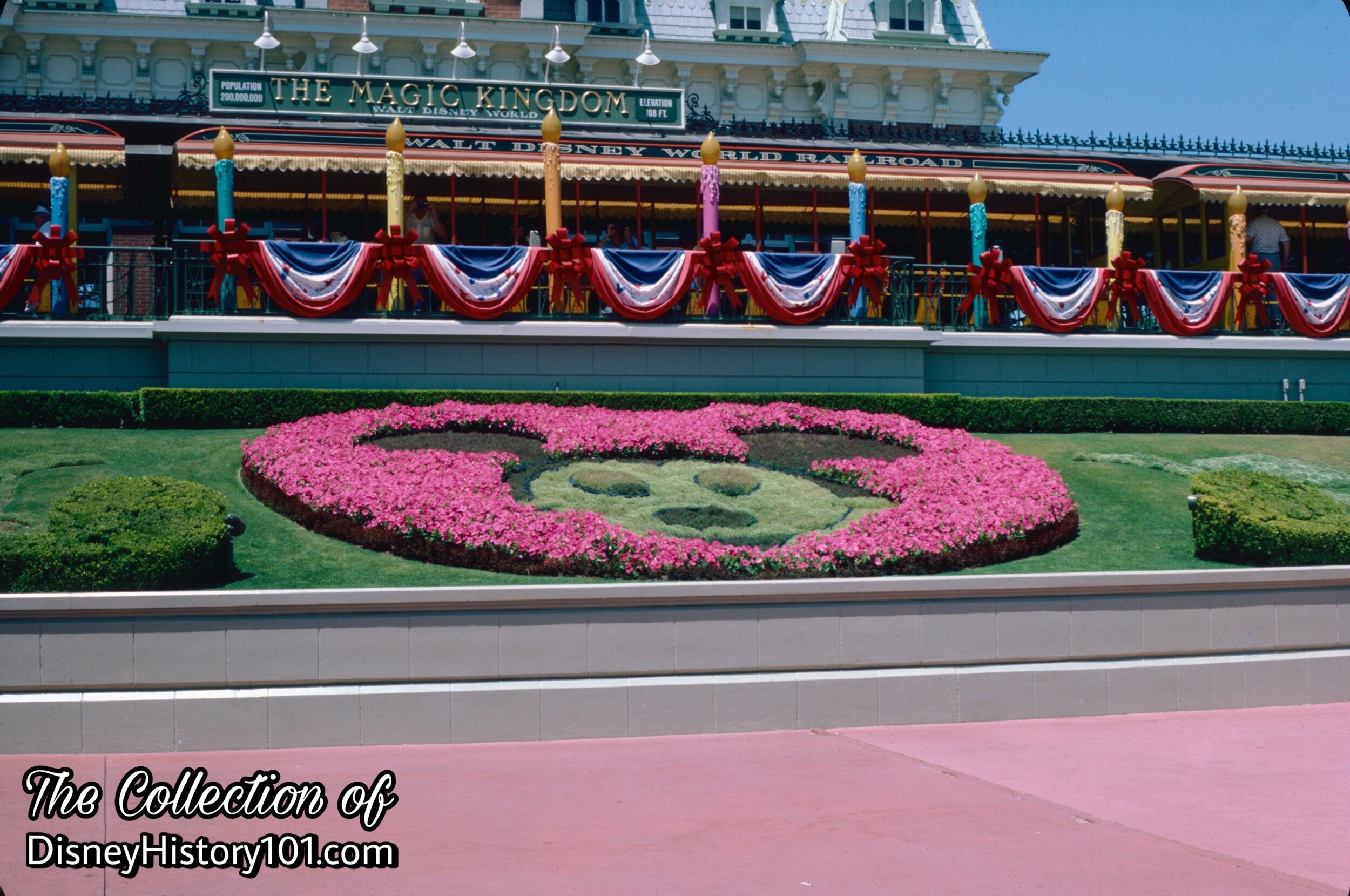
Colorful candles were placed near Main Street Station, heralding Walt Disney World’s Fifteen Years of Magic! The bright pink blooms of the iconic Mickey Mouse floral arrangement complimented the pink ensembles of the “15 Years of Magic” parade performers.
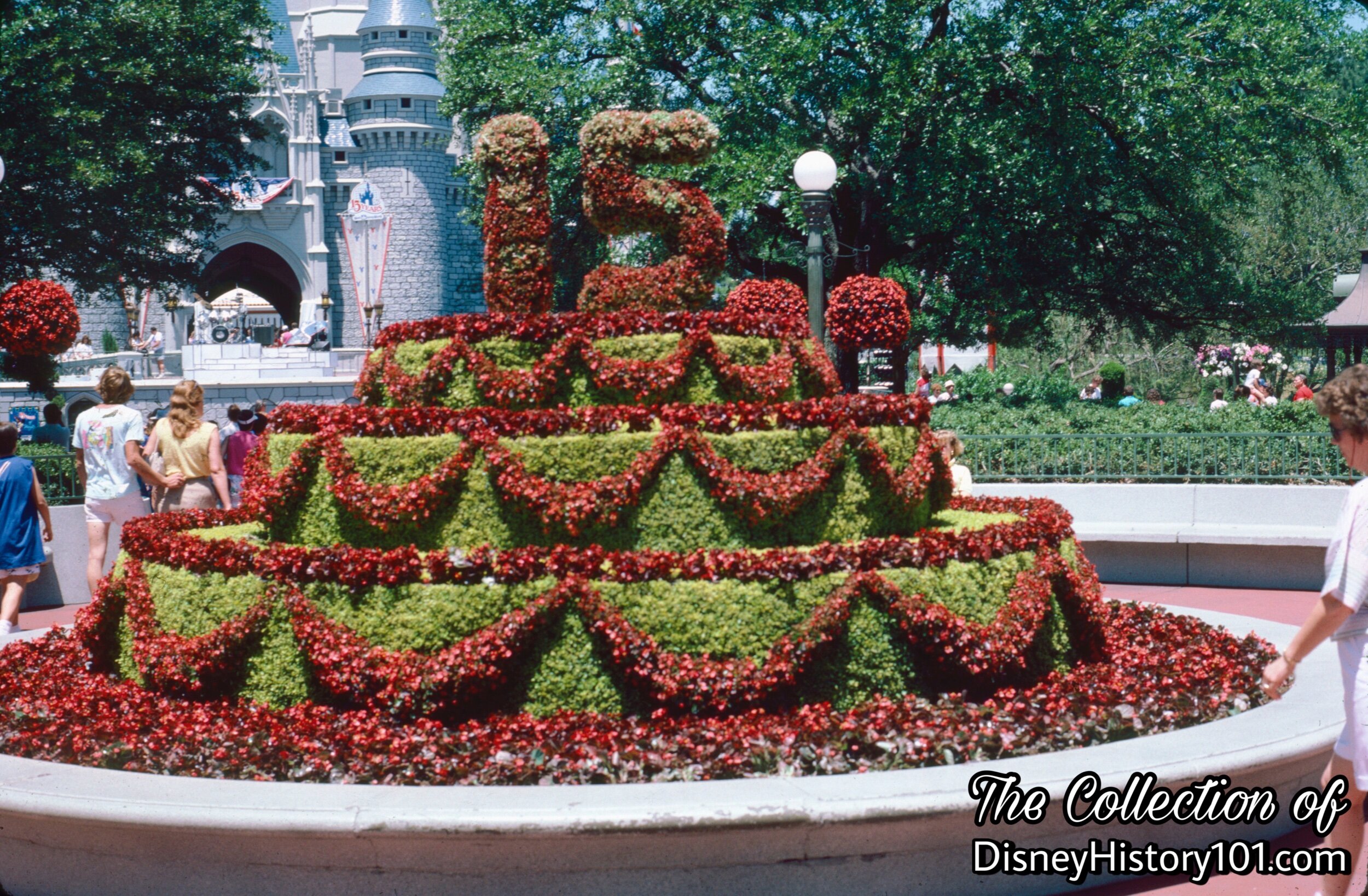
Speaking of Topiaries, (eight years before the iconic Partners Statue would be unveiled) the MAGIC KINGDOM® Plaza floral bed was the perfect place to highlight the character of event and anniversary themes at the MAGIC KINGDOM®. From October of 1986 to September of 1987, the Plaza featured this fanciful and carefully crafted cake centerpiece as a tribute to “15 Years of Magic” at WALT DISNEY WORLD® Resort! According to the Disney Parks website, the “cake” was an impressive seven feet tall, with a circumference of 41 feet. Horticulturists and gardeners took great care in adding more than 11,000 plants to this living sculpture. The live plants comprising the “15” candle on top, and the coordinating accents, were changed throughout the seasons (from Scarlett begonias, to chrysanthemums, and finally, poinsettias).
“This Is The Year to See The World and Win”
If ever there was a year to see “the world”, that year would be 1986! From October 1, 1986 to September 30, 1987, a Prize clock bearing free gifts for guests distributed almost 3,000 magical prizes daily, for a full year. In fact, by the printing of Walt Disney World News (Winter, 1986), “over 186,300 winners” had been awarded prizes, “including a car winner every day”. It’s hard to believe that any tickets read, “Sorry. No Prizes today.” These Walt Disney World birthday gifts were awarded every fifteen seconds that the Magic Kingdom and Epcot Center were open to the public during Birthday Bonanza Weekends. Daily prizes included souvenir pins, 15th Birthday pins, film video cassettes from Disney Home Video, light-up visors, Michael Jackson cassette tapes from Epic Records (a Captain EO promotional tie-in), complimentary Magic Kingdom Epcot Center and Discovery Island Park tickets, or a $500 U.S. Savings Bond. Daily Grand Prizes included a brand new 1987 Chevy Cavalier Convertible, a Chevy S-10 pickup truck, and a cruise for two to the Bahamas aboard Premier Cruise Lines!
Two vehicles were awarded each weekend, over the course of the “15 magical years” celebration! Winners rode as guests of honor in the “15th Birthday Parade”. Still, all guests could feel the “heartbeat of America”, by sitting behind the wheel of the Cavalier or S-10 in one of Walt Disney World’s promotional photo locations (whether they won or not)!
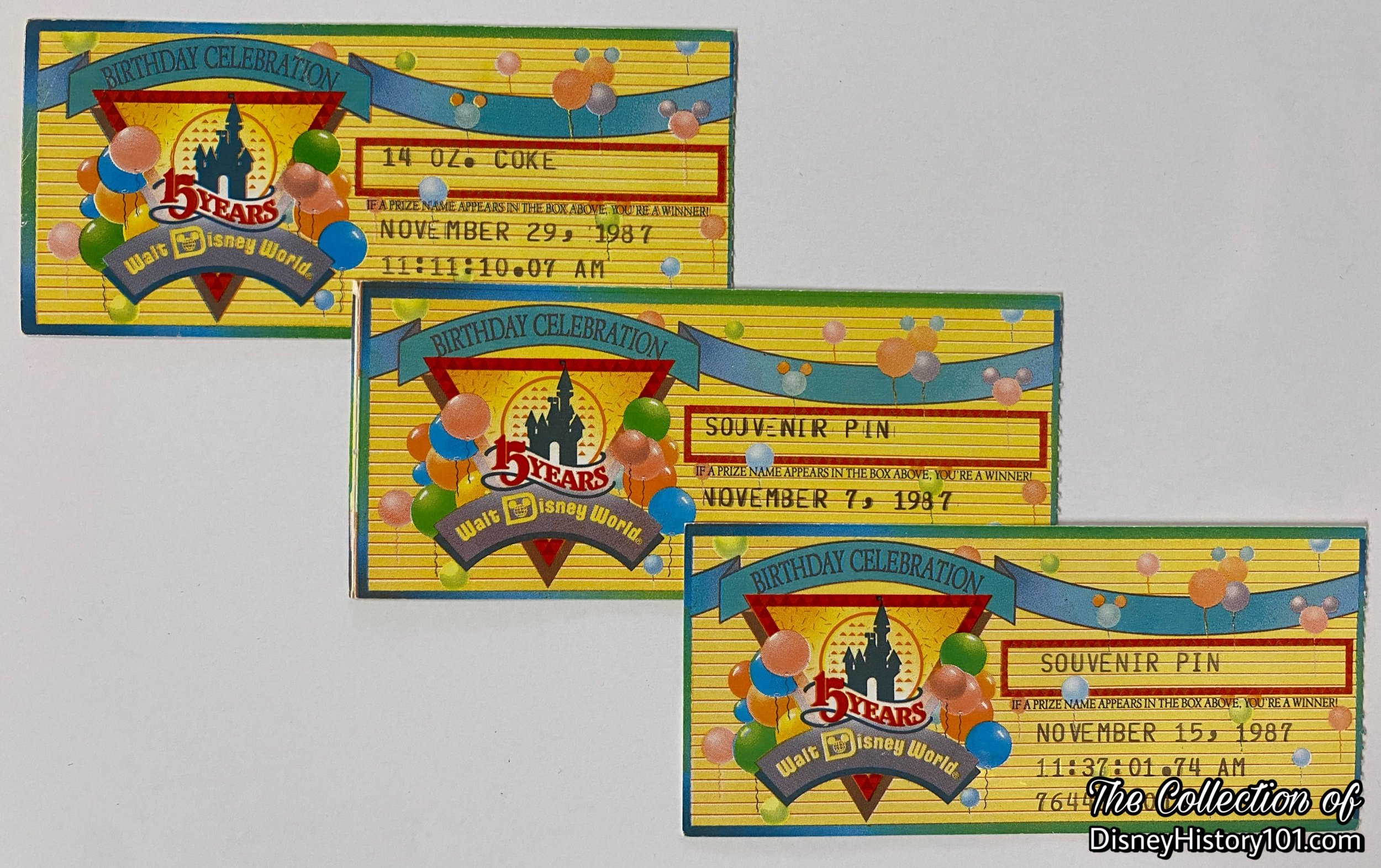
Occasionally WINNERS were publicized : June Schaffer (of Kensington, Maryland) was the first guest to win a brand new 1987 Chevrolet Cavalier on the first day of the year-long prize giveaway. Some winners were also featured in The Walt Disney World News publication.
June 27, 1987 - Daniel A. Dundon (of Gettysburg) won a 1988 Chevrolet Cavalier.
A particular Guest named Kristine won a Chevy Cavalier.
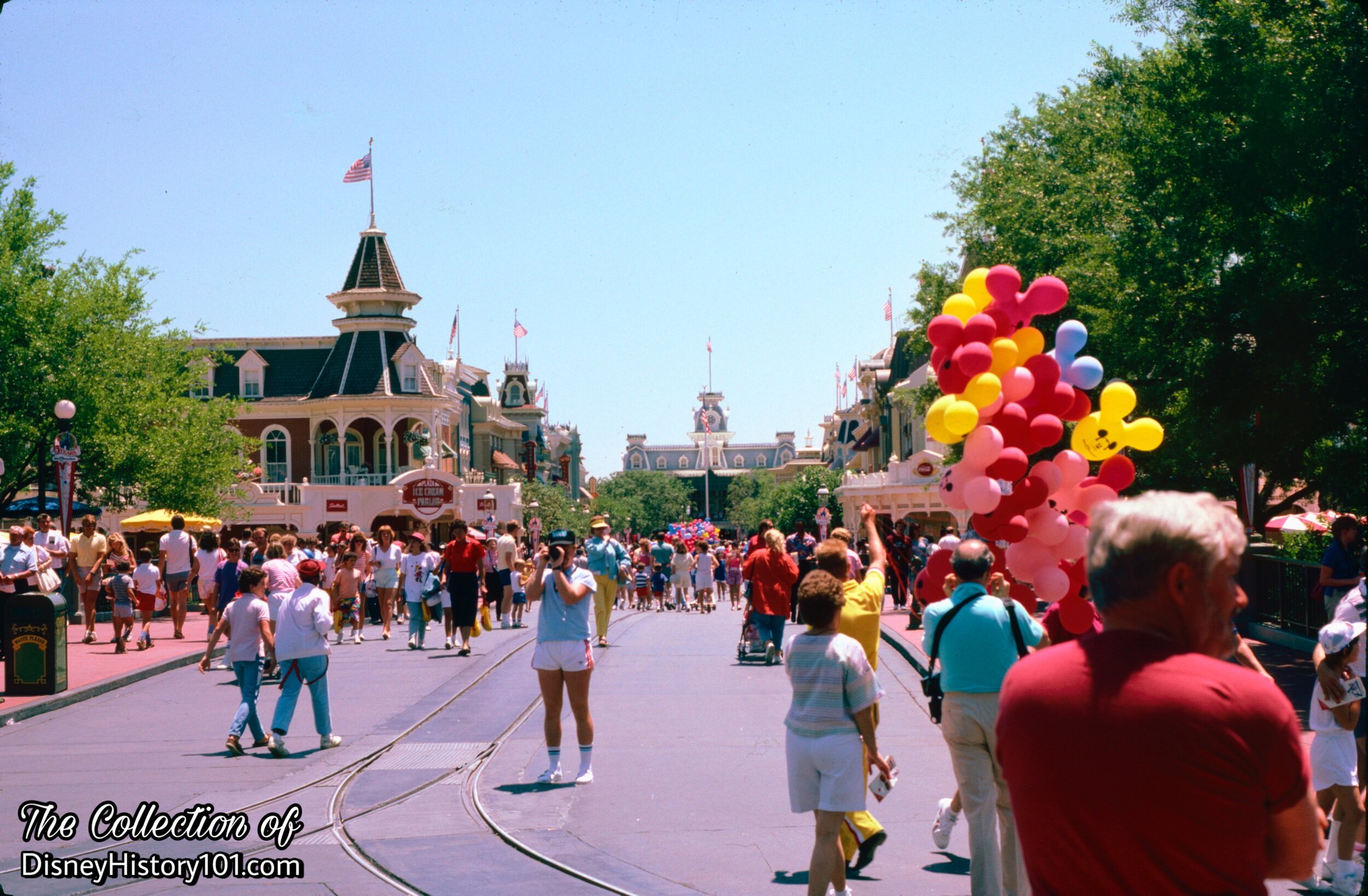
Bunting, signs, and banners heralding “15 Years of Magic” decorated Walt Disney World Magic Kingdom’s lampposts and other street features!
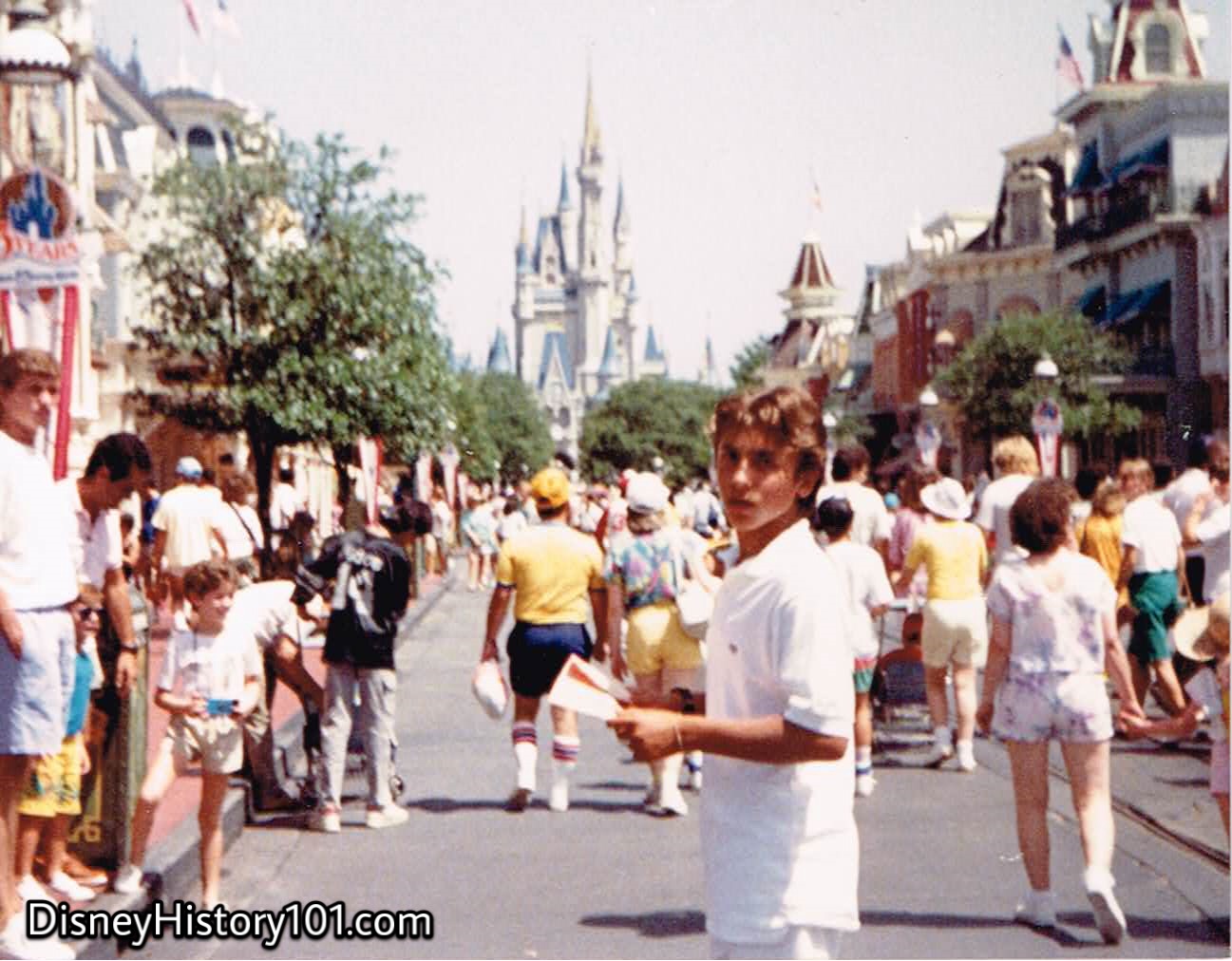
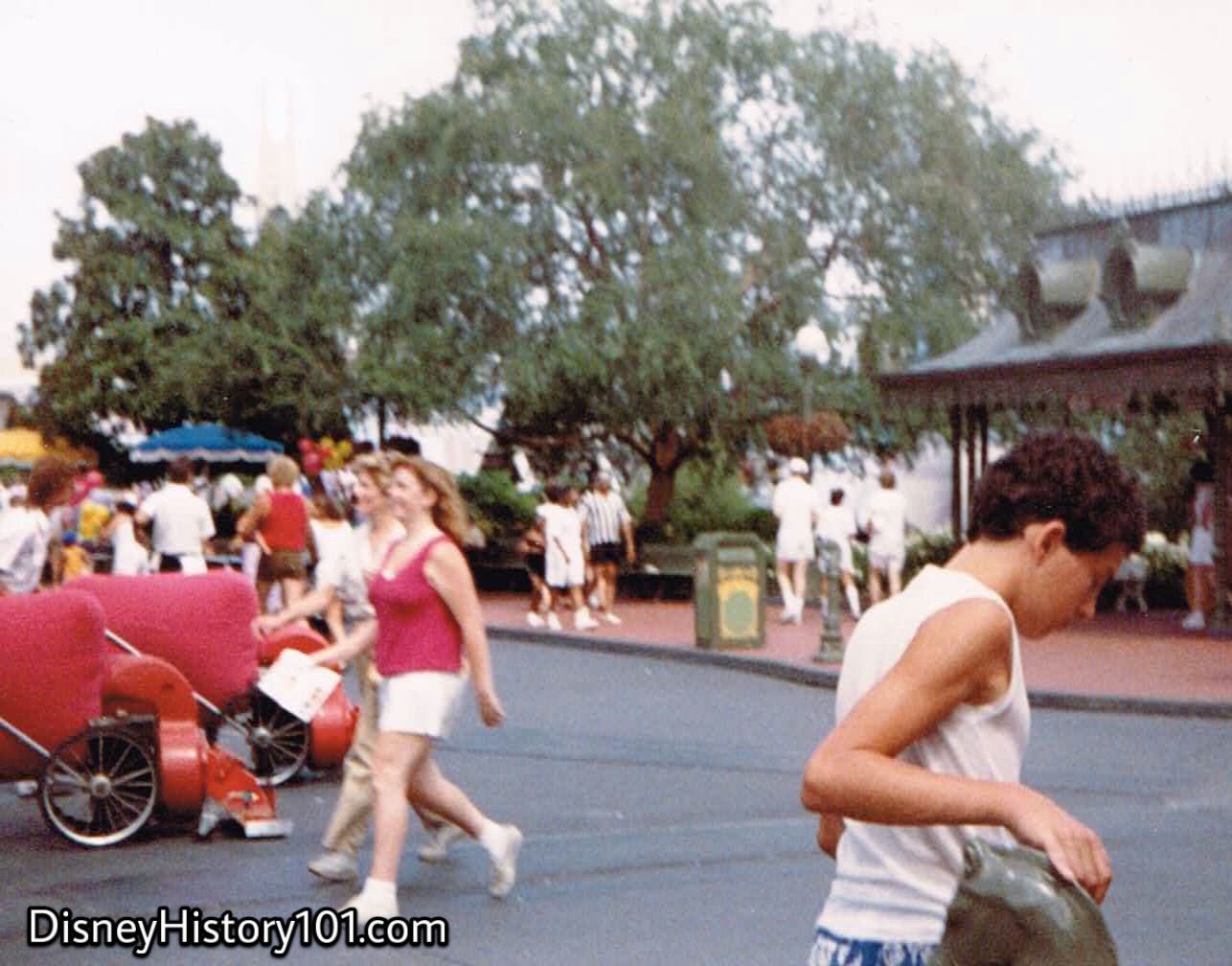
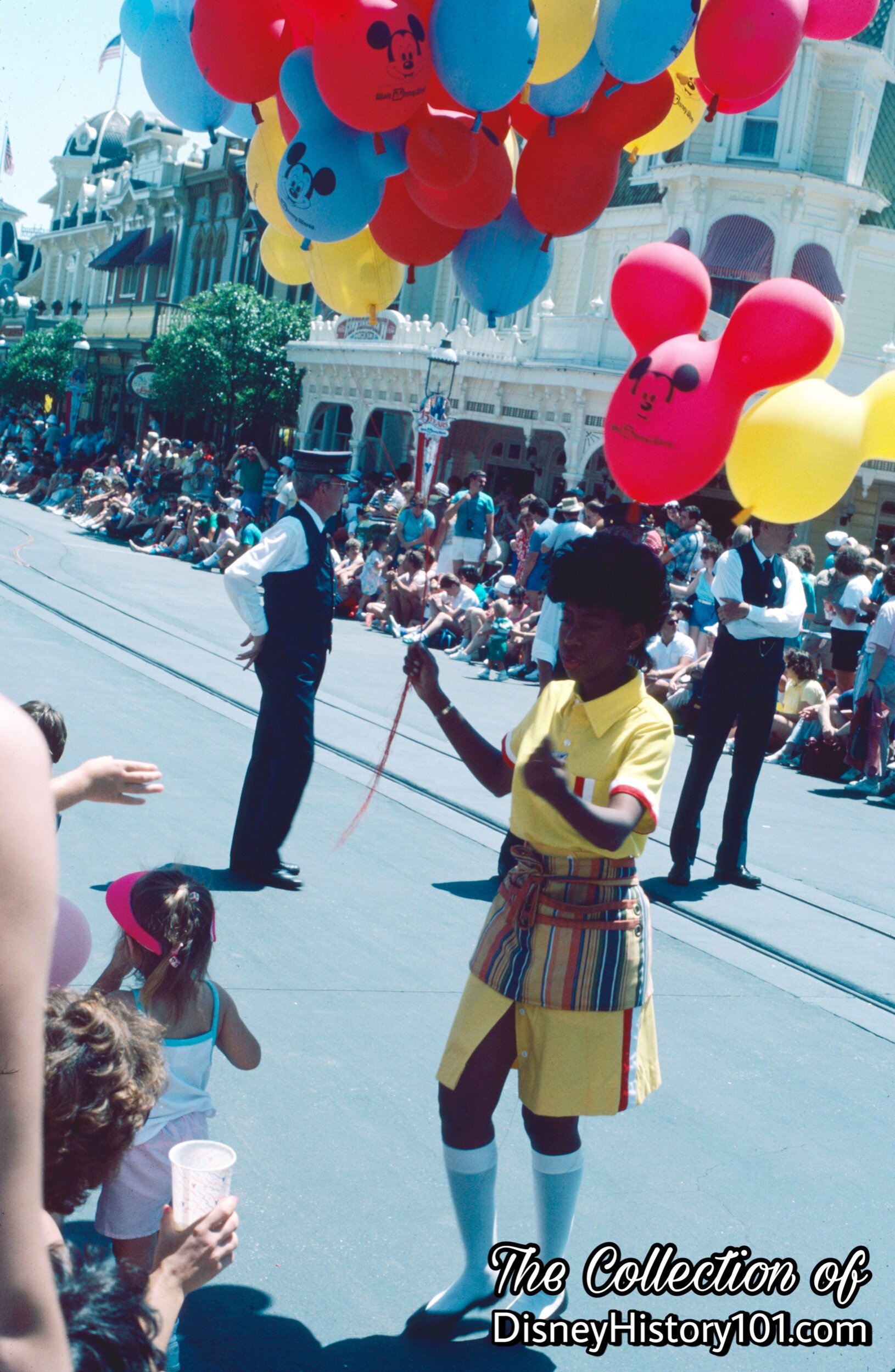
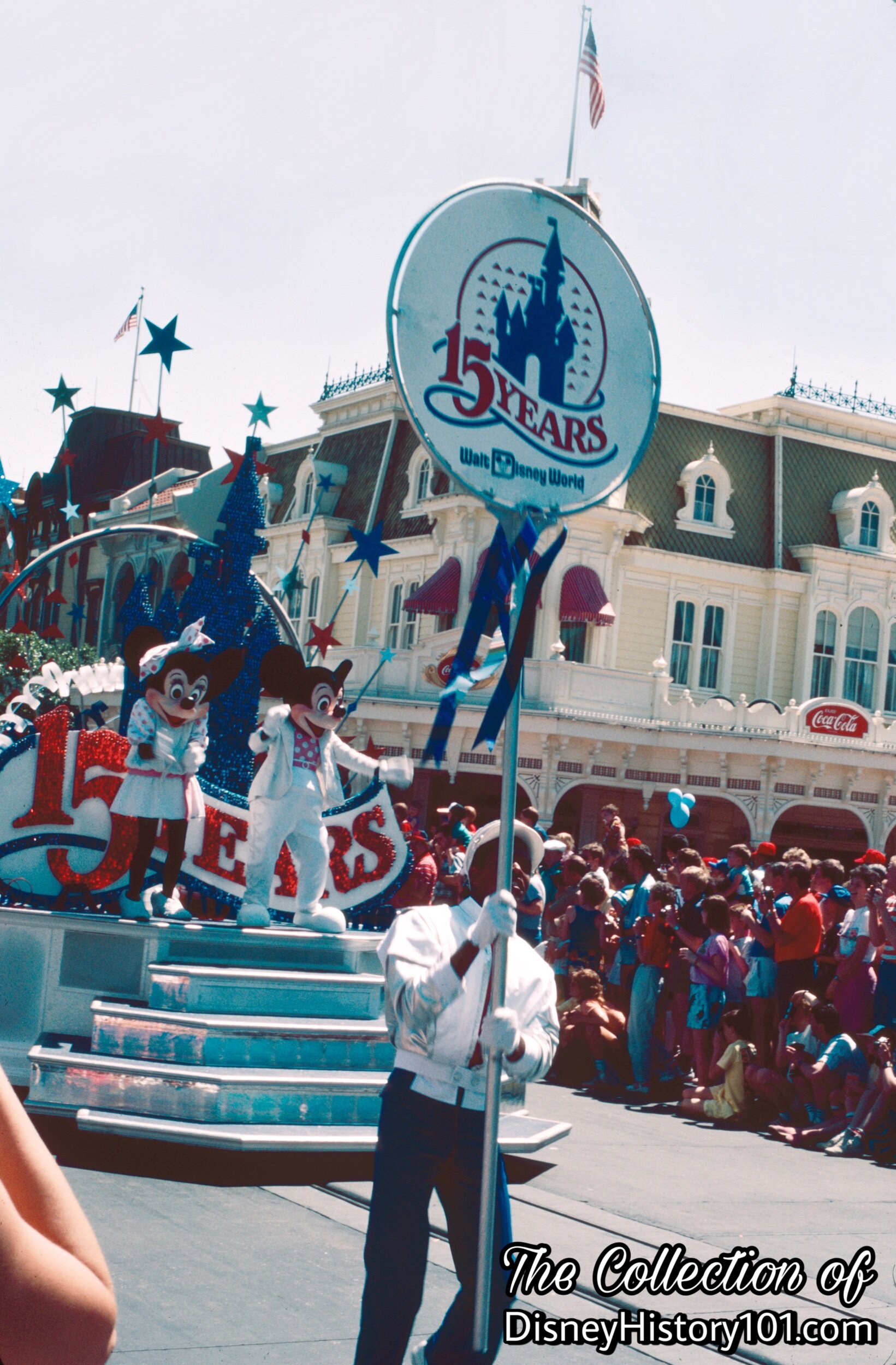
At the head of the parade, one lucky Cast Member sets the pace and keeps the beat, while bearing the standard of “Walt Disney World’s 15 Years of Magic” parade!
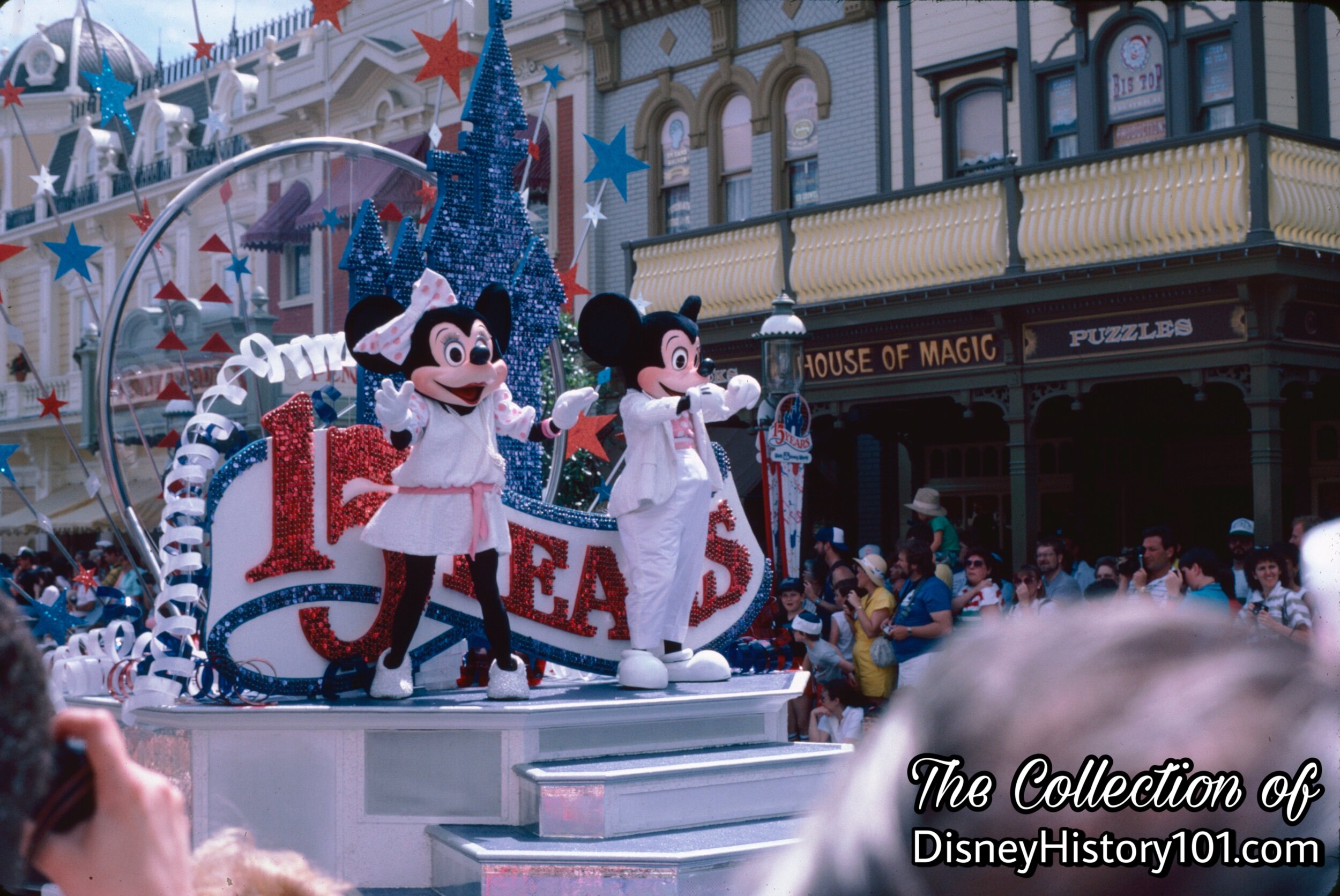
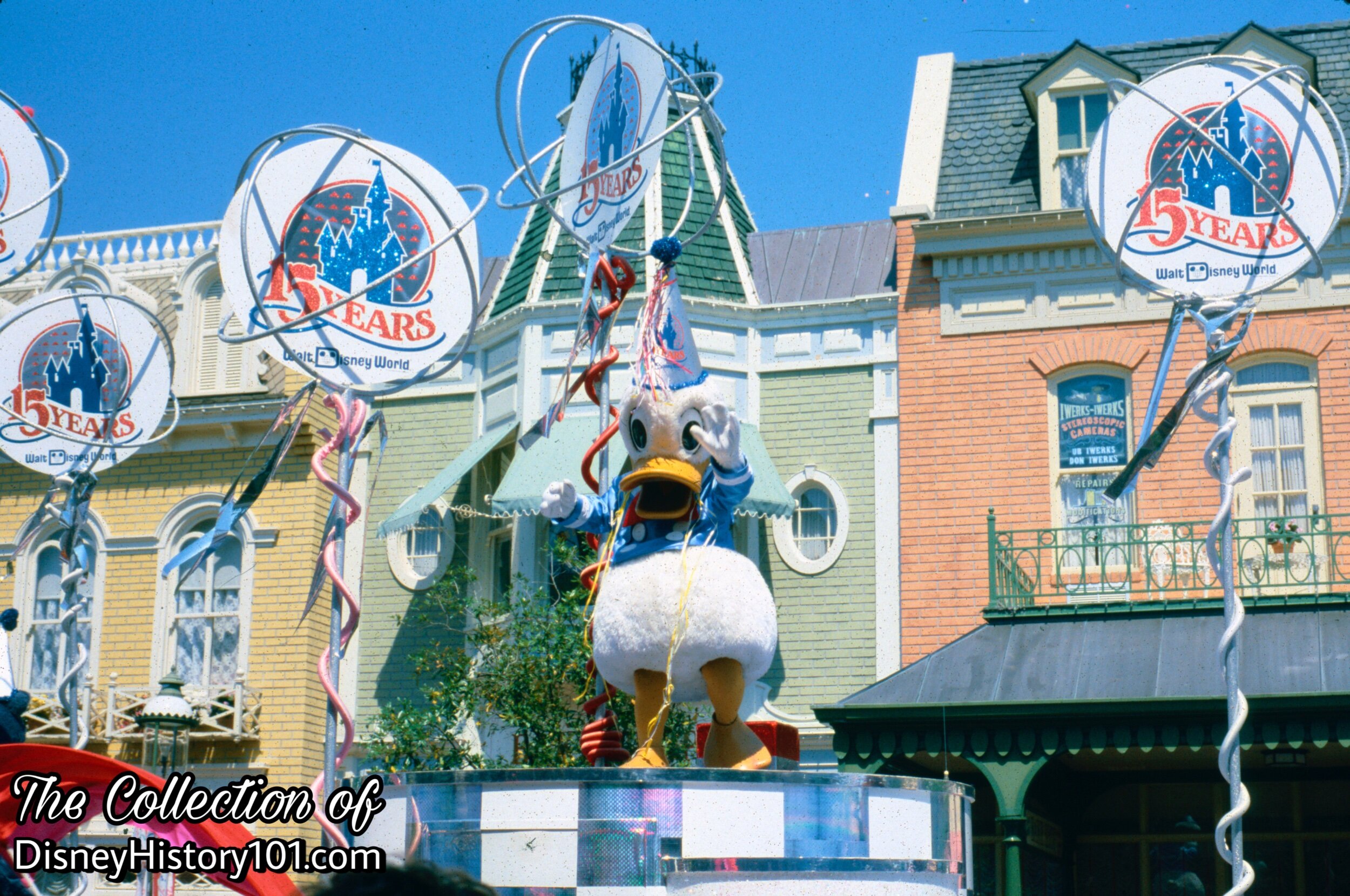
Walt Disney World celebrates “15 Years of Magic”, with Mickey’s biggest street party yet! Mickey Mouse and Minnie Mouse lead a cast of 40 popular characters aboard new floats.
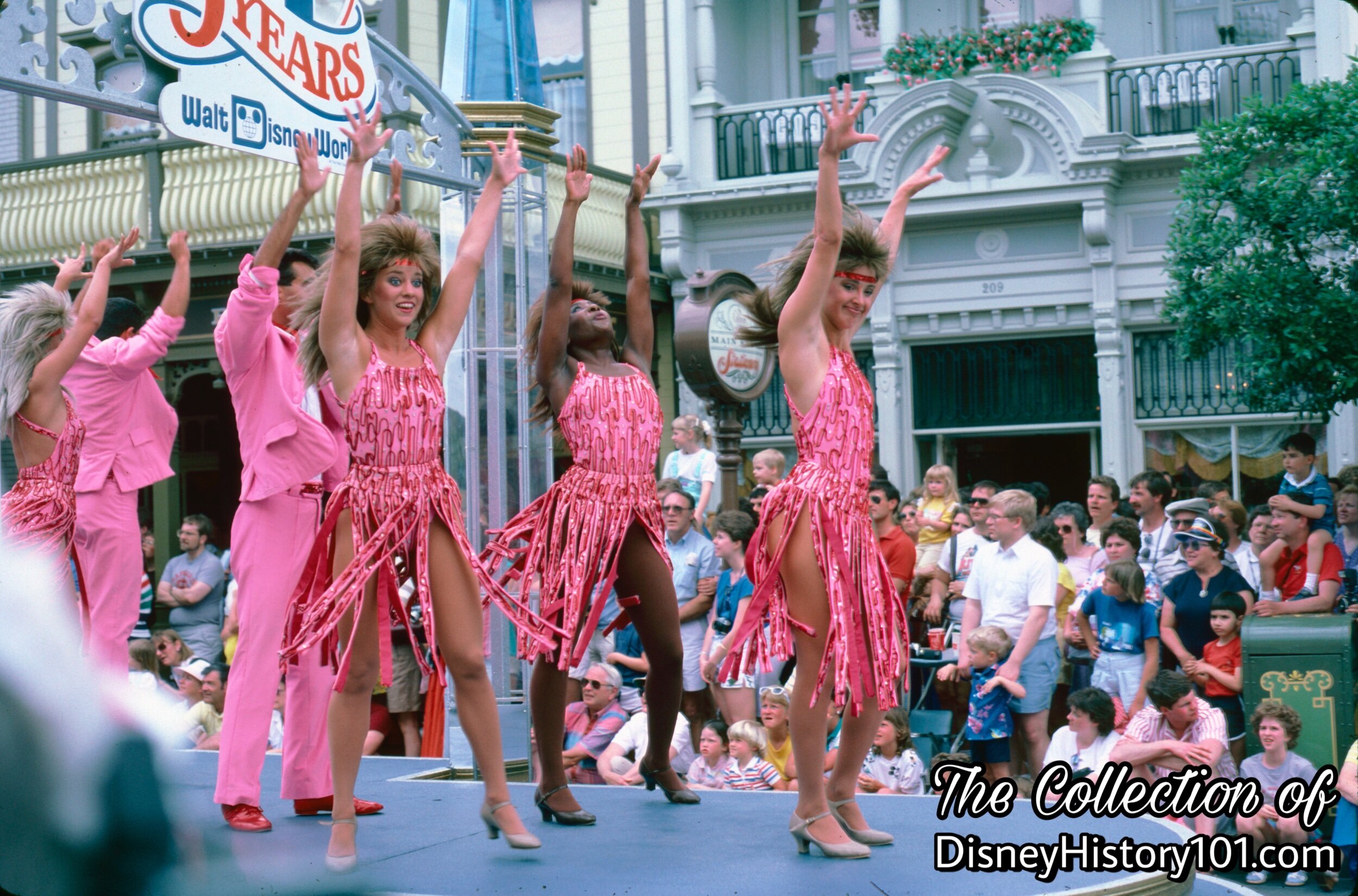
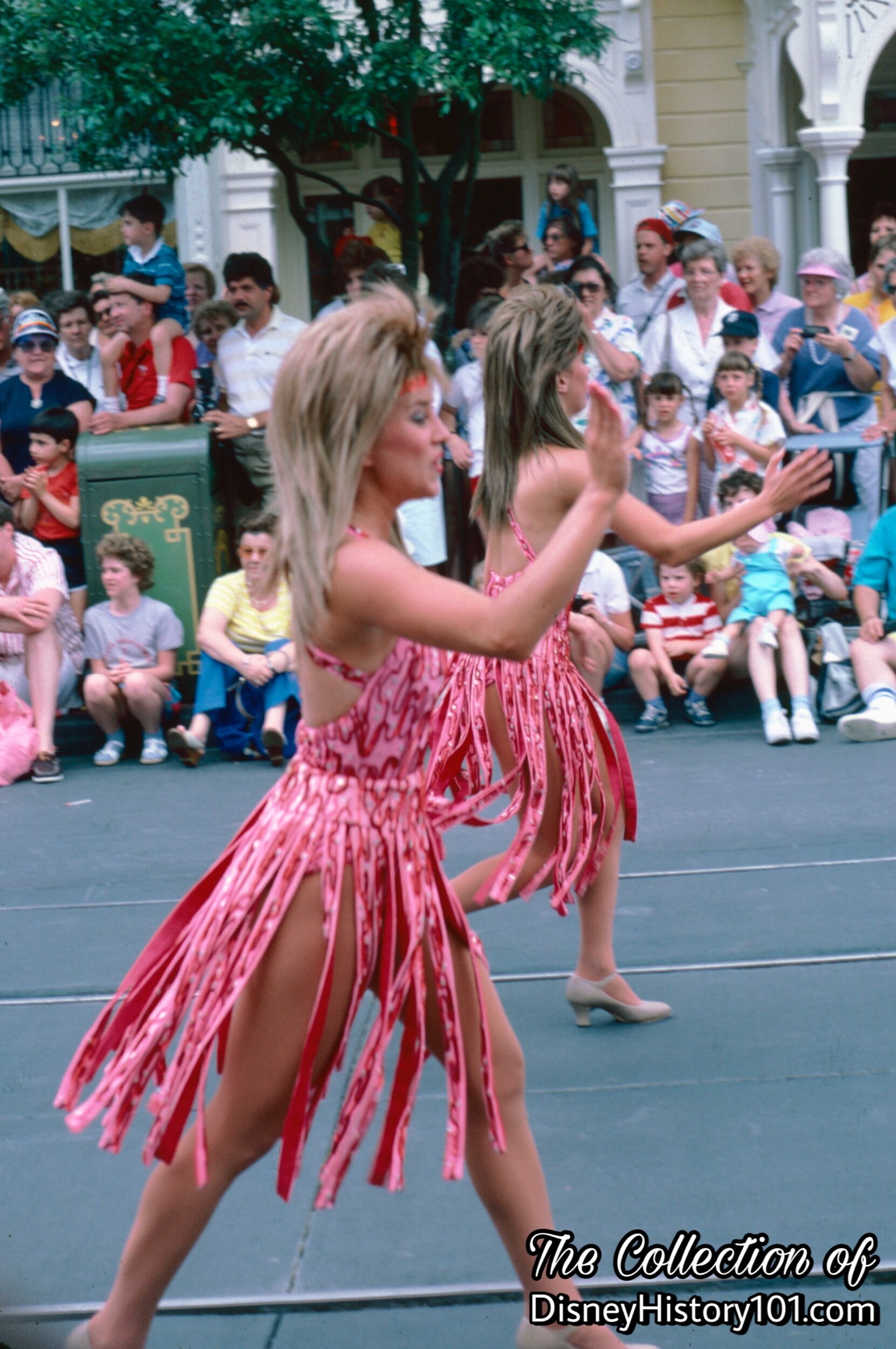
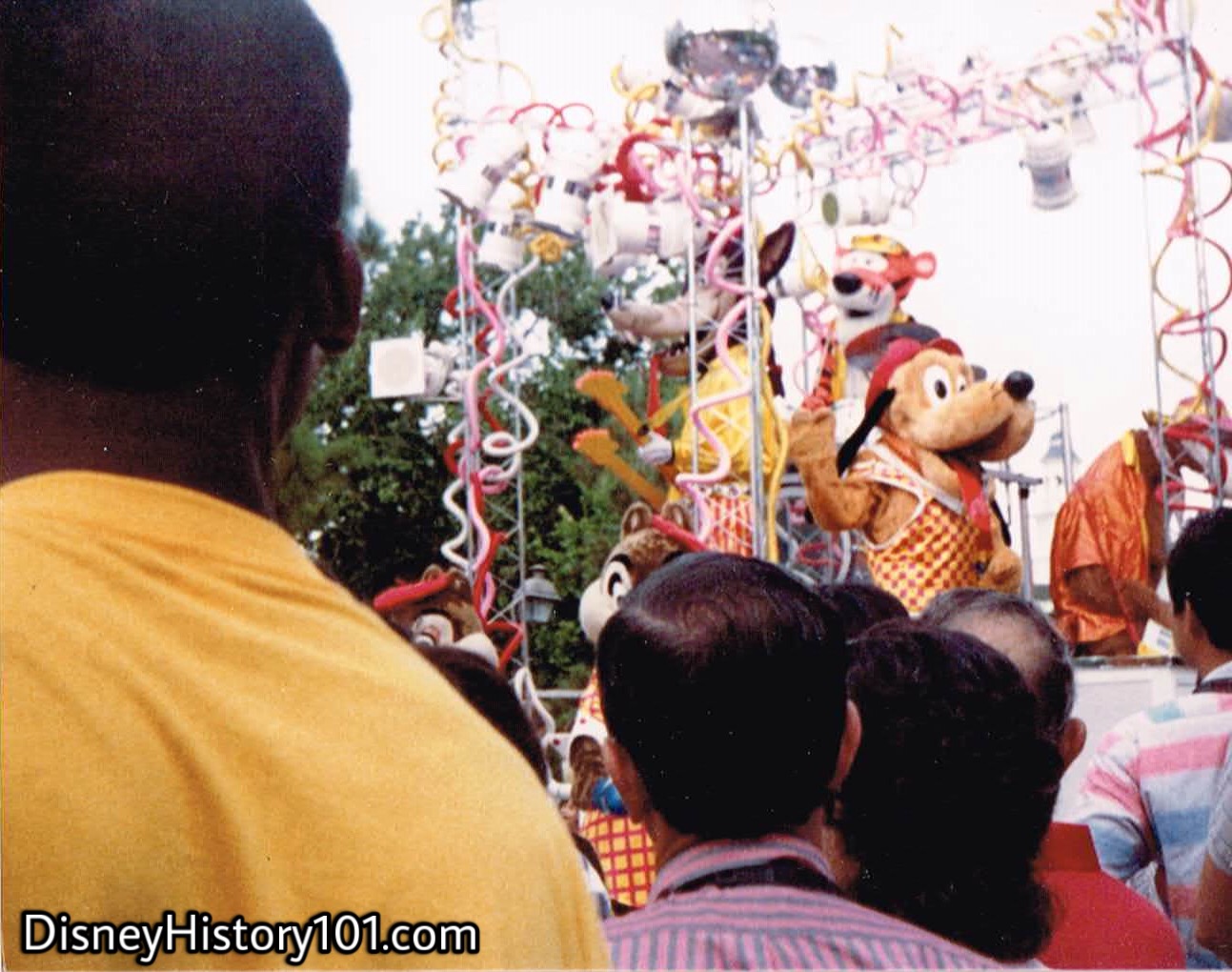
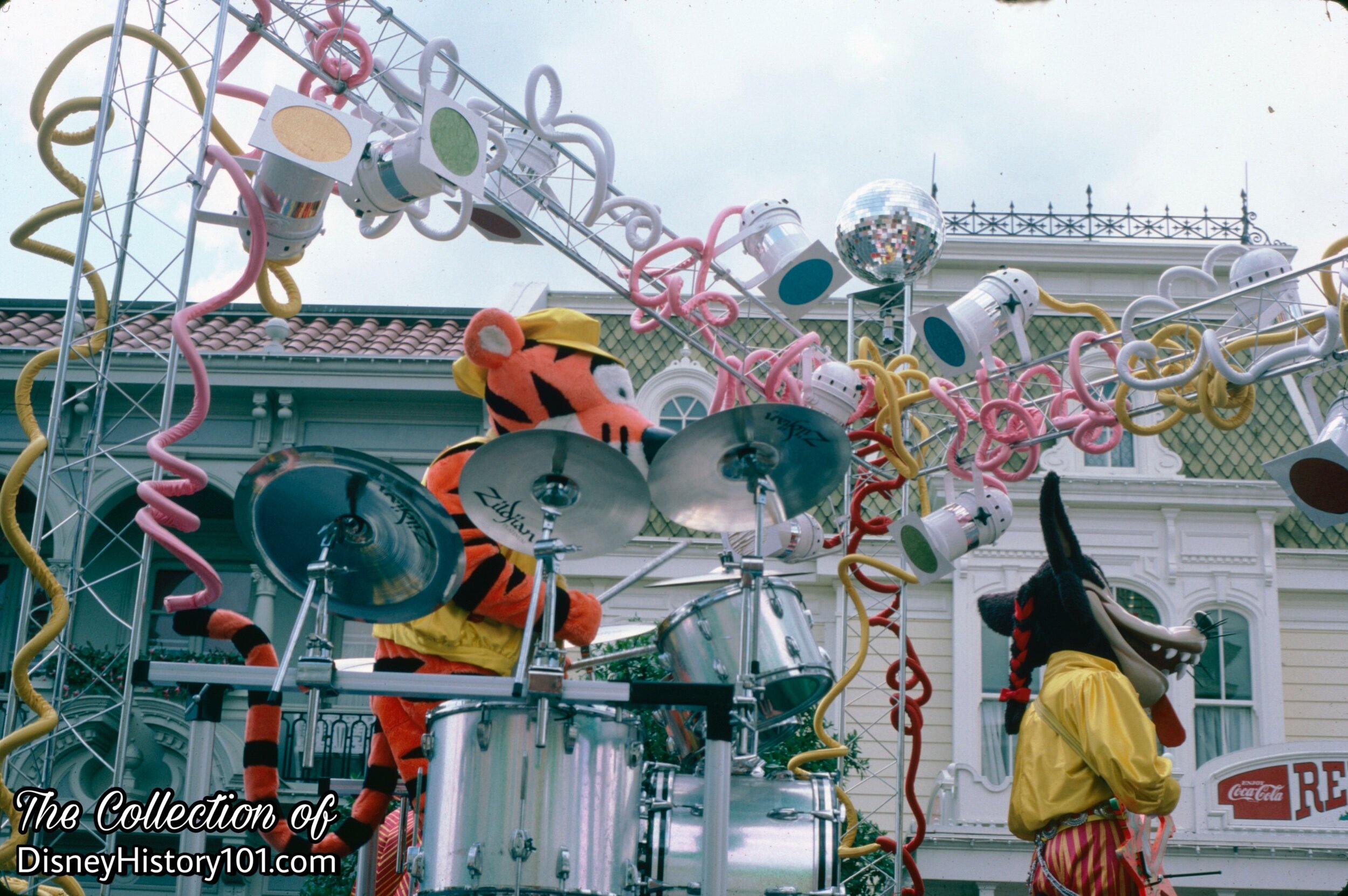
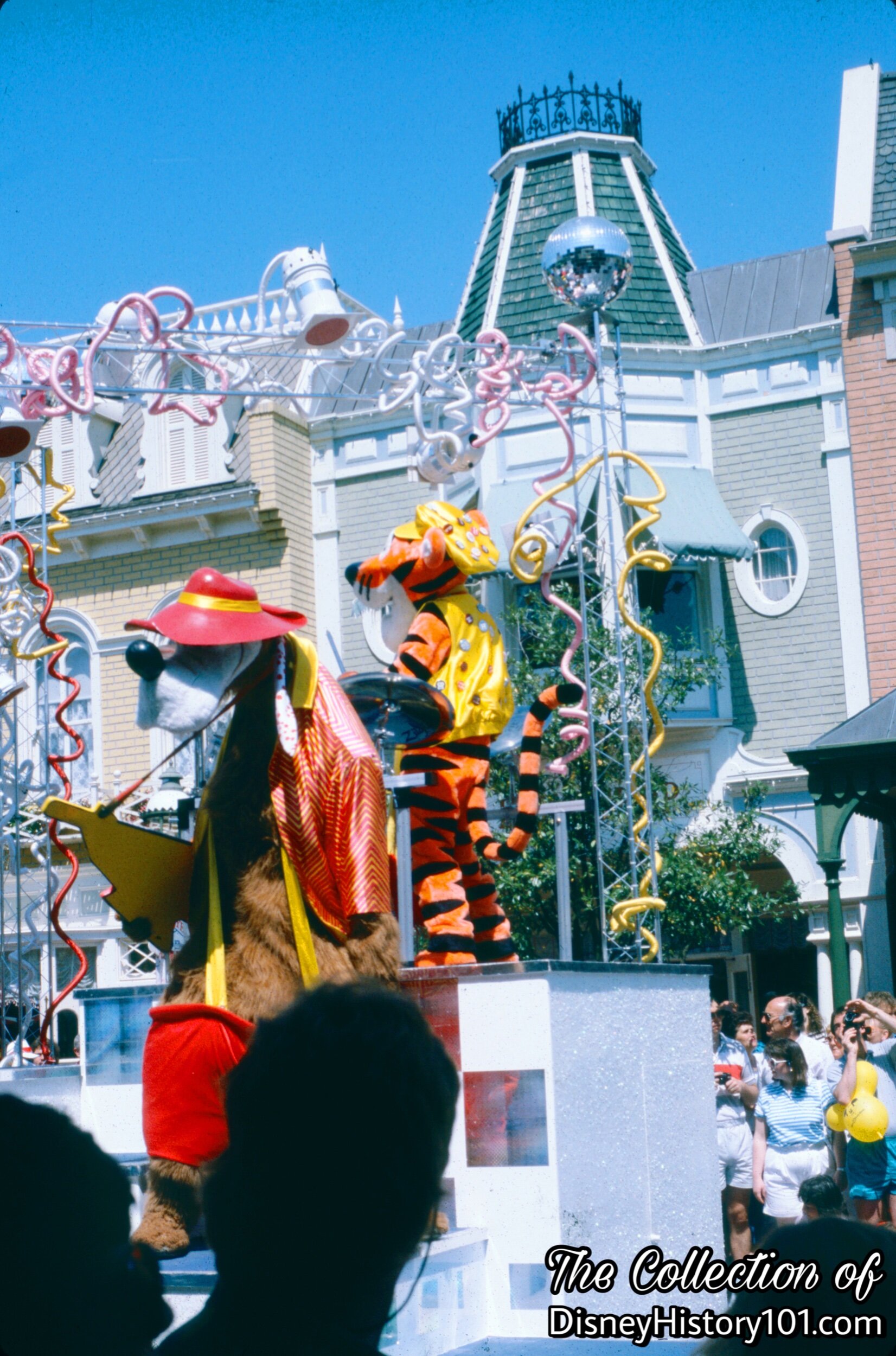
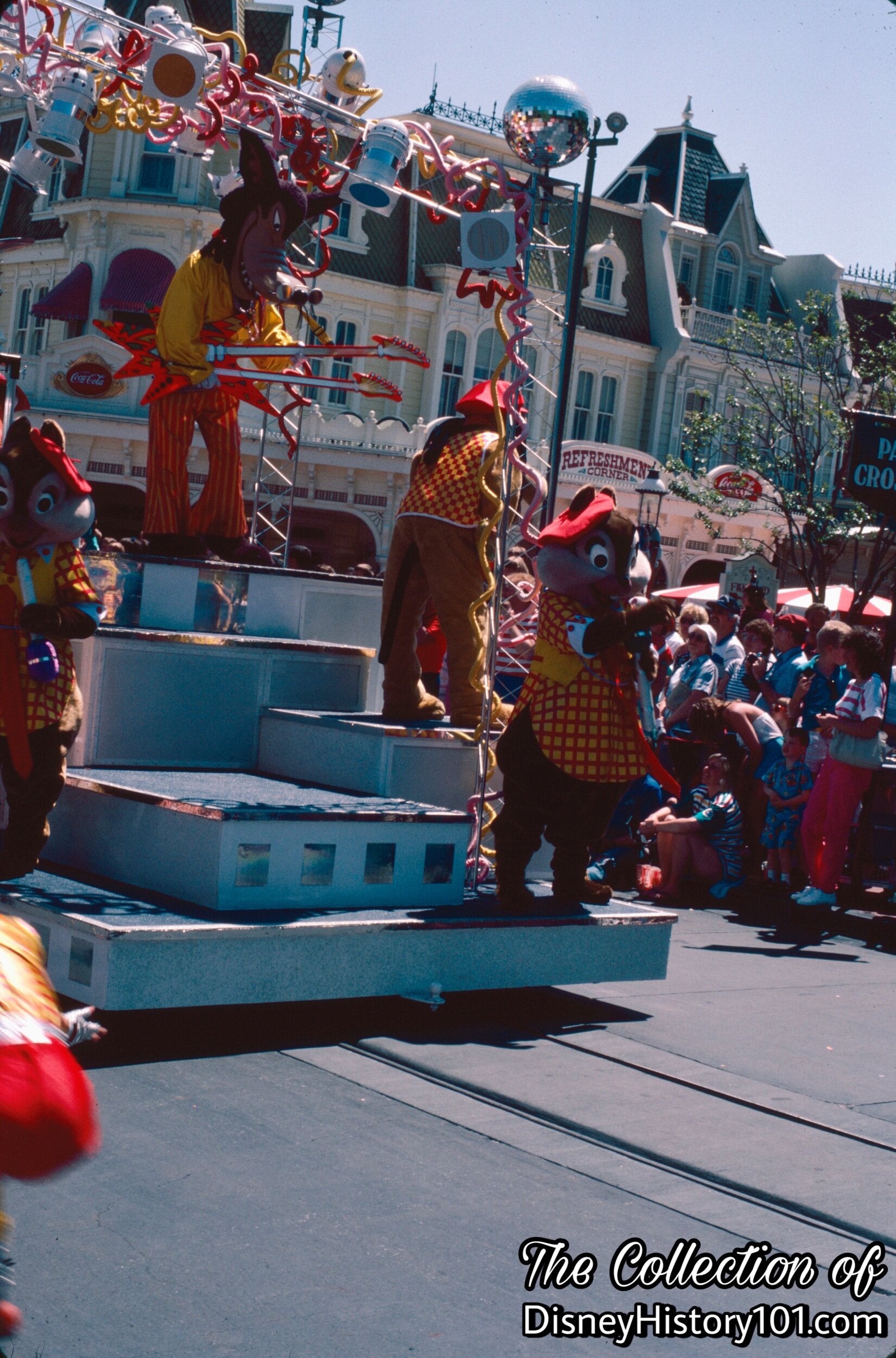
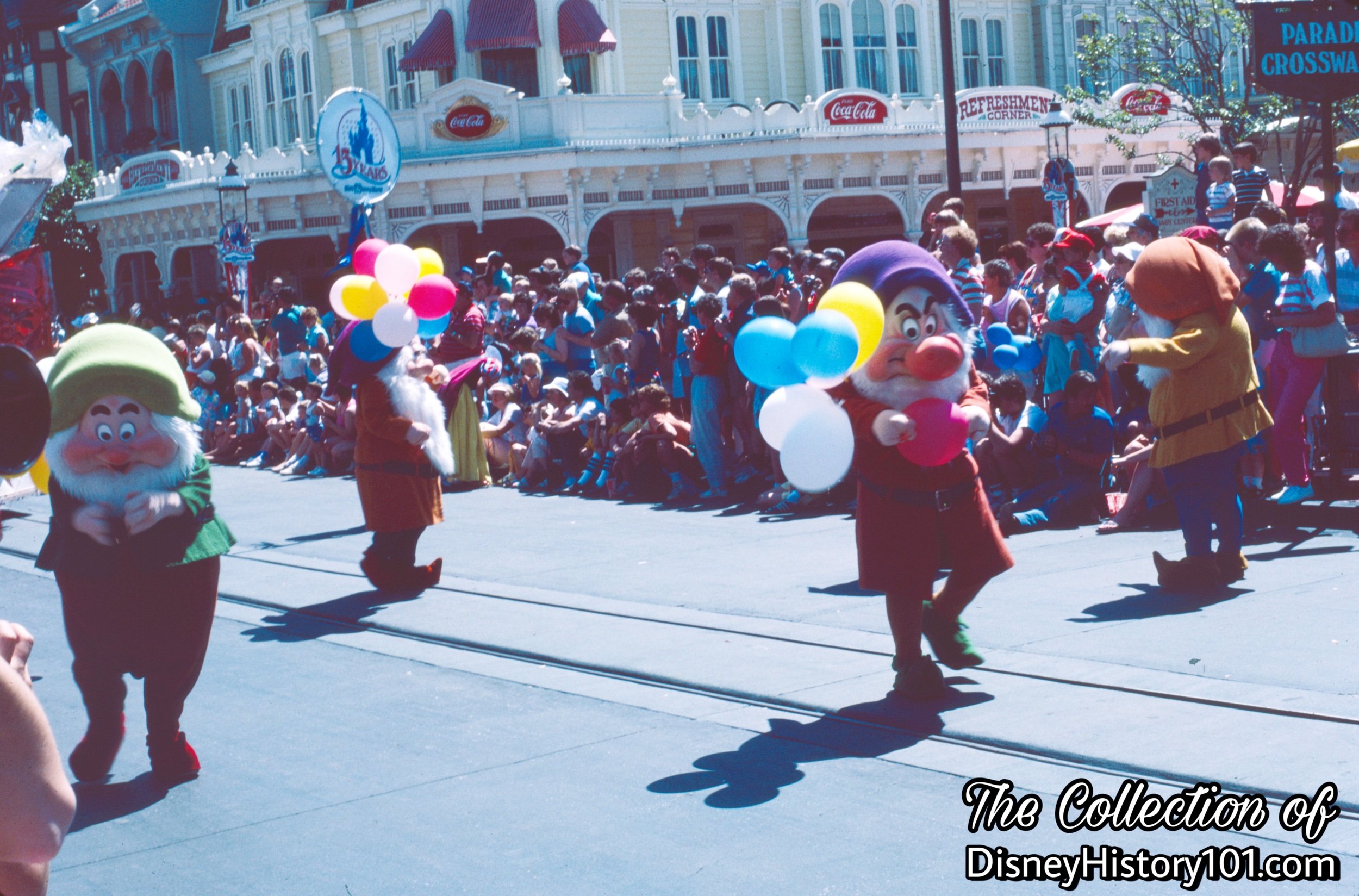
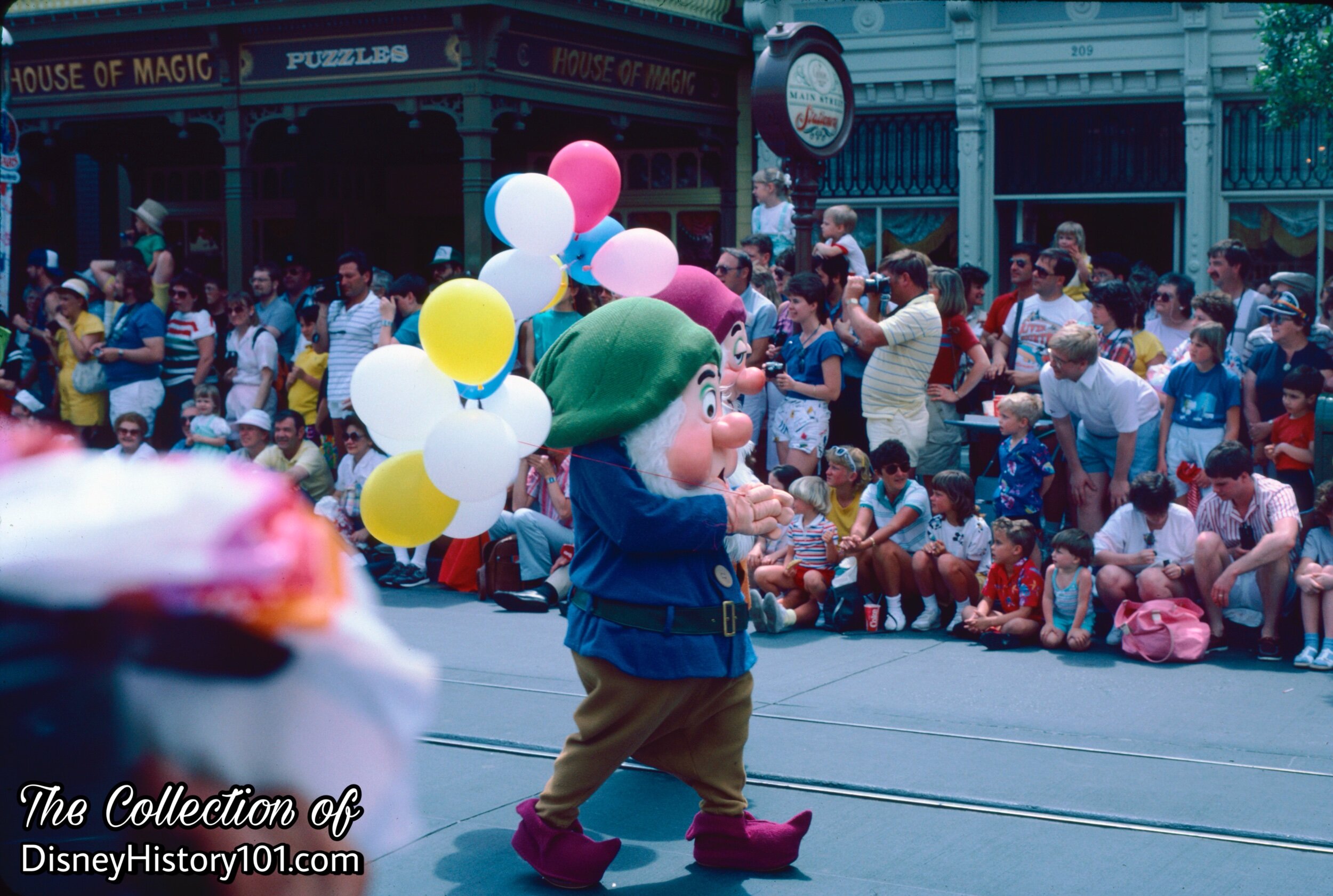
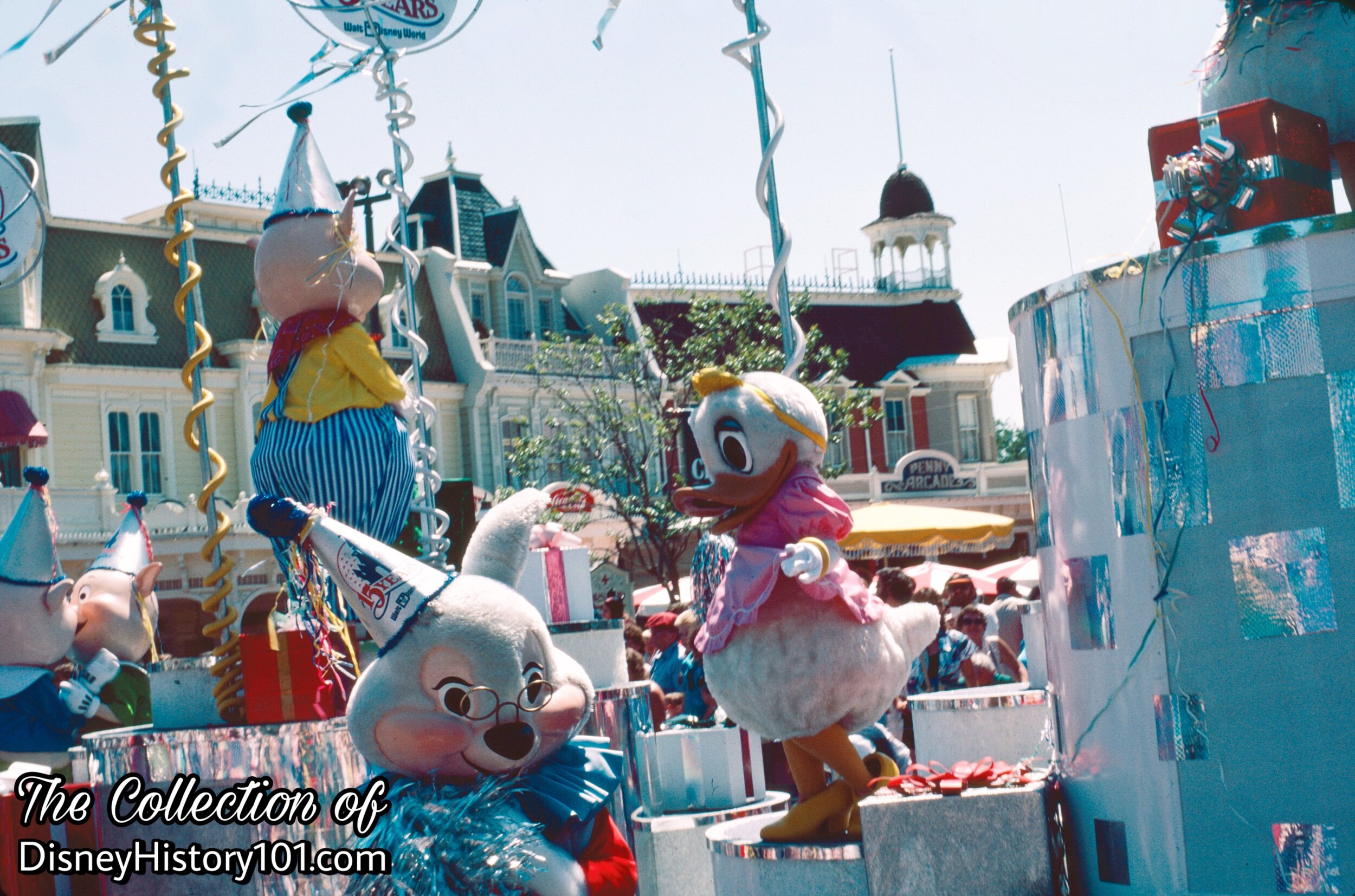
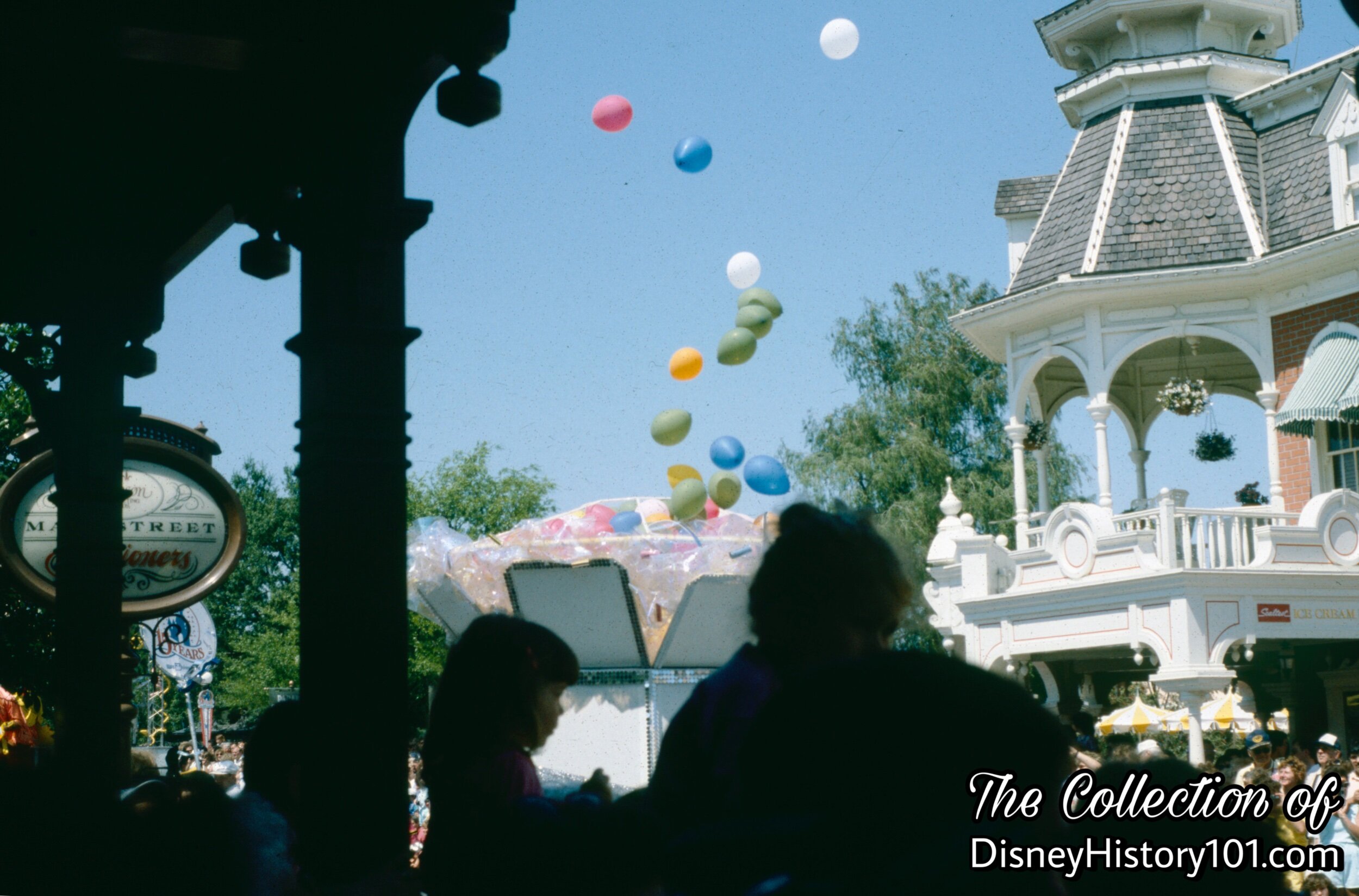
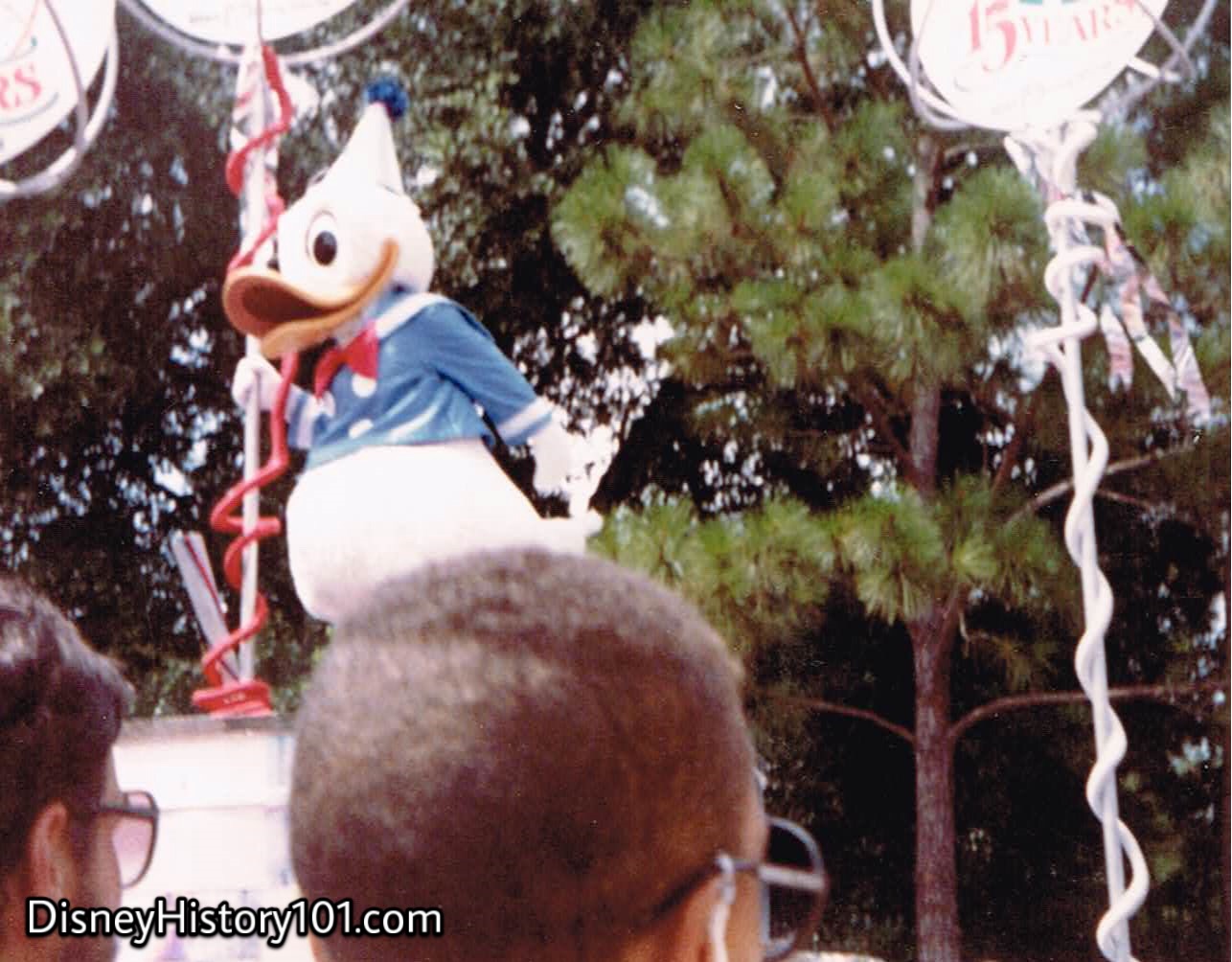
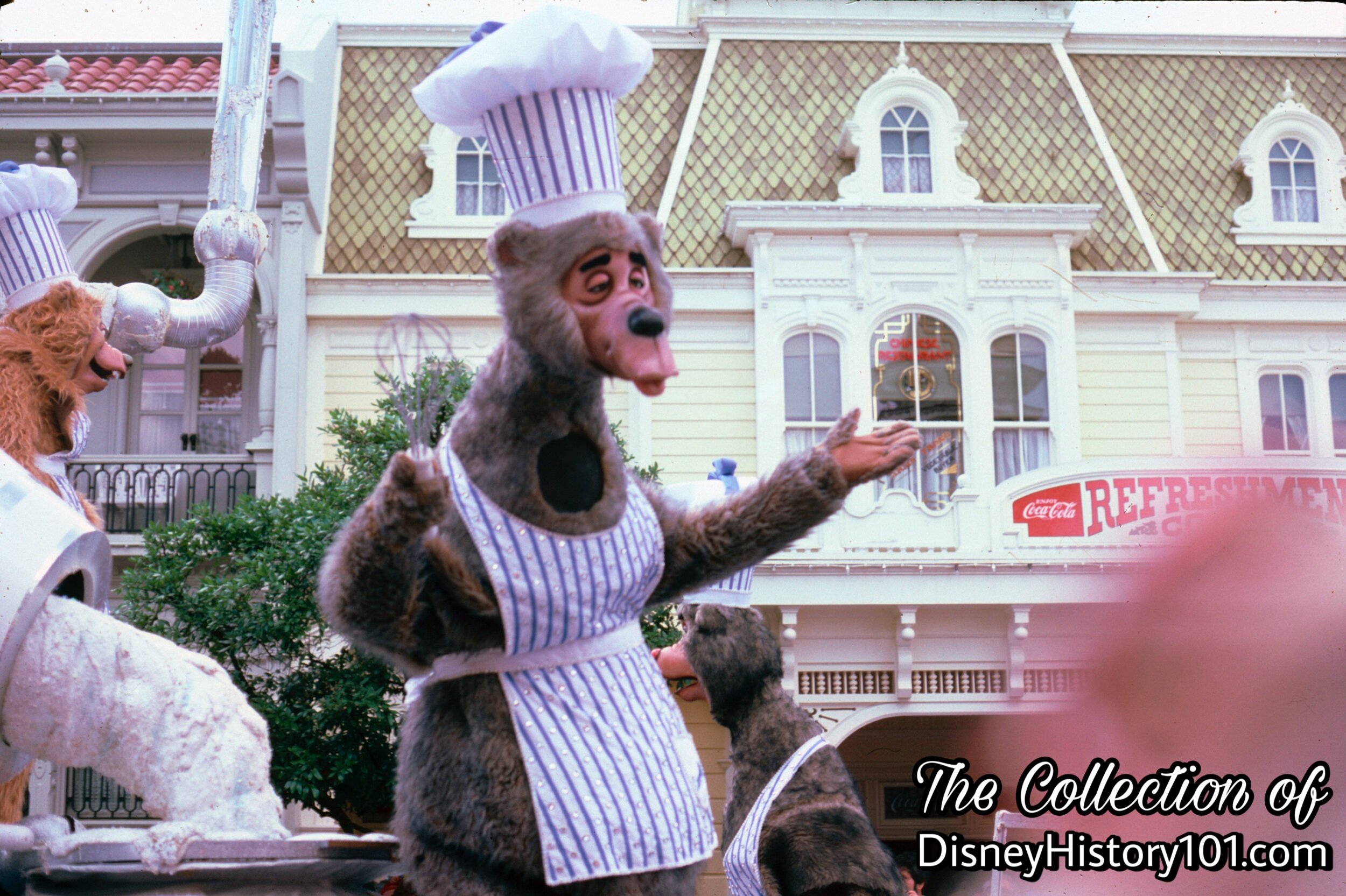
It looks like the Country Bears (Liver Lips, Wendell and Shaker) are cookin’ up somethin’ real special for “Walt Disney World’s 15th Year of Magic”!
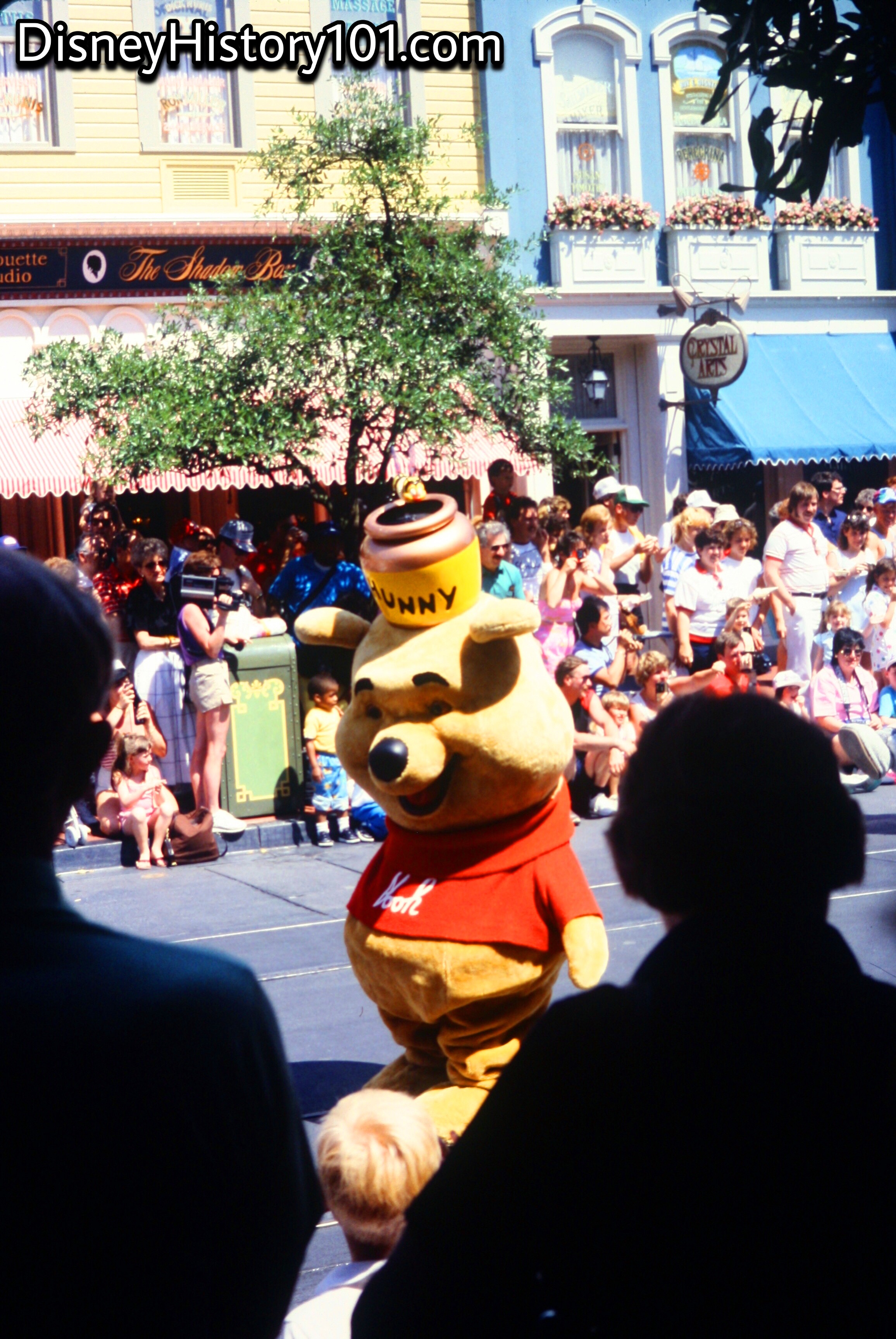
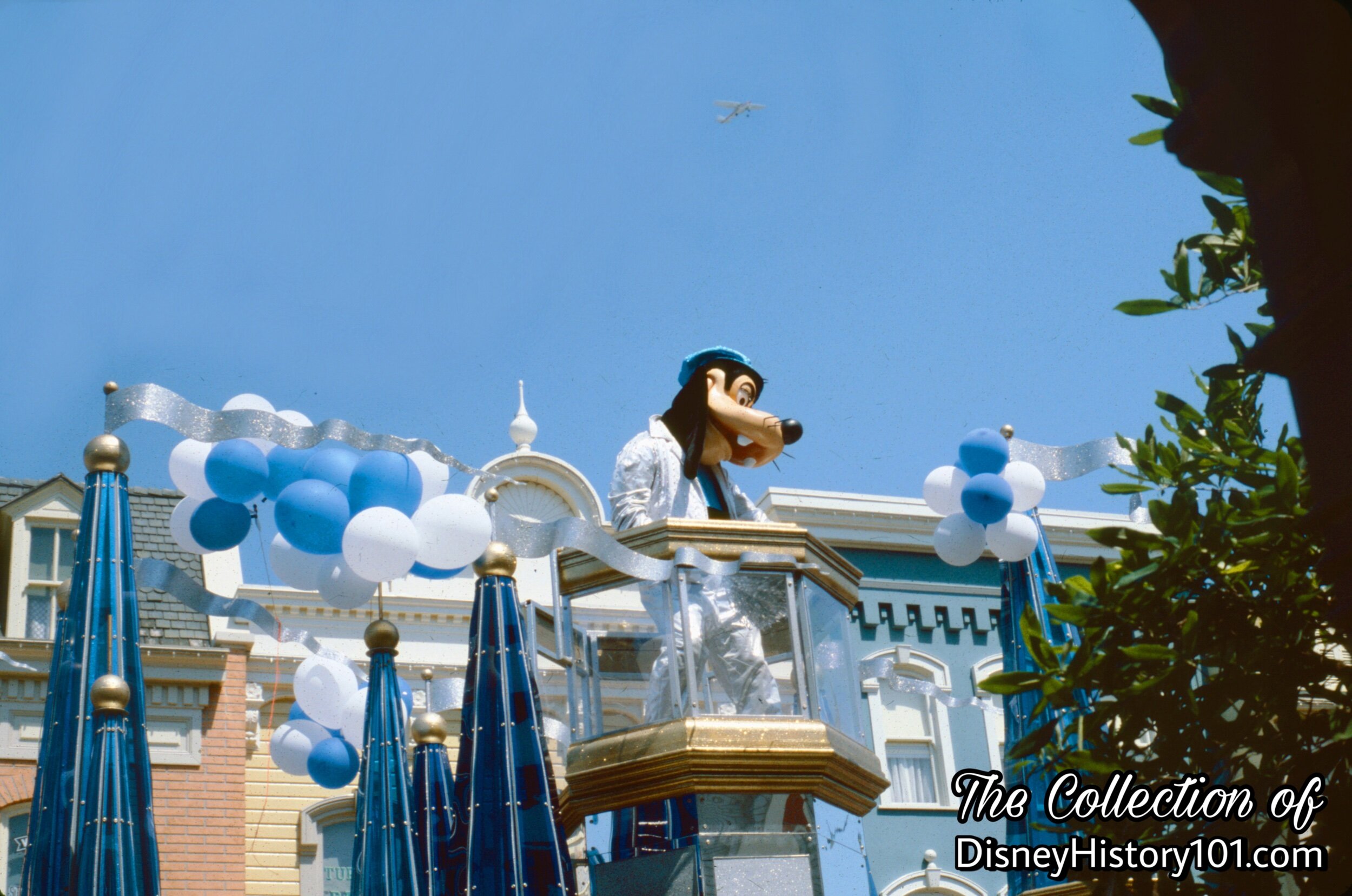
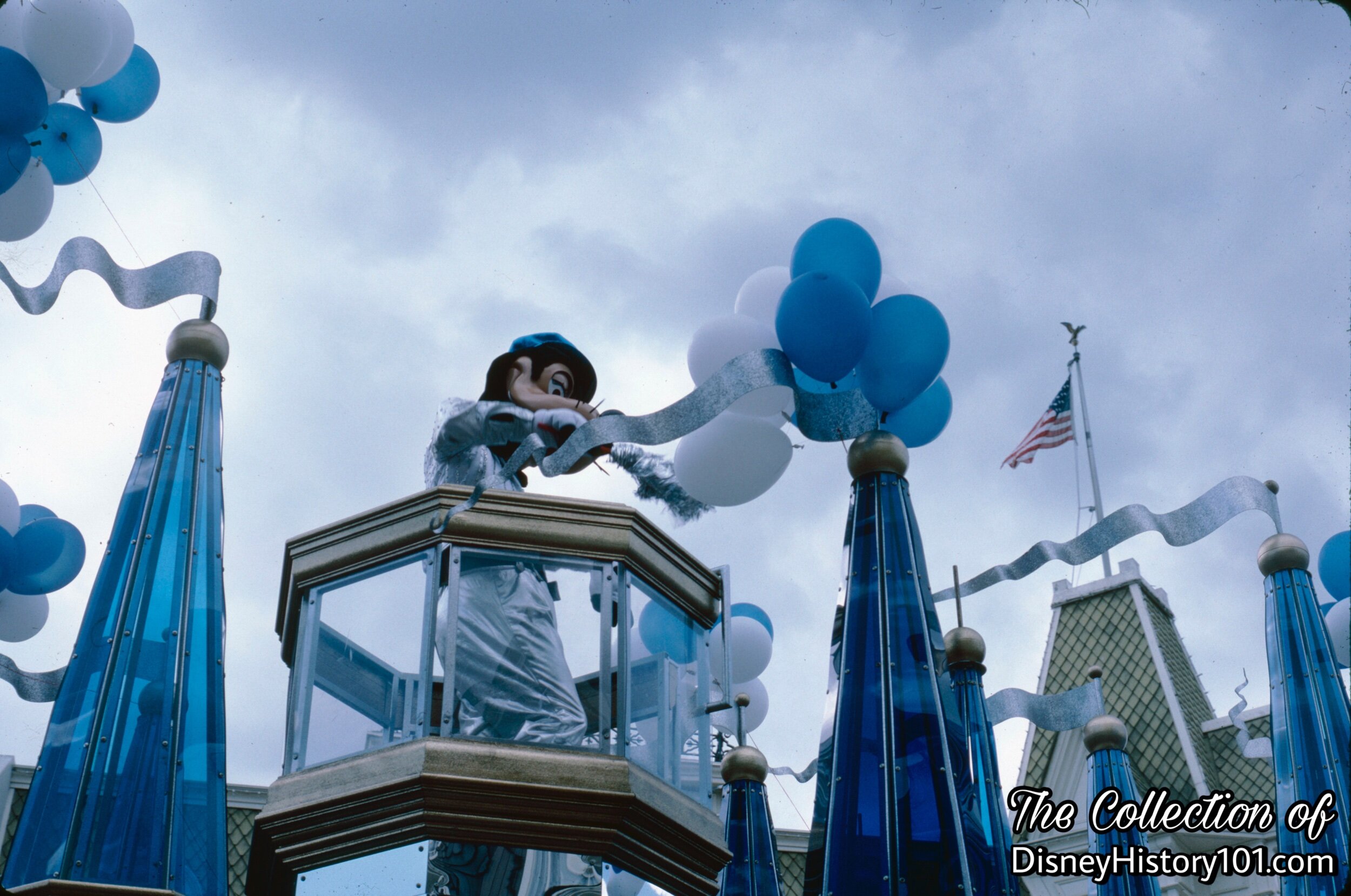
Goofy greets Walt Disney World guests from the top of Cinderella’s Castle!
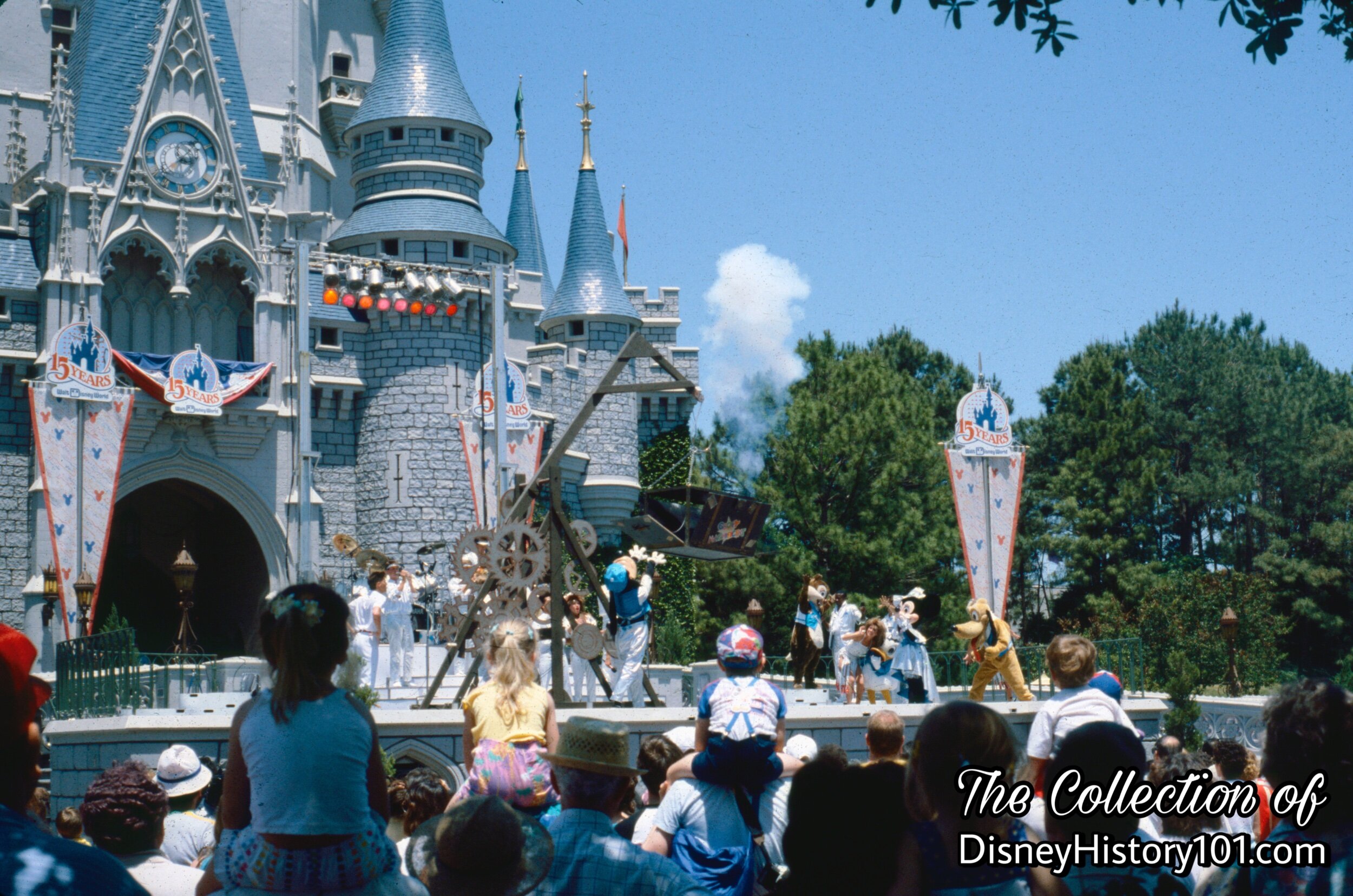
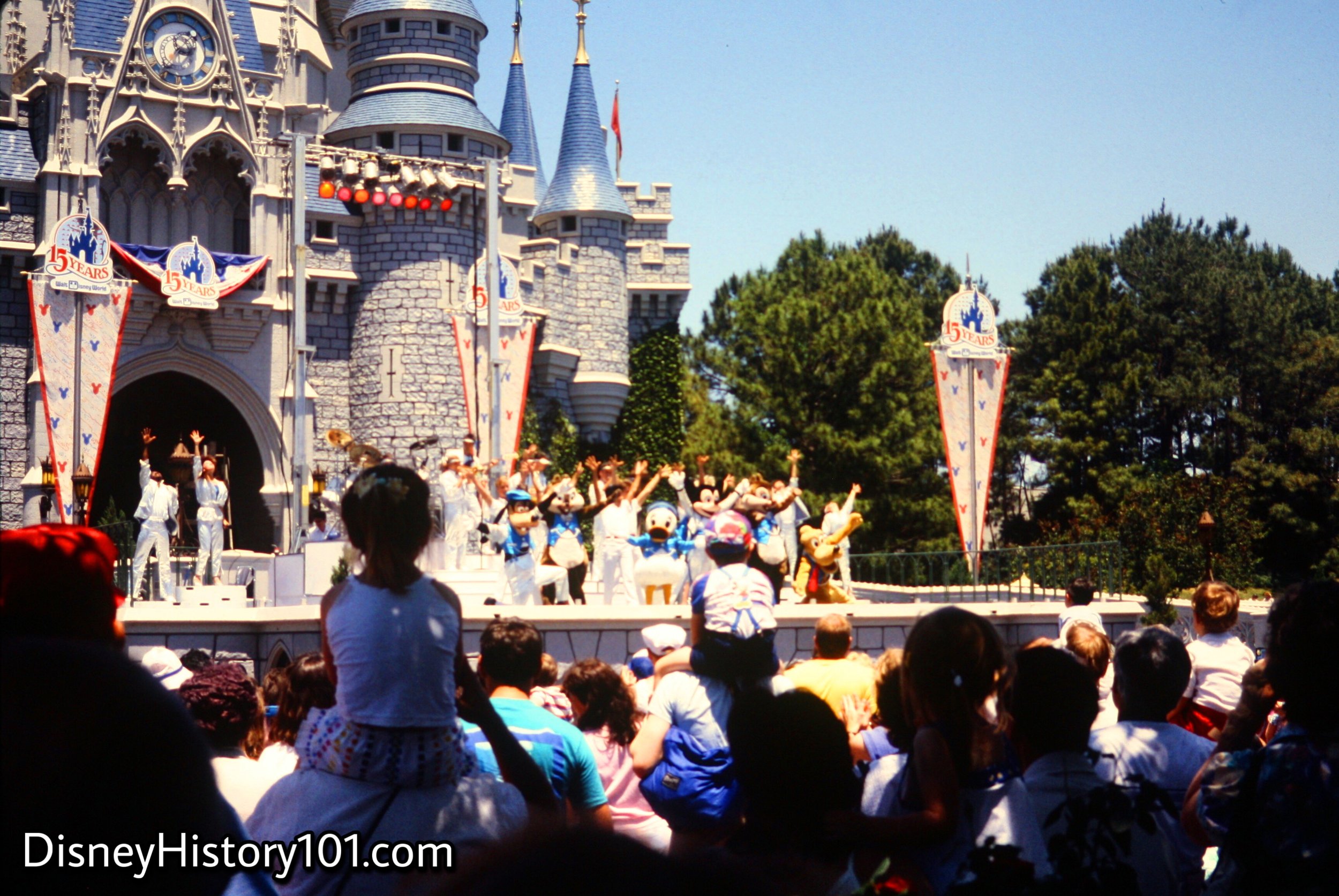
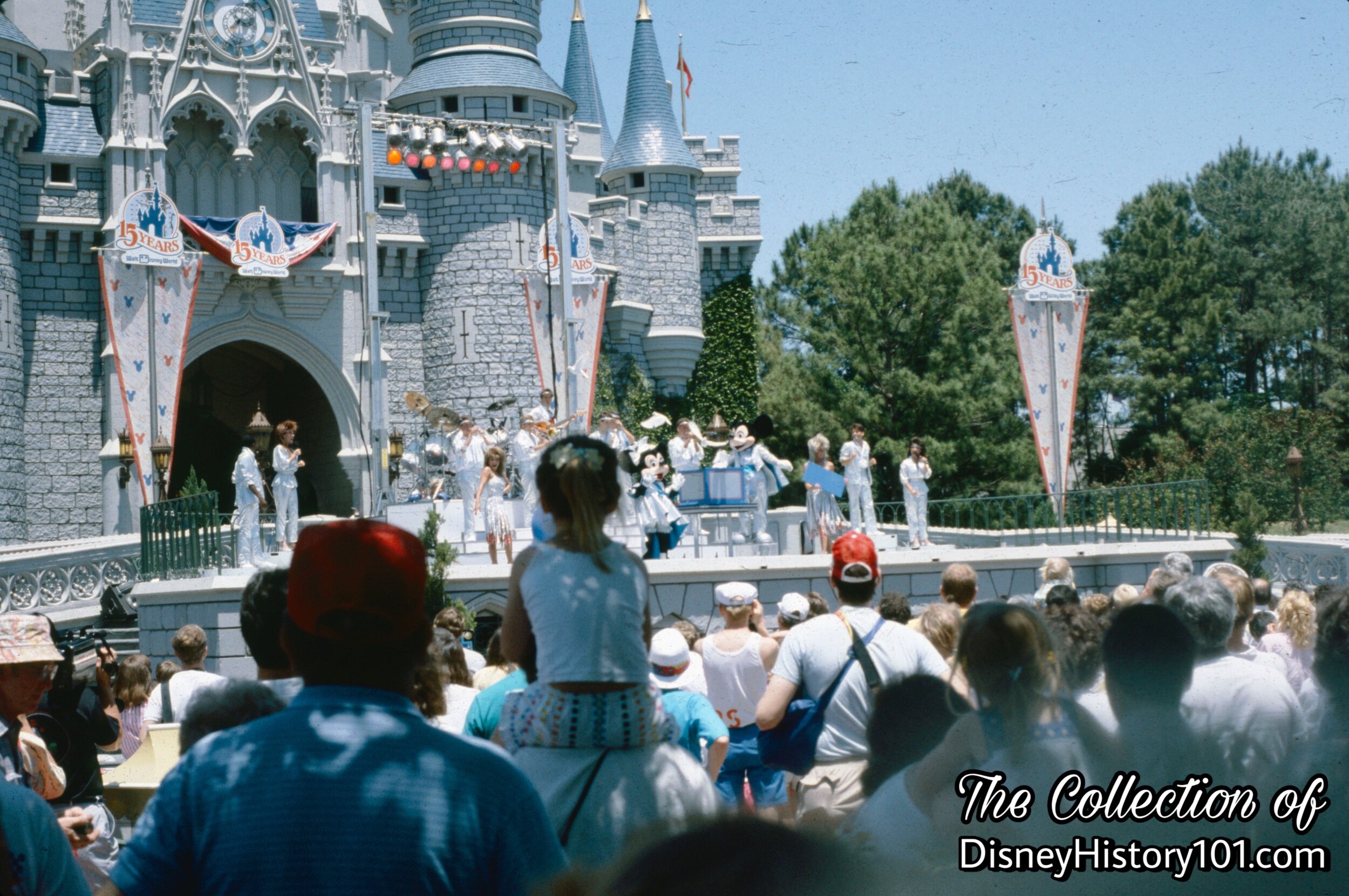
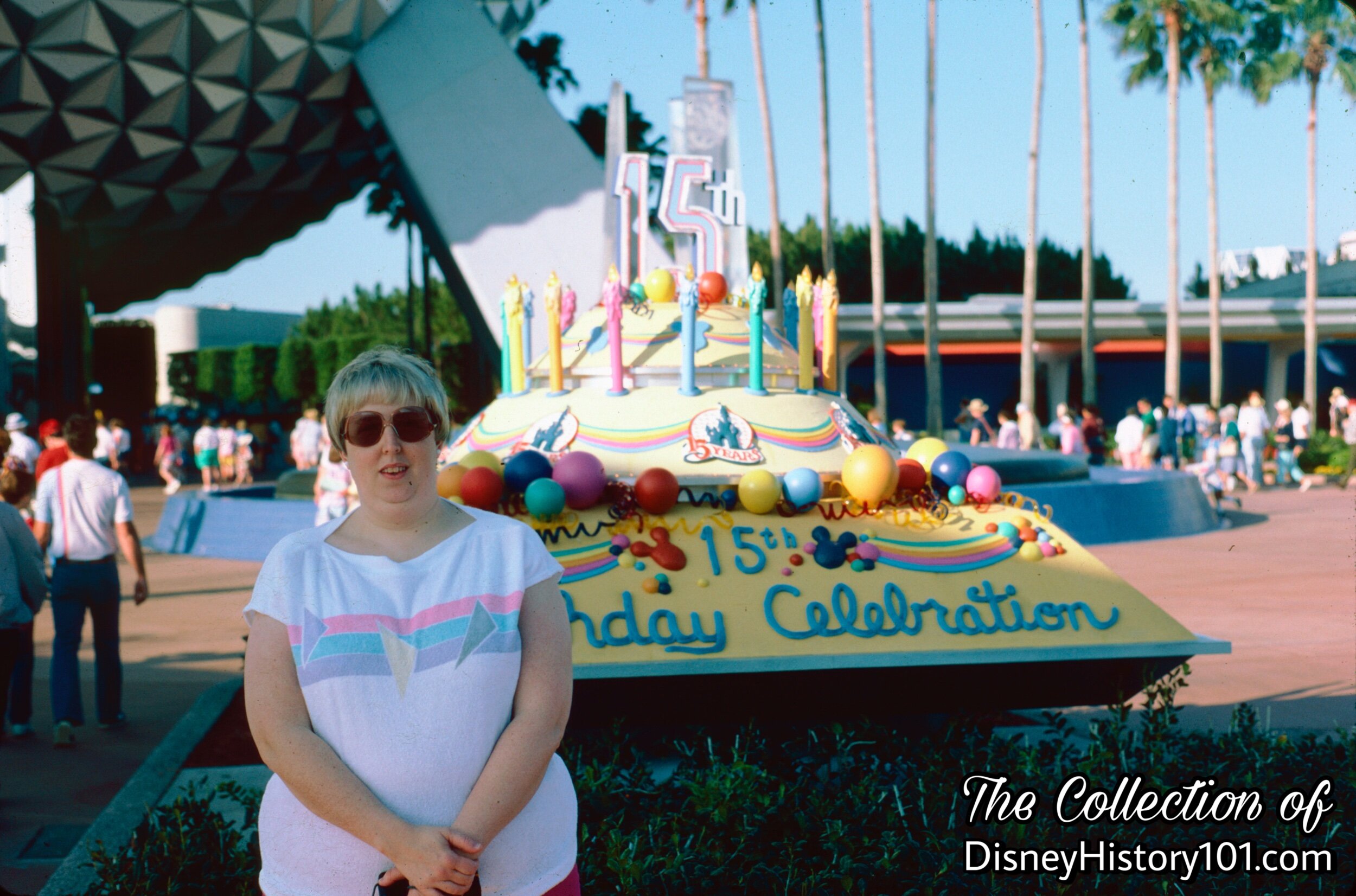
Epcot Center got into the spirit with this giant cake photo spot!
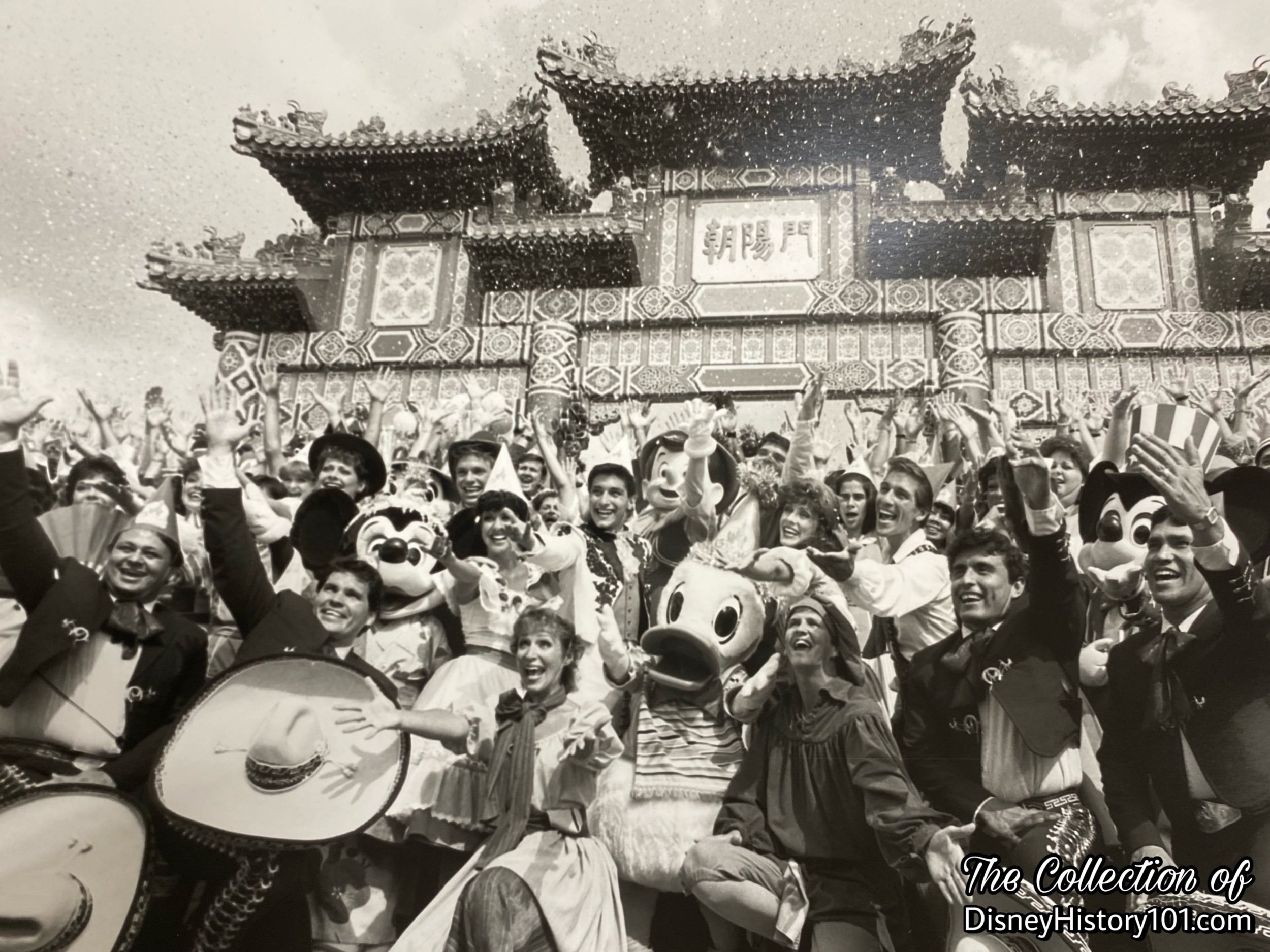
CAST OF THOUSANDS -- World Showcase cast members join Donald Duck in front of the China Showcase at Epcot Center to celebrate Walt Disney World's 15th Anniversary celebration. The year-long celebration will be marked by 365 days of special events at both the Magic Kingdom and Epcot Center, more than a million special thank-you gifts to guests (one given away every 15 seconds the park is open) and a top prize each day of a new Chevrolet Cavalier. Copyright 1986, THE WALT DISNEY COMPANY (69-49-21).
JOURNEY INTO IMAGINATION
(October 1, 1982 - )
(March 5, 1983 - )
Imagination has been referred to as mankind’s most precious resource. Walt knew this to be true, firmly stating: “I, personally, think imagination will be around a long time”, said Disney. “As long as there are people, that is. Imagination is one of the things that makes them human.” [February 11, 1965]
The work of Walt Disney owes itself to imagination - from Mickey Mouse to the Magic Kingdom. According to one EPCOT Center Pre-Opening Day c.1982 orientation instructor’s guide : “Everything that the Disney Organization has done fits under the topic of imagination… everything that we’ve done, from Snow White to Fantasia to Disneyland to Walt Disney World, fits into this category.” Everything - the land use planning, engineering, contracting, monorail system to the solar panels required imagination.
It was Walt who once said : “We keep moving forward opening new doors and doing new things because we are curiosity keeps leading us down new paths. We are always exploring and experimenting. We call it imagineering. . . the blending of creative imagination with technical knowhow.” Now, “long after Walt… there is still imagination left in the world,” and Epcot Center would never be complete.
“And if there were a single most important ingredient to Disney's success it would be an ability to communicate with our audience's imagination.”
“Blue Sky for Imagination”
During the Blue Sky stage, the earliest stage in Imagineering project development, almost any concept is permissible and a future possibility.
By May 27 to June 26, 1981, WED was responsible for the overall design and engineering of the Journey Into Imagination Pavilion including all aspects of the ride, show, and facility. WED departments, contracted out through consultants, and were required to provide them with preliminary design information, a review, and approve their completed contract documents.
The Journey Into Imagination Project Scope documented the elements of the show and attraction in detail. It contained the three scope levels reflecting refinements in story outline and show, ride, and facility as the project developed. The scope was prepared by the WED Scope Productions Team (Mark Rhodes, Bob Stephens, Kevin Rafferty, Nikki Shacklett, E. J. Irish).
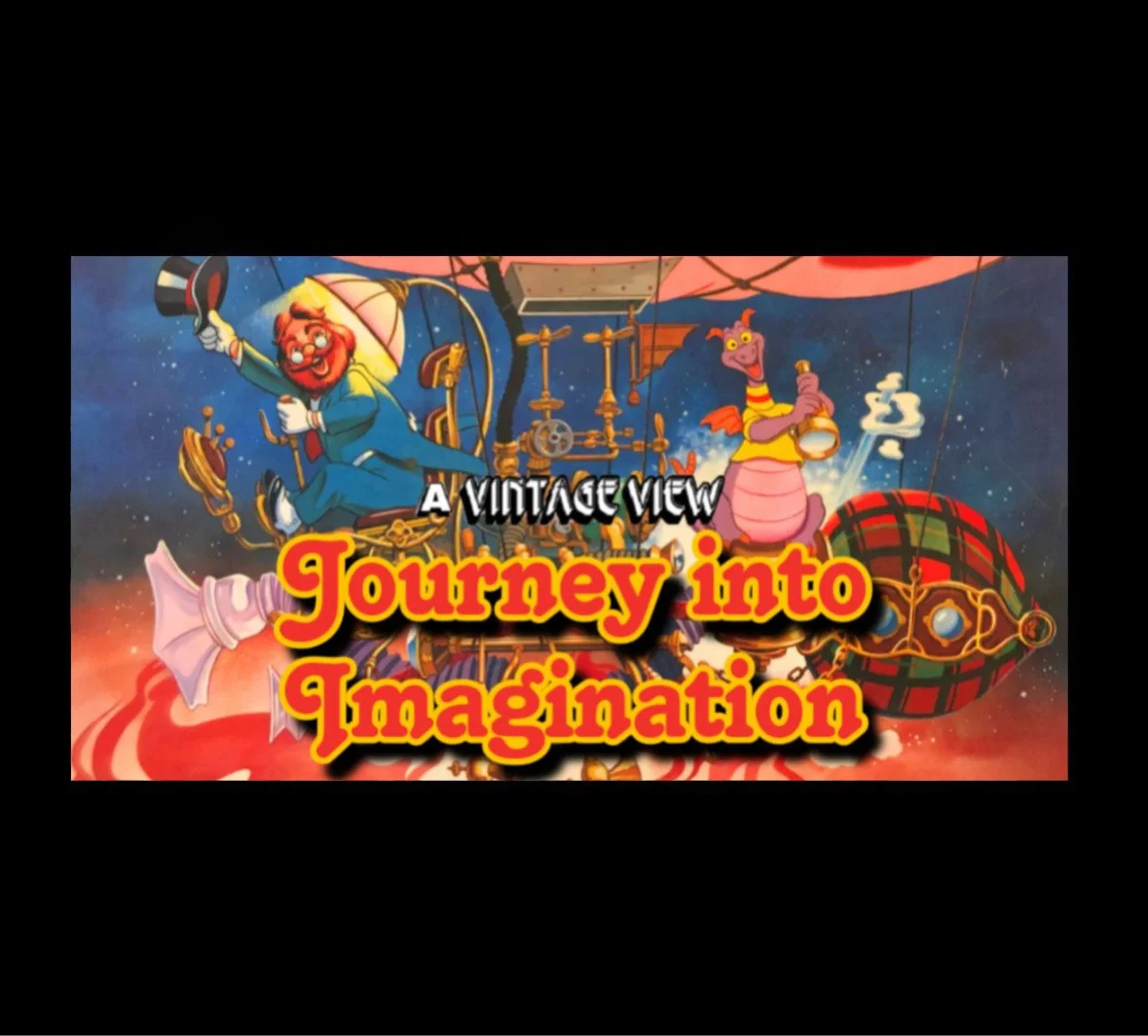
According to one prospectus, “The Imagination Pavilion, presented by Kodak, will explore the limitless world of creativity through a number of entertaining shows and exhibits. In the pavilion’s ride-through experience, guests will board vehicles for a fantastic visit with the Dreamfinder’… a curator, caretaker and collector of all things having to do with imagination. The Audio-Animatronics host is joined by his magical dragon, ‘Figment.’ Together, they’ll guide guests through the incredible realm of the ‘Imaginarium,’ storehouse for the building blocks and end products of creativity to use in the ‘Image Works,’ where they can participate in a number of image-making experiences… from ‘starring’ in a special-effects video demonstration to creating computer-assisted works of art. An outdoor park will feature additional fun and opportunities for photographing family and friends. A highlight of the pavilion will be an exciting experiential motion-picture presentation… ‘a journey through the looking glass of the mind.’” For good reason, Journey Into Imagination (with its Image Works and Magic Journeys Theater) was even billed as “the Fantasyland of Future World,” according to “The Dawn of a New Disney Era.”
“After Journey Into Imagination with Dreamfinder and Figment, guests ascend a spiral staircase to the Image Works. In this creative playground of the future, they have become actively involved in ‘hands-on’ techniques that challenge the imagination.
In Dreamfinder’s School of Drama guests are electronically matted into movies for a participatory acting lesson. This system uses a unique application of foreground, background, and live-action video images. The motion-controlled camera creates programmable, synchronous digital and camera moves.
Using simple graphic techniques, the Magic Palette allows guests to paint pictures onto a screen with special electronic ‘inks’ that produce anything from rainbow colors to polka dots.
At the Electronic Philharmonic guests conduct an orchestra and light show by waving their hands over the conductor’s podium. This effect is achieved by a sonar technique which controls the volume of the orchestra. Steeping Tones is a walk-on musical instrument, with responsive light switches.
In the Rainbow Corridor, guests are assigned one of five colors as they approach the corridor. Infrared detectors along the tunnel react to the presence of guests as they move through…
The laser technology at Epcot Center incorporates precautionary measures for guest safety in accordance with federal and state requirements. Some innovative examples of laser technology used in Epcot Center shows and adventures: Computer Storage of Animated Scenes [sic] (Journey Into Imagination) - pencil drawings of geometric designs and a dancer are animated, digitized, and stored in a computer. These images are rapidly scanned by laser to play back the animation. Images can be ‘painted’ as they are digitized to assign specific colors to any part. A unique optical system selectively controls the color of a krypton laser beam. With this technology, subtle color mixtures can be achieved, an improvement over the stark primary colors usually associated with laser projections.
Light Writer, Guest-Controlled Laser Image Generator (The Image Works, Journey Into Imagination) - A guest creates a kinetic laser pattern by adjusting touch controls on a console that responds to electromagnetic currents in the body. Four people can participate at one time. The lasers used in this display are helium-neon and helium-cadmium gas ion lasers.”
[Information from Walt Disney World, “Prototype Systems and Advanced Technologies In Use at the Walt Disney World vacation Kingdom”]
“Show Elements”
WED's responsibility included the production of all show audio tracks, show lighting and effects, show animation, scenic paintings, props, sets, and mock-ups. Their efforts included the painting, furring, feathering, general costuming, etc., for all static and animated figures (with the exception of costuming for all humanoid figures, which was the responsibility of the Wardrobe Department at Disneyland).
Julie Svendsen worked with John Hench to create ceiling murals and floor colors for the Pavilion.
MAPO was responsible for the overall manufacturing of all show components. Specifically, MAPO was responsible for the manufacturing of the Animated Figures, Show Action Equipment, Show Control (DACS, Audio, Lighting, Effects, Projection), and Special Effects. MAPO departments, contracted work out, and was responsible for providing these consultants or sub-contractors with required information as well as reviewing and approving completed contract work.
Specifically, MAPO was responsible for the manufacturing of the Ride Guidance and Control Systems, Vehicles, Propulsion and Drive Systems.
“Show Elements - Animated Figures”
Imagineers employed Audio-Animatronics® - the Disney-designed system that combines sound, mechanics and electronics for three-dimensional animation. The Disney-patented technique electronically synchronized voices, music and sound effects to animated figures and objects. Epcot Center opened with approximately 550 Audio-Animatronics figures (26 of which were in this attraction). There were 12 human figures and 14 animal figures in addition to 27 animated props. This figure didn’t include static props and figures.
Disney Master Sculptor Perry Ross created some figures of Figment.
MAPO was responsible for the manufacturing of the Animated Figures and Show Action Equipment. These figures were well-built and well-maintained, to the end that some were repurposed. For instance, after one rehabilitation, one Dreamfinder Audio-Animatronic figure was reimagined as the Phantom Manor Ghost Mayor at Disneyland Paris.
“Show Elements & Control - Audio”
WED's responsibility included the production of all show audio tracks. The voice of Figment was performed by notable actor Billy Barty.
According to one “Information from Walt Disney World” document [PROTOTYPE SYSTEMS AND ADVANCED TECHNOLOGIES IN USE AT THE WALT DISNEY WORLD VACATION KINGDOM]: “New technologies have also-been developed to enhance show quality in EPCOT Center. Interactive show techniques allow guests to explore their creativity and interact with advanced systems on a personal level. Innovative audio techniques have improved the quality of show sound.”
MAPO was responsible for the manufacturing of Show Control (over the Audio). There were 125 and 18 Spares Audio Tracks on 142 Tapes.
“Show Elements - Special Effects”
Over 78 special effects (more than those found in Walt Disney World on opening day) were “illusioneered” and contributed to the showmanship of the Journey Into Imagination Pavilion. Among these were Aurora Projectors, Fiber Optic Illuminators, Fire Projectors, 5x5 Projectors, Fog Boxes, Idea Glowers, Open Strobes, Pixie Dust Projectors, Projectors, Quartz Lights, Ripple Projectors, Scent Canons, 16mm Film Projectors, Solid State Foggers, Starball/Lens, Super Space Projectors, 10x10 Projectors, 2x2 Projectors, Water Ripple Projectors, and Xenon Fiber Optics.
“In Journey into Imagination, the first large screen/three-dimensional film process combines computer-generated animation with live action and special effects.” [“Preview Edition of Walt Disney World - The Vacation Kingdom of the World”]
“Show Elements & Control - Projection”
Epcot Center would make use of a total of 112 Projection Systems in Phase I, ranging from 35mm to multi-screen 70mm - some utilized within the Journey Into Imagination Pavilion. Among these were 18 film projectors (7) 70mm and (11) 35mm with a total projection time of 44:59.3; projection footage totaling 4,914. There were also Aurora Projectors, Fire Projectors, 5x5 Projectors, Pixie Dust Projectors, Ripple Projectors, 16mm Film Projectors, Super Space Projectors, 10x10 Projectors, 2x2 Projectors, Water Ripple Projectors. Later, eight more were to be added in Phase II, including an Omnimax system.
“Dancers in the Journey into Imagination pavilion illuminate, dance and metamorphose in laser scanning sequence. The Image Works… is a first for allowing guests to touch an use Disney technology. Wonderful objects include the Lumia, a ball that illuminates in patterns of color, unique to the sound of your voice.”
Walt Disney also once said: “The whole thing here is the organization. Whatever we accomplish belongs to our entire group, a tribute to our combined effort.” In step with Walt’s philosophies, what was described as a “complex and highly diversified team” of individuals (among the Project Management and the Project Team) would coordinate and translate the concept of EPCOT Center into a reality. The Journey into Imagination dream would be Imagineered into reality (in part) by the collaborative contributions of EPCOT Center Project Management Director Jim Nagy, Roger Day (Project Manager), Kurt Kotzin (Resident Engineer), Peter Bertonaschi (BVCC Project Manager), Joe Willbanks (Tishman Project Manager), David Todd (Pico Coordinator), Phil Jordan (Project Business Administrator), Marie Kelley (Project Planner), and Vernon McGugan (Assistant Pico Coordinator), with General Contractor Inland Constriction, Inc.
Tony Baxter and Barry Braverman were both involved with the site planning of the Imagination Pavilion to some capacity. Walt Disney Imagineer Skip Lange (a University of California Bachelor with a knack for sculpting rock work) served as Field Art Director.
John Stone contributed toward the “Journey into Imagination” Ride, Designed and Developed this show from storyboards and early Conceptual models to finished show models And fabrication of full scale show elements and worked under the direction of Tony Baxter Dave Mitchner and Andy Gaskill. John Stone also Developed 1" studies designed to emulate the Mechanics and critical timing of an onboard Theater called the "Observatory". This concept Later evolved into the rides first scene where Guests suddenly find themselves hovering Alongside Dreamfinder and Figment in their Dream Machine. John Stone Designed and developed 1" studies for all Areas of the show. Worked over a two year Period to design and produce finished show Models. Worked under the direction of Tony Baxter. John Stone also Designed, developed and fabricated full scale Sets for the "Science and Technology" "Art", And "Dreamport" areas of the Imagination Ride. Worked as Lead Designer in production With Mike Dillon and Tom Scherman under the Direction of Tony Baxter. John Stone Composed and fabricated finished marketing Model which included the Imagination Pavilion "Enchanted Grove" and "Magic Eye Theater" For Eastman Kodak. John Stone Produced and Fabricated Glass Model of The Imagination Pavilion for the 1/8" Overall model of Epcot and Designed and developed all areas of "Image Works" Responsible for 1" show models and the design and fabrication of oversized musical instruments used in the guest interactive "Electronic Philharmonic" Worked under the direction of Tony Baxter And Berry Braverman.
Animation Producer David Michener servingas a contributing design and filmmaking consultant for the animation of Figment.
Murray Lerner was a contributing filmmaker for the 3-D Film “Magic Journeys.”
As a sidelight, it is worth noting as with many attractions during Walt’s era (and slightly beyond), the attraction featured an original show song - “One Little Spark.” “One Little Spark” written for the EPCOT Imagination Pavilion by Kodak (with musics and lyrics by ), was revised several times during November of 1980. “Magic Journeys” (with music and lyrics by Richard M. Sherman and Robert B. Sherman) was written for Epcot Center Imagination Pavilion presented by Kodak.
By June 26, 1981 , the Level IV Project Schedule for the Journey Into Imagination Pavilion will be distributed by the Project Planning Department as it becomes available.
“Magic Eye Theater & Magic Journeys”
The Journey Into Imagination pavilion (presented by Disneyland Participant sponsor Kodak) first opened with the Image Works, and the Magic Eye Theater showing Magic Journeys. A 15-minute motion picture about imagination was created using 3-D animated imagery, following the ride. “Orlando-Land” (published for June of 1980) divulged “the full story” of EPCOT Center, but gave few details of the short film: “Tony’s rapid-fire description of the show was too complex to record in more than this scant summary. It will be a tour de force in cinematic effects, with images and colors floating and dancing and dissolving like flashes in a dream. You will not be able to escape the realization that you’ve seen the stuff out of which Epcot itself was created.”
According to the Statistical Summary, the entire Film Presentation was 18:00 minutes, with a Theoretical Hourly Capacity of 1,714, and undetermined Operational Hourly Capacity. There were 25 + 1 Spare Audio Tracks across 26 tapes. There were (2) 70mm projectors, a projector time of 36:00, and projection footage totaling 4,050.
Walt Disney World Shops would employ disciplines found at MAPO, supporting MAPO in construction and manufacturing.
Magic Journeys was succeeded by Captain EO.
“Vehicles”
The Journey Into Imagination Pavilion would utilize a ride system propelled by a drive wheel/platen type system. The vehicles were to be towbar coupled, four cars to a train, twenty-three trains total, plus two trains of four cars to be used as spares. The vehicles were on suspended platens, with three separate chassis on each vehicle and a rotation of + 90 degrees. There was to be no on board audio, but sensing equipment will monitor each vehicle, and there will be a tubular, two track system, with either switch or shuttle track to remove cars. The ride vehicles were to be propelled by a drive wheel/platen type system. I’m the end, there were a total of 92 Drive Wheel-type vehicles and 8 Spares across the 1,460 linear foot track length.
By 1981, the Audio-Animatronic/Film Presentation had a show time of 31:00, Theoretical Hourly Capacity of 4,290, and undetermined Operational Hourly Capacity.
As a sidelight, it is worth noting as with many attractions during Walt’s era (and slightly beyond), the attraction featured an original show song. While two of the three original show songs (“Makin’ Memories” and “Magic Journeys”) are no longer heard at Epcot, presently, “One Little Spark” echoes through the Journey Into Imagination.
By June 26, 1981, Operational Criteria was still being discussed. Input would be included in documents as further discussions and recommendations were received from Operations personnel. As for Project Developement, the Level IV Project Estimate for the Journey Into Imagination Pavilion was distributed by the Estimating Department as it became available.
According to EPCOT Center Operating Personnel Estimates, Journey Into Imagination would operate on 11 Host and Hostess positions per shift, not including second shift, breaks or day-off relief.
In 1981, Joe Rohde played the part of Dreamfinder for the ChromaKey Theater in Journey into Imagination; he may be seen there now, cavorting on-screen with the thousands of children who enjoy the interactive attraction yearly.
The Journey Into Imagination pavilion in Future World held a merchandise location called Cameras & Film featuring Kodak film, camera sales and rentals, and a camera service counter.
A beautiful mural in the entrance and exit queue was designed by artist Toshi Muto (who also contributed to Tokyo Disney projects). By September 30, 1982, Toshi’s mural (perhaps this one) was WED job in progress #Y000-1 at a cost of $785.81.
The Pavilion logo was designed by marketing artist Ron Inouye.
Dedication ceremonies resumed on December 4, 1982, for Journey Into Imagination.
“Image Works”
“One of the experiences offered to the visitor by the Image Works is Sensor Maze, an artistic fun house whose attractions include Stepping Tones, below, where the pressure of feet sets off color, light, and sound effects.
The final amazing sensation of Sensor Maze is the Digital Wall, on the following pages, which flashes colors at a touch, stars you in trailers for current television shows.
Stunt Show superimposes your image on scenes of dire peril: on a fraying rope bridge teetering precariously between two Himalayan peaks; on the wing of a biplane about to execute an unscheduled barrel roll.
The Image Works is spectacularly successful in its goal - giving you a chance to express yourself in ways you'd never thought possible. You may become so absorbed in its myriad pleasures that, were it not for the promise of still another presentation around the corner, you would find it difficult to leave.”
“Magic Journeys”
Quisque iaculis facilisis lacinia. Mauris euismod pellentesque tellus sit amet mollis.