MONORAIL (DISNEYLAND-ALWEG MONORAIL)

“The elevated concrete beamway you see is a portion of the Disneyland-Alweg Monorail System which will be part of our tour a little later.”
-Guided Tour Script, 1962.
One can easily slip into the jargon of “ride,” but at Disneyland there are attractions. Behind every attraction is a story. Every attraction is a living experience for the guest. Disneyland ride-through attractions or adventures have officially been defined as an “individual show, ride, or exhibit designed to produce an entertaining Guest experience. Disney attractions stir the imagination, enliven the senses, and provide the participants with positive, innovative entertainment, which is the essence of the DISNEYLAND Show.” It is important to review the story of the attraction, tell the story, explain it, and create interest. This is the story of the Monorail.
“What Is a Monorail?”
The term “Monorail” defines a one track railway. In general, two distinctly different types of monorail have been built - the suspended type and the supported type.
“Early Monorail Systems”
It has been said that “the past is prologue.” It’s a fact that Monorails (with trains utilizing various methods of propulsion) had been in existence long before the conception of Disneyland, before the airplane, and even before the automobile.
The earliest Monorails (the first two) were installed in a London Naval yard in 1821, used to haul both food and bricks. Both systems relied on actual horse power for locomotion. In 1877, another monorail system linked the towns of Bradford and Gilmore in Pennsylvania. On this system ran a steam-powered locomotive transporting oil and goods, and eventually passengers. Some time later (in 1892), the first commercial Monorail linked the City of Brooklyn with Coney Island, with an electric car running atop a single rail. It was short lived, deemed a financial failure and was abandoned. The world over, “thirteen operational Monorail installations were made, of which only two were successful. The first operated in Ireland for 25 years, and was abandoned due to highway competition in 1924,” according to “Electrical Control Equipment for Disneyland Monorail Trains,” submitted January 29th through 3rd, 1961. Soon other parts of the world were benefiting from the innovation of the monorail system.
Germany’s Schwebebahn system operating at Wupperthal since 1901, was considered antiquated by 1961 due to its low speed, having the transported over one billion passengers over 59 years, with a near perfect safety record. It was this system that Walt and Lillian visited and according to “Walt Disney’s Railroad Story” by Michael Broggie: “Suspended from an overhead track, it ran smoothly on electric power. Lilly, however didn’t care for the way the monorail's cars swayed back and forth as they negotiated curves.” By 1952, a new modern system by the ALWEG corporation was being tested in Cologne, Germany. The ALWEG system was distinct in that it would straddle the beamway rather than suspend from an overhead rail (stabilized by overhead and horizontal wheels). This particular train will factor into our story in a moment.
“The Tomorrowland Monorail”
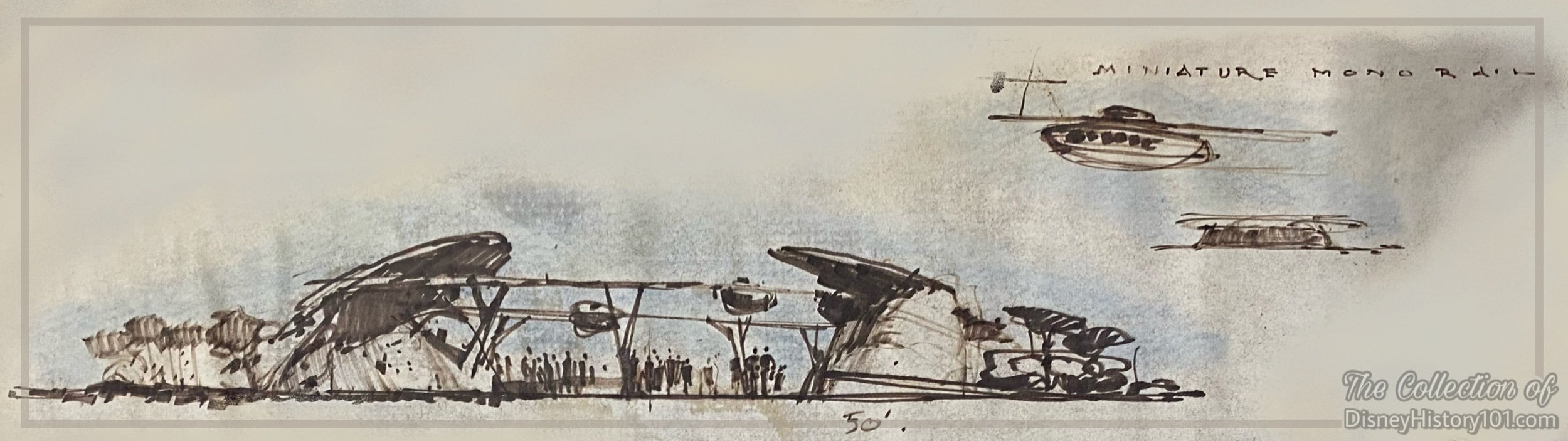
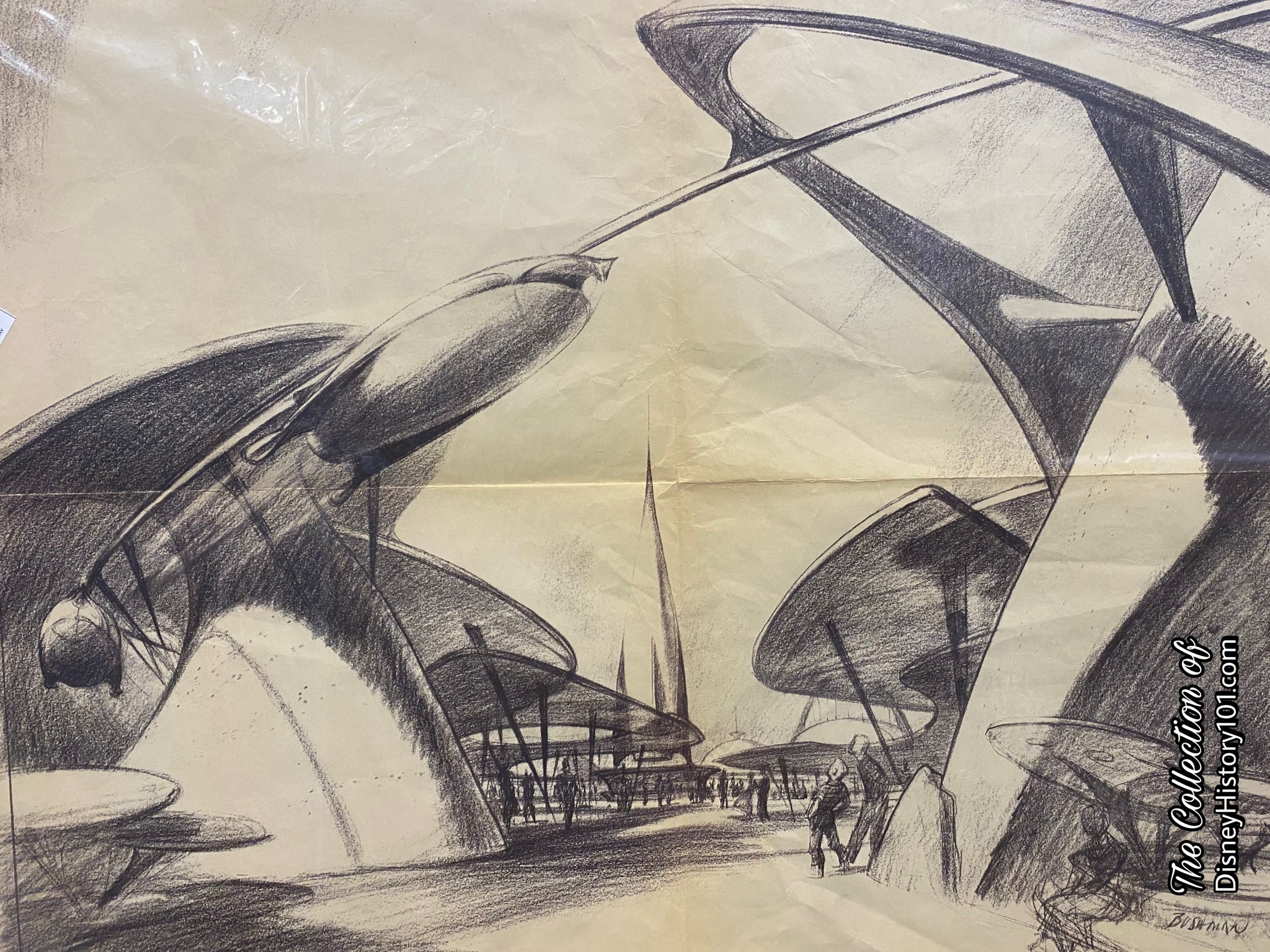
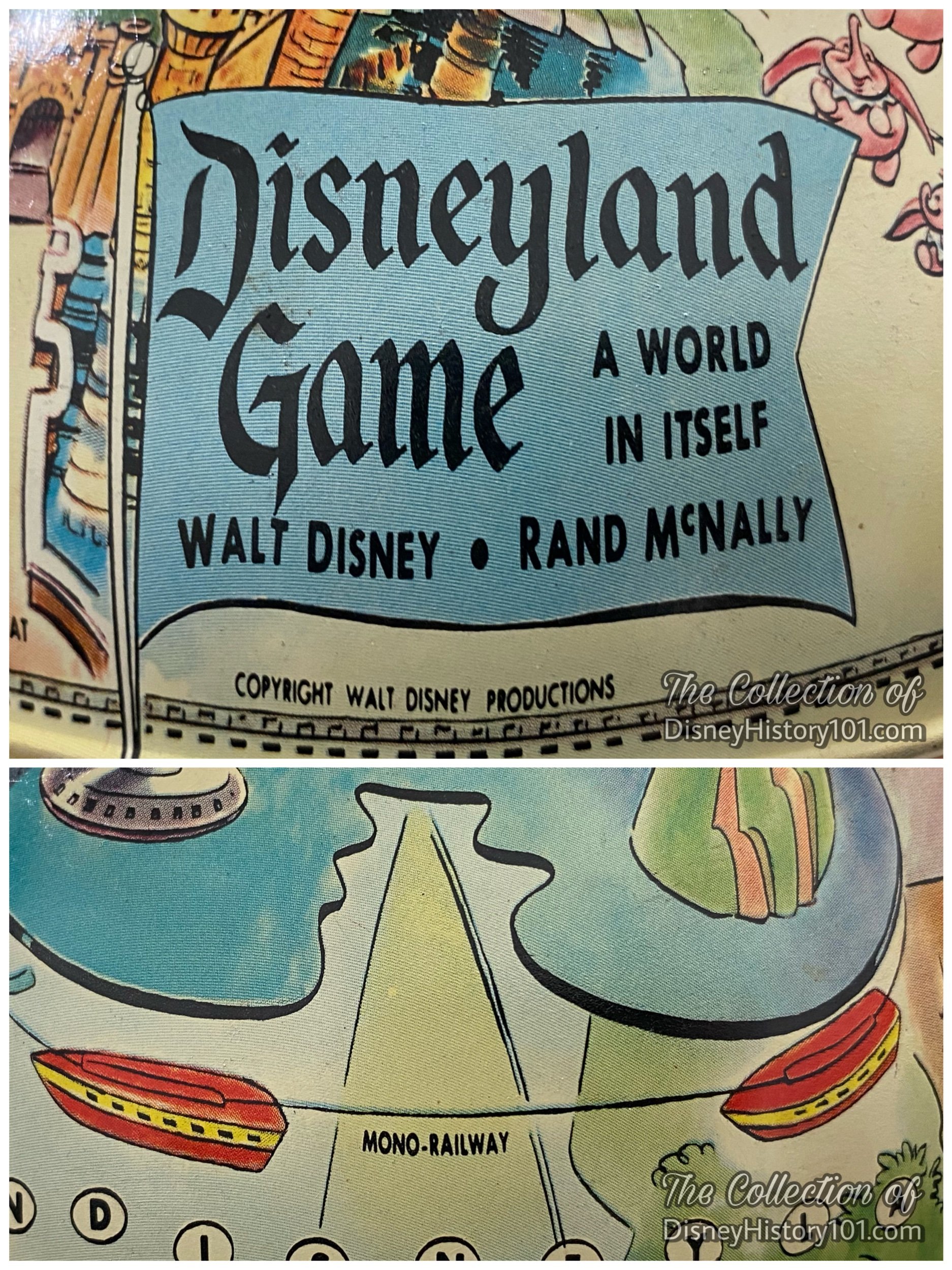
Obviously, the fastest way to move people over the extended areas of Disneyland is with moving vehicles. A monorail would be among Walt’s plans for Disneyland from the very beginning. I am reminded of the following comment made within the pages of “Walt Disney Disneyland,” page 42, (printed by Officine Grafiche Arnoldo Mondadori - Verona; first published 1964): “To build a monorail simply as a ride is one thing; to build it in Tomorrowland as a preview of future transportation is quite another.” According to Walt’s own words published in Walt Disney Magazine (Vol. 4 ; No. 4), “A Monorail Train was one of my first dreams when I began to think about building Disneyland. It seemed to me this exciting concept of transportation would provide, in Tomorrowland, a dramatic preview of things of the future.” And so, suspended monorail trains (similar to those operating in Wuppertal, Germany since 1901) appeared in the c. 1953 - 1954 conceptual artwork of WED Enterprises, Inc. artists like Bruce Bushman, Herbert Ryman, Dale Hennesy, and Sam McKim. By October 21, 1953, one of Marvin Davis’ proposed site plans of “The World of Tomorrow” included a 10 mile-per-hour monorail ride offering a 2-minute tour of the land. Even the earliest licensed Disneyland merchandise would occasionally depict a suspended Monorail train. But despite all this planning, when Disneyland opened in July of 1955, Tomorrowland opened without without a Monorail.
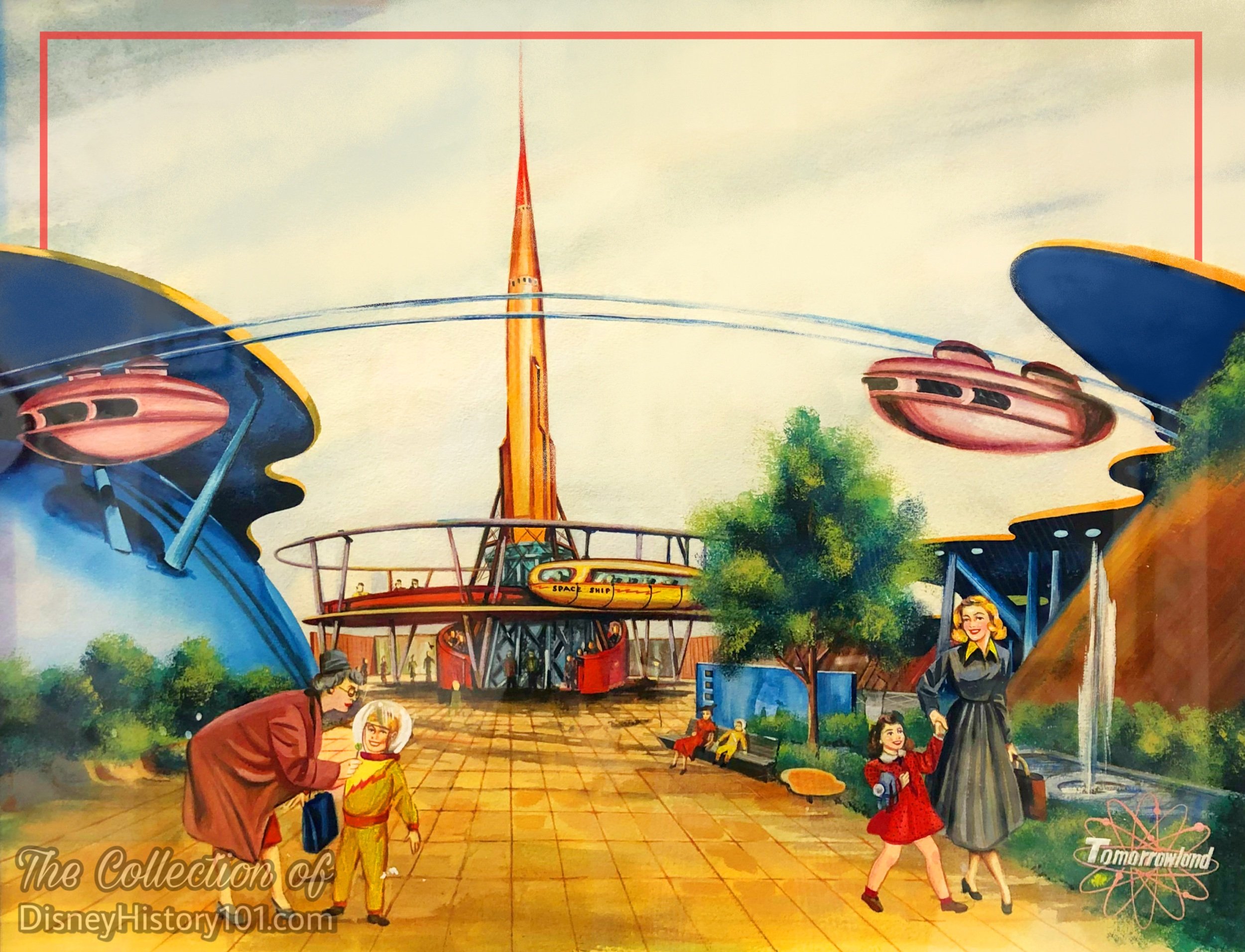
“Research & Development”
Although Walt Disney’s staff subsequently extensively researched the idea (investigating several prospective designs), developmental planning remained practically silent as a Monorail train for four more years, until Walt Disney’s engineering staff took a trip to Europe and plans would move forward again. Yes, while visiting Europe during the summer of 1957, both Roger Broggie and Joe Fowler investigated the aforementioned Alweg Company’s mile-long Monorail train system (which had been operating on a mile-long, ungraded, prototype steel-reinforced concrete track since 1952) near Cologne, Germany. It was an advanced design of high speed type of transportation, “that appeared to offer the best prospect for economy, stability and all-around practicability, not only for Disneyland, but for municipal transportation in general,” according to the author of “Walt Disney Disneyland,” page 46 [printed by Officine Grafiche Arnoldo Mondadori - Verona; first published 1964.] “After thorough investigation, the engineers recommended this style monorail to Walt because it offered the best prospects for economy, stability, and all-around practicality, not only for Disneyland, but for municipal transportation systems in general.”
Walt was soon introduced to the ALWEG Corporation’s monorail during 1958, and his employees speedily set off to design and construct the Disneyland ALWEG Monorail. Artists like set designer Wilson “Bill” Martin (who had left 20th Century Fox, to work on Walt Disney Productions’ Disneyland project) was somewhat influential in the design of Monorail, his talents as art director applied to the attraction. Still, Bob Gurr would produce just one drawing (based on Buck Roger’s ship from the 1939 serial) which would influence the space-age look of the first fleet of ALWEG-Disneyland Monorail!
Soon, the short-lived Viewliner tracks were removed, for the installation of the Monorail path through Tomorrowland. Brochures prepared for potential Disneyland Participants promised : “looking toward the future, Disneyland continues its never ending search for the new and unusual,” according to “Disneyland, U.S.A.,” published 1958. Walt Disney’s WED Enterprises, Inc. and the Wegematic Corporation (Alweg, founded by Dr. Axel L. WEnner-Gren) would join forces during the summer of 1958, to swiftly bring something both “new and unusual” to Disneyland - an Alweg monorail system and soon-to-be first American “passenger-carrying monorail operating on a daily basis!”

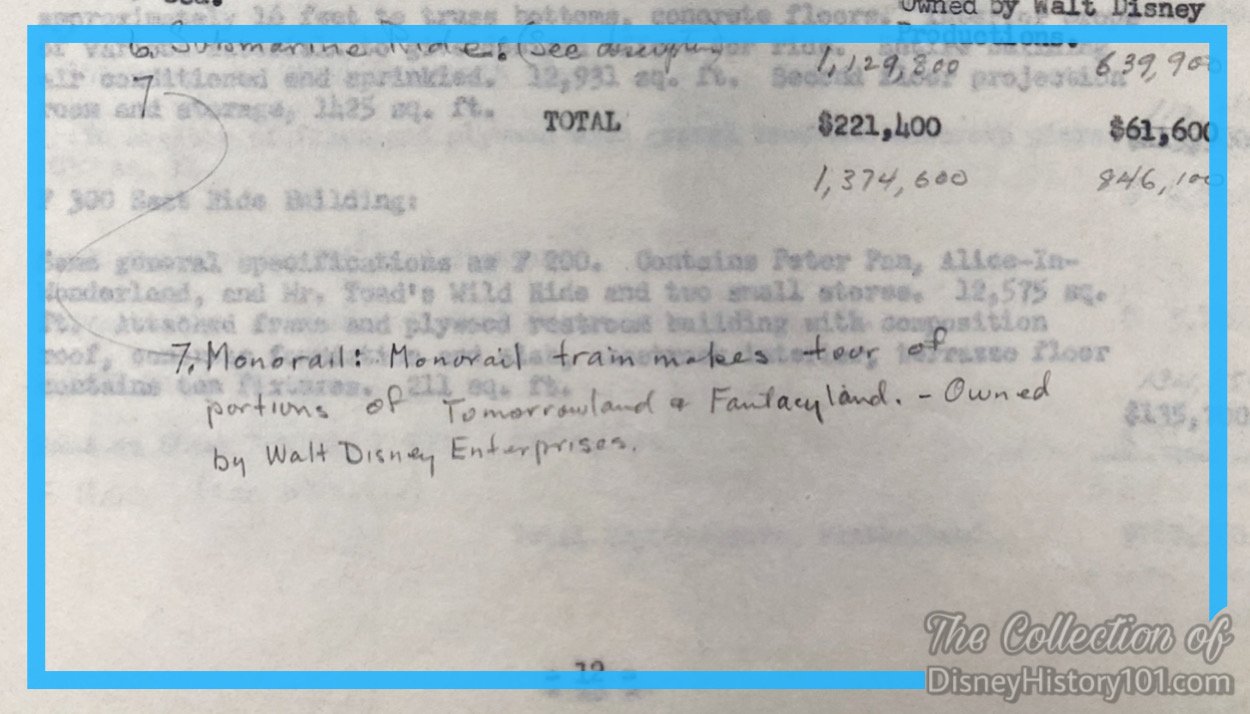
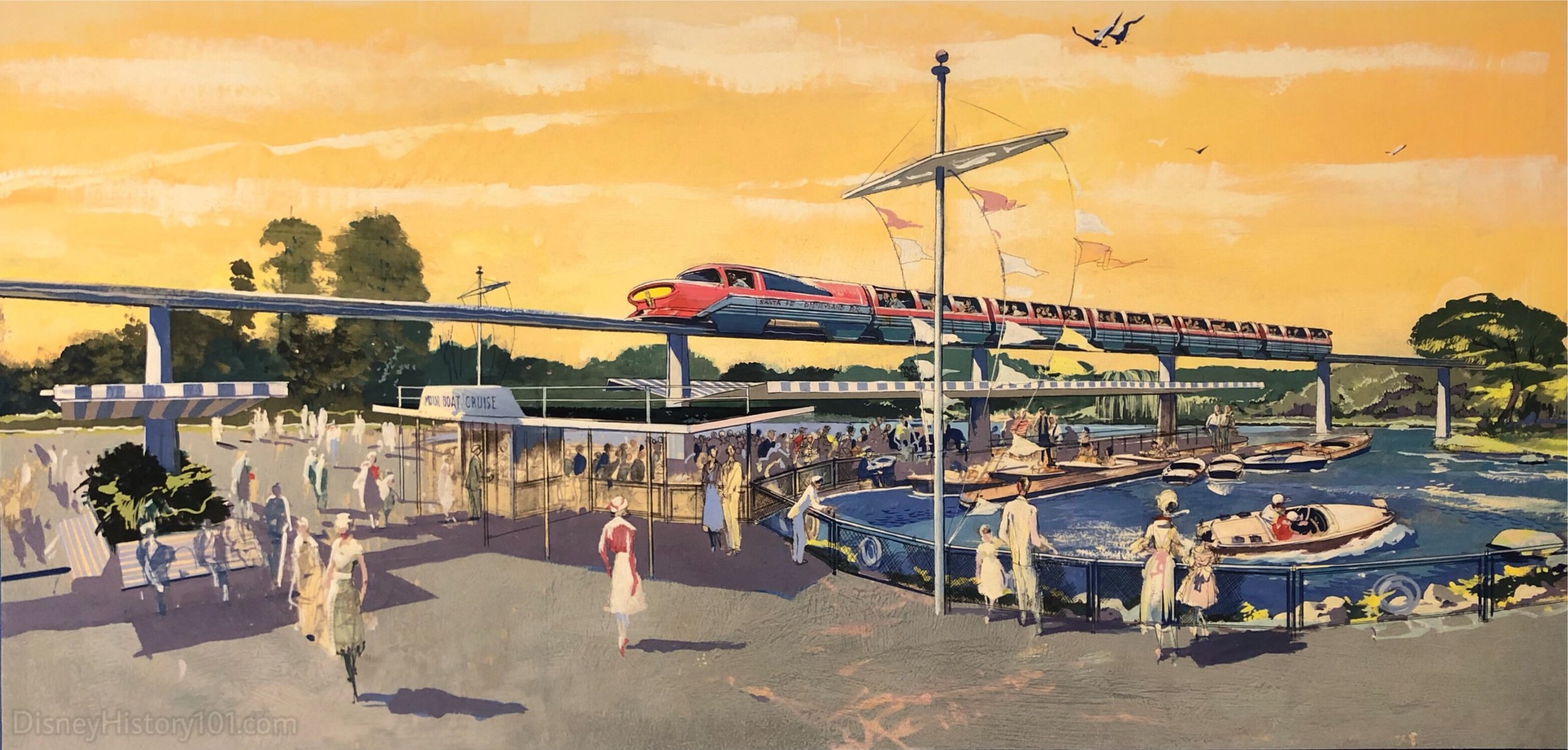
The most iconic of the Tomorrowland Transportation Vehicles was rooted in designs from an earlier attraction. This acrylic and pen concept for Disneyland’s Monorail looks more like Disneyland’s shortest-lived attraction - The Viewliner Train of Tomorrow! That miniature electric “Aerotrain” would temporarily weave over the waterways of Tomorrowland. Perhaps that is why Appraisers representing Bank of America described the attraction to include a tour of both Fantasyland and Tomorrowland.
The track concept (pictured below, with rails over the Motor Boat Lagoon) would no doubt influence one of the most iconic of the Tomorrowland Transportation Vehicles - the Monorail “train of the future!”
“ALWEG (AL wheg)”
“Disneyland and Alweg (named after its originator, Dr. Axel L. WEnner-Gren) joined together in the summer of 1958 to develop the basic system into a working prototype for operational use at Disneyland. As a result, the monorail at Disneyland is an Alweg system.”
By that time, the aforementioned appraisers from Bank of America made note of the Monorail Trains, owned by Walt Disney Enterprises. The trains were being designed by both WED Enterprises, Inc. and the Wegematic Corporation (Alweg). Disneyland’s two sleek, three-car, 82-passenger Monorail Mark I trains were initially and specifically designed by Bob Gurr and both master planned and built by numerous engineers of WED Enterprises, Inc. The Westinghouse Electric Company manufactured the standard power and drive equipment utilized in other rapid transit operations.
While the train concept designs were being developed at WED Enterprises, Inc., what has been described as an “internal conflict” had arisen. Roger Broggie’s account of this has been preserved in “Walt Disney’s Railroad Story” by Michael Broggie: “‘It was between engineering people who wanted [the monorail's tracks] to go in a straight line forever with no grades, and the art directors who wanted to draw tight turning radii and plot an interesting ride that climbed maximum grades in order to thrill the guests,’ he recalled. So, Roger worked out a delicate balance between the factions; the end result was weighted more in the direction of the ‘show’ layout. After all, this appealed more to Walt--who reserved final approval over all elements of the Park.”
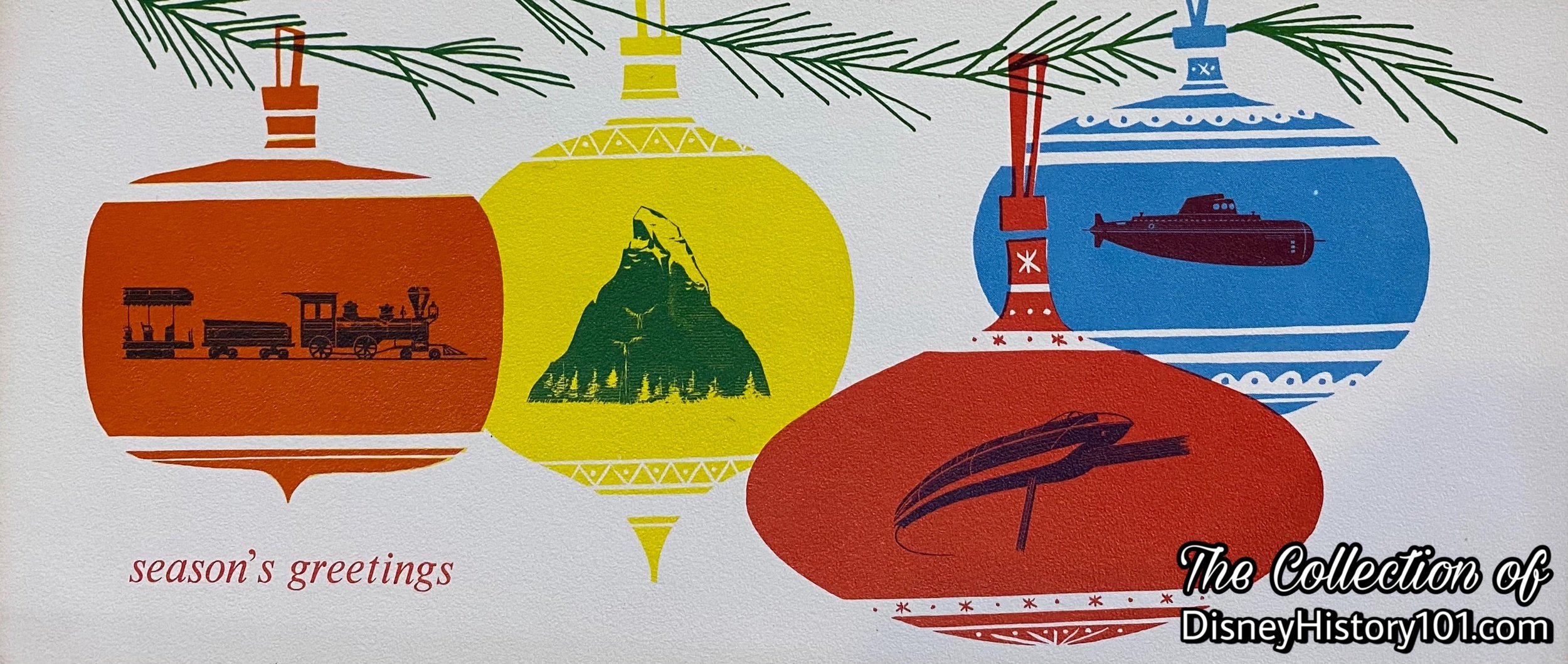
It was now October/November of 1958 and Walt wanted the Monorail ready and operational by the summer of 1959. This meant that there was less than a year to finish the project. According to “Walt Disney’s Railroad Story” by Michael Broggie (page 297): “In late November, Roger and WED designer Bob Gurr flew back to Cologne, where they met with Alweg's engineers. Roger proposed that Alweg build the trains in Cologne in late November, for they needed to be running at Disneyland by the following July. The representatives said this time frame was impossible; they could build the cars in Cologne, but by the time they were shipped from Germany to Los Angeles (by way of the Panama Canal), they'd never make the schedule. Roger then suggested that the Alweg representatives visit Disneyland. He later recalled, ‘During their visit they saw the Viewliner trainsets that we had built and said, ‘If you can do that type of work then you can also build monorail cars in California.’’ Alweg agreed to provide prints and consultants; the company also agreed to send advisors to show Joe Fowler's construction crew how to build and assemble the concrete beamway.” Heading toward the new year, some 1958 winter season holiday cards (manufactured around WED Enterprises, Inc.; pictured above) carried the theme of the forthcoming Disneyland adventures due to ornament Tomorrowland in 1959. By that time, according to the Disneylander, “Walt Disney personally directed the engineering talents Bill Martin, WED, Disneyland Engineering Dept., Roger Broggie, WDP, and Ernst Schroeder, Ernst Wendt and Eberhard Lemcke, of the Alweg Company, Cologne, West Germany.”
By December 5, 1958, appraisers reported on the city real estate of Disneyland related to a loan requested from Bank of America to fund the Monorail and other attractions. The appraisers found that “at present an eight acre area in Tomorrowland and Fantasyland is being completely revamped at an reported expenditure of approximately $3,700,000 exclusive of a monorail to be installed by Walt Disney Enterprises costing $750,000. To date the project is roughly 10% completed, and their value has not been included in this appraisal.”
Each of the three-car steel and aluminum trains were to be driven by two 50 horsepower direct current traction electric motors. These motors would believed to have a capacity of sufficient energy to operate a four-car train. These Monorail power units were owing to the contributions of Dave Gengenbach (previously of Tubular Aircraft Products), who would join the Disney organization in 1959, and ultimately become general manager at MAPO. Owing to this, it could be said that the specifications for the propulsion equipment were proposed by WED Enterprises, Inc.
“Monorail Train Construction”
Before long, Monorail train construction commenced on Walt Disney Studios Stage 3, where Babes in Toyland was in production.
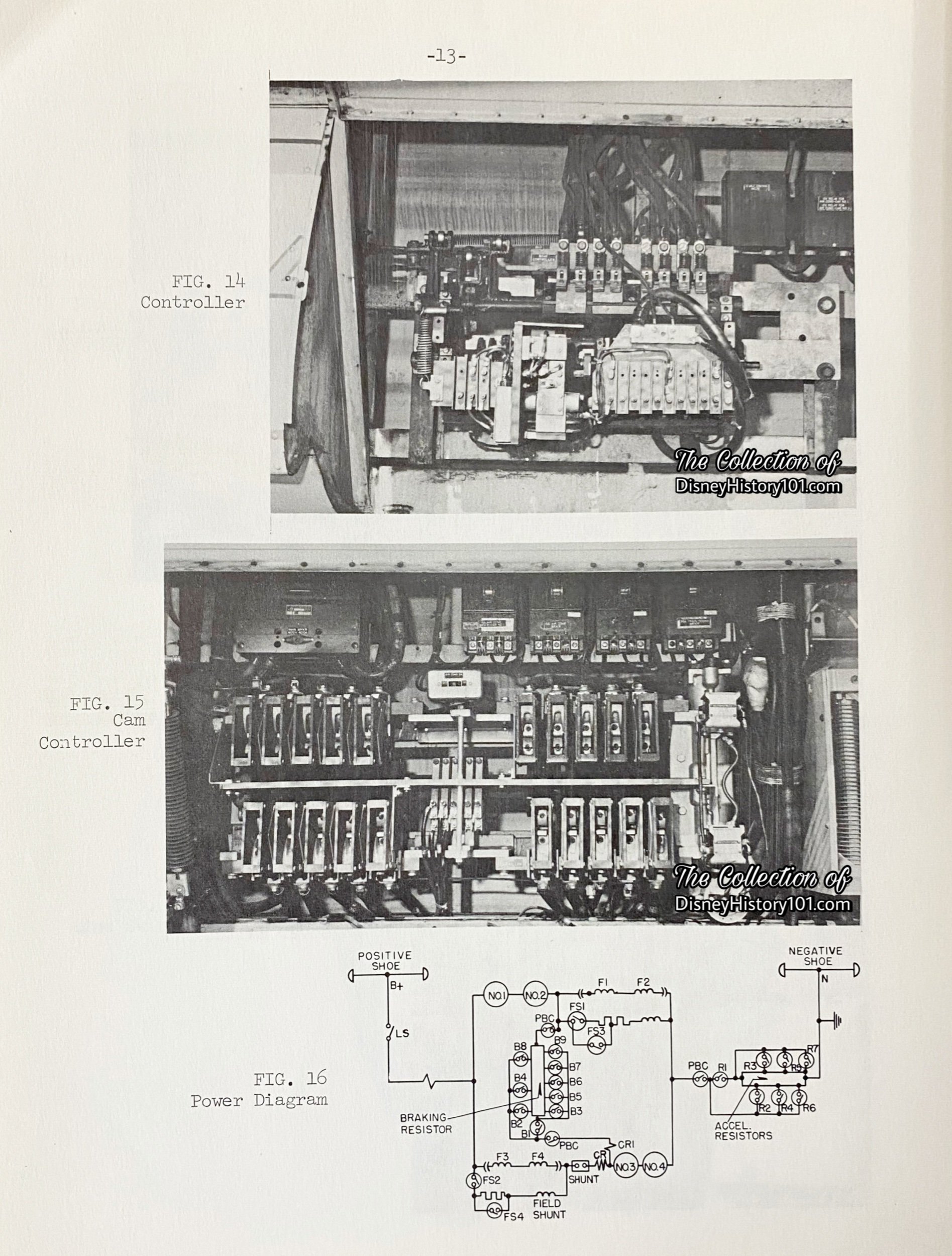
According to “Electrical Control Equipment for Disneyland Monorail Trains” document (prepared by J.J. Stamm & L. Adams): “To reduce installation and maintenance costs, every attempt was made to keep the control simple. To eliminate the need for transition switching, starting with motors in parallel was used. Likewise, by using a control resistor with center tap the need for a battery was eliminated.” With the exception of the drive motors, the necessary equipment was distributed (mounted under the Monorail “skirt”) on the cars. This contributed toward weight balance of the Monorail trains.
The two “lightweight aluminum, plastic and stainless steel” trains had “door and access panels… fastened with Dodge trunk lid latches.” Each car had three partially enclosed passenger compartments with doors on one side. As a safety feature, these “door interlocks” were electrically operated, remaining locked while the train was in motion and only capable of opening once the train had stopped at the Monorail Station and the “propulsion power control switch” was maneuvered into the “off” position. The doors (operated by a solenoids powered by just one “contactor”) could be opened from the outside as in the case of power failure.
These trains and passenger compartments were supported by four bogies saddling the beams (each bogie holding four 32” rubber tired wheels on top of the beam, and eight 21.5” spring-loaded guide wheels running on the side). The trains weighed between 27,235 Lbs. (when empty) and 39,945 (when loaded), necessitating the 30” rubber tire wheels to operate at 100 psi of pressure, with the spring loads of pressure set at 100 lbs. Along the less-than .8 mile (or, 3,844 foot-long) track, pylons of the concrete-beam system reached heights of 34 feet along the route. Making the grades and curves at the maximum speed of 16mph (except for the 10mph speed limit around the Matterhorn), was accomplished with the help of 300-volt Westinghouse subway motors. The “Electrical Control Equipment for Disneyland Monorail Trains” document (prepared by J.J. Stamm & L. Adams) describes the traction motors as “2 type 1432-H” and “later changed to 4” (type 1432-H).
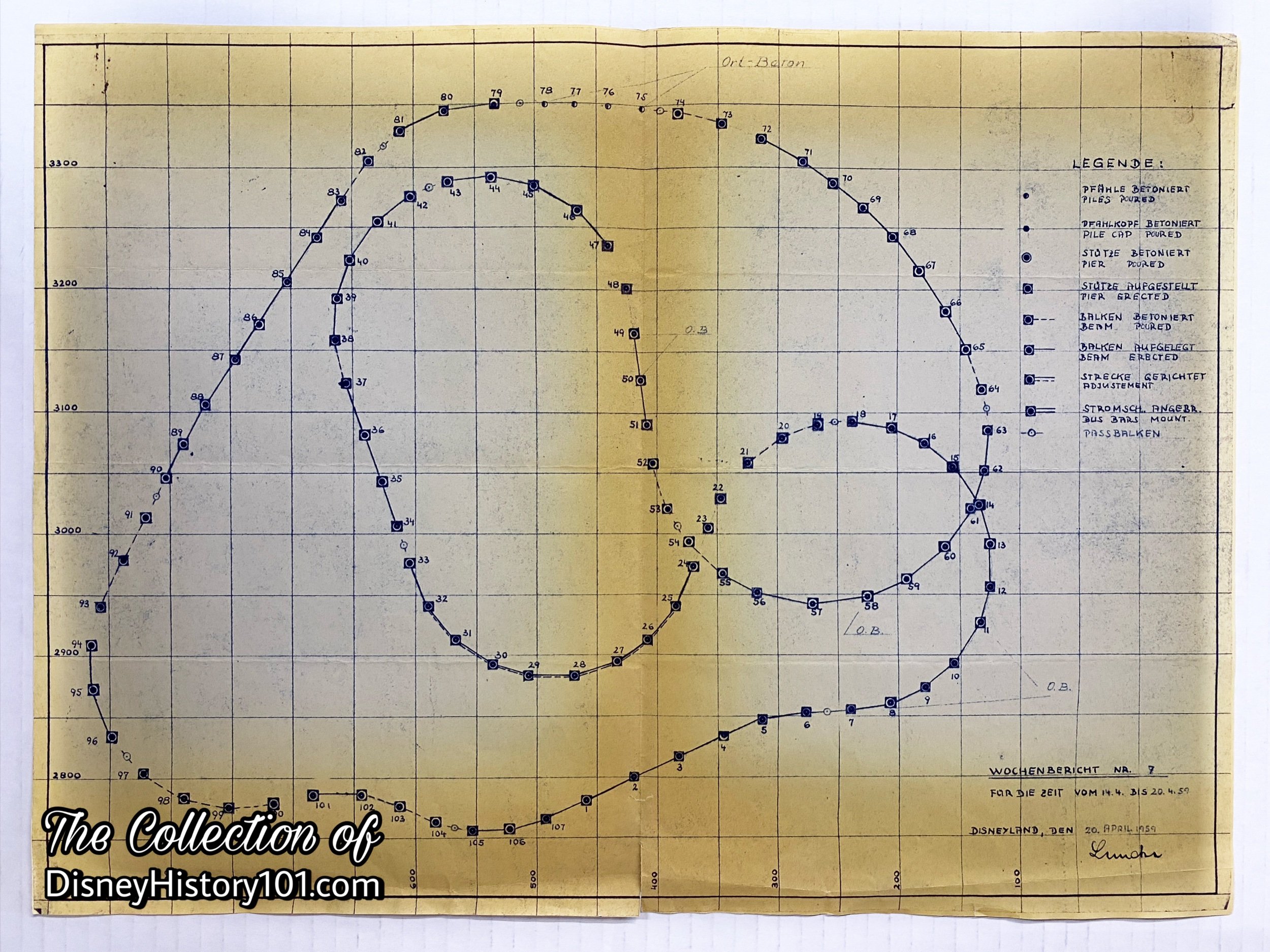
Eventually, the original Monorail Beamway was comprised of 104 concrete beams and 104 concrete columns placed at maximum spans of 40 feet from each other. The track would be designed with minimum curvatures of a 120 foot radius, overpasses, and grades of 7%, “to demonstrate the practicality of this system under different construction and topographic conditions,” according to a ASME brochure published in 1986.
As this was October of 1958, Roger Broggie and Joe Fowler had less than a year to produce the Monorail train and Beamway (the elevated Pre-cast I-Section girders which served as track, carrying beam and guide rail).
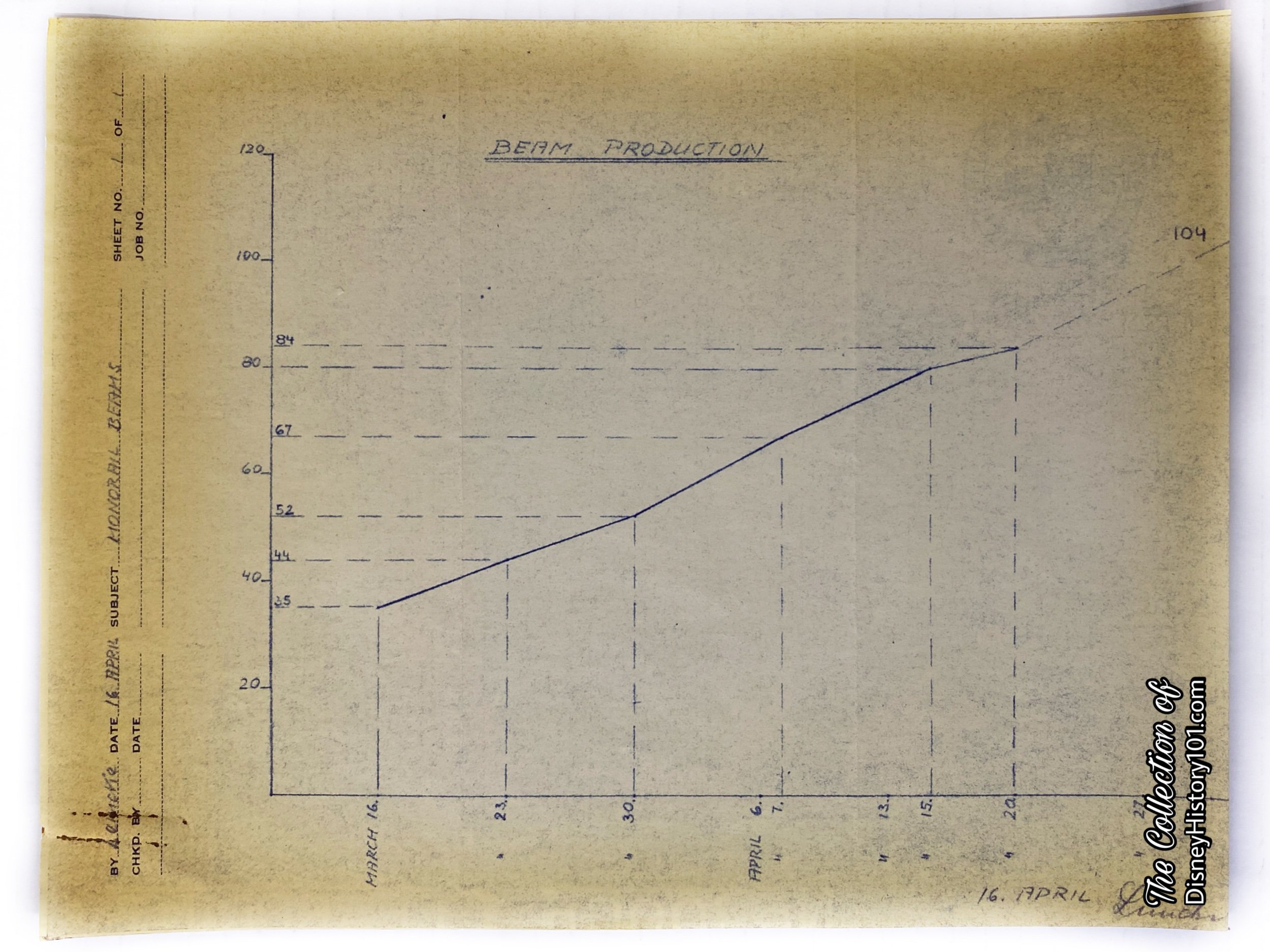
Much was involved in the design, fabrication, curing, and testing of beams and piers. A special concrete mixture was created and tested to withstand torsional stresses. According to “Walt Disney’s Railroad Story” by Michael Broggie (page 301): “The concrete mix design resulted in concrete of exceptionally good quality. Twenty-eight day compression tests indicated minimum strengths of more than 5,000 lbs. per square inch. The use of 1/2 of 1 percent of calcium chloride in conjunction with steam to cure the beams and piers made it possible to remove them from the forms 24 hours after casting. At that time, control tests indicated minimum compressive strengths of 3,000 lbs. per square inch.
Structural analysis of the beamway design was verified by means of a full scale test conducted on a curved beam 35 feet in length. Static loads were applied simulating the maximum load conditions for movement and shear. The results verified the basic assumptions and indicated a factor of safety of approximately 3-1/2.”
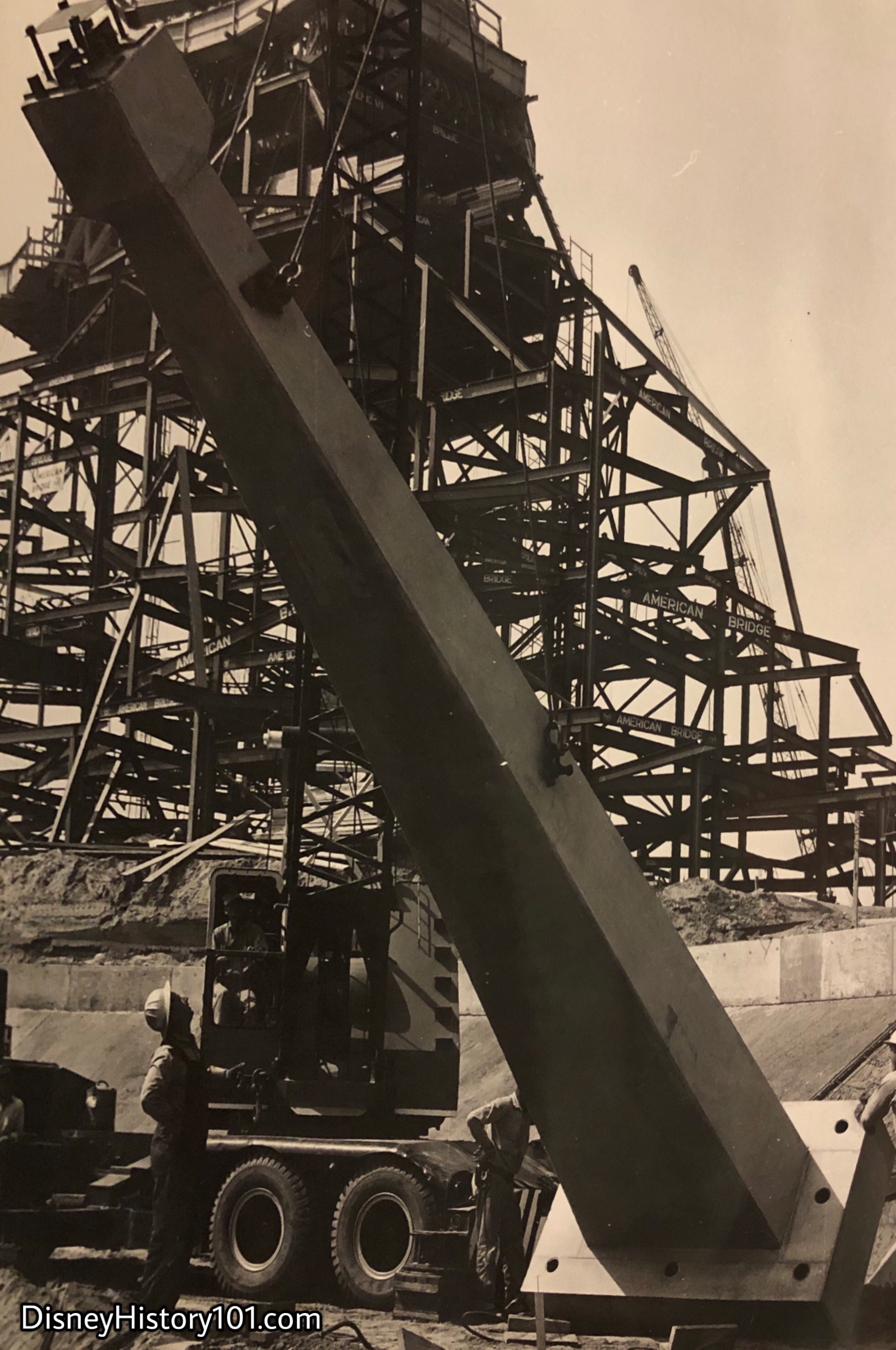
During 1959, Disneyland guests were invited to observe “the Greatest Construction Show on Earth”! The earth moving machines of the JAMES L. BARNES Construction Company had completed the digging, moving and shaping of the new lake bed. You’re looking at a historic photograph - the raising one of the first precast concrete Pylons (or Piers) in a series to run through the future site of the Submarine Lagoon.
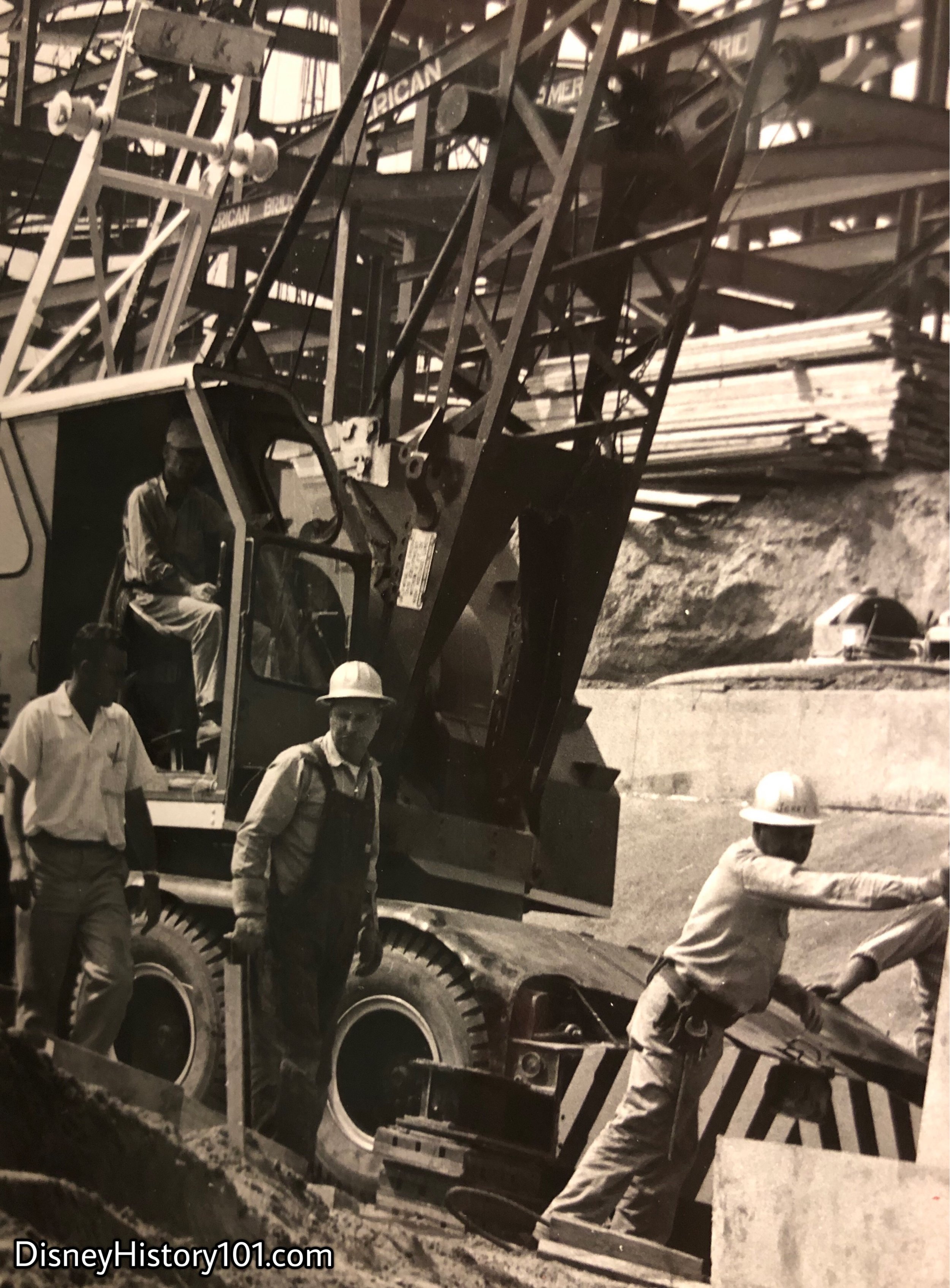
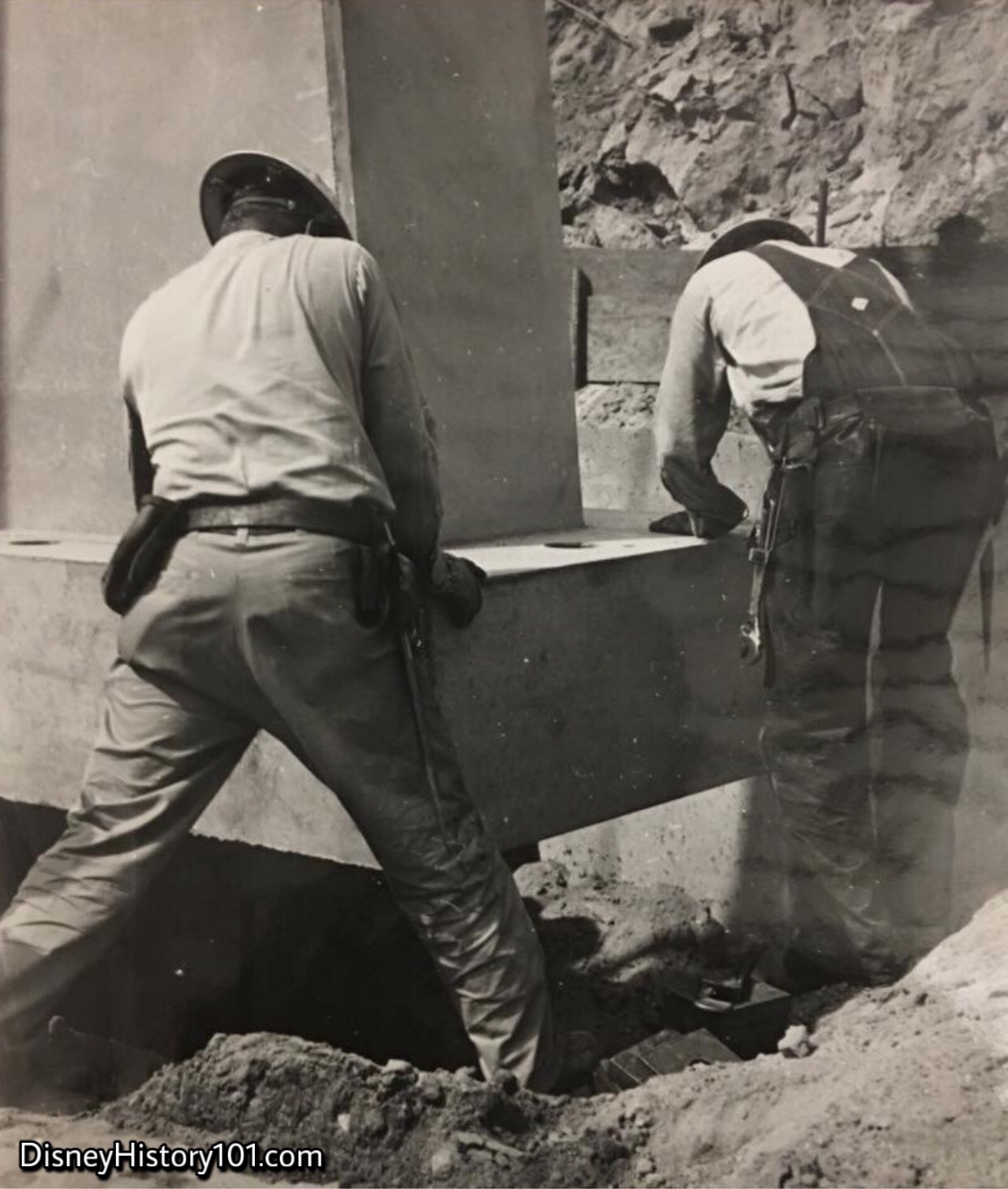
The first Monorail support for the elevated concrete highway in the sky, is meticulously placed in the ground! Piles (giant prints underneath) would be placed precisely into the ground to anchor the pier.
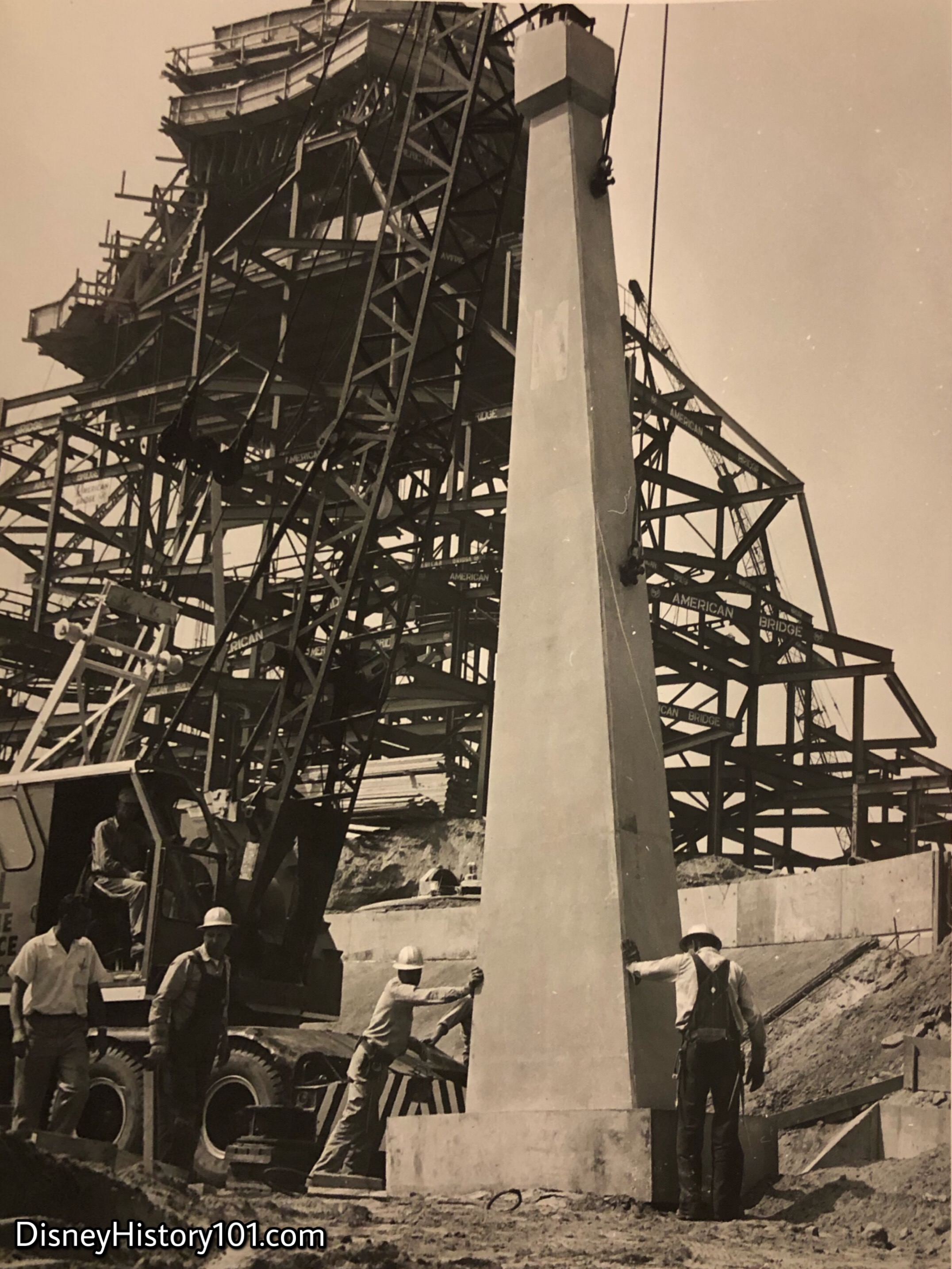
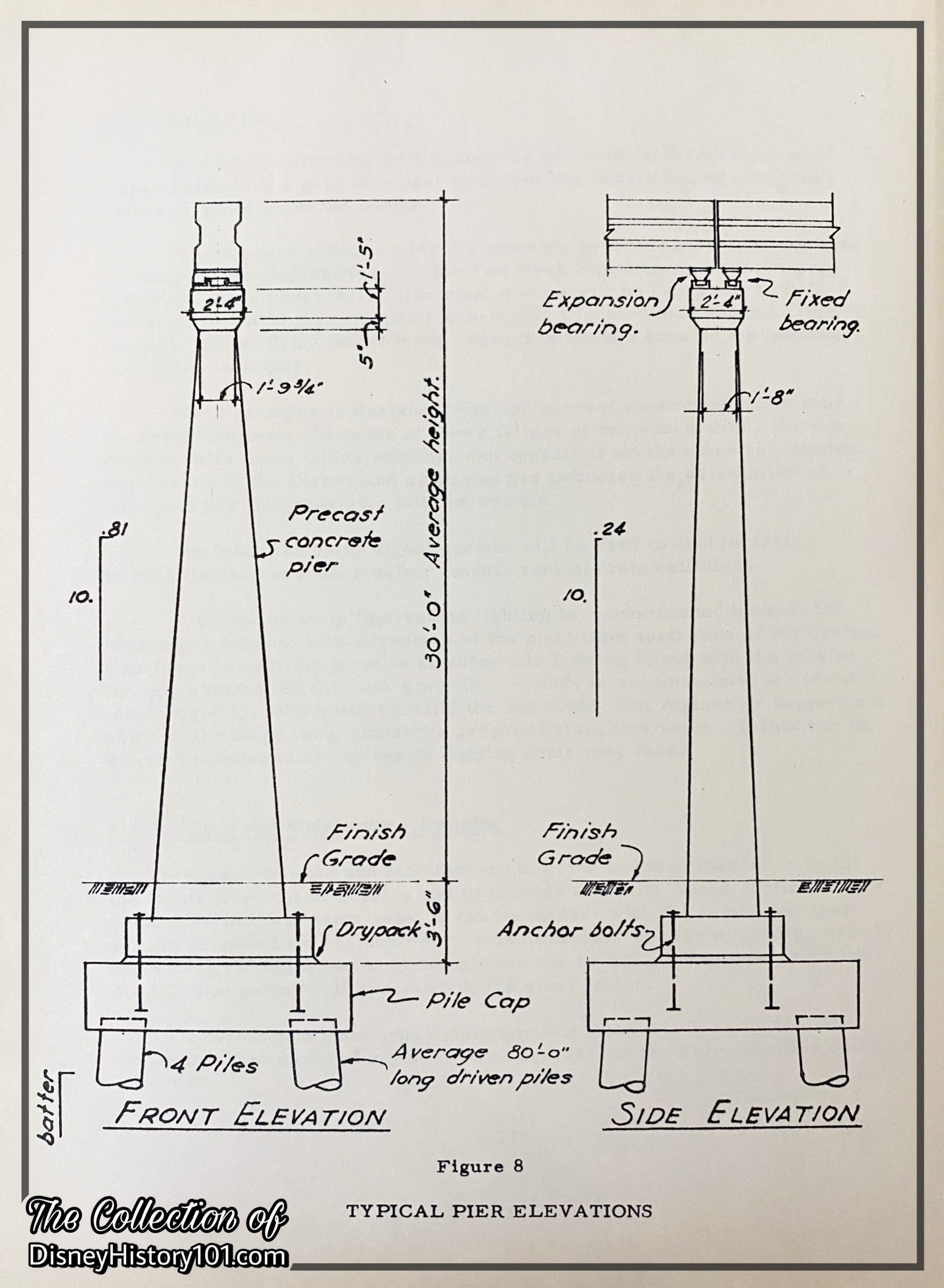
The reinforced concrete Pier (or Pylon) was placed in its exact location, and then stood upright. Once upright, the Pylons range from 14 feet to 30 feet tall.
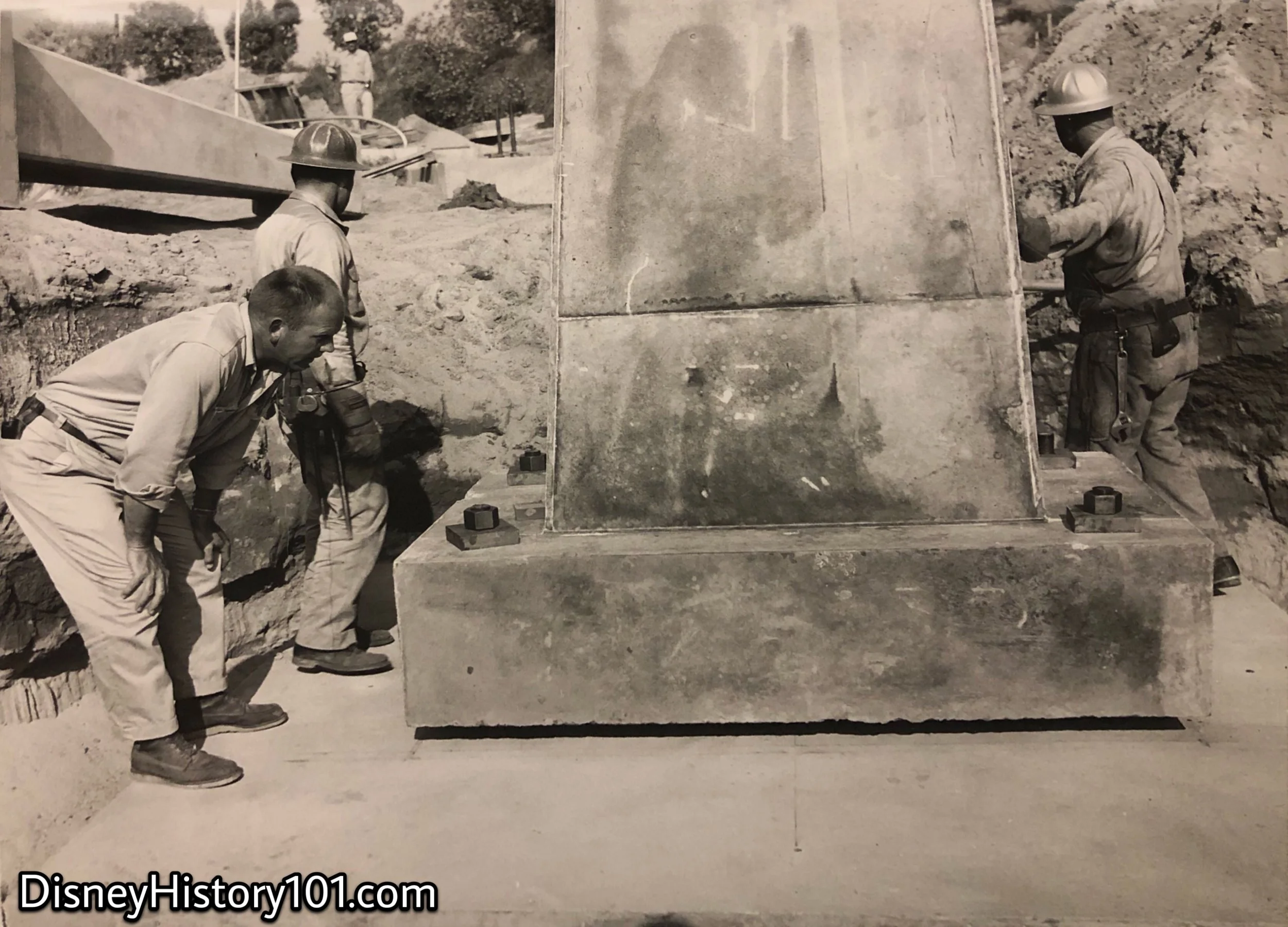
After being carefully positioned atop large anchor bolts, the Piers were secured with anchor bolts. The pile cap (with piles) had been tucked away underground. The anchor bolt sleeves were filled with grout and leveling bolts and nuts (seen at the corners) were then placed on the anchor bolts. An expanding grout was placed in the space under the pier base. All of this would contribute to the absorption of both vertical and torsional forces put upon the piers.
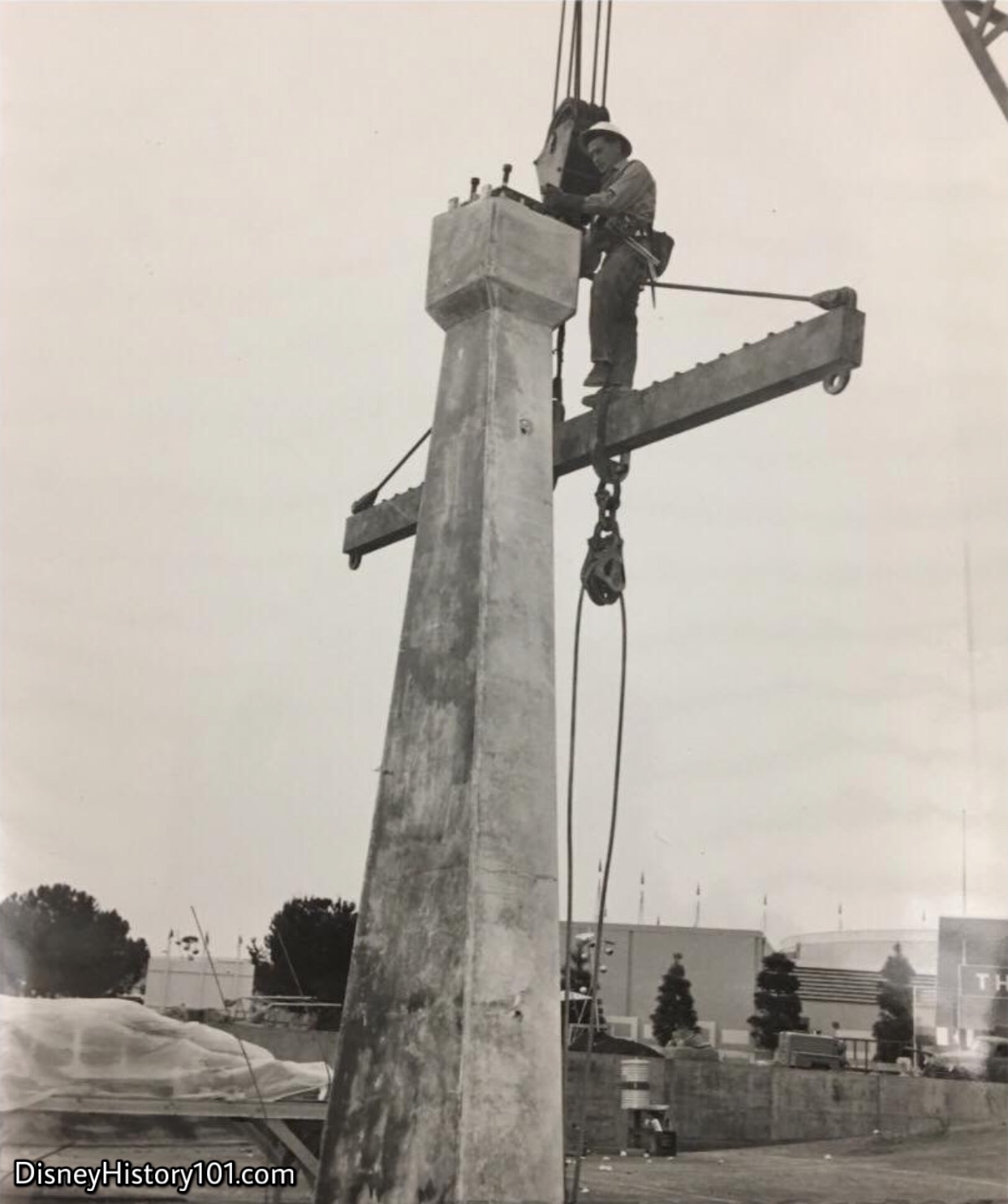
The upright pylons will reach a height of 35 feet off the ground. From this height, we can see the tops of the Tomorrowland lights and a portion of the Yacht Bar. Here at the top of the pylon, much of the Monorail construction work was completed with “practically no [rigging] tools or rigging equipment,” according to Ermitt Baker (a 35-year Rigger in the Disneyland Facilities Division, who was employed at this time) to Disneyland LINE Magazine [October 28, 1994 ; Vol. 26, No. 42].
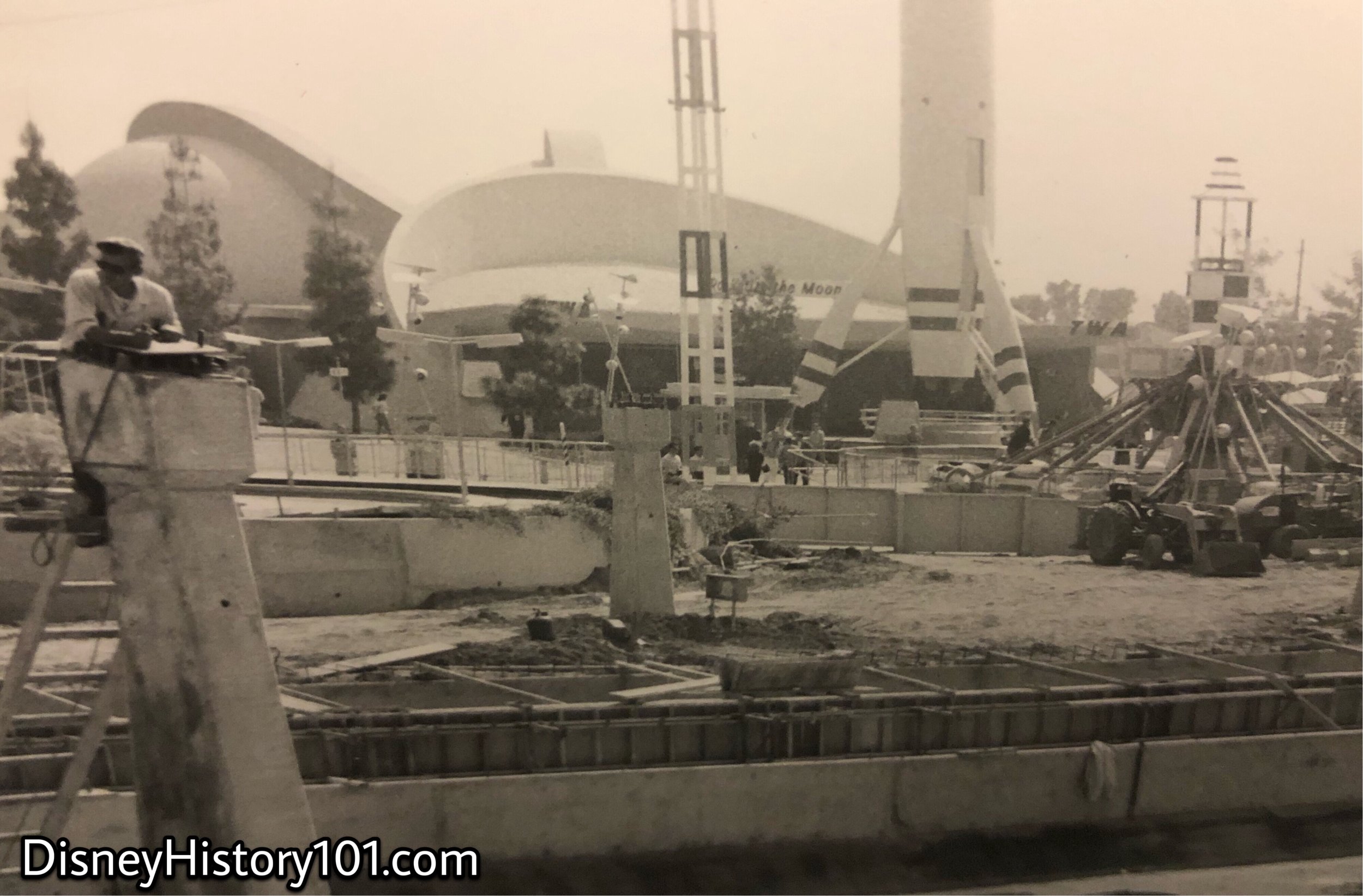
The Astrojets, the Moonliner Rocket (with its adjacent Rocket to the Moon attraction), and plenty of star pines (common in Tomorrowland of the 1950s) can also be seen on the other side of the construction barrier.
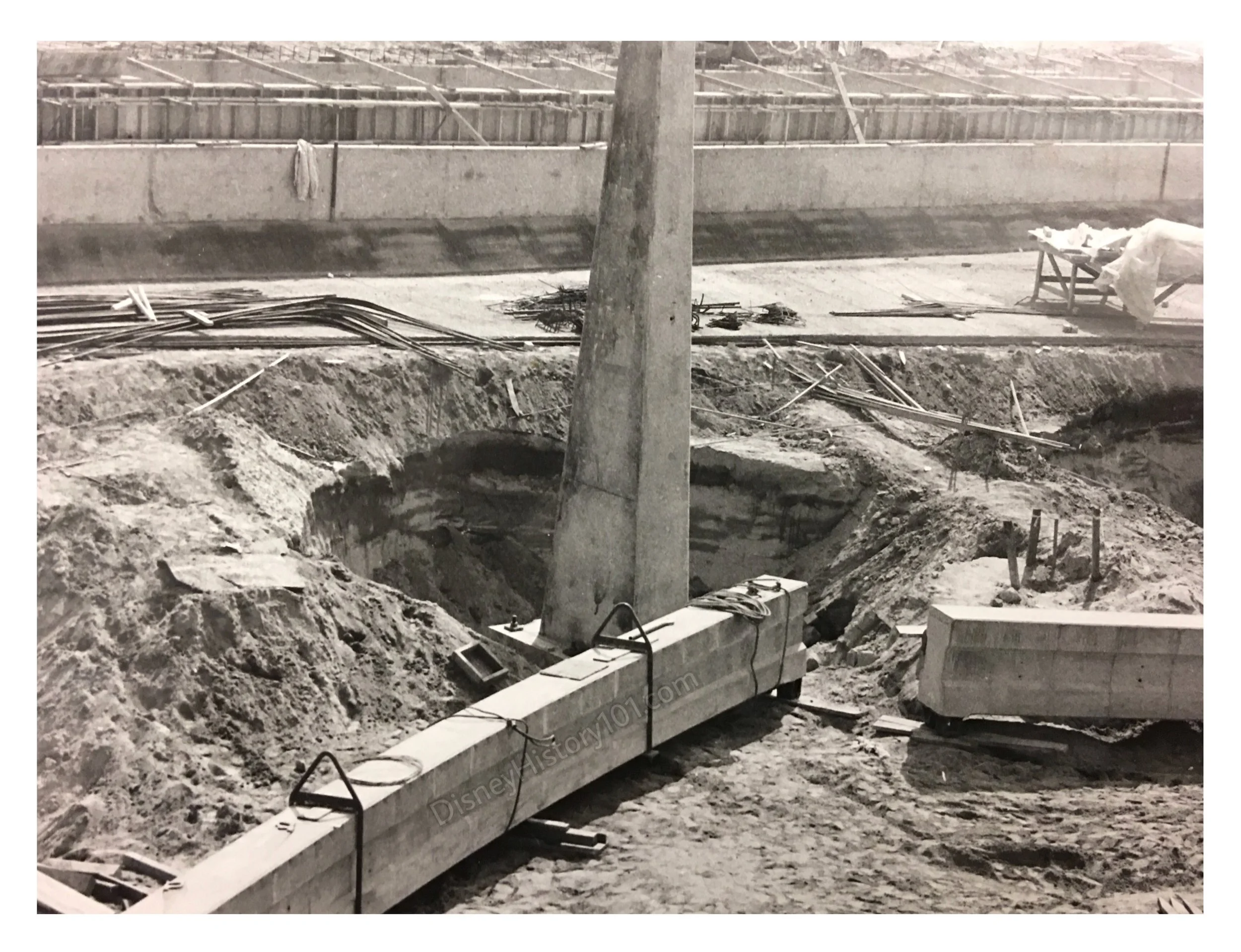
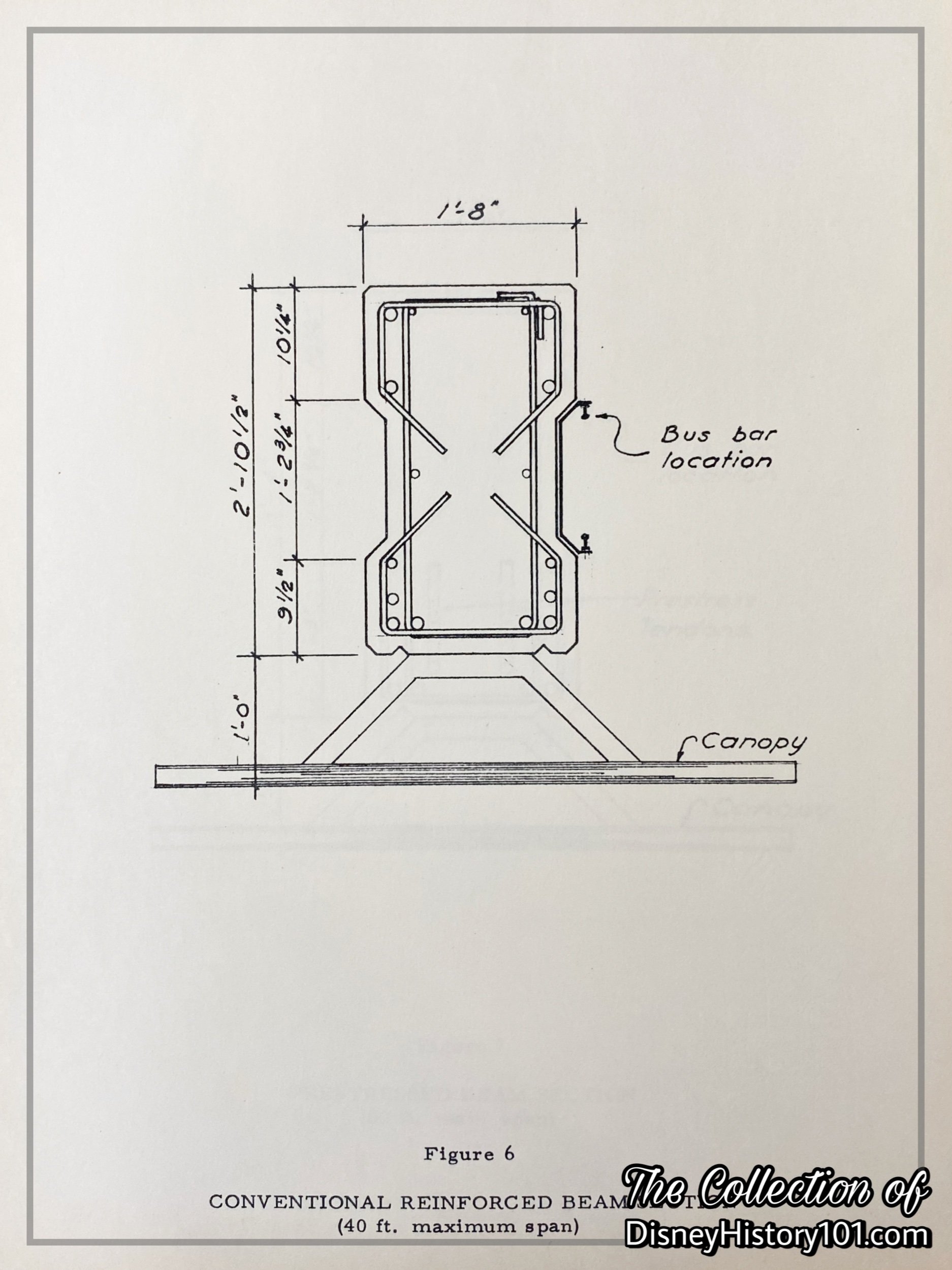
Construction soon began on the 8/10th mile-long straddle beam track. Do you see those pieces on the ground? They may look like solid concrete. In actuality, each concrete Beamway section contains precast I-section steel girders inside. Each “I” section girder beam of reinforced concrete measures 20 inches wide, 35 inches deep, with most beams measuring up to 40 feet long. These were the result of an innovation at the Walt Disney Studio, where “Disneyland engineers developed special steel forms for casting the curving, twisting concrete girders for the ‘highway in the sky’ over which the trains run.” [“Walt Disney Disneyland,” page 49, printed by Officine Grafiche Arnoldo Mondadori - Verona; first published 1964]
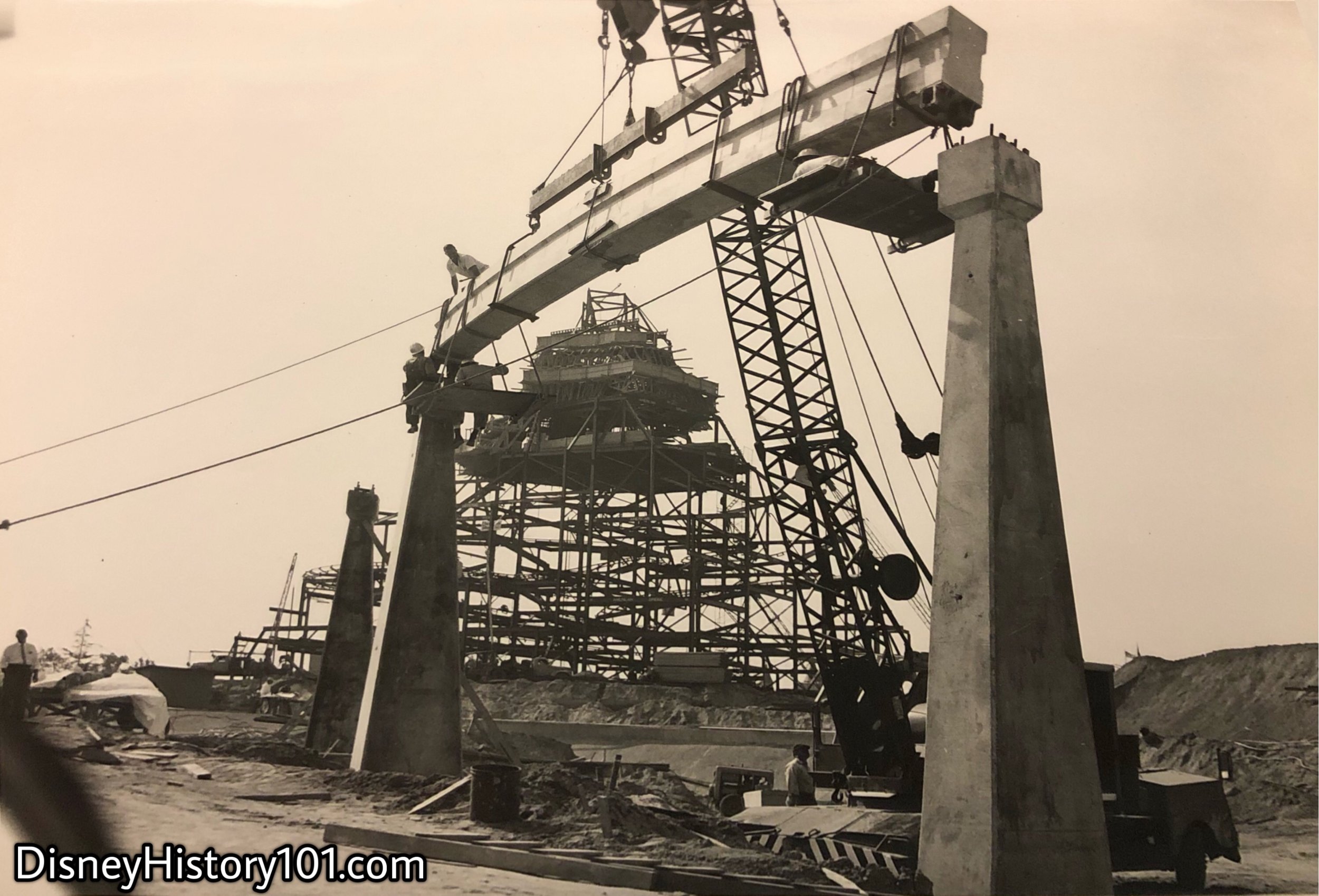
Pylons are concrete supporting posts used to hold up the beamway. Above, the first Monorail beam is set in place above two of the Pylons.
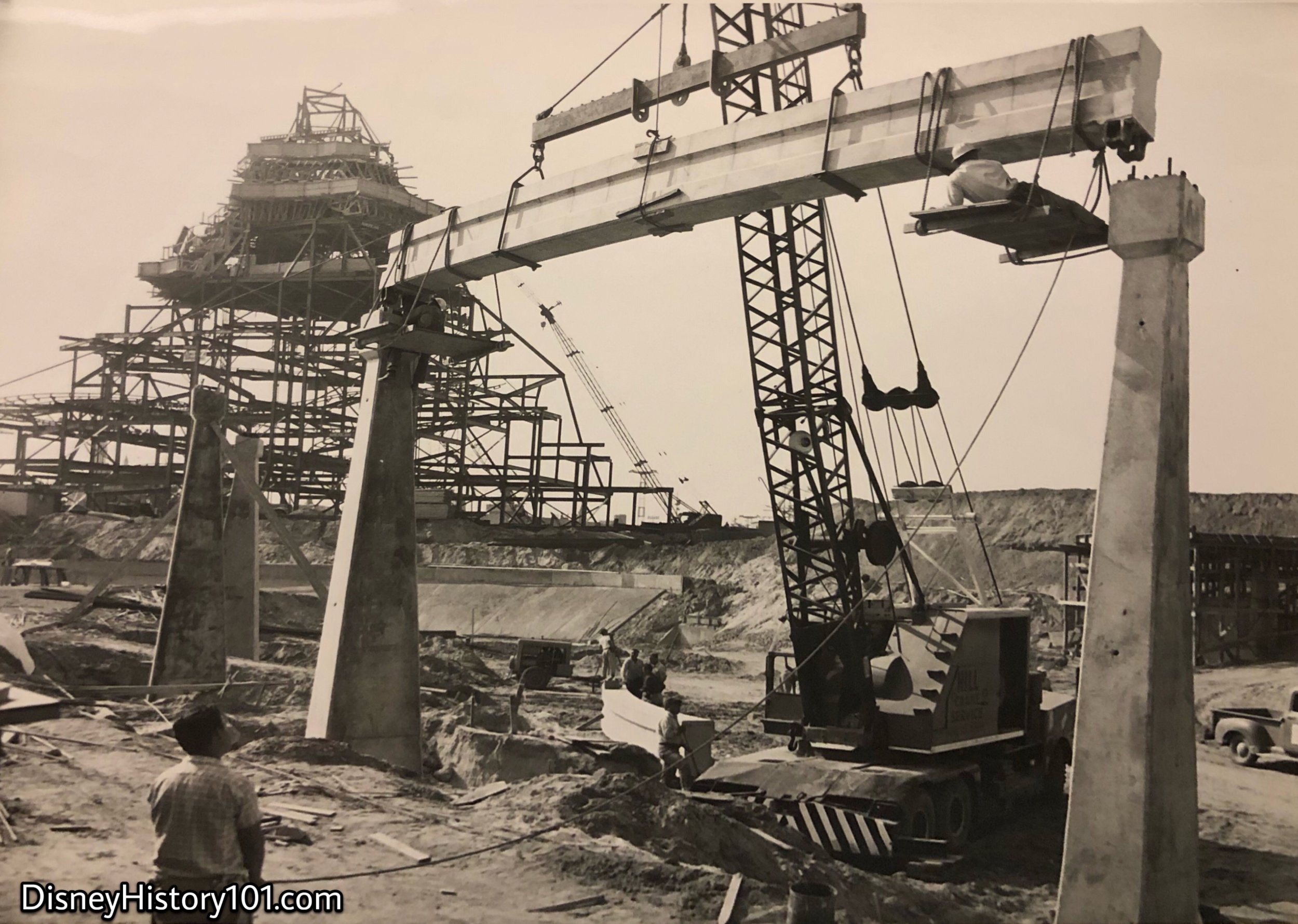
The pre-cast I-Section girders (each one ranging from 32 to 60 feet long) are raised to their positions onto the pylons. Each beam (serving the position of track, carrying beam, and guide rail) has the strength of supporting 5,000 pounds per square inch.
Stress calculations and other necessary feats of engineering were performed under the direction of John Wise & Bill Wheeler’s Wheeler & Gray Company! The Wheeler & Gray Company was previously instrumental in the construction of the Walt Disney Studio Sound Stage No. 3 (in 1952-1953), and also during Disneyland’s initial construction. After their contributions to the Monorail, they continued to be involved in many additional (and most challenging) projects for Disneyland over successive decades.
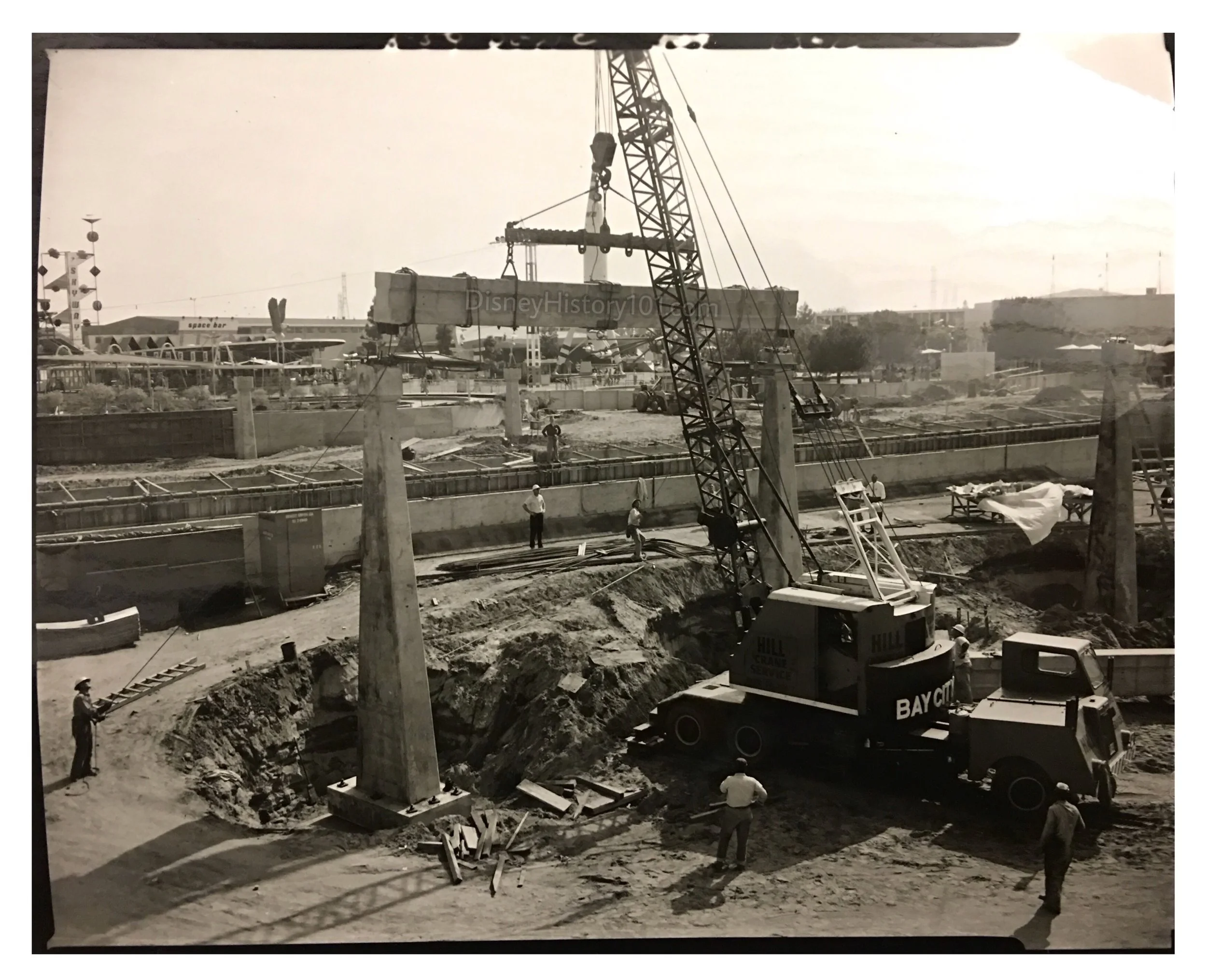
There were many individuals and companies (not often mentioned) which played an instrumental role in some of Disneyland’s most-beloved attractions. In the center of the photo stands Harry Harper (of Hill Crane Service), who helped provide the crane used to hoist the beams into the air.
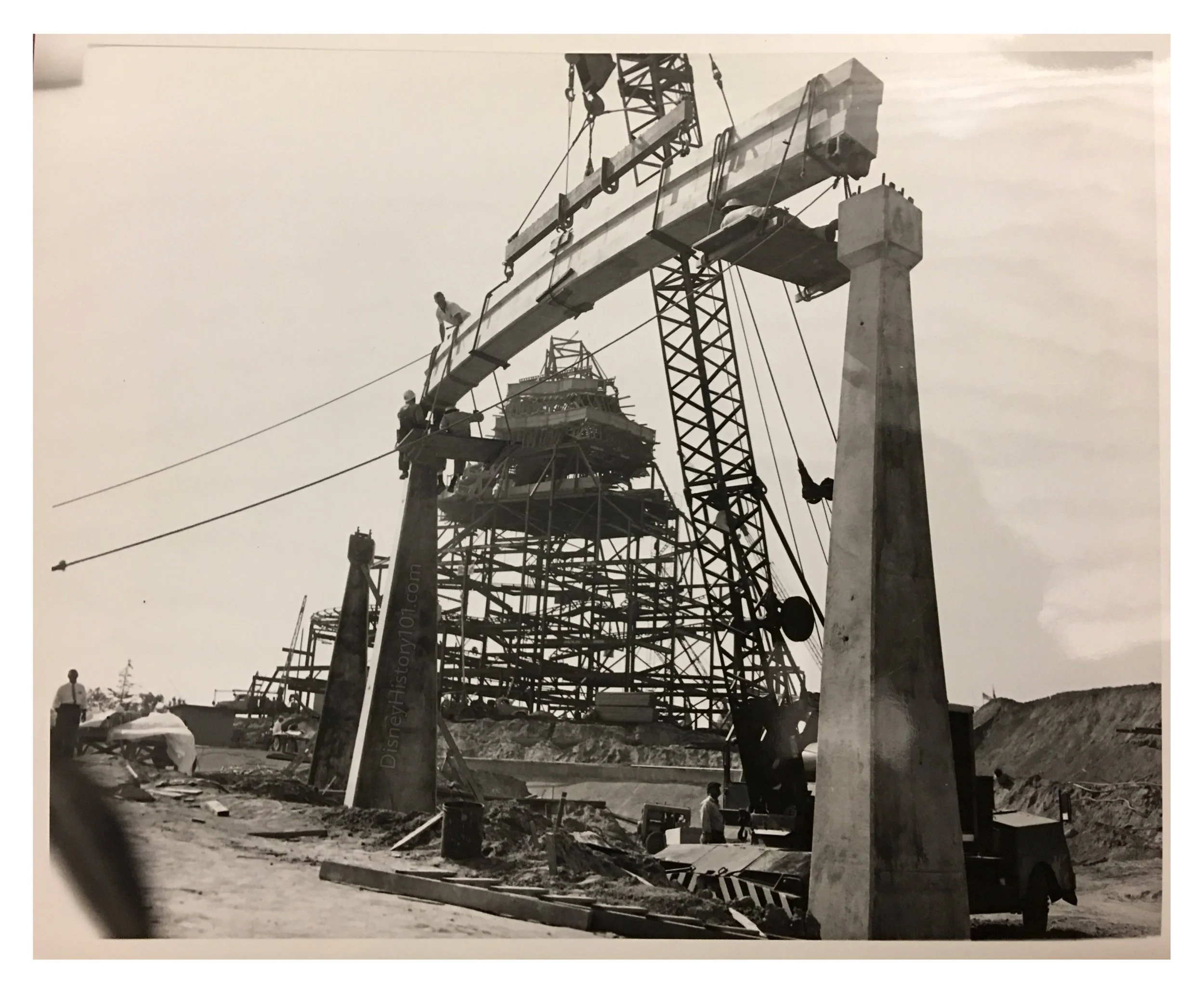
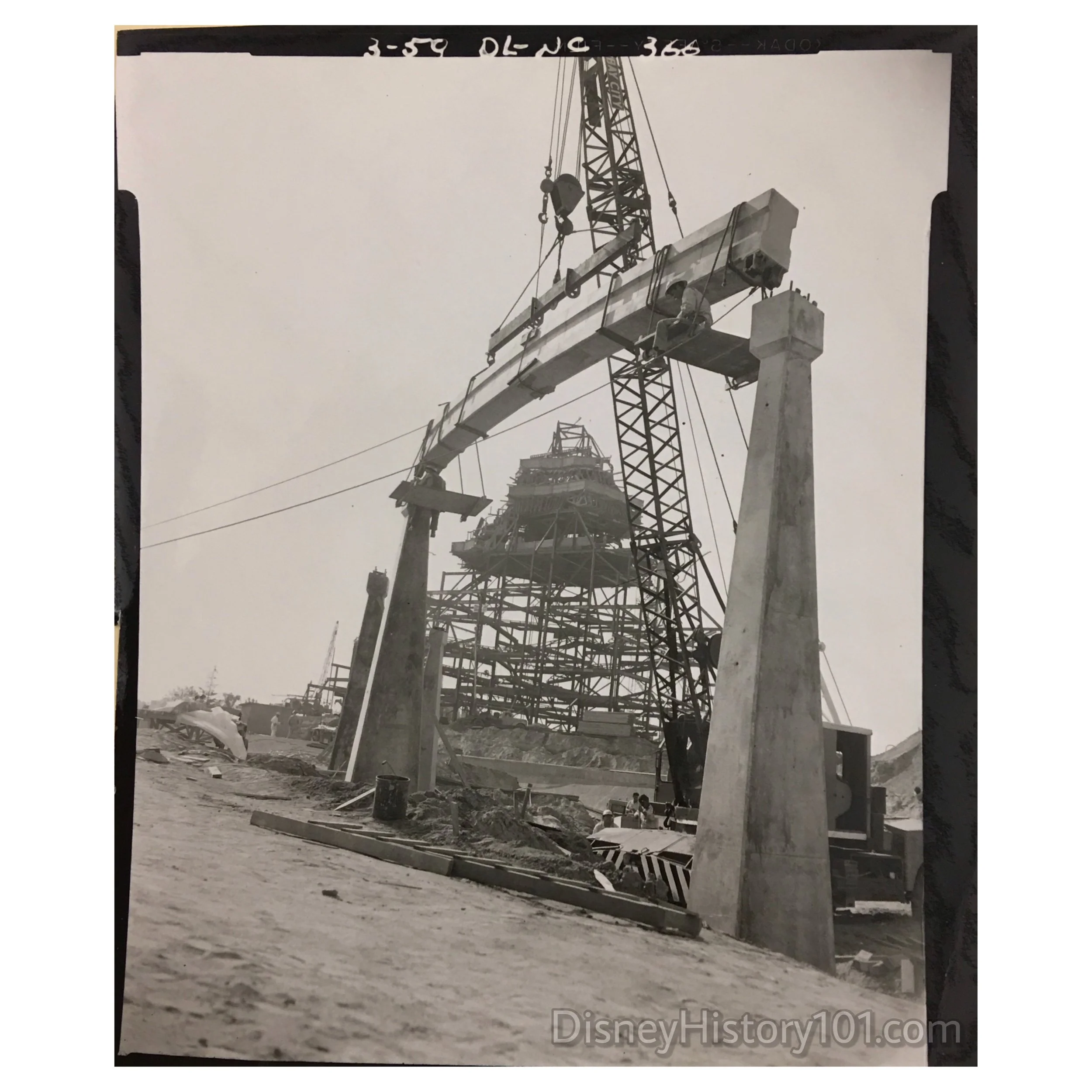
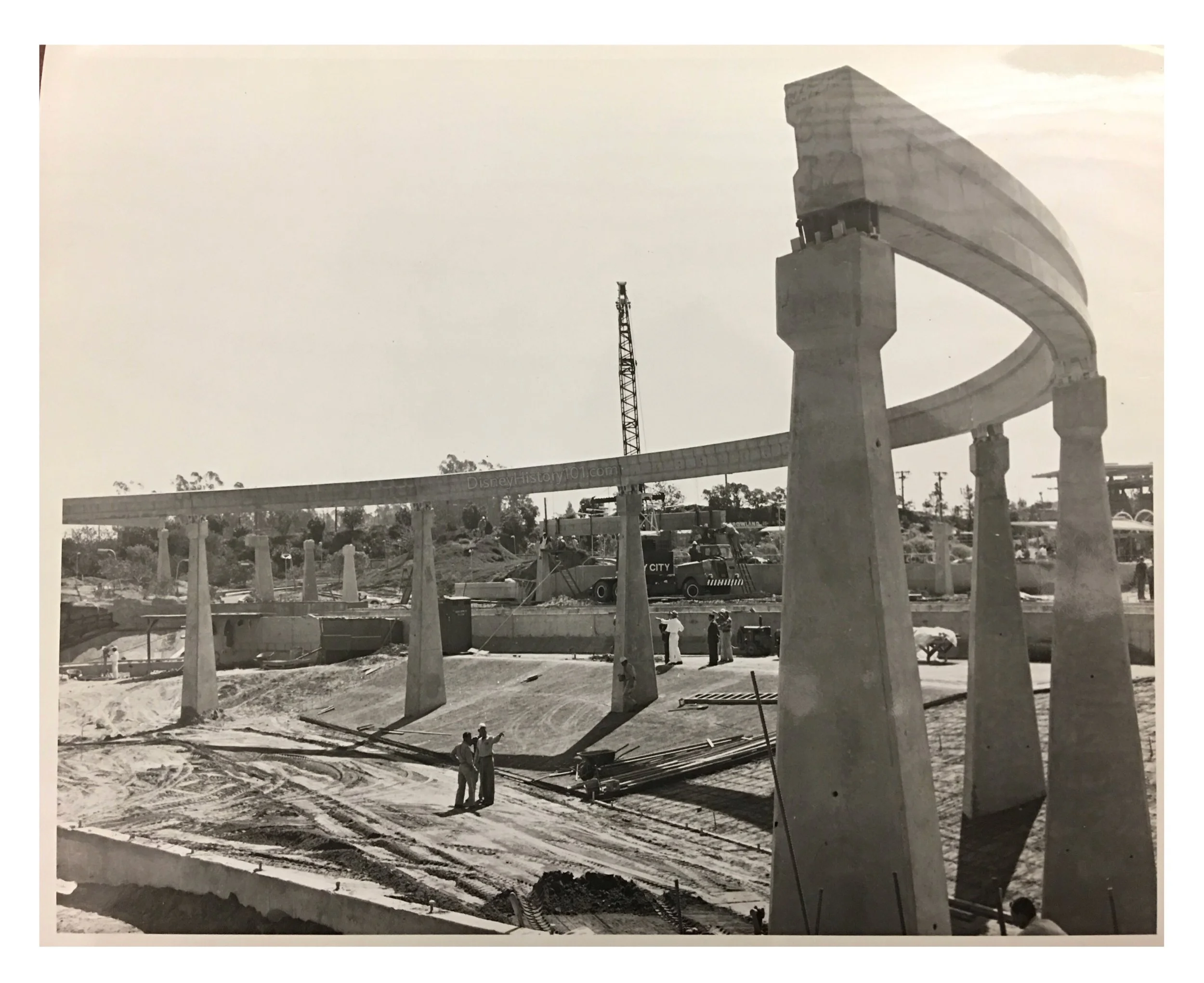
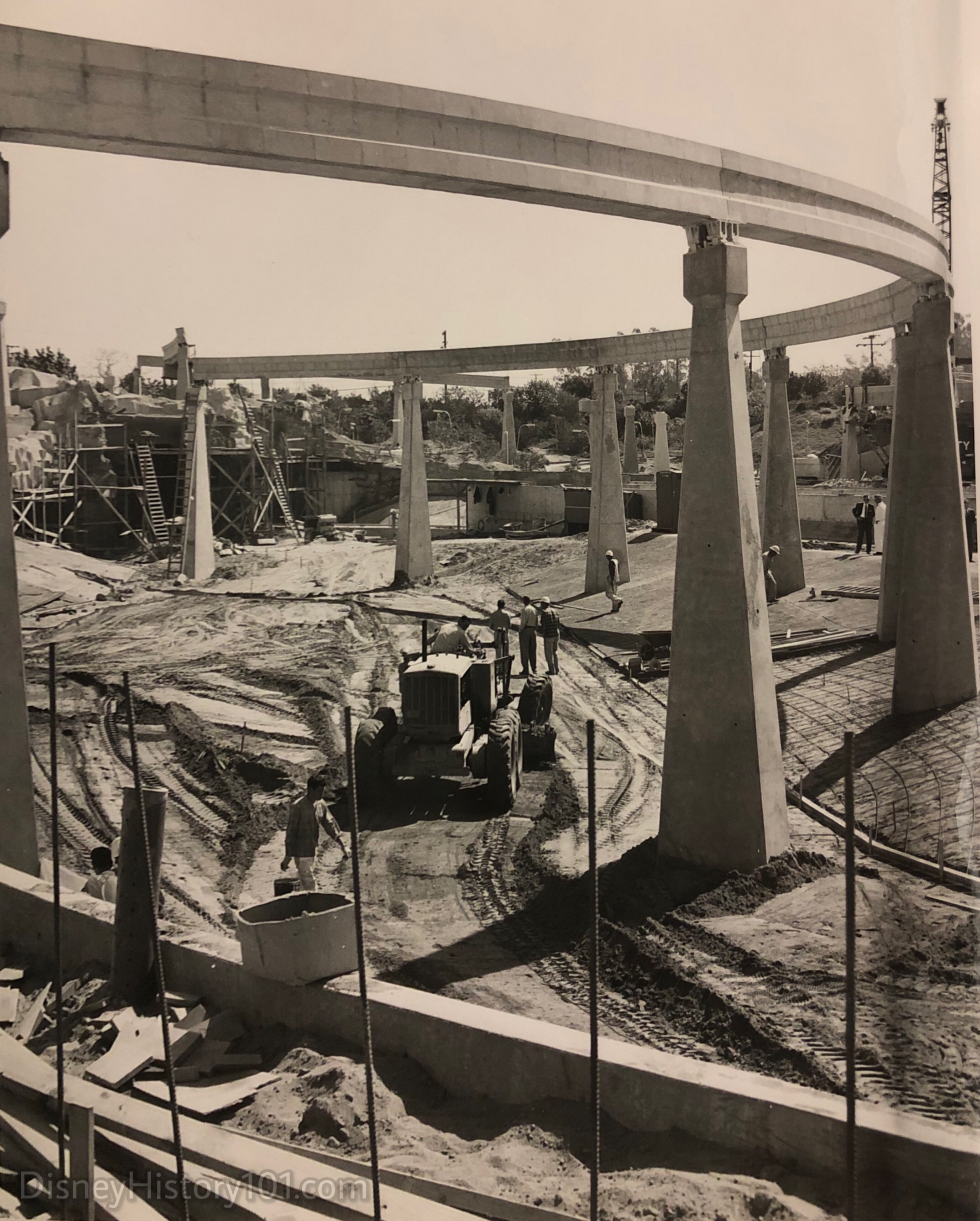
The “timeless” concrete beamway of the “Highway in the Sky” is composed of pre-cast section girders. They were cast in steel forms that can be adjusted to either produce straight beams or curving concrete girders.
Most of the beamway that you see in the Park today is the original c. 1959 beamway, though some sections have been re-routed to make way for newer attractions (i.e. the section re-routed around the installation of the Indiana Jones and the Temple of the Forbidden Eye show building, and the replacement of a small section between the Matterhorn and Tomorrowland stations).
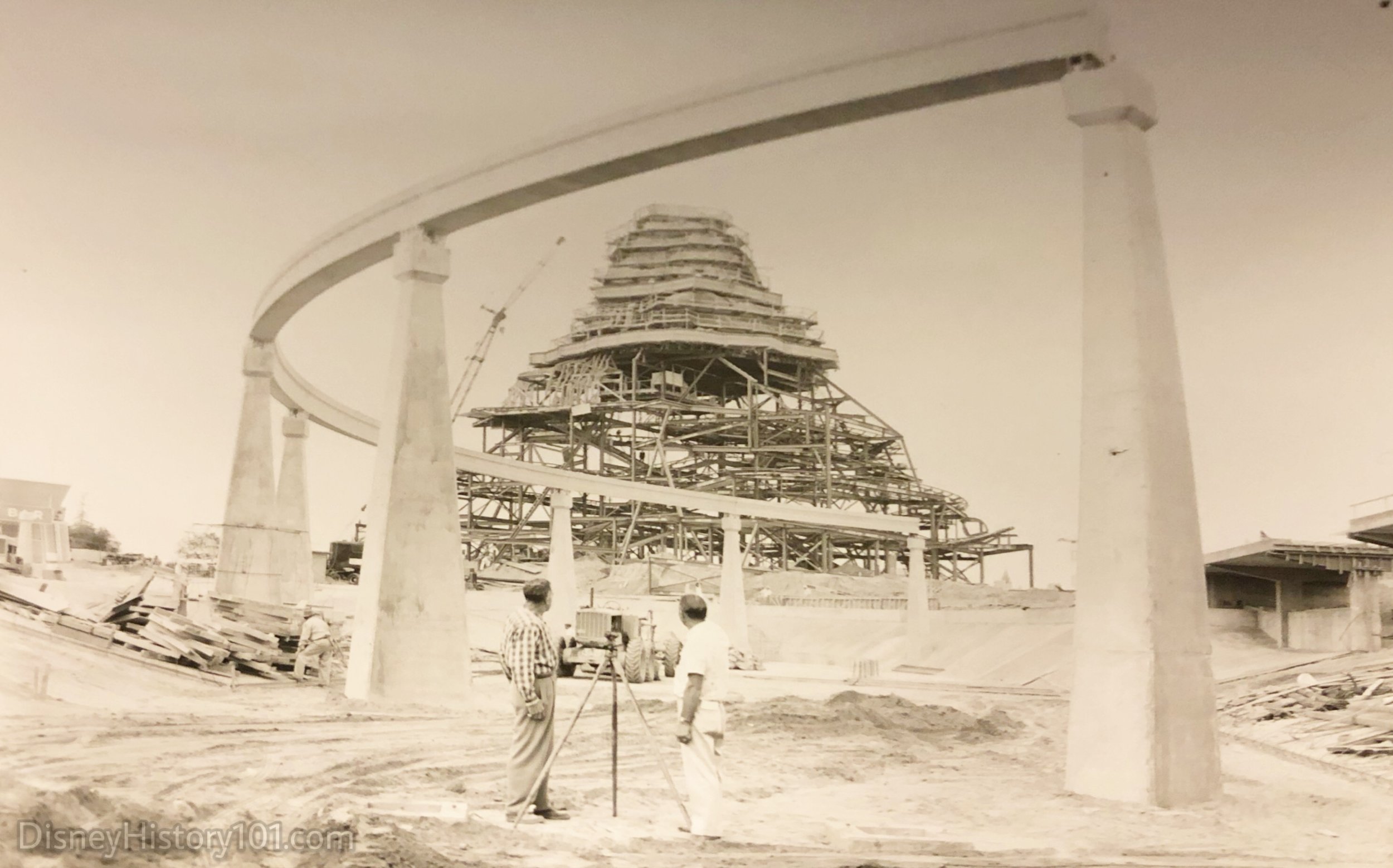
It was likely essential to complete this segment of pylons first, because the Submarine Lagoon was also under construction at this time.
“The Roundhouse”
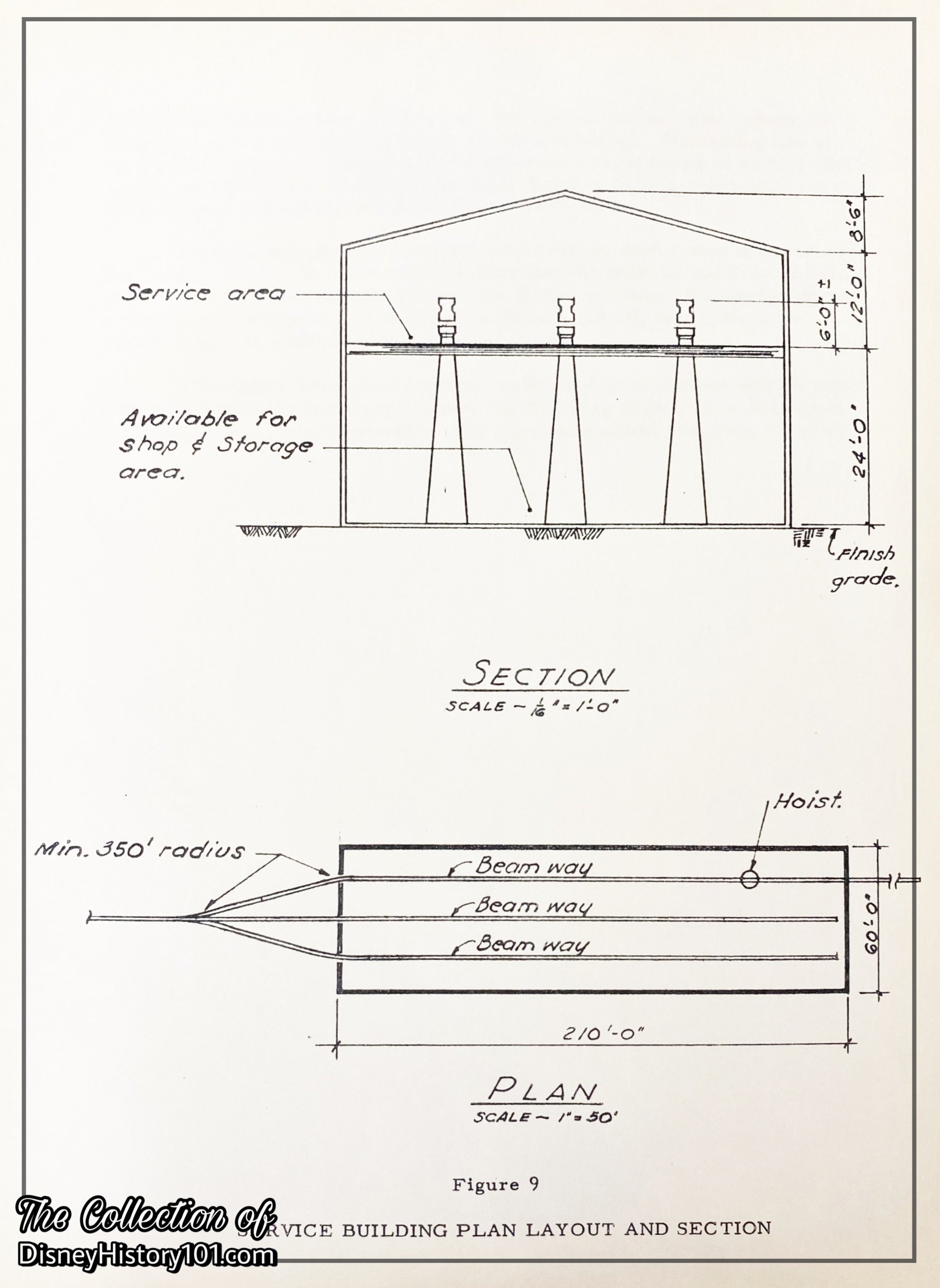
The Monorail trains were stored in the two-story Roundhouse when not in use. The Disneyland Roundhouse was once probably the only square or oblong “Round House” in the world, and is located in the service area off West Street.
Below, a garage served the steam locomotives of the Santa Fe & Disneyland Main Line Railroad. Boilers were steamed up every morning, and after the day's run, machine shop crews would conduct their daily inspection, cleaning, lubrication, and repair of the locomotives and rolling stock. A maintenance pit provided access to the undercarriage of a train or car.
Above, the Monorail trains of the future were maintained by Retlaw Maintenance Laborers. They regularly inspected the vehicles’ pressure of 10 vertical load-carrying tires and 40 horizontal stabilizing tires. The 600 volts of DC-current fed to the four Monorail Units was also maintained by mechanics and electricians.
“RETLAW”
RETLAW operated the Disneyland train and Monorail. It was a separate organization, and a first cousin of Walt Disney Productions. The special RETLAW MAINTENANCE DEPARTMENT group would handle the maintenance for both an ultra-modern monorail and a turn-of-the century railroad train. The maintenance required special techniques and equipment. To stay ahead required new designs, new techniques, and new equipment.
Many RETLAW employees were Disneyland Cast Members who had the pleasure of supporting this element of the Backstage Disneyland show. Later, Bill Hauenstein (c.1966) was one such Disneyland Electrical Foreman, who had the pleasure of checking the Monorail beamway daily to prevent breakdowns.
Owing to Disneyland Round House operation, it was recorded that no more than 30 minutes in lost operation time on the trains since the Park opened in 1955. To maintain such an operation, Disneyland, Inc. opened Job #032-50-01 (in 1959), constructing a shed addition to the Round House in the Warehouse Service Area. The shed addition was intended for machine shop maintenance and was located along the South side of original train storage shed and to West side of original Square Roundhouse. The shed was constructed at a total cost of $3,358.62 (Disneyland Labor, $500.24; Disneyland Materials, $53.28; outside purchases, $19.27; Sub-contractor H&W Fabricating, $2,394.00; sub-contractor Guardian Fence, $283.00; with Construction OH @ 19% of $572.79).
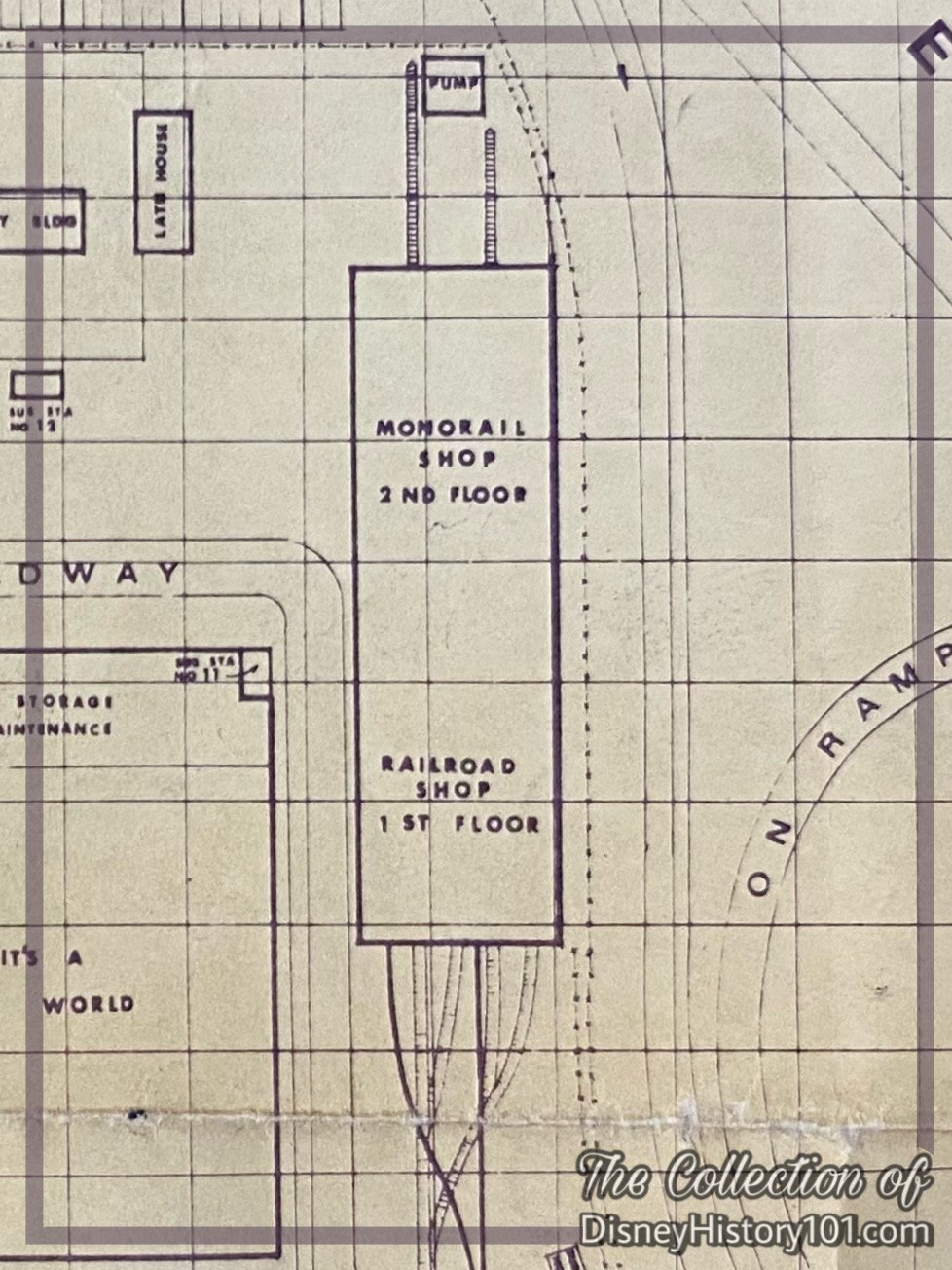
The designs for the Monorail Roundhouse (with Monorail Shop and Railroad Shop) would influence the way that steam trains and other transportation vehicles like some 600 busses, trucks, and cars) were initially stored at Walt Disney World many years later. Today, the Monorail Roundhouse performs the same functions nestled Backstage between the Santa Ana 5 Freeway, Small World, and a Compressor Plant.
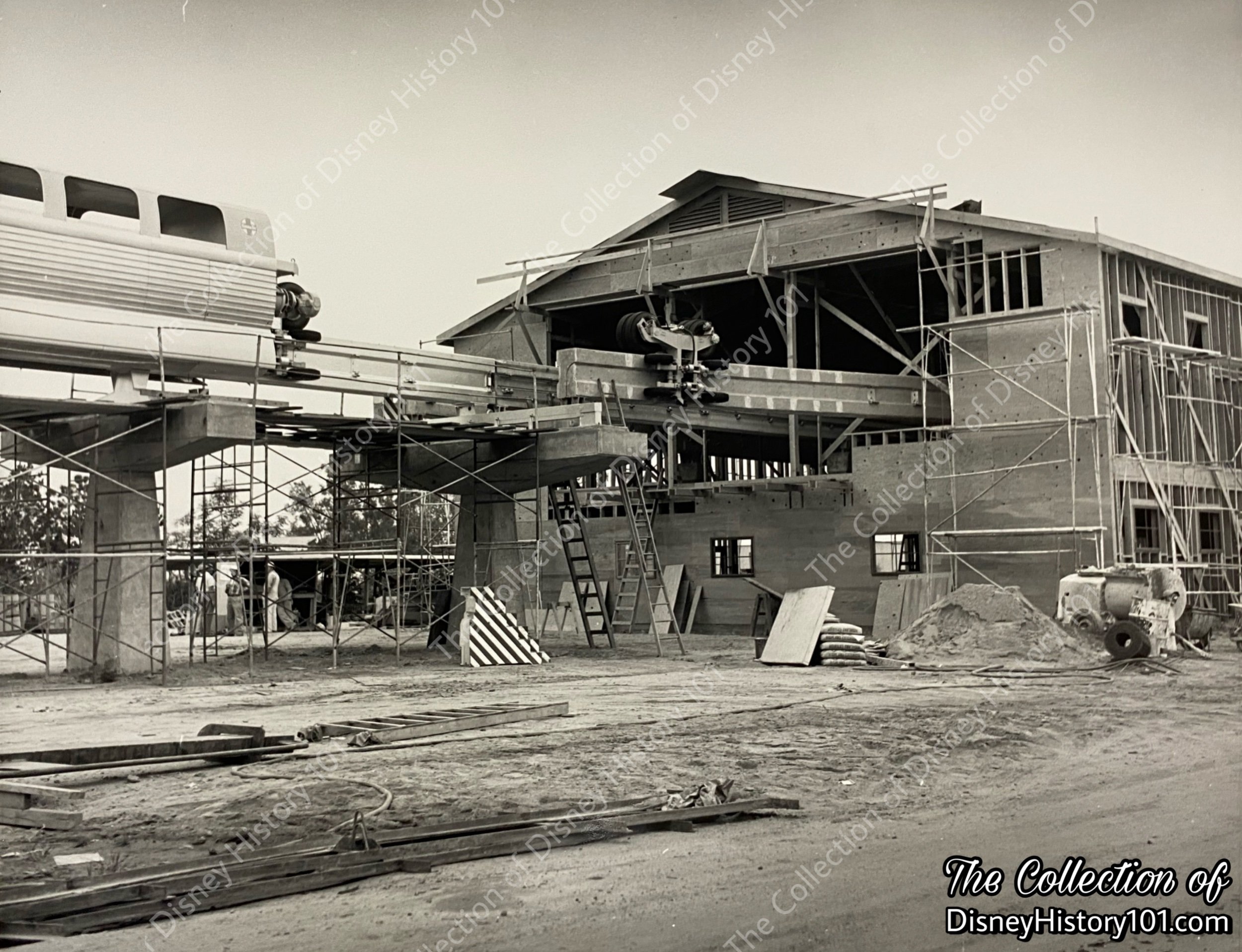
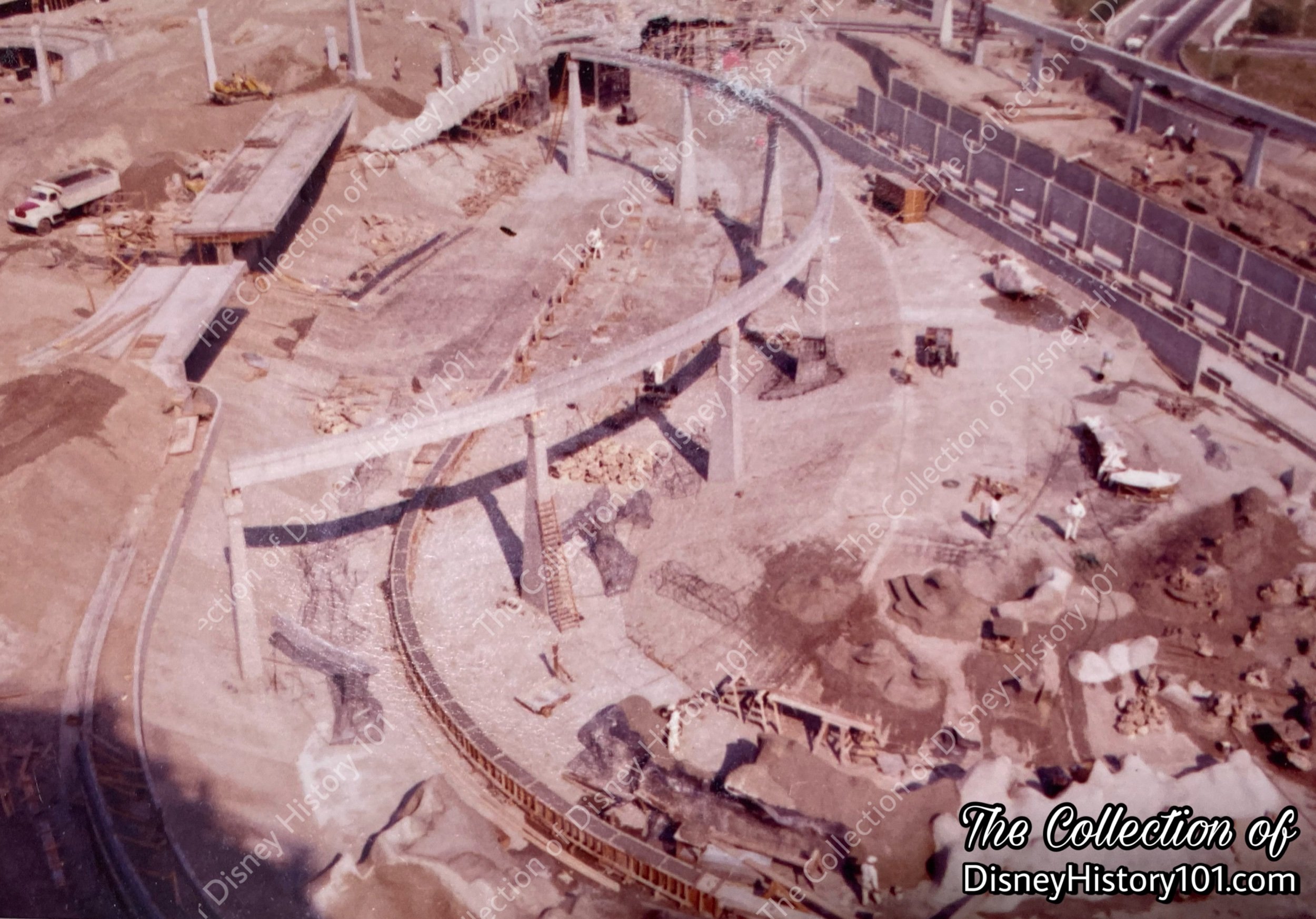
The spur was a divergent track, having only one entry. Once the trains travelled the spur and arrived, they were lowered onto the Monorail concrete beamway by crane in front of the developing Roundhouse. The Roundhouse was a backstage building where trains were maintained when not on the main line. Trains occupy the ground floor tracks and Monorail trains are on the upper floor.
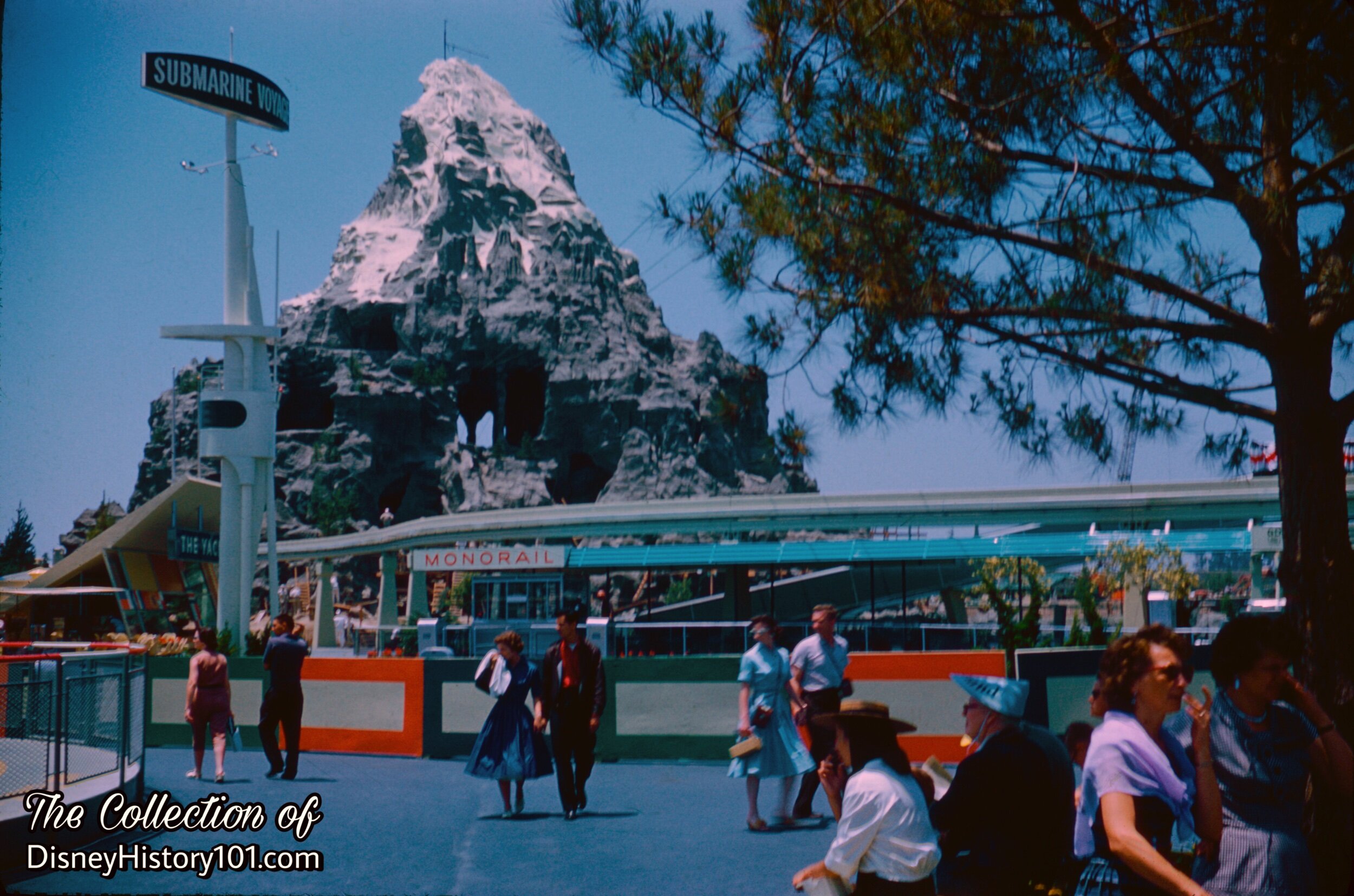
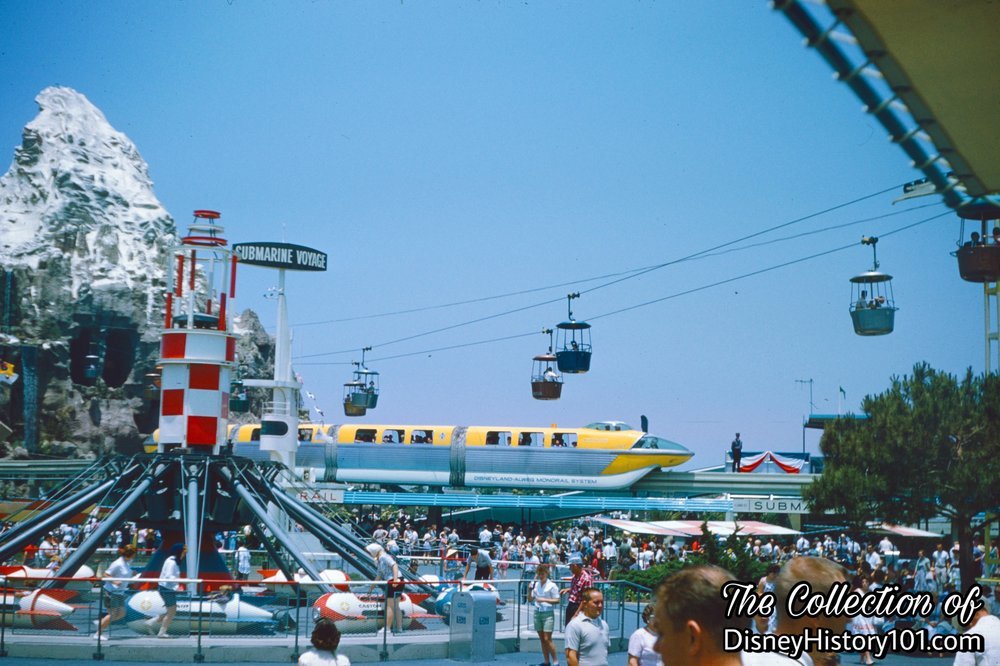
Matterhorn, Skyway, Submarine, and (most importantly) Monorail construction is nearing its end in this Vintage View from 1959. Just take a look at those crowd-control barriers and red, white, and blue bunting around the Tomorrowland Monorail Station entrance and Submarine Voyage Thru Liquid Space entrance. As to the construction time and cost, “an executive of a major transportation company was later to comment, ‘You people have built this entire system in less time, and for about the same money, that my company would allocate for a feasibility study!” [“Walt Disney Disneyland,” page 49, printed by Officine Grafiche Arnoldo Mondadori - Verona; first published 1964]
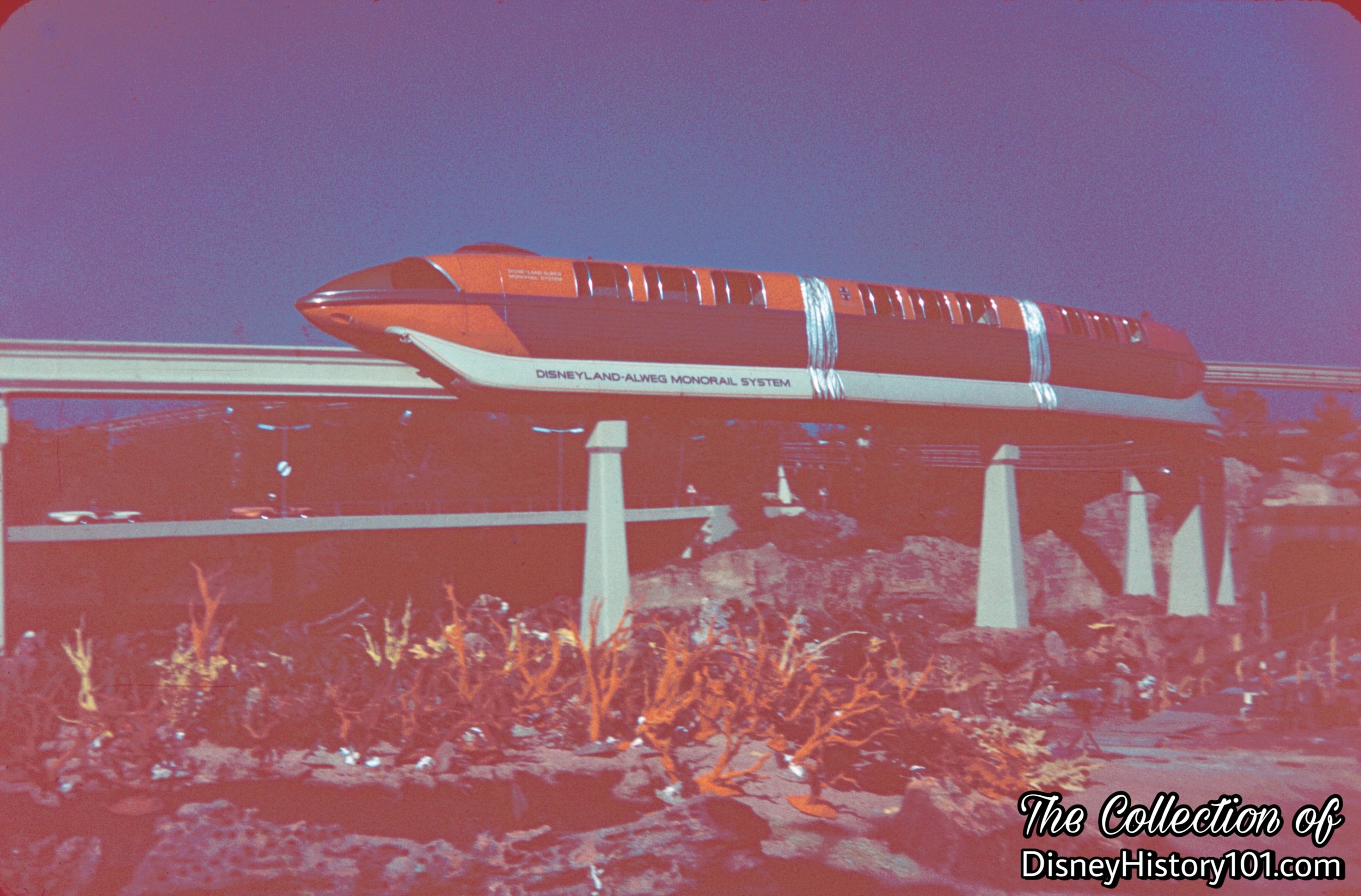
The Monorail Red was added first. Monorail Blue joined its twin Monorail Red on July 3, 1959. Soon, the Monorail trains were tested before the completion of the Submarine Lagoon.

As the summer of 1959 approached, six “spectacular new adventures” were heralded alongside what was called the 2nd opening of Disneyland. On June 14, 1959, the Disneyland-Alweg Monorail trains, Matterhorn Bobsleds, and Submarine Voyage fleet were dedicated at Disneyland. “The Disneyland-Alweg Monorail System was unveiled at Disneyland by Walt Disney and Vice President Richard M. Nixon, Mrs. Nixon, and their daughters Tricia and Julie also participated in the ribbon-cutting ceremonies, which were viewed by a national television audience watching the special ‘Disneyland ‘59’ TV show.”
“55er” Earl Anderson recalled: “Walt Disney took the special ceremonial scissors, that I had fashioned for him out of walnut and snipped the ribbon, But they DIDN'T WORK! Thereupon, Walt produced a pocket knife, cut the ribbon, and the new MONORAIL was officially open. was watching all this on television, as I was on vacation, and I was afraid to come back!” “55er” Al Alvarez recalled “I remember seeing the opening of the Monorail. There was a ribbon stretched across it and I was standing right there holding a pair of shears. They were a great, big pair, especially made for the ceremony. I was trying to hang onto the shears so that nothing could happen to them, but Walt's granddaughter got to playing around with them and loosened them up. Well, everything was on T.V., and when the time came to cut the ribbon, the shears were out of kilter and wouldn't work. So Walt pulled out a pocket knife and cut it himself.”
Now Disneyland Guests could circle above and around Disneyland, and “ride the new Disneyland- ALWEG Monorail System…high speed transportation of the future!” These would include the “heads of state - kings and queens, presidents and prime ministers - who visited Disneyland, as well as millions of other Disneyland VIPs from every state and nearly every nation.”
The $1,300,000 “highway in the sky” (also billed as “the nation’s first practical monorail train system”) first set off on June 14th, 1959 as a comfortable and efficient way to preview Disneyland. The Disneyland-Alweg Monorail System was the first passenger carrying monorail system in the Western hemisphere to operate daily. Appropriately, 1959 was the same progressive year that the “E” ticket debuted along with new “Big 10” and “Jumbo 15” Ticket Books which allowed larger families to “enjoy any attraction in Disneyland.”
By 1959, Joe Fowler was Vice President of Disneyland Operations Committee and Doc Lemmon of Disneyland Operations was overseeing Operators of Rides & Amusements (like the Monorail), Livestock, Parking Lot, and Ticket Sellers.
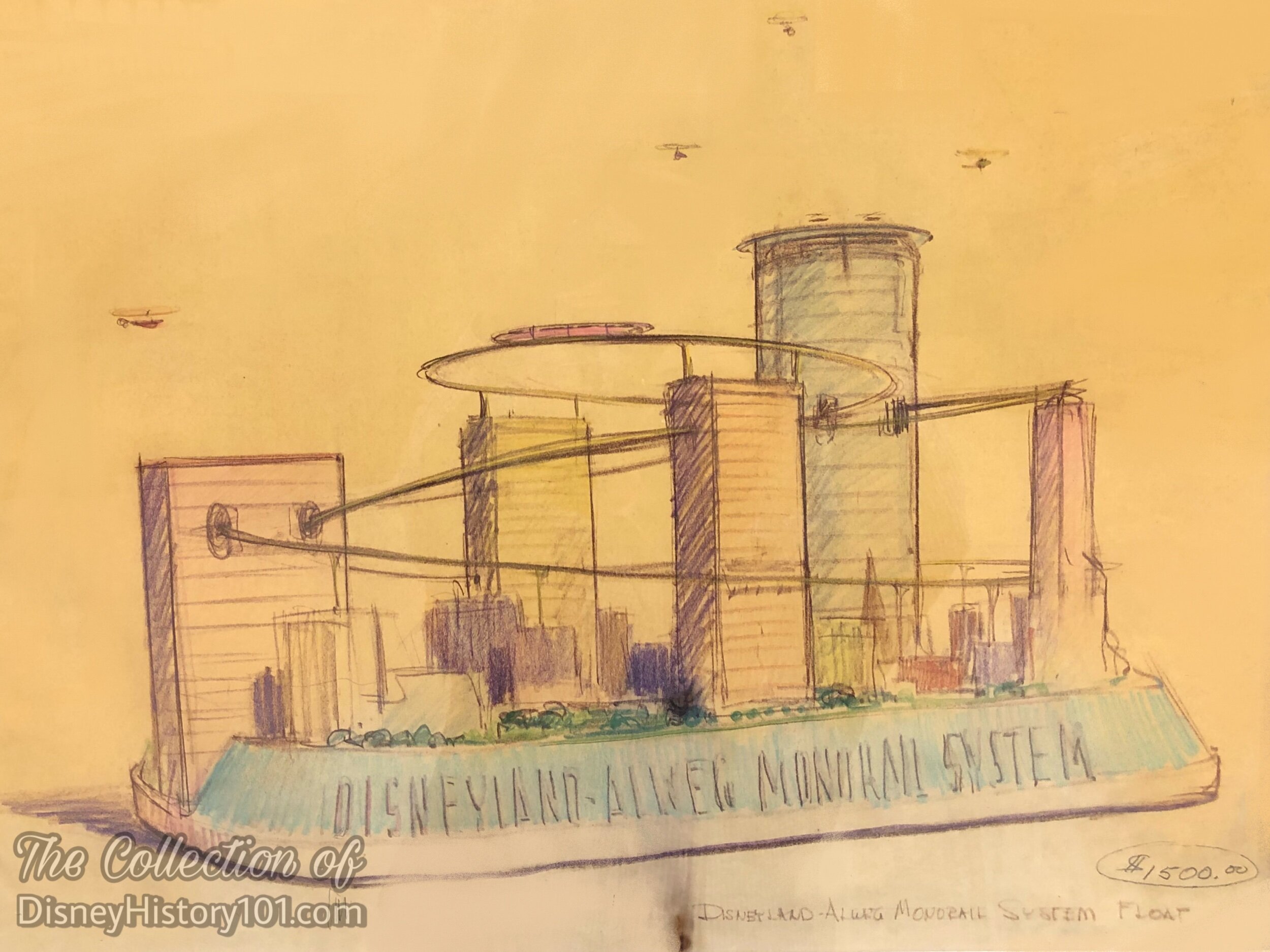
This “Disneyland ALWEG Monorail System” Float Design was created for the parade celebrating the grand “Re-Opening of Disneyland”, in 1959. Small-scale monorail trains made their way around the miniature city-scape, atop the float as it moved down the parade route.
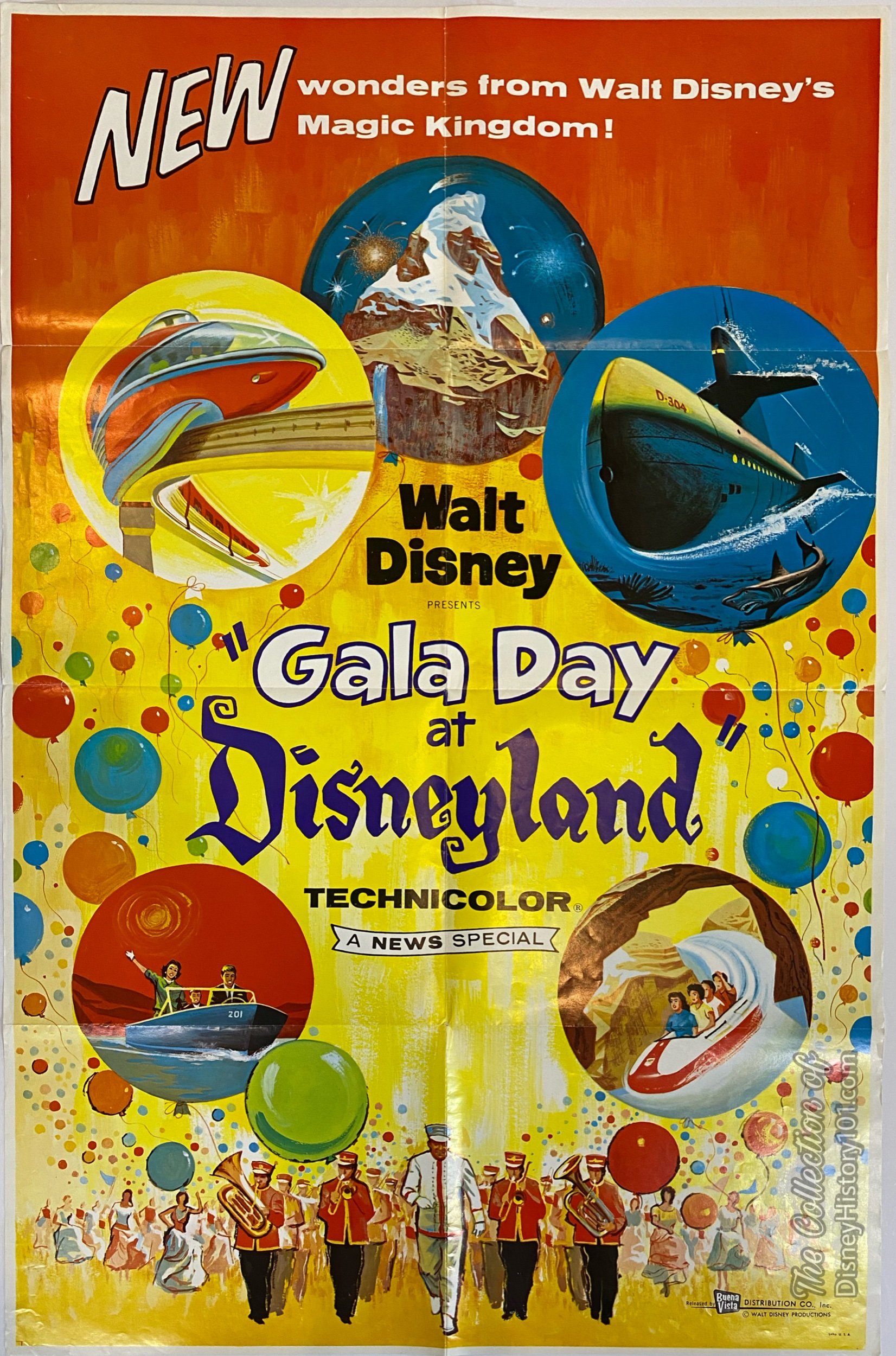
Above, is one of those full-color DeLuxe “Gala Day at Disneyland” one sheet posters by National Screen Service. “Gala Day at Disneyland” was a 25-minute Technicolor News Special released through Buena Vista Film Distribution Co., Inc. Buena Vista Distribution announced the debut of “Six Spectacular New Adventures” to movie-goers beginning June 21, 1960. This was the largest expansion of Disneyland to date and open with a major celebration and parade attended by hundreds of news media and celebrities. As part of the festivities Meredith Willson (famed writer of the hit Broadway musical The Music Man) lead a "76 Trombone" Marching Band. Among three new adventures was the Disneyland-Alweg Monorail System with its Mark I - a means of transportation in the future and “the first such vehicle to run on a regular basis in the Western Hemisphere!”
According to “50th ANNIVERSARY: The Sounds of Disneyland®”: “The Monorail became a ubiquitous Disneyland image, thanks in particular to the many film and television programs that featured the amazing, dynamic transports. From these shows came a unique style of music-appropriately dubbed ‘Monorail Music’ by its fans. For the record, not all ‘Monorail Music’ was originally written to underscore actual images of the Monorail itself-instrumental pieces such as ‘Sleigh Ride in Disneyland,’ musically representing the Matterhorn, are part of the stylistic genre as well. ‘Monorail Music’ generally exists as unpublished instrumental pieces, used variously and frequently in many forms of media as an emotional signature, a prompt to transport the viewer instantly into the world of Disneyland-where life glides along as effortlessly as the Monorail itself.”
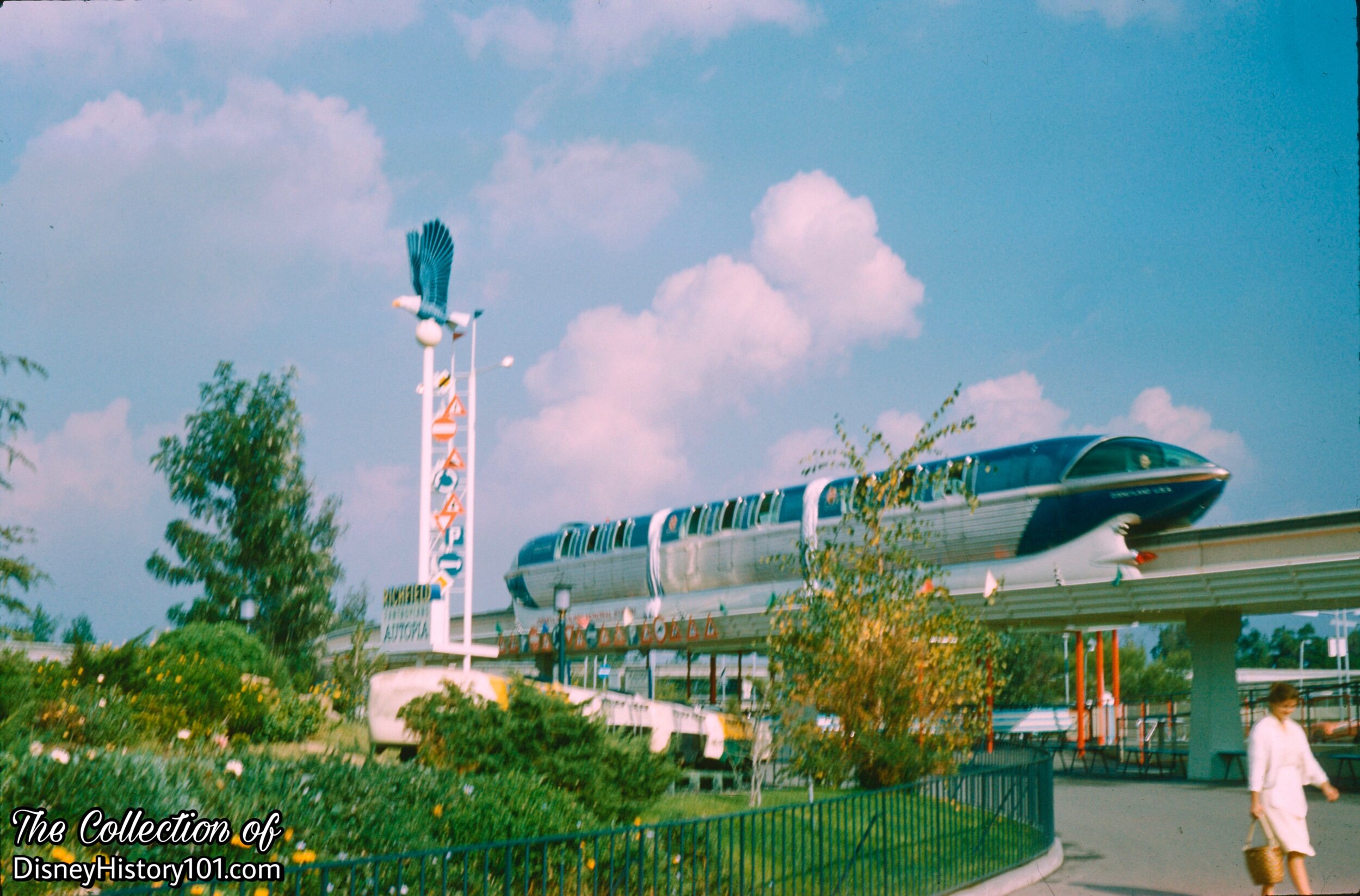
One of the bullet-nosed sightseeing Monorail trains soars high over Tomorrowland, passing the Richfield Eagle marking the entrance to the Fantasyland Autopia, en route to “nowhere in particular!” To be fair, the route took passengers over woods, lakes, rivers, waterfalls, tropical lagoons, Autopia Freeways, and circled the 1/100 scale Matterhorn Mountain. By this time, the two ultra-modern trains of the Disneyland-ALWEG Monorail system (pulling just one coach and one cone) were transporting an astounding capacity of 86 Guests per train, allowing an average of 2,100 passengers per hour, and 100,000 persons a week along its 3,800 foot-long rails in Tomorrowland.
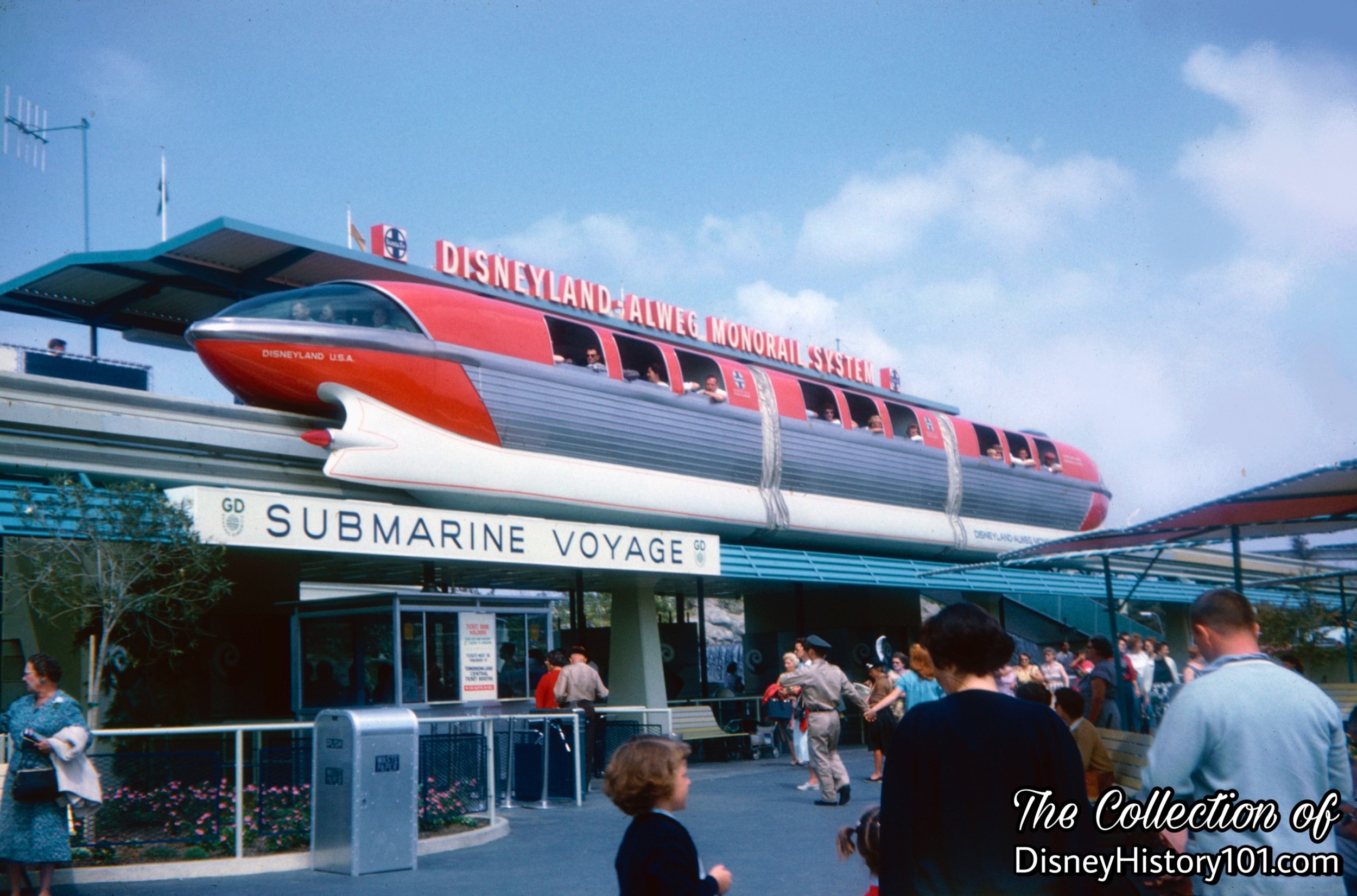
Due to an agreement with Atchison, Topeka & Santa Fe, the ALWEG Monorail trains and coaches would carry the Santa Fe name (and not the name of another railway).
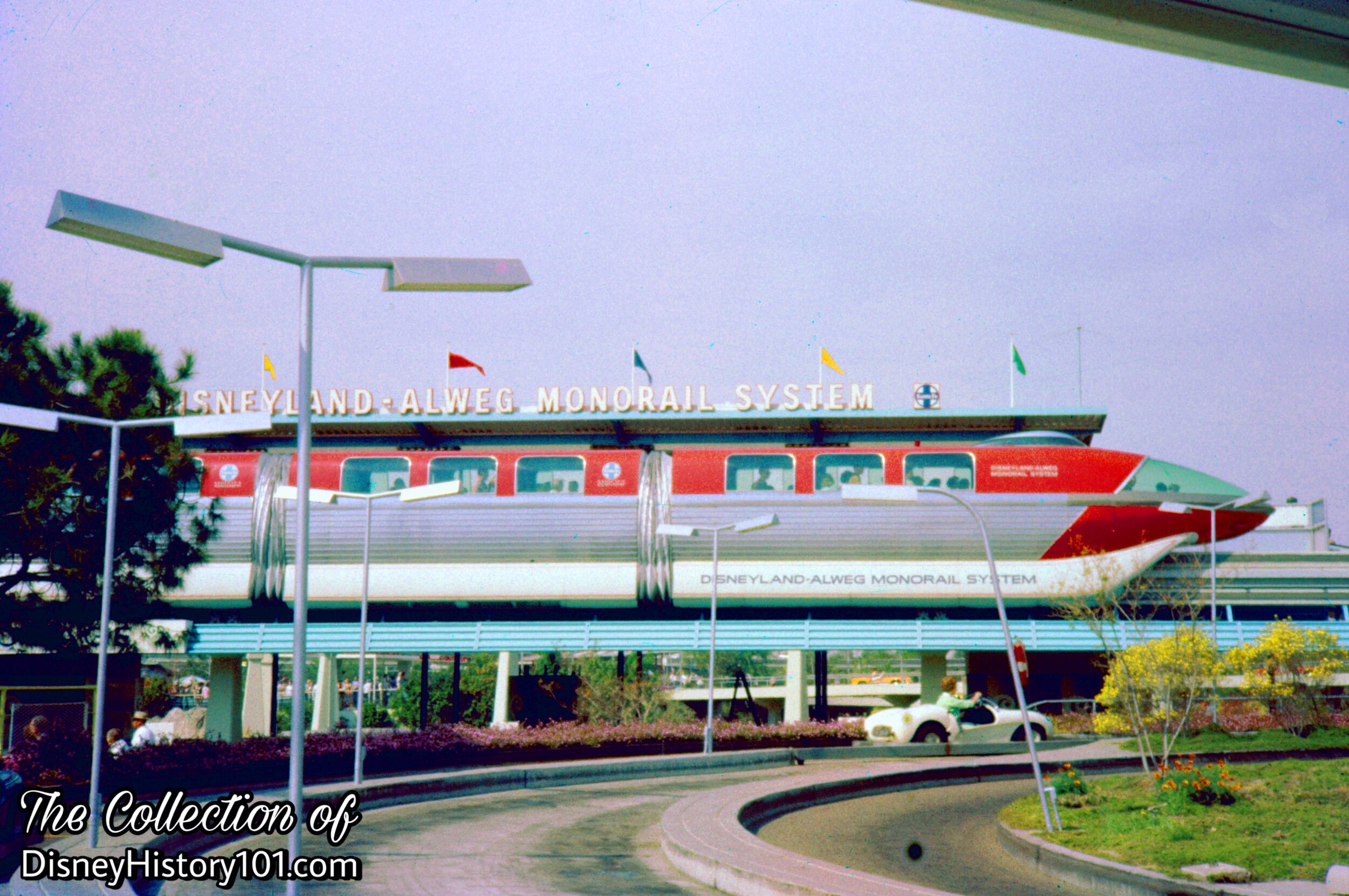
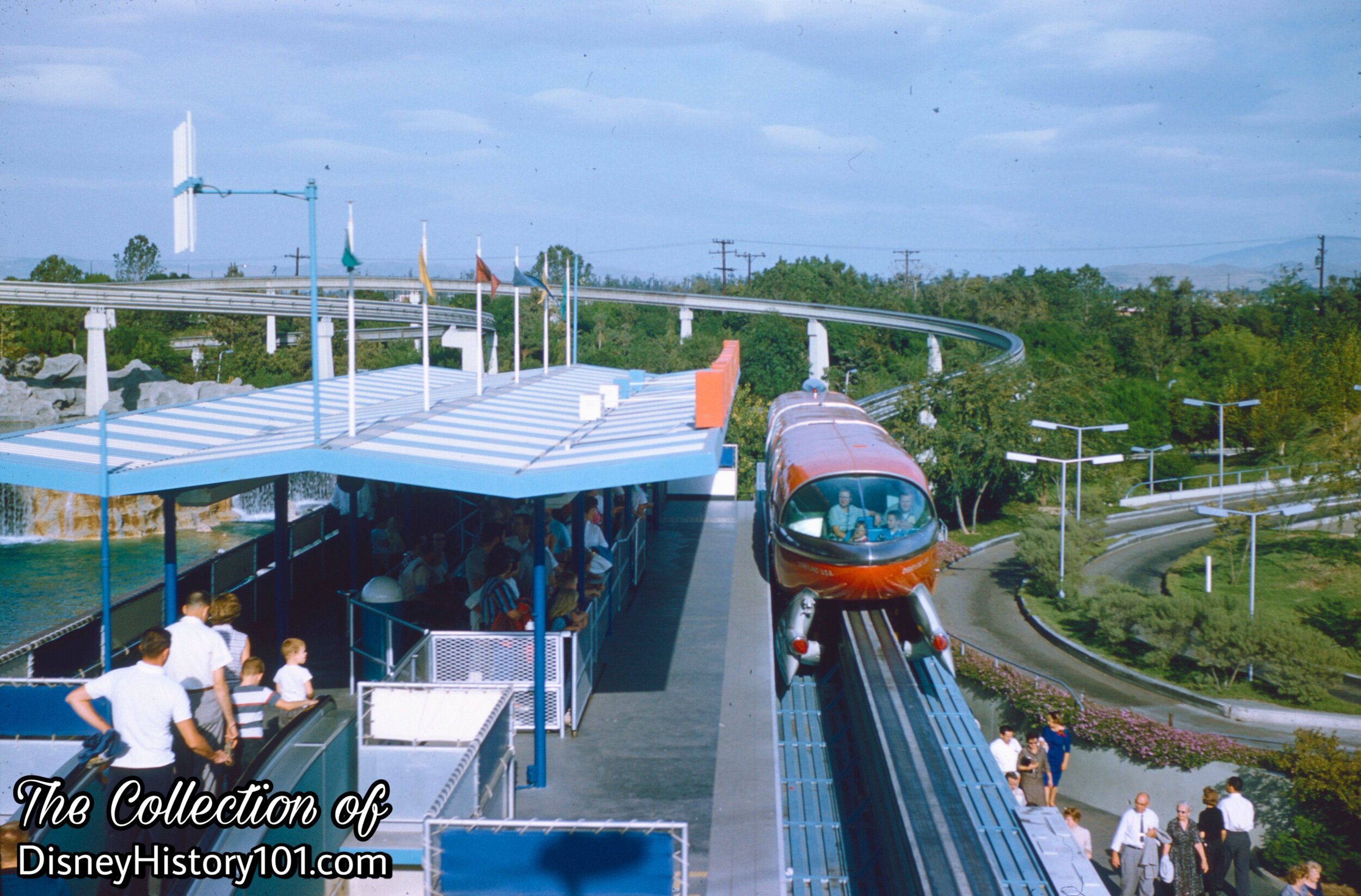
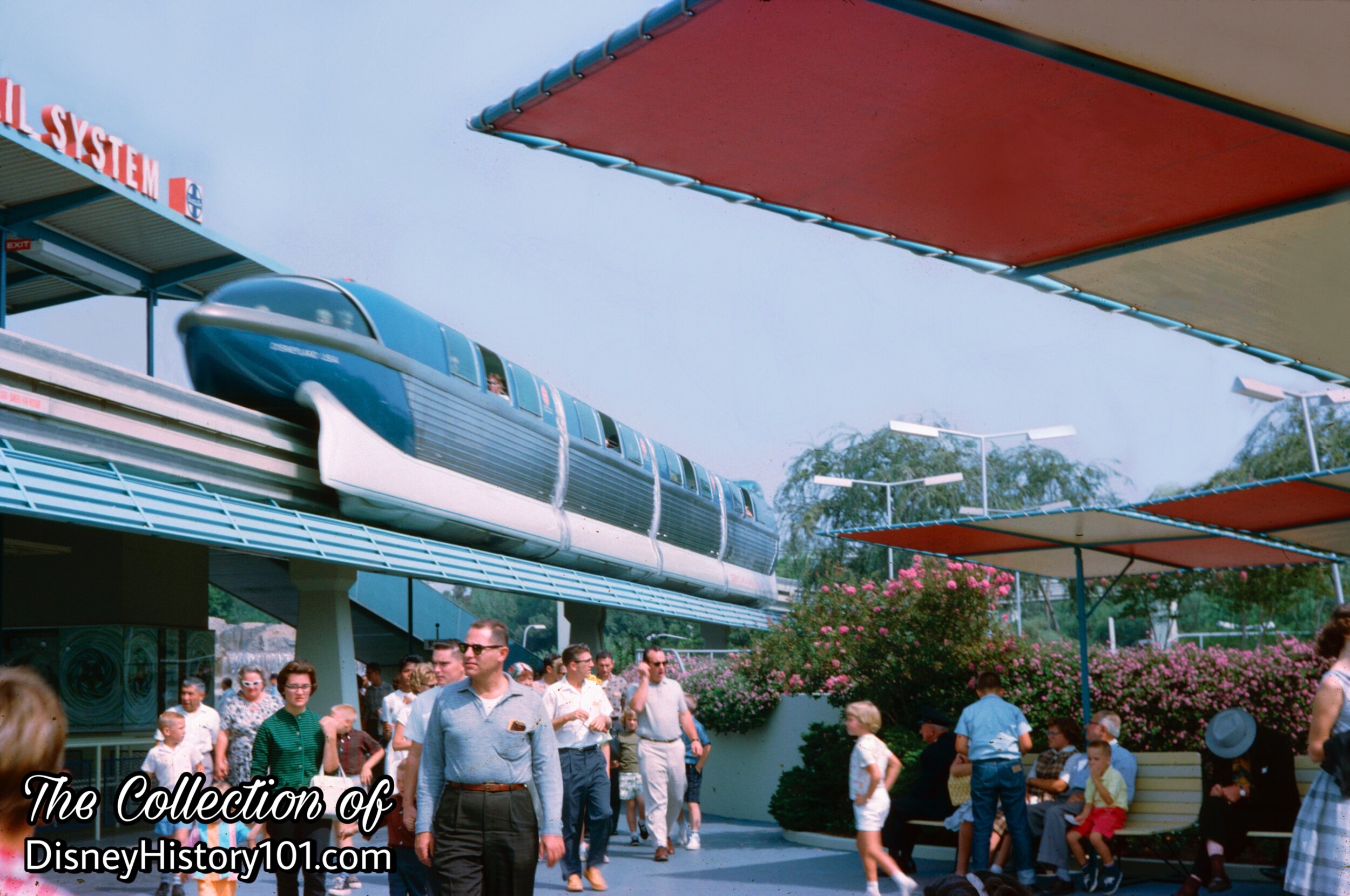
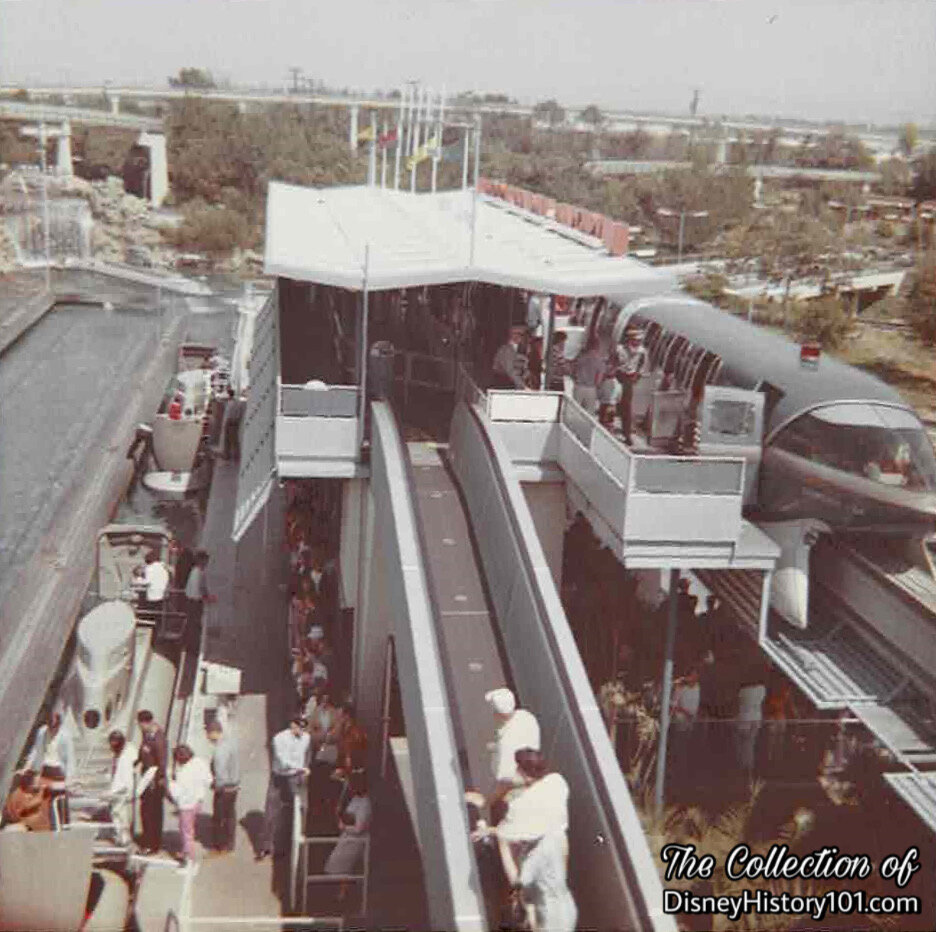
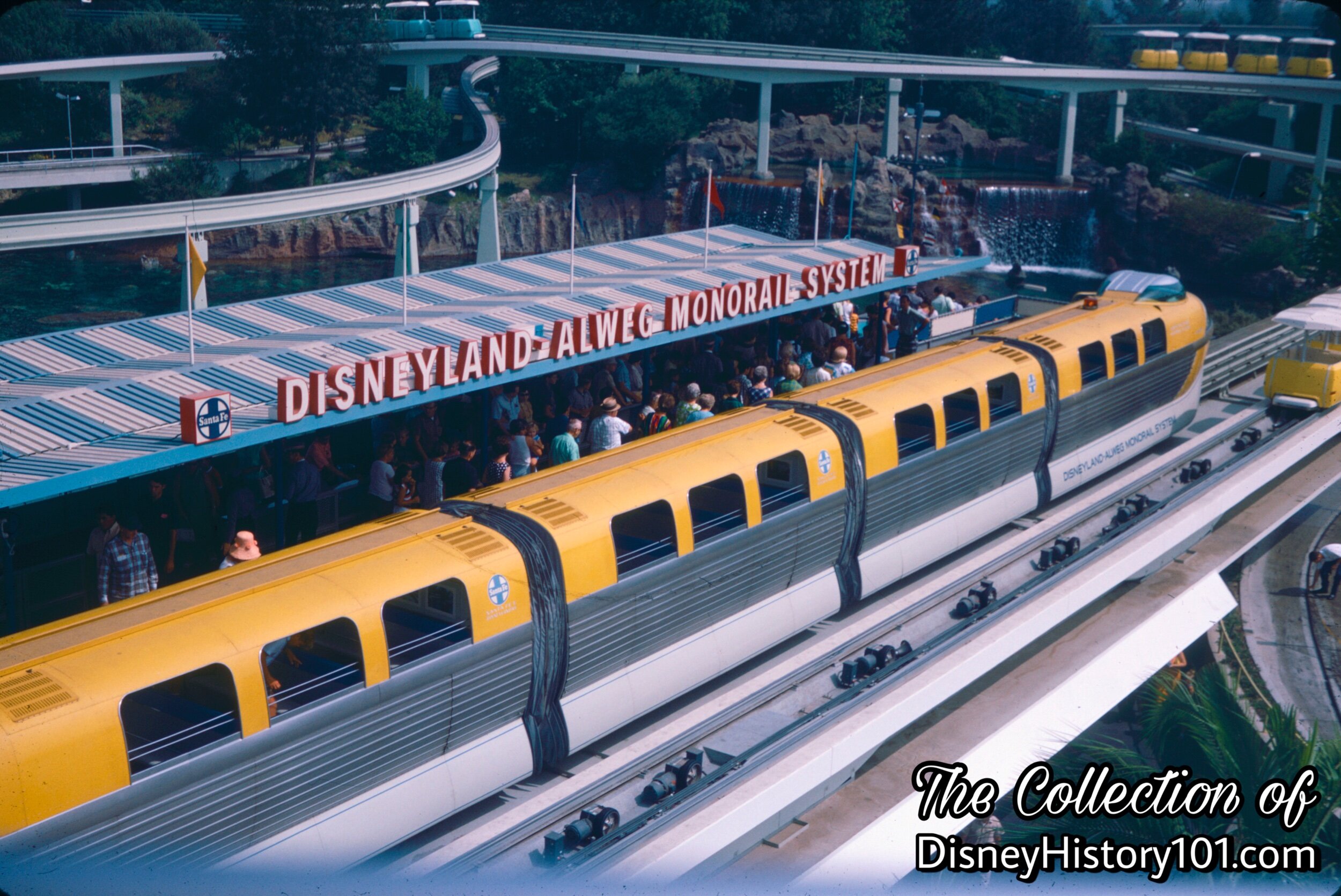
Here, the Monorail train stops at the only scheduled stop along the beamway where passengers could board.
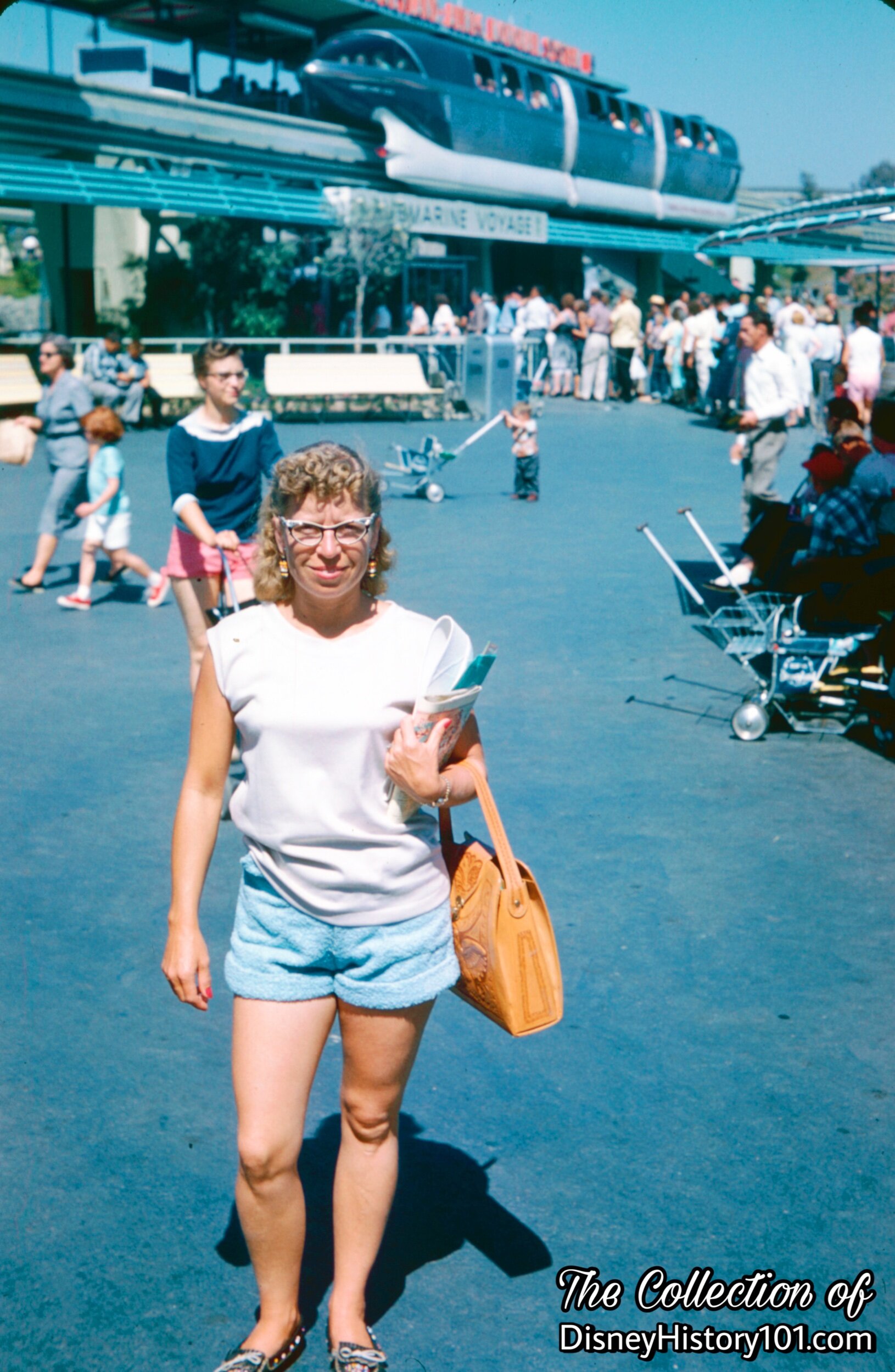
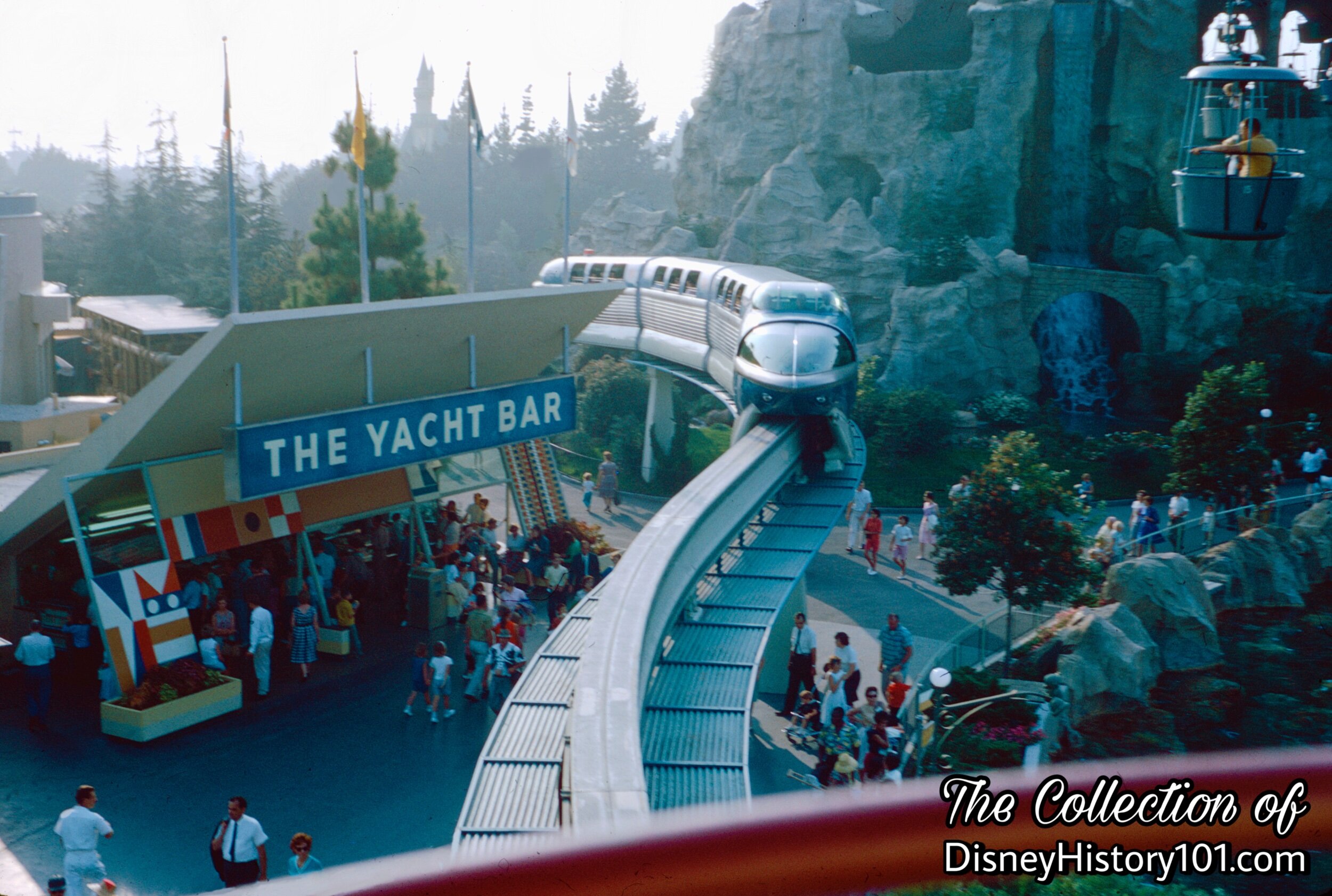
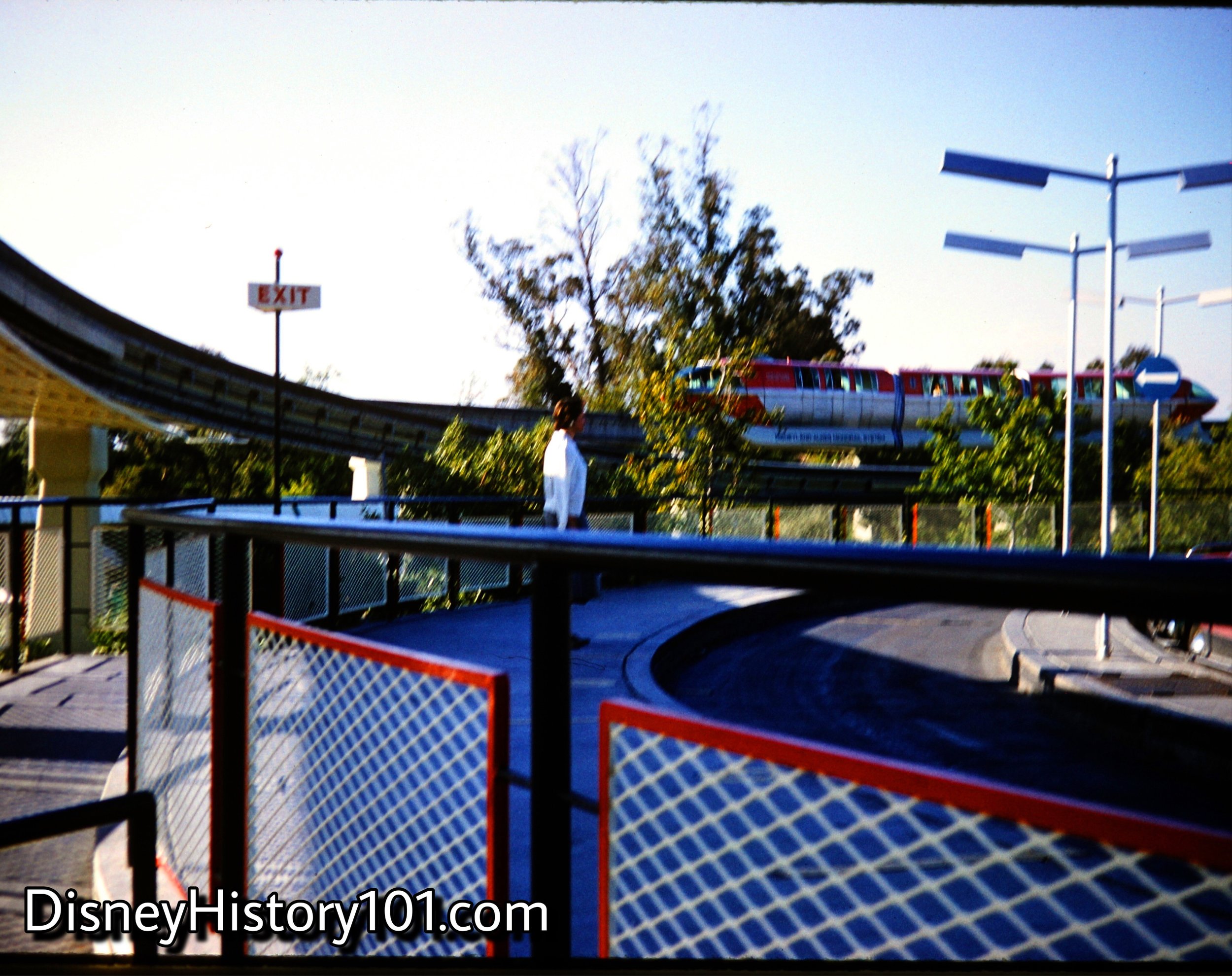
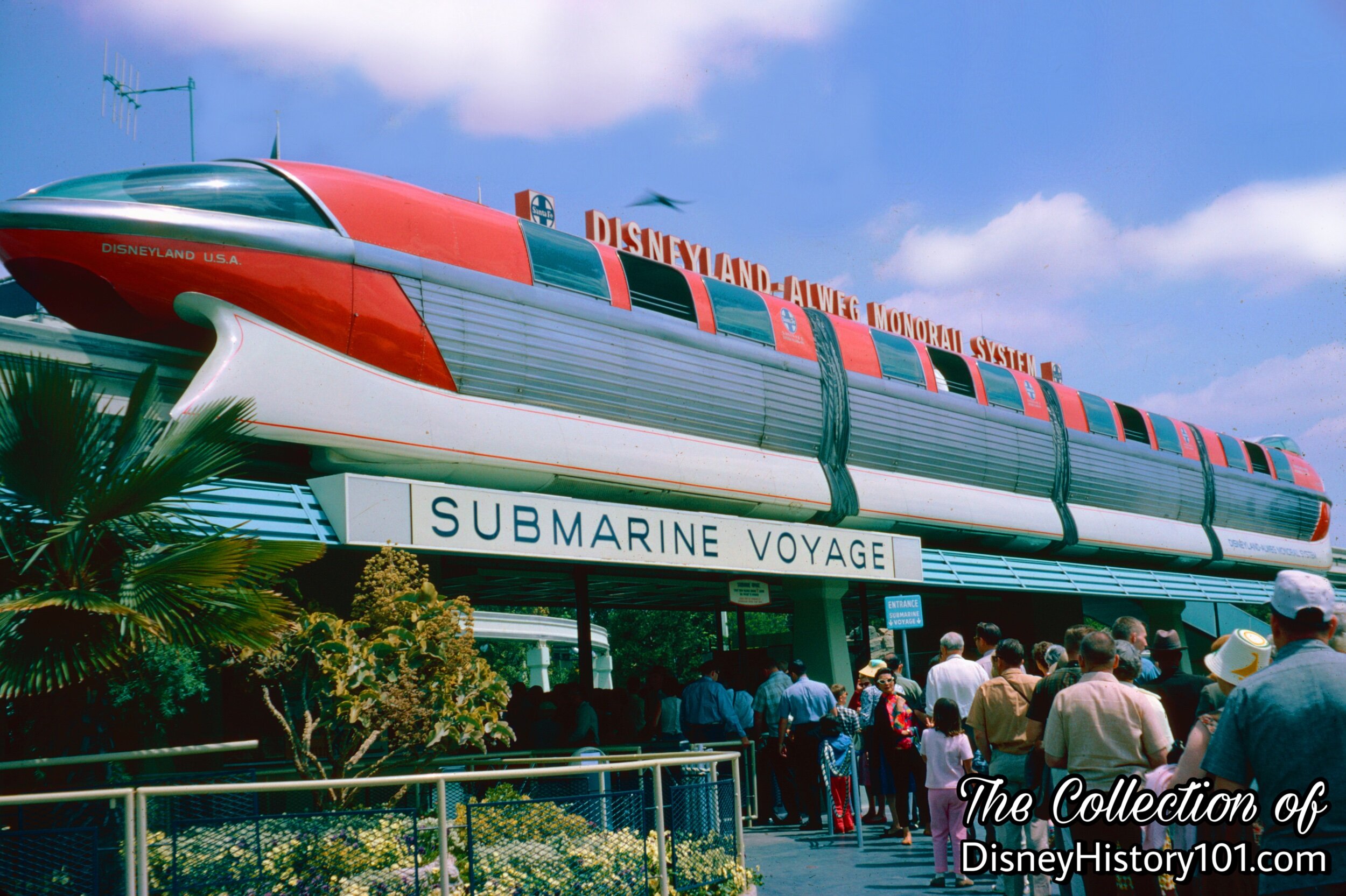
As we head over the Tomorrowland Autopia and toward the Submarine Lagoon, we will apply the brakes and decelerate to a speed of 17 miles per hour. We will be approaching one of our stops - the Tomorrowland Station!
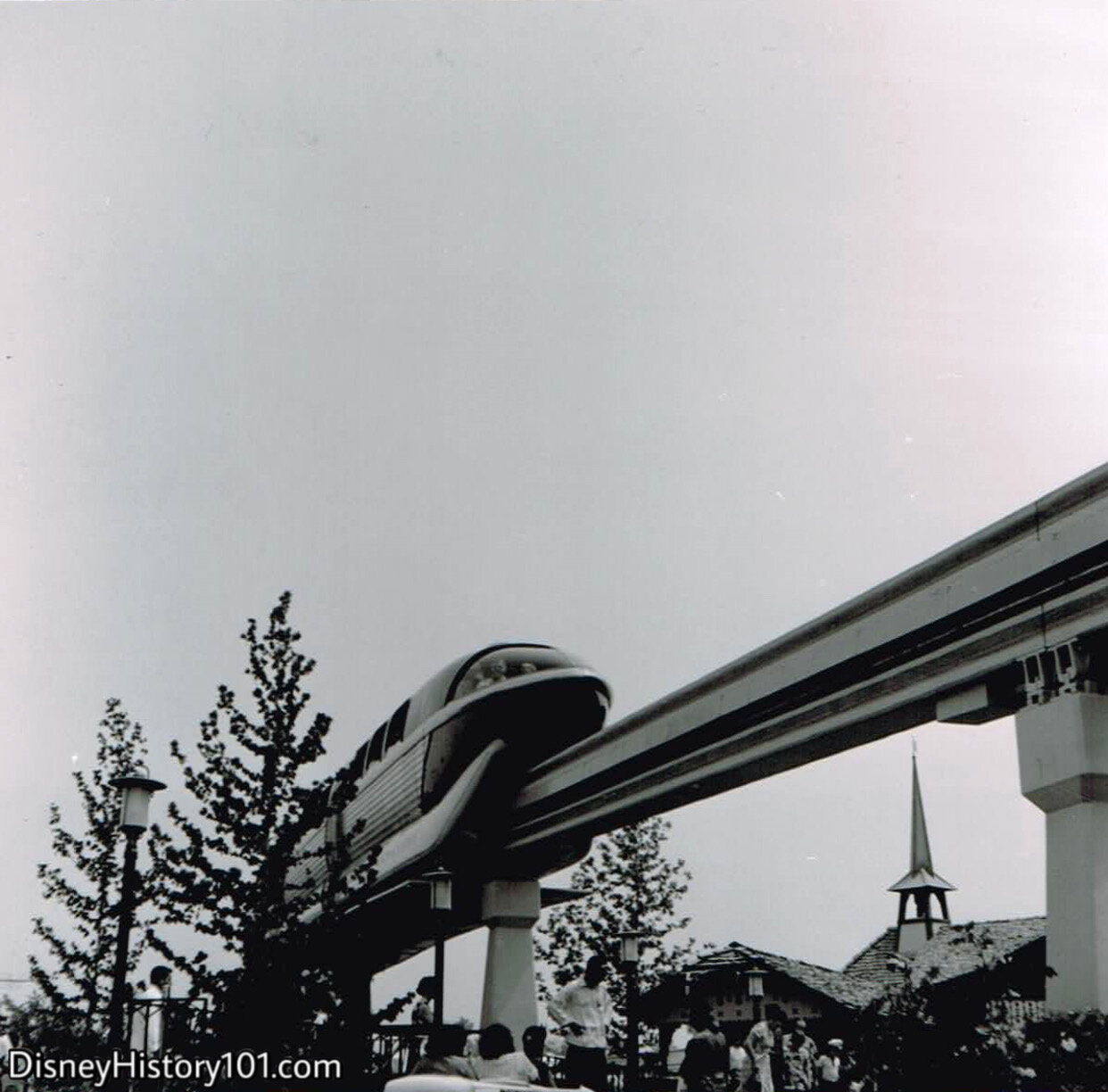
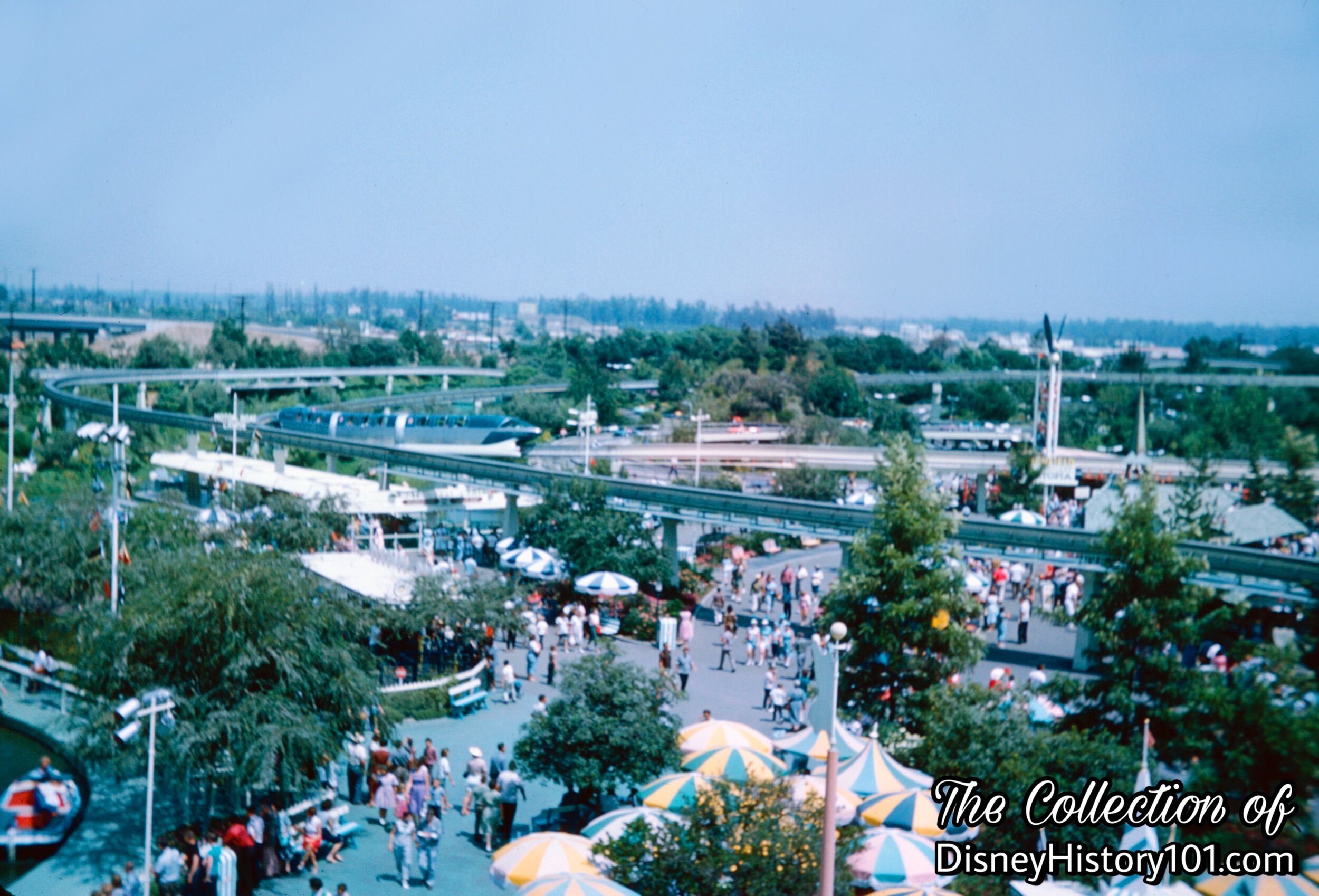
As we slow down and circle around the Matterhorn, we gain an opportunity to take a gander at Tomorrowland.
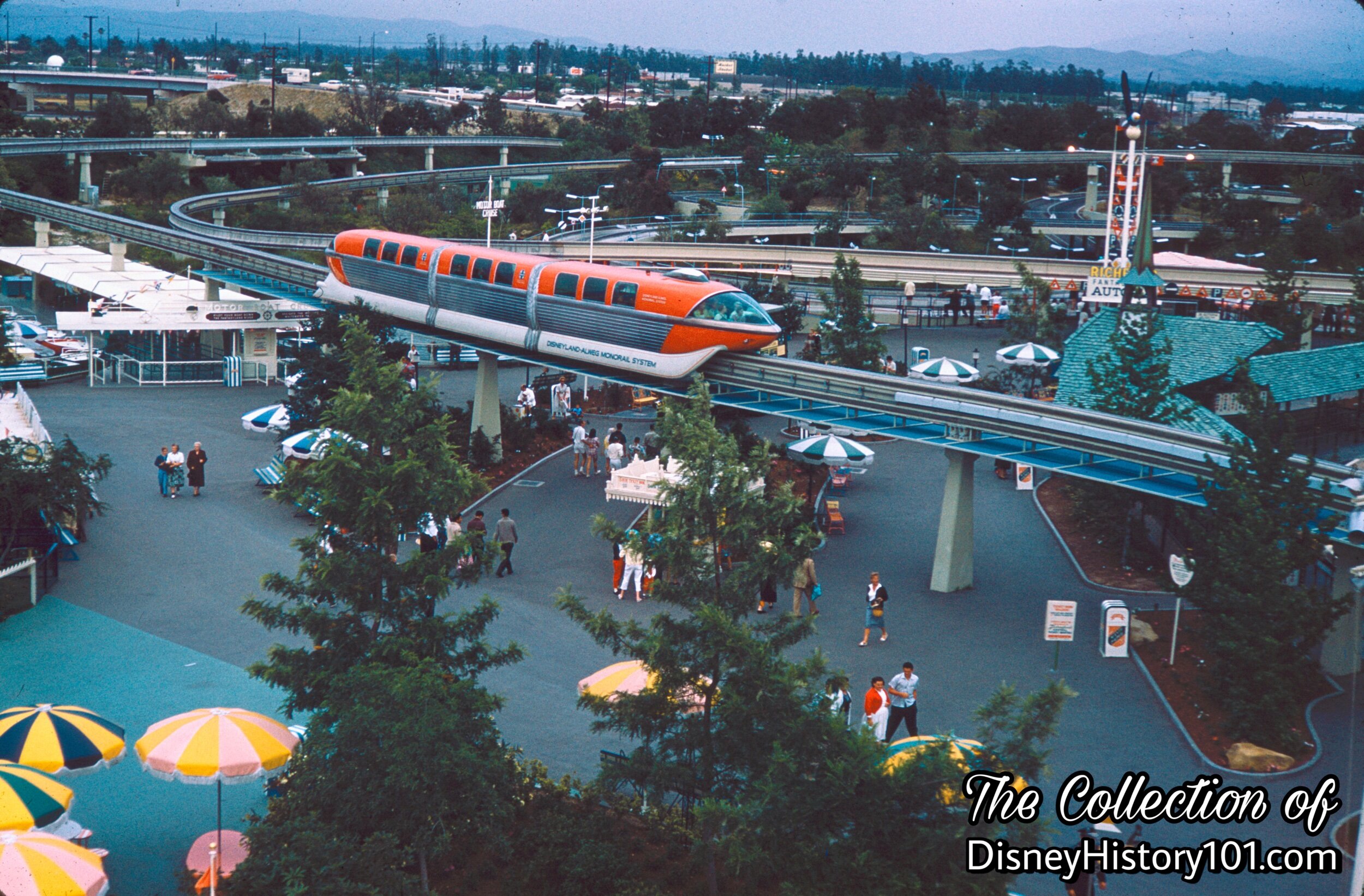
The Monorail is a moving piece of machinery. Blue translucent panels that comprise the Canopy have been placed on the underside of various portions of the Beamway to serve as a protection against any oil or condensation dripping from the trains onto guests, bobsleds, or motorboats passing below.
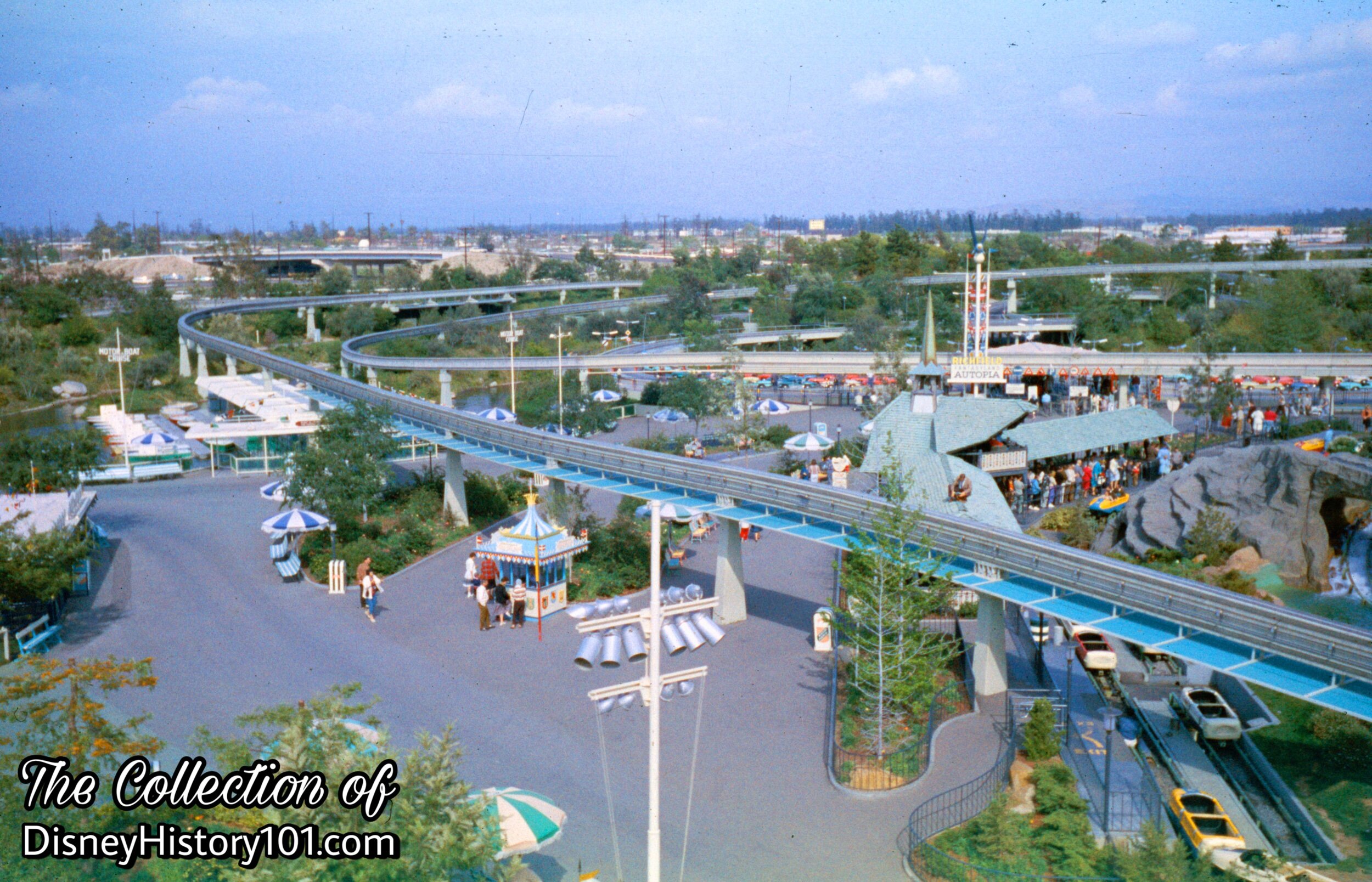
Just look at that spotless pavement!
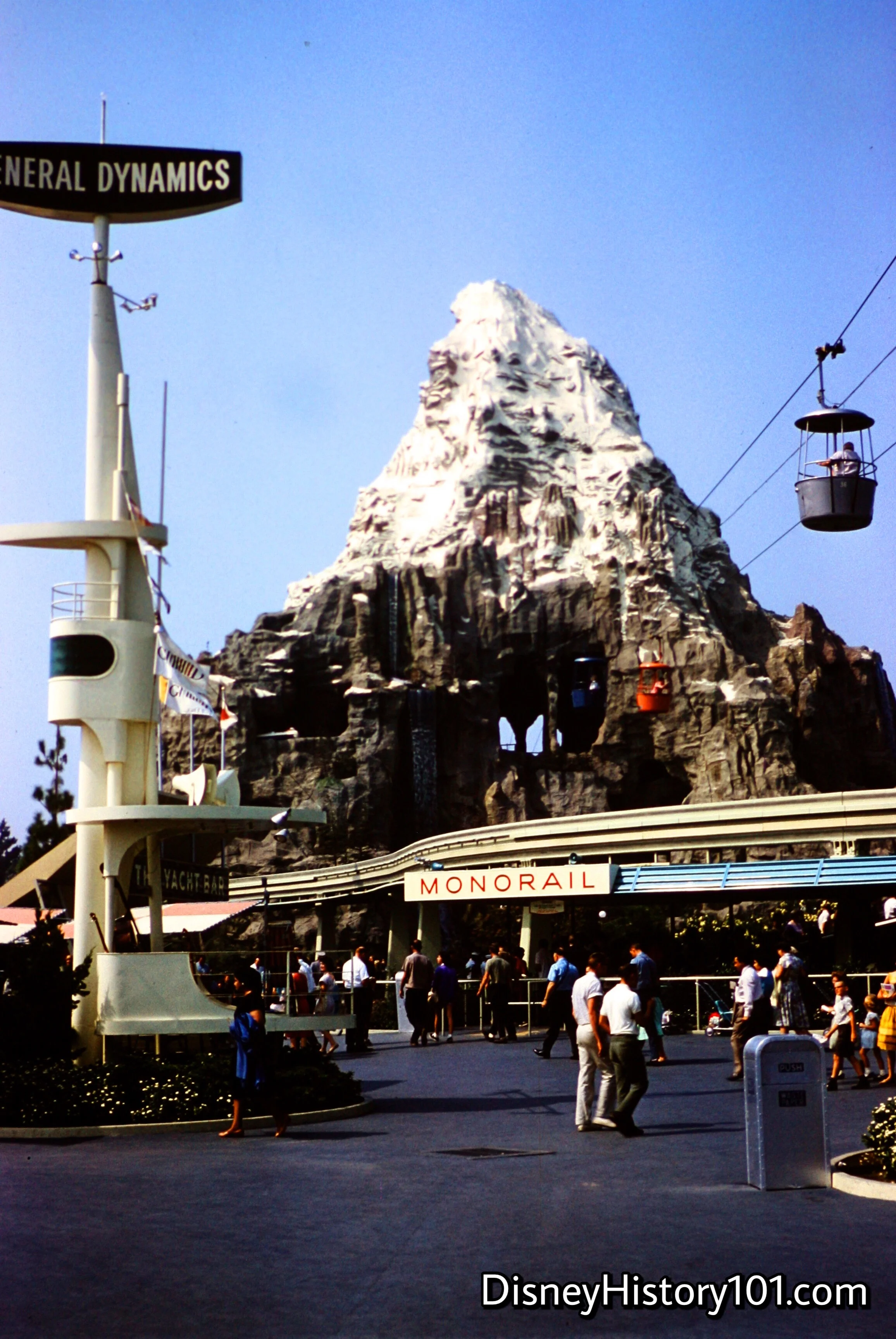
From nautical adventures to high-flying journeys through Disneyland’s Pennine peak - The Disneyland-Alweg Monorail System certainly stood out, as one of several new attractions that accentuated Tomorrowland in 1959!
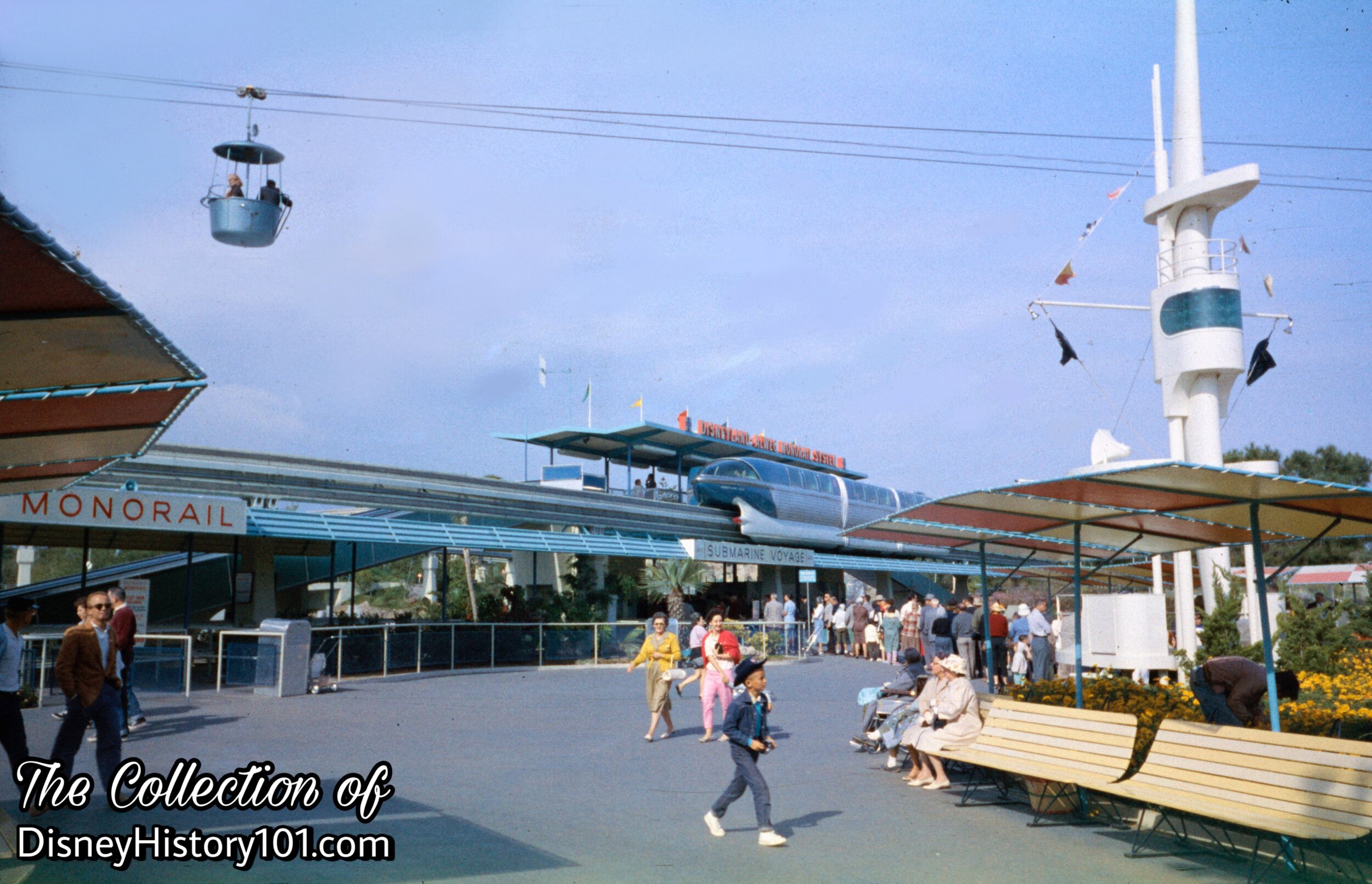
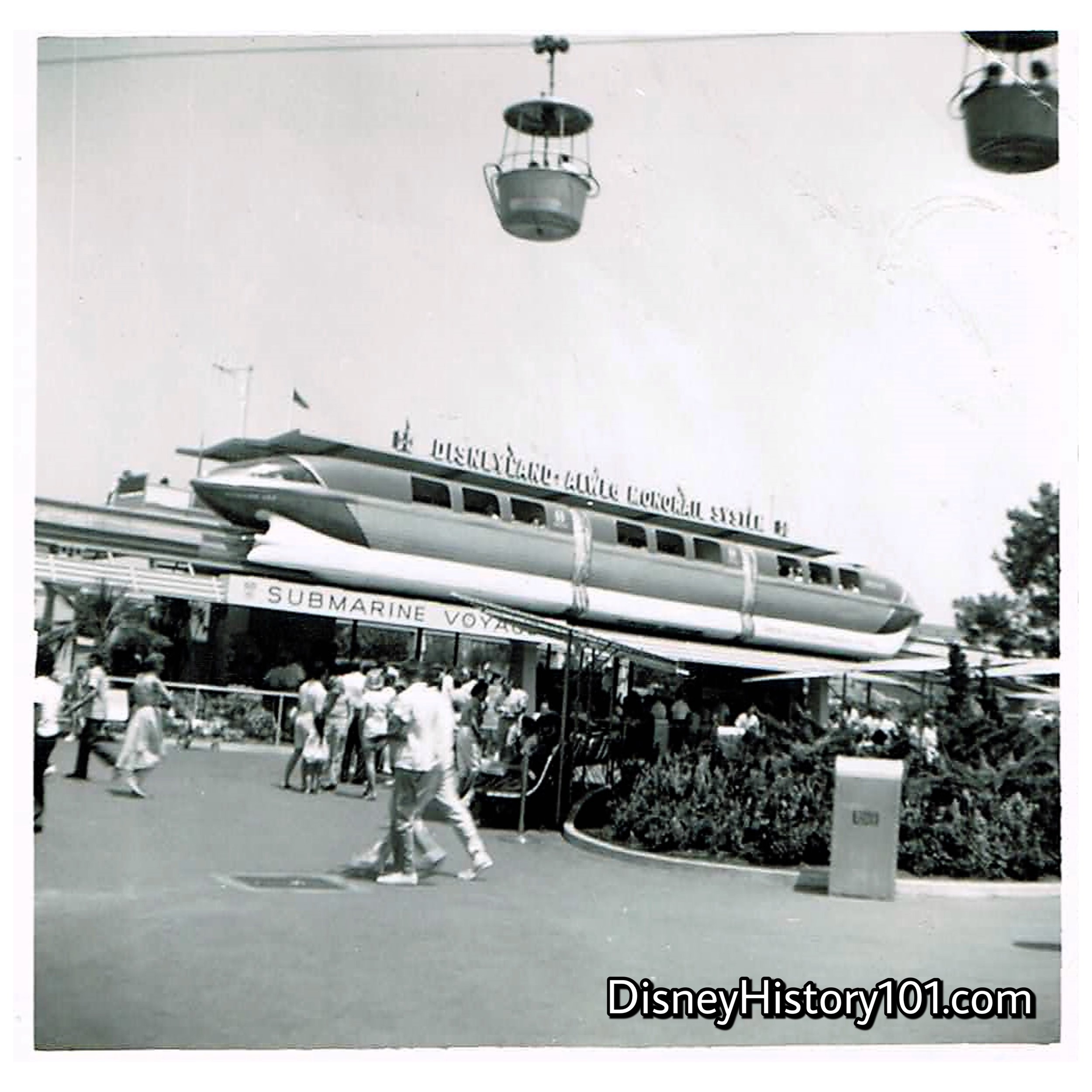
Well, it looks like we’re all ready to approach the Tomorrowland Monorail Station, and depart for a round trip of sightseeing in the brand new three-car Red Mk 1!
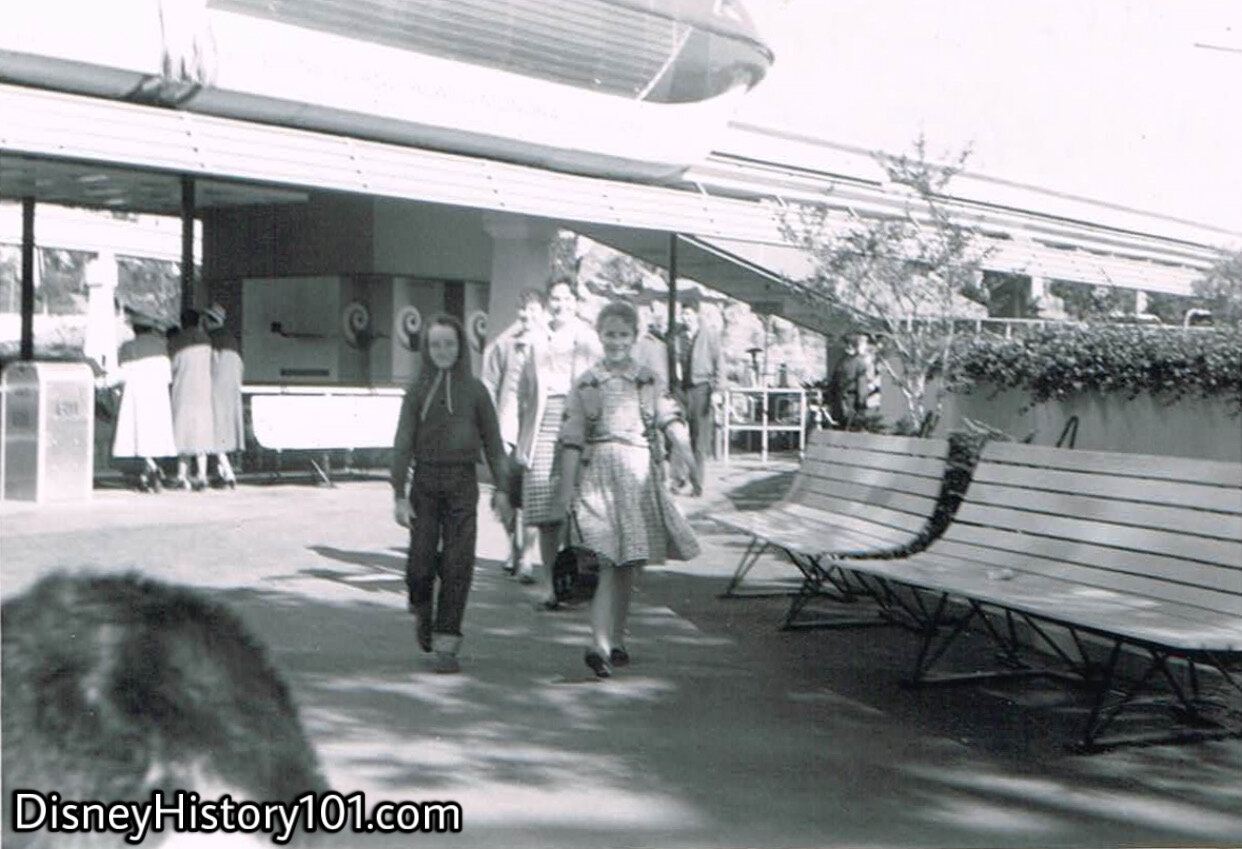
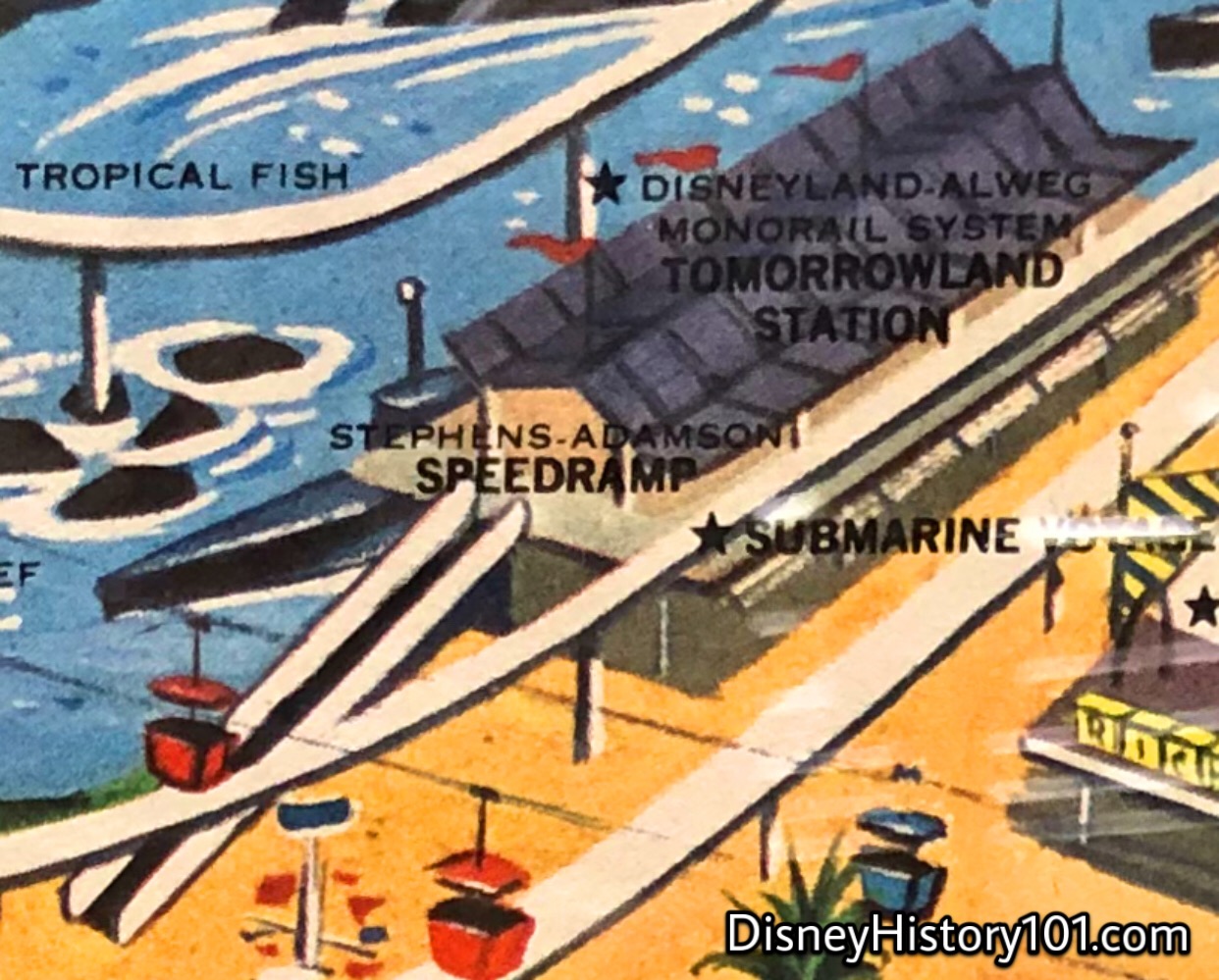
“Stephens-Adamson Speedramp Design and Construction”
During the mid-1950s, moving sidewalks were innovative and not a foreign concept. Naturally, a moving sidewalk was part of the plans for Tomorrowland since the earliest stages of development. According to the 1953 Disneyland Prospectus : “A MOVING SIDEWALK carries you effortlessly into the World of Tomorrow where the fascinating exhibits of the miracles of science and industry are displayed.”
The construction crews didn't begin work on any of Tomorrowland until six months into the project. However, as of June 2, 1955, C.V. Wood Jr. sent an Inter-Office Memorandum to Walt Disney regarding the best estimates that could be obtained at the time regarding the completion status of individual sections of the Park and Opening Day. C.V. wrote: “Moving sidewalk decision needed from the design group. This is critical if we are to have it for opening.” By Press Preview Day, Tomorrowland at Disneyland opened without its promised moving sidewalk. The closest thing was a revolving moving walk within Space Station X-1.
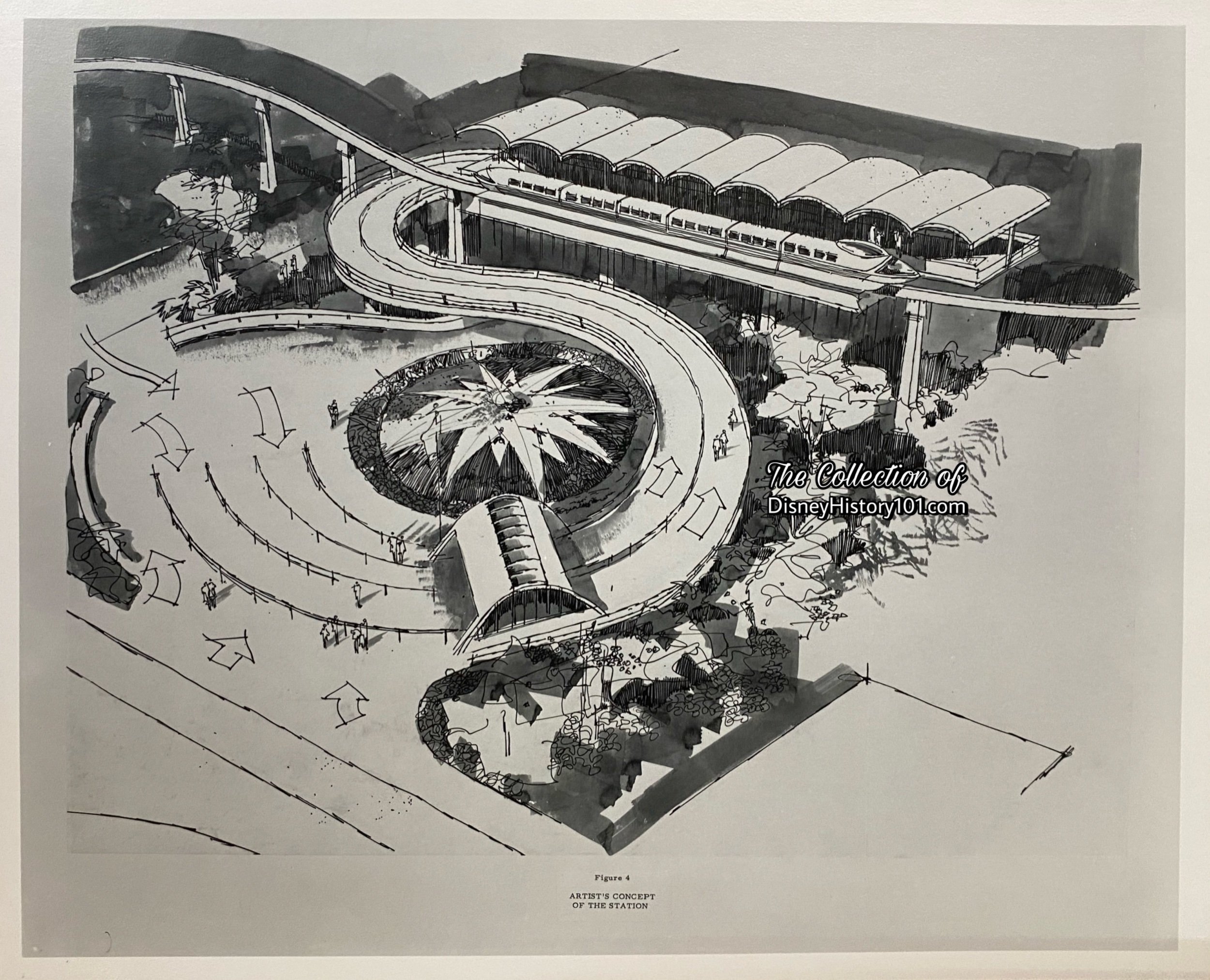
But the exciting “moving sidewalks” were to become a reality sooner than many guests imagined! Three years later, Walt Disney’s Guide to Disneyland (published early 1958) offered a preview of the coming Disneyland-ALWEG Monorail attraction, teasing that “even the access to the Monorail Train Station is futuristic ; a Speedramp carries passengers from ground level to the loading platform.” By that very year of 1958, Herb Ryman would create numerous “suggestions” of the “Monorail Station.” Outside contractor Stephens-Adamson Mfg. Co. designed the “Speedramp.”
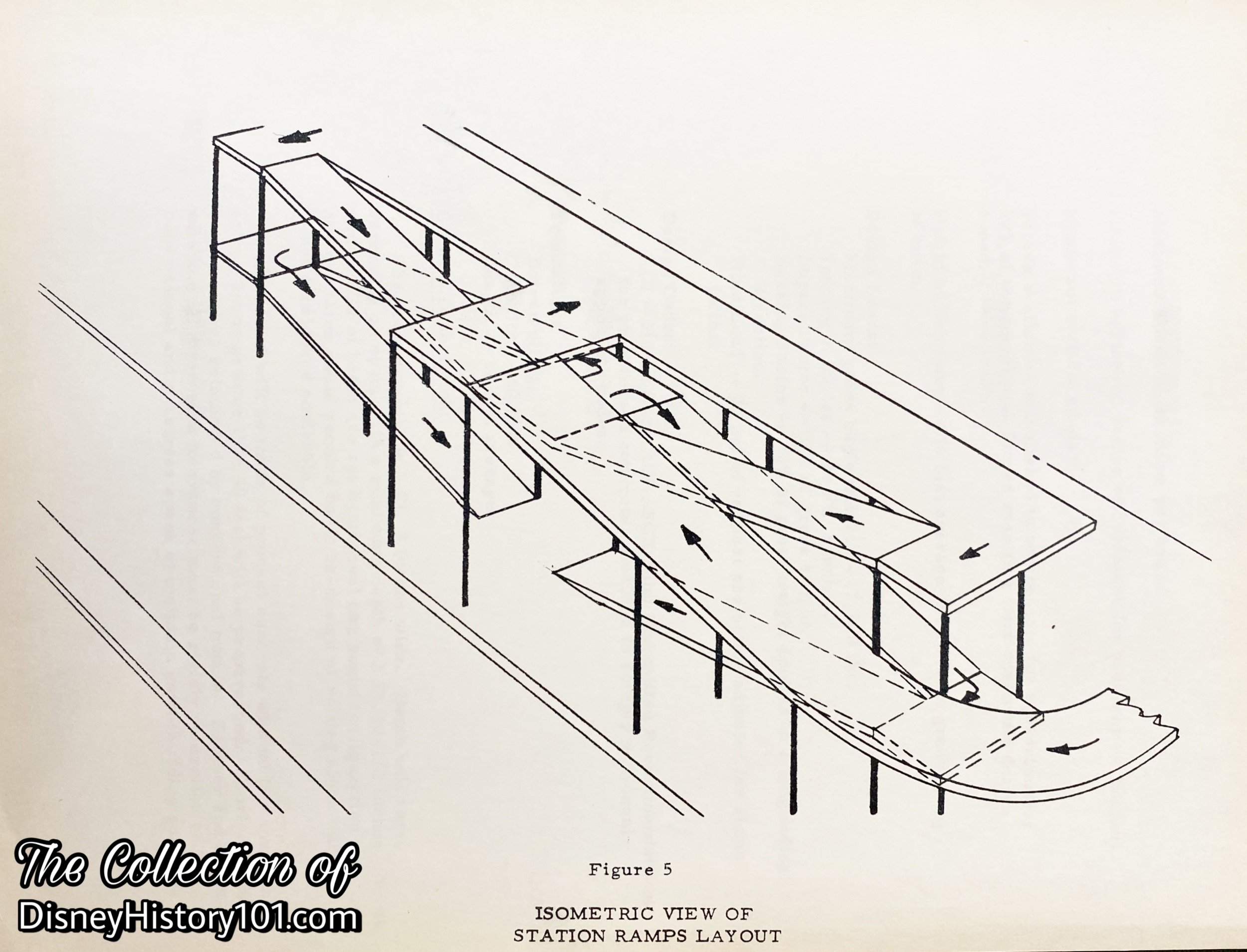
Not even a year later (in 1959), Tomorrowland would finally receive the Stephens-Adamson Speedramp (the first of several Stephens-Adamson passenger conveyors to be built in Disneyland). Electric motors with a variable speed drive were capable of moving the rubber speedramp belts (and their guests) at 125 feet per minute. The impressive maximum capacity of these ramps was figured to be about 6,000 guests per hour!
“Speedramp Maintenance”
Disneyland Park Operations Crew M-43 Machinists would read the daily “Third Shift Report” and Defect Sheet and make a standard opening inspection of all "Speed Ramps" in the Tomorrowland area, checking their overall appearance, check for any discrepancies and notify M-1 Machinists and the proper department supervisor. They would notify M-41 of any further work to be done or parts needed prior to opening. M-43 Machinists would respond to all Downs and delayed openings in T/L area whether or not it was mechanical. Upon arriving at a down attraction, they would determine what the failure was, determine which crafts were needed, determine an estimated time needed to repair, notify M-1 Machinists of all available information, and assist other crafts to repair attraction as needed.
“Speedramp Legacy”
Following the success of this attraction, competing theme park Freedomland (which operated in the Bronx, New York from June 19, 1960 to September 13, 1964), launched its Stephens-Adamson Manufacturing Co. sponsored Moving Lake Walk. This attraction was a traveling sidewalk over lake in its Satellite City: The Future area! Two years later, Stephens-Adamson would also be responsible for the passenger conveyor system at the General Electric Carousel of Progress (1966), one passenger conveyor system at the Wedway Station (1967), an updated version of the passenger conveyor system at the Monorail System Tomorrowland Station (1969), and two conveyors in conjunction with the Haunted Mansion attraction (1969).
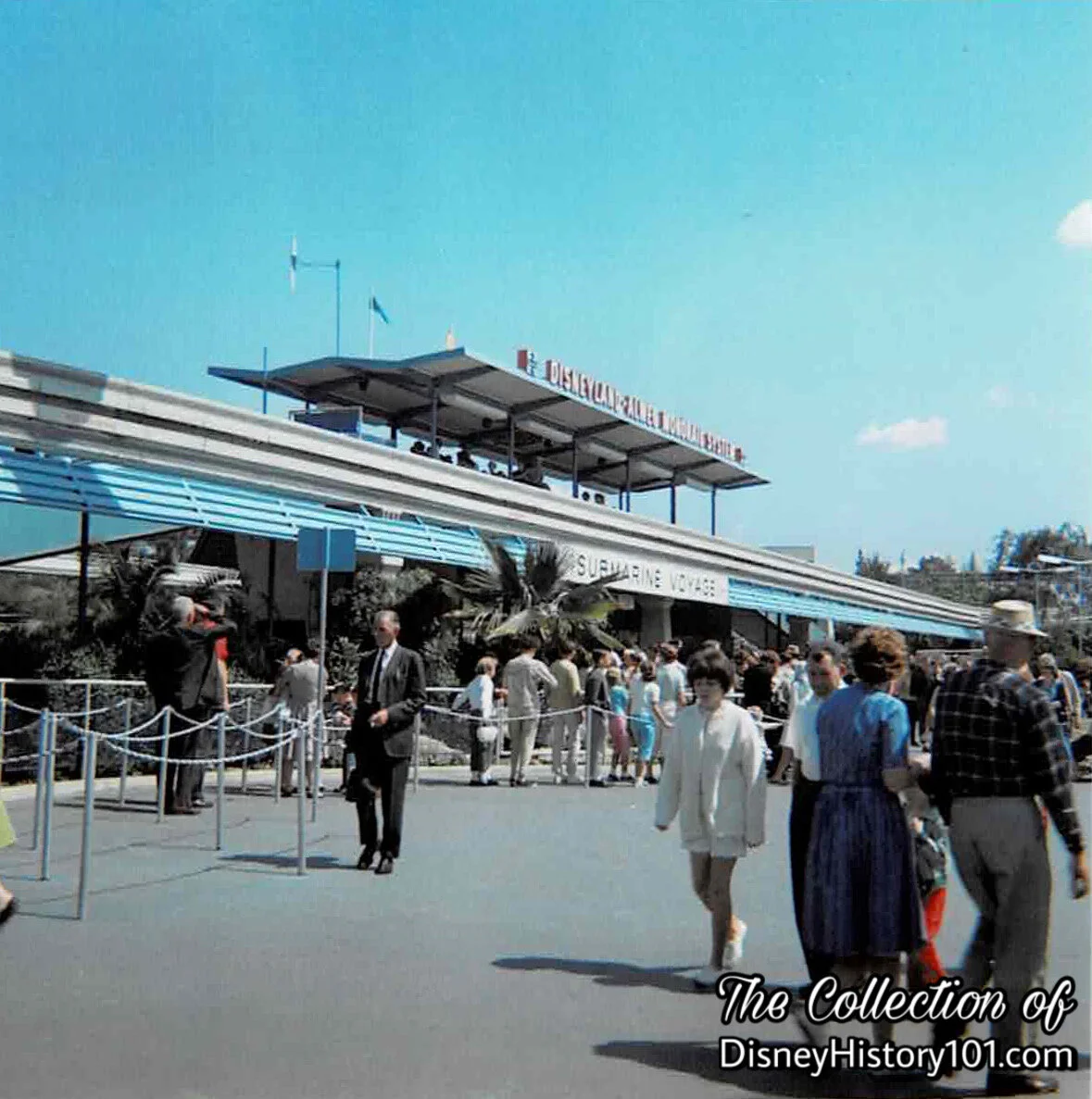
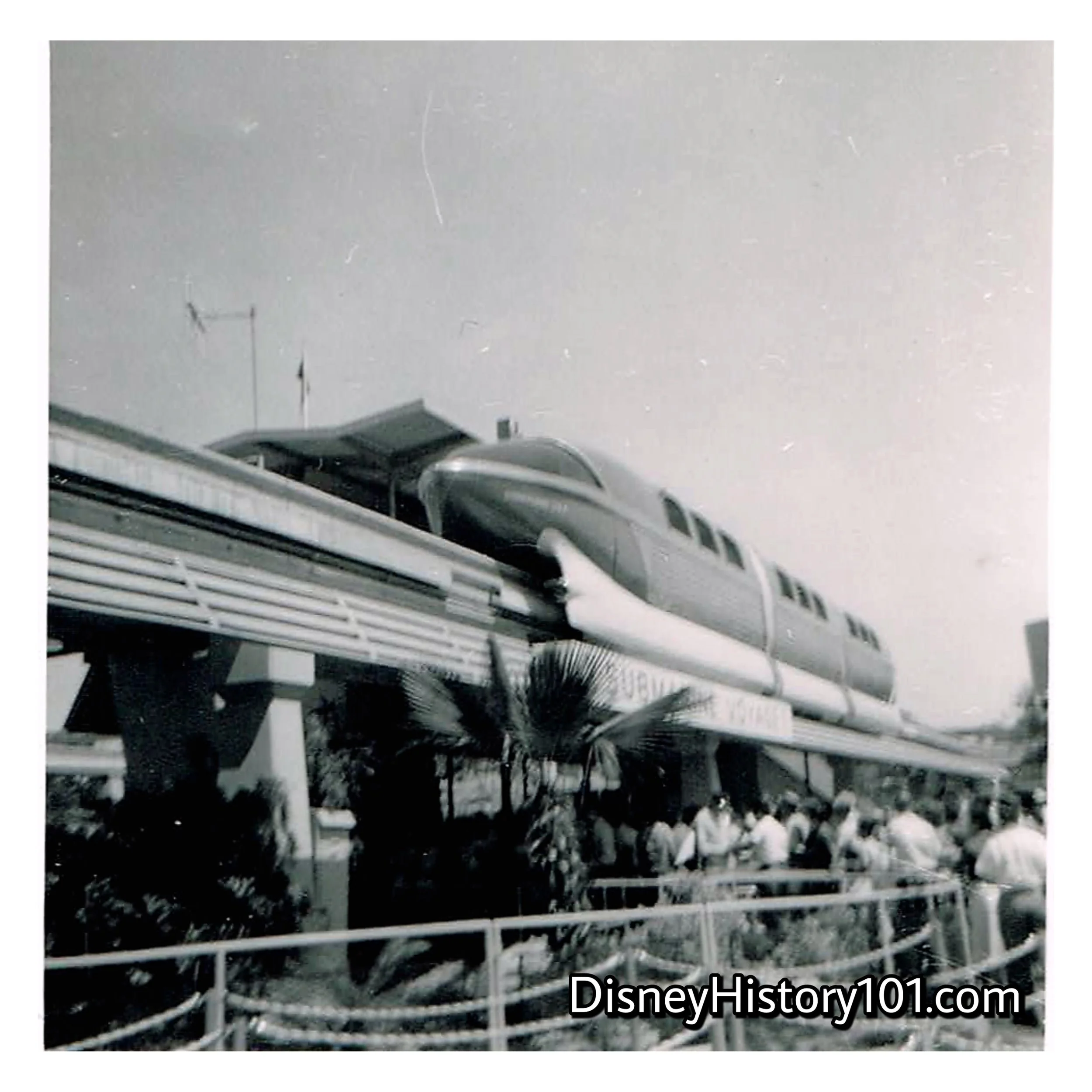
“A Brief Word About Fuels & The Cycad Revoluta”
Guests approaching the waiting area prior to the entrance turnstiles can see a curious palm-like plant which is, in effect, a living fossil. According to some tour scripts : “Its relatives existed in the Mesozoic Period some two hundred million years ago.”
I know what you’re thinking! Though the Washingtonian Palm is clearly not the Cycas Revoluta aluded to in the spiel, there was one present on the other side of the Beamway.
Bill Evans (Disneyland horticulturalist and landscaper stated about this specimen in the book Disneyland World of Flowers (1965) : “We mentioned that Tomorrowland links past, present, and future. In the chemistry exhibit, for example, one learns that modern synthetic fibers are in many cases derived from coal formed millions of years ago. So it seemed not inappropriate to situate a Cycad specimen directly at the entrance to the Monorail. This curious palm-like plant, popularly though incorrectly known as the Sago Palm, is in effect a living fossil. It existed in the Mesozoic period some two hundred million years ago. Its neighbors from that era have long since disappeared, but some extraordinary tenacity has enabled the Cycas Revoluta to survive, a truly remarkable feat when no one pauses to consider the changes the crust of this Earth has undergone in that vast period of time. A nearly extinct reproductive mechanism, one of nature’s early and long-since superseded techniques, triggers a strange annual flower followed by strange seeds the size of chestnuts. Our 50-year-old specimen is still observing the ancient system.”
Another rare specimen planted near the Submarine landing was the philodendron sellom, in fact it was the “‘grandmother’ philodendron sellom to set seed in the United States,” according to Backstage Disneyland (summer of 1966).
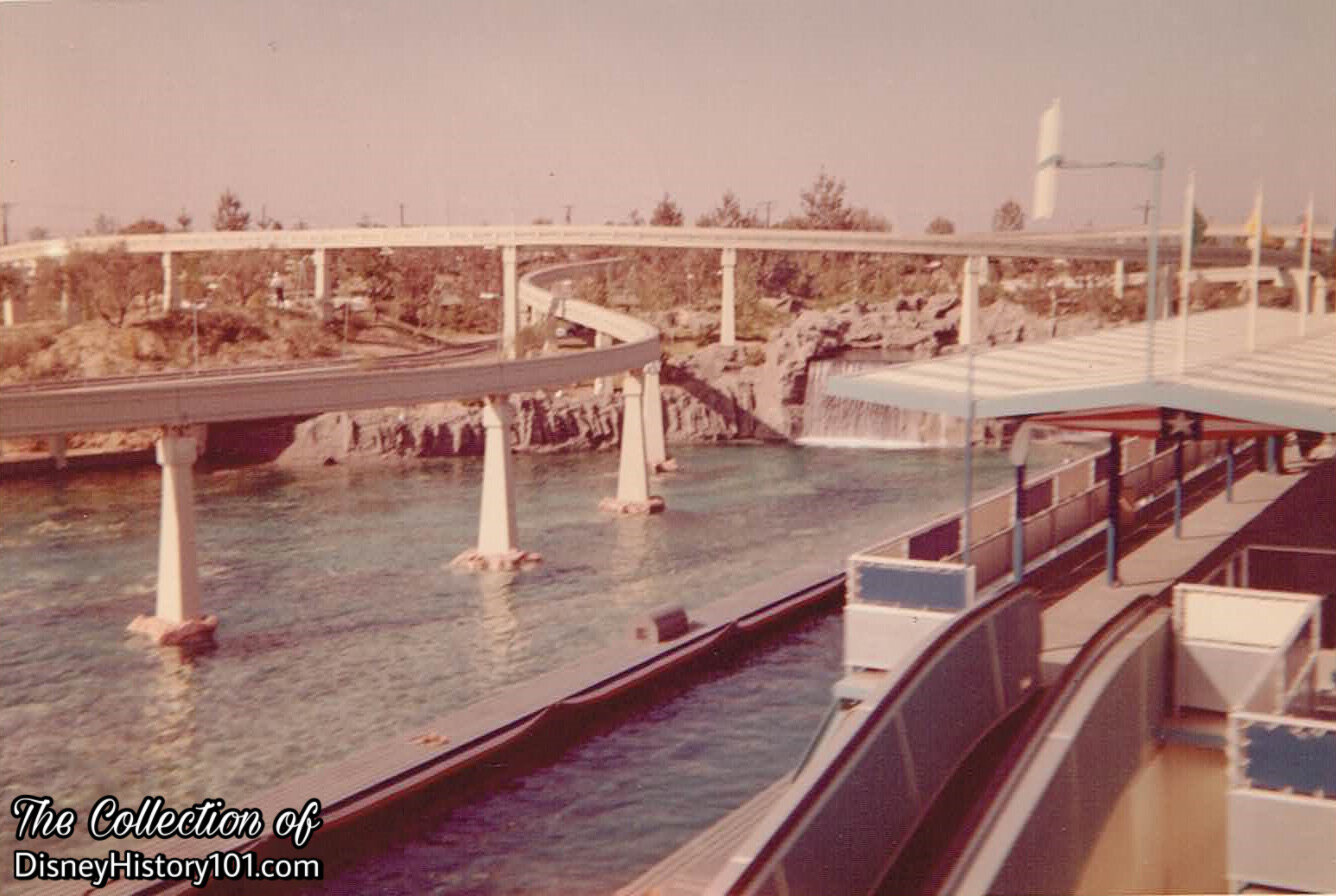
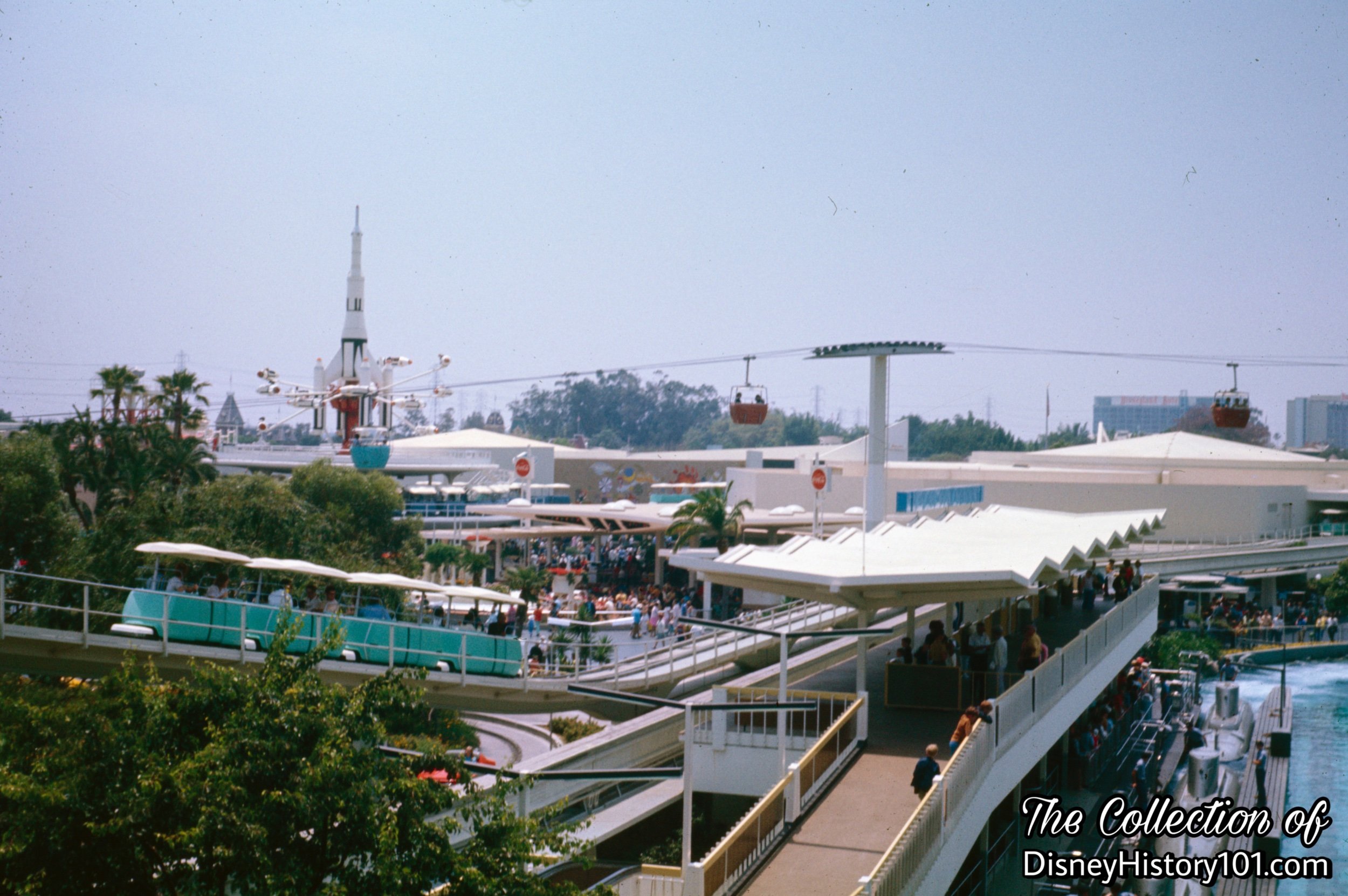
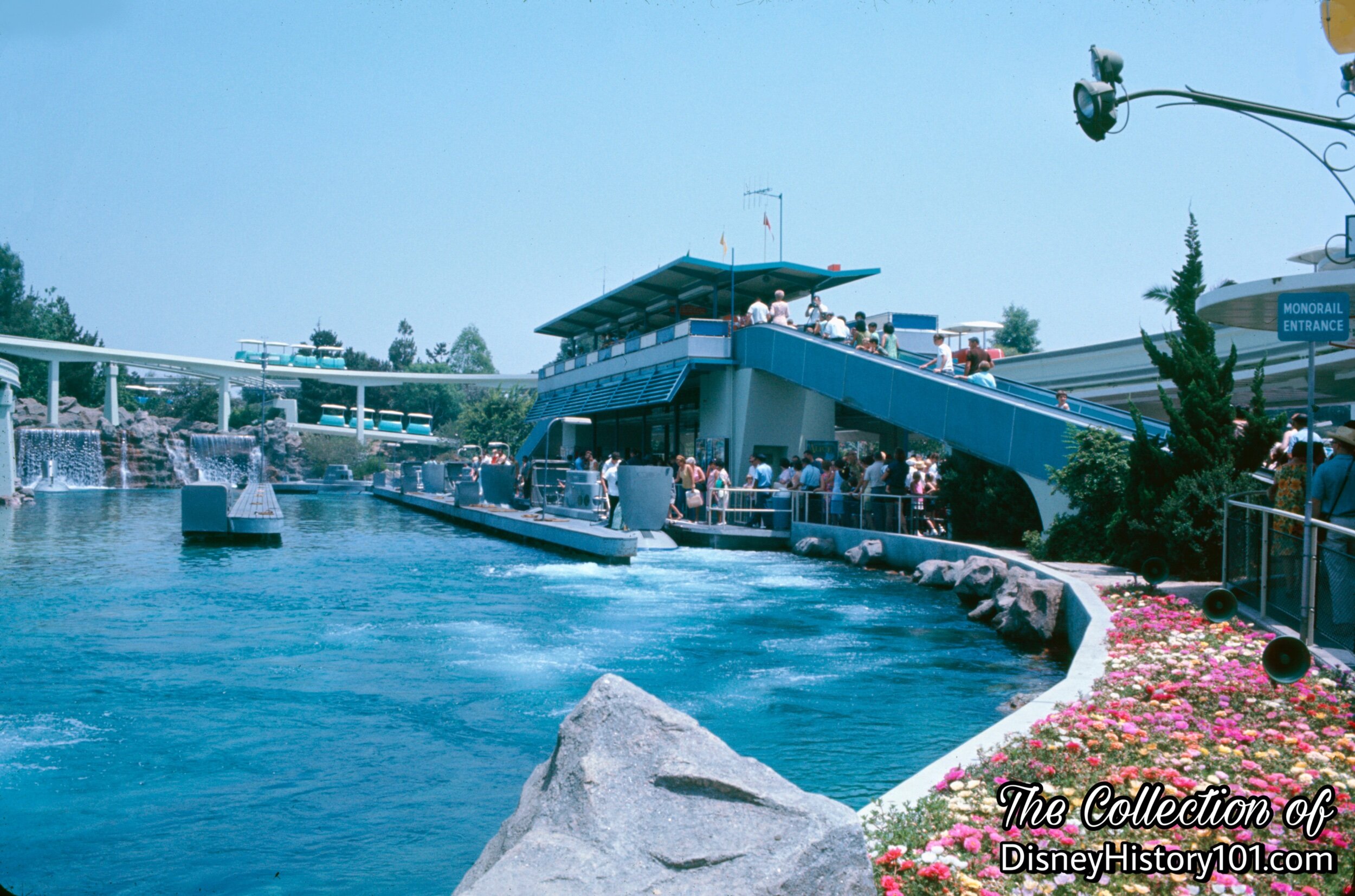
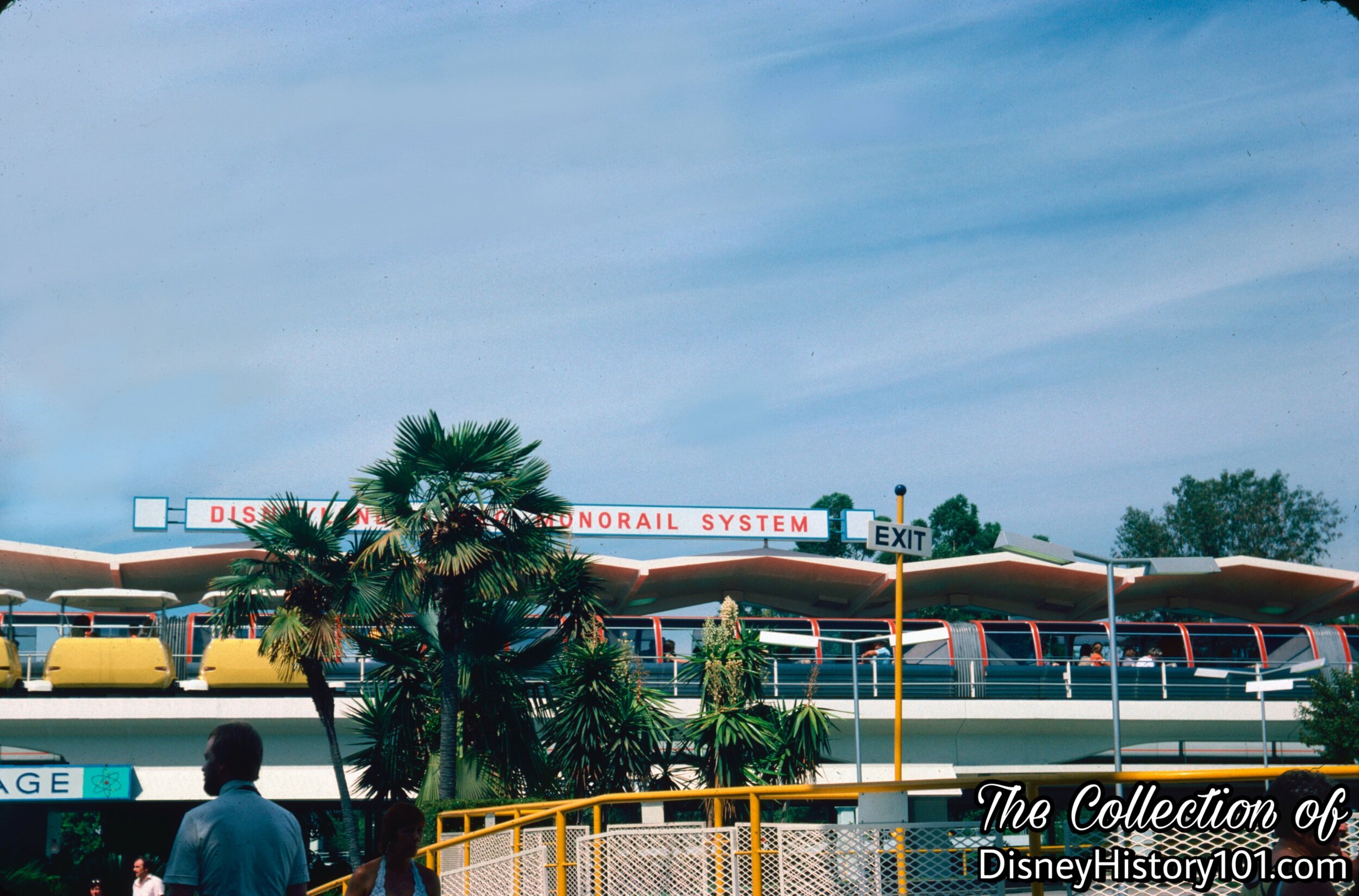
The Stephens-Adamson Speedramp (a moving sidewalk) carries guests to their destination at the top in 45 seconds! Guests stepping from the Speedramp should be cautioned to watch their step and to move forward onto the platform. Traffic must be kept moving smoothly at all times, but if it backs up, the Speedramp should be stopped by pressing the button located at the base of the Speedramp undercarriage. The ramp should never be started again until it is completely free of guests. Once on the platform, guests can see unique coral formations and various forms of sea life through the crystal-clear surface of the water below.
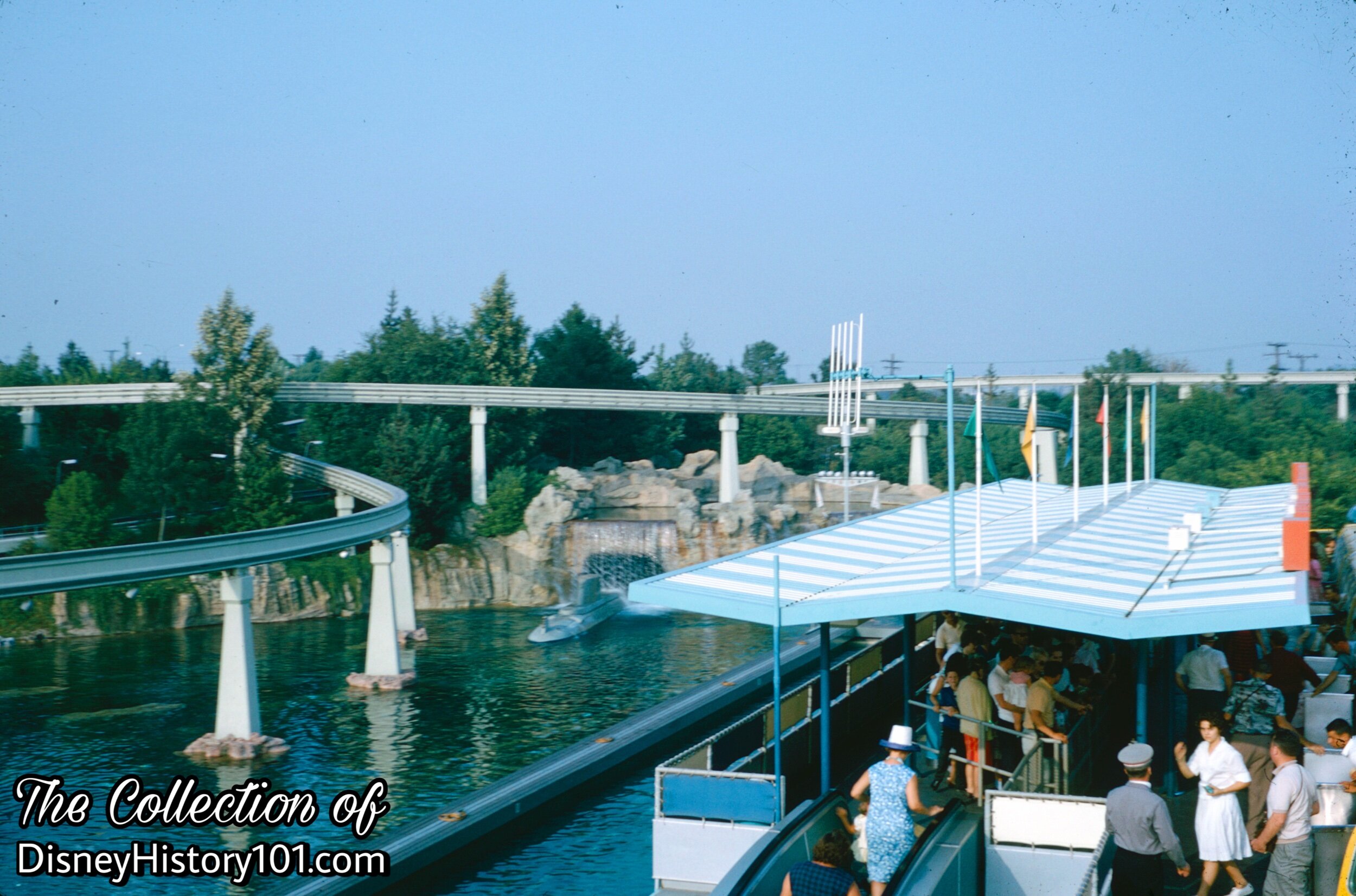
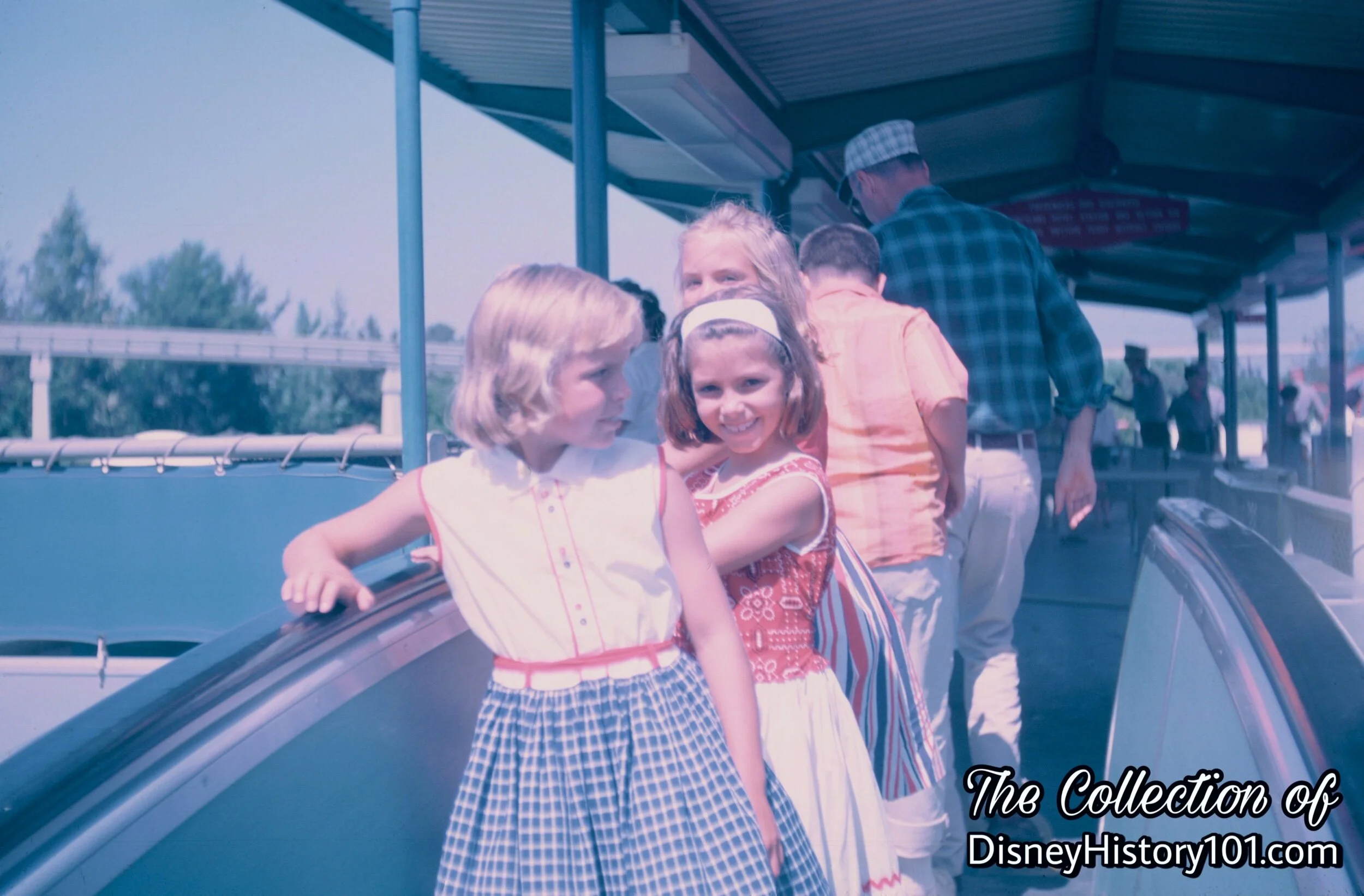
According to one Guided Tour Script (1962) : “Please follow me as we take the ultramodern Speedramp to the Monorail Landing. . .watch your step.”
Other amendments added the reminders “please be sure to look down” and “hold on to the hand railings.”
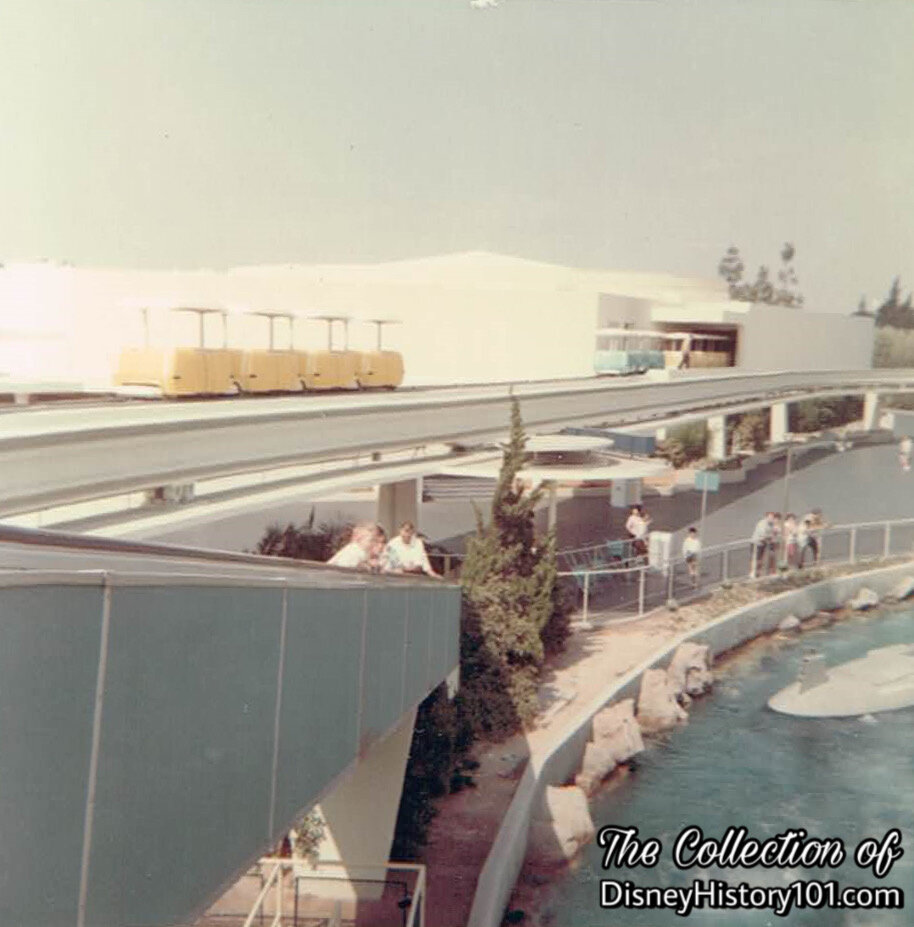
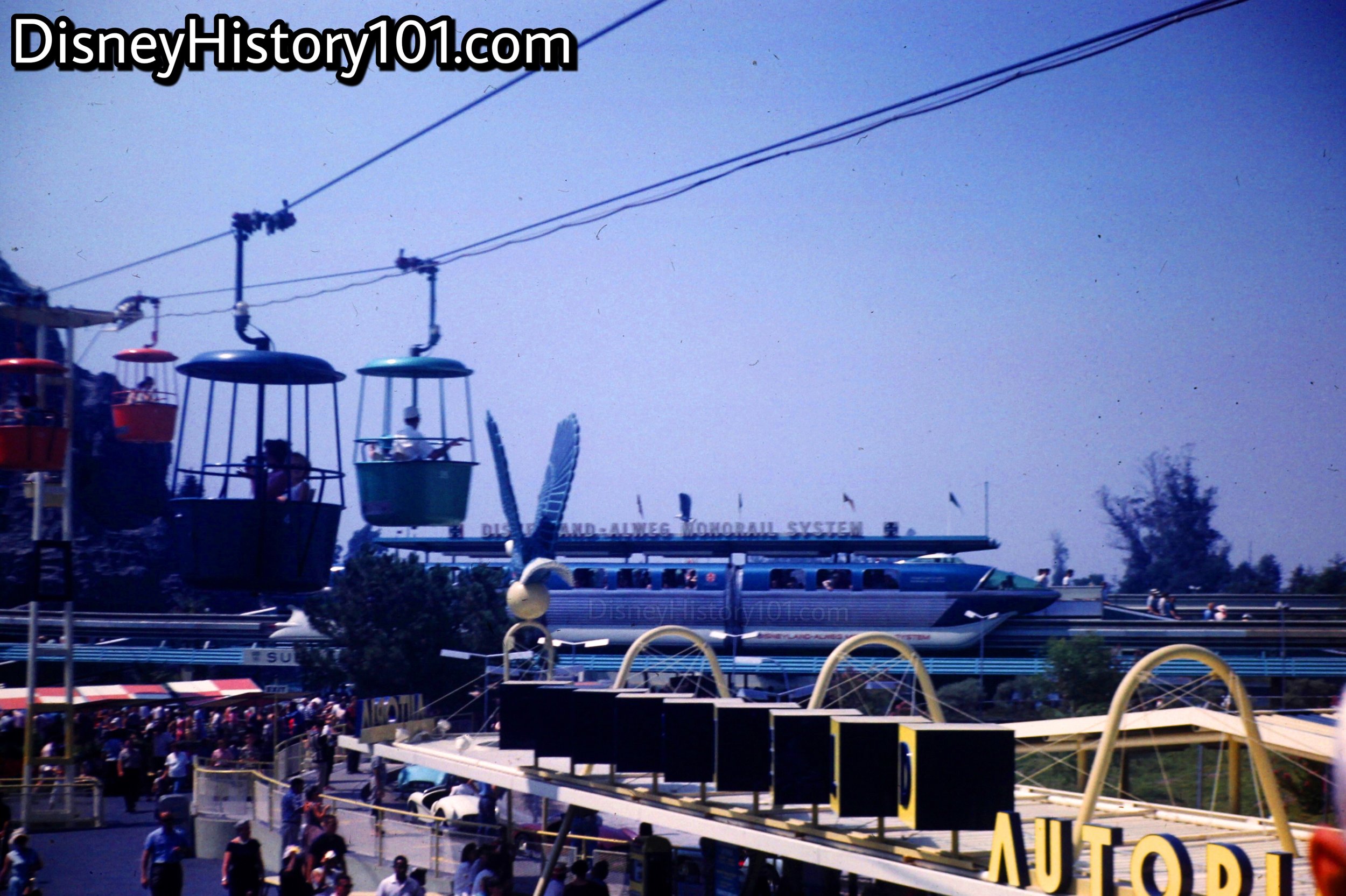
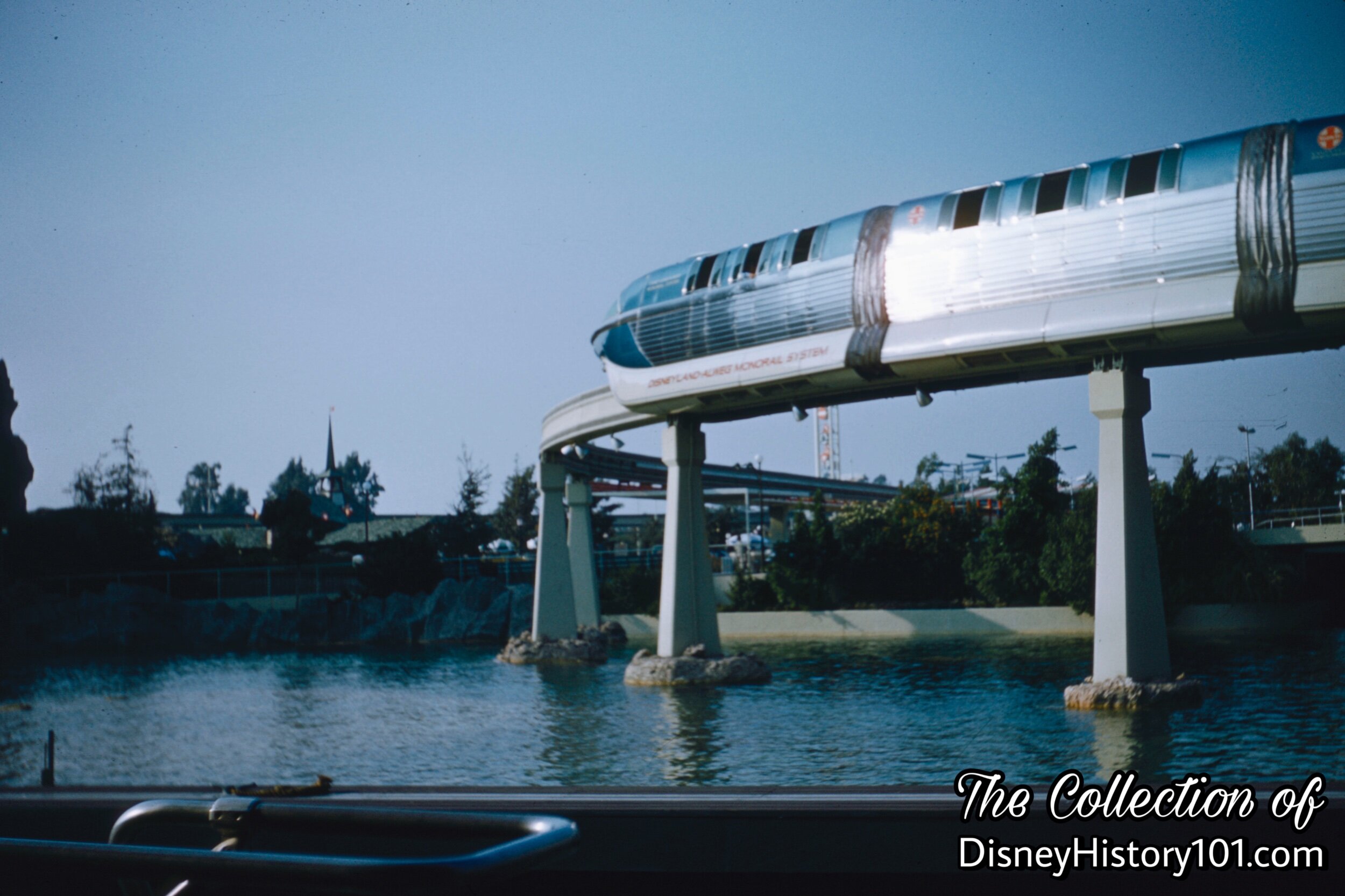
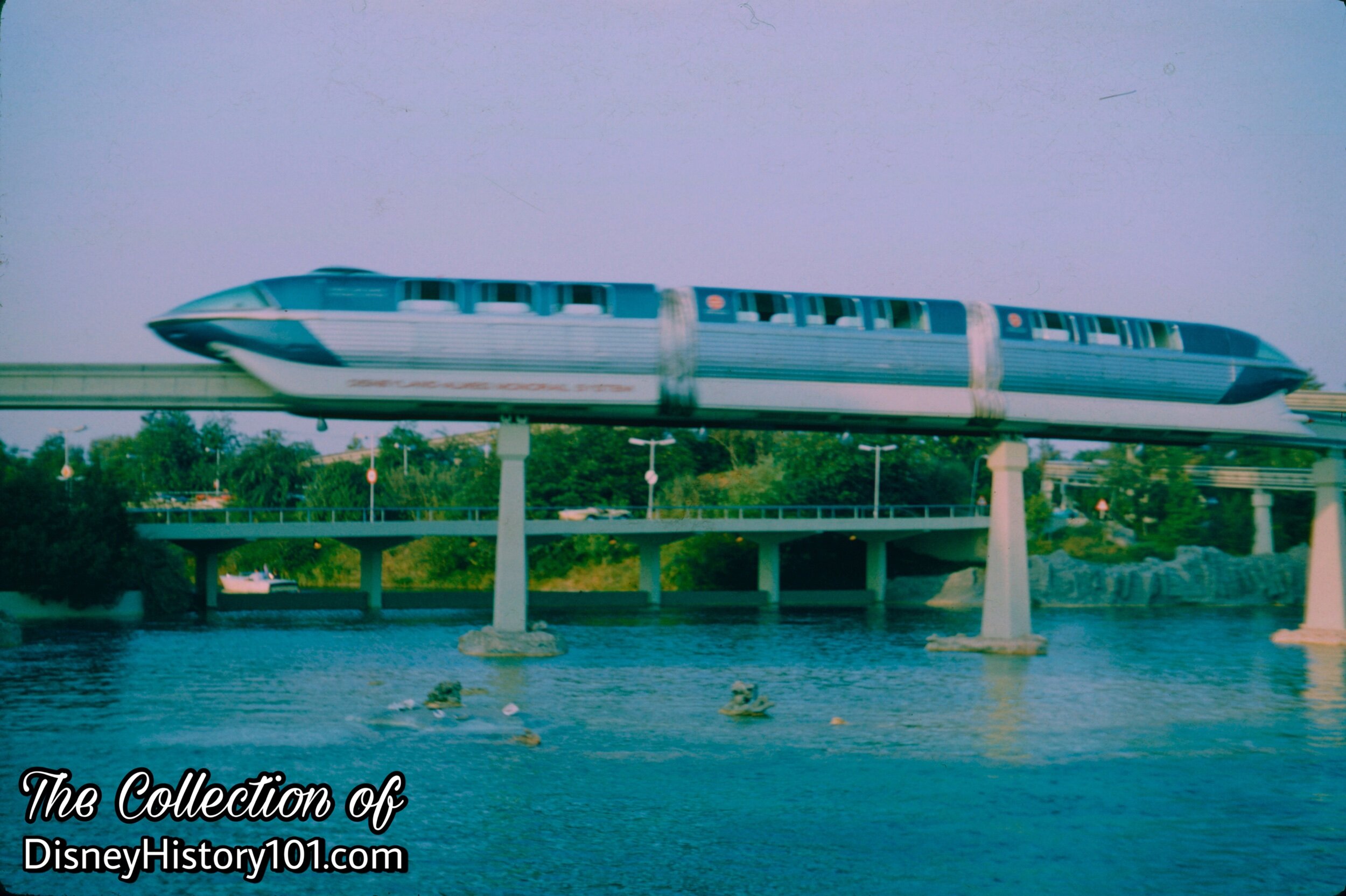
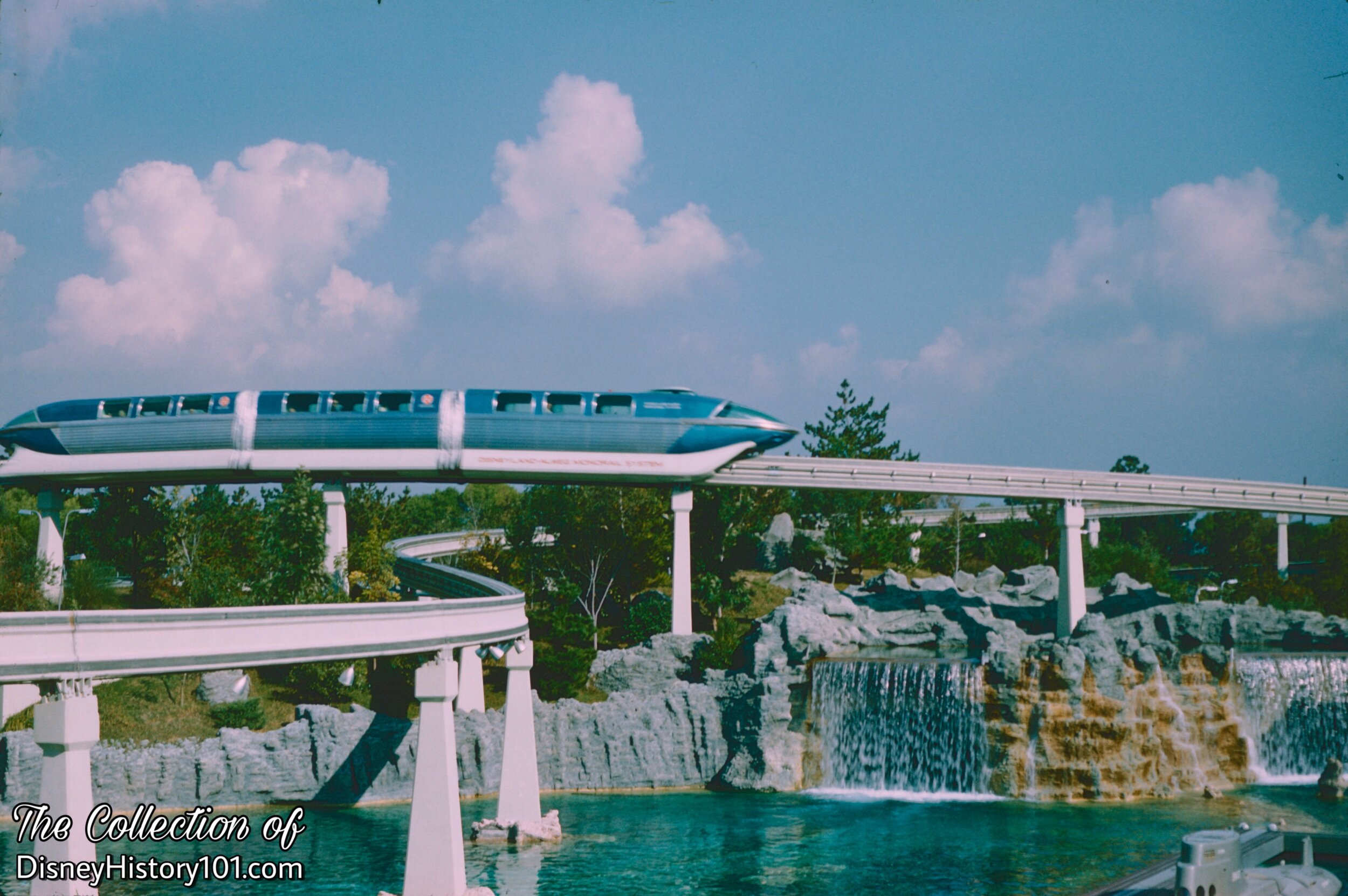
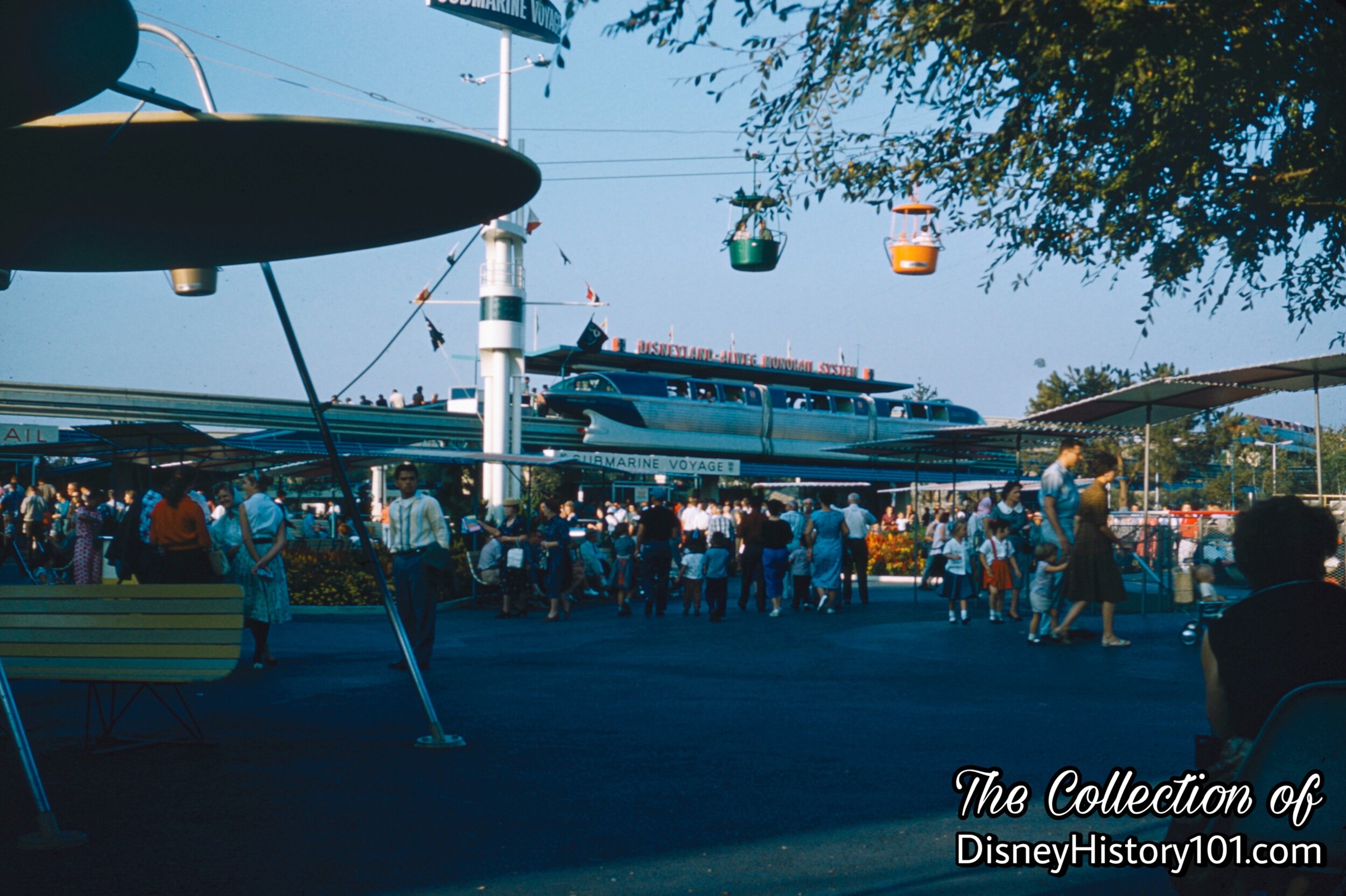
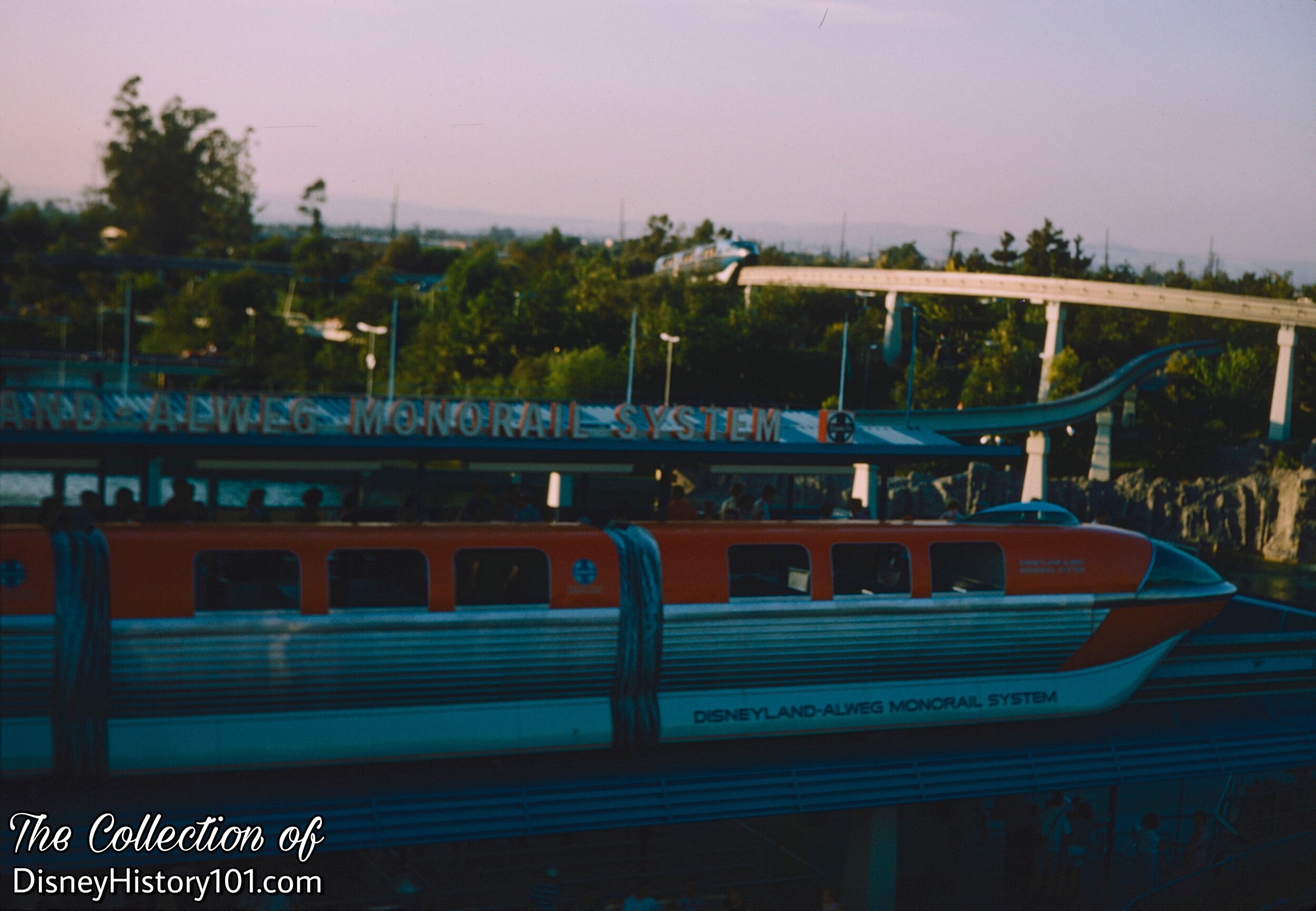
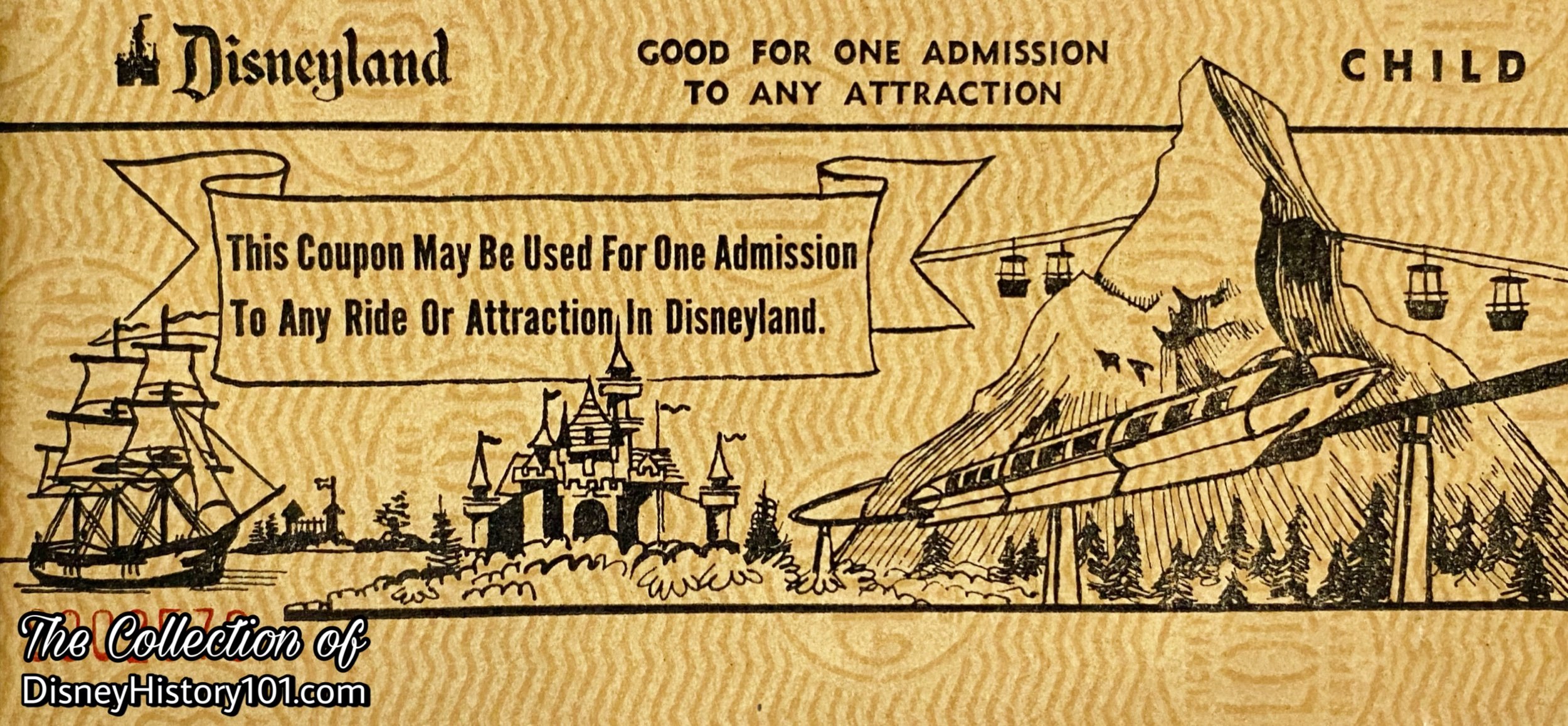
By 1960, the exciting, two-hour Guided Tour of Disneyland Tour included a ride on the Disneyland-Alweg Monorail.
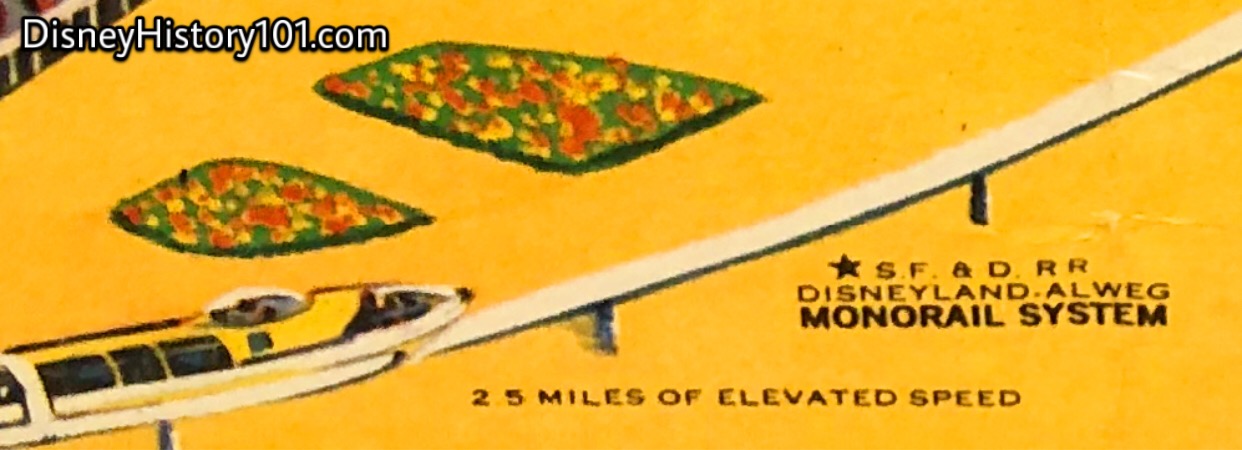
Then on April 10, 1960, the Monorail was shut down to add an extension of track to the Disneyland Hotel. “Construction of the additional mile and three quarters of elevated beamway started in March and was completed in late May” of 1961, according to Vacationland, (Summer, 1961). The track length went from 0.8 miles to 2.5 miles, as advertised on this Disneyland map from 1961. The publication continues : “Cost of the extension which required 118,000 man hours of work, 66,700 sacks of cement, 10,760 tons of sand and gravel plus 702 tons of reinforcing steel, amounted to $1,900,000. To tap combined investment in both the original line and the extension is $3,200,000.00.” The expense was shared between Jack Wrather and Walt Disney.
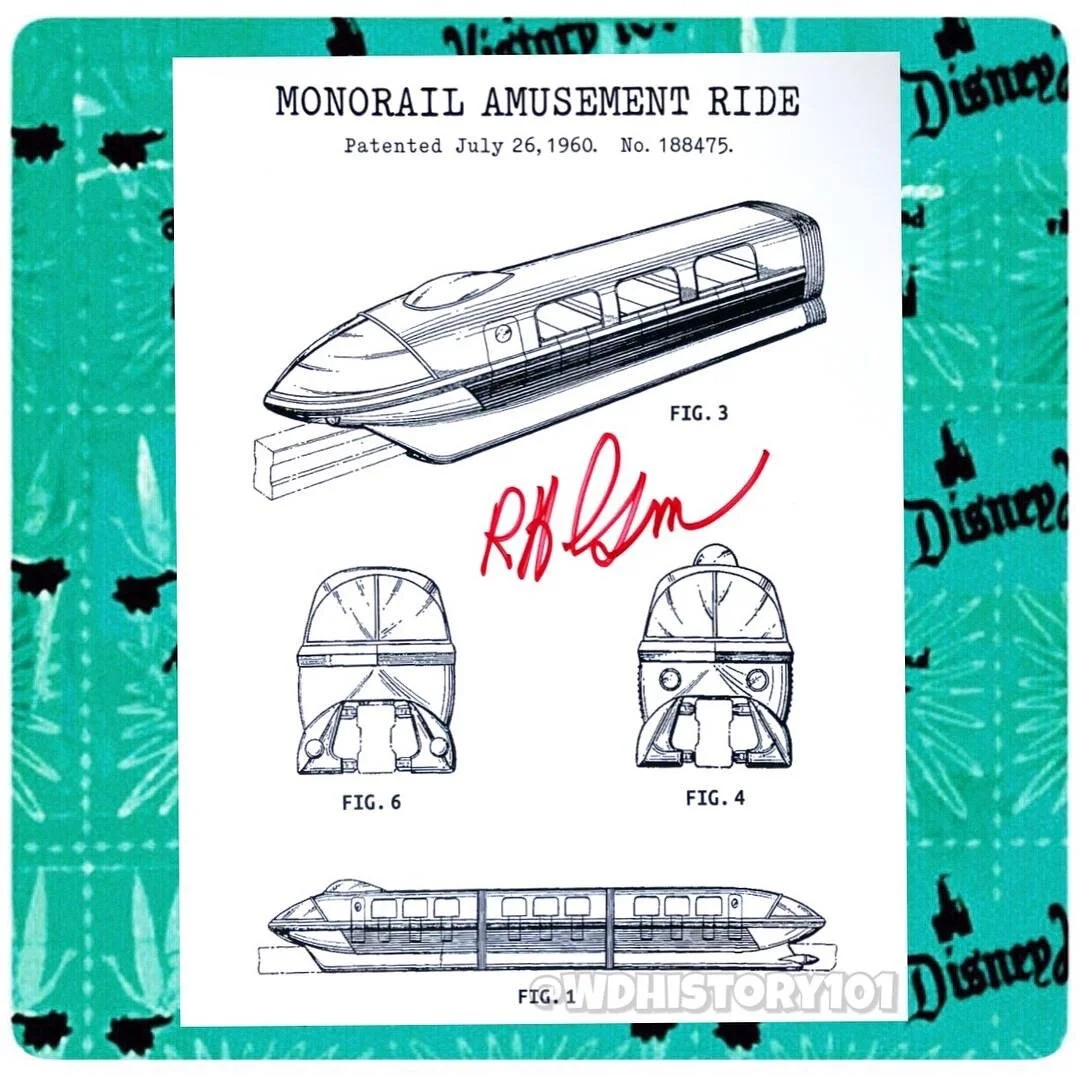
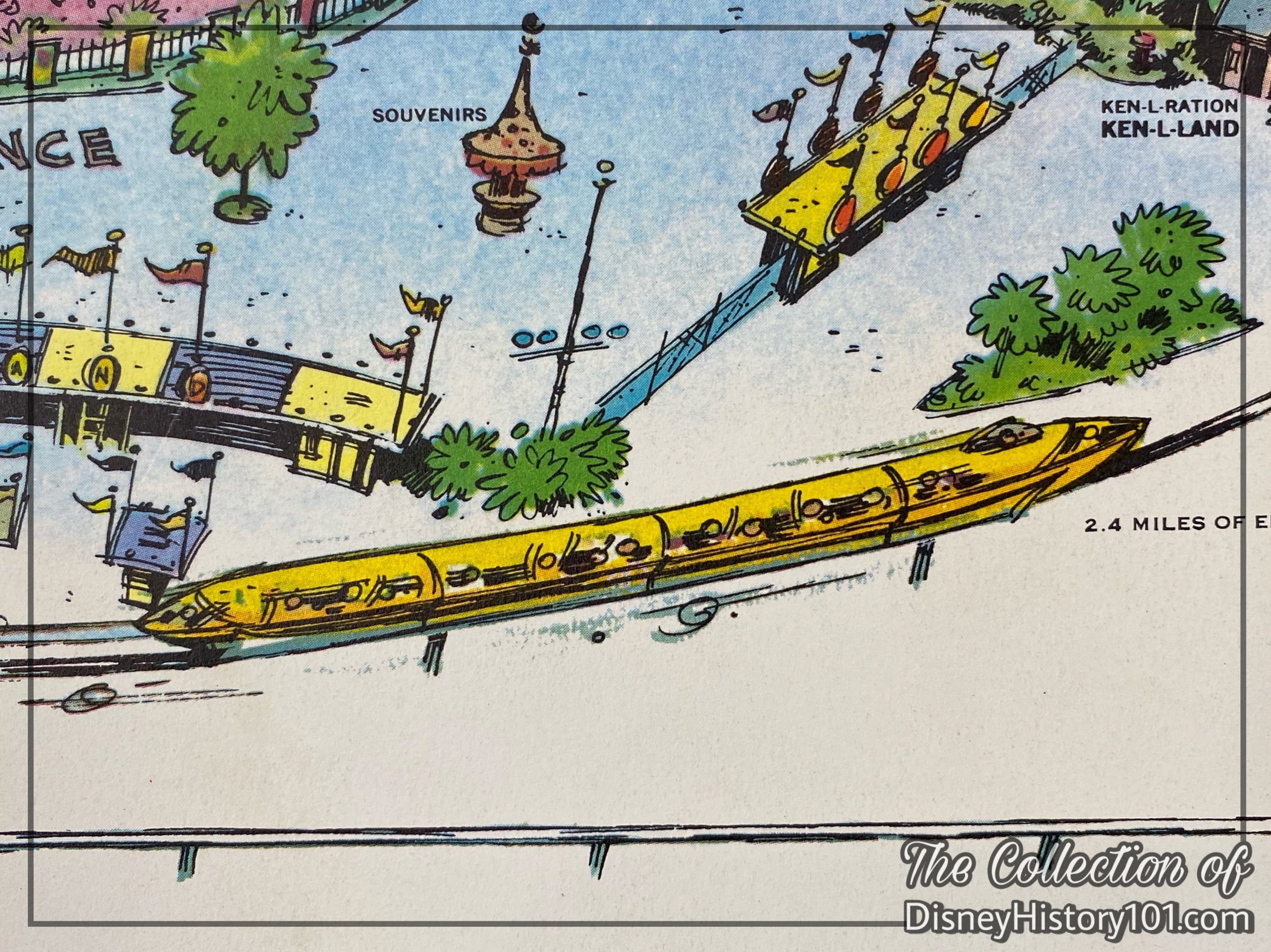
Though the Monorail Mark Is were still new, plans were already in the works for a Monorail Mark II model. Though capable of 80 miles per hour (on long straight sections), these new aluminum lightweight air-frame designs will traverse the one-half mile circuit at a maximum operating speed of 45 miles an hour! The “Bogie” carriages (underneath the train) and some of their six pneumatic rubber-tired wheels can clearly be seen on this drawing.
Vacationland (Summer, 1961) elaborates on the workings of the Monorail Mark I trains : “‘Drive wheels’ roll on top of the beam and are about the same size as those used on a Ford or Chevrolet. Rolling on either side of the beam are two smaller wheels which guide and balance the train. The upper wheels press against the top ridge or ‘flange’ of the beam and the lower wheels press against the bottom flange. Powerful springs keep them in tight contact with the beam. The trains are electronically powered and each has six, 35 horsepower motors. Three hundred volts of electricity is transmitted along the two rails, known as ‘bus bars’, located along one side of the beam. Power is picked up by brushes on the bogies. The trains are constructed of aluminum and utilize light-weight air frame design. The trains and supporting structures are of essentially the same size as those that would be used as a metropolitan transit system. However, because Disneyland-Alweg cars have no provisions for standees or baggage storage they are slightly smaller than those that would be used in such a system. The Disneyland-Alweg trains are capable of speeds in excess of 80 miles per hour but will traverse the two and one-half mile loop line at a maximum of 45 miles per hour.”
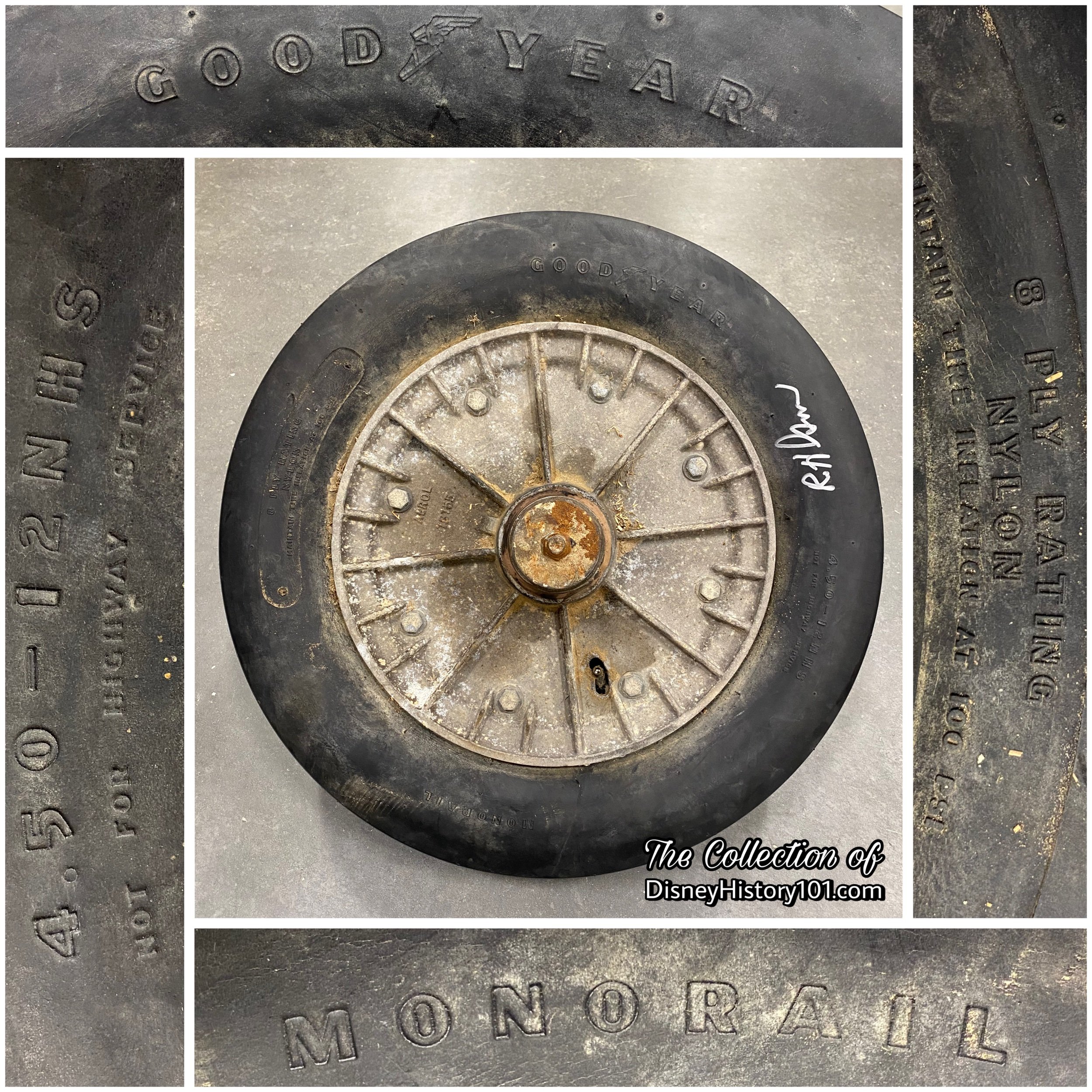
If you’ve ever wondered what those “bogies” (with its rubber tired wheels) looks like, excerpts of a vintage 1961 publication (below) give us a rare glimpse. You may recall that the Monorail trains had four bogies - the non-motorized No.1 and No.4 (one at the front and one at the rear of the train), and the motorized No.2 and No.3 (one between car 1 and car 2, and the other between car 3 and car 4). The motorized bogies (No.2 and No.3) were powered by two 55 HP, 300 volt D.C. traction motors mounted on each side, driving two 32” wheels. A rare view of these wheels can also be seen in Walt Disney’s Railroad Story by Roger Broggie, page 304.
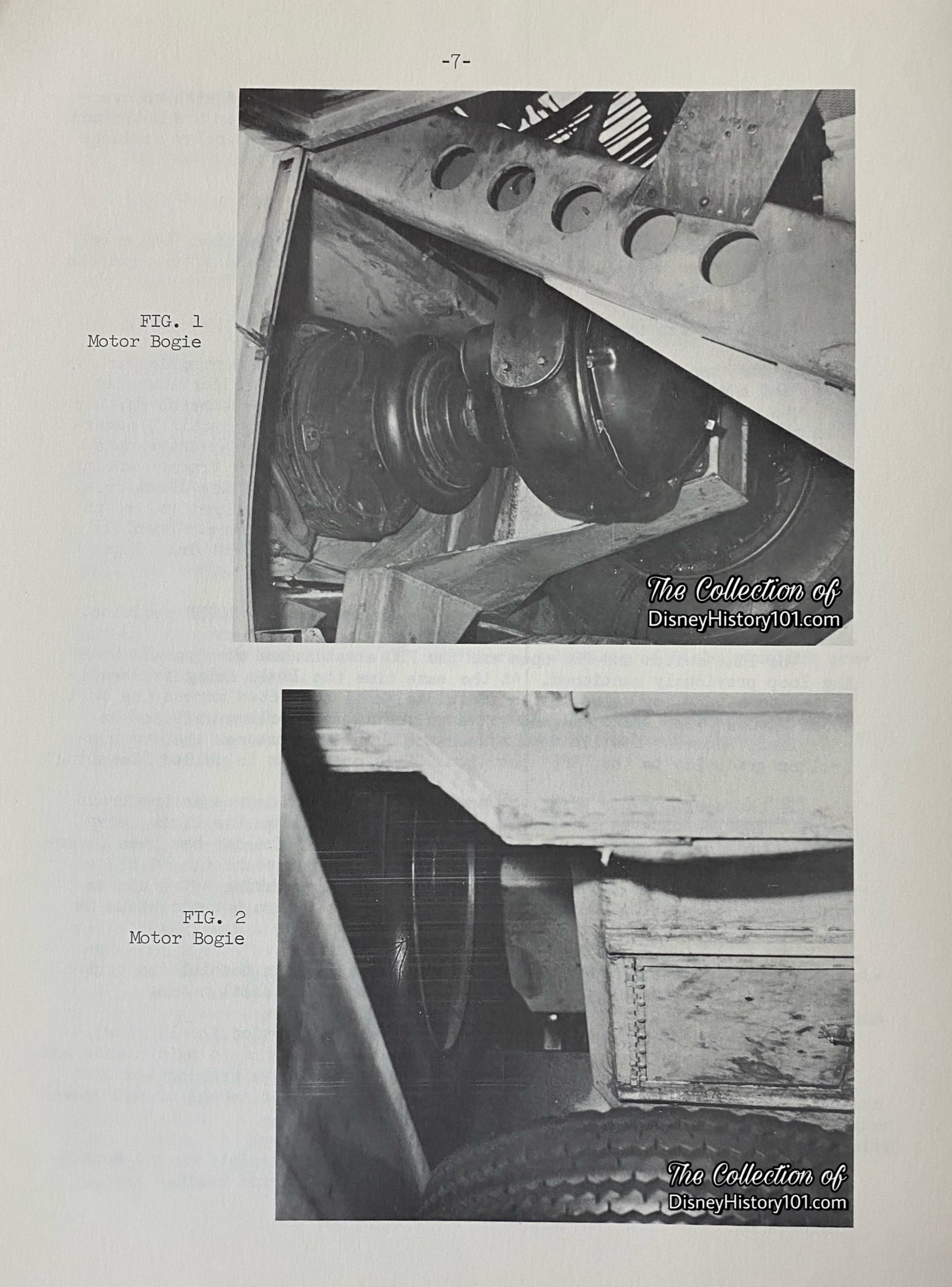
Bogeys are four-wheeled trucks and the lead trucks on Santa Fe & Disneyland Railroad locomotives. The Monorail trains also have bogeys and bogie units. Bogie Units are the complete drive assembly that straddles the beam in such a way that the drive and supporting wheels run on the top surface of the beamway, and the guiding and stabilizing wheels contact both lateral surfaces of the beam.
According to Vacationland (Summer, 1961) : “The trains ride on ‘carriages’ known as ‘Bogies’, and each has six pneumatic, rubber-tired wheels. The drive wheels roll on top of the beam and are about the same size as those used on a Ford or Chevrolet. Rolling on either side of the beam are two smaller wheels which guide and balance the train. The upper wheels press against the top ridge or ‘flange’ of the beam and the lower wheels press against the bottom flange. Powerful springs keep them in tight contact with the beam.” This Operating Guide/OG gives reader a few rare views a Motor Bogie “Drive Wheel” in the Monorail undercarriage. The wheels of the bogie can be seen in Figure 2 (above).
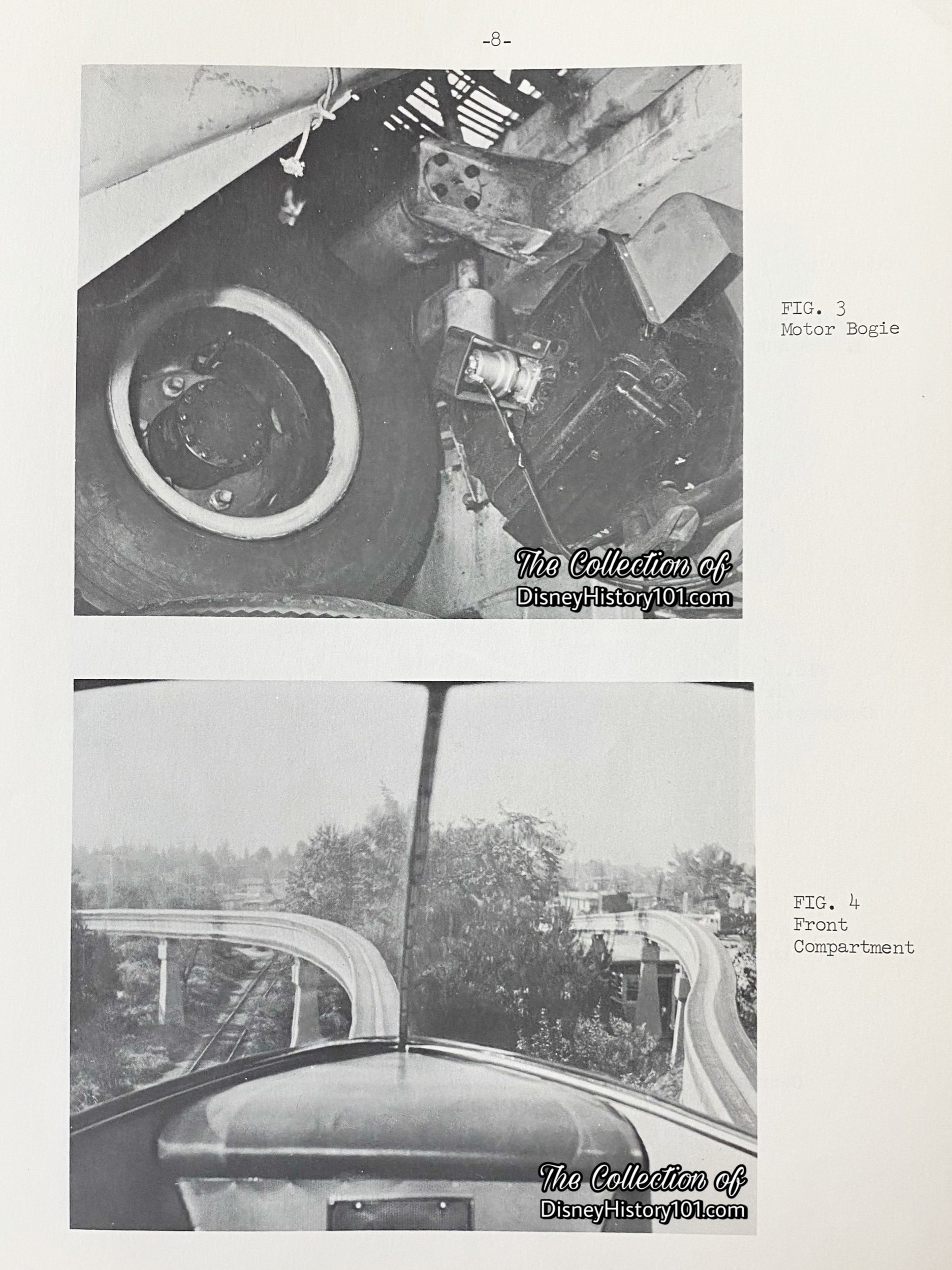
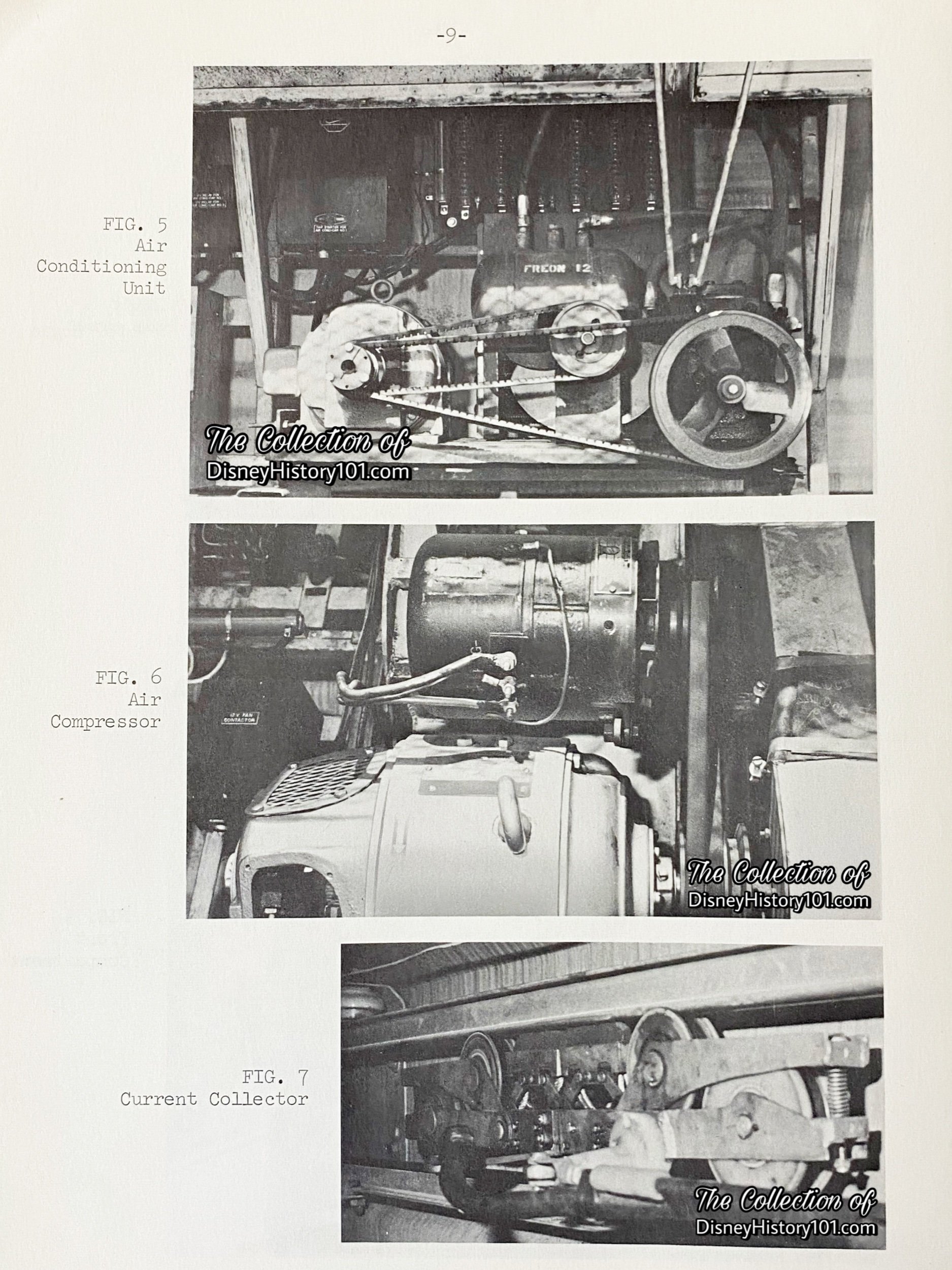
The drive gear of the bogie can be seen in Figure 3 (above). The enclosed areas within the transparent bubbles of the dome compartment (Figure 4, above) had the potential to get quite warm, so they were ventilated and cooled with the help of an air conditioning unit (Figure 5, below). Air brakes and pneumatic air controls functioned with the help of a constant-running air compressor (Figure 6, below) power by a 3Hp motor. That motor also drove a 60 ampere, 14 volt alternator that charged the 12-volt batteries that supplied power to the lights and the blowers. In the event of a power failure, air circulation was assured thanks to those charged batteries and the air conditioner blowers that they powered.
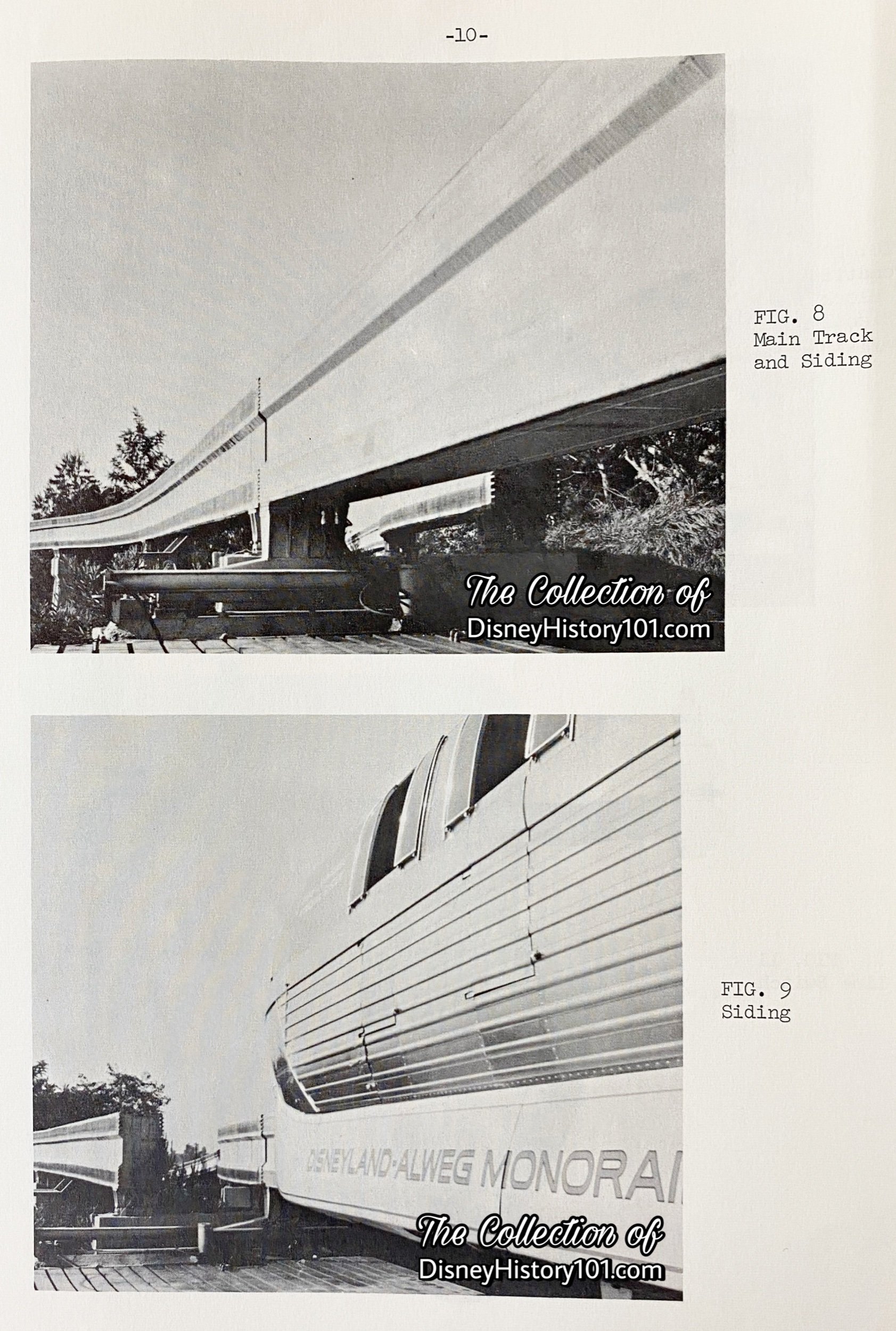
The Monorail Beamway consists of a Main Track (Figure 8) and a “siding” (Figure 9) which runs to the Monorail Train Shed. Located behind Tomorrowland, the Beam Switch was 75-feet long, could pivot at one end while the other end could swing at a distance of 5.5 feet to meet with either the Main Track or the “Siding.” This moveable section of Beamway was supported by “rollers” every 25 feet, powered by an electric hydraulic switch, and had “locking pins” to assure that the Beamway was “locked” in its proper and safe positions before the trolley could be energized. Once this section of moveable Beamway was assuredly in place, the Monorail trains could be switched from the main line to the “Roundhouse spur.”
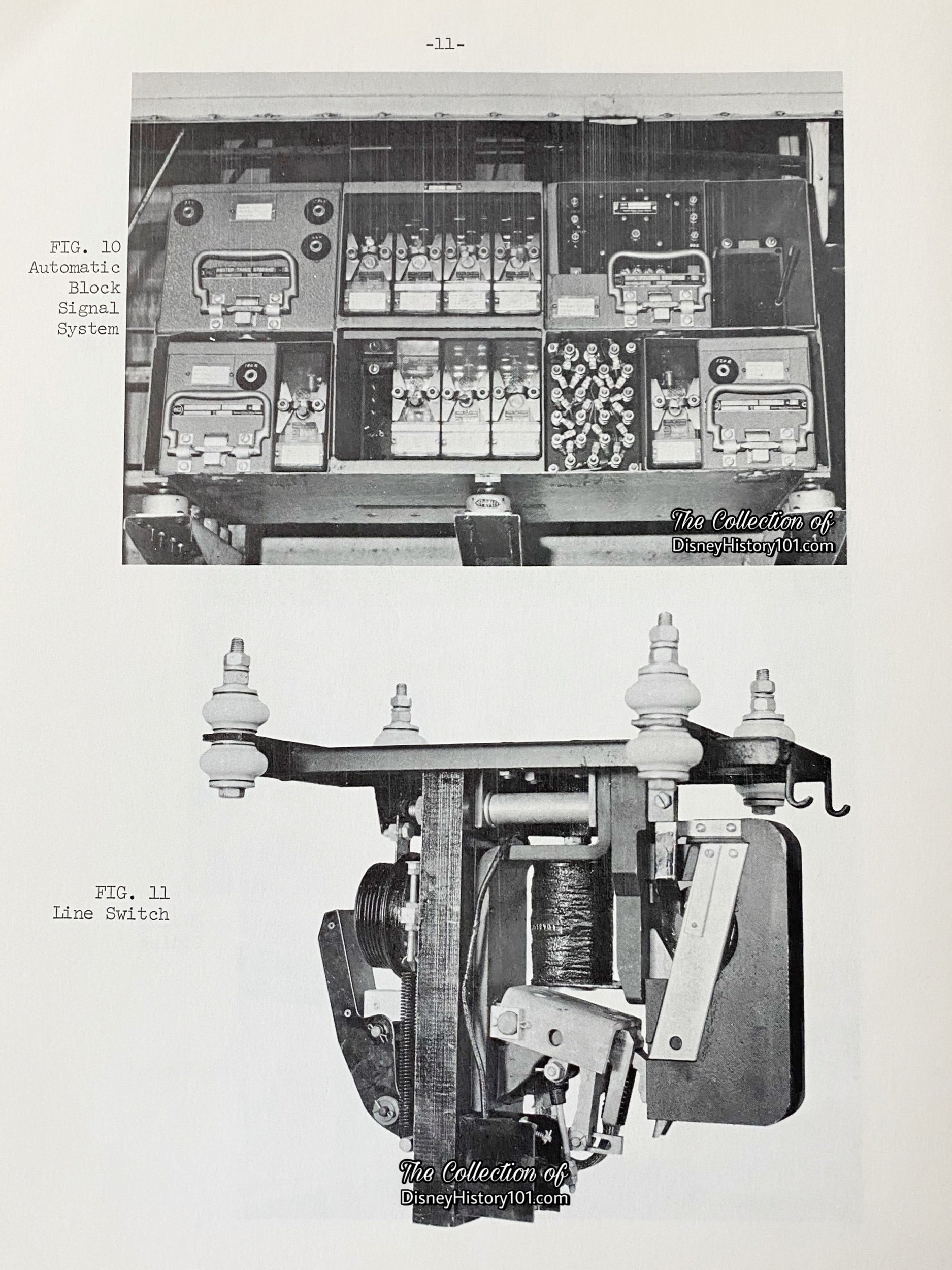
The Automatic Block Signal System (Figure 10) provides cab signals and automatic stop facilities to the trains. Signal information is carried by means of a pulsating current transmitted by a single No.10 wire installed along the beam.
An overload relay (seen in Figure 11) cares for overloads.
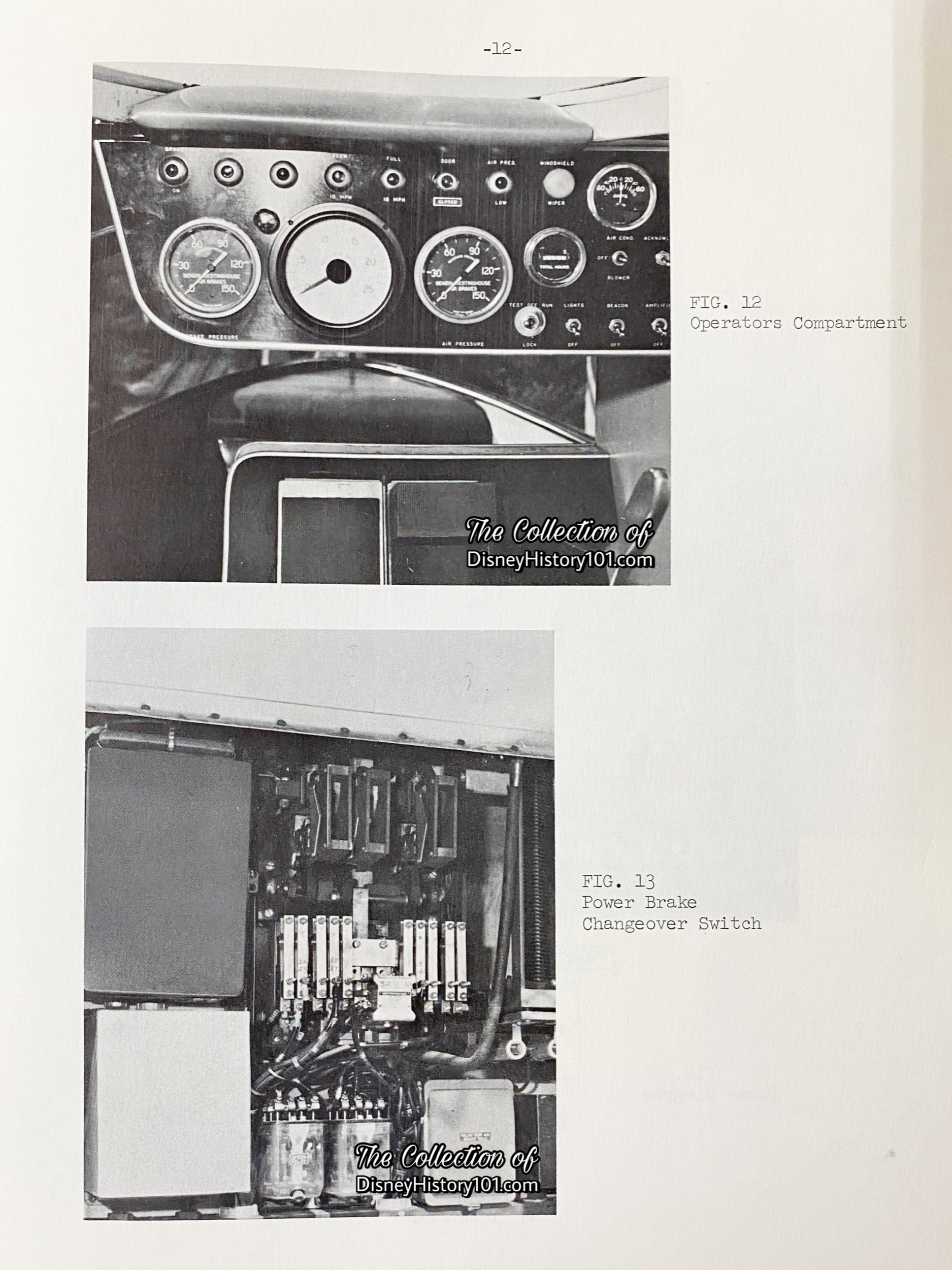
Let’s take a look in the Driver’s Station. At this time, the trains are operated by a power pedal (connecting four motors across the line), a brake pedal, and a “reverser” handle (seen in Figure 12). Many years later (by the 1980s) the power pedal had been replaced with a power lever.

During 1961, Eleanor Heldt (Magic Kingdom Club Administrator) commented that “During a major rehabilitation, it is sometimes necessary to close an attraction for several weeks. This, of course, is when the smallest details were checked, replaced or repaired as required for the maximum safety, convenience, and comfort for our guests.” That being said, what came next for the Disneyland ALWEG Monorail system was no mere “major rehabilitation.”
Construction of completely-new Mark II train sets were underway at the Walt Disney Studios.
According to Michael Broggie, construction of the ergonomically tubular outer frame was comparable to that of aircraft. Bob Gurr designed a new Monorail Mark II Yellow (or, “Gold”) train with the safety feature of a “drop-down” door on the nose cone, and an efficient additional coach. The extra coach was also added to both the blue and red Monorail Mark I nose and tail sections (to increase guest capacity of the attraction by 22%). Now each original MonorailMark I train would be comprised of four cars with a total 106-Guest capacity. Theoretical hourly capacity increased to 1,200 passengers, and trips per hour increased to 19.5. “Since 1959, more than 3,000,000 people have ridden the glistening monorail trains that soar over the magic kingdom,” according to Vacationland magazine, published for the summer, 1961. By another figure acquired during the summer of 1961, the Monorail had travelled 60,000 miles, carried 4,370,000 passengers, and was apparently a “much talked about mass transit concept,” according to the aforementioned Vacationland magazine. The Alweg-Disneyland Monorail would join the outstanding features (like the Main Street Railroad Station, Matterhorn Mountain, and Sleeping Beauty Castle) which would stand out against the new Disneyland skyline, during June of 1961!
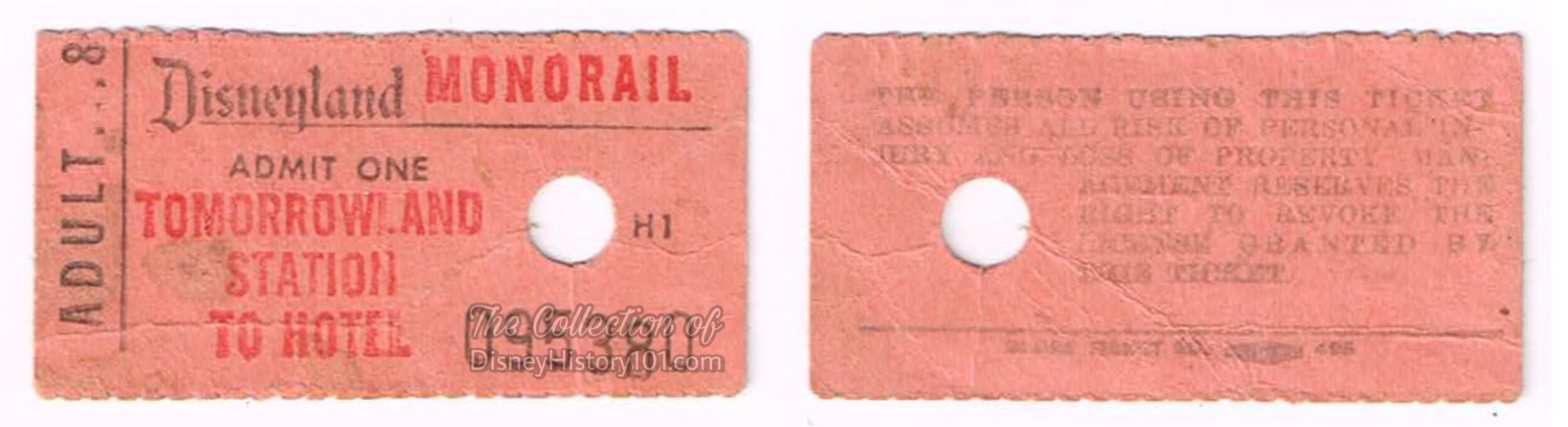
This was more than a major rehabilitation - it was a revolutionary and practical use of urban transportation, and it was progress! Things would continue to move forward in 1961, as the Monorail track was extended over Disneyland’s 18-foot-tall earthen wall, almost 2 1/2 miles (12,300 feet) - all the way alongside Harbor Boulevard (and over West Street), to the 112 foot-long Disneyland Hotel platform. The entire circuit’s trip time was increased to 9 minutes and 20 seconds. The cost of the extension was $1,900,000 (in addition to 118,000 man hours of work, 66,700 sacks of cement, 10,760 tons of sand and gravel, and 702 tons of reinforcing steel). The total combined investment in both the original line and the extension is $3,200,000 (contributing to the Park’s total investment of $37 million).
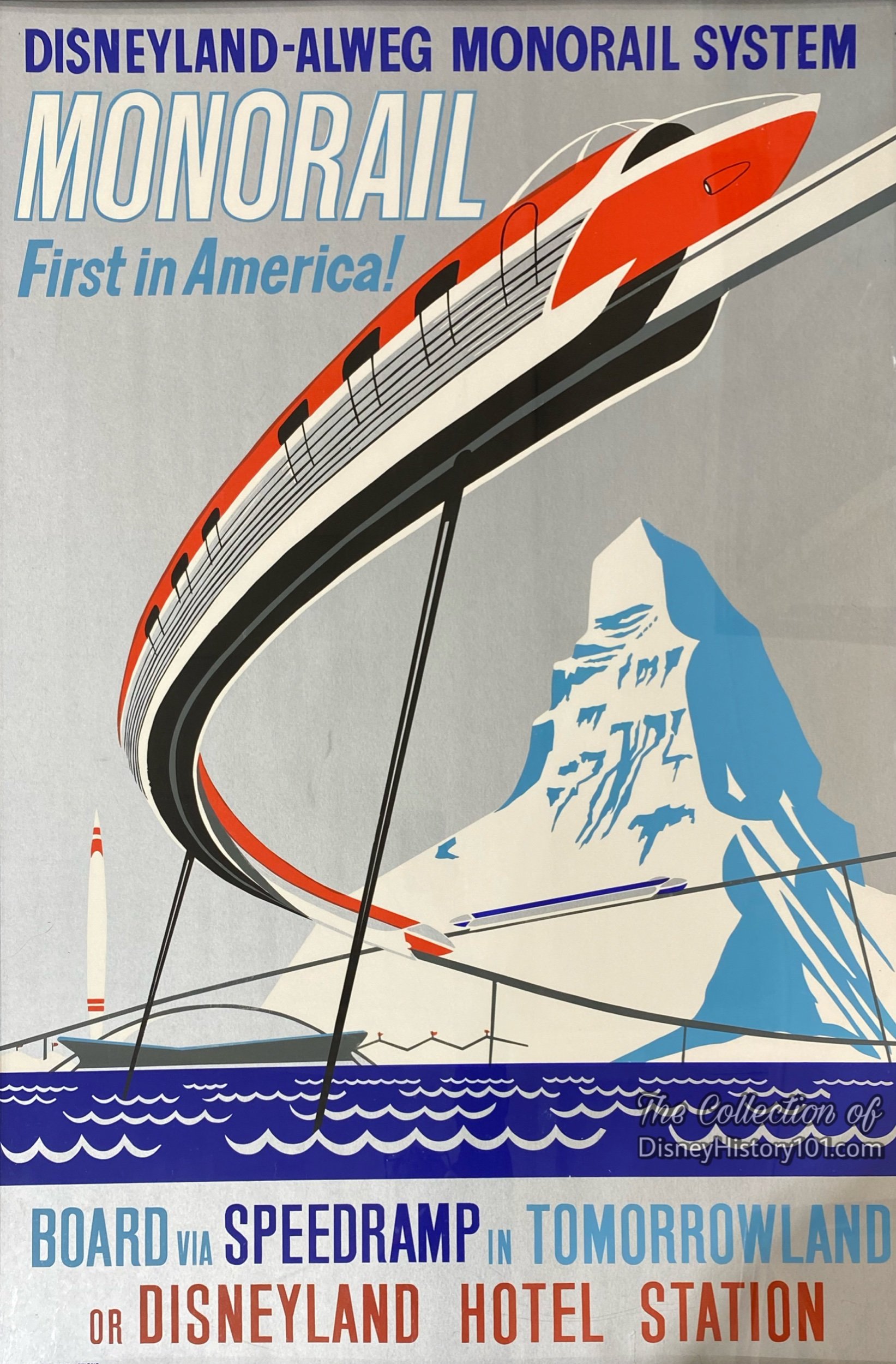
All art work, posters, etc. were created by the Walt Disney Studios. Upon entering Disneyland, 1961 audiences would have spotted Paul “Coke” Hartley’s dynamic attraction poster design boasting the “Disneyland-ALWEG Monorail System” - the “first in America!” The poster would have further directed them to “board via Speedramp in Tomorrowland,” with a stop at the “Disneyland Hotel Station.” As a sidelight, this poster has been attributed in some way to John Hench in “Walt Disney’s Railroad Story” by Michael Broggie.
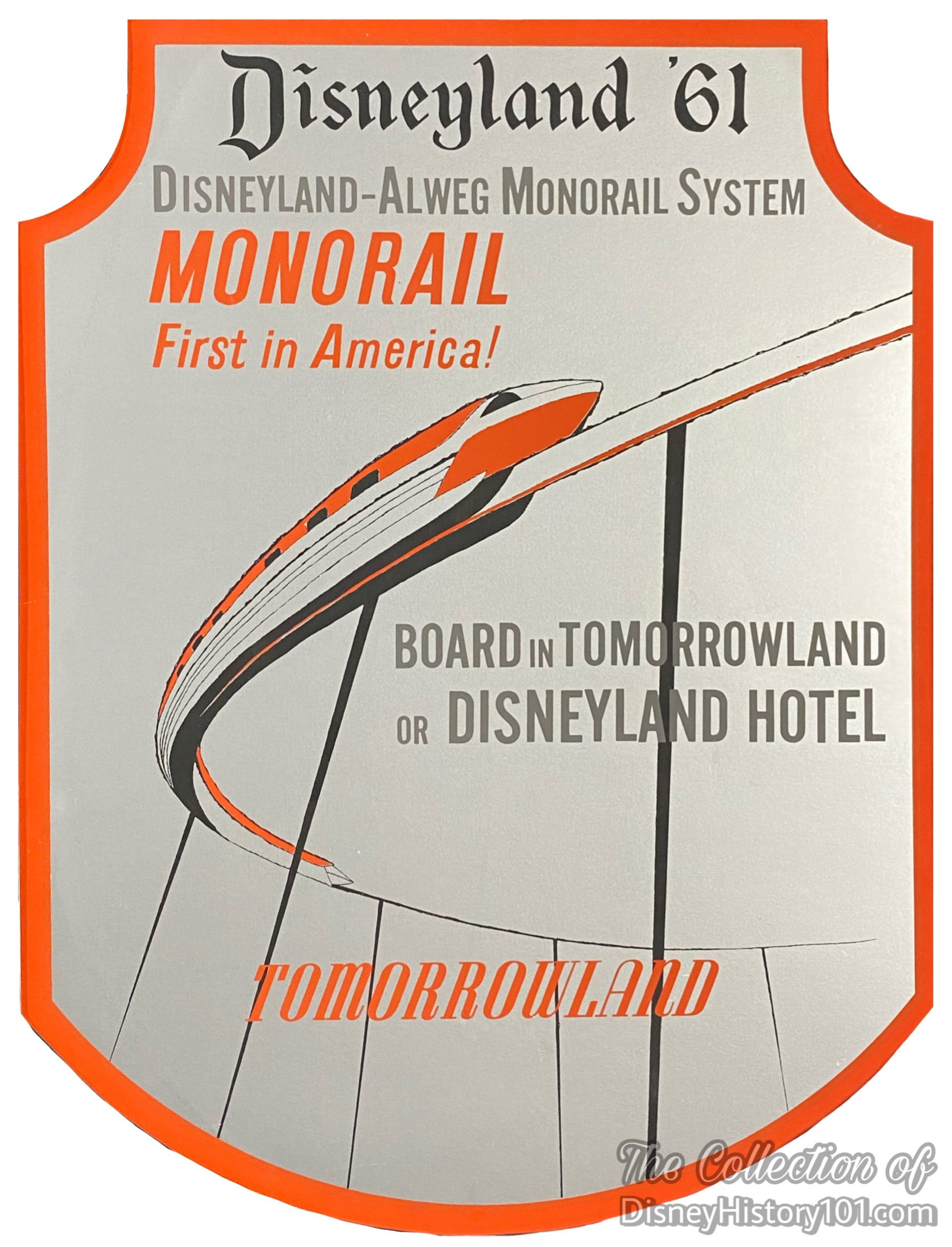
The posters and signs gave top billing to Disneyland, followed by ALWEG (an acronym of Swedish entrepreneur Dr. Axel Lennert WEnner Gren’s name). Incidentally, Axel passed November 24, 1961, the very user that the Disneyland-ALWEG Monorail line was extended to the Disneyland Hotel.
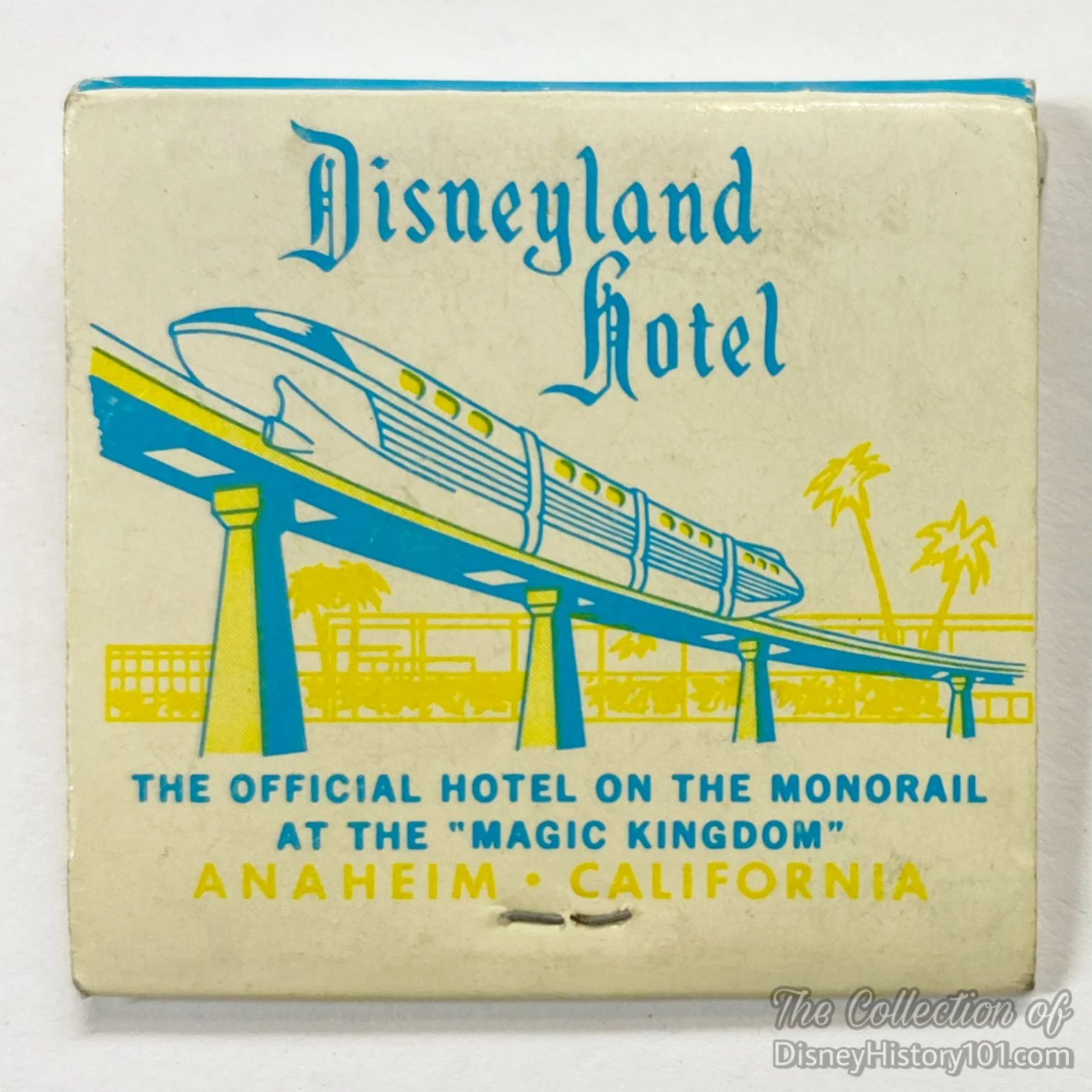
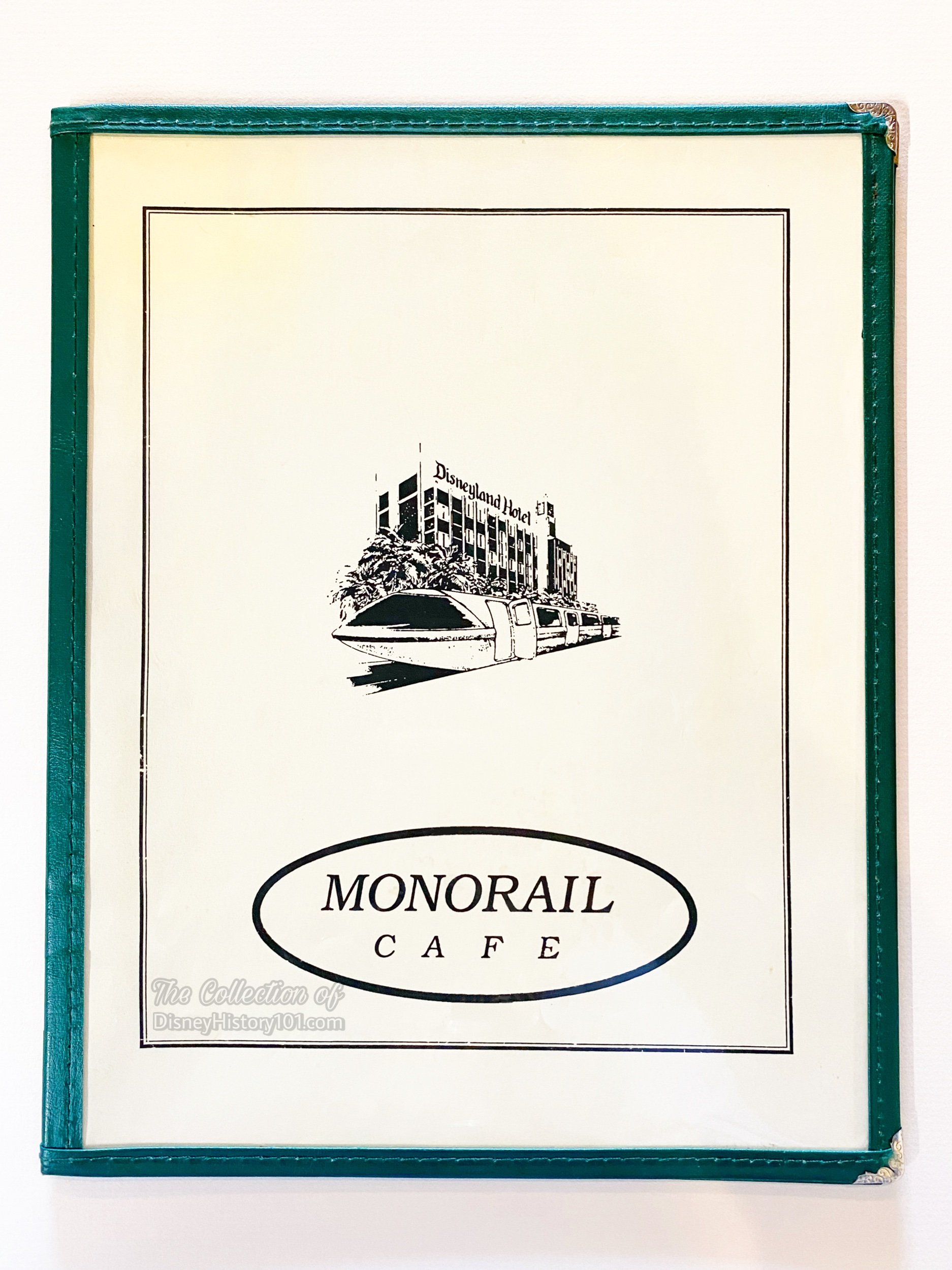
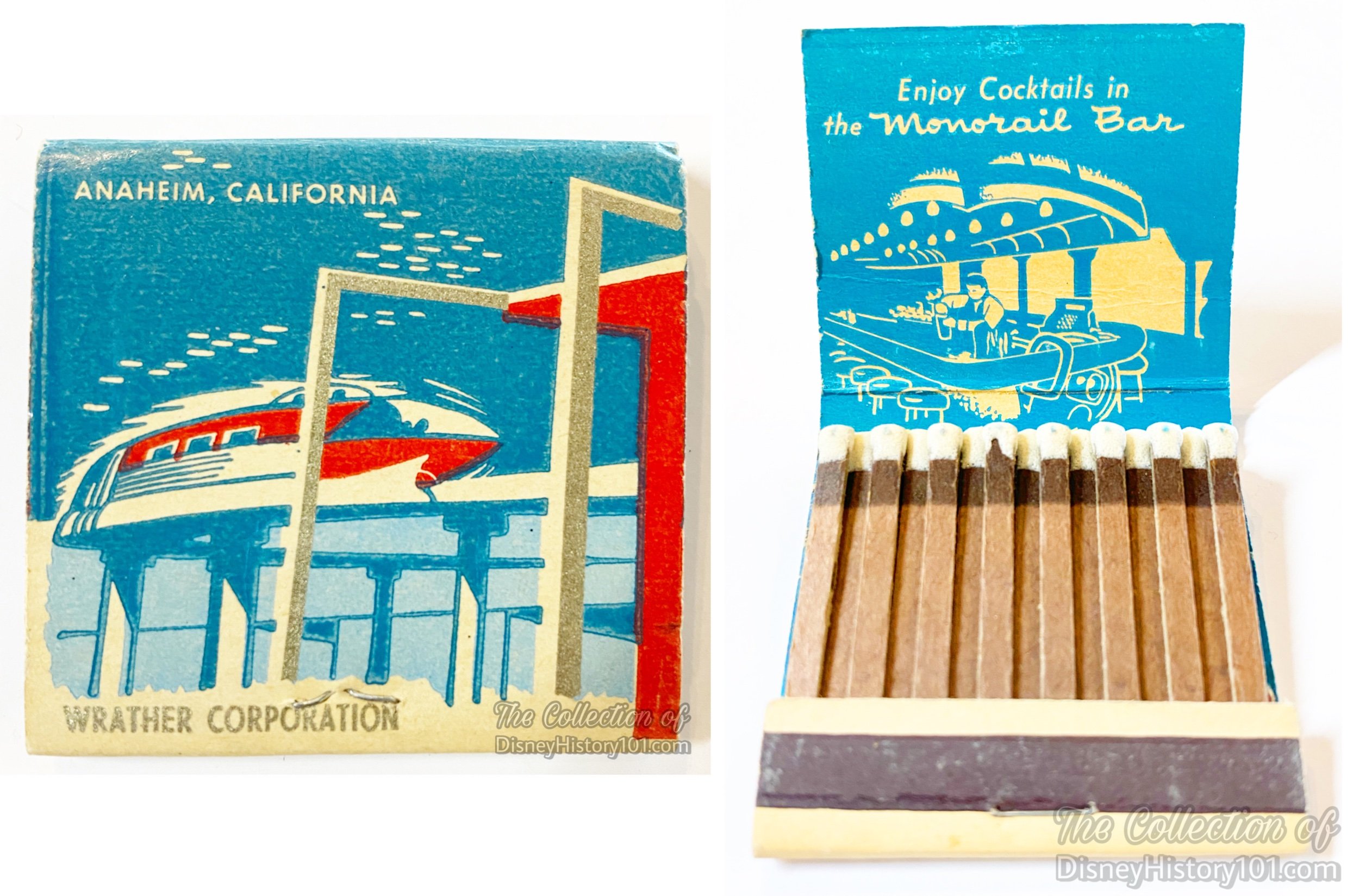
Once arrived at the new $100,000 Hotel Station, guests are greeted by a tiny bar, in the Monorail Plaza just south of the Monorail Station. The interior featured a “replica of an early suspended monorail car (patented 1905)” and “walls…papered with patent applications and specification sheets for dozens of others monorail designs.” Amidst those settings, guests enjoyed a relaxing early-morning breakfast, light lunch, full-course dinner or between-meals snacks. You may especially recall those great, thick, ice cream shakes and sundaes.

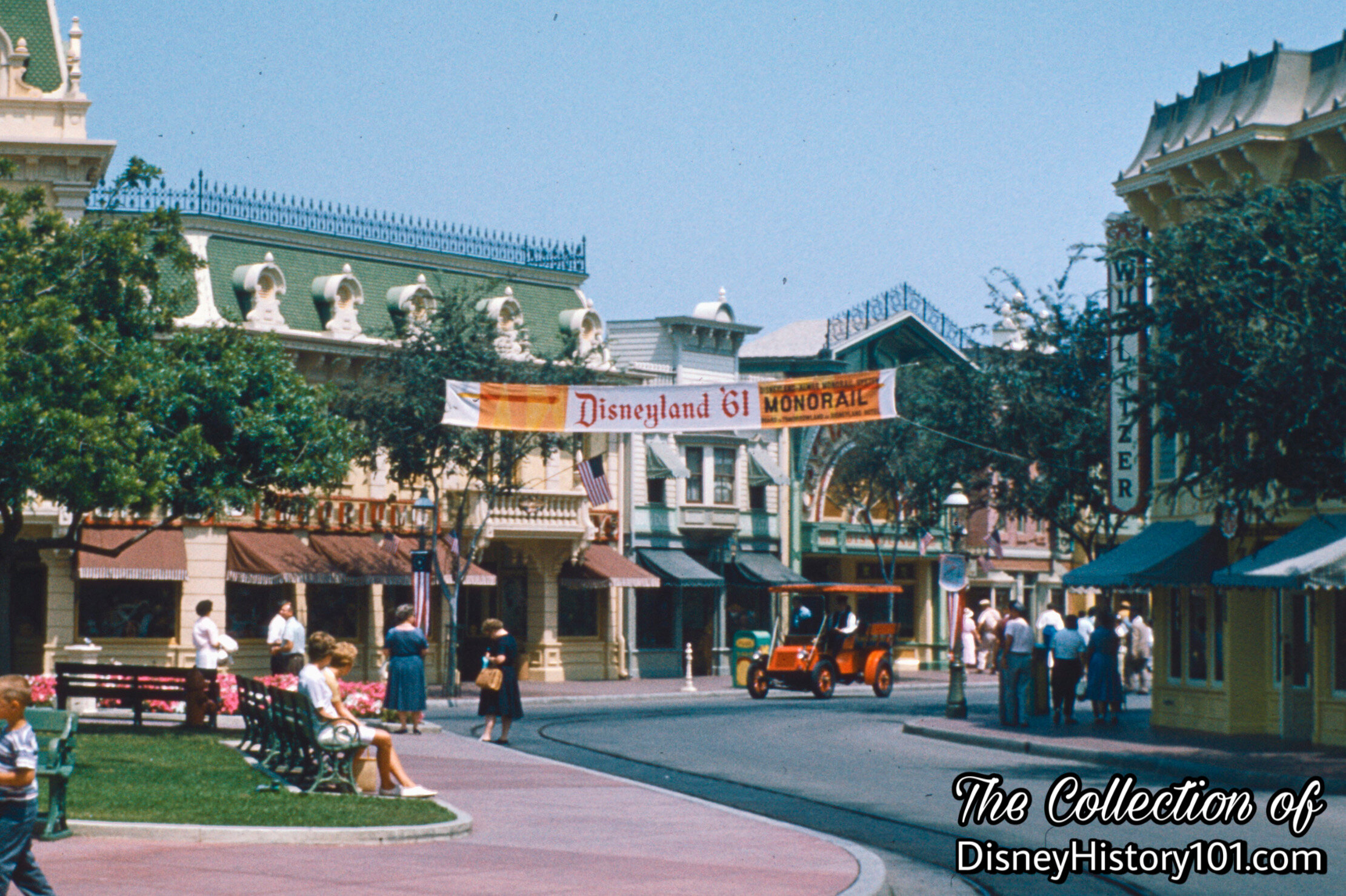
After a few months of connecting the new route to the Disneyland Hotel, the Monorail reopened in June 1st, 1961. Main Street U.S.A. got into the spirit of things with banners announcing the addition!
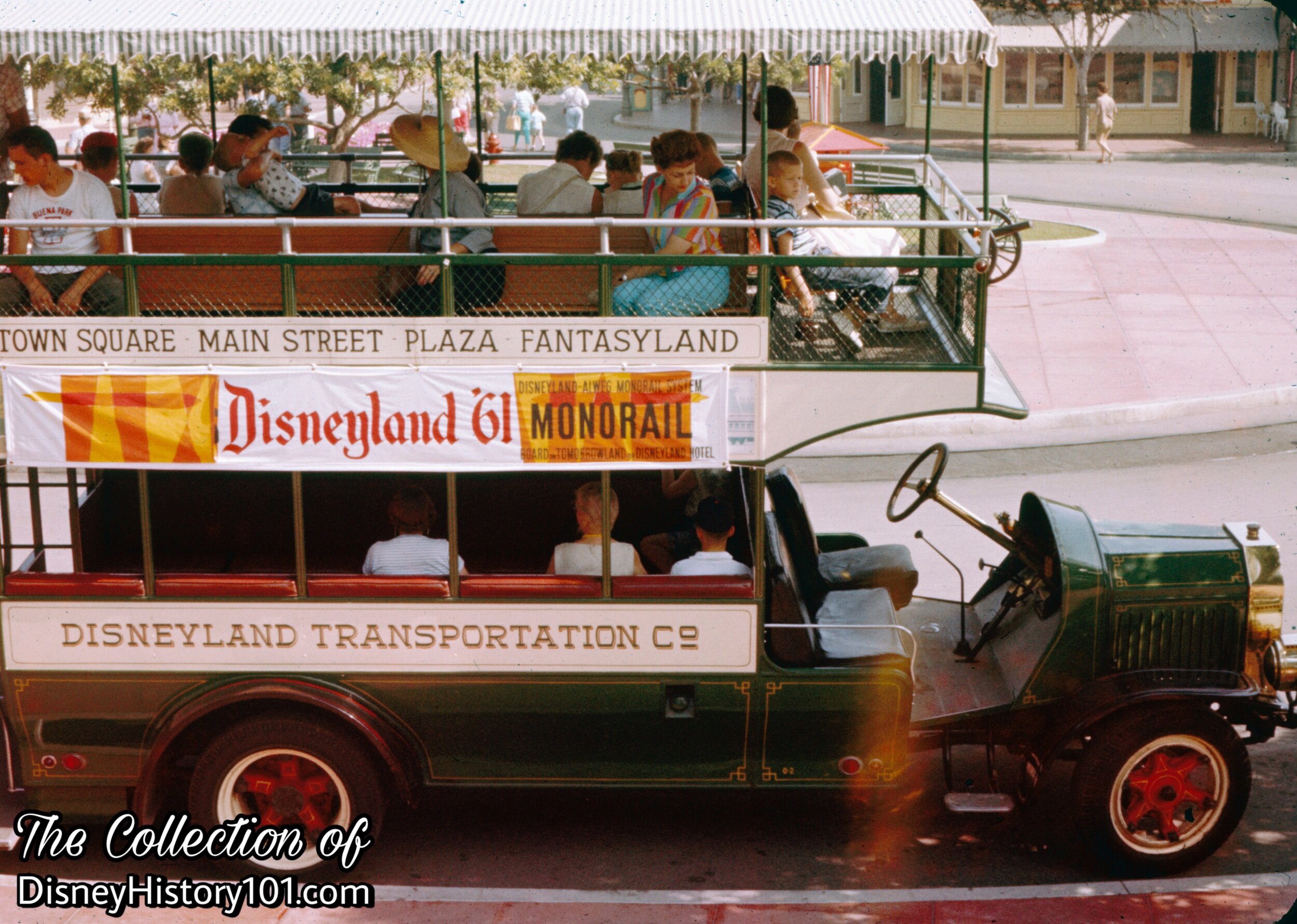
Main Street U.S.A. was always a place where older forms of transportation (like the horse drawn cars) operated side by side with the new. Now, the Omnibus would advertise the all new Monorail track system on its side!
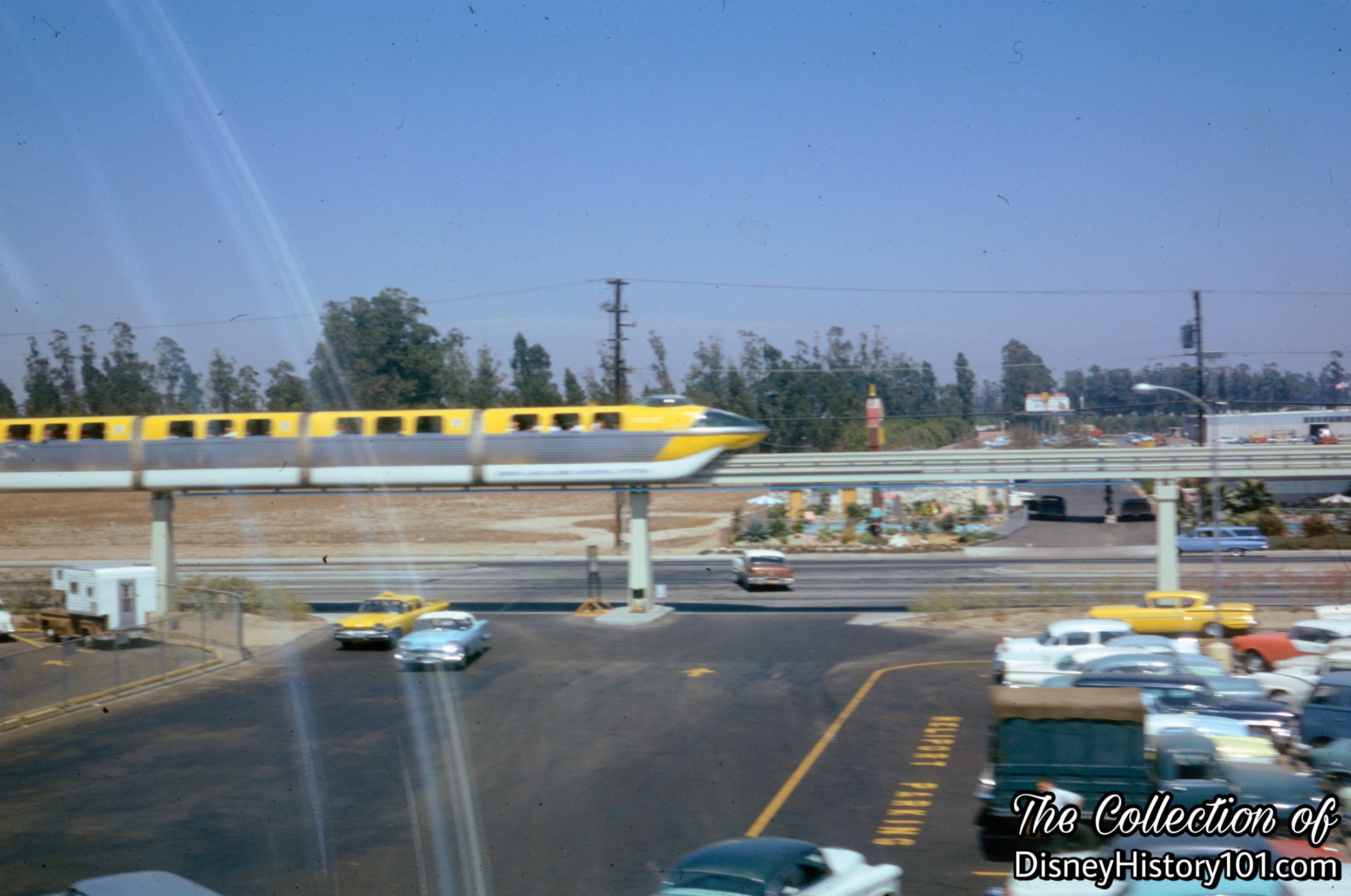

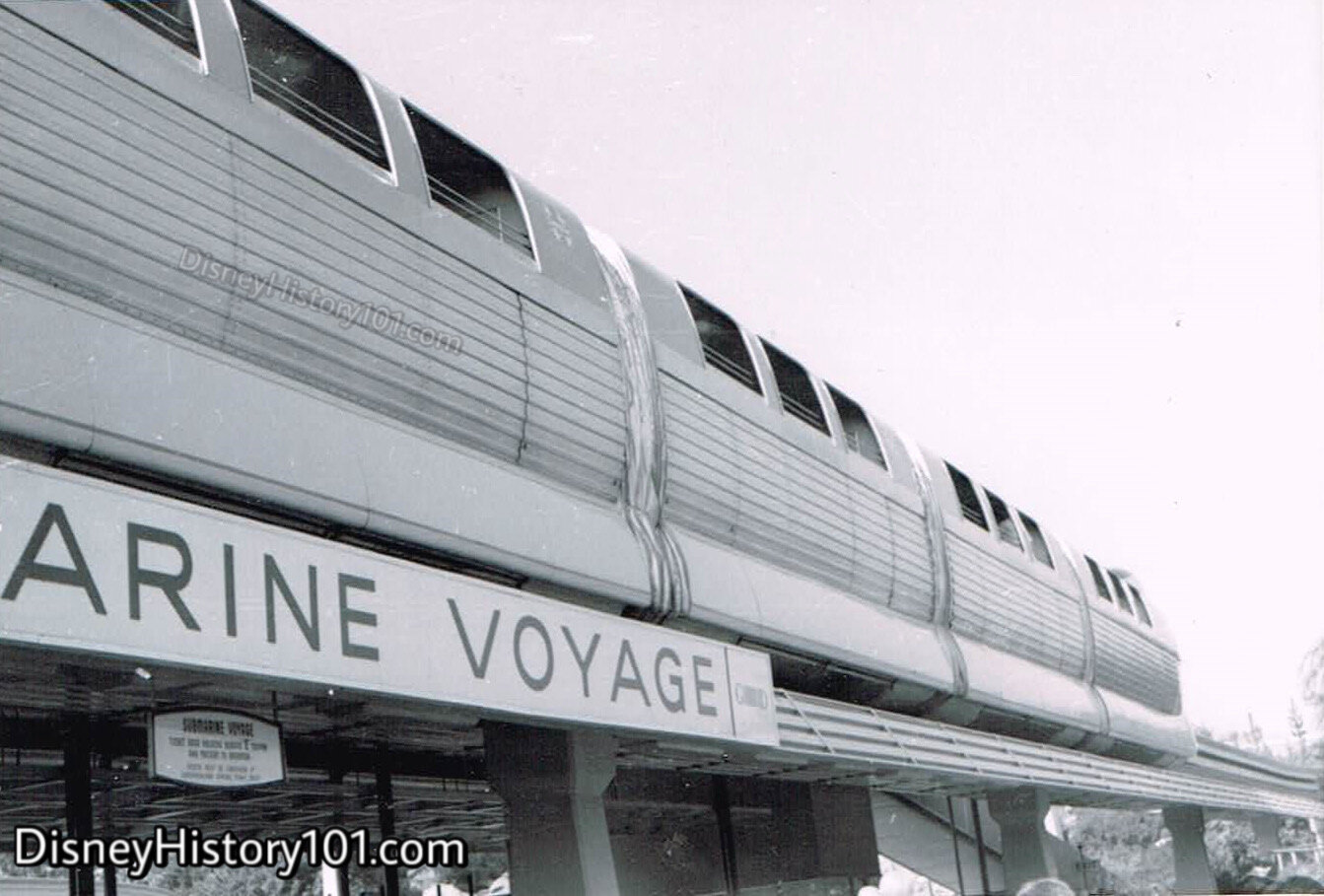
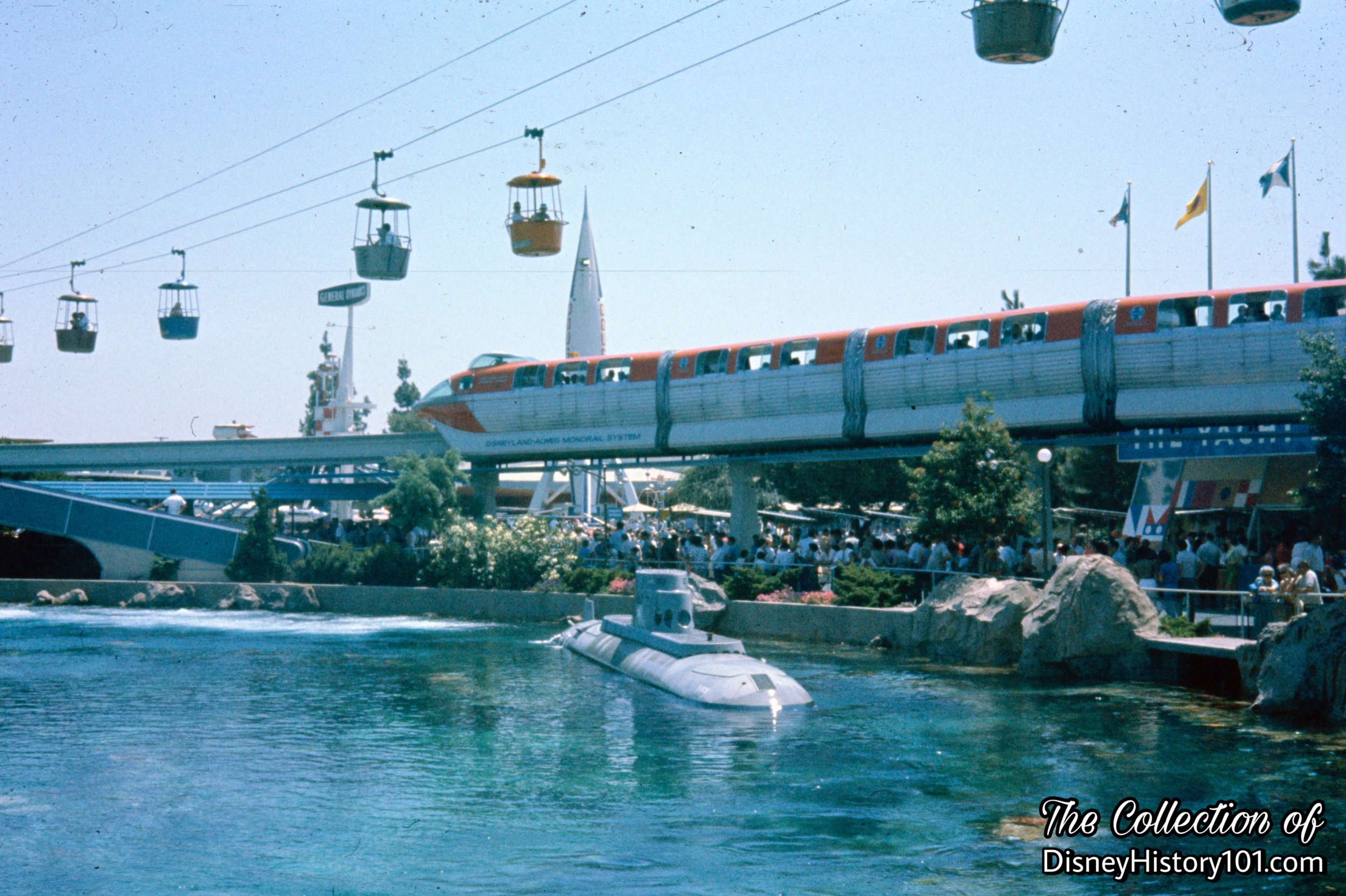
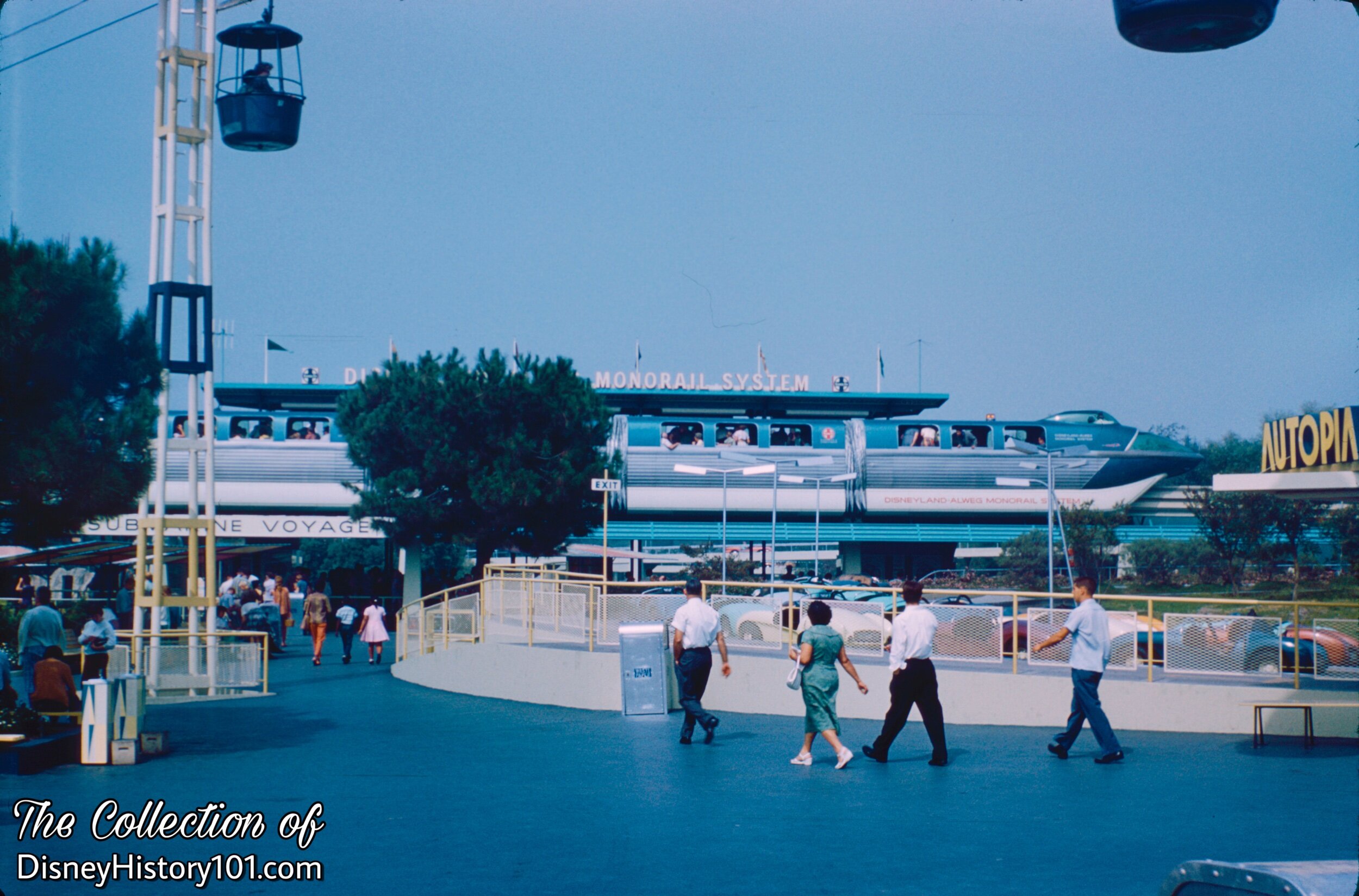
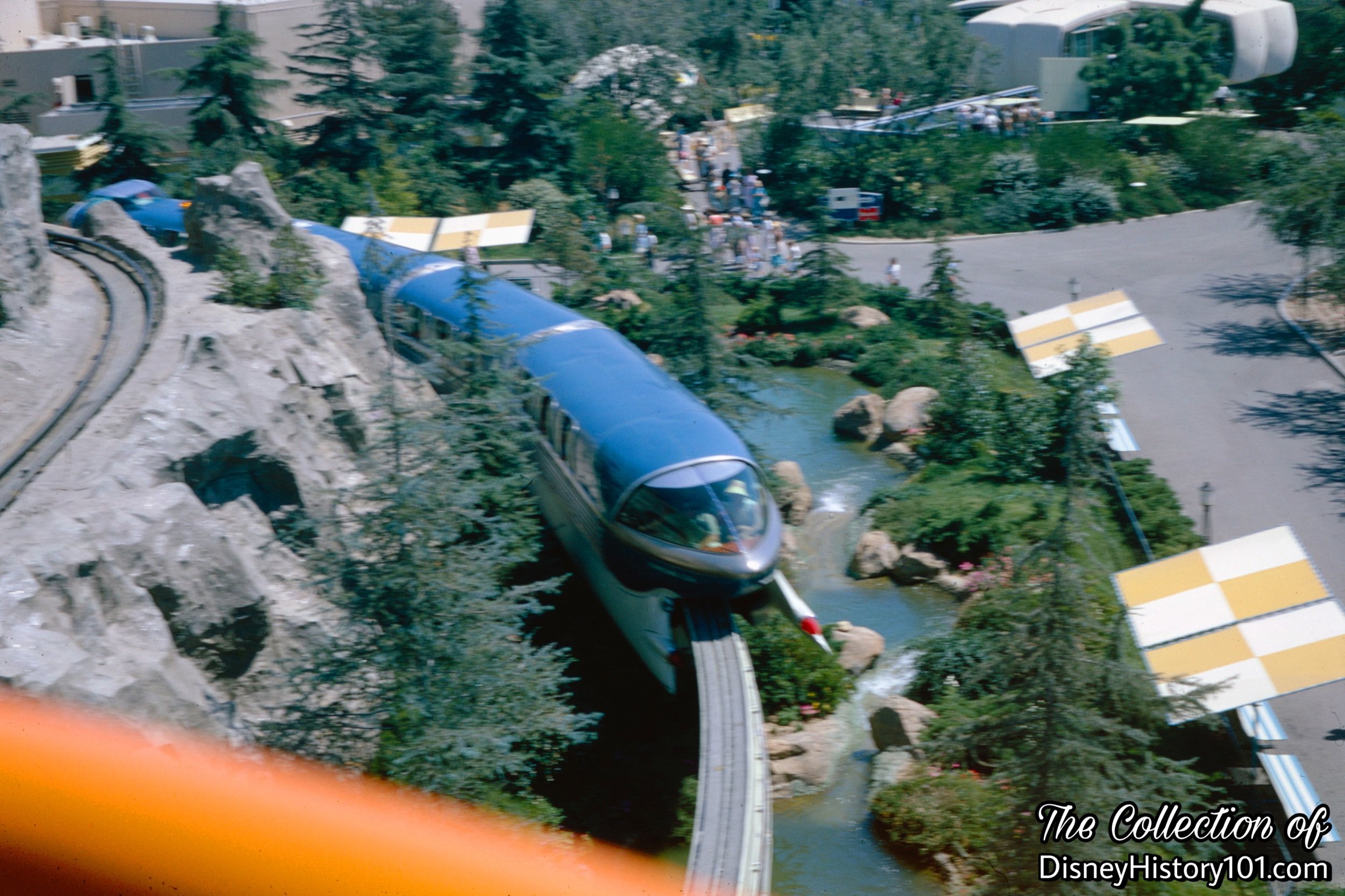
Note there is no catwalk on top of the cars.
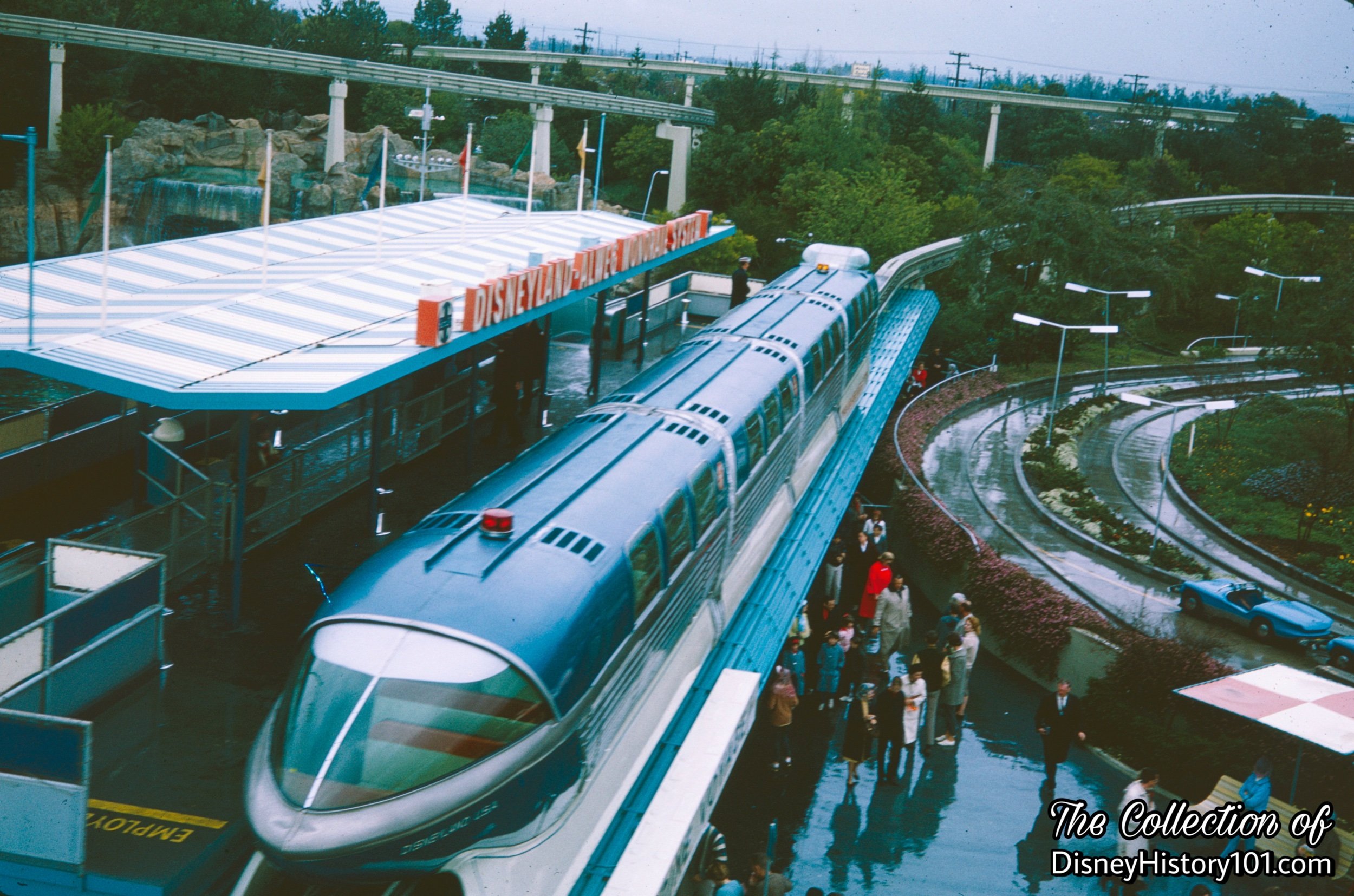
From this angle we get a clear view of the:
•DOME: The transparent enclosure over the Monorail Pilot Control.
•BEACON: The amber revolving light located behind the dome on the first section of the train.
•CATWALK: A narrow walkway on top of the cars.
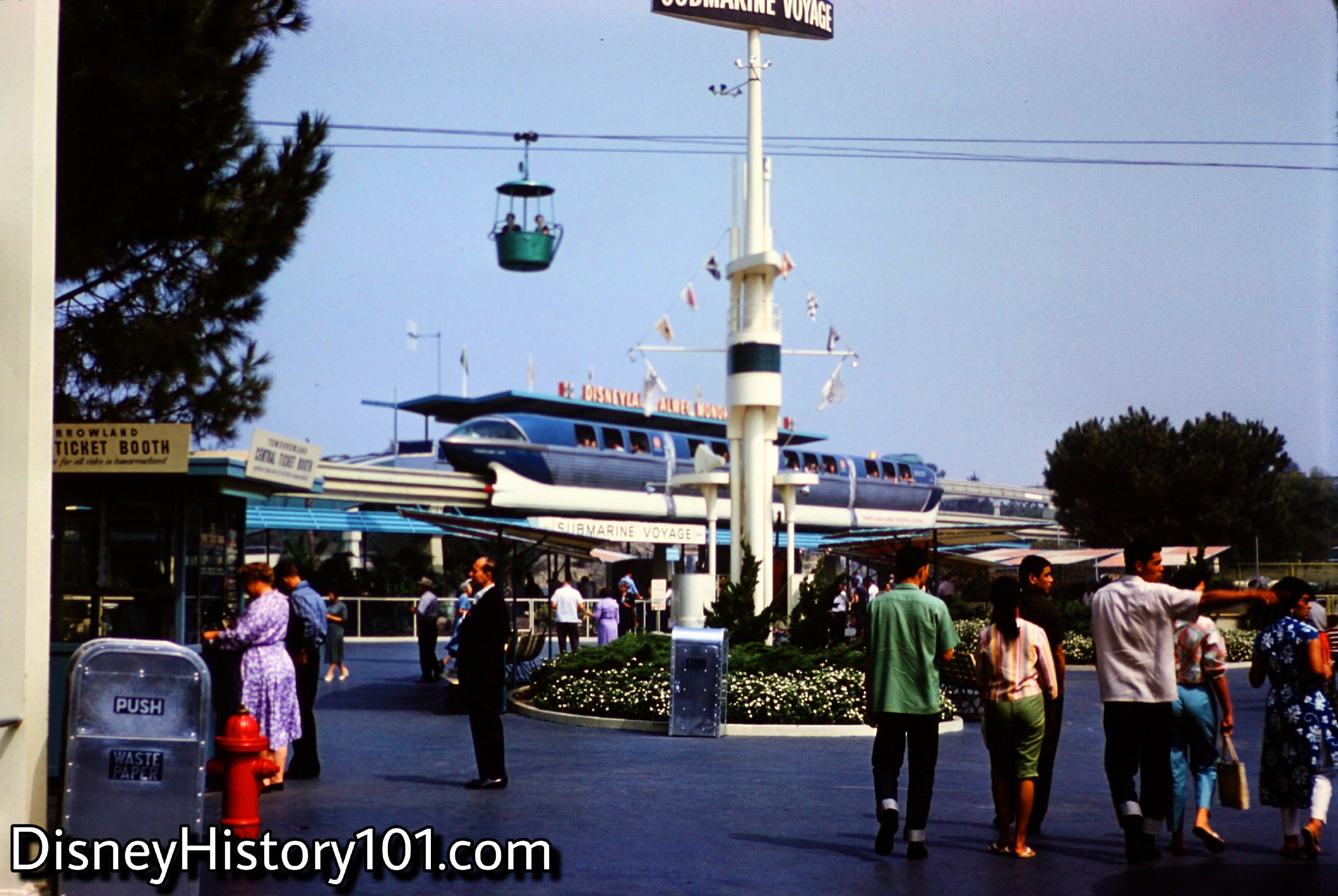
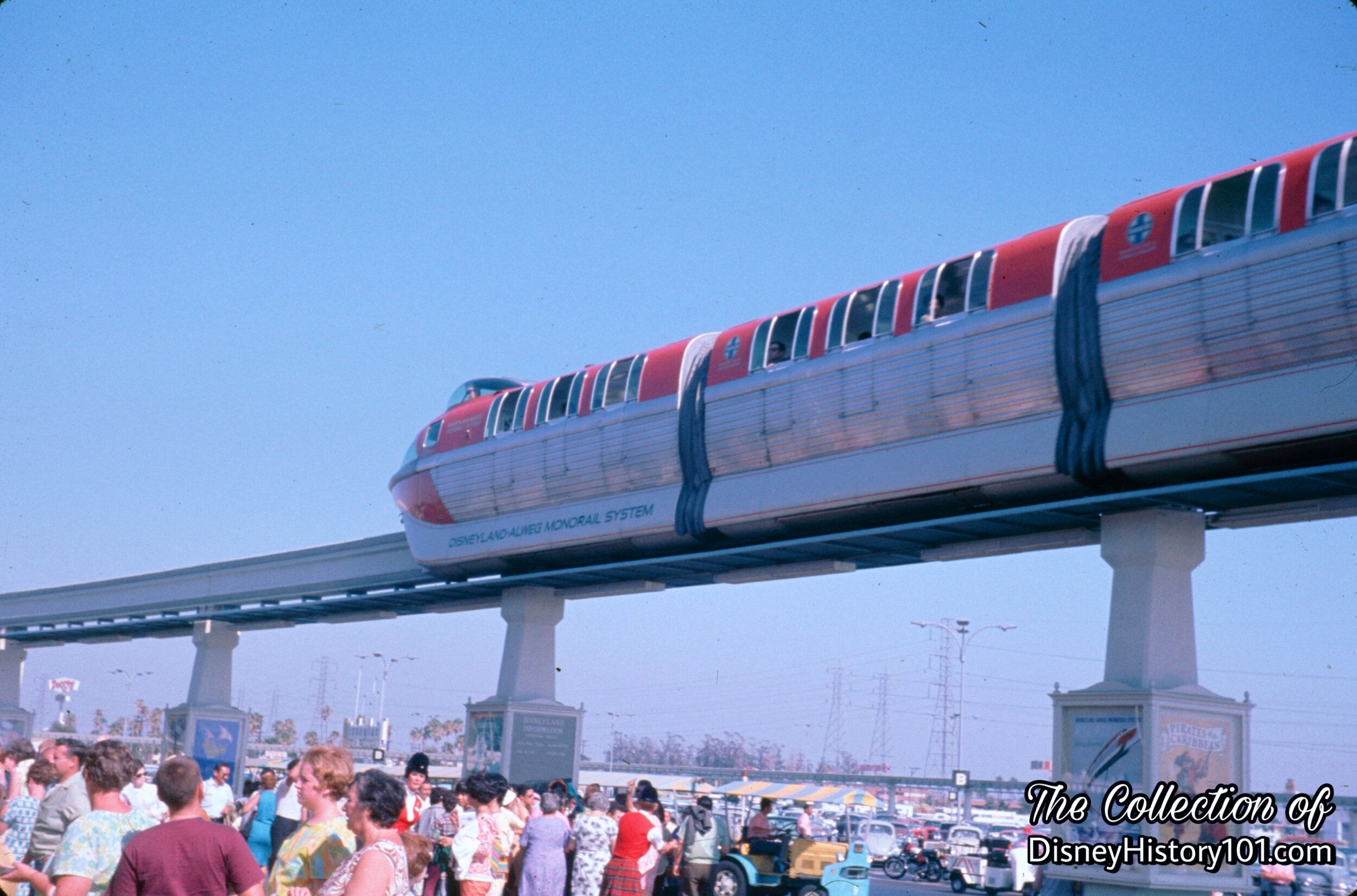
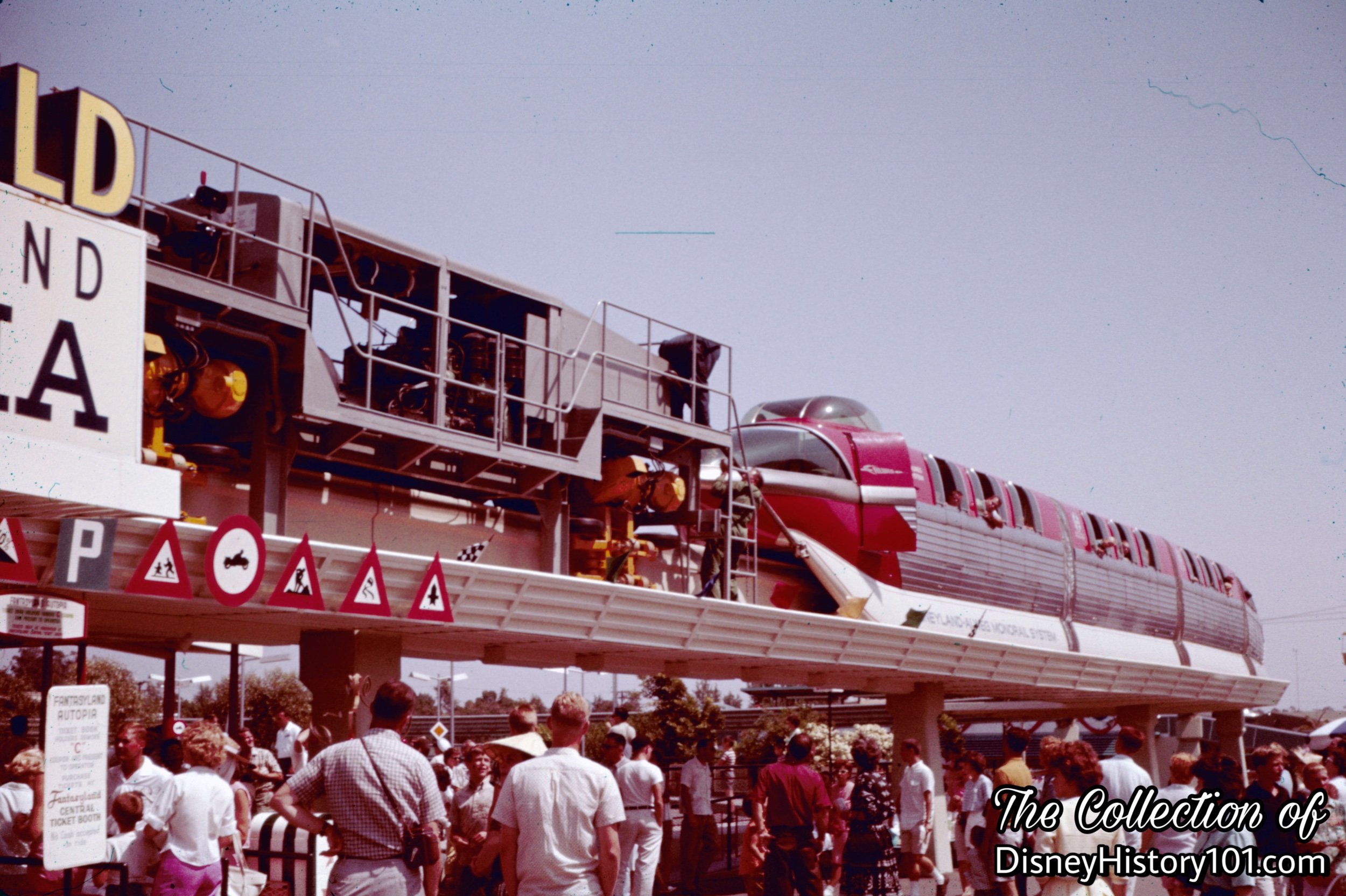
The attraction would experience a “Show Failure” situation and go “101.” In case of a power failure, a unique gasoline driven work car known as the W.E.D. Monorail Power Tractor would tow the train to the station where the passengers would be unloaded. This unique piece of general equipment was powered by an internal-combustion Diesel engine.
The Pilot would wait until the work tractor had hooked onto the train. Then, when signaled, the Pilot would put the test-run switch in the test position and push the towing brake release.
During the towing procedure, Guests may recall the door “safety feature.” The Monorail train doors were electrically operated and remained locked while the train was in motion, only capable of opening once the train had stopped at the Monorail Station and the “propulsion power control switch” was maneuvered into the “off” position. In case of a power failure, the doors were operated by solenoids powered by just one “contactor,” and could be opened from the outside. That is what happened after the train towed by the Monorail Power Tractor arrived at the station (in the Vintage View, above).
The work tractor unit was also used for working on the beamway. As a sidelight, unscheduled maintenance time ran approximately 68 hours for the first year.
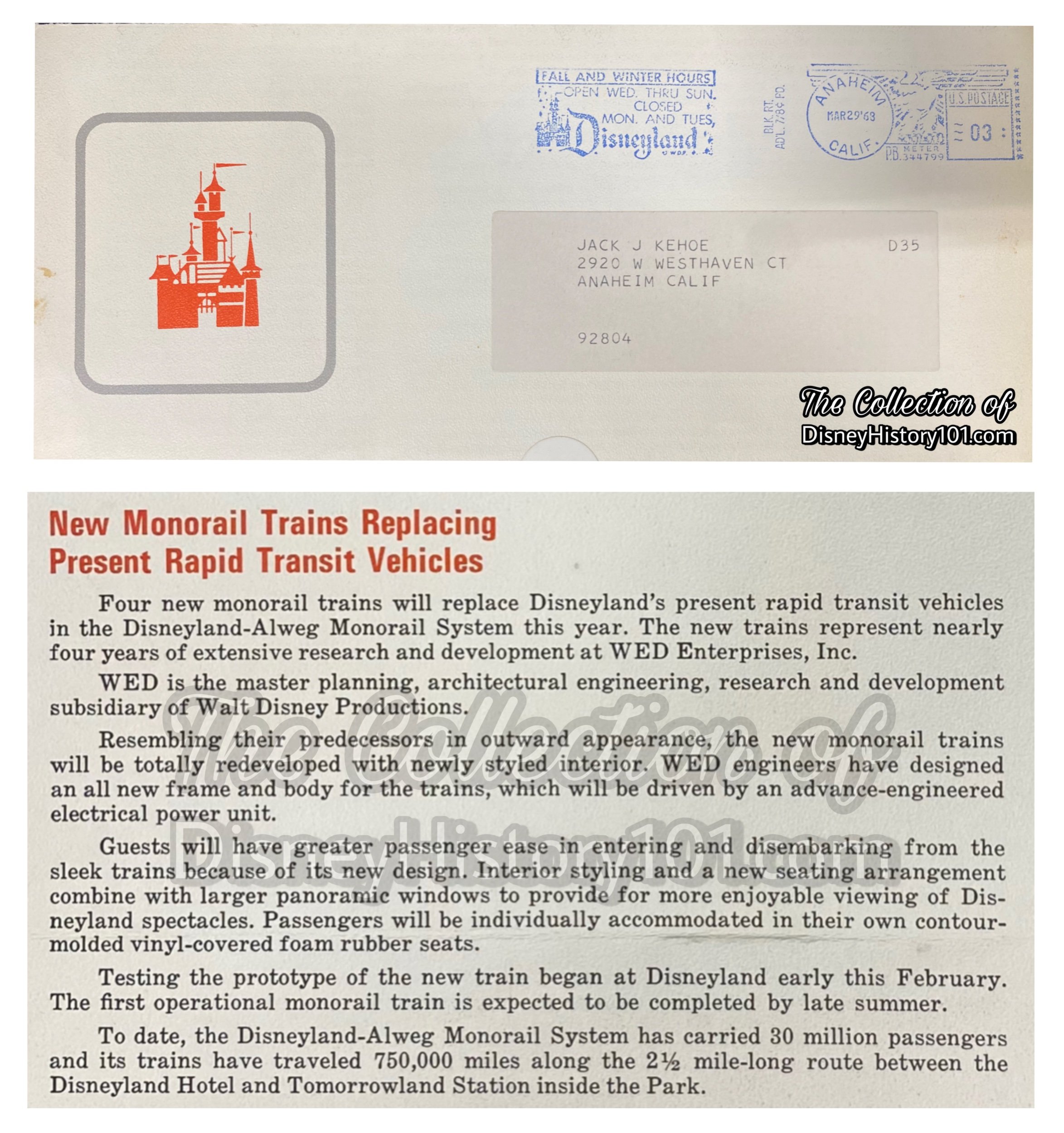
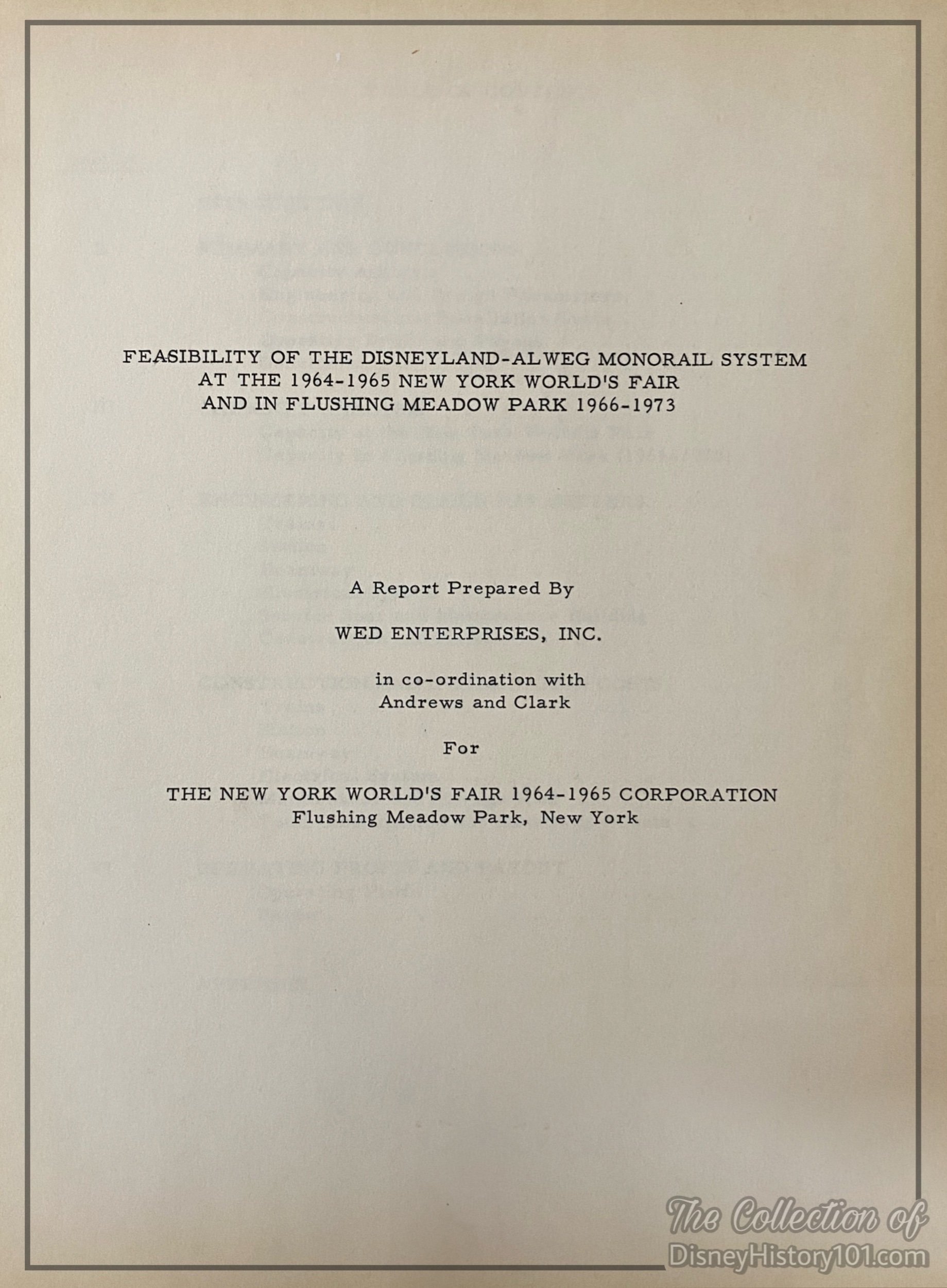
By the early 1960s, Disneyland had grown into a proving ground for design talent, future products, and transportation systems. Meanwhile, ALWEG manufactured Monorail systems, including the Seattle Center Monorail for the “Century 21 Exposition” Seattle World’s Fair. In 1964, the first Disney-designed PeopleMover system carried guests through the Ford pavilion at the New York World's Fair. Similarly, the ALWEG Disneyland Monorail had crossed a Submarine Lagoon and over the berm, the route was extended to practical use, transporting guests to the Disneyland Hotel. There was soon talk of a proposed Disneyland ALWEG Monorail route for the New York World’s Fair of 1964 - 1965 which would cross the Flushing River. This would have meant that the Monorail could have become a fifth Disney show Imagineered for the Fair. A study was prepared by WED Enterprises, Inc. in coordination with several firms including Andrews and Clark, Consulting Engineers, Walt Disney Productions and Disneyland, Economics Research Associates, Economic Planners, J.B. Allen and Company, General Contractors, Wheeler and Gray, Consulting Structural Engineers, and Wegematic Corporation (ALWEG).
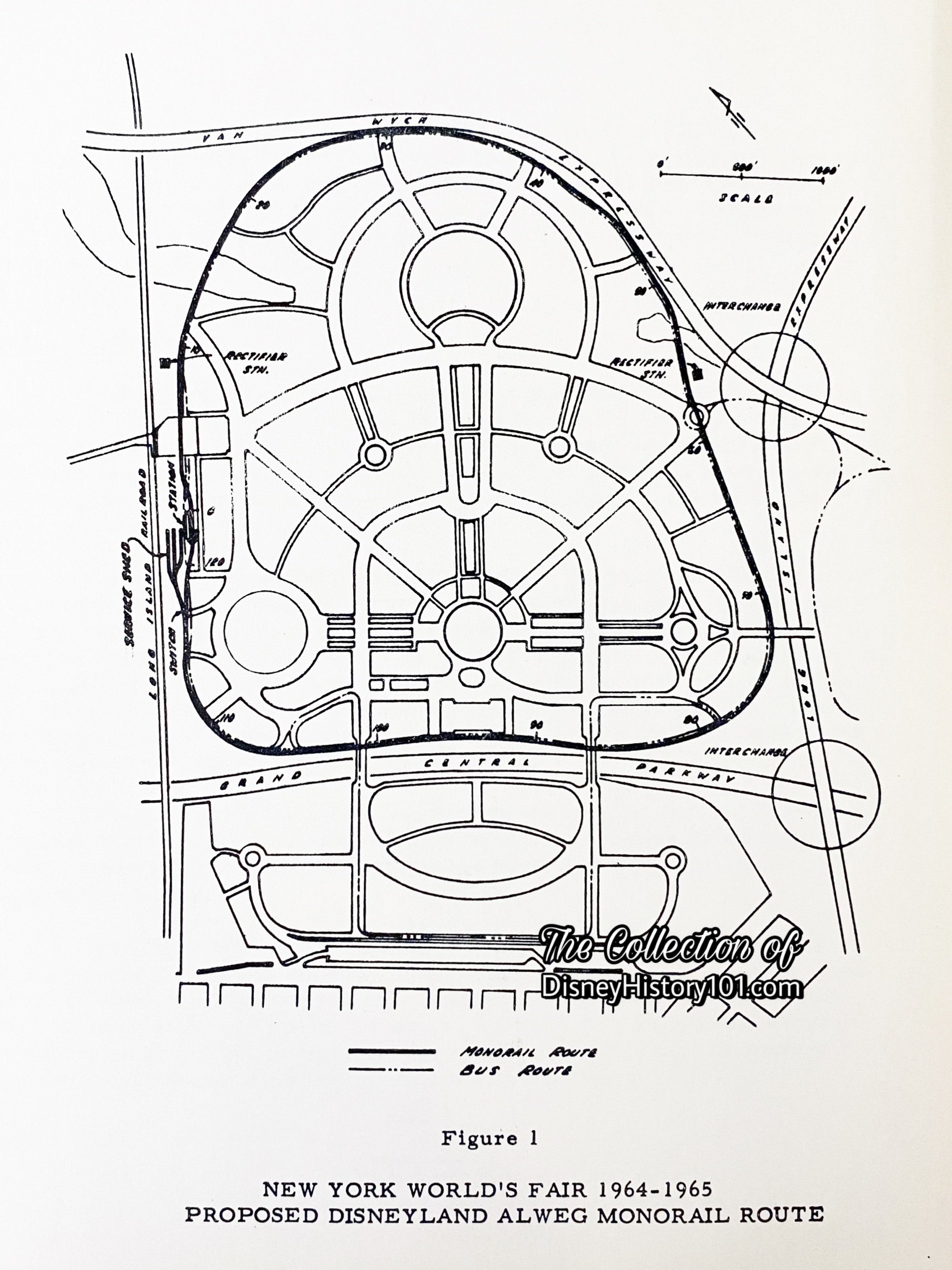
The length of the proposed single-track beamway would have been 12,400 feet of main line and 1,000 feet of spur track, and a station located at the Main Entrance of the Fair. The designs were dated from Disneyland.
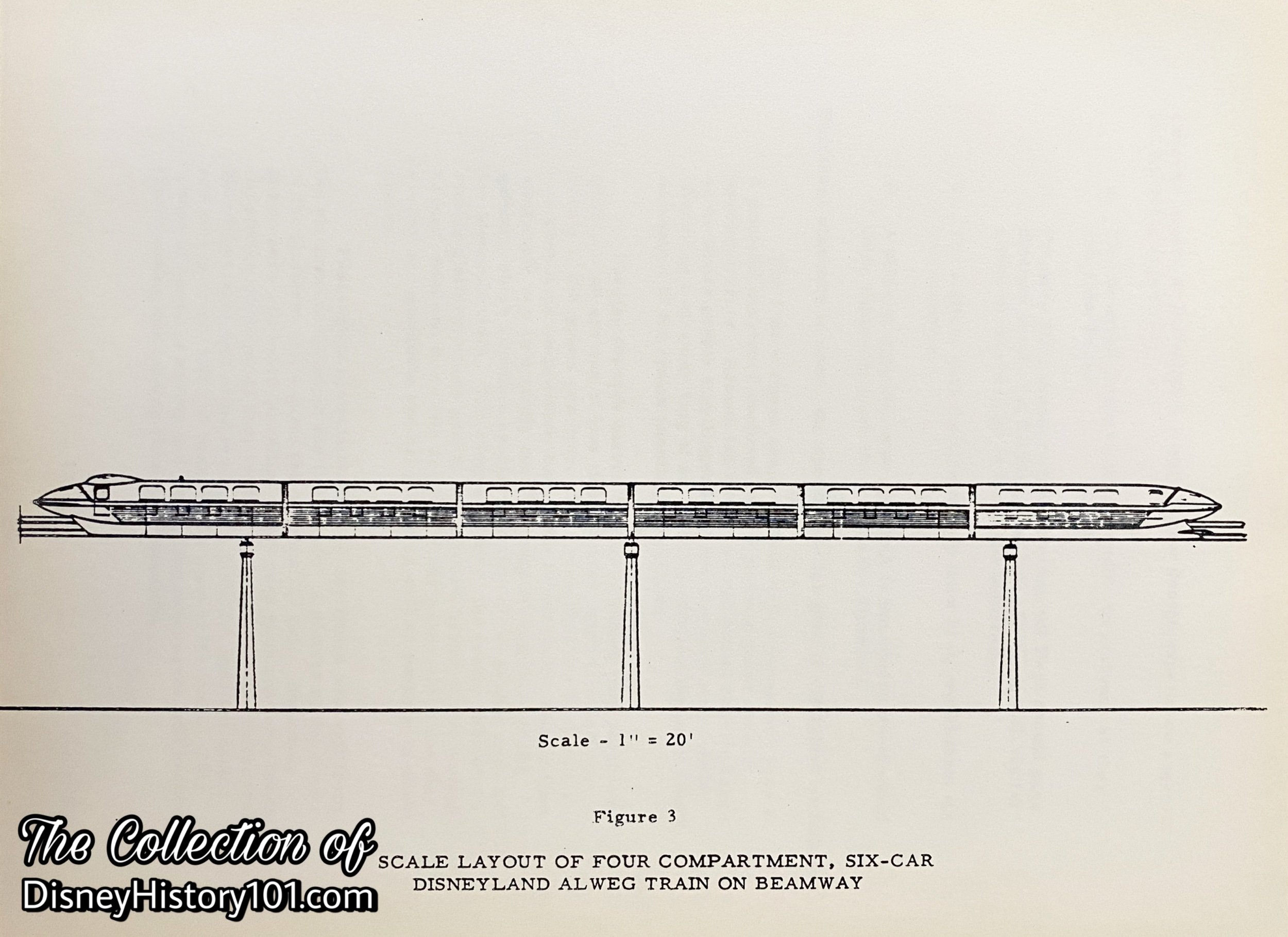
While Disneyland Monorail trains had four cars, this feasibility study proposed a six-car Monorail train.
(Former Collection of Richard Kraft on Display at “That’s From Disneyland,” Presented by Van Eaton Galleries)
After his purchase of WED in 1965, Walt wished to retain the Santa Fe and Disneyland Railroad trains, the Mark Twain, and monorail trains. So he formed RETLAW Enterprises, Inc. for his privately held and owned vehicles and assets. In other words, WED Enterprises, Inc. (Walt’s theme park design and architectural group) was purchased by the Walt Disney Studios on February 5, 1965, along with the WED Enterprises name. After that deal, the WED the Corporation needed a new name, and Retlaw Enterprises was born. RETLAW Enterprises Inc. (once located at 4111 West Alameda AVENUE, Suite 500 Burbank, California 91505) owned the railroad trains operated at Disneyland.
By 1965, ALWEG had been renamed Alwac International, Inc. and was reckoned as one of Disneyland's 29 Institutional Lessees.
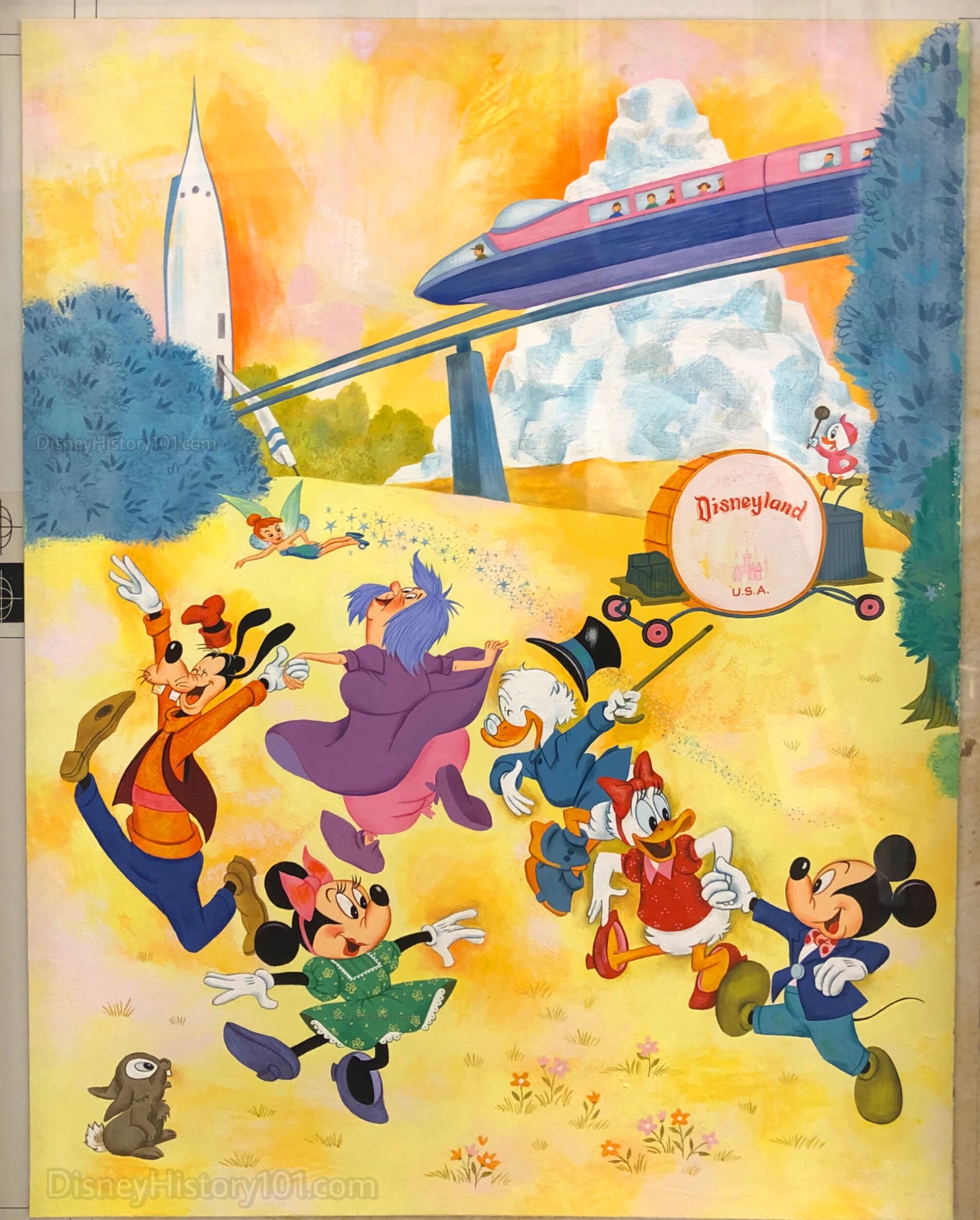
While Disneyland was steadily moving toward its “Tencennial Celebration” in 1965, there were many attractions to celebrate, including the Biggest Bass Drum in the World, the McDonnell Douglas Flight to the Moon, and the Monorail “trains of the future”! By the time this illustration was created (in 1963), the Disneyland-ALWEG Monorail trains had “carried more than 11,000,000 passengers and travelled 225,000 miles,” according to Meccano magazine (Vol.50, No.5 ; published for May of 1965).
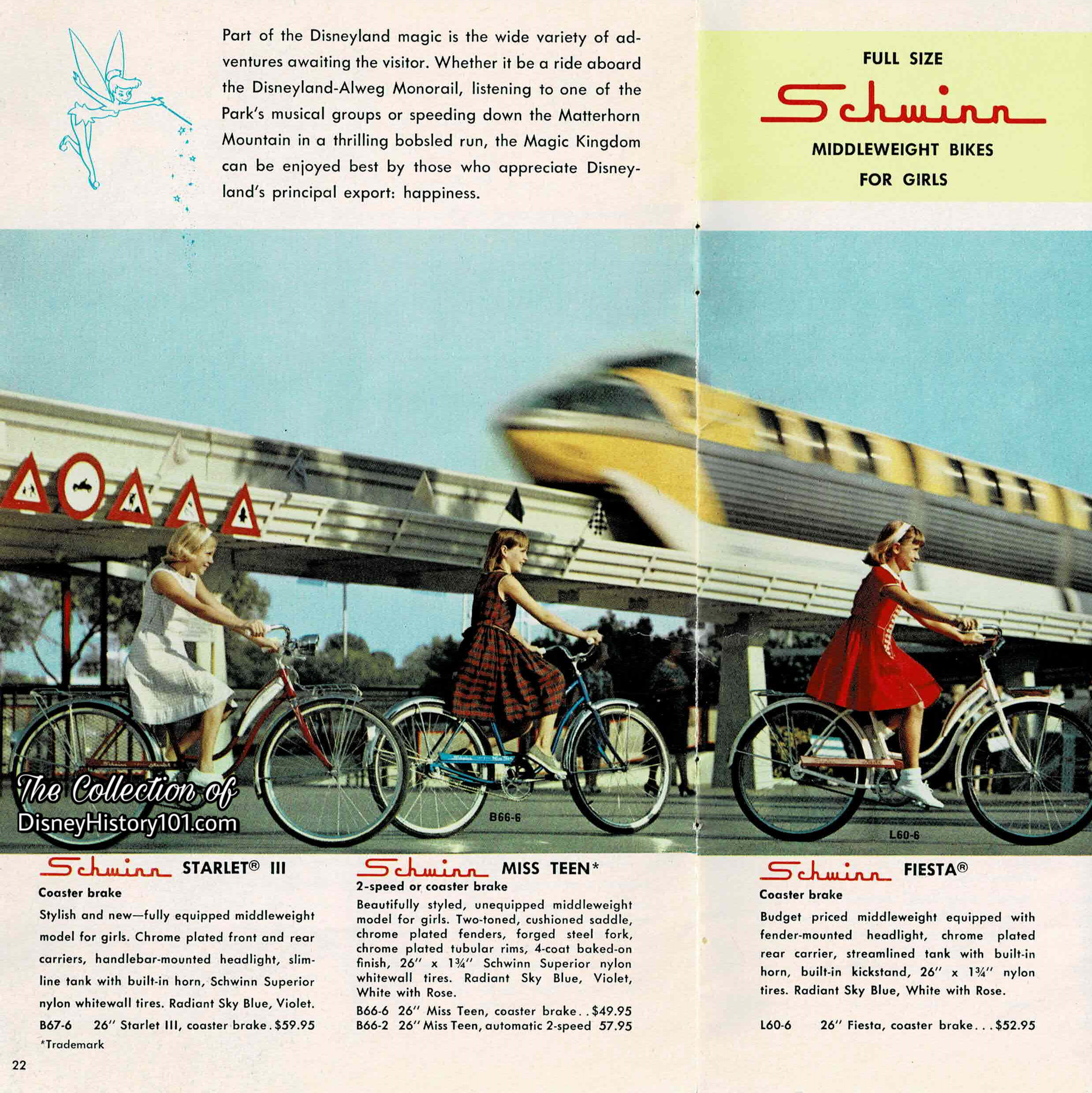
Photographs of Schwinn middle weight bikes for girls (i.e. the Starlet III, Miss Teen, and Fiesta models) were photographed (with the Monorail Yellow in view) for this catalogue at Disneyland during the Tencennial celebration of 1965. About May of 1965, Ben Harris and Royal Clark were discussing the redevelopment of the “narration scripts for [the] Monorail and trains.”
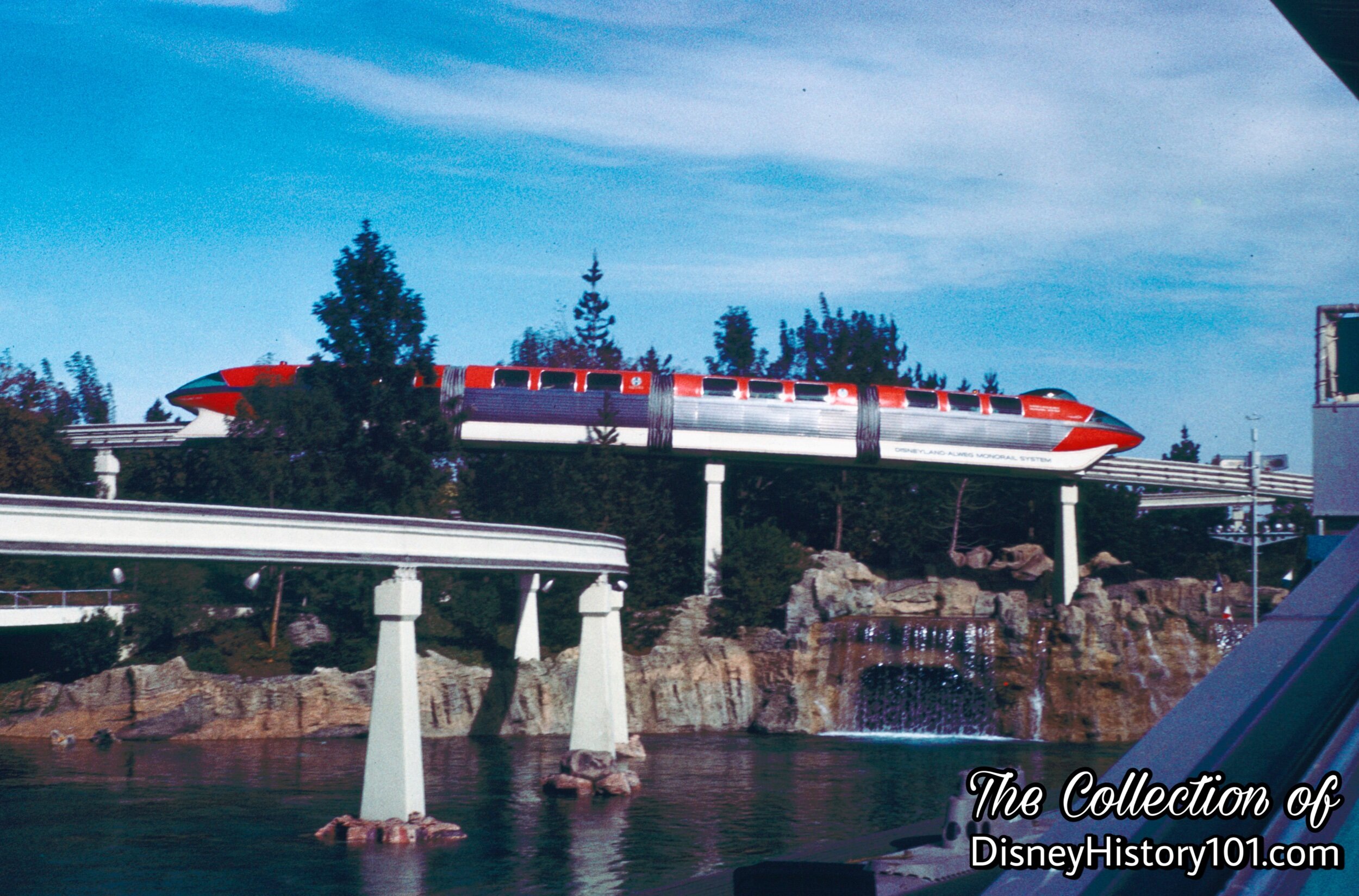
By the milestone year, a number of notable Disneyland Cast Members had operated the Monorail, like Chris Ridgway (whose story is preserved in Backstage Disneyland magazine, Vol.4, No.4, December 1965).
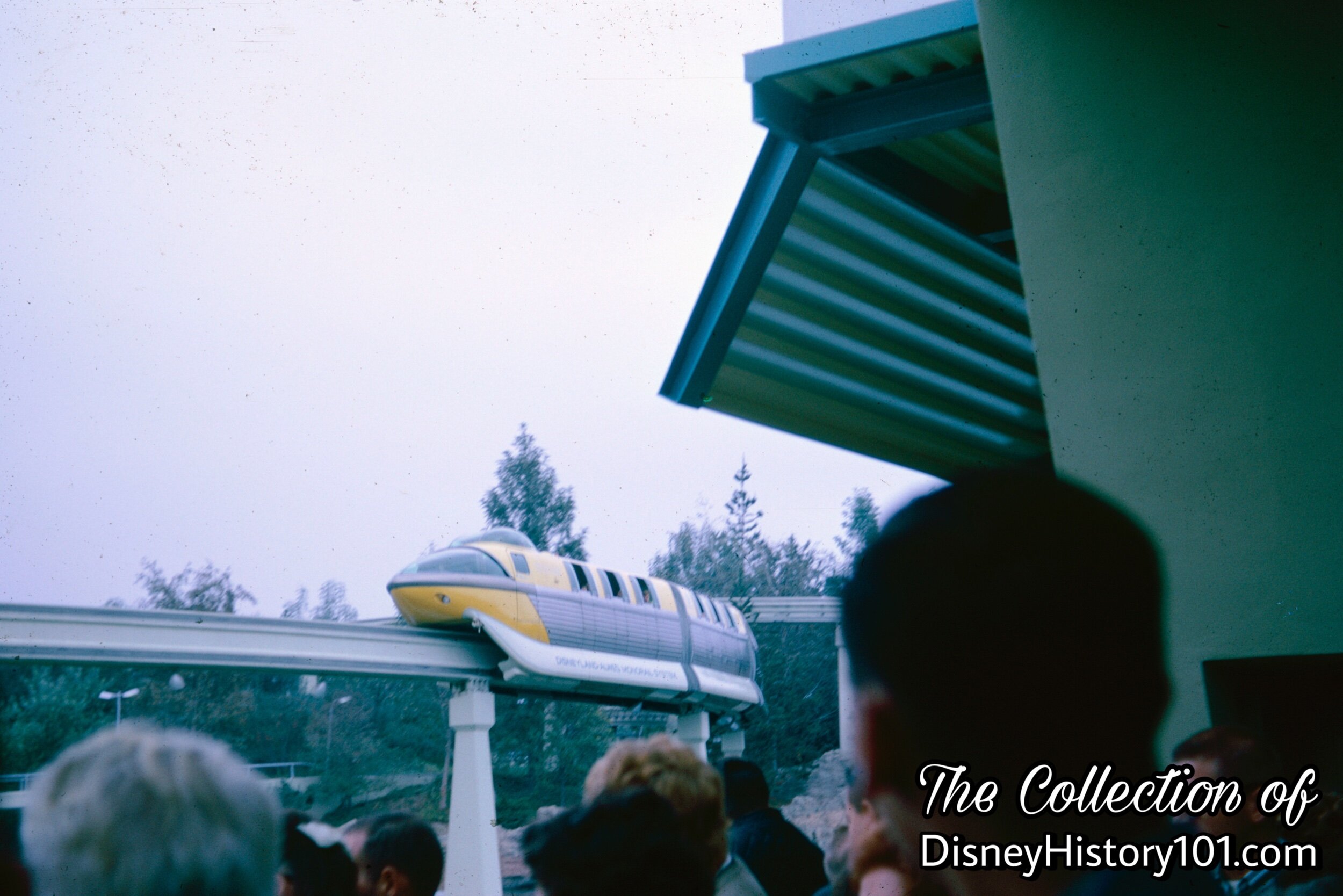
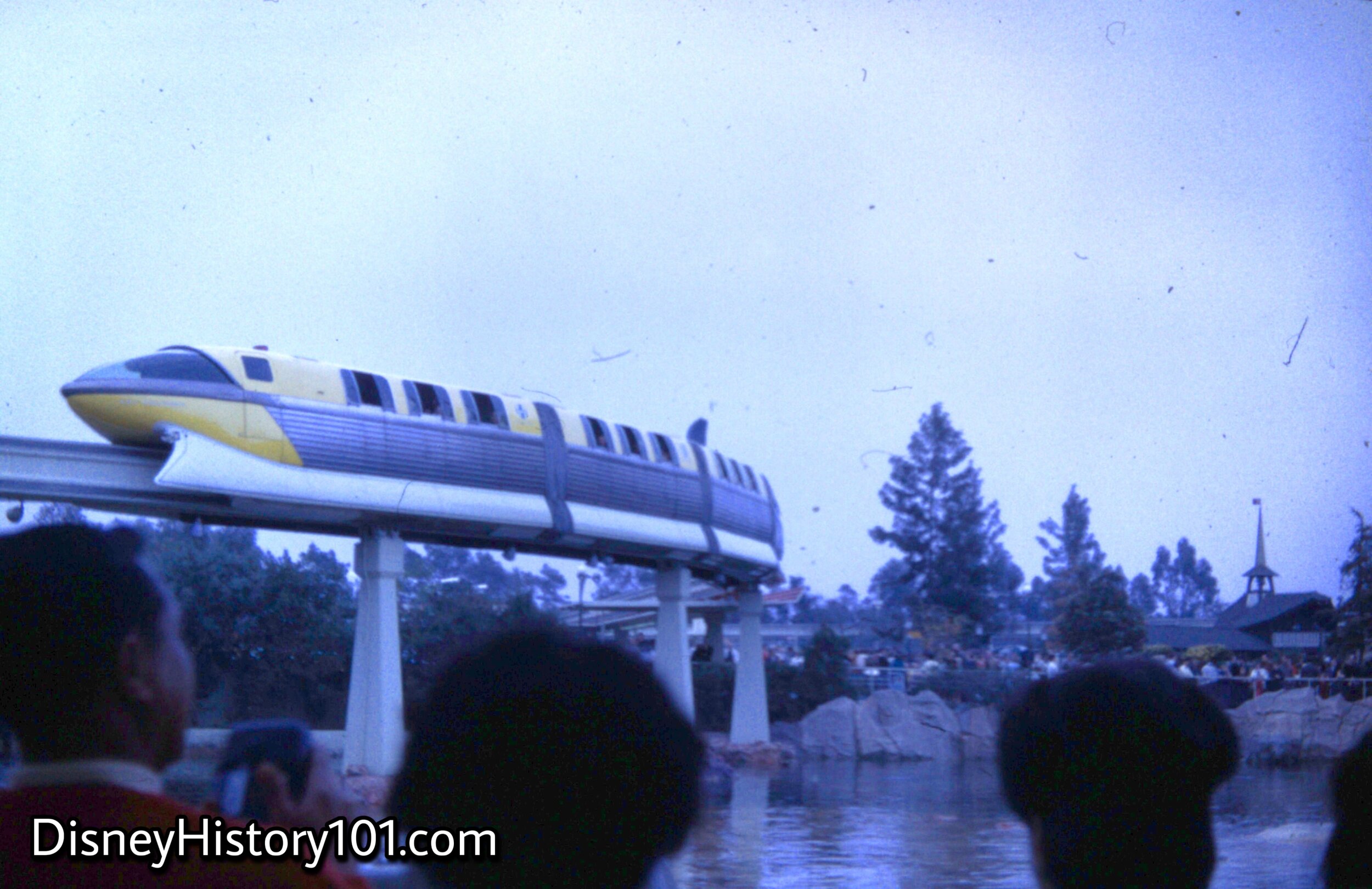
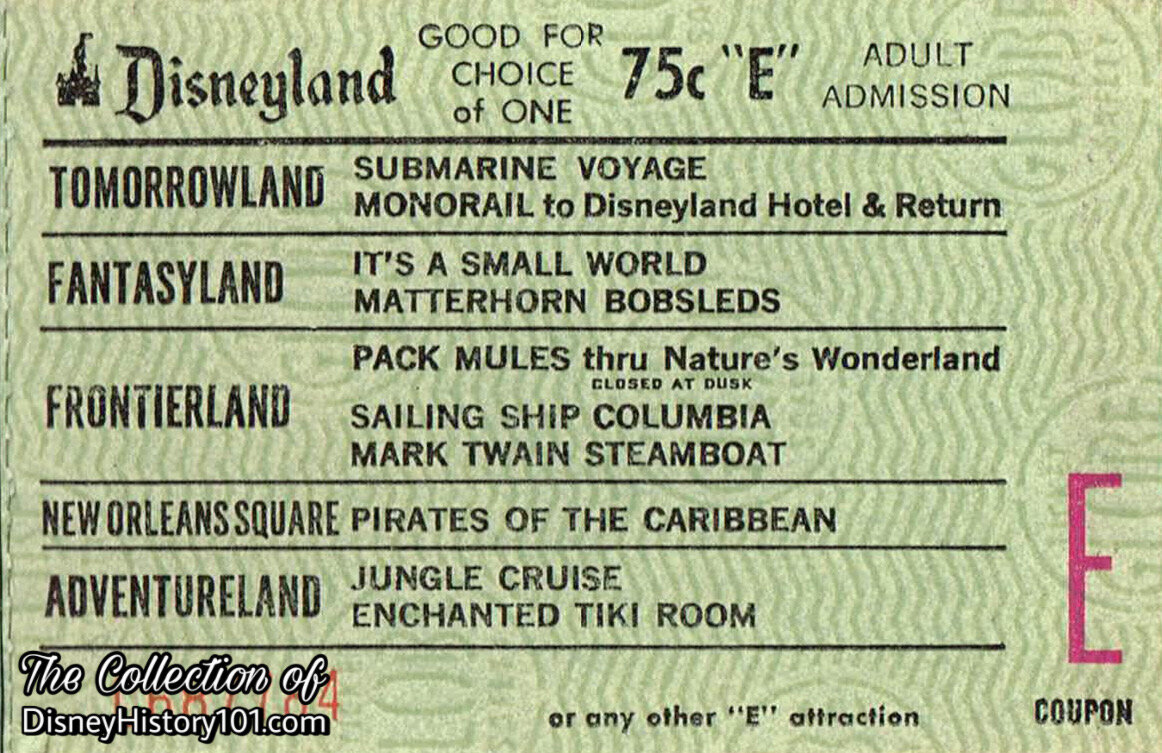
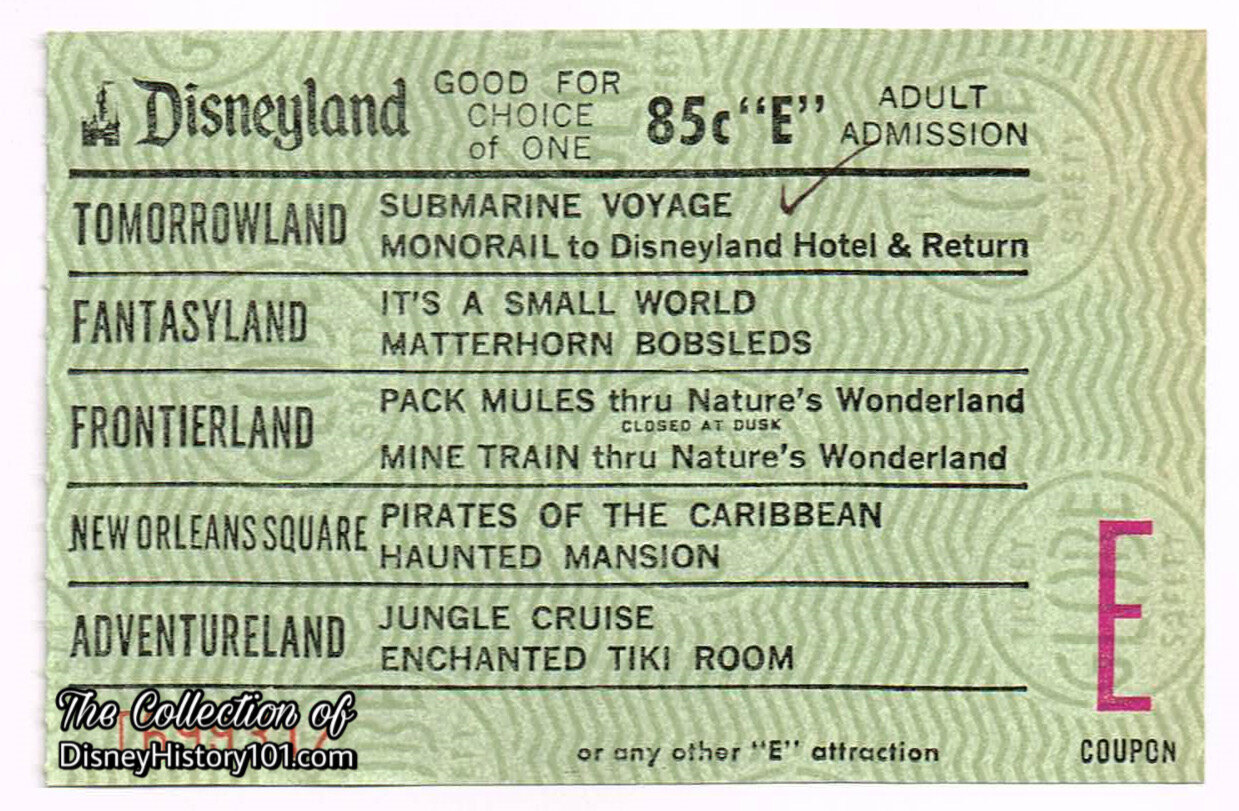
In 1965, the price of admission for circling above Disneyland on the transportation system of tomorrow was exactly one “E” coupon, or 75¢ for adults and 65¢ for children.
Speaking of prices…
In 1965 the Disneyland Railroad and Monorail grossed $2, 487, 500, and the family company RETLAW paid its "landlord, " Walt Disney Productions (which owns Disneyland), 20 percent of this figure as rent for the right-of-way. RETLAW would retain the other 80 percent for operating expense, amortization, and profit.
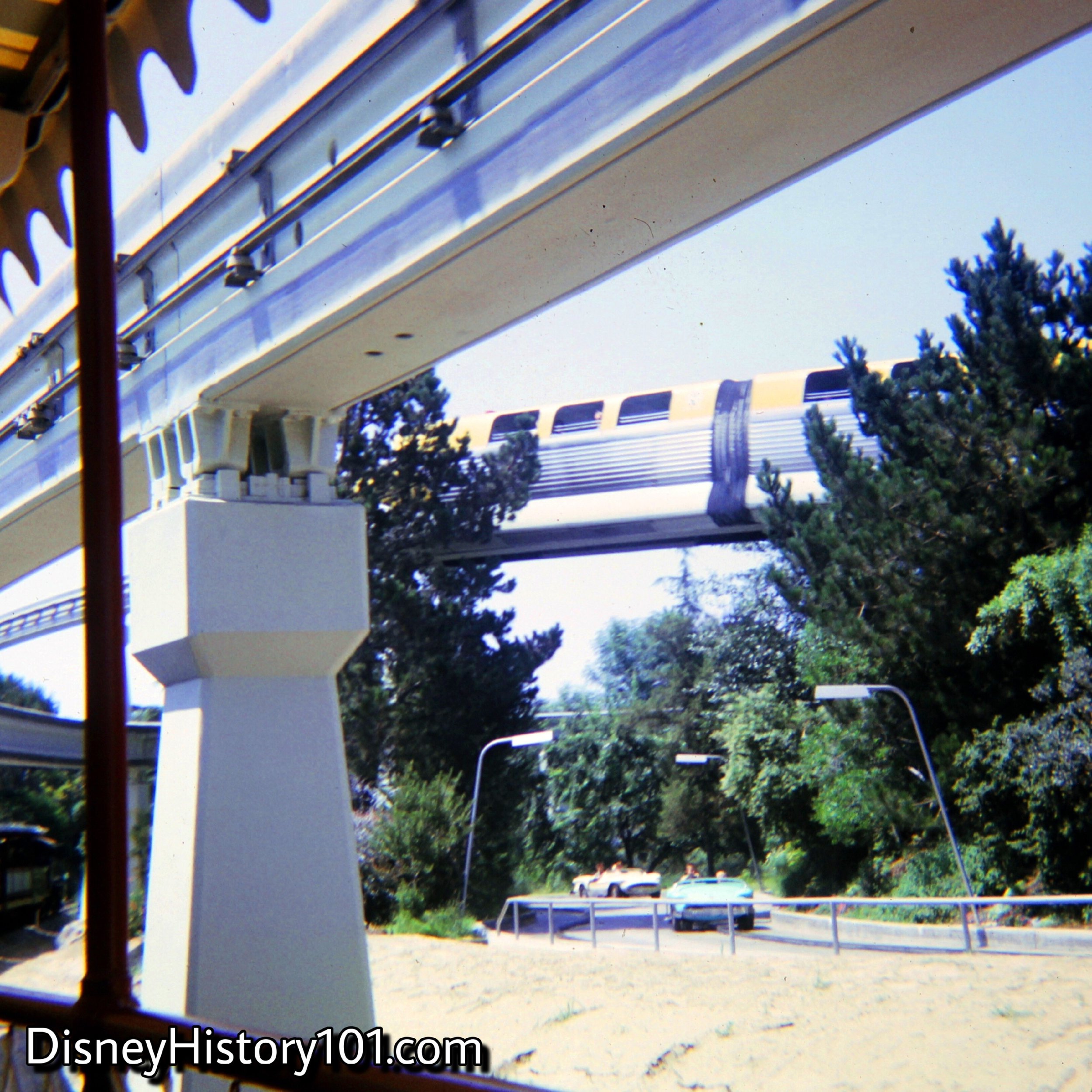
A switchway in the Monorail Beamway leads two directions - the main Beamway, and the spur track leading to the Train Storage Building! The Train Storage Building is where the Monorails and the Santa Fe and Disneyland Railroad trains are stored, cleaned, and maintained.
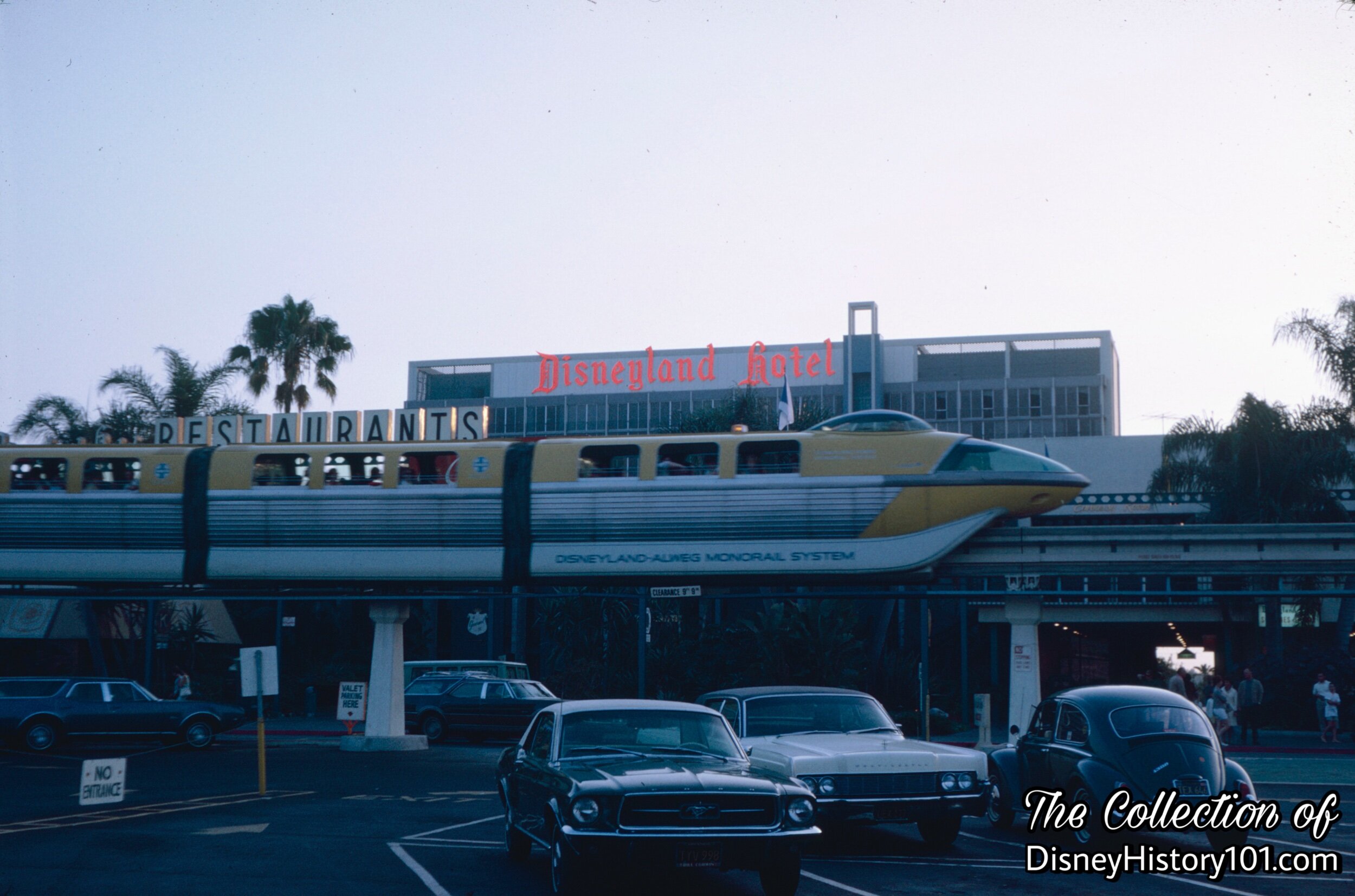
When the Disneyland Hotel was open (but Disneyland was closed Mondays and Tuesdays), it only makes sense that a different live Monorail narration was given. By September of 1966, live narration drew attention to a “green building” (referred to as the “pirate building” on scripts) that would ”soon contain an exciting adventure.”
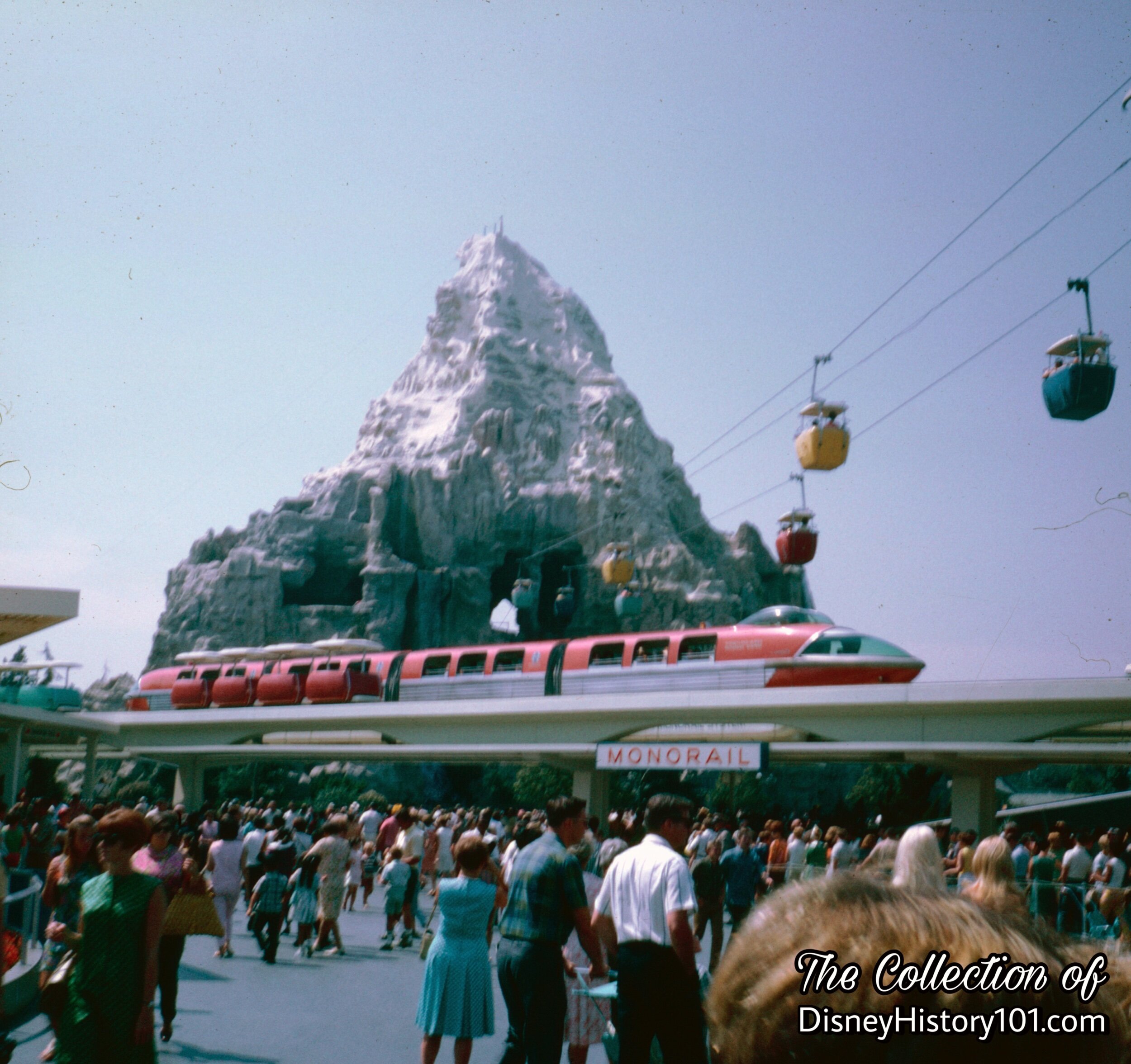
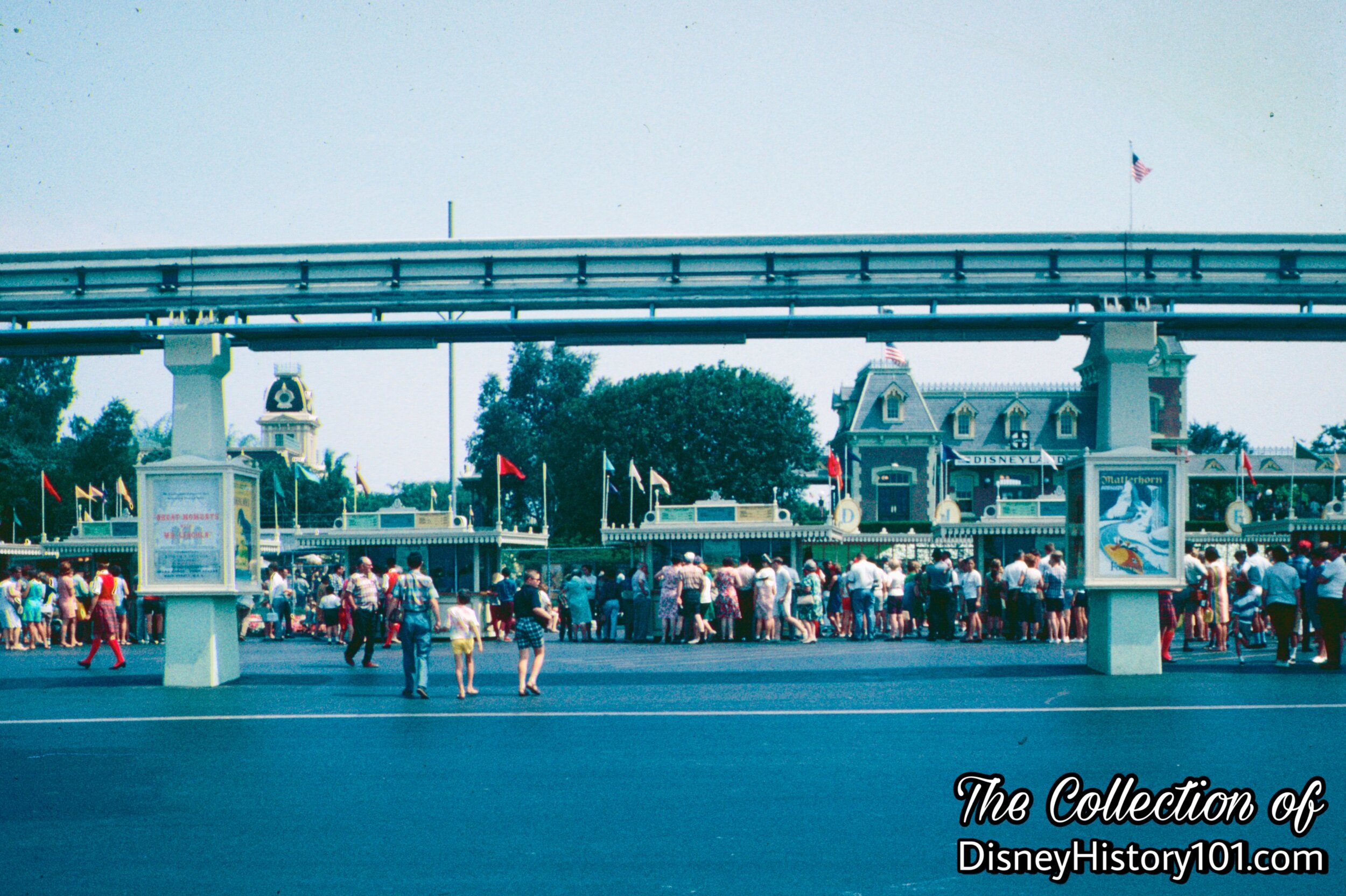
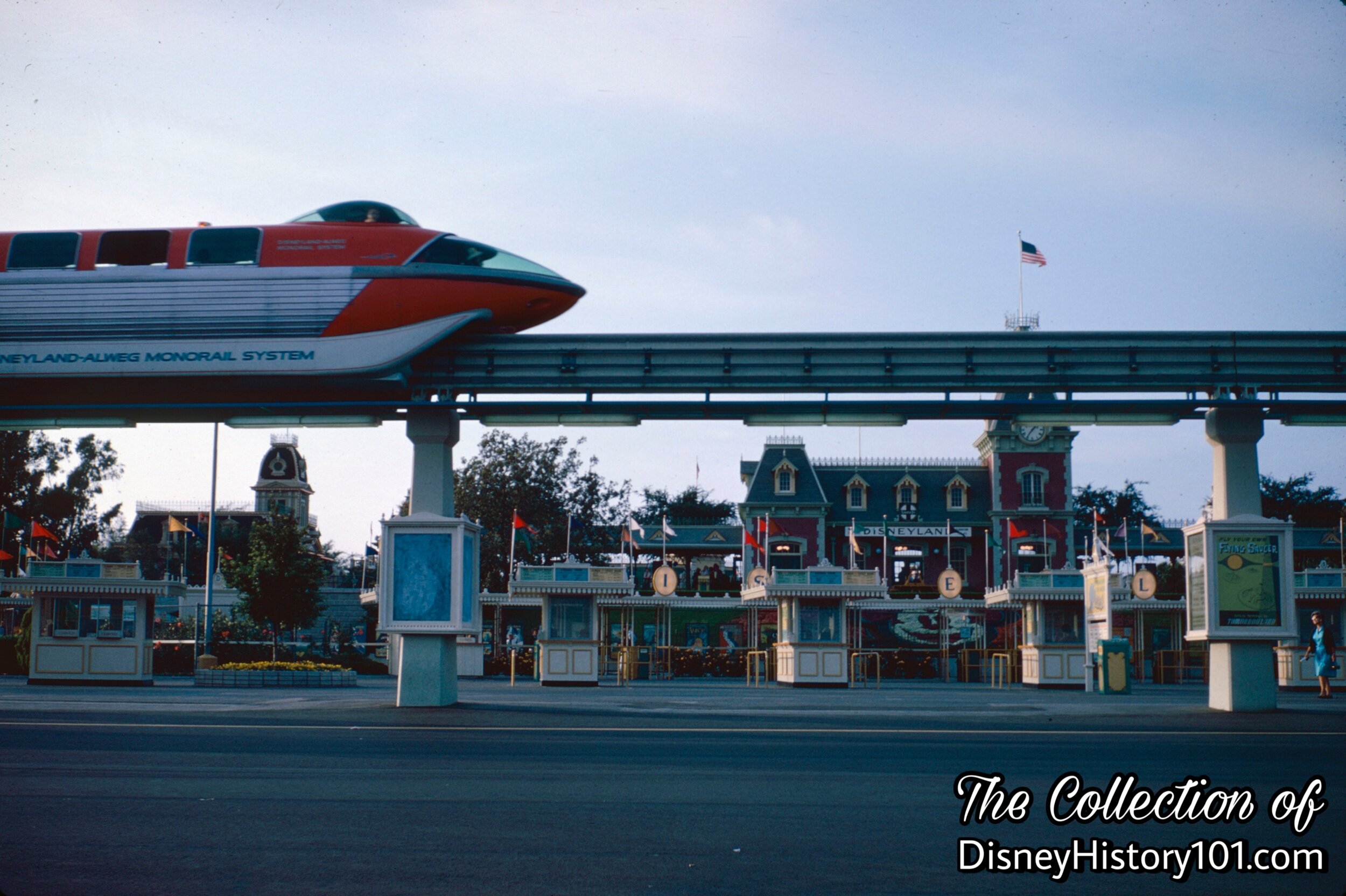
This Vintage View was captured in 1967, but it gives an idea of what Disneyland’s Main Entrance Gate and Ticket Booths look like with the new monorail and pylons towering over guests below!
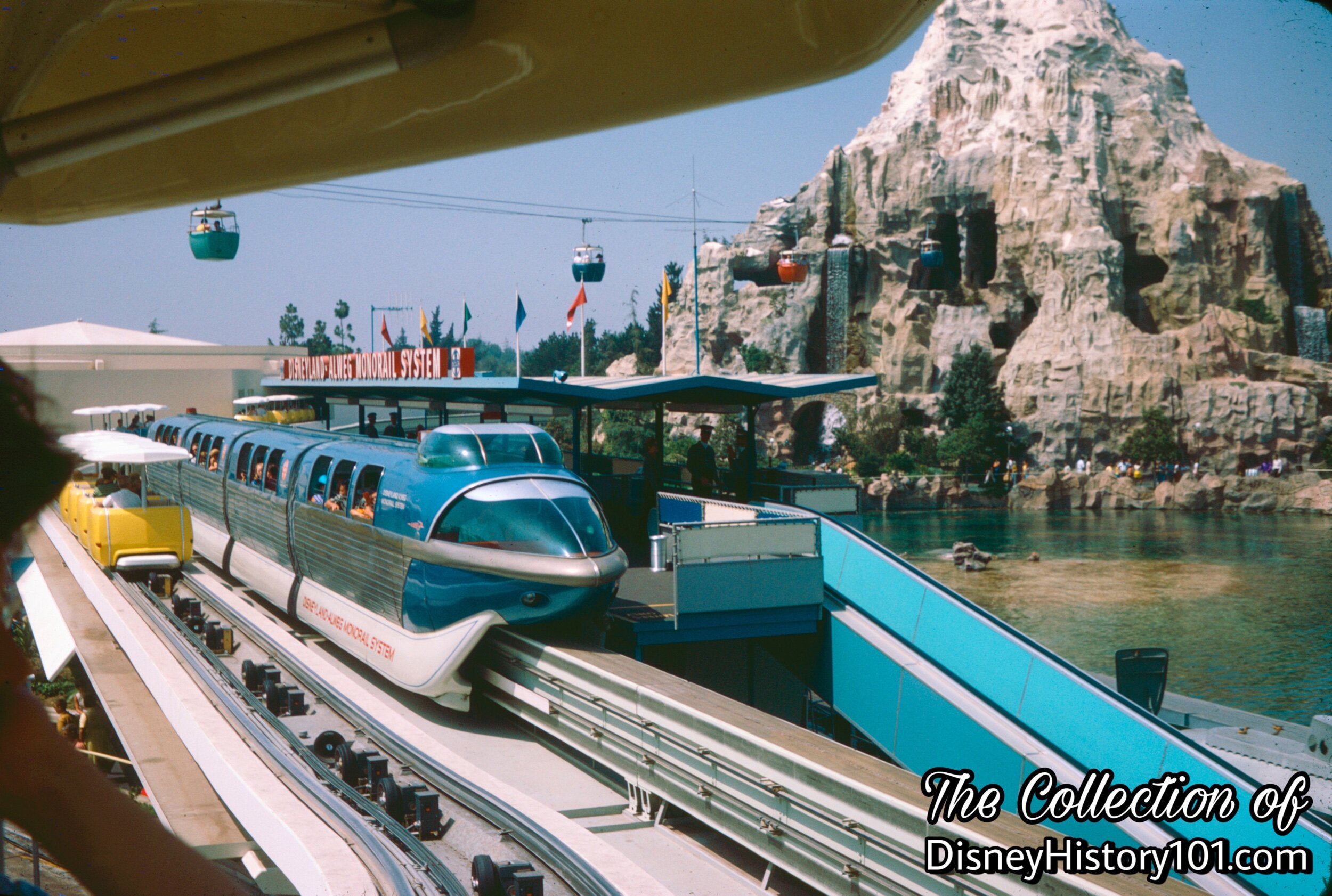
Do you see those copper and steel bus-bars mounted along the right side of the beam?
Back in 1958 and 1959, some initial Monorail designs detailed how power to the train motors was to be supplied “by two steel and copper bus bars which are installed on one side of the beamway, carrying 300 volts.“ This power was to be ”supplied from a 600 amp silicon diode rectifier to the bus bar system at five points along the main track.” The bus bar was to be covered by a continuous aluminum shield for the protection of maintenance personnel. Back then, it was believed that this method provided enough power to drive the two 50 horsepower direct current traction motors belonging to each of the three-car trains. It was even stated that these motors would “have a capacity of sufficient energy to operate a four-car train.”
Now (by 1967), some 600 volts of direct current run through them in order to power the four 55 horse power direct current traction motors of the four-car Monorail trains. How was the power collected? The positive bus bar was mounted eight inches above the negative bus bar (with the collector surfaces facing each other). With the help of two electrical trolleys (or “shoes”) per train mounted on the same side of the beam, four spring-loaded flanged nylon wheels with carbon brushes would rub against the bus-bars. From the collectors, power was fed to the main breaker, then the sub breakers to power the air conditioning, air compressor, controls, door openers, and more. These essential components (the bus-bars) were easily viewed up-close from the PeopleMover (see the Vintage View above), but not from the Speedramp that guests would take to depart from the Tomorrowland Monorail Station Platform. On that note, contrary to what appeared on the “April Fools” cover of Disneyland LINE vol.13, no.13, (published April 1, 1981), the PeopleMovers and Monorail trains ran on two separate currents and two separate rails (as seen in the Vintage View above).
From January 2, 1966 to March 19, the Monorail stopped operating briefly.
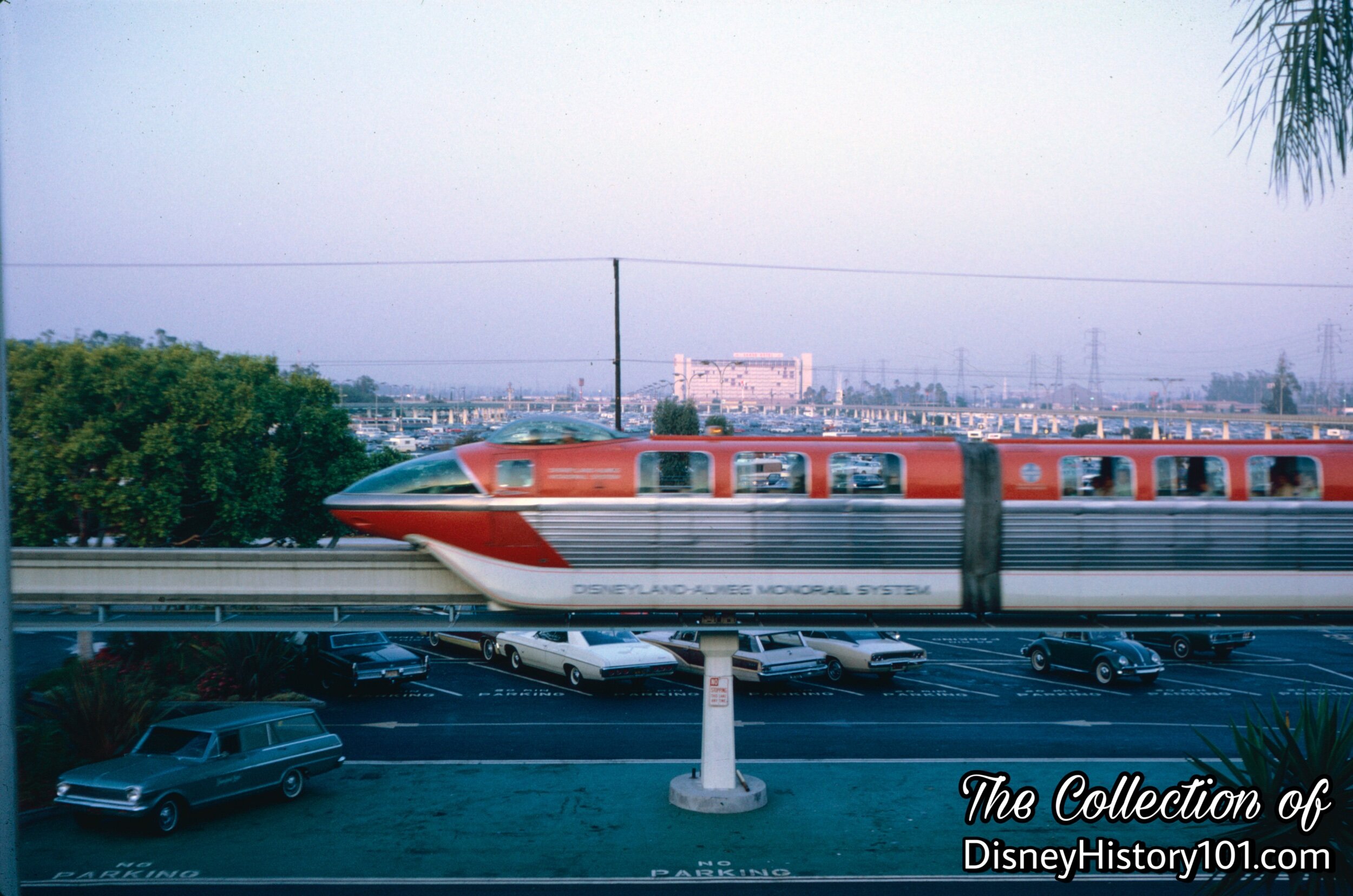
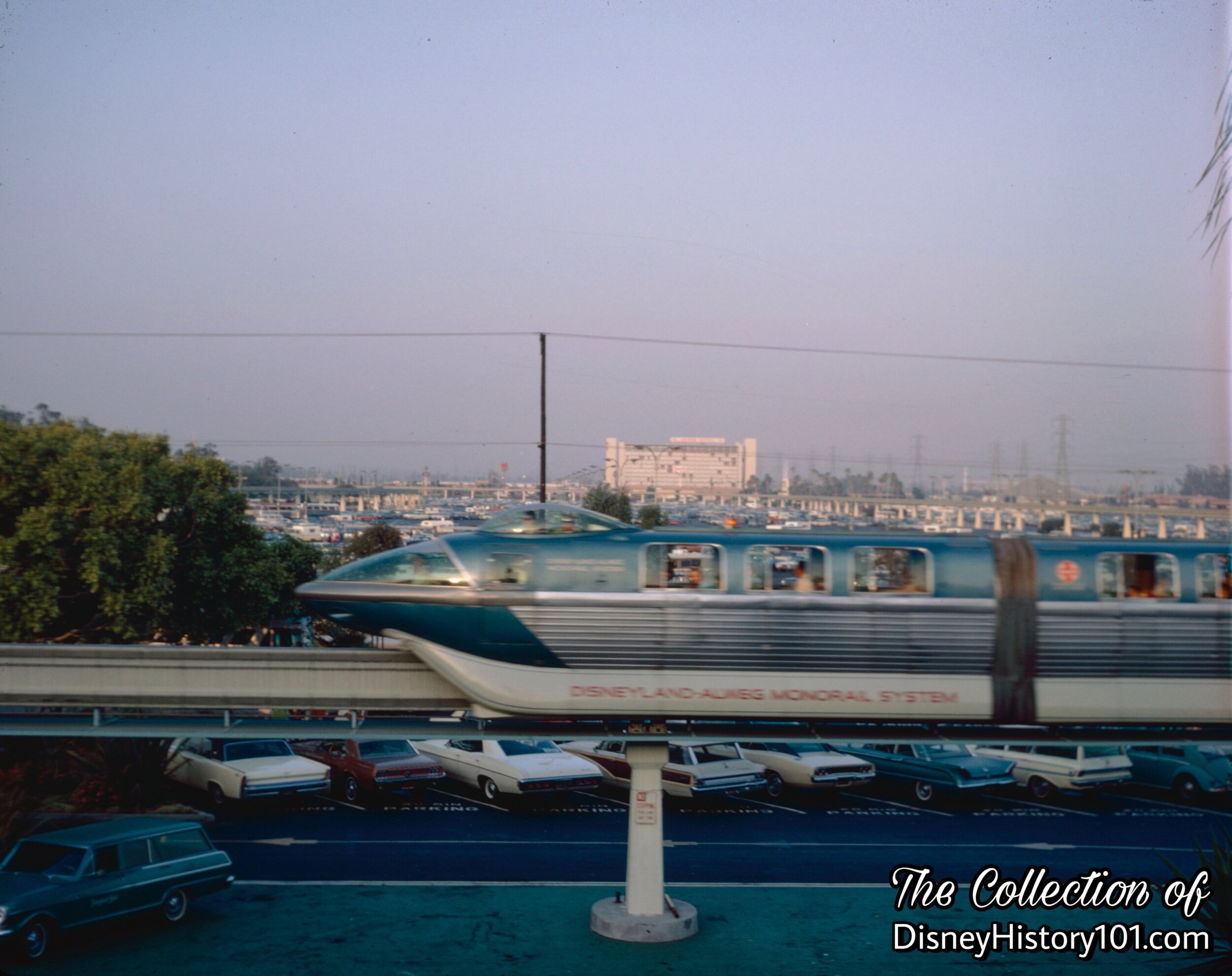
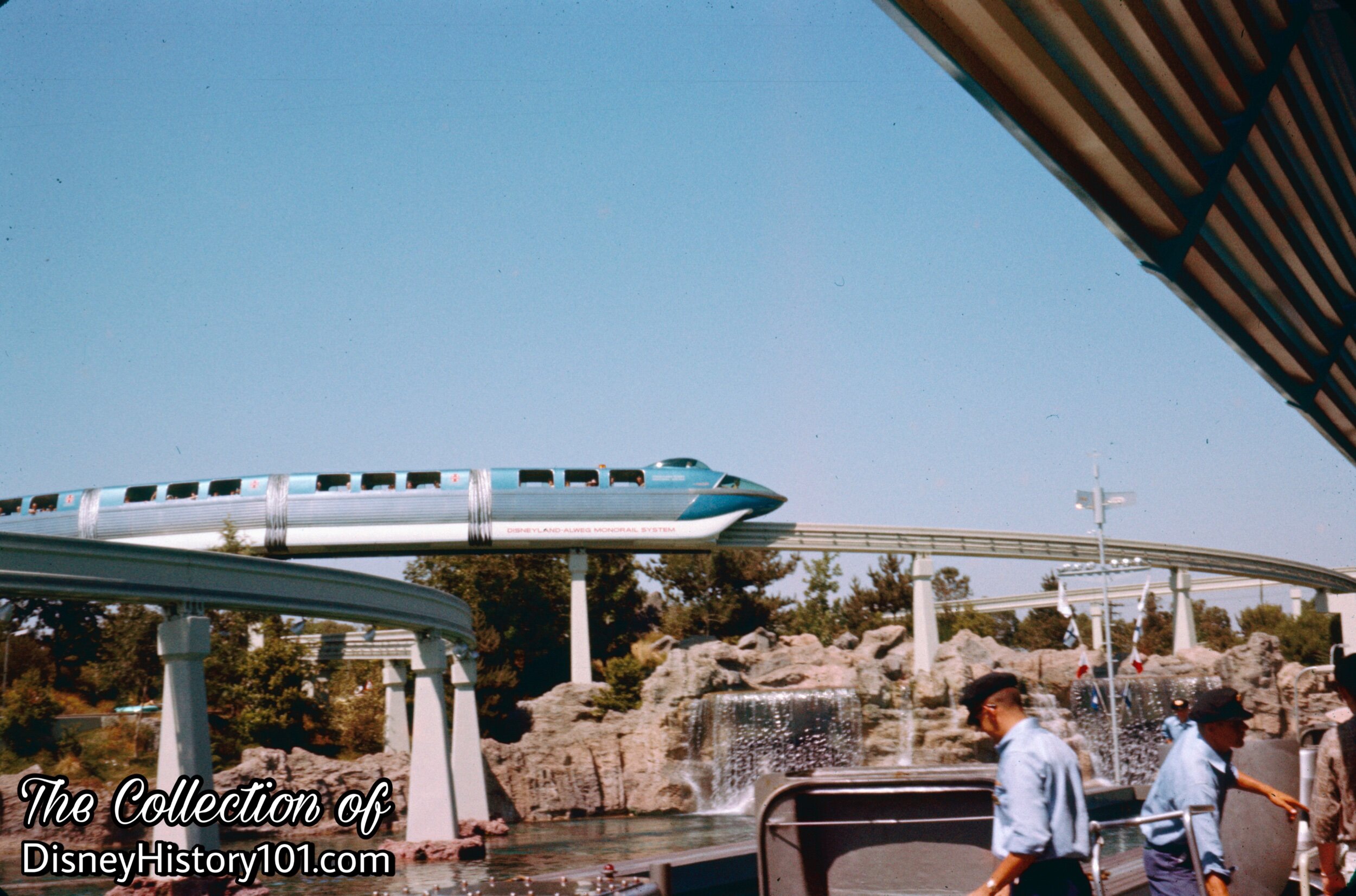
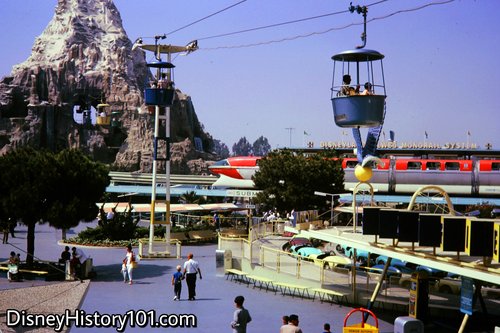
Re-entering the park, the Monorail reaches its highest point, 31 feet, which gives guests a most spectacular view of the Tomorrowland area.
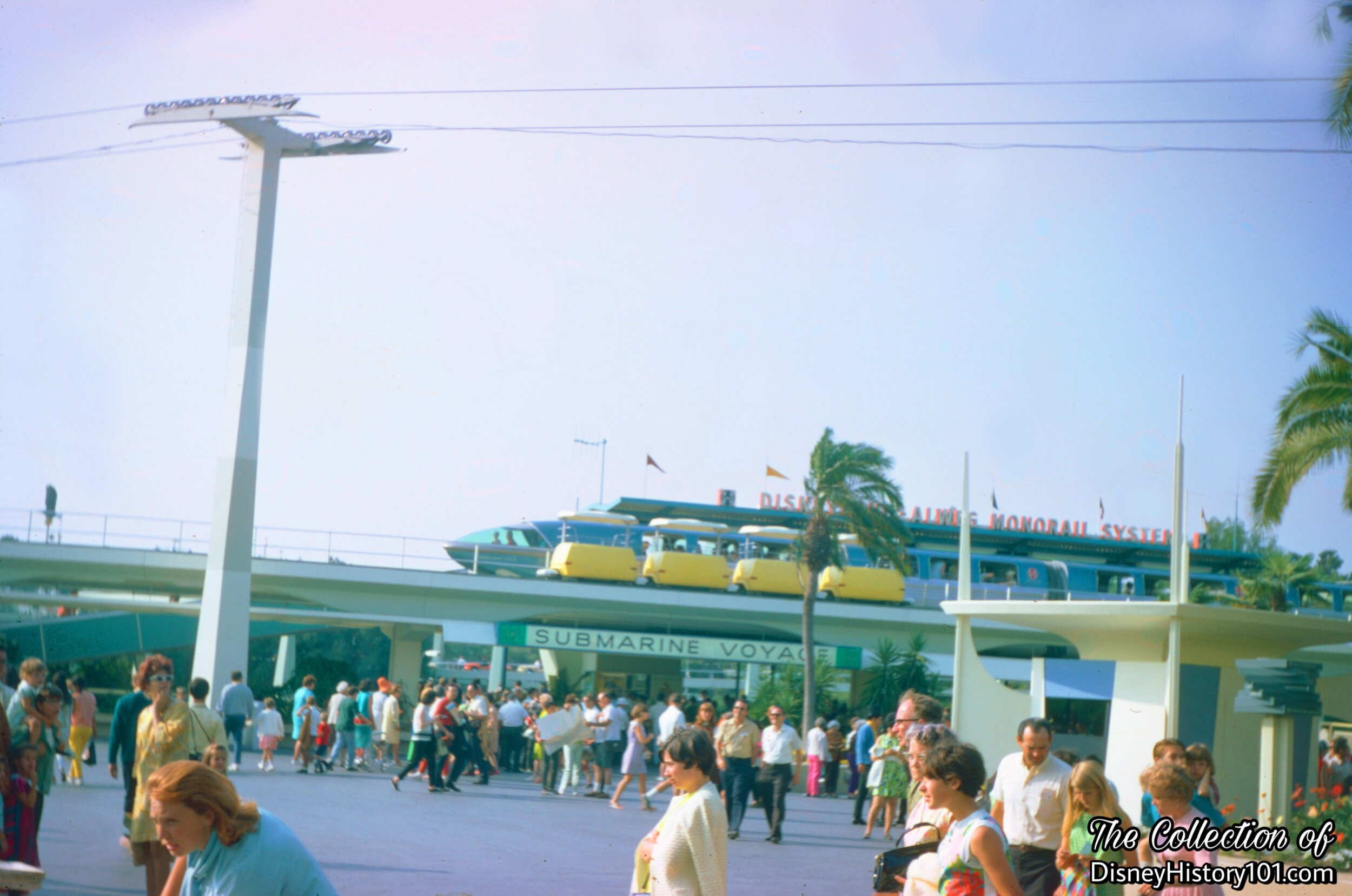
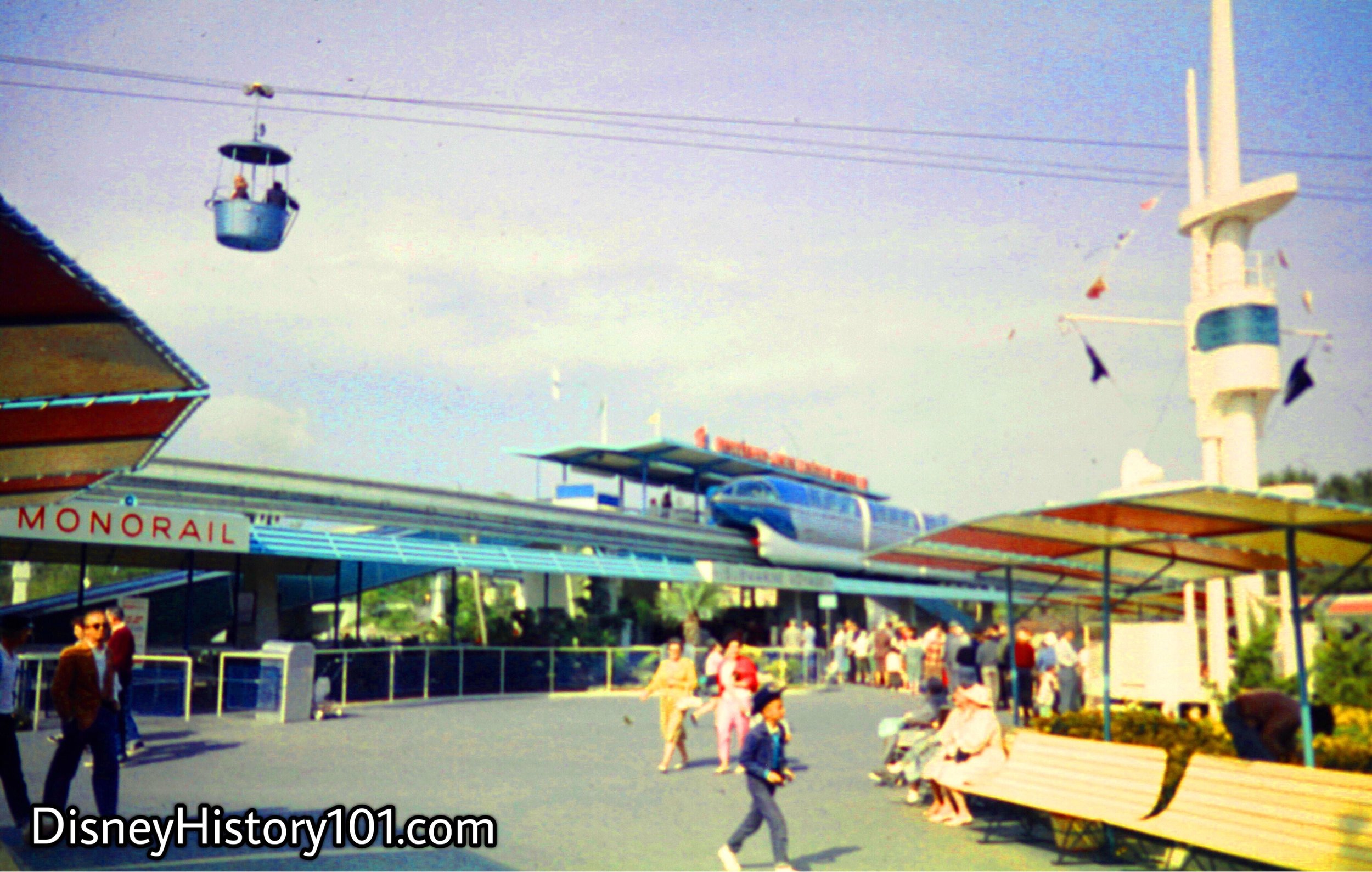
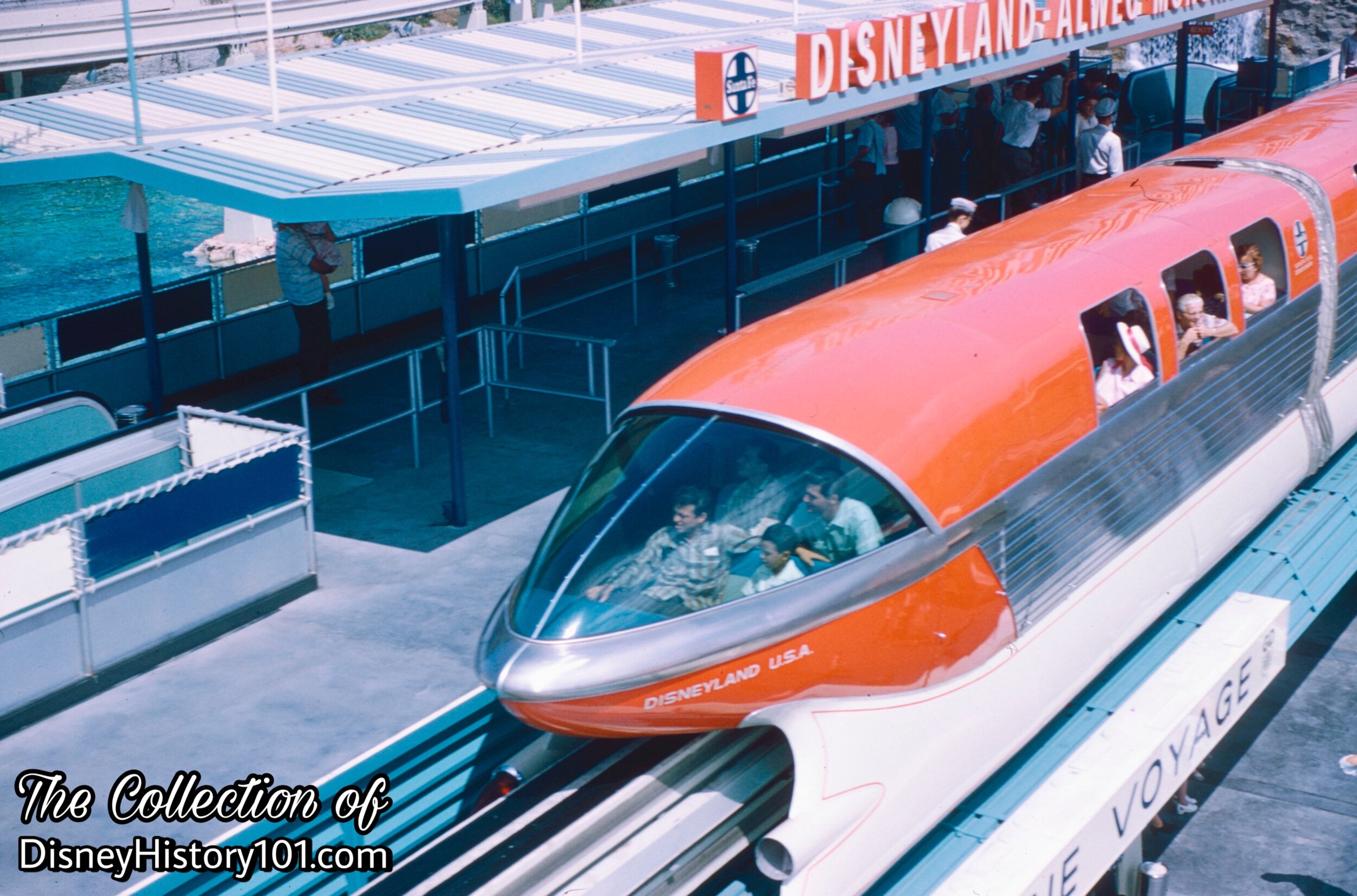
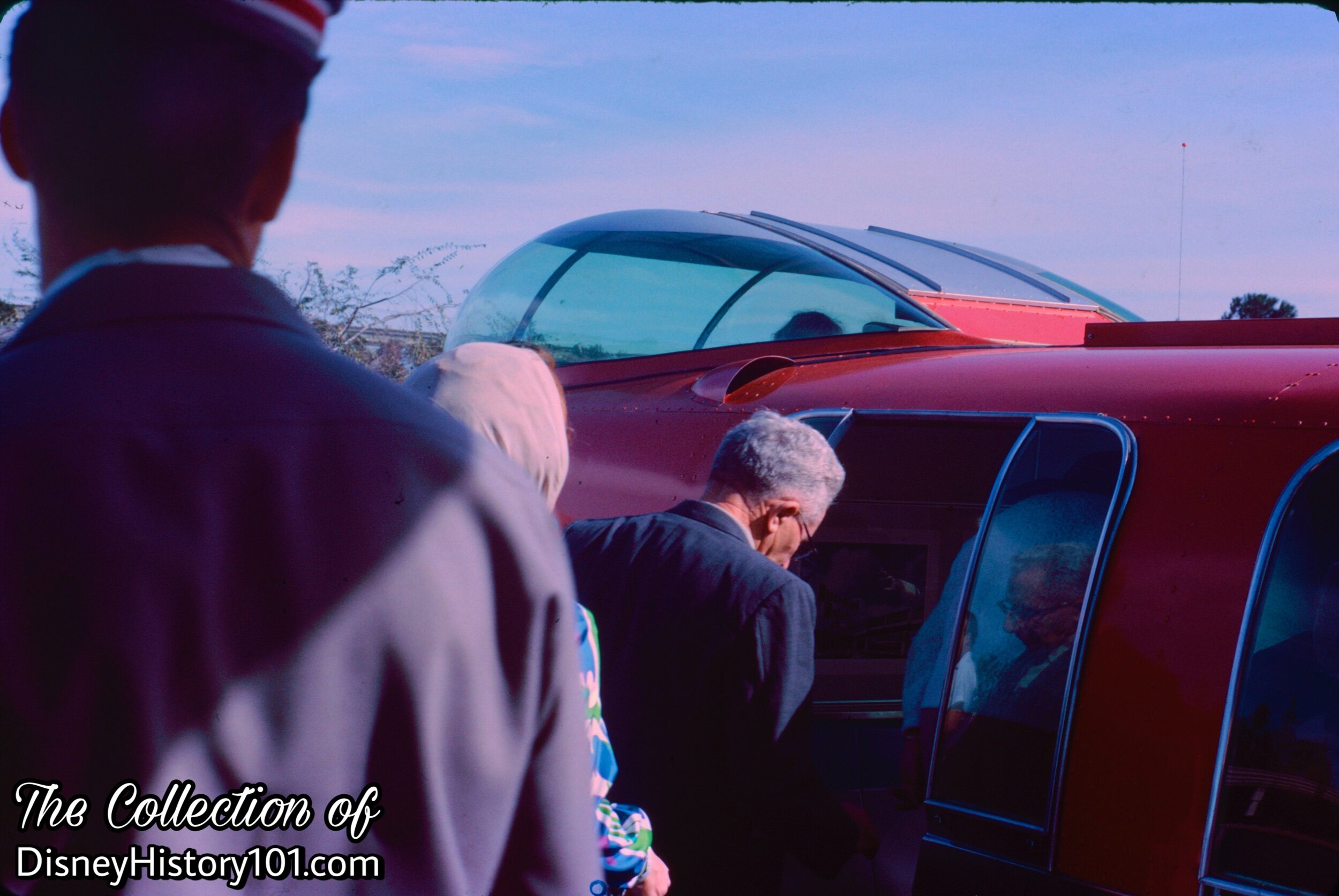
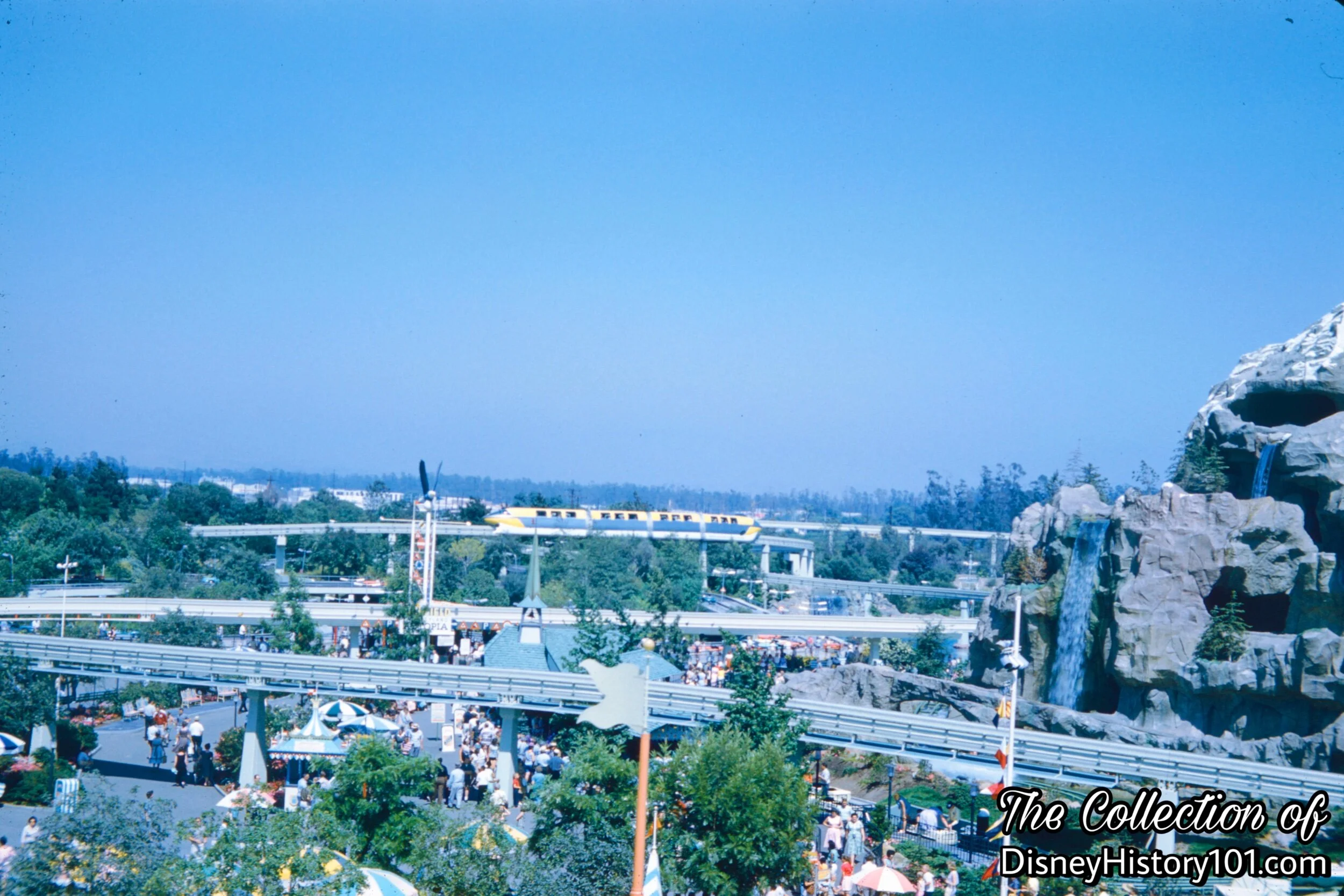
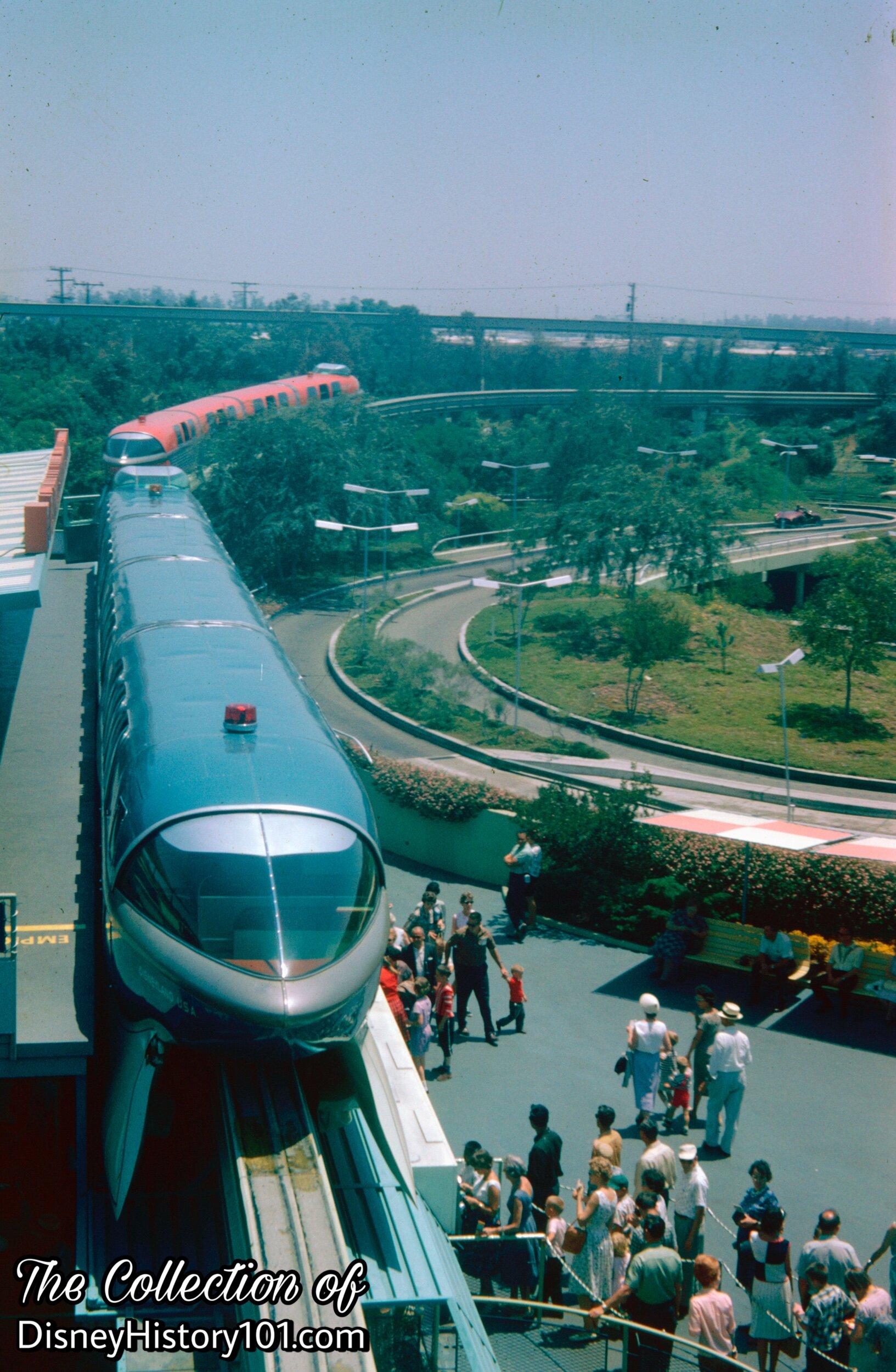
This is a rare scene, because Monorail trains generally didn’t operate so close to each other. The Automatic Block System detected the presence of a train in any designated section of track, which was displayed by the cab control system in the control compartment. Owing to this, trains were usually spread out across the line.
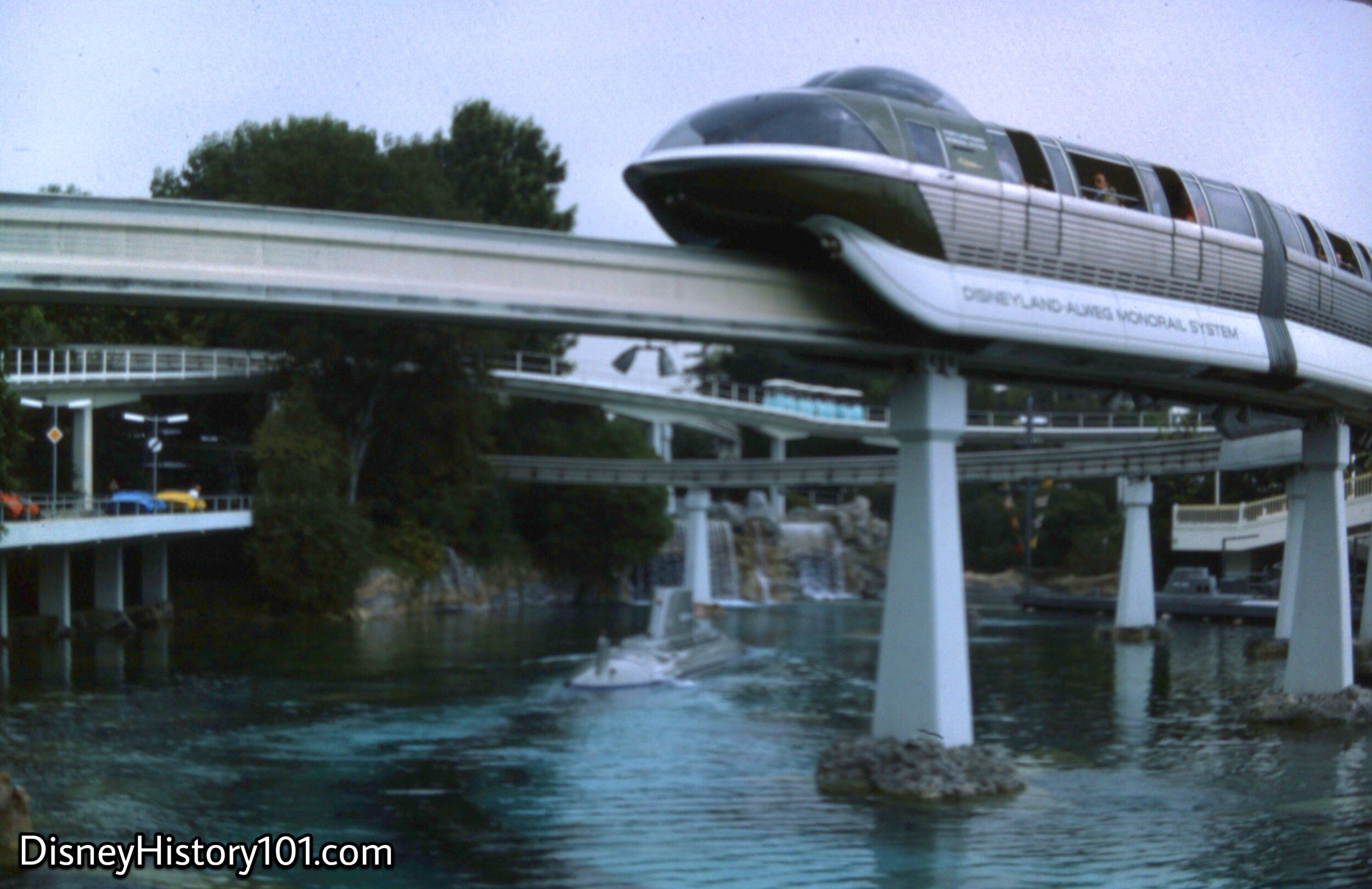
Above, the Monorail beamway winds over the Autopia, “freeway of the future.”
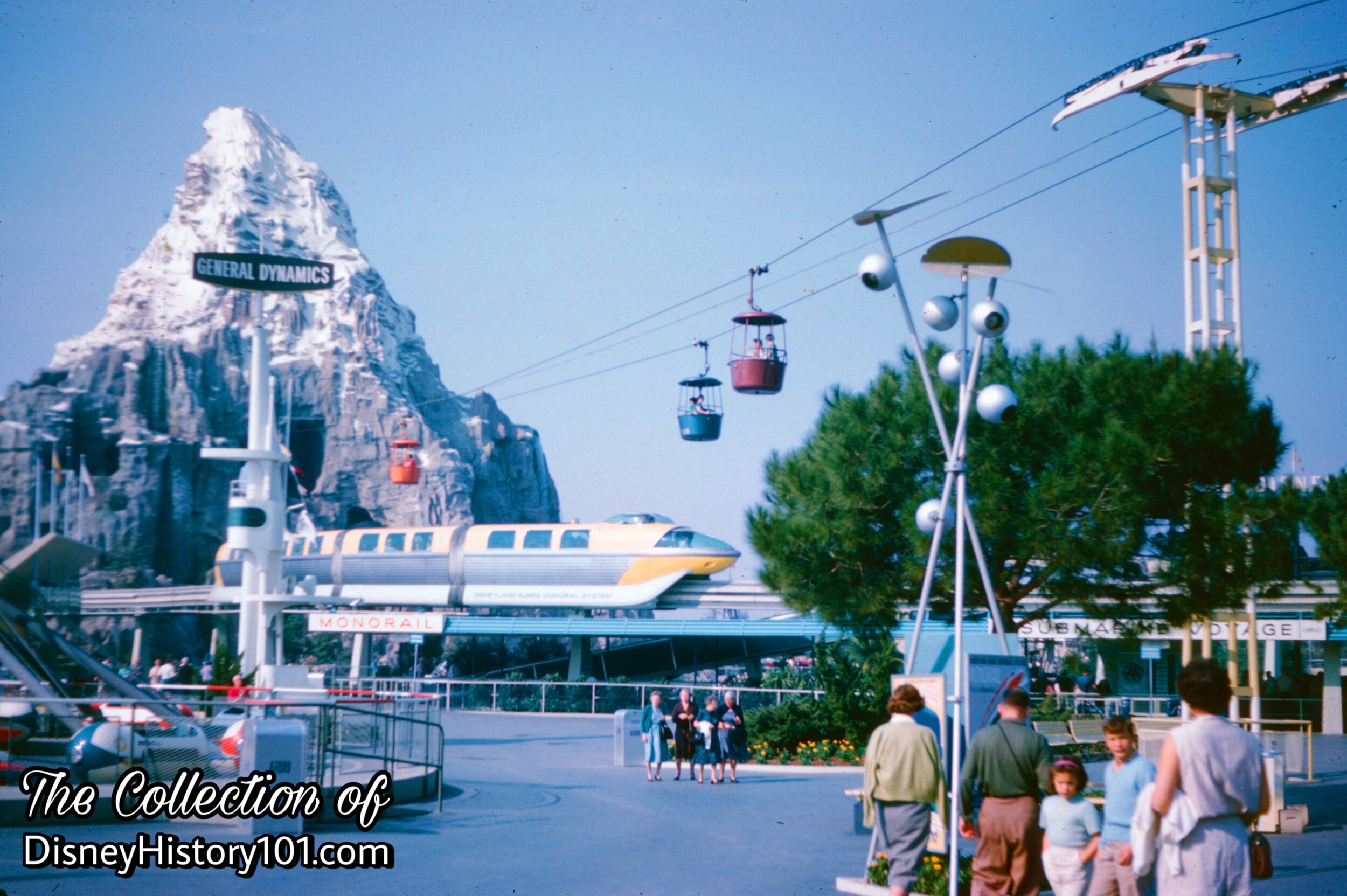
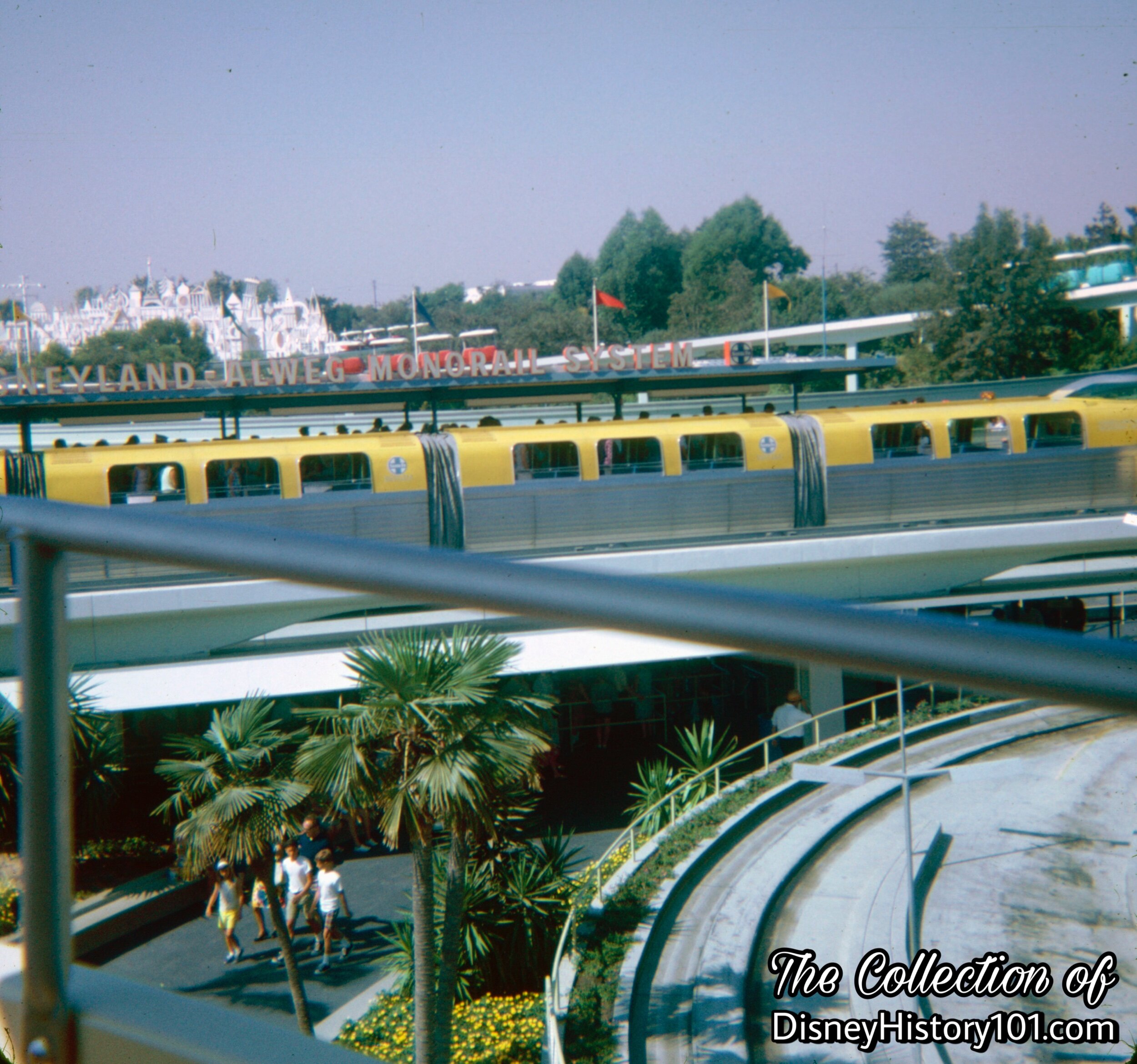
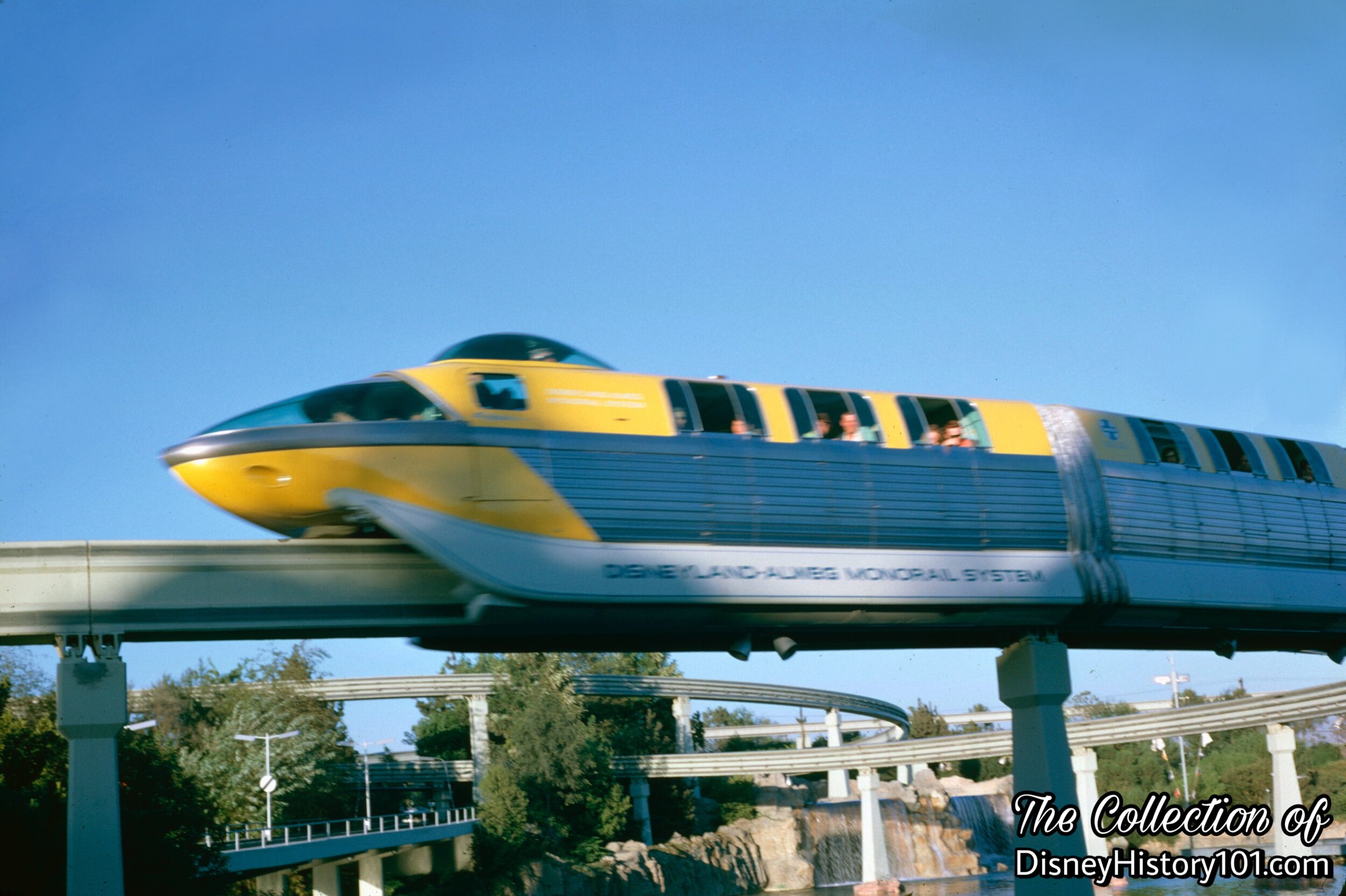
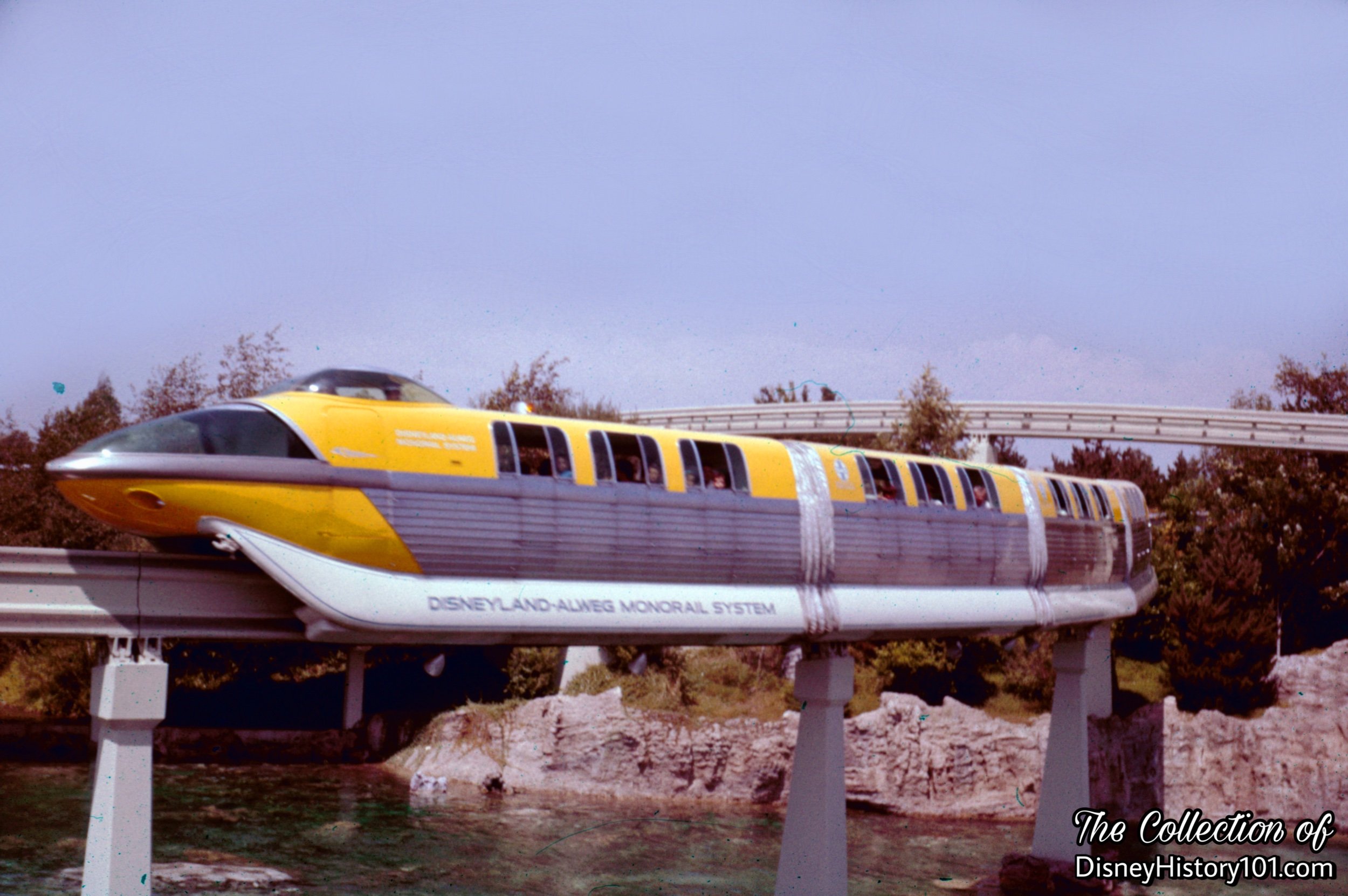
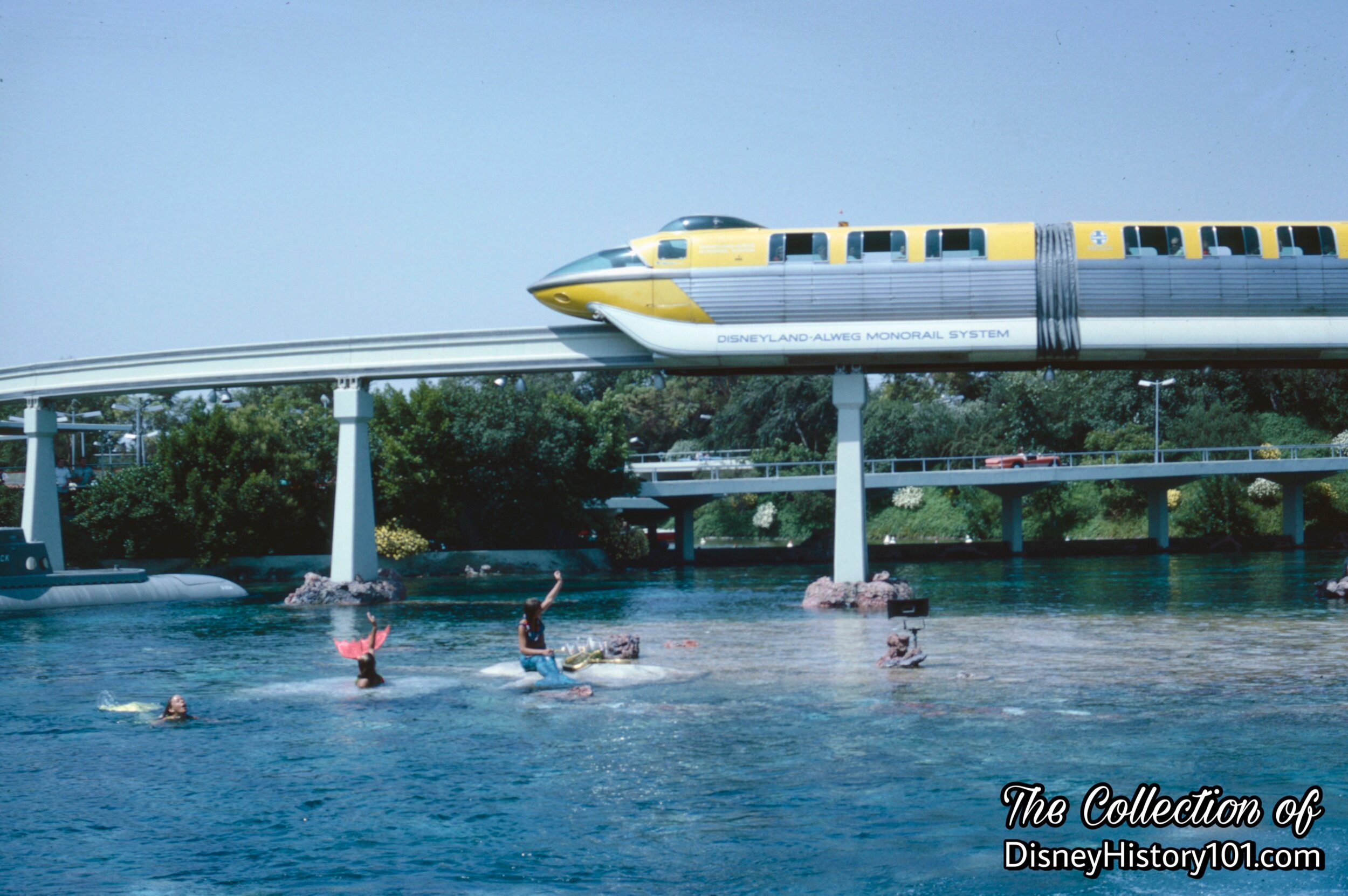
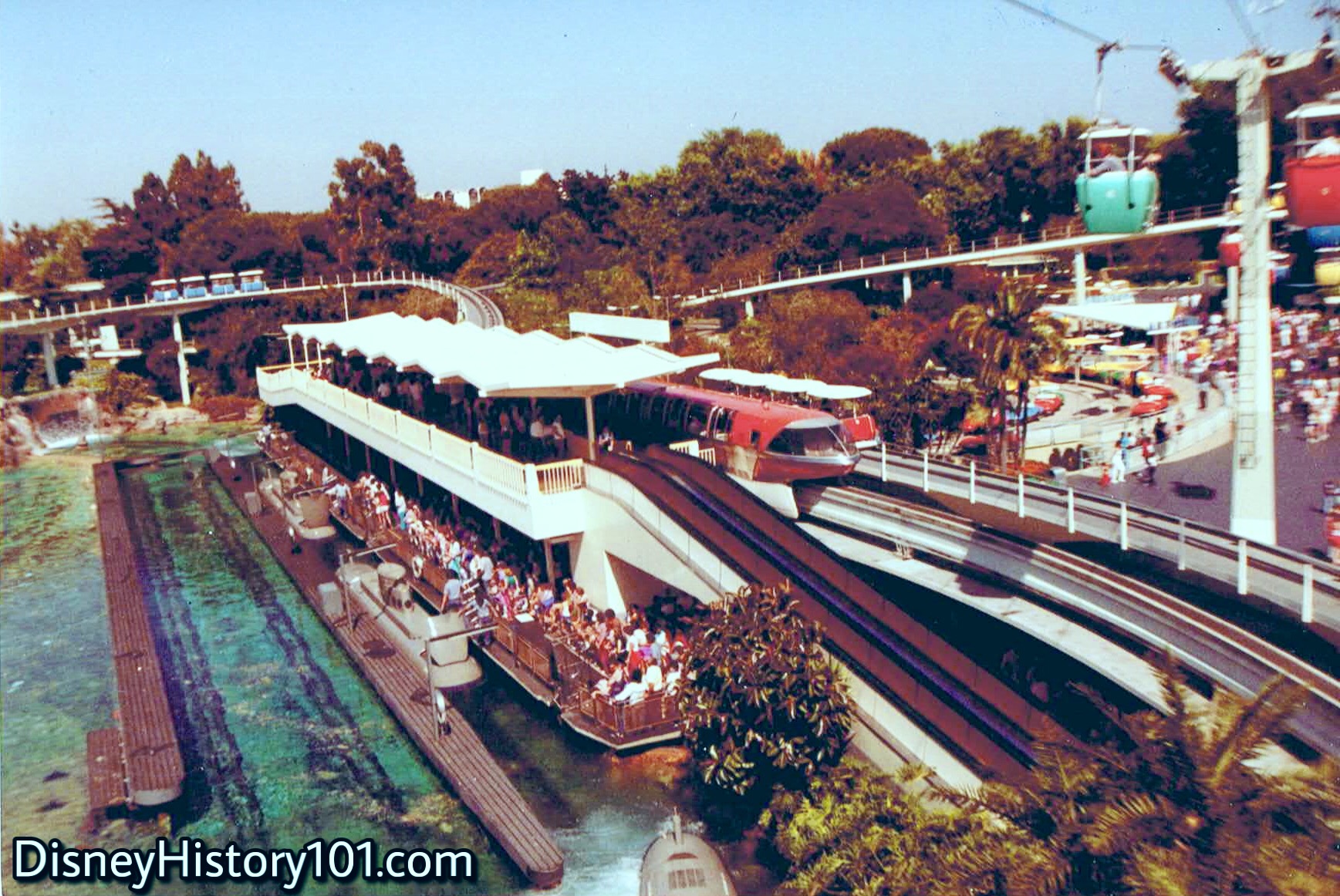
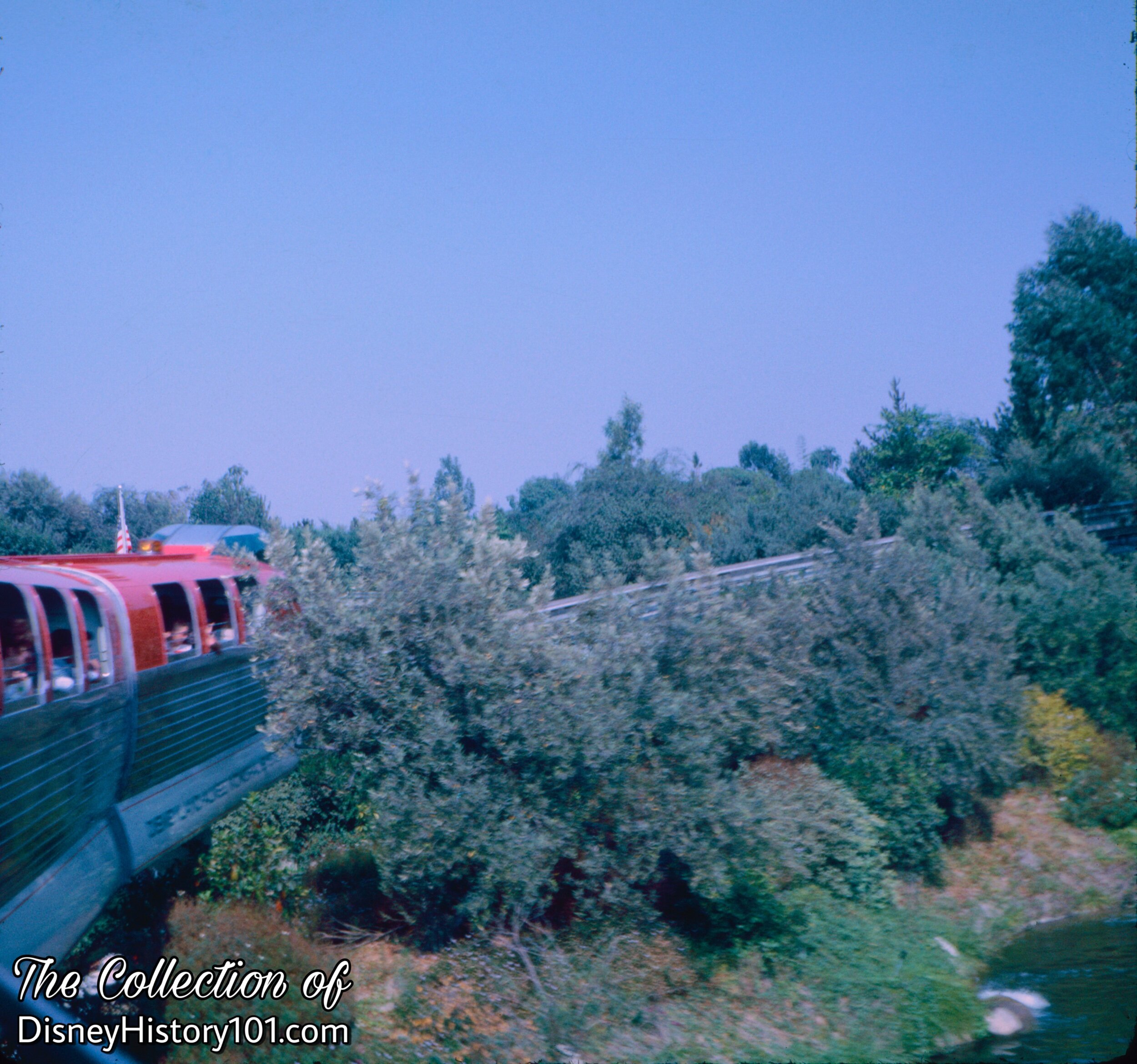
“From Tomorrowland the elevated, concrete ‘highway in the sky’ rises above the 18-foot high earthen wall which surrounds Disneyland and sweeps southward along a path paralleling Harbor Boulevard”, according to Vacationland magazine, Vacationland, Summer, 1961.
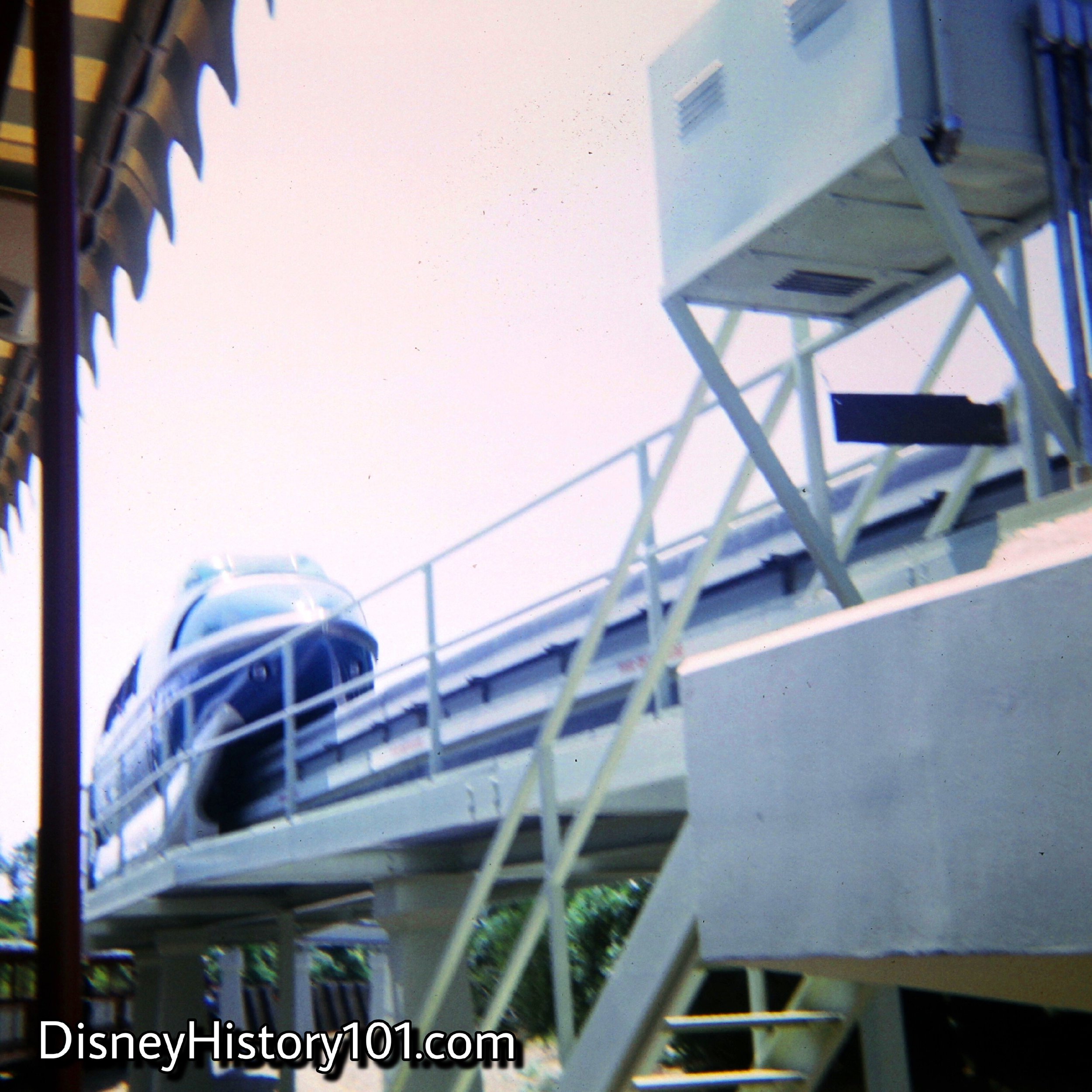
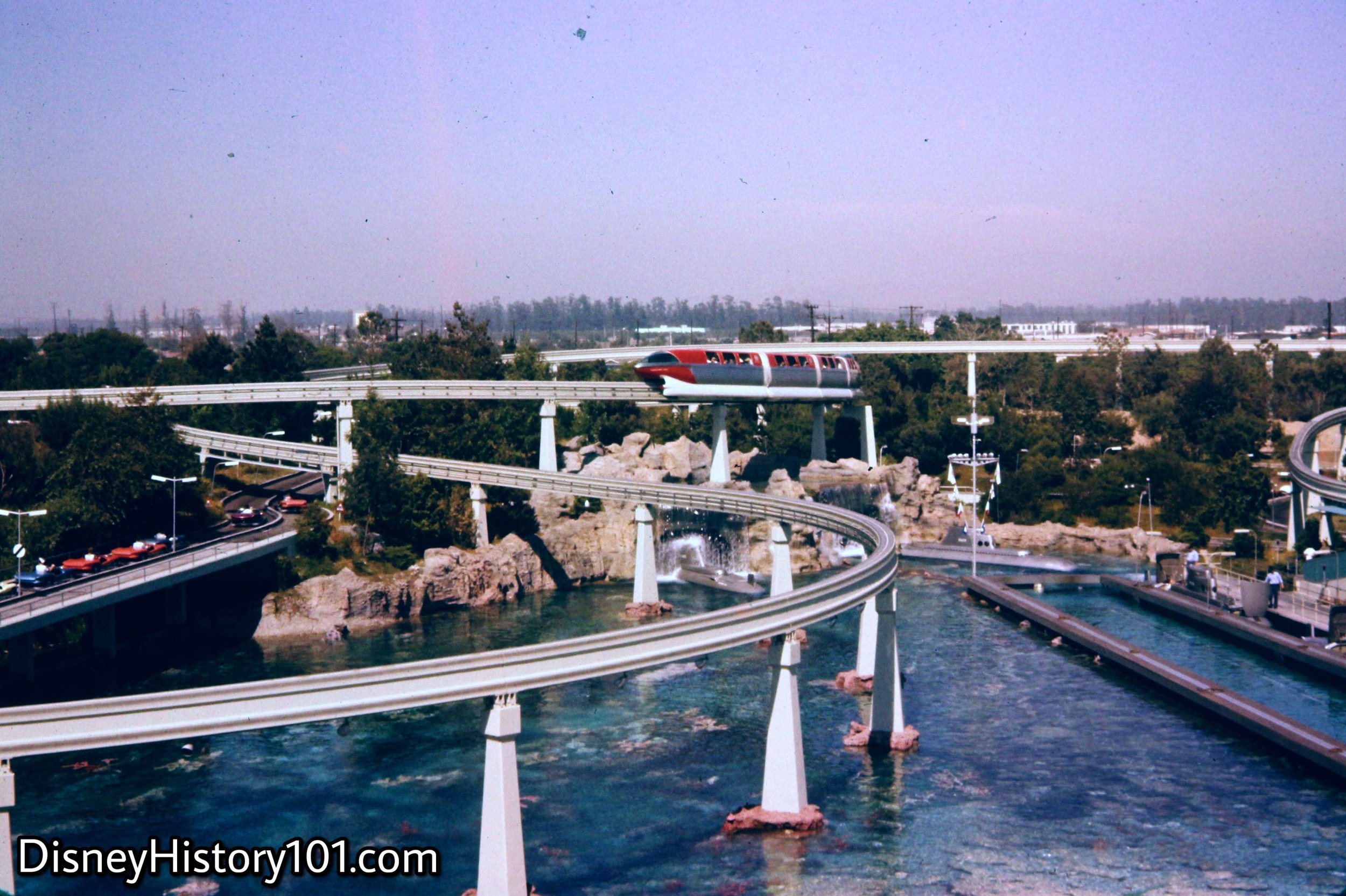
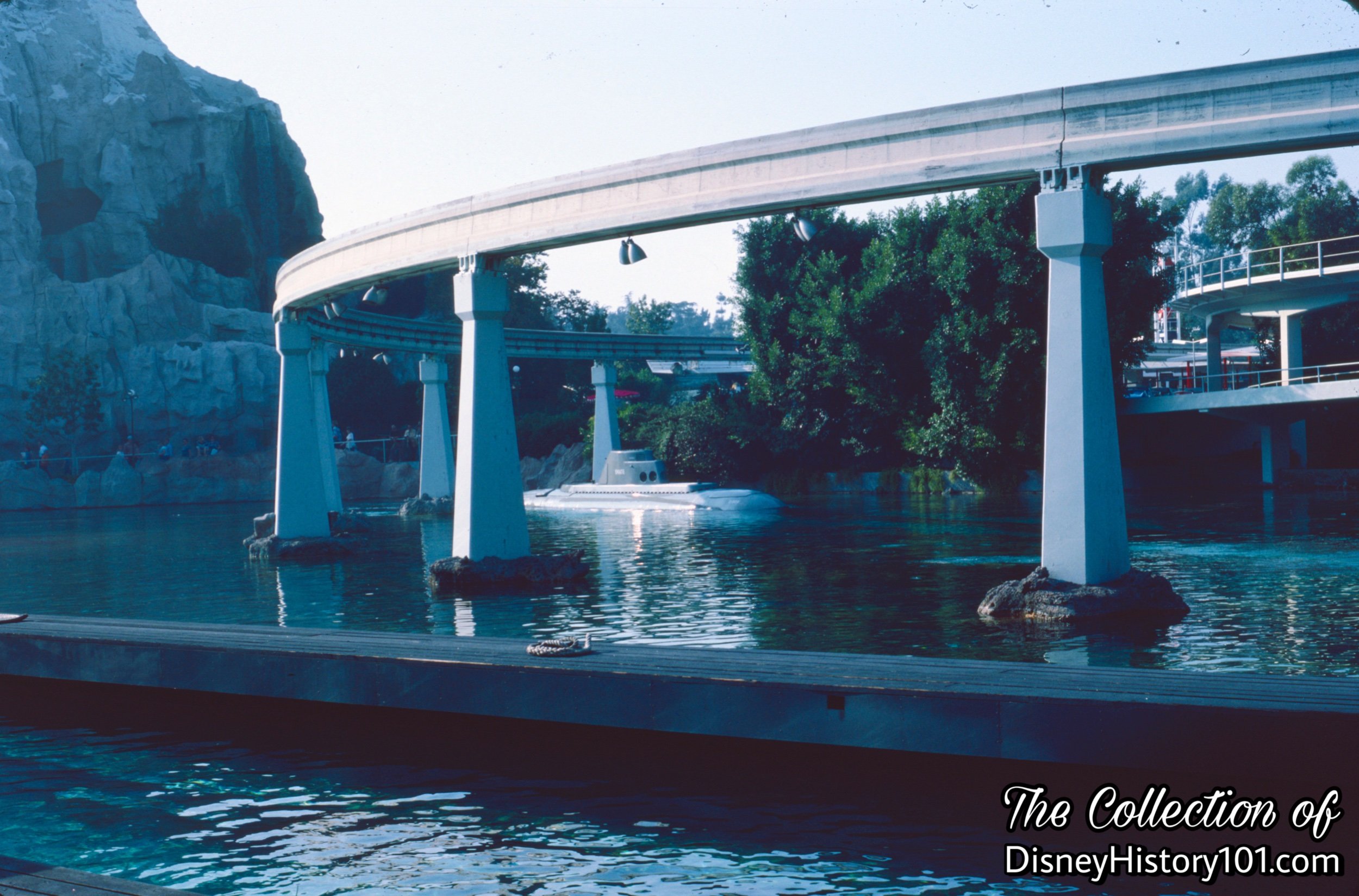
The tight curves around the Submarine Lagoon necessitate a maximum operating speed of 10 miles per hour. This speed also gives guests an opportunity to enjoy the futuristic scenery of Tomorrowland!
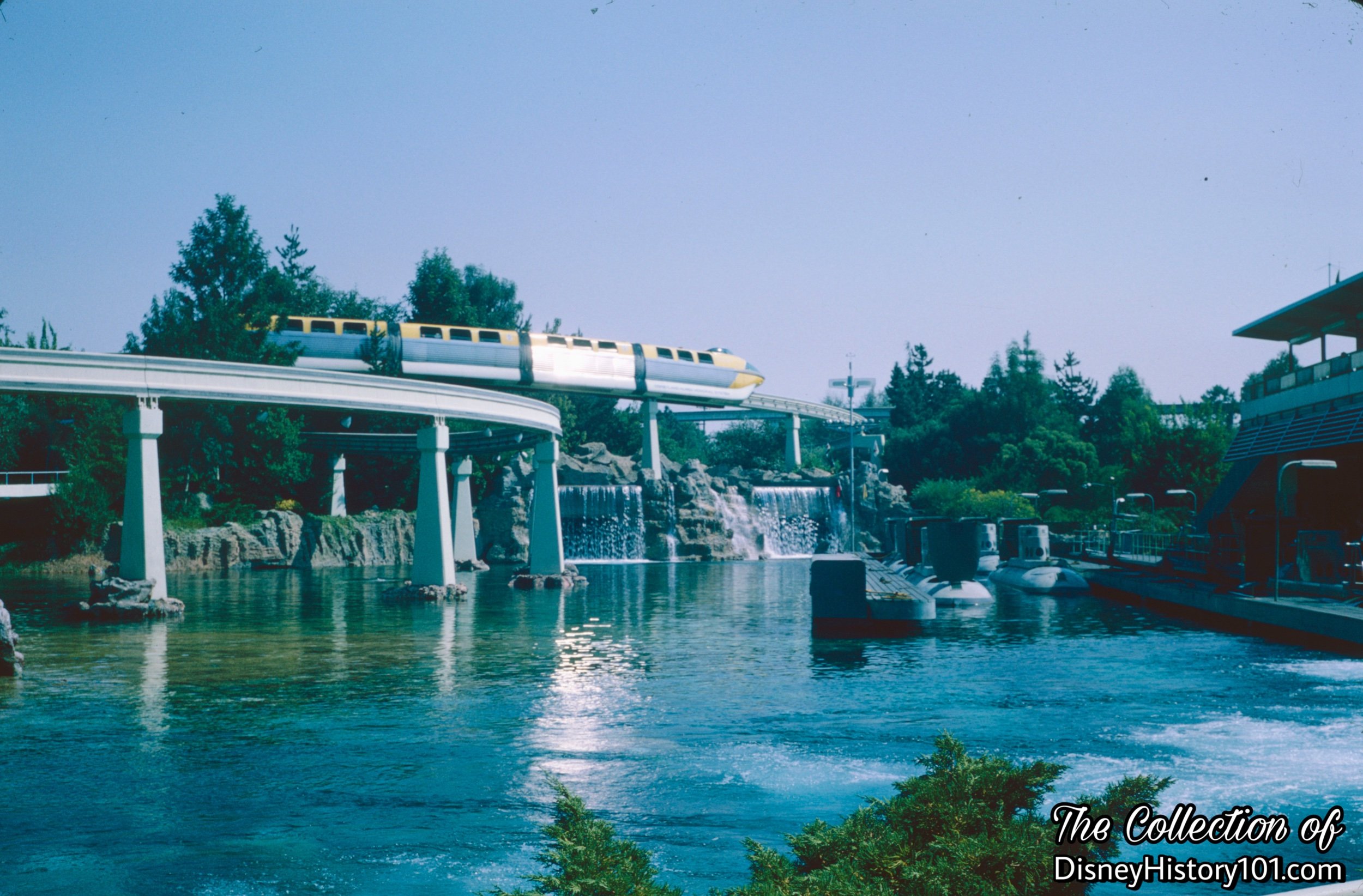
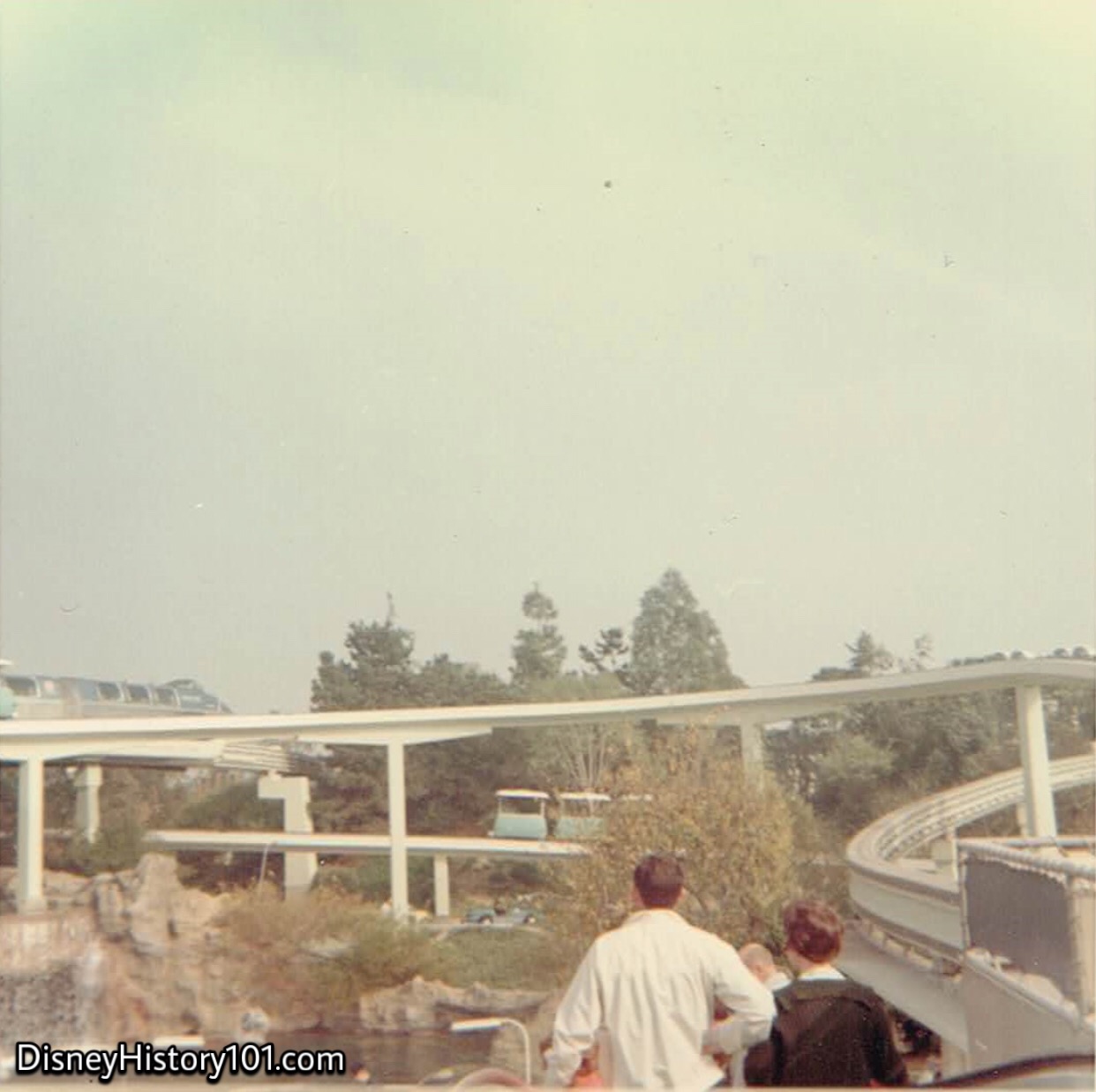
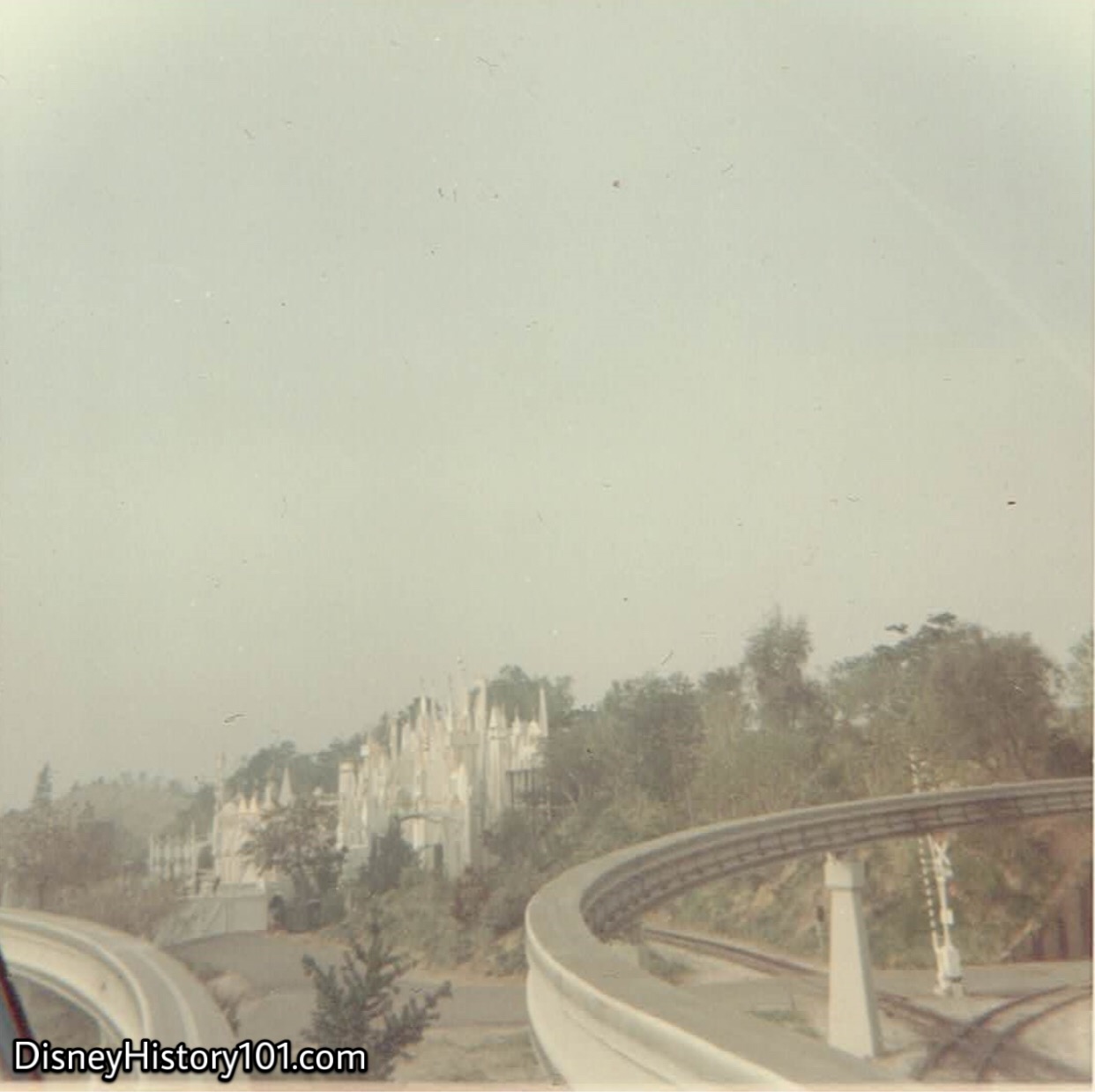
In the distance, you can see “the happiest cruise to ever set sail”.
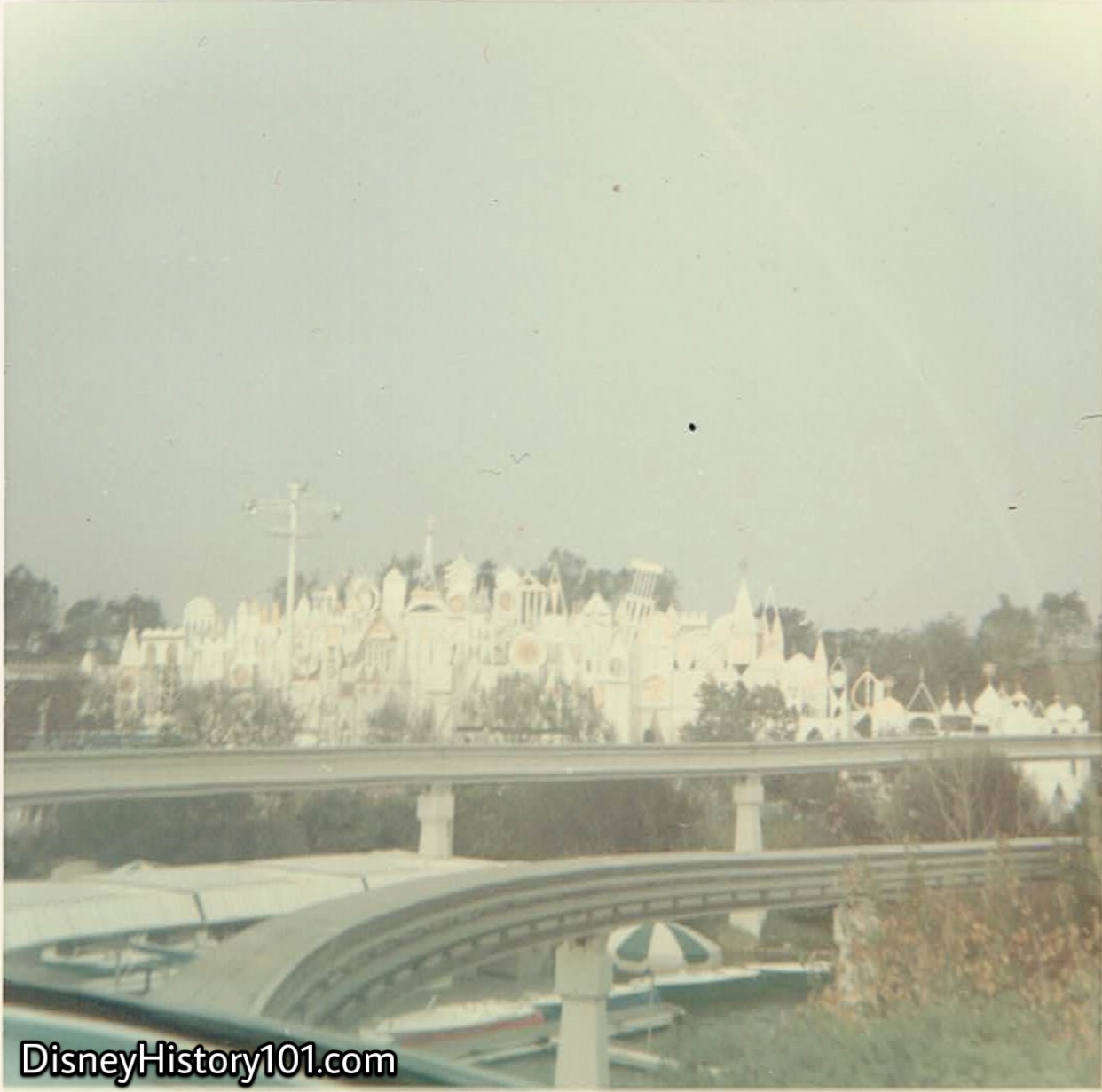
Below, you’ll note the Motorboat Cruise’s waterways.
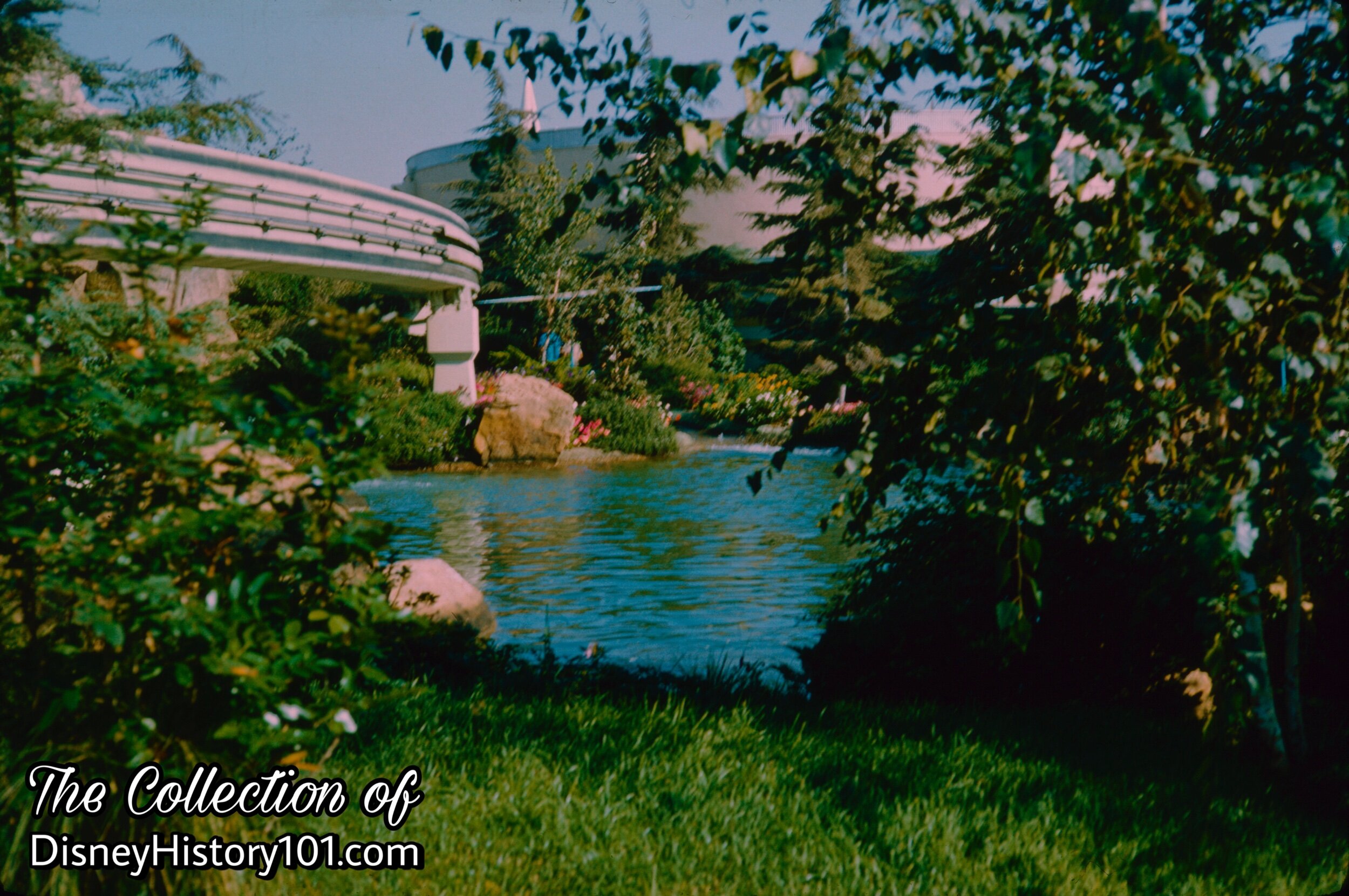
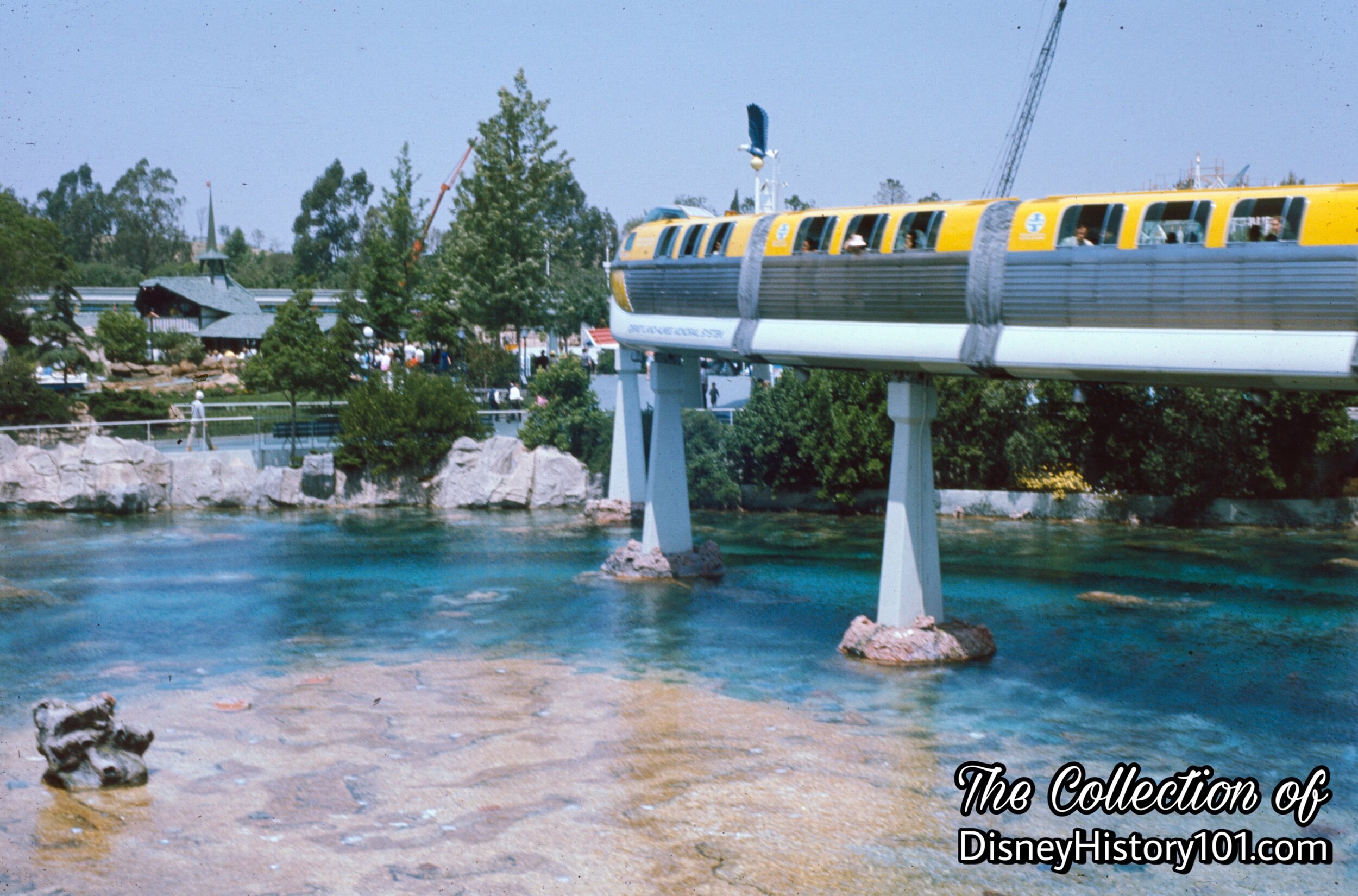
Here, some of the rails traveled over a pond at the bottom of the Matterhorn.
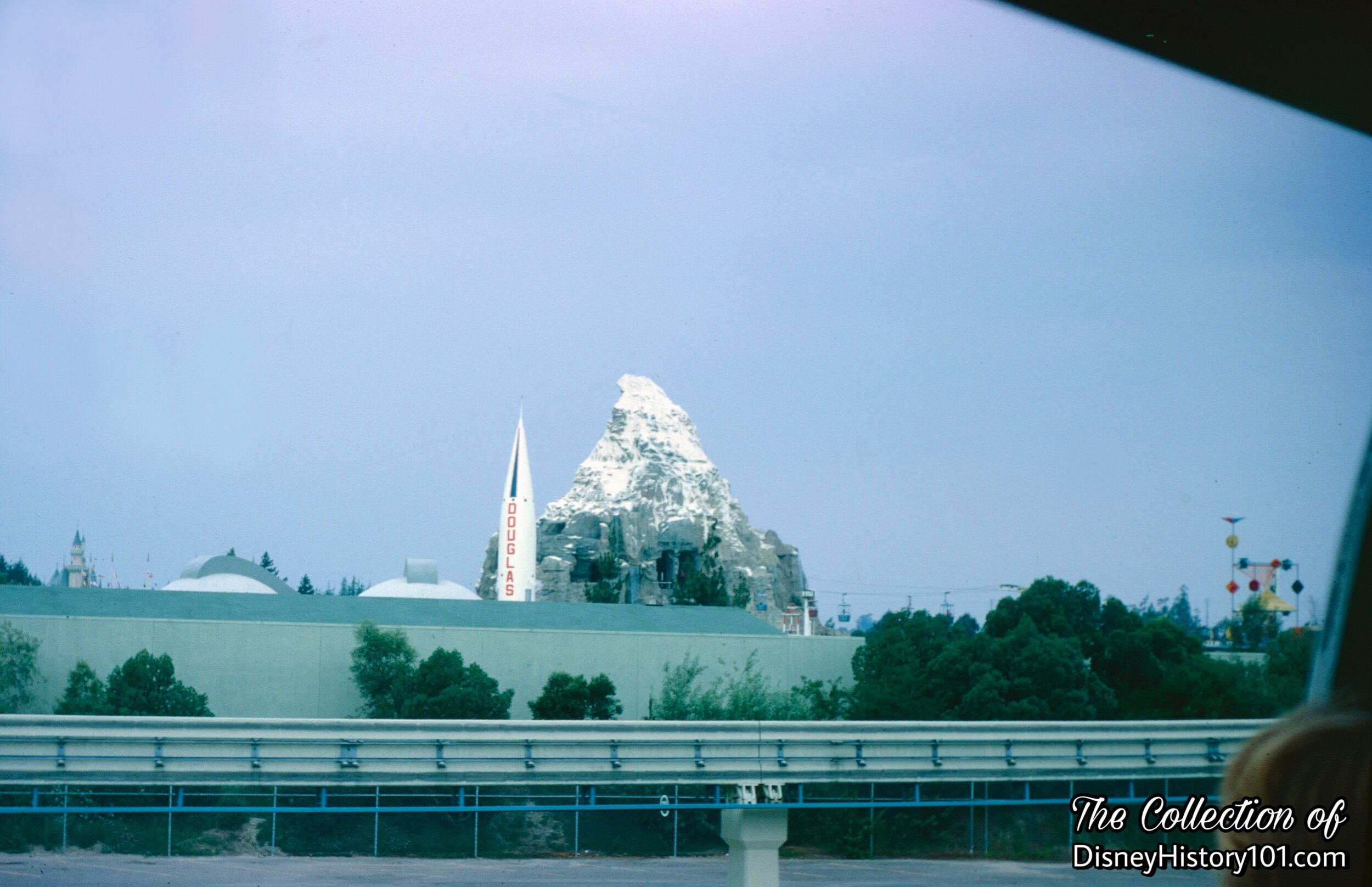
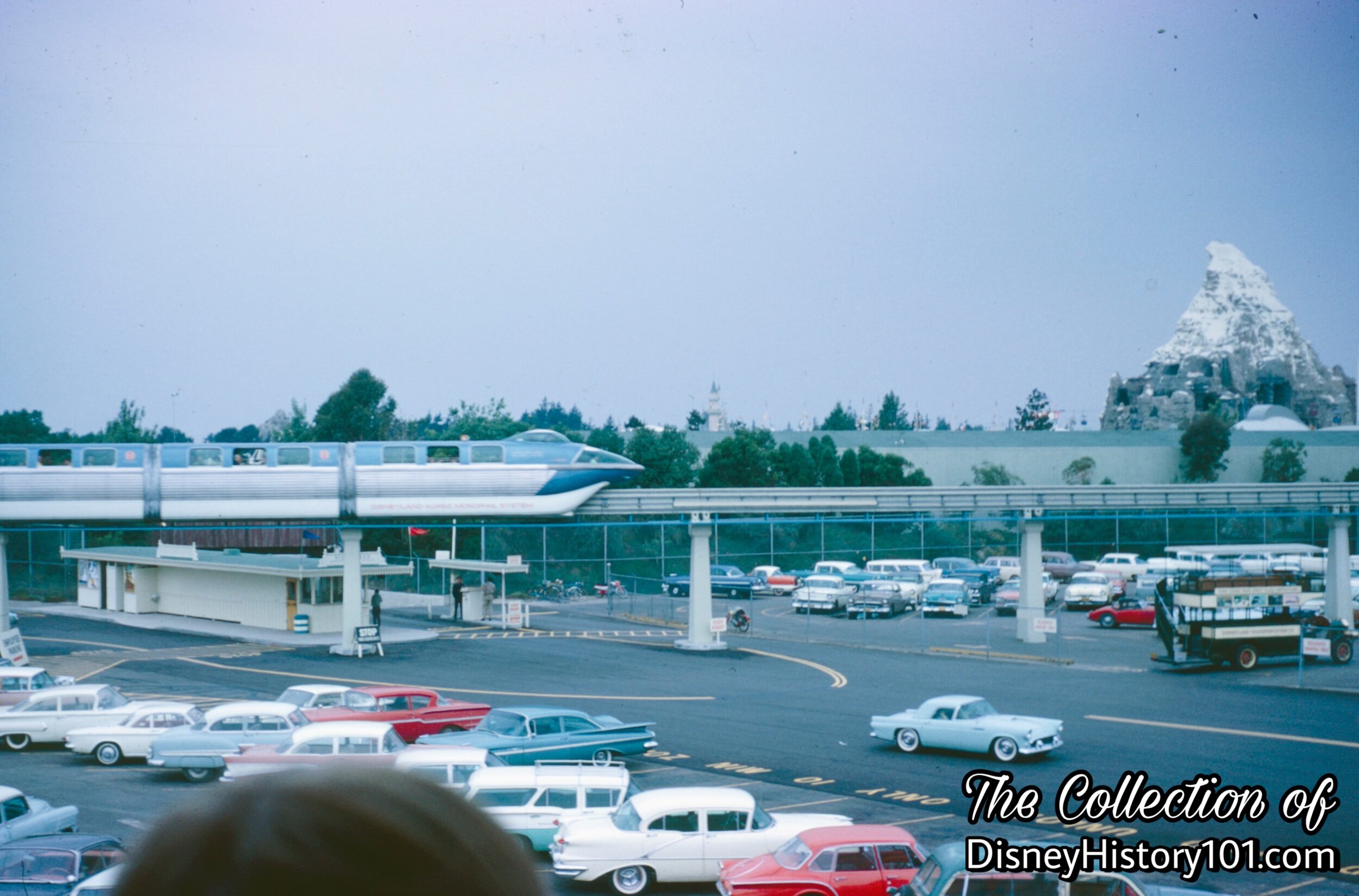
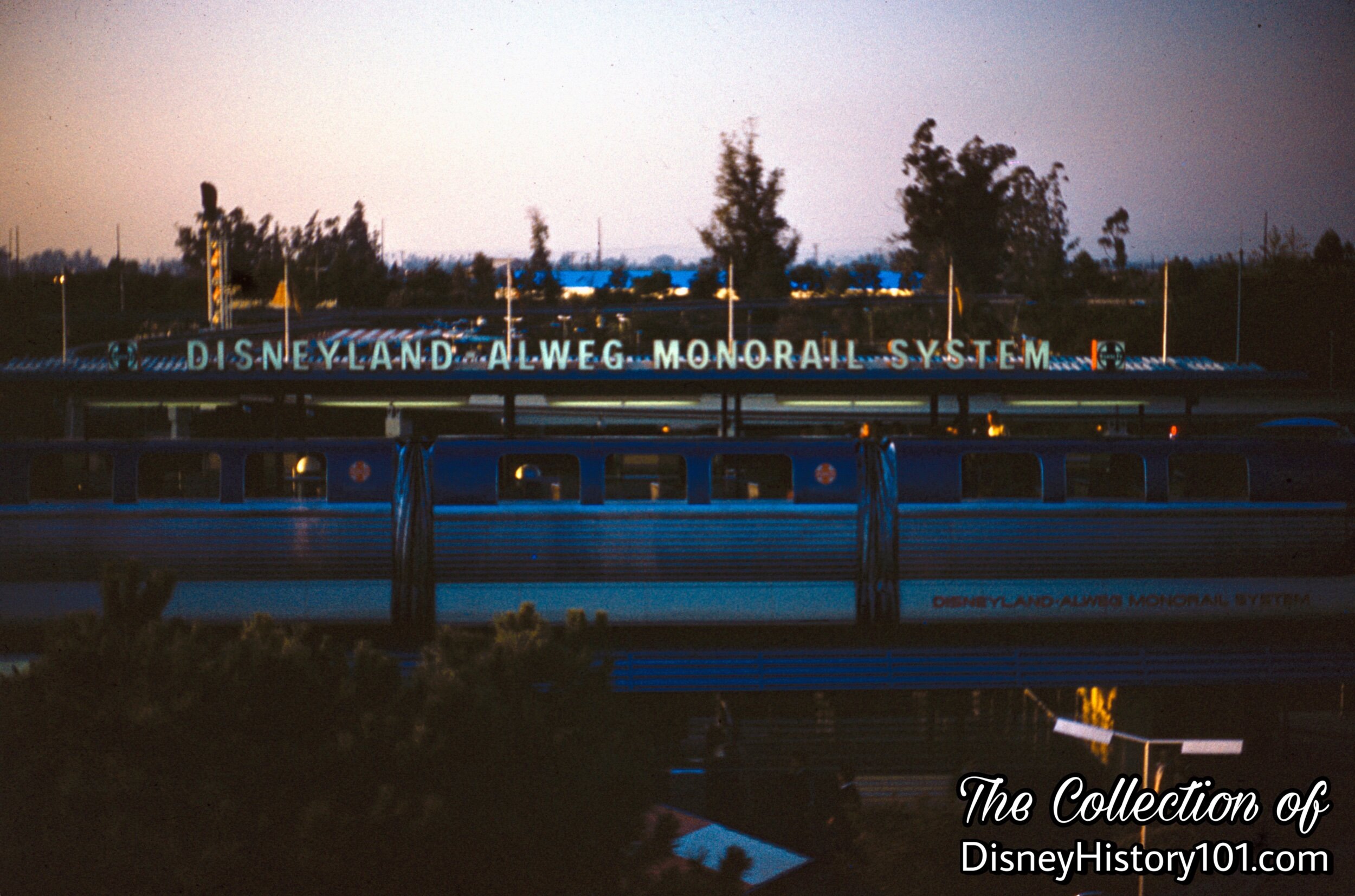
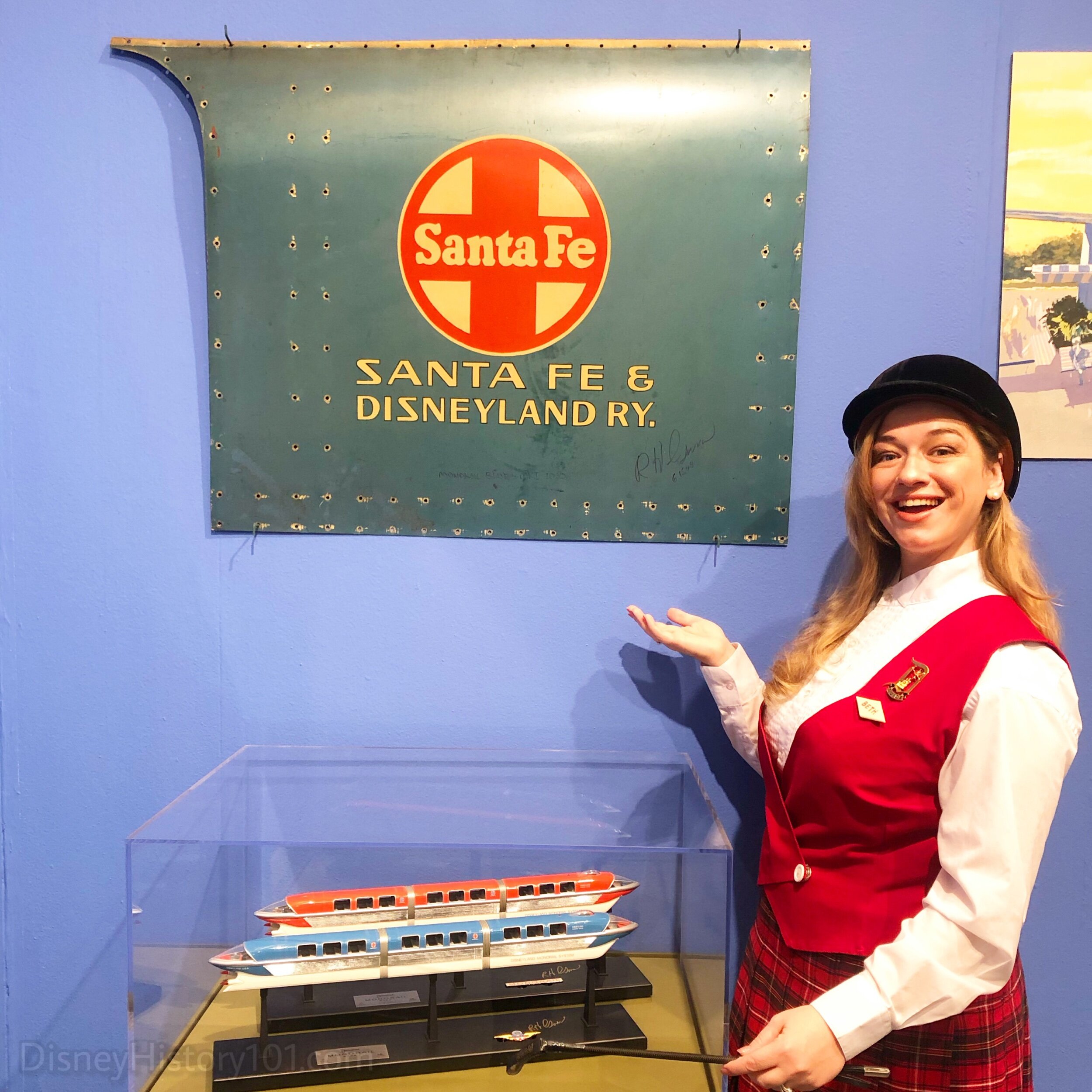
We’re looking at one (of two) lightweight aluminum door panels salvaged from the Monorail Mark I.
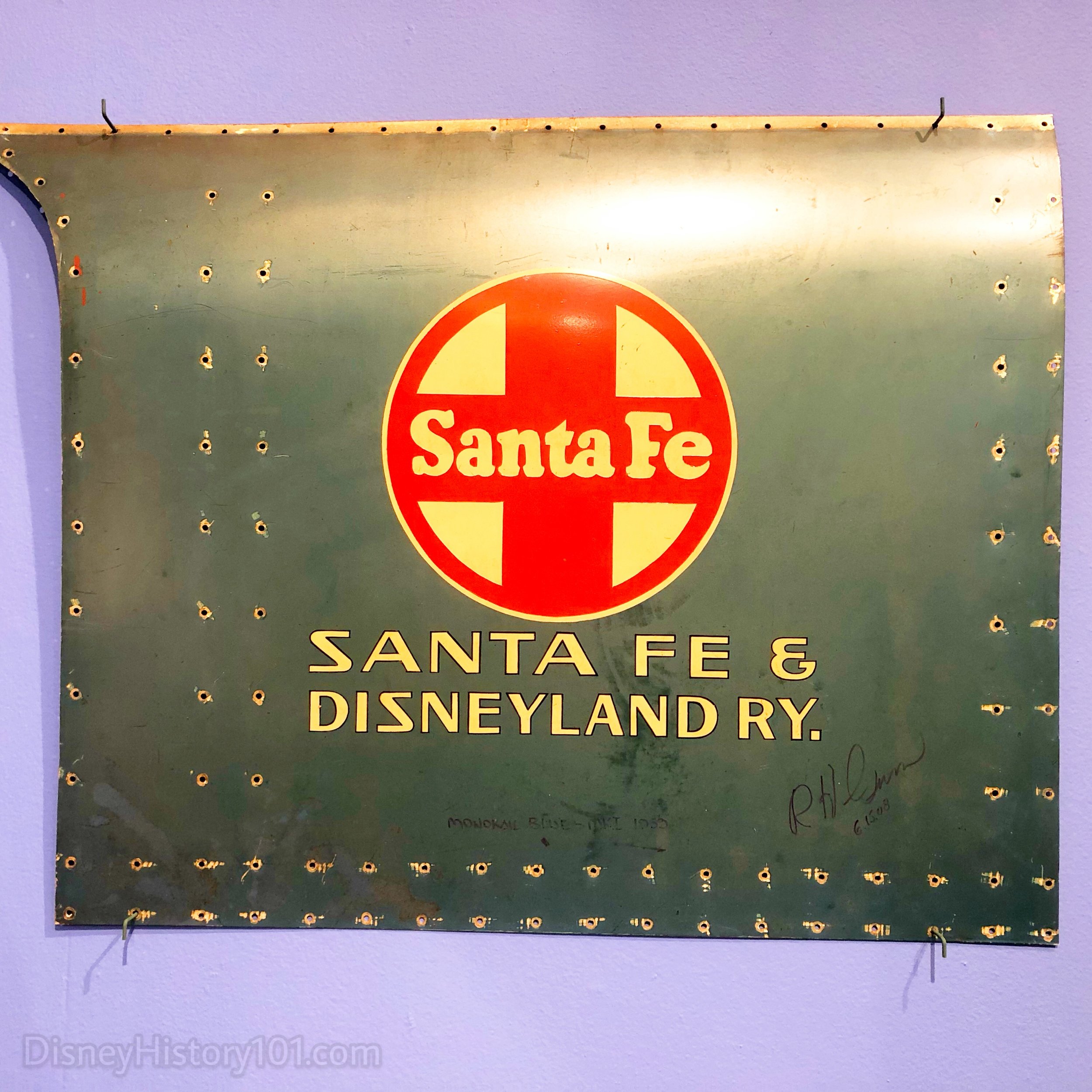
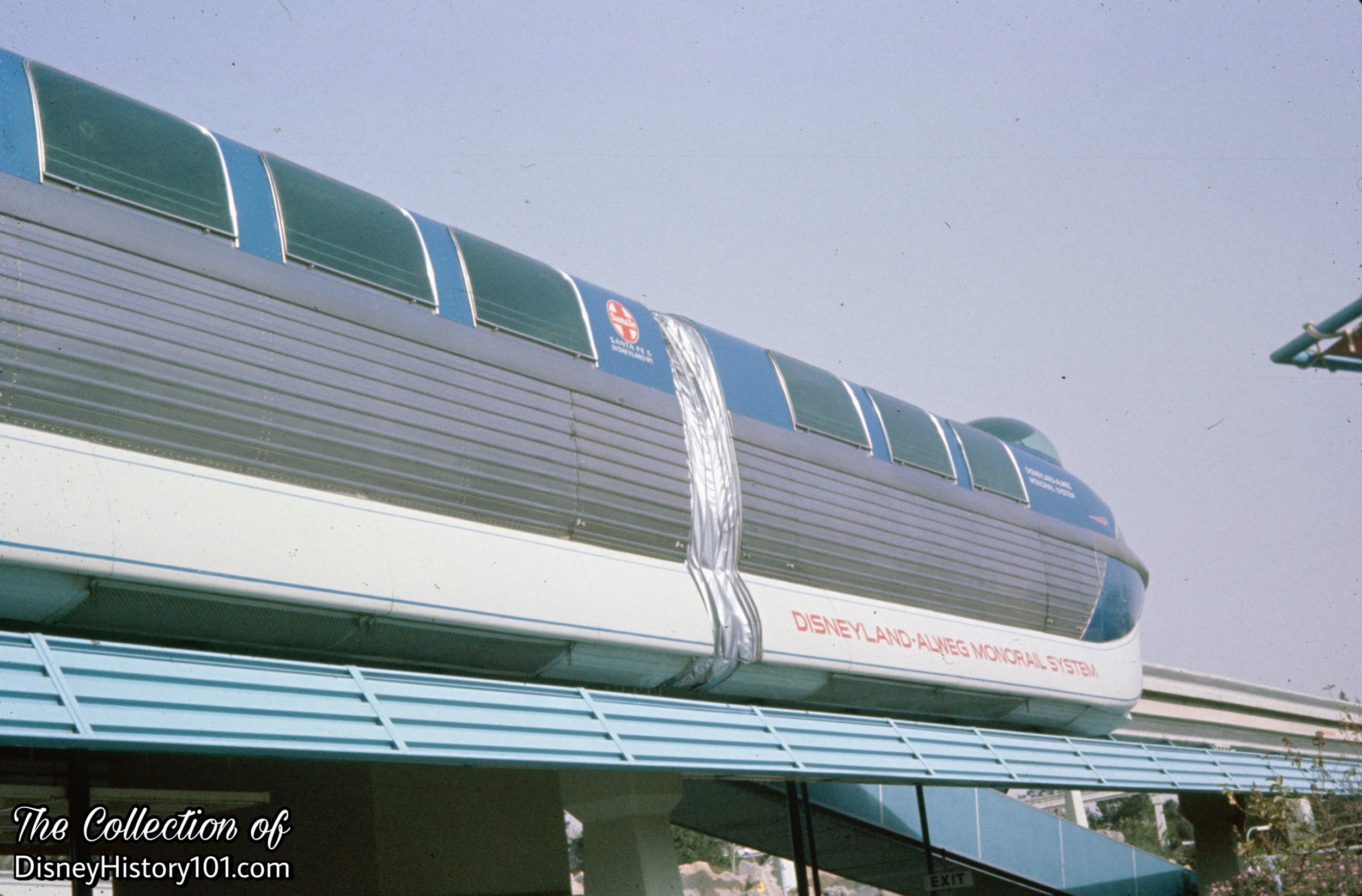
This is a panel from the four-car Monorail Blue Mark II which was signed by reverse engineer Bob Gurr, before being sold at auction. We found this panel included among the exhibits at “Walt’s Trains” a temporary exhibit (now closed) at the Napa Valley Museum! The Santa Fe logo was featured on Monorails from 1955 through 1974.
Artifacts from the early Monorail trains have even made their way to the eastern coast. For instance, one Monorail Mark II Gold panel has been preserved inside the Monorail Shop north of the Contemporary Hotel at Walt Disney World Resort.
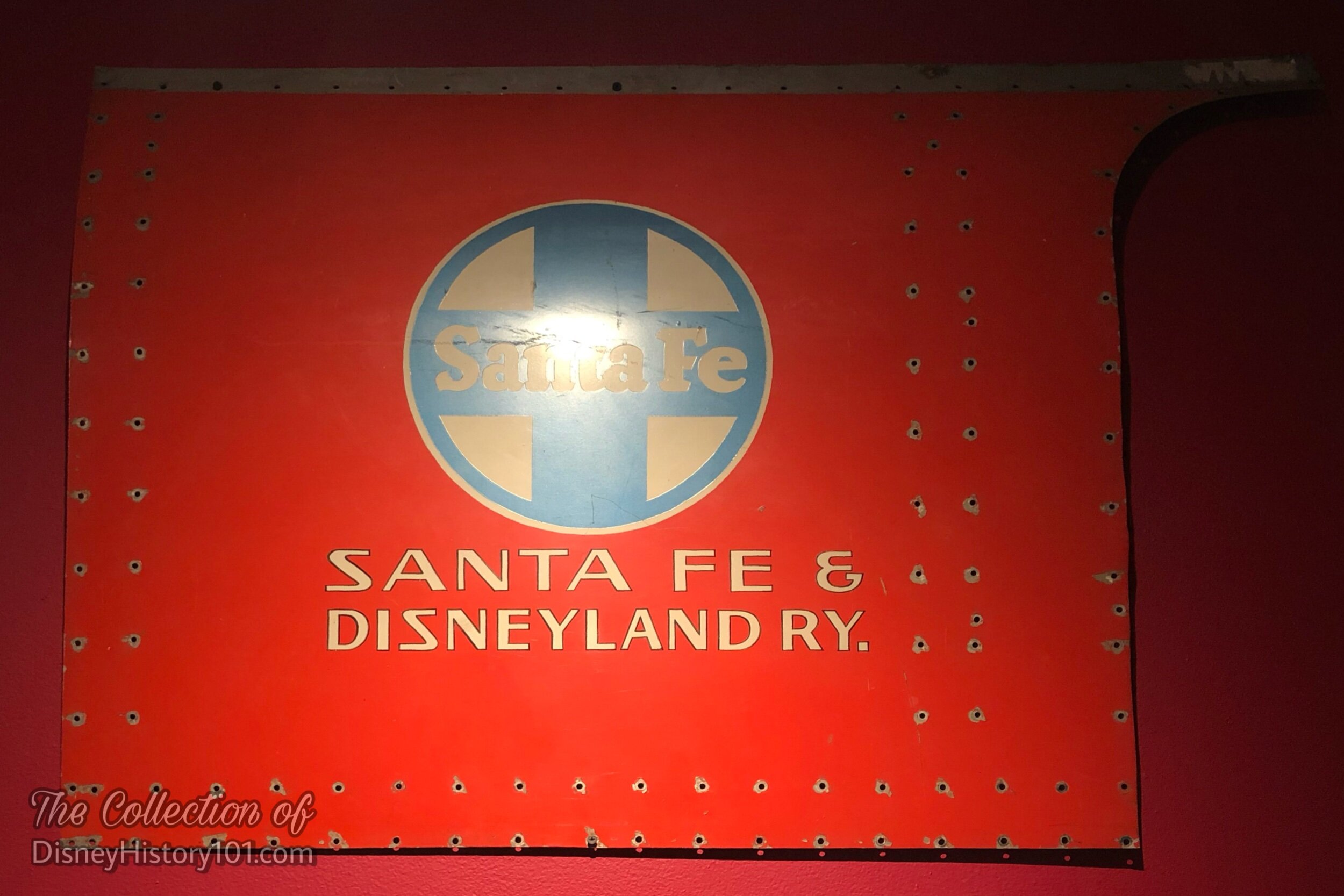
According to Dave Smith (previous Chief Archivist Emeritus of the Walt Disney Archives), “Bob [Gurr] has a red panel from a Mark I ; it is currently on display in Walt’s Barn at the Los Angeles Live Steamers area in Griffith Park, and previously had been shown at the Richard Nixon Presidential Library. Bob also has two panels from the Mark I blue Monorail.” [Disney Facts Revealed by Dave Smith, 2016]

Back in 1962 (months following the Monorail Mark II debut), Walt had moved WED Enterprises, Inc. to an industrial park on the corner of Flower and Sonora streets in Glendale, California. A few years later, Walt Disney’s MAPO was incorporated on July 23, 1965. By 1966, a brand new Monorail Mark III was in development for Disneyland. In addition, Walt dreamed about the practical use of Monorail trains to be incorporated into the research and designs performed for EPCOT (an Experimental Prototype Community of Tomorrow) in Florida. From the transportation lobby in the Central core of the city, Monorail trains were to carry employees “either to the theme park or to EPCOT’s 1,000-acre industrial park.” However, the unexpected would seemingly halt these dreams.
“‘Moving Ahead’ With Walt’s Monorail Dream Legacy”
Internal materials published in 1966 mentioned: “With four major new attractions nearing completion for summer, 1966, openings at Disneyland, Walt and his staff af WED are looking toward 1967 - 1968.“ Walt’s 65th birthday fell on December 5, 1966. Ten days later, on Thursday, December 15, 1966, at 9:35 a.m., a brother, a friend, and a leader, Walt Disney died. Many Disney personnel who were present, still remember this tragedy. Soon after, Roy O. Disney, President and Chairman of the Board of Walt Disney Productions addressed the staff with an official statement, in which it was conveyed:
“Walt Disney spent his entire life and almost every waking hour in the creative planning of…Disneyland… and the other diversified activities that have carried his name through the years. Around him Was Disney gathered the kind of creative people who understood his ways were always unique and he built a unique organization. A team of creative people that he was justifiably proud of… Many have been with us for over thirty years. They take great pride in the organization which we helped to build. Only through the talent, labor and dedication of this staff could any Disney project get off the ground…
Much of Walt Disney’s energies had been directed to preparing for this day. It was Walt’s wish that when the time came he would have built an organization with the creative talents to carry on as he established and directed it through the years. Today this organization has been built and we will carry out this wish.
Walt Disney’s preparation for the future has a solid, creative foundation. All of the plans for the future that Walt had begun… the expansion of Disneyland… will continue to move ahead.”
During his lifetime, Walt went into the Monorail Mark III project with faith and confidence in the ability of his people to work hard and do the best possible job. In fact, if you were around at Walt Disney Productions during the 1960s and 1970s, then you may have had one of Walt’s most profound statements hung on your office wall: “You can dream, create, design and build the most wonderful place in the world… but it requires people to make the dream a reality.”
As the years passed Walt had occasionally wondered: “Can management produce Disney product after Disney?… That's the sixty-four-dollar question." In an effort to free the Company from dependence on him, Walt did not retire, but he began to step away from supervising so many projects (e.g. motion pictures and Disneyland). As Walt once put it, he would untie “the apron strings-until they scream for help.” On another occasion Walt expressed the belief: “Since my outlook and attitudes are ingrained throughout our organization, all our people have this curiosity; it keeps us moving forward, exploring, experimenting, opening new doors.”
After all, Walt was confident in the ability of his people to “move ahead” after he was long gone, that he once stated in a Canadian broadcast interview: “I think they’re going to stay with that policy because it’s a good business policy… I think they’ll hang on… well after Disney.”
That being a fact, may help explain why just four days after Walt’s passing, the WED Enterprises, Inc. Board of Directors “moved ahead” and met for a special meeting agenda on December 19, 1966. There, the third subject discussed, involved two related items - “the proposed new space for MAPO - the assembling of Monorail trains. These two items pretty well go hand in hand. In lieu of perhaps building this additional space, and becoming locked in on a long-term lease, and further consideration, if it is the opinion of the Board, Roger will actually assemble the Monorail trains, then it is suggested that we revert to the Kaiser building down the street from WED. We can obtain this building for no more than a three-year lease at a monthly cost of $1,250. It would provide the space required for assembling the Monorail trains and likewise provide some additional space so badly needed by Roger’s shop.” (See the proposal below.)
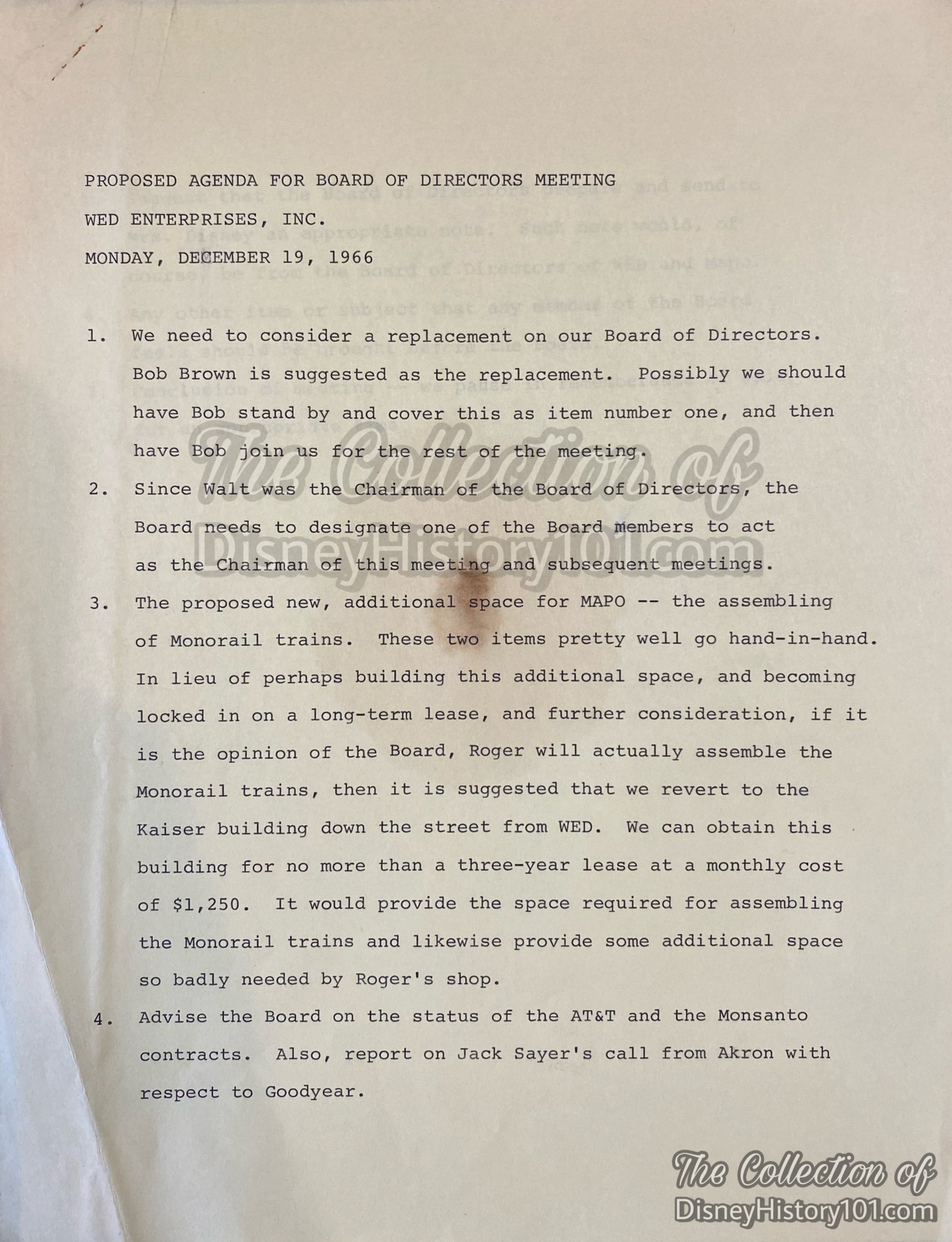
A WED Enterprises meeting held four days after Walt’s passing would address the Monorail trains.
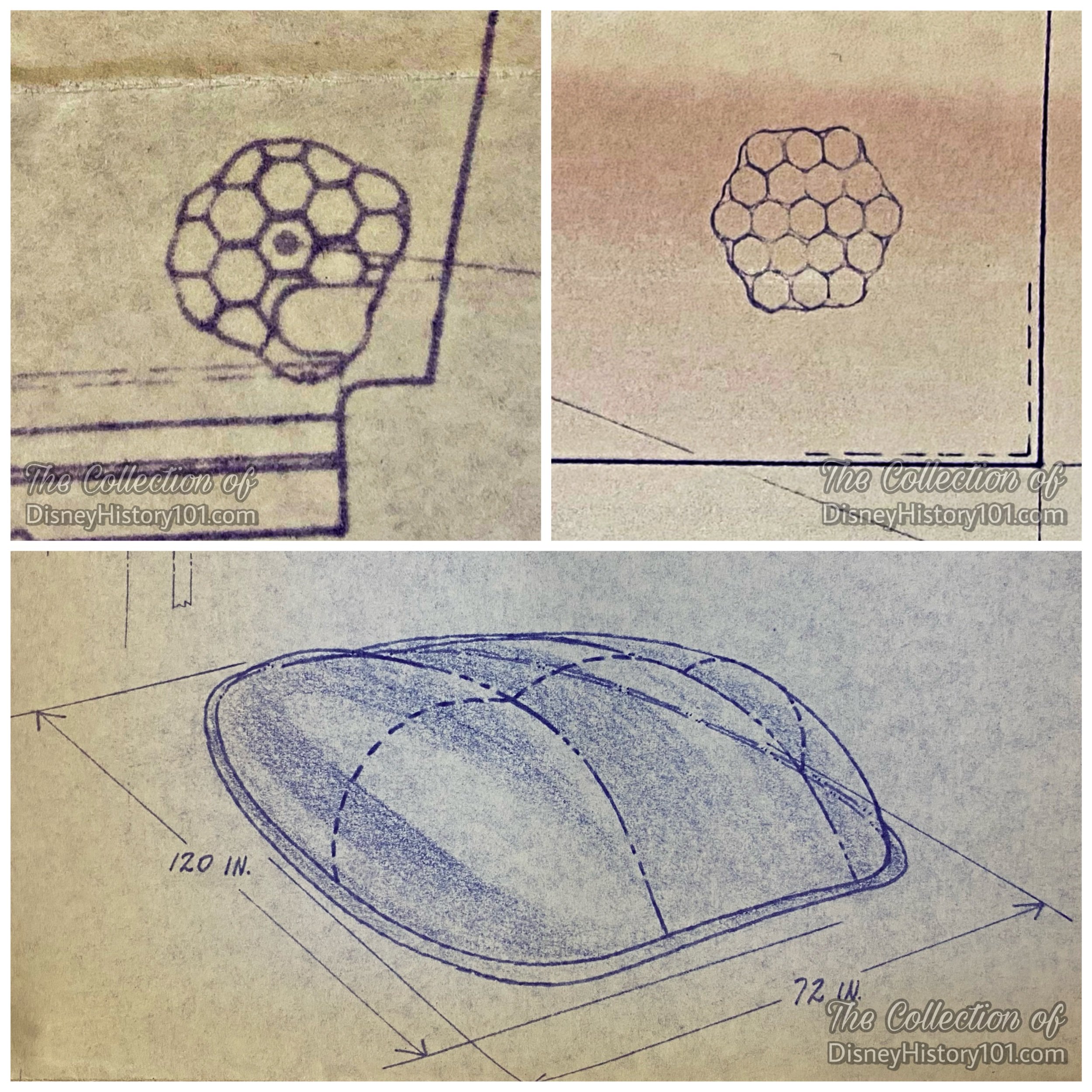
In order to meet the demand of guest capacity, Bob Gurr designed initial concepts for the sleek, five-car Monorail Mark III trains. In 1967 and 1968, subsequent drawings were engineered by Feuer and Moseley and approved by Gengenbach. The Monorail Mark IIIs would be very different from the Monorail Mark Is and Monorail Mark IIs. The Monorail Mark IIs were of “unit construction with the body structure an integral part of the chassis frame.” The Monorail Mark IIIs would differ in that they would have a separate body attached to a chassis. Further “this chassis in turn is composed of major sub-assemblies bolted together,” according to one c.1970s source. Some honeycomb panels were used in the construction.
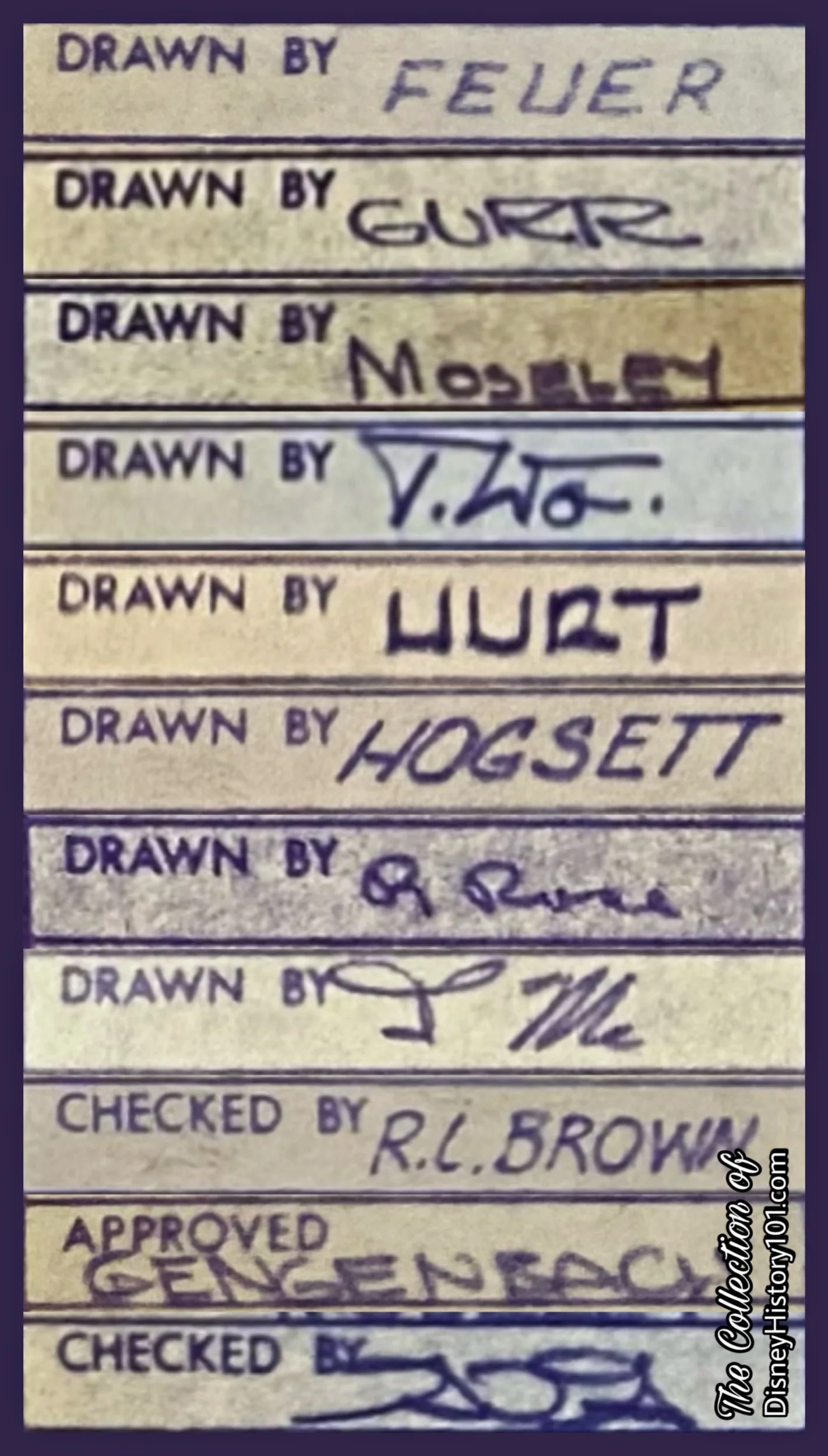
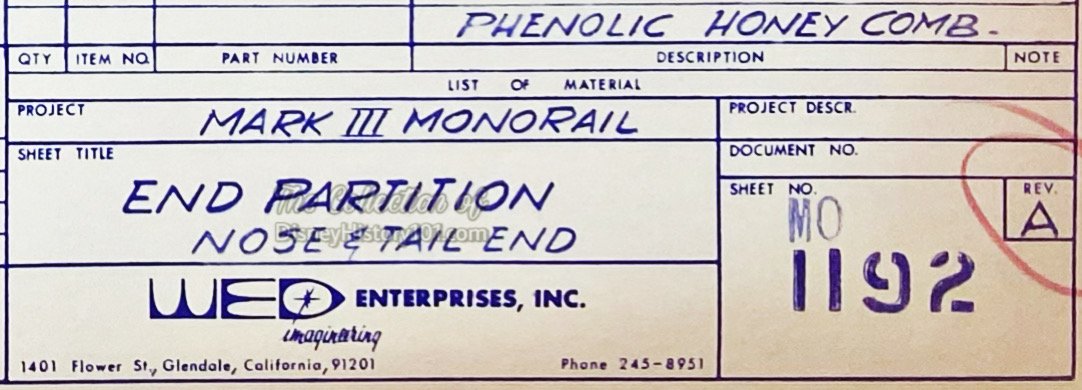
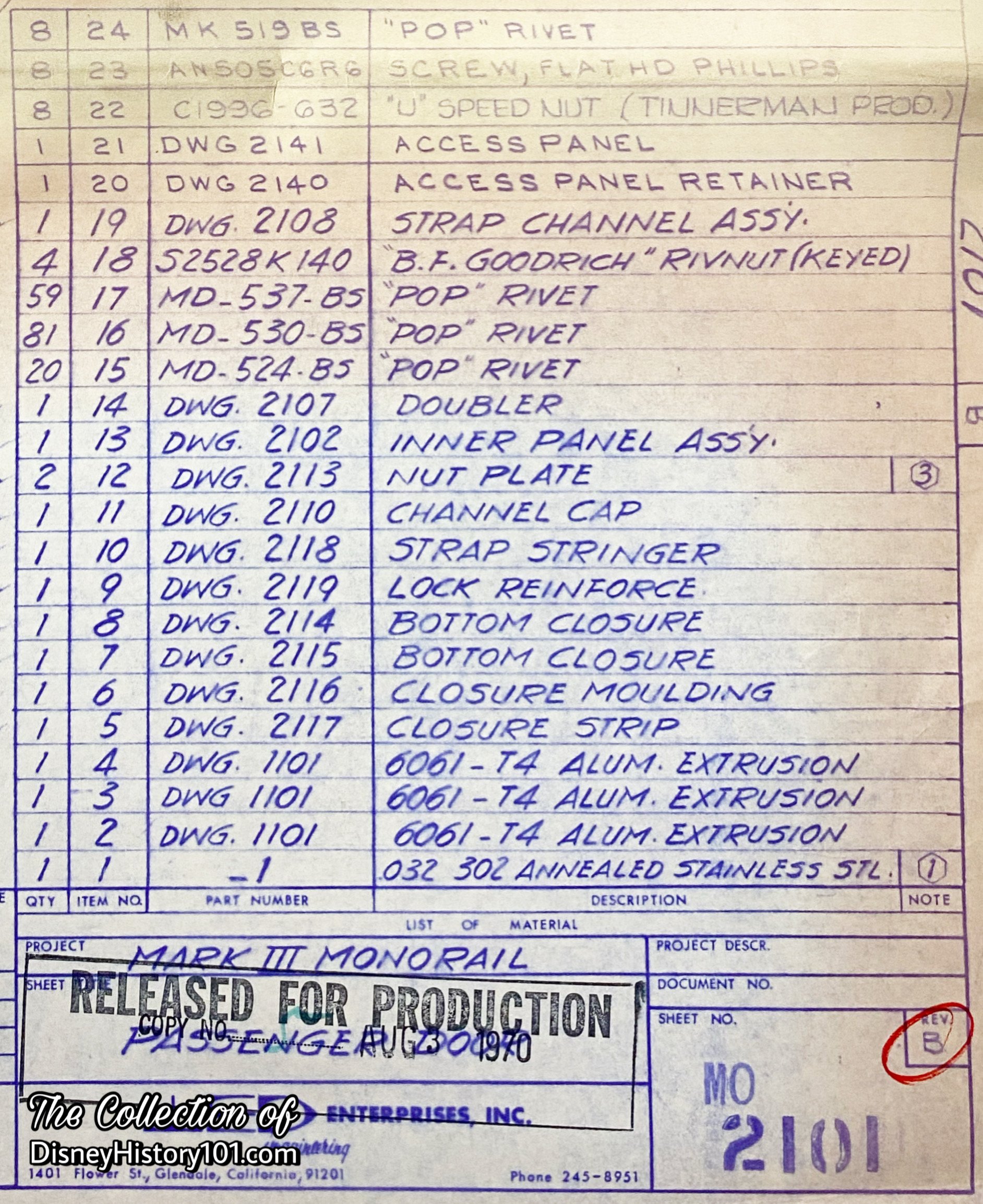
Some electrical diagrams of preliminary proposals (for components like the Speed Regulator) had already been designed and generated by General Electric S.A.M.C.&G. Division in 1965. Over at WED Imagineering, Inc. by June of 1967, numerous 1/2 size and full-size assembly, component, and part drawings had been approved. These were drawn by a number of engineers including Gurr, D.V. Kuchta, Feuer, Moseley, and Hurt, and approved by Gengenbach (of WED Enterprises, Inc. Engineering), while schematic diagrams (for things like the voltage regulator, motor, and generator) were drawn by Hogsett, and checked by R.L. Brown. Some drawings were produced at 1/4 or 1/2-scale while some were even produced at full scale. Many of these drawings were released from about the spring/summer of 1968 to 1969 and used to machine caps, panels, plates, rivets, screws, and many other parts of the Mark III Monorail trains. Some assemblies like the Sill Moulding End Bubble, partitions, the bulkheads would contain a structural reinforcement (comprised of a synthetic material) called a “phenolic honeycomb” (or “Aircomb”) which was concealed by aluminum sheets in most cases.
Soon, four sleek, brand-new, efficient, air-cushioned, five-car Mark III trains (with a 132 passenger capacity) were introduced, beginning with the Monorail Green, during the Spring of 1968, and officially during 1969. The electrically powered trains alone were at the cost of $2 million (more than twice the investment of the original Monorail trains). By 1968, RETLAW (the Disney family’s company) had invested some $3,200,000 in the Disneyland Railroad and Monorail train systems.
Each Monorail train had four 100 horse-powered 600 volt DC electric drive traction motors capable of reaching speeds of up to 50 miles per hour. The motors were checked daily and subjected to periodic overhaul. Each train operated on a 600-volt direct current which transmitted along a pair of copper and steel bus bars on the right side of the concrete beamway stretching 12,300 feet, just short of two and a half miles.
There were about 7,000 feet of wire on each Monorail train, varying in size from #18 to 3/10. In addition, there were 64 relays and contractors per train.
To keep the trains in motion, each train had 4 guide tires, 10 vertical pneumatic rubber tires over the elevated beamway (for load carrying driving and braking), and 40 smaller pneumatic rubber tires along the sides of the “I” shaped beamway (for stabilization). These features would help the trains safely reach operating speeds of 10 to 35 miles per hour.
Those 44 pneumatic rubber tires on each train, were checked daily, constantly checked, and replaced on pre-arranged schedule. This maintenance was performed by the Retlaw Maintenance crew of about 60 men which included operating engineers, laborers, mechanics, and electricians.
From the forward car compartment, the Monorail Pilot operated the mechanical and electrical controls, used speakers to communicate with passengers, and used short-wave radios to communicate both with other trains and stations. Safety controls would allow the Pilot to open the passenger doors only when the Monorail Trains were “standing in the stations.”
“The Station Platforms”
The old platforms at the Disneyland Hotel and the Tomorrowland Station were lengthened to accommodate the longer trains. According to Vacationland magazine (Fall, 1971 ; vol. 15, no. 3) : “Since their introduction in 1959, Disneyland-ALWEG Monorail trains have carried well over 30-million passengers and traveled more than 850,000 miles on the 2 1/2 mile ‘highway in the sky’ between Tomorrowland and the Disneyland Hotel.”
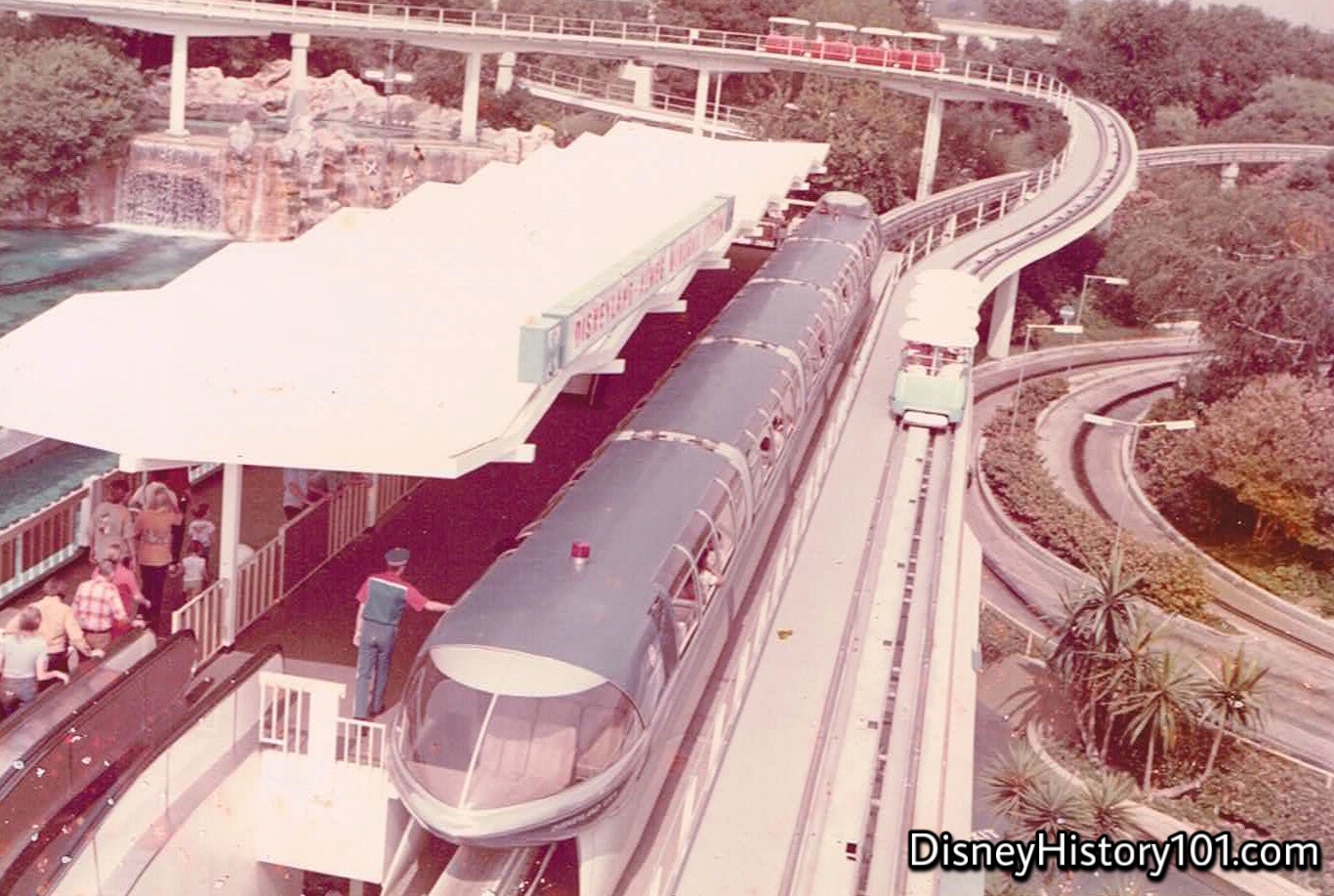
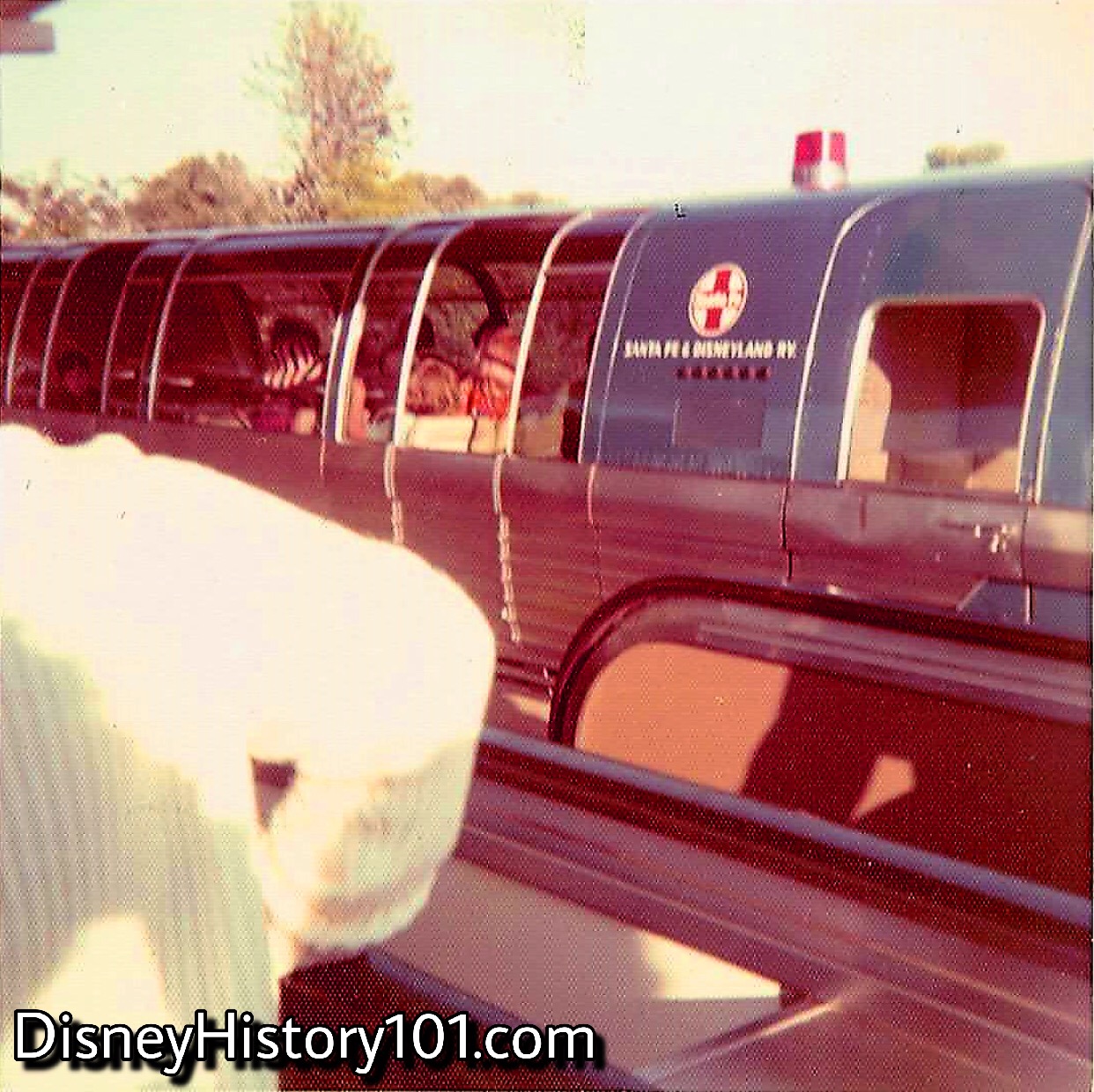
The Monorail Blue (with its rotating bright-red Beacon light atop the Tail Cone) ready to depart the Tomorrowland Platform.
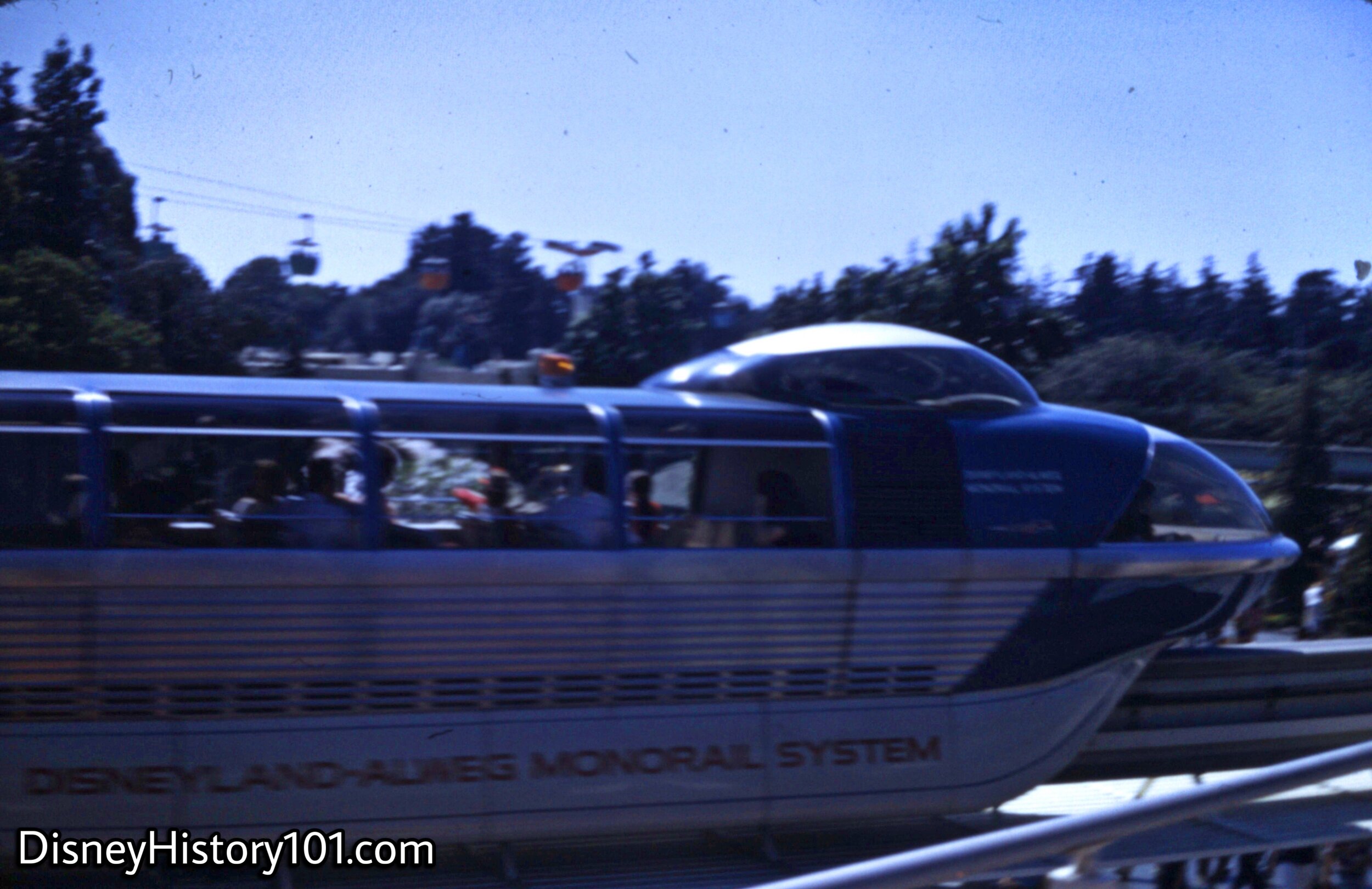
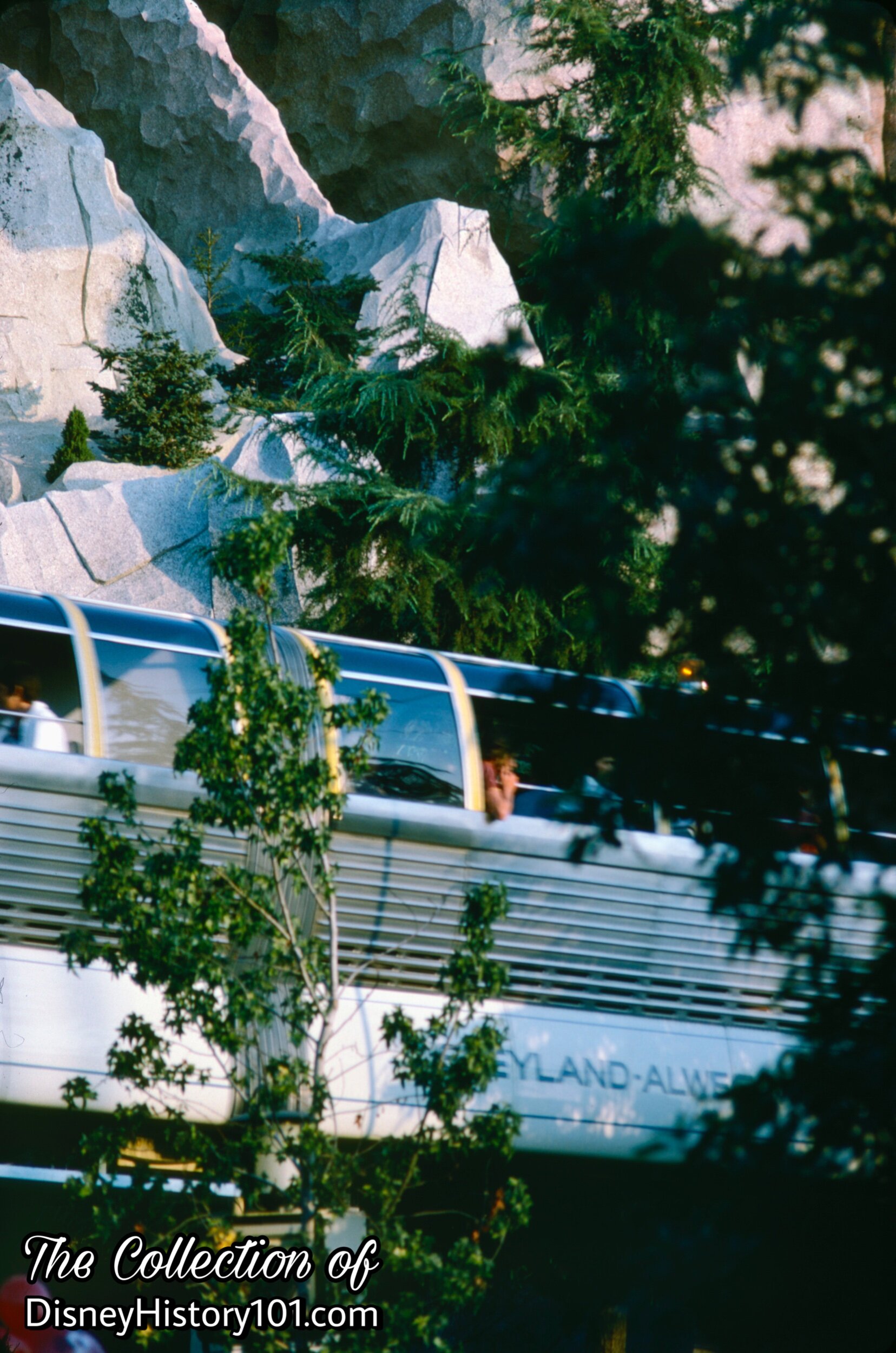
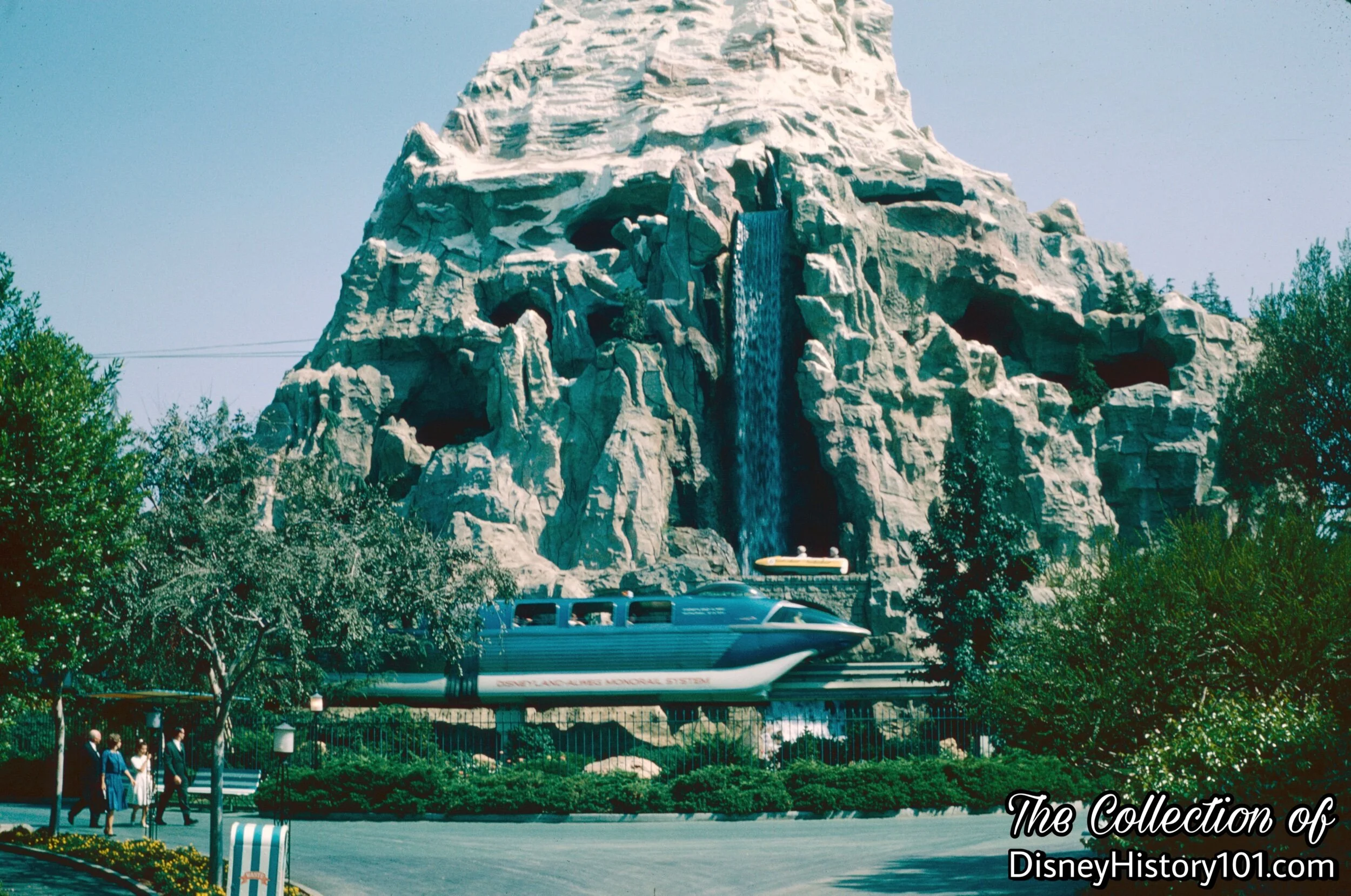
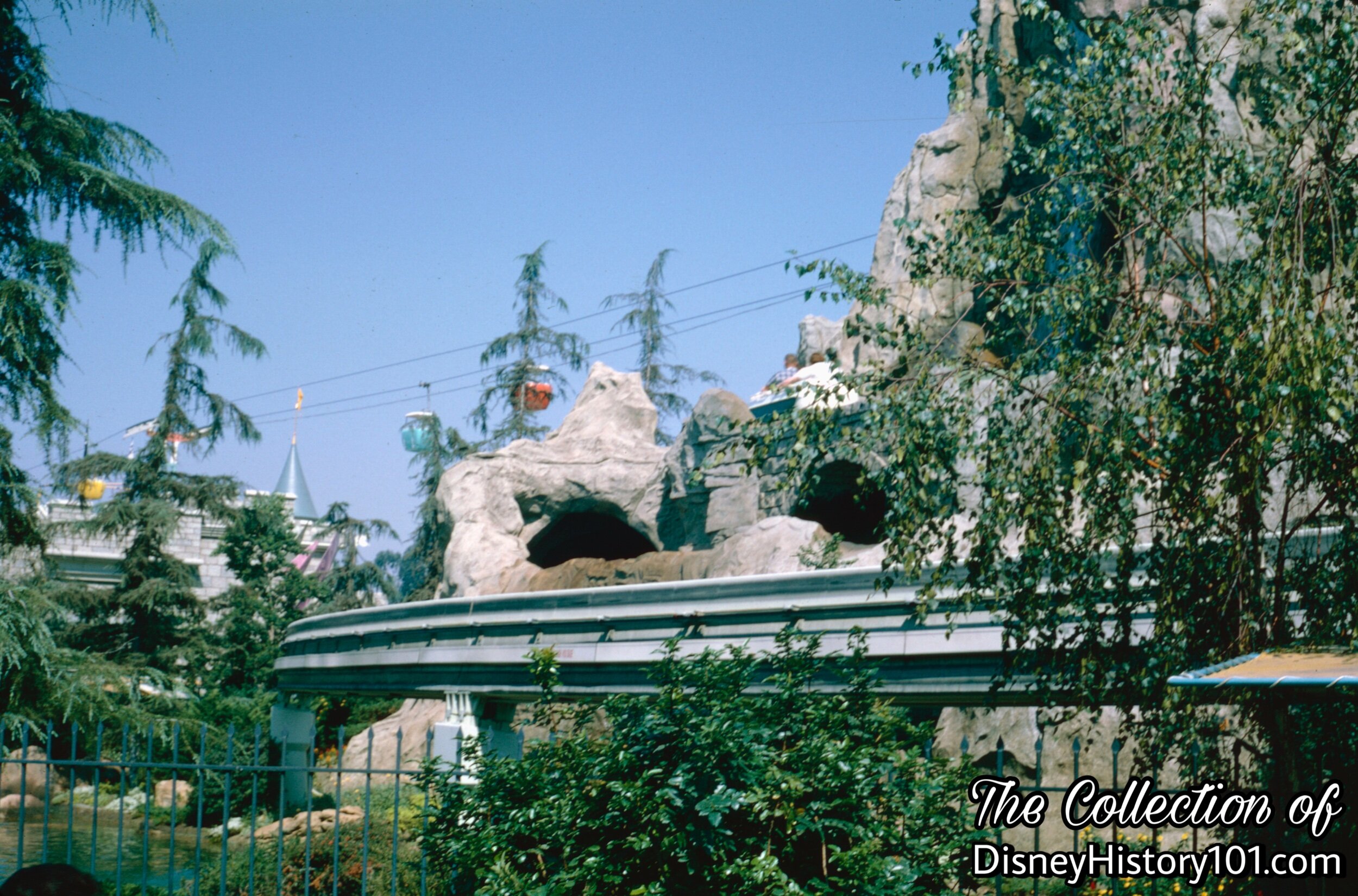
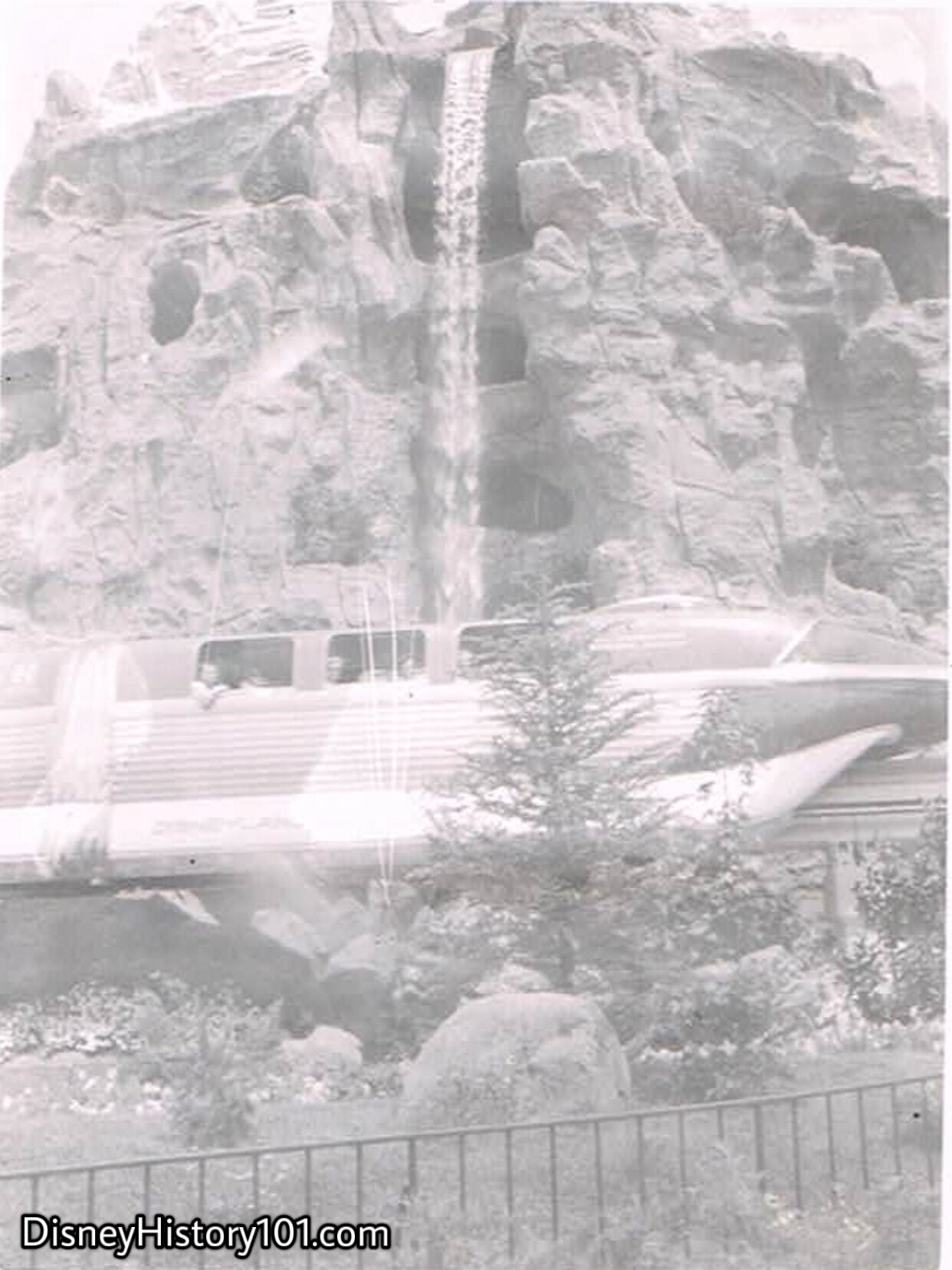
As the Monorail trains pass in front of the Matterhorn, they actually reach the lowest point in the beamway - five feet off the ground! The trains even pass close enough to the mountain, that guests can feel the spray from the cascading waterfalls!
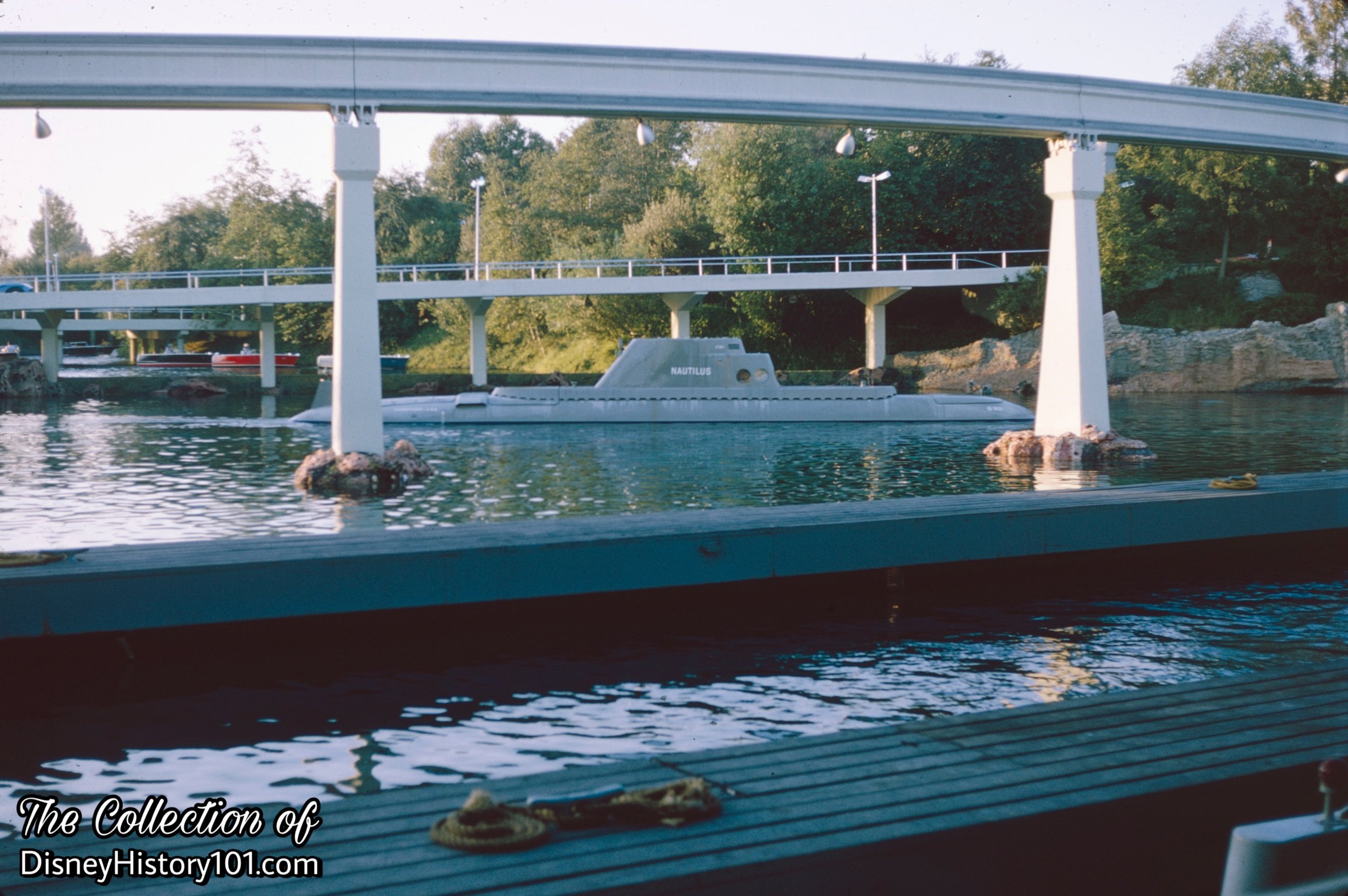
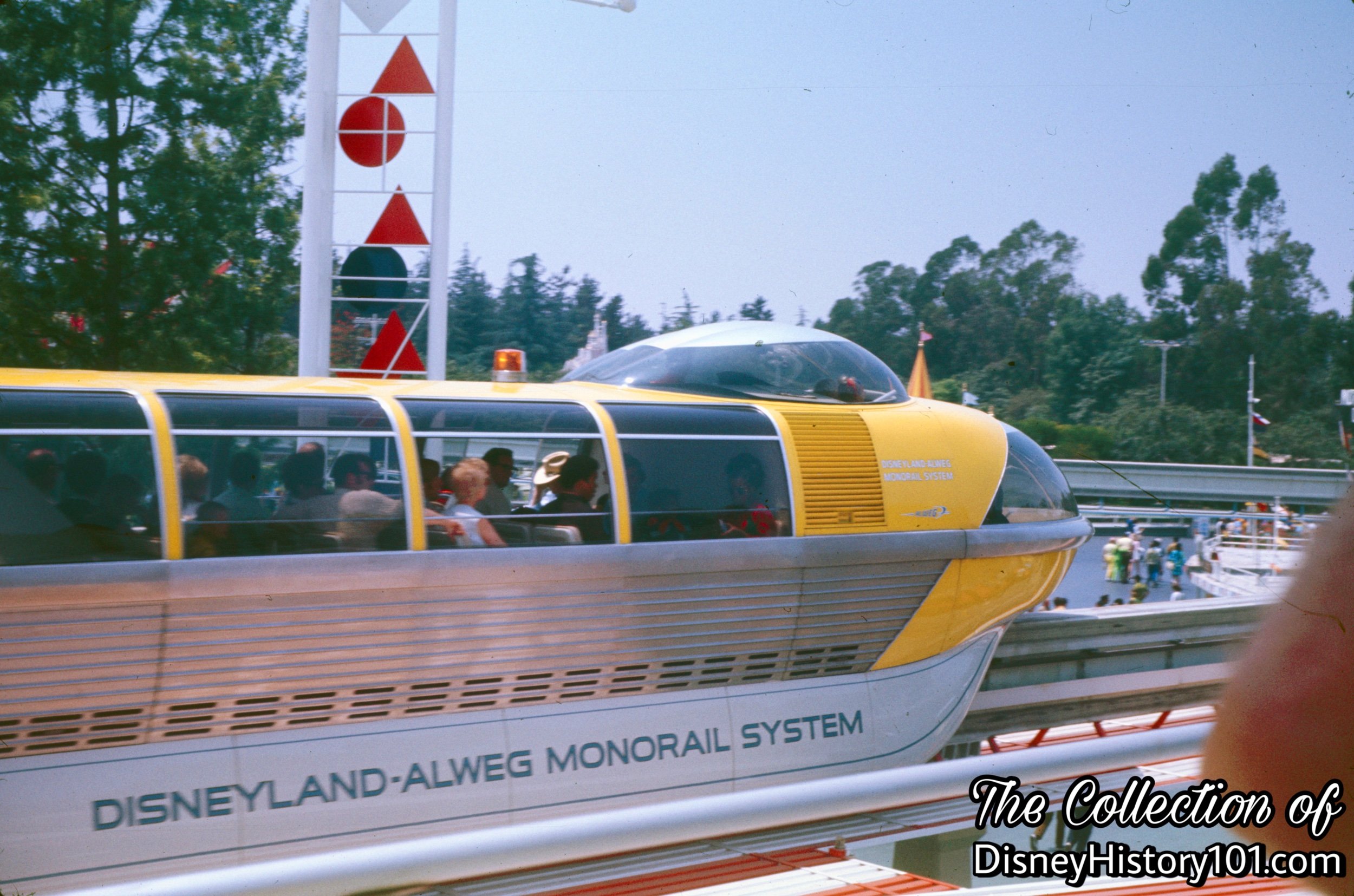
The nose cone - the enclosed section constituting the forward end of the train.
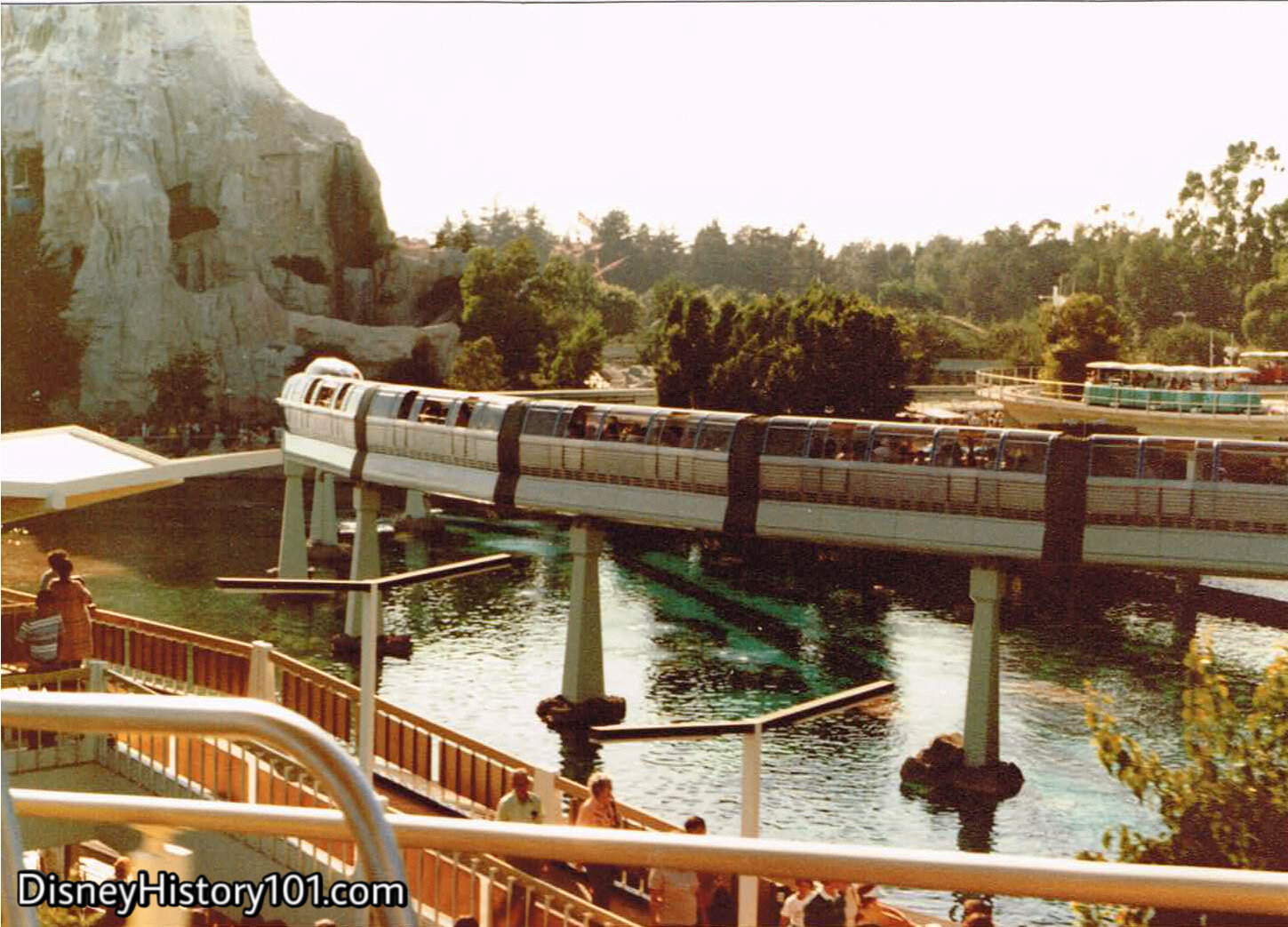
“Each of the four five-car trains is 137-feet long and carries 127 passengers”, according to Vacationland magazine (Fall, 1971, Vol.15, No. 3)
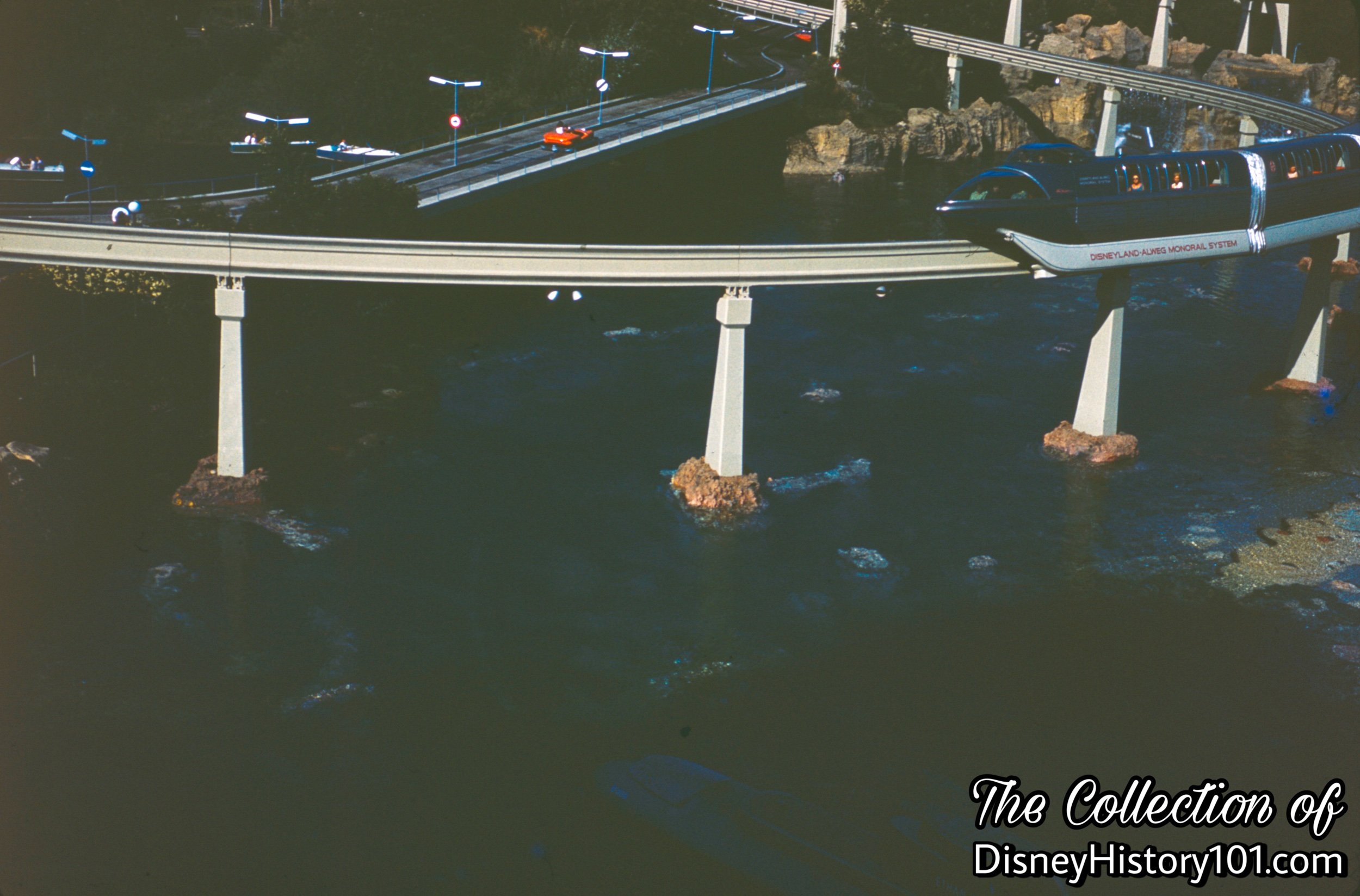
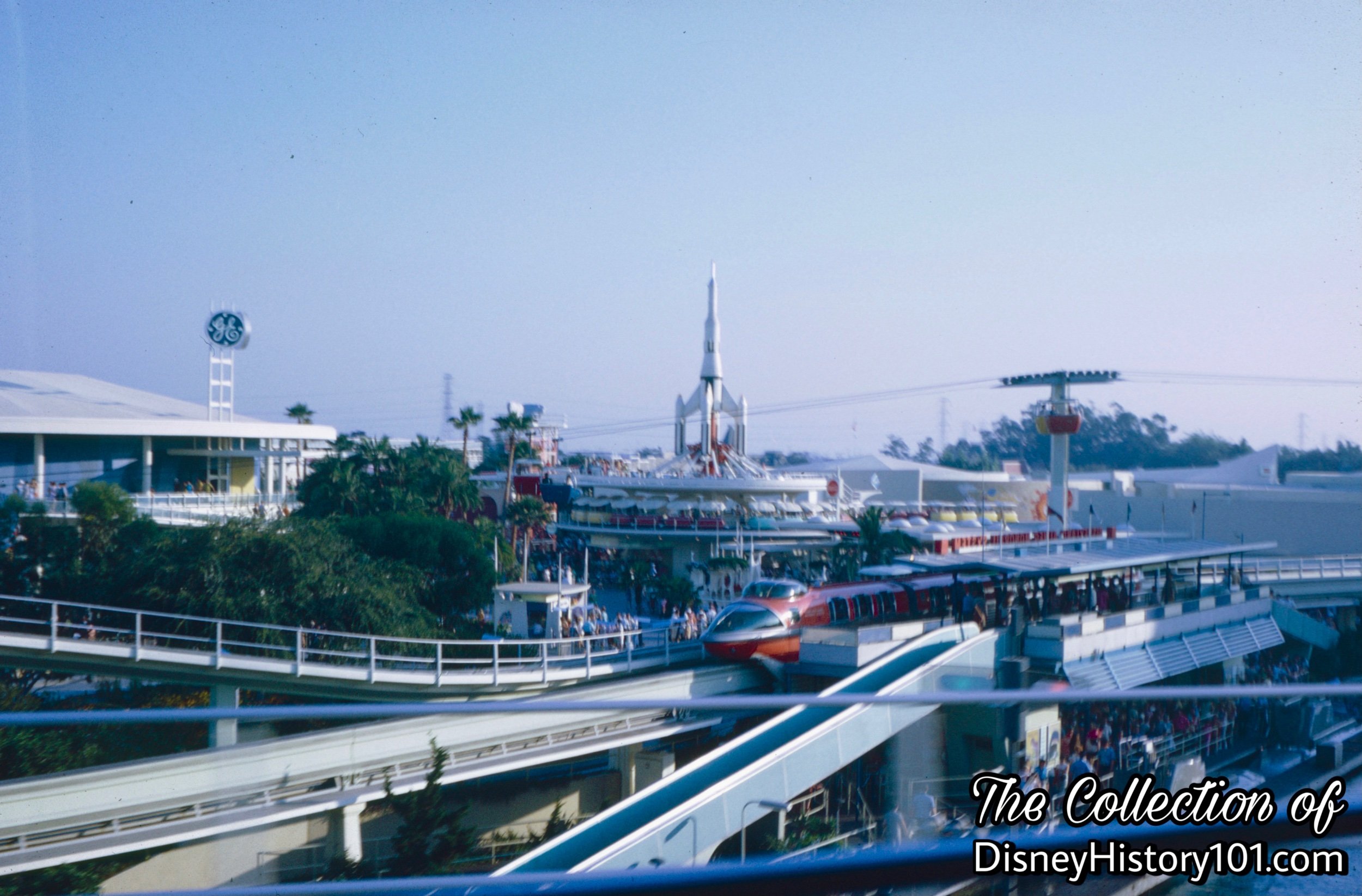
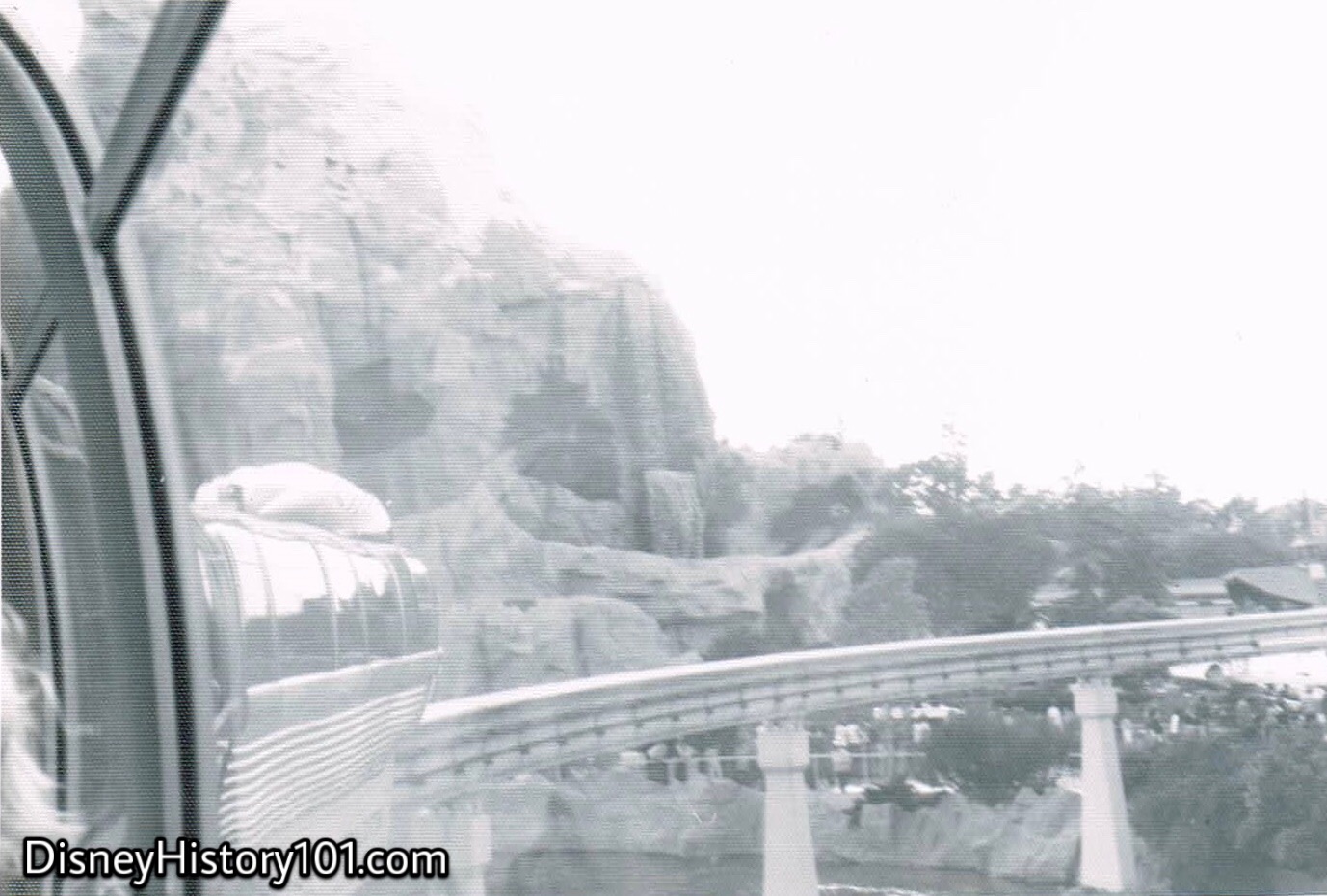
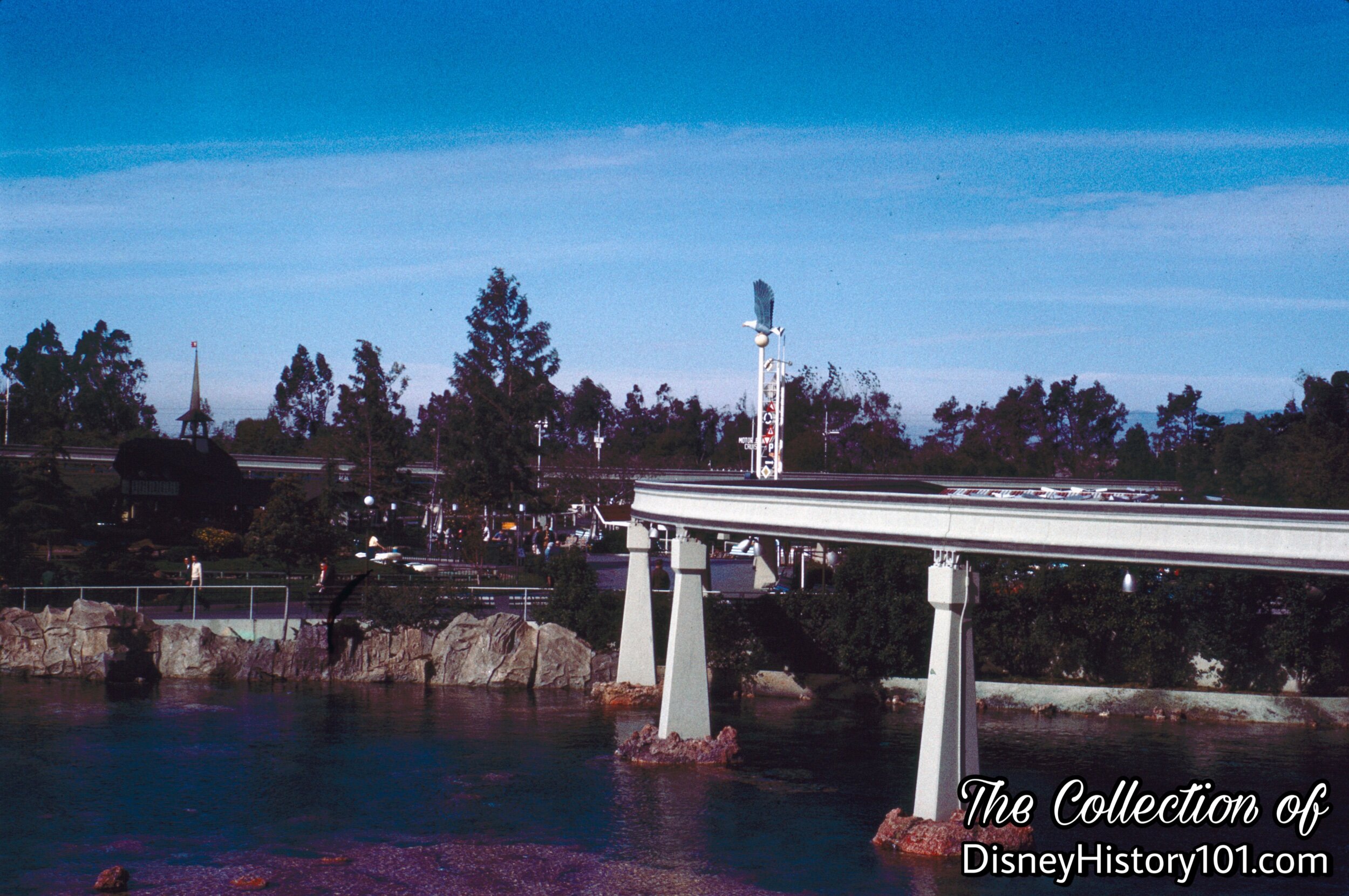
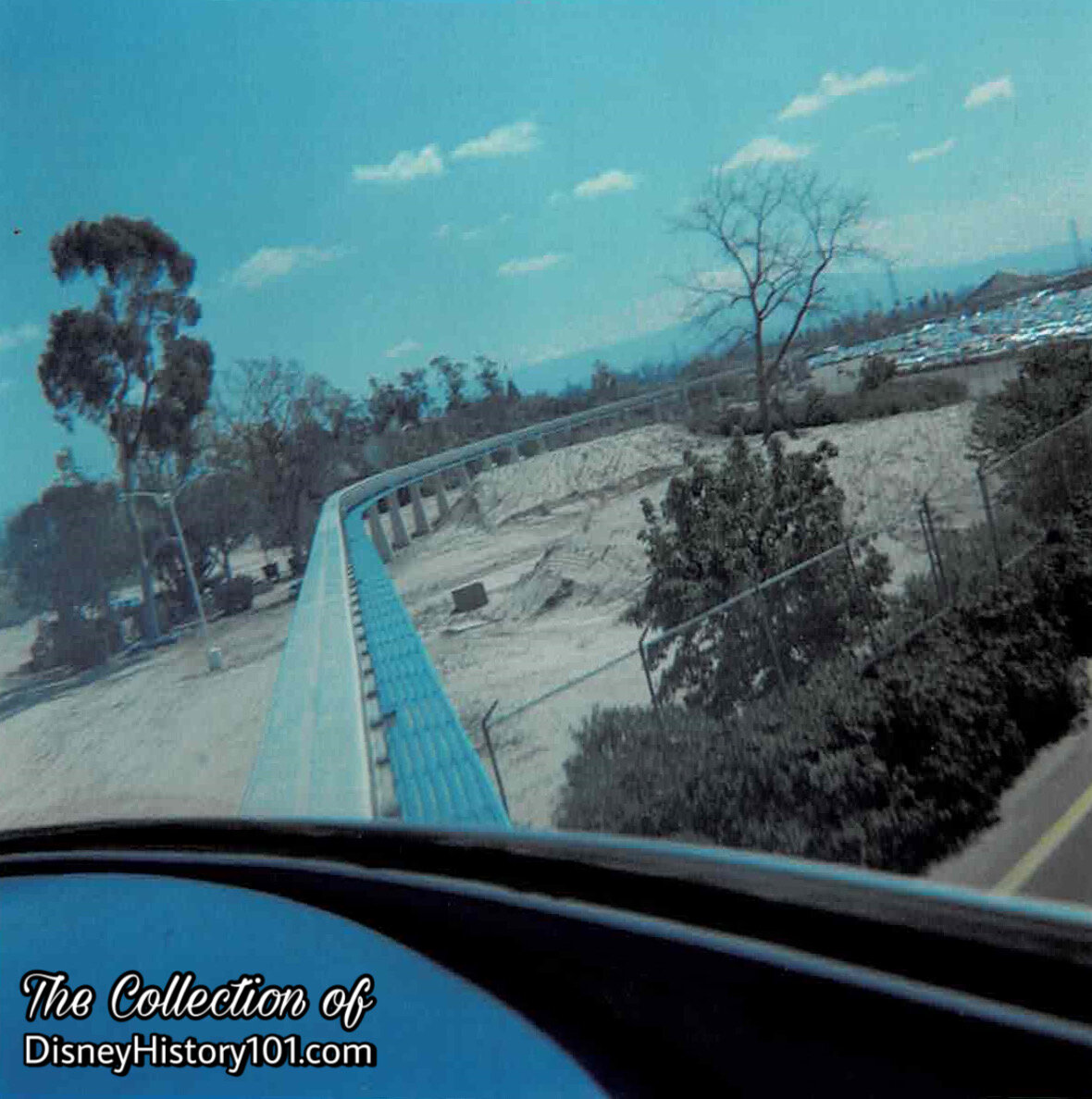
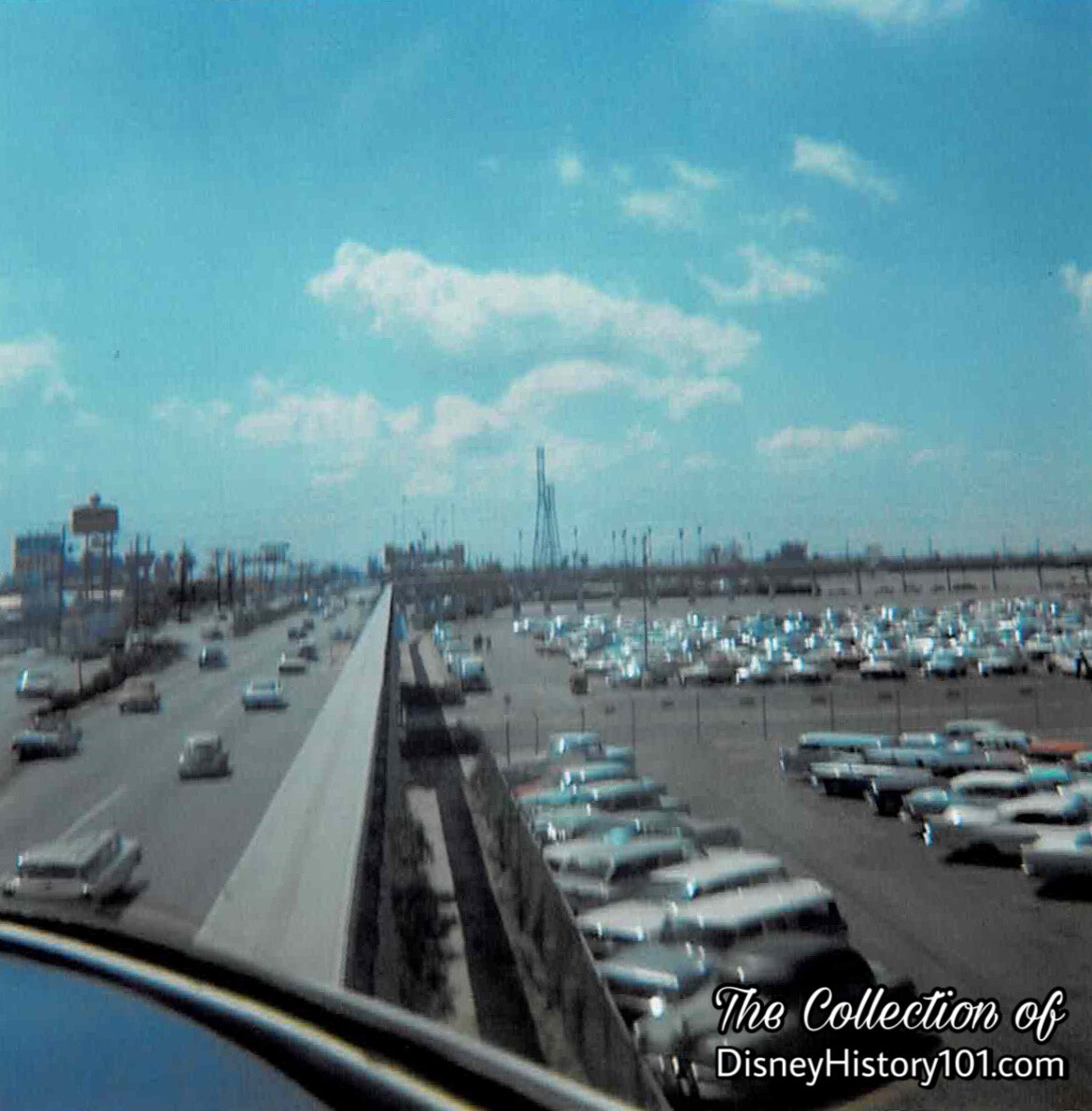
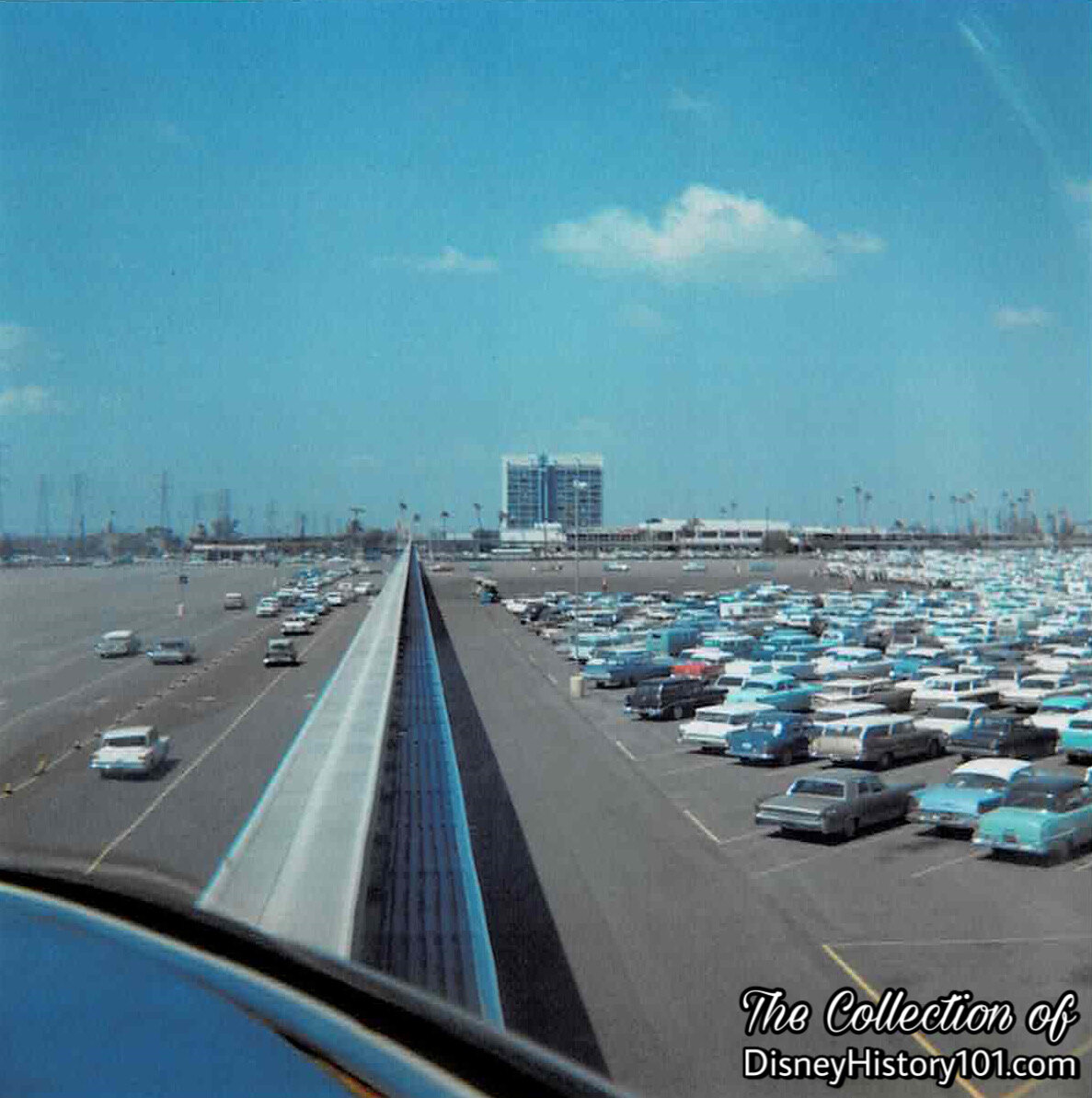
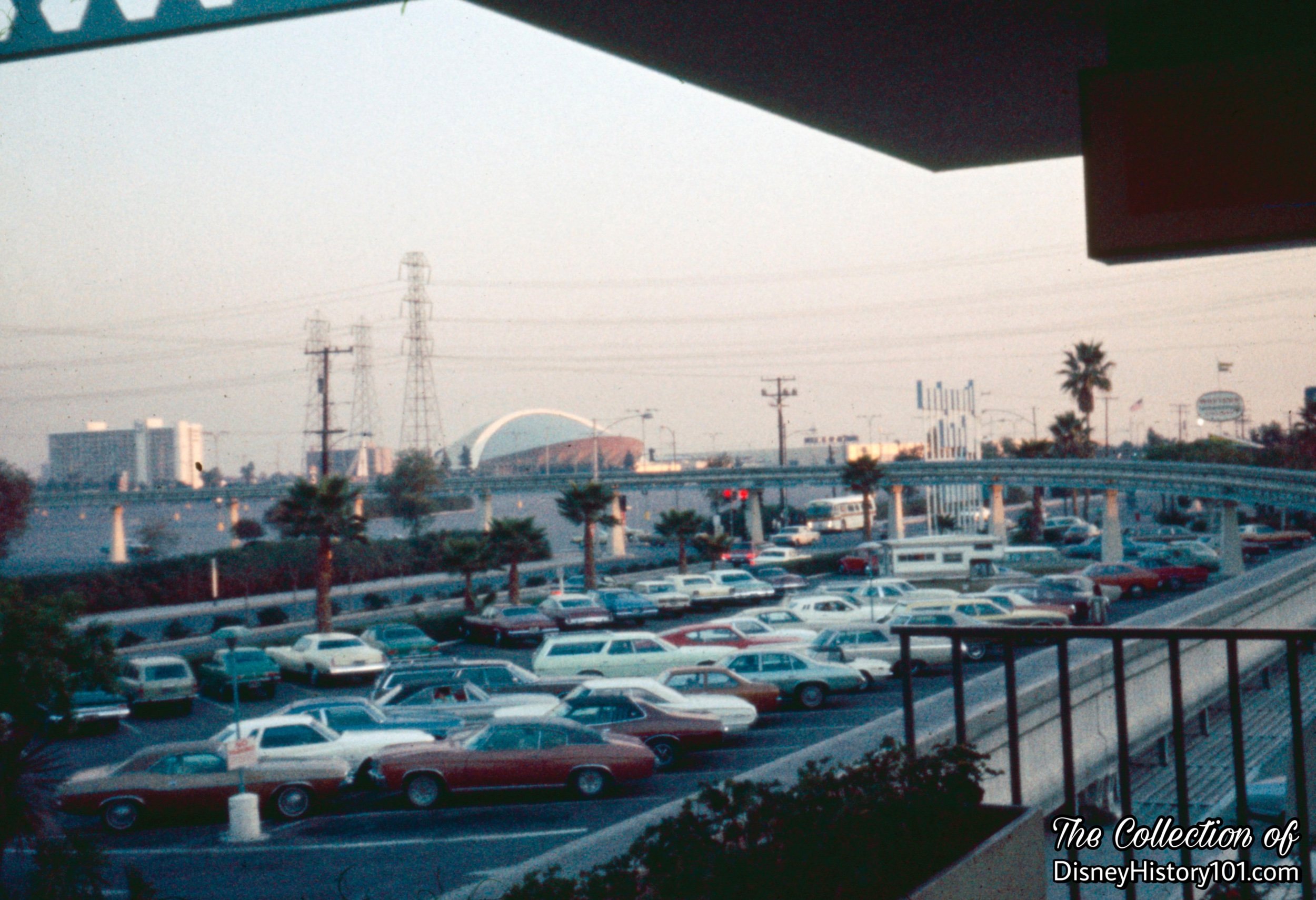
At the Main Entrance to Disneyland’s Parking Lot, the monorail veers westward over the 100 acre parking lot, crosses West Boulevard and turns northward to the Disneyland Hotel where a station has been constructed.
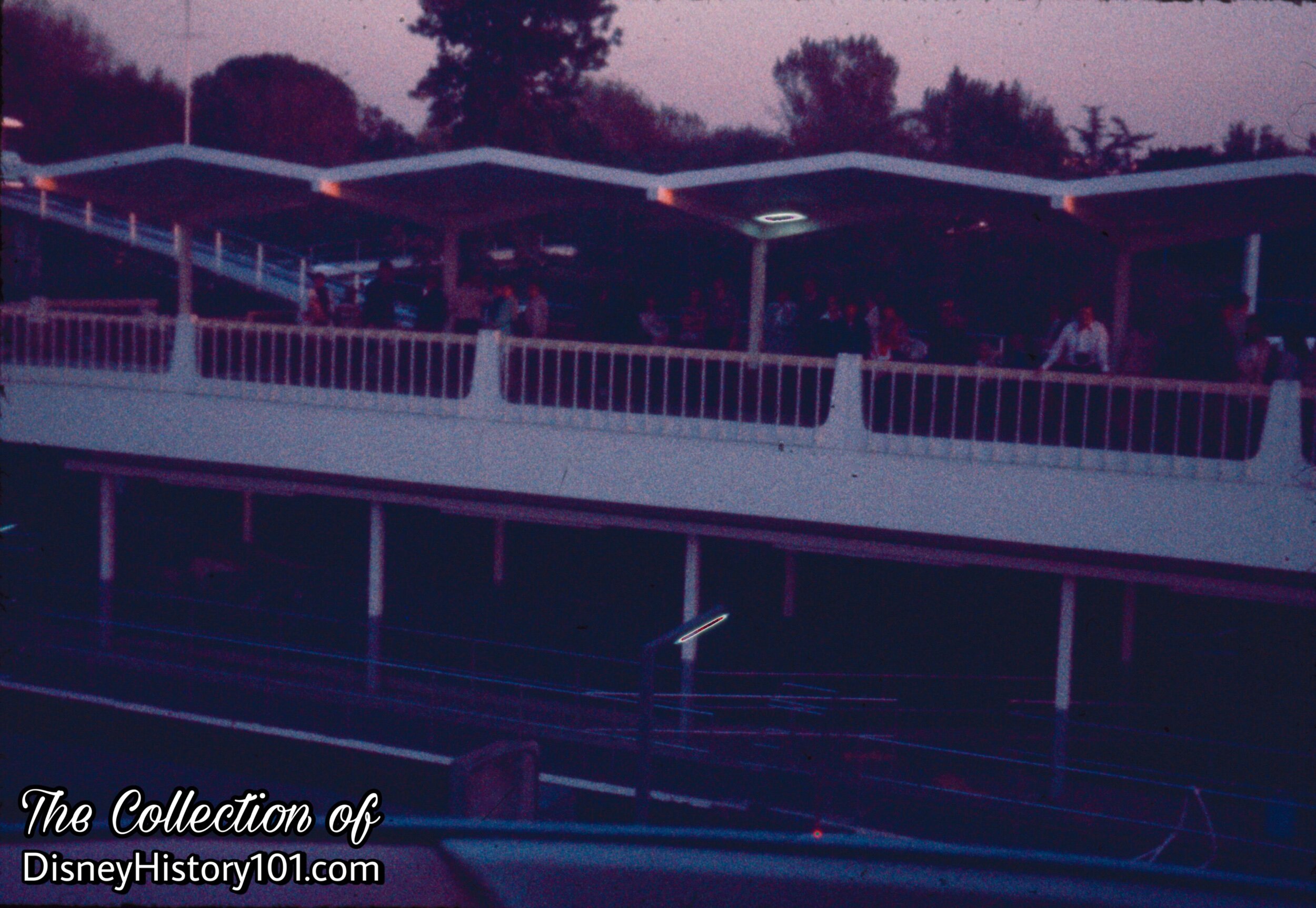
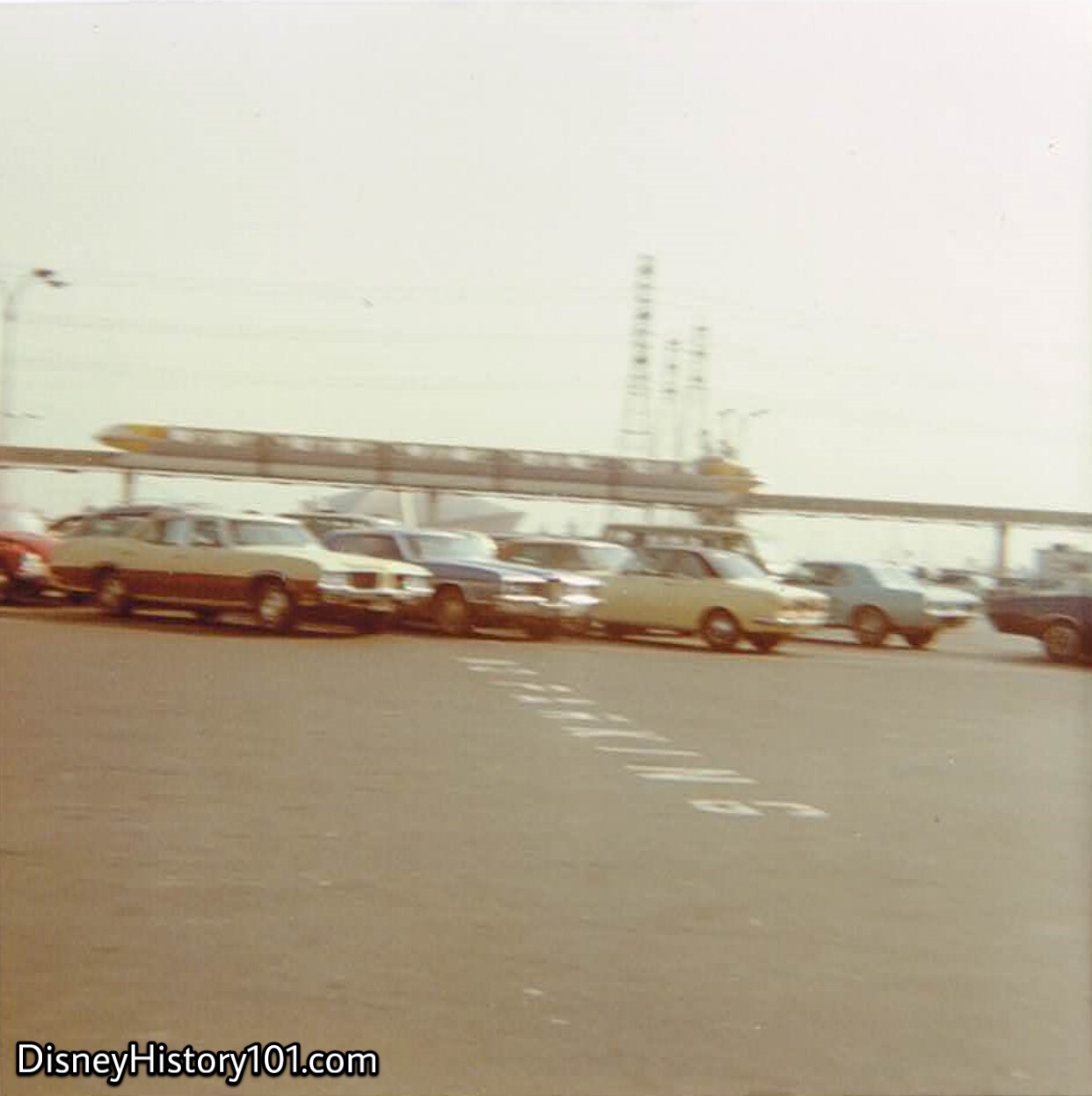
Only while over the Disneyland Parking Lot, Monorail trains could reach a maximum operating speed of 35 miles per hour.
“Ownership and Sponsorship”
By 1972, RETLAW Enterprises, Inc. (the 230-employee, independent company originally founded by Walt Disney, and headquartered in the WED building), owned and operated the Santa Fe & Disneyland Railroad and the Disneyland-Alweg Monorail System. In 1974, when a new agreement could not be reached between Atchison, Topeka & Santa Fe Railway, the Santa Fe name disappeared from Monorail trains.
According to reports compiled by October 2, 1971, a total of 38,713,035 guests had stepped aboard Disneyland’s new Monorail trains! At the springtime of 1971, admission aboard the Monorail Mark IIIs was one “E” Coupon! By 1979 - 1980, admission for passage aboard the Retlaw Enterprises-owned Monorail (“to Disneyland Hotel & return”) was still one “E” coupon, the same as a flight through Space Mountain, stepping aboard Big Thunder Mountain Railroad, or admission to the Country Bear Jamboree! About that time (in April of 1980), Disneyland Monorail Tape Narration had been prepared by Les Perkins for communication with passengers.
“The Speedramp Liability”
Sometime between 1978 and 1981, a minor incident occurred and Disneyland had to pay about $22,000 on behalf of a 12-year-old girl who broke her leg when she tripped on a “Speedramp” leading to the Monorail.
“Monorail Mark III Legacies”
Ultimately (around 1985 and after about 19 years of service), Park Engineers cycled out and replaced the Mark IIIs with new Mark V Monorail trains. The trains were taken out of service and transferred to subcontractors Ride & Show Engineering, Inc. (in nearby San Dimas, California). The first Monorail Mark III to go into service (Monorail Green) was the first to be taken to Ride & Show Engineering, on May 6, 1985. There, each was photographed in detail for future reference, and then the bodies and components of all cars (except for the front car - No.1) were removed from the chassis, inspected, and many were discarded. Few parts were salvaged, like the load wheels (which were sent to the Disneyland Monorail Shop), or the air conditioning evaporator unit and public address system (which was shipped to MBB, in Munich, West Germany). The Side Guide Wheels were disassembled and defective bearings were identified. The Side Guide Spindles were cleaned and checked for cracks and other wear.
It seemed that the chassis and suspension components could also be salvaged for future Monorail Mark Vs (or at the very least, studied). So those parts were sandblasted, after which, checks were performed by Boothe Twining Laboratoriesto search for cracks (using a special process involving magnets, fluid, and ultra violet lights). The results of those tests were recorded and forwarded to MBB.
A torsion test was performed by a specially crafted test fixture created by Ride & Show Engineering, Inc. The company engineering firm also designed new Load Wheels and electrical boxes and studied the chassis frame for possible improvements.
“The Mouseorail”
After more than a year-and-a-half after retirement, one of the old c.1969, 40-foot-long, 5-ton Mark IIIs (Monorail Red) was saved from the scrapyard, and modified into a limousine - “Mickey’s Mouse-o-Rail” - just in time for Disneyland’s 35 Years of Magic celebration! Kraig Kavanagh’s Ultra Limousine (the same Brea company that manufactured the “LiMOUSEine” for the Walt Disney World Resort’s 20th anniversary) lifted the 12-foot-tall five-ton vehicle from where it was being stored (behind the Monorail Maintenance Building) and transported it to the city of Brea. They next modified Old Red with “a stretched chassis from a new 2 1/2-ton Chevy truck” and a V-8 engine. Aesthetic elements were also applied - like new Mickey tail lights and Mickey “ear view mirrors.” Inside the 16-passenger section, a mobile radio broadcast studio, a cellular phone, a TV monitor, VCR, and 200 watt stereo system were installed. The eight-foot-wide and 40-foot-long Mouse-o-Rail was street legal, complete with an automatic transmission and ran on unleaded fuel. After making an appearance in the 1976 Tournament of Roses Parade (in Pasadena, California), the “Mouse-o-Rail” (which had once circled Tomorrowland for 19 years) was equipped for remote radio broadcasts and now embarked on a 35-city tour of North America in January of 1990. The Mouseorail Tour ran from January 15 to July 17, 1990, utilized as a promotional vehicle for contest winners and market radio DJs.

If you’re wondering where the Disneyland Alweg Monorail Mark IV Vintage Views are, there aren’t any in this Gallery. That is because the Monorail Mark IV trains never operated in Disneyland. After the successful pioneering of urban transit (regarding Monorail trains), six five-car Disney World-ALWEG Monorail trains were planned. However, an initial four Monorail Mark IV trains were specifically manufactured for Walt Disney World (beginning in 1969, and late as c.1985-1986). While the Mark IIIs had a separate body attached to a chassis, the Mark IVs chassis were composed of major sub-assemblies bolted together. These new fourth generation Monorails were referred to as “FM,” fully air-conditioned with a 100% honeycomb paneled body (previous Monorail trains were comprised of a partial honeycomb panel design). They had larger and longer chassis and manually operated hinged doors.
While the ALWEG-Disneyalnd Monorail trains initially opened as an attraction, the Walt Disney World Monorail System opened as a practical bi-directional transportation system, utilized for service between the Magic Kingdom and EPCOT Center at Walt Disney World. These aluminum trains were constructed in Orlando, Florida by the Martin Marietta Corporation, with some electrical components manufactured by Disneyland Participant General Electric, at the price of $650,000 each.
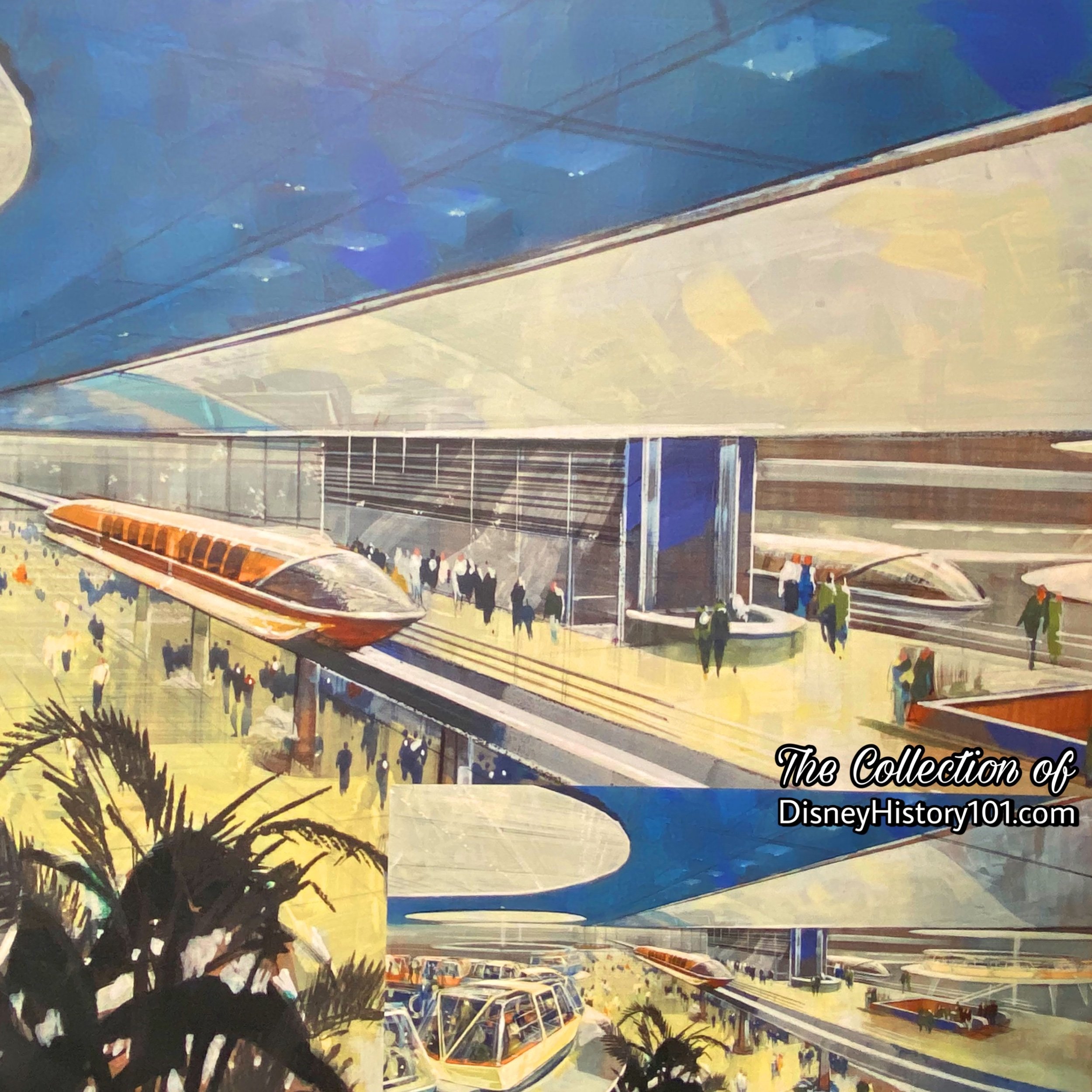
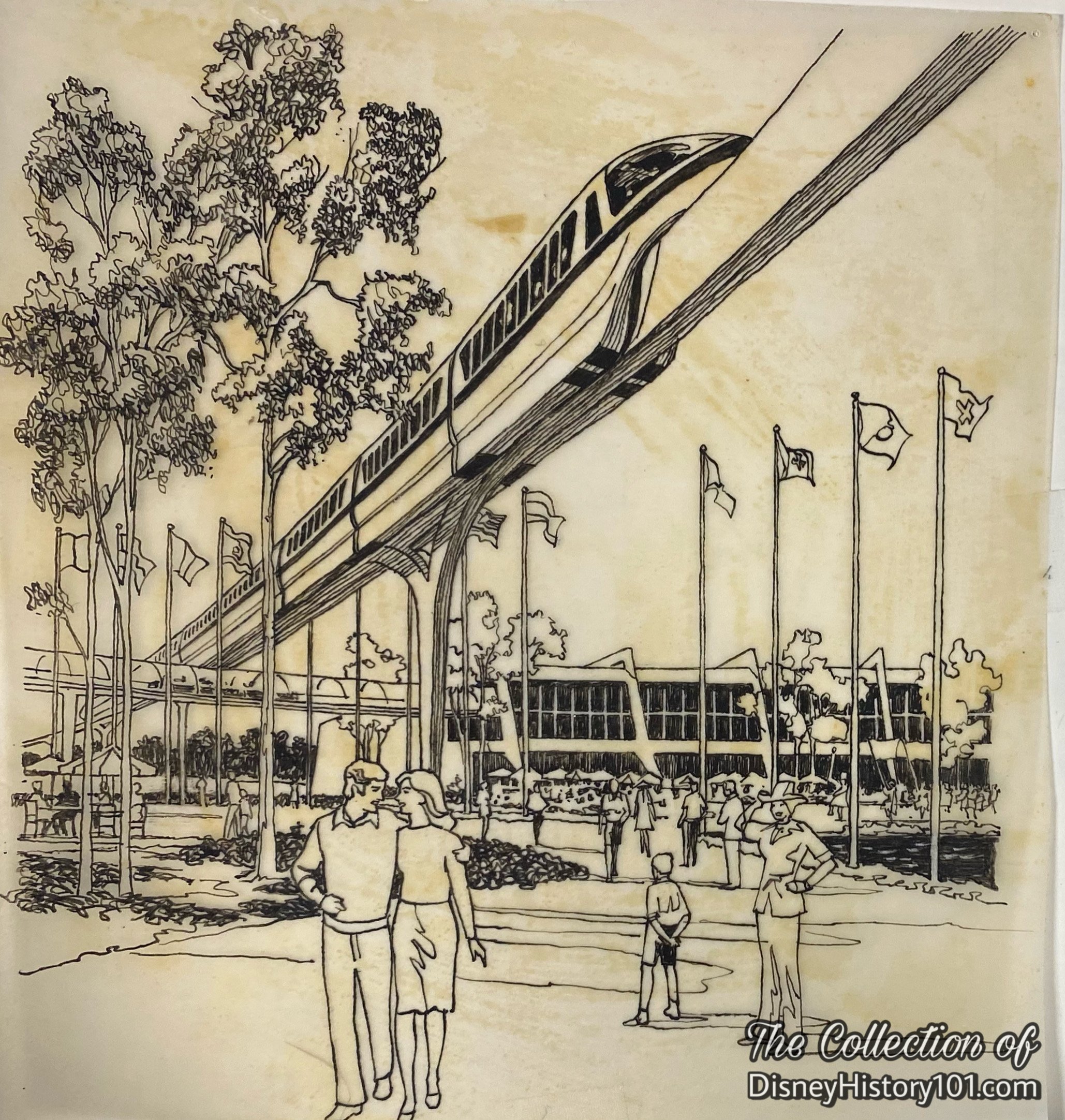
The aforementioned four Monorail Mark IVs began operation in 1971, ultimately growing to ten in number. Each 18,000 lb. train had a passenger capacity of 240 (at an average weight of 170 lbs. per guest; 5 guests per seat), meaning that the loaded train would weigh about 24,000 lbs. These were medium-speed trains (operating at an average of 35 mph-65 mph) for multi-stop service and are what could be described as “Disney 4/5ths scale.”
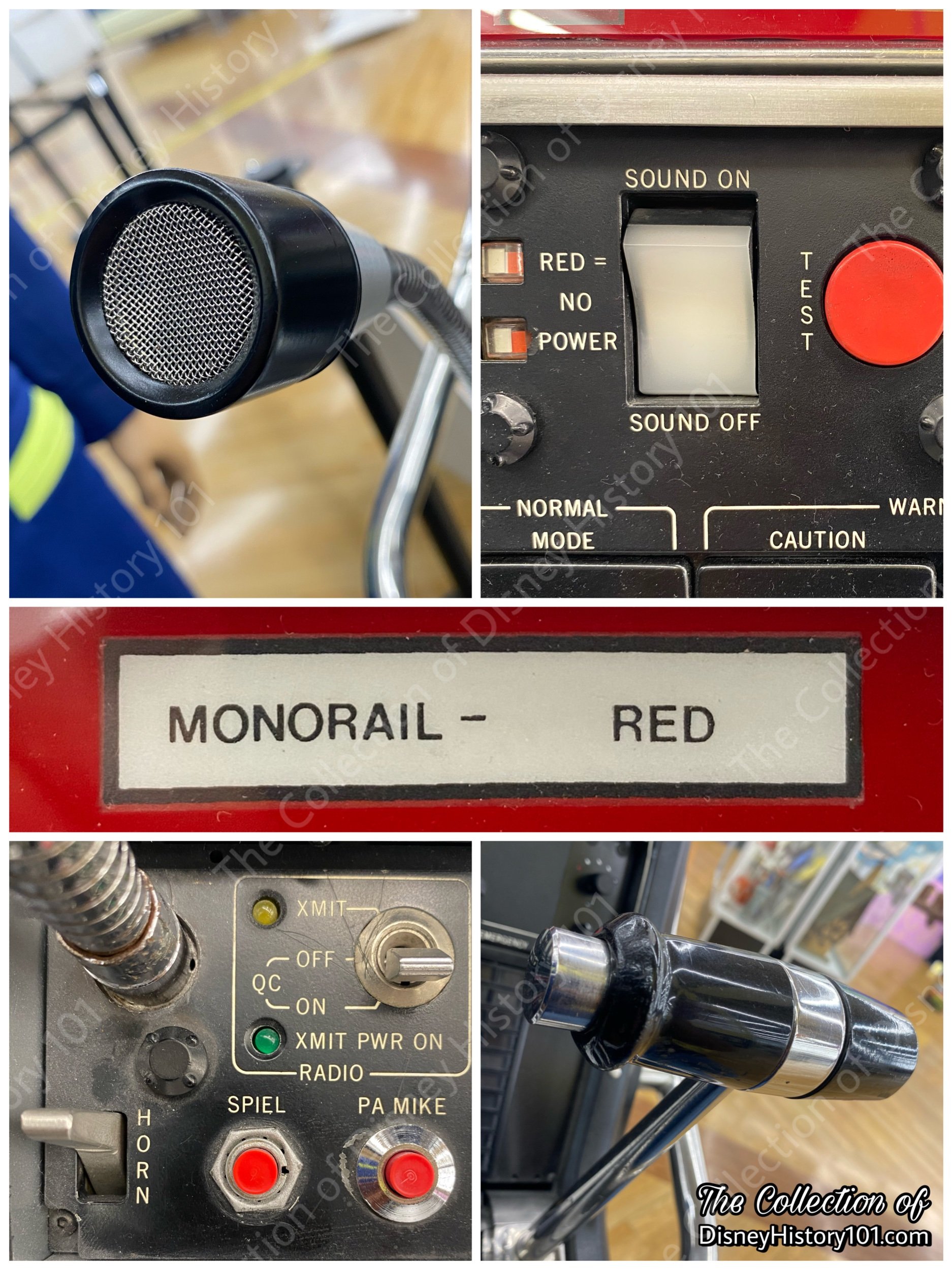

The first four Monorail designs had the same creator - Bob Gurr (of Walt Disney Imagineering). But soon (by April of 1987), five brand new five-car and two-cabin Monorail Vs had been initially designed by George McGinnis (also of Walt Disney Imagineering Creative Development). George would also go on to design the Mark VI Disney Monorails.
As vital as each wheel of a Monorail bogie were the individual people that contributed to the Monorail Mark V. As it was once said, there were no “spare tires.” Many others of the WED Enterprises Staff were involved, like Randy Prinz (Project Manager) who would oversee the development of the Monorail Vs, Bobn Develle (VP Engineering), Bud Stacy (Director of Engineering), Gene Leasure (Project Engineer), and Jerry Chavalis (Manager; Quality Control). Between 1983 and 1985 Mark Rhodes prepared the project scope, Dave Yanchar prepared the project schedule, Operational Standard Capacities were estimated by Dan Nishikawa, and Disneyland Monorail Design Data was prepared by George Windrum. These team members would prove true what Walt had once said: “I use the whole plant for ideas.”
There were also many exterior “moving parts” involved in the Monorail V project, and so Randy Prinz (WED Enterprises, Inc. Project Manager) would often serve as the mediator between WED Imagineering, and Horst Stoeckermann of Messerschmitt-Bolkow-Blohm GmbH (a transportation technology company, then based out of 8000 Munich 50 Munich, West Germany), and Ride & Show Engineering, Inc. (San Dimas-based subcontractors of MBB). Parts (body, chassis, and other components) were designed by MBB (drawn by Hammel, Geistmeier, and others) and these were then constructed by Ride & Show Engineering, Inc. Walt Disney Imagineering submitted a great deal of reminders (of agreements and understandings) and requirements regarding actions - from welder qualifications to parts and configuration recommendations. Disneyland Participant General Electric also submitted some electrical diagrams (early in the research and development phase) while Disneyland Participant Goodyear (of Luxembourg) provided a supply of two tire models for the Monorail train axles.
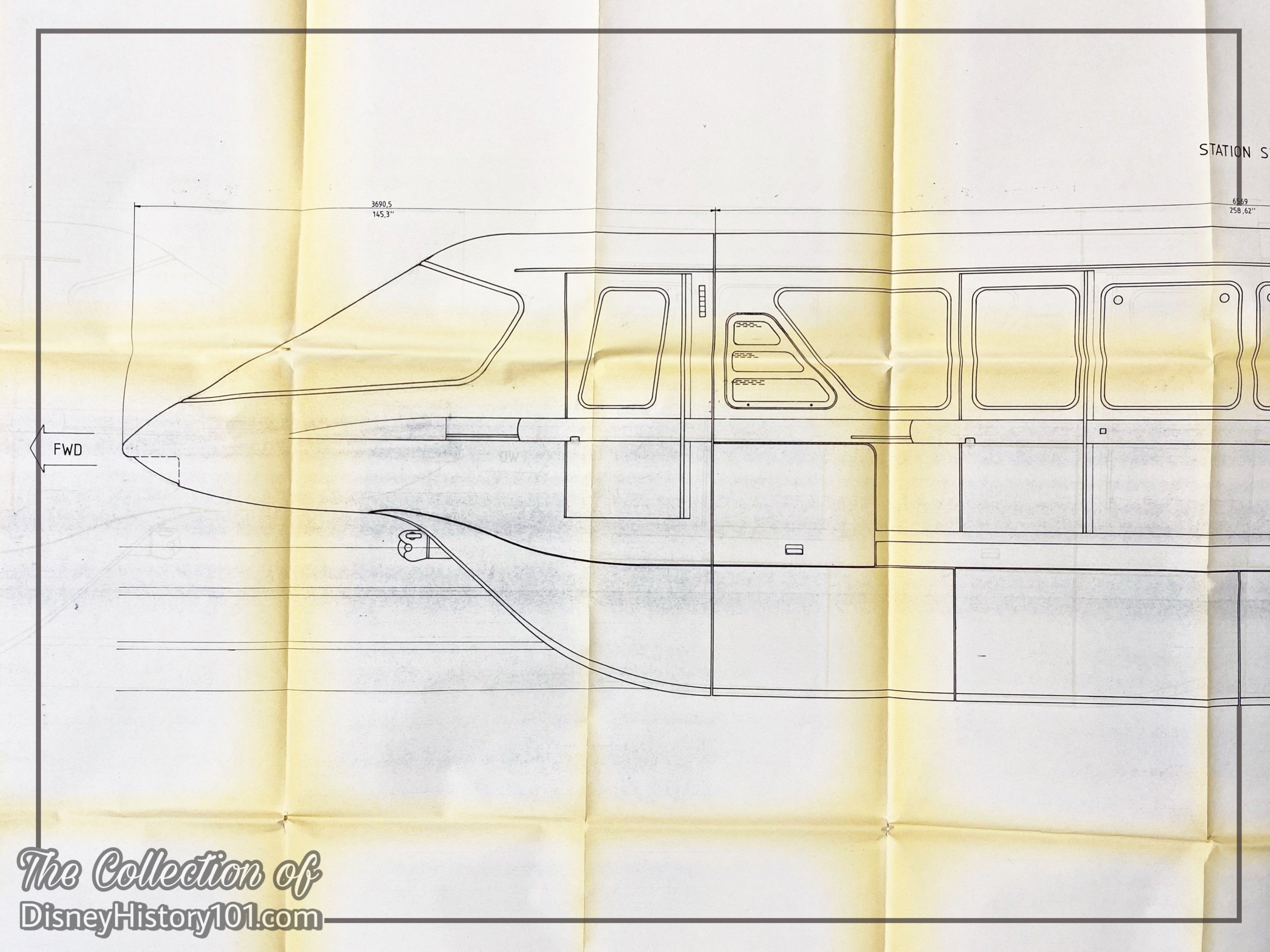
By 1985, Ride & Show Engineering representatives, MBB representatives, and Walt Disney Imagineers had met for discussions in addition to exchanging communications. Divisional Planners, and Project and Divisional Management Representatives had contributed to the “Monorail Upgrade,” with show model mock-ups and sketches produced, as well as much hard copy documentation.
July 30, 1985: Monthly reports (from MBB to WED Enterprises) on the chassis were common by this time.
August 7-9, 1985: WED Enterprises, Inc. held design reviews of Monorail train drawings created by Messerschmitt-Bolkow-Blohm (MBB).
August 12, 1985: Next, WED asked MBB to add an escape roof hatch, non-skid surfaces, and hand railings on the roof of each of the five coaches and tail section of car five. This delayed the project another three months and increased the cost by $350,000. But things were still progressing and after all the additional work - new drawings, parts produced, and structural tests of the roof performed by 22 people.
August 13, 1985: Disney directed MBB to move forward with a proposed design and implement for an escape hatch, non-skid surfaces, and handrails for the roofs of coaches 1-5 and the nose section of car 1 belonging to the Monorail MK5. The cost and production schedule were subsequently negotiated by Disney (mentioned in a letter dated August 14, 1985).
August 14, 1985: WED Enterprises, Inc. prepares comments on the design reviews of MBB’s research and development and forwards them to MBB. A great deal of commentary was made about components, as seen in the following excerpts.
The recessed Train Identification Light (a strobe light) was to be located at the junction of the nose section and adjoining coach section of Car 1 and Car 5. The headlights and taillights were to be selected by George McGinnis and added per his instructions to Herman Boehm. Disney would supply the radio system antenna, while MBB would supply the RGU58 cable that would connect the radio to the antenna. The wide-angled rearview mirror was to measure 6 inches vertically by 4 inches. Door control buttons in the nose section would run vertically and Car 3 would hold a single button and indicator light that would open all doors. MBB was to provide material safety data sheets on their selected silicone adhesive. It was agreed that a “double jam nut and safety wire” would be used on the nose frame and turnbuckle. It was agreed upon to use an alloy floor plate, though fire protection would be required.
The electrical supply to the radio equipment would be 12 volt. The air conditioning system would be circulated through the nose and tail sections.
September 18, 1985: WED Enterprises, Inc. suggested another type of seat material be used after a fire test was performed on MBB’s proposed seat material and an official test report was complied and reviewed.
The subsequent research, development, and production processes were eventful. Production slightly ran behind schedule due to a difference in opinion (between MBB and Ride & Show Engineering) over the electrical design. Flammability tests (conducted by the United States Testing Company, Inc.) of a suggested naugahyde and foam seat cover consumed the material, with “flaming dripping observed during the evaluation.” After some drawings had been completed, meetings (between Disneyland Inc. and WED Enterprises, Inc.) led to the unanimous decision to add emergency exits that allowed guests to evacuate the coaches without an operator.
October 16, 1985: Three aspects of the MK5 project were presented before Mr. Horst Stockermann.
Interior Material - An International Railway Association test procedure had been proposed by Messerschmitt-Bolkow-Blohm GmbH Transportation Technology, but WED Imagineering decided that it was not an acceptable standard for MK5 interior materials. WED still required that all interior materials successfully pass the tests established by FAR or ASTM for fire, smoke and toxicity. In addition to finding an acceptable seat material, WED still required test data on all other materials planned for the interior (in the form of tests reports from independent test laboratories or copies of manufacturers material data sheets documenting successful tests for fire, smoke and toxicity).
Roof Hatch Change Impact - Disney began evaluating this proposal. Joe McHugh of WED corresponded with Horst Stockermann regarding this issue very soon.
Electrical Design - WED was becoming concerned with the status of the electrical design on the MK5. It appeared that MBB and its subcontractors (Ride & Show and Design Works) could not agree upon a program for the electrical work to be done. Additionally, our MK4 experience shows that electrical work was the critical path in the assembly process. Joe McHugh kept MBB informed of steps on Disney's part to eliminate any impact to the chassis re-work schedule. Electrical work was critical to maintaining the construction schedule with the forthcoming 100% Design Review in December. MBB prepared an electrical plan - a consensus of Horst Stockermann and his subcontractors. A plan was reviewed with Disney as soon as possible by reviewing drawings and correspondence and meeting with Horst Stockermann and his representatives.
The electrically-driven trains were not completely brand new - the chassis of the Mark IIIs were upgraded and utilized for the Mark Vs. These Mark Vs (sans bubble cabs) were given all-fiberglas bodies (as opposed to the previous metallic bodies of the Monorail Mark Is - IIIs) and energy efficient units. An onboard computer system would “keep daily maintenance records and operate control functions,” according to “The Disney Monorail System” by ASME. As for aesthetics, the trains would be produced in red, blue, orange, and (for the first time at Disneyland) purple! The new fleet of four Monorail Mark V trains debuted, at the same time that the Disneyland-ALWEG Monorail was renamed the Disneyland Monorail! The all-new trains had a theoretical hourly capacity of 2,145 guests and an operational standard of 1,939.
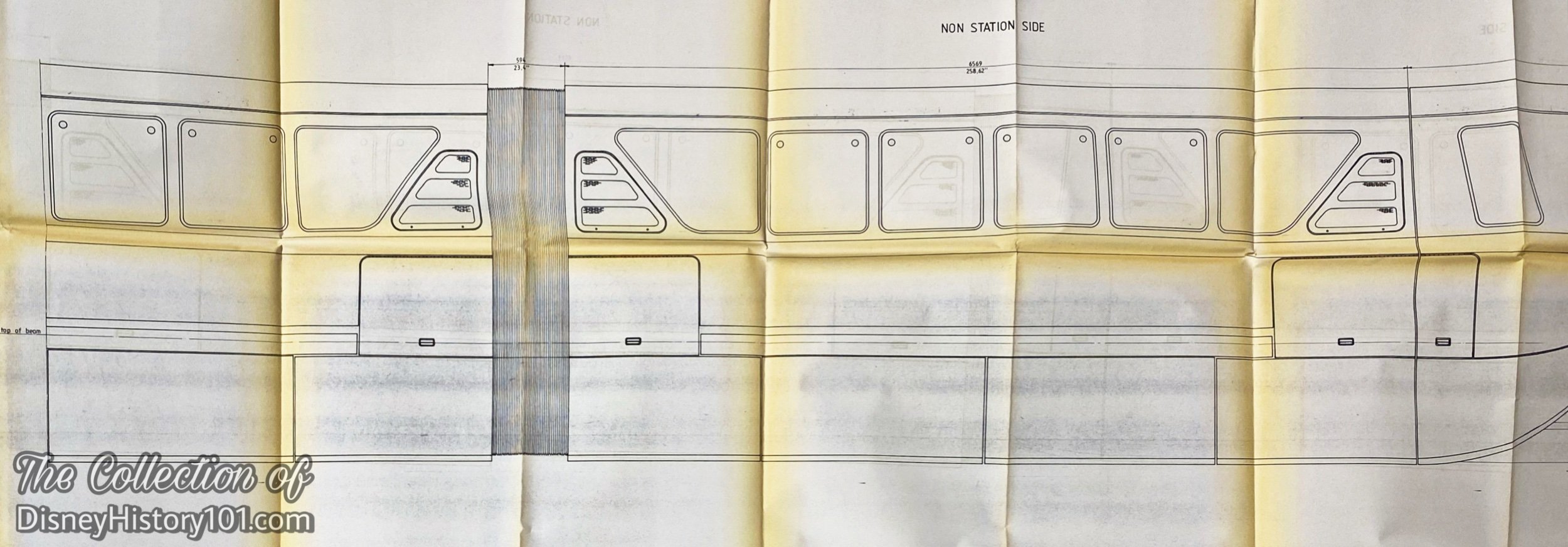
According to a Maintenance Manual produced in 1988, the MK V Monorail train was an aerodynamic designed structure. It was 139.77ft (1677.25 inches) long with a total unladen weight of 74.900 lbs. It is designed to carry 132 passengers. The train had: a front cabin (drivers), passenger cars, a rear cabin, and bellows.
There were four trains - Train 1 (purple), Train 2 (orange), Train 3 (blue), and Train 4 (red).
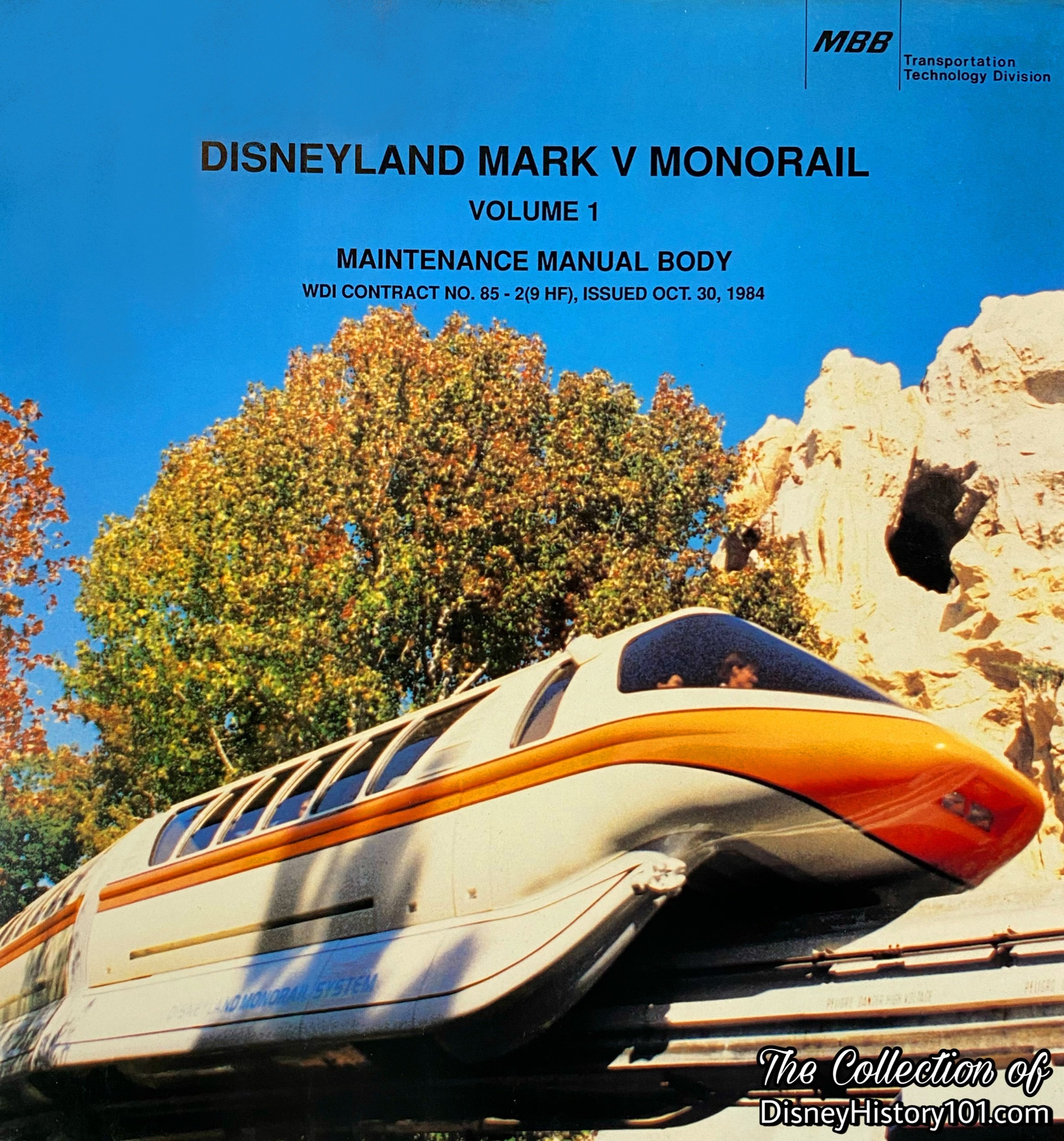
The trains were subsequently refurbished by the VSL Corporation (in the United States) as late as the mid-1990’s (c.1994-1995). During the 1990s, Disneyland Monorail System passengers were officially welcomed (by the voice of Marc Denis, formerly of KEZY) : “Ladies and gentlemen, this is your captain and I’d like to welcome you aboard The Disneyland Monorail. For your safety during our travels, please keep your hands and arms inside the cabin and remain seated at all times. And, no smoking please. Thank you…KC7032 , Clear!”
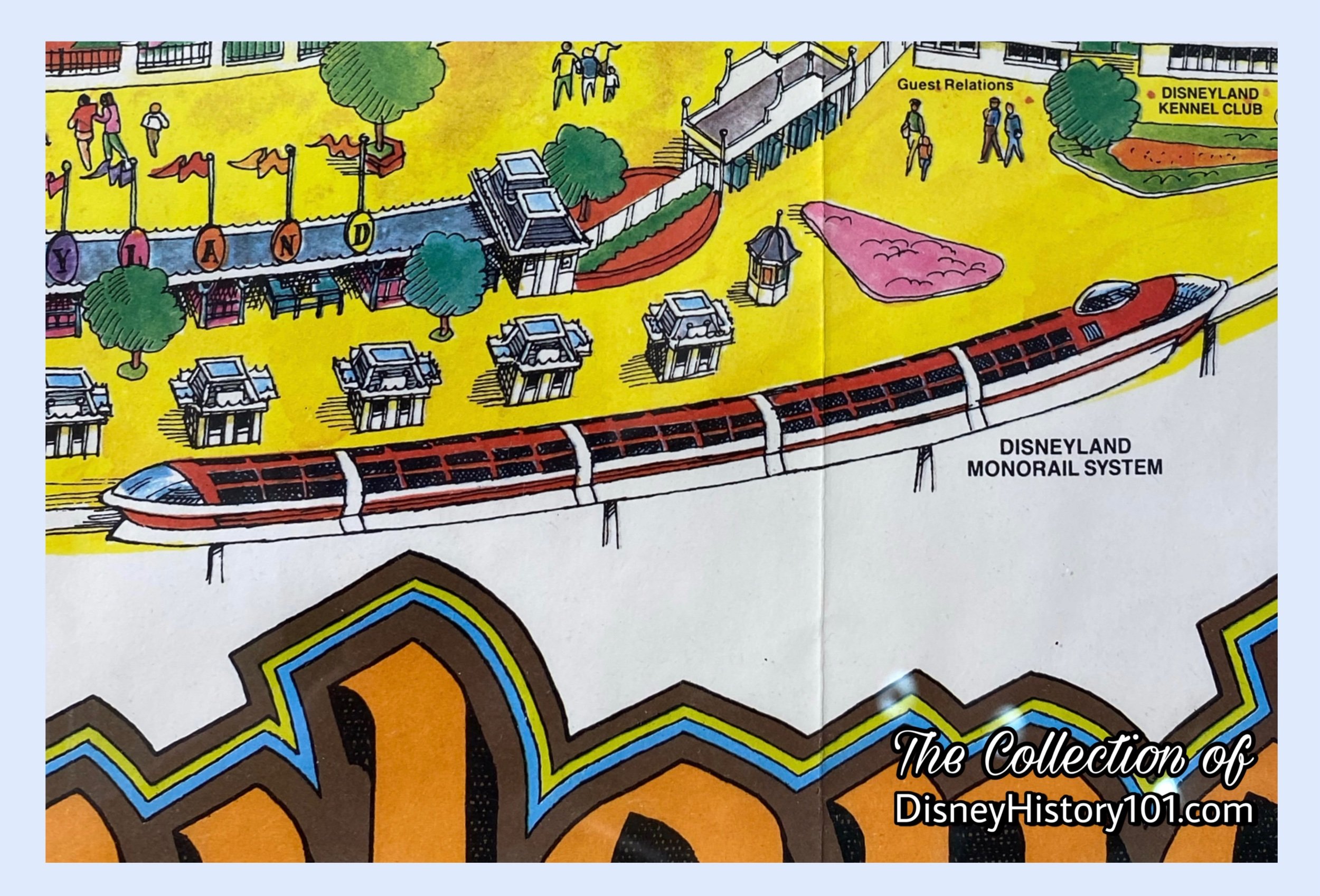
By 1998, daily monorail service continued to offer one-way and round-trip service to Disneyland Resort Hotels.
The Monorail Mark V operated on the 12,300 feet rail until it closed on August 21, 2006 for the remodeling of the Submarine Voyage Thru Liquid Space attraction. By this time, a new Monorail was not just on the “creative menu,” but actually in production. Two years later, brand new red, orange, and blue Mark VII Monorail trains (without the bubble-topped cabs on top) were introduced as a replacement for the Mark Vs on July 3, 2008.
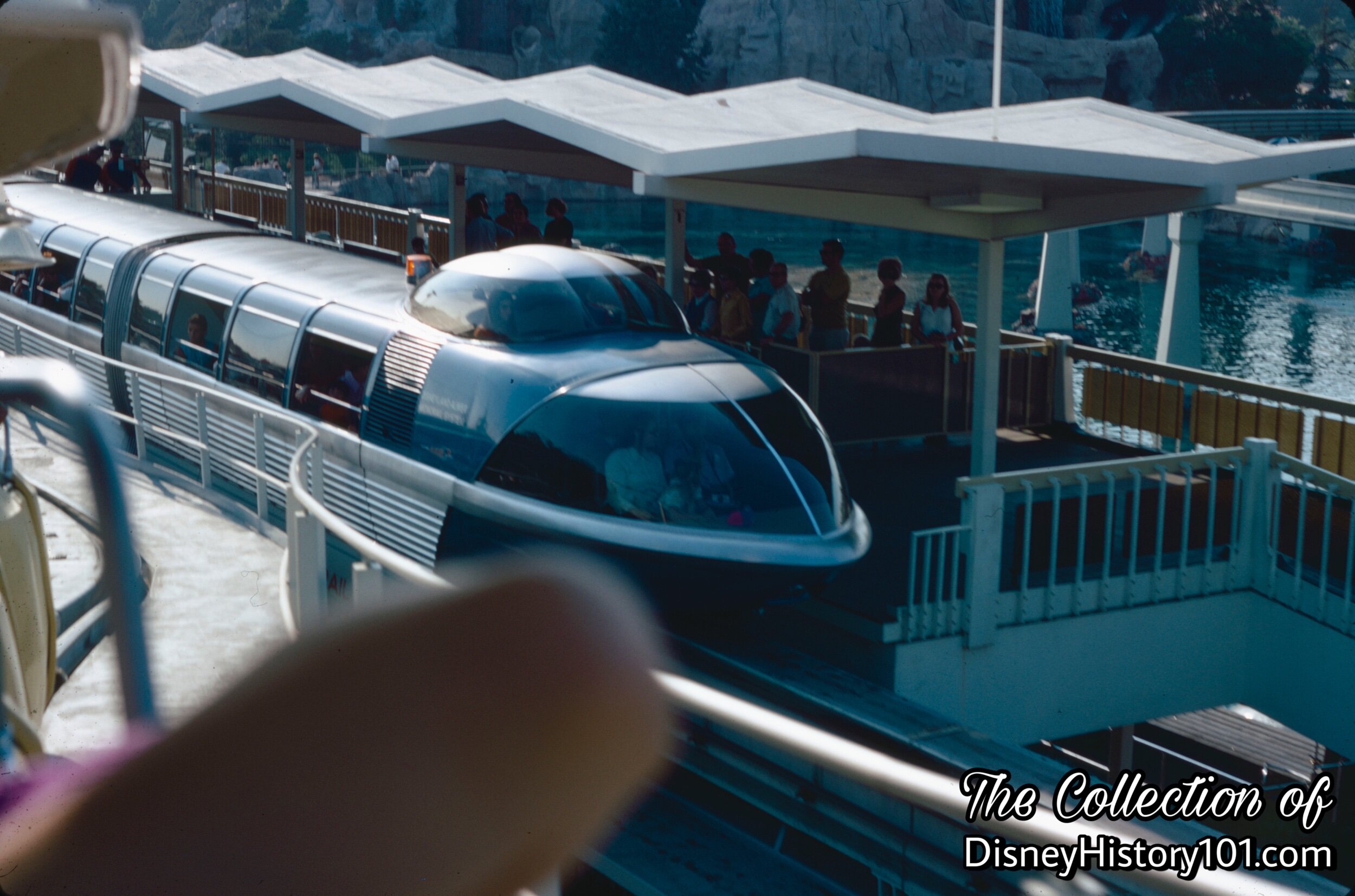
The nose cone of the Monorail train.
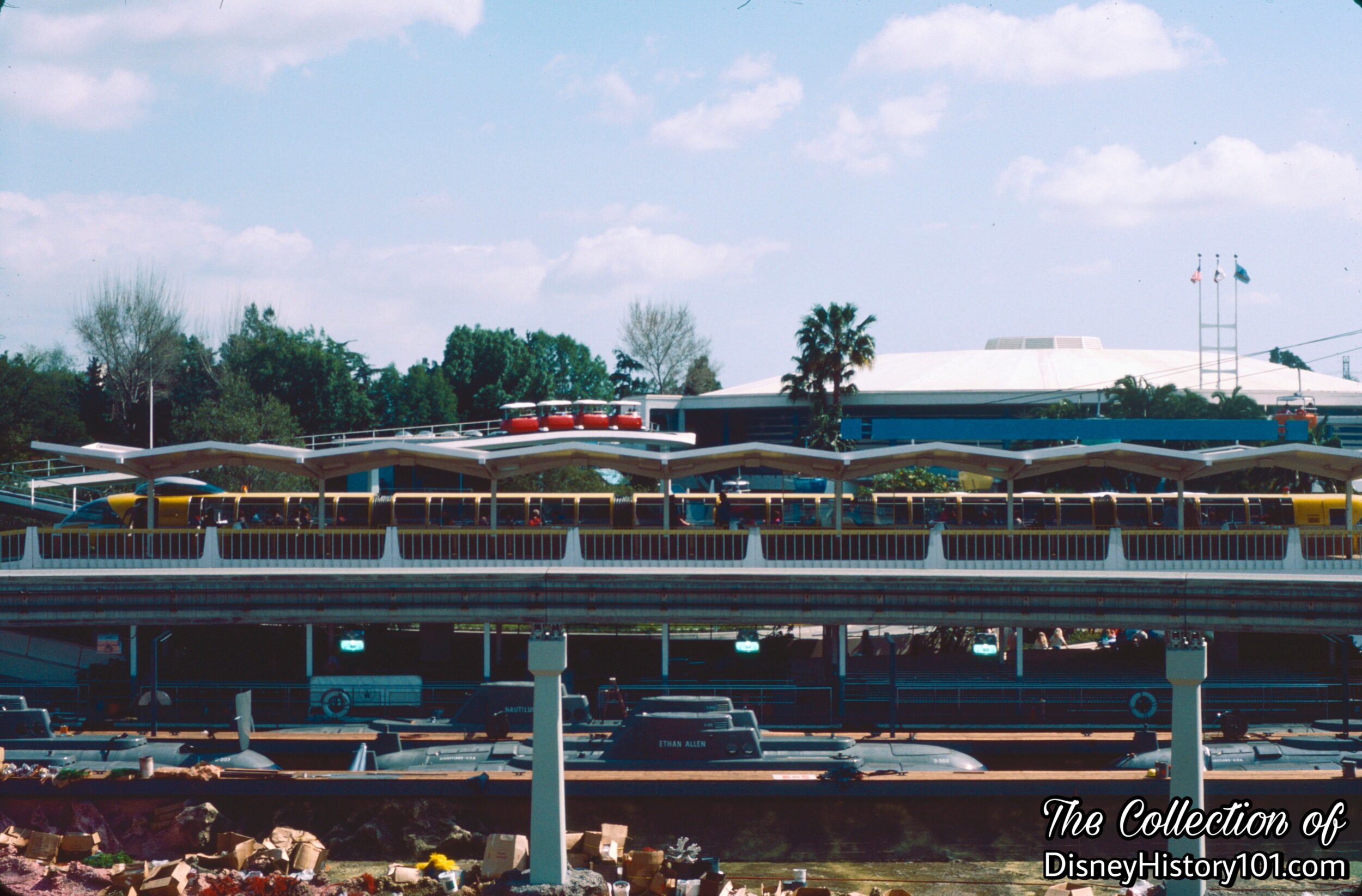
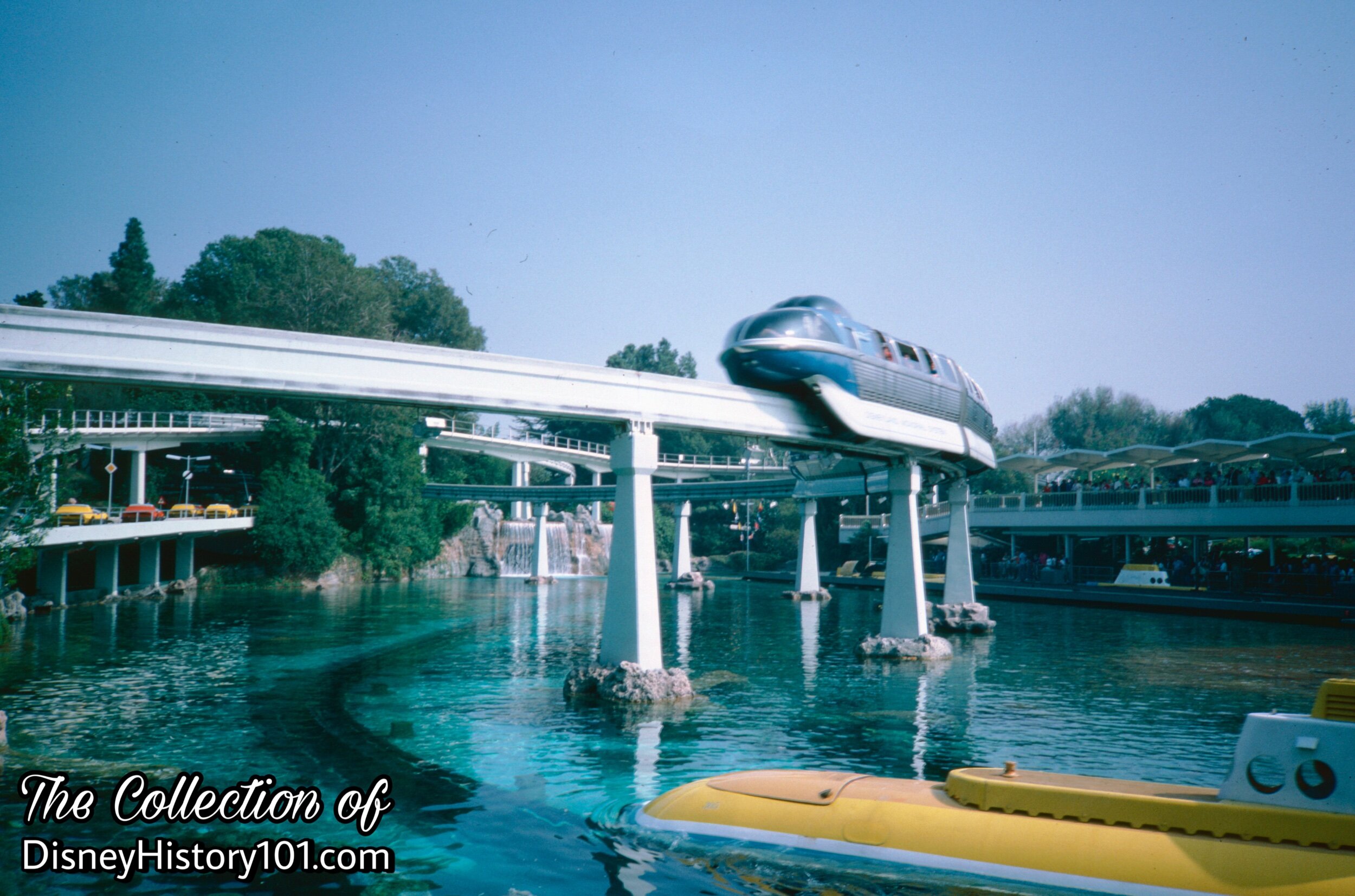
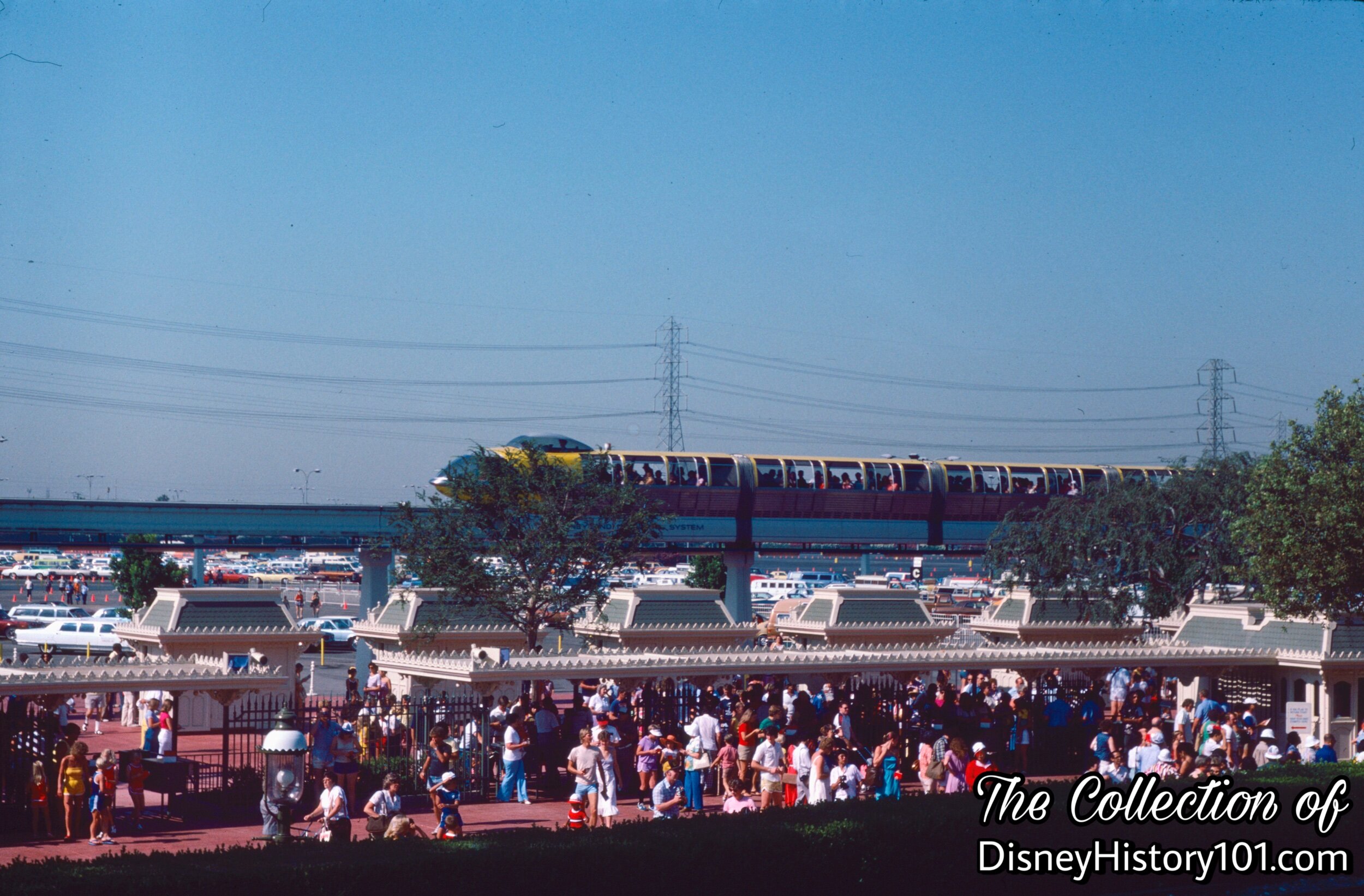
In an age and locale of “Mark Twain Pilot Certificates,” “Autopia Driver’s Licenses,” and “Moon Pilot certificates,” perhaps you had the distinguished honor of becoming a Disneyland Monorail System Co-Pilot.
“Monorail Mania” was sweeping the nation! Guests who just couldn’t get enough of its fast-paced fun, could purchase some of the licensed products featuring the Disneyland-ALWEG Monorail, like the four-player Parker Bothers Disneyland Monorail Game (featuring the original Mk-1 three car model on the cover art)!
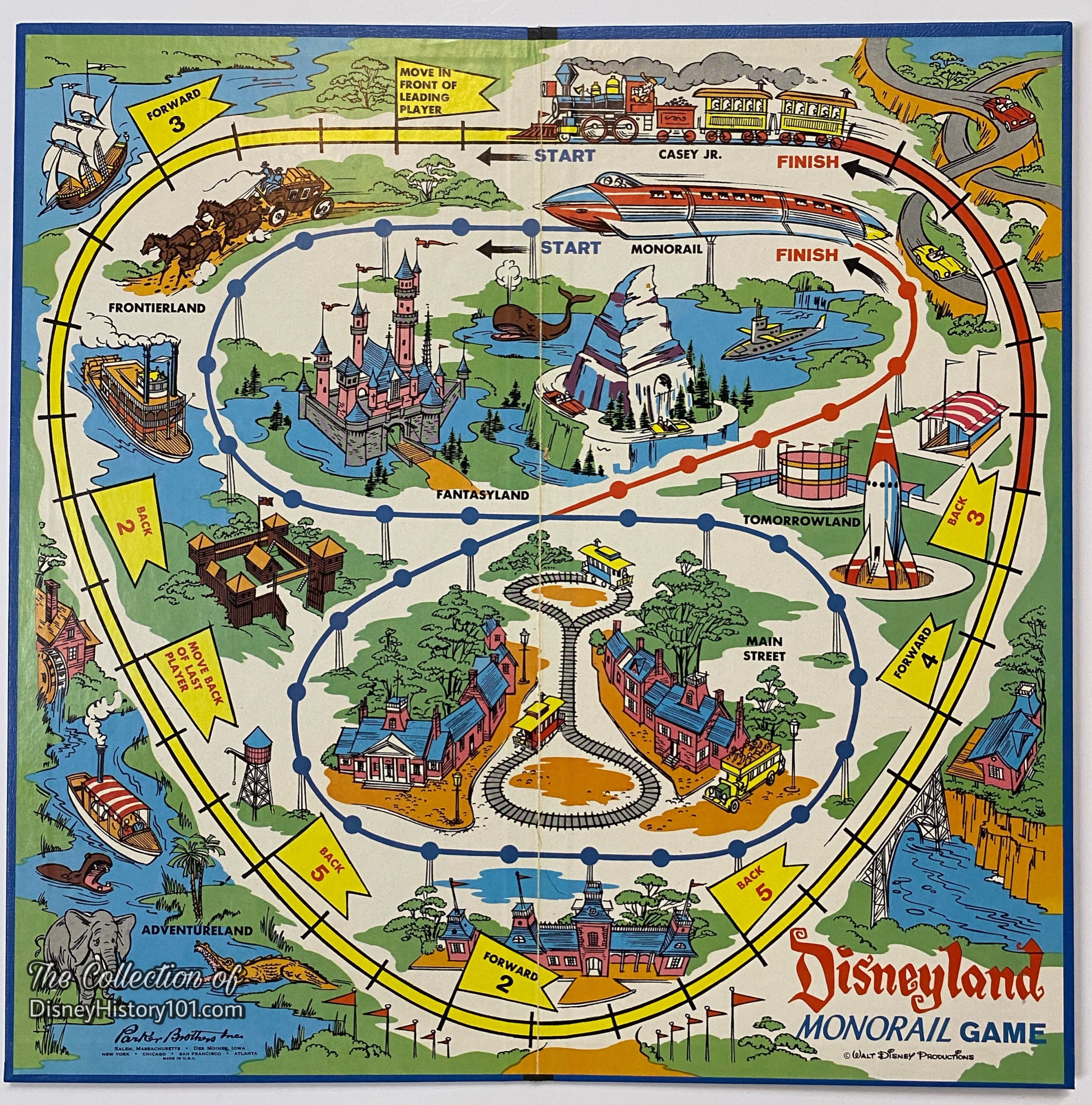
The Monorail route of the board game makes one wonder if it inspired the Monorail cameo on Main Street in “40 Pounds of Trouble” starring Tony Curtis.
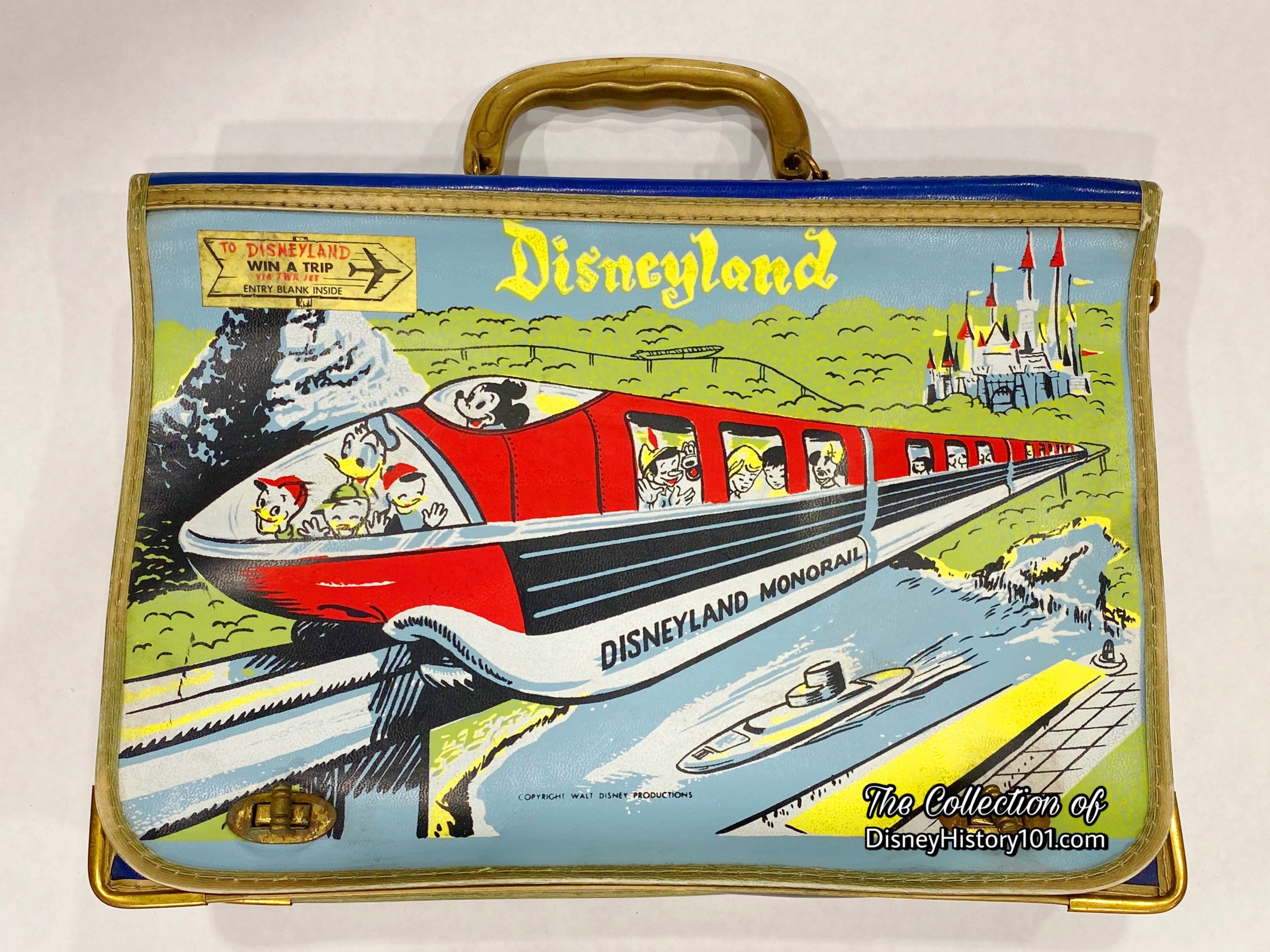

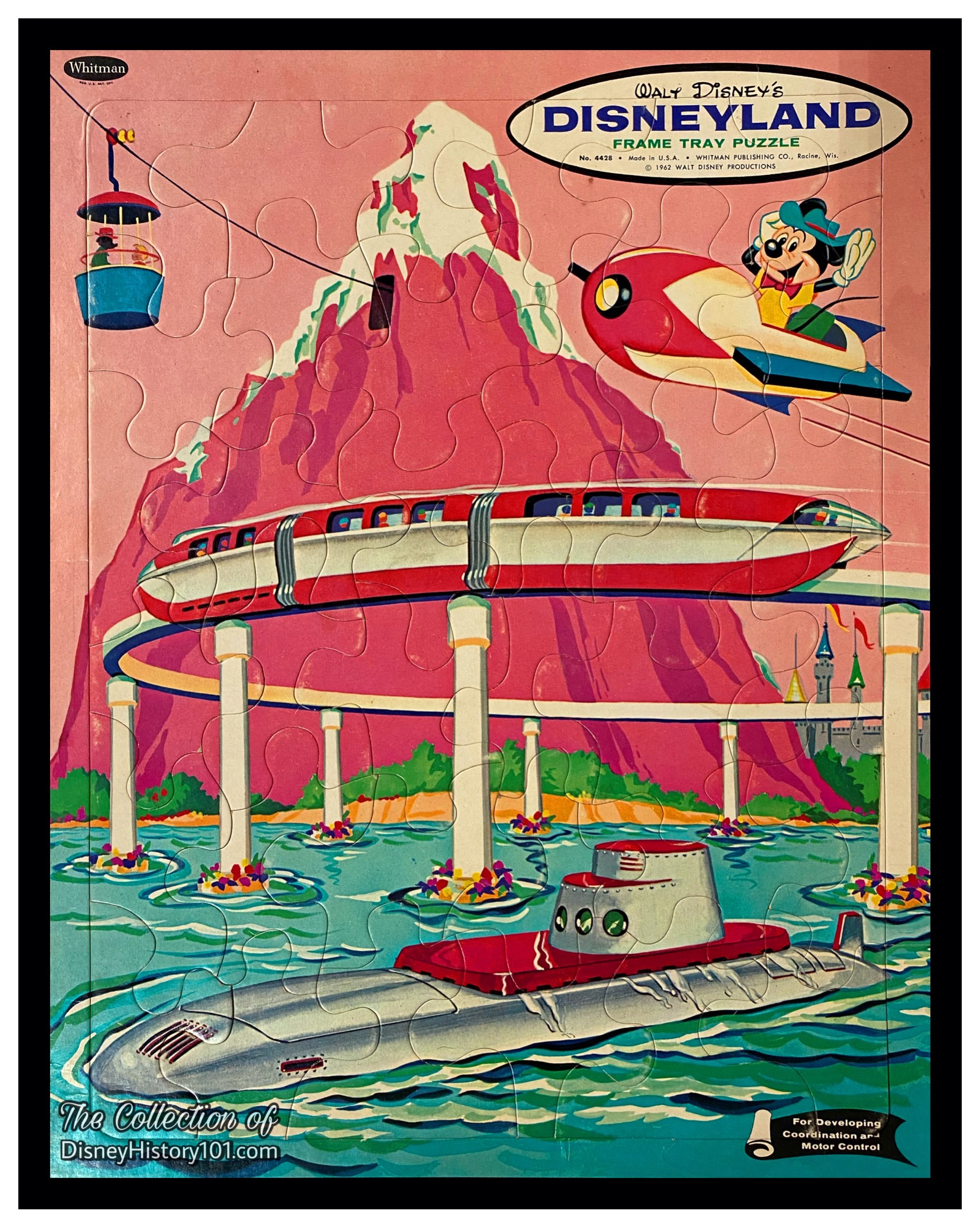

The Disneyland-Alweg Monorail attraction debuted on June 14, 1959, but it was not until 1961 (when the Monorail had a practical application of transportation between the Park and the Hotel) that these amazing souvenirs were first made available. Schuco (of Western Germany) manufactured two 1:90 scale Disneyland Alweg Monorail toys from approximately 1961 to 1968. During 1961, a Monorail Red and a Monorail Blue first appeared in Disneyland shops. Both high-quality sets originally sold for a whopping $39.95 in Disneyland More than eleven times the price of an admission ticket in 1961! Outside Disneyland, these trains were even available as far away as West Germany.
As the Disneyland-Alweg Monorail debuted and was updated, MK-I and MK-II, Schuco toy versions (that reflected these changes) were manufactured and sold.
Some of you may be fortunate enough to remember seeing (or purchasing) a Schuco Disneyland Alweg Monorail (carrying an approx. $30.00 - $40.00 price tag in the 1960s). Enjoy a blast from the past with a few photos of the three-car 6333/G set, and a four-car 6333/S set on display at a Disneyana convention. This rare sight comes courtesy of the most definitive Operator and Collector of Schuco Disneyland-Alweg Monorails Doug Burwell!
I would like to add that Doug runs the most extensive site dedicated to these little monorails, and it’s worth checking out HERE !
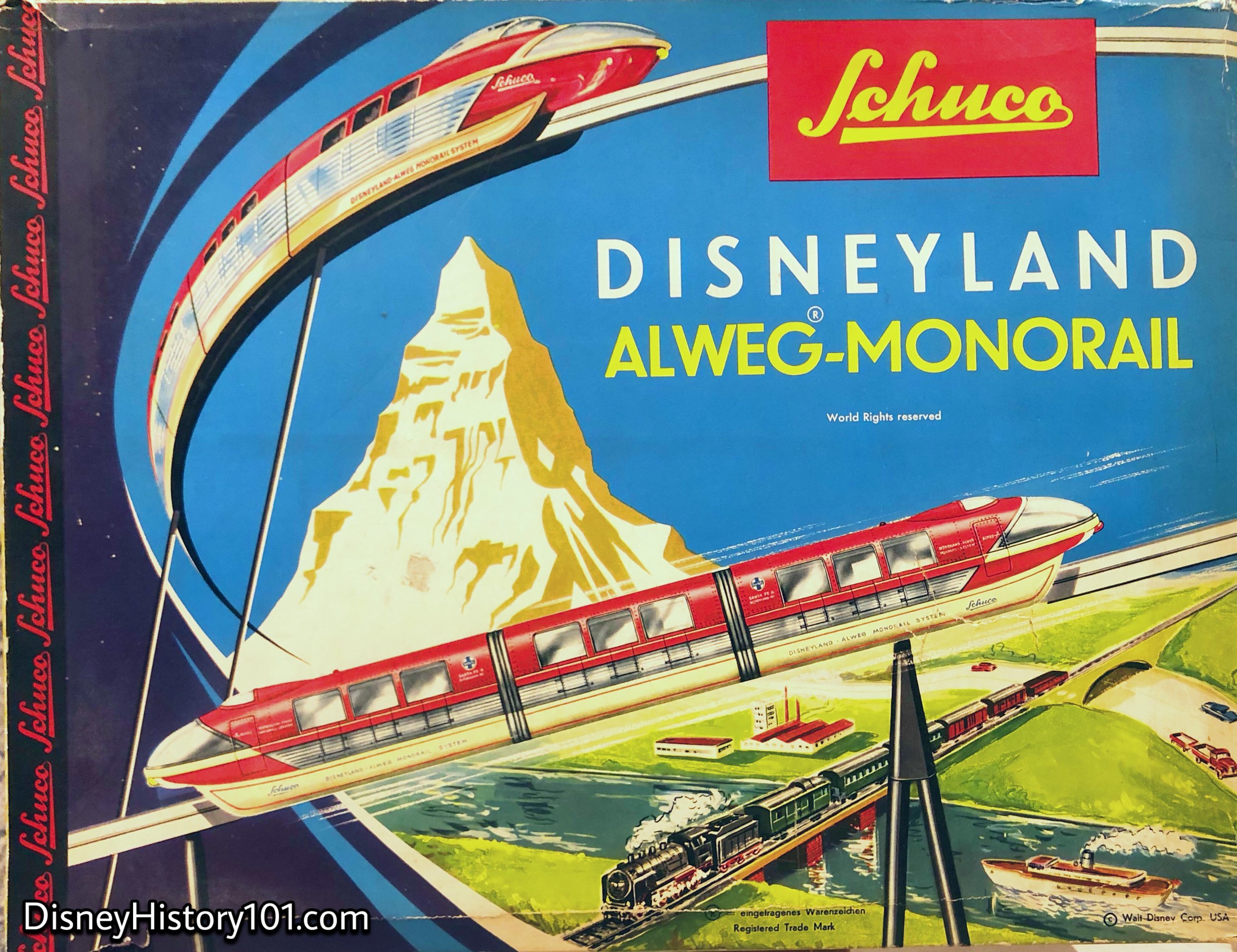
The original three-car Disneyland-Alweg-Monorail MK-1 graces the front of the Schuco-Disneyland-Alweg-Monorail box top!
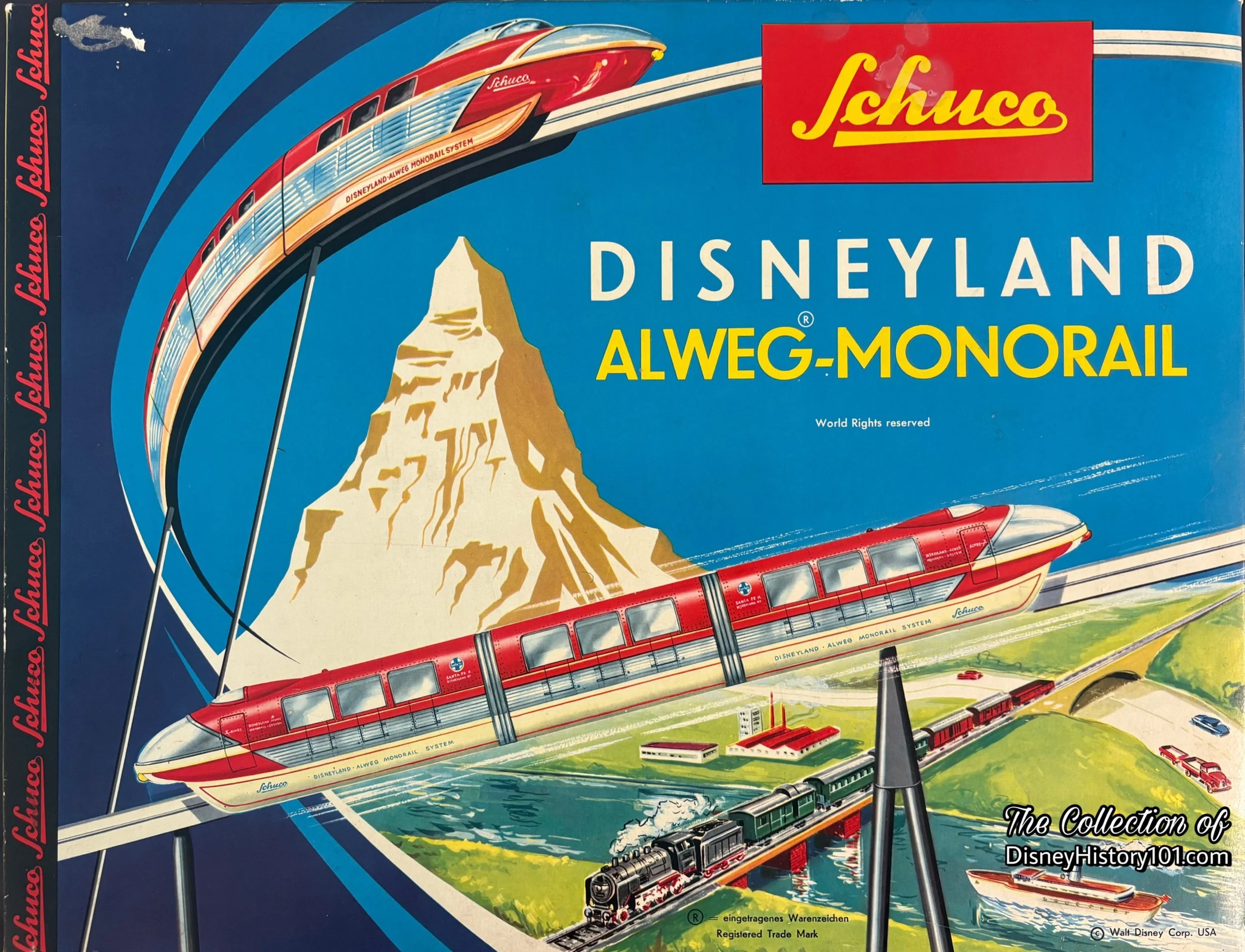
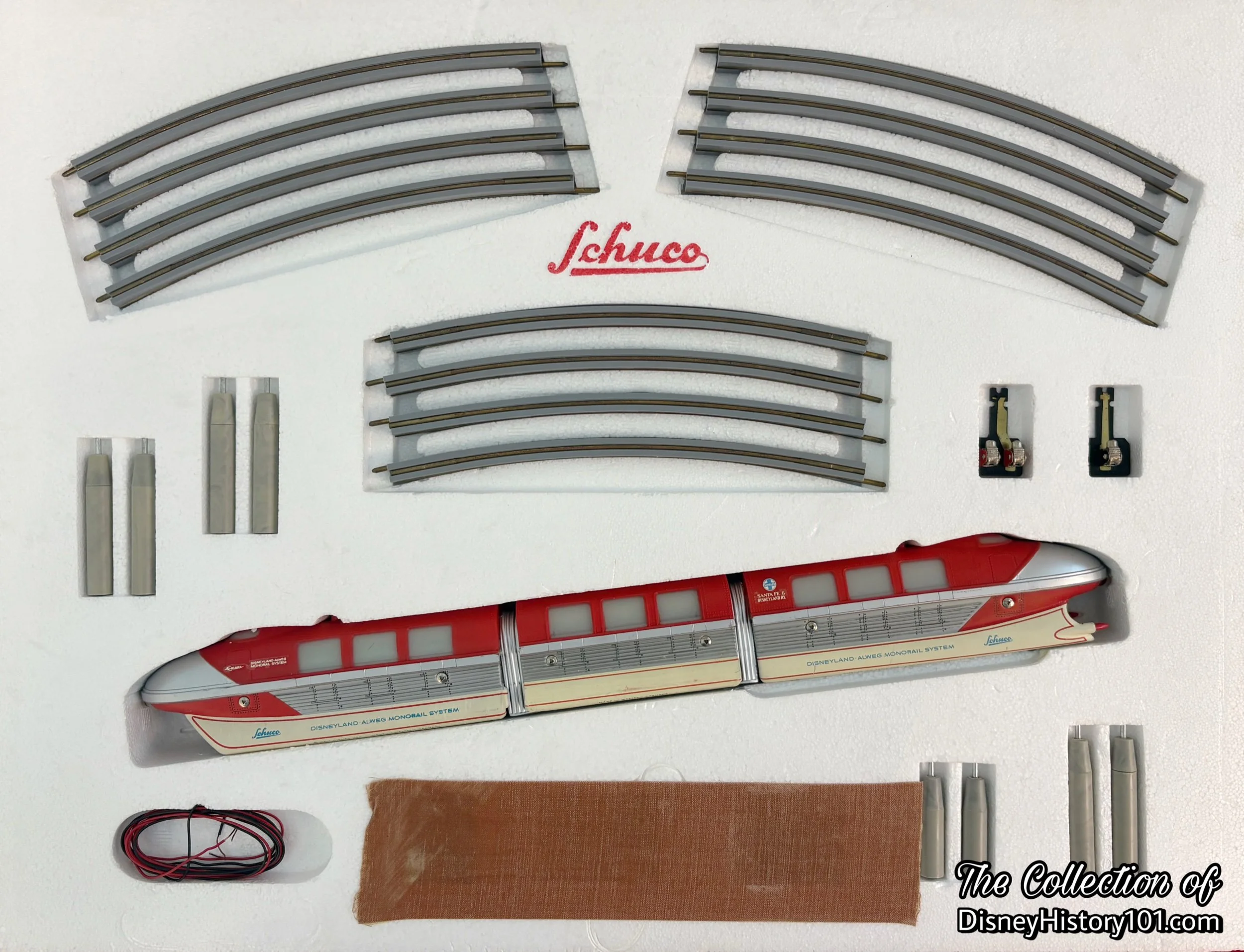
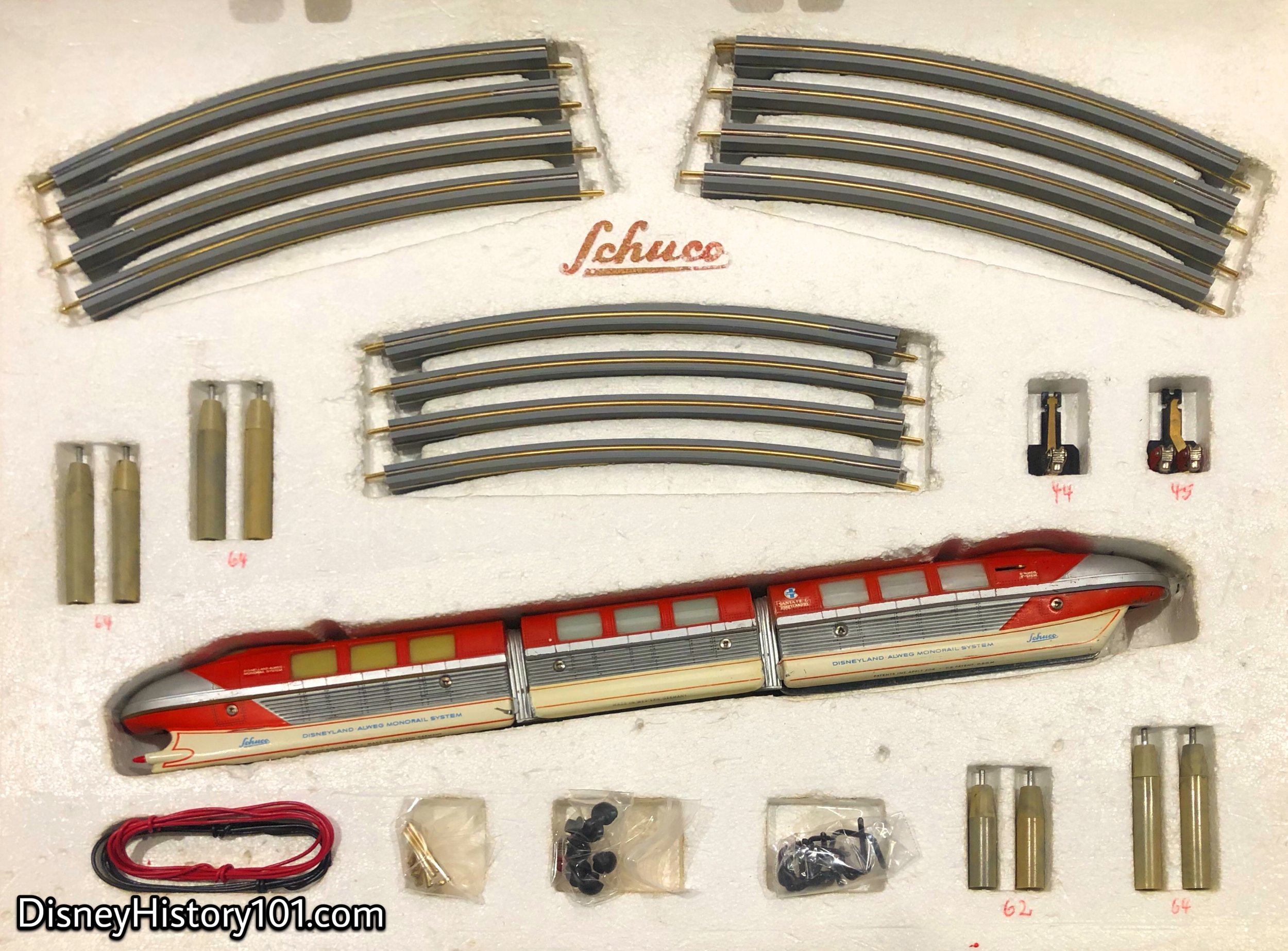
This set also came in blue (Model 63335).
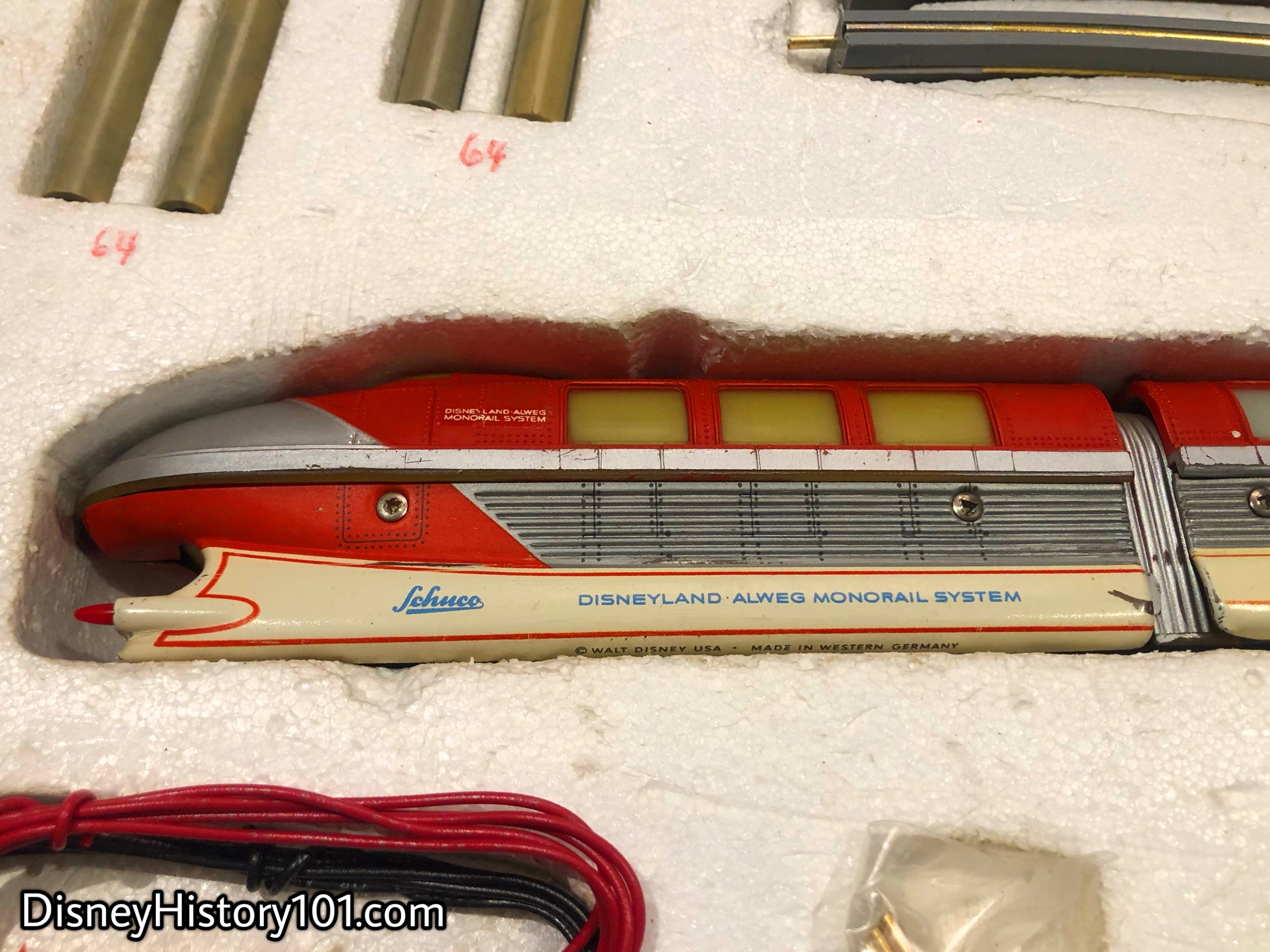
The rarer edition with tail lights.
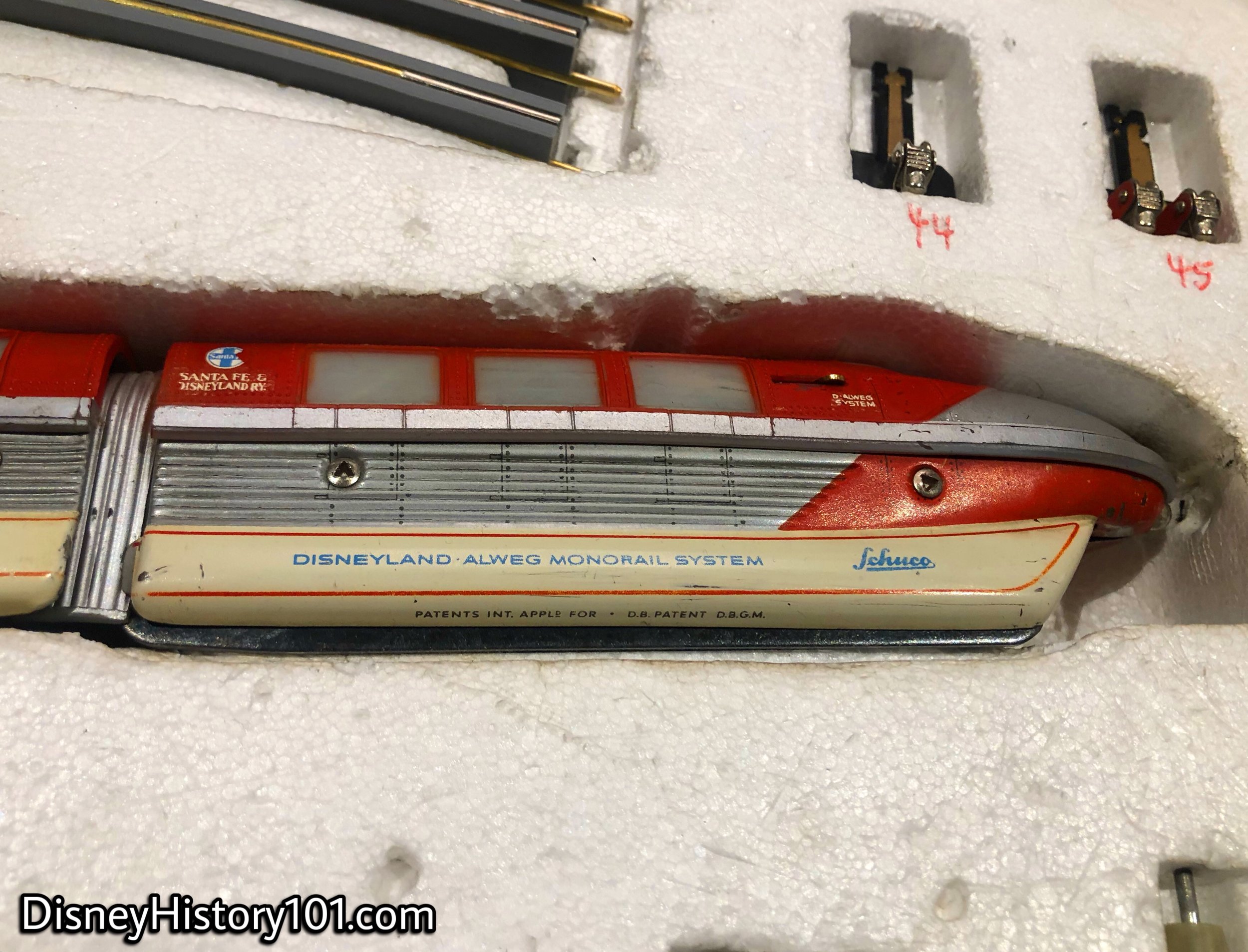
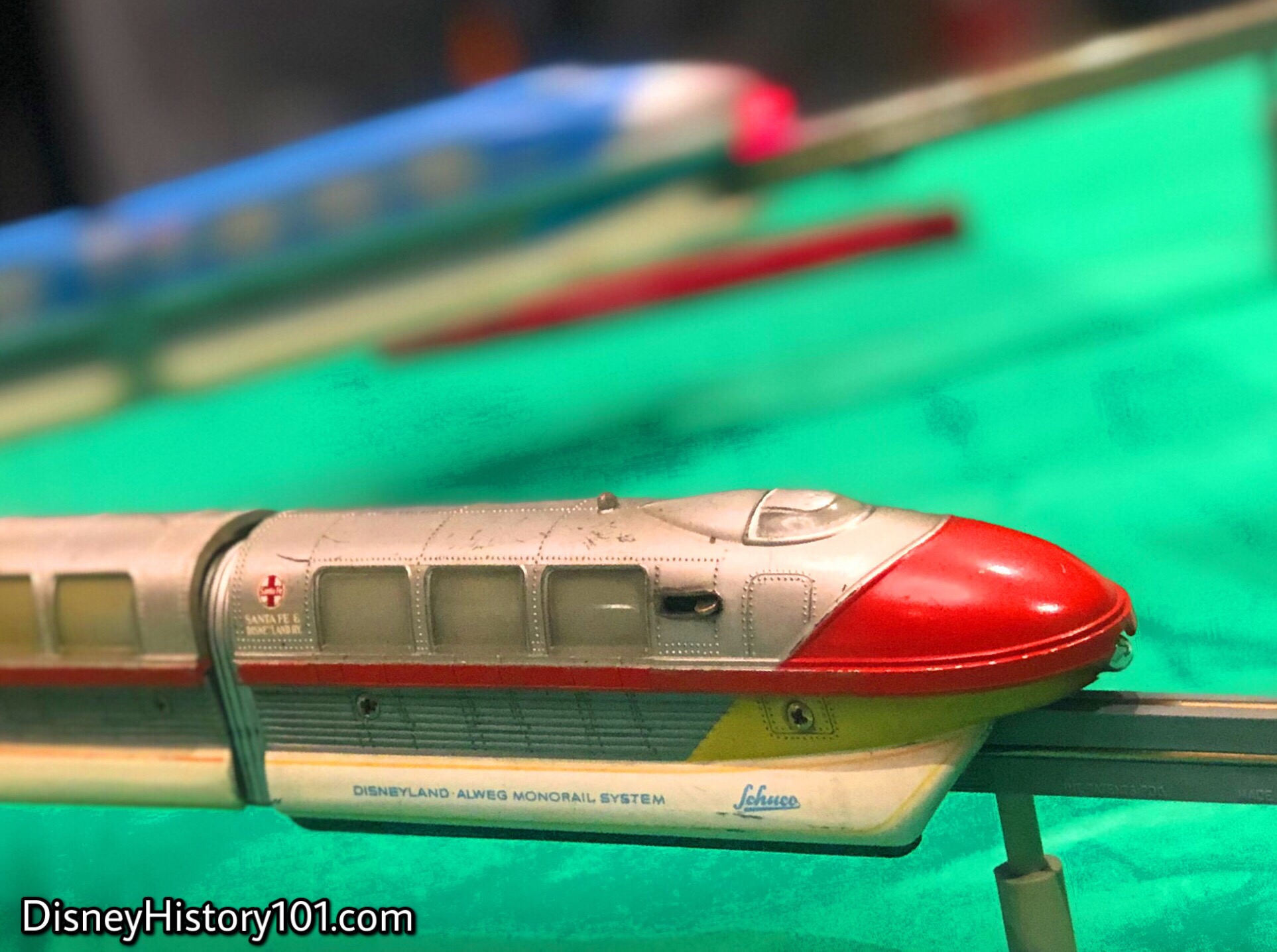
Schuco manufactured a red Monorail, blue Monorail, and a silver Monorail (though there was never one of that color that operated in Disneyland). It is believed that the color of this version was inspired by WED artwork that was utilized by Schuco to create a representation that was accurate as possible to the park attraction.
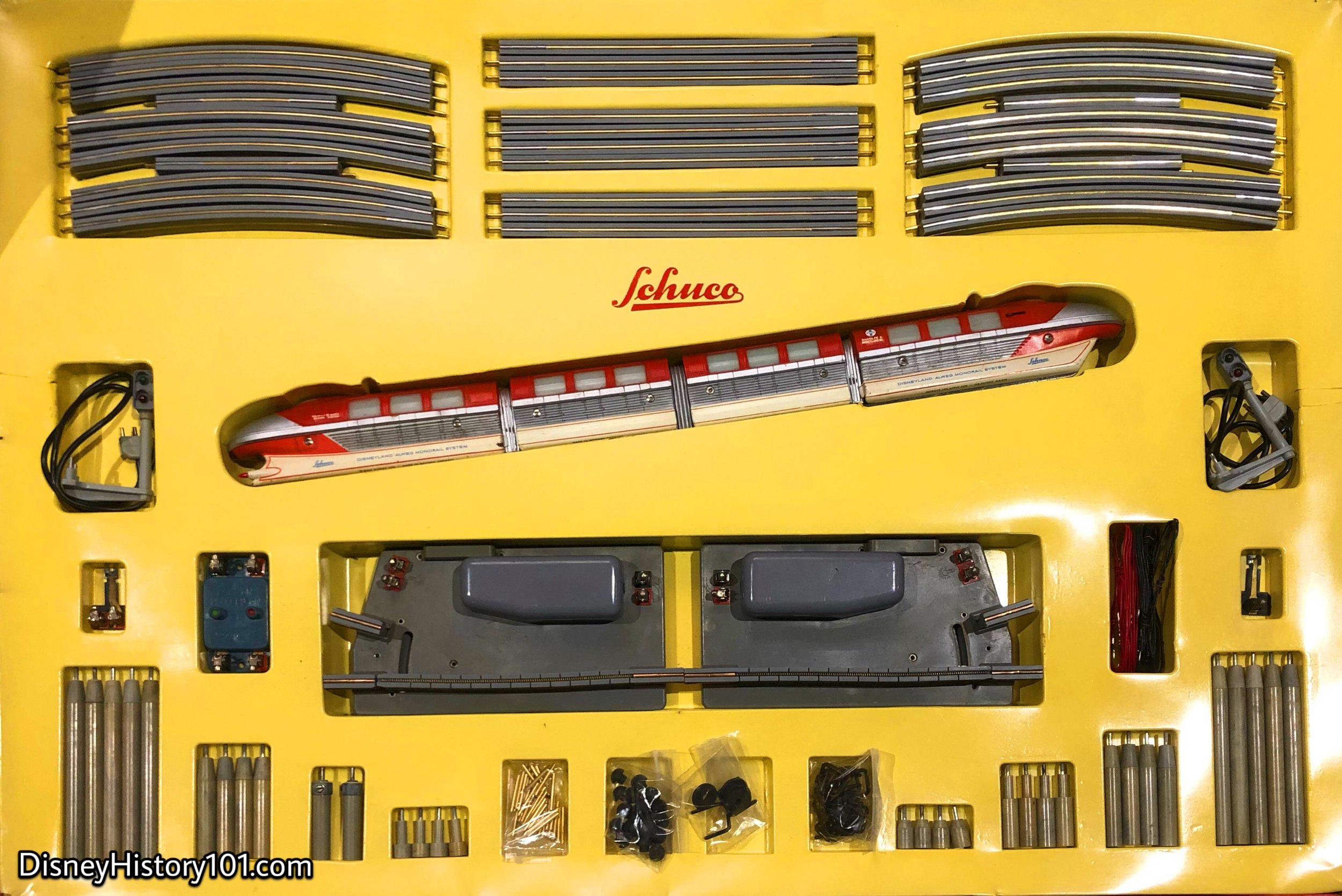
Later versions had extra features to match the changes made on the true-life Disneyland-Alweg Monorail. In addition to a fourth car, additional lengths of Beamway, Pylons, and Switches were now included!
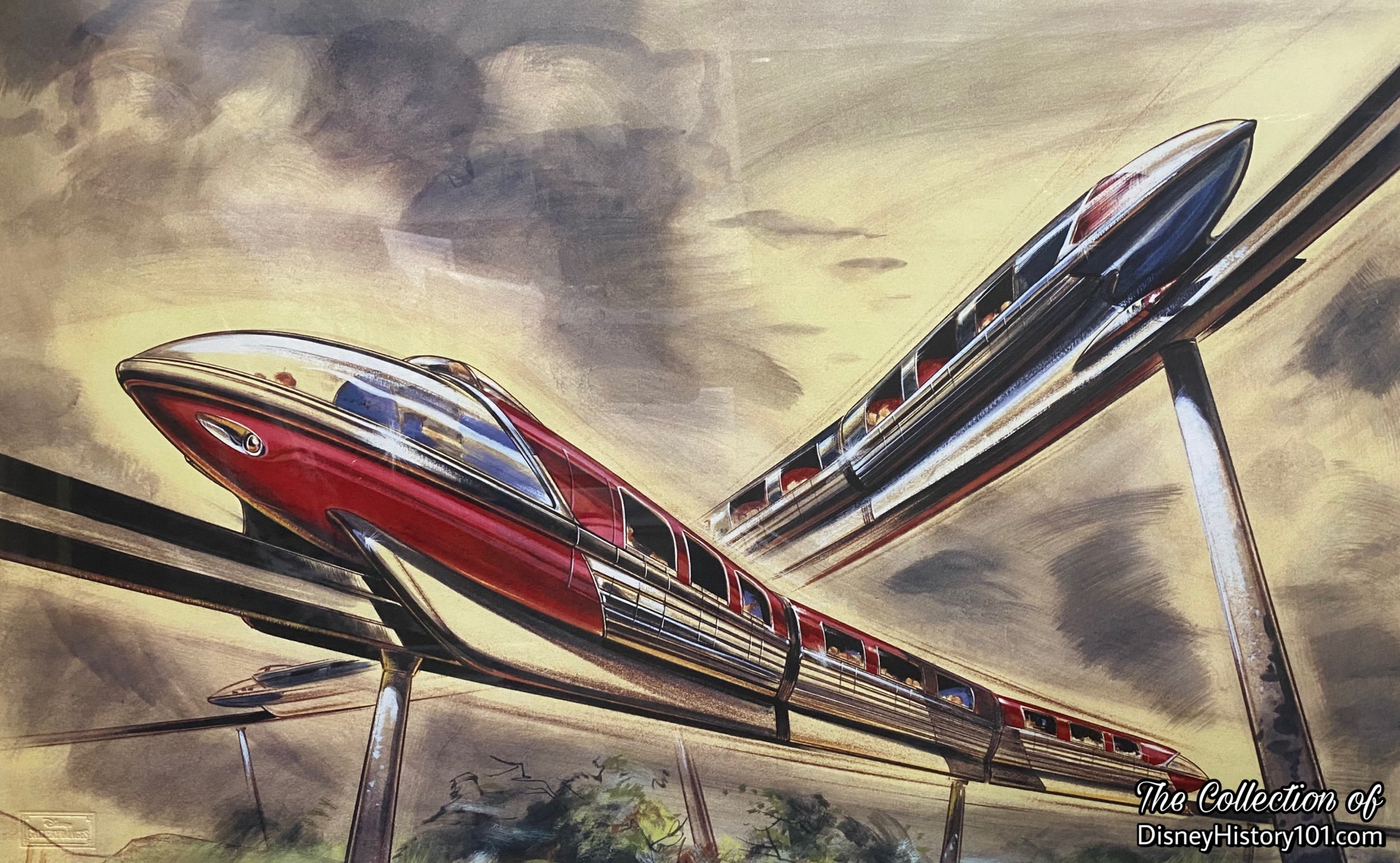
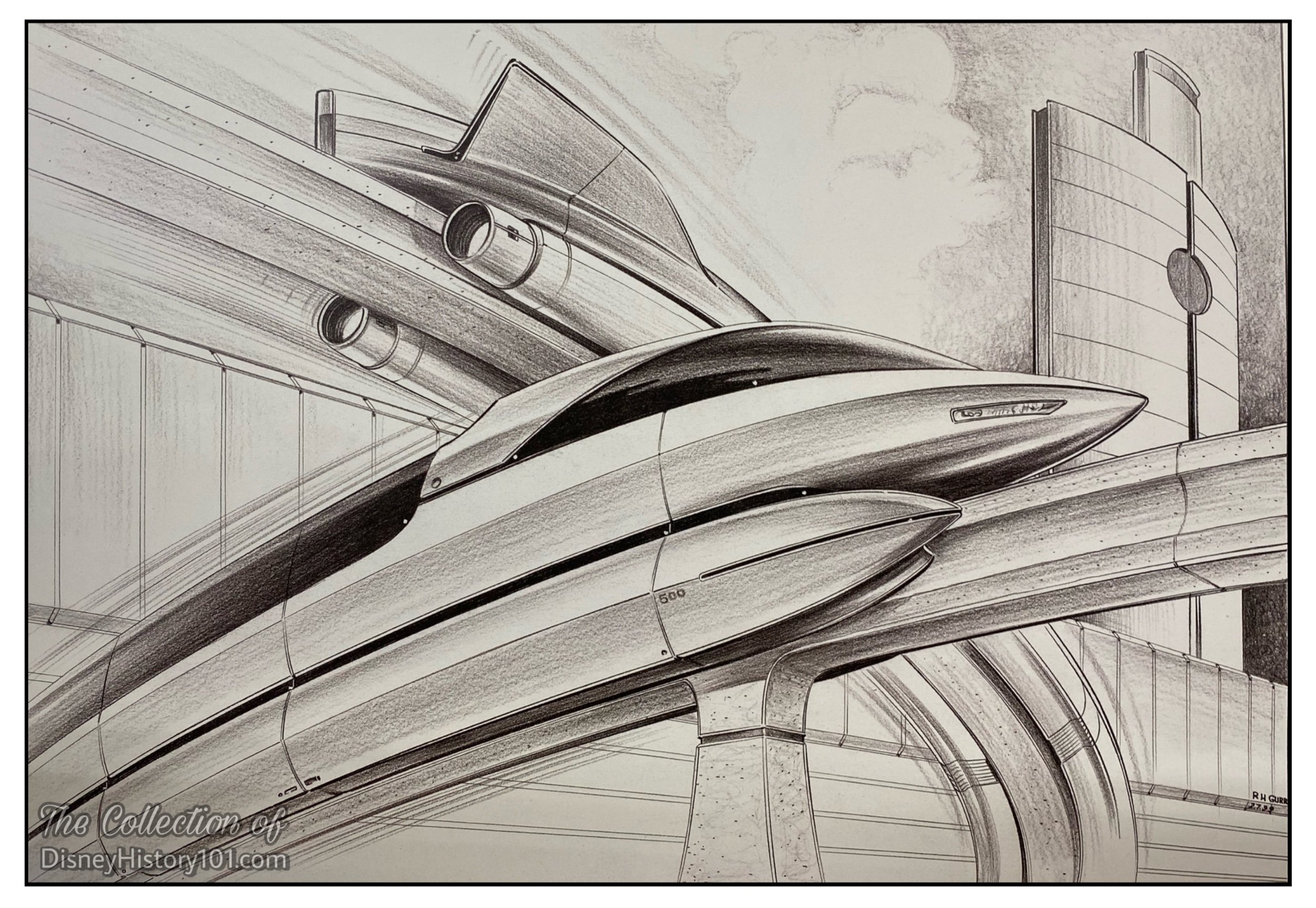
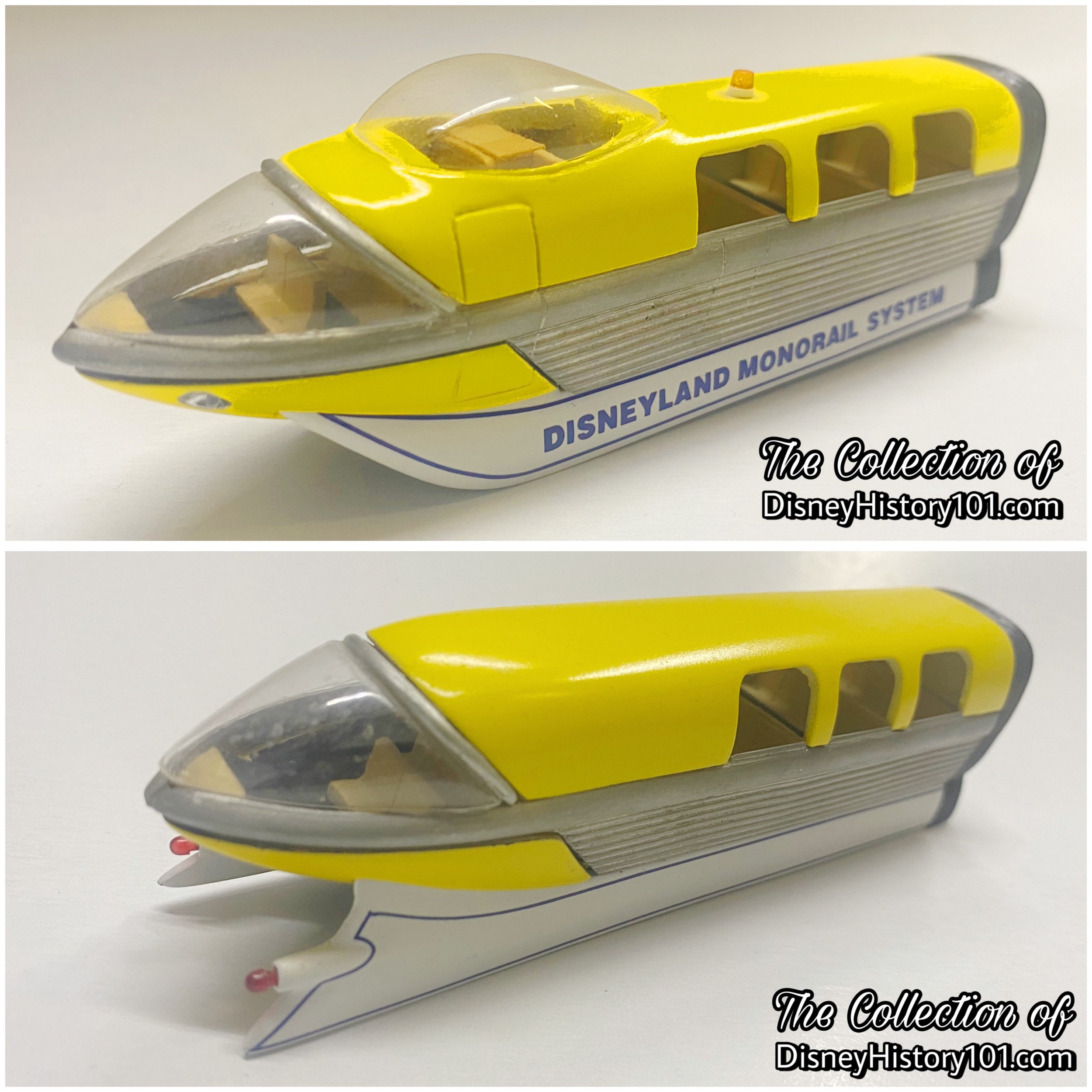
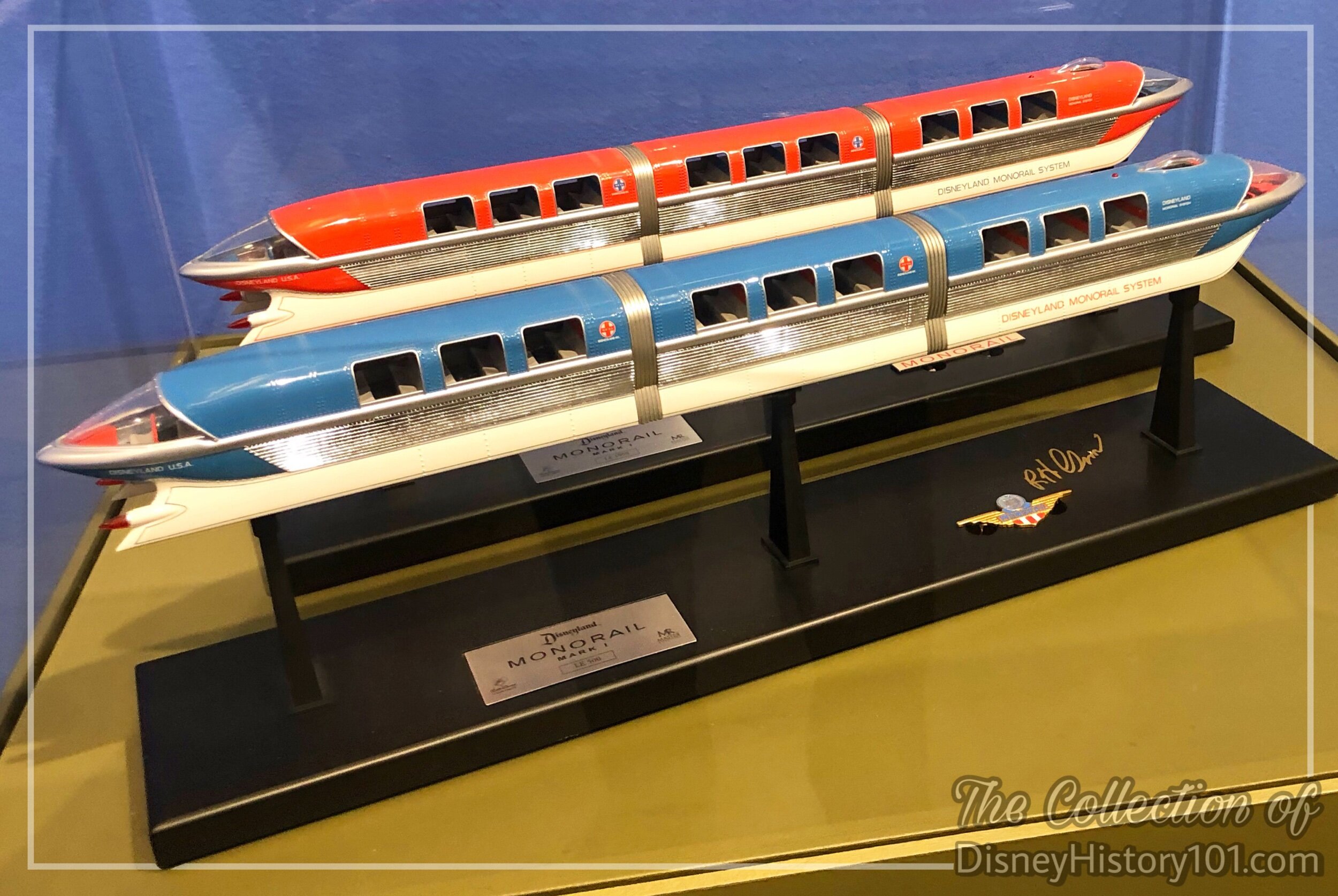
Looking very much like Bob Gurr’s initial designs, are the Walt Disney Collectibles Master Replicas. Above are the Monorail Red and Monorail Blue Mark I Models produced by Master Replicas in 2005, to coincide with the 50th Anniversary of Disneyland!
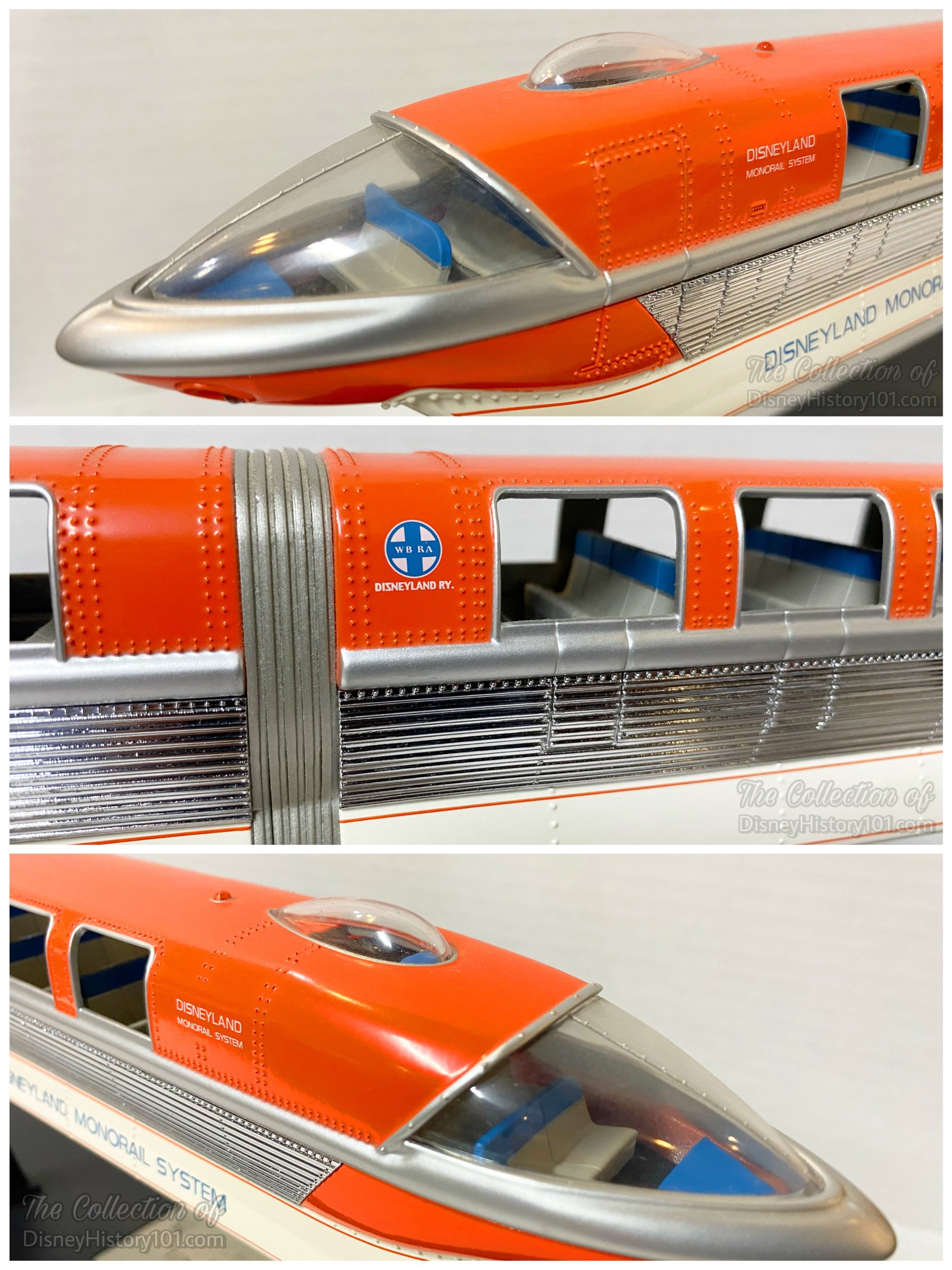
This is one of the most amazing Monorail miniatures I have ever seen, right down to the bellows (those accordian-like coverings between the cars used to cover the bogie units), and tires in the undercarriage.
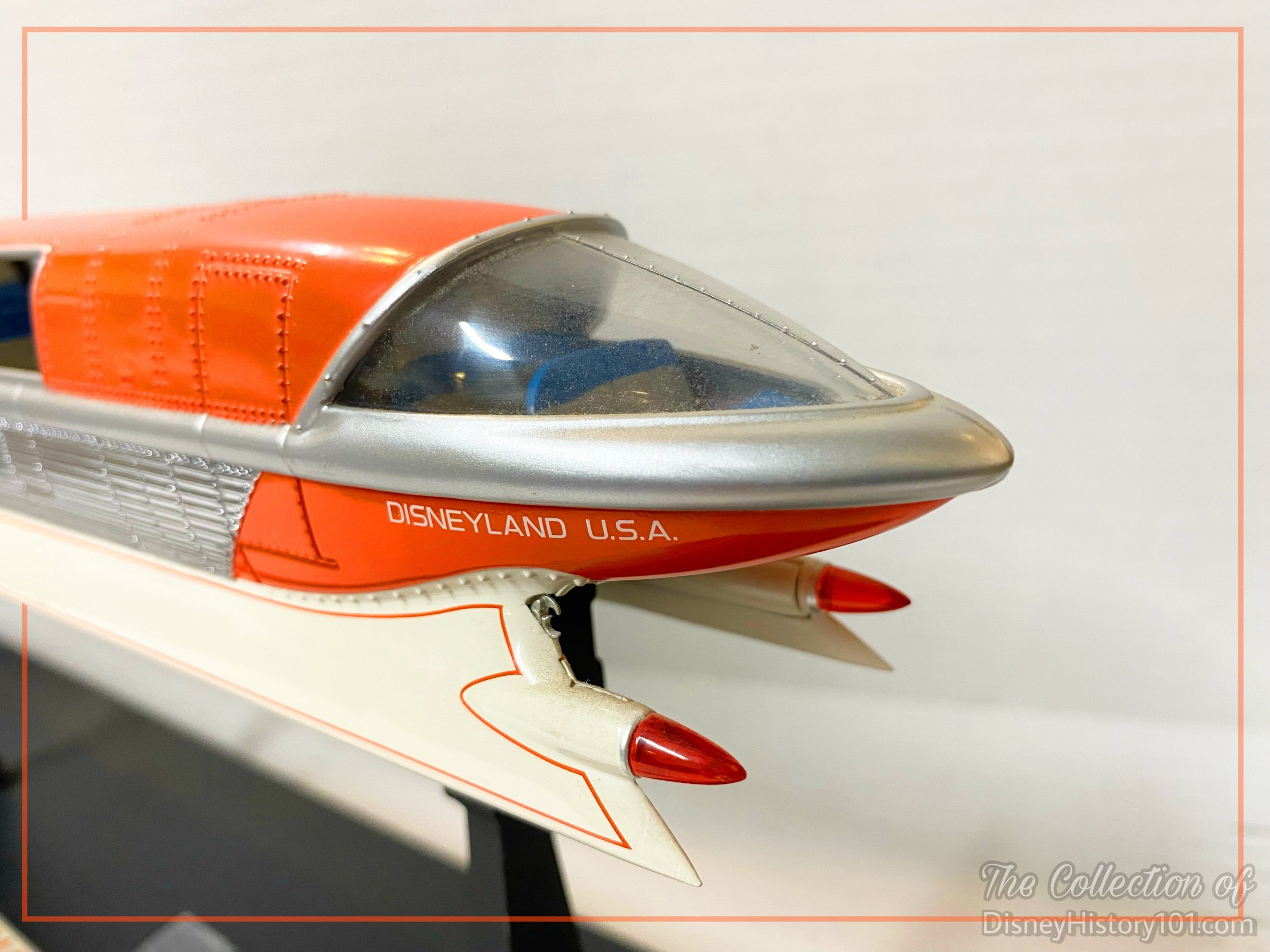
I love those vintage 1960s tail cones and fins typical of Monorail Mark Is and Monorail Mark IIs.
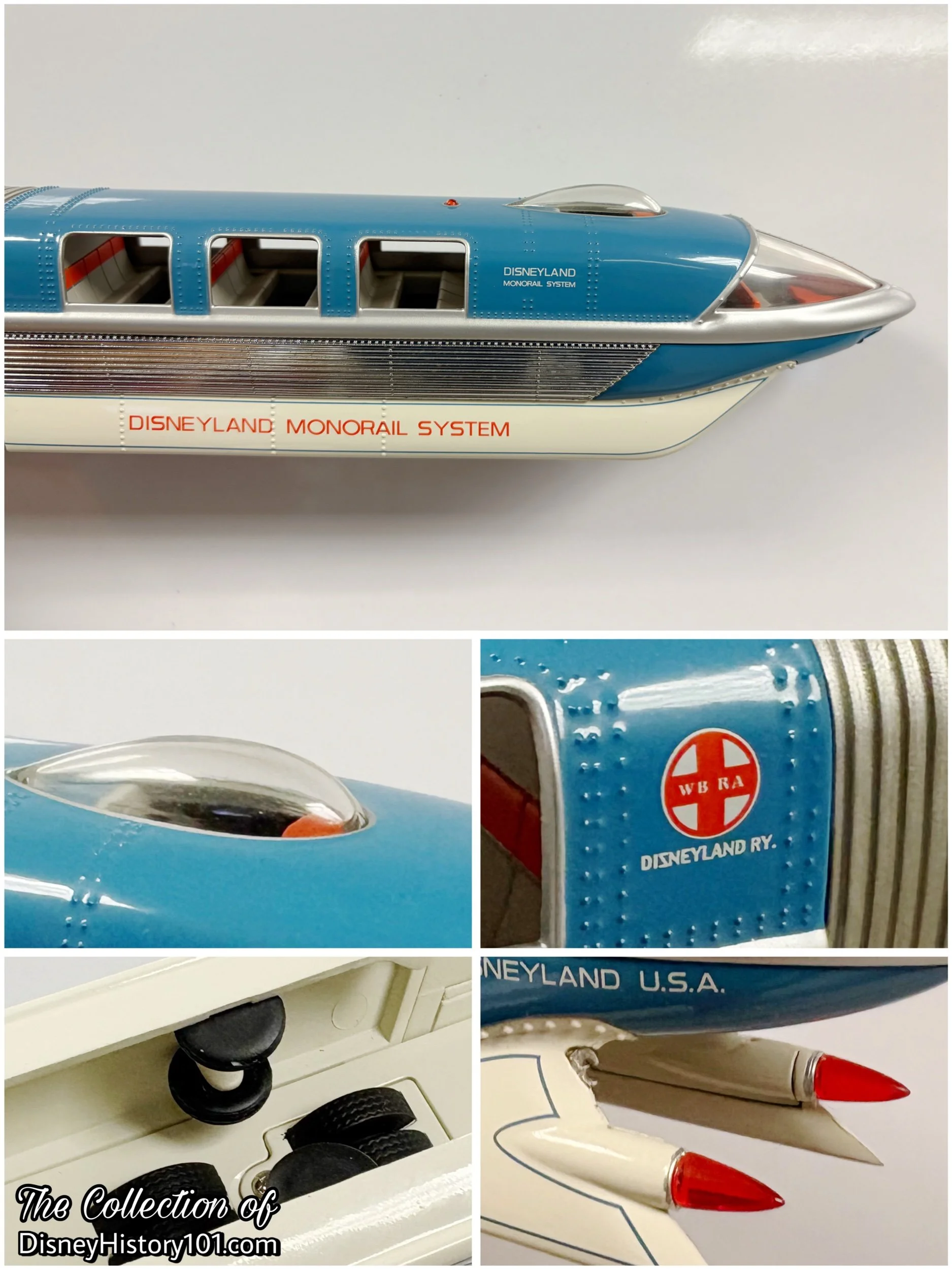
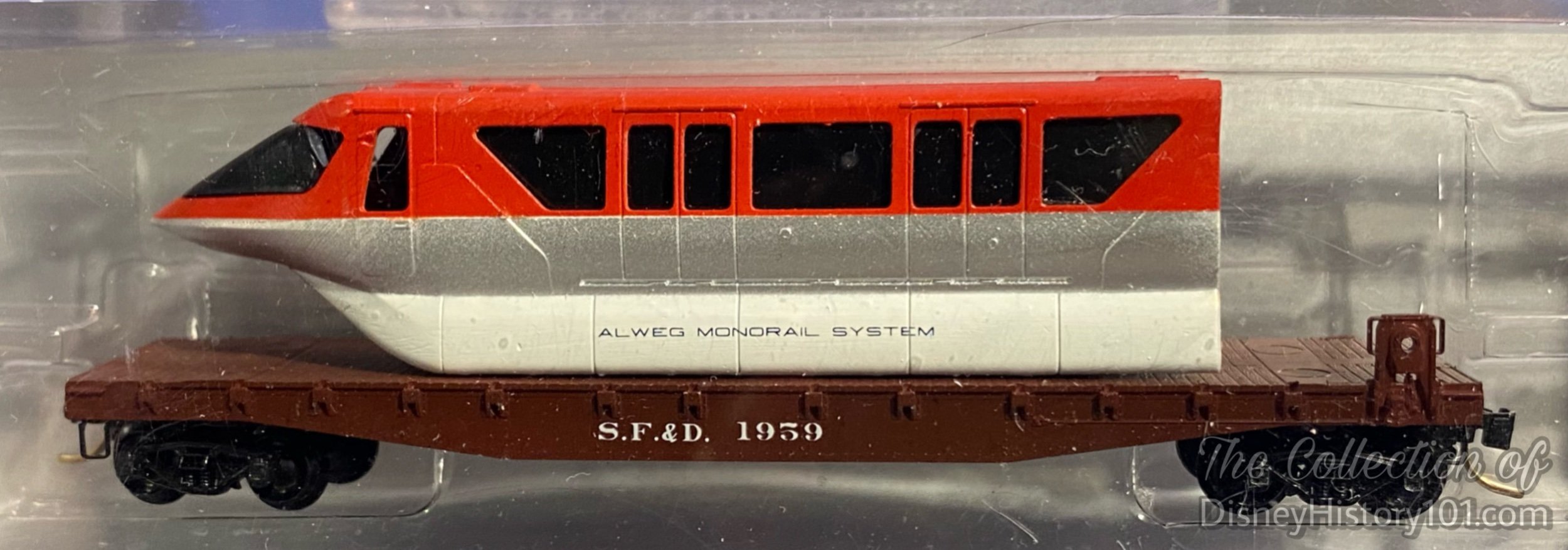
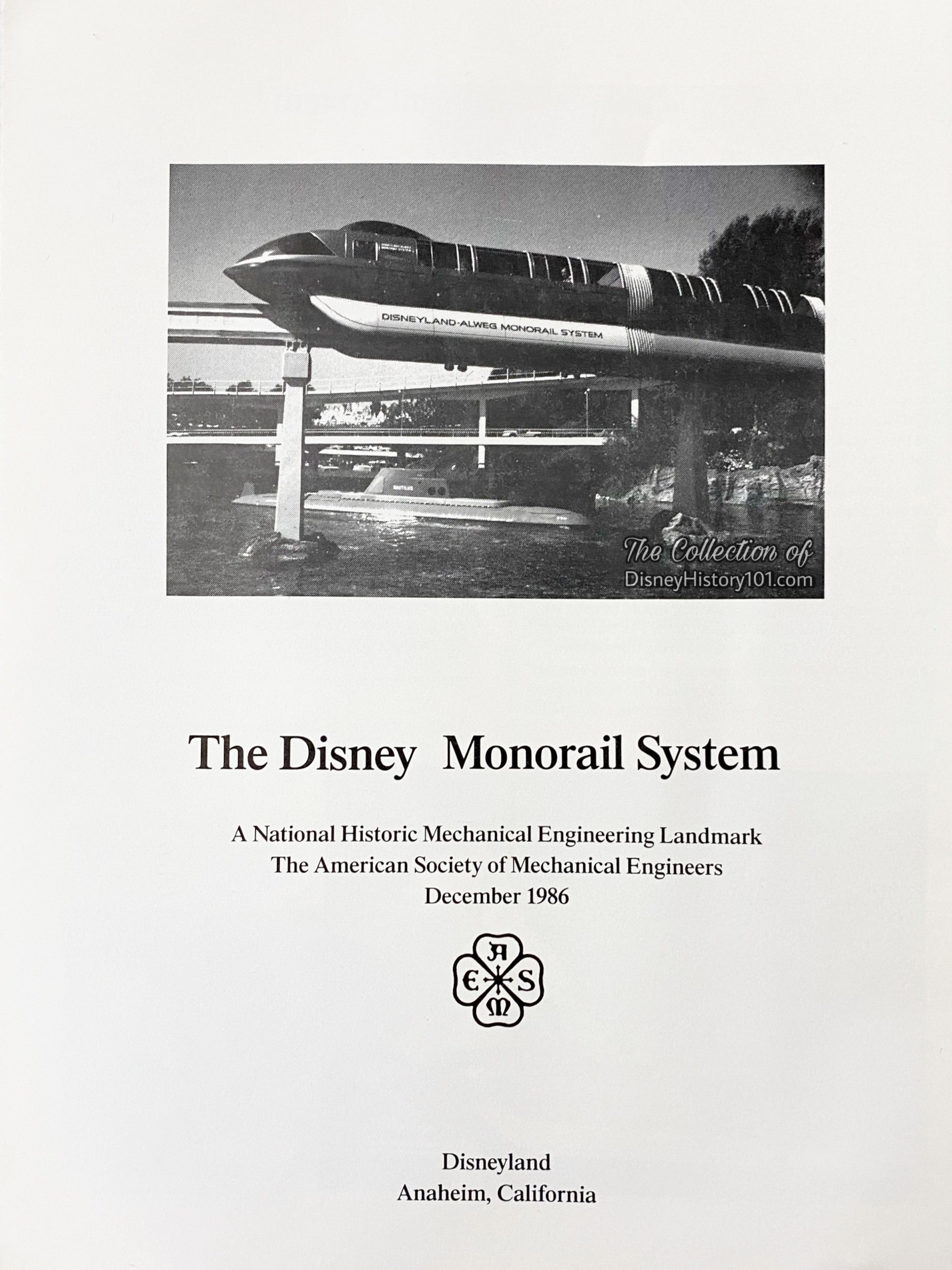
The ALWEG-Disneyland Monorail sparked a legacy of Resort Monorails in Florida, and even triggered a proposal for a Monorail between Disneyland and Anaheim Stadium (around 1983). Three years later (and by the far-off future year of 1986), The American Society of Mechanical Engineers present Disneyland with an award constituting the Monorail a Historic Mechanical Engineering Landmark. Now, the ALWEG-Disneyland monorail was not the first monorail ever created, nor was it the first monorail system in the United States (as other kinds had already been built for both industrial and entertainment purposes). While many of those had come and gone, in major cities and amusement parks across the United States of America, by 1986, the ALWEG-Disneyland Monorail was the longest running (and daily-operational) monorail systems in the entire Western Hemisphere! The Disneyland ALWEG-Disneyland Monorail system would soon inspire a direct legacy - when a network of monorails were built in Walt Disney World, Florida. Even more, the Disneyland Monorail System would deeply impact the field of mechanical engineering.
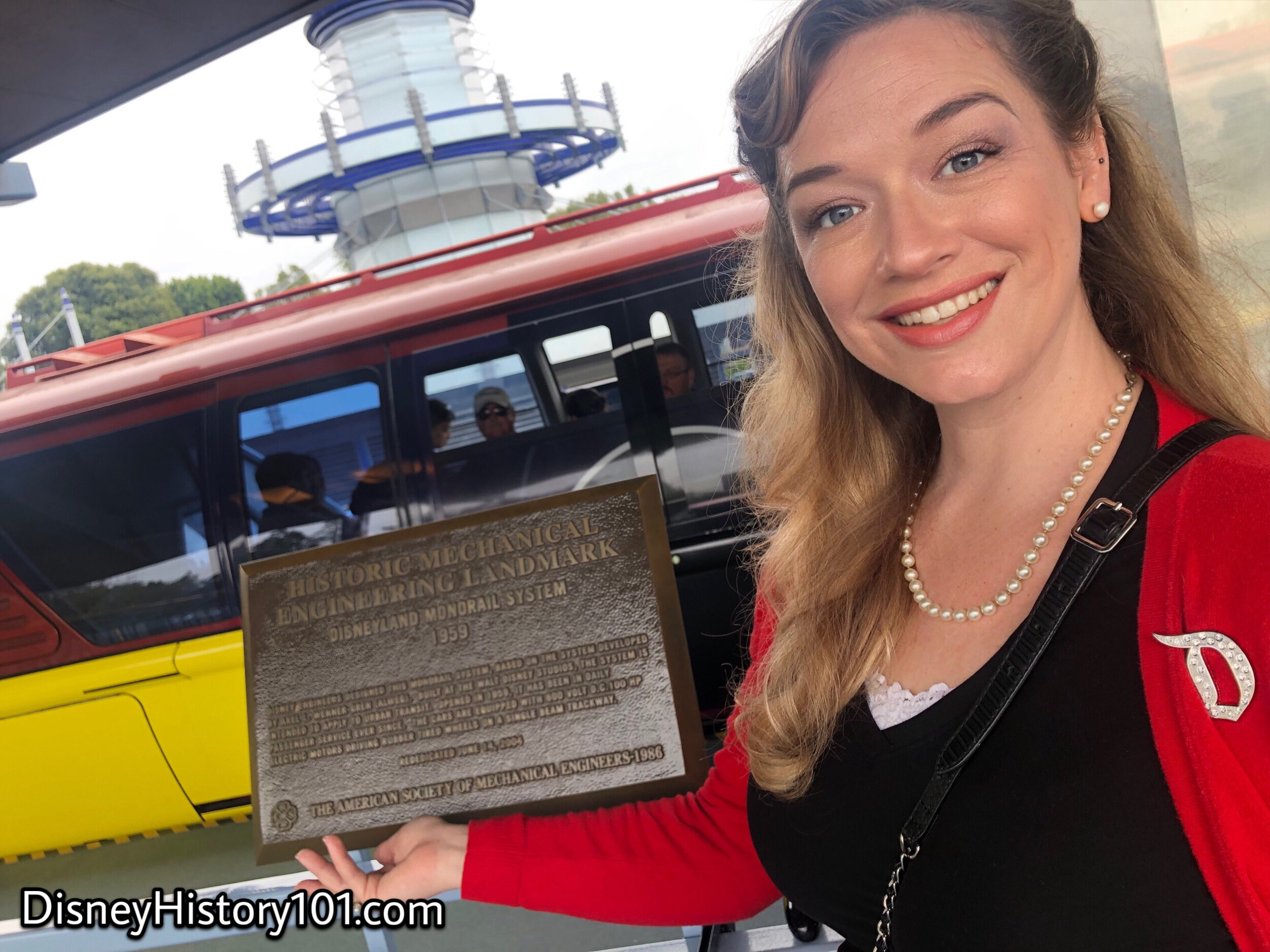
So, it was decided by the American Society of Mechanical Engineers, the ASME National History & Heritage Committee and the ASME Orange County Section, to recognize the Disneyland Monorail System with a historic plaque.
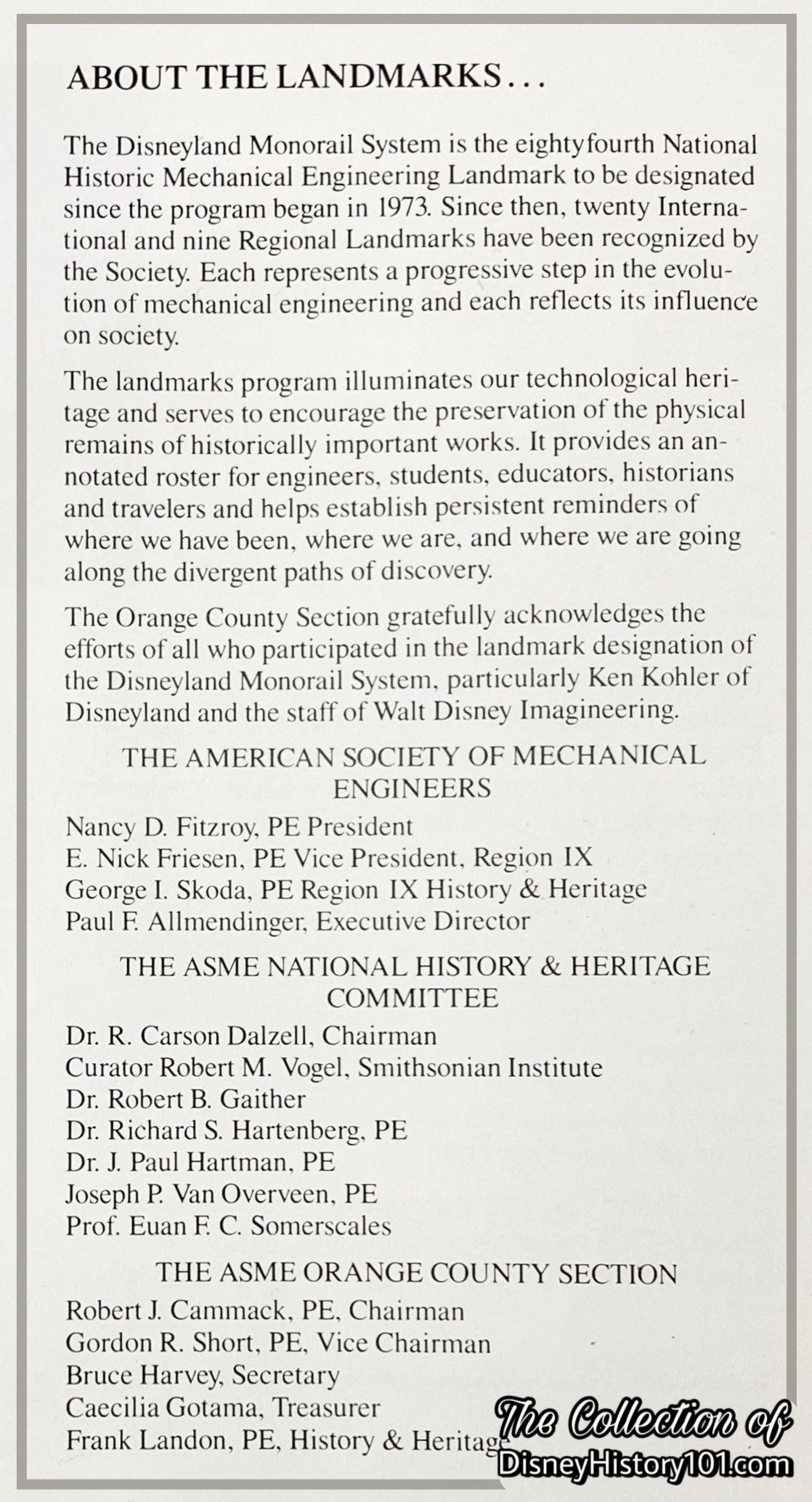
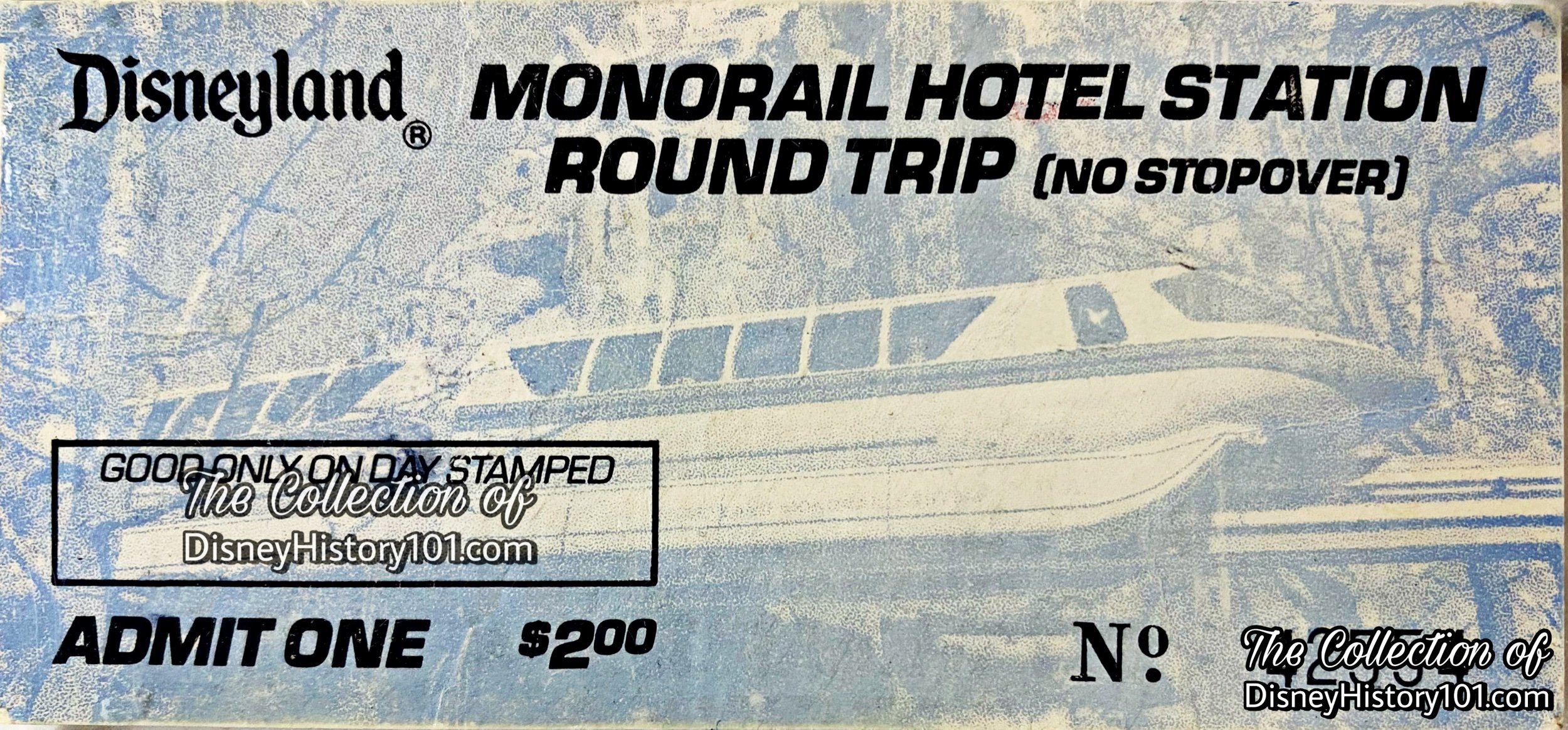
The following year (April of 1987), the ALWEG-Disneyland Monorail’s name was changed to Disneyland Monorail. The Disneyland Hotel was still linked to the Magic Kingdom via the “Disneyland Monorail System” which looped the Park and the Hotel. However, new Mark V Monorail models began to replace the Mark IIIs (Monorail Mark III Red, the last to be removed, during the Spring of 1988). During this time the price of monorail admission was approximately $2.00.
On May 22, 1998, the newly renovated Tomorrowland showcased the theme of “Imagination and Beyond.” According to the Disneyland® Press and Publicity document “DISNEYLAND'S UPDATED TOMORROWLAND TAKES GUESTS ON A JOURNEY TO ‘IMAGINATION AND BEYOND’”:
“The Tomorrowland Monorail Station is also receiving a look in keeping with the look of the redesigned land. By converting the metal canopy into colorful bronzes, blues, and teals, the renovated area will take on an abstract, outer-space feel. The main marquee has been designed in such a way that it will represent the sun during the day and the moon at night, depending on the way it is lit. Around the top of the station, ‘flow neon,’ a new technology that makes the light look as if it is chasing itself, will travel through a tube in 16-foot segments. This neon red-and-blue moving light represents the monorail vapor trail on its journey and is the first large-scale application of flow neon in any facility to date. An etched glass panel, edge-lit in neon entitled ‘The Passing Monorails,’ has been designed by renowned Disney artist John Hench to be displayed in the station.”
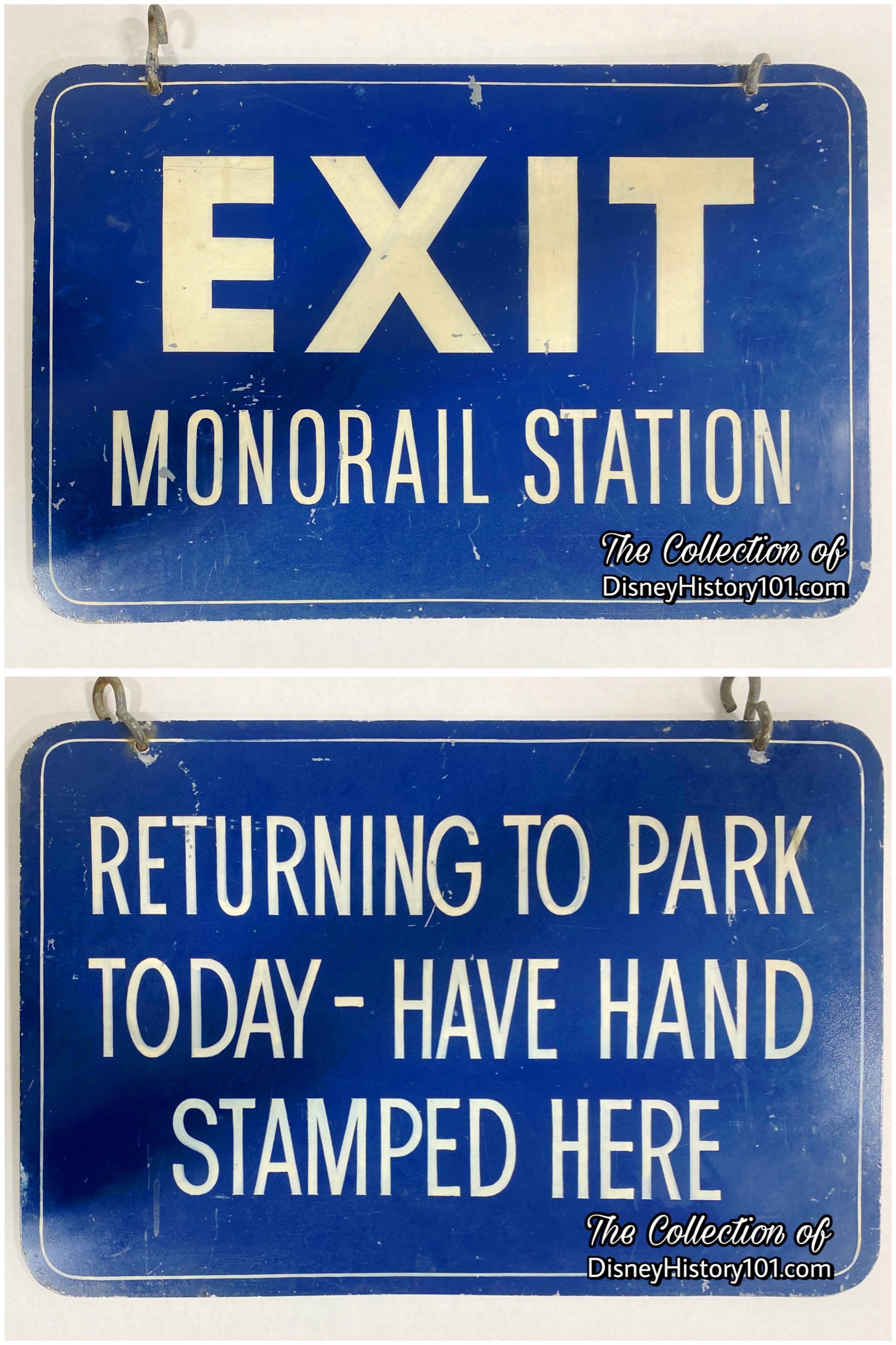
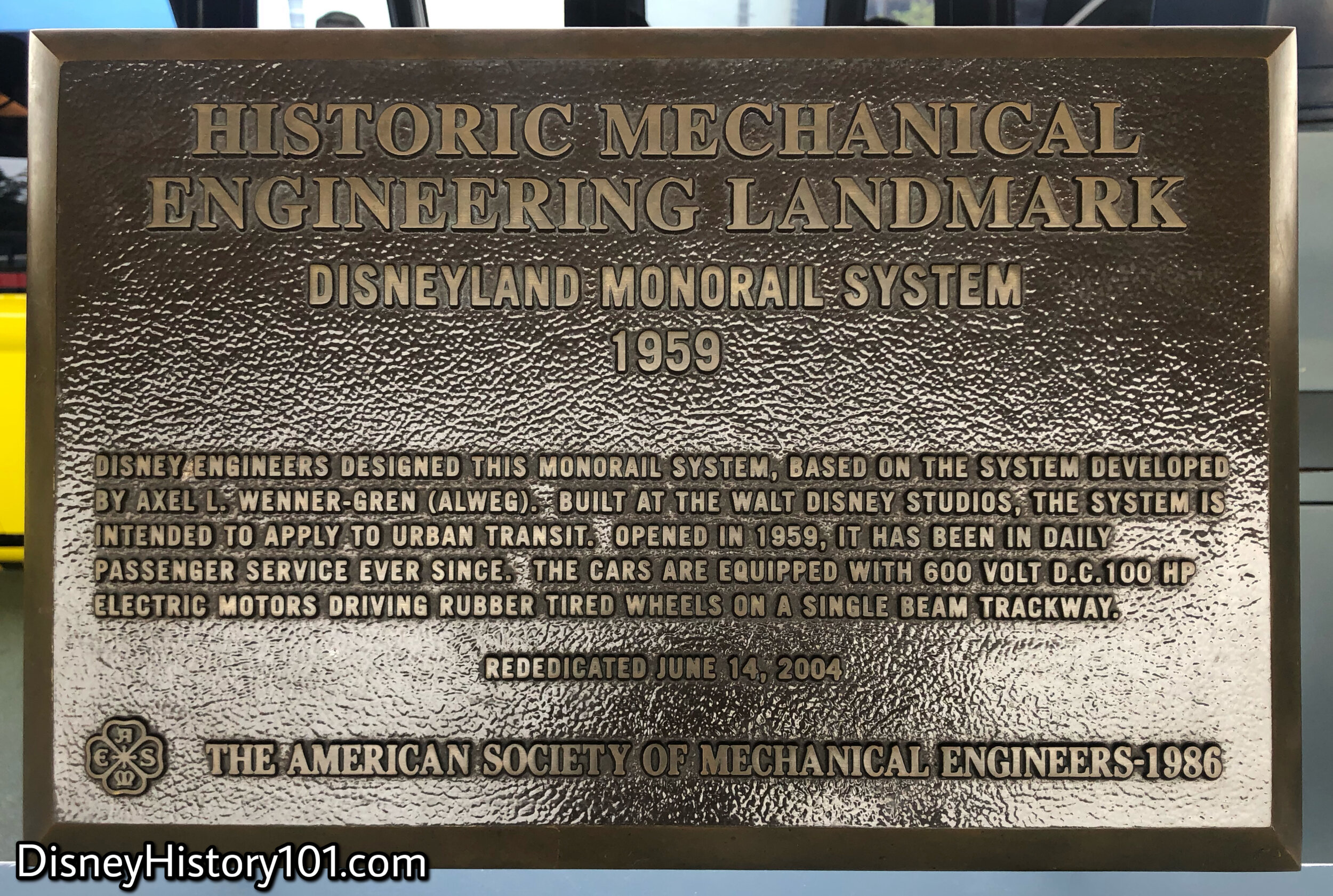
By the early 2000s, Guests could board the Monorail at the Monorail Station Building located east of the Rainforest Cafe Building at Down Town Disney.
During a 2004 “refurbishment,” the Monorail Mark III “Orange” (previously constructed by Ride & Show Engineering, Inc., with some parts manufactured by Messerschmitt-Bolkow-Blohm) was removed from the Disneyland Monorail system, and taken to Walt Disney Imagineering, where it would be reverse engineered. Despite the removal of a train, something new was added. During 2004, this facsimile (of the 1986 plaque) was unveiled during a small ceremony that predated the Mark VIIs!
The last Monorail Mark V (Blue) was still in service at Disneyland. It would be removed from the Park two years later (in 2006). In 2008 (during the “Disney Princesses” theme and experience initiative), WDI master plans involved the production of a monorail vehicle replacement and a Show update.
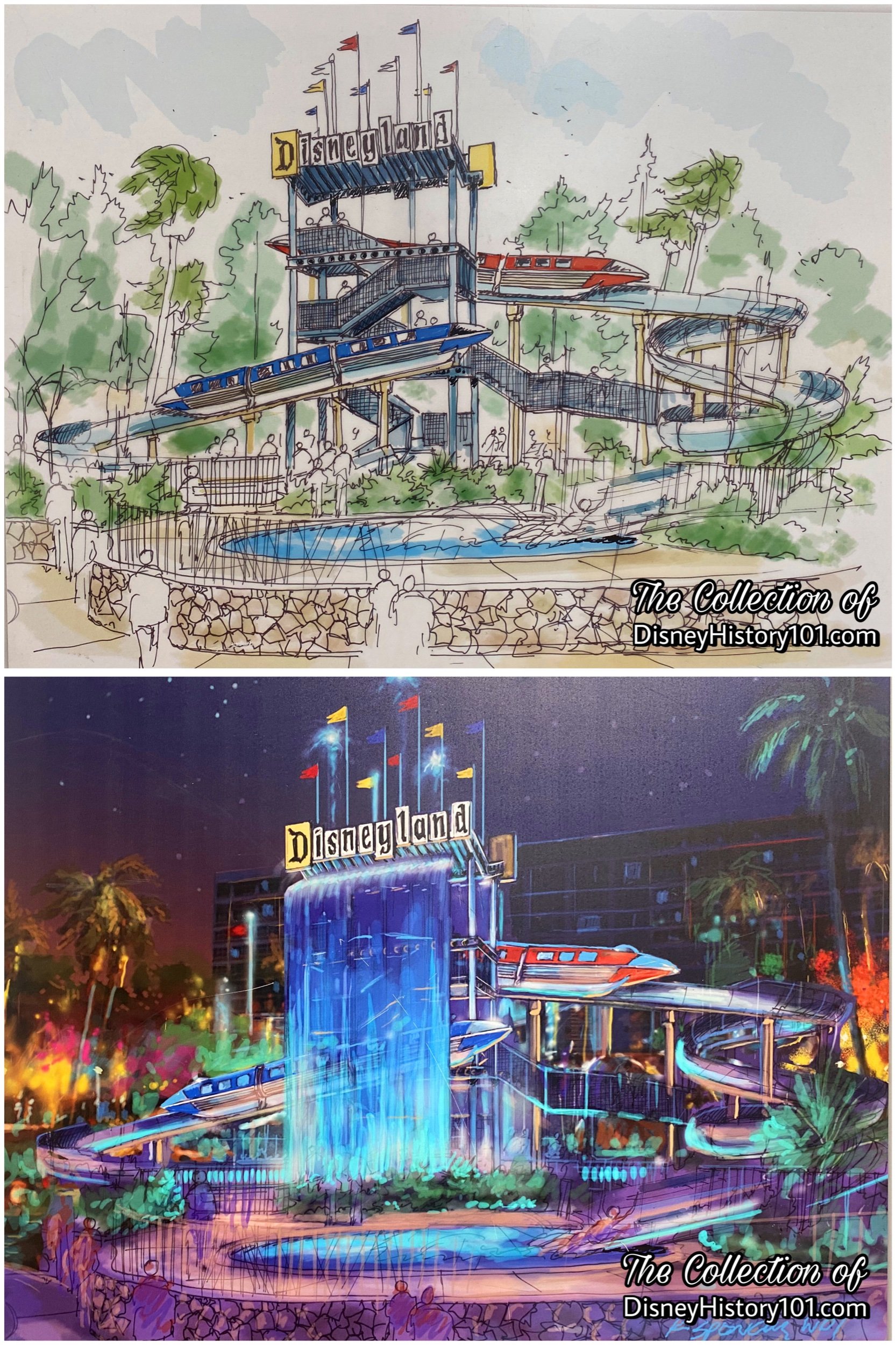
Though Participant Santa Fe has come and gone (and the Park was introduced to the Disneyland Monorail Mark VII), Disneyland Park is still a place to “monorail gaze,” in the present! Today, Guests continue to board the Disneyland Monorail System and travel high above Disneyland to The Disneyland Hotel and back on this efficient transportation system of the future.

MOTOR BOAT CRUISE (Phantom Boats, Motor Boat Cruise)

Tomorrowland Boats or “Speedboat Rides” (July 30, 1955* - August 16, 1955)
Phantom Boats (August 16, 1955 - January 15th, 1956)
*By some accounts July 20th, 1955.
“Blue Sky for the Phantom Boats”
One can easily slip into the jargon of “ride,” but at Disneyland there is a "story behind the story" of every attraction, every attraction is a living experience for the guest. Disneyland ride-through attractions or adventures have officially been defined as an “individual show, ride, or exhibit designed to produce an entertaining Guest experience. Disney attractions stir the imagination, enliven the senses, and provide the participants with positive, innovative entertainment, which is the essence of the DISNEYLAND Show.” It is important to review the story of the attraction, tell the story, explain it, and create interest. This is the story of the Phantom Boats and Motor Boat Cruise.
Nautical adventures were seemingly always a part of Walt’s earliest plans for an amusement center! As early as 1953 and 1954, concepts for a Mickey Mouse Park (proposed for a 11-acre triangular plot of land near Walt Disney Studios in Burbank, California) featured a “Boathouse” and a boat attraction. When a larger plot was purchased (in Orange County) and the working title of the project was changed to “Disneyland”, nautical attractions were continually developed. “The Disneyland Story” was produced (on September 3, 1954), in order to tell the story of what guests would experience upon entering Disneyland and Tomorrowland. Page 4 described the “Freeway of Tomorrow”, stating that “In our ride, the child actually learns to handle an automobile, and the ride is a safe one. We will do a similar thing with the lake in Tomorrow Land where a child or an adult can take a scaled-down speed boat which will be about 8 1/2 to 9 feet long and learn how to handle it along its course on the lake.”
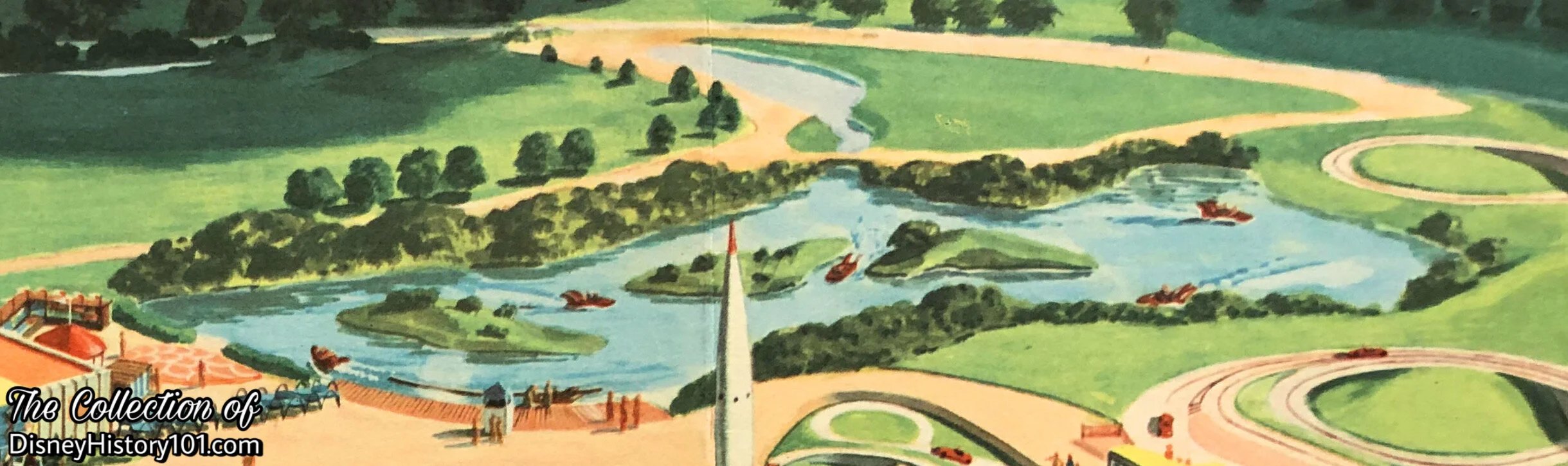
This illustration was included inside the Disneyland Musical Map (one of the first pieces of licensed Disneyland Park- themed product) produced by Mattel, c. 1955. Not far from the Freeway of the Future, the “island dotted” Motor Boat Lagoon, for sleek Motor Boats to navigate around.
The realization of the previous illustration was the predecessor of the Motor Boat Cruise - the Phantom Boats! The Phantom Boats was also referred to as the “Speedboat Ride” in both “The Story of Disneyland” [a promotional document prepared for potential participants by Disneyland, Inc. Public Relations, published 1955 by Disneyland Inc.], and in “Your Guide To Disneyland” [published for distribution to guests in 1955]). The Phantom Boats (with fiberglass hulls manufactured by the Crystaliner Corp.) would travel through a man made lagoon with a landscaped island in the middle.
By July 1, 1954, George Whitney of Disneyland, Inc. directed Amusements, with Ron Miller overseeing analysis, philosophy, capacities, planning, operator training, and amusement procurement. A lake (“Tomorrowland Lake”) was planned to be situated where the modern Submarine Lagoon sits.
The construction crews didn't begin work on any of Tomorrowland until six months into the project. In the early days of Disneyland, the same waters of Tomorrowland Lake used to also move through the Canals of the World (in a “continuous flowing gravitational water system”) via a canal which ran along a Backstage Service Road and the northern rails of the Santa Fe & Disneyland Railroad. Pumps were installed during November of 1954, “for circulating water systems,” according to Disneyland LINE magazine (November 22, 1979).
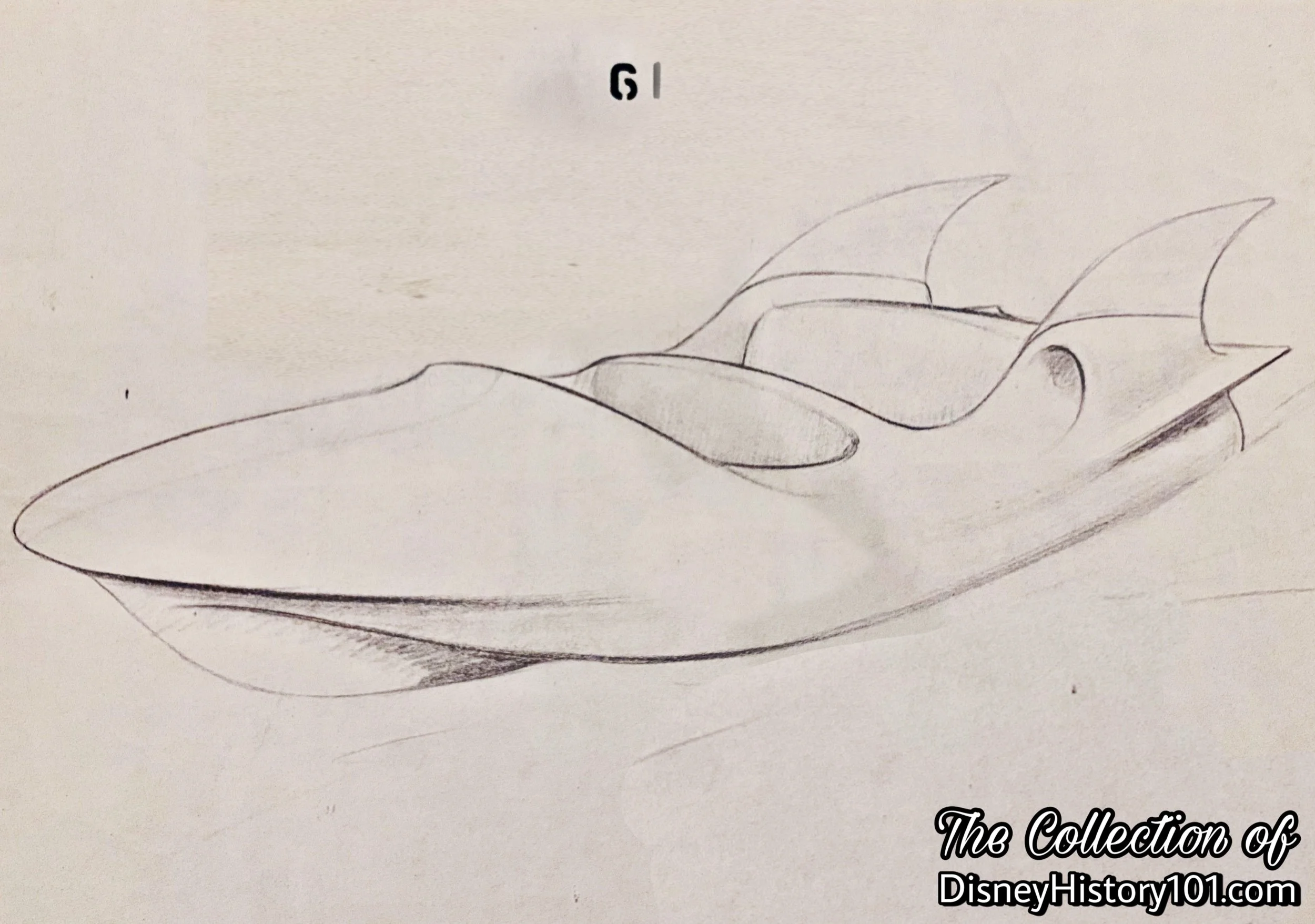
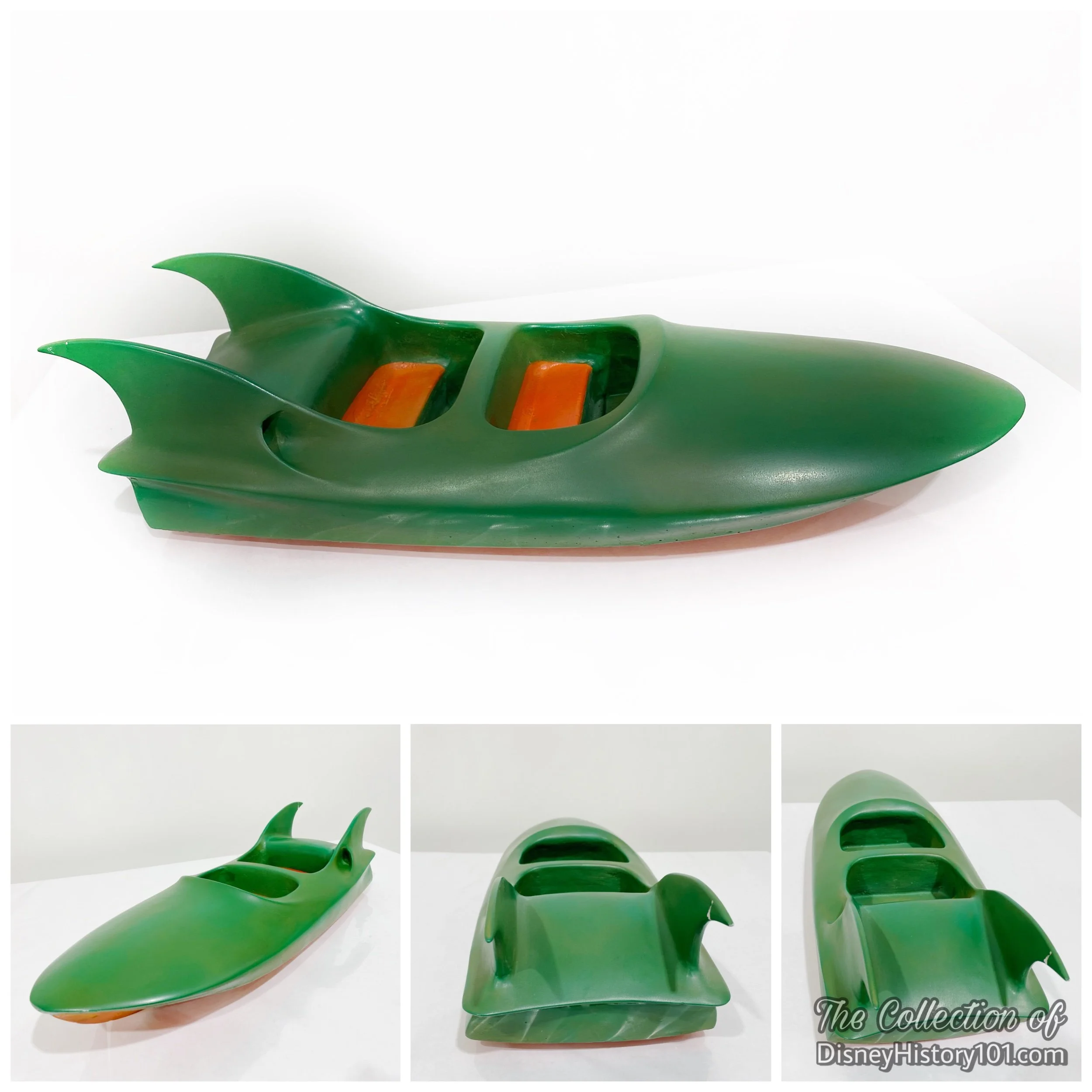
After Chris Mueller had sculpted the body, fourteen fiberglass bodies were fabricated by Crystaliner Corporation in Costa Mesa, California. There were “14 boats including a police boat,” according to the Nomenclature List Replacement prepared by Disneyland, Inc. Despite their appearance on (c. 1955) maps, these boats were “plastic-glass boats of ultra modern design!” Each has twin fins with “jet engine air scoops.”
Soon, one authorized “Disneyland Information & Nomenclature List” (prepared by Bill Cottrell of Disneyland Inc., May 25, 1955) announced the working title as the “Speed Boats,” adding “this name may be changed.” The same document continued with this description : “Fiberglass boats of ultra modern design. Lake Cruise,” describing “14 boats including police boat (1 police boat).”
As of June 2, 1955, C.V. Wood Jr. sent an Inter-Office Memorandum to Walt Disney regarding the best estimates that could be obtained at the time regarding the completion status of individual sections of the Park and Opening Day. C.V. wrote: “Speed Boats: we can make it. Track and boats tight but it appears that we can make it. Need boat landing drawings immediately.”
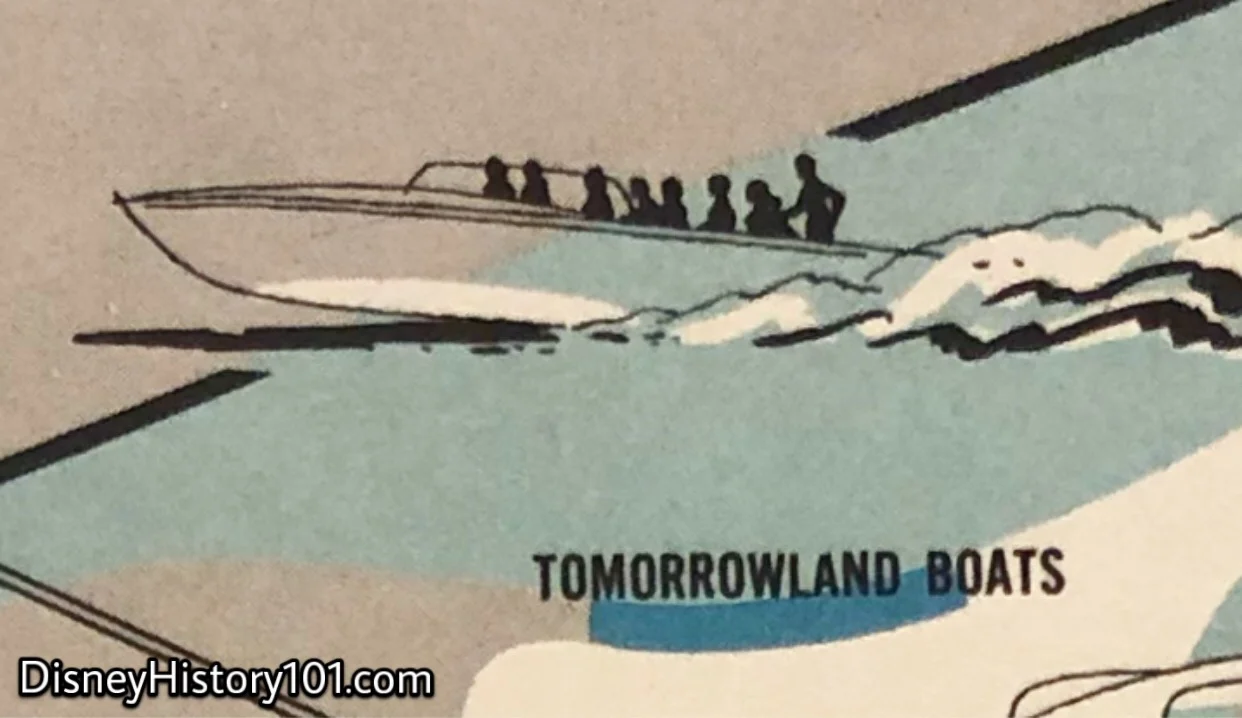
Early maps labeled the attraction as the “Tomorrowland Boats” and some publications referred to their waters as Tomorrowland Lake!
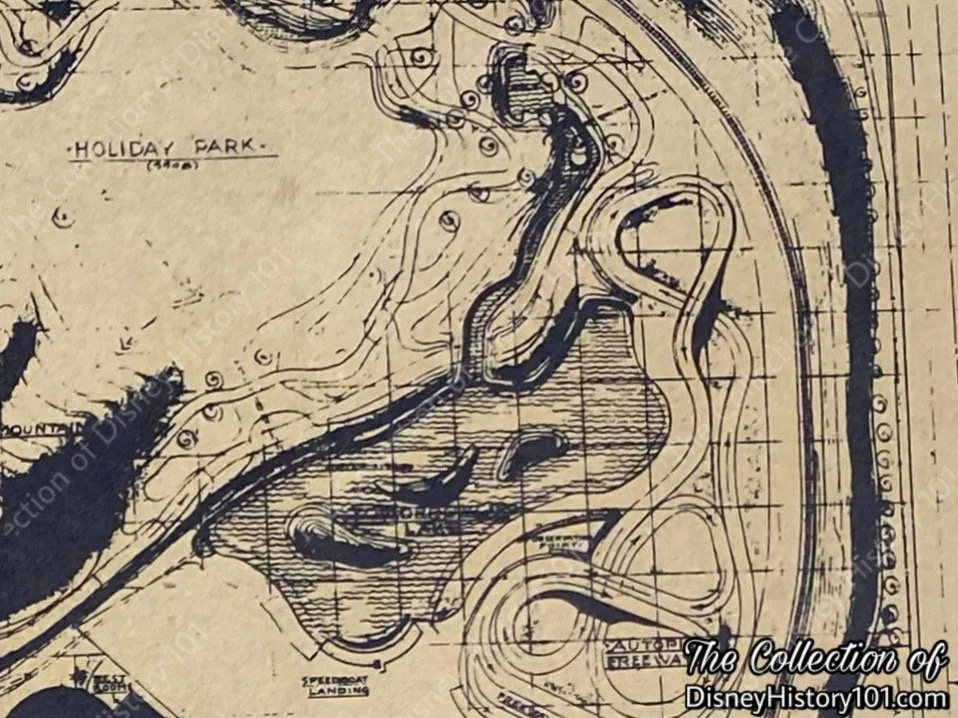
The pre-opening “Go Santa Fe to DISNEY-LAND” brochure printed sometime between July 4 and July 18 mentioned “Speed boats” among the rides to open. The media briefly described the attraction: “Speed Boat Rides -14 boats..”
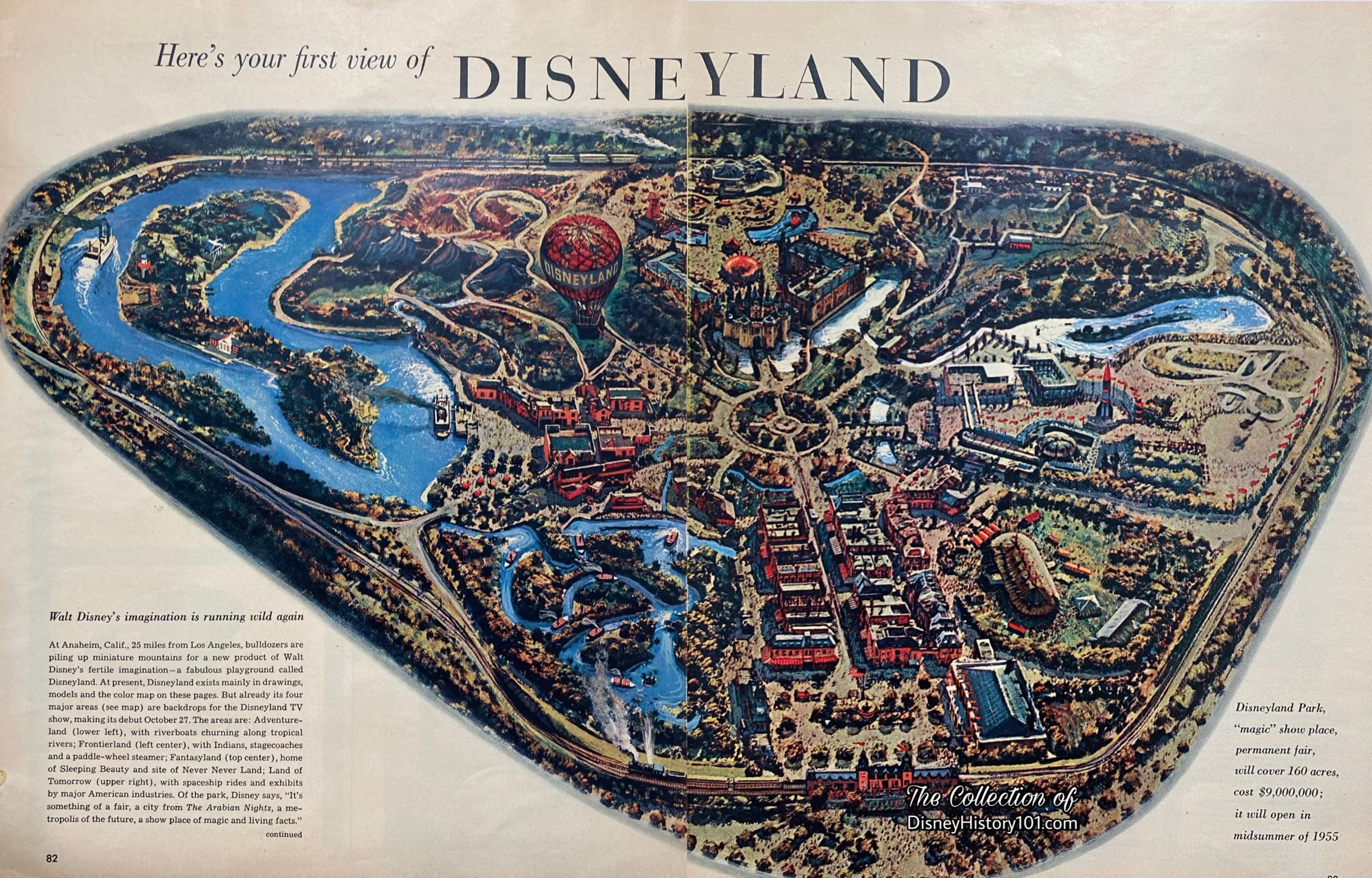
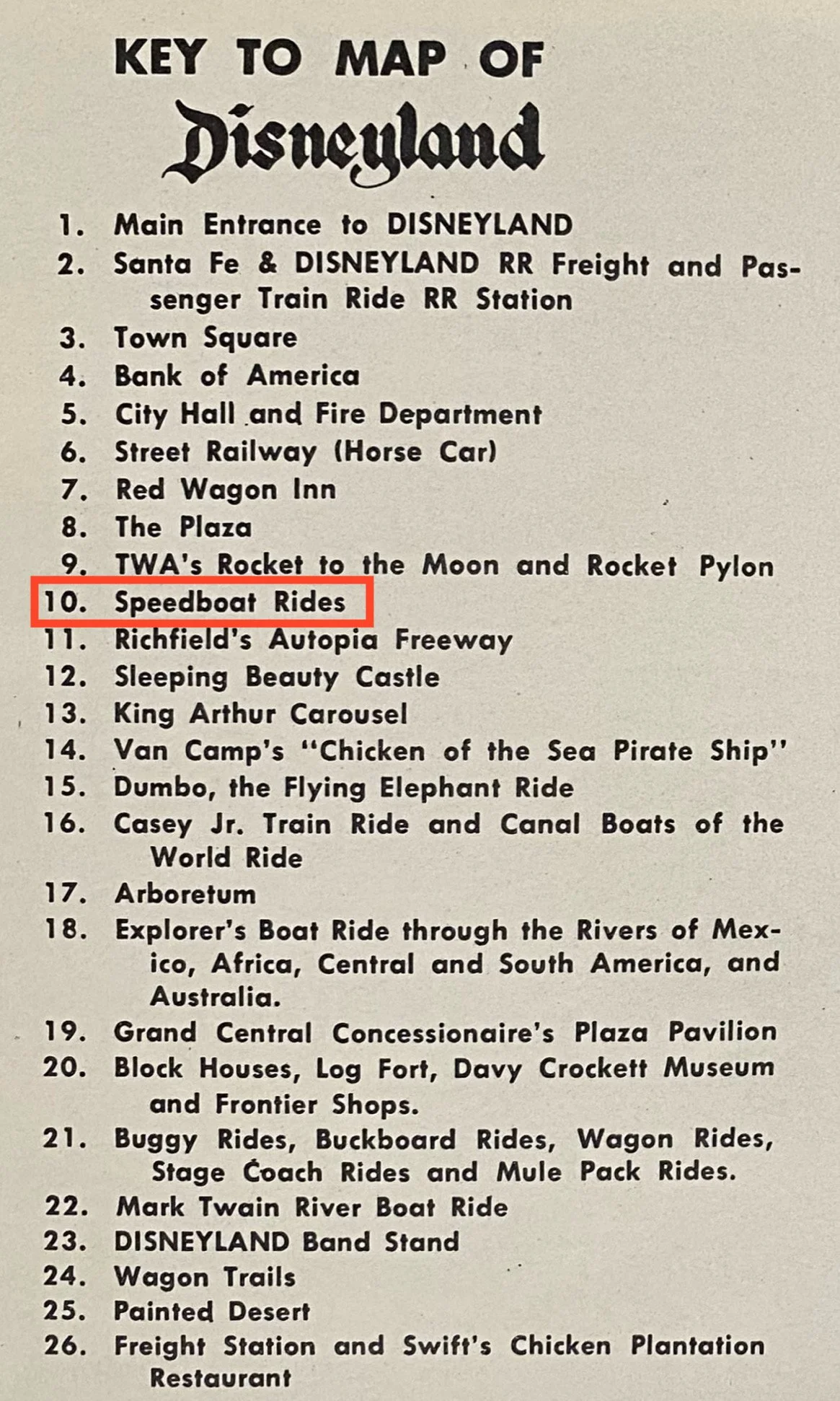
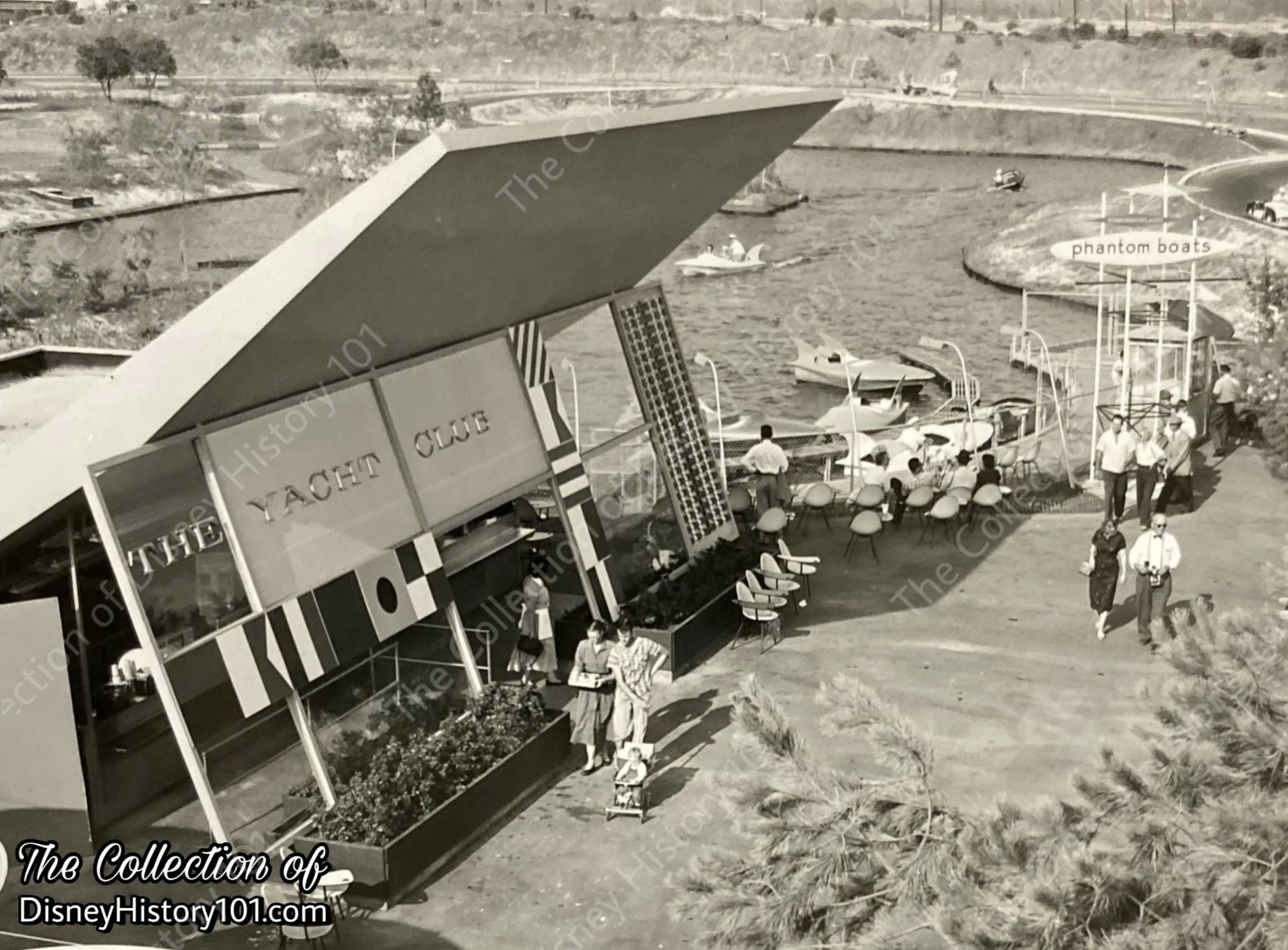
Soon, the Tomorrowland Boats were planned to debut during the Disneyland Opening Day broadcast, introduced by Ronald Reagan. However, the attraction experienced a closure and opened a few days later. The attraction officially opened to the public (on July 20th, 1955) exactly three days after Disneyland’s Press Preview “Day One” in 1955. Each of the 14 Phantom Boats had the capacity to carry up to three people, and was manned by one (of 14) Pilots during peak periods. Given these figures, it was projected that the Phantom Boats would have a theoretical maximum capacity of 1,126 guests per hour of operation. The price of admission for this adventure in 1955 was one “B” Coupon, or 25 cents (the same price of a show in the air-conditioned Mickey Mouse Theater, or a ride aboard one of Frontierland’s covered Conestoga Wagons).
The designs of the Phantom Boats were sure aerodynamic-looking, but a just little problematic. Each boat was propelled by an air-cooled outboard motor enclosed in a compartment and their motors would regularly get “burned out” faster than they could be repaired. According to “Disneyland Inside Story”: “each boat that left the dock seemed to have only a fifty-fifty chance of making it back without having to be towed.” Owning to this, the Phantom Boats would close during the day of January 15th, 1956.
At a meeting of the Disneyland Merchant's Association (held January 25, 1956), the “development of Boat Ride in Tomorrowland” was announced. A few months later, the Phantom Boats would make a brief return for what was predicted to be a peak summer period (from July 1956 to approximately August of 1956). Partially owing to the reopening of the Phantom Boats (and their maximum guest capacity), “The Complete Guide To Disneyland” (published 1957) states that “On one day on the month of August, 1956, Disneyland’s visitors took a total of 25,000 boat trips on the Park’s seven water rides.” By August of 1956, the Phantom Boats attraction featured the greatest number of water vehicles (than all six other Disneyland aquatic-based attractions put together). So, we can conclude (without a doubt) that the Phantom Boats contributed to this impressive figure!
“Although their retro design, featuring large ‘space age’ - inspired tail fins, was appealing, their high operating costs and constant maintenance problems were not,” according to “Disneyland: Now, Then, and Forever” by Bruce Gordon & Tim O’day. Now, those issues of the overheating outboard motors could not be resolved, so the Phantom Boats would become one of the shortest-lived Disneyland attractions, and hold the distinction as one of the first attractions to be completely removed from Disneyland. The attraction would experience a “Show Failure” situation and go “101.” However, the Phantom Boats would soon be replaced by yet another aquatic-based, nautical-themed attraction!
For one reason (or another), those who were present as Guests or “Disneylanders” in 1955, would not soon forget the Phantom Boats! In fact, a few legendary Disneylanders (like Broney Ciesluk) began their Disneyland career, assigned to the Phantom Boats. As a “sidelight”, Broney moved on to operate the Submarines (another nautical adventure Imagineered on the same location) and would thereafter spend much of his 28 years of service as the Supervisor of the Disneyland Record Center.
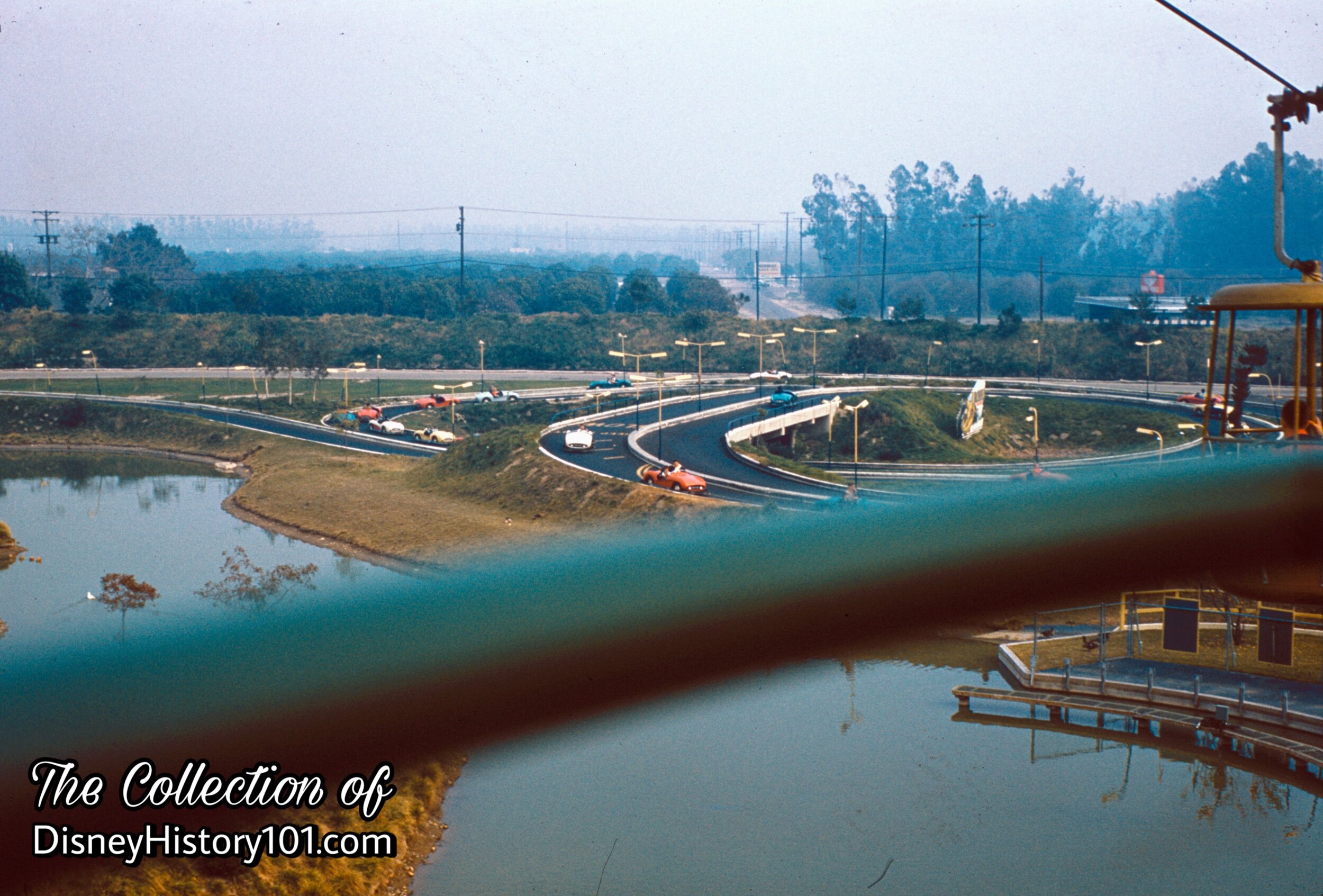
Before we move on, I would like to highlight how fortunate for Disneyland historians, that the Costa Mesa Historical Society has created this helpful homage to preserve the memory of many forgotten (and seldom mentioned) contributors to Disneyland development! Unbeknownst to many Guests, a number of local coastal businesses contributed to the construction of nautical-themed Disneyland attractions. The Jungle River Cruise’s boat hulls, Tom and Huck’s Rafts, the Storybook Land Canal Boats, and the Motor Boats were all built by local Newport Beach and Costa Mesa manufacturers.
With that, our story takes us about 19 miles south of Disneyland, to Newport Beach.
This structure is important to the next incarnation of Tomorrowland’s nautical-themed adventure, because it was once home to Bob Dorris Boatworks! Today the location (not far from Cannery Village) is home to the cozy Alta Coffee Warehouse, in Newport, California.
Bob Dorris (a young, established, Costa Mesa boat builder) and his wife lived upstairs, while the lower level held an office. Here, Bob created and realized the naval designs of many beautiful yachts, checking their figures and measurements. Here, Bob created designs for the local Beach Lifeguard Rescue Unit - a boat christened with the name Sea Watch! During the 1950s and 1960s, Sea Watch handled well in rough waters and rip tides, and participated in more than 3,500 rescues, towing 200 disabled boats to safety. Bob also designed a boat for the Orange County Fire Department, and even designed a tug boat built for Newport Harbor Shipyard. Of course, Bob also had a hand in fabricating some of the most-recognized boats of Disneyland. In fact, though his name is seldom mentioned in regard to Disneyland, many iconic and colorful watercraft which helped assure Disneyland’s “first fabulous decade,” were built right here by Bob Dorris!
Most of the rigorous physical labor and construction was carried out outside, in Bob’s wood shop on the sandlot. This covered boatyard was the site on which many of Disneyland’s watercraft were worked on - Tom Sawyer Island Rafts, Canal Boats, Fantasyland’s Motor Boats, and even the original Jungle River Cruise boat hulls (evident through brief scenes appearing in “A Pre-Opening Report From Disneyland”). This was also the birthplace of the “U-Drive Boats” that cruised guests through the waters of the Motorboat Lagoon!
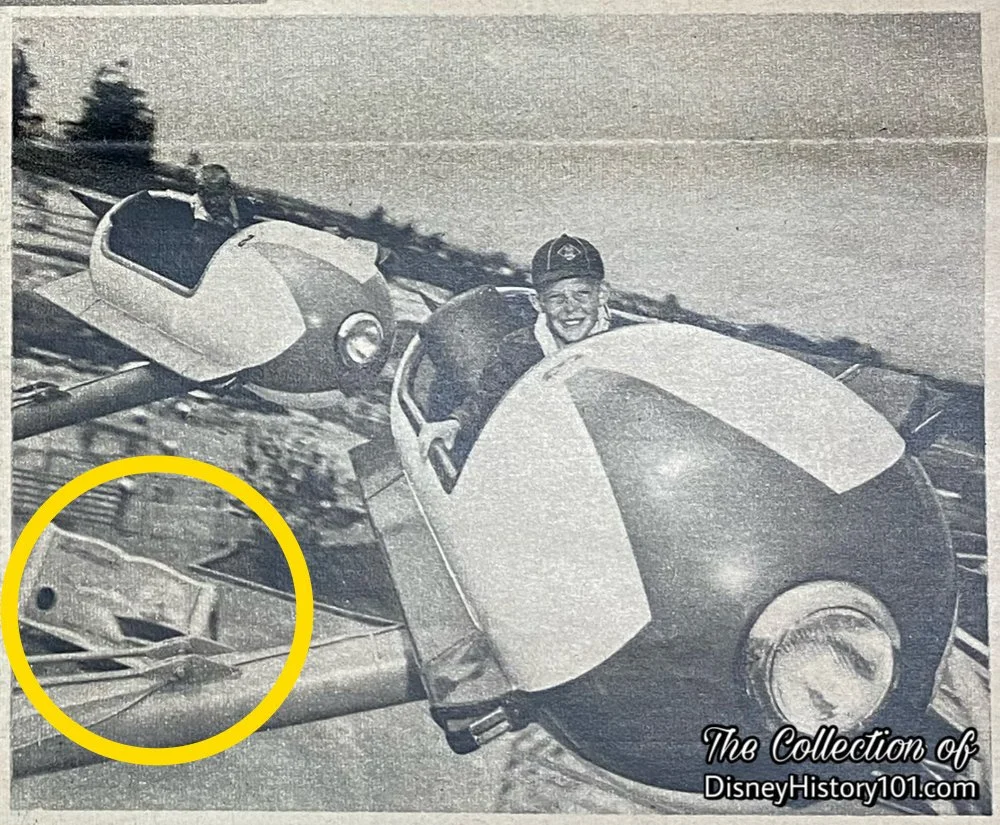
Joe Fowler and his team began research on an experimental “Airboat” considered to serve as a replacement for the Phantom Boats of Tomorrowland Lake ; or for use in the canal that ran along the north side of the Park). The team travelled to Florida to research the craft. Development concluded that the boats should be 25 feet long, with a 14 passenger capacity, and travel at a speed of 40 miles per hour.
During 1956, Robert Dorris Boat Works was already contracted to fabricate the rafts that would transport guests to the new Tom Sawyer Island attraction. Now, Robert Dorris Boat Works was asked to work on this experimental “Airboat.” Meanwhile, marquee featuring coming attractions and even attraction posters soon featured the Airboat, coming June 2nd. The Air Boats were also featured in poster art, guidebooks, magazines, and even a map illustration appearing in the May 1956 Disneyland News.
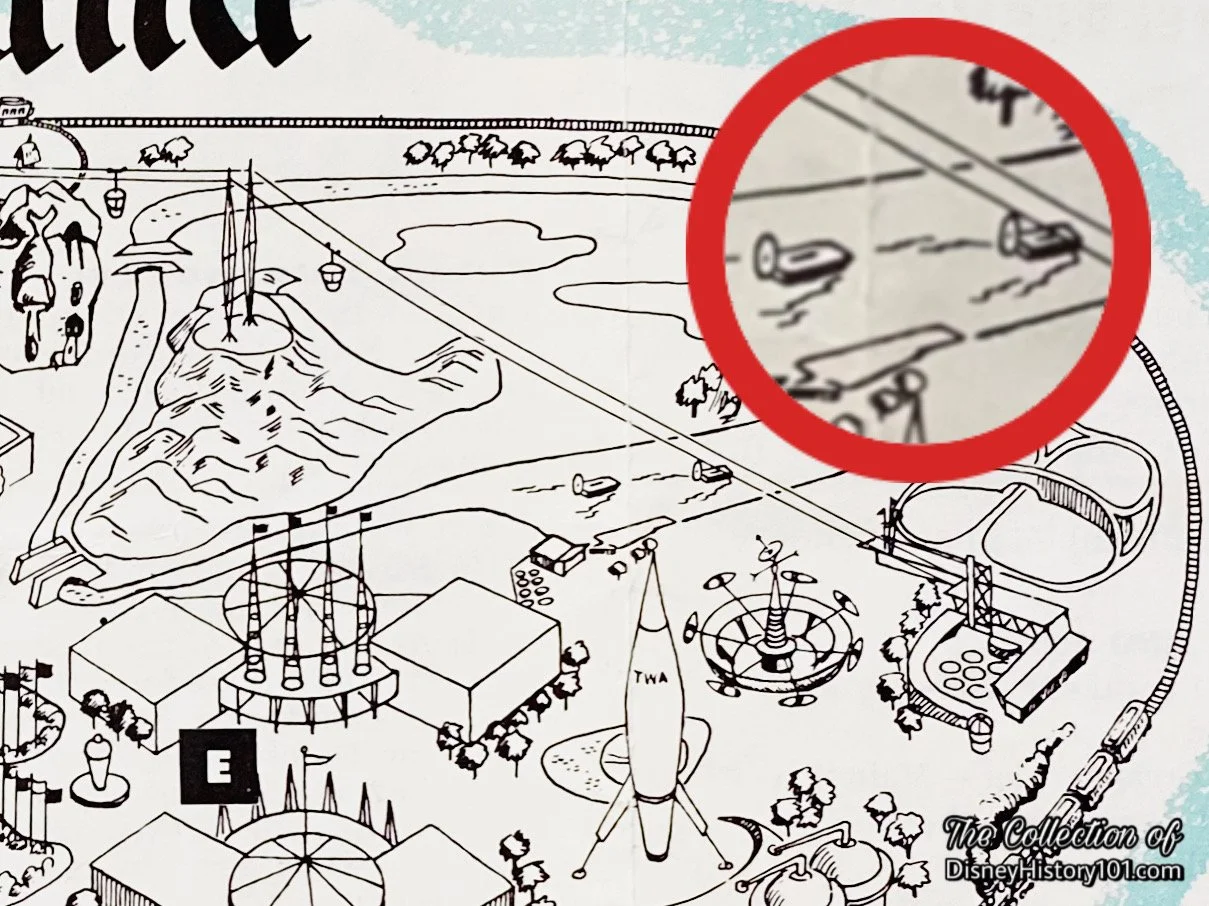
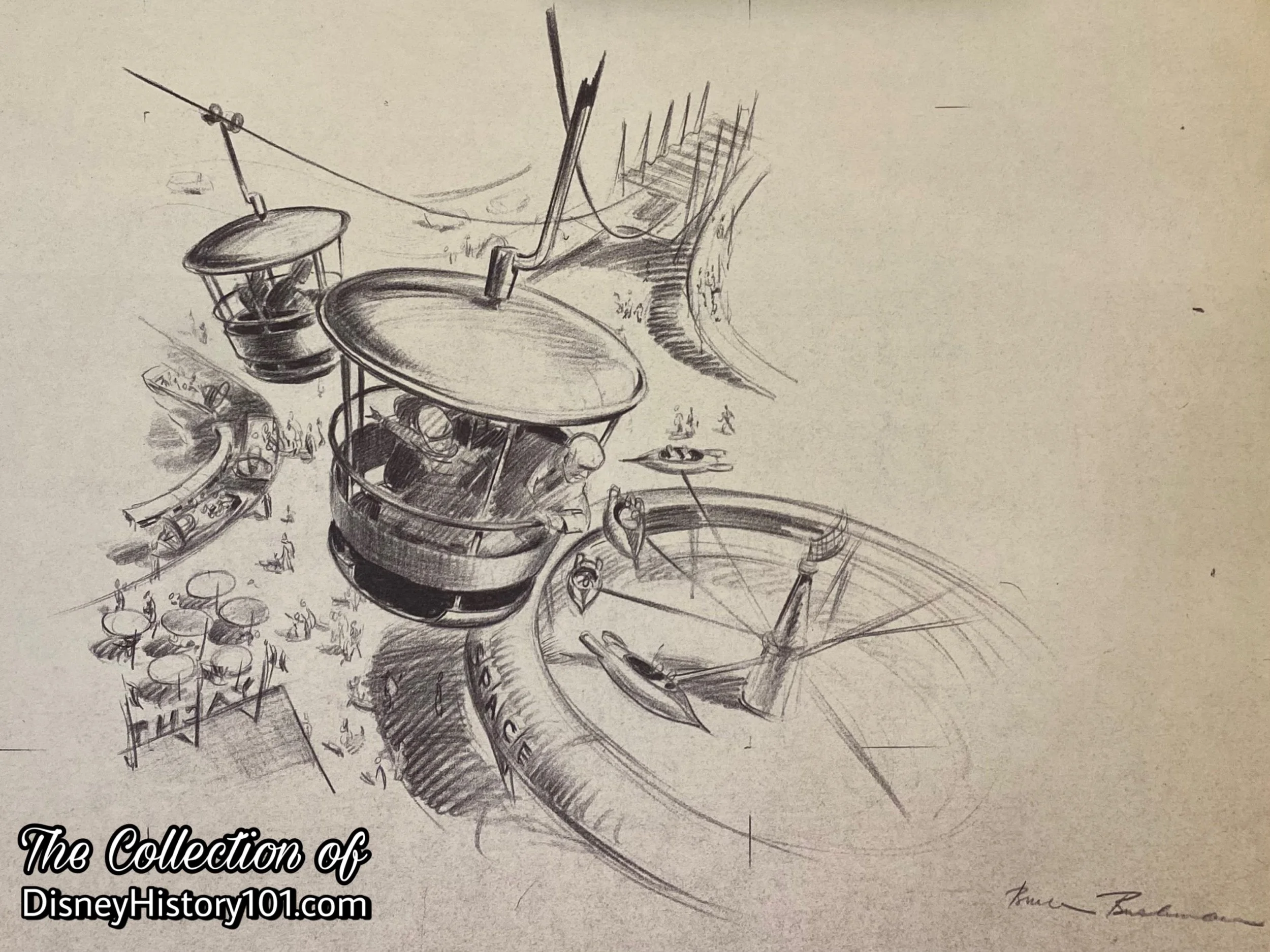
Bruce Bushman (born Francis X. Bruce Bushman) attended Choinard Institute and was hired by Walt Disney Studios. He went on to fulfill the role of layout artist for several Walt Disney Productions. In 1954 Bruce served as layout artist for “Casey Bats Again,” “Social Lion,” and “Daisy’s Diary” (1954) before working on Walt Disney’s Disneyland!
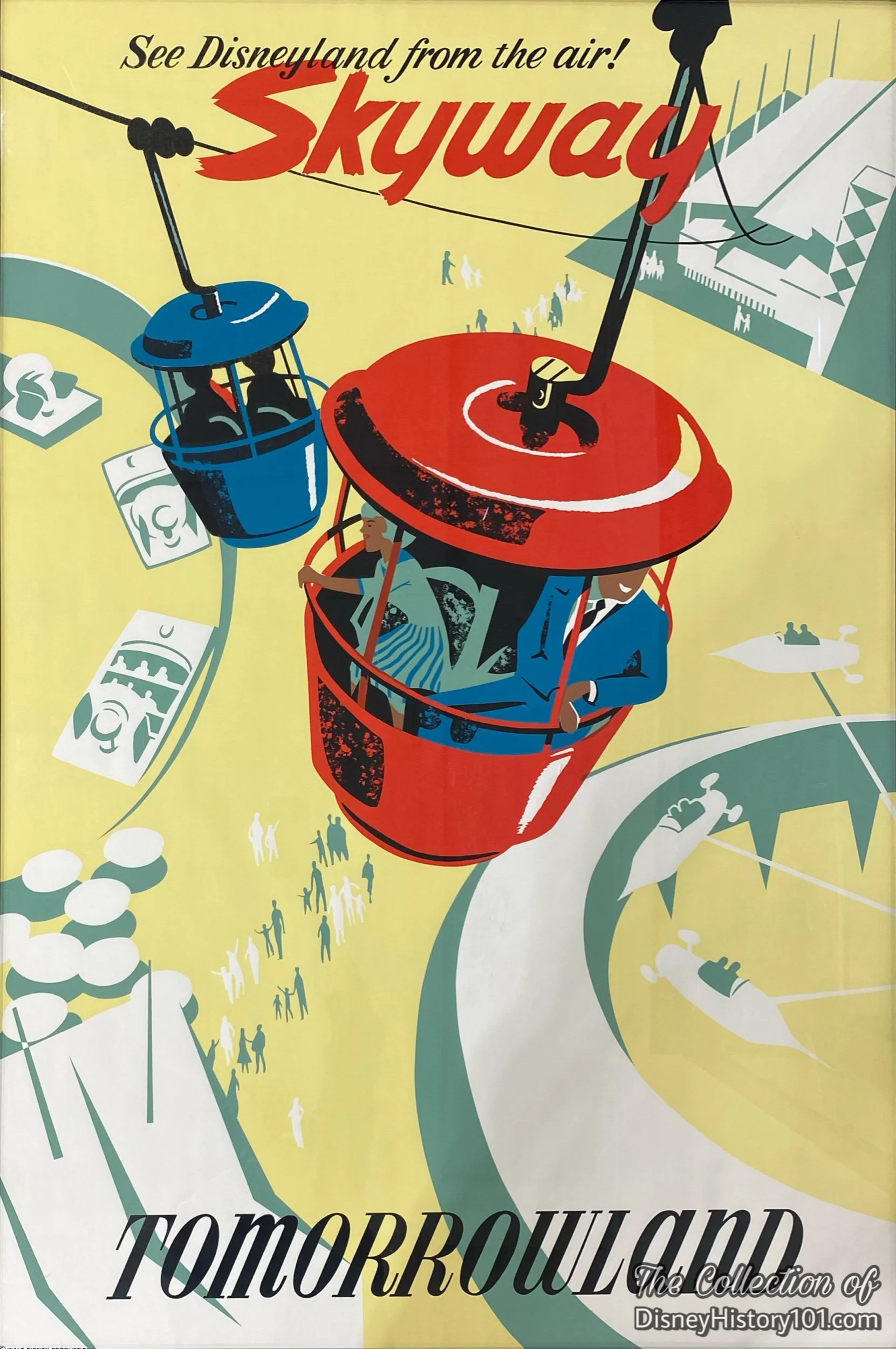
Bob Dorris constructed a scale-model, powered by a model air-plane engine and tested the tiny boat in Newport Harbor. Soon Bob began construction on a full-size hull constructed of plywood and covered with fiberglass. Engineer Ted Mangles (of MAMECO) attached a Jacobs 225-horsepower radial engine (used on crop dusters). The first Airboat (called the “Bayou”) was completed by April of 1956 and even appeared in Bruce Bushman and Bjorn Aaronson’s designs for the Skyway attraction poster. However, tests proved the Airboats to be quite loud.
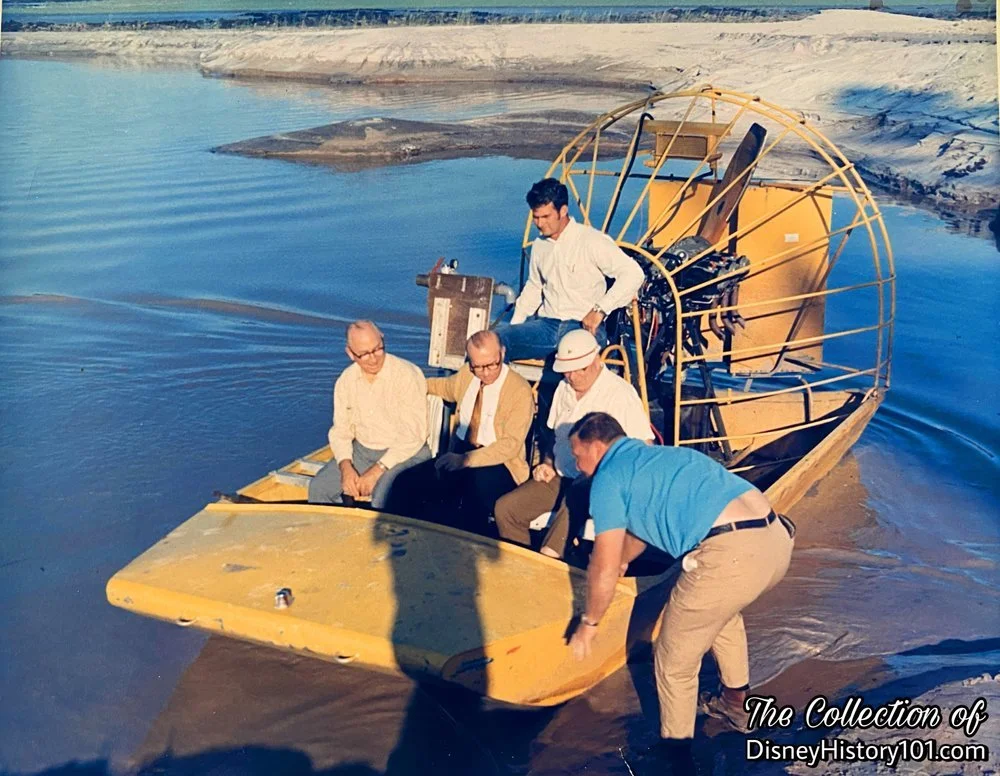
After much research and development, the project was shelved for a couple of decades before being utilized in Florida.
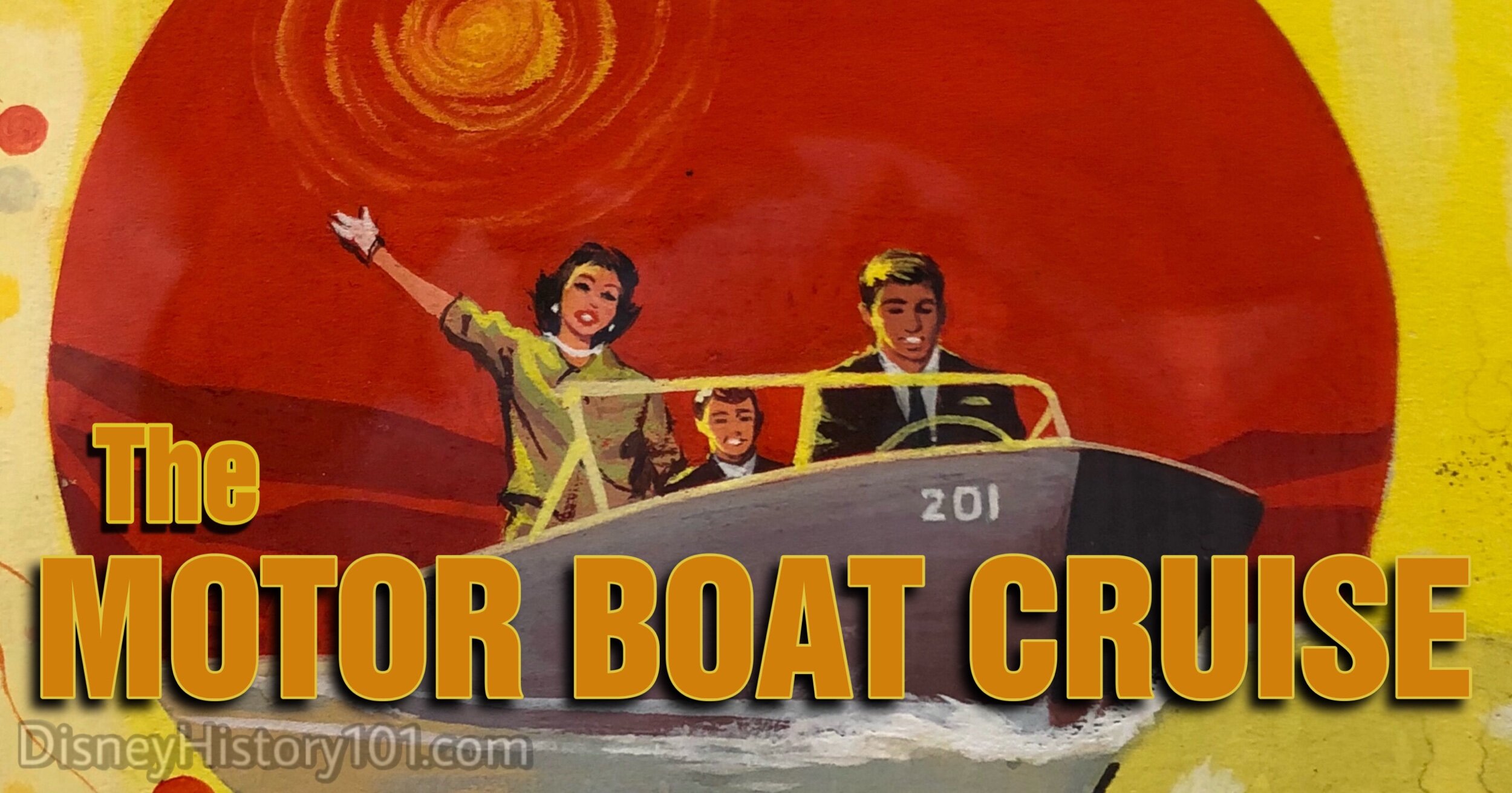
You may recall hearing how Walt Disney, on the eve of Disneyland’s first day of operation, promised that “Disneyland will never be completed. It will continue to grow, to add new things, as long as there is imagination left in the world.” About two years later (during the spring of 1957), Bob Thomas, upon being invited to Walt Disney Studio enigmatically mentioned, “Walt gave me a preview of his ambitious plans at his Burbank studios. He showed models and sketches…plans call for a revamped speedboat ride.” A month later, his comments were published in one Associated Press article “Plan Trip Into Drop of Water, Liberty Square for Disneyland” (by Bob Thomas, published April 20, 1957). By this time, the big innovation being developed for the aquatic area was well under way and visible to Disneyland guests.
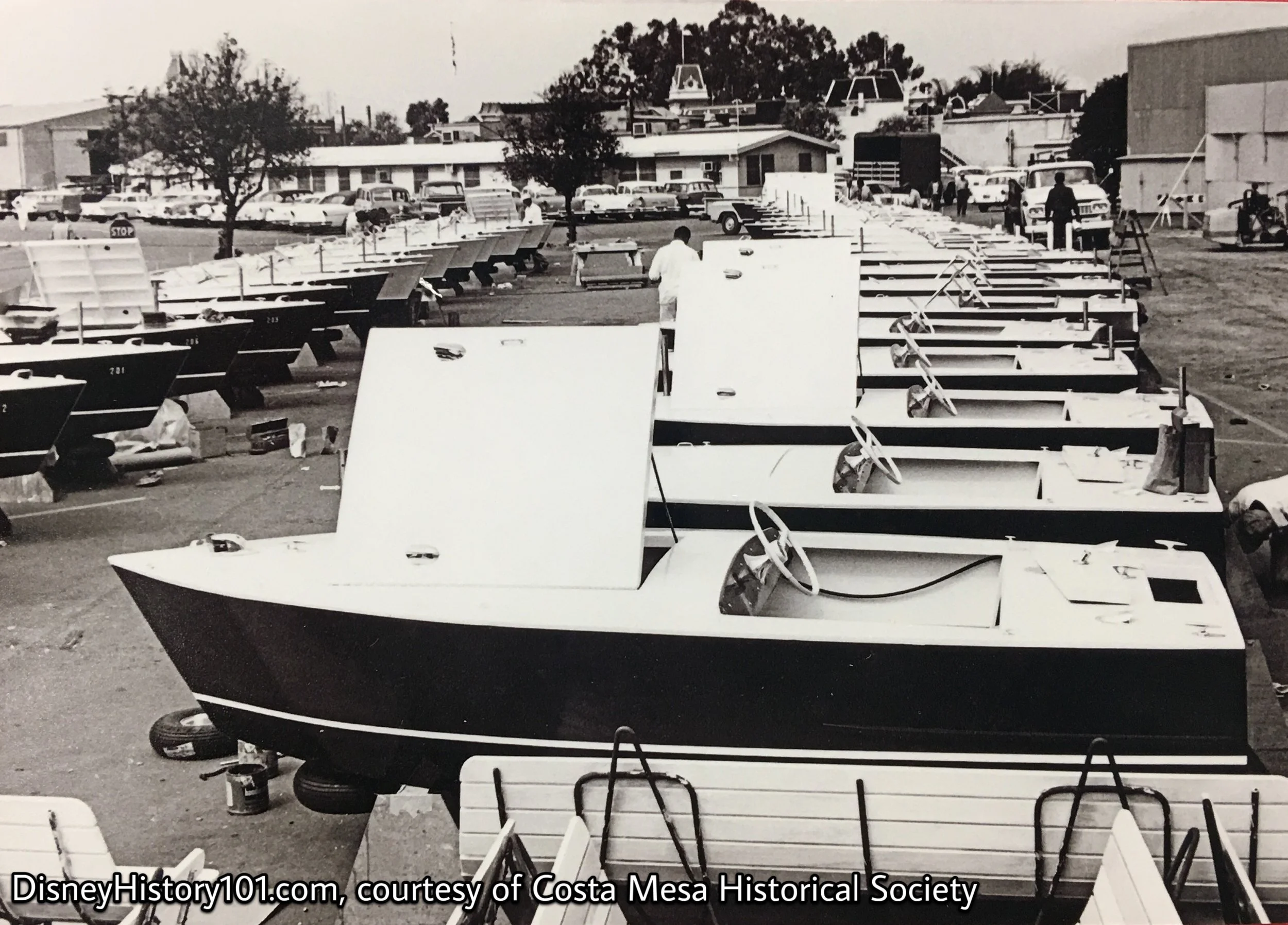
Now, Robert Dorris Boat Works was (again) called upon to create a new fleet of motor boats, to replace the Phantom Boats. Each fiberglass and wooden boat had an overall length 12 ft. 6 inches; Beam 5 ft. 2 Inches. The craft was propelled by a one-cylinder water cooled gasoline engine.
Pictured (above) are the fleet of the near-complete Motor Boat Cruise motorboats in a Backstage area, before their big debut! As mentioned, the entire fleet of these U-Drive Boats was constructed by Bob Dorris, whose work was already prevalent around Disneyland by this time. His company was previously responsible for the original fleet of Canal Boats (of the Canal Boats of the World and later Story Book Land Canal Boats).
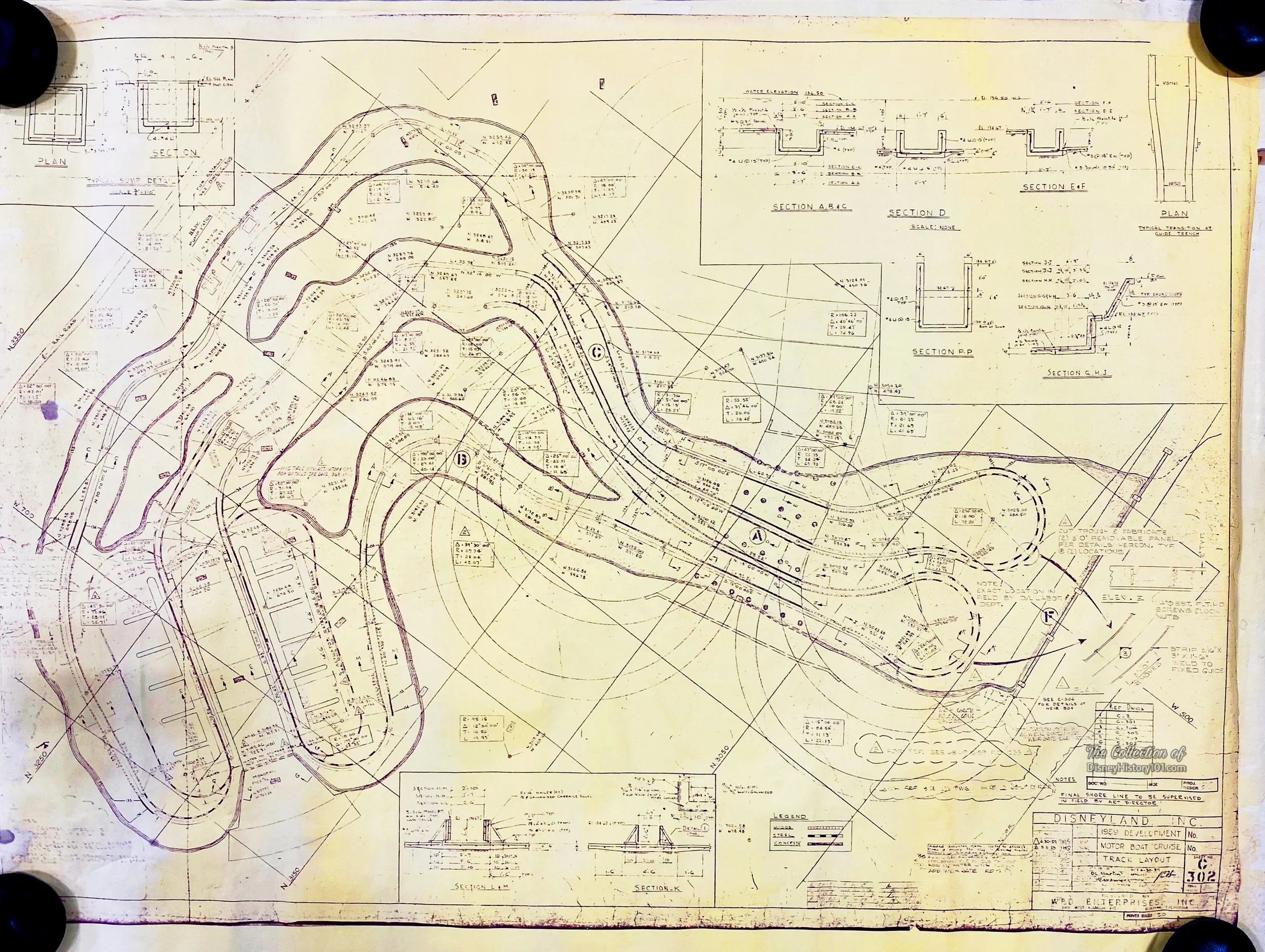
To support this massive expansion, Disneyland, Inc. required a loan through Bank of America. By September of 1958, a Park-wide appraisal was conducted of all cash, accounts receivable, employee benefits, liabilities, deposits, advances, stockholder’s equity, Park assets (including land, adjoining properties, service areas, and utilities), and even those aforementioned jobs in progress.
During the summer, on June 6, 1957, and after a 9-month refurbishment, excursions of the craft began on enlarged waterways between Fantasyland and Tomorrowland. Guests could now navigate their very own Motor Boat through treacherous white-water rapids and tricky swift currents belonging to the controlled channels of the Fantasyland River locatedbetween Fantasyland and Tomorrowland!
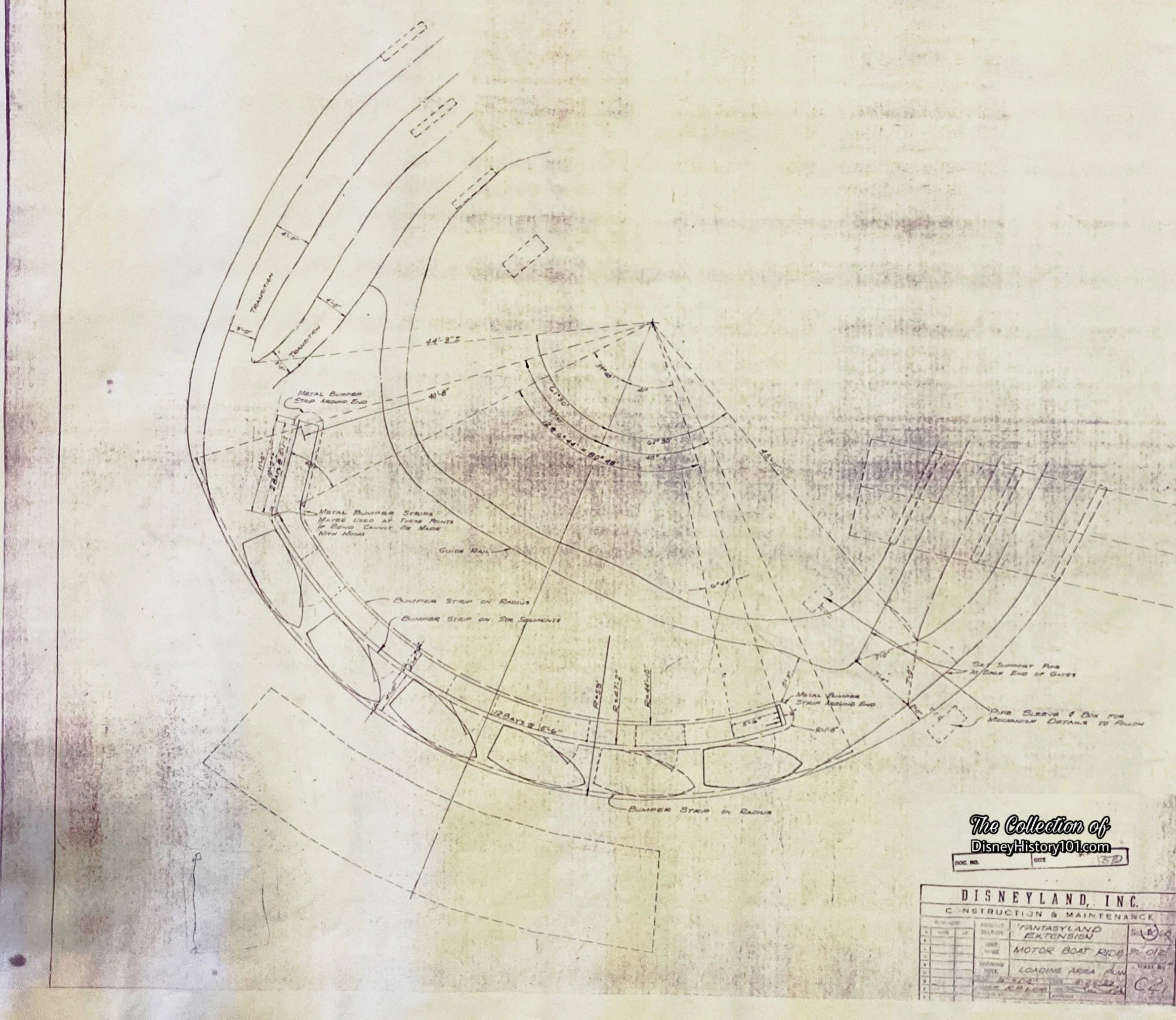
Plans were drawn for new metal bumper strips along the Loading Area.
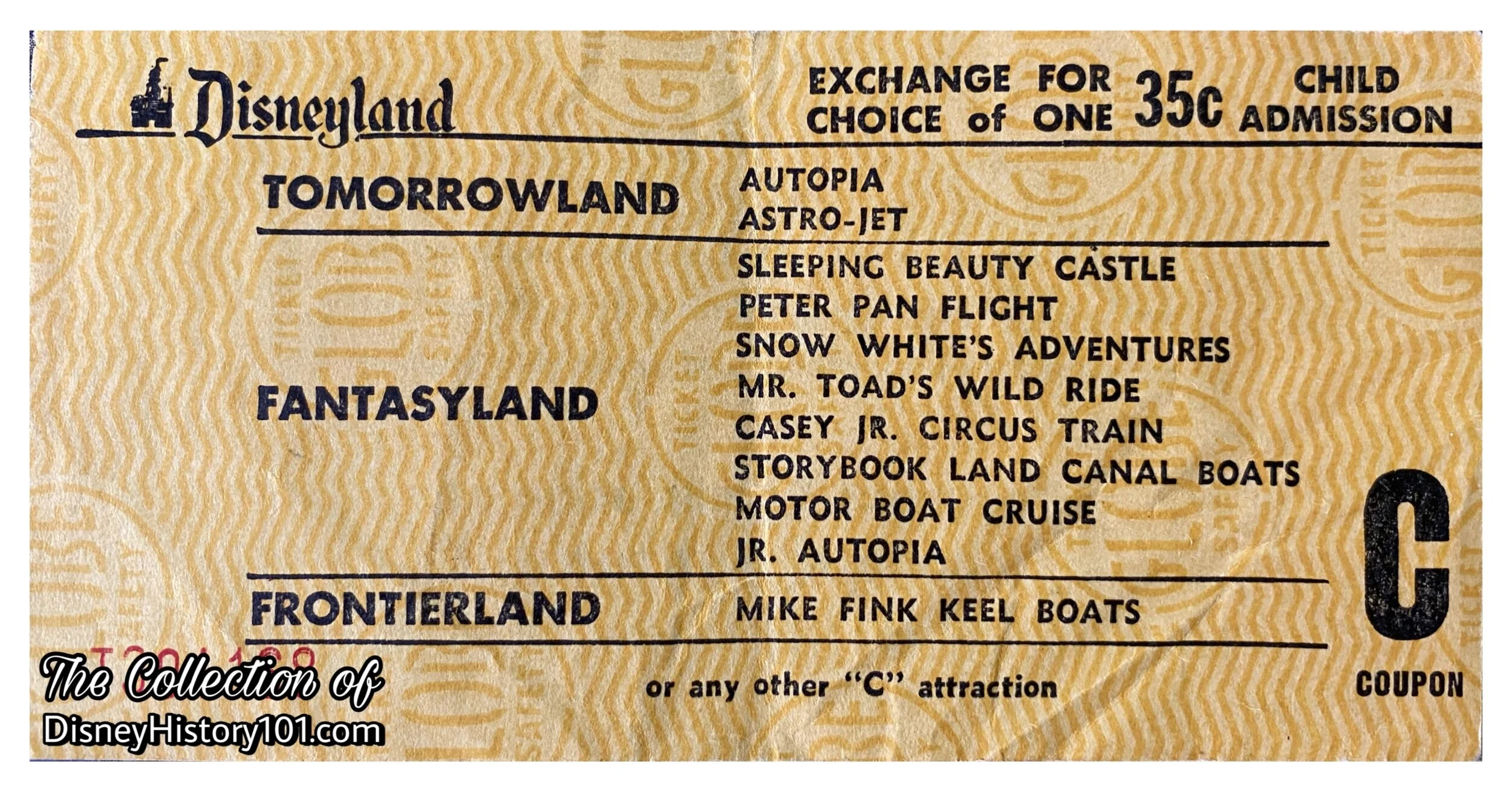
The admission for Motor Boat Cruise was one “C” Coupon (35 cents).
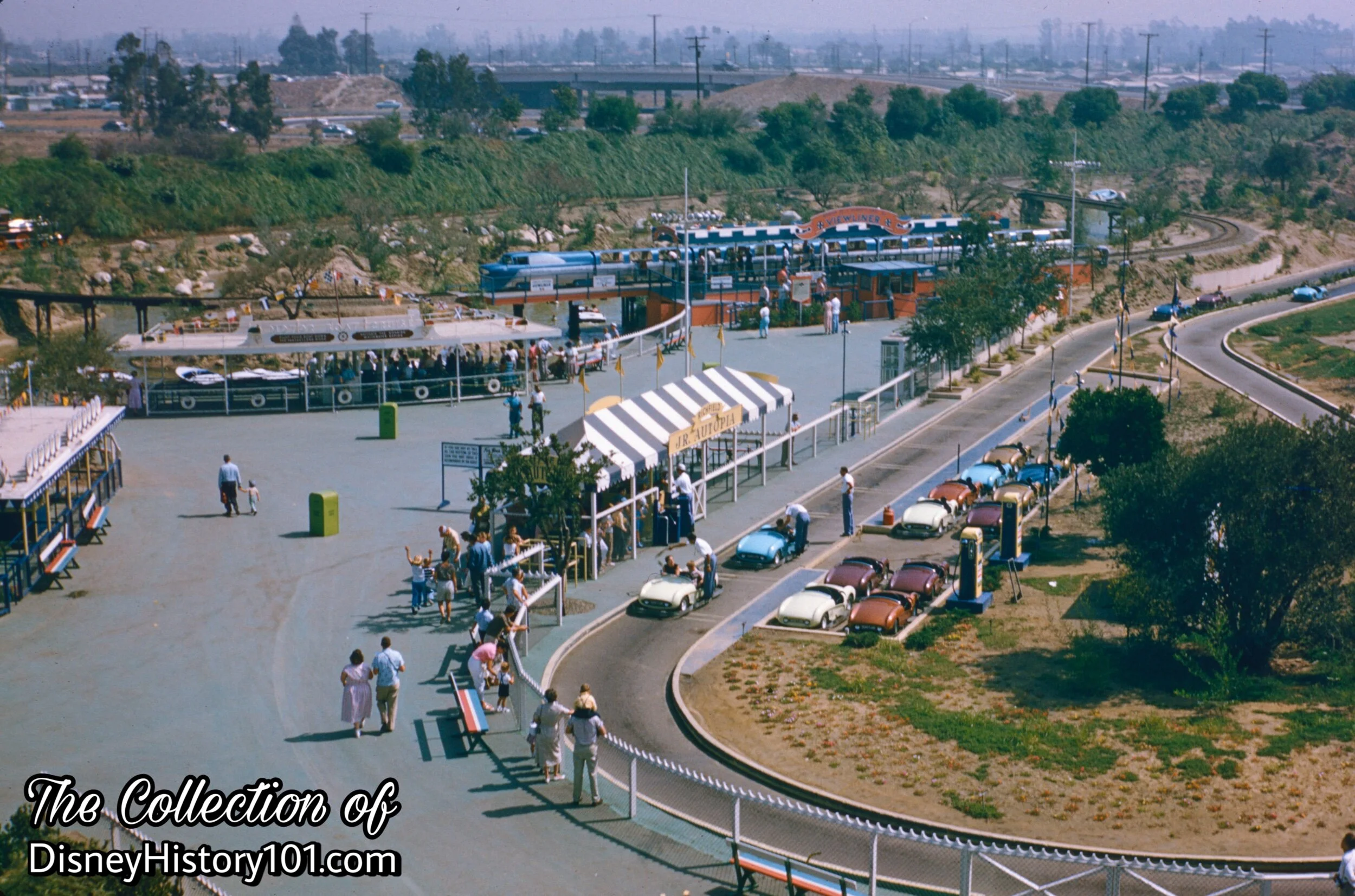
Now, many attractions had both a Tomorrowland and Fantasyland station (and queue) to them. The Skyway had two stations - one in Fantasyland and one in Tomorrowland. The Viewliner Train of Tomorrow had trains themed around Fantasyland and Tomorrowland. The Autopia Freeway of the Future would come to include both a Fantasyland Autopia track and a Tomorrowland Autopia Track. The same would come to be true of the Motor Boat Cruise! By 1958, “two complete Motorboat Cruises have been designed on a new lake in the Fantasyland area. Guests pilot their own boats through whitewater rapids and rock-filled currents on this winding, swiftly-moving stream.”
Disneylander and ”55er” Maynard Swenson worked on the Motor Boats for a time, trying to keep the boats operating.
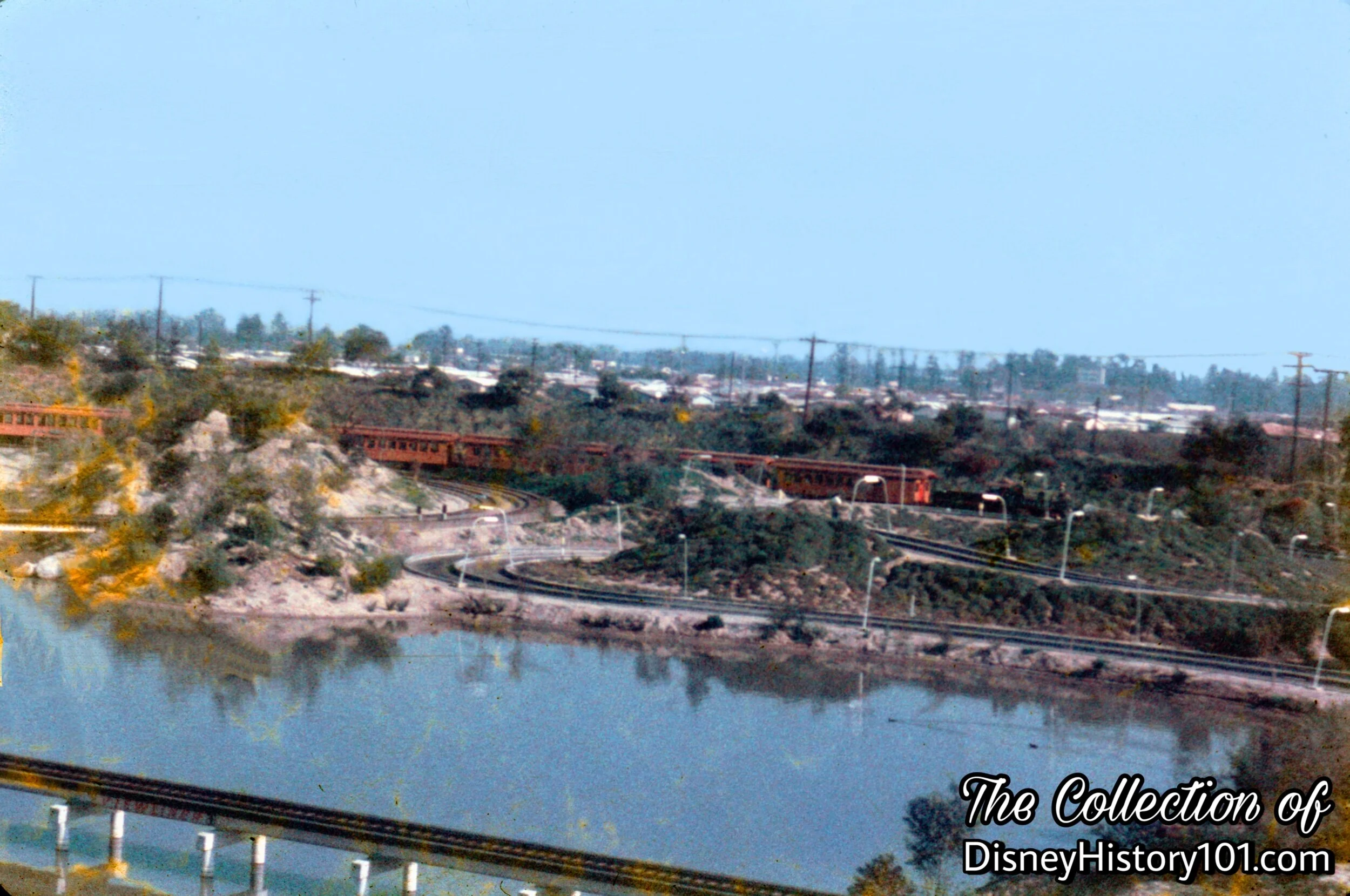
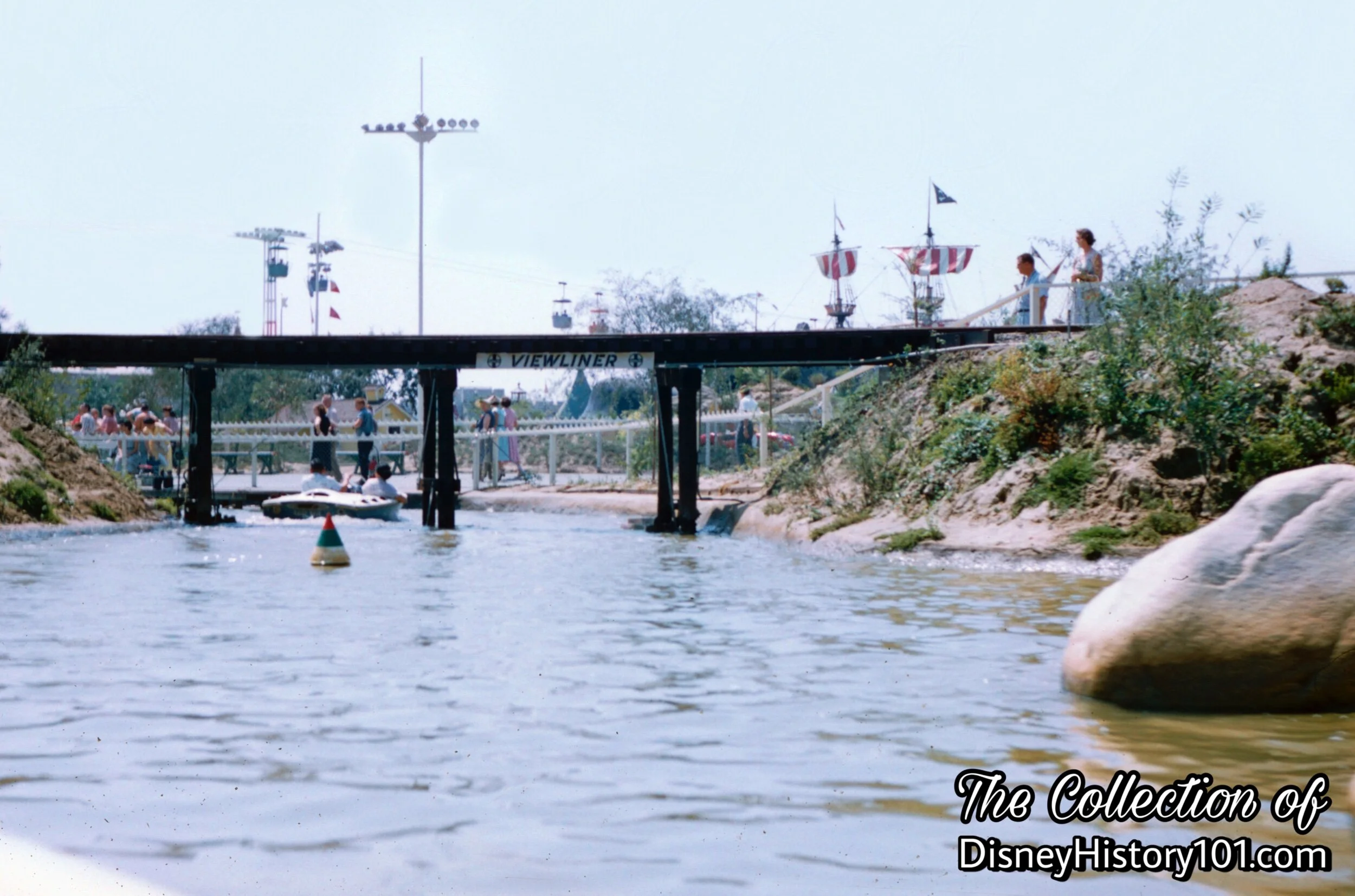
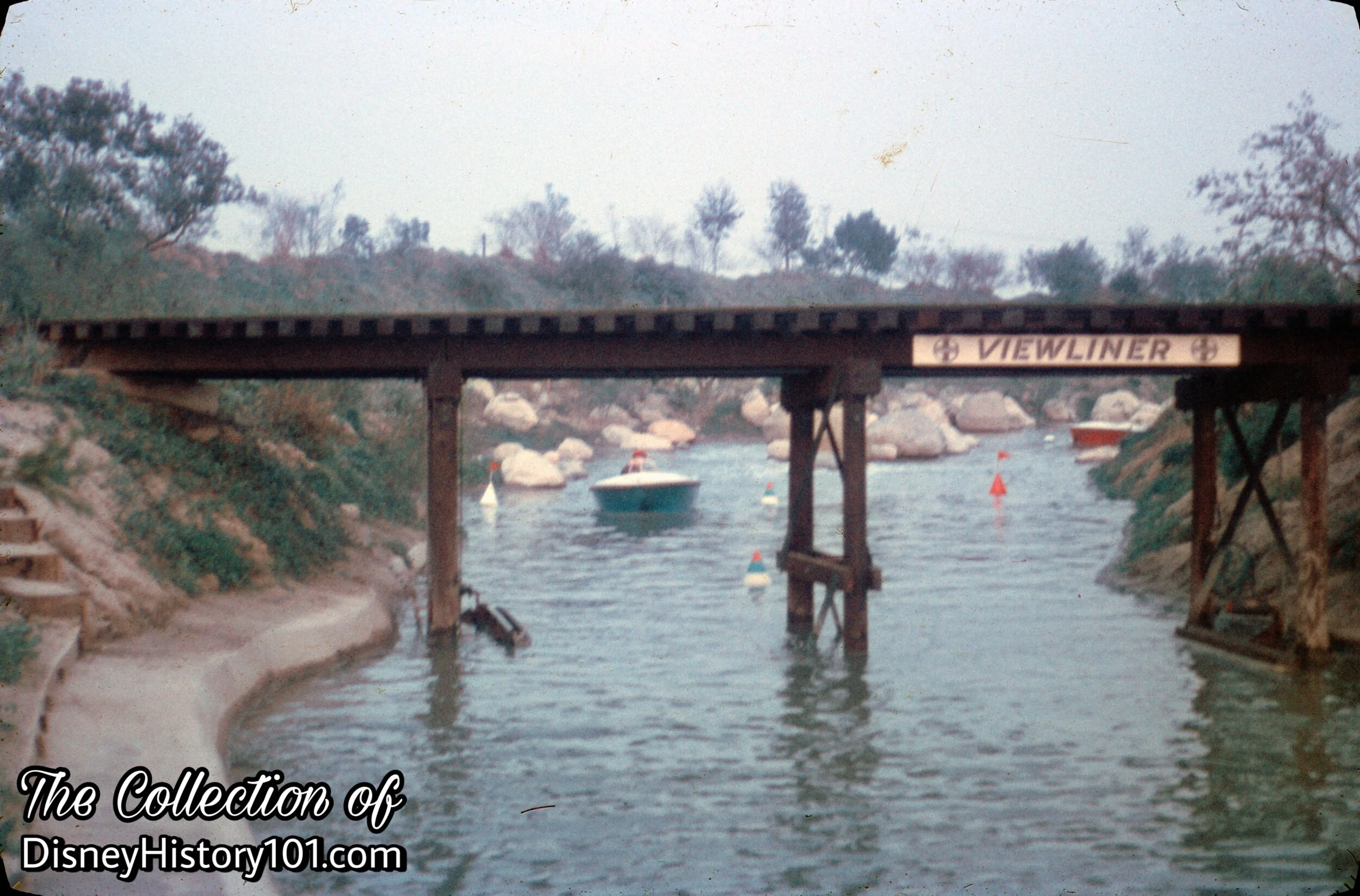
For a brief year, Motorboats cruised under the wooden trestles of that carried passengers of the Viewliner Train of Tomorrow between Fantasyland to Tomorrowland!
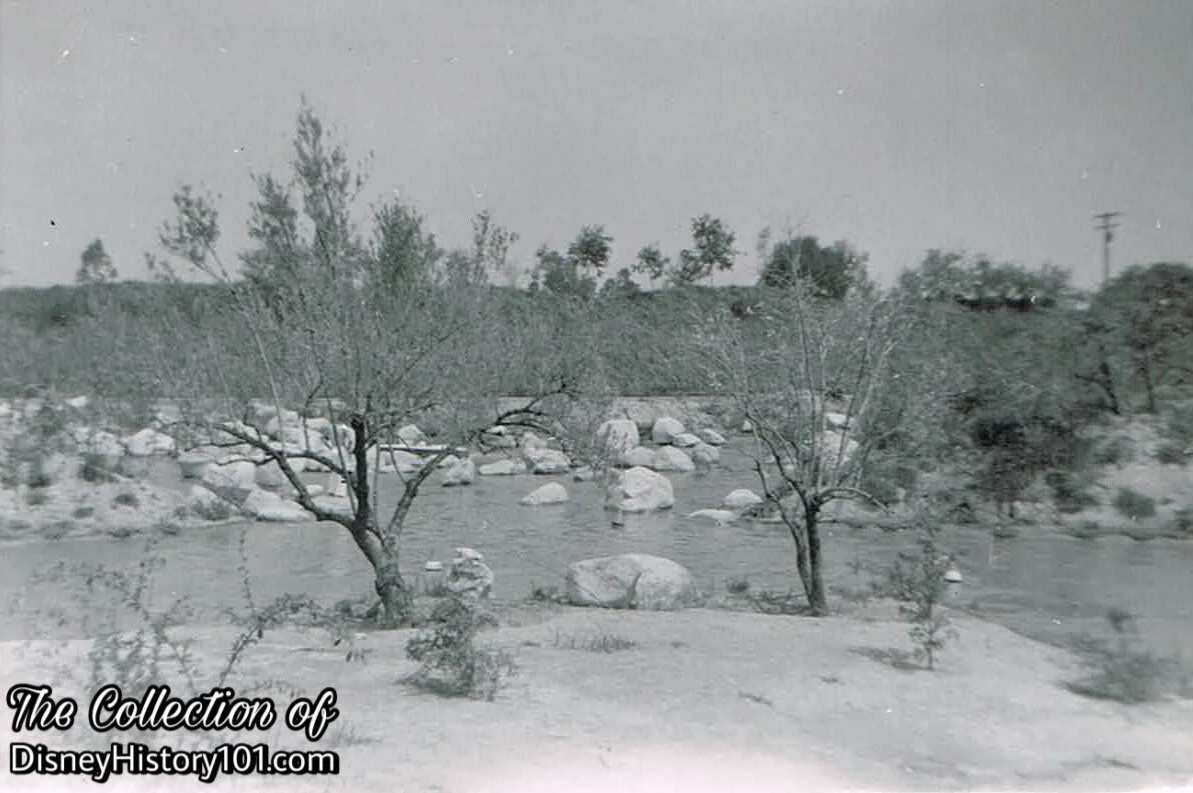
The waterways of the Fantasyland River were home to rocky, turbulent rapids, which Motor Boats would successfully navigate! During the 1960s, the surface and shoreline of the Tomorrowland waterways were tended to regularly to retrieve papers and wrappers that were accidentally dropped or sometimes thrown in. The water itself was constantly being filtered and replenished.
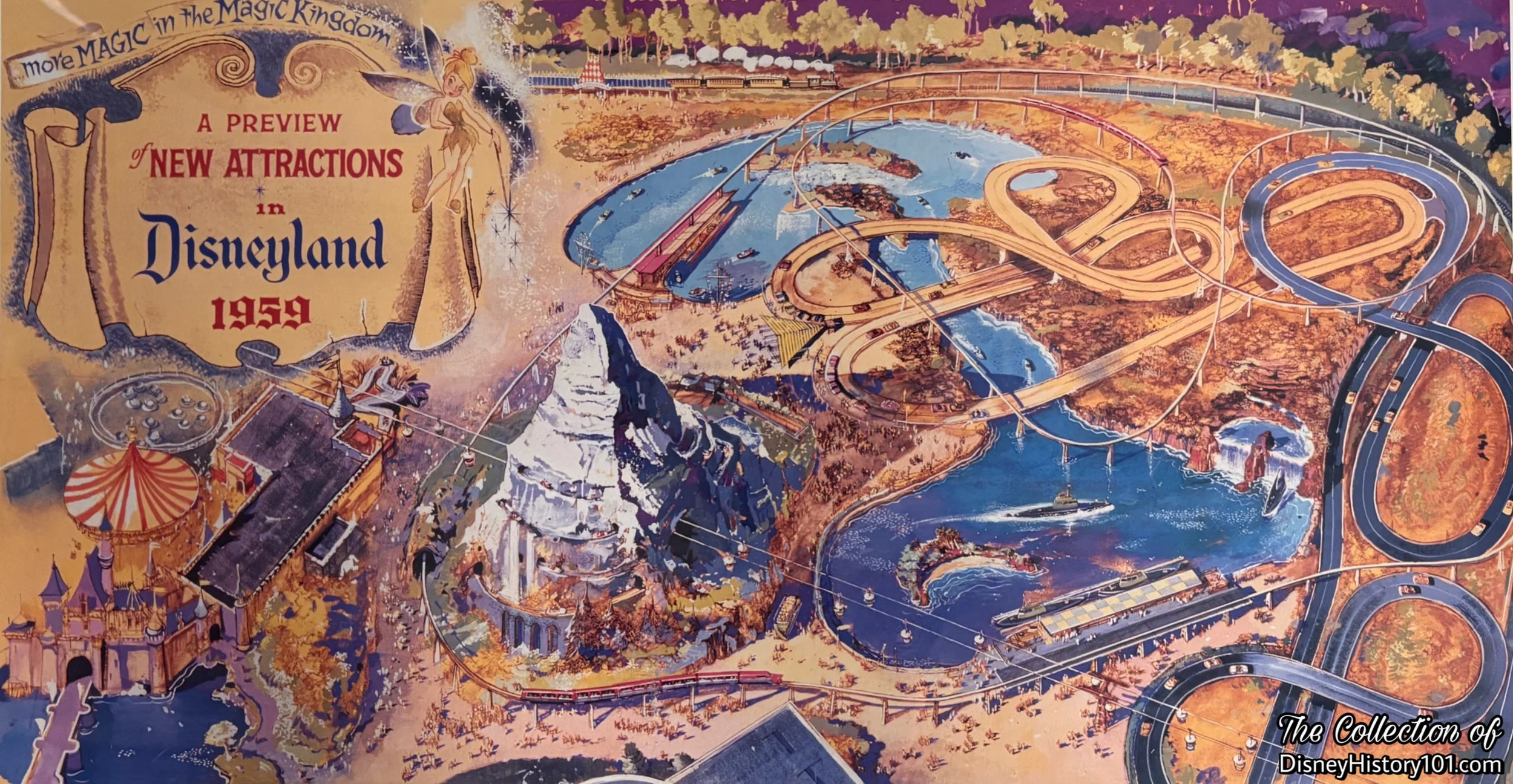
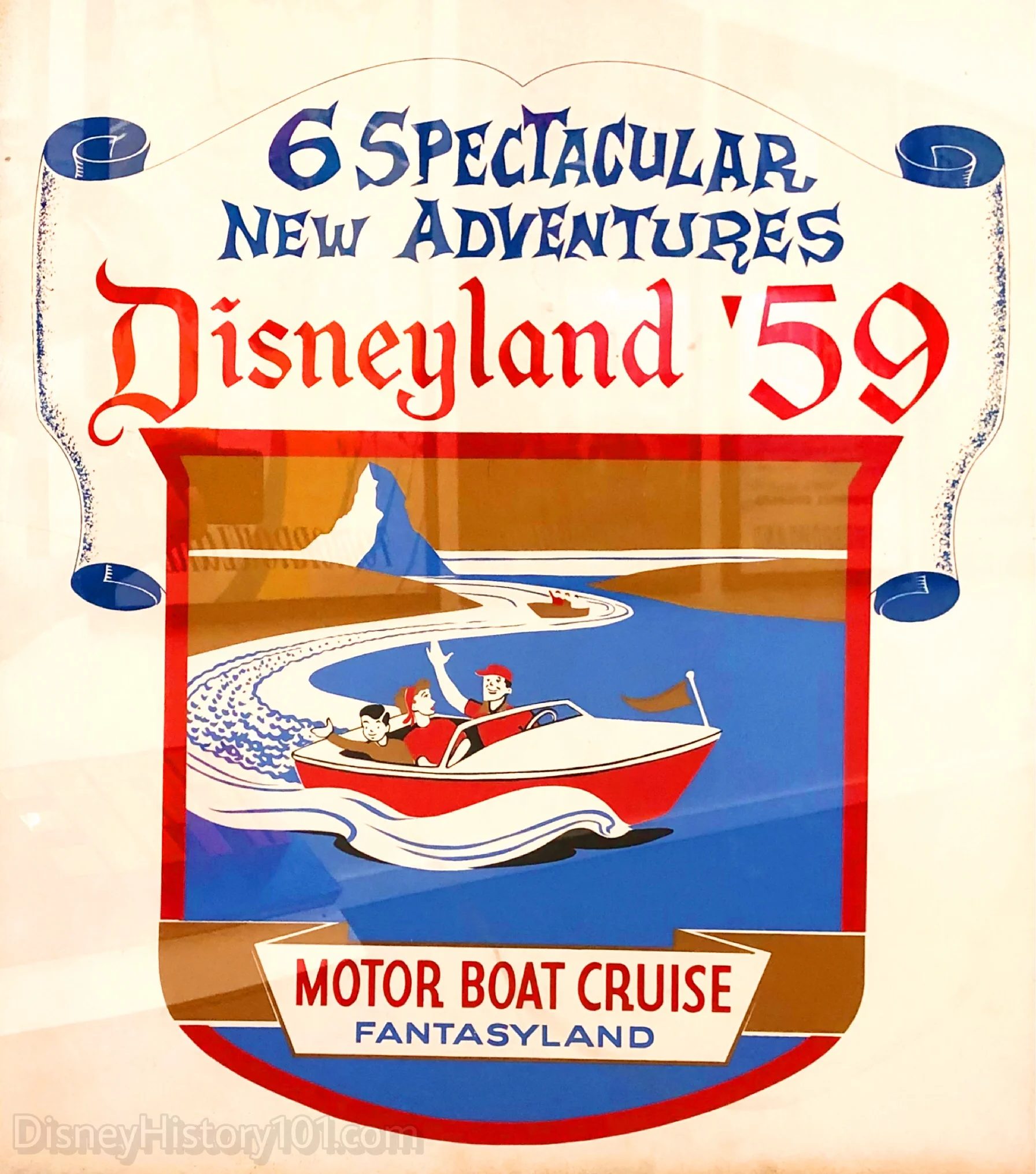
By 1958, Disneyland continued to grow and expand, and some changes were in store for the Fantasyland River and its nautical-themed Motor Boat Cruise. Soon after the Viewliner Train of Tomorrow ceased operation (in September of 1958), the rails and wooden trestles were removed. The following year (1959), land allocated for the Submarine Voyage Thru Liquid Space (and its Submarine Lagoon) replaced most of the area that was previously occupied by the Phantom Boats and the Fantasyland River.
The land was graded, and a new ride system was designed by Arrow Development. In a Backstage area, the Motor Boat Cruise attraction was given its very own Naval Yard, complete with Dry Dock and a Shop for maintenance and repair of the Motor Boats! In this location, the 40 Motor Boats would be among 100 boats that were “reworked” annually (from 1955 to 1965), according to Disneyland Backstage (Summer, 1965). “Patch work is done throughout the summer and the permanent patch work in the fall of the year.” For now (early in 1959; before opening), the gasoline-driven, track-guided Motorboats adventure was appraised, the lagoon valued at $152,900 and the vehicles (with equipment) valued at $89,800.
The big day came, and two all-new thrilling Motor Boat Cruises were accounted as one of “six spectacular adventures” to debut in June of 1959"! Though the attraction had been around since 1957, it now featured an extended route underneath the Monorail beam way. Beneath the monorail, two new lakes were created in order for guests to take “memorable Motorboat Cruises through rapids and rushing ‘white water’ to serene mirror-like lagoons.”
By 1959, Joe Fowler was Vice President of Disneyland Operations Committee and Doc Lemmon of Disneyland Operations was overseeing Operators of Rides & Amusements (like the Motor Boat Cruise), Livestock, Parking Lot, and Ticket Sellers.
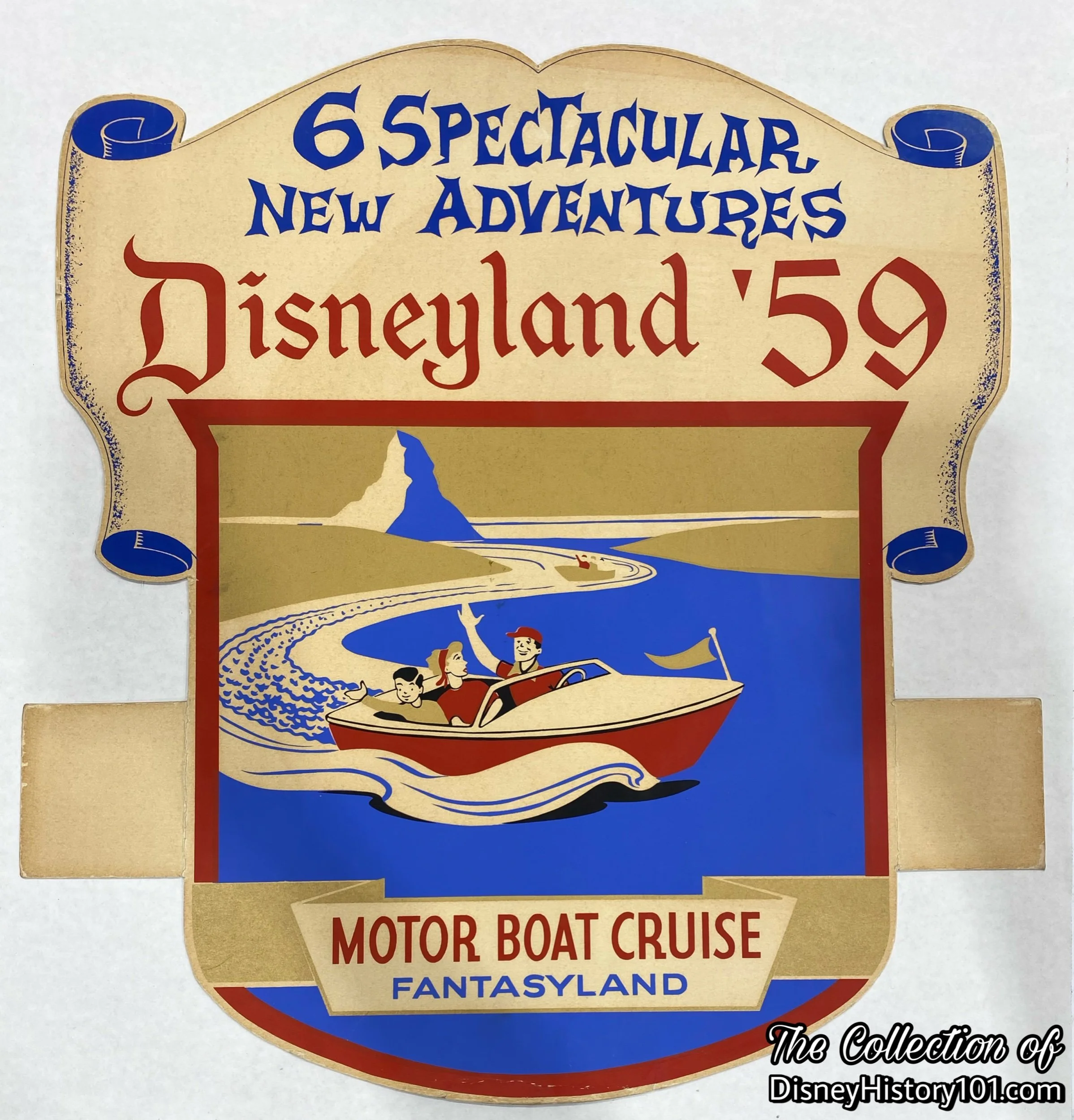
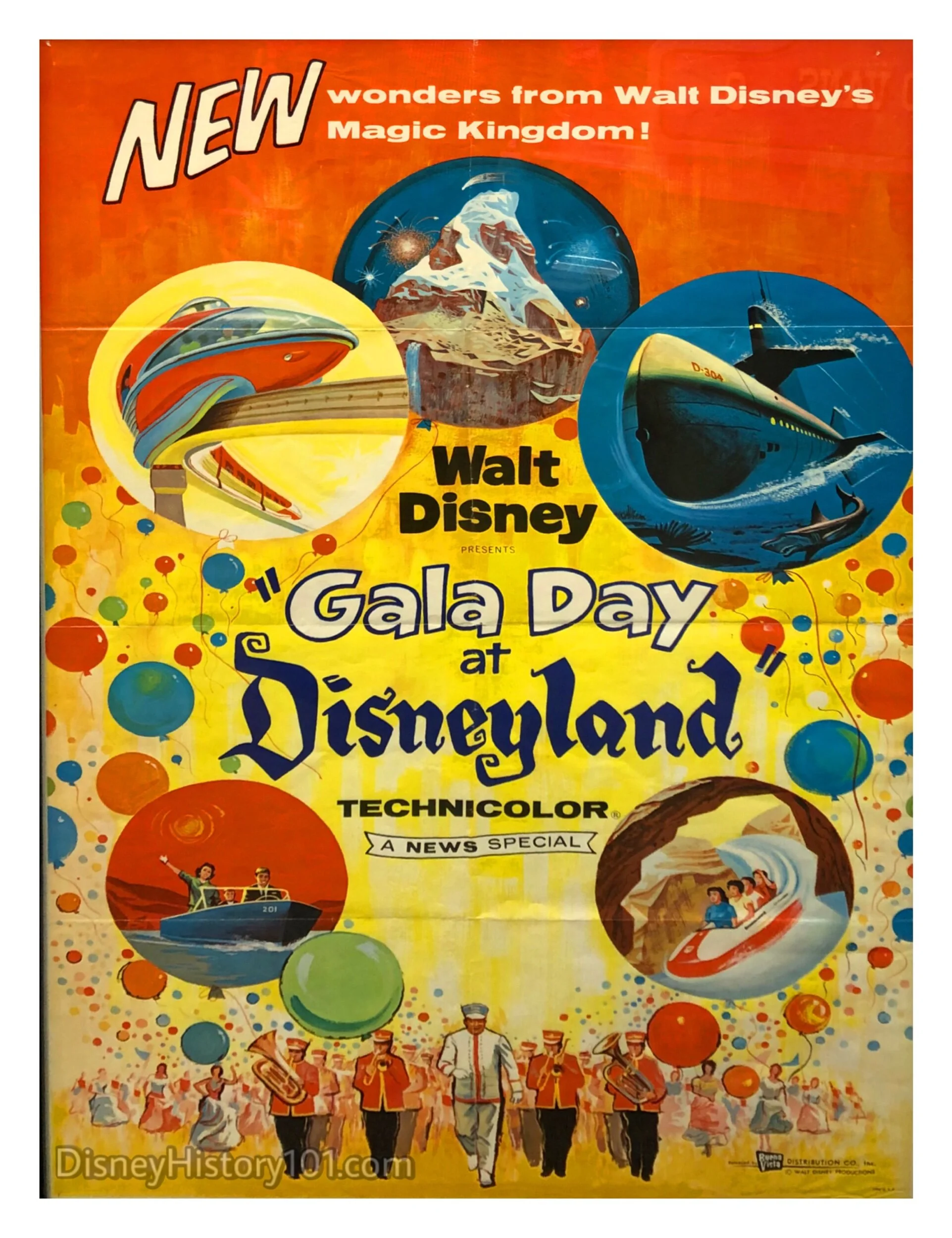
The theatrical release of the 25-minute technicolor, Buena Vist film announced the debut of “Six Spectacular New Adventures” to movie-goers across the United States, in 1959. Among these new adventures - the Motor Boat Cruise!
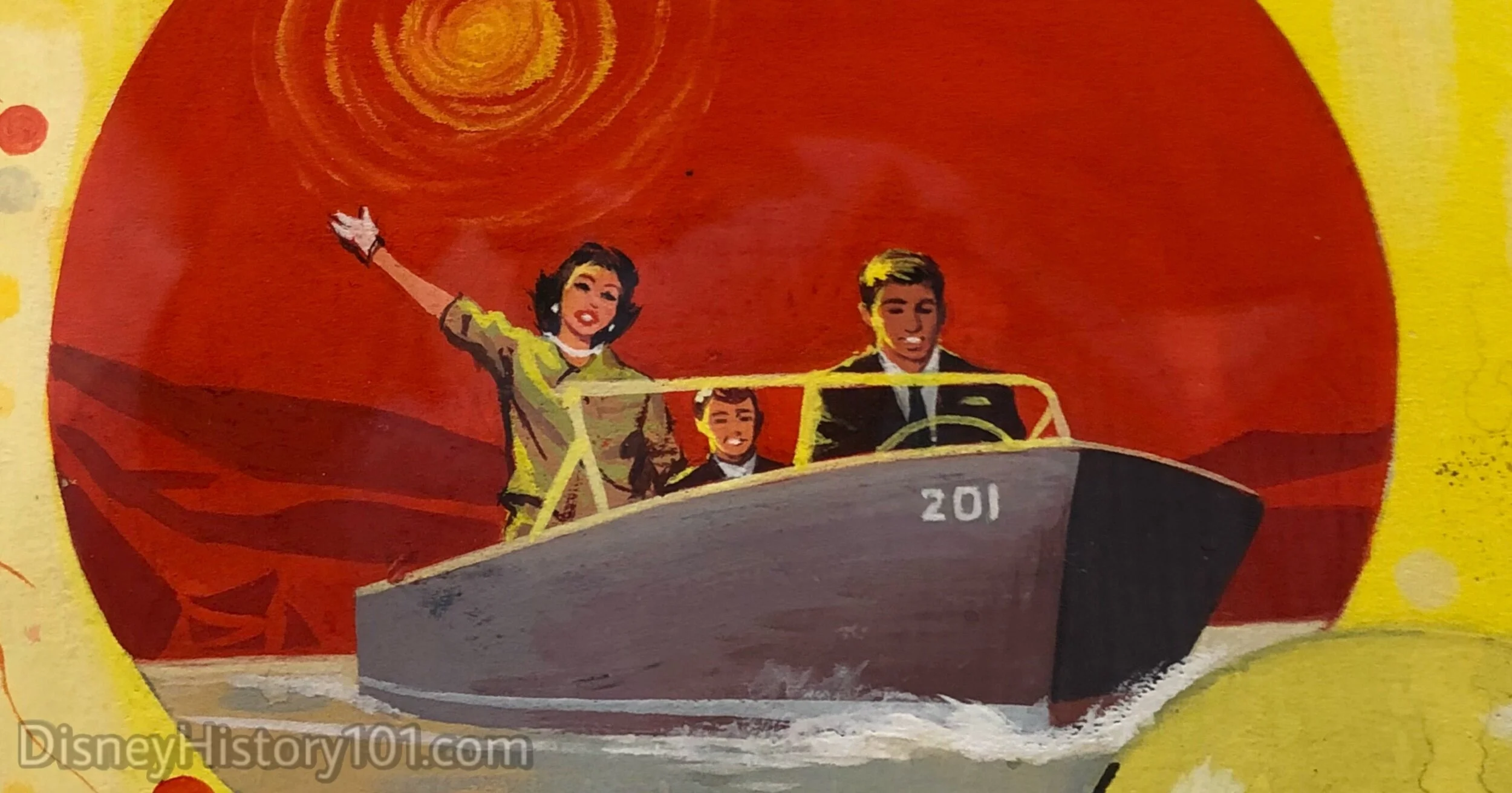
This excerpt of the colorfully rendered one-sheet, was produced for the theatrical release of a film created to promote the Disneyland debuts of 1959. Many of the attractions featured were of Tomorrowland.
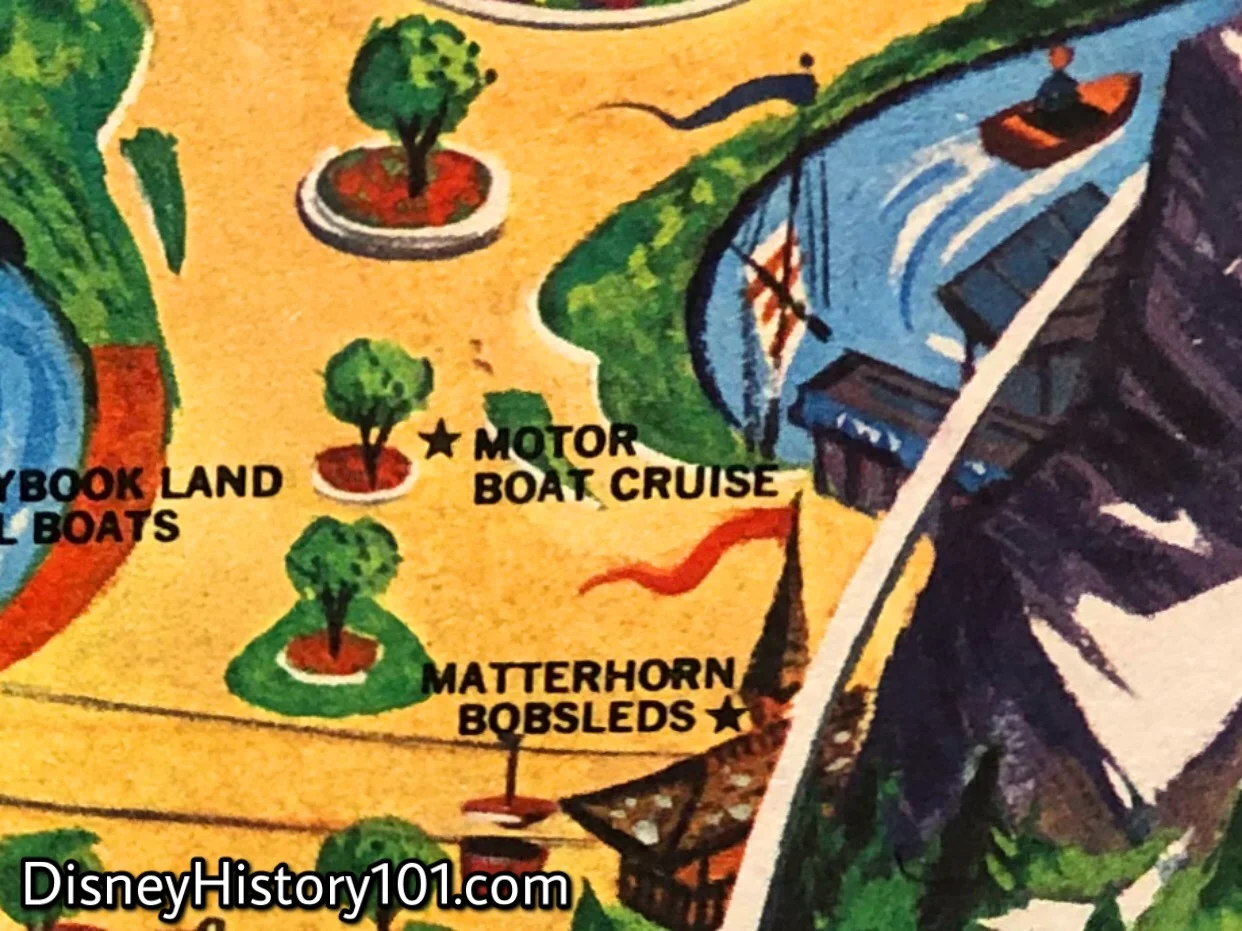
Perhaps one of the biggest changes came when the location of the “new” attraction was re-defined! Though the Motor Boat Cruise’s route previously overlapped with the Viewliner Train of Tomorrow, and currently crossed paths (or came near) the Disneyland ®️ ALWEG Monorail, the Tomorrowland Autopia, and Submarine Voyage, the attraction was actually located in Fantasyland. Walt Disney’s Pictorial Souvenir Book of Disneyland (published 1965) account the Motor Boat Cruise as one of Fantasyland’s “exciting adventures”. Much later, maps like the Dial Guide to the Magic Kingdom (published c. 1970) still identified the location of this attraction in Fantasyland!
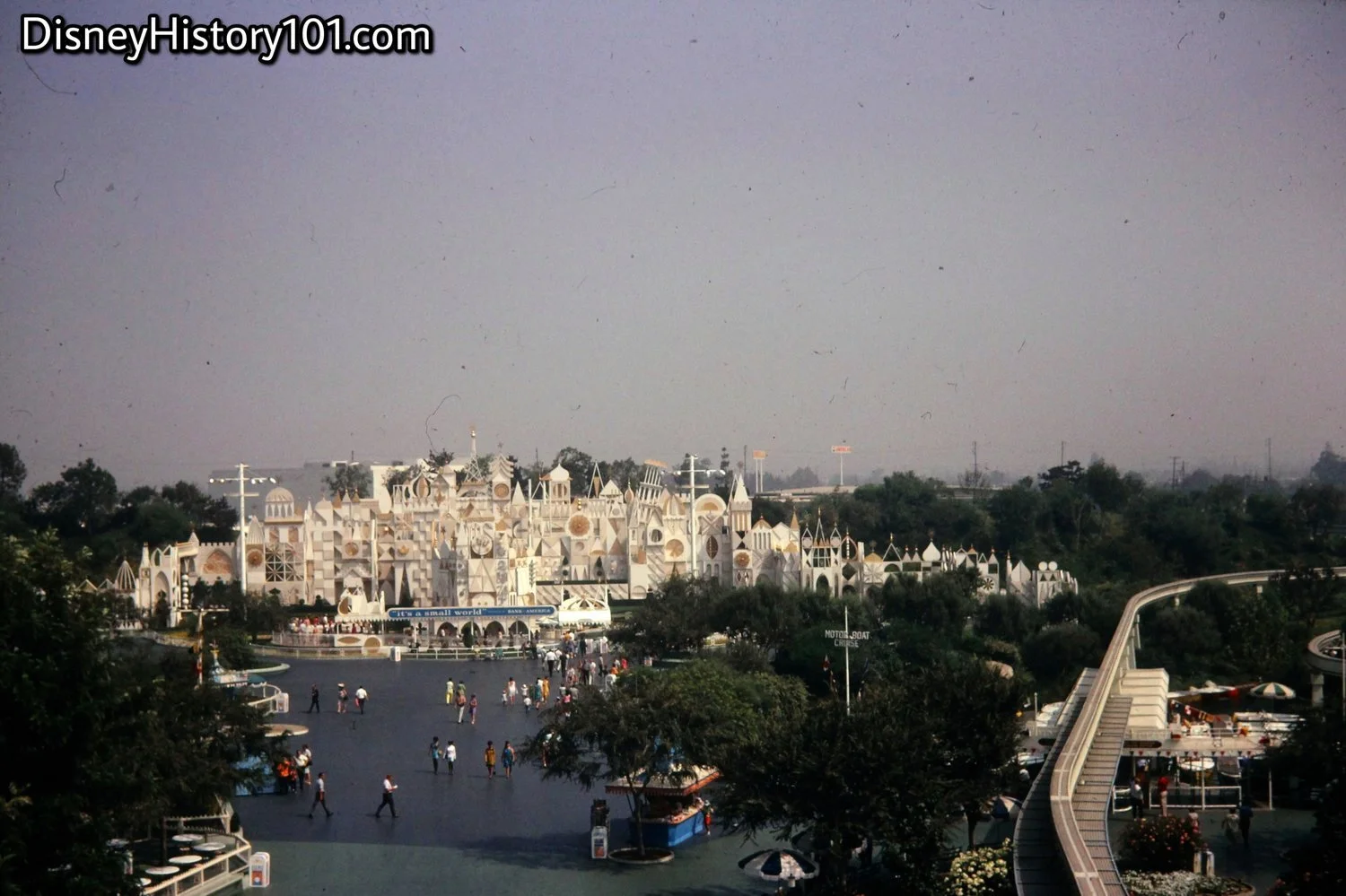
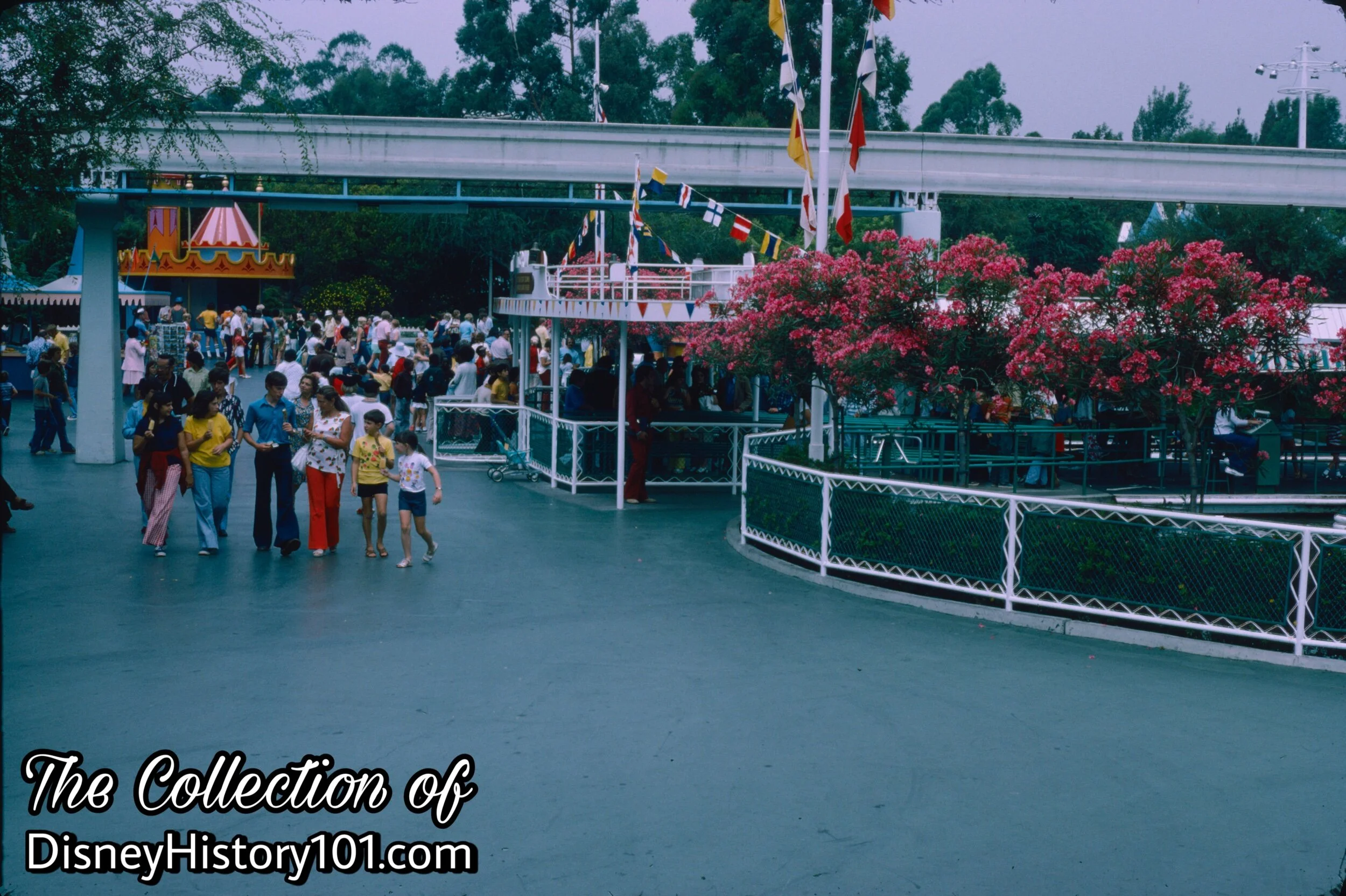
(Pictured Above : Oleanders bordering the Motor Boat Ride provide a colorful floral display as separate the boat ride from adjacent activities.)
Just beyond the entrance to the Motor Boat Cruise (to the left), you’ll notice a Souvenir Stand where guests could find nautical themed Disneyland souvenirs. To the right you’ll notice oleanders which form a partition. According to Disneyland World of Flowers (published 1965) : “Much of the…wall around the Motor Boat ride is composed of oleander, a mainstay of warm climate gardening. Native to the Mediterranean, it is equally at home in such diverse locales as Phoenix and Waikiki Beach. In Disneyland it is generously employed in the landscape both as a summer bouquet and for…screening. Oleanders are rapid growers and can be trained in various forms, either as a shrub, hedge, or tree.”
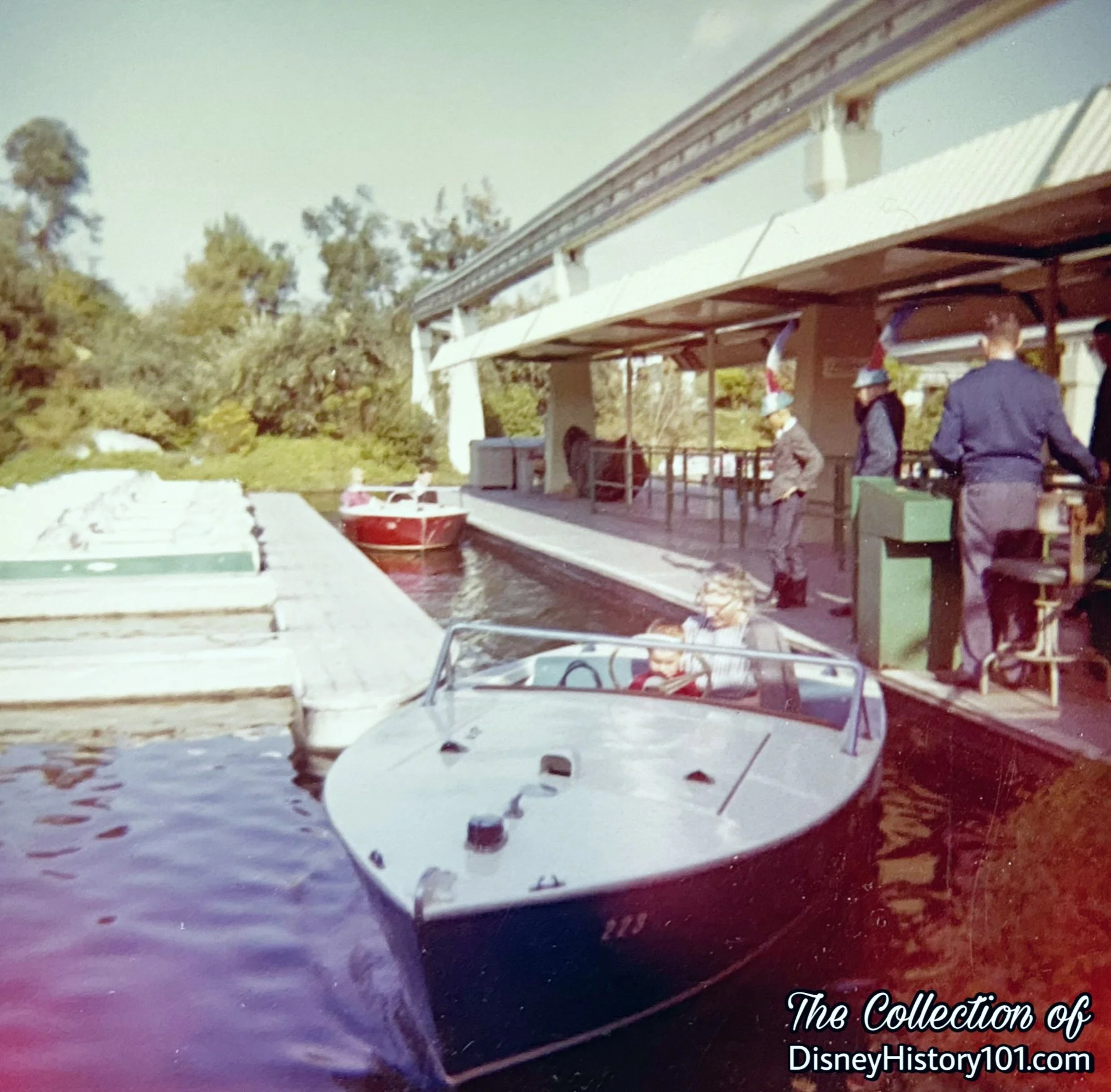
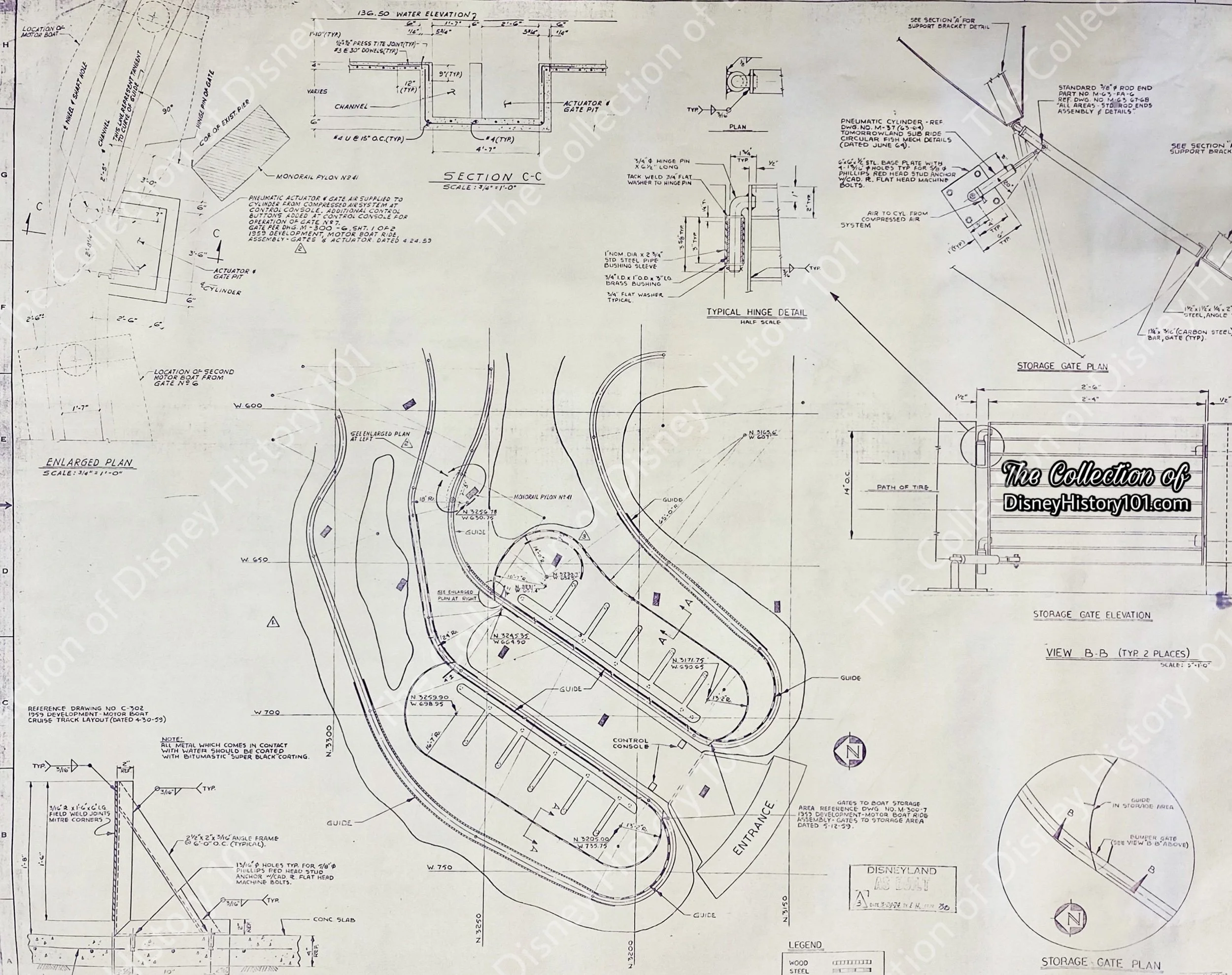
“Motor Boat Maintenance”
Nightly the pools and fountains of the Motor Boat Cruise were cleaned.
Rehabs were planned to follow the Disneyland waterway flow: (1) Storybook Land Canal, (2) Motor Boat Cruise, (3) Sleeping Beauty Castle Moat, (4) Rivers of America, and (5) Jungle Cruise.
Around 1982-83, a typical Motor Boat Cruise Job Sequence Sheet described rehabilitation work like transporting boats from the Service Garage to the Sub Dry Dock, locating them by hoist, placing the boats in the water and removing the boats to be rehabbed. Next came the preparation and cleaning of the boats for their operation. This would have been repeated every two weeks until all 40 boats were rehabbed.
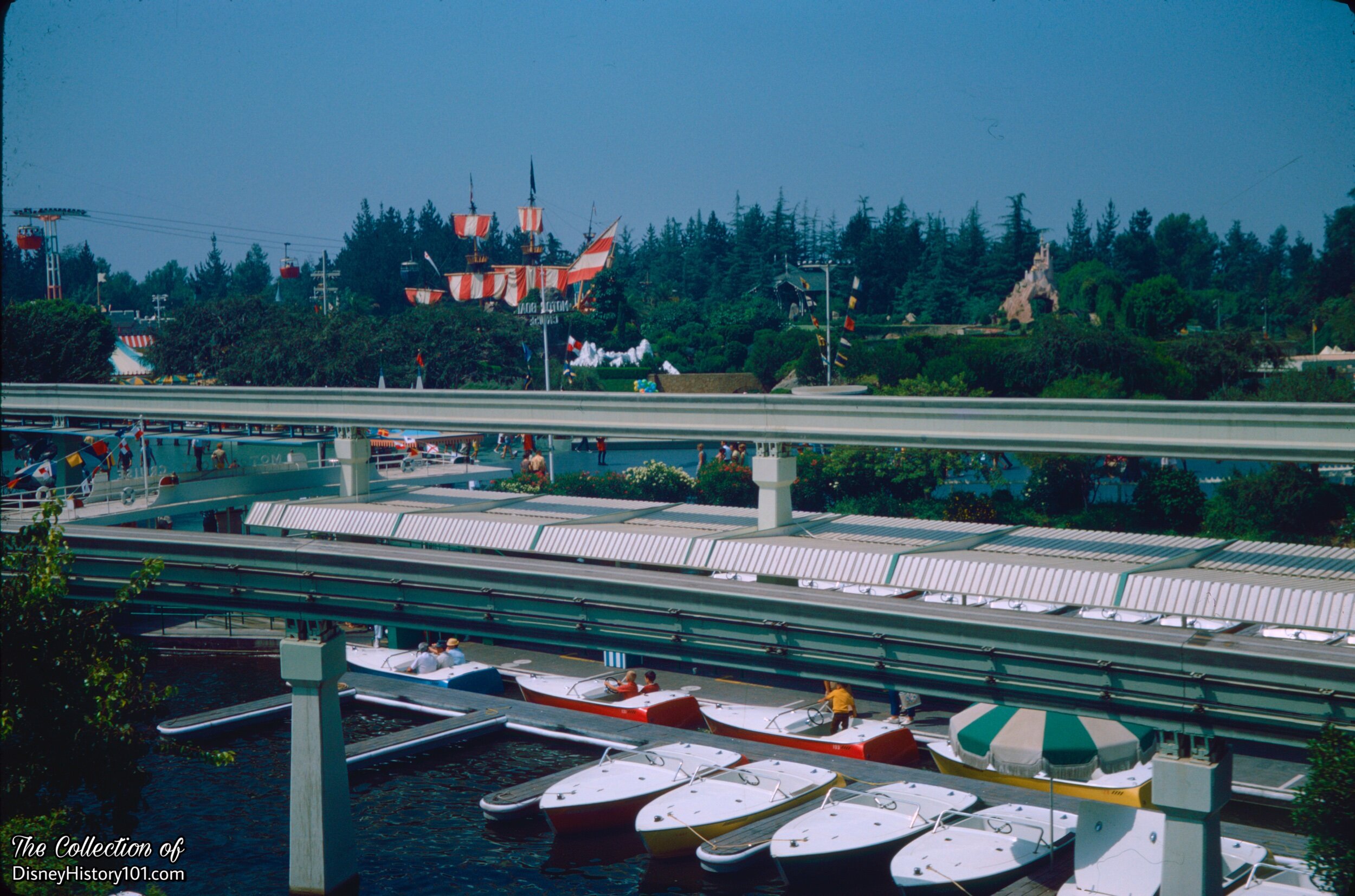
Extra Motor Boats were stored hear during a non-peak day, and off-season weekdays. For instance, during the 1962-1963 winter season, the Motor Boat Cruise operated only on weekends.
Here, the oleanders block non-operational Motor Boats from the view of guests. In this area, the hoods were often left ajar to ventilate and cool the outboard motors. In another part of the Park (called the Disneyland Service Garage, or the “Autopia Garage”), the 40 Motorboats were cared for by mechanics. By c.1989, there were nine mechanics performing this duty. There, the vehicles received daily maintenance and cyclical rehabilitation. Each year, 20 (of the 40) Motorboats were stripped down to bare parts and entirely rebuilt as brand new vehicles. Meanwhile, the Cycle Shop would refurbish the body with a new coat of paint.
Regular rehabilitations (like in ‘78) maintained the show quality. Since it costs a fortune to drain the ride, Machinists (or highly skilled craftsmen) would learn scuba diving, and dive down to where the action is to check the equipment and the rails.
Disneyland Guests temporarily enjoyed the 20¢ value of passage aboard the Motor Boat Cruise. This was a decrease from the attraction’s previous 35¢ value, and a change from the previous “C” Coupon status.
During the period spanning a portion of 1964 to 1966, Motor Boat Cruise fare was equated with flight in a Tomorrowland Jet (a short-lived name for the AstroJets) and admission to Walt Disney’s “The Art of Animation” a temporary traveling exhibit in Tomorrowland! During this time, the general cost of admission was increased to 25¢, which remained constant almost until Coupon books were discontinued.
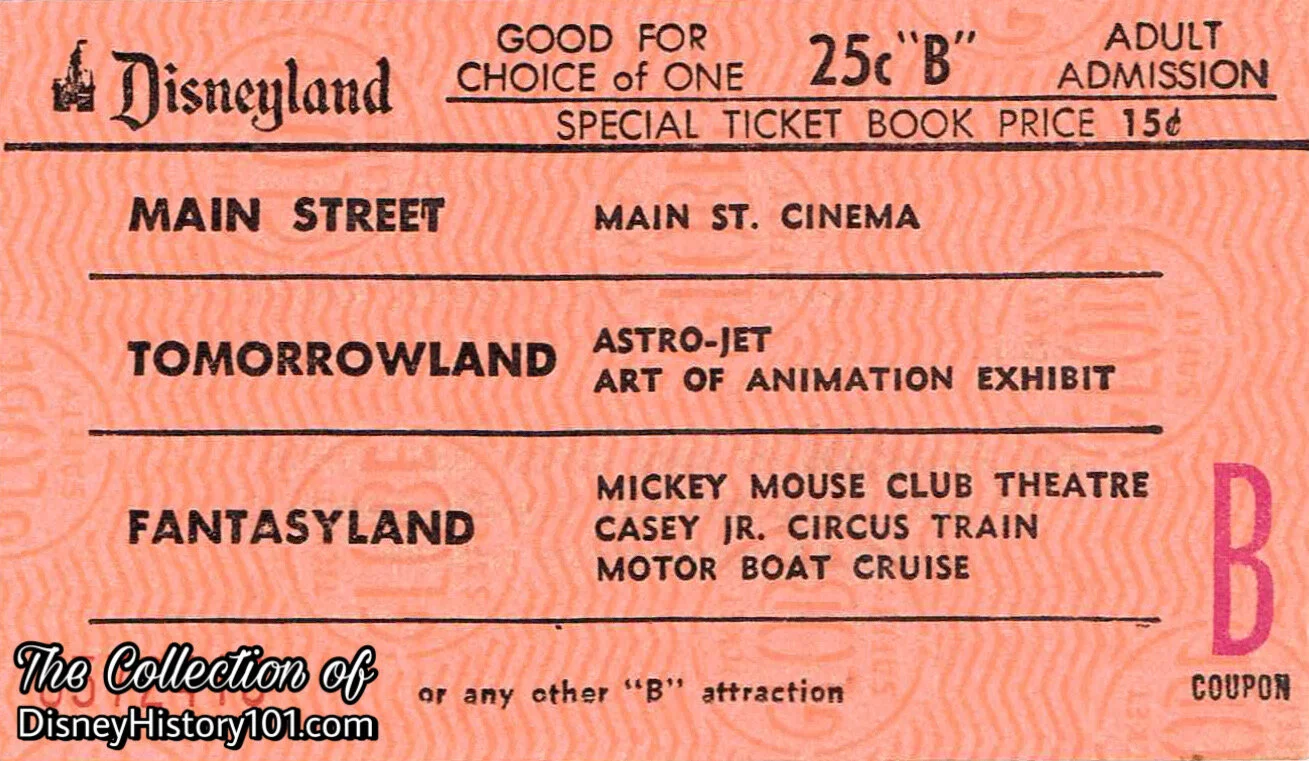
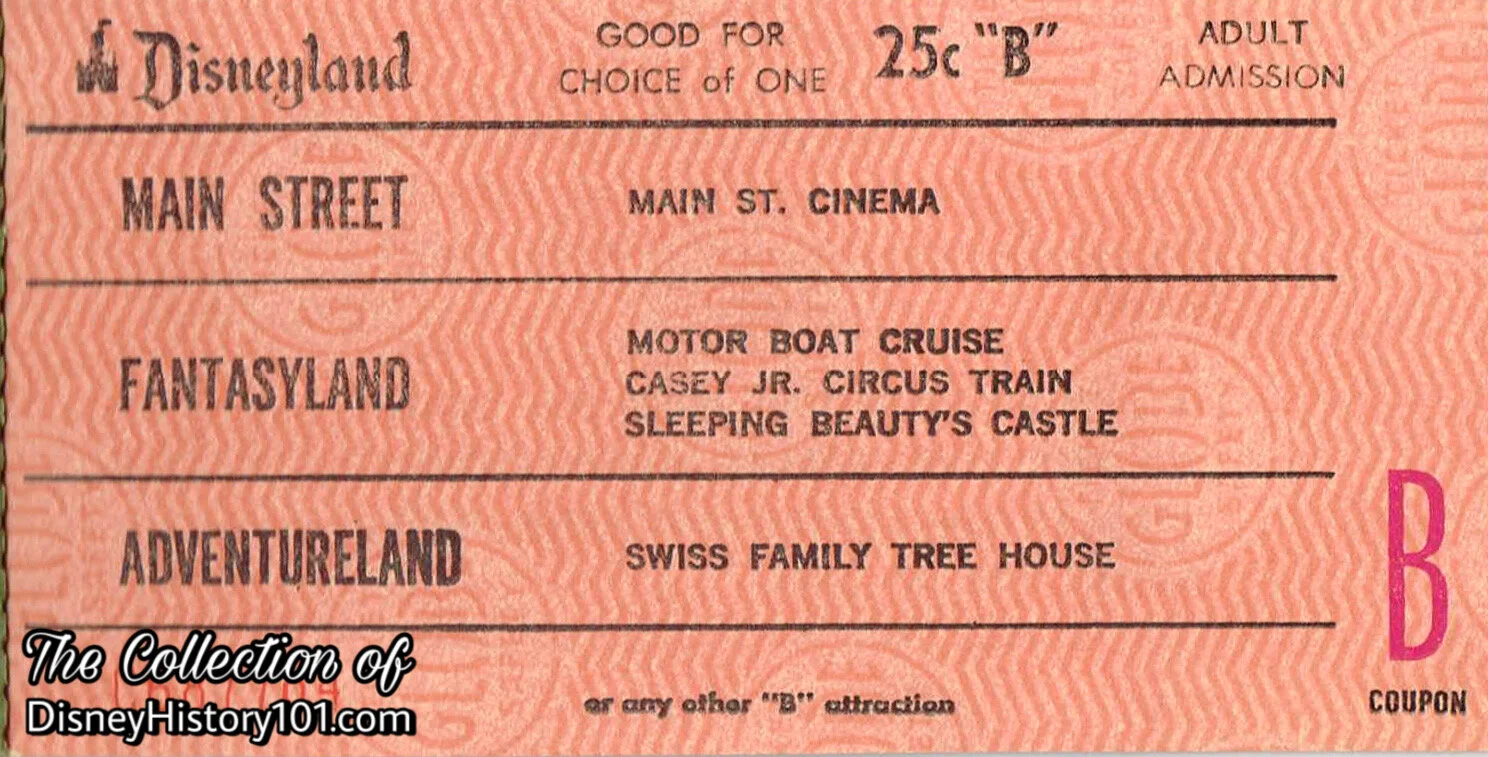
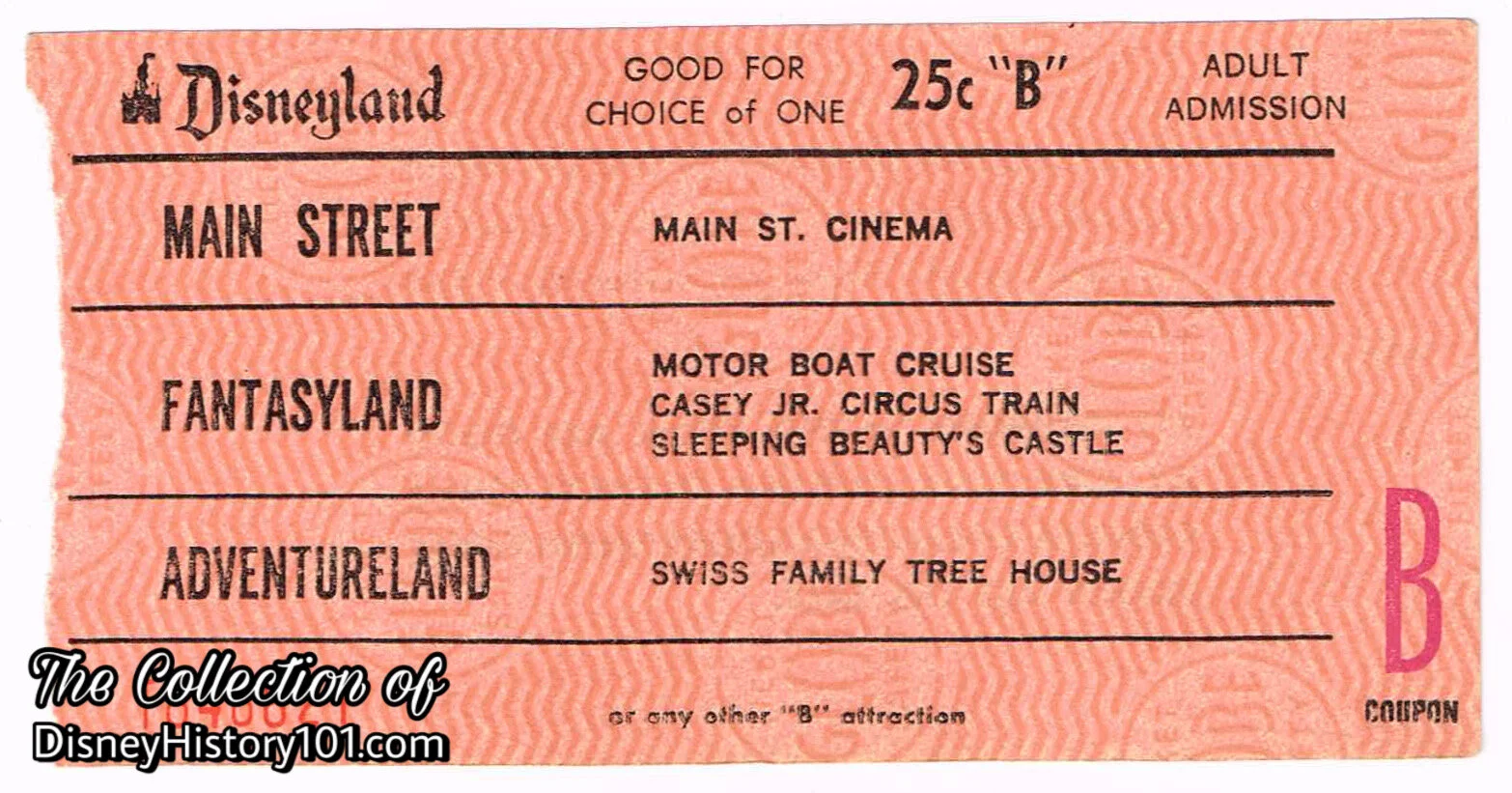
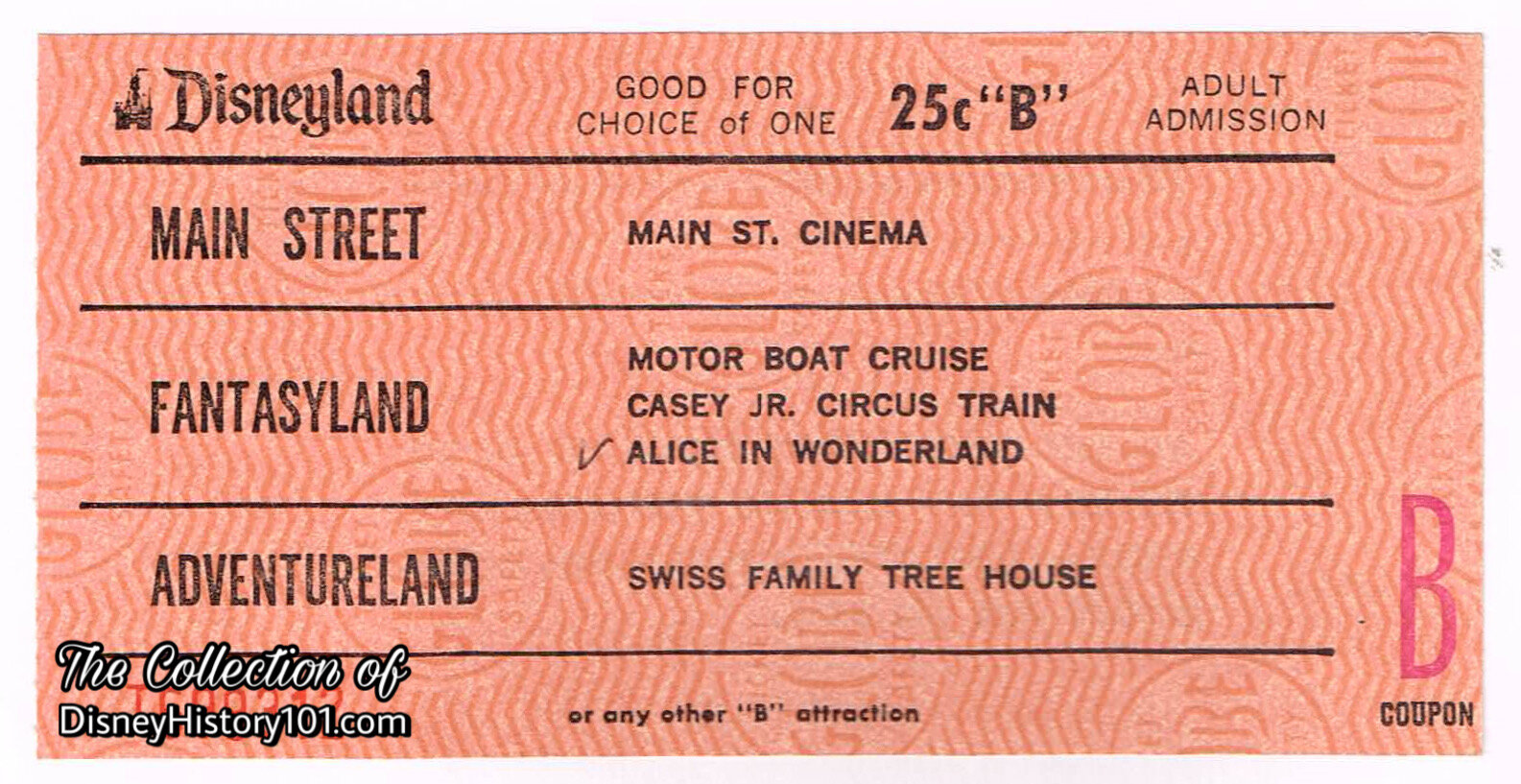
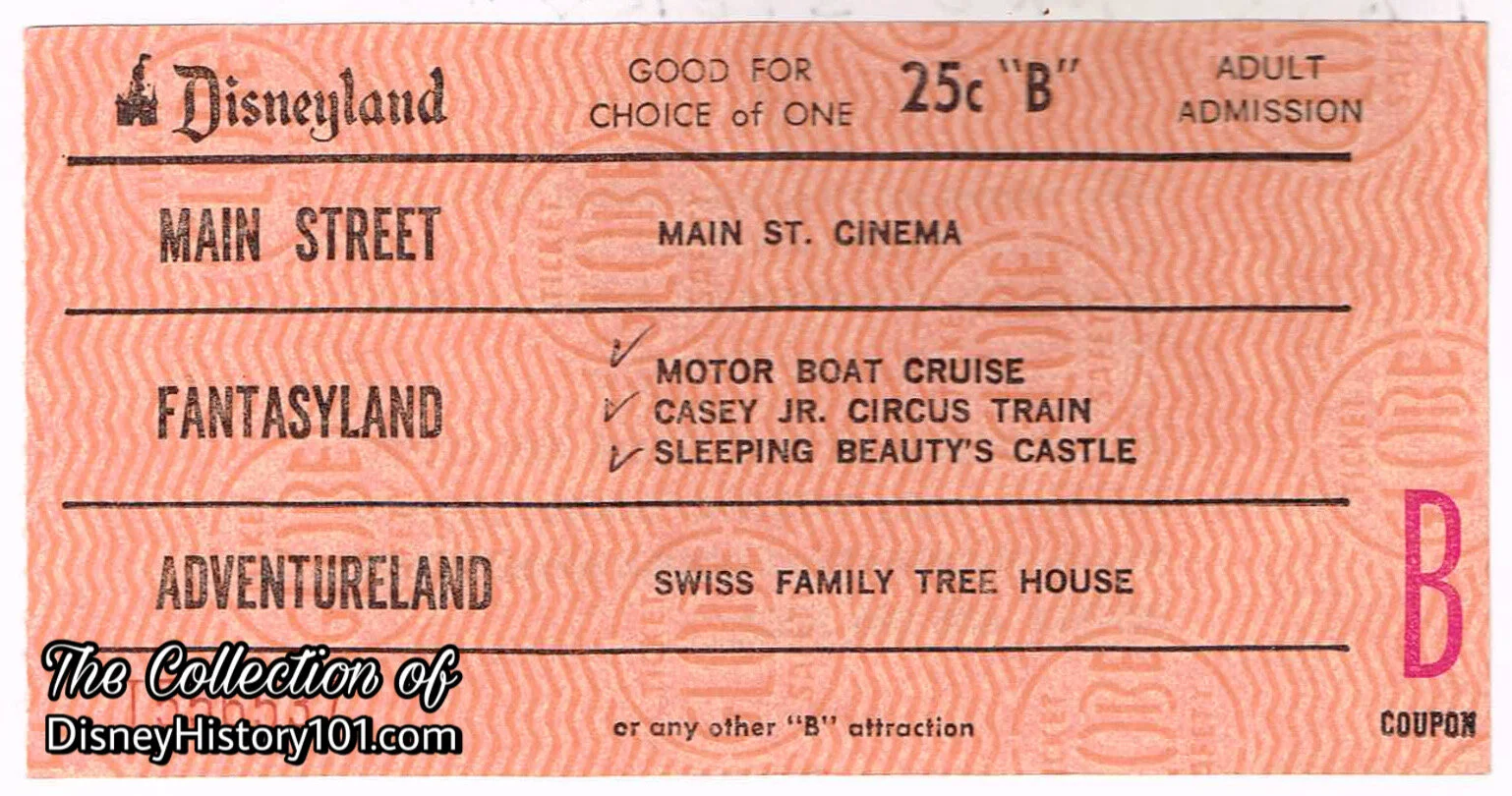
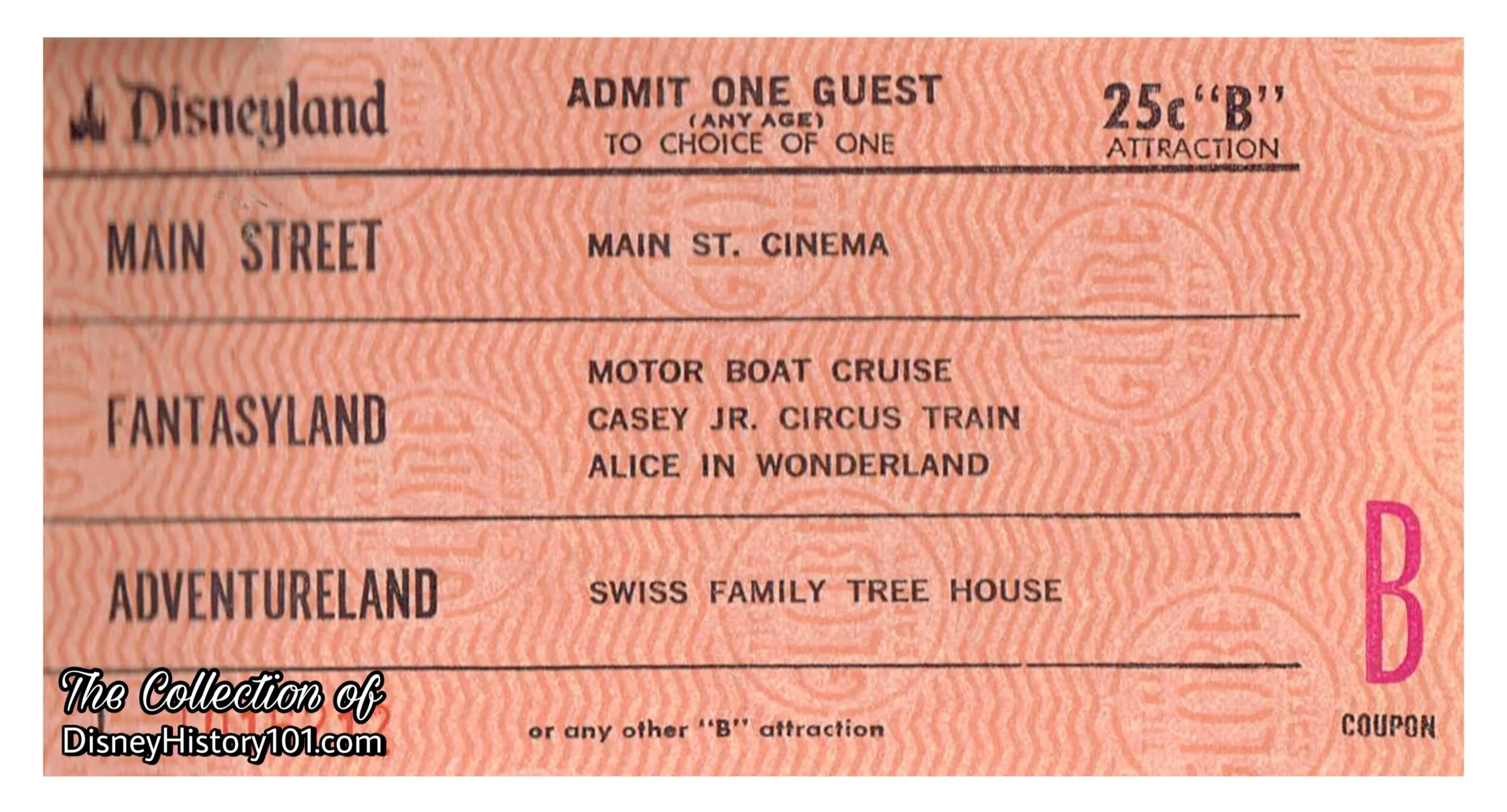
“55er” Dave Bartchard recalled: "I was very impressed when we transferred the vehicles to natural gas. They asked for my opinion about it and I said that I favored the change because I like clean air. The Omnibus was the first to go over to natural gas, then the Jungle boats, and the Motor Boats, Rafts and the Keel Boats followed along. We couldn't do it for the Submarines because there was no place to put the tanks.”
The attraction was down for rehabilitation from Apr. 29-May 10, 1963.
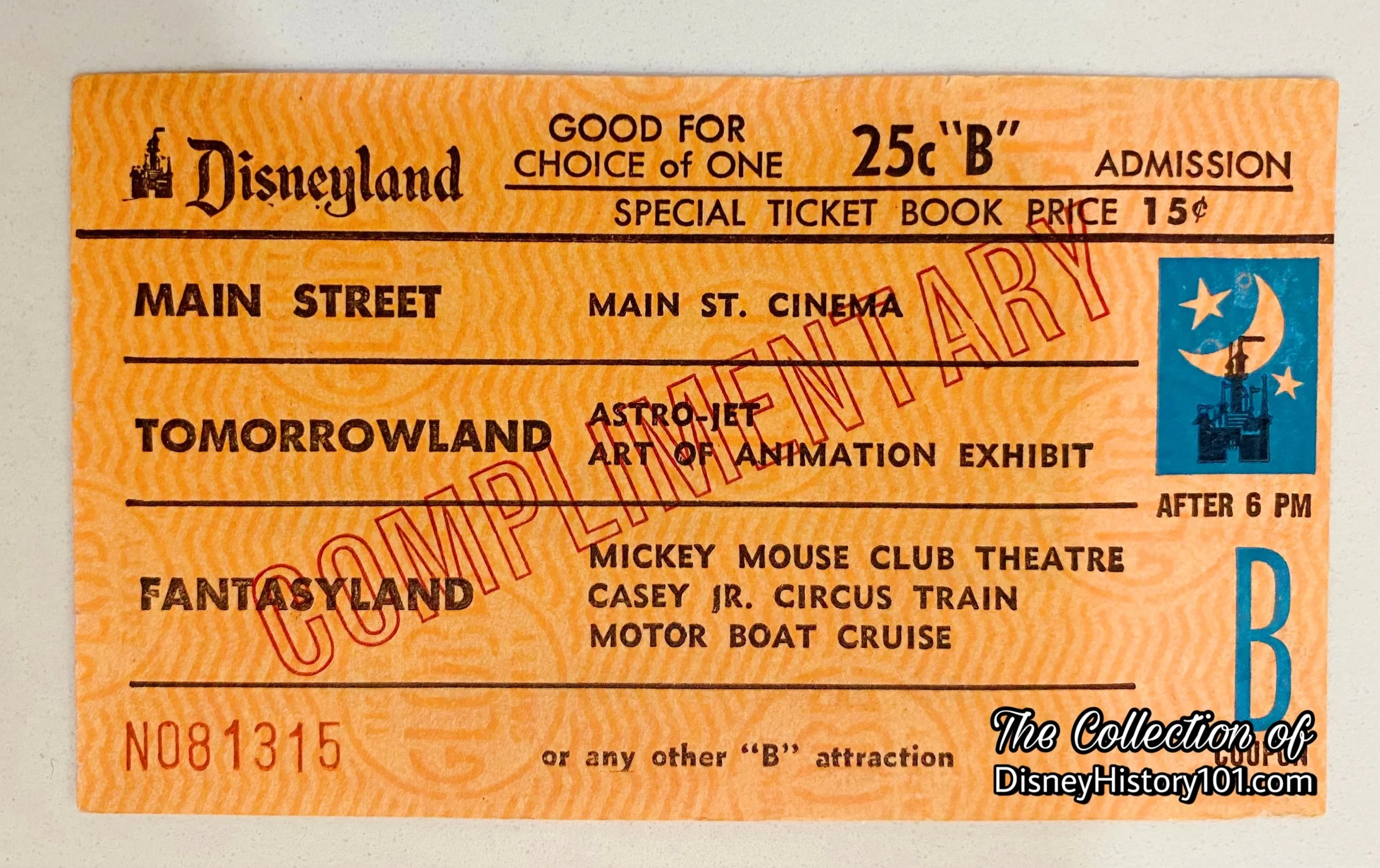
Excursions usually began during the late morning.
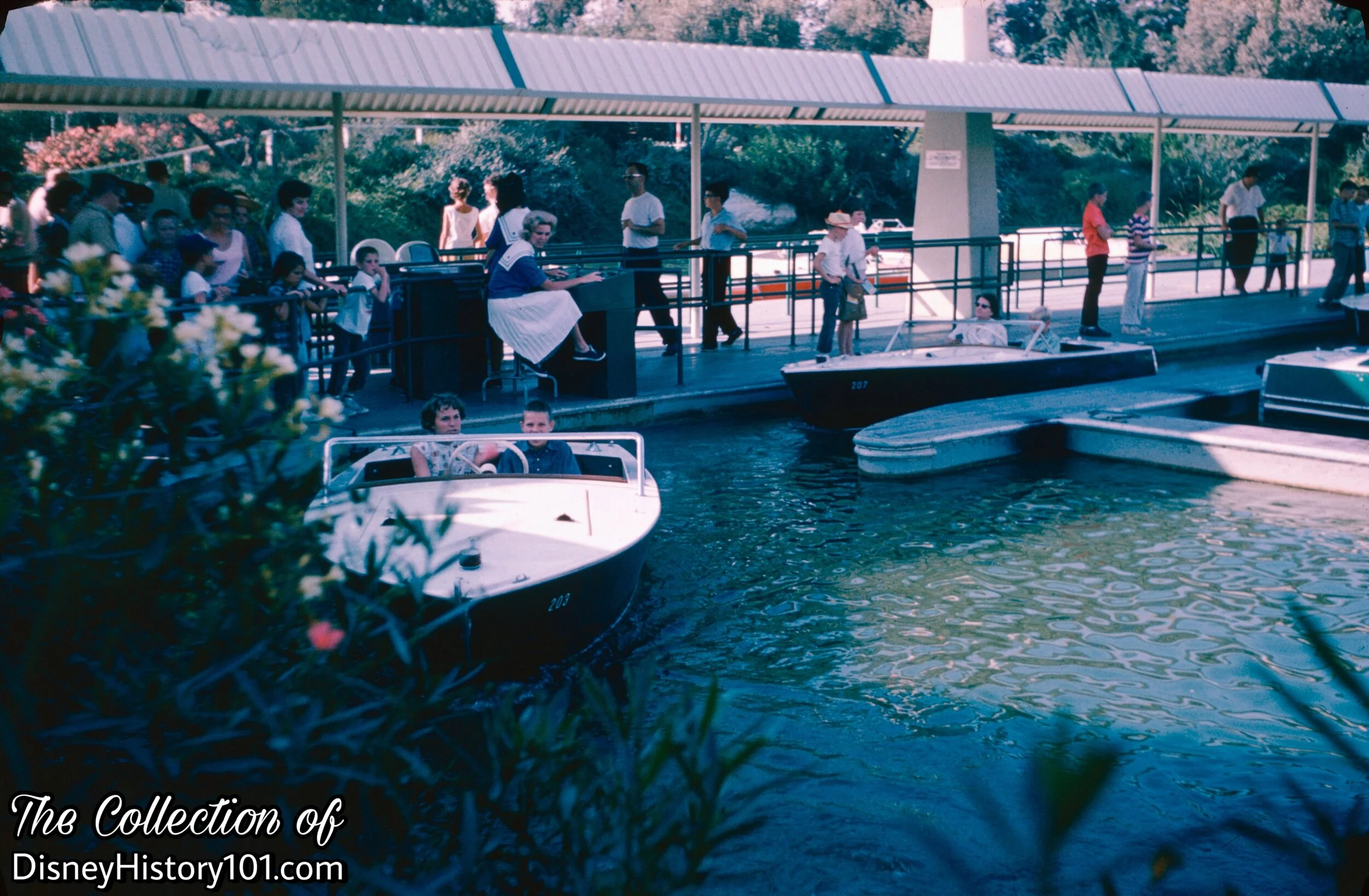
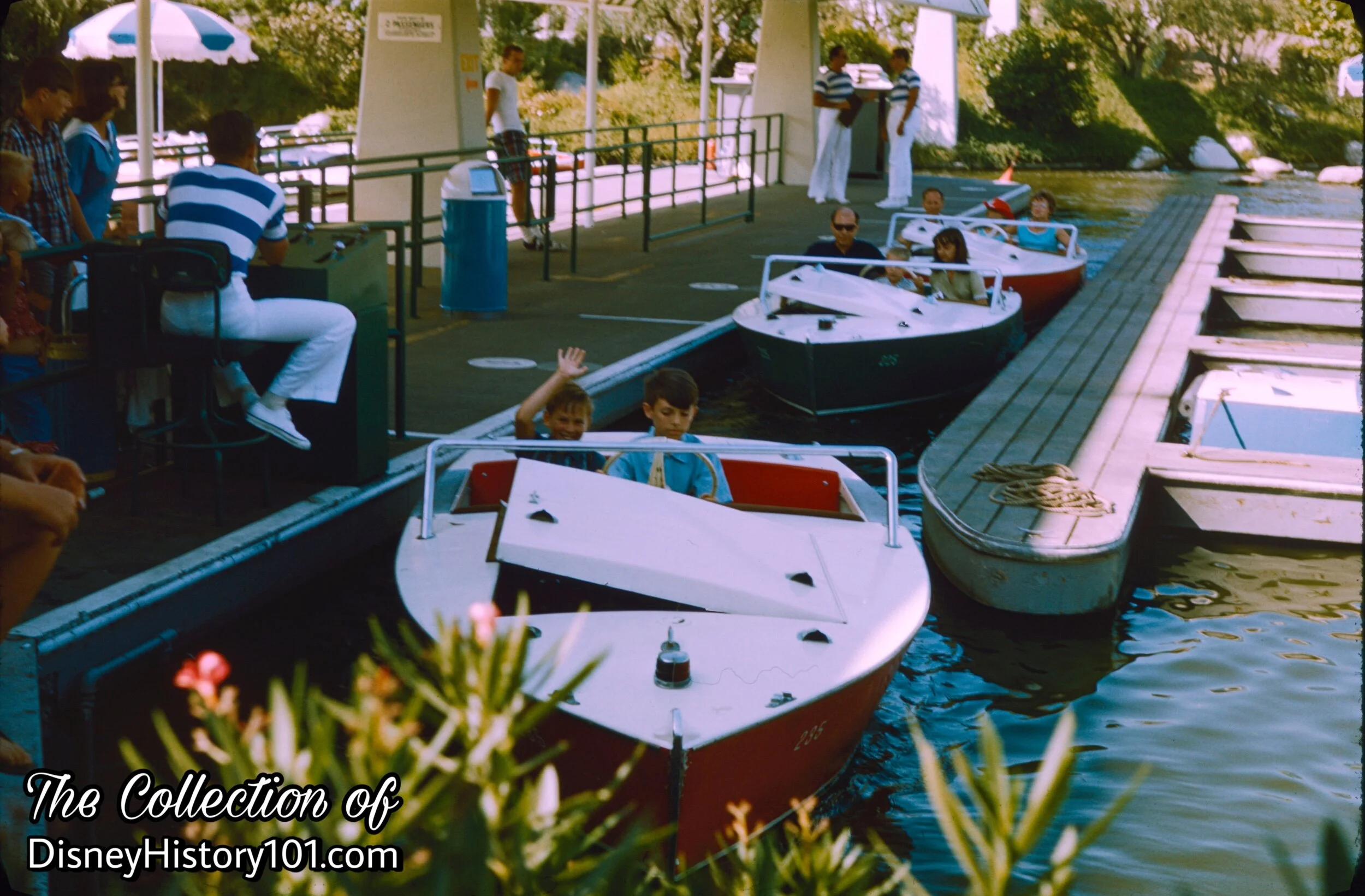
During warmer weather, the Motor Boats tended to overheat. In this case, the hood was left ajar for ventilation during operation.
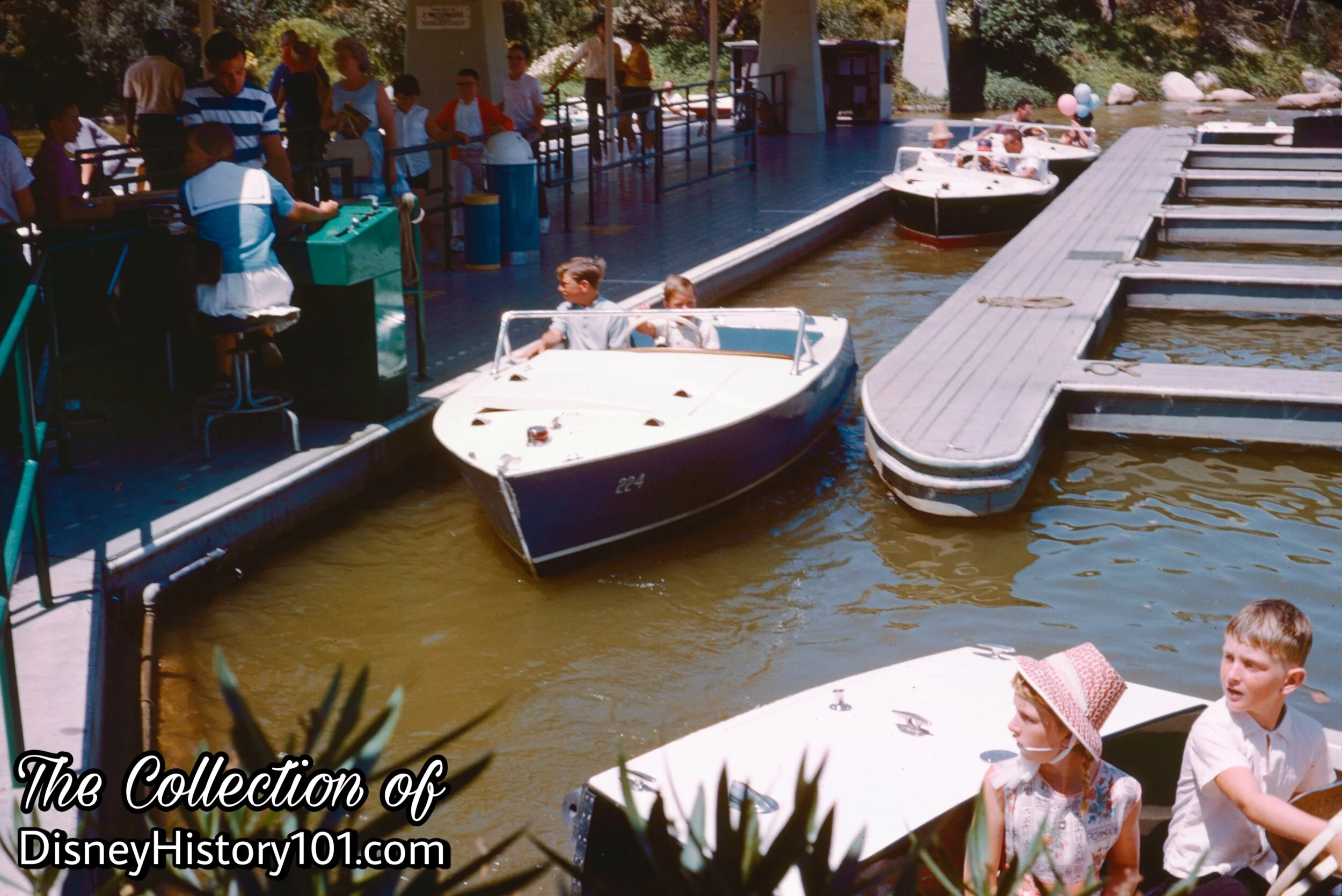
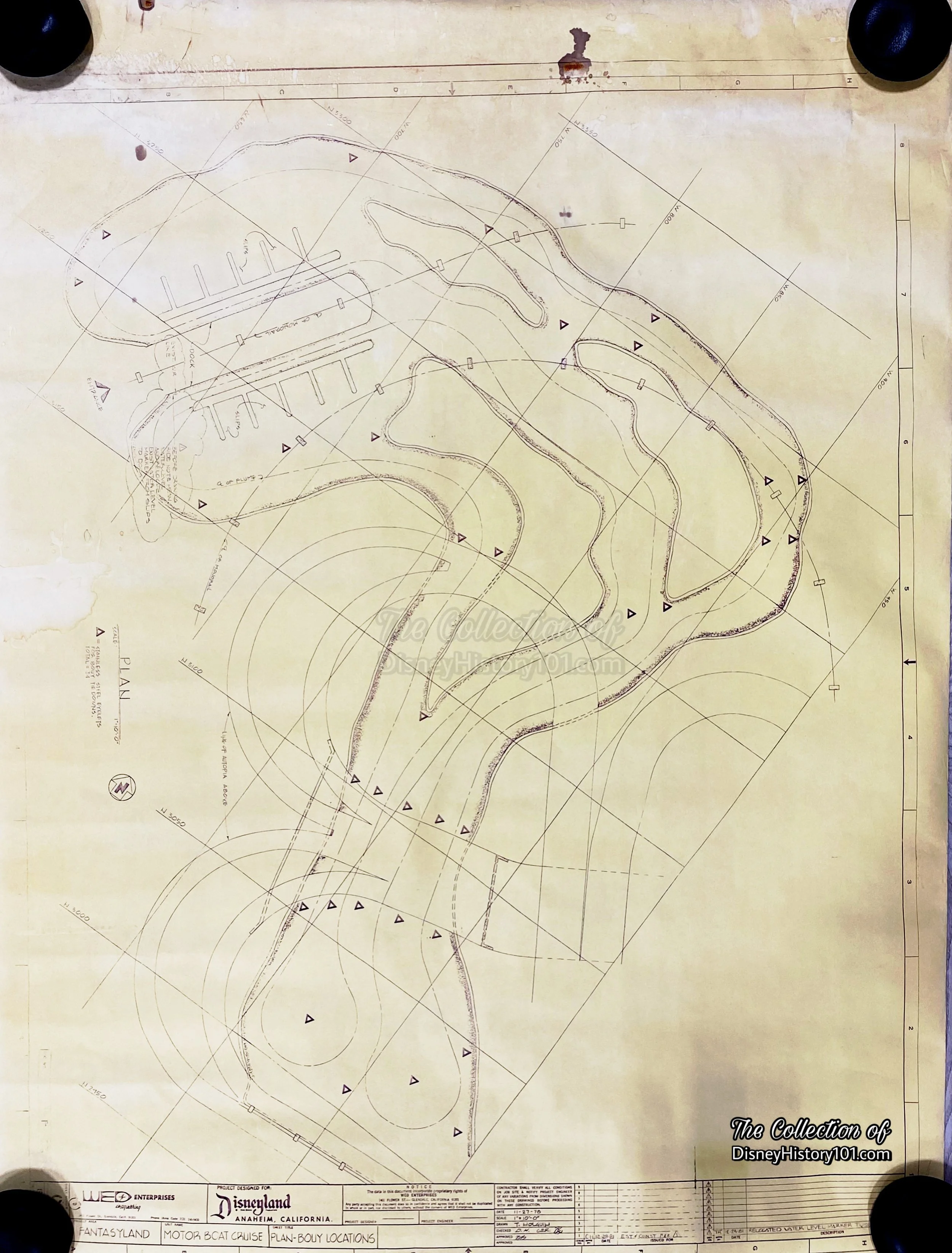
New “Bouy Locatons” were prepared for the relocation of water level markers, in November 1970. The water levels were calculated from the slips to the dock, after which, the locations of (34) stainless steel eyelets (for securing the bouys) were detailed. When these plans were completed, they were issued for construction estimates.
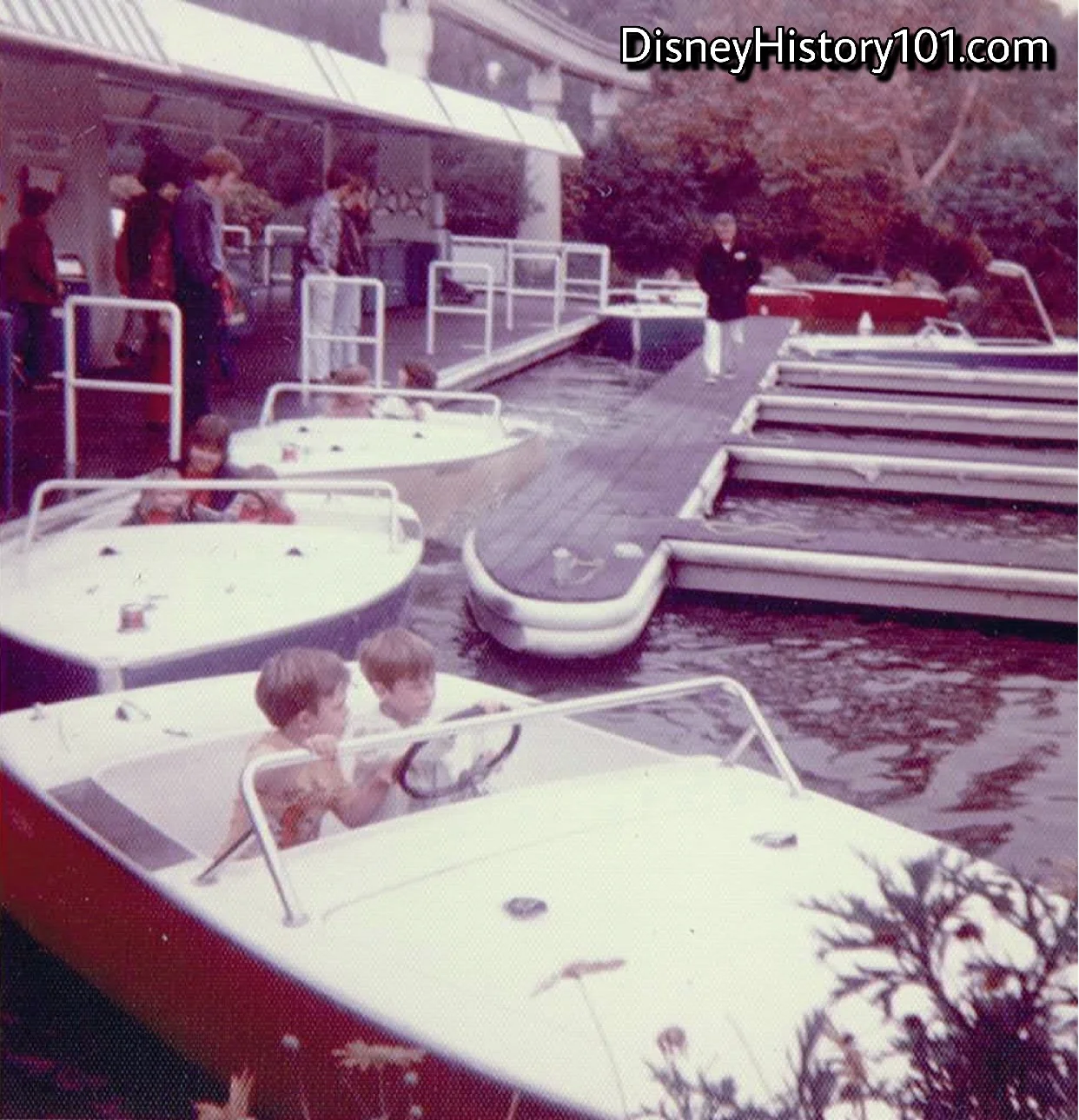
A little later, safety railings were added in the loading area to assist guests and prevent falling.
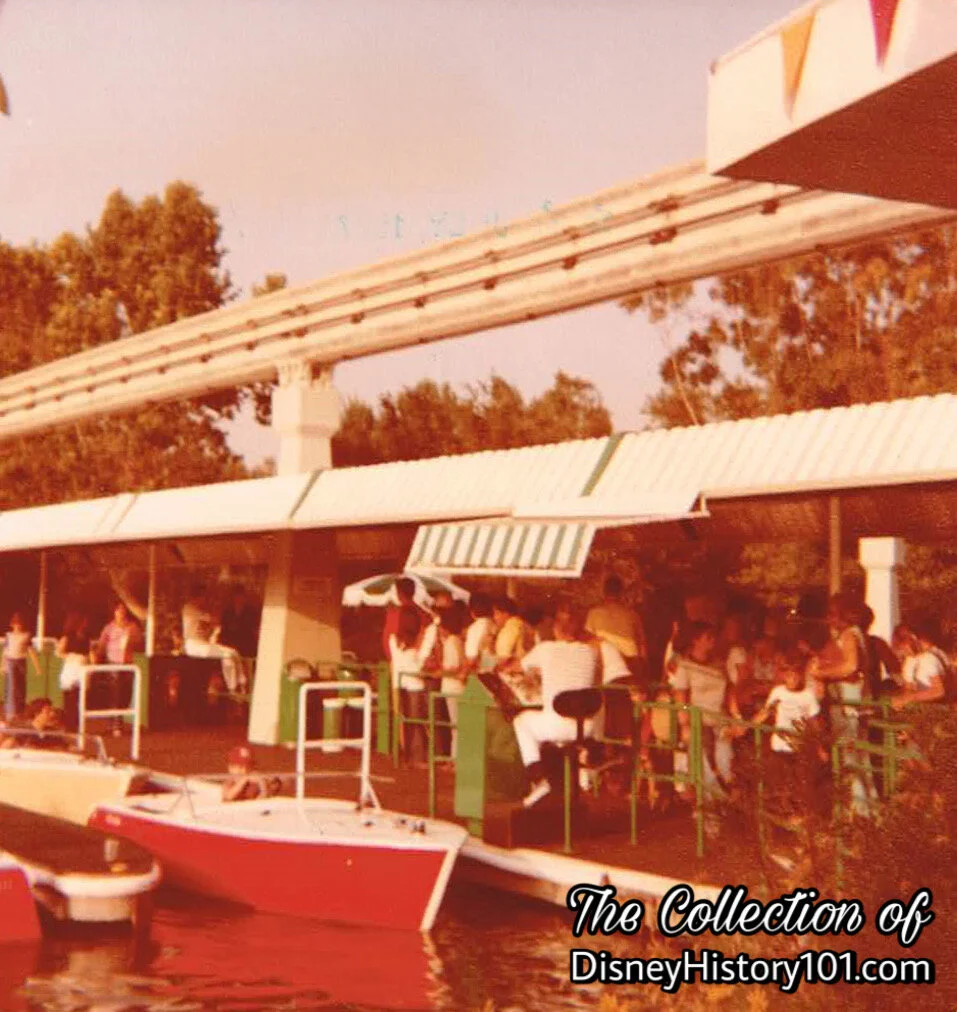
You may have heard otherwise, but the popular Motorboat Cruise generally had long lines during warm weather!
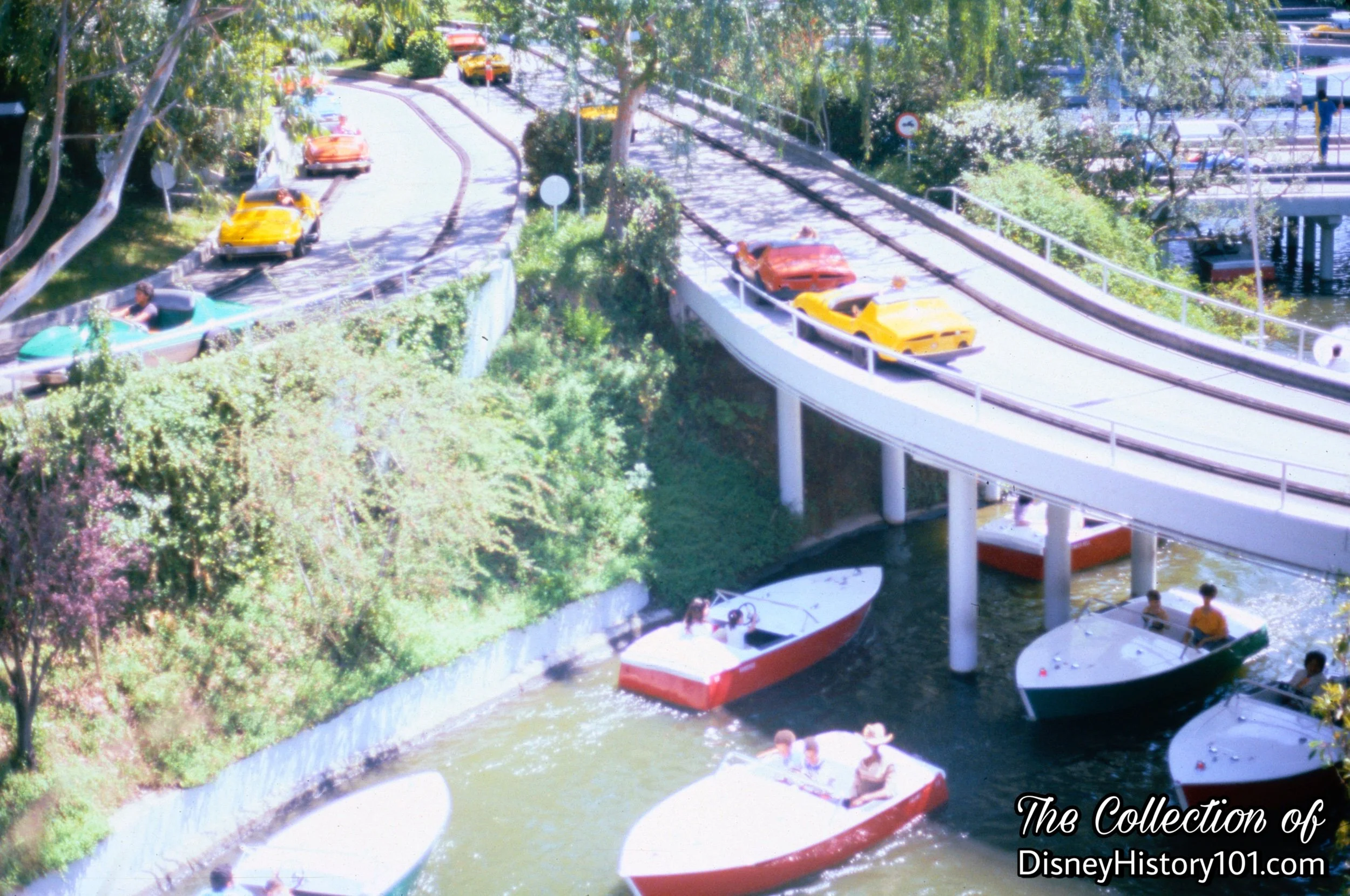
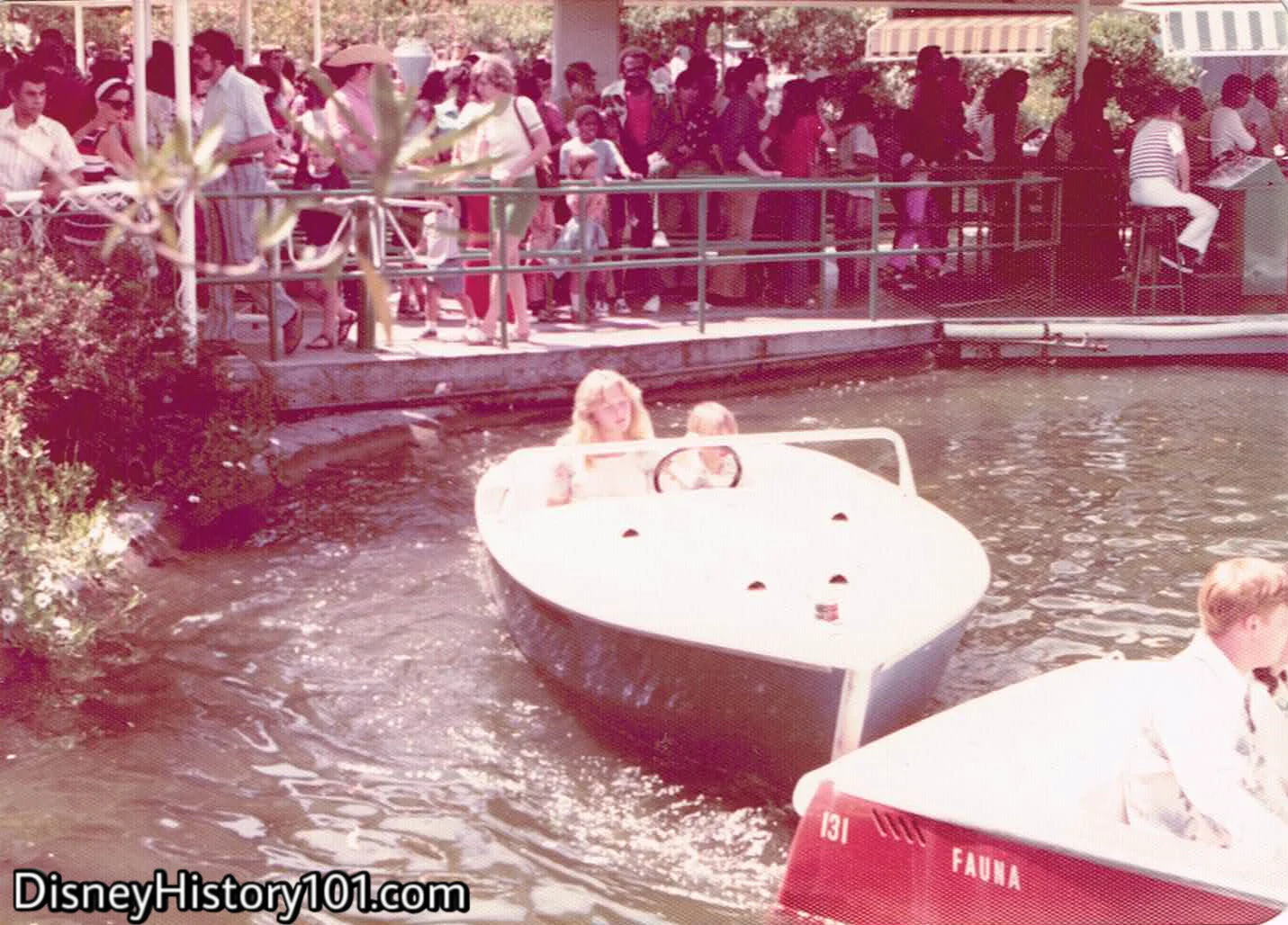
The boats of the late 1970s and early 1980s were built at Walt Disney Studio, and carried such names as “Faline”, “Flora”, “Shaggy Dog”, and “Queen of Hearts”, to name a few.
Once departing from the Loading Dock, plaques on the dashboard still reminded passengers of safety protocol while riding the Motor Boats. For those who can’t read the sign, I would like to issue the following reminder : “Permanece sentado por favor!”
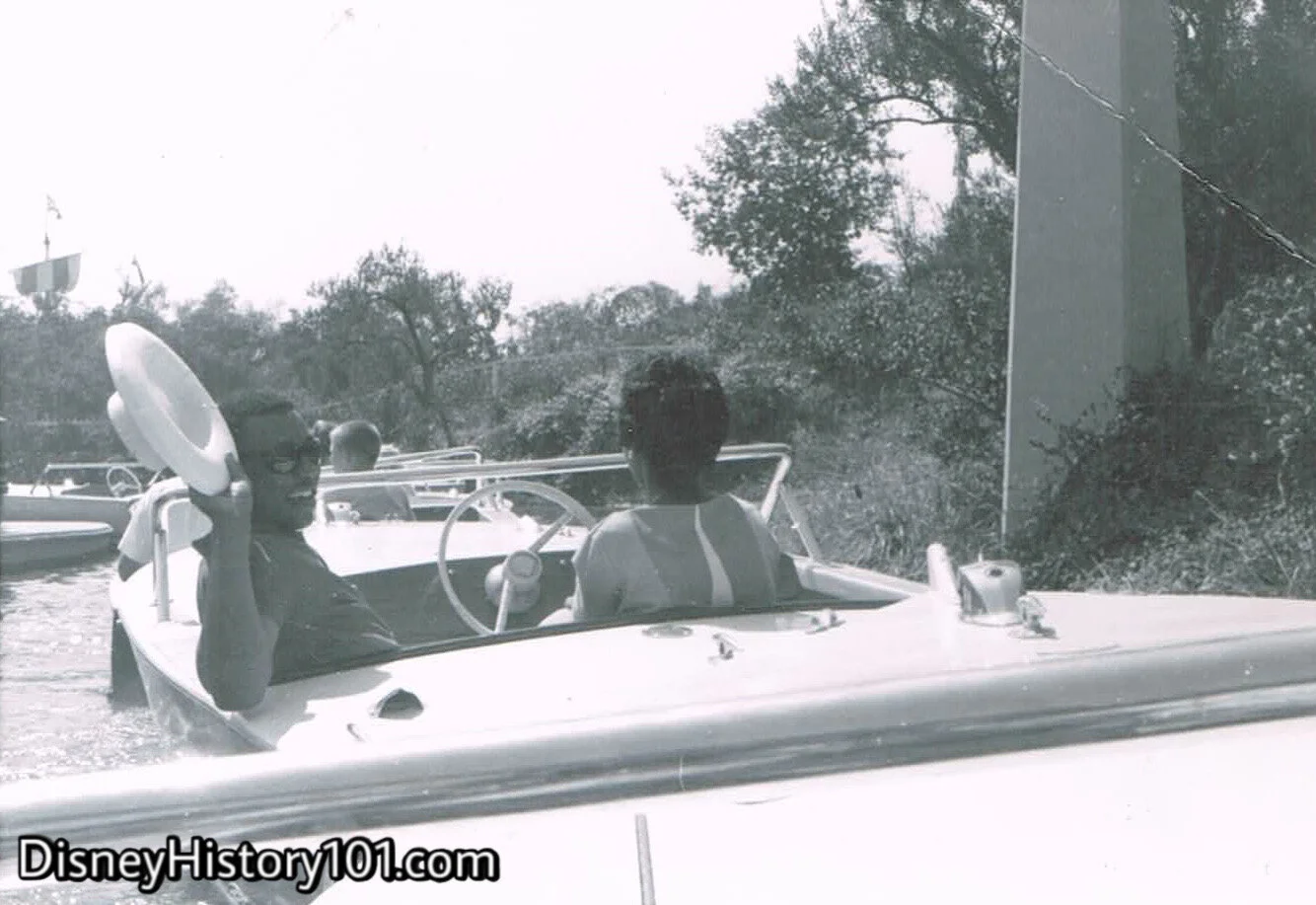
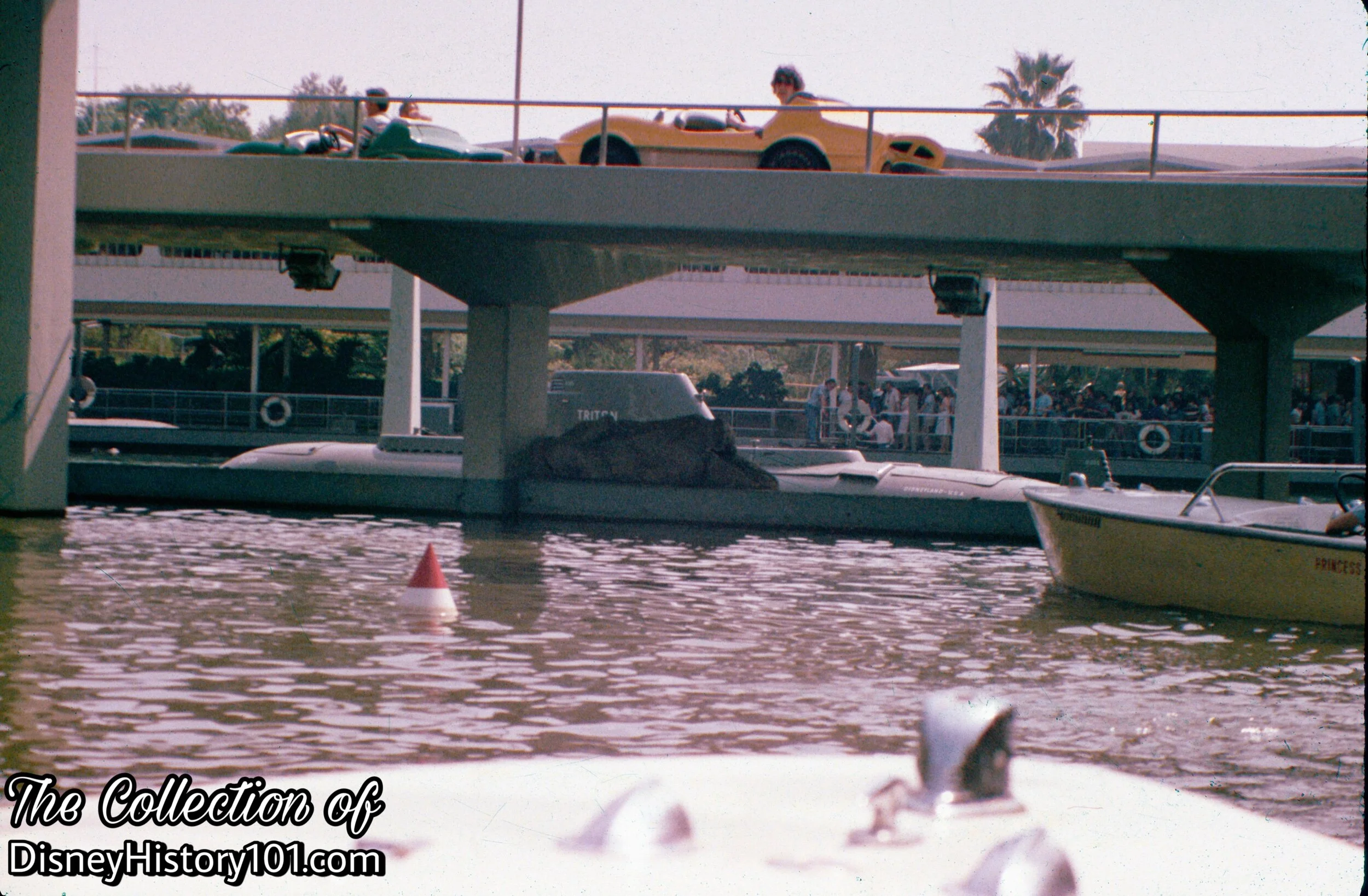
The Submarine Lagoon, the Super Autopia Freeways, and Motor Boat white-water channels passed alongside each other.
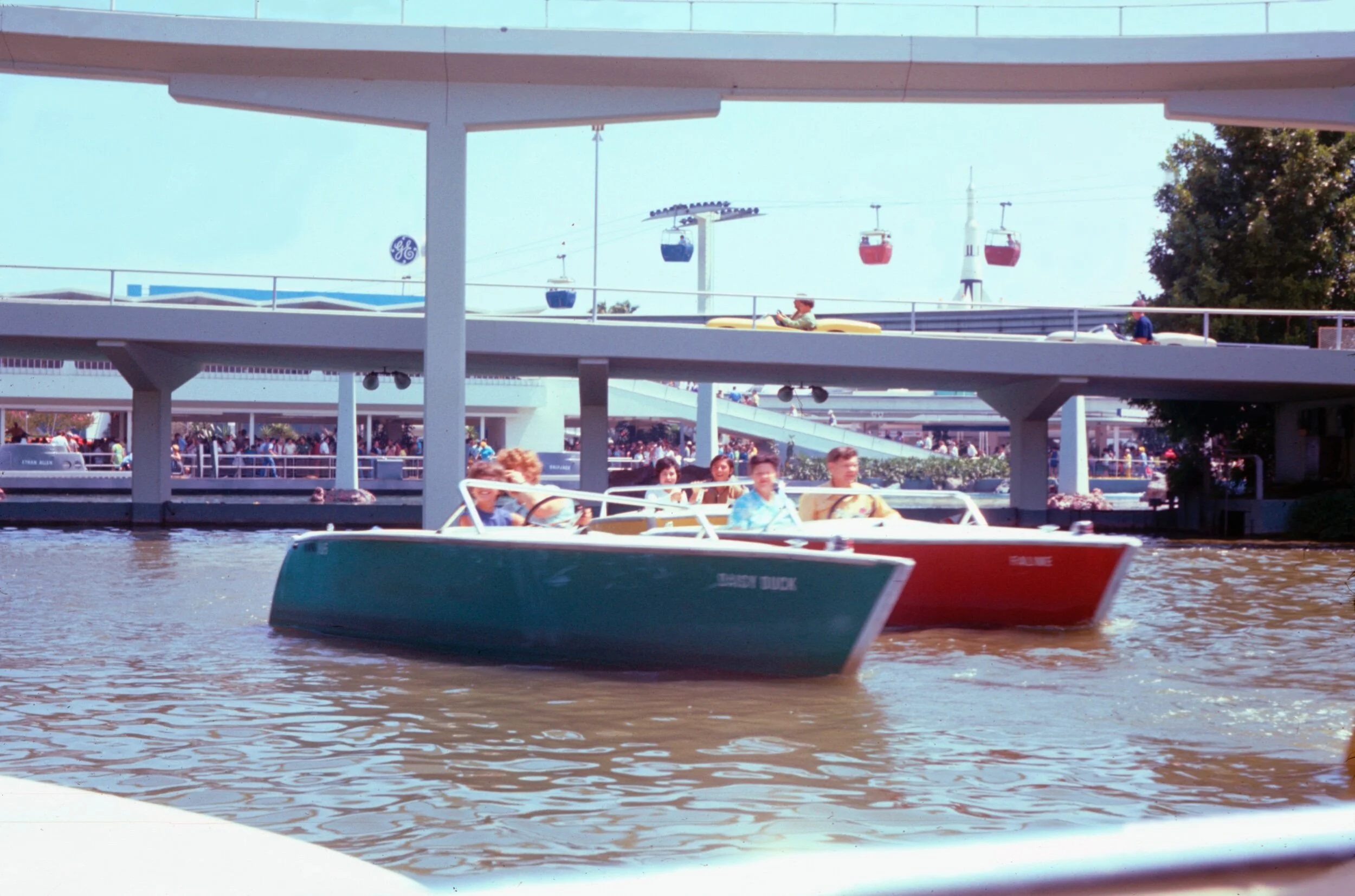
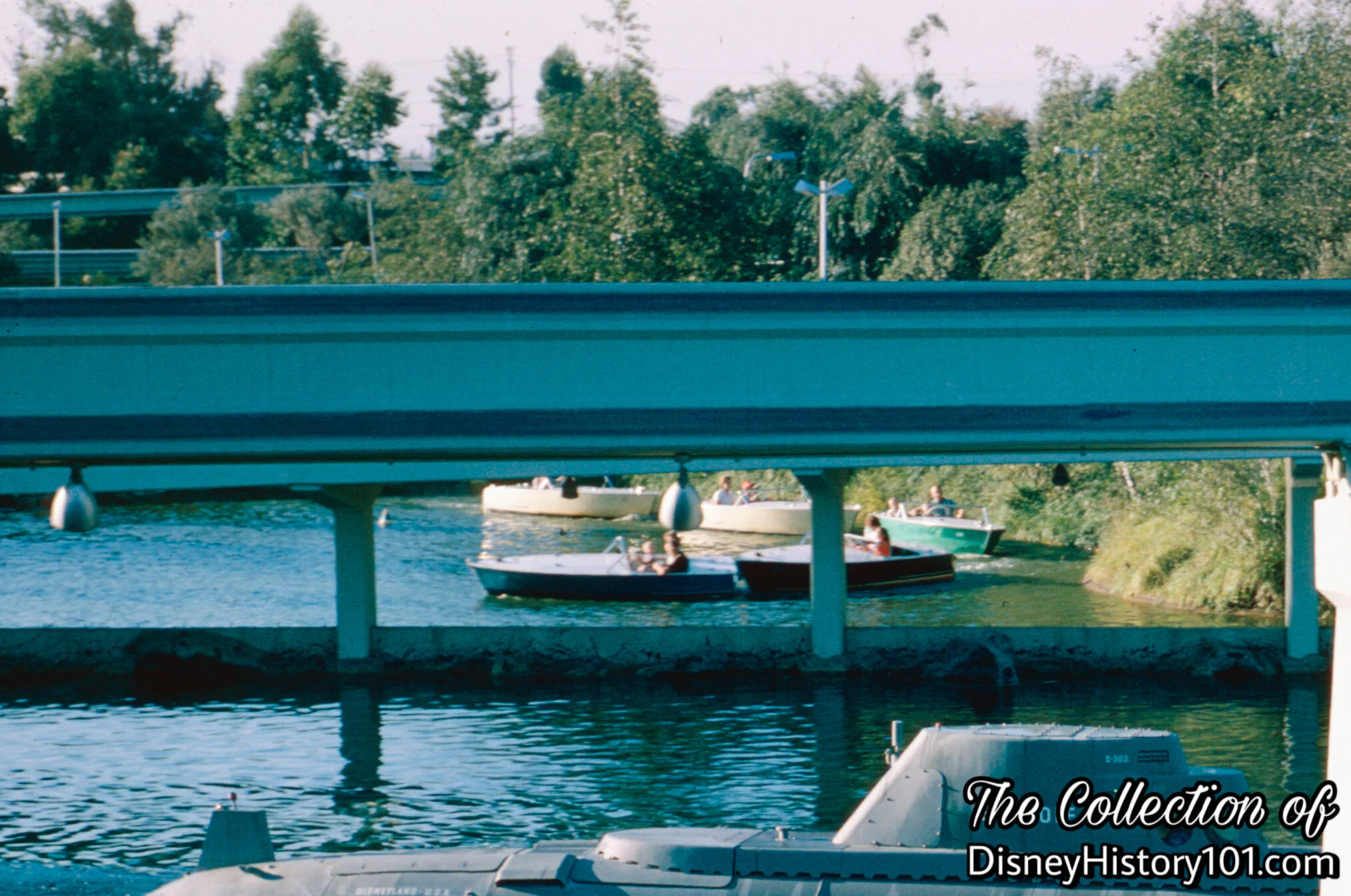
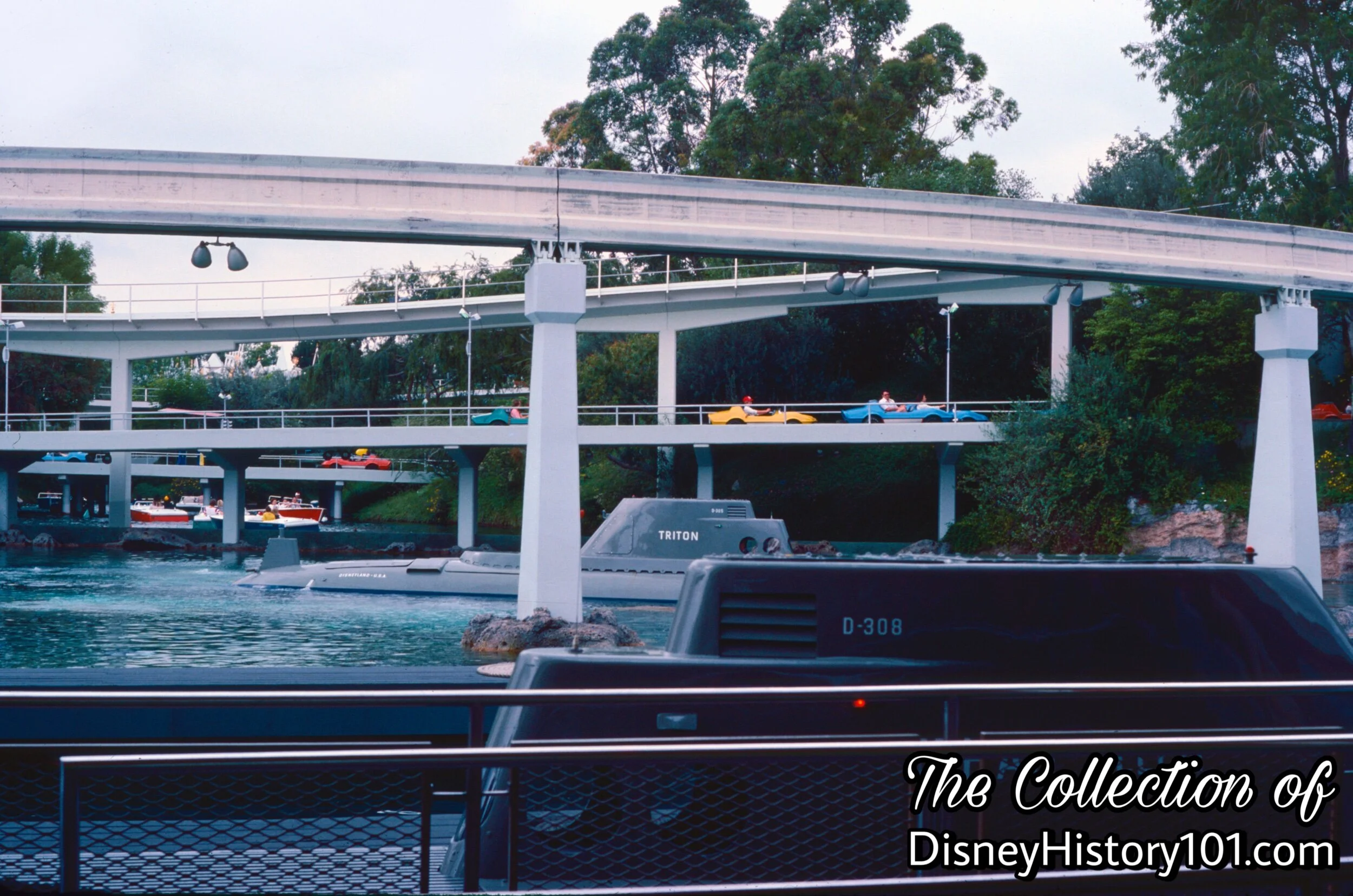
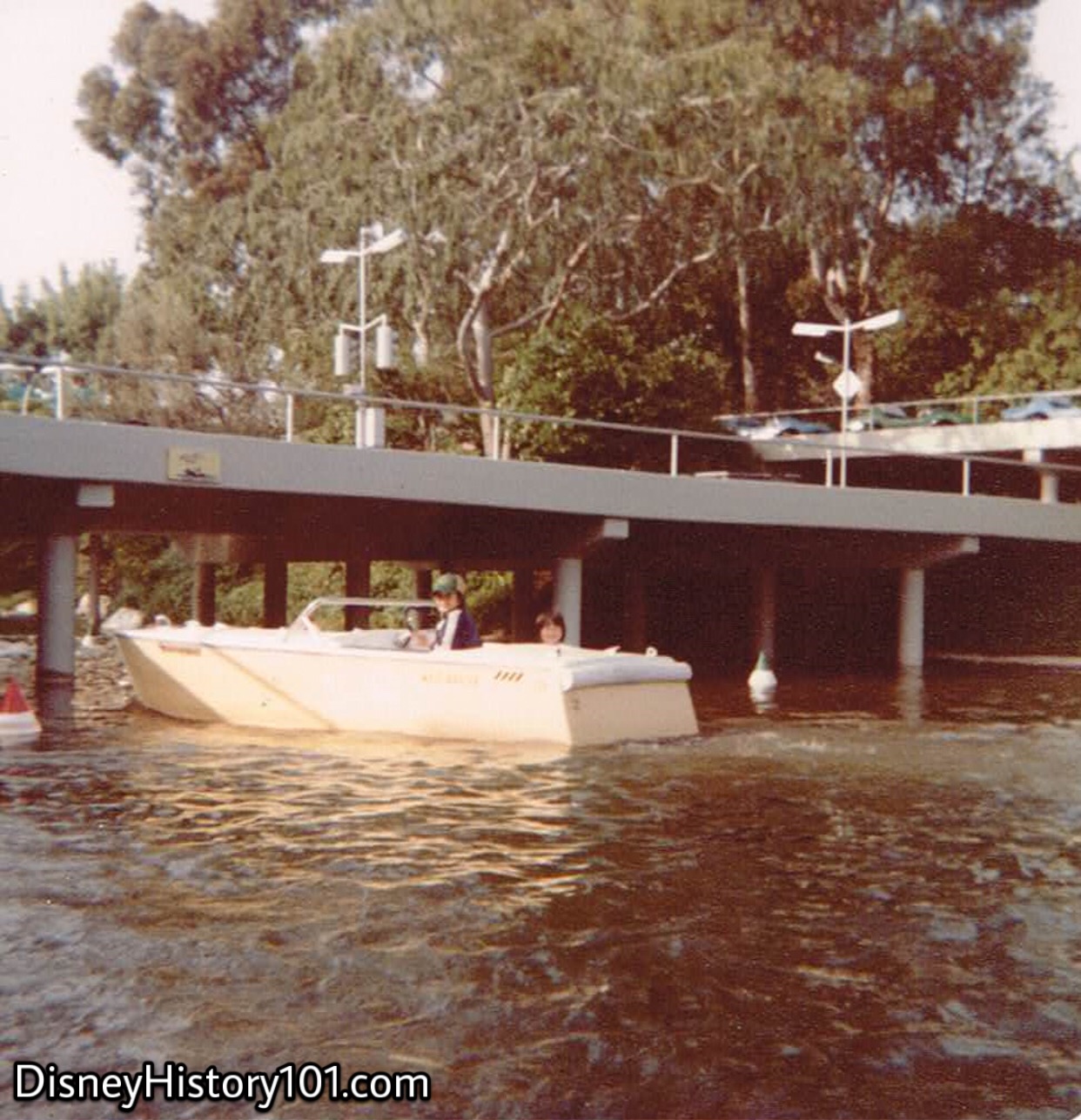
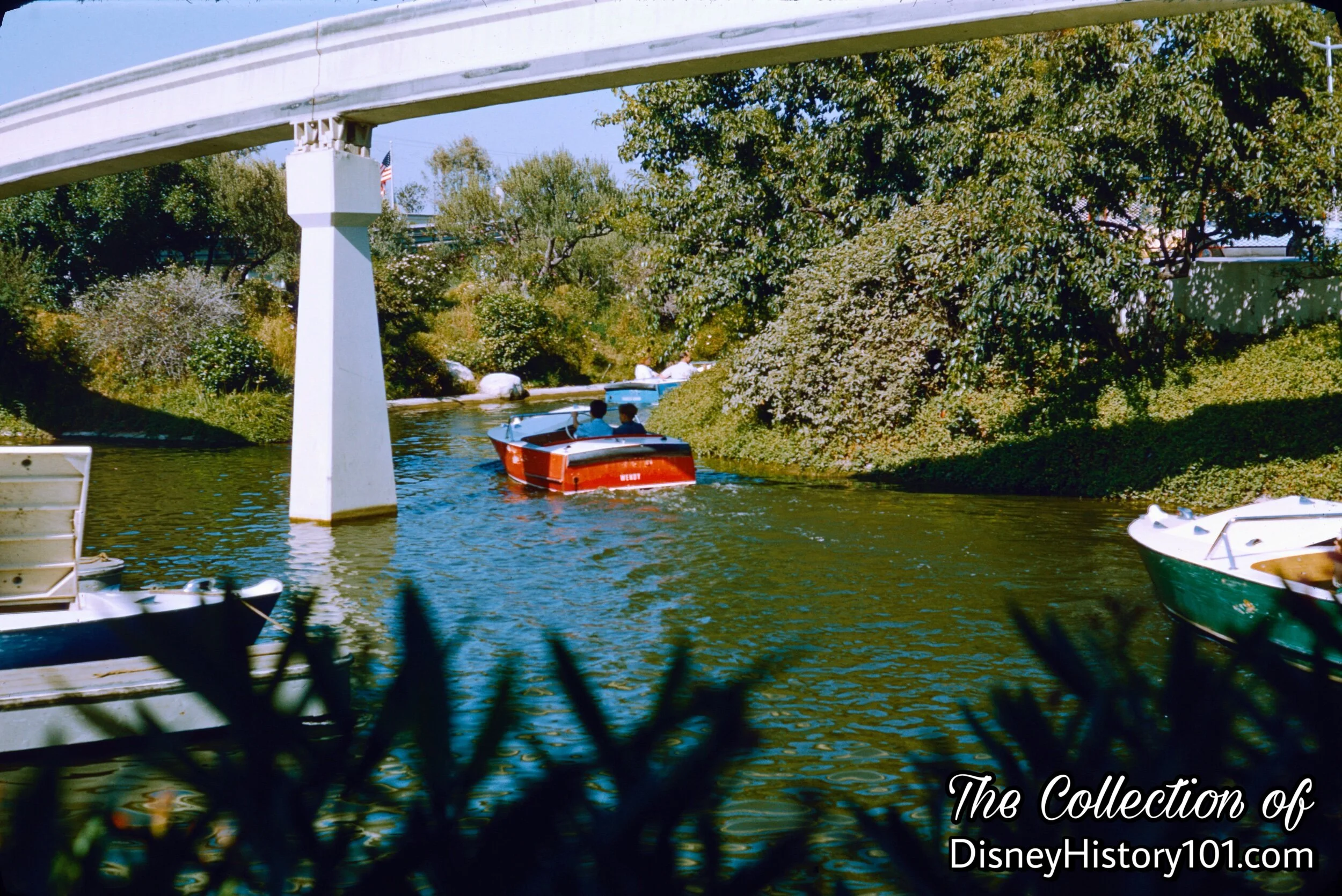
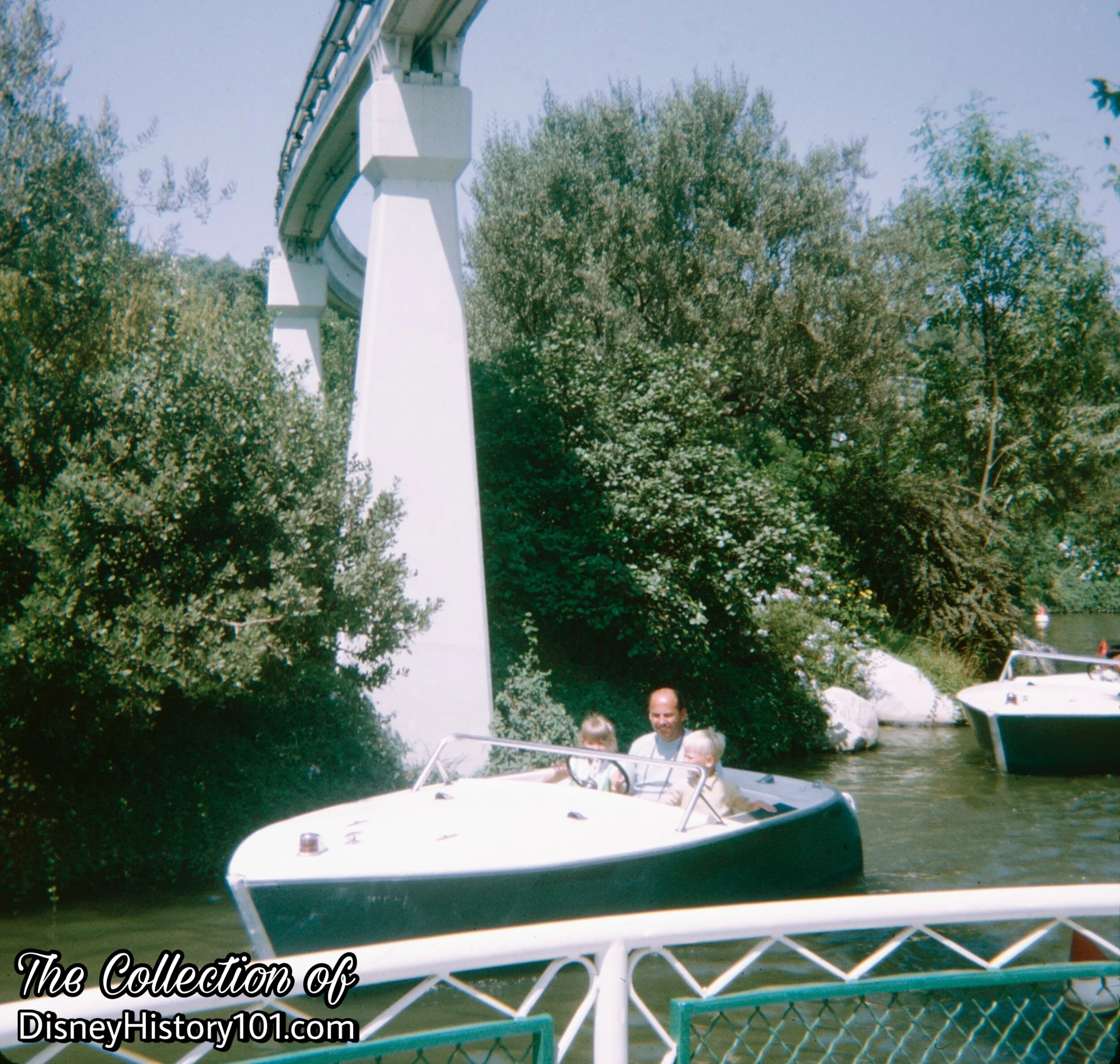
Fantasia Gardens topiary water gardens attraction would ultimately open at Disneyland, replacing the Motor Boat Cruise.
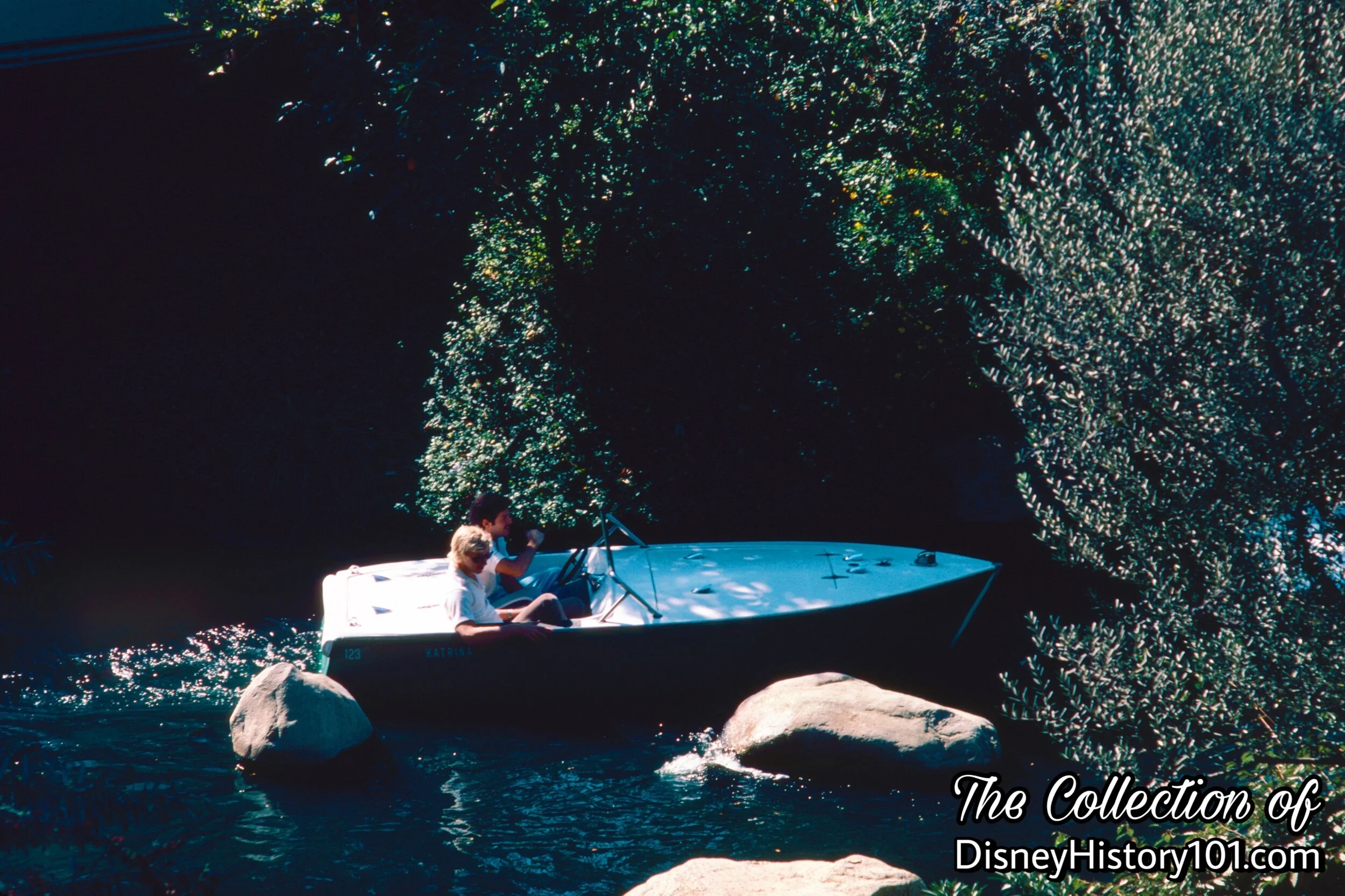
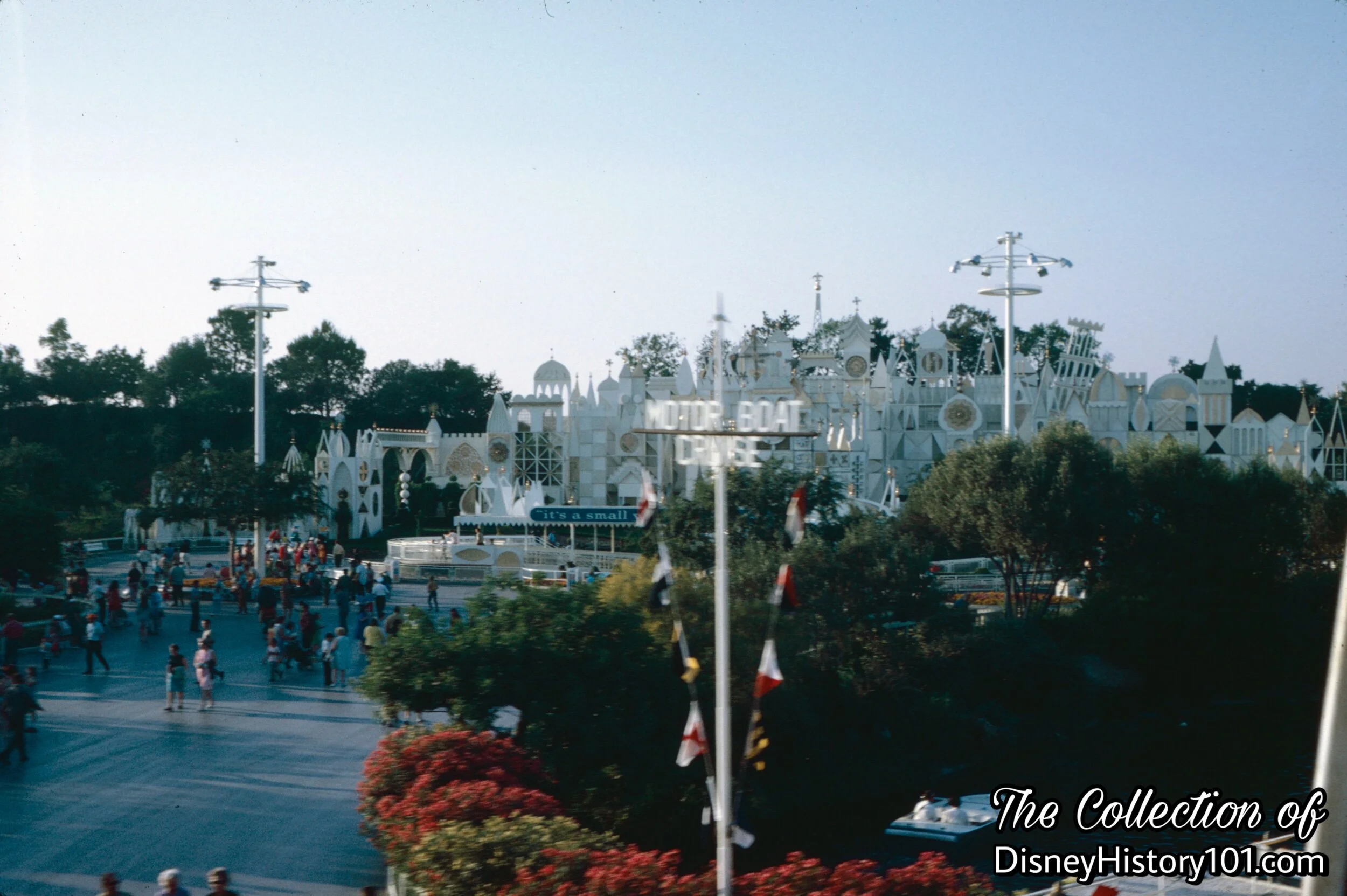
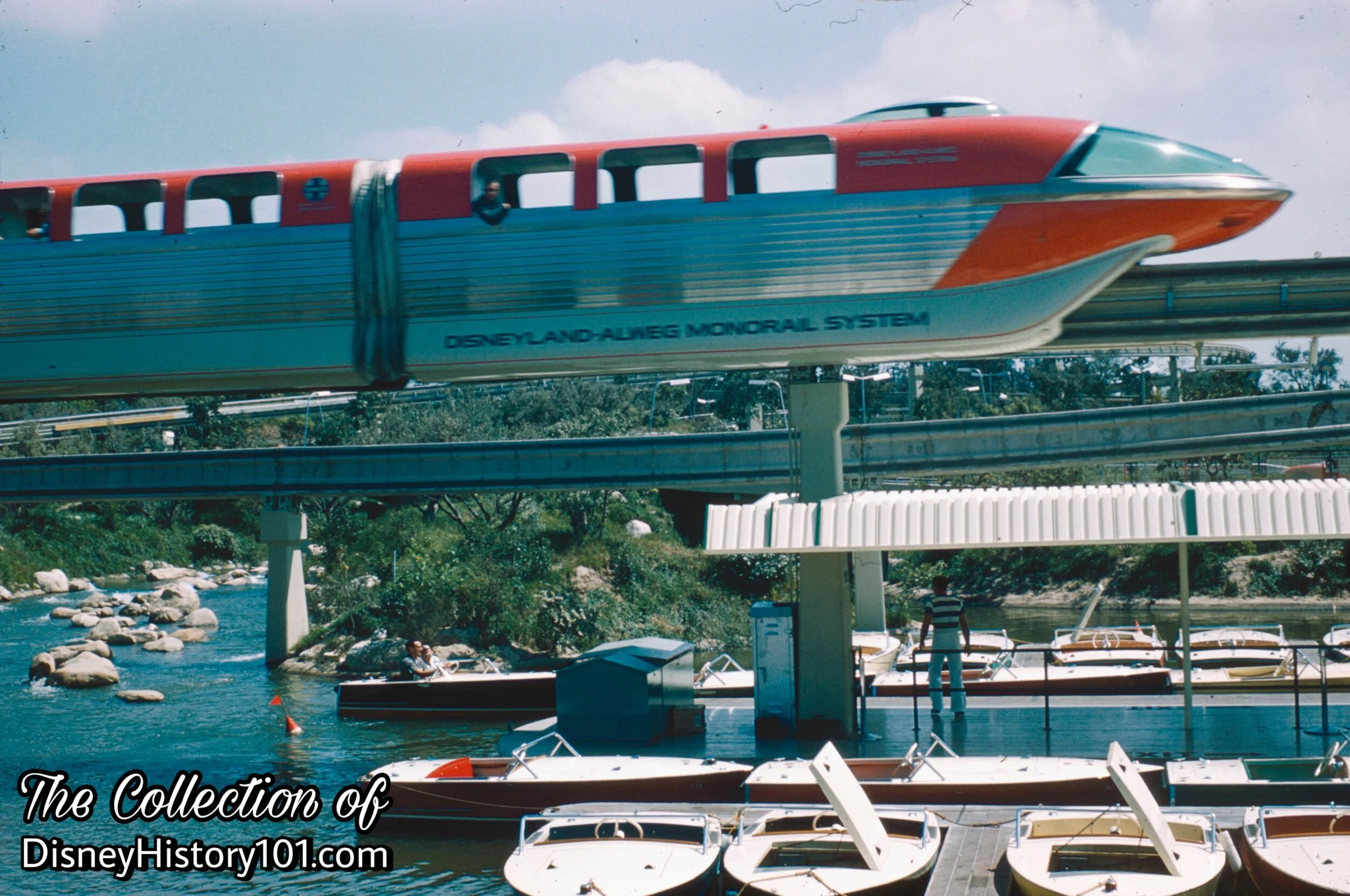
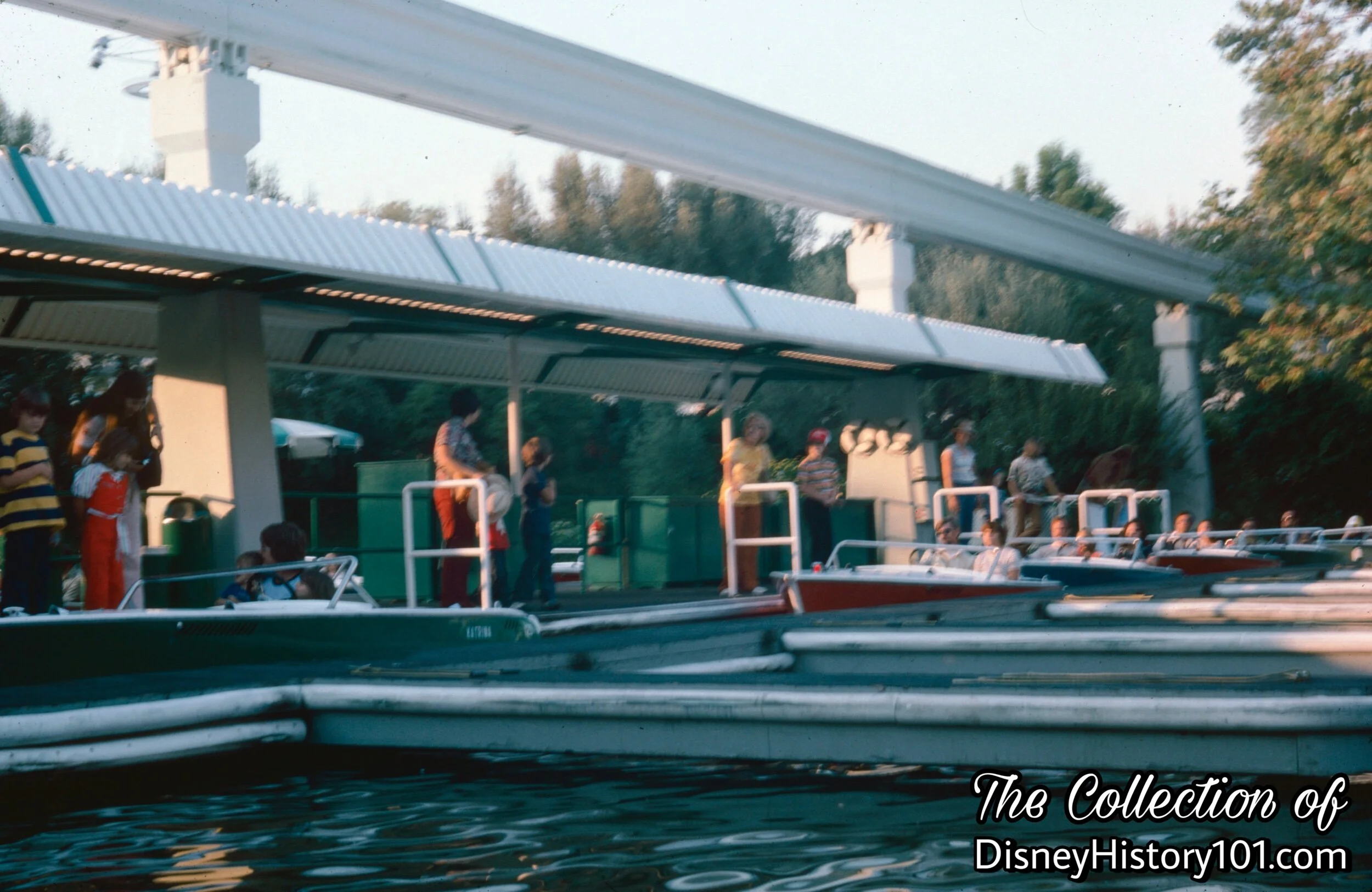
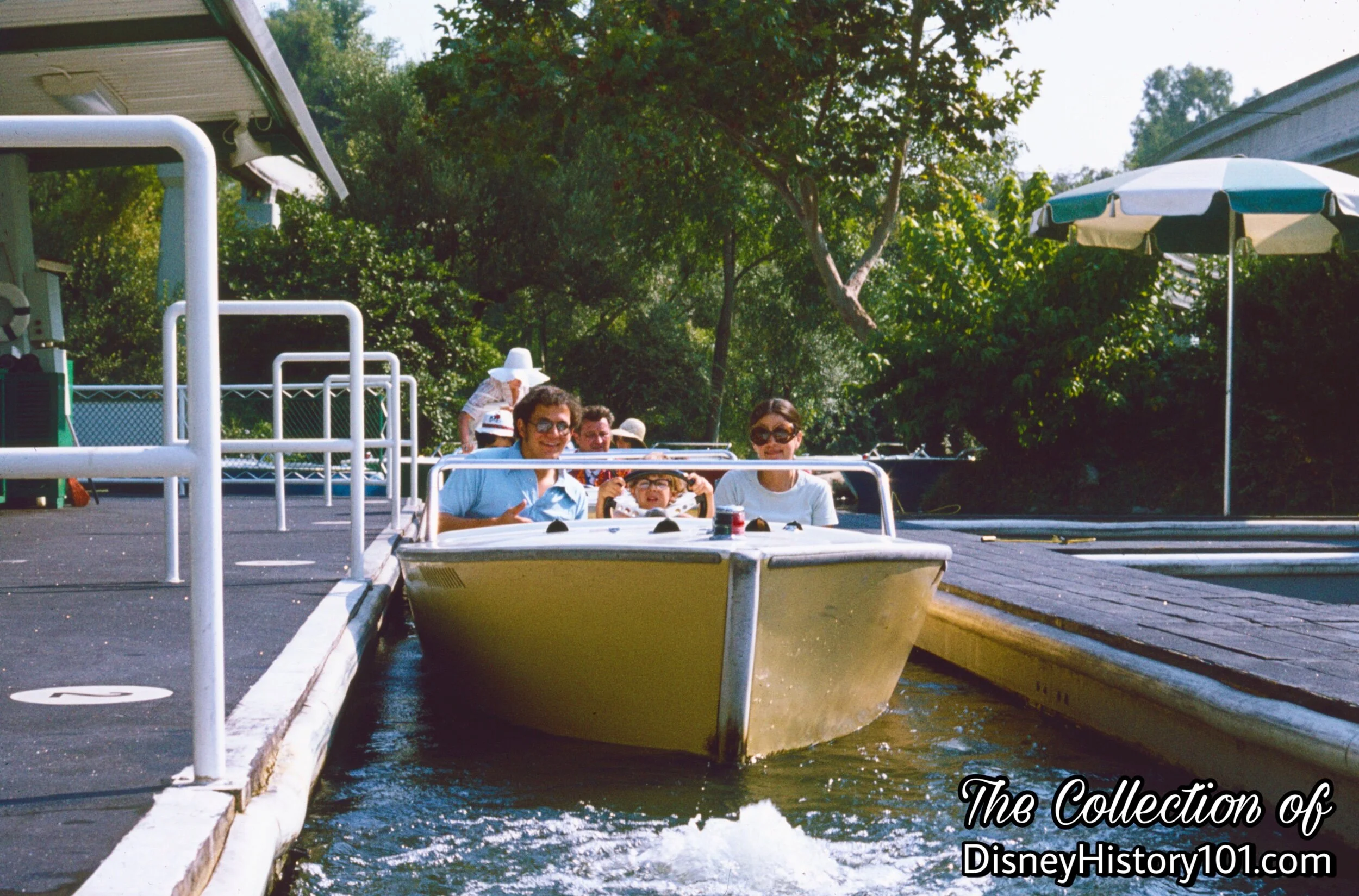
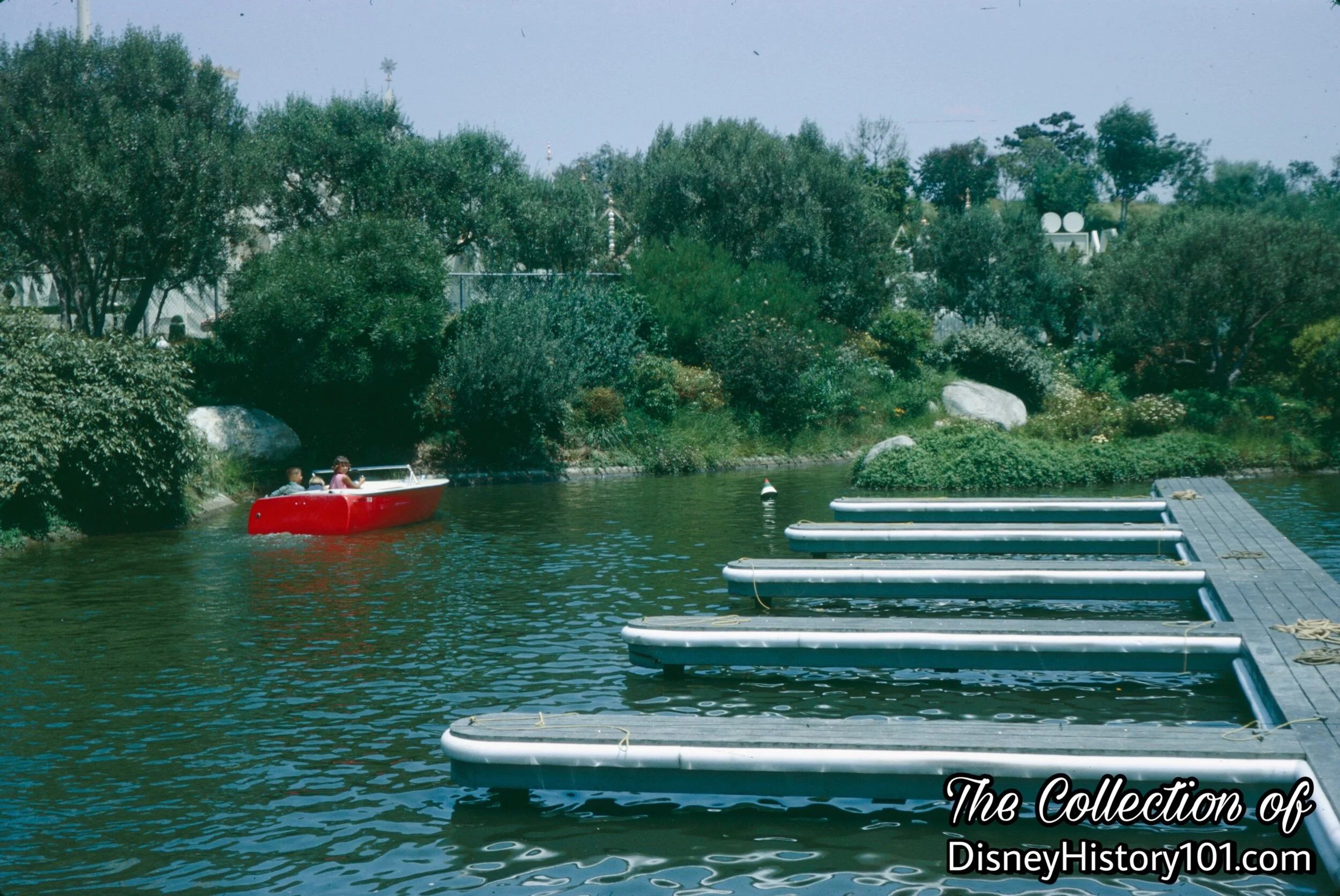
Walt acknowledged “Everything here at Disneyland and the Studio is a team effort.”Countless Disneyland Cast Members have contributed to the Motor Boat Cruise stage, like Mike O’Brien (one-time Foreman, c.1966). Many notable Disneylanders had a privileged part in the Motor Boats rotation - the set order of operating positions established by the attraction's Working Lead. One such was Debbie.
“I became a ride operator in 1978, but hadn't been trained on Motorboats for maybe a year (I was learning other rides), so [I eventually started operating the Motor Boats around]…1979. Many of the rides were paired up to work, so if you were scheduled on Teacups, you rotated through both Teacups and Mr. Toad every hour. Motorboat [Cruise] was an exception. Because it was off by itself, it didn't share a rotation. Also, Motoboats was one of the few area attractions that remained open during the Fantasyland remodel.
The uniforms were better than what the rest of Fantasyland had to wear! They had shorts and white knee socks!
Duties were the same as other rides. There was a position for grouping guests into boats and another for operating the panel. By pushing a button corresponding to a number on the dock, you could stop or release a boat. So, once riders were seated you could open the "gate" and let them go. One busy day, both sides of the main dock were open and it required 4 people to work. On a quiet day or night (we had those back then!) One person could handle it, but there were always two for the purpose of breaks. The adding or removing of boats from the track was done depending on the crowd that day. Boats were released from the track and we had a long pole with a hook to maneuver the boat around the smaller dock to park it. Once in awhile this resulted in the ride operator falling in!”
![[This] “picture was taken before we were abandoned. One of the guys just thought it would be funny to climb in the engine compartment.“](https://images.squarespace-cdn.com/content/v1/5b3d7f804eddec6e826be0c9/1590712375928-YPDTNSU18EQVXK5KZI55/8775960B-8AD6-43AB-8821-BE0B69210D12.jpeg)
[This] “picture was taken before we were abandoned. One of the guys just thought it would be funny to climb in the engine compartment.“
“Summers were fun because you worked the same shift with the same crew and really got to know each other. We decided to get some group photos and came up with the idea of riding all the way around the route and each of us jumping out on a rock. This required careful planning and an extra person to take the photo AND ride a boat around to pick us up. The picture came out great, but the rescuer sent an EMPTY boat to get us, so no one to step on the accelerator.”
“It's a pretty long ride when idling and all we could do was wait. It was in the morning before opening so employees at other rides were busy themselves. We were also at the far end of the dock where anyone passing by would likely not see us. it was a long wait and that boat came around at about opening time. Thankfully Motorboats is not a ride guests run to first and our lead was with us, so no getting in any kind of trouble!”
Perhaps you had the pleasure of performing a supporting role on the Motor Boat Cruise.
The Motor Boat Cruise was still listed on batches of May, 1981 tickets (bearing the date code 815). However, beginning June 20, 1981, the Disneyland Passport included unlimited use of this attraction too!
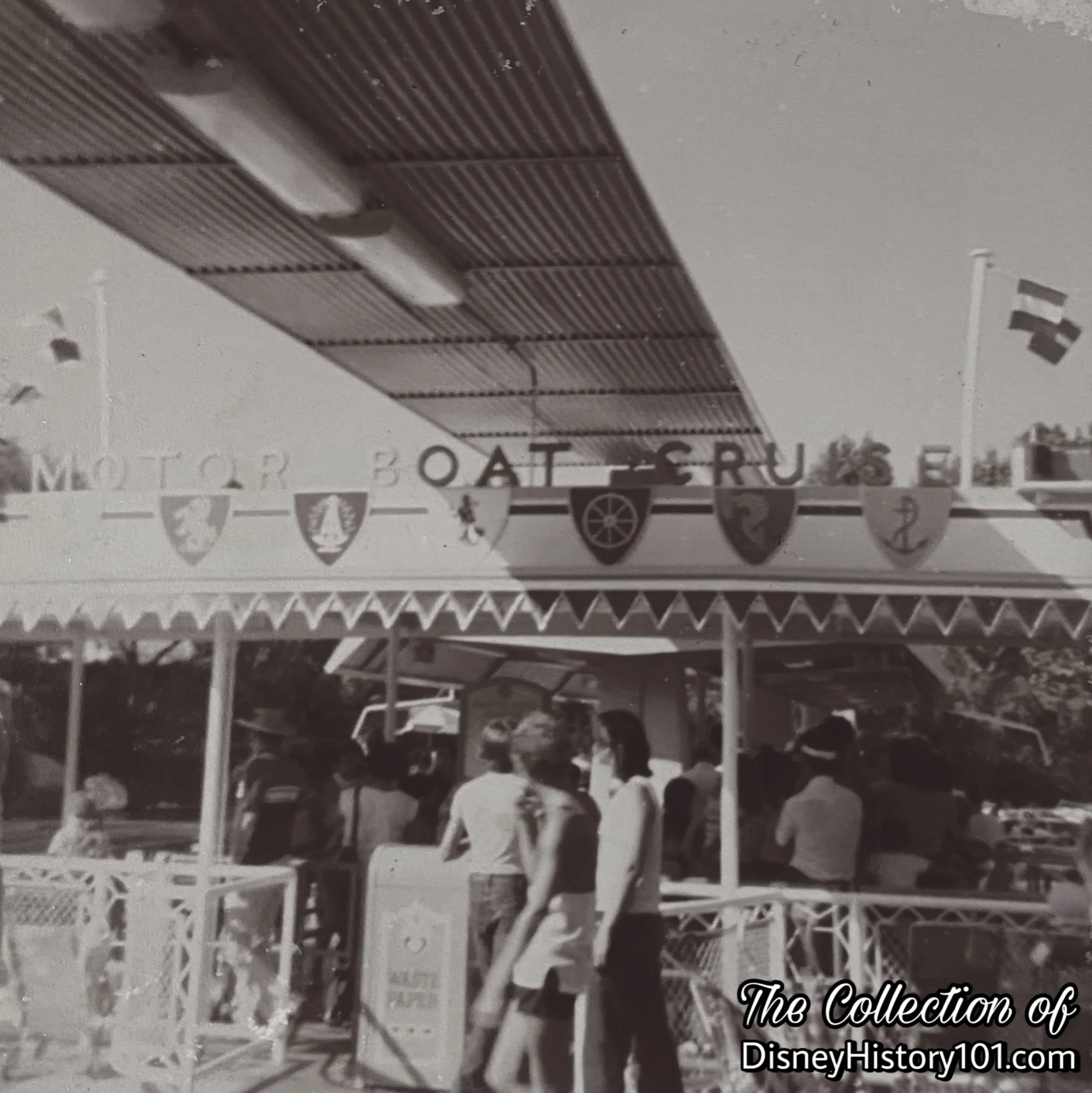
A part of the “Ten Year Master Plan” of growth for Disneyland was a unique Fantasia-like attraction entitled “The Garden of the Gods.” By May 1961, the ride-through adventure was master planned by Marc Davis (who worked from D-Wing office at Walt Disney Studios) and Claude Coats. The ride was scheduled, researched, and developed to replace the Motor Boat Cruise. Proving that nothing ever dies, the idea was later adapted for a development that would have replaced the Swan Boats at The Magic Kingdom, after their closure in 1983.
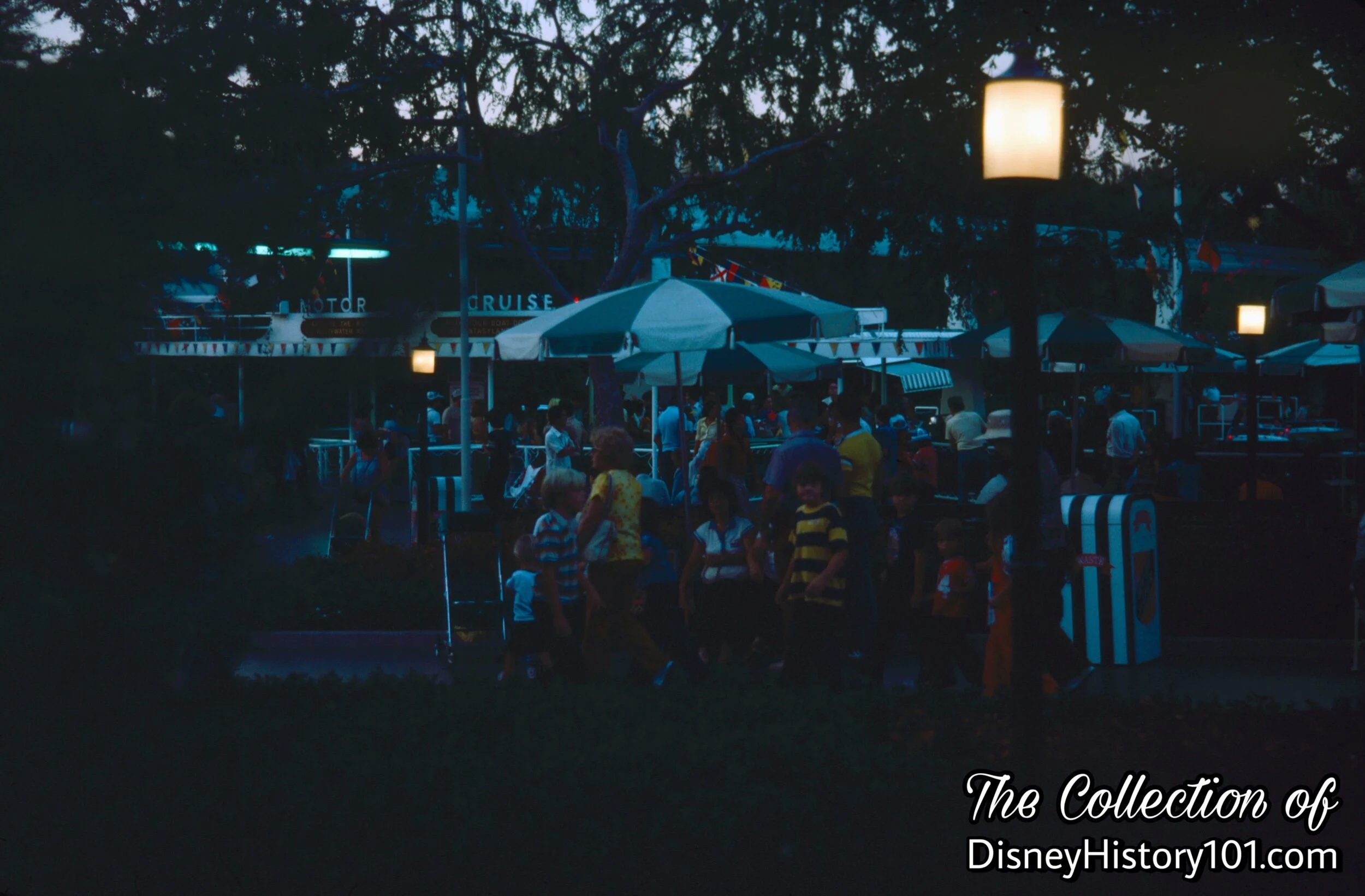
On March 15, 1990, the Motor Boat Cruise (with its 1,125 lb. Motor Boats) was briefly renamed and re-themed to “Motor Boat Cruise to Gummi Glen” in honor of “The Disney Afternoon Live! at Disneyland.” In Motor Boat Cruise to Gummi Glen guests follow Cubbi Gummi and his friends as they produce a new batch of Gummiberry Juice. Guests needed to beware of Duke Igthom and his evil ogres!
But ultimately, Disneyland Guests would embark on their last Motor Boat Cruise on January 11, 1993. That same month, another aquatic attraction would open in its place - Fantasia Gardens topiary water garden, preserving the name of the aforementioned undeveloped attraction.
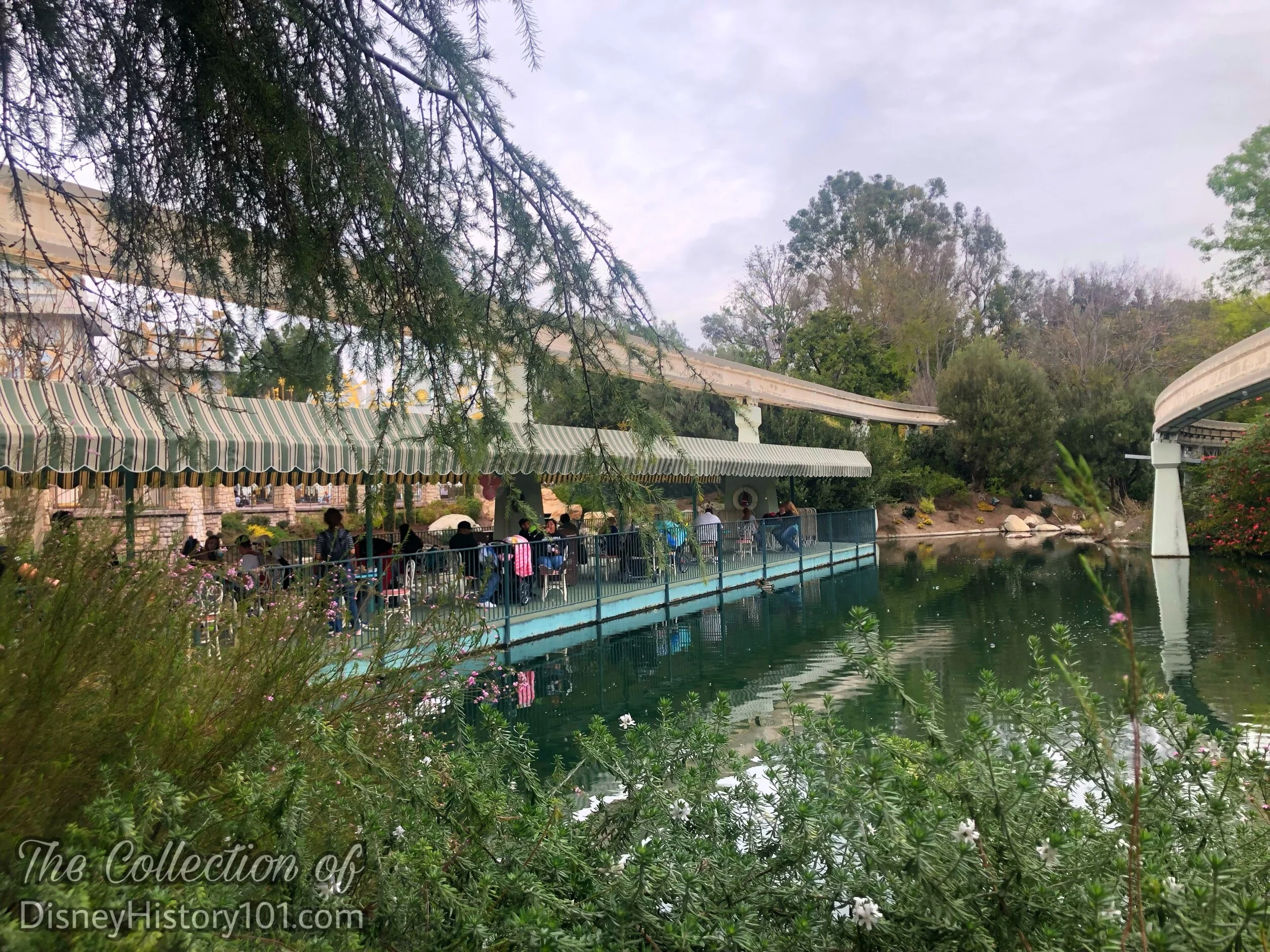
Through the years, Guests have enjoyed the outdoor seating area of Fantasia Gardens (located across from the Matterhorn) as one of the quieter nooks in the Park. Meanwhile, Walt Disney Imagineers have reviewed the area as a potential site of a “New Magic Opportunity” yielding dramatic, efficient, quality enhancements to the Disneyland Show. For instance, back in 2008, WDI Master Planners entertained the idea of a Tinkerbell and the fairies theme at the Motorboat Lagoon in some sort of “Entertainment/Foods & Merchandise” collaboration.
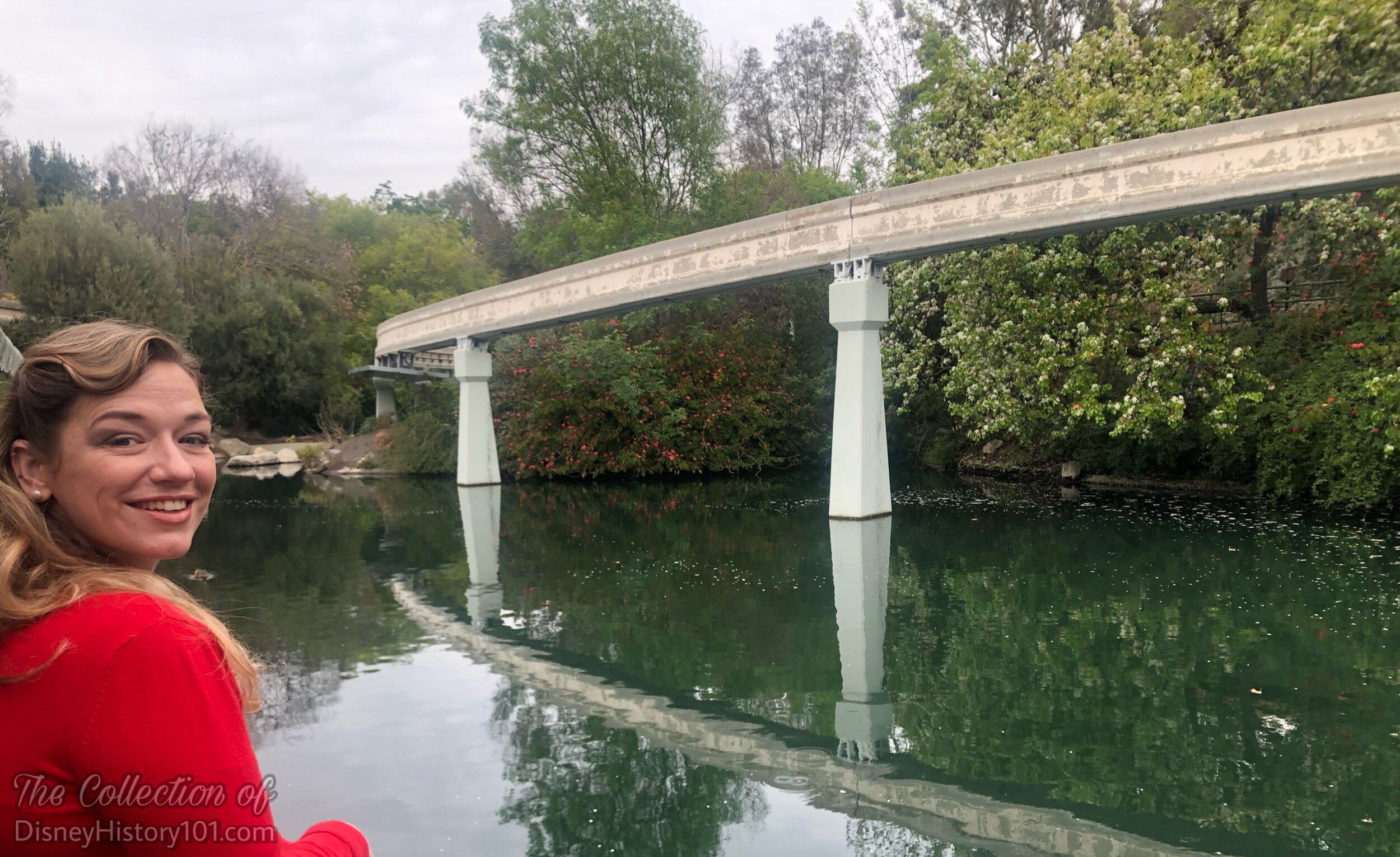
This is the site of Fantasia Gardens (and the former Motor Boat Cruise Dock) as it looked at the time of publishing this article (c. 2018). I can neither deny nor confirm the following legend that some Disneyland Cast Members relate, how “on particular dark and misty mornings, you can see the distant sails of a Phantom Boat skipping about, accompanied by the faint hum of an outboard motor.”
MULE PACK (RAINBOW RIDGE PACK MULES)

At Disneyland there is a "story behind the story" of every attraction, every attraction is a living experience for the guest. Disneyland ride-through attractions or adventures have officially been defined as an “individual show, ride, or exhibit designed to produce an entertaining Guest experience. Disney attractions stir the imagination, enliven the senses, and provide the participants with positive, innovative entertainment, which is the essence of the DISNEYLAND Show.” It is important to review the story of the attraction, tell the story, explain it, and create interest. This is the story of the Mule Pack.
Equine regularly factored into the plot of Walt Disney Productions (like “Don Donald”, released 1936, which co-starred Jenny the Burro), and equine have always been part of Walt’s vision for a Park. An early form of (what would come go be known as) the “Disneyland Prospectus” [prepared in 1953 for Disneyland Inc. by WED Enterprises], mentions a Mule Pack Ride - “Take a Mule Pack Ride with an old prospector for a guide through the colorful mother-lode country of the pioneer days.” The contemporaneous “Proposed Diagramatic Layout of Disneyland” (Marvin A. Davis’ plot plan, produced for WED Enterprises, by September 12, 1953) detailed a “Pack Mule Ride” as well as its route through this section of “Frontier Land.” It was also written that “the Mail-Order Catalogue will picture everything for sale in the Emporium or at any place in Disneyland. If you want a real pony and cart or a miniature donkey thirty inches high you’ll find it in the catalogue.” Clearly, the development of Disneyland necessitated Owen and Dollie living on the Walt Disney Studio Lot for the duration of their development.
One of the foremost aspects of future Disneyland attraction development that Owen supervised was fabrication of equine tack during 1954. Diane (eldest daughter of Walt Disney) once recollected, “Dad’s first grandchild, Christopher , was born in December of 1954. Disneyland was under construction at the time, and Owen and Dollie Pope were hired to acquire and train the horses and mules that the park would need to pull the horse cars and stage coaches down Main Street. To be close to the horses, the Popes lived in a trailer on the Studio’s back lot and then at Disneyland. Dad would often visit them and the horses. Owen was a skilled saddle maker and made this miniature saddle as a gift for Dad’s first grandchild. My husband Ron was in the army and stationed at Fort Ord, and we were living in Pacific Grove, California. When Mom and Dad flew up to see their first grandson, Dad brought this little saddle with him.”
Owen and Dollie also oversaw the breeding and care of these Sardinian Donkeys, which were intended for “Frontier Land, which is Disney’s favorite section of the fair,” according to Loius Berg (Reporter for “This Week Magazine”)! In fact, they looked after the first Disneyland Cast Member. The “lovable little mule, Picolino, was the first of his breed to be ‘hired’ to work at Disneyland.” On that day, Walt Disney personally commissioned Herb Ryman to paint a portrait of Picolino (the first Disneyland Cast Member) to celebrate the occasion, and this Herb did, while standing with brush in hand before the Studio coral, according to “A Brush with Walt Disney” edited by Bruce Gordon and David Mumford, page 1963.
Many years prior, Walt had spent a number of his formative years on a farm run by his father Elias. So, it was only natural that Walt enjoyed the animals around the Studio. A testament to this was the account of Louis Berg, who had the privilege to tour the Walt Disney Studio “stud farm” late in 1954. He soon divulged : “I visited the stud farm where the midget horses, ponies, and Sardinian donkeys that will draw the wagons, carts and surreys are being nursed. And it’s a sight in this world to watch the tiny foals nuzzling up to mothers themselves no bigger than a normal foal. Disney knows every colt and every pony by name, and can tell you the characteristics of each of the several hundred animals : one likes to chew on cigarettes, another is a brat. ‘Get away, General,’ he said to a young colt that was biting his trouser leg affectionately.” Herb Ryman [in “Work With Walt” by Don Peri] collaborated Louis Berg’s observations, recalling how Walt “loved the the little animals - the little horses, ponies, and mules.” And Walt wasn’t the only one who loved the animals at the Studio. In his interview, Louis Berg continued : “Incidentally the pony corral is the favorite of Disney employees and their children. Most constant visitor is ‘Bunky’ Thompson, receptionist, who spends lunch hours feeding the animals.”
“55er” Day Sechler recalled: “At Disneyland, … Walt [sic] came to the Pony Farm a lot to watch us break horses. He was always concerned if he could do anything for you.”
Soon one authorized “Disneyland Information & Nomenclature List” (prepared by Bill Cottrell of Disneyland Inc., by May 25, 1955) divulged the details of the “Mule Pack Ride” to Disneyland, Inc. employees in the following way : “A pack ride into the motherlode country in the Old West.” Further, “2 packs” were detailed, consisting of “1 lead horse and 9 mules in each pack.”
While most employees of Disneyland attended an orientation program, during this era, there were many Pony Farm employees who did not attend these sessions. Van Arsdale France remembered: “I think I managed to schedule almost everyone through orientation, with one exception. My only failure was with the people who were to operate the horse drawn vehicles. This operation was controlled by a crusty man named Owen Pope, whose headquarters were in what is still called ‘The Pony Farm.’ When I cornered him, he explained by saying, ‘Van, you're dealing with people people. We're horse people out here.’ He finally sent me one or two of his men. But, he was. doing his own training program.”
Before the Park opened, the Mules, Burros, and all equine were prepared for the noises that they would hear once On Stage in Frontierland (and other parts of Disneyland). Van Arsdale France once wrote: “He [that is, Owen Pope] was worried about the horses ‘spooking’ with all the sights and sounds of Disneyland. So, a recording of sounds from arcades and shooting galleries, and yelling kids made up. This was used as an audio aid for horse training. Since the horses were not directly on the payroll, they had to be carried as assets. All were given names. They all received names of people in accounting. Lucy Cotton, for example had a mule on the records named, ‘Lucy Mule.’” In so doing, Mule Wranglers who assisted Owen knew each equine “in their strings” including the new mules born at Disneyland.
One insert in area newspapers described how “Some of the more stubborn animals slid around the training area on their haunches two or three times before accepting the idea the older, lead horse was trying to get across. Trainers say all horse drawn equipment, from Frontierland stages to Fantasyland's Sardinian carts, will show the Disney perfection on opening day, July 18.”
New additions to the “Pony Farm” stock stem back to Disneyland’s opening year, when Atom the Burro (“Disneyland’s first citizen…born on the Magic Kingdom’s Pony Farm”), was introduced into the world before Disneyland opened. You may recall this image printed on the cover of special newspaper sections published Friday, July 15, 1955.
Walt loved his Disneyland equine. For instance John Catone recalled seeing Walt “riding around the Park on a white horse.” Atom (above) is seen on the cover of the “Premier Souvenir Edition” of the Independent Press Telegram, published Friday, July 15, 1955 and on the inside cover of Disneyland Holiday (Spring of 1957) where he is depicted with the caption: “Walt Disney and a friend.”
Some mules were named after Disneylanders, like Lucy Mule (named after Lucy Cottom), and Burro Male Jim 2 (named after Jim Quigley). Occasionally, animals (including at least two mules) were sold - even before Disneyland opened. Hand-written notes made during the 1958-59 appraisal of Disneyland preserve this information.
While the horseshoes of the Belgians, Clydesdales, Percheron, and Shire-Percheron cross-breeds were made of rubber (to generate the “clip-clop” sound on Main Street), the horseshoes of the Frontierland equine (mules, Sardinian donkeys, midget horses and ponies) which travelled through unpaved areas were made of iron metal, the old fashioned way. The old Mule Shoes were once stored in a barn at the Pony Ranch. But many years later (and long after most of the Mule Trains had departed from Disneyland), the old shoes were relocated and piled high under trees (and behind a fence) near Big Thunder Ranch.
Some equipment was purchased, like 16 saddles which were specially rigged with a 14-inch seat, purchased for $1,248, by October of 1959.
By July 1, 1954, George Whitney of Disneyland, Inc. directed Amusements, with Ron Miller overseeing analysis, philosophy, capacities, planning, operator training, and amusement procurement.
At last, the Press Preview Day arrived, with the “Pack Mules - two packs - one lead horse and nine mules in each pack,” escorting guests through the wild country of Frontierland! The Mule Pack would go on to hold a special place in Disneyland history, as 1 of 22 initial major attractions at Disneyland! “55er” Day Sechler recalled, “Where Fritos now stands was a loadin' dock for burros, we didn't have mules then. A burro belongs to the ass family." Earl Anderson recalled “On opening day, John Yarber and I got a call that the gate had fallen off the Mule Pack Ride, and that we were to go and fix it. We had not the slightest idea where the Mule Pack was.”
“Disneyland's Painted Desert was a playground for the James Unger family recently when they took one of the first pack mule trains a cross this miniature desert waste. Cactus and sagebrush was moved in and the area given its realistic appearance by Disney craftsmen and artisans. Led by a Disneyland trainer, the riders are Mrs. James Unger and sons, Melvin, 9; Albert, 12, and Richard, 2, riding with his father, James W. Unger.”
Many Hosts started out working the mule attraction, and assisting young guests onto the saddles and into the stirrups. For example, after some encouragement from Eugene Lemmon (of Park Management and Operations), the legendary Ron Dominguez even spent part of his first year with Disneyland, working with the Mule Pack (among other equestrian-based adventures). The adventure has been described as “unpredictable, certainly never the same ride twice.” Charley Brock recalled: “In May of 1956, I went to work on the Mule Pack Trip. I'd work the mules some and the horses some. A mule will only work so much and then he'll quit. A horse will work until he drops. Burros are pretty stubborn. I'd sure get mad at the mules sometimes out in the Park, but I'd save the swearin' at them fill I got 'em back in the barn. I'd call it 'MULE LANGUAGE!”
The attraction was very popular. Soon (within 1954-55), a Conestoga Wagon and Mule Pack model kit (potentially Walt Disney Productions licensed merchandise) was also suggested by the Strombeck-Becker Mfg. Co.
The Mule Pack soon went down for a major rehabilitation. Several years later (during 1961), Eleanor Heldt (Magic Kingdom Club Administrator) commented that “During a major rehabilitation, it is sometimes necessary to close an attraction for several weeks. This of course, is when the smallest details are checked, replaced, or repaired as required for the maximum safety, convenience, and comfort of our guests.” Beginning on June 26th, 1956, several new attractions (and enhancements) proved the truth of Walt Disney’s promise that Disneyland would continue to grow! As the mules were included among several exciting attractions debuting during 1956, that increased ride capacity, one day in August saw a peak total of “197,547 individual rides” enjoyed by Guests (according to a letter from Walt to Ward Kimball, dated January 23, 1957).
In 1906 Frank had delivered fence posts to the Disney Farm in his Peter Schttler Wagon. When Walt and Roy came back for a visit in 1956 (not long after the reopening of the Pack Mules at Disneyland) they enjoyed a ride in the very same wagon pulled by mules.
Just outside the mining town of Rainbow Ridge sat the boarding station for the pack mule train. Now, there were “three wonderful ways” to enjoy the Painted Desert at Disneyland.
This is a Walt Disney Artist's conception of a section of FRONTIER-LAND in Disneyland, featuring the awe inspiring Mine Train Ride, the exciting Stagecoach and Mule Pack Rides, where one can journey through the many fantastic sights of the Rainbow Desert and Rainbow Mountain areas, returning with a view of the famous Mark Twain River Boat and Tom Sawyer Island.
Similar to the Mine Train, the Rainbow Ridge Pack Mules also departed from the town of Rainbow Ridge!
According to “Disneyland Inside Story”: “No animals in the Disneyland Pony Farm were more difficult to work with than the Frontierland Pack Mules. They began their show business careers by nibbling at guests' souvenir hats as they saddled up. When the operators got wise and started collecting the hats before loading, the mules occasionally retaliated by nipping shoes. One mule mistook a girl's long blonde ponytail for a ‘hay snack.’”
The Rainbow Ridge Pack Mules offered alternate views of the Painted Desert along a route not taken by the ore cars.
The tickets (like the ones for other early attractions), were likely produced by Globe. According to James Keeline, “The price [for ADULT and CHILD admission] stayed the same for the first few years but the lettered individual tickets started to appear in this era too.”
“‘VOID’ was used when they wanted to have tickets to put on display in the park ticket booths if people wanted to trade them in towards passports, etc.”
Admission during 1958 just was one “jumbo” “D” coupon (the price of 35 cents, for one child), the same as the Jungle Cruise, Indian War Canoes, or the Tom Sawyer Island Rafts.
While some prefer the gondolas of the Mine Trains, hardier pioneers find a tour of the desert via sturdy pack mule more to their liking!
In order to assure an adequate amount of transportation, mules and burros were kept at two locations. This is evident by reports of an appraisal was conducted (from 1958 to 1959) through Bank of America, to qualify Disneyland, Inc. for a loan that would support a massive expansion of Disneyland.
During 1958, a couple of Bank of America District Appraisal Officers (William Smith & K.E. Johnson) appraised the livestock owned by Disneyland, Inc. Located in Disneyland, Orange County were found five small mules (ages 4-7; valued at $125 each) and 50 burros (ages 4-10; valued at $50 each). Other animals were pastured at Rock Creek Ranch in Llamo, California. There, were 35 burros (valued at $35 each) and five small crossbred mules (valued at $75 each) subsiding on pasture grass and alfalfa. A final account revealed that there were 88 burros (3 at Disneyland, 85 pastured) and 11 mules (4 at Disneyland, 11 pastured).
Appraiser representative (e.g. K.E. Johnson) of the District Appraisal Officer (J.C. Biggers) of the Bank of America Fullerton Branch was sent to Disneyland in November of 1959 to inspect assets including the related equipment and livestock. In addition, the mules and burrows were also appraised - one mule gelding valued at $100 a head; two burrow mares valued at $50 a head, totaling $350; 4 burrow geldings valued at $50 a head, totaling $200.
The Rainbow Caverns Mine Train attraction (of 1956) brought scenic “natural” wonders to the mule train route. That same year, a covered awning (similar to the ones in the Mexican Village) was added to the queue to protect guests from the rays of the sun before ‘saddling up’.
Once upon a time, Mule Packs, Conestoga Wagons, and Stagecoaches transported guests through the Rainbow Desert. This was the scene until July of 1959, when the horse-drawn vehicles began to disappear from Frontierland. During that year of 1959, Joe Fowler was Vice President of Disneyland Operations Committee and Doc Lemmon of Disneyland Operations was overseeing Operators of Rides & Amusements (like the Mule Packs, Conestoga Wagons, and Stagecoaches), Livestock, Parking Lot, and Ticket Sellers.
By this late date of October 4, 1959, several related direct purchases had been made including “16 saddles special rigged with a 14” seat” valued at $1,248. That very month, the first printing of the internal publication “Disneyland Dictionary” described the adventure in this way: “Pack mule ride into the mother-lode country of old West on mules such as were used by gold miners and settlers of the era.” By this time, the Rainbow Ridge Pack Mules consisted of two (2) packs - one (1) lead horse and nine (9) mules in each pack.

*Some sources state February 1st, 1973 and December 9th, 1973, while Disneyland LINE asserts October of 1973.
In 1960, a brand-new “seven acre composite True-Life Adventure called Nature’s Wonderland” would be “based on elements of four Disney films - Beaver Valley, Bear Country, The Living Desert and The Olympic Elk… a journey by mine train or pack mule into a wilderness populated by more than 200 life-like animals, birds and reptiles,” according to “Walt Disney Disneyland,” page 44, printed by Officine Grafiche Arnoldo Mondadori - Verona; first published 1964. Yes, the mules would now embark along a trail that offered alternate vantages of The Living Desert and the rest of Nature’s Wonderland! Youthful explorers could now see the “back country” of Nature’s Wonderland from the back of a sturdy and sure-footed pack mule, from dawn ‘til dusk.
As quickly as the Bounding Big Horn Sheep appeared atop Cascade Mountain (among the approximate 200 critters), it quickly disappeared so as to not threaten the mules. Precautions were also taken to not frighten the mules passing over Natural Arch Bridge. Operators would refrain from ringing the bell or blowing the whistle while the Mine trains passed below.
Back in 1957, Disneyland maintained around 200 head of horses, ponies, mules, and burros. Despite all the equine-powered vehicles at Disneyland, most of these “200” were mules and burros. By 1962, Disneyland had a total of 195 horses and mules [according to an article by Art Linkletter published in The Ford Times Guide To Travel In The USA, published 1962]. Of course the latter figure still mostly included the mules and burros (98 mules and 68 burros were most of the head of horses kept by Disneyland by the summer of 1966). One may wonder why there were so many mules on hand and the reason is because the Mule Trains consisted of eight mules, and there were as many as “10 trains running during the summer” seasons, accruing to Backstage Disneyland (Summer, 1966).
None of these animals worked more than 4 hours a day, six days a week. When they weren’t working, the horses were stabled in clean and individual tie stalls, while the mules and burros had their own corrals and lots. “They receive excellent care, as does everything connected with Disneyland. Gear is kept clean, polished, and in good repair. A full-time farrier is kept on hand, and barns, stalls, tackrooms, and corrals are kept spic and span”, [according to The Western Horseman, published September of 1957].
According to “Disneyland Inside Story”: “Although blessed with extraordinarily short work hours, the mules would stop for no apparent reason along the trail and refuse to continue, regardless of the verbal lashings applied by the mule skinner. And almost anywhere, at any time, one of the creatures would break into a loud and repetitious series of brayings that sounded astonishingly like ‘hee haw.’”
In 1965, Backstage Disneyland published the following short report: “Famous Mule Master, WALT BRICKER, placed his feet comfort ably on his ‘desk’ in the old Blacksmith Shop at Rainbow Ridge. ‘Yessir,’ he mused, ‘It was quite a Summer. Had one of the finest crews in the Park. Broke the ride record on July 14 with 3848 guests carried. The riders and loaders operated together as a team.’ Then he told how the operators were all taken to Owen Pope's Pony Farm to see the magnitude of the Disneyland equestrian operation. The mules consume a ton and a half of hay a day and, thus, must work to pay for their keep. Each rider lines up his (or her) string of mules and then combs, grooms and saddles each one.
JIM LINDSAY, foreman of the riders, is tremendous with the animals and calls every mule by name. He personally rides every new mule to see if he is safe for the guests. If a shoe becomes loose on one of the mules, Jim opens his old tool chest in the Blacksmith Shop and removes the shoe.
Walt tilted farther back in his chair and his eyes twinkled. ‘Sure have some good looking girl riders,’ he beamed. And that CAROL SPAETH is a real sharp horse trader. Watch out for her.’ ‘And take that DANNY JOHNSON. She is quite a gal with animals. She can out work most men. She used to saddle forty horses at her father's stable before starting her shift at Disnevland.’ CHARLEY YATES is an old timer. He used to be a jockey. AL HOWRY used to ride for Betty Grable. FLETCHER SKELTON comes from New Mexico where he used to punch cattle. He still rides a horse as if he was on the range, spurs and all.’”
Another rehabilitation ended with an extended Loading Dock added for the summer of 1966.
Charley Brock recalled: “Well, one day we were workin' 10 string o' mules in the Park and the Santa Ana winds got to blowin' Limbs were fallin' on the trail. There was a big tree at the end of the loadin' dock and it started cracklin. I stopped loadin' and I was scared and shakin' as the tree kept creakin. I had just got my last string out when the big tree fell with an awful crash!”
Disneylander and “55er” Frank Pfannenstiel went to work on the mules in 1961. Eddie Dixon also alongside the chute where his mules were bein’ loaded.
The Mule Pack Ride was occasionally featured in media. For instance, in August of 1962, Lloyd Richardson, Larry Clemmons, Joe Marquette, Coy Watkins, and Jack Leppert (of the Walt Disney Studio) filmed and shot scenery “(1) near the fighting stags, (2) behind a building in Rainbow Ridge and (3) on the Mule Train itself,” for Studio Production #3185.
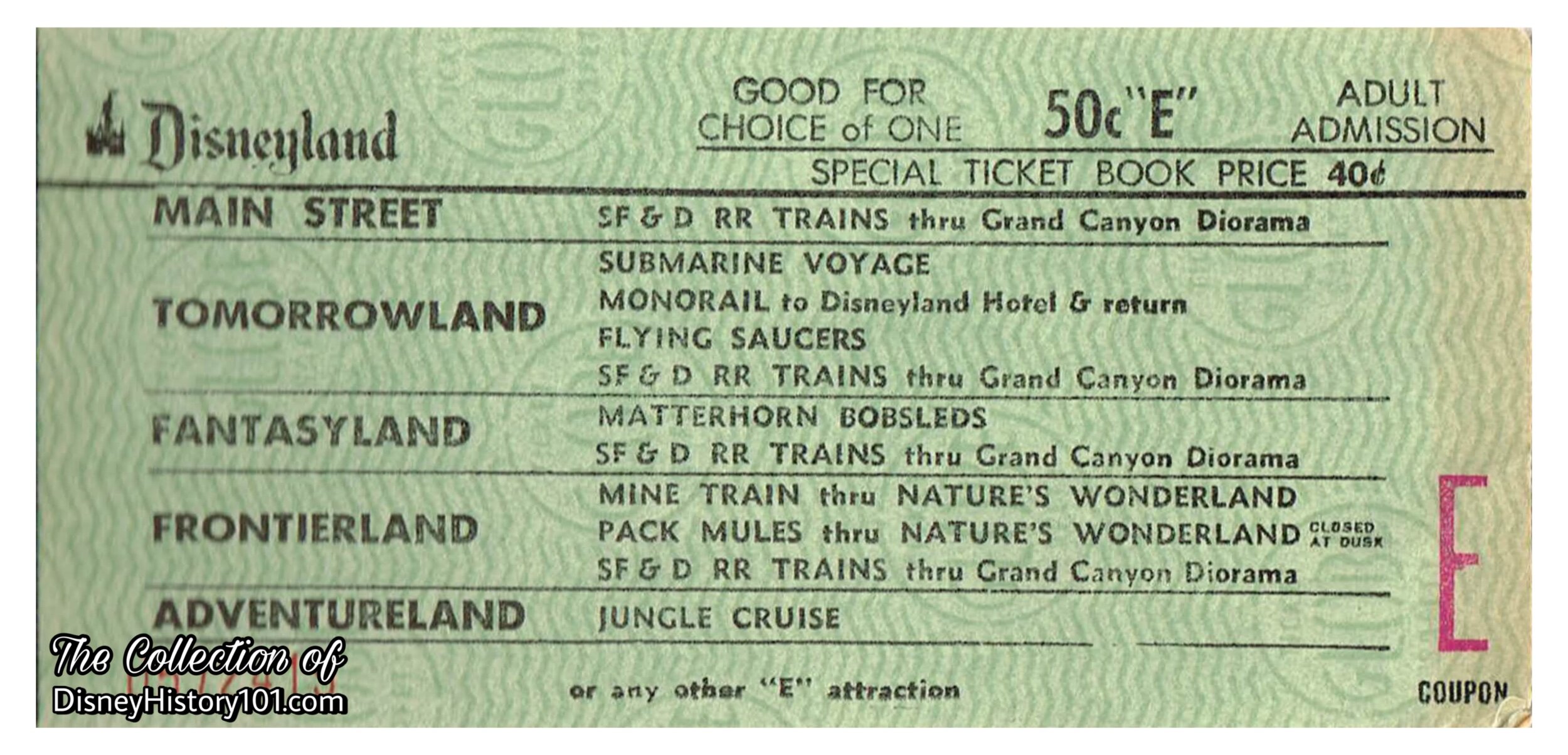
Many notable Disneylanders had a privileged part in the Pack Mule rotation - the set order of operating positions established by the attraction's Working Lead. Plenty of Disneyland Cast Members had their start as Mule Riders, like “55er” Charlie Brock, Mike Leslie (eventual successor of Disneyland Pony Farm Supervisor Day Sechler), Walt Joseph Jackson Brickner (who was often mistaken for either Walt Disney or the late Clark Gable), and Eddie Dixon (another c.1965 Cast Member). Many of these had a passion for working with equine and most animals, like John Jay Pelletier. This is John’s story :
“I had just come from canada in 1960 and gone from country living to city living. I think in 1961 dad had just got a new job and took the family to Disneyland. At that time they had Tom sawyer’s Island (and I enjoyed that), the canoes, and the mule train. I was 15 the first time I went. Mom and dad loved the jamboree and the Golden Horseshoe saloon. We had ice cream, pop corn, apple candy, and that sort of stuff. I remember the fantasy of it all, and the characters. That was my first experience with Disneyland.
Then there was a Grad Nite. The gal I dated was a senior, and I had never seen Disneyland at night. It was all lit up, and so pretty. I lived in Fullerton and if we got on top of the house we could see the fireworks at night. One of my teachers worked for Disneyland, and mentioned that Disneyland was hiring. A friend of mine said, “Do you want to go work for Disneyland?” Come middle of may of 1965, he got a job right away on the monorail, and the Horseless Carriages, and the train. I never got the call, and went to work with my dad in the oil fields. I got the call [later] in the middle of June, and they asked if I had experience working with animals and mules. They said we have an opening on the mule train, and the pay starts around $1.75 an hour 1965. So, I went to work for the mule train, and the next thing I knew, I had my own train. I would load the kids, get the animals, feed them a little, give them a break, and then get back in line and do it again.
Having been raised on a farm in Canada, I learned to saddle up horses and teams of Mules to pull logs out of the forest. So I felt at home…it was fun. The hardest part was to tell people that they were too big [to ride]. Kids were the best, …I spent time with each one while adjusting the stirrups. I always carried pieces of carrots in my pocket for the stubborn ones. Mertal always got excited when she would see me. She knew I had carrots for her.”
The Mule Team was particularly close. Charlie Brock recalled one Thanksgiving. “There was a girl rider, name of Margaret Karl, and she said that she would fix the turkey and everybody to bring the trimmings. She brought a tablecloth and set the table in the old mule shed. She had a 23 pound turkey, and we had olives, cranberries and punkin' pie!”
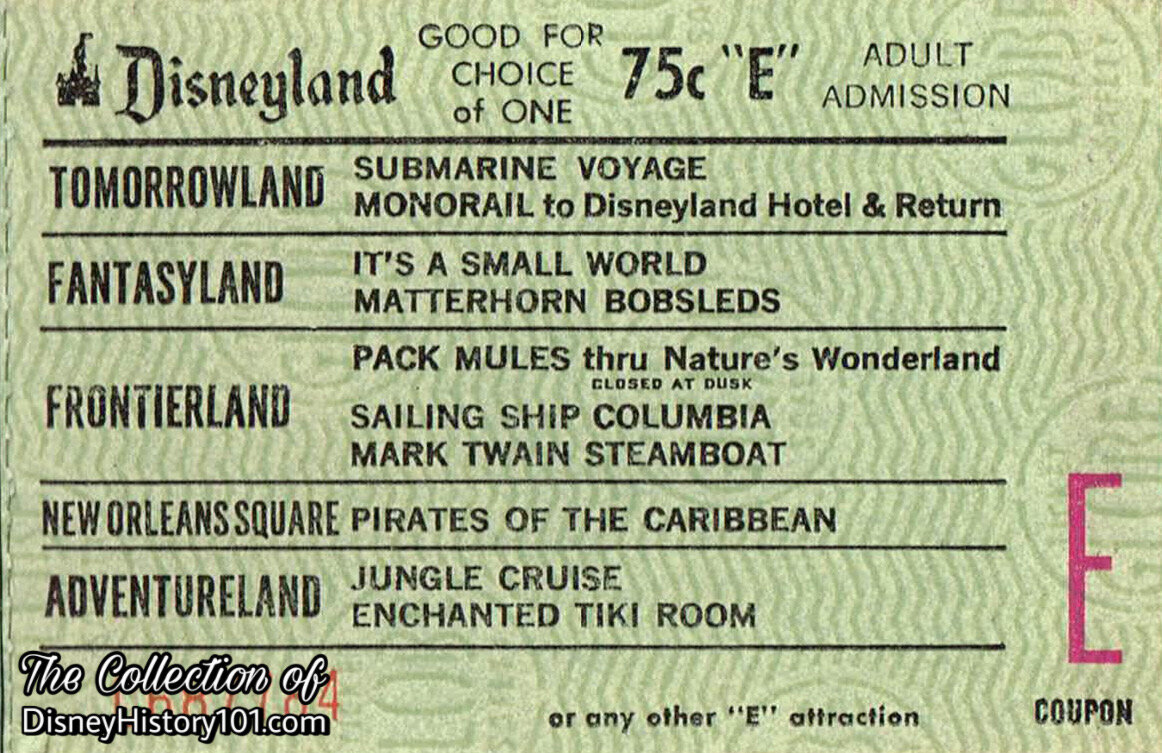
In 1965, the cast of admission for seeing Nature’s Wonderland from the back of a sturdy Pack Mule was exactly one “E” coupon, or 75¢ for adults and 65¢ for children.
Younger guests also had the opportunity to mount their very own Pack Mules Through Nature’s Wonderland!
How exciting to not be required the accompaniment of an adult during the duration of your journey!
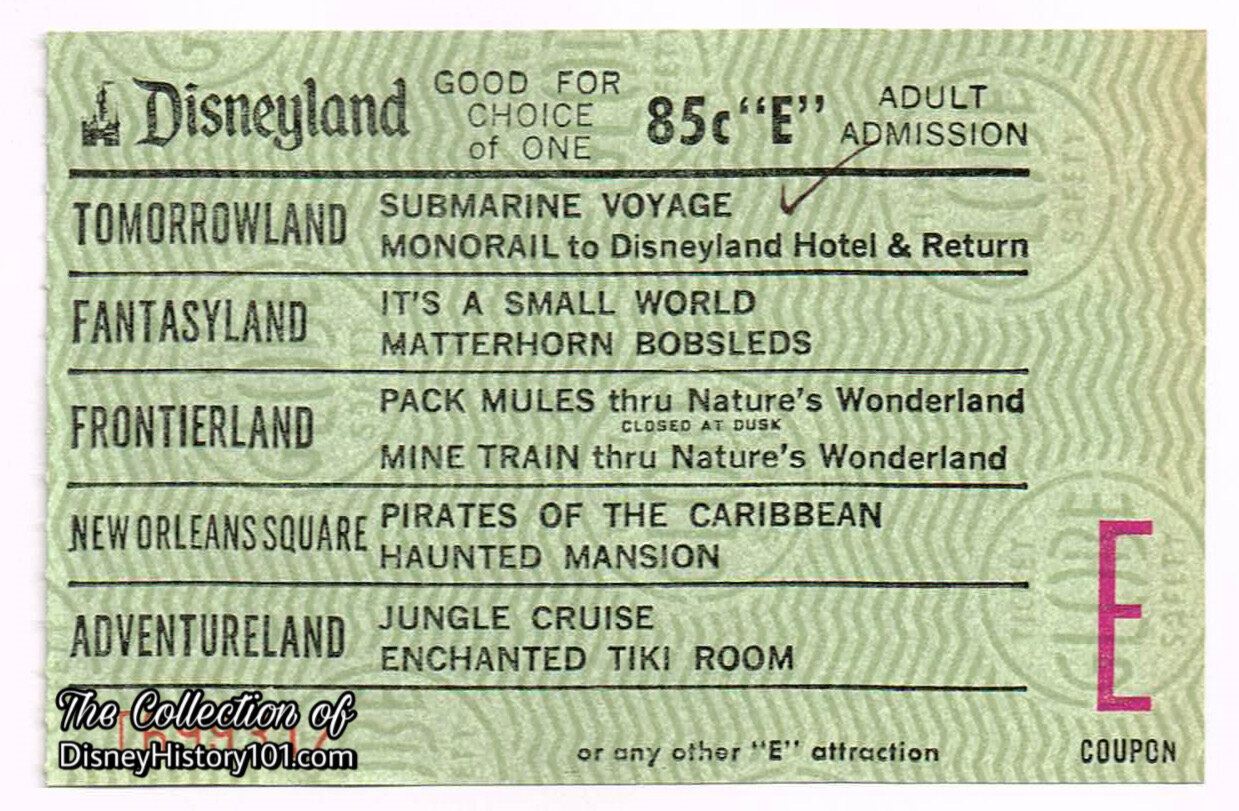
As we head across the bridge, and near the outskirts of Rainbow Ridge (c. July, 1967), we come to a small house perhaps owned by the proprietor of the Rainbow Ridge Hotel. We’ll be heading up into the hills now, so hold tight!
The Pack Mules also gave an alternate view of the town of Rainbow Ridge, because their arrival and departure wound the train into the hills.
The Pack Mules Through Nature’s Wonderland would head over Natural Stone Arch (the gateway into Nature’s Wonderland) while Mine Trains would pass beneath. Natural Stone Arch gave a breathtaking view of the Bear River on one side, and the Living Desert on the other.
To the side of the Pack Mule trail, we pass The Palace Dance Hall at Rainbow Ridge.
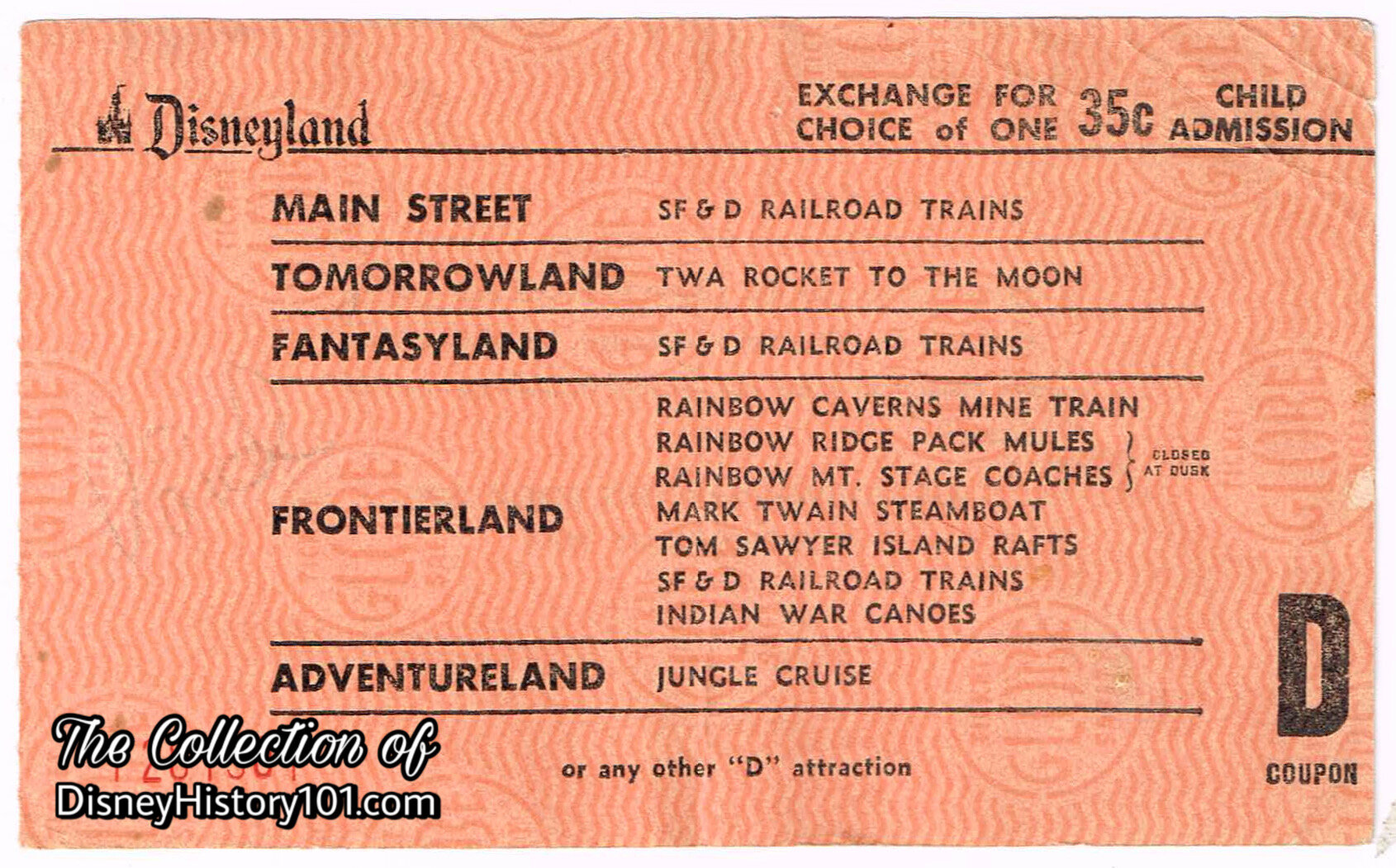
Just about a stone’s throw from the Mule Loading Area, the neighboring Rainbow Ridge Mineral Hall carried many Mule-themed souvenir gems, like this Pack Mule Ceramic.

Safety is a major concern of Engineering. Every year they would make a complete test and inspection of all structural parts of Disneyland. And since Guests would look to Disneyland for their safety the department team was continuously designing new guest and personnel safety devices.
If an attraction at the Park proves to be dangerous, the problem is corrected or the attraction is eliminated. One casualty to safety was the Mule Train Ride. The Mule Train was responsible for the Park’s largest damage payouts, with at least four or five cases, major losses for Disneyland. Milo Rainey recalled: "Sometimes runaways would be caused by ducks flying across the river.” In the early 1970s, a man who fell off a donkey won a $146,000 verdict the largest single damage payout in the Park’s legal history. A Berkeley fashion model won $58,000 after she fell from a donkey and was stepped on, leaving a horseshoe shaped scar on her bank. As a result, the Mule Train would close.
Jack Kehoe (Operations, Security) suggested that the “Pony Farm” receive a sign labeled “The Disneyland Pony Farm,” but the official response would have been hard for some to handle. Though included in the Disneyland Admission Media Ride and Attractions Report of 1971, it seems that the “Pack Mules” was nearing the end of the trail. By February of 1973, the last pack mule had walked through Nature’s Wonderland.
While most of the mules would disappear from Frontierland (and Disneyland), the old Pony Farm wasn’t going anywhere (at least, for a while). And Jack was sure on to something. Seven years later (in 1980), another Disneyland Cast Member (Main Gate Ticket Seller Sandy Oleson) helped give the Pony Farm a new name - Circle D Ranch!
As a “sidelight,” another equestrian relic from the past - “the original trail for the Pack Mule attraction (1957-1978)” was still extant in the hills of Frontierland by 1990, according to “Disneyland - A Treasure Chest of Trivia,” prepared by Walt Disney Productions, 1990.
Not far from the “Big Thunder Mining Operation,” the “Happiest Horses on Earth” exhibit brought a familiar face On Stage - a mule!
NEW FANTASYLAND
“Fantasyland - From Squares to Tournament Tents”
“Disneyland was designed from the outset with the assumption that the animated characters would make it necessary to showcase them in appropriate representations of their film environment,” according to John Hench (“Designing Disney Imagineering and the Art of the Show”). Naturally, some of the earliest Disneyland artwork and accompanying documents show a Fantasyland of rich three-dimensional facades generating a European village.
Early thumbnail sketches and other concept artwork of Disneyland seemed to be unencumbered by restrictions of budget, schedule or the laws of nature and physics. Though guided by Walt, his artists appeared to engage in “free-thinking,” as if implementing the modern “Blue Sky” Imagineering process. Like some advanced “High Concept,” many final designs were quickly generated and approved. Some designs were voided.
According to the “Proposed Diagramatic Layout of Disneyland” (Marvin A. Davis’ plot plan, produced for WED Enterprises by September 12, 1953;) just beyond the Carrousel of “Fantasy Land” was an area labelled “Pinocchio Square.”
Amidst his loose line work, Walt Disney Studio artist Bruce Bushman (who was also affiliated with Bradley & Kaye) suggested a Stromboli Puppet theater in an area inspired by Pinocchio’s village, a gravity-flow canal ride featuring Monstro the Whale, a circus midway-themed dining area entered through a towering clown arch, a sailboat in a lagoon, and remembering that “it was all started by a mouse,” his detailed designs also included a “Birth of a Mouse” show. [The Disneyland News, Vol.1, No.9 published for March 10, 1956.] One contemporary form of the Disneyland Prospectus (prepared in 1953, for Disneyland Inc. by WED Enterprises) elaborated on “this land of fantasy… the settings from the fairy tales.” For instance, “Pinocchio Square…with Gepetto’s clock shop…Stromboli’s Puppet Show, a miniature traveling carnival.”
While many artists contributed, the talented Herbert Ryman is of note. Herb had joined the Disney Studio in 1938, after Walt saw a public show of his work in New York. (Herb's paintings were being exhibited with those of another up and coming artist, Andrew Wyeth.) Herb Ryman acted as art director for such films as Fantasia and Dumbo, but had left Walt Disney Studios in 1946 and (by 1953) was employed by 20th Century Fox. Walt reached out to Herb and during one weekend (September 26 & 27, 1953) the first “Schematic Aerial View” over Disneyland originally produced!
Herb Ryman’s subsequent “colored pencil on Brownline” concepts of Fantasyland depicted “Merlin’s Magic Shop” built into the castle wall of “Sleeping Beauty Castle Courtyard” as “Walt’s original intent for Fantasyland - until budgetary considerations resulted in a simpler medieval tournament theme.” [“A Brush with Disney” by Herbert Ryman, page 155]
Fantasyland opened on July 17, 1955.
“Walt dreamt of a Fantasyland that would place guests into a fairy tale village, hundreds of years old. Of course, because money was tight, the first version of Fantasyland consisted of carnival facades and tournament tents.”
This was Fantasyland in its heyday. An early form of (what would come go be known as) the “Disneyland Prospectus” [prepared in 1953 for Disneyland Inc. by WED Enterprises], mentioned “within the walls and grounds of a great medieval castle whose towers loom seventy feet in the air. In the middle of the castle grounds a magnificent carousel in the theme of King Arthur and his Knights.”
The courtyard opened the way to refreshment at Welch’s or the Chicken of the Sea Pirate Ship.
During the 1950s, Fantasyland expanded with new adventures like Storybookland Canal Boats and Alice in Wonderland.
As Disneyland grew, the Cast expanded. Frontierland had its Sheriff and Villain, while Tomorrowland had a Space Couple. During the formative years of Fantasyland, you may recall meeting Robin Hood, the Fantasyland Court Jester, Paco the Talking Parrot, or “Pete” the Peg Leg Pirate!
Fantasyland even had its own supporting band. The Fantasyland "Polka" Band was a seven-piece breakaway “Sub-Group” band from the Disneyland Marching Band. They could often be identified by their Bavarian hats and lederhosen, performing around Fantasyland and the Matterhorn, and were even involved in occasional evening events like New Years Eve Celebrations. Other short-lived acts occasionally appeared, like the “three cute lasses” - the all-girl Pirate Trio.
Since the beginning, Fantasyland has been “based on… storybook classics,” according to “Disneyland, U.S.A.” published 1958 for potential Disneyland Participants. Fantasyland was a home to Snow White, Alice, Aurora (or, Sleeping Beauty, long before the namesake Walt Disney Production was released), Peter Pan, Captain Hook, the White Rabbit and many, many, others.
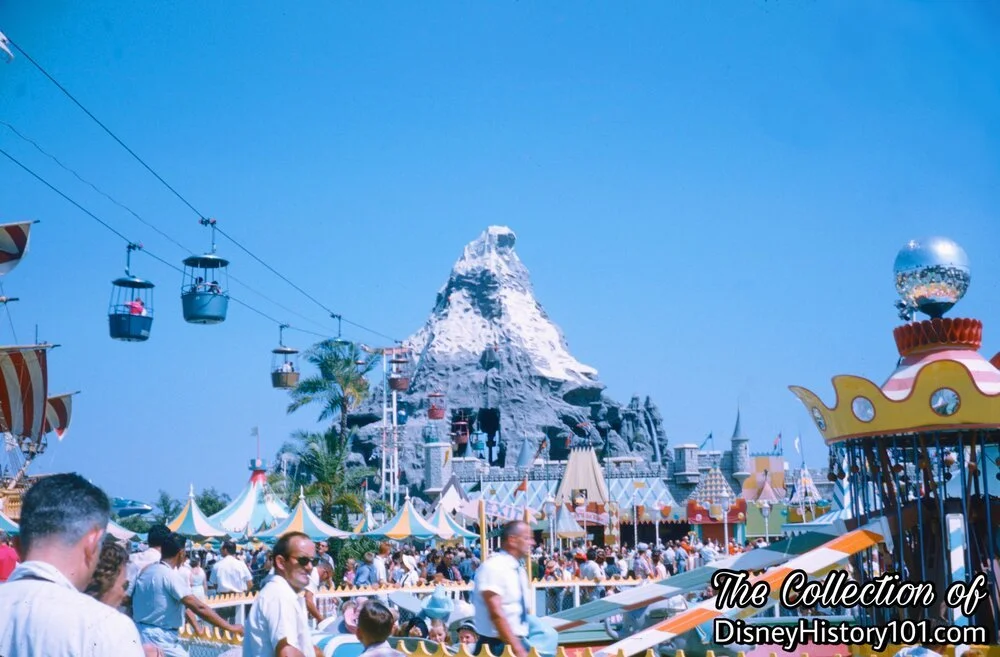
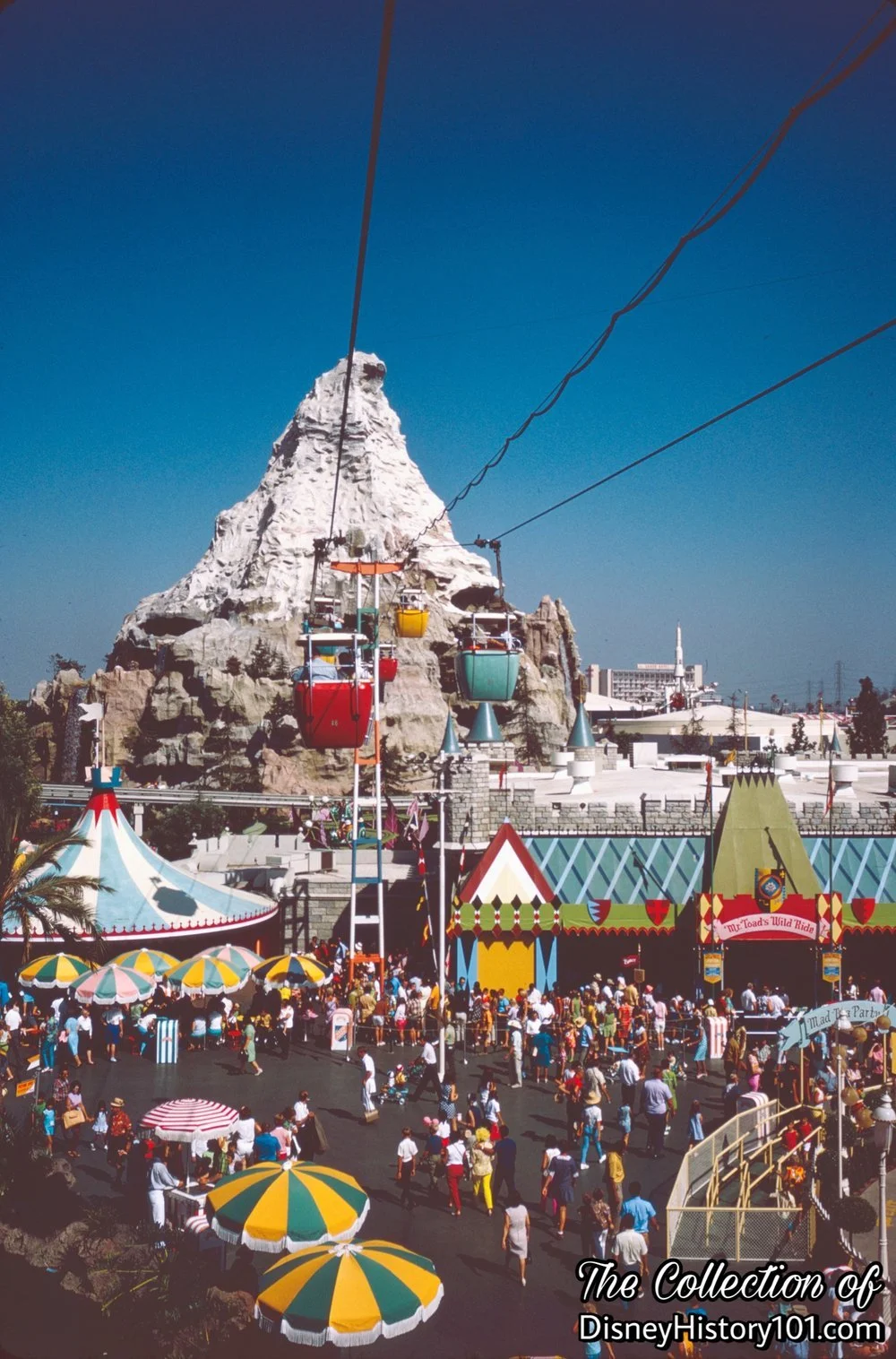
Fantasyland was densely packed with attractions, and bustling with guests during peak periods of the 70s, (mostly due to the proximity of King Arthur Carrousel to Sleeping Beauty Castle). During the 1970s, October and June of each year, was a period of major maintenance and rehabilitation which touched virtually every attraction, contributing to improved operations and show elements for the public.
But even greater things were to come…
Walt Disney once said : “Disneyland will never be completed. It will continue to grow, always adding new things to provide its visitors with exceptional and entertaining attractions.” In Walt’s eyes, Disneyland was “like a piece of clay,” because if there was something he didn’t like, he wasn’t stuck with it. He could reshape and revamp it. After years of personally reshaping and revamping, Walt divulged: “I’m not the perfectionist anymore. It’s my staff - they’re the ones always insisting on doing something better and better.” Even during Walt’s lifetime (around 1965 to 1966), WED Enterprises, Inc. opened a job No. 034-53-11, more commonly referred to at that time as “Fantasyland - Master Planning - R&D.”
According to the 1973 Walt Disney Productions Annual Report:
Walt’s promise was exemplified during the first quarter century of physical growth, and in Disneyland’s techniques of creating happiness. Disneyland had both the land and the creative spirit for expansion. Many projects were already on the drawing boards and in the minds of Disney Imagineers. Even long after Walt, Walt Disney’s Imagineers proved to know their audience, and rehabilitations and few new attractions would keep Fantasyland feeling new and exciting. In applying these philosophies, the first major remodel and reconstruction took place decades after the first day of operation. Around 1979 (and as work on Big Thunder Mountain Railroad was wrapping up), the Park Managers Operations Committee addressed the New Projects and Master Planning Committee regarding the updating and placing in priority projects which relate to onstage guest involvement. About this it was written: “The New Projects and Master Planning Committee… addressed itself to the updating and placing in priority projects which relate to onstage guest involvement. A primary concern is that of providing a major addition of change in the Park within the next three to four years. This would provide marketing a vehicle with which to market Disneyland to the public after Big Thunder Railroad and prior to the 1984 Olympics in Los Angeles.
In planning the next new attraction, it is felt that a more show-oriented attraction, like Pirates of the Caribbean, should be pursued. This would appeal to all age groups, provide high capacity, and can be done uniquely by Disney Imagineers without threat of competition. Along with any new major attraction, the addition of a large waitress service food facility is also needed. This facility should be themed with the attraction, playing off the attraction for its primary source of exposure--such as the Blue Bayou. Additional merchandise locations should also be added, themed to the area in both design and product.”
In progress was a proposed new area in Fantasyland known as “Pinocchio's Village.” It would replace the Fantasyland theater and stretch all the way to the “Fantasyland Skyway.” A new “dark ride” highlighting the classic Pinocchio story, shops and a restaurant location were also part of the plans. [“WED - What, Where, Why and Who,” by Vicki Stowe]
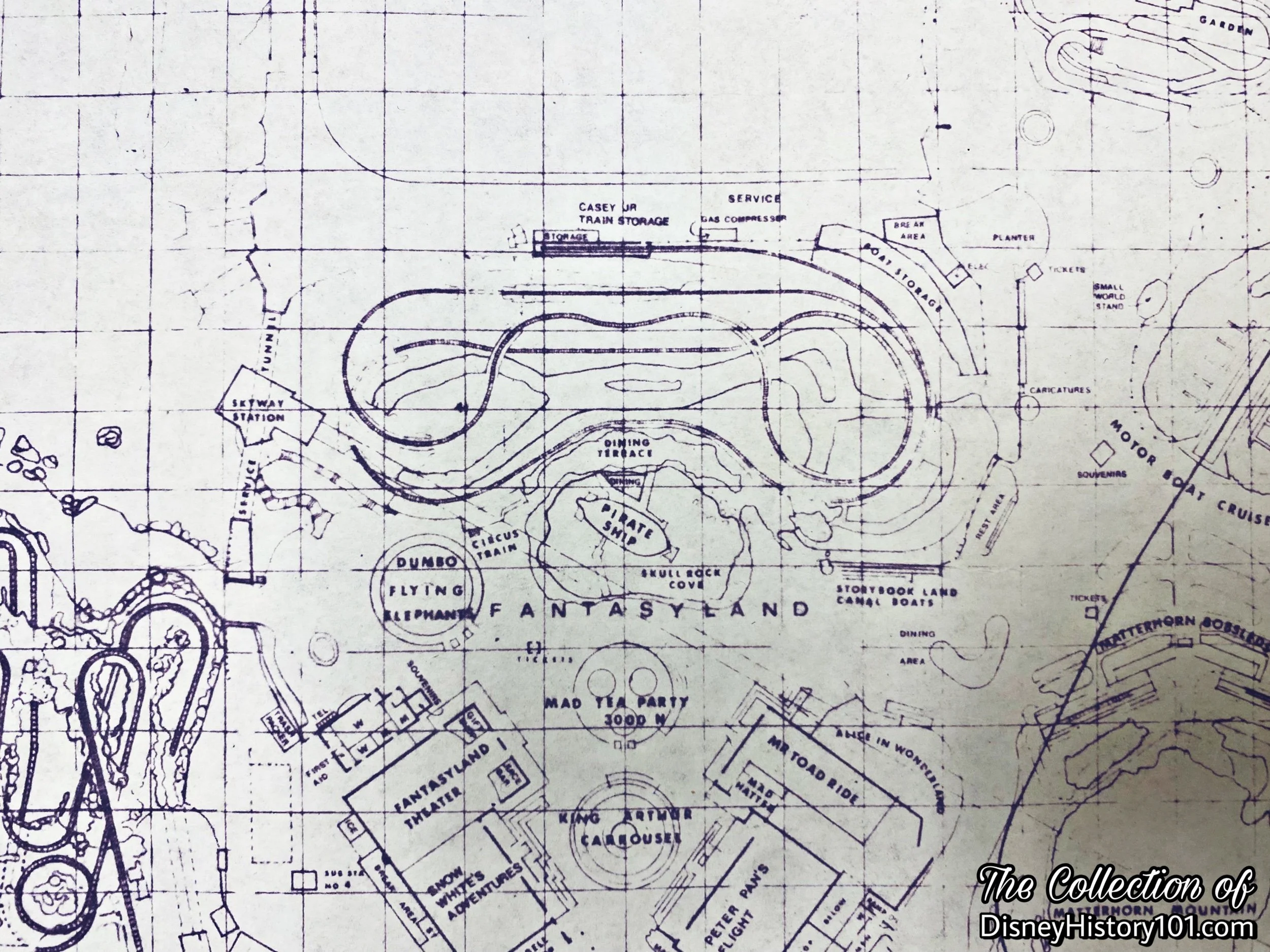
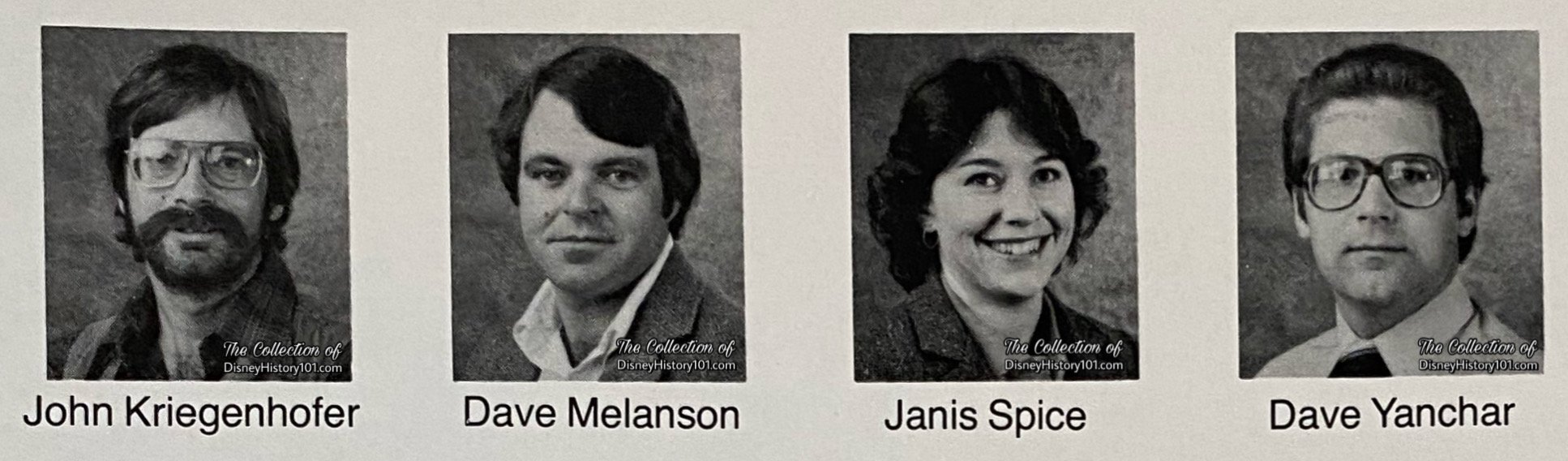
“People - Dreamers and Doers”
As fantastic as Walt Disney’s original concept of Fantasyland was, money was tight. Many elements were not full realized for another two-and-a-half decades. Still, some of these Fantasyland story elements (like Pinocchio’s Daring Journey) were periodically in development at WED Enterprises, and though concurrent project production schedules (of Tokyo Disneyland), the project was ready to launch by the early 1980s.
By the 1980s, design standards were being evaluated by WED. Functionally design themed architectural buildings and utility buildings with themed facade architectural treatments were analyzed, contrasted, and compared. Known or implied present day design standards were compared with present day (state of the art) industry standards and recommendations were made for changes and formal acceptance of new standards. Consideration was given to Kitchen Equipment standards, Break areas, Maintenance areas, and Equipment Rooms. The goal was to analyze reduce up front and overall project costs, and maintain quality of facilities, shows, and rides.
Only a few years prior, Card Walker said, “Our world is often make-believe, but we create make-believe with real people.” Walt’s original premier Imagineers had dreamt and created a magical and memorable place. “Disneyland is unique in that some of the world's foremost creative artists and architects control all design at Disneyland.“ Now, New Fantasyland would also be a magical place, developed through creative and technological innovation with the essence of great Disney storytelling! Storytelling would be accomplished through people - Disneyland employees, Wed Enterprises employees, MAPO employees and other consultants.
The New Fantasyland Department was made up of a Project Manager and vital support staff. The Project Manager would monitor and orchestrate the various aspects of his specific area of responsibility to insure that the original concepts were carried through to completion. This included the coordination of efforts on design, engineering, production, manufacturing, construction, and installation involved in the redesign and expansion of Fantasyland.
By 1982, the Disneyland Fantasyland Project Management was lead by Dave Melanson (Project Manager), Janis Spice (Project Coordinator), John Kriegenhofer (Financial Analyst), and Dave Yanchar (Master Scheduler). These helped guide the WED/MAPO Imagineering Project Design, Project Engineering, Project Manufacturing, and Project Installation Teams, and ensure that the original plans were carried through to completion, through Project Financial Analysis and Project Master Scheduling.
Among these were Walt Disney Imagineers Stan Abrahamson, Ken Andersen, Bruce Barnes, Tony Baxter, Jerry Billings, Mel Black, Ron Bowman, Pat Burke, Katie Cahill, Clark Conrad, Glen Durflinger, Maggie Elliott, Bill Guy, Dick Hardenbrook, Chris Tietz, Frank Hilberg, Phil Holtmann, Monte Howlt, Don Iwerks, Steve Izuhara, John Kavelin, Raellen Lescault, Mike McCullough, Dave Melanson, David Ott, Leonard Potter, Matthew Priddy, Mark Rhodes, Bob Stephens, Ray Roberts, Kurt Sawitskas, Jack Schilder, Bob Terrell, Brock Thoman, and Mike Valentino (to name a few).
Julie Svendsen was a Concept Show Designer for New Fantasyland.
“Magic in the Making”
The Project Financial Analysis team would break down and allocate design and construction estimates. It provided a calendar of budgets and cash flow forecasts, monitored internal costs, insured correct accounting codes, prepared cost analysis, and assimilated construction information.
Consultants included Ben Korman representing the Wheeler & Gray Company (that was instrumental in the stress calculations, engineering and initial construction of Disneyland, as well as additions in 1959).
Next, The Project Master Scheduling Team prepared a coordinated project level schedule which specified required dates for each major element needed to build the project.
During (April-June) 1981, WED Imagineering was taking stock of the current square-footage of Fantasyland (including dark ride attractions, merchandise locations, food facilities, rest rooms and even First Aid) and making proposals for track queue and Storage Area expansions for New Fantasyland. In addition, proposals for a 9,325 square-foot “Knoll Area,” an expansion of the “Play Area” (from 6,160 to 6,696 square-feet), and a minimization of the “Pirate Area” (from 2,211 to 1,515 square feet) were submitted.
Wild ideas can become reality if you just believe...! Joe Rohde was a designer for New Fantasyland. Joe believed: “We design places. My philosophy about research is that in order to make places, you have to know places, and in order to know places, you have to go to them.” Research and development included the study of structures like the Pondella Building located at 13749 Riverside Drive, in Sherman Oaks, California.
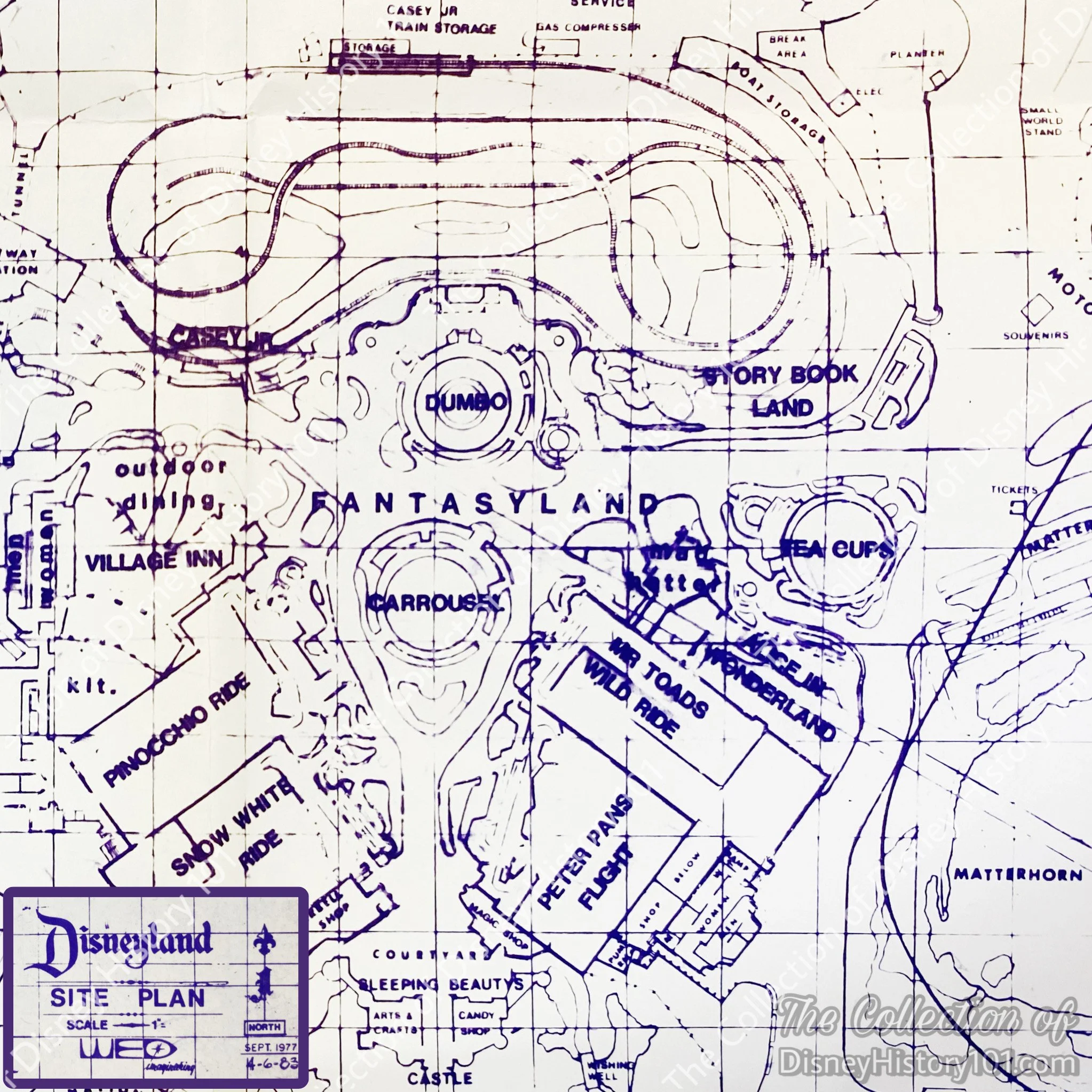
Walt Disney Imagineer Concept Designer John Stone developed overall concept models, dimensional design, including facades and Show Buildings for Peter Pans Flight, Alice in Wonderland, Snow Whites Adventures & Pinocchio Hause Restaurant. By about 1974, one publication commented: “Also in progress is a proposed new area in Fantasyland known as ‘Pi-nocchio's Village.’ It could replace the present Fantasyland theater and stretch all the way to the ‘Fantasyland Skyway.’ A new "dark ride" highlighting the classic Pinocchio story, shops and a restaurant location are also part of the plans.” [“WED - What. Where. Why and Who?” by Vicki Stowe]
By early 1983, WED Enterprises had created plaster sample walls (similar to the “Main Street Test Wall” of 1954), in order to generate the necessary textures for reference. Once the framing, windows, and doors, were completed, distressed wood, plaster, and roofing were added.
After this, much of the architectural ornamentation was sculpted, tooled, and cast by WED Entertainment, Disneyland Model Shop, and Walt Disney Studios. Many of these essential show elements - finials, chimney caps and pots, pinnacles, cornice, reliefs, columns, rosettes, and character carvings - were added by contractors during the Spring.
“Here is a land of imagination, hopes and dreams. In this timeless land of enchantment the age of chivalry, magic and make-believe are reborn and fairy tales come true. Fantasyland is dedicated to the young and the young at heart, to those who believe that when you wish upon a star your dreams do come true.”
-Fantasyland Dedication
“A Sleeping Beauty Awakens” was the headline of Disneyland LINE (Vol. 15 ; No. 21, published May 26, 1983)! Fairy tales of Fantasyland were realized to a fuller degree when the thematic possibilities were pushed to a farther degree and the refurbished New Fantasyland debuted in 1983. This was the biggest addition to Disneyland in its 28 year history! Now it wasn’t that Walt Disney’s Fantasyland was dull, for stepping within its timeless boundaries children of all ages would make believe that fairy tales really could come true. But after immersive Fantasyland attraction introductions had been added to the Magic Kingdom, it would only be a matter of a short time until such elements would replace the brightly-colored Renaissance style tent facades of Disneyland’s Fantasyland. Here, Snow White and the Seven Dwarfs would receive a new foreboding home inside the new attraction - “Snow White’s Scary Adventures.” And as for Pinocchio, he would finally receive an attraction to tell his story, as Walt originally intended. Disneyland Cast Members were among the first to experience the New Fantasyland in a Cast Premier and rededication of the Land, hosted by Ron Dominguez and Dick Nunis on four separate nights (May 26, May 31, June 1, and June 2, 1983). Soon celebrations were in order - Sleeping Beauty Castle’s drawbridge was lowered for a historic second time, and a television special preview of the new land - “Believe You Can…And You Can!” was aired on April 21, 1983. After all, the Walt Disney Productions Quarterly Report (for nine months ended August 12, 1983) included the “new magical land of make-believe” on its cover.
Add to this, the c.1983 re-issue of Snow White and the Seven Dwarfs would soon have the biggest opening of any Walt Disney Picture to date, and (with a film rental figure of $13,000,000) to be the most successful reissue in the history of Walt Disney Productions. Promotions like the PSA “Magical Smiles” Tour invited guests to discover the New Fantasyland.
For now, let’s imagine that it’s some time before May of 1983, much of the scaffolding has yet to be been removed, and we’ve just stepped beyond the raised drawbridge of Sleeping Beauty Castle for a sneak peek of Disneyland’s newest land! Along the way, we’ll see a few rare sights that perhaps have not been seen since the c. 1983 “Believe You Can, And You Can” television special. Please step this way, as we explore New Fantasyland!
By (April-June) 1981, WED Imagineering surveys of the 891 square-foot Mad Hatter Shop were conducted, in relation to New Fantasyland. Proposals for expansion to a 2,206 facility were made.
The main restaurants of Fantasyland were two Fantasy Foods locations (operated by United Paramount Theaters). The Disneyland Participant sponsor ran two conveniently located concessions on the East and West sides of Fantasyland - Fantasy Foods 1 and Fantasy Foods 2! Upon investigating Guest flow (decades later), it was decided to remove these restaurants. Many other attractions and services would disappear, including Fantasyland Juice Bar (by Welch’s Grape), the Fantasyland Theater, Character Foods (Fan II), Merlin’s Magic Shop, and the Fantasy Gift Fair.
By 1981, plans were underway to include the Pirate Ship in the new Fantasyland! Walt Disney Imagineer John Stone worked with Ken Anderson, Ron Bowman, & Chris Tietz and Bruce Gordon under the direction Tony Baxter. John designed and developed alternative concepts for Neverland Cove using existing elements like “Hooks Ship” as a character stage for live action performances. This concept included a fast food Concession accessed from the open cannon bays below the stage on the lagoon and terraced dining that overlooked the performance area. John Stone designed a Playground and interactive area surrounding Hangman's Tree, Skull Rock and a miniature Indian Camp & Misty Mountains which added a new scene to Storybook Land that back dropped the entire experience.
Scaffolding appeared around the old pirate galleon and barriers around the Mad Tea Party Tea Cups (on the left). A construction partition would soon be raised, to shield guest from the construction. By the time that the construction of New Fantasyland was underway during late 1982, there were two functioning restaurants - Captain Hook's Galley and Fantasy Two, according to the Disneyland Menu Book (prepared by December 8, 1982).
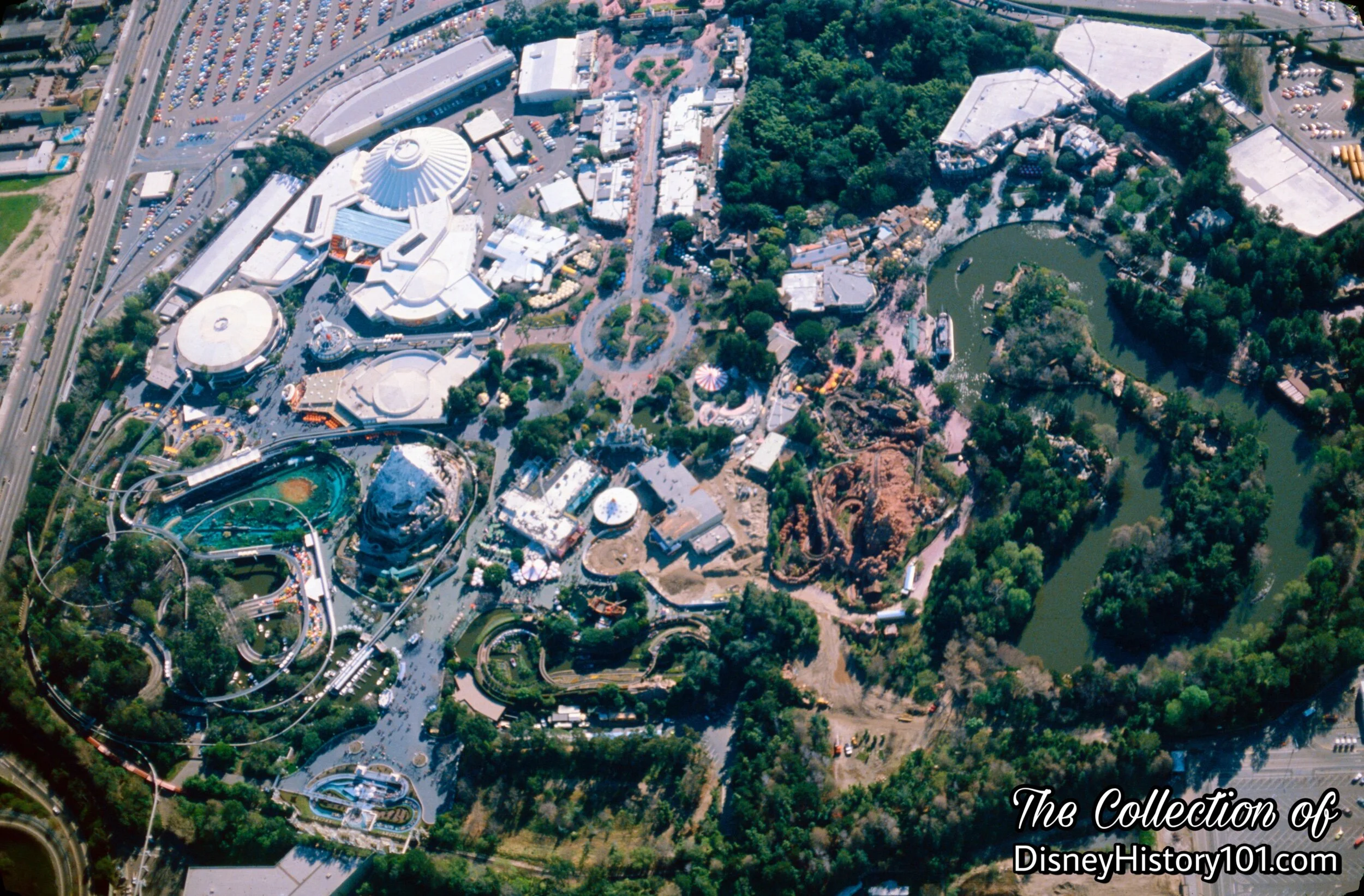
In this aerial photograph taken during January of 1982, you can see that New Fantasyland’s refurbishment has already begun. If you look closely, you can see the barrier around the construction zone. Just beyond that, you’ll notice the King Arthur Carrousel (located in the courtyard right before Sleeping Beauty Castle’s portcullis), which would soon be moved several yards North where the Mad Tea Party used to be (a space has already been prepared for the Carrousel) . Just behind that, you can see The Pirate Galley is also still accessible in front of Storybook Land.
The New Fantasyland model would maximum utilization of space, efficiently open up the land for higher guest capacity, and reduce crowding. Some long-time popular attractions would disappear, while many new experiences based on timeless tales were planned. In addition, Fantasyland would receive a thematic “facelift.” What would some of those new facades look like? Please read on.
While this young boy takes a memorable ride on one of King Aurthur Carrousel’s steeds, the spires of Big Thunder Mountain can be seen just over the New Fantasyland construction wall around the periphery! The same wall blocked Pirate’s Cove and some neighboring Frontierland developments from guest view during this time.
“Once Upon A Dream” (c. 1970s - 1982), Princess Aurora and Prince Phillip walked with each other through Sleeping Beauty Castle Courtyard! This magical moment was captured frozen time, through the magic of skilled craftspeople, and blessing of two meter-tall gifts bestowed upon Sleeping Beauty Castle - one to the west (pictured), and another to the east. But changes were in the wind, and when new developments (like the Village Haus Restaurant Sponsored by Sun Giant) began to take form during the early 1980s, this particular mural was removed from over a water fountain. Carefully preserved for decades, this “Sleeping Beauty Castle Courtyard Mosaic” surfaced as a lot in Van Eaton Galleries’ previous “Rediscovering Disneyland” exhibition and auction.
The mural was designed and created by Bill Justice in 1977. While the mural was demolished along with The Mad Hatter, the spirit of the Fantasyland shop (and Bill’s work) was preserved when a print of Bill’s work was offered through The Disney Gallery.
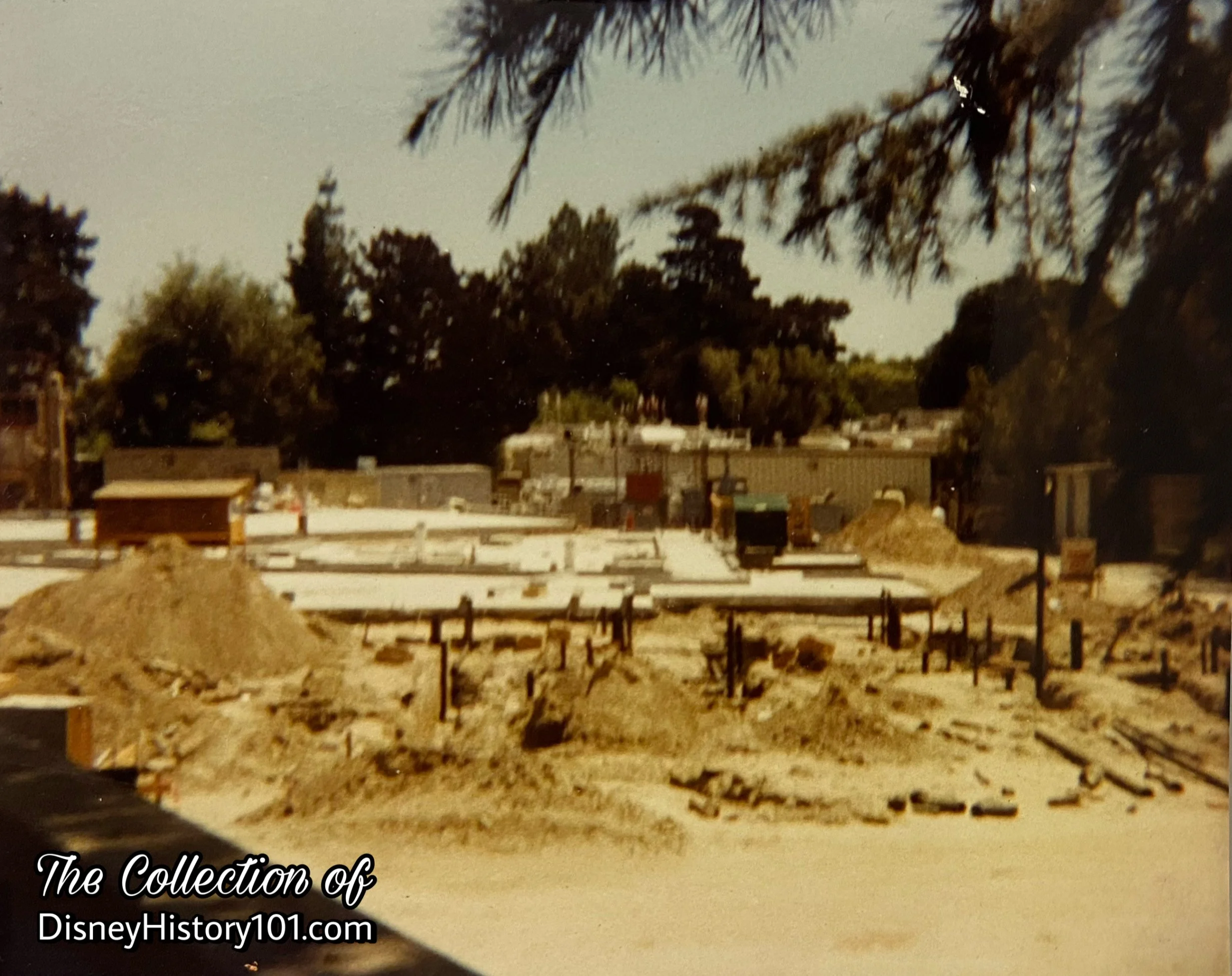
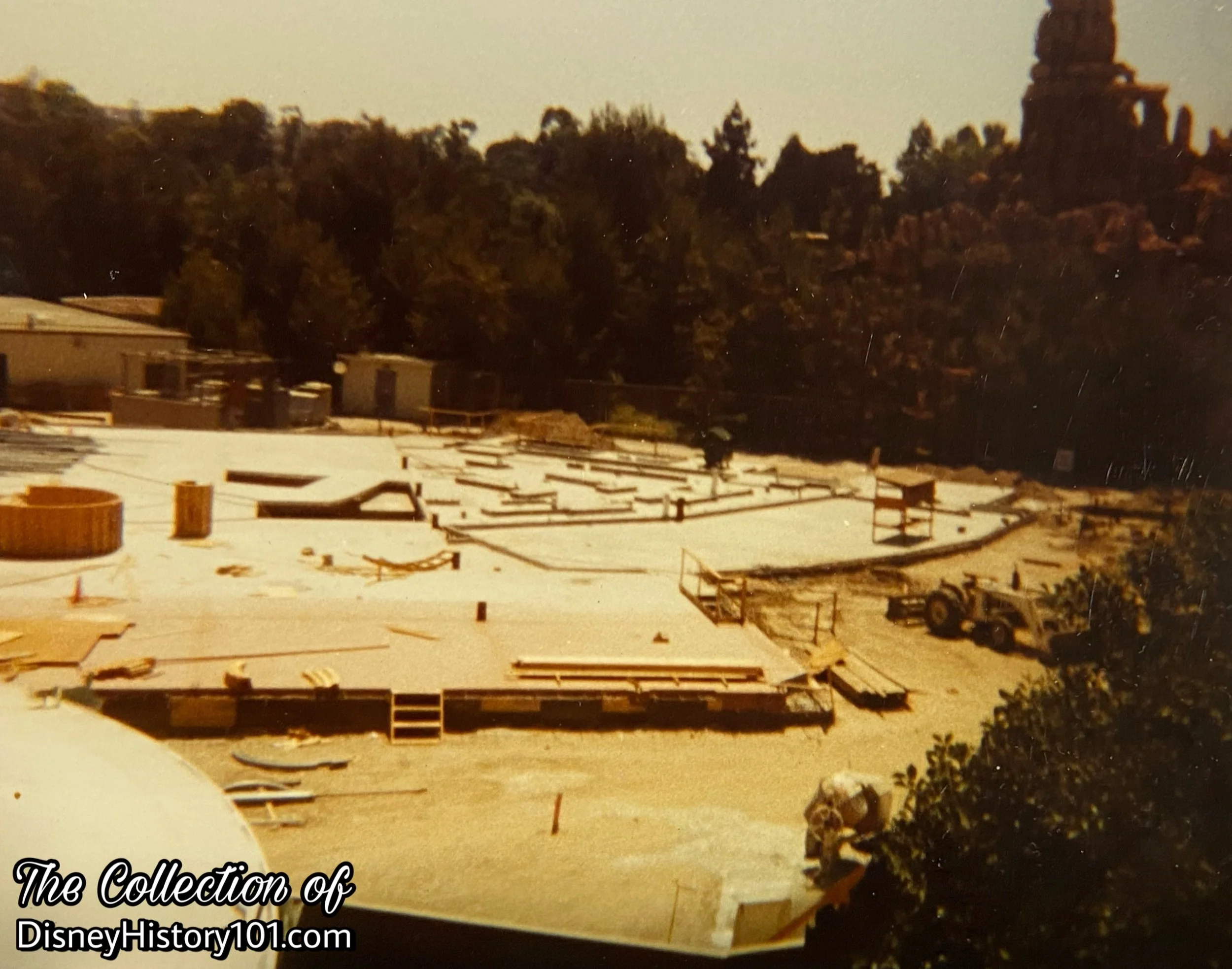
Some attractions were moved to improve Guest flow through the land. The move of the Mad Tea Party to a close proximity to Alice in Wonderland and The Mad Hatter would also create a Wonderland-themed area within Fantasyland.
Attraction roofs were covered with tarps to protect them from dust.
When Captain Hook’s Galley sailed off into Neverland, Dumbo the Flying Elephant landed in place of Skull Rock. In place of Dumbo’s old resting place was to be a new dining facility.
The new design of Dumbo the Flying Elephant still featured 10 elephants, but an all-new special propulsion system. The previous drive for Dumbo consisted ”of two 9.5 Hydro-Sheaves, each transmitting power from a 7.5-hp motor.” Now, this would be completely replaced.
After emerging from Fantasyland’s main entrance through Sleeping Beauty Castle, guests will still notice Tinker Bell Toy Shop on the left just beyond this clock. As Fantasyland guests walk on they will notice a new introduction to an opening day attraction.
It is appropriate that one of the first attractions guests would see would be Snow White's Scary Adventures. This attraction would receive an immersive “front” with a pre-show scene just above the entrance involving the jealous the Evil Queen.
According to WED Imagineers, the Snow White Dark Ride was vehicle was “designed to simulate a wooden work cart. The proposed conveyance system will consist of a sixteen pound rail track with insulated copper bus bar serving as a collector rail over which the vehicle will travel. The system is operated electronically. It is controlled by one Allen-Bradley 1774 (PLC) Programmable Logic Controller.”
Snow White's Scary Adventures
“Audience Waiting Areas” or “queue lines” were designed as part of the attraction to make the Guests' time in line as comfortable as possible. Columns with capitals giving a feel of the Evil Queen’s castle lined the interior arcades of Snow White’s Scary Journey queue.
Walt Disney Imagineer John Stone contributed major Show Design that included the Load /Unload Area and Scary Forest Scenes for Snow Whites Scary Adventures.
Attention to detail is seen everywhere - like the heart emblem near the bottom of these engaged columns.
Upon reliving Snow White’s Scary Adventure, guests exit through a castle tower and are drawn into another adventure through the puppet show above the entrance. In Disneyland’s earliest years, artists envisioned a Pinocchio-themed walk-through attraction (next door to an Alice in Wonderland - themed attraction). At least one “Bird’s Eye View of Fantasyland” designed by WED Enterprises for Disneyland, Inc. included a “Pinocchio Square” attraction.
The area housing the space which would become the new Pinocchio-themed attraction was approximately 6,956 square-feet (in addition to its 925 square-foot queue), and one c.1981 proposal would expand this existing space to 11,740 square-feet (including its track, queue and storage areas).
Even by its profile Pinocchio's Daring Journey would draw curious guests in for a closer look.
Much artwork of Gustaf Tenggren (Swedish Walt Disney Studios artist from 1936 - 1939) was referenced for the concept and design of the Pinocchio’s Daring Journey show building, and can readily be seen in the final product.
Walt Disney once divulged “Of all the things I've done, the most vital is coordinating the talent of those who work for me and pointing them toward a certain goal.” Now, long after Walt (and after it’s debut at Tokyo Disneyland), Guests of Disneyland could finally join Pinocchio in his journey toward becoming a “real boy.”
A 1984 report revealed that the Pinocchio Cars weighed 500 lbs.
The attraction would feature the 1941 Academy Award-winning Best Song "When You Wish Upon A Star" by Leigh Harline and Ned Washington. The attraction would also feature the Original Score by Leigh Harline, Paul J. Smith and Ned Washington.
The structures to the right of Pinnochio's Daring Journey's entrance furthered the idea that you are strolling through a little Tuscan Village in Italy’s countryside!
The towers to the right of Pinocchio's Daring Journey
The Pinocchio’s Daring Journey exit to the left of Gepetto's.
The design of the shop’s facade was inspired by the concepts of Swedish-American Walt Disney Studio artist Gustaf Tenggren (1896-1970), who prepared backgrounds for Walt Disney’s Pinocchio.
Disneyland Line Magazine Feb 7 1992:
Charming dancing marionettes attract Guests. A three foot-tall, hand-carved woodworker's vise generates continual conversation with Guests.
Besides the diversity of the collectibles the shop carries, the character theme of Pinocchio dances throughout Geppetto's Toys and Gifts. Belinda comments, ‘Many Guests know that we have the most complete collection of Pinocchio merchandise in the Park, so they come in to add additional pieces. As the summer approaches, we will begin to stock even more product to coincide with the rerelease of the movie Pinocchio.’ At Geppetto's Toys and Gifts, there is always a big impression made on children. ‘I love to watch them talking and interacting with the marionettes dancing on the stage in the window of the shop. It is really cute,’ Mary adds. ‘The cuckoo clocks are another magnet that attracts their attention. Once Guests enter the shop, it's fun to show them our items and discuss the history and tradition of the pieces. I have a chance to interact with them because the Guests browse slowly due to the attention to detail and the smaller size of the shop.’
‘The detail work and uniqueness of the shop plus the extensive amount of collectibles amaze Guests,’ adds Belinda. ‘That's one of the reasons why enjoy working with the shop; its atmosphere and warmth are very inviting. And it's a challenge to satisfy the collectors by keeping the lines current, stocking the most popular items, knowing information about the future of the lines, and trying new things. Guests expect this.’
Diane echoes that challenge: ‘The $25 to $50 range cuckoo clocks sell very well at the shop; we strive to maintain a stock of clocks in that range so that every Guest has an opportunity to bring home a little bit of this European flavor." In keeping with Geppetto's Toys and Gifts' focus on being a Show location, a hand-carved, hand-painted Alice in Wonderland chess set is displayed in the window below the counter. Originally, when the new Fantasyland was opened in 1983, the intent was to place the set on a round table in the middle
The Disneyland News (published March 10, 1956) revealed that Geppetto’s Wood Carving Shop was among the plans for new additions that year when the Storybook Land Canal Boats were revealed on June 1st. The only catch is that it would be among the miniature buildings lining the canals.
Before it served as a “Candy Shoppe” (2004).
Geppetto’s Arts & Crafts (opened by c.1998) offered guests an opportunity to enter Geppetto’s workshop and select a little wooden friend to take home with them! Geppeto’s Arts & Crafts also became the site of free promotional giveaways. For example, this shop was among several locations to distribute free books featuring Disney’s The Gummi Bears! Several artists made appearances at Gepetto’s Arts and Crafts, like doll artist Laura Cobabe (May 22), Marie Osmond (May 29).
Next it was billed as “Geppetto’s Holiday Shop” (2005), and a “meet & greet” area for the cast of Tangled (2010) and Frozen (2013),
WED Imagineering proposals for a “Pinocchio Restaurant” included a Kitchen, Rest Rooms, a Queue Area, and a Seating Area on site plans. Above, you’ll see an elevation plan except of the Village Haus Restaurant.
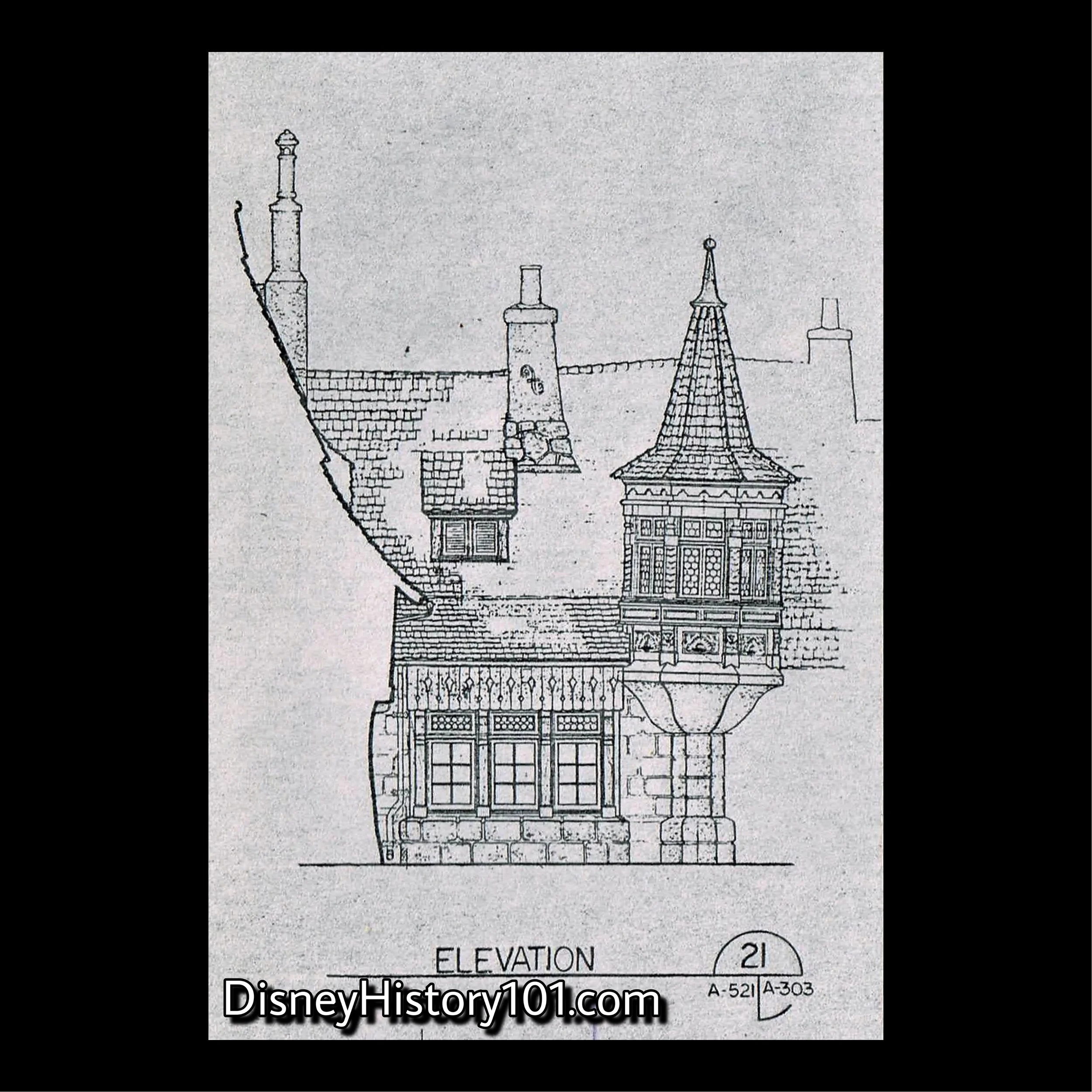
This structure would house Merlin's Magic Shoppe (1955 - 1983), followed by Briar Rose Cottage (1984 - 2007), and finally Castle Heraldry Shop (2008 - January 2017).
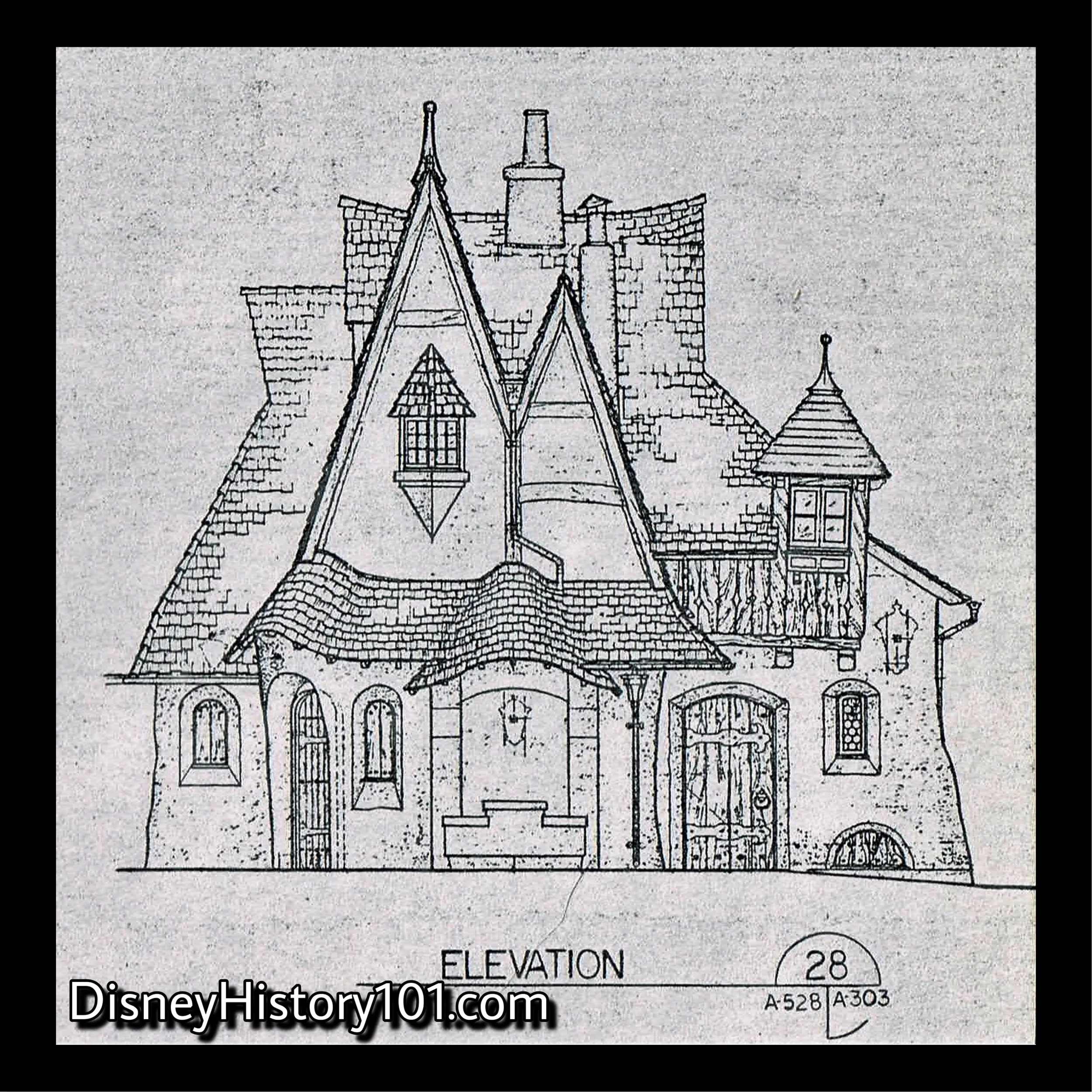
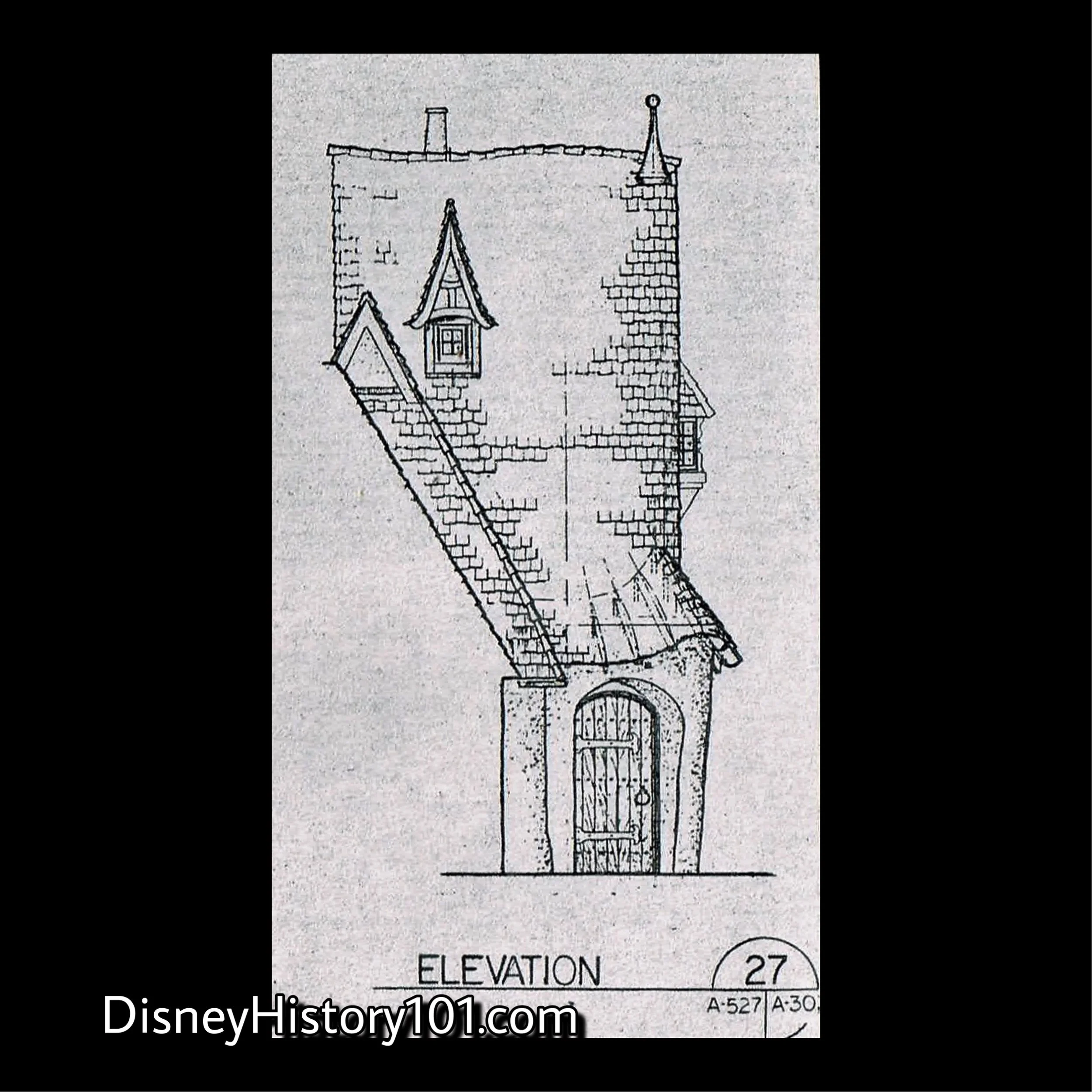
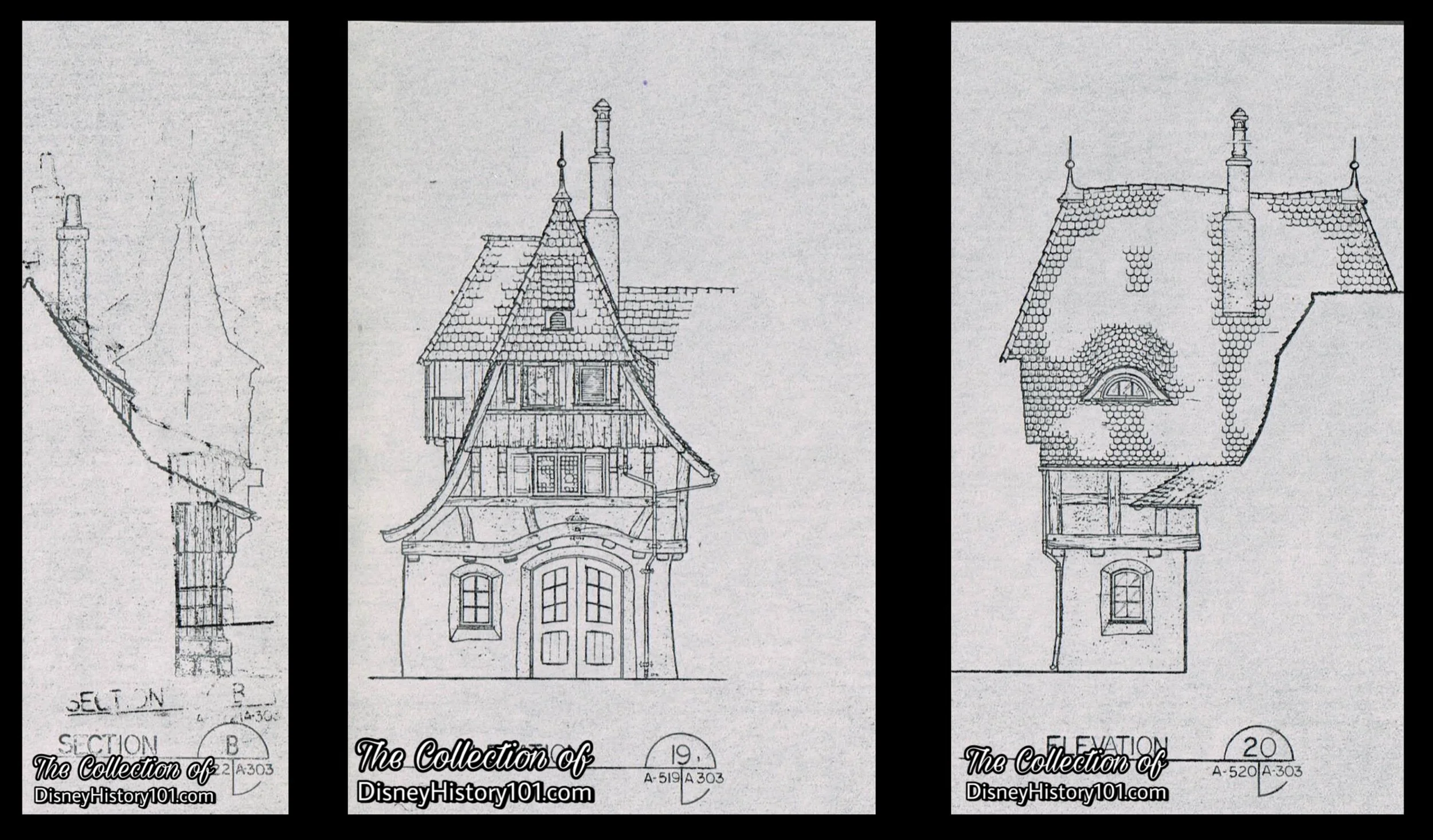
The Pinocchio Village Haus Restaurant was an opening day success at Walt Disney World. Early WED Imagineering proposals (made April-June, 1981) for a “Pinocchio Restaurant” in the recently imagined New Fantasyland included square footage approximations of a facility (at 20,425 square-feet).
The Lower Level (8,000 square feet total) would house a Prep Kitchen (1,000 square feet), Refrigerators (500 square feet), Freezers (500 square feet), a Storage Area (1,400 square feet), a Syrup Tank Room (200 square feet), a Break Area (500 square feet), Employee Rest Room (250 square feet), a Fantasyland Area Office Space (1,100 square feet), a Corridor (400 square feet), a Service Elevator (150 square feet), and Equipment Rooms (2,000 square feet).
The Ground Level would house a Serving Area (1,250 square feet), a Kitchen Area (1,250 square feet), a Service Elevator (150 square feet), an Office Area (150 square feet), a Corridor (200 square feet), a Queue Area (2,500 square feet), a Dining Area (3,150 square feet), and a Guest Rest Room (1,400 square feet).
A Second Level Dining Area (2,375 square feet total).
Here, the Village Haus Restaurant Cast Member window, was accessible via the road behind Fantasyland.
During the years leading up to the Imagineering of New Fantasyland, there developed a growing necessity for an “employee food facility” in Fantasyland. The Backstage Small World Break Area was examined, but the physical set-up was deemed to small to “allow expansion as it is immediately adjacent to a fire lane.” It was also found that the existing break area had “neither the room nor the utilities to accommodate anything more than the vending machines” it once offered. According to Dale Burner (Fantasyland/Tomorrowland Director) to Disneyland LINE magazine (Vol.14, No.32; August 12, 1982): Relief was “on the way! The new Pinocchio Restaurant will feature a special employee window, (with discounted prices), as well as a major break area located in the basement below the restaurant. Plans for this new break area, in addition to a lounge and vending machine facilities, include a ‘quiet area’ for employees who wish to enjoy a book or newspaper without interruption. Look for these new additions as the Fantasyland Project progresses.”
“A SELDOM PRAISED WORK OF ART”
(Vacationland Magazine, Summer, 1982)
“At Disneyland 14 dedicated artists in the Sign and Pictoral Shop make sure that identifying signs within the park are easy to read, pleasant to the eye and themed to the area and time which they represent….Although designs and artwork may originate in Walt Disney Studio or WED Enterprises (the “Imagineering” Division of Walt Disney Productions), its up to the craftsmen and women of the Sign Shop to mix the authentic colors and apply their handiwork by brush or airbrush to any project where touching up is needed.”
All the seating would allow the Village Haus to occasionally hosted special events, like Private Parties (e.g. GM and Hughes Employees, January of 1986).
Here we can see the dramatic difference in these photographs of the final stage of the major refurbishment. These final two photographs were taken just days before the big reveal.
Sometime after the 25th anniversary of Disneyland, scaffolding appeared around Sleeping Beauty Castle, in preparation for a furbishment in relation to the opening of New Fantasyland!
In March 1983, before the opening of New Fantasyland, Marc Davis, Don Edgren, Claude Coats, and Tom Masterson inspected rides like Pinocchio’s Daring Journey.
“Show Start-Up”
In 1983, Sleeping Beauty Castle’s drawbridge was raised - for the first time in 28 years. This was for the premier of New Fantasyland and to accommodate “Believe You Can, And You Can” - a Del Monte- sponsored television show (starring Mari Amsterdam and Heather O’Rourke) - which was shot before New Fantasyland opened to the public. As a sidelight, the television special features footage of the drawbridge being lowered before a young Heather O’Rourke, but played in reverse to appear as it is being raised (which may be of interest to you, if you’ve never seen this done before). According to LINE magazine (Vol.15, No. 10, March 10, 1983) : “Maintenance coordinated the raising, arranging at first to raise the bridge with a crane since it was uncertain whether the winch system would still work after 28 years. Then it was discovered that the original lead weights, used as counter balance in the winch system, were still in place in their assembly behind the portcullis. With the additions of more weight, approximately 1,500 pounds altogether, the system worked perfectly and the drawbridge was raised. Incidentally, the large winch outside Arts ‘n Crafts is decorative only ; the real winch is in the attic above the drawbridge.”
Soon, Disneyland Cast Members and their guests were “cordially invited to unlock the magic!” New Fantasyland Cast Premier Tickets were distributed through The Center or Activities Center between May 13 and May 25, 1983.
The "Rededication of Fantasyland” took place on May 26th and 31st and June 1st and June 2nd, 1983! Dedication ceremonies began at 8:30 p.m., “in front of Sleeping Beauty Castle. Following the dedication, until midnight” guests enjoyed the “new and updated attractions as well as a few of your old Fantasyland favorites. Complimentary cake and beverages” were served at the Village Inn.
Then, on June 2, 1983 the Magic was unlocked as The New Fantasyland Cast Premier and formal Dedication ceremony began at 8:30 p.m.
“Attractions”
After all the expansions were complete (and by the year 1990), “the happiest realm of them all,” Fantasyland, held a total of 17 attractions, including Sleeping Beauty Castle, It’s a Small World, Snow White’s Scary Adventures, Pinocchio’s Daring Journey, Peter Pan’s Flight, King Arthur’s Carousel, Dumbo the Flying Elephant, the Skyway to Tomorrowland, the Casey Jr. Circus Train, Storybook Land Canal Boats, the Motor Boat Cruise, the Fantasyland Autopia, Matterhorn Bobsleds, the Mad Tea Party, Alice in Wonderland, Videopolis, and the Disneyland Railroad. [“Disneyland’s Fabulous Facts and Figures,” prepared by Walt Disney Productions, 1990]
“Entertainment”
Fantasyland Entertainment included the Make Believe Brass; Royal Jesters; Disney Characters daily; "Fantasy in the Sky" Fireworks with Tinker Bell at 9:00 p.m.
“Dining”
The Village Haus hosted by Sun Giant offered Hamburgers, hot dogs, special salads, French fries and beverages.
“Shopping”
Tinker Bell Toy Shoppe had toys, games and plush as well as a unique selection of children's Disney Character clothes and accessories. The Mad Hatter had souvenirs and decorative hats including Mickey Mouse Ears. Castle Candy Shoppe had a variety of unusual candies. Arribas Brothers had Damascene art and glassknitting. Geppetto's Arts and Crafts had unusual woodcarvings, steins, clocks and chess sets. The Kodak Kiosk was hosted by Eastman Kodak and offered film, cameras and accessories. Small World Gifts had unique gifts and toys from many lands. A Souvenir Stand had a variety of Disneyland souvenirs, plush tovs and film.
New shops opened like Mickey's Christmas Chalet which offered a large selection of Christmas decorations and gifts featuring Disney characters.
The Sword in the Stone is located south of King Arthur Carrousel. The area would be a “set” of sorts, home to a unique Character experience or “meet and greet.”
“The Magic of MERLIN Begins With ME” or “The Misadventures of Merlin”
Since 1955,“A Disneyland guest is the King in our Magic Kingdom.” - “Your Role in the Disneyland Show,” Disneyland, Inc., 1955. Queue areas were equipped with live entertainment to set the mood for the forthcoming show.
It wasn’t until 1982, that Walt Disney’s The Sword in the Stone would inspire a magical experience at Disneyland. Tony Baxter (WED Enterprises Imagineering Project Designer) oversaw Area Development for the Sword Stone. Now, Merlin the Magician provided Atmosphere Entertainment as he lead the Sword in the Stone Ceremony, a free show staged among Guests! At precisely 1:45, 3:30, and 4:30 p.m. (on Saturdays and Sundays) guests joined Merlin the Magician and the Make Believe Brass or Pearly Band as they created merriment in front of the King Arthur Carrousel.
Cast Member Kent Zbornak was once close to Merlin at this historic time.
One guest (with the needed courage and strength) drew the magical sword, Excalibur, from the stone, and became king (or, queen) of all the realm of Fantasyland! The entire experience created tangible memories for Guests through Merchandise and Show.
The Sword in the Stone Ceremonies proved that “Disney Resort Experiences Are Magic”!
By 1986 & 1987, Today at Disneyland heralded the Sword in the Stone Ceremony, Make Believe Brass, Matterhorn Mountain Climbers, the Royal Jesters and Videopolis as the daily entertainment in Fantasyland.
By 2003, the Sword in the Stone attractionhad a legacy in Fantasyland at Honk Kong Disneyland. “Legend has it that there was a sword embedded in stone in the churchyard of a cathedral in London. Inscribed in the stone were the words ‘Who so pulleth out this sword of this stone and anvil is the rightful king born of England.’ This became the basis for the Disneyland animated feature The Sword in the Stone and also for this attraction, which sits in front of the Carousel, waiting for a guest to pull the sword from the stone.”
Disney’s 26th animated feature “The Great Mouse Detective” premiered in July of 1986.
During 1983, a strike briefly affected the operation of Pinocchio’s Daring Journey, causing it to go “101.”
“Standard Operating Rotations”
Rotations would help Hosts and Hostesses to become with operating procedures. During peak periods, Mr. Toad's Wild Ride is combined in rotation with Peter Pan's Flight.
Winter/Private Party rotations combine Mr. Toad with Peter Pan and the King Arthur Carrousel. During peak periods, Snow White is combined with Sleeping Beauty Castle, Pinocchio is combined with King Arthur Carrousel and Alice is combined with the Mad Tea Party. Winter/Private Party rotations combine Snow White with Pinocchio and Casey Jr. and Alice combines with Mad Tea Party and Dumbo.
This incarnation of the cards from Alice in Wonderland (originally a creation of Walt Disney Studio layout artist Ken O’Connor) look closest to the film version (than any others).
All fixtures were placed in their correct motif and many light fixtures of Disneyland were authentic antiques. Character lighting was themed to enhance the overall appearance and complement the interior, such as a chandelier or kerosene lamp. These add to the show, but don't necessarily create enough illumination for operation.
Still, the former Walt Disney Imagineering Principal Creative Executive Marty Sklar would probably agree that the small details like these make the story appealing.
“Fantasy Faire”
Royal Proclamation heralded the opening of Fantasy Faire at the Disneyland Resort, on March 12, 2013. Fantasy Faire extended the Fantasyland experience with a variety of experiences highlighting interactions and adventures with Disney Princesses. New experiences were added in Fantasyland that share some of Guests' favorite stories and characters.
The extensively renovated Fantasyland Theatre opened with a brand new stage show - “Mickey and the Magical Map.” In the Royal Hall near the court of Sleeping Beaty Castle, Cinderella, Ariel and Aurora graciously received Guests of the kingdom. Belle and Rapunzel appeared at The Royal Theatre. The Royal Theatre plays host to thriling tales and brave deeds as told by Mr. Smythe and Mr. Jones. Figaro (both Gepetto’s and Minnie Mouse's adorable kitten) appeared among whimsical details can be found throughout Fantasy Faire.
“Mickey and the Magical Map” soon had a legacy in “Mickey and the Wondrous Book” at the Disney's Storybook Theater - Fantasyland in Hong Kong Disneyland in 2017.
During each day, Disneyland Park Operations M-42 Machinists would, at least once, check all attractions in Fantasyland and discuss with each Attraction Lead and problems, defects, or any other feedback regarding the department. M-42 Machinists would also respond to all downs and delayed openings in the Fantasyland area whether or not it was mechanical. Upon arriving at an attraction, they would determine whether what the failure was. M-42 would determine which crafts were needed, determine an estimated time of repair, notify M-1 and assist with crafts when necessary.
OMNIBUS
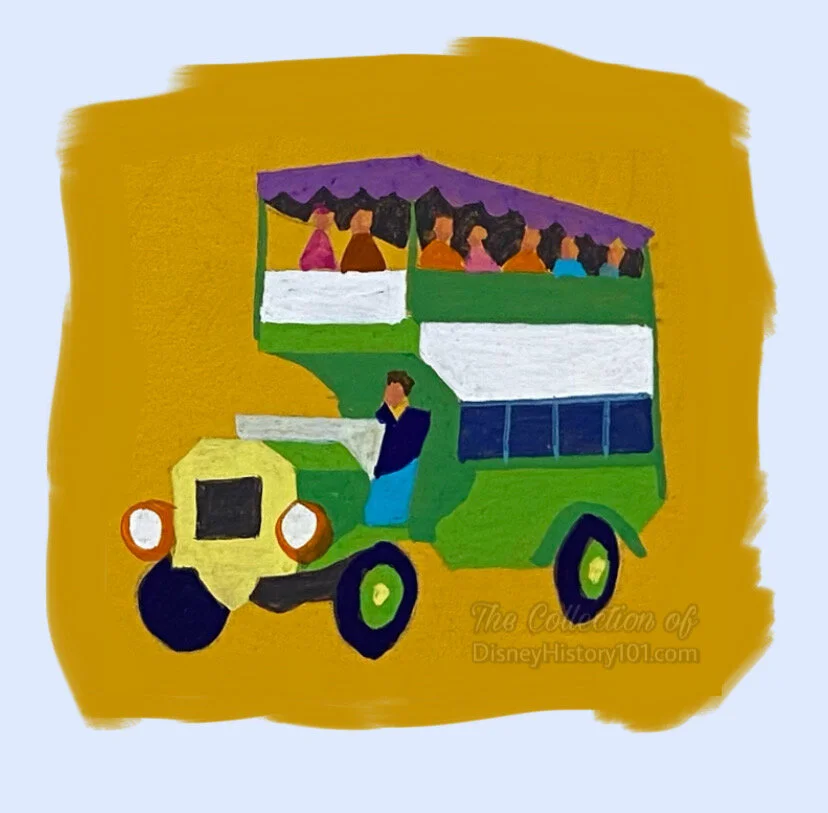

At Disneyland there is a "story behind the story" of every attraction, every attraction is a living experience for the guest. Disneyland ride-through attractions or adventures have officially been defined as an “individual show, ride, or exhibit designed to produce an entertaining Guest experience. Disney attractions stir the imagination, enliven the senses, and provide the participants with positive, innovative entertainment, which is the essence of the DISNEYLAND Show.” It is important to review the story of the attraction, tell the story, explain it, and create interest. This is the story of the Omnibus.
“Walt was reared in the mid-western town of Marceline, Missouri. As with other lands, he wanted Main Street to be a Main Street - authentically recreated to get the feel of a typical small town thoroughfare of the 1900 era with which he was familiar.”
Take a close look at Main Street. “Note the results of years of research to determine and design a composite Main Street of the typical small town of the early century. Note the demanding attention to detail designed and built into every nook and cranny by Walt and his ‘Imagineers’ at WED Enterprises. This same demand for detail is designed into Main Street vehicles.”
Please watch your step aboard the 5/8 scale open-air, 13’ 3” - high, double-decked Omnibus that recalls the days of old in-city transportation while giving guests a view of the sights from the heights.
I would like to begin our Omnibus story with an interesting sidelight. I would like to recall one of the first times this method of “old in-city transportation” was referenced in a work of Walt’s, it was in Alice's Brown Derby. You may be surprised to hear that the first time the words “Disneyland Omnibus” appeared in print, it was two decades later, on the cover of a c. 1945 Walt Disney Mickey Mouse, Ltd. licensed hardcover book published by Collins Publishers (of London and Glasgow). The illustration on the cover even featured Mickey Mouse at the wheel of a double-decker bus with the words “To Disneyland” over the drivers’ section of the cab. This depiction was astoundingly made more than a decade before the Disneyland Omnibus became a reality.
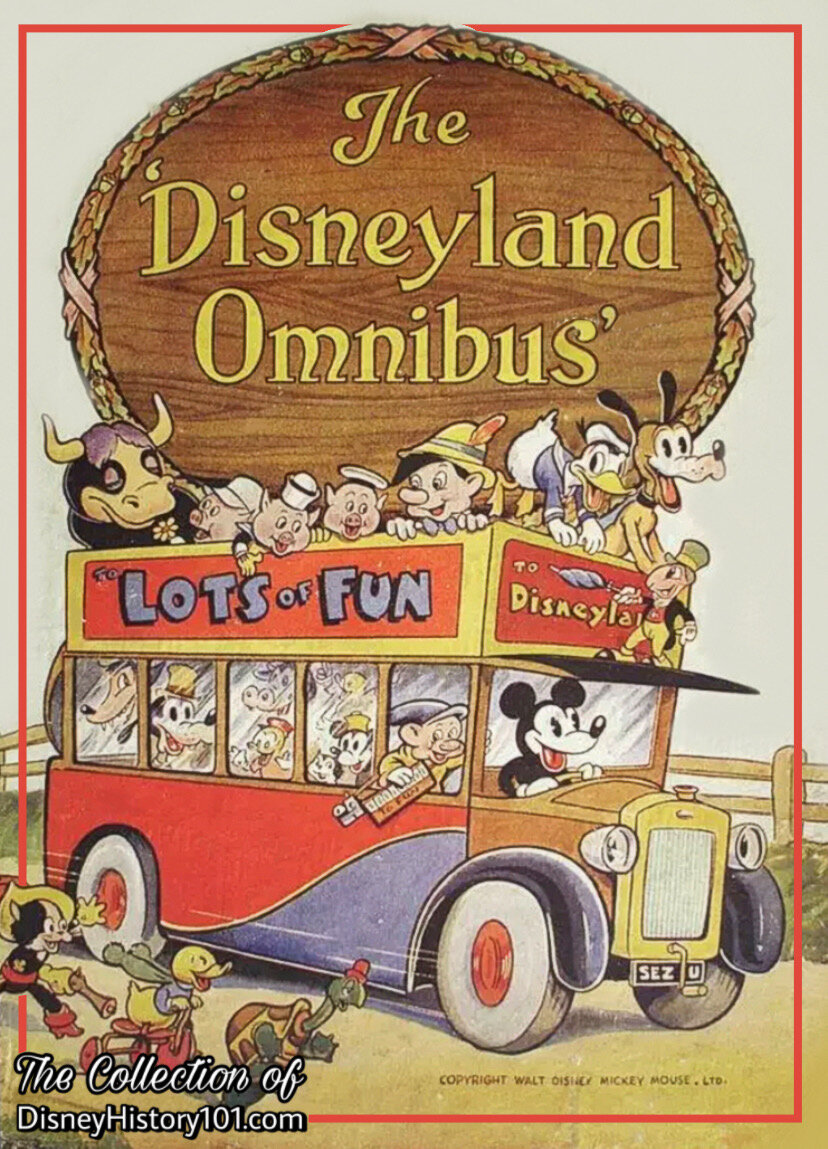
“Construction of Disneyland’s Largest ‘Horseless Carriages’”
As the Omnibus was reckoned a type of Horseless Carriage (and of WED, Enterprises’ design), it shared many similarities with some of Main Street’s other vehicles. According to “Main Street Vehicles”, published 1966 by Disney University, “The Horseless Carriages are sometimes called the ‘1903’s’, but you could pick any year - 1904, ‘05, or ‘06, and be just as accurate. These little cars are of WED ‘composite’ design. On the basis of extensive research, Studio designers created a horseless carriage which was a composite of the design and size of many gas-driven cars of that early period in automobile history. And our Horseless Carriages are a little bit of everything.” Some of these very things ring true with the Omnibus.
The Omnibuses were built at the Walt Disney Studios, under the direction of both Roger Broggie and Robert Gurr (though they were referred to as “Gurrmobiles” for perhaps the first time in “Walt Disney’s Magazine”, Vol. 2, No. 5 ; 1957). The gasoline-powered Omnibuses were “patterned after French and English buses of 1908,” and compared to those that one operated on 5th Avenue. Despite their outer appearances and yet these vehicles were unlike any old-city bus. For example, its drop frame chassis was taken from a modern truck. According to Vacationland (published Winter, 1958), “this was the only bus of its kind that ever had power brakes and power steering,” owning to its modern engine. “The two-cylinder engines are actually not auto engines, but have the horsepower, the sound - and even a slight case of the shakes - as did the originals. WED designers selected today’s most efficient two-cylinder water pump engine. Some of the external parts, such as lights are authentic… Certain adaptations in height and seating to provide greater comfort, safety, and convenience for our guests were made by Studio designers, but the busses are as nearly authentic as possible. The motor takes advantage of modern improvements which provide for better operation - and no smog,” [“Main Street Vehicles”, published 1966 by Disney University]. Lastly, the electric English Klaxon horn adds an authentic touch to the vehicle.
Make : International
Model : BD 264
Maximum Passenger Capacity : 37
Height : 13’ 3”
Length : 26’ 3”
Width : 7’ 6”
Weight : 8,250 Lbs.
Engine Numbers : 376257 (Omnibus 1) ; S160S121766 (Omnibus 2)
License Numbers : E26668 (Omnibus 1) ; J-64561 (Omnibus 2)

You may recall hearing how Walt Disney, on the eve of Disneyland’s first day of operation, promised that “Disneyland will never be completed. It will continue to grow, to add new things, as long as there is imagination left in the world.”
“Main Street vehicles play an important part in the Disneyland show. First, they are essential to the staging of Main Street, U.S.A. The contrast to the hustle and bustle of our modern world and its streamlined modes of transportation is sharp and penetrating. Suddenly, as a guest comes onto Main Street, the entire mood changes. The years roll backward. back to Main Street, U.S.A., circa 1900. It wouldn't be Main Street without the leisurely clop-clop of a horse-drawn surrey, or the chug-chug of a horseless carriage.”
Second, they serve as much-needed transportation for our guests. They provide a convenient and colorful way to reach the heart of the Magic Kingdom - or back to Town Square after a long day in the Park. Third, hosts assigned to operate these vehicles play an important part in answering questions - giving tips and directions - to guests who are either starting out or winding up their day at Disneyland. Their role falls into what might be called our ‘first impression - last impression’ group. They can start guests off on the right foot - in the right mood, and send them away with a warm feeling - and a desire to come back.
Omnibus #1 (license #E-26668) began operation a year later (during August of 1956), proving the truth of Walt Disney’s promise of an ever-expanding Disneyland! Brief footage of Omnibus #1 (devoid of any attraction advertisements) has been preserved on film, in the motion picture “Disneyland U.S.A.” and “Disneyland - The Park,” a Disneyland anthology television series short film (originally aired in 1957). Some (c. 1956) guests may have recollected riding a double-decked omnibus during the 1920s in London, New York City, Chicago, or Boston. Now, (up to 37) guests could take a scenic ride down Main Street U.S.A. to the hub of Disneyland, and the entrance of the four “lands”! “Camera fans especially like the unique angles the Omnibus’ second deck provides.”
All art work, posters, etc. displayed on the sides of the bus were created by the Walt Disney Studios.
Ron Dominguez (in interview with Disneyland LINE (Vol. 25 No. 28) recalled meeting Walt one Sunday afternoon, after the Omnibus debuted in 1956. Ron recalled being “in the back area of the Omni Bus with a little mechanical problem and Walt walked up.” Ron continues: “When we first brought out the bus, I personally thought it was the wrong scale for Main Street. Walt asked me how I liked the bus. Being real honest - and young - but still wanting to be diplomatic, I said that I thought it looked pretty good, but I had a bit of doubt in my voice. So he said, ‘What do you mean it looks pretty good? It looks damn good out there!’ So he put me in my place real quick.”
The Omnibus (of the Disneyland Transportation Company) was one of several exciting attractions debuting during 1956, a two-block ride that increased ride capacity, and (owning to this) one day in August saw a peak total of “197,547 individual rides” (on all attractions) enjoyed by Guests (according to a letter from Walt to Ward Kimball, dated January 23, 1957). Aside from the observations of Ron Dominguez, “it was such a hit with all who rode it that a second one was built,” according to “Walt Disney’s Magazine” (Vol. 2, No. 5 ; 1957).
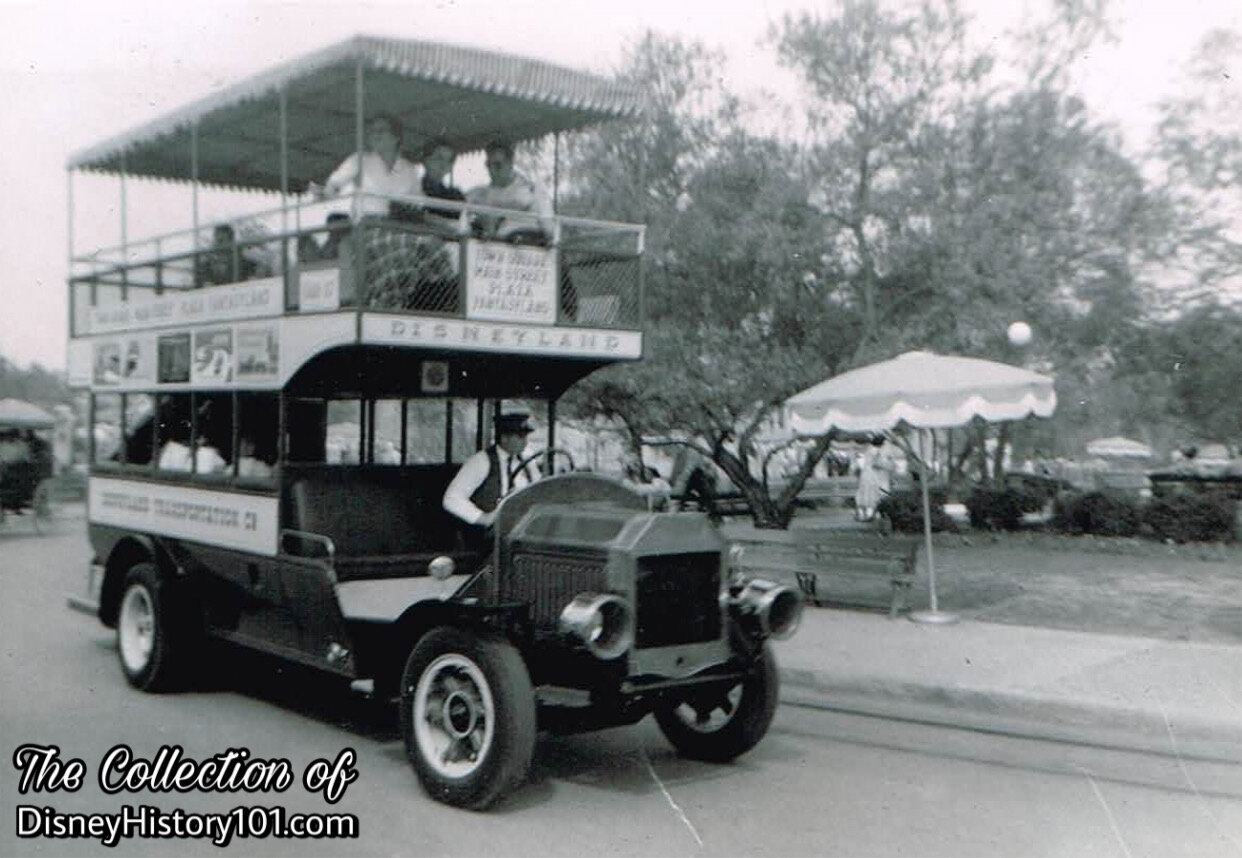
A number of Disneylanders operated the Omnibuses like Homer Holland and Wes Demens (in 1967).
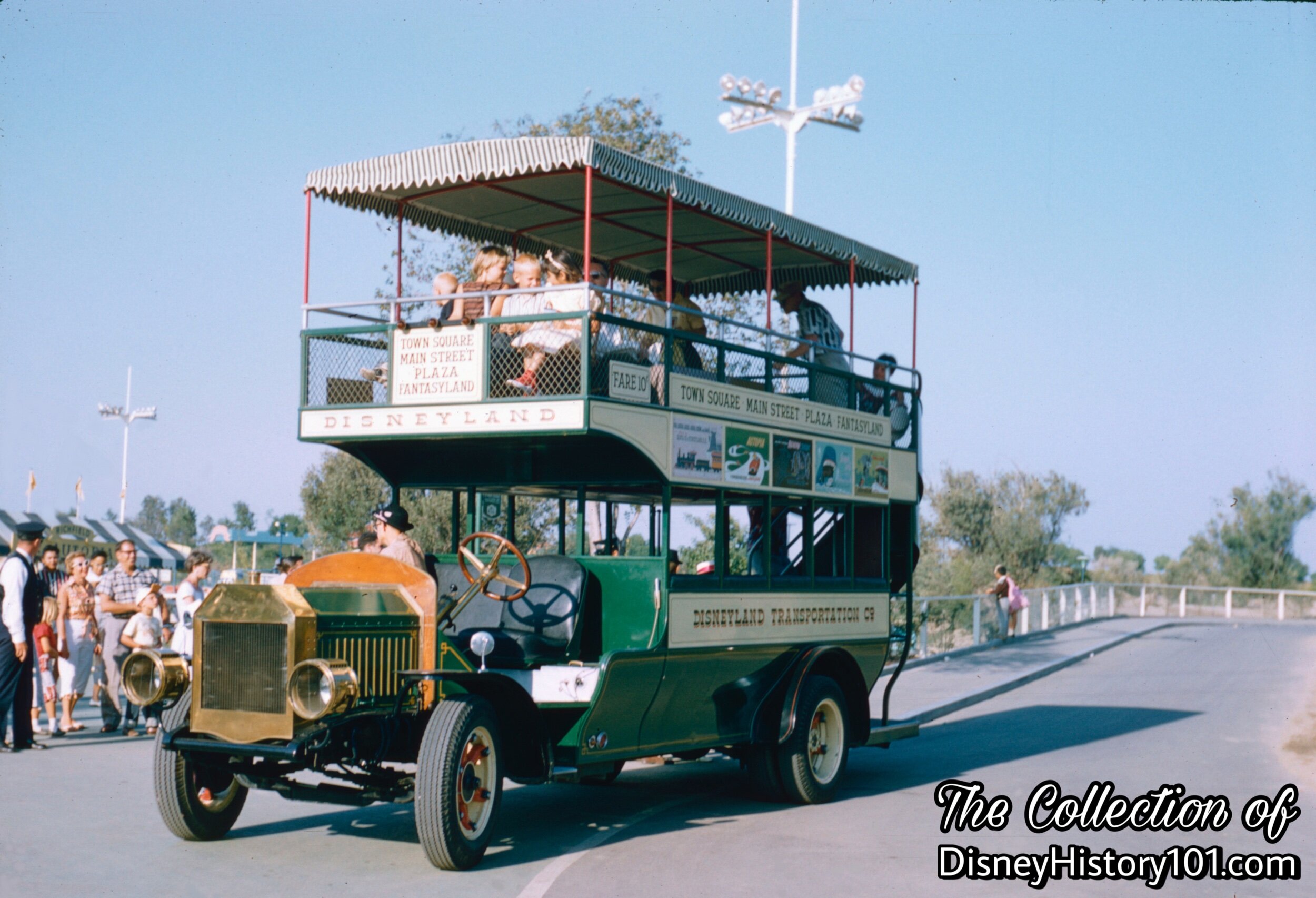
Obviously, the fastest way to move people over the extended areas of Disneyland is with moving vehicles. You’ll note the stops on a sign over the cab - “Town Square, Main Street, Plaza, Fantasyland.” Yes (once upon a time), after a tour through Tomorrowland, the Omnibus arrived at its stop near the Junior Autopia in Fantasyland.
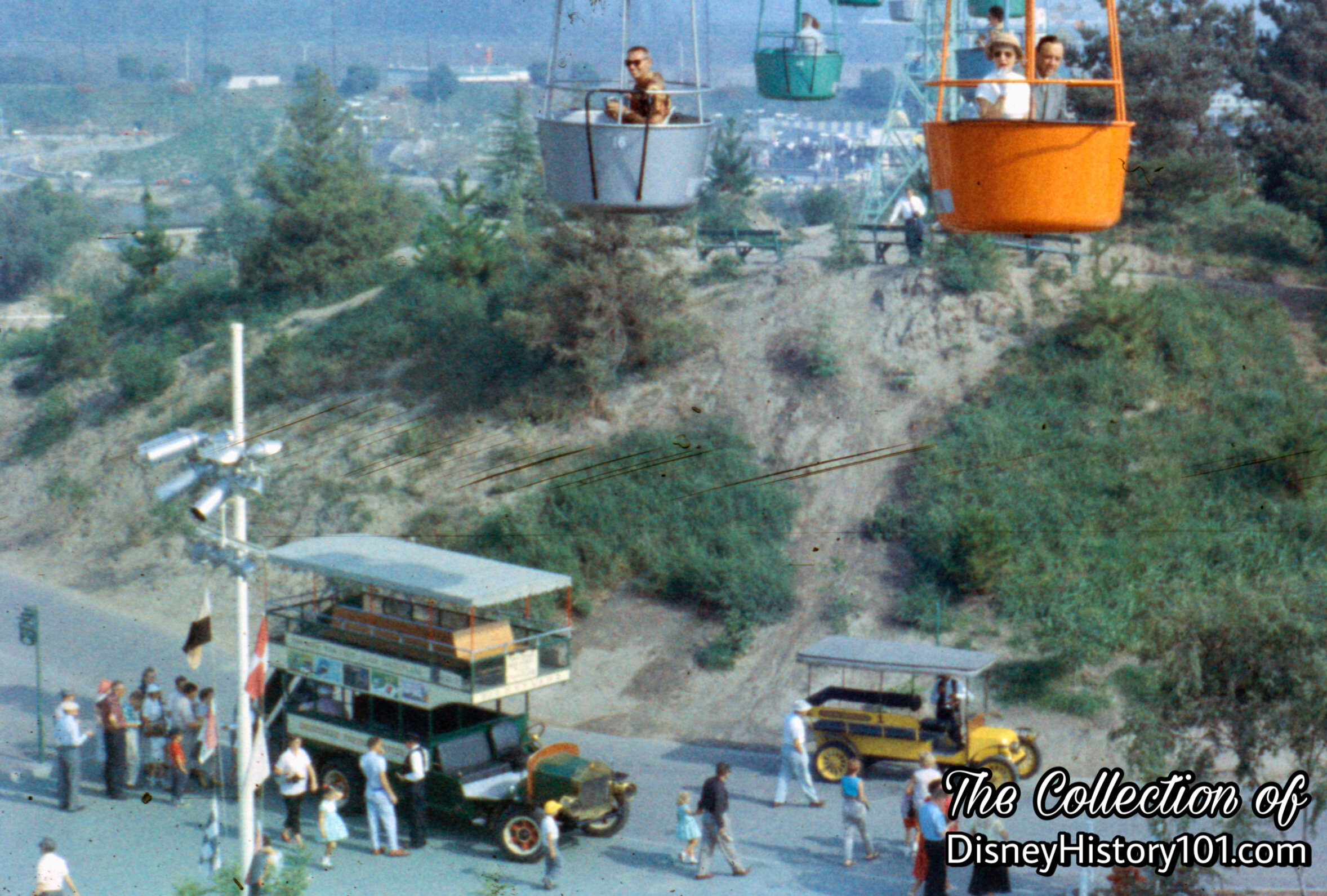
While Skyway Cabins soared over the tree-lined Holiday Hill, the Omnibus circumvented it. It was a Visual Intrusion. Though not evidence of “the real world”, this contradiction to the story was ultimately discontinued as Guests were transported back to the 21st century.
Disneyland is in the habit of selling a belief in fantasy and storytelling, and if the background isn’t believable, people won’t buy it. Marty Sklar recalled “walking through Disneyland with Walt Disney when a publicist drove up to them near the Mike Fink Keel Boats. Disney was horrified: ‘What,’ he asked, ‘are you doing with a car here in 1860?’” This story may explain why the Omnibus operation through Tomorrowland was discontinued. That urge for ersatz-authenticity has lived on into the present.
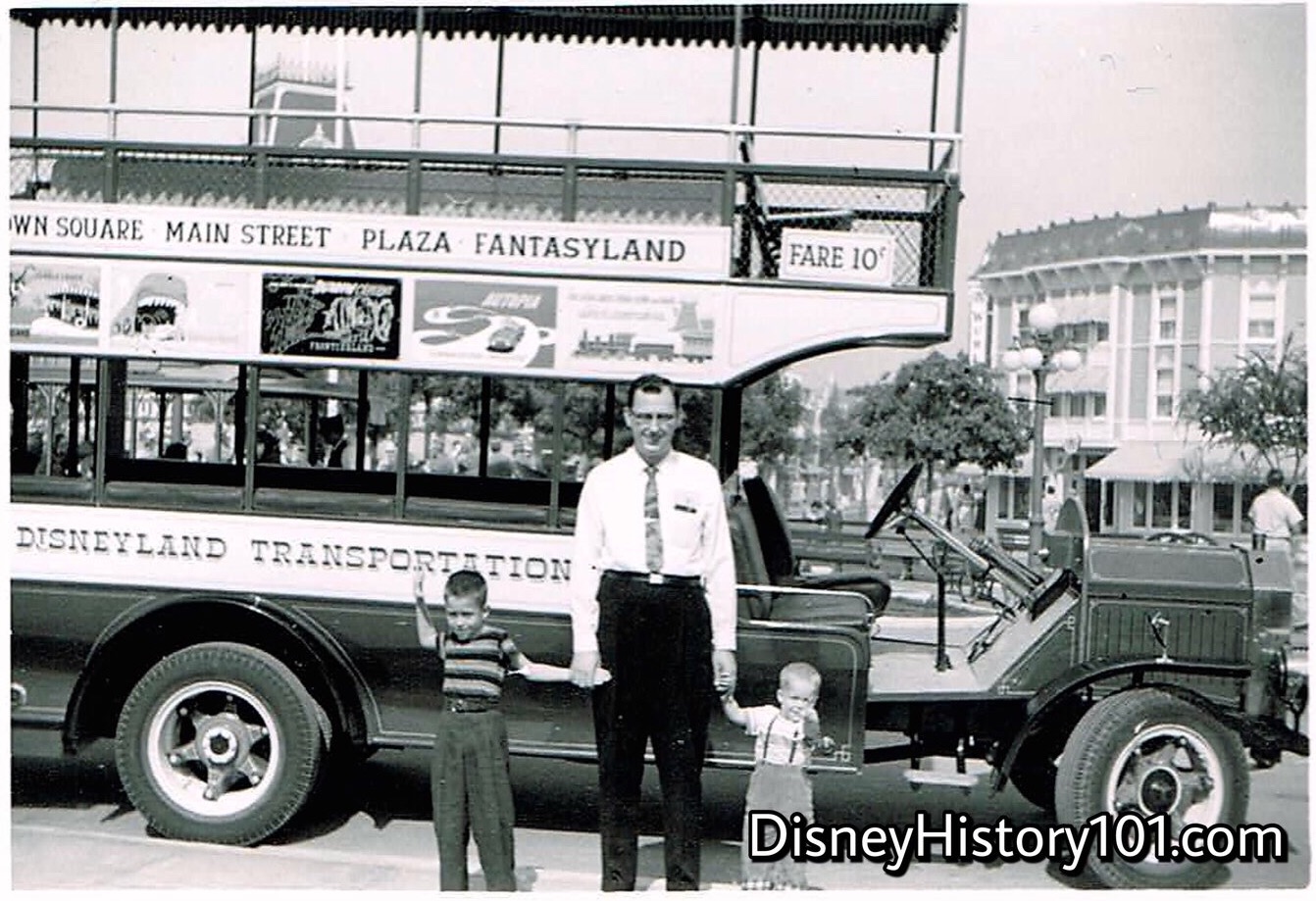
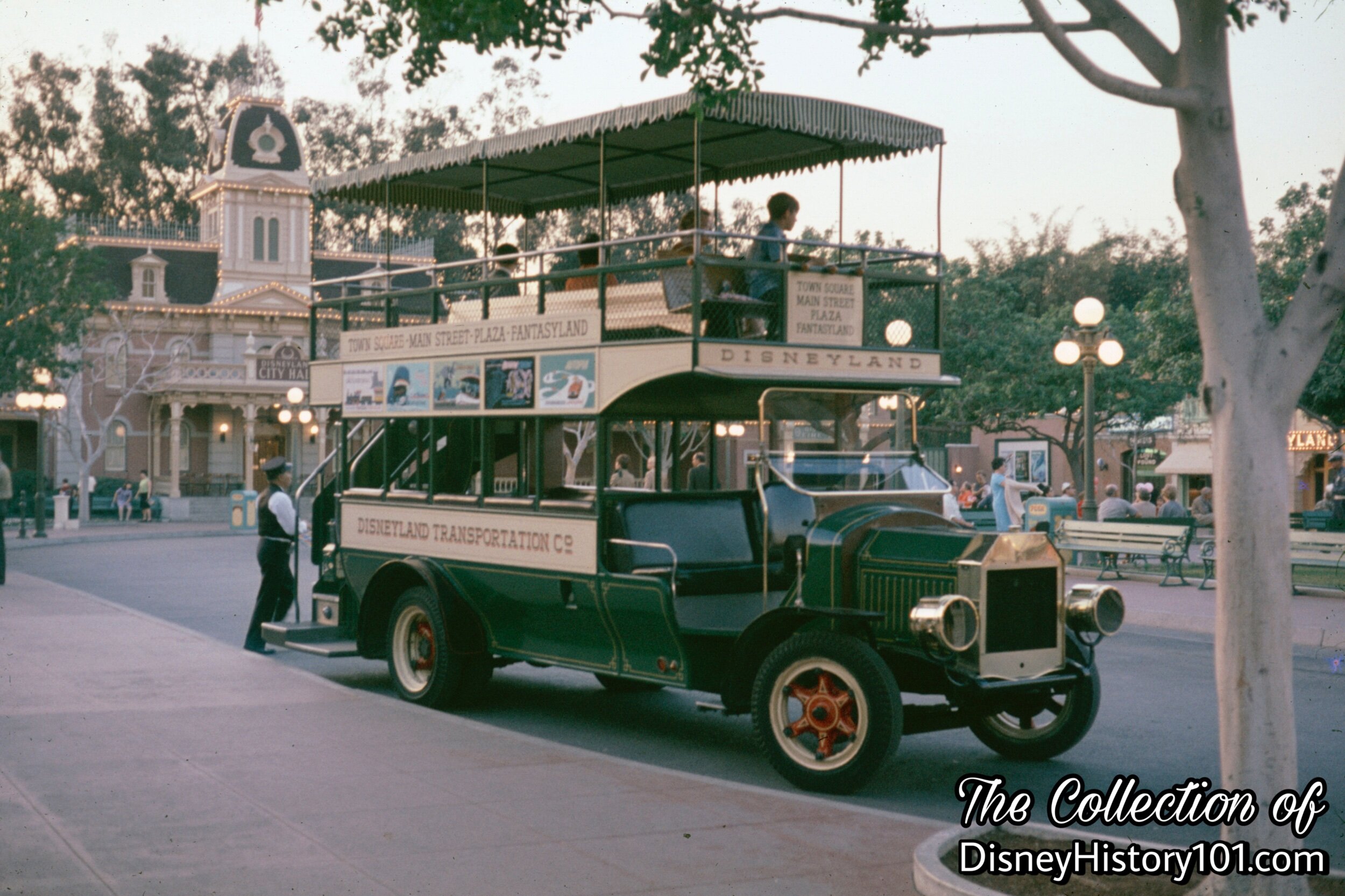

Omnibus #2 (license #J-64561; the same scale as Omnibus #1) began operation the following year, during December 25, 1957. Though it may be unthinkable by Tomorrowland’s current show standards, by 1958 the Omnibuses operated though the two-block length of Main Street and Tomorrowland. Once reaching Central Plaza, the buses entered “a side road to a turnaround at one of Fantasyland’s entrances,” according to one article contemporaneous with the Omnibus’ Disneyland debut!
When preliminary work on the Disneyland Guided Tours began (c. 1958), a ride aboard the Omnibus was included among the stations visited along the route. While aboard, the Omnibus operator generally handled the spiel for Main Street, until guests and their Disneyland Tour Guide disembarked the bus at the entrance to Tomorrowland. At this time (c. 1958), admission aboard an Ominibus (bound for Main Street U.S.A. or Tomorrowland) was one “jumbo” “A” coupon (the price of 10 cents, for one adult), the same as the 20,000 Leagues Under the Sea Exhibit, the Surreys, or the King Arthur Carrousel.
Soon (by September 28, 1958), the Omnibuses were appraised at a value of $27,550 to $32,900 by Bank of America representatives. Omnibus #1 was reconned a Park Asset valued at $20,069 while Omnibus #2 was valued at $26,916.
By the October of 1962, it was common to see just one Omnibus operating daily. This was common during winter operating schedules.
The Omnibuses appeared in many shows, parades and a great deal of visual media. For example, one of the Omnibuses (without its canopy) was used to transport the Elliot Brothers Band down the parade route during the televised “Disneyland ‘59” pageant and parade. One of the Omnibuses was used to transport E.J. Peaker, Kurt Russel, and the Osmond Brothers, as they sing “Down On The Street”, while heading down Main Street, in the c.1970 “Disneyland Showtime” episode of “The Wonderful World of Color”. One of the Omnibuses was also notably used to transport members of the All-American Singers down Main Street during the American Bicentennial celebratory year (from 1975 through 1976).
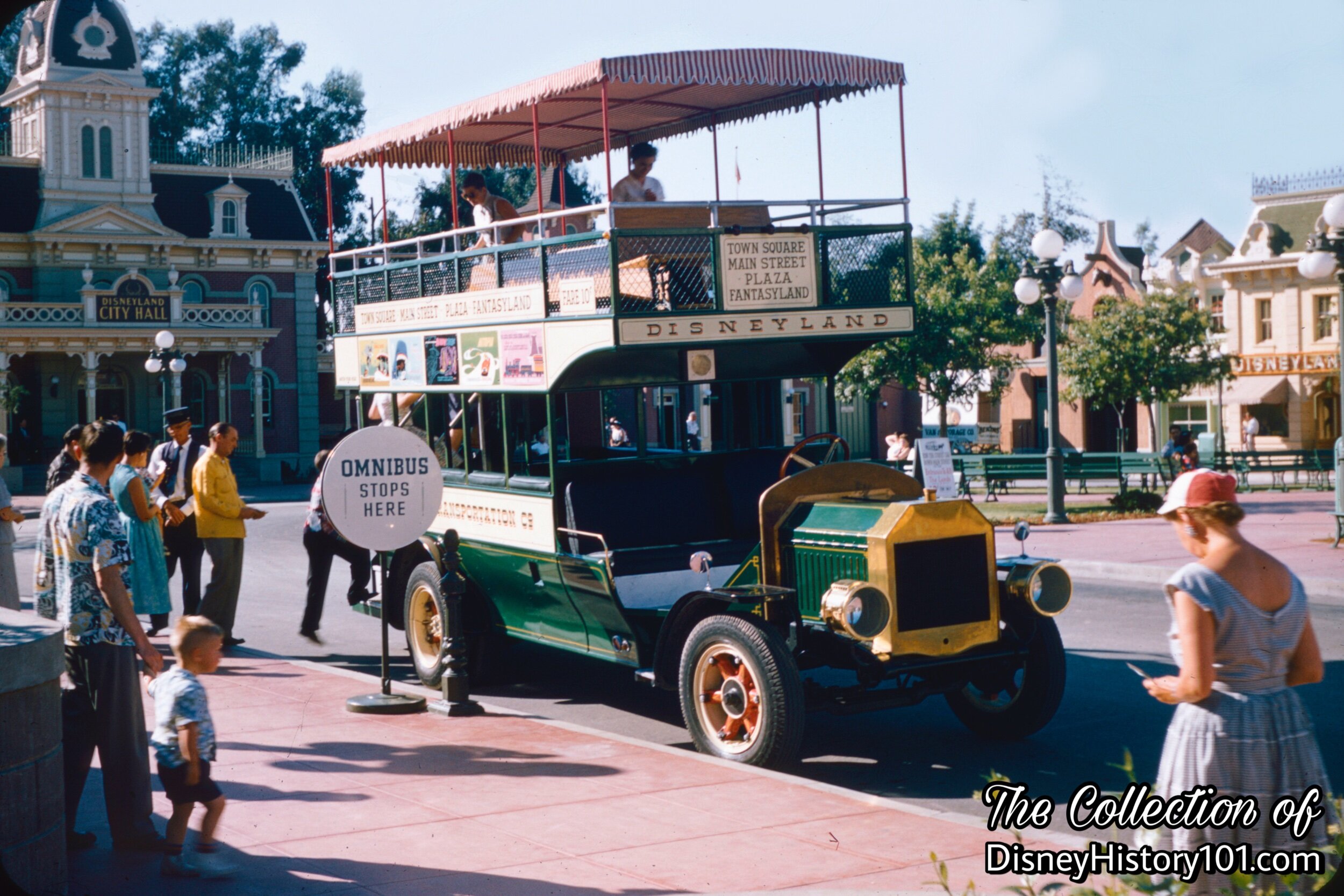
Once upon a time, when guests boarded one (of two) Omnibuses (or any DMC, including the Horseless Carriages), the fare was payed with either a Disneyland Letter denomination Coupon, or a small amount of change currency. When Guests payed with coins, they were deposited in a meter, which was attached to the front passenger side of the vehicles.
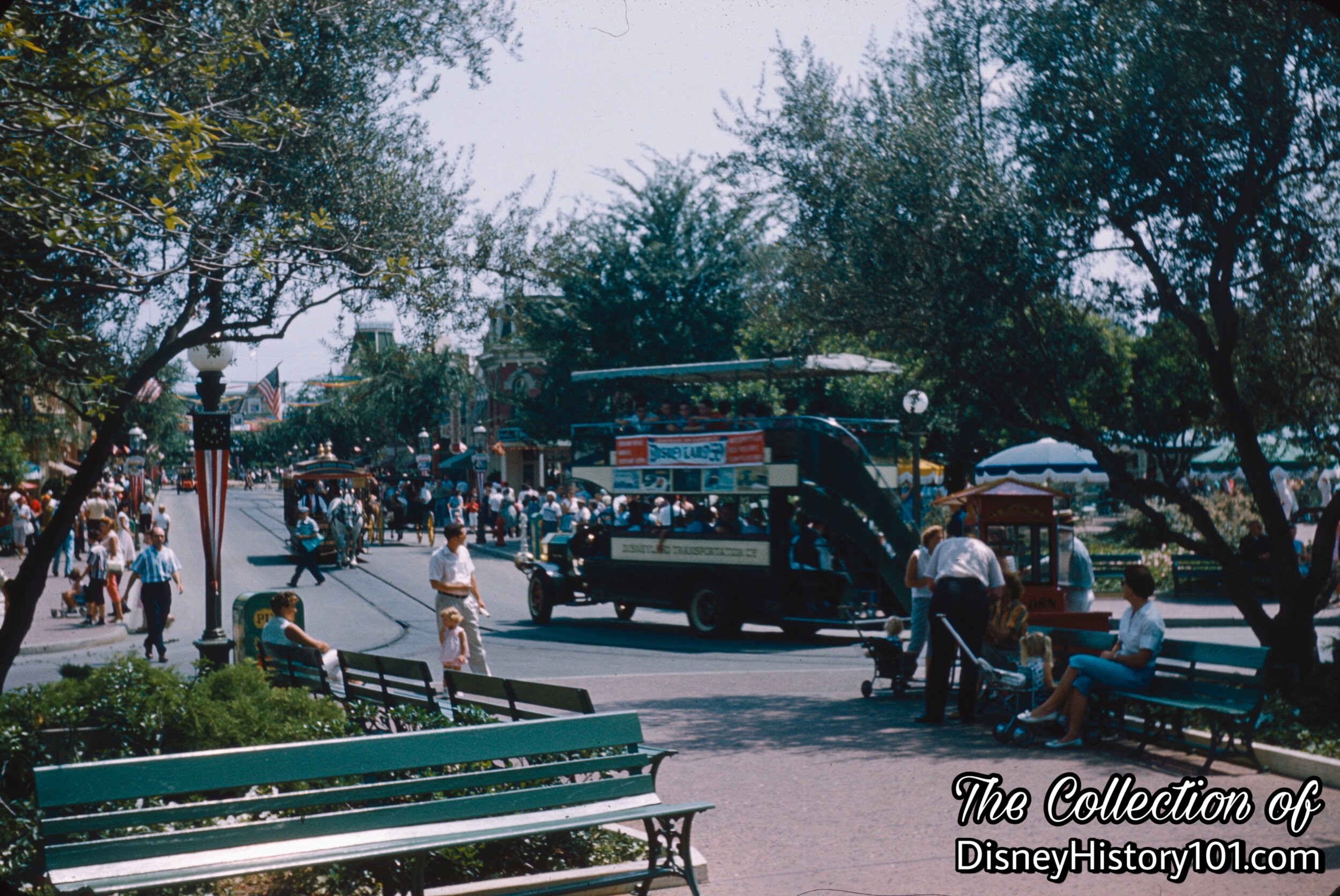
If you look closely, you can see the Ominibus’ banner advertising the six new attractions of 1959! Notice how the “Disneyland Dictionary” (published October 1958) described the route of the two (Disneyland Transportation Co.) double-decker buses: “Town Square, down Main Street, through Plaza and around Matterhorn. Return trip - Matterhorn, through Plaza, Main Street to Town Square.”
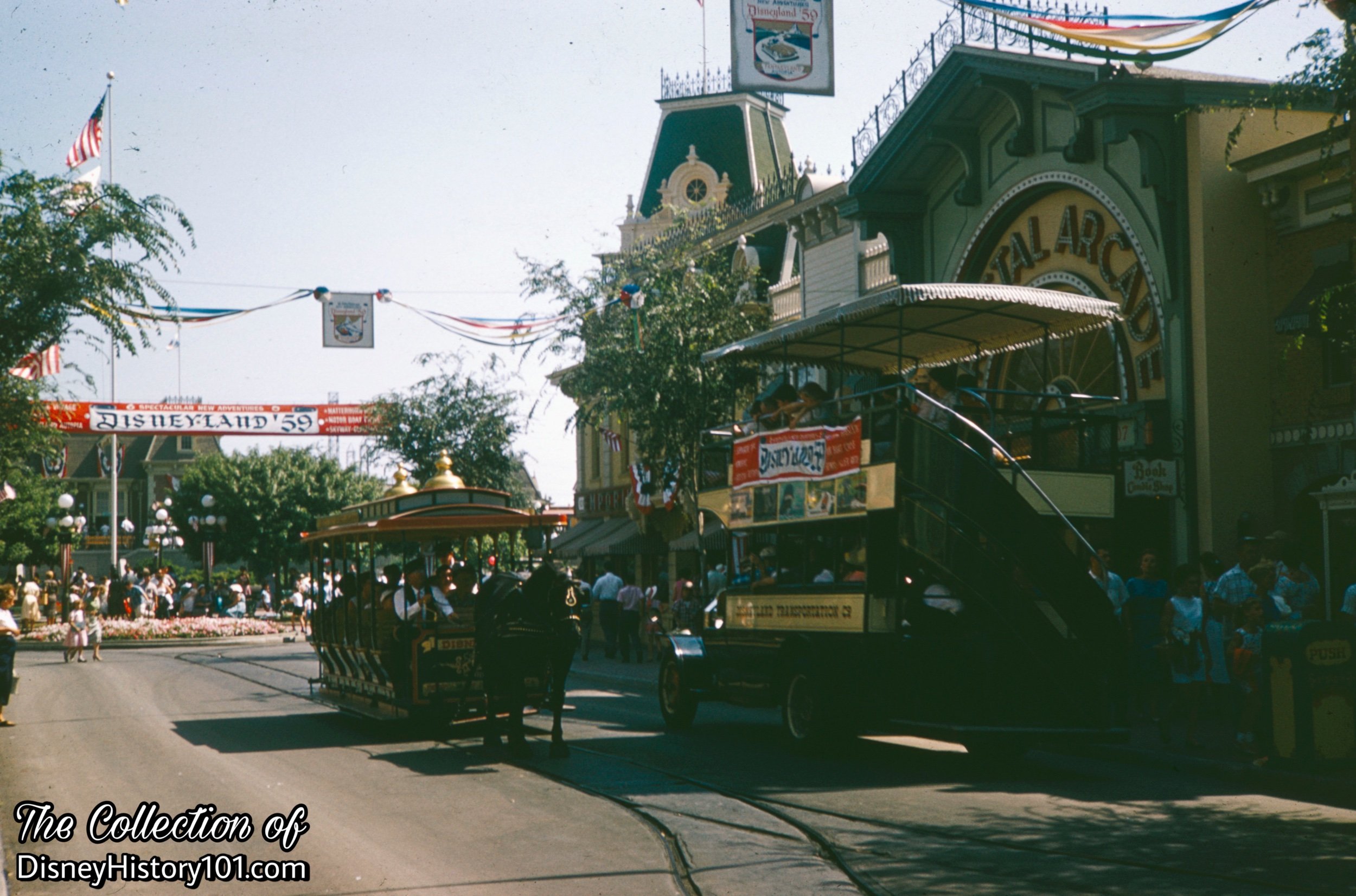
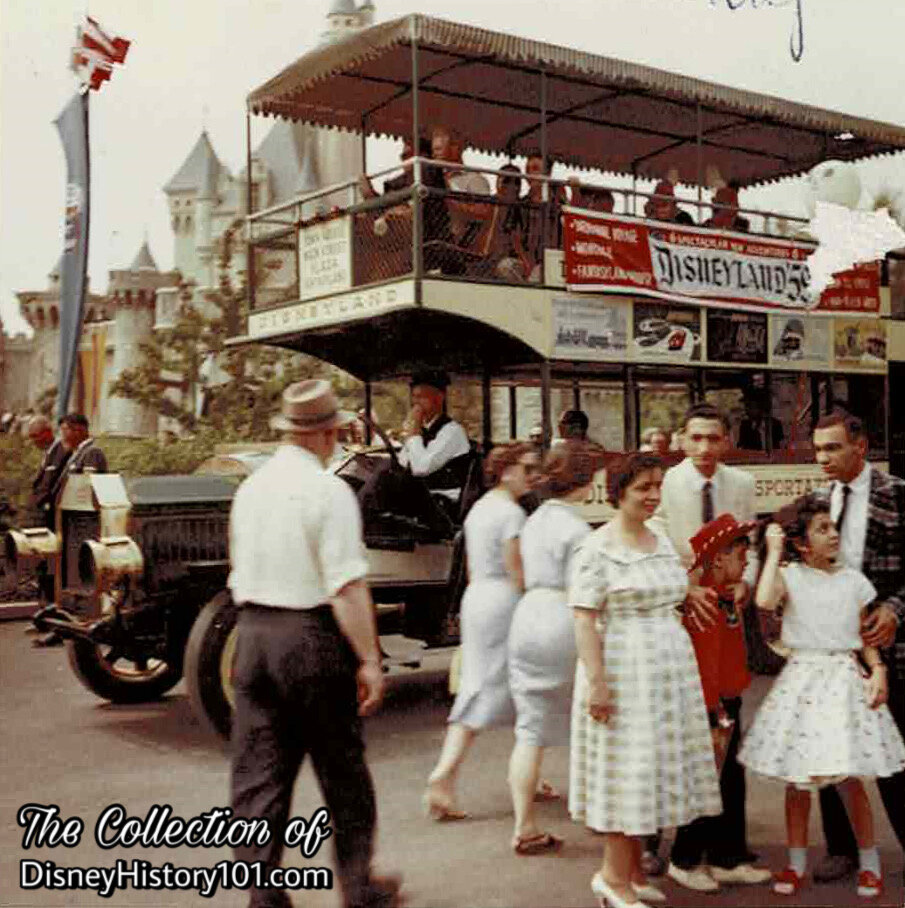
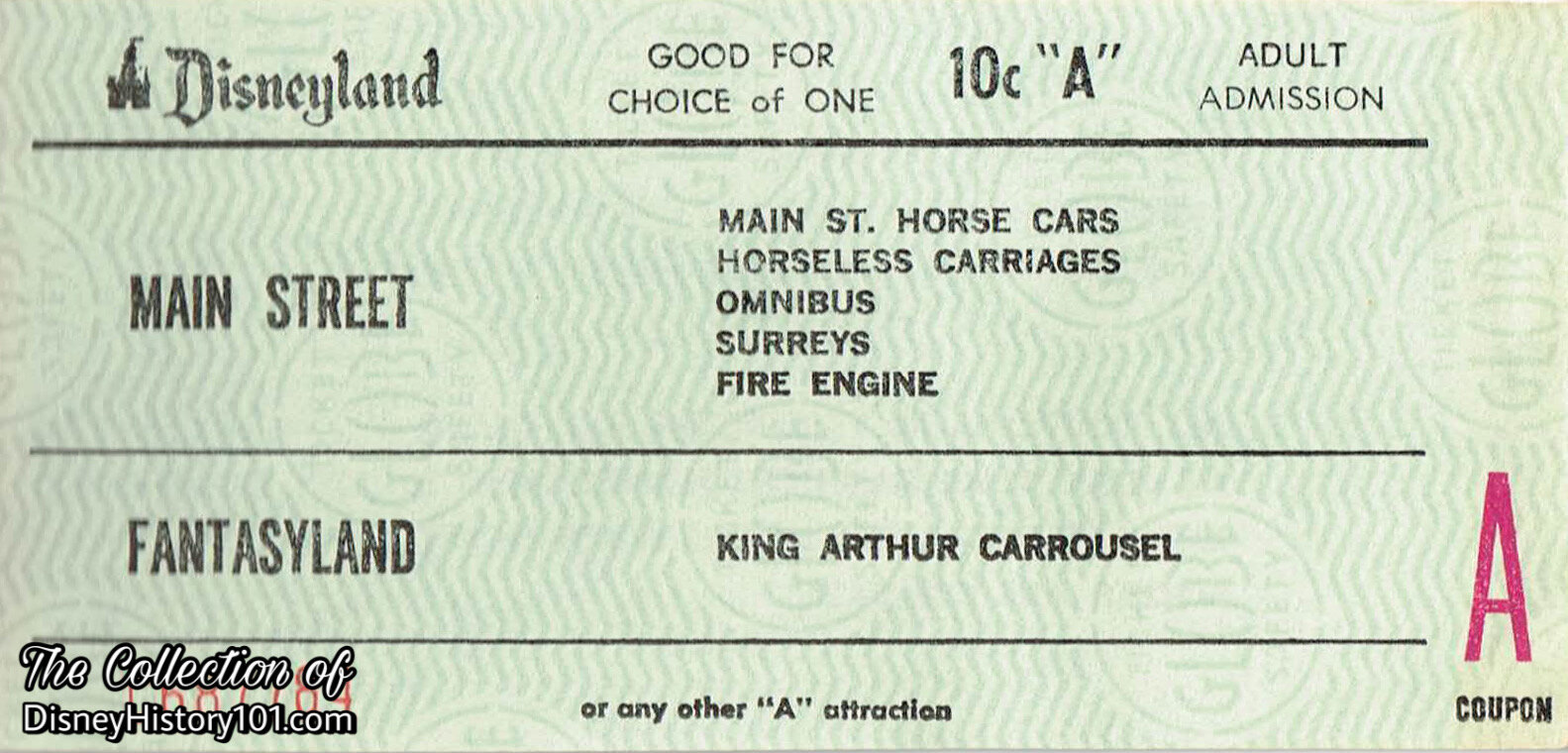
By 1959, Joe Fowler was Vice President of Disneyland Operations Committee and Doc Lemmon of Disneyland Operations was overseeing Operators of Rides & Amusements (like the Omnibuses), Livestock, Parking Lot, and Ticket Sellers.
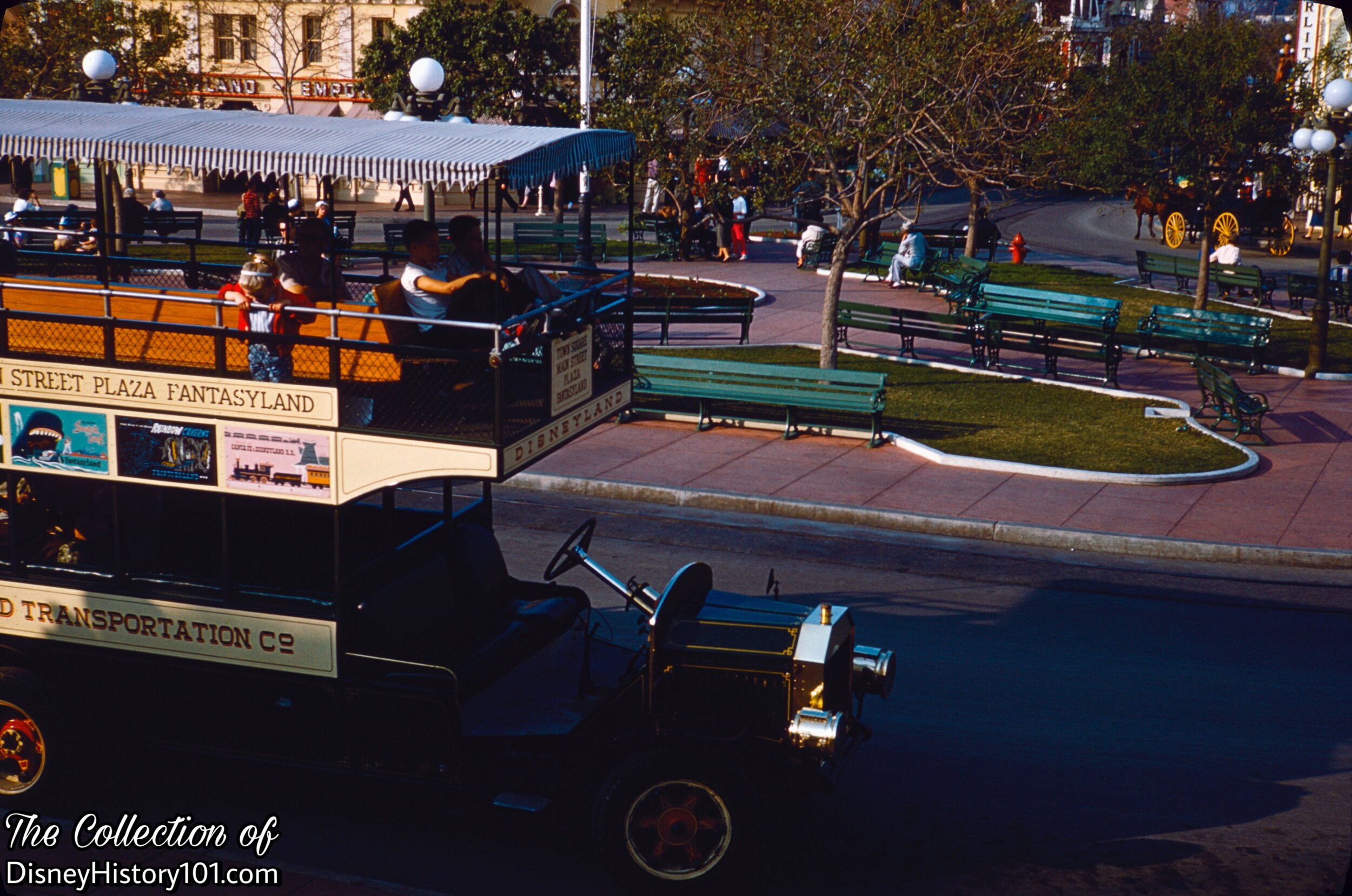
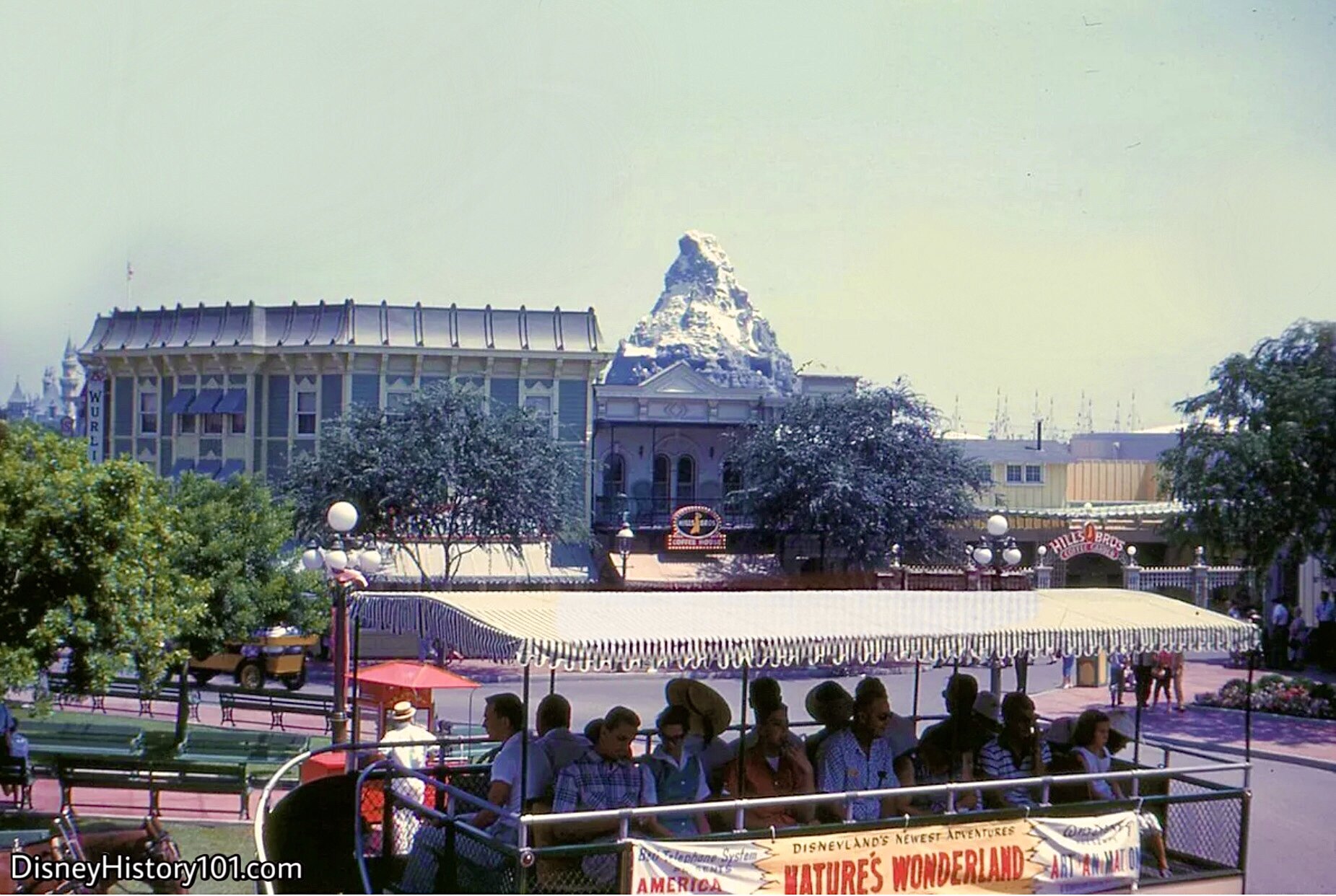
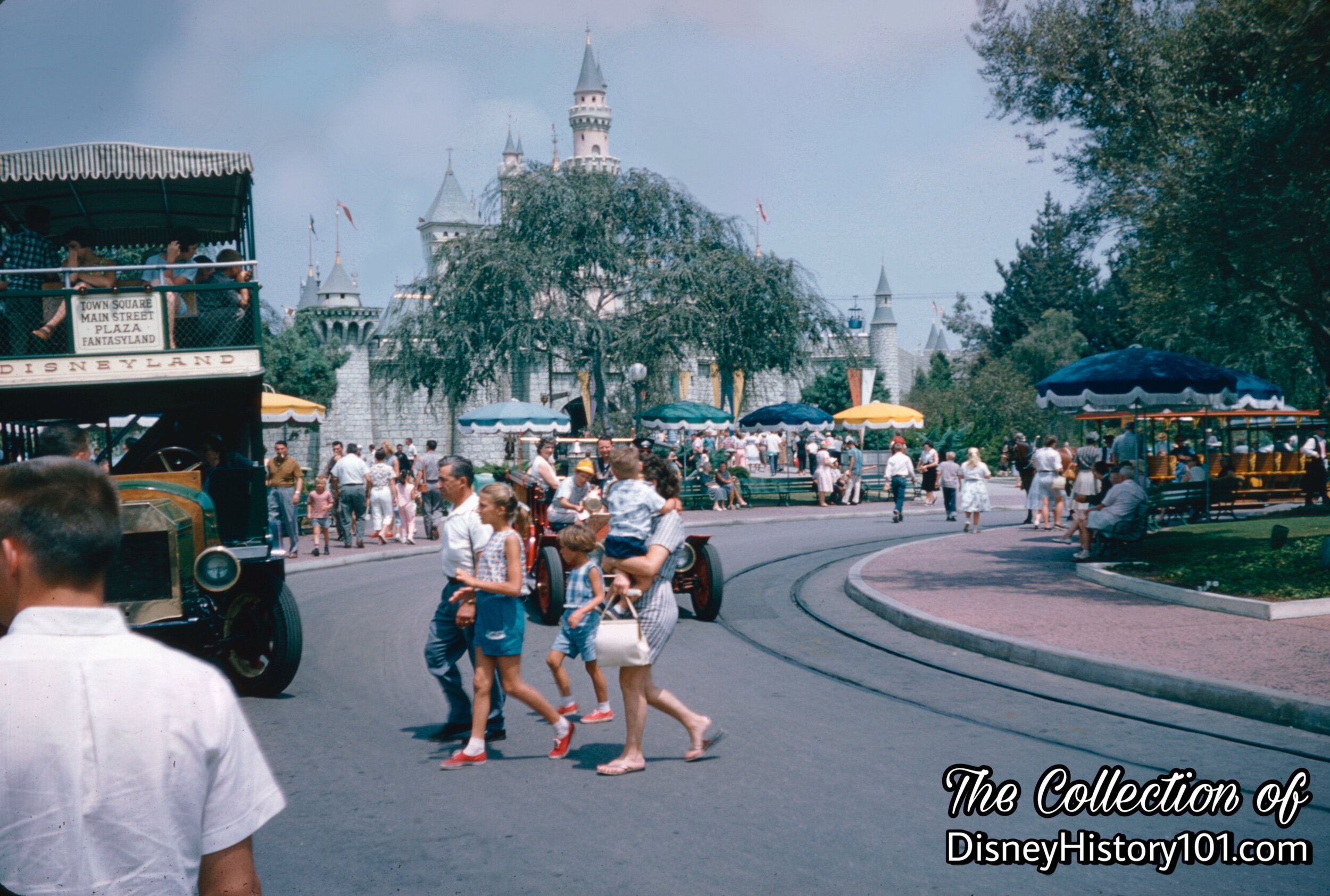
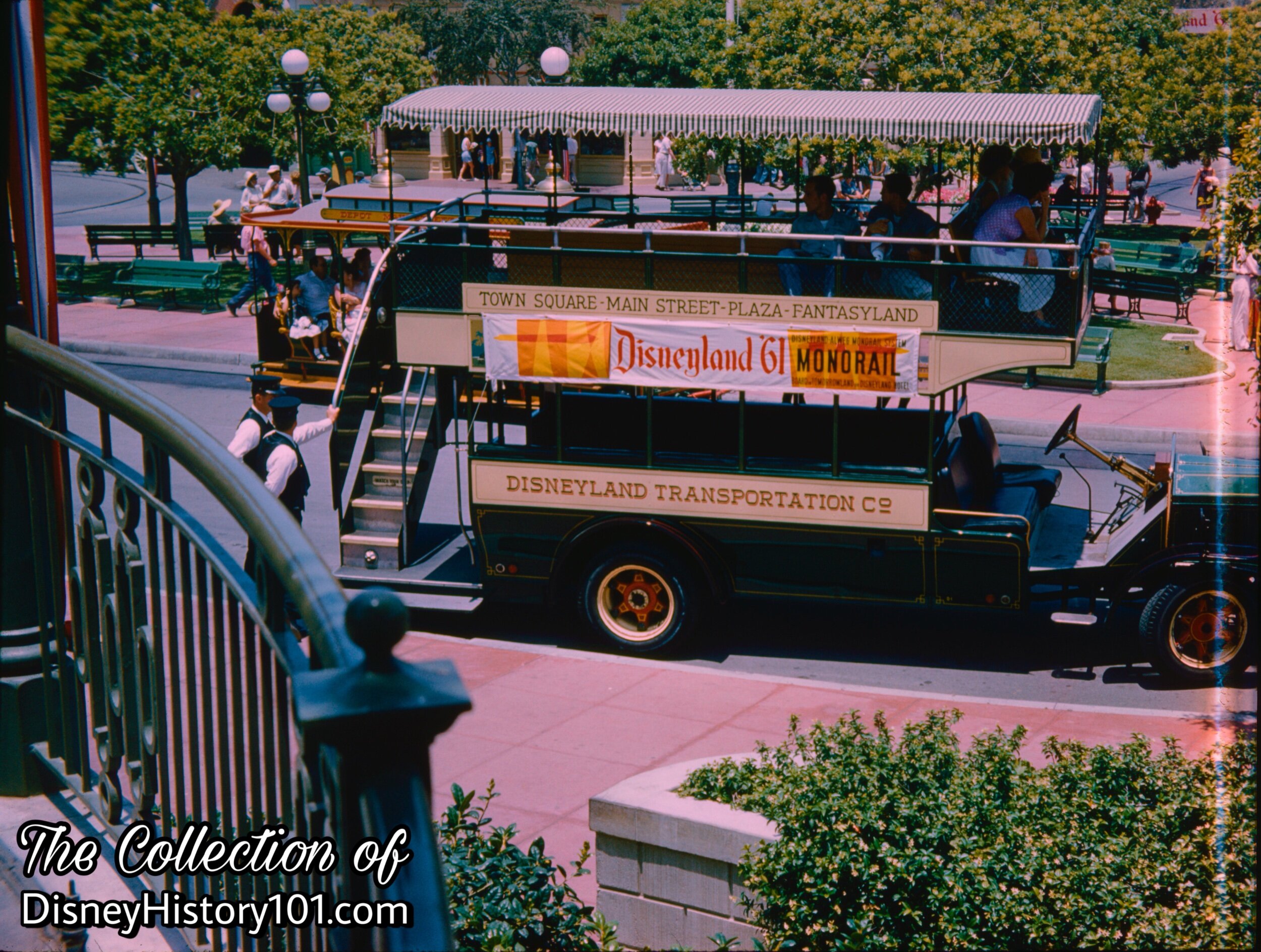
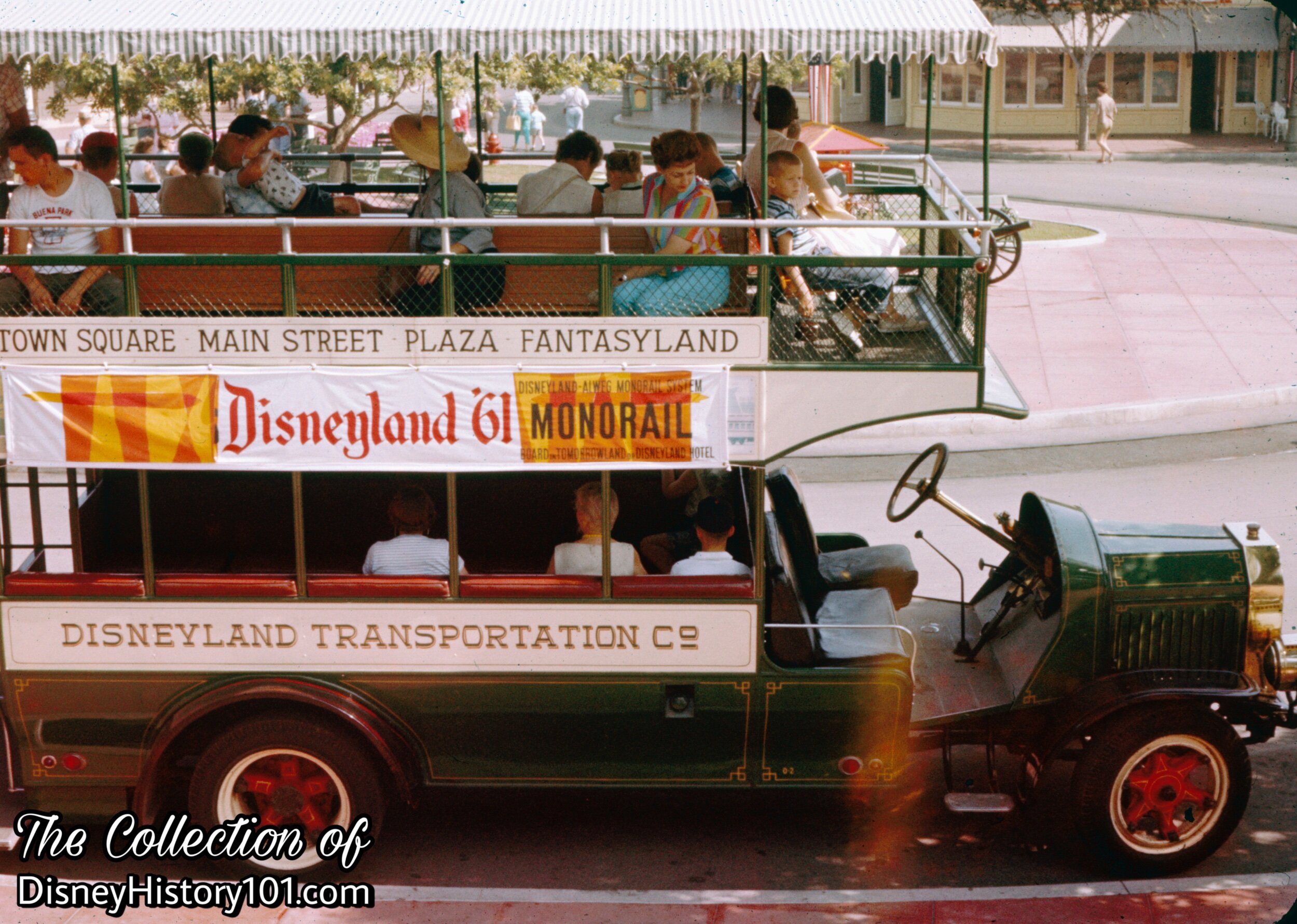
When the Monorail reopened with its new route to the Disneyland Hotel, the Omnibus heralded this new line along the side of the Omnibus!
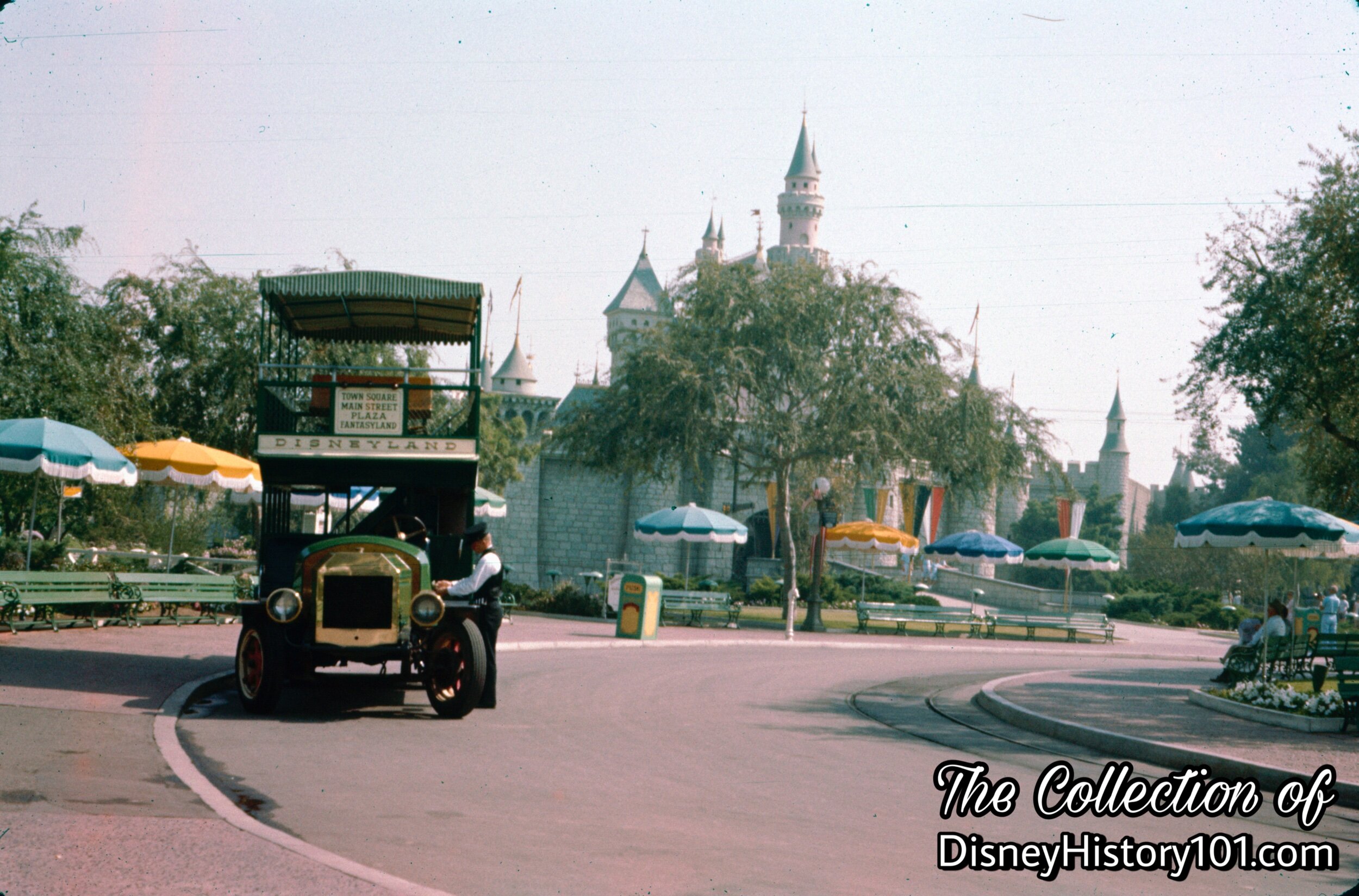
The Omnibus offered a wonderful panoramic of Town Square, Main Street USA, and the Plaza. Owing to this, in August of 1962, Lloyd Richardson, Larry Clemmons, Joe Marquette, and Jack Leppert (of the Walt Disney Studio) filmed and shot scenery from the Omnibus for Studio Production #3185.
The Omnibus operated with one unit during weekdays and week ends during the winter season of 1962. The “Ride Operating Schedule” effective October 3, 1962 described the attraction as having a 280-Guest capacity during winter week end days and a maximum daily capacity of 560 Guests.
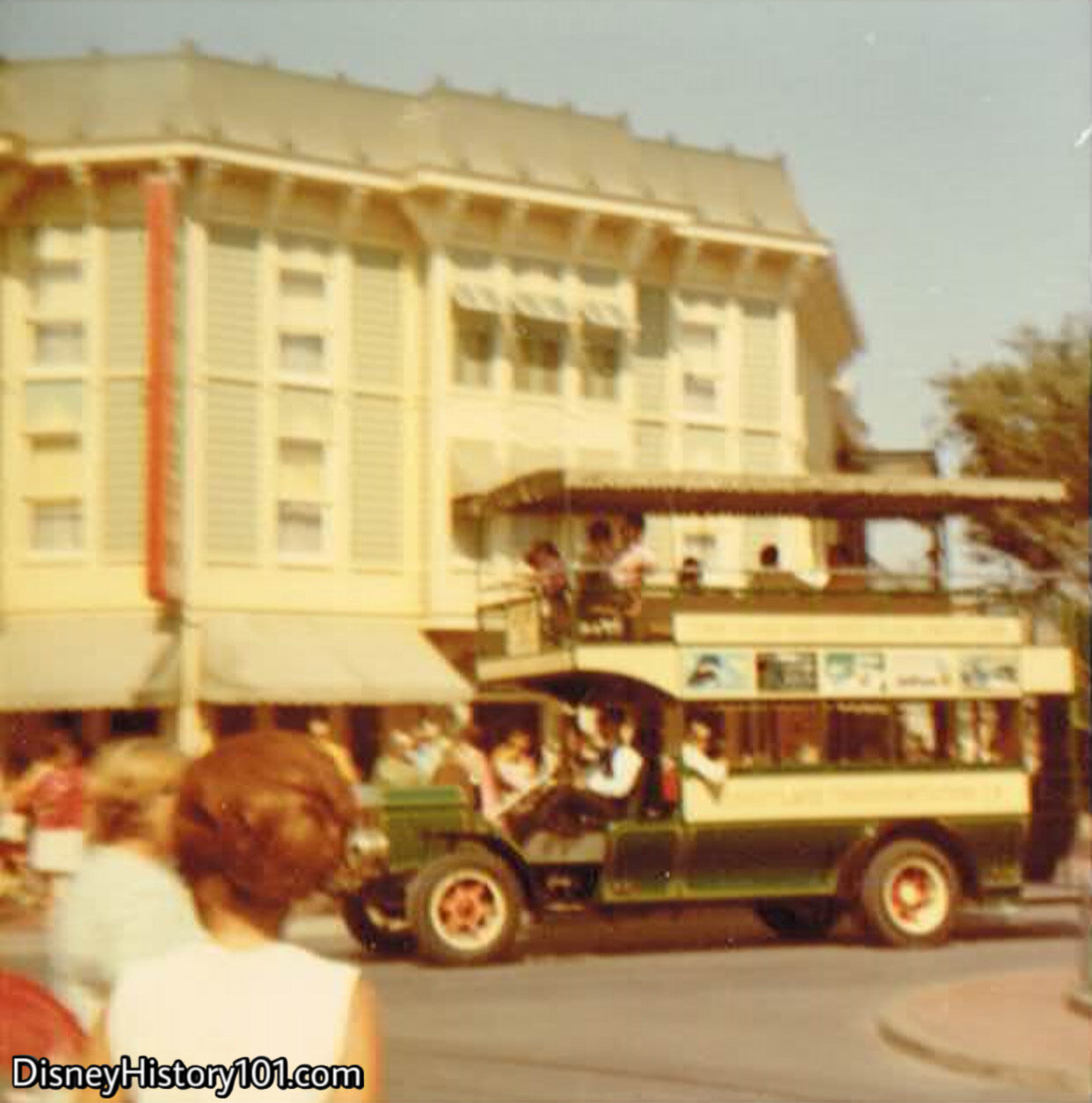
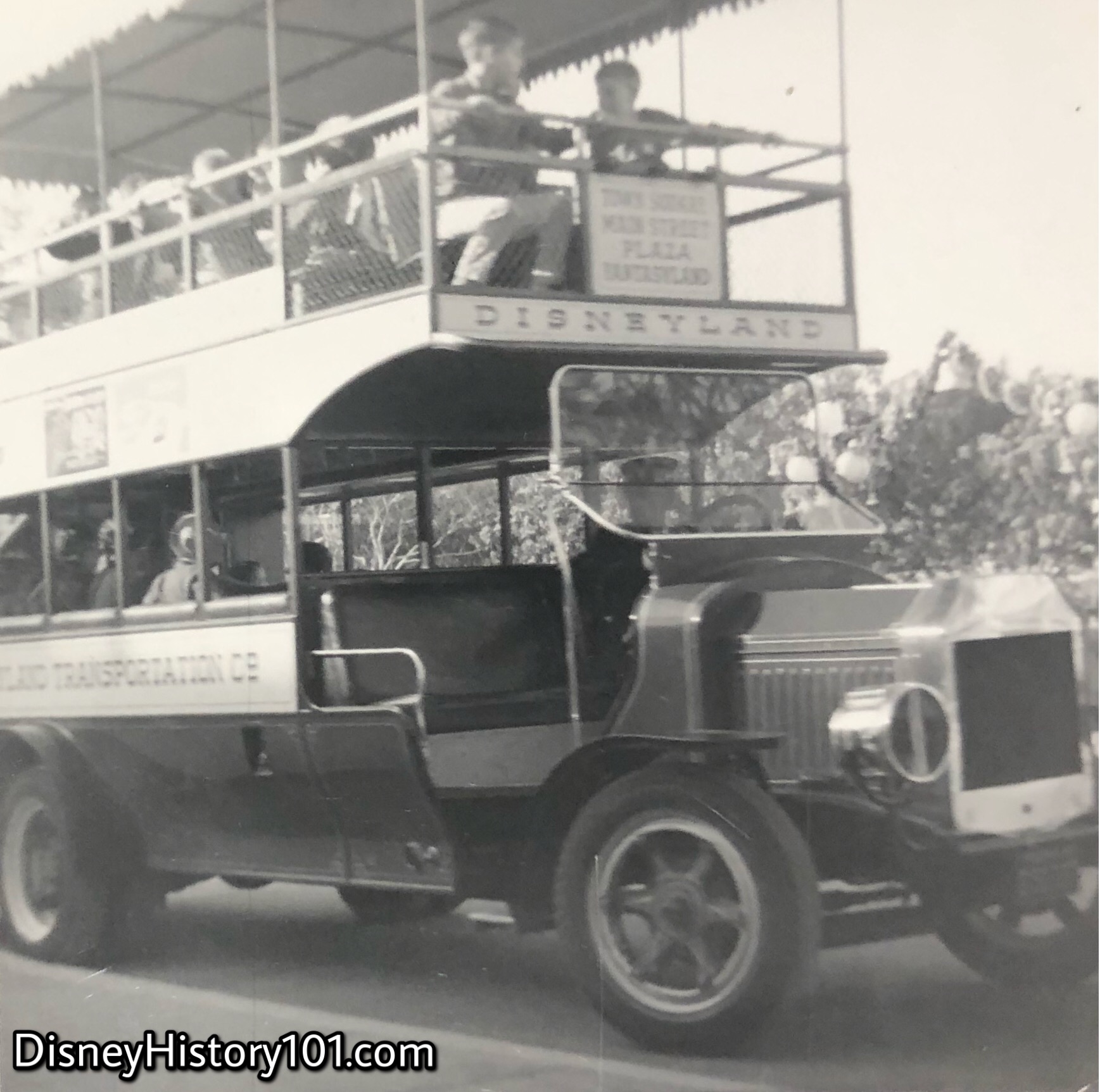
The importance of the attraction ceasing operation during performances was emphasized in a short piece published in Backstage Disneyland, 1965: “JACK WHITTINGTON, Main Street foreman, will always remember the day the Chinese Girls Drill Team performed on Main Street. The girls paraded up to Carefree Cor-ner, gave an interesting exhibition of their skill, and then marched back down the street to presumably make their exit. So Jack gave the order for the vehicles to resume their usual functions. Much to his amazement, half of the Drill Team wheeled around and started another tour up the street. This must have been a sight to behold. There they were girls marching, with drums beating, batons flying, whistles blowing, trying to dodge street cars, Omnibuses, and horseless carriages with their horns honking and bells ringing. There's never a dull moment for the Main Street Supervisors.”
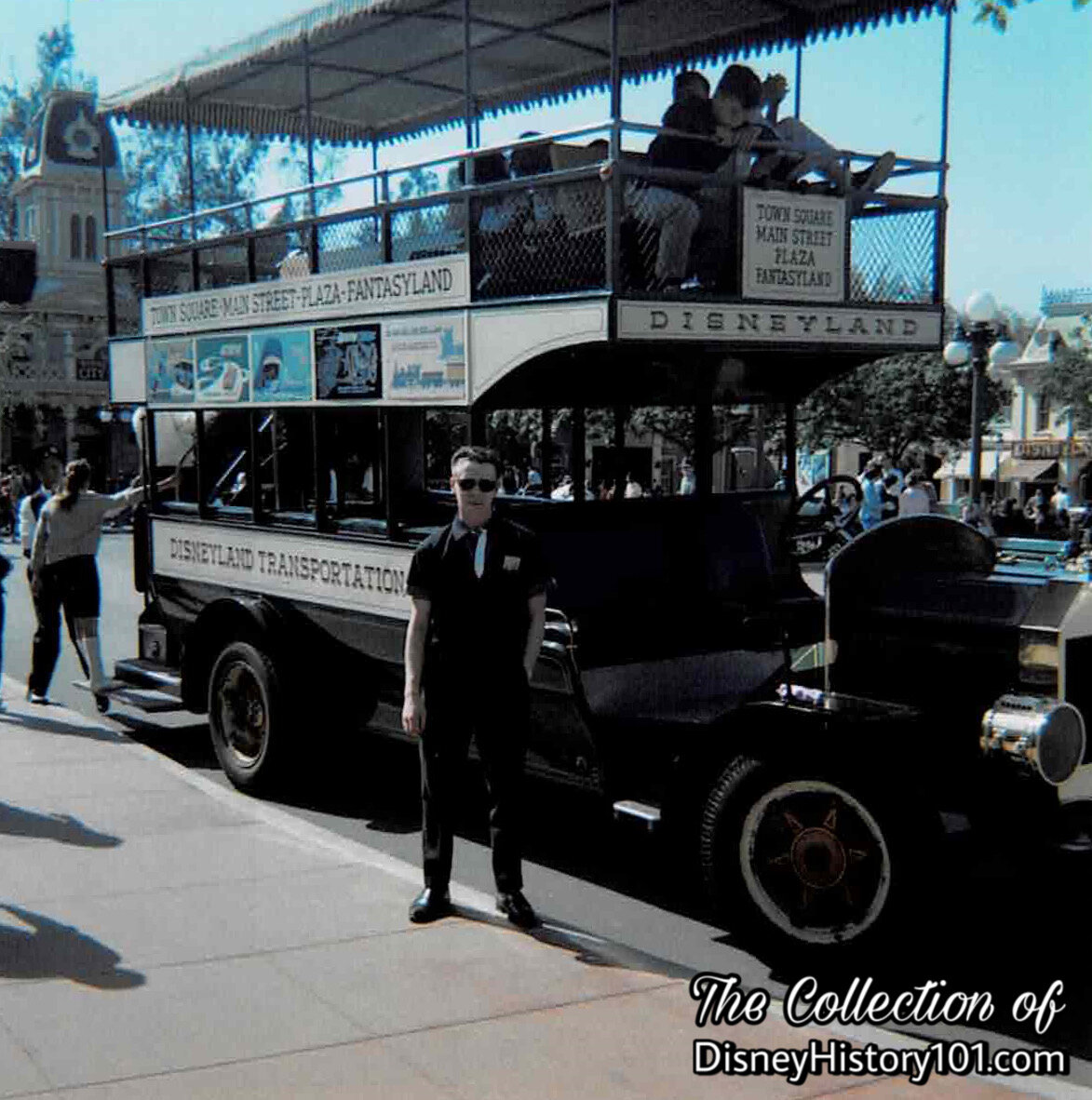
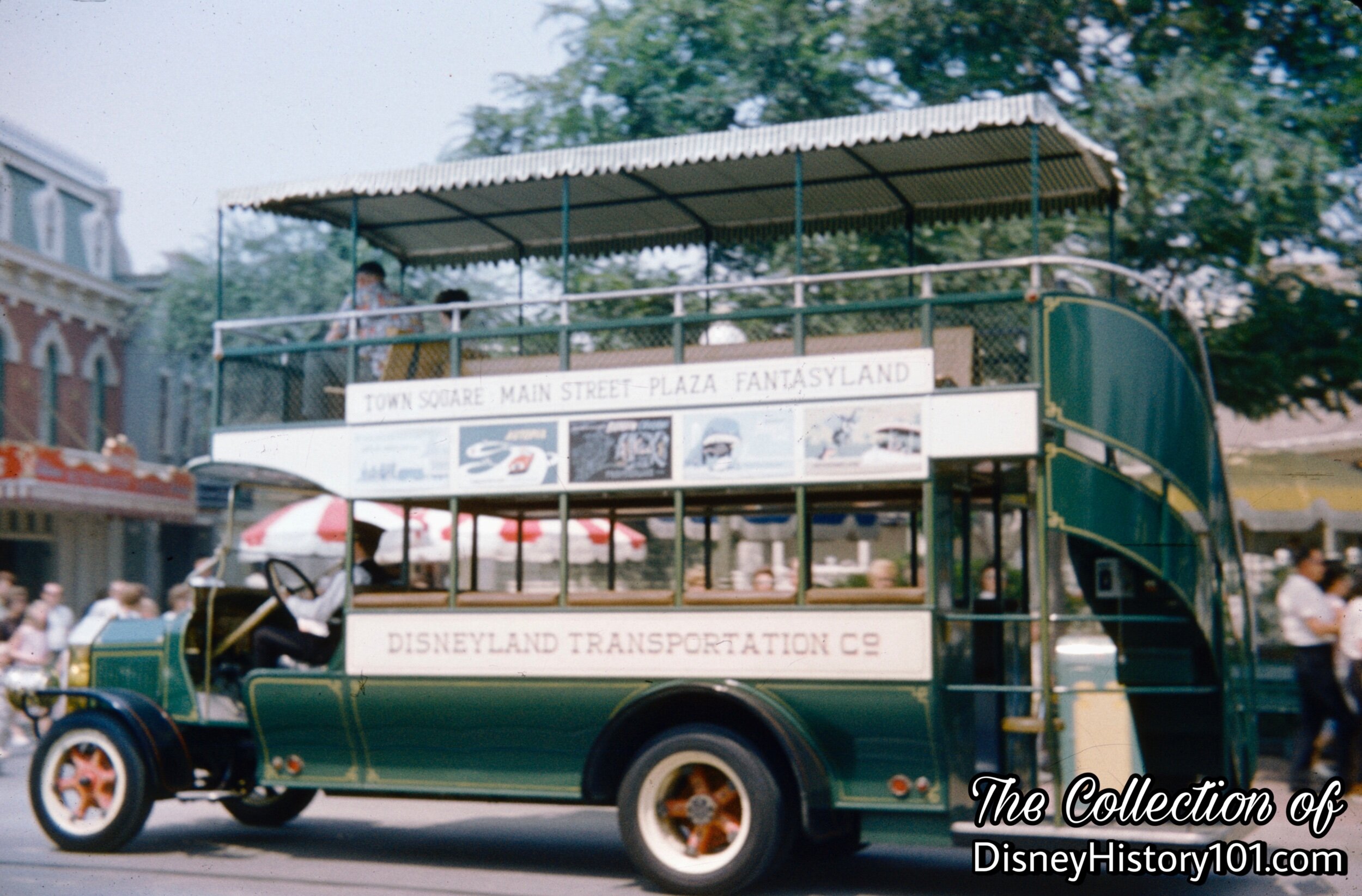
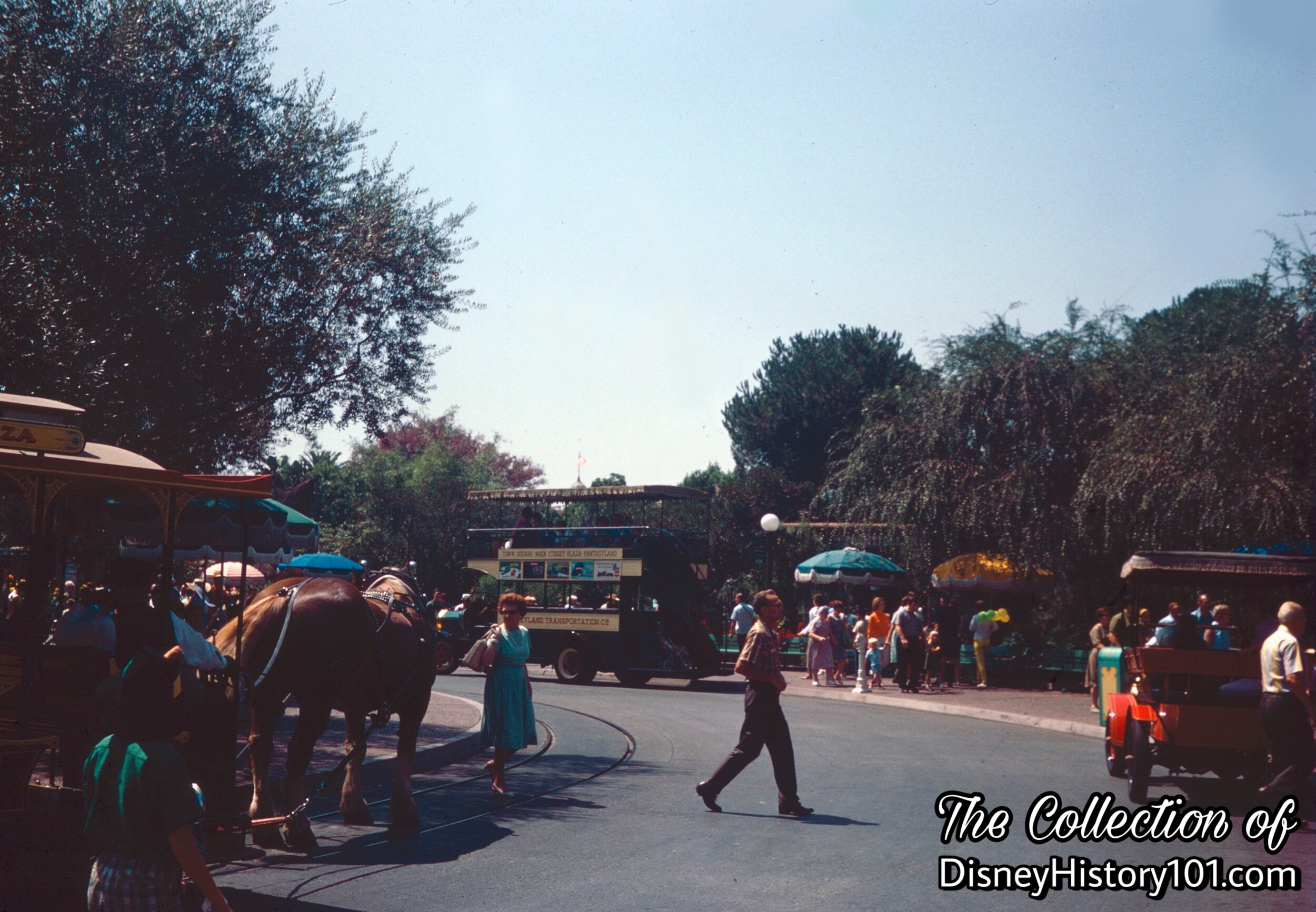
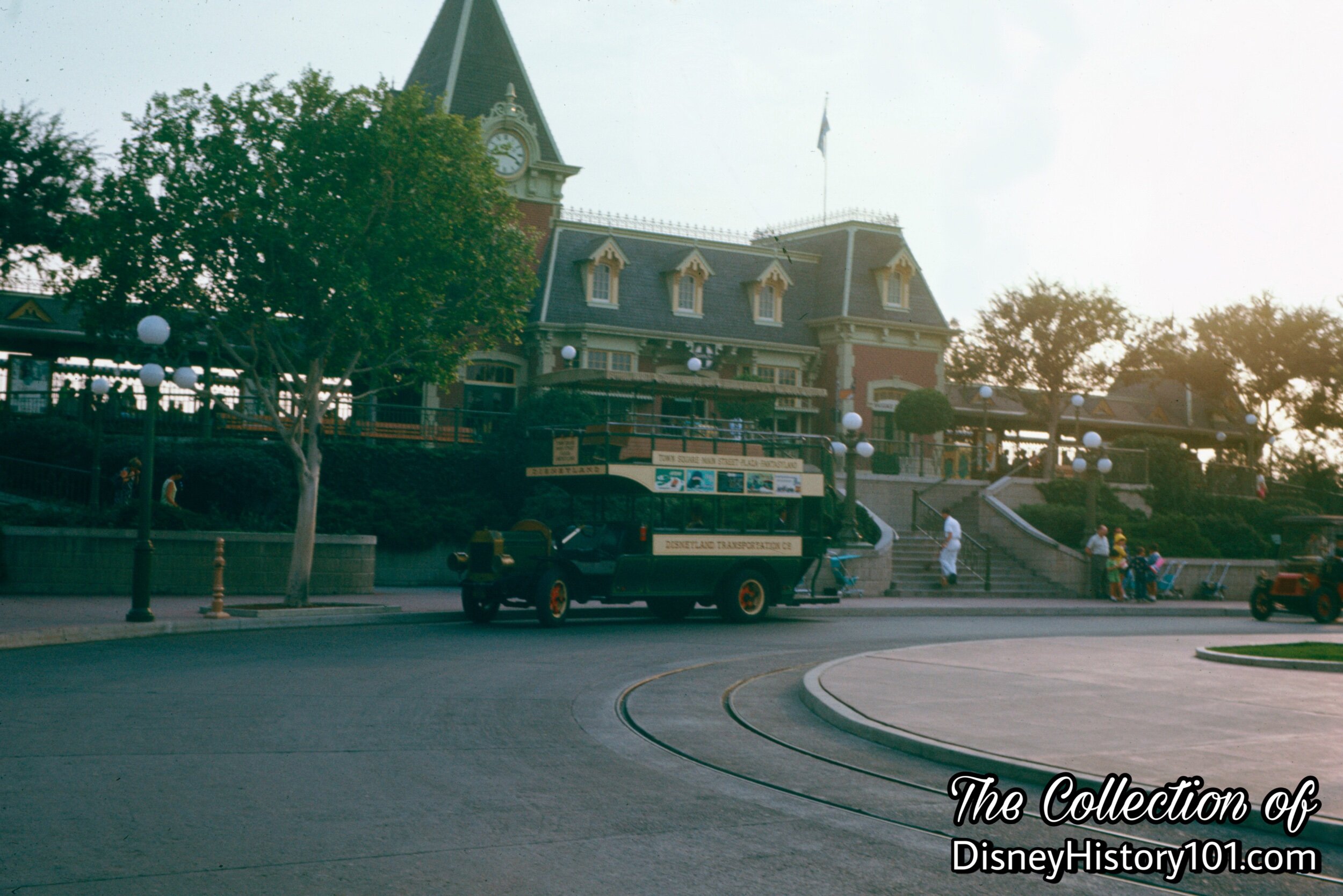

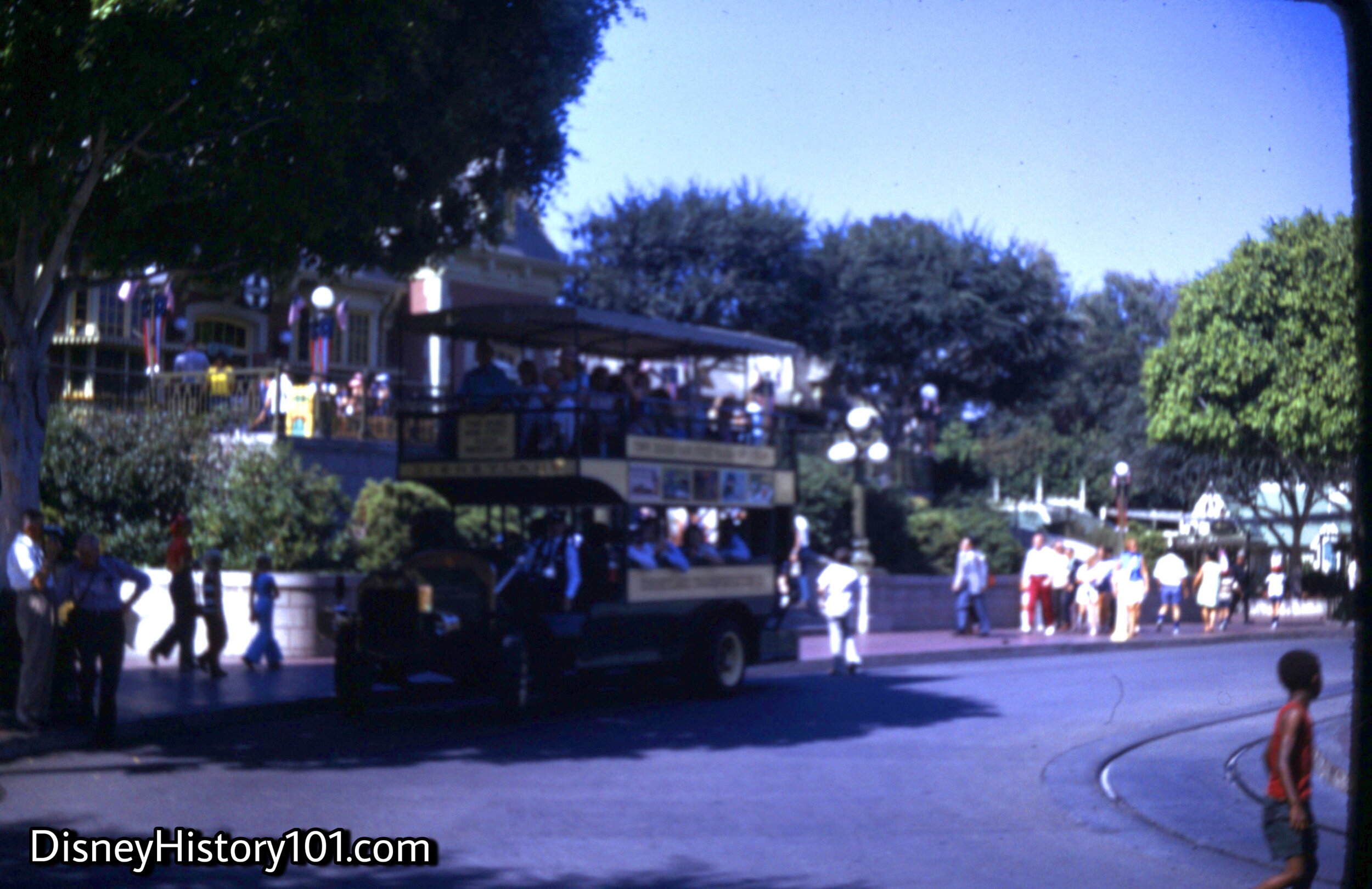
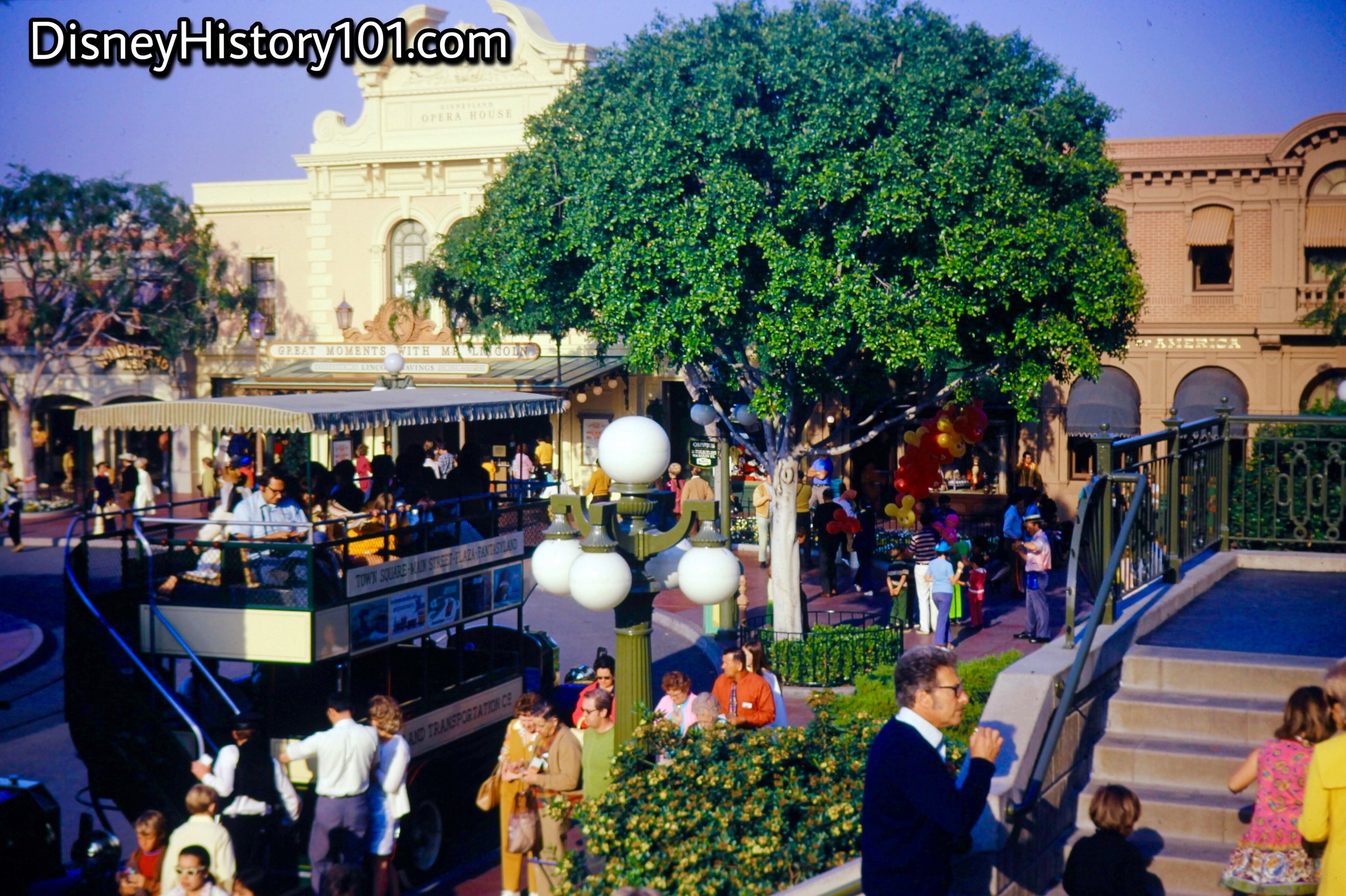
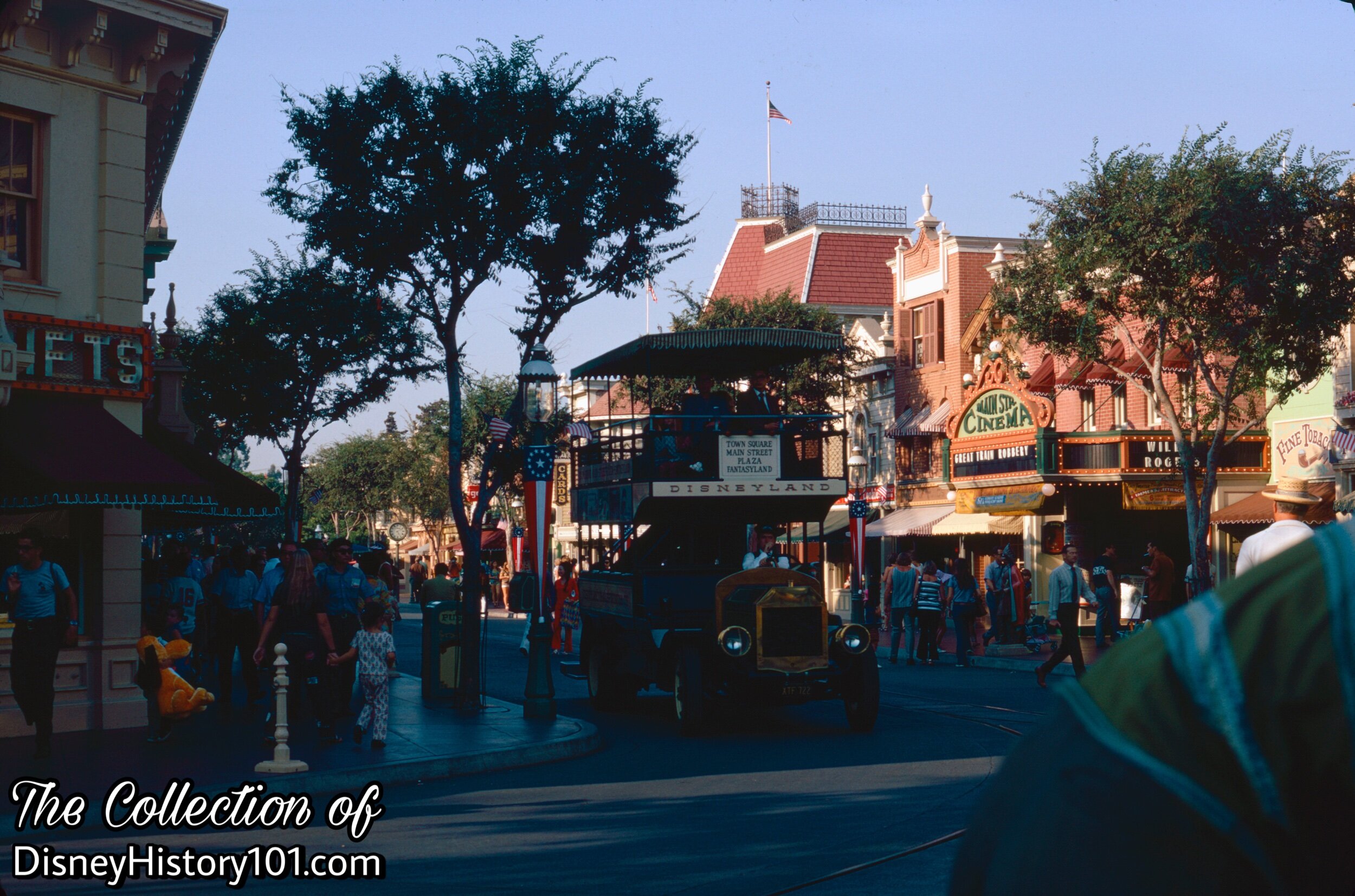
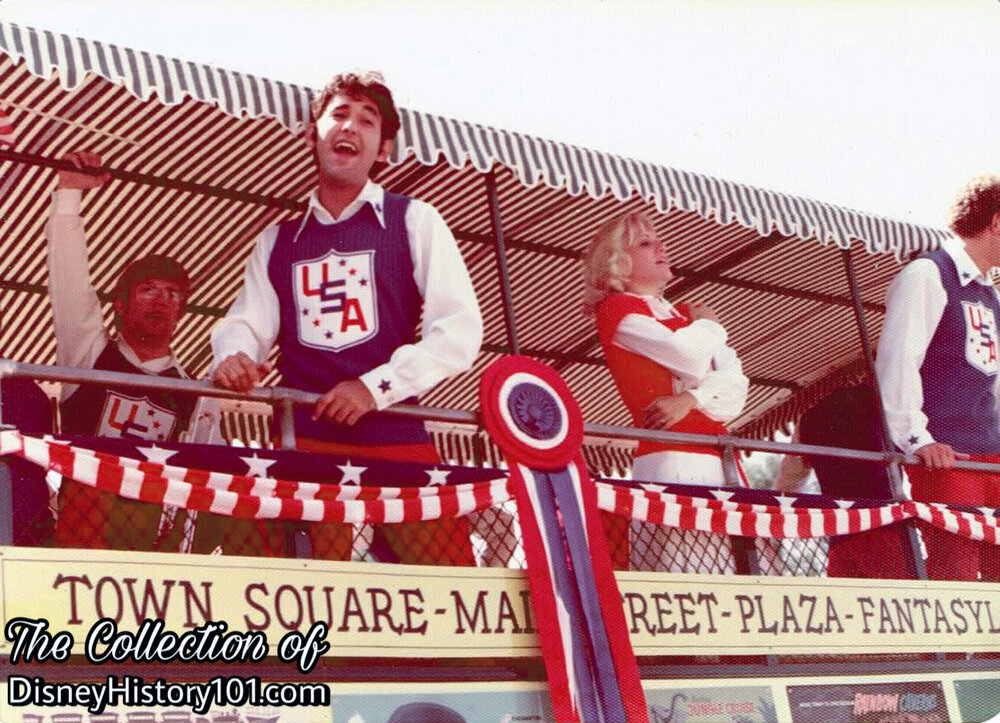
The Omnibus was often utilized during parades. During “La Fiesta de Cinco de Mayo Parade” of May 3 & 4, 1969, the Omnibus was driven by Operations with 40 Corina Valdez Dancers on board throwing serpentine confetti. More than a decade later, the Omnibus was decorated with red, white, and blue ribbons and bunting for the American Bicentennial celebration and carried the All-American College Singers down Main Street, U.S.A.!
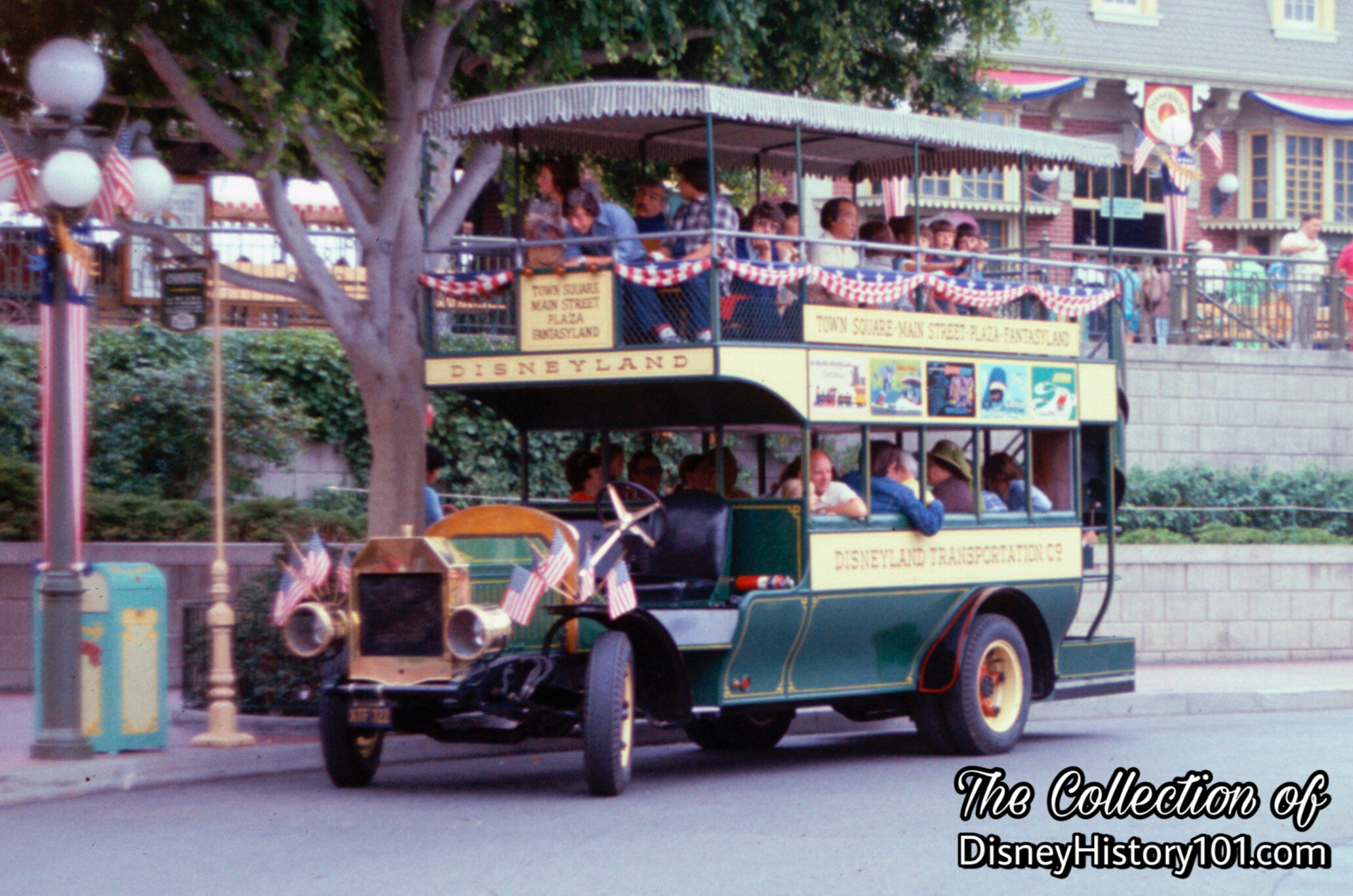
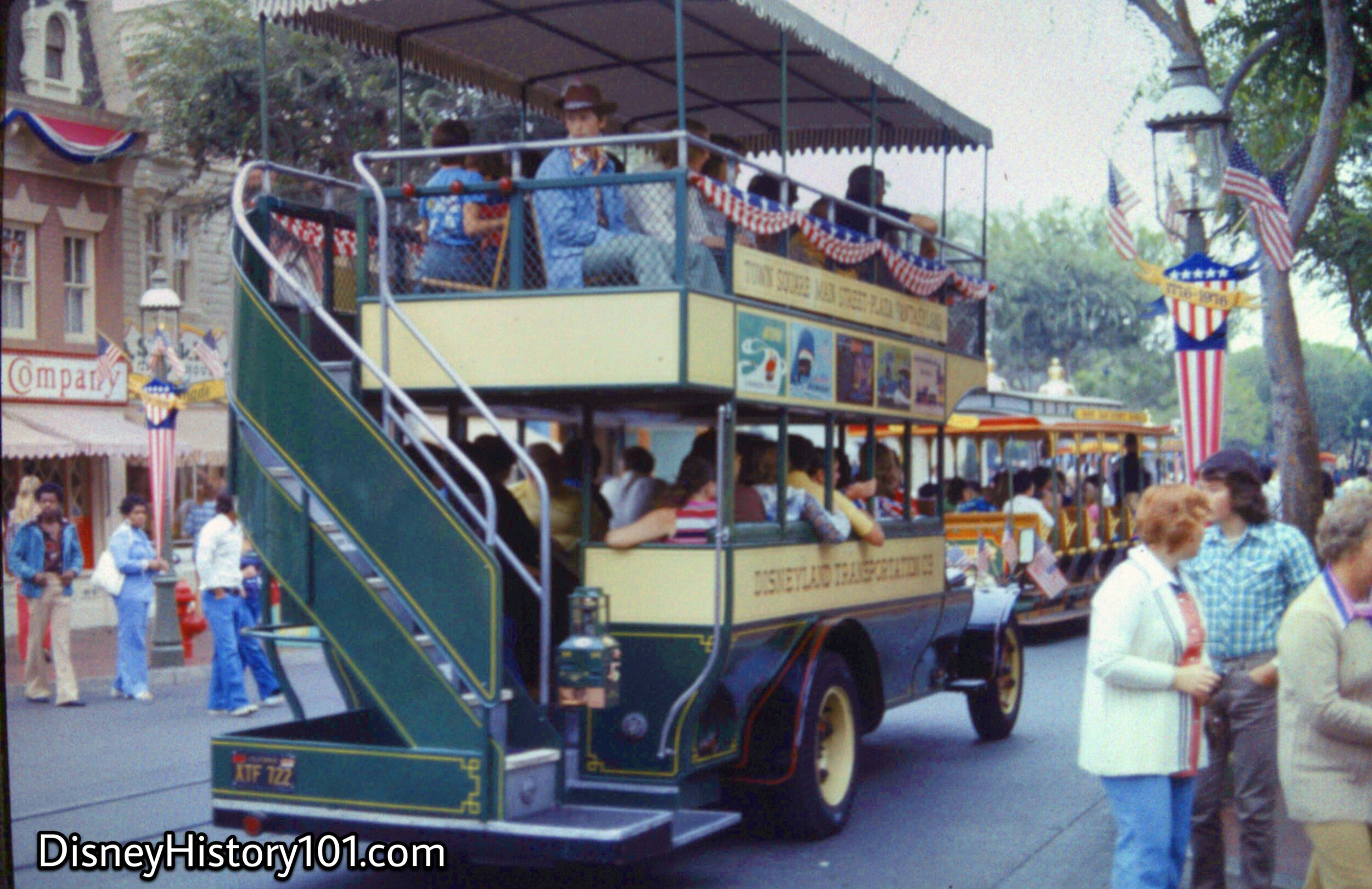
The Omnibus played a role in the American Bicentennial Celebration at Disneyland from 1975 to 1976. The “double-decker” Omnibus was all decked out in red, white, and blue ribbons and bunting in honor of the America on Parade event.
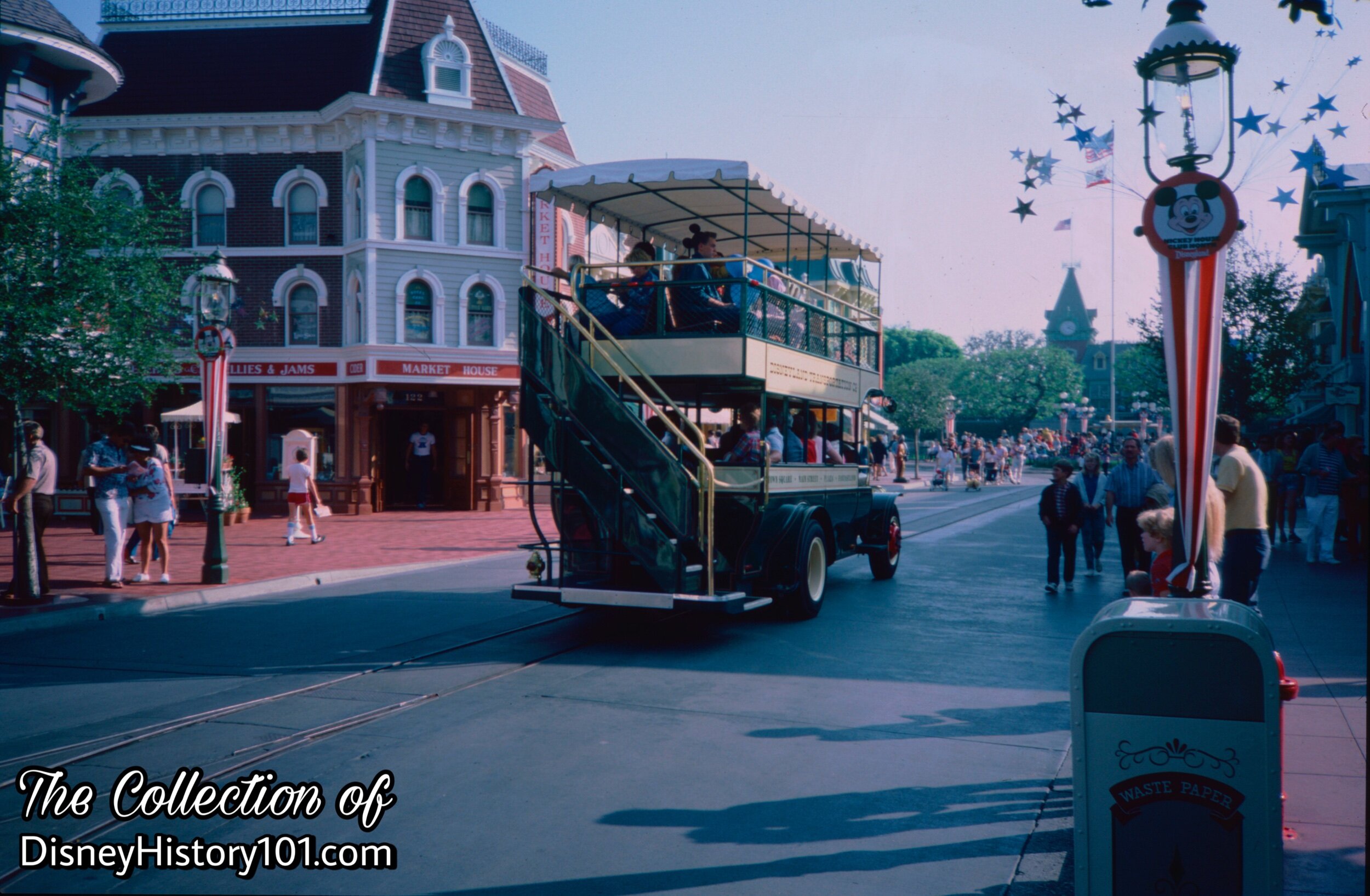
“55er” Dave Bartchard recalled: “I was very impressed when we transferred the vehicles to natural gas. They asked for my opinion about it and I said that I favored the change because I like clean air. The Omnibus was the first to go over to natural gas, then the Jungle boats, and the Motor Boats, Rafts and the Keel Boats followed along. We couldn't do it for the Submarines because there was no place to put the tanks.”
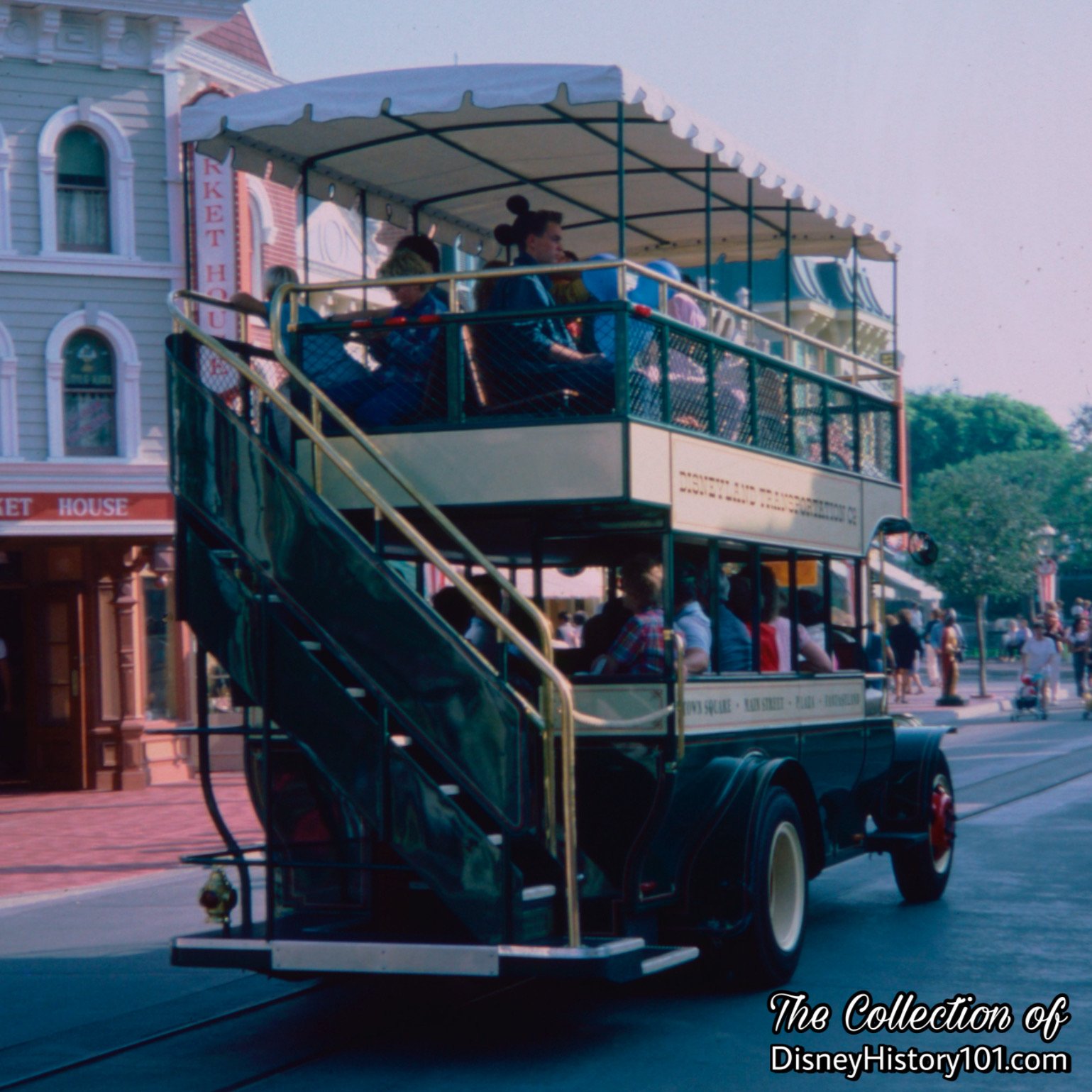
By 1981 Main Street Vehicles were open-air, double-deck busses of the type used in major cities at the beginning of this century. They traveled the Town Square-Plaza route with the driver providing a colorful live-narration along the way. As a result they contributed $24,000 in revenue (of $94,576,000 area sales) for Center Stage at Disneyland.
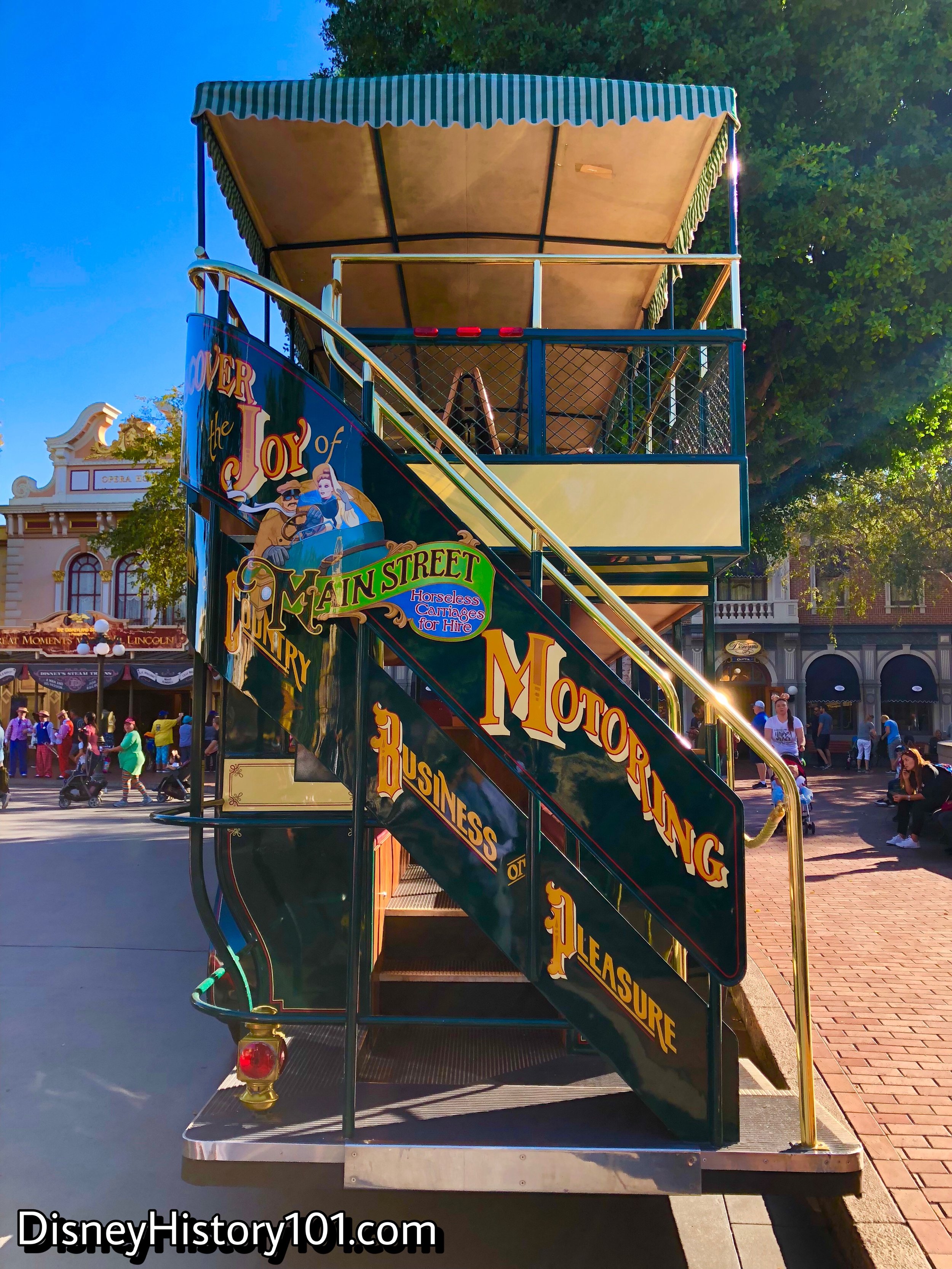
By 1996, the Main Street Vehicles (Fire Engine, Horseless Carriage, Omnibus, Horse-Drawn Streetcars, ‘03 Red, ‘03 Yellow, Double-decker touring bus (5/8-scale), and Horse-powered trolley cars were presented by National Interrent.
In recent years the Omnibus is accounted as part of the Main Street Transportation Co., the fictitious business for the old-fashioned gasoline-powered Main Street vehicles. Disneyland actually looses money on Main Street vehicles, but they are vitally important to the showmanship of Walt’s recreation of Main Street U.S.A. They are operated by the “first impression” and “last impression” representative host of Disneyland.
Hosts and Hostesses re-create Main Street, U.S.A. and their show is played up to Walt Disney standards. Hosts show an enthusiastic personality - an appearance, smile, and both outgoing and enthusiastic personality. They wear proper attire, a prescribed wardrobe in good repair and properly worn at all times. Hosts deliver an interesting narration - a good one. They know their facts, state them in an interesting way, and give them with enthusiasm. Hosts have a sparkling and clean appearance, that is essential to Disneyland showmanship. Hosts do their part in keeping their vehicle clean at all times. They are “popcorn picker-uppers”. Their realistic performance is most-important, living their role. The Disneyland Omnibus Host is a conductor or driver at the turn of the century - only much more friendly and courteous!
Of course, I saved the best for last - At Disneyland, signs are themed to support the stories with appropriate graphics, colors, fonts, terminology, overall design of the sign, materials (wood, metal, banners, etc.), and verbiage used on the signage. These hand-painted Omnibus panels have surfaced at auction several times, at Van Eaton Galleries and Heritage Auctions.
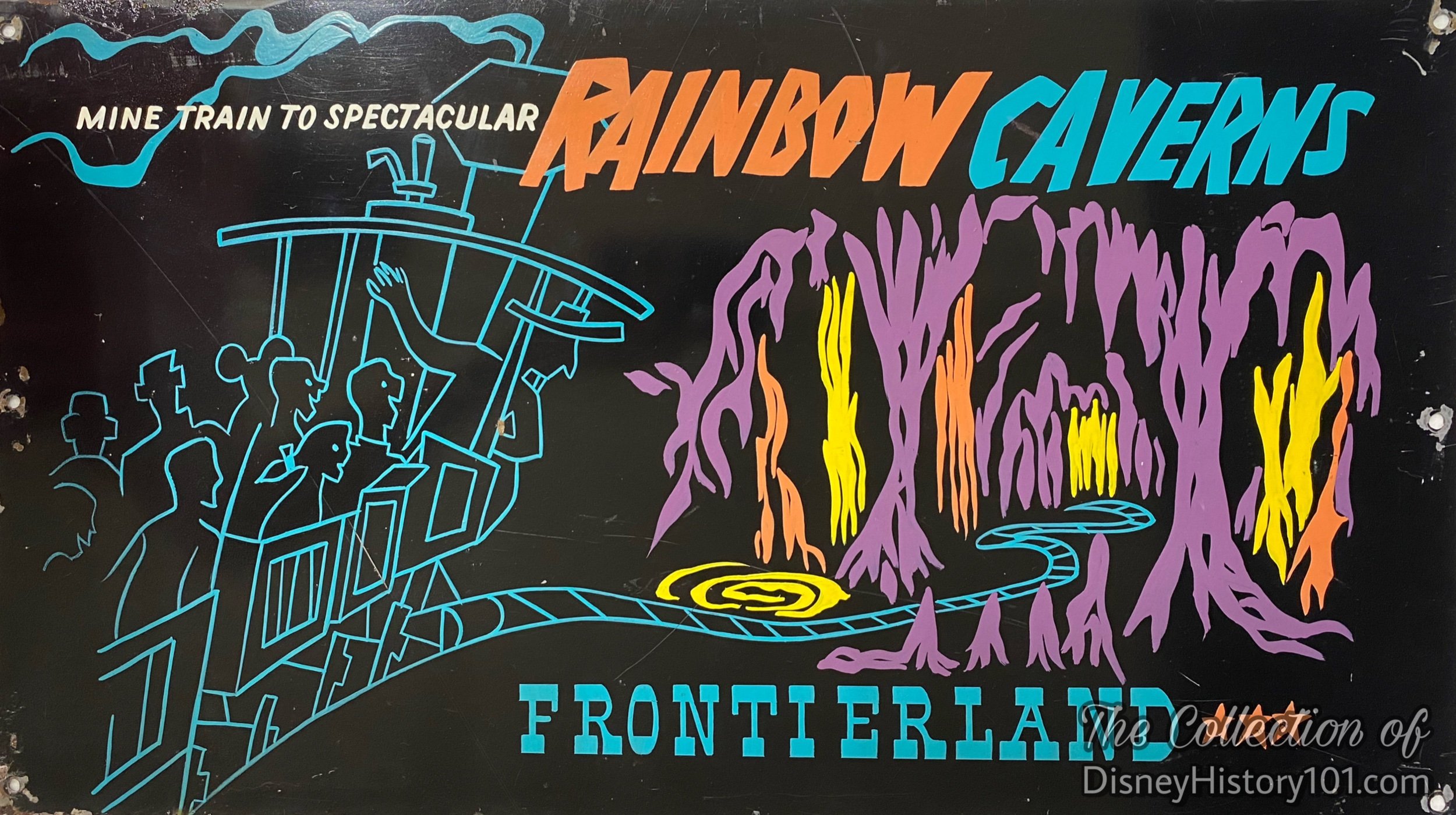
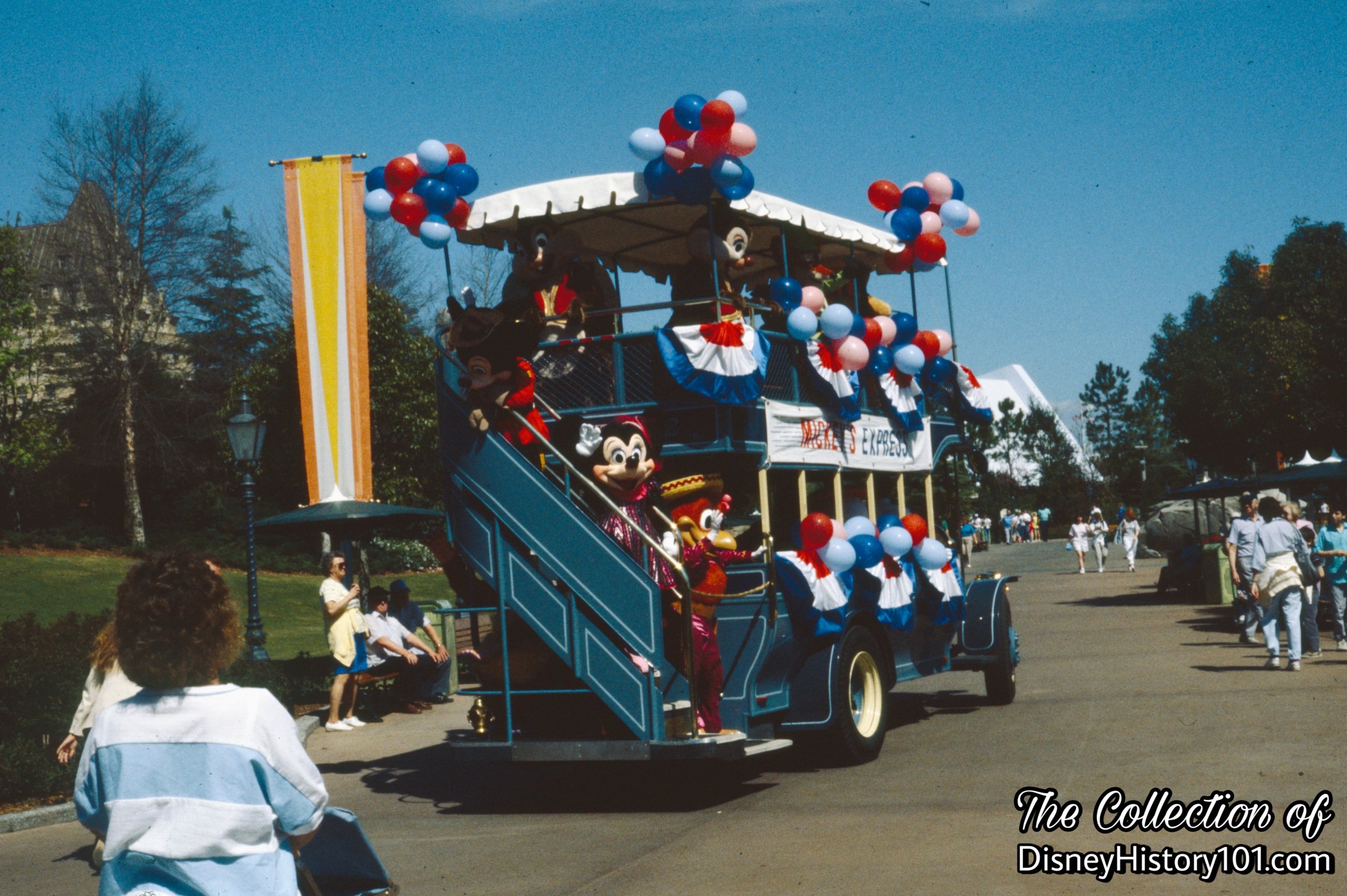
The Omnibus had an immediate legacy and may look familiar to anyone who has ever been to the Magic Kingdom or EPCOT Center in Florida. In 1971, guests could get an overview of the Magic Kingdom’s Main Street aboard an old-fashioned double-decker bus. In 1982, Bob Gurr was asked to oversee a fleet of new Omnibuses. Bob Gurr’s 1956 engineering drawings were used for the buses built for Epcot Center in 1982. The two Disneyland buses had their bodies removed from the original 1956 and 1957 International Harvester chassis and mounted on 1982 Chevrolet truck chassis.
By 1984, both Disneyland Omnibuses had been sent to Walt Disney World and Bob Gurr’s design was swiftly utilized to provide Guests a colorful mode of transportation around the World Showcase. Mickey’s Express also transported Characters around Epcot. By c.2007, Guests May recall “Disney Characters on Holiday” (DCOH), a group of Characters that performed in several locations in Epcot, entering and exiting on a European double-decker bus.
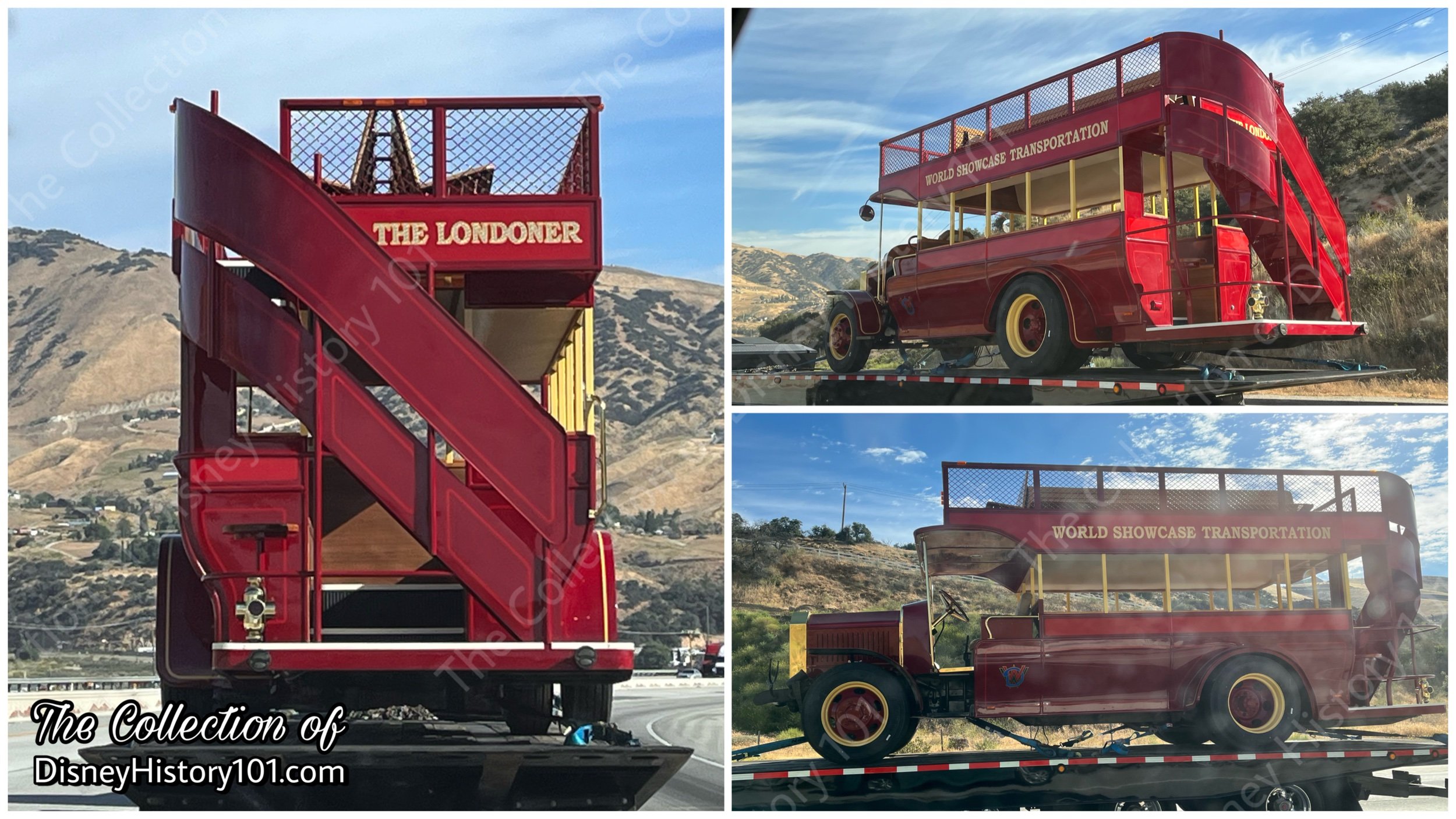
The World Showcase Omnibuses have turned up in many locations - ranging from downtown Kissimmee to the Volo Auto Museum in Illinois, and even New Jersey, and New York. The Londoner Omnibus was one of the longest operating Omnibuses at Walt Disney World. After being decommissioned during the 2000s, it was purchased in Central Florida by Robin and Brook Lopez of the Milwaukee Bucks Basketball Team. The bus was moved to Southern California and restored to its 1982 appearance. While driving on the 5 Freeway in California (outside of Los Angeles) we serendipitously passed the Londoner Omnibus headed to Fresno for maintenance.
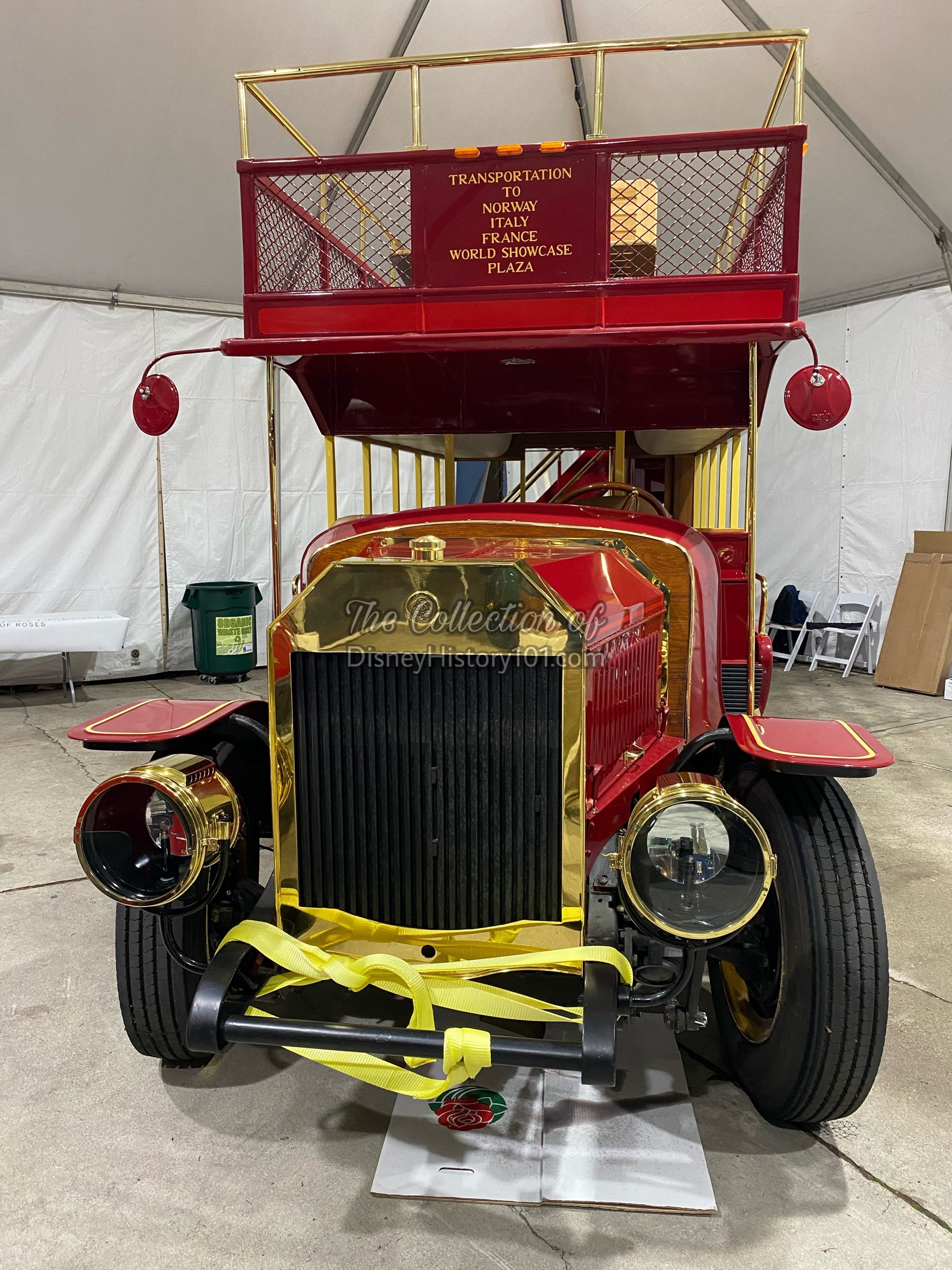
A few months later, we saw that same Omnibus lined up to appear in the 2024 Tournament of Roses Parade in Pasadena, California. It was used to transport the Tournament of Roses President Aghajanian.
The Omnibus continued to have a legacy on other continents, at Tokyo Disneyland. By the spring of 2003, the Main Street Vehicle was also included among the concepts produced for Hong Kong Disneyland by Walt Disney Imagineering.
The Omnibus has appeared as the subject of occasional Disneyland souvenir merchandise. By far, this is one of my favorite - a complimentary matchbook covered with iconic Main Street vehicles. How many can you identify?
You may have heard of the “yellow and green Omnibus,” but have you ever heard of the red Omnibus?
The timeless Omnibus, continues to be the subject of artwork and other merchandise made available for purchase. One of the cutest is this adorable Disneyland 50th Anniversary Pewter Figure designed by Kevin Kidney & Jody Daily.

One of my personal favorites is this loyal Disneyland 50th Anniversary limited edition replica designed by Kevin Kidney & Jody Daily.
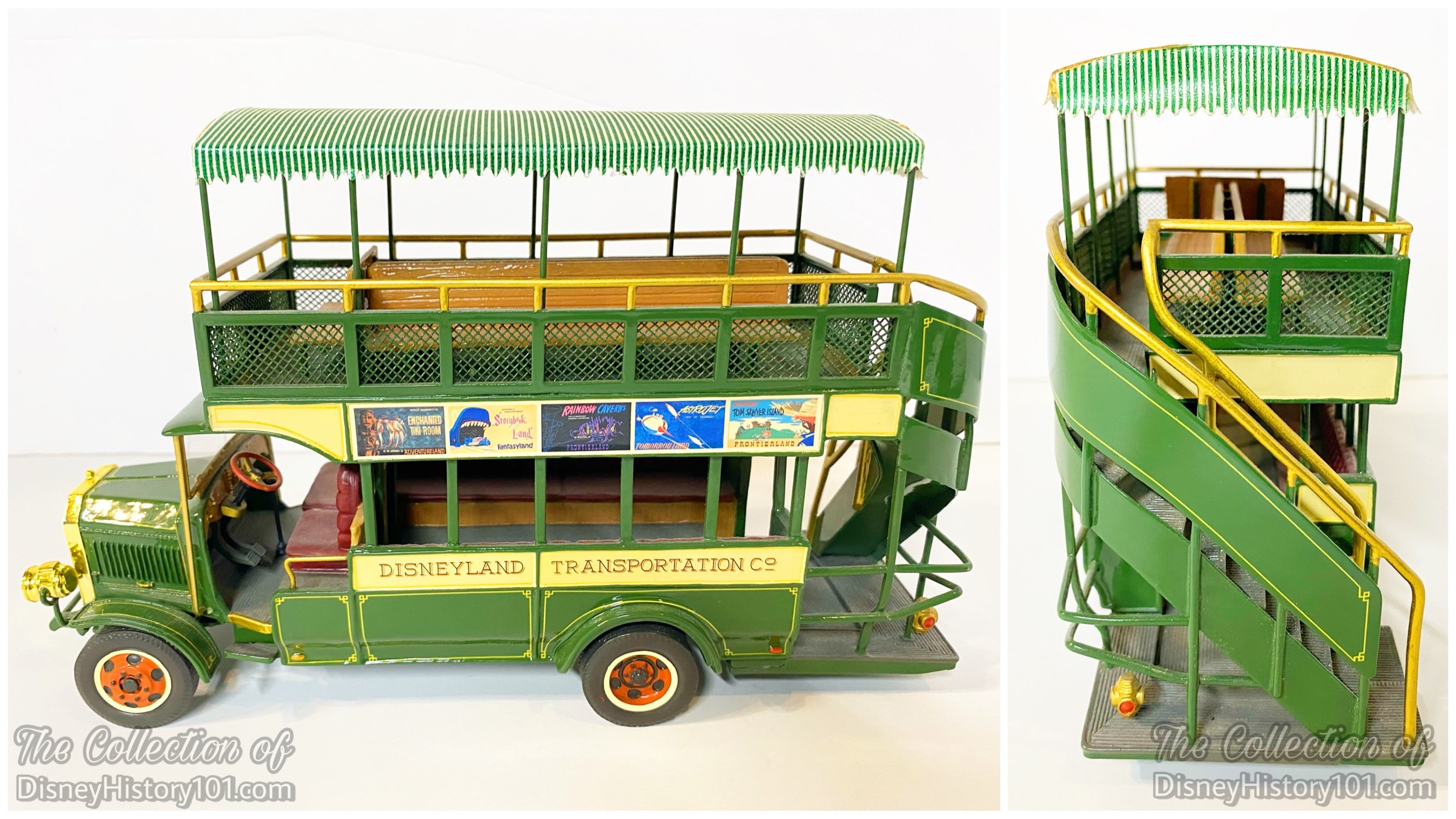
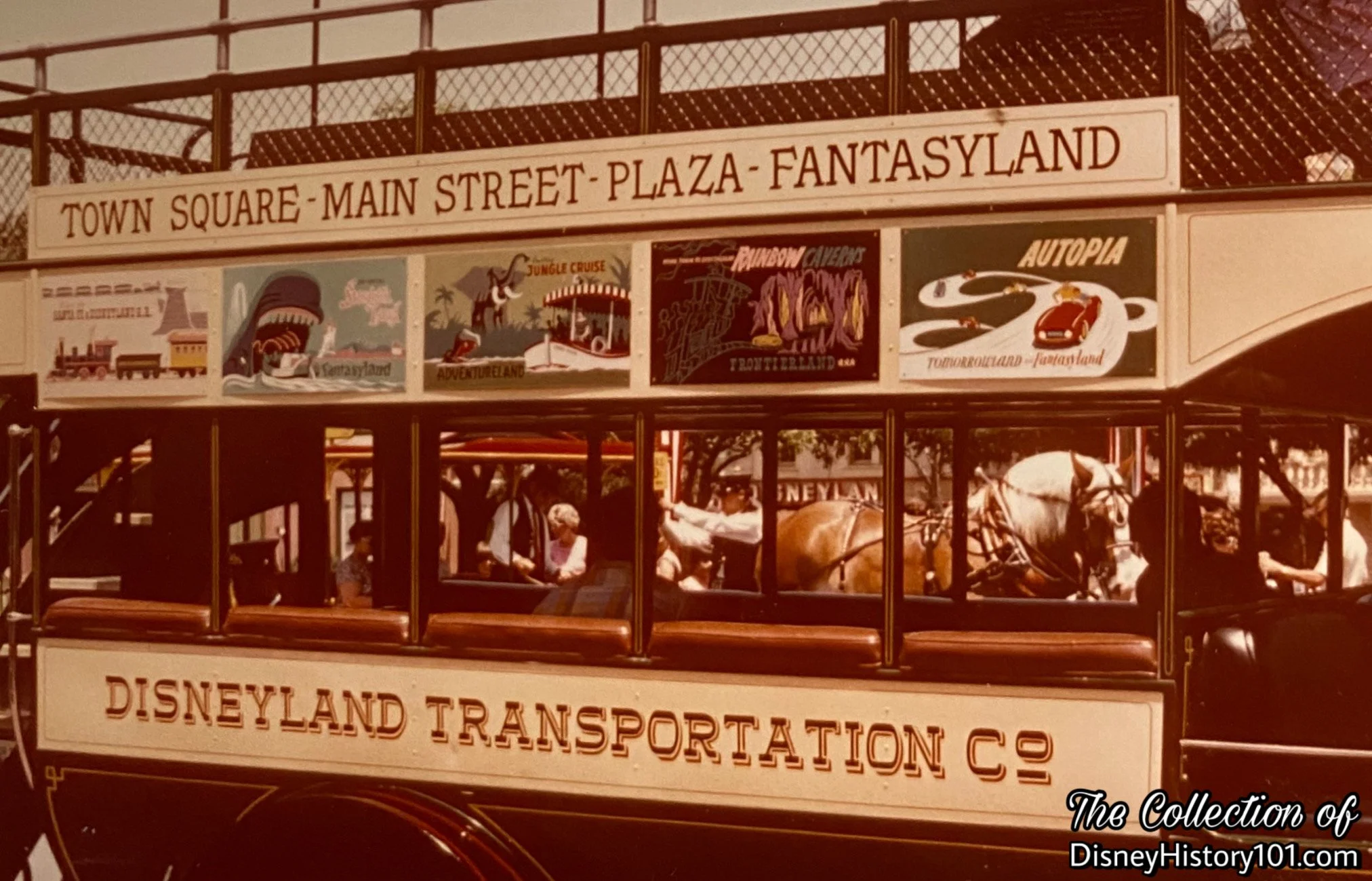
PLAZA (CENTRAL PLAZA) HUB

There is a simple attraction to this part of the park. The Plaza is a circular area in front of Sleeping Beauty Castle providing a gathering place, a central location at the end of Main Street, and access to the lands of the Magic Kingdom.
Walt once acknowledged, “Well, a lot of people come back and just like to sit and listen to the band, see the horses going around.” It seems as if Central Plaza was designed for this sort of attraction! In addition, light snackers found that Popcorn Cretors were stationed in the Central Plaza, and old-fashioned ice cream pushcarts often parked here for guest’s accommodation and refreshment. Guests who were searching for a dining destination at Disneyland, could look no further than three major restaurants aptly placed “on the Plaza.”
This is (and has always been) the “hub” of Disneyland, with its central spokes leading through five cardinal lands - Adventureland, Frontierland, Fantasyland, Tomorrowland, and Main Street U.S.A. Disneyland was so designed that an actual walking distance of one-and-one-quarter (1 1/4) miles takes you through the park. Those central spokes of Disneyland’s (5) realms converge here, at the veritable cross roads - the Central Plaza!
The very idea of a “hub and spoke” layout isn’t new - having been around for at least 200 years in Paris, France.

It’s also worth mentioning that during the 1960s, one major U.S. artery - the U.S. 70 (or, “the hospitality route”) - was once advertised as “the road to Disneyland” because it carried residents of North Carolina, Tennessee, Oklahoma, Arkansas, Texas, New Mexico, Arizona, and California “coast to coast,” all the way to Walt Disney’s Disneyland and Disneyland Hotel! The surrounding Anaheim area developed the nickname “America’s Hub of Happiness” for its convenient, leisurely location at the convergence of two major freeways (the Riverside and Santa Ana Freeways) in addition to major roads. These led to an abundance of Southland attractions and adventures like Knott’s Berry Farm and Ghost Town, the Alligator Farm, the Wax Museum, Marineland, Capistrano Mission, and Newport Dunes.

It’s clear that “cross roads” and “hubs” were marvels of urban planning, controlling (or dividing) crowd traffic volume, and we are not surprised to see them wisely utilized at Disneyland! Step this way please, to the north end of Main Street, as we set foot in the Central Plaza of Disneyland!

Though Walt’s longtime friend and architect Welton Becket would suggest that “the best people to design the Park were his own animators and directors,” there are many original aspects of Disneyland that would be attributed to the designs and work of outside firms, laborers, and individuals. That is why for a time, Walt retained the Pereira and Luckman architectural firm, with recently hired former Walt Disney Studio employee and Art Director Richard Irvine (away from his recent position with Twentieth Century Fox) to act as a liaison. Still, many more Walt Disney“Studio employees were taken out of their old jobs of cartooning and set to work on their boss’ latest endeavor. Architects, engineers, and designers were hired. Bill Martin, an art director from Twentieth Century Fox came in on the early stages of planning and was amazed at Disney’s attention to detail: ‘He went over my plans with a fine toothed comb. I’d drawn sidewalks on the blueprints with square corners and Walt said: ‘Bill, people aren’t soldiers! They don’t turn at sharp angles! Curve the sidewalks! Make the corners round!’” [“Insights” by Steven Hulett ; “Disneyland 25 - Happy Birthday to a Dream” Supplement.]
After Disneyland Incorporated was founded in 1952 (and changed to WED Enterprises, Inc. in 1953), Disneyland development (designs and engineering) really progressed. Richard Irvine’s fellow artists from 20th Century Fox (like Marvin Davis and Bill Martin) came to work for the corporation. Soon, the earliest of plot master-plans - the “Proposed Diagramatic Layout of Disneyland” (Marvin A. Davis’ plot plan), was prepared for WED Enterprises, by September 12, 1953.
Herb Ryman recalled Walt’s recollections of the layout of a famous theme park: “‘You know,’ he said, ‘When I was in Europe, where I've been studying this thing, one of the great problems about amusement parks, any kind of park, is that people get exhausted walking. Now,’ he said, ‘I want to have these radiating spokes from the hub. So that people who are tired, or sick, or old could say, ‘Well, you kids go on ahead, we'll meet you here in forty-five minutes.’” And there again was the secret of Walt's amazing concept of entertainment. He knew that people had to be comfortable.’” —HERB RYMAN, artist. Herb’s concept would depict the Central Plaza area (which was simply labelled “Park”). The drawing had eight “spokes” originating from the “hub”, leading to eight cardinal lands : (1) “Main Street”, (2) “Holiday Land”, (3) Frontier Land”, (4) Recreation Park”, (5) “Fantasy Land”, (6) Lilliputian Land, (7) “Land of Tomorrow”, and (8) “True Life Adventure” Land.

“Marvin Davis’ Plot Plan of Disneyland”
Marvin Davis’ Plot Plan (produced early as September 12, 1953) also featured the “Plaza” with several wide and inviting paths flanked by “greenscaped” landscape areas. These lead in the direction of detailed and un-detailed areas (like the small pocket in front of the “Root Beer Garden,” seen upper left). Over the next two years, developments would reduce the number of timeless realms (and “spokes”) to the five. “Marvin Davis who did something like seventeen different master plans before Walt finally signed off. Nobody had ever built a theme park like Walt was planning. It was a first… the genesis of that kind of park,” according to “Creating the Disney Landscape - An Interview with Bill Evans,” published in The “E” Ticket, Spring 1966.
“Herb Ryman’s Arial Over Disneyland”
At this time, Walt Disney continually required some visual element to show potential Disneyland investors what the realized Park would be. One particular piece was more massed produced than any other (more than 140 times) - the “Aerial View Over Disneyland” drawings, first produced over September 26 & 27, 1953, by the hand of Herb Ryman.
A large Plaza or “Hub” of Main Street can readily be seen in his concept sketches. According to his own words (as recorded in “A Brush with Disney”): “Walt had the wise conception that there was going to be a hub, everything should radiate, as the spokes from a wagon wheel.” In another interview, Ryman recalled Walt’s reasoning: “‘You know,’ he said, ‘When I was in Europe, where I’ve been studying this thing, one of the great problems about amusement parks, any kind of park, is that people get exhausted walking. Now,’ he said, ‘I want to have these radiating spokes from the hub. So that people who are tired, or sick, or old could say, ‘Well, you kids go on ahead, we'll meet you here in forty-five minutes.’ And there again was the secret of Walt's amazing concept of entertainment. He knew that people had to be comfortable.”
And so the spokes of the “crossroads of the world of Disneyland” would branch off into the different realms of Disneyland - the Main Street, Frontierland, Holidayland (a sort of recreational park), Fantasyland (a huge complex, entered by way of a castle), and Adventureland (with its exotic jungle river, and entrance through a solarium off the Plaza).
A few years prior (in 1952), Jack and Bill Evans owned a nursery and catered to Hollywood clients like Walt Disney. In fact the duo had previously helped landscape Walt’s Carolwood Drive property. Bill once remembered: “‘We started on Disneyland in 1954, just a year before it opened… We got an aerial photograph, and a transparency of the master plan, showing Main Street and the hub, and the Town Square and everything. We overlayed the aerial with the orange trees, with the master plan in the same scale. We identified the trees that were not in the middle of the street,… and decided to try to work around some of them… We also saved a dozen trees around the hub,” according to “Creating the Disney Landscape - An Interview with Bill Evans,” published in The “E” Ticket, Spring 1966. A little later (in 1955) Herb continued to make suggestions toward beautifying the landscaped Hub, even creating at least one gouache and chalk drawing “suggestion for lighting of the Hub” featuring small lights in the trees of the Hub and illumination of the Castle.

Some of these viable project Concepts (as seen above), were supported by a well-developed business case and built expectation.
Female architect and landscaper Ruth Shellhorn was brought in to help with Disneyland planning related to pedestrian (or, guest) circulation (during March of 1955), but she also subsequently ended up making contributions to the surveying, grading, and engineering of the Park. Ruth was most instrumental in the paths as well as the disciplined, Victorian, formal “planting schemes” of the Central Plaza [according to “Ruth Shellhorn” by Kelly Comras]. Her schemes for Disneyland (including the Hub) were then effected by the 15-20 person staff of Bill & Jack Evans’ Evans and Reeves Landscaping, Inc. of Los Angeles - all within 11 months.
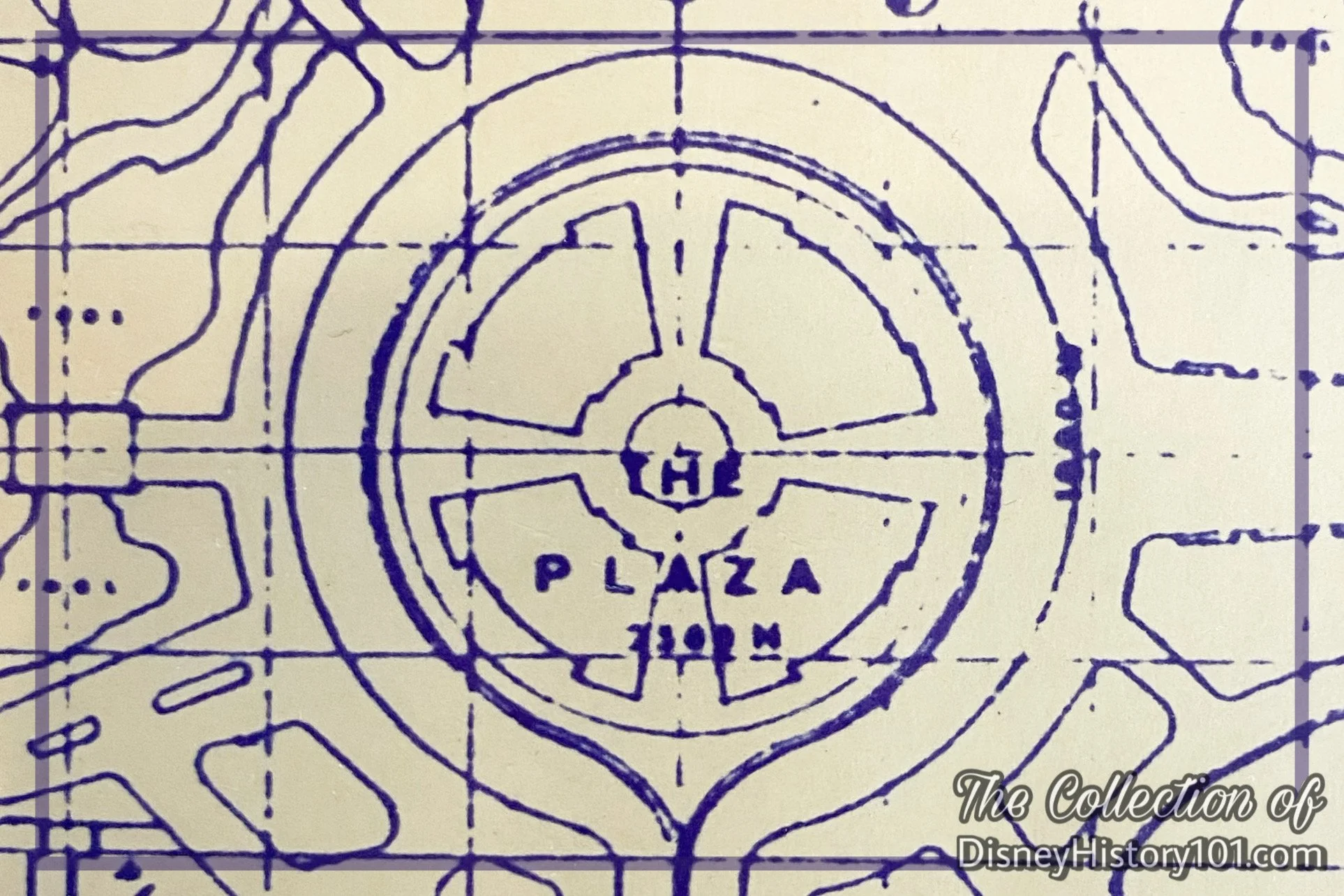
Everywhere you looked around Disneyland, there was attention to people comfort and crowd flow. The layout of Disneyland was likely impressive to the members of the “National Associating of Amusement Parks, Pools, and Beaches” from September 18-20 (Tuesday through Thursday), of 1956. Owning to this innovative design, “one of the biggest tributes to WED was given by James W. Rouse, developer of the new town of Columbia in Maryland, who opened the 1963 Urban Design Conference at Harvard University with these words, ‘Disneyland is the greatest piece of urban design in the United States today. I find more to learn in the standards that have been achieved in the development of Disneyland than in any other single piece of development in the country’”, according to Disney News (published Winter 1967-1968).
This design was so innovative, that it was utilized in EPCOT Center’s original designs, more than a decade-and-a-half later, and even improved upon and utilized to make the utilities of EPCOT accessible without interruption of audience traffic.
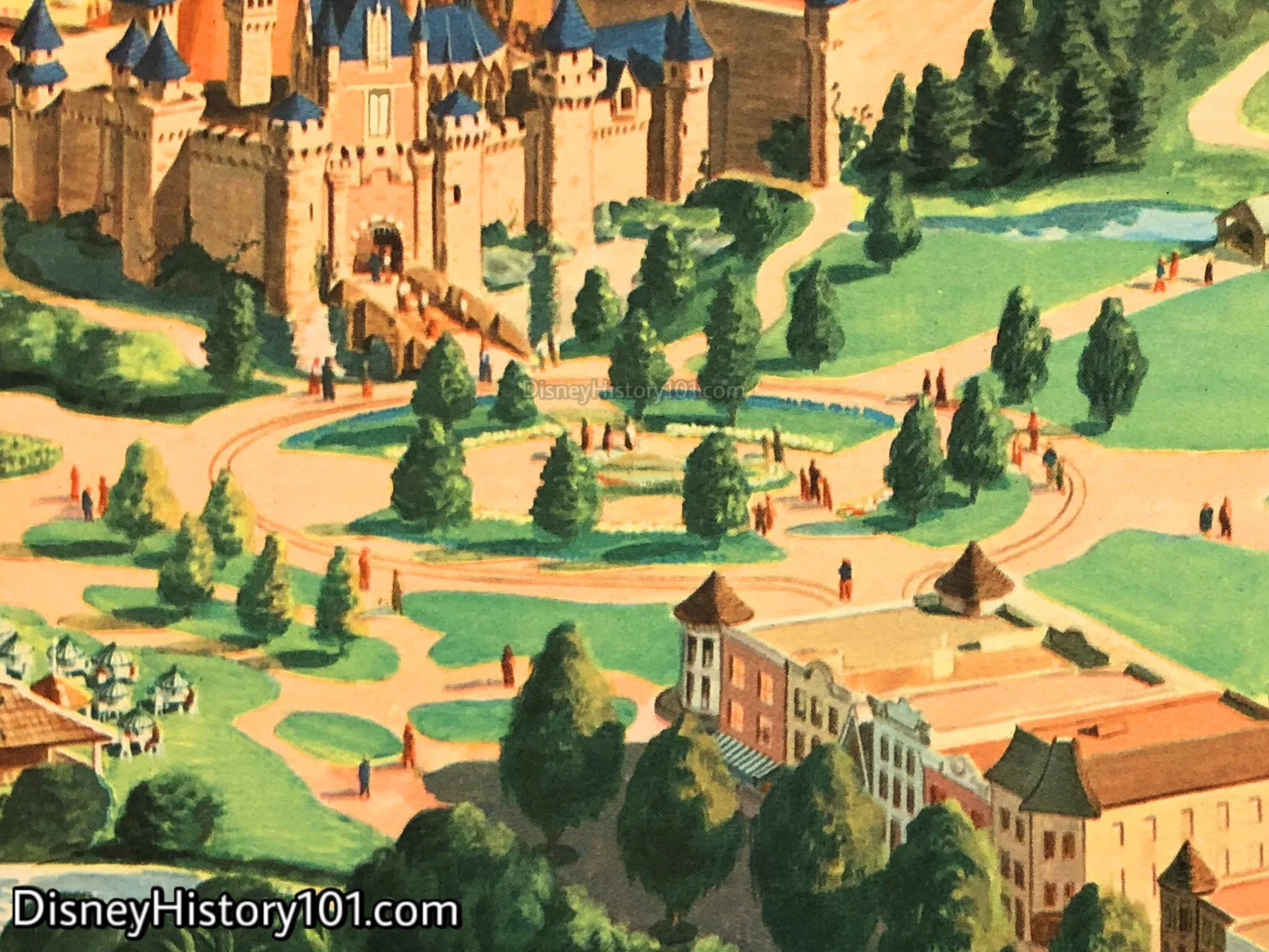
This illustration (produced for an early licensed Disneyland product), granted a glimpse of the “Hub (Center of Disneyland)”! This early artwork goes so far as to depict shade trees, floral beds, and lawns in the Plaza at the end of Main Street U.S.A. The following two excerpts (from a c. 1954 Dell Giant Comic) briefly depict the Central Plaza twice before Disneyland’s big Opening Day, with Mickey Mouse (and the gang) scurrying off into the four realms!


As of June 2, 1955, C.V. Wood Jr. sent an Inter-Office Memorandum to Walt Disney regarding the best estimates that could be obtained at the time regarding the completion status of individual sections of the Park and Opening Day. C.V. wrote: “Plaza and Hub Landscaping: If all goes according to plan, I think we can be fairly certain that both will be green for opening.”

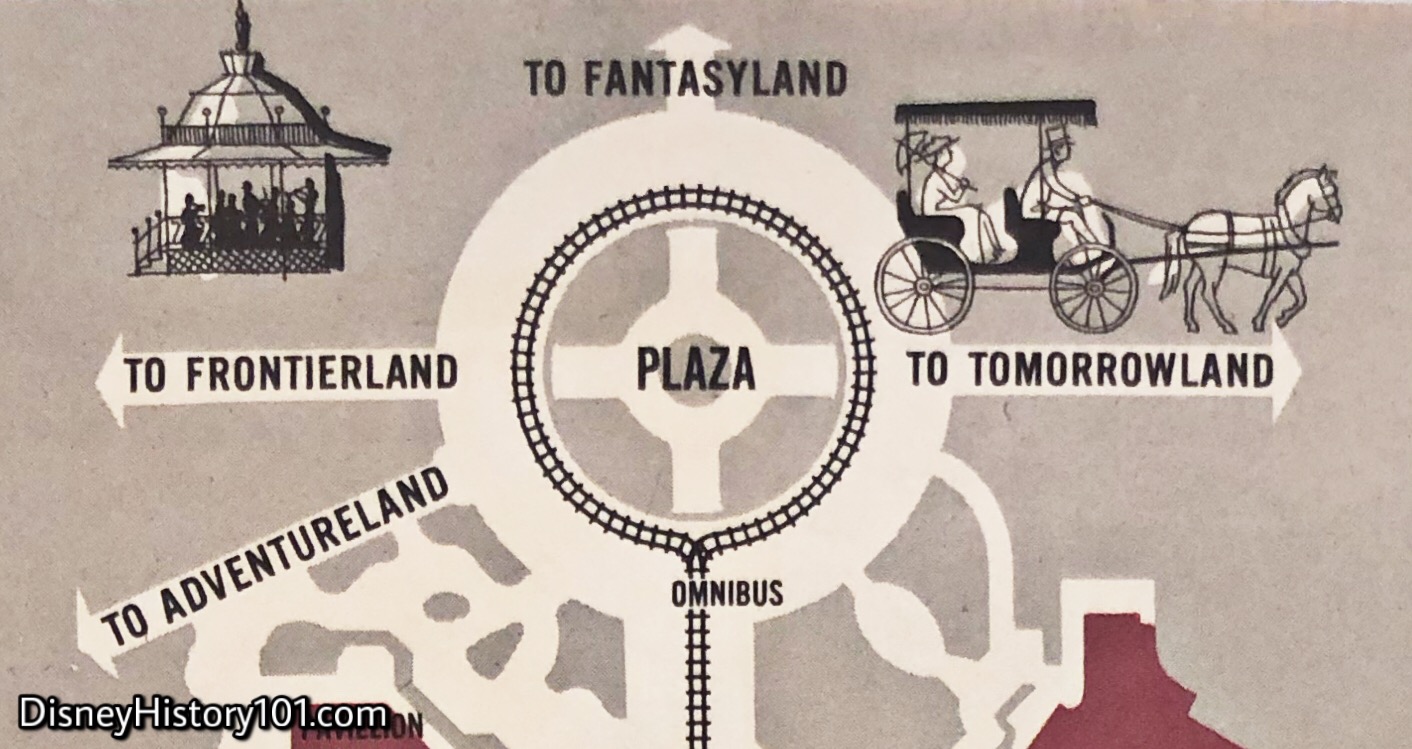
“Where One Magical Land Leads To Another!”
Main Street, U.S.A. was “America at the turn of the century, at the crossroads of an era.“ Soon maps depicted the spokes (or roads) branching off toward Disneyland’s true-life five cardinal lands - Main Street U.S.A., Adventureland, Frontierland, Fantasyland, and Tomorrowland! You’ll also notice that the entrance to Adventureland has moved to the western side of the Plaza (since Disneyland’s conceptual “brownline” drawings were made). Holidayland isn’t gone, but its entrance is accessible from another area in Disneyland. In its place, Magnolia Park will temporarily hold the Bandstand, where Disneyland Marching Band concerts (including the annual Christmas Bowl) are held. Still, the Plaza has always been reckoned as a compass rose (of sorts), leading to all manner of adventures at Disneyland!


“This cool and shady plaza is the heart and hub of Disneyland. From here, you can enter all the different realms,” according to the narrator of “An Adventure in the Magic Kingdom” episode of Walt Disney’s “Disneyland” television series (airing in 1958)! ”A Complete Guide To Disneyland” (published 1957) divulged, “Disneyland is so designed that an actual walking distance of 1 1/4 miles takes you through the Park.” This short walk through Disneyland is easily navigable (by even first time guests) due to this one major design element, which we will now explore. We’ll take a stroll to the end of Main Street U.S.A., during an early morning in 1955. The popcorn creators don’t even appear to be open yet. Usually we find a lot of moisture on the ground, because Main Street U.S.A.’s buildings and streets were hosed down before guests arrive. However, this appears to be a true-life damp morning in Disneyland. The smell of damp soil and precipitation-soaked oak bark lingers fresh in the air as we near the Plaza.

“In the Plaza Hub, visitors sat beneath the shade of seventy-five-year-old olive trees and paused to admire the object of their journey,” according to “Ruth Shellhorn” by Kelly Comras. These trees were carefully placed in their positions under the direction of Landscape Architect Ruth Shellhorn. Subsequent designs of the “Terrace Dining” area on “the Hub” created by artists like Herb Ryman featured details of “geraniums” and “tall slender trees with high foliage” granting an “unobstructed view of castle.” During the construction of Disneyland, the trees were likely personally selected by Jack Evans.
That very year, Herb Ryman would soon create suggestions for lighting for the trees of the hub during the Christmas season of 1955, in gouache and chalk on colored board.


Now, we’ll turn our attention to particularly sunny afternoon in the Plaza, when those shady olives may somewhat fulfill one of their main purposes - to shade guests from the heat.

Main Street trees were selected to blend with the theme of a typical turn-of-the-century Main Street, as is the case with other areas and attractions.
As for those massive trees in the Plaza, Disneyland World of Flowers (published 1965) shares : “Disneyland's Plaza at the end of Main Street is a formal little park from which radiates paths to Tomorrowland, Fantasyland, Frontierland and Adventureland. The principal trees here are gnarled olives, about 75 years old, and representative of a vanishing California industry. Olives were among the first trees in cultivation, dating back to early Mesopotamia. They came to California via South America and Mexico. The Franciscan monks brought seed and planted groves around the missions; later commercial orchards covered between thirty and forty thousand acres in California. The olive industry began to decline many years ago, however, and the huge groves have fallen before residential land developers.
Unlike many other California crop trees, the olive can be easily transplanted at any age; one group of trees has been moved in Disneyland no less than six times. We pick them up with a skip-loader, hose off the roots to remove excess soil, and relocate them in a different area-it's that simple.“

“Thousands upon thousands of olives are now cast in the role of ornamental shade trees, and Disneyland has some particularly fine examples. The purpose of commercial growers, when the industry was thriving, was obviously to produce a large crop of olives - the bigger the better. In landscape use, productivity has become a liability, particularly if the trees shade a patio or path ; the ripe black fruit is slippery under foot and leaves an unsightly stain on the pavement. The raw material for several tons of pickled olives could become a real problem at Disneyland.” If left unchecked, the olives would become problematic to clean up and disastrous to the clothing of guests.
“We use a special spray on the olive flowers to prevent production of fruit. As a result, though we have many large trees in the Park, it would be hard to find an Olive in the ground in harvest season. Olive trees are evergreen, affording year-round shade and enjoy normal garden culture. Their graceful overall contour, and pleasing open structure is maintained by yearly pruning. In the Plaza you will see some of our finest olives interspersed with fern pines, India laurels and evergreen pears from China.”

As we look at these massive trees we are reminded of the words of Walt Disney (published in Wisdom magazine, December, 1959) : “The way I see it, my park, Disneyland, will never be finished. It’s something I can keep developing and adding to. A movie is different. Once I’ve wrapped it up and turned it over to Technicolor to be processed, I’m through with it. As far as I’m concerned, the picture I’ve finished a few weeks ago is done. There may be things in it that I don’t like, but if there are I can’t do anything about them. I’ve always wanted to work on something alive, something that keeps growing. I’ve got that in Disneyland. Even the trees will grow and be more beautiful every year.”

You may notice that the lampposts in the Central Plaza look different from those that run down Main Street U.S.A. That’s because the lamps on Main Street were purchased in Baltimore, Boston and Philadelphia, while the lamps in the Plaza come distinctly from Chicago. All but the Chicago lamps, were once lit by a lamp lighter. According to “Did You Know” documents (prepared c.1990), “The type of gas lighting used at the turn of the century would be unsafe to use today so, the gas lamps have been converted to electricity.”
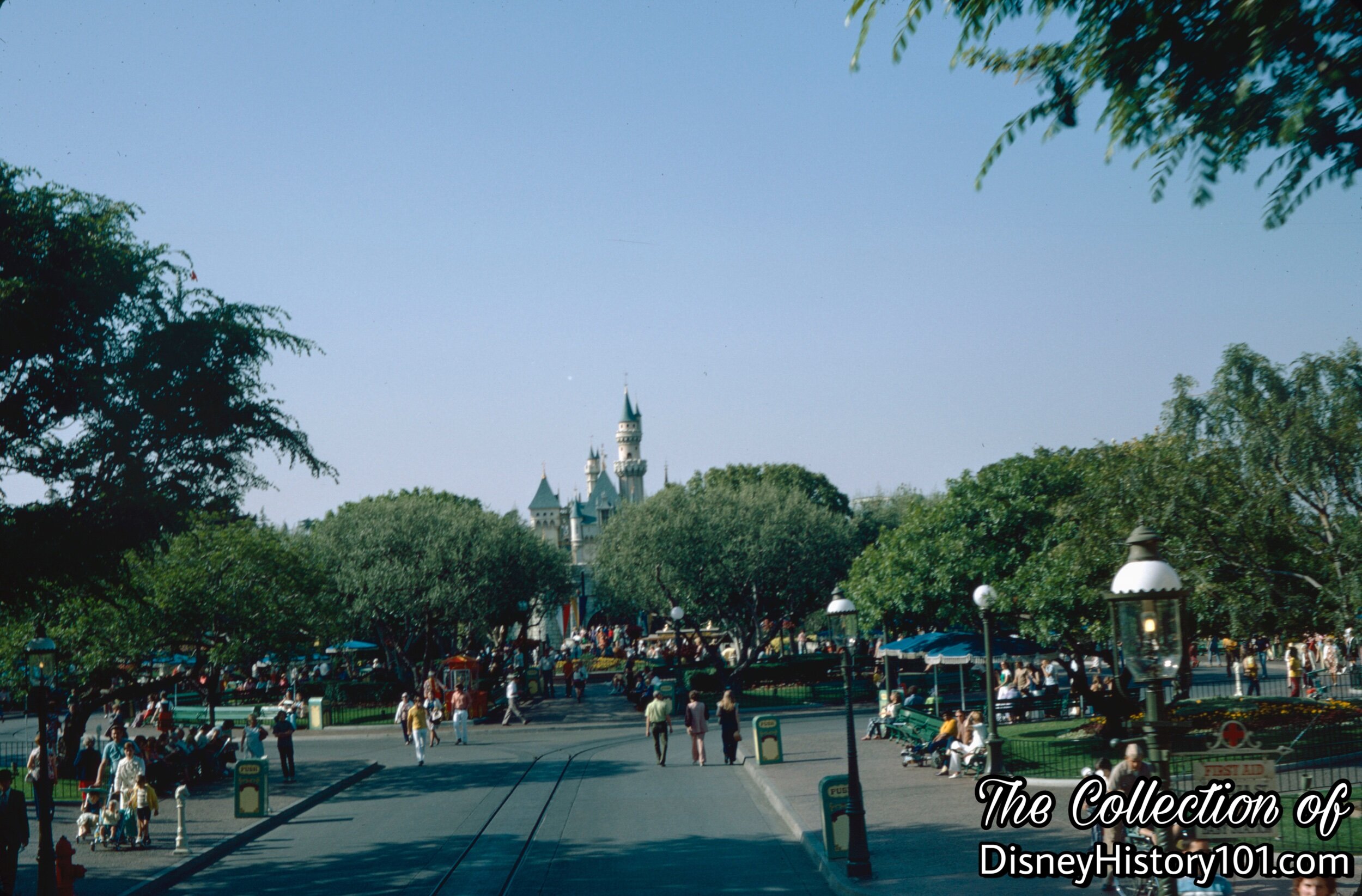
The lampposts running down Main Street U.S.A. (all the way to the Central Plaza Hub) come from Baltimore, Maryland and were purchased at 3 cents per pound.


Beyond the magnolia, olive, pine, oak, and rubber trees of Disneyland Plaza, Main Street Horse-Drawn Cars made regular trips from Town Square, down Main Street before arriving at Disneyland Plaza.


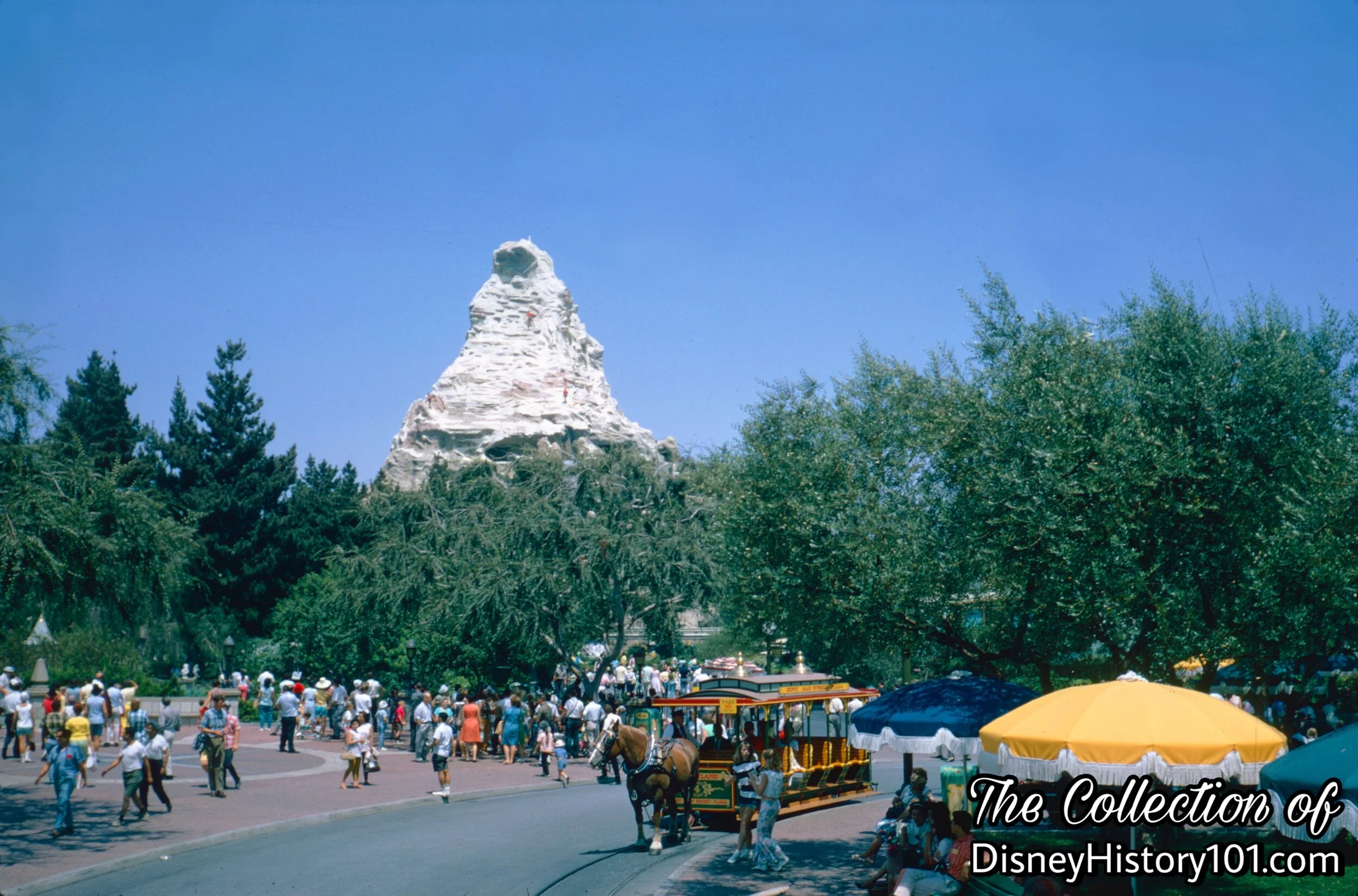
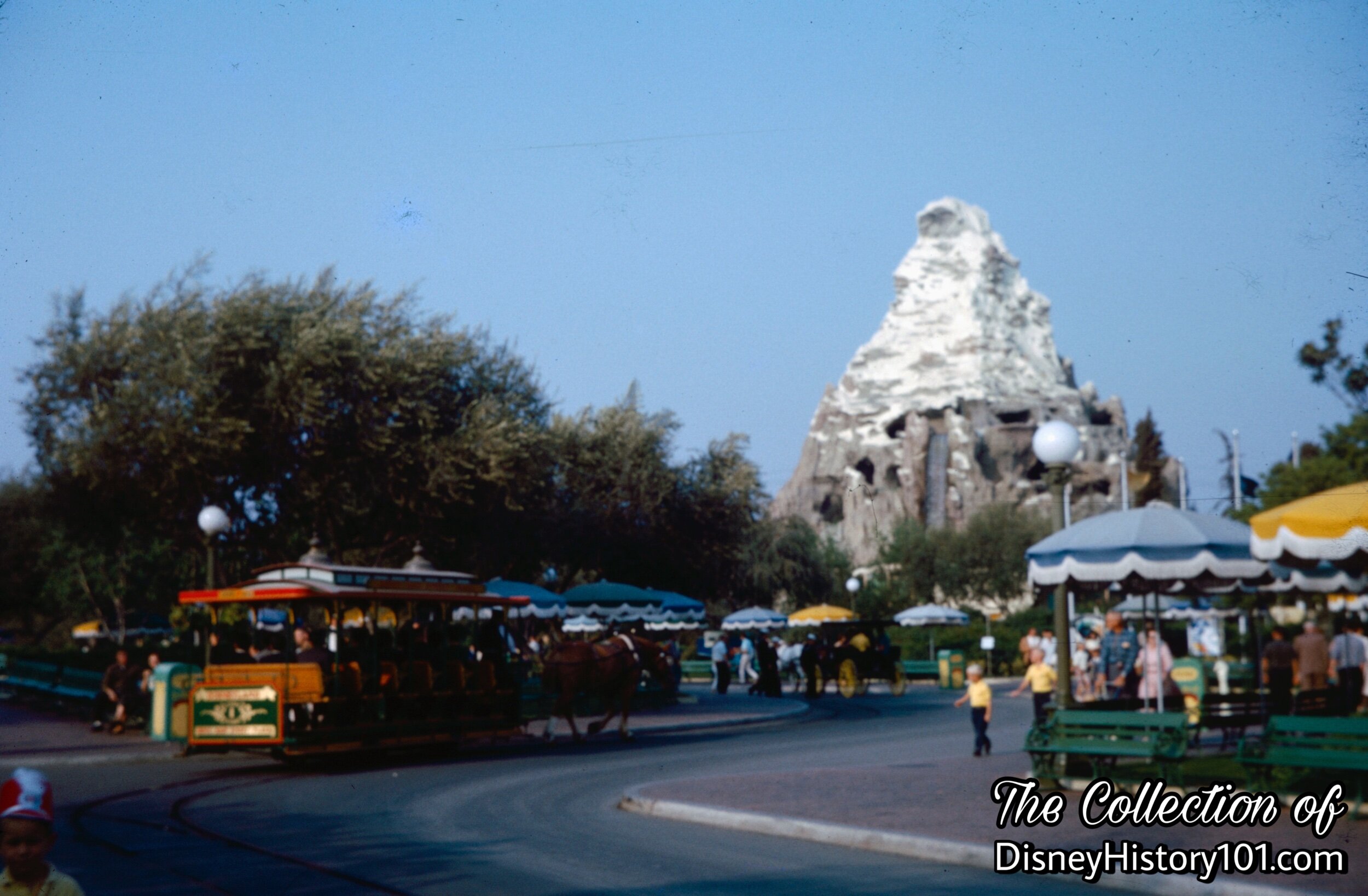


Speaking of horses, Horse Head Stanchion Hitching Posts line parts of Main Street to tether the reins of Horses, though we don’t recollect ever seeing them utilized for any of the equine Disneylanders and Cast Members.
By September of 1965 and then 1970, drawings of Horse Head Stanchion Mounts were created by T.M. Marsden.


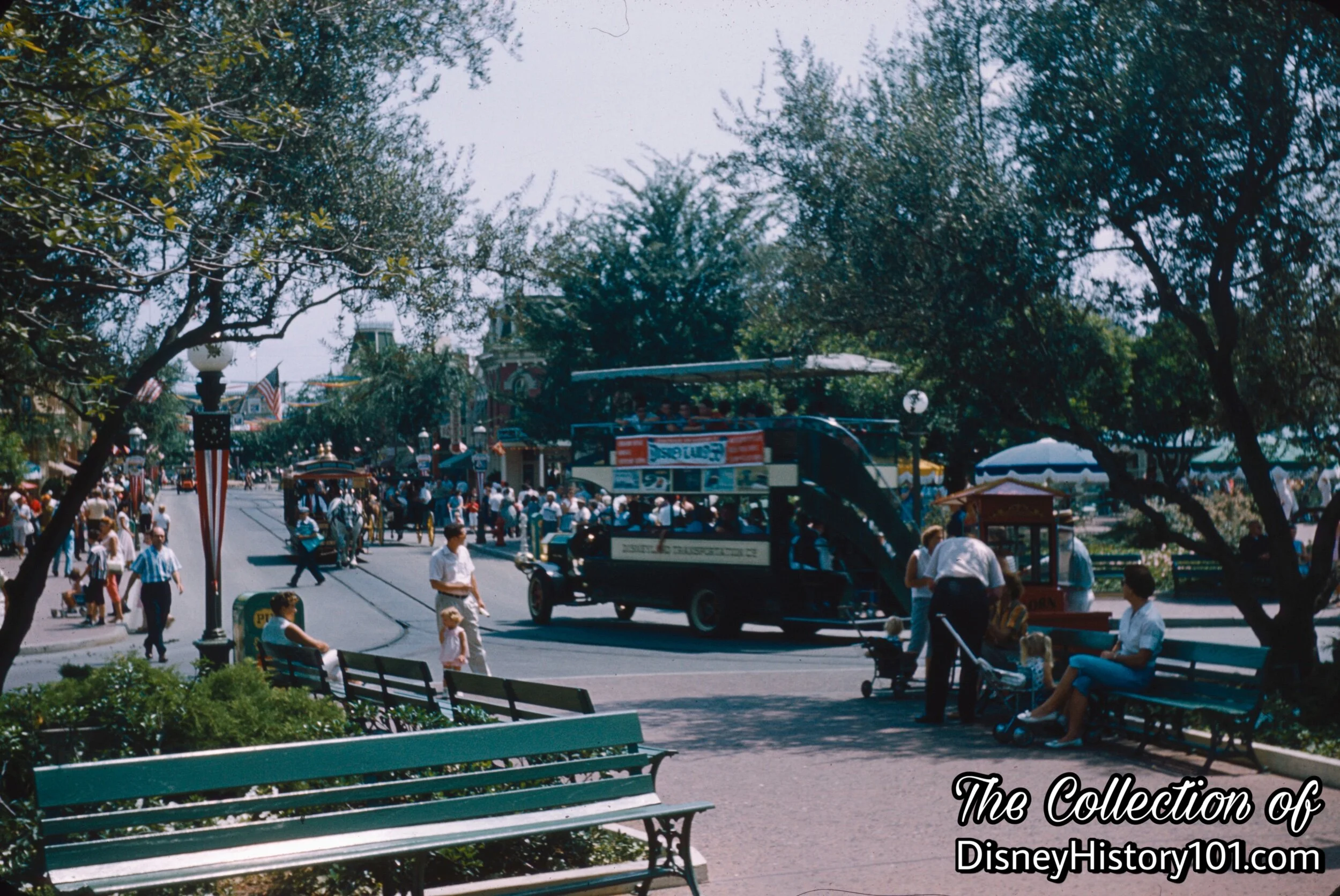


As newer, spectacular adventures would rise above Disneyland’s skyline, some of them could be previewed from Disneyland’s Central Plaza! In fact Matterhorn Climbers could often be seen from benches in this comfortable Park setting.


Now, there were many things that one could enjoy at Central Plaza, but most of all, - the view! Why, for the Opening Day telecast, one 60-foot-high “tower was rigged in the hub looking down Main Street.” The cameramen would also be afforded a panoramic view of Disneyland’s realms (with its respective visual “wienie”) from that awesome vantage!
What sort of entertainment and attractions were in sight of the Plaza? Since Disneyland’s first year, Popcorn Cretors were stationed here (you can read all about their story HERE), and striped old-fashioned ice cream pushcarts often parked here for guest’s accommodation and refreshment. For those interested in “dining at Disneyland”, there were (and continue to be) two restaurants located just “off the Plaza” - the Red Wagon Inn and the Plaza Pavilion. In the beginning, these were described: “Two distinctive types of restaurant facilities are located here to serve your needs-a buffeteria, a completely new conception in high quality, low cost food service and a re-creation of early century elegance of the Delmonico-style restaurant, where complete meals are served at moderate cost.” Today, these restaurants are known as the Jolly Holiday and the Plaza Inn! In addition, the Ice Cream Cart, the Churro Cart, and the Hot Dog Wagon (since their institution) have also been favorite places for guests to find a snack for several decades.
You may recall visiting Walt Disney’s Disneyland, thinking of a friend, and wanting to convey that you wish they were here with you! To this end, the Central Plaza also had three Public Mail Boxes (the contents of which were collected by Disneylanders and delivered to the local designated U.S. Post Office in Anaheim). These were placed for Guest’s convenience (in case they would like to send a Souvenir Postcard to a friend or family member). One was located near each restaurant (on both the east and west sides of the Central Plaza), and one south of Central Plaza.
While guests rested and refreshed themselves (and perhaps wrote a message to a friend on the back of a postcard), the Central Plaza often offered entertainment. The Disneyland Band’s route often brought the sound of the marching band right through the middle of the Plaza, during the construction of Plaza Gardens and Magnolia Park. Even after the Opening Day telecast, Disneyland Central Plaza Hub was still the site of ceremonies, radio broadcasts (like KFB Radio Show Djs during 1960’s Grad Nite at Disneyland), and even utilized as a film location for a motion picture.


The final product looked very similar to Bruce Bushman's designs for the "Main Street Ice Cream Cart" with its "stock wagon side wheels". The Ice Cream Carts were operated by UPT Concessions, offering popcorn, peanuts, and Ice Cream Bars during peak seasons.


If you look behind these guests, you’ll see quite a few Hudson automobiles (like the 1955 Hudson Hornet, furnished by Hudson Dealers of Southern California). These were on display in various parts of Disneyland during this brief era.

By September 28, 1958, some $71,934 of land improvements had been made to the Hub. While improvements were added to Carnation Plaza Gardens, the Disneyland Band performs a concert in the park, right atop their band stand (which has been placed over the floral bed) in the middle of Central Plaza!


Since the beginning, Atmosphere Entertainment complimenting the theme of areas was staged to entertain Disneyland Guests on an immediate and personal level. Organ Grinders and Monkeys were still commonplace at some amusement centers (like neighboring Knott’s Berry Farm), as well as parks and gardens during the 1950’s. In addition to the Disneyland Band (and breakaway sets), the sounds of the Organ Grinder (with his Molinari & Sons Music Box) and his Monkey friend entertained guests of all ages (from about 1956 to 1959) in various locations around the Central Plaza. One of my friends recalled meeting Josephine on his first trip to Disneyland, when she leapt into his stroller. “55er” Marion Schawacha also recalled: “There used to be an organ grinder and he had a monkey named Josie. All the little kids would crowd around and throw him pennies and Josie would jump around picking them up.”
The organ grinder yielded much happiness but little revenue for Disneyland Inc. - $49 for the fiscal year ending September 29, 1957. Eventually, the monkeys did “go home,” and when the “Organ Grinder and Monkey” finally disappeared from Disneyland, the sight of non-human primates at Disneyland was a rare occurrence indeed - limited to a few circus-themed events, some seasonal parades, and (of course) the occasional chimpanzee seaman aboard the Columbia.
The Organ Grinder and Monkey can still be seen at Disneyland today, in a framed print on the wall of Carnation Cafe!


The Plaza was host to occasional special events. In 1962, a “squirrel cage” (a round ticket drawing box with a handle on it) was set up on the Plaza Platform for an event.
One comedic sequence written and shot for “40 Pounds of Trouble” starring Tony Curtis featured characters meant to portray Disneyland Security Hosts. These actors (dressed in Constable Uniforms similar to the silent film-era Keystone Kops) chased Tony Curtis’ character around Disneyland Plaza.
In addition to the scene in this film, there were several commercials which made use of the Central Plaza stage. According to Ron Yeakley (Disneyland Advertising Department Manager), a number of toys (as well as other props) and production equipment were assembled in the Central Plaza Hub (on August 3, 1966, from 7 a.m. to 10 a.m.), for a “Toys For Tots” commercial shoot involving Walt Disney and possibly actress Greer Garson.

Central Plaza was the stage for all sorts of unusual exhibits at Disneyland. Back in 1956, Around the World in 80 Days won the Academy Award for Best Picture, and the balloon was fondly remembered by audiences. In 1967, one particular Old Fashioned Easter event even attracted the hot air ballon that was featured in “Around the World in 80 Days” !

Town Square was utilized for a number of special events and ceremonies, however it also made history when (on August 6, 1970) an unsanctioned anti-war protest was organized by a radical antiestablishment group known as the Youth International Party (or, “Yippies”). Walt had always intended that his Park keep out the sights and sounds of the rest of the world, with the cares and troubles of the daily world dissolving the instant guests entered Disneyland. Disneyland Security Hosts were previously instructed: “Any actions which interfere with the guest's enjoyment of Disneyland will be dealt with strictly.“ On August 6, 1970, undesirable and problematic people attempted to take advantage of the magic atmosphere. Notice the “long haired youths forming a human [chain]…to demonstrate in the Town Square at Disneyland yesterday, shortly before officials closed the Park.” Sadly, the melee resulted in 23 arrests, and these unpleasant, unauthorized demonstrations in Town Square and other areas of the park forced Disneyland to unexpectedly close for the day.

For a sidelight: Now, Disneyland was not against holding hands in the Park, for a cause. More than a decade later, a Park-sanctioned event “Hands Across America” (a project of the USA for Africa Foundation) would appropriately sponsor 1,320 Disneyland Cast Members to join hands with a total of six million Americans standing in a line from coast to coast on Memorial Day Weekend (Sunday, May 25th, 1986). The proceeds would go toward “helping the hungry and homeless in the U.S. through emergency relief, existing programs, and long-term development projects” related to the “USA For Africa Foundation,” according to Disneyland LINE (Vol.18, No.4 ; April 3, 1986).


In Disneyland Central Plaza, the dazzling “Dream Machine” gave away millions of dollars in prizes. The giveaway was in celebration of the biggest party in Disneyland’s 35-year history!

In the present, there is still a red wagon in the Plaza Hub of Disneyland. In fact this particular “Little Red Wagon” is one of the veritable “weenies” at the north end of Main Street. If you don’t believe me, then try one of their incredible Hand Dipped Corn Dogs!


In a Pre-Opening Day interview with Bob Thomas (of Associated Press) Walt once divulged “one of the biggest attractions will be the people themselves. It will be a show just to watch their faces.” There was even a portion of the short film “Disneyland - The Park” (a Disneyland anthology television series short film, originally aired in 1957), which was dedicated to the people of those so-called pedestrian arteries (including Characters, parades, marching bands, and other entertainers) to be found in the Central Plaza Hub. If you agree with Walt, you may also feel that Disneyland Central Plaza is still one of the best locations to watch Very Important People - both Guests in the Audience and Disneyland Cast Members (especially while enjoying a box of Disneyland Popcorn)! Now, I invite you to relax your feet for a moment, and join me as we take it in the “everyday magic.”


A couple of young guests don their Zorro masks and hats for a memorable photograph in Disneyland Plaza during Disneyland’s Zorro Days! Zorro Days were first held at Disneyland, during April (and then November) of 1958.
By 1969, Disneyland had about 52,000 square feet of lawn, which was replaced in one to three years depending on how the Guests treated it. This was in addition to the grasses which covered the berm and other large areas.


The families that pass remind me much of Walt’s initial musings over “something built where the parents and the children could have fun together,” as he himself sat on a bench during “Daddy’s Day” in Griffith Park. As Walt also said: “You can't live on things made for children-or for critics. I've never made films for either of them. Disneyland is not just for children. I don't play down.”


The Disneyland Janitorial Staff dressed like the “white wing” (with the occasional receptacle and shovel in hand) kept the Plaza Hub clean, picking up refuse, emptying trash bins, and even performing service with the help of the “Honey Wagon.” Above, is one of the most photographed characters - Trinidad and an unidentified Cast Member.

By 1969, Disneyland Building and Grounds Department would regularly wash 700 benches (including those in the Plaza). Every morning, chipped paint was touched up, the dew was wiped off the benches, and other minute details were looked after before the day's first guests come through the turnstiles.



Parade units march right down Monorail Road toward the Plaza Hub.


With our eyes, we take snapshots of the Guest experience in action. We look on as Cast Members observe the Four Keys to Guest Service.
“Adults Are Only Kids Grown Up, Anyway”
Disneyland opened as a fresh, new concept in family entertainment. For Grandparents and Grandchildren - for Mom and Dad, Disneyland was designed for the enjoyment of every individual and family member. Walt Disney wisely spoke the words of this subheading: “Adults Are Only Kids Grown Up, Anyway”. Proof of this is a quote published in “The Disneyland Story”: “In the winter time you can go out there during the week and you won't see any children. You'll see the oldsters out there riding all these rides and having fun.” One of the best places to watch “oldsters” (or, “young at heart”) having fun is the Central Plaza.

Walt’s wishes were that Disneyland look as if it were in perpetual Springtime! A fantastic example of this philosophy in motion continues to lay at the center of Disneyland Central Plaza, where a floral centerpiece offers a colorful backdrop for photographs over the decades. When Disneyland was being developed, Ruth Shellhorn was responsible for master planning the tree and plant placement around the lands of the Park (including here in the “hub”).

Ten years later, Vacationland magazine (published for Winter/Spring of 1965) described the delightful free attraction of “year-round blooming flowers.” Disneyland World of Flowers comments on the seasonal arrangements within the centerpiece of the Central Plaza Hub : “The Plaza also delights our guests with showy flower beds of seasonal color. Here we endeavor to maintain a continuous floral display, and depending upon the season you may find Iceland poppies, begonias, zinnias, pansies, petunias, or poinsettias in bloom.” While Disneyland is always changing, some of Ruth’s original selections guided by the Disney tradition of “perpetual springtime” have continued to endure for decades.

The Plaza’s floral centerpiece as well as nearby Sleeping Beauty Castle created a dynamic backdrop for photographs (even when there were few angiosperm in bloom within the flower beds).




It was also during the 1960’s, that the Central Plaza floral bed was given a higher bench-like berm.


During the late 1950s or early 1960s, “a recent innovation, an idea imported from British Columbia, is the Hanging Baskets, displayed from the light post at Disneyland’s Central Plaza. Annual and perennial flowering plants such as pansies, ageratum, and lobelia (Winter) and begonias, petunias and succulents (Summer) bloom in the baskets,” according to Vacationland, (Winter 1961-1962). The idea of utilizing these accenting baskets has endured on Main Street, in Town Square, and around Central Plaza to the present! Notice them hanging around a few of the Vintage views below.
The next time you visit Disneyland, stop and notice the Hanging Baskets’ colorful arrangements of Chrysanthemums, Petunias, and edging Lobelia!


According to “Walt Disney Disneyland World of Flowers” by Morgan Evans, page 18: “During the Christmas season, the Plaza glows with especially grown, short-stemmed poinsettias.”


When did the Plaza ever have a water fountain for a centerpiece? The answer is, “Never.” But, this 1960s map excerpt gives the idea that a fountain may have still been part of the grand landscaping plans for a “future attraction” during that era.

Perhaps the Plaza fountain in Sam McKim’s c.1960 map was not creative liberty. Two years earlier (by September 28, 1958), Disneyland Inc. job number 4062-050 was opened for what was described as a “Hub Fountain,” with $2,602 currently allocated toward the project. Four years later, the Original Map Art from “Walt Disney’s Guide to Disneyland” (published 1962; above) also featured a fountain in the Central Plaza.

It seems that the idea of some grand non-floral centerpiece (like a fountain) was done away with (at least on Fun Maps) during the late 1960’s and early 1970’s. In the years that followed, Disneyland Operations and Walt Disney Imagineering had many ideas for a Plaza centerpiece, and one of the most iconic was to come.

Over the years, new flowering plants and trees have been added to enhance this part of the Disneyland show (like the Pink Trumpet Tree, or Pau 'D Arco pictured above). In 1986 (concurrent with the contributions of Disneyland Landscape Superintendent Ken Inouye), “Disney News” (published spring of 1986) described the flora of the paradisiac Central Plaza Hub in the following way:
“Seventy-five year-old California olive trees spread graceful branches amongst neighboring fern pines, India laurels and evergreen pear trees from China. Only yards away, carefully pruned Siberian elms and a few Brazilian pepper trees cast their welcome shade from the noonday sun. While beneath them, a bed of red begonias ringed by sweet alyssum and golden feather completes the scene with a dazzling splash of color. The above description only sounds like a horticulturist's dream spot in the midst of some lush arboretum or botanical garden. In actuality, it is a landscaping account of the Main Street Plaza in Disneyland, a place where spring is a special event for ‘things that go bloom’.”

Around 1987 to 1988, and unrepeated site occurred when a ferris wheel was positioned in the center of the Plaza for Disneyland State Fair.


“The Partners Statue”
Today, it may seem natural to see Walt brought to life through “Walt Disney - A Magical Life”. However, was it Walt’s intention to be the subject of a monument, especially in his own Magic Kingdom?
First of all, Walt did not want monuments around Disneyland and this is emphasized by a later account recorded by one of his Imagineers, within “The Spirit of Disneyland”. In a section titled “No Monuments,” where we read: “Walt rejected a design for a building with the comment… ‘I think the fellow is attempting a monument to himself rather than designing something that is for people.’ He would allow no monuments in Disneyland.”
Did Walt ever desire a monument to himself anywhere - especially inside Disneyland? Herb Ryman recalled : “Back in 1955, I had been commissioned to do a mural at Forest Lawn… Walt wanted to see that mural and the Great Hall at Forest Lawn. As we were driving over, we were talking about death and cemeteries and such things. Somebody said, ‘I don’t like Forest Lawn. I think it’s a commercial cemetery.’ Walt said, ‘Well, now, don’t say that. I used to bring my father and mother over here. I’d let them off on a Sunday and they’d walk around inside and then I’d come back and pick them up. I remember how much it meant to them. It means a lot to a lot of people.’ Then somebody said a thing that I was very shocked to hear, ‘Walt, what’s going to happen to you when you die?’ I thought, ‘Boy, what a question.’ Walt was sitting next to me. He took both of his hands and BANG he hit the back of my front seat. He said, ‘Well, for one thing, when I go I don’t want anything left around. Now this means monuments.’” [Working With Walt - Interviews With Disney Artists” by Don Peri]
This does not mean that artwork of Walt was never created within his lifetime. In fact, the first bust of Walt Disney was realized in clay, by Blaine Gibson, during the 60's, while Walt was still alive. Blaine was unhappy with the foundry work and it was nearly destroyed.
“I had sculpted this earlier bust of Walt a long time ago. It was done while he was still alive, and I was never satisfied with it. In fact, I was in the process of destroying this first head when they asked me to do another bust. I intended to discard the bronze that I gave to Walt, and replace it at cost, but Retlaw had it and they never agreed to destroy it. This is the clay original and you can photograph it. I had started to break it up but I couldn't bring myself to put a hammer to it. Dick Irvine talked me into doing it in 1962. I was working overnight, I was tired and I felt that it didn't do Walt justice. Also, the foundry work wasn't very good and back then I couldn't control their work like I can now. I do think this first one looks like Walt. When he first saw it he said, ‘What am I gonna do with it?’ and then they kept it over at WED.”

Now, after Walt’s passing on December 15, 1966, there was much talk about how to honor the man who created such a rich show business legacy, and brought so much joy to the people of the world! Artists around the world made tributes to the memory of Walt (like the c.1967 bust pictured above).
According to Disney News (published Winter 1967-1968), the first honor came when “In an announcement on July 15, 1967, Governor Reagan declared July 17 as Walt Disney Appreciation Day and then asked the state legislature to make the observance an annual event.” The second honor…[was] in the form of a bill, which authorized “the President of the United States to present a gold medal to Mrs. Walt Disney in recognition of her husband’s services to the nation…unanimously passed into resolution by both Houses of Congress. It was announced [during September of 1967]…that the United States Post Office would issue a 1968 stamp in commemoration of Walt Disney.”
“On March 25, 1969, President Richard M. Nixon presented the gold Walt Disney Commemorative Medal to Mrs. Walter E. Disney during a special ceremony at the White House. The medal, the President said, was in recognition of Walt Disney's ‘distinguished public service and outstanding contributions to the United States and the world.’ The single gold medal was authorized on May 24, 1968, by joint resolution of the United States Congress, which also sanctioned the minting of 100,000 replicas of the medal in bronze.
Congress specified that these special medals be made available to and distributed by California Institute of the Arts. Walt Disney was instrumental in the formation of this non-proft, college level school of the creative and performing arts which was founded in 1961 upon the merger of two distinguished professional schools: the Chouinard Art Institute and the Los Angeles Conservatory of Music. The new Institute has obtained this limited issue of bronze medals at the cost of manufacture, and has made them available to individuals who give significant support to the realization of Walt Disney's dream of a "community of the arts'.
The three-inch, eight-ounce bronze medallions were struck by the U.S. Mint in Philadelphia. The portrait of Walt Disney on the obverse side of the medal was designed and sculpted by Blaine Gibson. The reverse side was designed by Bob Moore and executed by Joe Kaba.” All were Disney artists.
Still, much more recognition and honor of Walt Disney (the man) as well as his contributions to society would follow in subsequent years.

Two years later, Disneyland unveiled “Walt Disney - A Legacy for the Future” - a “multi-screen show and display presenting Walt Disney’s endeavors in the fields of art and education. Included are plans for his cherished dream, California Institute for the Arts, and the first public display of all 29 Academy Awards received during his lifetime.” After the exhibit ran its course (from 1970, to the summer of 1972) ideas and discussion about some permanent tribute persisted.
All the while, quite a few artists (like Charles Boyer) imagined what may have been an influential reference for what would come.

According to “Disneyland - I Have An Idea” published August 21, 1986, in Disneyland LINE (Vol.18, No.34), there were many suggestions to avoid (for one reason or another) including “construct a Walt Disney Audio-Animatronics attraction. Disneyland itself is a memorial to Walt’s creativity in a way that could never be captured in an animated figure.”

A three-dimensional tribute was viewed differently outside the Company. In 1991, Blaine Gibson (prior Director of Sculpting for WED Creative Development, who had retired in 1983) was commissioned to create a bust of Walt Disney for the Academy of Motion Pictures Arts and Sciences Hall of Fame Garden in North Hollywood, California. This project likely prepared Blaine for what would come next.

In his own words, Blaine Gibson described what happened next: “It started one day when Marty Sklar called me on the phone and asked if I'd be interested in doing a life-size statue of Walt, holding Mickey's hand. I started making some little drawings... fairly crude sketches, because I don't like to spend too much time drawing. Knowing the real work is going to come in three dimension, I don't like to tie myself down with drawings. And I never did. I always took liberties with anybody's drawings to try to get what I wanted.
Here are some of the little sketches I did of Walt. We had to change Mickey's arm, because of the ice cream cone. Marty, Jack Lindquist and I had a meeting about the ice cream cone, and there were two concerns. First, we felt that it made Mickey appear a little too immature, and second, we felt it might favor one lessee, like the Nestle Company or Carnation. So John Hench and the rest of us finally agreed to just have Mickey's arm down to the side. I liked the way it came out, kind of festive, and design-wise it worked alright with more emphasis on Walt.” [The "E" Ticket, Spring 1995]

Walt once said : "I hope we never lose sight of one thing, that it was all started by a mouse." In the spirit of those very words, the Partners Statue was designed as a tribute to “the founding fathers of Disneyland” - Mickey Mouse & Walt Disney. “The Partners Statue” was designed by legendary Disney artist John Hench (who began work for Walt Disney Studios in 1939) and sculptor Blaine Gibson.
Reflecting on his Partners Statue, Blaine once shared : “I chose to depict Walt as he was in 1954. I think that was when Walt was in his prime. It was tough trying to match the media image of Walt Disney, the one the public knows, to the real Walt, the one we knew. I think Walt is admiring the Park and saying to Mickey, ‘Look what we’ve accomplished together,’ because truly they were very much a team through it all. ‘Look at all the happy people who have come to visit today.’”

Among the details of the sculpt were Walt’s Smoke Tree Ranch tie and his Claddagh ring (purchased as set for he and Lillian, while on a 1948 holiday in Ireland). There were challenges to producing a permanent tribute. For instance (according to Blaine’s own account): “we had some trouble with the patina as there was always an element of the unpredictable.”

Walt once said : "I hope we never lose sight of one thing, that it was all started by a mouse." In the spirit of those very words, the “Partners Statue” was also unveiled in 1993 (in honor of Mickey’s 65th birthday). Yes, on November 18, 1993, Jack Lindquist lead the ceremonies where the bronze Partners Statue of the founding fathers of Disneyland was unveiled in the Plaza by Walt’s nephew, Roy E. Disney.


Surrounding (and enhancing) this central showpiece is the (aforementioned) “continuous floral display, and depending upon the season you may find Iceland poppies, begonias, zinnias, pansies, petunias, or poinsettias in bloom.” In our final Vintage Views, note the color and variety of the flowers, just a sampling of some 40,000 shrubs and perennials at Disneyland.


As a tribute to Walt and his life-long pal Mickey, this bronze statue represents the partnership that built the Walt Disney Company. The Partners statue is now featured at four additional Disney locations.

These statues were entitled “Dreams never End” and were created in bronze, in an edition size of 275 (25 Artist Proofs and an edition size of 250). The original molds used in the creation of the statues were destroyed at the end of production and the statues were limitedly issued throughout the 1990s.

Before long, the statue was incorporated into the “Partners in Excellence” Award issued to Cast Members of Walt Disney World.

The very name of the Partners in Excellence Program and lifetime-achievement Award (a pin featuring the Partners Statue) designed to inspire and recognize excellent Cast Members was directly inspired by the work.

In the years that followed the dedication of the Partners Statue, many artists have interpreted their view of Blaine’s work onto canvas. Perhaps you’ve had the pleasure of viewing or purchasing limited edition giclees of “Partners In A Dream” (by Maggie Parr), “Disneyland Is Your Land” (by Tim Rogerson) and many others. These incorporate one of the most iconic aspects of the Central Plaza into their work.


You may recall the old marble fountains placed in Town Square and the Central Plaza. Guests once enjoyed refreshing drinks of water from these modern plumbing to the facilities. Each facility was maintained by the Plumbing Department.
If you ever saw the advertisement campaign (which utilized the marble fountains as pedestals) to herald the “No. 1 Sugar on Main Street in Disneyland” - C and H Pure Cane Sugar from Hawaii! Once the fountains were retired, they were just too beautiful to dispose of.

In 2008, WDI master plans involved “reactivating the geographic heart of Disneyland.” Other statues were soon added, in honor of some of Walt’s character creations!

“Disney Character Bronzes”
In recent decades, a magical opportunity involved some of the taller fountains being repurposed as pedestals presenting Mickey Mouse’s Disney Character co-stars.
Valerie Edwards joined Walt Disney Imagineering in 1988, where she soon became chief sculptor. She was a second-generation Disney artist. (Her father worked in Feature Animation during the early years of the Studio.) Currently, as director of sculpture, Valerie watched over sculpture in all theme parks and Imagineering venues. This included everything from architectural ornamentation and robotics to traditional bronzes and character sculpture. Valerie created the sculptures of these characters. The fine craftsmanship of Bill Toma’s foundry may have also contributed to the project. If their work looks familiar to Cast Members, its because Valerie and Bill were the same artistic craftspeople behind the distinguished Disney Parks Character-themed statues that accented the Cast Member Service Awards.

The idea of character statutes in Walt’s Park isn’t new, in fact the very idea predates Disneyland by some twenty years. According to “Walt Disney Disneyland” (published c.1964; with forward by Marty Sklar), “Rough drawings for a park had been found at the Disney Studio dating back to the early 1930’s. His close associates recall that Walt often talked of building a small, intimate park adjacent to his new studio in Burbank - a studio the Disney team moved into in 1940. It was to be a magical little park, about two acres in size, with trains and pony rides. One long-time staff member recalls mention of singing fountains. Another remembers plans for statues of Mickey Mouse, Donald Duck, and all the other beloved cartoon characters. But the magical little park never materialized.”
Snow White Grotto (near the Disneyland Plaza Hub) would receive marbles of Snow White, the Seven Dwarfs, and woodland creatures, in 1967. However, it would be more than 49 years after Walt’s passing, that statues of Mickey Mouse and Donald Duck would appear at the heart of Walt Disney’s Disneyland.

On Friday, February 7th, 2015, similar statues were unveiled at Walt Disney World Magic Kingdom (only with Br’er Rabbit swapped for the White Rabbit).
“Plaza Hub Tradition and Legacy”
The tradition of the Plaza Hub has a legacy in other Disney Parks worldwide. When the 111-acre Tokyo Disneyland opened near the city of Urasu, in Chiba Prefecture on April 15, 1983, its five themed lands (World Bazaar, Adventureland, Westernland, Fantasyland, and Tomorrowland) surrounded a central “hub,” called the Plaza. The Plaza Terrace even hosted daily concerts by the Tokyo Disneyland Band, the Dapper Dans, Main Street Maniacs, and Sax Five. Other Disney Parks also carried these Disney traditions, following suit.

When certain design principles of the Central Plaza Hub (wide pathways and visual “wienies”) were ignored, audience confusion and pedestrian traffic ensued. One example are some original pathways of Disney’s Animal Kingdom. On this topic, Marty Sklar once quoted Joe Rohde who said: “‘When we designed Animal Kingdom we were working to a high concept based on adventure. We wanted the park to feel adventurous. One of our techniques was to obscure the destination at the end of a pathway so that you’d have to walk forward to reveal the destination. A mini-adventure. Often we would curve the pathway just enough so that you couldn’t see the other end, but just barely. Now of this worked. People just woudnt’t walk in a direction where they couldn’t see the destination. It wasn’t everyone, but from an industrial engineering point of view, it was enough to clog the pathways as crowds backed up behind people who were confused. They need more reassurance that the pathway led somewhere. So we widened pathways just enough so you could see through, and straightened out those that were too twisty, and people began to move.’… Once the pathways were clear to Harambe Village, DinoLand, the Festival of the Lion King live show, Kali River Rapids, Maharajah Jungle Trek, Kilimanjaro Safaris,… Expedition Everest, and the park’s visual and spiritual icon - the 145-foot-tall Tree of Life - Animal Kingdom took its place among the elite Disney Parks experiences.” Clearly, the Central Plaza Hub was a wise, time-tested engineering marvel, exhibiting fundamental principles which have the ability to contribute to each guest’s happy experiences.
As for our own Plaza Hub, Walt Disney Imagineers have continued to seek “new magical opportunities” to reactivate the Hub of Disneyland in Anaheim, California. You may recall that in 2008 (in an effort to “reactivate the geographic heart of Disneyland”), WDI master planners entertained the concept of a “Fantasy Faire franchise collaborative opportunity for all Disneyland business units” under the “Disney’s Princesses initiative.” This resulted in a maximization of resources and enhancement of show components in the Plaza Gardens Area in addition to the nearby expansion of Fantasyland. The Hub also became the site of an Information Board where guests can inquire about wait times for major attractions and scheduled times for shows and parades. In the present, the Plaza Hub is the site of attractions, shops, restaurants, landscaping, lighting, props, and dressings between facilities. Considering all of these added magical opportunities and efficient additions, we optimistically look toward what the future holds for the Area Developement of this essential area of Disneyland!

Before we depart for adventures at Disneyland, I would like to thank you for joining me on this tour of Disneyland Central Plaza. I am hopeful that you have received a newly gained perspective on the purpose of the Hub, as well as many of its elements, ready to enjoy the surrounding scenery, sounds, and other “TBD” attractions at the heart of the Disneyland Resort Show.
(CARNATION) PLAZA GARDENS (and Magnolia Park)
Early thumbnail sketches and other concept artwork of Disneyland seemed to be unencumbered by restrictions of budget, schedule or the laws of nature and physics. Though guided by Walt, his artists appeared to engage in “free-thinking,” as if implementing the modern “Blue Sky” Imagineering process. On August 31, 1948, an important document was circulated among artists of the Walt Disney Studios, in which a “Mickey Mouse Park” is described. The Park was to be located on a 11-acre triangular plot across the street from Walt Disney Studios in Burbank, and was to feature a riverside gazebo band stand (pictured below).
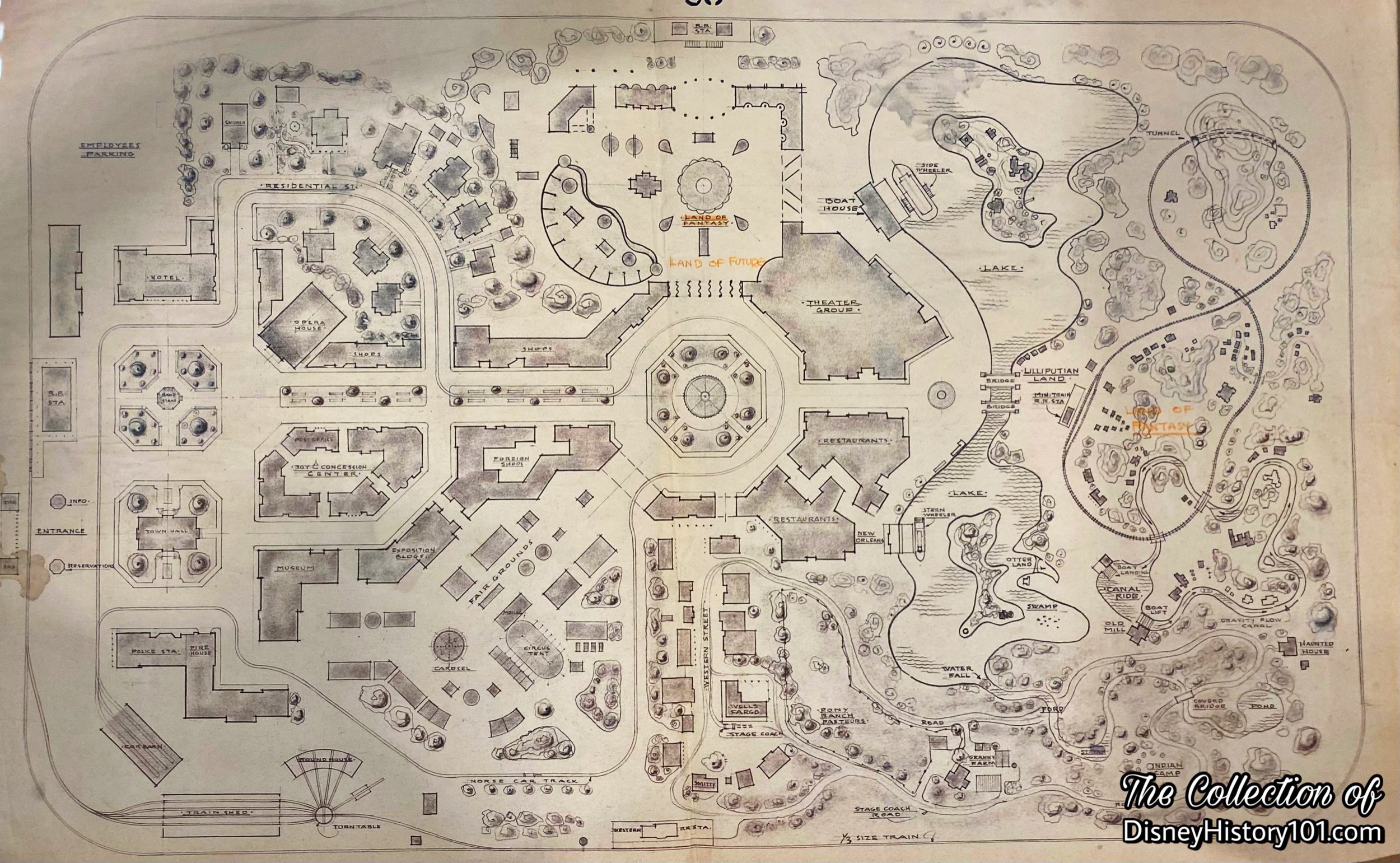
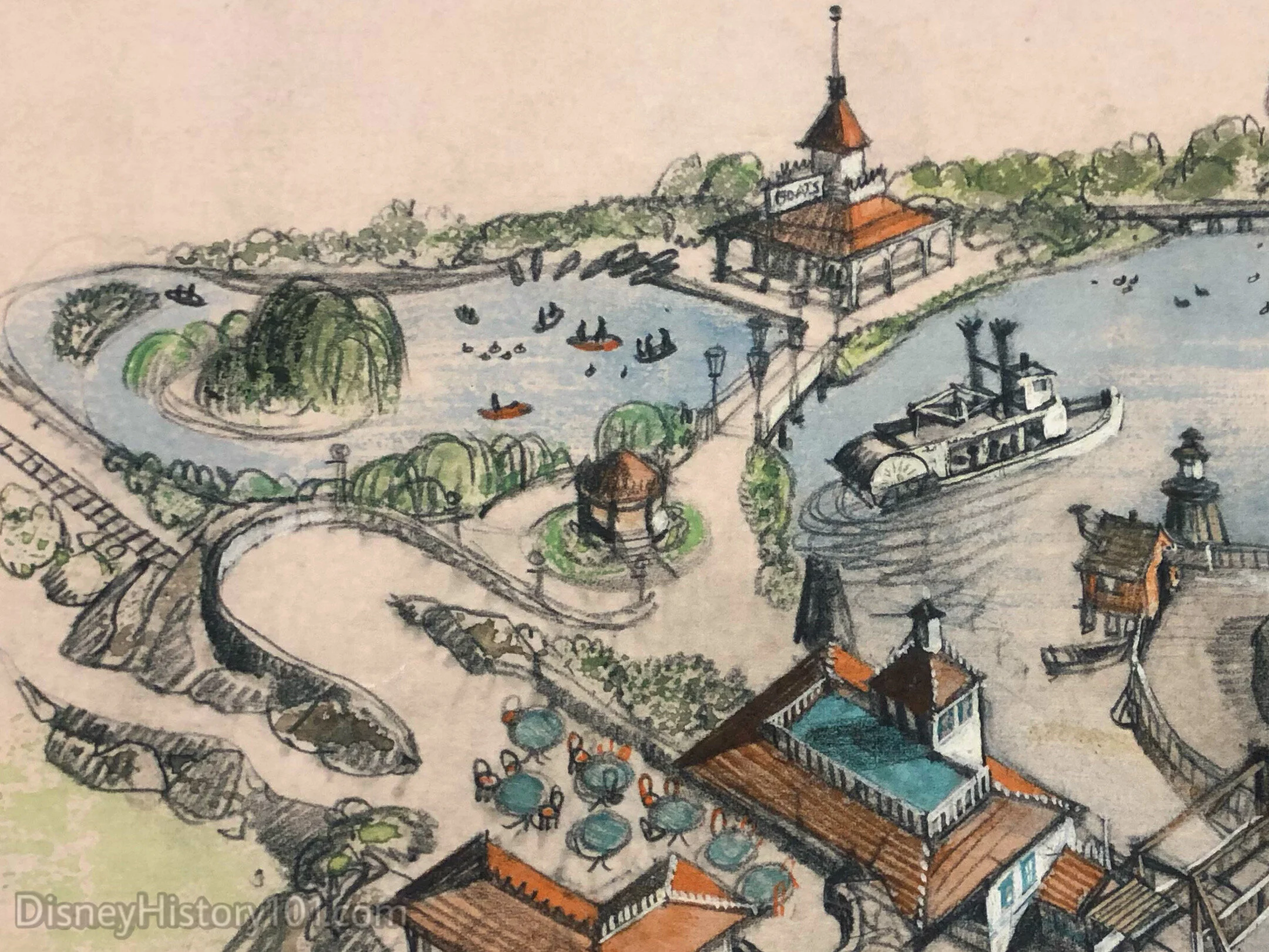
As Walt Disney’s Disneyland evolved, included were descriptions of a bandstand to be located in “Recreation Land.” According to “Disneyland” (prepared for Disneyland Inc. by WED Enterprises), “A Leisure Land - a shady park set aside for reservations by clubs, schools, or other groups for picnics and special outings. A catering service supplies foods or lunch in a basket. There is a little old-fashioned bandstand pavilion for dancing and entertainment and an area for games.”
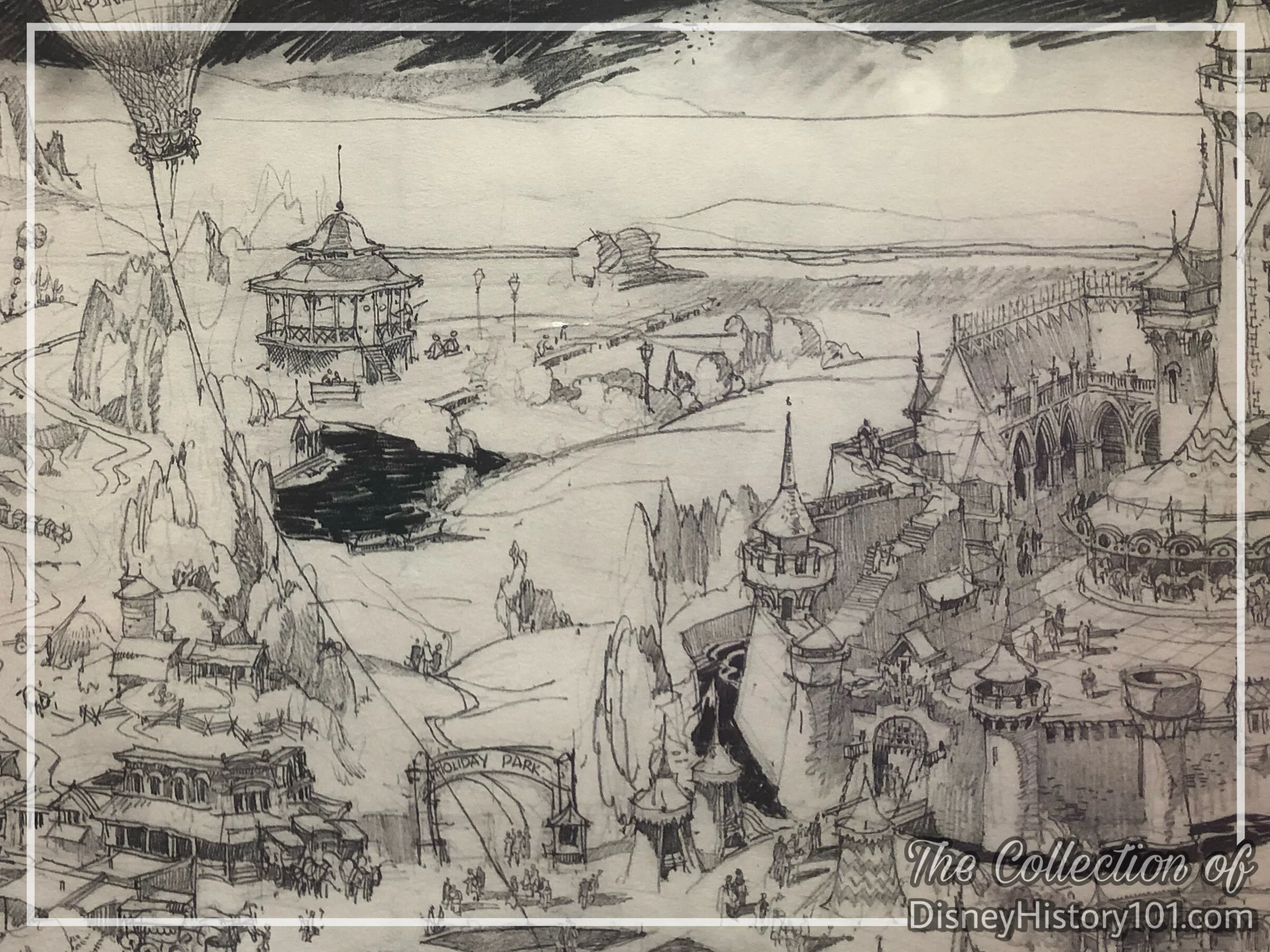
A gazebo (under which a band may perform concerts) had been part of Disneyland’s plans since the Orange County plot was mapped out. As early as February 14, 1955, Marvin Aubrey Davis’ Site Plan (or, Plot Plan) drawings of Disneyland (for the 160 acres in Anaheim) were produced. Details labeled this area ‘Root Beer Garden (Expansion Area)’. The same documents depicted a “Band Stand” in Town Square. Later, a Gazebo can also be seen in the center of the “Band Concert Park” of the 1/4-inch-to-a-foot scale model that appears in “The Story of Disneyland” (a c. 1954 episode of the “Disneyland” anthology series).
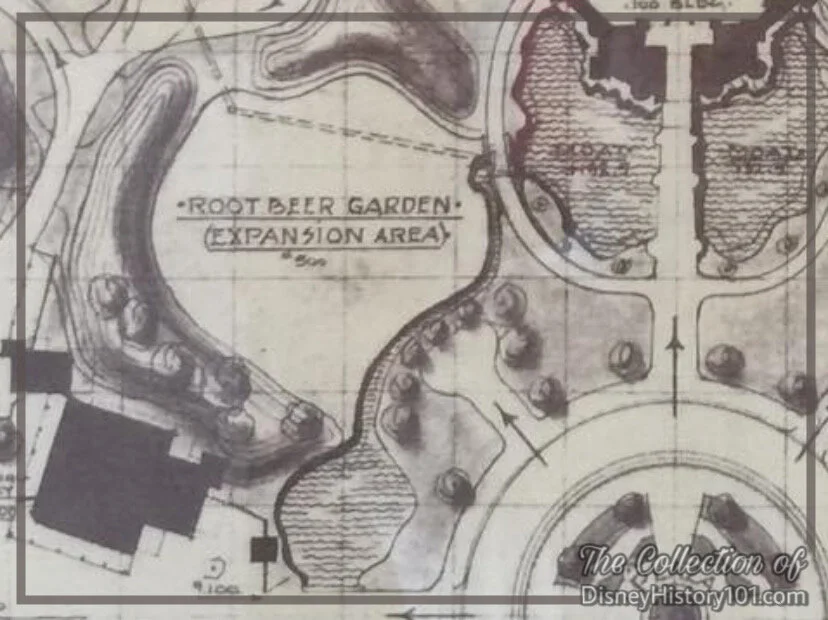
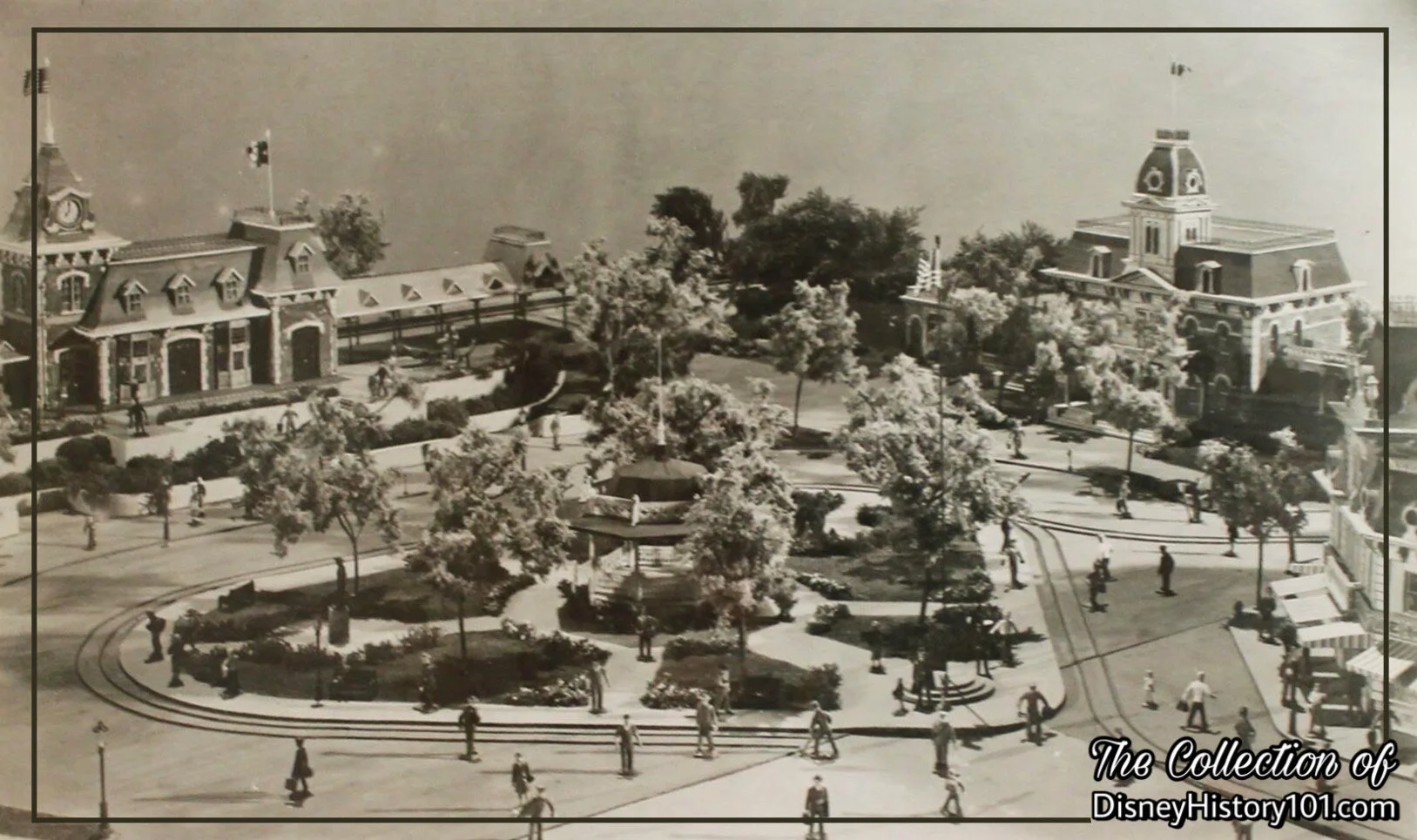
By the time construction began, a gazebo (on which the marching band could play) was originally intended to be the centerpiece of Town Square. That is where it was originally placed. However, when you stood in Town Square, the gazebo blocked the view of Sleeping Beauty Castle, which was the “weenie” drawing visitors to the Central Plaza Hub at the end of Main Street.
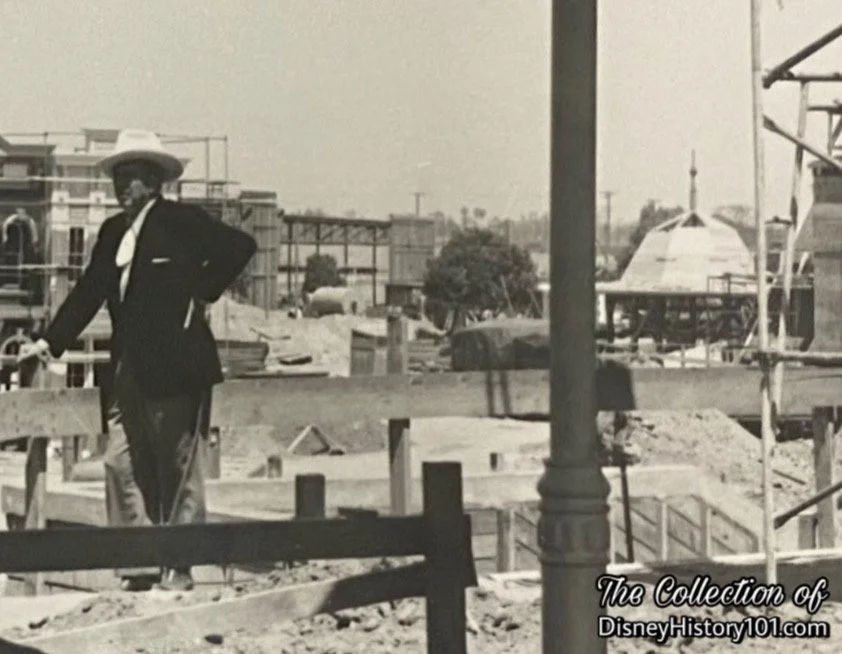
The full-scale Gazebo was moved several times during Disneyland’s construction phase (from Town Square to other locations) during April to May of 1955. Lastly, approximately three months before Disneyland opened, the Flag Standard would be built in the center of Town Square, and the gazebo was moved to a park-like setting just west of Sleeping Beauty Castle.
The Magnolia Gardens Bandstand was constructed as an ornate wood plywood and lattice bandstand with a metal roof supported on turned wooden posts. It has a pine floor measuring 1,375 square feet and covered portion. About 1958, the entire structure was appraised and valued at $12,000.
Here (before the Park’s big opening), a couple of painters pose for the camera, next to the newly painted bandstand - and future platform for Disneyland Band concerts! Jim Barngrover recalled: “We used to play on a GAZEBO in what is now PLAZA GARDENS. There was no seats for the guests and there was NO SHADE. So nobody came to listen! That's when we started marching.”
Since the beginning, Atmosphere Entertainment complimenting the theme of areas was staged to entertain Disneyland Guests on an immediate and personal level. For a brief period, the Disneyland Band Stand was host to Vesey Walker’s Disneyland Band throughout the year.
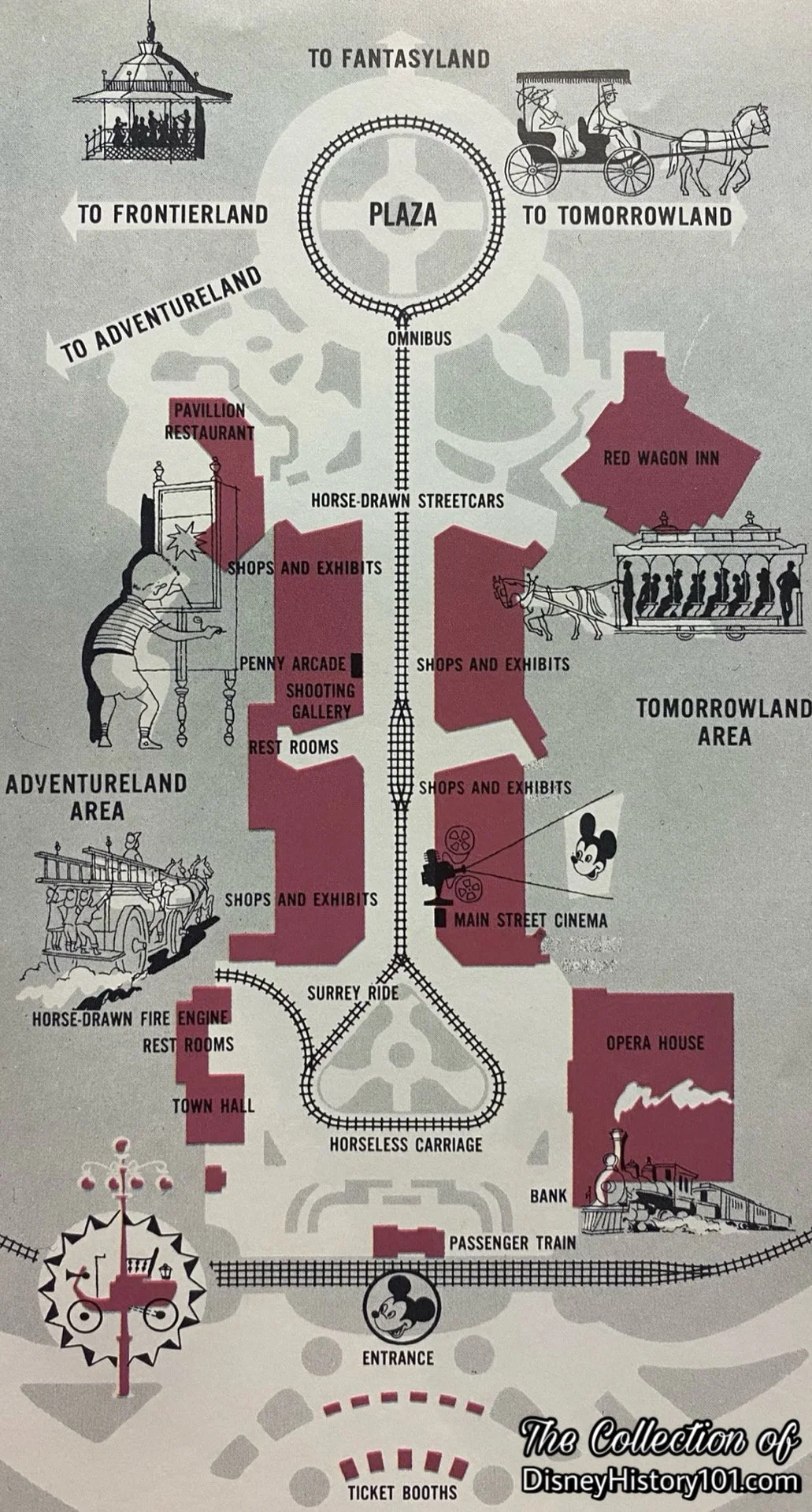
That’s not Tommy Walker’s band! A high school marching band makes their way just West of Sleeping Beauty Castle as they head for the Disneyland Christmas Bowl.
The Disneyland Band Stand was also host to many high school marching bands performing during the very first Christmas season at Disneyland. The Christmas Bowl was performed under the DISNEYLAND Band Stand (just off the Plaza) during the 1955 winter season (between Thanksgiving and January 8th).
Fast forward a few months, to 1956! “Shortly after the first of the year, Walt Disney revealed his plans for the then distant summer season. In fulfillment of the promise made on opening day, that ‘Disneyland will never be completed’ Walt made public plans to add extensively to the Park’s facilities. Whole new areas were to be opened : Magnolia Park.” [‘Disneyland - 1st Anniversary Souvenir Pictorial”]
Here, the Disneyland Band performs from the raised Bandstand (which has been relocated to the middle of DisneylandPlaza), while some exciting developments take place just west of Sleeping Beauty Castle! Soon the Bandstand and Gazebo (not pictured) would be relocated to shady nook (between Adventureland and the Chicken Plantation in Frontierland), appropriately called Magnolia Park! Soon the Bandstand and Gazebo (not pictured) would be relocated to shady nook (between Adventureland and the Chicken Plantation in Frontierland), appropriately called Magnolia Park!
“New Pages for the Disneyland Story”
Yes, the Gazebo would be moved again, this time to a 1,375 square foot area called Magnolia Park (as it was so-called in The Disneyland News Vol. 1 No. 12, published June of 1956), part of an extensive Frontierland expansion.
Frontierland originally had a New Orleans Area with a New Orleans motif that was of the period up to the Civil War. The footbridge and winding flowerbed flanked path leading to Magnolia Park and the Magnolia Gardens Bandstand opened for the first time during June of 1956, along with Tom Sawyer Island, as part of the more than $1 1/2 million worth of Magic Kingdom additions and improvements. Magnolia Park consisted of a shaded area with a bandstand and seats much like that of towns of that period. For about a year, its resident DISNEYLAND Band Stand and Gazebo were the home of concerts in the park. These were more than a Sunday occurrence - but a daily delight! In fact, these concerts even happened during holidays.
Though the park lacked the space to hold a dance floor, it currently held the capacity to accommodate large groups of guests desiring to listen to a band concert in the Park! An addition was made to the gazebo area (appraised at $3,606) while land improvements were made to Magnolia Park (appraised at $36,196). A new encompassing stage was able to support a couple of large instruments (not typically associated with marching bands) - both a piano and drum kit. Rows of park benches were brought into Magnolia Park by this time. Finally, by September 28, 1958, Disneyland, Inc. made approximately $ 19,200.00 of land improvements to the bridges, $19,586.00 of improvements to the lighting, and $123,459.00 of improvements to the landscaping.
By 1959, the Magnolia Park Bandstand (Entertainment) shaded "amphitheater" was still a place where bands and special groups performed free during peak seasons and Band Concerts were performed daily.
By 1960, there were two bandstands in Disneyland - Magnolia Park and Plaza Gardens.
Magnolia Park (located between the Rivers of the World in Adventureland and the Frontierland Station of the Santa Fe & Disneyland Railroad) was the setting of the Bandstand and Gazebo from the Spring of 1956 to 1962. To understand the location of Magnolia Park in relation to other sights and sounds of Disneyland - it was quite common to hear the sounds of the Cambodian Ruins along the Mekong River, smell the aroma of fresh fried chicken (from the Chicken Plantation), and see the passenger and freight trains (of the Santa Fe & Disneyland Railroad) roll by - all at once! If this description still doesn’t help you make sense of its location, aerial footage (likely recorded from a Sikorsky helicopter) of the location was taken, and is included in the theatrical release “People and Places : Disneyland U.S.A.” Magnolia Park was located in an area that would eventually become New Orleans Square.
As for the vacant plot west of Sleeping Beauty Castle, it would come to be known as…
You may recall hearing how Walt Disney, on the eve of Disneyland’s first day of operation, promised that “Disneyland will never be completed. It will continue to grow, to add new things, as long as there is imagination left in the world.” Now, after a year of operation, Walt (with audiences in mind) knew that adult and young adult guests were in need of a location to (not just listen to popular music, but) dance to live bands and enjoy refreshments into the evening hours. Thus, the Carnation Gardens was born!
“Setting the Stage”
Artists like set designer Wilson “Bill” Martin (who had left 20th Century Fox, to work on Walt Disney Productions’ Disneyland project) was influential in the design of Carnation Plaza, his talents as art director applied to the attraction. Artwork was produced with at least one painted concept featuring a bridge leading to a covered pavilion illuminated by Yablochkov candles. According to The Disneyland News (September of 1956), architectural elements were inspired by the “Disneyland Central Plaza which it fronts,” while the red and white candy striping represented the Carnation Company.
During the summer of 1956, a new permanent, covered pavilion (complete with bandstand stage and dance floor) became the site of Disneyland’s swinging evening entertainment! Here, the Disneyland Band, Date Nite dance bands, and other special groups entertained free during peak seasons. This early map excerpt (pictured below) shows the general area where the Carnation Plaza Gardens was situated - off the Plaza, just west of Sleeping Beauty Castle.
Disneyland Participant Corporate Sponsors were carefully selected. High quality, long term corporate sponsors would provide incremental income that enabled Disneyland to enhance its show and attractions, offset some operating expenses, and capitalize on marketing opportunities. Several of these “reliable old firms” sponsored the “abundance of restaurants devoted to pleasing all tastes and all budgets,” according to “The Story of Disneyland”, published 1955.
Much how Disneyland participant Swift’s sponsored several locations around Disneyland, Carnation would also sponsor more than one Disneyland dining location. Carnation Gardens quick service restaurant cafeteria would offer a menu of choices including hamburgers, hot dogs, beverages, and snacks like soft yogurt cones and (of course) ice cream cones & sundaes. Occasionally the Carnation menu offerings changed. Guest Services and Accommodations included restrooms to the left of the Plaza Gardens dance area.
Guests could now dine (and enjoy band concerts & dancing) at Disneyland, just West of Plaza Circle at the Plaza Gardens! Even years later, Walt Disney’s Guide to Disneyland (published 1963) referred to this area as the Plaza Dancing Area, while Walt Disney’s Guide to Disneyland (published 1964) referred to the Plaza Gardens as a place where one could have “a gay twirl with your best girl to the dance rhythms of Disneyland’s popular Date Niters orchestra” and “a Summertime evening favorite”!
Just over the bridge to Plaza Gardens is the dance floor where guests could dance to melodies provided by the the biggest bands as we shall see.
The colorful floral beds (full of the shade plant Coleus and small stunted cypress bushes) prove that the Carnation Plaza Gardens was just that - a garden!
Character lighting was themed to enhance the overall appearance and complement the interior, such as a chandelier or kerosene lamp. These add to the show, but don't necessarily create enough illumination for operation.
This map excerpt gives a general idea of what the Carnation Plaza Gardens entailed - a concession area (where hamburgers, sodas, and ice creams were ordered), and a dining area / dance floor! Both were shaded underneath the red and white striped, tent-like canopies. As with other shops and restaurants, the Disneyland Food Division took over operations of Carnation Plaza Gardens in October of 1965, shortening the name to Plaza Gardens. By 1967-1968, Carnation Gardens was under the immediate Supervision of Lou Mayan, overseen by Tom Olsen (Fantasyland Food Units), Max Sloan (Manager of Food Controls) and Bud Taylor (Manager of Systems & Procedures), and Jim Armstrong (Director of Disneyland Food Services).
Tucked within the colorful Plaza Gardens, was a popular covered pavilion!
The Strawhatters also played the Plaza Gardens Stage during the daytime.
Under the Disneyland Food Division, many other changes took place. For example, during 1977, Plaza Gardens Hostess Debbie Dvorkman took advantage of the Disneyland Creative Idea Program and suggested that the Plaza Gardens serve applesauce instead of coleslaw. Carnation Plaza Gardens occasionally hosted special events, like Private Parties (e.g. GM and Hughes Employees, January of 1986).
“Let’s Dance at Disneyland”
How do you increase guest attendance at Disneyland? Why, the very same way you rig a “parent trap” - you’ve got to “get them under the moon,” and “play their favorite tune!” Naturally, the Plaza Gardens Stage entertainment venue would accompany the Plaza Gardens restaurant.
From the 1950s to the 1960s, the sounds of Bill Elliott and the Elliott Brothers Orchestra could be found emanating from the Plaza Gardens during Date Nites at Disneyland (8 p.m. to midnight). You may recall the Elliot Brother’s Date Nite at Disneyland album published during 1958, by Vista Records. The cover featured (slide saxophonist) Bill and (trombonist) Lloyd Elliott’s band on the Plaza Gardens stage. Though some test recordings were made in Plaza Gardens, the sound engineers ultimately preferred the closed-hall of the Golden Horseshoe to the open-air sounds of the Plaza Gardens. Still, the duo (and their band) were a regular sight and sound at Carnation Plaza Gardens during the 1950s and 1960s.
At the time Bill Elliott (on saxophone), along with his brother Lloyd (on slide trombone) lead the “Disneyland DateNiters” band for four hour concerts, six nights a week during the summer at the Magic Kingdom…and at a great expense at first. Beginning in 1957, they were occasionally joined by vocalist Tony Paris. But, by 1963, Bill had “licked a king-sized commuting problem. Bill, a resident of Malibu, had been pounding the freeways for more than 160 miles each evening - about 80 miles each way to and from Disneyland. The solution : an airplane naturally! A licensed pilot, Bill now drives his car from Malibu to the Santa Monica Airport, flys ‘across town’ to the Fullerton Airport, and then steers the band’s bus to Disneyland. Total travel time : about 45minutes - 20 of them in the air”, according to Vacationland magazine (published Summer, 1963).
“PLAZA GARDENS - A ‘HAPPENING’ PLACE”
Many performances were held on the Plaza Gardens Stage through the years. You may recollect dancing to the swinging tunes of Pete Jacobs and his Wartime Radio Revue Orchestra, the Tommy Dorsey Orchestra, the Artie Shaw Orchestra, the Xavier Cougat Orchestra, the Woody Herman Orchestra, Myron Floren and his Orchestra, and many other popular big bands! Limited engagements like Mel Torme, the Osmond Brothers, Lionel Hampton, and Wayne King and his orchestra (1965) performed here. Even local radio stations (like Los Angeles’ KFI 640 kHz) would broadcast live from the Plaza Gardens stage. The stage was also used for special Cast Member events (like the Creative Idea Awards of 1976, when Ron Dominguez awarded Doug Runyan, Debbie Dvorman, and Hans Bekerthy). Some may recall the “Children’s Theater” (a Disney Character Show) was presented for guests of all ages weekends and select weekdays. Let’s explore a few years of entertainment now!
____________________
1957: During Date Nite of 1957, Plaza Gardens was one of four locations hosting live entertainment and the stage for the Main Street Plaza Gardens Orchestra.
1958: Pete Henderson and Bill Skiles (Hub and Bub of the Mickey Mouse Club) often performed here, before moving on to Guided Tours.
1961 : During Disneyland’s second ever Memorial Day festivities, Benny Goodman performed a three-night engagement for the Memorial Day weekend program. As a sidelight, Benny Goodman was “the first big-name star” to ever appear at the Magic Kingdom for more than one performance (according to The Disneyland Diary). This may have been where he filmed his live Disneyland segment for The Benny Goodman Show (airing on NBC-TV on September 15, 1961). During Date Nite at Disneyland (held the Summer of 1961), the Elliott Brothers Orchestra performed in the Plaza Gardens on Main Street. The unknown Osmond Brothers performed for the first time at the Carnation Plaza Gardens in 1961.
The Disneyland Marching Band regularly played the Carnation Plaza Stage venue.
1962 : June 2, 1962 brought the “Cavalcade of Bands” to Disneyland for the first time ever. Admission for this special night of stars, big bands, and swingin’ fun ranged from $4.95 to $5.50, but it was a fare well spent. This first show featured names of renown including Tex Beneke, Charlie Barnet, Ray Eberle & the Modernaires, Paula Kelley, andboth the notable Glenn Miller Band as well as Count Basie and His Band! During this time, the Plaza Gardens would become the setting of a few acts featured on the second episode of the local KTTV program “Meet Me In Disneyland” which was filmed in the Park. The show starred Johhny Jacobs, The Elliott Brothers, and The Disneyland Date Nighters (whom had been a Park standard for six years by then)! The Plaza Gardens hosted The Harry James Orchestra (July), Benny Goodman (August), and Ray Anthony’s Orchestra (August) among other entertainers featured at Disneyland during the summer of 1962!
Eddie Grady and the Commanders performed from the Carnation Plaza Gardens stage during the 2nd Annual Disneyland Grad Nite! Saturday night, July 30, 1962, the eighteen-year-old Frank Sinatra Jr. asked the Elliott Brothers if he could perform with them. According to television writer James Bacon, “They said yes, and he stepped to the mike, and belted our the familiar Cole Porter tune ‘At Long Last Love’ as if the famous songsmith had written it just for him.” So, it wasn’t a surprise to see him return to the Plaza Gardens stage again during August of 1963, to also perform with the Tommy Dorsey Orchestra!
Photo : The initial press release (accompanying this photo) read : “Frank Sinatra Jr., 19, following in the footsteps of his father, sings with the reincarnated Tommy Dorsey Orchestra at Disneyland. The young crooner wows the bobby soxers, singing in a a style similar to his father’s.”
1963 : The Plaza Gardens Dance Area served as a facility for “checking ladies’ coats and purses,” while the Plaza Gardens Sign was used as a Grad Nite Photo Location at the third annual Grad Nite at Disneyland of 1963. The “Cavalcade of Big Bands at Disneyland” event (Saturday, June 1, 8:00 p.m. until 2:00 a.m.) brought many big names to Disneyland, including Count Basie (June), the Tex Beneke Orchestra, (July), the Tommy Dorsey Package Band with Frank Sinatra Jr. (August), and the Harry James Orchestra (August). Some of these bands would even perform during the Hootenanny events held on Monday evenings!
1964 : During June of 1964, Disneyland held the “Big band Festival” featuring Count Basie, Duke Ellington, Benny Goodman, Wayne King and other orchestras. Other special appearances in the Park included Spike Jones (August), Perez Prado (August), Harry James (September). The Elliott Brothers Orchestra and the Strawhatters played Grad Nite.
1965 : The Disneyland Summer ‘65 Big Band Line-Up was one of the biggest events of the year! Preparations (staging, fabrication of signs and banners, etc.) were made for this event during near-weekly meetings held by Ben Harris (of Disneyland Production), running from June to August of 1965. Special gifts were fabricated for each of the performers of the Disneyland Summer ‘65 Big Band Line-Up! Medallions (manufactured by Libby & Associates) featured various instruments for Woody Herman, Stan Kenton, Duke Ellington, and Tex Beneke. Wayne King also performed nightly for a short period in 1965.
1966 : Bob Crosby and his band (Eddie Miller on tenor sax, Wayne Sanger on clarinet, John Best on trumpet, Moe Schneider on trombone, Stan Wrightsman on piano, Walter Yoder on bass, and Nick Fatool on drums) performed from the Plaza Gardens on Main Street U.S.A. during the 1966 edition of Dixieland at Disneyland!
1967 : Teddy Buckner (on trumpet) performed with his band (Arthur W. Edwards on bass, Caughey W. Roberts on sax-clarinet, Jessie J. Sailes on drums, Chester C. Lane on piano, and Al Rieman on trombone) from 8p.m. to 12 midnight, during Disneyland Date Nites (June 3, 10, and 17), as well as the seventh annual Dixieland at Disneyland. During the winter season of 1967, Bill Elliott and the Date Niters came back the Plaza Gardens during the winter season, for “the 10th consecutive season,” pleasing “the old comers…as well as the new comers.” In addition to these big bands, the Disneyland Christmas Carolers (under the direction of Dr. Charles C. Hirt and lead by Mr. Robert G. Hasty), entertained guests with “traditional Christmas Carols and holiday music” from December 16th, 1967 thru January 1st, 1968. Also present during the winter season of 1967, were the sounds of festive holiday “Organ Concerts” emanating from Carnation Plaza for 3 shows daily (10:30am-12:00N), from December 16th, 1967 thru January 1st, 1968 (except December 24th, 25th, and 31st, 1967). “Guests dining at the Garden Plaza” would “be entertained by the beautiful sounds of the Wurlitzer organ featuring Ray Whitaker at the keyboard.” [“Disneyland Holiday Talent Master Schedule,” prepared for the period of December 16, 1967 through January 1, 1968]
1968 : Disneyland “Spring Fling” (occurring April 6th, 1968) brought Bill Elliott and His Orchestra to Plaza Gardens.
1969 : The Sound Castle (usually performed in Tomorrowland, but now) performed in the Plaza Gardens during “Disneyland by Starlite”, July of 1969.
1970 : Disneyland’s 15th Anniversary “Super Summer” was here! Fantasy Ballroom to the tunes of Harry James and his Orchestra happened every night during the Summer of 1970, at 9 p.m. and 1 a.m. On June 22nd at 9:05 p.m., Ray McKinley and His Orchestra performed a special show in honor of Disneyland’s 15th Anniversary Birthday Party!
Br’er Bear and Br’er Fox join the “Fantasy Follies” revue.
Occasionally, your favorite cast of characters from Walt Disney feature films ad shorts teamed up with the Disneyland Marching Band or the Strawhatters for a production of the “Fantasy Follies”!
1971 : Minority of Six performed on Saturday, January 2nd. Later this year, Woody Herman and his orchestra performed.
1972 : While “something had gotten into the Matterhorn”, a whole lot of big name talent had gotten onto the Carnation Plaza Gardens Stage during the summer of 1972! Guest Bands included Harry James and his Big Band, Alvino Rey and His Orchestra, Buddy Rich and the Buddy Rich Band, Tex Beneke and His Orchestra, The Modernaires with Paula Kelly, and The King Sisters nightly. It was “a new day after dark” during summer nights of 1972, as The Sudden Trend (June 3), Vaughn Monroe and His Orchestra (June 17-June 27), Buddy Rich and His Big Band (June 28-July 11 ; August 13-19), Alvino Rey and His Orchestra featuring the King Sisters (July 12-July 25), Tex Beneke and the Modernaires with Paula Kelly (July 26-August 7), Harry James and his Bog Band (August 8-August 22), and Stan Kenton and his Orchestra (August 23-September 3) performed at the Plaza Gardens!
The Granny Dears performed for Senior Citizens Days, October 12 and 13, 1972.
Plaza Gardens closed for three weeks for a rehab beginning Monday, November 27, 1972. During that time concerts were held on Tomorrowland Stage.
Baloo enjoys a “Fantasy Follies” show.
An event at Carnation Plaza Gardens contemporaneous with “Pooh For President”.
1973 : Si Zentner & His Orchestra appeared nightly at the Plaza Gardens during the summer of 1973, as part of the “50 Happy Years of Entertainment” celebration at Disneyland!
1974 : Plaza Gardens “presented a number of Big Band rhythms from 9:20 p.m. to 1 a.m. throughout the summer” according to one press release. Maynard Furguson & His Orchestra (June 15-22), Count Basie & His Orchestra (June 23-29), World Famous Glenn Miller Orchestra directed by Peanuts Hucko (June 30-July 6), Neal Hefti & His Orchestra (July 7-13), Harry James and His Orchestra (July 14-27), Les Brown & His Orchestra (July 28-August 3), Bob Crosby & His Dance Band featuring the Bobcats (August 4-10), Louis Bellson & His Orchestra (August 18-24), and Woody Herman & His Orchestra (August 25-September 7). Finally, Nelson Riddle and His Orchestra performed at Plaza Gardens during a Trojan Rally event on December 19, 1974.
1975 : The “Disneyland & All That Jazz” event (May 24 & 25, 1975) brought “fun-filled evenings of listening and dancing to the best in big band and jazz entertainment” to Disneyland! Louie Bellson & His Orchestra performed two shows nightly during the week of August 17 to 23, 1975. Woody Herman & His Orchestra performed in the middle of Disneyland’s Bicentennial Celebration, during the summer of 1975.
1976 : During Disneyland’s “Celebration Summer” (and the week of June 22-28, 1976, Freddy Martin and His Orchestra performed nightly at the Plaza Gardens from 9 p.m. to 1 a.m.
The Dapper Dans occasionally teamed with the Disneyland Band to perform some American folk songs, as guests dine on some American favorites!
Pictured Above : Drummer Louie Bellson and His Band (photographed during a prior gig at Disneyland’s Carnation Plaza Gardens), prepares for another performance - this time during Thanksgiving weekend (Nov. 26-27), of 1976! This time he will perform with wife Pearl Bailey, from the floating stage on the Rivers of America.
1977: Carnation Plaza Gardens hosted and staged some of the cultural displays, art exhibits, and special musical entertainment participants of Festival Japan (some flown in from Japan).
1978 : The Plaza Gardens received a rehab during late 1977 to January of 1978. Plaza Gardens opened January 31, 1978, with a lineup of popular musicians throughout the year. After a brief rehabilitation (which maintained the show quality and ended November 18), Les Elgart & His Orchestra, and Woody Herman & The Young Thundering Herd performed during December of 1978. Tex Beneke & His Orchestra performed from December 26 - 30, 1978. Solid Brass also performed during 1978.
1979 : March 23-29, Woody Herman and His Orchestra performed every day leading up to Easter Sunday. Donald, Minnie, Goofy, the Dapper Dans, and the Pearly Band present a special Mother’s Day tribute, on May 13th, 1979. According to Disneyland LINE (June 21, 1979), “the greatest in current big bands will be on stage at carnation Plaza Gardens throughout the summer. Count Basie celebrated his 75th birthday here last Monday as his orchestra got the season off to a rousing start. The Jimmy Dorsey Orchestra, directed by Lee Castle, plays tomorrow and Saturday night, followed by the Tommy Dorsey Orchestra, conducted by Buddy Morrow (June 24-30), Les Brown and His Band of Renown (July 1-7) and Freddy Martin and His Orchestra (July 8-14). Also featured will be Bob Crosby and His Orchestra, featuring the Bobcats (July 15-21), Louie Bellson and the Big Band Explosion (July 22-28), Les Elgart and His Orchestra, featuring Caroline Cline (July 29-Aug. 4), The Glenn Miller Orchestra, directed by Jimmy Henderson (Aug.5-18), Billy Vaughn and His Orchestra (Aug.19-25), Woody Herman and the Young Thundering Herd (Aug.26-Sept.1), and Buddy Rich and The Buddy Rich Band (Sept. 2-8).”
As part of the Disneyland Music Festival Program, visiting groups during July included Judi’s Polynesian Show from Hawaii (on July 14th), Sparta Pacers from Corvallis, Oregon (on July 14th), the Signature Music Studio Ensemble of San Gabriel (on July 16th), Hawaiiana of Sacramento (on July 17th), and the John Burroughs High Jazz Ensemble of Burbank (on July 18th).
1980s : Sonny Anderson (one-time scheduler of Disneyland Entertainment Talent) once divulged that “Walt Disney believed in live popular music.” [Disneyland 25 “Happy Birthday to a Dream” Advertising Supplement; published January 20, 1980] Walt’s value of live daytime entertainment continued the tradition during Disneyland’s “silver anniversary,” and included the “Fantasy Follies”, billed as “a rollicking singing and dancing revue featuring your favorite Disney pals.” Another show billed as “Happy Birthday Disneyland” (performed Monday thru Thursday) celebrated “with a fun lovin’ band of Disney Characters.” Evening entertainment for the year included Papa Doo Run Run, Ray Anthony and his Orchestra, Woody Herman, Freddy Martin, Louie Bellson, Bob Crosby, Les Brown, Billy Vaughn and His Orchestra, Les Elgart & His Orchestra, Glenn Miller’s Orchestra conducted by Jimmy Henderson, Count Basie, and Buddy Rich (August 30th, 8:15 to midnight).
1981 : During the daytime, “The Mickey Mouse Revue” starred your “favorite Disney characters putting on the funniest show ever.” Special nighttime engagements included Count Basie & His Orchestra, Harry James & His Big Band, Bob Crosby & His Orchestra (featuring the Bobcats), the Jimmy Dorsey Orchestra directed by Lee Castle with special guest Connie Haines. Guest bands included the University of Utah A Cappella Choir (March 25), The Capital Singers (March 26), Viewpoint High School Madrigals and Cholla High School Marching Band (March 27), Wodon Valley Youth Center (March 30), and Crescenta Valley High School Jazz (March 31). Festival of Japan (March 28 & 29) brought private parties starring Matsutoyo Kai dancers, Michiya Hanayagi dancers, Takarazuka Take To Kolo No Kai instrumentalists, Kasagi Violin School, the Azuma School of Dance, Kazue Kudo Koto Music Conservatory, Fujima Chiseye dancers, Matsumaye Kai dancers, Aokumie Hanayagi Kai dancers, in addition to the Jazz Minors. During November 21 & 22, Marlton School for the Deaf, the California Theater for the Deaf, the Sing Sing Singers, Theater for the Handicapped presented dance, music, and comedy for guests - part of “A Very Special Arts Festival”!
1982 : Disneyland Easter Party brought Daddy-O (four times nightly, on April 3 & 4, at 8pm, 9pm, 10pm, and 11pm).
1983 : February 19 & 20, 1983, Orrin Tucker & His Orchestra preformed during the Celebrate America event. Freed Stage Band (June 13), Washington Irvine Junior High School (June 14), Oklahoma Chorale (June 15),Sun Dance Cloggers (June 16), and The Sunshine Kids (June 17)! Bob Crosby and His Orchestra featuring the Bobcats, Ray Anthony and His Orchestra, and Woody Herman & The Young Thunderbird Herd offered nightly tunes for dancing. The Duke Ellington Orchestra (under the direction of Mercer Ellington) performed in July.
The Fantasyland Characters participated in a court case held on the Fantasy Follies Stage, during a scene of “Believe You Can, And You Can” - a Del Monte- sponsored television show (starring Mari Amsterdam and Heather O’Rourke) - which was shot before New Fantasyland opened to the public.
1984 : Cab Calloway, Kay Starr with Bob Crosby and his Orchestra, and Connie Haines. These performances were hosted by Peter Marshall, and televised during July and September. Jerry Gray and his Band of Today and Ray McKinley & his Orchestra played during the latter part of December.
Pictured Above : There were a number of these Big Bands at Disneyland events, but during July of 1984, Lionel Hampton and his Big Band played a number of jazz styles during the evening. According to Lionel, the advertised “styles” included “marimba, vibraphone, and swing”. The 71-year-old multi-talented musician personally played the vibraphone, drums, and piano for some of the evening’s stunning sets! To top the whole experience off, the event was televised and later distributed on Lazerdisc for home viewing.
1985 : During “Festival Japan” (October 12 & 13, 1985), Japanese performers Michiya Hanayagi Dance Studio, Fukima Kansuma Kai, Koharu Kai, Hanayagi Jurokumi Kai, Hikari Taiko, Hanayagi Rokumine Kai, Fujima Chiseye Kai, Rokumie Natori Kai, and Matsumaye Katsue entertained guests!
1986 : The Disneyland Band was a standard show, often performing different tunes and treating Guests to thirty years of musical magic during two shows daily, around 2:00 and 3:15 p.m.
One of the first shows of the year was the Make Believe Ballroom (according four times daily, during January of 1986) at Carnation Plaza Gardens. Contemporaneously, Circus Fantasy of 1986 saw the Carnation Plaza Gardens briefly transformed into Clown Alley. Then, Mickey, Minnie, and their friends sing and dance their way into your hearts with Fantasy Follies! On the Saturday of the week of September 1-8, 1986, the Plaza Gardens Orchestra Directed by Horace Heidt Jr. played for shows. During August of 1986, special guests from around the United States were welcomed to the Plaza Gardens, including The Company, Children’s Chorus of the Paris Opera, Metropolitan Youth Symphony, and Midnite Madness!
As for entertainers, in May, Disneyland welcomed Alvino Rey & His Orchestra, The King Sisters, Horace Height Jr., & His Orchestra.
Visiting from all over the United States and the World were High School, College and Community groups, which abounded through 1986:
April of 1986 saw Mt. View Academy Band and Choir (14th), Spanish Fork High School Choir (15th), Central York High School Band (17th), both Newton Middle School and Pasadena Youth Symphony Orchestra (18th), Solano Music Makers (19th), Neighborhood Children's Theatre of Boston (20th)
Guest groups in May and June included Bishop Montgomery Singers, Highland High School Choirs, Yucaipa High School Jazz Band, Davis High School Jazz Choir, Canyon del Oro Singers, Glendale Symphony Youth Orchestra, U.C.l. Wind Ensemble, Upland High School Jazz Band, and Atascadero High School Jazz Ensemble.
1987 : The Crystals and “Butch” Rillera and Bam Bam performed Saturdays only in February of 1987. The Totally Minnie Parade entertained guests of all ages (at 2:00pm and 4:30pm) on Saturday, Sunday and Monday of February.
Many big-names & big bands return, including Les Brown and His Orchestra, Tex Beneke and His Band of Renown, Si Zentner and His Orchestra, the Harry James Orchestra featuring Joe Graves, and the seasonal daytime Christmas Follies! July 20-26, 1987, the Artie Shaw Orchestra directed by Dick Johnson, Ray Anthony and His Orchestra, ‘The Scott Land Marionettes’, the All American College Band, and Steve Houghton appeared!
1988 : The Billy May Orchestra directed by Buddy Childers, performed January 30 & 31. Disneyland Salutes Benny Goodman (from June 25th thru July 2nd), with Peanuts Hucko and Louise Tobin alongside the Benny Goodman Orchestra! Many popular names return included Myron Floren, Kay Starr, Ray McKinley, the Count Basie Orchestra (directed by Frank Foster), Ray Anthony, Tex Beneke, Buddy Morrow (and the Tommy Dorsey Orchestra, Lionel Hampton, Les Brown and his Band of Renown, and Louie Bellson & the Big Band Explosion (featuring Dee Dee Bellson).
1989 : Tex Beneke and his Orchestra, “Disneyland Salutes Benny Goodman” with the Benny Goodman Orchestras and special guests Louise Tobin & Peanuts Hucko, the Harry James Orchestra, Ray McKinley and his Orchestra, Ray Anthony and his Orchestra, Myron Floren and his Orchestra, the Count Basie Orchestra, and Les Brown and his Band of Renown. Bill Tole and His Orchestra also performed in 1989.
1990 : Mickey Finn & His Orchestra performed from the Carnation Plaza Gardens Stage during Disneyland’s 35th anniversary year - 1990! According to Disneyland LINE Magazine, the International Society of Bassists performed a “mass bass concert at the Carnation Plaza Gardens stage for the world’s largest concert assemblage of double-bassists. More than 100 prominent bassists entertained guests on Thursday, August 25, with music ranging from Bizet and Bach to ‘Its A Small World’ and ‘The Day The Bass Players Took Over The World.””
Pictured Above : Special events were also celebrated at Plaza Pavilion - like Disneyland’s 35 Year Anniversary during 1990! Mickey, Minnie, and Roger Rabbit party down to celebrate Disneyland’s 35th year.
Year Unknown (c. 1990s?) : Disneyland Country Weekend (February 12, 13, and 14 brought Big Thunder Breakdown Boys to the Plaza Gardens stage during the daytimes and nighttimes, while Razzy Bailey performed three nighttime shows on Friday, February 12th!
1991 : The Beauty and the Beast show The Enchanted Book Shoppe ran from November 28, 1991 - April 26, 1992.
1993 : Stanford Freese & The Disneyland Big Swing Band performed a couple of Saturdays during December of 1993.
2001 : February 9-15, 2001 “The Jump, Jive, Boogie Swing Party with Swing Town” occurred four times on Saturday evenings!
During the daytime, (and even between shows), the Plaza Gardens was the place to meet with friends!
Stephen Simmons (former Carnation Plaza Gardens Cast Member, 1969 - 1970) remembers : “I began my time as a Cast Member cleaning tables at Plaza Gardens. I have many wonderful memories working there. I was able to enjoy the Disneyland [Marching] Band every day along with the Pearly Band. Of course, many characters accompanied the bands. Also, the nighttime had other bands (I met Count Basie one night), and other nights was for rock. The evenings were made for dancing at the Carnation Plaza Gardens. A side note : Plaza Gardens was the only place in Disneyland that sold ice cream cones.”
One former 1960s guest remembers this “magical place” fondly : “My girlfriend (later my wife) and I had taken private ballroom dancing dance lessons because I was in my high school’s dance band. We lived in Orange, California and I often went to dance at the Disney[land] Plaza Gardens. Since our parents were fans of the Big Bands of the 1940s, we were familiar with all of the bug name bands. I remember dancing to Tex Beneke and the Glen Miller Band with the Modernaires. We also remember dancing to Louis Armstrong and his band as well as Harry James and His Orchestra. It was a lot of fun even though we were the youngest people there. The best thing about this almost magical experience was the intimacy of the size of the garden. We got really close to all these legends of the Big Band era. One evening I remember dancing next to Buddy Epson and his wife. Like I said, it was a very magical experience, almost like time travel back to a wonderful time of great music and Big Bands.”
In 2008, WDI master plans entertained the concept of a “Fantasy Faire franchise collaborative opportunity for all Disneyland business units (Princess Initiative).” This Area Development involved both merchandise and entertainment synergy.
According to Dave Smith (previous Chief Archivist Emeritus of the Walt Disney Archives), “Tony Baxter and his team at Walt Disney Imagineering found that the prime Plaza Gardens area of Disneyland was underutilized and thought it would make for a nice expansion to Fantasyland. Tony recruited Dutch ride designer Michael Den Dulk, formerly from Europa Park, to join Walt Disney Imagineering and become creative director of Fantasy Faire.”
During the “Year of a Million Dreams” the Disney Princess Fantasy Faire became a place for “guests of all ages to join their favorite Disney princesses for a royal gathering as Fantasyland Theater.” Young lords and ladies were invited to make sparkling crowns, participate in princess and knighthood training and decorate their own Castle Cupcake.
The memory of the old Bandstand that once stood here lives on, occasionally featured in artwork and other merchandise made available for purchase. One of my personal favorites is this loyal and adorable Disneyland 50th Anniversary Pewter Figure designed by Kevin Kidney & Jody Daily.
If you would like to read more about the Carnation Plaza Gardens, it’s my pleasure to recommend adding Marcy Smothers’ “Eat Like Walt - The Wonderful World of Disney Food” to your personal Disney Home Library! Therein, Marcy has extensively researched and finely crafted a small section of a chapter dedicated to “Walt Disney’s Disneyland - Main Street U.S.A.” If you would like to bring the magic of Disneyland restaurants and concessions to your dining room table, “please step this way” toward www.eatlikewalt.com where Marcy has shared a few recipes for memorable Disneyland menu options, so you too can “Eat Like Walt.”
PLAZA INN (RED WAGON INN)
If you have had the pleasure of enjoying a meal at the Plaza Inn (or, the Red Wagon Inn), know that the old-fashioned restaurant was included in some of Disneyland’s earliest research and development stages. You may have heard of Herb Ryman’s iconic “Aerial Over Disneyland” concept drawing! A corresponding document “The Disneyland Story” was produced (on September 3, 1954), in order to tell the story of what guests would experience upon entering Walt Disney’s Disneyland. The opening page states : “At the end of Main Street we come to the PLAZA, or the crossroads of Disneyland. To the right will be an old-fashioned restaurant of the Gay Nineties period, something like Delmonico’s, which will seat approximately 400 people.” A few months later, a press release document entitled “News From Disneyland” may have been one of the first to divulge details of where many of the thematic elements were extracted, stating : “An old mansion in Los Angeles supplied part of the interior for the Delmonico style restaurant at the Disneyland Plaza. The house was purchased and dismantled, with interior wood paneling and stained glass windows, crystal chandeliers and staircases receiving the utmost care, for the most of the mansion’s features were incorporated into Disneyland’s Main Street.”
Please step this way (30 miles North-West of Disneyland), as we relive the origins of the Red Wagon Inn.
First, we will visit a historic district of Los Angeles, and explore a late 19th-century mansion from which many architectural elements were originally derived.
The historic St. James Park mansion was built for Baroness Rosa Von Zimmerman around 1870, and originally bore the address 16 St. James Park. Disneyland LINE Magazine (June 25, 1993 ; Vol. 25, No. 25) adds : “The house… was located in what once was a fashionably wealthy area near Adams Boulevard and Figueroa Street.”
The rarely-seen (preceding) image on the front of this postcard gives us our first “Vintage View” of the 19th century von Zimmerman mansion (in Los Angeles). As mentioned, it is from this very structure that quite a few architectural elements and parts were extracted for the construction of the Red Wagon Inn (near 80 years later) at Disneyland!
In this (preceding) photograph, the many porch or “newel” columns (with their distinct volutes, acanthus leaf designs, and smooth flute) are readily identifiable. These features were utilized in the two dining wings of the Red Wagon Inn, and some elements can still currently be observed in The Plaza Inn.
One publication expounded on the house’s elements :
“The house is granite and pressed brick with stone trimmings, and is one of the best built houses in Southern California. The interior is finished in selected mahogany , quarter sawed oak and other choice woods. The decorations were by a skilled artist from Europe and are in perfect harmony with the stately character of the house. The porch is 145 feet long and extends along the entire front of the house and partly around each end. The porch is built in granite with tile floor and stone balustrade. The roof to the porch covers the northernly half and is supported by eleven stone columns.
On the main floor is a reception hall, parlor, music room, dining room, library, den, breakfast room, kitchen, butler’s pantry, and conservatory, also a reception room that is entered from the porte cochere on the side and the music room on the other.
On the second and third floors are a sitting room and connecting bedrooms with costly tile bath rooms.
One of the attractive and unique features of the place is a covered circular colonnade leading from the porte cochere to the stable, having twelve ionic columns.”
Preceding Photo : Several historians agree that the home in the picture has been misidentified as the next-door Chester Place. This misconception is due to the fact that the Zimmerman Place formerly adjoined the Chester Place. However local Los Angeles historians concur that the house in the photo is (identified by its architectural features), undeniably the Rosa von Zimmerman house.
By 1907, there is record that the 19th century mansion (and its elegant, ornamental grounds) carried two addresses (#16 and #20). These designations would last for several decades. Sometime thereafter, the mansion was given one address - simply changed to 20 St. James Park. This why Disneyland LINE Magazine (June 25, 1993 ; Vol. 25, No. 25) describes the location as : “The house built in 1870 at 20 St.James Park”. This bearing lasted until its Permit of Demolition during the early 1950s.
The grand home was ultimately razed to the ground, but not before some important pieces were salvaged by Walt Disney Studio Set Designer Emile Kuri and other employees of Walt Disney’s company WED. In fact, the Walt Disney Archives has verified that the stained glass, columns and some woodwork framing in the foyer of the Red Wagon Inn were indeed extracted directly from the historic St. James Park mansion (built circa 1870).
Back in 1951, Walt Disney and Art Linkletter visited the famous entertainment complex Tivoli Gardens in Copenhagen. He was researching and talking notes to build a family entertainment center and Tivoli was much like what he envisioned. It was clean, directed to the entire family, fun, entertaining and educational. Walt noted how important it was to have a lot of places for guests to sit down and a wide variety of eating spots that served excellent meals.
“Design”
According to “THE DISNEY THEME SHOW - an introduction to the art of Disney outdoor entertainment: Volume II”: Of all the guests’ senses that come into play at Disneyland, the most difficult response to predict was taste. If 70,000 guests were to arrive on a single day, there would probably be 70,000 different ideas about food. Generally speaking, Disneyland food locations fall into three categories - sit-down restaurant service, “buffeteria,” and fast-food categories. The most extensive theming has always been found in the sit-down restaurant locations but all locations were housed in authentically motified facilities.
Early thumbnail sketches and other concept artwork of Disneyland seemed to be unencumbered by restrictions of budget, schedule or the laws of nature and physics. Though guided by Walt, his artists appeared to engage in “free-thinking,” as if implementing the modern “Blue Sky” Imagineering process. Like some advanced “High Concept,” final designs were quickly generated and approved.
Next, architectural drawings helped define all designs, production and construction strategies, costs, schedule, and resource requirements. “Disneyland is unique in that some of the world's foremost creative artists and architects control all design at Disneyland.“
Models explored the various dimensional relationships, site-lines, flow patterns, ergonomics, and visual appeal to convey the desired creative intent.
“Construction”
“When the giant earth-moving undertaking was completed, the building crews took over. Soon, the rat-tat-tat of riveters was shattering the air, and sparks were flying from welders’ torches as the steel frameworks, capable of withstanding the ravages of time and the elements rose above the newly formed ground. While carpenters hammered and masons laid row upon row of brick and stone and mortar, the permanent buildings began to take shape and form,” according to “The Disneyland Story” published 1955. One of the first buildings to be constructed was the Main Street Opera House, which was used as the Mill. Here, the woodwork of Disneyland was generated - from the functional to the aesthetic! Approximately three and one-half million board feet of lumber went into the Park’s construction. Much of the wood was processed here by McNeil Construction (which formerly constructed Walt Disney Studio sound stages in 1947 and 1953), and under the direction of George Mills Sr. (the Prime General Contractor and Mill Foreman). Then, under the direction of Joe Fowler (Construction Supervisor), as well as Charles Alexander and Ray Conway (Construction Field Supervisors), the lumber was soon fashioned into the framing belonging to the very first buildings constructed at Disneyland - primarily the Main Street Complexes (on each side of the street).
In constructing each building, a concrete foundation and slab floors were prepared, followed by wood frame construction (while store units would have a combination wood and rigid steel frame). ”The first fabricated steel for the Main Street buildings arrived November 8 and was erected,” according to the narrator of “Disneyland - The Park,” a Disneyland anthology television series excerpt, first aired 1957 and Disneyland LINE (November 22, 1979).
According to inserts published in area newspapers during July of 1955, Disney buildings were roofed by Pioneer Roof & Shingle Company (then located at 608 Mateo Street, Los Angeles, California; 7522 Westminster Avenue, Westminster, California). The roof covering was a variable, dependent on the architectural design.
Newbery Electric Corporation gave electricity to Disneyland. “The electrical installations were supervised by Roy J. Gruendler, manager of Newbery's Orange County district office located at 1335 Santiago Ave, Santa Ana.”
As of June 2, 1955, C.V. Wood Jr. sent an Inter-Office Memorandum to Walt Disney regarding the best estimates that could be obtained at the time regarding the status of individual sections of the Park and Opening Day. C.V. wrote: “Red Wagon Inn: It will be very tight but we think we can count on it definitely before opening. Myrt Westering has assured me also that they will have a tent acceptable to us.”
The building (as each on Main Street U.S.A.) possessed complete fire sprinkling systems. By June 30, 1955, related Disneyland Site Work Fire Protection Utilities Plot Plans were prepared for Disneyland Inc., by J.E. Thomasson of WED Enterprises Inc.
Larson Brothers Plastering Company of San Diego was a proud part of Disneyland. The company crafted the ornamental plastering and all brick used at Disneyland (including their amazing new plastered brick veneer).
All fixtures were placed in their correct motif and many light fixtures of Disneyland were authentic antiques.
Soon, the more-than 10,750 square foot Red Wagon Inn building was completed.
Some of these viable project Concepts (as seen above), were supported by a well-developed business case and built expectation.
“Sponsorship and Lessees”
Now during 1954, Walt was searching for participants to lease shop and both quick service and table service restaurant spaces at Disneyland, to help generate the necessary capital to fund construction of Disneyland. In a synergistic relationship, the companies (in turn) could sell their products and advertise their corporate names in the Park. Disneyland Participant Corporate Sponsors were carefully selected. High quality, long term corporate sponsors would provide incremental income that enabled Disneyland to enhance its show and attractions, offset some operating expenses, and capitalize on marketing opportunities.
As Walt described to Bob Thomas (of Associated Press), “some industries will have exhibits, but all of them must be in keeping with the era.” Many free exhibits of Main Street, U.S.A. were sponsored by one of the United States’ turn-of-the-century pioneers, “old reliable firms, which have been in business fifty years or more. Here they can show how they started and reproduce their first place of business.” [Disneyland Prospectus, 1954] Several of these “reliable old firms” sponsored the “abundance of restaurants devoted to pleasing all tastes and all budgets,” according to “The Story of Disneyland,” published 1955.
“55er” Rima Bruce (who started with Jim D'Arcy in Food when all food was Lessee and typed memos and menus) recalled that “the phone never stopped ringing with everybody trying to get a food lease in the Park.“ At the time, some of Swift’s products (Swift’s Premium Bacon and Allsweet Margarine) were advertised in commercials starring actress and vocalist Fran Allison, which were televised during 1954. Swift’s was an appropriate sponsor of “Disneyland” the television show (and the Red Wagon Restaurant at Disneyland), as Swift’s (founded in 1855) had been celebrating their centennial during the time Disneyland (and Swift’s Red Wagon Restaurant) first welcomed guests to “dine at Disneyland”! By 1955, Swift’s Premium brand boasted more than 100 table-ready meats, some of which were served exclusively at Disneyland.
“Projections”
It was estimated that the 10,750 square-foot Swift’s Red Wagon Restaurant would have the capacity of serving 500 guests per hour in its four dining rooms. The establishment was also predicted to became one of twenty eating facilities which were predicted to contribute to accommodating “15,000 persons daily, hitting a peak of 60,000 o holidays and week-ends…” and one of “twenty restaurants and snack bars, capable of saving 8,000 hourly,” at least according to “Building A Dream” (prepared by the Disneyland, Inc. Public Relations Department). By the time Disneyland opened, figures were soon adjusted to five dining sections, two of them on porches, with a restaurant capacity is 400 persons.
“Pre-Opening”
“55er” Electrician George Short recalled: “I was working for R.C.A., and I was sent to Disneyland to set up T.V.s for the opening. Just before opening, I was getting a T.V. set ready in the DISNEY ROOM at the RED WAGON RESTAURANT. It was a madhouse with carpet layers, wall paperers, painters, carpenters, electricians all over the place!”
According to an official and authorized “Nomenclature List” prepared by Bill Cottrell of Disneyland, Inc. (updated May 25, 1955), the name of the restaurant was changed from “Red Wagon” to “Red Wagon Inn.”
“Press Preview Day”
When Disneyland hosted Press Preview Day on July 17, 1955, Guests flocked toward the trademark Red Wagon Inn’s weathervane turning with the wind, East of Plaza Circle (just off Central Plaza and Main Street). Disneyland “made arrangements for food and refreshments” for the members of the Press (and their family) at their choice of one of three restaurants (one of which was “Swift’s Chicken Plantation in Frontierland”). This was by way of Complimentary cards which were presented to the cashier after their meals. A record number of 3,000 Guests stood in line, just in order to enjoy fine dining at one of Disneyland’s most popular venues! “When dishwashing machines broke down at the Red Wagon Inn, diners had to eat off paper plates.“ [“Mouse Tales: A Behind-The-Ears Look at Disneyland” by David Koenig]

During its first year, the luxury restaurant was open seven days a week, handled catering for organized picnic groups, and even had cafeteria for Disneyland employees under its roof.
Dinner at the Red Wagon Inn was also gifted to five-year-old Elsa Marquez (1-millionth visitor to Disneyland) and her family (on September 8th, 1955) nearly seven weeks after the Red Wagon Inn first opened.
Visit the Red Wagon Inn Restaurant on the Disneyland Plaza at the end of Main Street U.S.A.!
There, gay 90s memories became glamorous realities at the luxurious and air conditioned Swift’s Red Wagon Inn Restaurant (run by the Red Wagon Company). Since 1955, Hostesses welcomed Guests through the doors and into the turn-of-the-century-style decor (reminiscent of Delmonico’s). Looking all around, we instantly note the elegant antique stained glass ceiling, crystal chandeliers, interior paneling, wood trim, a graceful stairway, entrance hall, a foyer, and leather-bound furniture on asphalt tiles and carpeted floors. According to KEY Magazine (published 1955) : “The three tiered Victorian edifice, managed by Alan Hudson, presents a luxurious background with pink silk flocked with wall paper, gold-trimmed red velvet curtains and outdoor terraces”. All these touches (as the simple arches and checkerboard floor tiles), added to the resplendent quality of the Red Wagon Inn. The architectural elements and surrounding grounds of the Red Wagon Inn Restaurant may (at first glance) look less ornate than those of the old Baroness von Zimmerman mansion. However, there were many elegant distinctions - the wrought iron cresting on the roof, the covered porch’s balustrade and columns atop terrazzo floors, as well as its colorful lawns and floral beds which were always so well arranged and manicured throughout the seasons!
After the Park closed, the staff would take over with brooms, mops and dustcloths. Special attention was given to marred walls, posts and furniture. Items with marks that didn’t wash off were replaced or repainted. Floors were waxed and buffed to preserve their beauty and protect them from the thousands of feet that scuffled over them each day.
Promotional souvenirs were offered to diners. For instance, this c.1956 Red Wagon Inn advertisement also served as a coupon which (when redeemed) offered a free Official Disneyland Souvenir Guide to diners.
At the Red Wagon Inn, each guest was a GUEST! In invited them to spend the day at DISNEYLAND, the Cast Member owes them every courtesy they would extend a guest in their own home.
“Walt’s Private Dining Room”
The Red Wagon Inn was the most elite restaurant in the Park with four individual dining rooms. Most have dined in the Gold Room, the Green Room, or even the Employee Cafeteria of The Red Wagon Inn. However, few had the pleasure of entering the Disney Room where Park staff meetings are held, and special guests are served. The Red Wagon Inn Disney Room was also referred to as “Walt Disney’s private dining room” according to The Disneyland News (Vol.1 ; No.8, page 3, published February 10, 1956). According to the same source, “the ‘Palm Room’, is reserved for Party use.” At this time reservations could be made by calling KE 5-9284.
The room hosted the Disneyland Merchant's Association Meeting (on January 25, 1956) and the Maxwell House VIP Guests during the Maxwell Coffee House Grand Opening After Party, during December of 1955. As early as the summer of 1956, “special rates and menus were offered” to groups. “Table decorations and food makeup are designed to fit the theme of the organization.” According to The Disneylander, one such organization was “The California Institute of Landscape Architects Southern California Chapter, who “held their monthly meeting in the Red Wagon Inn on Friday, Dec. 7. Ray Miller, Landscape Architect for Disneyland, Inc. and a member of the Southern California Chapter acted as host and guide to the group during their visit to the Park.”
During the first anniversary celebration of the Santa Fe and Disneyland Railroad (during August of 1956), approximately 80 publishers, staff members and their wives were invited to a special dinner in the Red Wagon Inn. The California Institute of Landscape Architects Southern California Chapter, held their monthly meeting in the Red Wagon Inn on Friday, Dec. 7, 1957. Ray Miller, Landscape Architect for Disneyland, Inc. and a member of the Southern California Chapter acted as host and guide to the group during their visit to the Park. The Red Wagon Restaurant (and its “Palm Room”) also regularly hosted events, like staff meetings (i.e. panels associated with the Fifth Annual California Square Dance Convention, held in Disneyland and Holidayland on April 11, 12, and 13, 1958). Special guests (like celebrities, politicians, visiting dignitaries, and others) often took advantage of this private Dining Room!
Since 1955, hard working and active waitresses like Vernetta Reynolds (who worked for Red Wagon Inn at from July 19, 1955 to 1964) recalled serving Guests of the Palm Room and the Main Dining Rooms.
Not to be overlooked, the back-side of the restaurant served Disneylanders (or, Cast Members) in a backstage area called The Inn Between, and the facility catered Holidayland concessions from 1957 to 1961.
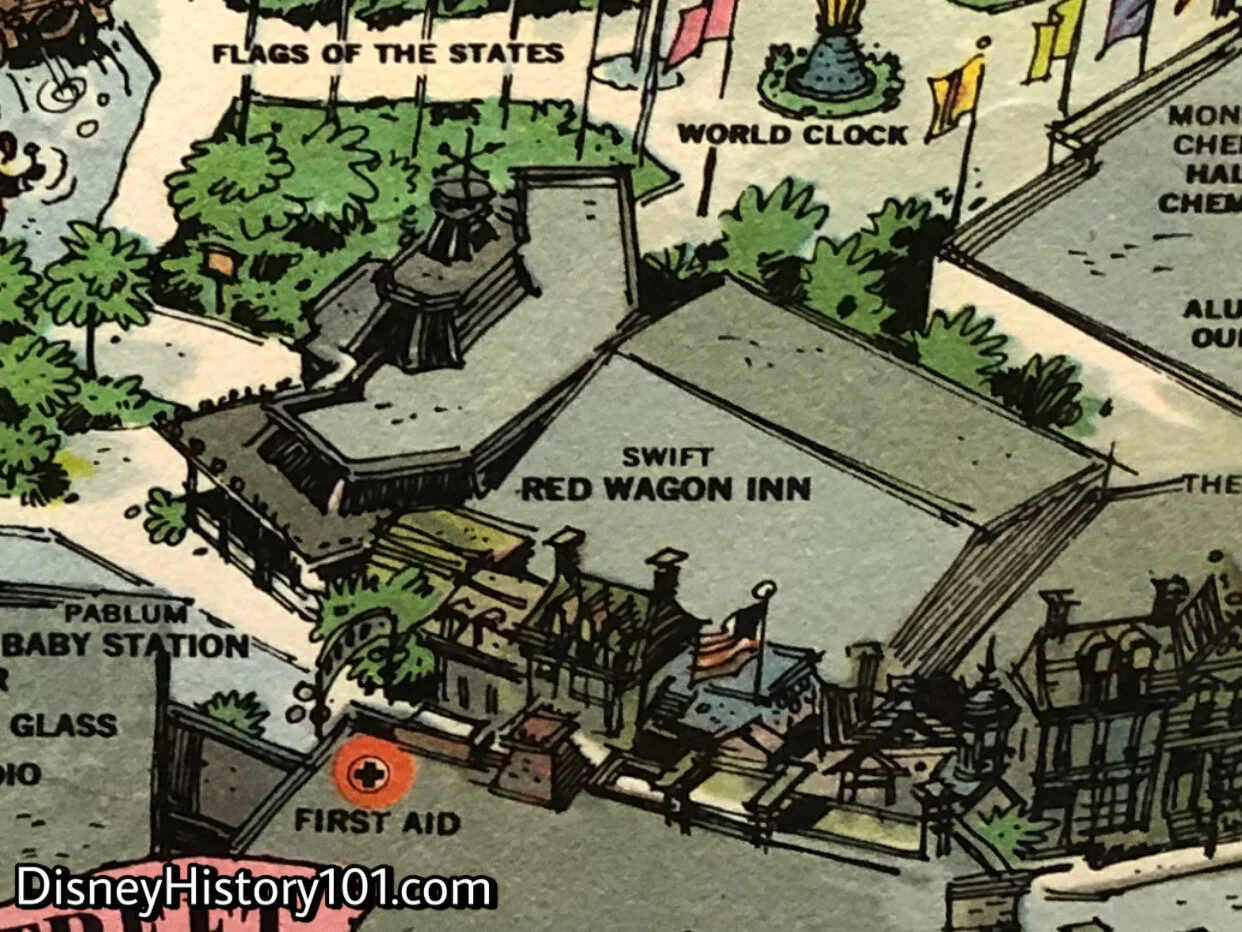
Preceding Photo : At the end of Main Street U.S.A., two restaurants stood off the the Plaza - the Plaza Pavillion and the Red Wagon Inn!
“Disneyland guests find tempting meals in the beautiful surroundings of Grandfather’s day at this restaurant on Main Street’s Plaza.”
(A Complete Guide To Disneyland, 1956)
Beyond the decor, the menu brought back visions of a by-gone cuisine. Red Wagon Inn Restaurant was named after Swift and Company’s turn-of-the-century horse-drawn manner of transporting Swift’s Premium Food products. The restaurant was one of three establishments (including Swift’s Market House and The Plantation House) to feature Swifts brand meats. Hamburgers were popular, but Red Wagon Inn also served an assortment of Swift & Co.’s brand “steaks and chops from the charcoal broiler” prepared exclusively for this location. The Red Wagon Inn was also the only location in the Park to offer full-course dinners (i.e. “Prime Rib Dinner”). According to Marcy Smothers, the “hash, tuna sandwiches, and hamburgers” were “favorites of Walt”. In a move of corporate synergy, the Red Wagon Inn was one of 16 Disneyland “eating places” which featured “fine food with fine coffee - Maxwell House!” Carnation Farms would also serve this and 14 other wholesale customers who operated restaurants and snack bars in Disneyland.
As aforementioned, the Red Wagon Company operated the Red Wagon Inn, in addition to Swift Market House, Plantation House, and the Snack Bar in Holidayland. At the Red Wagon Inn, the children’s meal selections bore the names of popular characters. In 1955, guests could order Snow White Roast Turkey, Si Am Scrambled Eggs, Danny Broiled Lamb Chop, Casey Jr. Chopped Sirloin Patty (served with sides of potatoes, vegetables, and milk beverages). The Brer Rabbit plate was a vegetarian option (featuring carrots, peas, potatoes, and a roll). All choices included a selection of deserts including Ice Cream, Jell-O, an ice cream bar, or Sherbet.
By 1958, the Red Wagon Inn was the only restaurant in Disneyland that served a full-course dinner. By 1958, the Children’s Menu had changed the five dining options : Snow White Roast Turkey and the Casey Jr. (now a Hamburger) remained. However, the Pluto Hot Dog, Lady and the Tramp Spaghetti and Meat Ball, and Monstro Halibut Steak were added.
“The Disneyland-Participant Sponsor Partnership”
The synergistic relationship between the institutional lessee and Disneyland, Inc. was good for Disneyland, Inc. Swift and Company - Red Wagon Inn yielded revenue for Disneyland Inc. - $45,692 for the fiscal year ending September 29, 1957 and $45,000 for the fiscal year ending September 28, 1958.
Further, the synergistic relationship between the institutional lessee and Disneyland, Inc. was good for Swift and Company. The Disneylander area merchant Red Wagon Company was a sponsor of the championship Disneyland Recreational Club baseball team of 1957. Clubs sponsored by the Disneyland Recreational Club occasionally held meetings in the Disney Room of the Red Wagon, like the new Ski Club, formed in 1962.
The Plaza Inn menu was inspired by the Disneyland Railroad and the Grand Canyon Diorama - with a Flagman Special, Mule Train Entrees, Desert Furnace Charcoal Broilers, Trail Blazers, Canyon Junction Soup, North Rim Salads, Hermets Rest Potatoes, Apache Point Sandwiches, and Yavapai Point Desserts.
The DIXIE CUP division of the American Can Company opened the doors of their Anaheim facility in 1952. The neighboring business came to be located at 901 E. South St., Anaheim, Cal. With a staff of nearly two hundred people under the direction of J.D. Mitchell, the center operated as a manufacturing and distribution point for their product quality paper cups to seven of the Western States.
The business partnership between Disneyland, Inc. and the Dixie Cup Company was profitable. By September of 1958, the Dixie Cup Company was contributing a routine portion of accounts receivable to Disneyland, Inc.
“Hey, that’s from Disneyland!” This artifact from the former Collection of Richard Kraft, preserves a late 1950s menu graphic, and simulates the feel of approaching the Red Wagon Restaurant during Disneyland’s “first fabulous decade” (c. 1955 - 1965)!
During the time of Swift’s sponsorship of the Red Wagon Inn (July 17, 1955 - October 11, 1964), meals prepared with Swift’s brand meats were served atop paper placemats like these. The map of Disneyland featured other locations where Swift’s products could be found in the Park. As the Market House was more of a shop, these placemats were used primarily for seated guests who made a reservation to dine at the Red Wagon Inn. Not pictured are the Concessions locations which served Swift’s Premium Franks (as early as 1956)!
During the days of The Tobacconist, restaurants like the Red Wagon Inn Restaurant (and Chicken Plantation House), offered complimentary toothpicks (in sealed paper packages) and souvenir matchbooks bearing these covers could be found in several Swift’s sponsored locations around Disneyland! Guests who enjoyed smoking after their meal (or merely enjoyed collecting matchbooks), may have routinely taken one of these along with them. Perhaps you added one of these to your collection while visiting Disneyland during its “first fabulous decade.”
This advertisement was run in publications (as Vacationland) during the Summer of 1960.
The Disneylander October-November 1960 introduced “CHARLIE KOEPPEL who is MYRT WESTERING'S successor as General Manager of the Red Wagon Co. Charlie was formerly General Manager of Metropolitan Hotel Supply Co., a division of Swift & Co., who has been furnishing those fine Swift's meats served in Disneyland. We're all going to miss our long-time friend Myrt and we wish him the best in his new venture.”
During the winter season of 1962, Jack Lavin and Chuck Corson arranged reservations for lunch at the Red Wagon for the Disneyland Carolers on their return from a Studio party on Saturday, December 15. They would be back in the park about 1:30 and fourteen (14) reservations for the luncheon at the Red Wagon were made.
Swift’s would end it’s sponsorship (on October 11, 1964) - just short of the close of Disneyland’s first decade. A photograph (above) of the Red Wagon Inn taken before it was closed (and transformed into the Plaza Inn), gives an idea of what it looked like at the time.
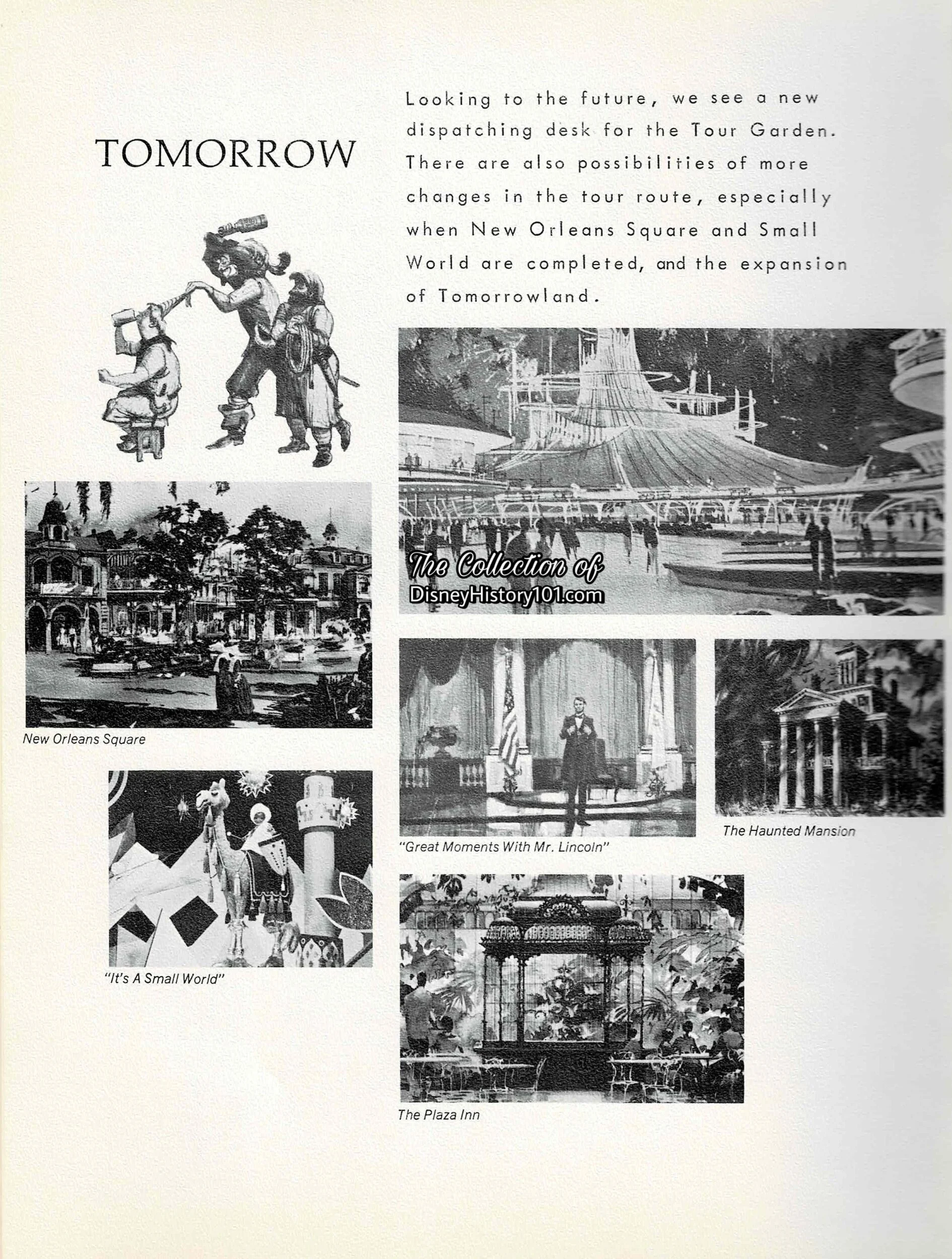
Meanwhile, coming attractions were divulged to Disneyland Cast Members, (including Disneyland Tour Guides) and then to television viewers, and both Walt Disney and John Hench introduced the Plaza Inn in Press Release photos.
Soon, Walt was cutting a special cake and toasting the opening of the Plaza Inn.
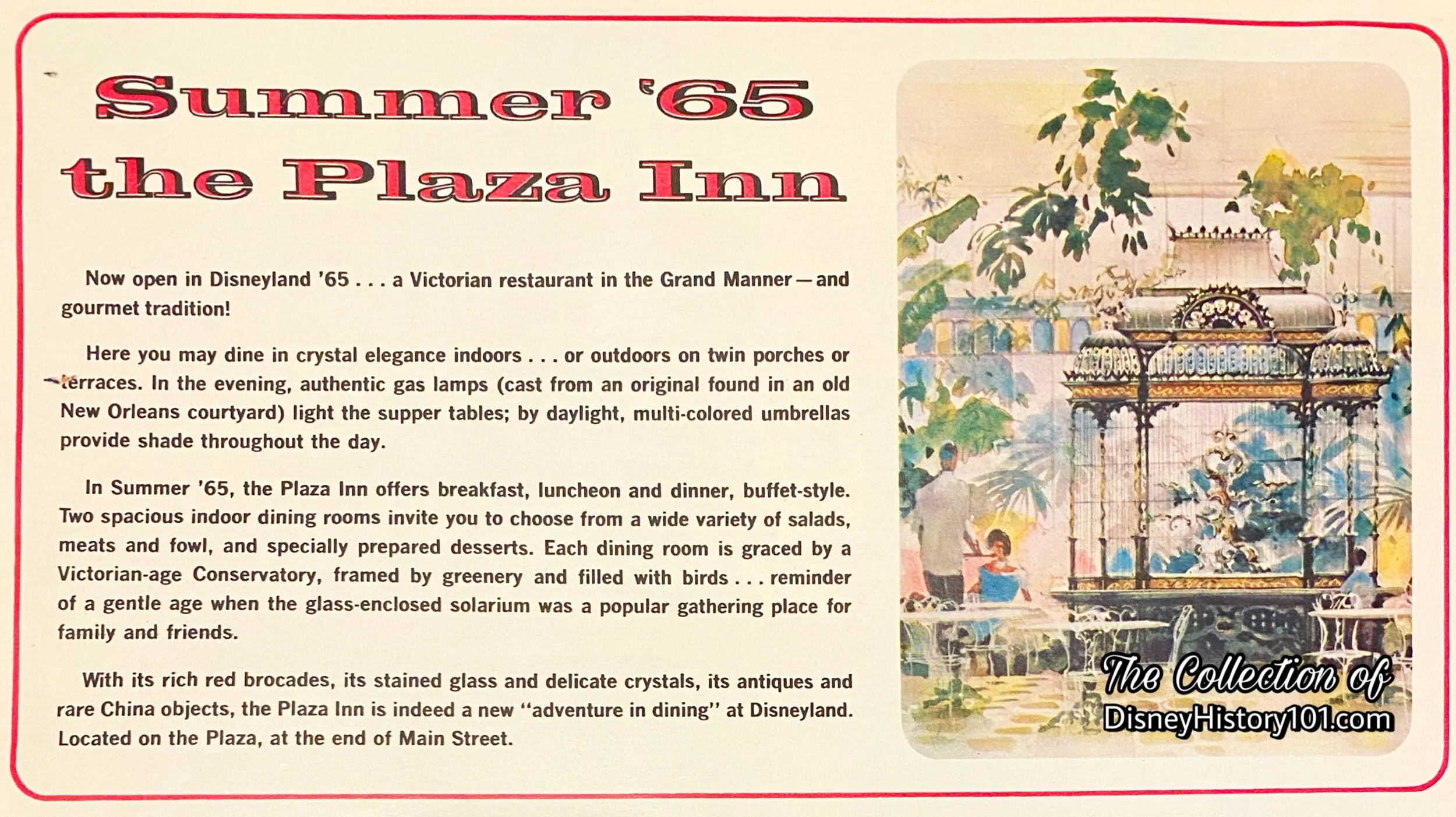
The extensive remodels brought a spectacular “look-in” Chef’s Kitchen and the Disneyland Bakery, alongside the “Backstage Employee’s Cafeteria.” The new Plaza Inn had some of the latest food handling devices. The dish conveyor there had no less than five elevators. When the Employees cafeteria reopened, there was now a beautiful new trophy case against the far wall, full of trophies awarded during Disneyland Recreational Club sponsored sports activities and competitions. According to Backstage Disneyland magazine (Vol.4, No. 4 ; December, 1965) : “The Plaza Inn opened only a few months ago and it seems appropriate to see how one of the most elaborate restaurants is doing. When it first opened there were many problems and a great deal of confusion, it seemed things would never calm down, but thanks to the able super- vision of Bob Wasson, Frank Di Guglielmo, Gerry Rawson and Dale Burner, things have settled down to a very smooth routine. A very nice advantage of our new Plaza Inn is that we now have our own bakery, headed by Bernie Juban, a true Patisser, and it might be noted that employees may have cakes made to order for them by Bernie.”
For the first ten years of Disneyland’s operation, there were no bakery facilities in the Park, so any bakery products sold to Guests were purchased from outside vendors. But now under Pastry Chef and Lead Fernando Topinio, the day and night crews of the new Disneyland Bakery (located behind the Plaza Inn Complex, next to the Inn Between) would provide all sorts of “pies, cakes, buns, and [even French] pastries” to the Park. These were delivered to Food Stands of Fantasyland (which were now operated by Disneyland) as well as other parts of the Park, according to “Disneyland Backstage” (Spring, 1966). In fact, the Disneyland Bakery would even bake “over 3,000 birthday and wedding cakes for the Disney Hosts and Hostesses in the Park,” according to “Food Showmanship Disney Style,” published 1973.
As a “sidelight,” I would like to honor a legendary expert baker - Fernando Topinio! Fernando Topinio (mentioned earlier) helped develop the recipes for all the cakes of both Disneyland and (later) Walt Disney World in Florida), and serve in this position for 21 years until his retirement on November 21, 1986. Other notable Plaza Inn Staff include the c.1965 Bakery Chef Bernie Juban (of Normandy, France), whose best customer had been Ed Mackie, who “gave samples to Raul and Julio,” according to Lewie Johnson of Backstage Disneyland Magazine (Vol.4, No.4, December, 1965).
Though the previous Red Wagon Inn dining areas could still accommodate a great deal of guests, seating was limited to the interior of the restaurant. So it was decided to expand the guest capacity to 500, by offering “open-air” dining in a new outdoor “peripheral” dining porches - on the Plaza Terrace.
The Plaza Inn was now run by the Disneyland Food Division (founded March of 1965). The new restaurant now offered “buffeteria” service for both luncheons and dinners. Menu items included sizzling steaks and juicy chops, baked chicken, veal, fish, spaghetti, salads, desserts, and beverages. Children’s plates (and portions) were offered additionally. Disneyland Master Executive Chef Hideo “Indian” Aramaki (of Puunene Maui, Hawaii) served the Plaza Inn for a number of years beginning in June of 1964, alongside head Chef Buddy Cabbaa, so if you dined at the Plaza Inn during this era, you likely experienced some of their cuisine! Much of the extra personnel acquired (in addition to new hires) during the holiday season (of 1965) was owning to the work of Bob Wasson. During the late 1960s, the Plaza Inn (and all of its Lead Hostesses, Salad Leads, Lead Hots, and Beverage Hostesses) was under the Area Management of Bernie Juban (c.1968 Plaza Inn Supervisor).
All of these recipes and menu options (like the c.1968 menu specialty Veal Pojarski) necessitated the daily purchase of “perishable food that cannot be stored in the warehouses” - (some 180,000 feet of space once located Backstage, North of Disneyland), according to “Food Showmanship Disney Style,” published 1973. According to the same publication, “The Food Purchasing people will make over 6,000 purchases in one year from more than 75 different companies and food vendors.” This was overseen by Max Sloan (Manager of Food Controls for Disneyland).
“Rehabilitations & Refurbishments”
As far back as its earliest years, the Plaza Inn received periods of extensive cleaning. For instance, in the evening, Chuck Boyajian’s Maintenance crews would clean the depths of the kitchen (“steam cleaning of the deckwalks which are the slat boardwalks used in the kitchen”), to the heights of the dining rooms (cleaning the “chandeliers which require special handling”), according to Disneyland Backstage magazine, (Summer, 1966; Vol. 5, No. 2). “In the Plaza Inn are two crystal chandeliers. (These cost $10,000 each, incidentally.) During the summer months they are washed three times a month with detergent. (They do have a feature not available in most homes. They are lowered by electric motors so that the clean-up crew doesn’t have to stand on ladders.),” according to Disney Magazine (Summer of 1976). This feature allows Disneylanders to clean them “at ground level, [where] each piece of crystal ornamentation can be dusted and polished easily,” according to Disneyland LINE (Vol.21, No.5 ; February 3, 1989).
Christmas of 1986 and the Candlelight Ceremony brought a special menu to the Plaza Inn, “for your dining pleasure.” There was Egg Nog, Cream of Asparagus Soup, Cheese Straws, Stuffed Fillet of Sole with Lobster Mousse, Fleuron, Head of Limestone Lettuce Navidad, Roast Rack of Baby Veal Princess, Wild Mushroom Sauce Forest Style, Fresh Asparagus Points Hollandaise Sautéed Baby Summer Squash filled with Fresh Carrot Mousse, Snowball Potatoes, Half Spiced Peach, Sauce Cumberland, Chocolate Cups filled with fresh strawberries, and Mousse Santa Claus Way.
By 1987, the Plaza Inn hosted by Columbia Coffee Growers offered healthier menu options - Spaghetti with Meatless Sauce, Fresh Fish of the Day, and Seafood or Tuna Salad! At the time (some time in May), the red brocades and stained glass themed restaurant was entirely remodeled with lavish accents and antiques - a Louis XV-style wooden clock and marching barometer handcrafted in Versailles in 1840 and a 200-year-old bronze and crystal French chandelier decorated the foyer. Seventeen wall-mounted sconces made from Parisian bronze and Baccarat crystal decorated walls above tables. The supper tables were lit by authentic gas lamps cast from lamps found in a New Orleans courtyard.
Other details from the Columbia Coffee Growers sponsorship era include “Norwegian marble furnishing the displays where the entrees are displayed, a c. 1820 hand-wrought-iron console from France, bronze and crystal chandeliers, and an elaborate four-shelf French cabinet [from the late 1700s] made from Fruit woods and trimmed in bronze”, which was filled with antiques.
In addition, the Plaza Inn Host and Hostess Wardrobe was redesigned by Becky Erbstoesser (of Disneyland Entertainment Costuming). The new costumes of “navy, rust, beige, and white… polyester/cotton blend fabric” blended well with the Plaza Inn Complex’ new color scheme. These fabrics were also “much cooler and more comfortable”.
In 2008, WDI master planners entertained the concept of a Quick Service Restaurant expansion update to the Main Street Bakery.
“Walt often entertained dignitaries, heads of state, and entertainers, many whom were his personal friends. These guests would often join Walt for a meal at this restaurant... back then it was known as The Red Wagon Inn and it featured a somewhat private area for VIP guests near the back. Of course many of these VIP guests were noticed by other dining guests and the idea of a quiet dinner often became lost in an impromptu autograph session with overzealous fans. Walt realized that it would be necessary to create a VIP area for these famous guests.”
You may recall hearing how Walt Disney, on the eve of Disneyland’s first day of operation, promised that “Disneyland will never be completed. It will continue to grow, to add new things, as long as there is imagination left in the world.” By the time Swift & Company ended its sponsorship as a Disneyland Participant and the Red Wagon Inn closed its doors, Walt Disney and John Hench (of the Walt Disney Studio Story Department) were already overseeing production of a model of the new Plaza Inn. By 1964, John Hench and Emile Kuri had completed many designs of the lavash interior decor of the Plaza Inn. Emile later recalled: “Walt told me, ‘the average factory worker or truck driver can’t afford luxury for himself or his family, so I want you to make the interior really luxurious, even our prices are going to be cafeteria prices.’ Walt wanted the Plaza Inn to be absolutely the most luxurious things for the average family.” Soon the “Walt Disney Productions Annual Report to shareholders and employees” (published for the fiscal year ending October 3rd, 1964), displayed three pieces of artwork of what was described as “a new 500-seat open-sky restaurant.”
The magnificent “rococo-styled” Plaza Inn opened in place of the Red Wagon Inn, during the very same year as Disneyland’s 1965 Tencennial Celebration. “At the Grand Opening of the newly-designed Plaza Inn… Walt offered a toast to the new restaurant,’” according to Disneyland LINE (Vol. 26, No. 17). This new experience in “dining at Disneyland in the grand manor” was part of new additions that carried total Park investments to $53 million! Now, guests would “enjoy gracious dining in a beautiful Victorian setting. The Victorian theme reflects the tastes of the reign of England’s Queen Victoria (1837-1901) whose love for the gaudy and ornate developed into excessive, and often unjustified decoration. On the whole, it was a romantic style. It glorified the elements of Gothic, while combining it with overuse of turrets, bays and towers,” according to “Food Showmanship Disney Style”, published 1973.
One Disneyland LINE magazine records how Emile Kuri personally searched salvage yards and antique shops for furnishings and fixtures for New Orleans Square and some of those pieces would decorate the Plaza Inn. A 200-year-old French chandelier,… a c.1700 French fruit wood cabinet, an 1820 hand-wrought iron and marble console, and seventeen wall-mounted sconces and twenty-four basket chandeliers of Parisian bronze and Baccarat crystal were among those pieces. A lamppost found in a New Orleans courtyard by Emile Kuri was cast to create 17 seven-jet lampposts. There were 80 tables lit by a ruby-shaded lamp on a marble and bronze base with a “boy-and-dolphin” theme. According to a Disneyland News writer: “One of the most interesting is a superbly hand-carved, gilded wood wall clock and matching barometer, the work of master-craftsmen in 1840 at Ver-sailles. These pieces, in the style of Louis XV, introduce the Plaza Inn's boy-and-dolphin motif found in many of its furnishings.”
“Inside will be rich, red brocade,” according to “The Disneyland Diary.” A “generous use of mirrors” also contributed to a “most magnificent Victorian atmosphere.” According to the “Disneyland Dictionary” (compiled by WED Enterprises, Inc. and WED Public Relations Department, c. 1968), this was a “plush Victorian restaurant for buffet dining in the grand manner of moderate prices. Located near the entrance to Tomorrowland, it includes two palatial dining rooms with crystal chandeliers and velvet appointments, two flower-hung porches, and two solariums for dining. Authentic antiques have been collected from many nations to add interest to the Plaza Inn.”
“The Grand Foyer & Dining Rooms”
With good reason, one (c. 1965, Fall) Vactionland magazine writer referred to the “antique-studded foyer and two large dining rooms.” According to “Food Showmanship Disney Style”, published 1973 : “Among the most interesting item’s in the Plaza Inn’s foyer are : a superbly hand carved, gilded wall clock and matching barometer, the work of master craftsmen in 1840 at Versailles.” Some of the chandeliers and wall sconces adorning the rooms (c.1965) were also actual antiques from European castles. “Seventeen bronze and crystal sconces adorning the walls of the dining rooms, each crowned with a rosette, utilizing the world famous Baccarat Crystal (a line of very fine crystal produced in Baccarat, France.) Twenty-four basket chandeliers, also of Baccarat crystal and bronze. Two specially designed rotisseries mounted on selected Norwegian rose-marble pedestals. Each Rotisserie features a stained-glass canopy, a pair of highly ornate coffee urns with rosette spigots, custom made for the Plaza Inn. Centered in the foyer is a 200 year old French chandelier of bronze and crystal, found in a New Orleans antique shop,” according to “Food Showmanship Disney Style,” published 1973. You may also recollect plucking fruit or desert items from one of “the antique gold, three-tiered epergne[s]” placed around the room.
By 1969, the inventory list was maintained by the Disneyland Decorating Department and was perhaps the most unique manifest of items existing anywhere. It contained about 35,000 items of various sizes, shapes, and values with 4,000 items on Main Street alone.
“The Conservatories”
Each dining room is graced by a Victorian-age Conservatory, framed by greenery and filled with birds . . . reminder of a gentle age when the glass-enclosed solarium was a popular gathering place for family and friends. All these exquisitely furnished dining areas including the solarium (especially the two “peripheral porches,” and a pair of “umbrella-shaded dining terraces” for al fresco dining) would increase the maximum guest capacity to 534.
In the evening, authentic gas lamps (cast from an original found in an old New Orleans courtyard) light the supper tables; by daylight, multi-colored umbrellas provide shade throughout the day.
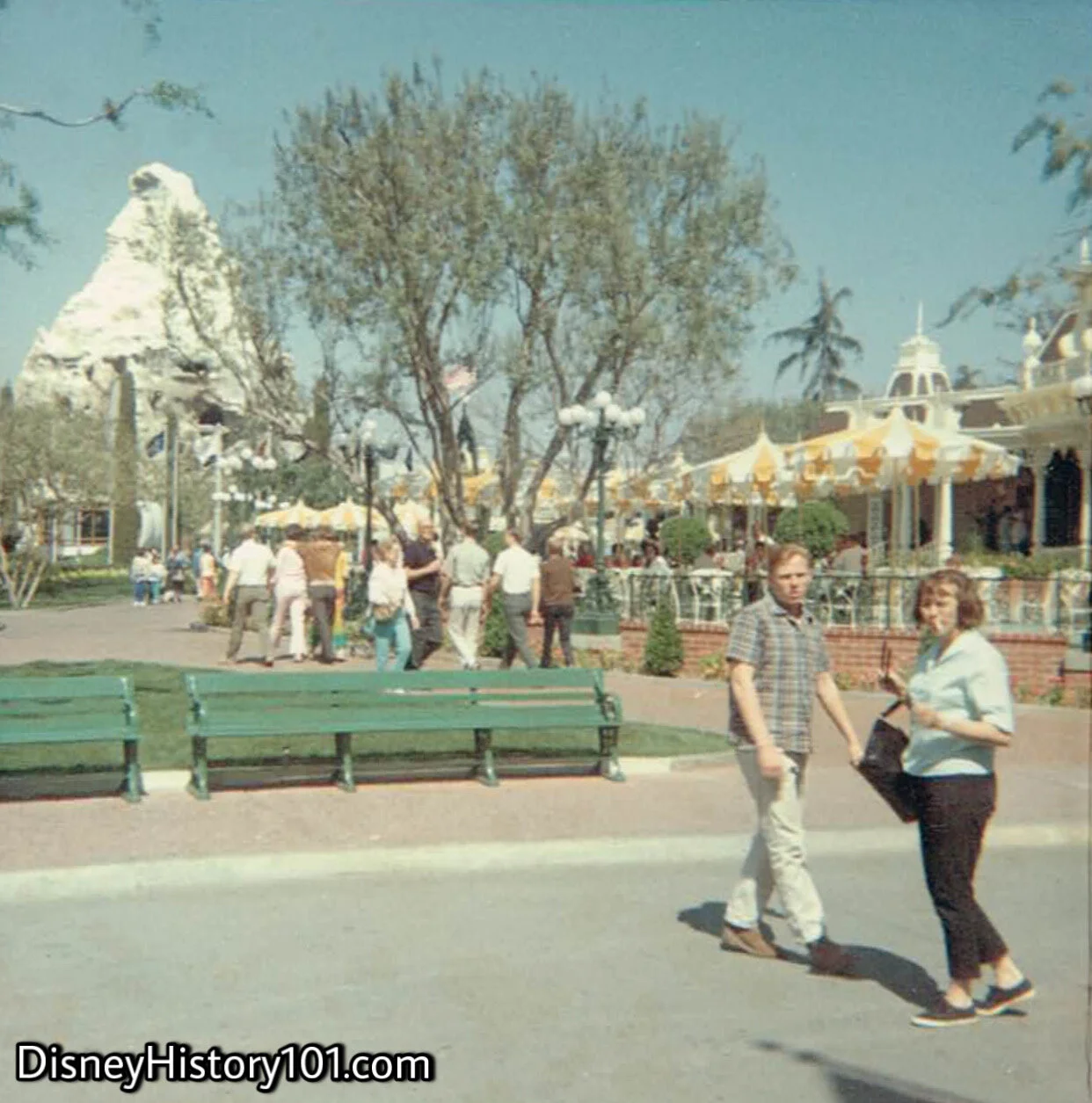
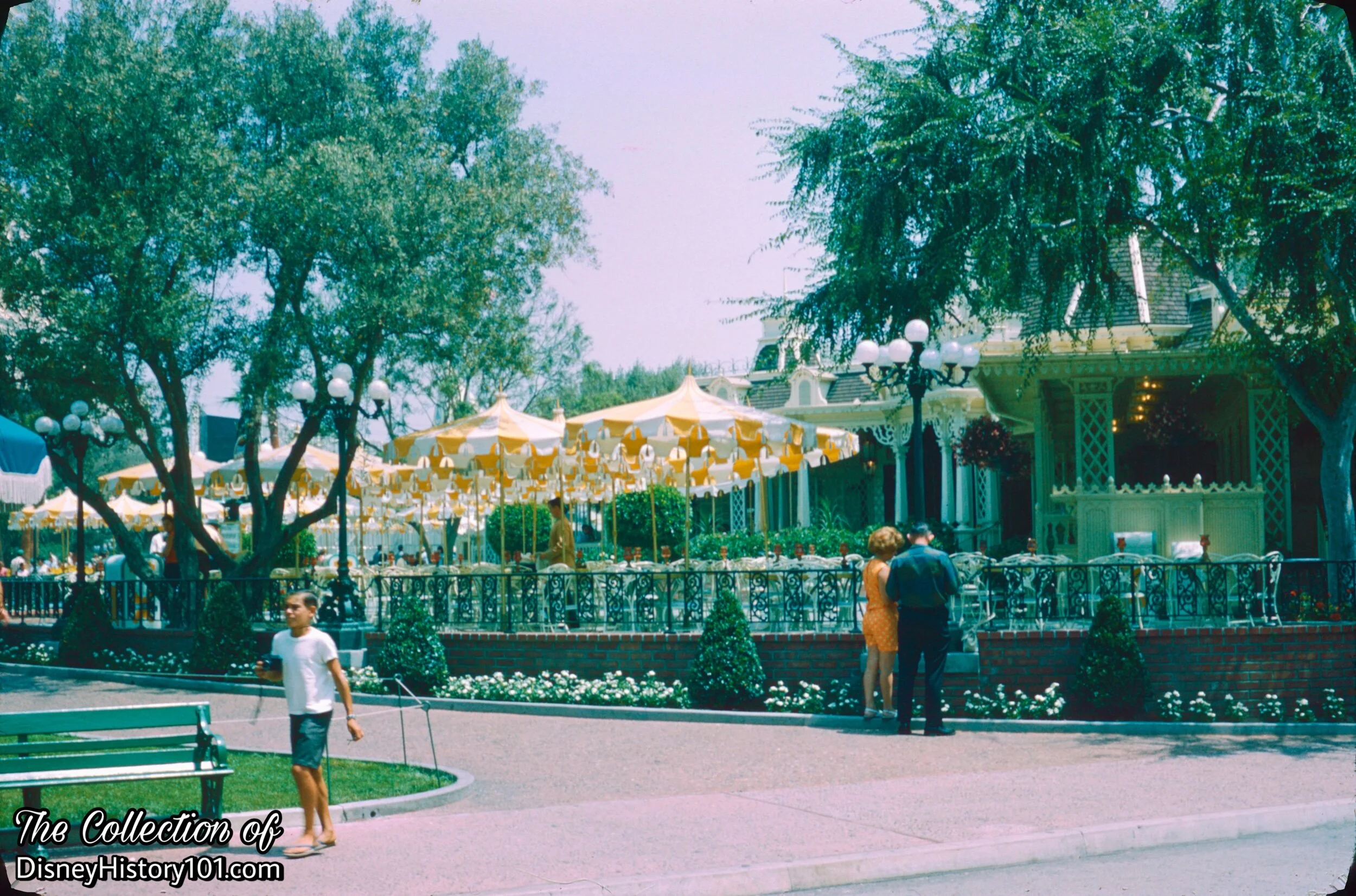
The park-like planters outside the Plaza Inn sure offered a picturesque setting for group photos!
“Right this way, please! The Hostess will show you to your seats.” Here, a Hostess exhibits the second of The Four Keys of the Disneyland Show - Courtesy! This she effects through a smile and friendly gesture. Supporting the role of the Cast Member is a new costume dress that was designed at Disneyland and both finalized and assembled locally and in San Francisco during the summer of 1965.
Guests could choose the salads they wanted to eat at the “buffeteria” atop the two-foot diameter, three tiered servers crowned with a gold epergne that has been converted into a fountain, resting on rare Norwegian marble!
By 1981, the Plaza Inn Complex made $ 3,963,000 in revenue while the Plaza Inn itself brought in $2,971,000 for Disneyland.

There are many Backstage support areas of the Plaza Inn that Disneyland visitors may never see. For instance, the Plaza Inn Complex was home to Secretarial Offices, and even a designated Disneyland Employee dining area. The Employee Dining Area had come a long way from the “big green tent and a guy named Harley who ran the place,” (according to Jack Lindquist’s recollection to Disneyland LINE).
Now, the Plaza Inn was also home to the Inn Between Employee Cafeteria, considered part of the “Main Street U.S.A. Park Land and Food Area,” though it is located Backstage, behind the Plaza Inn Restaurant on the east side of Main Street, and only accessible to employees. This Disneyland Employee Dining facility was open daily until 2 a.m., and could satisfy the appetites of a maximum capacity of 250 employees at one time. The Inn Between (Ext. 596) was open seven days a week year-round. The Inn Between, was located in the Backstage portion of the Plaza Inn, and offered a variety of sandwich and entree items at reasonable prices. Breakfast was served for employees beginning at 2:45 am every morning. During the normal winter Park operating hours and on Monday and Tuesday when the Park was closed, the Inn Between closed at 7:30 pm. Whenever Park hours were extended, such as in summer, the Inn Between closed a half hour before the Park closed. Employees could special order cakes from the Inn Between Bakery.
While “taking five” and dining on those Interpace pattered Shenango China plates and bowls, you may recall looking at DRC trophies exhibited behind glass, or catching up on DRC event scores posted on the bulletin board. What was the entertainment like at the Inn Between? Though there was a television set, it was only ever used for watching “sporting events or special programming,” according to Disneyland LINE magazine (November 22, 1979).
The Inn Between (along with the Plaza Inn, Central Kitchen, and Plaza Terrace) was overseen by a Stage Area Supervisor and up to three other Stage Supervisors, and a varying amount of Hosts and Hostesses (e.g. in 1981, there were 519 Hosts and Hostesses in the summer and 355 in the fall). During the late 1960s, its cashiers, waiters, waitresses, dish-up staff, and fountain staff were managed by Max Sloan. Former Food Service Division Employee Don Payne (who worked during this era) shared this Vintage View with Disney History 101. He recollects : “Just before I began my adventure in the Entertainment Division, I was spending my time as a fry cook at the Inn Between (Employee’s Cafeteria).” Others however, stuck around in the Inn Between.
The Disneyland LINE occasionally reminded Disneylanders to return any borrowed utensils or trays that may have been removed from The Inn Between. [May 2, 1969; Vol. 1, No.5]
In 1972, another employee - Dave Heineck (who enrolled in the Military Cooks and Bakers School, out of high school) - applied for Disneyland Security. However, he was persuaded to fill a cook position opening at the Inn Between, and subsequently stayed in this position for many years!
This was the main employee cafeteria until the Disneyland Employee Cafeteria (often referred to as the DEC) opened as“part of the New Orleans Square underground facility, in order to provide food services to employees that worked on the other side of the park,” according to Disneyland LINE (published June 17, 1976). When the Inn Between would close for its annual rehab, the DEC would assume its operating hours, and (during the 1980s) a catering truck would occasionally appear behind the Main Street Break Area. If you were a Cast Member around 1980, you may recall seeing Mickey Aronson (Disneyland’s Chief Pyrotechnician “extraordinaire”) routinely eating dinner at the Inn Between before automatically checking the Town Square flag for wind direction.
D.R.C. Clubs occasionally made use of the Plaza Inn and Inn Between, as when the Disneyland Christian Fellowship Club held a special Christmas Breakfast at the Inn Between (at 7a.m., on Wednesday, December 19, 1979), and ate in a special reserved section of the Plaza Inn Solarium. That same year (1979), “in consideration of the holidays,” the Inn Between hours of operation were adjusted - on December 24th (2:45 a.m. - 6:30 p.m.) and 25th (2:45a.m. - 6:30 p.m.). [Disneyland Line, December 13th, 1979]
The new Inn Between Patio Express Service Center allowed Disneyland Cast Members to eat “on the go.”
During the 1980’s, when the Inn Between was closed (e.g. for rehabilitation), Disneyland Cast Members could likely still rely on the availability of the D.E.C. or the Village Haus Cast Member Window. Still, there was nothing comparable to dining at the historic Inn Between! In 1981, the Inn Between brought in $807,000 in revenue to Disneyland.
On Thursday, January 8, 1987, the Inn Between was open until 10:00 p.m. It was also open until 10:00 p.m. during the Star Tours Cast Premieres on January 12-16, 1987.
Occasionally the Plaza Inn and its menu was transformed for events as for Cinco de Mayo of 1989.
During the early 1990s, the Inn Between would receive a major remodel, resulting in the opening of the All-New Inn Between on April 1, 1993! The Inn Between would close 1 hour prior to park closing.
By 2008, the Inn Between was still located behind Star Traders toward Main Street; a Break Area, a Cast Member Dining Location, with nearby Backstage Cast Member Restrooms and a Cast Member Smoking Area in The Inn Between lower patio.
Today, Cast Members can dine at many Backstage Areas. StarDinerz were Cast Commissary Locations like Eat Ticket (a Cast Member cafeteria located adjacent to the Team Disney Anaheim/TDA building), Westside Diner, Inn Between, DCA Café, Bungalow Grill, DRC Cafe).
“Plaza Inn Strings”
As for entertainment, some of the earliest talent to appear came in the form of the Plaza Inn Strings. The “Plaza Inn Strings” were described as a “fine string group” that would “stroll from table to table through the dining rooms, solarium, and patios.” As to the frequency of their performances, during the winter of 1967, the Plaza Inn Strings performed seven times daily (from approximately 11:00am to 8:00pm), from December 16th, 1967 thru January 1st, 1968. [“Disneyland Holiday Talent Master Schedule,” prepared for the period of December 16, 1967 through January 1, 1968] By November 26, 1972 through May 26, 1973, the Plaza Inn Strings performed 12:00 N - 7:00 PM, one day (Sun., Nov. 26, ONLY).
String groups were common during this era, as another contemporaneous group known as the Blue Bayou Strings Orchestra performed daily on the Blue Bayou Stage, and featured songs of the south and medleys of Broadway Show Tunes.
“Disneyland Christmas Carolers”
During concurrent winter seasons, the Disneyland Christmas Carolers (under the direction of Dr. Charles C. Hirt and lead by Mr. Robert G. Hasty), performed short concerts at the Plaza Inn at least once a day, from December 16th, 1967 thru January 1st, 1968. During the winter holiday season, the “Disneyland Christmas Carolers, dressed in the style of Charles Dickens” entertained “guests of the Park with traditional Christmas carols and holiday music.” These were under the direction of Dr. Charles C. Hirt and lead by Mr. Robert G. Hasty. As to the frequency of their performances at the Plaza Inn Restaurant during the winter of 1967, they appeared at various times during the day, from December 16th, 1967 thru January 1st, 1968. [“Disneyland Holiday Talent Master Schedule,” prepared for the period of December 16, 1967 through January 1, 1968]
“Plaza Inn Accordionist“
The Plaza Inn Accordionist also provided melodies to accompany the Plaza Inn dining experience. By November 26, 1972 through May 26, 1973, the Plaza Inn Accordionist performed Wed., Sat. & Sun, from 11:30 AM - 5:30 PM.
“Private Parties & Special Events”
The Plaza Inn also continued to host special events. There were Private Parties (e.g. the 11th Annual Lockheed Family Night at Disneyland November of 1975, or the GM and Hughes Employees, January of 1986), or meetings of the Golden Ears Retirement Club (during the 1990s). You may recall attending one of these meetings featuring guest speakers (“household names” like the Legendary Milt Albright, or Jack Lindquist). The Golden Ears Retirement Club even held their seasonal Christmas meetings at the Plaza Inn.
During special events, special cuisine was offered, like the Veal Cutlet Pojarsky served during the 11th Annual Lockheed Family Night at Disneyland (of 1975).
The Plaza Inn was also utilized as a Media Center (as during the Press Event for the opening of Tomorrowland from May 20 to 22, 1998).
Many visitors have had the pleasure of enjoying a Character Breakfast, but fewer have had the pleasure of dining in the special Disney Room. Here, a couple of Guests enjoy a Dinner - a Character greeting performed at a park restaurant while the Guests are dining.
By 1986-1987, you may recollect that many locations served breakfast including Carnation Main Street, River Belle Terrace, The Blue Bayou, and Tomorrowland Terrace. However, only the Plaza Inn offered the opportunity to join your favorite Disney Characters for fresh buffeteria-style Character Breakfasts (Monday, and then daily, until 10:45 a.m.) as part of the Character Program. Guests could join their favorite Disney Characters for a good breakfast and choose from the delicious Plaza Inn menu and start their day off right. I’m addition, each child would receive a Mickey Mouse balloon as part of the experience!
Beginning in 1989, the Walt Disney Travel Company offered vacationers the most unusual-way ever to visit Disneyland: before the Park opened. Called the “Early Bird Exclusive,” the new program let visitors enjoy one of Disneyland’s themed areas one full hour before the Park's regular operating time. In addition, Guests were joined by the Disney Characters for a special breakfast at the Plaza Inn.
During the 35th anniversary, the Plaza Inn porches (south and north) were used as interview areas for the event. The Interview Center was located in the South Solarium in the Media Center at the Plaza Inn.
We will now take a look at a few of the Plaza Inn’s unique vintage 1870 Victorian architectural features that actually date from that era!
Those main entrance doors (with brass-bound, and glazed with cut glass panes) were originally part of the St. James Park mansion interior.
According to Disneyland LINE Magazine (June 25, 1993 ; Vol. 25, No. 25):
“The huge doors made of brass, wood, and beautifully cut glass, give the facility an elegant Victorian charm. The entry doors were taken from a house built more than 120 years ago.
In preparing to build Disneyland, Walt Disney had plenty of foresight. As he envisioned Main Street, the area would be as authentic as reasonably possible. For Walt, that meant finding as many authentic pieces as could obtain. When he learned that a mansion in Los Angeles was about to be destroyed, he sent Chief Set Designer Emil Kuri to try to salvage anything that could prove useful… Homes in the area were built before the turn of the century, but by the 1950s, many had been torn down to make way for progress. Emil managed to find several items of interest from the house. Stained glass, doors, and even staircases turned up at the Studio’s Prop Department, and many managed to find their way into the Park when it was built.
The biggest beneficiary of the furnishings from the St. James mansion was the Red Wagon Inn, one of the original Lessees. Swift and Company operated the elegant restaurant which featured prime rib and a variety of entrees. The huge doors with the cut glass, which added elegance to the restaurant, were actually interior doors in the St. James mansion.”
Character lighting was themed to enhance the overall appearance and complement the interior, such as a chandelier or kerosene lamp. These add to the show, but don't necessarily create enough illumination for operation. “The Chandelier in the Plaza Inn is from the 18th century. It originally had candles burning on it and [sic] had to be wired for electricity,” according to “Did You Know” (published by Disneyland in 1991). According to the same publication, one of these chandeliers is a “220 year old French Chandelier of bronze and crystal found in 1964 in a New Orleans antique shop.”
You’re looking up at some of the stained glass work removed from the ceiling of the mansion at 20 St. James Park, Los Angeles. Disneyland LINE Magazine (June 25, 1993 ; Vol. 25, No. 25) continues :
“Additionally, the Red Wagon Inn also boasted a stained glass ceiling (which had been used on the mansion’s third floor solarium), hand-carved wood paneling, and newel posts from the mansion.”
Portions of the columns are just some of the many Victorian theming parts re-purposed from the (now demolished) von Zimmerman mansion.
Other Victorian theming elements that were extracted from the Saint James Park mansion can still be seen around the Plaza Inn in the present! During the Columbian Coffee Growers sponsorship, these featured red brocades and crystal.
The Red Wagon Inn had a secret VIP dining room called the Disney Room. During the early (Red Wagon Inn) years, the room was constantly utilized as a conference hall for meetings with Disneyland employees. For instance, the Disney Room was used for the Disneyland Inc. Guided Tour Conferences sessions for some twenty of Disneyland employees, (i.e. from 8:30am to 9:30am, on September 25, 1958). The likes of Ron DArcy, Pete Henderson, Tommy Walker, Bud Coulson and other Disneylanders used this room during its heyday. Also, various individuals involved in Operations would hold brief “buzz sessions” related to special events, talent performances, and parades held at Disneyland.
The room has come to be known as the Hideaway or Hideout (which has been transformed into a manager’s office in recent years).
Unsubstantiated rumors claim that this table location was Walt Disney’s favorite place to sit. While some rumors may have a ring of truth to them, we may can’t invalidate or verify this was the case (through Managers or Guest Relations Hostesses or Hosts). Perhaps photographic evidence will turn up one day, showing Walt sitting in this area (at the very least).
By 1996, the Main Street Food Operation Plaza Inn Buffeteria Service restaurant was hosted by Colombian Coffee Growers.
As for the Plaza Inn cuisine, guests may also enjoy seasonal additions to the menu like slow roasted Pot Roast, Chipotle - Pineapple Glazed Salmon, and of course golden brown fried Specialty Chicken a la carte! Remember, Swift’s Premium Chicken Dinners were the order of the day, at Swift’s Red Wagon Inn Restaurant in 1955. In the present, the spirit of the original chicken-based menu options live on. The Specialty Chicken Plate (usually three pieces of chicken, fried to a golden brown, seasoned with distinctive herbs and spices, served with mashed potatoes, buttermilk biscuit and mixture of vegetables) is still one of the most popular dishes in Disneyland!
When the Food and Beverage Team would contribute toward exceeding the Guest, Cast, and financial goals, these awards were issued.
In the present, not all of the red wagons have disappeared from Disneyland. In fact this particular “Little Red Wagon” (located outside the restaurant) is the veritable “weenie” at the north end of Main Street. If you don’t believe me, then try one of their incredible Hand Dipped Corn Dogs!
As for the Plaza Inn, it has a legacy at Hong Kong Disneyland where it serves Cantonese cuisine in a family-style setting; hosted by Maxim's.
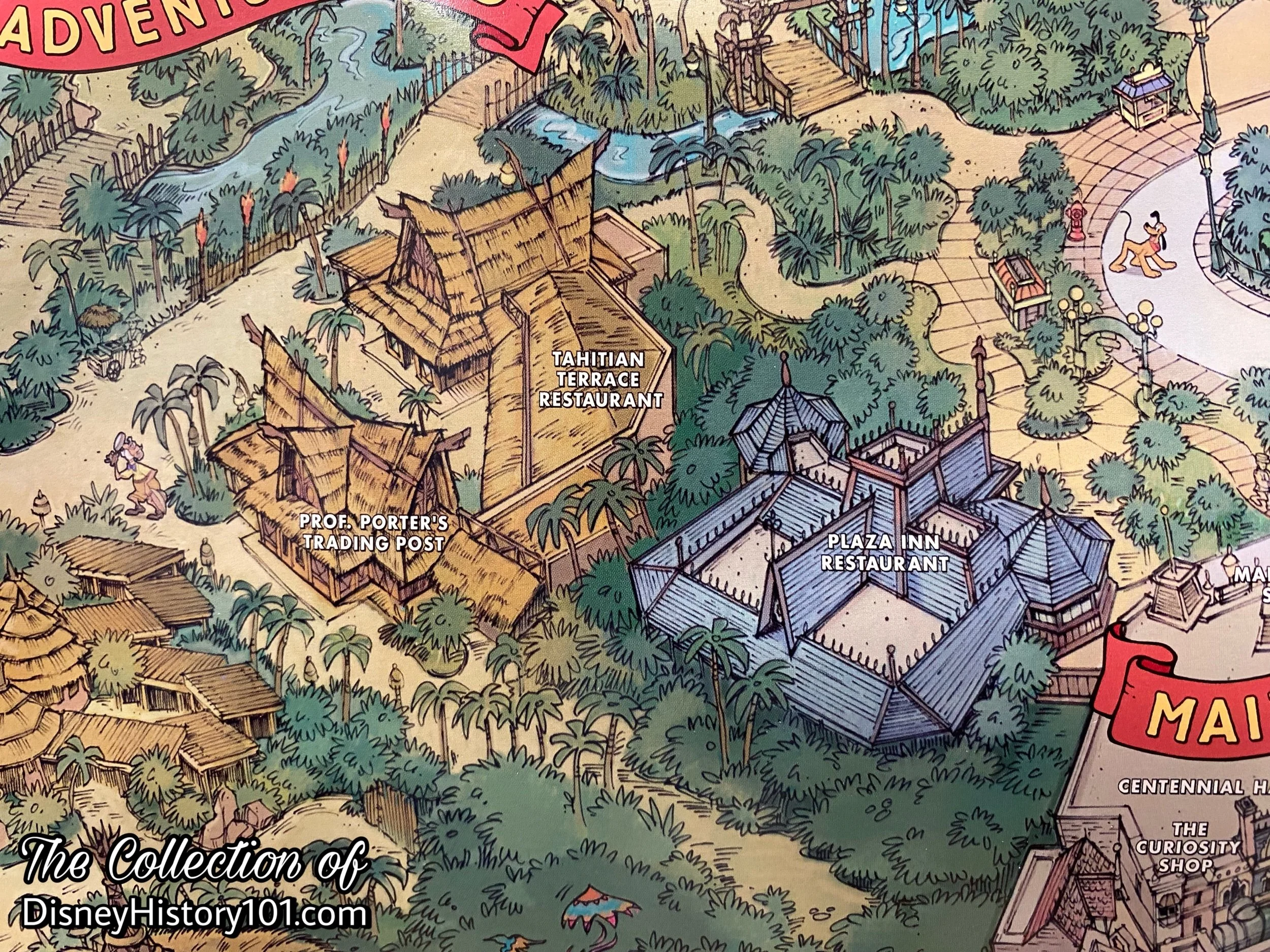
If you would like to read more about both Swift’s Red Wagon Inn and the Plaza Inn, it’s my pleasure to recommend adding Marcy Smothers’ “Eat Like Walt - The Wonderful World of Disney Food” to your personal Disney Home Library! Therein, Marcy has extensively researched and finely crafted several sections dedicated to seldom mentioned areas of the restaurant (including “The Hideout” and even the “Cast Cafeteria/ The Inn Between”). If you would like to bring the magic of Disneyland restaurants and concessions to your dining room table, “please step this way” toward www.eatlikewalt.com where Marcy has shared a few recipes for memorable Disneyland menu options, including that of Swift’s Red Wagon Inn Potato Salad. If only we could get that recipe for the Inn Between Carrot Cake!
I hope you enjoyed this brief photographic retrospective of the Red Wagon Inn and Plaza Inn. Now, “let’s dine at Disneyland”!
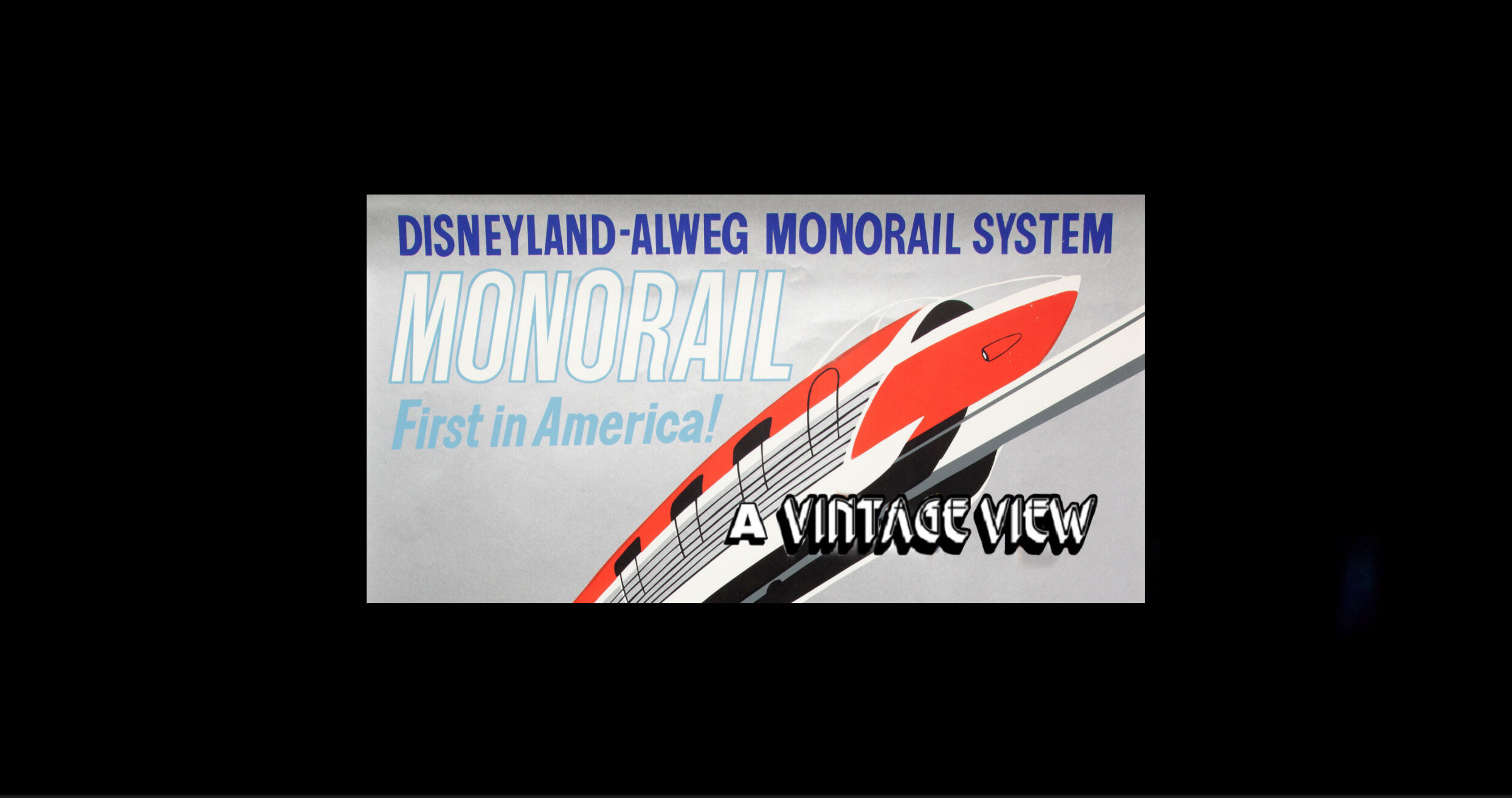

Quisque iaculis facilisis lacinia. Mauris euismod pellentesque tellus sit amet mollis.