FANTASYLAND THEATER (and MICKEY MOUSE CLUB THEATER & DISNEYLAND DRAMA CLUB)
(September* 1955 - 1964)
*Some sources (as “Disneyland Admission Media Rides and Attractions Report, published 1971), also state August 25, 1955 as the soft opening date. Another publication states August 27, 1955.
“Your Role in the Disneyland Show” has been referred to Disneyland as “a gigantic outdoor ‘show’” where “any area open to our guests is considered part of our ‘set’ and ‘on stage’.” This would include any and all Stages set within that Stage.
“Setting the Stage”
Disneyland was a miracle of showmanship in many ways! The presentation of the Mickey Mouse Club Theater show on the vast DISNEYLAND “stage” was to be a distinct part of the Disneyland theater concept. Some of Marvin Davis’ earliest c.1953 drawings of “Mickey Mouse Mark” (to be constructed on some 50-acre plot), featured a “Theater Group” attraction building. According to the 1953 Disneyland Prospectus, page 5, “Mickey Mouse, the best known personality in the world has his Mickey Mouse Club Headquarters in Disneyland.” Though the Mickey Mouse Club Theater ended up situated in Fantasyland for most of its duration, that was not the original plan for its location. The same Prospectus continues, “Located on Treasure Island, in the middle of the river, a fantastic hollow tree and treehouse serves as the Club meeting place. The hollow tree is several stories high, with interesting rooms , and lookout spots for club members. There is a Pirate Cove with buried treasure on the Island. . .and direct from this location the Club presents the Mickey Mouse Club Television Show.” So, according to the original plans, the Mickey Mouse Club Theater would have been based on what came to be known as Tom Sawyer Island (in the middle of Frontierland’s Rivers of America)! Can you just imagine taking a raft to get to the theater?
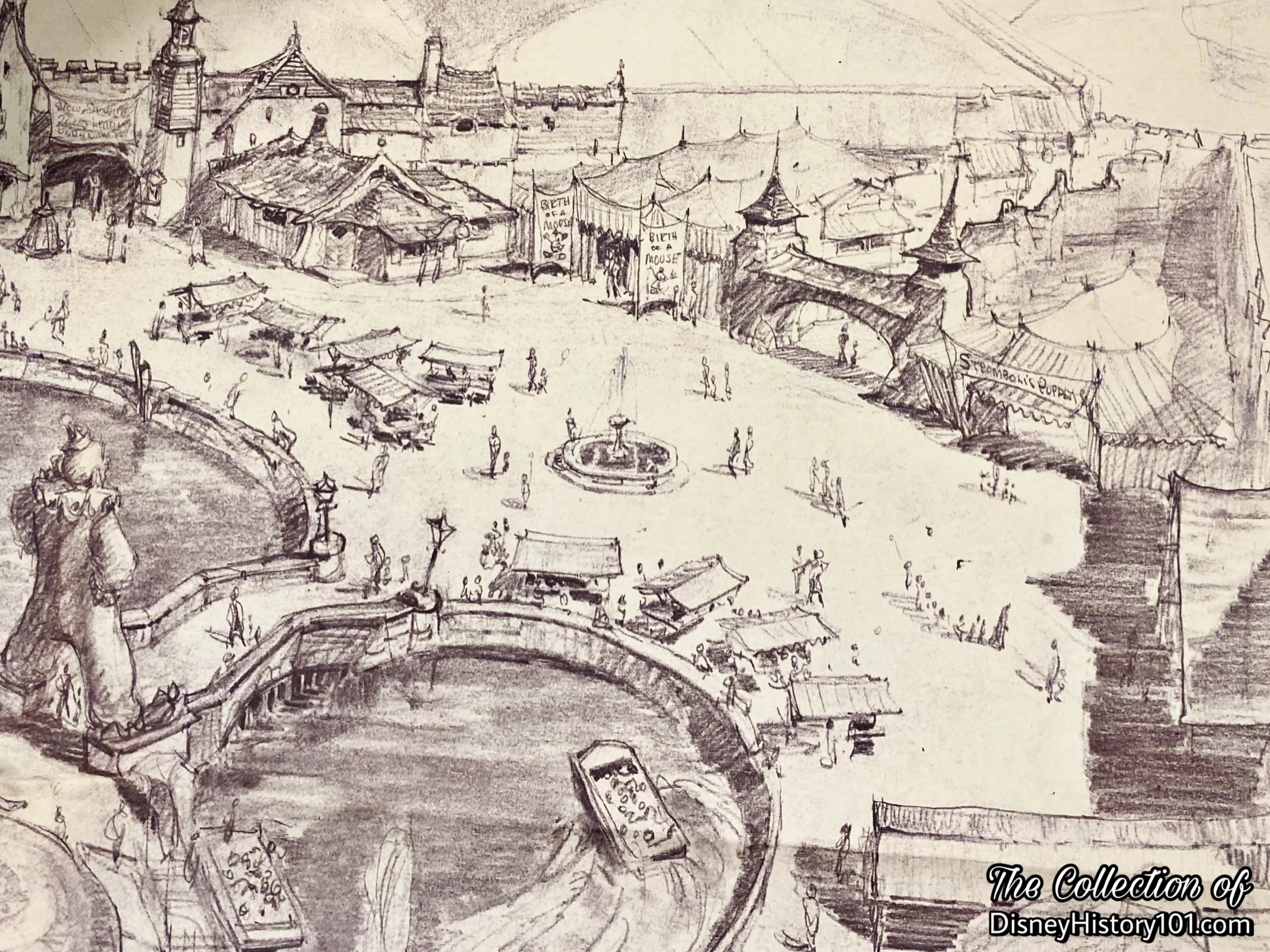
Bruce Bushman envisioned a theatre among other adventures in Fantasyland © Walt Disney Company.
Amidst his loose line work, Walt Disney Studio artist Bruce Bushman (who was also affiliated with Bradley & Kaye) suggested a Stromboli Puppet theater in an area inspired by Pinocchio’s village, a gravity-flow canal ride featuring Monstro the Whale, a circus midway-themed dining area entered through a towering clown arch, a sailboat in a lagoon, and remembering that “it was all started by a mouse,” his detailed designs also included a “Birth of a Mouse” show. [The Disneyland News, Vol.1, No.9 published for March 10, 1956.]
By July 1, 1954, George Whitney of Disneyland, Inc. directed Amusements, with Ron Miller overseeing analysis, philosophy, capacities, planning, operator training, and amusement procurement. Knowing Walt’s audience, Bruce Bushman (who served as Art Director, for the Mickey Mouse Club television series) created a number of concepts for Disneyland during 1954. Early thumbnail sketches and other concept artwork seemed to be unencumbered by restrictions of budget, schedule or the laws of nature and physics. Though guided by Walt, his artists appeared to engage in “free-thinking,” as if implementing the modern “Blue Sky” Imagineering process. One of Herb’s projects was the design of a Mickey Mouse Club Theater with much added pomp and grandeur, while reflecting the feel and theme of the television variety show. Like some advanced “High Concept,” final designs were quickly generated and approved. Though the final product of the interior would look very different from this drawing, this particular dream would become a reality in 1955!
Next, architectural drawings helped define all designs, production and construction strategies, costs, schedule, and resource requirements. Models explored the various dimensional relationships, site-lines, flow patterns, ergonomics, and visual appeal to convey the desired creative intent.
Air-conditioning controlled dust, and a practical mechanical application of the technology was essential in the attraction where projection equipment and film was used.
Soon, one authorized “Disneyland Information & Nomenclature List” (prepared by Bill Cottrell of Disneyland Inc., May 25, 1955) announced the working title as the “Mickey Mouse Theater,” with no further description or notations made about the attraction. This theater (where movies and stage acts would be shown) would come to be owned by Walt Disney Productions and be one of few attractions owned by another Disney organization and operated by Disneyland, Inc. for a 5% management fee.
As of June 2, 1955, C.V. Wood Jr. sent an Inter-Office Memorandum to Walt Disney regarding the best estimates that could be obtained at the time regarding the completion status of individual sections of the Park and Opening Day. C.V. wrote: “Mickey Mouse Theater: It appears very doubtful that it can be completed by our opening.”
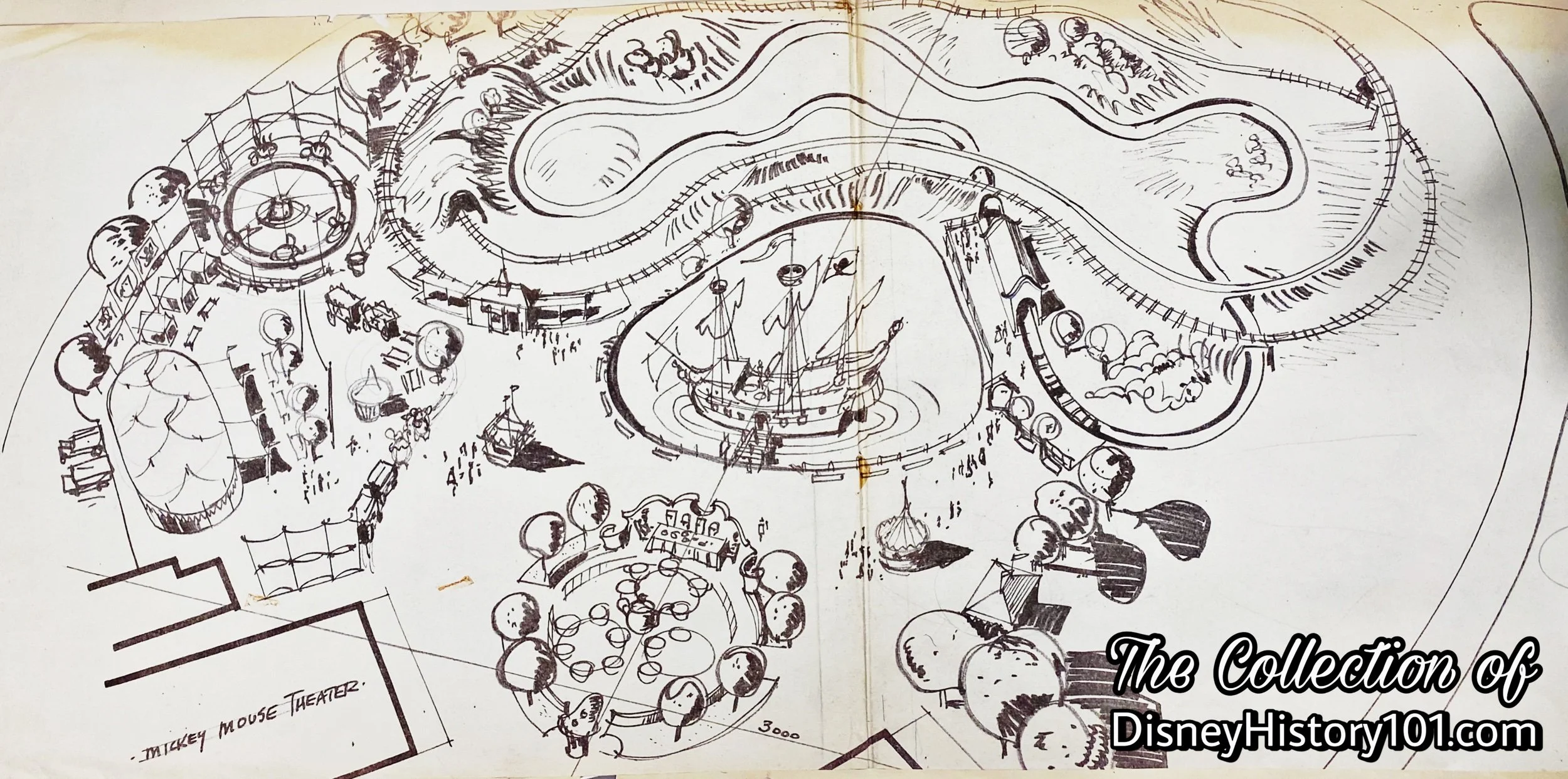
Note the placement of the attraction in this early rough layout concept.
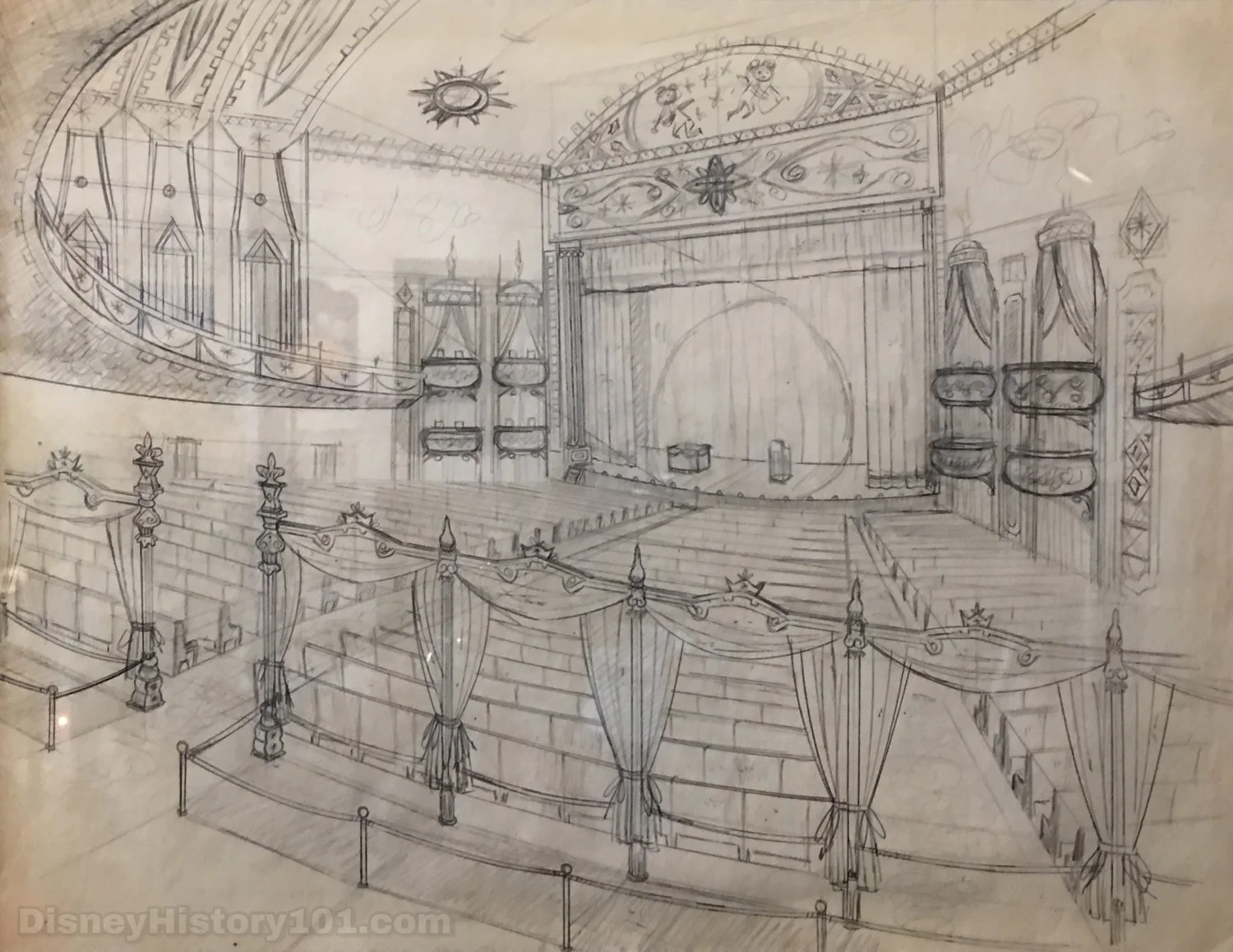
1954, Mickey Mouse Club Theater Drawing by Bruce Bushman ; former Richard Kraft Collection
”Mousekartoon Time”
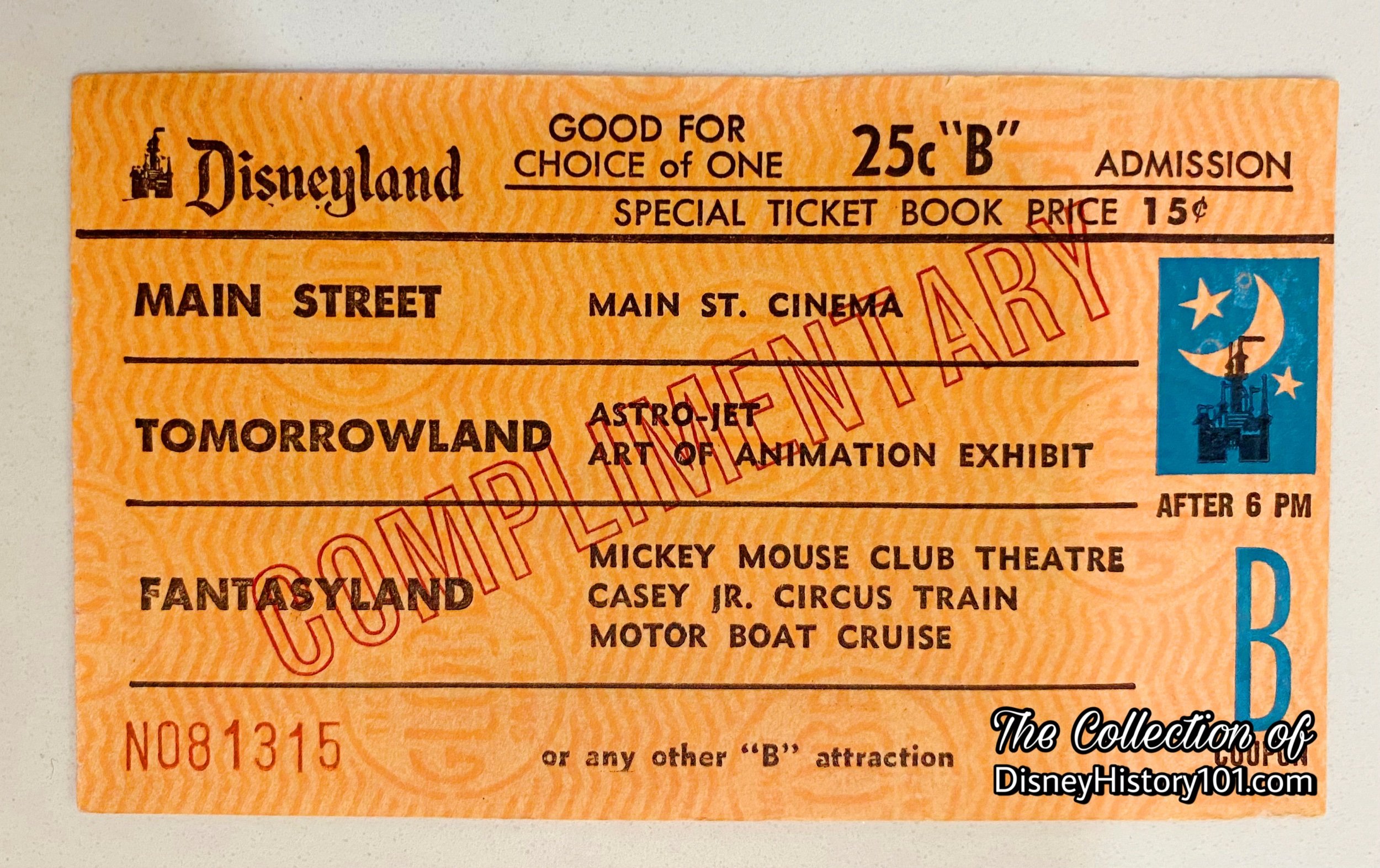
Despite Mickey Mouse and Minnie Mouse introducing the theater on the live telecast, July 17th, 1955, the Mickey Mouse Club Theater did not open its doors to Audiences until sometime thereafter. The Mickey Mouse Club Theater (variously referred to as “Mickey Mouse Club Cartoon Theater” and “Mickey Mouse Theater”), opened its doors (as 1 of 22 initial major attractions at Disneyland), during August of 1955. “The Story of Disneyland” (published 1955, by Disneyland Inc.) described the Mickey Mouse Theater as an attraction “where films for children will be shown.” Continuous 30-minute shows were one “B” Coupon, (or, 15¢ for children and 25¢ for adults).
To elaborate on this description of this unique theater, the 400-seat Mickey Mouse Club Theater was perhaps the very first theater to exclusively show cartoons (and “Mousekartoons” at that) in the all of the United States. The theater’s primary entertainment - “Mousekartoons” - was clearly indicted by the crest over the entrance. Like other Fantasyland attractions the signage of the Mickey Mouse Theater also featured a medieval-style Escutcheon, containing a Coat of Arms with Mickey Mouse Club logo, a projector, and a strip of film!
The initial 30-minute program included short films Lambert the Sheepish Lion, Out of Scale, The Big Wash and Squatter's Rights. Its main (and first) live attraction was the cast of the Mickey Mouse Club, who performed on the stage during that very first summer. All “Honorary Mouseketeers” were invited to the show - the Mouseketeers and Jimmy Dodd starring in cinematic productions like the 12-minute 3-D Jamboree. For those across the United States that only owned a black and white television, this was a rare opportunity to see your favorite Mouseketeers in glorious eye-popping Technicolor! During the first winter holiday season of 1955, a special “Holiday Show” was advertised in The Disneyland News (Vol.1 -No.6 ; published December 10, 1955).
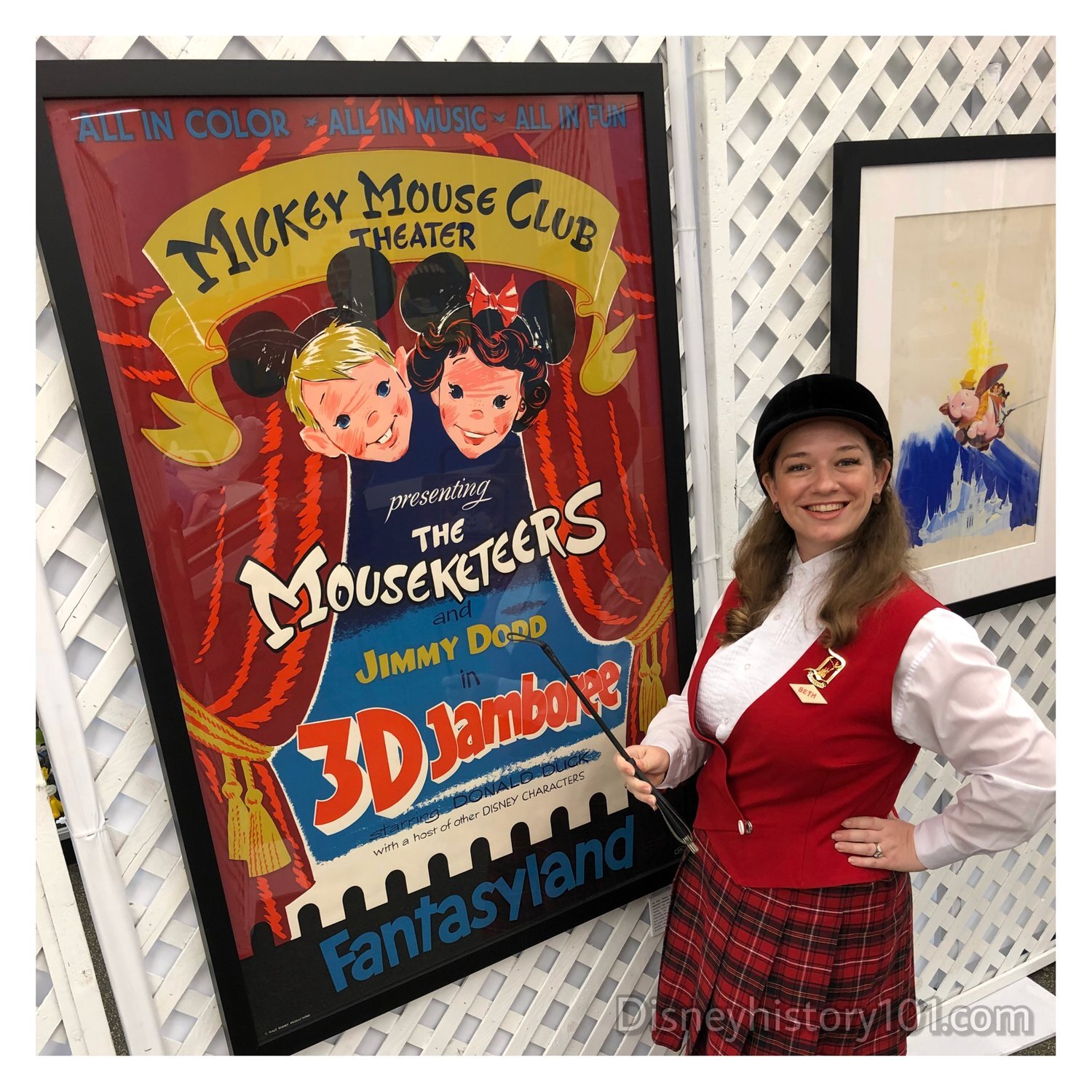
3D Jamboree Poster, for the debut of 3-D shows at Disneyland on June 16, 1956.
This artifact (of the former Richard Kraft Collection) gives us an idea what the posters for “The Mouseketeers 3-D Jamboree” looked like, as they hung outside the Mickey Mouse Club Theater. The Mouseketeer graphic (featuring the heads of both a male and female Mouseketeer) was similar to the one used on television! Not advertised on this poster for the special Technicolor 3D film (containing footage of the Mouseketeers) was the Donald Duck cartoon “Working For Peanuts” and “Adventures in Music: Melody.” The innovative films included live action and animation and featured Chip and Dale, Donald Duck, and the Mouseketeers. In this way and others, the Mickey Mouse Club Theater of Disneyland would begin to synergistically work with Walt Disney Studios and keep the Disney characters before the public.
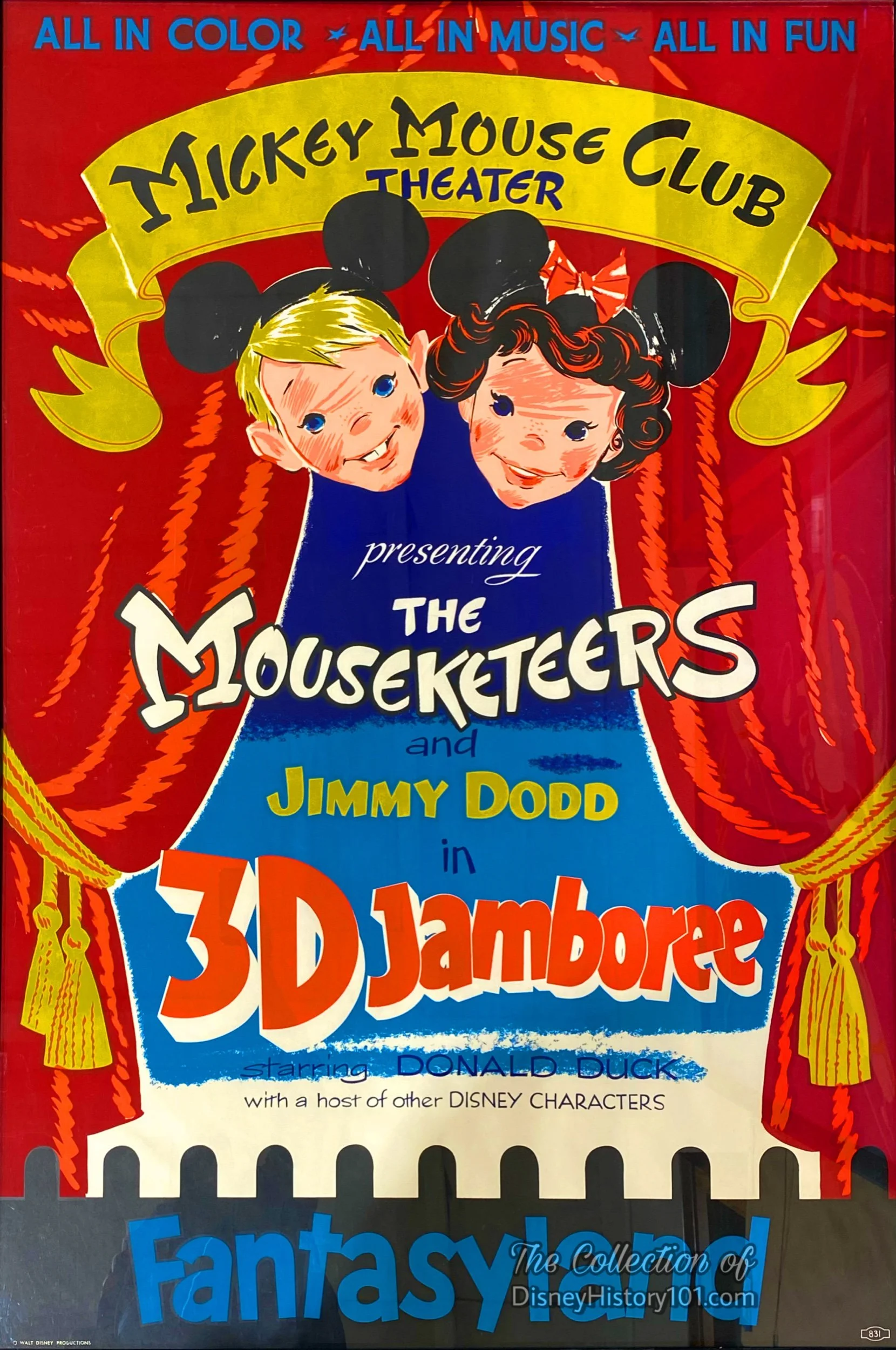
Attraction poster by an unknown Walt Disney Imagineering artist, 1955.
In 1956, George Mills Jr. was in a movie at the Mickey Mouse theatre showing the growth and development of Disneyland.
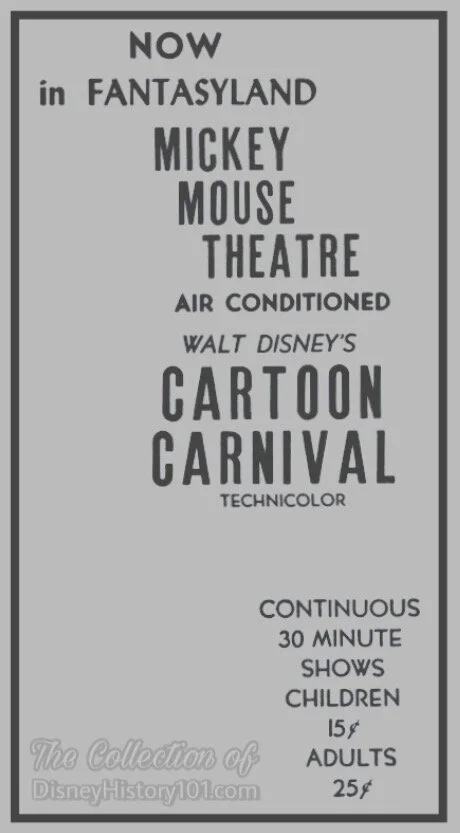
Walt Disney’s Cartoon Carnival poster.
Products occasionally referred to the Fantasyland attraction. For instance, Jiminy Cricket (portrayed by Cliff Edward) made reference to “Mickey Mouse’s own theater” in the High-Fidelity recording of “A Day at Disneyland” with Walt Disney and Jiminy Cricket (published 1957).
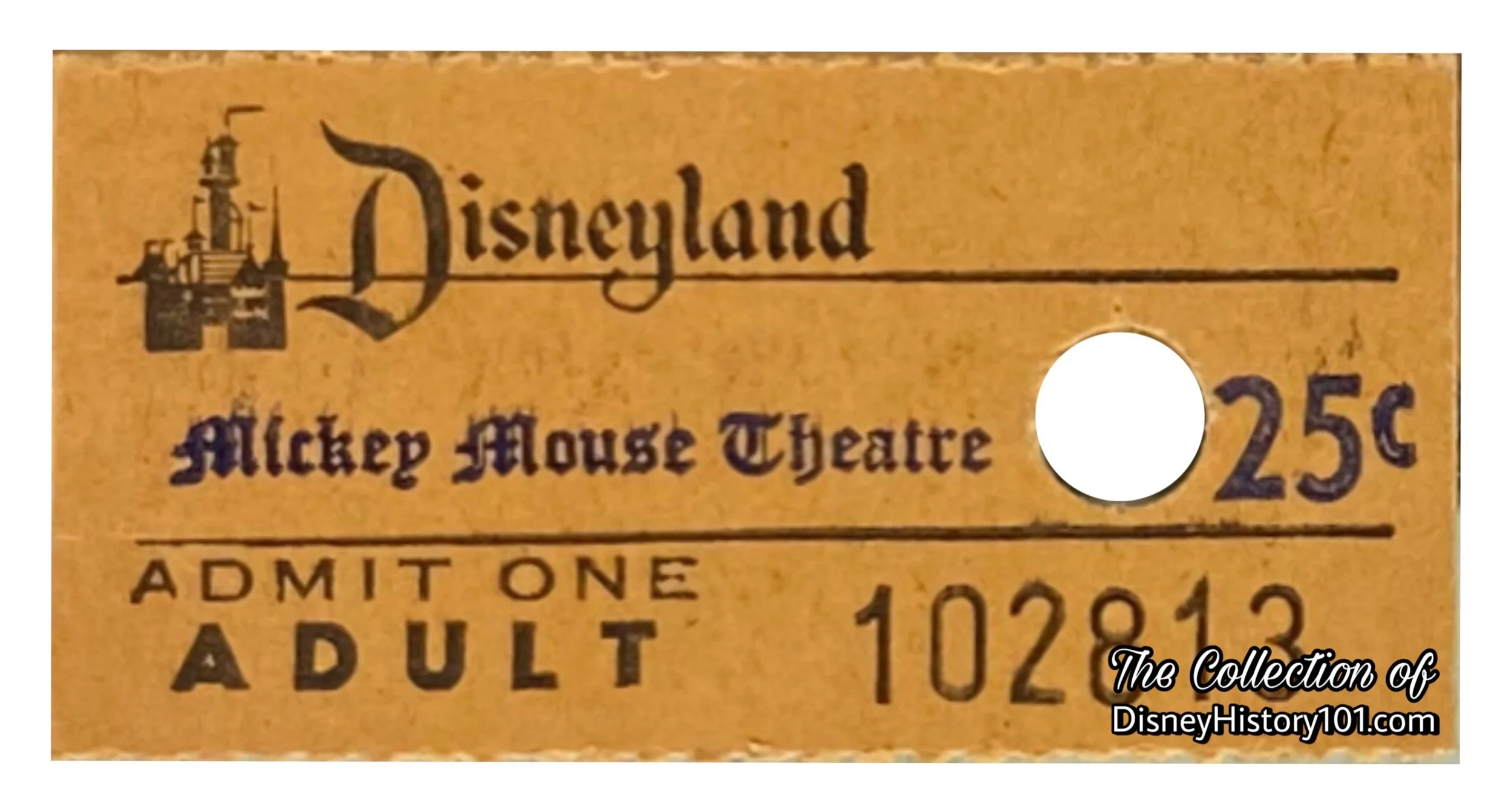
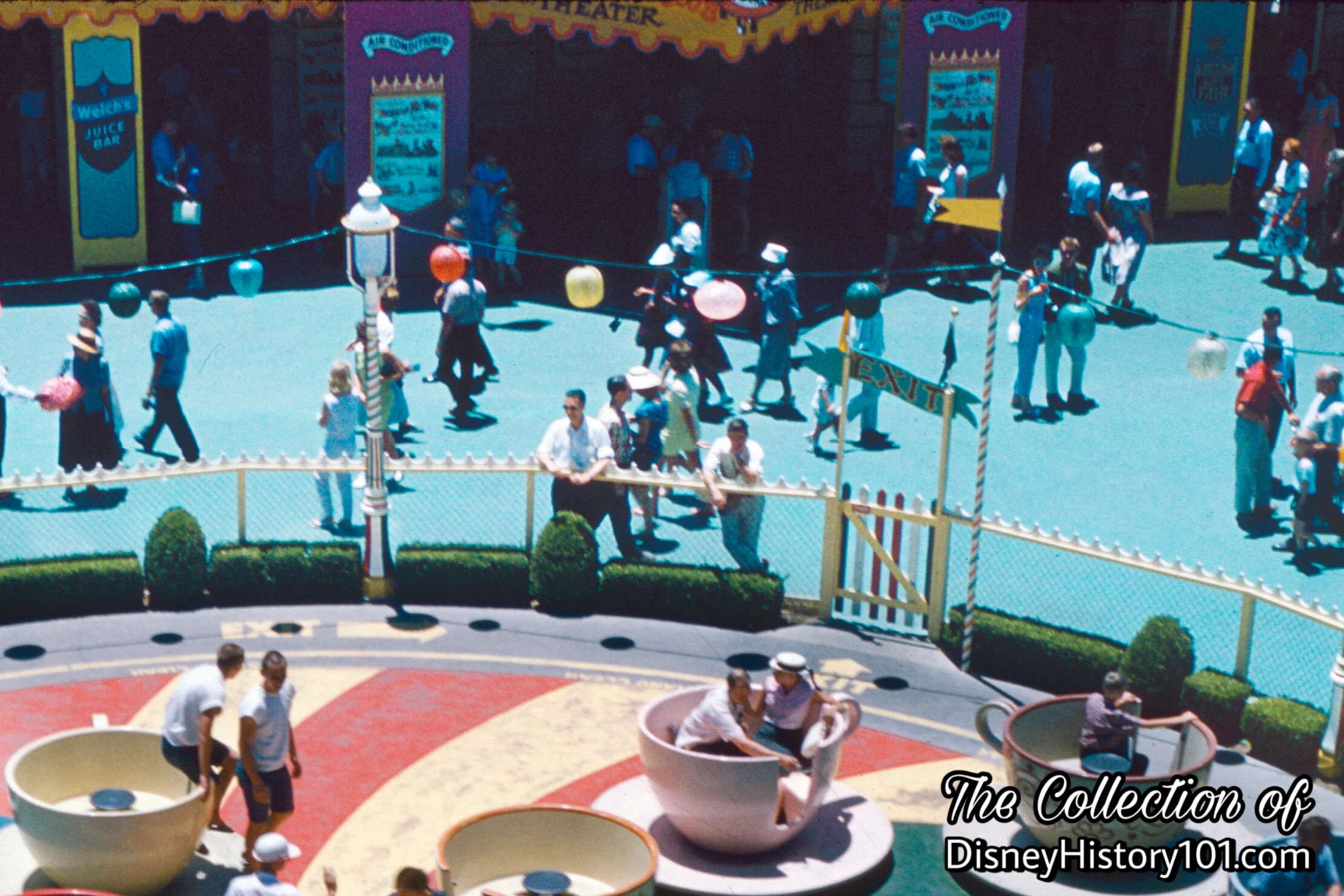
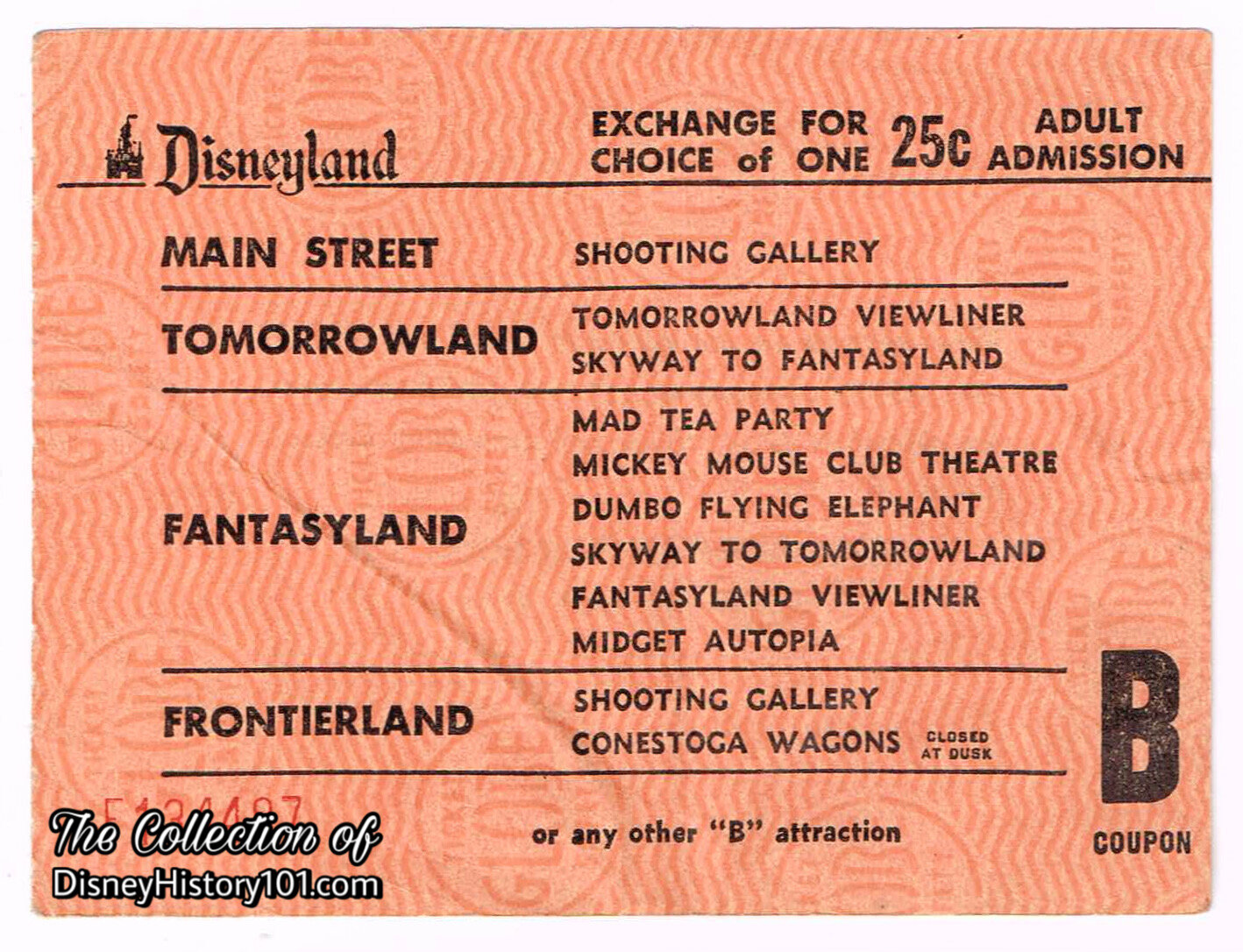
The admission price soon saw a 5¢ raise. This new “B” Coupon (then 25¢ Adult Admission and 15¢ Child Admission) price of the show stayed consistent throughout 1956 and 1957. This was not extraordinary, as it was an admission price similar to that of another contemporary show (Keller’s Jungle Killers). The Mickey Mouse Club Theater was especially well worth the price on hot summer days, as the attraction was one of three air conditioned attractions in the Park (including TWA Rocket to the Moon and Slue Foot Sue’s Golden Horseshoe).
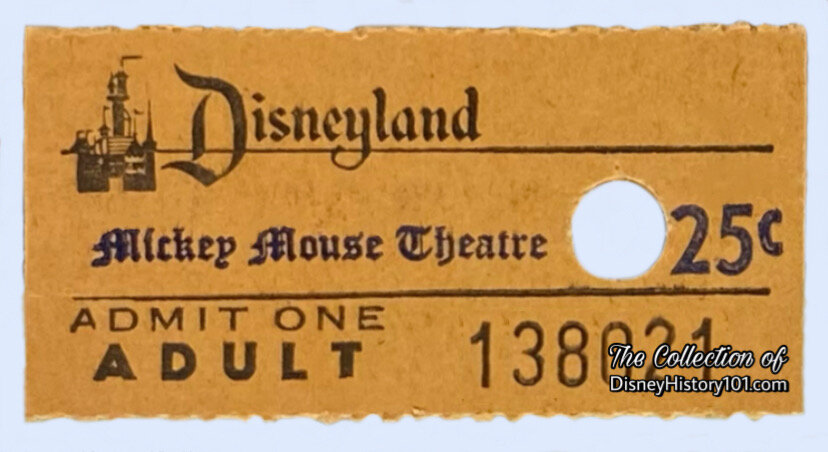
Mickey Mouse Theater 25¢ Admission Ticket
“Mousekartoons & Special Engagements”
The Mickey Mouse Club Theater more commonly, routinely presented 30 fun-filled minutes of Walt Disney’s Technicolor cartoon movies per showing. However, for the first Christmas Festival in 1955, a special seasonal holiday show was prepared. According to The Disneyland News (December 10, 1955): “‘The Night Before Christmas,’ starring Santa Claus himself, headlines the bill of four Walt Disney Productions cartoons. Costarred with Santa is Mickey Mouse in ‘Mickey's Circus’; Donald Duck with Chip'n'Dale in ‘Toy Tinkers and Goofy’ and Donald, who meets penguins and a walrus in ‘Polar Trappers.’ The Fantasyland Theater's Christmas season show follows the holiday atmosphere set by the park's Yuletime decorations. Admission to the full half-hour show is 25 cents or by use of one of the tickets in the ticket book. The theater is open from 11:30a.m. to 7:30 p.m. six days a week.”
Some of the cartoons screened were “3-dimensional color movies,” according to Vacationland (Summer, 1957). Double features of Walt Disney Productions’ other color short films often showed, like “Pecos Bill” and “Gaucho Goofy” (c. 1958).
The Mickey Mouse Club Theater was also utilized for the occasional photo shoots, special showings and events. During Disneyland’s second year of operation (in June of 1956), “foremost vaudeville and nightclub stars” briefly appeared in two-a-day vaudeville shows presented by the American Guild of Variety Artists (during their Ninth Annual Convention, held at the Disneyland Hotel). The Mickey Mouse Club Theater also briefly entertained the members of the “National Associating of Amusement Parks, Pools, and Beaches”, which Disneyland hosted from September 18-20 (Tuesday through Thursday), of 1956. As a “sidelight” one of the foremost members in attendance was the organization’s President, George F. Schott, who once served as advisor of Disneyland planning, construction, and operation. After two full days of exploring Walt’s innovative expansive theming, and original rides (like the Mine Train & AstroJets), “Thursday’s program included another look at Disneyland, a special showing at the Mickey Mouse Club Theater in Fantasyland of a film on the construction and story of Disneyland”.
Also in 1956, actress Spring Byington (of “December Bride) and child actor Bobby Diamond (of “Fury”) were photographed outside the theater (after watching some Walt Disney cartoons) for their 1956 “TV Radio Mirror” photoshoot at Disneyland!
By 1959, Joe Fowler was Vice President of Disneyland Operations Committee and Doc Lemmon of Disneyland Operations was overseeing Operators of Rides & Amusements (like the Mickey Mouse Club Theater), Livestock, Parking Lot, and Ticket Sellers.
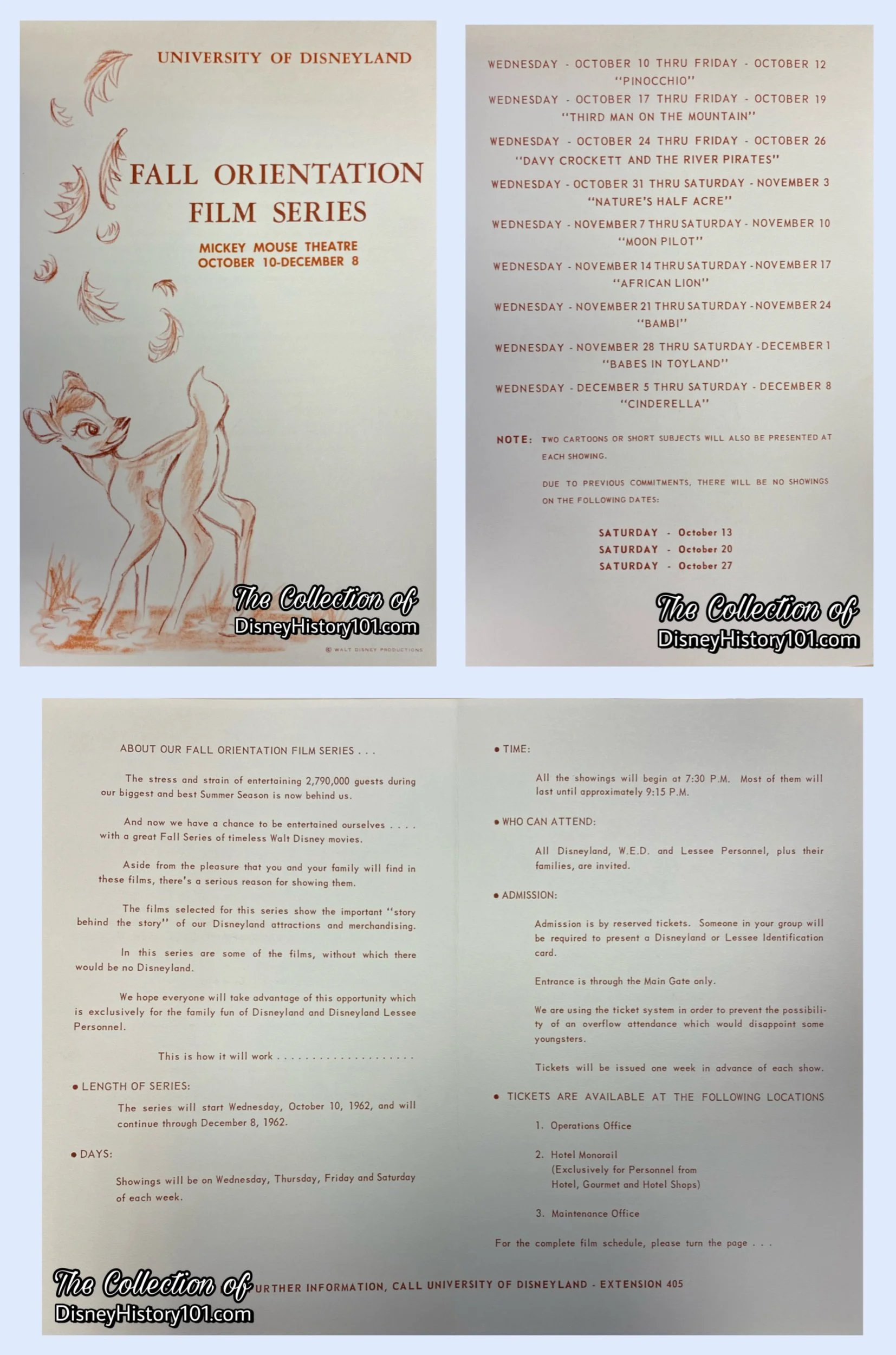
Fall Orientation Film Series Handbill distributed to Cast Members with issues of Backstage Disneyland
In 1962, the Fall Orientation Film Series presented by the University of Disneyland was held at the Mickey Mouse Theater (on most Wednesdays thru Saturdays, from October 10th thru December 8th). These were special feature film presentations (with short films attached), for “all Disneyland, W.E.D. and Lessee Personnel, plus their families”(including those of the Disneyland Hotel, Gourmet and Hotel Shops), beginning at 7:30p.m. and ran until 9:15p.m. during those dates. Tickets were available at the Operations Office, Hotel Monorail, and Maintenance Office. Films screened included Walt Disney’s Pinocchio (October 10-12), Third Man on the Mountain (October 17-19), Davy Crockett and the River Pirates (October 24-26), Nature’s Half Acre (October 31-November 3), Moon Pilot (November 7-10), African Lion (November 14-17), Walt Disney’s Bambi (November 21-24), Babes in Toyland (November 28-December 1), and Cinderella (December 5-8).
A year before the theater was renamed, the Mickey Mouse Club Theater was also the location of exciting “live” recording of The Famous Ward Gospel Singer’s record album and concert, on April 18th, 1963. The concert (under the Direction of Gertrude Ward) contained a selection of 12 songs (including “Down By The Riverside”, “Something’s Got Ahold of Me”, “Never Grow Old”, “Dry Bones”, “I’m Getting Nearer”, “Shadrack”, “Deep Down In My Heart”, “He’s Got The Whole World In His Hands”, “Keep Your Hand On The Plow”, “Daniel Saw The Stone”, “We’re Marchin’ To Zion”, and “Come On In This House”). The record album was produced by Camarata, and distributed for home-listening through Buena Vista Records. Just before the curtains closed on the Mickey Mouse Club Theater stage for the final time, a print of Walt Disney’s Dumbo would be shown, during 1964. This was part of the University of Disneyland’s Disney Film Orientation Program, that made younger employees knowledgeable about Walt Disney’s classic stars that they may not be familiar with. Remember, this was long before the advent of widely distributed home-viewing formats (like the video tape) streaming services, or the internet, so average folks had no access to home copies of classic Walt Disney Productions short films or feature length films.
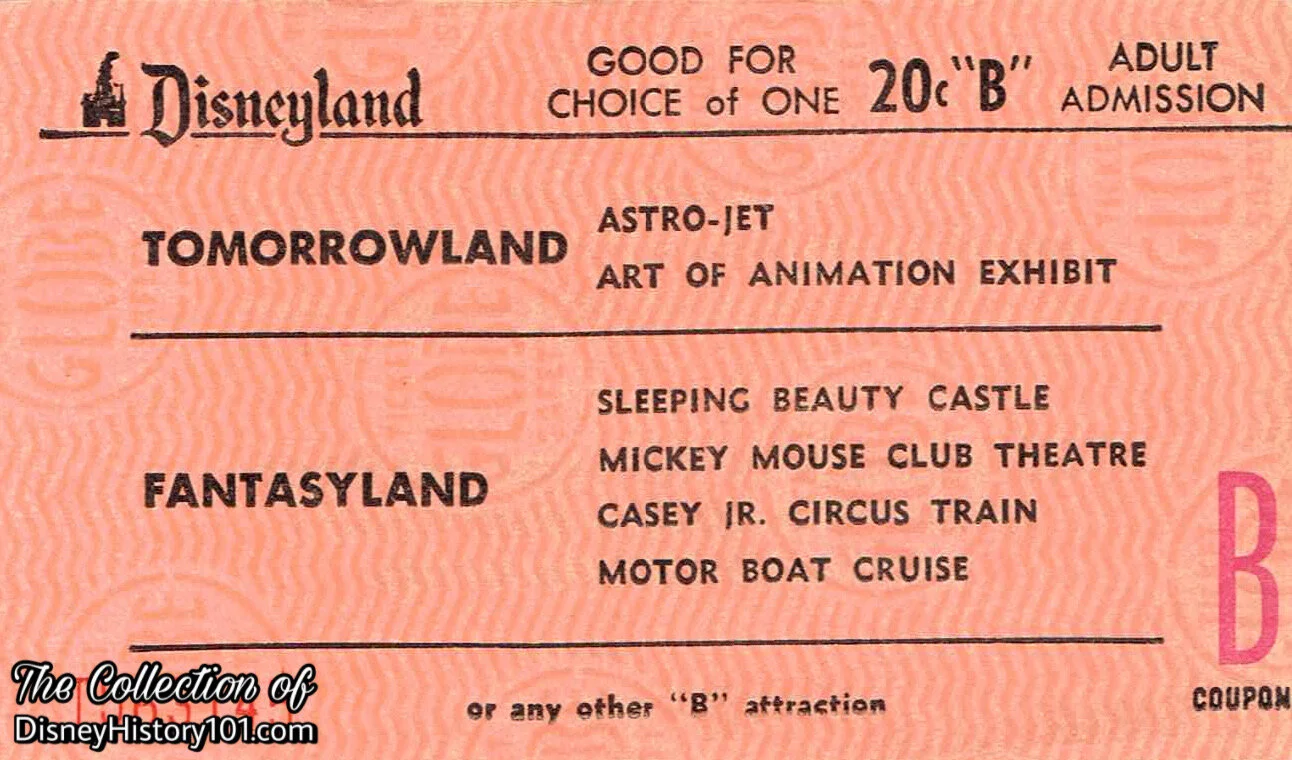
Disneyland “B” Adult Admission Coupon, 20¢ Value, Summer, 1960.
Though printed and distributed during the Summer of 1960, this Disneyland “B” Coupon still bears the original admission price of 20¢. Adult Guests would exchange these to view 30-minute cartoons, which ran from 11 a.m. to closing!

Disneyland Map by Sam McKim Excerpt, c. 1960s
The Mickey Mouse Club Theater was situated on the west side of Sleeping Beauty Castle, between Snow White’s Adventures and the Welch Grape Juice concession.
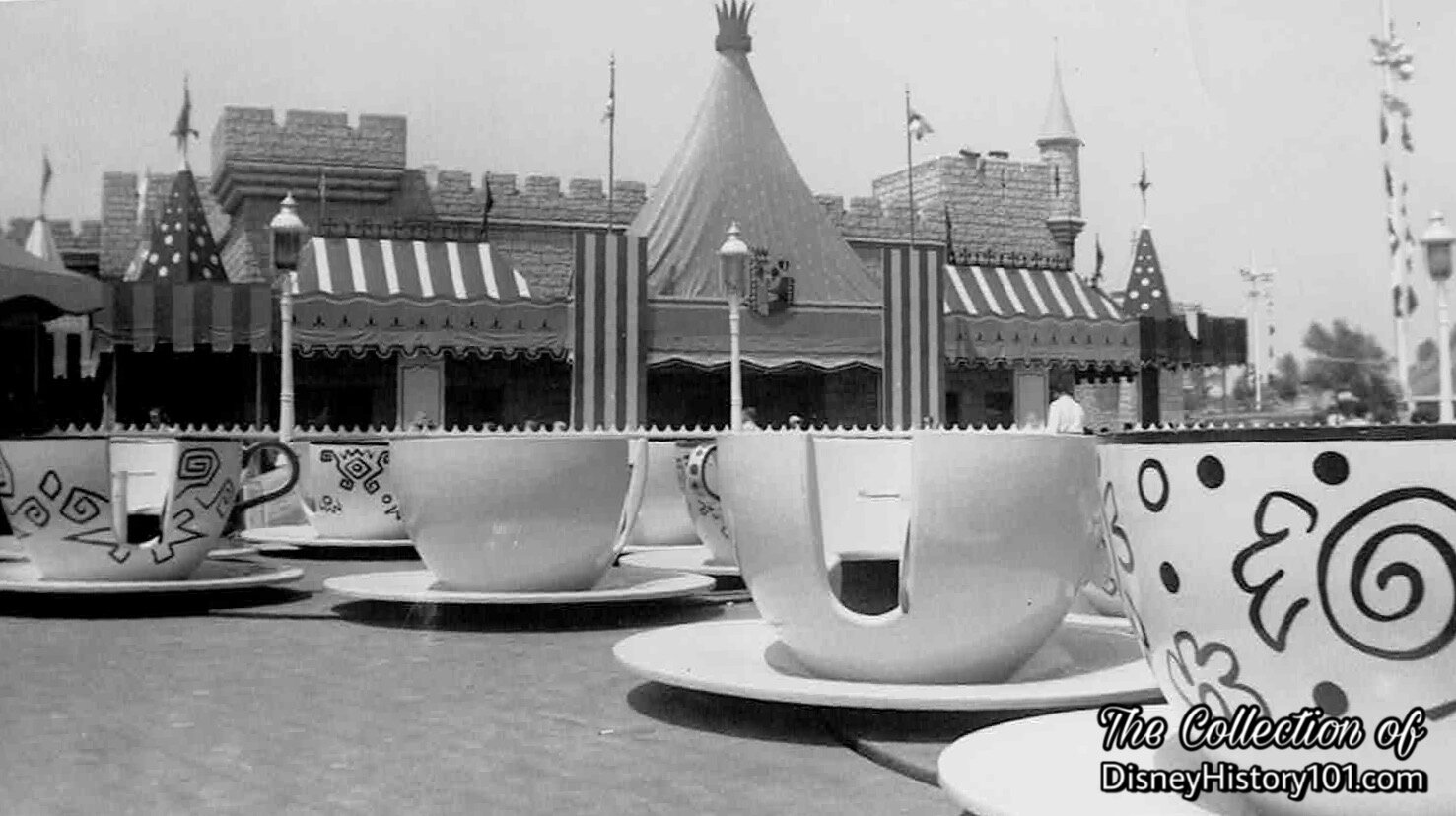
Mickey Mouse Club Theater Front of House Without Marquee
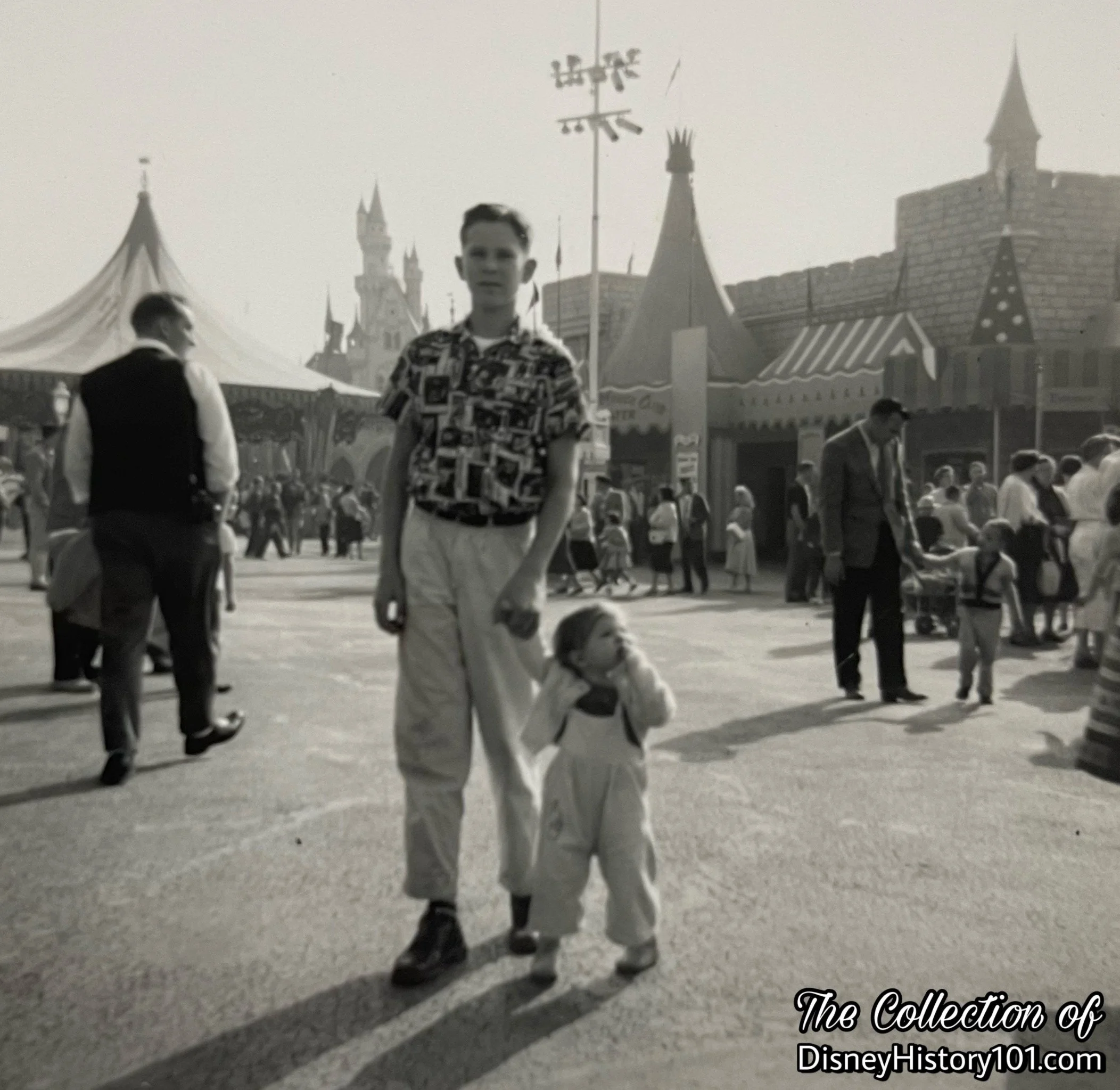
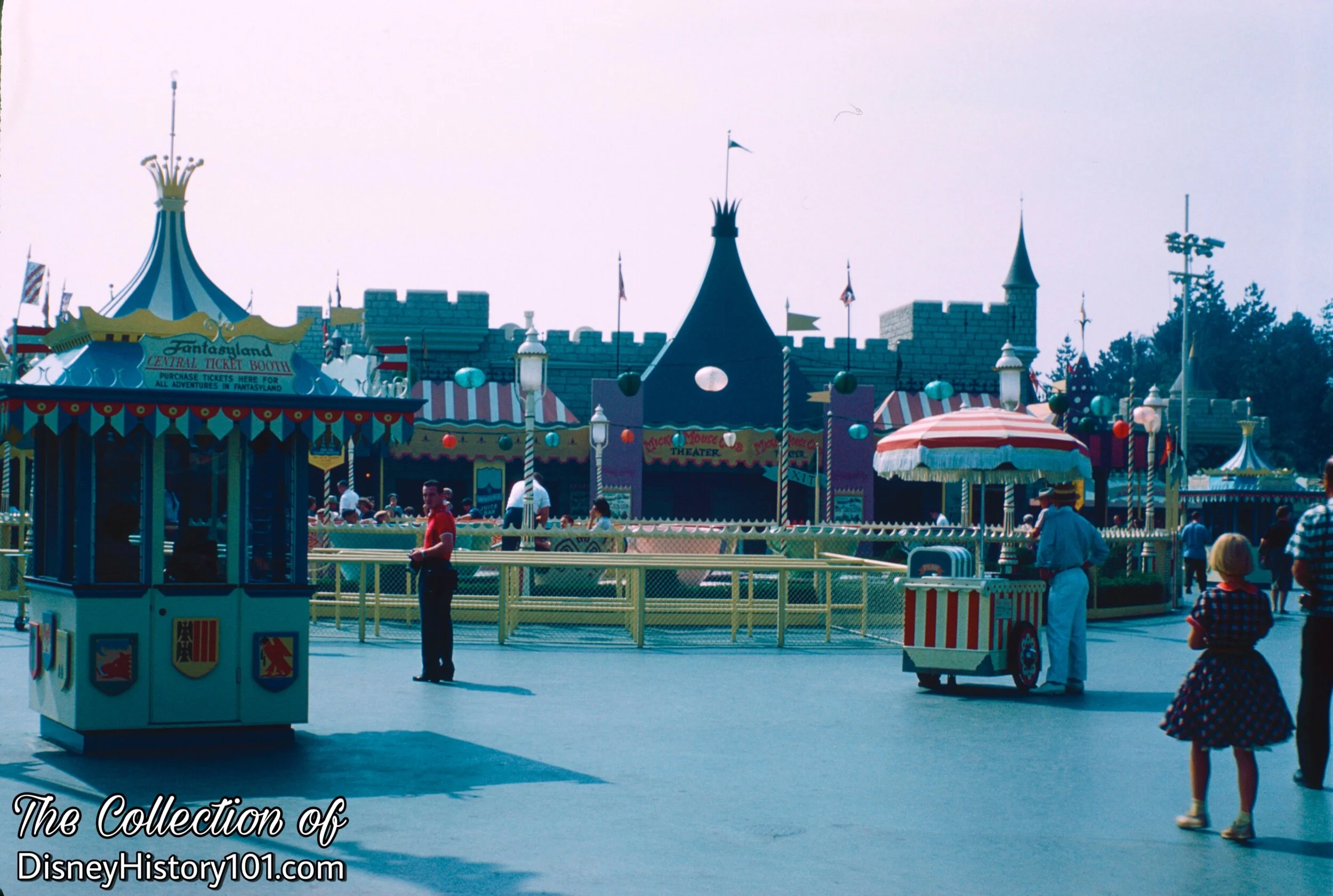
Mickey Mouse Club Theater
The Mickey Mouse Club Theater offered a change of pace from the Mad Tea Party and Fantasyland’s other “moving” adventures. The air conditioned theater was especially inviting on a warm summer days.
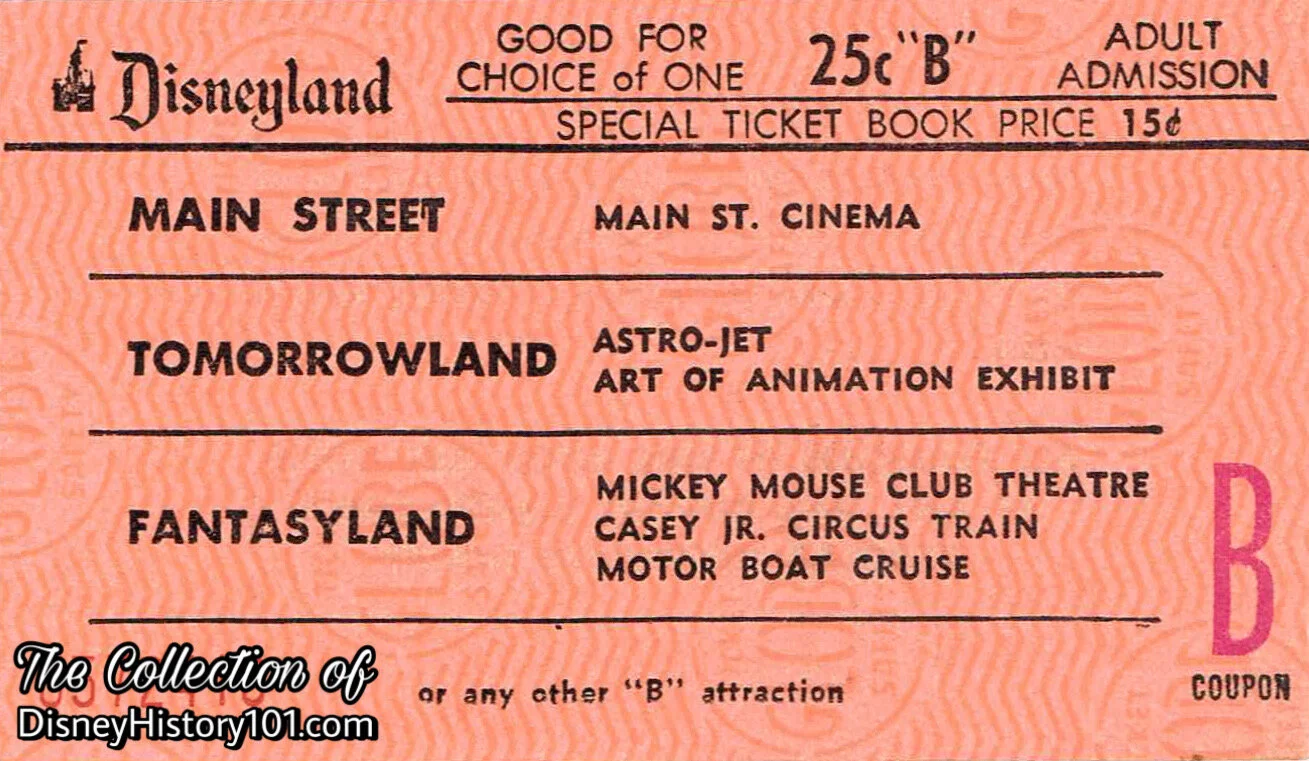
Disneyland “B” Coupon, 25¢ Value
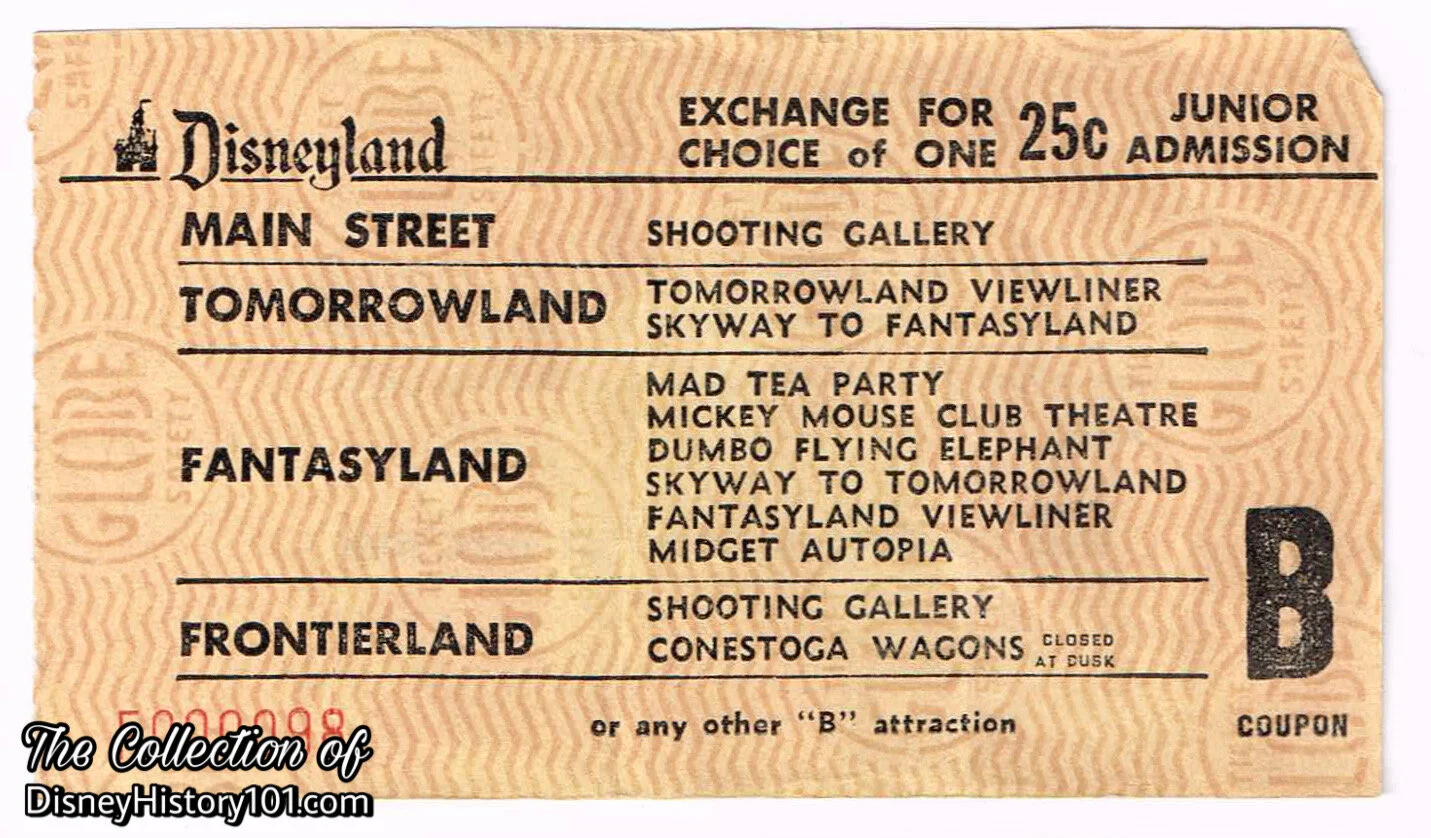
Disneyland "B" Coupon (25¢ Value)
Disneyland "B" Jumbo Coupon, (25¢ Value)
The Mickey Mouse Club Theater would briefly cease operation during the winter season of 1962.
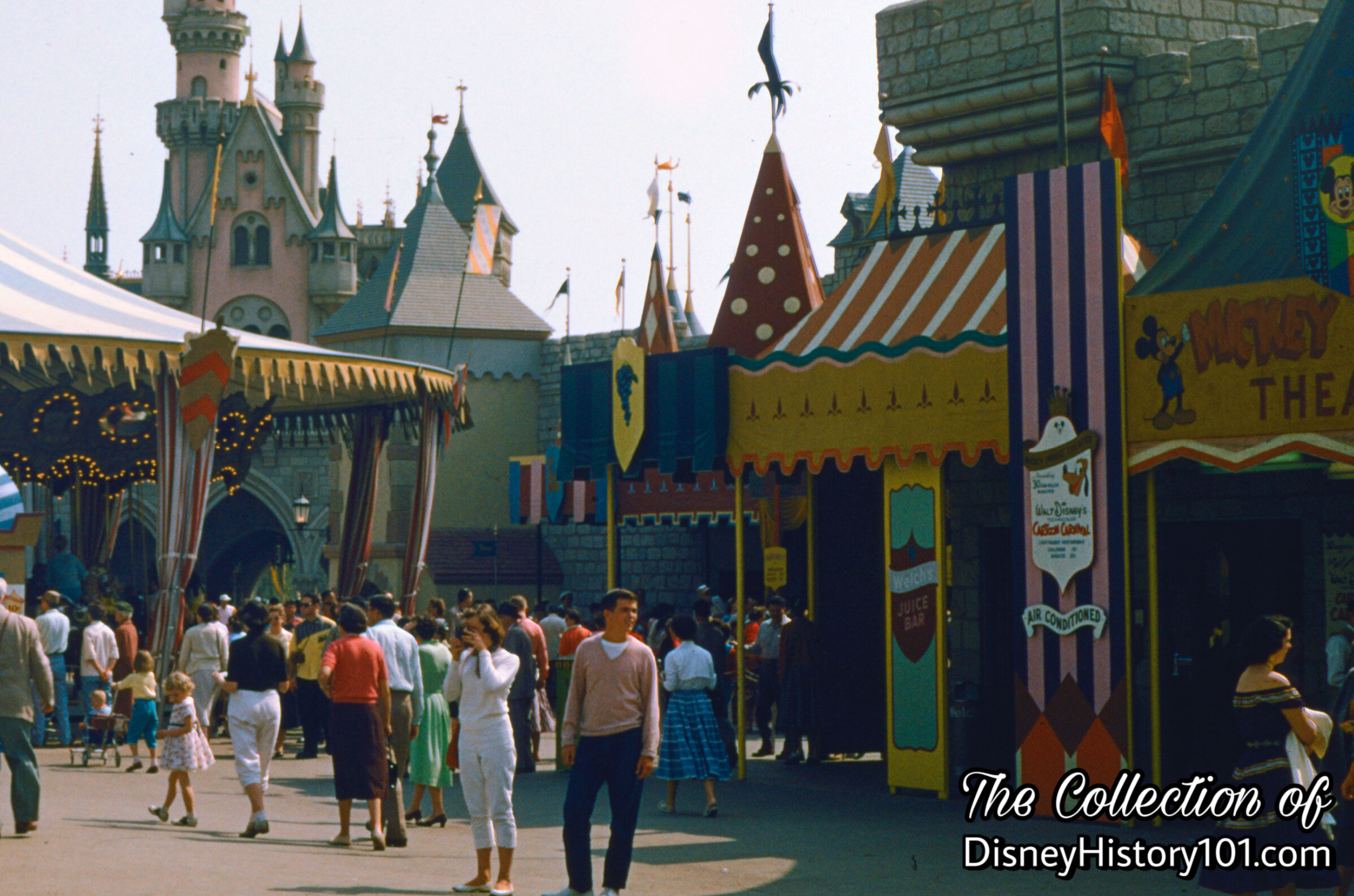
Mickey Mouse Club Theater Architectural Facade
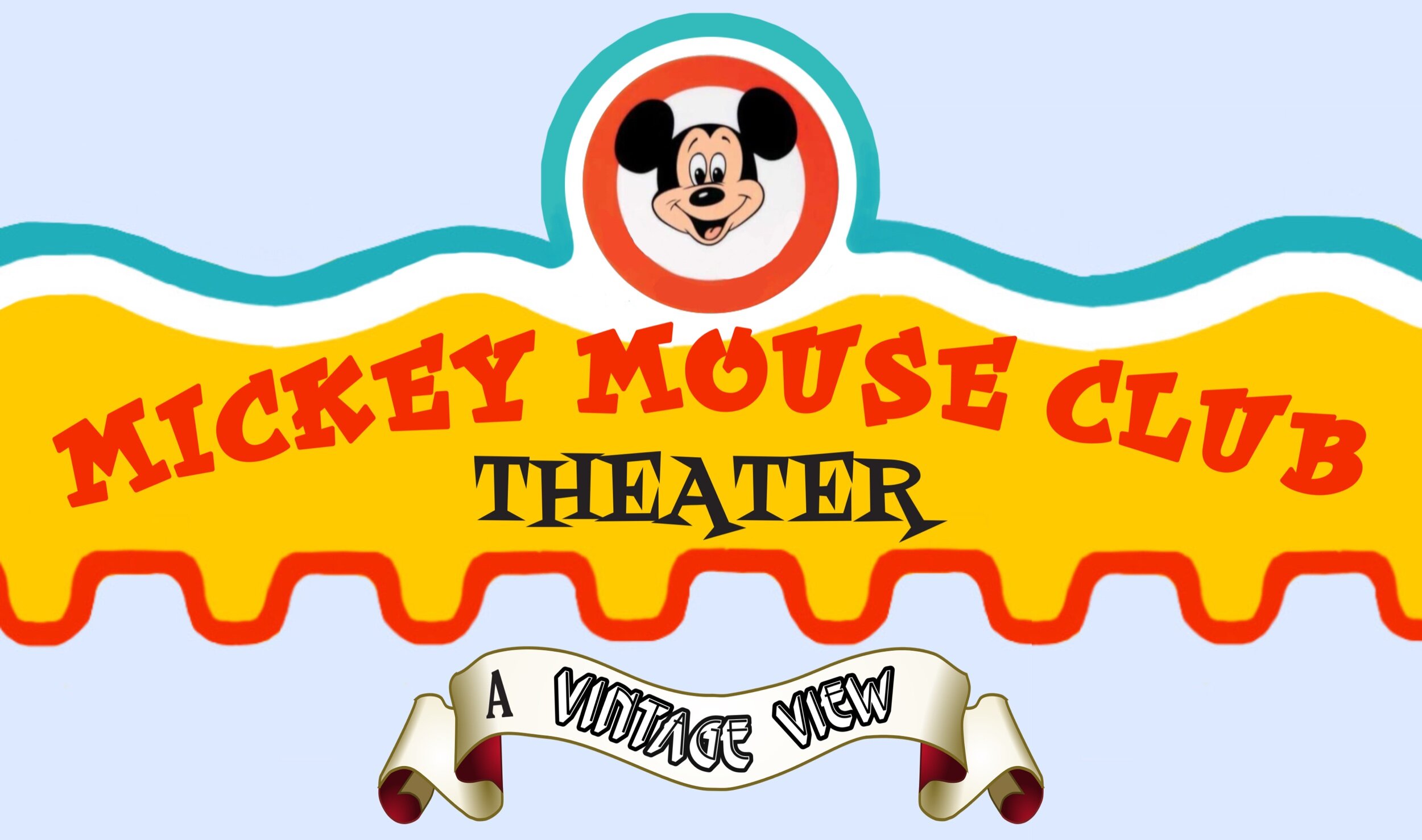
The Mickey Mouse Club Theater marquee advertises “Walt Disney’s Cartoon Carnival” in this Vintage View. When the Mickey Mouse Club Headquarters was temporarily set up in the Main Street Opera House, the venue would gain a slightly new look and a new name.
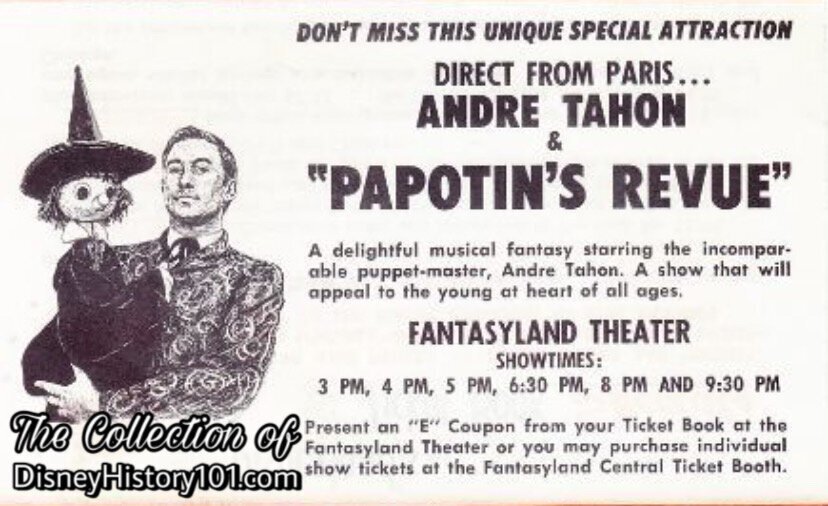
“Mous-Ka Puppets”
Puppeteers and their animated friends were a common sight in Disneyland during Walt’s era. Some participated in parades (like puppeteer Jack Shafton in Fantasy on Parade). There were others, like French puppeteer André Tahon, who performed six of his unique “E” Ticket musical fantasy Shows (with pre-recorded music) daily, April 6th through September 8th of 1963. John Zweers, Bob Mills, and Bob Baker were just a few more master puppeteers and performance artists to bring their shows to Walt Disney’s grand show - Disneyland! Before January of 1964, they would perform from the Fantasyland Theater Stage and another smaller stage which was located in Tinkerbell’s Toy Shoppe. Tickets for the former were available at the Fantasyland Theater Box Office and the Fantasyland Central Ticket Booth.
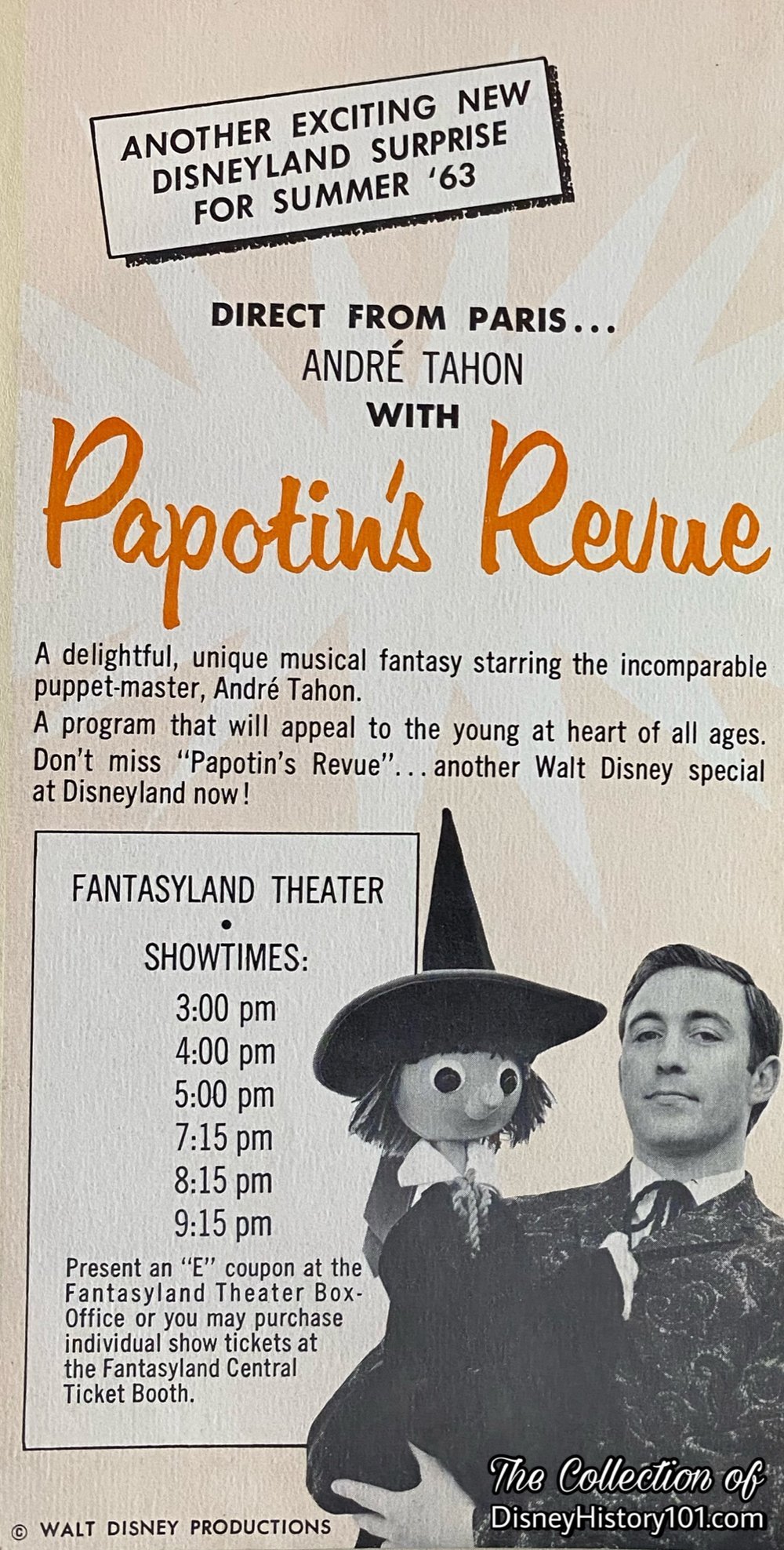
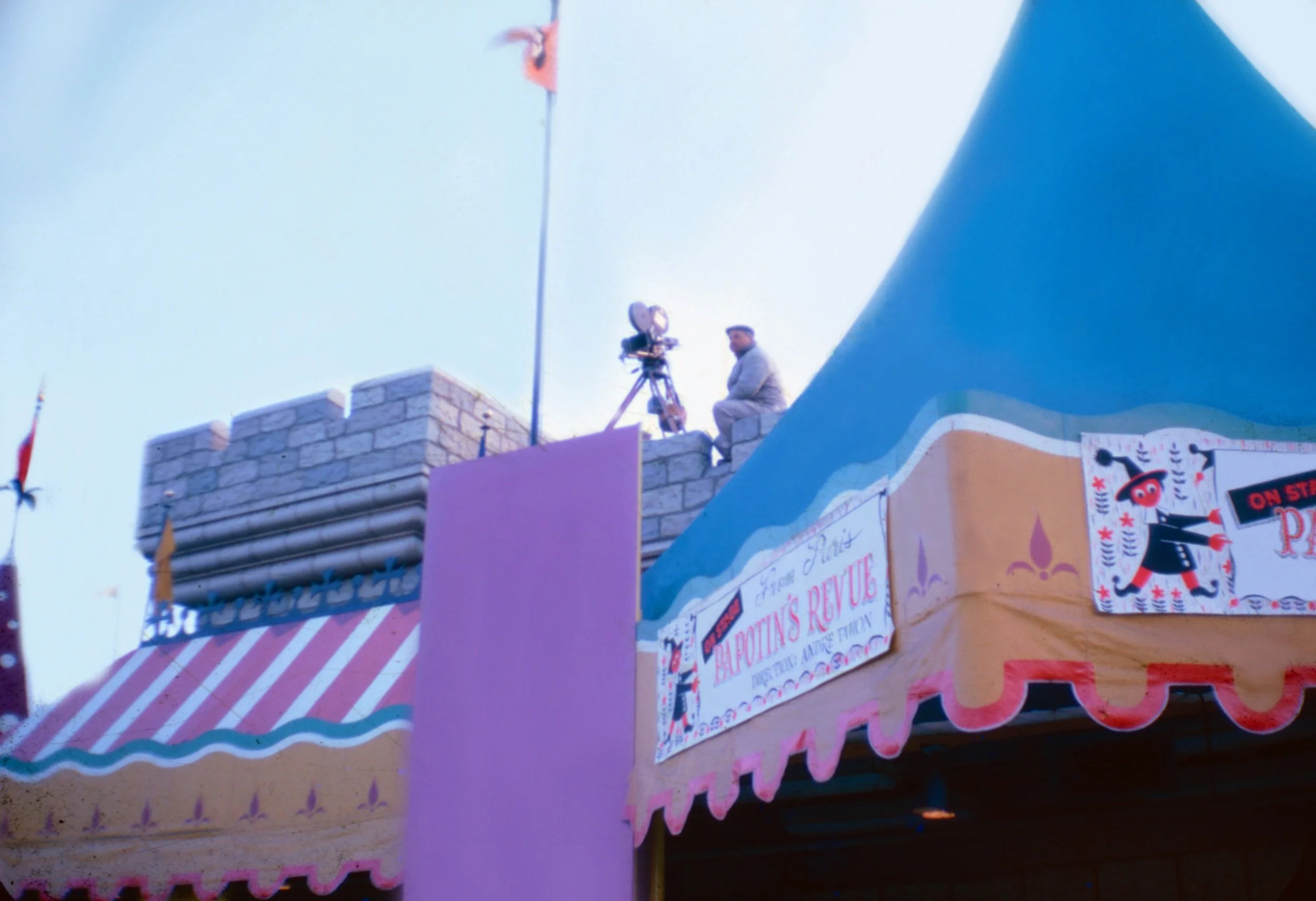
A cameraman with tripod sits poised on the roof of the theater while Papotin’s Revue plays below.
(January, 1964- December 20, 1981)
The original Mickey Mouse Club ended its televised run during the 1960s. It was then (in 1964), that Mickey Mouse Club Theater was renamed Fantasyland Theater. The old 400-seat “Mickey Mouse Club Theater” was now rehabilitated with 450 seats (to increase guest capacity). During operational hours, Disneyland guests still enjoyed Walt Disney shorts in the air-conditioned auditorium. Long before DVDs, and streaming services, the Fantasyland Theater offered a rare opportunity to watch Walt Disney Studios’ animated classic characters on a big screen (the way that Walt intended). Walt Disney Productions’ short films were shown here, as well as pieces starring the Mouseketeers of the Mickey Mouse Club.
One of the first films shown (in the summer of ‘64) was “Mickey and the Beanstalk” (billed as “Walt Disney’s Jack and the Beanstalk” on posters).
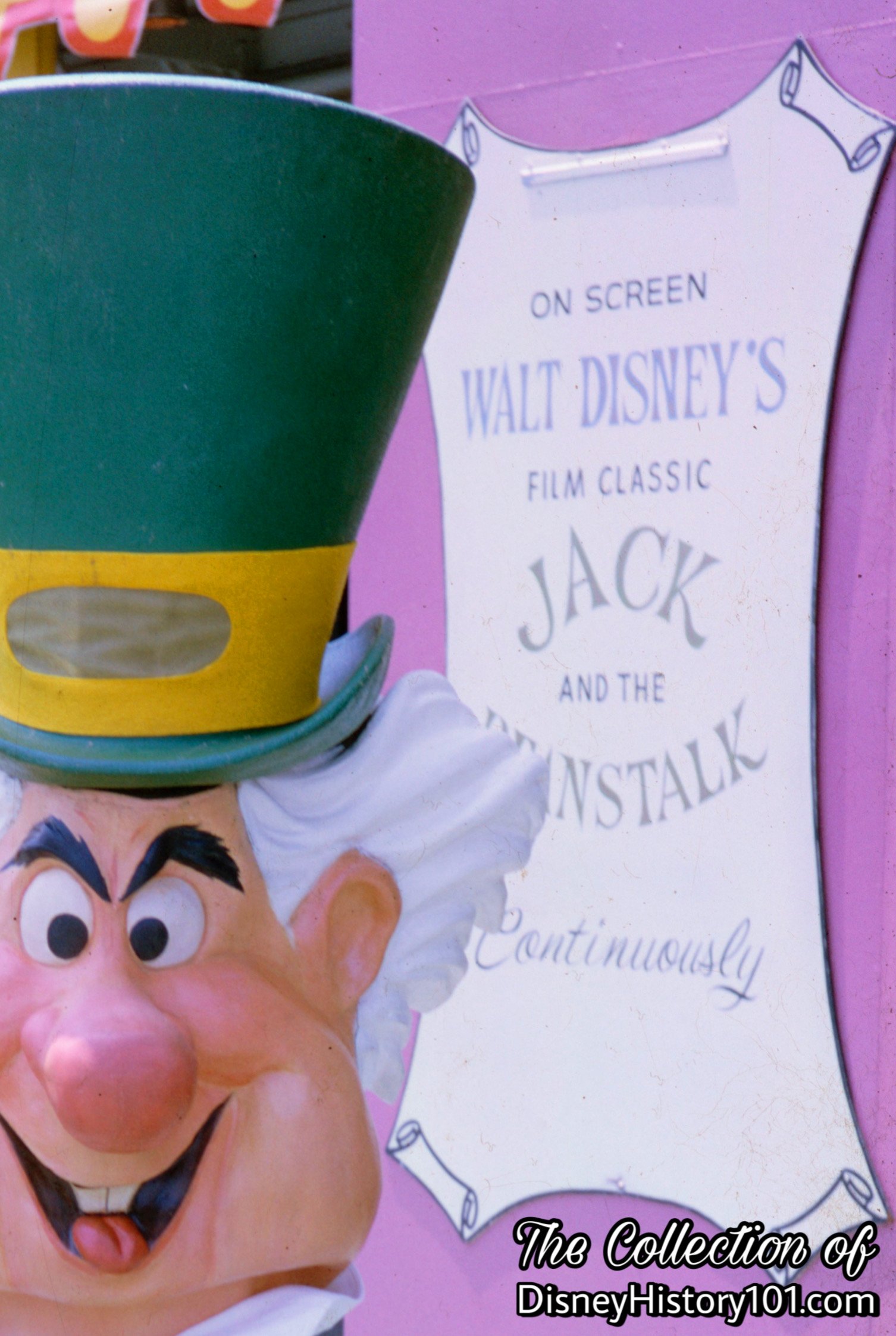
Continuous showings of "Jack and the Beanstalk," (c. July of 1964)
In late 1965 thru 1966, “Pecos Bill” returned for a double feature with “Rugged Bear” starring Donald Duck.
“Mickey Mouse presents ‘The Wonderful World of Wizardry’” at the Fantasyland Theater, for seven performances daily (from 12:00N-7:30pm), from December 26th, 1967 thru January 1st, 1968. “The majic show” featured “the wizardry of Mickey Mouse, Pluto, Goofy and Alice in Wonderland performing several famous illusions live on stage.” During this same winter period, both the White Rabbit and Mad Hatter made regular appearances at the Forecourt Fantasyland Theater, greeting guests as part of the Character Program, “throughout the Christmas Holidays” (daily between parades, from 9:00am to 11:45am). [“Disneyland Holiday Talent Master Schedule,” prepared for the period of December 16, 1967 through January 1, 1968]
Winnie the Pooh and the Honey Tree also ran during 1968. By that year the seating capacity has been expanded to a maximum of 452 guests (with a theoretical hourly capacity of 904). The following year (c. 1969), the Academy Award winning Winnie the Pooh and the Blustery Day came to Fantasyland Theater, accompanied by a stage show featuring the residents of the Hundred Acre Wood. One Disneyland Admission Media Rides and Attractions Report [prepared in April 1971, by Disneyland Research Department] divulged that 4,964,907 guests had visited the Fantasyland Theater during its hours of operation. During the early 1970s, a Cartoon Festival starring Mickey Mouse and Minnie Mouse introduced younger generations to the comedy duo, on the big screen - the way that Walt Disney intended them to be viewed. This Cartoon Festival continued throughout the decade, with other shows like the Disneyland Music Education Program’s “Fun With Music” (a c. 1976 live educational music-oriented show which taught children about “the most creative means of expressing our feelings thoughts, moods, and emotions” - music) appearing intermittently.
The Fantasyland Theater was also utilized for a variety of special events. Occasionally (during summers of the 1960s), the theater was used for staging the live bands of Grad Nite Humdinger shows. In 1966, the Employee Opinion Poll (conducted by Cal-Tech) was held at the Fantasyland Theatre. During the Winter-Spring (of 1966-1967), Cal-Tech conducted the Employee Opinion Poll from the Fantasyland Theater, the poll given to every person who worked for the Park at the time. During 1967, Card Walker orchestrated a special presentation from the Fantasyland Theater stage, for top theater chain owners across the country. Family Film Festivals soon included screenings of live action Walt Disney Productions like Return from Witch Mountain, Candleshoe, The Apple Dumpling Gang, and The Strongest Man in the World. On October 14 & 15 (Saturday and Sunday), 1978, a special two-day limited engagement showing of ‘The Three Caballeros’, “Walt Disney’s popular salute to South America” was featured at the Fantasyland Theater. One of the last screenings was a special early Disneyland Cast-only screening of the 25th Anniversary Birthday Commercial (for all who were involved - both in front fo the camera and behind-the-scenes) debuted Saturday, December 9th, 1980, 9:30a.m., in the Fantasyland Theater. Then, the Fantasyland Theater closed on December 20, 1981.
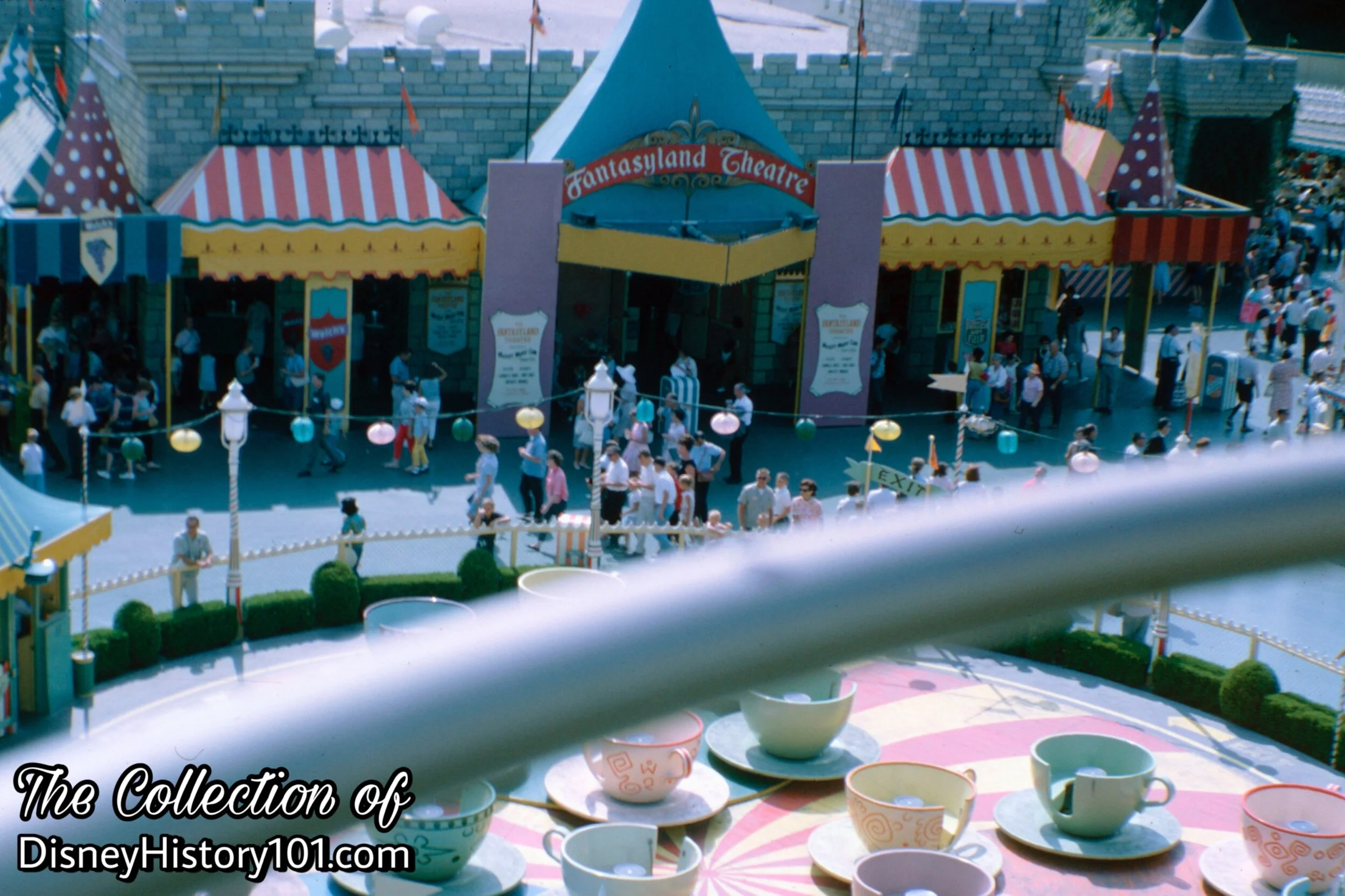
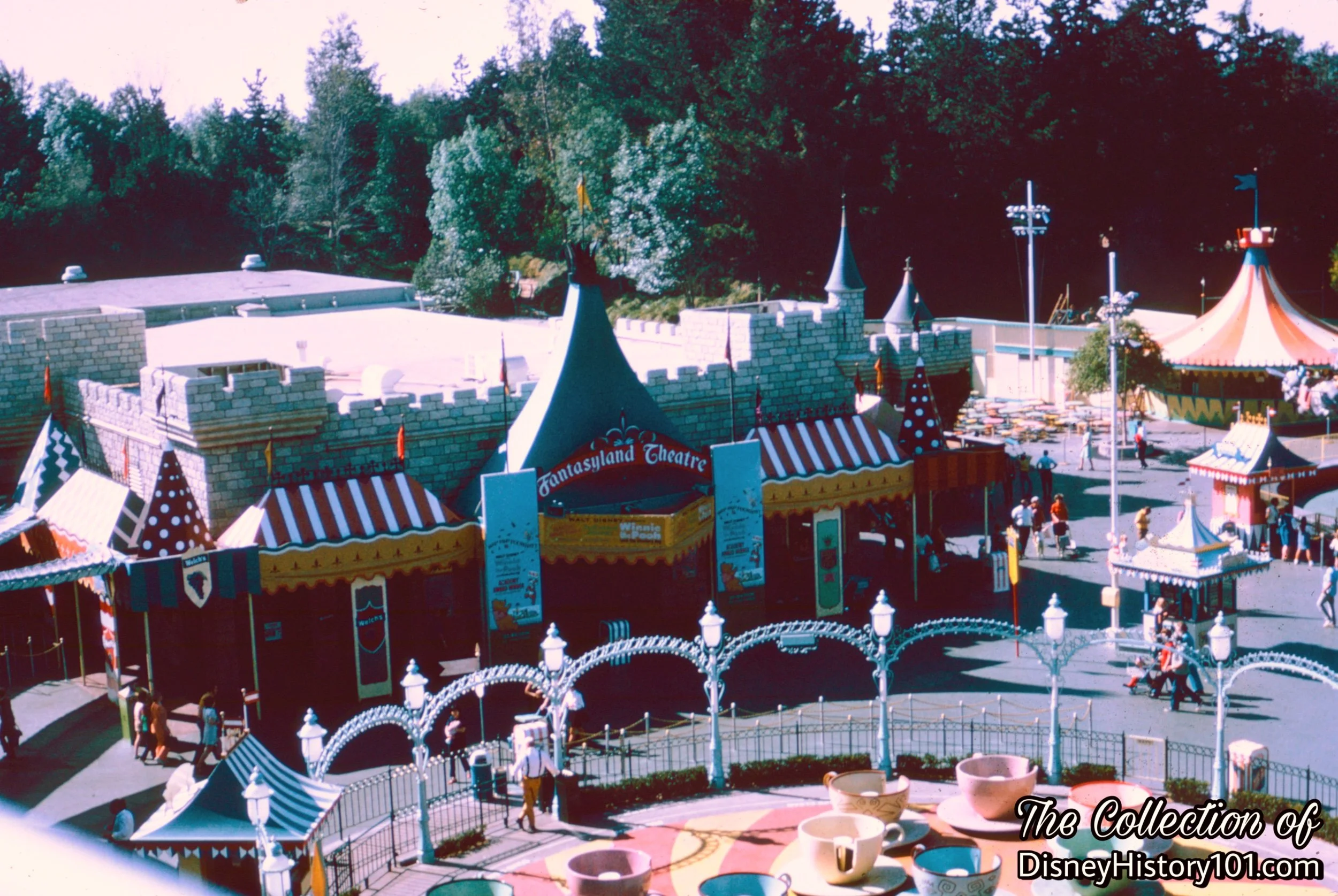
The Fantasyland Theater Architectural Facade from the Skyway, (1964)
A special Mickey Mouse Club show (advertised on posters rather than the theater marquee) received top billing during 1964.
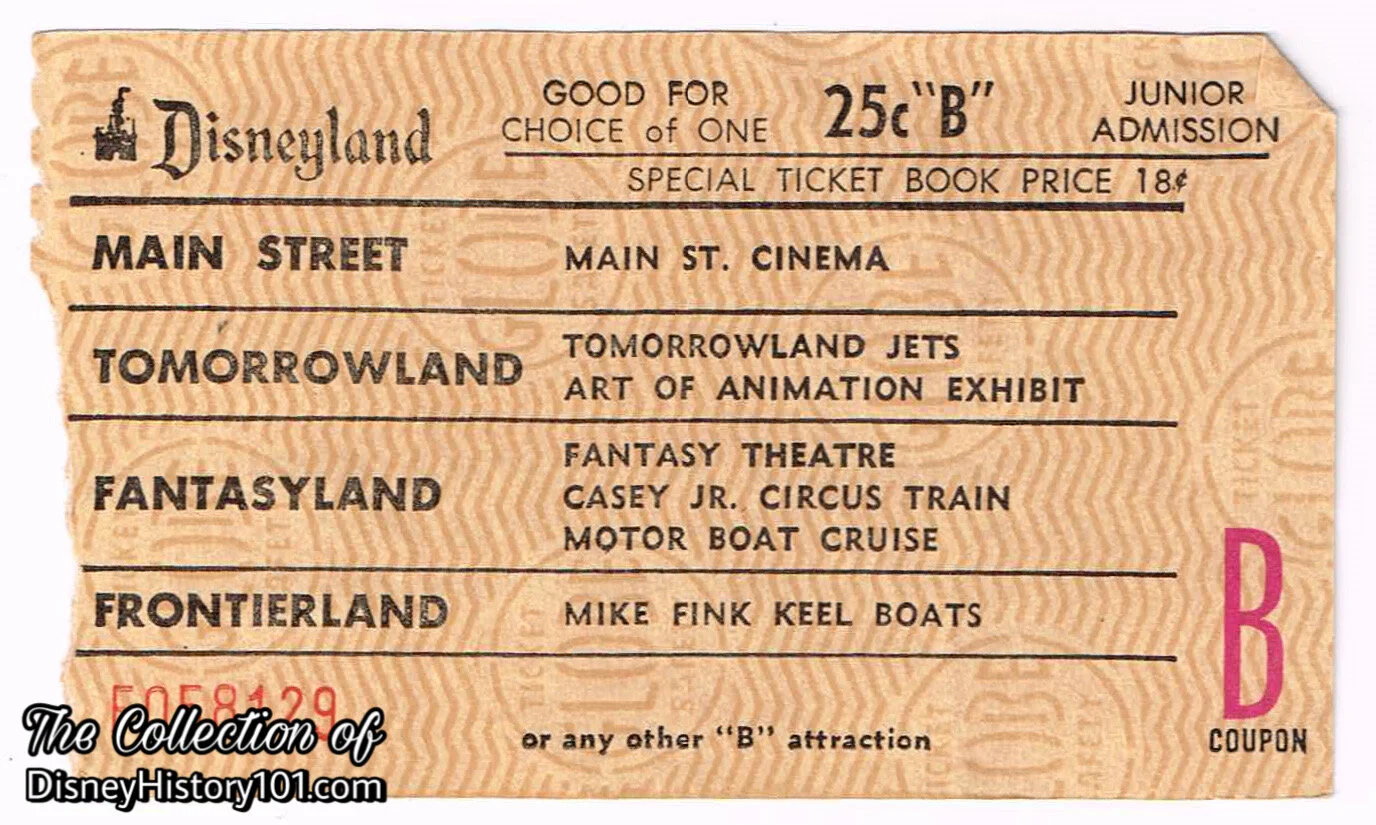
Disneyland "B" Coupon (25¢ Value)
During early days of the all-new Fantasyland Theater, the admission price of the preceding Mickey Mouse Club Theater was retained - 25¢!
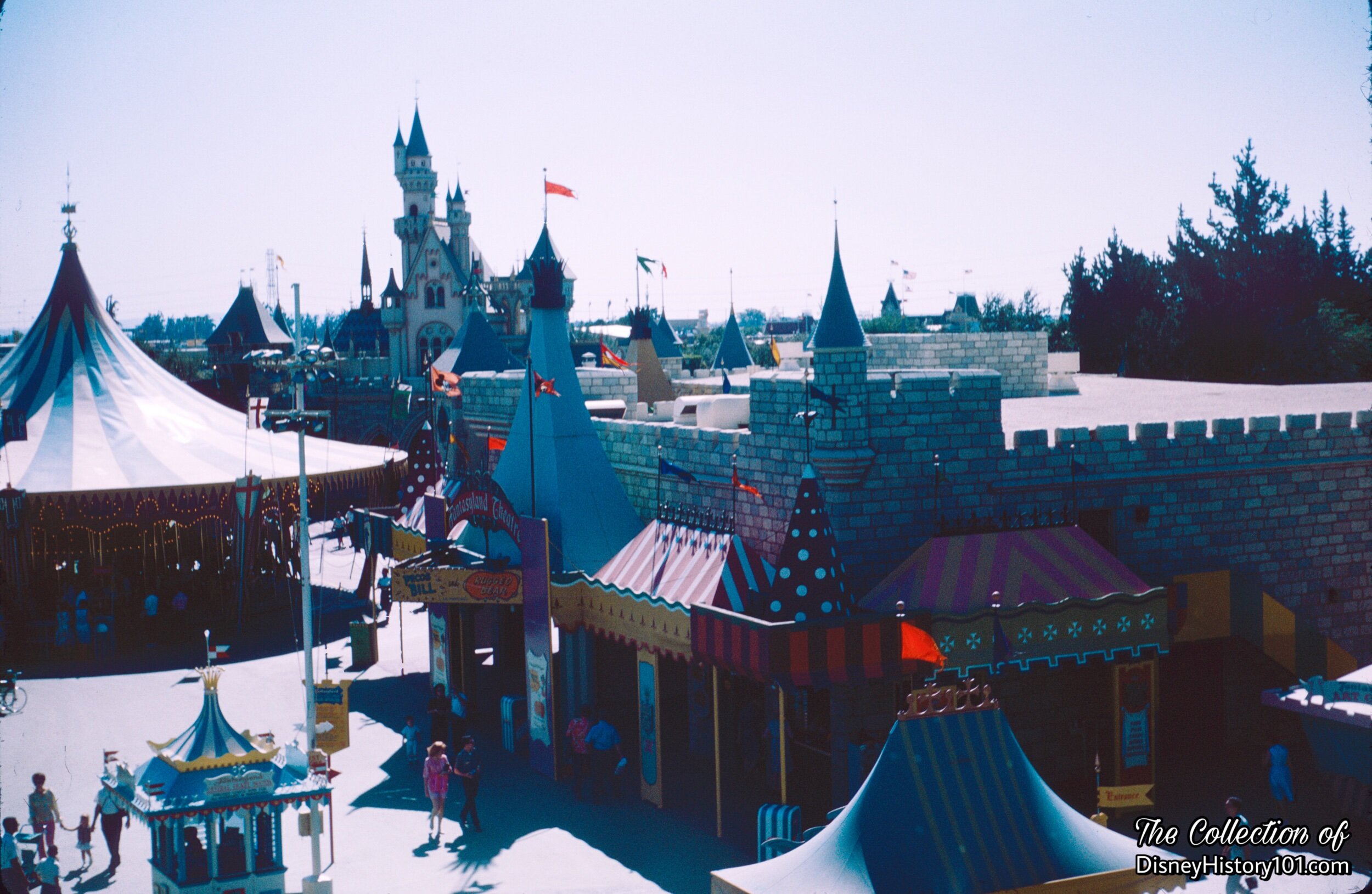
Fantasyland Theater, (November, 1965)
Short films Pecos Bill and Rugged Bear now showing at the Fantasyland Theater as a double feature!
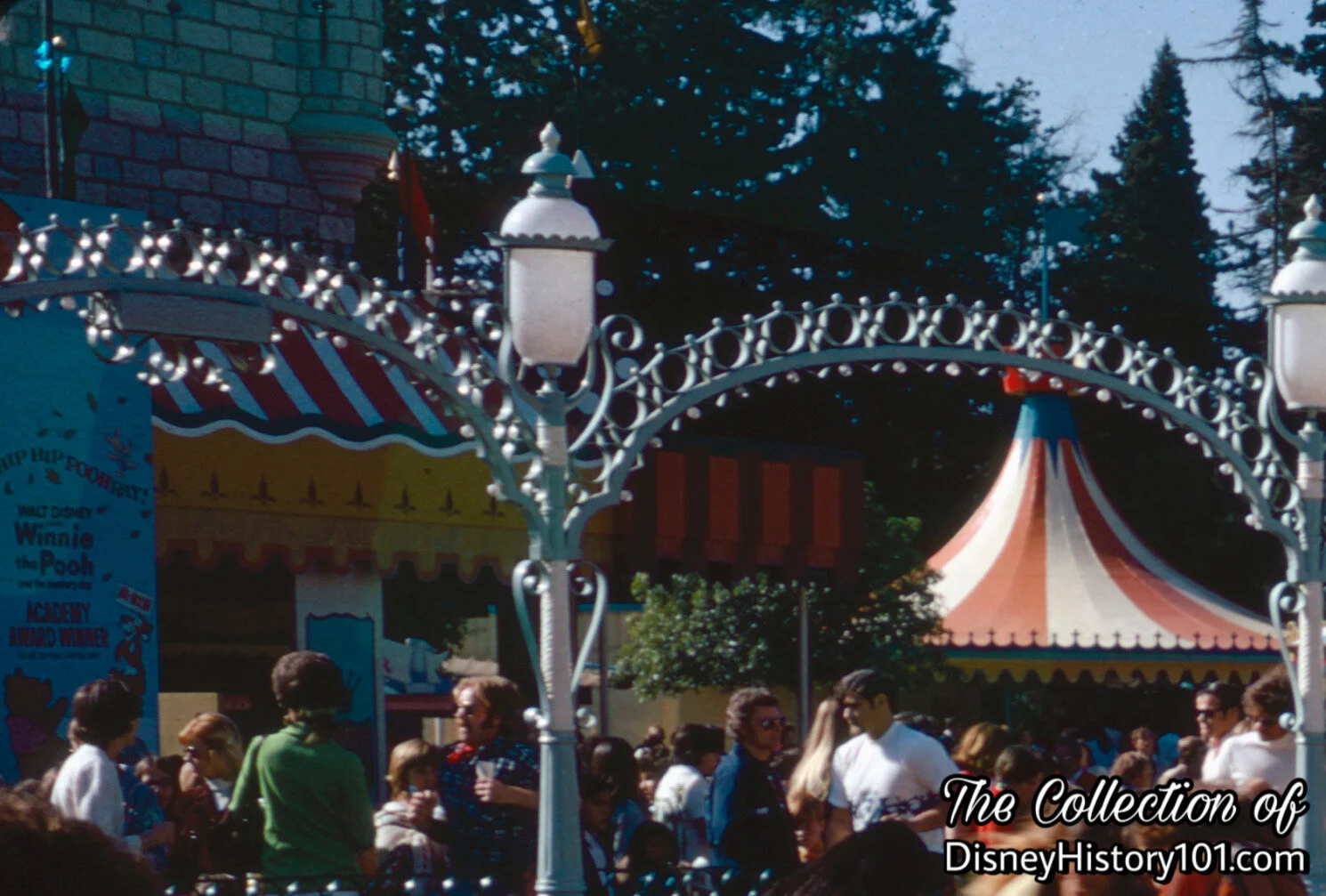
In 1965, the University of Disneyland presented the Fall Film Festival at the Fantasyland Theater. Shows included the son of flubber, Bambi, kidnapped, the living desert, babes in toyland, and Savage Sam.
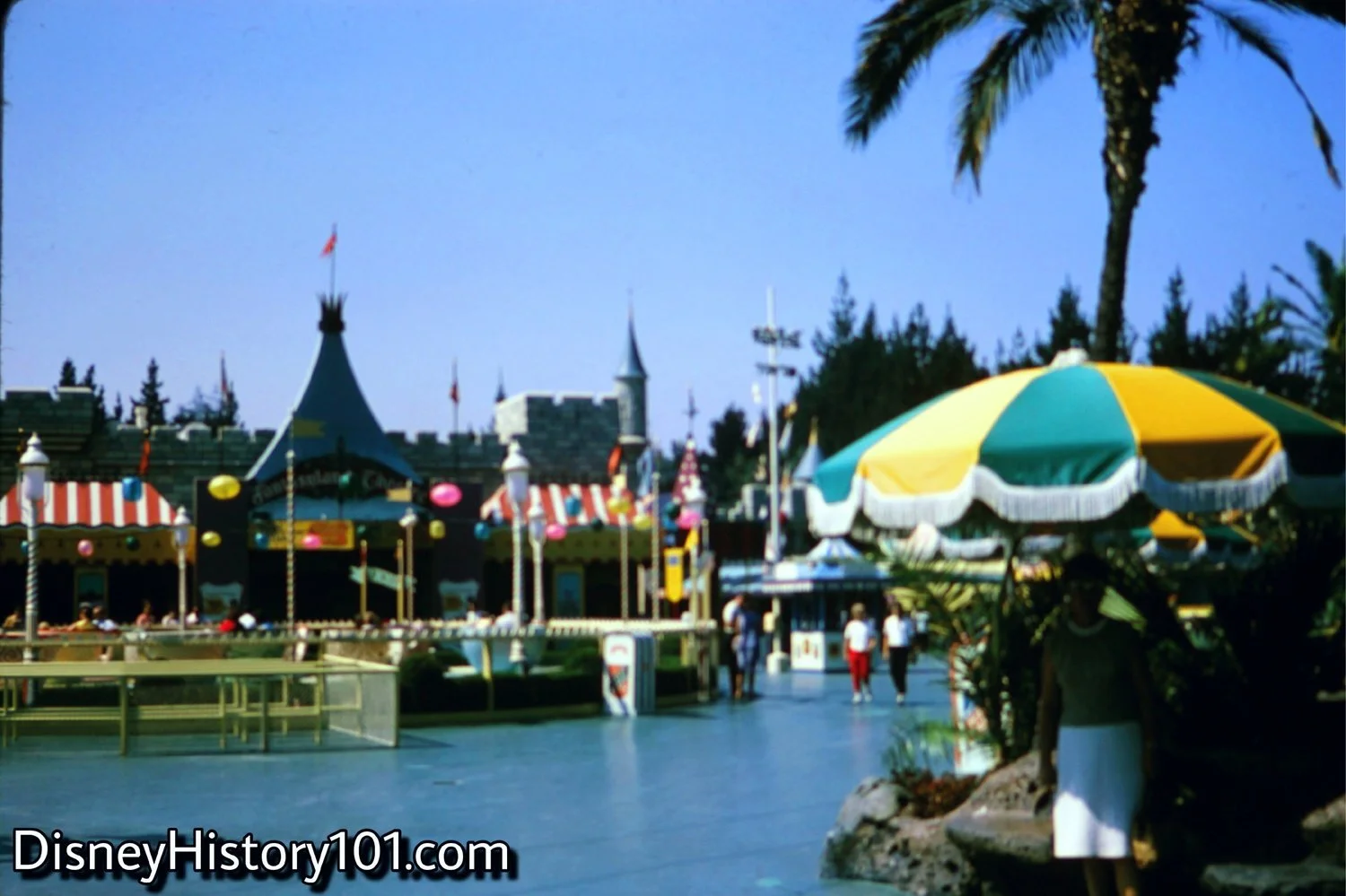
Fantasyland Theater, (1966)
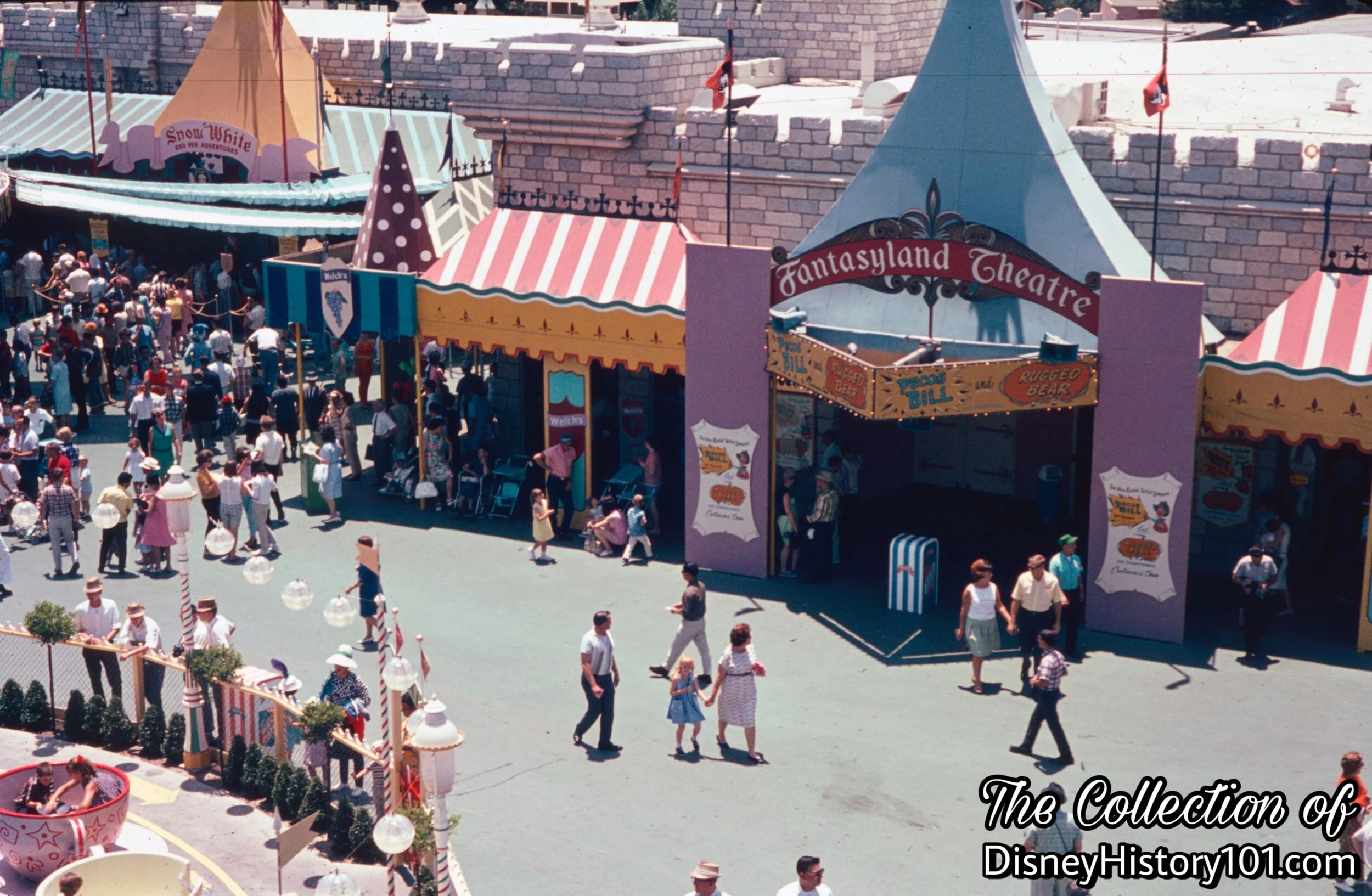
Fantasyland Theater, (1966)
More than a decade after they were released, the Melody Time (1948) short Pecos Bill, and the Donald Duck and Humphrey Bear short Rugged Bear (1953) would play in a double-feature at Fantasyland Theatre!
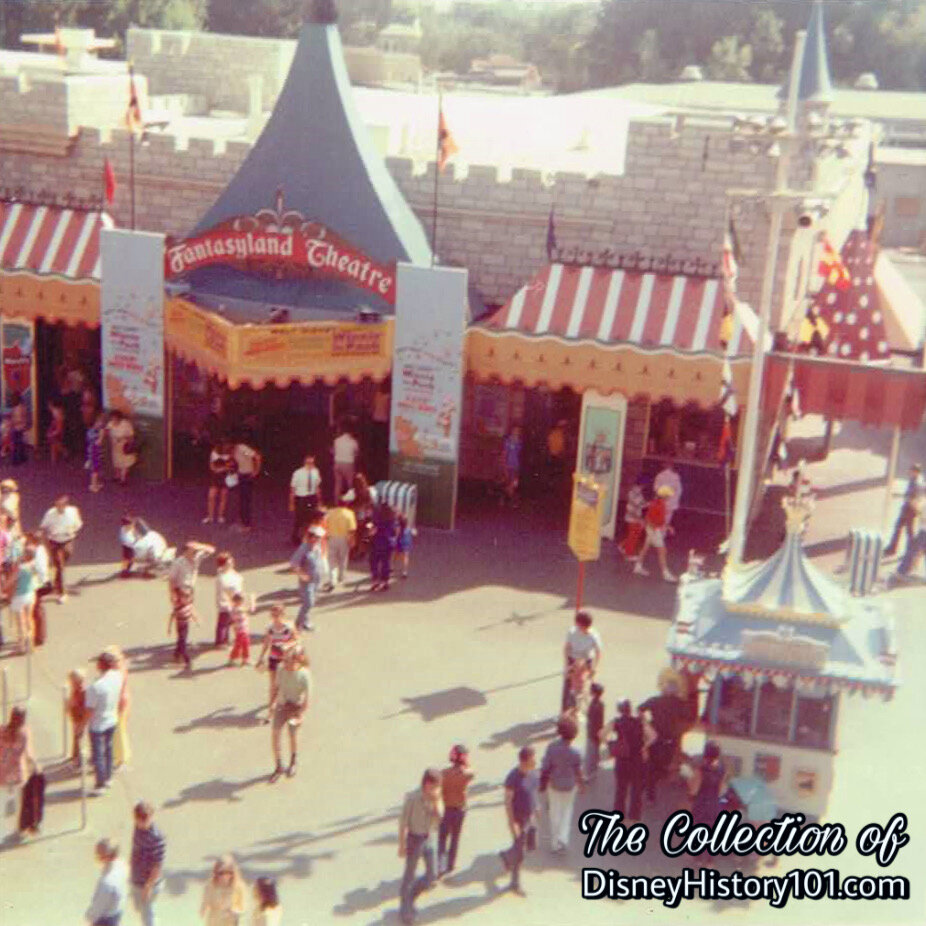
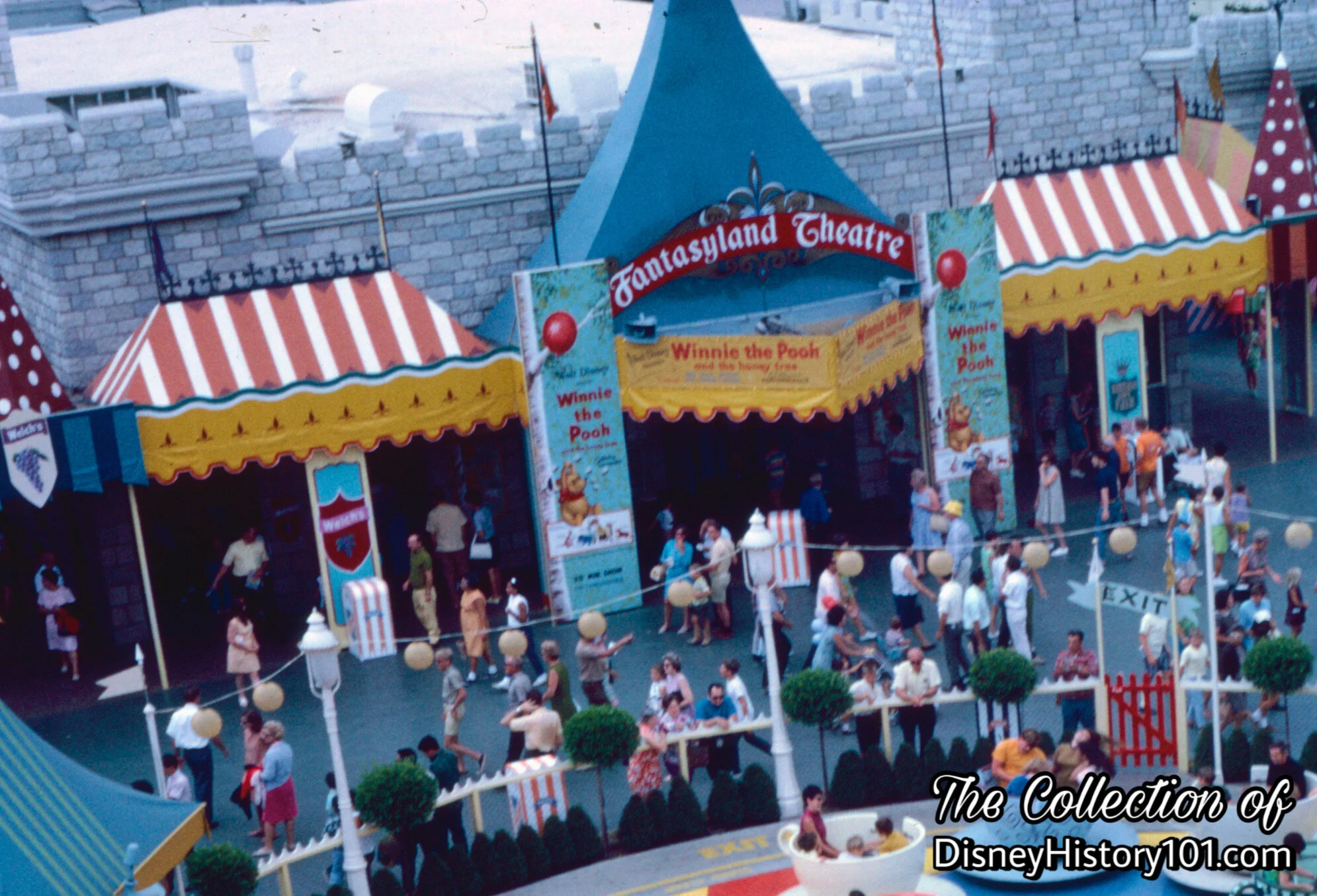
Fantasyland Theater Architectural Facade, c. 1968.
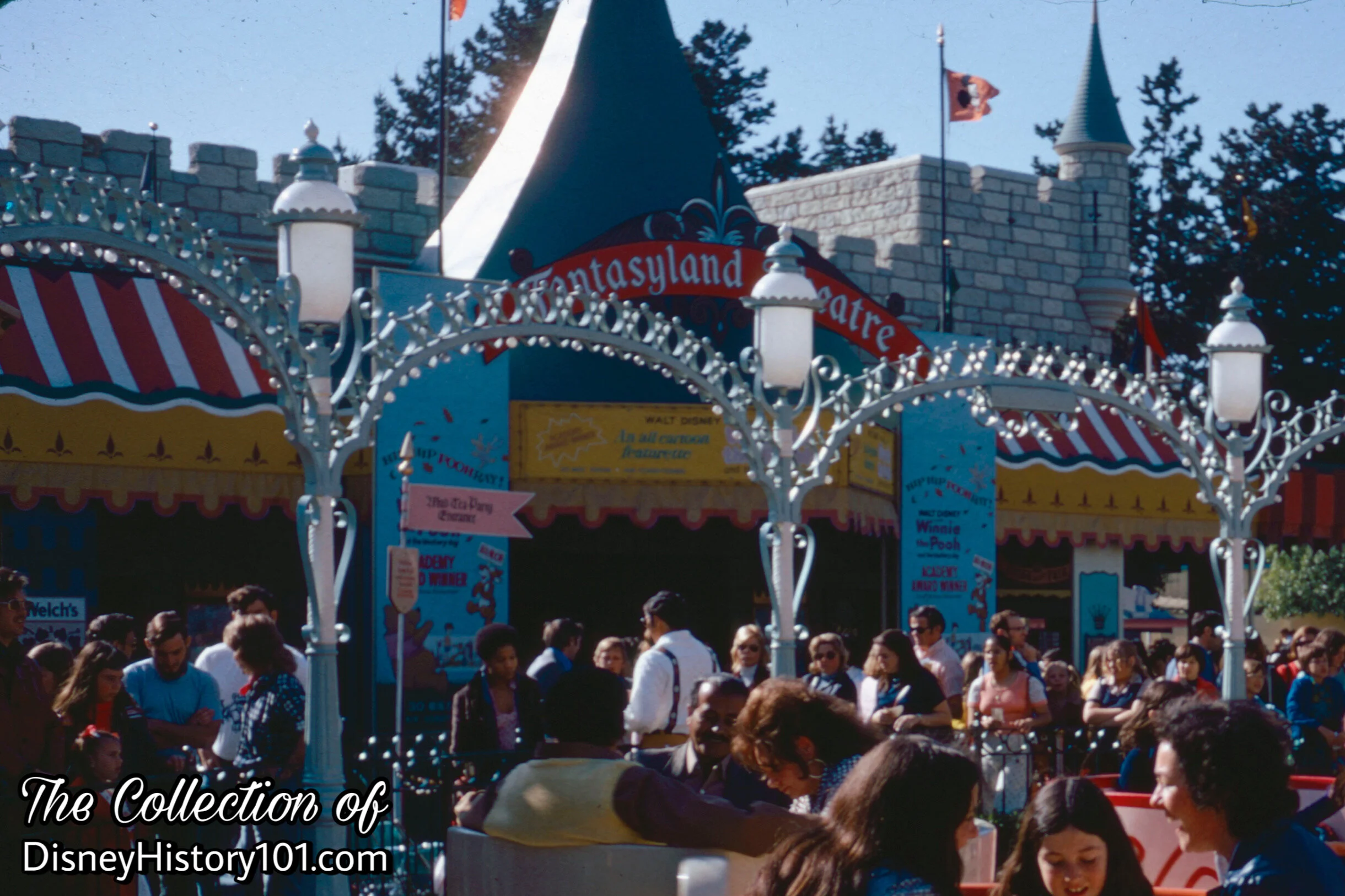
Fantasyland Theater, 1969
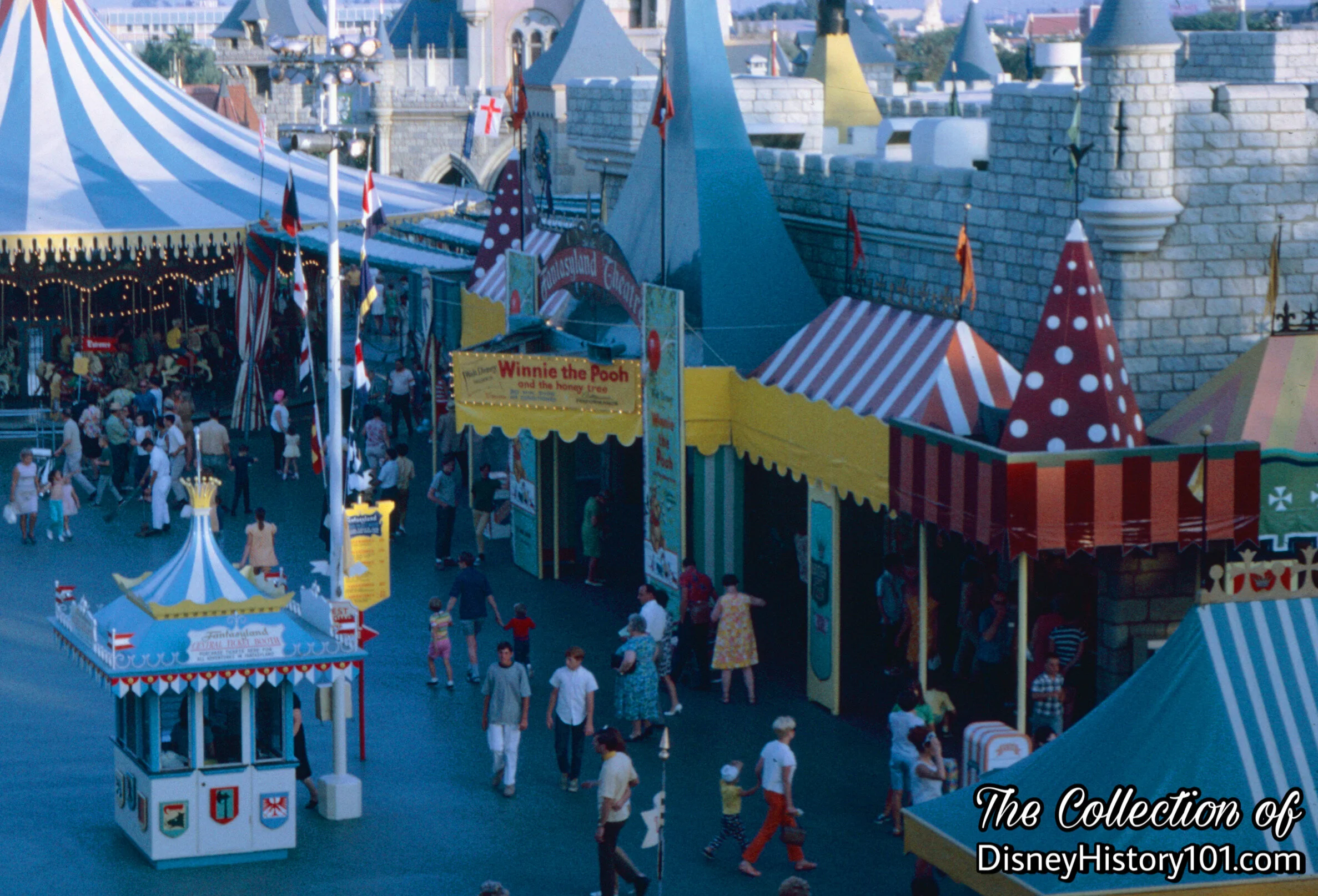
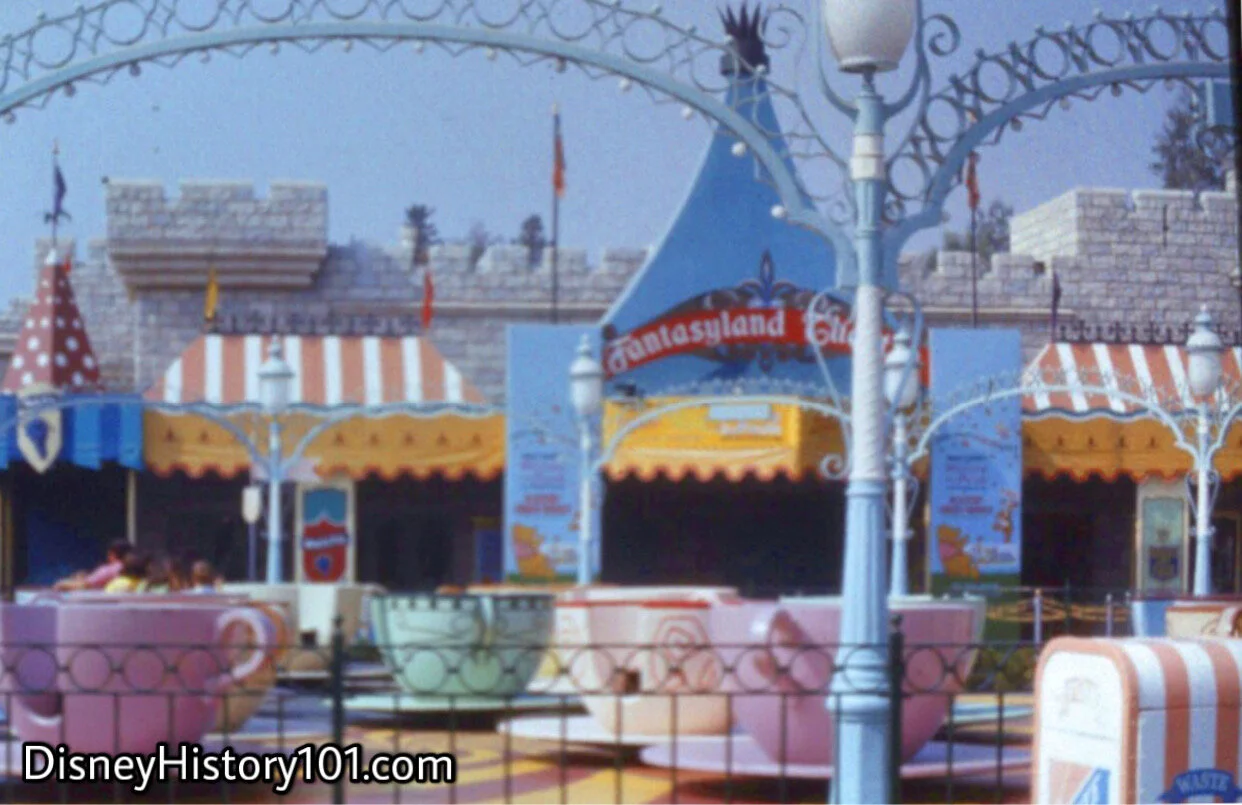
Fantasyland Theater, 1969.
We can vaguely see the marquee, which advertises a Winnie the Pooh feature.
The 18-minute film, A Visit to Walt Disney World was shown at the Fantasyland Theatre immediately preceding the festival attraction, Bambi on Friday, May 2, 1969 at 7:30 p.m.
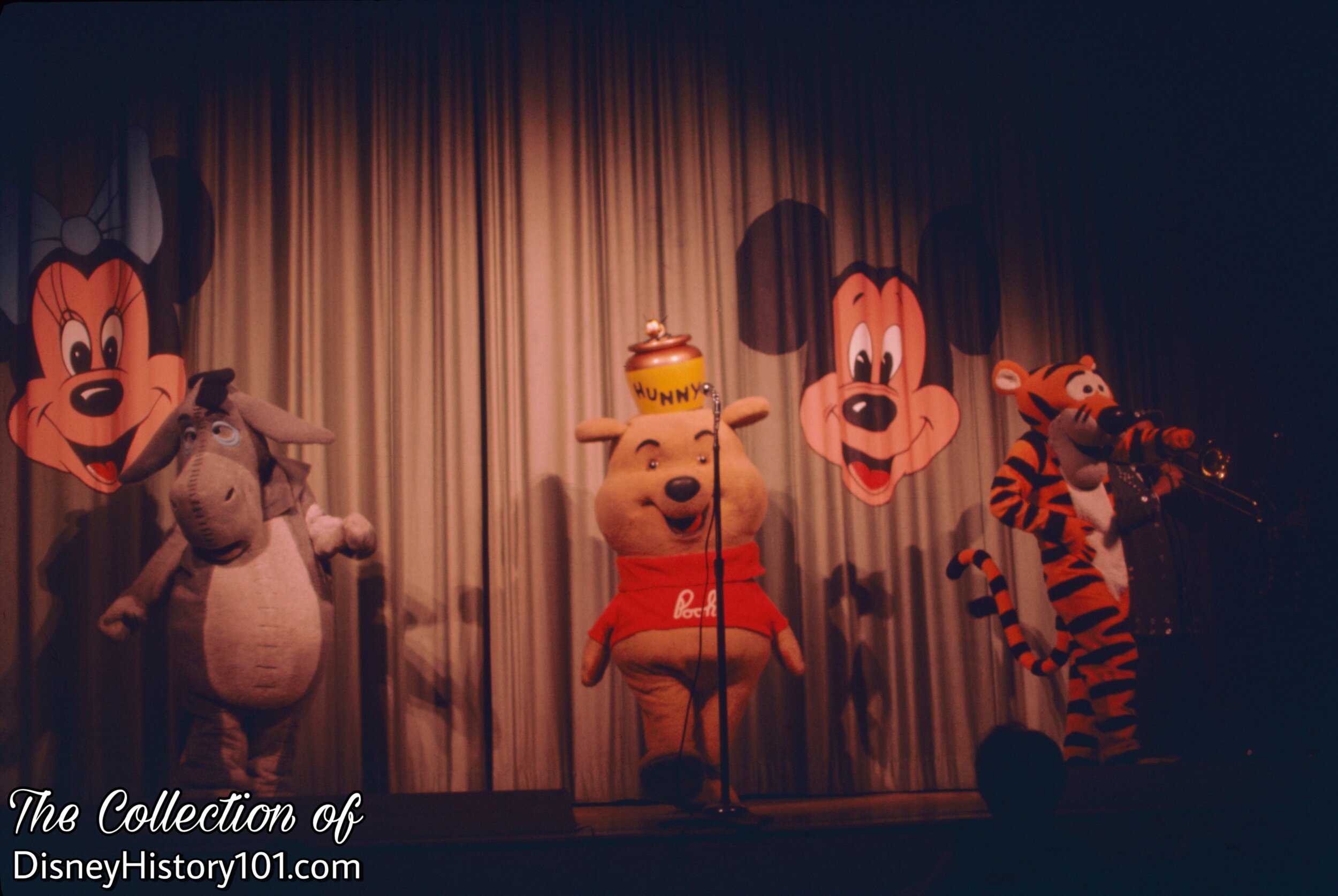
Fantasyland Theater Stage, (c. October, 1970)
Winnie the Pooh and his “Hundred Acre” neighbors and members of the Pearly Band (like clarinetist Jack Martin) perform for the audience at the Fantasyland Theater.
During January 8 to 21, 1973 the Fantasyland Theater was closed for a 2-week rehabilitation.
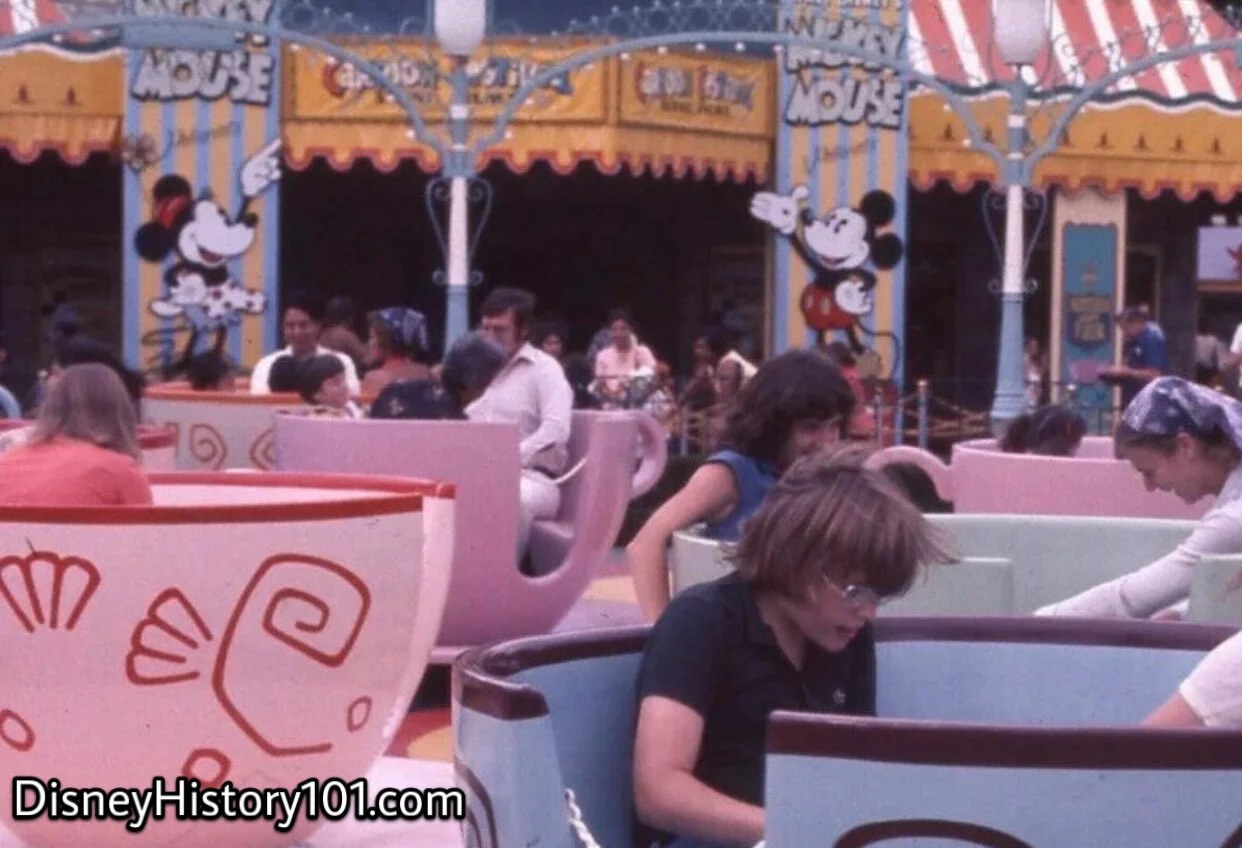
Fantasyland Theater, 1974
The “Sound Films” which played in the Fantasyland Theatre during this Cartoon Festival introduced Mickey Mouse to a younger generation who may have only known him from the New Mickey Mouse Club and his appearances in the Disney Parks. These limited time screenings included such timeless classics as “The Band Concert” (1935), “Through The Mirror” (1936), and “Mickey’s Trailer” (1938).
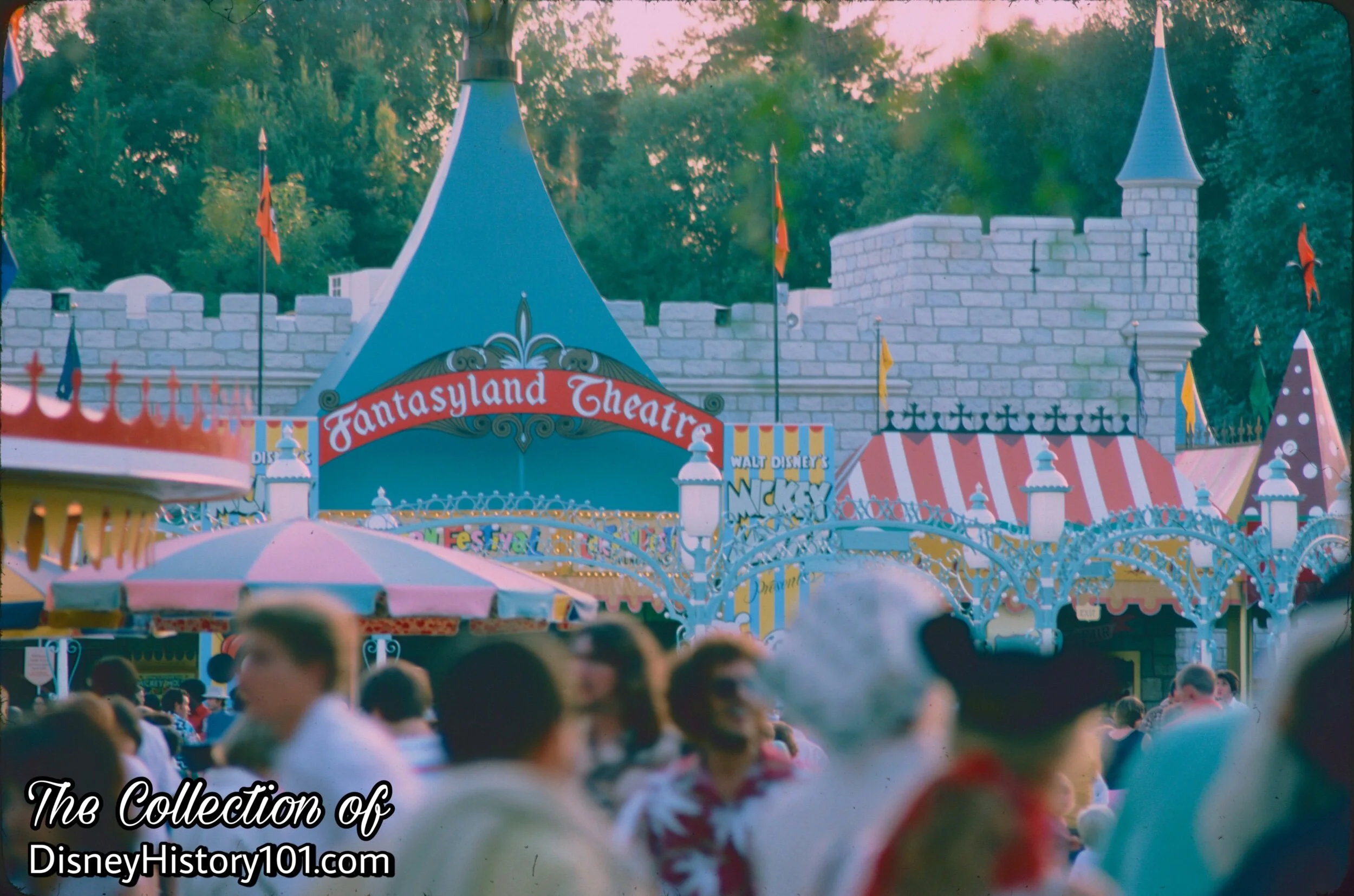
Fantasyland Theater Architectural Facade, c. 1974 - August, 1975.
A Cartoon Festival starring Walt Disney’s Mickey Mouse and Minnie Mouse is held at the Fantasyland Theater.
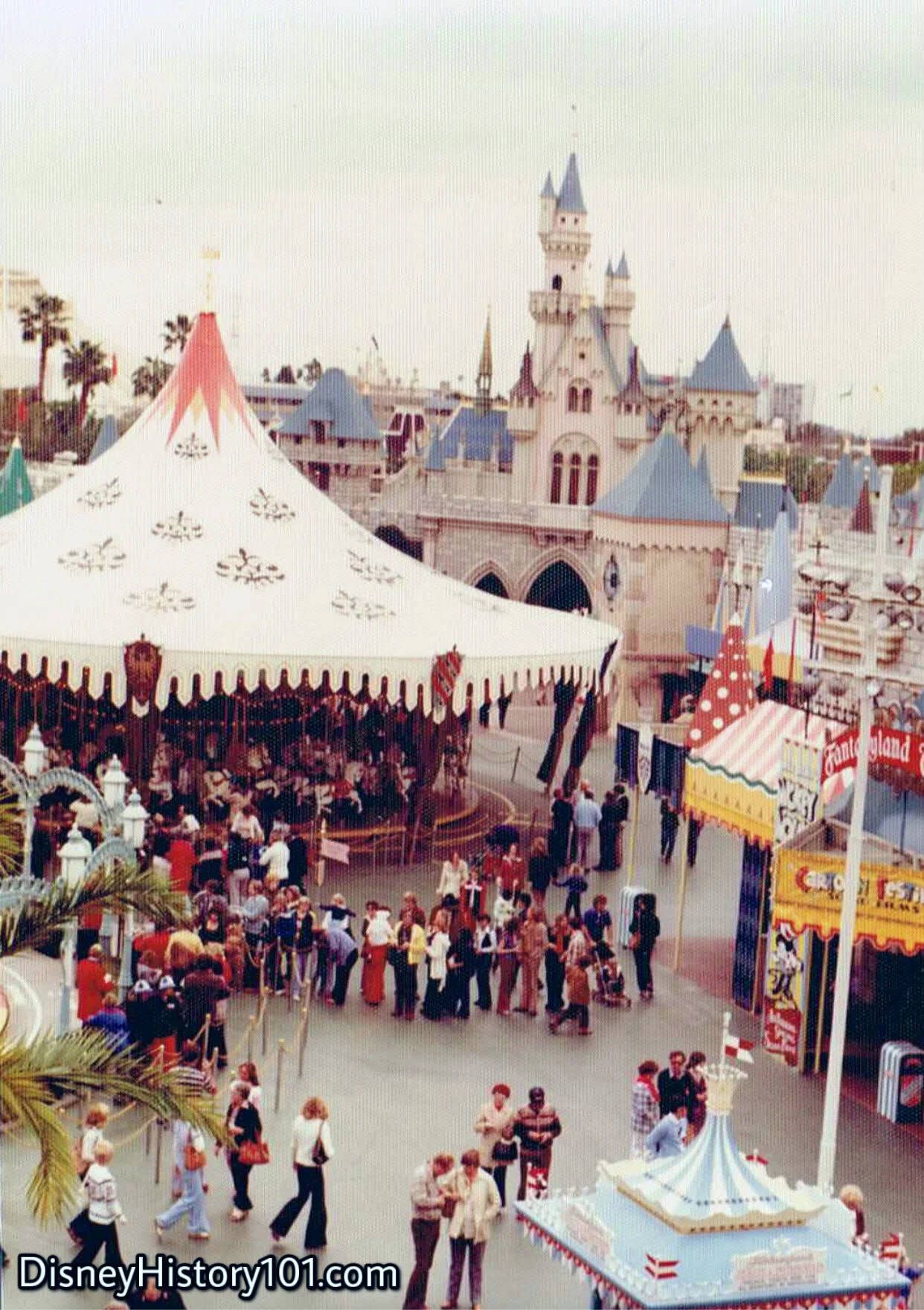
Fantasyland Theater, c. 1975 - 1976, The Cartoon Festival
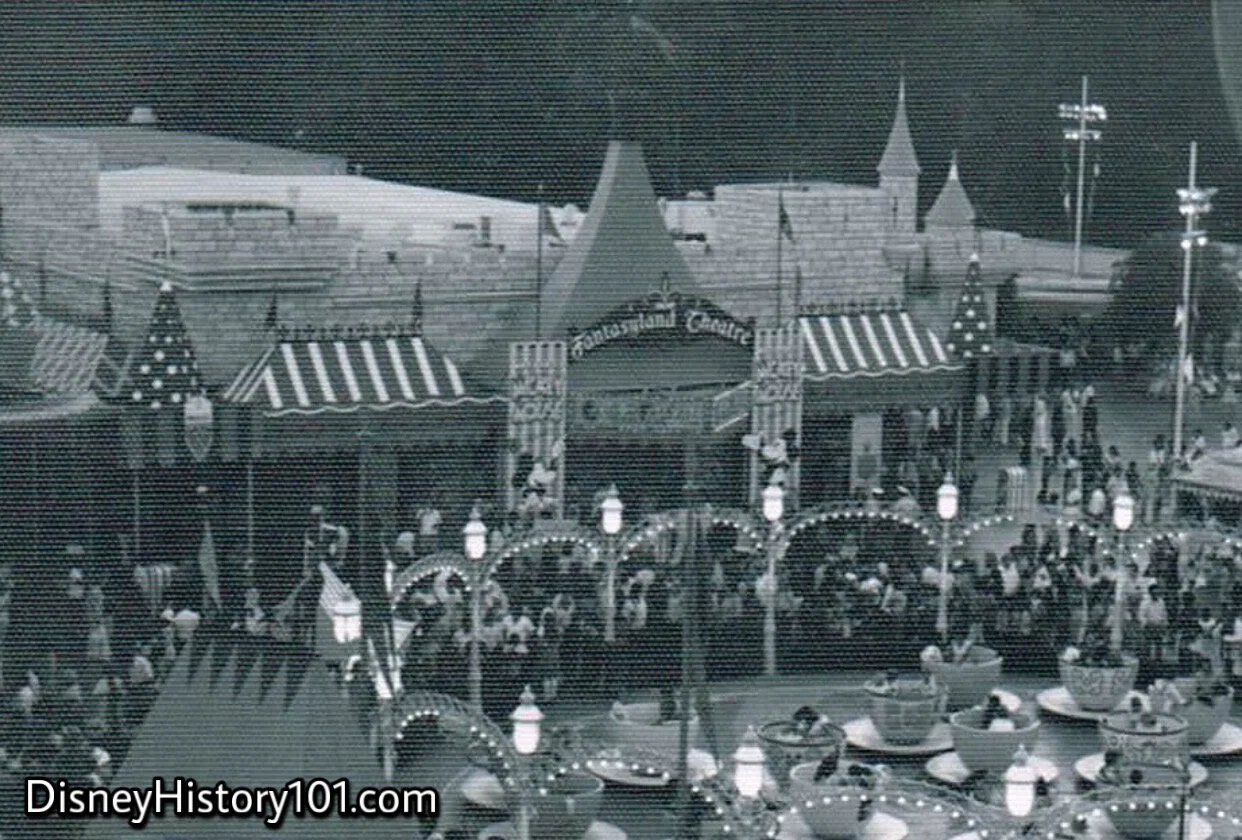
Fantasyland Theater, 1975
Several 1930s Mickey Mouse short films would reintroduce Mickey and Minnie Mouse to an entire new generation that may have never seen a “classic mickey Mouse” cartoon on the big screen! This Cartoon Festival would continue into 1975 - during the American Bicentennial celebration held at Disneyland.
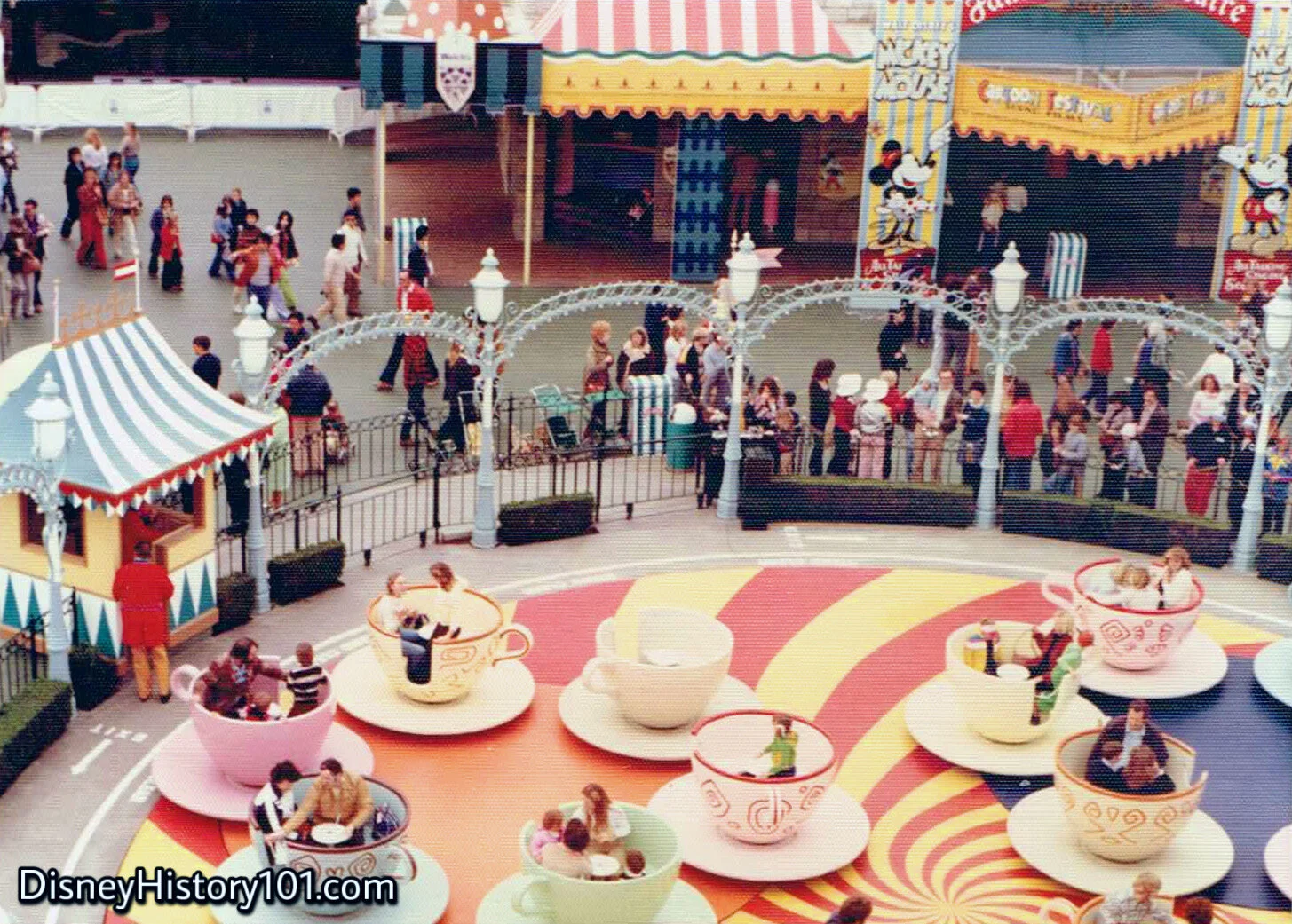
Fantasyland Theater, c. 1975 - 1976
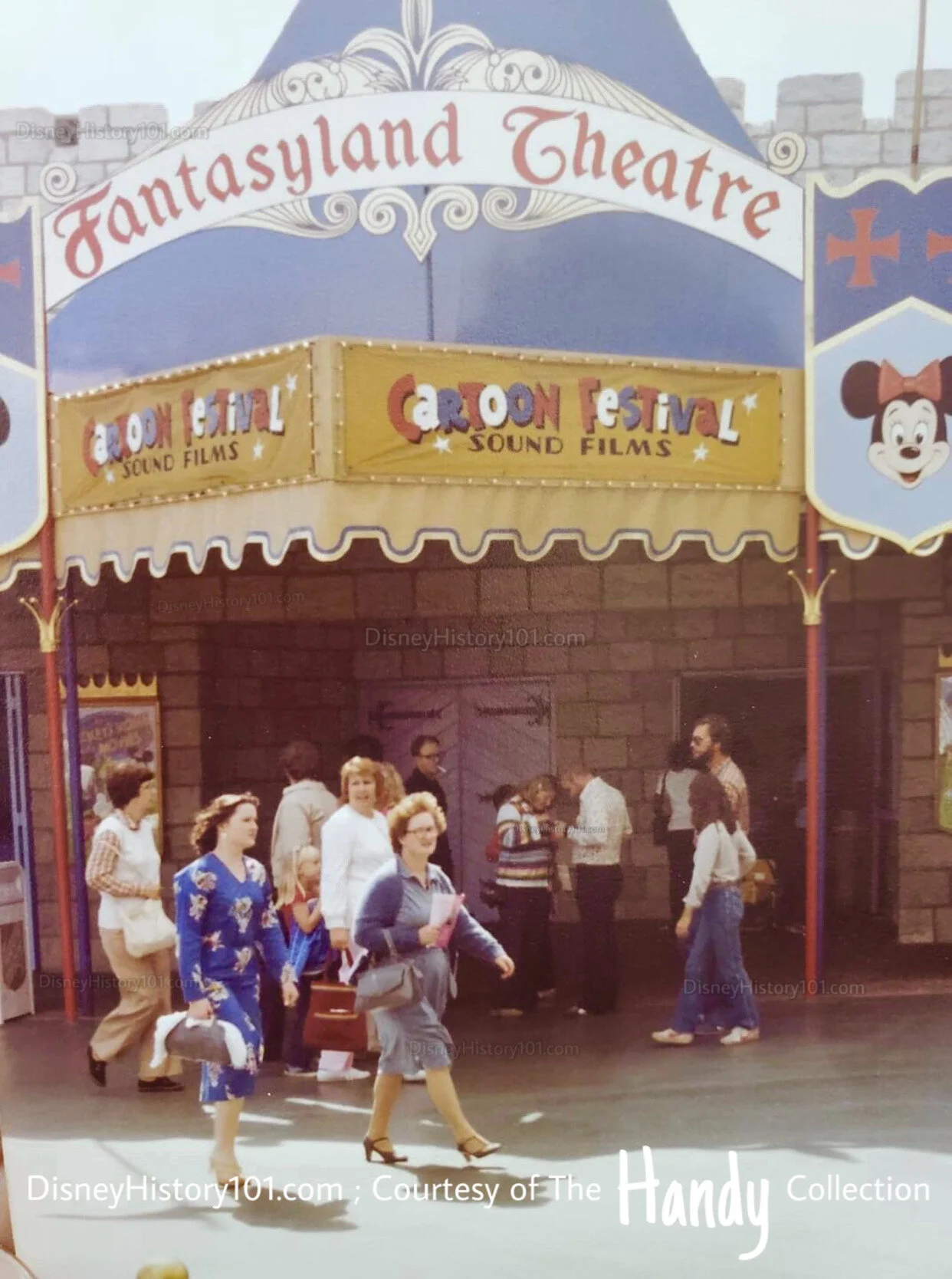
Fantasyland Theater Architectural Facade, c. 1981.
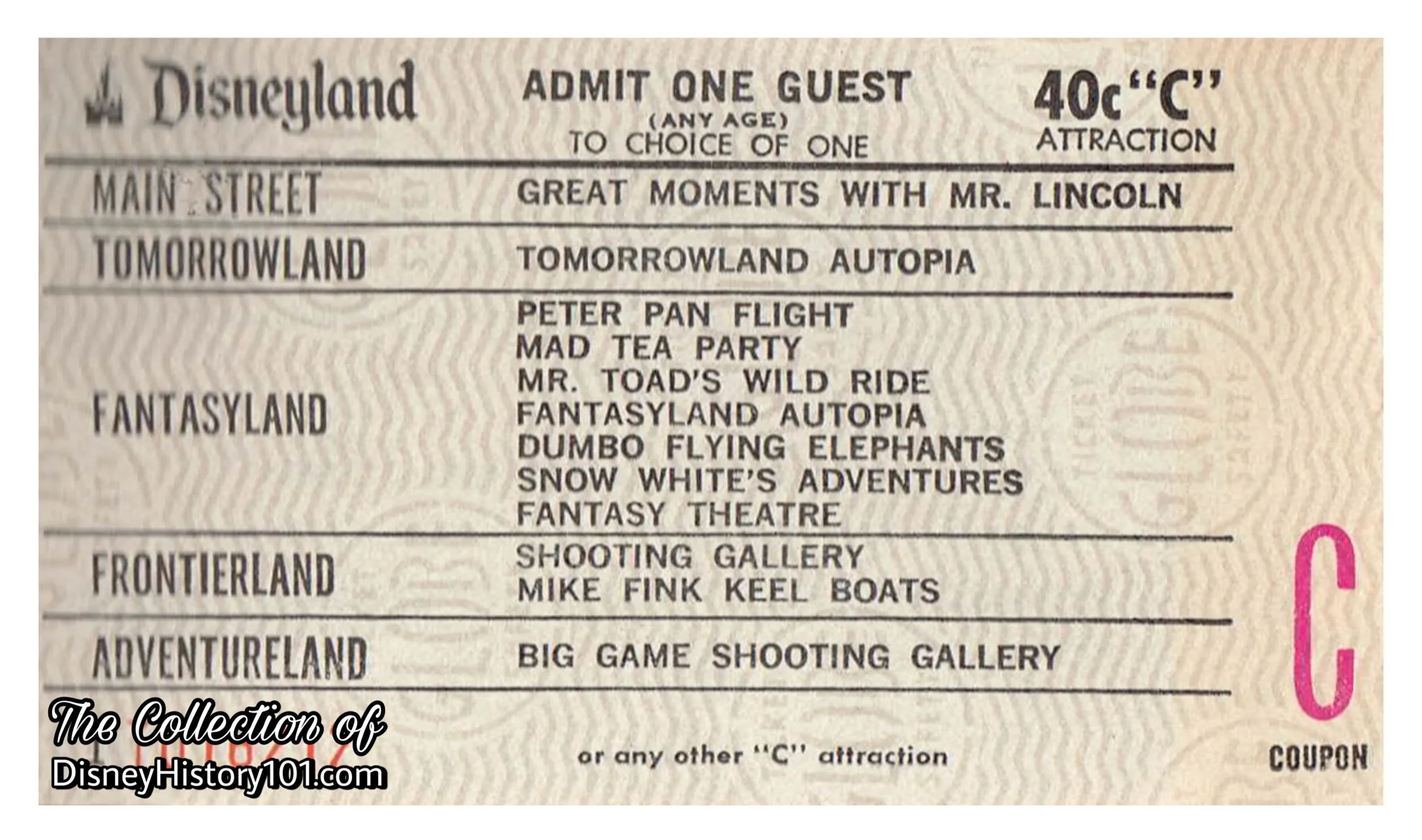
Disneyland “C” Coupon, 40¢ Value.
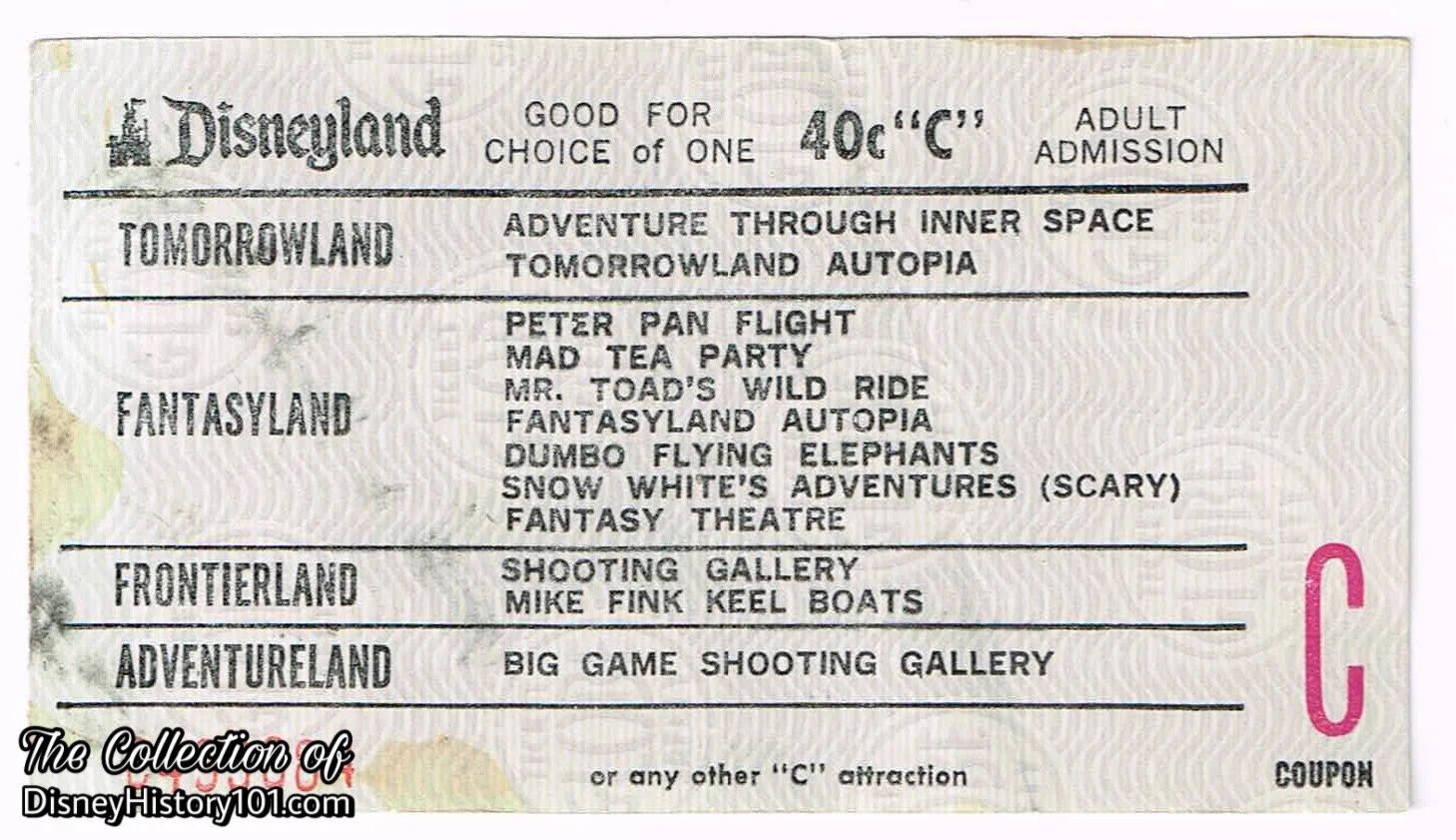
Disneyland "C" Coupon 40¢ Value.
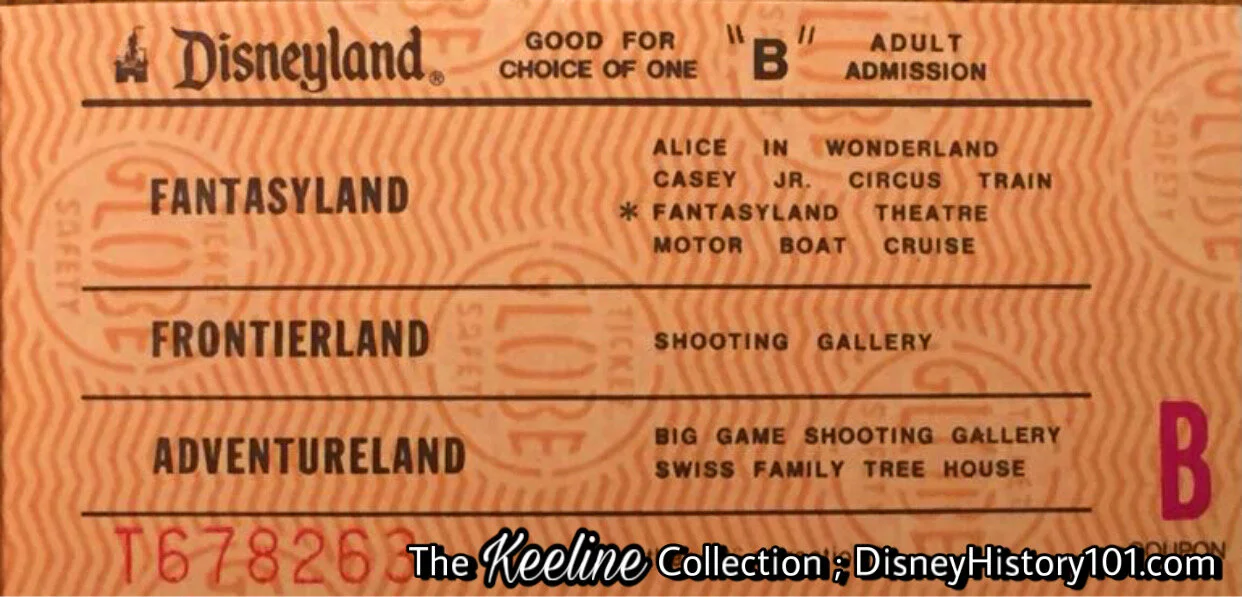
Disneyland “B” Coupon, No Cash Value.
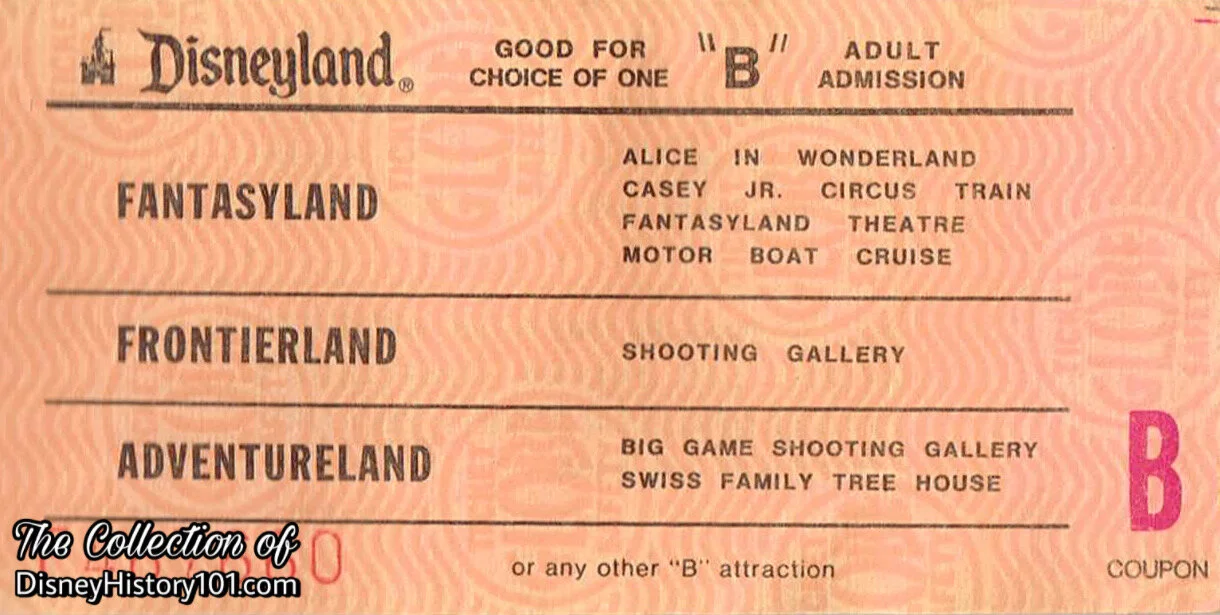
Disneyland "B" Coupon (No Cash Value)
“Maintenance of Magic”
During each day, Disneyland Park Operations M-42 Machinists would, at least once, check all attractions in Fantasyland and discuss with each Attraction Lead and problems, defects, or any other feedback regarding the department. M-42 Machinists would also respond to all downs and delayed openings in the Fantasyland area whether or not it was mechanical. Upon arriving at an attraction, they would determine whether what the failure was. M-42 would determine which crafts were needed, determine an estimated time of repair, notify M-1 and assist with crafts when necessary.
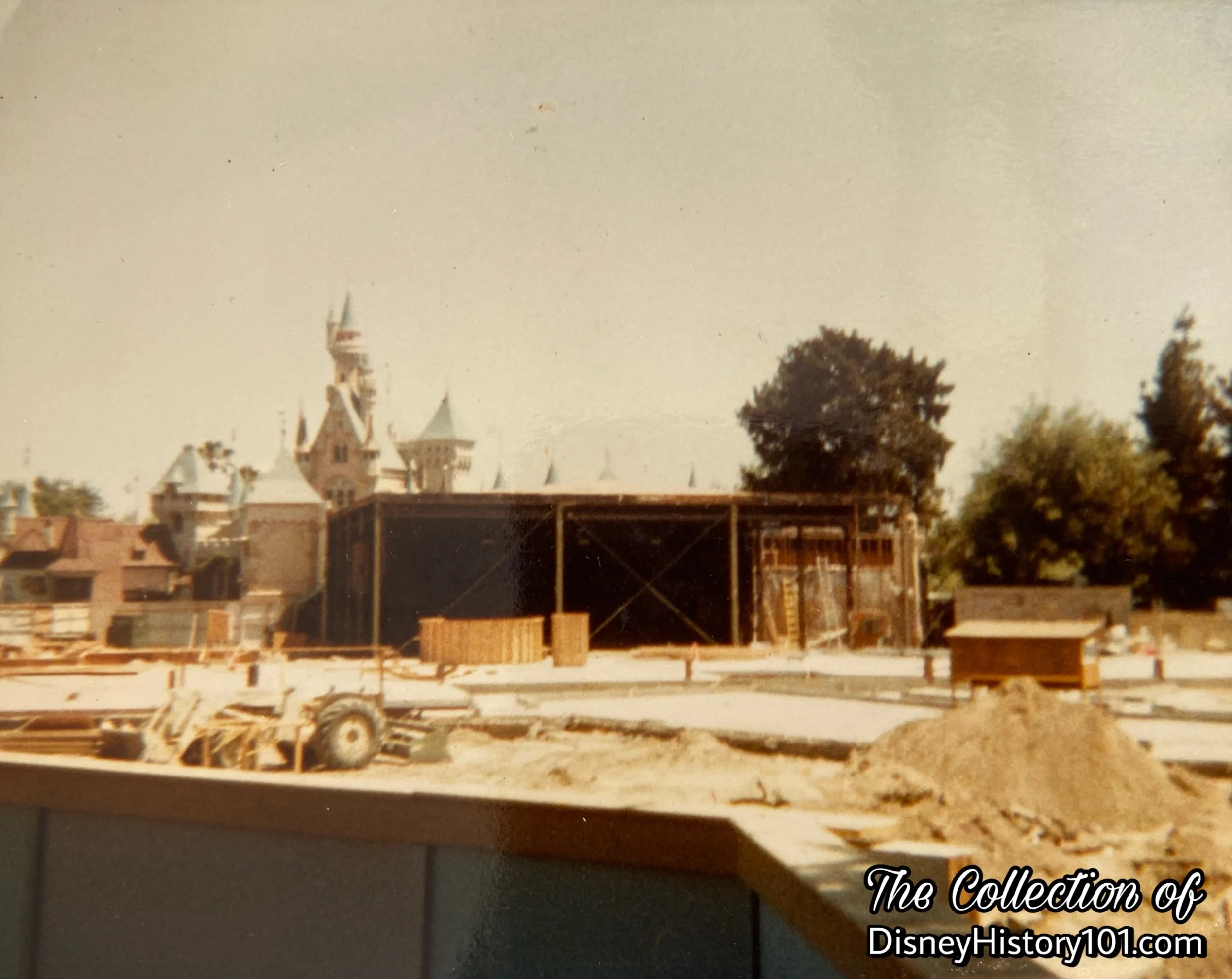
The framework of the old Fantasyland Theater (formerly Mickey Mouse Theater) after the period of demolition, in preparation for New Fantasyland construction.
Ultimately, the Fantasyland Theater’s curtains fell, and its closed its doors for the final time. During 1981, construction would begin on a new adventure contained in Sleeping Beauty Castle complex’s East side, as part of New Fantasyland! We invite you to “please, step this way” , as we take one last look back at a very unique aspect of the Fantasyland Theater - the Disneyland Drama Club productions!

During the 1960s, hard working Disneyland employees were rewarded periodically with scheduled luncheons, family picnics, film festival screenings featuring popular Walt Disney Studios films, and field trips to fun and exotic locations. Industrial Basketball games, Volleyball tournaments, and softball leagues allowed for exercise and introduced a spirit of healthy competition and challenge. In addition, various clubs (focused on skiing, the arts, Christian fellowship, square dancing, to name a few) helped Disneyland’s employees bond and befriend each other. These opportunities to enjoy a little recreation with like-minded Disneyland Cast Members were all owing to one organization called the Disneyland Recreation Club (we’ll hear more about their origin below)!
But, did you know, that Disneylanders were seasonally treated to limited stage productions of plays presented from the Fantasyland Theater Stage, by the Disneyland Drama Workshop? It is very appropriate that we take a rather extended interlude to introduce our next Fantasyland Theatre- related subject, as it was most enjoyed among Disneylanders during the 1960s and the 1970s.
Some of the earliest evidence of staff-produced play productions on Disneyland property date back to the 1960s. Spring Tonics 1960 (a series of Disneylander-produced skits) was held on May 25th, 26th, and 27th in the Mickey Mouse Club Theater. About this time period, at least one other play production was performed. The granddaughter of a former Main Street Concessions Manager [a certain C. S.] recently shared her remembrance of this show in Disneyland : “Grandma performed in this theater. Grandma would sing and dance. She had a smile that just melted your heart. I can remember her reading her lines for the play she would be in, in the Mickey Mouse Club Theater. Grandma was in the play Arsenic and Old Lace.”
By 1962, the Disneyland Recreational Club supported a “little theater group” known as the Disneyland Players.
According to Tom Pletts (a latter member of the Disneyland Drama Club), “[The] Disneyland Drama Club…existed [a few years later] in 1966, very briefly. It was begun by executive Bill Carden, but ended after only one bill of one -acts at the Hotel.” This production featured several acts - ‘The Case of the Crushed Petunias’, ‘If Men Played Cards as Women Do’, ‘Escurial’, and ‘Separate Tables’ were each directed by a different Disneylander and starred a small, unique cast. Tom continues, “Bill had been transferred to another part of the company, I think, and he was the sole instigator. Fun while it lasted, though.”
Fast forward about five years, to 1971 - the heyday of the Disneyland Drama Workshop (or, Disneyland Theatrical Production Club). If you were lucky enough to have a family member who worked for Disneyland, you may have had the opportunity to visit Fantasyland Theater after hours for at least 1 of 16 total productions :
•The American Dame (1970)
•Greensleeves’ Magic (February 22-25, 1971) - the second Drama Workshop Production
•Chicken Ranching for Fun and Profit (May 24-26, 1971)
•Spring Tonics (1971) - a skit performed for the park’s summer banquet
•Bye Bye Birdie (November 1-4, 1971)
•Story Theater (January 8-11, 1972) including Henny Penny, The Elves and the Shoemaker, The Robber Bridegroom, The Fisherman and His Wife, and The Lion-Hearted Kitten
•Jane Eyre (scheduled for February of 1972, but unproduced)
•Rumplestiltskin (February 28, 29 ; March 1, 2, 1972)
•You Can’t Take It With You (May, 1972)
•Lil’ Abner (October 1972)
•Wait Until Dark (March 12-15, 1973)
•Story Theater (1973) - a collection of one acts
•How to Succeed In Business Without Really Trying (October 15, 16, 17, 18, 1973)
•Little Mary Sunshine (1974)
•And Then There Were None (1974)
•The Goodtime Dance Company (September, 1975)
•The Sound of Music (February 5, 7, 10-13, 1975)
•The Fantastics (1975)
•Tail of the West (February 3-5 ; 10-12, 1976)
•Come Blow Your Horn (c. 1976)
•The Boyfriend (1978)
•Damn Yankees (date unknown)
•Come Blow Your Horn (1987)
At times a production was scheduled, announced in LINE Magazine, but never produced. One such example was a production of Jane Eyre (which was considered during early 1972), but did not garner enough interest. A few of these were directed and written by Wally Boag, and each one starred a talented cast of Disneyland employees. Disneylander Earl Archer was a charter member of the Disneyland Drama Workshop and had been involved in every production since its establishment until (at least) 1974. If you worked at the Park during this era, I am sure you will see some faces that you recognize in the following sections!
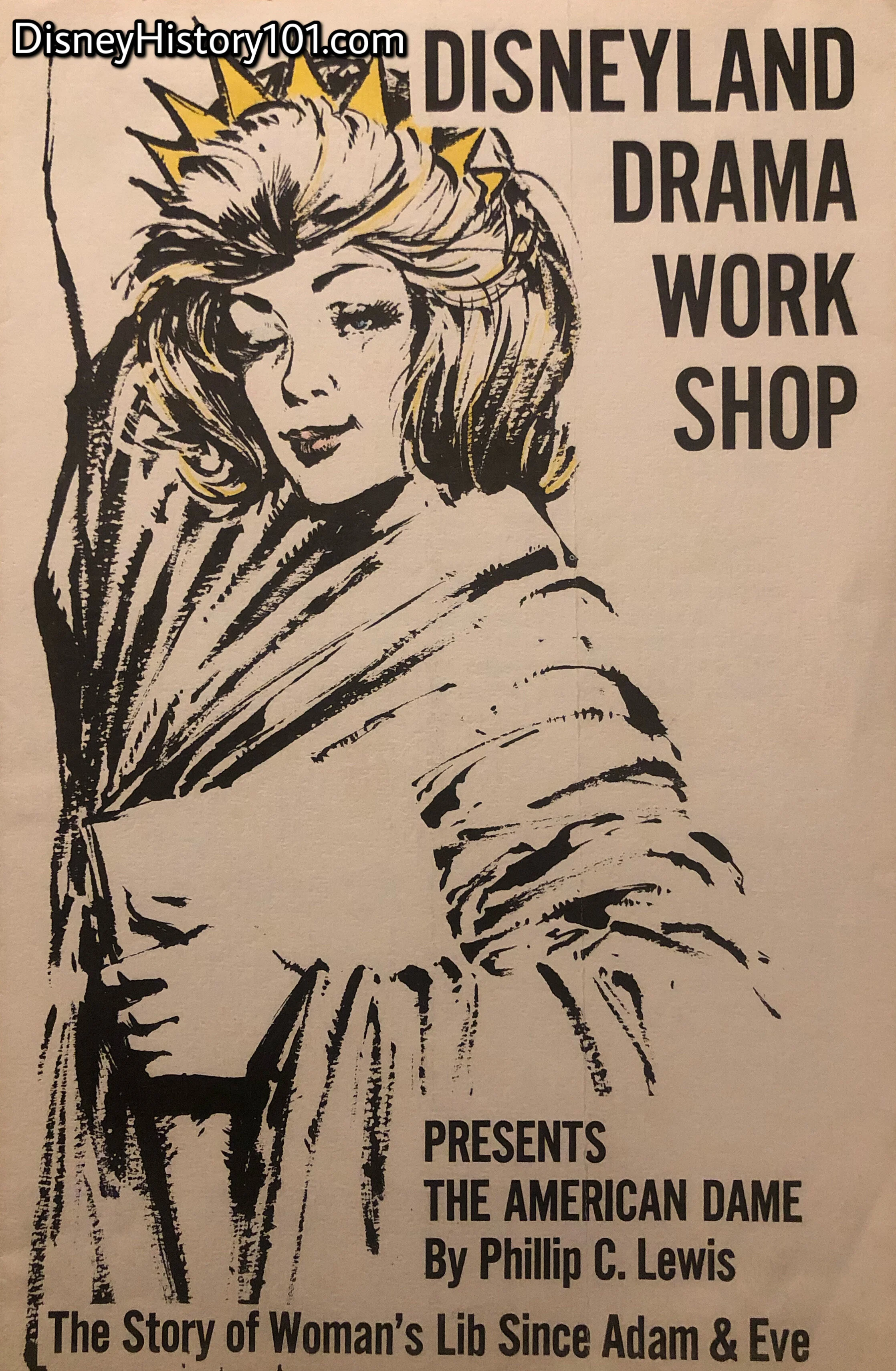
The American Dame Program Cover, (1970)
The very first Disneyland Drama Club Workshop production was ‘The American Dame’, presented (appropriately) in the 400-seat, air-conditioned, Fantasyland Theatre! Alex Goldstab (a Disneyland Entertainment Manager), produced it just before relocating to support the newly established Character Department of Walt Disney World’s Magic Kingdom.
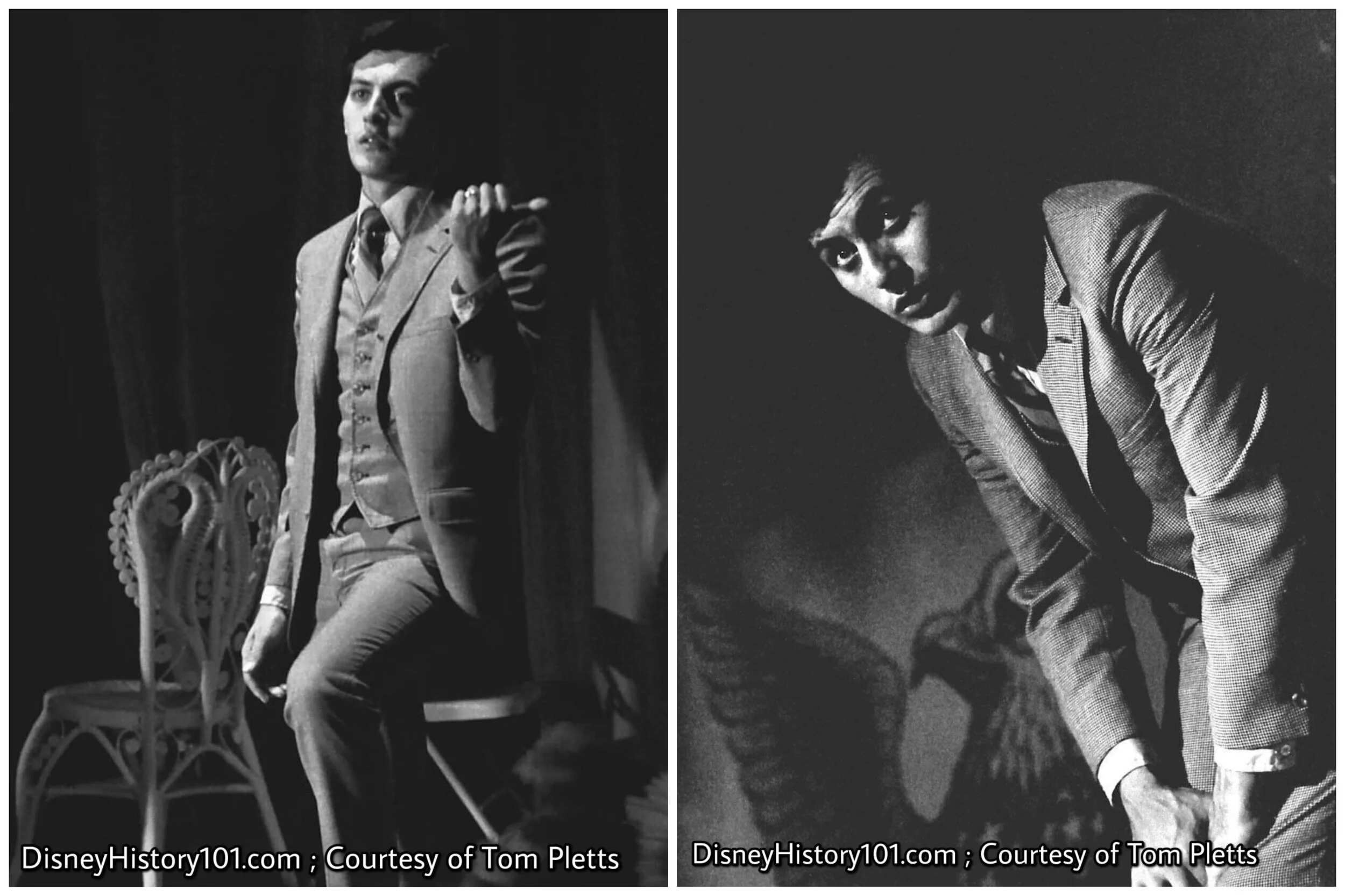
The American Dame Producer and Director Alexander Goldstab, (1970)
Alex Goldstab (Entertainment Division ; The American Dame Producer) sets the lights for the show. Tom Pletts recollects, “Having professional staff help us with our shows was a tremendous boost!” After the production was over, Alex Goldstab (Entertainment Division ; The American Dame Producer) left for Walt Disney World in Florida. He was missed by all who worked with him!
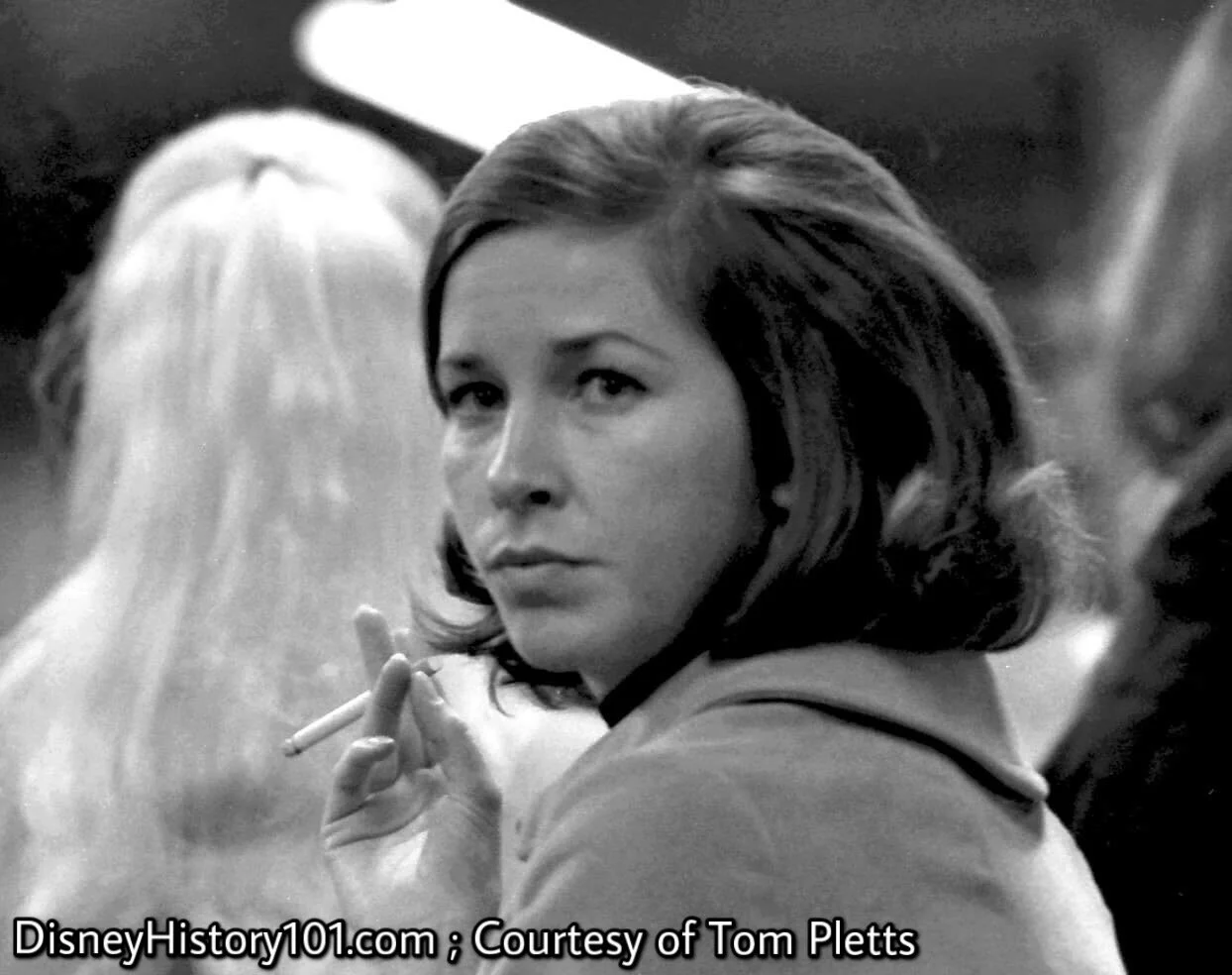
The American Dame, (1970)
Kathy Bell (who isn’t listed among the program’s credits for The American Dame), was influential in this production.
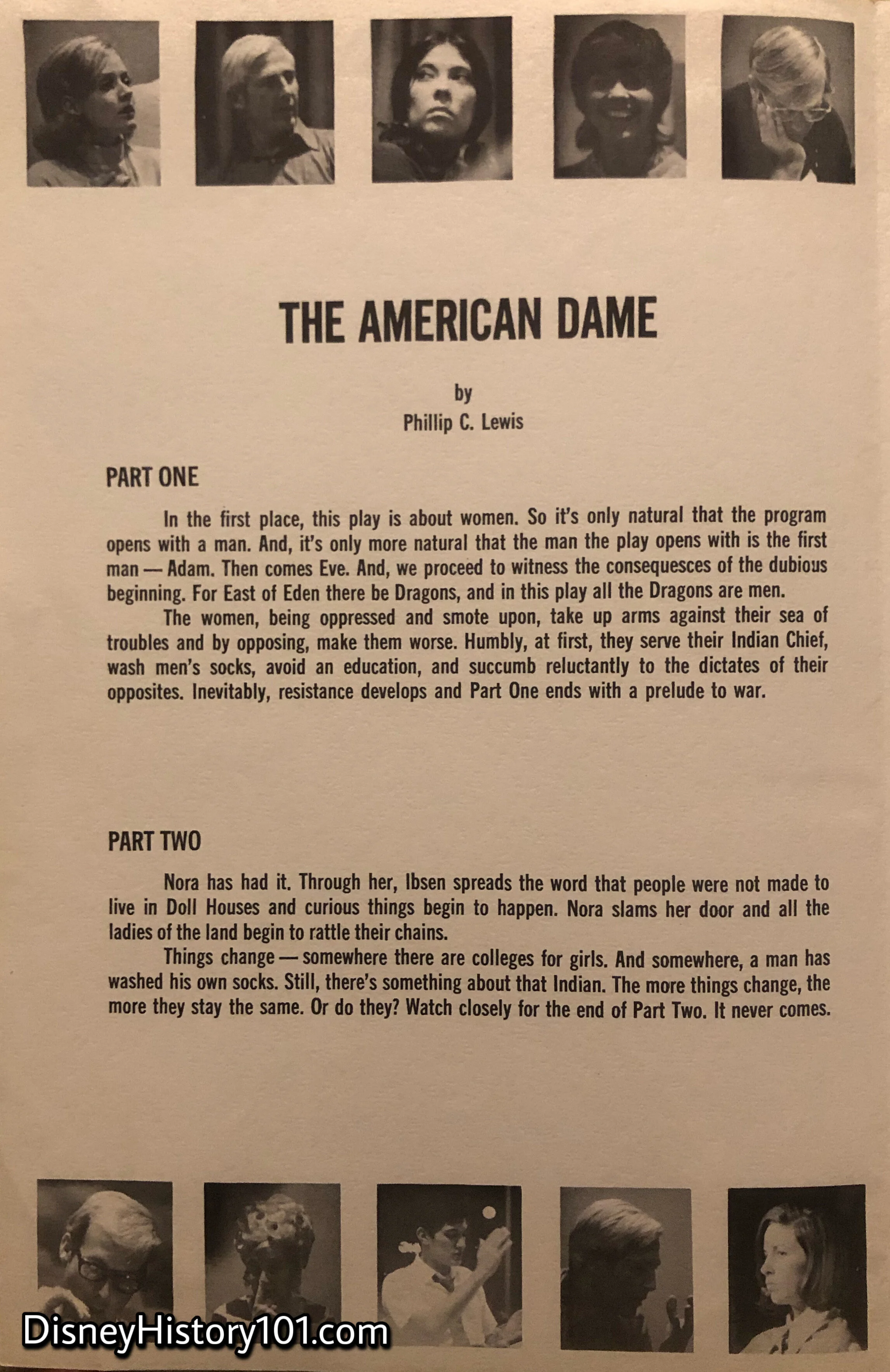
The American Dame Program (Page 1), (1970)
Connie Lane (former Disneyland Ambassador of 1966, and Disneyland Drama Club member) recollects the production : “It was effervescent! We were doing a great show, in the Fantasyland Theatre and doing something that hadn’t been done before at Disneyland. The show was meant to be a study of American Womanhood. We all had several roles.”
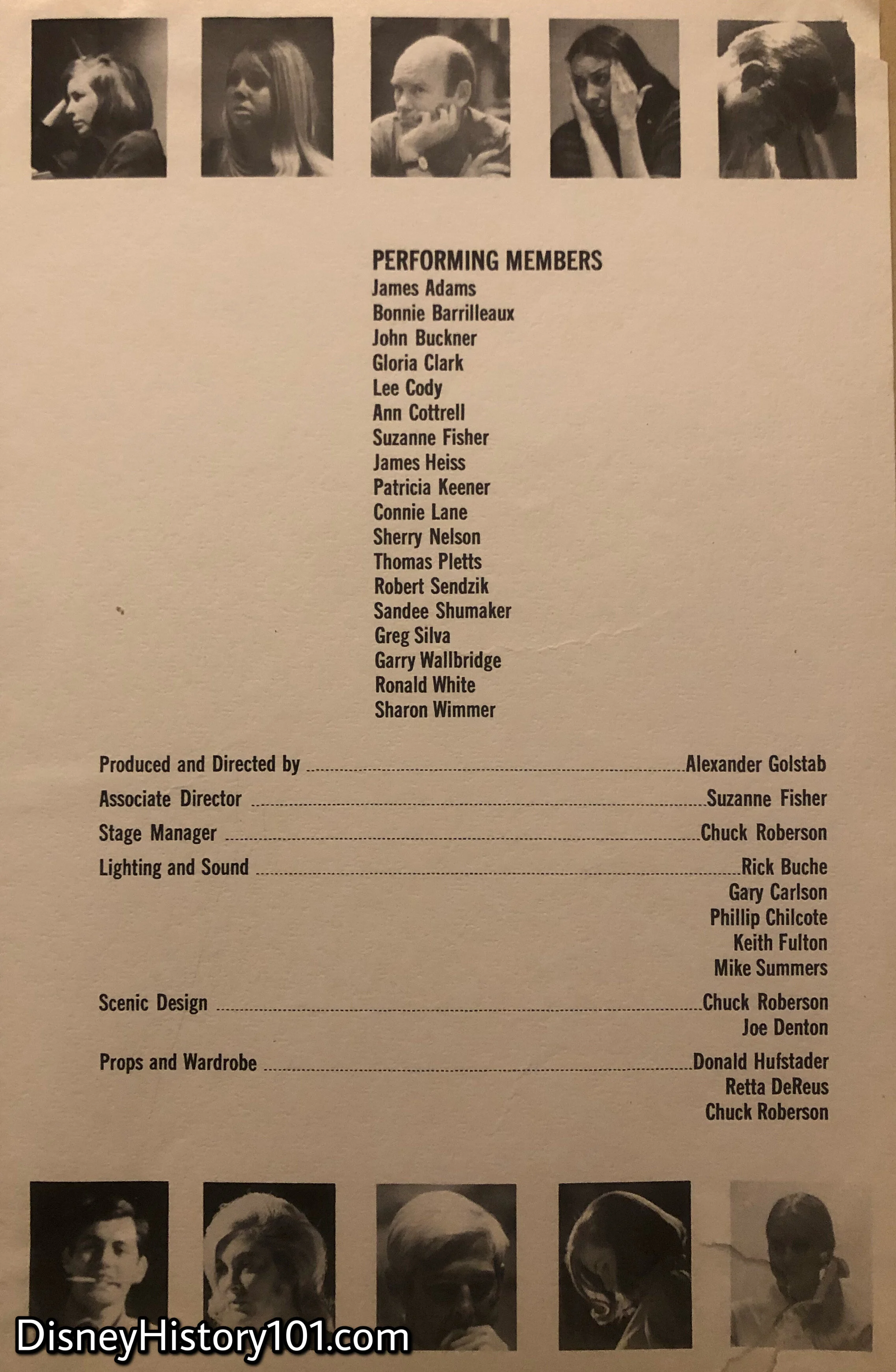
The American Dame Program (Page 2), (1970)
“In the show, I did two or three sketches. In one, I was a pioneer moving west with my spouse. In another, I was making excuses for just being a passenger while my wife drove our car. Pleasant, fun stuff.”
-Tom Pletts
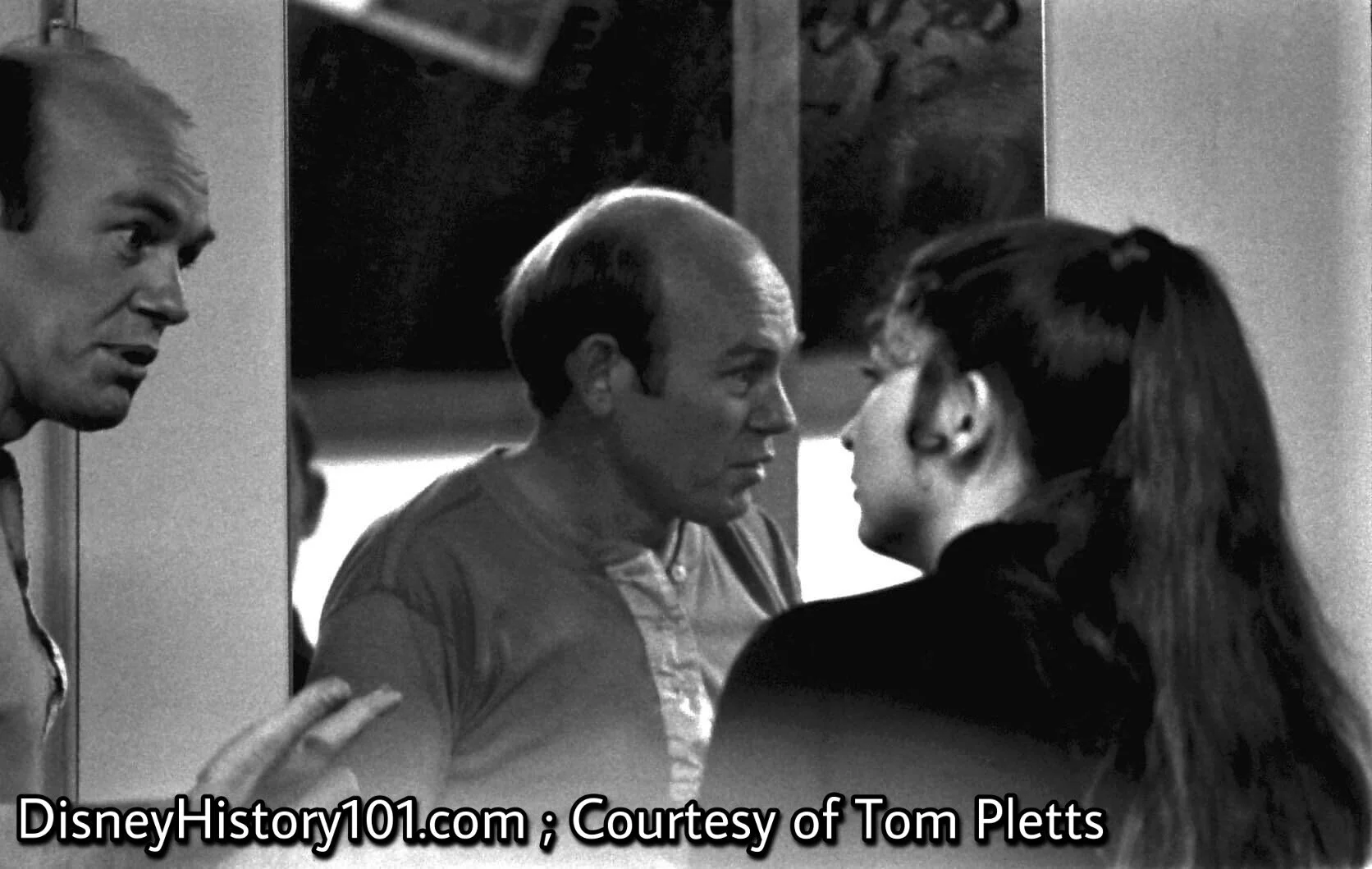
The American Dame, (1970)
The American Dame cast member Tom Pletts has a conversation with cast member Pat Keener at the backstage makeup mirror.
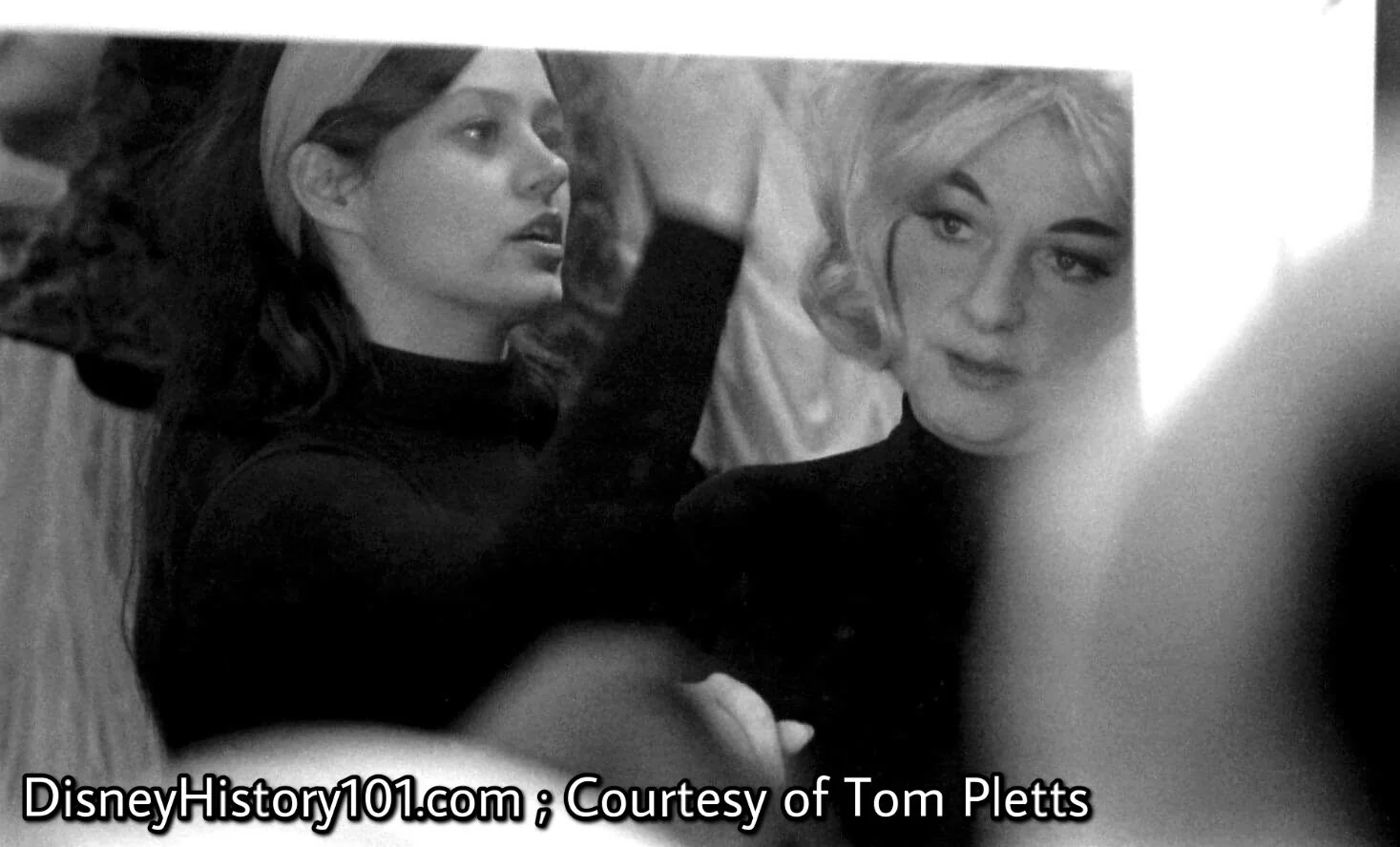
The American Dame, (1970)
The American Dame Cast Members Sharon Wimmer and Ann Cottrell in makeup.
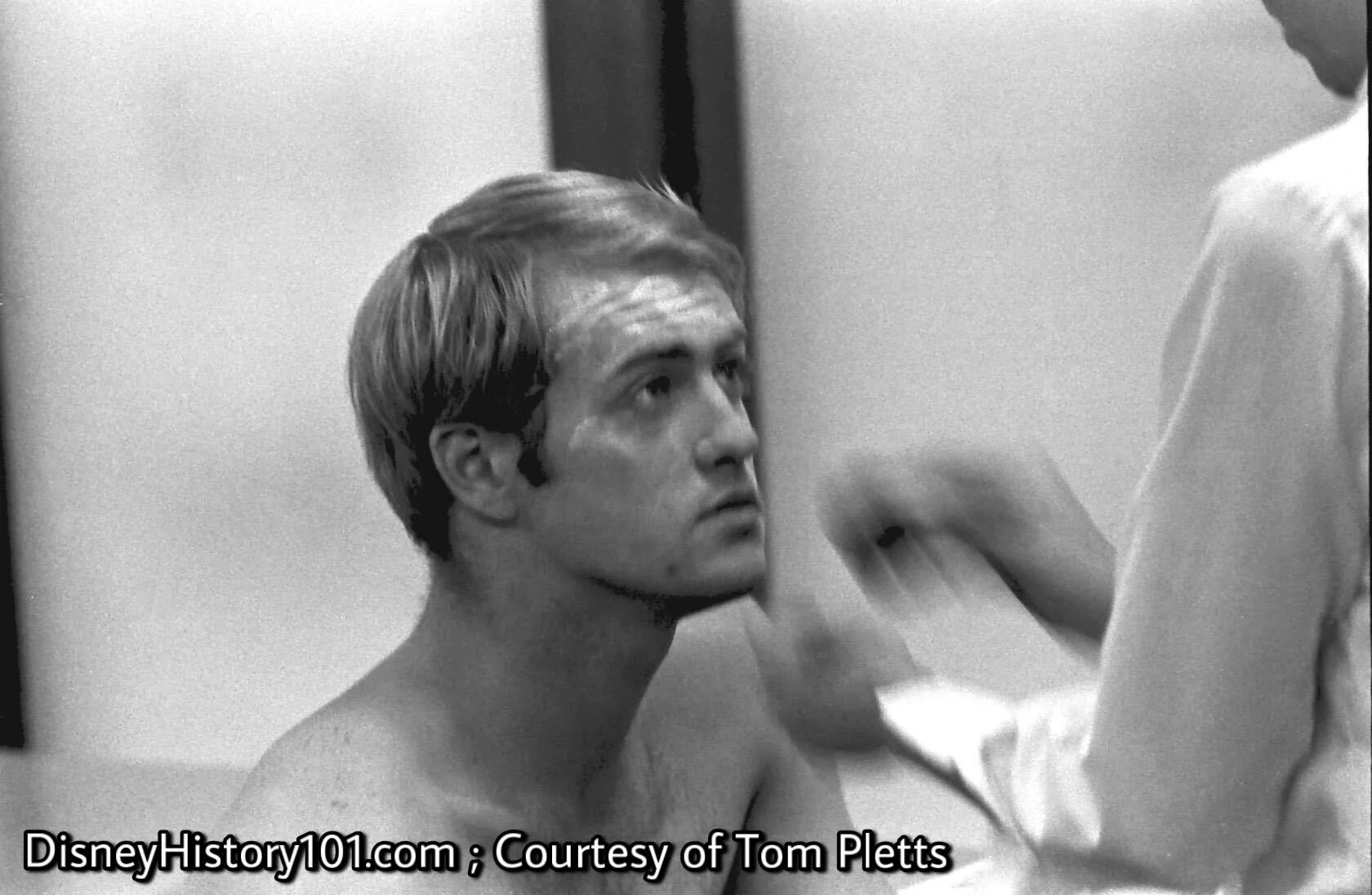
The American Dame, (1970)
The American Dame actor Bob Sendzik gets assistance with his makeup while backstage.
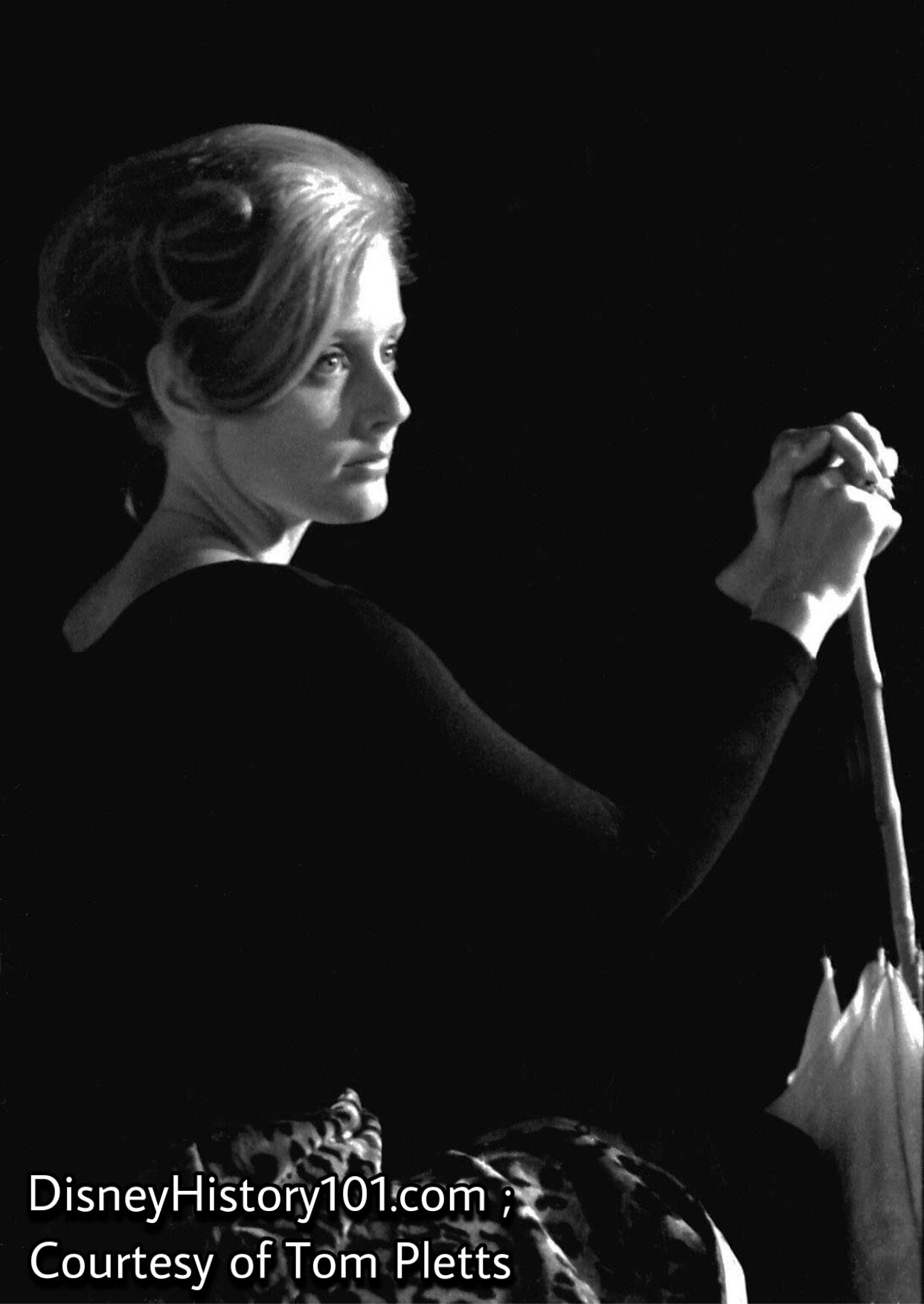
The American Dame, (1970)
The Disneyland Drama Club production of The American Dame starred many familiar faces from around the Park. Here, Connie Lane (Disneyland Ambassador of 1966 ; Disneyland V.I.P. Hostess) readies for her part.
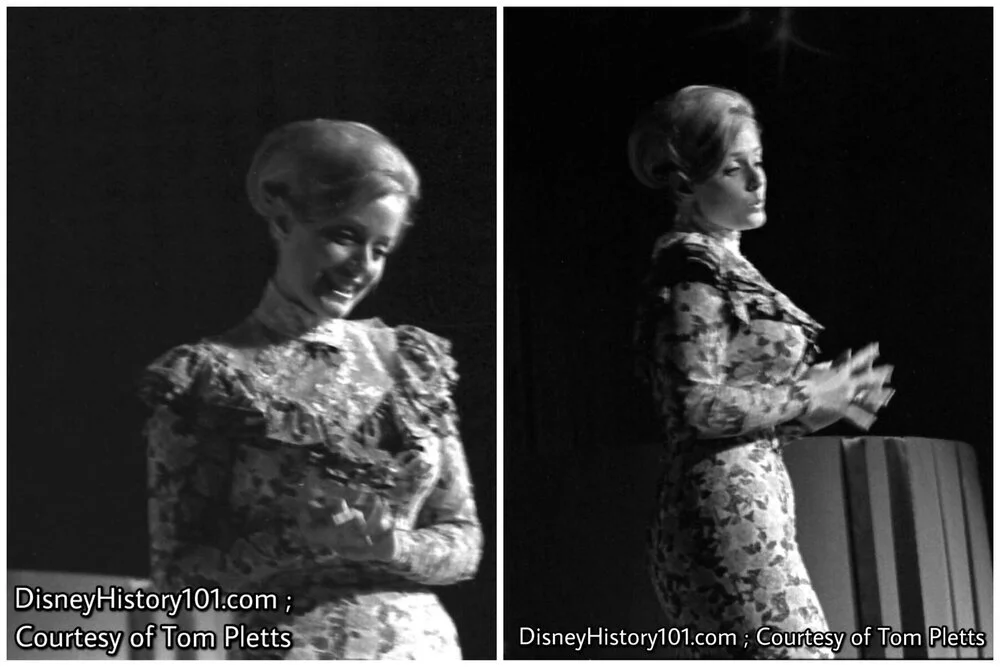
The American Dame, (1970)
Connie Lane remembers : “I was able to wear one of Betty Taylor’s dresses for the show, [and] I was in heaven. [It was] off white ‘silk-looking’, lots of heavy beading, HEAVY! It took two dressers to help me fit it and secure the zipper…I was under strict orders not to get the hem dirty.”
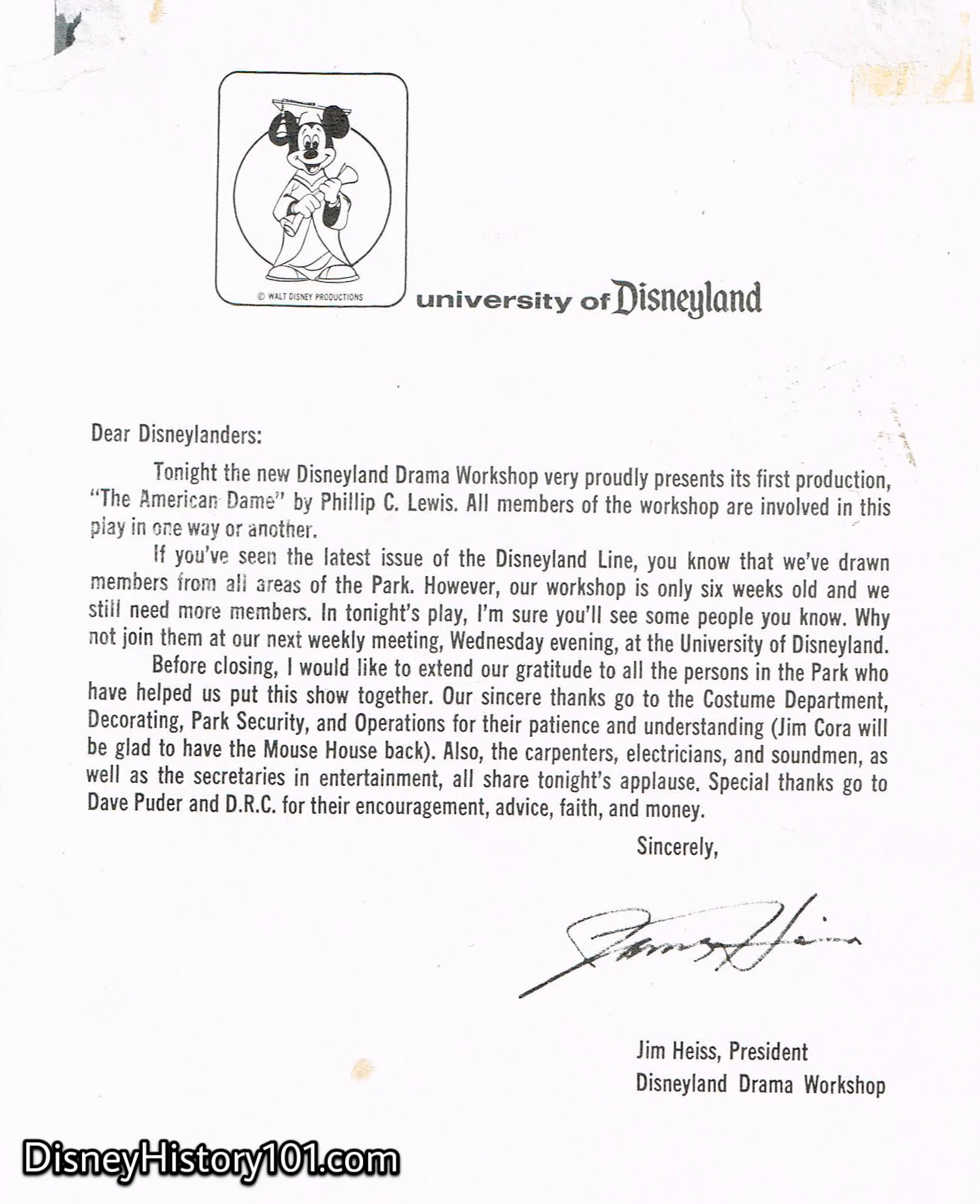
Letter From Jim Heiss (Disneyland Drama Workshop President), (1970)
Inside The American Dame program, an accompanying formal letter from Jim Heiss invites fellow Disneyland Cast Members to join the Disneyland Drama Club of the University of Disneyland. The letter concludes with a special pre-show thanks to all Disneyland Cast Members of the D.R.C. (Disneyland Recreational Department) and the Disneyland Costume Department for their support of this production.
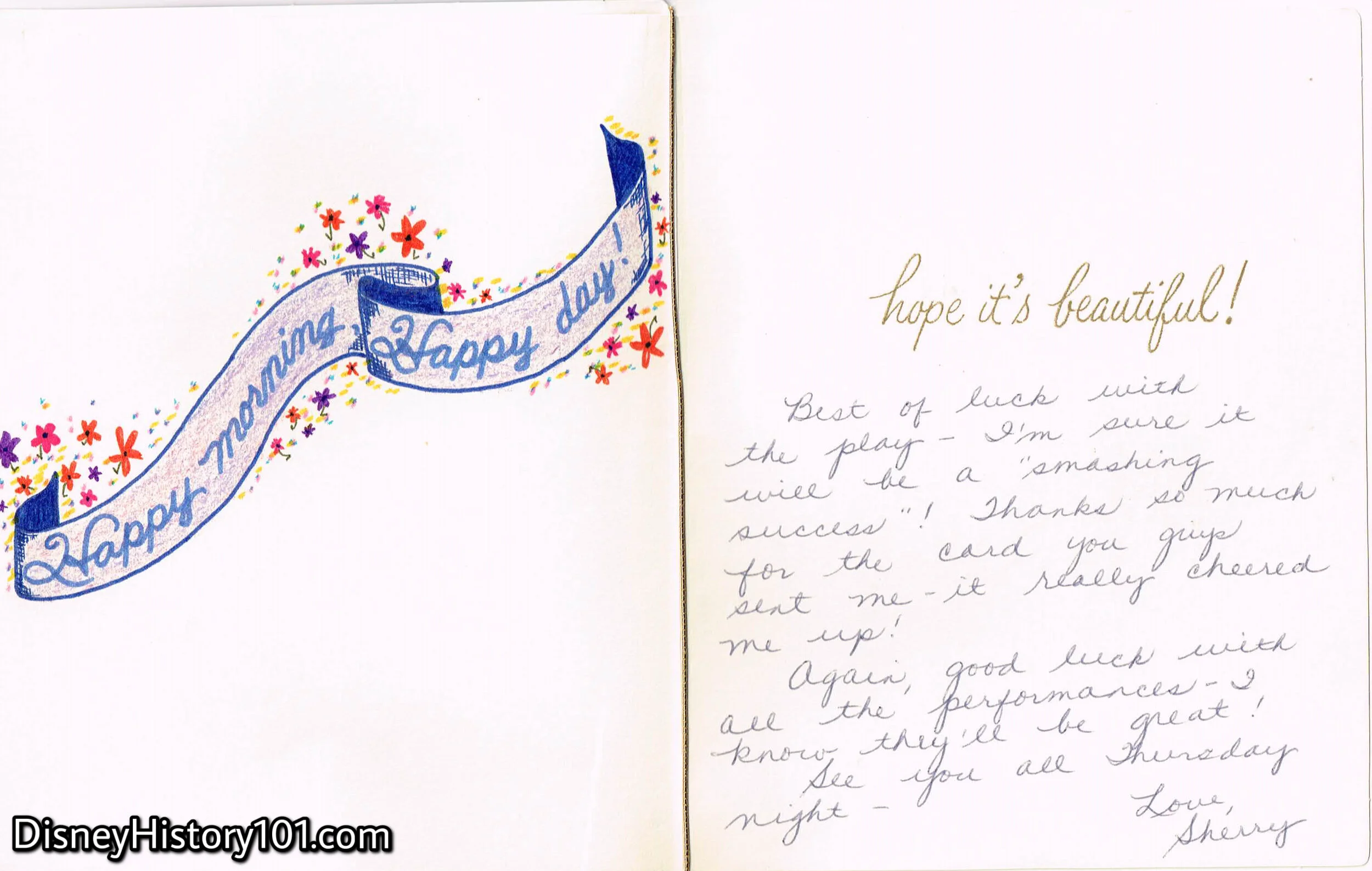
Sherry Nelson was scheduled to perform, but incurred some sort of illness or injury that prevented her from being involved. Before the opening performance, Sherry sent her well-wishes to the cast and crew of the Disneyland Drama Club’s production of The American Dame.
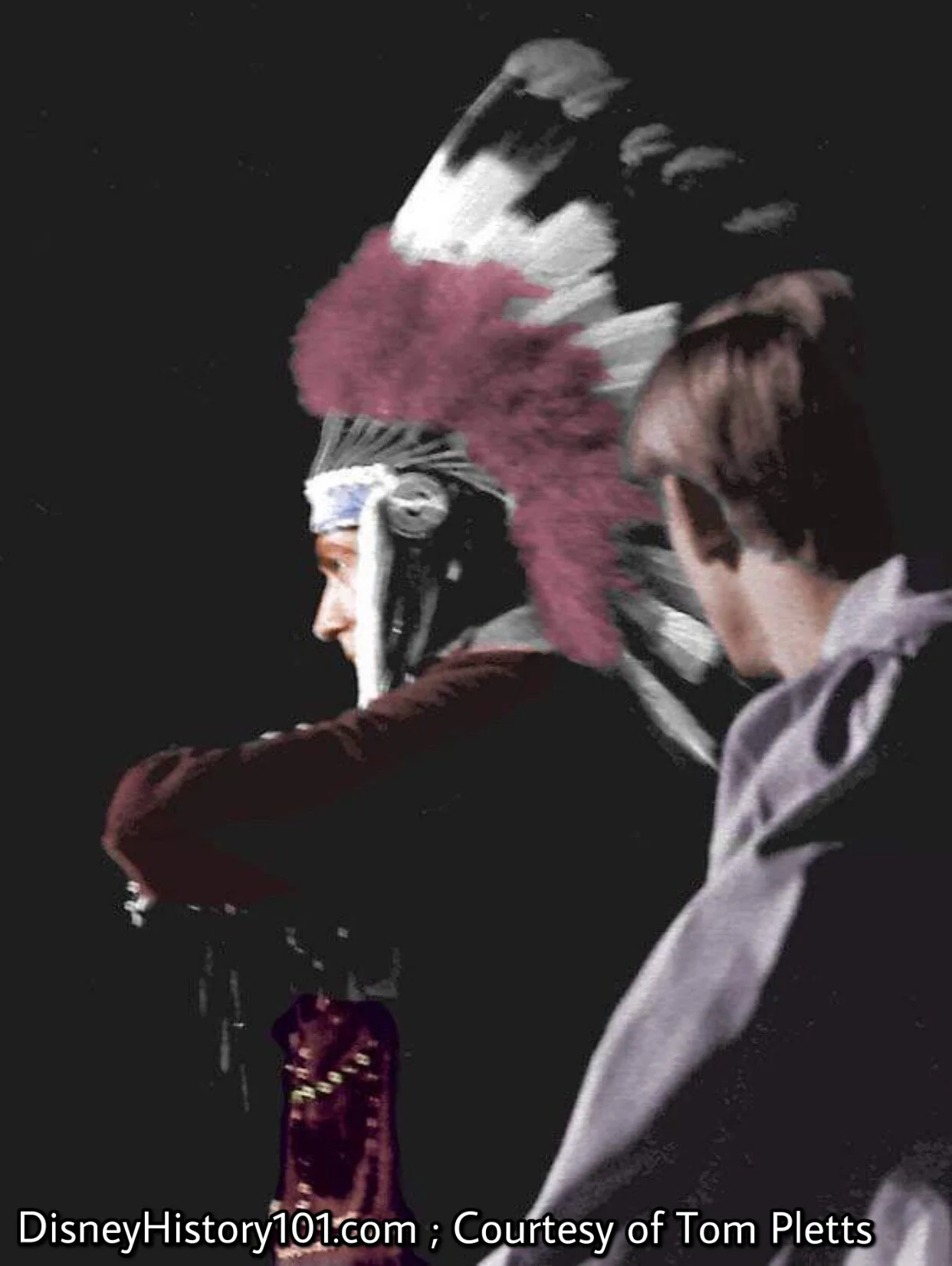
The American Dame, (1970)
The American Dame also starred Disneyland Drama Club President Jim Heiss (background) and Jim Adams (foreground), both in supporting roles.
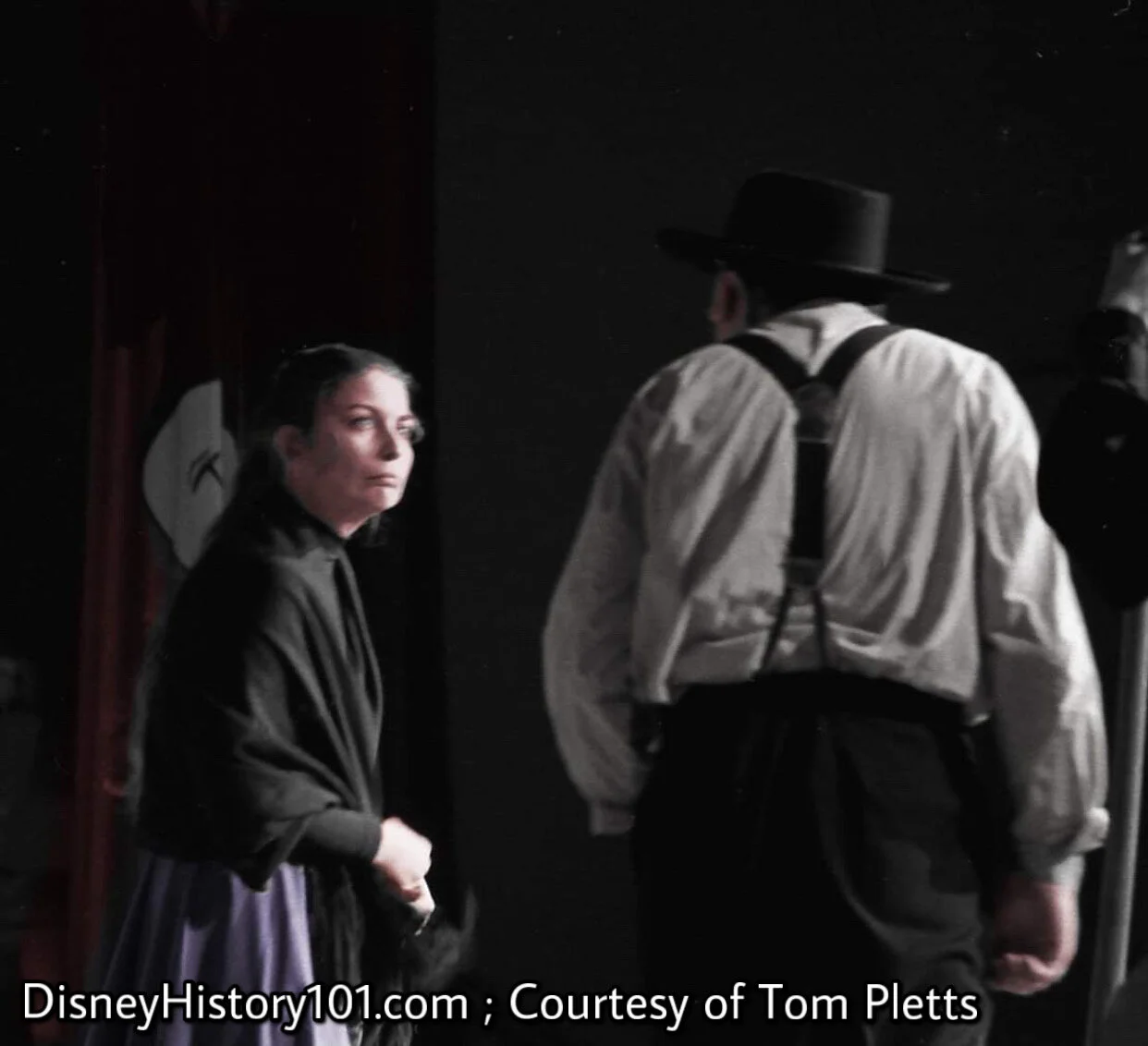
The American Dame, (1970)
A pioneer and his wife moving West with his spouse, portrayed by Pat Keener (left) and Tom Pletts (right).
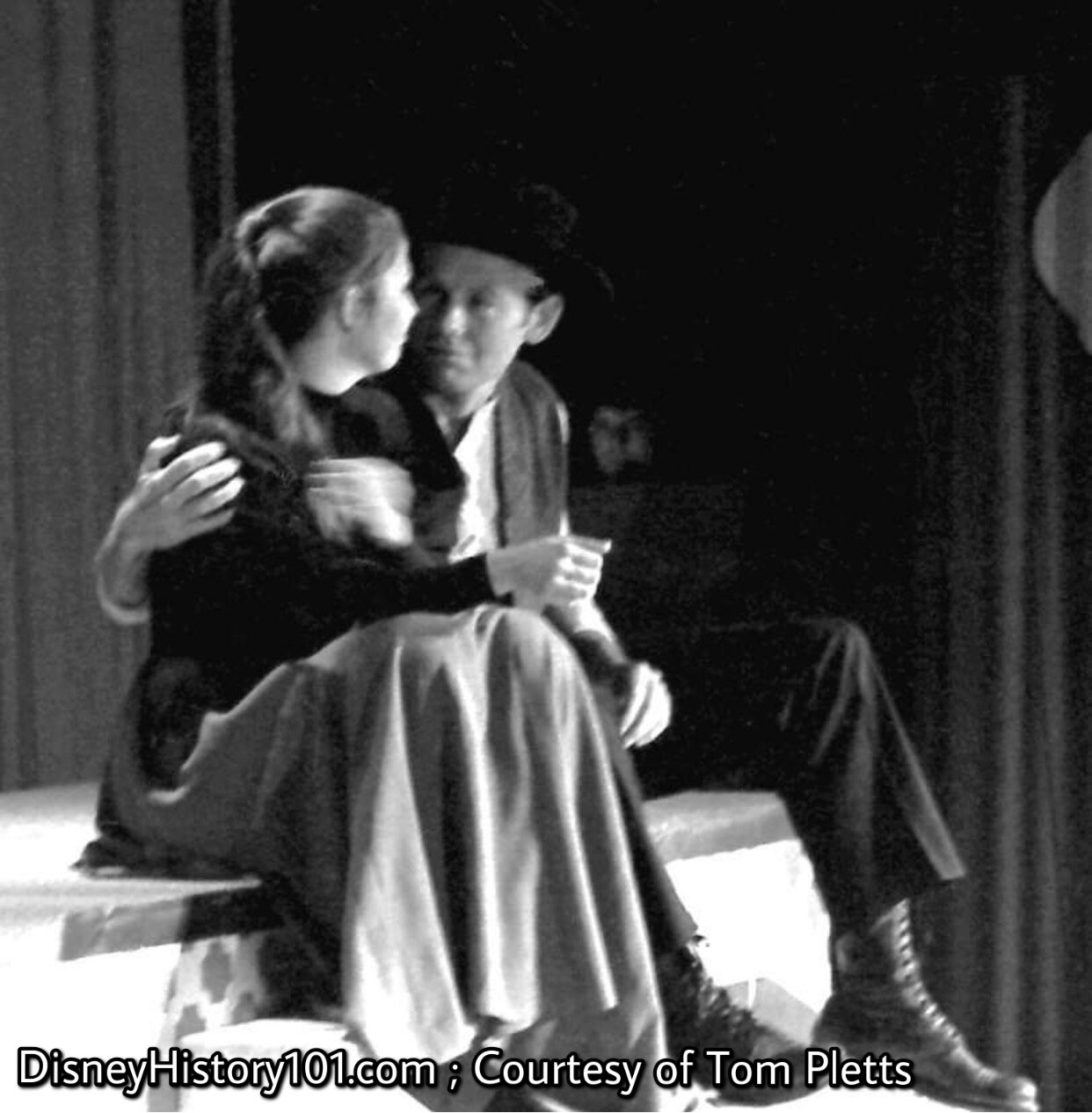
The American Dame, (1970)
The Pioneer’s Wife (portrayed by Pat Keener), holds the reins on the schooner as the couple heads West!
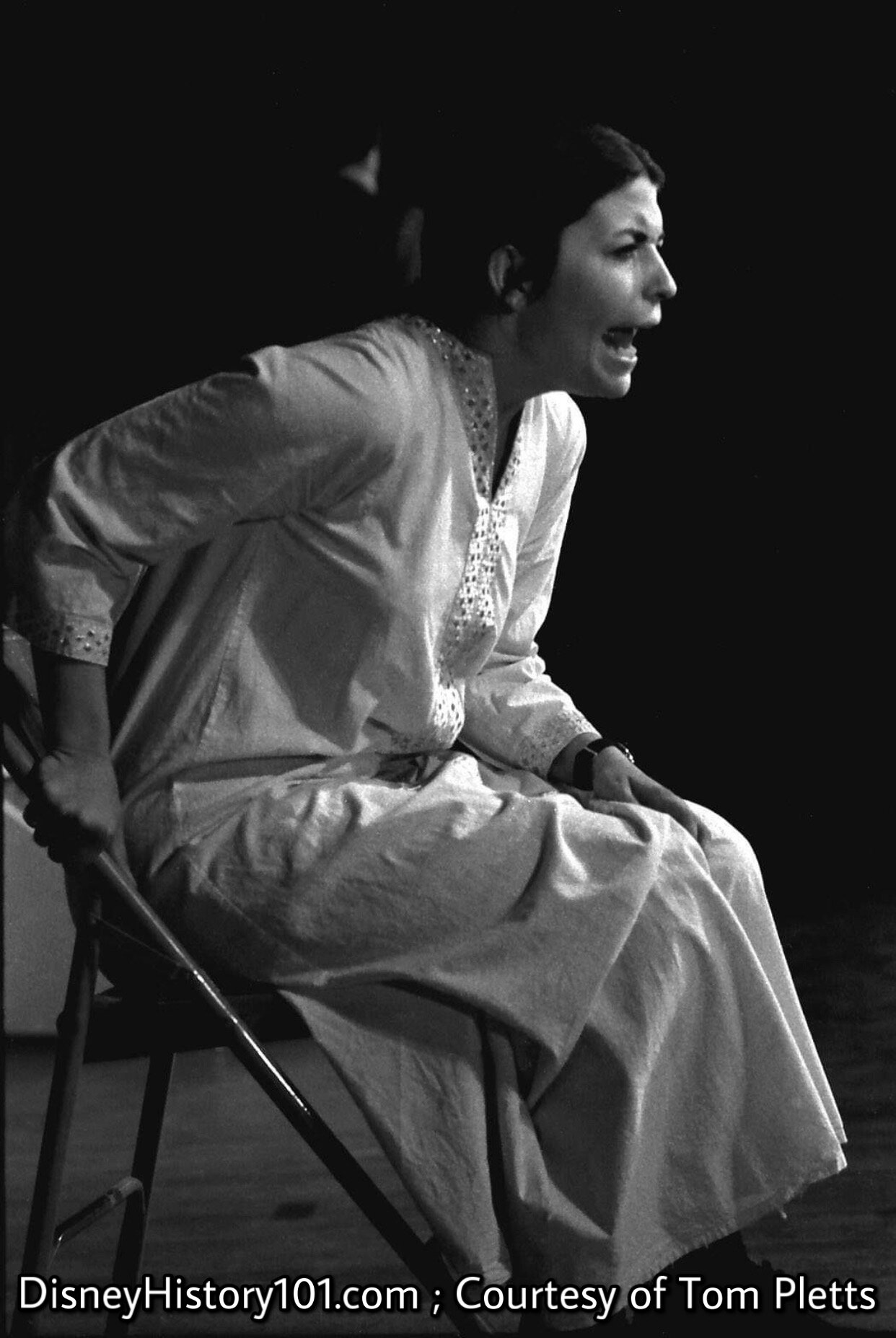
The American Dame, (1970)
Pat Keener making sure everyone’s awake.
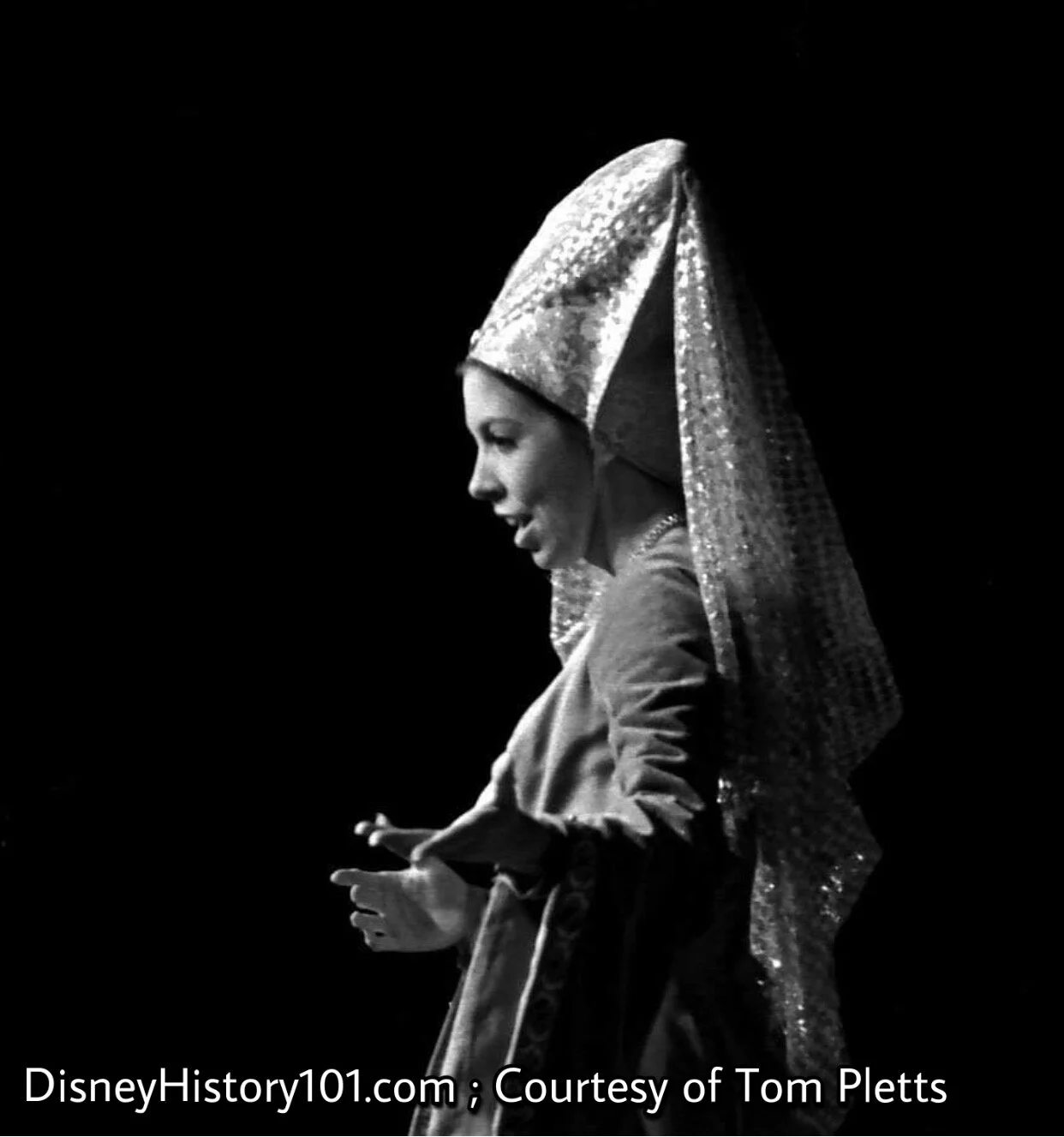
The American Dame, (1970)
Suezanne Fisher
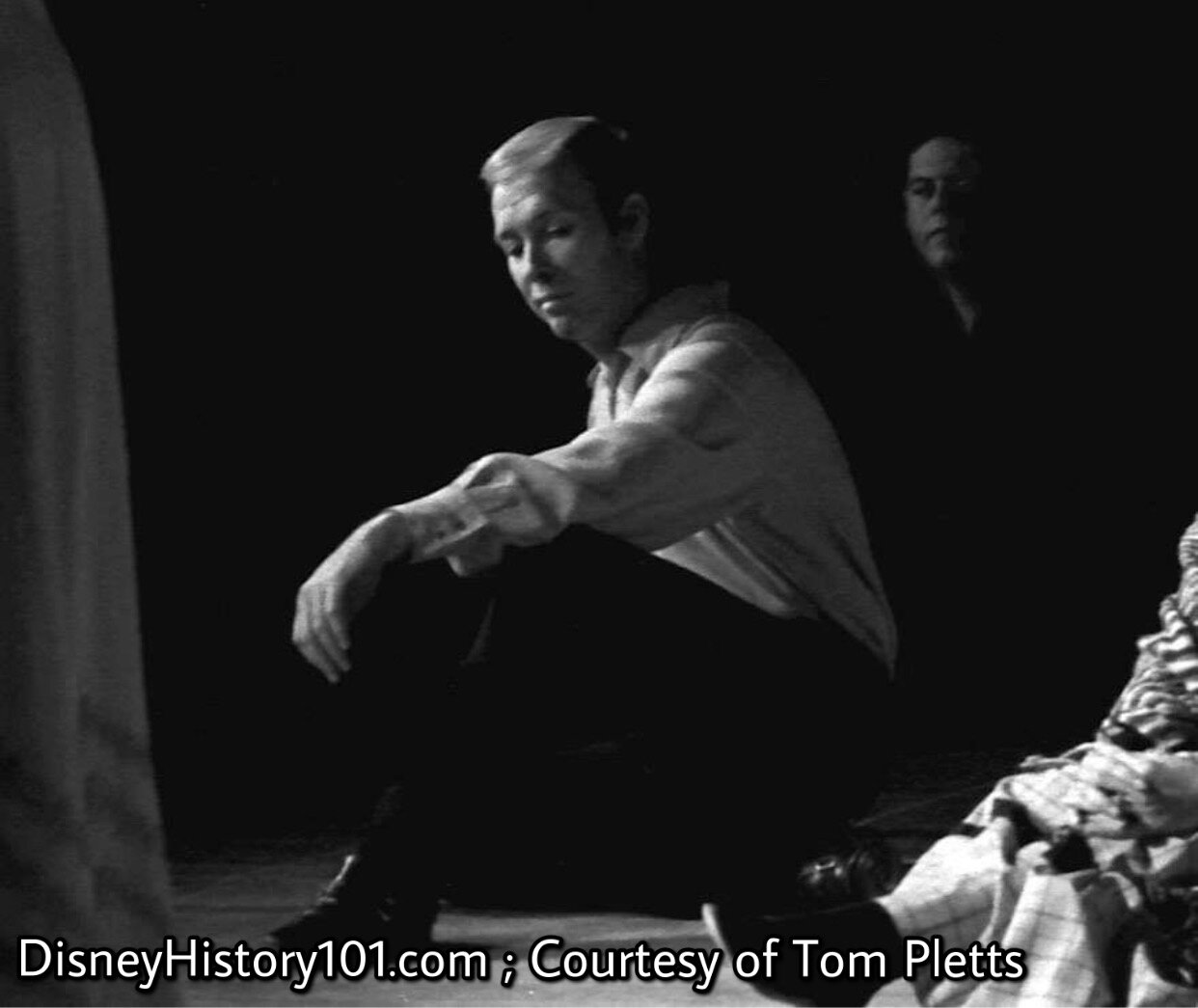
1970, The American Dame
Johnny Buckner
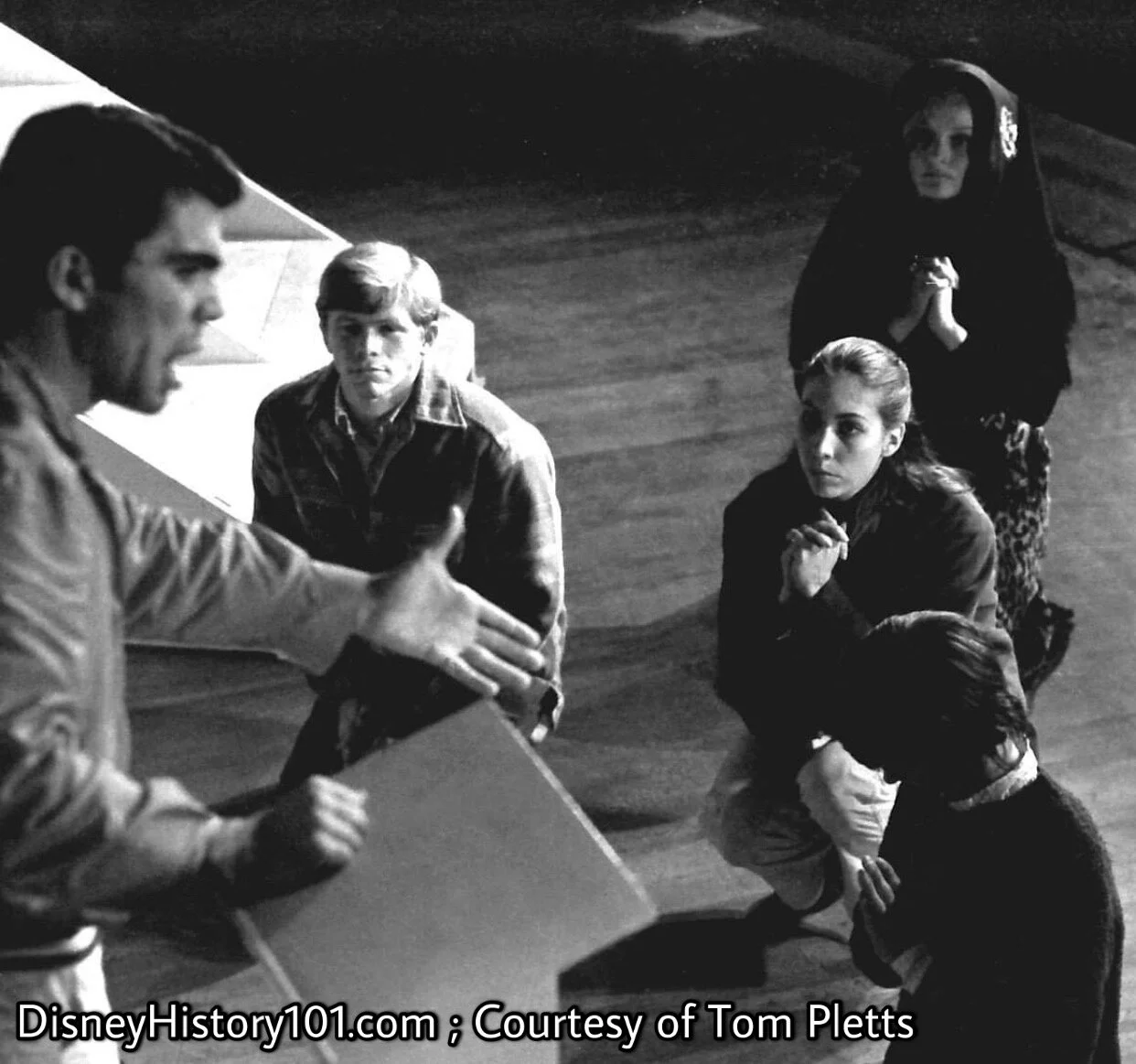
The American Dame, (1970)
The Preacher Scene including (left to right) : Greg Silva, Jim Adams, Suezanne Fisher, Sherry Nelson, and Gloria Clark (bottom right).
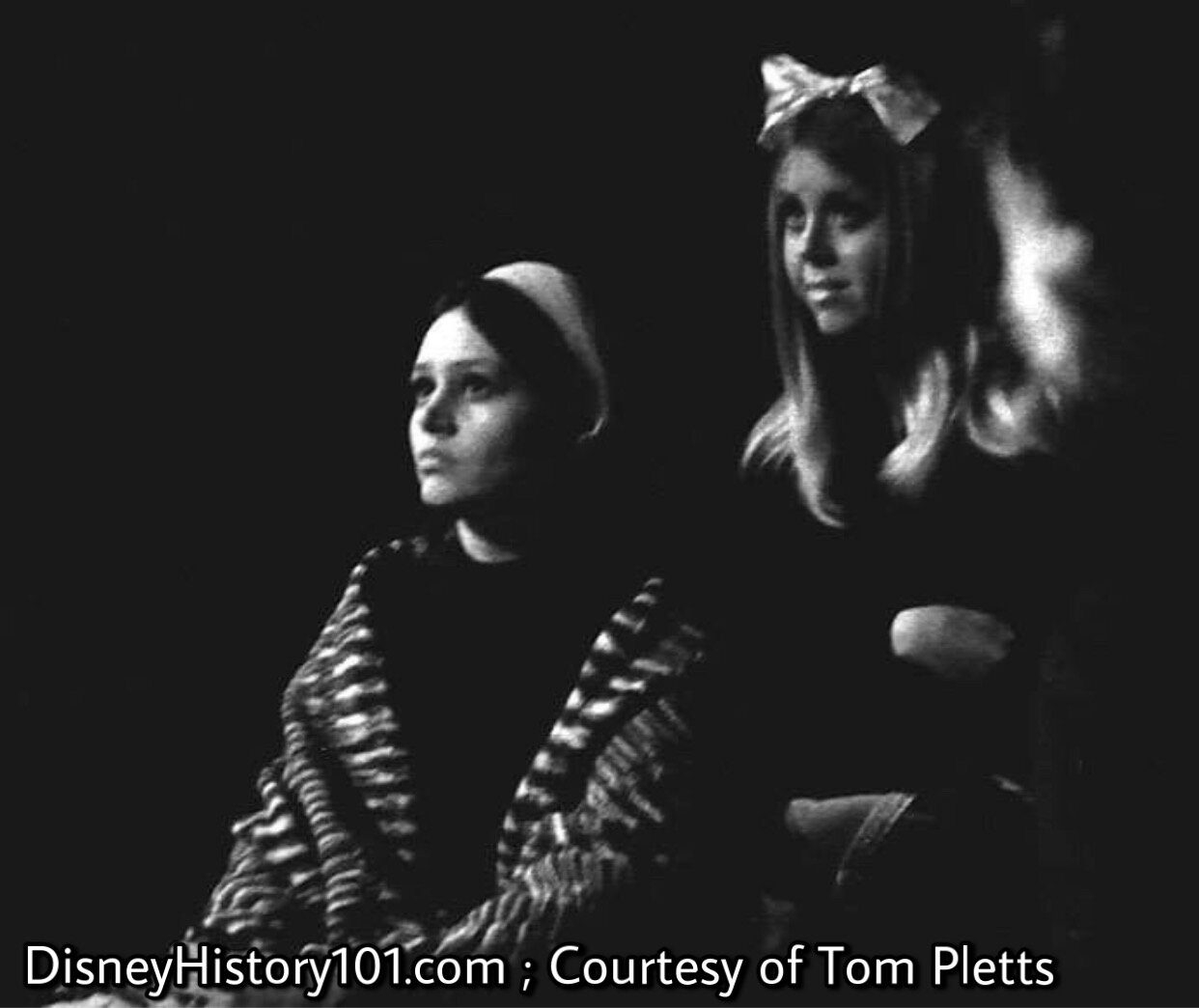
The American Dame, (1970)
Sharon Wimmer and Sandie Schumacher
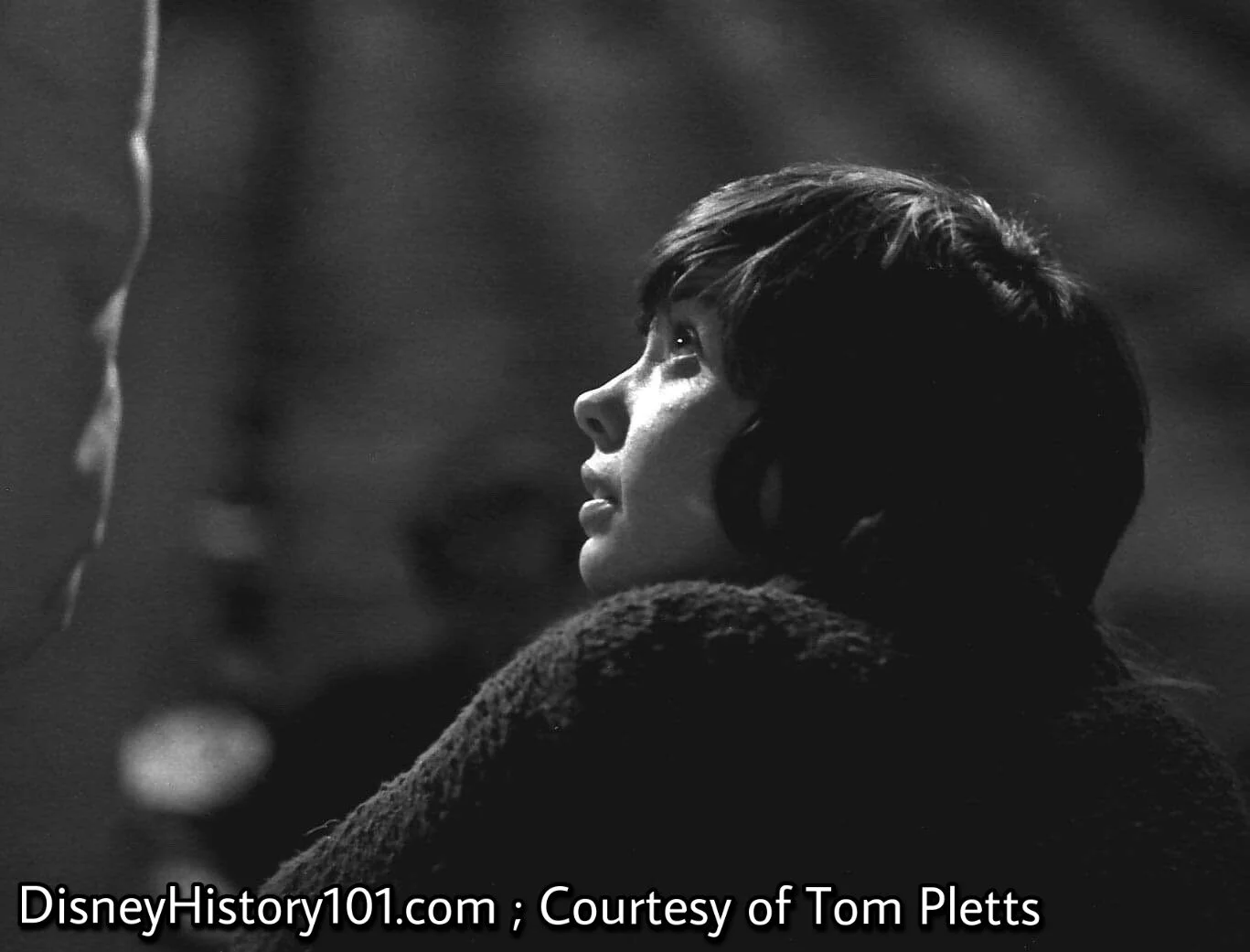
The American Dame, (1970)
Gloria Clark in The American Dame.
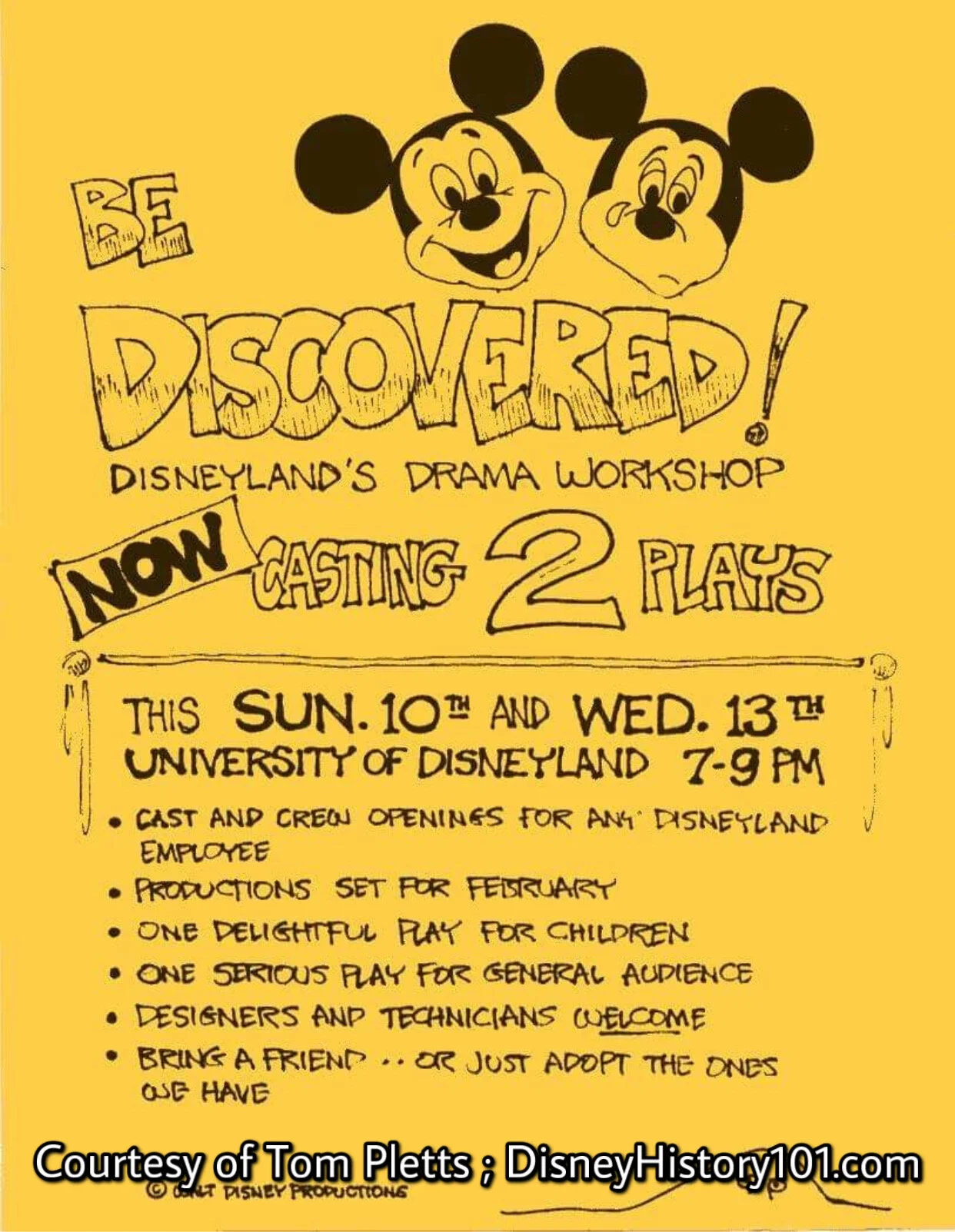
c. 1971 Disneyland Drama Workshop Flyer, Artwork by Tom Pletts
By 1971, John Buckner had replaced Jim Heiss as the Disneyland Drama Workshop President. Now that the Disneyland Drama Club’s production of The American Dame had been produced as a smashing success (owing to its Disneyland cast Members), work began on casting two major plays to be produced during the following year. Word of this was heralded throughout the lands, courtesy of the Disneyland Recreation Club. In addition to these productions, the troupe also performed for Cast Members at the “Summer ‘71 Kick-Off Dinner.”
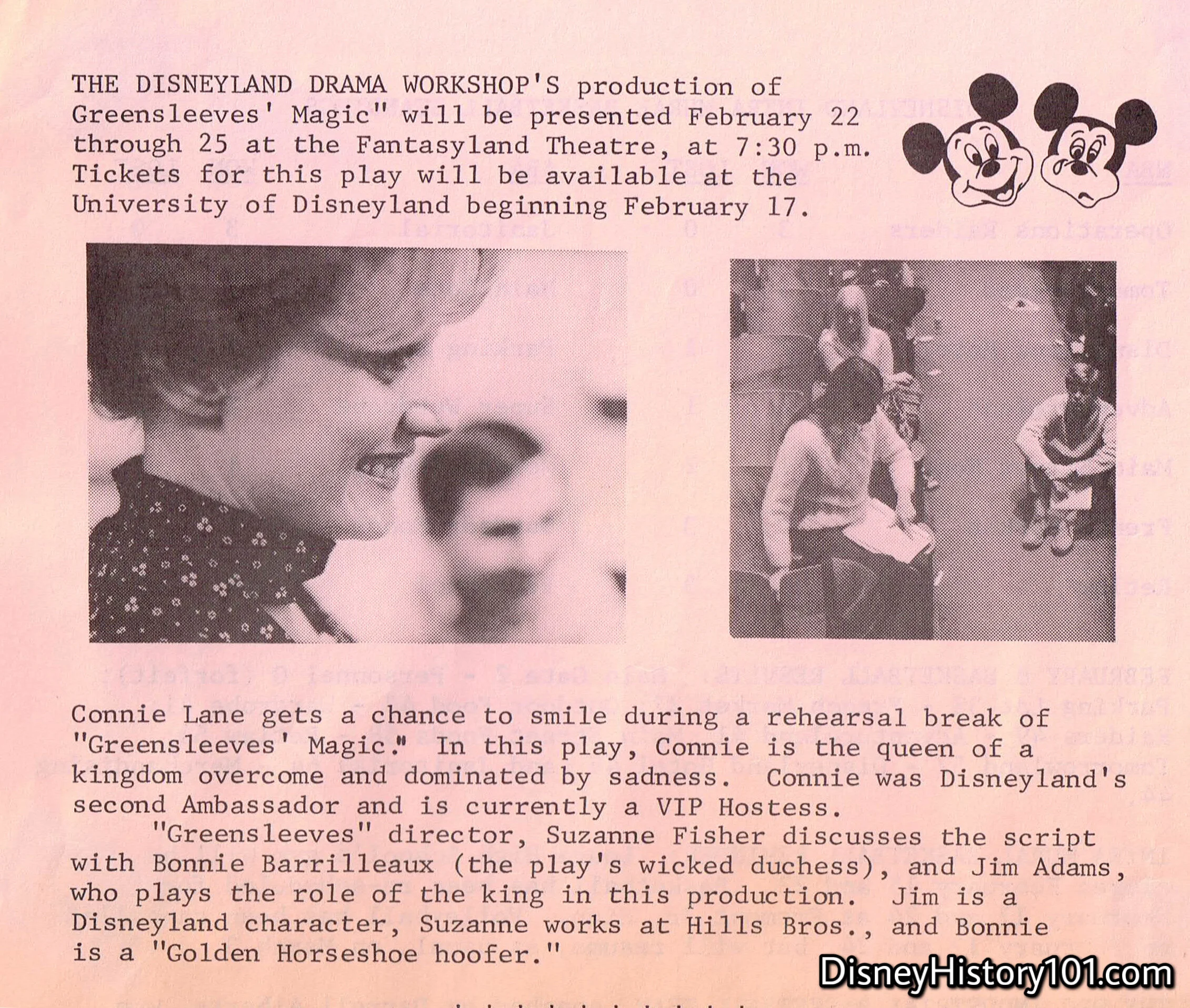
Disneyland LINE Magazine Excerpt, (1971)
Many of the stars of the previous production (The American Dame) returned to support this second Disneyland Drama Club production of “Greensleeves’ Magic”.
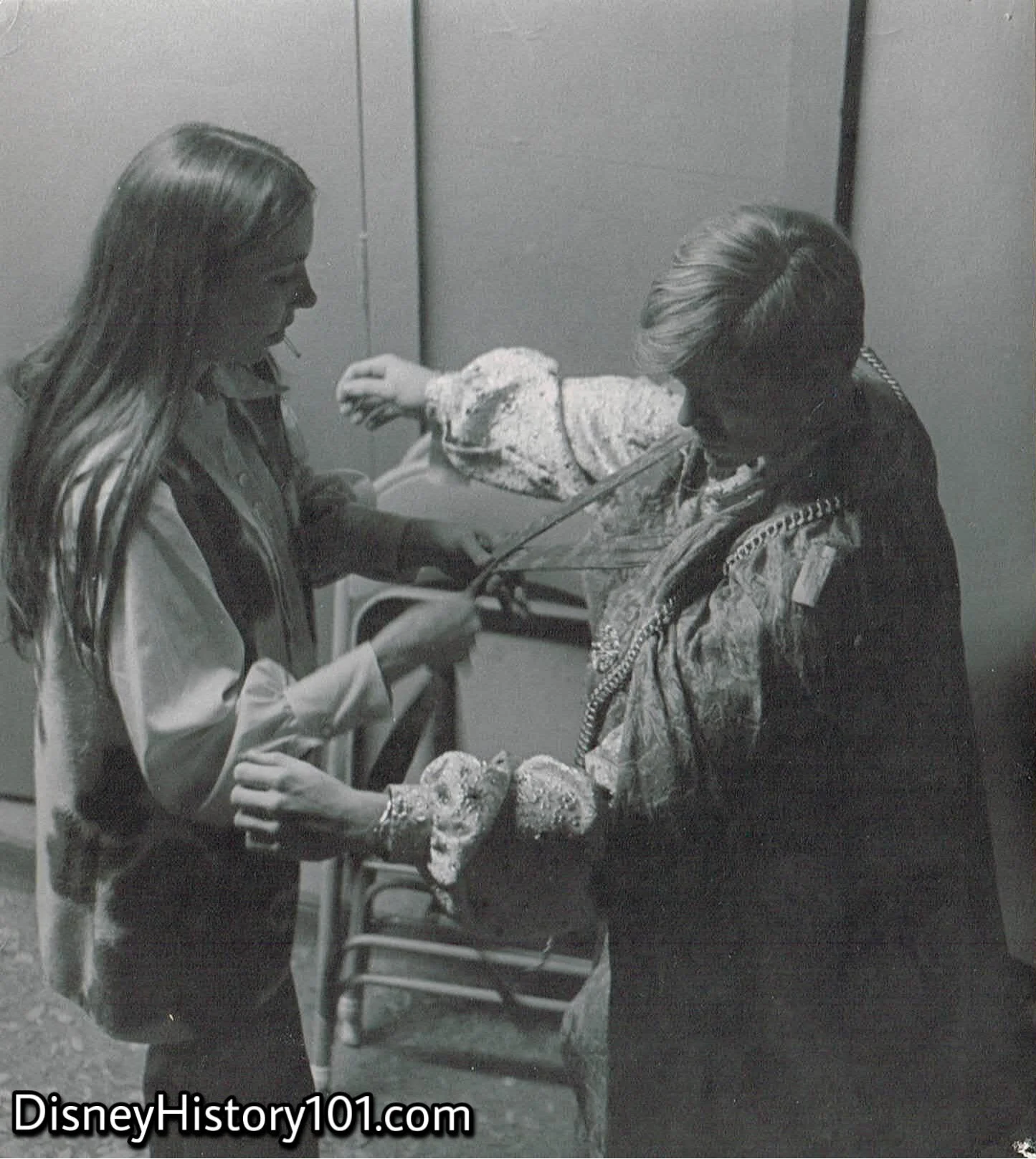
Greensleeves’ Magic Dress Rehearsals, 1971
The previous Disneyland Drama Club production borrowed many costumes from the Entertainment Costume Department. Now, many costumes were made special for Disneyland Drama Club’s 2nd production - “Greensleeves’ Magic”! Here, Jim Adams receives a costume measurement and alteration.
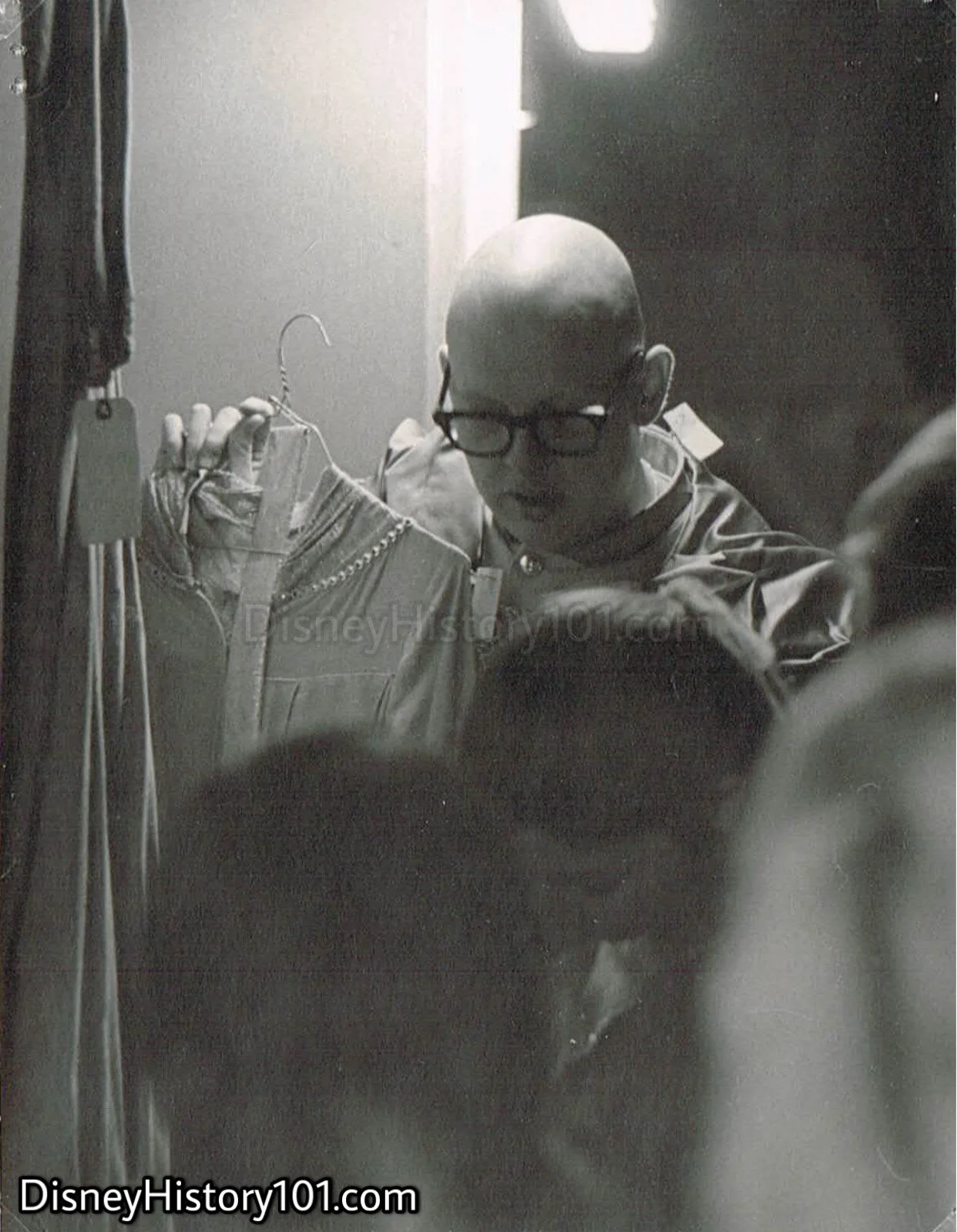
Greensleeves’ Magic Dress Rehearsals, 1971
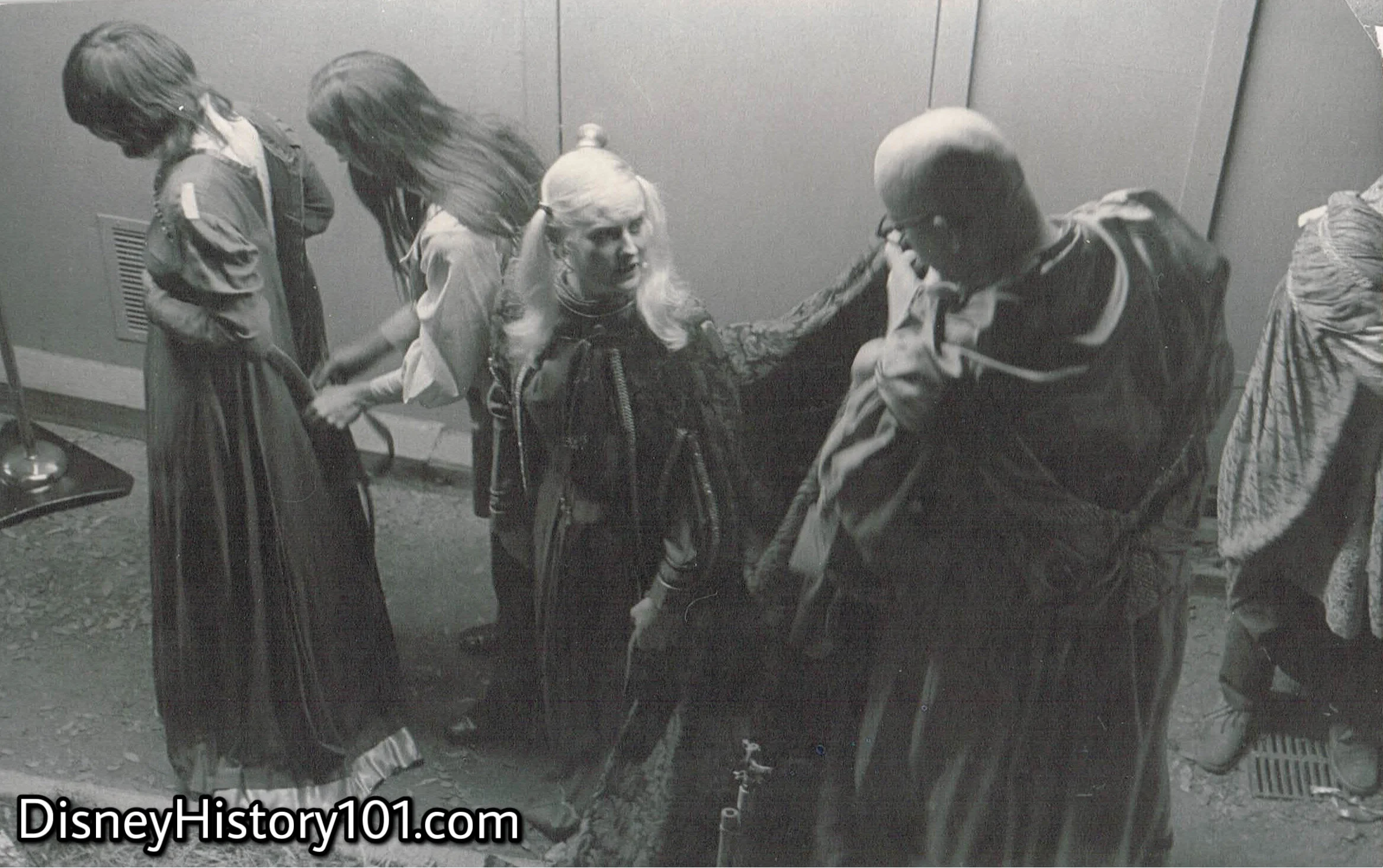
Greensleeves’ Magic Dress Rehearsals, 1971
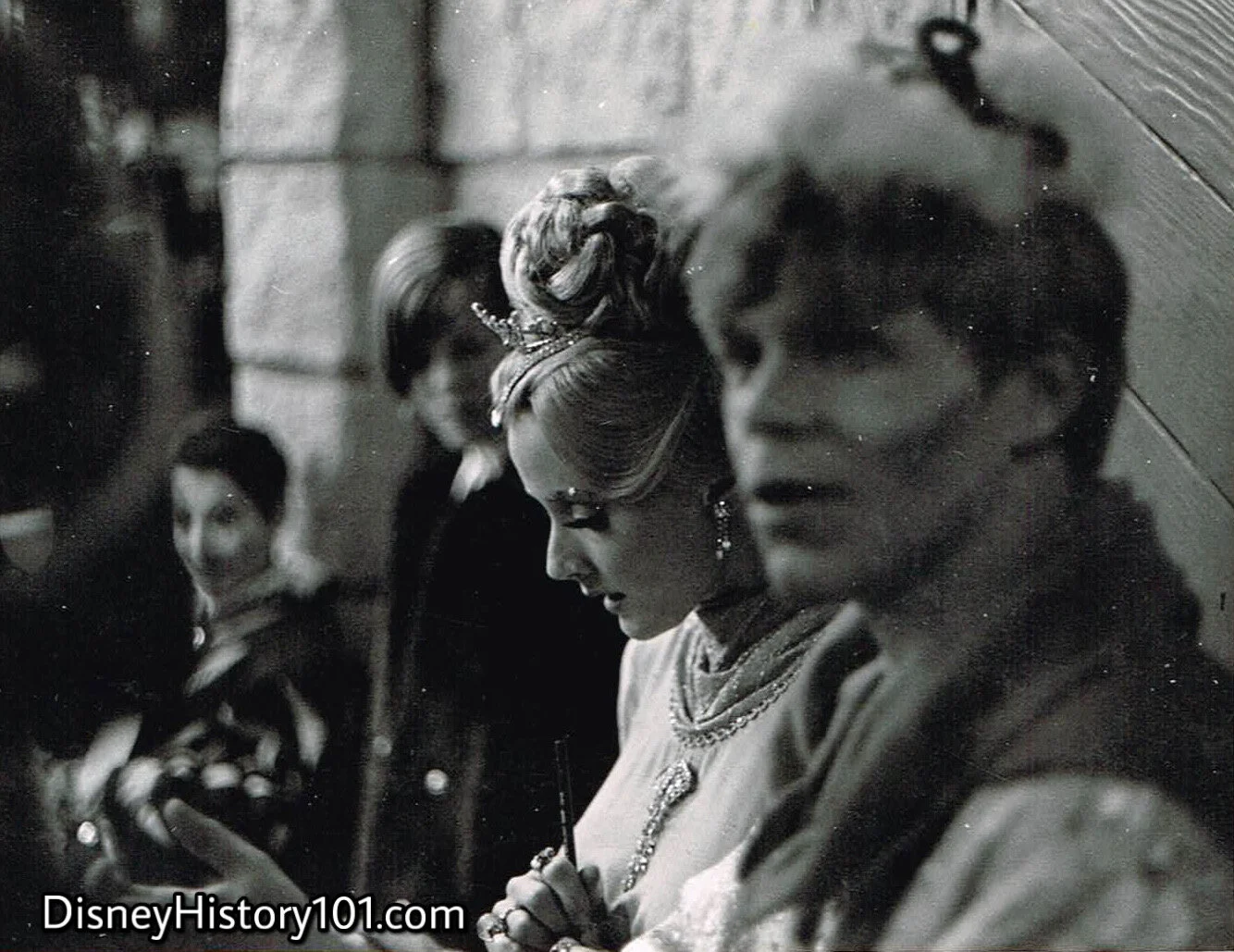
Greensleeves’ Magic Dress Rehearsals, 1971
Connie Lane as The Queen and Jim Adams (foreground)
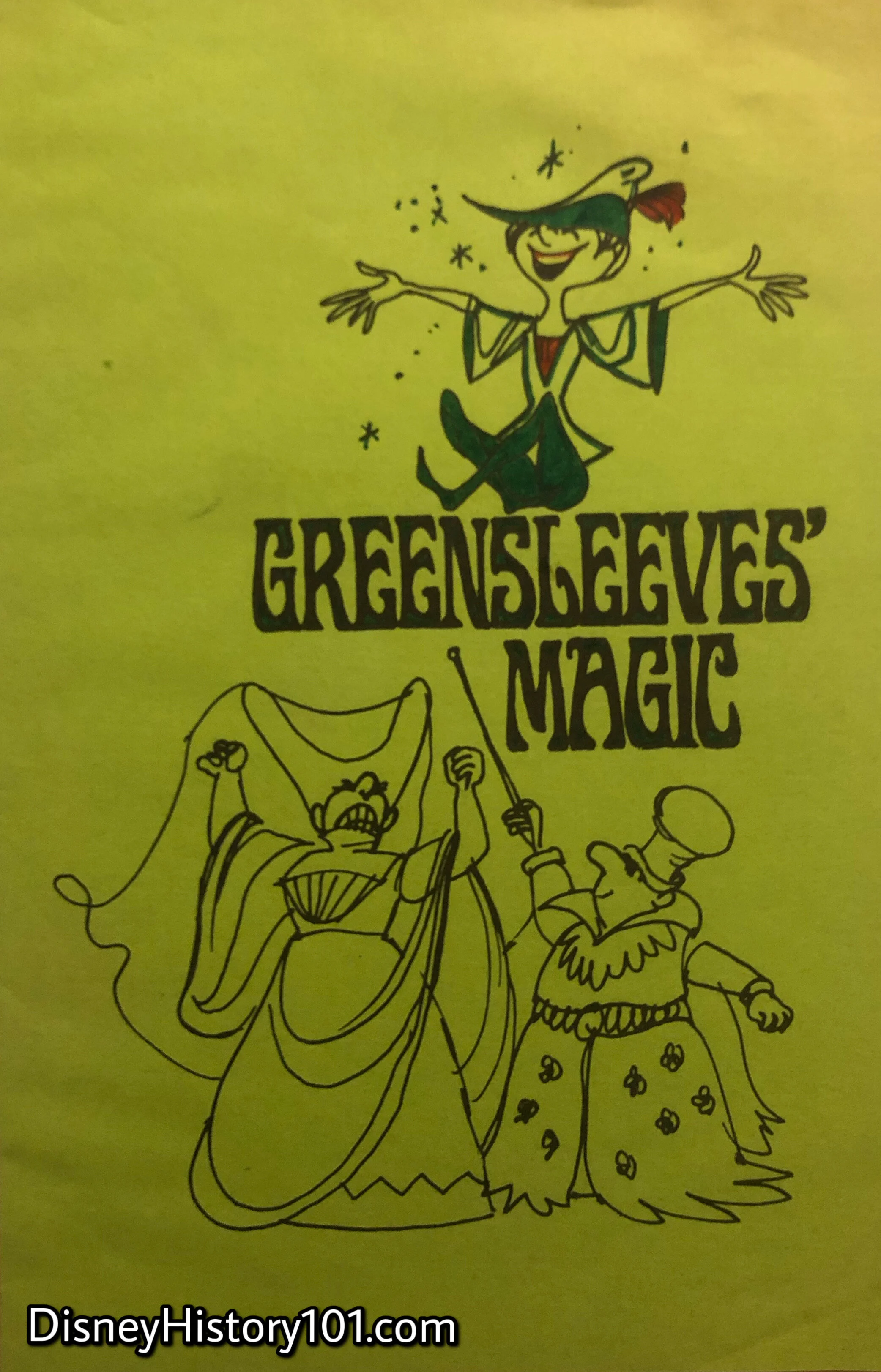
Greensleeves’ Magic Program Cover, 1971
This artwork has been attributed to renowned Disneyland portrait artist Chuck Boyer. If you’re not familiar with the name Charles Boyer, its likely that you’ve seen his work hanging around Disneyland. Charles Boyer would go on to produce many visual tributes to parades and performers of Disneyland - from the Disneyland Band to the Royal Street Bachelors. During the 1980s, Charles produced many pieces to advertise seasons of Circus Fantasy and Fantasy On Parade. For now, Charles Boyer would support the Disneyland Drama Club with artwork utilized for their programs and posters.
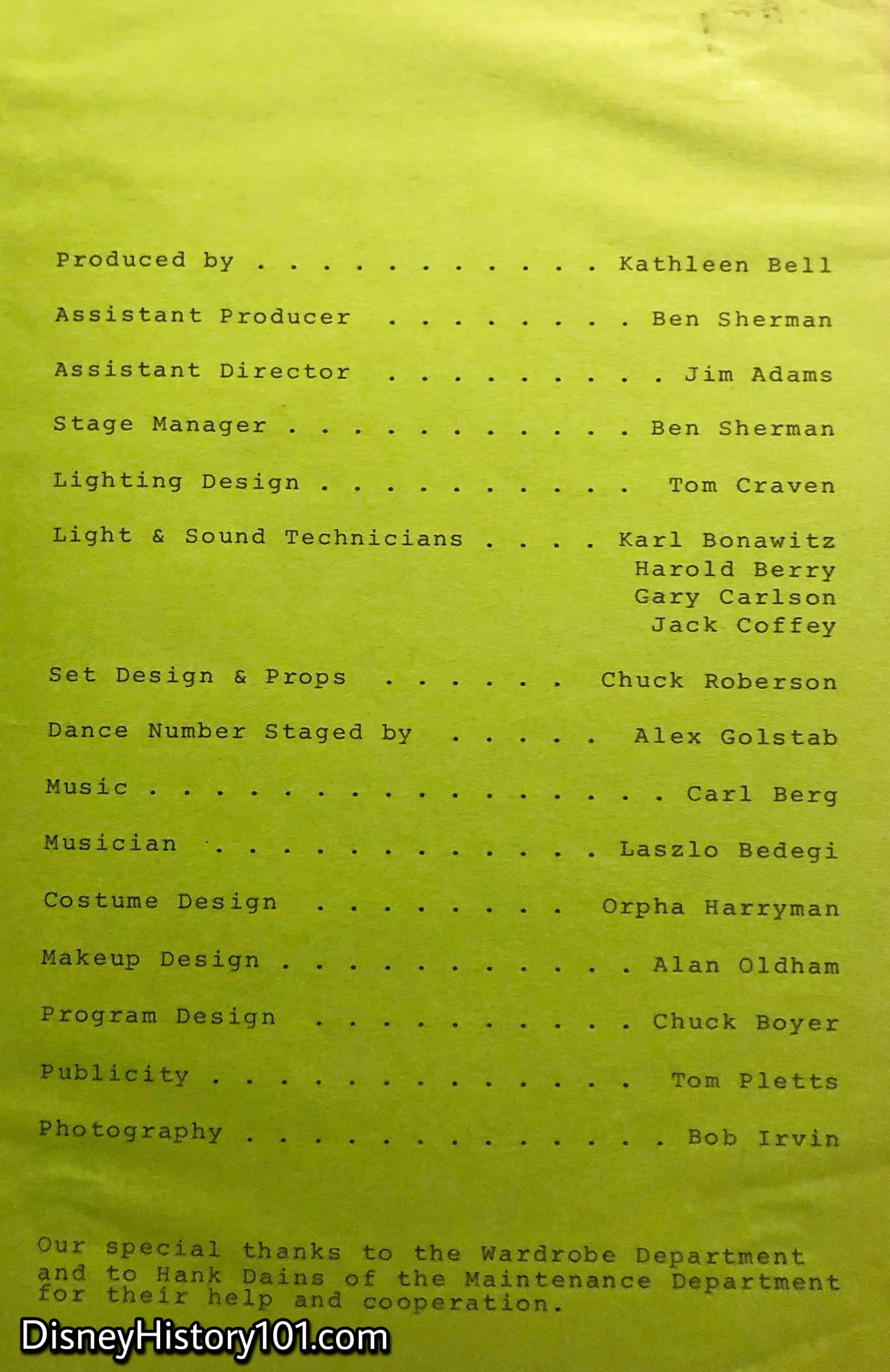
Greensleeves’ Magic Program, 1971
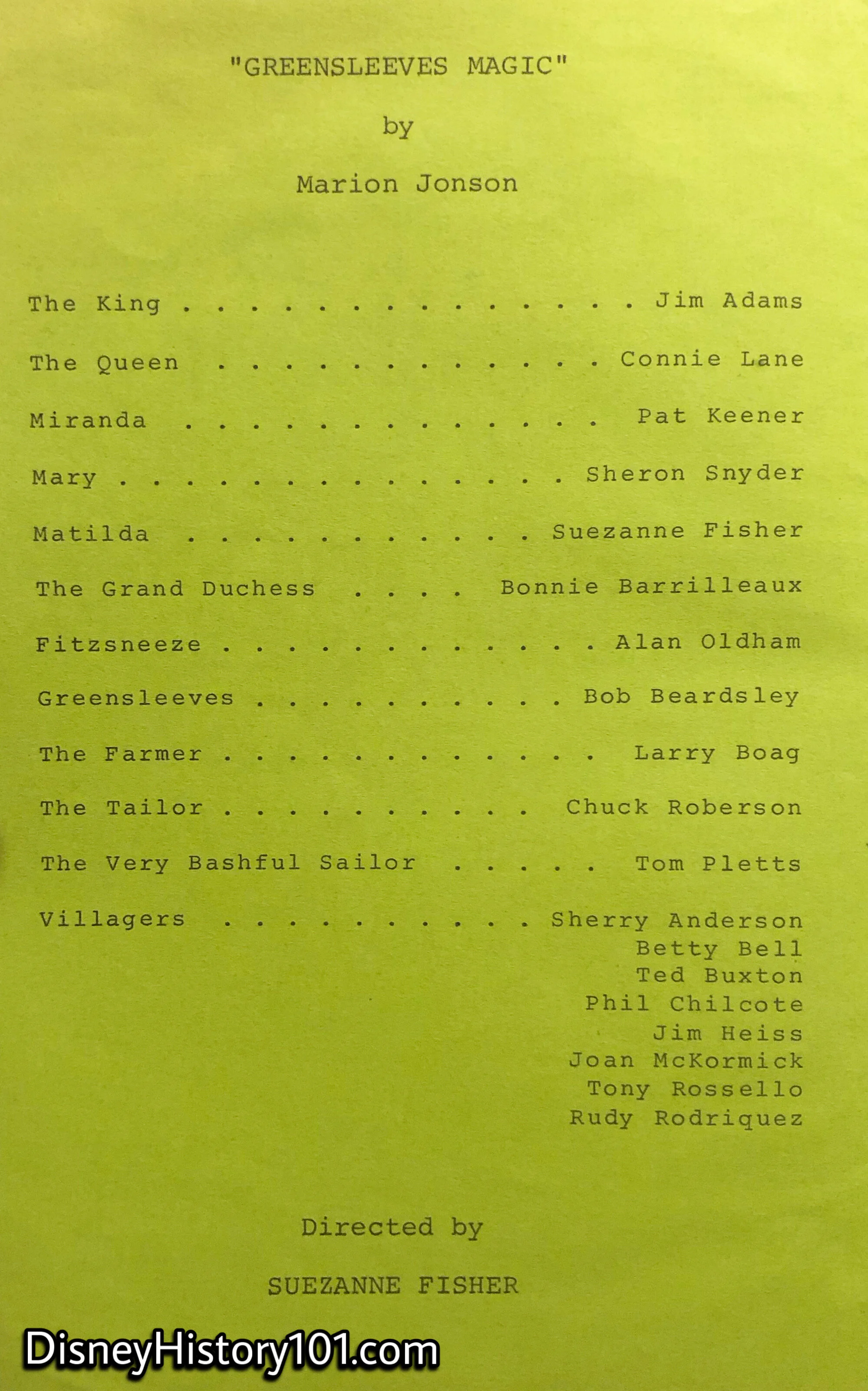
Greensleeves’ Magic Program, 1971
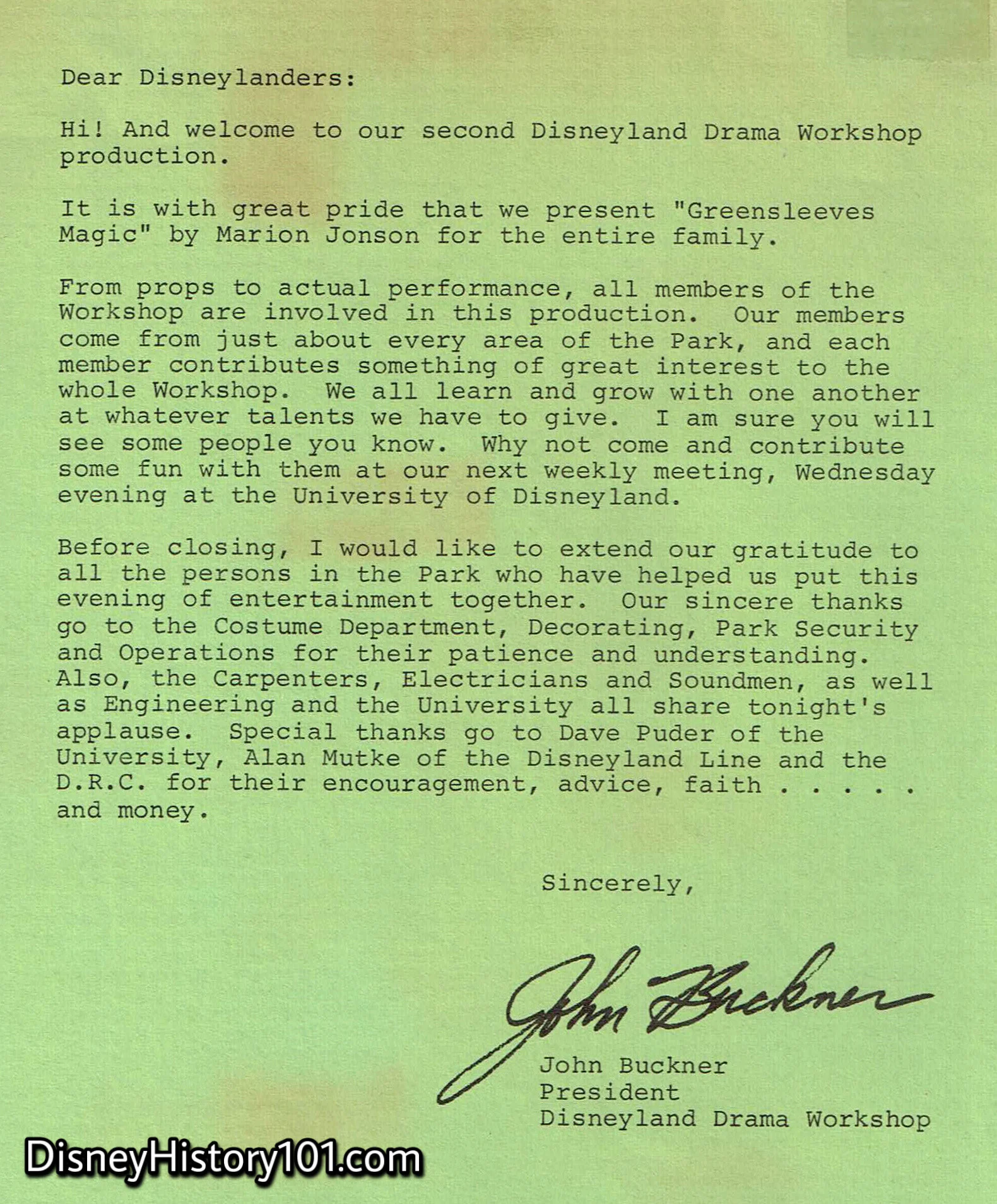
1971, Greensleeves’ Magic
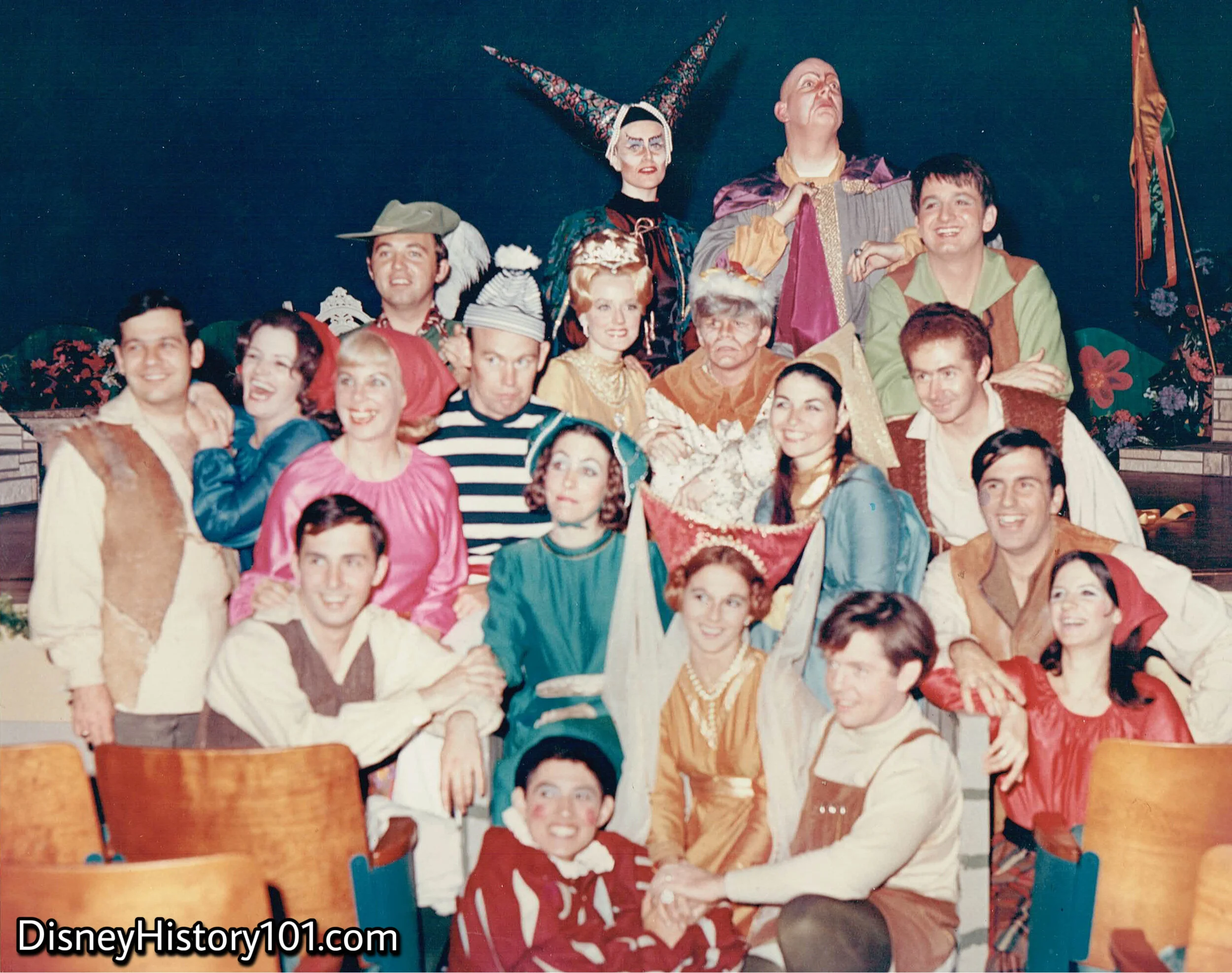
Greensleeves' Magic Full Cast Photo, 1971
“It’s hard to imagine Bonnie as a villain ever. I just don’t remember the plot well enough to visualize her in that role. But there I am in the picture with her(in the striped shirt, as the bashful sailor). Disneyland Ambassador Carol DeKeyser is the laughing one on the left. Ambassador Connie Swanson is the blonde in gold satin, upper middle, character Jim Adams is just below her (in character). On the far right, the redhead in a red vest is the founder Jim Heiss. Next to him is the wonderful Pat Keener…Oh, the guy above Jim : Bob Beardsley, who played Greensleeves!”
-Tom Pletts
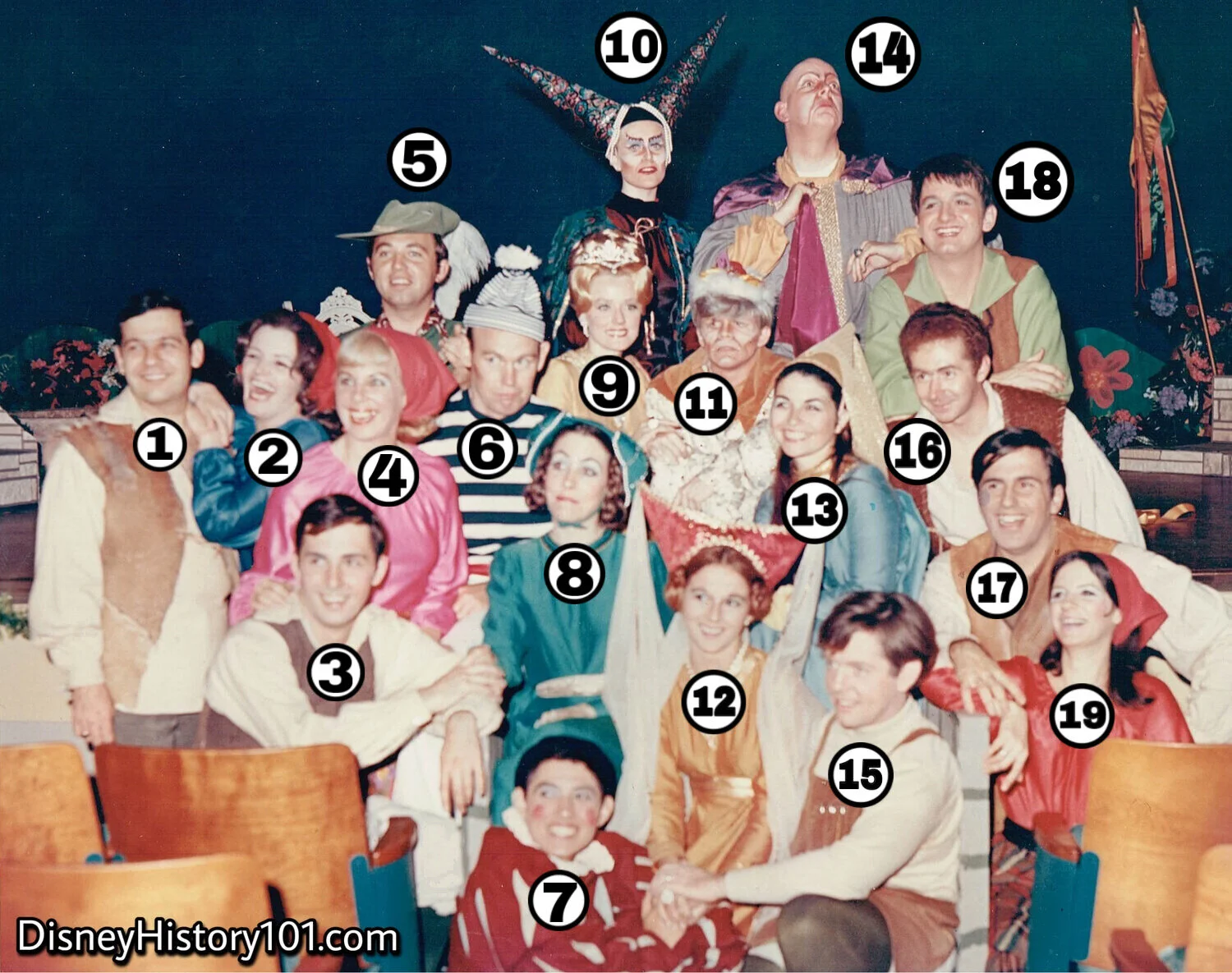
Greensleeves' Magic Full Cast Photo (Labelled), 1971
(1) ?, (2) Carol DeKeyser Masters, (3) Craig Carmen, (4) Betty Bell, (5) ?, (6) Tom Pletts, (7) ?, (8) Suezanne Fisher (the Hills Bros. employee who directed this production), (9) Connie Swanson Lane, (10) Bonnie Barrilleaux (a “Golden Horseshoe hoofer”), (11) Jim Adams, (12) ?, (13) Patricia Keener Chandler, (14) Alan Oldham, (15) Chuck Robertson, (16) Jim Heiss, (17) Phil Chilcote, (18) Bob Beardsley, (19) ?
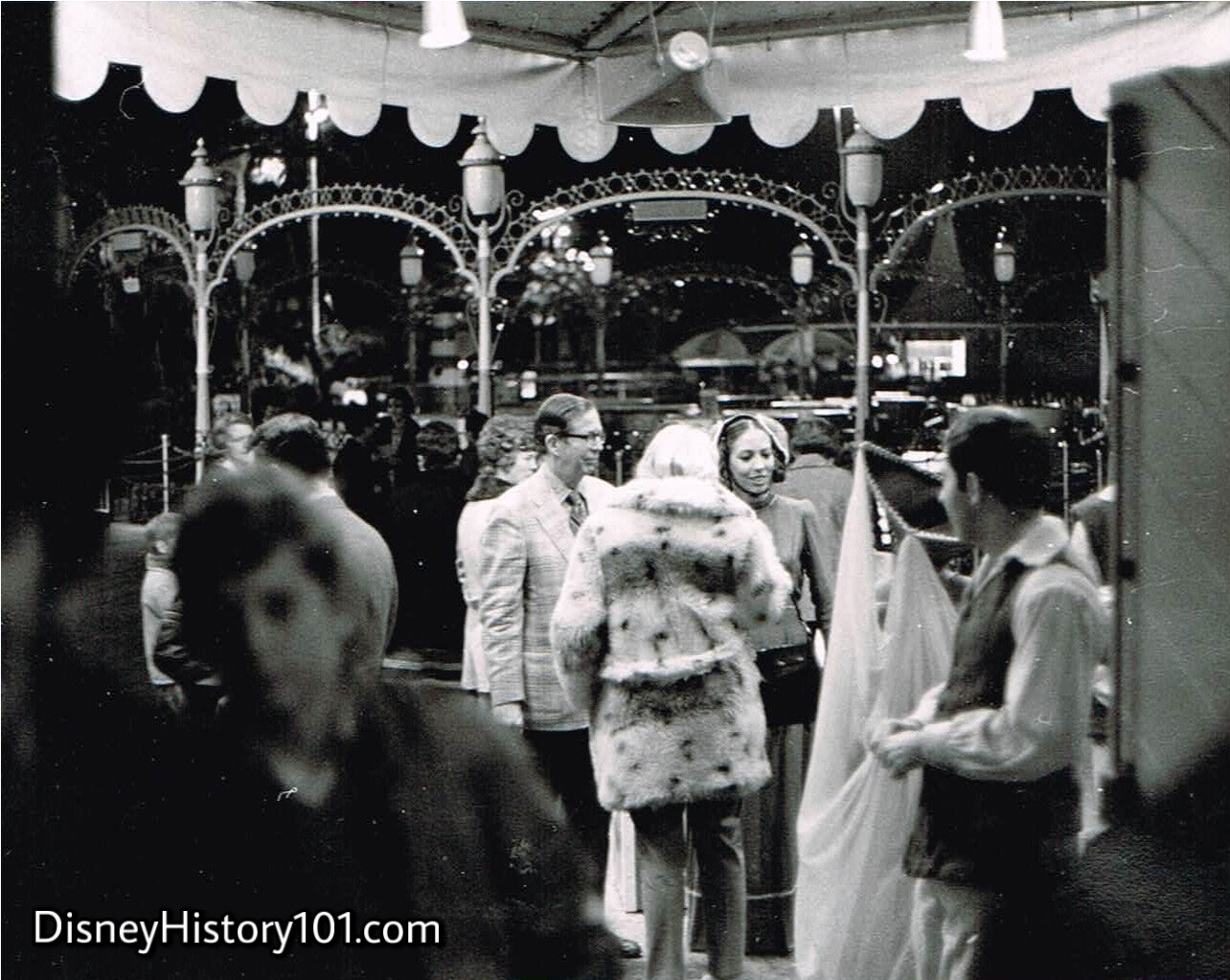
With this production, it became a tradition to meet the audience (and autograph their playbills) after each show. Straight thru the crowd, Suezanne Fischer greets guests between the Fantasyland Theatre and Mad Tea Party Cups.
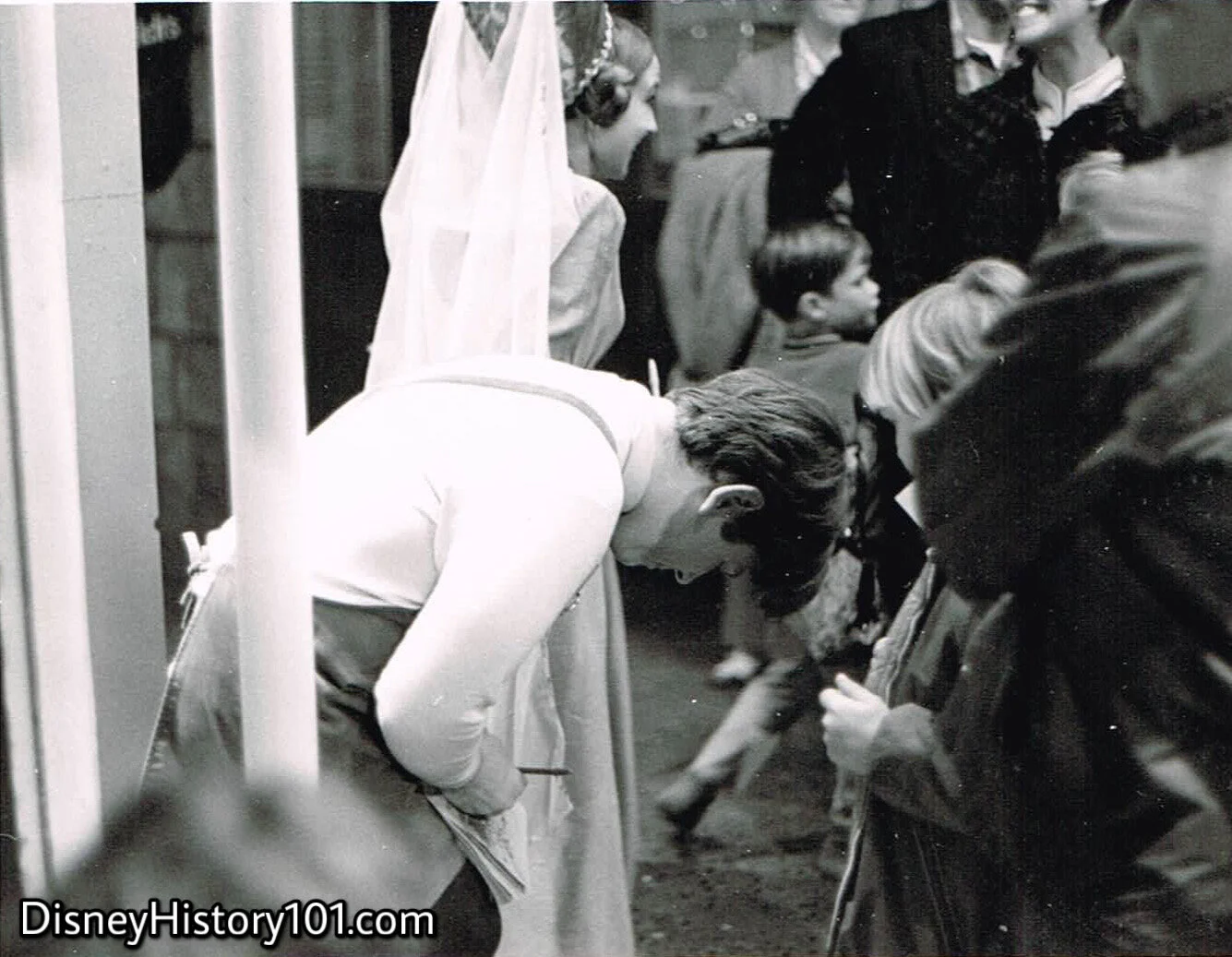
Greensleeves’ Magic, (1971)
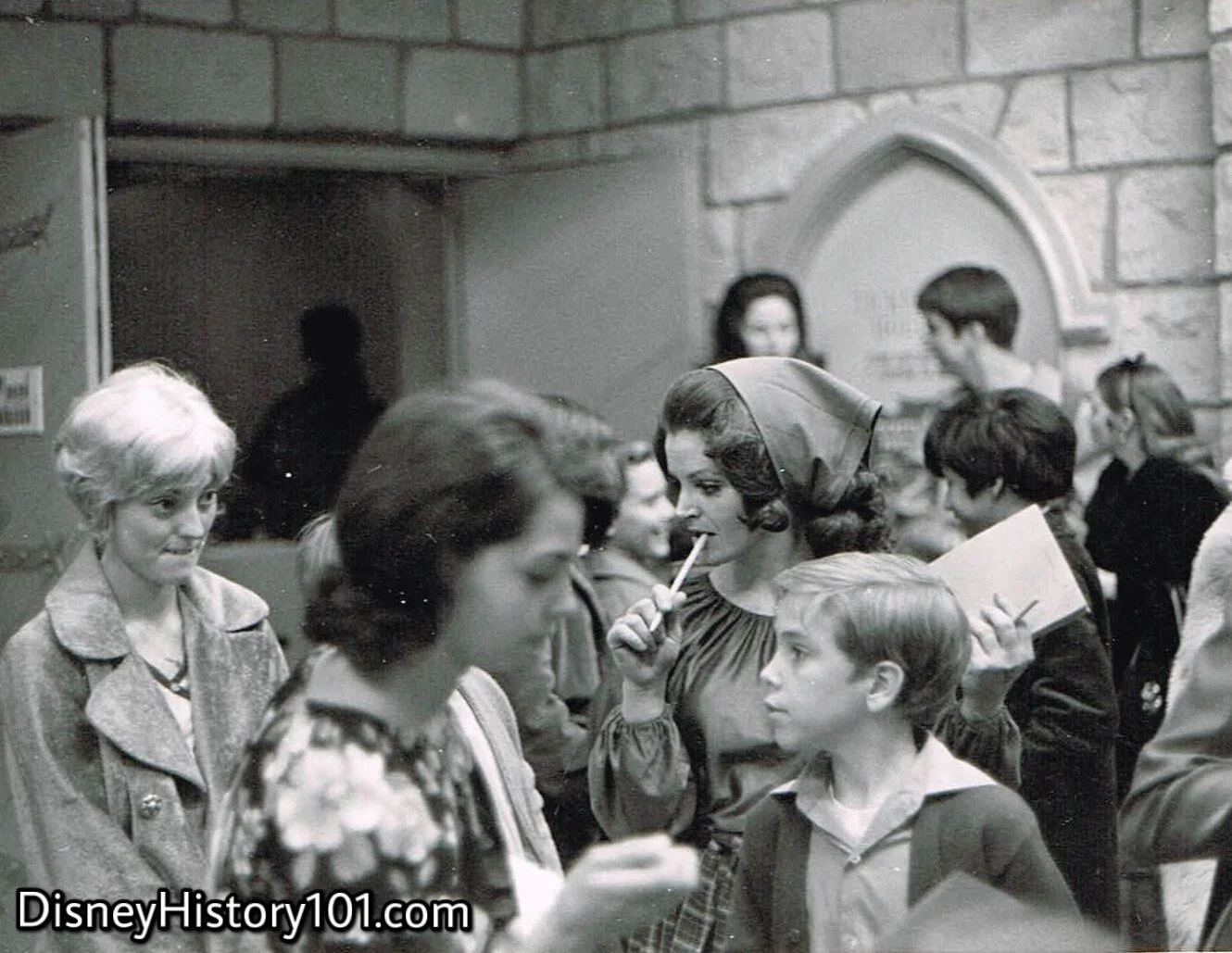
Greensleeves’ Magic, (1971)
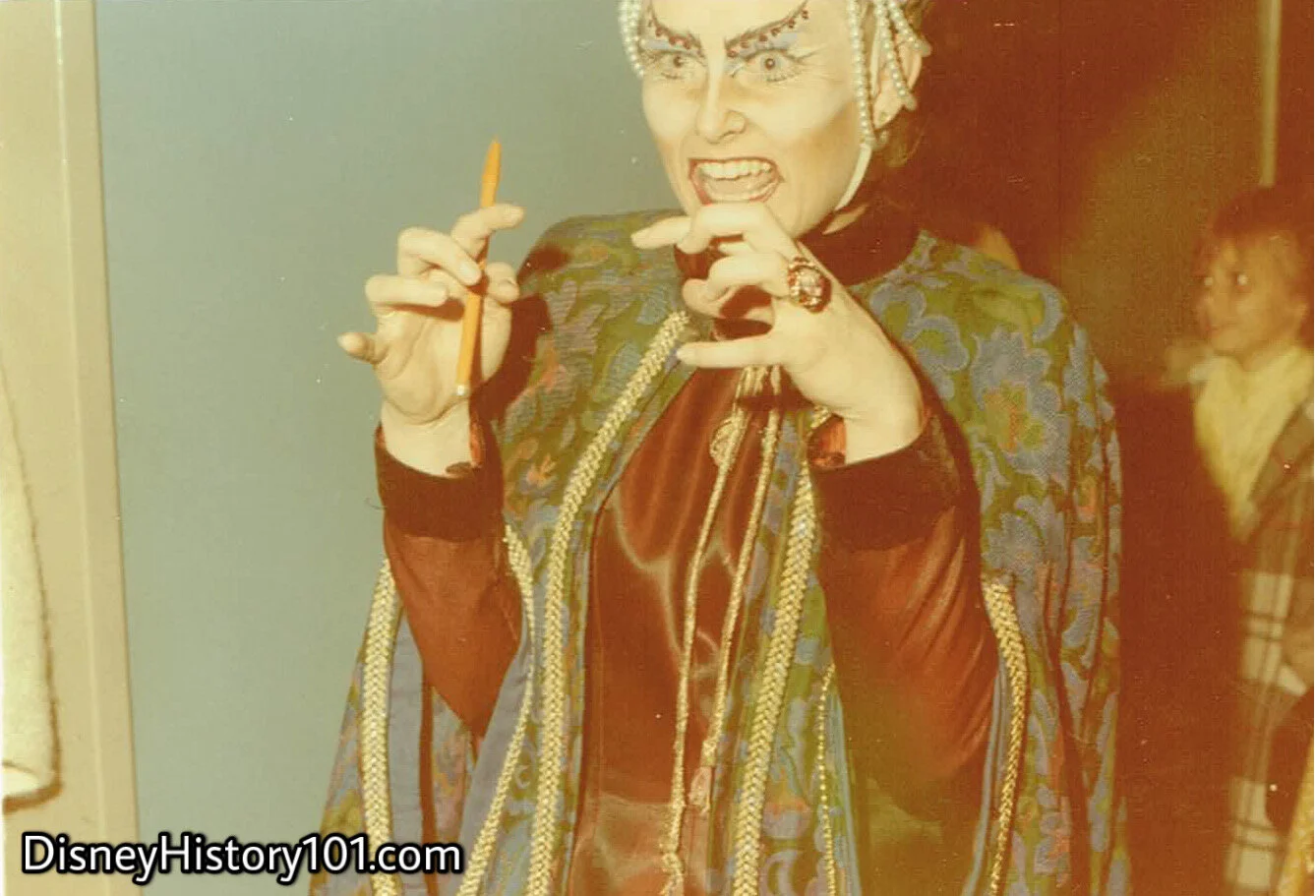
The Evil Duchess of Greensleeves’ Magic, 1971
The “not-so-evil” Bonnie Barrilleaux (as The Evil Duchess of Greensleeves’ Magic) strikes an “Evil Pose” for a guest’s camera.
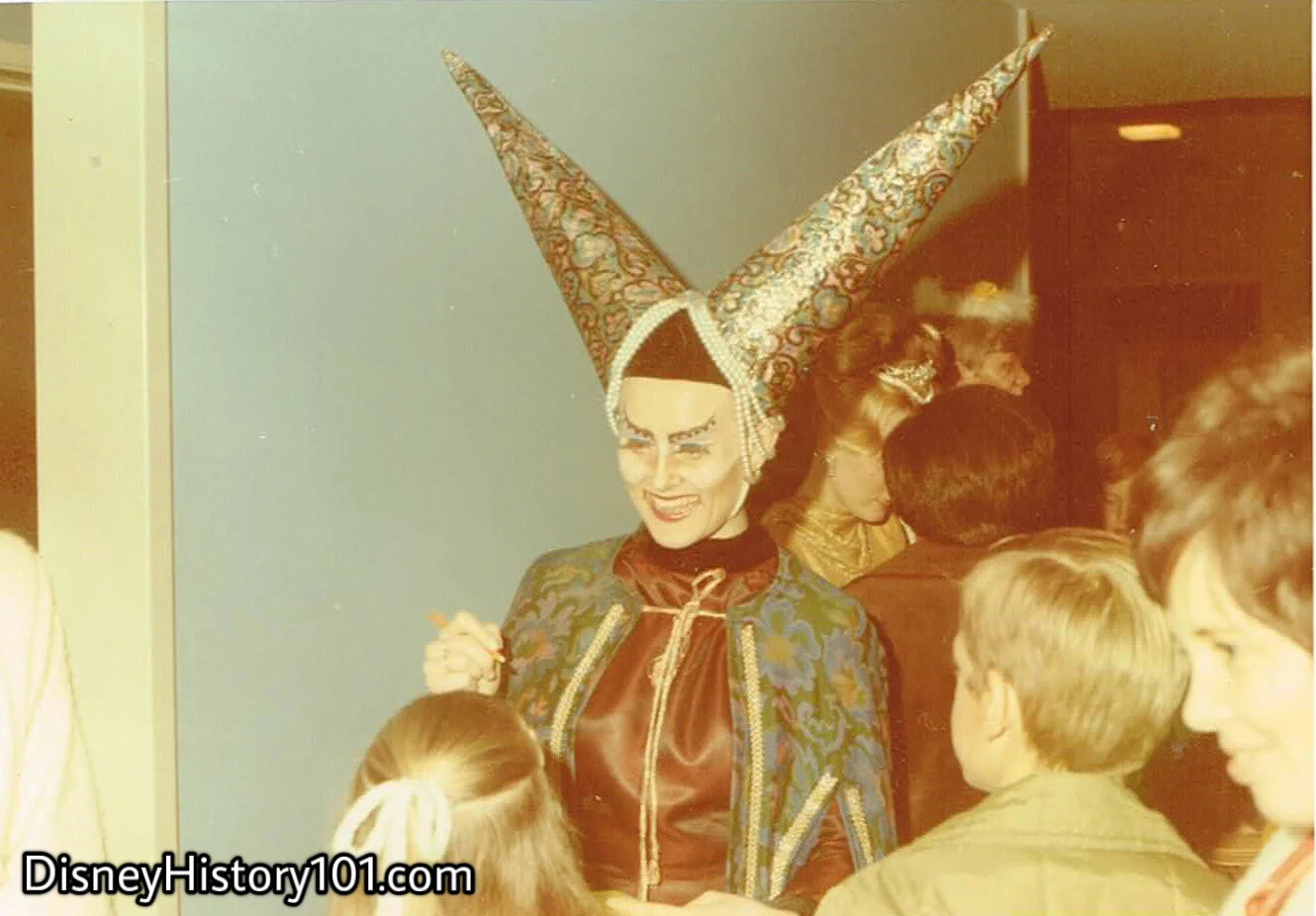
The Evil Duchess of Greensleeves’ Magic, 1971
Bonnie Barrilleaux (as The Evil Duchess in Greensleeves’ Magic), greets guests in a not-so-evil manner.

Greensleeves’ Magic, (1971)
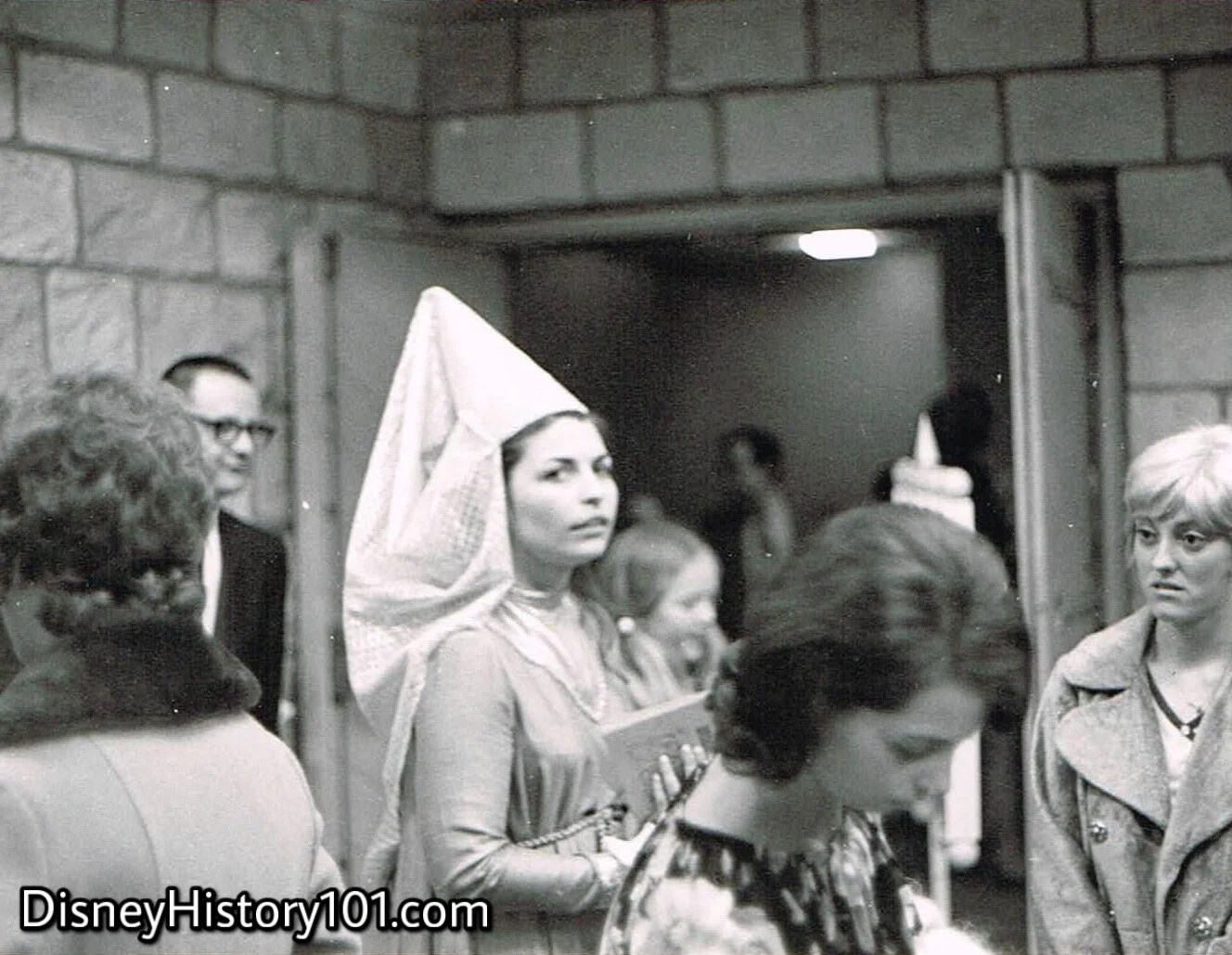
Greensleeves’ Magic, (1971)
Pat Keener after the show.
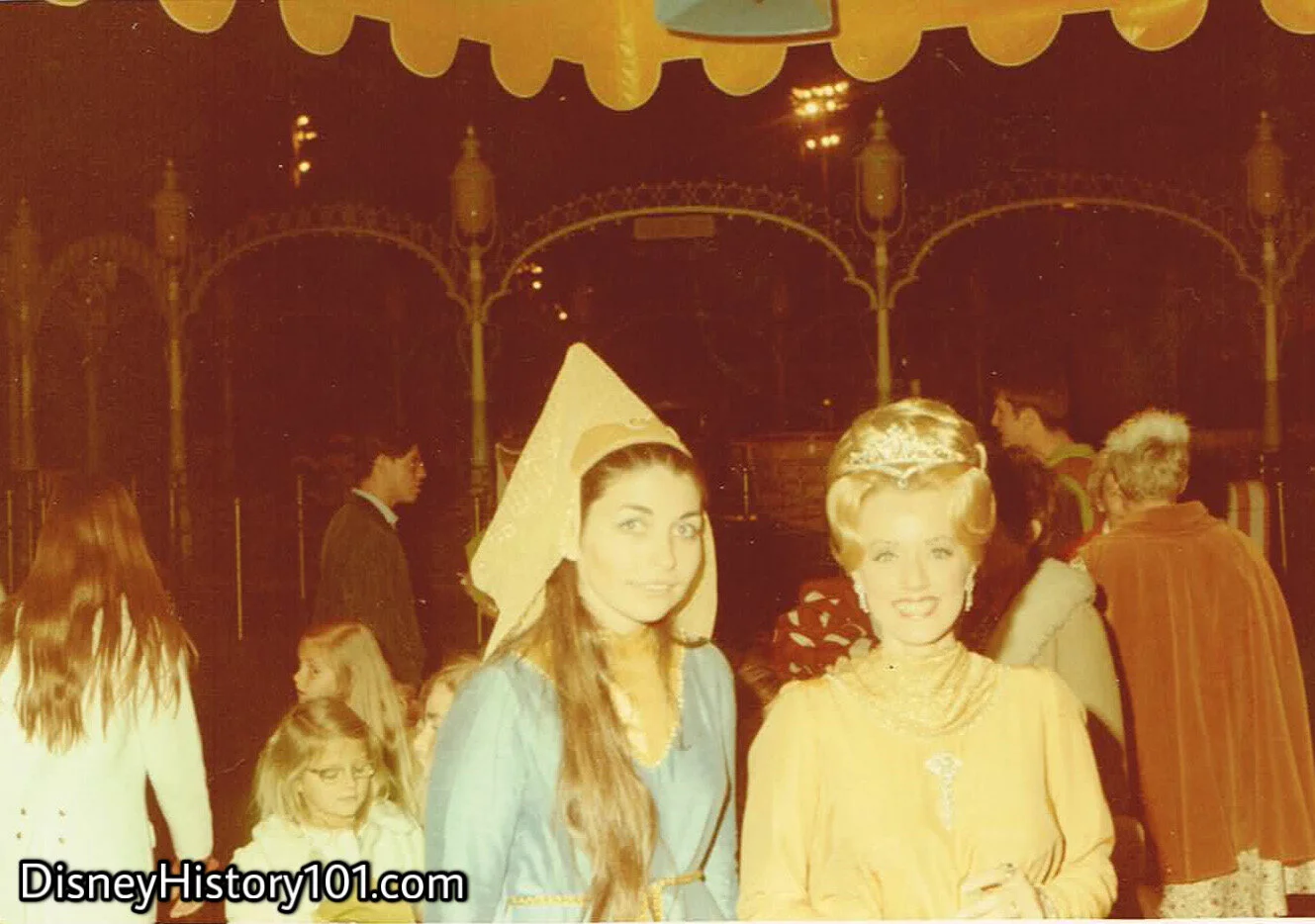
Greensleeves’ Magic, (1971)
Pat Keener (who played Miranda) and Connie Lane (who played The Queen) pose for a photograph near the Fantasyland Theatre entrance after the show.
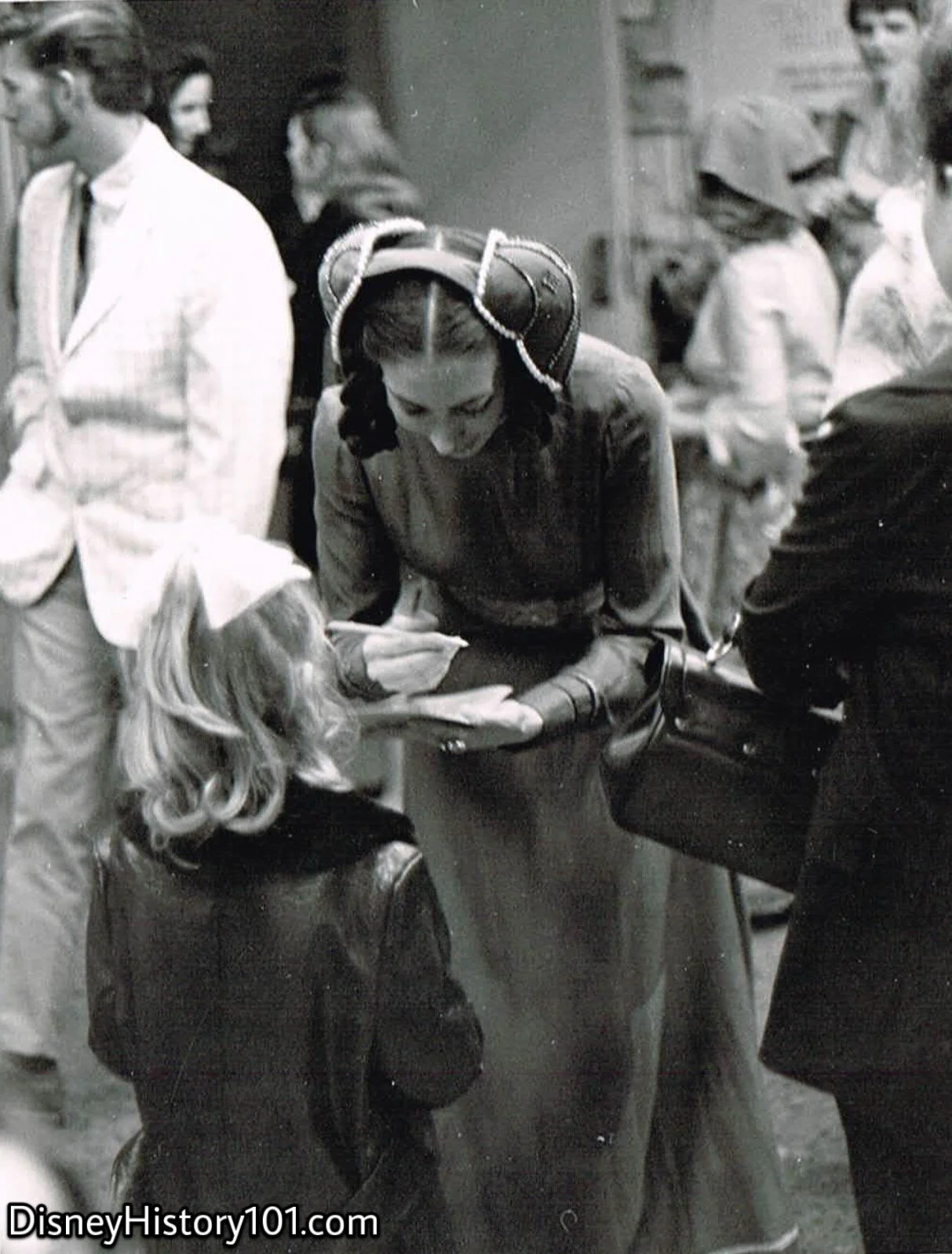
Greensleeves’ Magic, (1971)
Suezanne Fischer (who played the role of Matilda) takes some time to autograph a program for one of her fans.
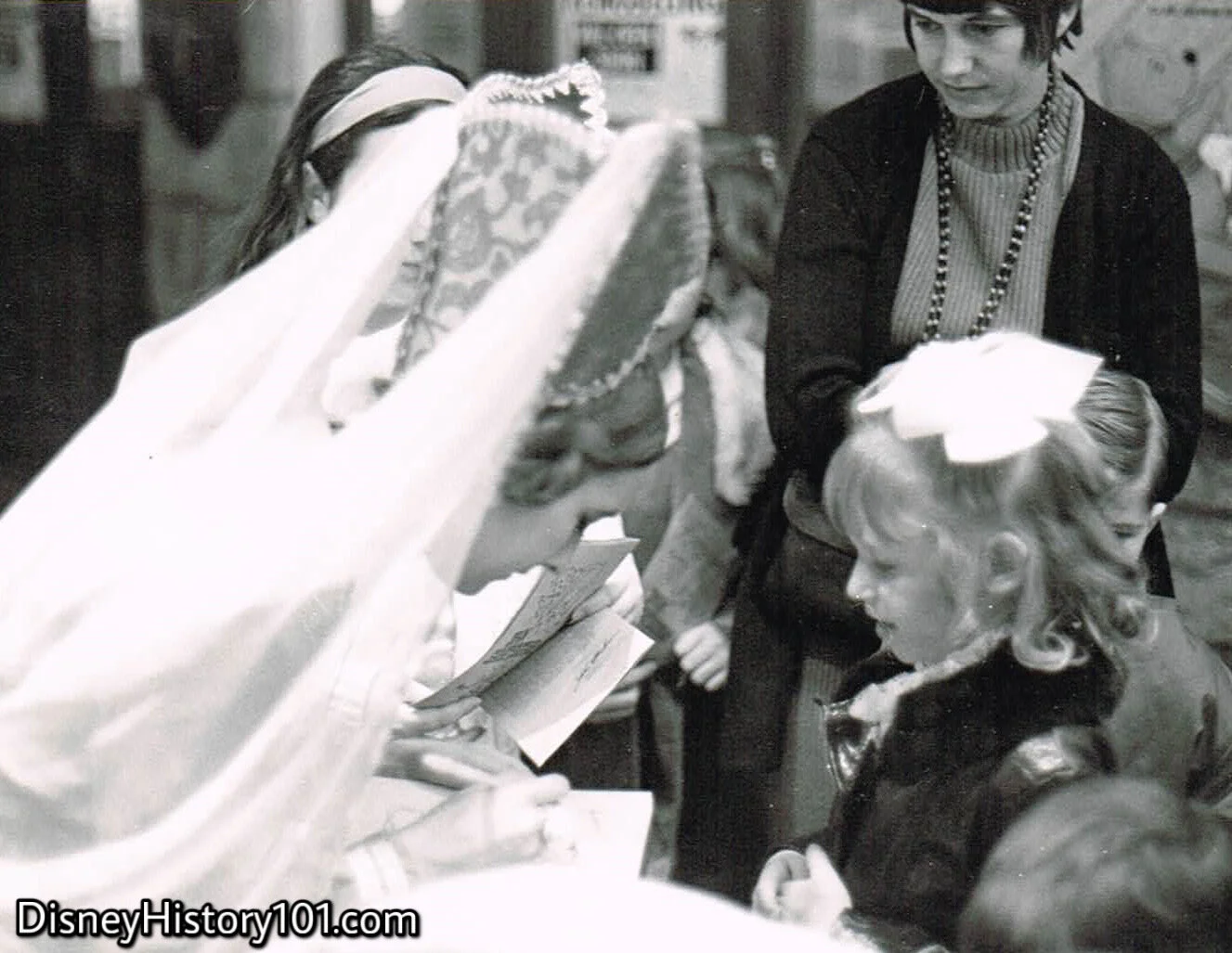
Greensleeves’ Magic, (1971)
It became a tradition to autograph Playbills of younger guests after productions.
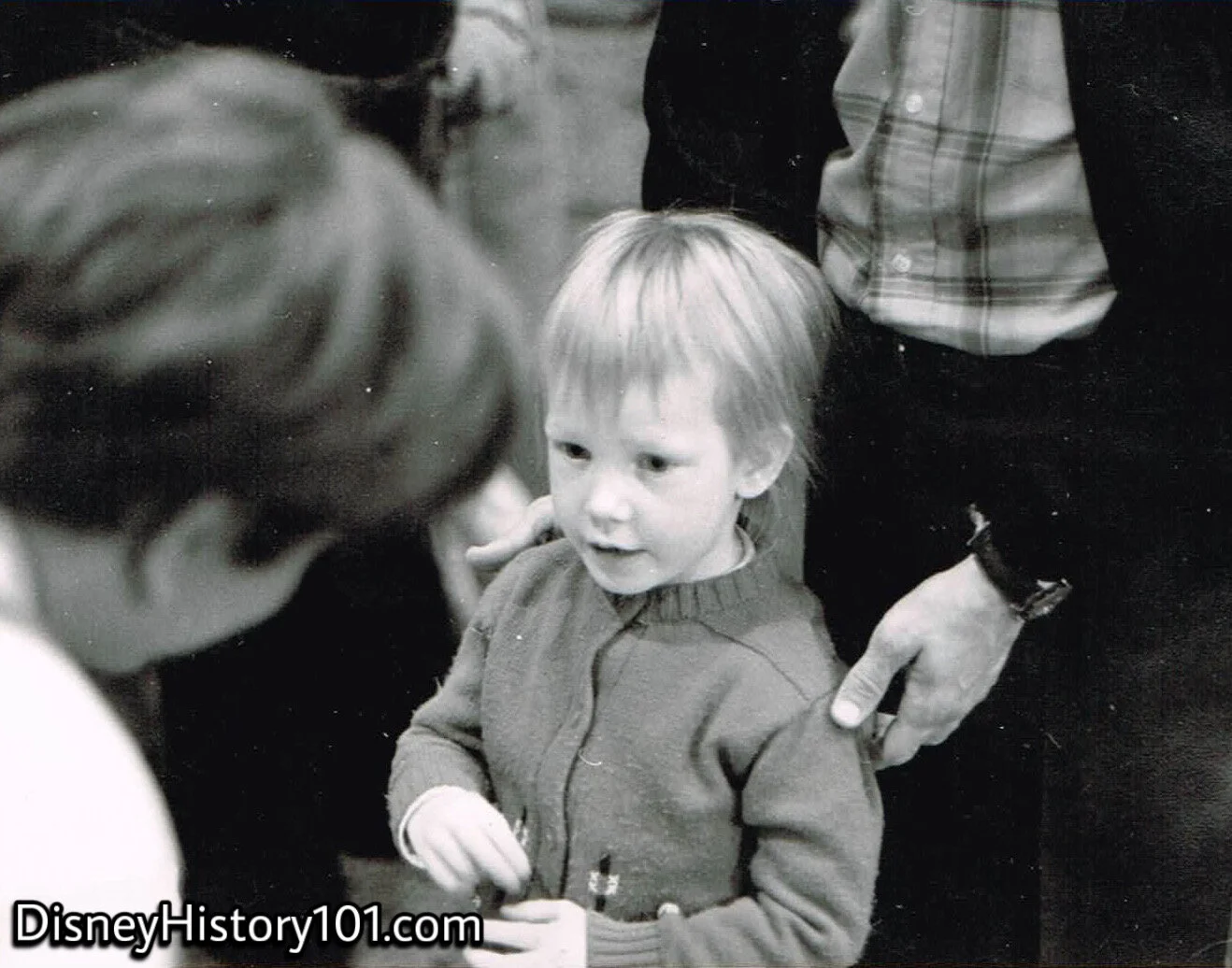
Greensleeves’ Magic, (1971)
“Greensleeves’ Magic was nearly taken out of the Park to entertain more kids, but wasn’t Disney’s material.”
-Tom Pletts
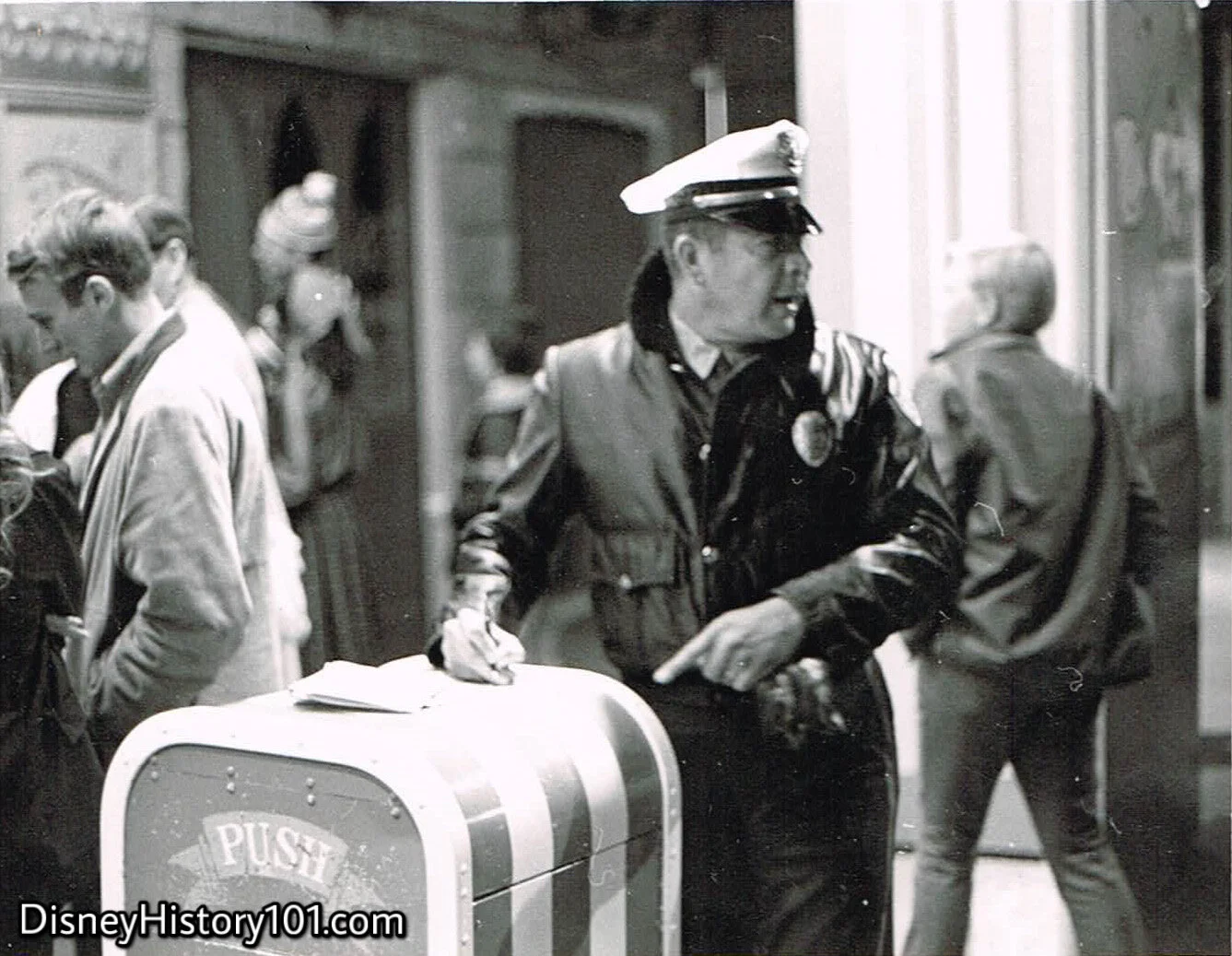
Greensleeves’ Magic, (1971)
The Fantasyland Theater house was packed, but did not exceed the occupancy limit.
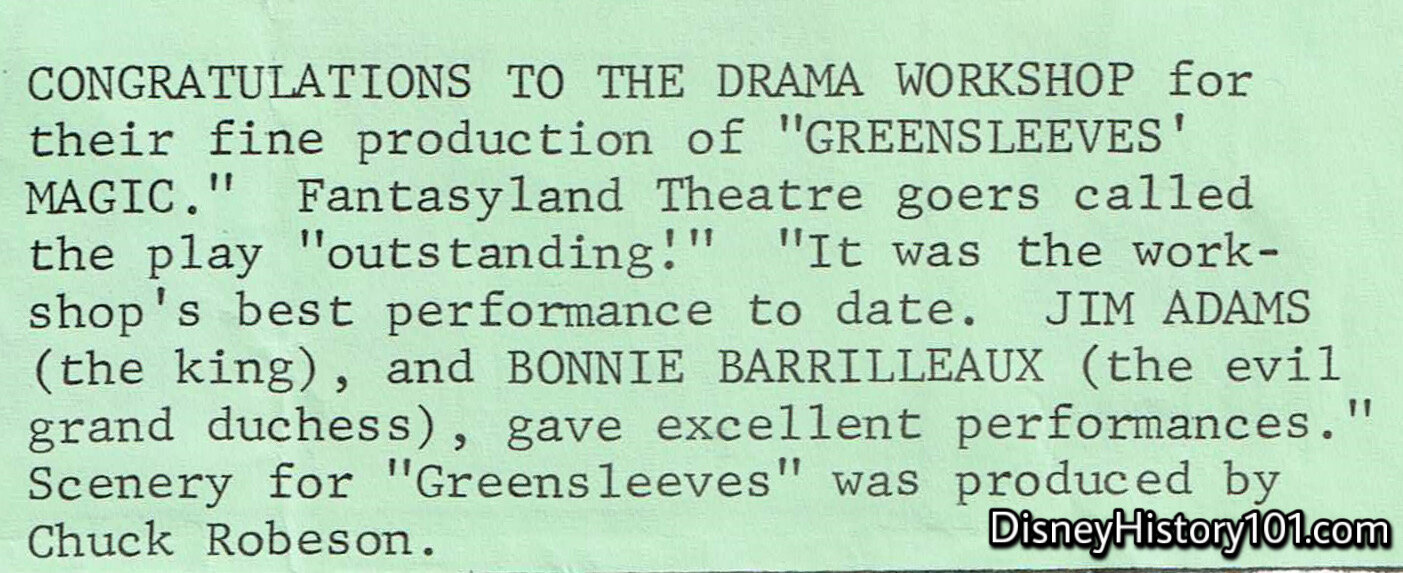
A Contemporaneous Disneyland LINE Excerpt
Accolades from the writing department of Disneyland’s own in-house periodical publication for employees.
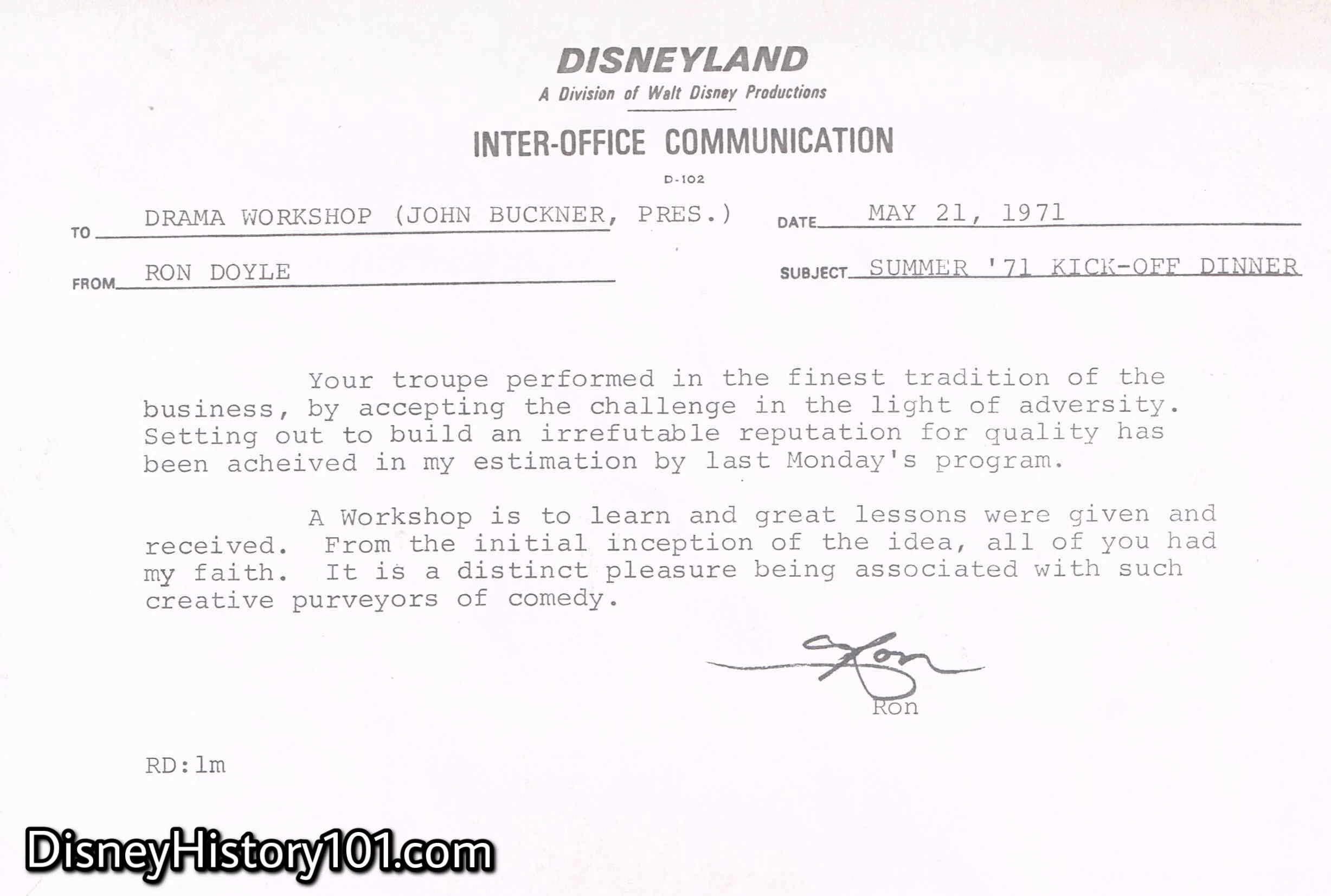
Disneyland Inter-Office Communication, (May, 1971)
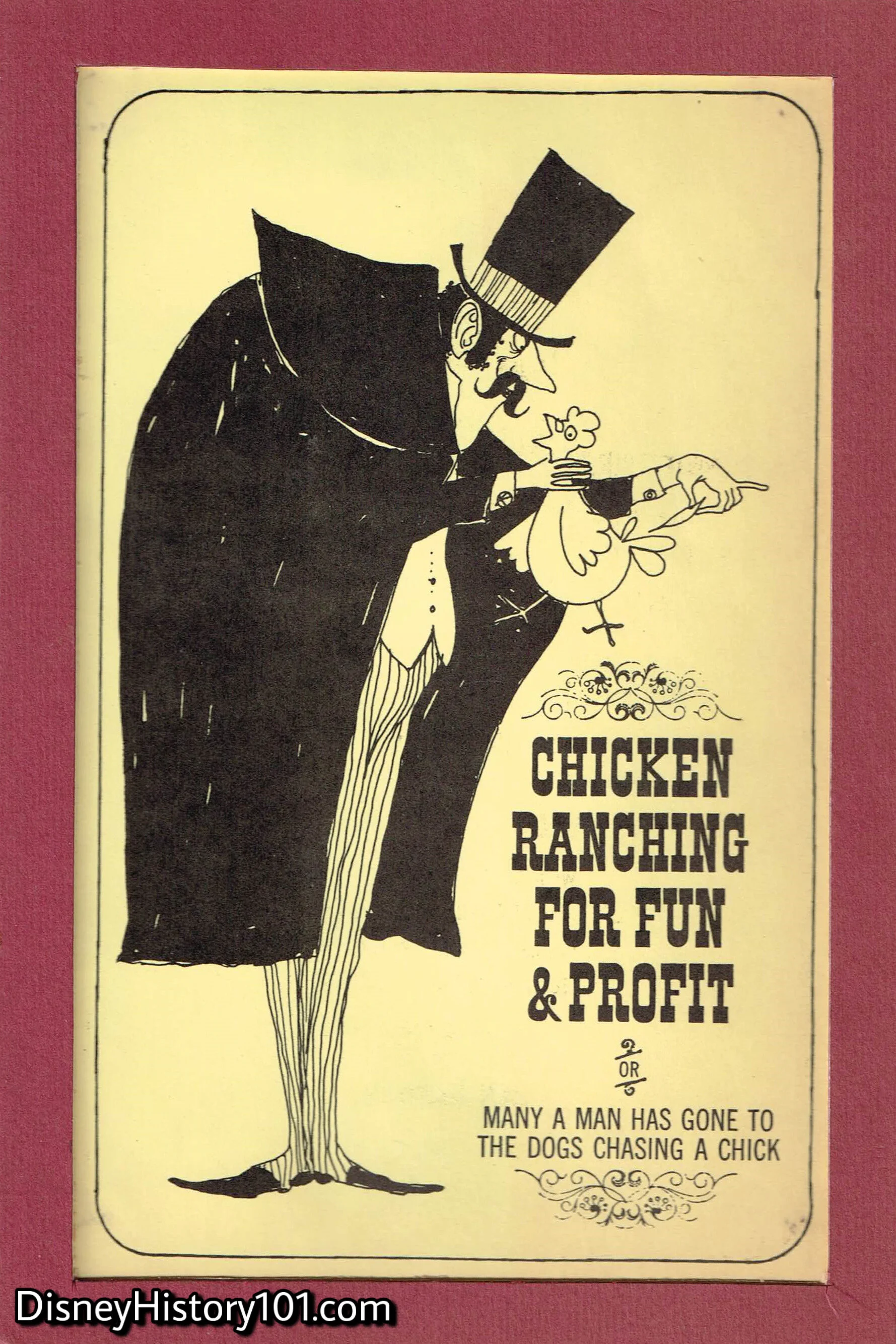
Chicken Ranching For Fun & Profit (Cover)
Again, Disneyland’s own portrait artist Chuck Boyer would provide artwork for another program cover. Disneyland Drama Club Alumn Tom Pletts remembered, "He was very kind to our little drama group.”
But what was this third Disneyland Drama Club production about? Cast Member Tom Pletts (who portrayed “Grasper Quick”) recalled the Plot this way : “The villain Grasper Quick was going to foreclose on Widow Blues’ chicken ranch unless her daughter, Sugar Blues, married him. Sugar’s boyfriend and hero, Victor Virtue, and his friend, cheerleader Frank Funster vainly try to help. Sugar attempts to bribe Grasper by sending him all the eggs ; but, since he’s been secretly feeding her chickens gunpowder (don’t ask), they blow up his mansion (off stage, of course). It’s all sprinkled with running gags and a catchy tune or to. Fun stuff.”
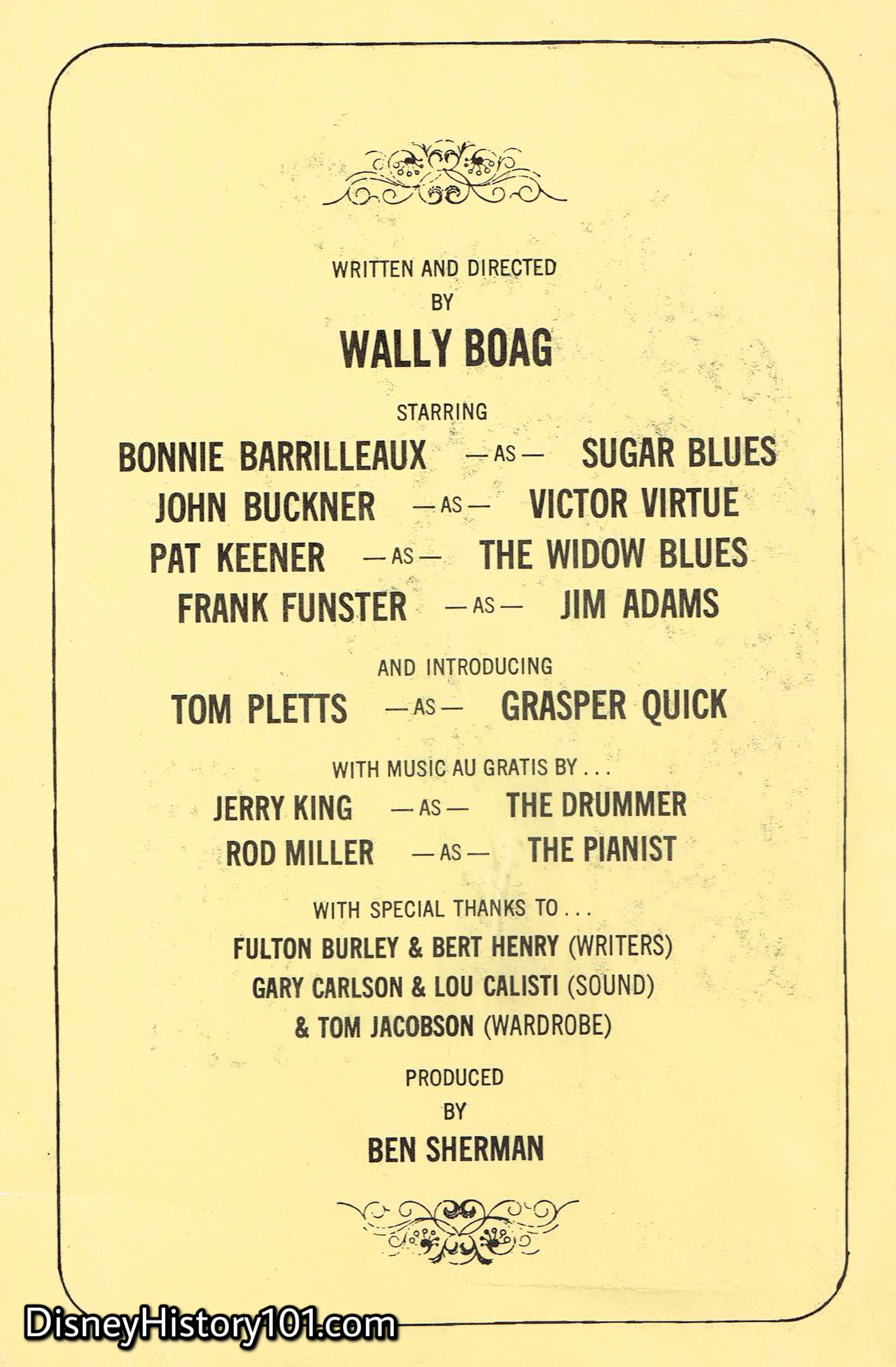
Chicken Ranching For Fun & Profit, (1971)
Cast member Tom Pletts continues : “It’s kind of a ‘Vaudevillain’ comic melodrama, and is only 30 minutes long (for audience turnover). Its title is ‘Chicken Ranching for Fun and Profit’…or, ‘Many A Man Has Gone to the Dogs Chasing a Chick’. Authorship is credited to Wally Boag, Fulton Burley, and Bert Henry. Jerry King, the regular [Golden] Horseshoe drummer provided the rim-shots for us ; Rod Miller, the Coke Corner pianist, played excellent ragtime to keep the mood. I still get pumped for a show start when I hear ‘Maple Leaf Rag’!”
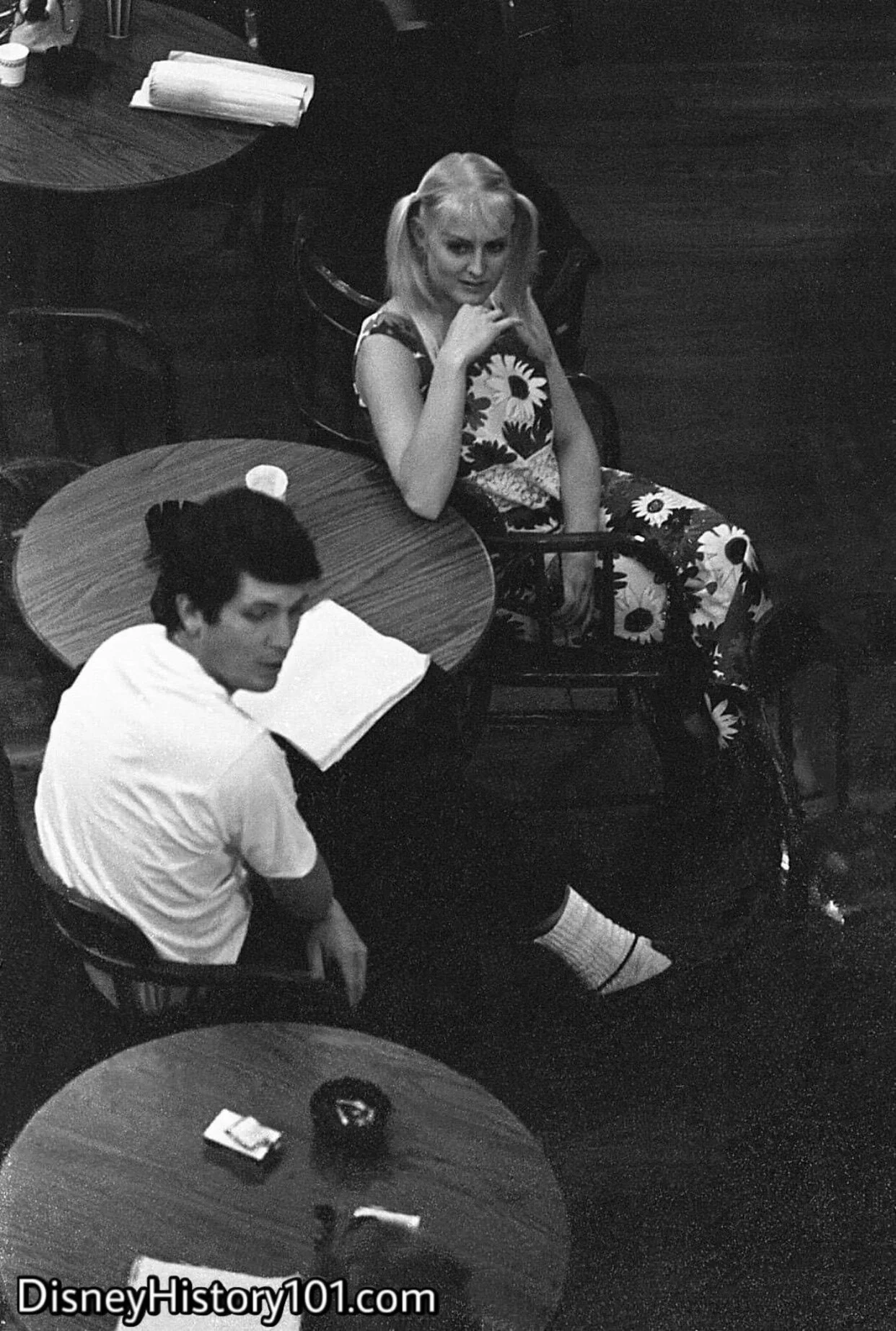
Chicken Ranching For Fun & Profit Rehearsals, (1971)
Ben Sherman and Bonnie (Sugar) get some direction while sitting in the dining area of the Golden Horseshoe Theater.
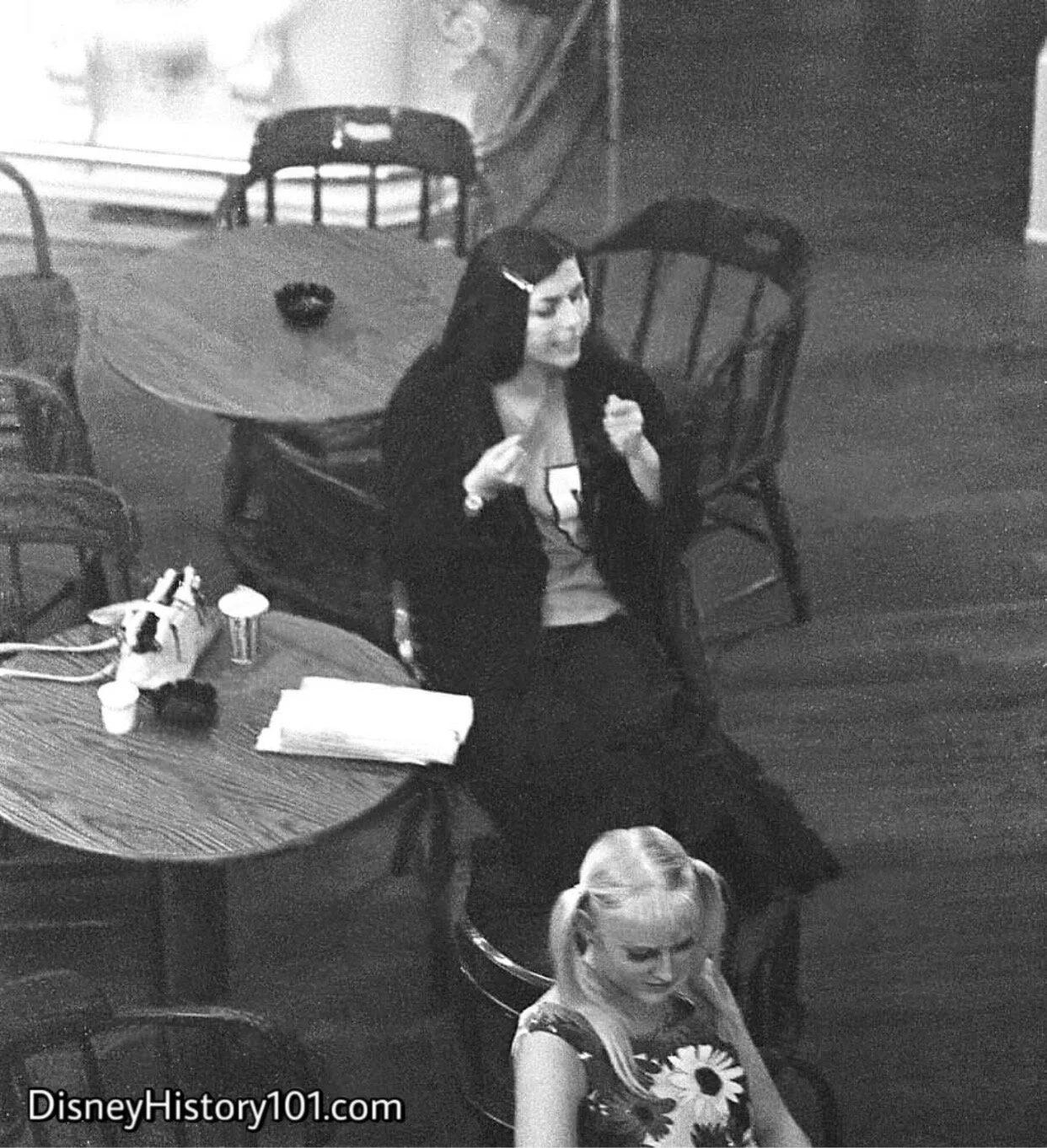
Chicken Ranching For Fun & Profit Rehearsals, (1971)
Pat (Widow Blues) and Bonnie at rehearsals.
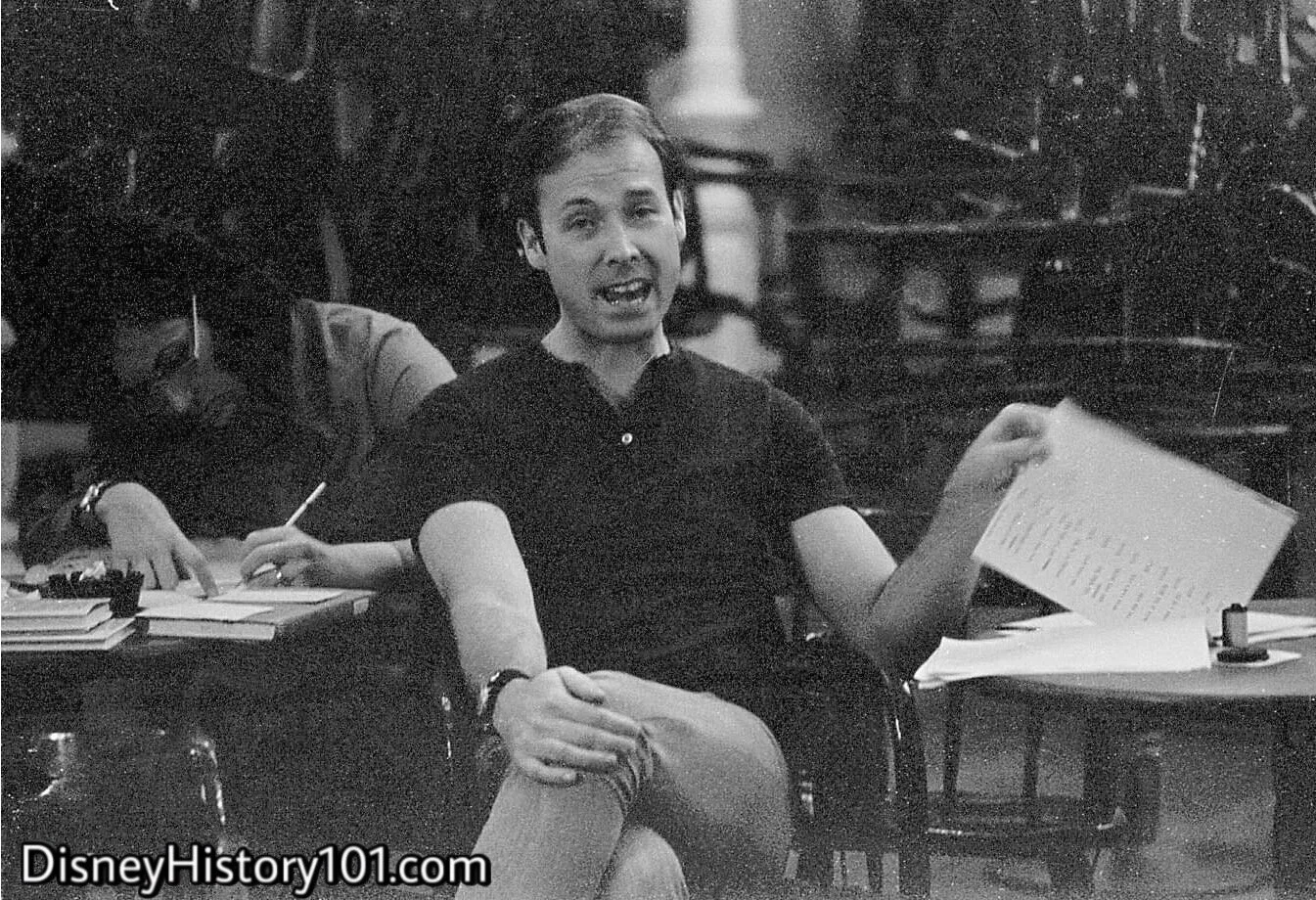
Chicken Ranching For Fun & Profit Rehearsals, (1971)
Johnny Buckner (Victor Virtue) and an unidentified book worm look over their scripts.
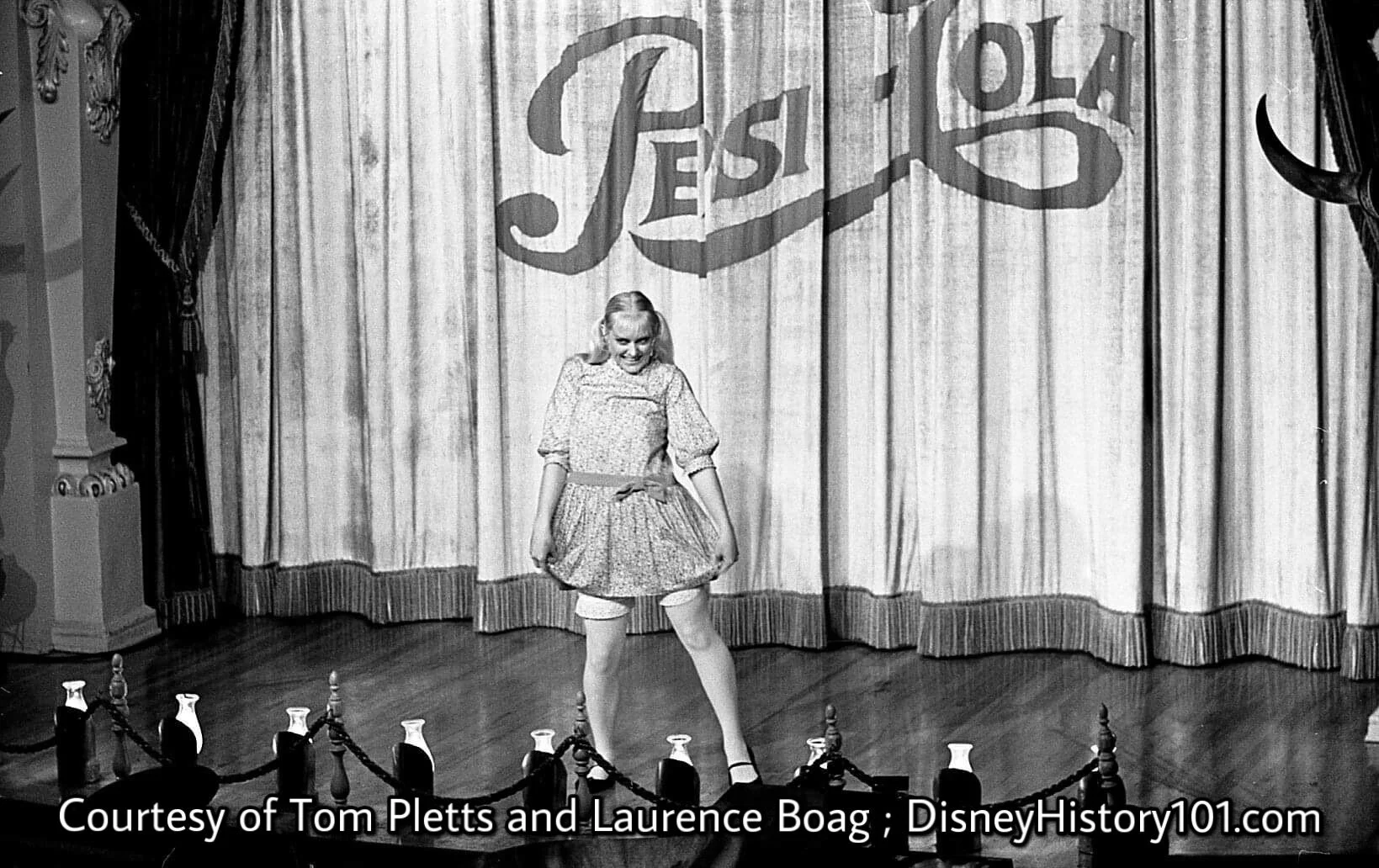
Chicken Ranching For Fun & Profit, (1971)
The following photos were taken at one of the “Chicken Ranching” performances held inside the Golden Horseshoe Saloon. The show also ran in the Fantasyland Theatre, but we don’t have any current “Vintage Views” available.
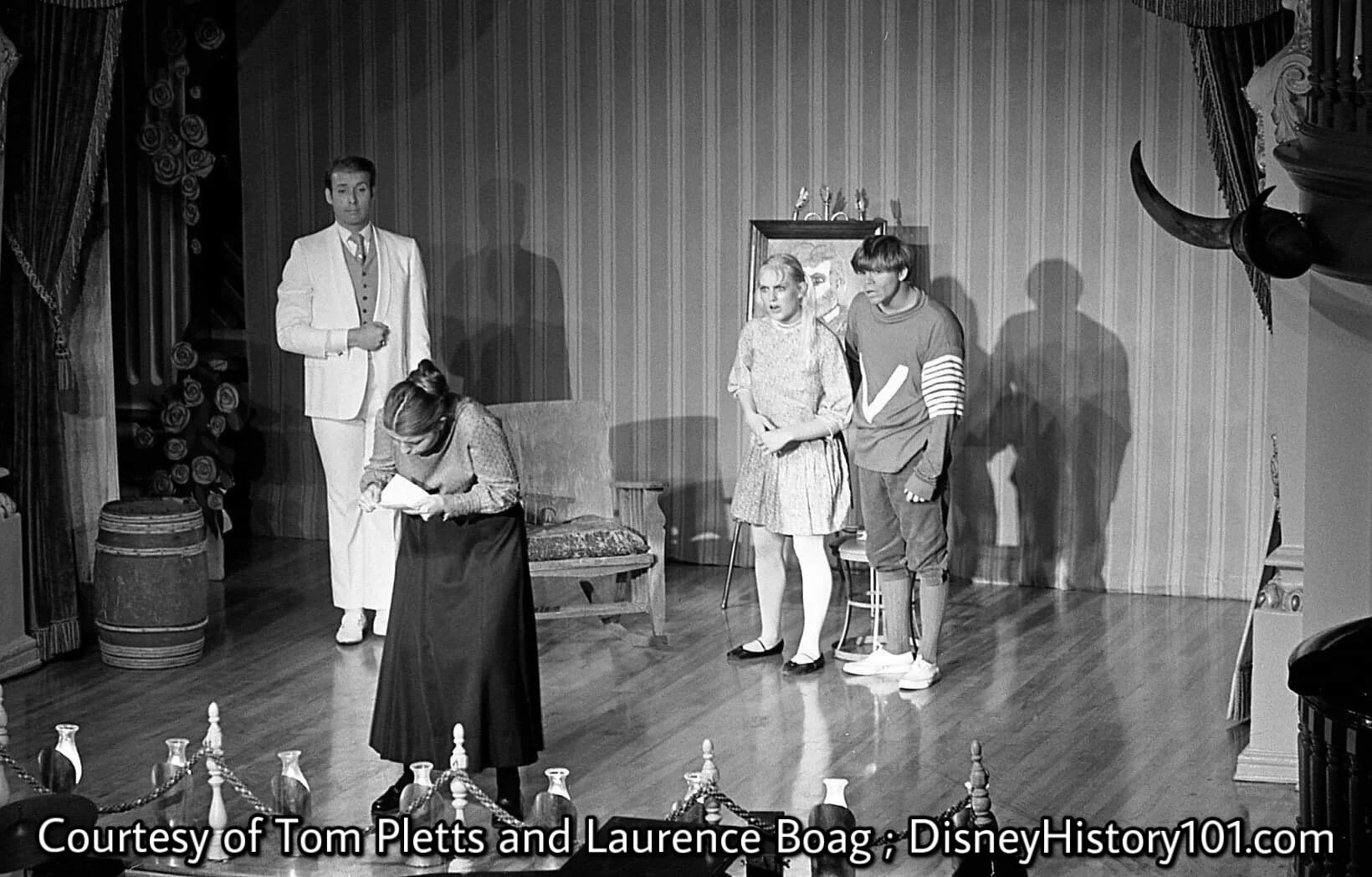
Chicken Ranching For Fun & Profit, (1971)
Tom Pletts remembers, “In the foreground, you’ll notice Pat Keener, the Widow Blues, reading a ‘mort-gage’ (as Wally preferred).”
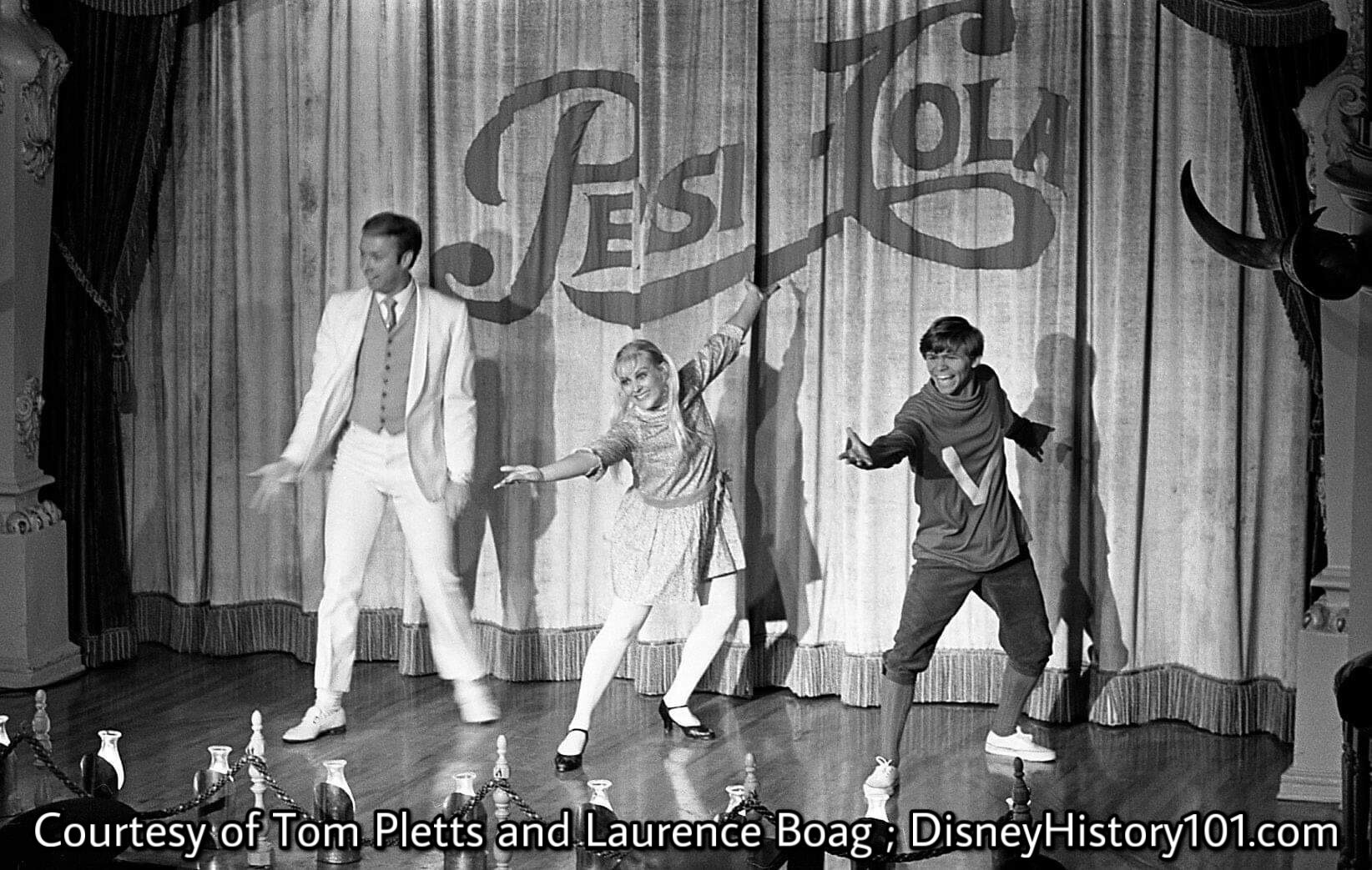
Chicken Ranching For Fun & Profit, (1971)
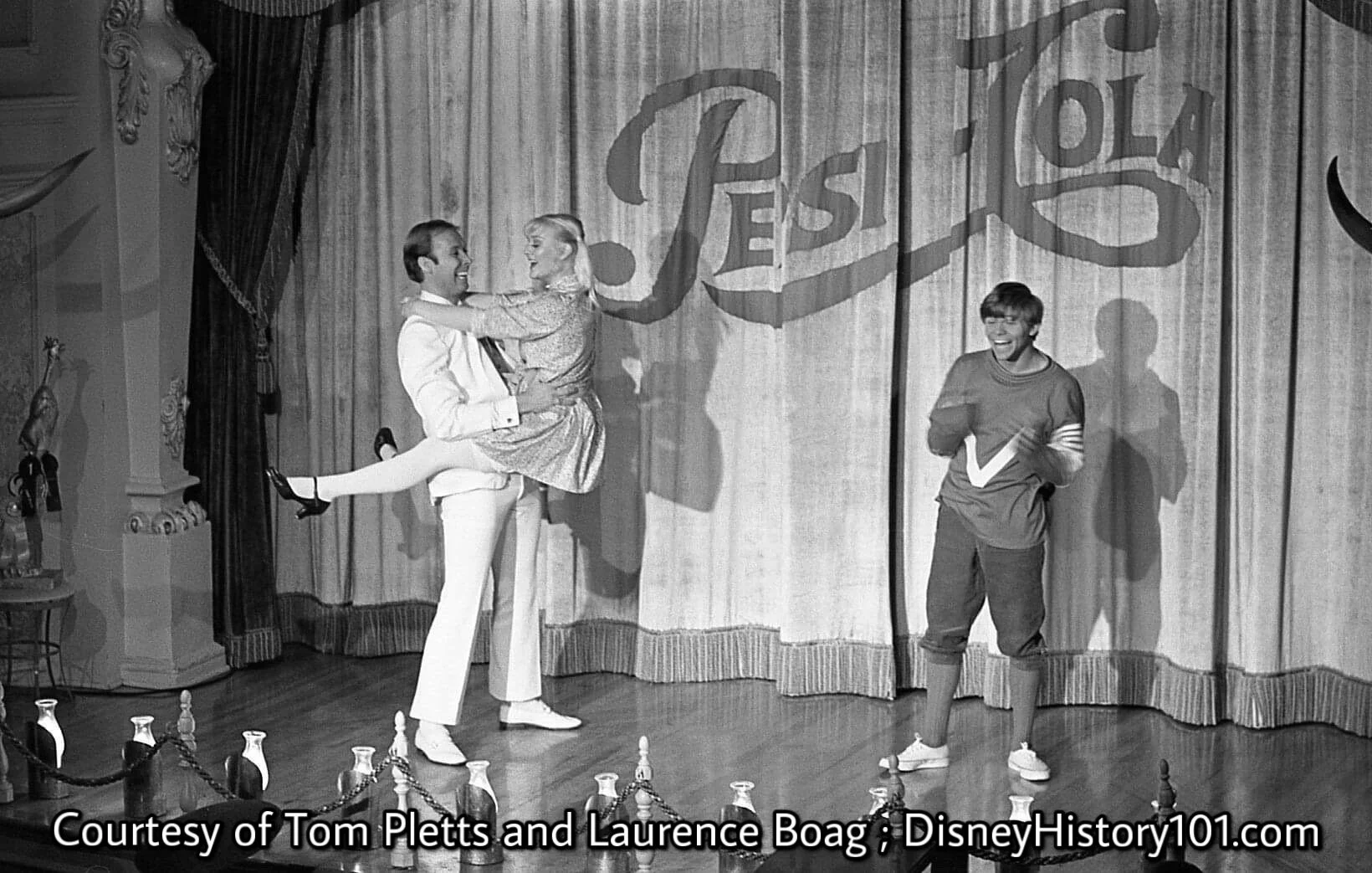
Chicken Ranching For Fun & Profit, (1971)
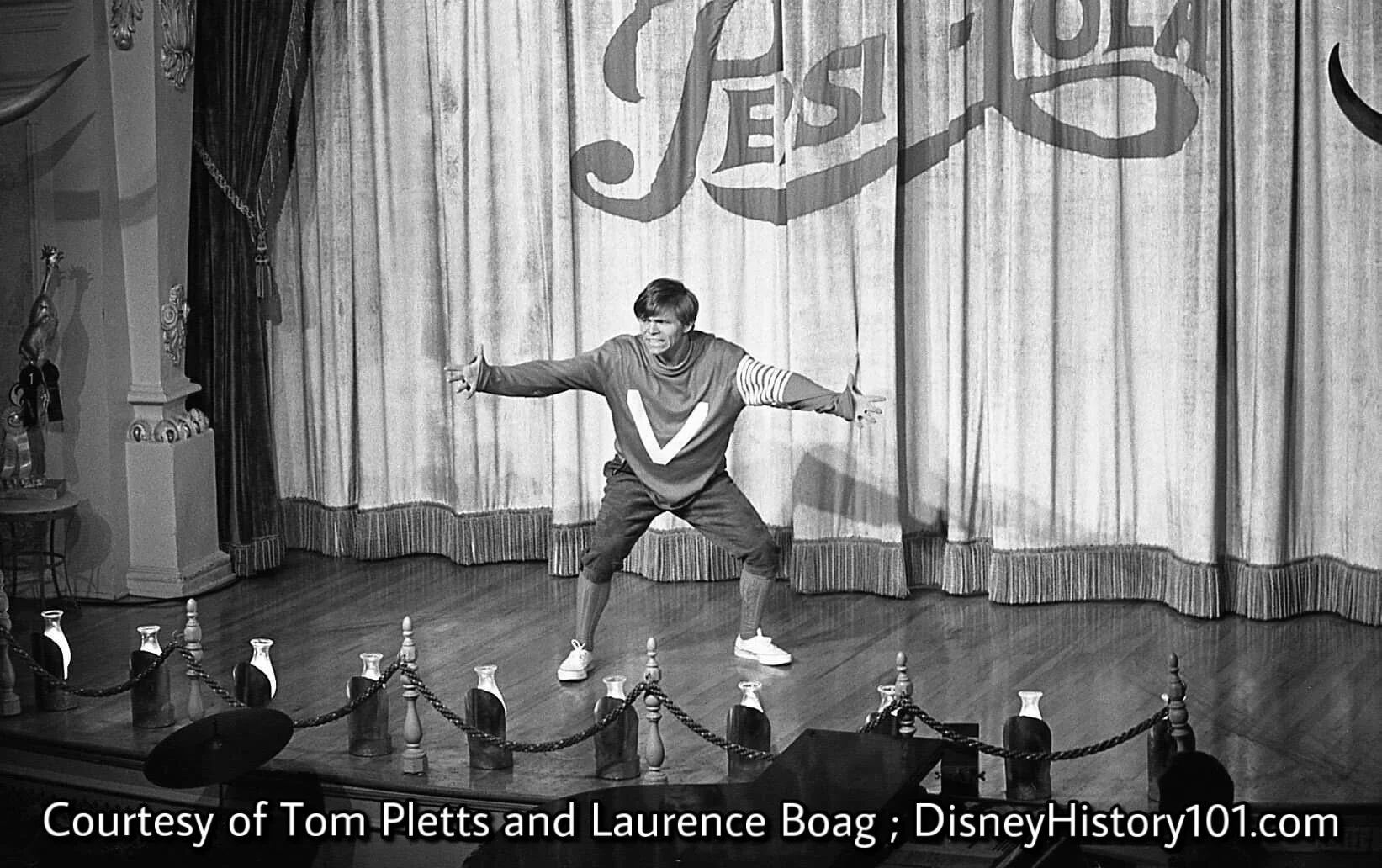
Chicken Ranching For Fun & Profit, (1971)
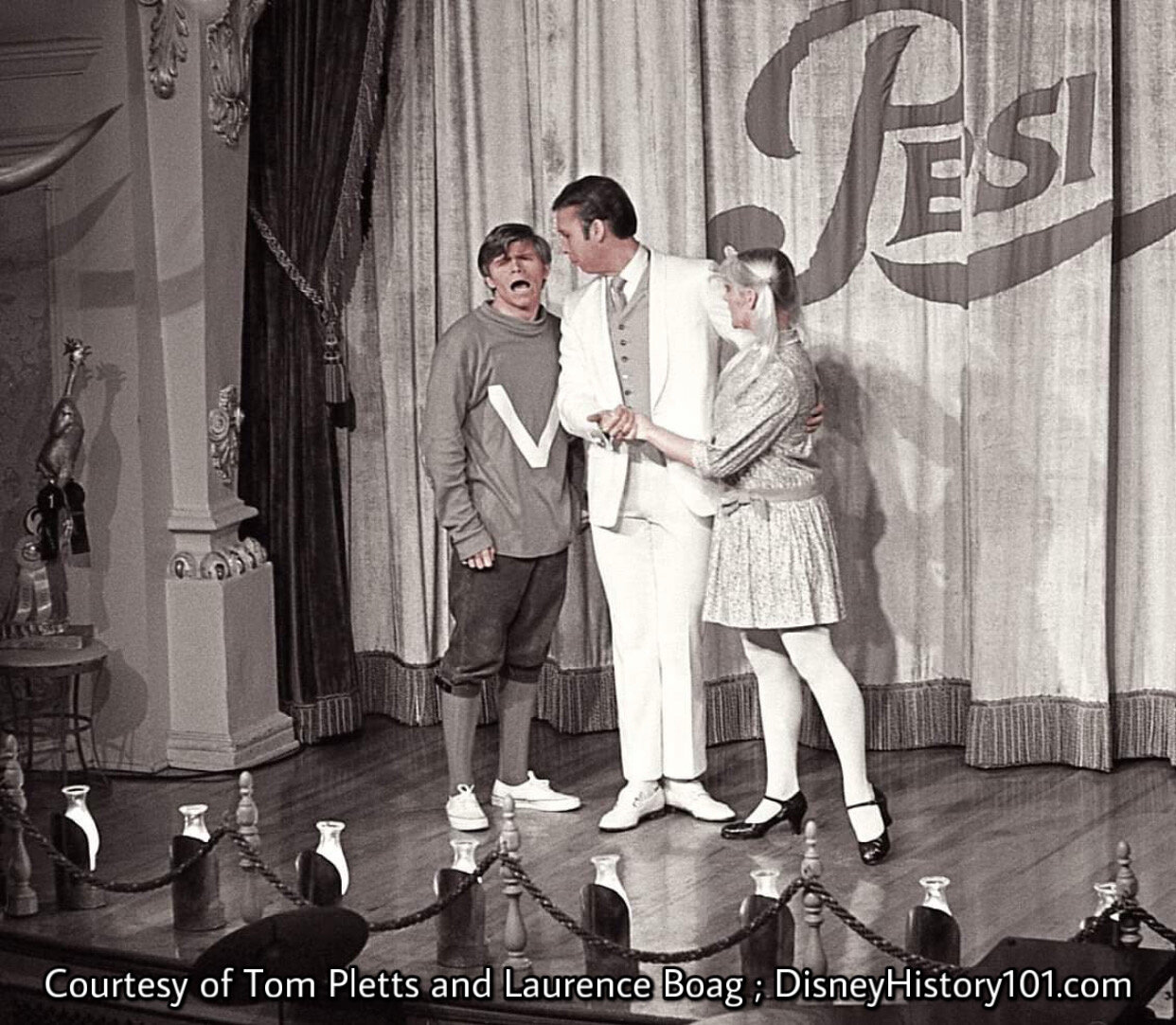
Chicken Ranching For Fun & Profit, (1971)
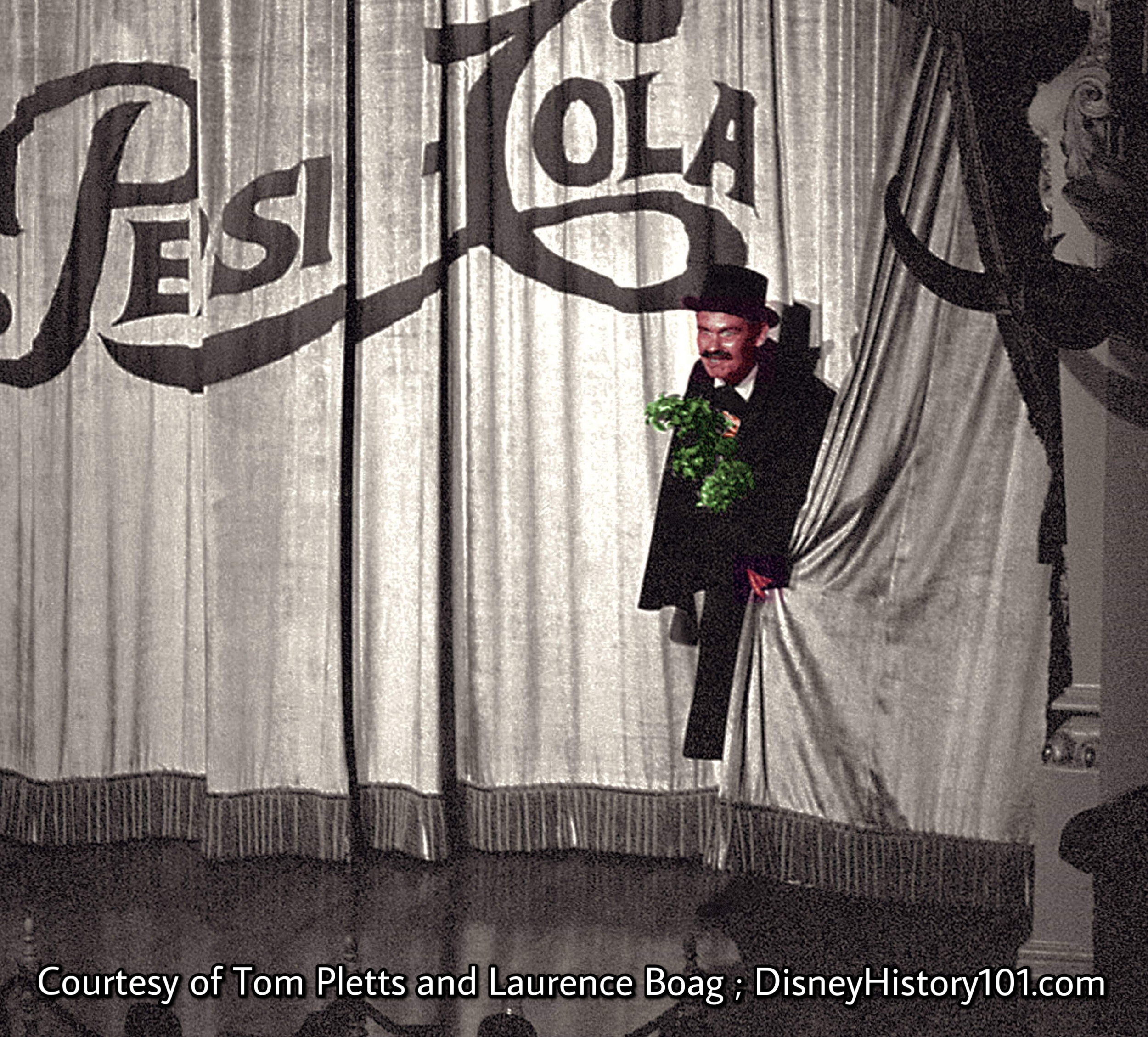
Chicken Ranching For Fun & Profit, (1971)
Tom Pletts recalls, “I’m hiding behind a ‘bush’…”
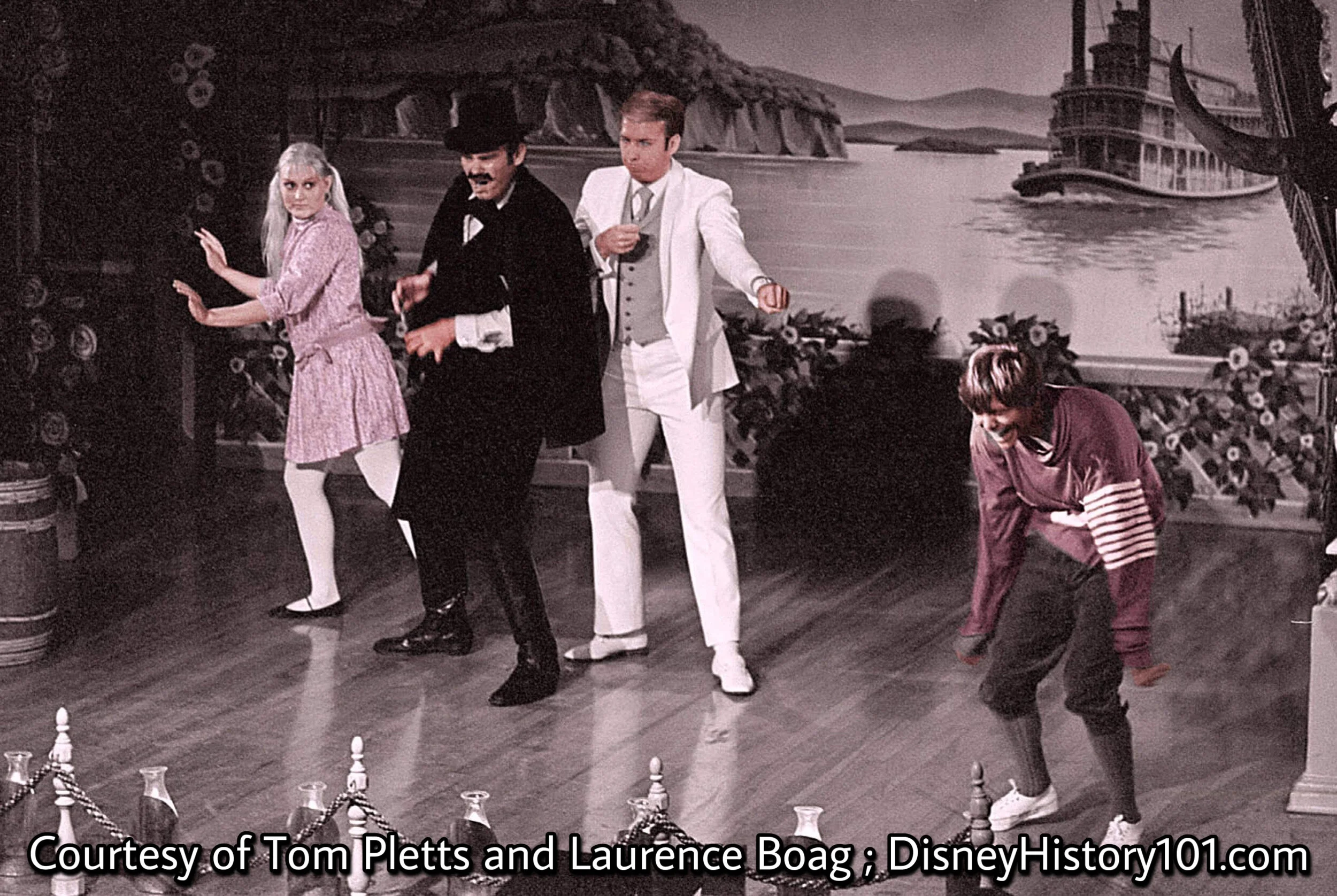
Chicken Ranching For Fun & Profit, (1971)
Tom Pletts continues, “…and in the midst of a chase scene, Funster makes us play a game. Too much fun.”
(From Left To Right) : Bonnie as Sugar Blues, Tom Pletts as Grasper Quick, Johnny Buckner as Victor Virtue, and Jim Adams as Frank Funster the “Yell Leader”.
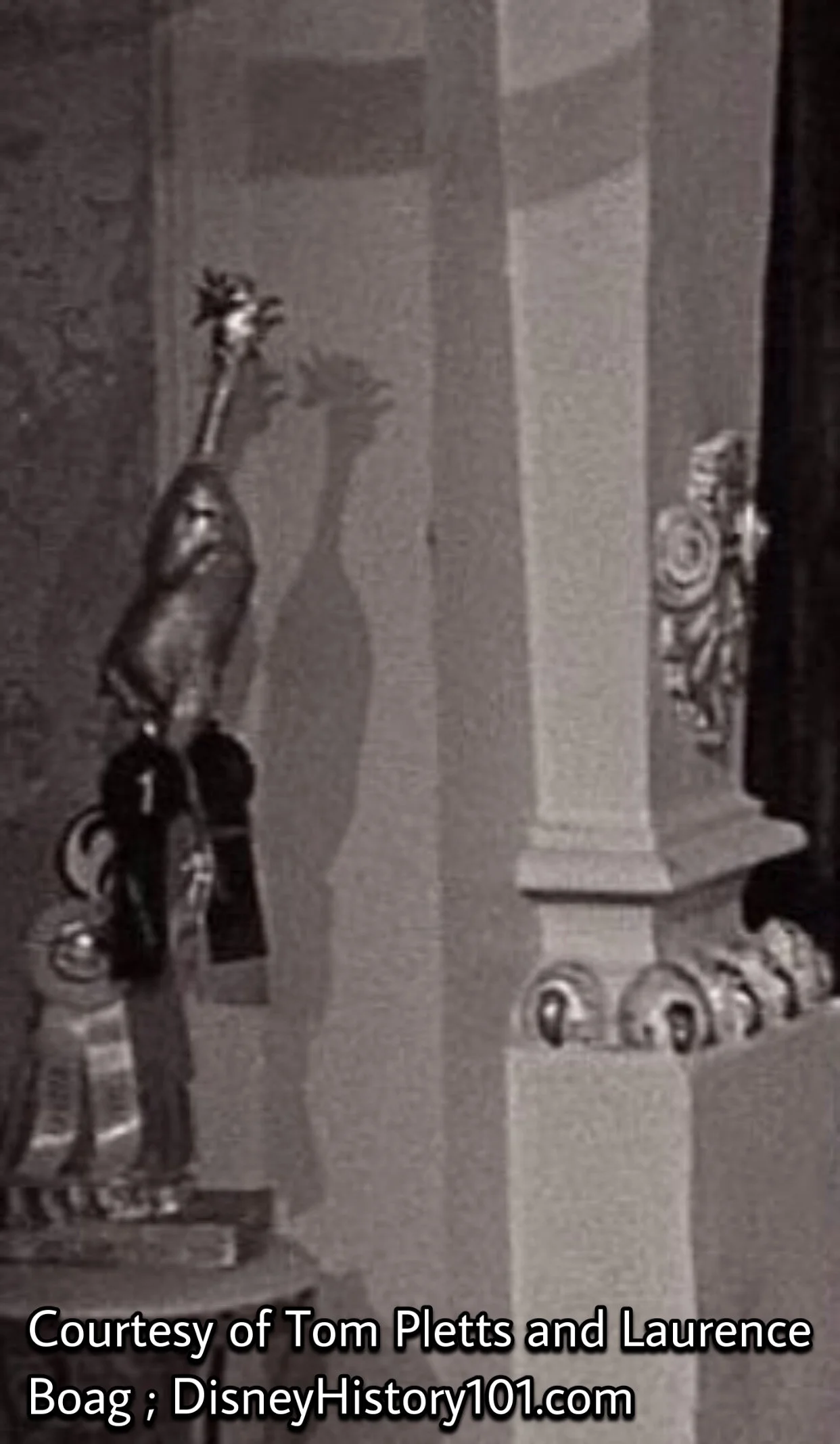
Chicken Ranching For Fun & Profit, (1971)
We asked Tom Pletts about this funny looking prop to the stage left, and he excitedly exclaimed : “That’s a ‘Chicken Trophy’! I don’t remember if it was employed in the show other than as a prop. It just got called that because it looks like a gold-plated rubber chicken!”
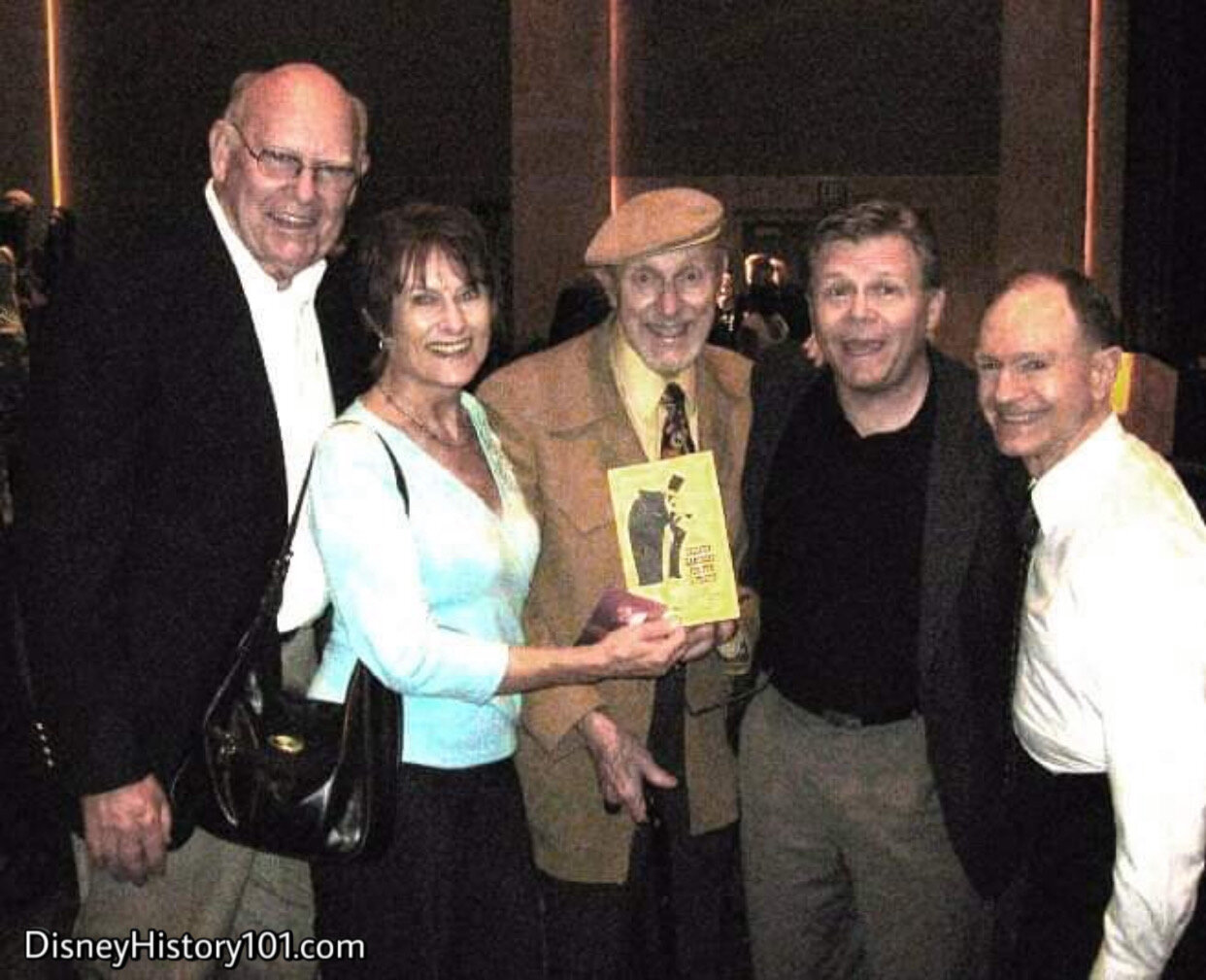
Chicken Ranching For Fun & Profit Reunion (of sorts), (2007)
[Photo: Courtesy of Tom Pletts]
Tom couldn’t help but share this related memory : “Here’s a Chicken Ranching For Fun And Profit mini-reunion during the gathering for Fulton Burley’s memorial at the studion. (From Left to Right) Grasper (Tom Pletts), Sugar (Bonnie), an aging Wally Boag (“The Great One”), Frank Funster (Jim), and our ragtime pianist (Rod Miller).”
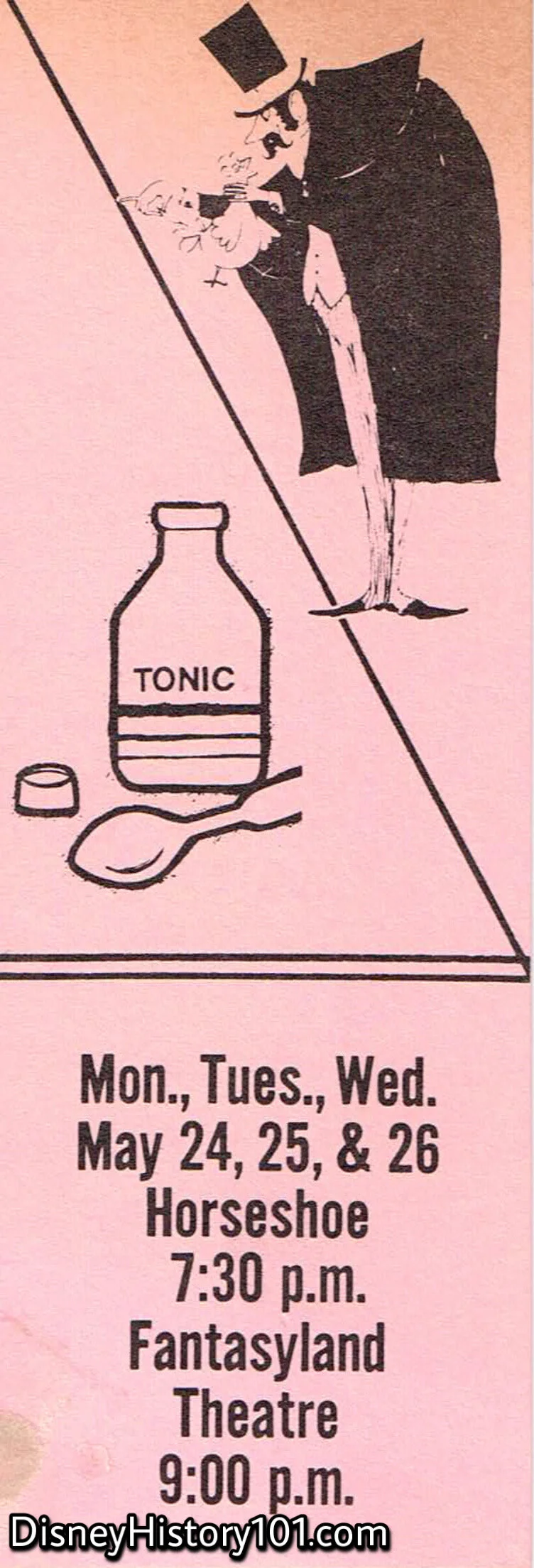
"Chicken Ranching for Fun or Profit / Spring Tonics '71" Ticket
“The Show Goes On”…
Where the two previous Disneyland Drama Club productions had a limited run during one week, “Chicken ranching For Fun & Profit” was perhaps the first production to be extended. Tom Pletts (who portrayed the character of “Grasper Quick”) recollects : “The company decided to present our show to the public one night a week through the summer, and then for Private Party nights in the fall. AGVA limited the number of performances unless we joined their union ; so the Park shut us down after 50+ shows.”
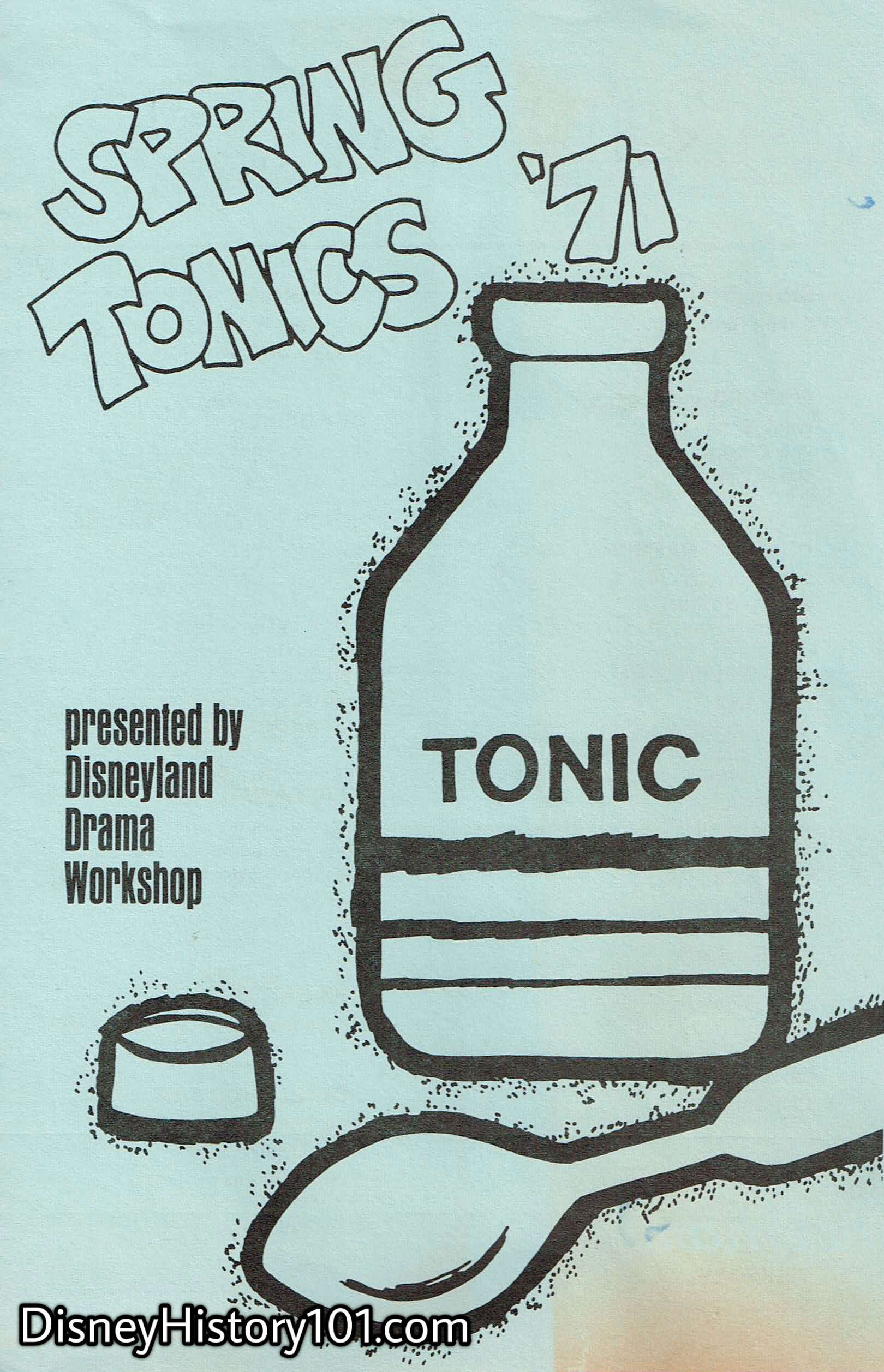
SPRING TONICS '71 Program Cover Artwork
(Artwork by Tom Pletts)
The very first “Spring Tonics” appeared May of 1957! The show was described as “a combination pep rally and an annual review, their inspired madness provided a satiric reflection on the Disney Way,” according to an article published in Disneyland LINE (Vol 12, No. 29 ; July 17, 1980).
The 1958 Spring Tonics was known as the “Annual Brain Wash at the Mouse House” with special scripts written by Disneylanders. Van France coordinated the show, Bud Coulson was the MC, and Jack Sayers presented the “brainwash” portion of the show (with more than a few interruptions by Trinidad). Vesey Walker and the Disneyland Band, Wally Boag, Don Novis, Betty Taylor, the Golden Horseshoe Girls and orchestra were highlights of the program. Memorable acts included Frank Heidemann pickin’ oranges in ‘52.
In 1961, Disneyland employees attended the Annual “Spring Tonics” show in the Mickey Mouse Theater and heard a special talk given by Joe Fowler, Disney Vice-President, after the performances.
But according to Backstage magazine (published Summer, 1965), the tradition of “Springtonics” (a spoof of Disneyland operations, as presented by the management) had completely disappeared by the year 1965. Bob Penfield briefly mentions fondly remembering these very “Springtonics in the Mickey Mouse Theater - a skit that was a spoof of everything and it was put on by management,” to Disneyland LINE (Vol.25, No.28). Now (two decades later), it looks as if “Springtonics” had been revived. If you’re wondering what the “Spring Tonics ‘71” show was all about, Tom Pletts has your answer :
“Spring Tonics was a pre-summer kick starter for Disneyland employees in the early years. Wally headlined a cast that did cute sketches about Park Operations, and got everyone in the mood for the season. Our show merely revived it, with Wally’s help. It was performed on the Tomorrowland Terrace stage (I think) at the same time as our Golden Horseshoe melodrama, so I didn’t get to be in it or see it. But I drew the program for it…‘71 Spring Tonics revived an early Disneyland tradition. ‘72 we performed skits for the park’s summer banquets, for leads.”
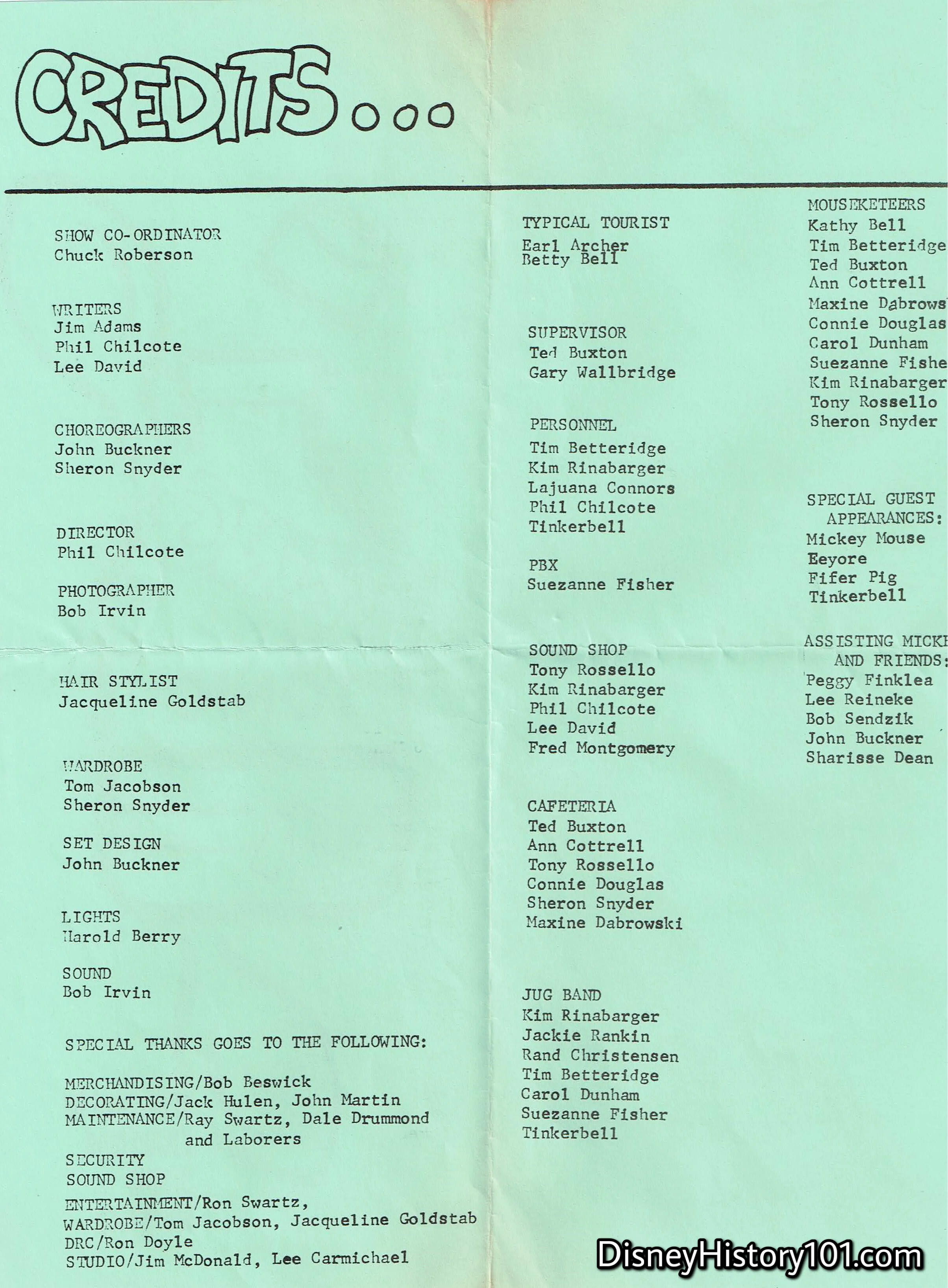
Spring Tonics '71 Program Credits Page, (1971)
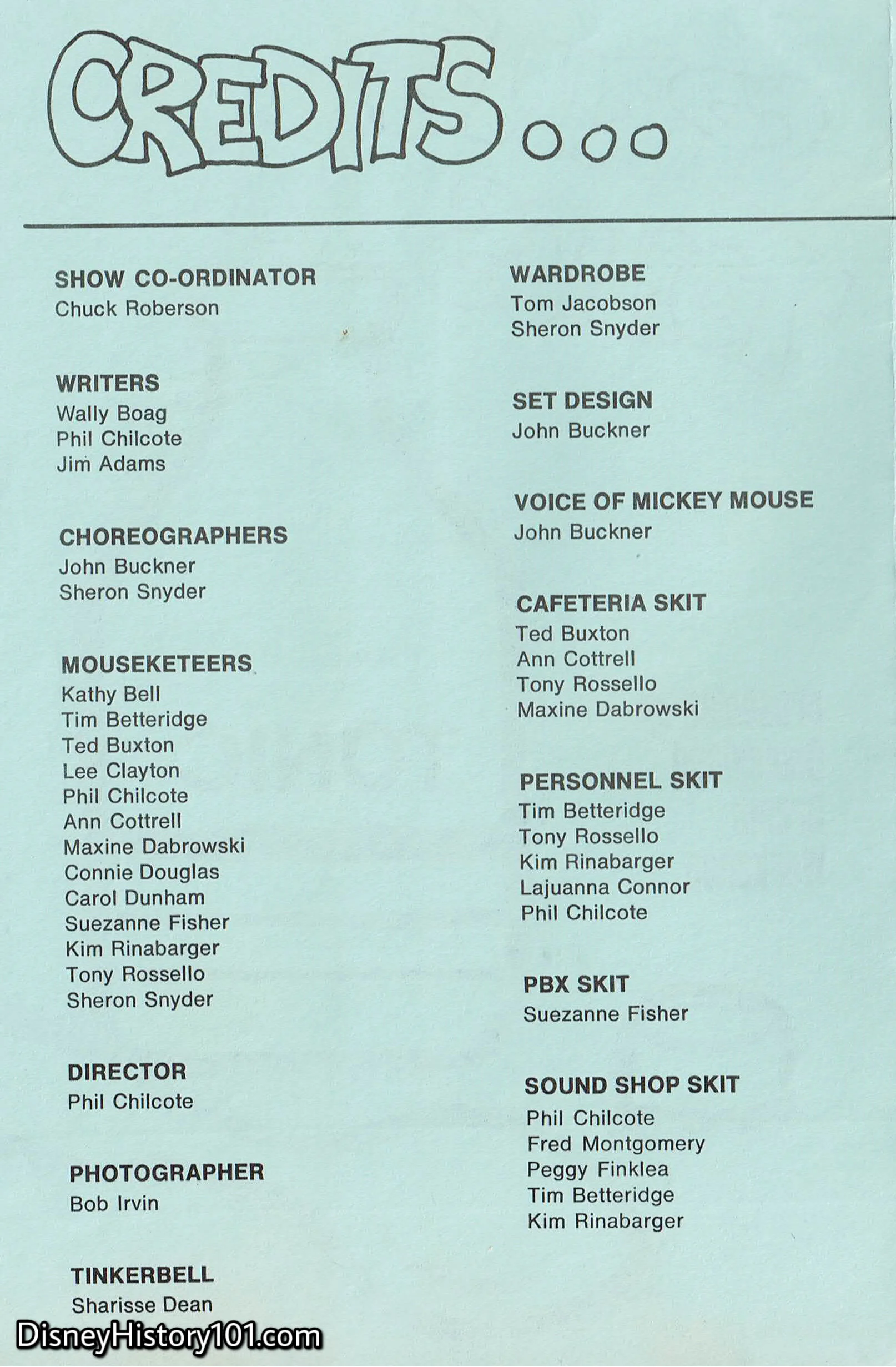
Spring Tonics '71 Program Credits Page, (1971)
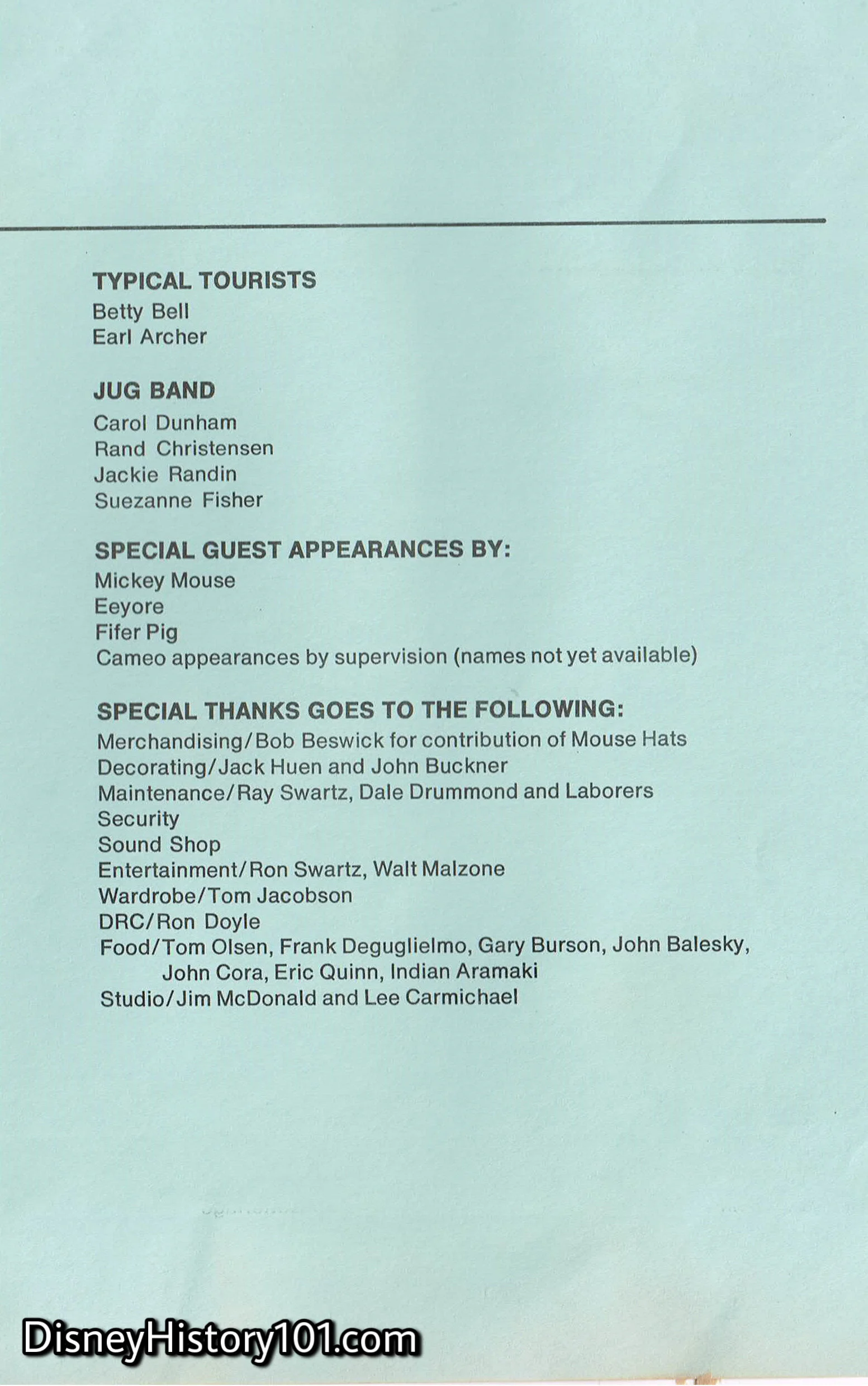
Spring Tonics '71 Program Page 2, (1971)
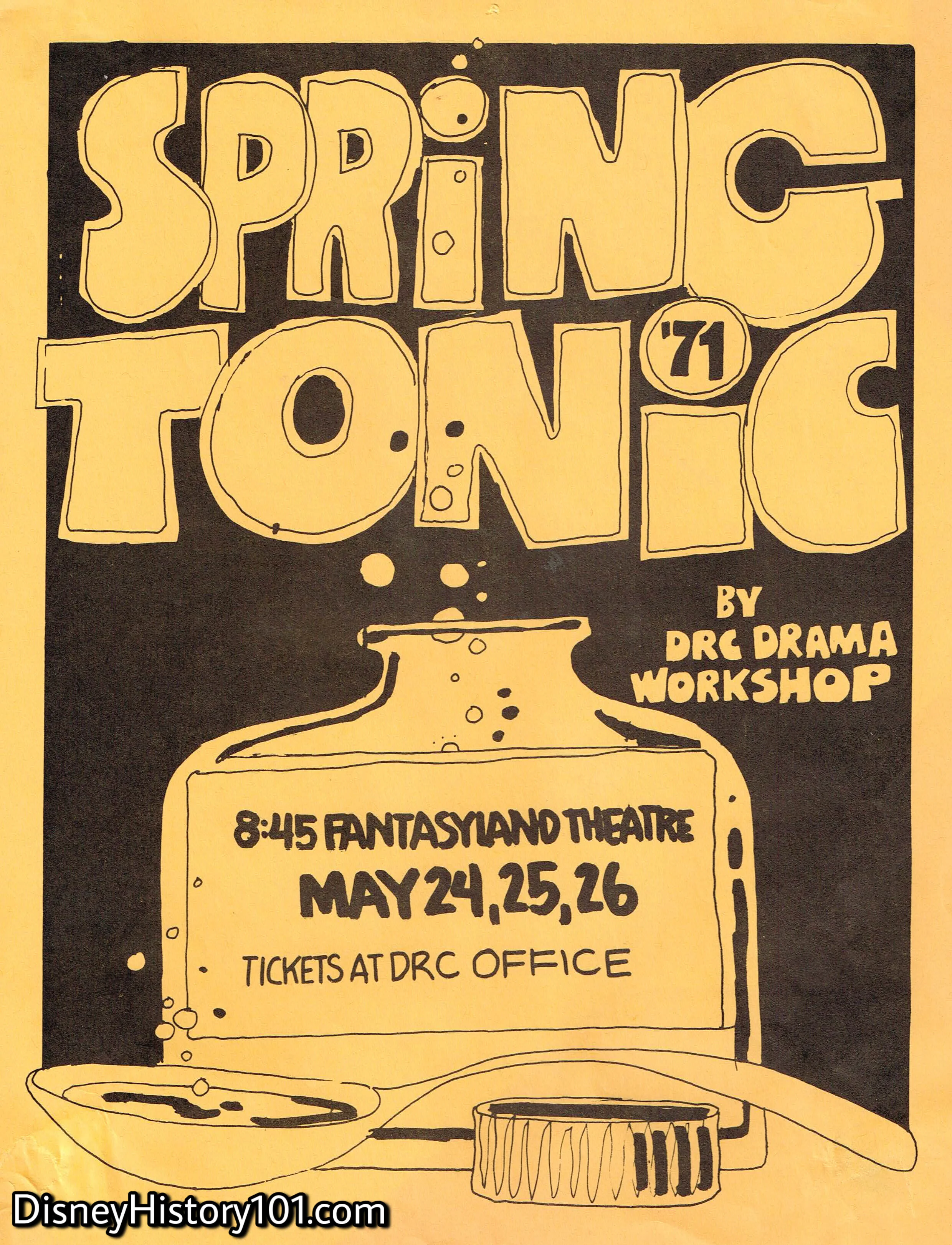
Spring Tonic '71 Flyer
Tickets for this employees-only production were sold through the Disneyland Recreation Club.
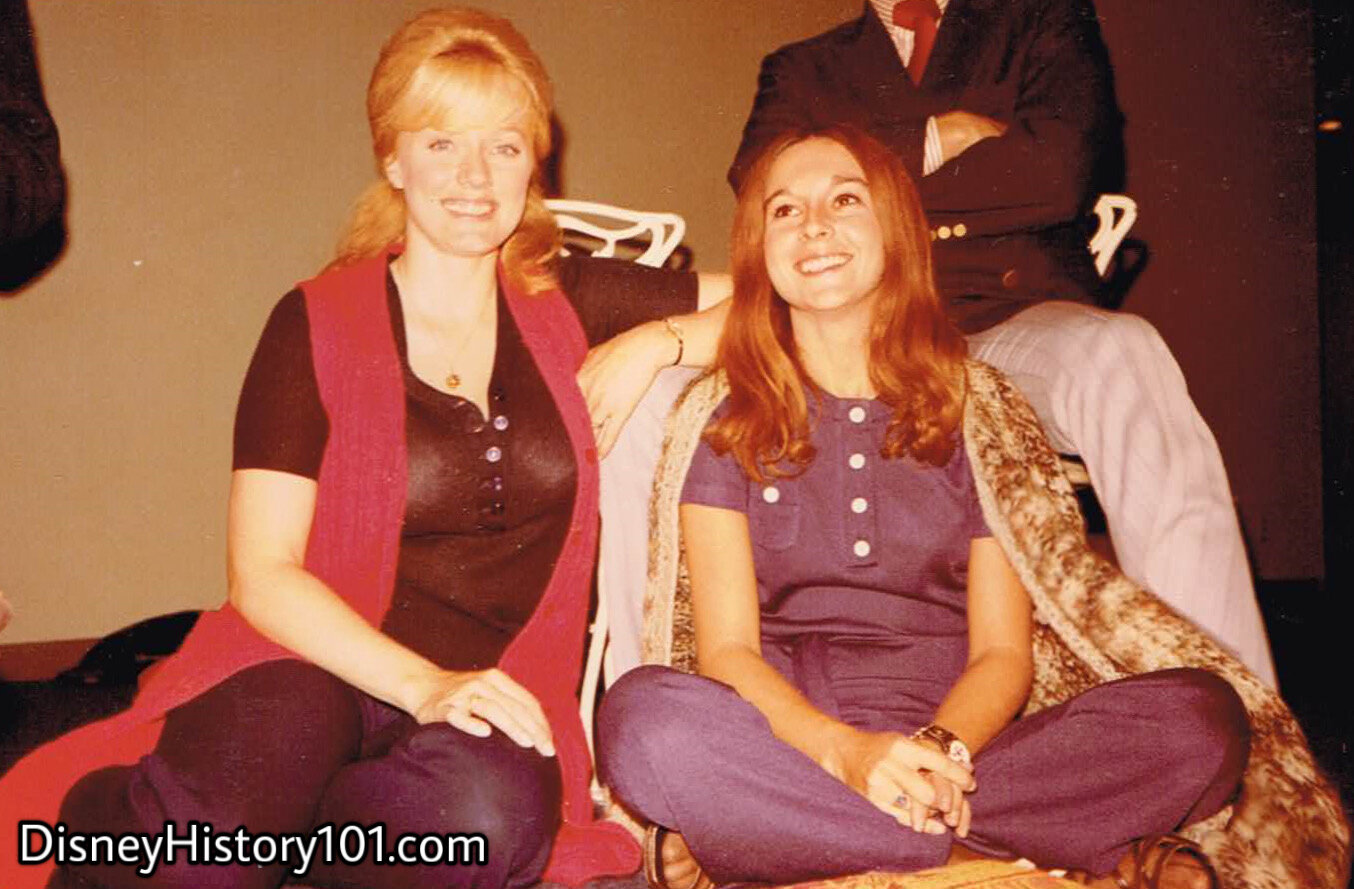
Bye, Bye, Birdie Rehearsals, (1971)
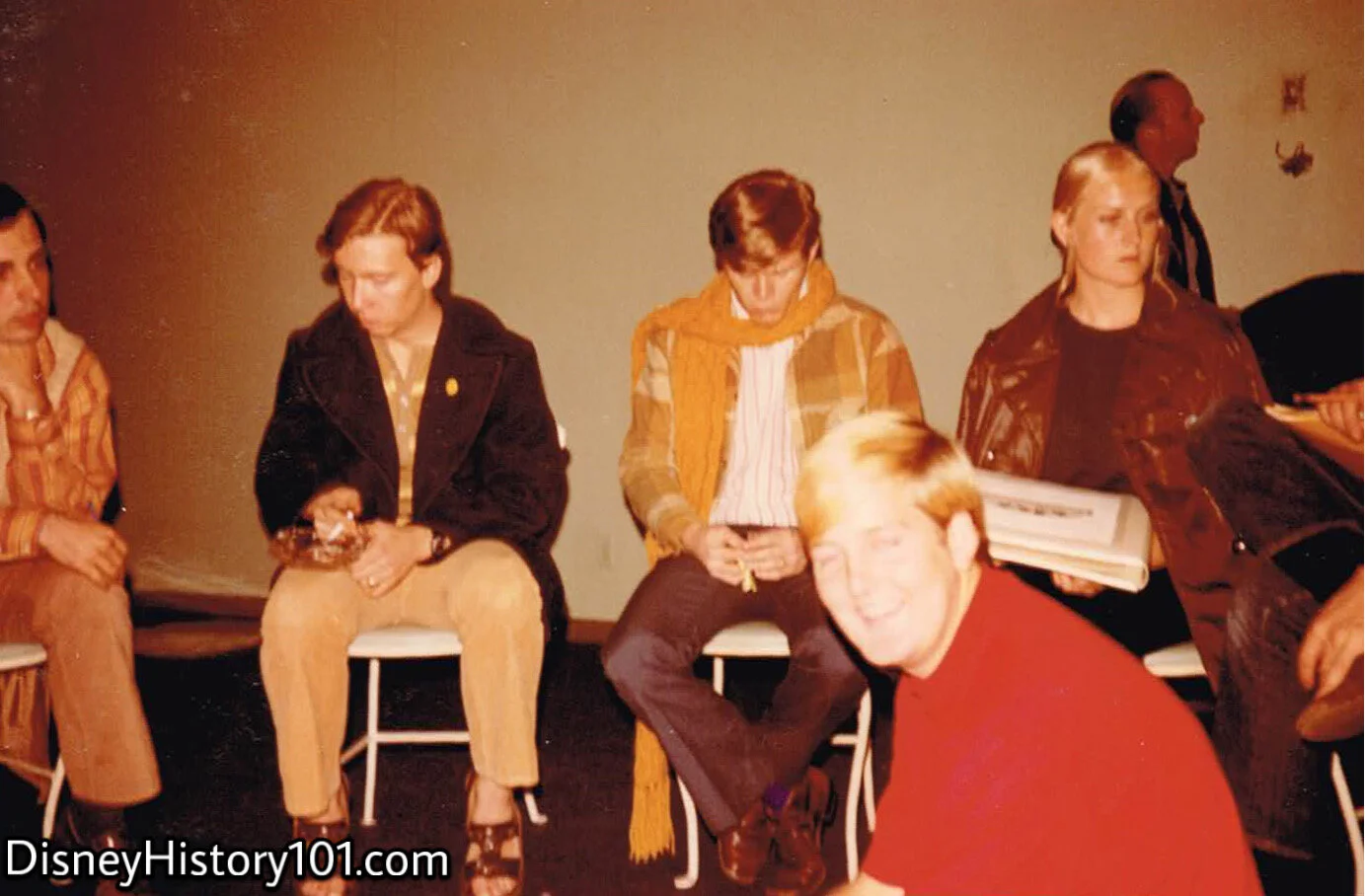
Bye, Bye, Birdie Rehearsals, (1971)
Jim Adams (with his head down) and Bonnie Barilleaux (on the right)
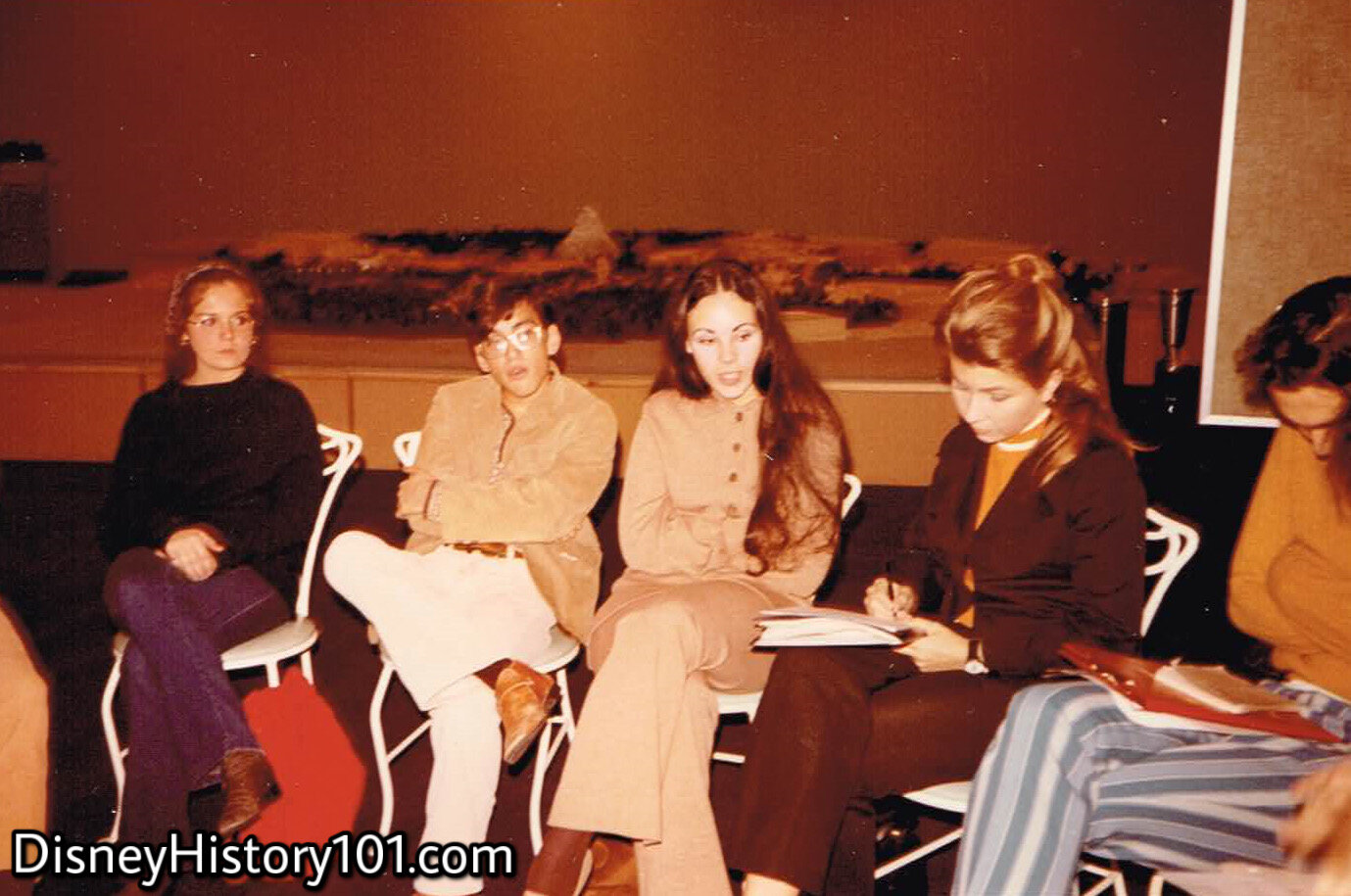
Bye Bye Birdie Script Read-Through
Left to Right : Unidentified, Lee Lomask (Stage Manager), Anita Trammell (as Ursula Merkle), hard-working Fantasyland Graveyard Working Leader Rhonda Treischel (as Rosie Alvarez), Bruce Langford (as Conrad Birdie).
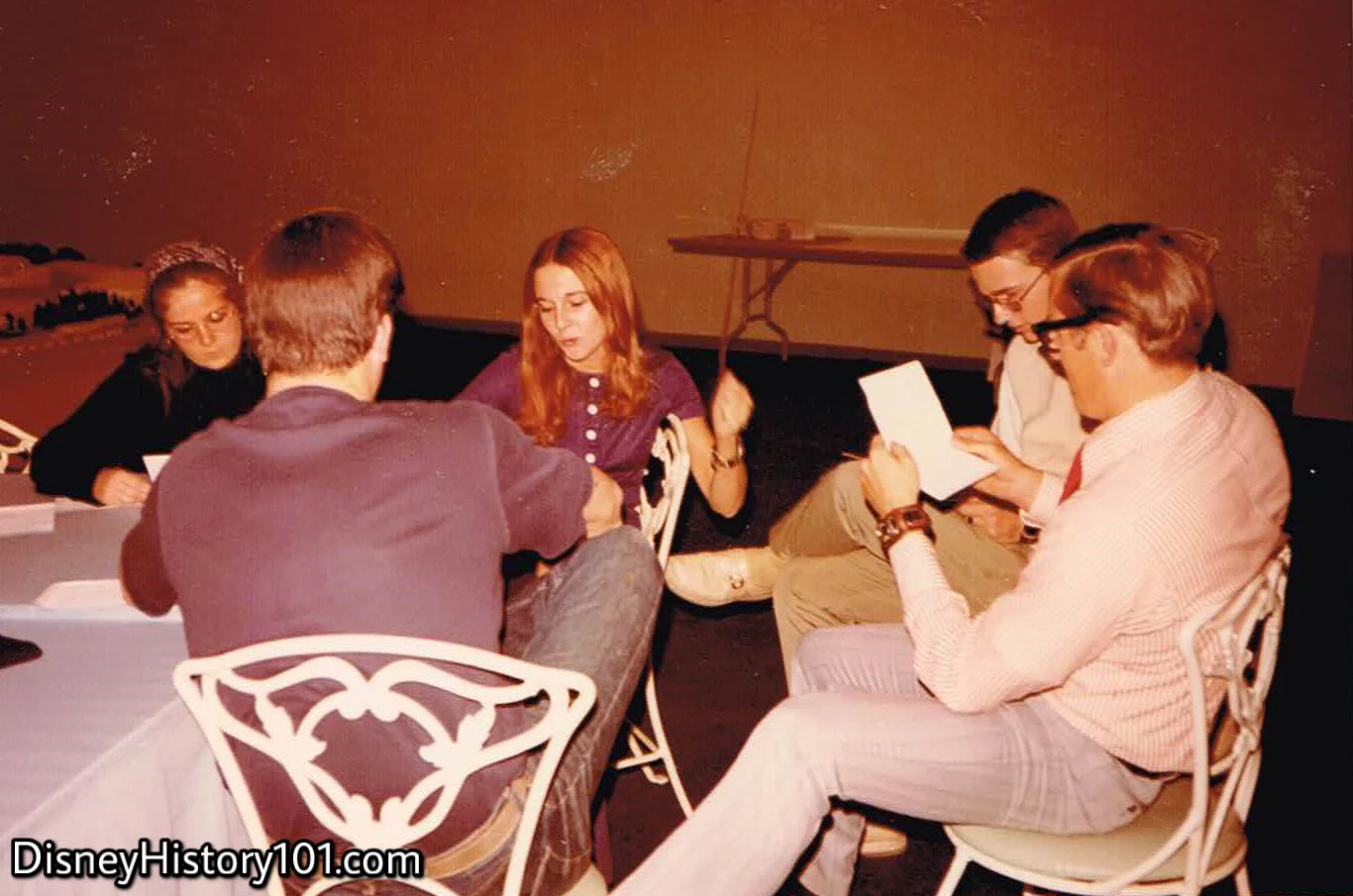
Bye, Bye, Birdie Rehearsals, (1971)
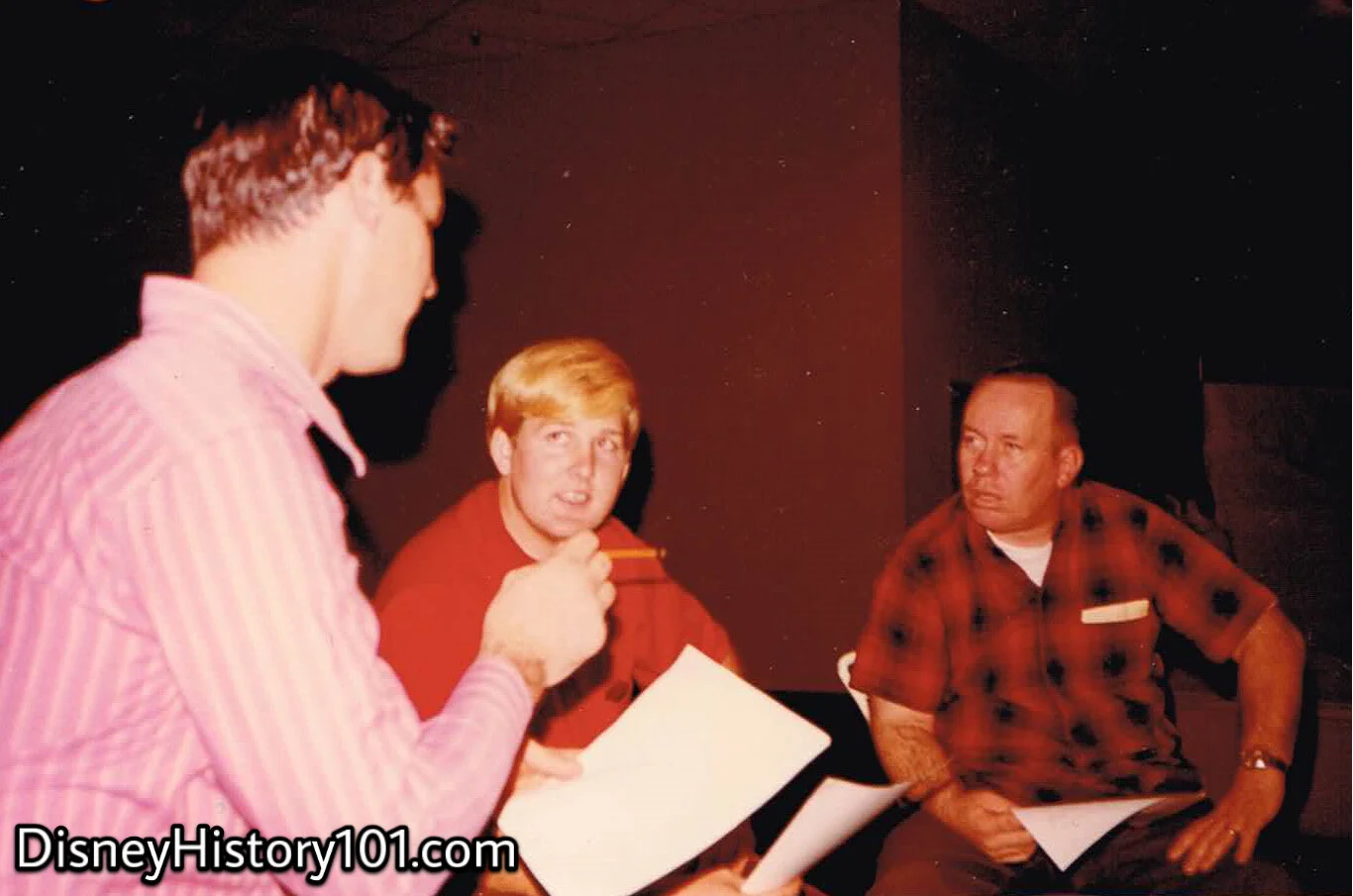
Bye, Bye, Birdie Rehearsals, (1971)
Earl Archer (in plaid on the right).
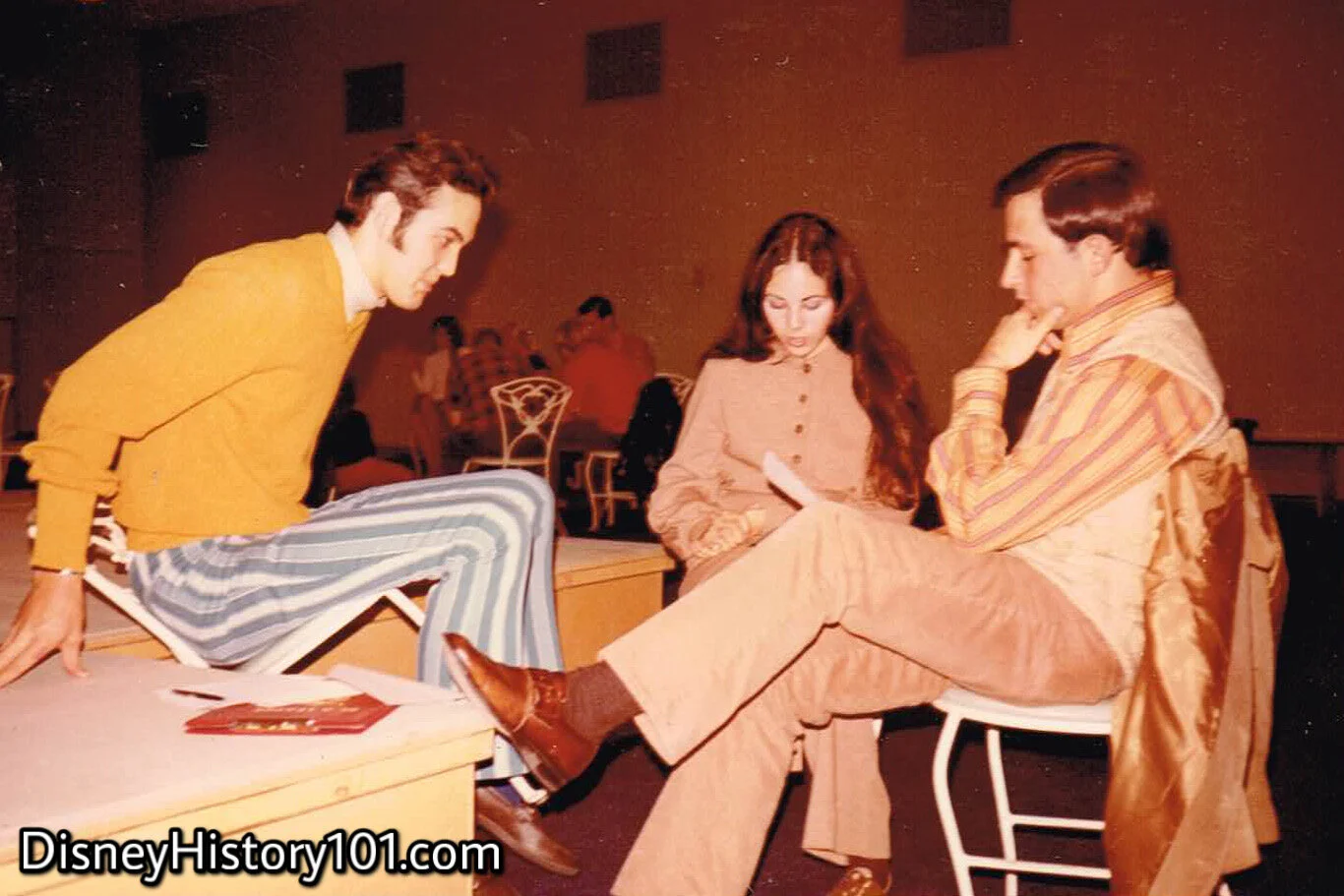
Bye, Bye, Birdie Rehearsals, (1971)
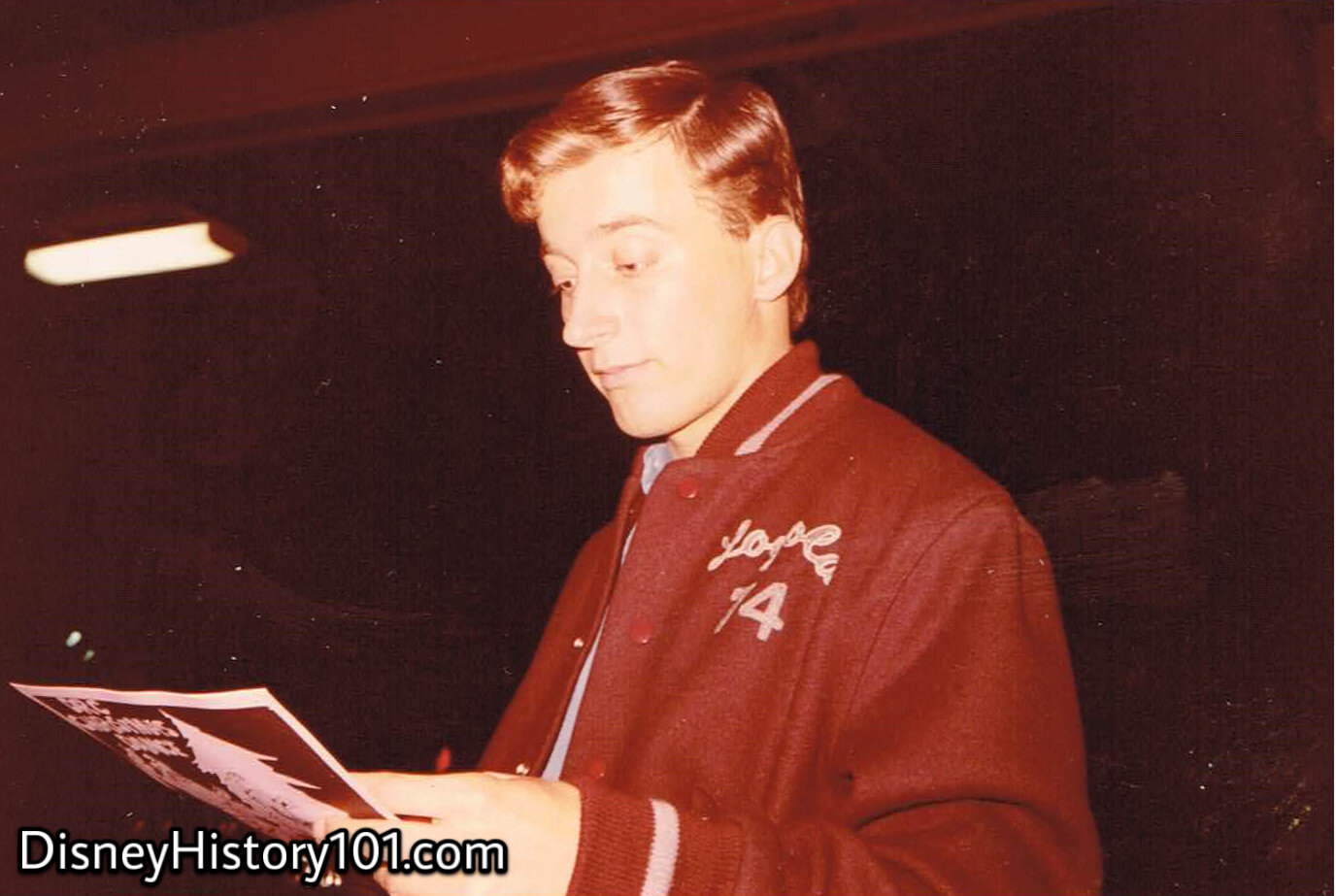
Bye, Bye, Birdie Rehearsals, (1971)
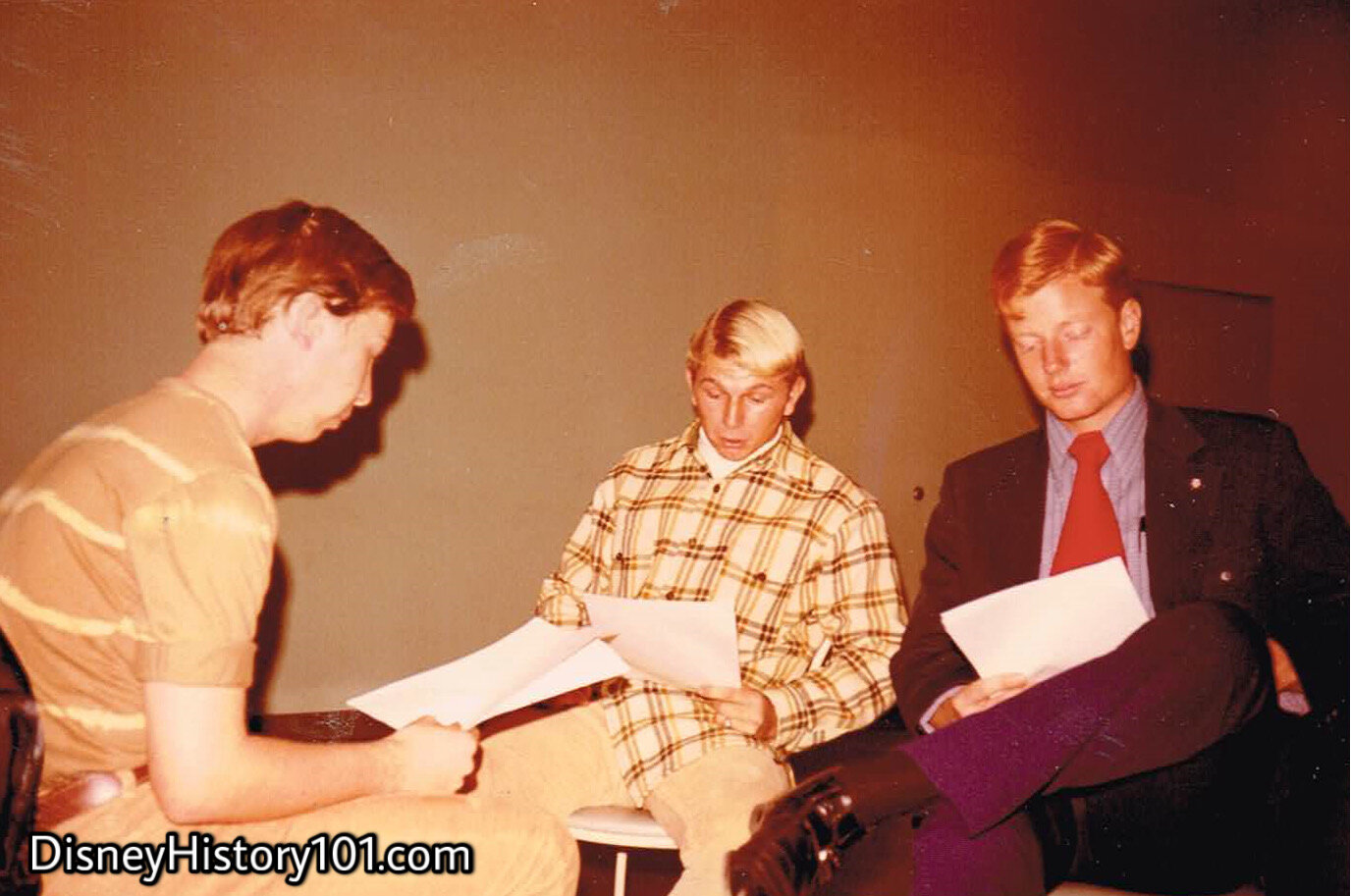
Bye, Bye, Birdie Rehearsals, (1971)
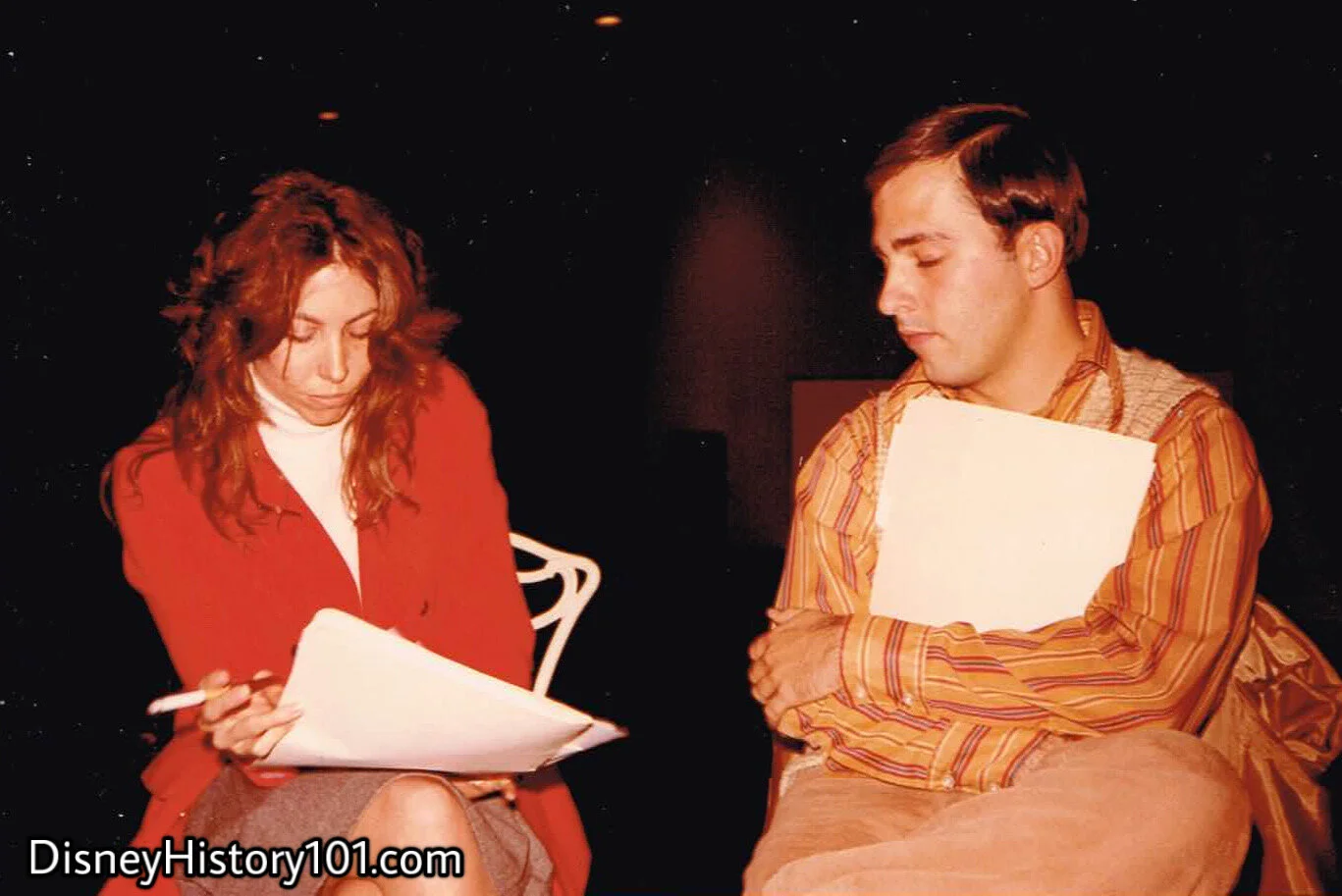
Bye, Bye, Birdie Rehearsals, (1971)
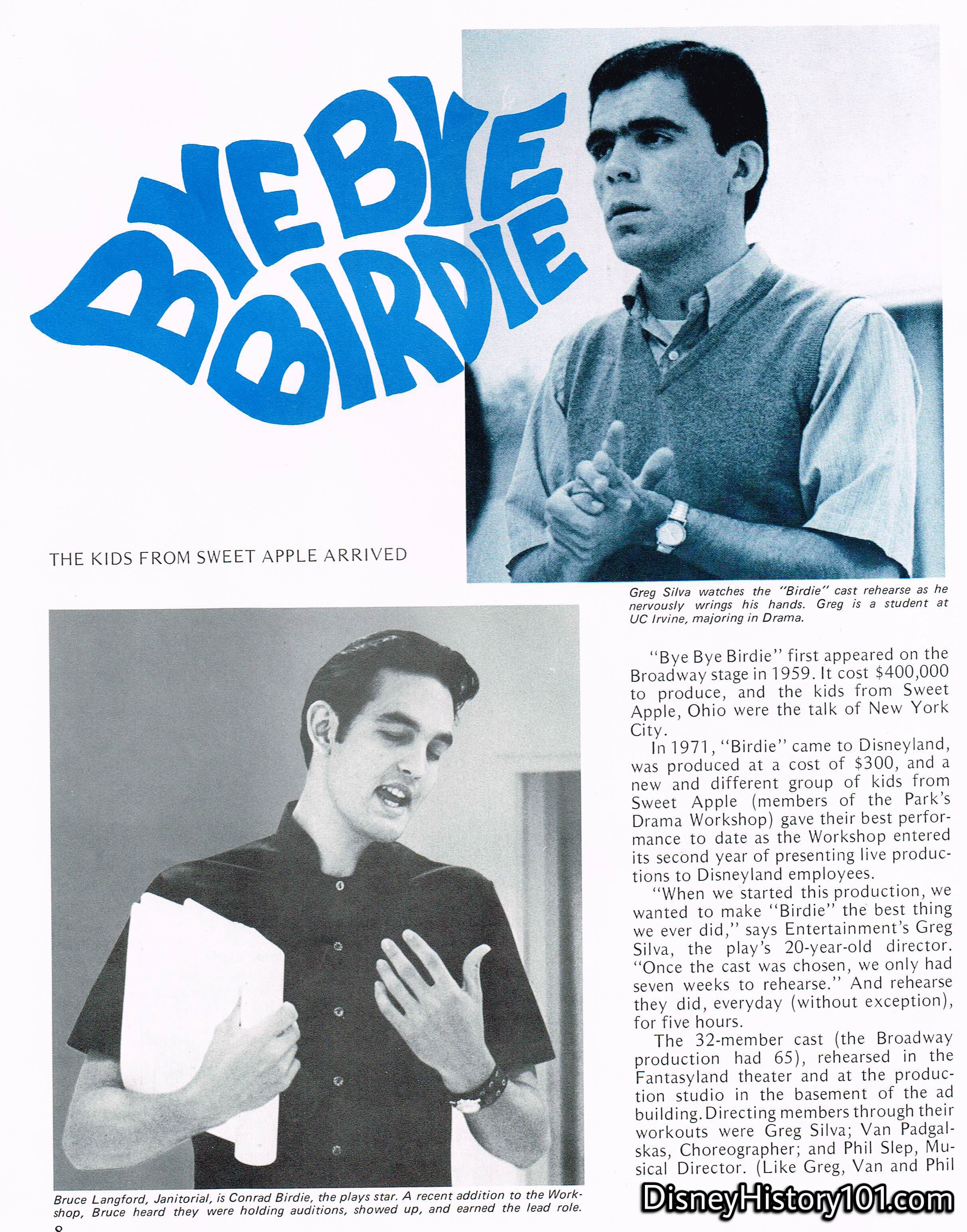
Backstage Magazine Excerpt, (Fall, 1971)
This issue of Backstage Magazine featured other articles of contemporaneous events (Disneyland’s first Country Music Spectacular, Bear Country development and construction, and the opening of Walt Disney World) which helped understand the era that this production of Bye Bye Birdie was performed. These exciting updates gave us an inside sneak peek at what would surely be the Disneyland Drama Club’s most anticipated production to date!
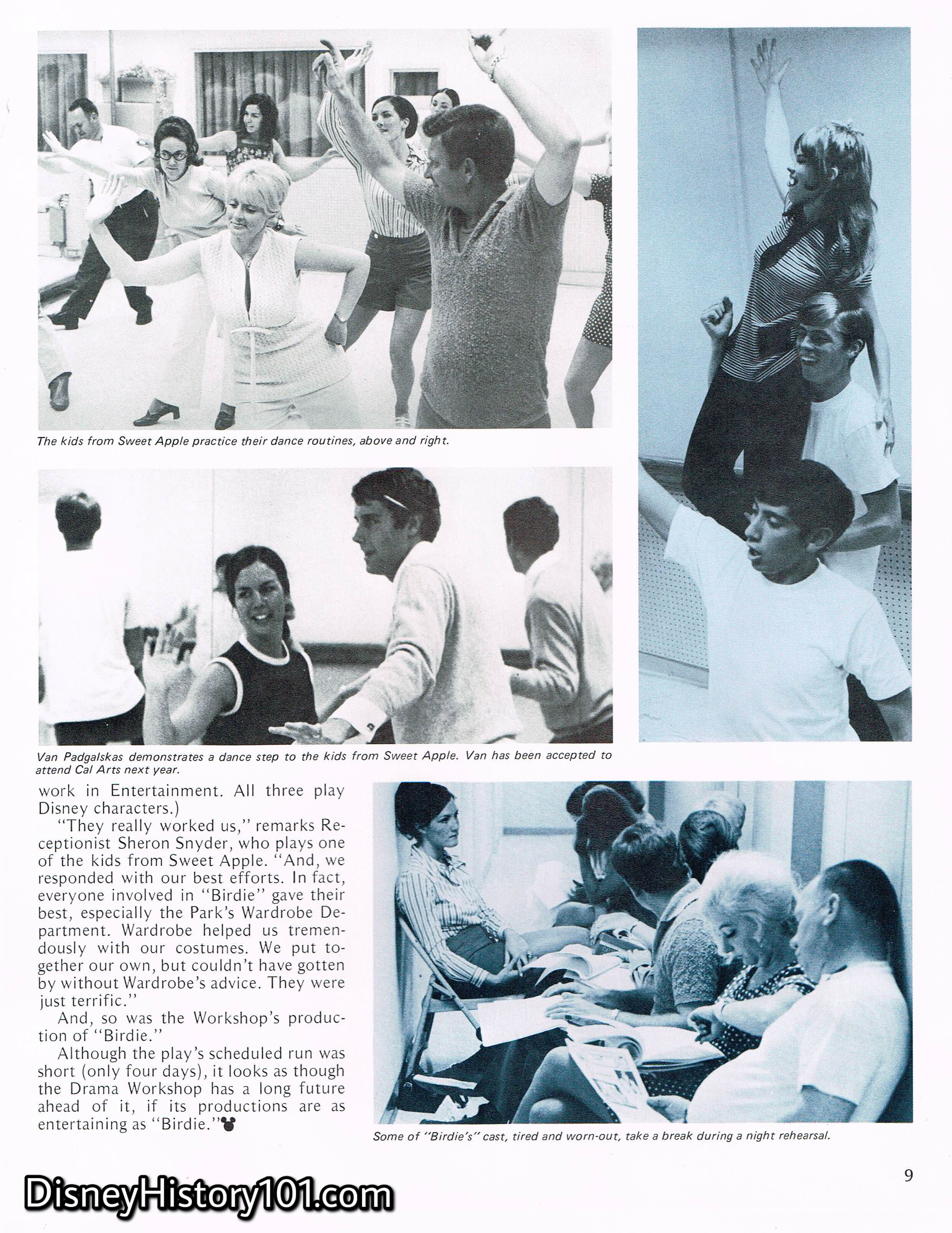
Backstage Magazine Excerpt, (Fall, 1971)

Letter From Bob Jani, (Dated October 26, 1971)
Bob Jani (who much live Disneyland and Walt Disney World entertainment of the 1970s has been acredited) was invited to attend the Disneyland Drama Club production of Bye, Bye, Birdie. Due to conflicting scheduling arrangements, he could not make it, and sent this letter to Ted E. Buxton of Disneyland’s Publicity Department.
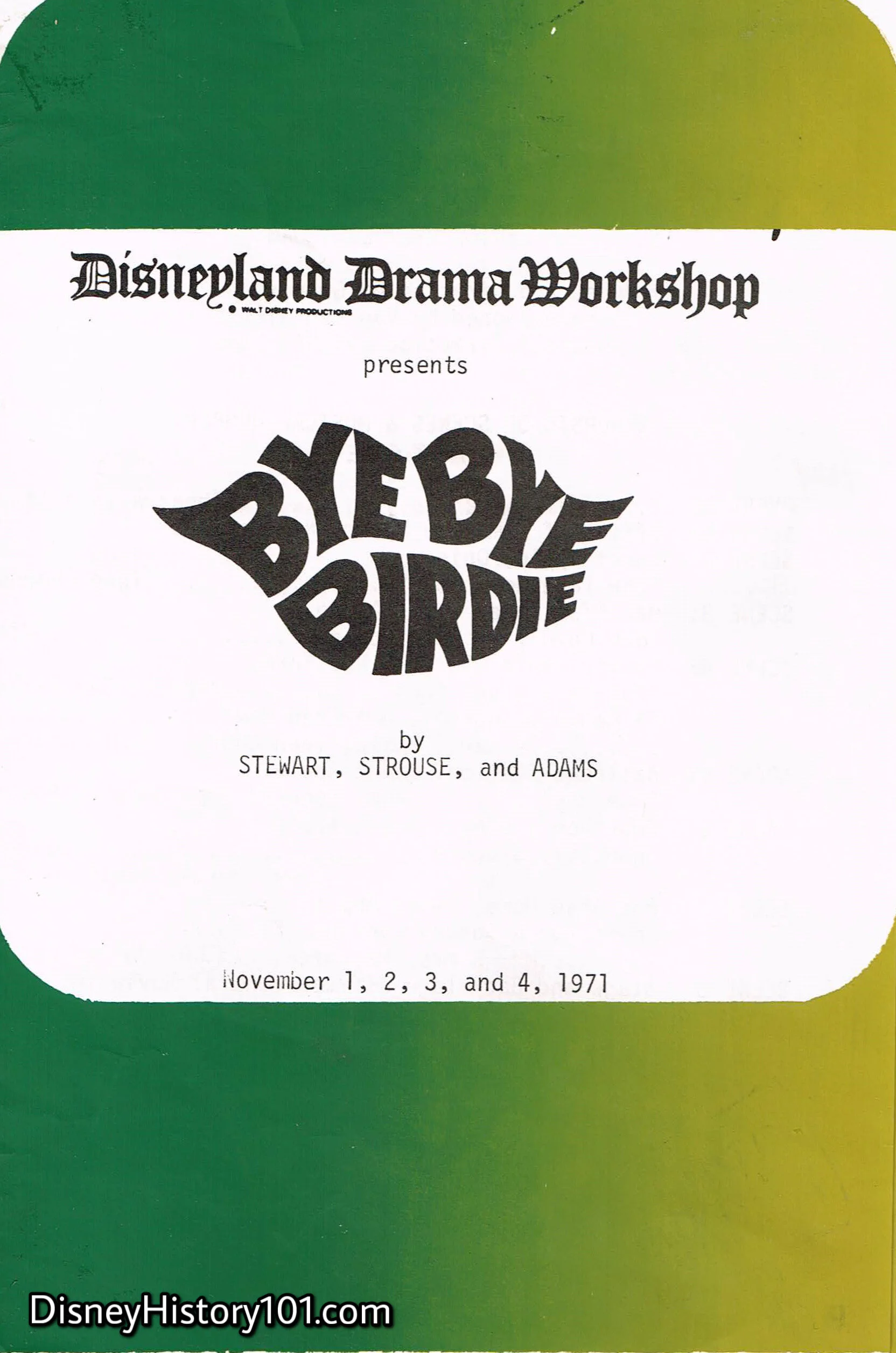
Bye, Bye, Birdie Program Cover, (1971)
Jim Stewart (who played the part of Harvey) recalls being a part of this Disneyland Drama Club production :
“Man, this brings back memories.
I started at Disneyland at the end of summer 1971. I worked at Club 33 as miscellaneous kitchen help. I worked with the [Disneyland] Drama Club during my stint in the park. The play that I was involved with was ‘Bye, Bye Birdie’. I still have my Bye Bye program, signed by many of the cast members. The director Greg Silva did an awesome job. Also, Van, the choreographer did a great job, and when I would get frustrated was so good at motivating me to do my best. I accomplished far beyond what I thought I could do. Many of the props and stage sets I was able to get from my Drama Teacher at Orange High School where we had performed the same play twice. I played several parts, as well as worked on the shows program.
I had a lot of fun with the part, even though I was told I was typecast. Was also on the television crew, and worked with publicity. The silk screen for the front cover as due to an error when I had the programs printed. Greg Dymkowski stepped up to bat and worked on this project for the silk screening. It was such a fun project and had a ball doing it.“
As you look over the pages of the program for the Disneyland Drama Club production of “Bye, Bye, Birdie”, note the sheer size of the cast and crew involved (especially in comparison with previous productions “The American Dame” and “Greensleeves’ Magic”).
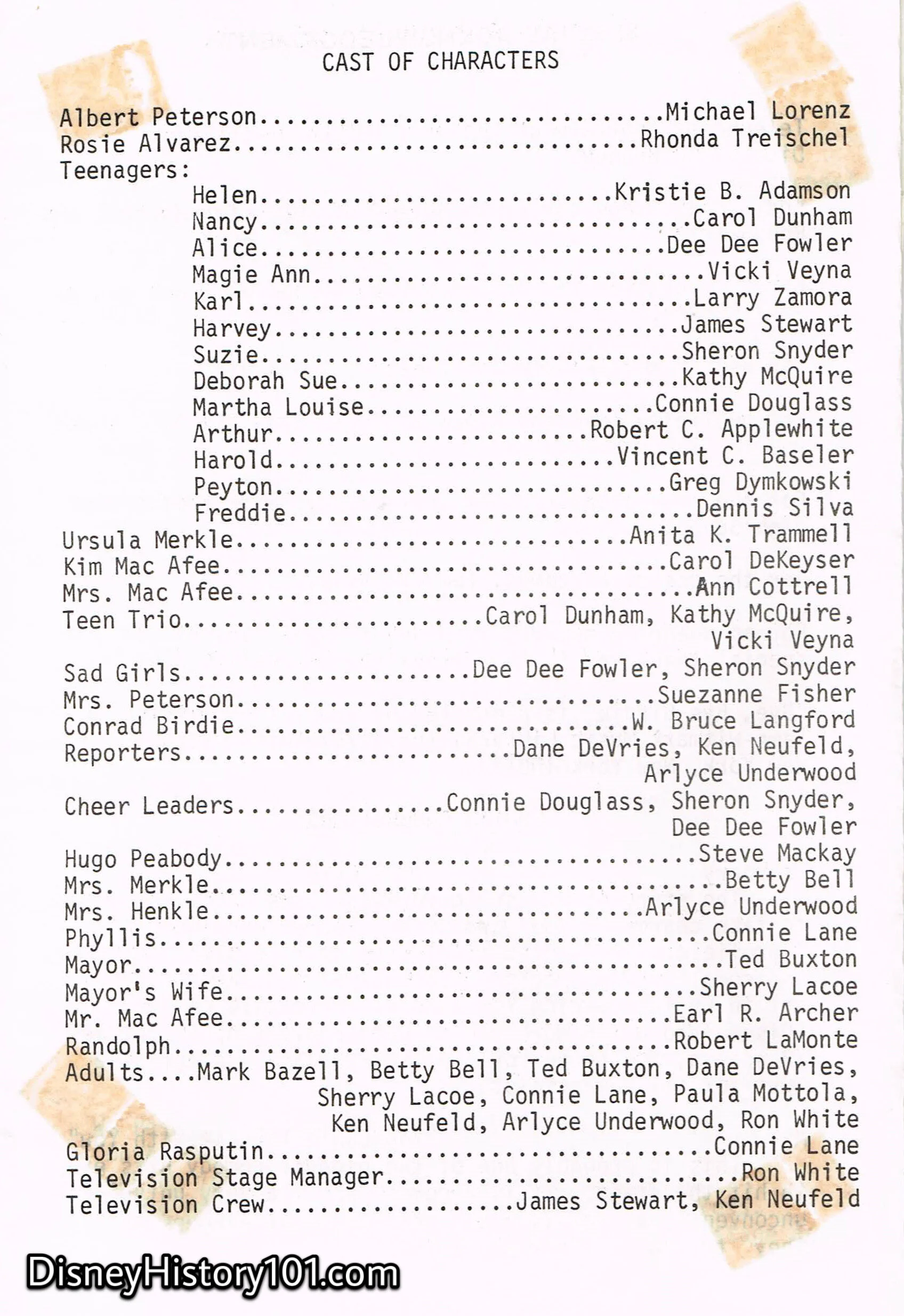
Bye, Bye, Birdie Program, (1971)
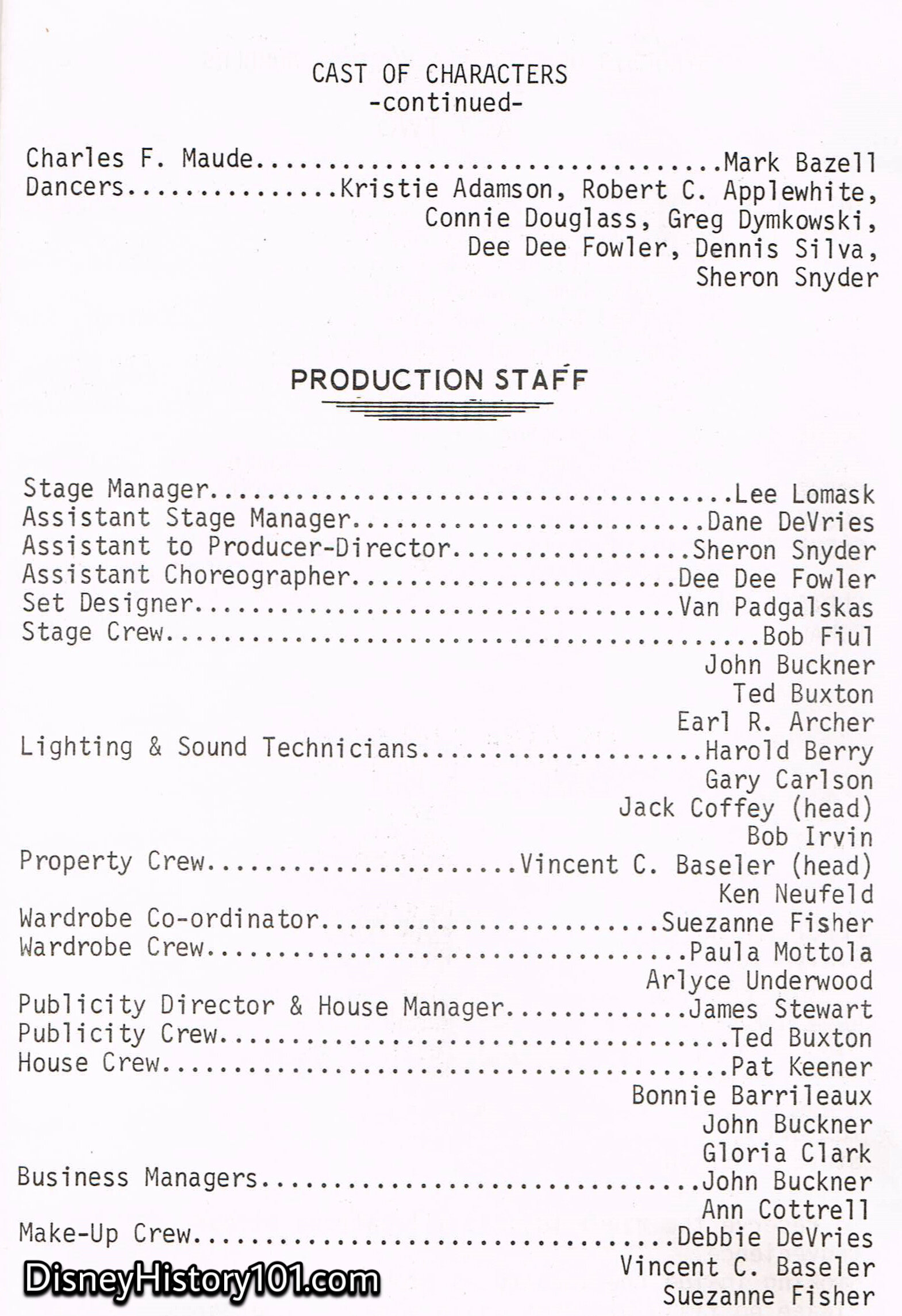
Bye, Bye, Birdie Program, (1971)
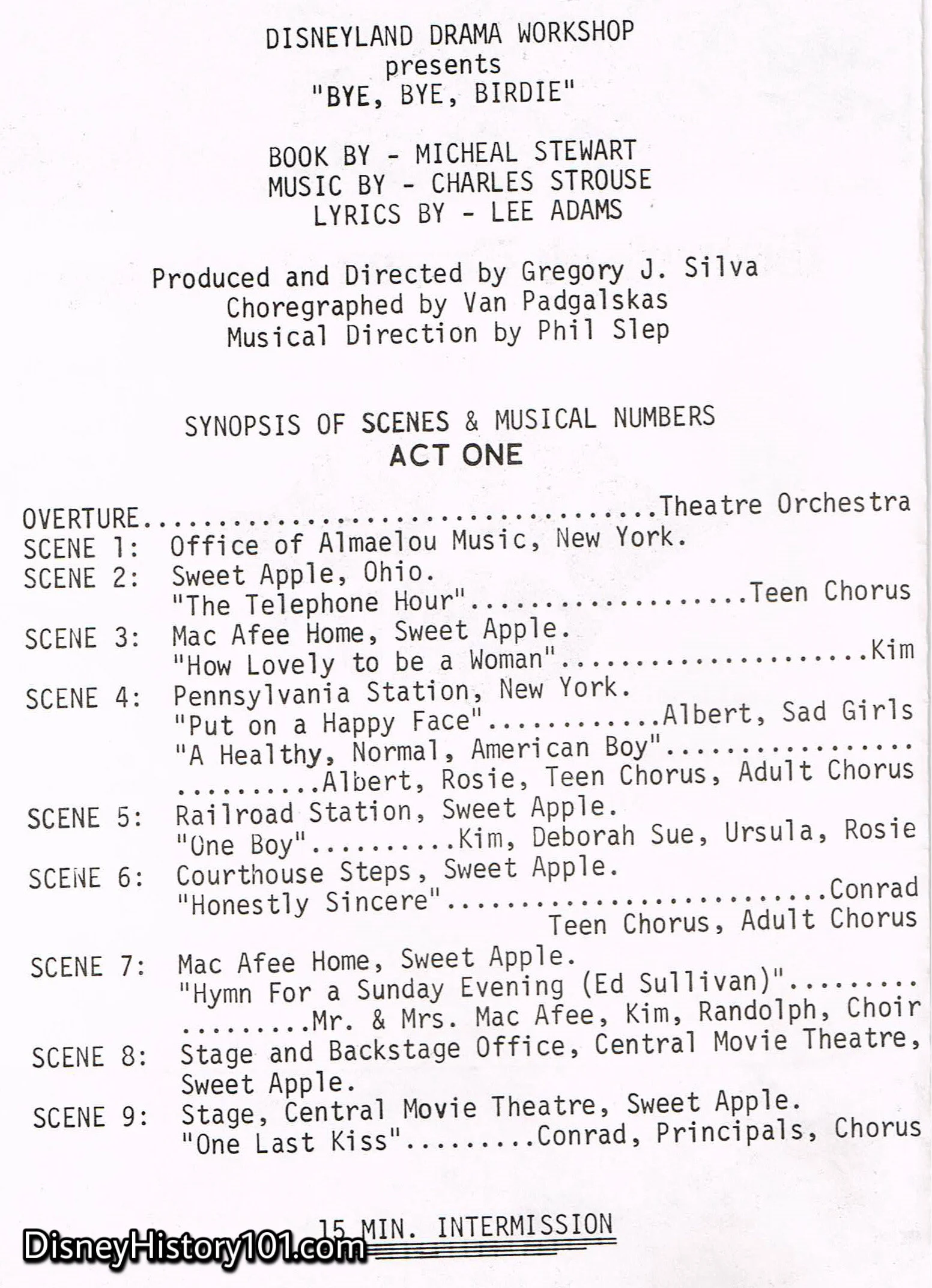
Bye, Bye, Birdie Program, (1971)
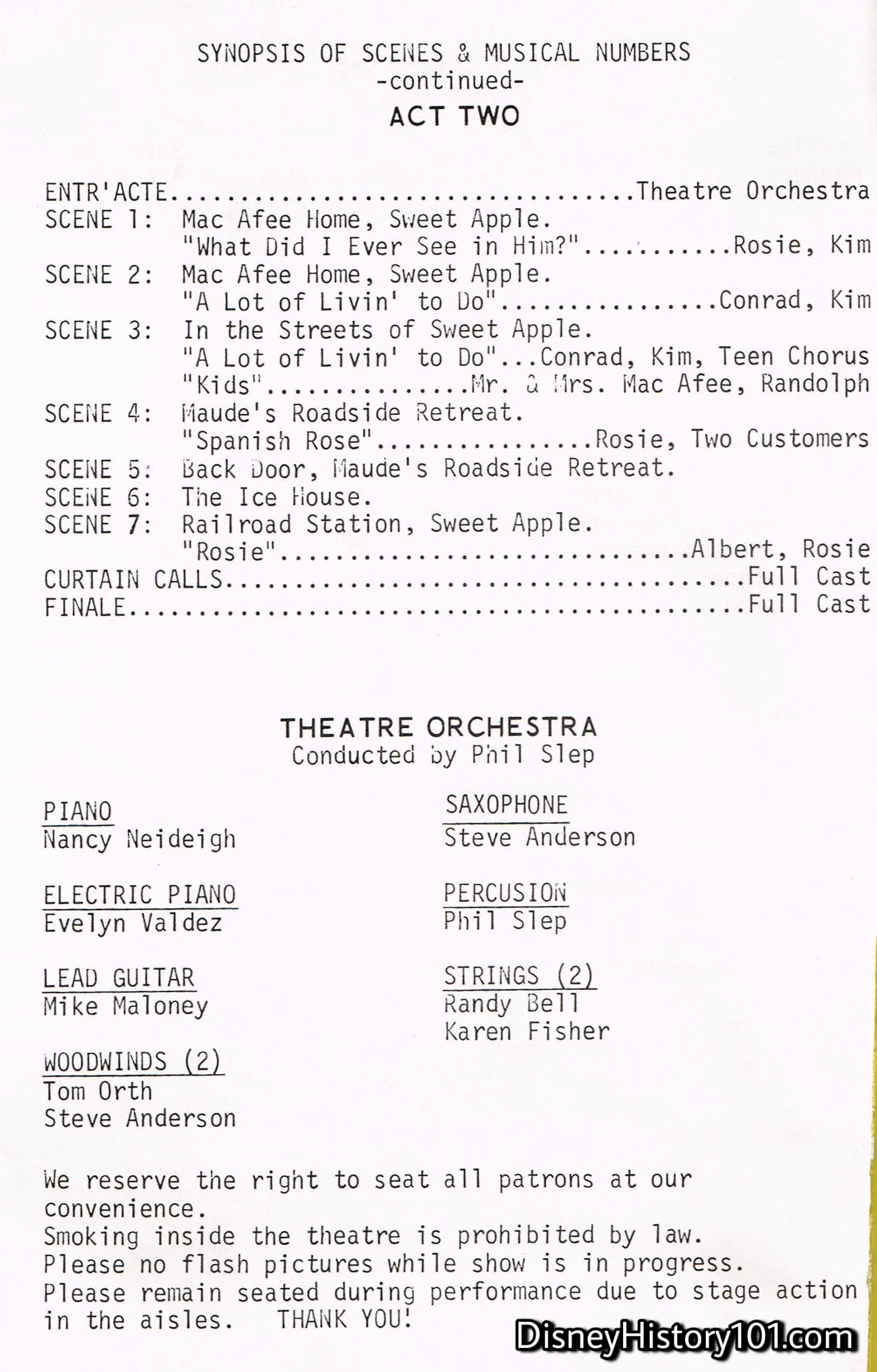
Bye, Bye, Birdie Program, (1971)
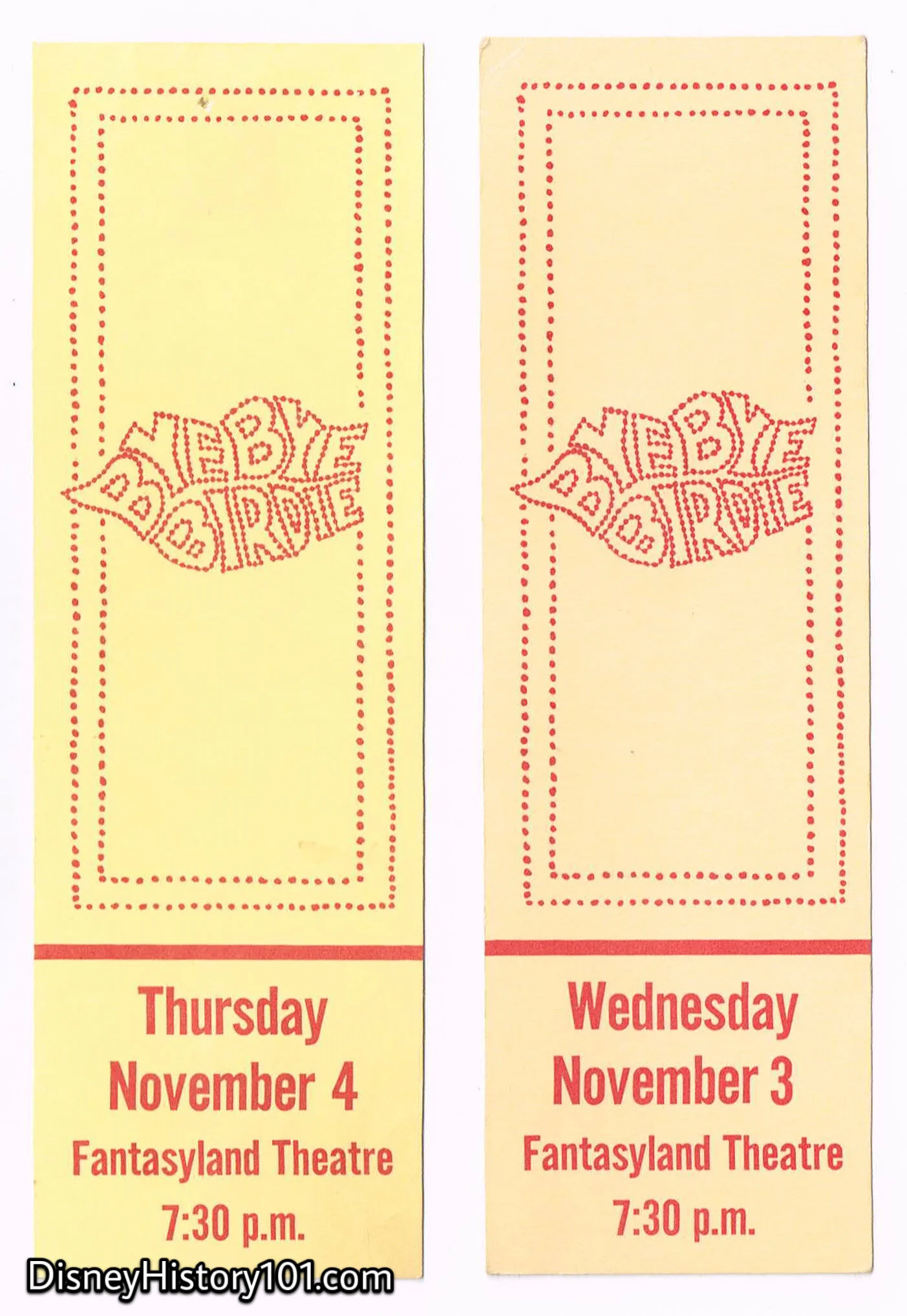
Bye, Bye, Birdie Tickets, (1971)
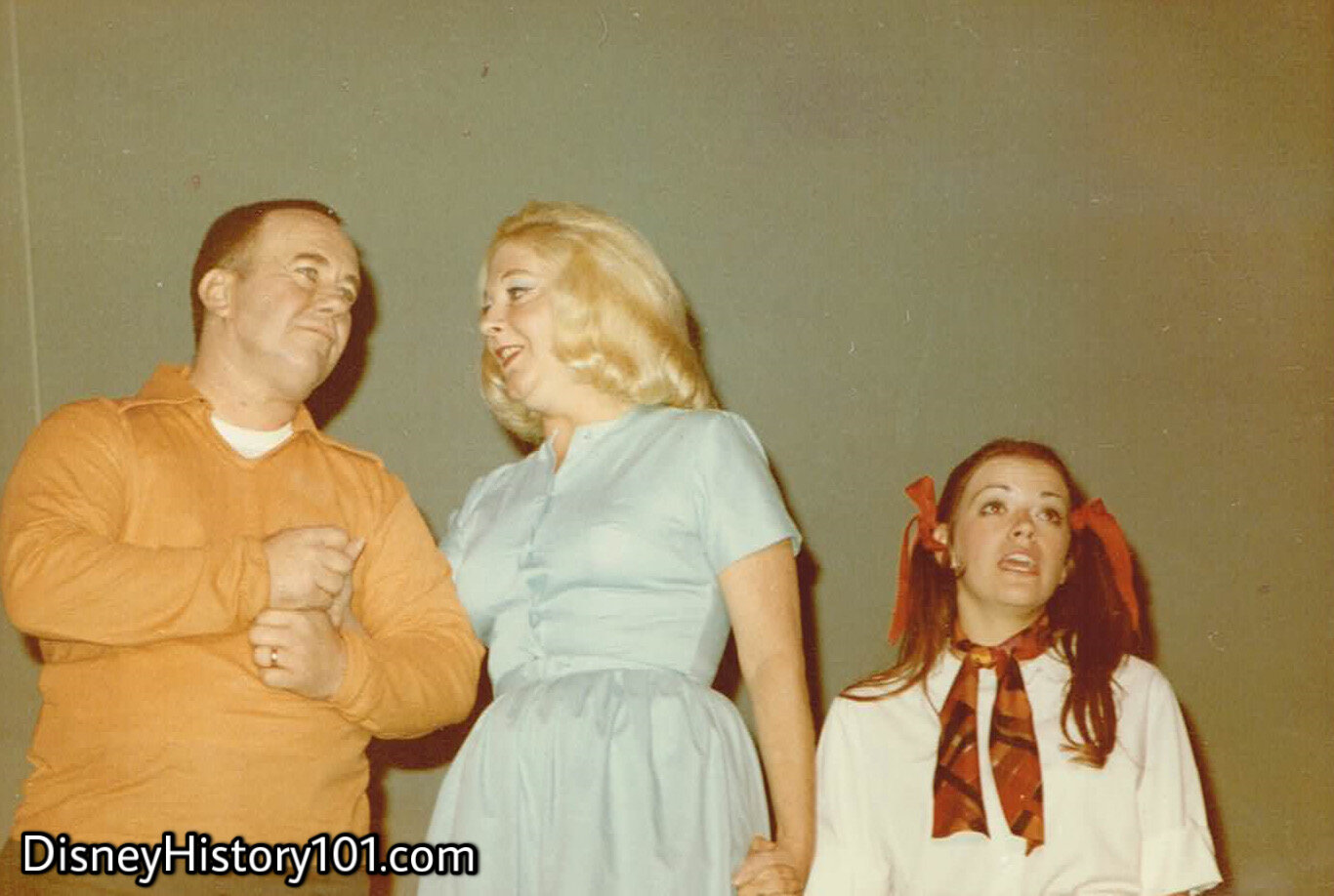
Bye Bye Birdie Production, 1971
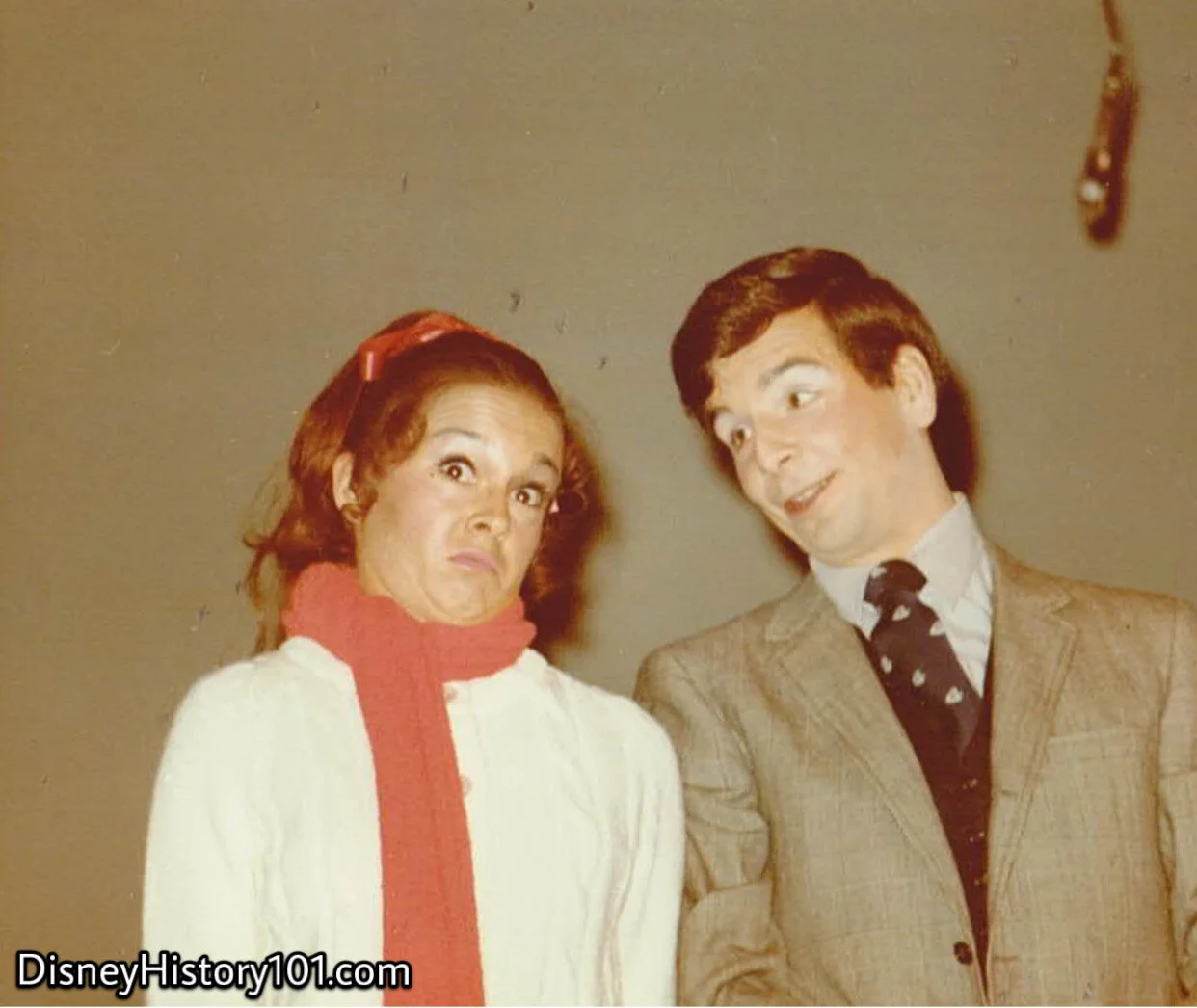
Bye Bye Birdie Production, 1971
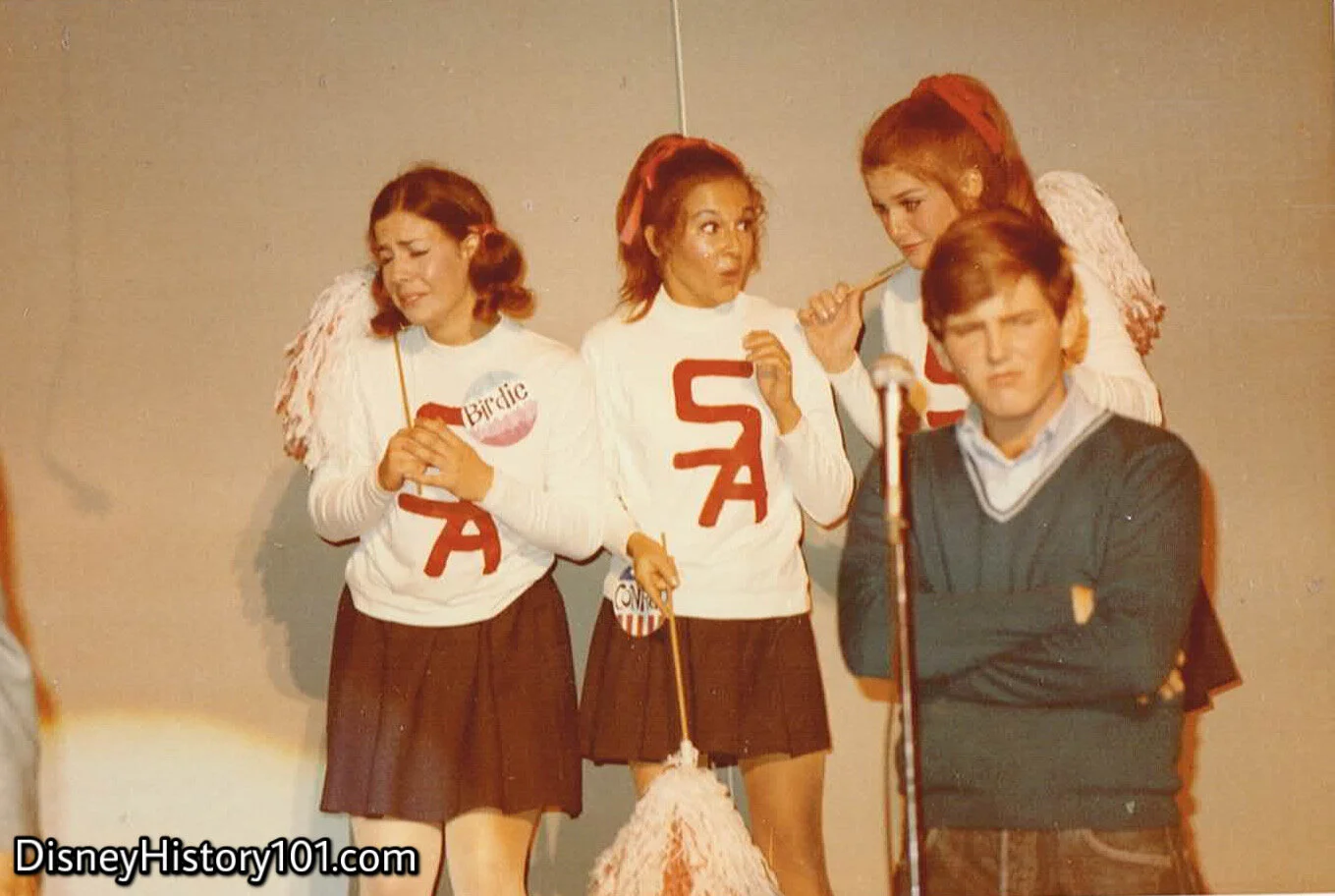
Bye Bye Birdie Production, 1971
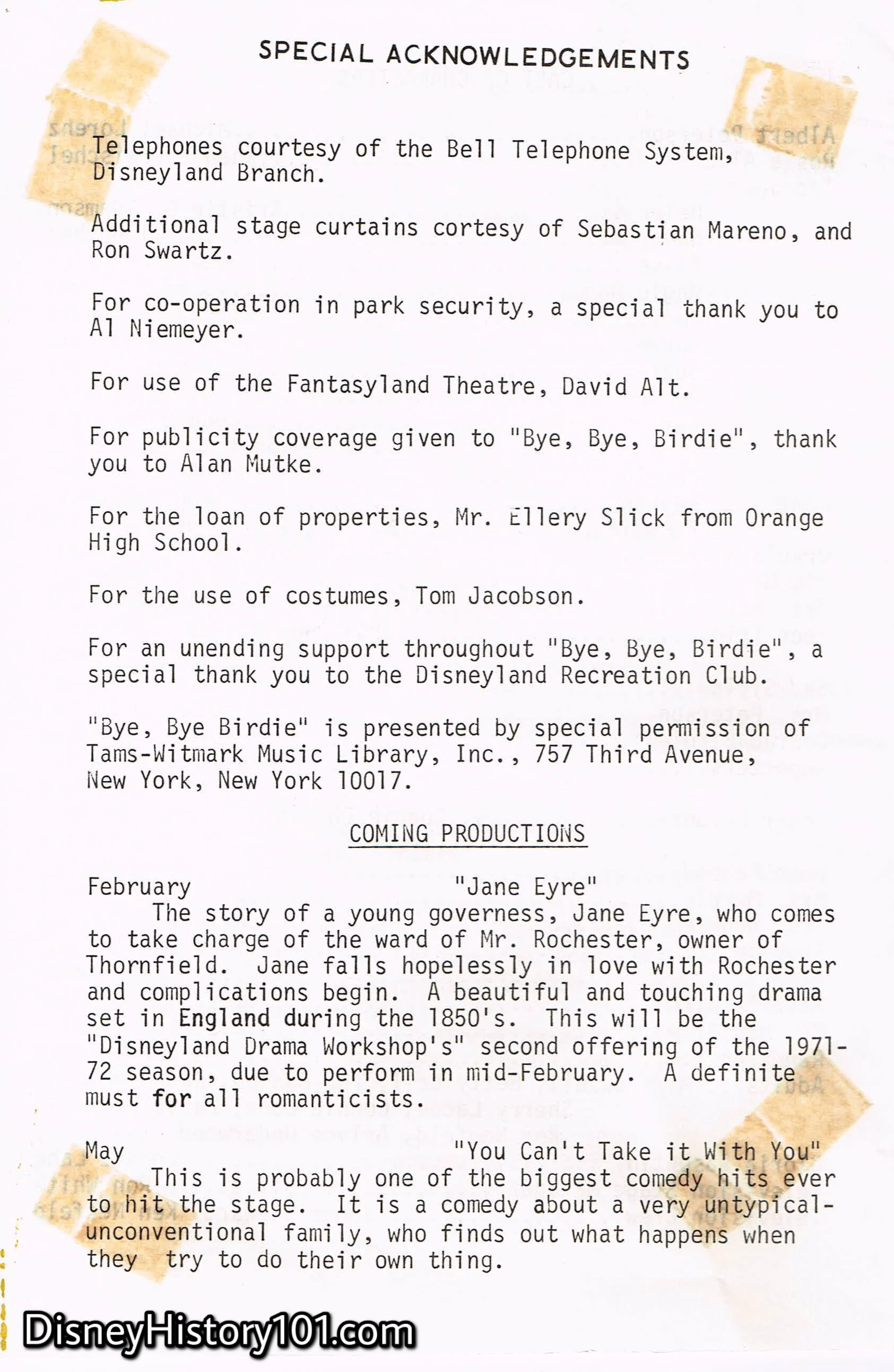
Bye, Bye, Birdie Program, (1971)
Both “Jane Eyre” and “You Can’t Take It With You” were scheduled as Disneyland Drama Club “Coming Productions”, but only one of these will generate enough interest to become a reality. Still this future production was still moths away, and (though not advertised here) another exciting production - “Rumplestiltskin” - would come along first!
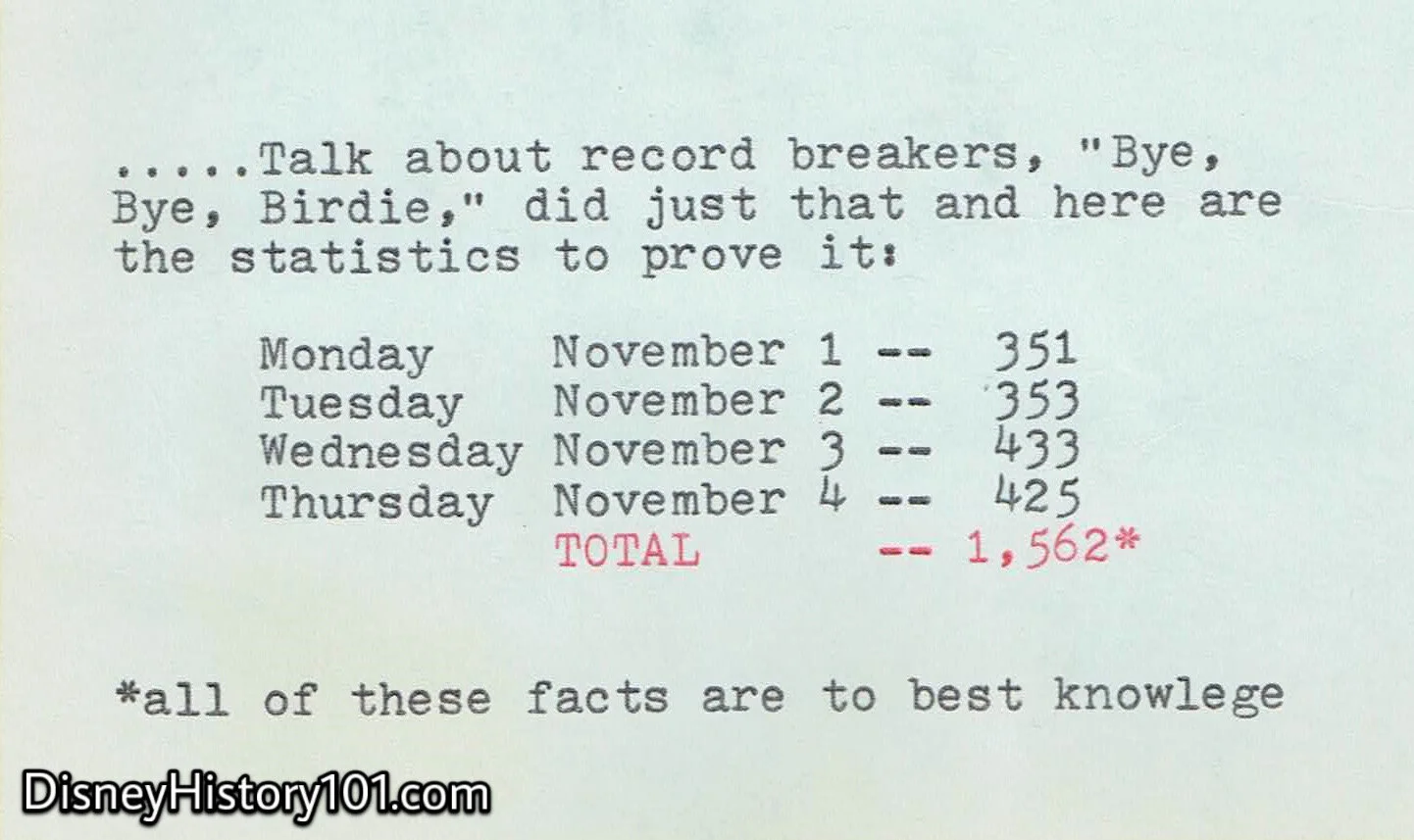
Bye, Bye, Birdie Attendance, (published Disneyland LINE, 1971)
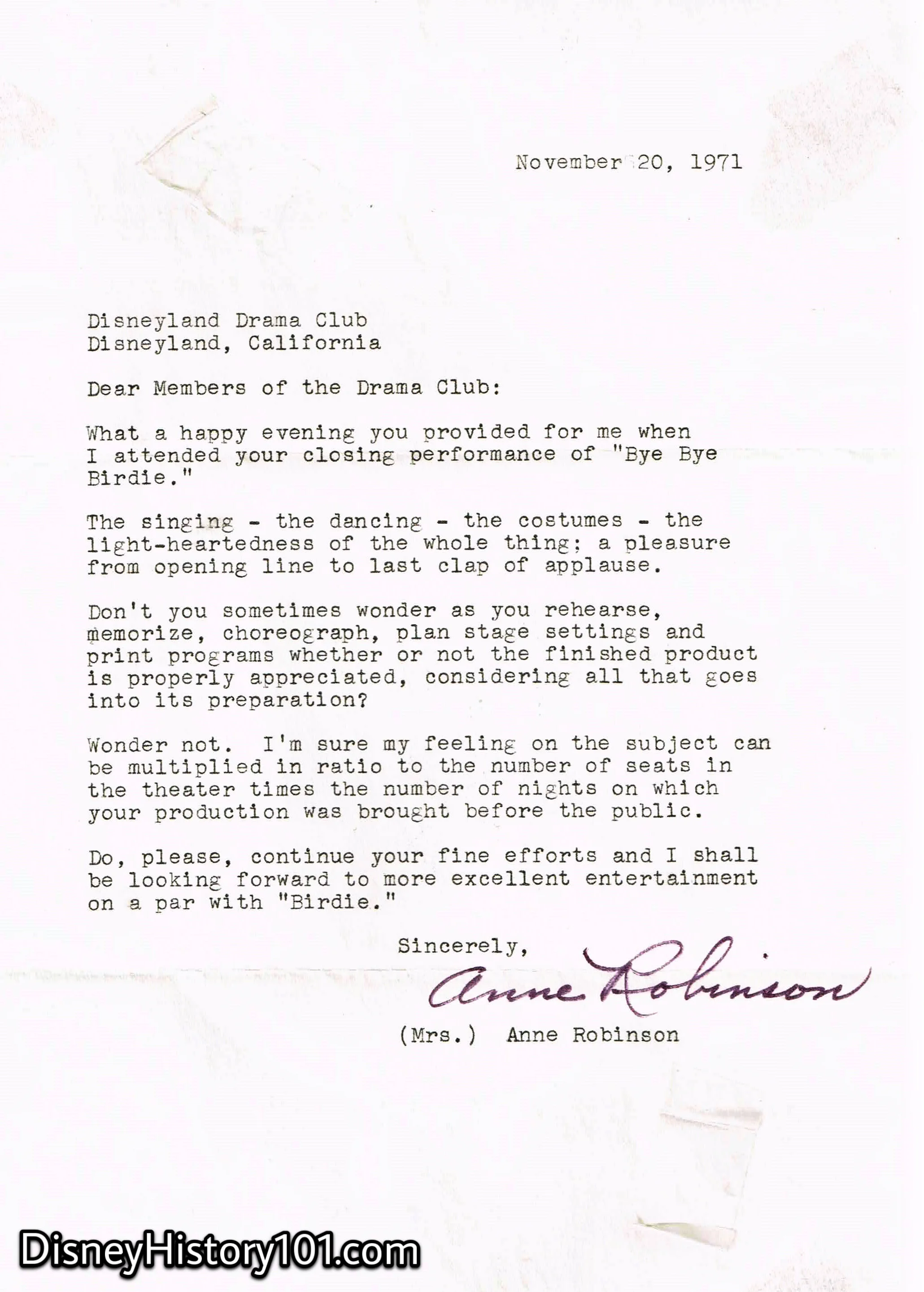
Fan Letter, (c. 1970)
At least one guest wrote a letter of thanks to the Disneyland Drama Club, for their production of “Bye, Bye, Birdie”.
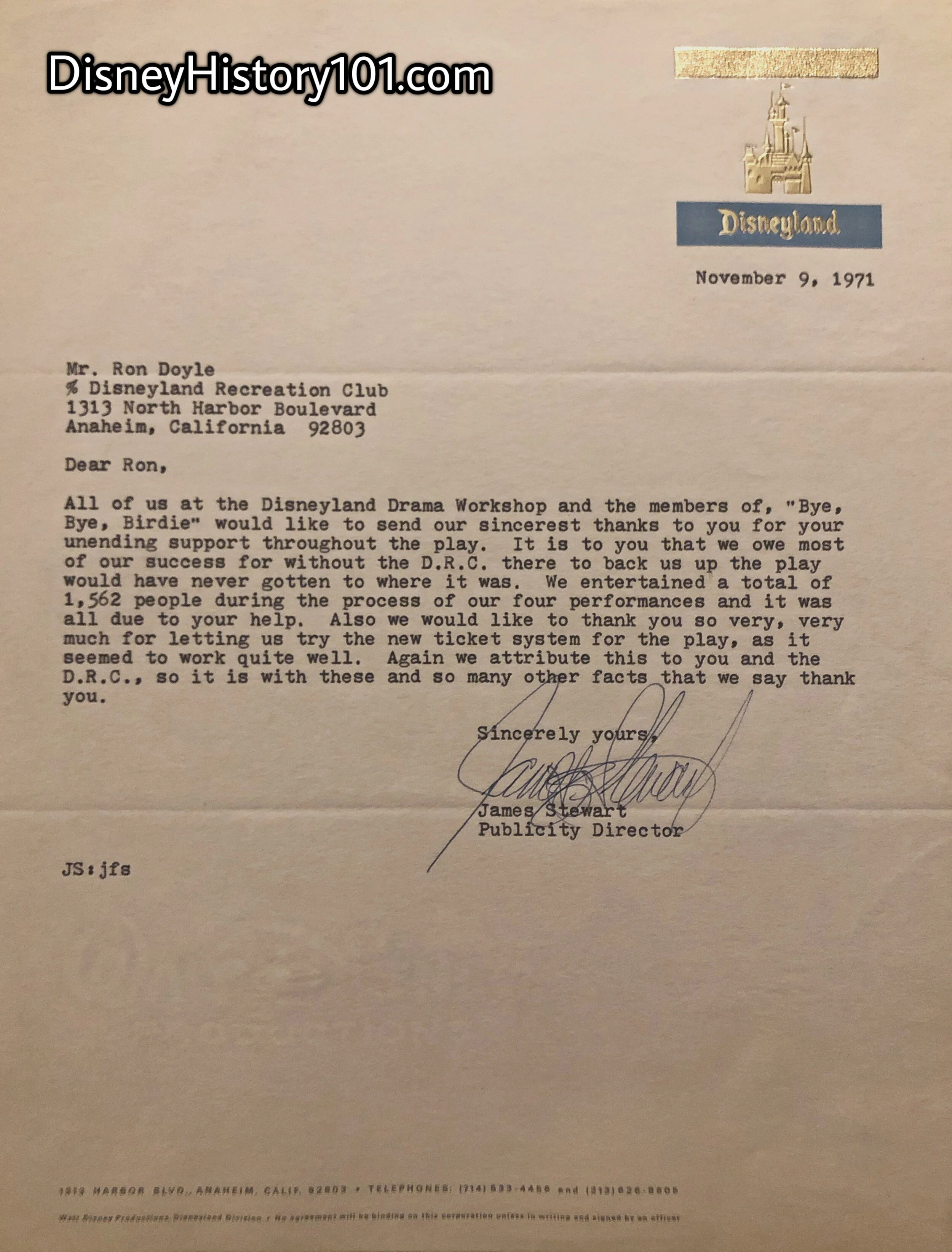
Letter From James Stewart to Ron Doyle
During the late 1960s and 1970s, the Disneyland Recreation Club was a supporter of many of Disneyland’s own “in-house” extracurricular employee organizations - softball leagues, chess clubs, christian clubs, and many more! The Disneyland Drama Club was appreciative of all the support that it’s members received from the Disneyland Recreation Club, that the President often expressed thanks by way of letters like this one.
If you ever had a role at Disneyland during the first 50 years (or so), then you likely were admonished at some time to “know your D.R.C. council.” With all this talk about the D.R.C., you may be wondering just what it stands for. If you were only a guest of Disneyland, then you may have never heard of the D.R.C., or Disneyland Recreation Club. The Disneyland Recreation Club was formed only a “few months after the drawbridge of Fantasyland Castle was lowered,” according to a column by Bob Penfield (published in Disneyland LINE, Summer of 1965).
The D.R.C. owes its existence to several individuals including Van Arsdale France (of the University of Disneyland), Jan Ayers (of Group Insurance), and others.
It was one of many clubs (or, organizations) comprised of Disneyland Cast Members at the Park and the Hotel (all persons became members of the DRC when they began their employment with Disneyland). Y’know, a wise Mouseketeer once sang, “A good clean sport, a good clean mind will do a lot for you!” Holding a high value to those ethics may be one reason why the company itself, would financially sponsor recreation and entertainment for its employees (or, DRC members).
1956: For instance, the First Annual “End of Summer” Dance in honor of part time employees (who “improved every phase of the Park’s operation”) was held September 7th, 1956 (and these “Via Con Dios Dances” became a tradition during the first decade). The Disneylander periodical (published by the Disneyland Recreation Club) preserves information on many of these events. The First Annual Disneyland Christmas Party was held on December 10, 1956. “The originator and arranger for basic detail was your Disneyland Recreation Club. The council Felt honored and privileged by the success of this party.”
1957: During May of 1957, Iris Schuller (of Latin Imports at the Disneyland Hotel), hosted a series of six self-improvement classes for women (e.g. Makeup and Hair Styling, Walking and Posture, Figure Control and Co-ordination, Personality and Charm, Voice and Diction, and Wardrobe and Color Co-ordination). By 1957, the DRC sponsored a Basketball Team, Bowling League, Softball Team (the first team in the Industrial “A” League of Anaheim to complete a season undefeated), and Toastmasters Club.
1958: Tournaments of the very first Disneyland Golf Club were organized. Futurama Bowl in nearby Garden Grove hosted bowling tournaments. The first meeting of the Gun Club was organized and held in January of 1958. The Garden Grove Women’s Club hosted the very first Sweetheart Dance on February 14th, when Disneylanders were encouraged to have a Date Night of their own.
1959: The following year (in the Winter of 1959), the D.R.C. sponsored the “Ben Hur” Theater Party - four busses carried 219 Disneylanders and their friends to a theatrical showing of the newly released Ben Hur. Many of such outings were subsequently scheduled.
1961: The D.R.C. Spring Frolics party awarded prizes like a color TV. The DRC 1960-61 Bowling League reached a grand climax at the Annual banquet held at the Garden Grove Elks Club. Trophies were presented to 29 individuals and the sponsors of the Silhouette team, the league champions. Hills Bros.' team finished in second place followed by Chef's Linen in third.
By the summer of 1965, the D.R.C. had supported a Disneyland Masonic Club, “the Gun Club, the Chess Club, Golf Club, Bowling, Softball, Basketball, the Square Dance Club, the Riding Club, and the Intra-Mural Slow Pitch Softball League, which was almost always dominated by supervisors,” according to Bob Penfield, in Disneyland LINE (of Summer, 1965).
A number Disneyland employees ran for DRC office, in order to be elected as the fortunate few who volunteer for the particular responsibility (and pleasure) of planning, organizing, and working recreational events that their fellow Disneyland Cast Members would enjoy! The DRC came to have a President (like Bob Phelps, c.1968), a Vice President, a Treasurer, a Chairperson, a Club Advisor, a Secretary, a Social Advisor, and a Sports Advisor. Weekly meetings of the D.R.C. council would be held at the University of Disneyland (usually, in the morning, weekly) and suggestions for new clubs would be passed before the D.R.C. Council. These were not managed by the DRC, but merely suggested for their approval and support. If you liked skiing, bowling, mountain climbing or golfing, there was a Cast Activity Club for you. Thanks to the D.R.C., Disneyland had a Basketball Club, a Bowling Club, Chess Club, a Golf Club, a Gun Club, a Intra-Mural Slow Pitch Softball League, a Riding Club, the Trap and Skeet Club, a Softball League , an American Sign Language Club, a Christian Fellowship Club, a Square Dance Club (called the “Disneyland Squares”), a Disneyland (ballroom) Dance Club, the Disney Animated Film Club, the Anglers Club, a Disneyland Chapter of the Weight Watchers Club, and many more recreational organizations to choose from. And, who could forget the annual Disneyland Canoe Races? Many (fellow cast) members of these clubs would shine bright with stellar talent that would have otherwise been unnoticed, if not for these clubs (who knew Vesey Walker or Ray Van De Walker liked to golf?). Again, these clubs would not have existed, if not for the approval and support of the DRC!
In turn, the various Disneyland Recreational Club occasionally supported and helped promote events for organizations held within the Park! For instance, in 1969, the Disneyland Hotel Embassy Room hosted the Disneyland Recreational Club Christmas Dance (featuring a buffet with prizes), on December 14, 1969, from 8:00 p.m. to 1:00 a.m. Then, there were those aforementioned “Disneyland Squares” (of over 150 members, including their club founder, resident barber, and “caller” Don Drew), who helped welcome near 12,000 guests to “Disneyland’s Country Music Spectacular” held October 16, 1971. Despite a little rain, the event was a big success, and paved the way for the “Country Music Night at Disneyland”. Though the Disneyland Squares membership would triple, allowing them to become self-supporting, and not relying on D.R.C. funds through the 1970s, one must recognize that this all started with the immense support of the Disneyland Recreation Club!
The DRC Federal Credit Union was established in 1968, originally housed in room 287, on the 2nd floor of the Administration Building (on the Harbor Boulevard side). Within just 3 short months, it had grown to more than 500 members, turning payroll deductions into loans for employee members.
The Disneyland Recreation Club also published the “Disneylander” for employees of Disneyland, Inc. This publication was followed by the quarterly Disneyland Backstage magazine, which was co- published by the D.R.C. and the University of Disneyland.
By November of 1972, The Center opened (with its Quiet Room, Credit Union, Group Insurance Offices, Career Planning and Placement, and other facilities). You may recollect enjoying a coffee of hot chocolate at The Center while enjoying a few moments of quiet or watching a few minutes of television while taking a break. The Disney University Manager’s Office was also located at The Center. But more importantly (and on track with our topic), The Center became the location where Disneyland Cast Members would sign up for Disneyland Recreation Club events.
The face of the Disneyland Recreation Club Council Board changed frequently, with new members joining the Disneyland family annually (and of these, DRC Chairperson Candidates appearing on the DRC Election Ballot, hoping to win a spot on the Council). These lucky individuals would continue to support the “new sign-ups”, hear and approve the new suggestions for clubs, or handle and track the discount tickets sold for concerts, games, and other D.R.C. sponsored events. Perhaps you recollect scanning the pages of “Disneyland LINE” magazine for the “DRC Calendar of Events”, or contacting the Center for more information. Without a doubt, the most memorable ticketed events (arranged through the DRC through the years) include the DRC Annual Family Picnics, the Annual Christmas Parties and Dances (like the one held in 1964 when Wayne Van De Walker attended with Diana Reed), the Annual Canoe Races, those DRC summer softball leagues (about 800 Disneylanders supported the men’s and women’s divisions during the summer of ‘77 alone) and annual outdoor feasts, the trips to Dodger Stadium or excursions to Hawaii, and that time tickets were made available to see Disneyland Alumni “Steve Martin In Concert” (during December of 1977)!
As we recall his words of wisdom (published in Wisdom magazine, December of 1959), we’re sure that Walt would have continued to approve of these activities (sponsored by the D.R.C.) which help Cast Members to “get away from the grind” : “I have had fun on the job. I have never have been able to confine that fun to office hours.”
Ultimately Cast Activities was formed to “organize all Resort-wide Cast events, activities and recognition programs including Sports Leagues, Spirit of Disneyland Resort, Service Awards, Little Monsters, Family Holiday Party, Cast Film Screening and Canoe Races.”
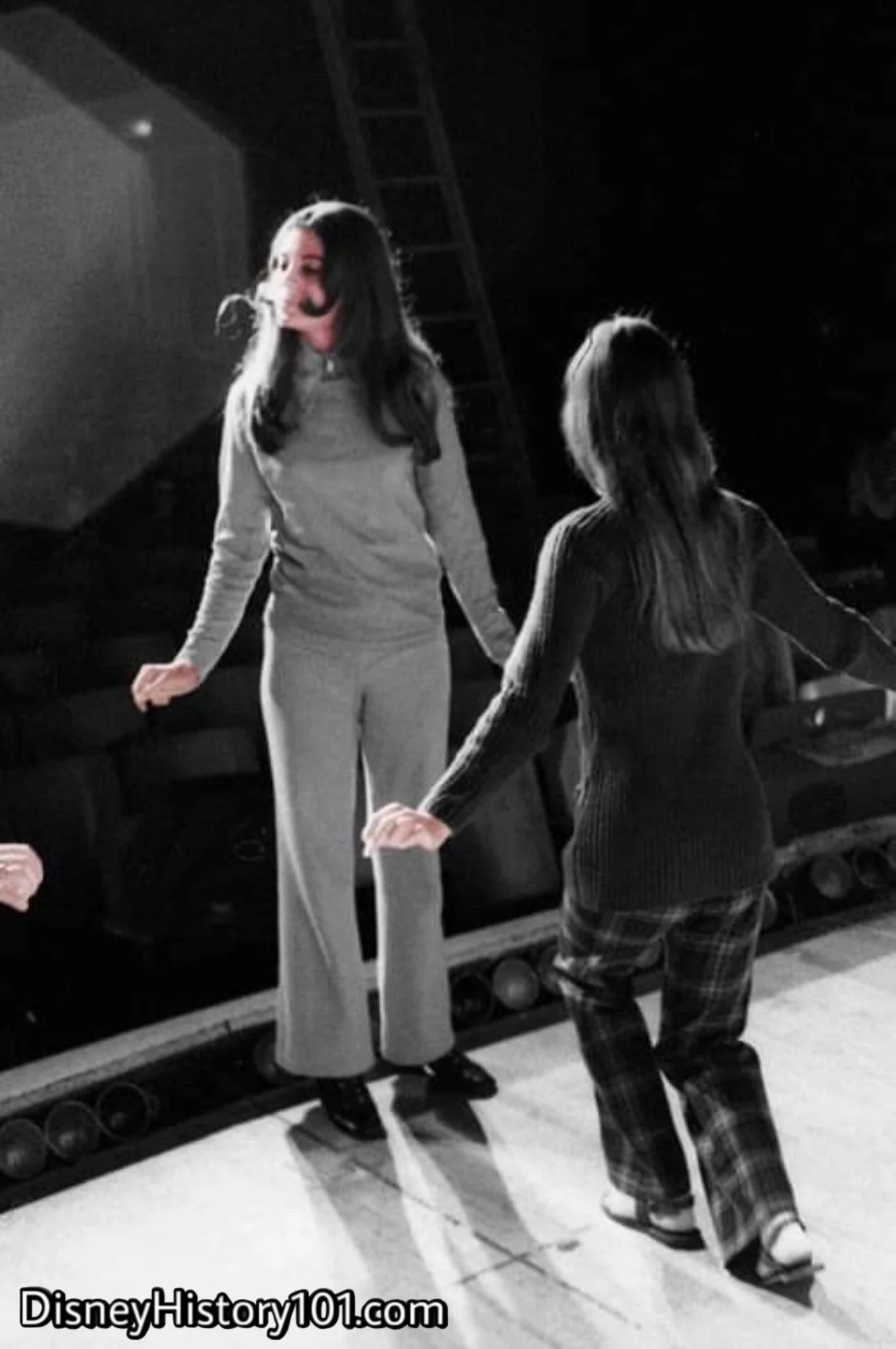
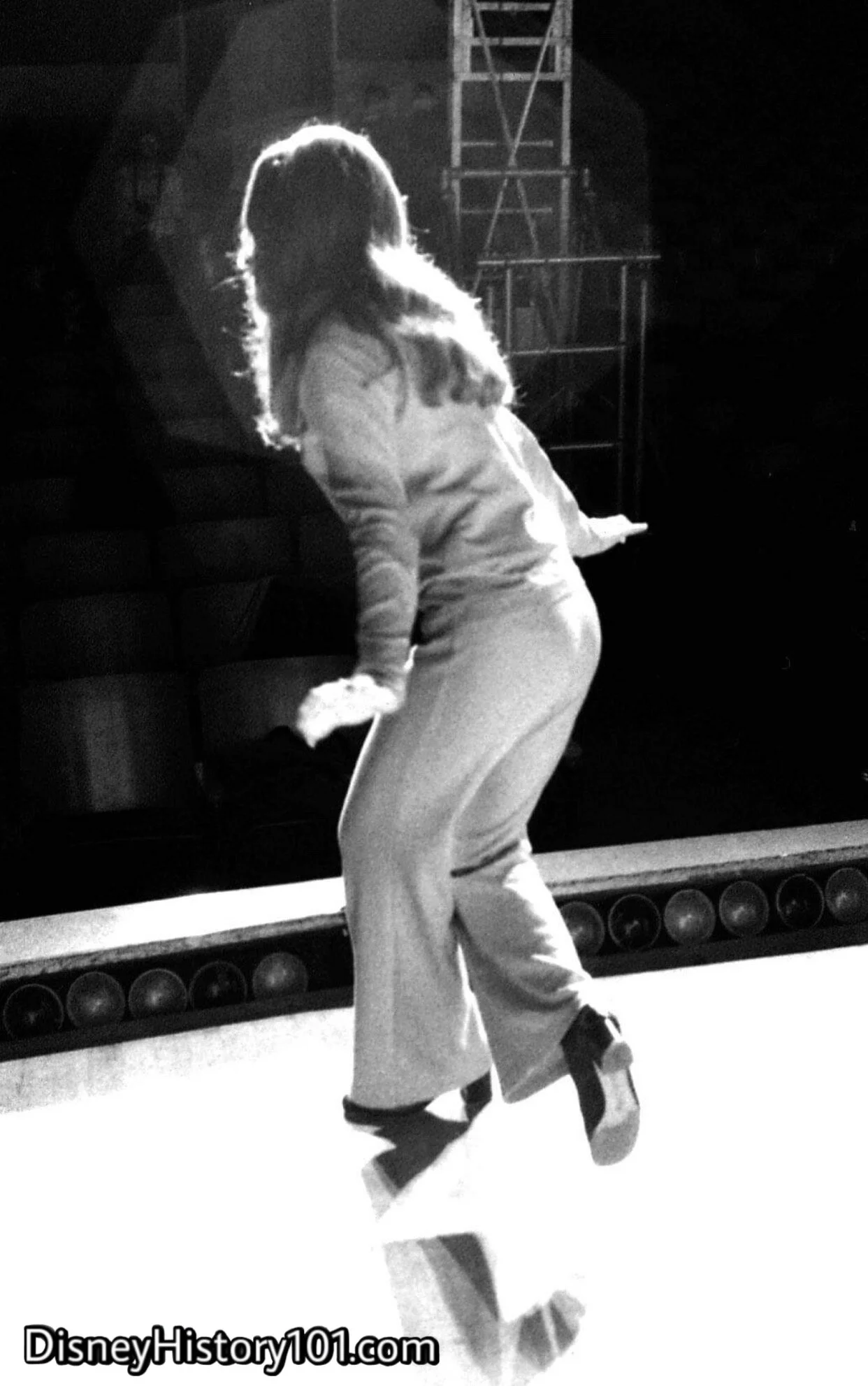
Rumplestiltskin Rehearsal on the Fantasyland Theatre Stage, 1972
Barnett Ricci, the Park’s chief choreographer, directing movement
Rumplestiltskin Rehearsal on the Fantasyland Theatre Stage, 1972
Barnett Ricci demonstrates movement.
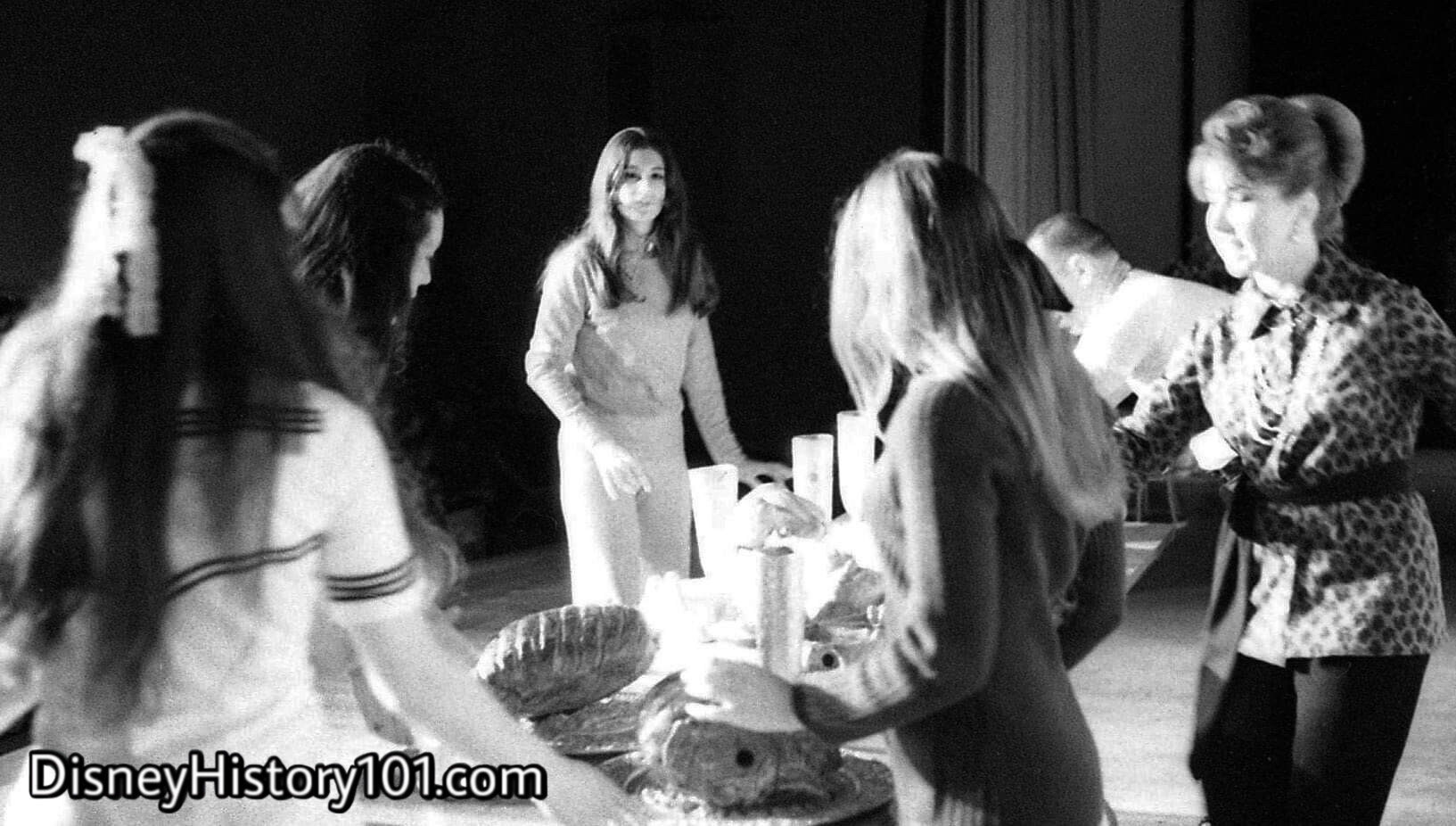
Rumplestiltskin Rehearsal on the Fantasyland Theatre Stage, 1972
Barnett Ricci (Disneyland Entertainment Show Choreographer) blocking the Feast Scene.
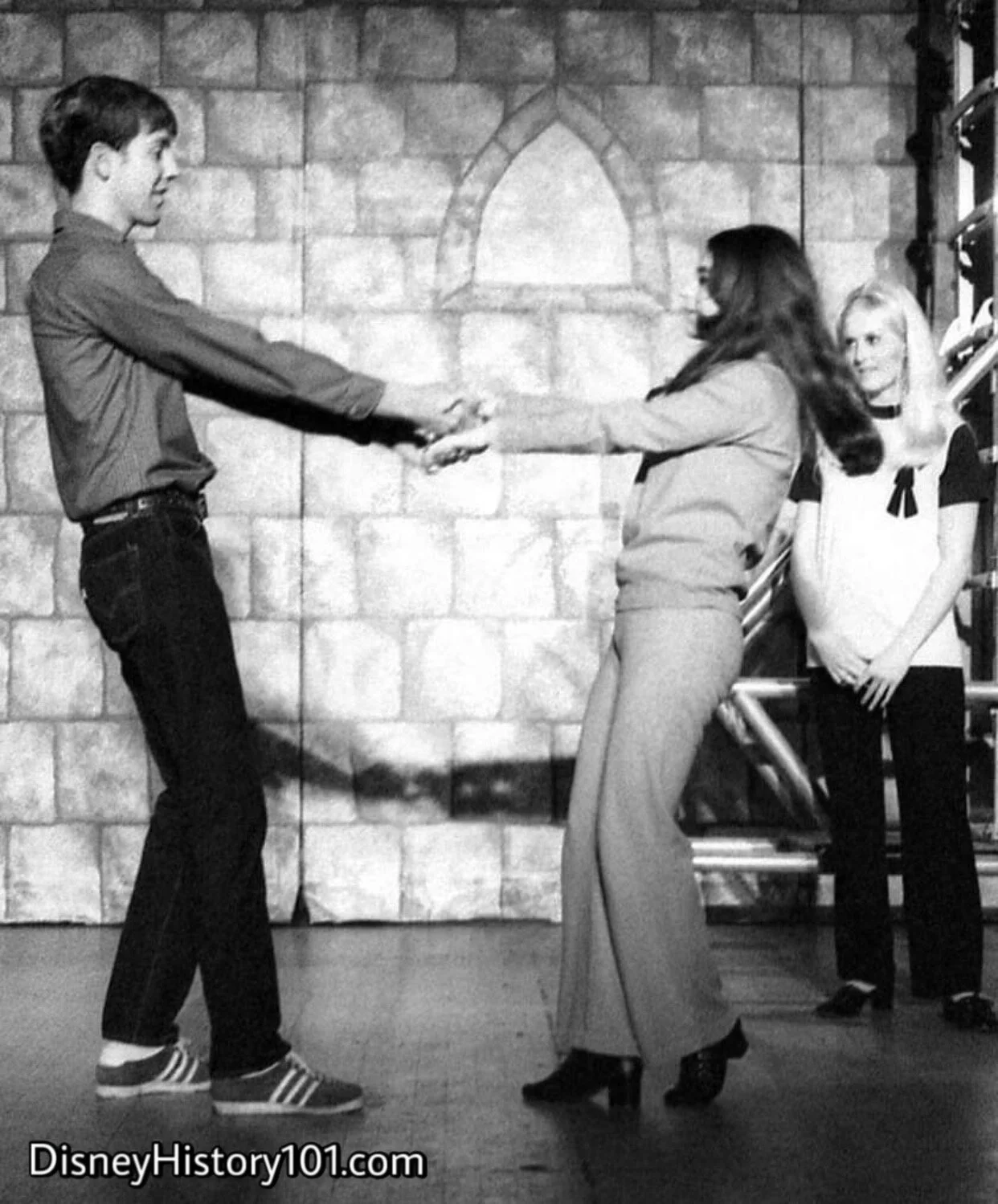
Rumplestiltskin Rehearsal on the Fantasyland Theatre Stage, 1972
Barnett Ricci teaching Jim how to dance
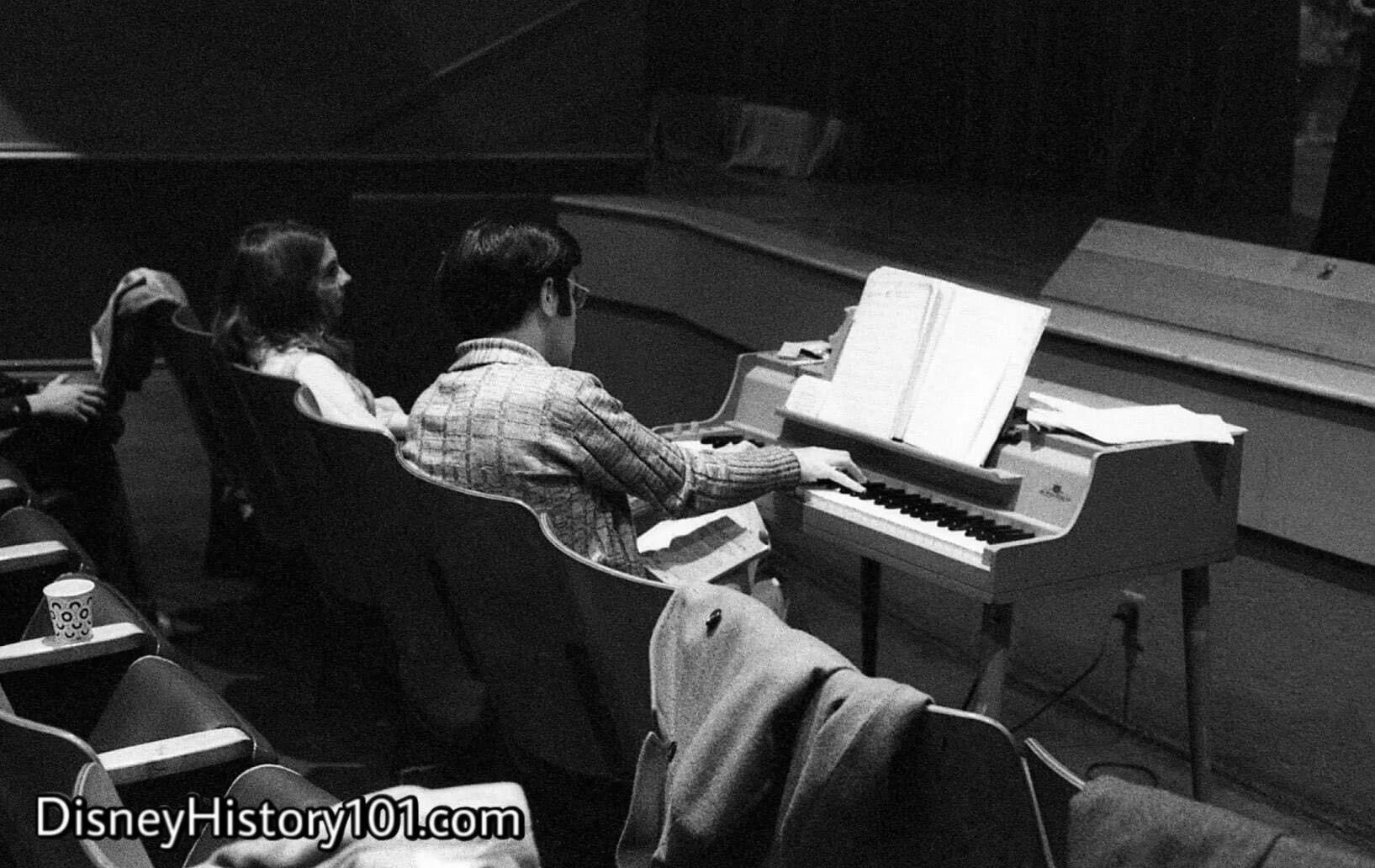
Rumplestiltskin Rehearsal on the Fantasyland Theatre Stage, 1972
Barnett Ricci sits with our conductor Phil Slep, and his ‘orchestra’
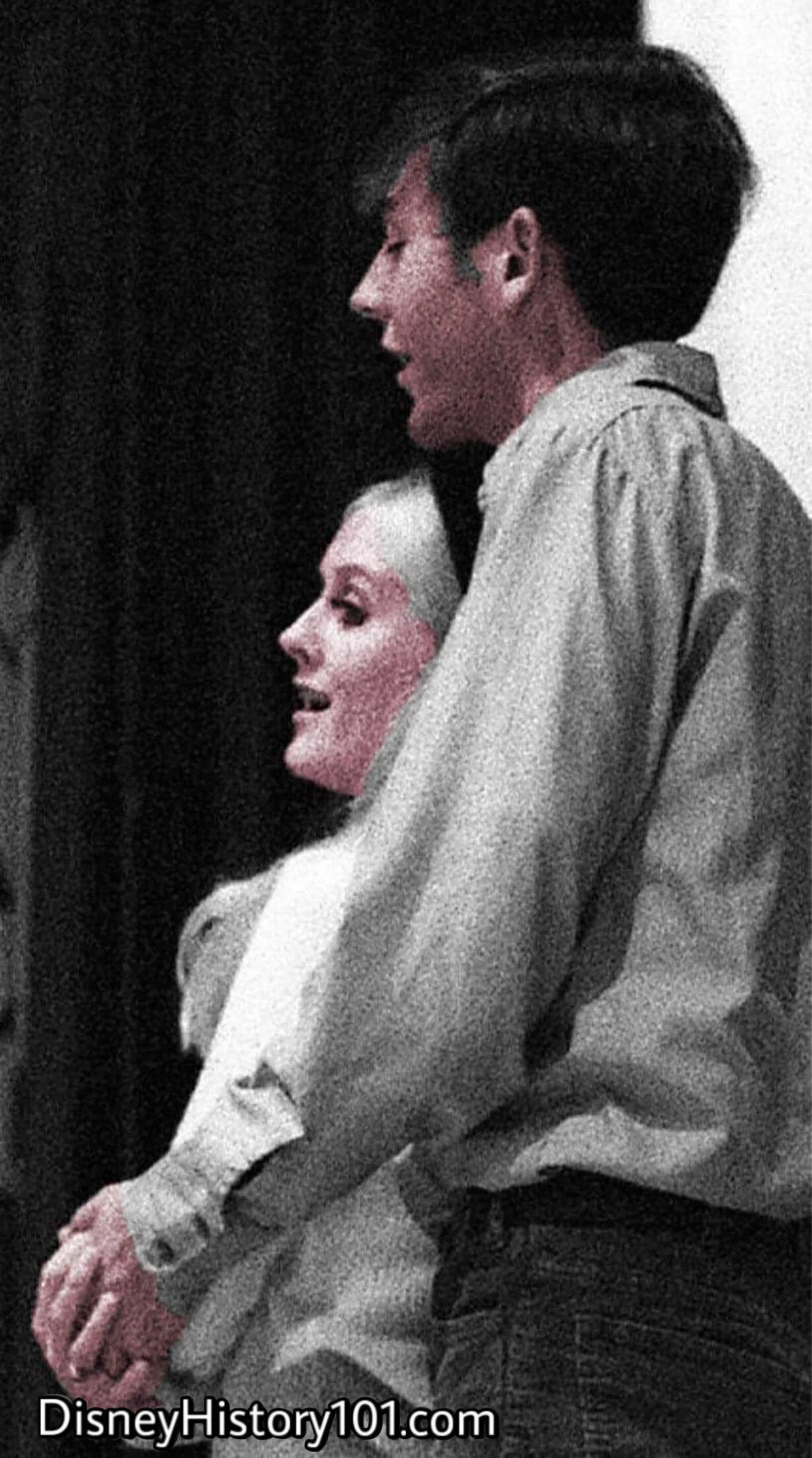
Rumplestiltskin Rehearsal on the Fantasyland Theatre Stage, 1972
Bonnie and Jim rehearsing
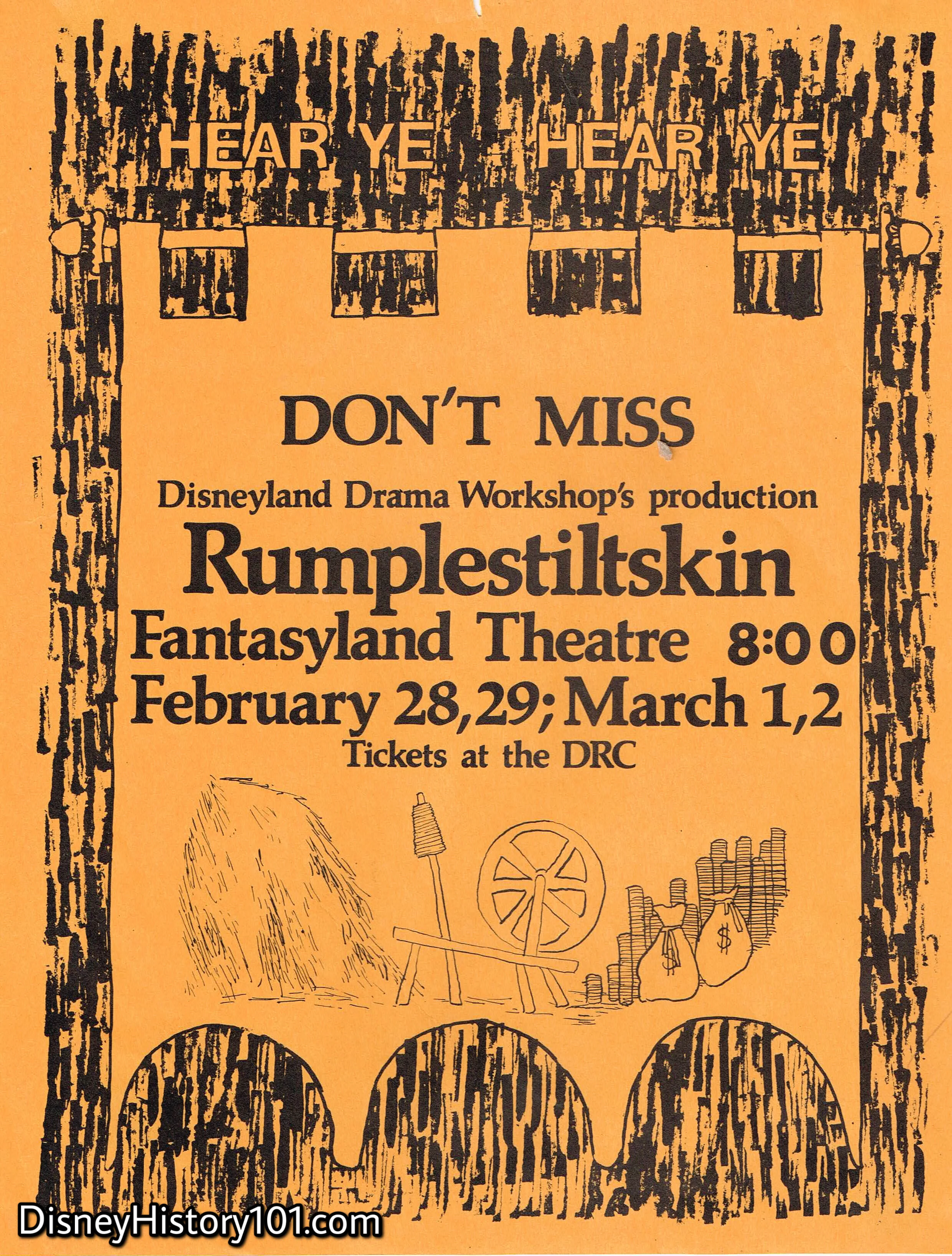
Rumplestiltskin Flyer, 1972
You may have seen these flyers hanging around the D.R.C. during 1972.
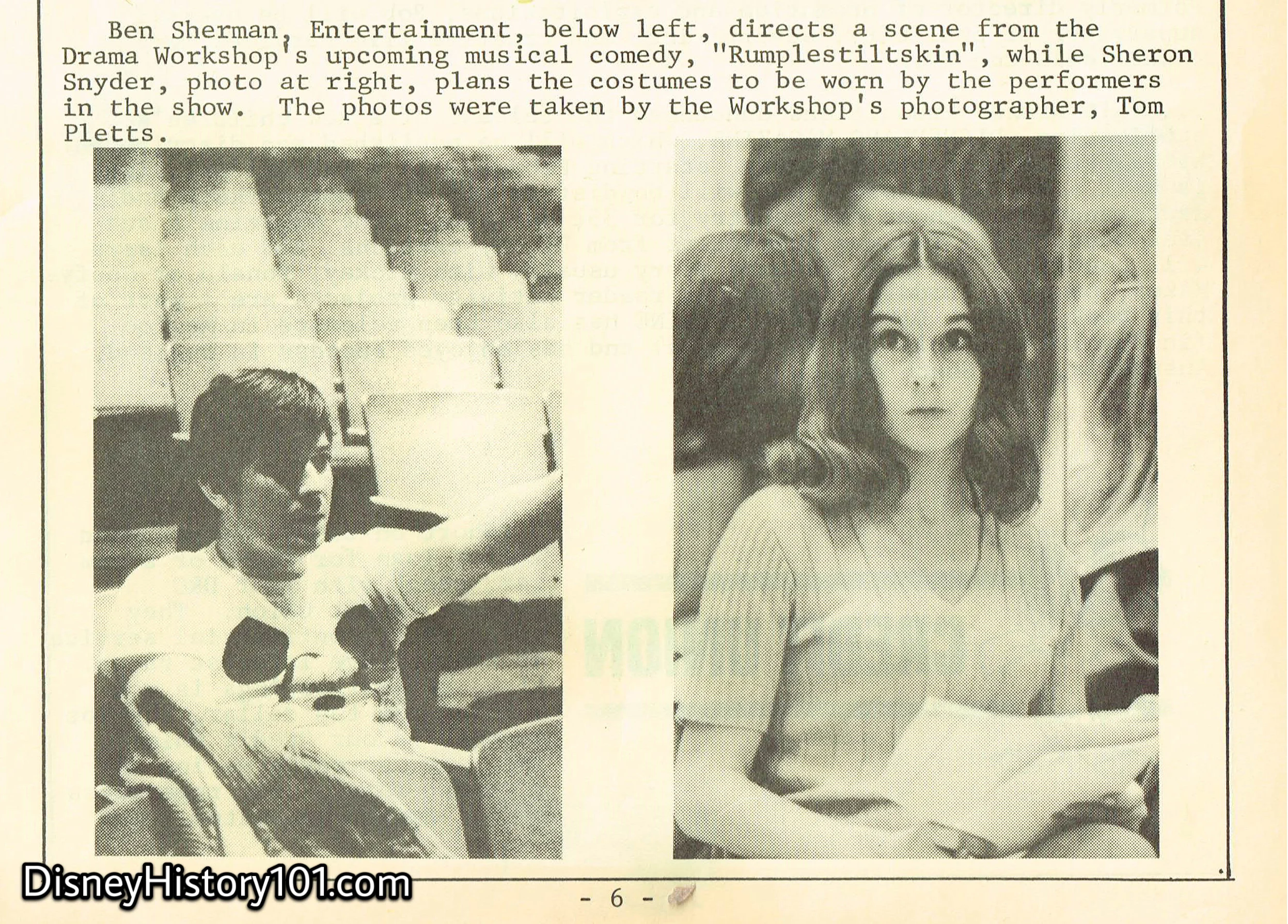
Rumplestiltskin Production Update, Disneyland LINE, 1972
Tom Pletts (in looking over this Disneyland LINE article) recalled : “Ben Sherman, by the way, also produced ‘Chicken Ranching [for Fun & Profit]’. His Park job was managing and producing Character events, parades, & such. Smart guy, and very nice. He’s become a writer.”
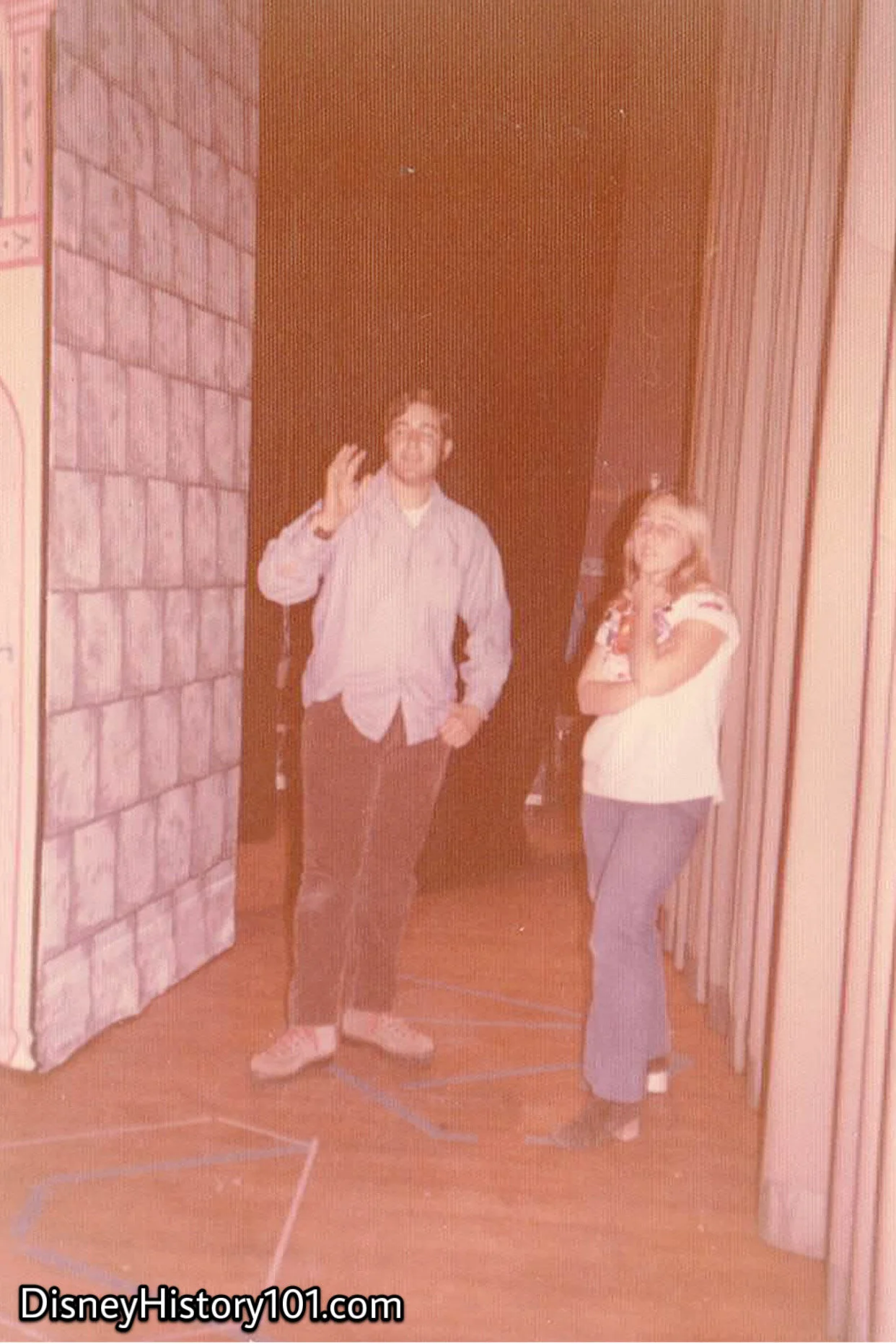
Rumplestiltskin Rehearsal on the Fantasyland Theatre Stage, 1972
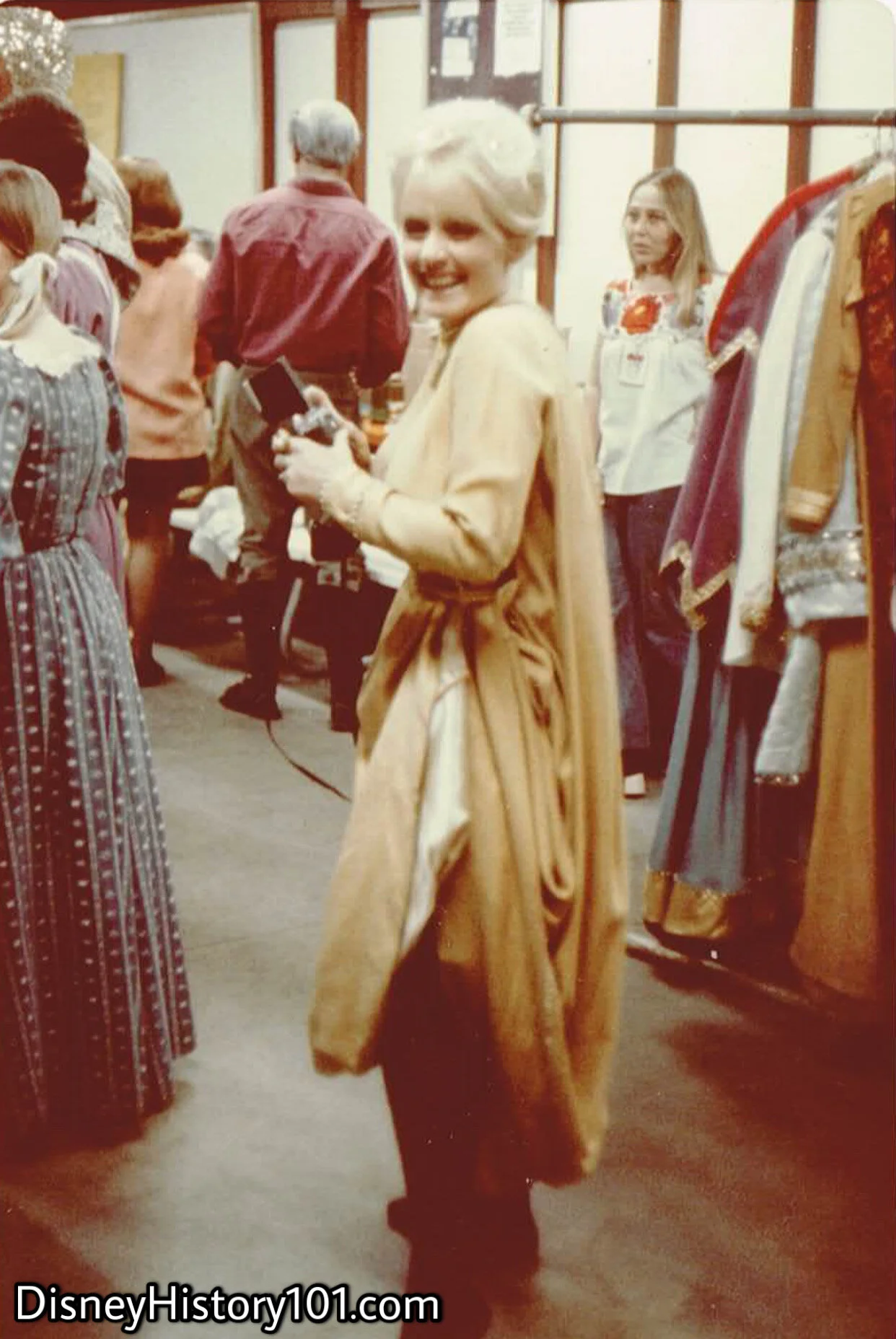
Special Guest Narrator Connie Lane (VIP Tour Guide and Ambassador)
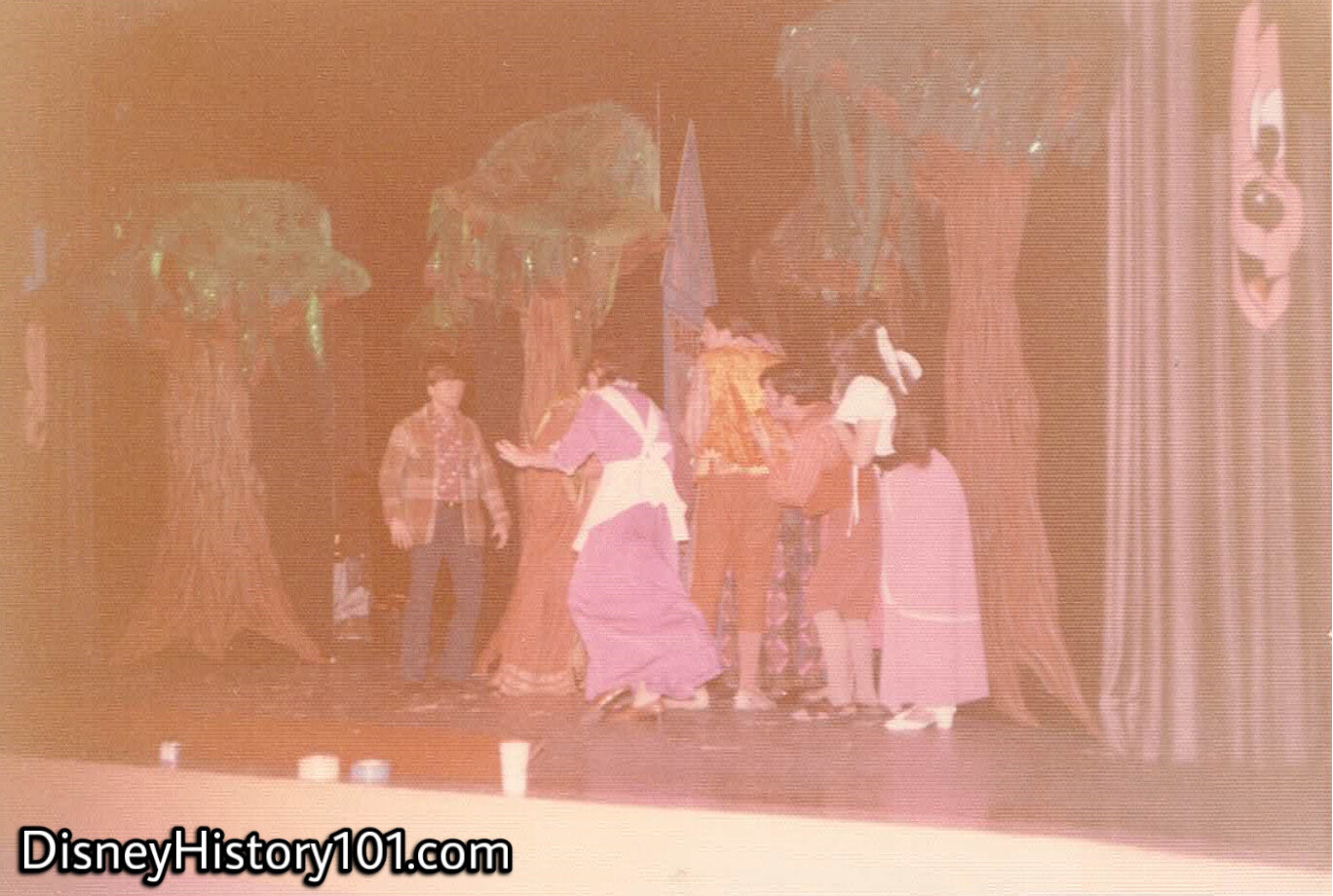
Rumplestiltskin Rehearsal on the Fantasyland Theatre Stage, 1972
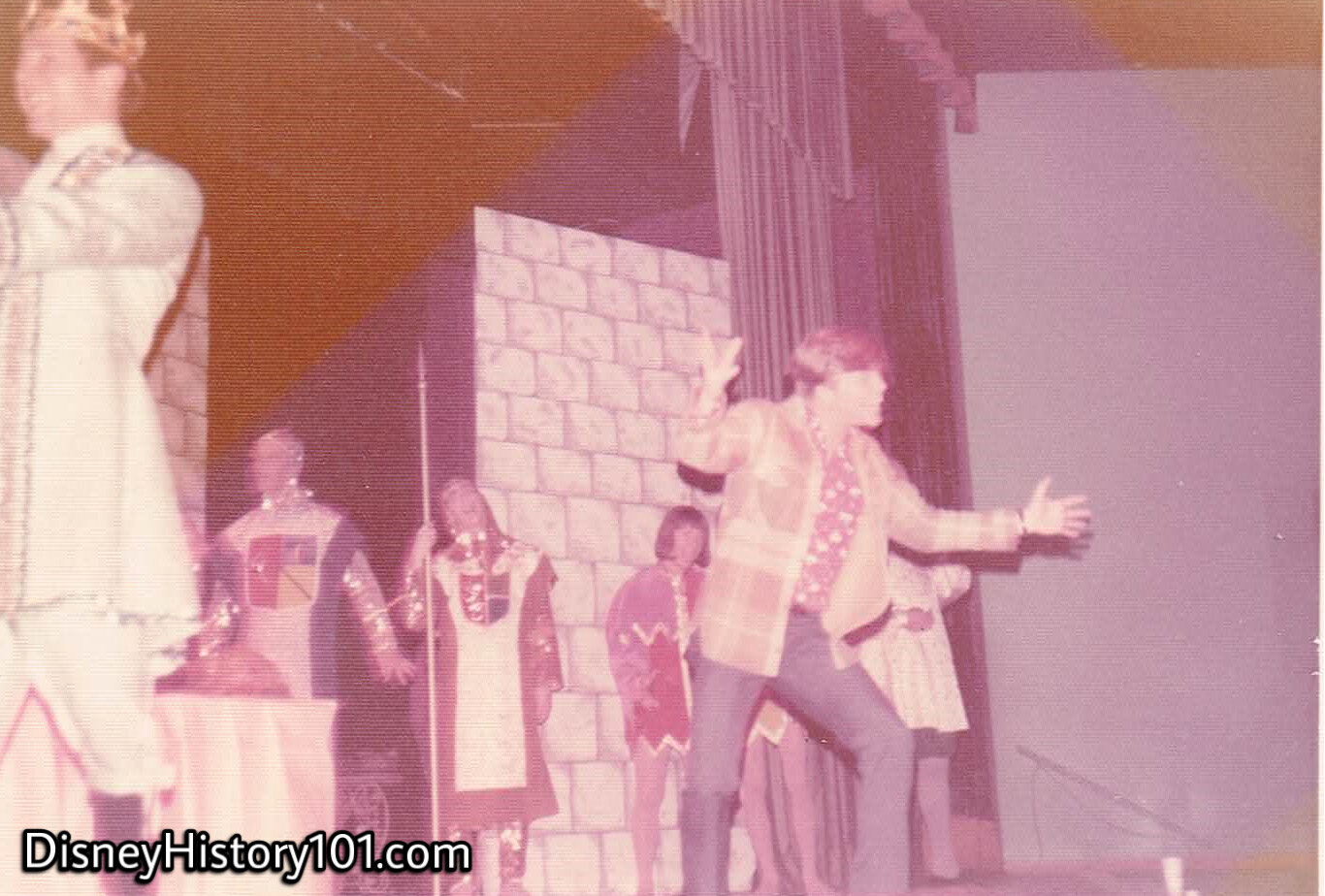
Rumplestiltskin Rehearsal on the Fantasyland Theatre Stage, 1972
Jim Adams rehearsing his role of Rumplestiltskin.
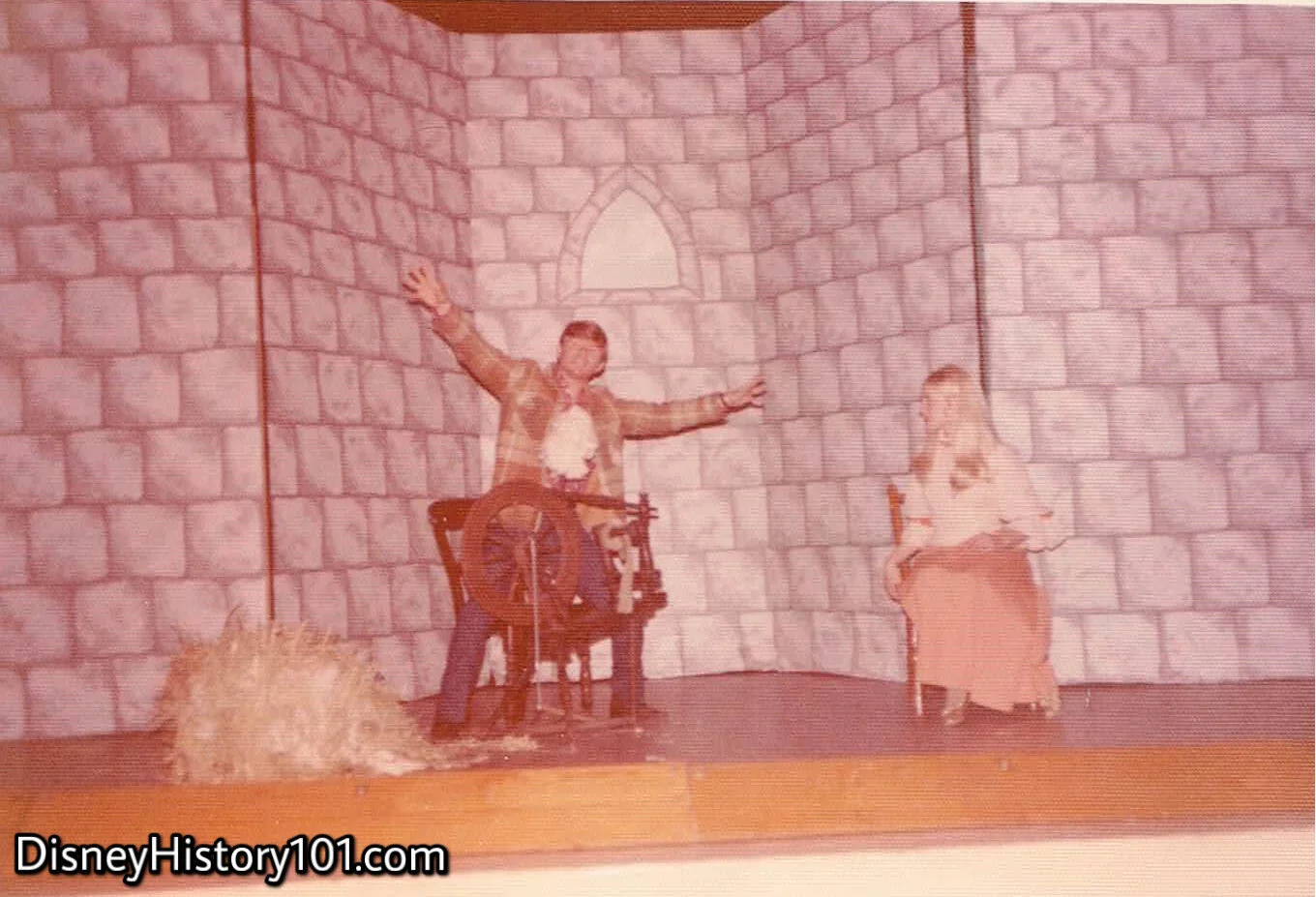
Rumplestiltskin Rehearsal on the Fantasyland Theatre Stage, 1972
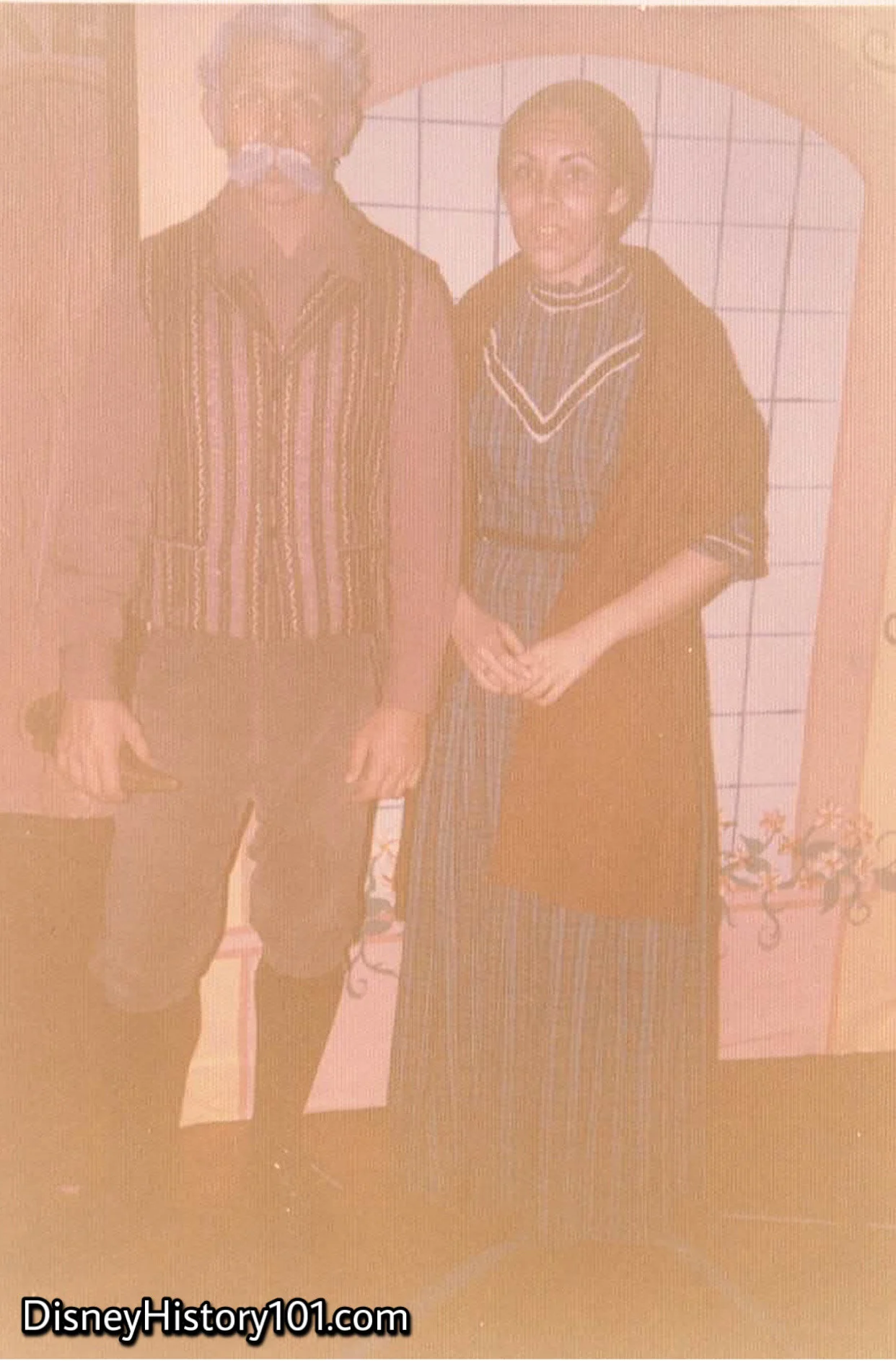
Rumplestiltskin Rehearsal on the Fantasyland Theatre Stage, 1972
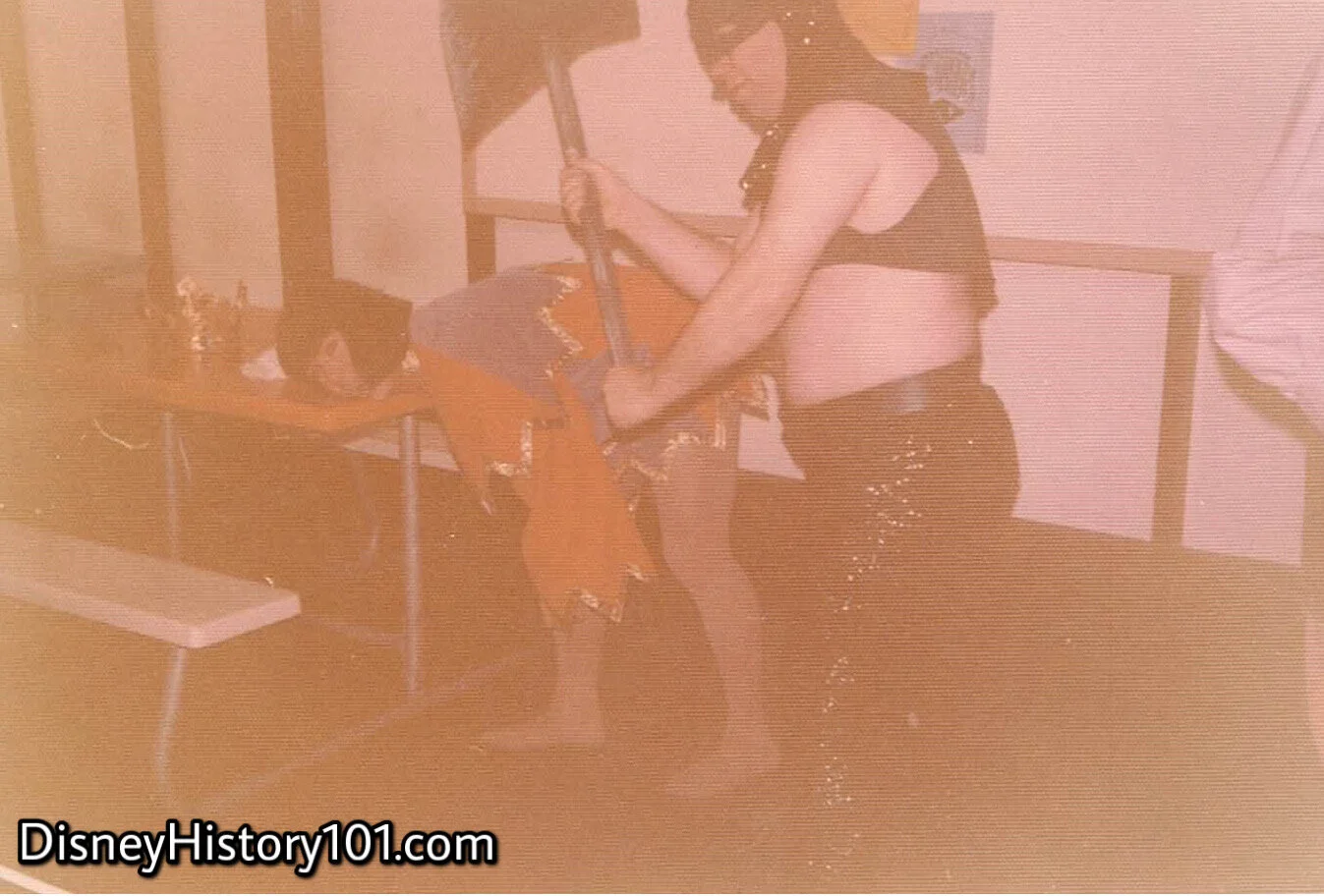
Rumplestiltskin Rehearsal on the Fantasyland Theatre Stage, 1972
Tom Pletts remembers : “That’s Earl Archer, wielding the ax. There was a Fantasyland break area behind the theater, which was used for make-up, costumes, relaxing, and fooling around.”
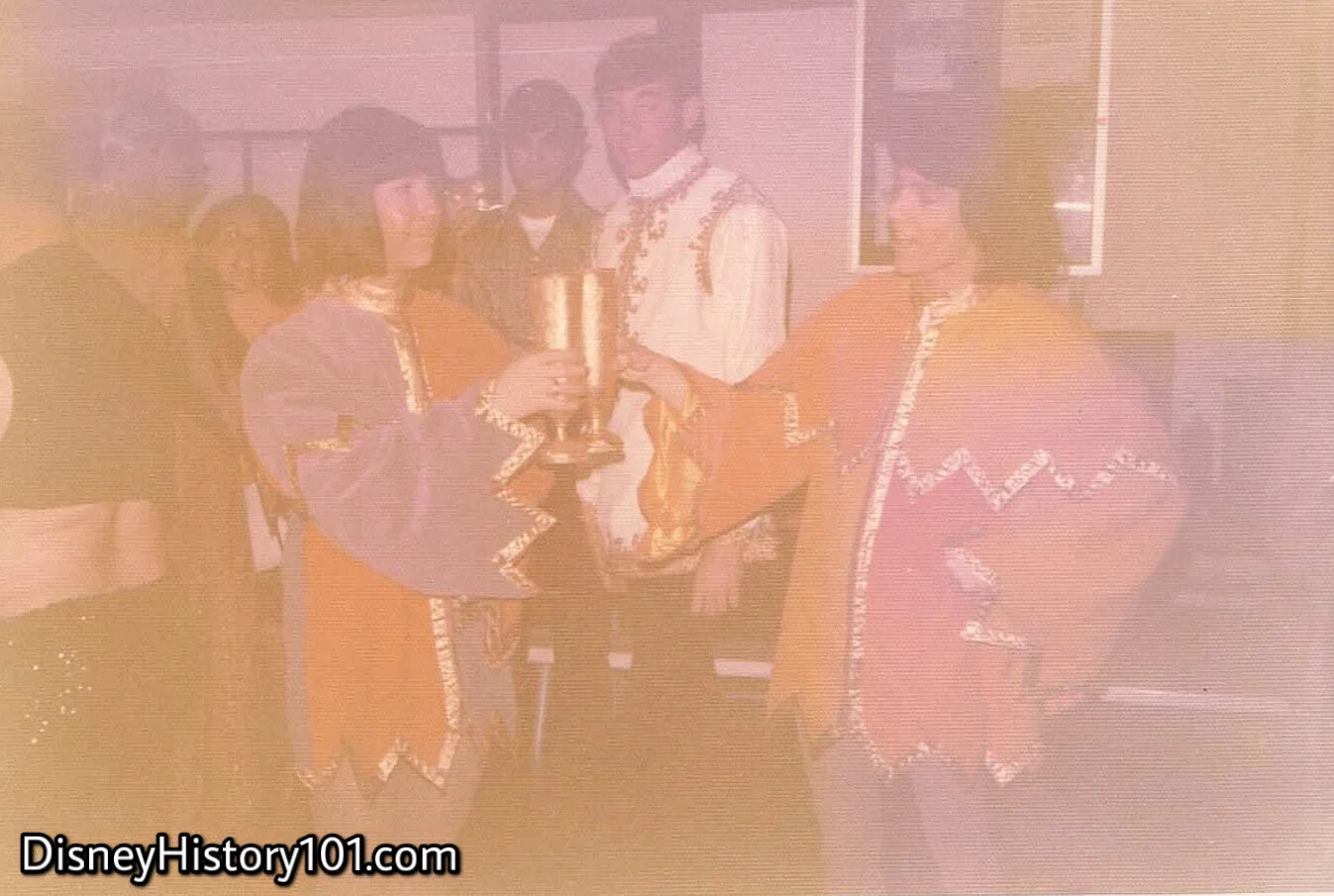
Rumplestiltskin Rehearsal on the Fantasyland Theatre Stage, 1972
Here, a few miscellaneous cast members of Rumplestiltskin pose for a photograph while backstage.
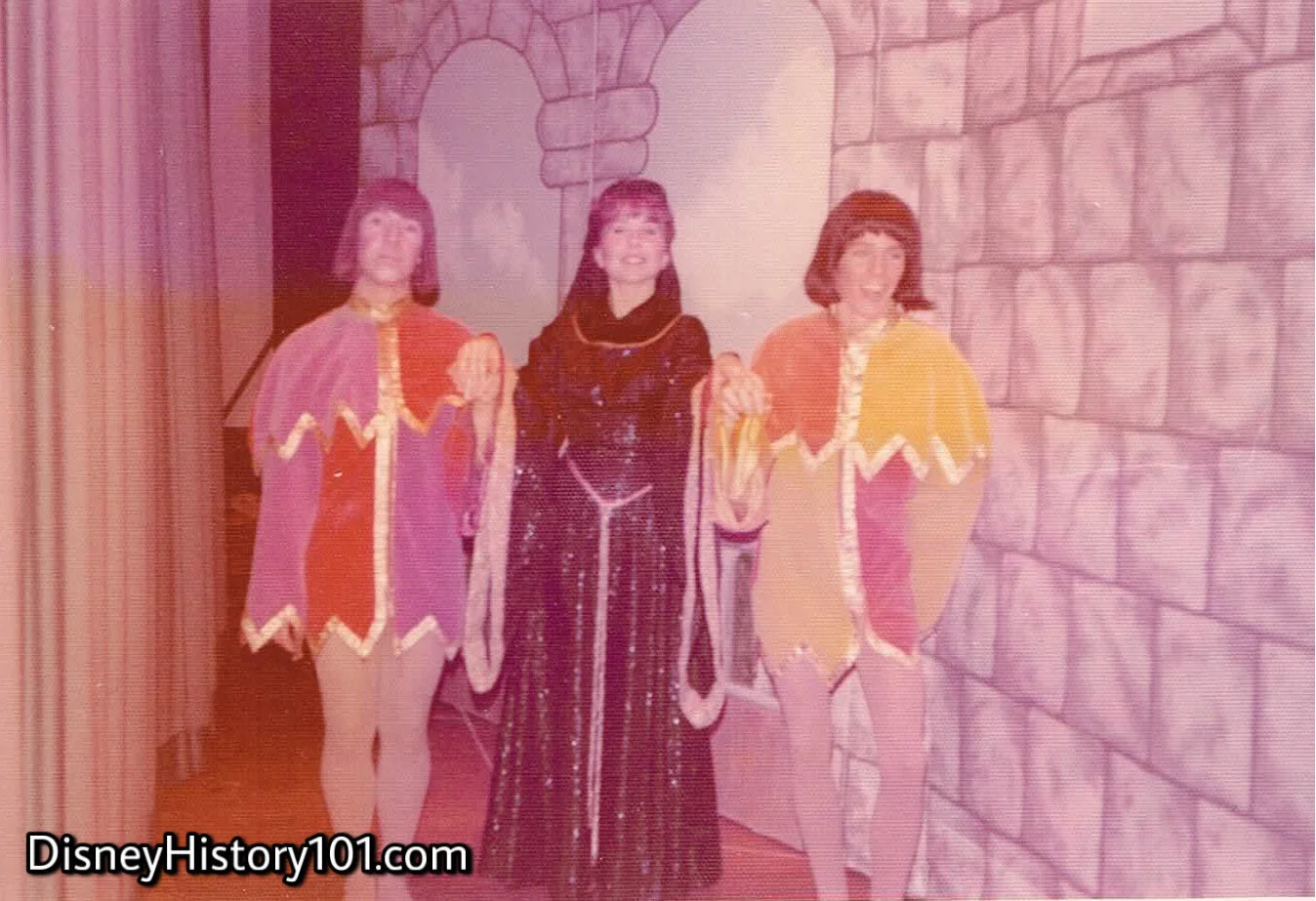
Rumplestiltskin Rehearsal on the Fantasyland Theatre Stage, 1972
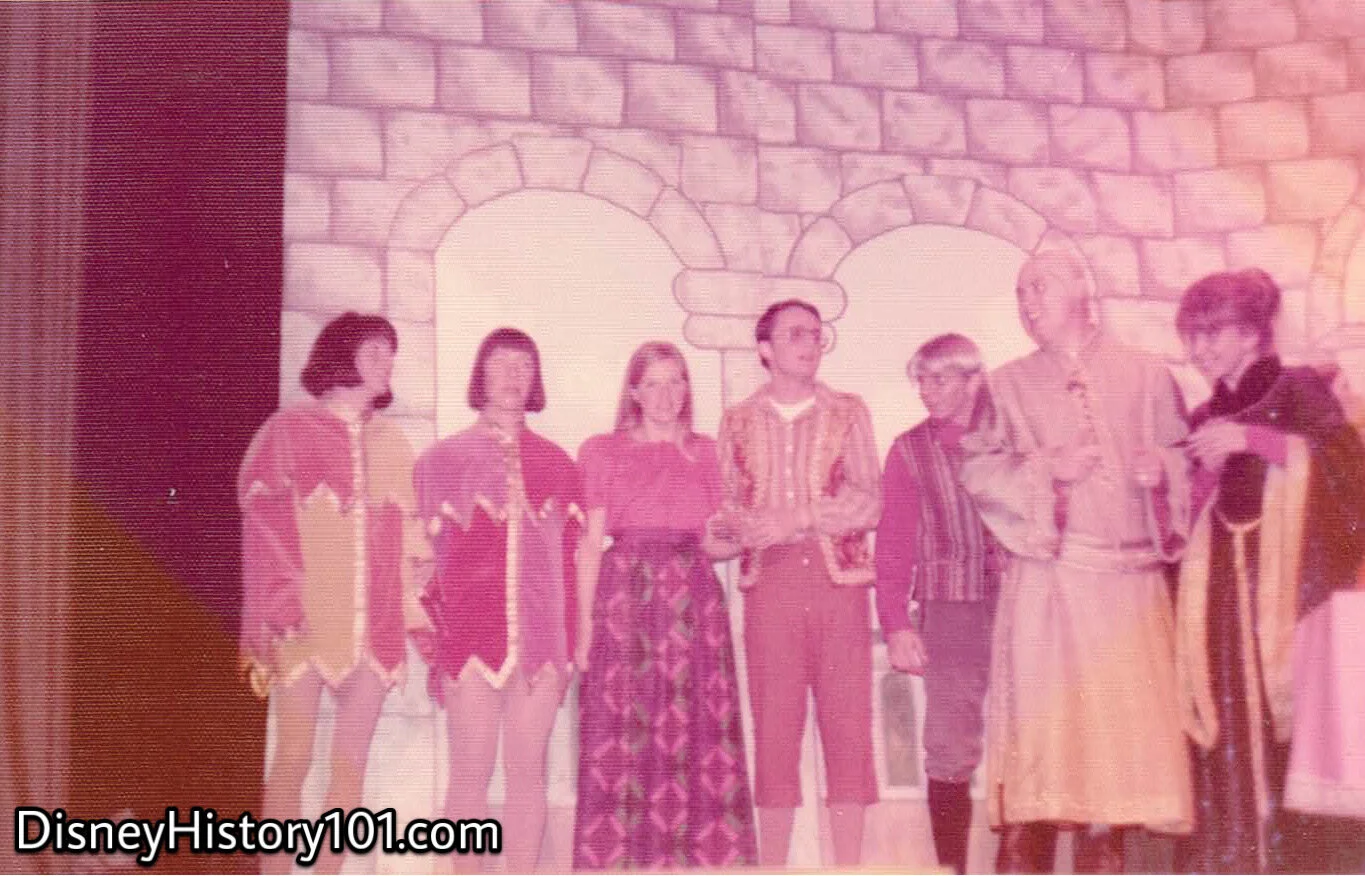
Rumplestiltskin Rehearsal on the Fantasyland Theatre Stage, 1972 - (from left to right) : unknown, unknown, unknown, Nelson Campbell, Kevin Treischel, Don Payne, and Rhonda Treischel
Don Payne (who portrayed the Prime Minister) forgot all about a particular element of his costume until he saw this Vintage View : “The Prime Minister was dressed in a green, brocaded robe…I had completely forgotten that I wore a bald cap for that part! Threw me…until I saw the enlarged image.”
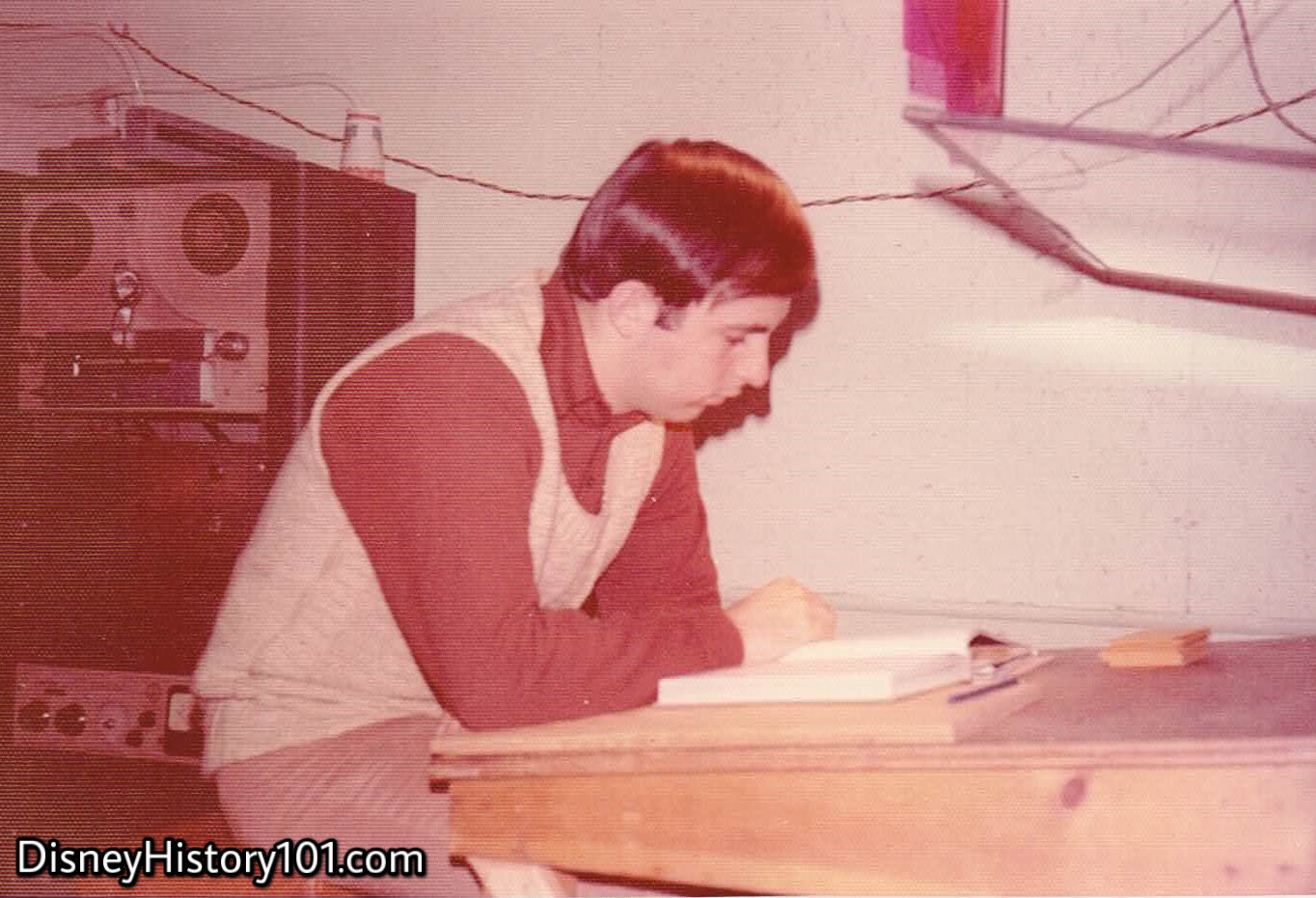
Rumplestiltskin Rehearsal, 1972
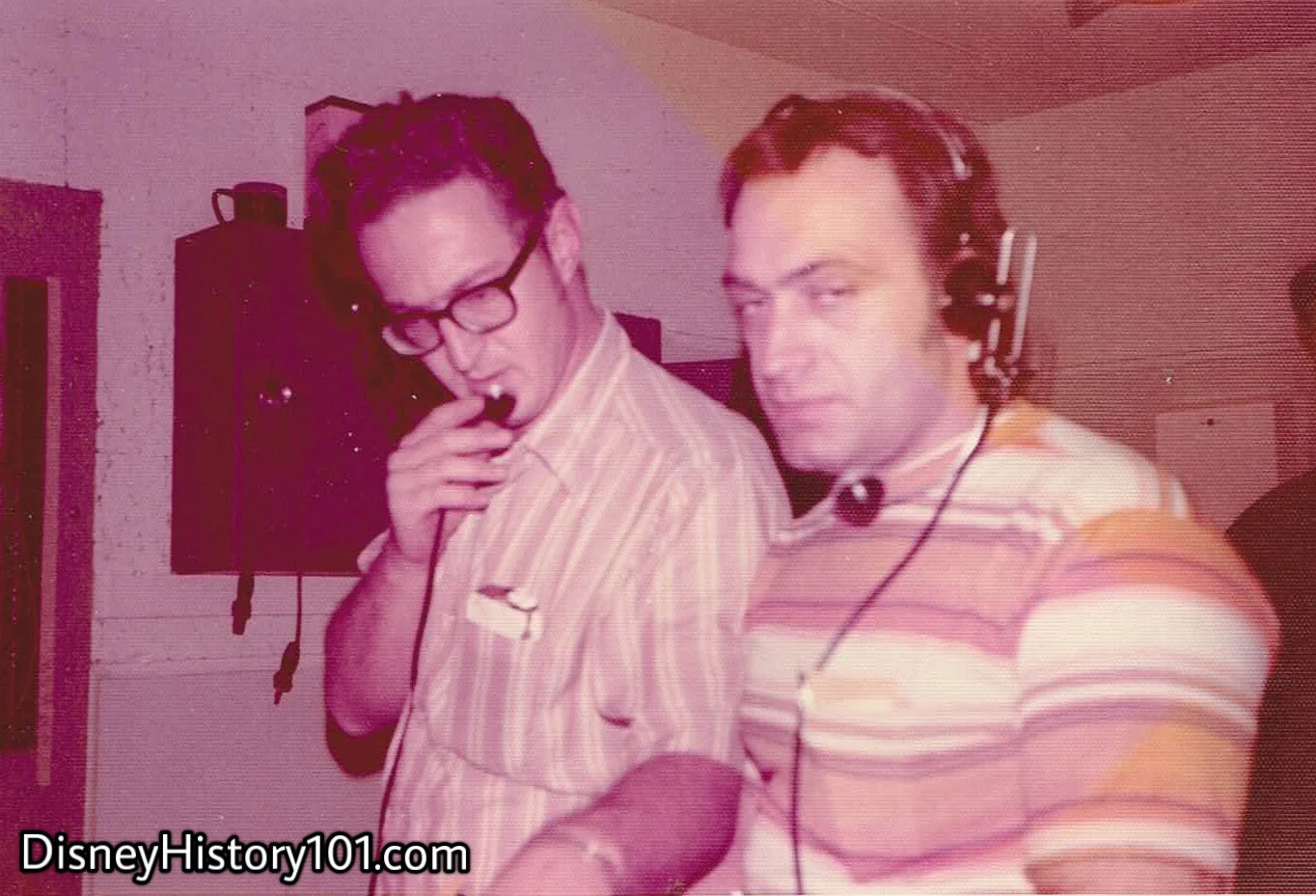
Rumplestiltskin Crew, 1972
“The Sound Department was interesting as to who was responsible for what and when. They tried to explain it, and it all worked well ; but all I knew was that some were IATSE (the Studio Union) and some weren’t. Really good guys, though!
They were so generous with their time and expertise so we could have proper lighting. The Mill worker too, helping us build sets ; and the Wardrobe folks offering costume solutions. Of course, some of us worked with a number of them on various attractions and venues. They were all knowledgeable and to know. I don’t remember the name of the man in the horizontal stripes, but I was always confident things would go well when he was around.”
-Tom Pletts
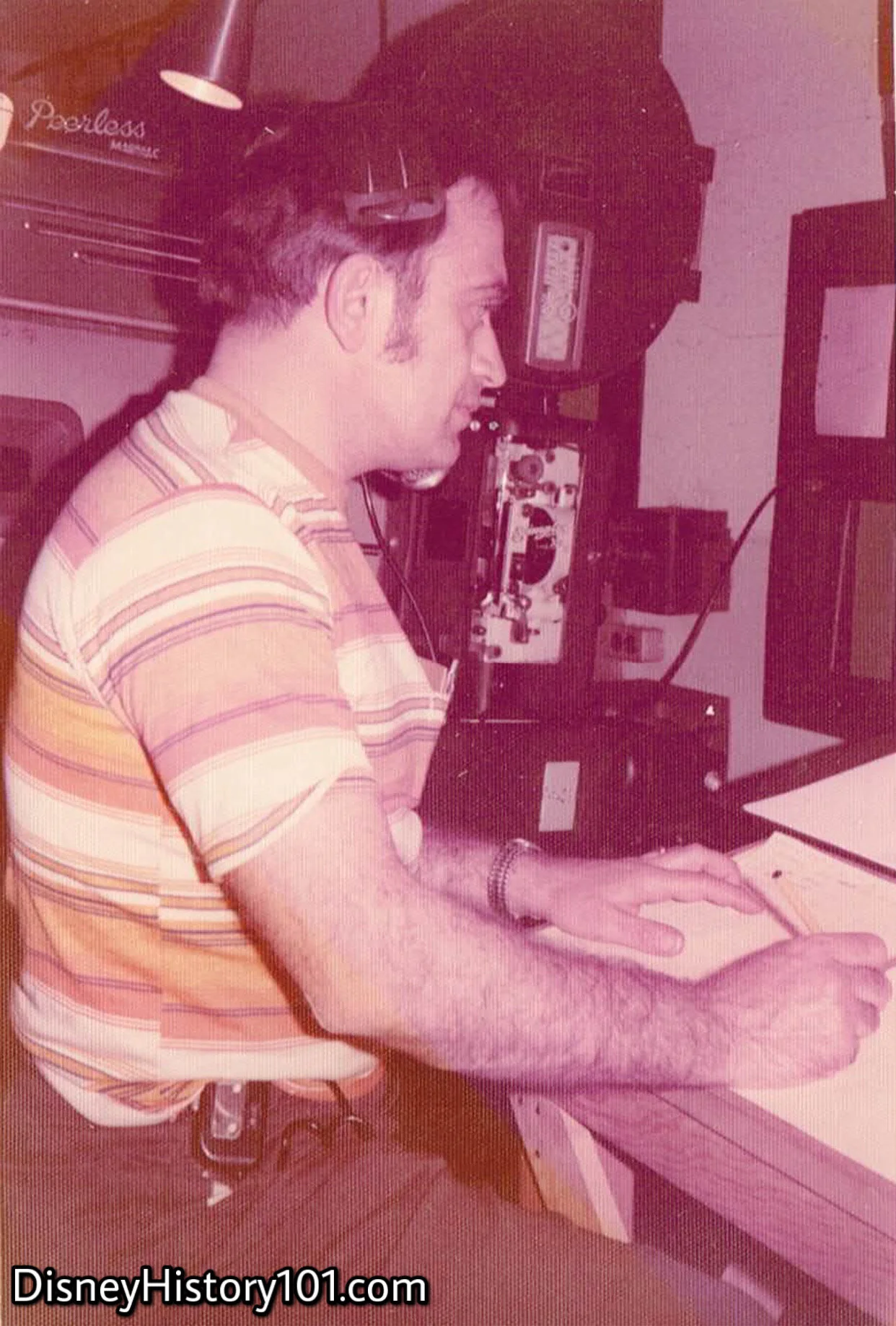
Rumplestiltskin Crew, 1972
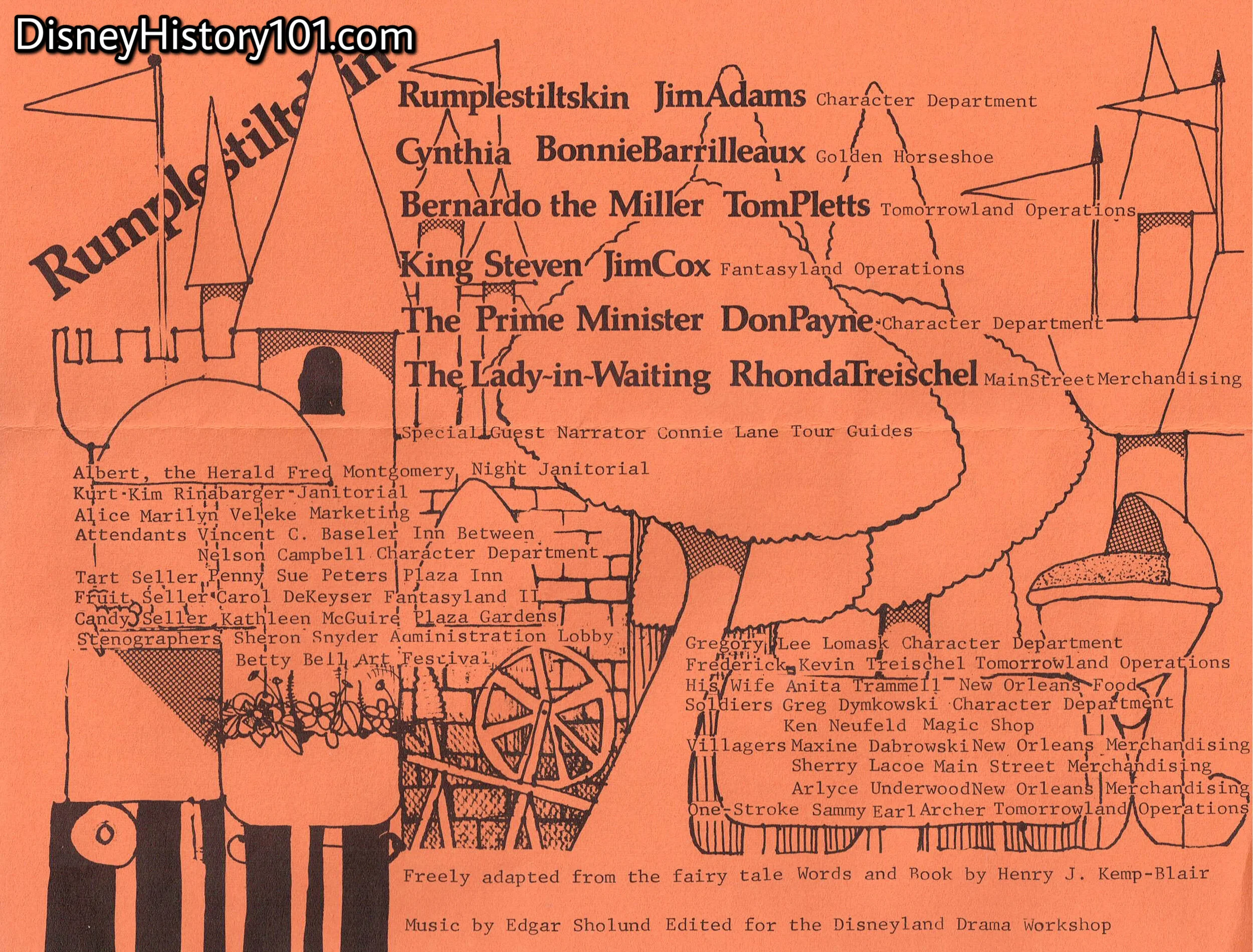
Rumplestiltskin Program, 1972
Now, I would like to direct your attention to the diverse job descriptions of the Rumplestiltskin cast. Many of these Disneyland Cast Members did much more in their personal lives than work for Disneyland and appear in Disneyland Drama Club productions. For example Penny Peters (had four years of Food Service up to this time and) currently worked at the Plaza Inn and the Inn Between. Unbeknownst to most, these amazing Cast Members also have another life away from Disneyland, and for Penny Peters (a CalState Long Beach graduate with a BA in psychology), she is a teacher of the emotionally handicapped in Tustin.
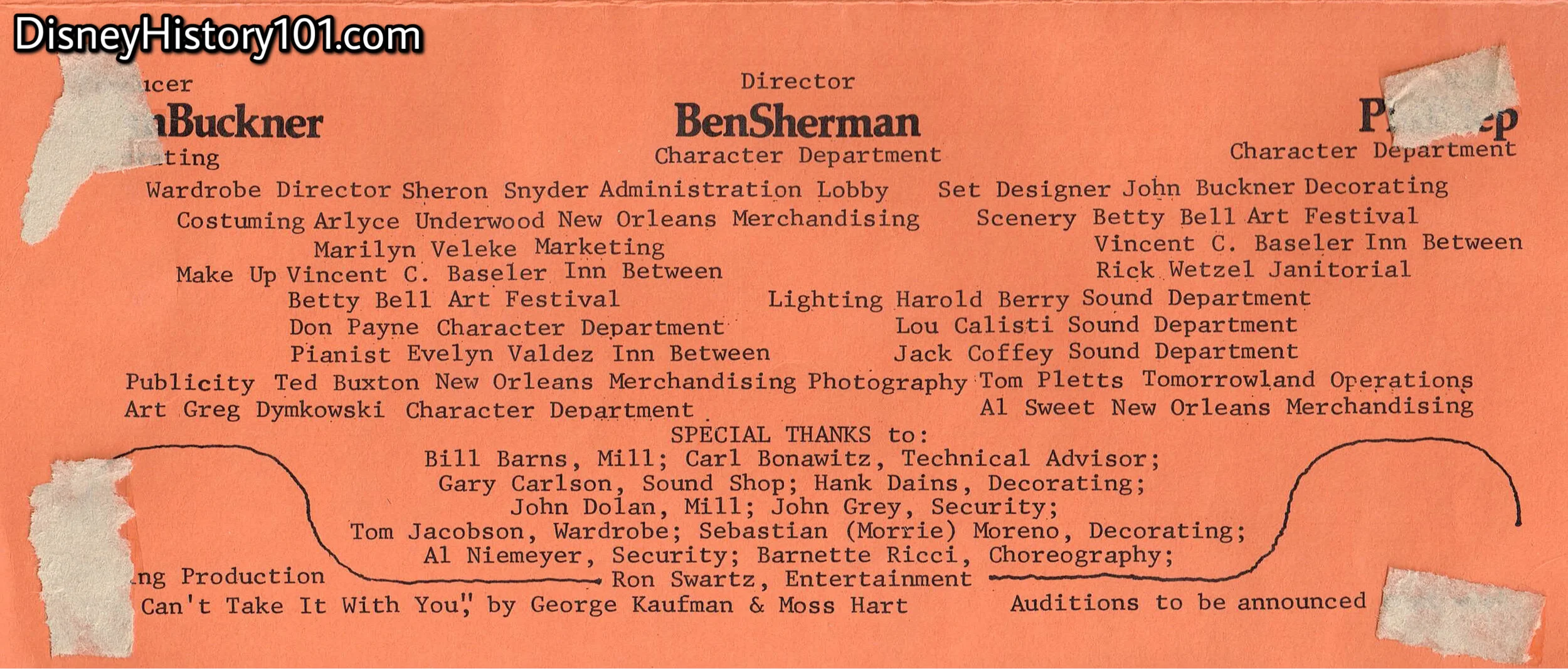
Rumplestiltskin Program, 1972
Note the announcement of the next Disneyland drama Club production “You Can’t Take It With You” at the bottom of the page.
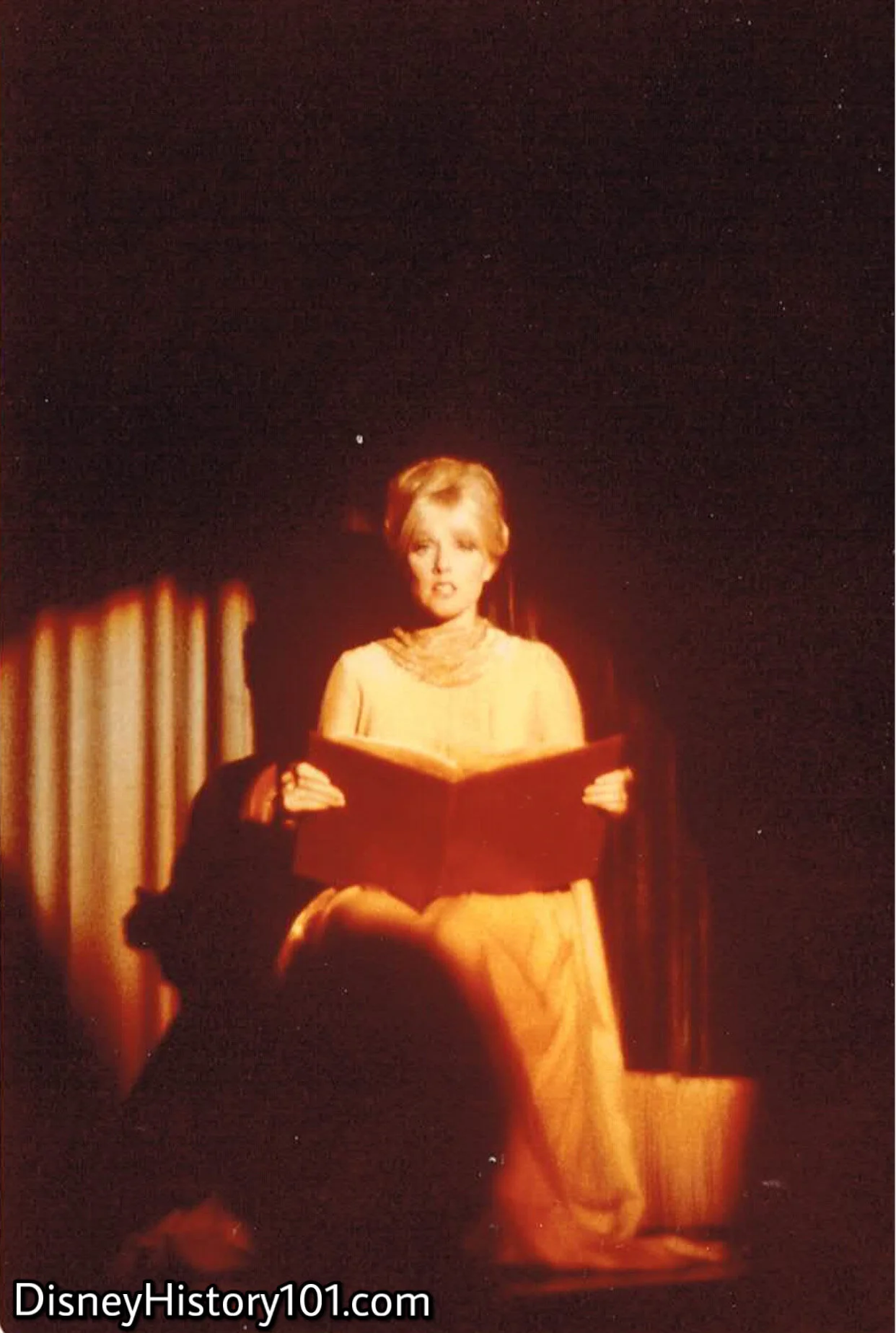
Rumplestiltskin, 1972
Connie Lane (then, V.I.P. Tour Guide and 2nd Disneyland Ambassador) portrays the “Special Guest Narrator” of the story.
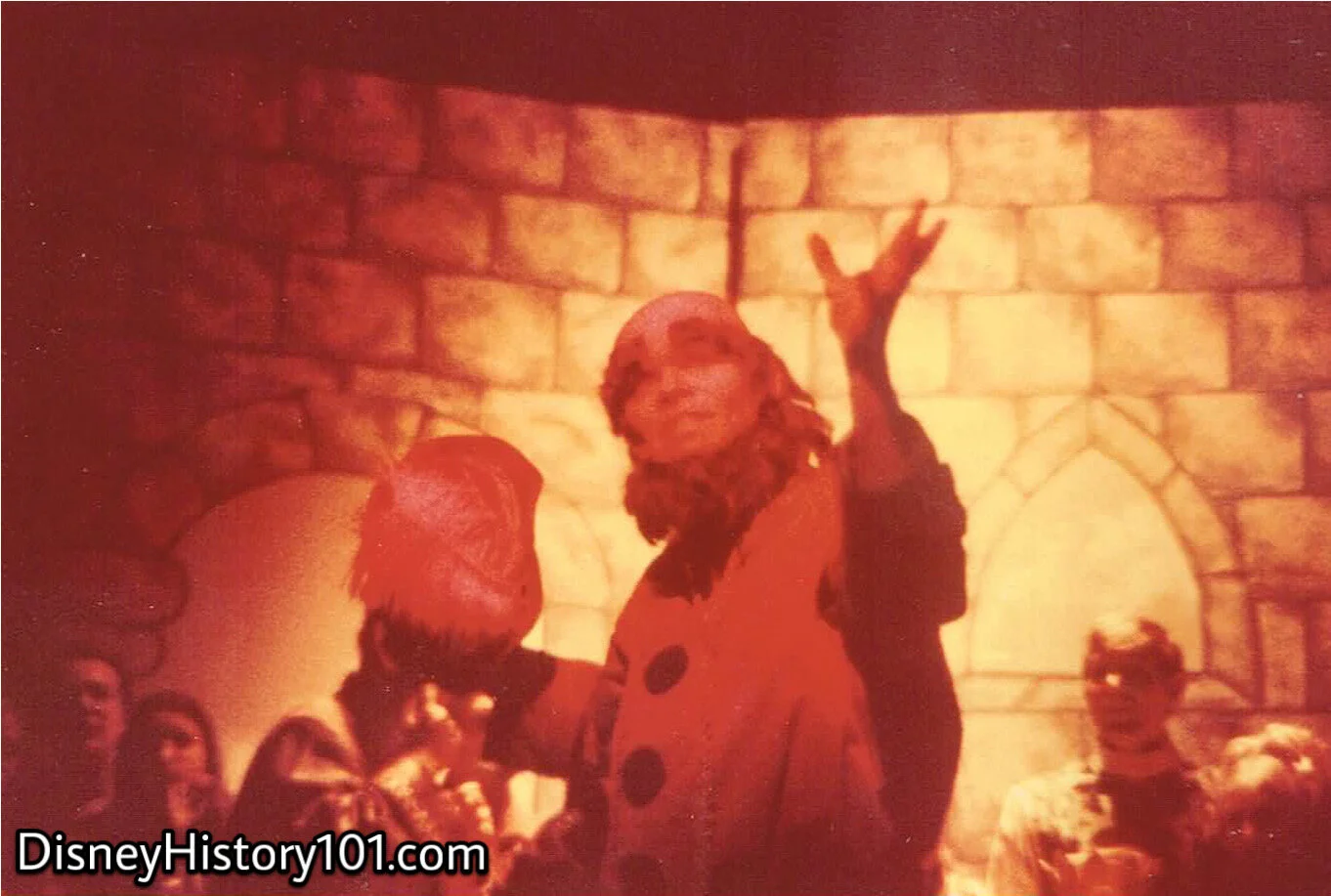
Rumplestiltskin, 1972
Pictured here is Jim Adams (Character Dept.) as the lead character Rumplestiltskin. Don Payne recalls : “I built Rumplestiltskin’s beard…which Jim Adams wore for each performance. The beard was built with a liquid latex base and crepe hair. I had made the base very thick so the appliance would last for all the performances. That sucker was DURABLE!”
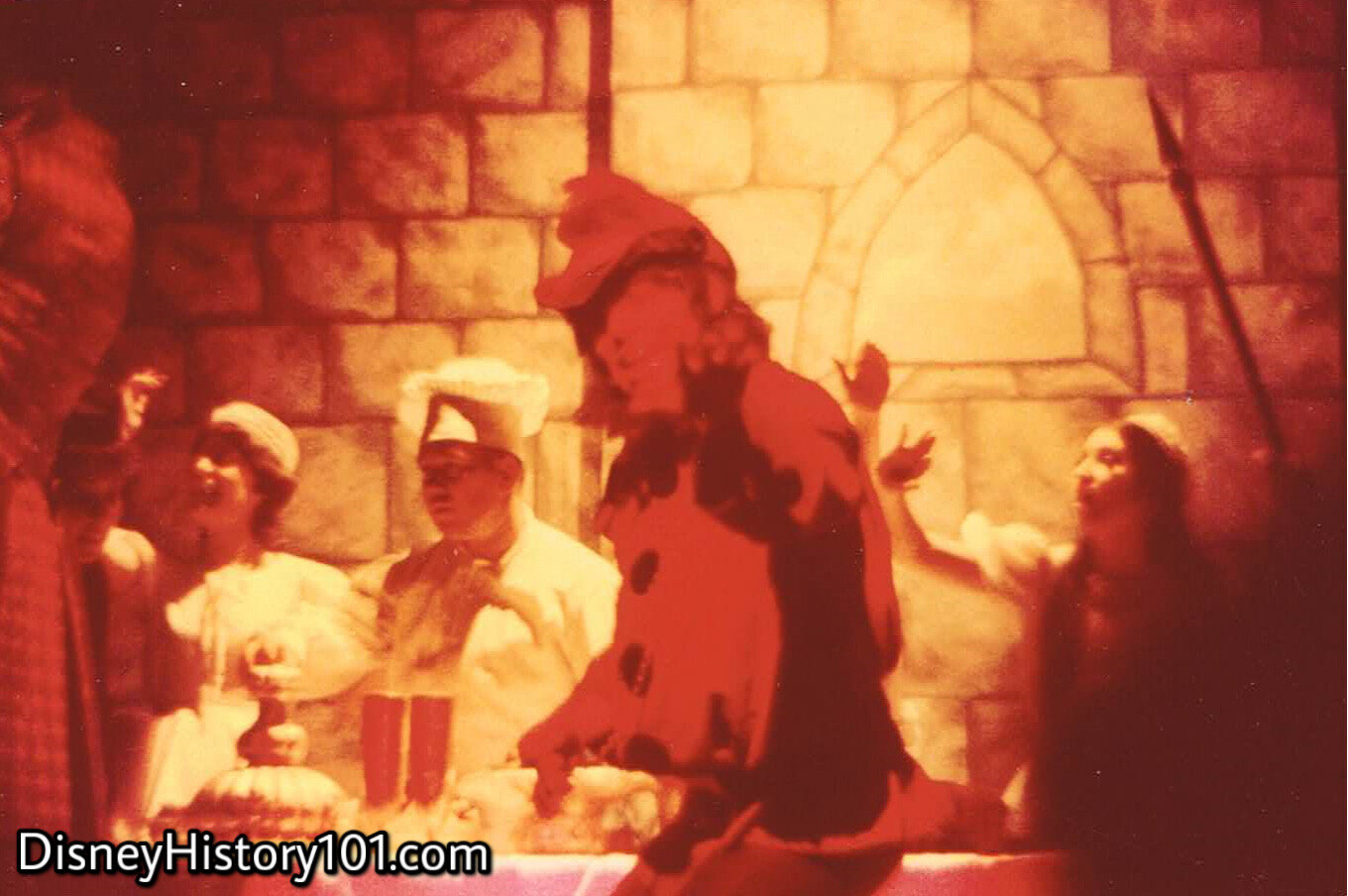
Rumplestiltskin, 1972
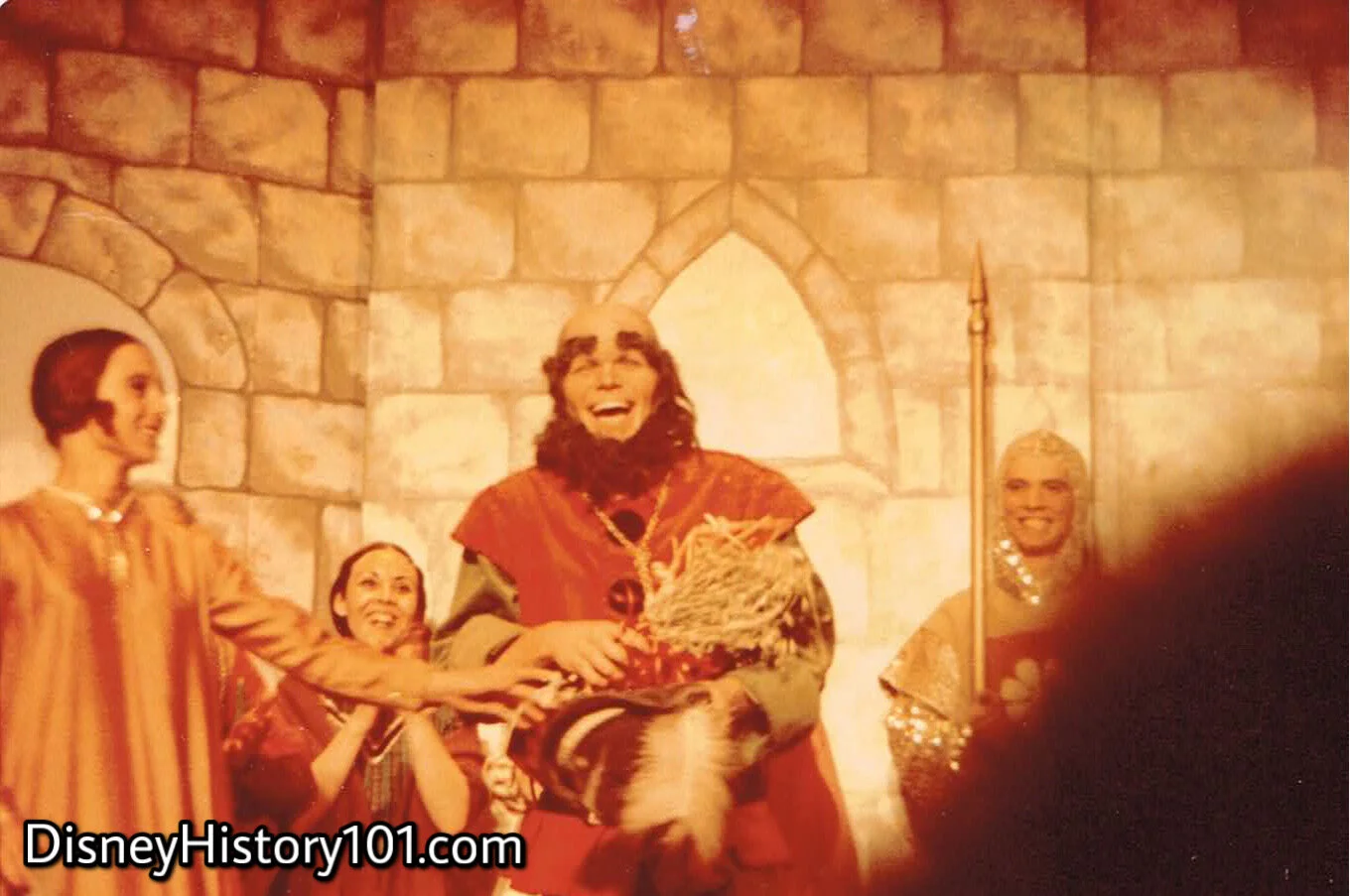
Rumplestiltskin, 1972
Don Payne shared these recollections of the background of Jim Adams (the Disneyland Character Dept. employee who portrayed Rumplestiltskin in the Disneyland Drama Club production) : “You’re looking at Jim Adams (Character Department) as Rumplestiltskin! According to a long-time friend, “Jim had been a gymnast in High School and could do amazing flips and moves.” He worked in the Character Department, and later at the Golden Horseshoe! With friend Don Payne, the duo wrote, produced, and directed the “Annual Main Street Easter Walking Race” which was used for years even after they both left Disneyland.”
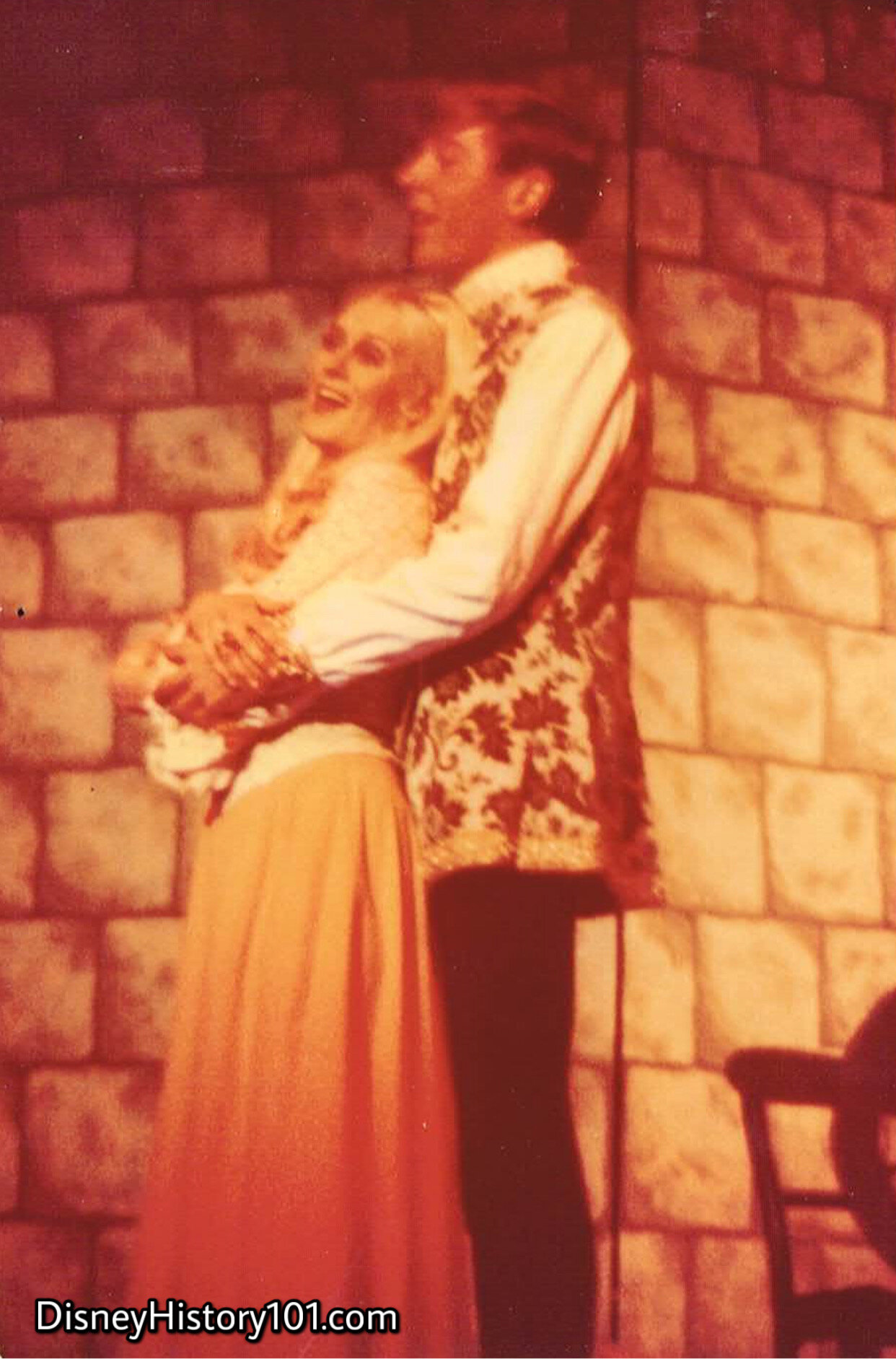
The Miller's Daughter and King Steven of Rumplestiltskin, 1972
Bonnie Barrileaux (a Slue Foot Sue’s Golden Horseshoe Revue Can-Can Dancer, an assistant, and Disneyland park choreographer) and Jim Cox.
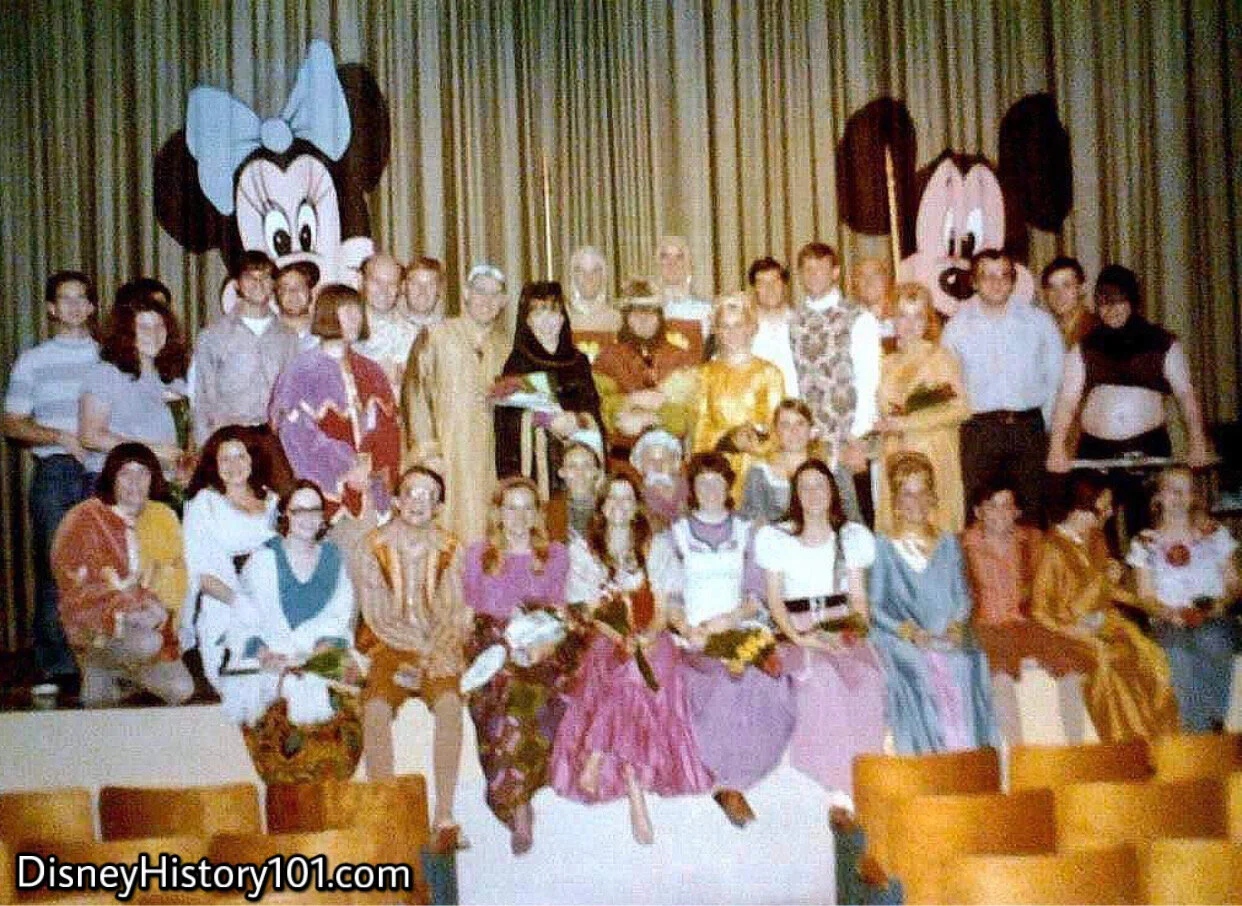
Rumplestiltskin Cast Photo on the Fantasyland Theatre Stage, 1972
Tom Pletts remembers : “There were several things that impressed me : Jim Adams’ exuberance and talent, which was infectious! Phil Slep’s musical direction, Barnet Ricci’s grace and patience with the choreography, Ben Sherman’s handling of the cast and crew and all the details, and my discovery that I’m a klutz at dancing.”
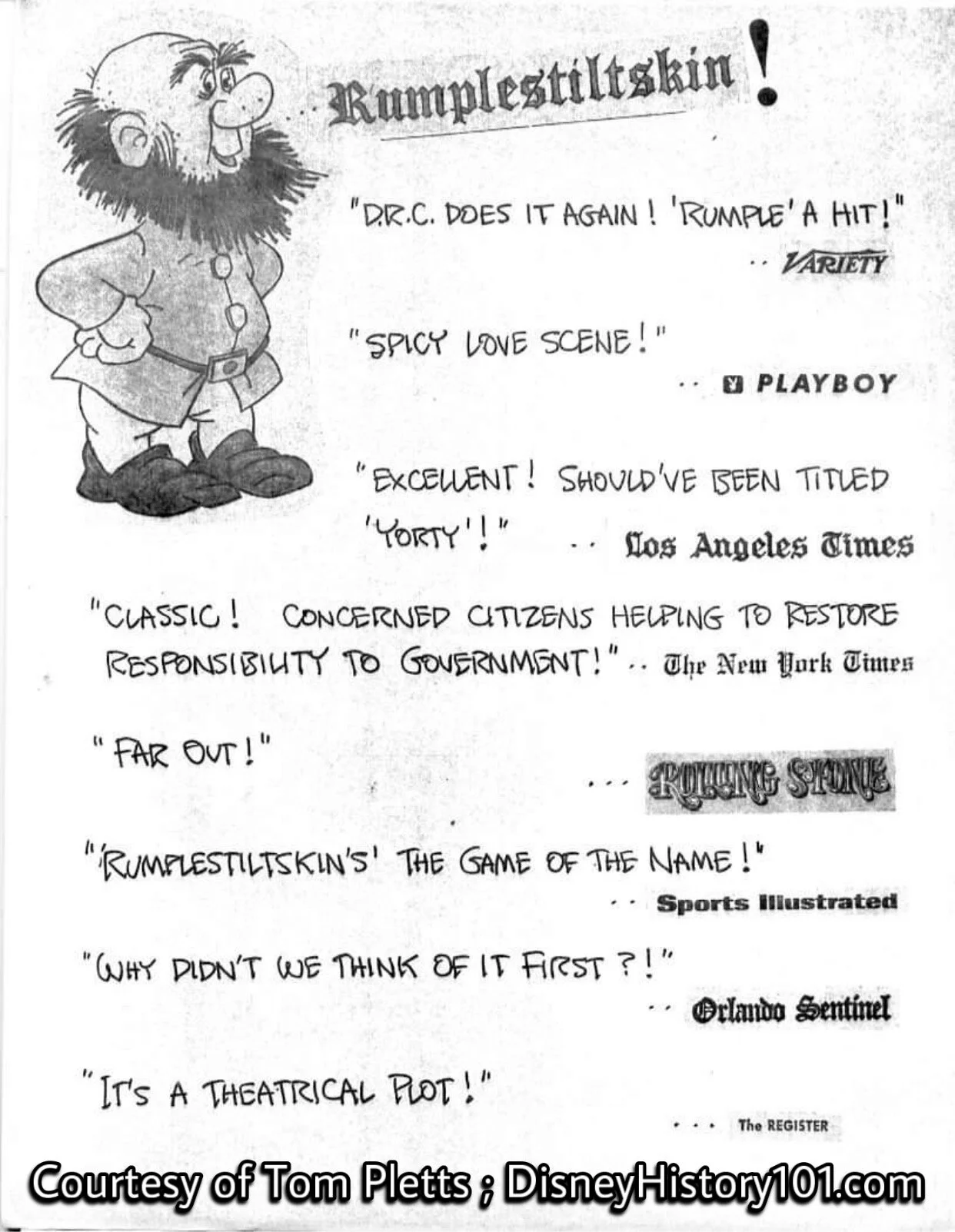
"Rumplestiltskin" Revues Poster by Tom Pletts, 1972
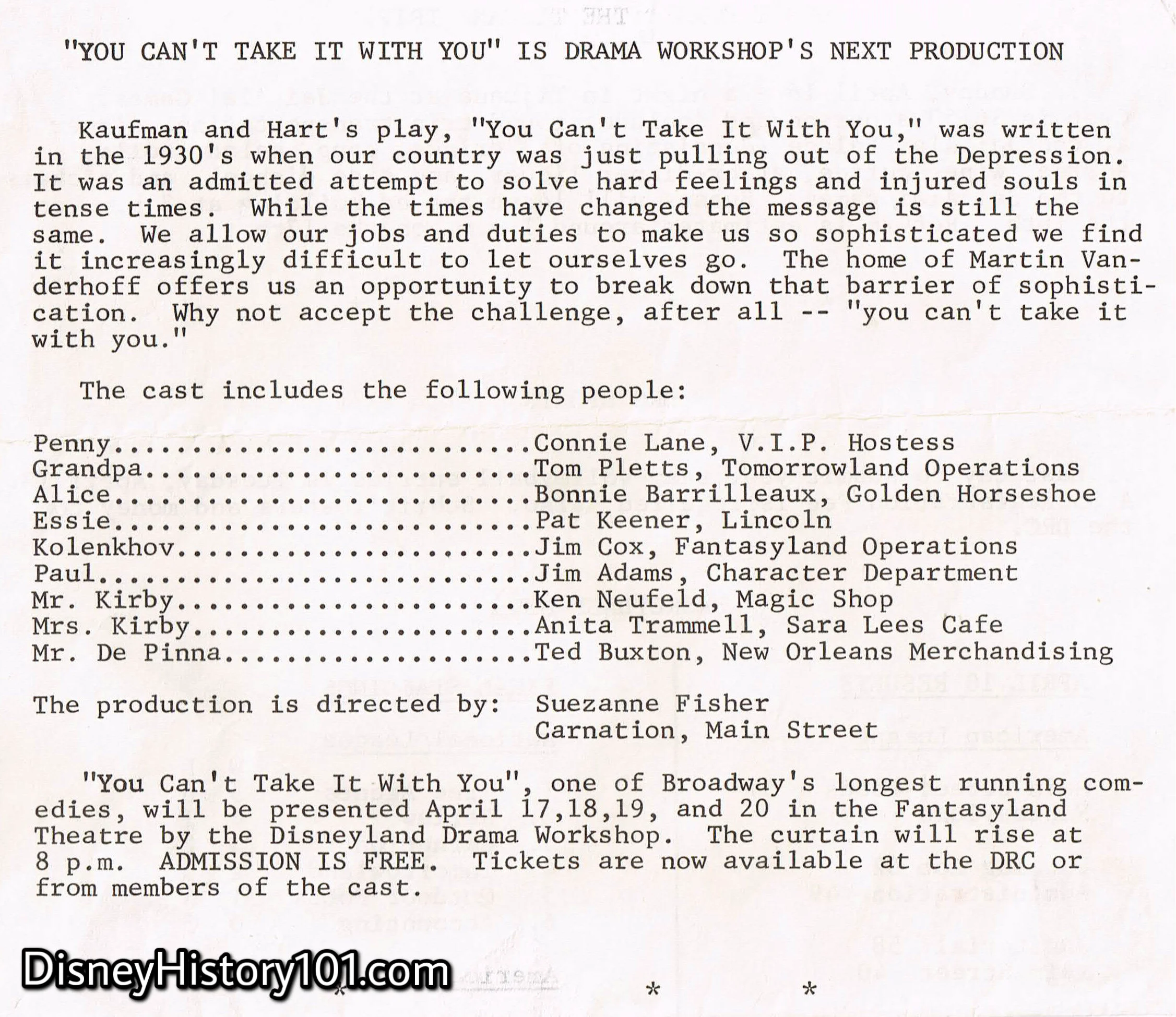
"You Can't Take It With You" Announcement (published in Disneyland LINE), 1972
The official title of the Disneyland Drama Club’s next production was announced here, including its cast members, and showtimes.
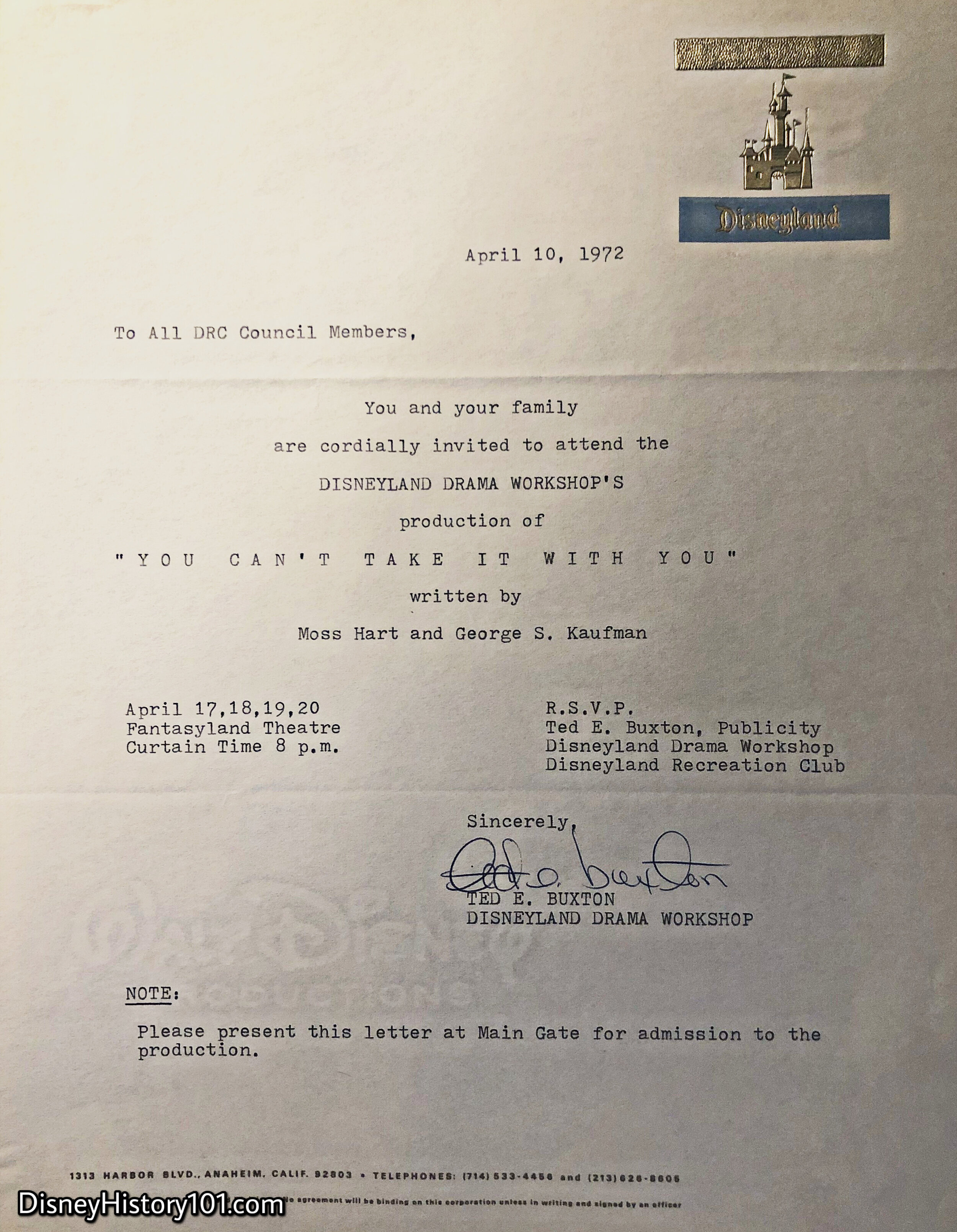
Letter to Disneyland Recreation Club Council Members, 1972
The Disneyland Drama Club was so grateful for the support of the Disneyland Recreation Club, that they personally invited the current D.R.C. Council Members to the show. Pictured, is a copy of one such Admission Letter for “You Can't Take It With You”.
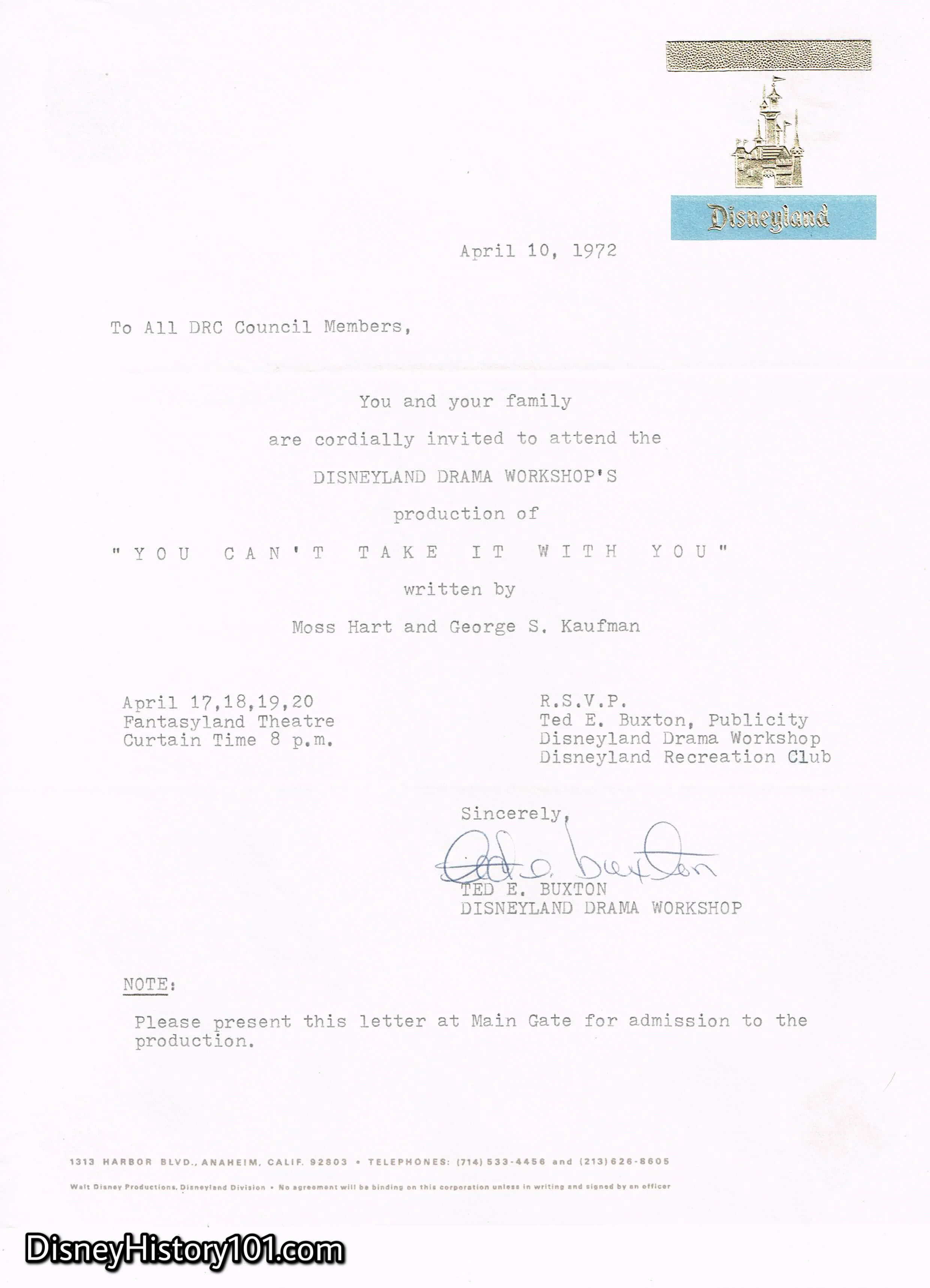
A Letter from Ted E. Buxton to D.R.C. Council Members
Present members of the Disneyland Recreational Club were invited to attend the Disneyland Drama Club’s production of “You Can’t Take It With You”.
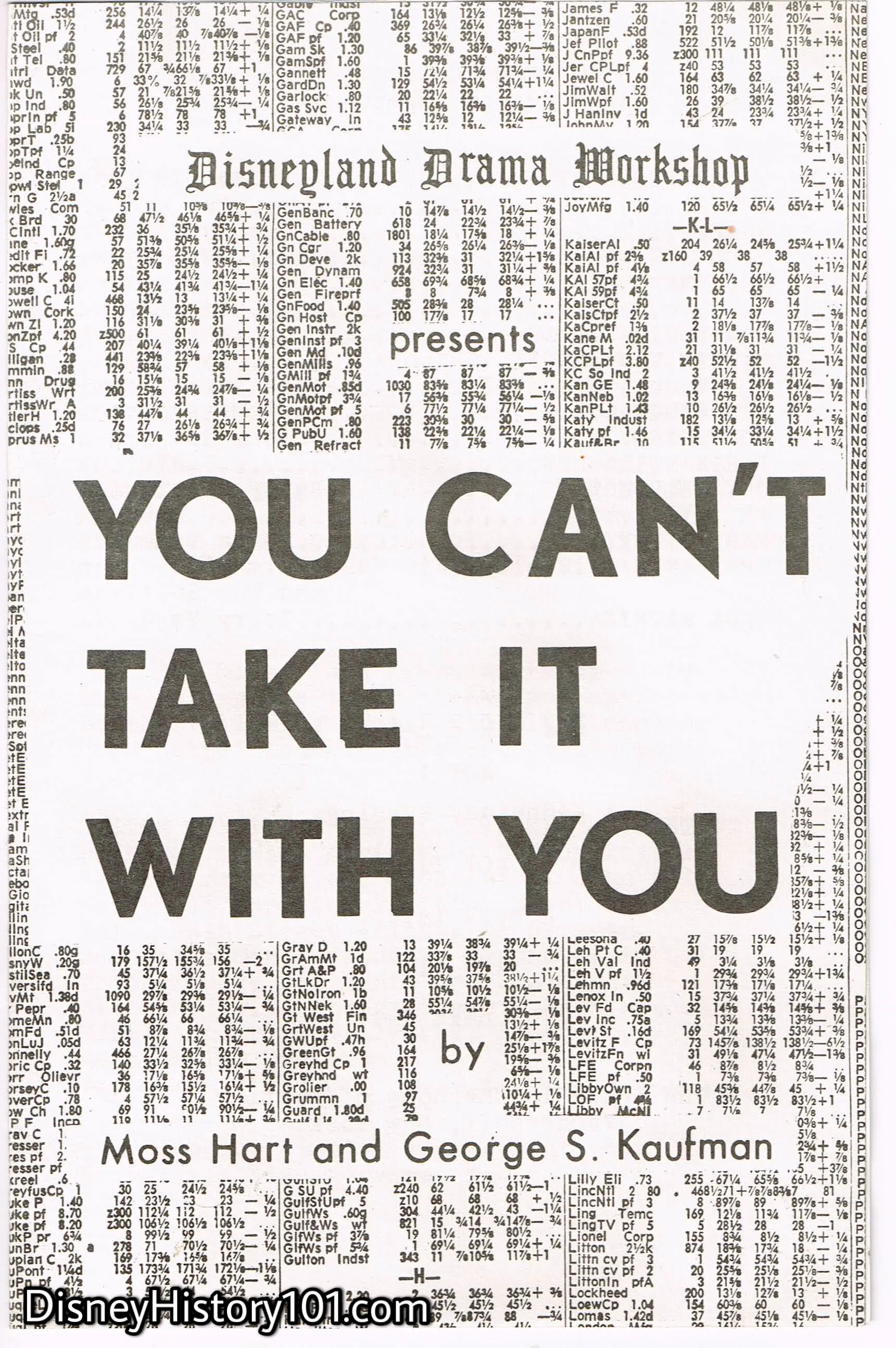
"You Can't Take It With You" Program, (May, 1972)
Again, the production value and size of cast and crew increased (as compared to the previous Disneyland Drama Club production of Rumplestiltskin).
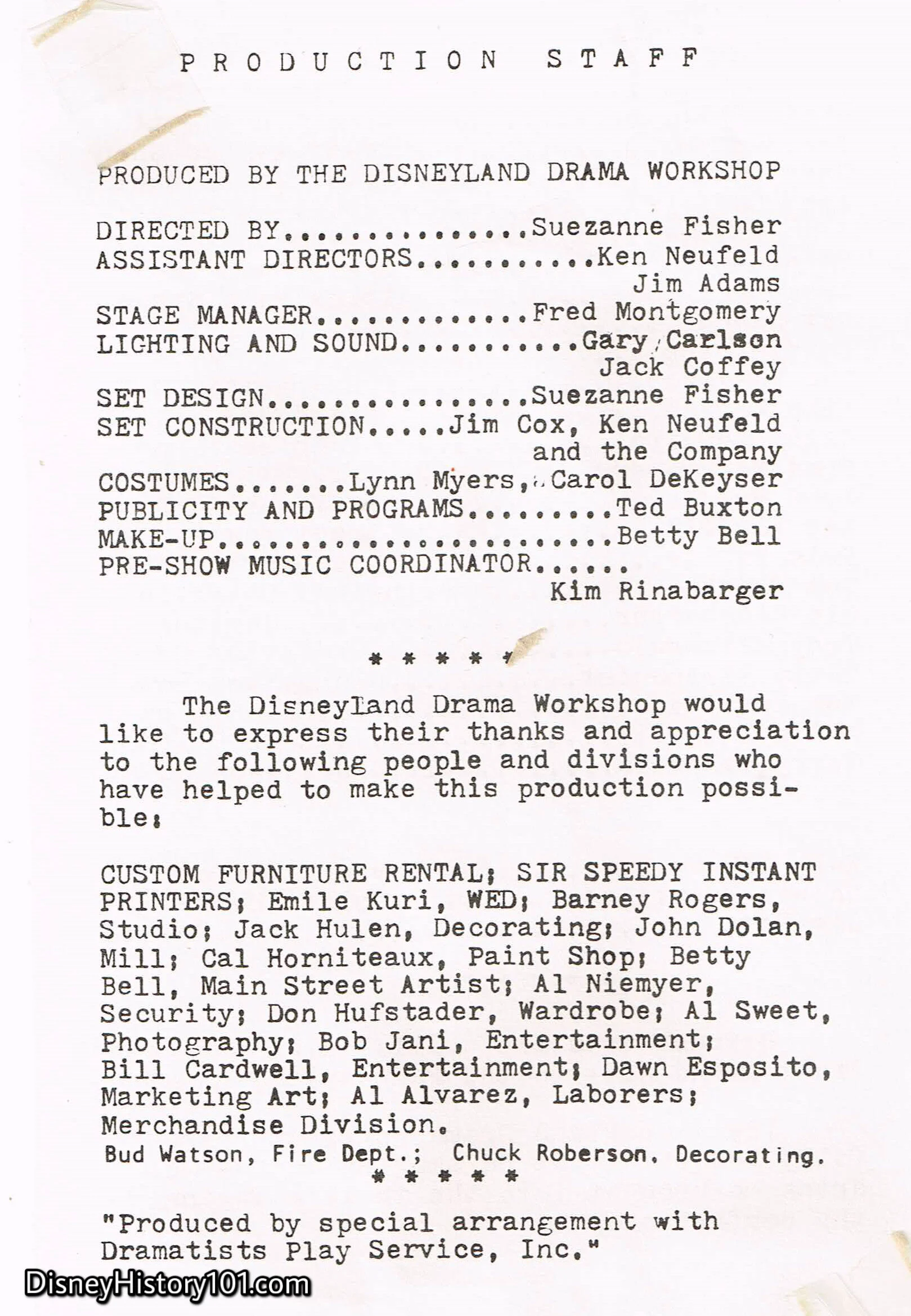
"You Can't Take It With You" Program, (May, 1972)
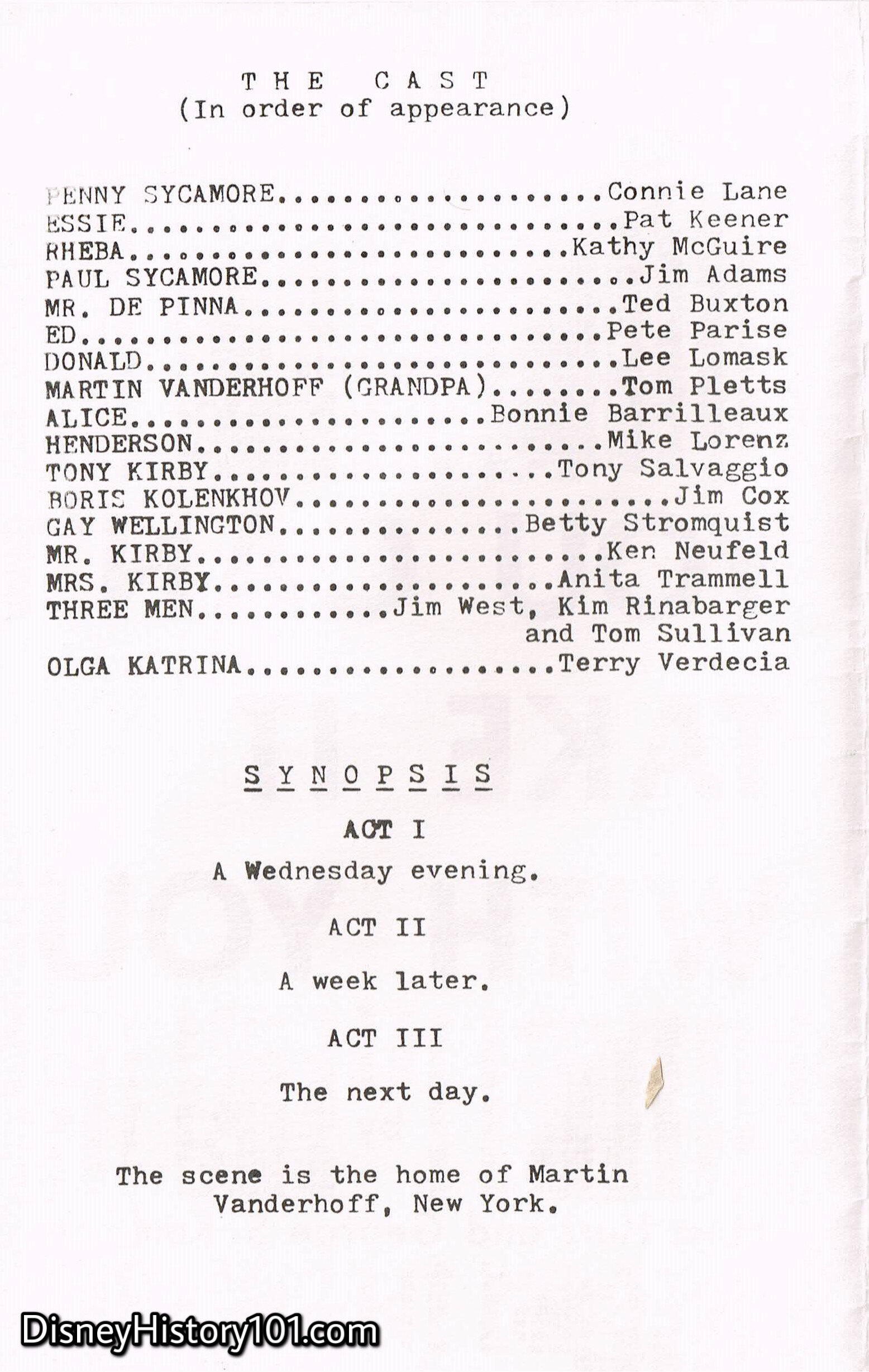
"You Can't Take It With You" Program, (May, 1972)
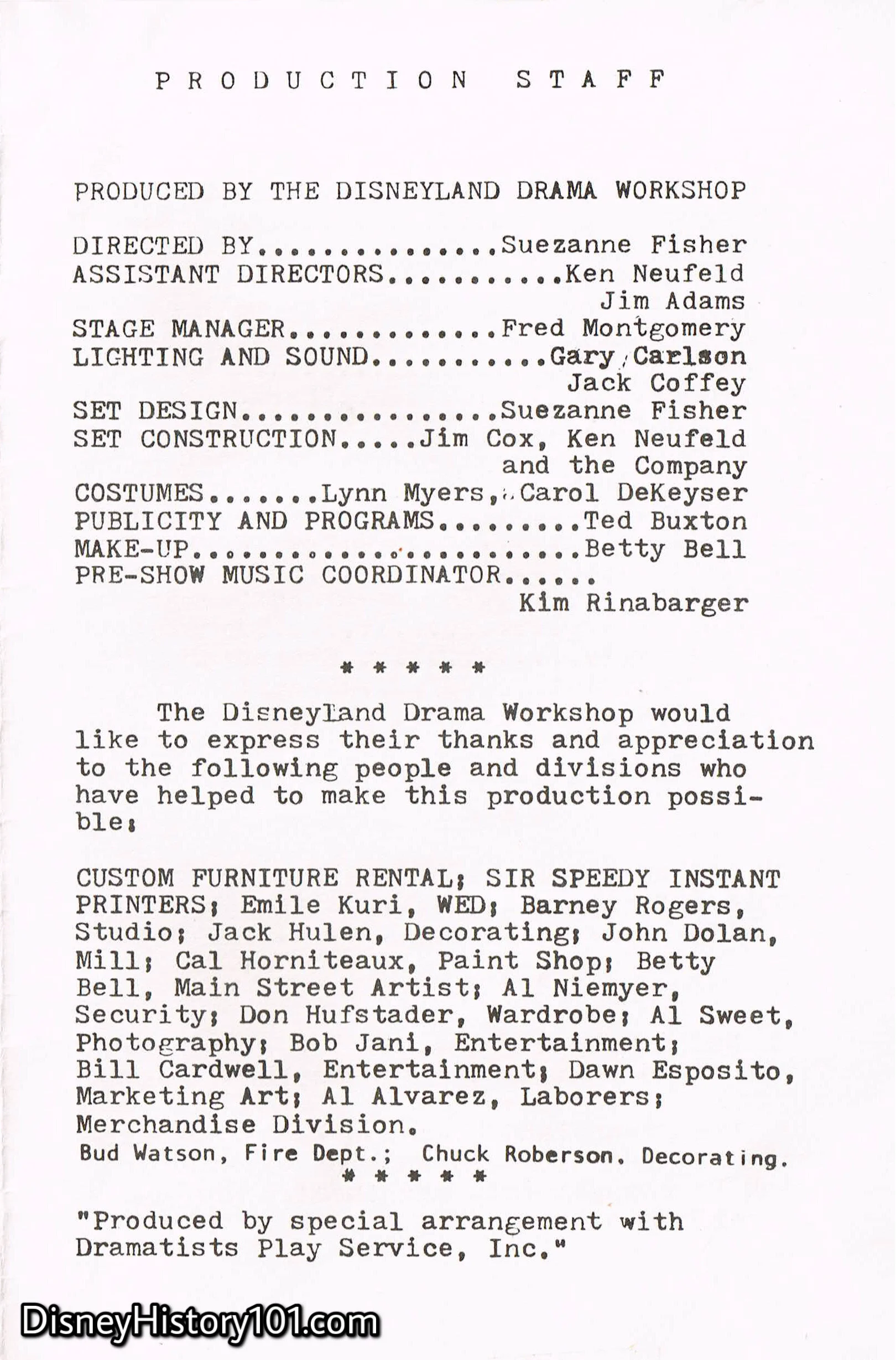
"You Can't Take It With You" Program, (May, 1972)
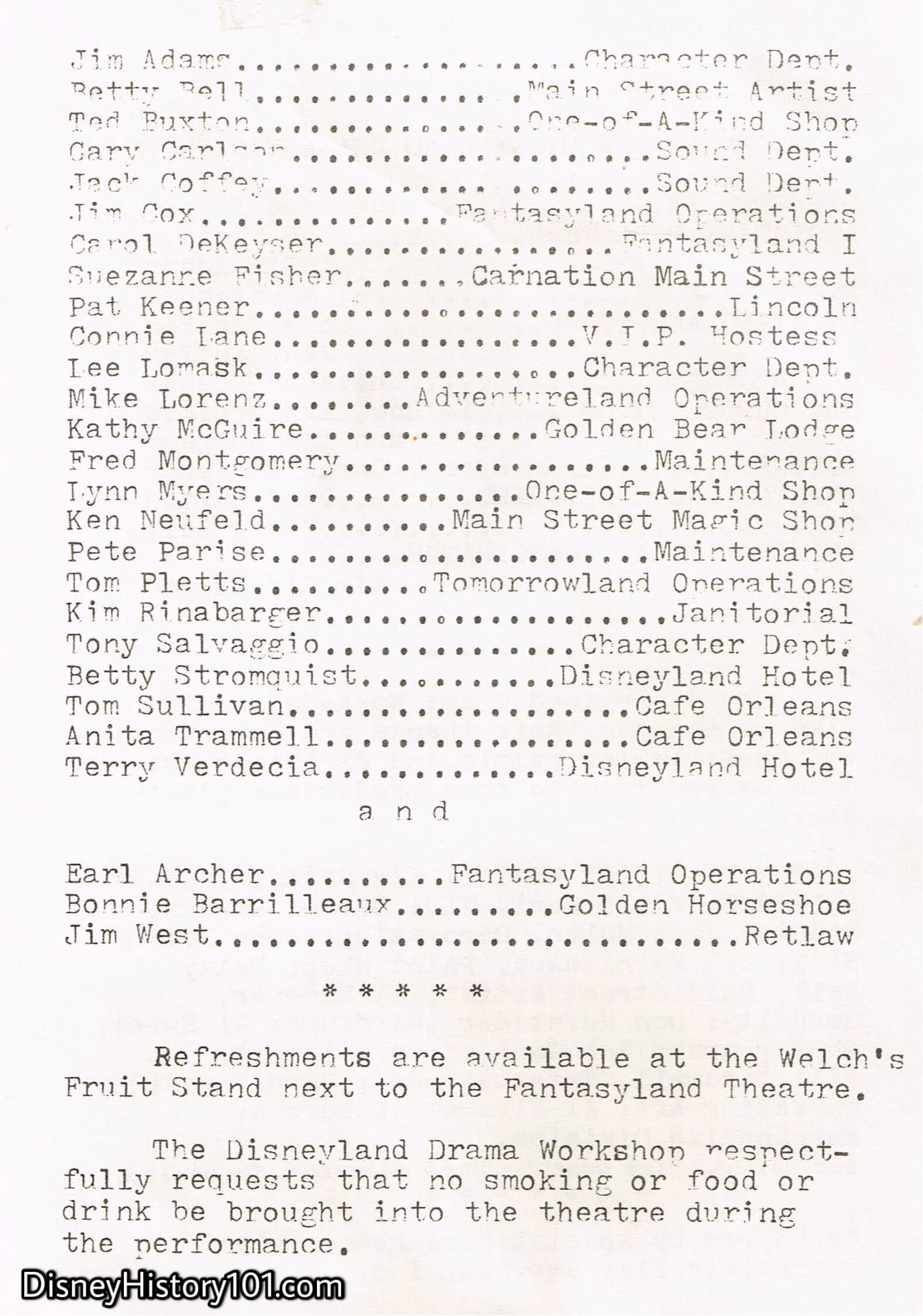
"You Can't Take It With You" Program, (May, 1972)
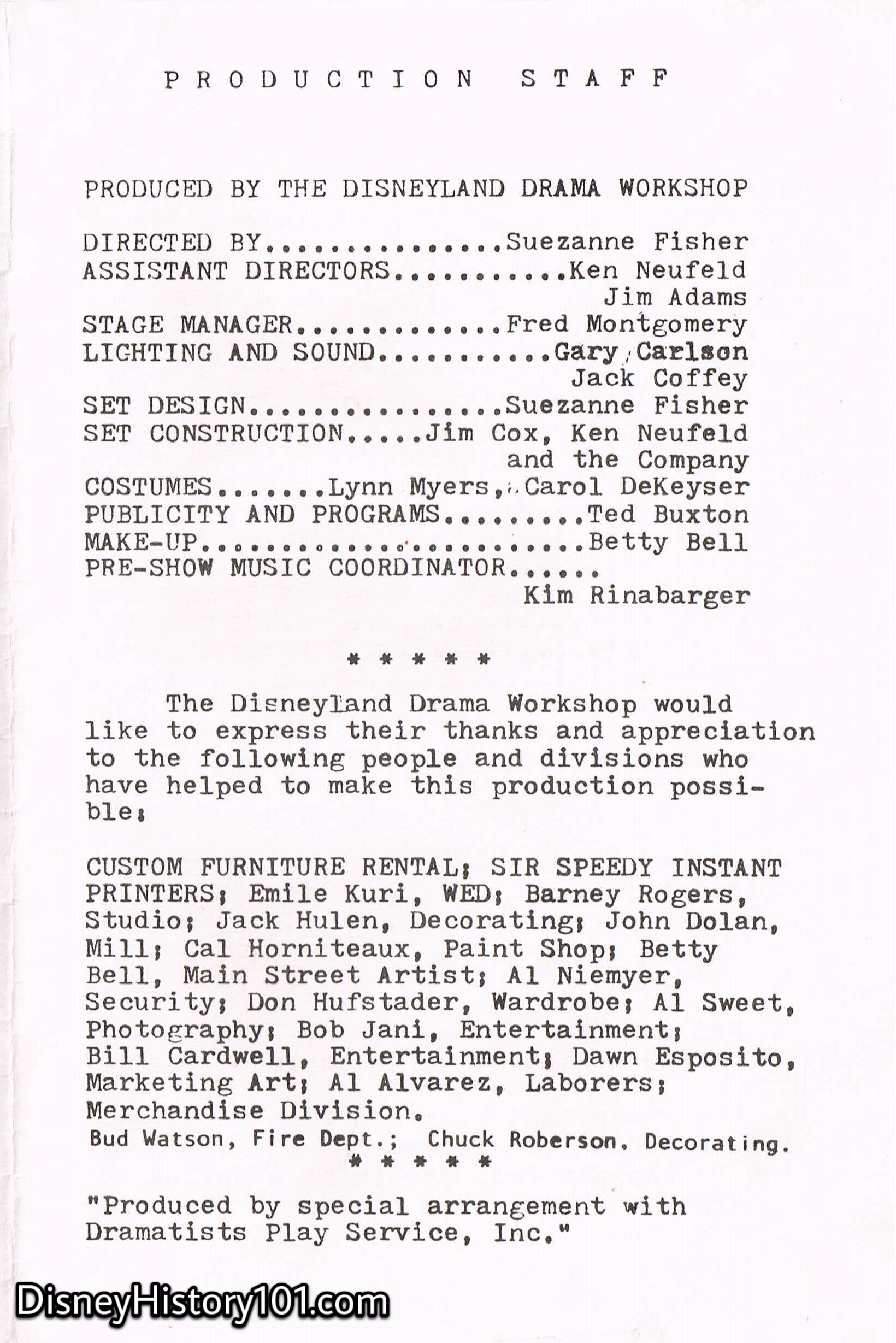
"You Can't Take It With You" Program, (May, 1972)
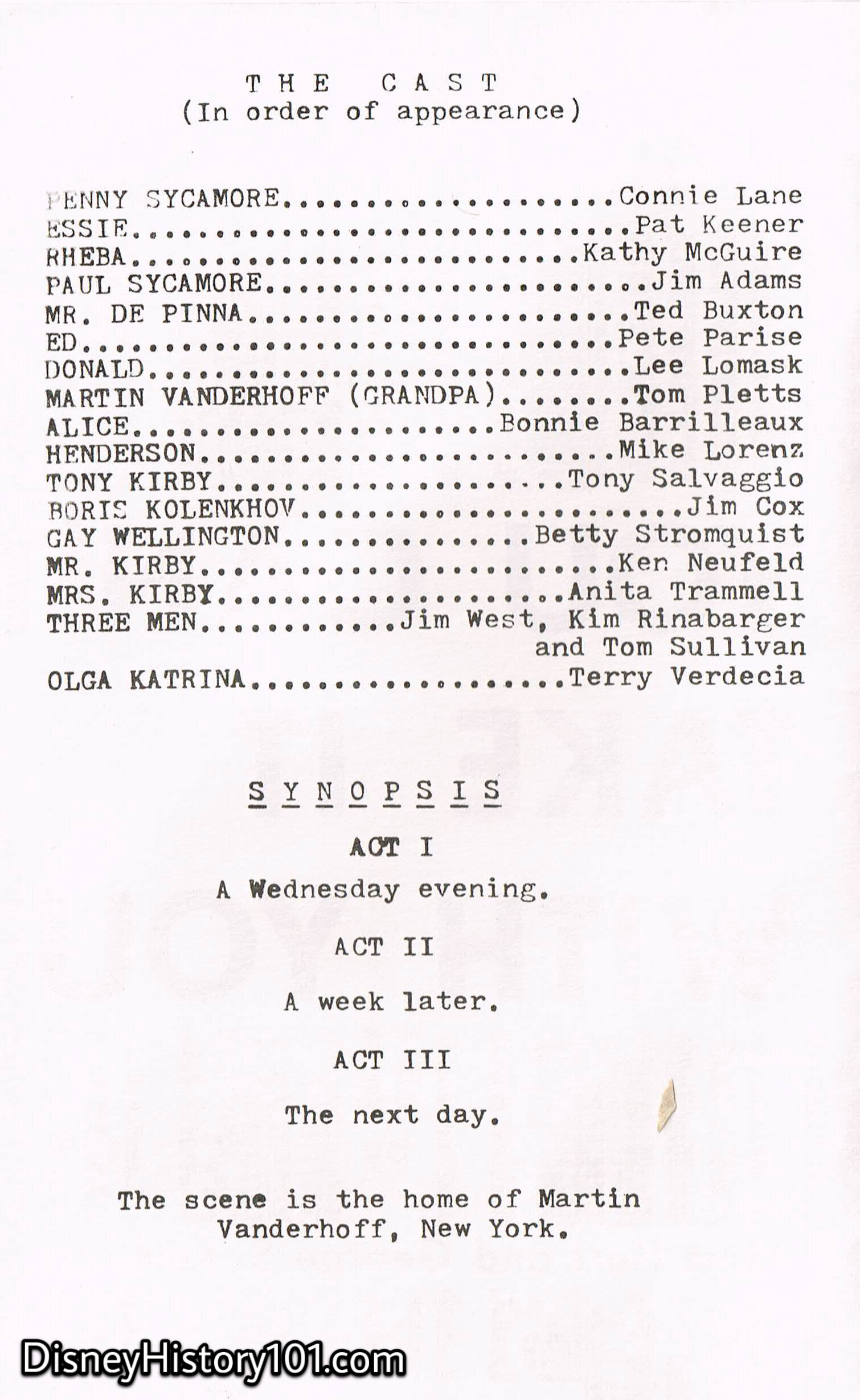
"You Can't Take It With You" Program, (May, 1972)
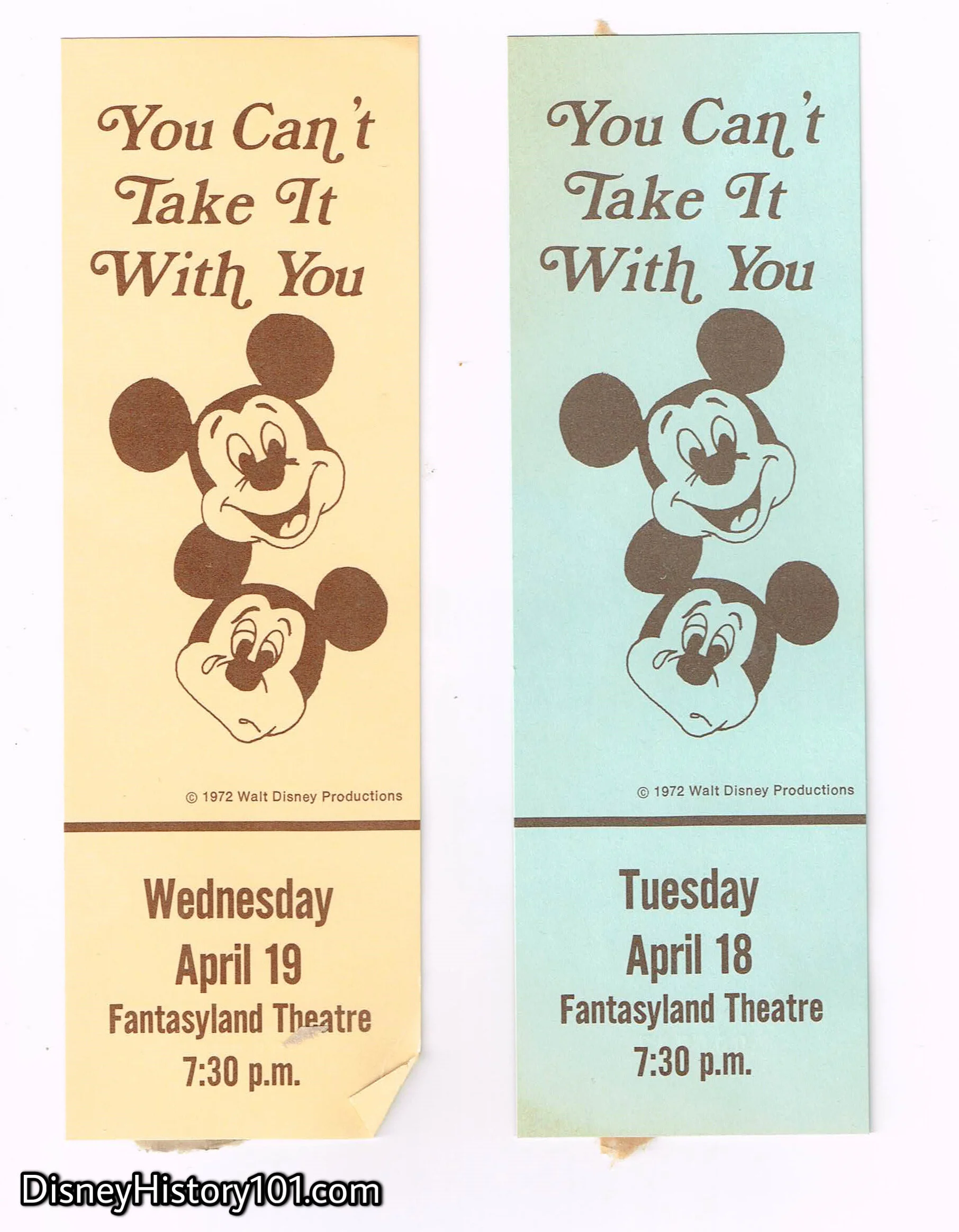
"You Can't Take It With You" Tickets, (May, 1972)
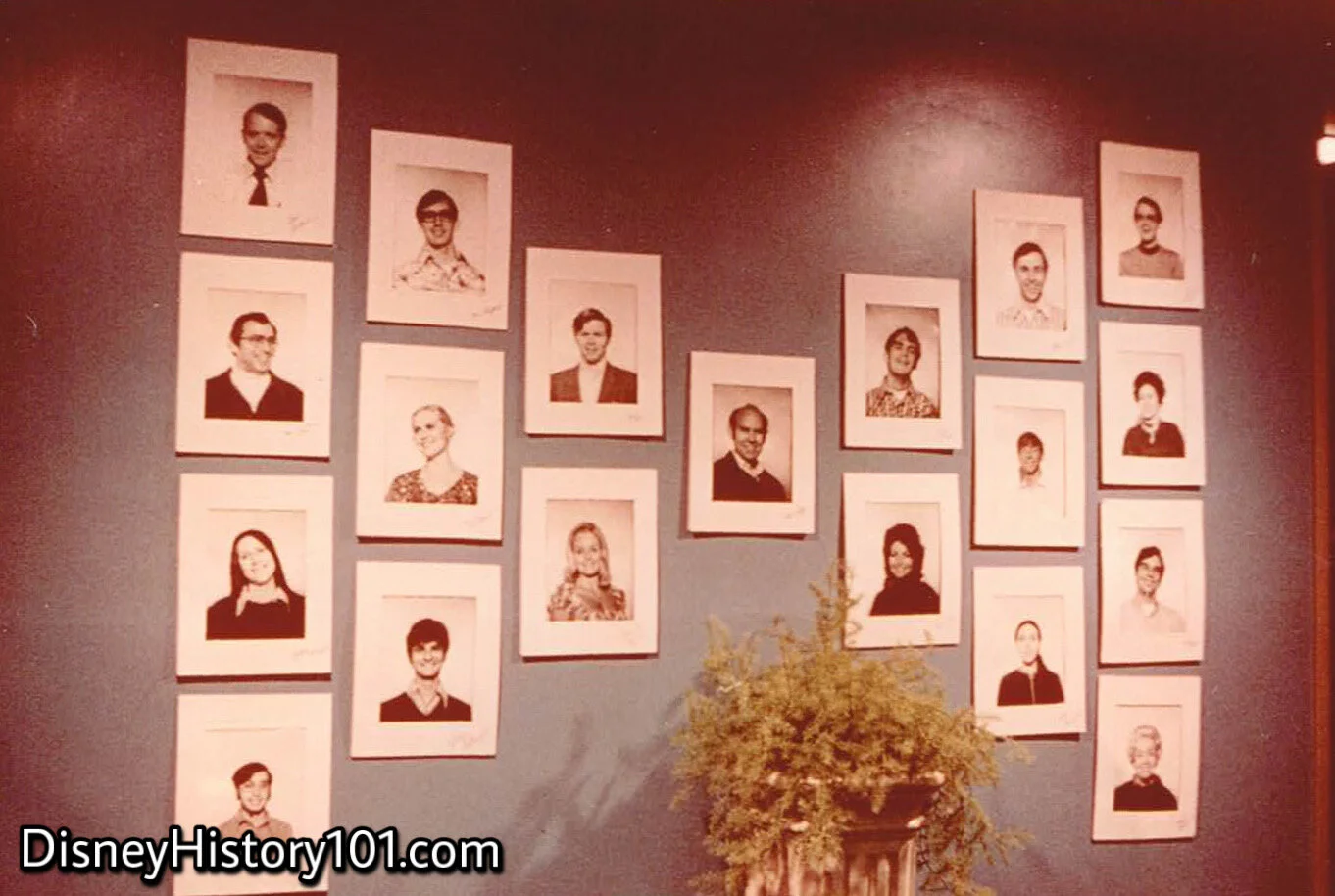
"You Can't Take It With You" Sycamore and Kirby Family Portraits
(Rows, Left to Right) :
Row 1 : Kim Rinabarger, Jim West, Anita Trammell, and Lee Lomask
Row 2 : Ken Neufeld, Bonnie B., and Tony Salvagio
Row 3 : Jim Adams and Connie Lane
Row 4 : Tom Pletts
Row 5 : Pete Parise and Pat Keener
Row 6 : Tom Sullivan, Jim Cox, and Kathy McGuire
Row 7 : Terry Verdicia, ?, Mike Lorenz, and Betty Stromquist
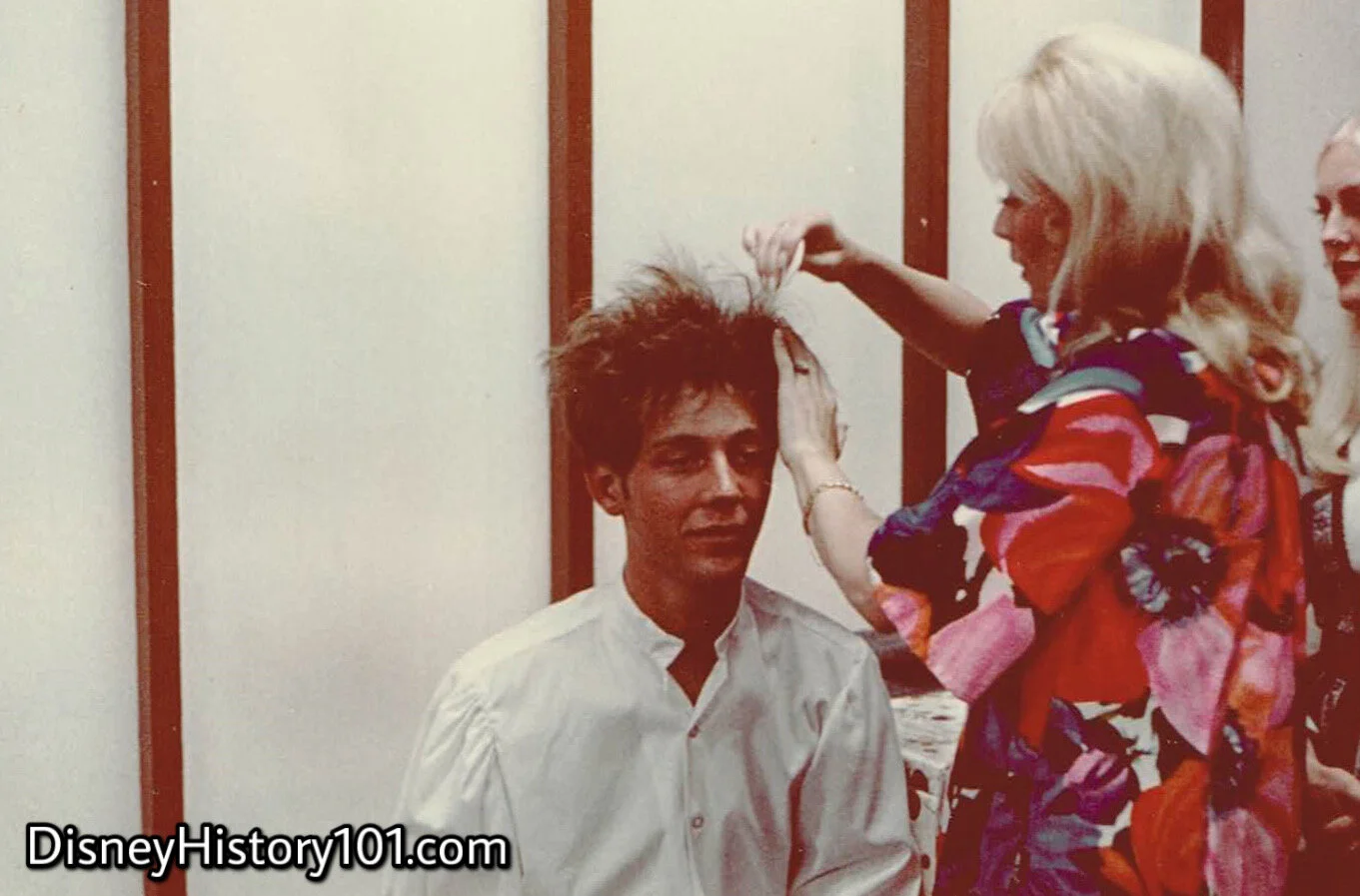
"You Can't Take It With You" Backstage View, (May, 1972)
Jim Cox’s (in the makeup chair, backstage) receives some treatment to his hair for his portrayal of the character of Boris Kolenkhov.
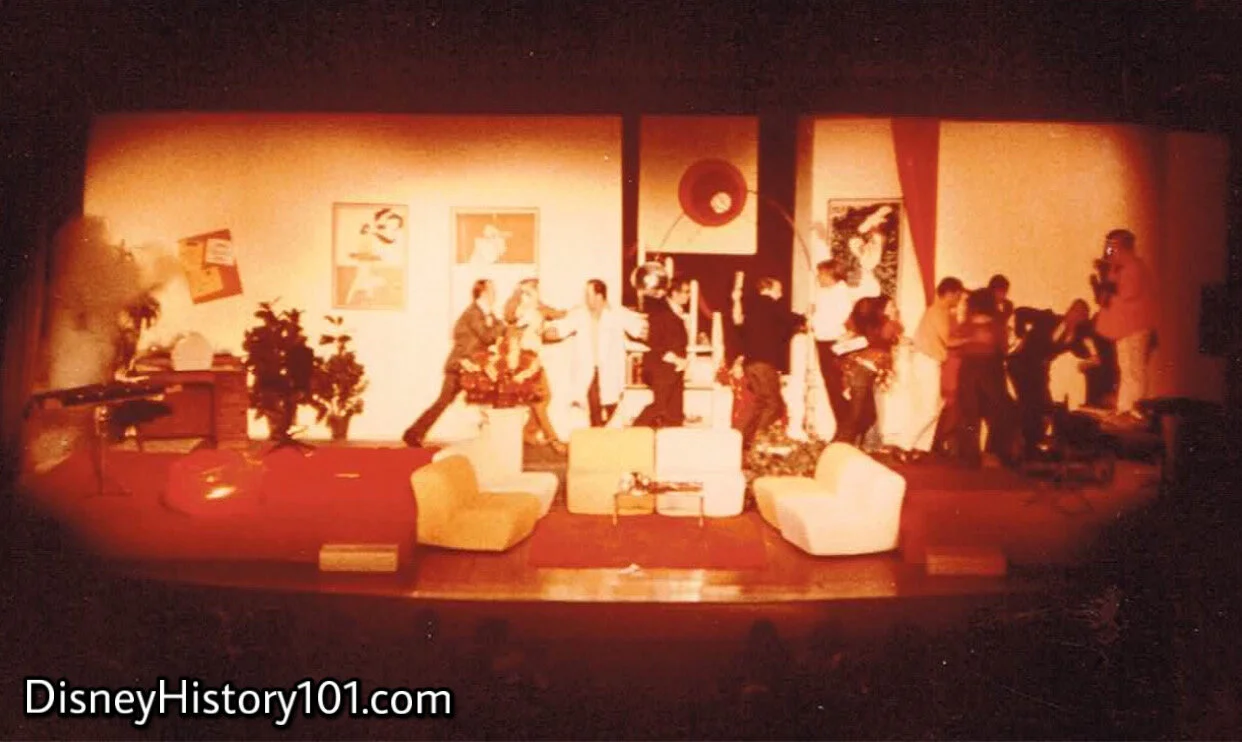
"You Can't Take It With You", (May, 1972)
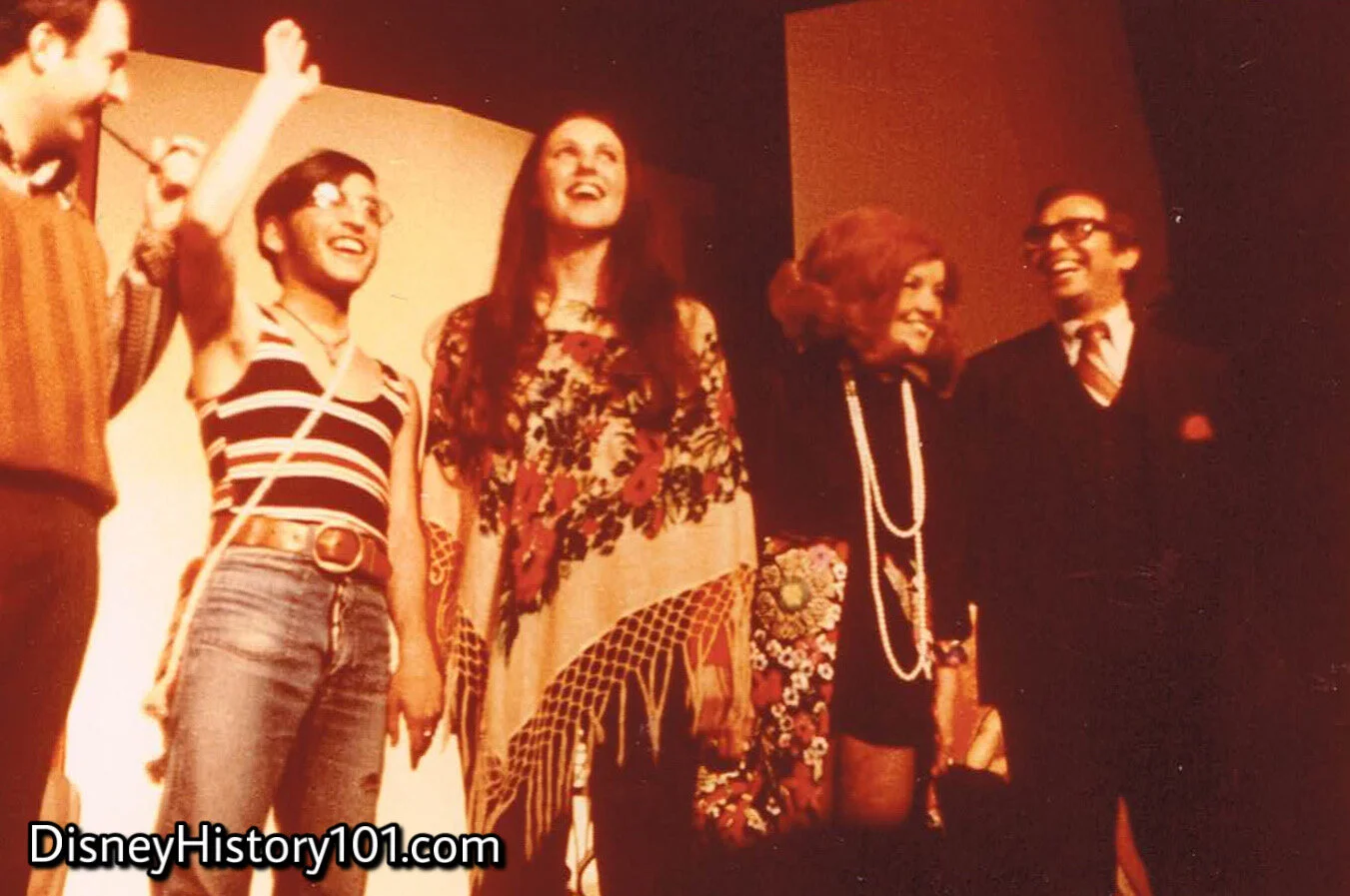
"You Can't Take It With You", (May, 1972)
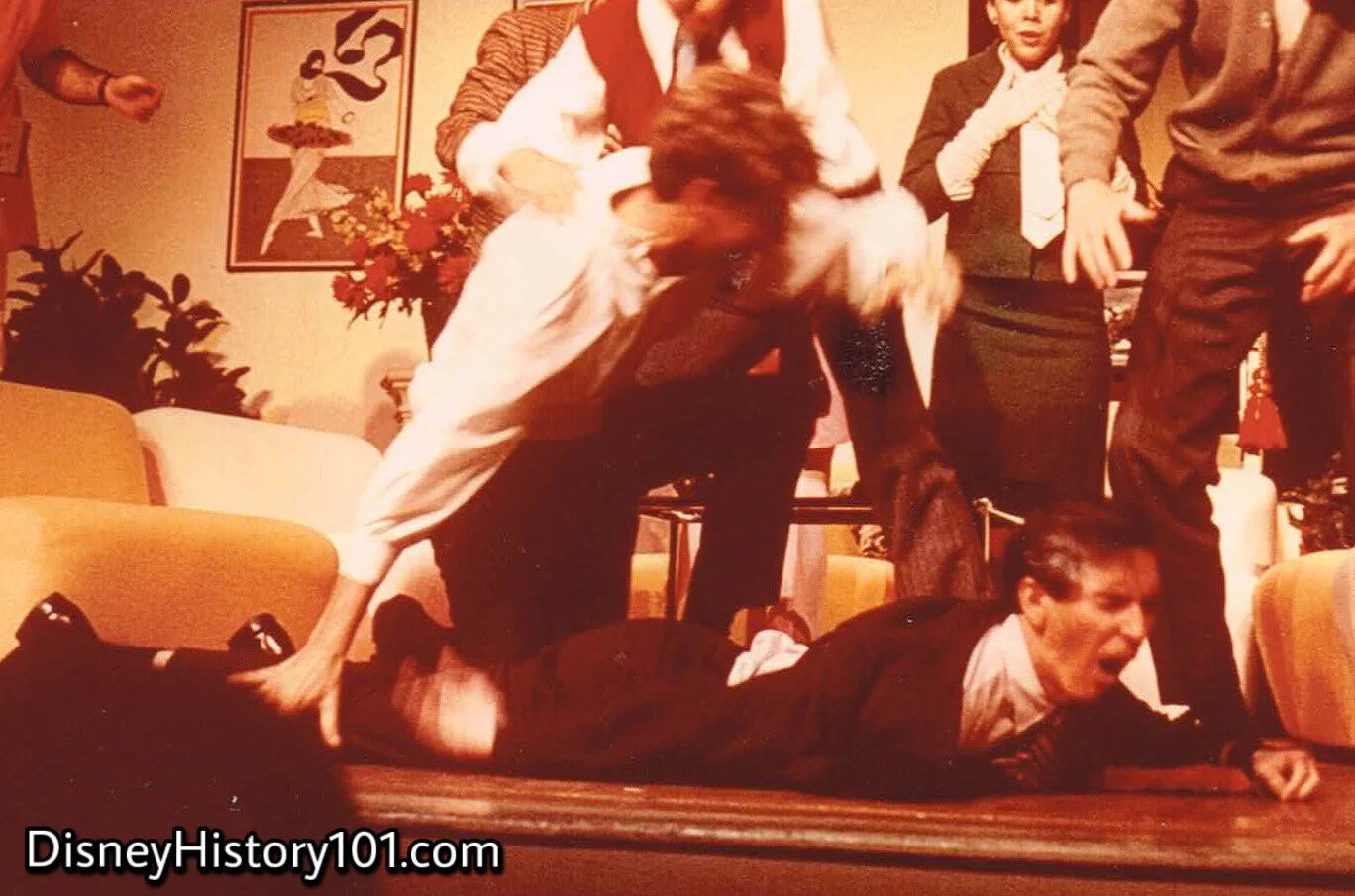
"You Can't Take It With You", (May, 1972)
Ken Neufeld “works his magic” on the floor, Jim Cox on top of him, Anita Trammell horrified, and me in the cardigan, making gestures.
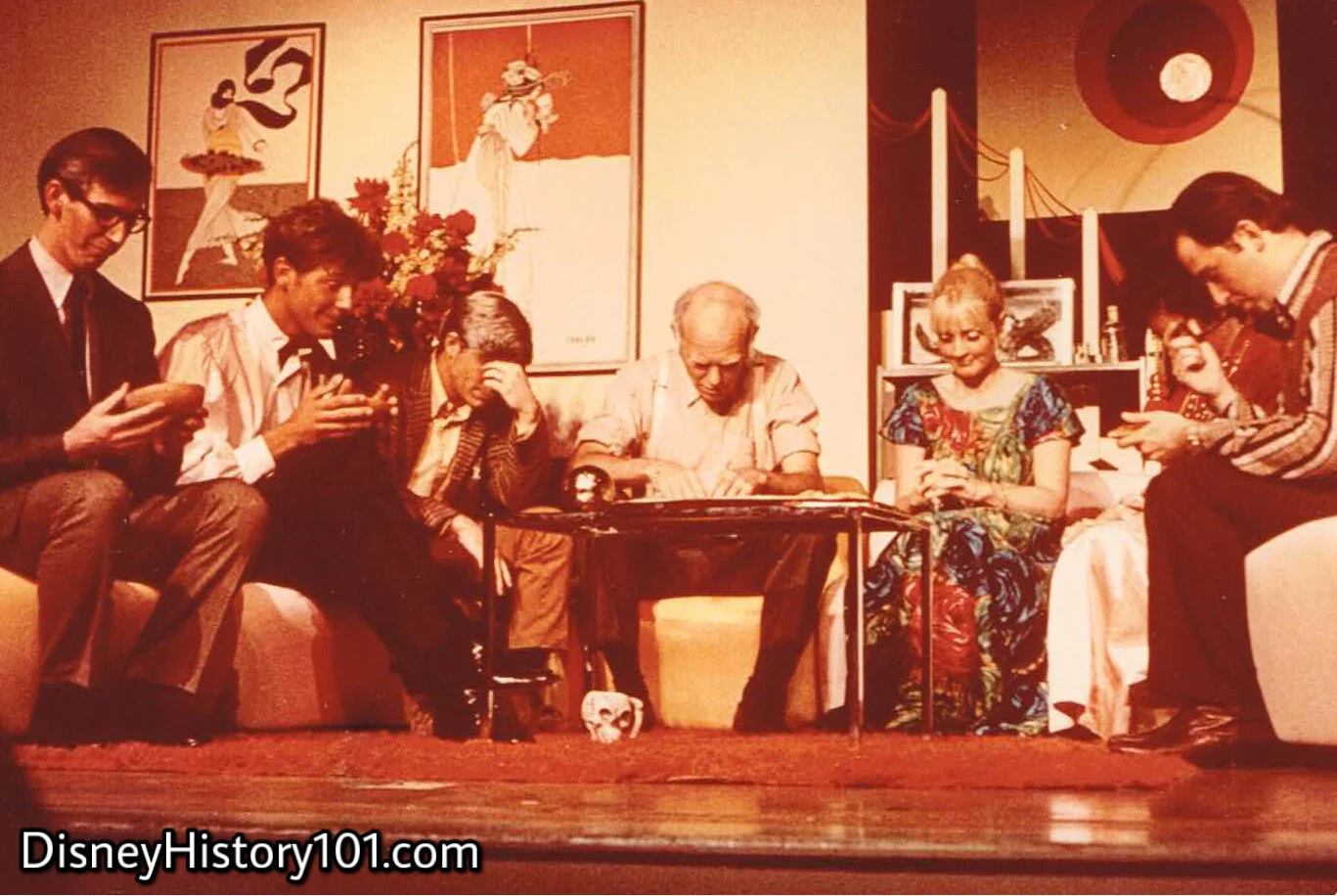
"You Can't Take It With You", (May, 1972)
Neufeld, Cox, Adams, Pletts, Lane, Kathy McGuire and Ted Buxton
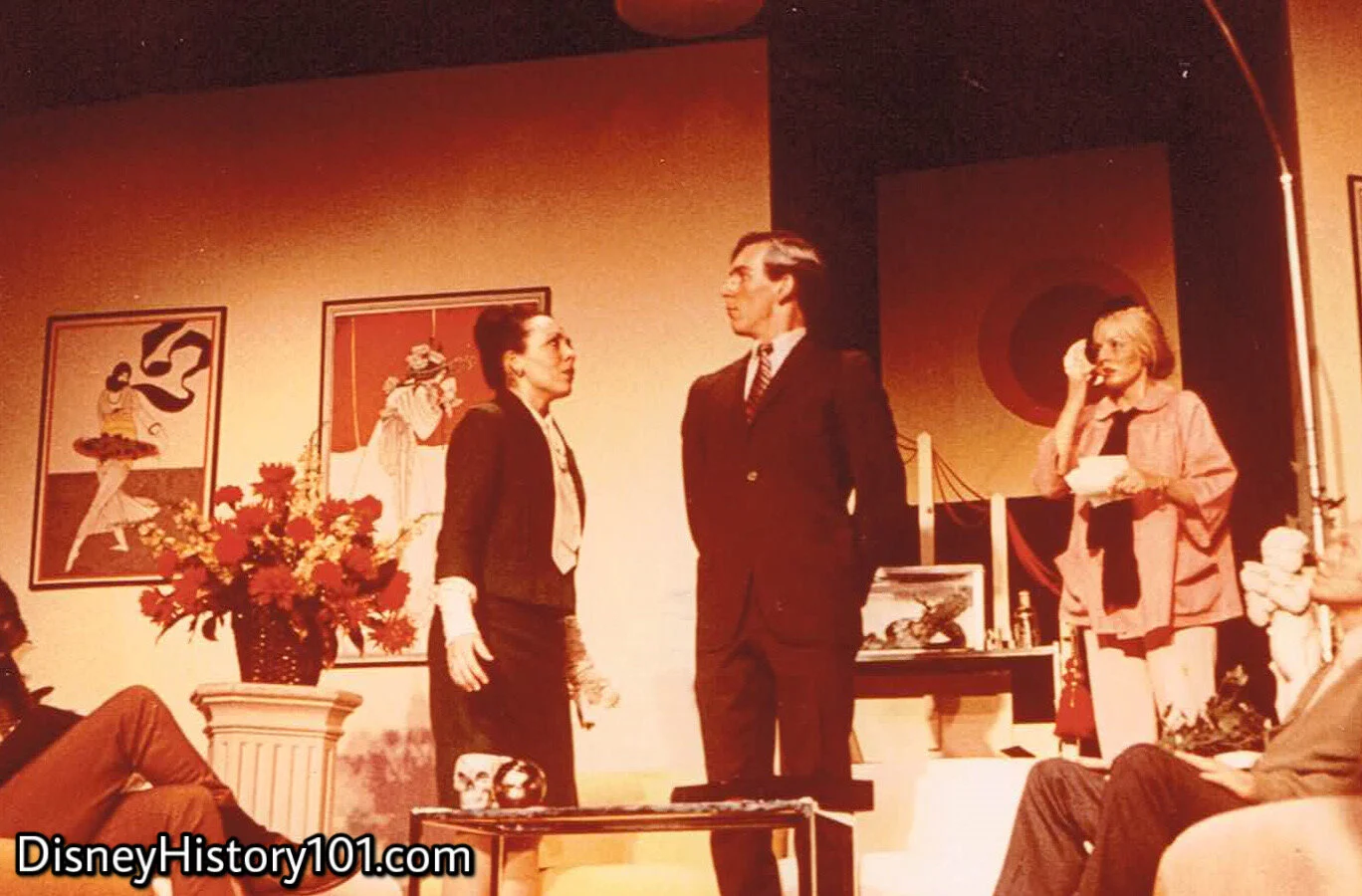
"You Can't Take It With You", (May, 1972)
Adams, Trammell, Neufeld, Lane, and Pletts
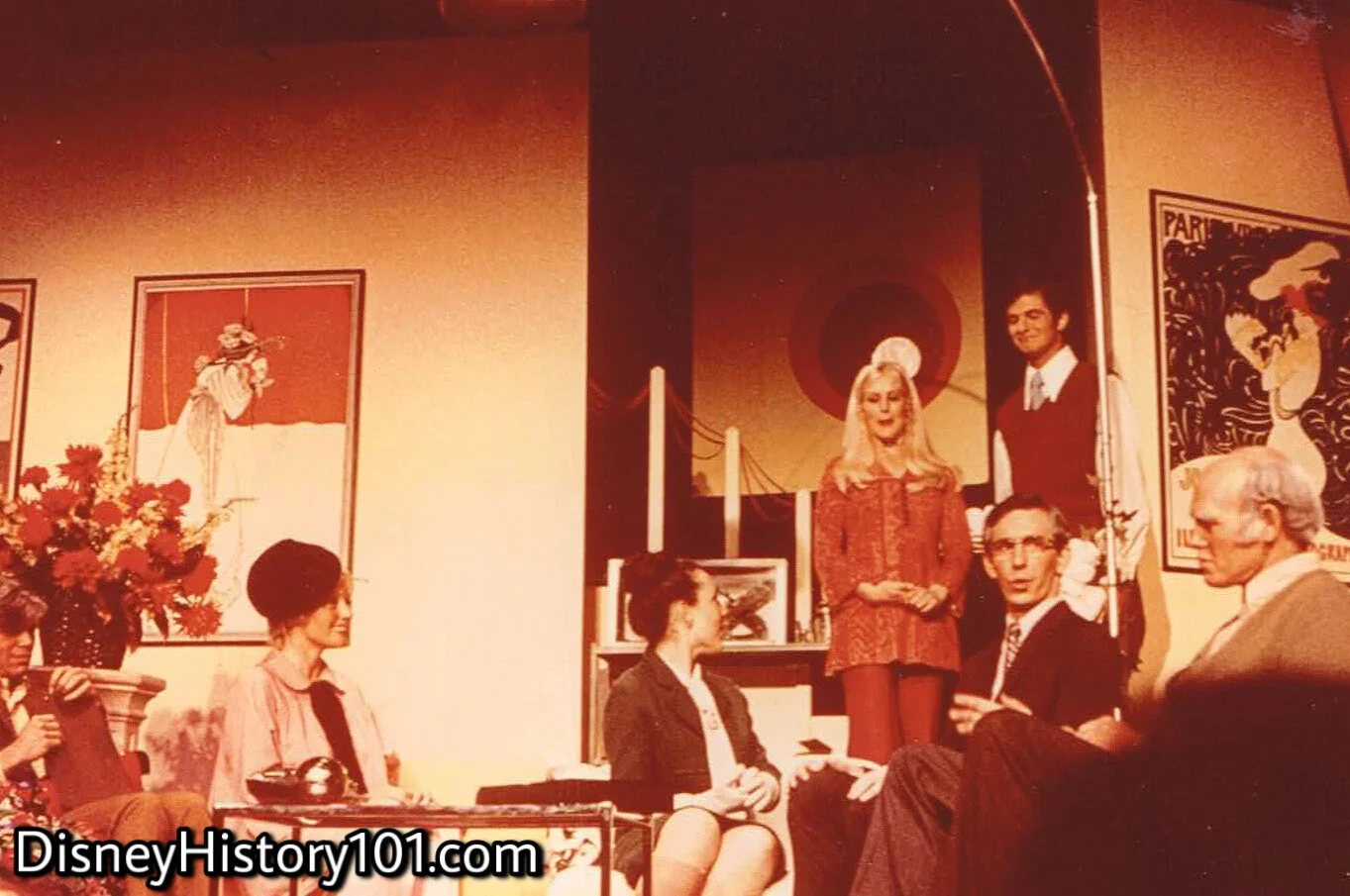
"You Can't Take It With You", (May, 1972)
Bonnie B and Tony Salvagio (standing in the back) ; (Seated Left to Right) Jim Adams, Connie Lane, Anita Trammmell, Ken Neufeld, and Tom Pletts
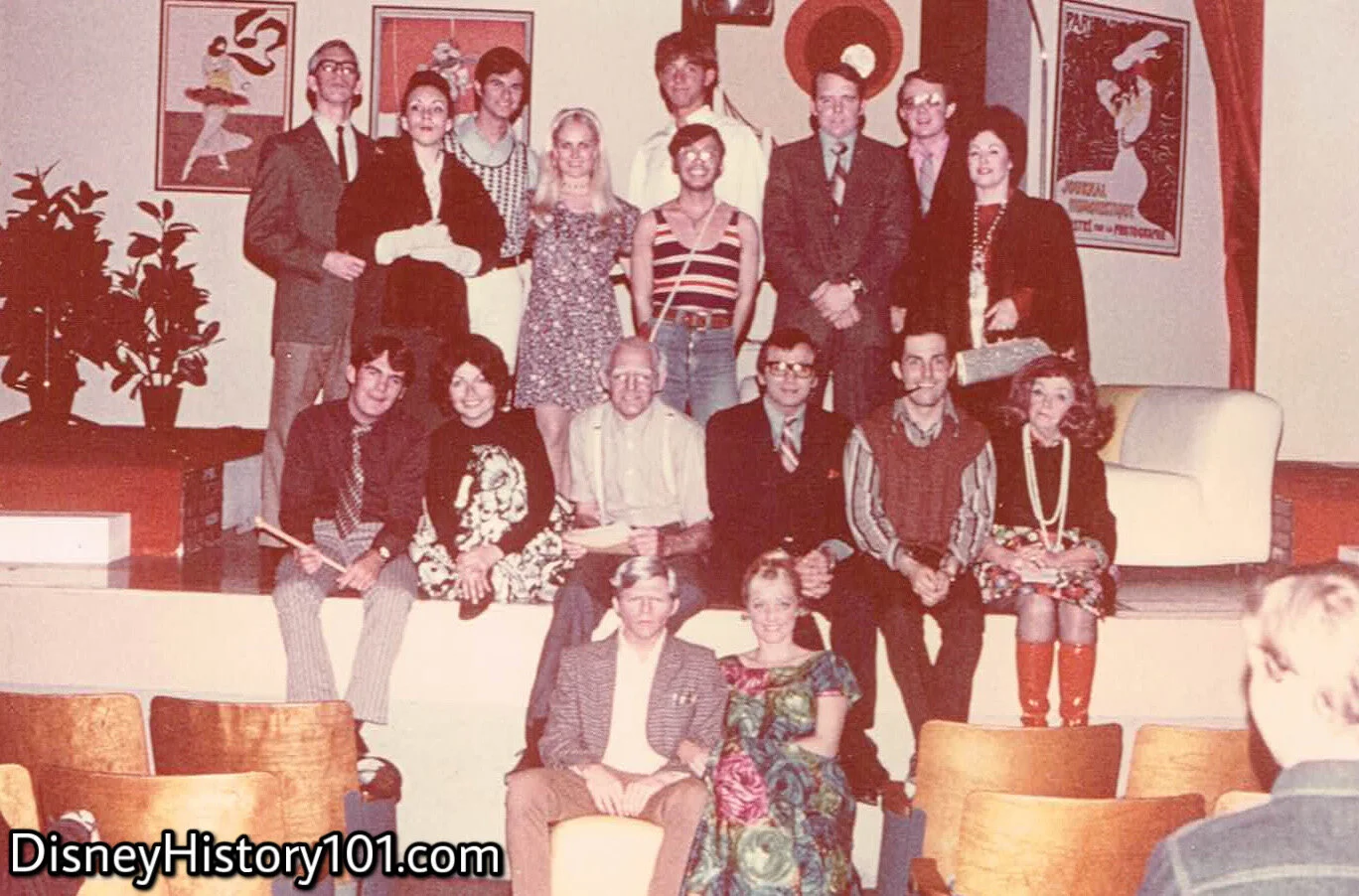
"You Can't Take It With You" Full Cast Photo, (May, 1972)
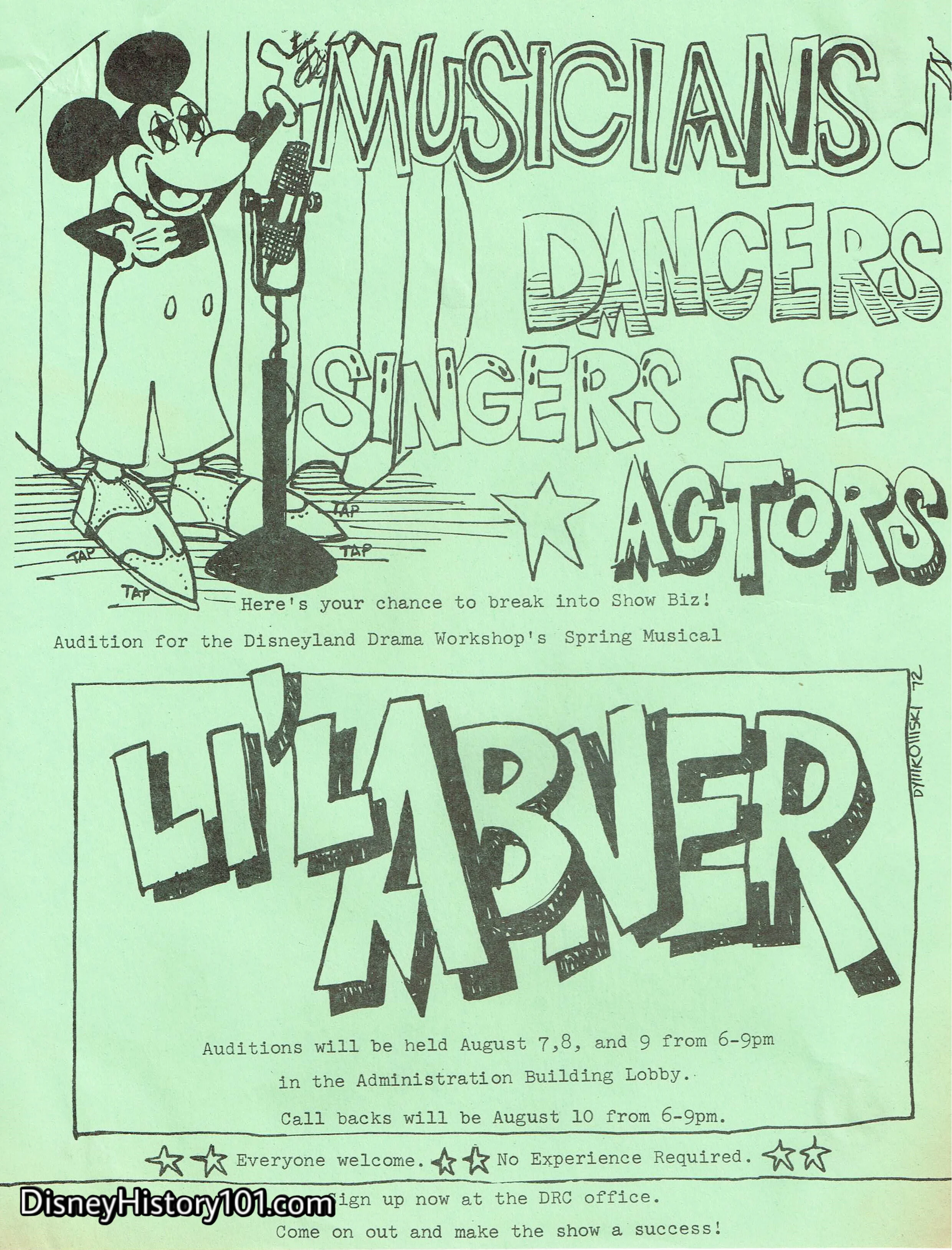
"Lil' Abner" Castin' Call, (1972)
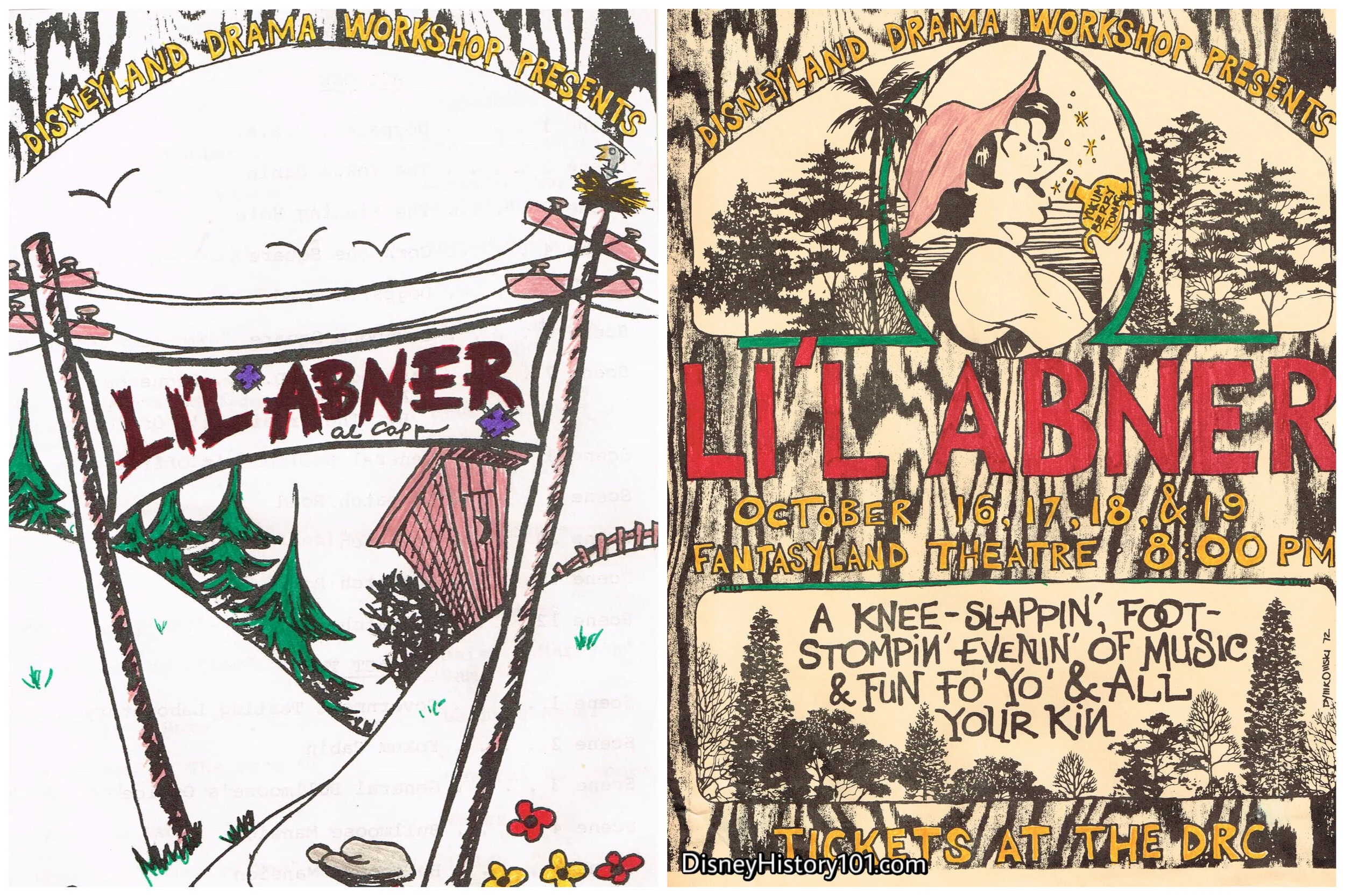
"Lil' Abner" Poster Concept, (1972)
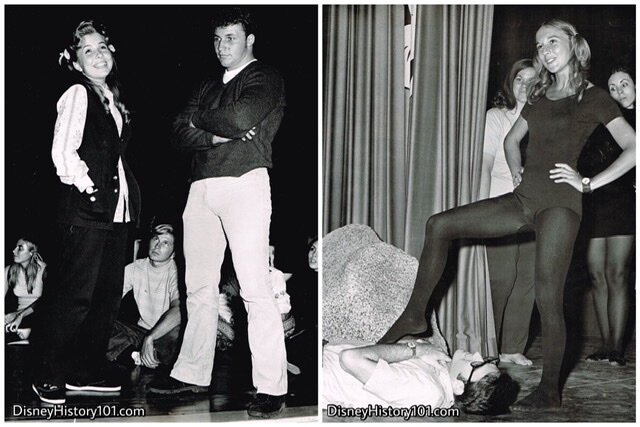
"Lil' Abner" Dress Rehearsals and “Brush-Ups,” (c. September - October, 1972)
Left to Right : Rhonda Treischel (whose brother Kevin Treischel also played a minor role as one of the “Cronies”) and Randy Pangborn (as Daisy Mae and Li’l Abner), and Richelle Bowe (a “Dogpatch” Wife) rehearse.
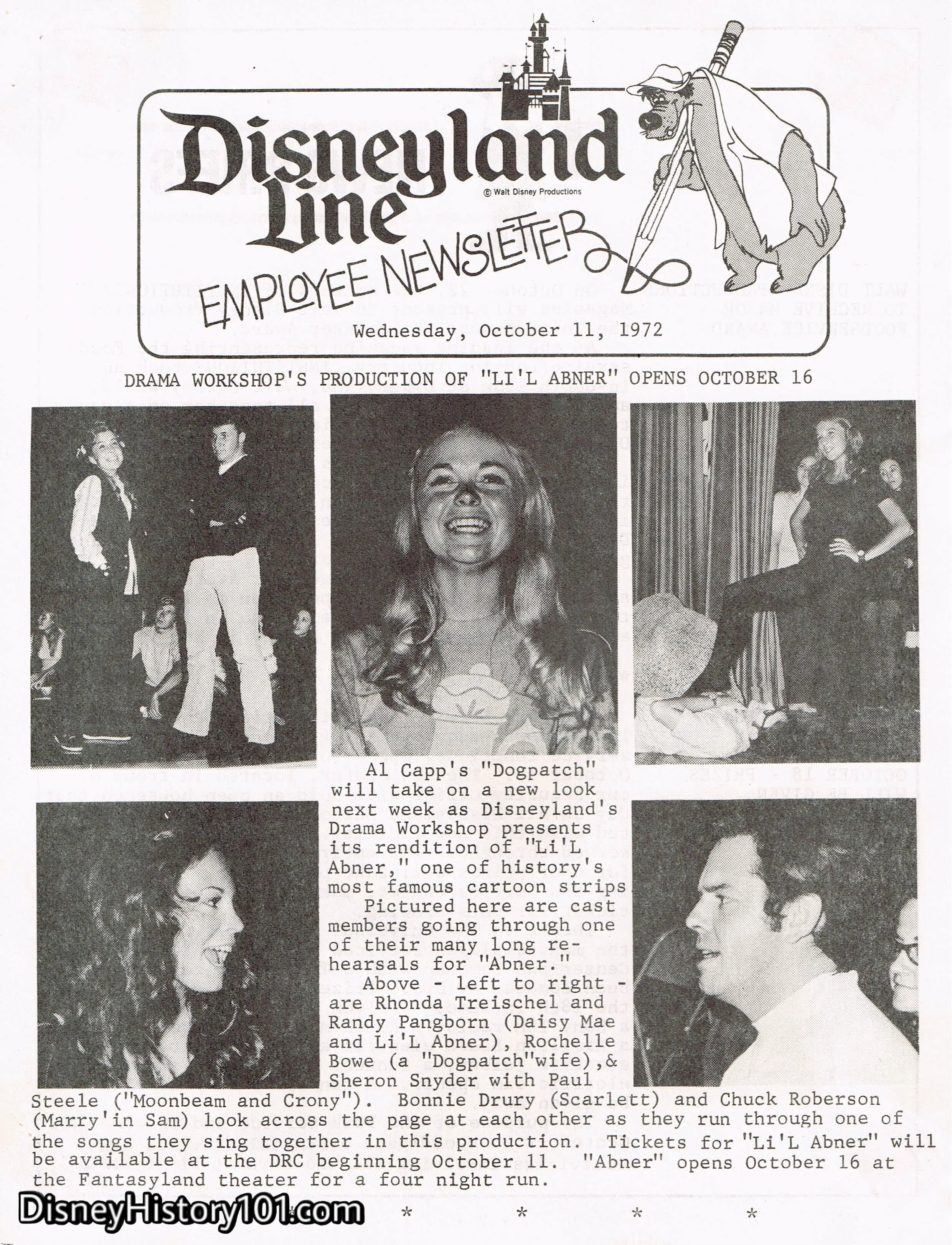
Disneyland LINE "Lil' Abner" Production Update, (October 11, 1972)
Not pictured above, was Betty Bell (15-year employee of the Merchandising Division) who in her spare time constructed and decorated the sets for the Disneyland Drama Club productions, including Lil’ Abner. She also provided make-up for the casts (“for which she received the Drama Workshop’s ‘Stellar Award’”), according to Disneyland LINE (published Wednesday, November 8, 1972).
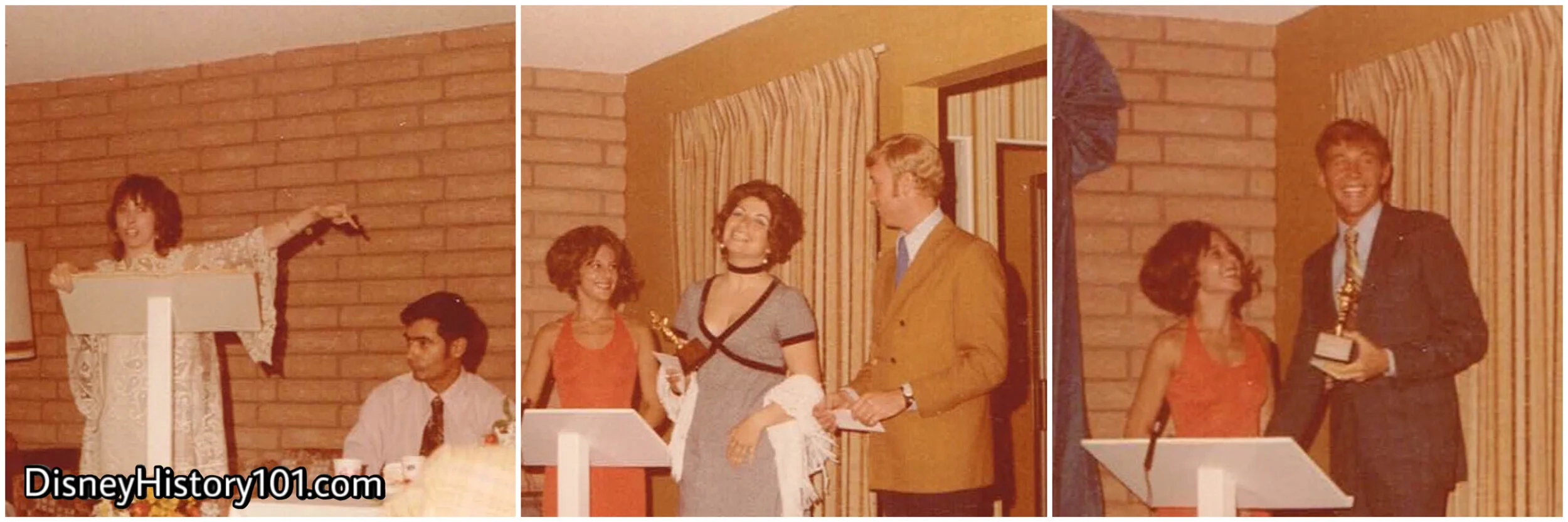
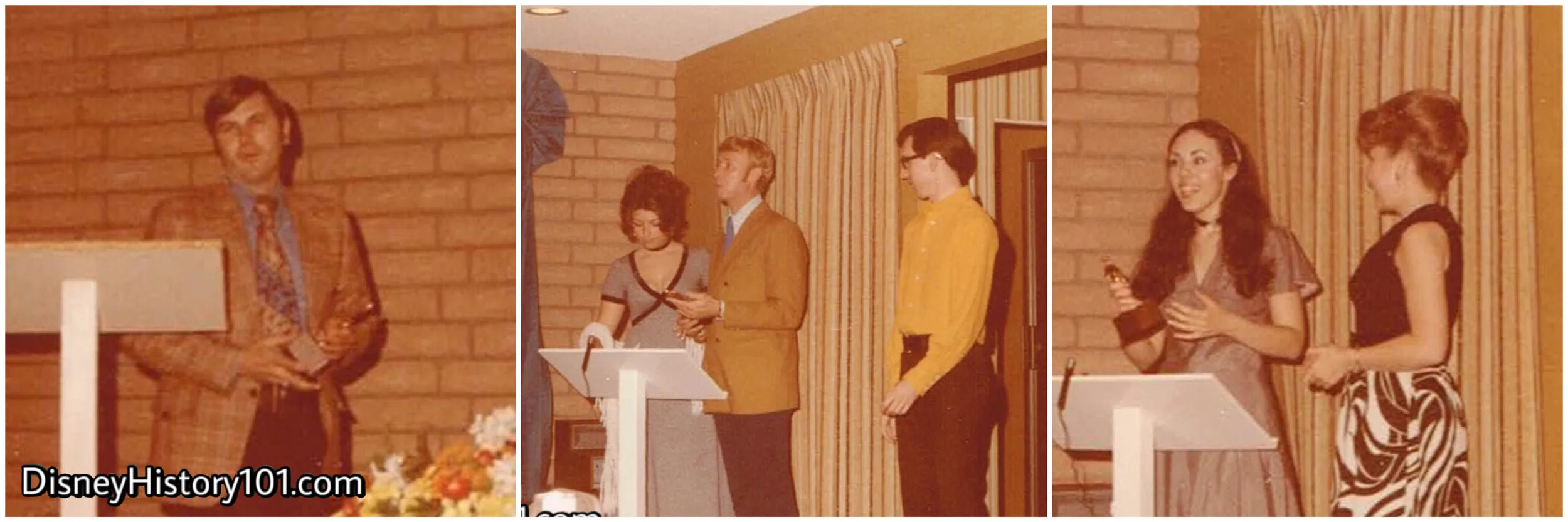
The 1972 Stellar Awards
(1) Jim Heiss, Suezanne Fisher and her friend.
(2) Sheron Snyder and Johnny present a Stellar Award to Pat Keener for her performance of Essie
(3) Sheron Snyder presents Jim Cox with a Stellar Award for his performance of Boris Kolenkhov
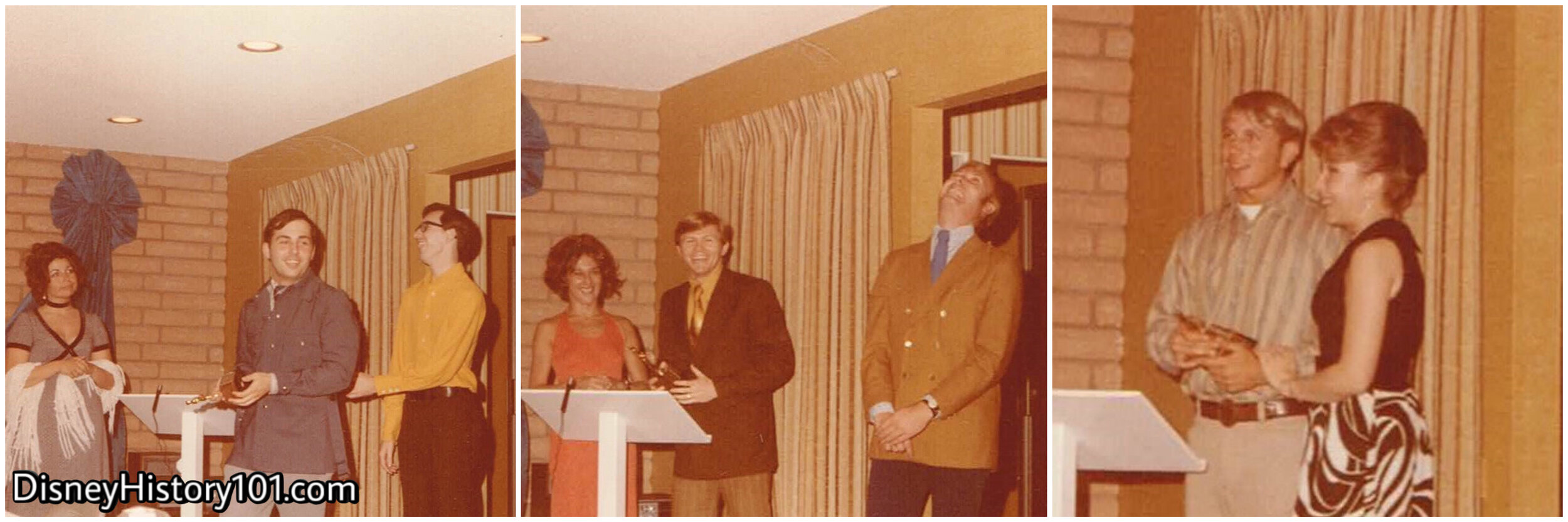
The 1972 Stellar Awards
(1) Ted Buxton and Ken
(2) Jim Adams cracking up Sheron, John, and everyone else.
(3) Kevin Treschel and sister Rhonda.
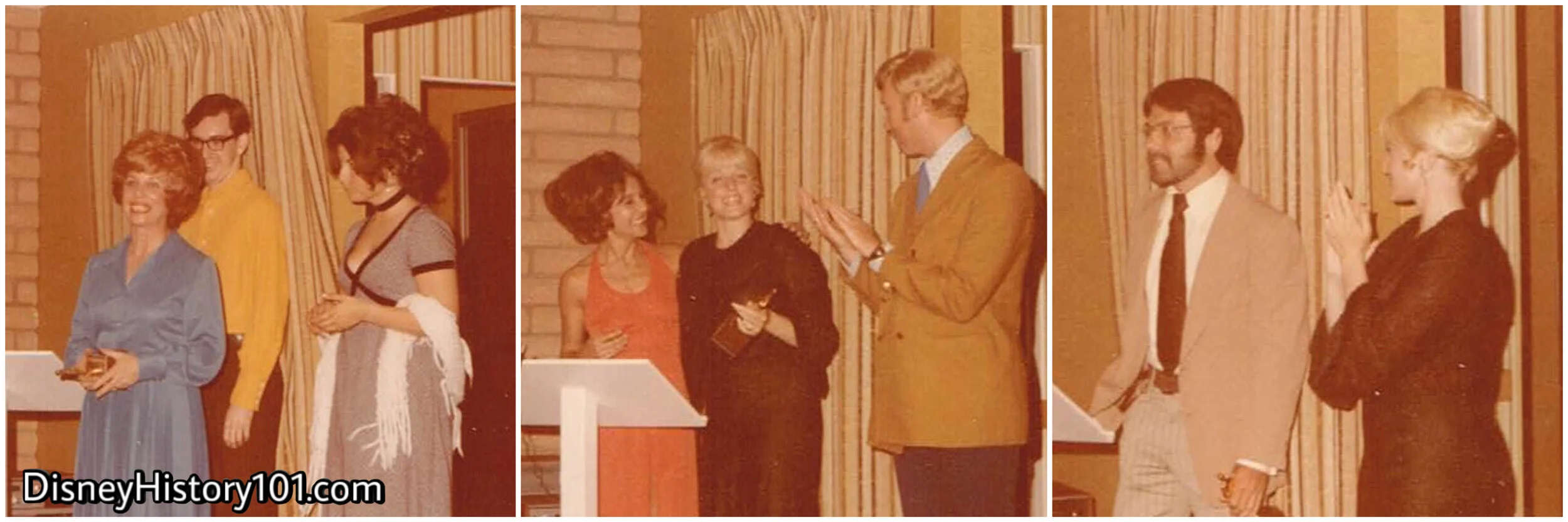
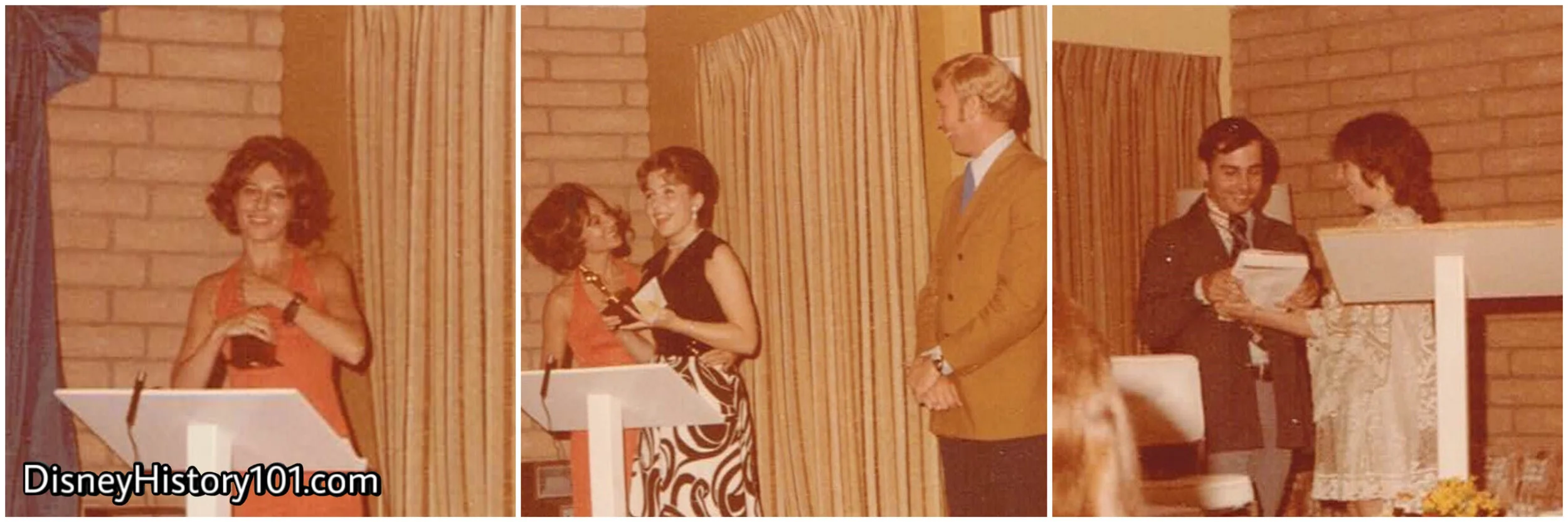
The 1972 Stellar Awards
(1) Betty Bell receives her Stellar Award for her makeup work in “You Can’t Take It With You”, while Ken Neufeld and Pat look on.
(2) Sheron and Johnny present a Stellar Award to Connie Lane for her performance of Penny Sycamore in “You Can’t Take It With You”.
(3) Phil Slep receives a Stellar Award award for Musical Direction of “Bye Bye Birdie”, while Connie applauds.
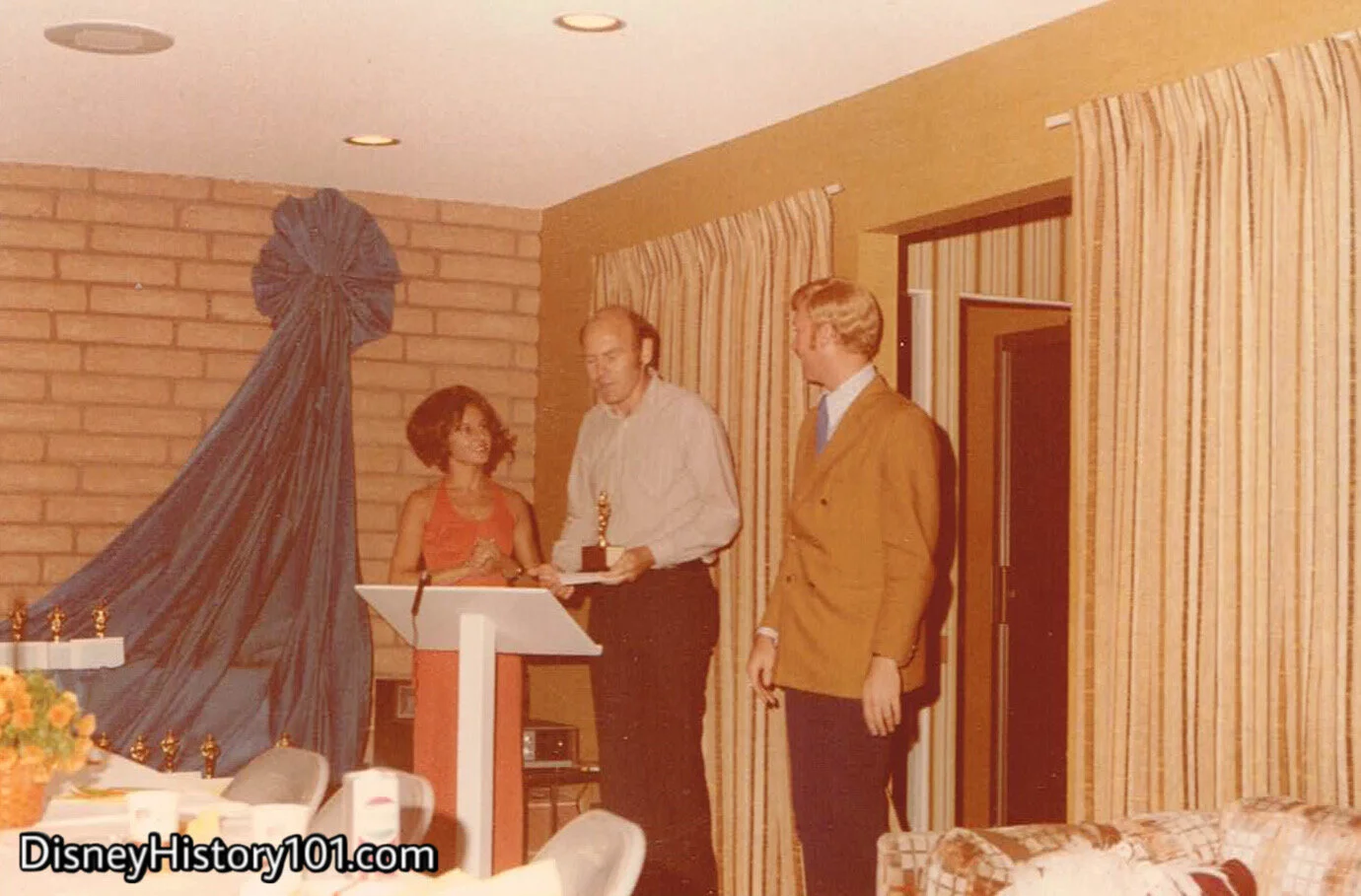
The 1972 Stellar Awards
(1) …”For the use of costumes in ‘Bye Bye Birdie’ - Tom Jacobson!”
(2) “Peaches” Keener, Johnny B. and Ken N.
(3) Kathy McGuire and Rhonda
The 1972 Stellar Awards
(1) Sheron
(2) Rosie Alvarez with Rhonda Treischel, while Rhonda receives her award for her performance in “Bye Bye Birdie”.
(3) Suezanne presents Ted Buxton with a special Stellar Award for Publicity and Programs.
The 1972 Stellar Awards
Tom Pletts receives a Stellar Award for his performance of Martin Vanderhoff (Grandpa) in “You Can’t Take It With You”.

"Wait Until Dark" Program Cover , 1973
On December 13 and 14, 1972 the Drama Workshop began casting for ”Wait Until Dark.” Casting was performed in the Center, with production taking place in late February of 1973, and rehearsals beginning soon after.
Disneyland Drama Club production Cast Member Tom Pletts recollects the next Disneyland Drama Club production for its very different tone, which was produced (oddly enough) during the year of the “Walt Disney Productions - 50 Happy Years of Family Entertainment” celebration at Disneyland. Tom recalls :
“It was definitely a thriller. In fact Park management first vetoed our doing it, and only relented because it wouldn't be presented to the public. It had been a recent hit movie, based on the original play. Audrey Hepburn played the blind lady, and Alan Arkin was the villain in that film. I hadn't seen it though. The extreme tension is what prompted us to opt for screen credits in lieu of a curtain call at the play's end.
I can’t remember how often we signed [autographs] after shows, but we always met the audience after our shows. Except once. After “Wait Until Dark”, we hid in a break room. That play ended like a movie, with credits on a screen, and no curtain call. To do that, we established the screen with an opening prologue sequence. It was different.”
“Add Bonnie Barillieux to the cast list for Wait Until Dark. In the play, her character is just a corpse offstage, and is only referred to; but we used pictures of her in a prologue sequence, so we could establish at the beginning our use of the screen that would also display our closing credit photos. Clever? Bonnie was used to playing the heroine, but in this one she was stealing drugs from Jim Adams' character. (I avoided using the obvious play-on-words.) In the prologue, we showed her being chased through LAX, and handing the drug-filled doll to a perplexed Greg Dymkowski.”
According to Disneyland LINE (published Wednesday, March 28, 1973), “Other credits should go to Ben Cossart, Ted Buxton, Arlene Underwood, Bob Irvine, Gary Carlson, Phil Chilcote, Chuck Roberson, Jim Cox, Jane Cline, and Lee Lomask.”
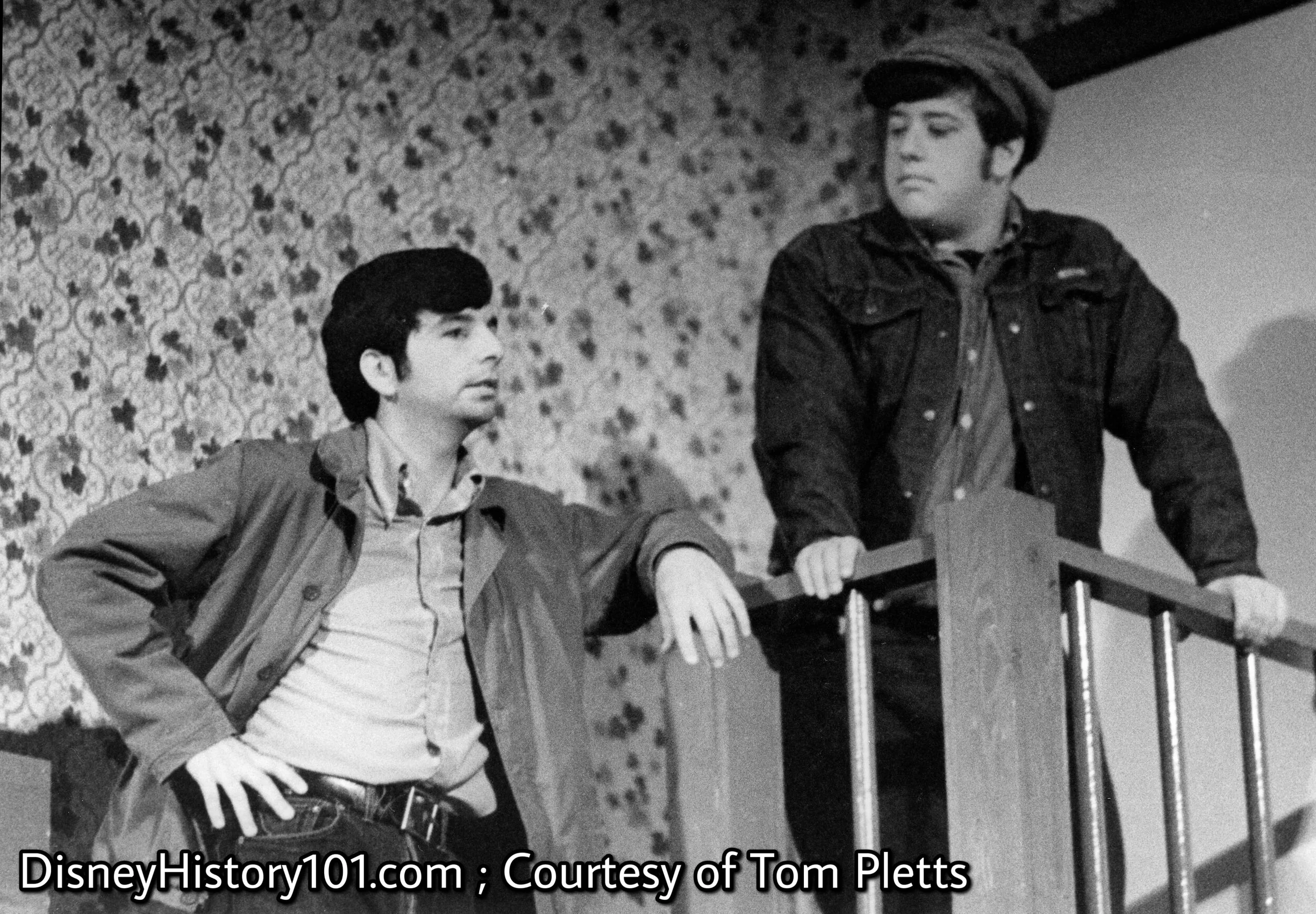
"Wait Until Dark", 1973
Mike Lorenz and Chuck Hilburn as the two con men.
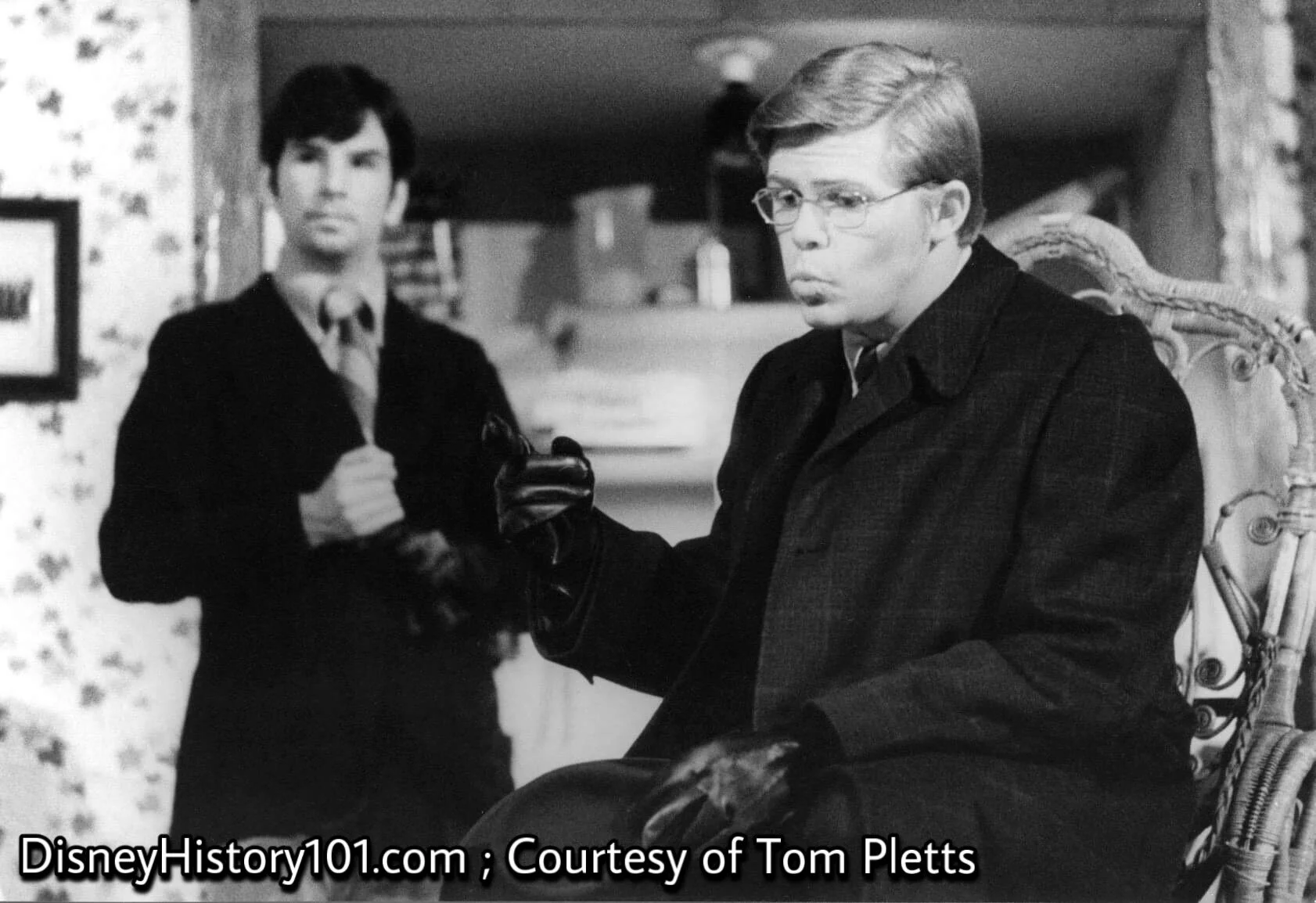
Mike Lorenz and Jim Adams (portraying the “Drug Dealer”) for the Disneyland Drama Club production of "Wait Until Dark".
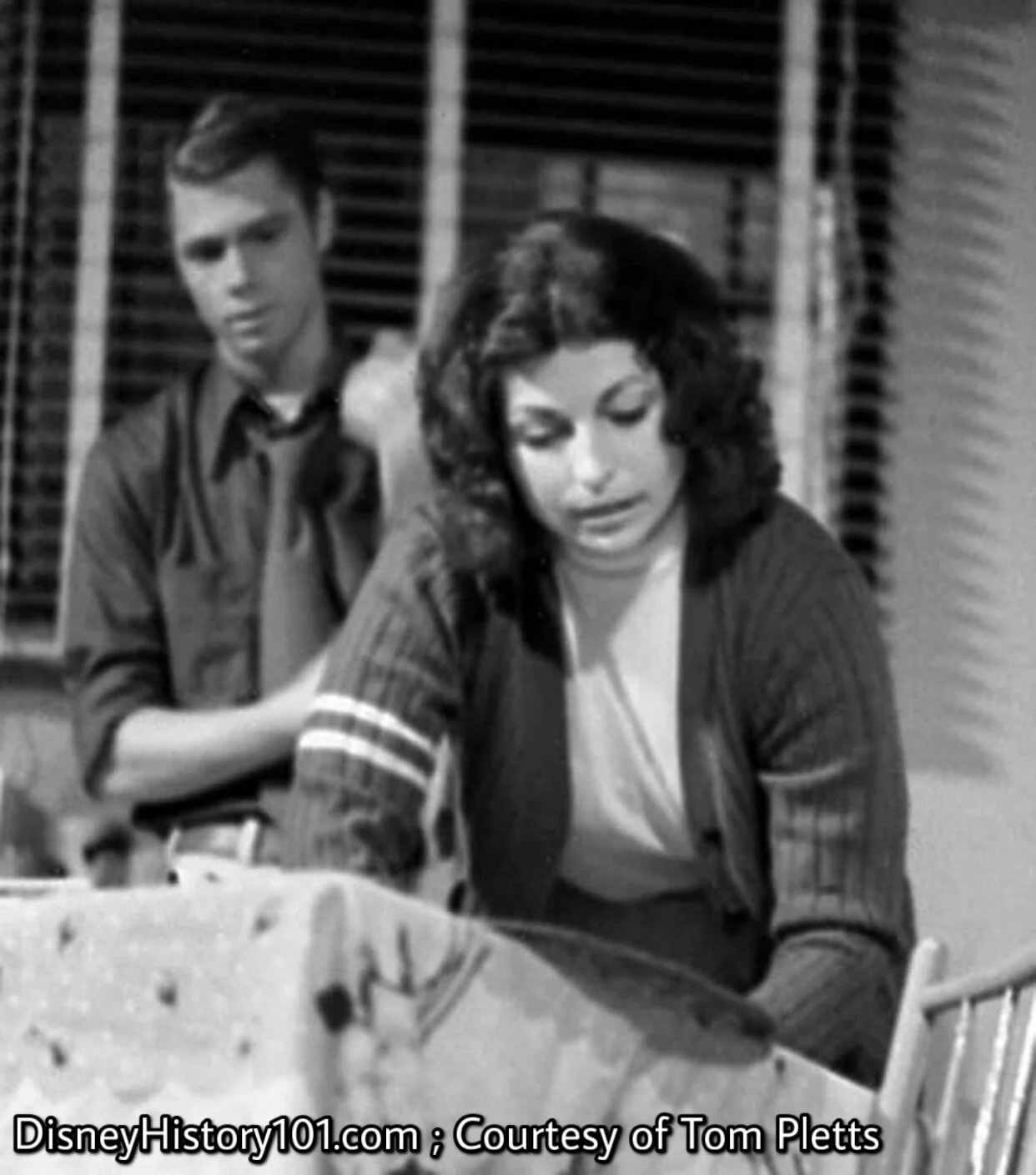
"Wait Until Dark", 1973
Greg Dymkowski and the “blind” Pat Keener portraying “The Victims”. Tom Pletts recollected : “To do the role, Pat learned how the blind function, by attending a school for the blind.” Accoding to Disneyland LINE (published Wednesday, March 28, 1973), “The Braille Institute was the technical advisor.”
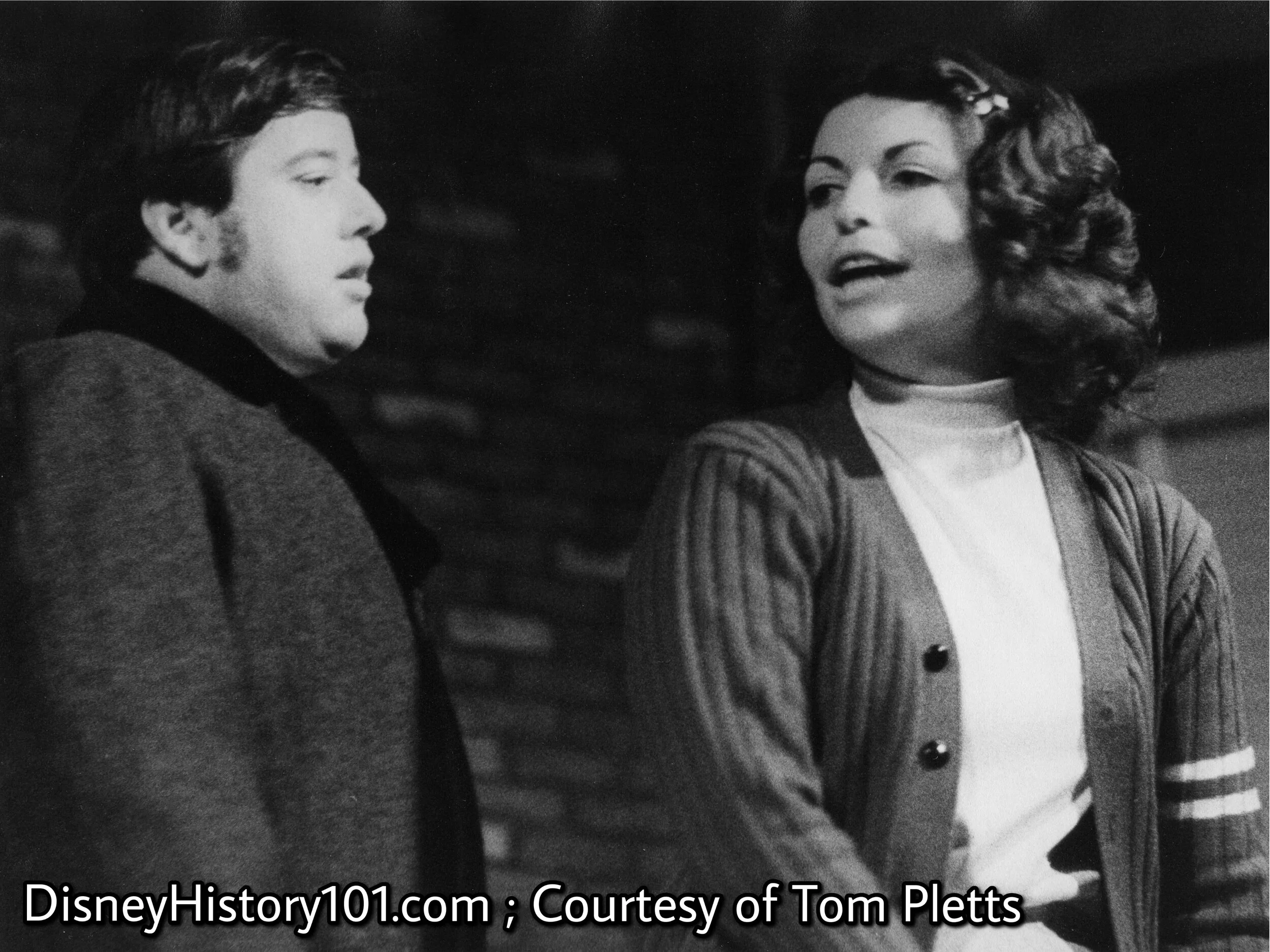
"Wait Until Dark", 1973
Chuck’s character conning Pat’s character in this scene.
“Wait Until Dark” Director Tom Pletts remembers : “From the few rehearsal schedules I've kept, and my recollections, each production took about a month or so to put together. Rehearsals were planned around the Park's hours, the availability of the stage, and the cast members' (literally) work schedules. We'd squeeze in an average of 15 rehearsals. Wait Until Dark had close to 30!”
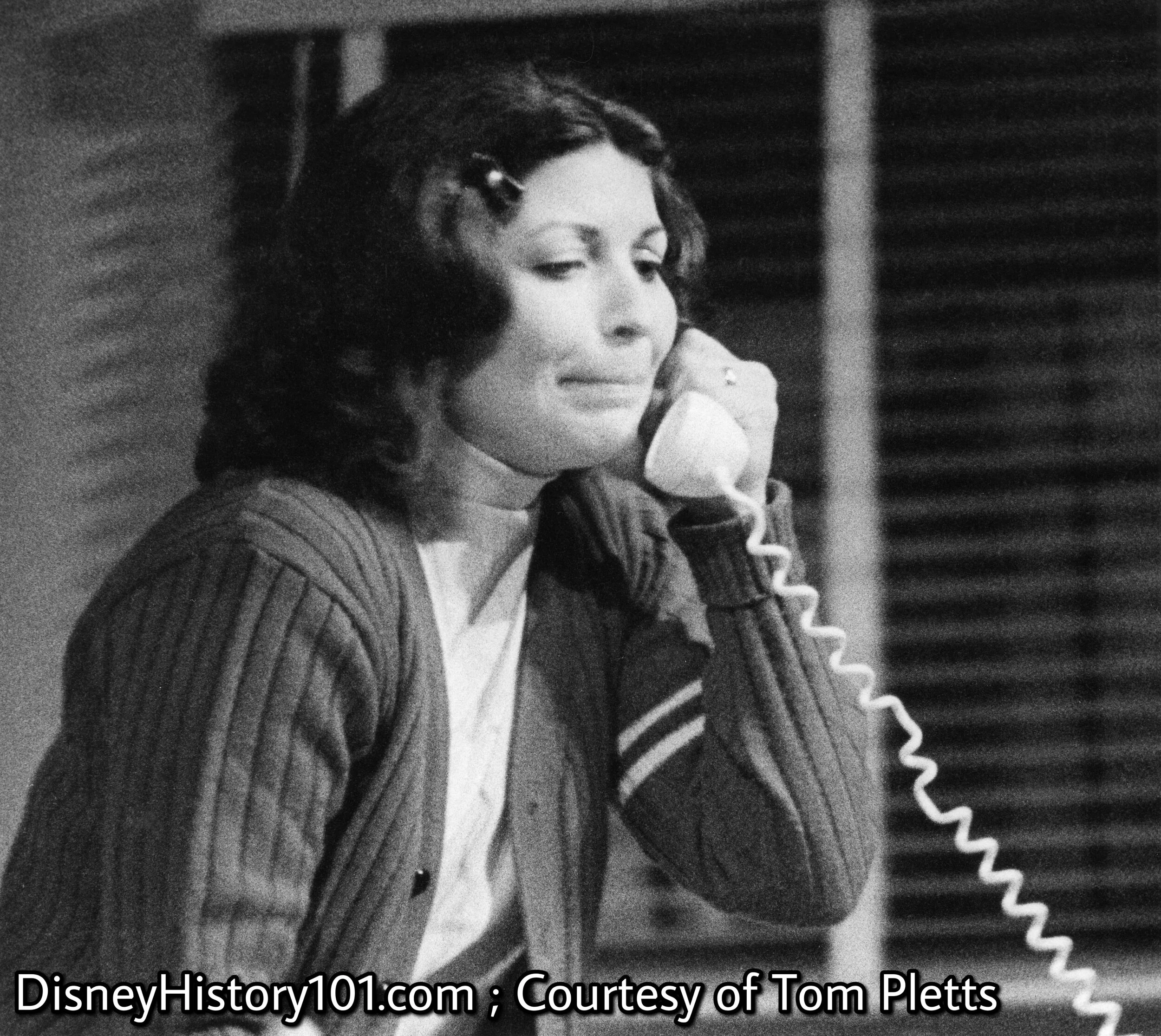
"Wait Until Dark", 1973
Pat being conned by phone.
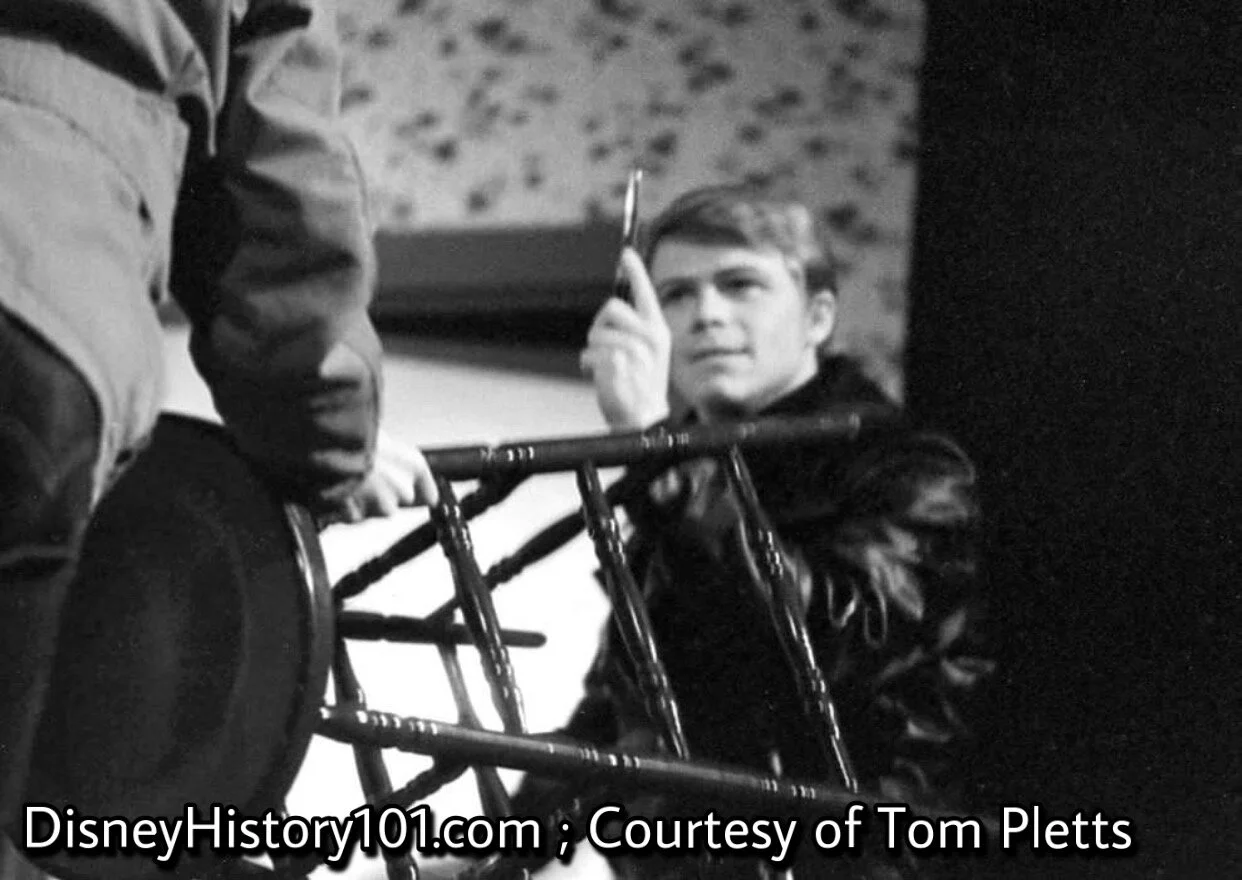
"Wait Until Dark", 1973
Jim’s character persuades the con men to do their job.
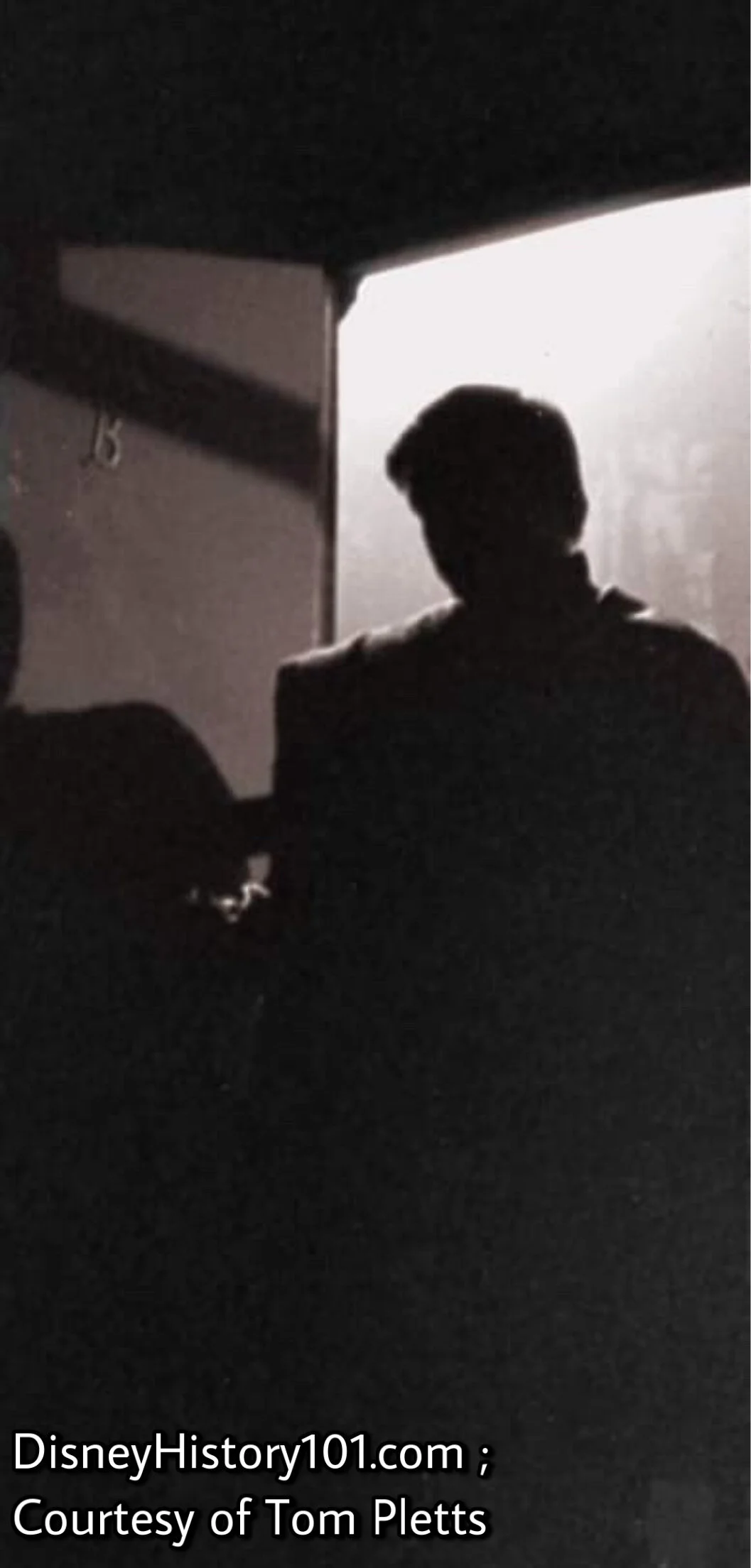
"Wait Until Dark", 1973
Jim Adams’ character enters ominously.
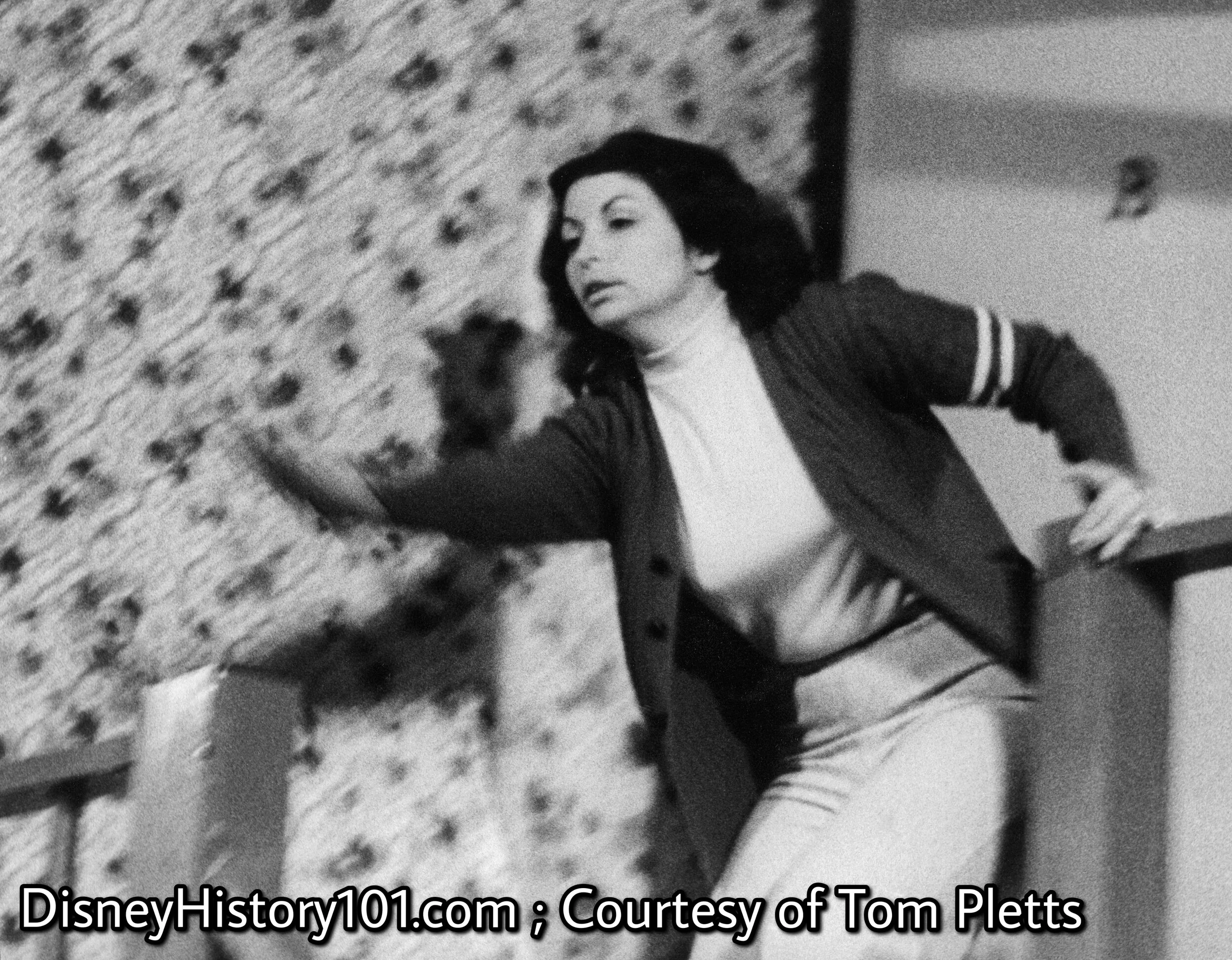
"Wait Until Dark", 1973
The “blind” Pat moves quickly down the stairs.
By the end of its run, the exciting and suspenseful “Wait Until Dark” saw an audience of more than 1,500 Disneyland Employees. Accoding to Disneyland LINE (published Wednesday, March 28, 1973), “Since this was the workshop’s first attempt at performing a heavy dramatic piece, all of the accolades they have received are even more meaningful.”
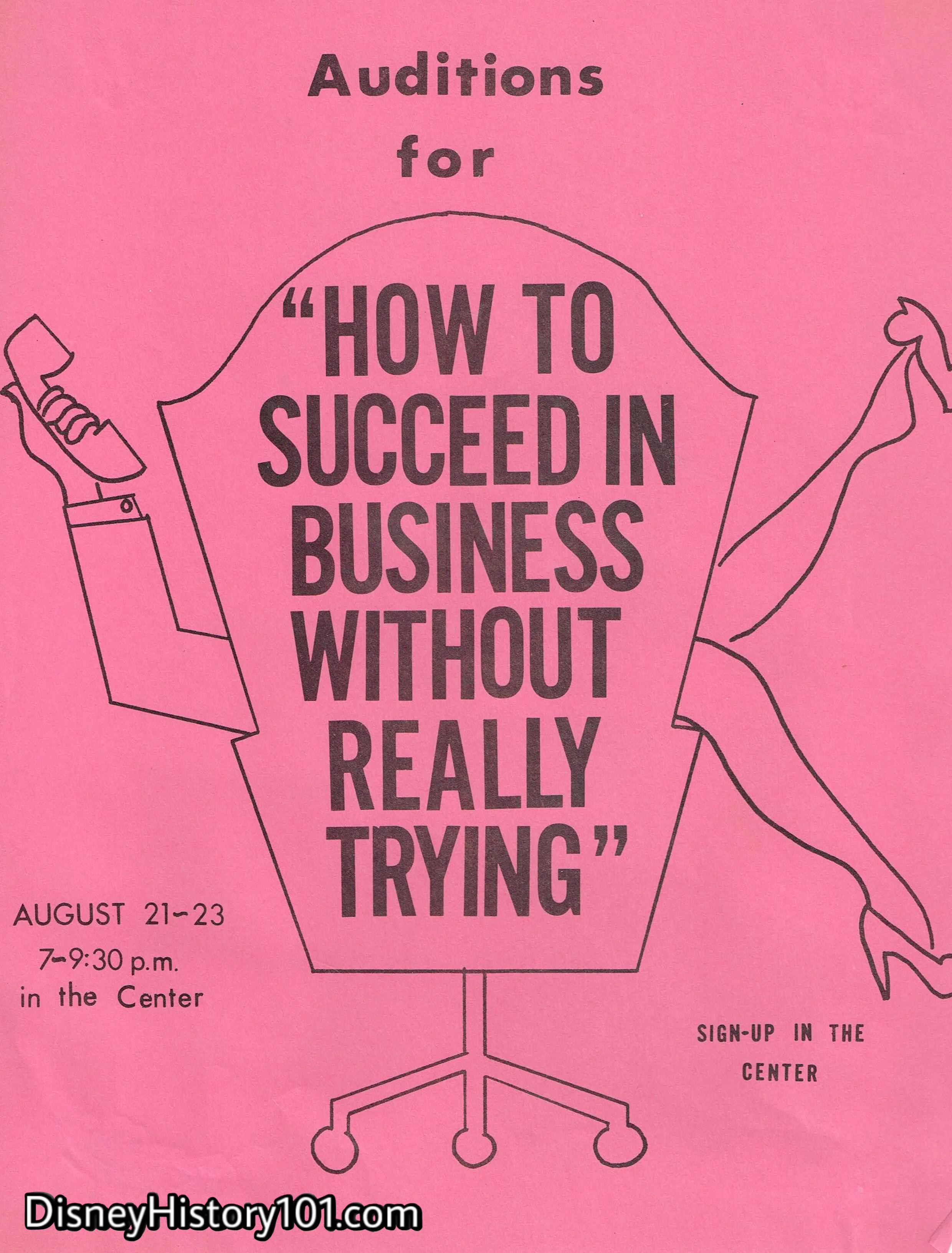
"How To Succeed In Business Without Really Trying" Casting Call Flyer, 1975
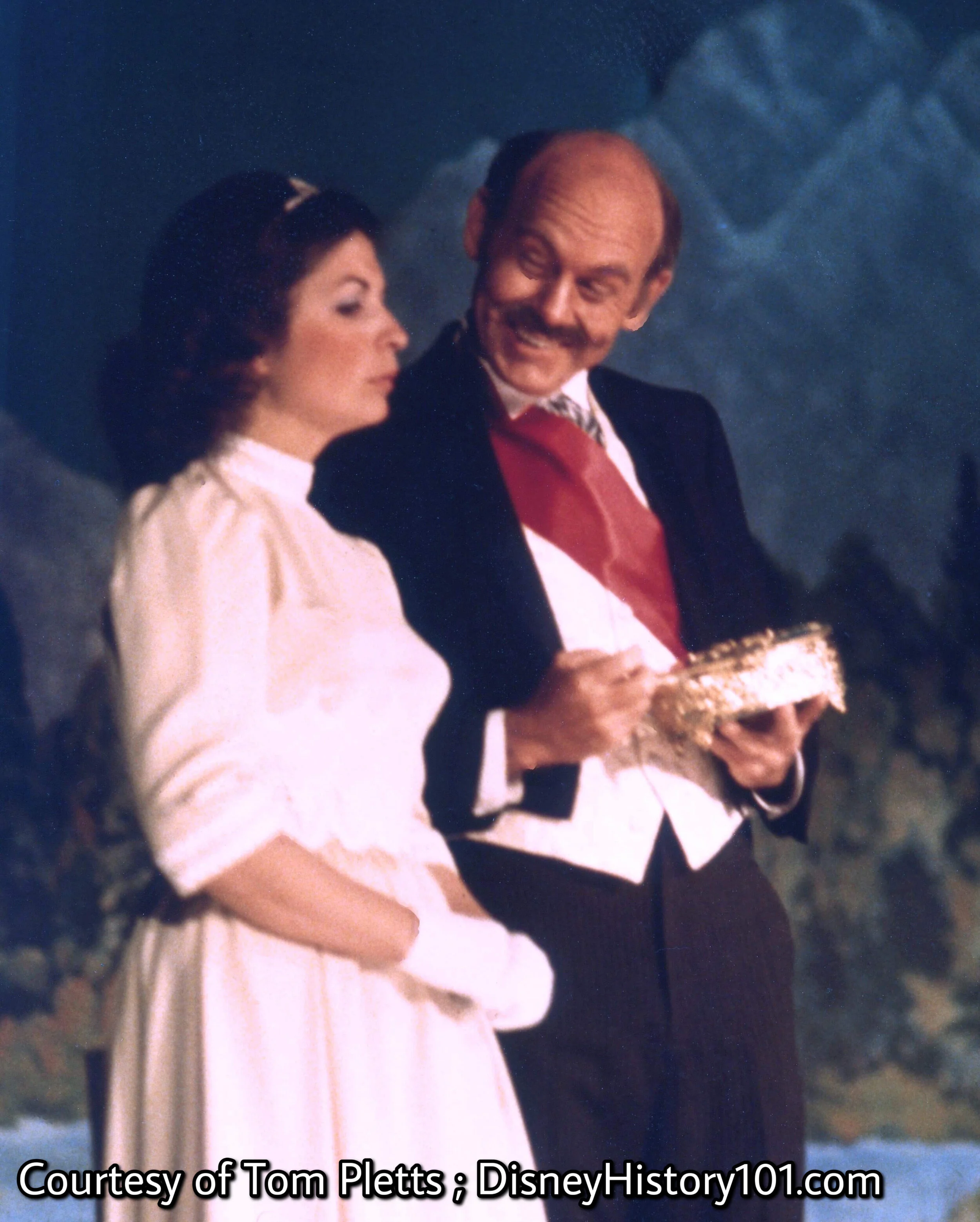
"Little Mary Sunshine", (1974)
“A Rare ‘Vintage View’ of Little Mary Sunshine”
(Photo : Pat Keener and Tom Pletts)
Cast Member Tom Pletts remembers : “Little Mary Sunshine…was the last show I had any involvement with, and [worked with] some new people I hadn’t worked with before. I just remember it was fun. I don’t remember much about the plot - It had a mountie, an Indian, a lecherous dignitary (me), and Pollyanna, and it seemed so farcical. I’d actually seen UC Irvine’s slick production of it earlier, as it was their first play.”
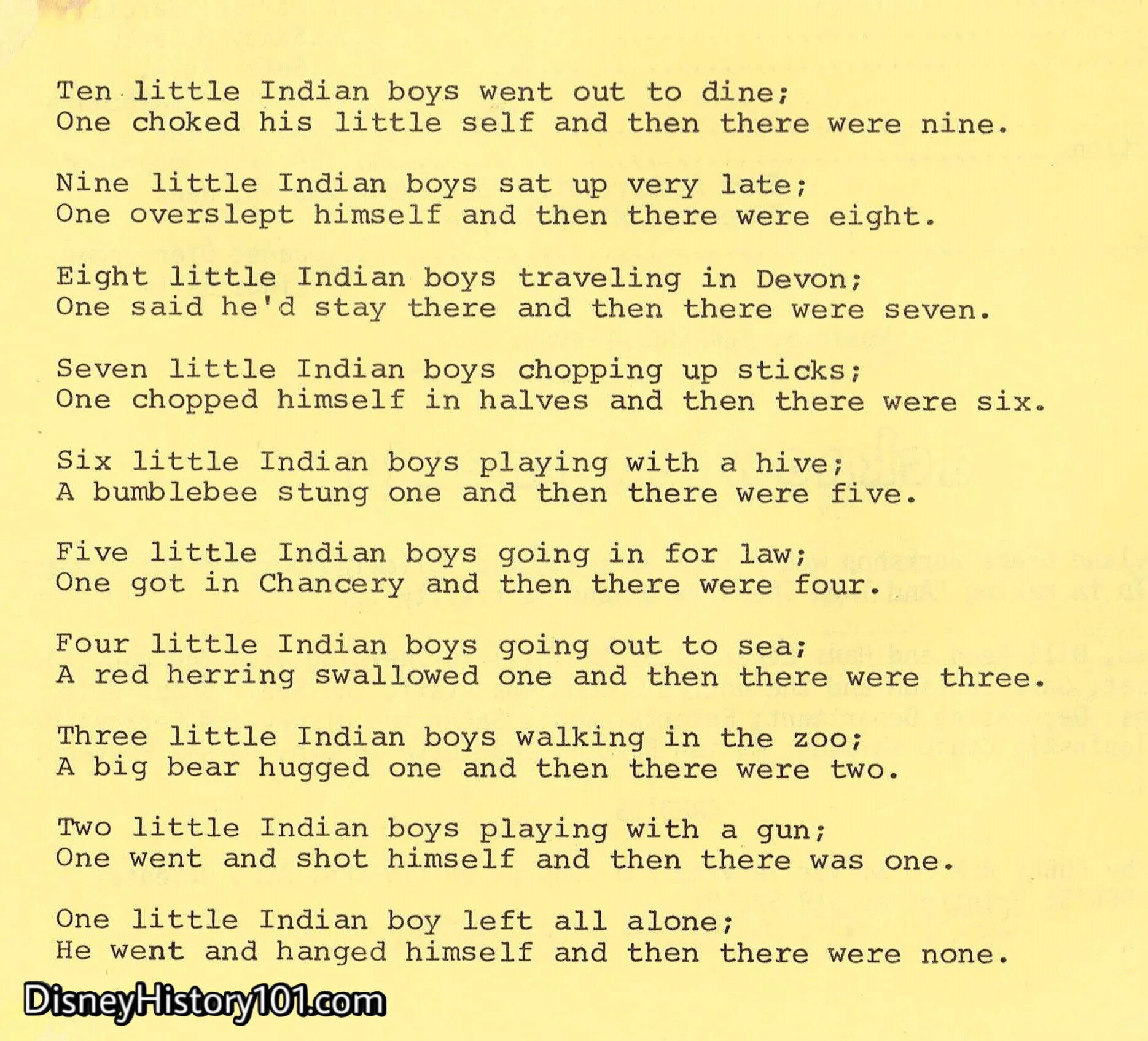
"And Then There Were None" Program, (1974)
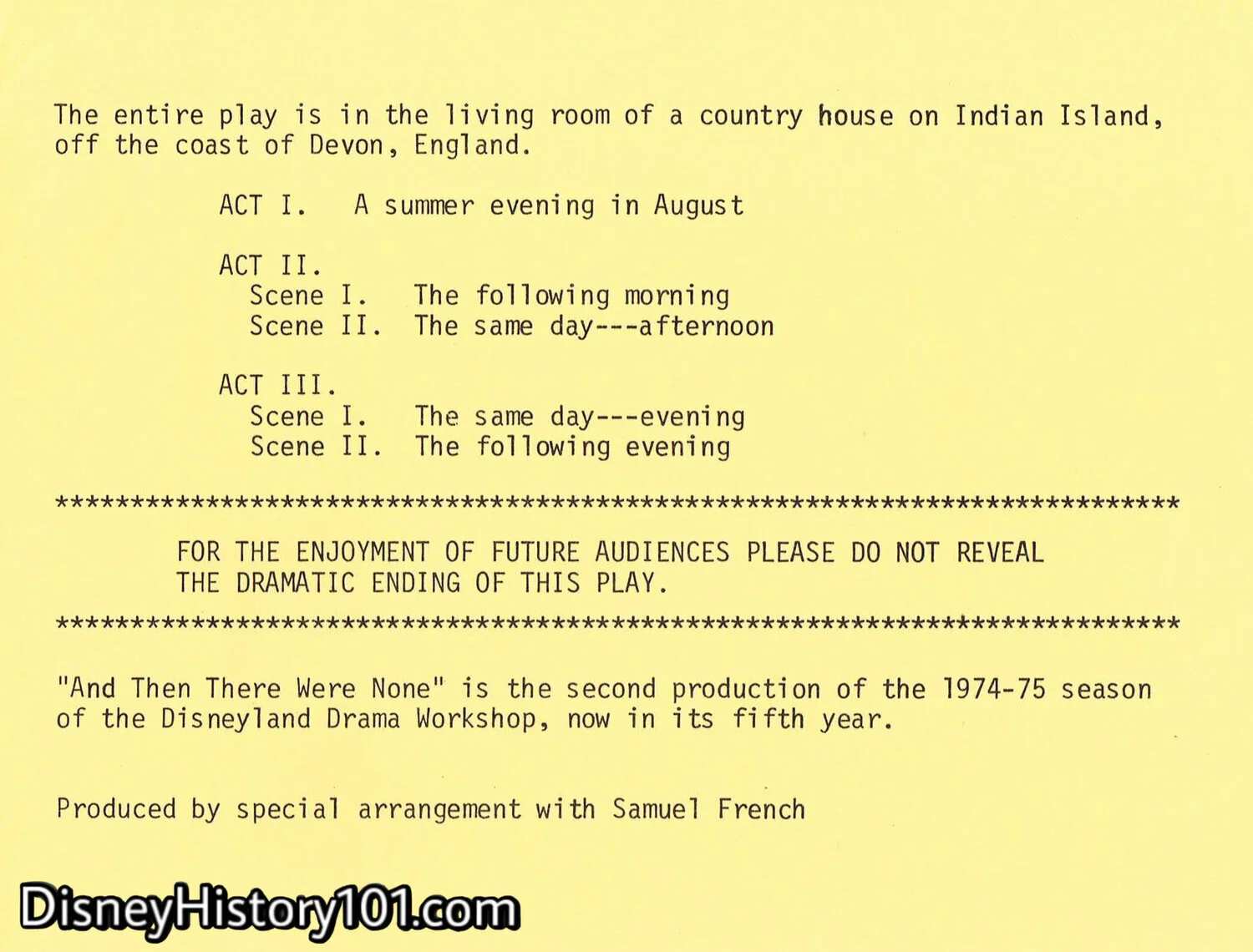
"And Then There Were None" Program, (1974)
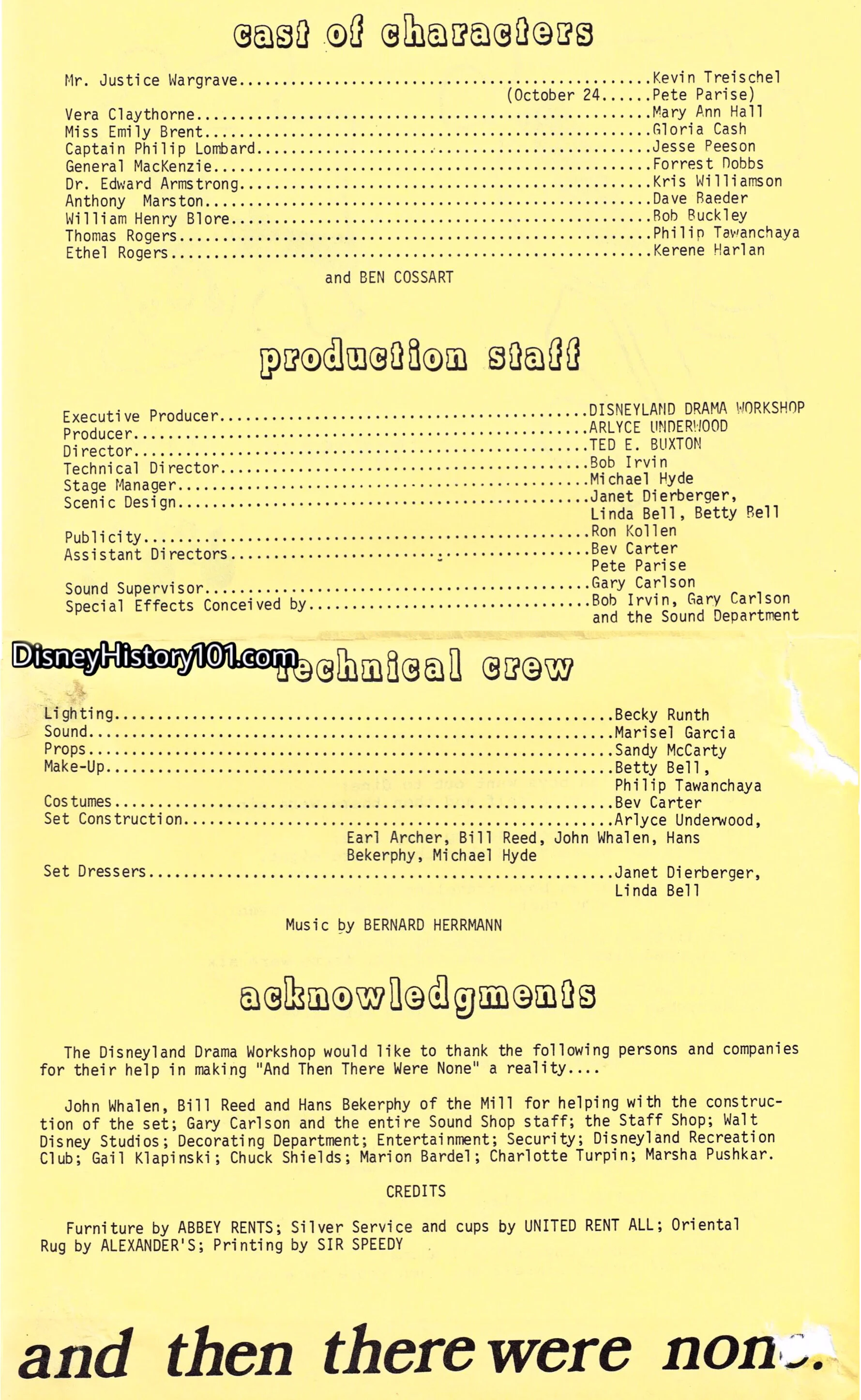
"And Then There Were None" Program, (1974)
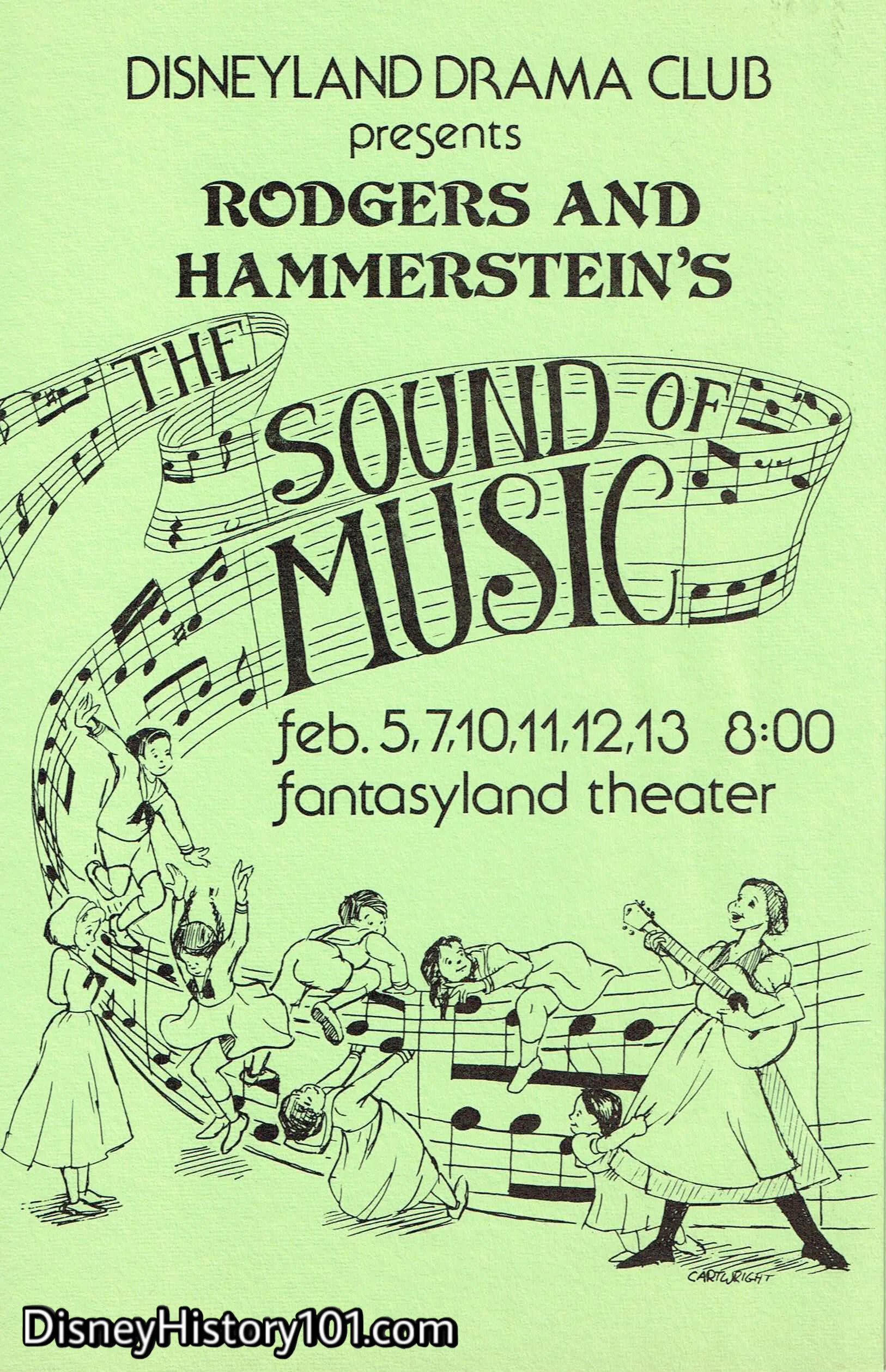
"The Sound of Music" Flyer, (1975)
Stars included Janice Knowlton (Mother Superior). If you performed in this musical, we would love to hear your story.
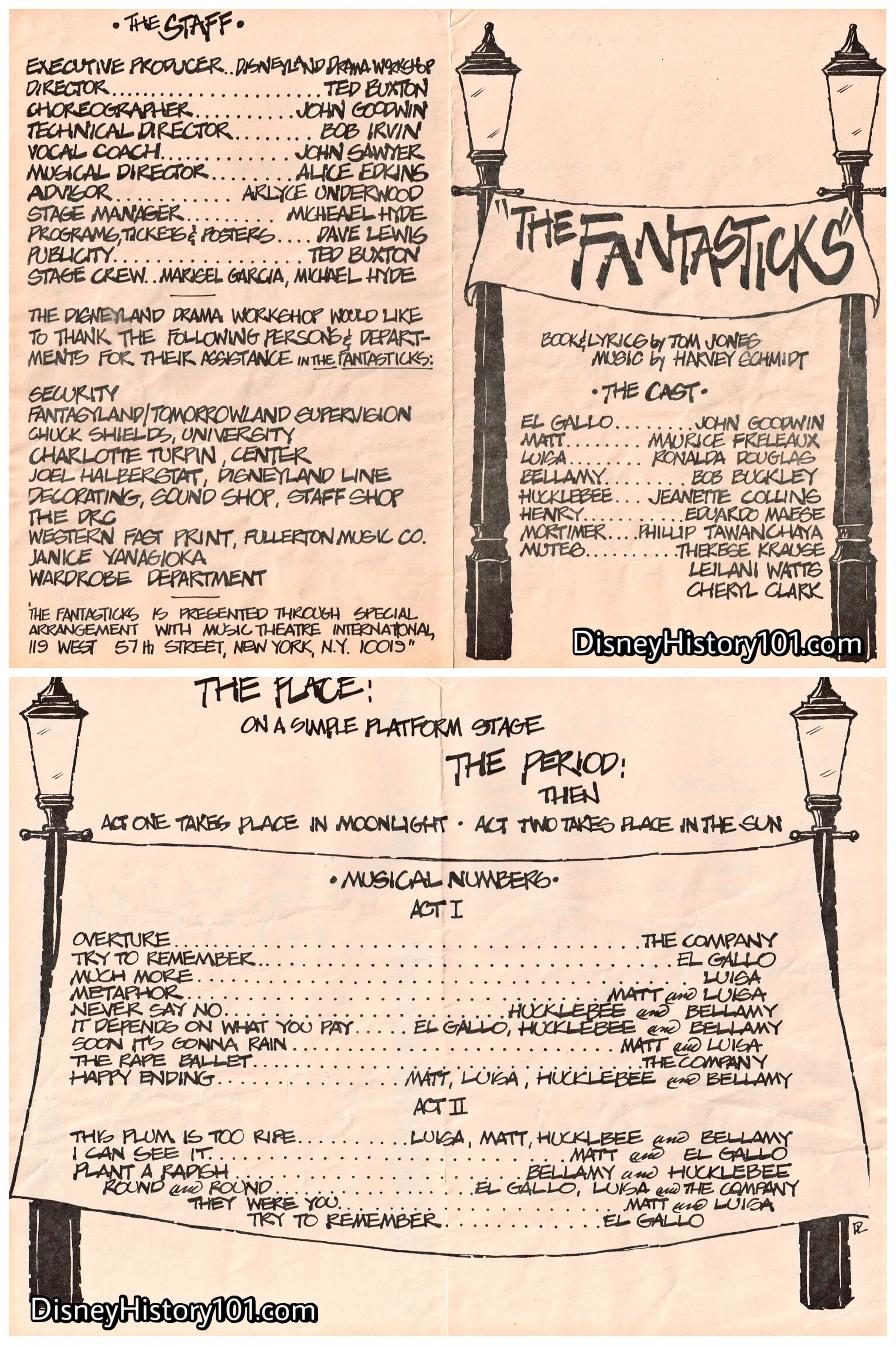
"The Fantasticks" Program, (1975)
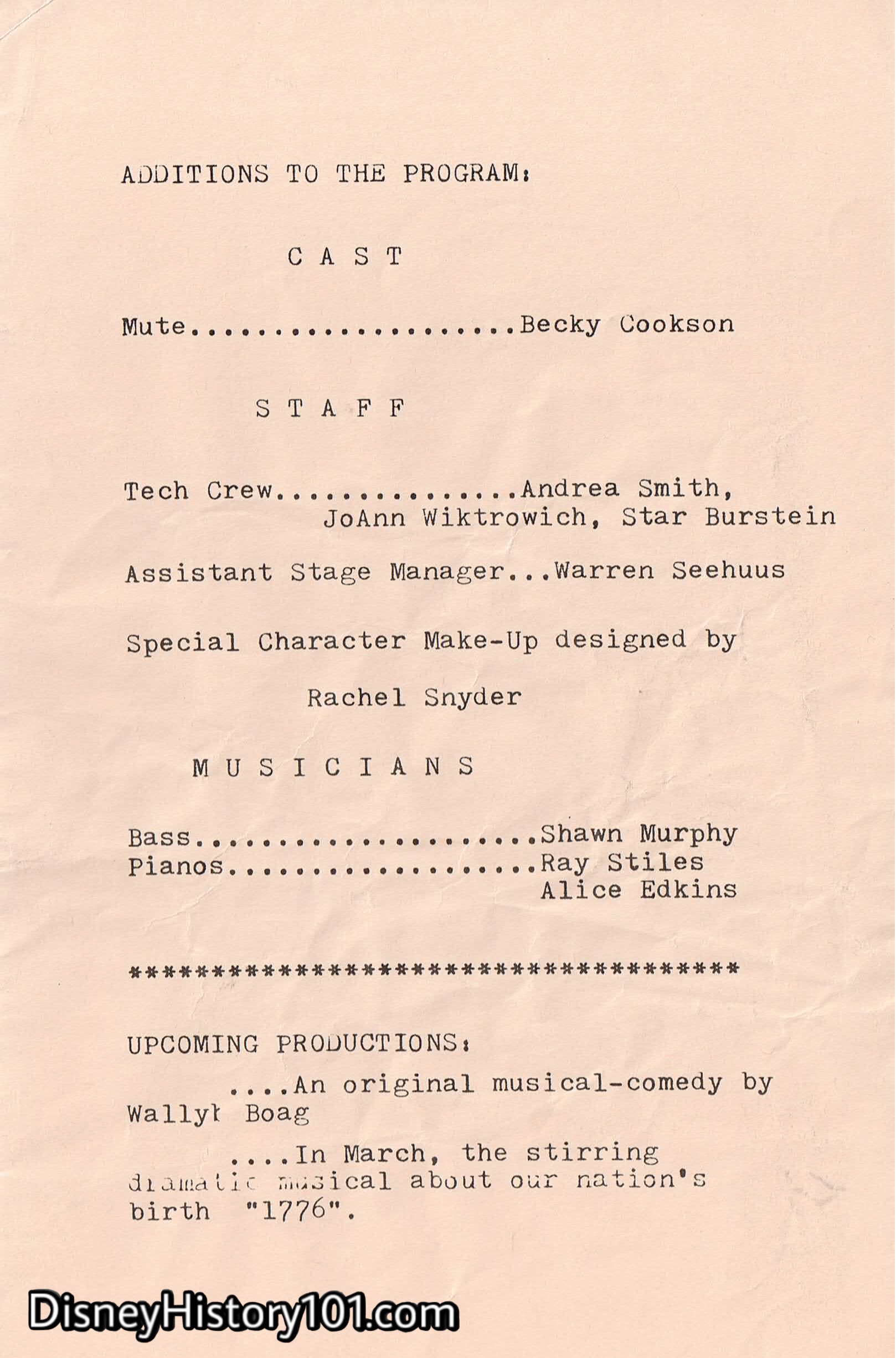
"The Fantasticks" Program Addition, (1975)
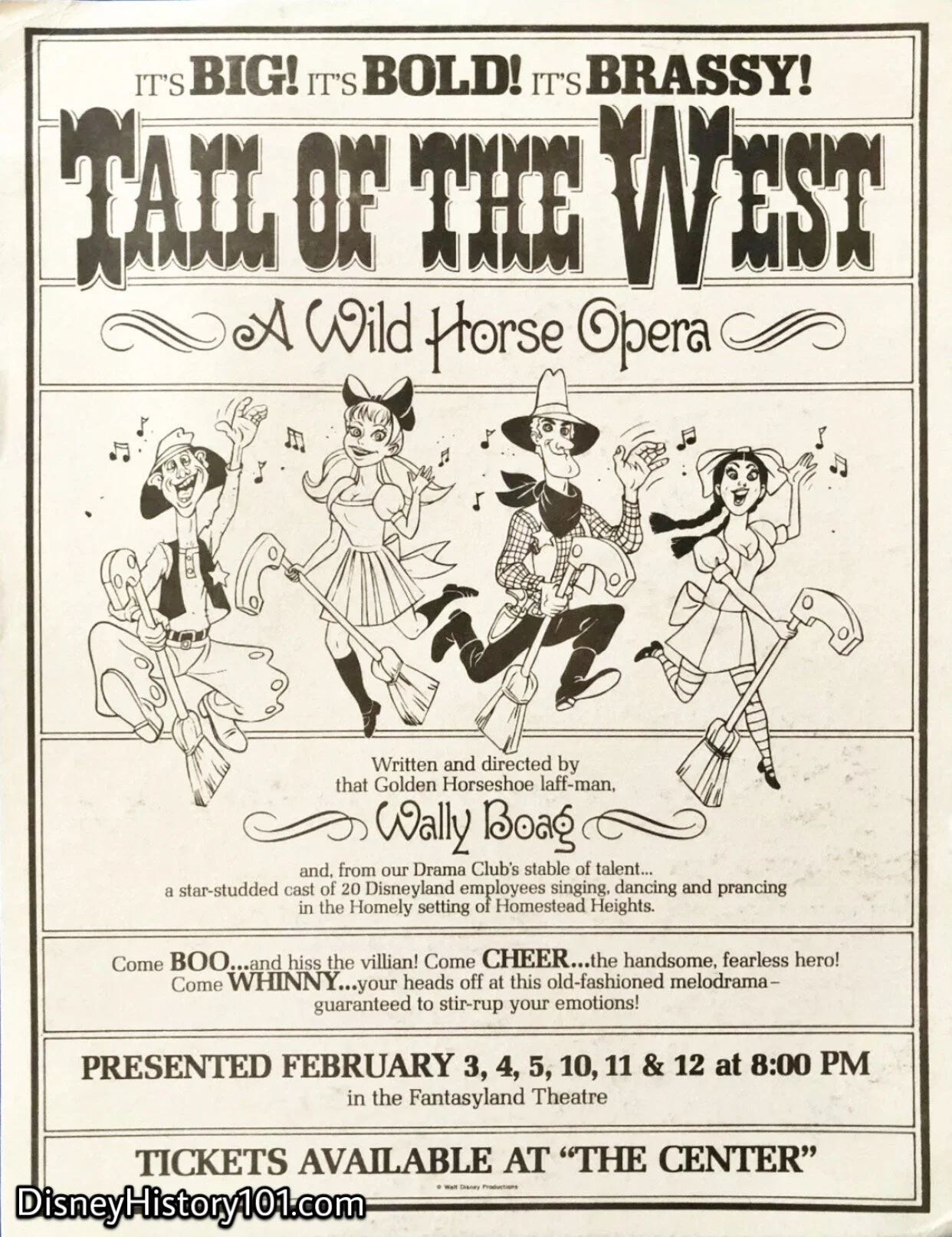
"Tail Of The West" Flyer, (1976)
Tom Pletts recalled this production : “‘Tail of the West’ is/was a vaudeville-styled melodrama, with a chorus and production numbers. The story: after the townsfolk extol the virtues of Homestead Heights, their new Marshall and his deputy find a name for their horse by doing a Lone Ranger sketch and dance (it's hard to explain). The heroine's grandfather loses the deed to his ranch (and the town's water rights) PLUS the hand of his granddaughter in a silly poker game with the villain (me). The deputy is talked into a shootout with Blackberry, but neither wins; so the heroine steals back the deed from the villain's pocket. After a strobe-light chase scent involving nearly everyone, she finally hides it! So he attempts to get it back by torturing her, poking swords through a trick box with her inside. The hero arrives in the nick of time, of course, and he engages the villain in a slow-motion sword fight (really). The town then rejoices, all of the romances are resolved and the audience applauds. This was performed in the Fantasyland Theatre to give us more room for the dance numbers. My assigned mate was the deplorable Sludge, which was played by the actually delightful Pat Keener.”
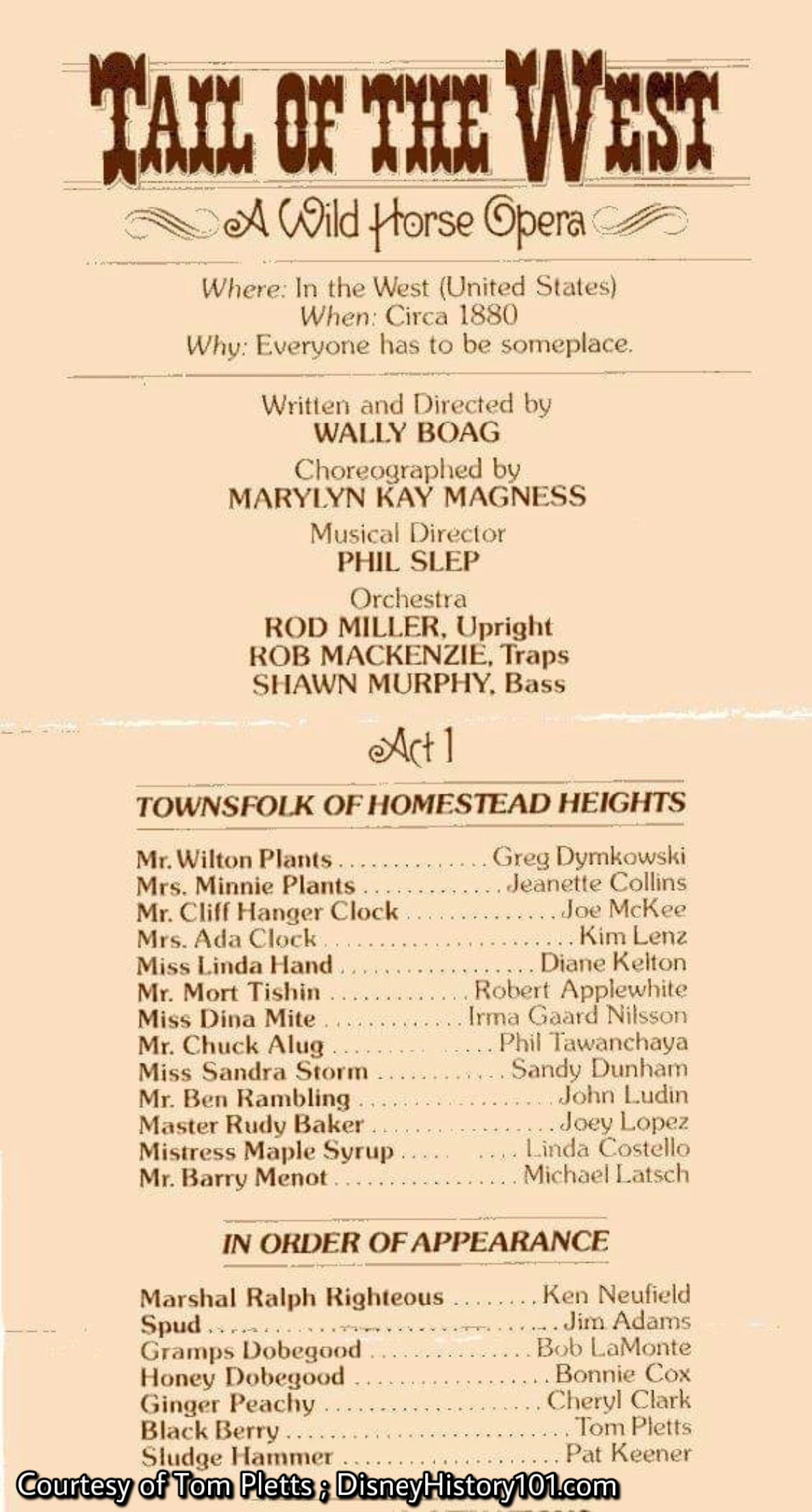
"Tail Of The West" Program, (1976)
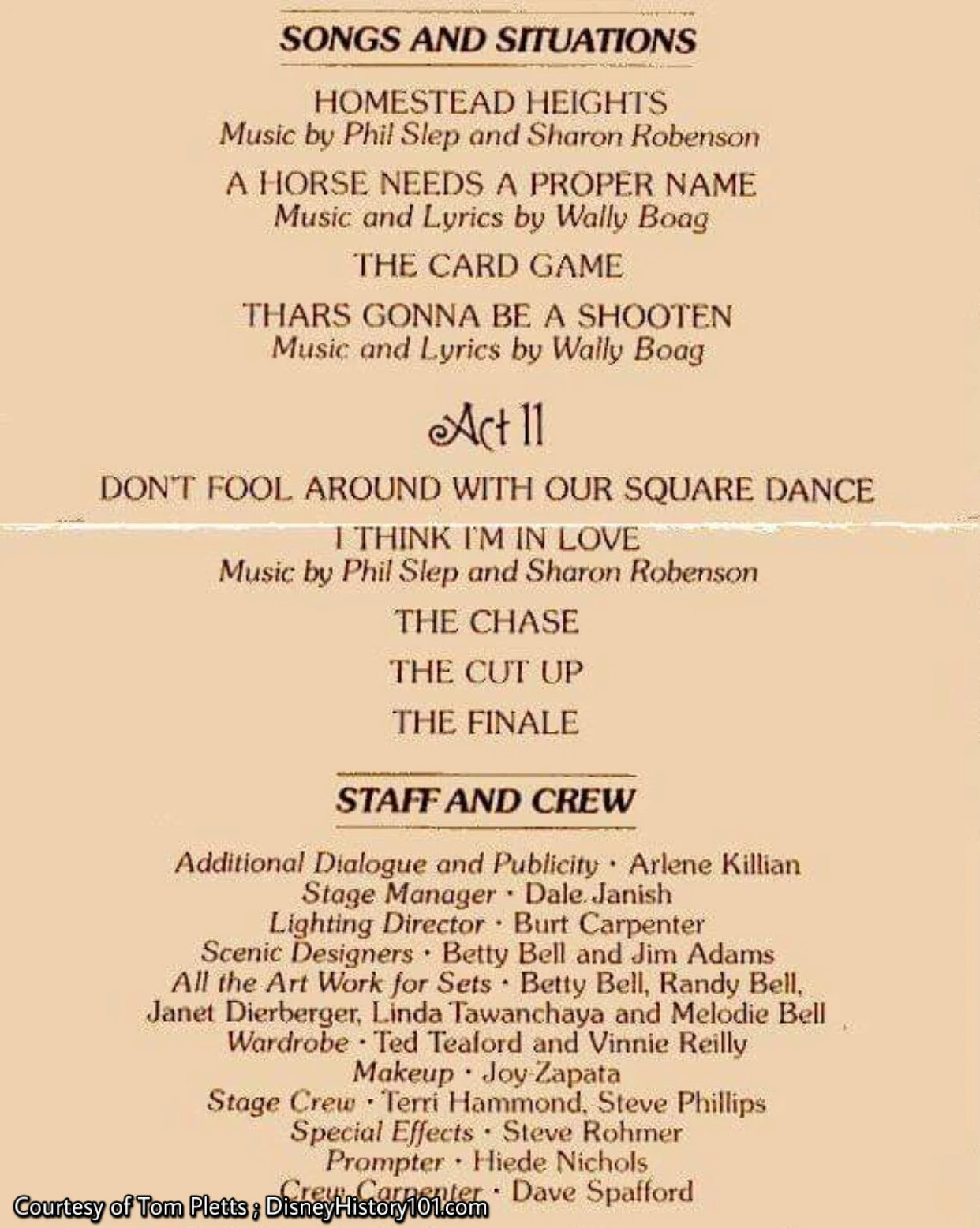
"Tail Of The West" Program, (1976)
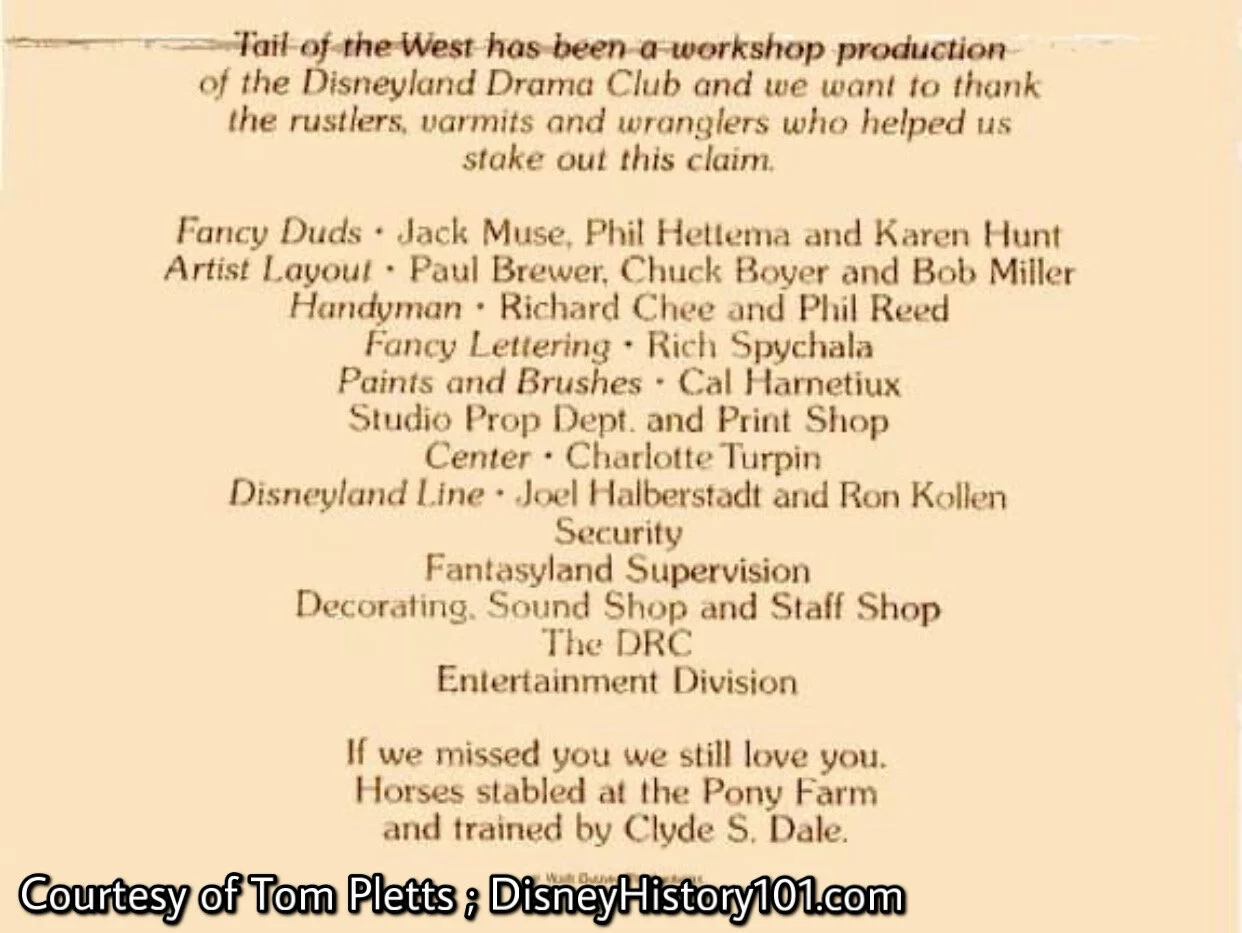
"Tail Of The West" Program, (1976)
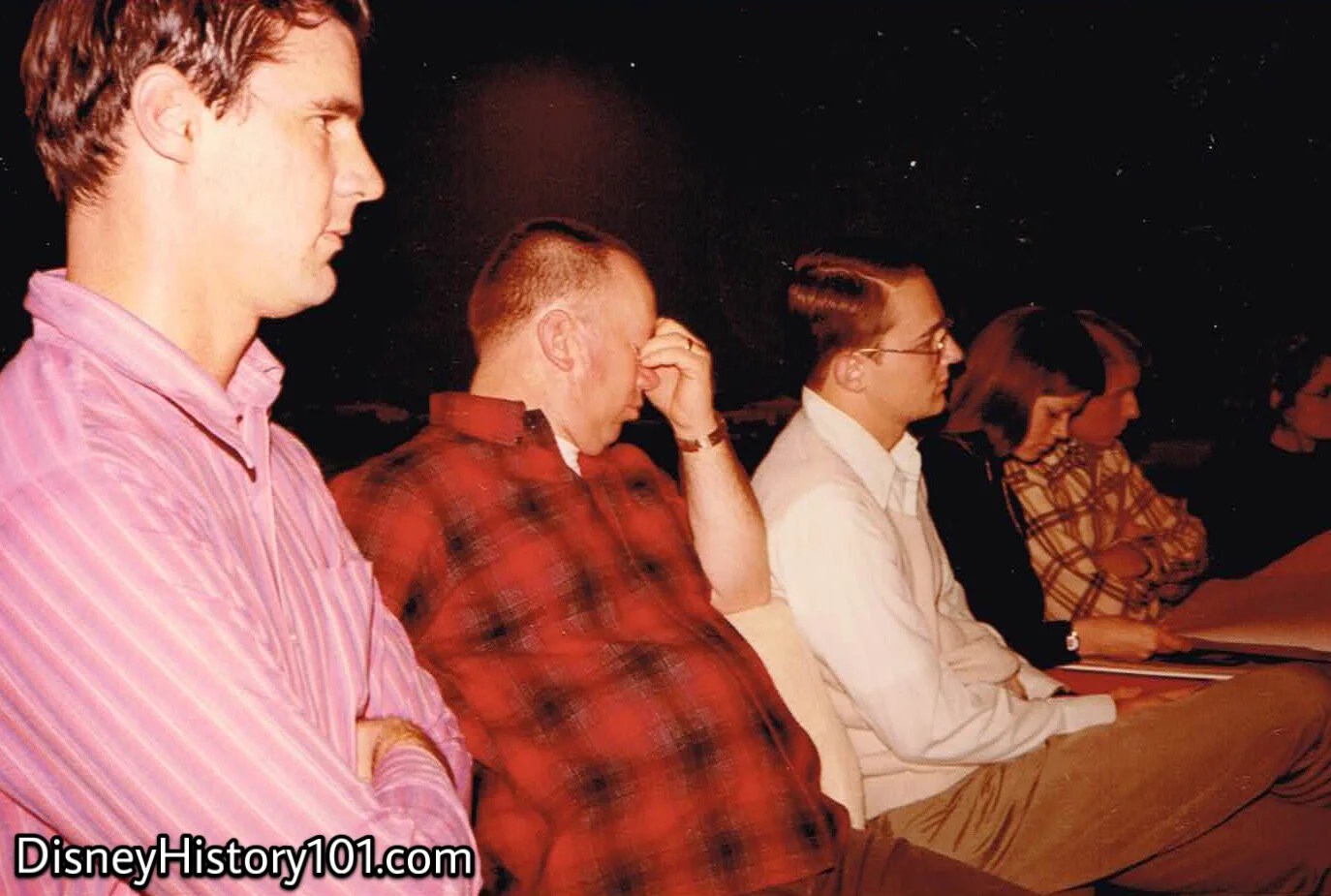
Unidentified Disneyland Drama Club Memory
Earl Archer and others prepare for a table read.
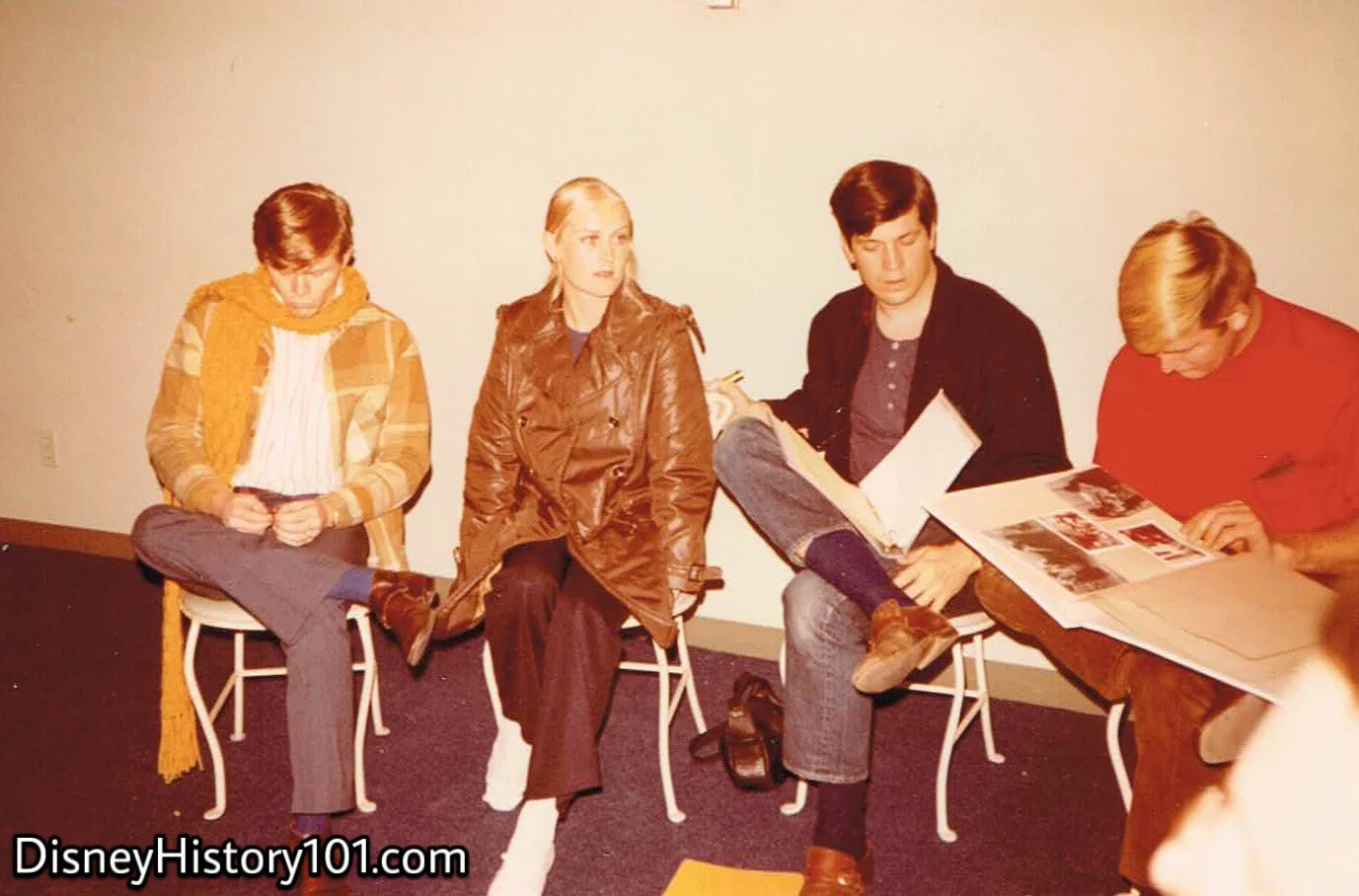
Unidentified Disneyland Drama Club Memory
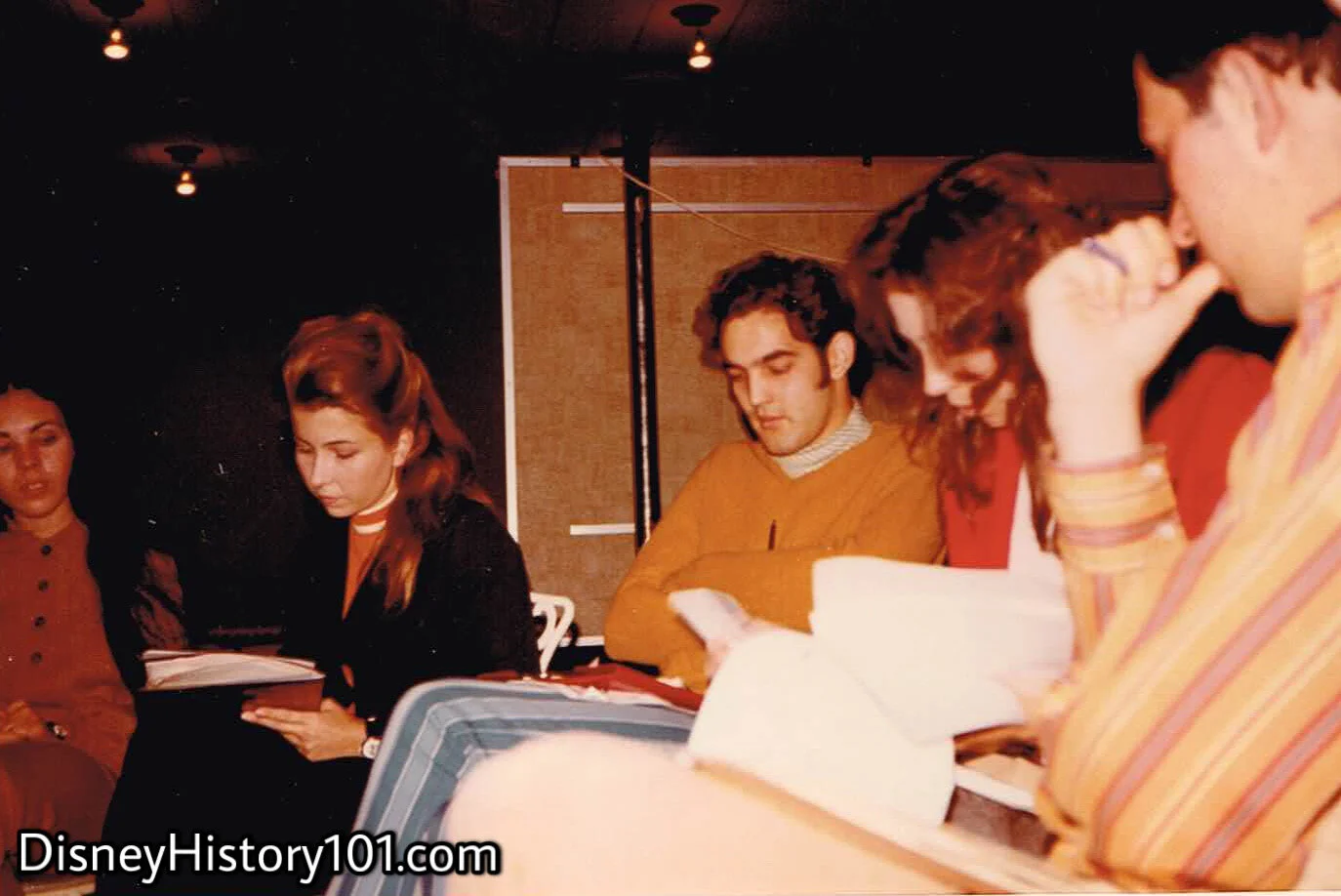
Unidentified Disneyland Drama Club Memory
Vocalist Rhonda Treischel (of Fantasyland Merch) is sitting second from the left.
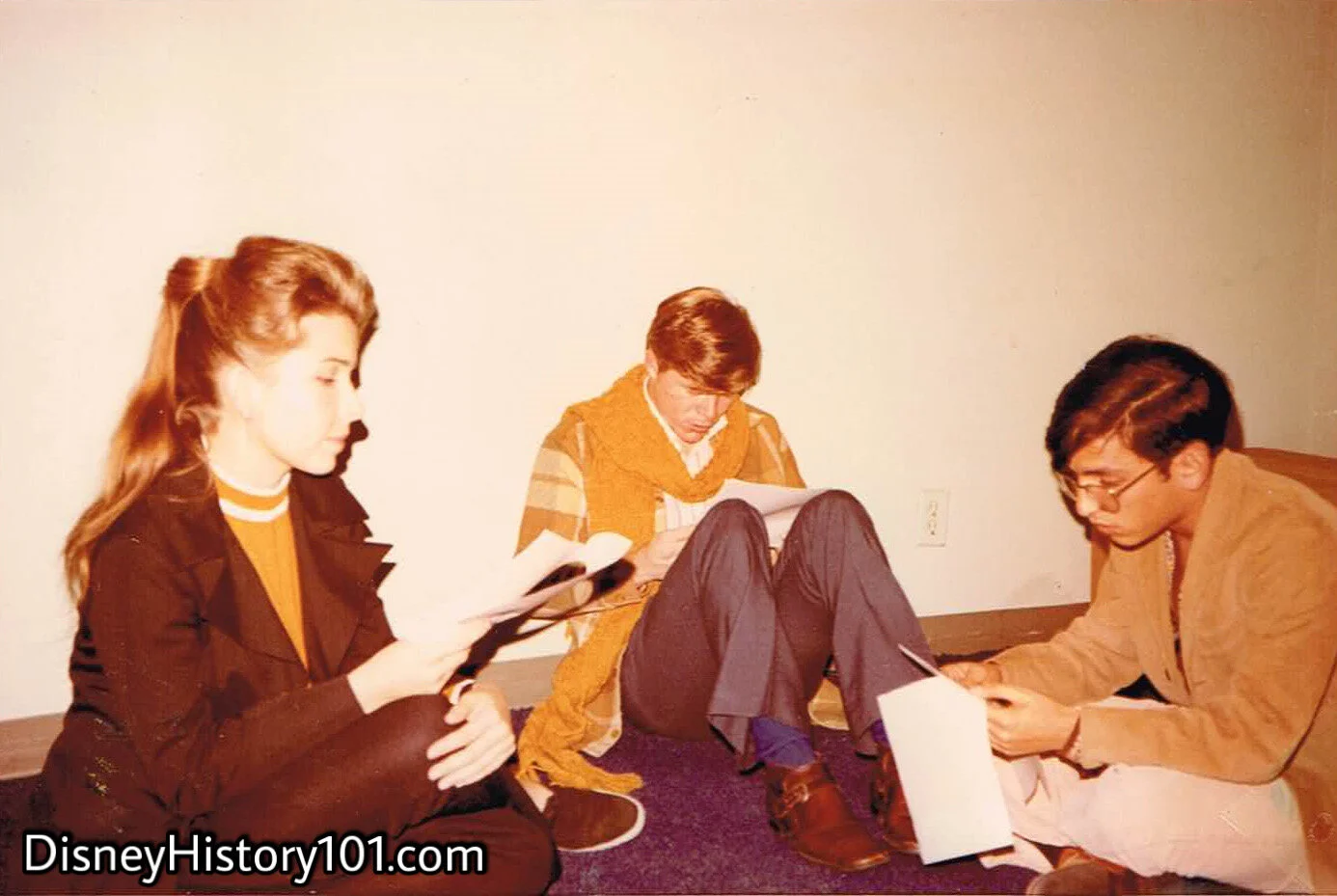
Unidentified Disneyland Drama Club Memory
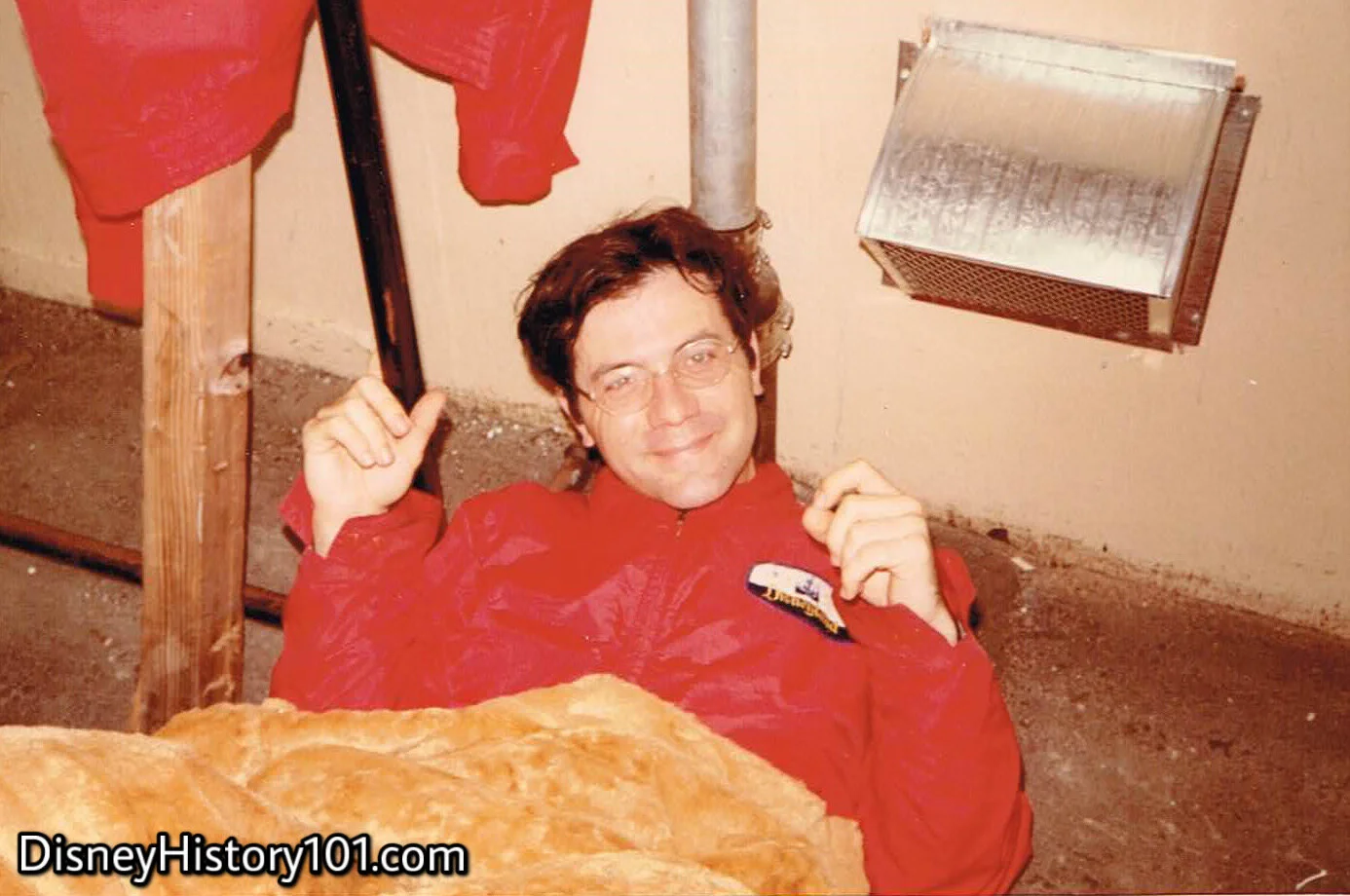
Unidentified Disneyland Drama Club Memory
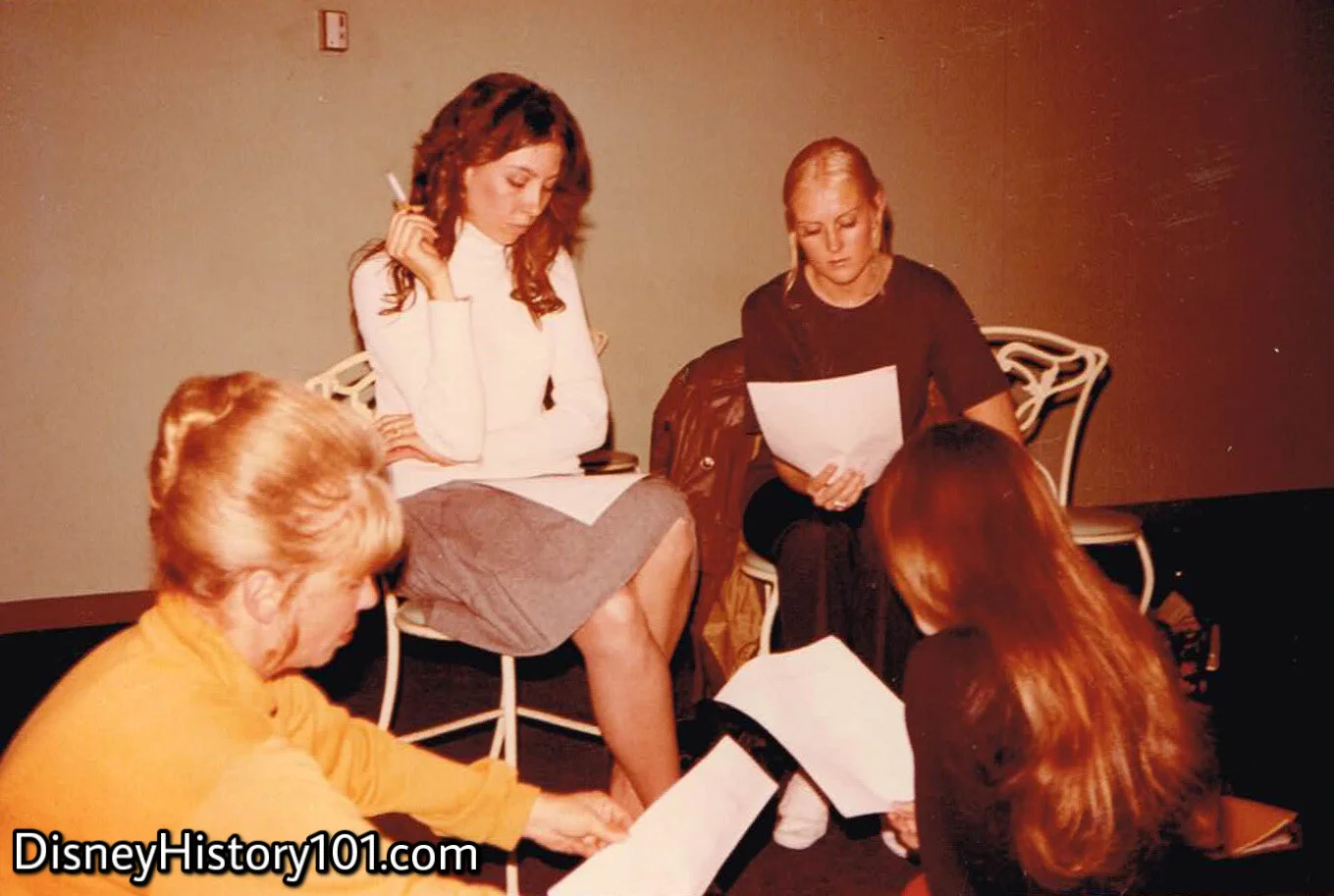
Unidentified Disneyland Drama Club Memory
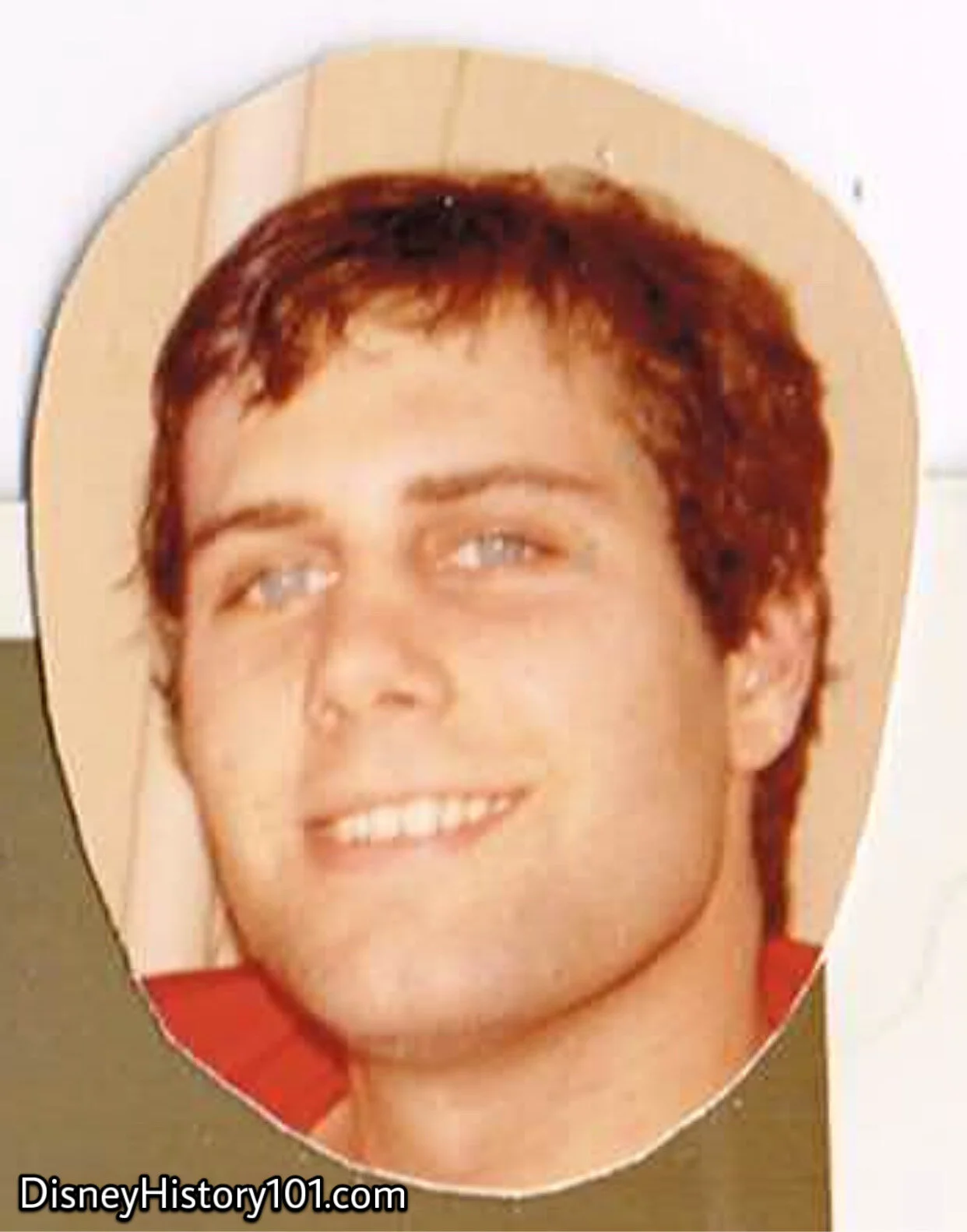
Unidentified Disneyland Drama Club Memory
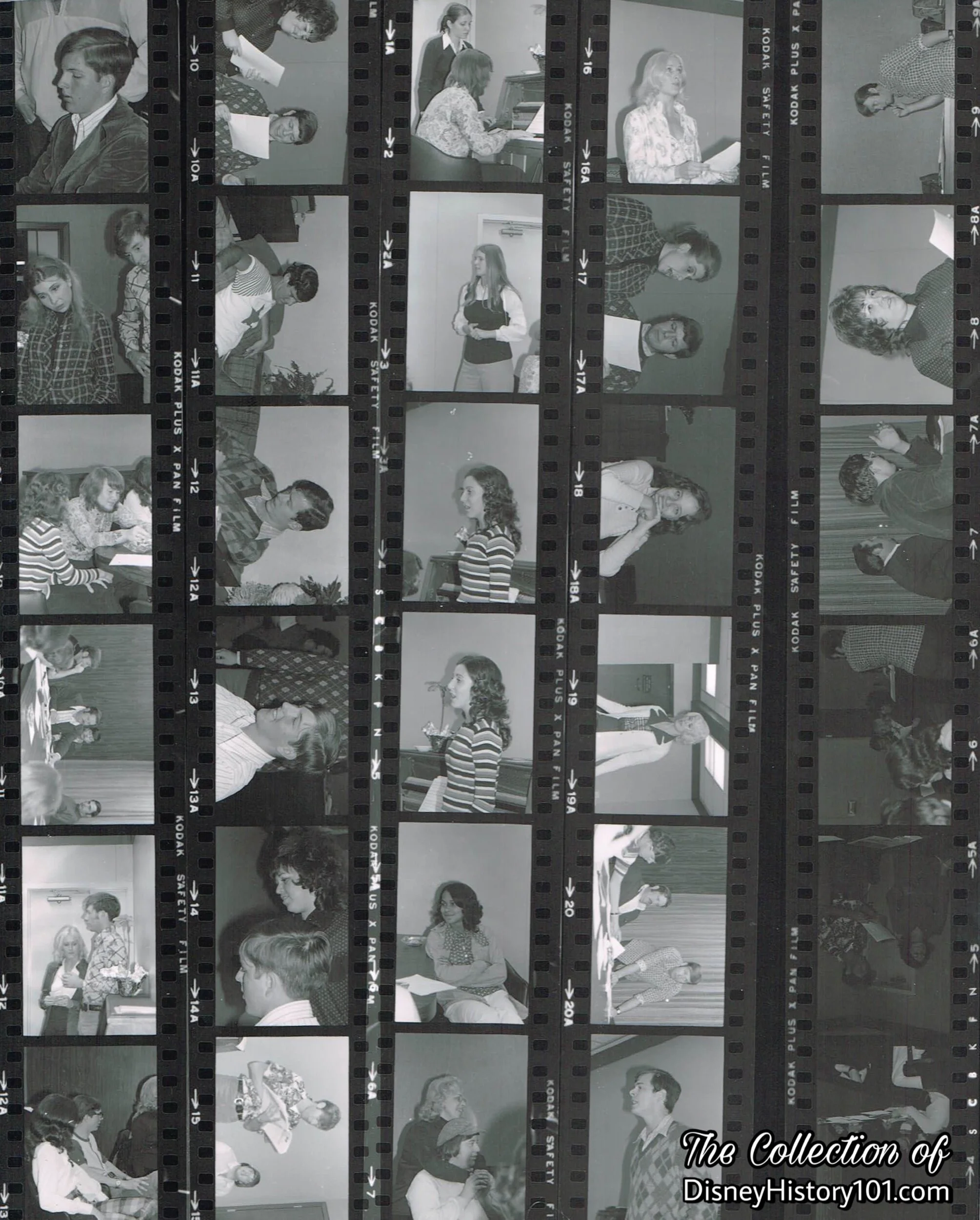
Unidentified Disneyland Drama Club proof sheet of memories
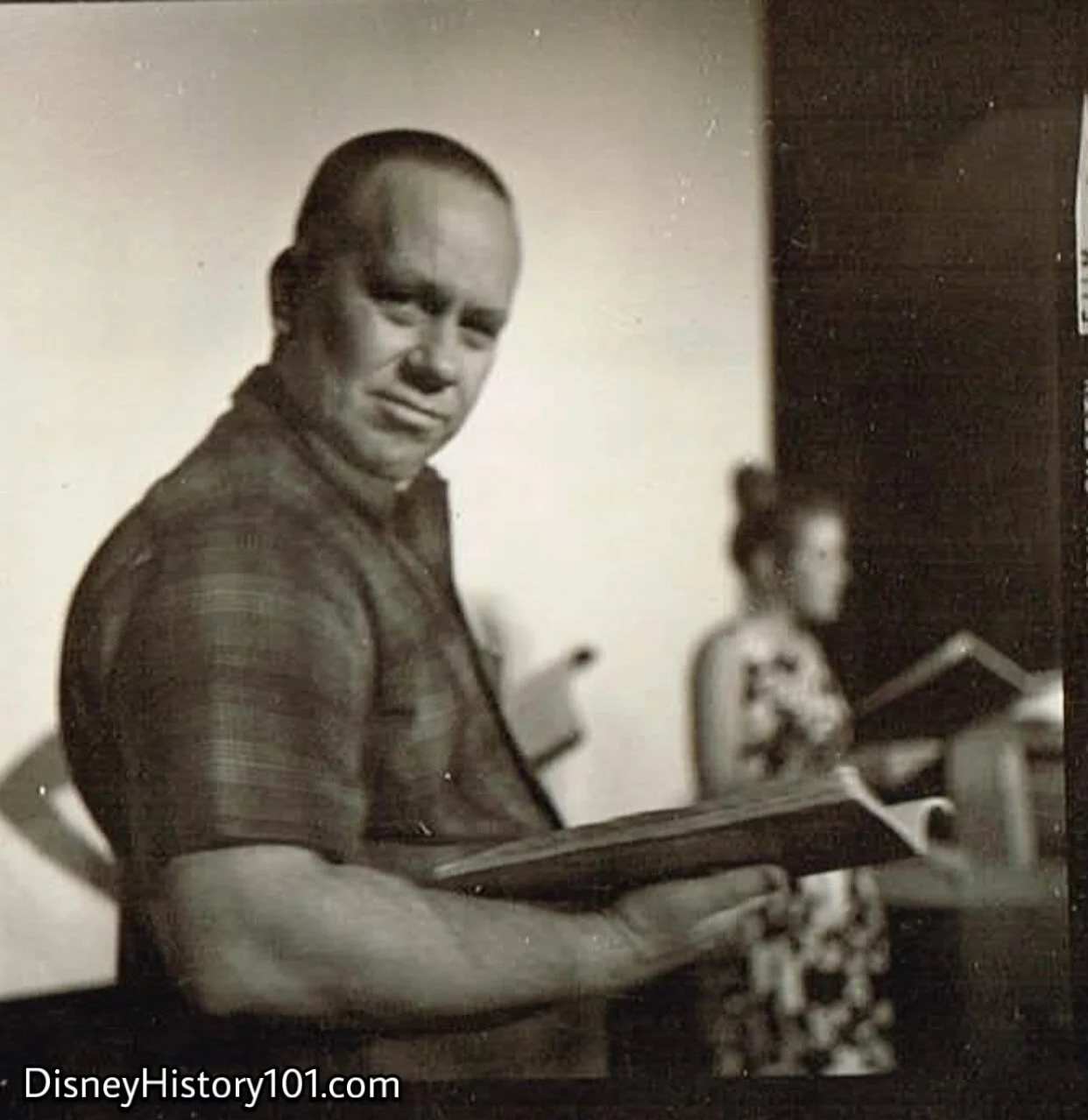
Unidentified Disneyland Drama Club Memory
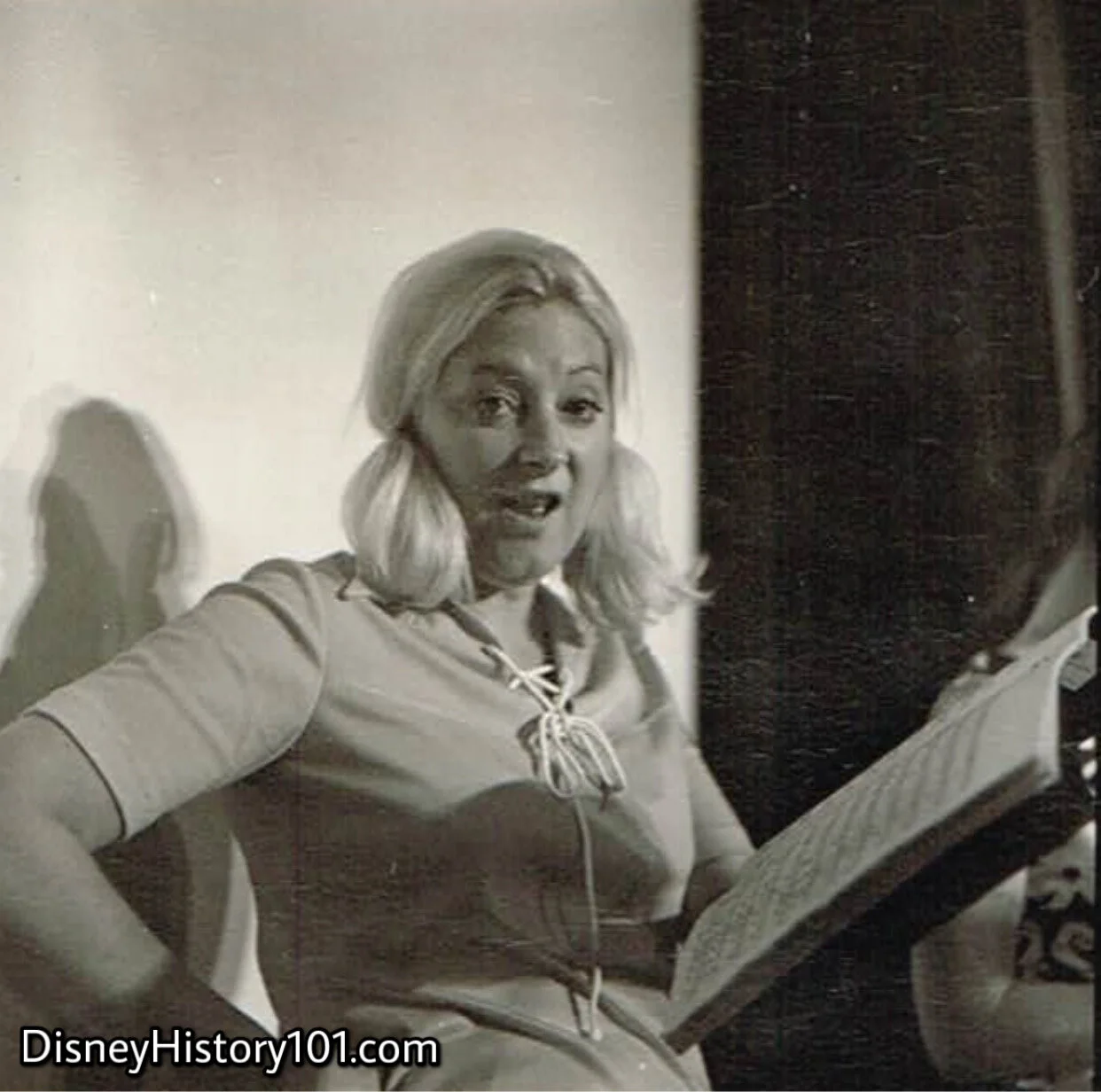
Unidentified Disneyland Drama Club Memory
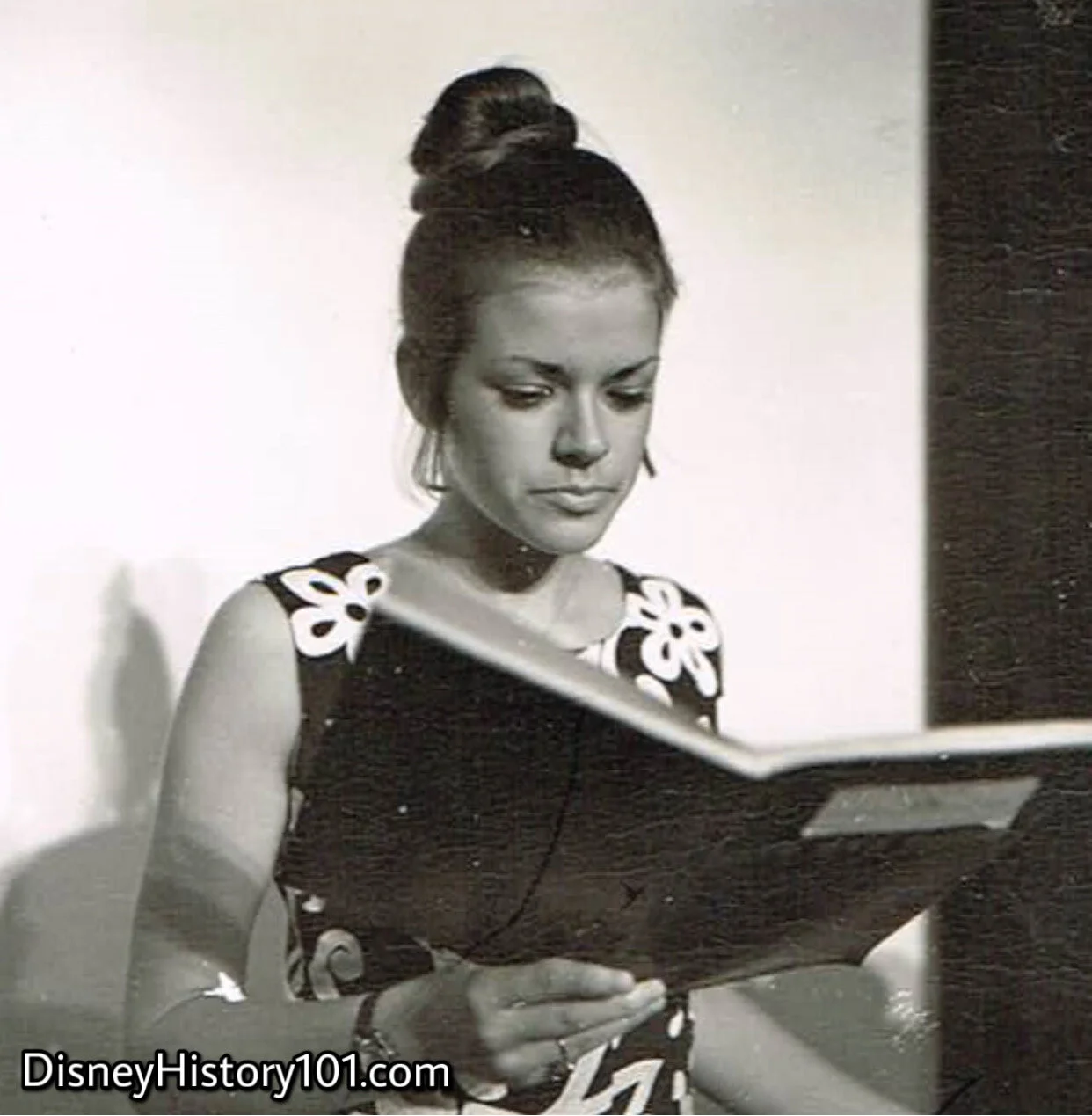
Unidentified Disneyland Drama Club Memory
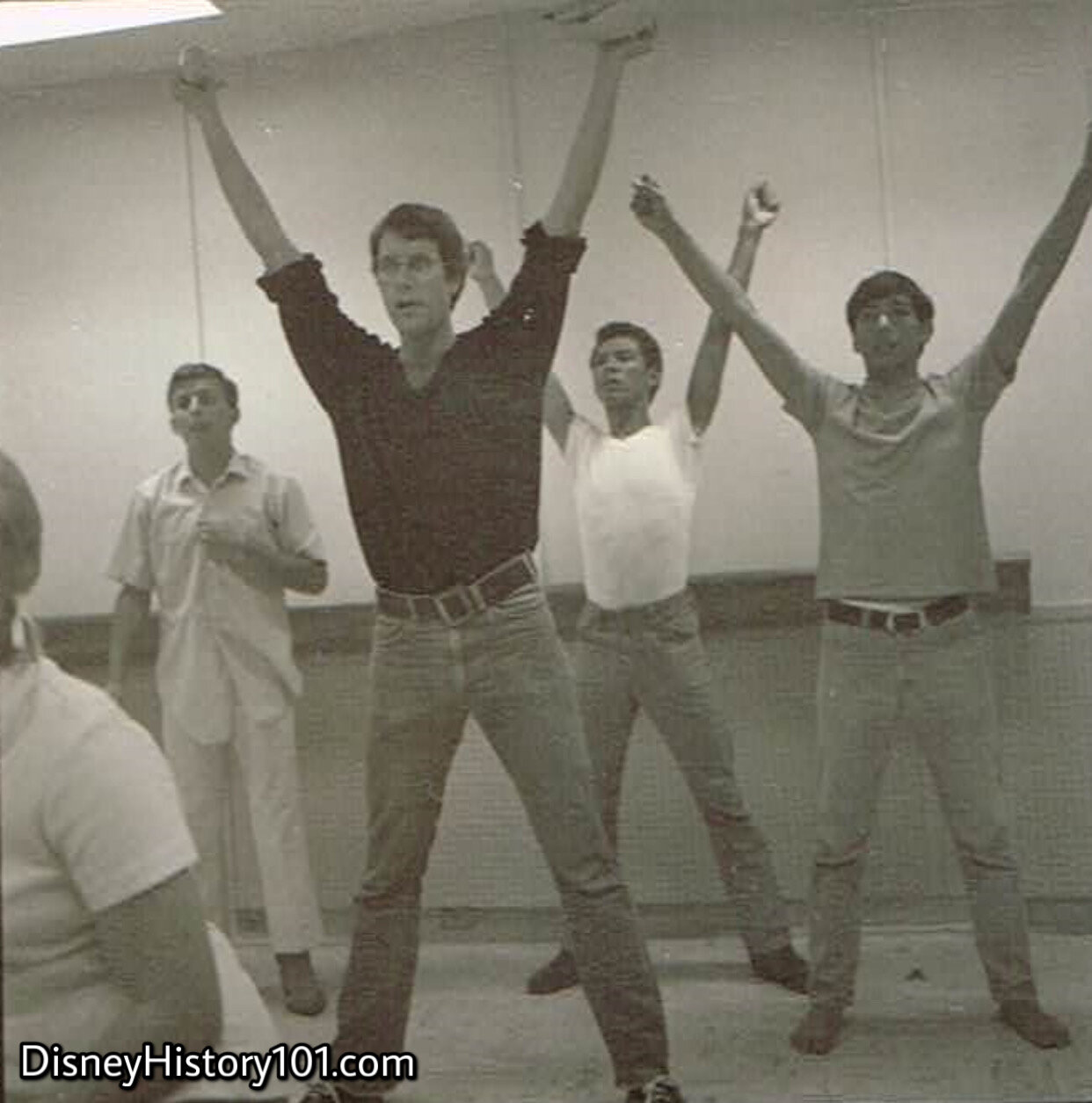
Unidentified Disneyland Drama Club Memory
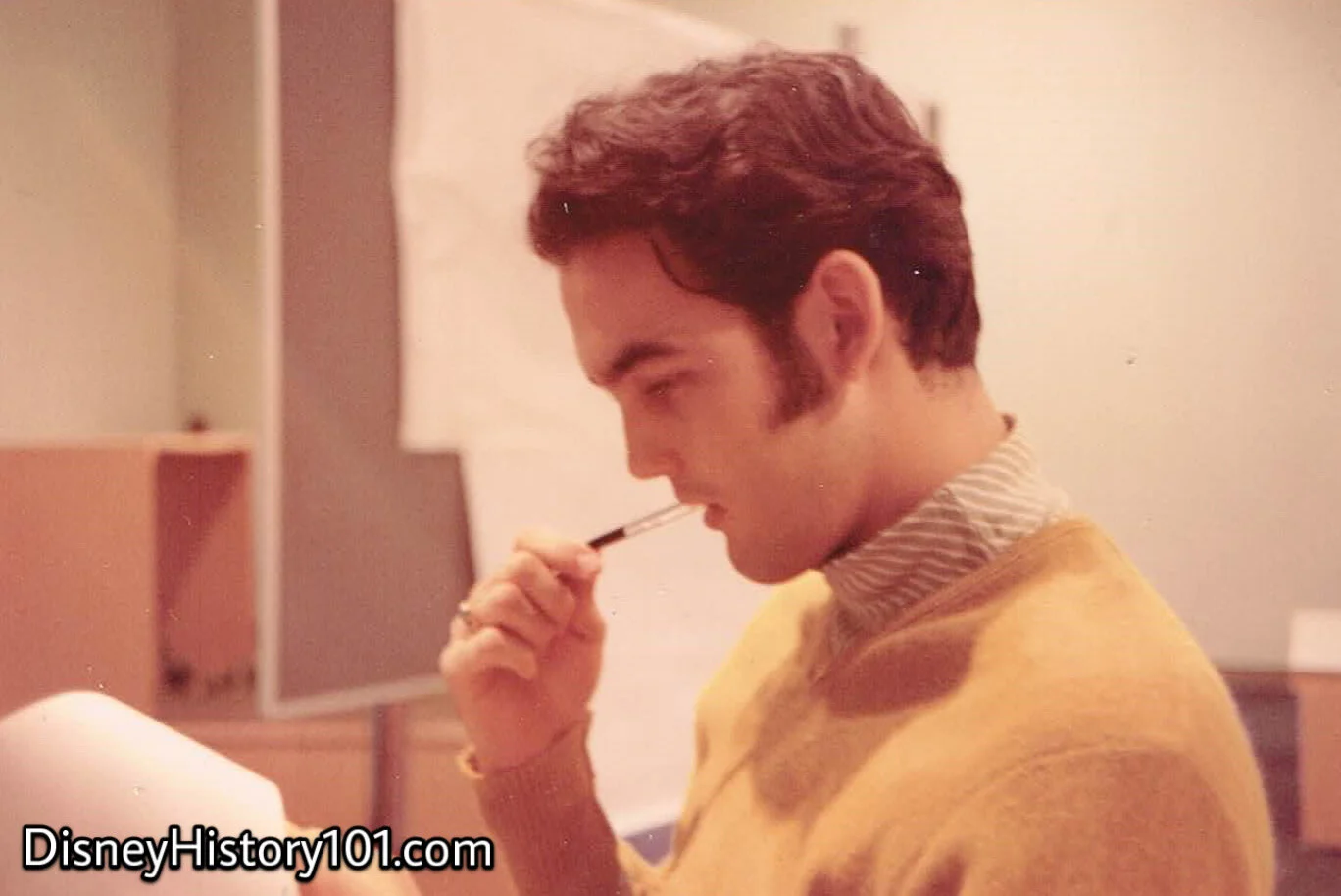
Unidentified Disneyland Drama Club Memory
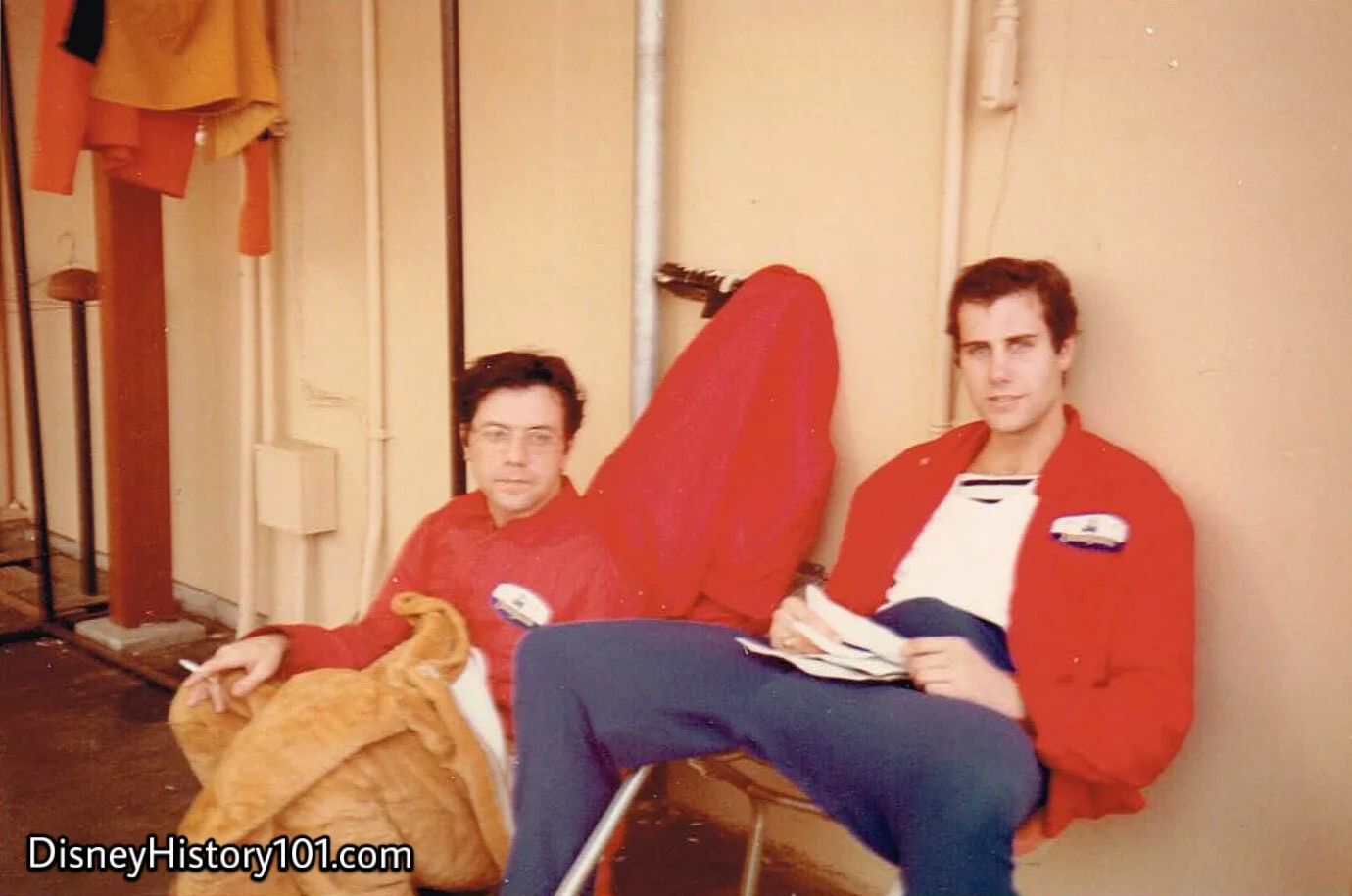
Unidentified Disneyland Drama Club Memory
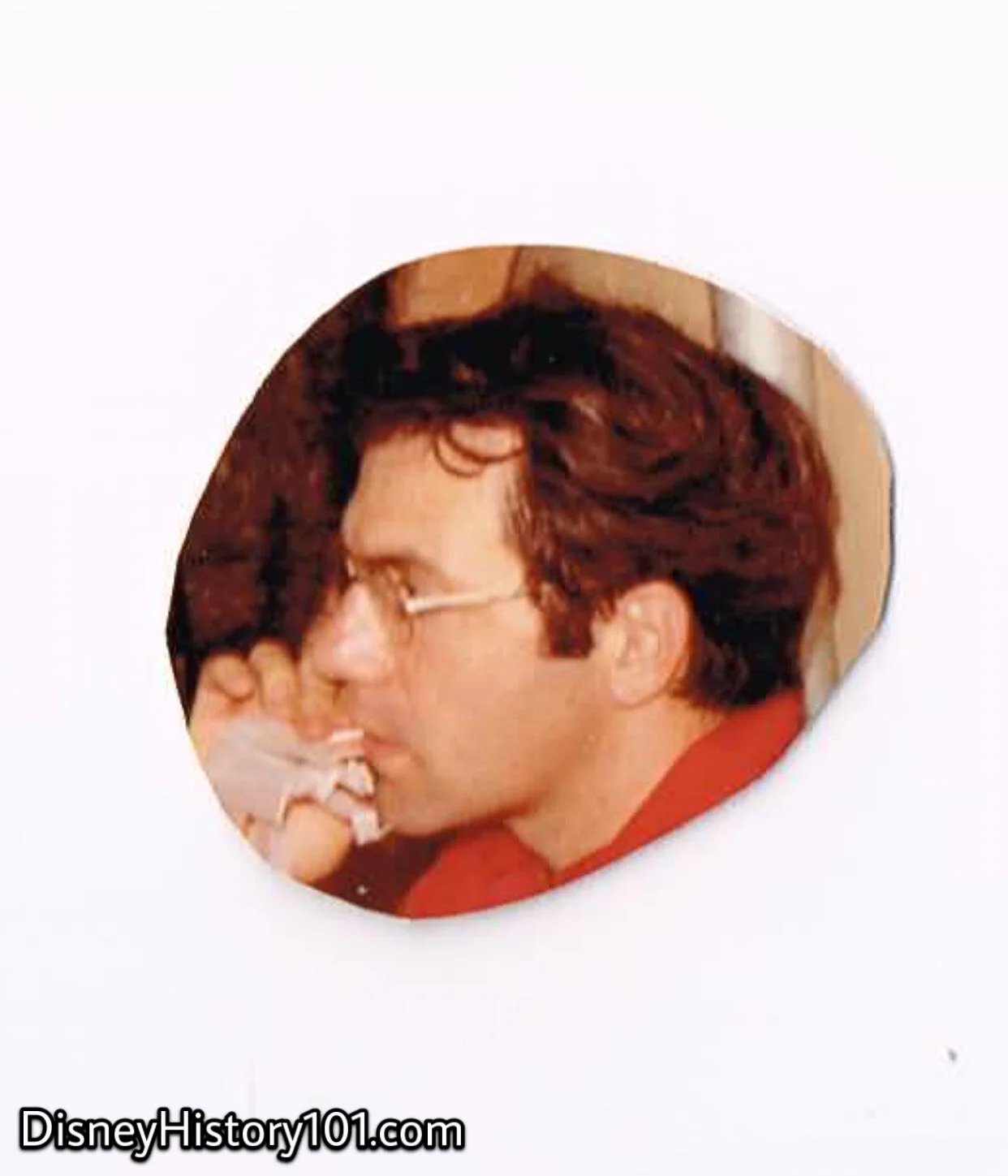
Unidentified Disneyland Drama Club Memory
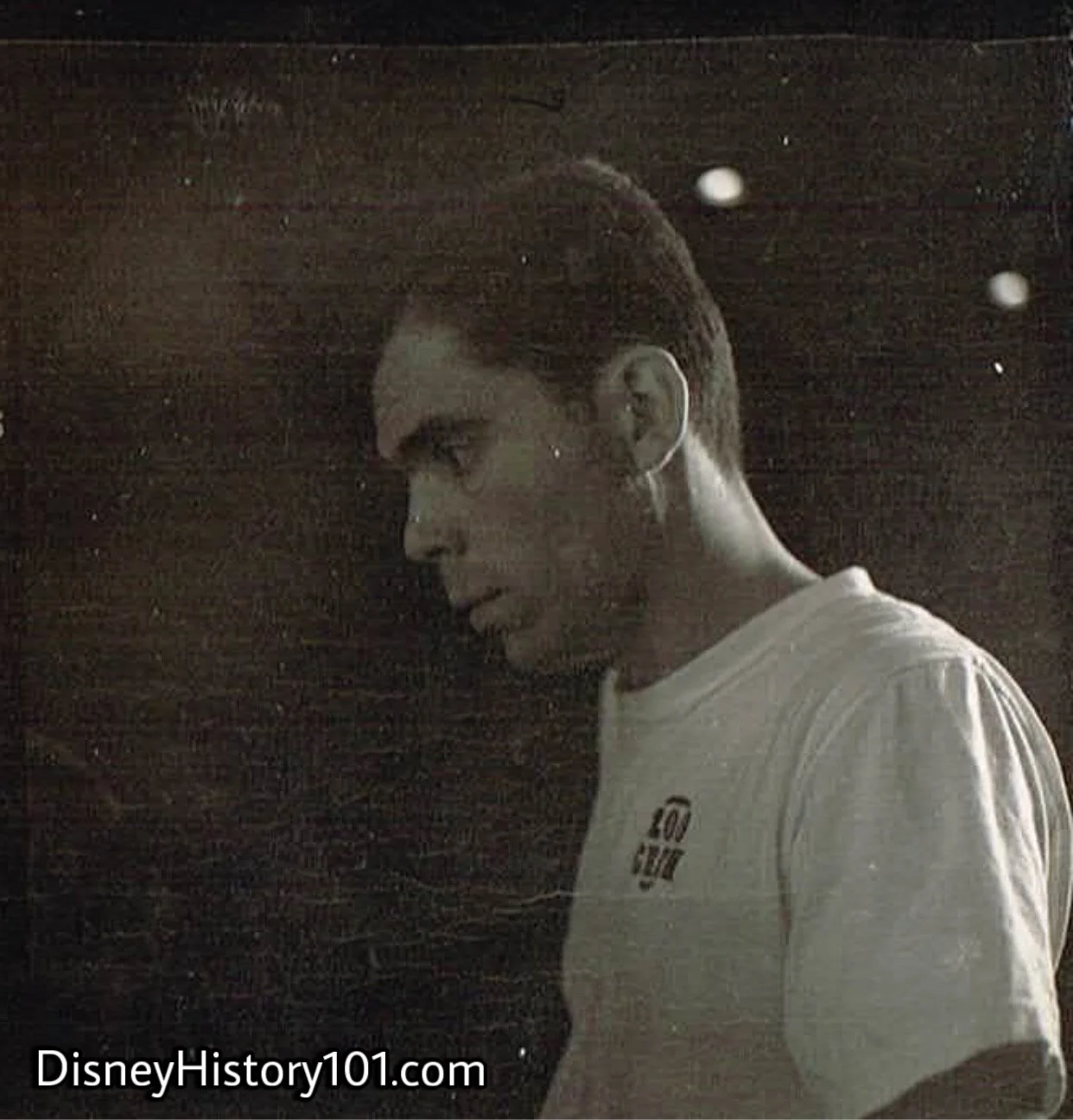
Unidentified Disneyland Drama Club Memory
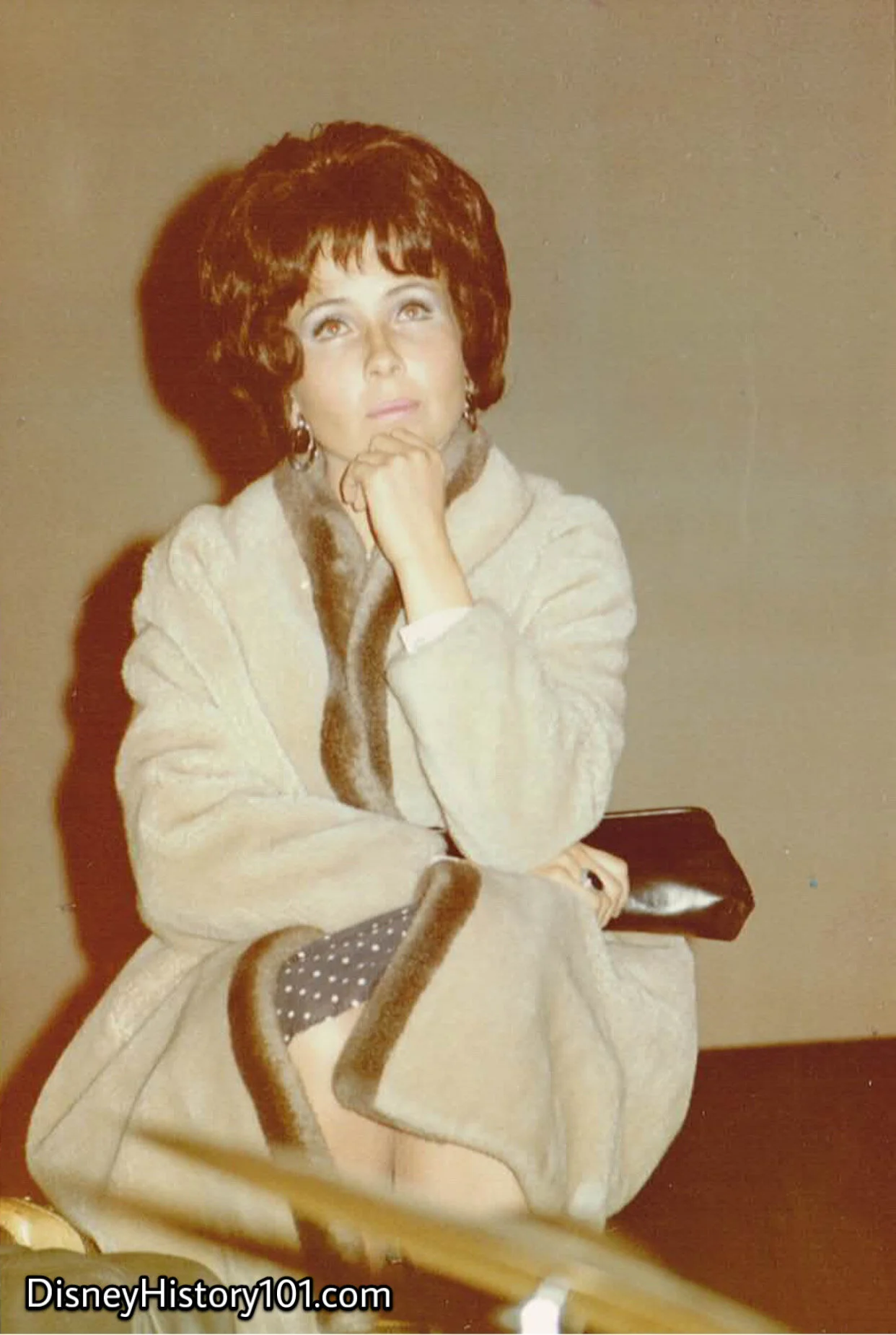
Unidentified Disneyland Drama Club Memory
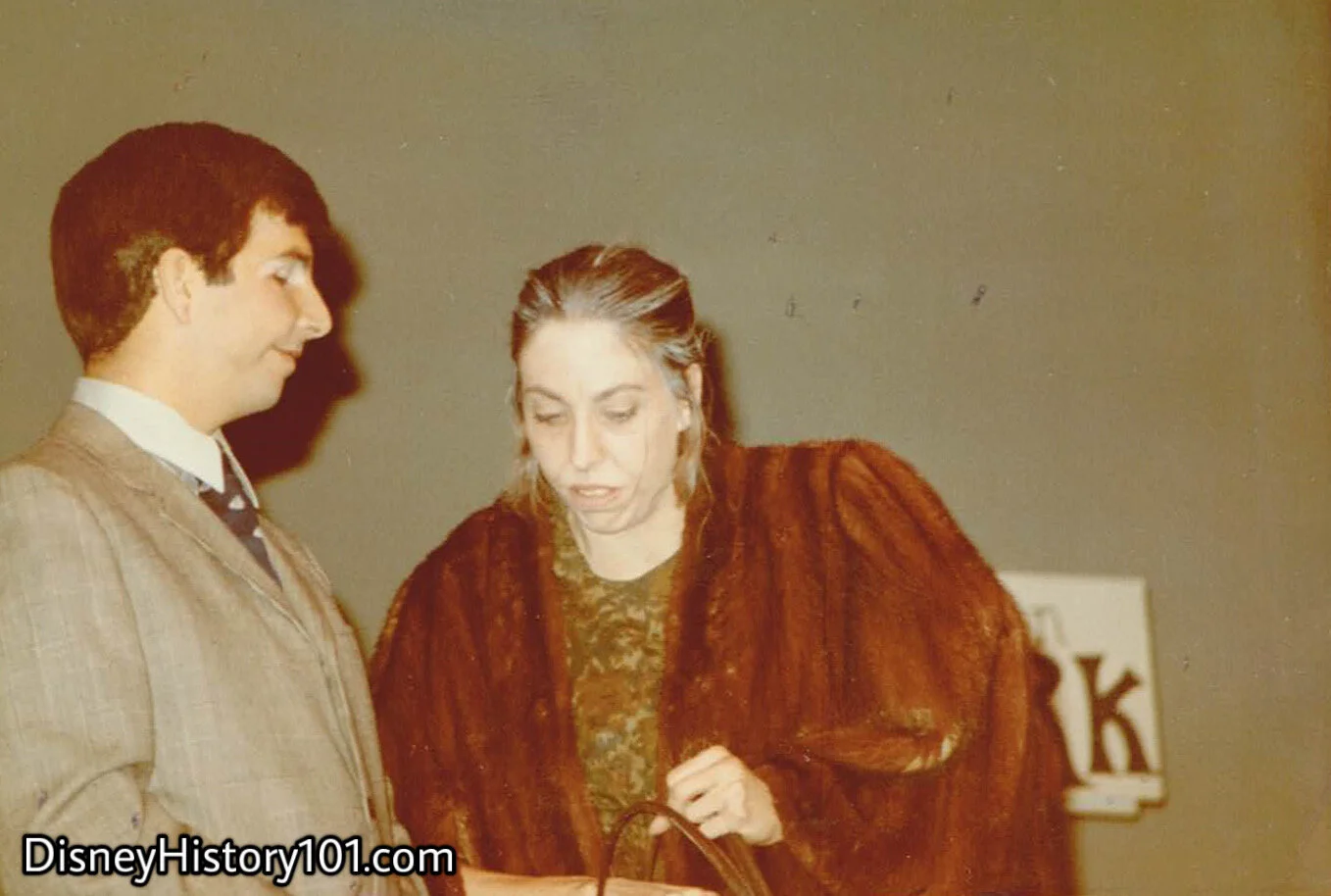
Unidentified Disneyland Drama Club Memory
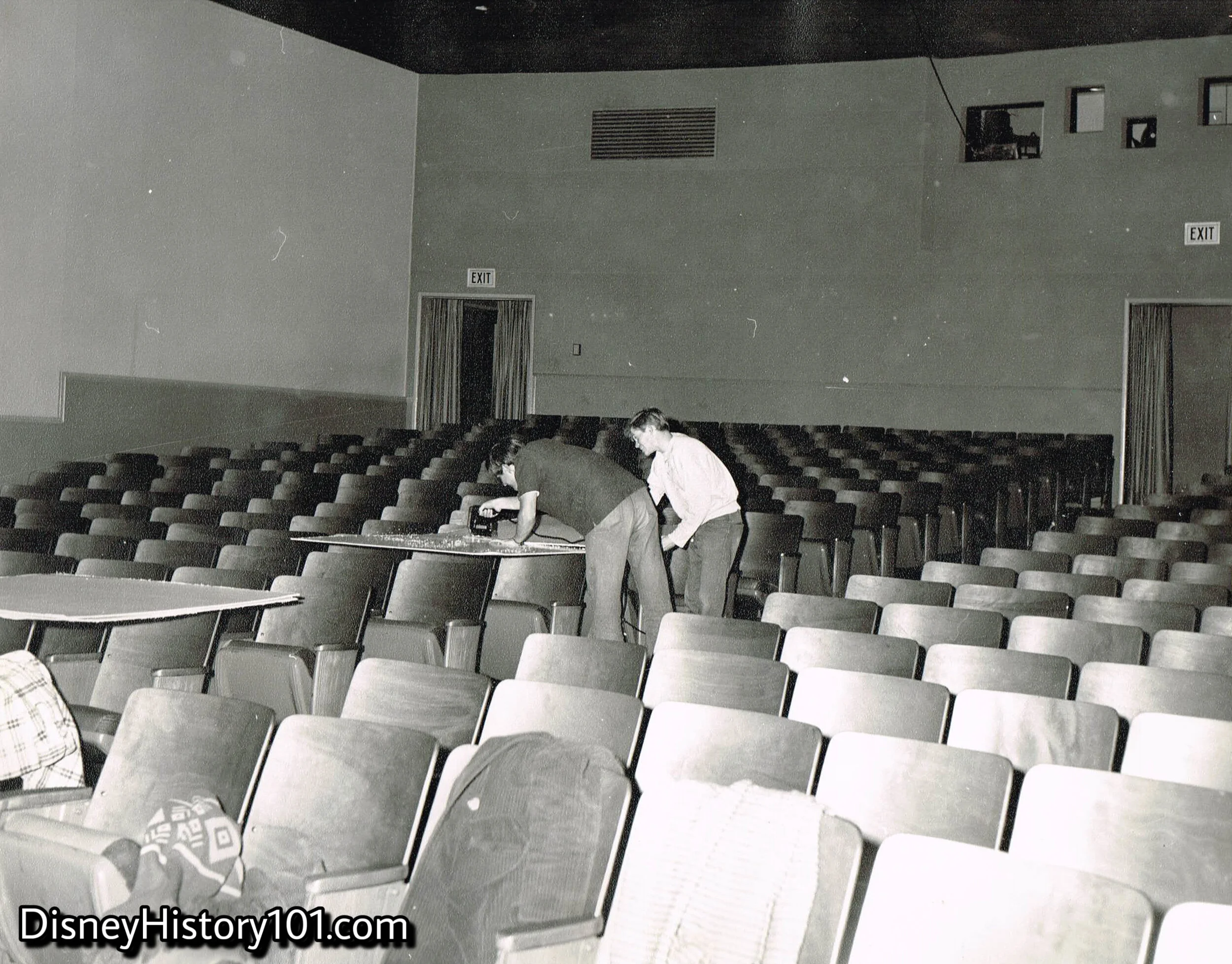
Unidentified Disneyland Drama Club Memory

Unidentified Disneyland Drama Club Memory
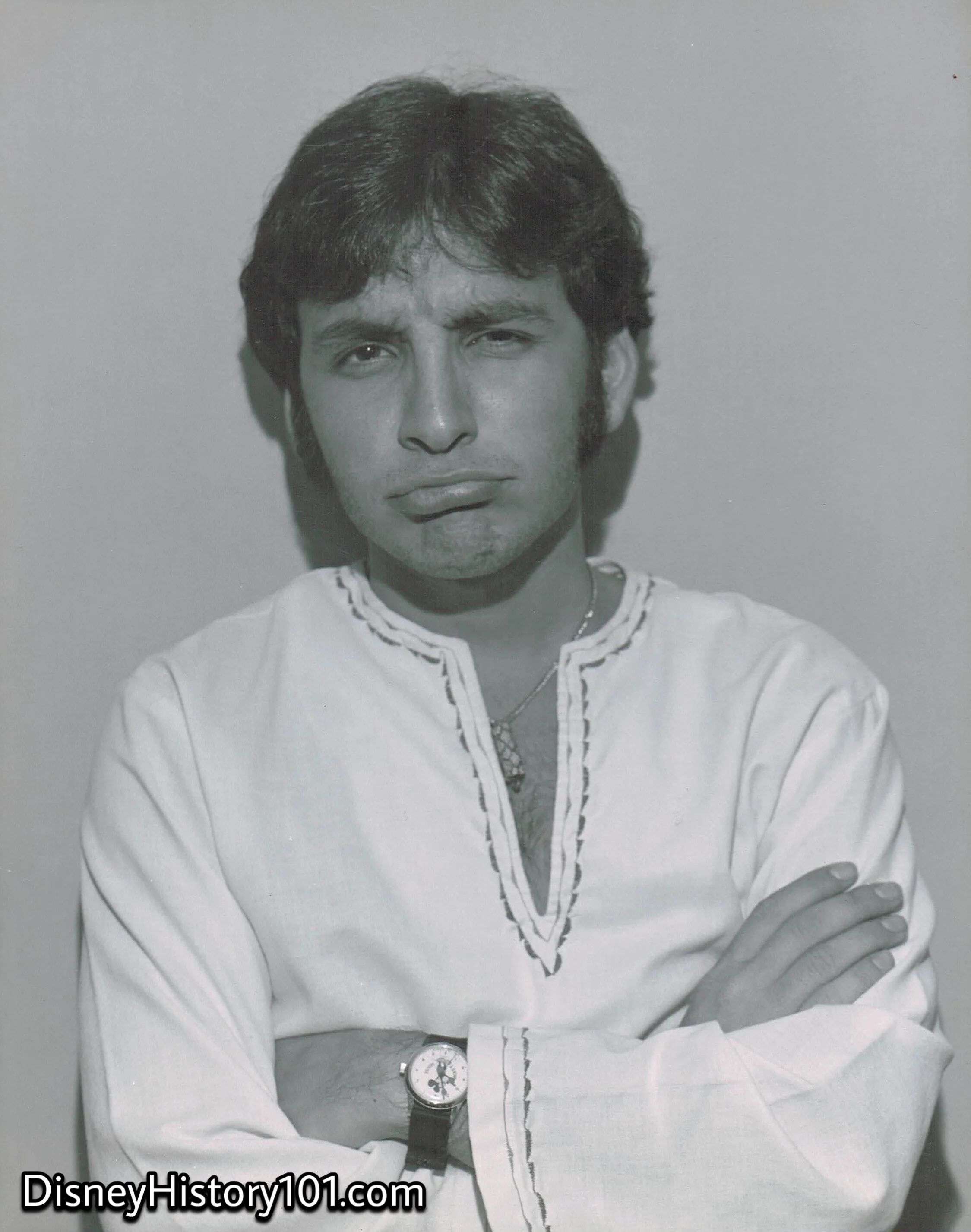
Unidentified Disneyland Drama Club Memory
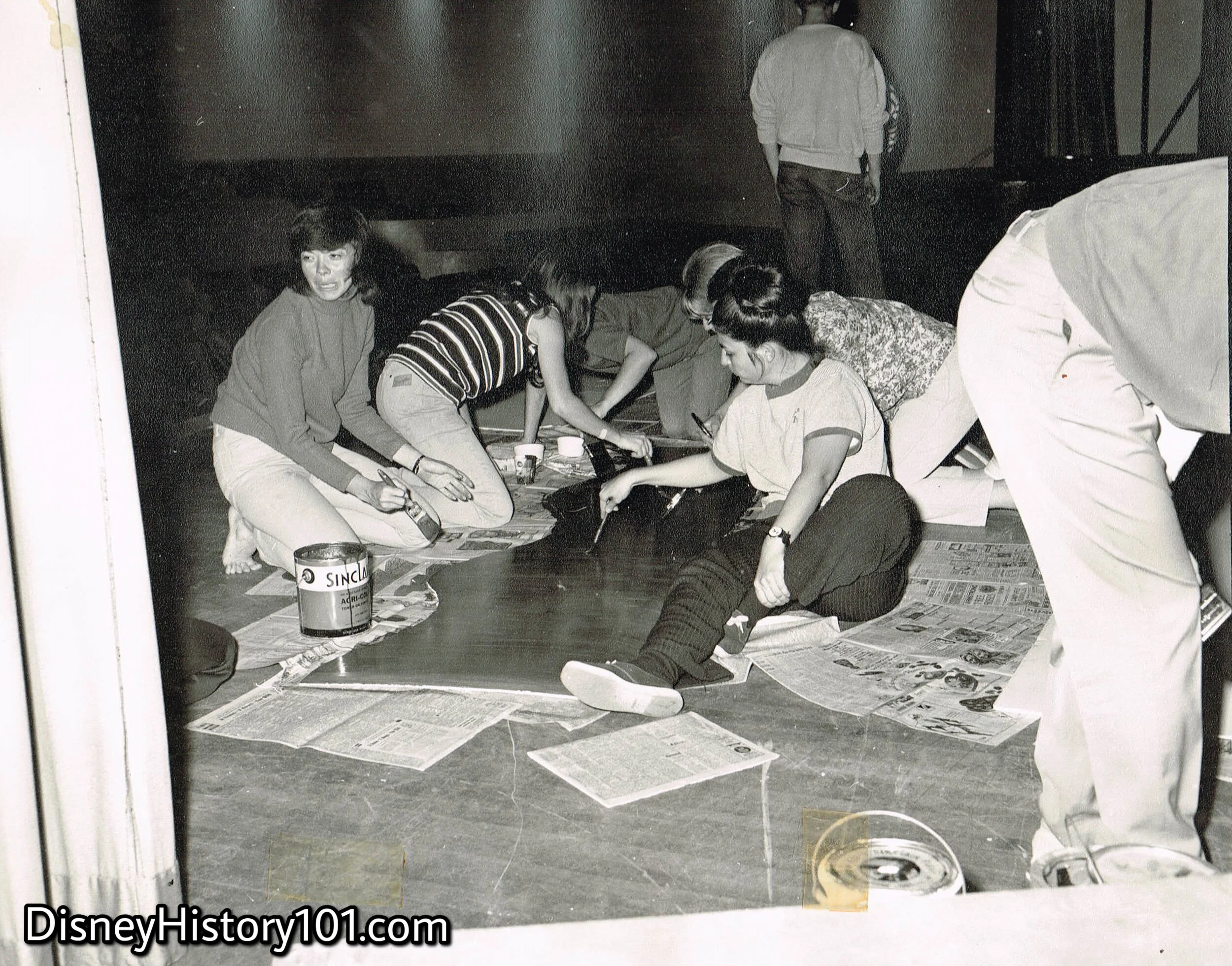
Unidentified Disneyland Drama Club Memory
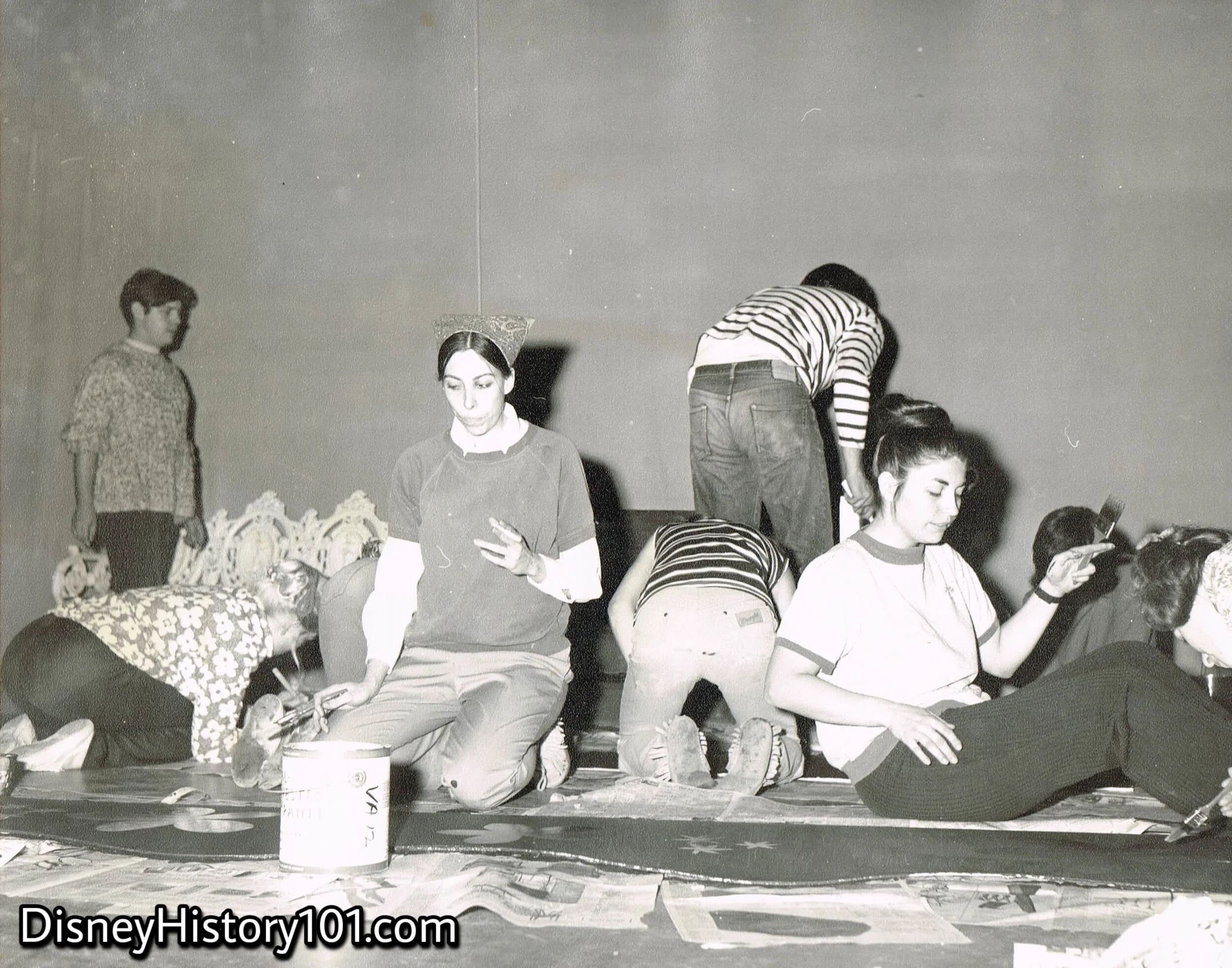
Unidentified Disneyland Drama Club Memory
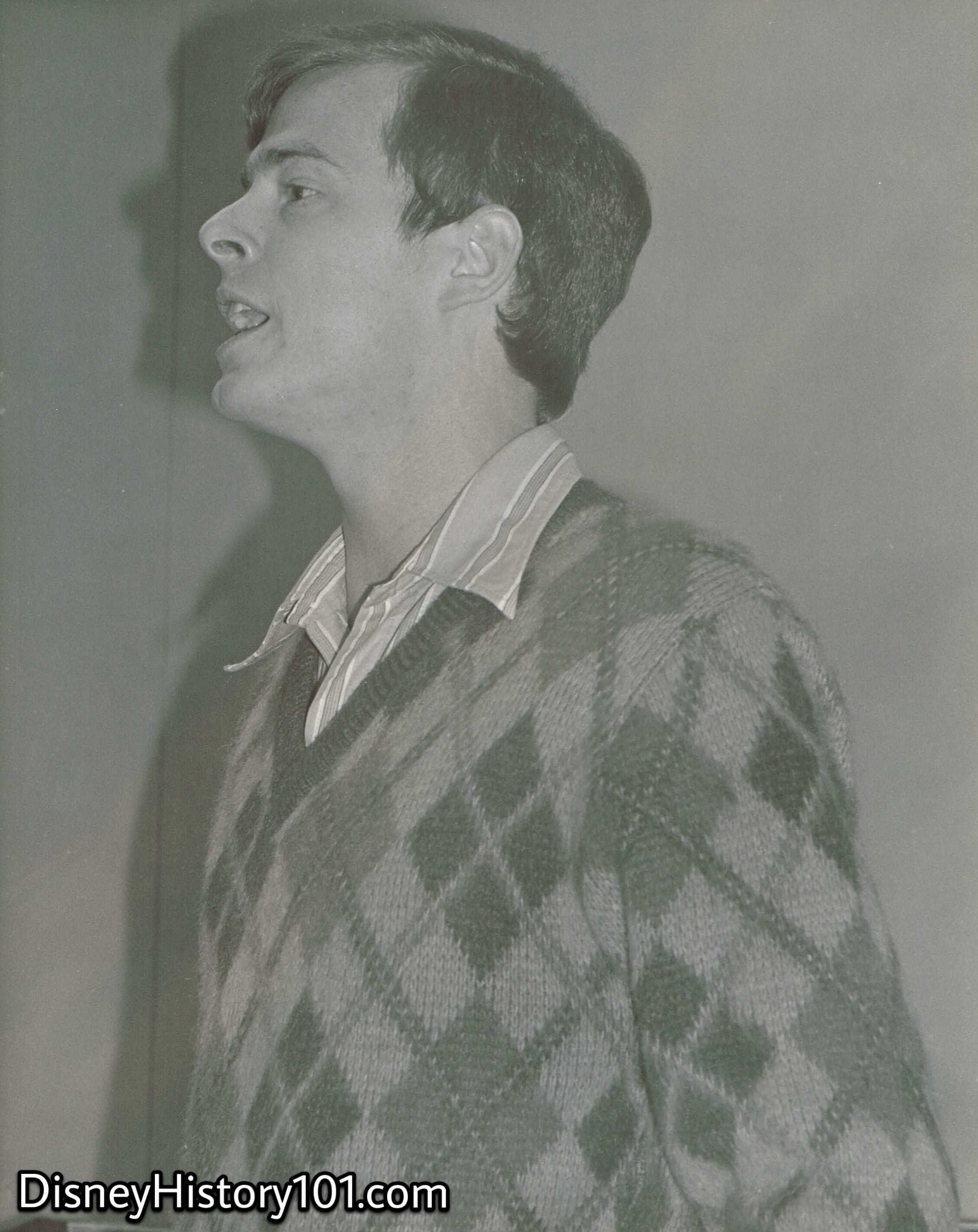
Unidentified Disneyland Drama Club Memory from "Little Mary Sunshine", 1974.
Quisque iaculis facilisis lacinia. Mauris euismod pellentesque tellus sit amet mollis.