PLAZA INN (RED WAGON INN)
If you have had the pleasure of enjoying a meal at the Plaza Inn (or, the Red Wagon Inn), know that the old-fashioned restaurant was included in some of Disneyland’s earliest research and development stages. You may have heard of Herb Ryman’s iconic “Aerial Over Disneyland” concept drawing! A corresponding document “The Disneyland Story” was produced (on September 3, 1954), in order to tell the story of what guests would experience upon entering Walt Disney’s Disneyland. The opening page states : “At the end of Main Street we come to the PLAZA, or the crossroads of Disneyland. To the right will be an old-fashioned restaurant of the Gay Nineties period, something like Delmonico’s, which will seat approximately 400 people.” A few months later, a press release document entitled “News From Disneyland” may have been one of the first to divulge details of where many of the thematic elements were extracted, stating : “An old mansion in Los Angeles supplied part of the interior for the Delmonico style restaurant at the Disneyland Plaza. The house was purchased and dismantled, with interior wood paneling and stained glass windows, crystal chandeliers and staircases receiving the utmost care, for the most of the mansion’s features were incorporated into Disneyland’s Main Street.”
Please step this way (30 miles North-West of Disneyland), as we relive the origins of the Red Wagon Inn.
First, we will visit a historic district of Los Angeles, and explore a late 19th-century mansion from which many architectural elements were originally derived.
The historic St. James Park mansion was built for Baroness Rosa Von Zimmerman around 1870, and originally bore the address 16 St. James Park. Disneyland LINE Magazine (June 25, 1993 ; Vol. 25, No. 25) adds : “The house… was located in what once was a fashionably wealthy area near Adams Boulevard and Figueroa Street.”
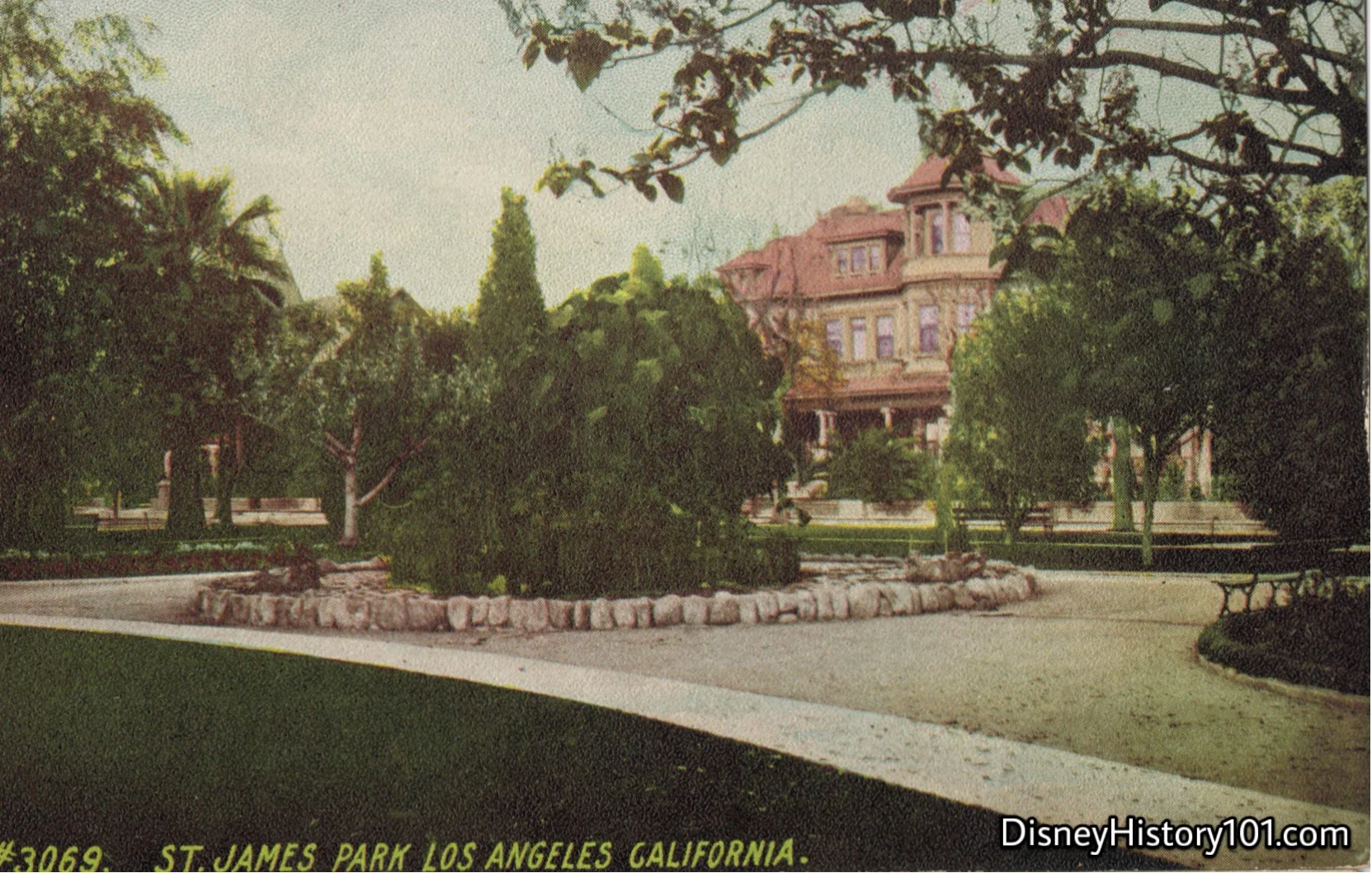
20 St. James Park (originally 16 St. James Park), built by Baroness von Zimmerman
The rarely-seen (preceding) image on the front of this postcard gives us our first “Vintage View” of the 19th century von Zimmerman mansion (in Los Angeles). As mentioned, it is from this very structure that quite a few architectural elements and parts were extracted for the construction of the Red Wagon Inn (near 80 years later) at Disneyland!
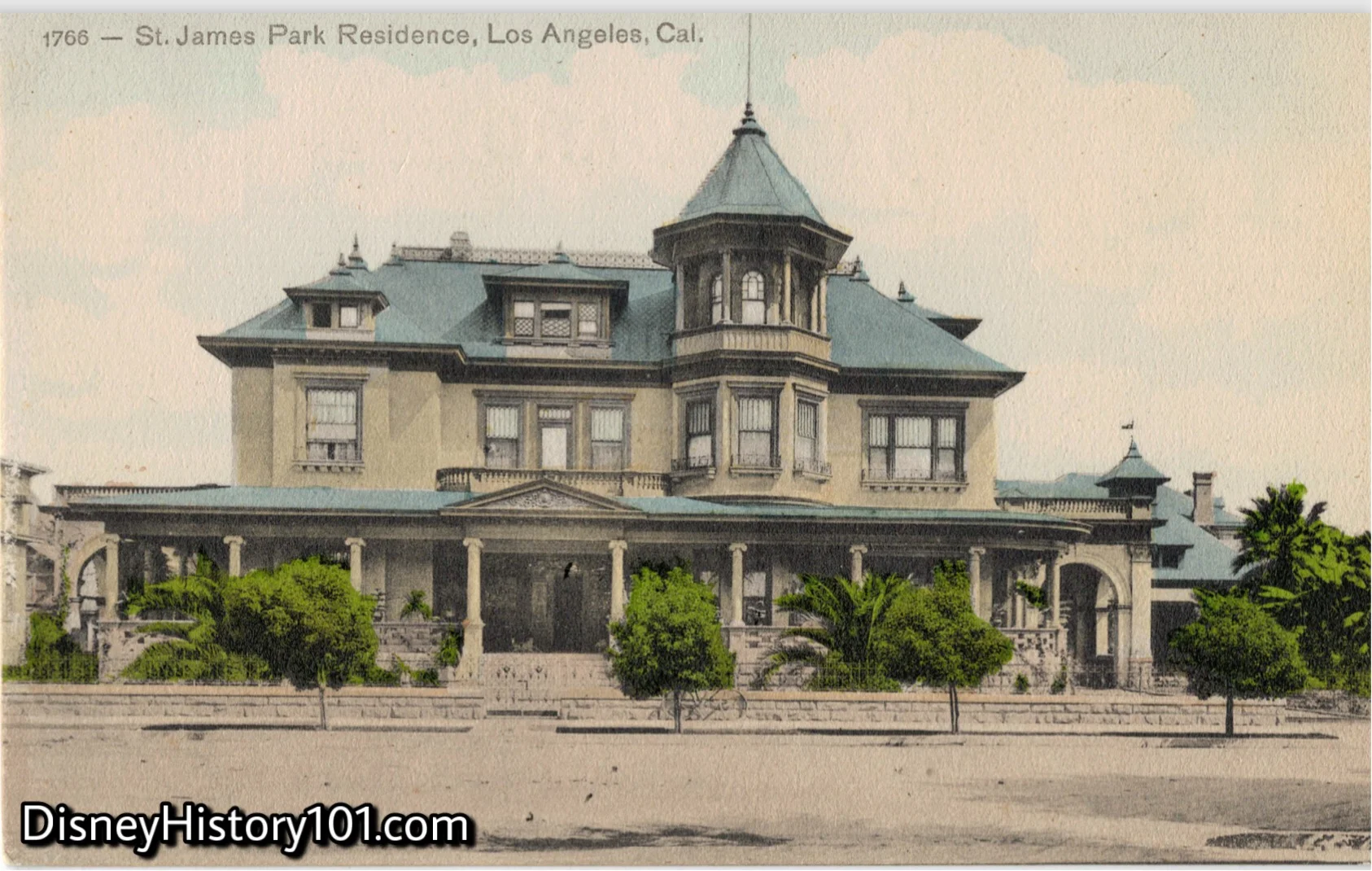
20 St. James Park (originally 16 St. James Park), built by Baroness von Zimmerman
In this (preceding) photograph, the many porch or “newel” columns (with their distinct volutes, acanthus leaf designs, and smooth flute) are readily identifiable. These features were utilized in the two dining wings of the Red Wagon Inn, and some elements can still currently be observed in The Plaza Inn.
One publication expounded on the house’s elements :
“The house is granite and pressed brick with stone trimmings, and is one of the best built houses in Southern California. The interior is finished in selected mahogany , quarter sawed oak and other choice woods. The decorations were by a skilled artist from Europe and are in perfect harmony with the stately character of the house. The porch is 145 feet long and extends along the entire front of the house and partly around each end. The porch is built in granite with tile floor and stone balustrade. The roof to the porch covers the northernly half and is supported by eleven stone columns.
On the main floor is a reception hall, parlor, music room, dining room, library, den, breakfast room, kitchen, butler’s pantry, and conservatory, also a reception room that is entered from the porte cochere on the side and the music room on the other.
On the second and third floors are a sitting room and connecting bedrooms with costly tile bath rooms.
One of the attractive and unique features of the place is a covered circular colonnade leading from the porte cochere to the stable, having twelve ionic columns.”
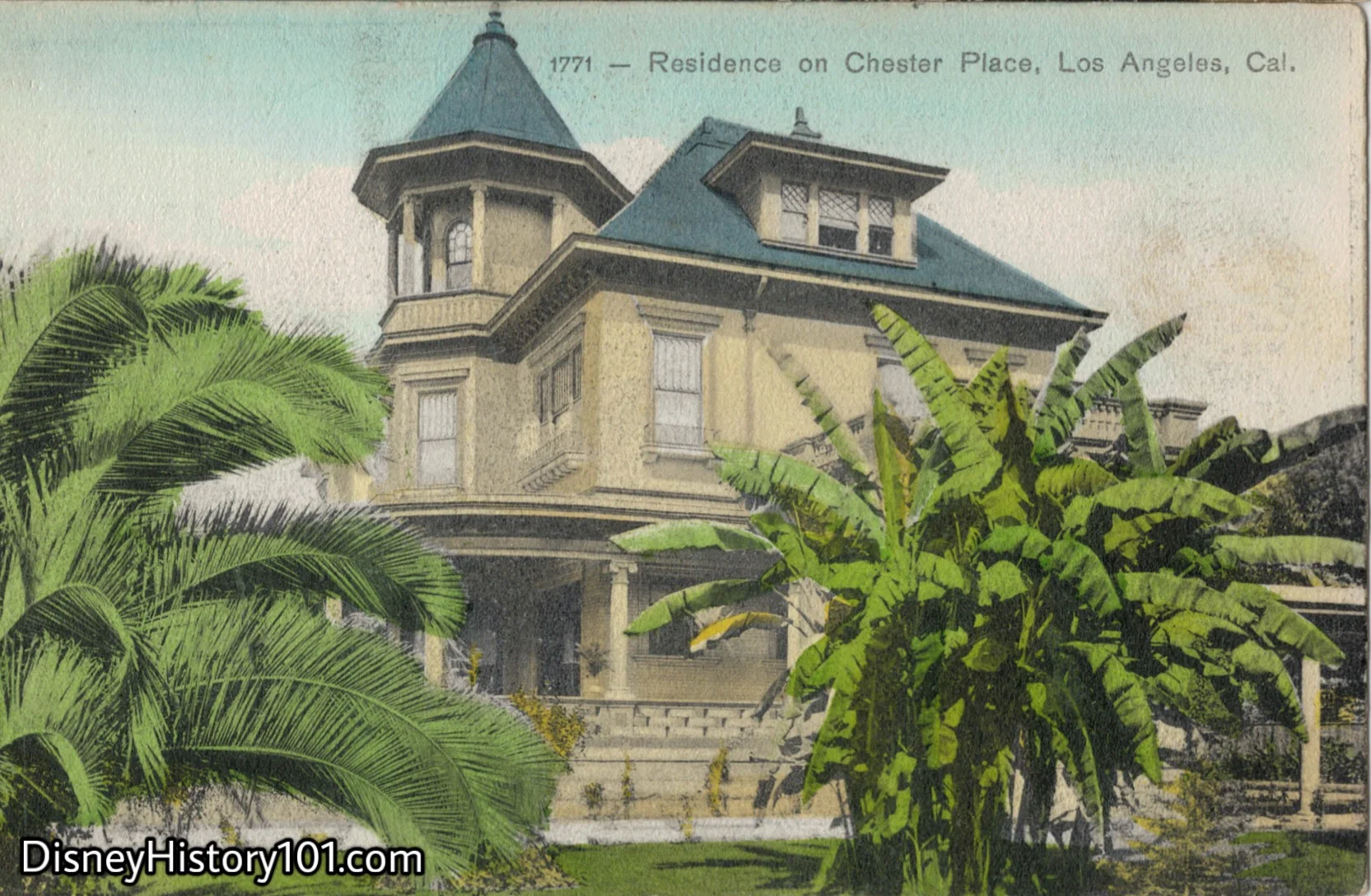
20 St. James Park (originally 16 St. James Park), built by Baroness von Zimmerman
Preceding Photo : Several historians agree that the home in the picture has been misidentified as the next-door Chester Place. This misconception is due to the fact that the Zimmerman Place formerly adjoined the Chester Place. However local Los Angeles historians concur that the house in the photo is (identified by its architectural features), undeniably the Rosa von Zimmerman house.
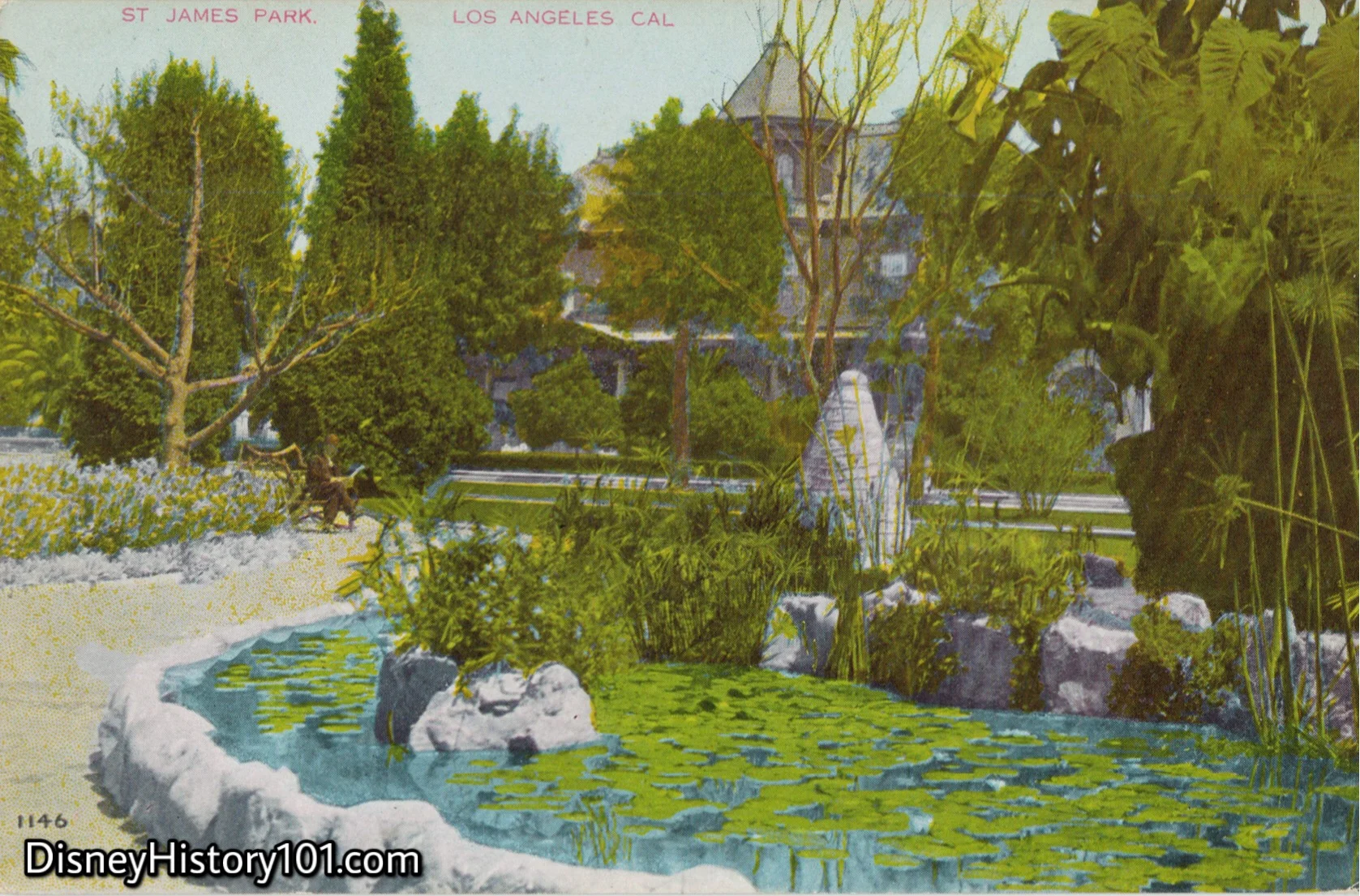
20 St. James Park (originally 16 St. James Park), built by Baroness von Zimmerman
By 1907, there is record that the 19th century mansion (and its elegant, ornamental grounds) carried two addresses (#16 and #20). These designations would last for several decades. Sometime thereafter, the mansion was given one address - simply changed to 20 St. James Park. This why Disneyland LINE Magazine (June 25, 1993 ; Vol. 25, No. 25) describes the location as : “The house built in 1870 at 20 St.James Park”. This bearing lasted until its Permit of Demolition during the early 1950s.
The grand home was ultimately razed to the ground, but not before some important pieces were salvaged by Walt Disney Studio Set Designer Emile Kuri and other employees of Walt Disney’s company WED. In fact, the Walt Disney Archives has verified that the stained glass, columns and some woodwork framing in the foyer of the Red Wagon Inn were indeed extracted directly from the historic St. James Park mansion (built circa 1870).
(July 17, 1955 - October 11, 1964)
Back in 1951, Walt Disney and Art Linkletter visited the famous entertainment complex Tivoli Gardens in Copenhagen. He was researching and talking notes to build a family entertainment center and Tivoli was much like what he envisioned. It was clean, directed to the entire family, fun, entertaining and educational. Walt noted how important it was to have a lot of places for guests to sit down and a wide variety of eating spots that served excellent meals.
“Design”
According to “THE DISNEY THEME SHOW - an introduction to the art of Disney outdoor entertainment: Volume II”: Of all the guests’ senses that come into play at Disneyland, the most difficult response to predict was taste. If 70,000 guests were to arrive on a single day, there would probably be 70,000 different ideas about food. Generally speaking, Disneyland food locations fall into three categories - sit-down restaurant service, “buffeteria,” and fast-food categories. The most extensive theming has always been found in the sit-down restaurant locations but all locations were housed in authentically motified facilities.
Early thumbnail sketches and other concept artwork of Disneyland seemed to be unencumbered by restrictions of budget, schedule or the laws of nature and physics. Though guided by Walt, his artists appeared to engage in “free-thinking,” as if implementing the modern “Blue Sky” Imagineering process. Like some advanced “High Concept,” final designs were quickly generated and approved.
Next, architectural drawings helped define all designs, production and construction strategies, costs, schedule, and resource requirements. “Disneyland is unique in that some of the world's foremost creative artists and architects control all design at Disneyland.“
Models explored the various dimensional relationships, site-lines, flow patterns, ergonomics, and visual appeal to convey the desired creative intent.
“Construction”
“When the giant earth-moving undertaking was completed, the building crews took over. Soon, the rat-tat-tat of riveters was shattering the air, and sparks were flying from welders’ torches as the steel frameworks, capable of withstanding the ravages of time and the elements rose above the newly formed ground. While carpenters hammered and masons laid row upon row of brick and stone and mortar, the permanent buildings began to take shape and form,” according to “The Disneyland Story” published 1955. One of the first buildings to be constructed was the Main Street Opera House, which was used as the Mill. Here, the woodwork of Disneyland was generated - from the functional to the aesthetic! Approximately three and one-half million board feet of lumber went into the Park’s construction. Much of the wood was processed here by McNeil Construction (which formerly constructed Walt Disney Studio sound stages in 1947 and 1953), and under the direction of George Mills Sr. (the Prime General Contractor and Mill Foreman). Then, under the direction of Joe Fowler (Construction Supervisor), as well as Charles Alexander and Ray Conway (Construction Field Supervisors), the lumber was soon fashioned into the framing belonging to the very first buildings constructed at Disneyland - primarily the Main Street Complexes (on each side of the street).
In constructing each building, a concrete foundation and slab floors were prepared, followed by wood frame construction (while store units would have a combination wood and rigid steel frame). ”The first fabricated steel for the Main Street buildings arrived November 8 and was erected,” according to the narrator of “Disneyland - The Park,” a Disneyland anthology television series excerpt, first aired 1957 and Disneyland LINE (November 22, 1979).
According to inserts published in area newspapers during July of 1955, Disney buildings were roofed by Pioneer Roof & Shingle Company (then located at 608 Mateo Street, Los Angeles, California; 7522 Westminster Avenue, Westminster, California). The roof covering was a variable, dependent on the architectural design.
Newbery Electric Corporation gave electricity to Disneyland. “The electrical installations were supervised by Roy J. Gruendler, manager of Newbery's Orange County district office located at 1335 Santiago Ave, Santa Ana.”
As of June 2, 1955, C.V. Wood Jr. sent an Inter-Office Memorandum to Walt Disney regarding the best estimates that could be obtained at the time regarding the status of individual sections of the Park and Opening Day. C.V. wrote: “Red Wagon Inn: It will be very tight but we think we can count on it definitely before opening. Myrt Westering has assured me also that they will have a tent acceptable to us.”
The building (as each on Main Street U.S.A.) possessed complete fire sprinkling systems. By June 30, 1955, related Disneyland Site Work Fire Protection Utilities Plot Plans were prepared for Disneyland Inc., by J.E. Thomasson of WED Enterprises Inc.
Larson Brothers Plastering Company of San Diego was a proud part of Disneyland. The company crafted the ornamental plastering and all brick used at Disneyland (including their amazing new plastered brick veneer).
All fixtures were placed in their correct motif and many light fixtures of Disneyland were authentic antiques.
Soon, the more-than 10,750 square foot Red Wagon Inn building was completed.
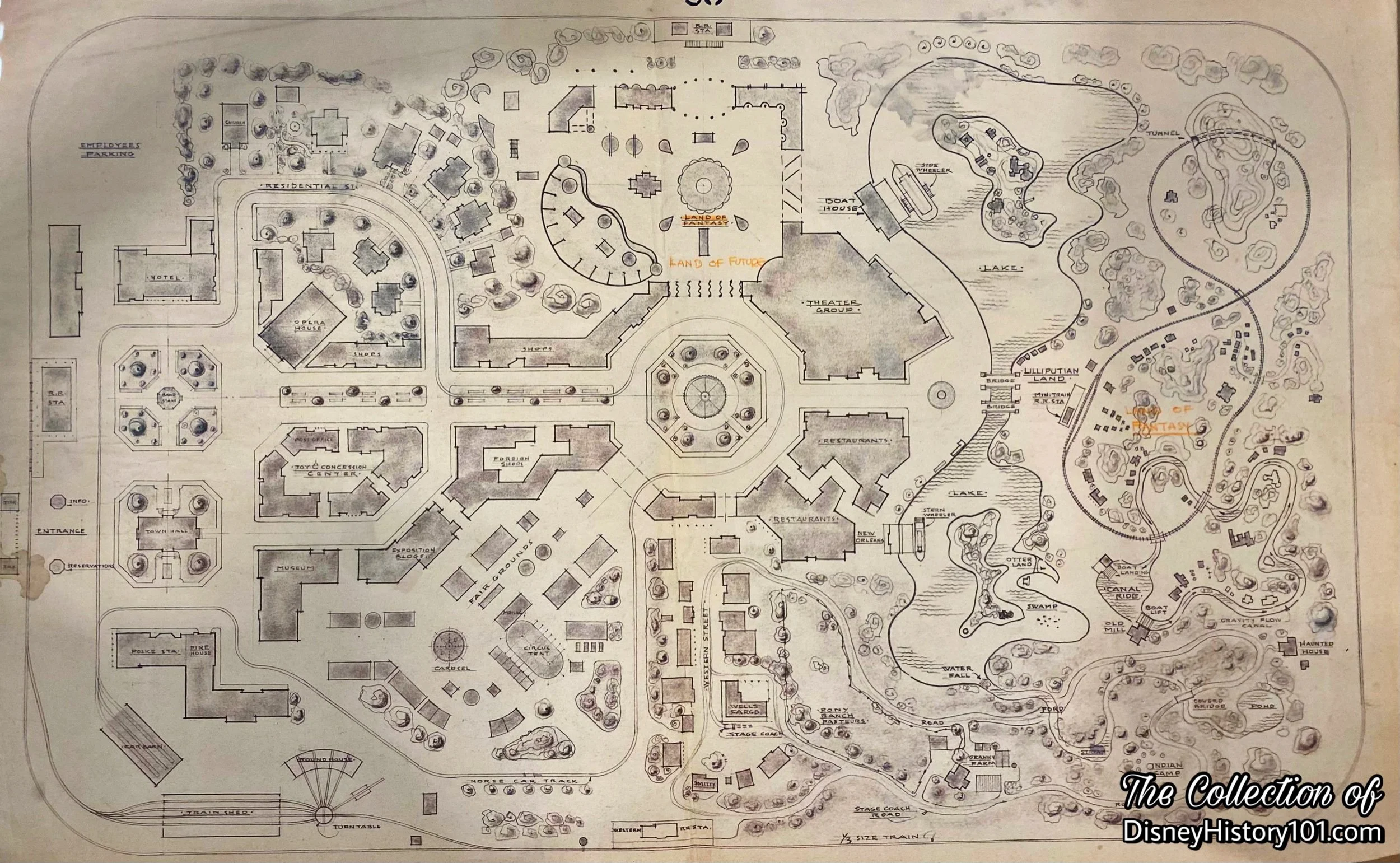
“Disneyland Preliminary Scheme #1”
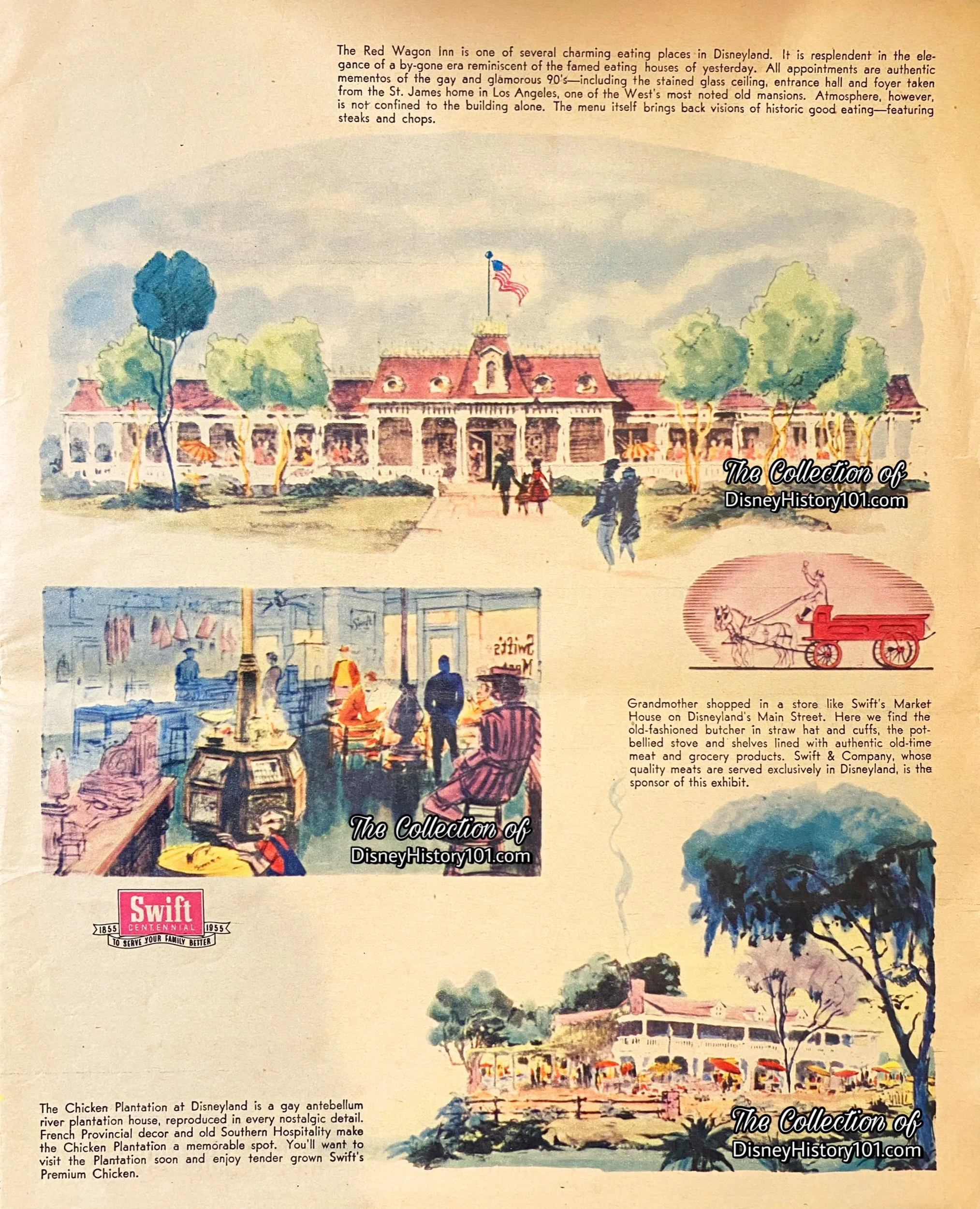
Newspaper Readers received a preview of Red Wagon Inn in the “Disneyland” Supplement, (published July 15, 1955)
Some of these viable project Concepts (as seen above), were supported by a well-developed business case and built expectation.
“Sponsorship and Lessees”
Now during 1954, Walt was searching for participants to lease shop and both quick service and table service restaurant spaces at Disneyland, to help generate the necessary capital to fund construction of Disneyland. In a synergistic relationship, the companies (in turn) could sell their products and advertise their corporate names in the Park. Disneyland Participant Corporate Sponsors were carefully selected. High quality, long term corporate sponsors would provide incremental income that enabled Disneyland to enhance its show and attractions, offset some operating expenses, and capitalize on marketing opportunities.
As Walt described to Bob Thomas (of Associated Press), “some industries will have exhibits, but all of them must be in keeping with the era.” Many free exhibits of Main Street, U.S.A. were sponsored by one of the United States’ turn-of-the-century pioneers, “old reliable firms, which have been in business fifty years or more. Here they can show how they started and reproduce their first place of business.” [Disneyland Prospectus, 1954] Several of these “reliable old firms” sponsored the “abundance of restaurants devoted to pleasing all tastes and all budgets,” according to “The Story of Disneyland,” published 1955.
“55er” Rima Bruce (who started with Jim D'Arcy in Food when all food was Lessee and typed memos and menus) recalled that “the phone never stopped ringing with everybody trying to get a food lease in the Park.“ At the time, some of Swift’s products (Swift’s Premium Bacon and Allsweet Margarine) were advertised in commercials starring actress and vocalist Fran Allison, which were televised during 1954. Swift’s was an appropriate sponsor of “Disneyland” the television show (and the Red Wagon Restaurant at Disneyland), as Swift’s (founded in 1855) had been celebrating their centennial during the time Disneyland (and Swift’s Red Wagon Restaurant) first welcomed guests to “dine at Disneyland”! By 1955, Swift’s Premium brand boasted more than 100 table-ready meats, some of which were served exclusively at Disneyland.
“Projections”
It was estimated that the 10,750 square-foot Swift’s Red Wagon Restaurant would have the capacity of serving 500 guests per hour in its four dining rooms. The establishment was also predicted to became one of twenty eating facilities which were predicted to contribute to accommodating “15,000 persons daily, hitting a peak of 60,000 o holidays and week-ends…” and one of “twenty restaurants and snack bars, capable of saving 8,000 hourly,” at least according to “Building A Dream” (prepared by the Disneyland, Inc. Public Relations Department). By the time Disneyland opened, figures were soon adjusted to five dining sections, two of them on porches, with a restaurant capacity is 400 persons.
“Pre-Opening”
“55er” Electrician George Short recalled: “I was working for R.C.A., and I was sent to Disneyland to set up T.V.s for the opening. Just before opening, I was getting a T.V. set ready in the DISNEY ROOM at the RED WAGON RESTAURANT. It was a madhouse with carpet layers, wall paperers, painters, carpenters, electricians all over the place!”
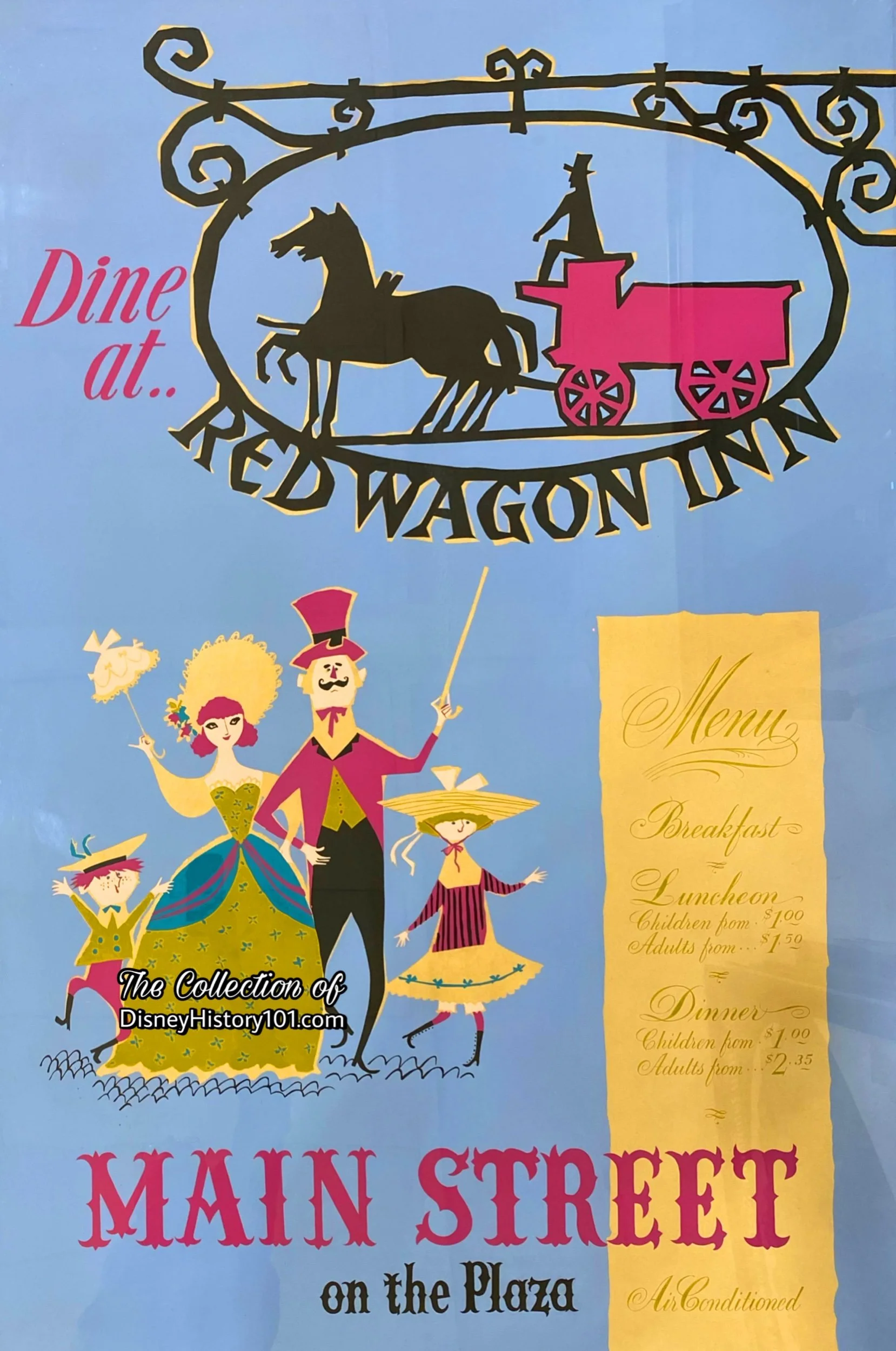
All art work, posters, etc. created by the Walt Disney Studios.
According to an official and authorized “Nomenclature List” prepared by Bill Cottrell of Disneyland, Inc. (updated May 25, 1955), the name of the restaurant was changed from “Red Wagon” to “Red Wagon Inn.”
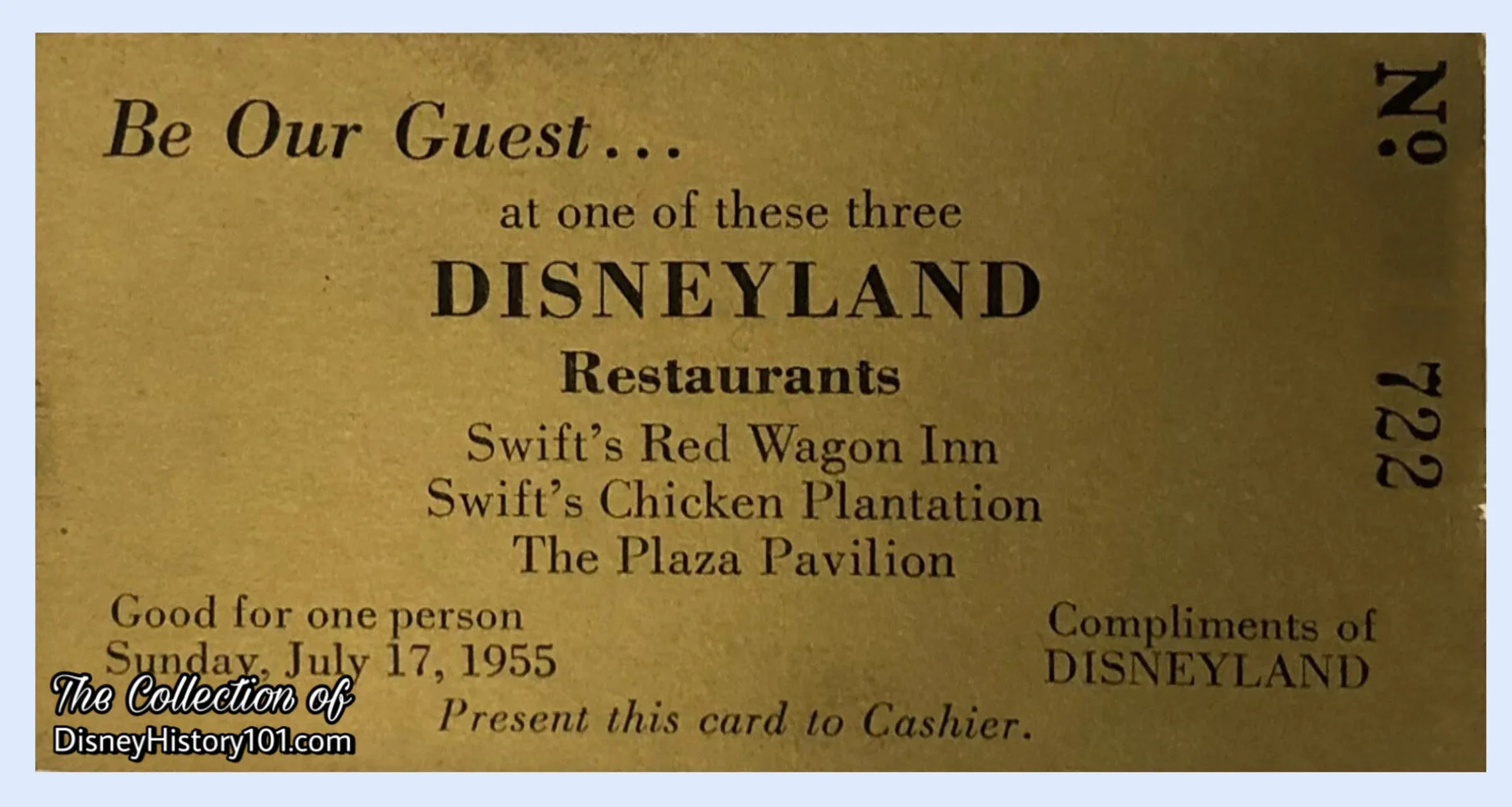
Disneyland Press Preview Day Complimentary Meal Voucher
“Press Preview Day”
When Disneyland hosted Press Preview Day on July 17, 1955, Guests flocked toward the trademark Red Wagon Inn’s weathervane turning with the wind, East of Plaza Circle (just off Central Plaza and Main Street). Disneyland “made arrangements for food and refreshments” for the members of the Press (and their family) at their choice of one of three restaurants (one of which was “Swift’s Chicken Plantation in Frontierland”). This was by way of Complimentary cards which were presented to the cashier after their meals. A record number of 3,000 Guests stood in line, just in order to enjoy fine dining at one of Disneyland’s most popular venues! “When dishwashing machines broke down at the Red Wagon Inn, diners had to eat off paper plates.“ [“Mouse Tales: A Behind-The-Ears Look at Disneyland” by David Koenig]

During its first year, the luxury restaurant was open seven days a week, handled catering for organized picnic groups, and even had cafeteria for Disneyland employees under its roof.
Dinner at the Red Wagon Inn was also gifted to five-year-old Elsa Marquez (1-millionth visitor to Disneyland) and her family (on September 8th, 1955) nearly seven weeks after the Red Wagon Inn first opened.
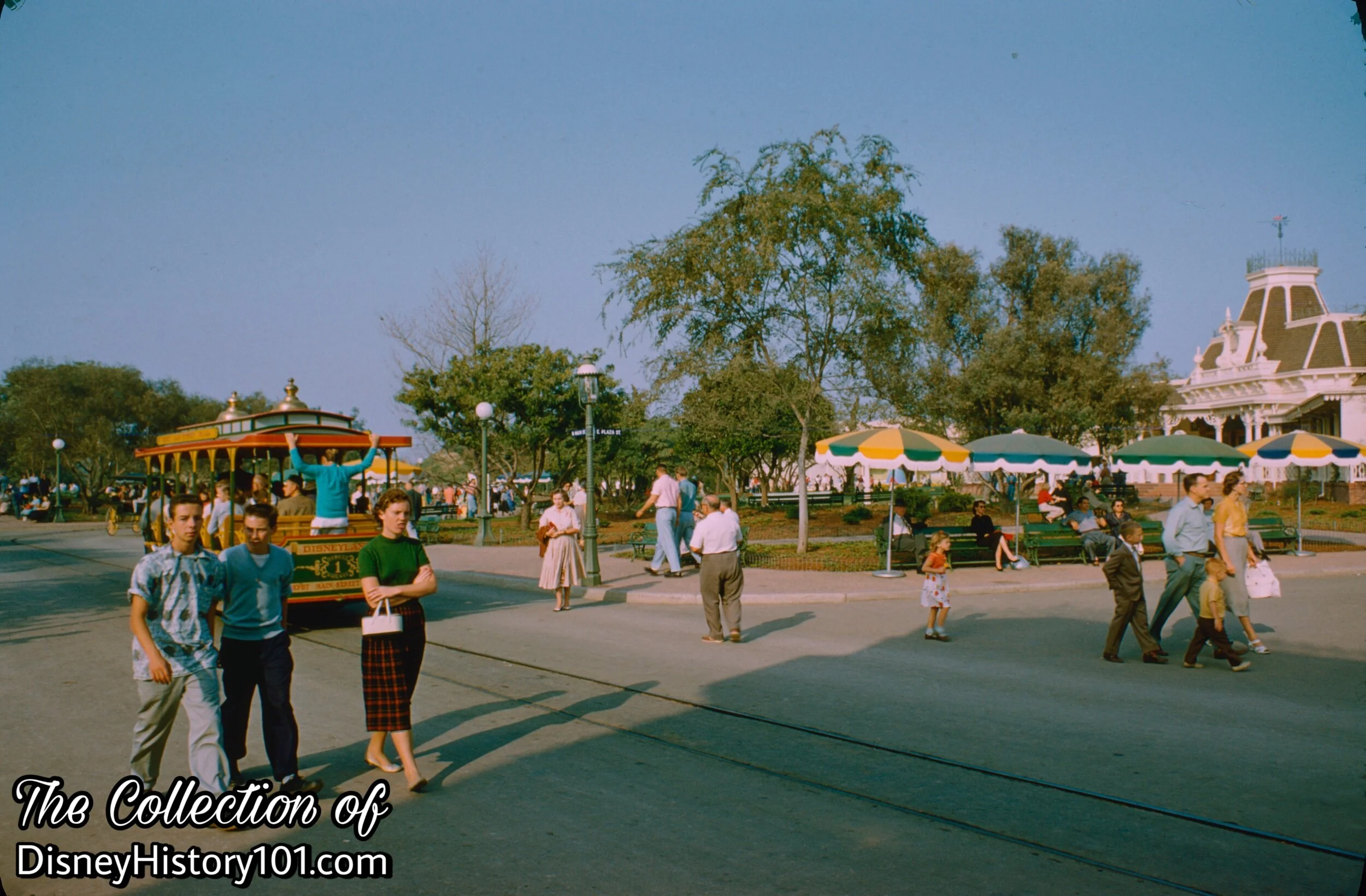
THE RED WAGON INN RESTAURANT
Visit the Red Wagon Inn Restaurant on the Disneyland Plaza at the end of Main Street U.S.A.!
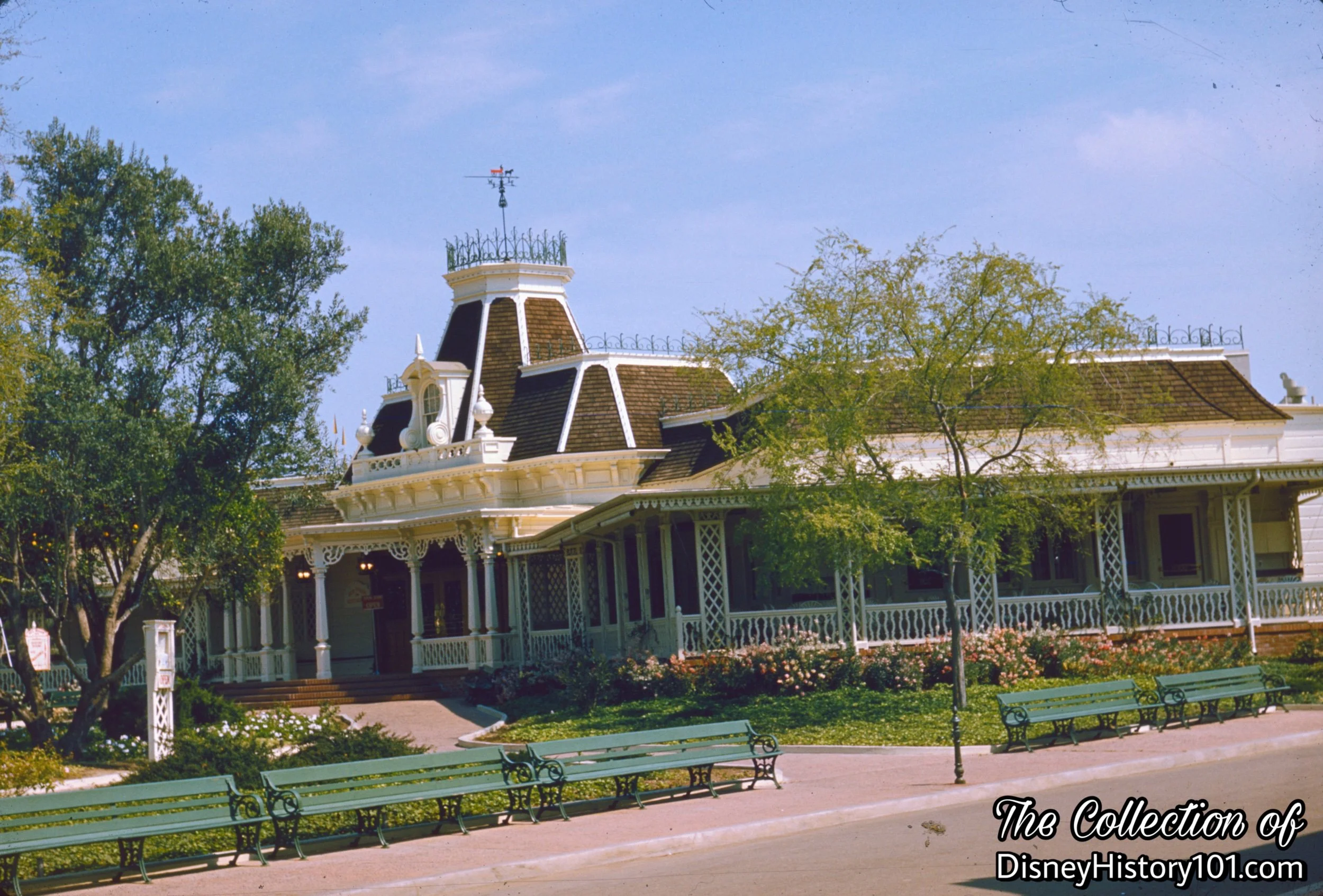
The Red Wagon Inn Restaurant
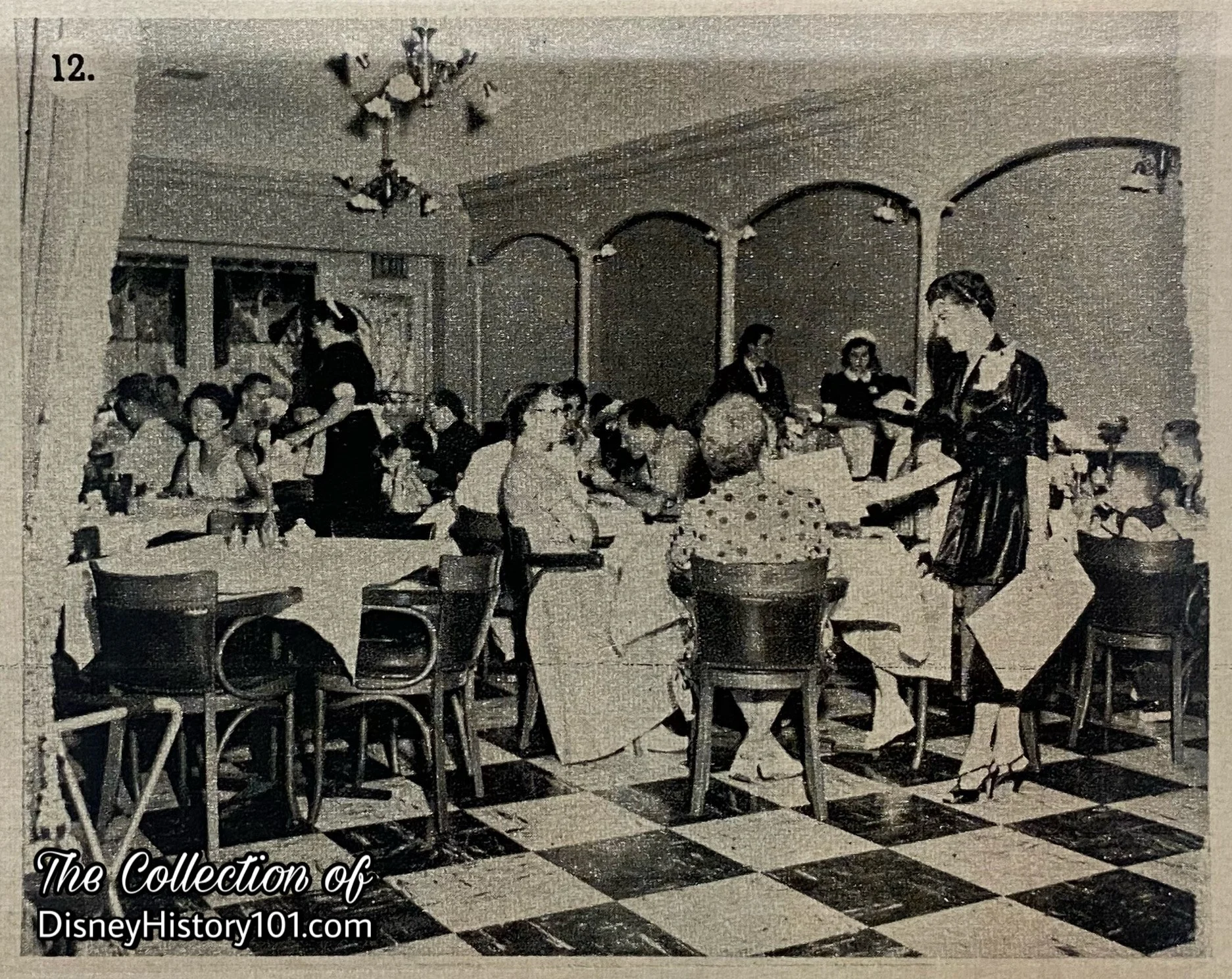
Swift’s Red Wagon Inn was notably mentioned in “Disneyland 1st Anniversary Souvenir Pictorial,” published 1956.
There, gay 90s memories became glamorous realities at the luxurious and air conditioned Swift’s Red Wagon Inn Restaurant (run by the Red Wagon Company). Since 1955, Hostesses welcomed Guests through the doors and into the turn-of-the-century-style decor (reminiscent of Delmonico’s). Looking all around, we instantly note the elegant antique stained glass ceiling, crystal chandeliers, interior paneling, wood trim, a graceful stairway, entrance hall, a foyer, and leather-bound furniture on asphalt tiles and carpeted floors. According to KEY Magazine (published 1955) : “The three tiered Victorian edifice, managed by Alan Hudson, presents a luxurious background with pink silk flocked with wall paper, gold-trimmed red velvet curtains and outdoor terraces”. All these touches (as the simple arches and checkerboard floor tiles), added to the resplendent quality of the Red Wagon Inn. The architectural elements and surrounding grounds of the Red Wagon Inn Restaurant may (at first glance) look less ornate than those of the old Baroness von Zimmerman mansion. However, there were many elegant distinctions - the wrought iron cresting on the roof, the covered porch’s balustrade and columns atop terrazzo floors, as well as its colorful lawns and floral beds which were always so well arranged and manicured throughout the seasons!
After the Park closed, the staff would take over with brooms, mops and dustcloths. Special attention was given to marred walls, posts and furniture. Items with marks that didn’t wash off were replaced or repainted. Floors were waxed and buffed to preserve their beauty and protect them from the thousands of feet that scuffled over them each day.
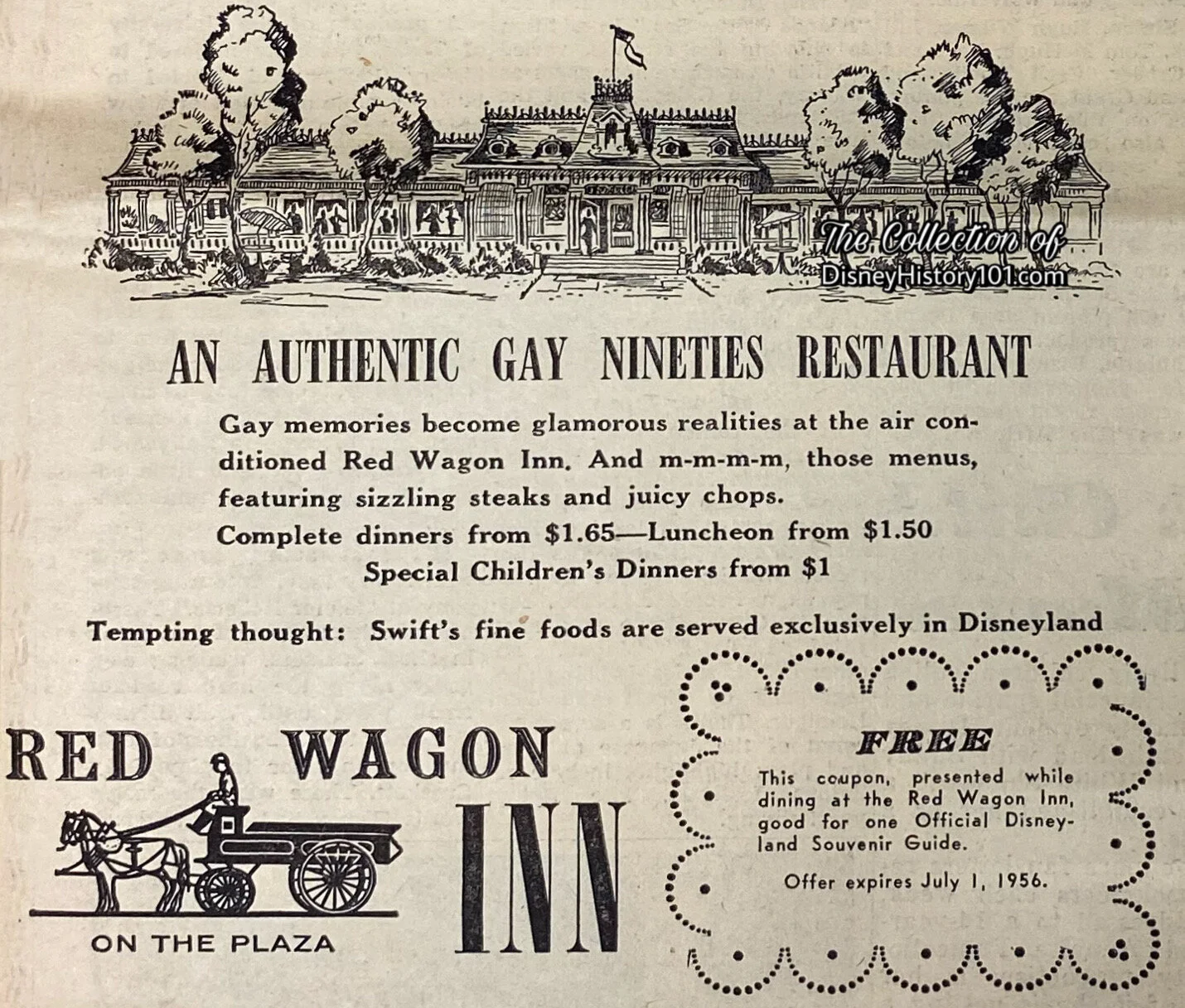
The Disneyland News Excerpt, June, 1956.
Promotional souvenirs were offered to diners. For instance, this c.1956 Red Wagon Inn advertisement also served as a coupon which (when redeemed) offered a free Official Disneyland Souvenir Guide to diners.
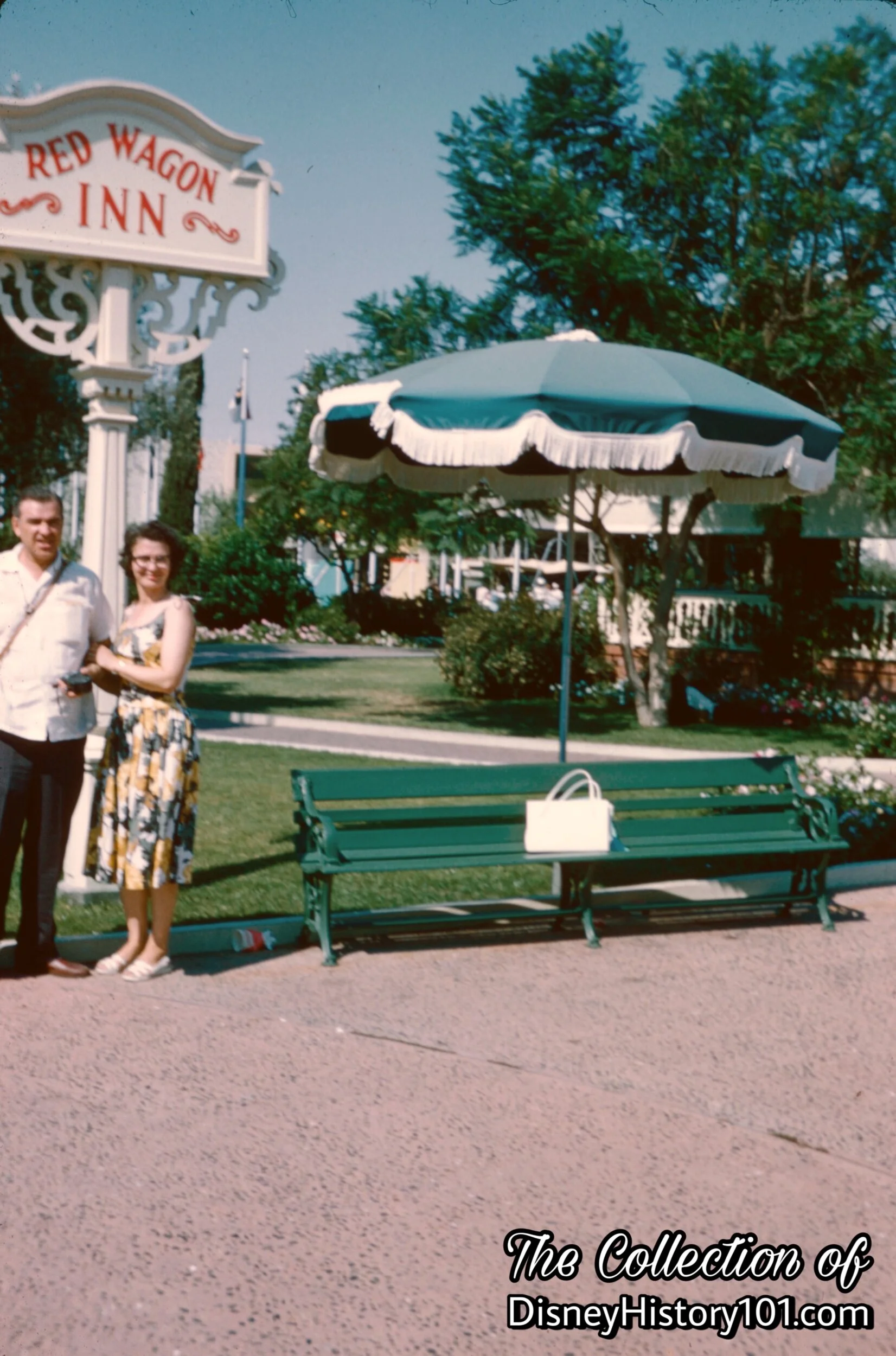
Red Wagon Inn Sign and Guests, (1959)
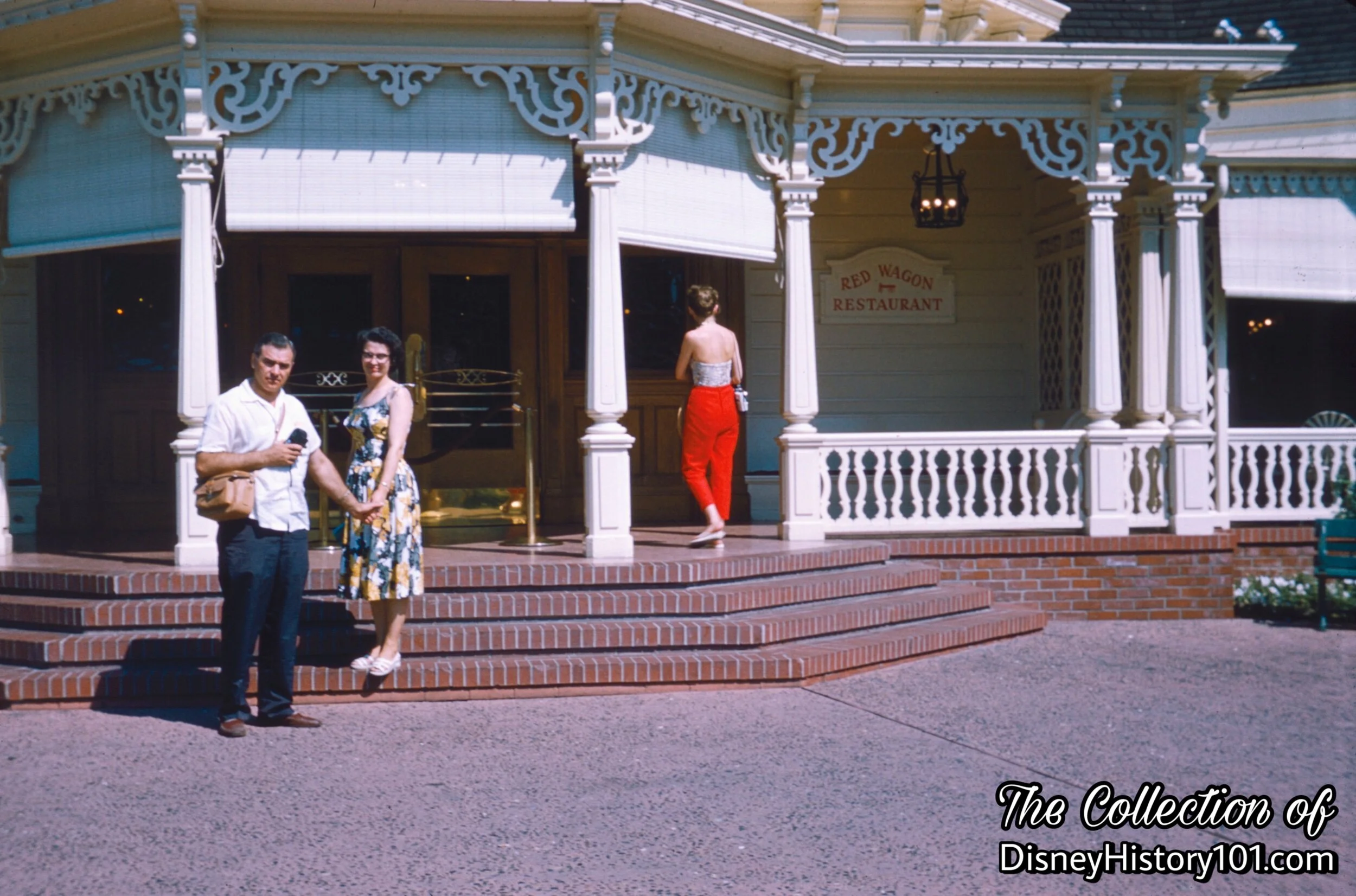
Red Wagon Inn Entrance and Porch, (1959)
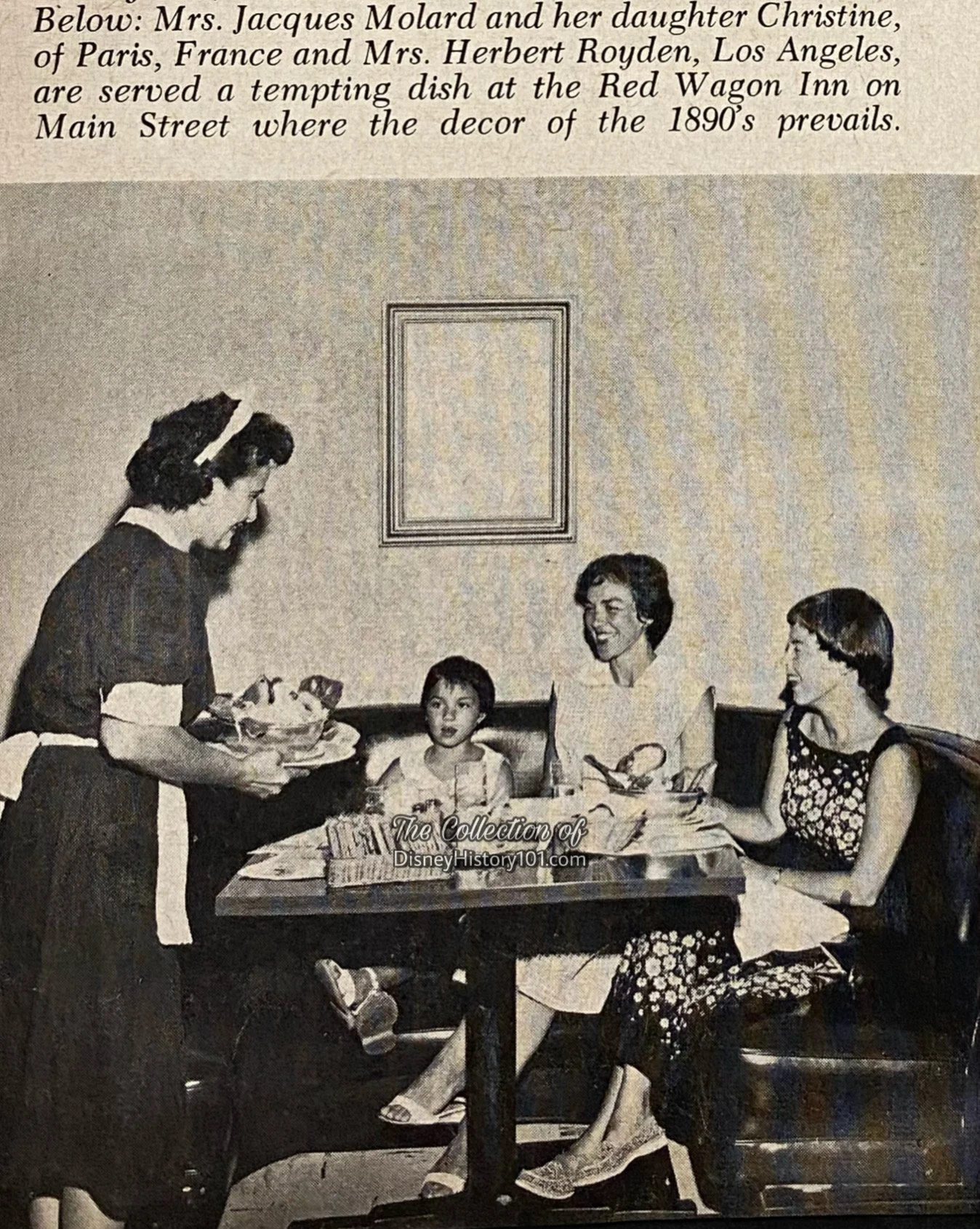
1 of 18 delightful Disneyland restaurants showcased in Vacationland, Winter 1959 - 1960.
At the Red Wagon Inn, each guest was a GUEST! In invited them to spend the day at DISNEYLAND, the Cast Member owes them every courtesy they would extend a guest in their own home.
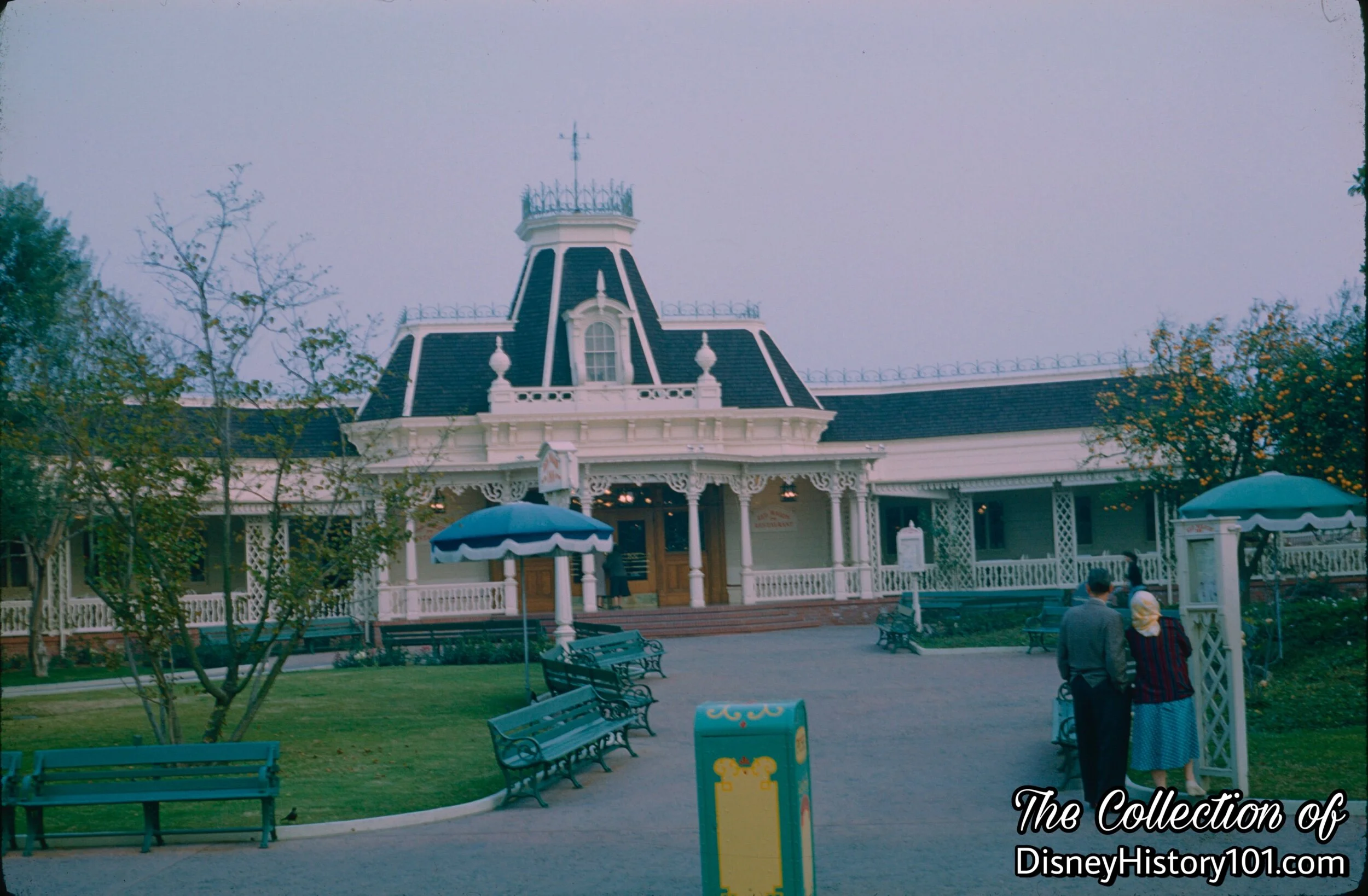
RED WAGON INN RESTAURANT, (March, 1960)
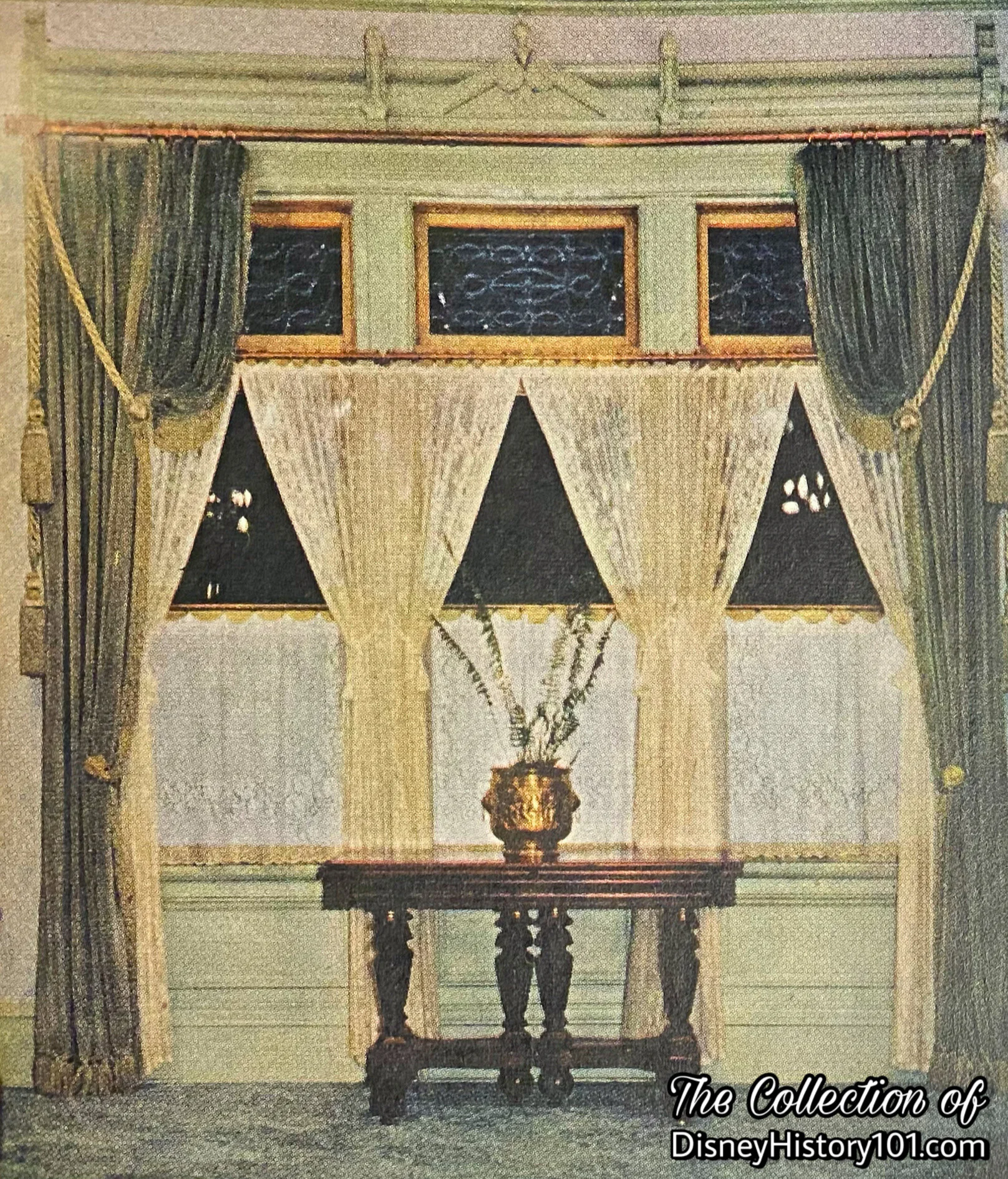
Red Wagon Inn Palm Room
“Walt’s Private Dining Room”
The Red Wagon Inn was the most elite restaurant in the Park with four individual dining rooms. Most have dined in the Gold Room, the Green Room, or even the Employee Cafeteria of The Red Wagon Inn. However, few had the pleasure of entering the Disney Room where Park staff meetings are held, and special guests are served. The Red Wagon Inn Disney Room was also referred to as “Walt Disney’s private dining room” according to The Disneyland News (Vol.1 ; No.8, page 3, published February 10, 1956). According to the same source, “the ‘Palm Room’, is reserved for Party use.” At this time reservations could be made by calling KE 5-9284.
The room hosted the Disneyland Merchant's Association Meeting (on January 25, 1956) and the Maxwell House VIP Guests during the Maxwell Coffee House Grand Opening After Party, during December of 1955. As early as the summer of 1956, “special rates and menus were offered” to groups. “Table decorations and food makeup are designed to fit the theme of the organization.” According to The Disneylander, one such organization was “The California Institute of Landscape Architects Southern California Chapter, who “held their monthly meeting in the Red Wagon Inn on Friday, Dec. 7. Ray Miller, Landscape Architect for Disneyland, Inc. and a member of the Southern California Chapter acted as host and guide to the group during their visit to the Park.”
During the first anniversary celebration of the Santa Fe and Disneyland Railroad (during August of 1956), approximately 80 publishers, staff members and their wives were invited to a special dinner in the Red Wagon Inn. The California Institute of Landscape Architects Southern California Chapter, held their monthly meeting in the Red Wagon Inn on Friday, Dec. 7, 1957. Ray Miller, Landscape Architect for Disneyland, Inc. and a member of the Southern California Chapter acted as host and guide to the group during their visit to the Park. The Red Wagon Restaurant (and its “Palm Room”) also regularly hosted events, like staff meetings (i.e. panels associated with the Fifth Annual California Square Dance Convention, held in Disneyland and Holidayland on April 11, 12, and 13, 1958). Special guests (like celebrities, politicians, visiting dignitaries, and others) often took advantage of this private Dining Room!
Since 1955, hard working and active waitresses like Vernetta Reynolds (who worked for Red Wagon Inn at from July 19, 1955 to 1964) recalled serving Guests of the Palm Room and the Main Dining Rooms.
Not to be overlooked, the back-side of the restaurant served Disneylanders (or, Cast Members) in a backstage area called The Inn Between, and the facility catered Holidayland concessions from 1957 to 1961.
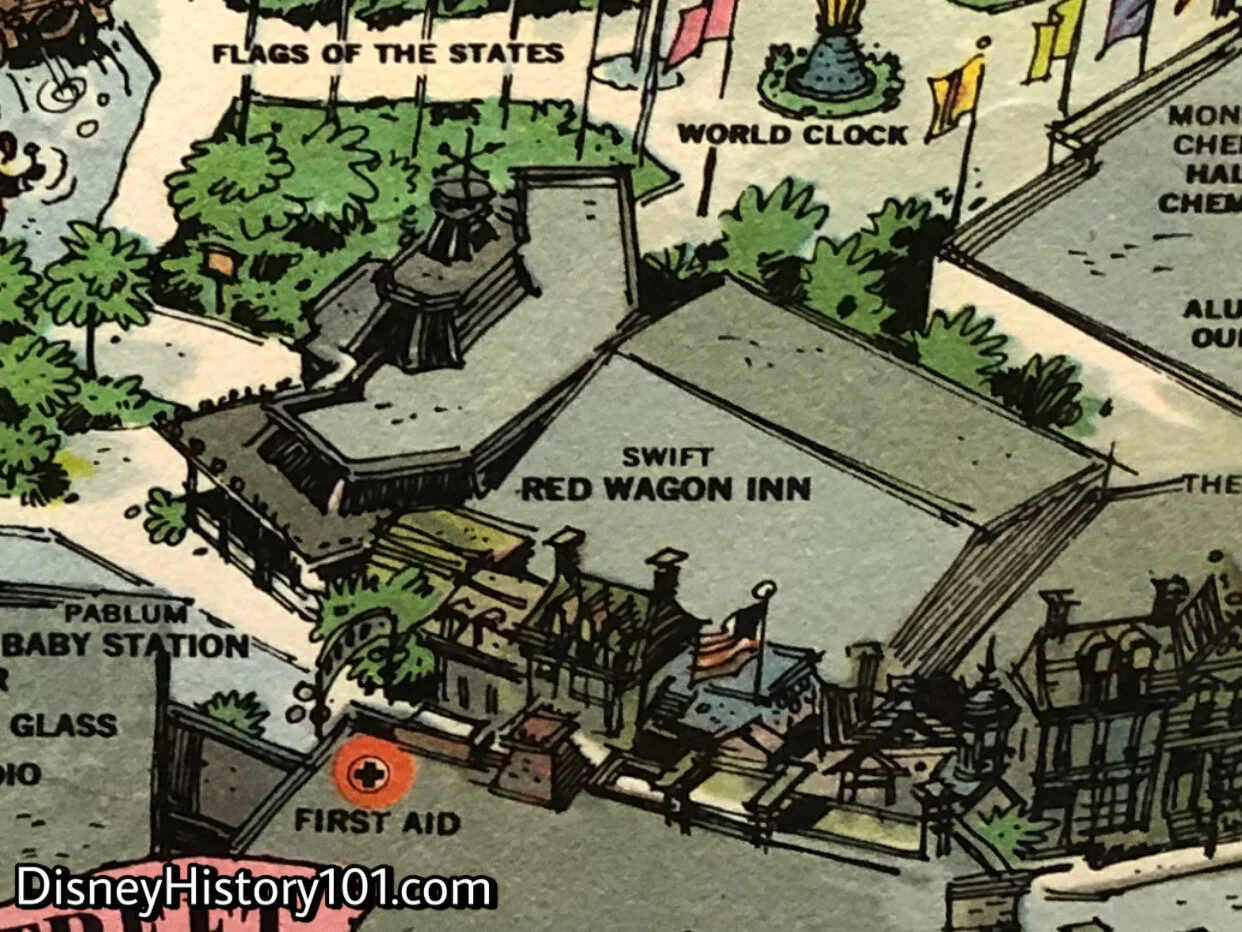
Sam McKim Disneyland Map Excerpt, 1960s.
Preceding Photo : At the end of Main Street U.S.A., two restaurants stood off the the Plaza - the Plaza Pavillion and the Red Wagon Inn!
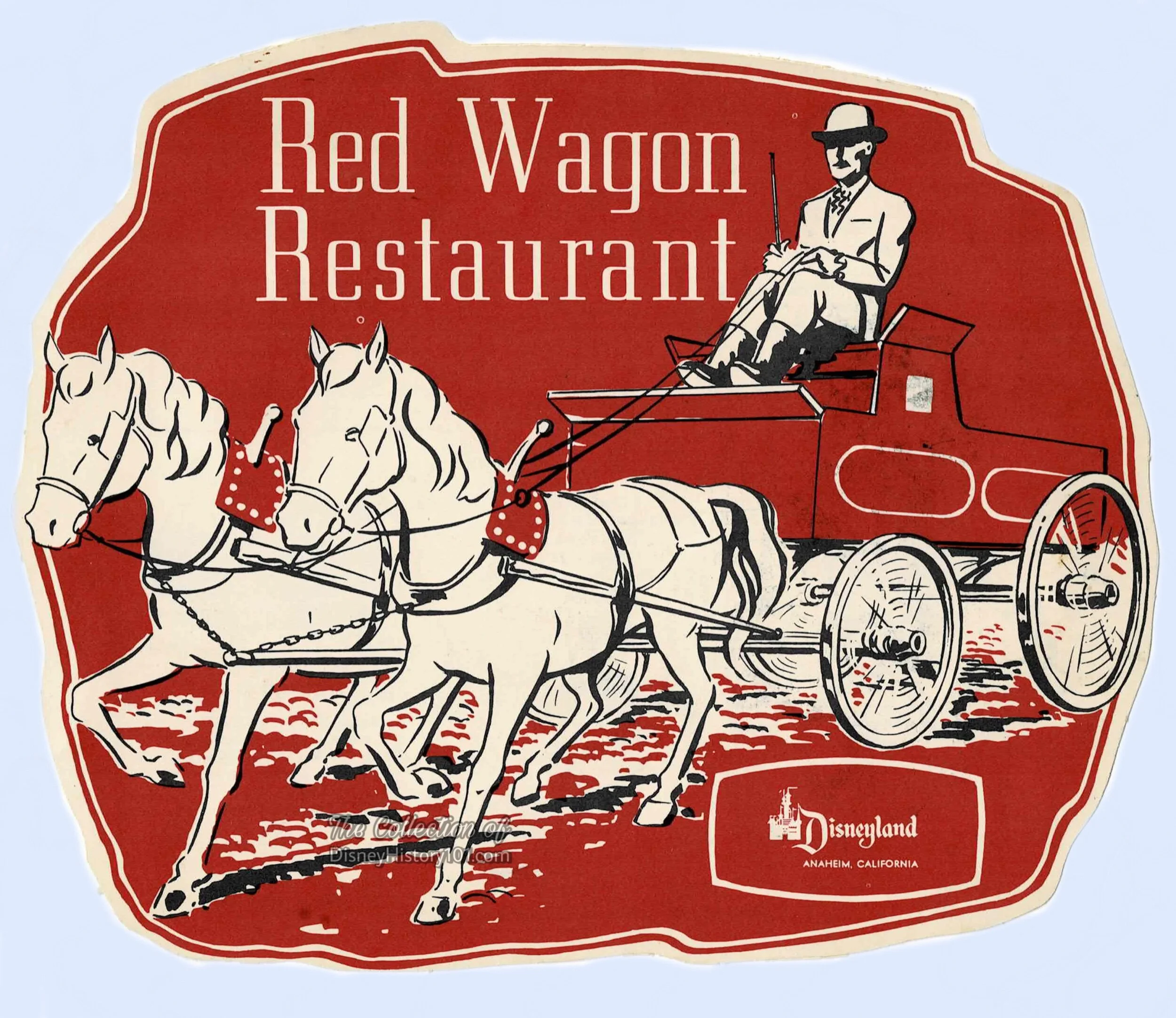
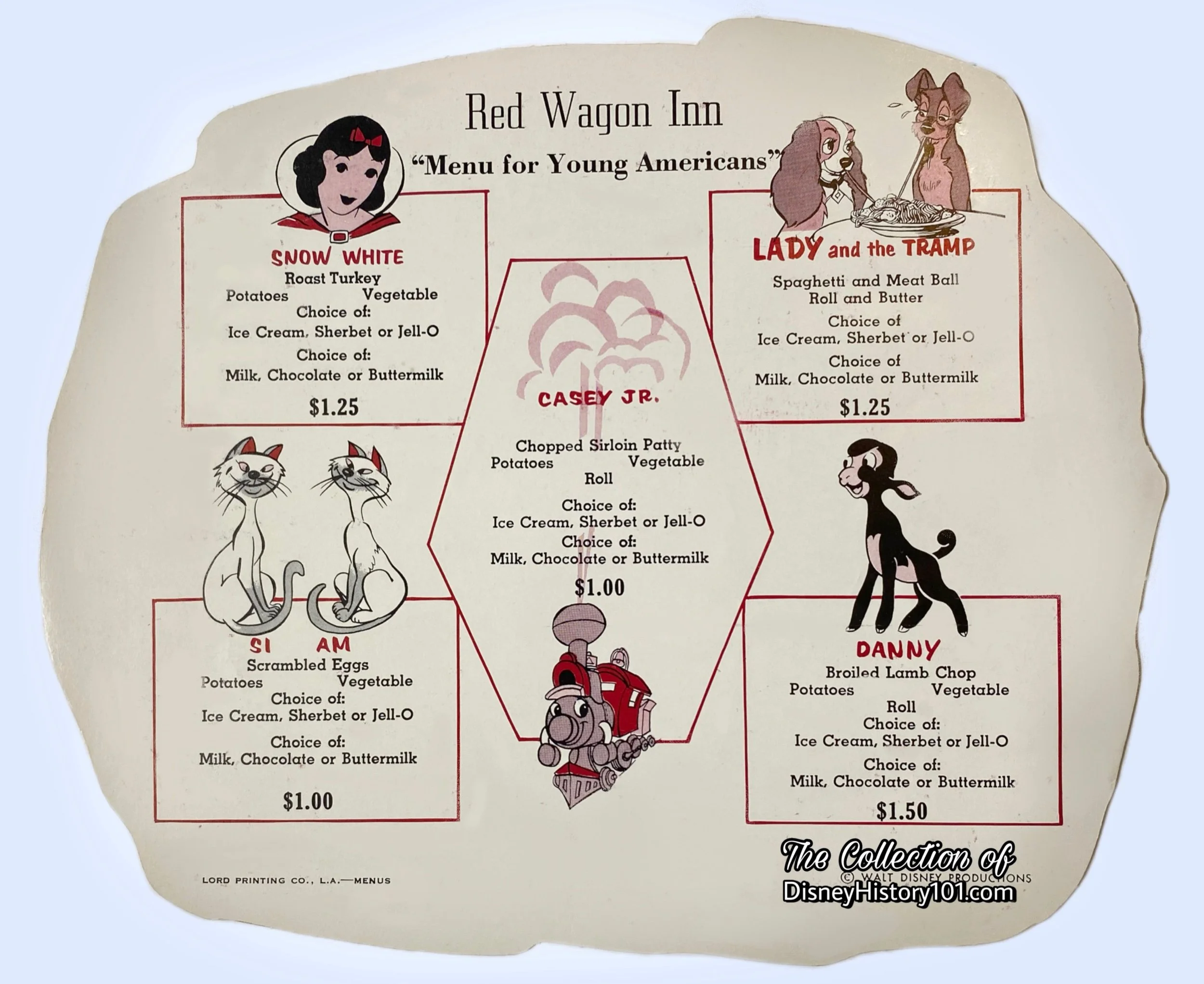
Red Wagon Restaurant Children’s Menu (Front)
“Disneyland guests find tempting meals in the beautiful surroundings of Grandfather’s day at this restaurant on Main Street’s Plaza.”
(A Complete Guide To Disneyland, 1956)
Beyond the decor, the menu brought back visions of a by-gone cuisine. Red Wagon Inn Restaurant was named after Swift and Company’s turn-of-the-century horse-drawn manner of transporting Swift’s Premium Food products. The restaurant was one of three establishments (including Swift’s Market House and The Plantation House) to feature Swifts brand meats. Hamburgers were popular, but Red Wagon Inn also served an assortment of Swift & Co.’s brand “steaks and chops from the charcoal broiler” prepared exclusively for this location. The Red Wagon Inn was also the only location in the Park to offer full-course dinners (i.e. “Prime Rib Dinner”). According to Marcy Smothers, the “hash, tuna sandwiches, and hamburgers” were “favorites of Walt”. In a move of corporate synergy, the Red Wagon Inn was one of 16 Disneyland “eating places” which featured “fine food with fine coffee - Maxwell House!” Carnation Farms would also serve this and 14 other wholesale customers who operated restaurants and snack bars in Disneyland.
As aforementioned, the Red Wagon Company operated the Red Wagon Inn, in addition to Swift Market House, Plantation House, and the Snack Bar in Holidayland. At the Red Wagon Inn, the children’s meal selections bore the names of popular characters. In 1955, guests could order Snow White Roast Turkey, Si Am Scrambled Eggs, Danny Broiled Lamb Chop, Casey Jr. Chopped Sirloin Patty (served with sides of potatoes, vegetables, and milk beverages). The Brer Rabbit plate was a vegetarian option (featuring carrots, peas, potatoes, and a roll). All choices included a selection of deserts including Ice Cream, Jell-O, an ice cream bar, or Sherbet.
Red Wagon Restaurant Children’s Menu (Back)
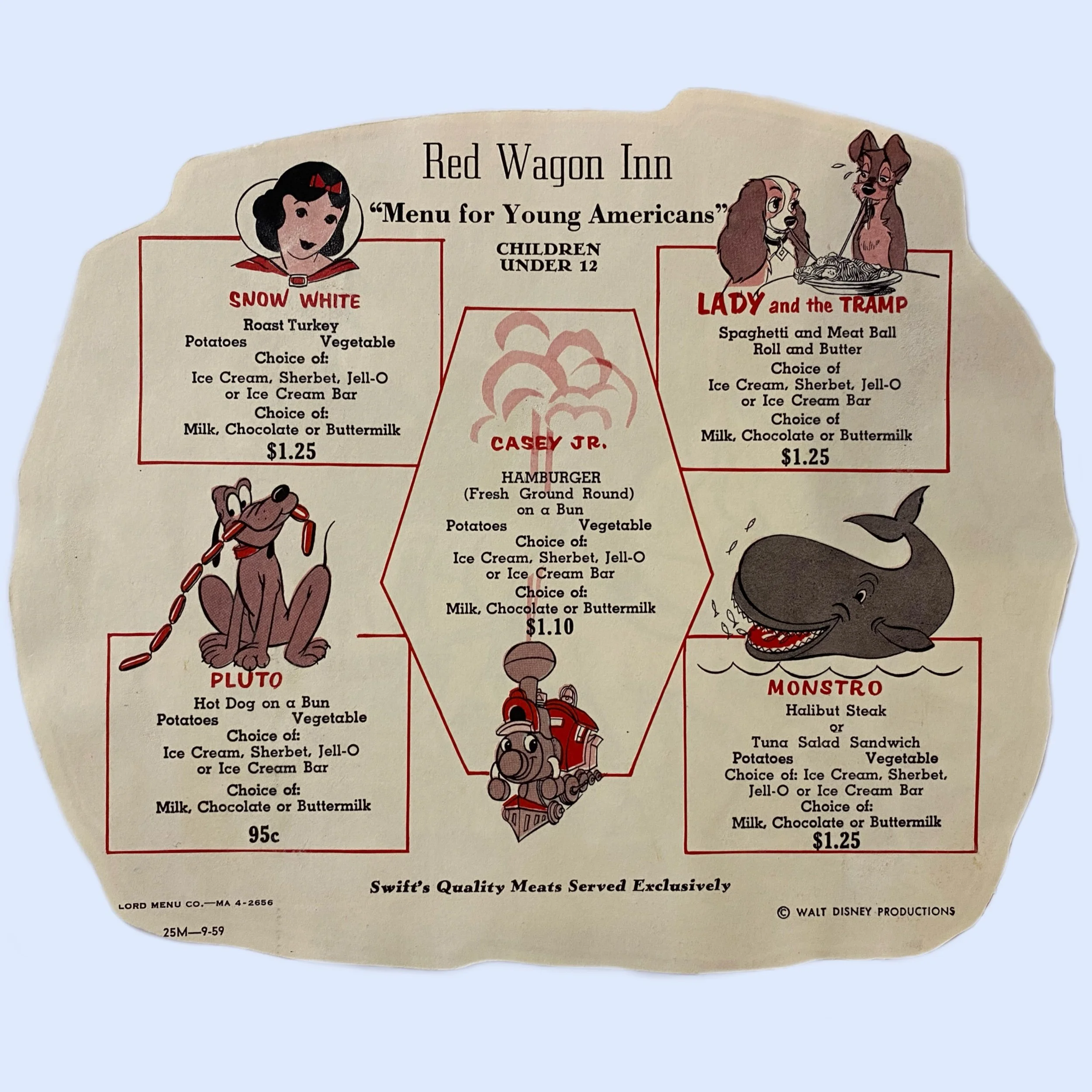
Red Wagon Restaurant Children’s Menu (Back)
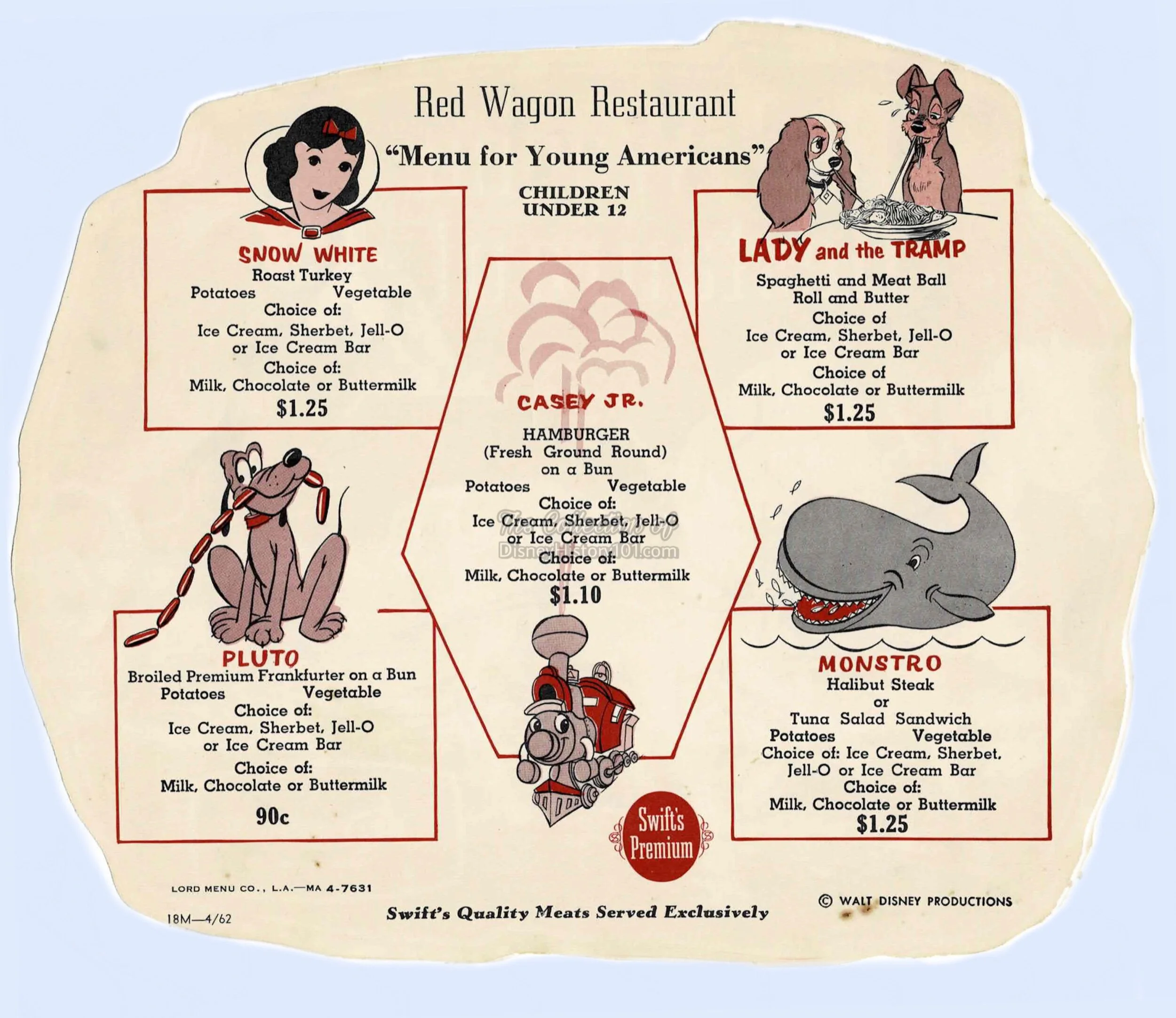
Red Wagon Restaurant Children’s Menu (Back)
By 1958, the Red Wagon Inn was the only restaurant in Disneyland that served a full-course dinner. By 1958, the Children’s Menu had changed the five dining options : Snow White Roast Turkey and the Casey Jr. (now a Hamburger) remained. However, the Pluto Hot Dog, Lady and the Tramp Spaghetti and Meat Ball, and Monstro Halibut Steak were added.
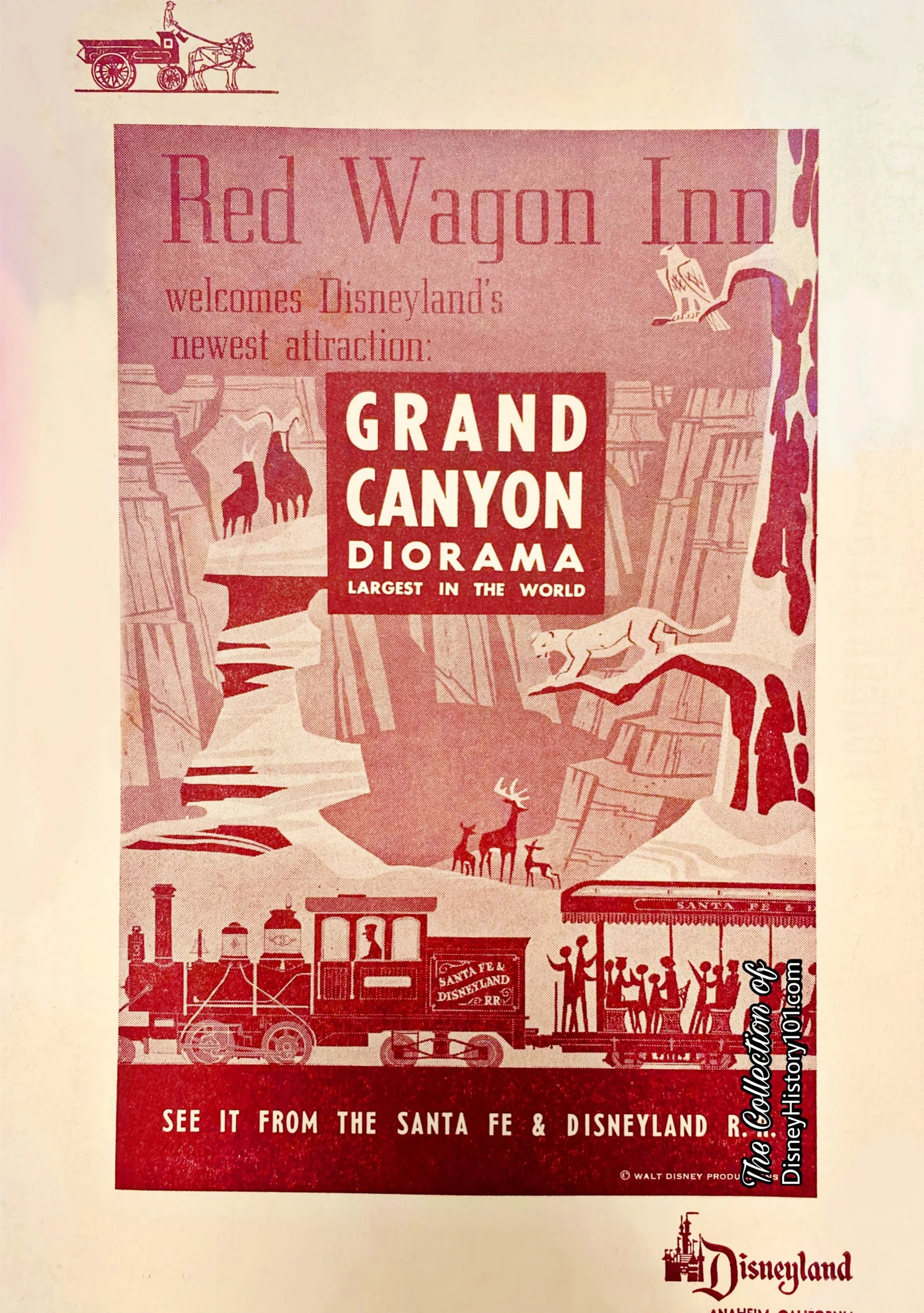
Red Wagon Inn Menu promoting the newest attraction - The Grand Canyon Diorama ; published 1958.
“The Disneyland-Participant Sponsor Partnership”
The synergistic relationship between the institutional lessee and Disneyland, Inc. was good for Disneyland, Inc. Swift and Company - Red Wagon Inn yielded revenue for Disneyland Inc. - $45,692 for the fiscal year ending September 29, 1957 and $45,000 for the fiscal year ending September 28, 1958.
Further, the synergistic relationship between the institutional lessee and Disneyland, Inc. was good for Swift and Company. The Disneylander area merchant Red Wagon Company was a sponsor of the championship Disneyland Recreational Club baseball team of 1957. Clubs sponsored by the Disneyland Recreational Club occasionally held meetings in the Disney Room of the Red Wagon, like the new Ski Club, formed in 1962.
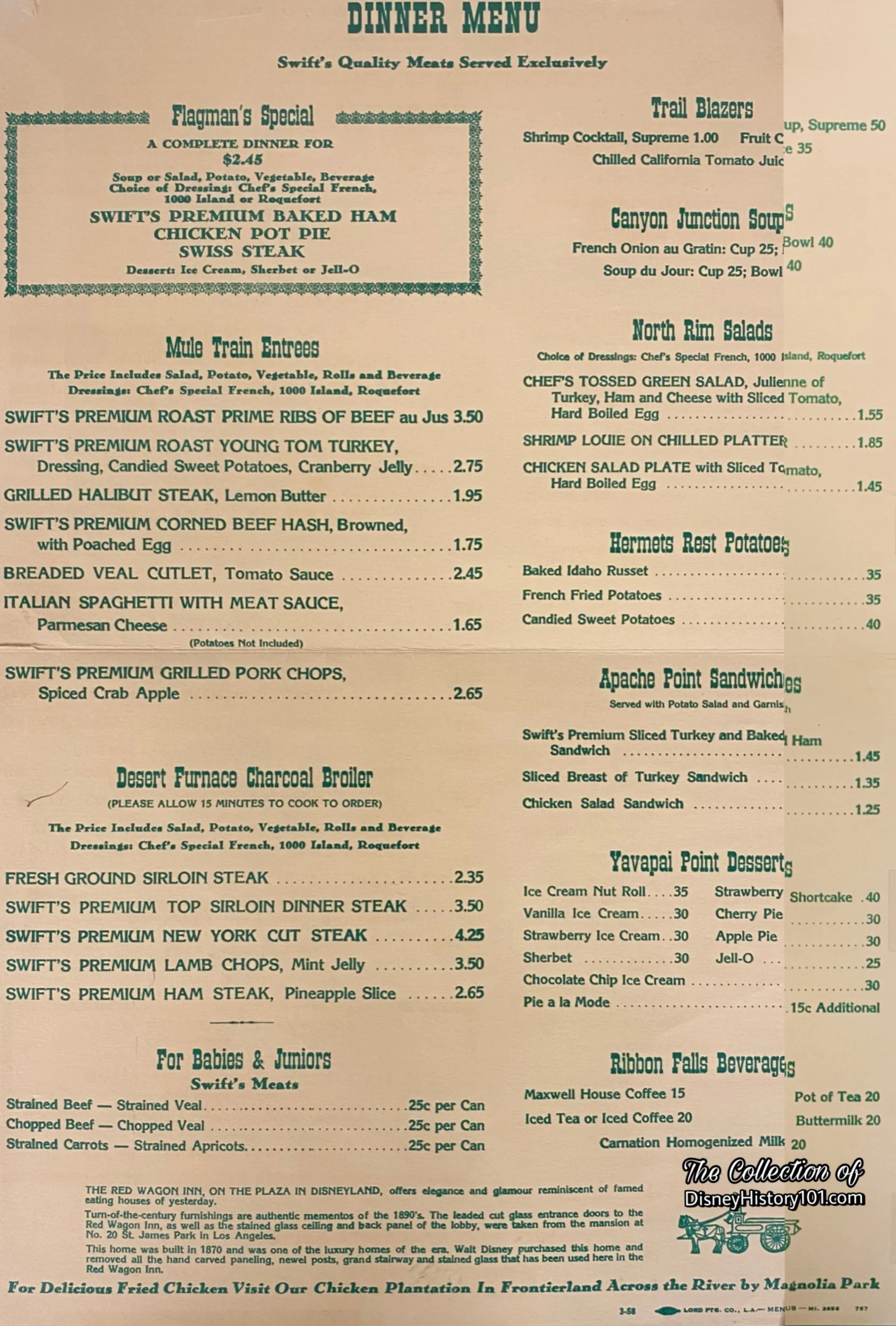
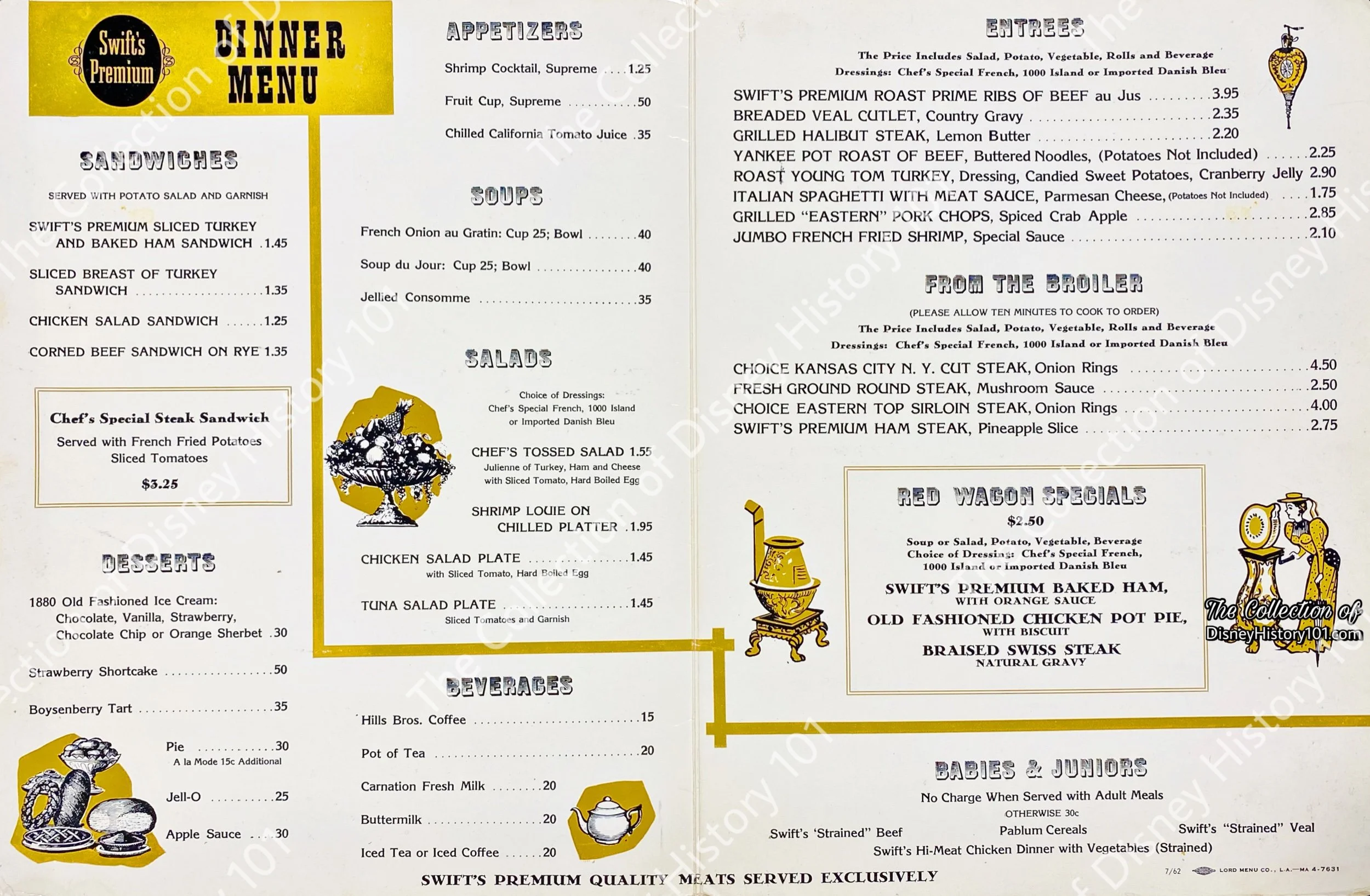
Plaza Inn Dinner Menu.
The Plaza Inn menu was inspired by the Disneyland Railroad and the Grand Canyon Diorama - with a Flagman Special, Mule Train Entrees, Desert Furnace Charcoal Broilers, Trail Blazers, Canyon Junction Soup, North Rim Salads, Hermets Rest Potatoes, Apache Point Sandwiches, and Yavapai Point Desserts.
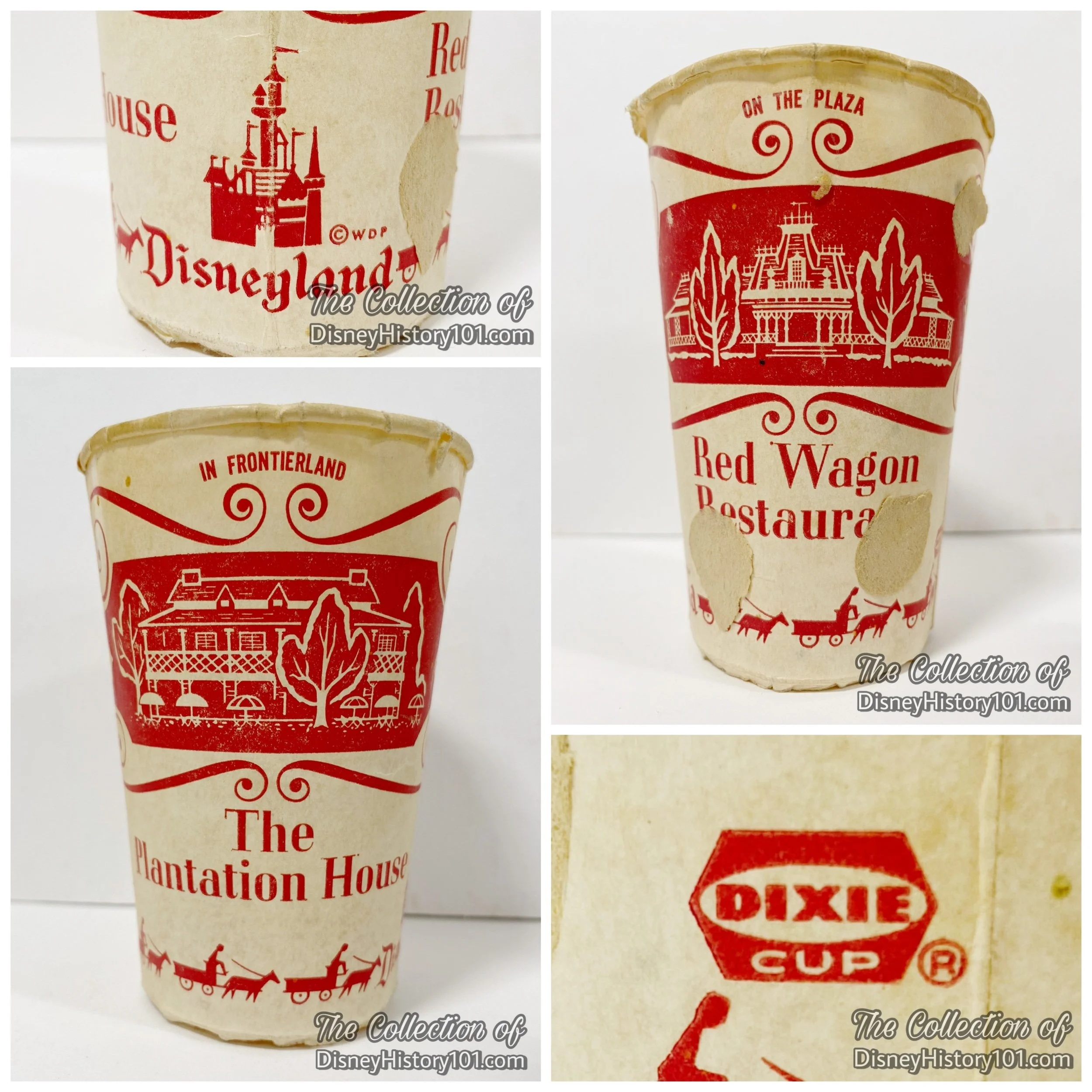
A Plantation House and Red Wagon Restaurant cup by Dixie Cup.
The DIXIE CUP division of the American Can Company opened the doors of their Anaheim facility in 1952. The neighboring business came to be located at 901 E. South St., Anaheim, Cal. With a staff of nearly two hundred people under the direction of J.D. Mitchell, the center operated as a manufacturing and distribution point for their product quality paper cups to seven of the Western States.
The business partnership between Disneyland, Inc. and the Dixie Cup Company was profitable. By September of 1958, the Dixie Cup Company was contributing a routine portion of accounts receivable to Disneyland, Inc.
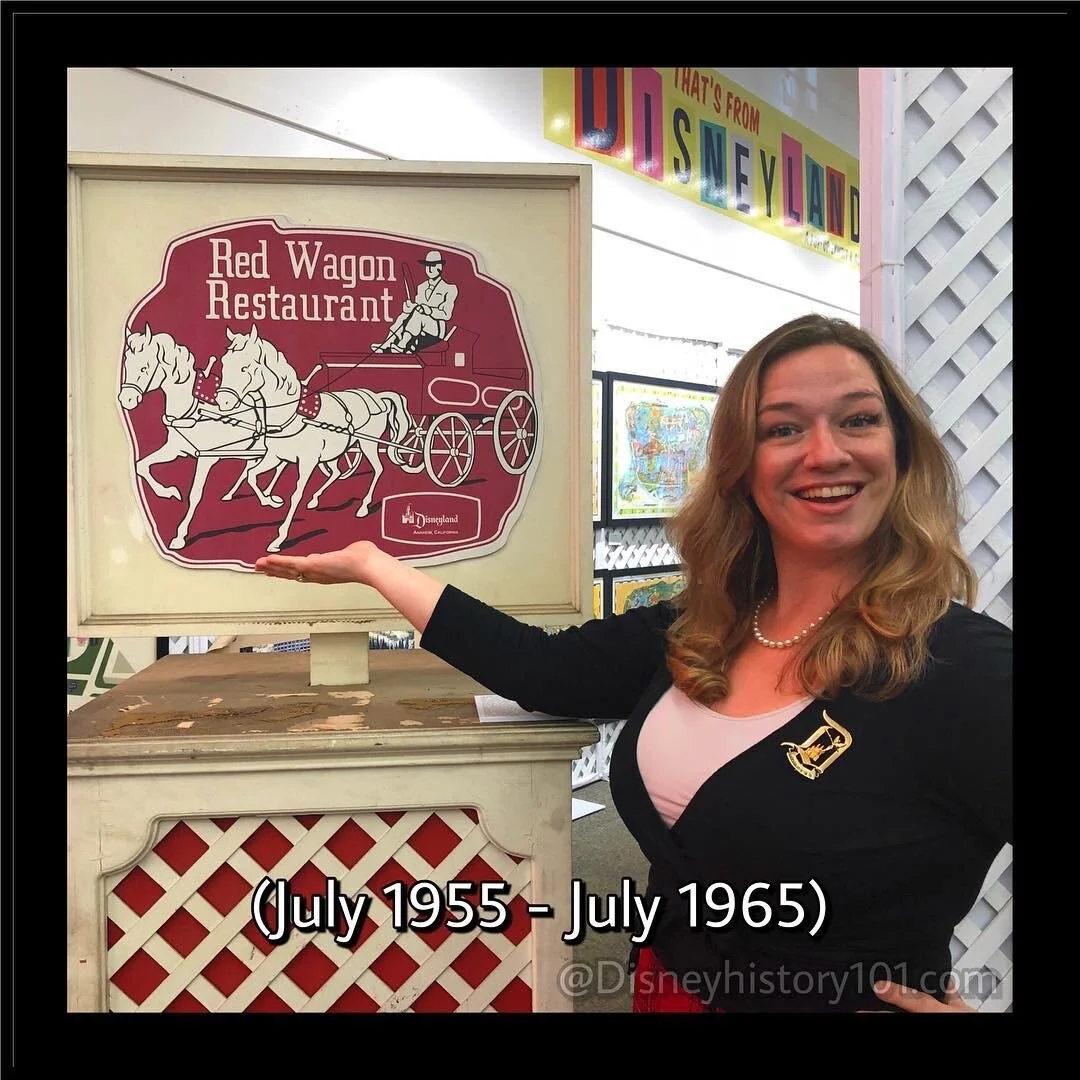
RED WAGON INN SIGN tribute display created for the 45th anniversary of Disneyland in 2000; Former Richard Kraft Collection.
“Hey, that’s from Disneyland!” This artifact from the former Collection of Richard Kraft, preserves a late 1950s menu graphic, and simulates the feel of approaching the Red Wagon Restaurant during Disneyland’s “first fabulous decade” (c. 1955 - 1965)!
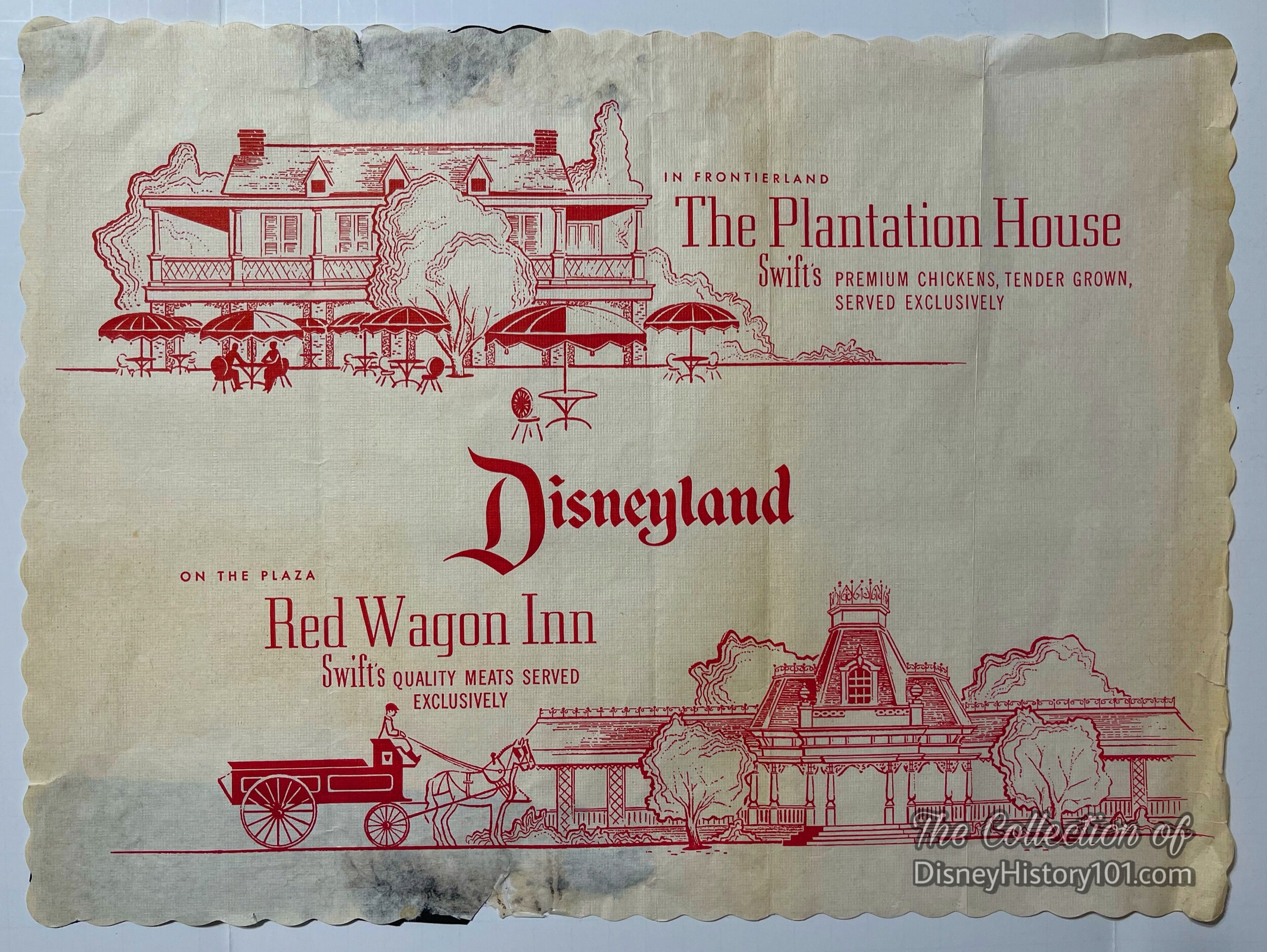
Red Wagon Inn Placemat Featuring Two Swift's Locations, c. 1950s
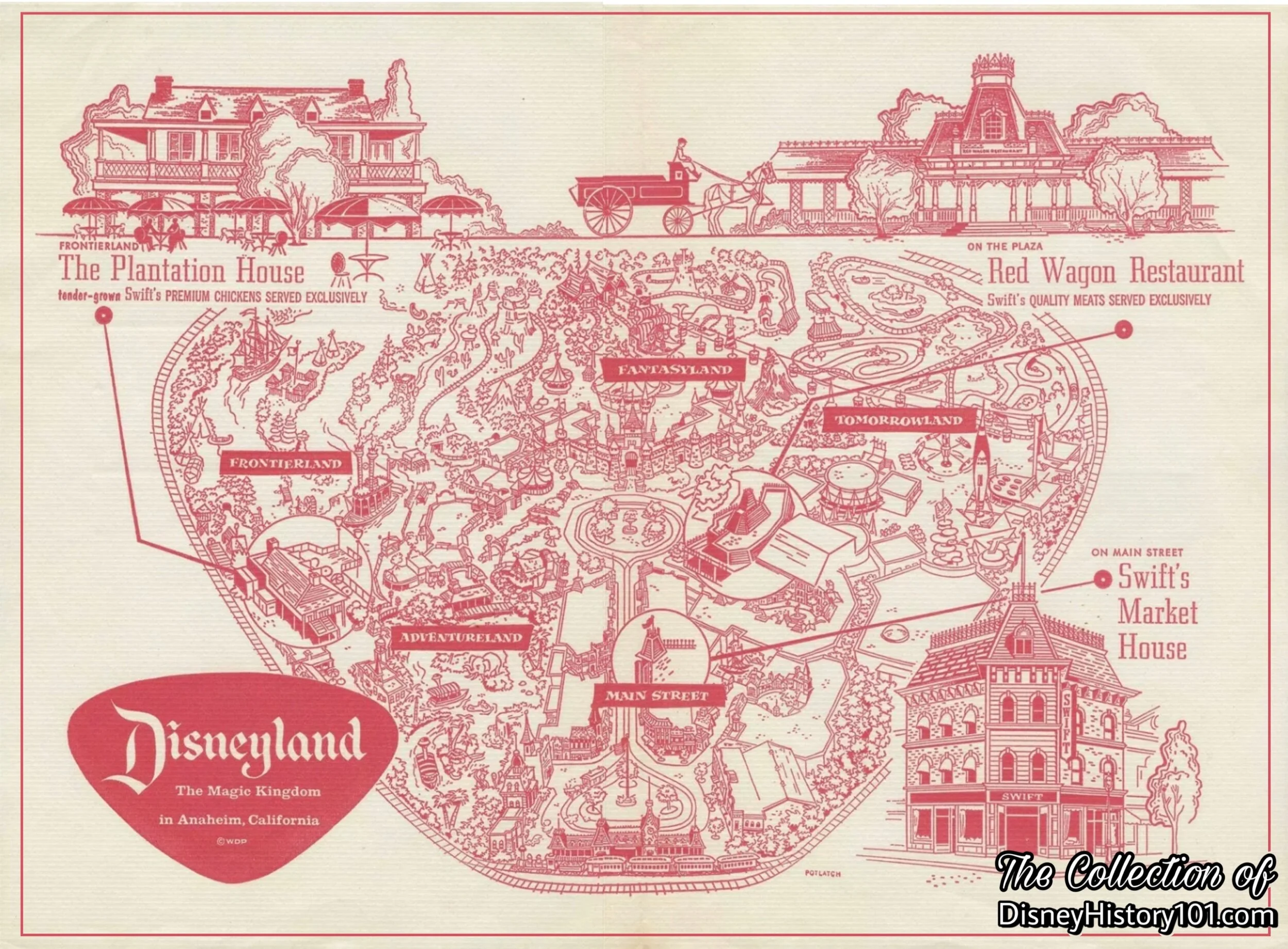
Red Wagon Inn Placemat “Map” Featuring Three Swift's Locations, c. 1950s
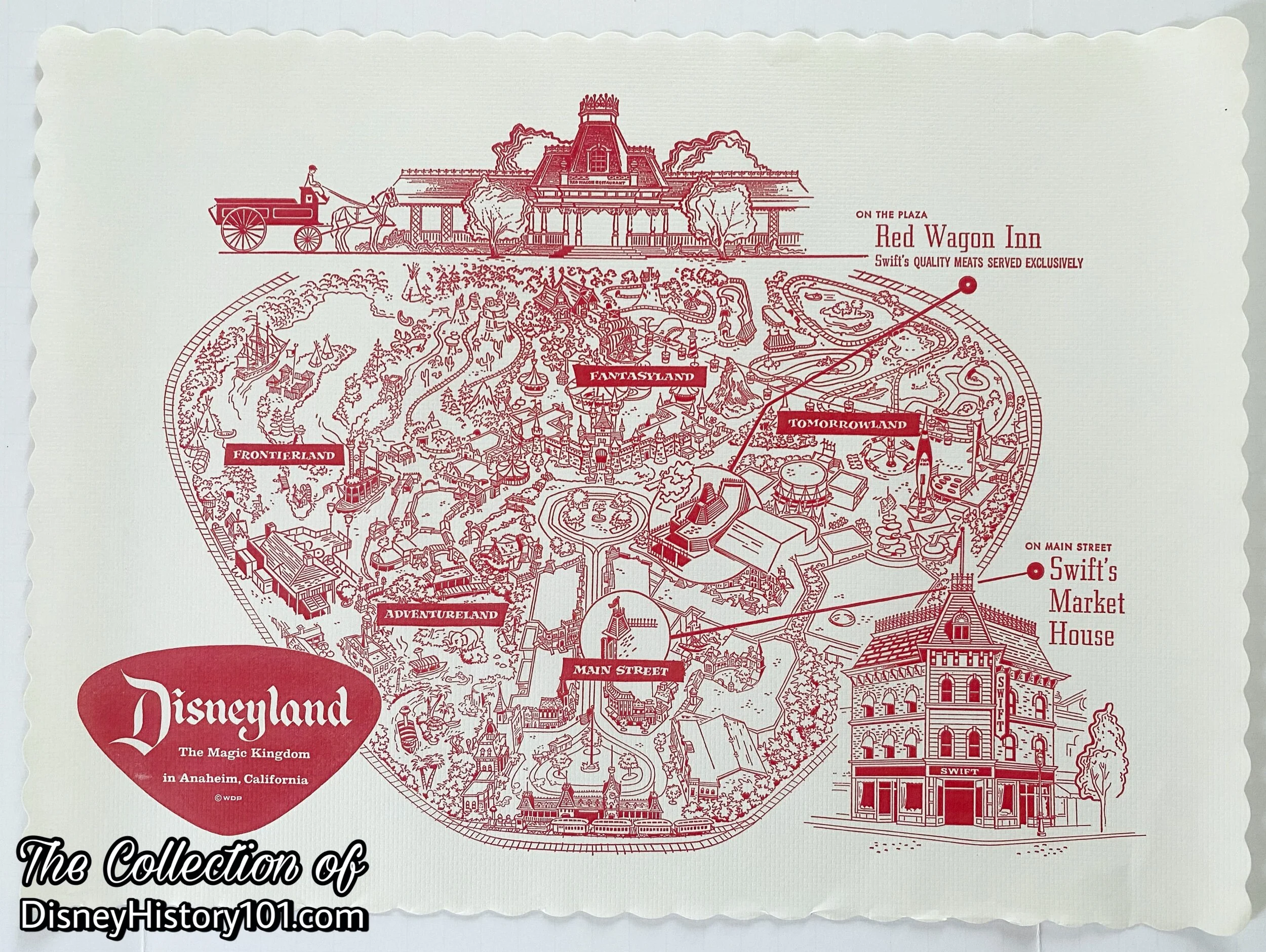
Red Wagon Inn Placemat “Map” Featuring Two Swift's Locations, c. 1960s
During the time of Swift’s sponsorship of the Red Wagon Inn (July 17, 1955 - October 11, 1964), meals prepared with Swift’s brand meats were served atop paper placemats like these. The map of Disneyland featured other locations where Swift’s products could be found in the Park. As the Market House was more of a shop, these placemats were used primarily for seated guests who made a reservation to dine at the Red Wagon Inn. Not pictured are the Concessions locations which served Swift’s Premium Franks (as early as 1956)!
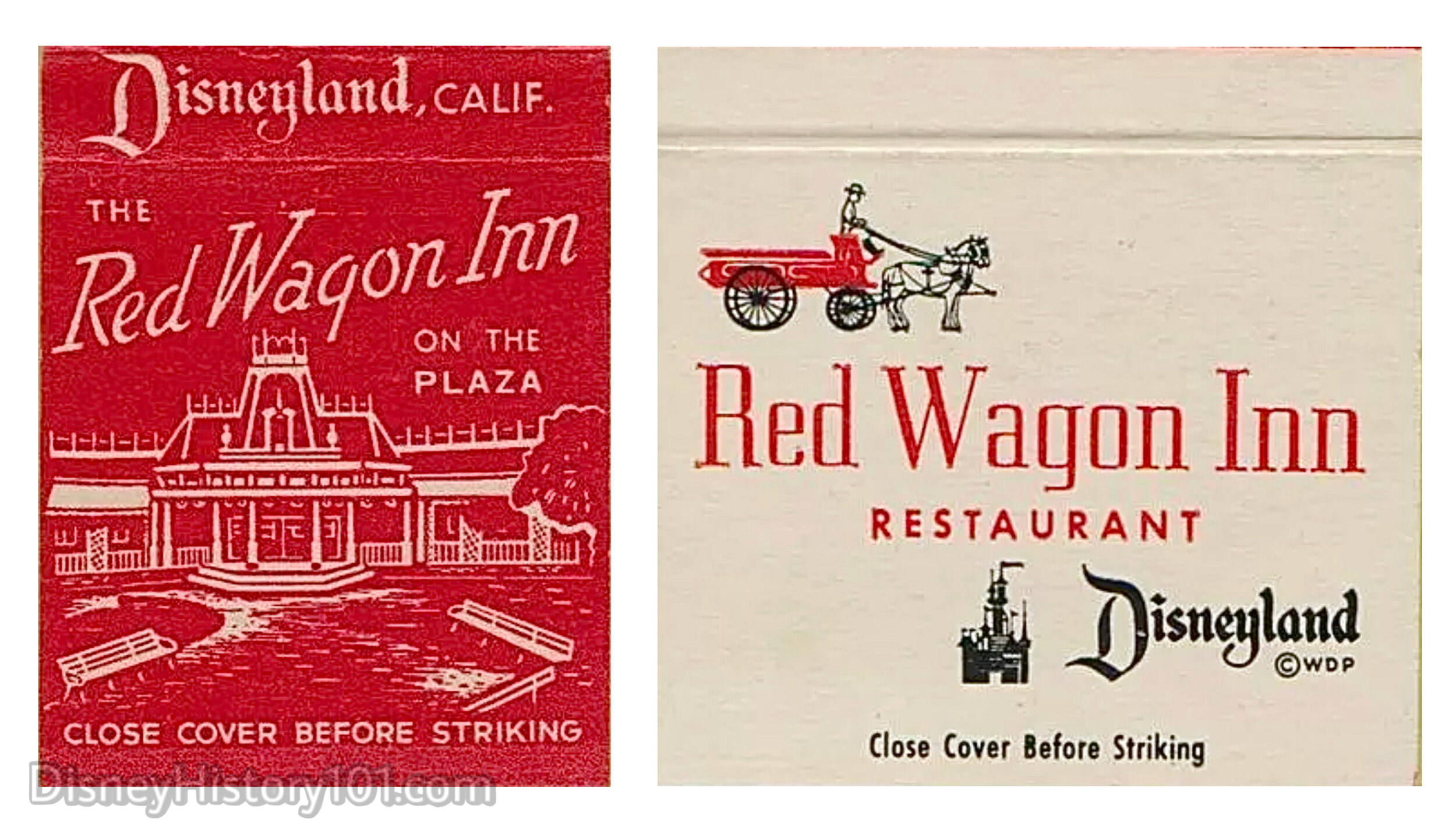
SOUVENIR RED WAGON INN RESTAURANT Matchbook Covers by Universal Match Corp. (Right); 1956- March, 1965.
During the days of The Tobacconist, restaurants like the Red Wagon Inn Restaurant (and Chicken Plantation House), offered complimentary toothpicks (in sealed paper packages) and souvenir matchbooks bearing these covers could be found in several Swift’s sponsored locations around Disneyland! Guests who enjoyed smoking after their meal (or merely enjoyed collecting matchbooks), may have routinely taken one of these along with them. Perhaps you added one of these to your collection while visiting Disneyland during its “first fabulous decade.”
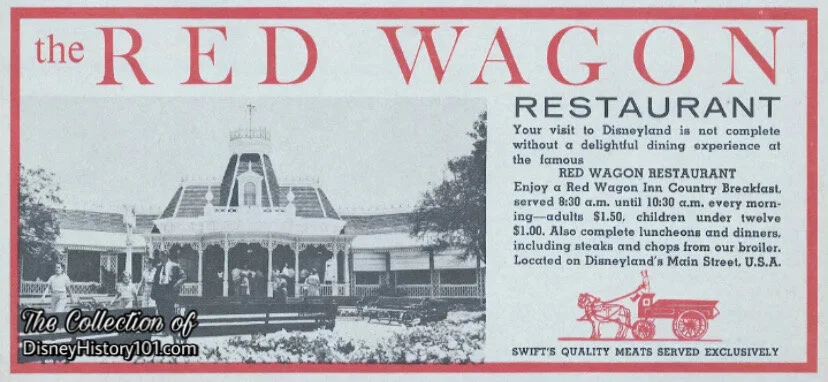
Advertisement Published in Vacationland, (Summer, 1960)
This advertisement was run in publications (as Vacationland) during the Summer of 1960.
The Disneylander October-November 1960 introduced “CHARLIE KOEPPEL who is MYRT WESTERING'S successor as General Manager of the Red Wagon Co. Charlie was formerly General Manager of Metropolitan Hotel Supply Co., a division of Swift & Co., who has been furnishing those fine Swift's meats served in Disneyland. We're all going to miss our long-time friend Myrt and we wish him the best in his new venture.”
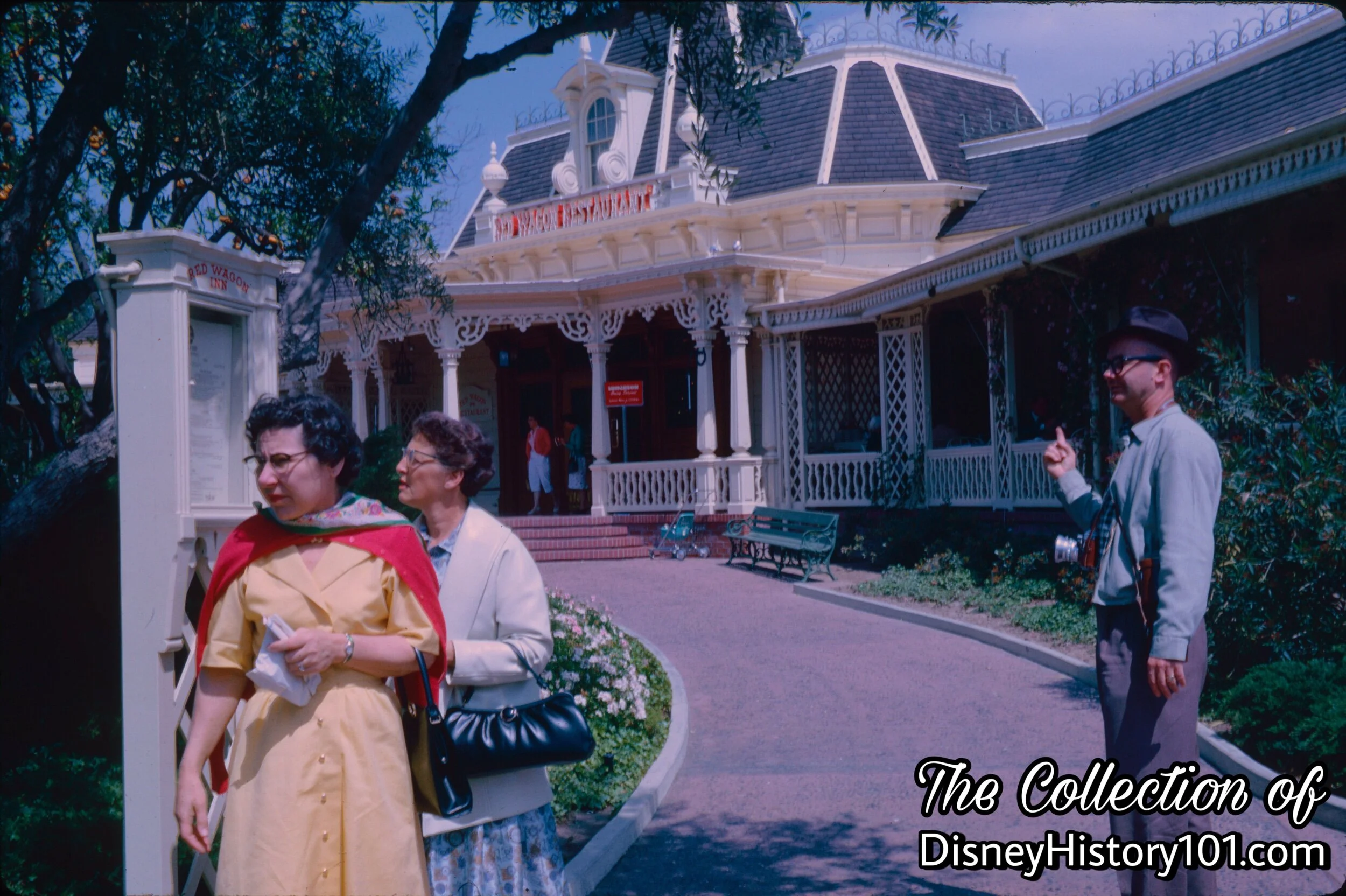
RED WAGON INN RESTAURANT, (c. April, 1961)
During the winter season of 1962, Jack Lavin and Chuck Corson arranged reservations for lunch at the Red Wagon for the Disneyland Carolers on their return from a Studio party on Saturday, December 15. They would be back in the park about 1:30 and fourteen (14) reservations for the luncheon at the Red Wagon were made.
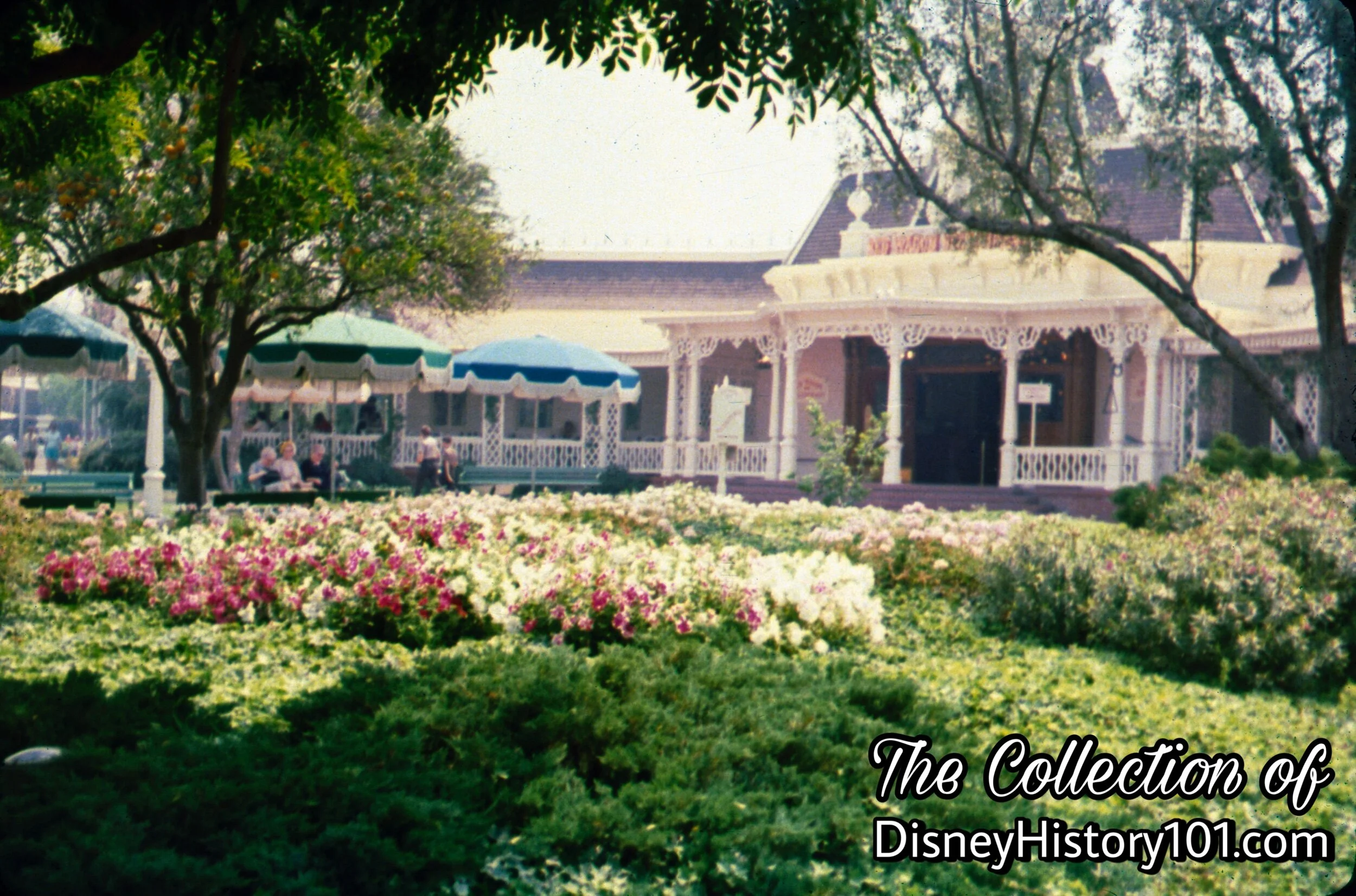
RED WAGON INN RESTAURANT, (March, 1965)
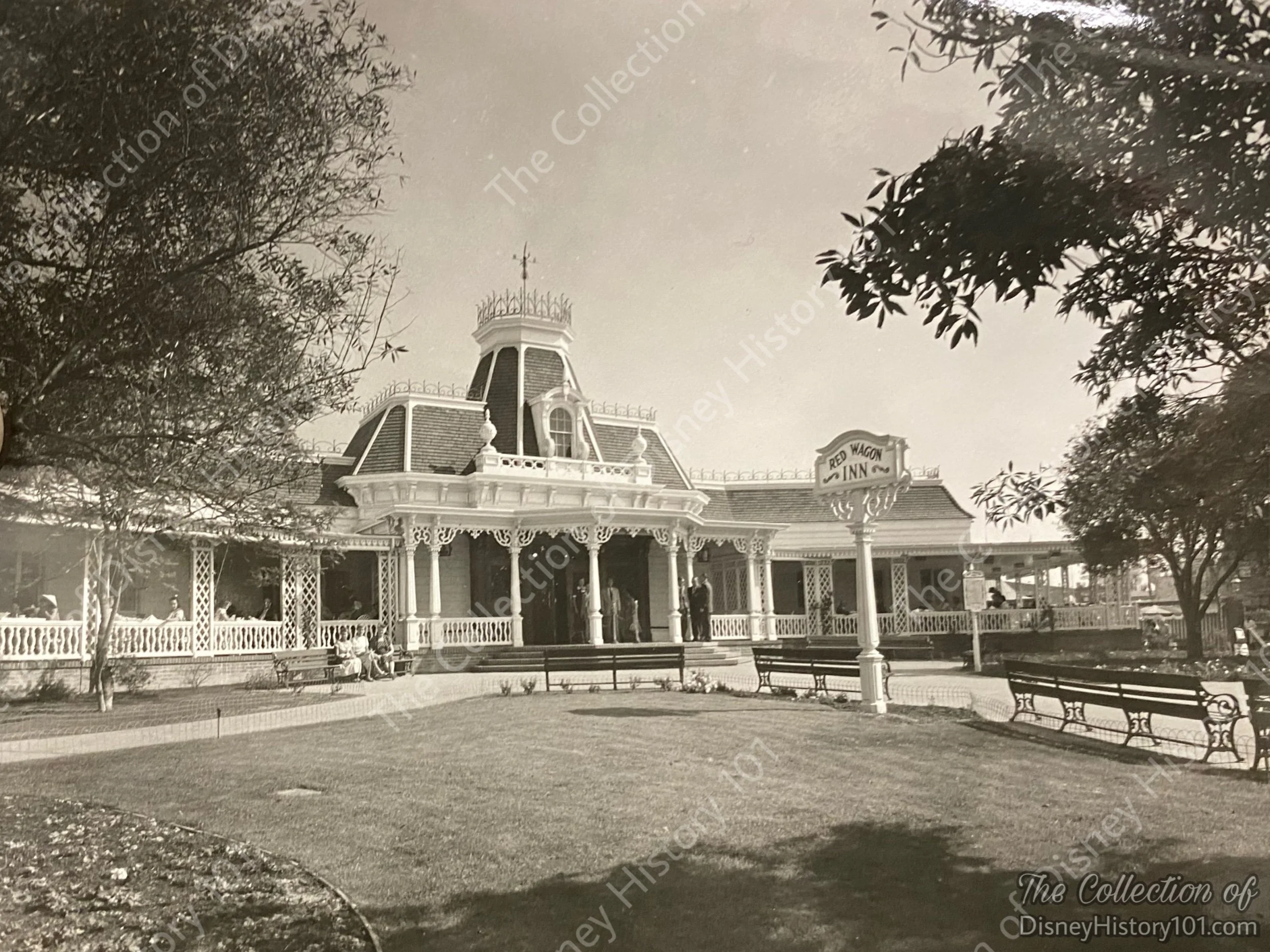
Swift’s would end it’s sponsorship (on October 11, 1964) - just short of the close of Disneyland’s first decade. A photograph (above) of the Red Wagon Inn taken before it was closed (and transformed into the Plaza Inn), gives an idea of what it looked like at the time.
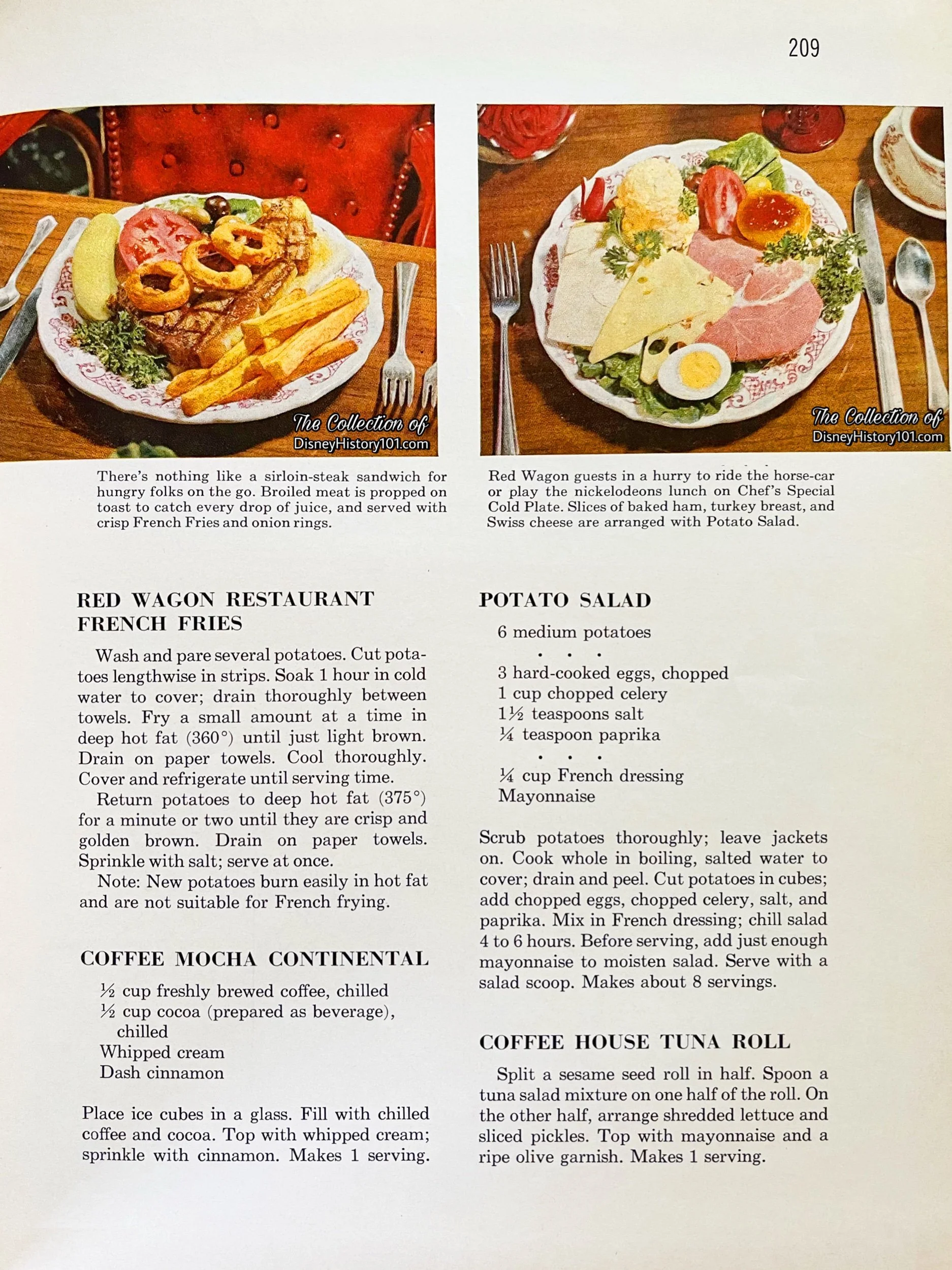
Better Homes and Gardens "Famous Foods from Famous Places" (published by Meredith Press, 1964) spotlighted a number of popular Red Wagon recipes including the Potato Salad.
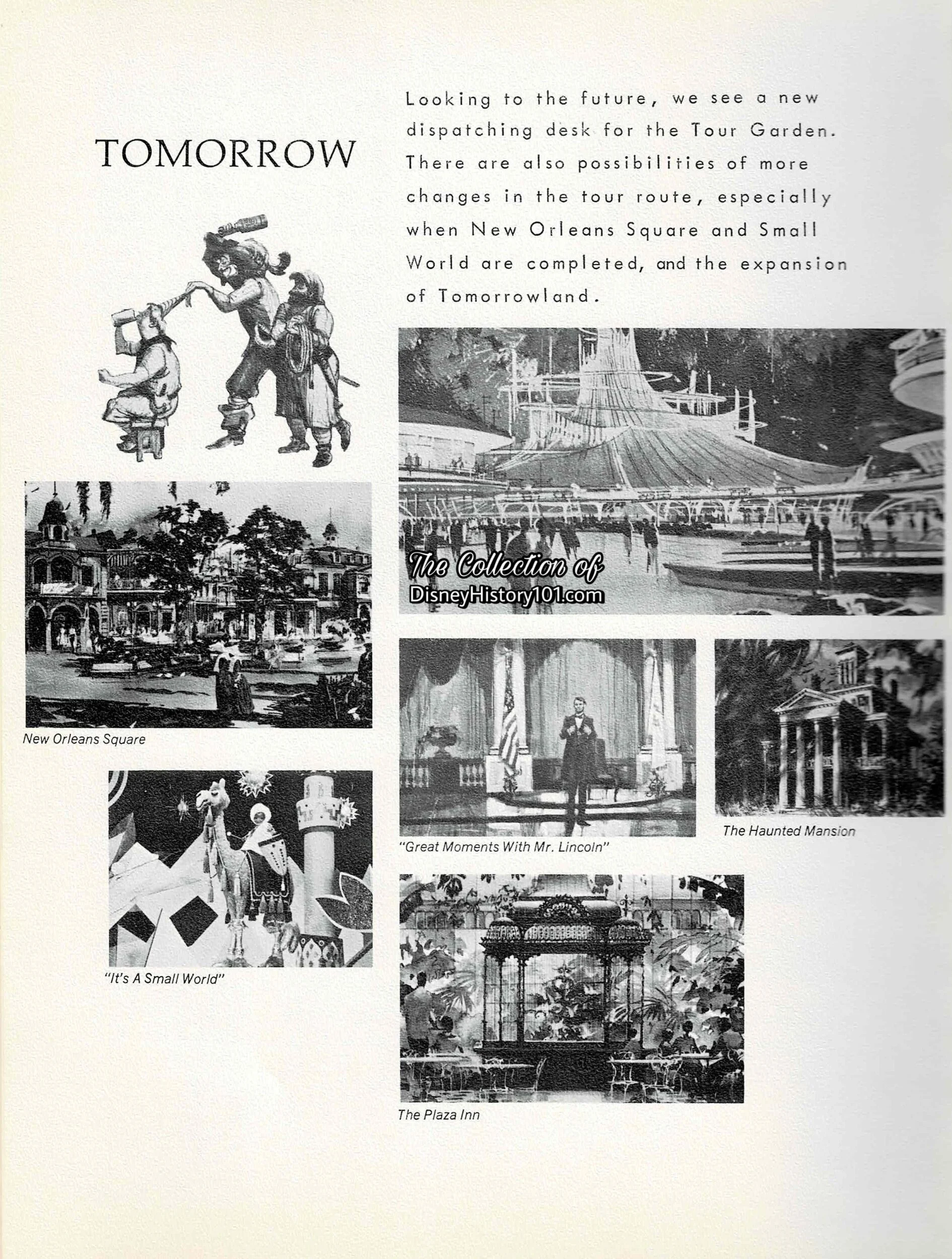
"A World of Smiles - Dedicated to the Summer Tour Guides 1965" Excerpt Prepared Guides for Potential Future Attractions and Guided Tour "Stops"
Meanwhile, coming attractions were divulged to Disneyland Cast Members, (including Disneyland Tour Guides) and then to television viewers, and both Walt Disney and John Hench introduced the Plaza Inn in Press Release photos.
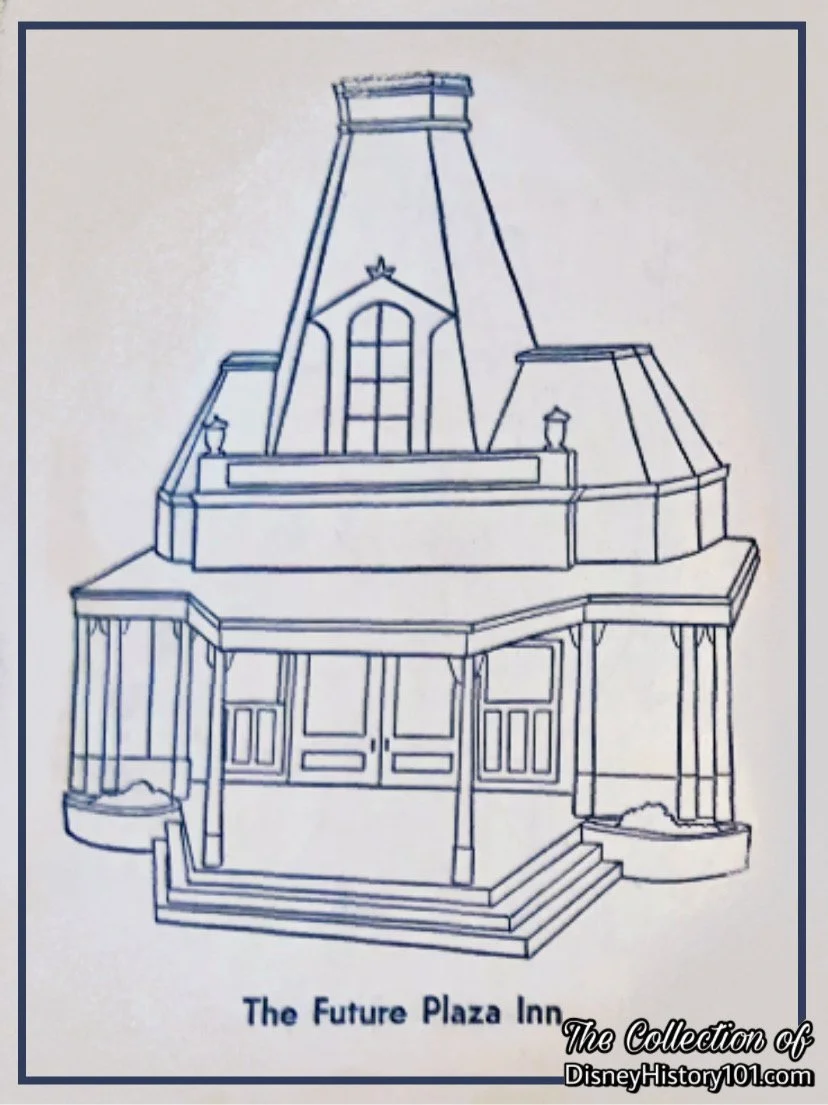
One Disneyland Coloring Book image produced and published c.1964, depicts “The Future Plaza Inn”
Soon, Walt was cutting a special cake and toasting the opening of the Plaza Inn.
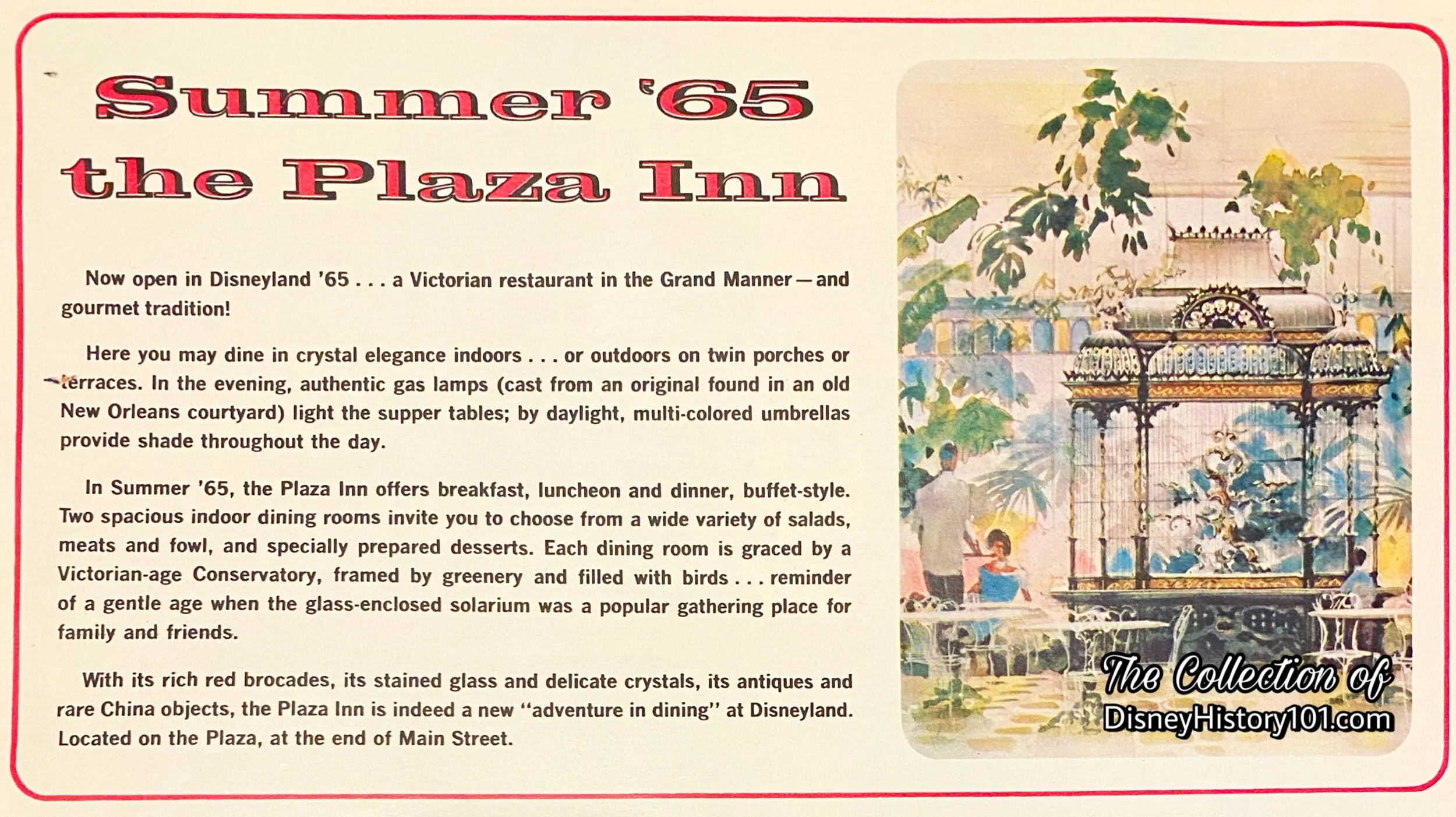
"Disneyland ‘65" Excerpt - Many such advertisements were published in magazines like Vacationland
The extensive remodels brought a spectacular “look-in” Chef’s Kitchen and the Disneyland Bakery, alongside the “Backstage Employee’s Cafeteria.” The new Plaza Inn had some of the latest food handling devices. The dish conveyor there had no less than five elevators. When the Employees cafeteria reopened, there was now a beautiful new trophy case against the far wall, full of trophies awarded during Disneyland Recreational Club sponsored sports activities and competitions. According to Backstage Disneyland magazine (Vol.4, No. 4 ; December, 1965) : “The Plaza Inn opened only a few months ago and it seems appropriate to see how one of the most elaborate restaurants is doing. When it first opened there were many problems and a great deal of confusion, it seemed things would never calm down, but thanks to the able super- vision of Bob Wasson, Frank Di Guglielmo, Gerry Rawson and Dale Burner, things have settled down to a very smooth routine. A very nice advantage of our new Plaza Inn is that we now have our own bakery, headed by Bernie Juban, a true Patisser, and it might be noted that employees may have cakes made to order for them by Bernie.”
For the first ten years of Disneyland’s operation, there were no bakery facilities in the Park, so any bakery products sold to Guests were purchased from outside vendors. But now under Pastry Chef and Lead Fernando Topinio, the day and night crews of the new Disneyland Bakery (located behind the Plaza Inn Complex, next to the Inn Between) would provide all sorts of “pies, cakes, buns, and [even French] pastries” to the Park. These were delivered to Food Stands of Fantasyland (which were now operated by Disneyland) as well as other parts of the Park, according to “Disneyland Backstage” (Spring, 1966). In fact, the Disneyland Bakery would even bake “over 3,000 birthday and wedding cakes for the Disney Hosts and Hostesses in the Park,” according to “Food Showmanship Disney Style,” published 1973.
As a “sidelight,” I would like to honor a legendary expert baker - Fernando Topinio! Fernando Topinio (mentioned earlier) helped develop the recipes for all the cakes of both Disneyland and (later) Walt Disney World in Florida), and serve in this position for 21 years until his retirement on November 21, 1986. Other notable Plaza Inn Staff include the c.1965 Bakery Chef Bernie Juban (of Normandy, France), whose best customer had been Ed Mackie, who “gave samples to Raul and Julio,” according to Lewie Johnson of Backstage Disneyland Magazine (Vol.4, No.4, December, 1965).
Though the previous Red Wagon Inn dining areas could still accommodate a great deal of guests, seating was limited to the interior of the restaurant. So it was decided to expand the guest capacity to 500, by offering “open-air” dining in a new outdoor “peripheral” dining porches - on the Plaza Terrace.
The Plaza Inn was now run by the Disneyland Food Division (founded March of 1965). The new restaurant now offered “buffeteria” service for both luncheons and dinners. Menu items included sizzling steaks and juicy chops, baked chicken, veal, fish, spaghetti, salads, desserts, and beverages. Children’s plates (and portions) were offered additionally. Disneyland Master Executive Chef Hideo “Indian” Aramaki (of Puunene Maui, Hawaii) served the Plaza Inn for a number of years beginning in June of 1964, alongside head Chef Buddy Cabbaa, so if you dined at the Plaza Inn during this era, you likely experienced some of their cuisine! Much of the extra personnel acquired (in addition to new hires) during the holiday season (of 1965) was owning to the work of Bob Wasson. During the late 1960s, the Plaza Inn (and all of its Lead Hostesses, Salad Leads, Lead Hots, and Beverage Hostesses) was under the Area Management of Bernie Juban (c.1968 Plaza Inn Supervisor).
All of these recipes and menu options (like the c.1968 menu specialty Veal Pojarski) necessitated the daily purchase of “perishable food that cannot be stored in the warehouses” - (some 180,000 feet of space once located Backstage, North of Disneyland), according to “Food Showmanship Disney Style,” published 1973. According to the same publication, “The Food Purchasing people will make over 6,000 purchases in one year from more than 75 different companies and food vendors.” This was overseen by Max Sloan (Manager of Food Controls for Disneyland).
“Rehabilitations & Refurbishments”
As far back as its earliest years, the Plaza Inn received periods of extensive cleaning. For instance, in the evening, Chuck Boyajian’s Maintenance crews would clean the depths of the kitchen (“steam cleaning of the deckwalks which are the slat boardwalks used in the kitchen”), to the heights of the dining rooms (cleaning the “chandeliers which require special handling”), according to Disneyland Backstage magazine, (Summer, 1966; Vol. 5, No. 2). “In the Plaza Inn are two crystal chandeliers. (These cost $10,000 each, incidentally.) During the summer months they are washed three times a month with detergent. (They do have a feature not available in most homes. They are lowered by electric motors so that the clean-up crew doesn’t have to stand on ladders.),” according to Disney Magazine (Summer of 1976). This feature allows Disneylanders to clean them “at ground level, [where] each piece of crystal ornamentation can be dusted and polished easily,” according to Disneyland LINE (Vol.21, No.5 ; February 3, 1989).
Christmas of 1986 and the Candlelight Ceremony brought a special menu to the Plaza Inn, “for your dining pleasure.” There was Egg Nog, Cream of Asparagus Soup, Cheese Straws, Stuffed Fillet of Sole with Lobster Mousse, Fleuron, Head of Limestone Lettuce Navidad, Roast Rack of Baby Veal Princess, Wild Mushroom Sauce Forest Style, Fresh Asparagus Points Hollandaise Sautéed Baby Summer Squash filled with Fresh Carrot Mousse, Snowball Potatoes, Half Spiced Peach, Sauce Cumberland, Chocolate Cups filled with fresh strawberries, and Mousse Santa Claus Way.
By 1987, the Plaza Inn hosted by Columbia Coffee Growers offered healthier menu options - Spaghetti with Meatless Sauce, Fresh Fish of the Day, and Seafood or Tuna Salad! At the time (some time in May), the red brocades and stained glass themed restaurant was entirely remodeled with lavish accents and antiques - a Louis XV-style wooden clock and marching barometer handcrafted in Versailles in 1840 and a 200-year-old bronze and crystal French chandelier decorated the foyer. Seventeen wall-mounted sconces made from Parisian bronze and Baccarat crystal decorated walls above tables. The supper tables were lit by authentic gas lamps cast from lamps found in a New Orleans courtyard.
Other details from the Columbia Coffee Growers sponsorship era include “Norwegian marble furnishing the displays where the entrees are displayed, a c. 1820 hand-wrought-iron console from France, bronze and crystal chandeliers, and an elaborate four-shelf French cabinet [from the late 1700s] made from Fruit woods and trimmed in bronze”, which was filled with antiques.
In addition, the Plaza Inn Host and Hostess Wardrobe was redesigned by Becky Erbstoesser (of Disneyland Entertainment Costuming). The new costumes of “navy, rust, beige, and white… polyester/cotton blend fabric” blended well with the Plaza Inn Complex’ new color scheme. These fabrics were also “much cooler and more comfortable”.
In 2008, WDI master planners entertained the concept of a Quick Service Restaurant expansion update to the Main Street Bakery.
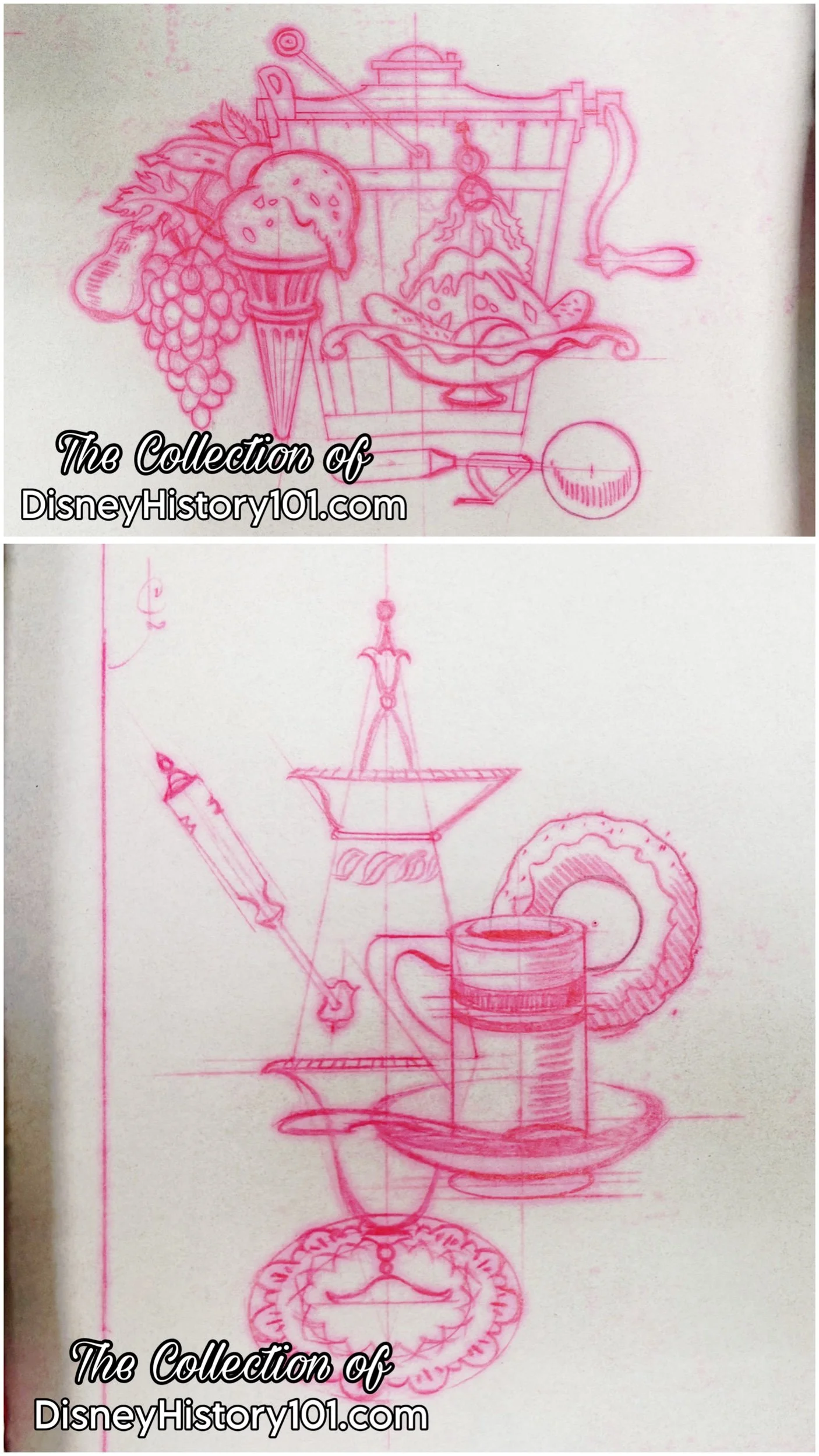
(July 18, 1965 - present)
“Walt often entertained dignitaries, heads of state, and entertainers, many whom were his personal friends. These guests would often join Walt for a meal at this restaurant... back then it was known as The Red Wagon Inn and it featured a somewhat private area for VIP guests near the back. Of course many of these VIP guests were noticed by other dining guests and the idea of a quiet dinner often became lost in an impromptu autograph session with overzealous fans. Walt realized that it would be necessary to create a VIP area for these famous guests.”
You may recall hearing how Walt Disney, on the eve of Disneyland’s first day of operation, promised that “Disneyland will never be completed. It will continue to grow, to add new things, as long as there is imagination left in the world.” By the time Swift & Company ended its sponsorship as a Disneyland Participant and the Red Wagon Inn closed its doors, Walt Disney and John Hench (of the Walt Disney Studio Story Department) were already overseeing production of a model of the new Plaza Inn. By 1964, John Hench and Emile Kuri had completed many designs of the lavash interior decor of the Plaza Inn. Emile later recalled: “Walt told me, ‘the average factory worker or truck driver can’t afford luxury for himself or his family, so I want you to make the interior really luxurious, even our prices are going to be cafeteria prices.’ Walt wanted the Plaza Inn to be absolutely the most luxurious things for the average family.” Soon the “Walt Disney Productions Annual Report to shareholders and employees” (published for the fiscal year ending October 3rd, 1964), displayed three pieces of artwork of what was described as “a new 500-seat open-sky restaurant.”
The magnificent “rococo-styled” Plaza Inn opened in place of the Red Wagon Inn, during the very same year as Disneyland’s 1965 Tencennial Celebration. “At the Grand Opening of the newly-designed Plaza Inn… Walt offered a toast to the new restaurant,’” according to Disneyland LINE (Vol. 26, No. 17). This new experience in “dining at Disneyland in the grand manor” was part of new additions that carried total Park investments to $53 million! Now, guests would “enjoy gracious dining in a beautiful Victorian setting. The Victorian theme reflects the tastes of the reign of England’s Queen Victoria (1837-1901) whose love for the gaudy and ornate developed into excessive, and often unjustified decoration. On the whole, it was a romantic style. It glorified the elements of Gothic, while combining it with overuse of turrets, bays and towers,” according to “Food Showmanship Disney Style”, published 1973.
One Disneyland LINE magazine records how Emile Kuri personally searched salvage yards and antique shops for furnishings and fixtures for New Orleans Square and some of those pieces would decorate the Plaza Inn. A 200-year-old French chandelier,… a c.1700 French fruit wood cabinet, an 1820 hand-wrought iron and marble console, and seventeen wall-mounted sconces and twenty-four basket chandeliers of Parisian bronze and Baccarat crystal were among those pieces. A lamppost found in a New Orleans courtyard by Emile Kuri was cast to create 17 seven-jet lampposts. There were 80 tables lit by a ruby-shaded lamp on a marble and bronze base with a “boy-and-dolphin” theme. According to a Disneyland News writer: “One of the most interesting is a superbly hand-carved, gilded wood wall clock and matching barometer, the work of master-craftsmen in 1840 at Ver-sailles. These pieces, in the style of Louis XV, introduce the Plaza Inn's boy-and-dolphin motif found in many of its furnishings.”
“Inside will be rich, red brocade,” according to “The Disneyland Diary.” A “generous use of mirrors” also contributed to a “most magnificent Victorian atmosphere.” According to the “Disneyland Dictionary” (compiled by WED Enterprises, Inc. and WED Public Relations Department, c. 1968), this was a “plush Victorian restaurant for buffet dining in the grand manner of moderate prices. Located near the entrance to Tomorrowland, it includes two palatial dining rooms with crystal chandeliers and velvet appointments, two flower-hung porches, and two solariums for dining. Authentic antiques have been collected from many nations to add interest to the Plaza Inn.”
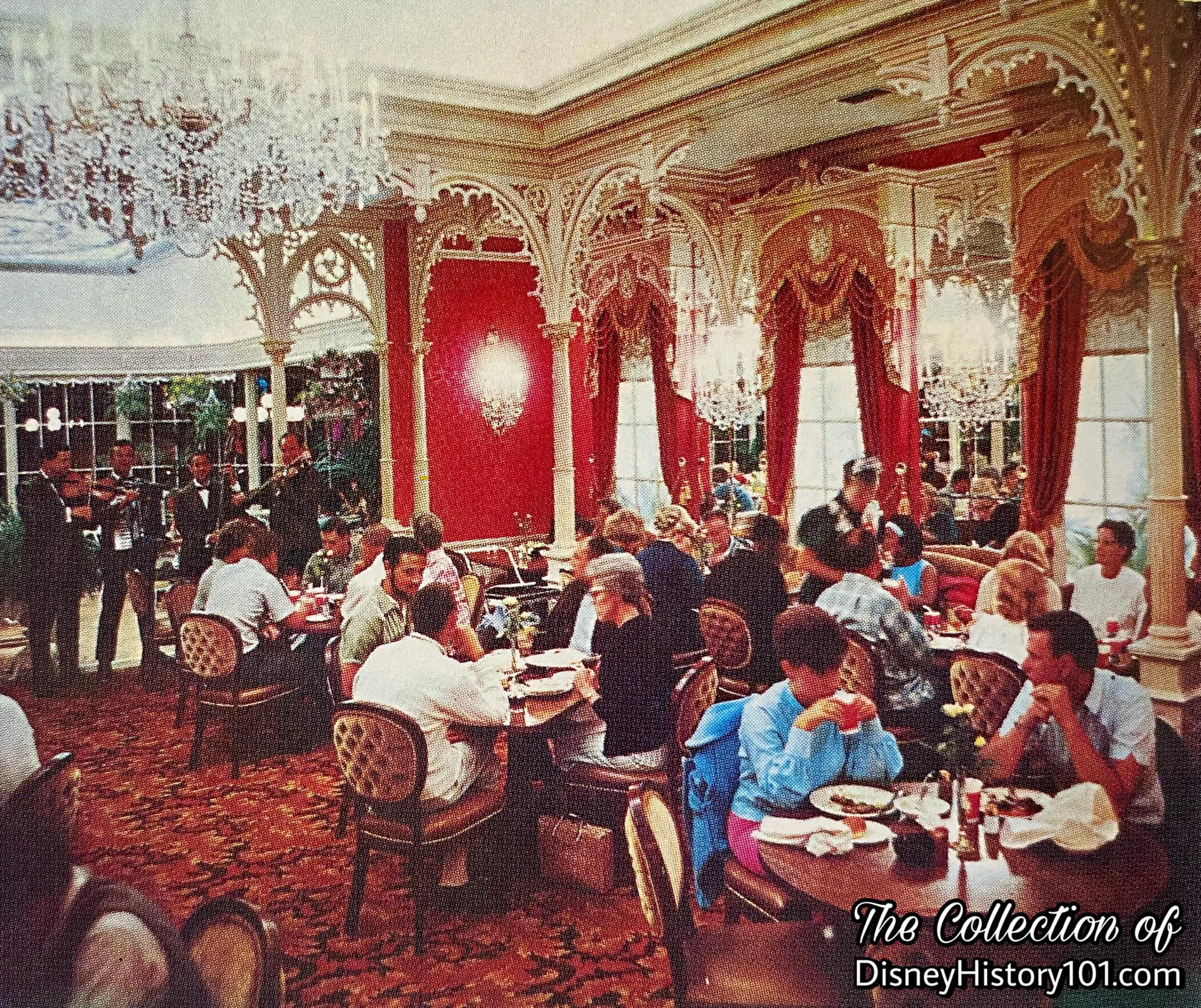
The “rich red brocade,” stained glass, delicate crystals, and Plaza Strings Orchestra set the tone for the Plaza Inn in this “Walt Disney’s Guide to Disneyland” Excerpt, (1968)
“The Grand Foyer & Dining Rooms”
With good reason, one (c. 1965, Fall) Vactionland magazine writer referred to the “antique-studded foyer and two large dining rooms.” According to “Food Showmanship Disney Style”, published 1973 : “Among the most interesting item’s in the Plaza Inn’s foyer are : a superbly hand carved, gilded wall clock and matching barometer, the work of master craftsmen in 1840 at Versailles.” Some of the chandeliers and wall sconces adorning the rooms (c.1965) were also actual antiques from European castles. “Seventeen bronze and crystal sconces adorning the walls of the dining rooms, each crowned with a rosette, utilizing the world famous Baccarat Crystal (a line of very fine crystal produced in Baccarat, France.) Twenty-four basket chandeliers, also of Baccarat crystal and bronze. Two specially designed rotisseries mounted on selected Norwegian rose-marble pedestals. Each Rotisserie features a stained-glass canopy, a pair of highly ornate coffee urns with rosette spigots, custom made for the Plaza Inn. Centered in the foyer is a 200 year old French chandelier of bronze and crystal, found in a New Orleans antique shop,” according to “Food Showmanship Disney Style,” published 1973. You may also recollect plucking fruit or desert items from one of “the antique gold, three-tiered epergne[s]” placed around the room.
By 1969, the inventory list was maintained by the Disneyland Decorating Department and was perhaps the most unique manifest of items existing anywhere. It contained about 35,000 items of various sizes, shapes, and values with 4,000 items on Main Street alone.
“The Conservatories”
Each dining room is graced by a Victorian-age Conservatory, framed by greenery and filled with birds . . . reminder of a gentle age when the glass-enclosed solarium was a popular gathering place for family and friends. All these exquisitely furnished dining areas including the solarium (especially the two “peripheral porches,” and a pair of “umbrella-shaded dining terraces” for al fresco dining) would increase the maximum guest capacity to 534.
In the evening, authentic gas lamps (cast from an original found in an old New Orleans courtyard) light the supper tables; by daylight, multi-colored umbrellas provide shade throughout the day.
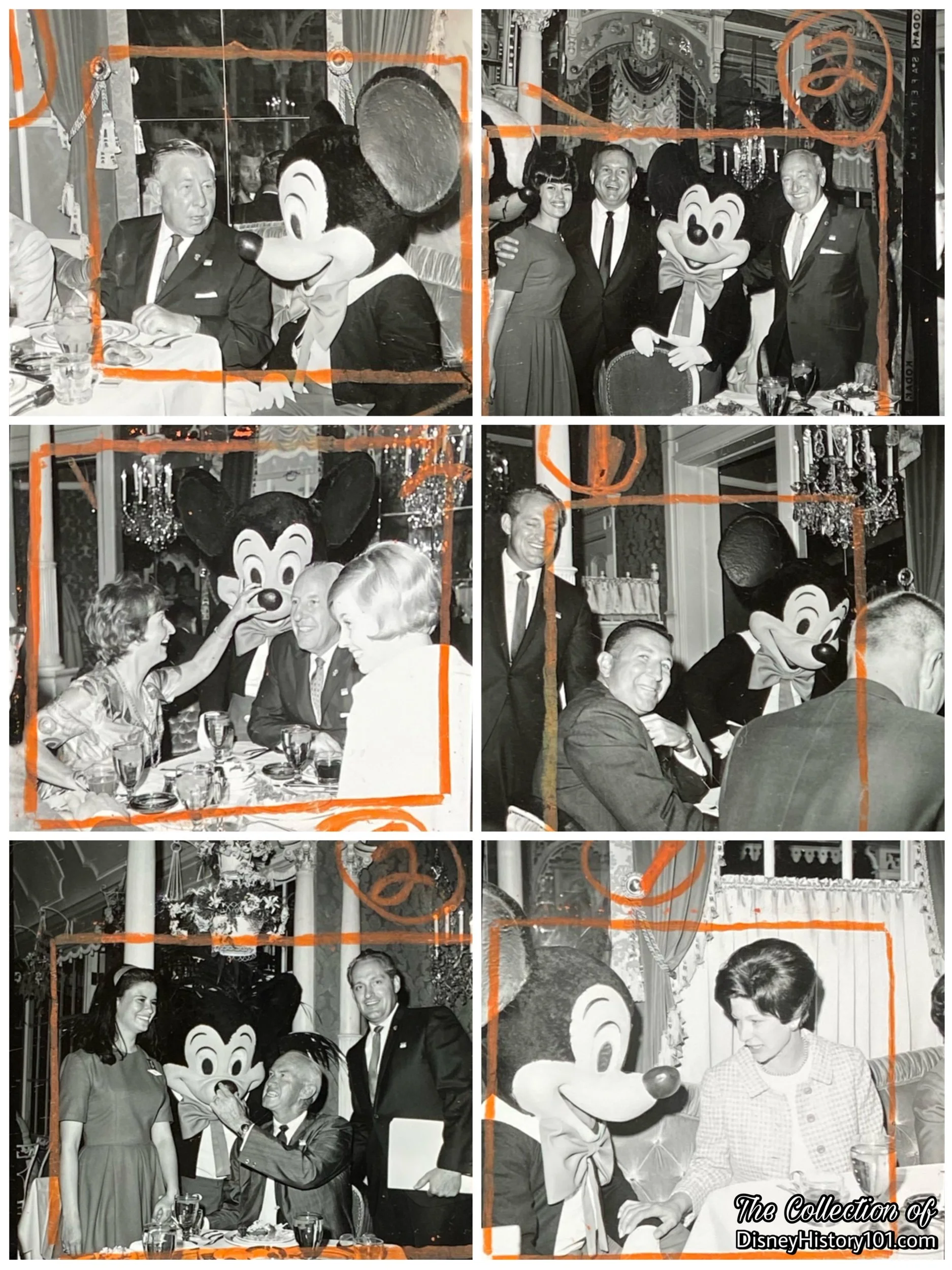
Loyd Sigmon, Executive Vice-president and General Manager of КМРС radio held an event with his staff here on May 11, 1966; photos by Jerry Shillan.
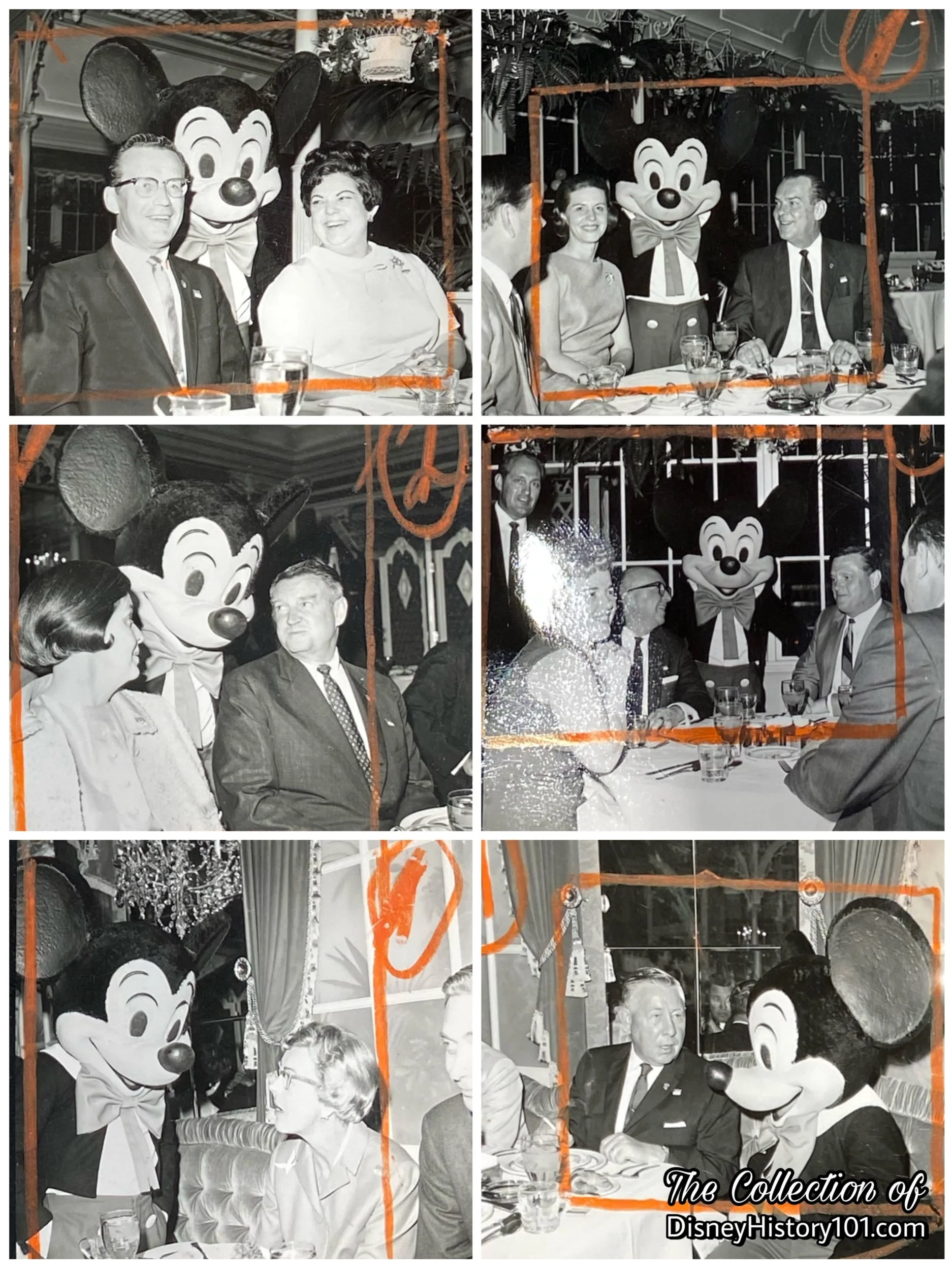
Loyd Sigmon, Executive Vice-president and General Manager of КМРС radio held an event with his staff here on May 11, 1966; photos by Jerry Shillan.
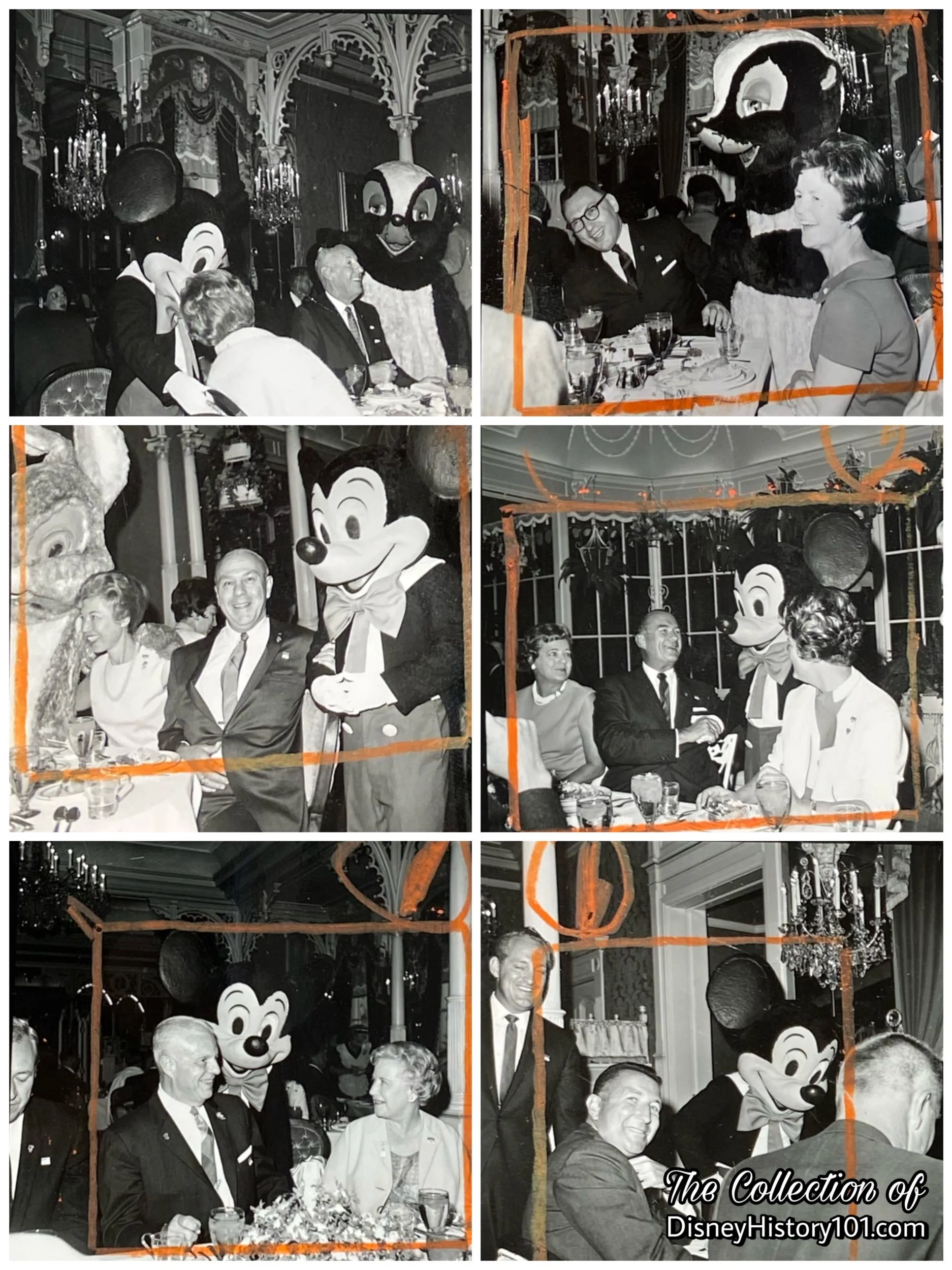
Loyd Sigmon, Executive Vice-president and General Manager of КМРС radio held an event with his staff here on May 11, 1966; photos by Jerry Shillan.
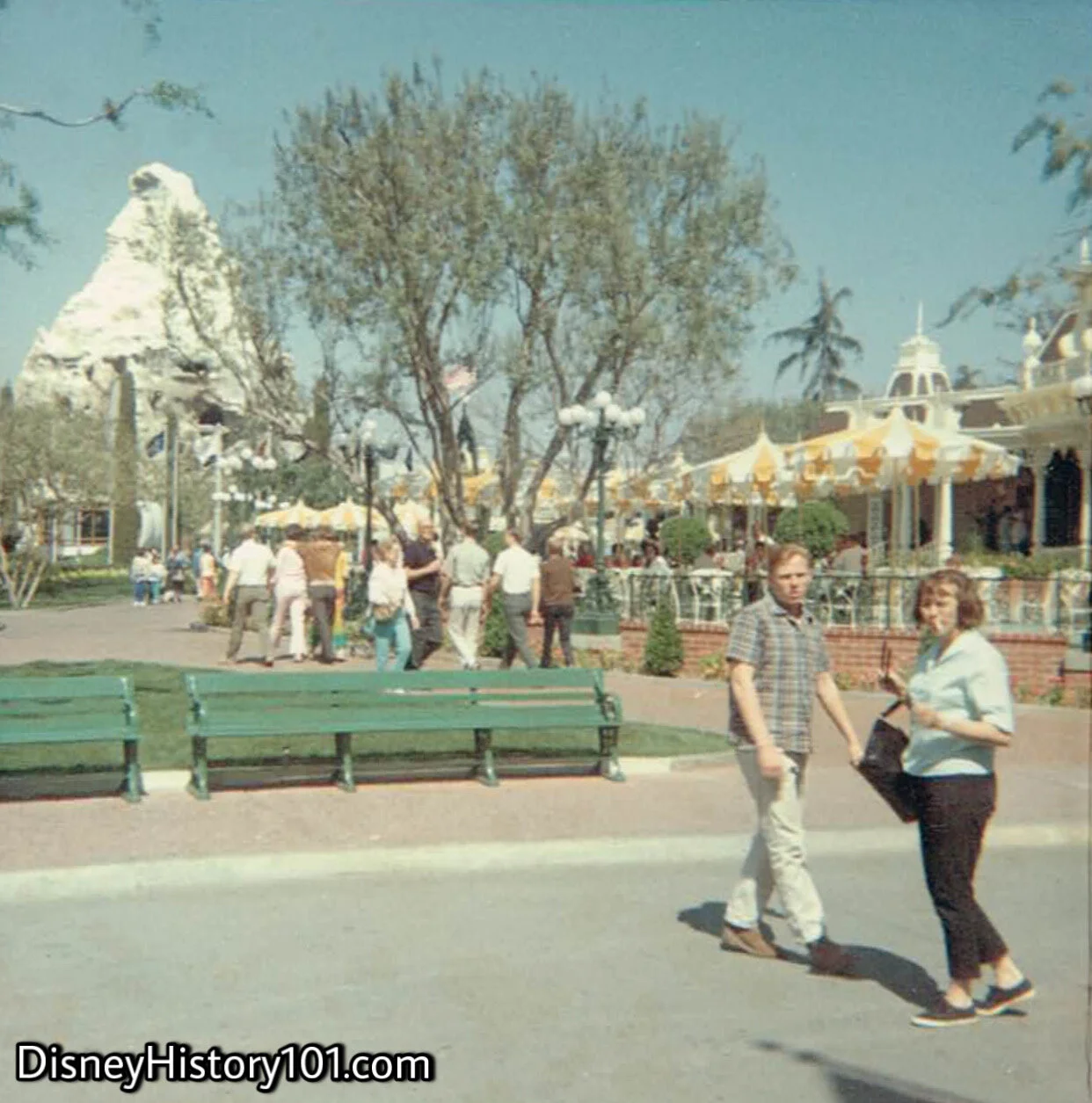
THE PLAZA INN, (March, 1966)
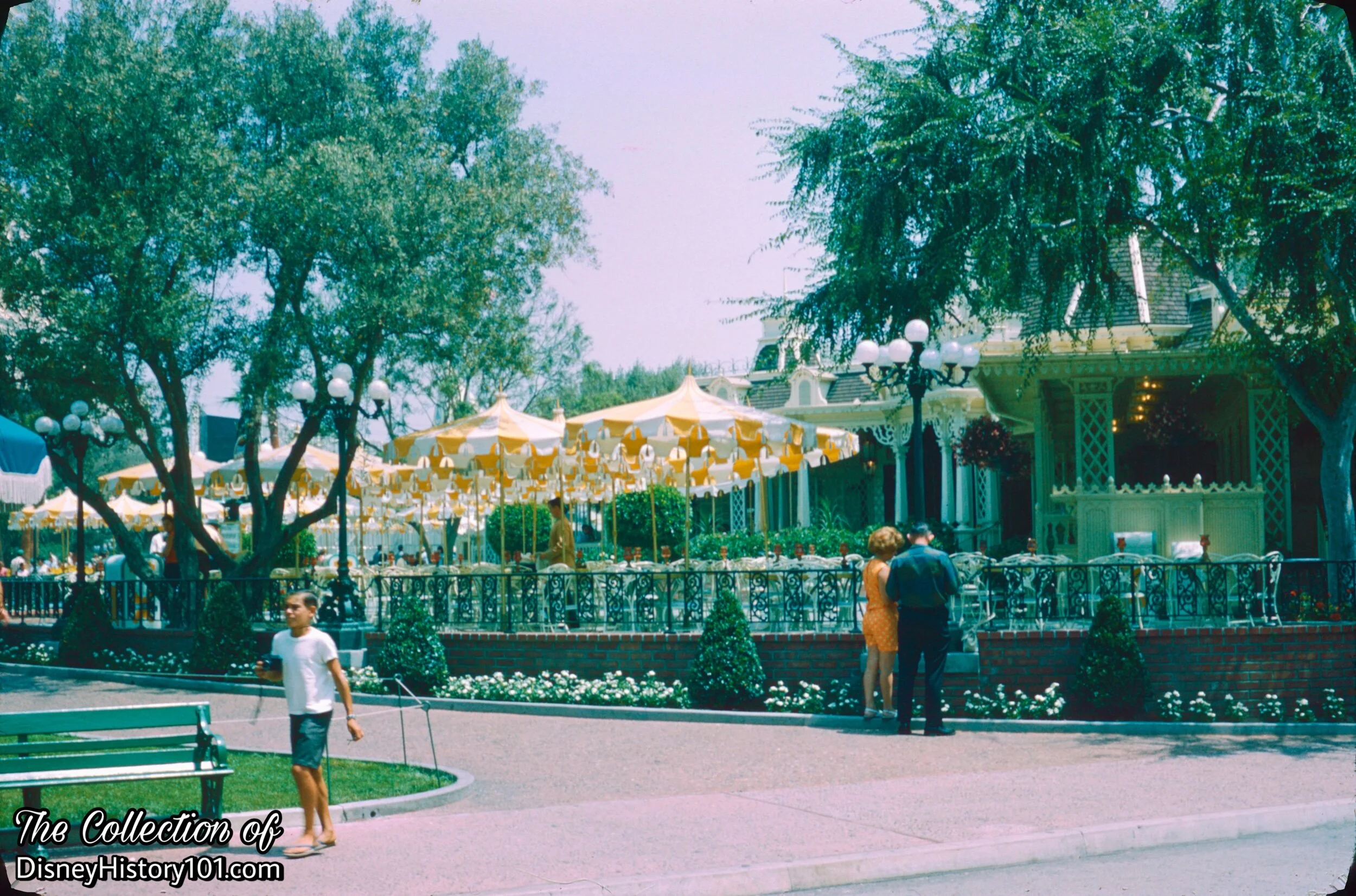
THE PLAZA INN, (August, 1967)
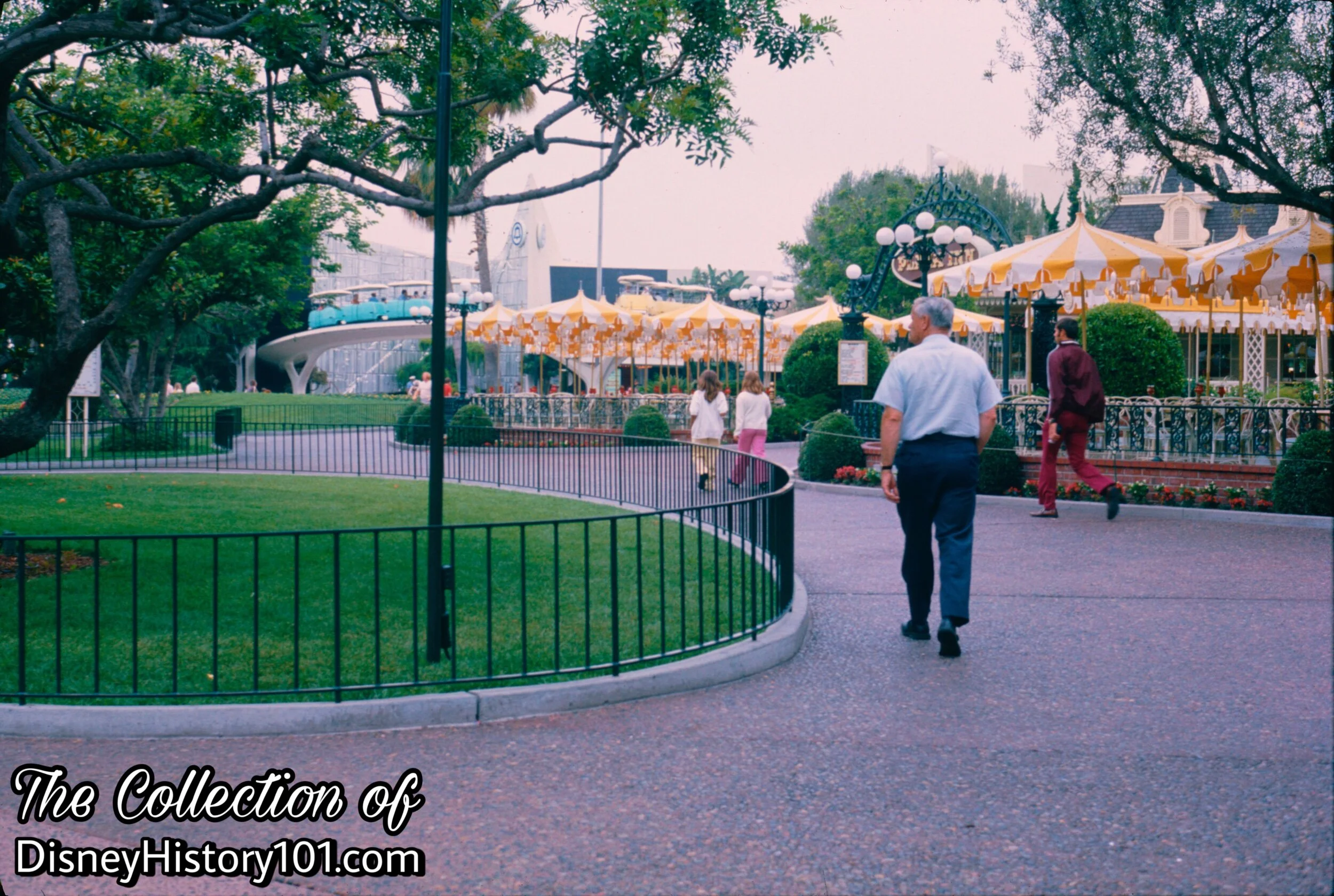
THE PLAZA INN, (c. August, 1975)
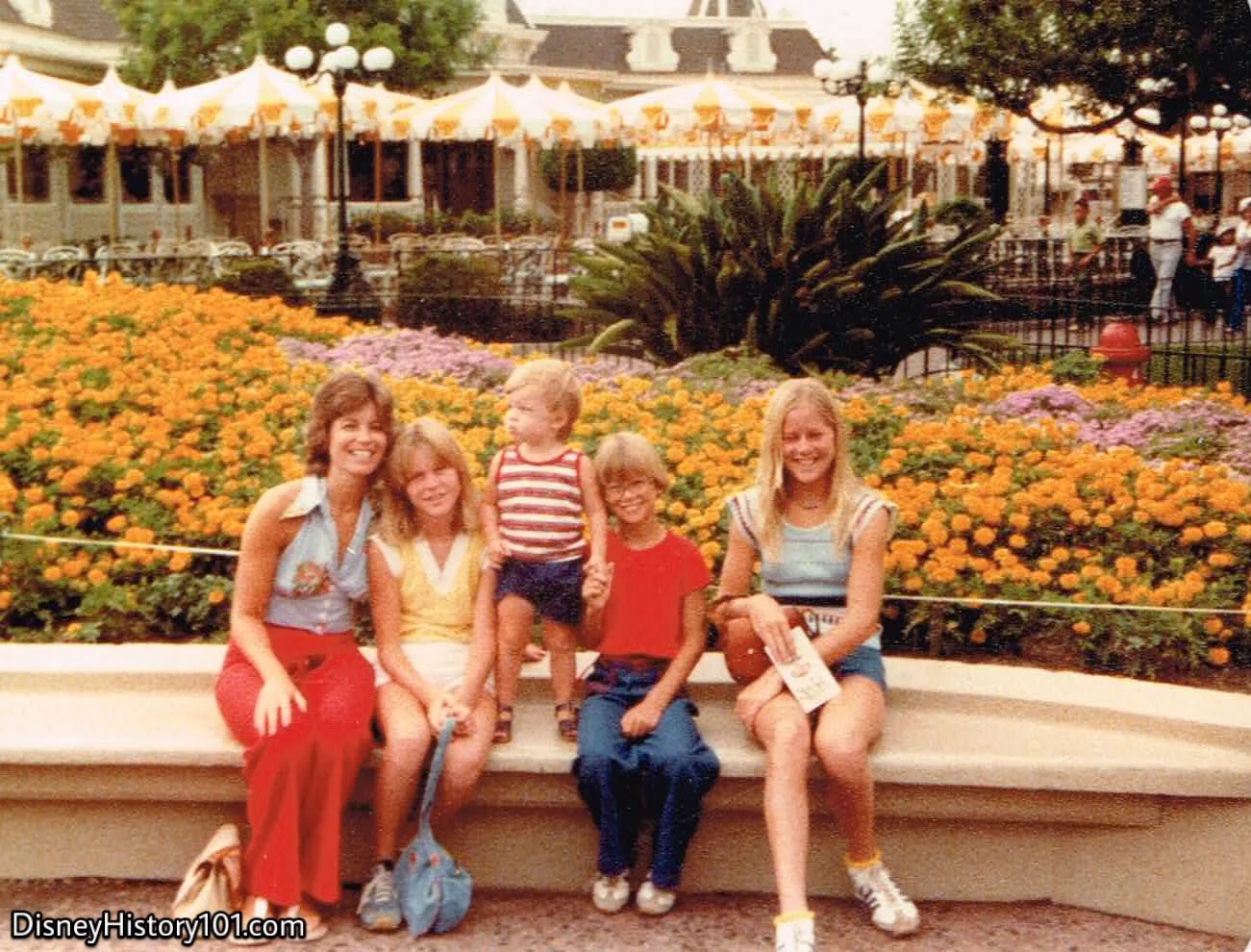
THE PLAZA INN, (May, 1979)
The park-like planters outside the Plaza Inn sure offered a picturesque setting for group photos!
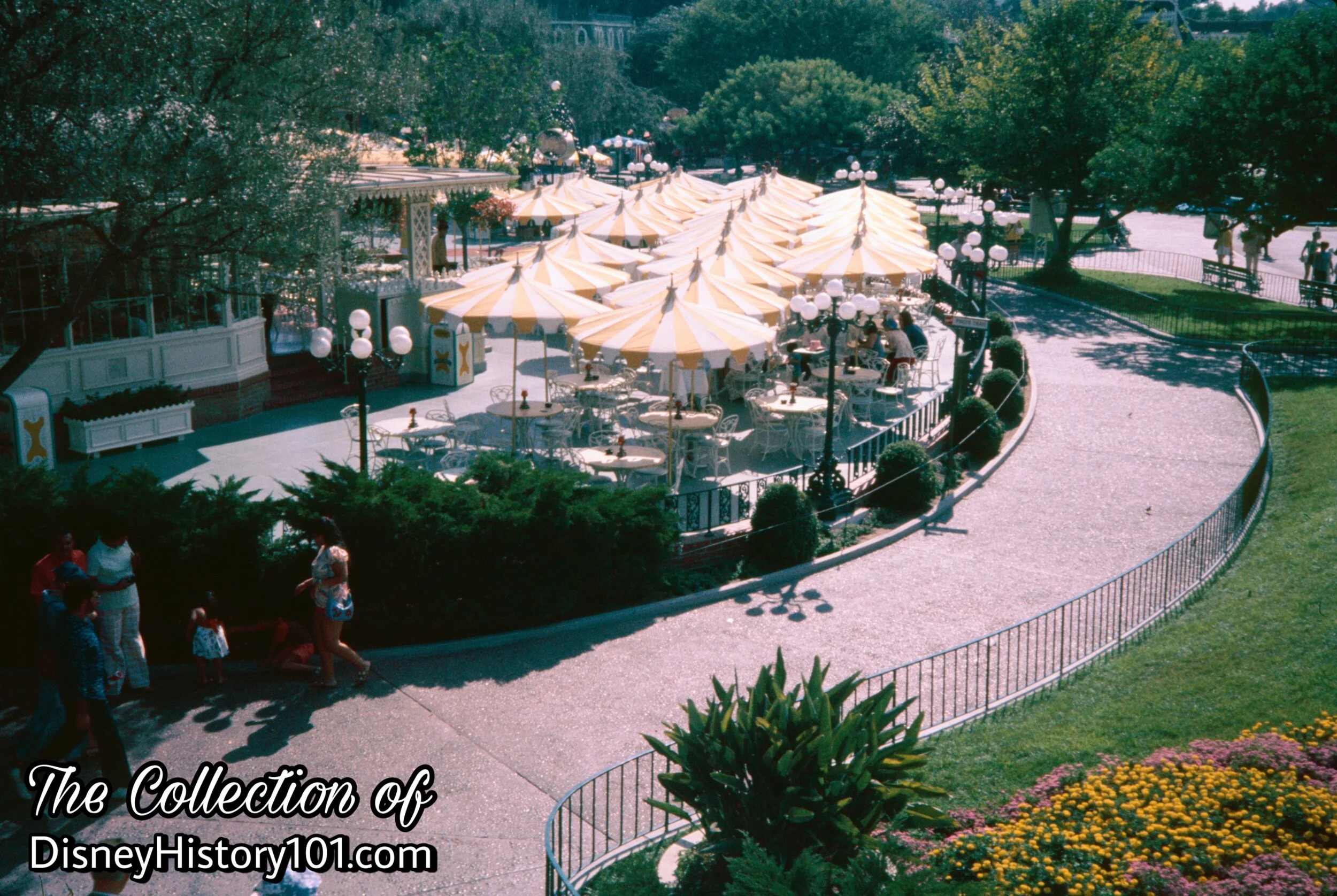
The Plaza Inn
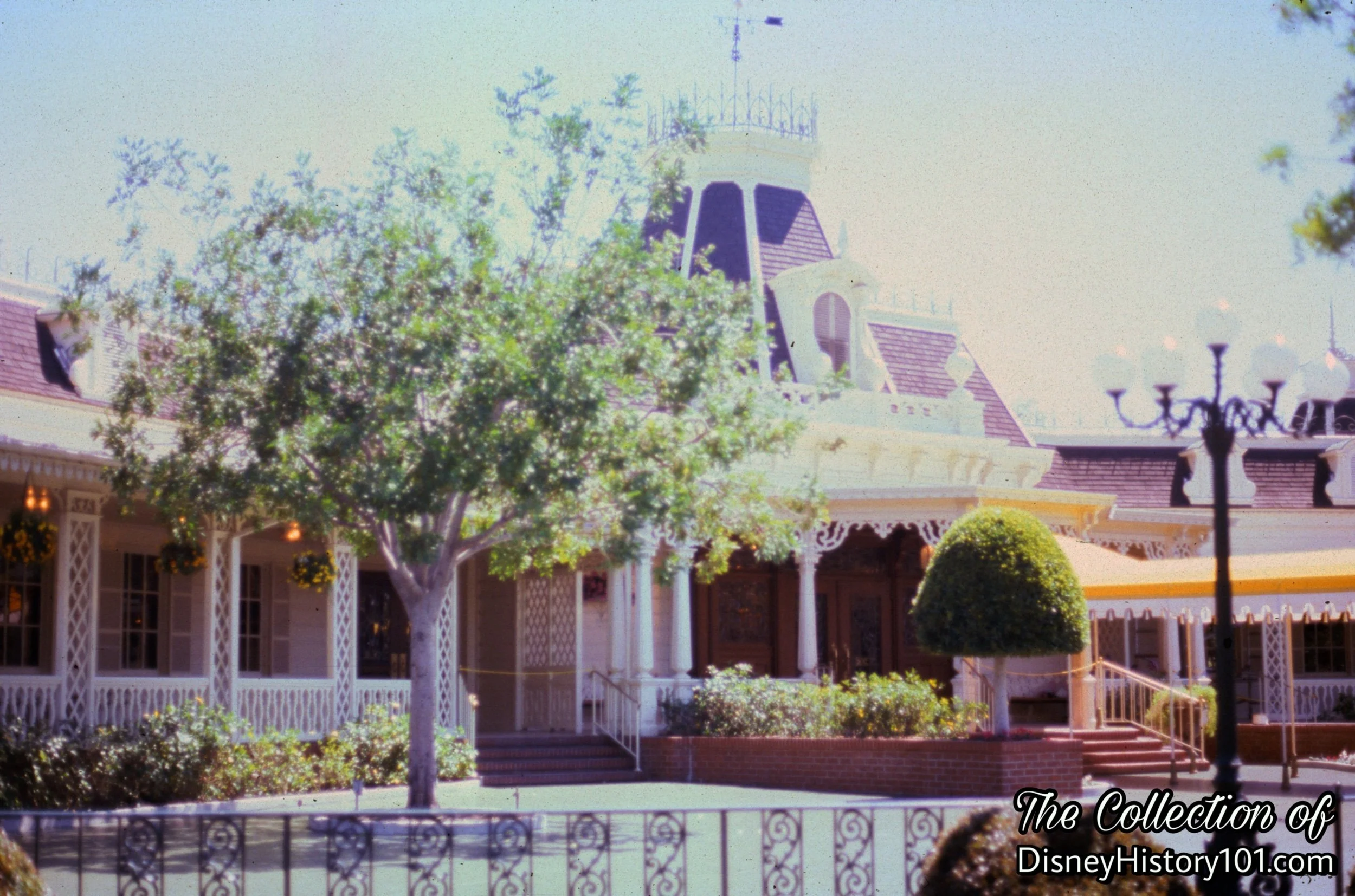
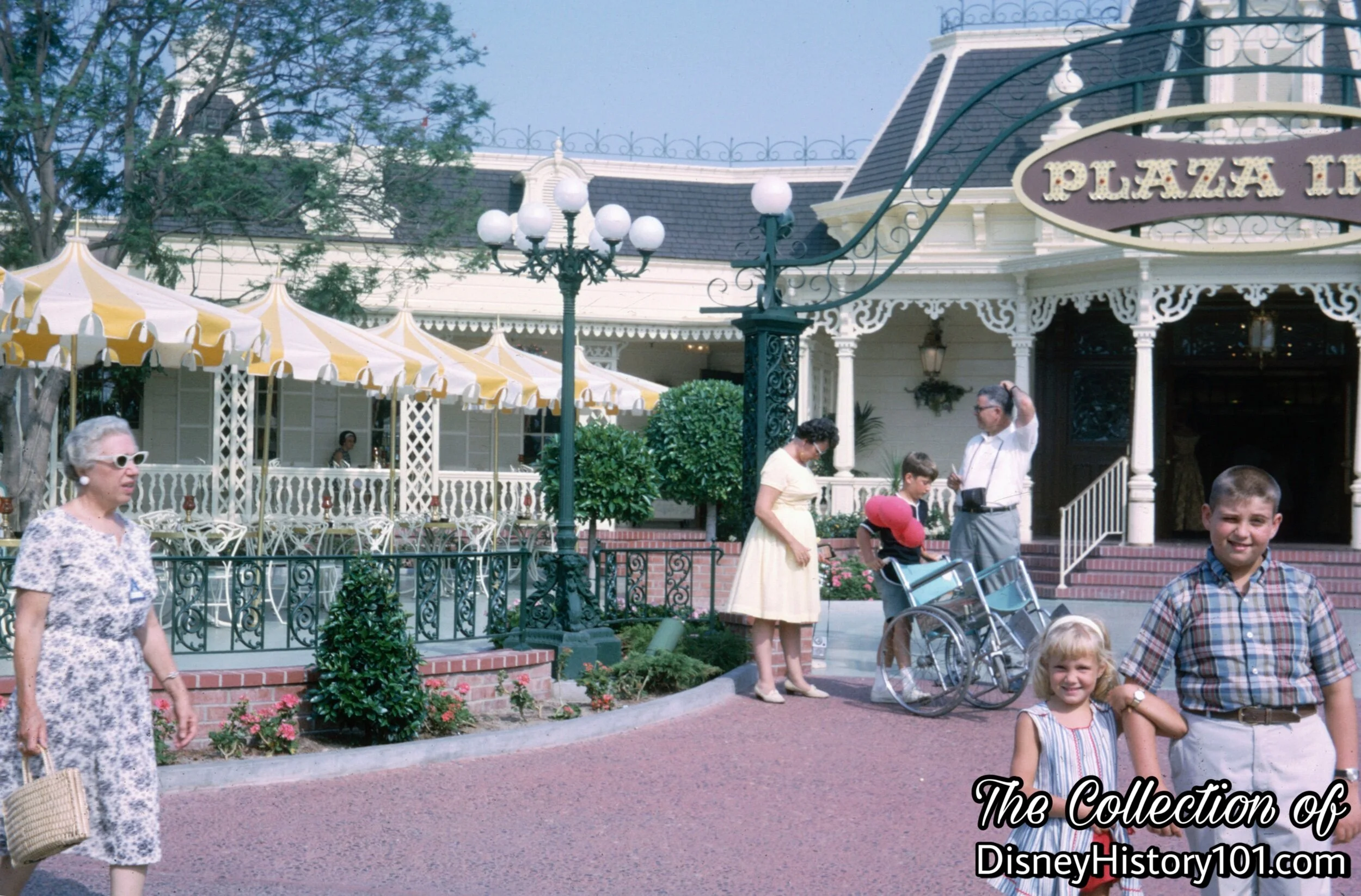
Guests Near The Plaza Inn
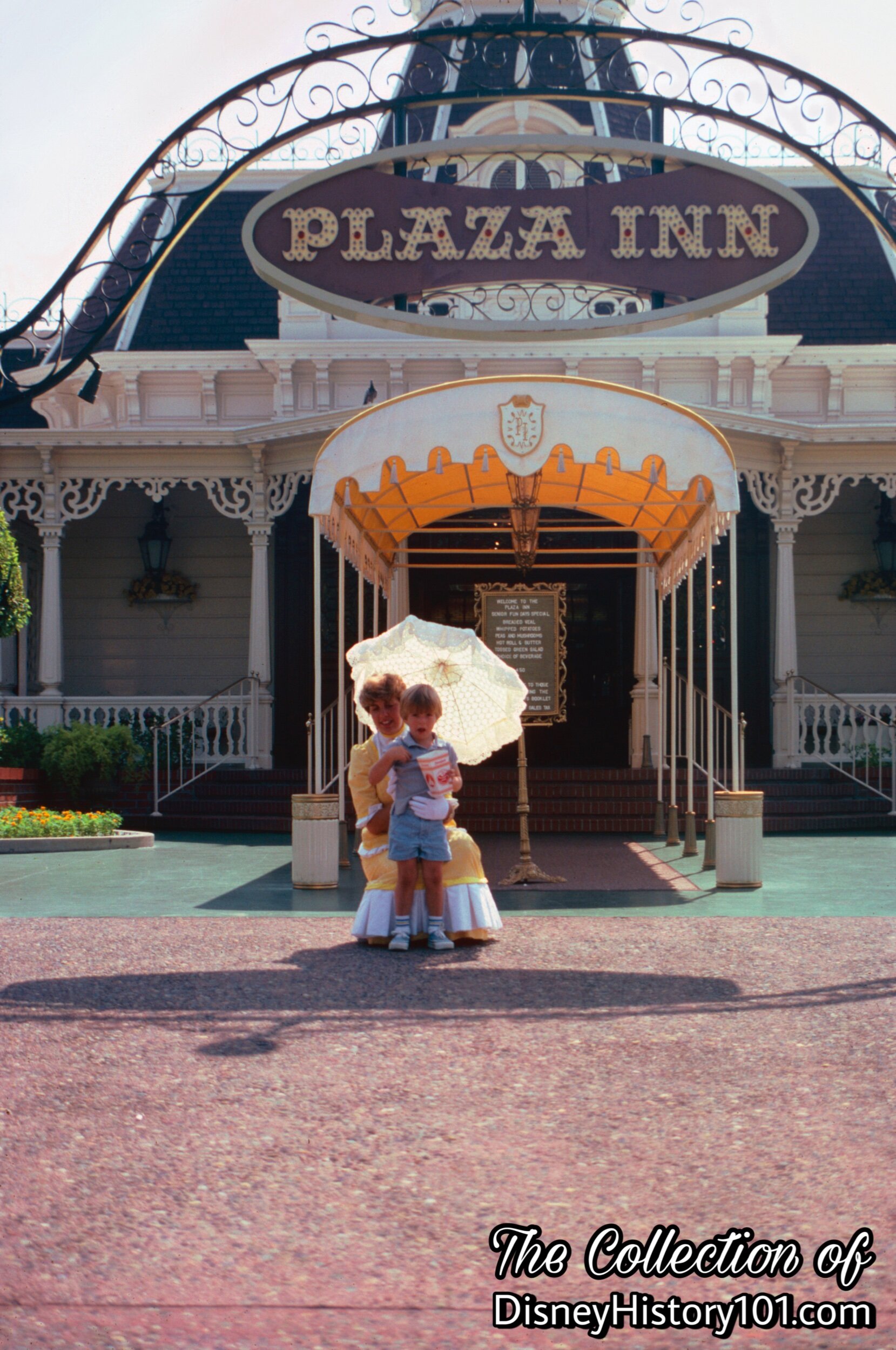
The Plaza Inn & Hostess
“Right this way, please! The Hostess will show you to your seats.” Here, a Hostess exhibits the second of The Four Keys of the Disneyland Show - Courtesy! This she effects through a smile and friendly gesture. Supporting the role of the Cast Member is a new costume dress that was designed at Disneyland and both finalized and assembled locally and in San Francisco during the summer of 1965.
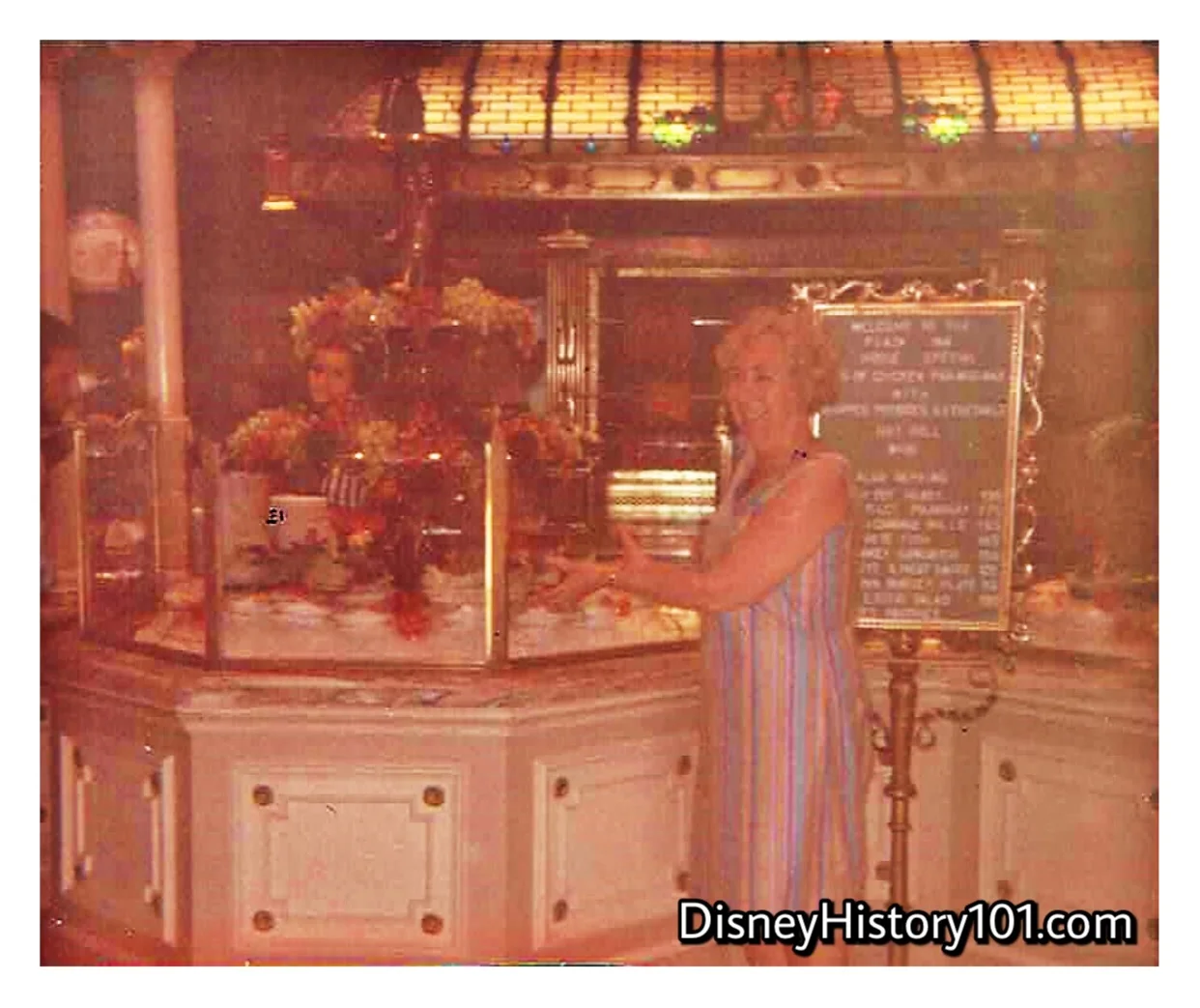
THE PLAZA INN, (1969)
Guests could choose the salads they wanted to eat at the “buffeteria” atop the two-foot diameter, three tiered servers crowned with a gold epergne that has been converted into a fountain, resting on rare Norwegian marble!
By 1981, the Plaza Inn Complex made $ 3,963,000 in revenue while the Plaza Inn itself brought in $2,971,000 for Disneyland.
There are many Backstage support areas of the Plaza Inn that Disneyland visitors may never see. For instance, the Plaza Inn Complex was home to Secretarial Offices, and even a designated Disneyland Employee dining area. The Employee Dining Area had come a long way from the “big green tent and a guy named Harley who ran the place,” (according to Jack Lindquist’s recollection to Disneyland LINE).
Now, the Plaza Inn was also home to the Inn Between Employee Cafeteria, considered part of the “Main Street U.S.A. Park Land and Food Area,” though it is located Backstage, behind the Plaza Inn Restaurant on the east side of Main Street, and only accessible to employees. This Disneyland Employee Dining facility was open daily until 2 a.m., and could satisfy the appetites of a maximum capacity of 250 employees at one time. The Inn Between (Ext. 596) was open seven days a week year-round. The Inn Between, was located in the Backstage portion of the Plaza Inn, and offered a variety of sandwich and entree items at reasonable prices. Breakfast was served for employees beginning at 2:45 am every morning. During the normal winter Park operating hours and on Monday and Tuesday when the Park was closed, the Inn Between closed at 7:30 pm. Whenever Park hours were extended, such as in summer, the Inn Between closed a half hour before the Park closed. Employees could special order cakes from the Inn Between Bakery.
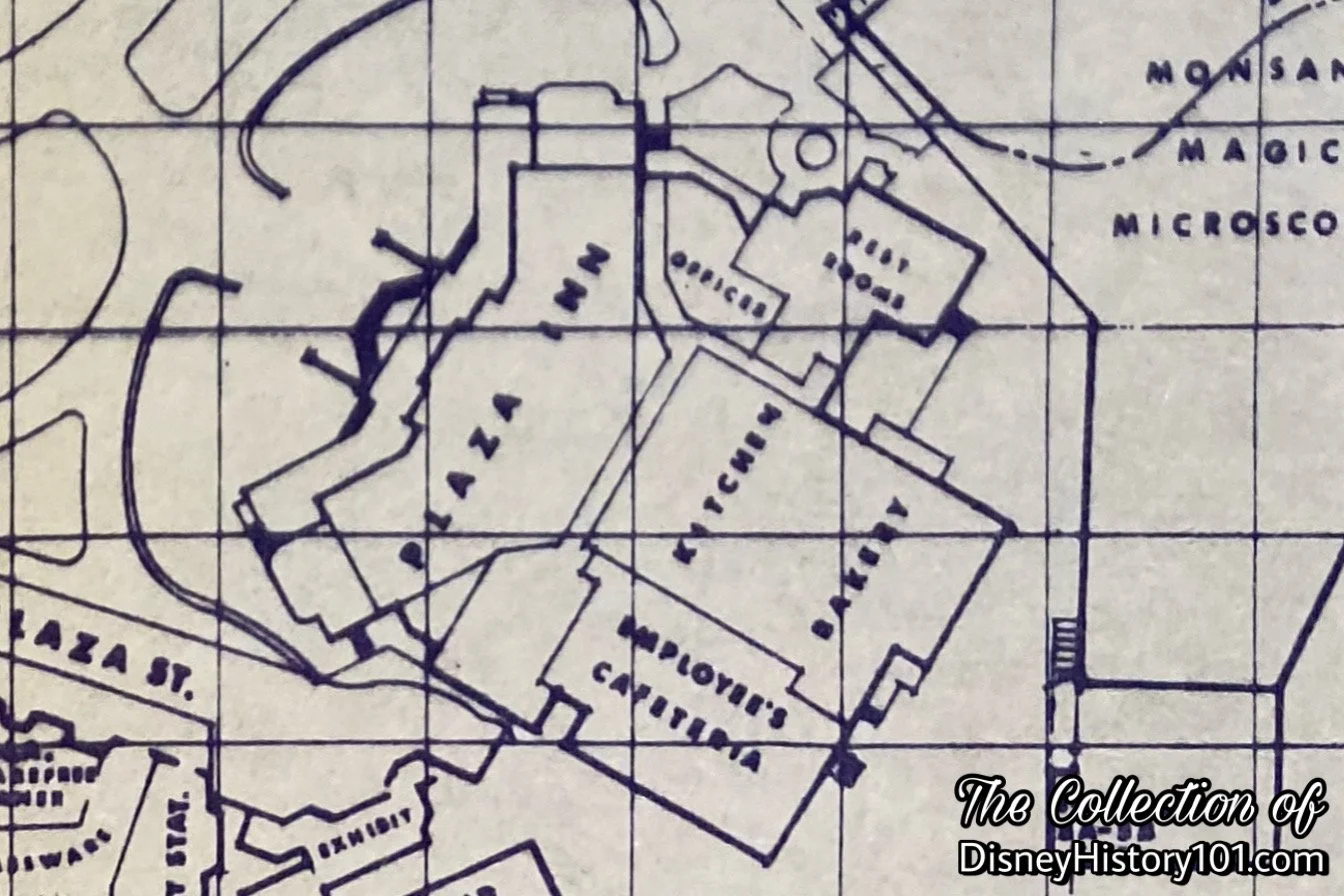
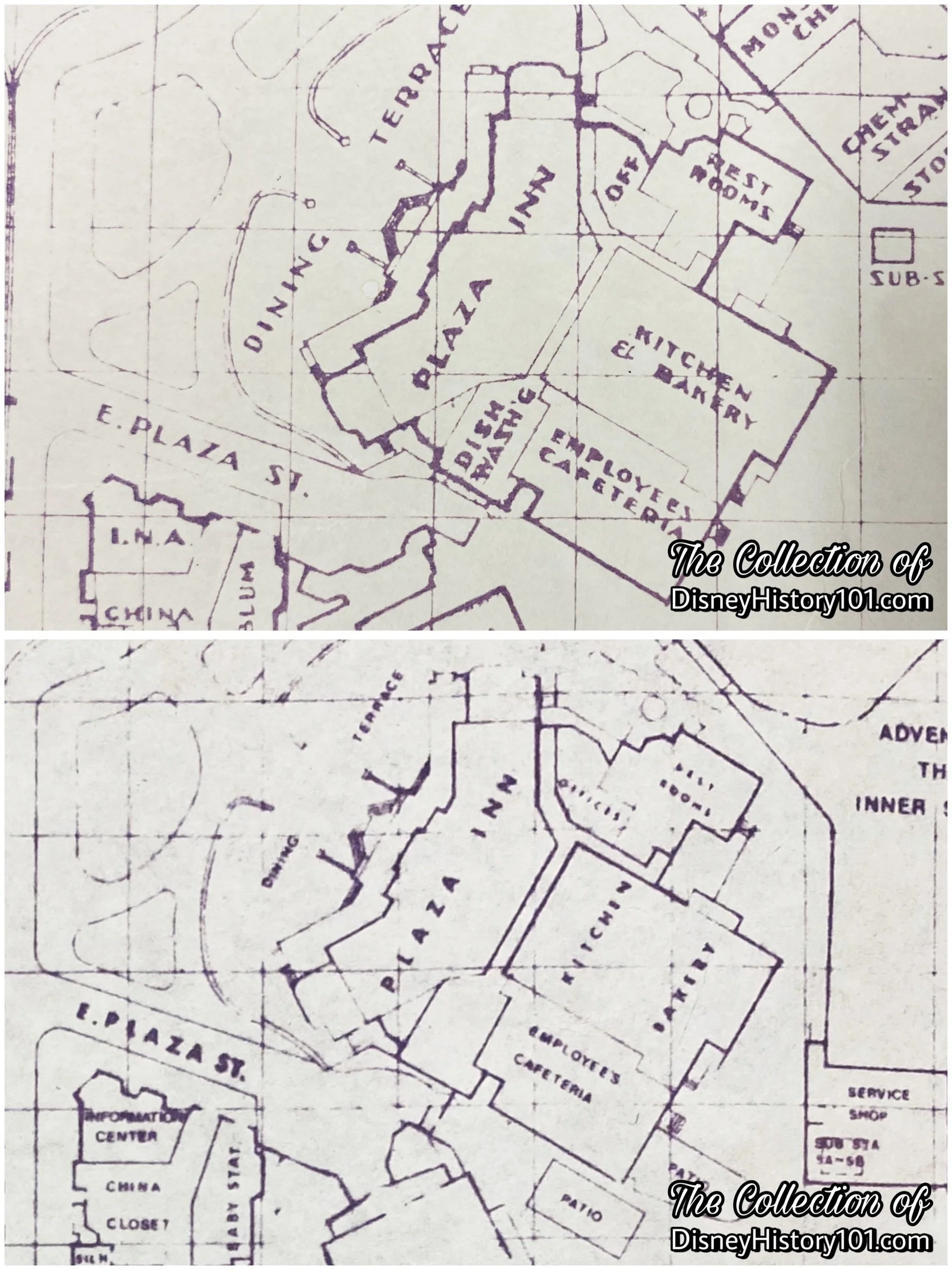
Employee Cafeteria on a c.1966 Disneyland Plot Plan.
While “taking five” and dining on those Interpace pattered Shenango China plates and bowls, you may recall looking at DRC trophies exhibited behind glass, or catching up on DRC event scores posted on the bulletin board. What was the entertainment like at the Inn Between? Though there was a television set, it was only ever used for watching “sporting events or special programming,” according to Disneyland LINE magazine (November 22, 1979).
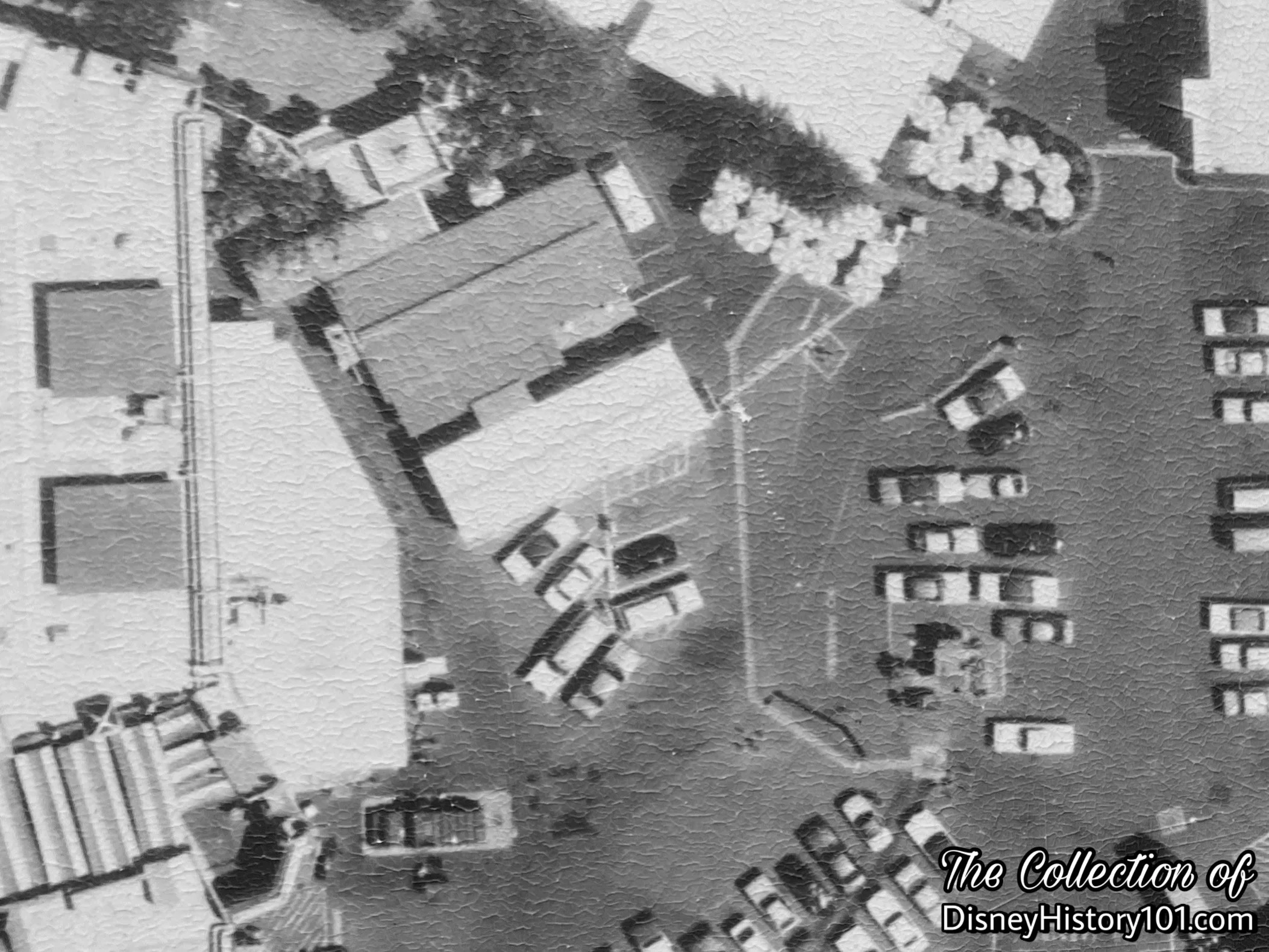
An aerial Vintage View of Backstage reveals the Inn Between.
The Inn Between (along with the Plaza Inn, Central Kitchen, and Plaza Terrace) was overseen by a Stage Area Supervisor and up to three other Stage Supervisors, and a varying amount of Hosts and Hostesses (e.g. in 1981, there were 519 Hosts and Hostesses in the summer and 355 in the fall). During the late 1960s, its cashiers, waiters, waitresses, dish-up staff, and fountain staff were managed by Max Sloan. Former Food Service Division Employee Don Payne (who worked during this era) shared this Vintage View with Disney History 101. He recollects : “Just before I began my adventure in the Entertainment Division, I was spending my time as a fry cook at the Inn Between (Employee’s Cafeteria).” Others however, stuck around in the Inn Between.
The Disneyland LINE occasionally reminded Disneylanders to return any borrowed utensils or trays that may have been removed from The Inn Between. [May 2, 1969; Vol. 1, No.5]
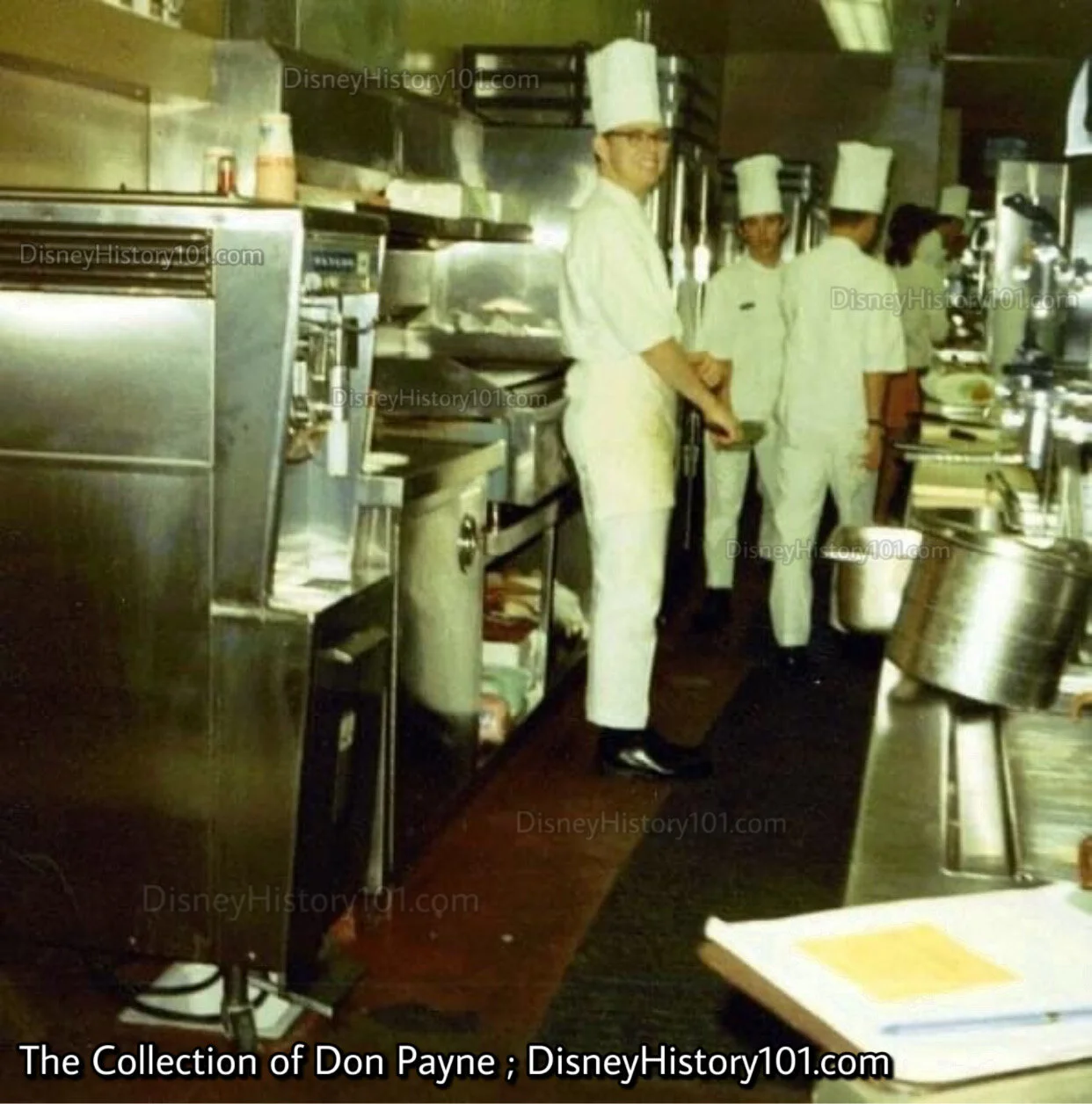
THE PLAZA "INN BETWEEN", (1969)
In 1972, another employee - Dave Heineck (who enrolled in the Military Cooks and Bakers School, out of high school) - applied for Disneyland Security. However, he was persuaded to fill a cook position opening at the Inn Between, and subsequently stayed in this position for many years!
This was the main employee cafeteria until the Disneyland Employee Cafeteria (often referred to as the DEC) opened as“part of the New Orleans Square underground facility, in order to provide food services to employees that worked on the other side of the park,” according to Disneyland LINE (published June 17, 1976). When the Inn Between would close for its annual rehab, the DEC would assume its operating hours, and (during the 1980s) a catering truck would occasionally appear behind the Main Street Break Area. If you were a Cast Member around 1980, you may recall seeing Mickey Aronson (Disneyland’s Chief Pyrotechnician “extraordinaire”) routinely eating dinner at the Inn Between before automatically checking the Town Square flag for wind direction.
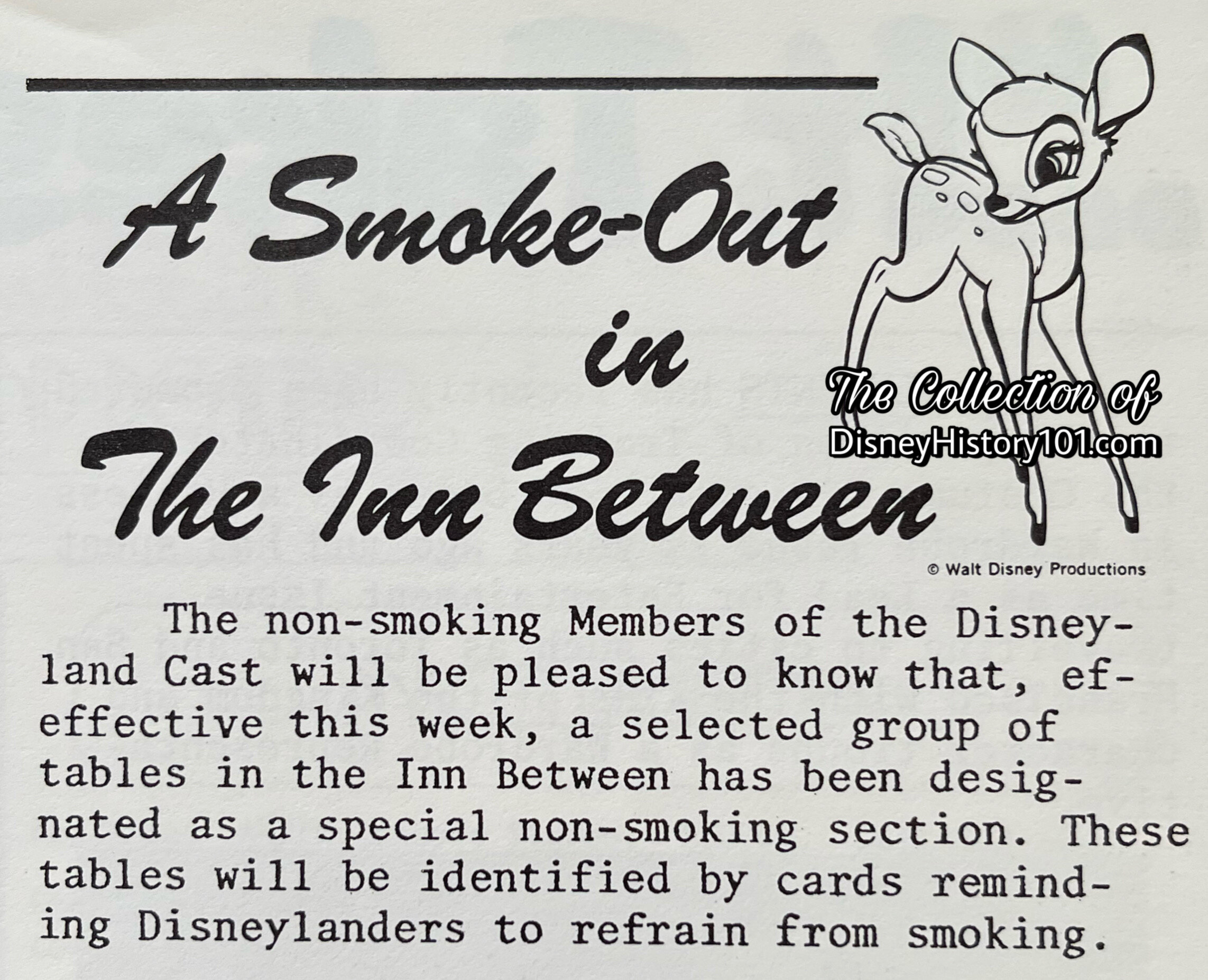
Disneyland LINE Excerpt, (published March 1, 1979)
D.R.C. Clubs occasionally made use of the Plaza Inn and Inn Between, as when the Disneyland Christian Fellowship Club held a special Christmas Breakfast at the Inn Between (at 7a.m., on Wednesday, December 19, 1979), and ate in a special reserved section of the Plaza Inn Solarium. That same year (1979), “in consideration of the holidays,” the Inn Between hours of operation were adjusted - on December 24th (2:45 a.m. - 6:30 p.m.) and 25th (2:45a.m. - 6:30 p.m.). [Disneyland Line, December 13th, 1979]
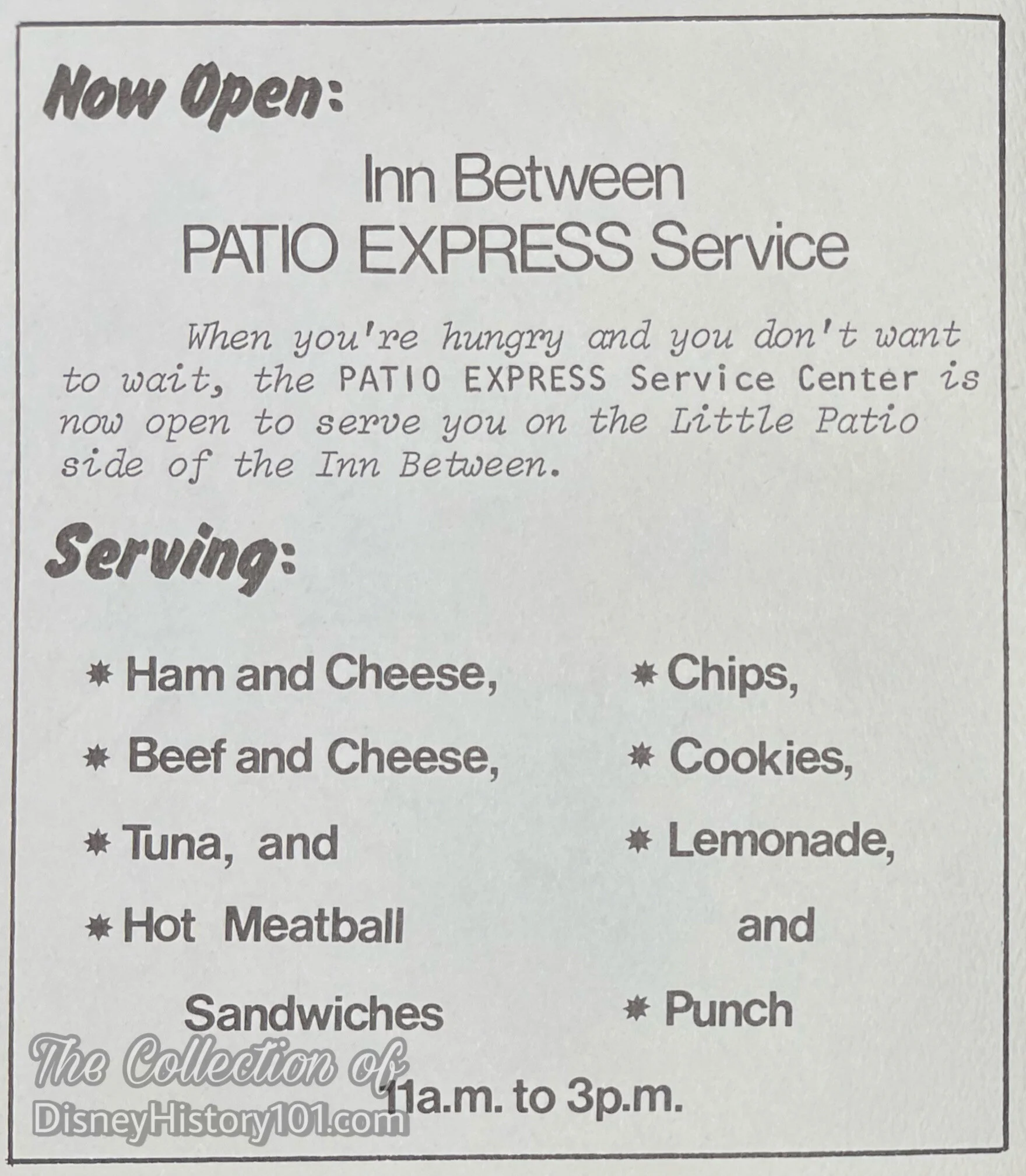
Disneyland LINE Magazine (Vol. 12, No. 27 ; July 3rd, 1980) Excerpt
The new Inn Between Patio Express Service Center allowed Disneyland Cast Members to eat “on the go.”
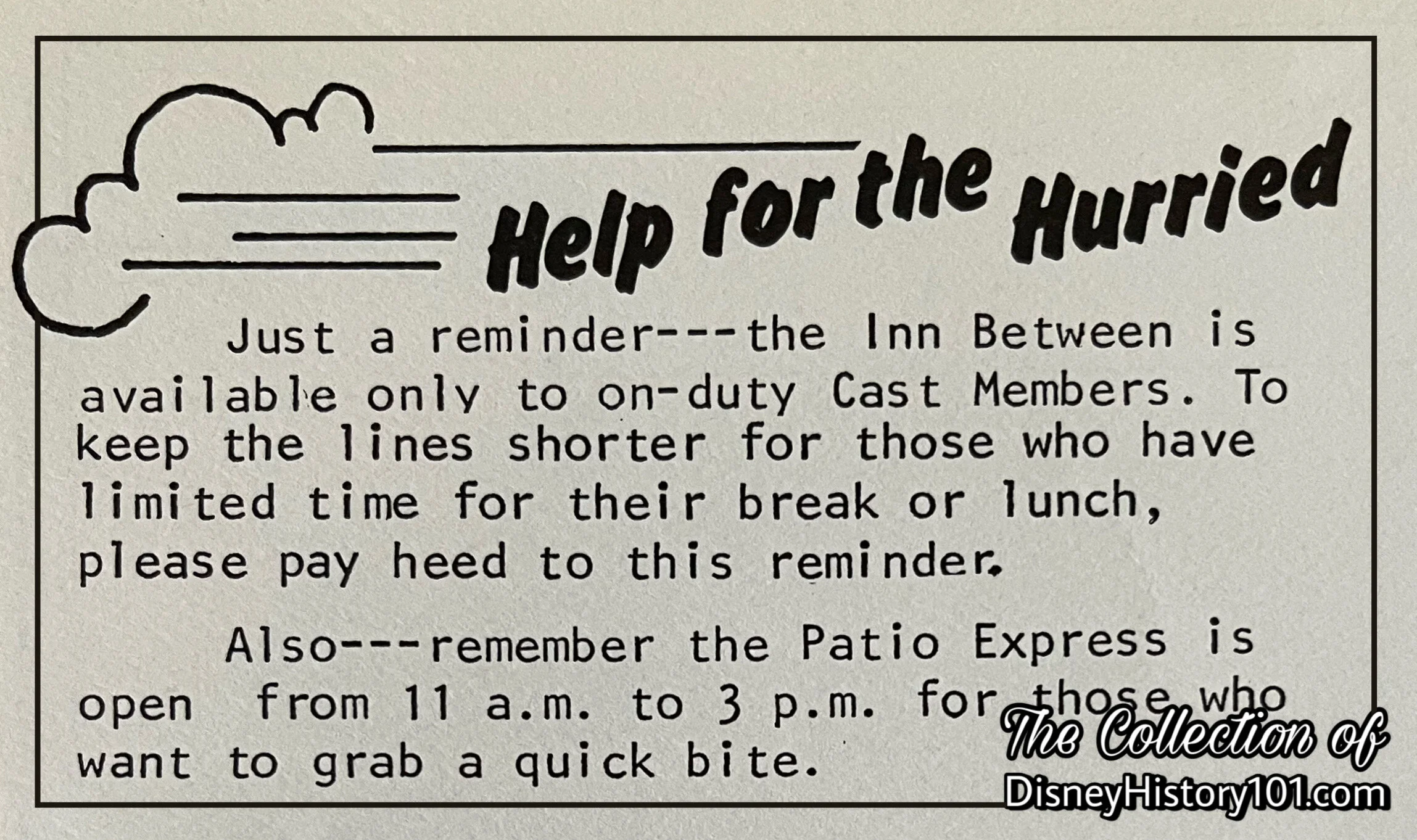
Disneyland LINE Magazine (Vol.12, No.33 ; August 14, 1980) Excerpt
During the 1980’s, when the Inn Between was closed (e.g. for rehabilitation), Disneyland Cast Members could likely still rely on the availability of the D.E.C. or the Village Haus Cast Member Window. Still, there was nothing comparable to dining at the historic Inn Between! In 1981, the Inn Between brought in $807,000 in revenue to Disneyland.
On Thursday, January 8, 1987, the Inn Between was open until 10:00 p.m. It was also open until 10:00 p.m. during the Star Tours Cast Premieres on January 12-16, 1987.
Occasionally the Plaza Inn and its menu was transformed for events as for Cinco de Mayo of 1989.
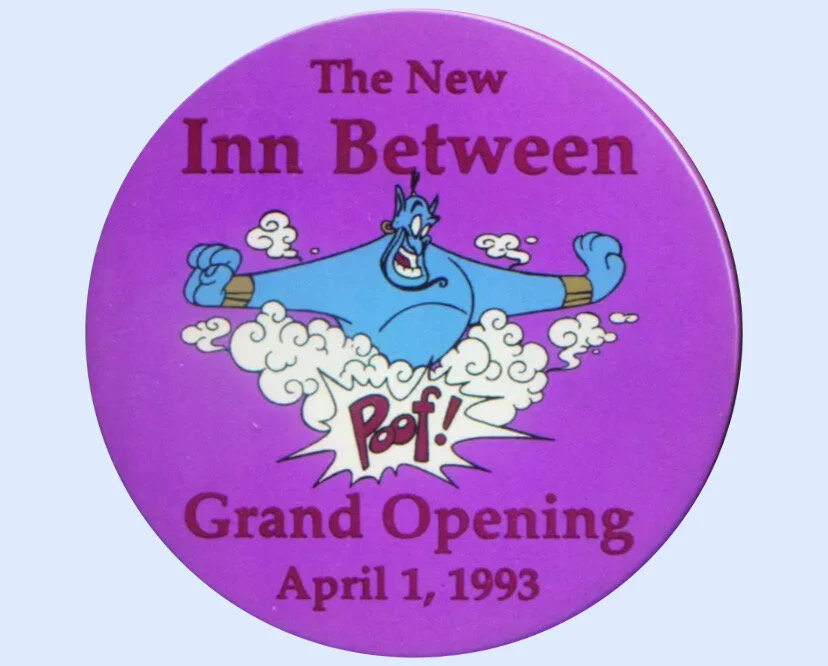
The New Inn Between Grand Opening Button, April 1, 1993
During the early 1990s, the Inn Between would receive a major remodel, resulting in the opening of the All-New Inn Between on April 1, 1993! The Inn Between would close 1 hour prior to park closing.
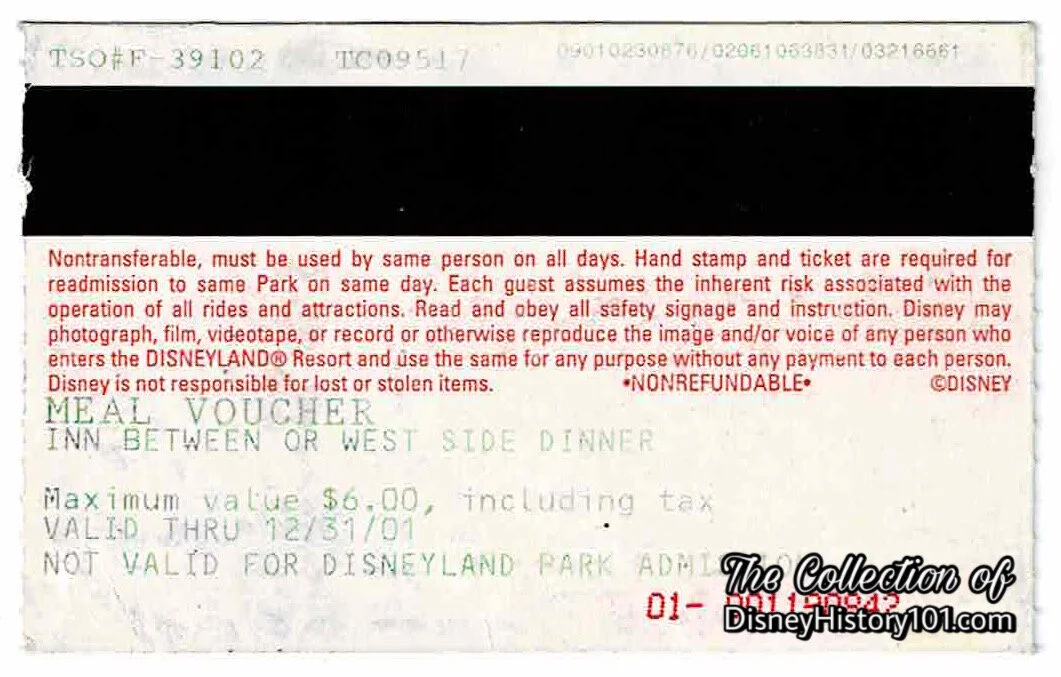
Inn Between Meal Voucher (an “Eat Ticket” of sorts).
By 2008, the Inn Between was still located behind Star Traders toward Main Street; a Break Area, a Cast Member Dining Location, with nearby Backstage Cast Member Restrooms and a Cast Member Smoking Area in The Inn Between lower patio.
Today, Cast Members can dine at many Backstage Areas. StarDinerz were Cast Commissary Locations like Eat Ticket (a Cast Member cafeteria located adjacent to the Team Disney Anaheim/TDA building), Westside Diner, Inn Between, DCA Café, Bungalow Grill, DRC Cafe).
“Plaza Inn Strings”
As for entertainment, some of the earliest talent to appear came in the form of the Plaza Inn Strings. The “Plaza Inn Strings” were described as a “fine string group” that would “stroll from table to table through the dining rooms, solarium, and patios.” As to the frequency of their performances, during the winter of 1967, the Plaza Inn Strings performed seven times daily (from approximately 11:00am to 8:00pm), from December 16th, 1967 thru January 1st, 1968. [“Disneyland Holiday Talent Master Schedule,” prepared for the period of December 16, 1967 through January 1, 1968] By November 26, 1972 through May 26, 1973, the Plaza Inn Strings performed 12:00 N - 7:00 PM, one day (Sun., Nov. 26, ONLY).
String groups were common during this era, as another contemporaneous group known as the Blue Bayou Strings Orchestra performed daily on the Blue Bayou Stage, and featured songs of the south and medleys of Broadway Show Tunes.
“Disneyland Christmas Carolers”
During concurrent winter seasons, the Disneyland Christmas Carolers (under the direction of Dr. Charles C. Hirt and lead by Mr. Robert G. Hasty), performed short concerts at the Plaza Inn at least once a day, from December 16th, 1967 thru January 1st, 1968. During the winter holiday season, the “Disneyland Christmas Carolers, dressed in the style of Charles Dickens” entertained “guests of the Park with traditional Christmas carols and holiday music.” These were under the direction of Dr. Charles C. Hirt and lead by Mr. Robert G. Hasty. As to the frequency of their performances at the Plaza Inn Restaurant during the winter of 1967, they appeared at various times during the day, from December 16th, 1967 thru January 1st, 1968. [“Disneyland Holiday Talent Master Schedule,” prepared for the period of December 16, 1967 through January 1, 1968]
“Plaza Inn Accordionist“
The Plaza Inn Accordionist also provided melodies to accompany the Plaza Inn dining experience. By November 26, 1972 through May 26, 1973, the Plaza Inn Accordionist performed Wed., Sat. & Sun, from 11:30 AM - 5:30 PM.
“Private Parties & Special Events”
The Plaza Inn also continued to host special events. There were Private Parties (e.g. the 11th Annual Lockheed Family Night at Disneyland November of 1975, or the GM and Hughes Employees, January of 1986), or meetings of the Golden Ears Retirement Club (during the 1990s). You may recall attending one of these meetings featuring guest speakers (“household names” like the Legendary Milt Albright, or Jack Lindquist). The Golden Ears Retirement Club even held their seasonal Christmas meetings at the Plaza Inn.
During special events, special cuisine was offered, like the Veal Cutlet Pojarsky served during the 11th Annual Lockheed Family Night at Disneyland (of 1975).
The Plaza Inn was also utilized as a Media Center (as during the Press Event for the opening of Tomorrowland from May 20 to 22, 1998).
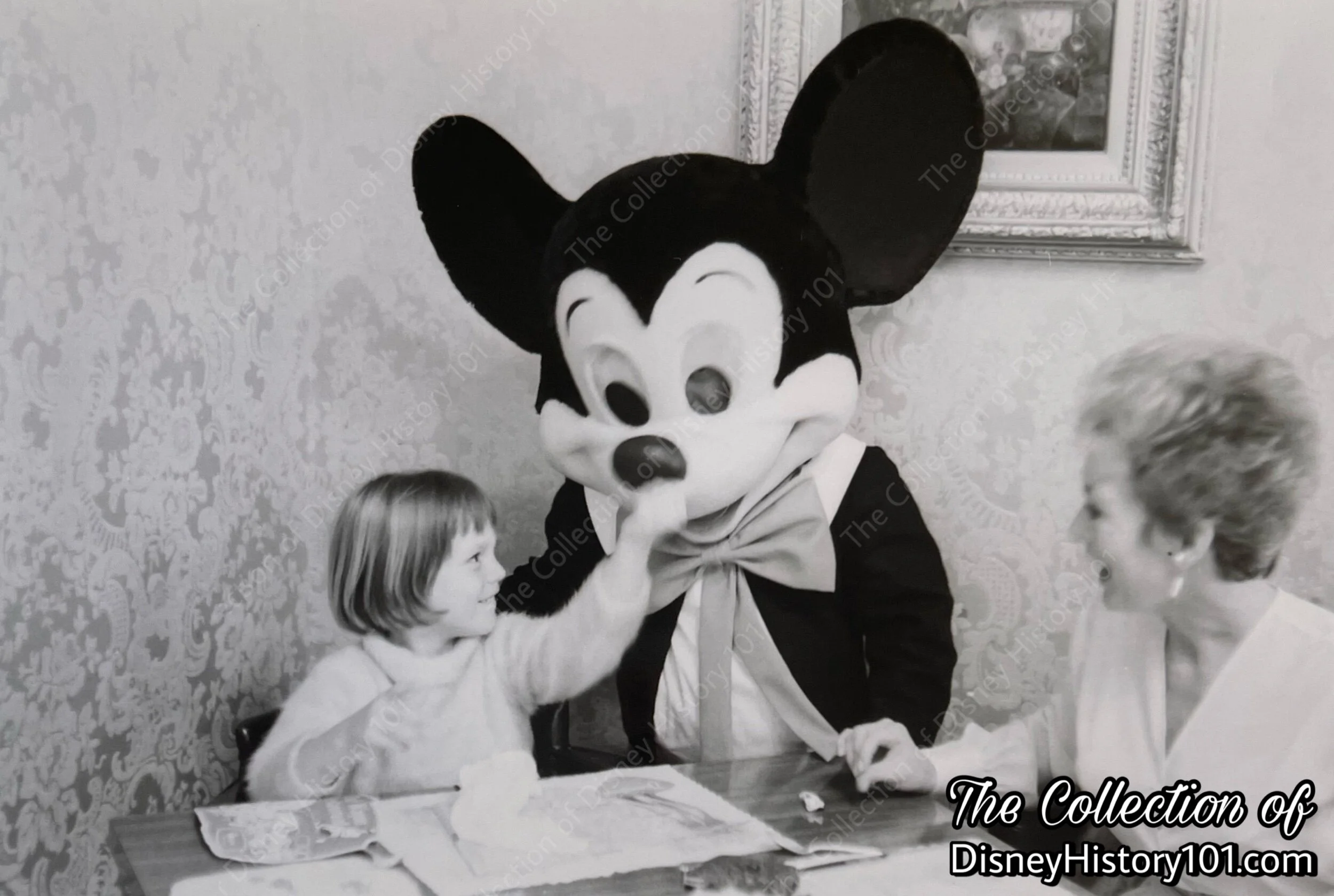
Jamie Lee Curtis and Janet Leigh enjoy a Character Breakfast at the Plaza Inn, The Collection of Disney History 101.
Many visitors have had the pleasure of enjoying a Character Breakfast, but fewer have had the pleasure of dining in the special Disney Room. Here, a couple of Guests enjoy a Dinner - a Character greeting performed at a park restaurant while the Guests are dining.
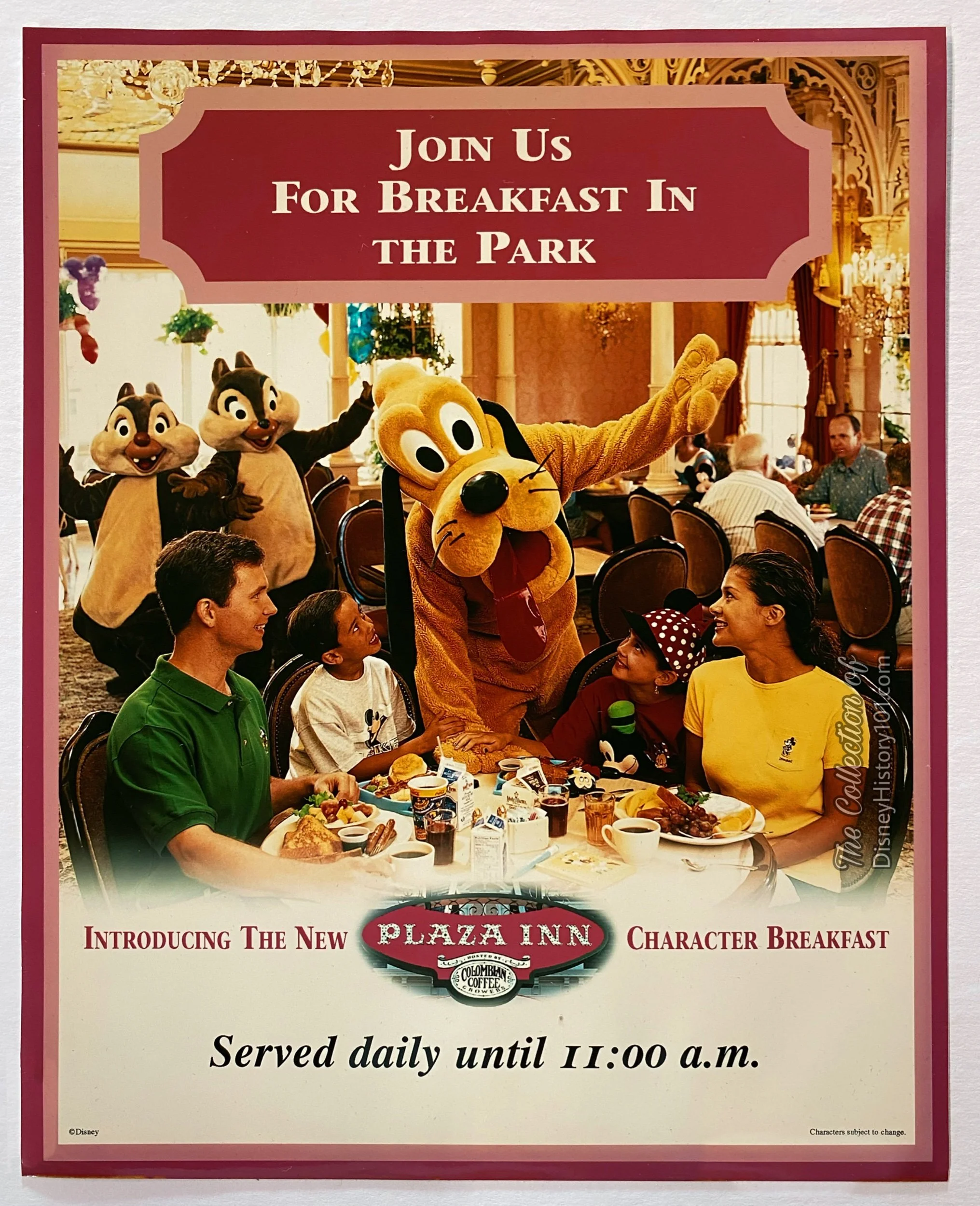
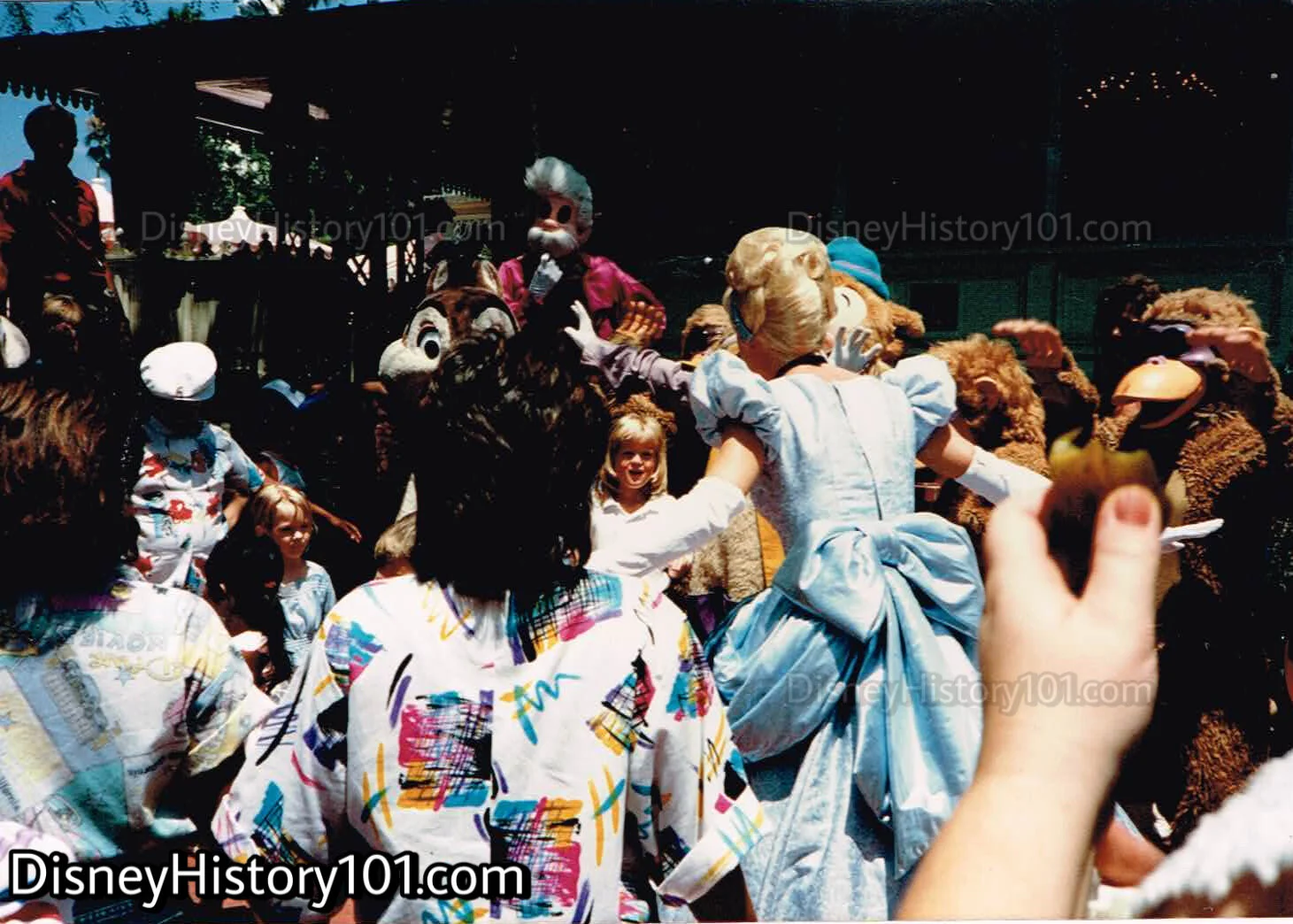
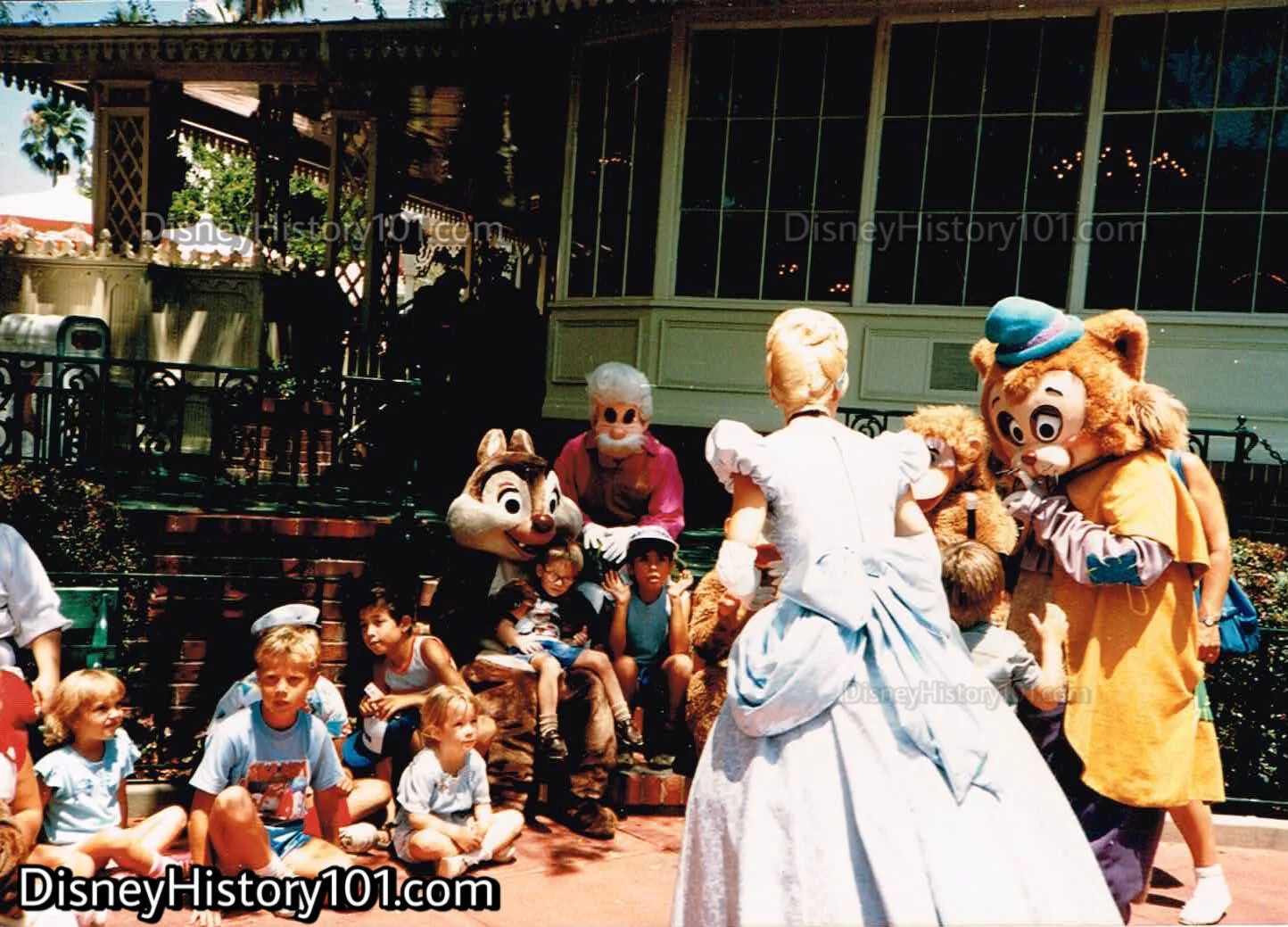
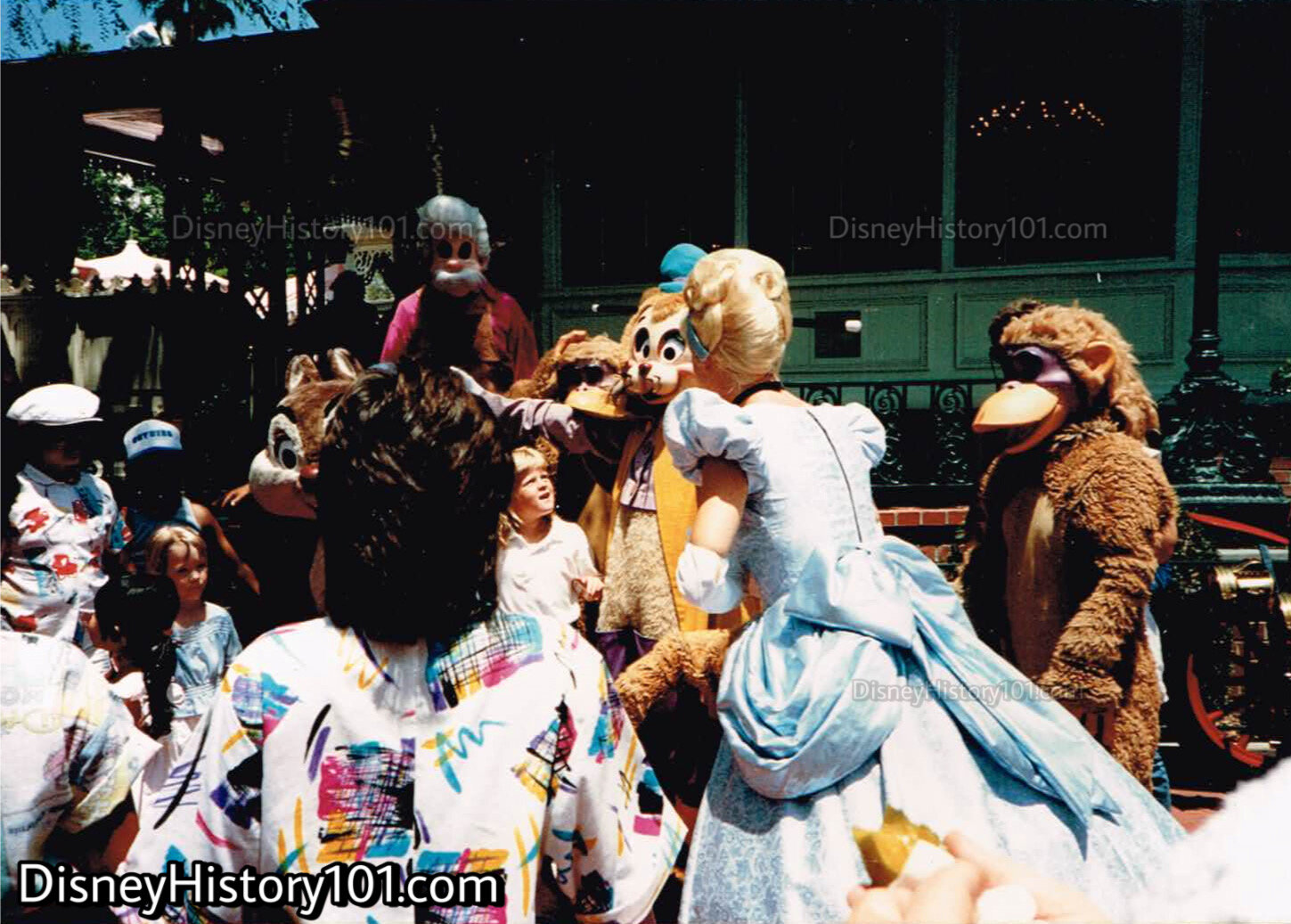
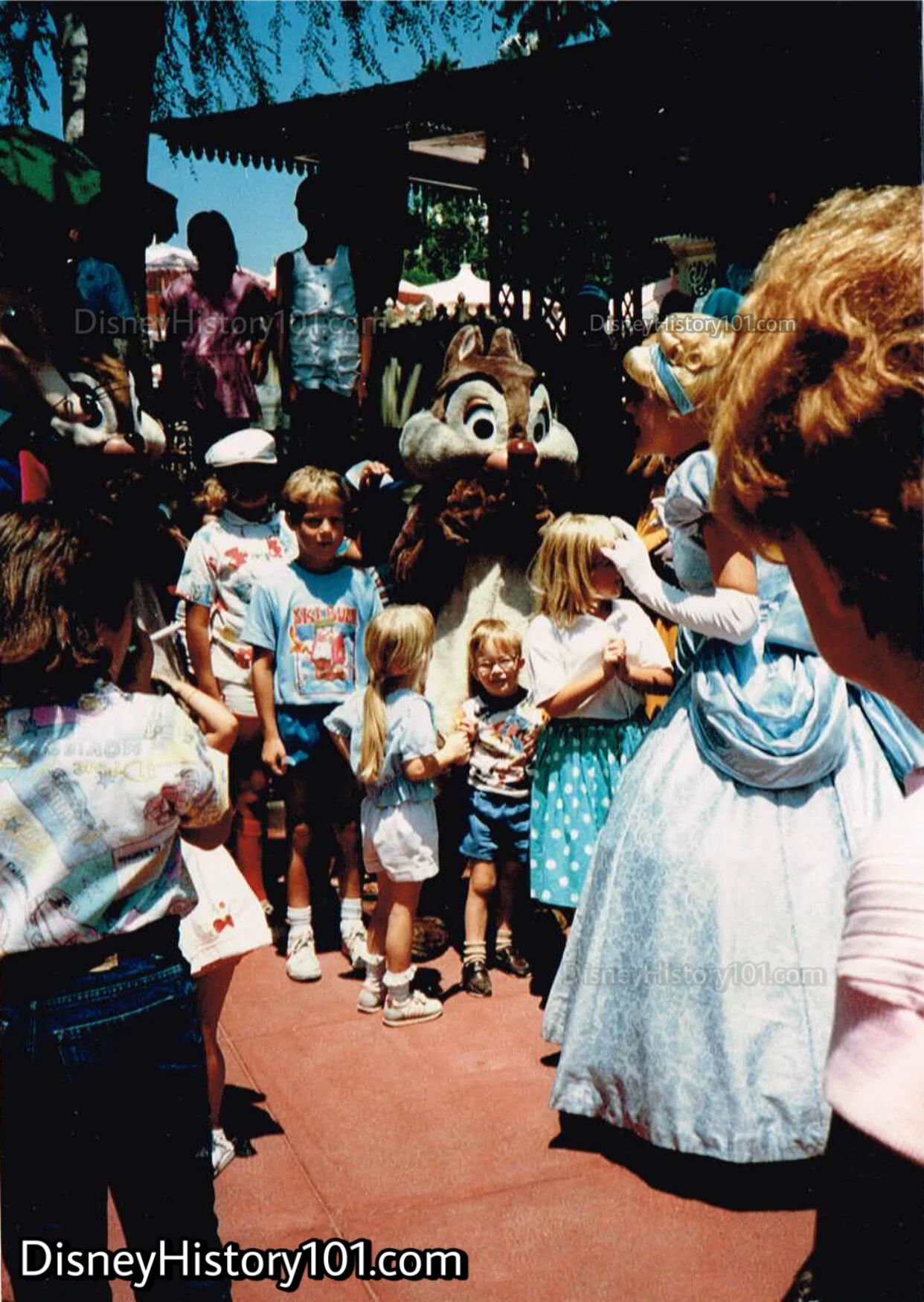
By 1986-1987, you may recollect that many locations served breakfast including Carnation Main Street, River Belle Terrace, The Blue Bayou, and Tomorrowland Terrace. However, only the Plaza Inn offered the opportunity to join your favorite Disney Characters for fresh buffeteria-style Character Breakfasts (Monday, and then daily, until 10:45 a.m.) as part of the Character Program. Guests could join their favorite Disney Characters for a good breakfast and choose from the delicious Plaza Inn menu and start their day off right. I’m addition, each child would receive a Mickey Mouse balloon as part of the experience!
Beginning in 1989, the Walt Disney Travel Company offered vacationers the most unusual-way ever to visit Disneyland: before the Park opened. Called the “Early Bird Exclusive,” the new program let visitors enjoy one of Disneyland’s themed areas one full hour before the Park's regular operating time. In addition, Guests were joined by the Disney Characters for a special breakfast at the Plaza Inn.
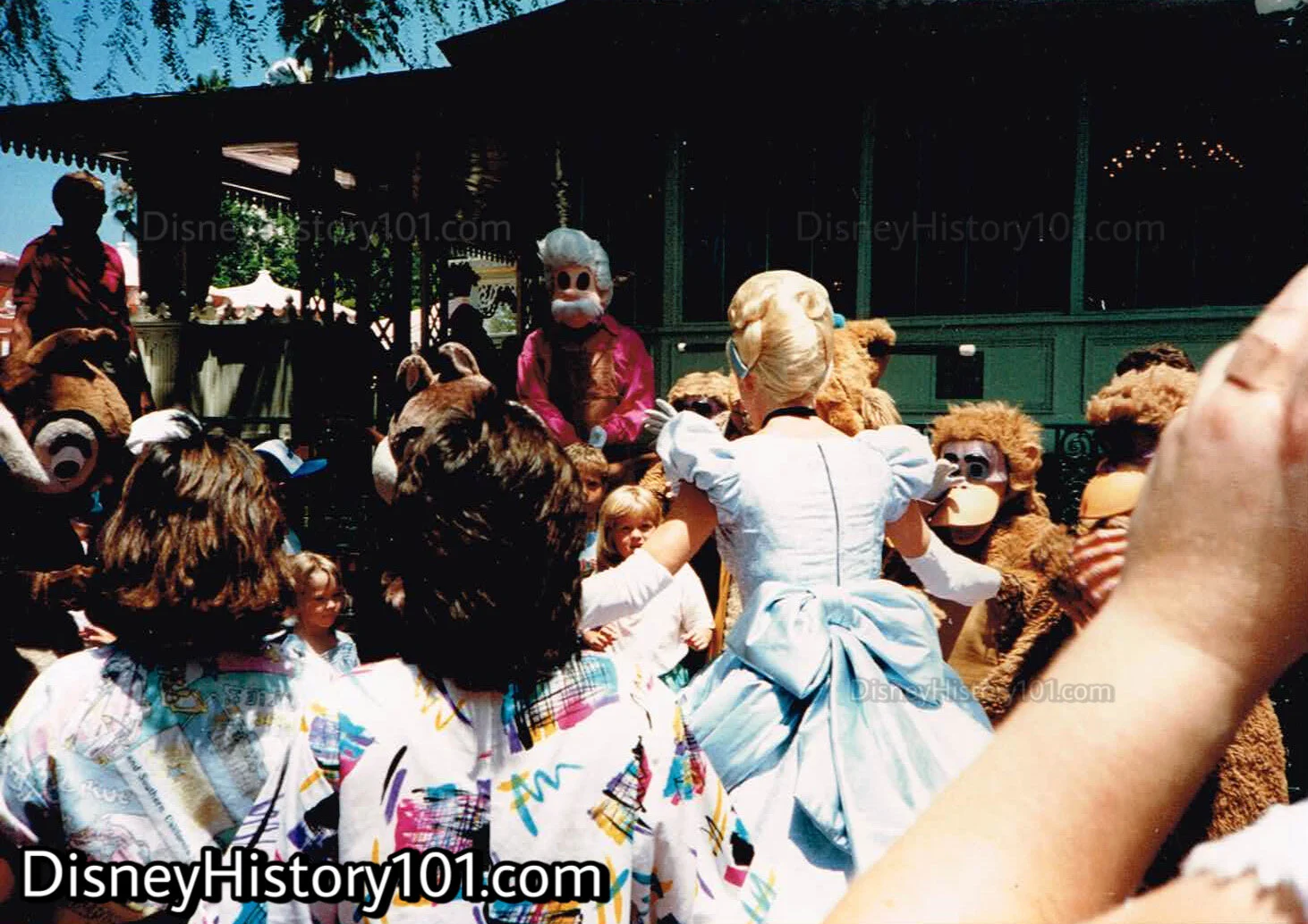
THE PLAZA INN, Character Breakfasts
THE PLAZA INN, Character Breakfasts
THE PLAZA INN, Character Breakfasts
THE PLAZA INN, Character Breakfasts
THE PLAZA INN, Character Breakfasts
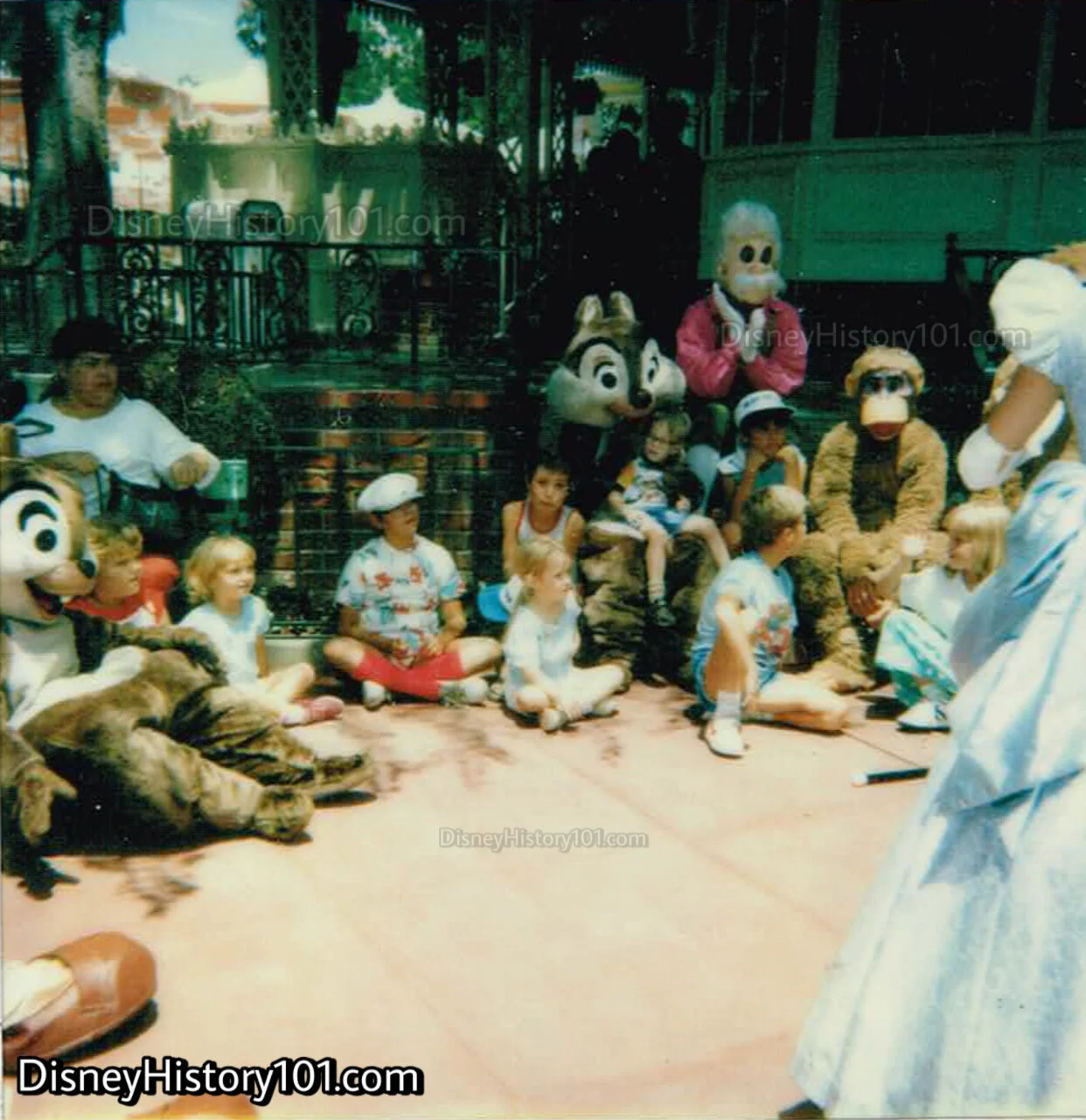
THE PLAZA INN, Character Breakfasts
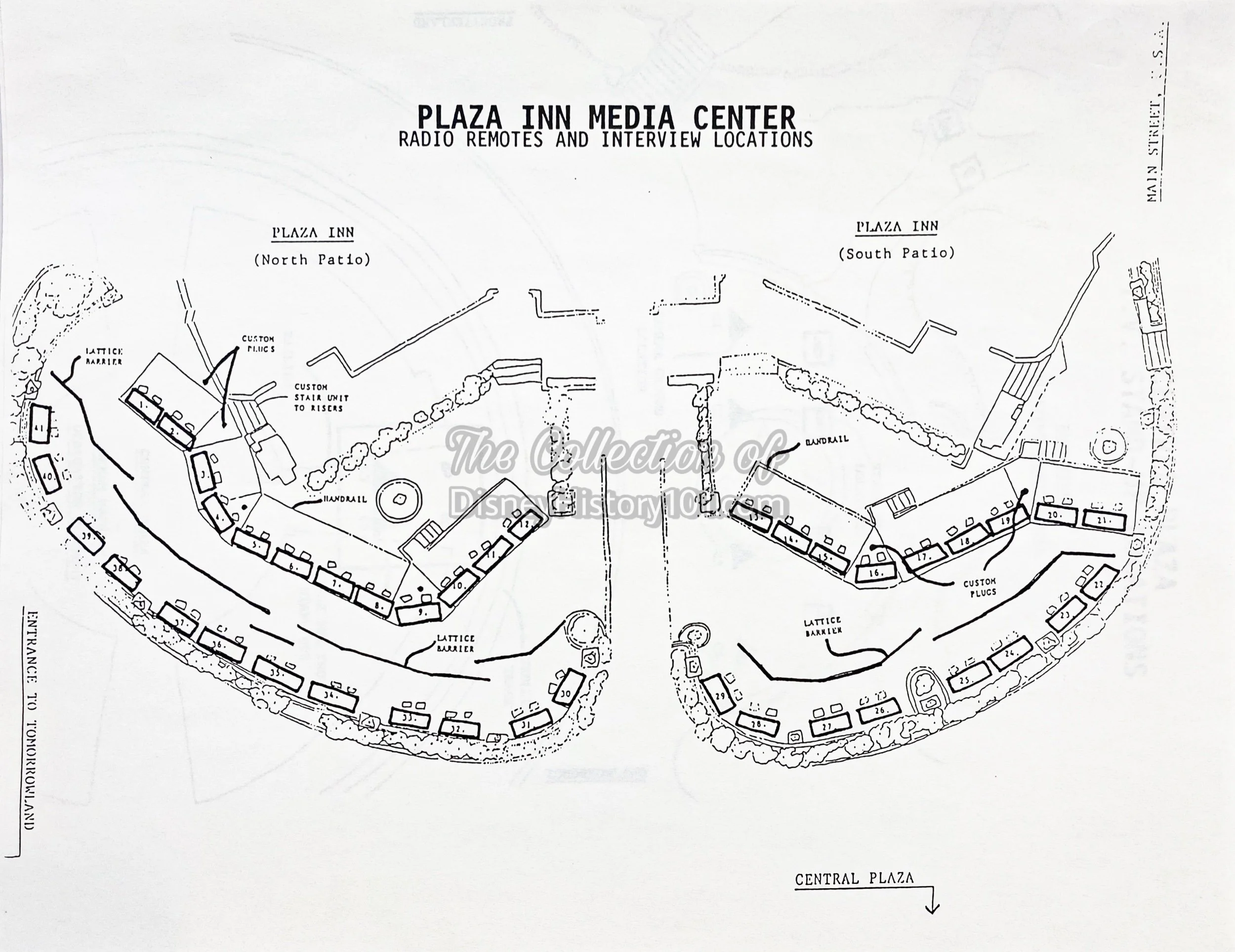
The Plaza Inn Serves other purposes during the 35th anniversary celebration of Disneyland.
During the 35th anniversary, the Plaza Inn porches (south and north) were used as interview areas for the event. The Interview Center was located in the South Solarium in the Media Center at the Plaza Inn.
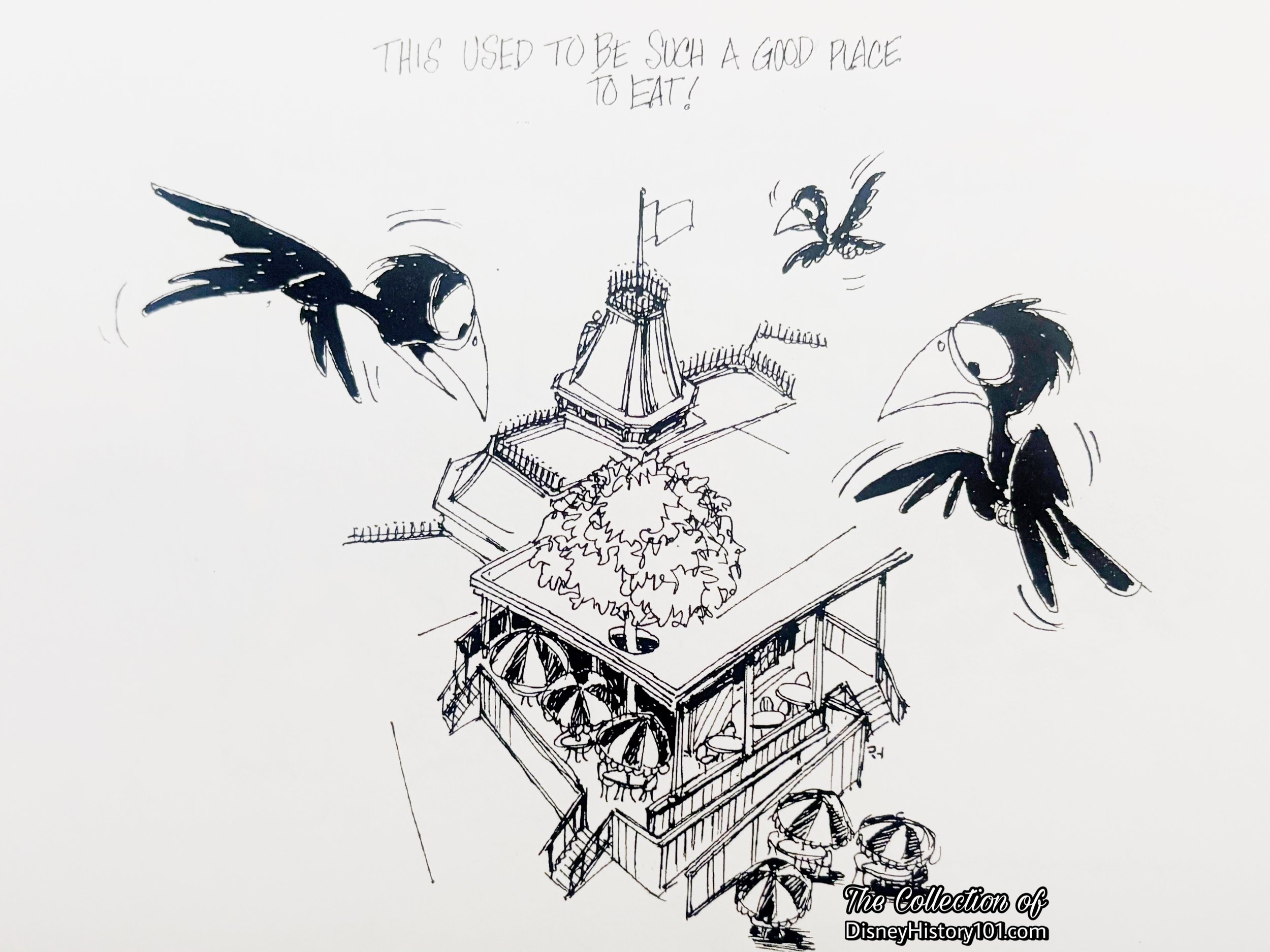
No one will be feeding the birds on the East side of the Plaza, in this cartoon from “The Official 50th Anniversary Cartoon Book” by Ray Haller.
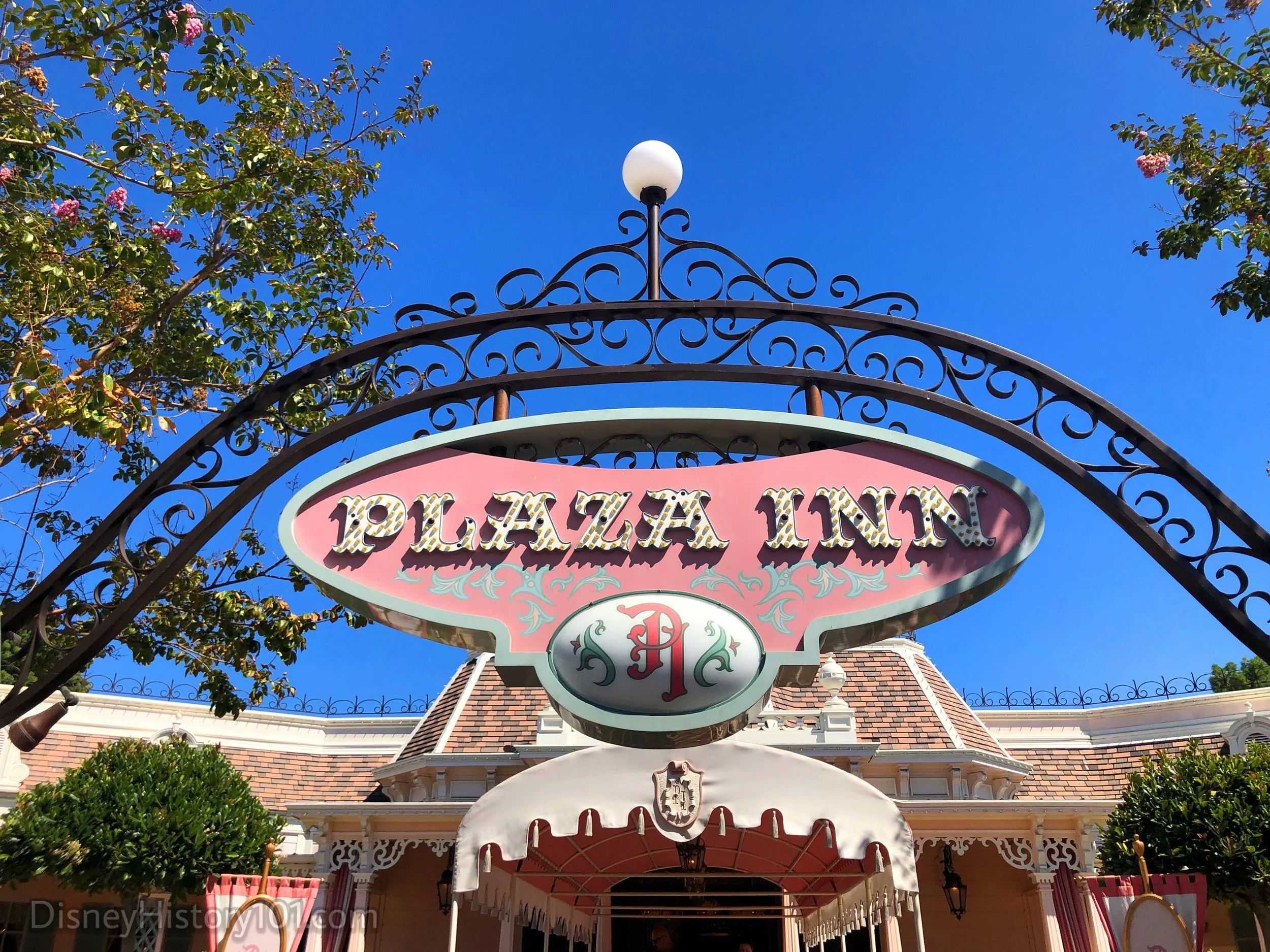
THE PLAZA INN Entryway Arch, 2019.
We will now take a look at a few of the Plaza Inn’s unique vintage 1870 Victorian architectural features that actually date from that era!
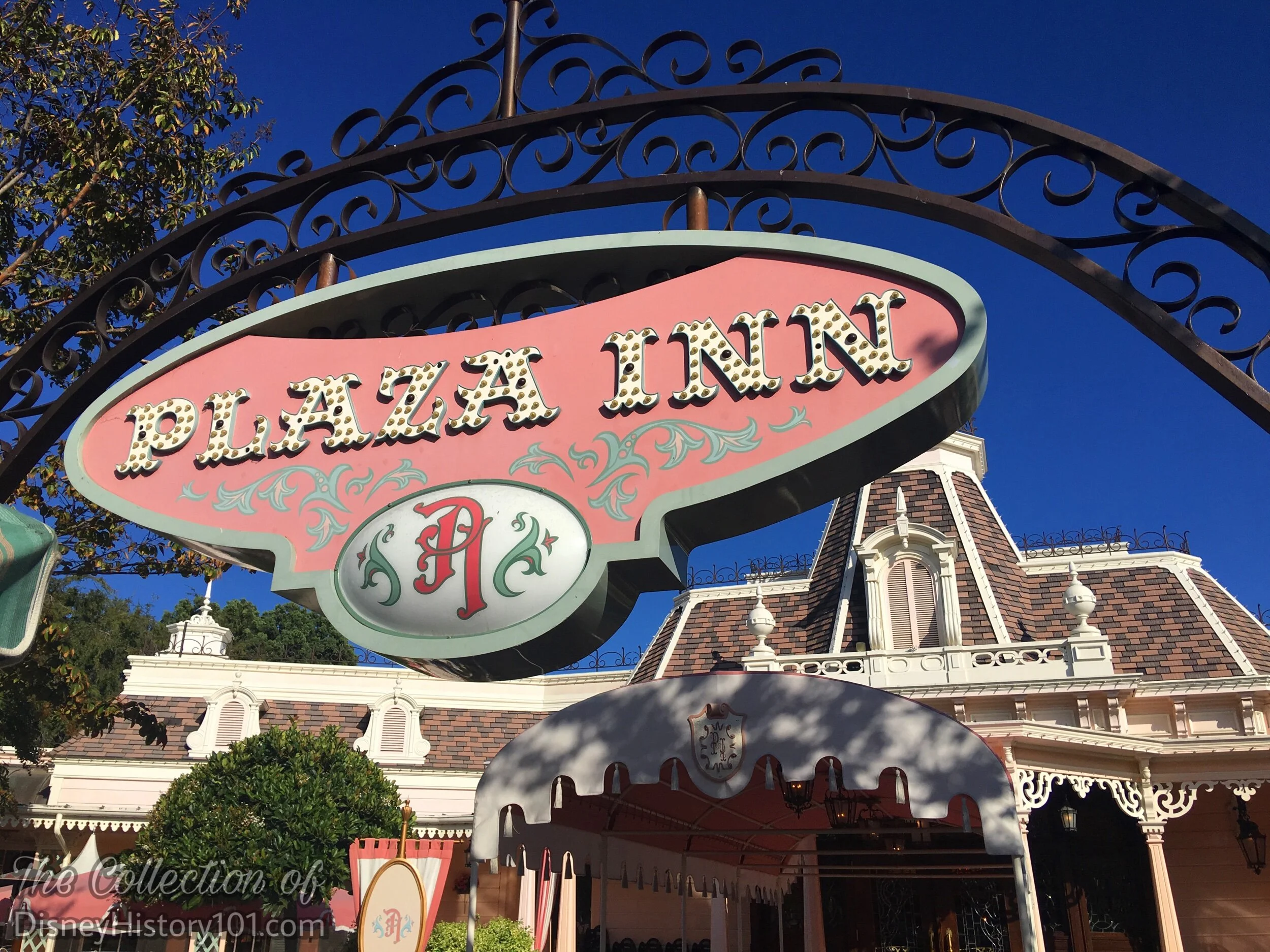
THE PLAZA INN (Entryway Arch), (2019)
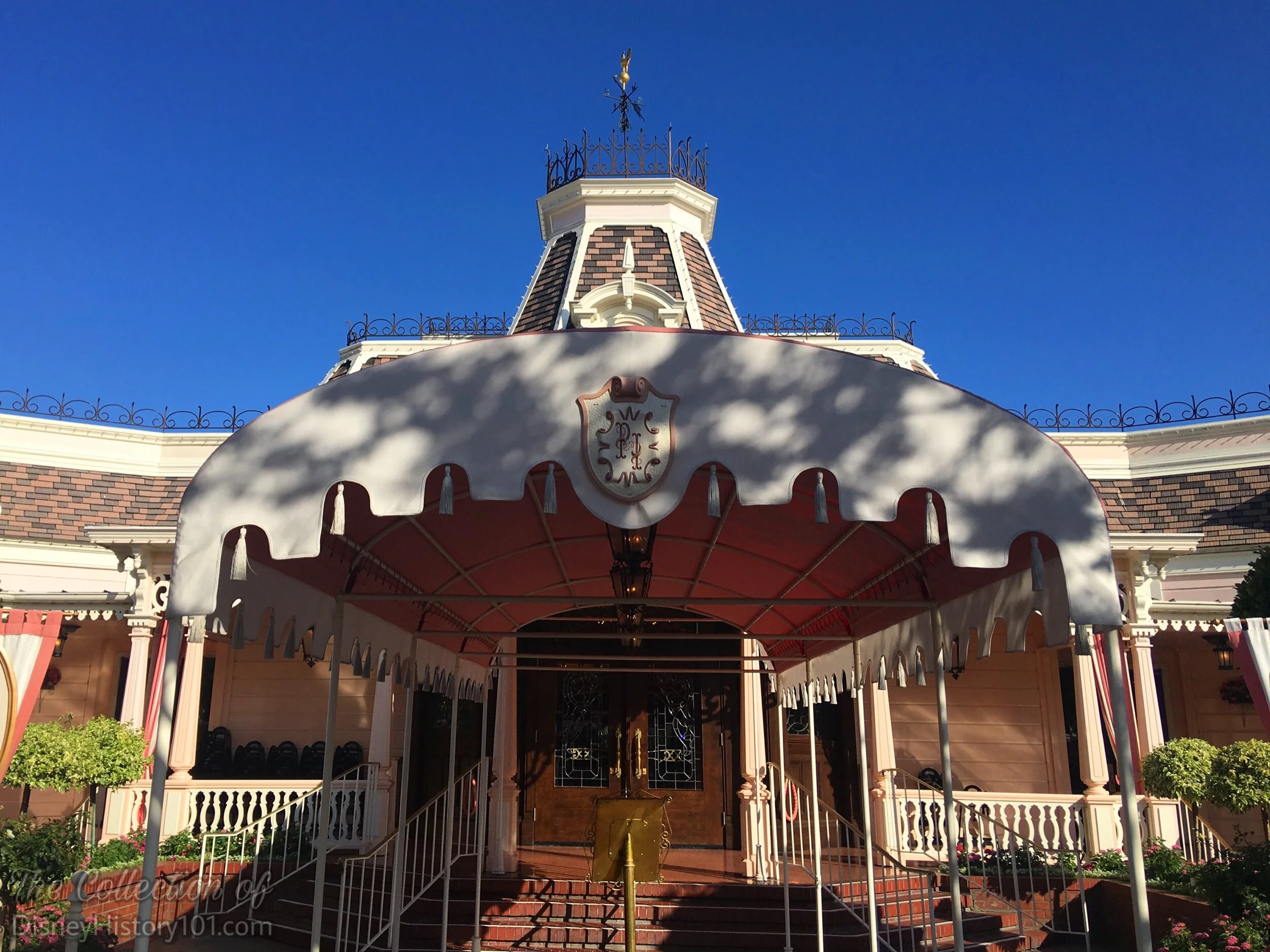
The Plaza Inn Entryway
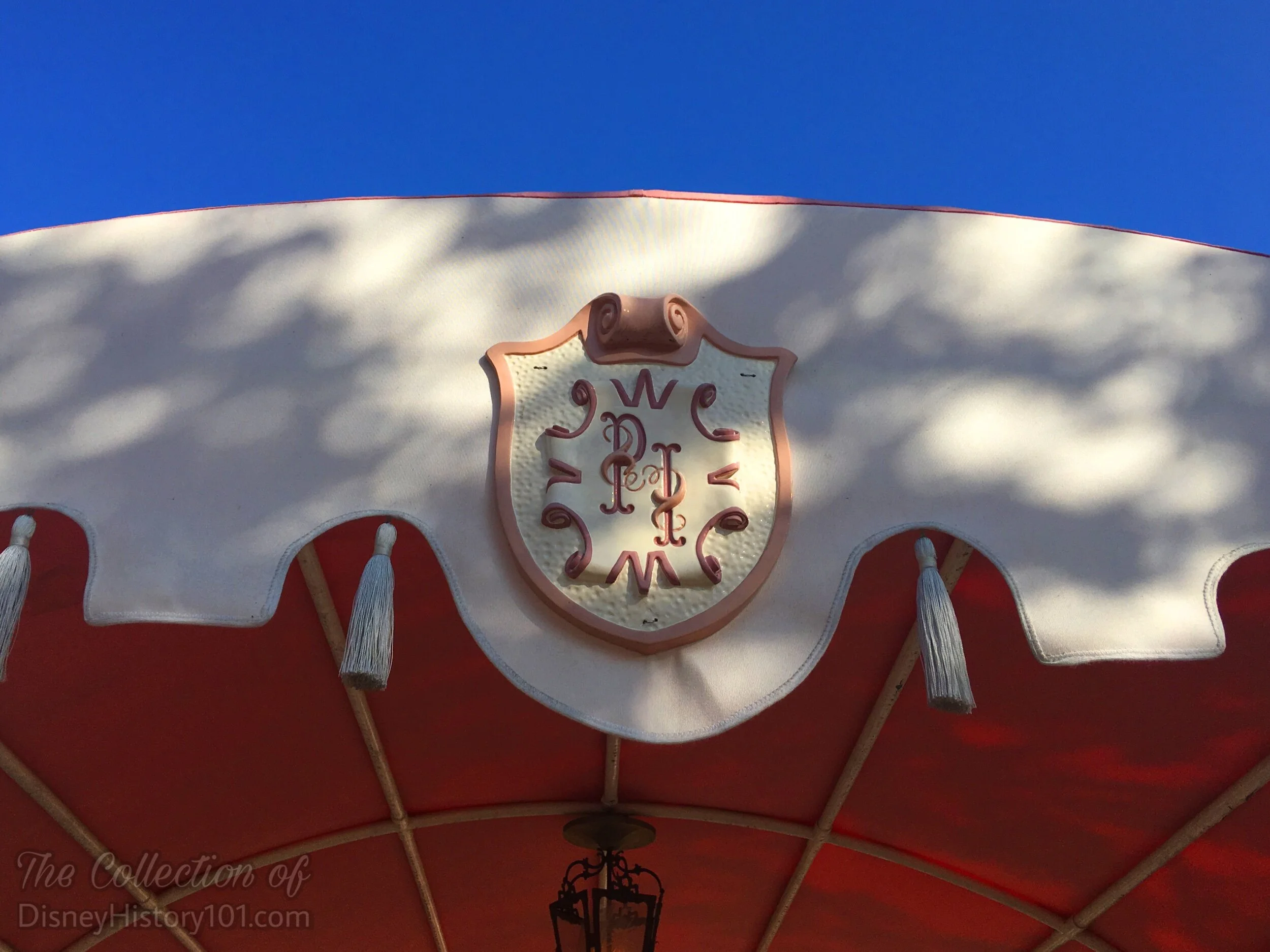
The Plaza Inn Entryway
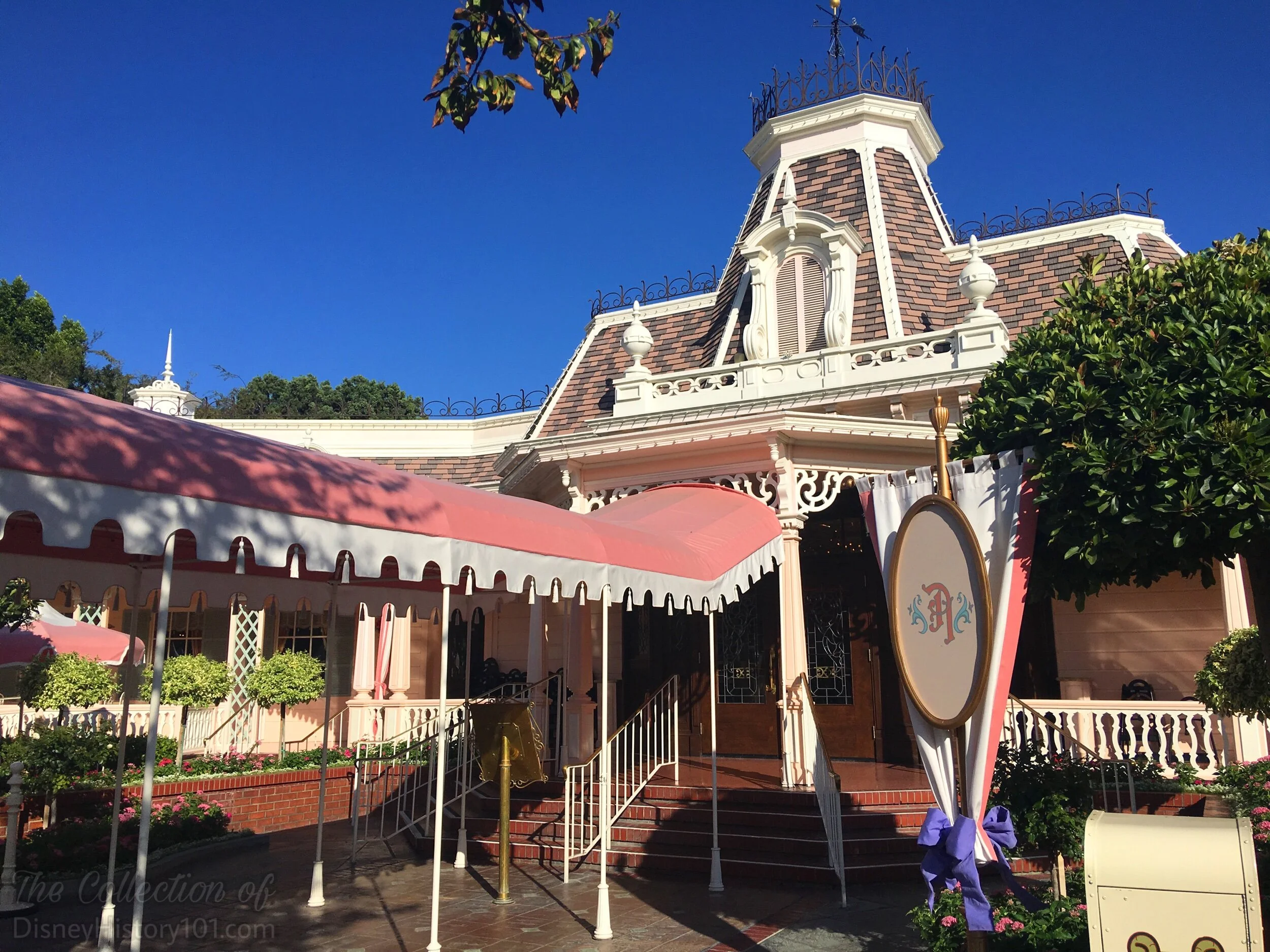
The Plaza Inn Entryway
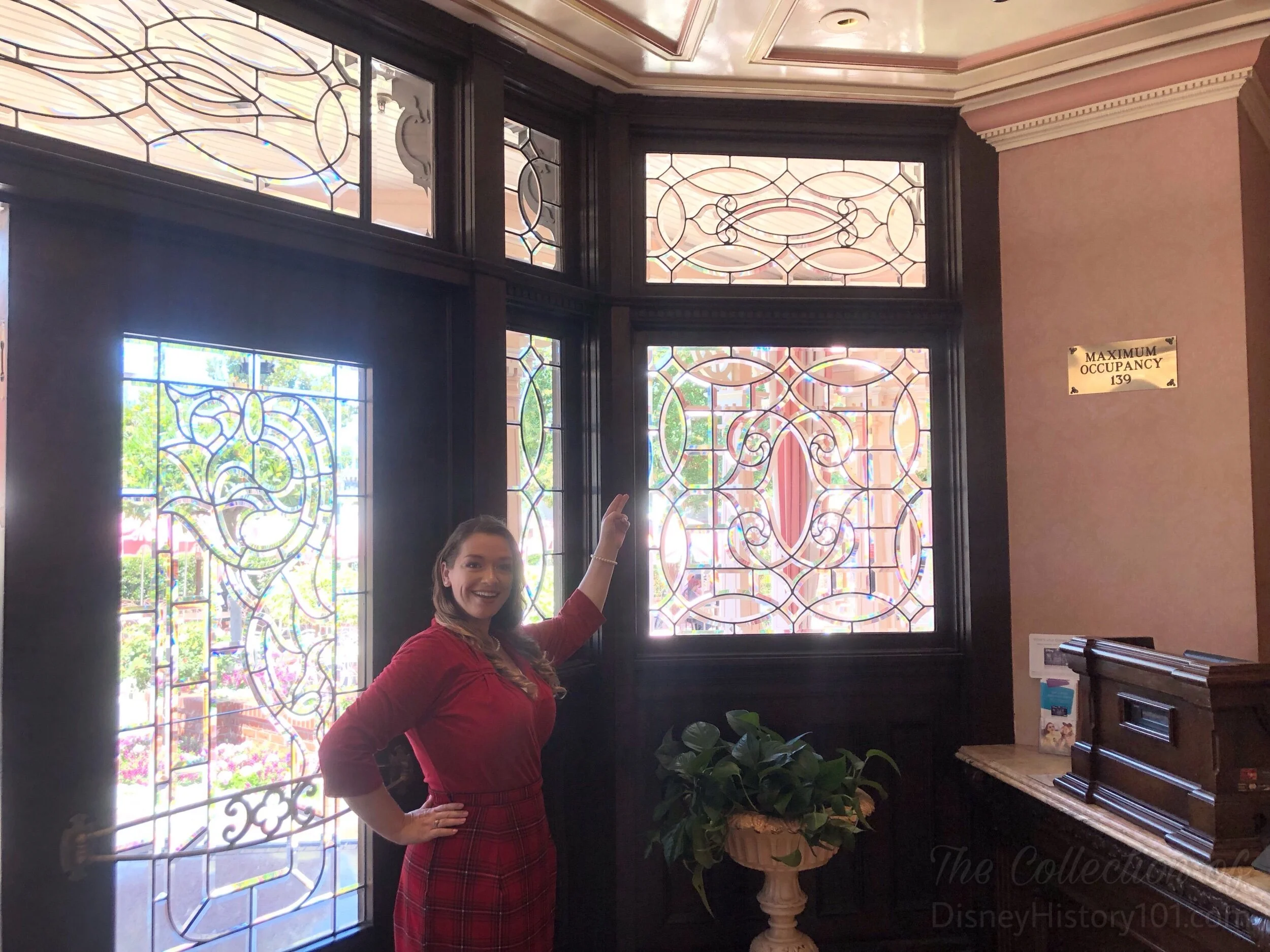
PLAZA INN (Entry Doors with Architectural Bevel Leaded Glass)
Those main entrance doors (with brass-bound, and glazed with cut glass panes) were originally part of the St. James Park mansion interior.
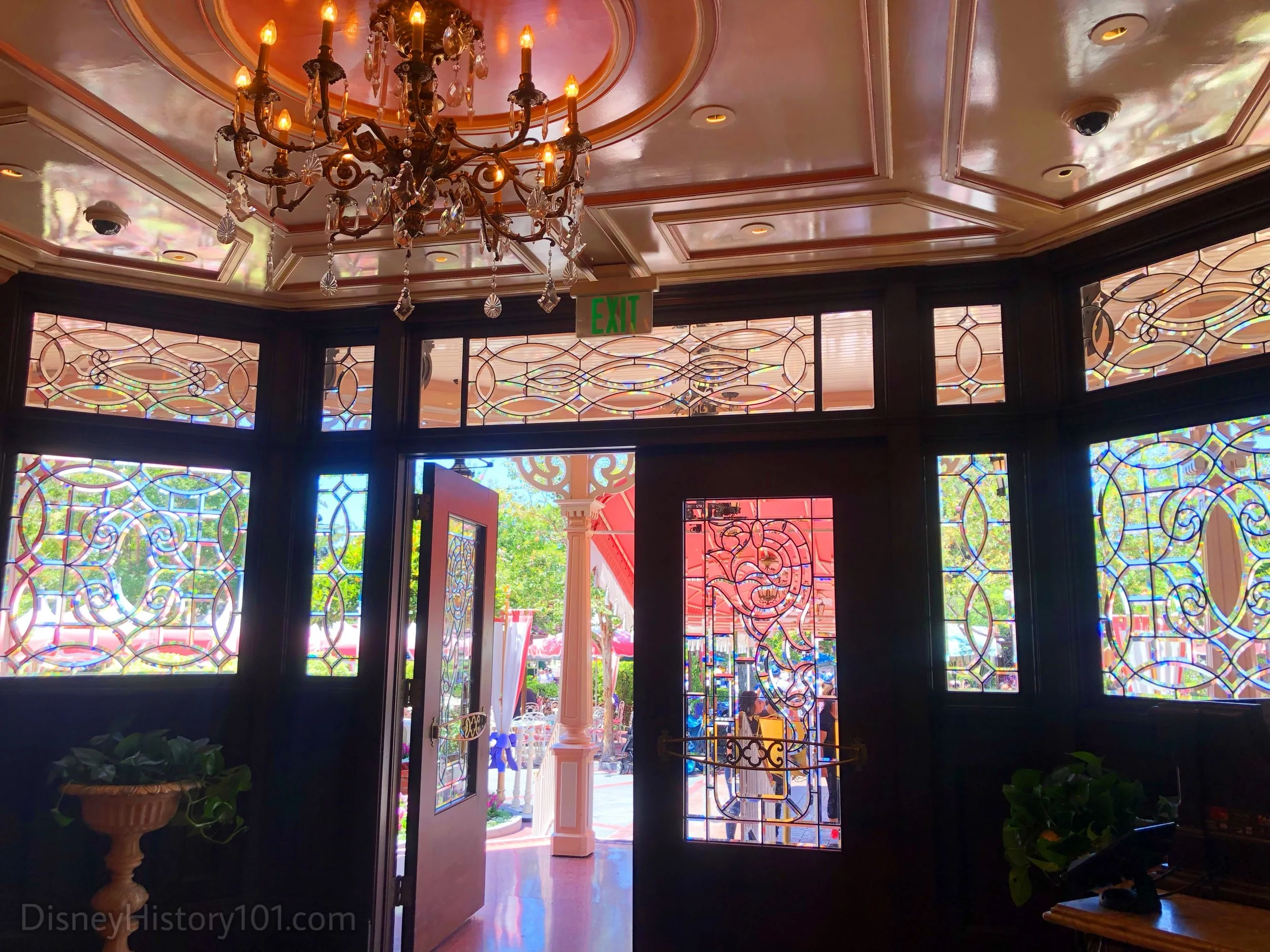
PLAZA INN (Entry Doors with Architectural Bevel Leaded Glass)
According to Disneyland LINE Magazine (June 25, 1993 ; Vol. 25, No. 25):
“The huge doors made of brass, wood, and beautifully cut glass, give the facility an elegant Victorian charm. The entry doors were taken from a house built more than 120 years ago.
In preparing to build Disneyland, Walt Disney had plenty of foresight. As he envisioned Main Street, the area would be as authentic as reasonably possible. For Walt, that meant finding as many authentic pieces as could obtain. When he learned that a mansion in Los Angeles was about to be destroyed, he sent Chief Set Designer Emil Kuri to try to salvage anything that could prove useful… Homes in the area were built before the turn of the century, but by the 1950s, many had been torn down to make way for progress. Emil managed to find several items of interest from the house. Stained glass, doors, and even staircases turned up at the Studio’s Prop Department, and many managed to find their way into the Park when it was built.
The biggest beneficiary of the furnishings from the St. James mansion was the Red Wagon Inn, one of the original Lessees. Swift and Company operated the elegant restaurant which featured prime rib and a variety of entrees. The huge doors with the cut glass, which added elegance to the restaurant, were actually interior doors in the St. James mansion.”
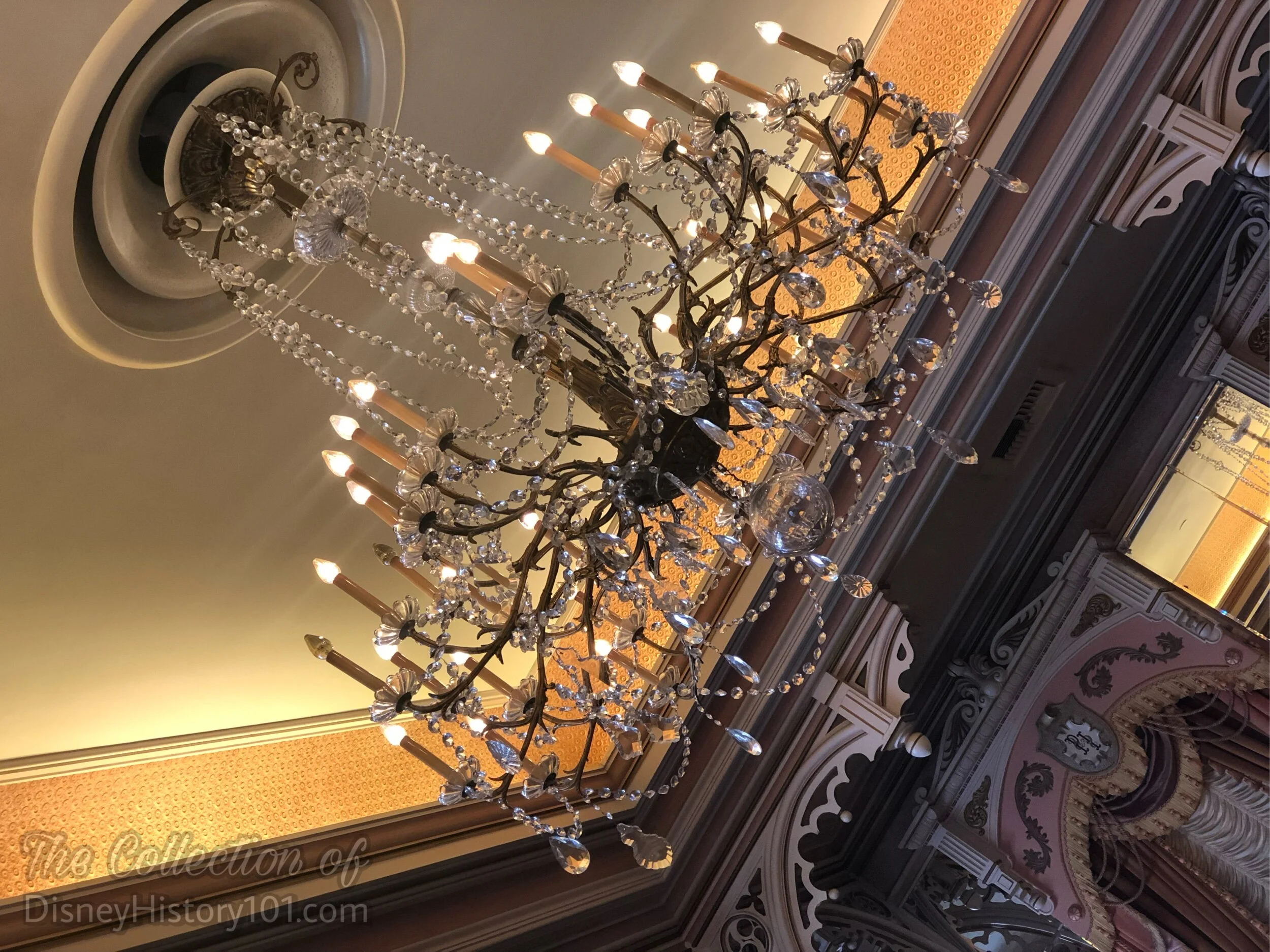
Plaza Inn Chandelier
Character lighting was themed to enhance the overall appearance and complement the interior, such as a chandelier or kerosene lamp. These add to the show, but don't necessarily create enough illumination for operation. “The Chandelier in the Plaza Inn is from the 18th century. It originally had candles burning on it and [sic] had to be wired for electricity,” according to “Did You Know” (published by Disneyland in 1991). According to the same publication, one of these chandeliers is a “220 year old French Chandelier of bronze and crystal found in 1964 in a New Orleans antique shop.”
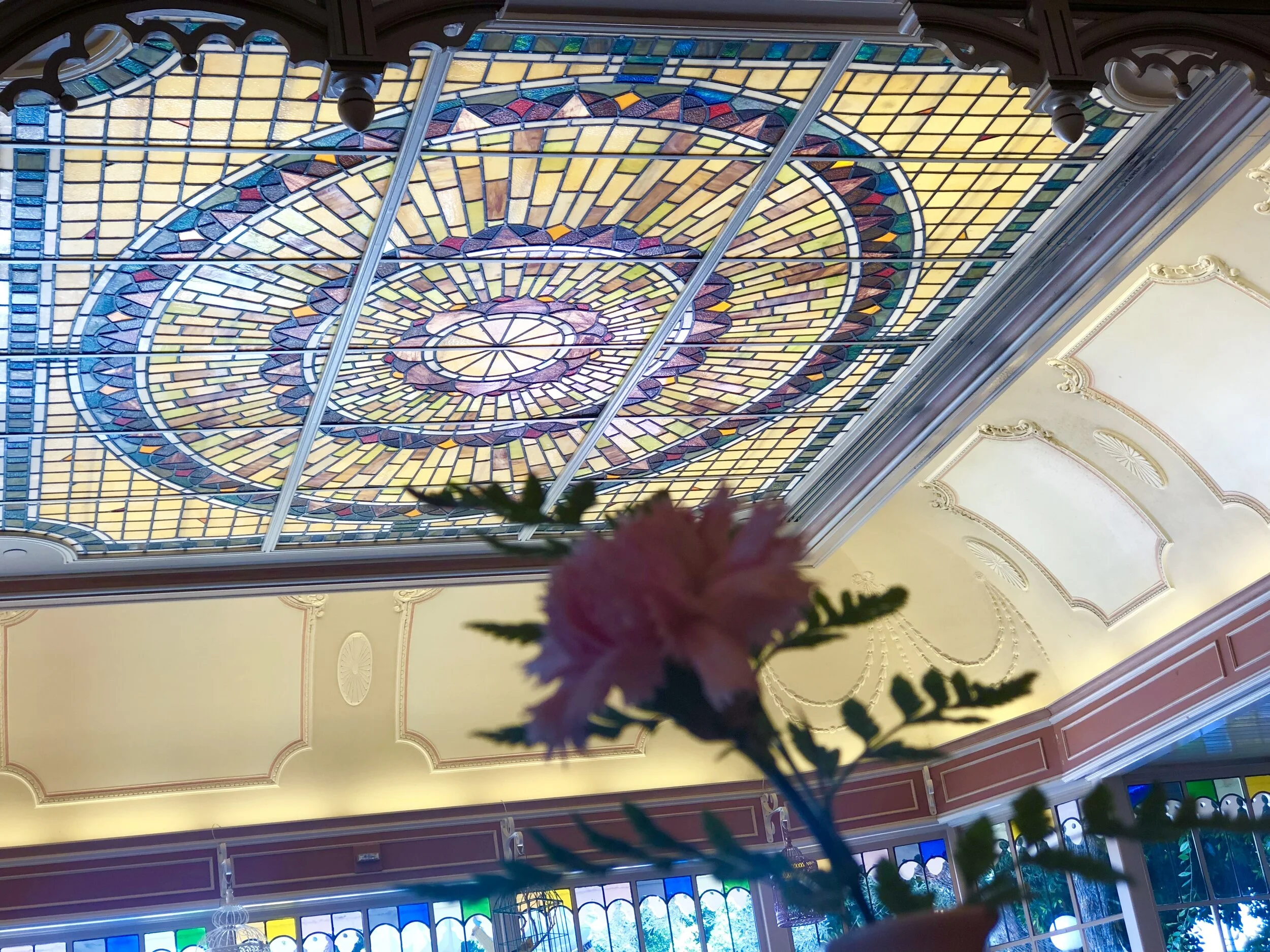
THE PLAZA INN (Stained Glass Ceiling)
You’re looking up at some of the stained glass work removed from the ceiling of the mansion at 20 St. James Park, Los Angeles. Disneyland LINE Magazine (June 25, 1993 ; Vol. 25, No. 25) continues :
“Additionally, the Red Wagon Inn also boasted a stained glass ceiling (which had been used on the mansion’s third floor solarium), hand-carved wood paneling, and newel posts from the mansion.”
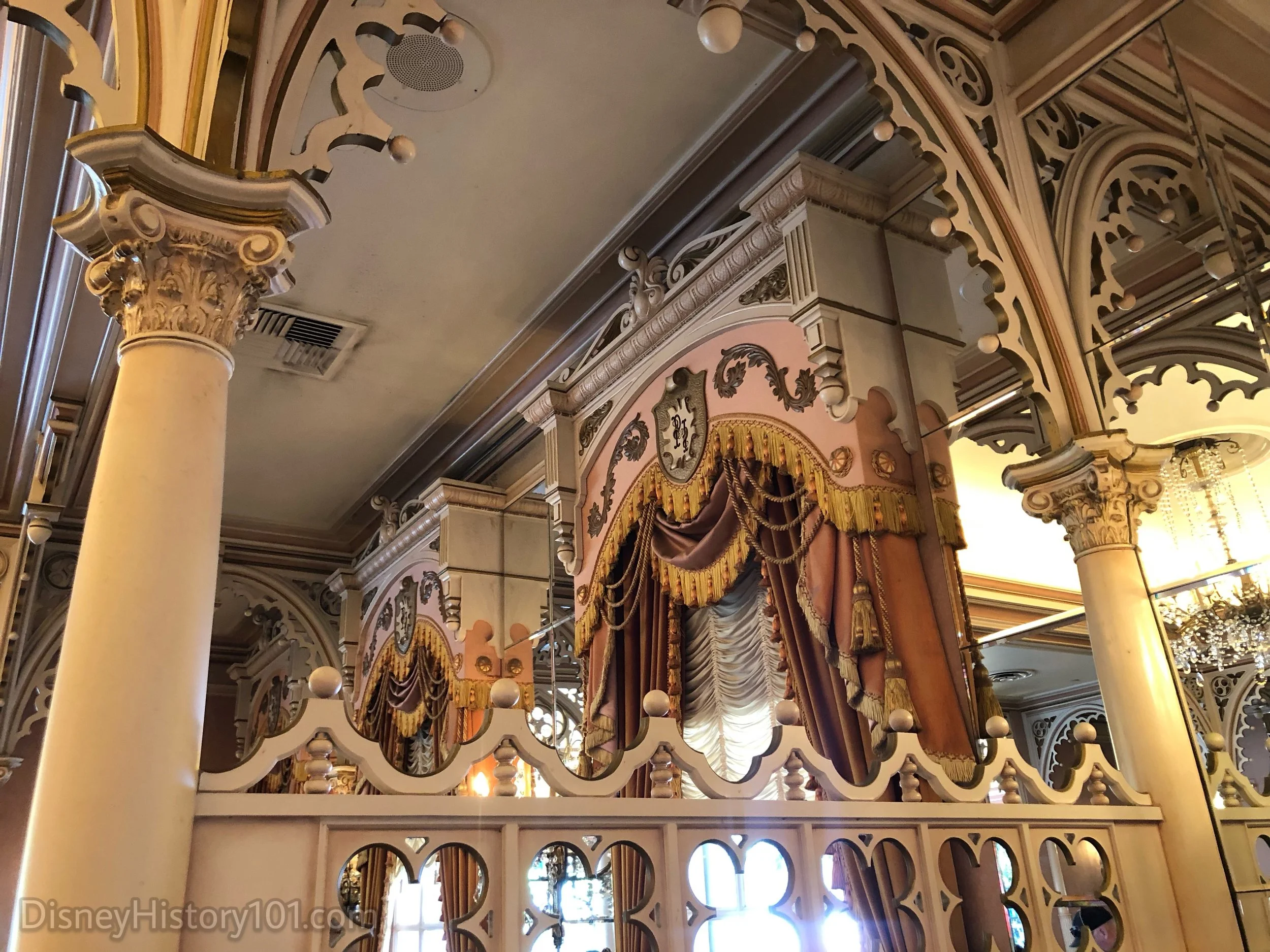
THE PLAZA INN (Newel Posts and Columns)
Portions of the columns are just some of the many Victorian theming parts re-purposed from the (now demolished) von Zimmerman mansion.
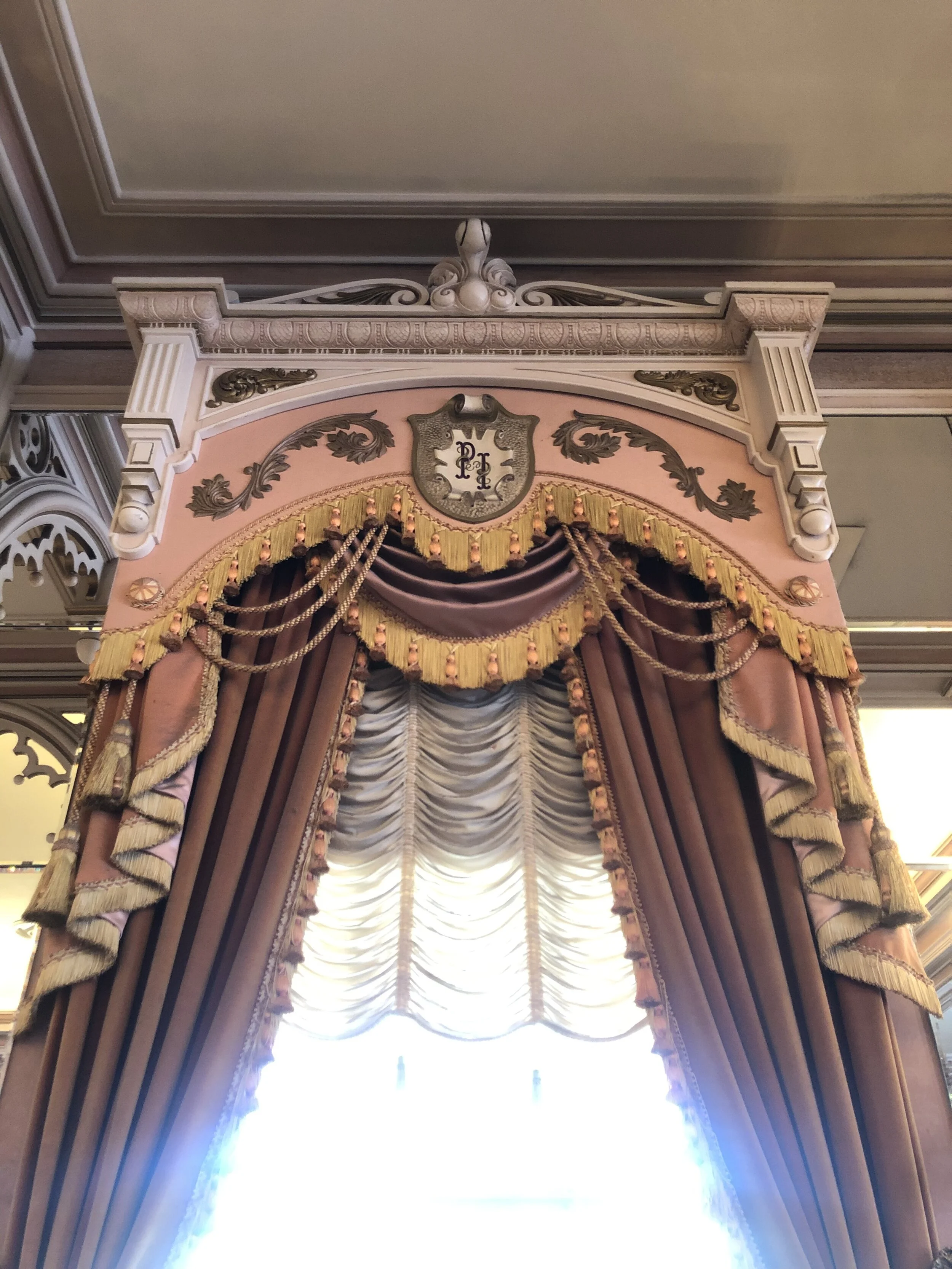
THE PLAZA INN
Other Victorian theming elements that were extracted from the Saint James Park mansion can still be seen around the Plaza Inn in the present! During the Columbian Coffee Growers sponsorship, these featured red brocades and crystal.
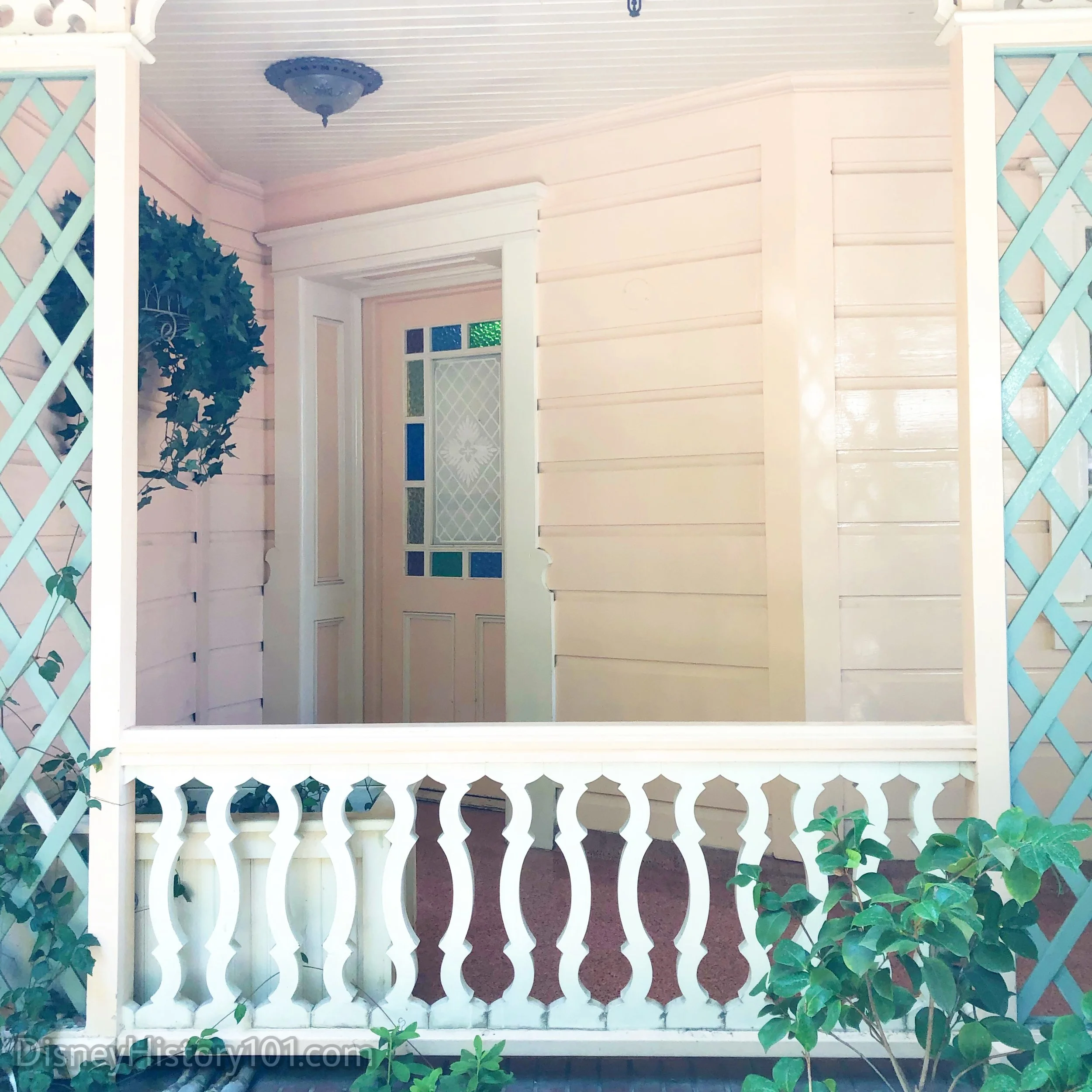
THE PLAZA INN, (Hideout Doorway), (2019)
The Red Wagon Inn had a secret VIP dining room called the Disney Room. During the early (Red Wagon Inn) years, the room was constantly utilized as a conference hall for meetings with Disneyland employees. For instance, the Disney Room was used for the Disneyland Inc. Guided Tour Conferences sessions for some twenty of Disneyland employees, (i.e. from 8:30am to 9:30am, on September 25, 1958). The likes of Ron DArcy, Pete Henderson, Tommy Walker, Bud Coulson and other Disneylanders used this room during its heyday. Also, various individuals involved in Operations would hold brief “buzz sessions” related to special events, talent performances, and parades held at Disneyland.
The room has come to be known as the Hideaway or Hideout (which has been transformed into a manager’s office in recent years).
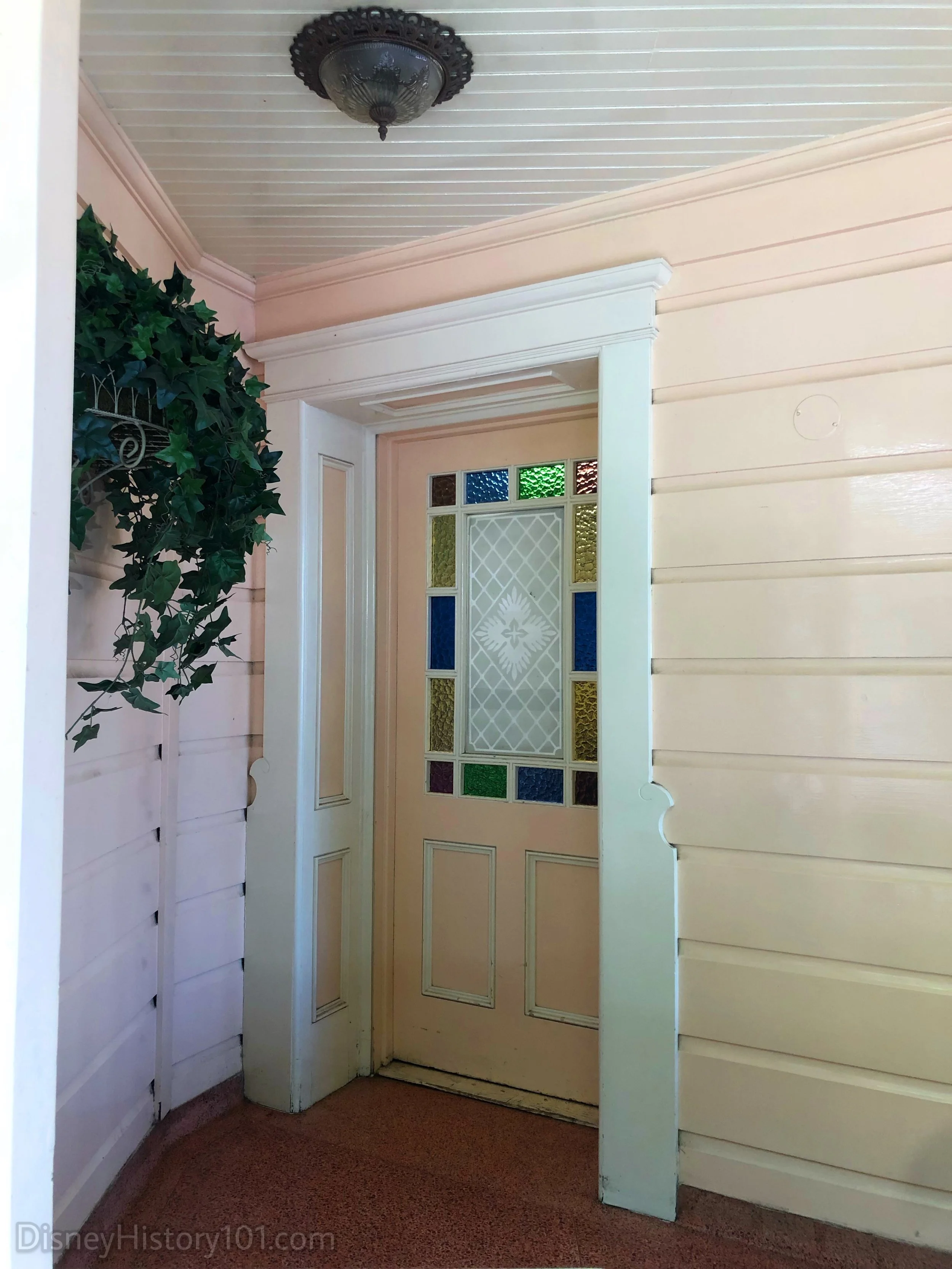
THE PLAZA INN, (Hideout Doorway), (2019)
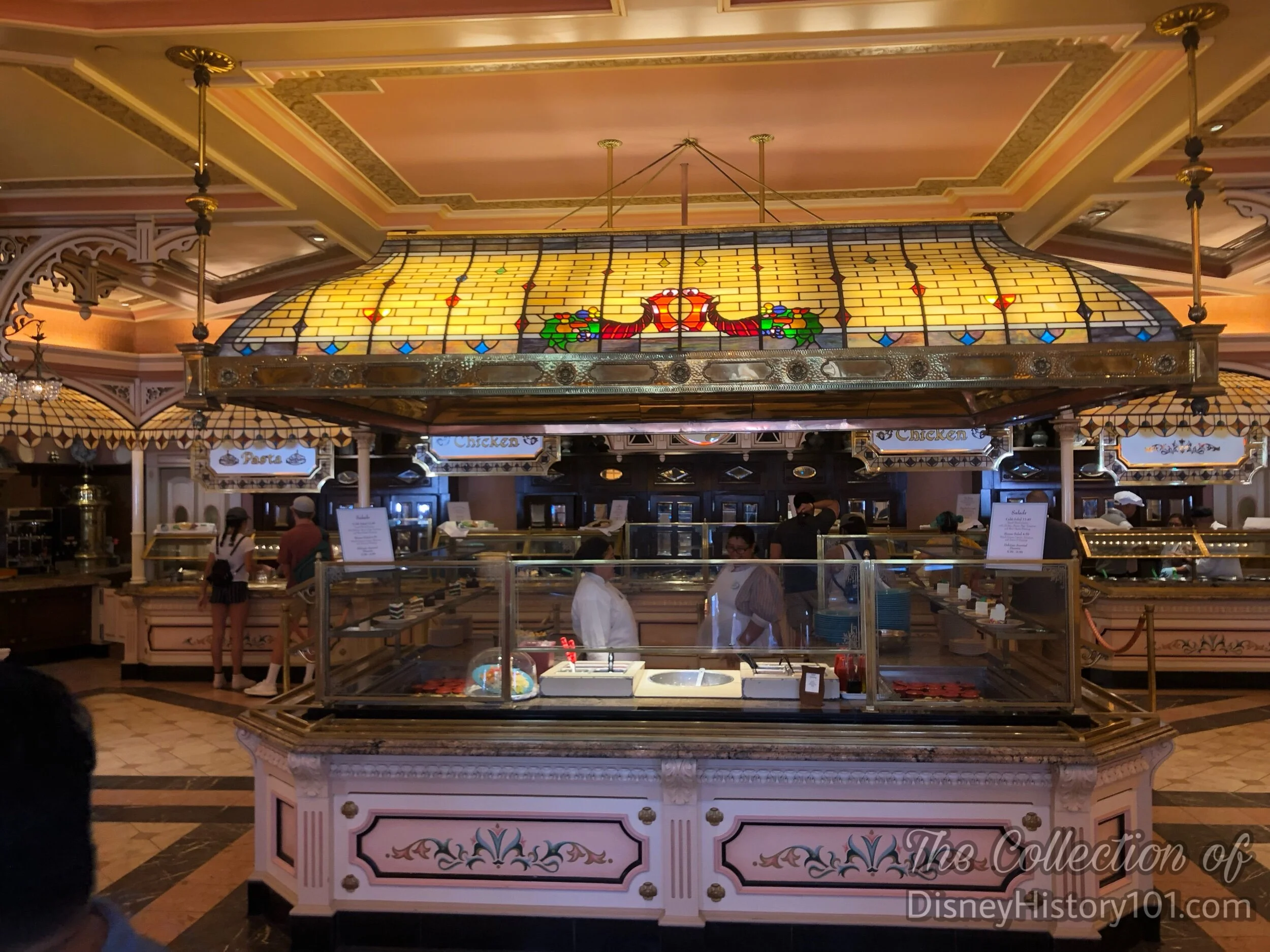
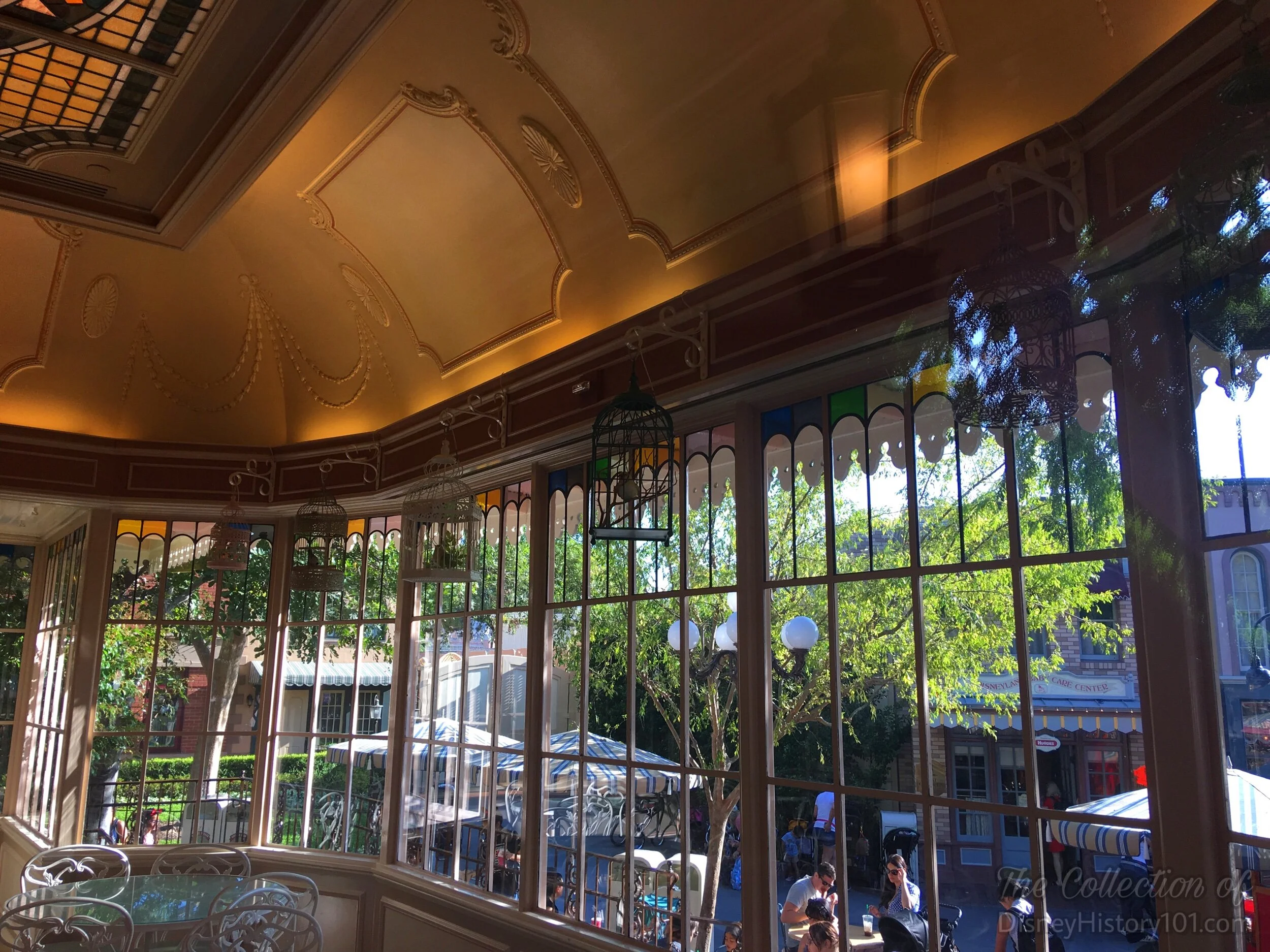
The Plaza Inn Dining Hall
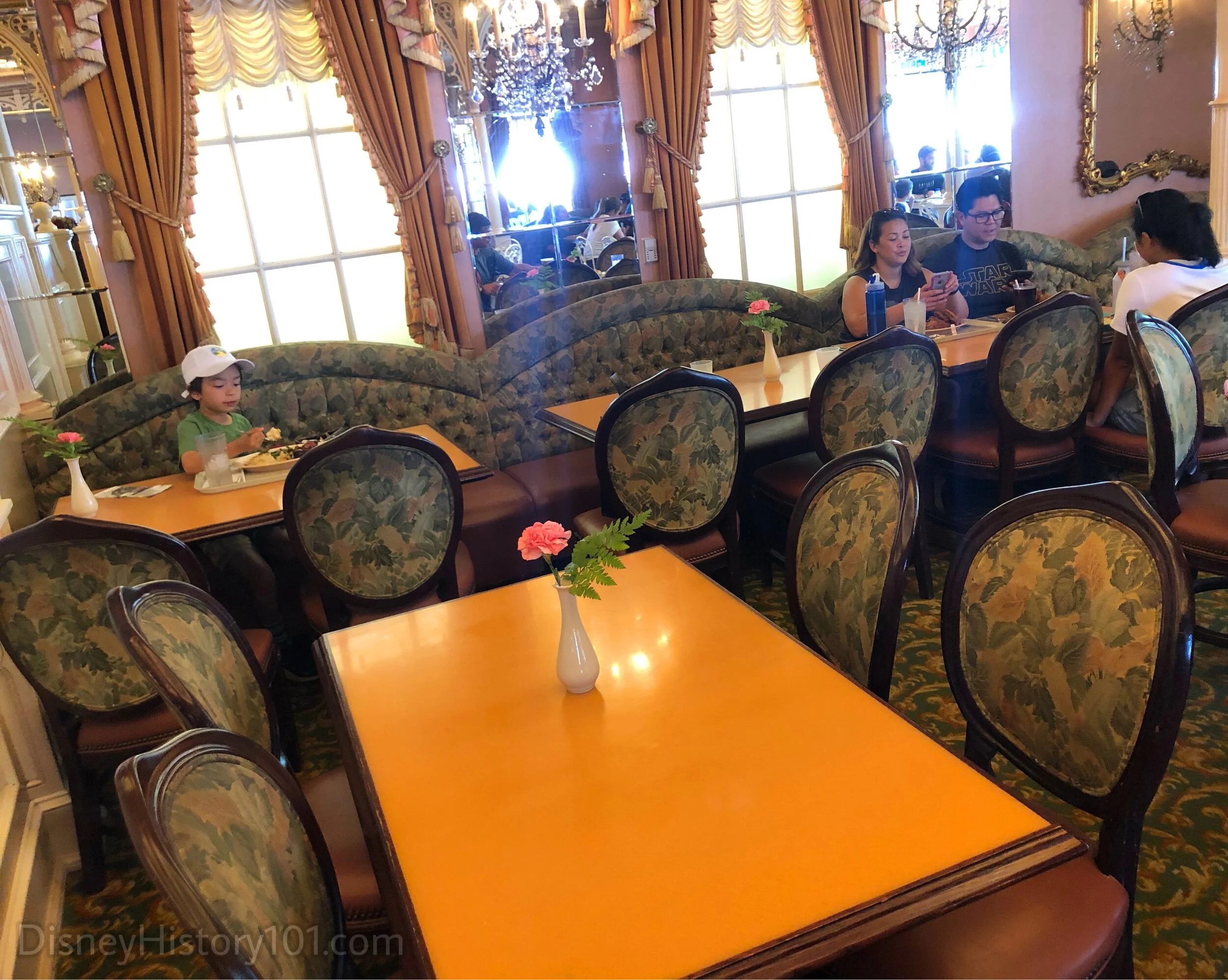
THE PLAZA INN - IS THIS “WALT DISNEY’S FAVORITE TABLE"?
Unsubstantiated rumors claim that this table location was Walt Disney’s favorite place to sit. While some rumors may have a ring of truth to them, we may can’t invalidate or verify this was the case (through Managers or Guest Relations Hostesses or Hosts). Perhaps photographic evidence will turn up one day, showing Walt sitting in this area (at the very least).
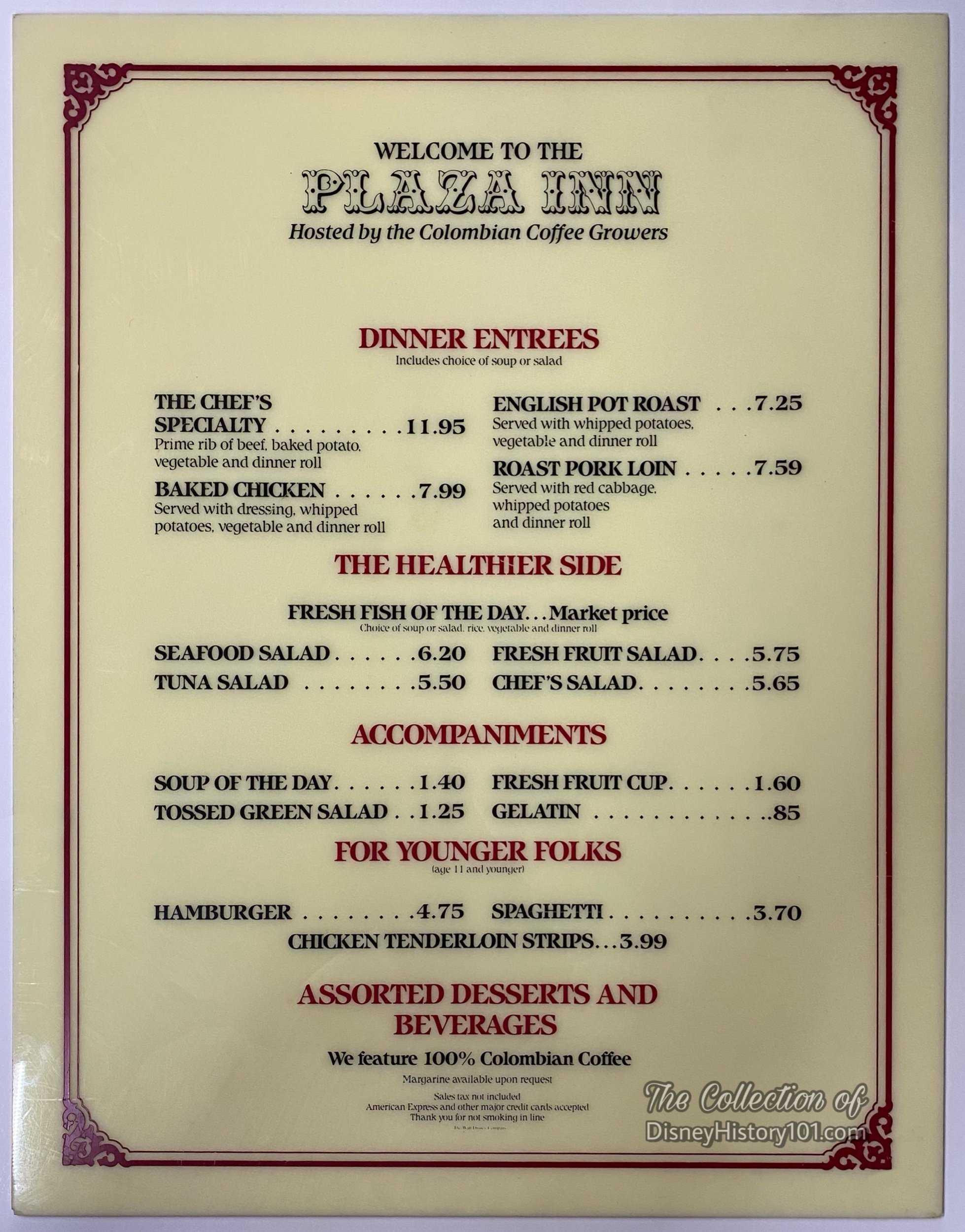
A vintage Plaza Inn Dinner Menu presented by Columbian Coffee Growers.
By 1996, the Main Street Food Operation Plaza Inn Buffeteria Service restaurant was hosted by Colombian Coffee Growers.
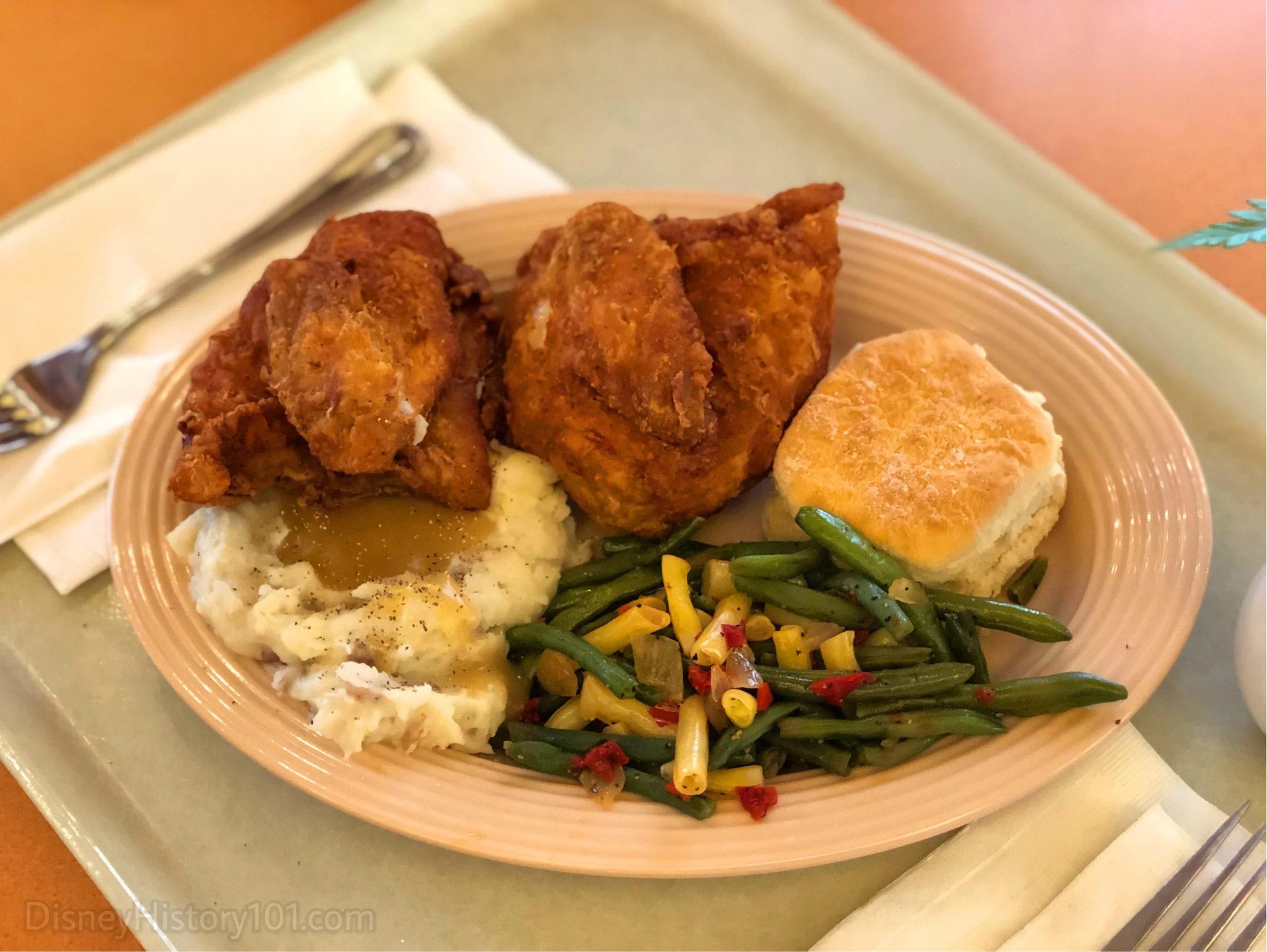
“A Fried Chicken Celebration!”
As for the Plaza Inn cuisine, guests may also enjoy seasonal additions to the menu like slow roasted Pot Roast, Chipotle - Pineapple Glazed Salmon, and of course golden brown fried Specialty Chicken a la carte! Remember, Swift’s Premium Chicken Dinners were the order of the day, at Swift’s Red Wagon Inn Restaurant in 1955. In the present, the spirit of the original chicken-based menu options live on. The Specialty Chicken Plate (usually three pieces of chicken, fried to a golden brown, seasoned with distinctive herbs and spices, served with mashed potatoes, buttermilk biscuit and mixture of vegetables) is still one of the most popular dishes in Disneyland!
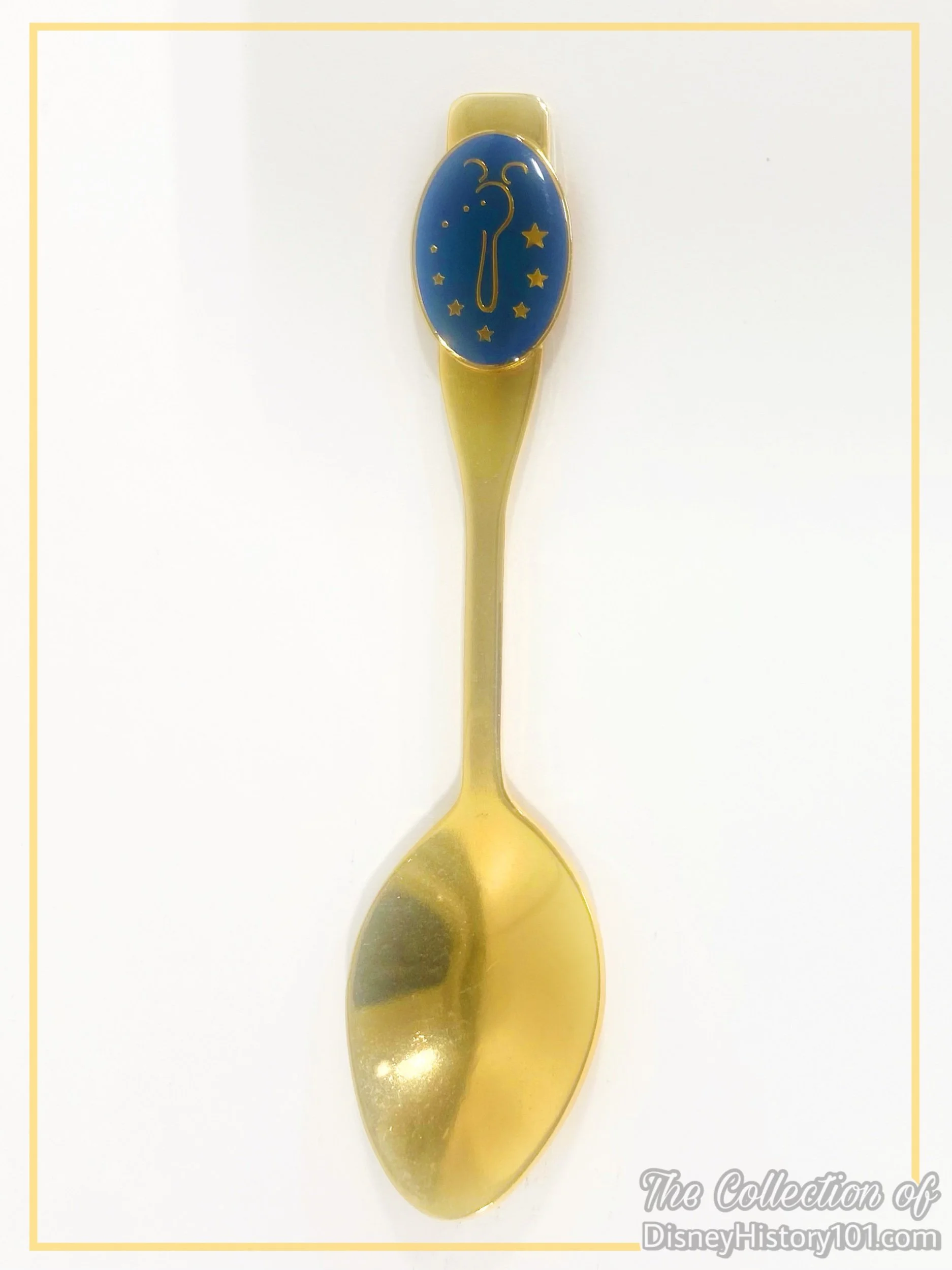
A Disneyland Food Operations Award issued to victorious Team Members, c.2000s.
When the Food and Beverage Team would contribute toward exceeding the Guest, Cast, and financial goals, these awards were issued.
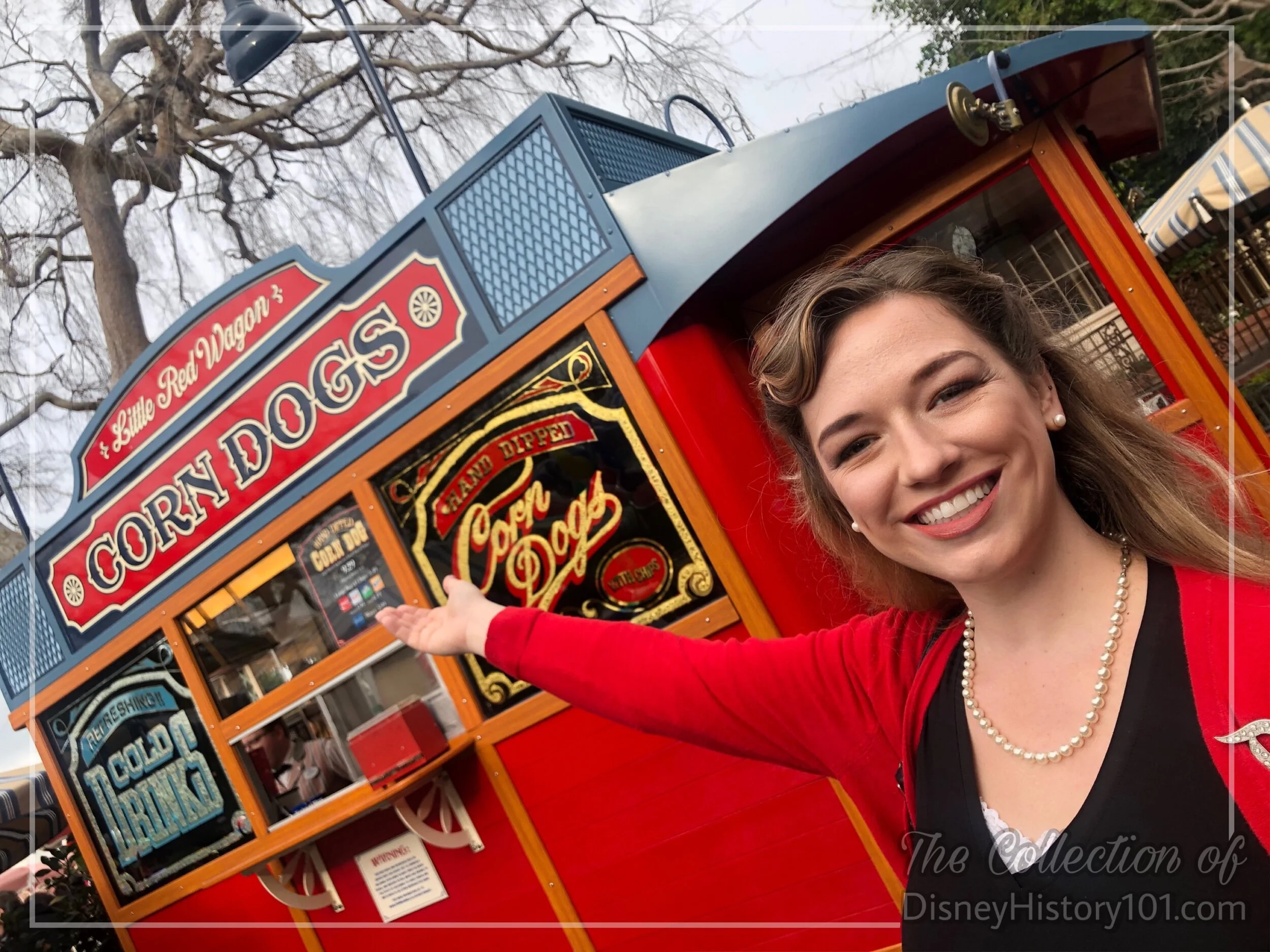
“Hot Dog” - Its the Little Red Wagon!
In the present, not all of the red wagons have disappeared from Disneyland. In fact this particular “Little Red Wagon” (located outside the restaurant) is the veritable “weenie” at the north end of Main Street. If you don’t believe me, then try one of their incredible Hand Dipped Corn Dogs!
As for the Plaza Inn, it has a legacy at Hong Kong Disneyland where it serves Cantonese cuisine in a family-style setting; hosted by Maxim's.
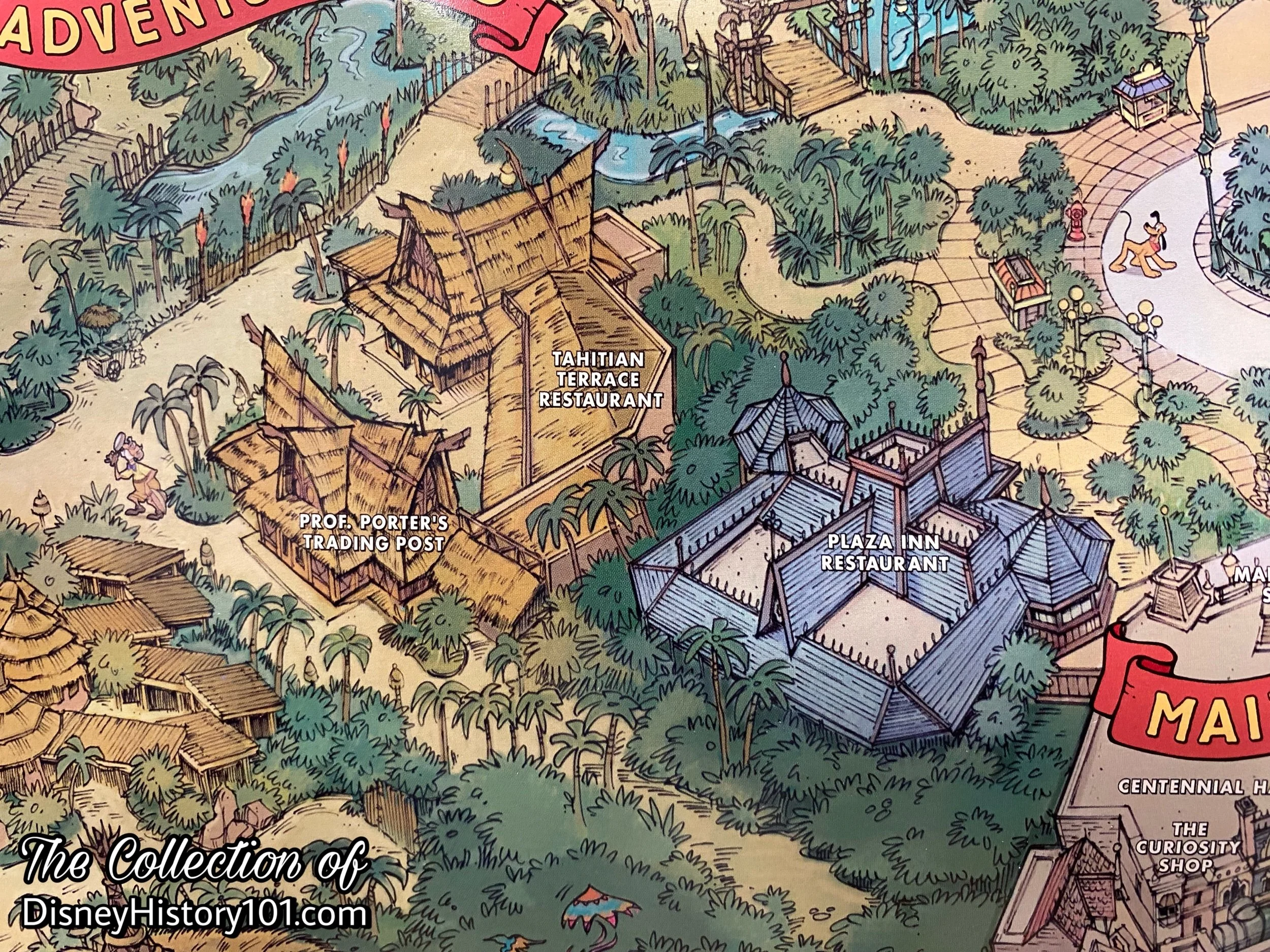
Hong Kong Disneyland.
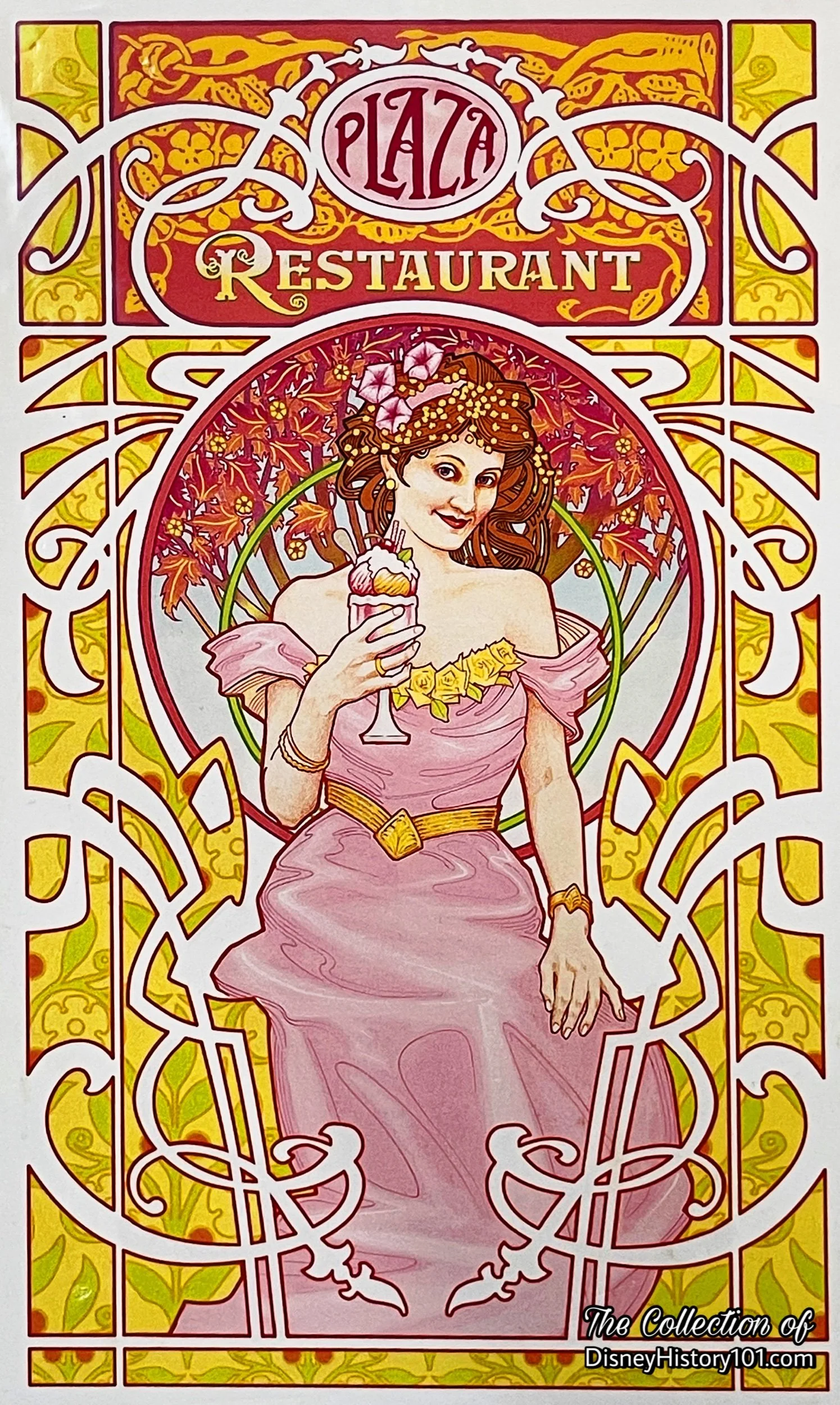
Plaza Restaurant at Walt Disney World
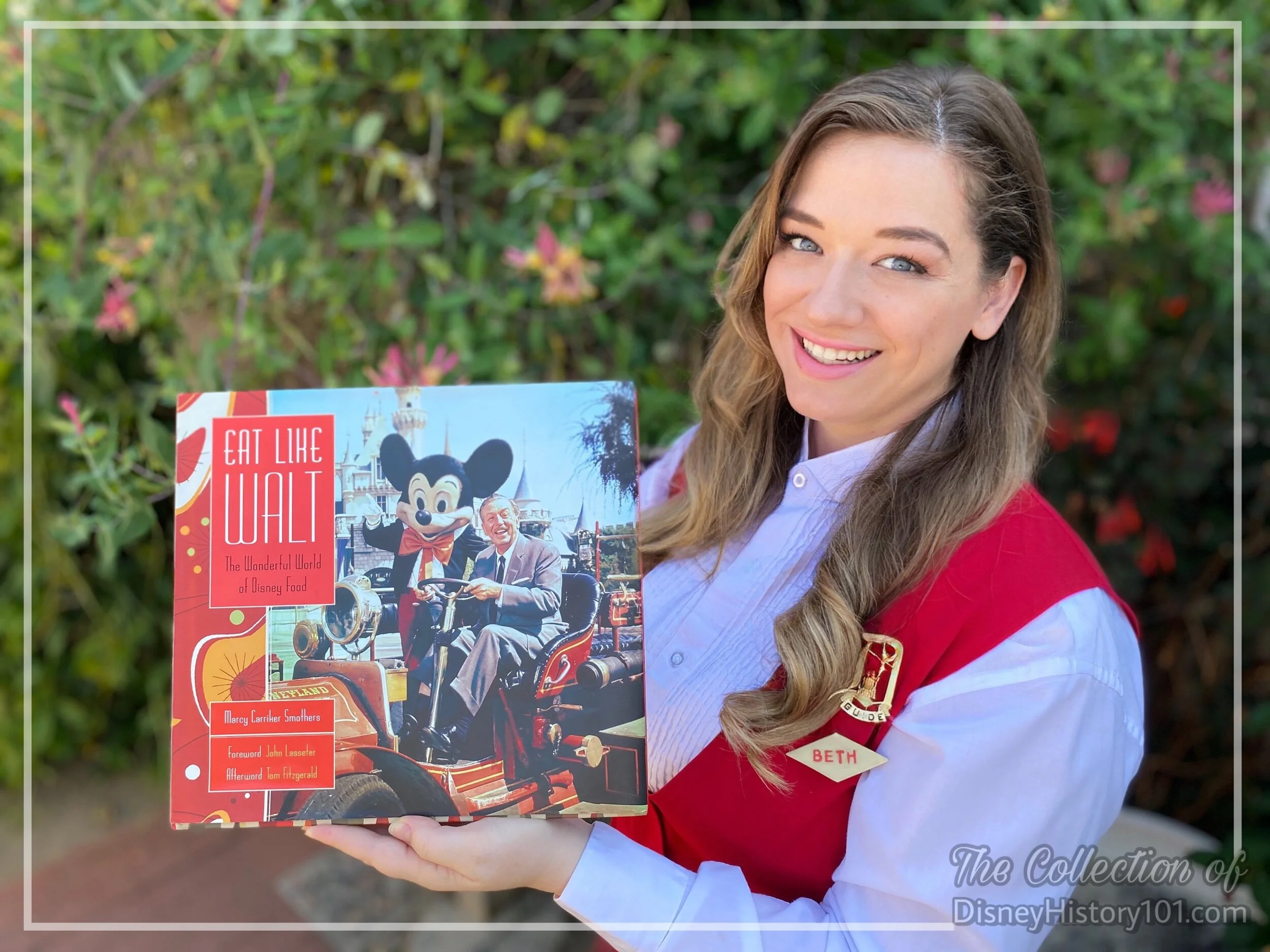
If you would like to read more about both Swift’s Red Wagon Inn and the Plaza Inn, it’s my pleasure to recommend adding Marcy Smothers’ “Eat Like Walt - The Wonderful World of Disney Food” to your personal Disney Home Library! Therein, Marcy has extensively researched and finely crafted several sections dedicated to seldom mentioned areas of the restaurant (including “The Hideout” and even the “Cast Cafeteria/ The Inn Between”). If you would like to bring the magic of Disneyland restaurants and concessions to your dining room table, “please step this way” toward www.eatlikewalt.com where Marcy has shared a few recipes for memorable Disneyland menu options, including that of Swift’s Red Wagon Inn Potato Salad. If only we could get that recipe for the Inn Between Carrot Cake!
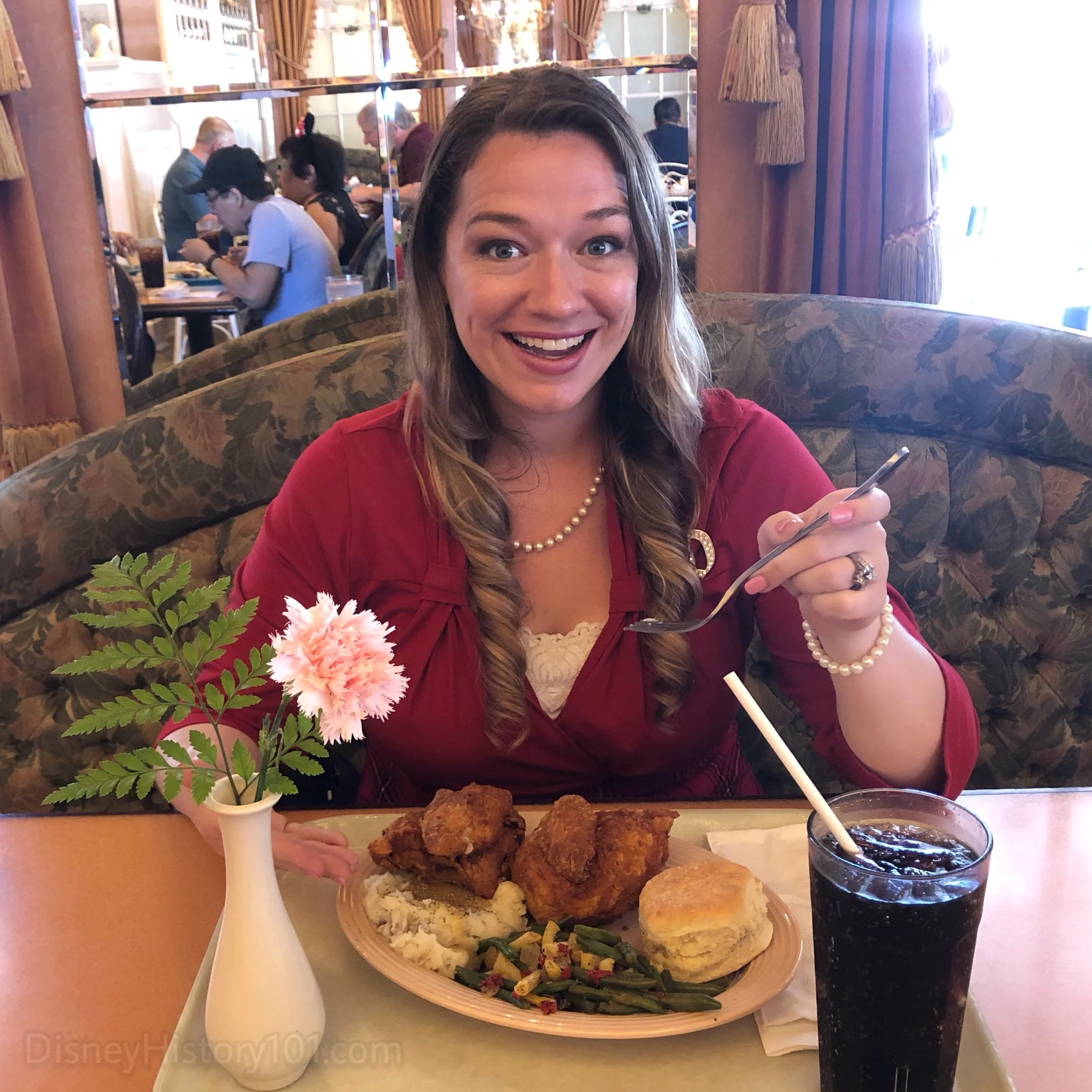
I hope you enjoyed this brief photographic retrospective of the Red Wagon Inn and Plaza Inn. Now, “let’s dine at Disneyland”!
Quisque iaculis facilisis lacinia. Mauris euismod pellentesque tellus sit amet mollis.