STAR TOURS
Star Wars © Lucasfilm, Ltd. and The Walt Disney Company.
STAR TOURS presented by M&Ms Chocolate Candies (January 9, 1987 - )
STAR TOURS presented by Energizer (by c.1996)
One can easily slip into the jargon of “ride,” but at Disneyland there is a "story behind the story" of every attraction, every attraction is a living experience for the guest. Disneyland ride-through attractions or adventures have officially been defined as an “individual show, ride, or exhibit designed to produce an entertaining Guest experience. Disney attractions stir the imagination, enliven the senses, and provide the participants with positive, innovative entertainment, which is the essence of the DISNEYLAND Show.” It is important to review the story of the attraction, tell the story, explain it, and create interest. This is the story of Star Tours, from the creative forces of Walt Disney Imagineering and George Lucas!
Disneyland attractions have officially been defined as an “individual show, ride, or exhibit designed to produce an entertaining Guest experience. Disney attractions stir the imagination, enliven the senses, and provide the participants with positive, innovative entertainment, which is the essence of the DISNEYLAND Show.”
Star Tours was certainly one attraction which has epitomized these purposes since its beginning. The adventure transports Guests on a thrilling sightseeing excursion to the Moon of Endor and the universe of Star Wars© guided by a fearless rookie pilot and mapped by the creative forces of Disney and George Lucas.
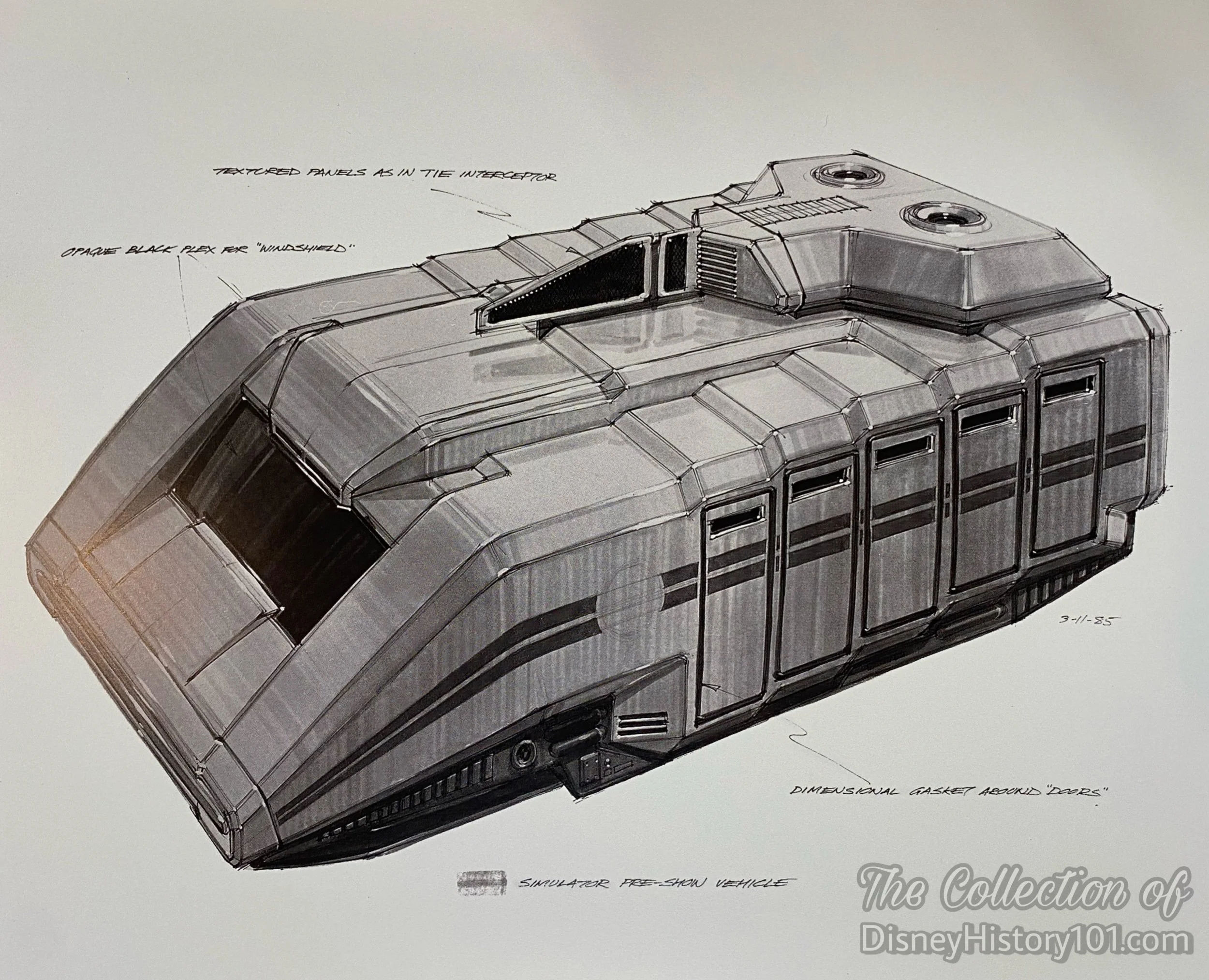
“Draw Concept” - The StarSpeeder concept by Gil Keppler, produced 1985; © Walt Disney Company.
“Blue Sky for Star Tours”
A short time ago… in a nearby galaxy… a big decision during the era of Michael Eisner’s and Frank Wells’ leadership would end in the first full Disney Parks’ attraction based on a non-Disney movie! “The ultimate thrill adventure from the creative forces of Disney and George Lucas” was now Tomorrowland’s premier attraction! In “One Little Spark! Mickey’s Ten Commandments and The Road to Imagineering,” Marty Sklar recalled: “We were meeting at the Imagineering offices in 1985 to discuss the Star Tours simulator attraction. The charge was to find a way to interpret George Lucas’ Star Wars films in a four-and-a-half minute experience. It was all new to all of us - it was the first simulator show of its kind when it opened little more than a year after concept work began. One of my colleagues complained about the number of cliches that seemed to flow from our Imagineering team members. That’s when George Lucas spoke up with the sage advice: ‘Don’t avoid the cliches - they are cliches because they work.’”
Walt Disney once said: “Since my outlook and attitudes are ingrained throughout our organization, all our people have this curiosity; it keeps us moving forward, exploring, experimenting, and opening new doors.” Walt also once divulged, “When we consider a new project, we really study it. And when we go into that new project, we believe in it all the way.” [“Walt Disney Productions Annual Report to Shareholders and Employees Fiscal Year Ended October 2, 1965”] Both of those philosophies had become traditional, core guiding principles for Walt Disney Imagineers by the time that Star Tours was in development.
“Concept”
The initial concepts for the show were formulated by Show Designers. Walt Disney Imagineers designed and developed concepts themed to the time, place, and story of Star Wars, capturing the Interest and partnership of George Lucas. Gil Keppler designed the pre-show vehicle which included textural panels, reminiscent of Tie Interceptors. John Stone created several inspirational acrylic art pieces depicting the thrills and chills of a “Star Wars Ride”.
“Script”
The scriptwriter contributes the storyline, narration, and dialogue to the show's conceptual development.
“Design – Storyboards to Models”
Storyboard – The storyboard enables artists and writers to visually organize the initial sequence of scenes for a show.
Design – The show exterior of the Starspeeder 3000 was designed by Walt Disney Imagineering (of Glendale, California), with key plans, elevations, and other drawings completed by Bechtel Civil, Inc. (of San Francisco, California). Each Starspeeder would ultimately contain a RX024 (REX) Audio-Animatronics figure, a Monitor, Film and Projection System and even Strobe light effects.
Show Set Design – Designers took the concept from storyboard and scale models to actual set designs and blueprints.
From set designs and storyboards, model builders constructed Show Models - miniatures of the various show scenes. Under the direction Tony Baxter, Walt Disney Imagineers John Stone, Tom Morris, Bruce Gordon, Chris Tietz, Joe Rhode, & John Horney prepared a 1/20-scale model of a New Tomorrowland tailored to the “Disney - Lucas” joint adventure.
Next, “Audio-Animatronics” figures were sculpted in miniature, before being sculpted in full-size. The show’s mood and atmosphere were enhanced by the special effects and lighting created by the WED "Illusioneering" laboratory. Meanwhile, engineers developed the facility, ride and show systems to meet design specifications.
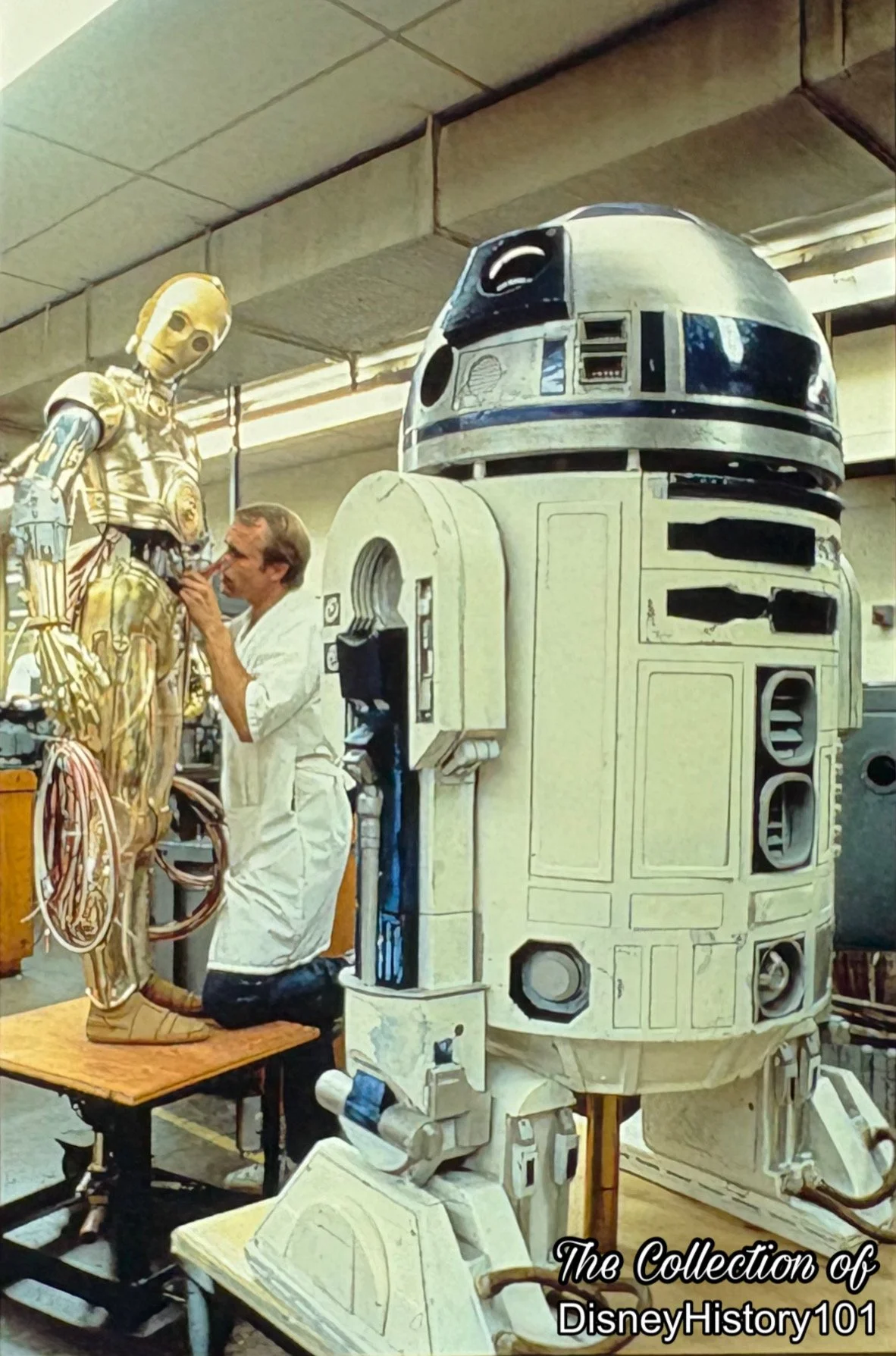
The real Star Tours "Droidnostics" department assembles the Audio-Animatronics figures of C-3PO and R2-D2.
“Audio-Animatronics”
Developed by WED Enterprises, this amazing system utilizes pneumatics hydraulics and electronics to animate human, animal, and other three-dimenstonal figures. Many Disneyland attractions feature Audio-Animatronics figures. This attraction employed Audio-Animatronics® - the Disney-designed system that combines sound, mechanics and electronics for three-dimensional animation.
Sculpting, Casting & Molding – As mentioned, the “Audio-Animatronics” figures were first sculpted in miniature, before being sculpted in full-size. At MAPO, several plaster molds were made of each full-size clay figure. From those, a fiberglass “shell” parts were cast and covered with the flexible or firm parts.
Electric and Mechanical Manufacture & Assembly – All the while, MAPO designed the electronic and mechanical components, which were then manufactured and assembled. After that, the fiberglass “shell” case was attached over the electronic at mechanical workings of the Audio-Animatronics figures.
It’s a fact that all droids leaving the system must cleared by customs control. Ordinarily, MAPO would next send the figures back to WED for embellishments like fur, feathers, paint and wigs. But all of the Audio-Animatronics figures were robotic androids. For the C-3PO Audio-Animatronics Figure, Walt Disney Imagineers utilized some parts of the authentic gold-leaf plated C-3PO costume (worn by Anthony Daniels during the filming of Star Wars). The G2-9T repair droidswere actually repurposed Audio-Animatronics Geese Quartet frames from America Sings.
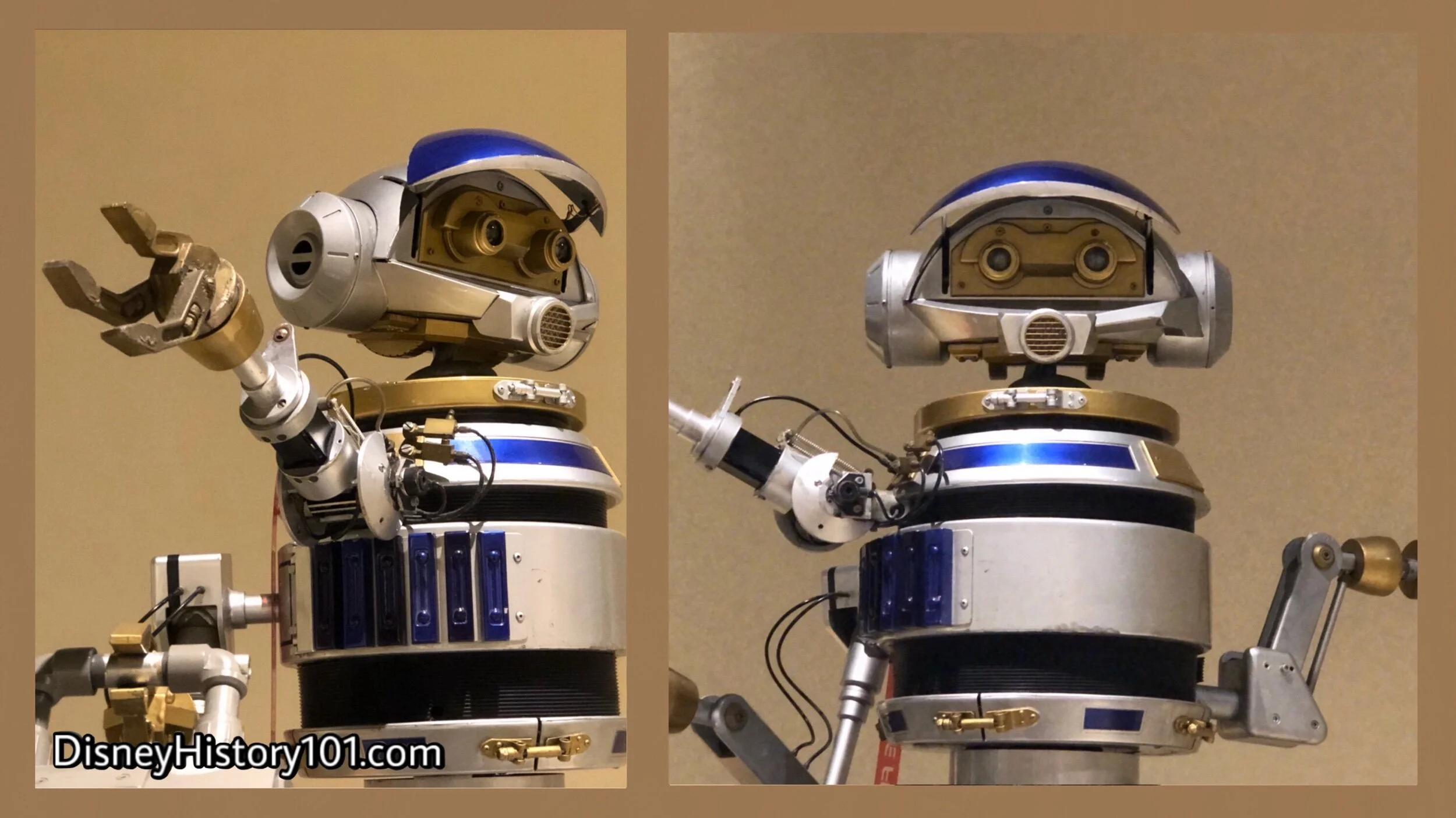
A Captain RX (Rex) Audio Animatronics ®️ figure
Audio – Dialogue for C-3PO, RX-24 and the rest of the cast was recorded. C-3PO was voiced by Anthony Daniels, while it’s breakout star, the memorable Captain REX was voiced by Poul Reubens.
Then the final show tracks including sound effects, dialogue, narration and music score were mixed.
Animation – Next, Walt Disney Imagineers used a console and computer to program the life-like movements of the show’s three-dimensional “Audio-Animatronics” figures. This included Captain REX, who “never got used to his programming”.
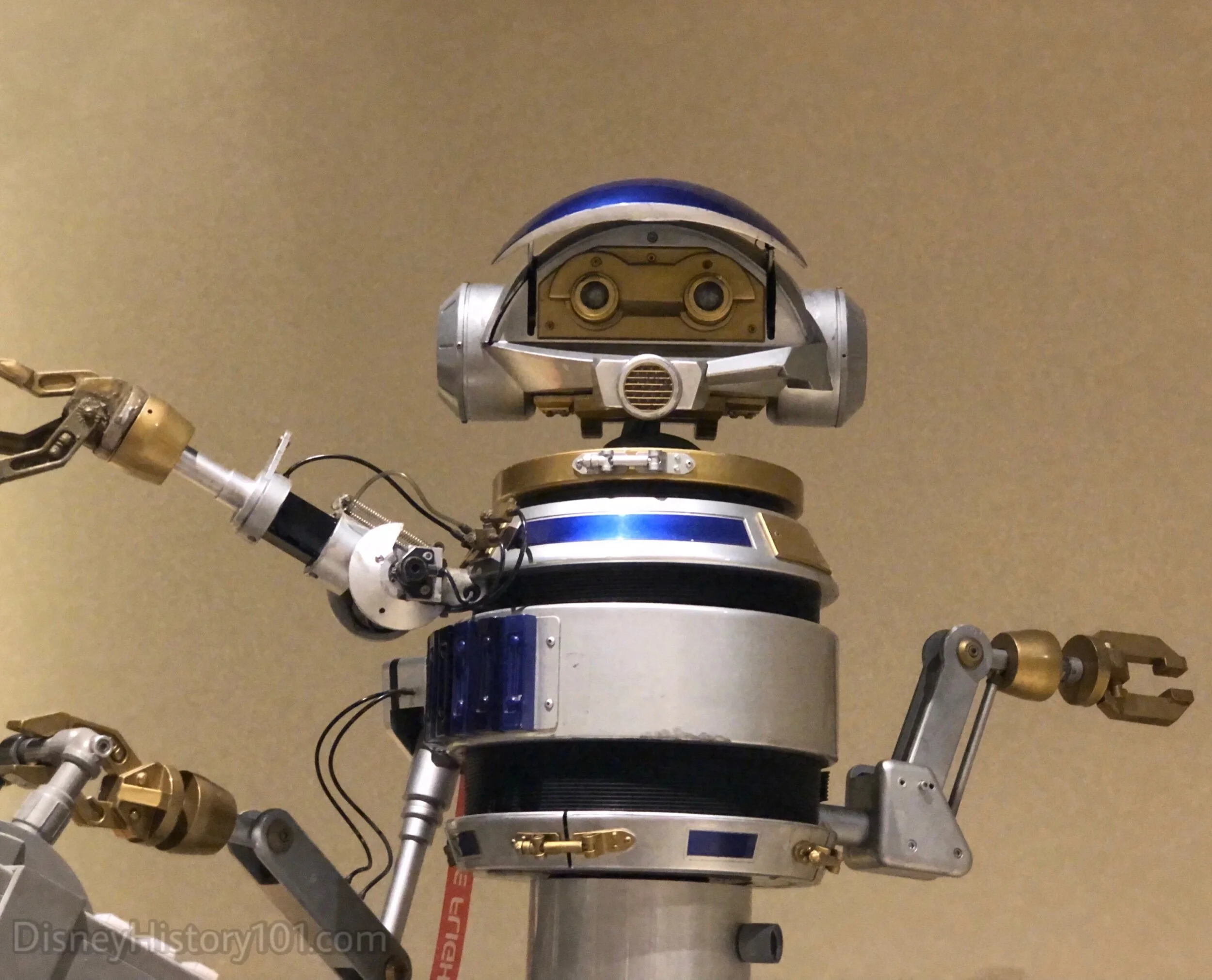
Captain RX (Rex) Audio Animatronics ®️ figure
One of the most memorable cast members was the Captain REX Audio-Animatronics ®️ Figure who first piloted StarSpeeders at “light speed for Endor”, in Star Tours at Disneyland.
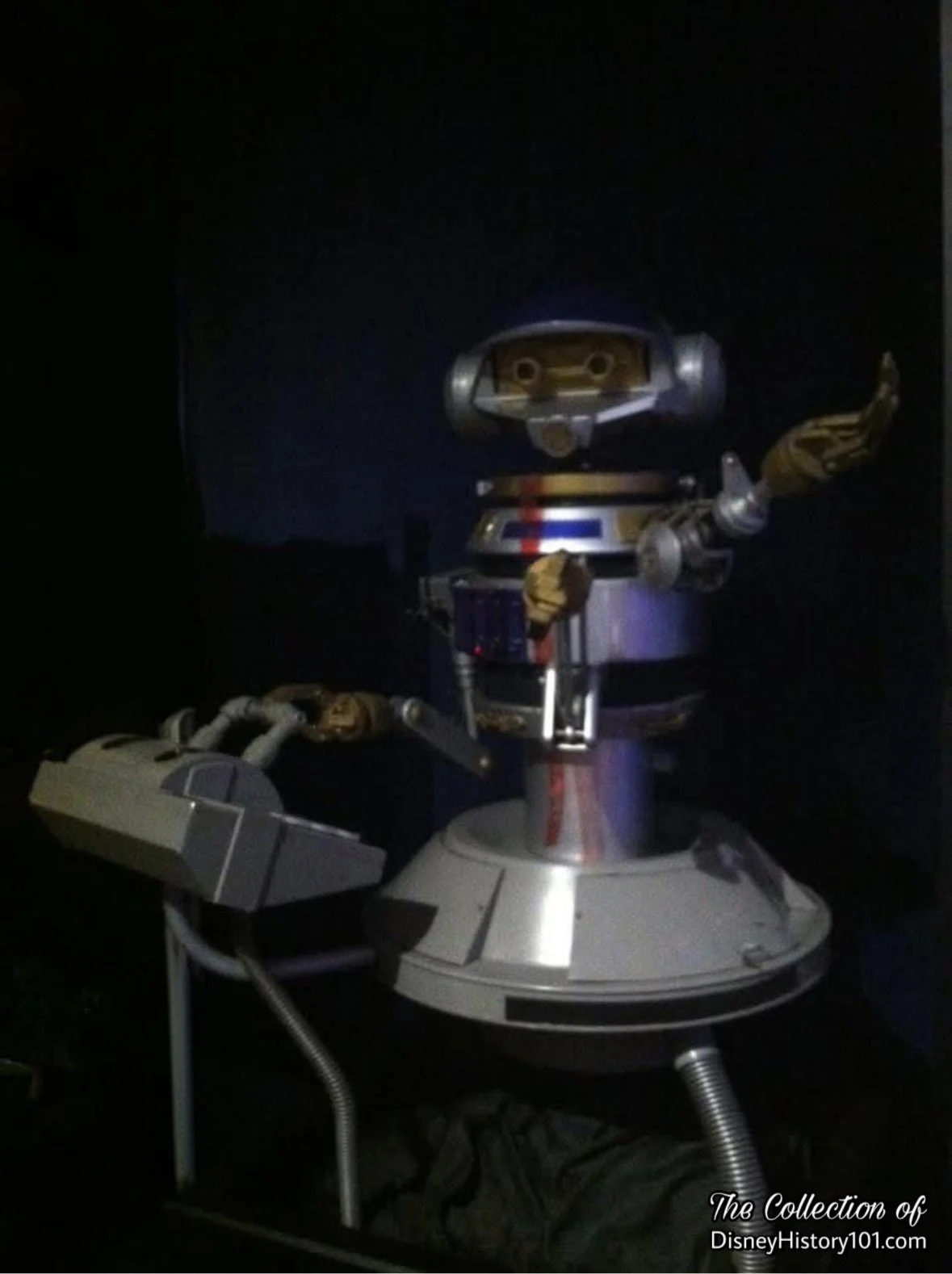
Captain RX (Rex) Audio Animatronics ®️ figure
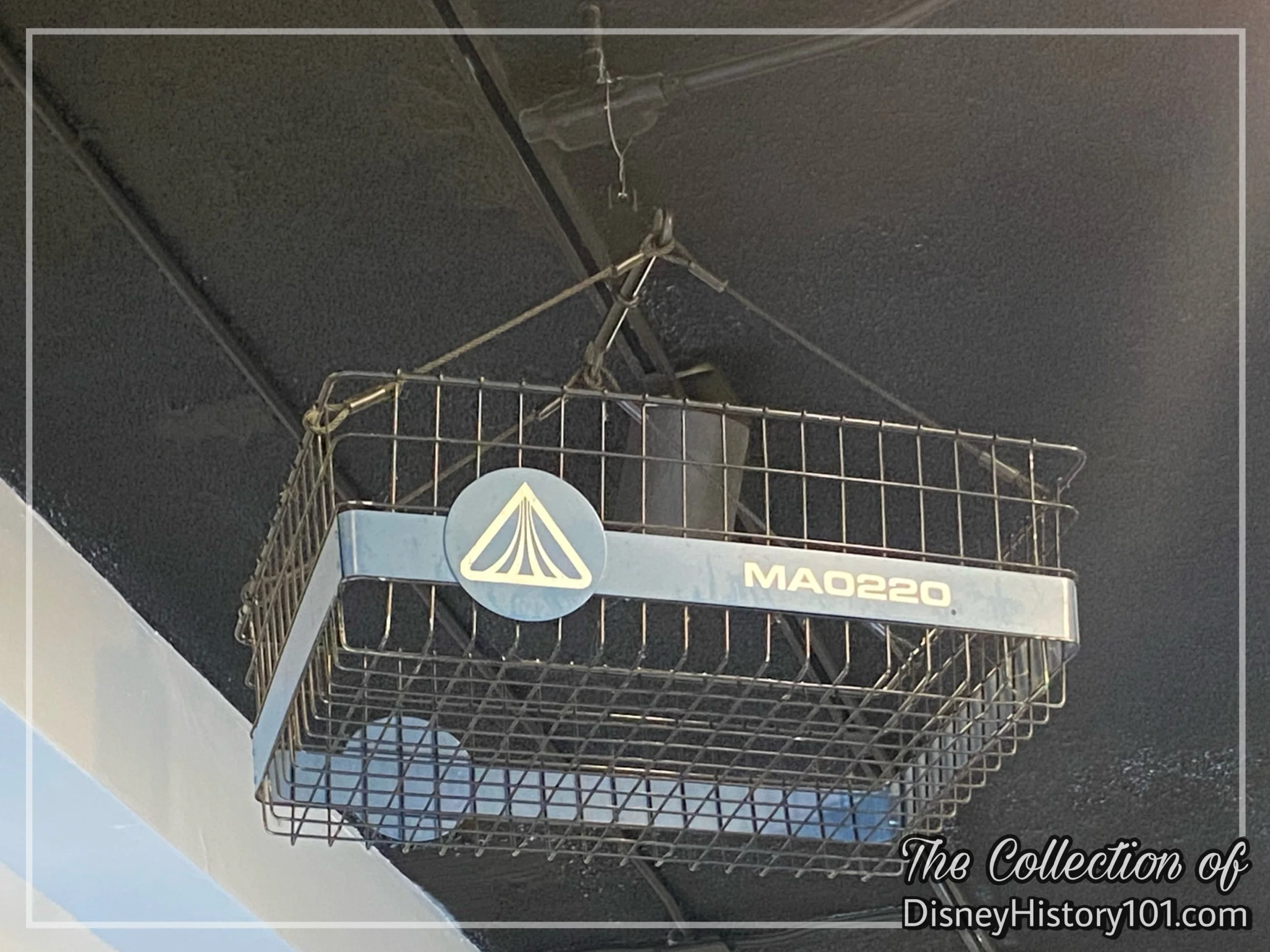
Do you remember those baskets that moved through the Droidnostics Center?
“Show Set Design”
Since 1955, Disneyland queue areas and “Audience Waiting Areas” were especially designed as part of the attraction to make the guest's time waiting in line as comfortable as possible. During Walt’s day, they were equipped with live entertainment to set the mood for the forthcoming show. After Walt, Disneyland “queue lines” continue to be designed as part of the immersive experience for Guests.
For Star Tours, full-sized show sets were constructed from smaller models at the Tujunga facility. Next, many fixtures and props for the show were carefully selected to give attention to story consistency in all elements of the show.
Unique one-of-a-kind props were also individually fabricated. These would be installed in the physical structure that was being constructed at the site.
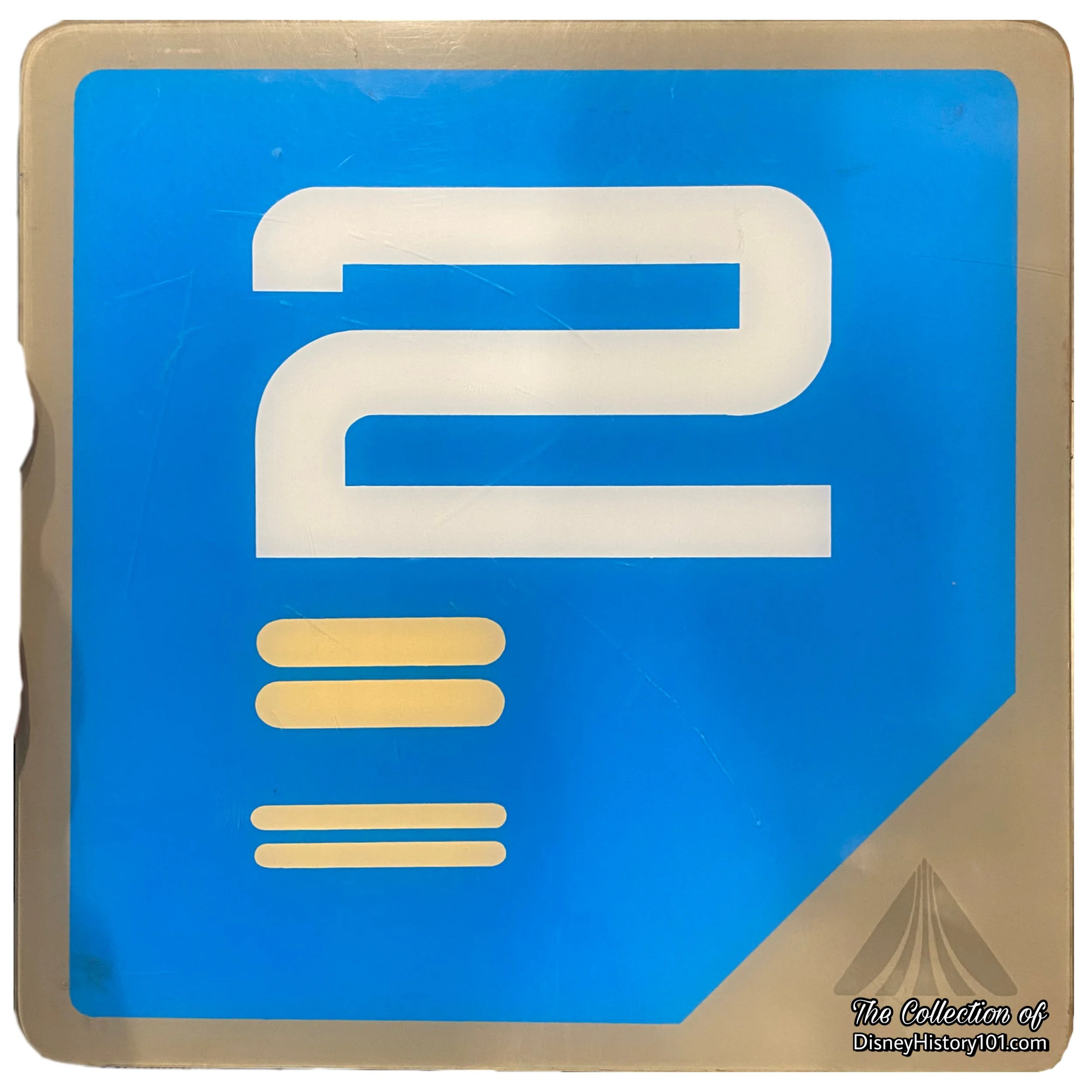
Star Tours Loading Area “Gate 2” Sign that embellished the storytelling of the Loading Area.
Meanwhile, all of the show’s graphics and signing were also being individually designed.
Little stage dressing details factored into the immersive storytelling. For instance, audiences’ attention would be captured by this “Gate 2” sign when they heard the announcement: “There has been a gate change for Star Tours flight 114, StarSpeeder service to Endor. Flight 114 will now be departing for Gate Number 2. This is a gate change only. Thank you.”
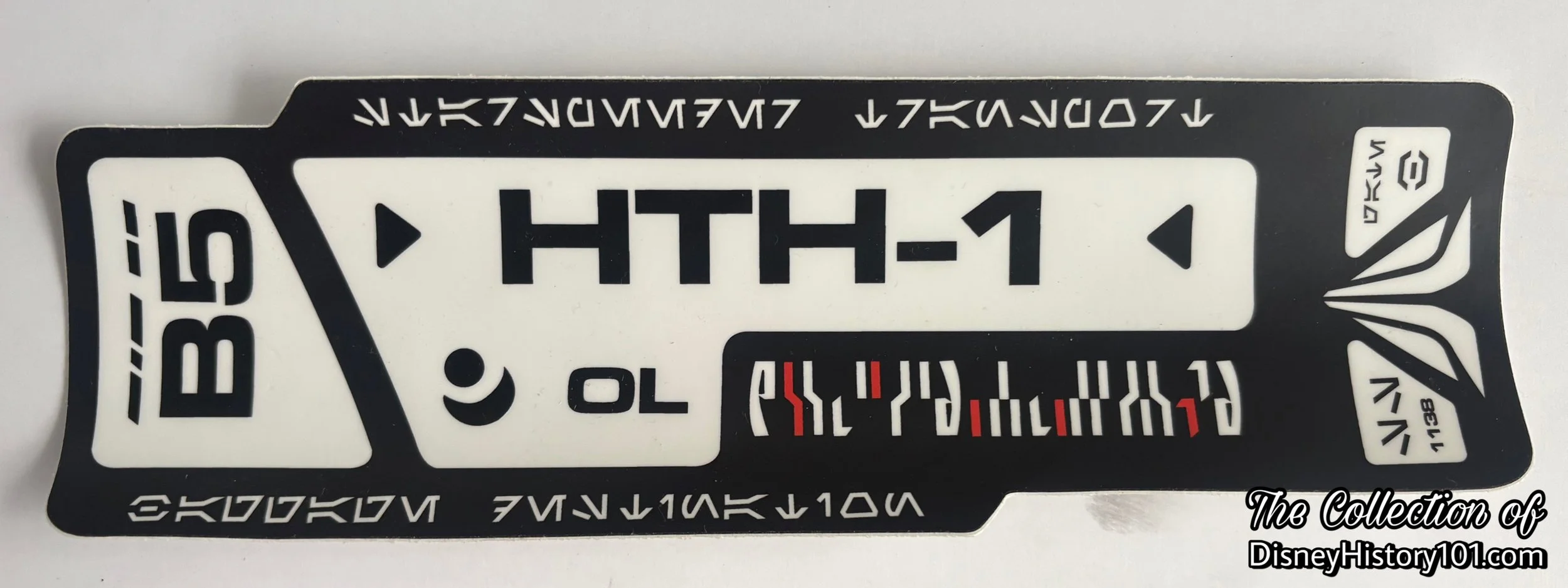
A Star Tours Set Dressing Decal reading “StarSpeeder Transport… SS 1138… Gate B…Baggage Destination” in Galactic Standard Aurebesh.
In the original Star Tours, homage to George Lucas’ first feature film was made through an announcement heard in the queue: “Will the owner of a red and black landspeeder vehicle ID THX-1138 please return to your craft? You're parked in a no-hover area.”
Since then, “THX” has appeared in numerous aspects of the story, and worked its way into the mythology of the Star Wars universe.
However, more than references to George Lucas were worked into the Star Tours story. Another announcement heard in the queue heralded: “Star Tours flight 55 is now ready for boarding at gate number 3.”
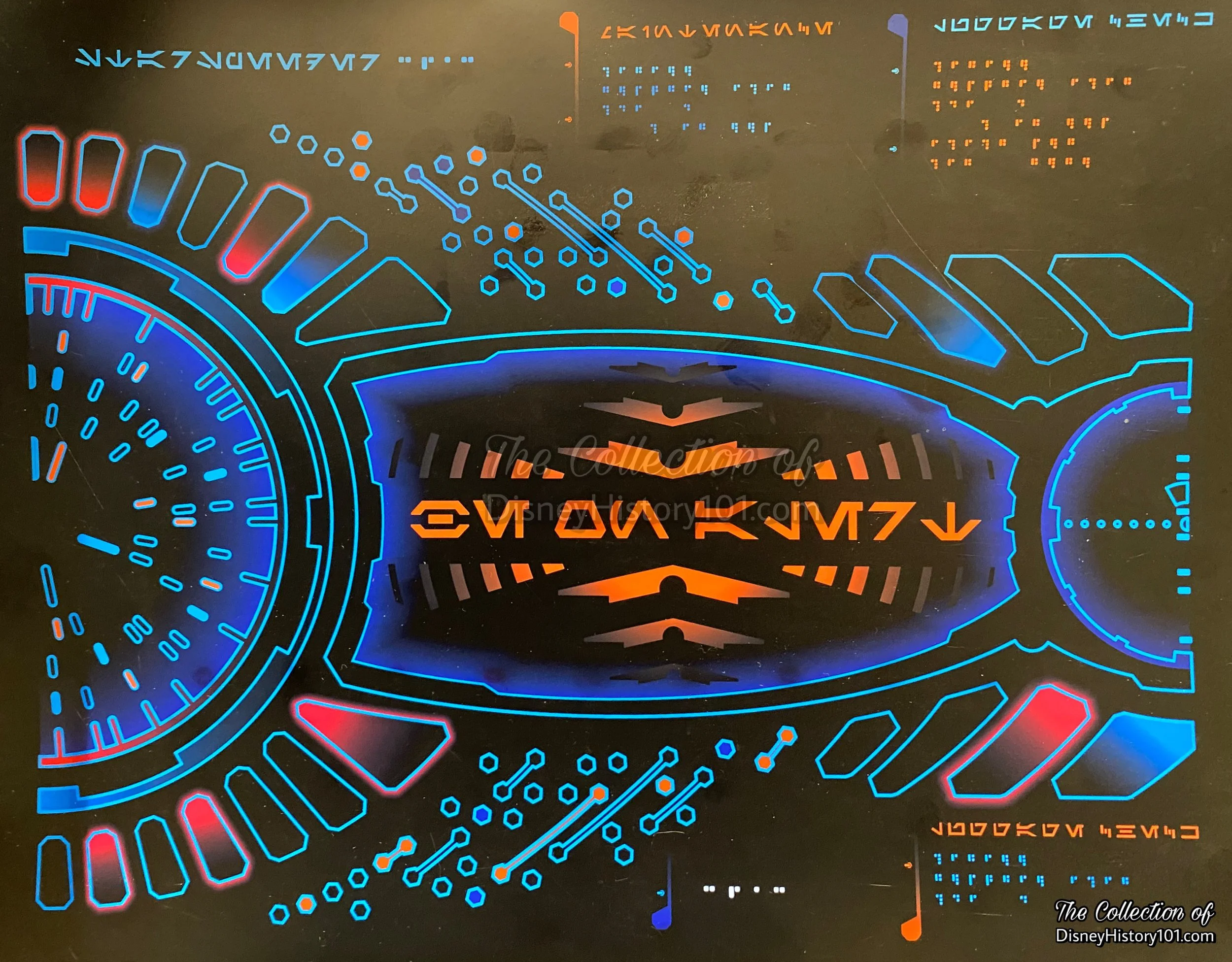
“Be on alert” – this Starspeeder Screen Transparency is announcing mid-flight “Maintenance” and multiple “Luggage Check” alerts.
Special Effects & Lighting – The show’s mood and atmosphere were enhanced by the those aforementioned special effects and lighting created by the WED “Illusioneering” laboratory. This included the liquid crystal display and illuminated Status Board, in Show Scene 1. All of these were prepared, awaiting installation in the show building.
Film – The attraction’s entire main show film ran at 70mm/30 frames per second. The Audio/Video System was through a Videodisc Player.
Air Conditioning – A practical mechanical application of Air-conditioning technology was installed to control the dust, and was essential where projection equipment and film was used. It looks like droids aren’t the only ones that could suffer from a little dust contamination.
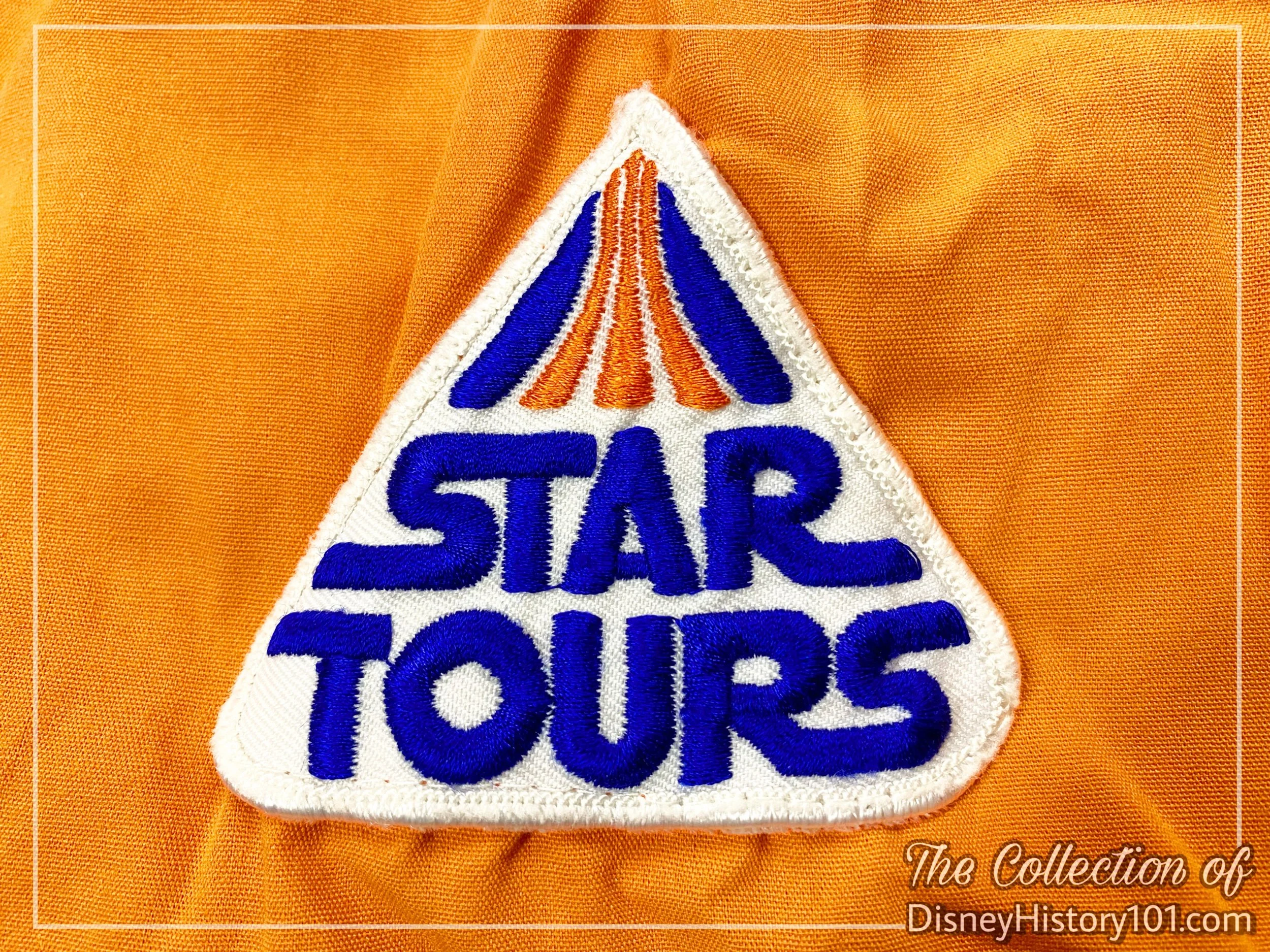
Disney-MGM Studios Star Tours Cast Member Costume Patch
Entertainment Costuming – Meanwhile, Disneyland Wardrobe provided the designs and furnished costumes for Attractions Hosts and Hostesses, which would also give careful attention to story consistency. Disneyland and Walt Disney World each prepared their respective park’s costuming.
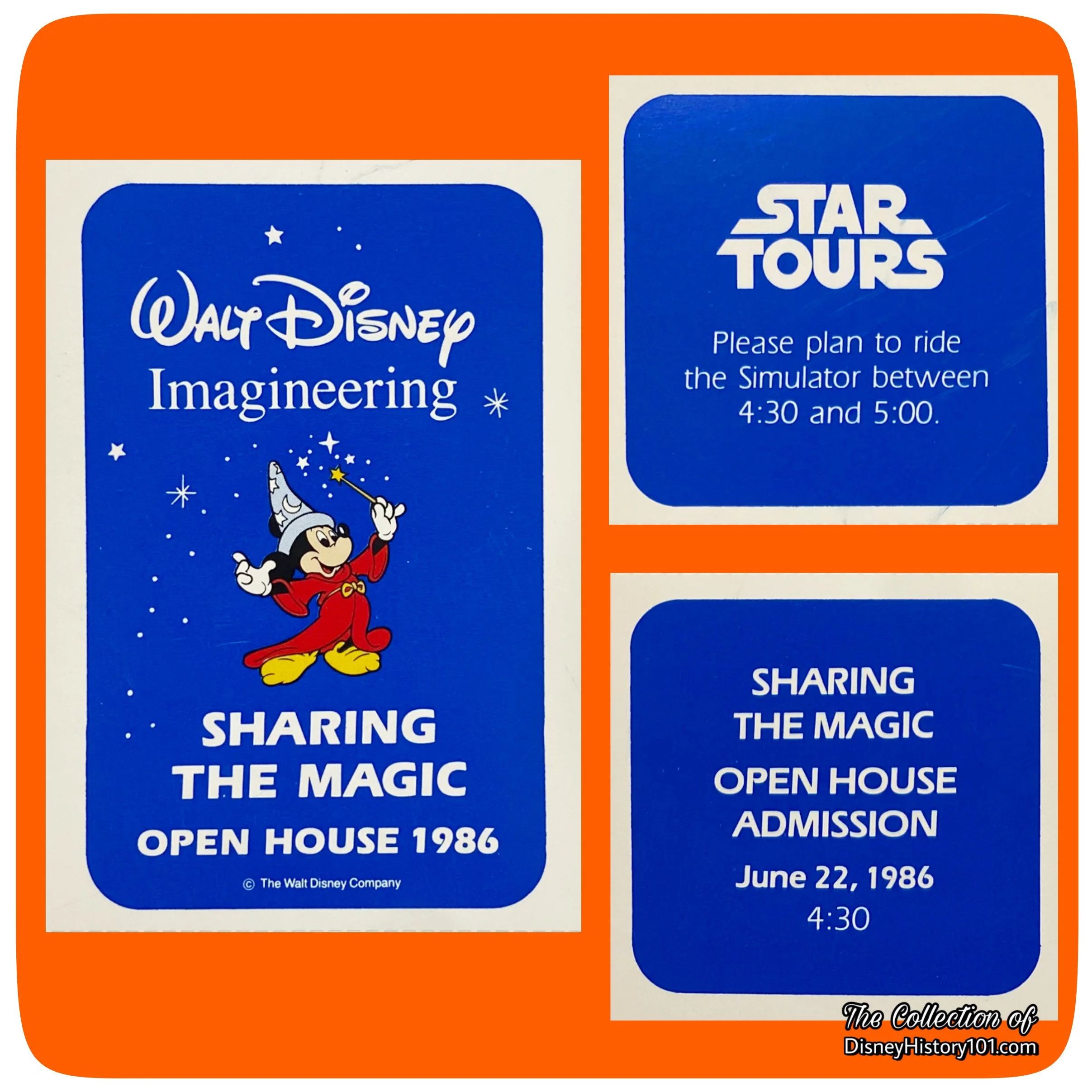
Walt Disney Imagineering “Sharing the Magic” Open House Admission Labels advertising the preview of Star Tours.
On July 22, 1986, a very limited number of Walt Disney Imagineers stepped board a simulator for a preview of Star Tours, at the Walt Disney Imagineering “Sharing the Magic” Open House Event.
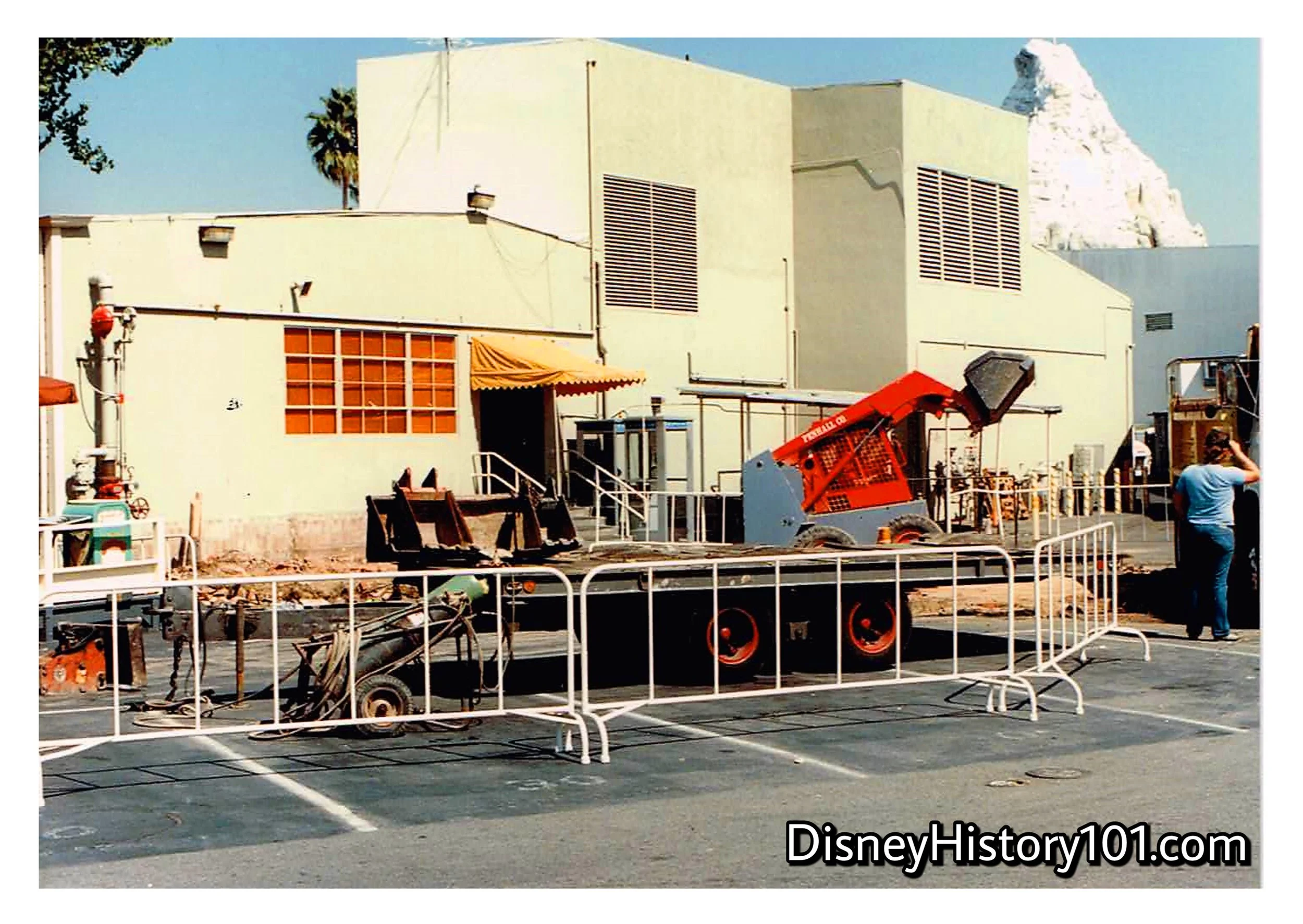
Heavy equipment was assembled in a Backstage area of Tomorrowland.
“Construction”
On September 3, 1985, construction commenced on site. Steadily, the project would take shape, with a scheduled grand opening of January 9, 1986.
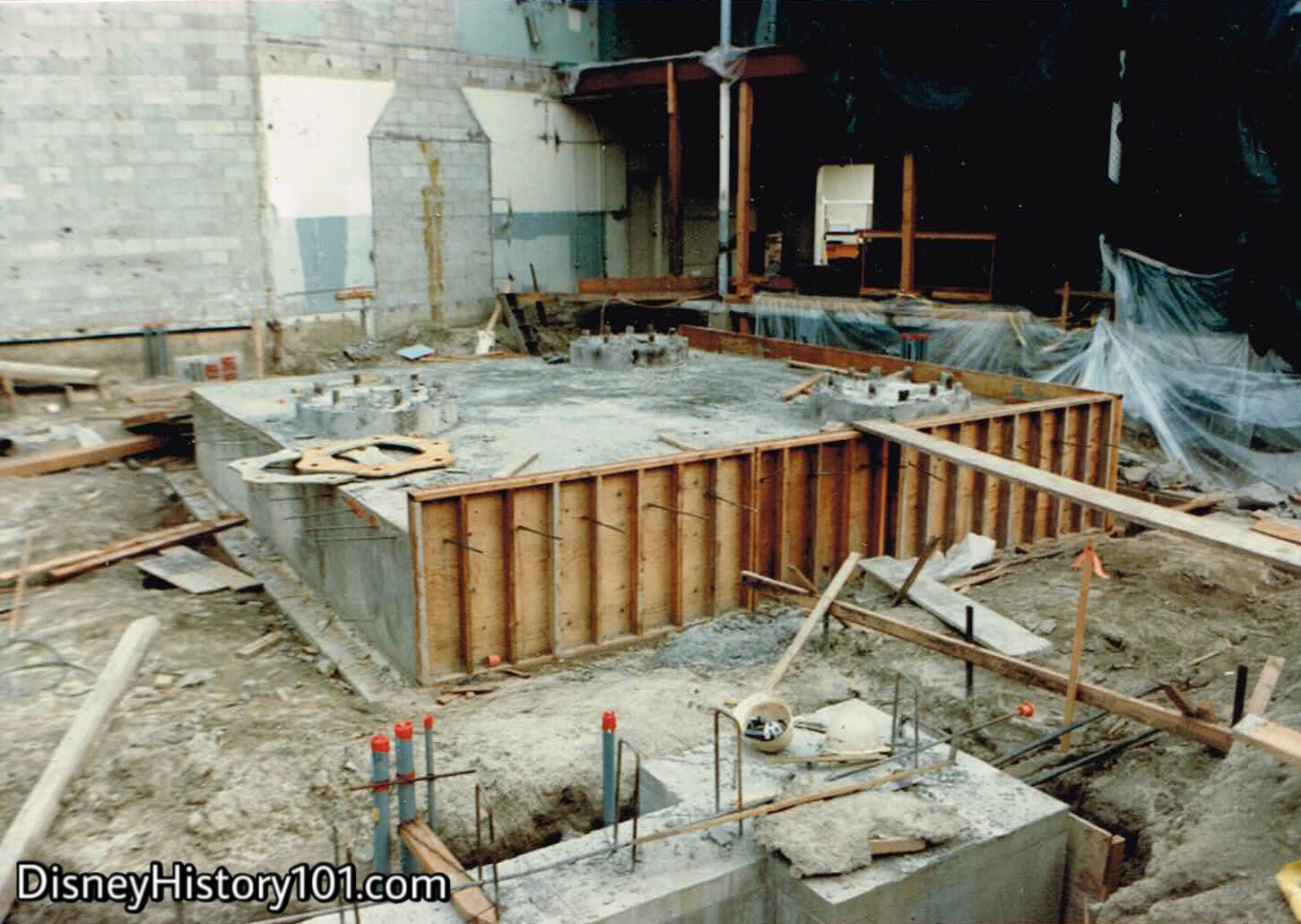
One of the concrete foundations that would support the Motion Simulator Base Mounts and help stabilize the four motion simulators.
One of the earliest jobs involved cast-in-place concrete foundations, which were poured within wooden frames on the construction site. Underneath the concrete foundations were hydraulic pipe trenches, and other essential elements related to function of the motion simulator.
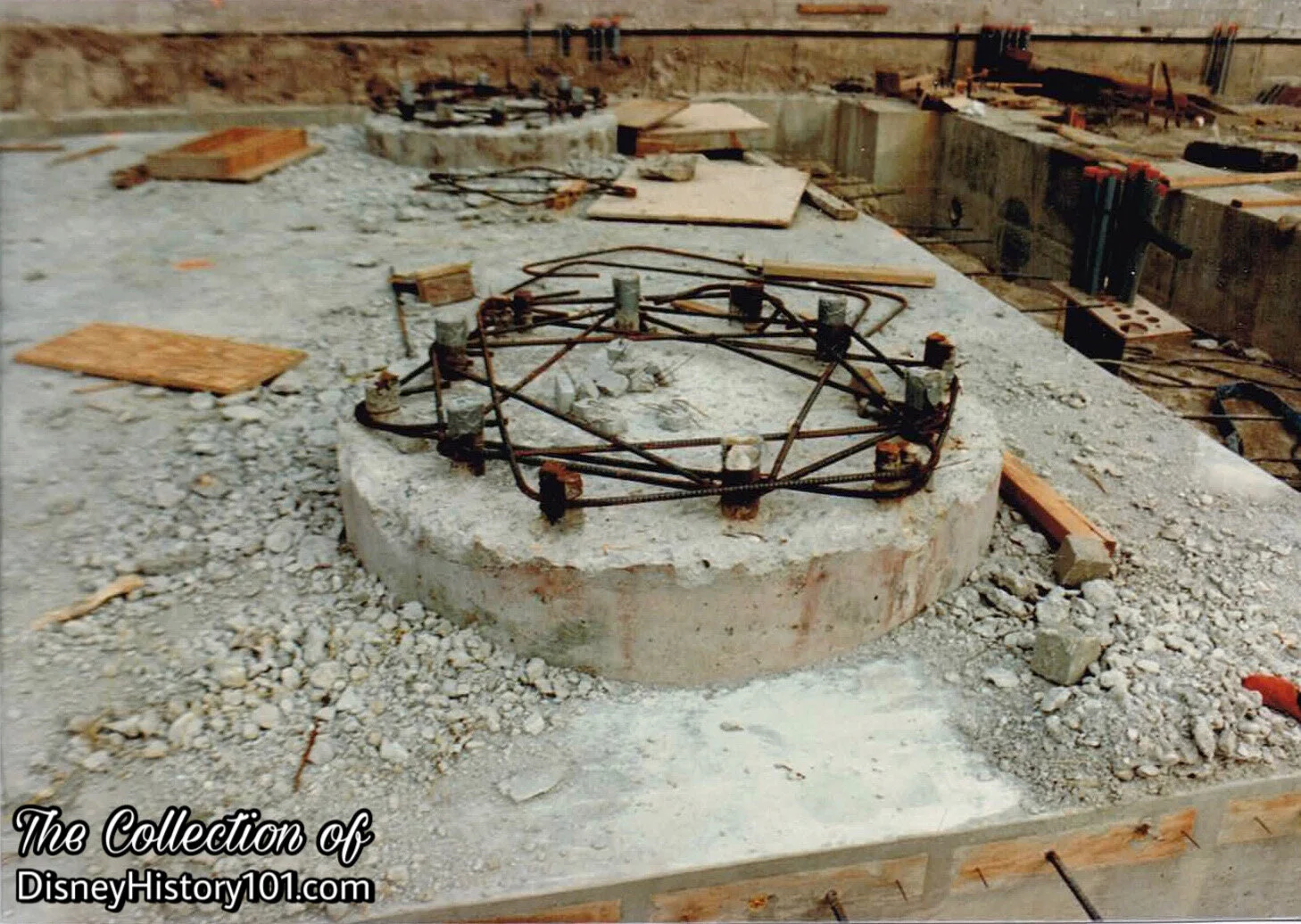
Wood “formwork” was removed from the concrete foundations for the Motion Base Mounts.
Above, the wood “formwork” was removed from the concrete foundations.
The reinforced concrete mat would become a foundation for bolting the legs of the motion simulator. This dense mass of a thick concrete foundation block would act as a dampener, distributing massive stress evenly across the earth, ensuring the ATLAS simulator machinery stayed perfectly level and never broke loose over millions of ride cycles. Without this concrete foundations, the intense, repeating shaking, jolts, and drops from the hydraulic pistons would transfer directly into the building’s main framework, causing severe structural fatigue and rattling the entire show building.
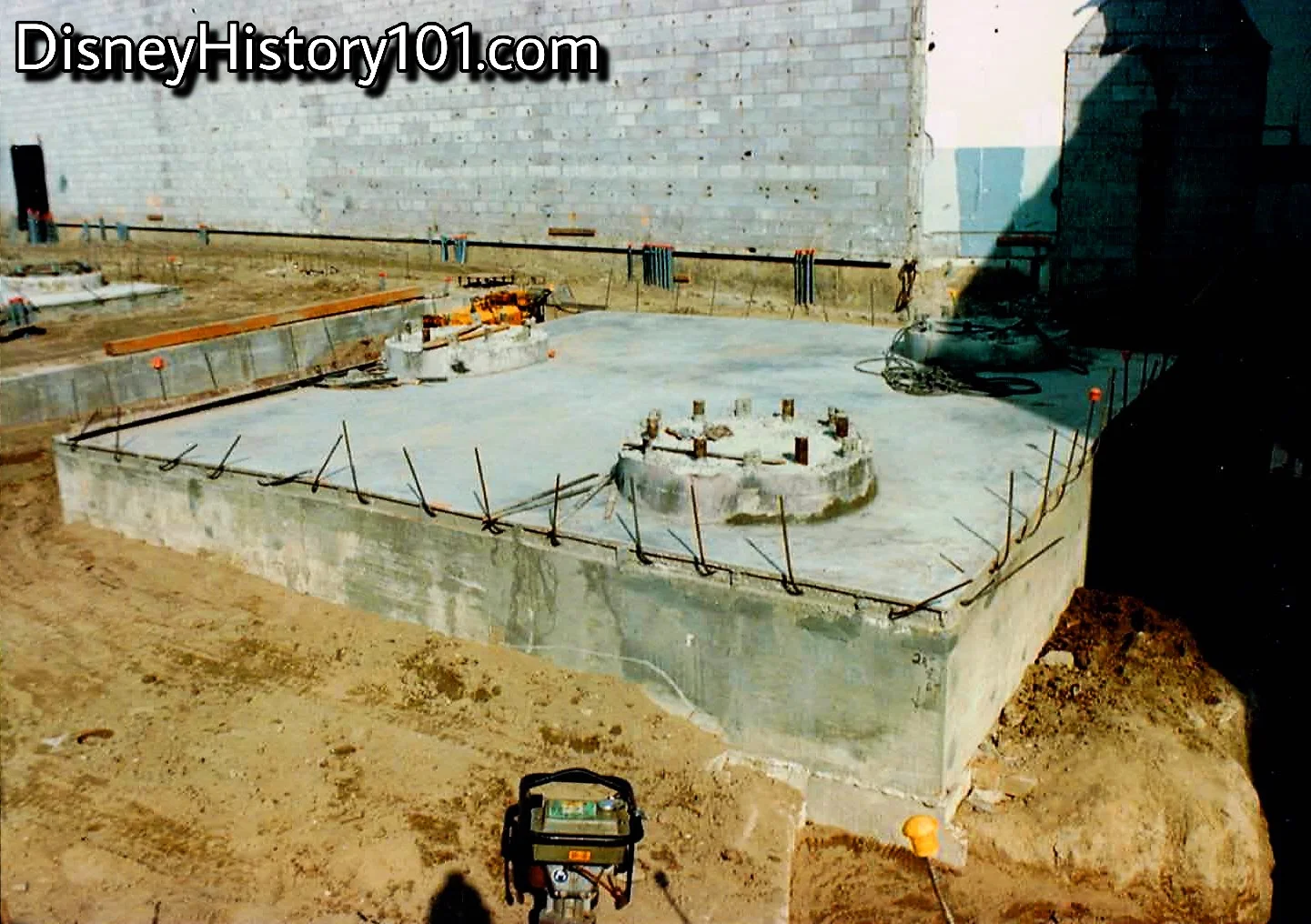
One of the concrete foundations of the Motion Base Mounts that would helped stabilize the four motion simulators.
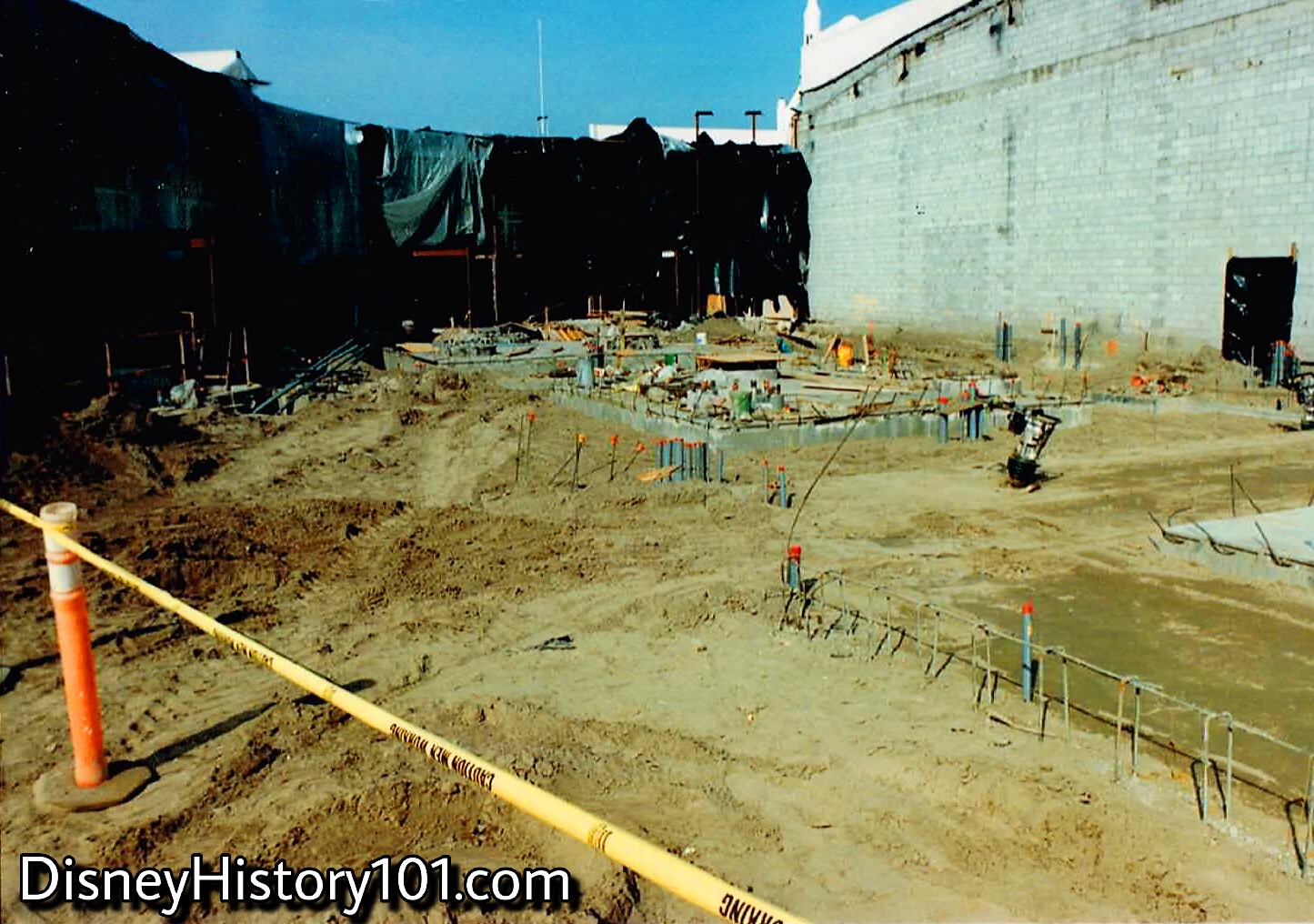
One of the concrete foundations of the Motion Base Mounts that would help stabilize the four motion simulators.
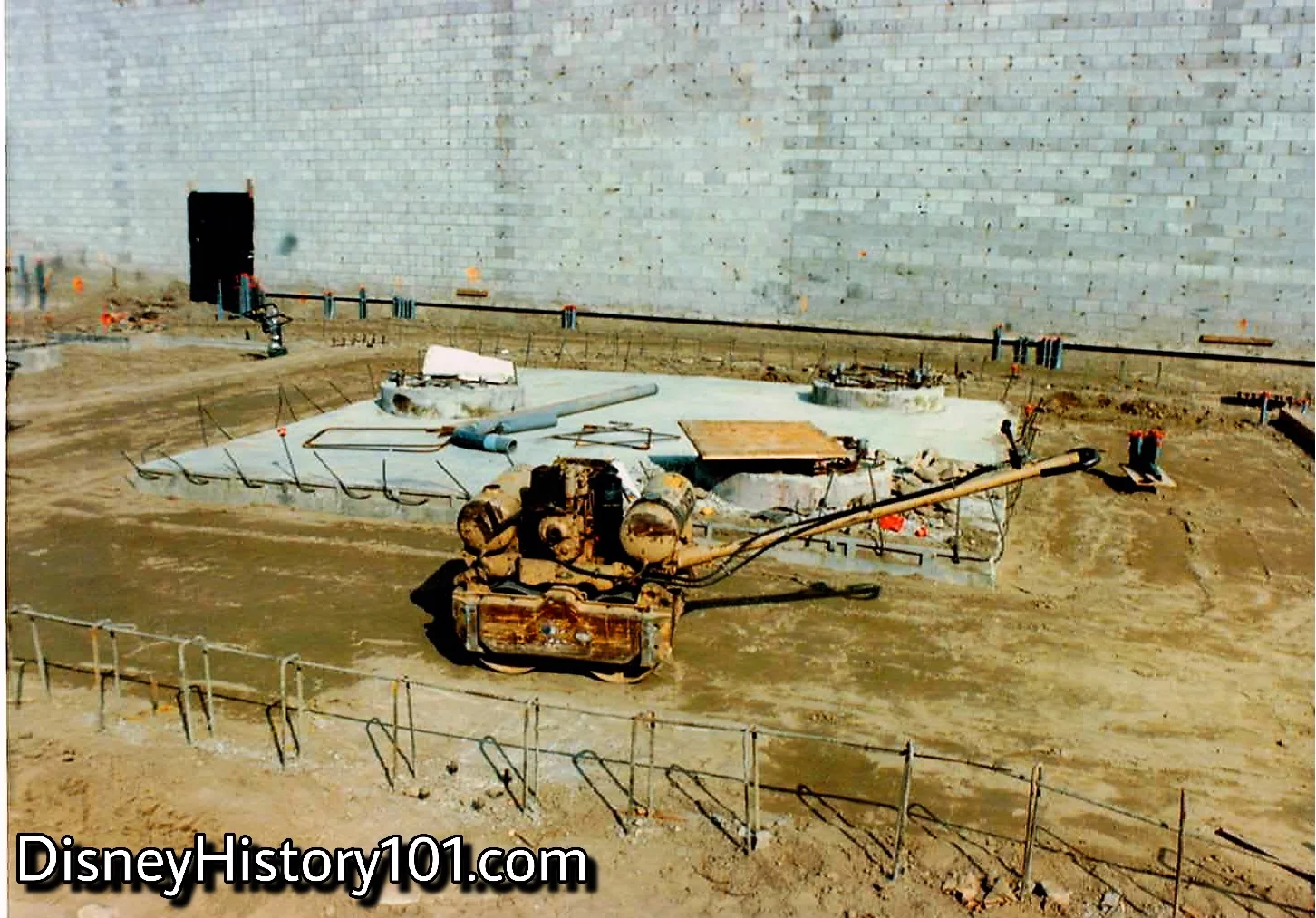
One of the Motion Base Mounts that would help stabilize the four motion simulators.
Rolling compaction commenced, compacting and grading the dirt soil around the motion simulator base. This created a stable, dense base that could safely support the weight of the show building, and further fortified the concrete foundation of ATLAS motion simulator bases.
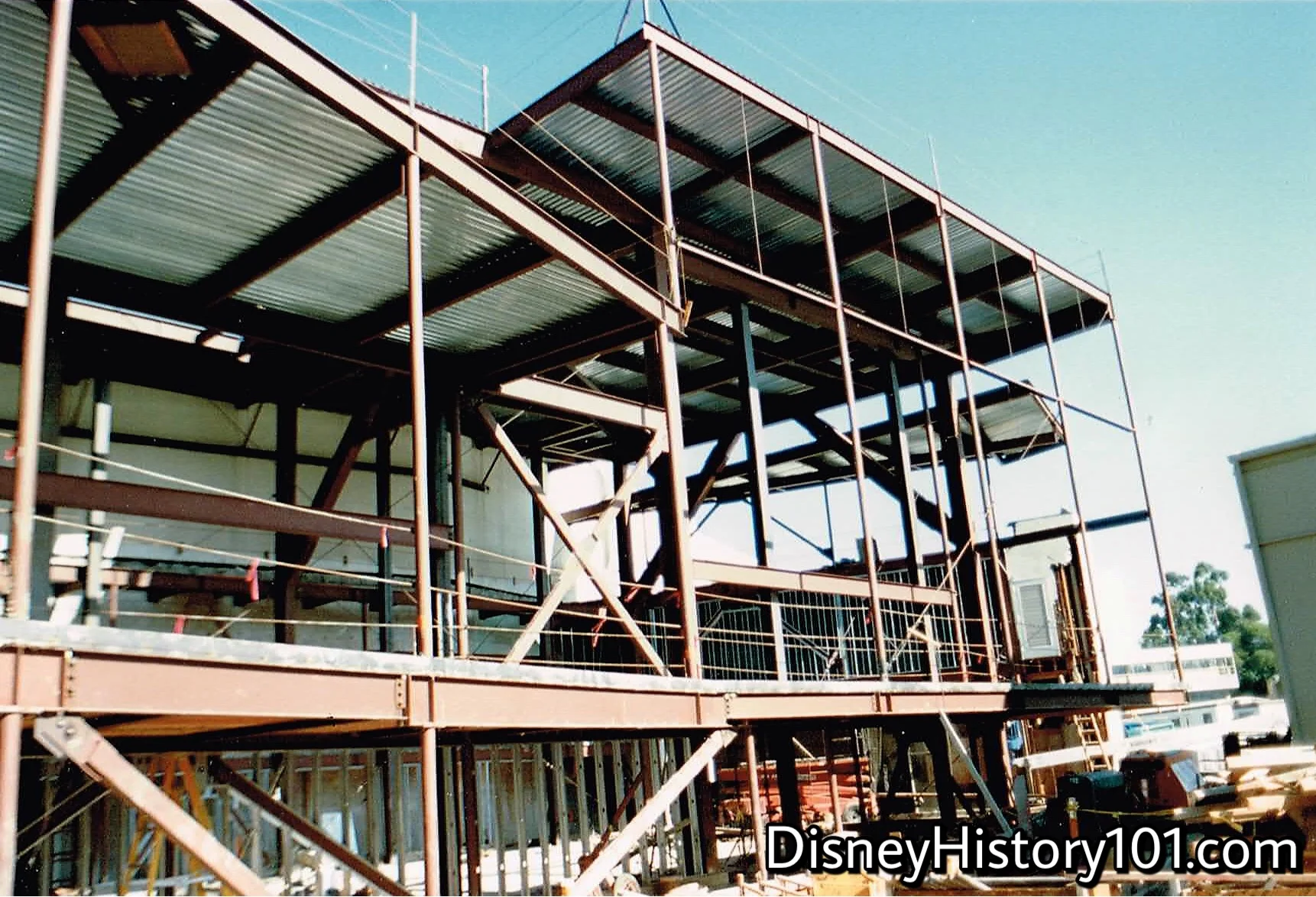
The physical structure is constructed.
The steel skeleton frame of the Star Tours show building began to take shape, with a corrugated steel roof deck crowning its steel columns and horizontal girders.
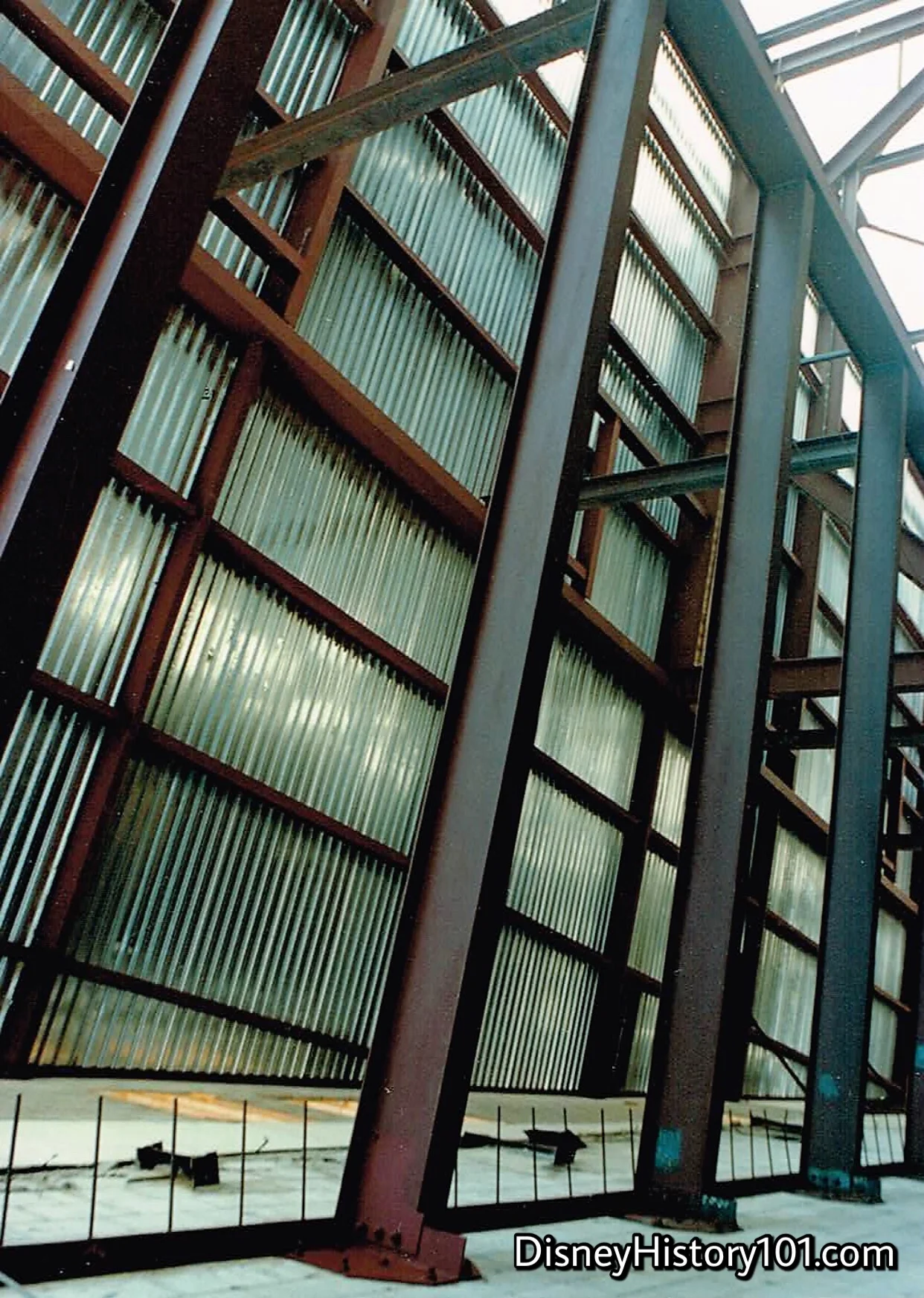
The physical structure is constructed.
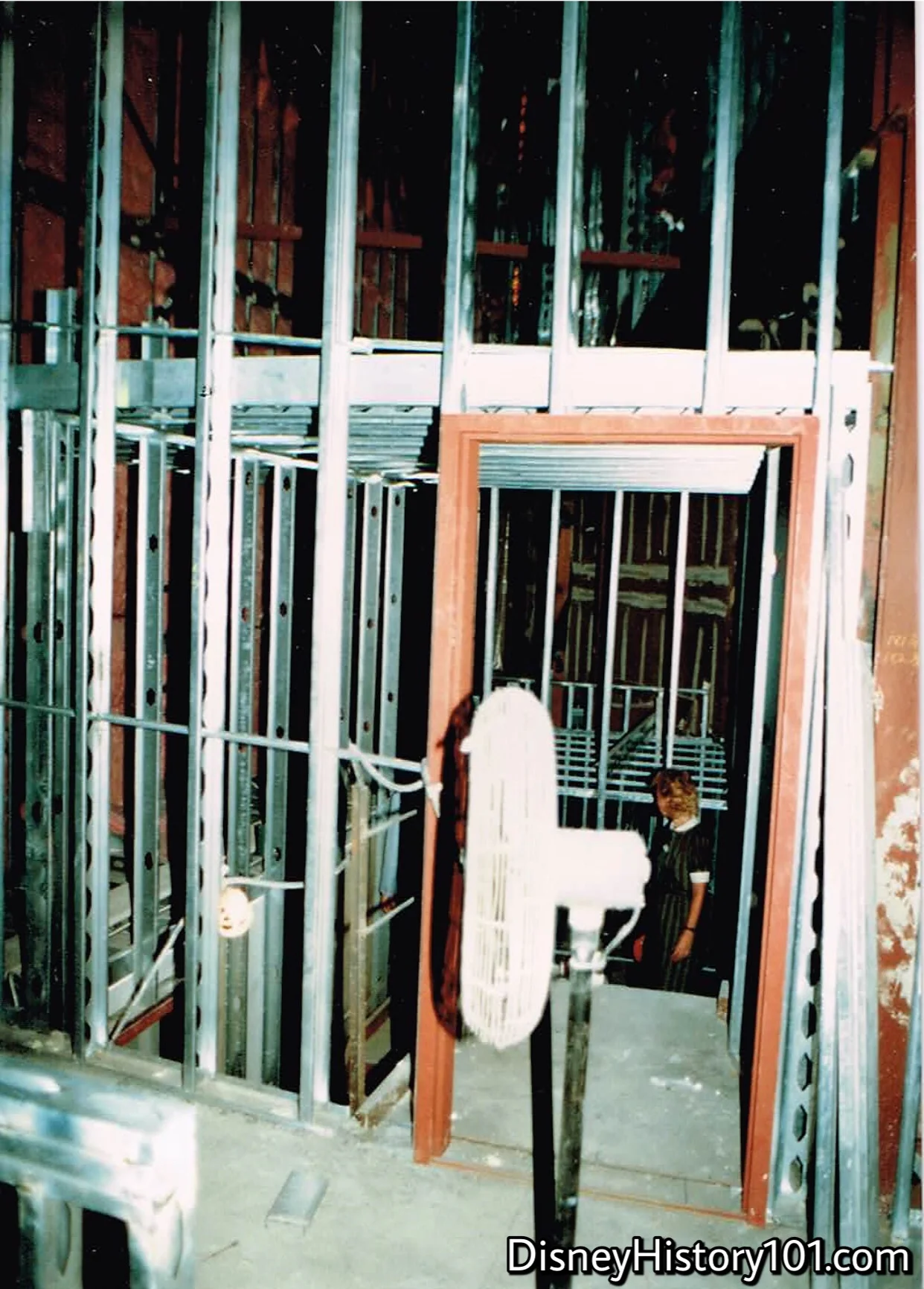
The physical structure is constructed.
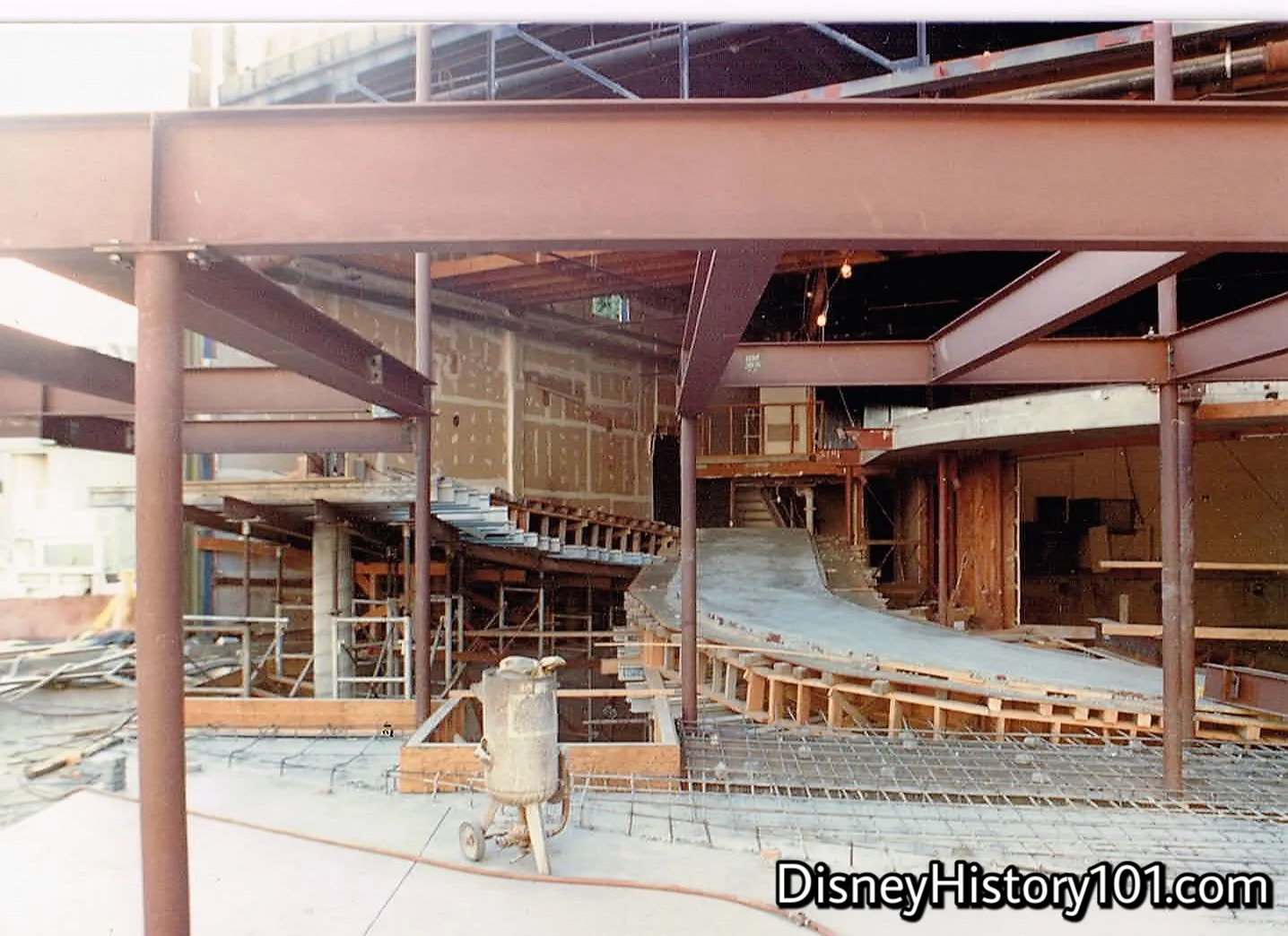
The physical structure is constructed.
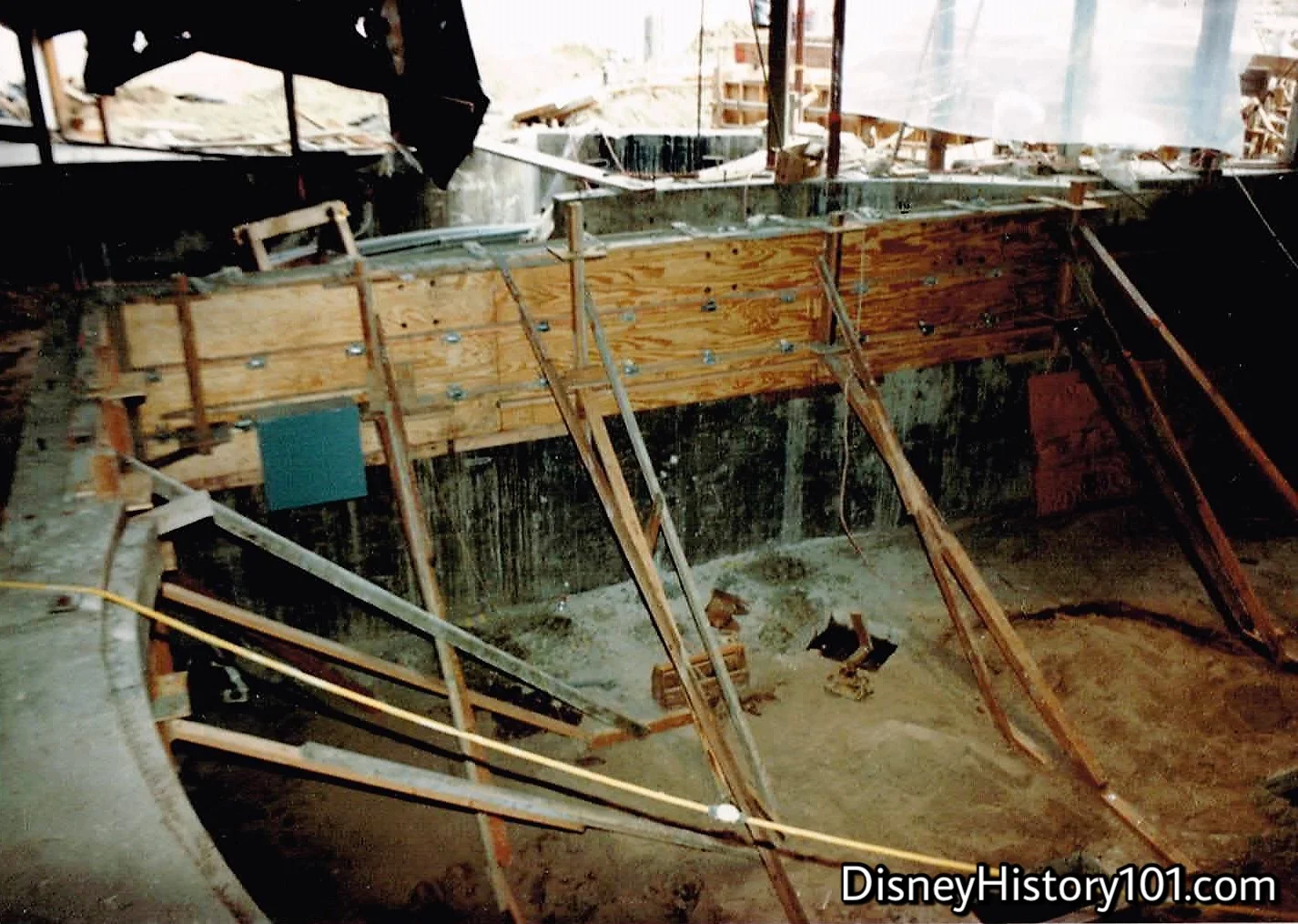
The physical structure is constructed.
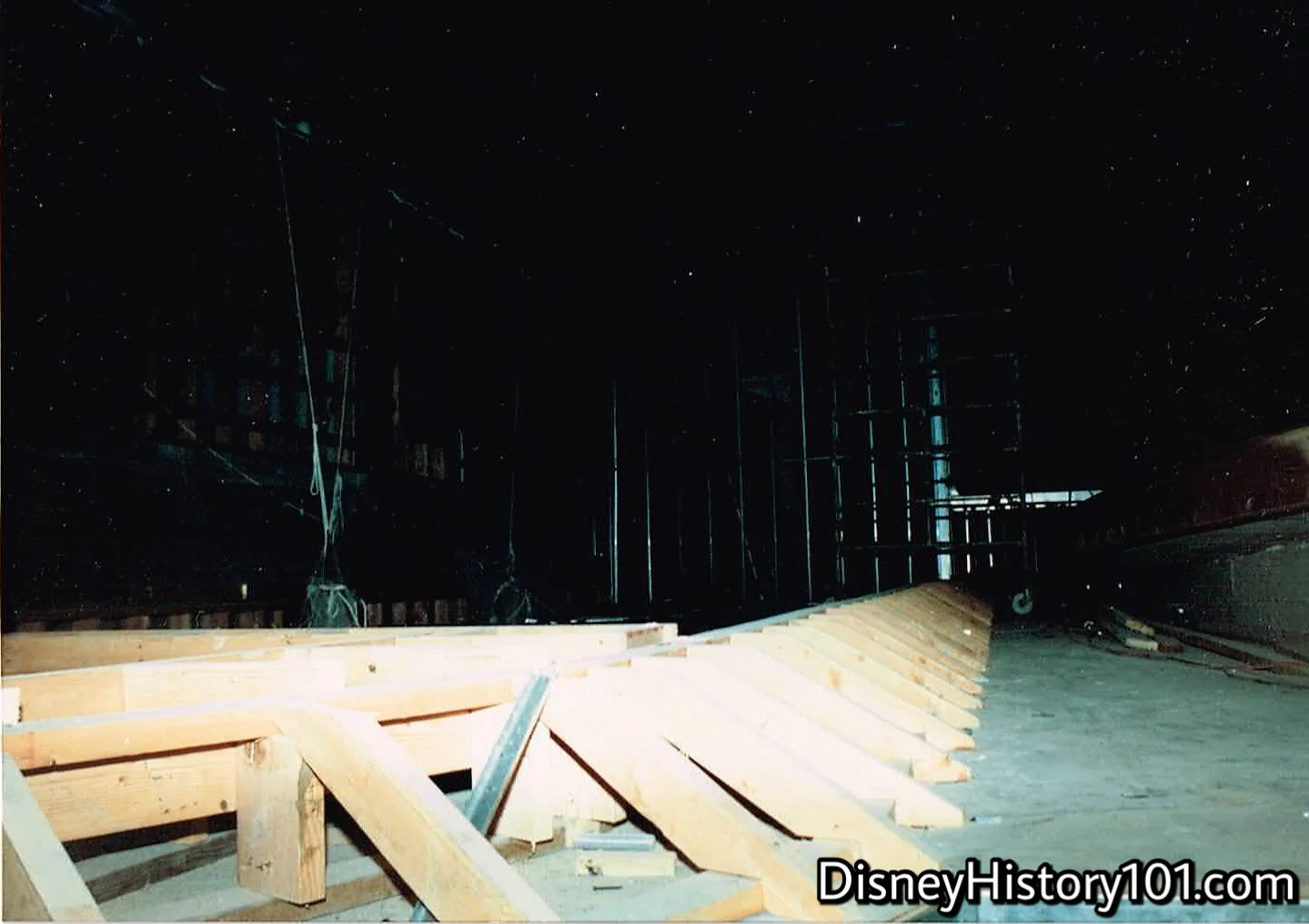
The physical structure is constructed.
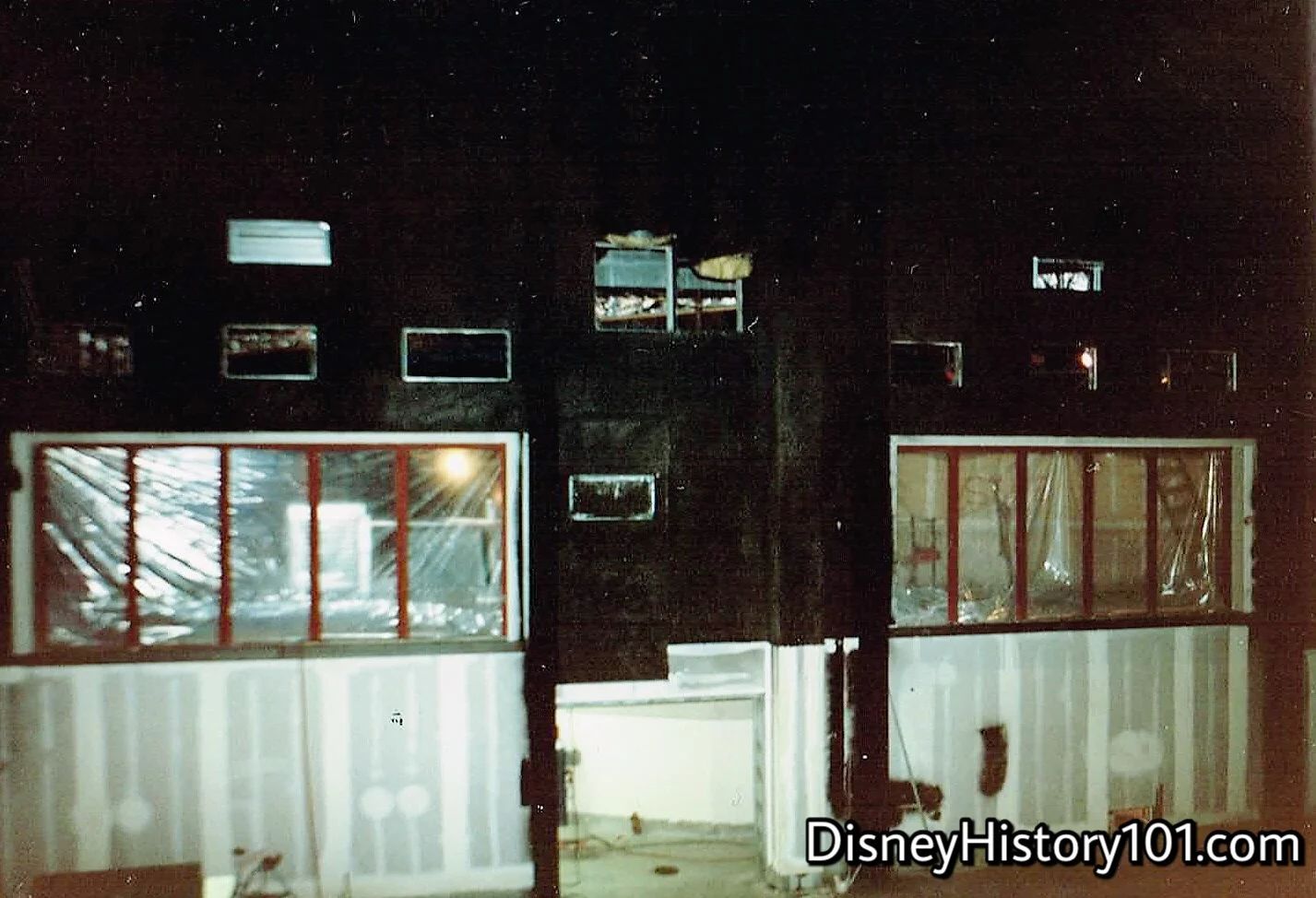
The physical structure is constructed.
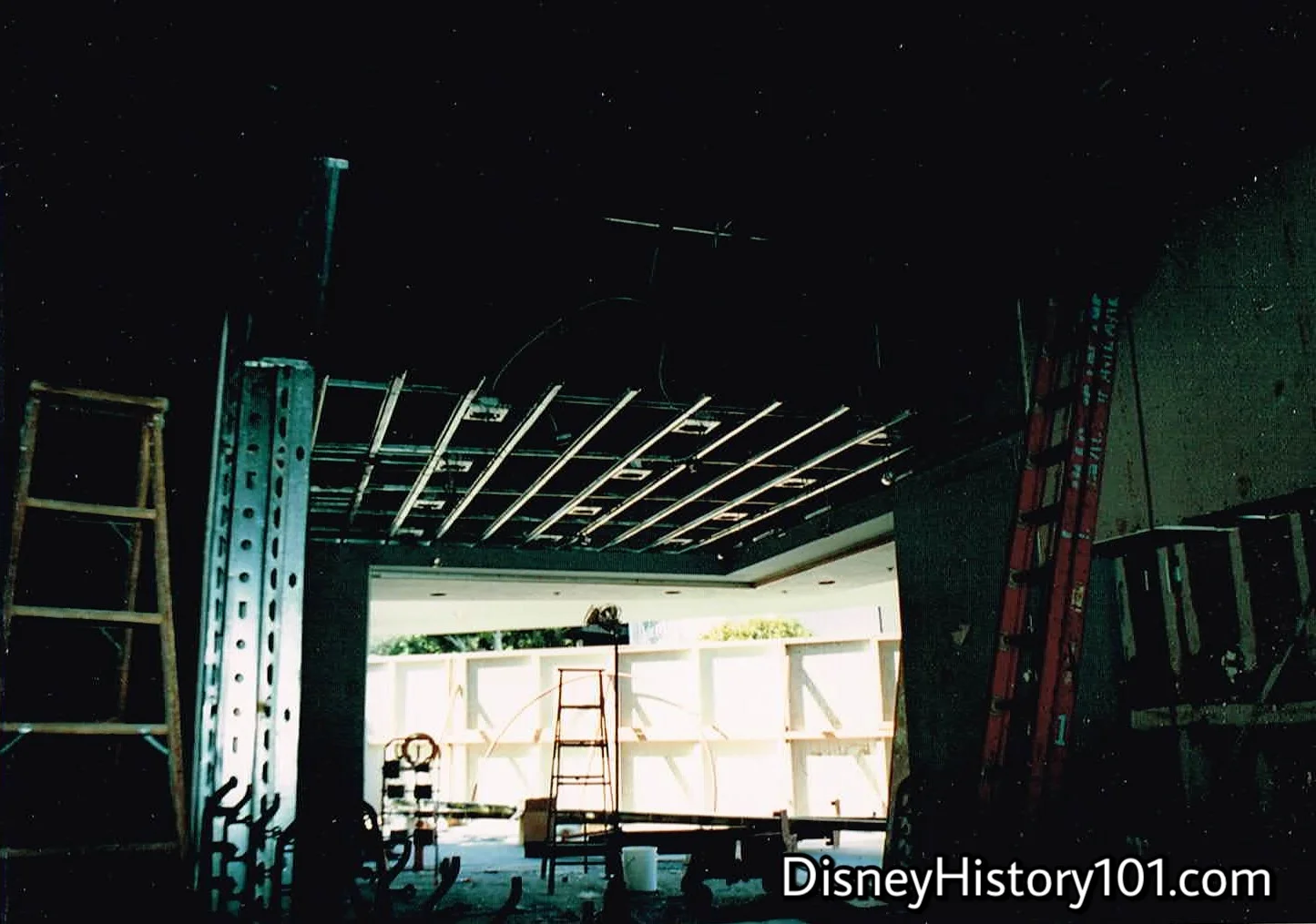
The physical structure is constructed.
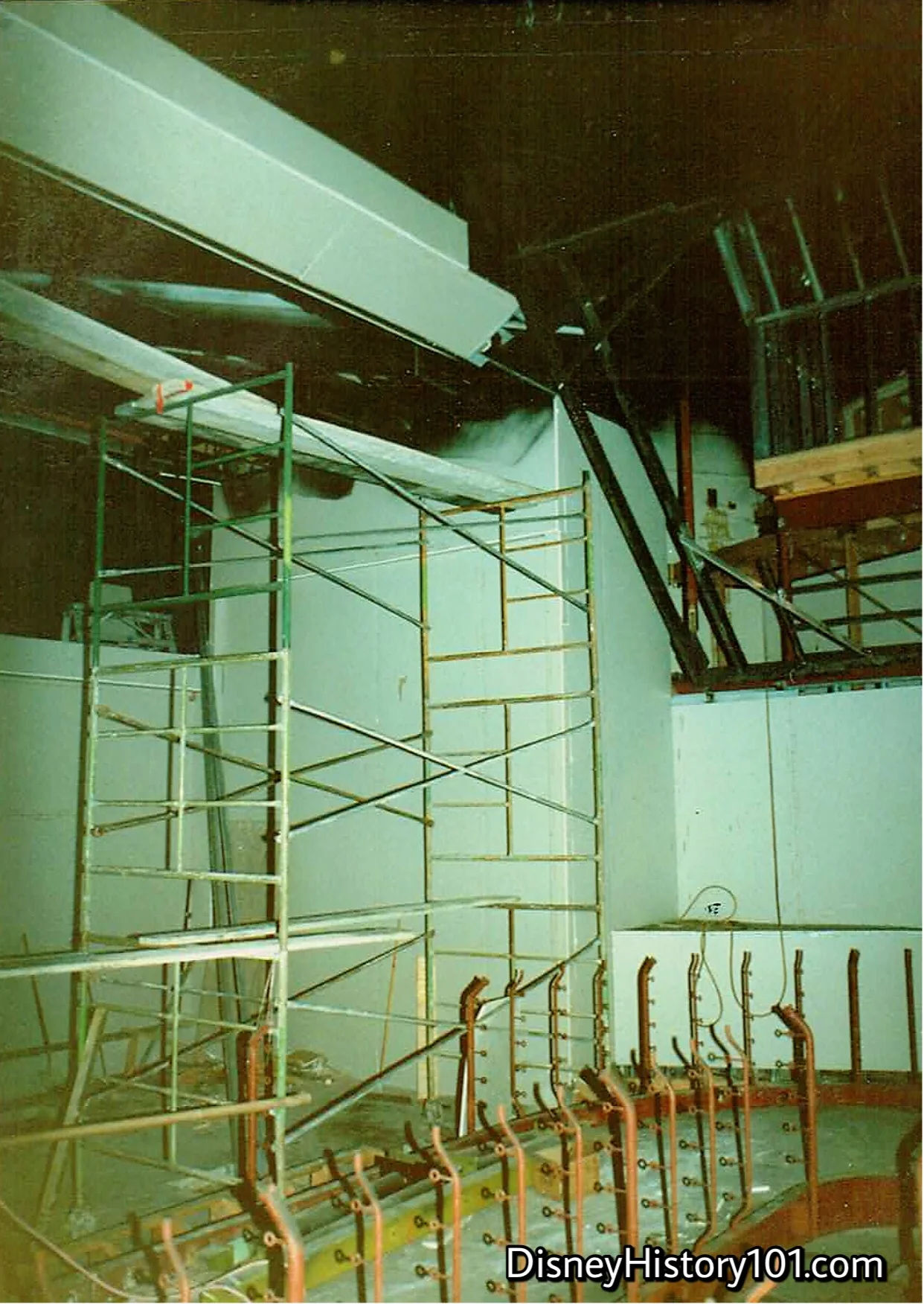
The Star Tours “Show 1” area and its guest control queue under construction.
Working with the show set designers, architects designed the physical structure in which the Star Tours show was to be presented. These plans were translated into reality through teams of construction crews.
Above, the Star Tours “Show 1 Stage” and queue began to take form. Paneling has been added to the security tower and things are starting to take shape.
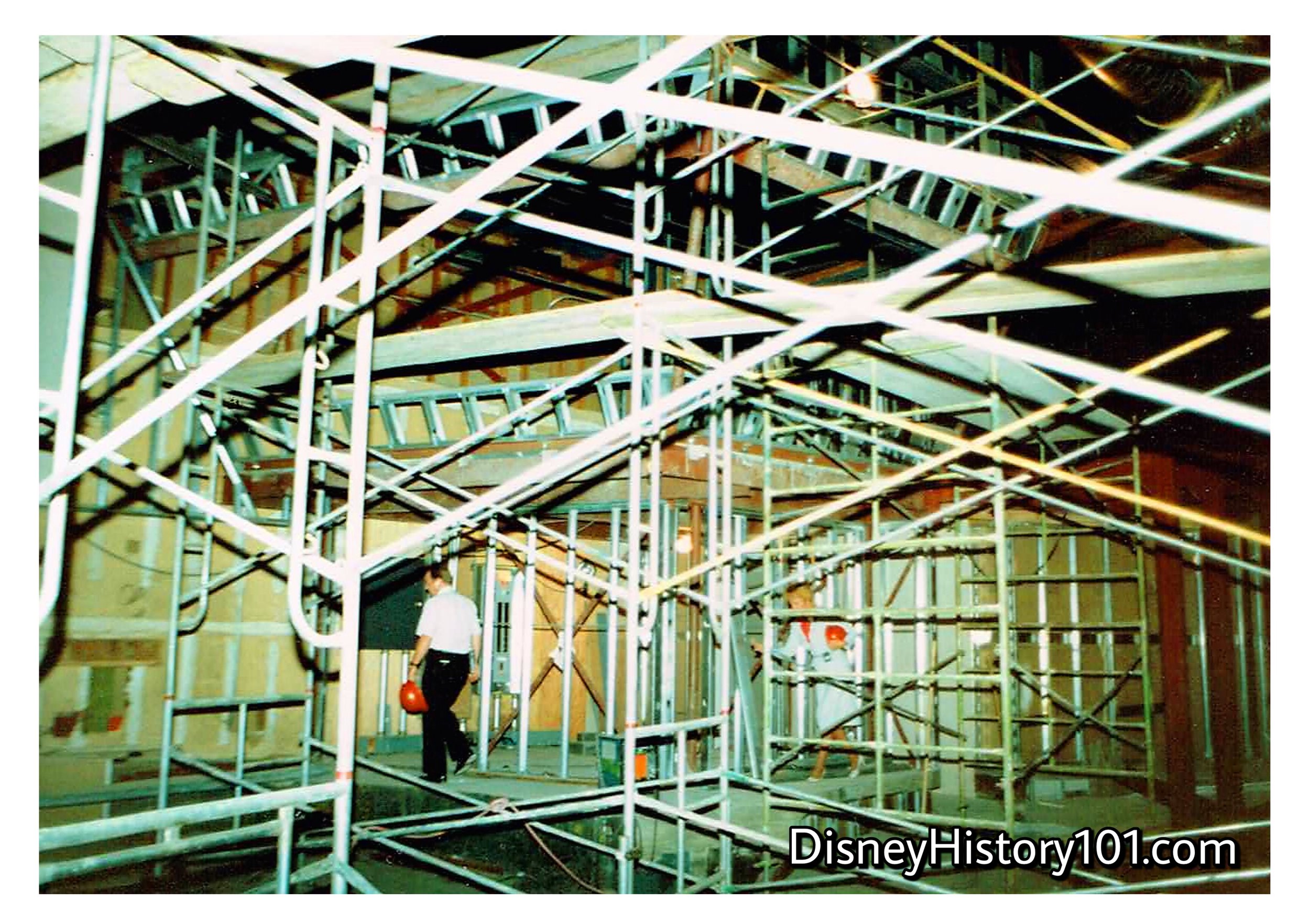
The Star Tours “Show 1” area and its guest control queue under construction.
The highlight of the “Show 1” area would be a security center control with Mon Calamari operators overlooking passengers in the queue below.
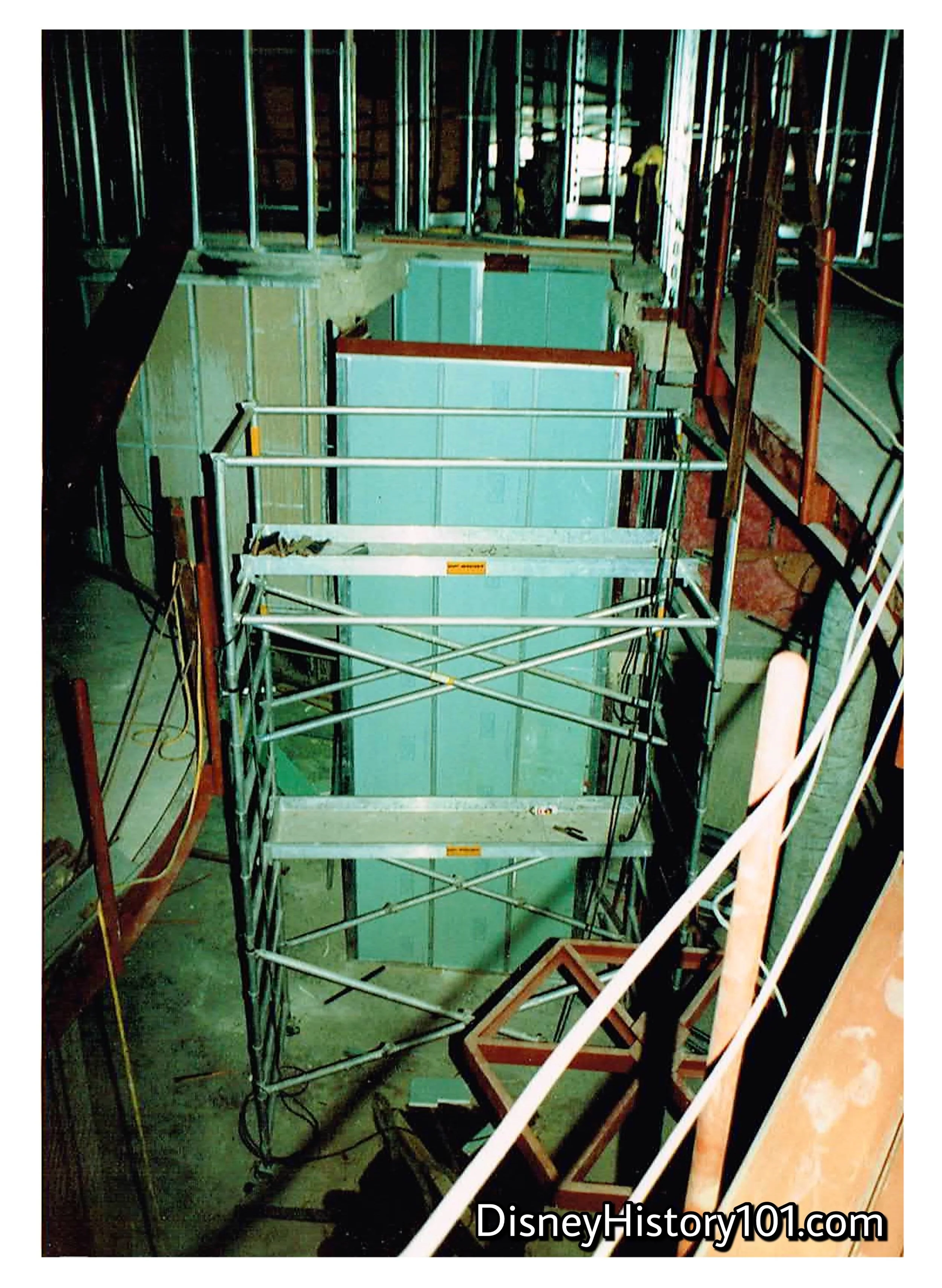
The Star Tours “Show 1” area and its guest control queue under construction.
This vantage from the PeopleMover track overlooks what would become the “Show 1” stage where the C3PO Audio-Animatronics figure would be installed.
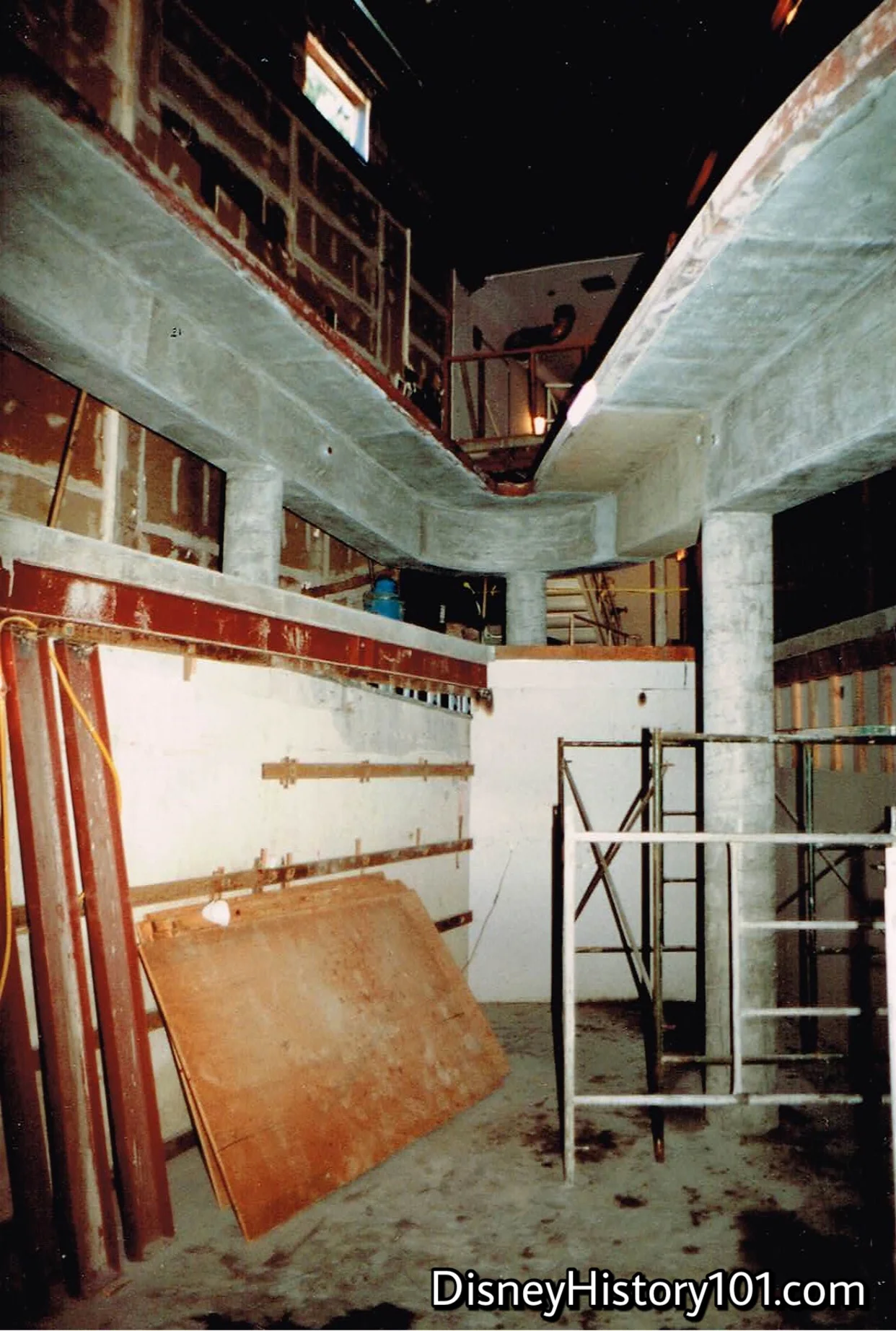
The Star Tours “Show 2” under construction.
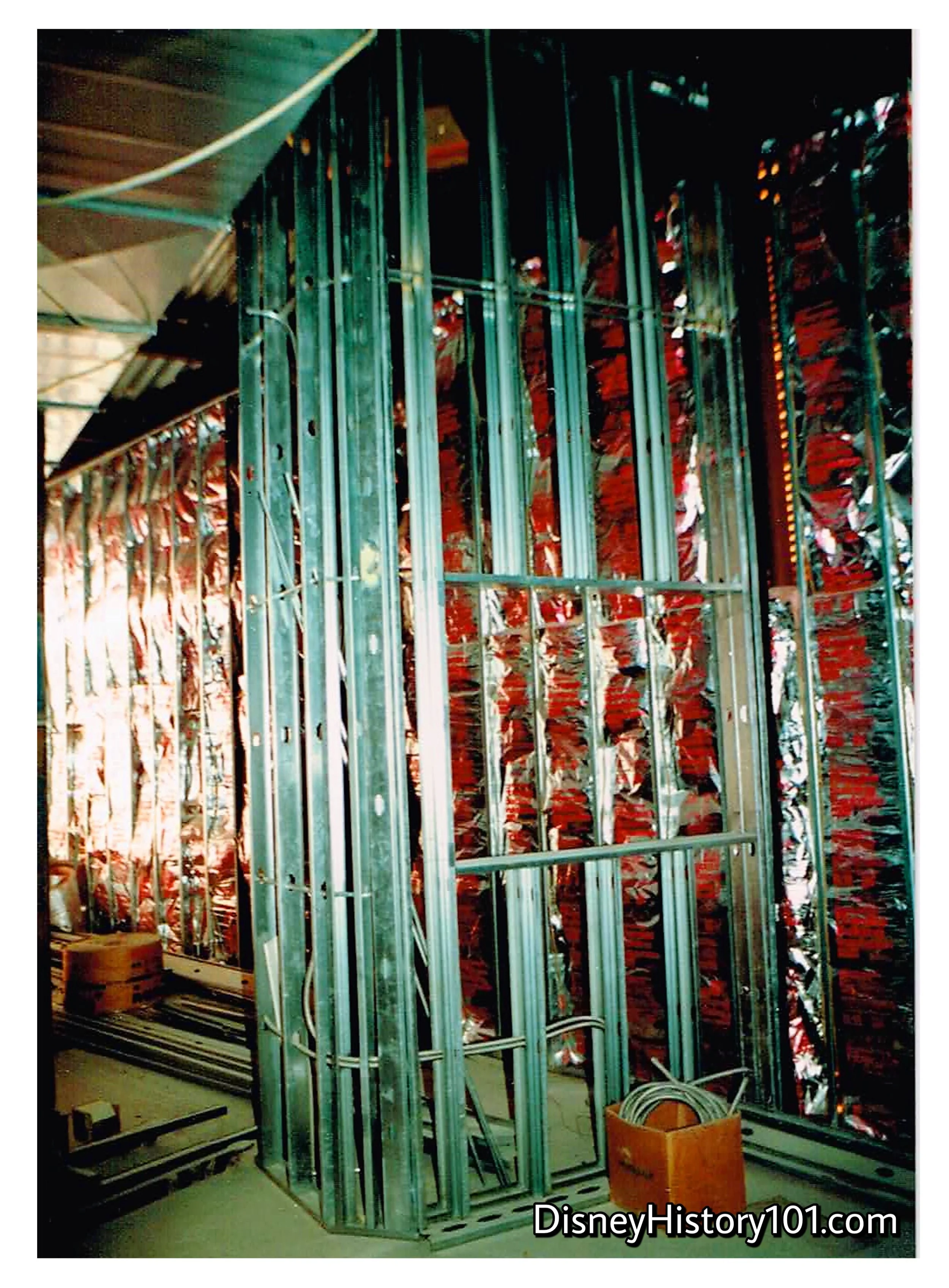
This is a ground view of a corner of the future Droidnostics Center show scene of “Show 2”. The upper tier is the queue ramp that guests would eventually use to walk through the room.
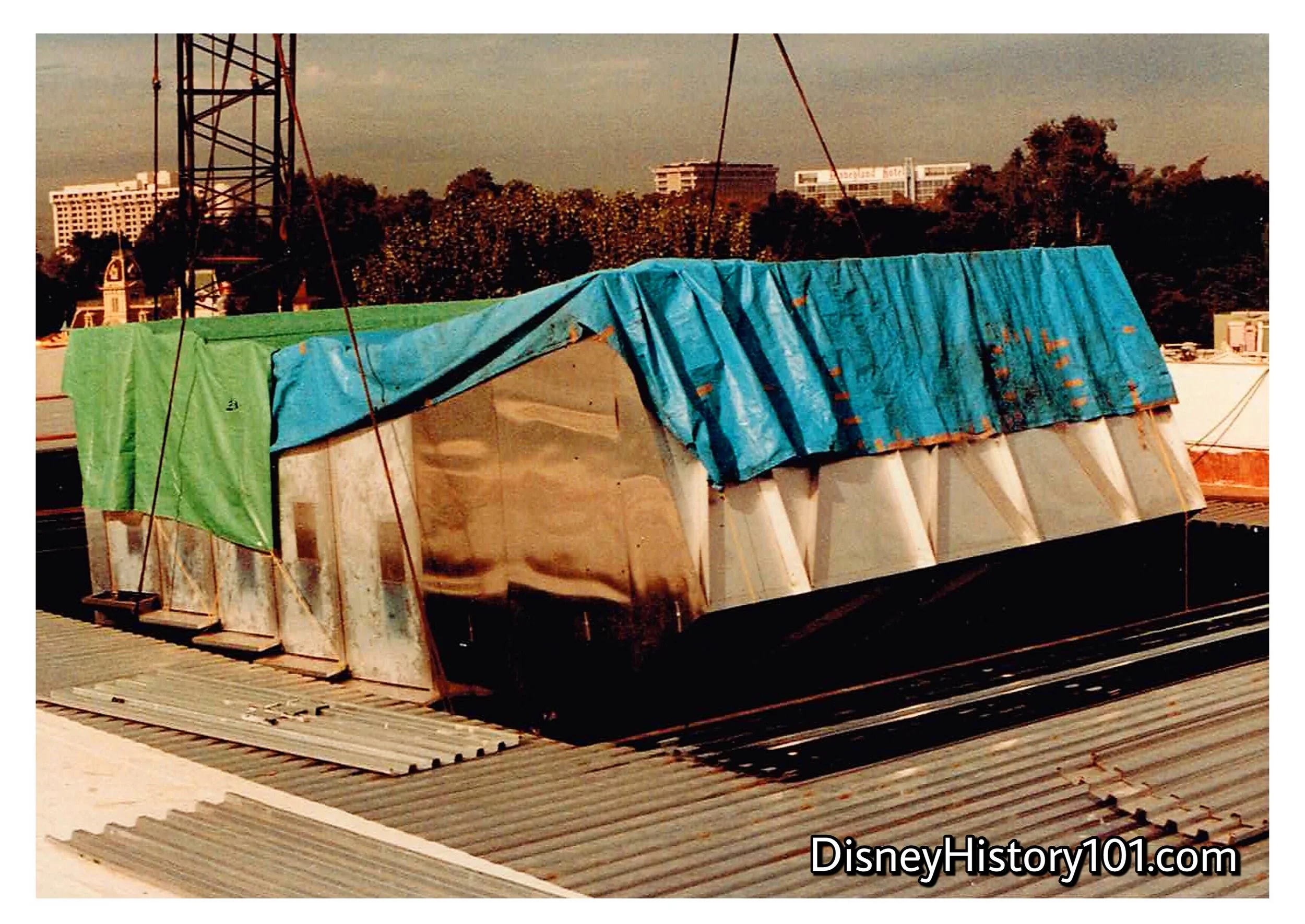
An ATLAS (Advanced Technology Leisure Application Simulator) is prepared to be lowered.
Walt Disney Imagineers in London had looked into developments of a company called Rediffusion Simulation, which was constructing simulators (“a large box with seats mounted on six hydraulic rams”) primarily for military application.
Next, engineers developed the ride systems to meet design specifications. Here we can see one of the final four military-grade ATLAS flight simulator cabins (or “Starspeeders”) resting on the roof. It’s has been prepared to be lowered into the attraction building via crane. This attraction "vehicle" will be used to convey the show/ride experience to guests.
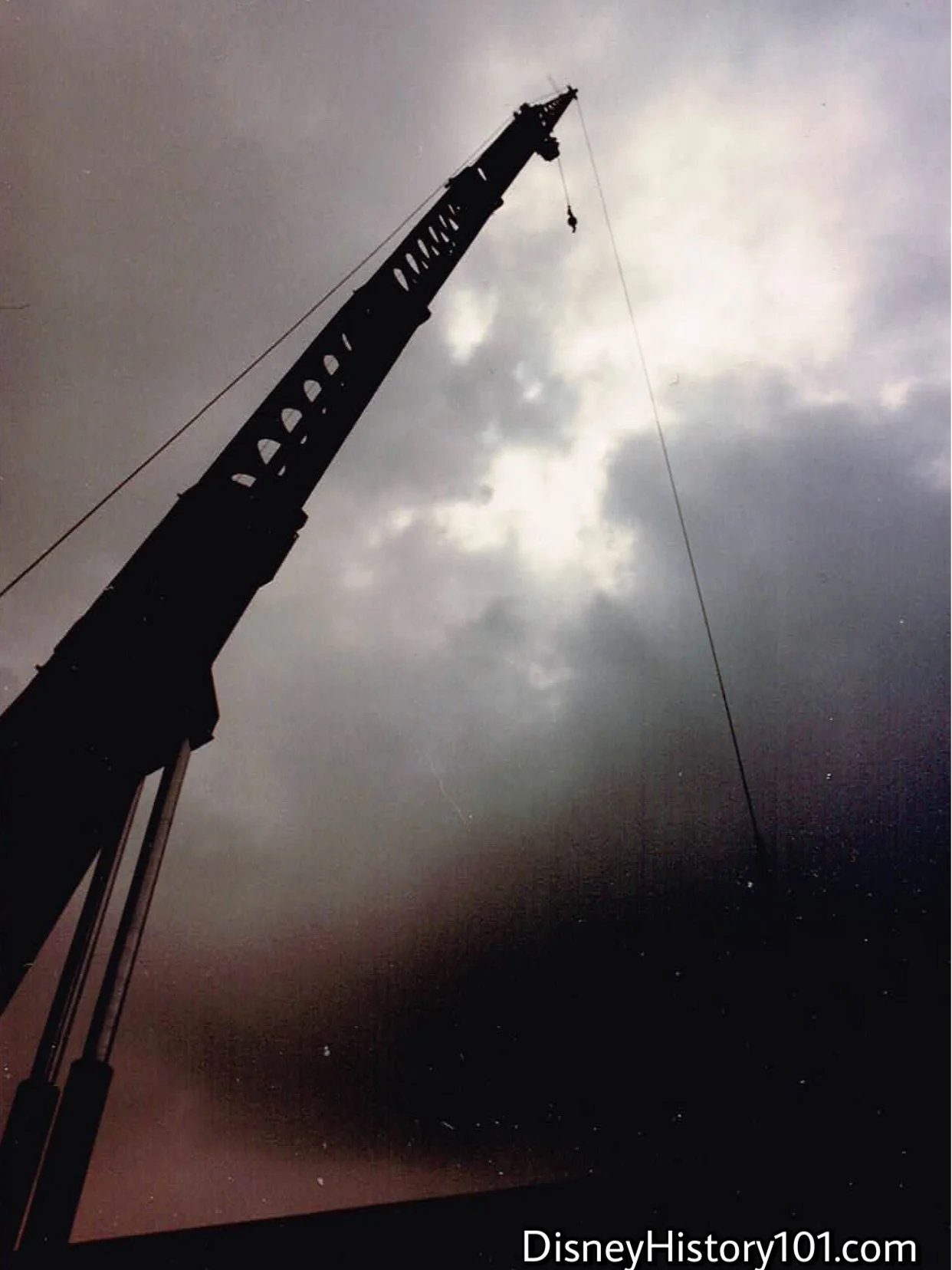
The crane that lowered the ATLAS (Advanced Technology Leisure Application Simulator) into position.
Walt Disney Imagineers intended to transport the Starspeeders by helicopter, but it was decided to haul them by truck and lower them through the attraction’s hatch by crane. Project Manager Dave Melanson described its transportation and installment this way (in Disneyland LINE Magazine, No. 35, Vol. 18, August 28, 1986) : “To get the StarSpeeder in Glendale trucked down to the Park, we had to get clearance from the California Highway Patrol. we had to move the StarSpeeder in the middle of the night when there would be the least amount of traffic. All four would be brought down Harbour Boulevard and then through Katella Gate, since clearance under the Monorail was best through that entrance.“
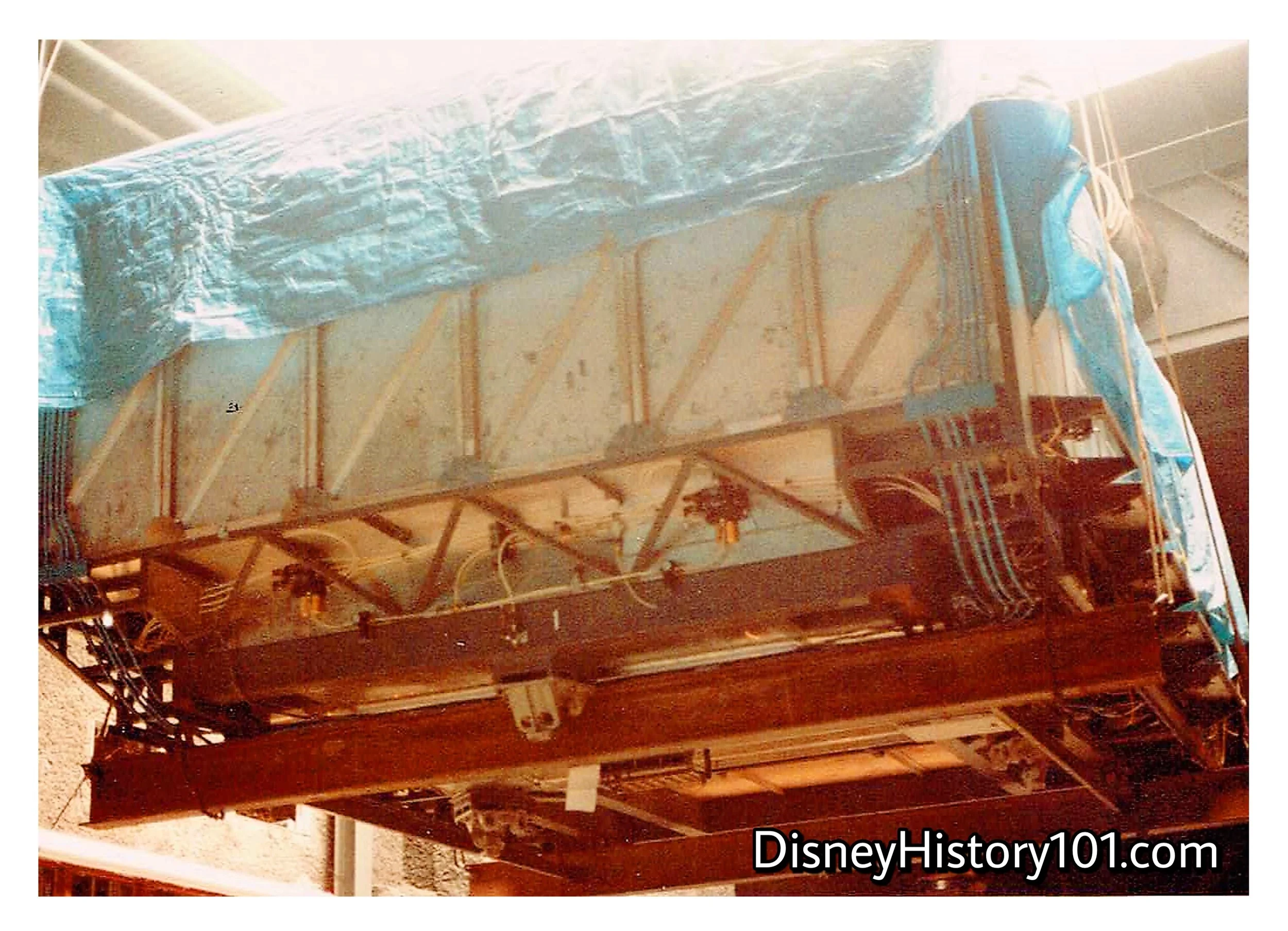
An ATLAS (Advanced Technology Leisure Application Simulator) is lowered.
Project Manager Dave Melanson continued to describe: “A crane stationed near the Kennel would lift each StarSpeeder over the Berm and the Administration Building. A second crane would take it from there and finally lowering it through the hatch. These are very specialized cranes, having 165-ton capacity and a 260-foot boom - the kind of cranes you’d use, for example, to lift a 747 plane.” Above, one of hydraulic motion-based “StarSpeeder” cabins can be seen, as it was lowered through the hatch and into its position within the Star Tours attraction building.
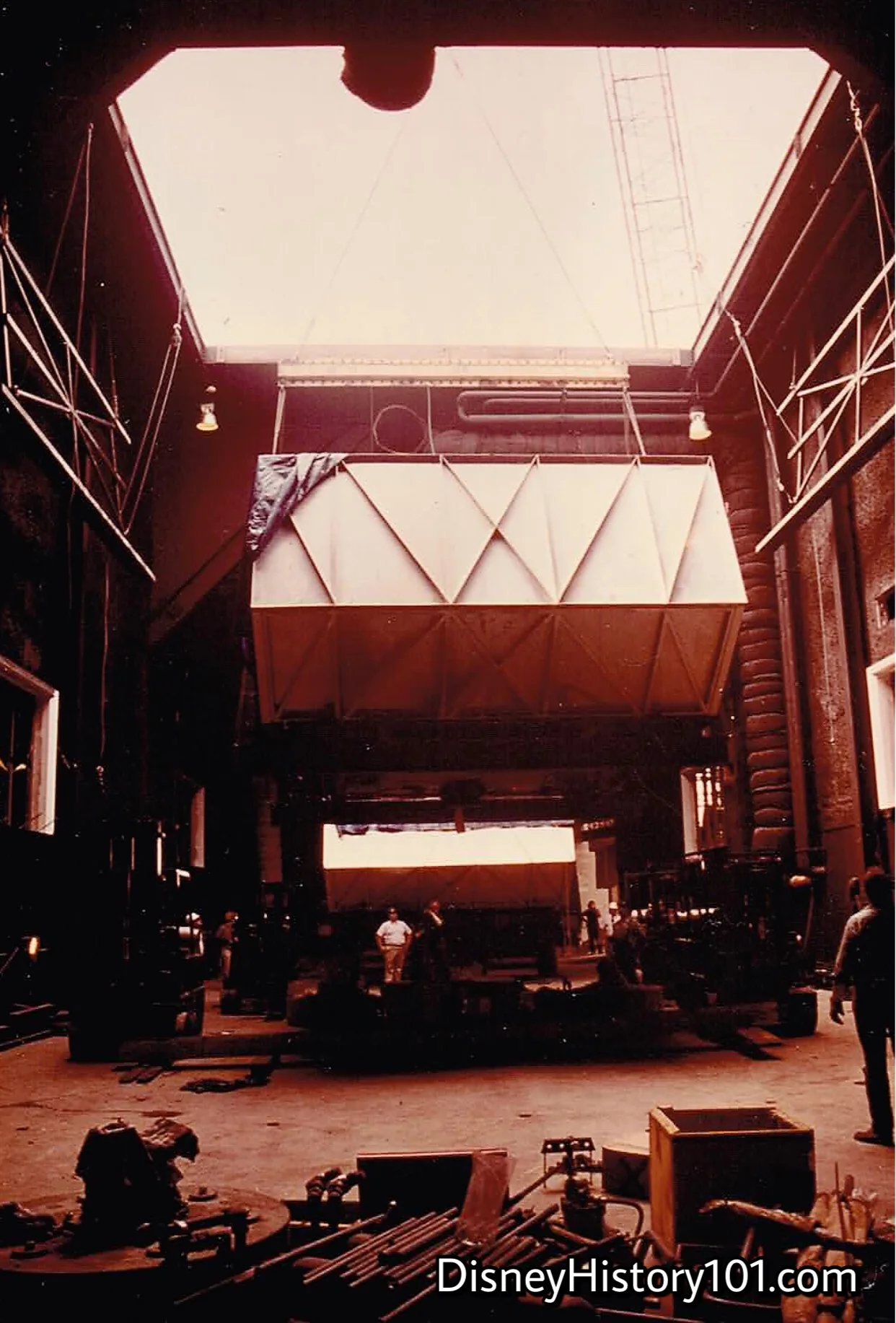
An ATLAS (Advanced Technology Leisure Application Simulator) is lowered.
Project Manager Dave Melanson continued: “When each Starspeeder was lowered through the hatch , four heavy-duty fork lifts, which moved in synch, carried the cabins to their spot. Now comes the job of getting everything ready and testing it out.” Next, each Starspeeder was mounted to its Motion Base - a moving platform, with hardware installed below it.
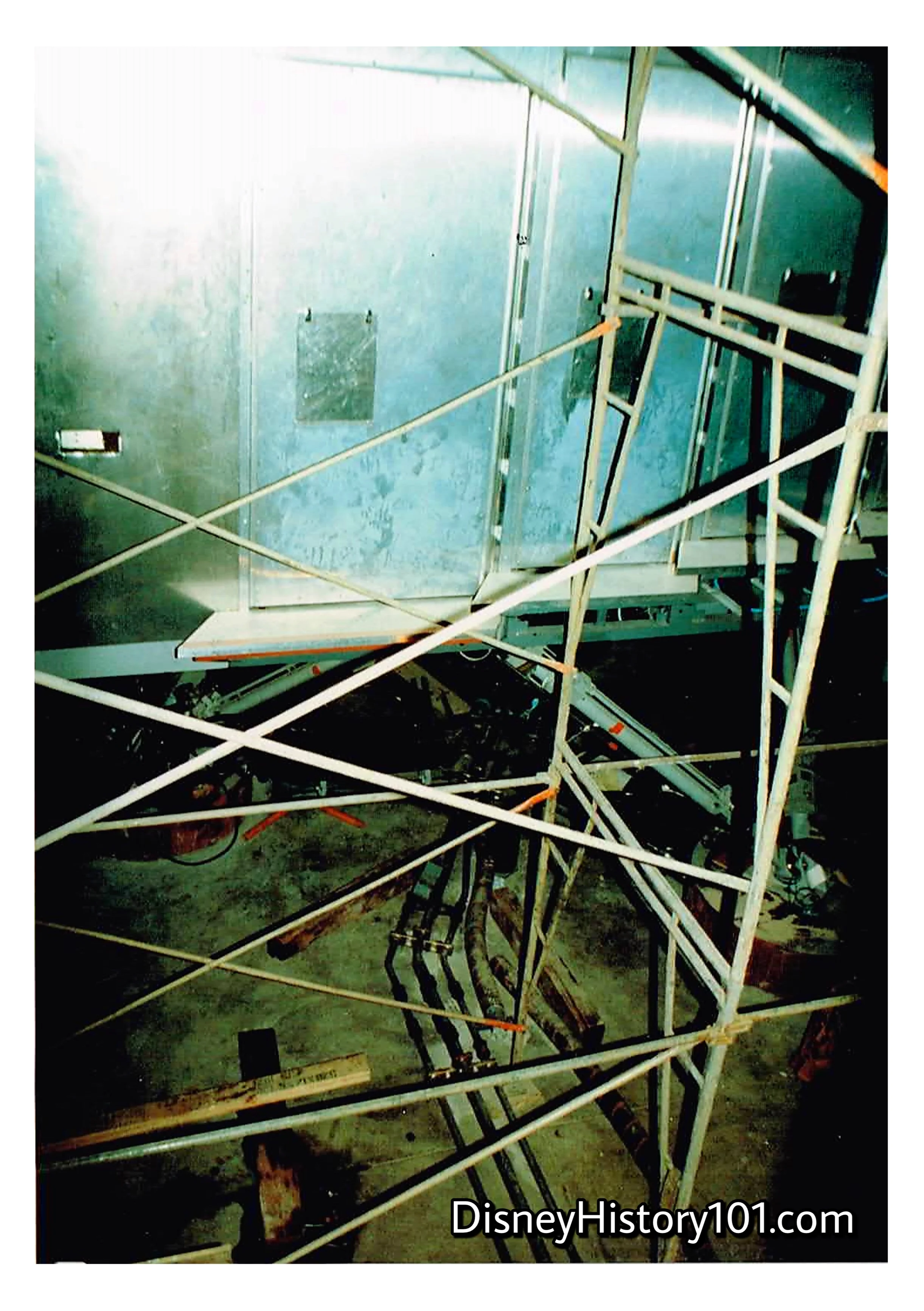
What the Starspeeder looks like resting inside the attraction, with construction scaffolding around it.
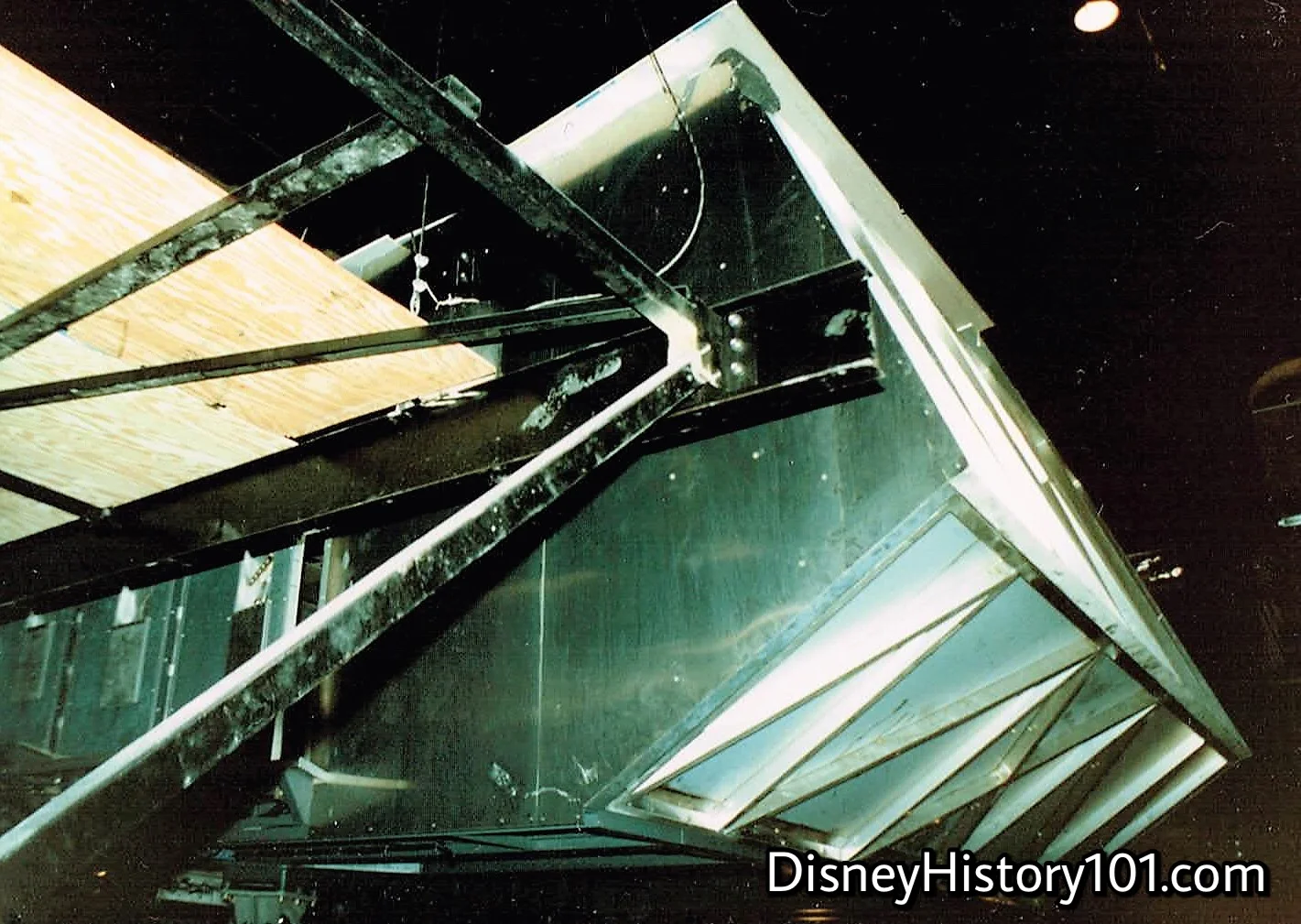
A fantastic view of the Starspeeder from the Pit area below the Motion Base.
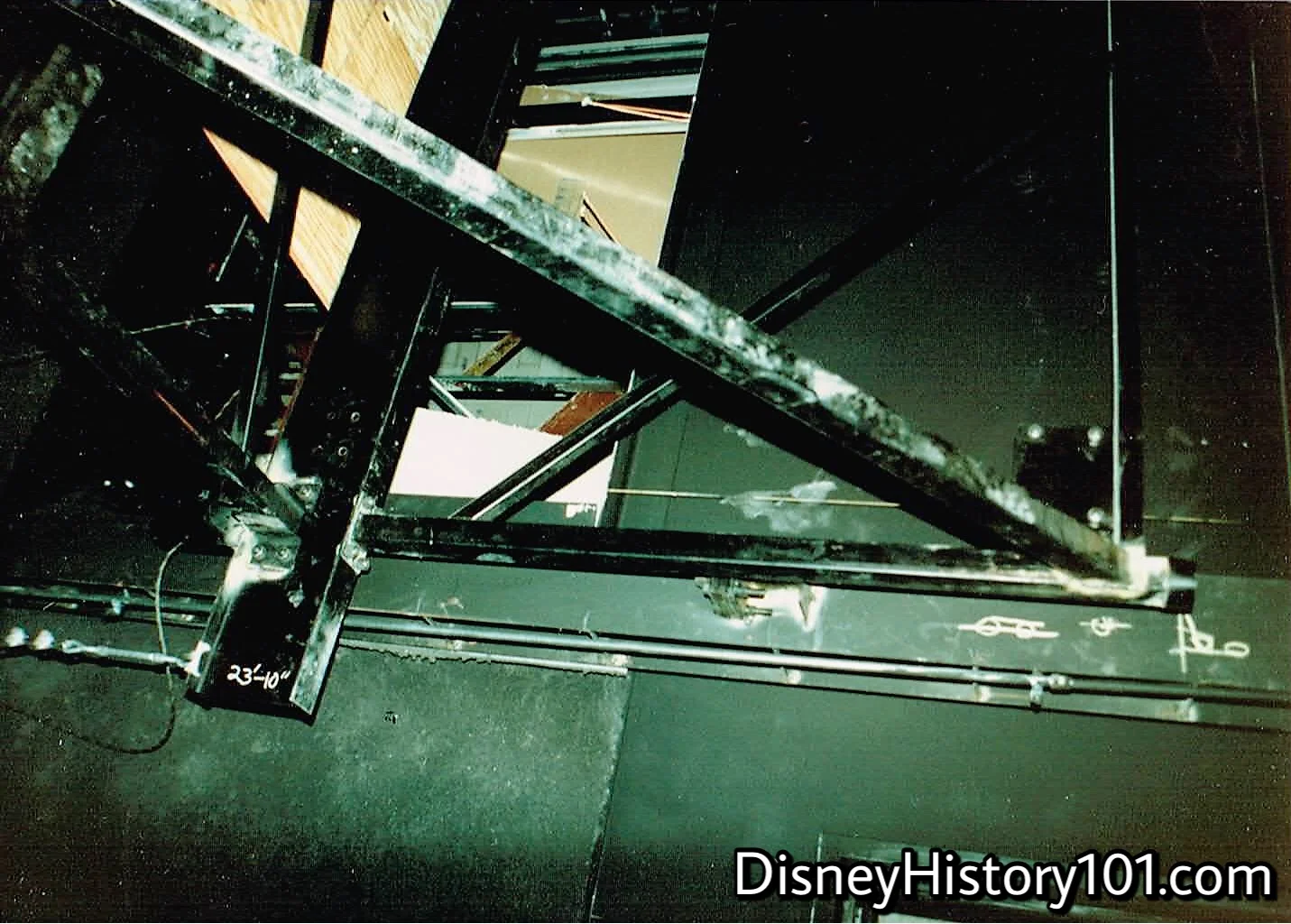
The Star Tours Motion Simulator Area.
This doorway would connect the Star Tours Loading Area with the motion simulator.
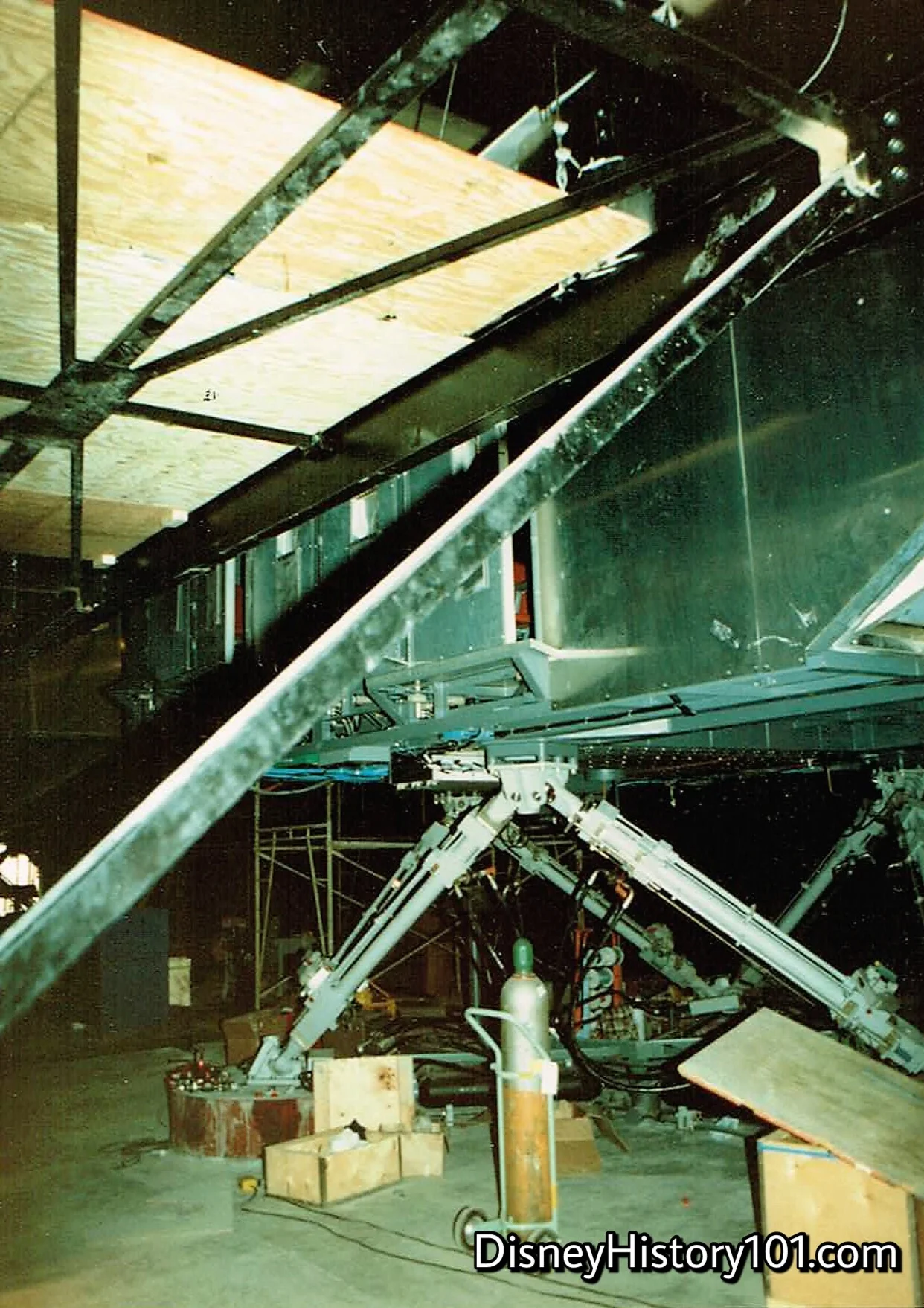
The Pit area directly below the Motion Base.
Those legs beneath the cabin are called “Pivot Shafts” or “Actuators”, and were originally manufactured by Rediffusion Simulation in England. Each simulator had a total of six Actuators – hydraulically-operated devices, which provided precise movement to the Starspeeder Motion Base. In fact, an astounding six degrees of freedom provided the ability to move up to 35 degrees, in the X, Y, and Z planes. This resulted in exact tilting shaking, and nudging the cabin to match the screen visuals experienced by passengers of StarSpeeder 1000s. When the Actuators (or “Pivot Shafts”) were in the “settled” simulator position they were fully retracted.
The Actuators were also capable of supporting the massive weight of ATLAS cabins. It was estimated that each of the four “StarSpeeder” simulators contained 40 seats and could support a vehicle weight with a payload of approximately 26,000 lbs. – owing to its “Actuators”.
This attraction vehicle technology led to Imagineering the ride systems referred to as EMVs Enhanced Motion Vehicles, used in the Indiana Jones Adventure:Temple of the Forbidden Eye.
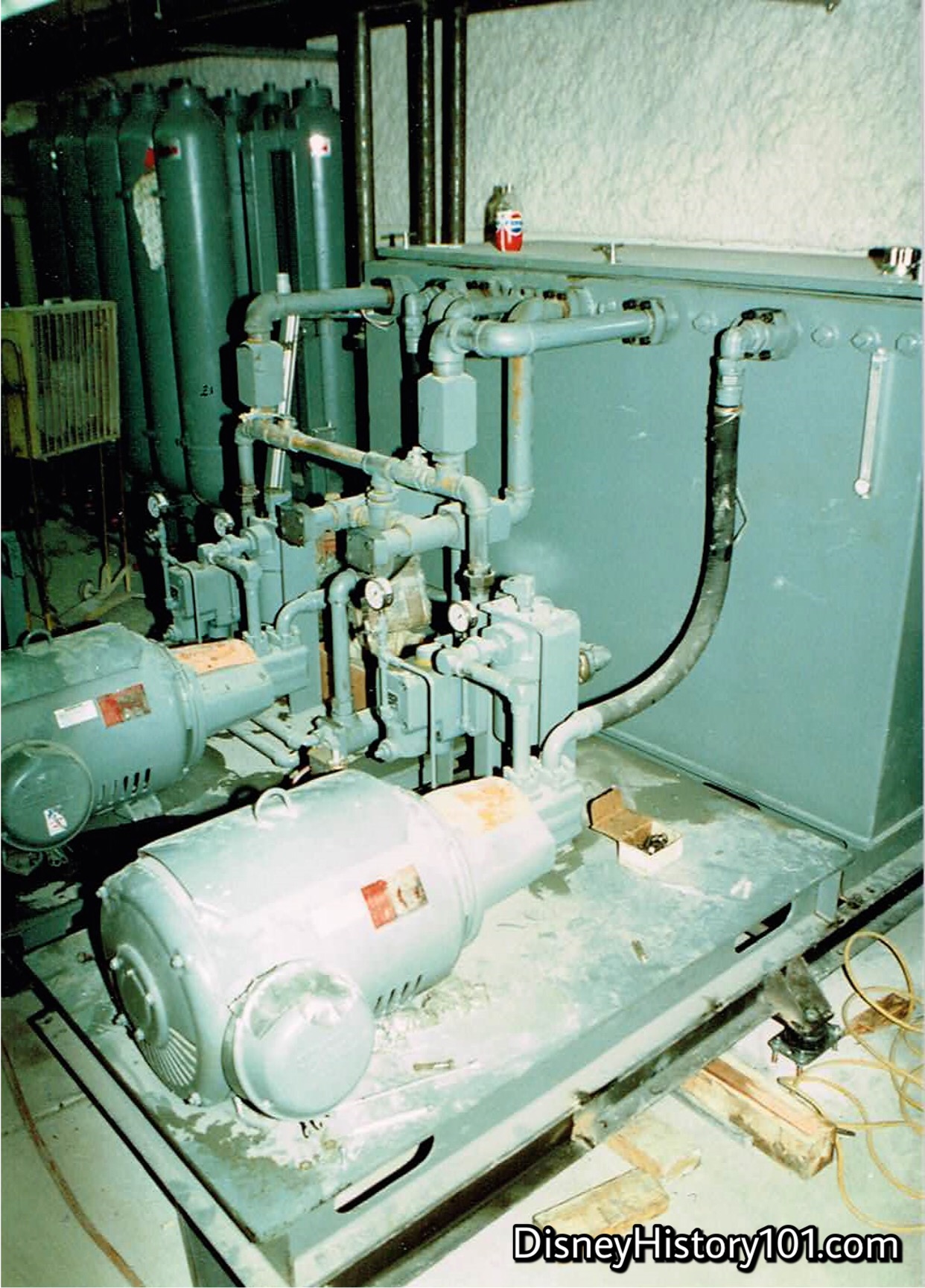
The Hydraulic Power Unit Room of Star Tours.
“Don’t Get Technocal With Me! What Pressure?”
What REALLY propels a StarSpeeder through space – hydraulic power! These heavy-duty hydraulic pumps fluid reservoirs, and accumulator assemblies would supply high-pressure fluid to the motion base actuators. However, hydraulic machinery generates significant heat, noise, and vibration, requiring a dedicated service room away from the guest queue and ride cabins. But after all, this system would be responsible for creating the aggressive tilts, pitches, and drops experienced by passengers of Starspeeder 1000s.
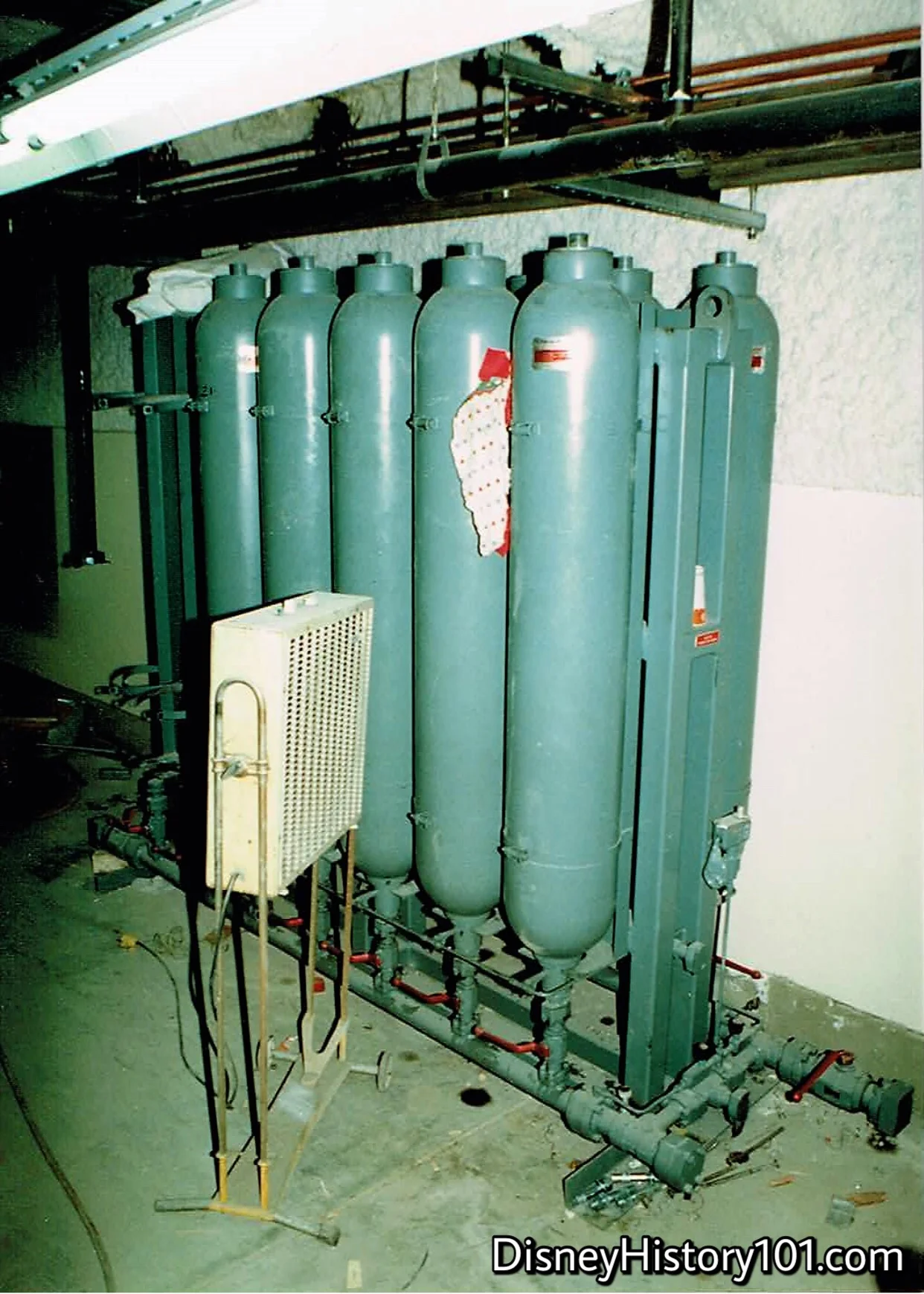
The Hydraulic Power Unit Room of Star Tours.
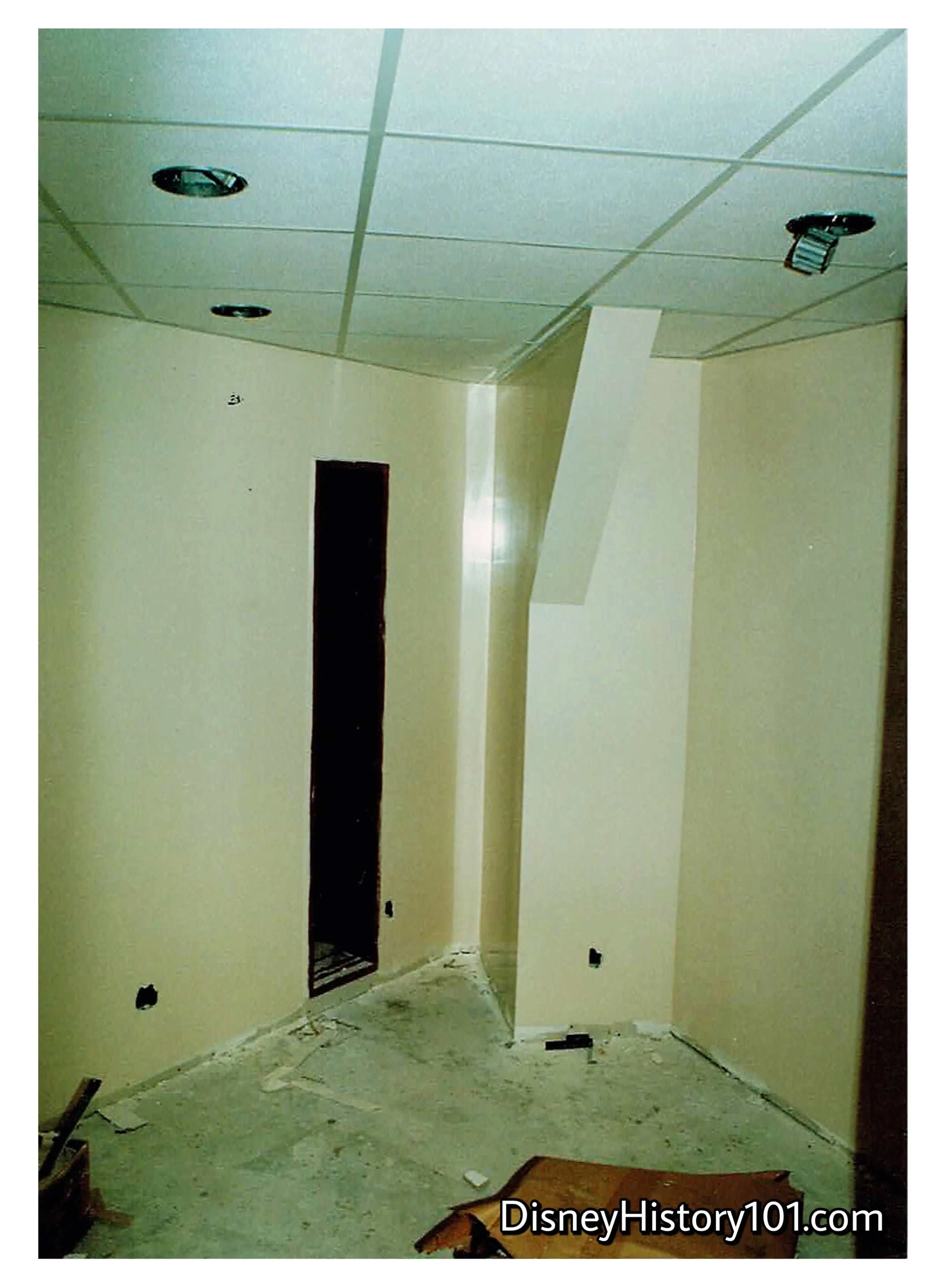
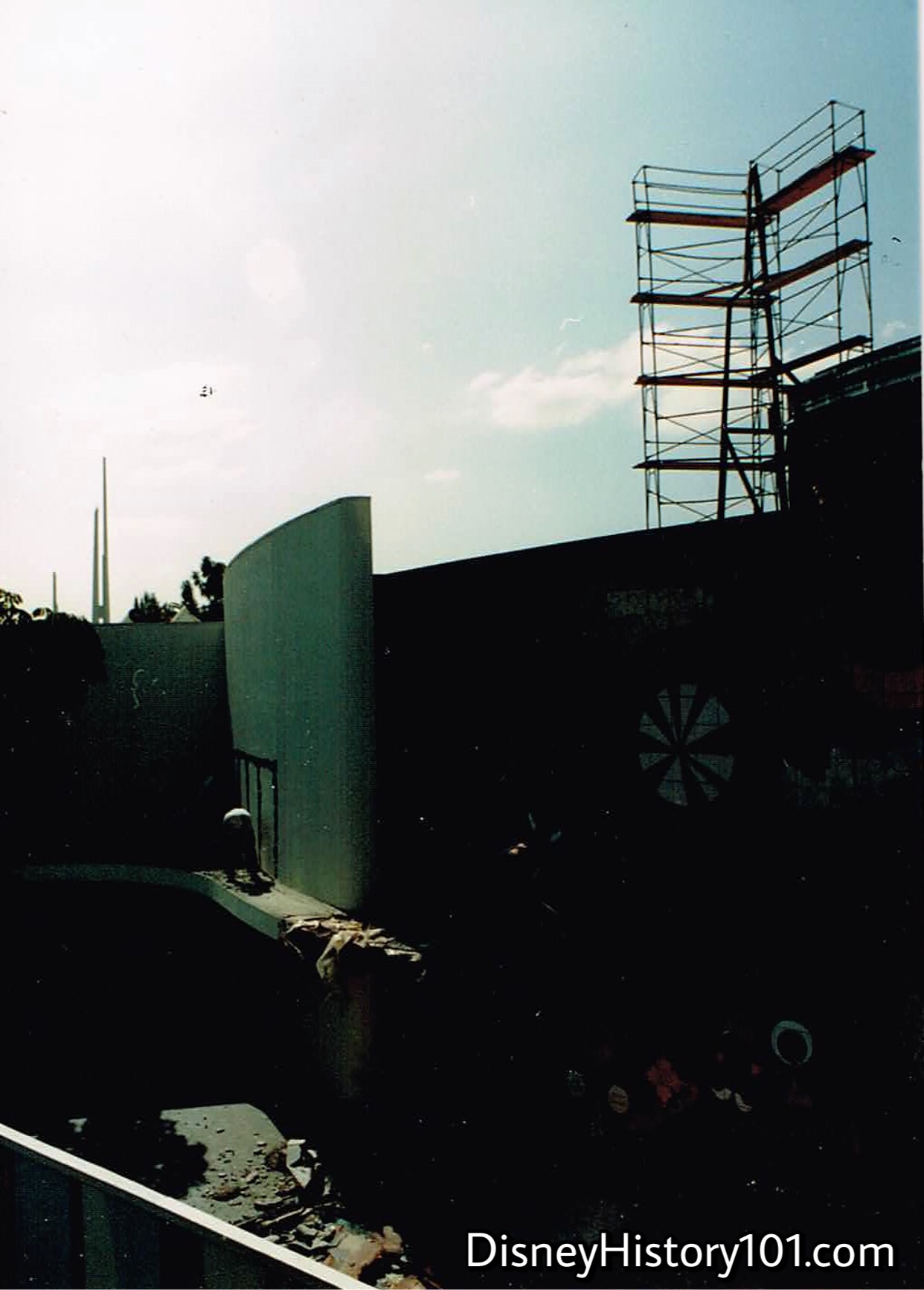
This image is a little hard to see, but you’re looking at the left portion of the southern “The Spirit of Creative Energies” mural behind the construction barrier. Mary Blair’s murals (together with the facade of Its a Small World) were the optimistic “bookends” that encapsulated the progressive story of Walt Disney’s vision of Tomorrowland.
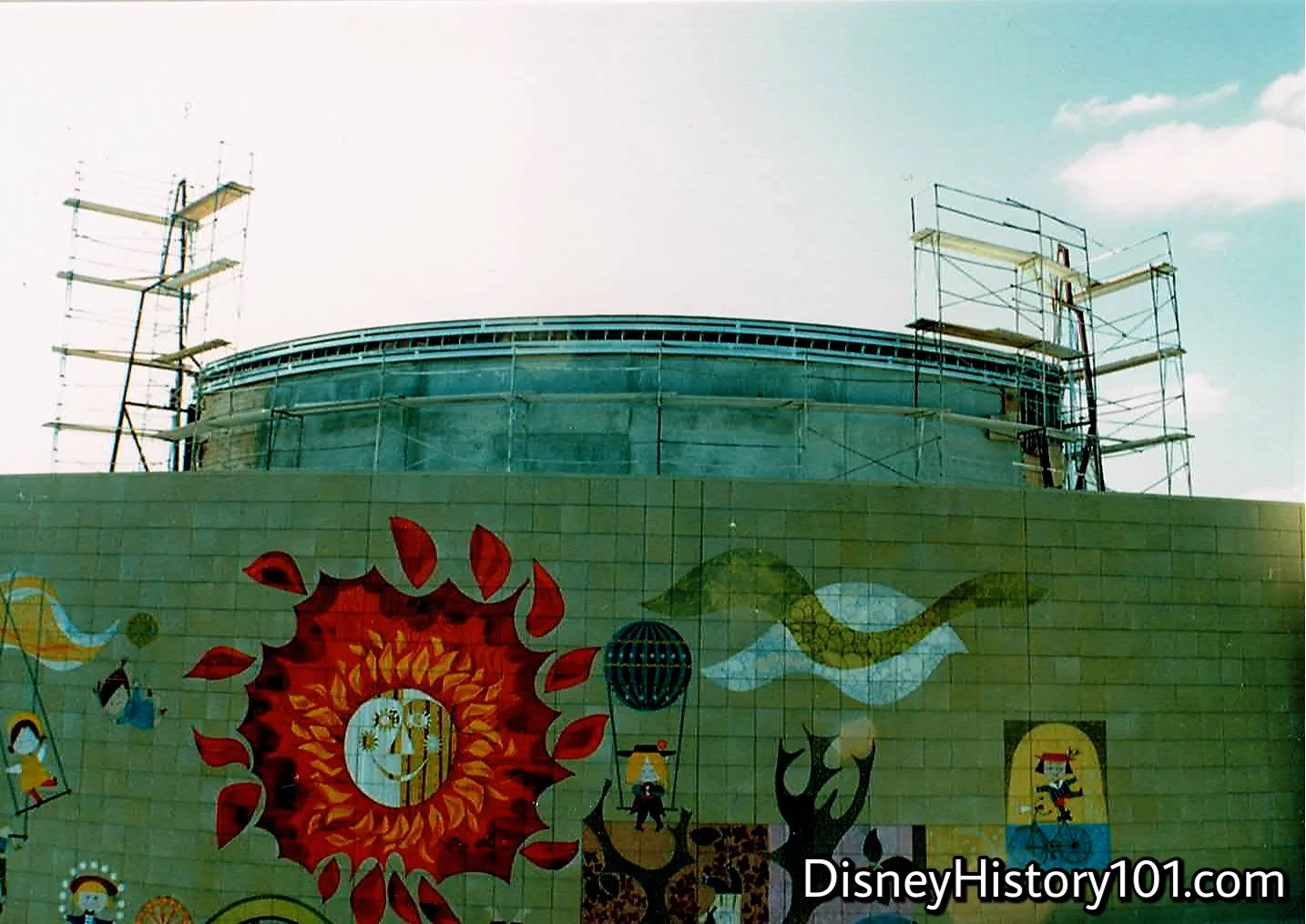
The southern “The Spirit of Creative Energies Among Children” mural encompassed the façade of the former Adventure Through Inner Space building. In this photograph, an extension has been made to top the structure, before exterior work is carried out. Soon, Mary’s murals would be removed from the show building and replaced by a new vision of Tomorrowland.
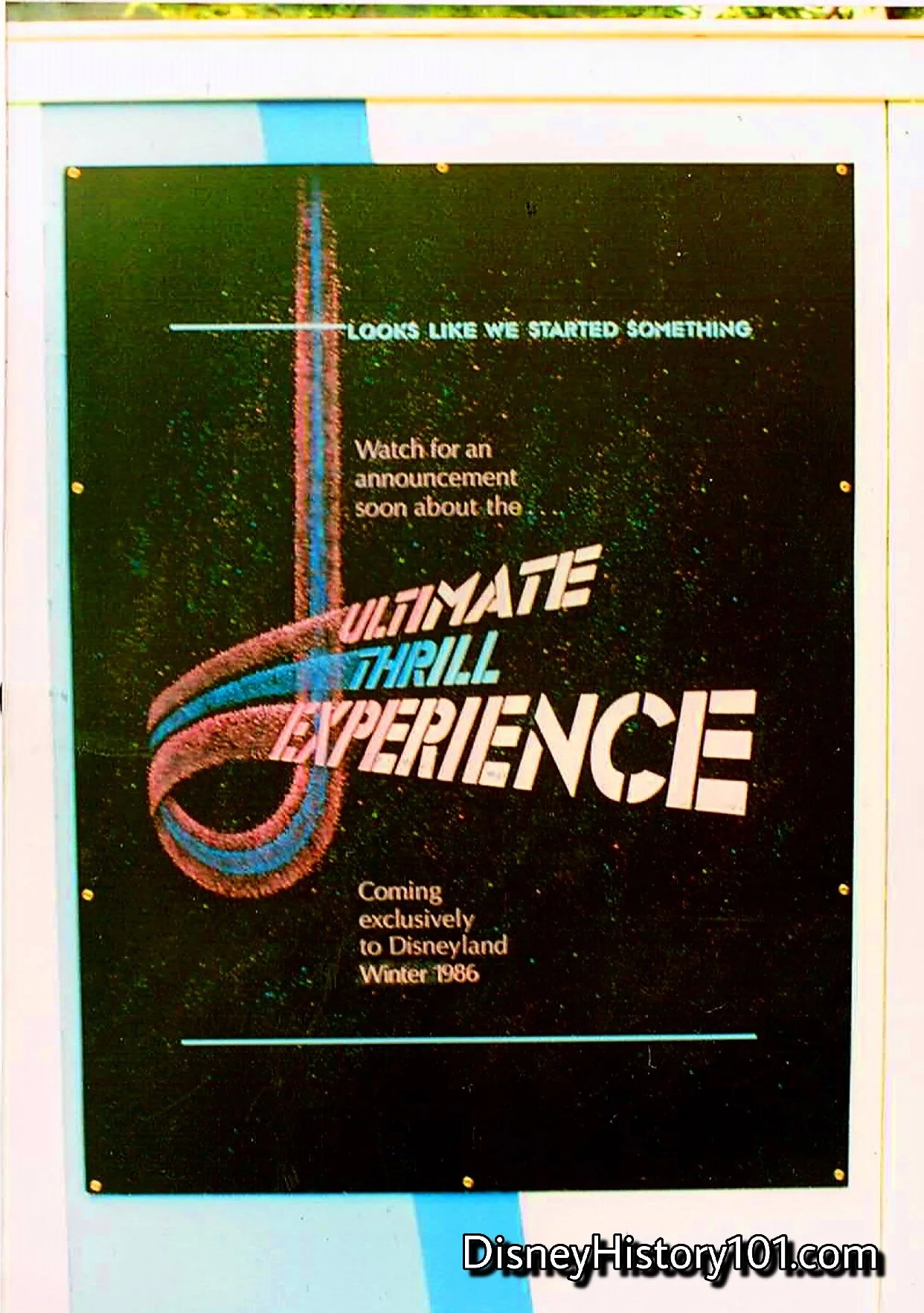
A poster teasing “The Ultimate Thrill Experience” that was headed exclusively to Disneyland during the winter of 1986.
The Future is NOW - 1986! Guests of Tomorrowland, passed posters teasing “The Ultimate Thrill Experience” that was headed exclusively to Disneyland during the winter of 1986. As the posters never mentioned a particular adventure or attraction, this campaign was exciting and ambiguous, inciting much anticipation among guests as to what was coming.
Ultimately, the “ultimate thrill experience” – Star Tours, joined the Magic Eye Theater & Captain EO, and Star Traders during the winter of 1986.
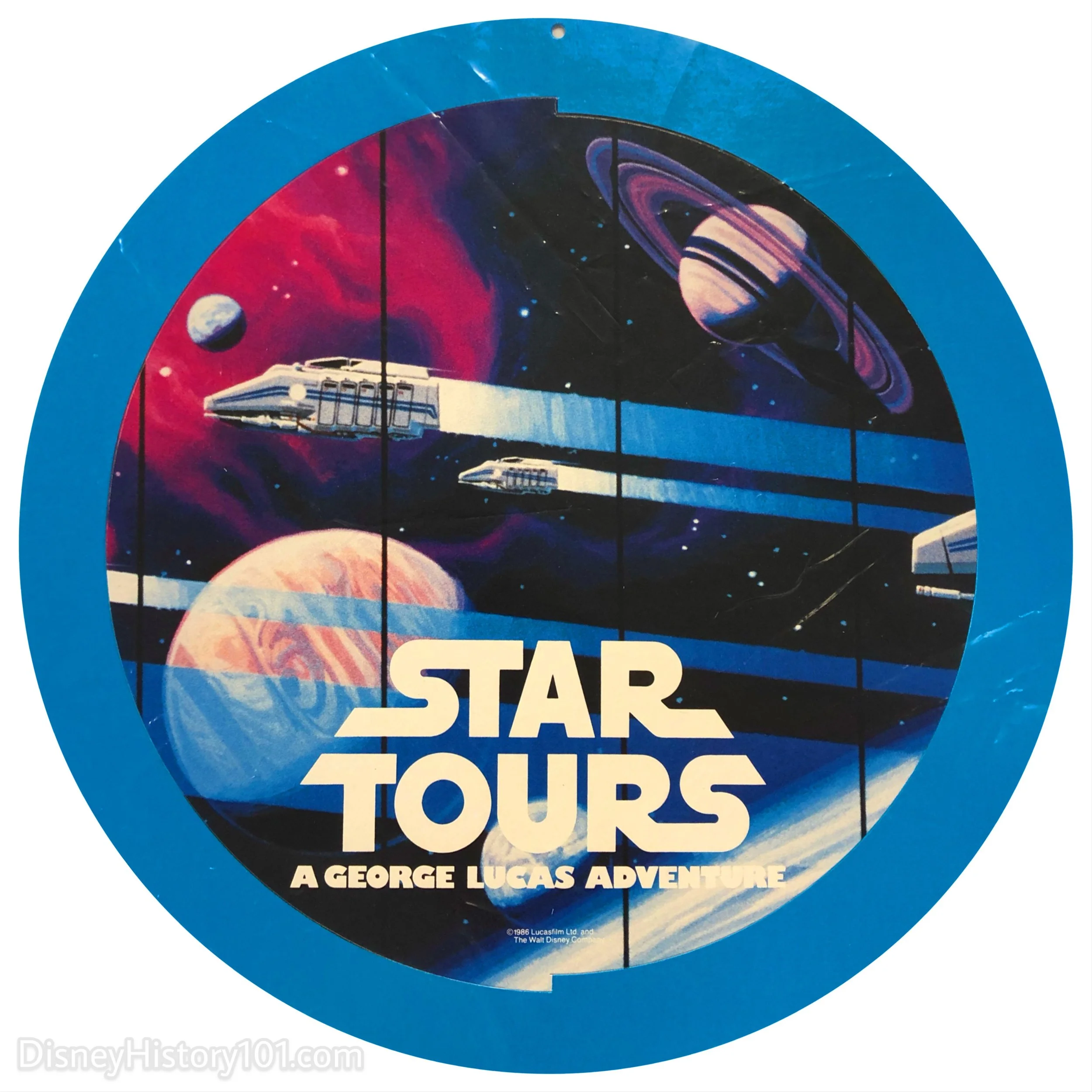
Hanging Sign, 1986; ©️Lucasfilm, Ltd, and The Walt Disney Company.
This plaque showcases the classic attraction logo of Star Tours and was prepared exclusively for Disneyland.
Signage and other decorations were prepared for the big event.
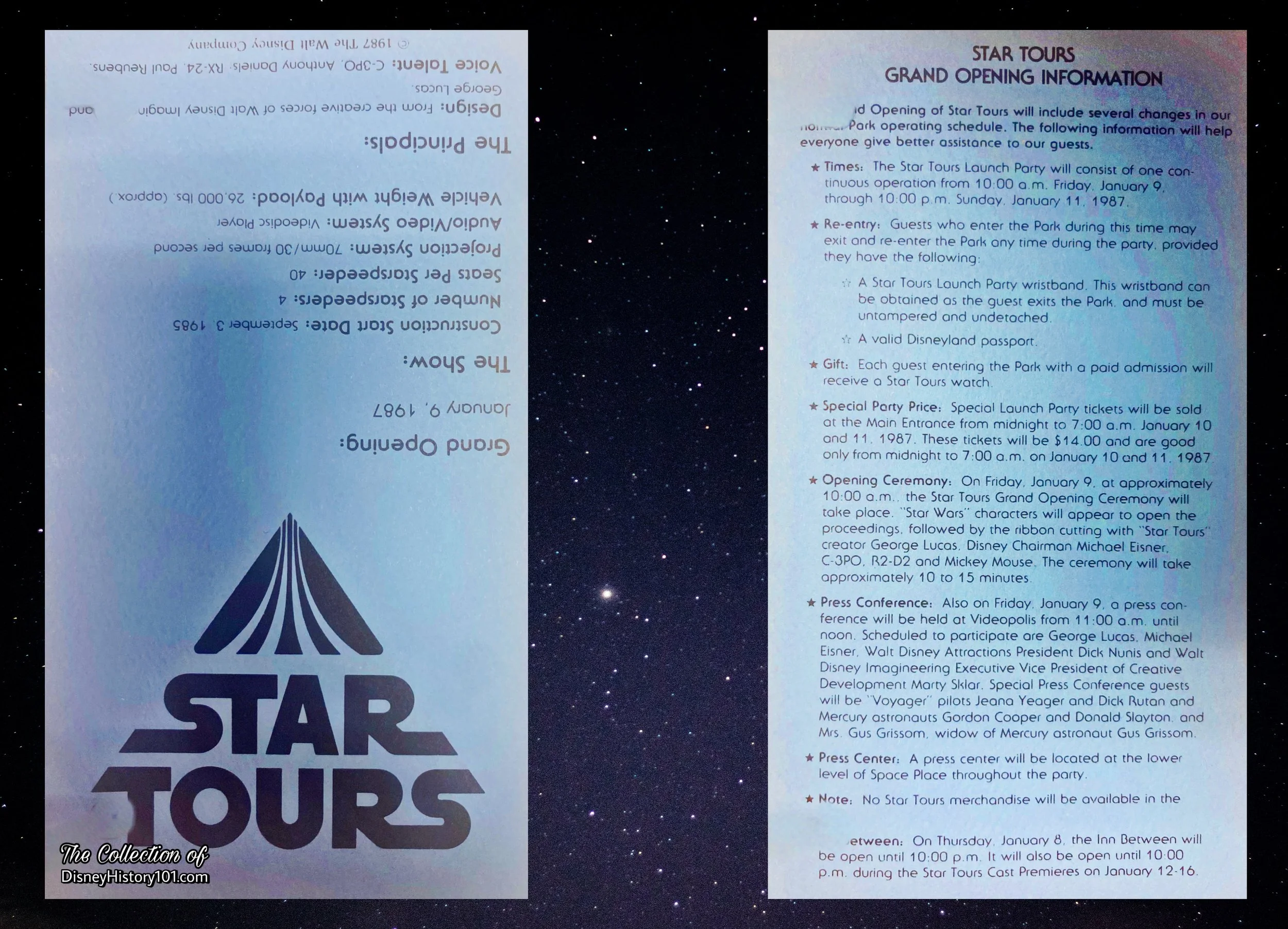
These Star Tours Fact Cards were issued to Disneyland Cast Members before the Launch Party; 1987.
Disneyland Cast Members were trained and prepared.
Finally, the ultimate thrill experience arrived!
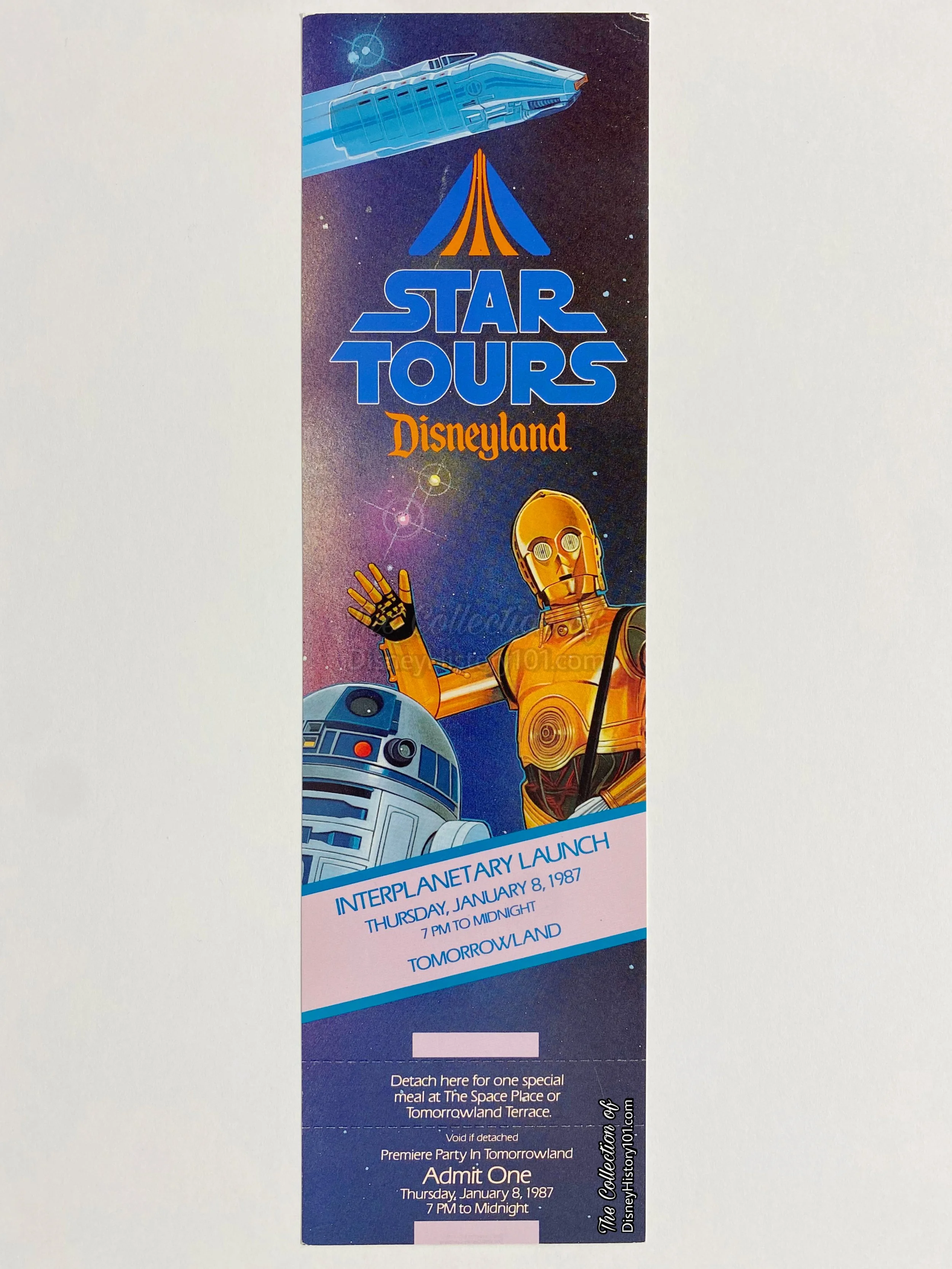
“Launch Party”
The Star Tours Launch Party consisted of one continuous operation from 10:00 a.m. Friday, January 9, through 10:00 p.m. Sunday, January 11, 1987. Special Launch Party tickets were sold at the Main Entrance from midnight to 7:00 a.m. January 10 and 11, 1987. These tickets were $14.00 and are good only from midnight to 7:00 a.m. on January 10 and 11, 1987.
Guests excitedly lined up in a 4-hour queue that extended all the way down Main Street U.S.A., and park hours were extended for an astounding total of 60 straight hours of Park operation from 7pm to midnight! Guests who entered the Park during this time could exit and re-enter the Park any time during the party, provided they had a Star Tours Launch Party wristband. This wristband could be obtained as the guest exits the Park, and needed to be untampered and undetached, and a valid Disneyland passport was required. All of this, so that guests may board one of four shuttles to a “galaxy far, far, away.”
Of course, “due to the nature of the attraction expectant mothers and guests with certain physical handicaps may not ride. Certain height and age restrictions also applied”, according to the Guide to Disneyland (published 1987).
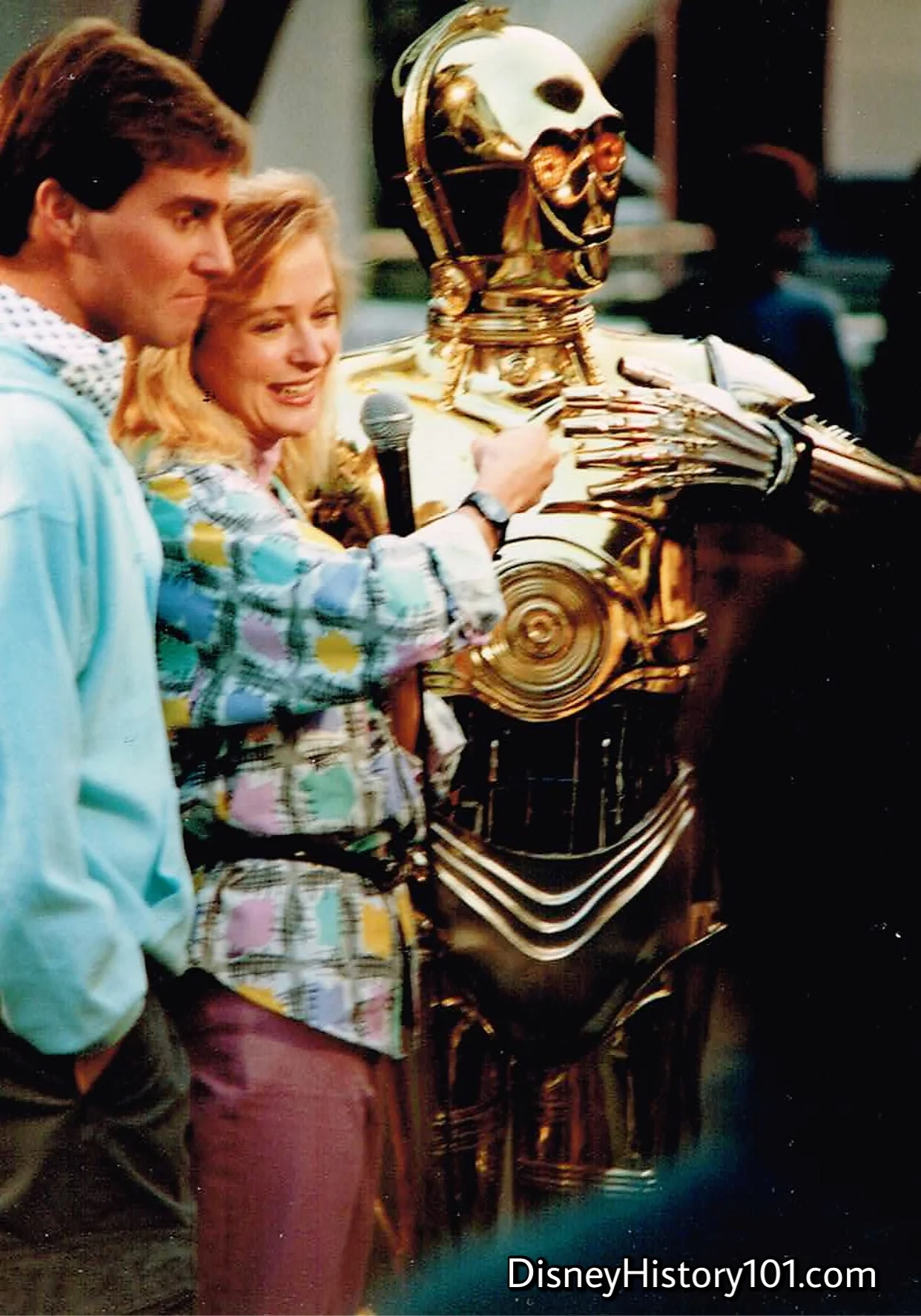
Star Tours 60-Hour Party Promotional Commercial
This Vintage View was captured during the filming of the Star Tours 60-Hour Party Promotional Television Spots.
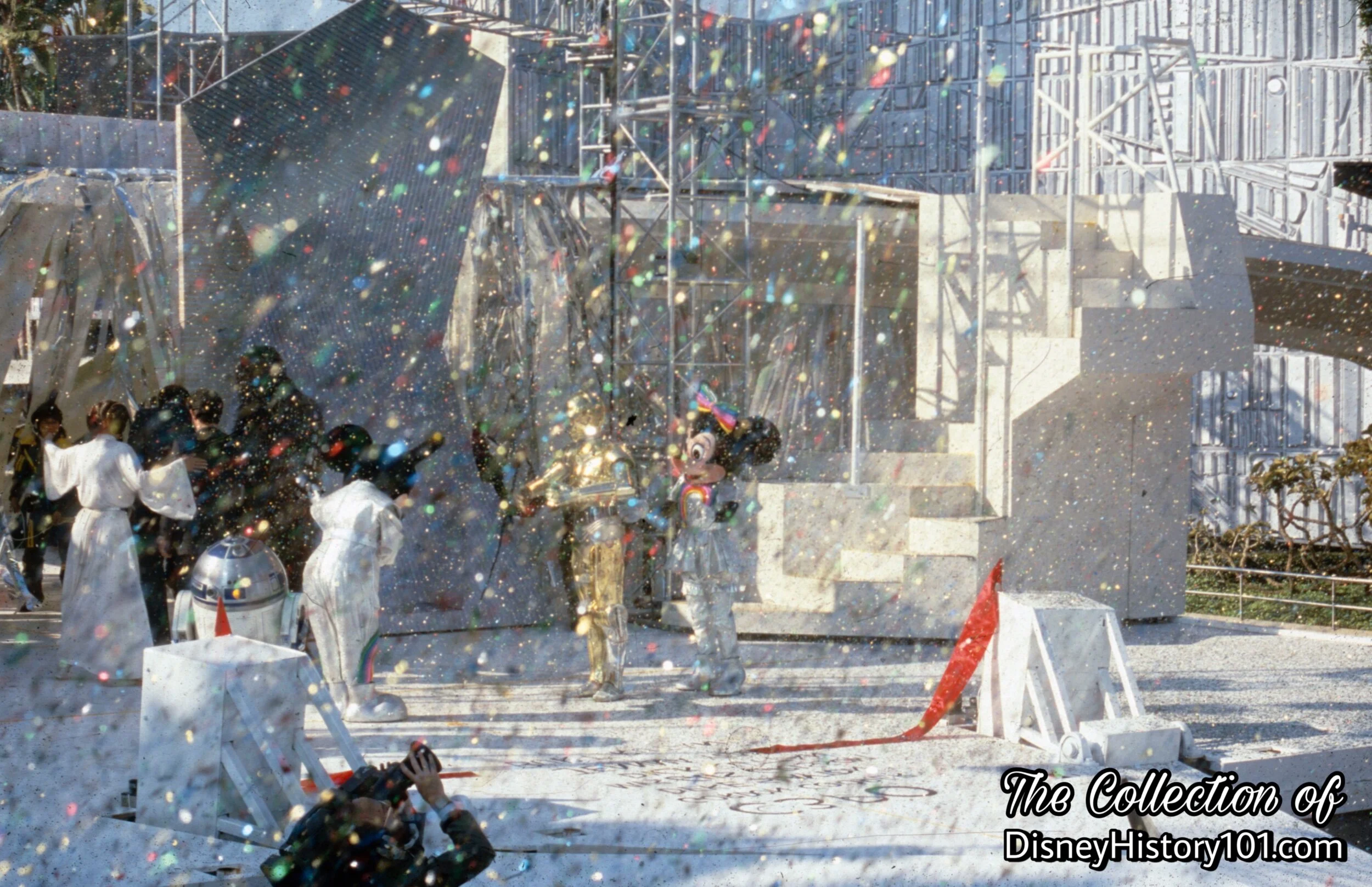
Star Tours Opening Day Ceremony; January 9, 1987.
“Opening Ceremony”
The $32 million attraction first shuttled guests to a moon of Endor in “a galaxy far, far away” (all with the help of RX-24 and R2-D2), during January of 1987. On Friday, January 9, at approximately 10:00 a.m.. the Star Tours Grand Opening Ceremony took place, launching the first Disneyland attraction to feature stories and characters that were not originally a part of Walt Disney Productions. “Star Wars” characters appeared to open the proceedings, followed by the ribbon cutting with “Star Tours” creator George Lucas and Disney Chairman Michael Eisner wielding a lightsaber, while C-3PO, R2-D2 and Mickey Mouse looked on. The ceremony took approximately 10 to 15 minutes, before nonstop flights commenced.
Also on Friday, January 9, a press conference was held at Videopolis from 11:00 a.m. until noon. A press center was located at the lower level of Space Place throughout the party. George Lucas was among Disneyland Guests on the second day of operation according to interviews conducted during the 1980s. Scheduled to participate were Michael Eisner, Walt Disney Attractions President Dick Nunis, and Walt Disney Imagineering Executive Vice President of Creative Development Marty Sklar. Special Press Conference guests were “Voyager” pilots Jeana Yeager and Dick Rutan and Mercury astronauts Gordon Cooper and Donald Slayton, and Mrs. Gus Grissom, widow of Mercury astronaut Gus Grissom.
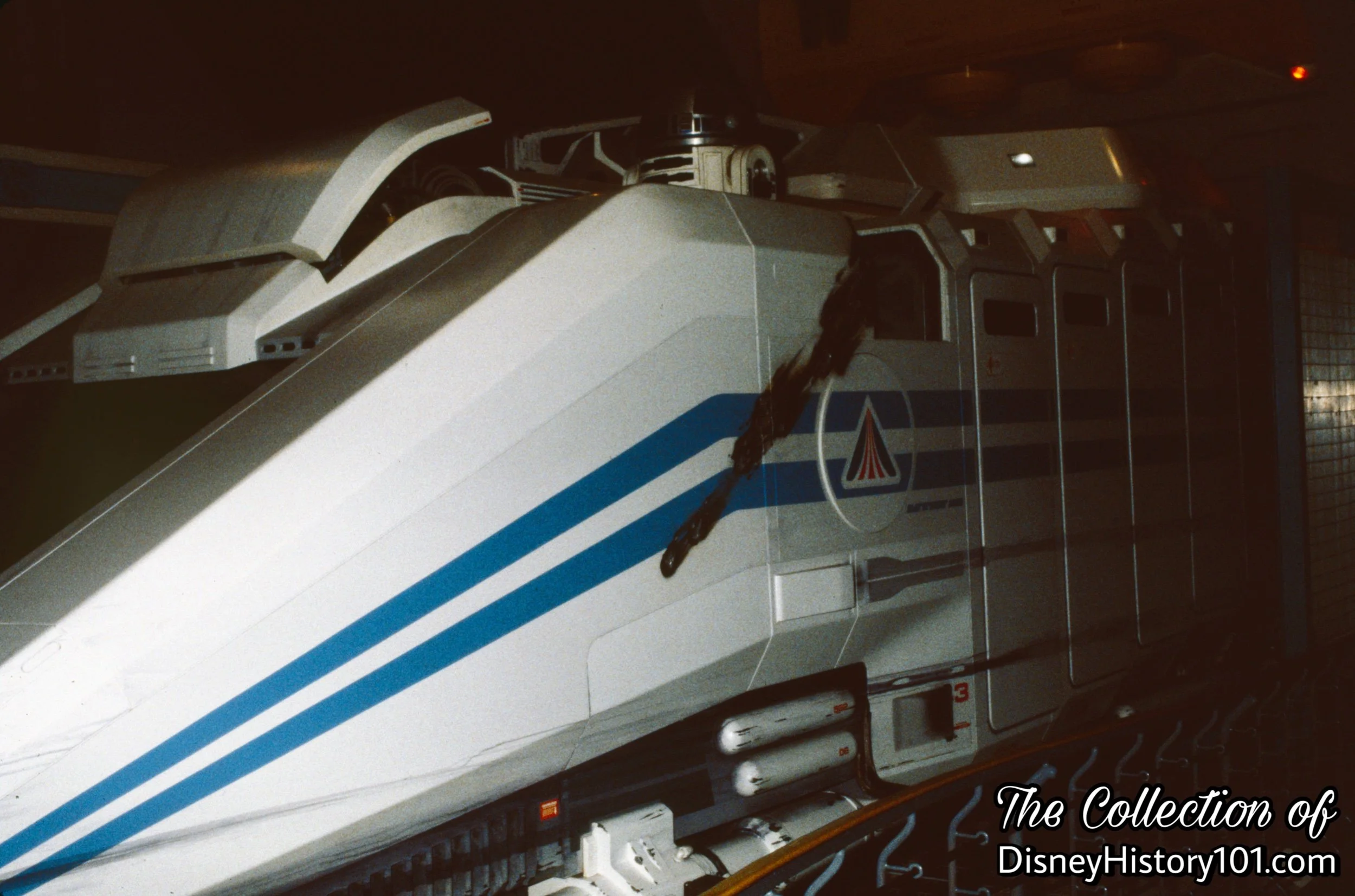
The StarSpeeder 3000 in “Star Tours Show 1”.
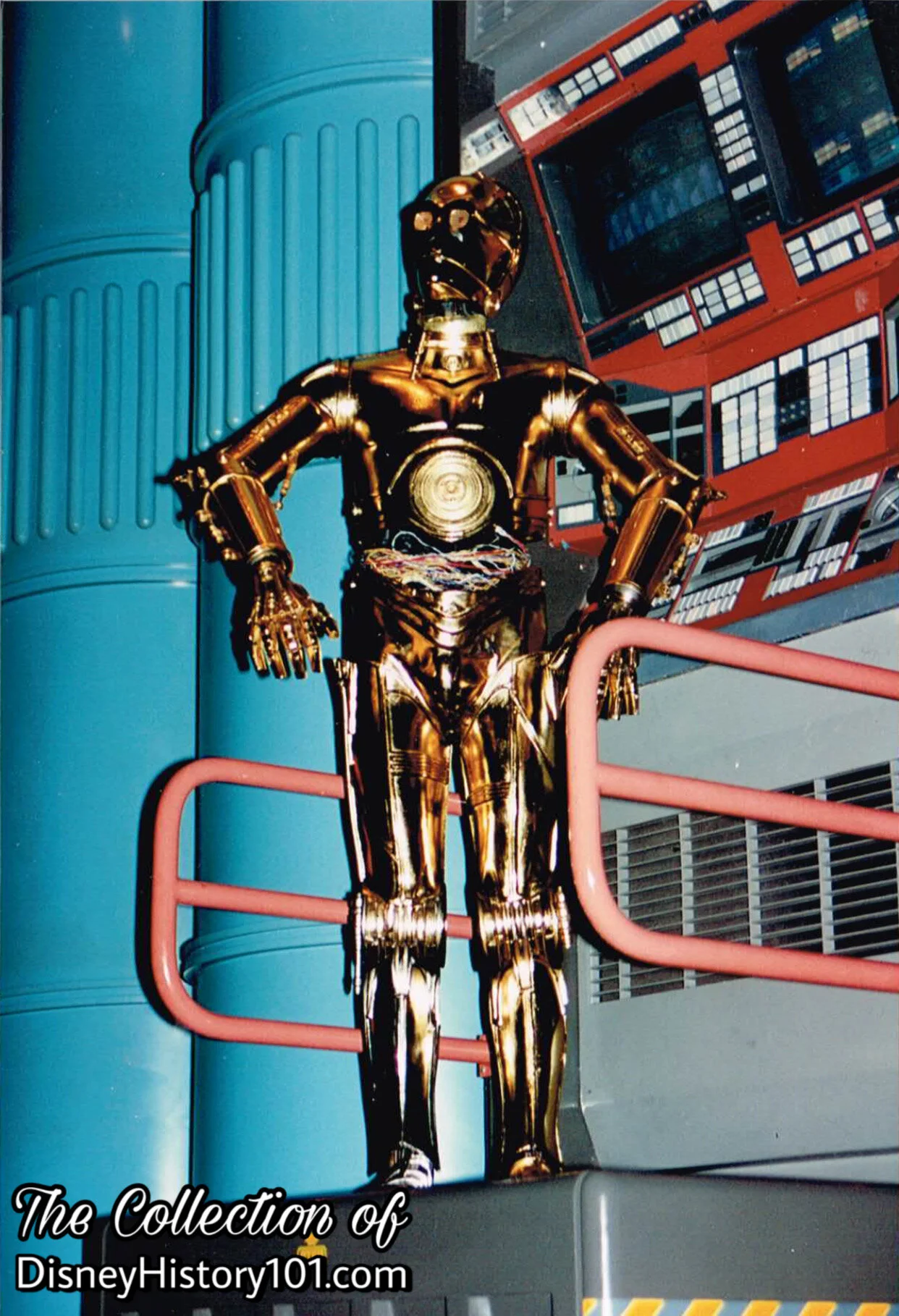
C-3PO runs diagnostics on a StarSpeeder 3000 transport craft in The Spaceport.
Here, in Star Tours “Show 1”, C-3PO and R2-D2 run diagnostics on a Starspeeder 3000. Overhead, a Liquid Crystal Display runs travel advertisements for galactic destinations while a Status Board, gives information about gates and incoming and outbound flights. Meanwhile, a couple of Mon Calamari Security officers overlook the passenger-filled queue from a Control Tower.
Above, a Supervisor shouts: “Hey, you droids on transport 22, get back to work!”
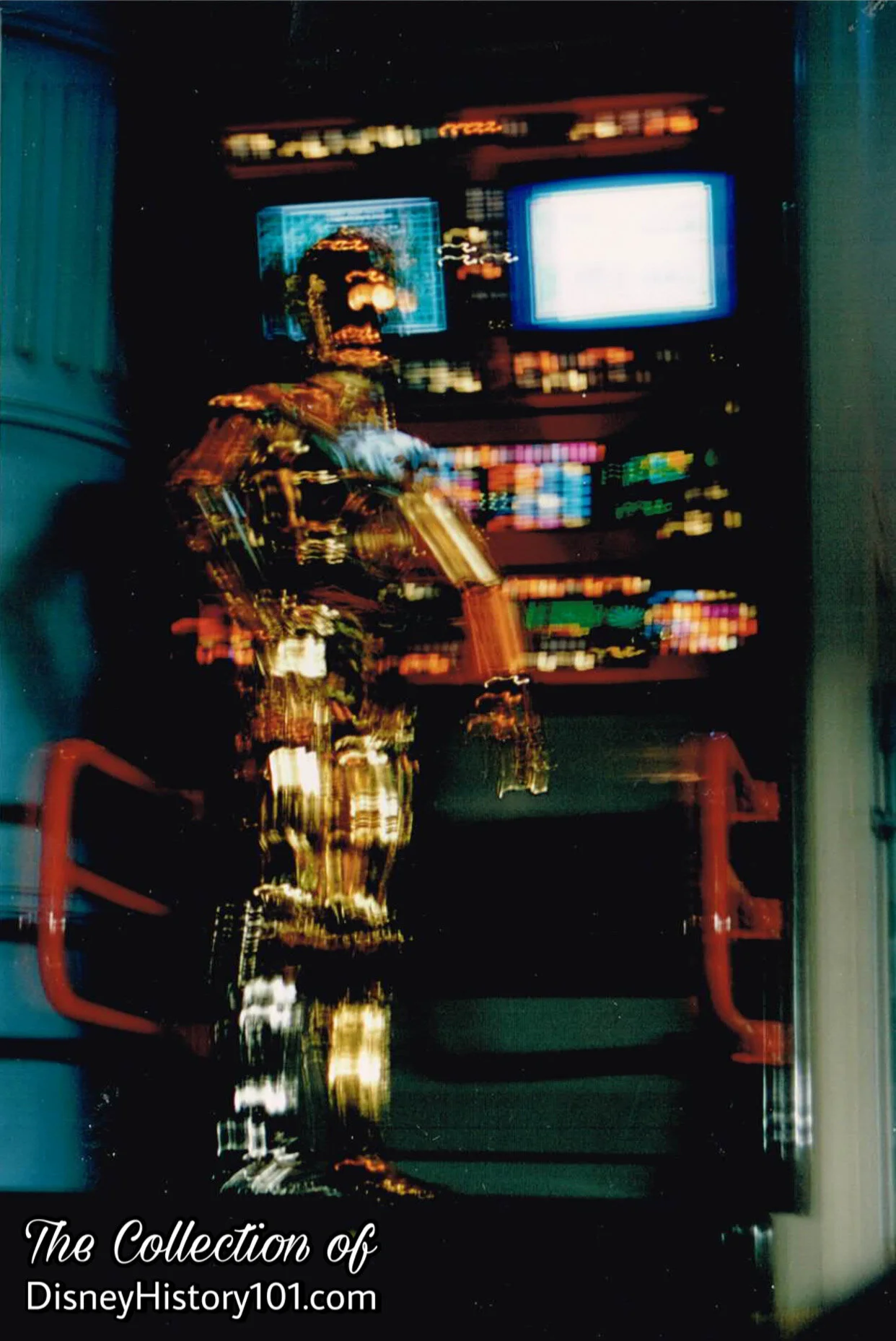
C-3PO runs diagnostics on a StarSpeeder 3000 transport craft in The Spaceport.
“Now see what you have done! We'll lose our jobs for sure.”
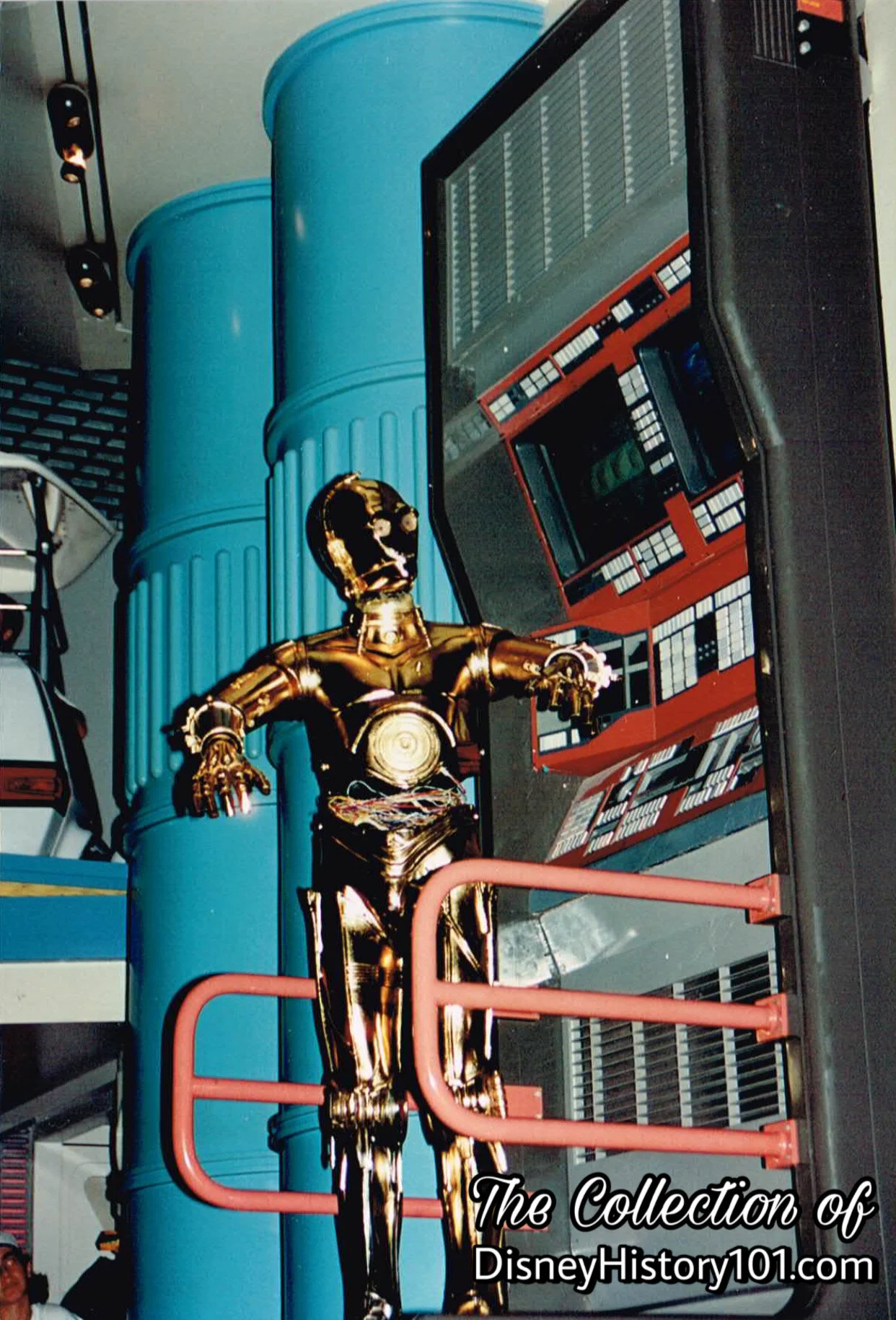
While Guests wait in an orderly fashion (queue) to board Star Tours, the animated C-3PO runs diagnostics on a StarSpeeder 3000 transport craft in The Spaceport.
“Don't insult me, you overgrown scrap pile! At least I'm doing my job!“
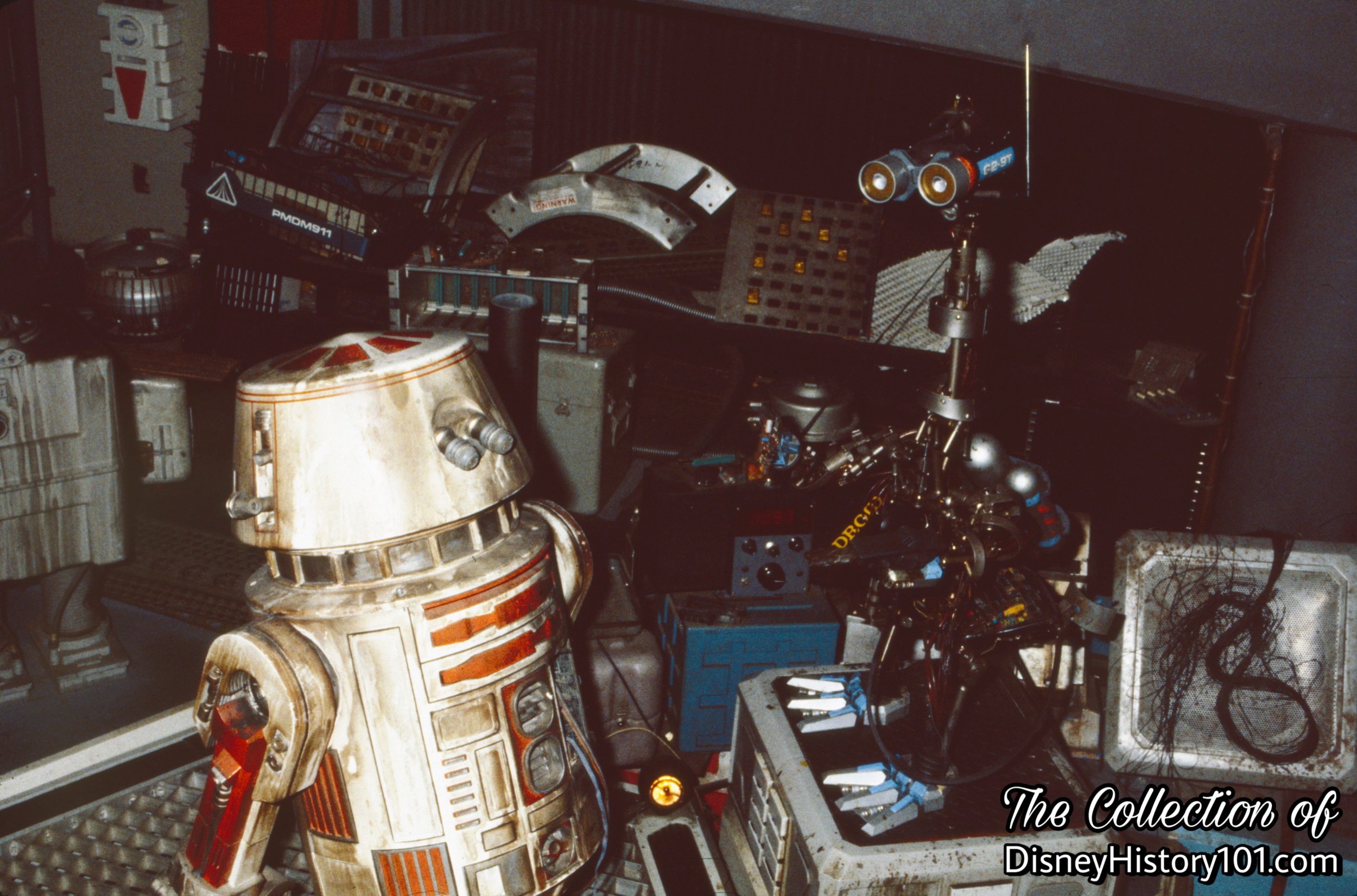
The Droidnostics Center (Sector 2) where droid pilots and navigators (like R5-D2) are assembled or refurbished by the G2-9T Repair Droid.
In Star Tours “Show 2”, Guests entered Droidnostics Center (Sector 2) of the Tomorrowland Starport. There, they through the Lower Droid Room and Upper Droid Room, divided by a Liquid Crystal Display Wall. Inside, Guests were introduced to a new repair droid named G2-9T, who was completely repairing a navigator droid whohadcompletely burnt out its logic module during a routine flight.
“Loading Area”
Guests continued into the Loading Area Pre-Show containing 12 Video Monitors.
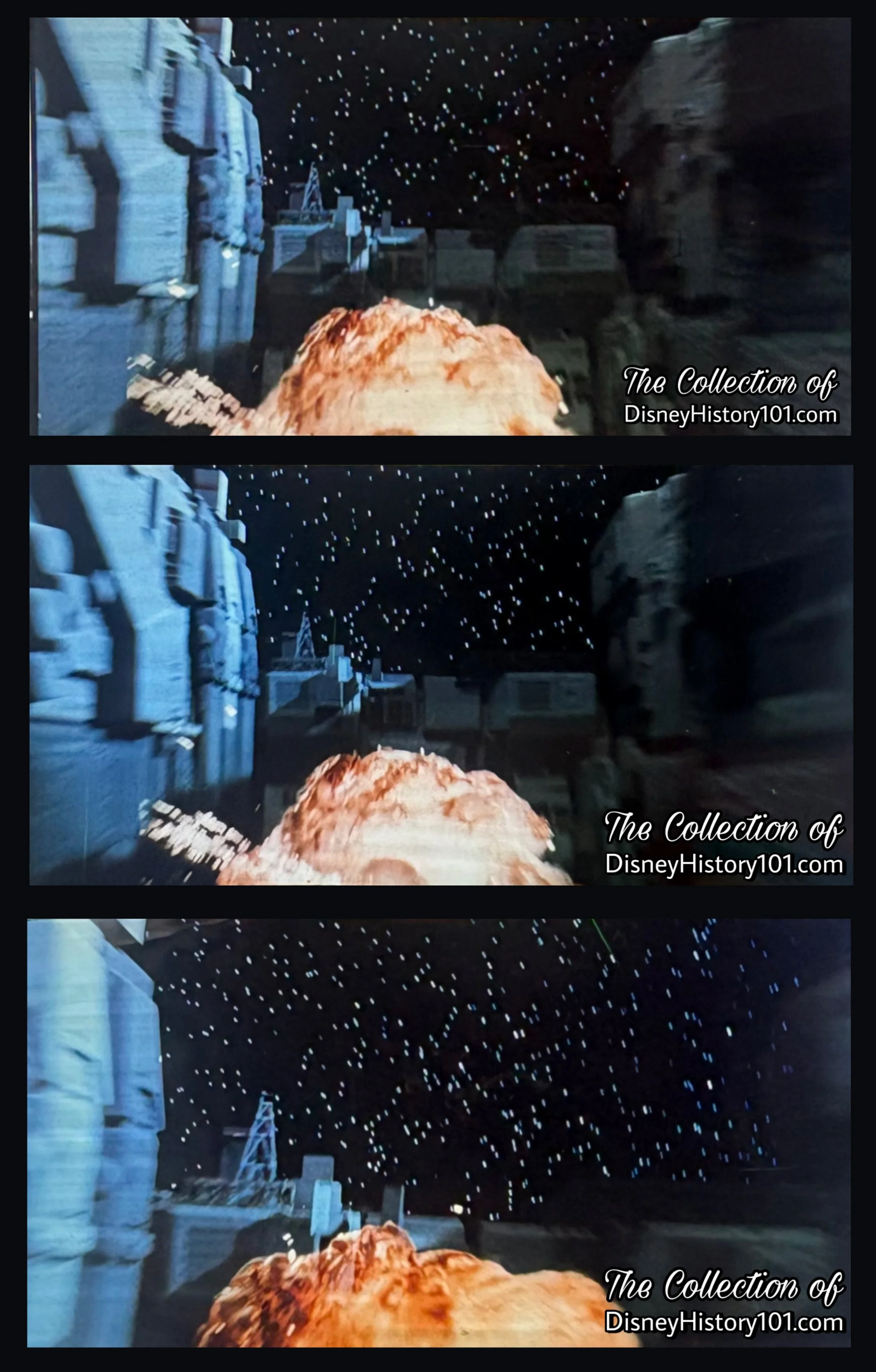
“It’s a hit” – one of the last things seen by passengers before a jump to lightspeed from the restricted combat zone.
“Main Show”
Captain RX-24’s very first commercial space flight began a little “bumpy”. After a critical navigation error he turned the wrong way, missed the main spaceport exit, and nearly crashed the StarSpeeder 3000 through a maintenance bay door. But after overriding the brakes, Captain Rex was able to narrowly pull the ship back into the launch tube and blast into space.
R2-D2 initiated the hyperdrive shortcut to Endor, but overshot the peaceful forest moon, and dropped the StarSpeeder out of hyperspace directly inside a dense, turbulent ice comet field. After successfully navigating a labyrinth of obtrusive ice crystals, the StarSpeeder 3000 shattered free of the a massive comet and into open space.
Immediately after escaping, the StarSpeeder 3000 is intercepted by an Imperial Star Destroyer and pulled into its tractor beam. However, an X-wing fighter squadron arrives and attacks the Star Destroyer, taking out the tractor beam emitter and freeing the StarSpeeder. Captain Rex follows the Rebel starfighters into battle, joining a dangerous trench run assault against a third Death Star. The StarSpeeder maneuvers through the trench, dodging Turbo Laser Tower fire and Imperial TIE fighters. One X-wing fires proton torpedoes that blow up the Death Star battle station, just as Rex makes a final, desperate jump to lightspeed to escape the explosion!
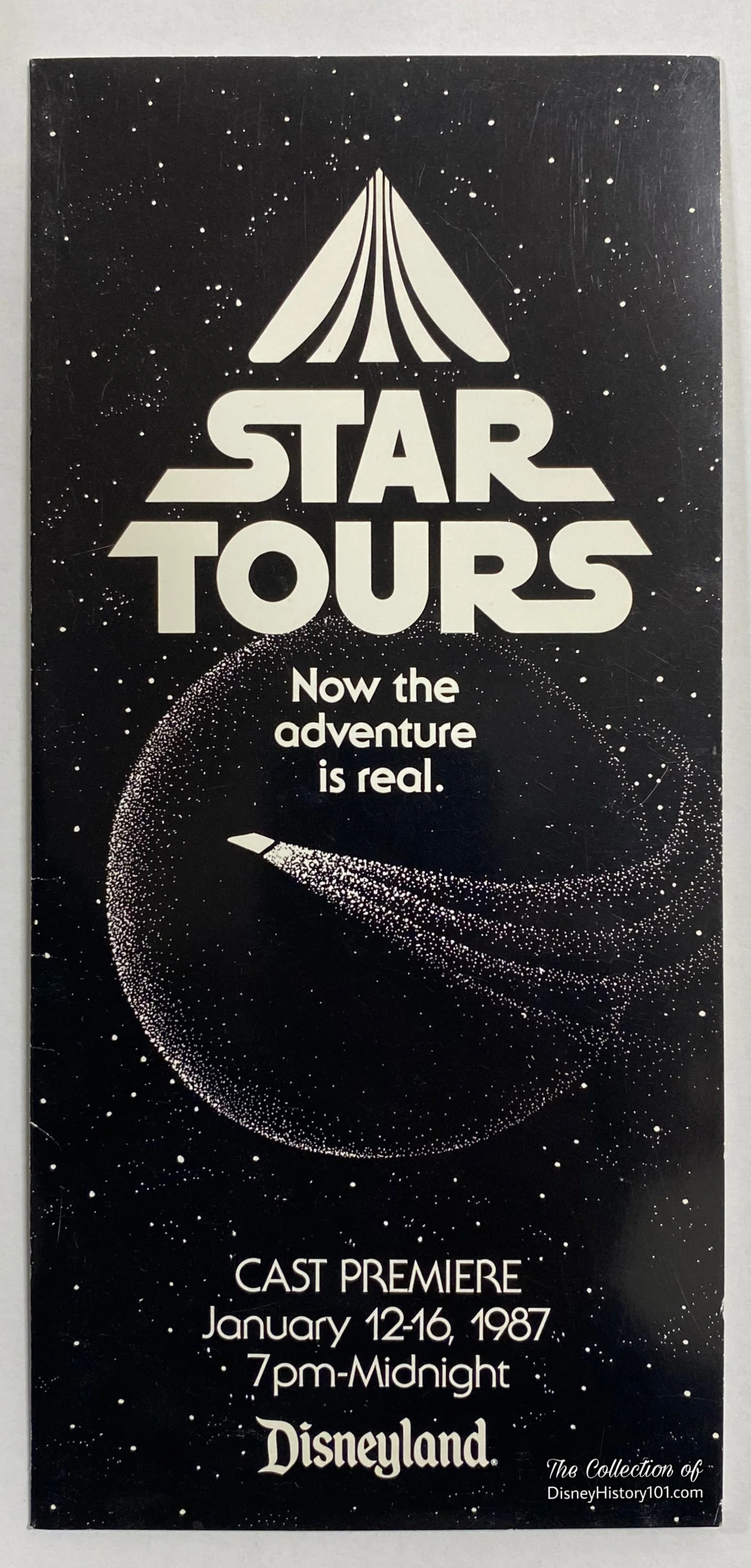
An advertisement for the Star Tours Cast Premiere.
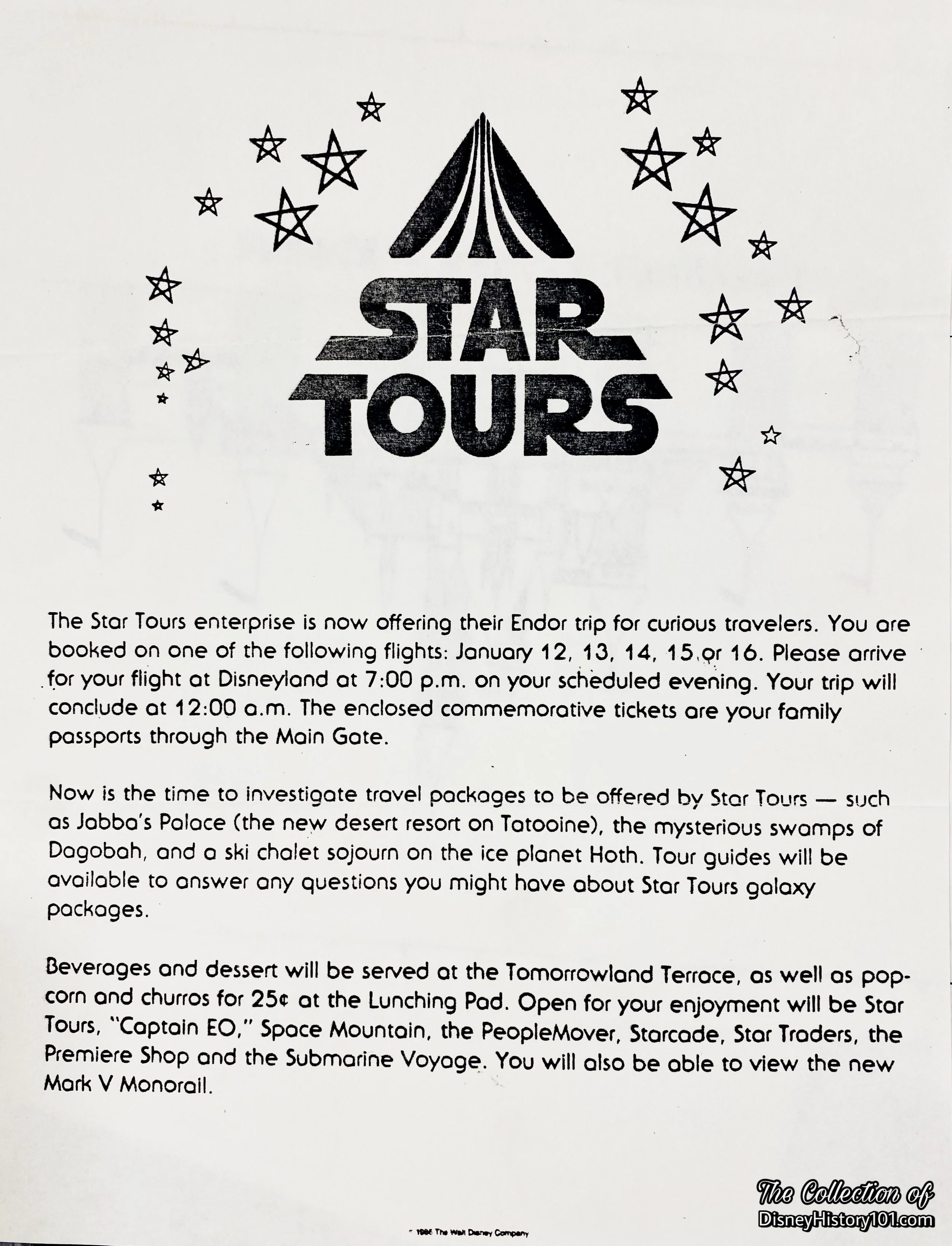
The Star Tours Cast Premiere Invitation
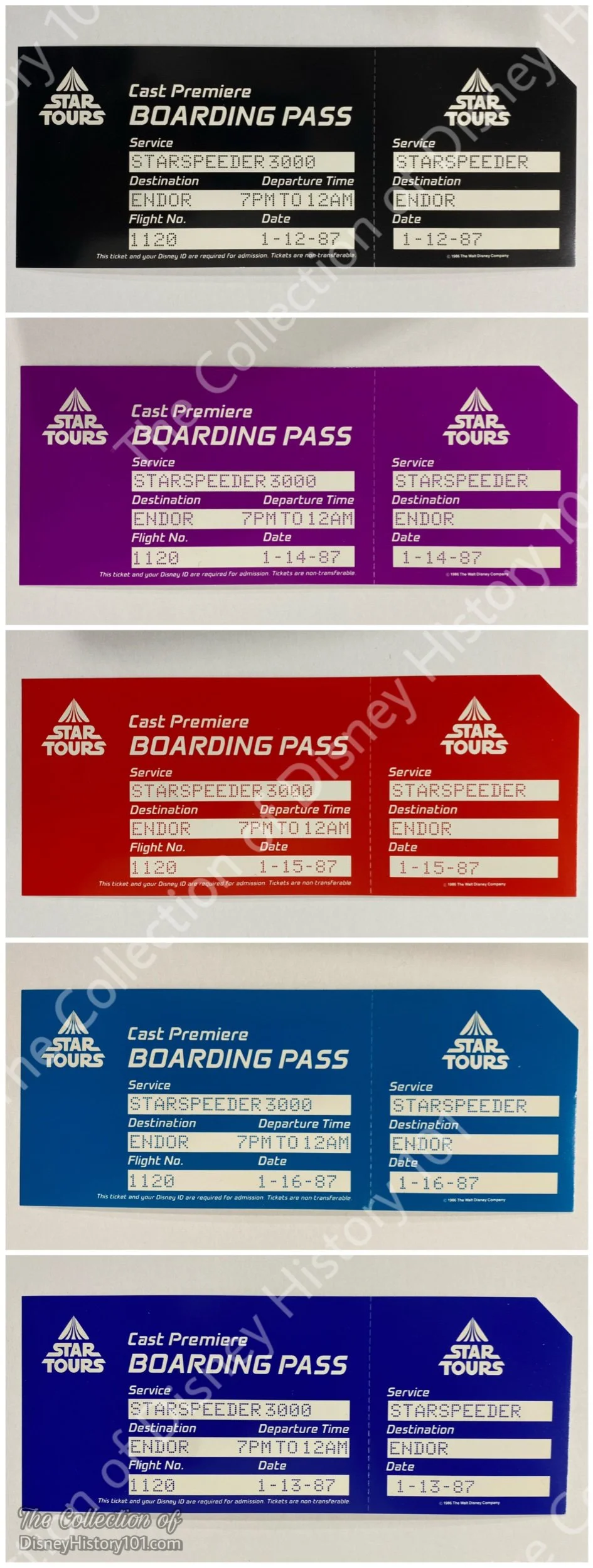
Various Star Tours Cast Premier Boarding Passes (dated January 12-16, 1987) admitted Cast Members to board early flights.
“Star Tours Cast Premier”
The Star Tours Cast Premier was held January 12-16, 1987! All interplanetary travelers were required to have a current passport, the necessary visas and a Boarding Pass prior to leaving the space port.
Many Disneyland Cast Members experienced heightening expectation that could only be reflected by the sentiments of Captain Rex: “I've always wanted to do this!”
Desiree (a former Tomorrowland Character Shop employee) recollected her realization (during that month) that “now the adventure is real” : “The Character Shop cast members were…the first to ride Star Tours. We were cashing out our registers when they came down the exit and needed to test it with people, so we all got to go on several weeks before the opening. Well…it was beyond amazing. Of course, they kept it a secret, but we had heard the term ‘simulator’ come up, but at that time, no one knew what it meant. It just blew our minds. You just couldn’t believe that something like that could be created and I remember telling my parents it was like a fantasy to be able to feel like you were literally in the middle of a Star Wars movie.”
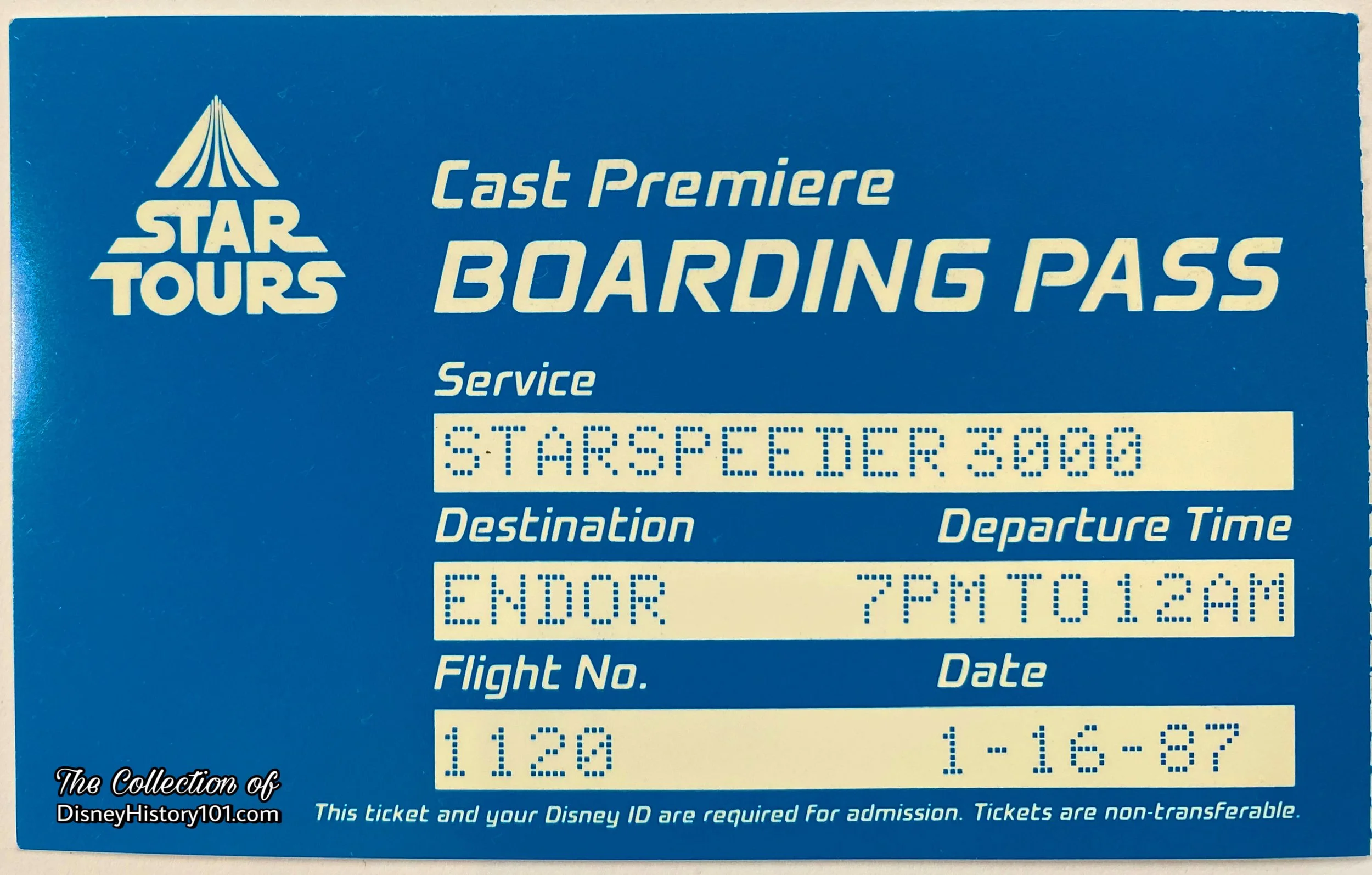
A “Star Tours Cast Premier” Boarding Pass (dated January 16, 1987) with its Ticket Stub removed.
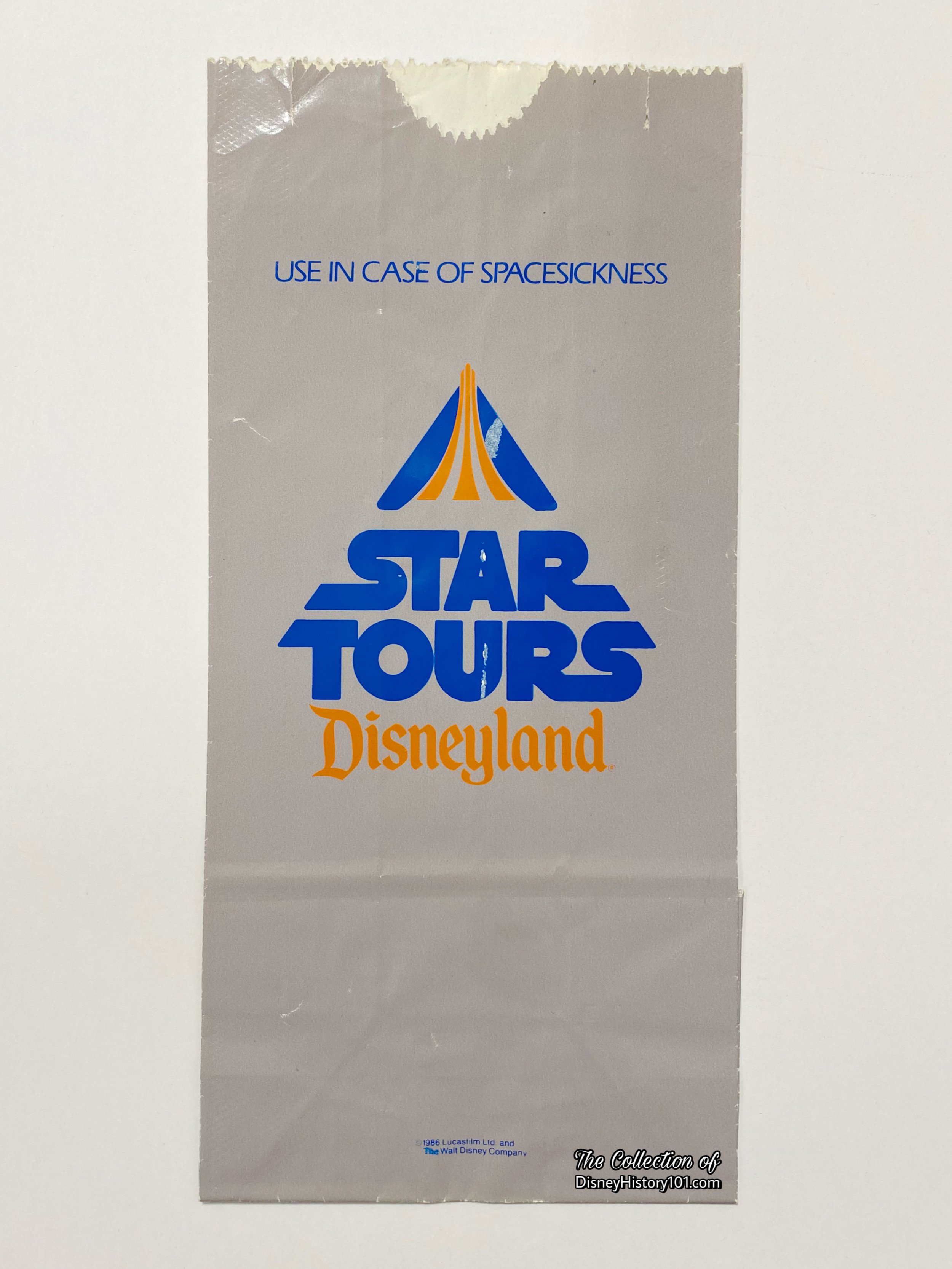
A Star Tours “Space Sickness” Bag; 1986.
At first glance at this Star Tours “Space Sickness” Bag you may remember just how much you hate space travel.
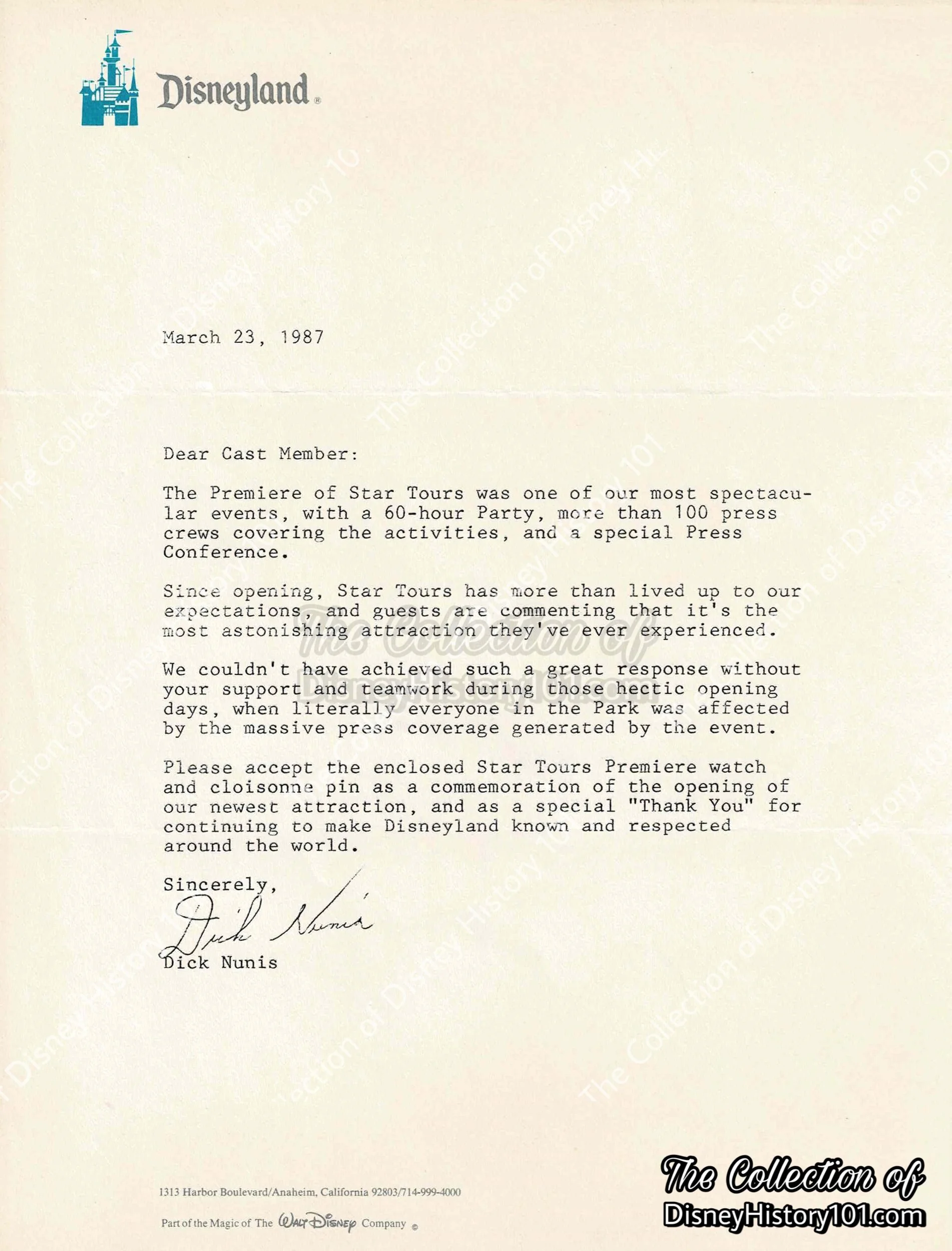
This Cast Member Appreciation Letter for supporting the “Premiere of Star Tours” was issued along with a commemorative watch and cloisonne pin.
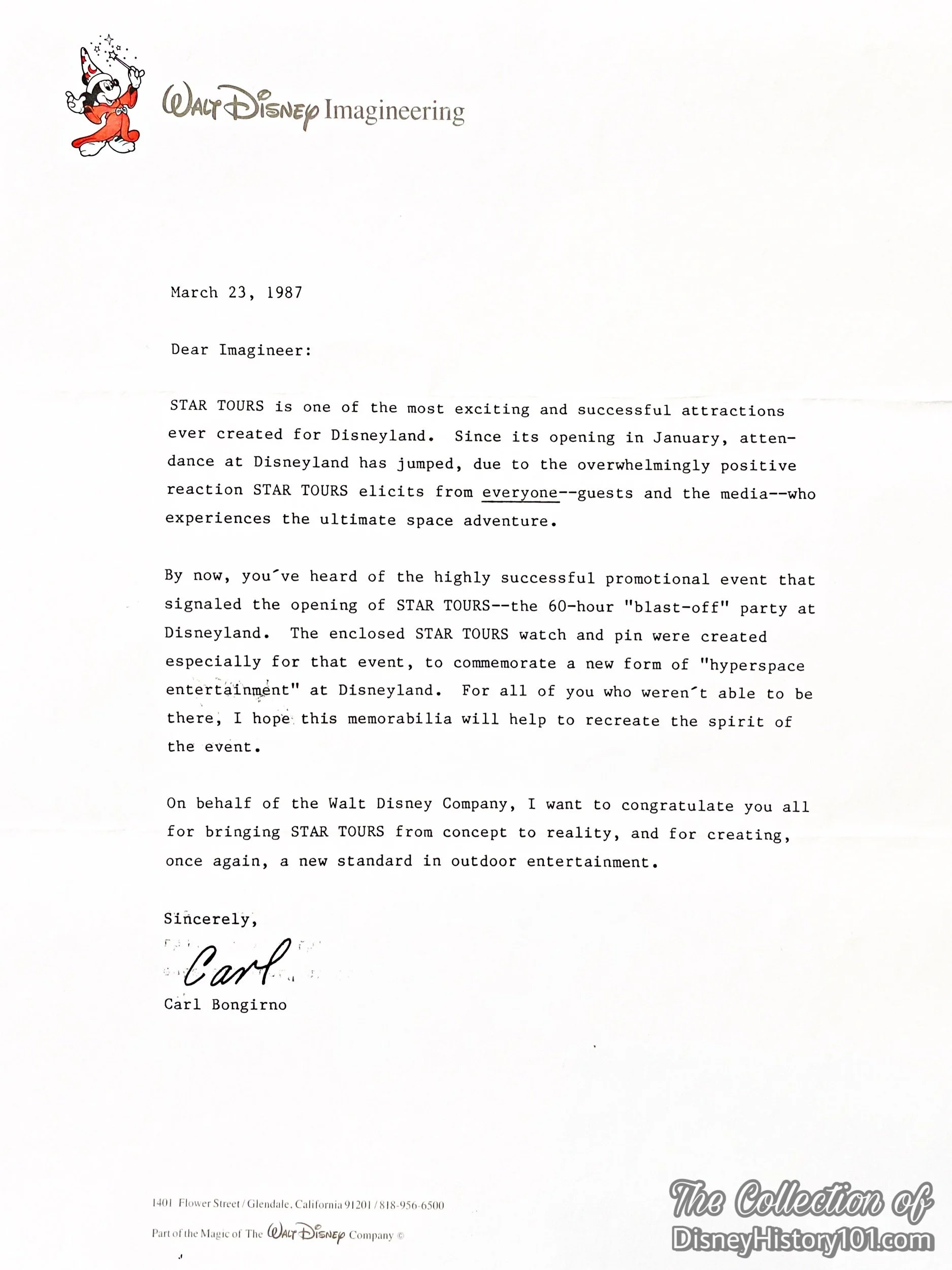
A special letter issued to Walt Disney Imagineers congratulated and thanked them for making Star Tours a reality.
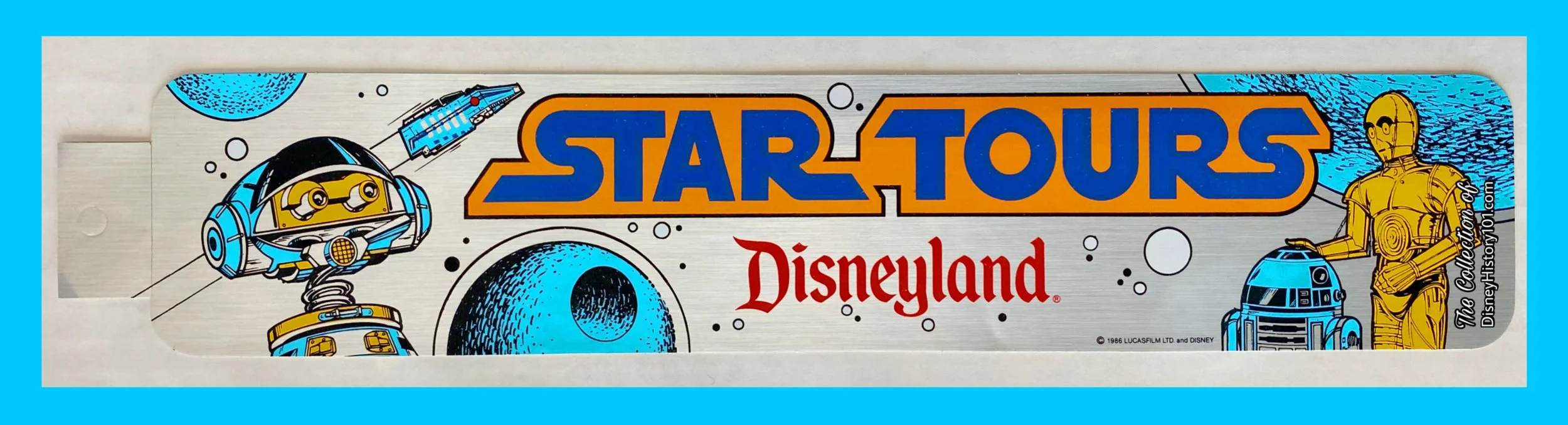
An adhesive sticker souvenir of Star Tours at Disneyland.
On the Grand Opening Day, no Star Tours merchandise was available in the Park, and this was reinforced in print, on those pre-opening Fact Cards issued to Disneyland Cast Members. However, each guest entering the Park with a paid admission received a Star Tours watch.
Things were far different during the one-year anniversary of the attraction, which was celebrated with an Oldsmobile Cutlass Supreme promotion!
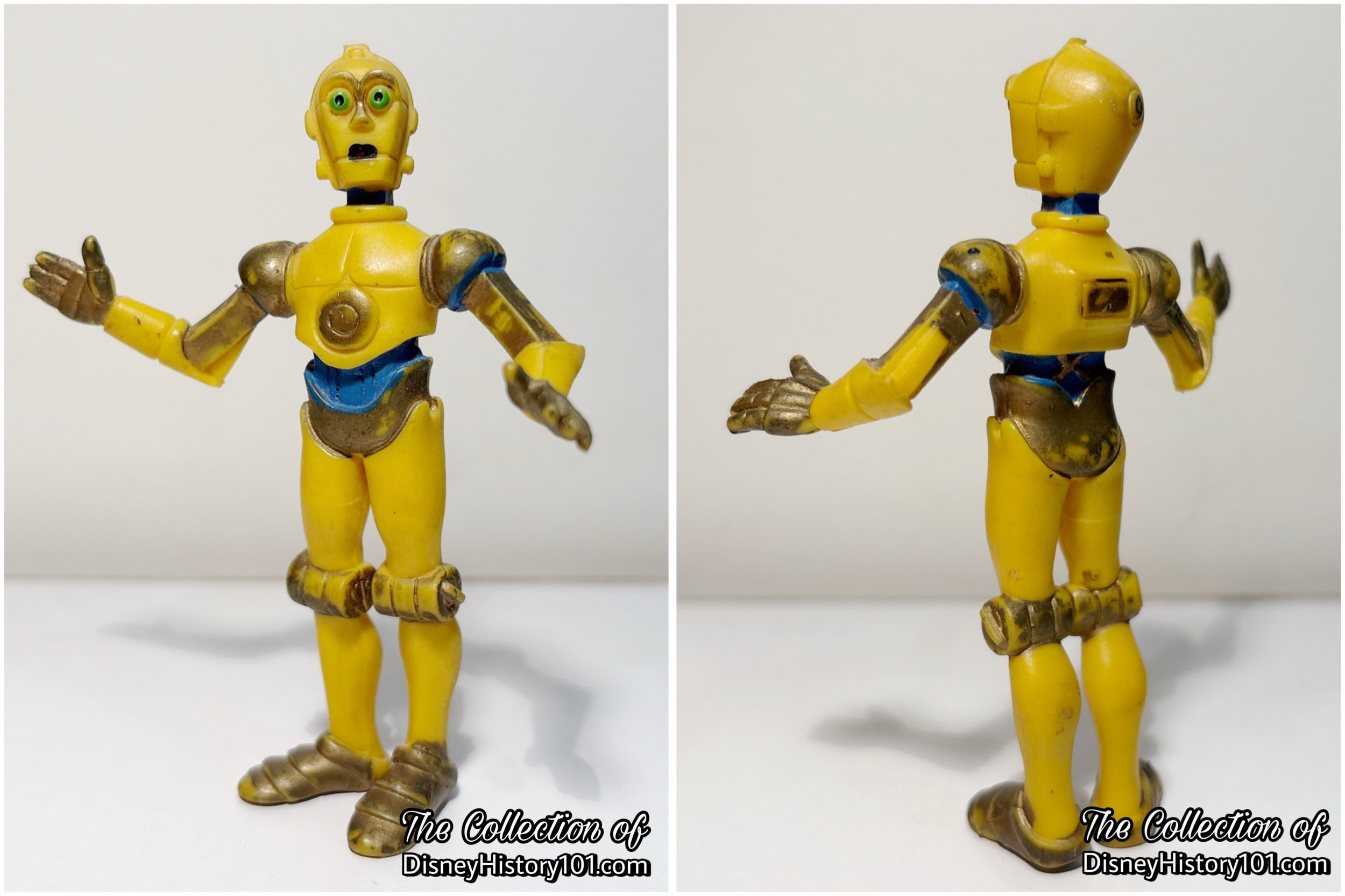
The C-3PO Droids PVC figurine was available where souvenirs were sold at Disneyland.
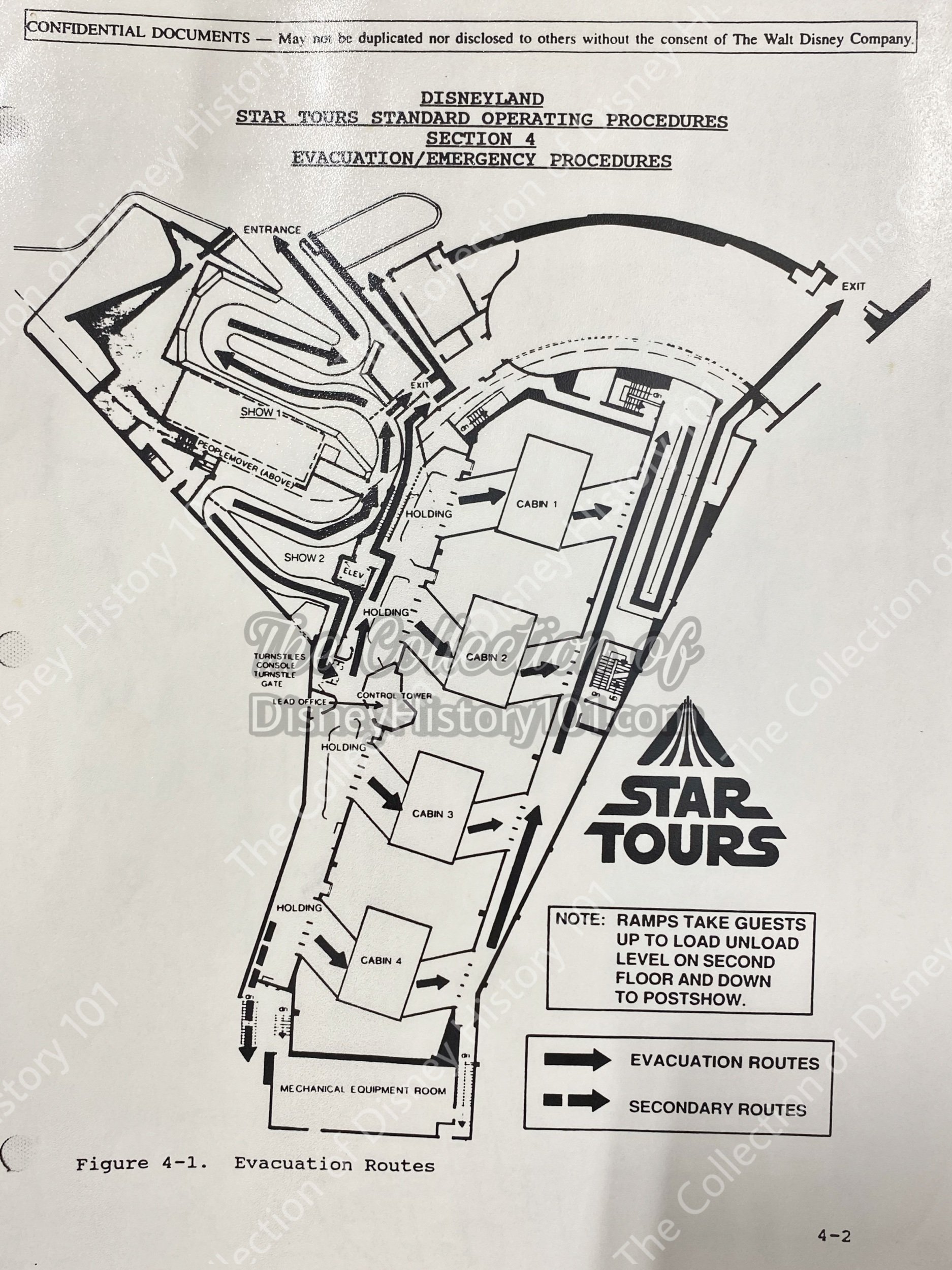
A “Star Tours Evacuation Routes” map illustrates suggested guest flow routes from the show building and was issued to Attractions Hosts and Hostesses.
“Rehabilitations”
When routine rehabilitations called for maintenance to be performed on Audio-Animatronics figures, they were carefully repositioned as closely as possible to their “night mode” positions so that when a trial run was started, the movements of the functions were not violent.
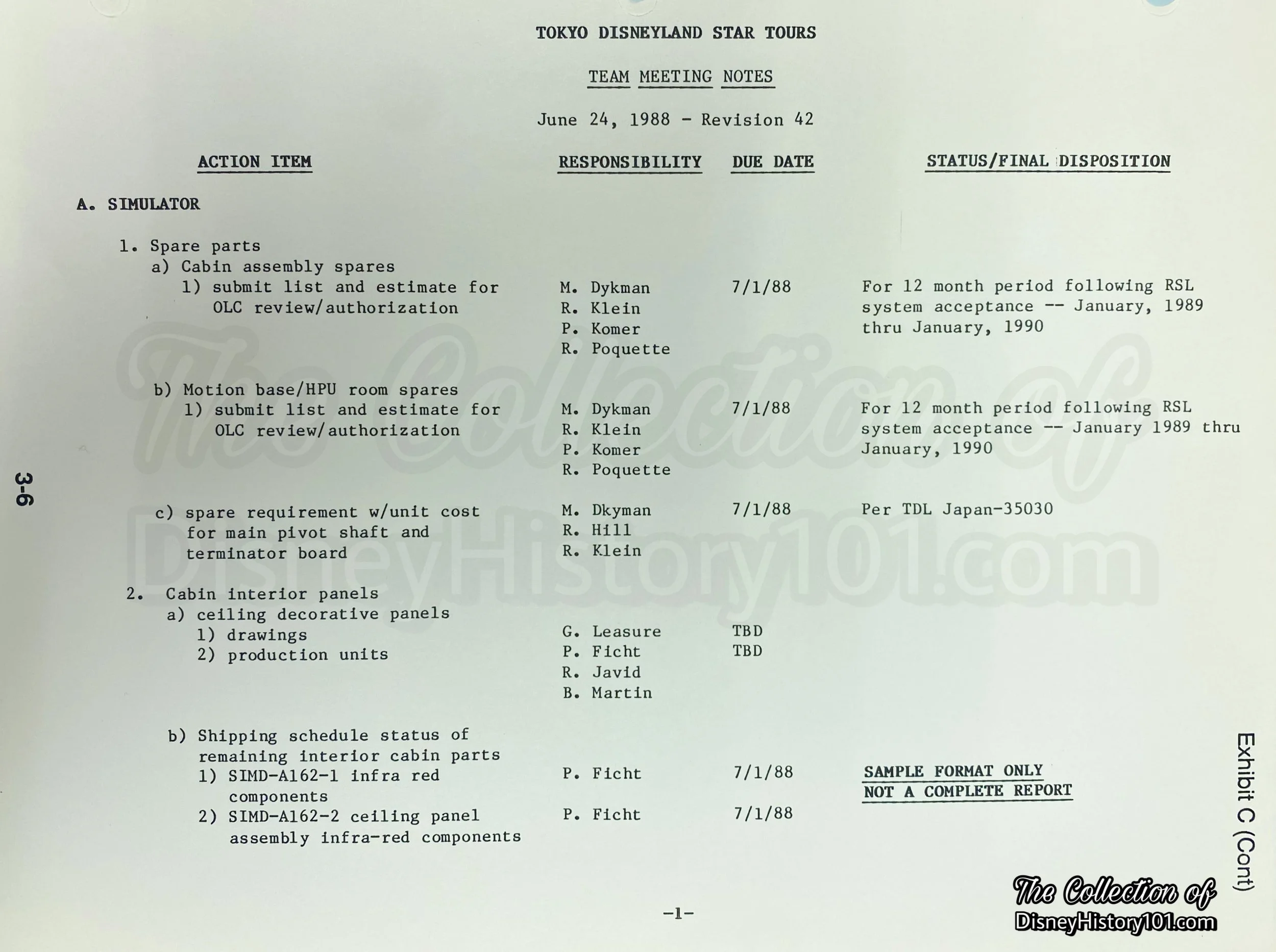
Tokyo Disneyland Star Tours Team Meeting Notes (Revised); June 24, 1988.
“Legacy”
The “E” Ticket adventure Star Tours had again proven the name Disney was synonymous with excellence. Since its origination by Walt Disney in 1952, Walt Disney Imagineering had been the creator of theme parks like Tokyo Disneyland and attractions like Star Tours. Now, operator Oriental Land Company was interested in bringing the galaxy far, far away to their Tokyo Disneyland Park.
Walt Disney Imagineering was already instrumental in the creation, design, engineering, production, construction, and installation of the original Star Tours at Disneyland in Anaheim, California. Star Tours at Tokyo Disneyland was not a new project, but a replication of an existing attraction. So, it’s Project Life Cycle would take less time to complete. Beyond that, Walt Disney Imagineering would achieve what was then referred to as the “Triangle of Success” – exceeding the Disney standard of distinctive, lasting entertainment value; completing the job on schedule; and completing it within budget. Many Walt Disney Imagineers likely recalled the confident words of Captain Rex “I'm sure to do better next time!“
By Summer 1988, plans were moving at lightspeed, toward the completion of Star Tours’ newest destination at Tokyo Disneyland. Walt Disney Imagineering (the exclusive design, research and development firm that manufactured experiences for the Walt Disney Company), Walt Disney Attractions Japan (a subsidiary of the Walt Disney Company who oversaw and managed Disney’s operational, strategic, financial, and licensing relations for the Tokyo Disney Resort) and the Oriental Land Company (the operator of Tokyo Disneyland) gathered for weekly Tokyo Disneyland Star Tours Team Meetings.
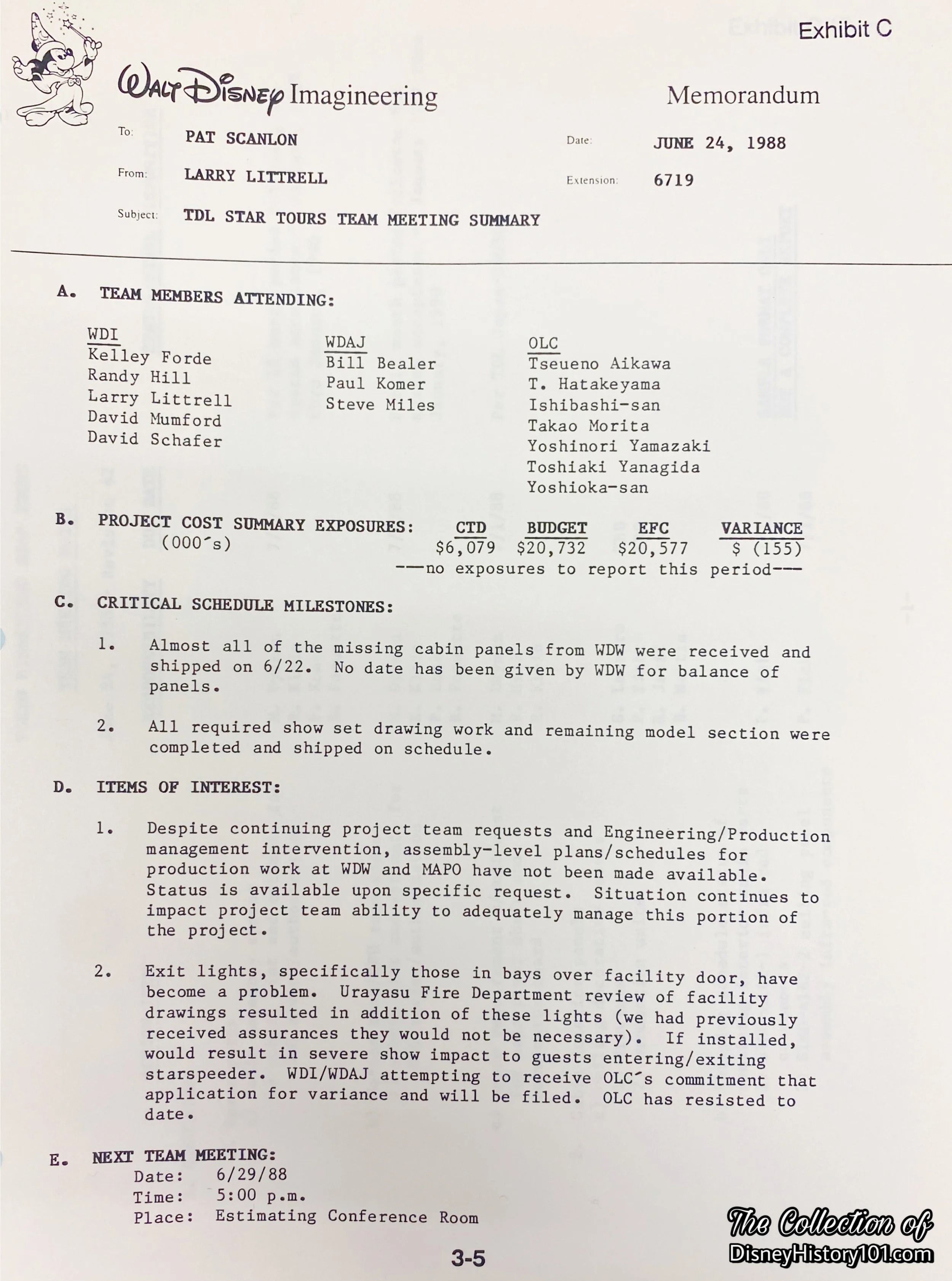
Tokyo Disneyland Star Tours Meeting Summary; June 24, 1988.
For example, the Tokyo Disneyland Star Tours Team Meeting Summary (above), documented some of the topics that were discussed in the Estimating Conference Room of Walt Disney Imagineering Campus during June 1988. On that occasion, one of the primary topics were Project Cost Summary Exposures – documented financial risks, uncommitted budget portions, and potential cost variances that could impact the baseline budget of Star Tours or Tokyo Disneyland. The Star Tours Project’s Cost to Date for any actual expenditures, approved invoices, and work physically performed up to the reporting period totaled $6,079, and was within the budget of $20,732. This influenced the Estimated Total Cost which was slightly lowered to $20,577 (a variance of $155).
Critical Schedule Milestones were achieved and discussed. Apparently, an undisclosed number of cabin panels went missing from Walt Disney World, but had been “received” and shipped to Tokyo Disneyland by June 22. According to the summary, all required show set drawing work and remaining model sections were completed and shipped on schedule.
Items of interest were noted. For example, the Urayasu Fire Department had reviewed the Star Tours facility drawings, and specifically suggested the addition of “Exit” lights in the bays where guests were entering and exiting Starspeeders. This raised a problem for Show Designers, because those “Exit” lights were severely impacting show quality.
Meanwhile, production work was also wrapping up for the arrival of Star Tours at Disney-MGM Studios Theme Park in Florida. This impending job schedule deadline was severely impacting the availability of the WDW Project Team when various requests were made by Engineering and Production Managers or members of the TDL Project Team. The assembly-level plans and schedules for production work carried out by WDW and MAPO, on Star Tours at Disney-MGM Studios Theme Park, were available upon specific request, but were occasionally not made available as the Project Team struggled to adequately manage that portion of the project. So naturally, this was also a item of interest at the June 1988 Tokyo Disneyland Star Tours Team Meeting.
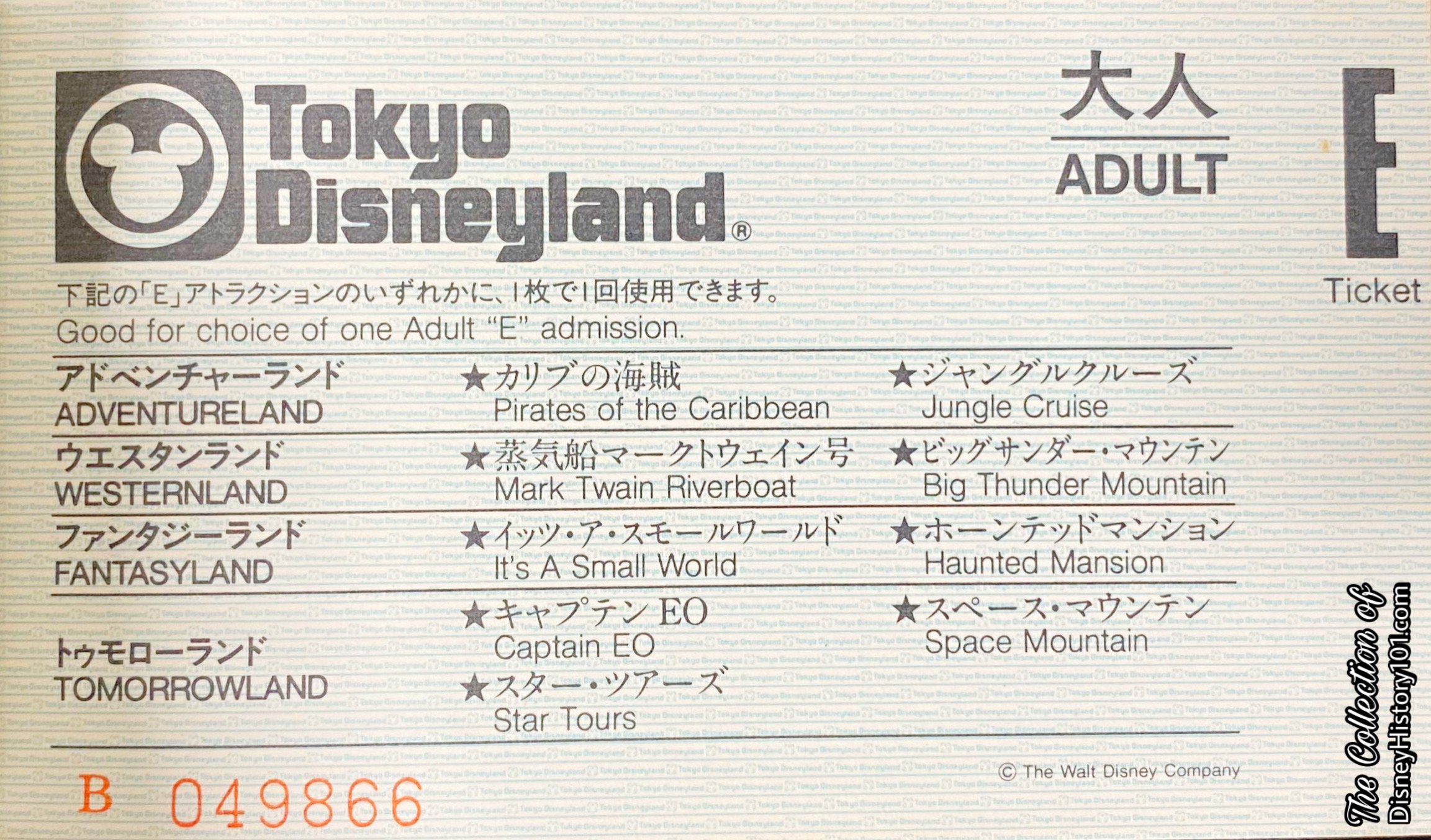
Star Tours on the Tokyo Disneyland “E” Attraction Coupon.
“It All Begins Soon… Only From Star Tours – at Tokyo Disneyland”
But after those few remaining meetings and all of the completed jobs, Star Tours introduced the perfect getaway vacation – exclusive tour packages conveniently departing daily from Tokyo Disneyland. On July 12, 1989, the “E” Ticket Star Tours adventure opened in a magnificent newly designed show building.
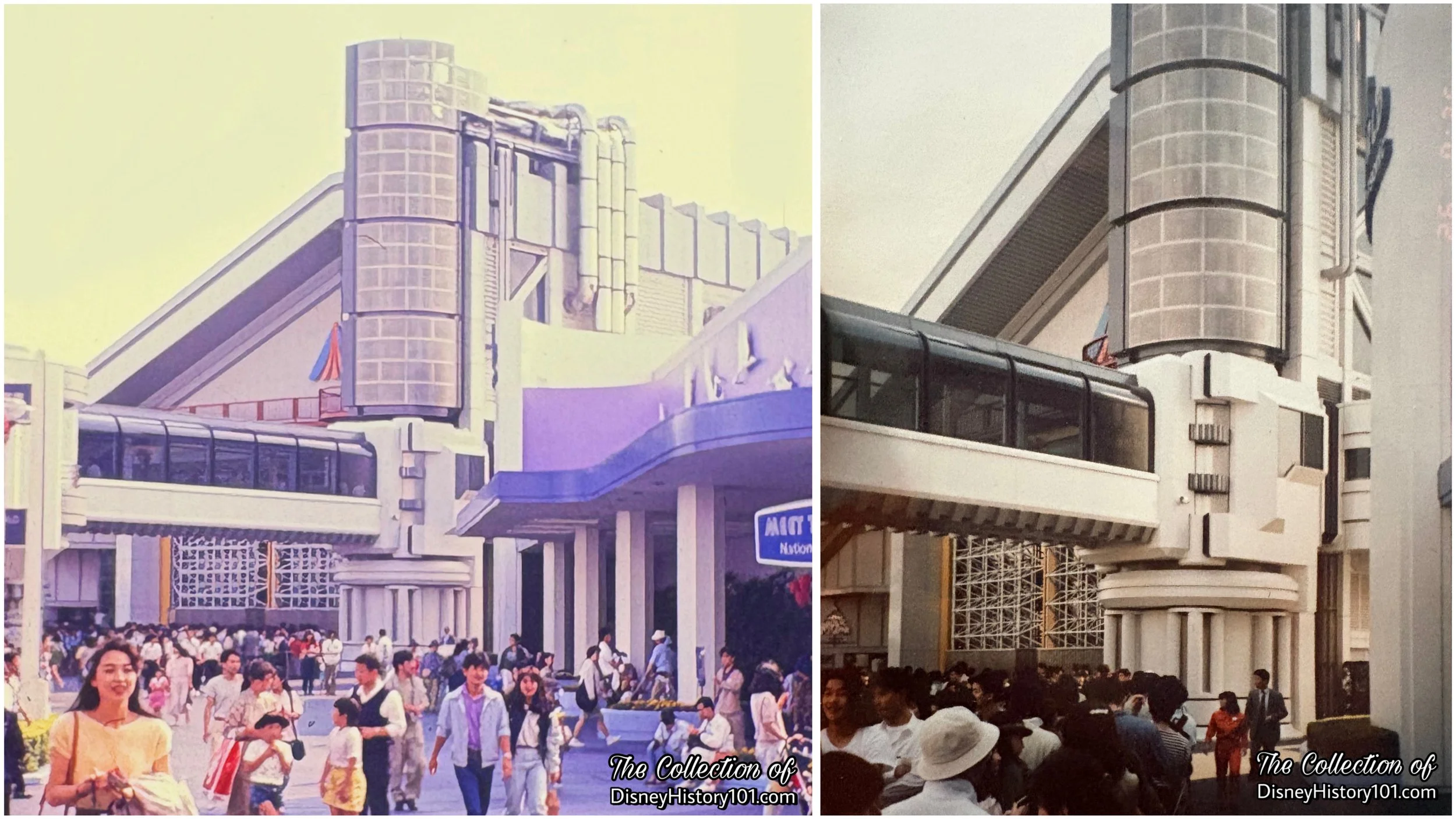
The towering Star Tours Show Building at Tokyo Disneyland
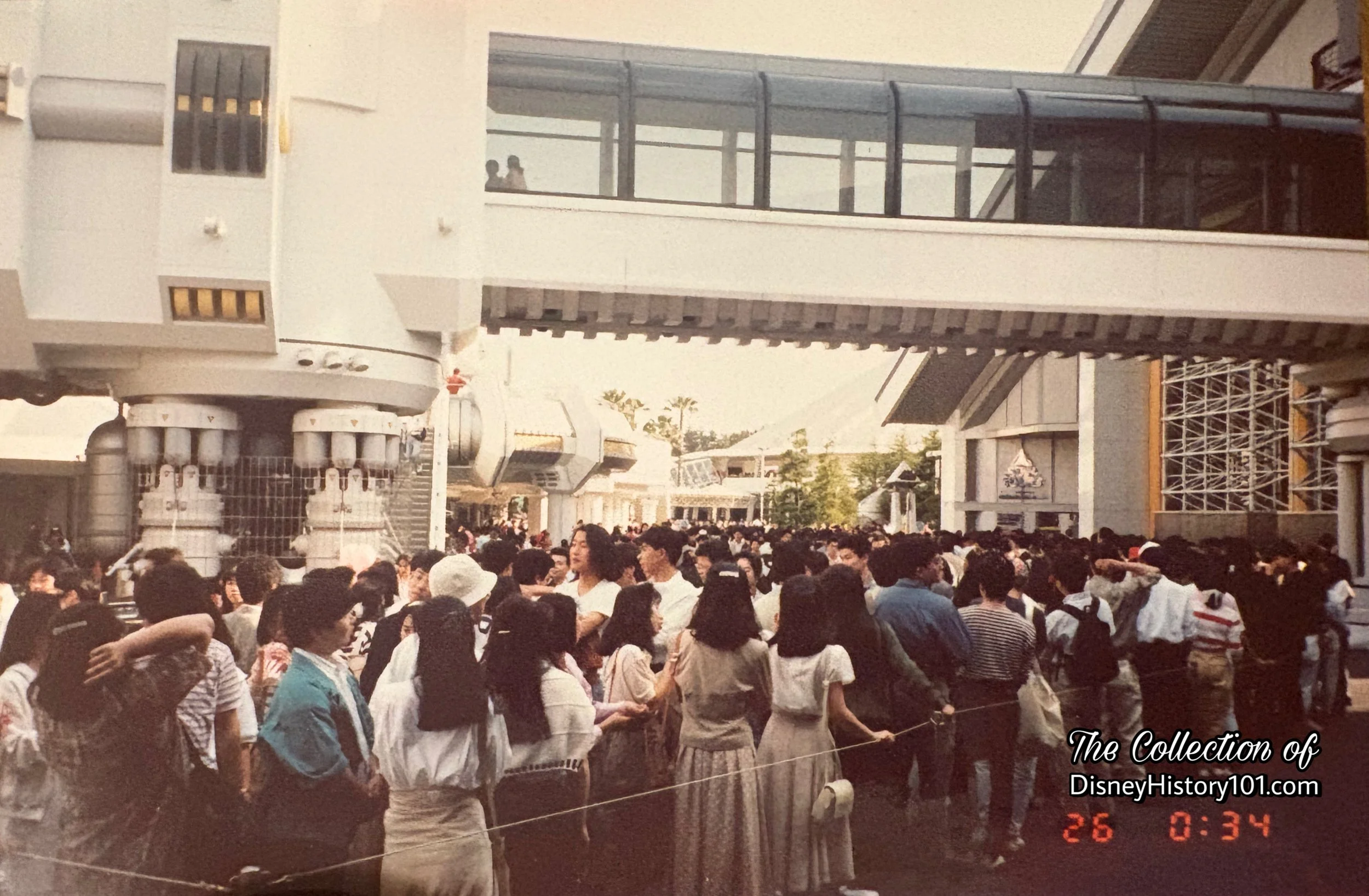
Peak Guests fill the queue of Star Tours at Tokyo Disneyland.
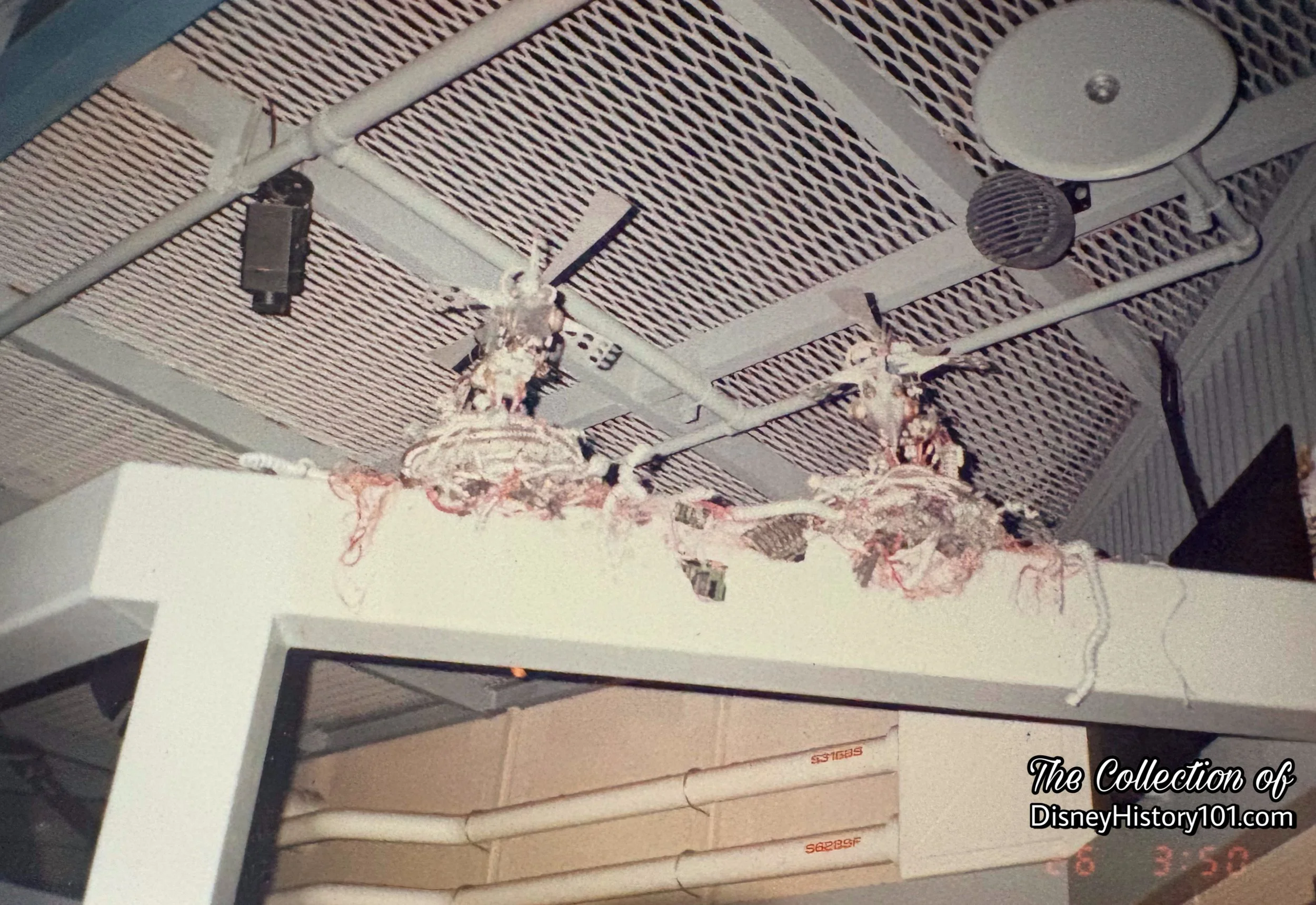
Tokyo Disneyland introduced new characters, like the SK-Z38 droids
Star Tours at Tokyo Disneyland introduced a few new characters, like the SK-Z38 Droids. According to the story, a few months after the Battle of Endor, the G2-4T Repair Droid discovered a couple of SK-Z38s within the Star Tours Travel Agency.
Guests discovered these very same droids also settled down in Star Tours at Disney-MGM Studios Theme Park, when it opened on December 15, 1989.
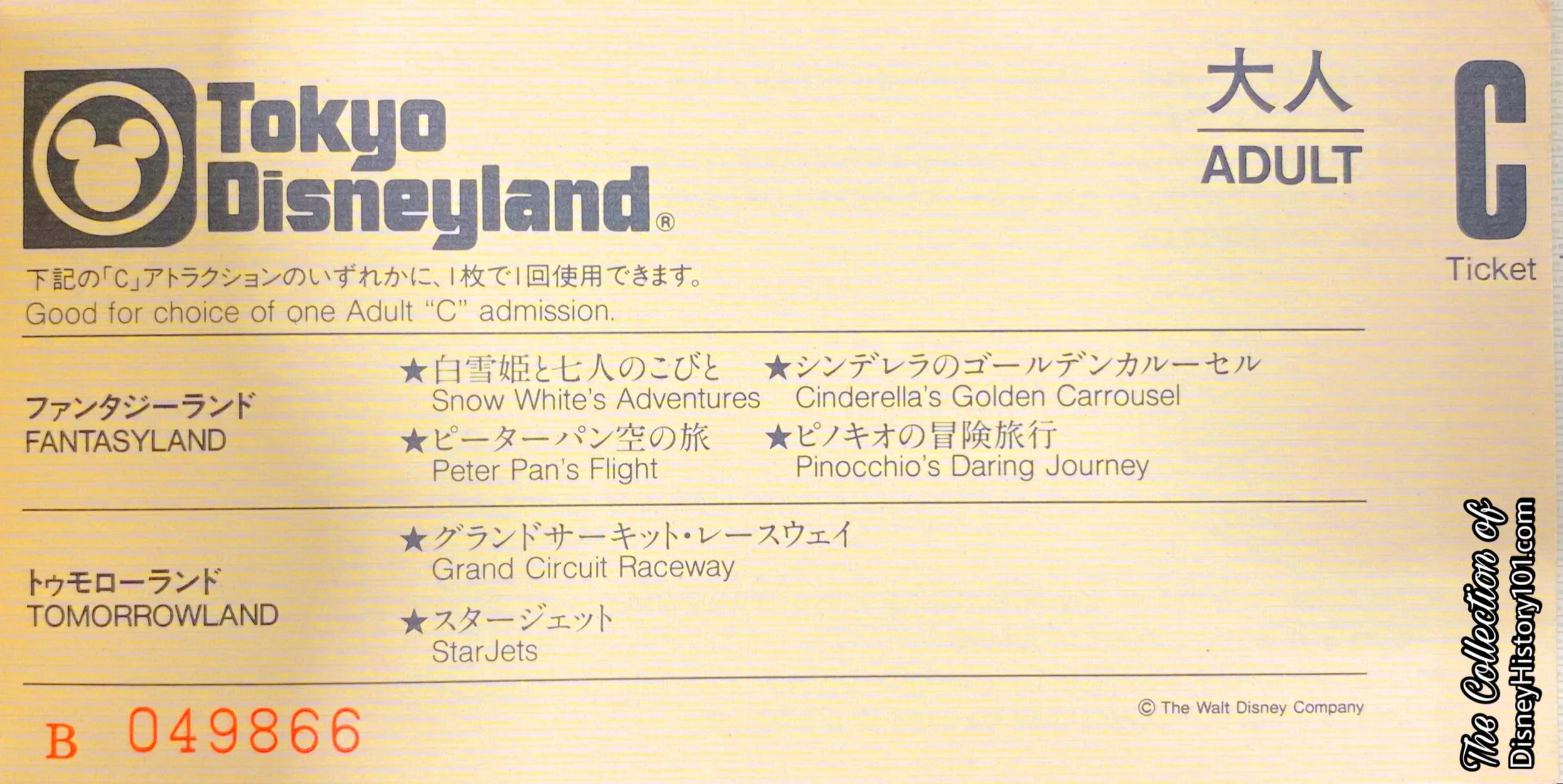
Star Tours on the Tokyo Disneyland “C” Attraction Coupon.
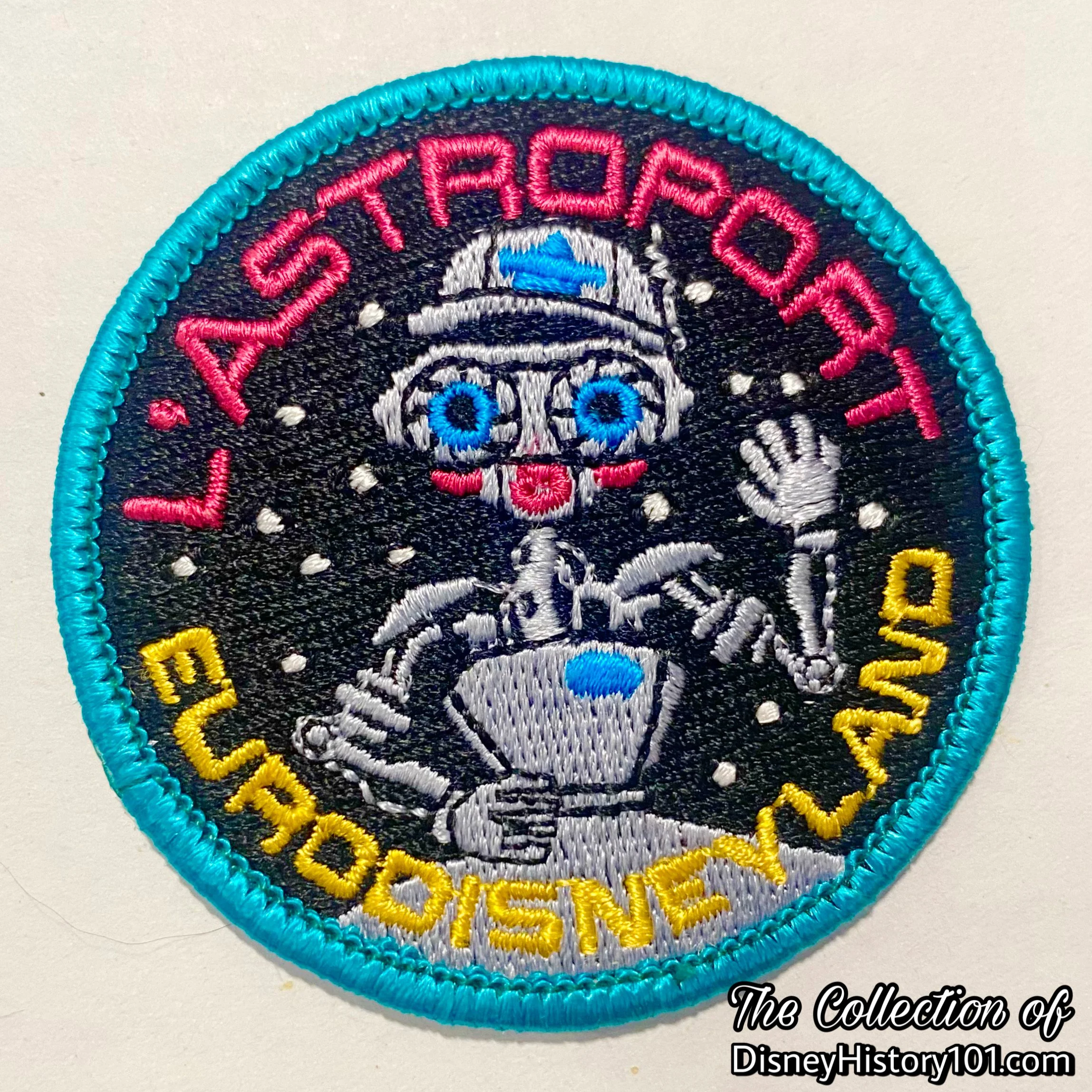
A droid looking much like RX-24 is featured on an embroidered patch promoting L' Astroport at EuroDisneyland.
Star Tours opened in Discoveryland at Euro Disney on April 12, 1992.
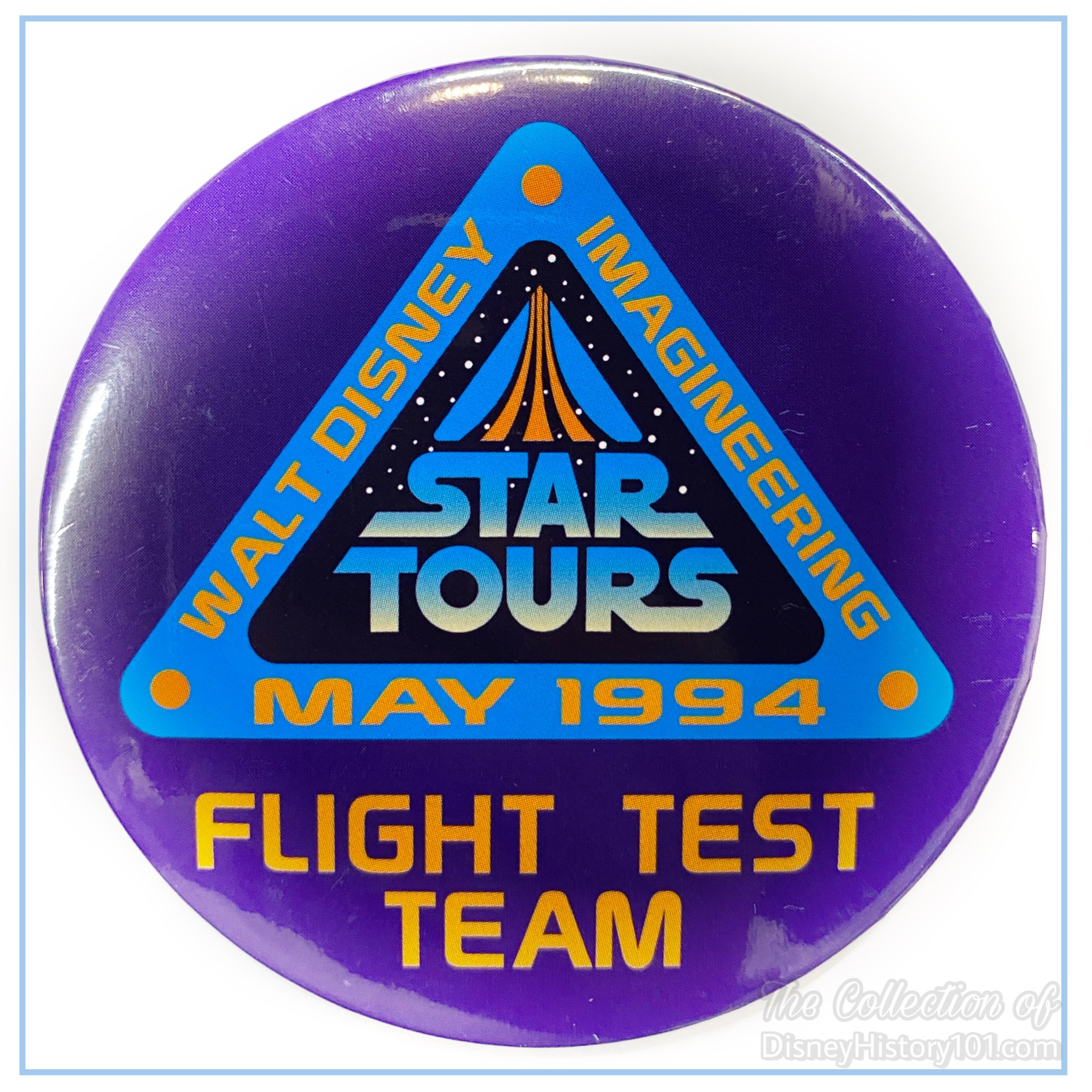
A commemorative button from the Walt Disney World Star Tours Walt Disney Imagineering Flight Test Team of May 1994; © Lucasfilm, Ltd, and The Walt Disney Company.
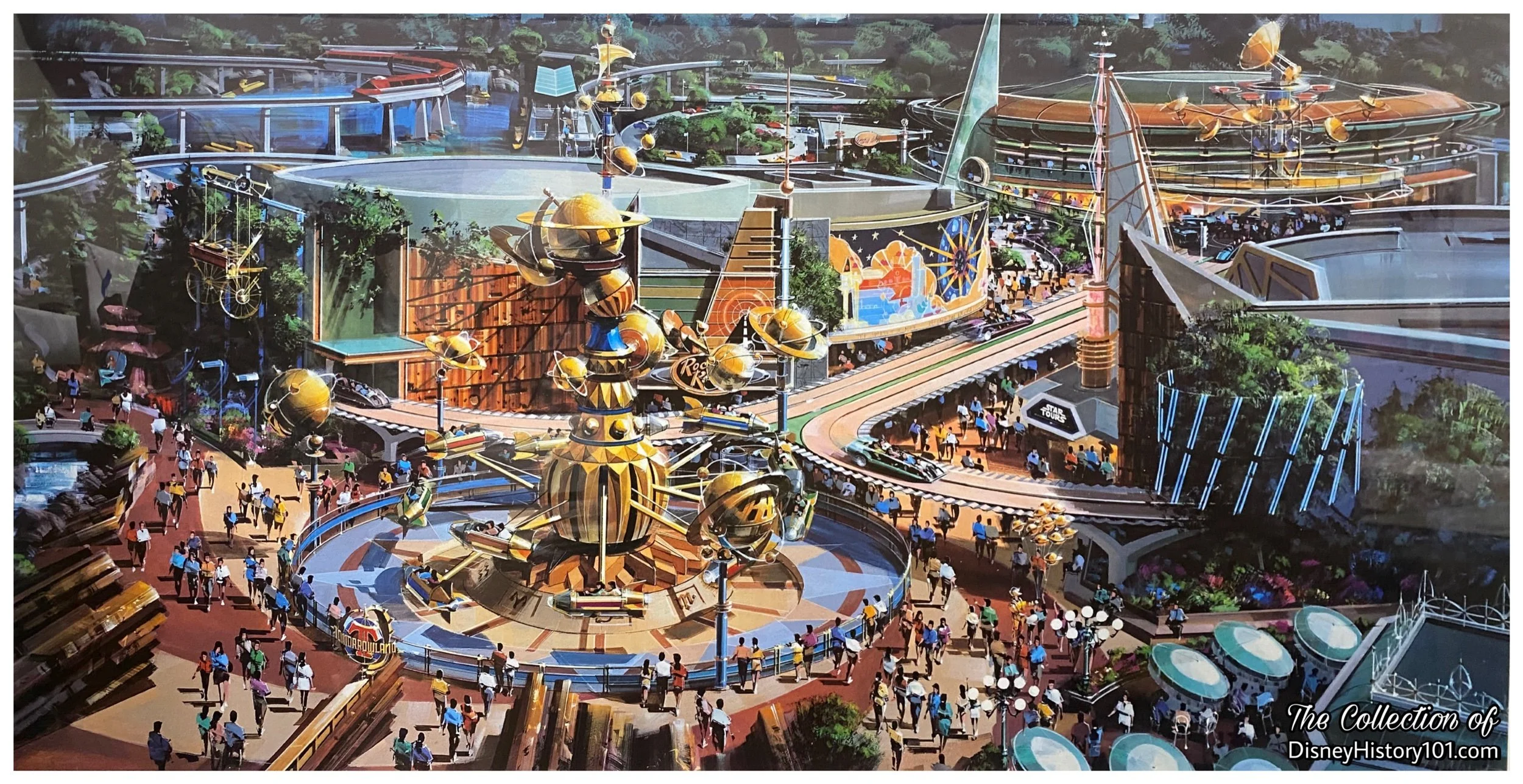
Star Tours was included in the immersive re-theme of Tomorrowland that debuted in May 1998.
“Star Tours the Adventures Continue”
By 2008, WDI master plans entertained the concept of of a “classic update and adjacent placemaking” to Star Tours at the original Disneyland. “Star Tours 3.5” had a target of realization within the following 5 years.
In 2011, Star Tours the Adventures Continue introduced new exotic destinations for passengers of the new StarSpeeder 1000 models. According to Dave Smith (Chief Archivist Emeritus),many actresses and actors fulfilled roles in the new attraction: “The rebel pilot [of the Hoth Snow Speeder] … is Rob Howe, and the Naboo Squad Leader is April Royster ; neither of them work for Imagineering or ILM. I’m also told that Darren Criss, also of Glee, provided some miscellaneous voices.” [Disney Facts Revealed by Dave Smith, 2016]
“New Magical Opportunities for Star Wars”
Just a few years later, The Walt Disney Archives announced: “on December 21, 2012, The Walt Disney Company completed its acquisition of Lucasfilm Ltd. Included in the deal were the special effects powerhouse Industrial Light & Magic (ILM) and Skywalker Sound, along with the rights to the Star Wars and Indiana Jones franchises.” This would pave the way for even more Star Wars-themed entertainment, merchandise, and attractions produced by Disney Enterprises, Inc.
Quisque iaculis facilisis lacinia. Mauris euismod pellentesque tellus sit amet mollis.