NEW FANTASYLAND
(1983 - present)
“Fantasyland - From Squares to Tournament Tents”
“Disneyland was designed from the outset with the assumption that the animated characters would make it necessary to showcase them in appropriate representations of their film environment,” according to John Hench (“Designing Disney Imagineering and the Art of the Show”). Naturally, some of the earliest Disneyland artwork and accompanying documents show a Fantasyland of rich three-dimensional facades generating a European village.
Early thumbnail sketches and other concept artwork of Disneyland seemed to be unencumbered by restrictions of budget, schedule or the laws of nature and physics. Though guided by Walt, his artists appeared to engage in “free-thinking,” as if implementing the modern “Blue Sky” Imagineering process. Like some advanced “High Concept,” many final designs were quickly generated and approved. Some designs were voided.
According to the “Proposed Diagramatic Layout of Disneyland” (Marvin A. Davis’ plot plan, produced for WED Enterprises by September 12, 1953;) just beyond the Carrousel of “Fantasy Land” was an area labelled “Pinocchio Square.”
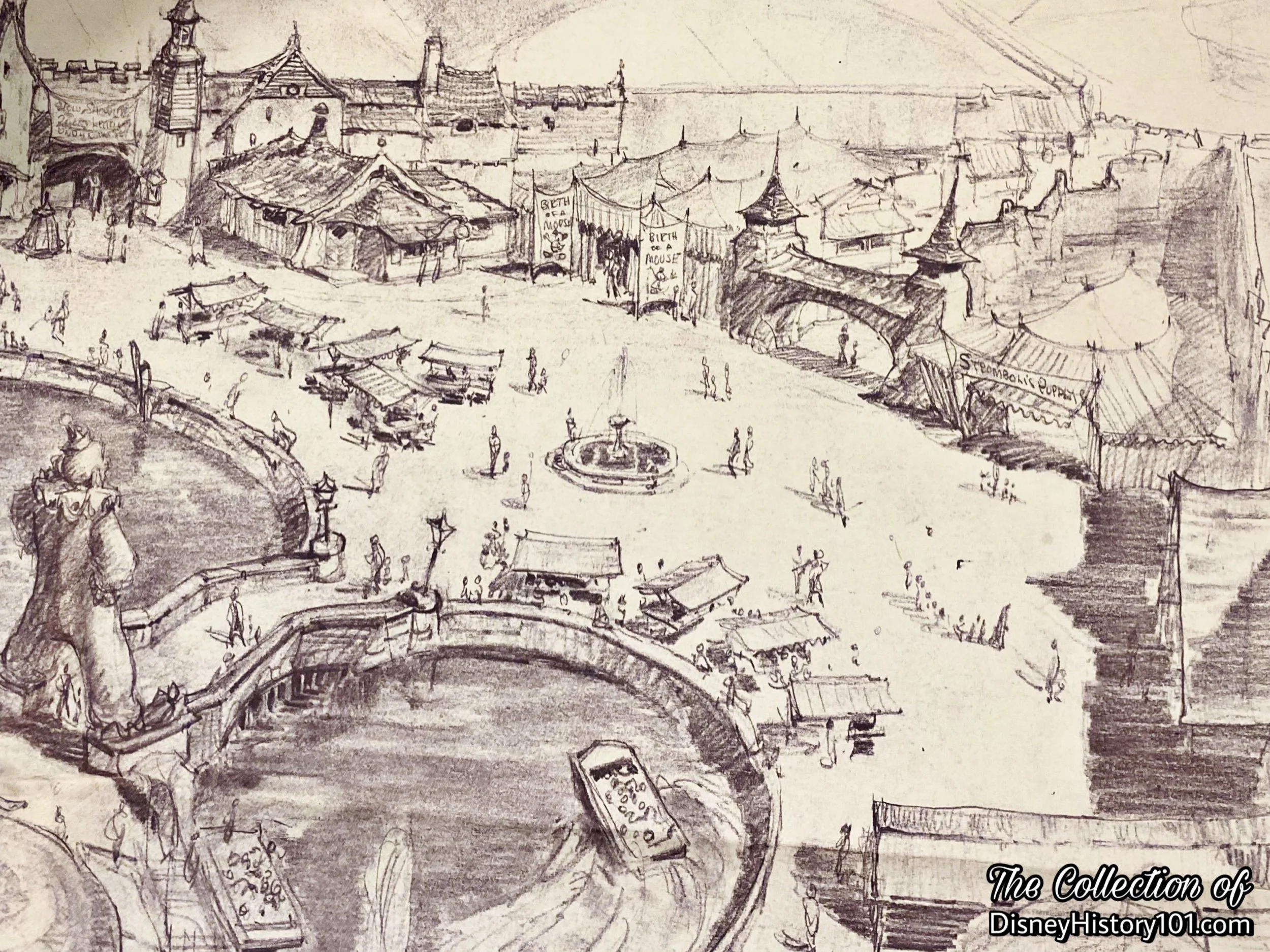
Amidst his loose line work, Walt Disney Studio artist Bruce Bushman (who was also affiliated with Bradley & Kaye) suggested a Stromboli Puppet theater in an area inspired by Pinocchio’s village, a gravity-flow canal ride featuring Monstro the Whale, a circus midway-themed dining area entered through a towering clown arch, a sailboat in a lagoon, and remembering that “it was all started by a mouse,” his detailed designs also included a “Birth of a Mouse” show. [The Disneyland News, Vol.1, No.9 published for March 10, 1956.] One contemporary form of the Disneyland Prospectus (prepared in 1953, for Disneyland Inc. by WED Enterprises) elaborated on “this land of fantasy… the settings from the fairy tales.” For instance, “Pinocchio Square…with Gepetto’s clock shop…Stromboli’s Puppet Show, a miniature traveling carnival.”
While many artists contributed, the talented Herbert Ryman is of note. Herb had joined the Disney Studio in 1938, after Walt saw a public show of his work in New York. (Herb's paintings were being exhibited with those of another up and coming artist, Andrew Wyeth.) Herb Ryman acted as art director for such films as Fantasia and Dumbo, but had left Walt Disney Studios in 1946 and (by 1953) was employed by 20th Century Fox. Walt reached out to Herb and during one weekend (September 26 & 27, 1953) the first “Schematic Aerial View” over Disneyland originally produced!
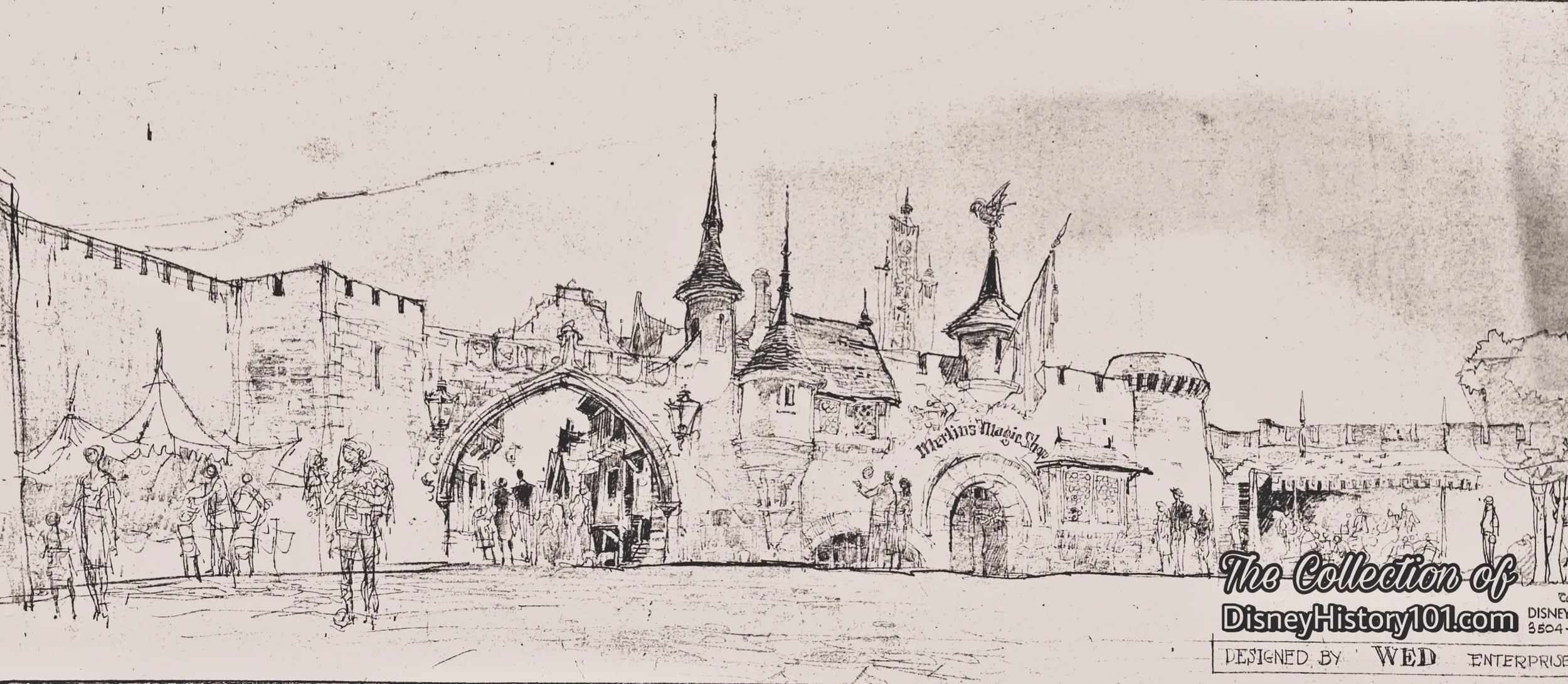
Herb Ryman’s subsequent “colored pencil on Brownline” concepts of Fantasyland depicted “Merlin’s Magic Shop” built into the castle wall of “Sleeping Beauty Castle Courtyard” as “Walt’s original intent for Fantasyland - until budgetary considerations resulted in a simpler medieval tournament theme.” [“A Brush with Disney” by Herbert Ryman, page 155]
Fantasyland opened on July 17, 1955.
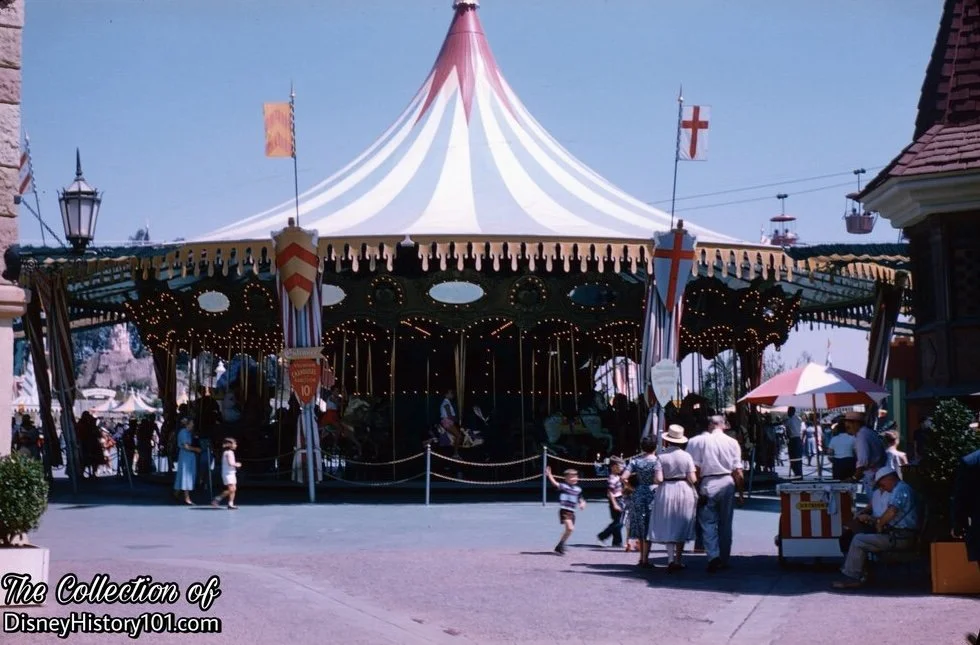
King Arthur Carousel in Sleeping Beauty Castle Courtyard
“Walt dreamt of a Fantasyland that would place guests into a fairy tale village, hundreds of years old. Of course, because money was tight, the first version of Fantasyland consisted of carnival facades and tournament tents.”
This was Fantasyland in its heyday. An early form of (what would come go be known as) the “Disneyland Prospectus” [prepared in 1953 for Disneyland Inc. by WED Enterprises], mentioned “within the walls and grounds of a great medieval castle whose towers loom seventy feet in the air. In the middle of the castle grounds a magnificent carousel in the theme of King Arthur and his Knights.”
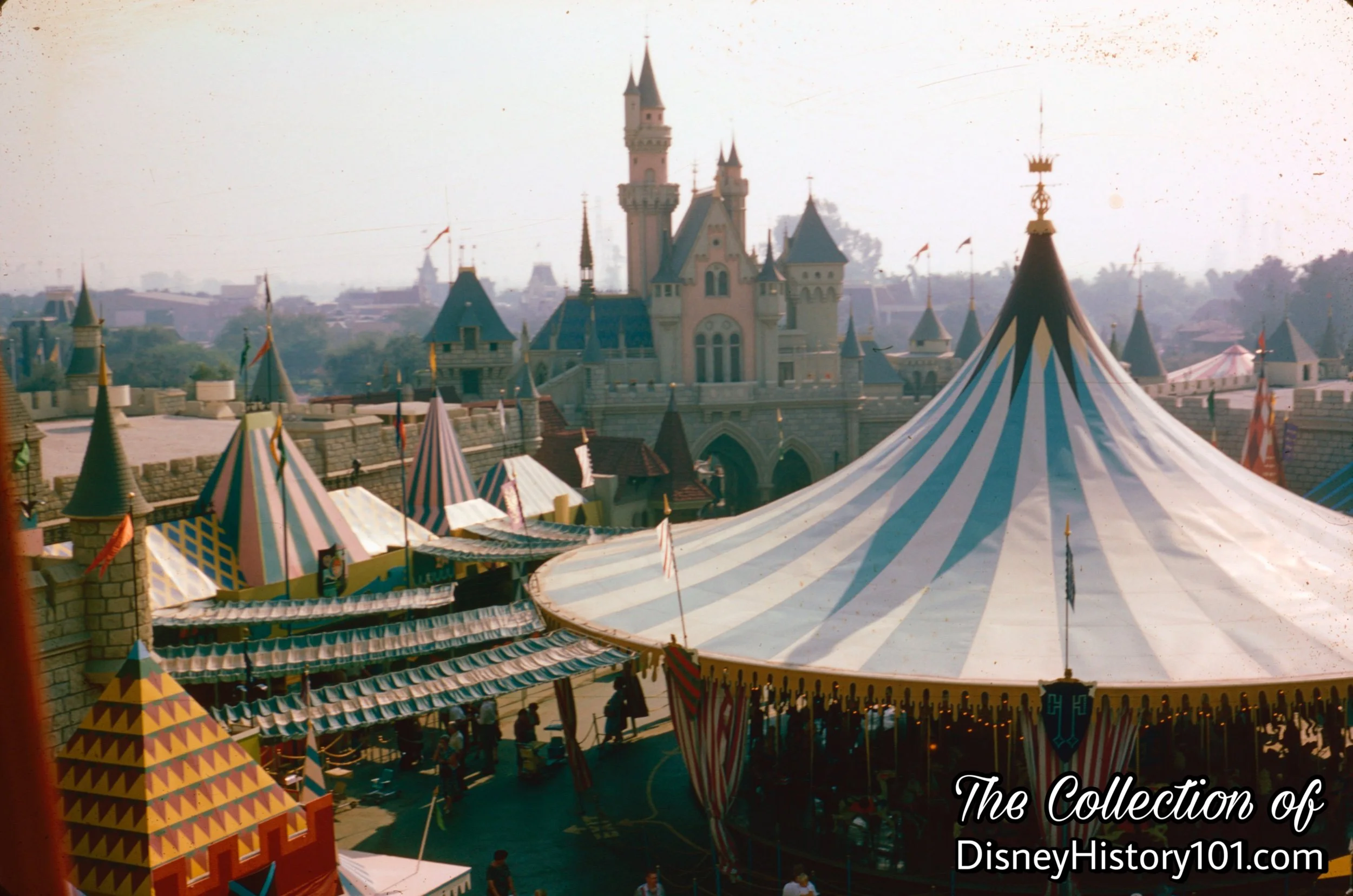
Sleeping Beauty Castle Courtyard.
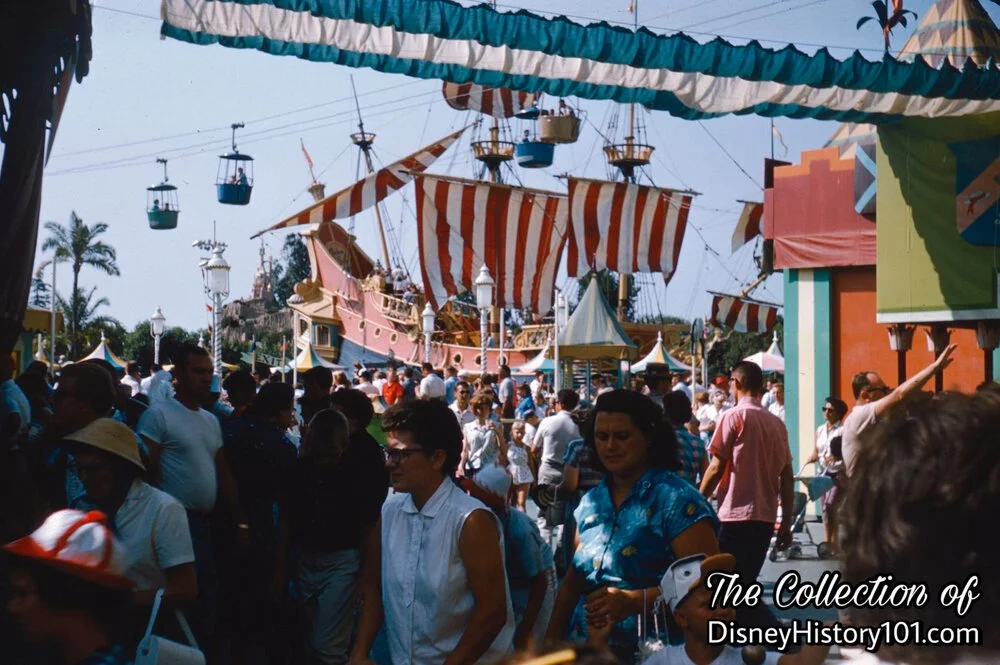
Sleeping Beauty Castle Courtyard.
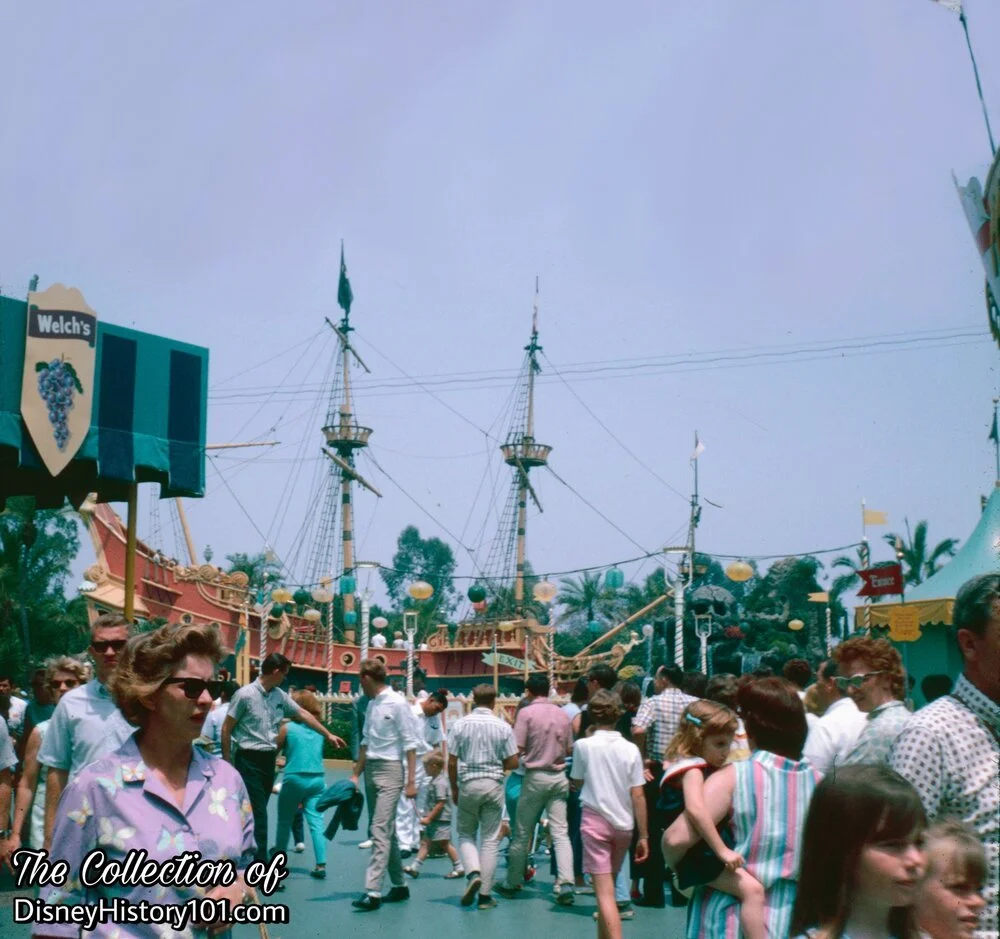
Leaving the Sleeping Beauty Castle Courtyard.
The courtyard opened the way to refreshment at Welch’s or the Chicken of the Sea Pirate Ship.
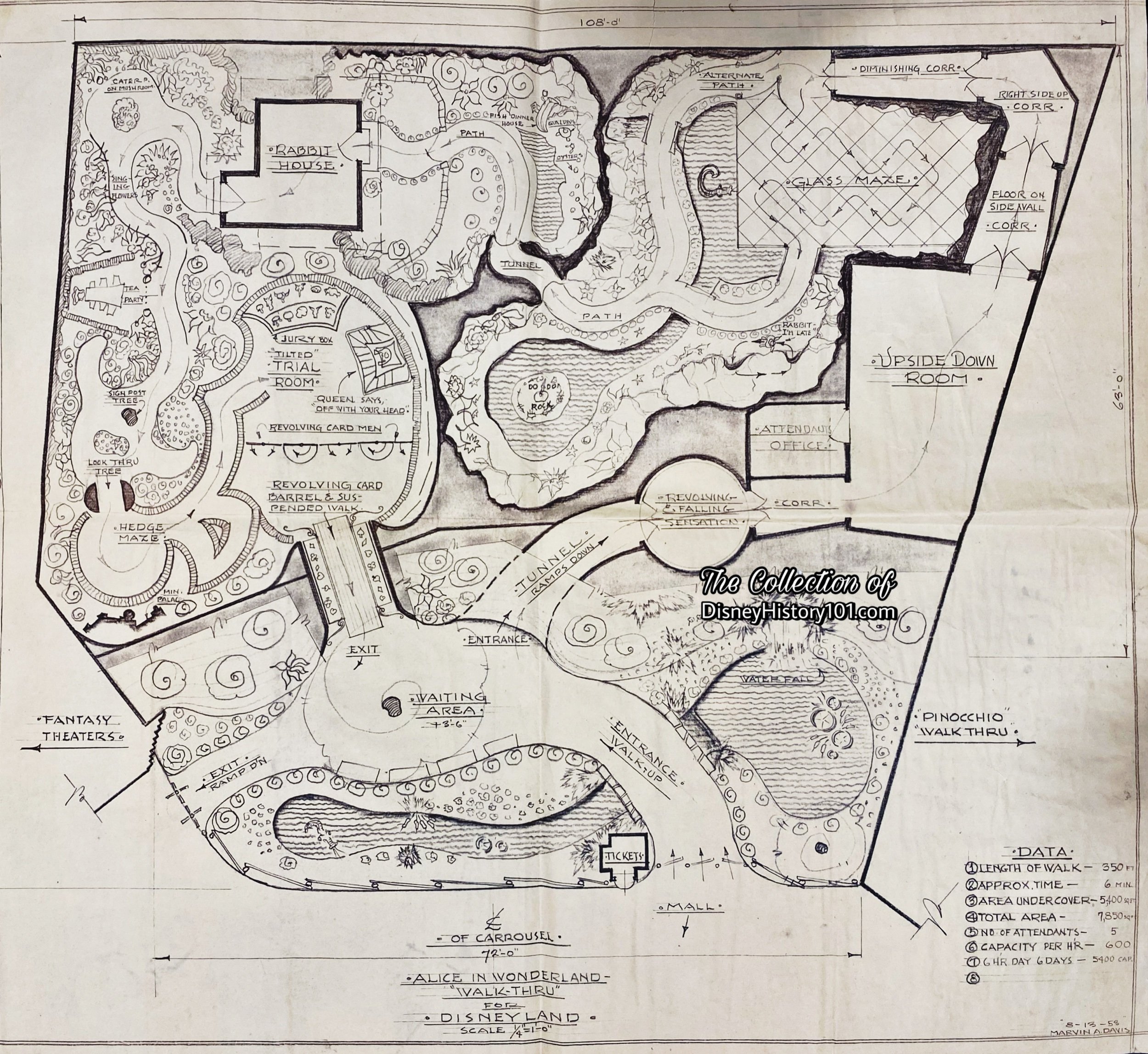
Next to a Pinocchio Walk-Thru was to be an “Alice in Wonderland Walk-Thru for Disneyland” by Marvin E. Davis; prepared by 8-13-58.
During the 1950s, Fantasyland expanded with new adventures like Storybookland Canal Boats and Alice in Wonderland.
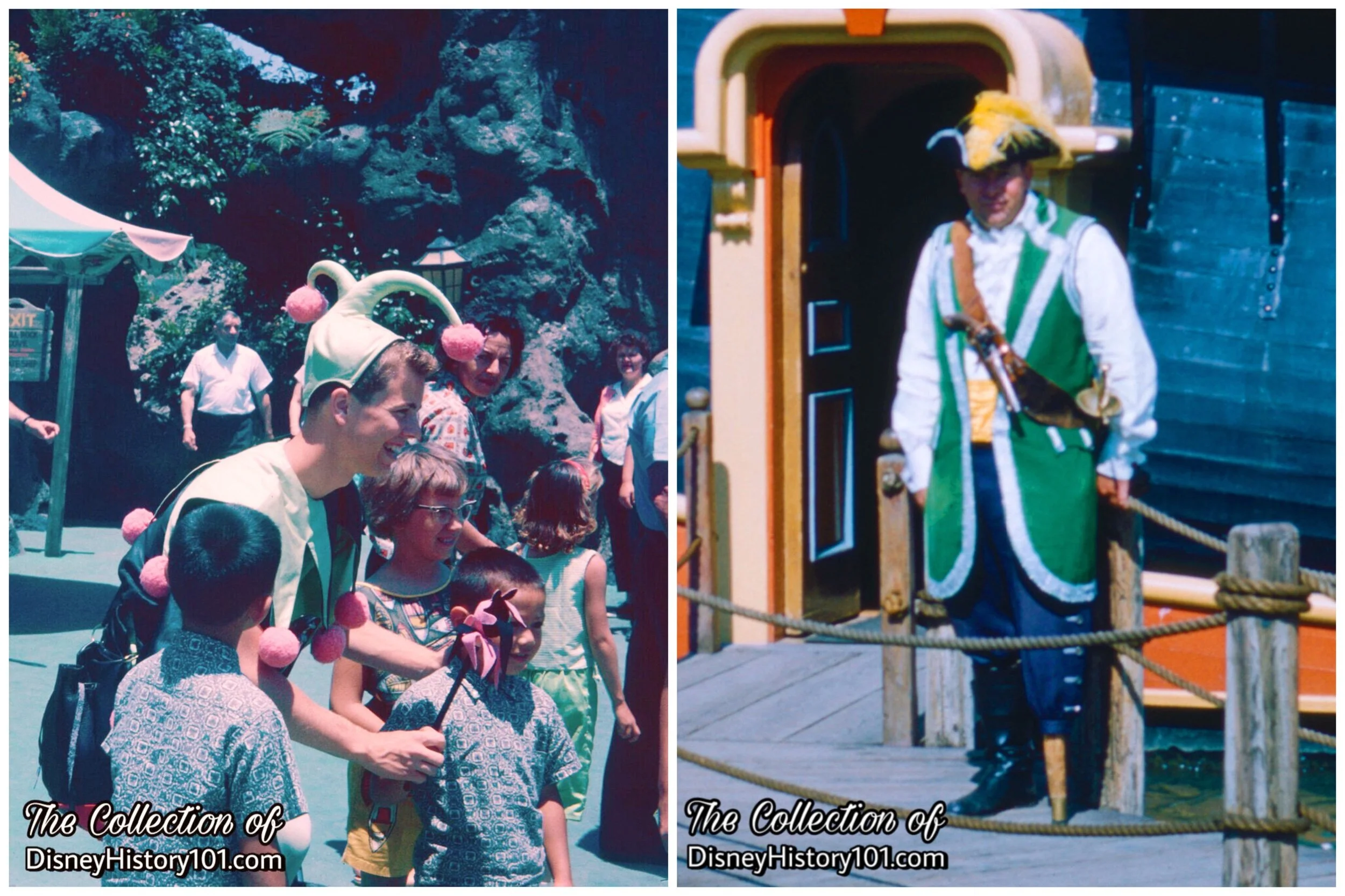
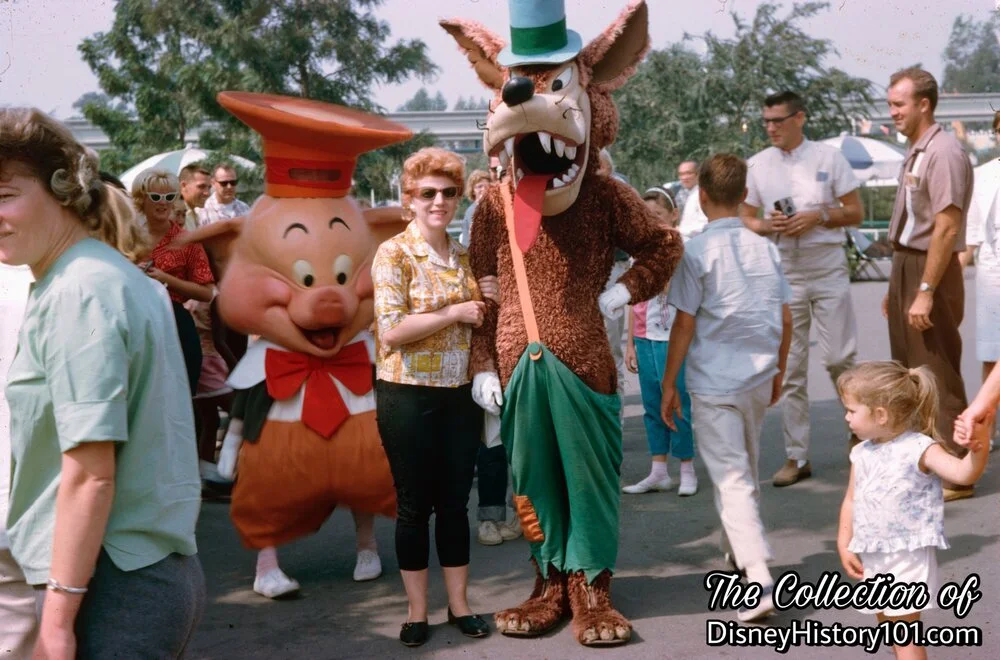
As Disneyland grew, the Cast expanded. Frontierland had its Sheriff and Villain, while Tomorrowland had a Space Couple. During the formative years of Fantasyland, you may recall meeting Robin Hood, the Fantasyland Court Jester, Paco the Talking Parrot, or “Pete” the Peg Leg Pirate!
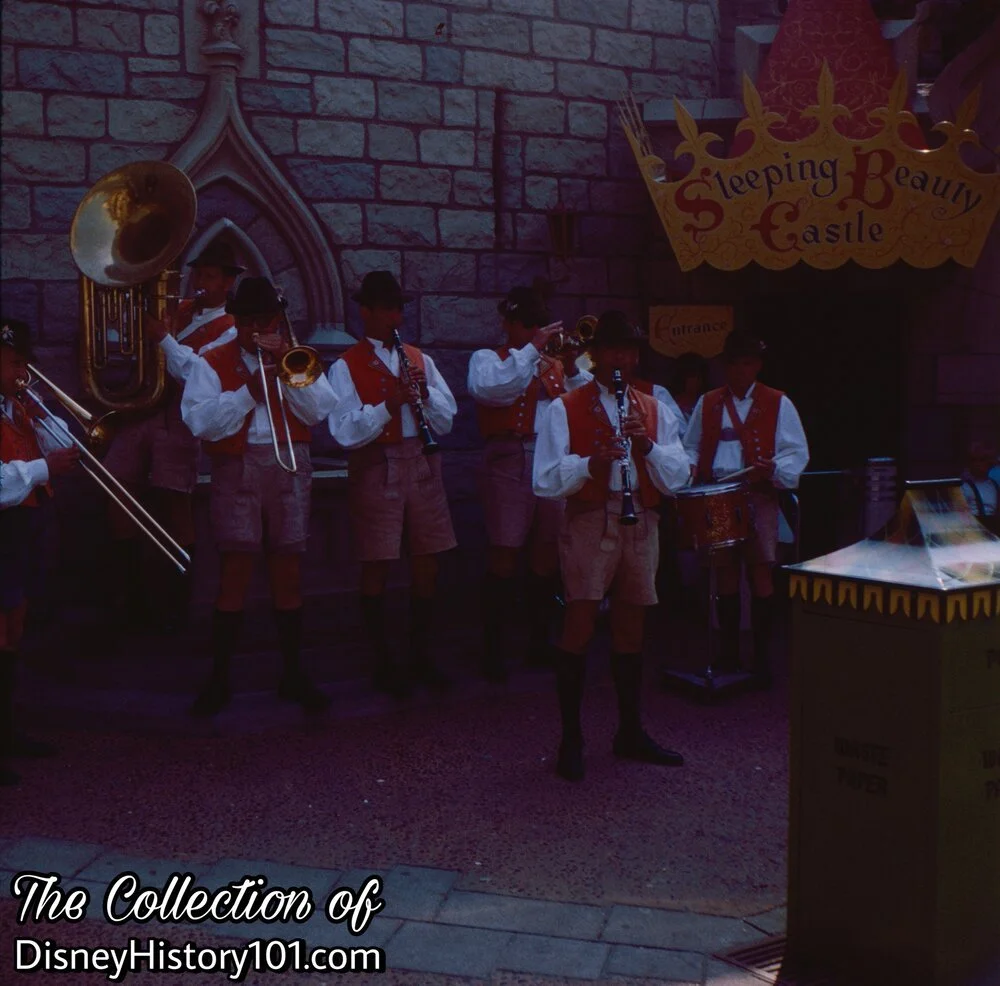
The Fantasyland Polka Band.
Fantasyland even had its own supporting band. The Fantasyland "Polka" Band was a seven-piece breakaway “Sub-Group” band from the Disneyland Marching Band. They could often be identified by their Bavarian hats and lederhosen, performing around Fantasyland and the Matterhorn, and were even involved in occasional evening events like New Years Eve Celebrations. Other short-lived acts occasionally appeared, like the “three cute lasses” - the all-girl Pirate Trio.
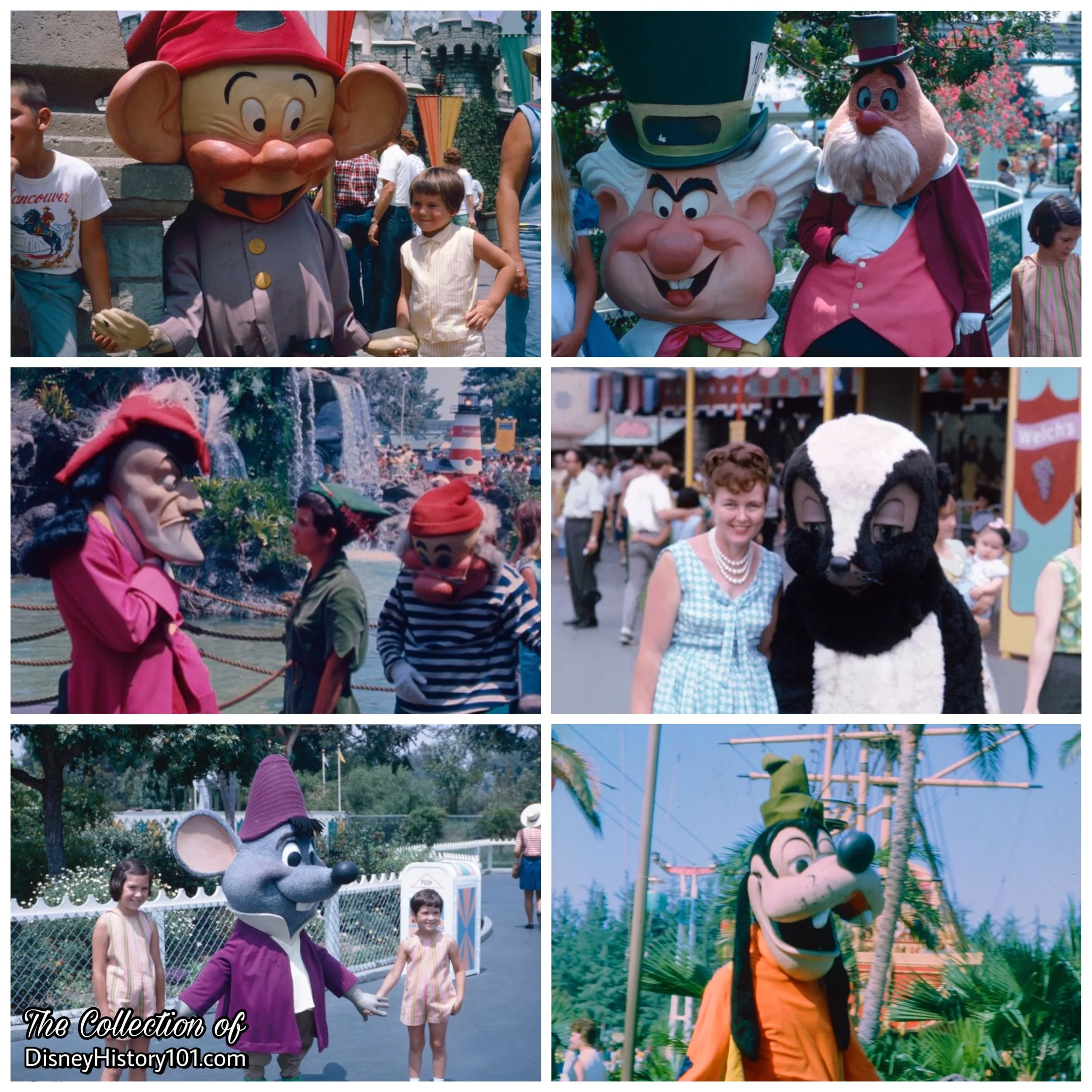
Disneyland Characters support the original Fantasyland stage of the Disneyland Show.
Since the beginning, Fantasyland has been “based on… storybook classics,” according to “Disneyland, U.S.A.” published 1958 for potential Disneyland Participants. Fantasyland was a home to Snow White, Alice, Aurora (or, Sleeping Beauty, long before the namesake Walt Disney Production was released), Peter Pan, Captain Hook, the White Rabbit and many, many, others.
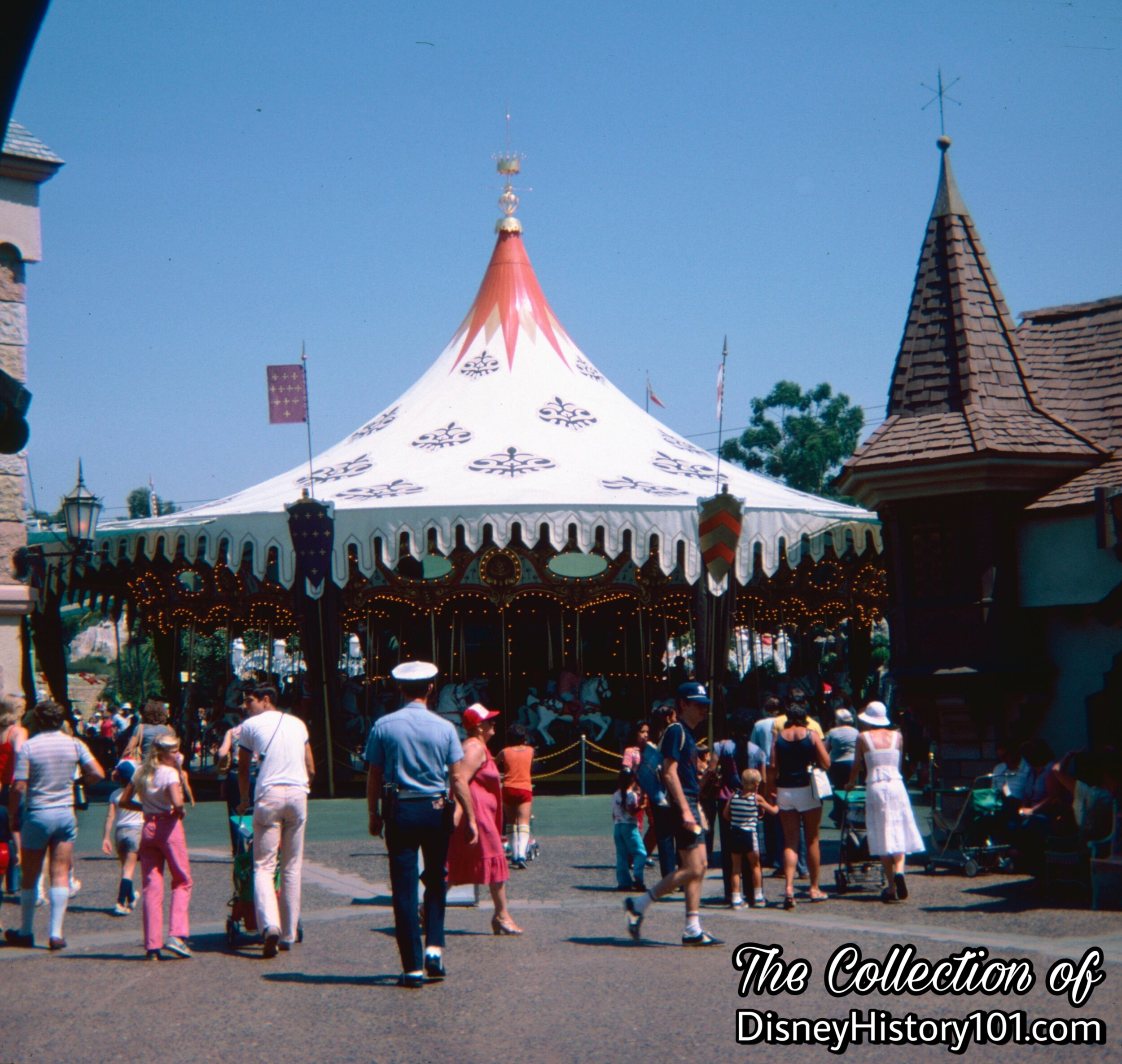
Sleeping Beauty Castle Courtyard, August, 1980.
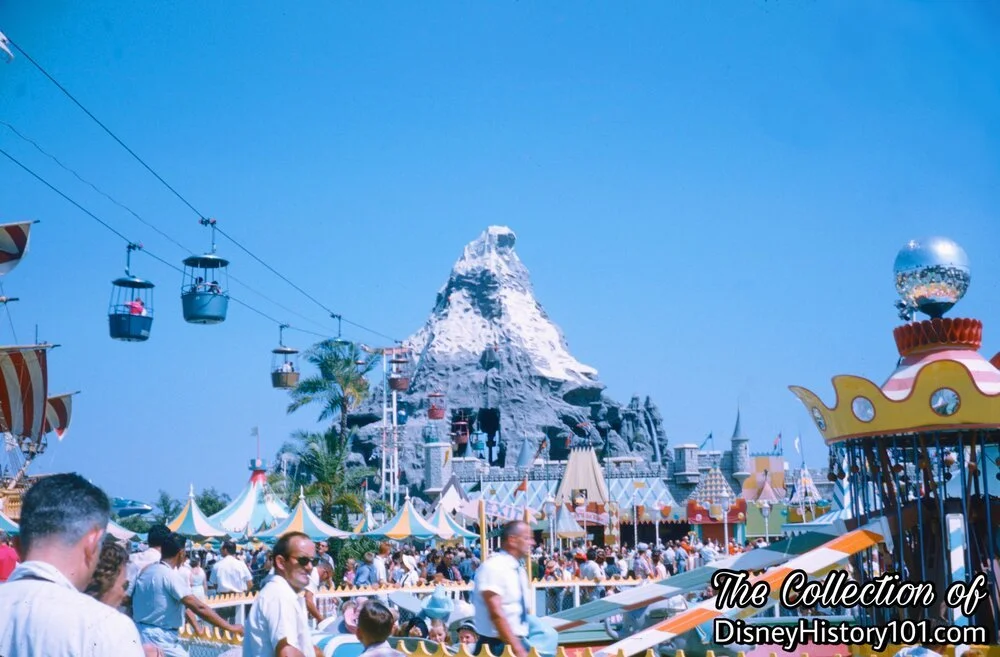
Fantasyland during a peak attendance period.
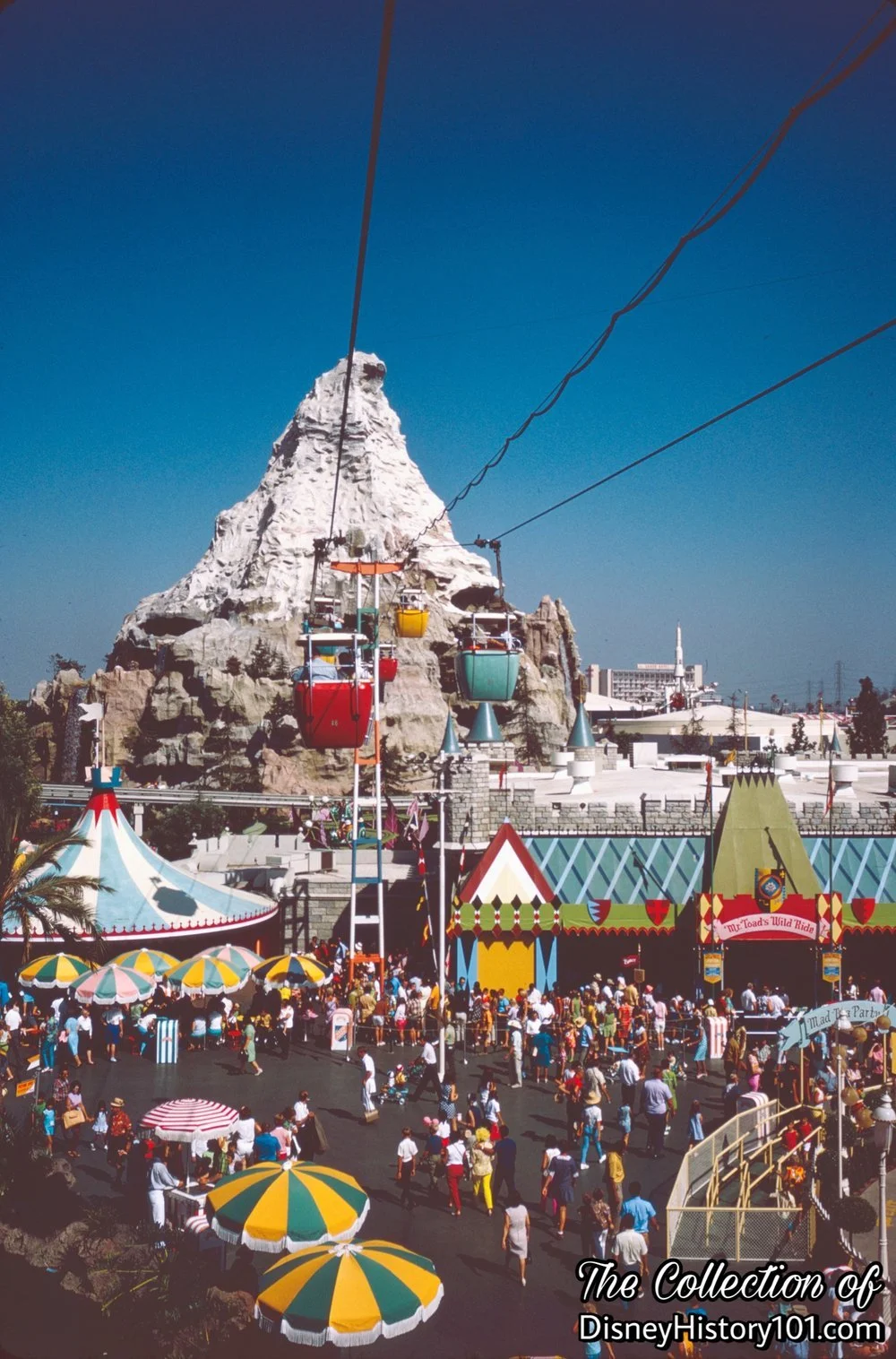
Fantasyland during a peak attendance period.
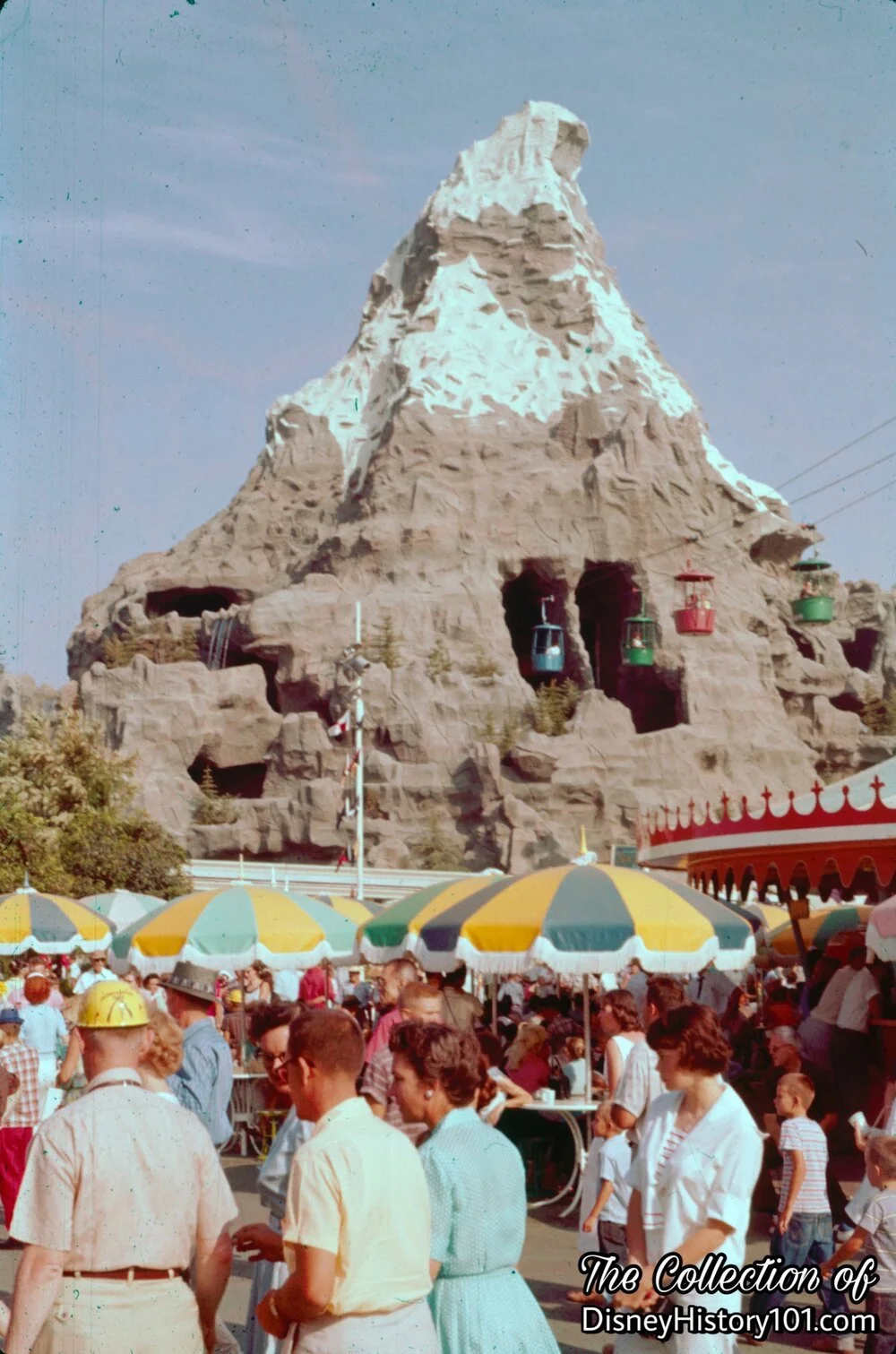
The original Fantasyland during a peak attendance period.
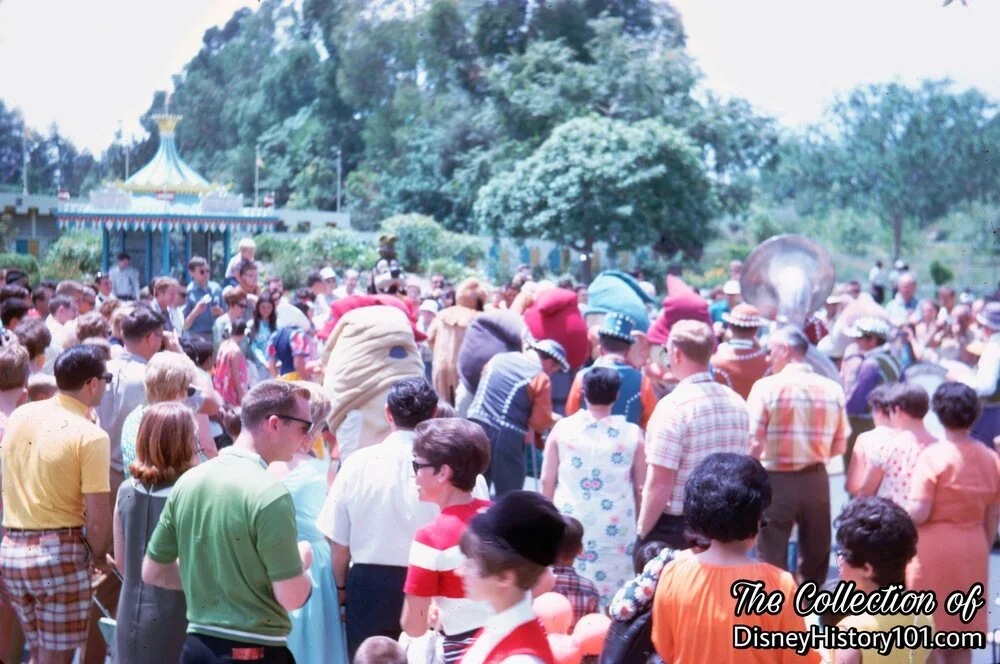
A large Fantasyland audience enjoys a show.
Fantasyland was densely packed with attractions, and bustling with guests during peak periods of the 70s, (mostly due to the proximity of King Arthur Carrousel to Sleeping Beauty Castle). During the 1970s, October and June of each year, was a period of major maintenance and rehabilitation which touched virtually every attraction, contributing to improved operations and show elements for the public.
But even greater things were to come…
Walt Disney once said : “Disneyland will never be completed. It will continue to grow, always adding new things to provide its visitors with exceptional and entertaining attractions.” In Walt’s eyes, Disneyland was “like a piece of clay,” because if there was something he didn’t like, he wasn’t stuck with it. He could reshape and revamp it. After years of personally reshaping and revamping, Walt divulged: “I’m not the perfectionist anymore. It’s my staff - they’re the ones always insisting on doing something better and better.” Even during Walt’s lifetime (around 1965 to 1966), WED Enterprises, Inc. opened a job No. 034-53-11, more commonly referred to at that time as “Fantasyland - Master Planning - R&D.”
According to the 1973 Walt Disney Productions Annual Report:
Walt’s promise was exemplified during the first quarter century of physical growth, and in Disneyland’s techniques of creating happiness. Disneyland had both the land and the creative spirit for expansion. Many projects were already on the drawing boards and in the minds of Disney Imagineers. Even long after Walt, Walt Disney’s Imagineers proved to know their audience, and rehabilitations and few new attractions would keep Fantasyland feeling new and exciting. In applying these philosophies, the first major remodel and reconstruction took place decades after the first day of operation. Around 1979 (and as work on Big Thunder Mountain Railroad was wrapping up), the Park Managers Operations Committee addressed the New Projects and Master Planning Committee regarding the updating and placing in priority projects which relate to onstage guest involvement. About this it was written: “The New Projects and Master Planning Committee… addressed itself to the updating and placing in priority projects which relate to onstage guest involvement. A primary concern is that of providing a major addition of change in the Park within the next three to four years. This would provide marketing a vehicle with which to market Disneyland to the public after Big Thunder Railroad and prior to the 1984 Olympics in Los Angeles.
In planning the next new attraction, it is felt that a more show-oriented attraction, like Pirates of the Caribbean, should be pursued. This would appeal to all age groups, provide high capacity, and can be done uniquely by Disney Imagineers without threat of competition. Along with any new major attraction, the addition of a large waitress service food facility is also needed. This facility should be themed with the attraction, playing off the attraction for its primary source of exposure--such as the Blue Bayou. Additional merchandise locations should also be added, themed to the area in both design and product.”
In progress was a proposed new area in Fantasyland known as “Pinocchio's Village.” It would replace the Fantasyland theater and stretch all the way to the “Fantasyland Skyway.” A new “dark ride” highlighting the classic Pinocchio story, shops and a restaurant location were also part of the plans. [“WED - What, Where, Why and Who,” by Vicki Stowe]
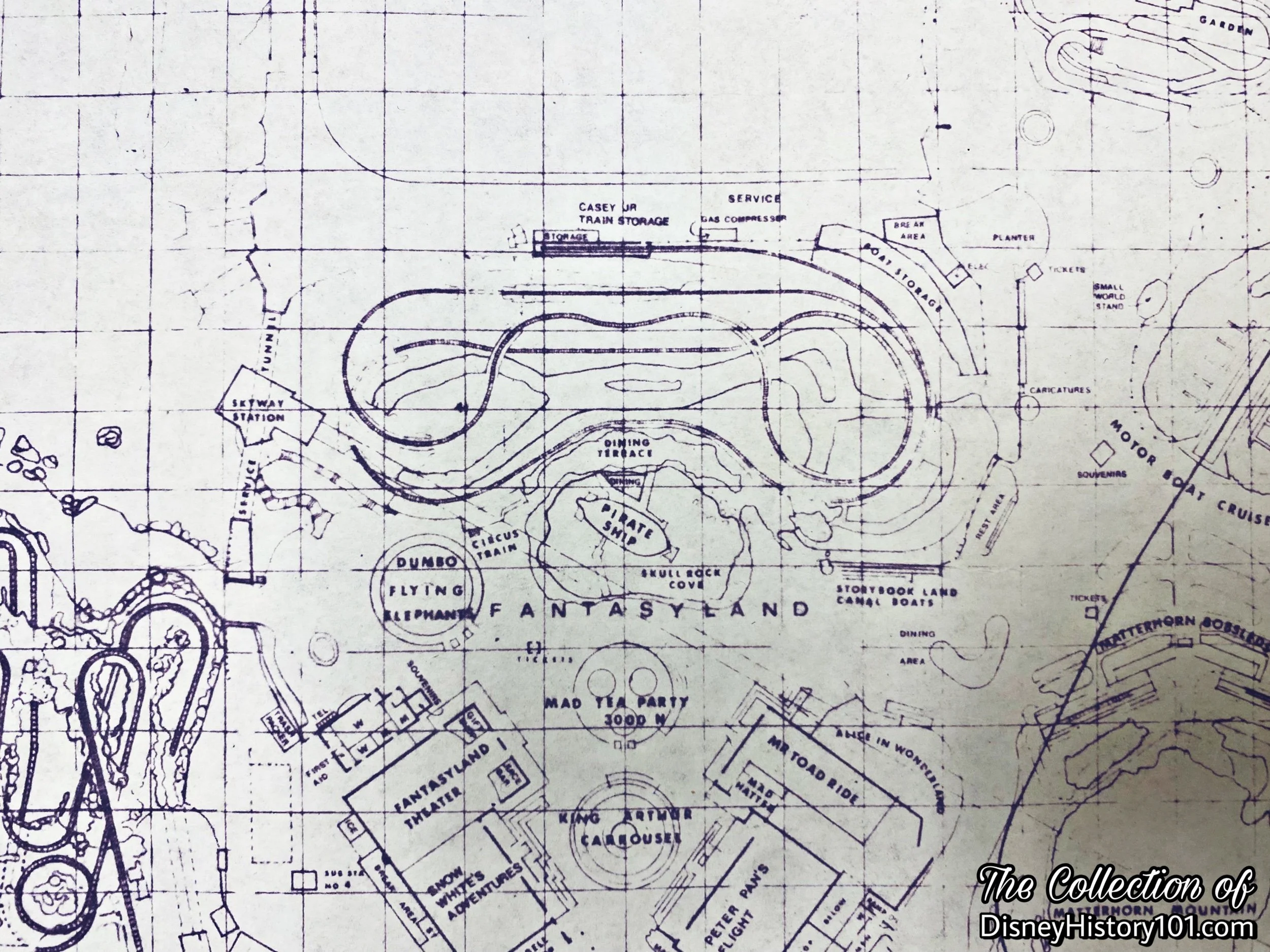
Disneyland Site Plan; September 1977.
DISNEYLAND FANTASYLAND PROJECT MANAGEMENT
“People - Dreamers and Doers”
As fantastic as Walt Disney’s original concept of Fantasyland was, money was tight. Many elements were not full realized for another two-and-a-half decades. Still, some of these Fantasyland story elements (like Pinocchio’s Daring Journey) were periodically in development at WED Enterprises, and though concurrent project production schedules (of Tokyo Disneyland), the project was ready to launch by the early 1980s.
By the 1980s, design standards were being evaluated by WED. Functionally design themed architectural buildings and utility buildings with themed facade architectural treatments were analyzed, contrasted, and compared. Known or implied present day design standards were compared with present day (state of the art) industry standards and recommendations were made for changes and formal acceptance of new standards. Consideration was given to Kitchen Equipment standards, Break areas, Maintenance areas, and Equipment Rooms. The goal was to analyze reduce up front and overall project costs, and maintain quality of facilities, shows, and rides.
Only a few years prior, Card Walker said, “Our world is often make-believe, but we create make-believe with real people.” Walt’s original premier Imagineers had dreamt and created a magical and memorable place. “Disneyland is unique in that some of the world's foremost creative artists and architects control all design at Disneyland.“ Now, New Fantasyland would also be a magical place, developed through creative and technological innovation with the essence of great Disney storytelling! Storytelling would be accomplished through people - Disneyland employees, Wed Enterprises employees, MAPO employees and other consultants.
The New Fantasyland Department was made up of a Project Manager and vital support staff. The Project Manager would monitor and orchestrate the various aspects of his specific area of responsibility to insure that the original concepts were carried through to completion. This included the coordination of efforts on design, engineering, production, manufacturing, construction, and installation involved in the redesign and expansion of Fantasyland.
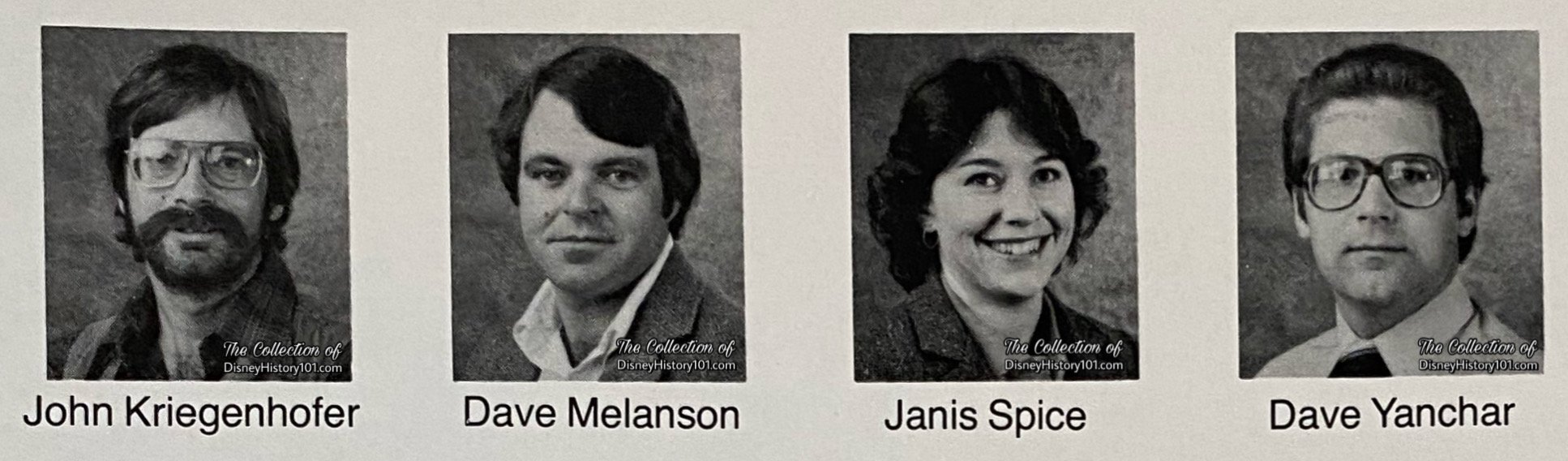
By 1982, the Disneyland Fantasyland Project Management was lead by Dave Melanson (Project Manager), Janis Spice (Project Coordinator), John Kriegenhofer (Financial Analyst), and Dave Yanchar (Master Scheduler). These helped guide the WED/MAPO Imagineering Project Design, Project Engineering, Project Manufacturing, and Project Installation Teams, and ensure that the original plans were carried through to completion, through Project Financial Analysis and Project Master Scheduling.
Among these were Walt Disney Imagineers Stan Abrahamson, Ken Andersen, Bruce Barnes, Tony Baxter, Jerry Billings, Mel Black, Ron Bowman, Pat Burke, Katie Cahill, Clark Conrad, Glen Durflinger, Maggie Elliott, Bill Guy, Dick Hardenbrook, Chris Tietz, Frank Hilberg, Phil Holtmann, Monte Howlt, Don Iwerks, Steve Izuhara, John Kavelin, Raellen Lescault, Mike McCullough, Dave Melanson, David Ott, Leonard Potter, Matthew Priddy, Mark Rhodes, Bob Stephens, Ray Roberts, Kurt Sawitskas, Jack Schilder, Bob Terrell, Brock Thoman, and Mike Valentino (to name a few).
Julie Svendsen was a Concept Show Designer for New Fantasyland.
“Magic in the Making”
The Project Financial Analysis team would break down and allocate design and construction estimates. It provided a calendar of budgets and cash flow forecasts, monitored internal costs, insured correct accounting codes, prepared cost analysis, and assimilated construction information.
Consultants included Ben Korman representing the Wheeler & Gray Company (that was instrumental in the stress calculations, engineering and initial construction of Disneyland, as well as additions in 1959).
Next, The Project Master Scheduling Team prepared a coordinated project level schedule which specified required dates for each major element needed to build the project.
During (April-June) 1981, WED Imagineering was taking stock of the current square-footage of Fantasyland (including dark ride attractions, merchandise locations, food facilities, rest rooms and even First Aid) and making proposals for track queue and Storage Area expansions for New Fantasyland. In addition, proposals for a 9,325 square-foot “Knoll Area,” an expansion of the “Play Area” (from 6,160 to 6,696 square-feet), and a minimization of the “Pirate Area” (from 2,211 to 1,515 square feet) were submitted.
Wild ideas can become reality if you just believe...! Joe Rohde was a designer for New Fantasyland. Joe believed: “We design places. My philosophy about research is that in order to make places, you have to know places, and in order to know places, you have to go to them.” Research and development included the study of structures like the Pondella Building located at 13749 Riverside Drive, in Sherman Oaks, California.
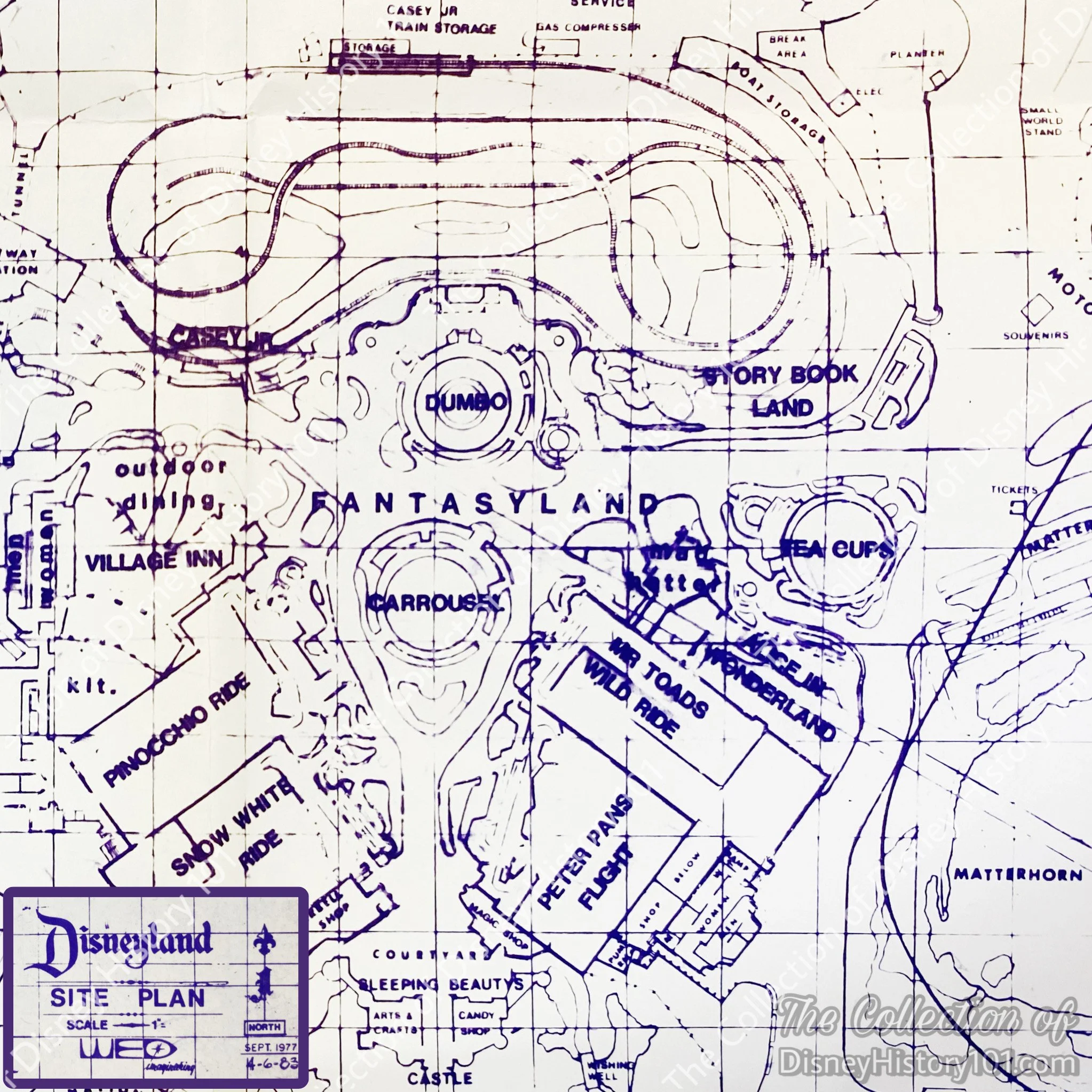
New Fantasyland on a Disneyland Site Plan.
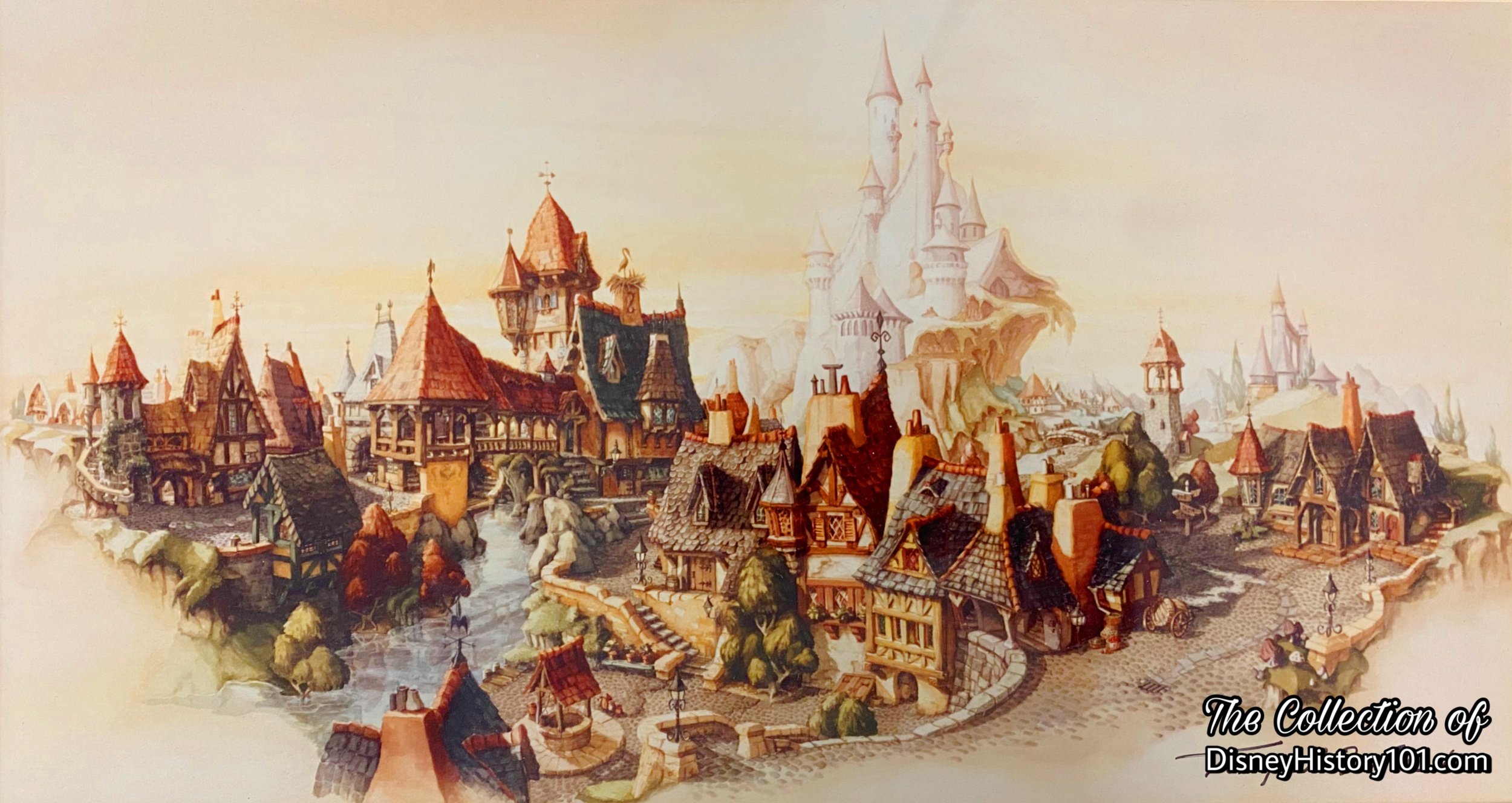
New Fantasyland concept by Tony Baxter.
Walt Disney Imagineer Concept Designer John Stone developed overall concept models, dimensional design, including facades and Show Buildings for Peter Pans Flight, Alice in Wonderland, Snow Whites Adventures & Pinocchio Hause Restaurant.
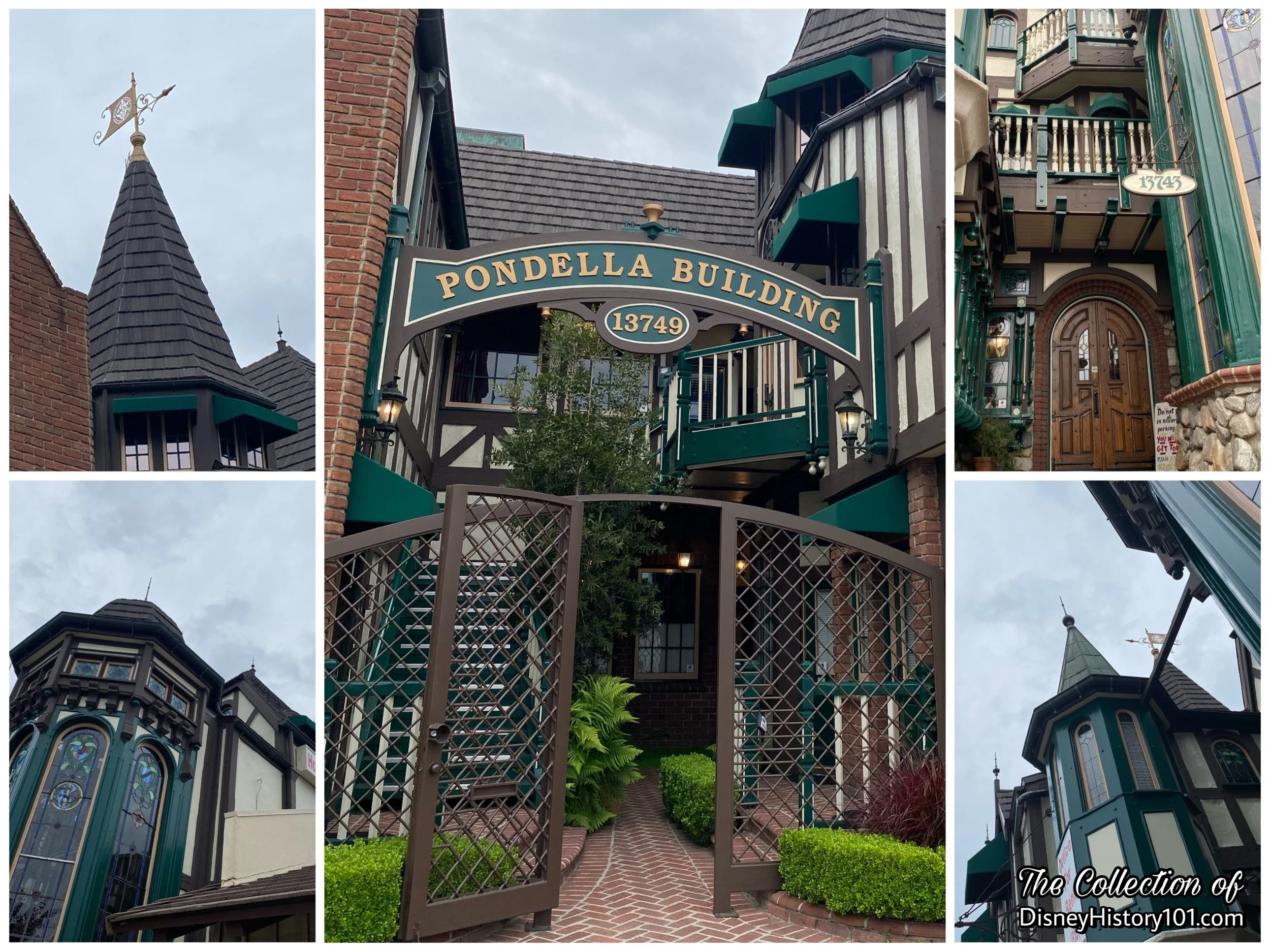
The Pondella Building in Sherman Oaks, California.
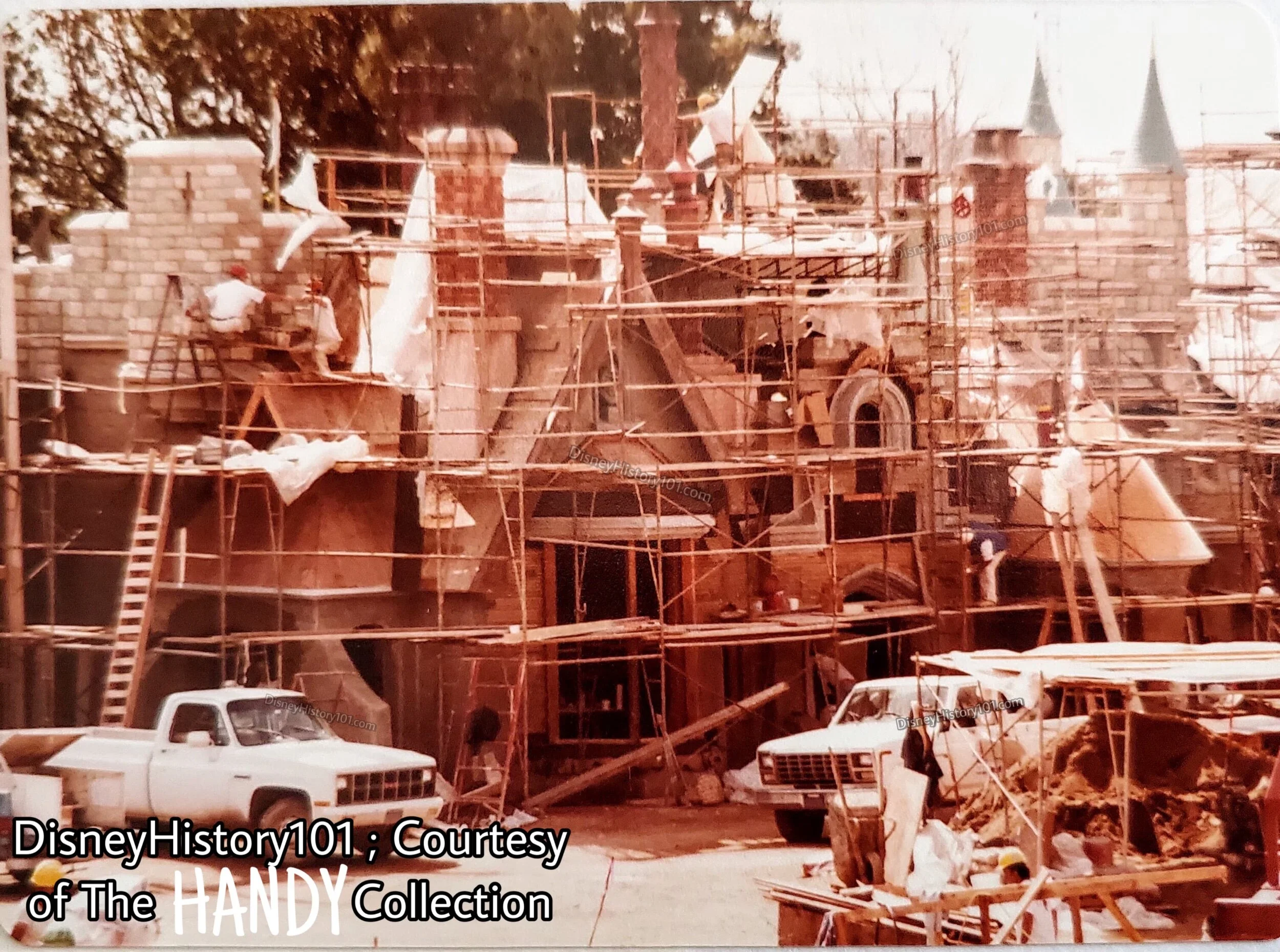
By early 1983, WED Enterprises had created plaster sample walls (similar to the “Main Street Test Wall” of 1954), in order to generate the necessary textures for reference. Once the framing, windows, and doors, were completed, distressed wood, plaster, and roofing were added.
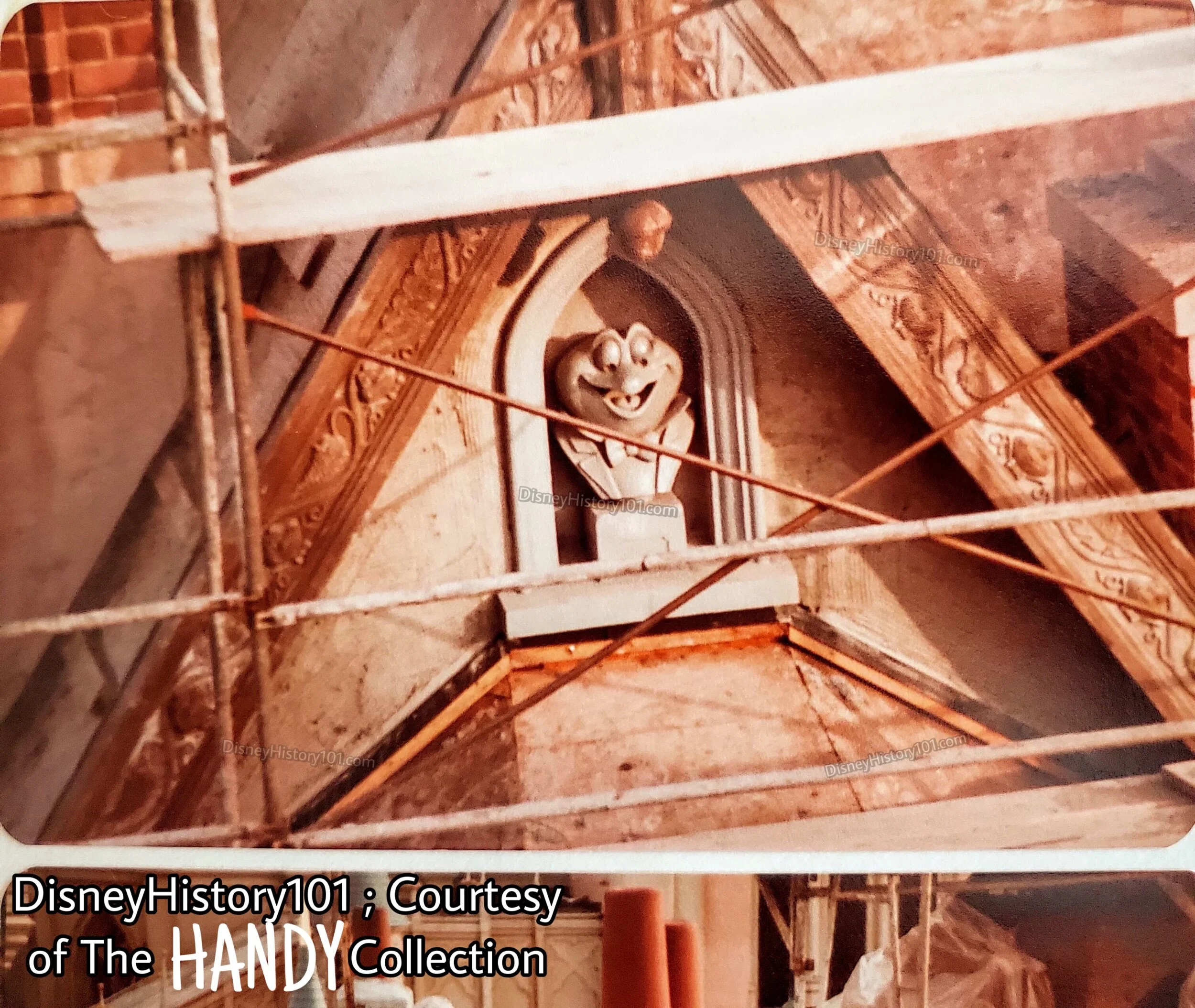
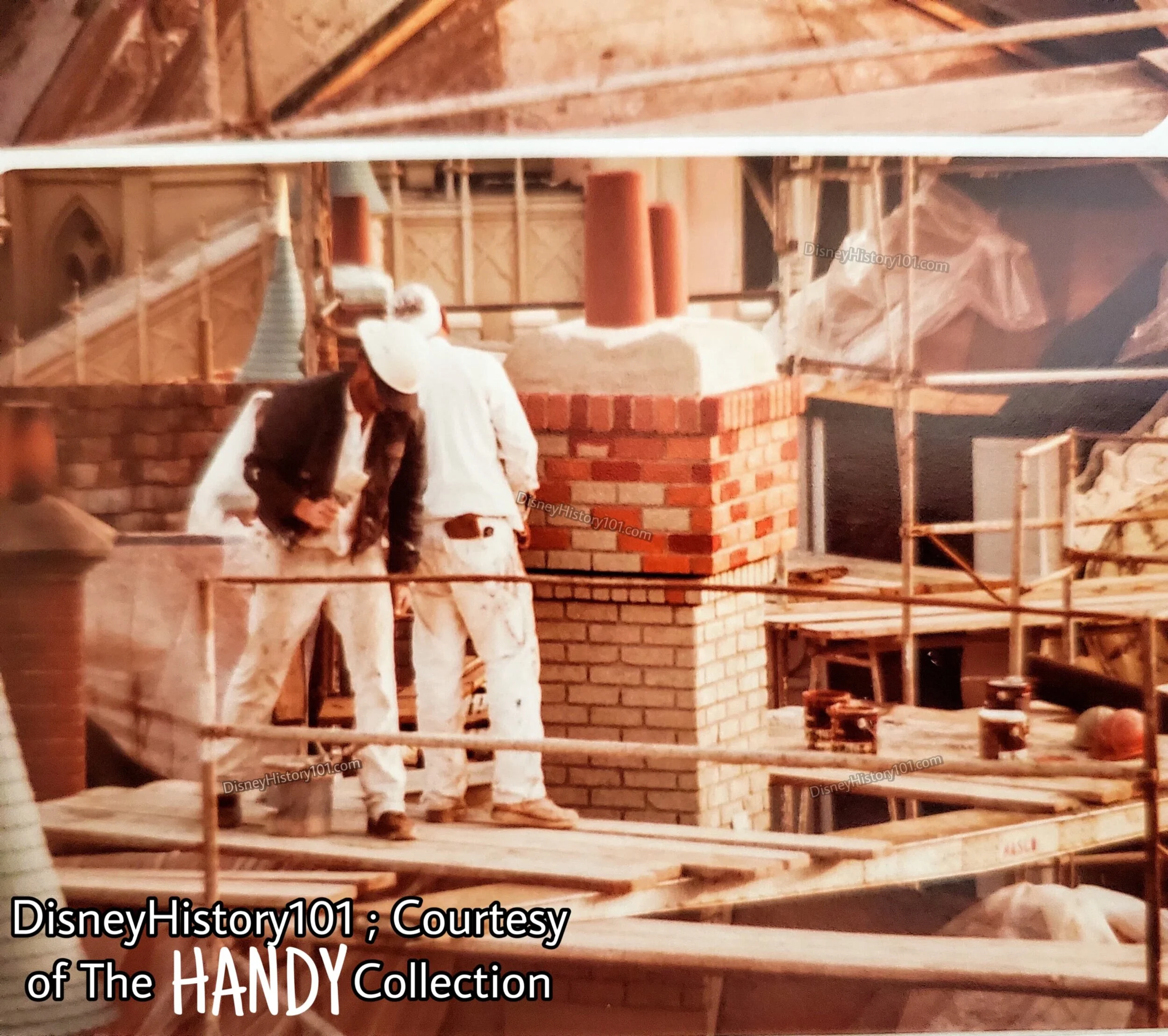
After this, much of the architectural ornamentation was sculpted, tooled, and cast by WED Entertainment, Disneyland Model Shop, and Walt Disney Studios. Many of these essential show elements - finials, chimney caps and pots, pinnacles, cornice, reliefs, columns, rosettes, and character carvings - were added by contractors during the Spring.
“Here is a land of imagination, hopes and dreams. In this timeless land of enchantment the age of chivalry, magic and make-believe are reborn and fairy tales come true. Fantasyland is dedicated to the young and the young at heart, to those who believe that when you wish upon a star your dreams do come true.”
-Fantasyland Dedication
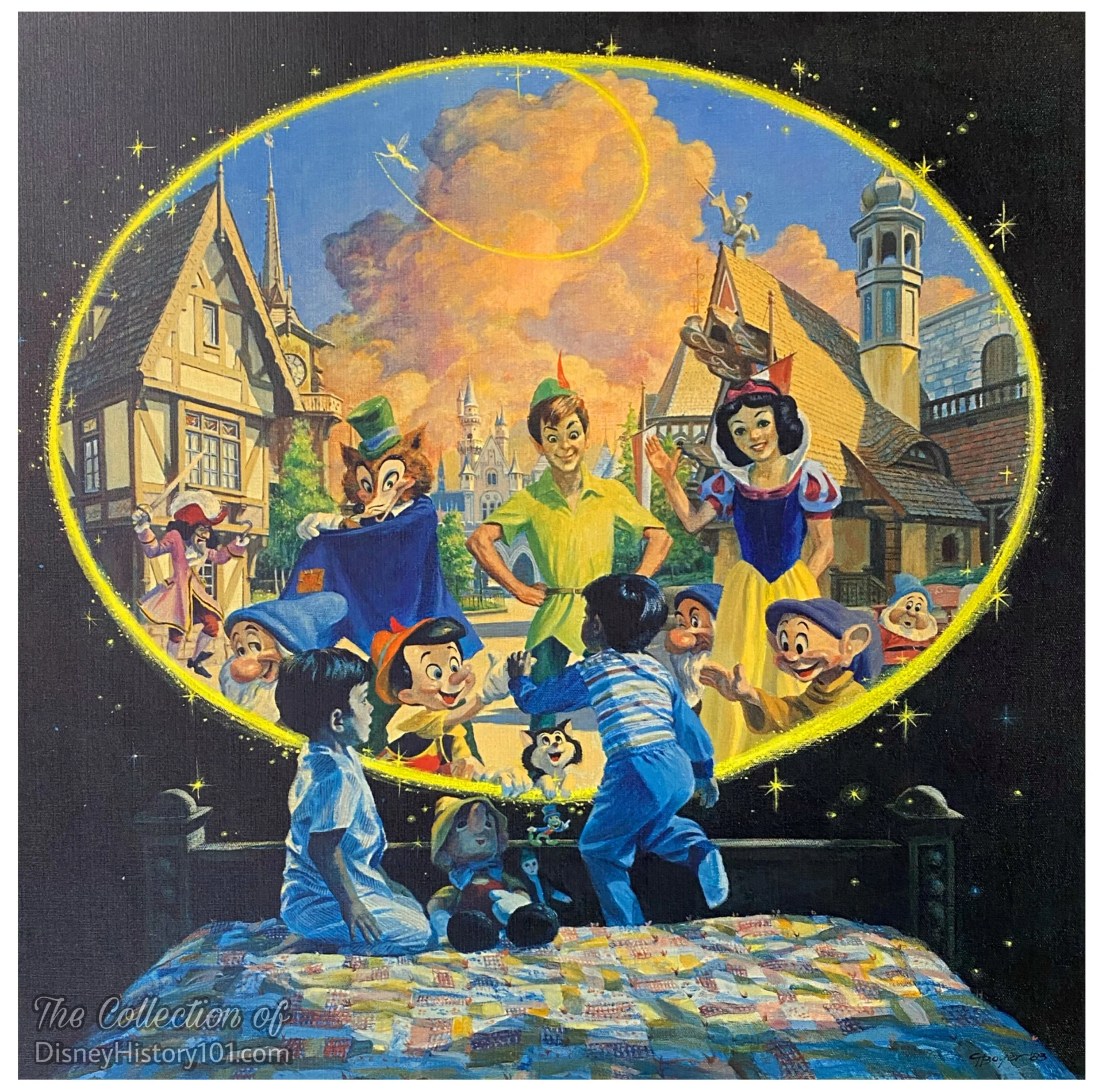
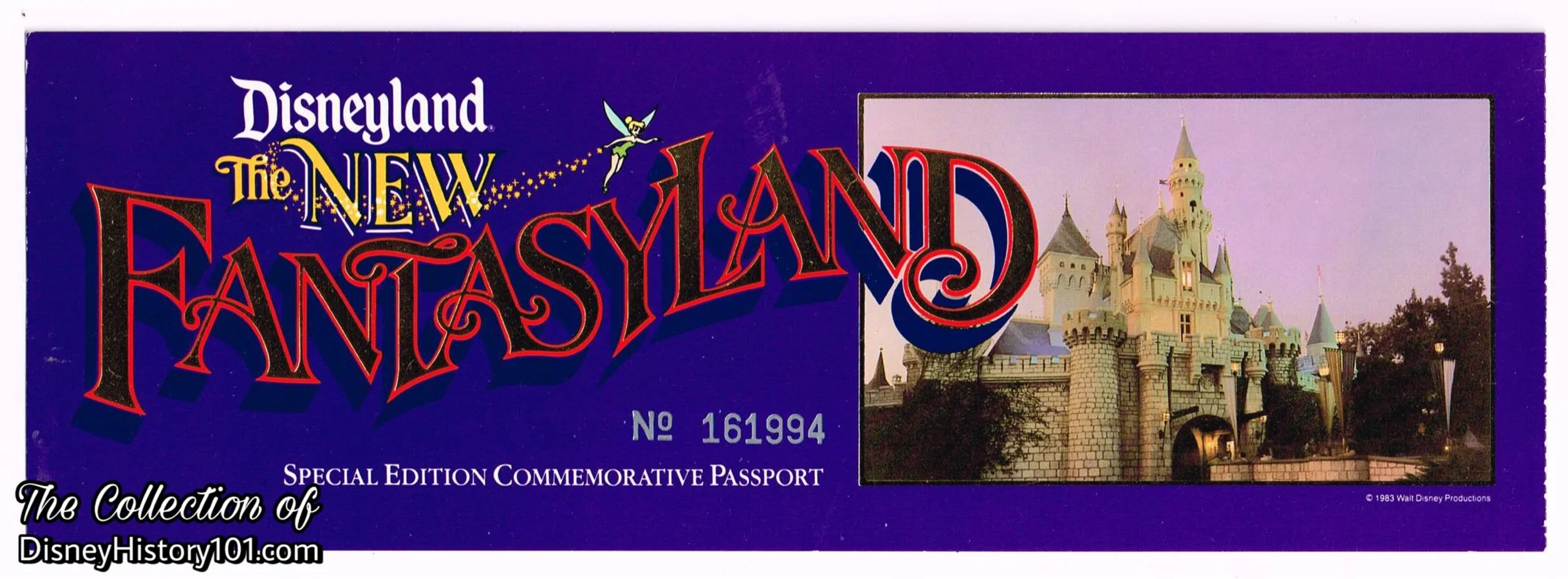
“A Sleeping Beauty Awakens” was the headline of Disneyland LINE (Vol. 15 ; No. 21, published May 26, 1983)! Fairy tales of Fantasyland were realized to a fuller degree when the thematic possibilities were pushed to a farther degree and the refurbished New Fantasyland debuted in 1983. This was the biggest addition to Disneyland in its 28 year history! Now it wasn’t that Walt Disney’s Fantasyland was dull, for stepping within its timeless boundaries children of all ages would make believe that fairy tales really could come true. But after immersive Fantasyland attraction introductions had been added to the Magic Kingdom, it would only be a matter of a short time until such elements would replace the brightly-colored Renaissance style tent facades of Disneyland’s Fantasyland. Here, Snow White and the Seven Dwarfs would receive a new foreboding home inside the new attraction - “Snow White’s Scary Adventures.” And as for Pinocchio, he would finally receive an attraction to tell his story, as Walt originally intended. Disneyland Cast Members were among the first to experience the New Fantasyland in a Cast Premier and rededication of the Land, hosted by Ron Dominguez and Dick Nunis on four separate nights (May 26, May 31, June 1, and June 2, 1983). Soon celebrations were in order - Sleeping Beauty Castle’s drawbridge was lowered for a historic second time, and a television special preview of the new land - “Believe You Can…And You Can!” was aired on April 21, 1983. After all, the Walt Disney Productions Quarterly Report (for nine months ended August 12, 1983) included the “new magical land of make-believe” on its cover.
Add to this, the c.1983 re-issue of Snow White and the Seven Dwarfs would soon have the biggest opening of any Walt Disney Picture to date, and (with a film rental figure of $13,000,000) to be the most successful reissue in the history of Walt Disney Productions. Promotions like the PSA “Magical Smiles” Tour invited guests to discover the New Fantasyland.
For now, let’s imagine that it’s some time before May of 1983, much of the scaffolding has yet to be been removed, and we’ve just stepped beyond the raised drawbridge of Sleeping Beauty Castle for a sneak peek of Disneyland’s newest land! Along the way, we’ll see a few rare sights that perhaps have not been seen since the c. 1983 “Believe You Can, And You Can” television special. Please step this way, as we explore New Fantasyland!
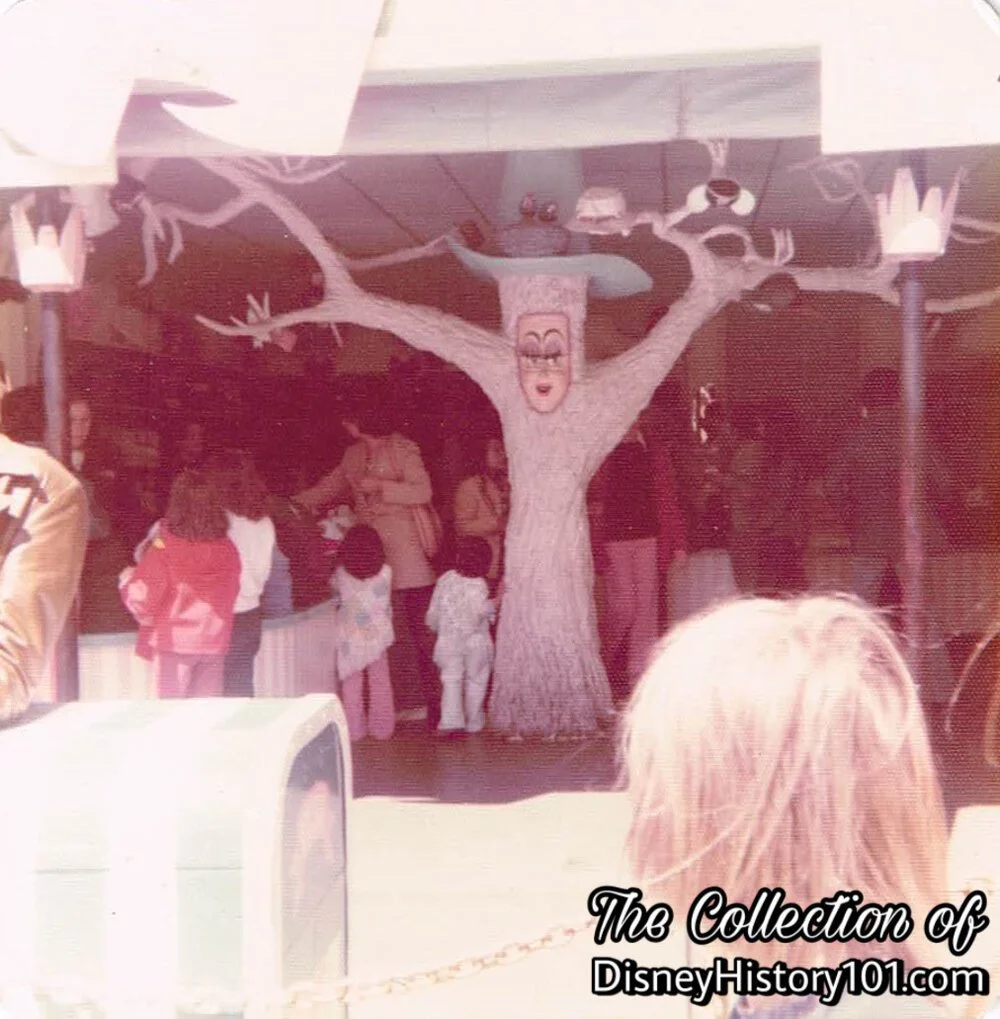
The original Mad Hatter shop in Fantasyland.
By (April-June) 1981, WED Imagineering surveys of the 891 square-foot Mad Hatter Shop were conducted, in relation to New Fantasyland. Proposals for expansion to a 2,206 facility were made.
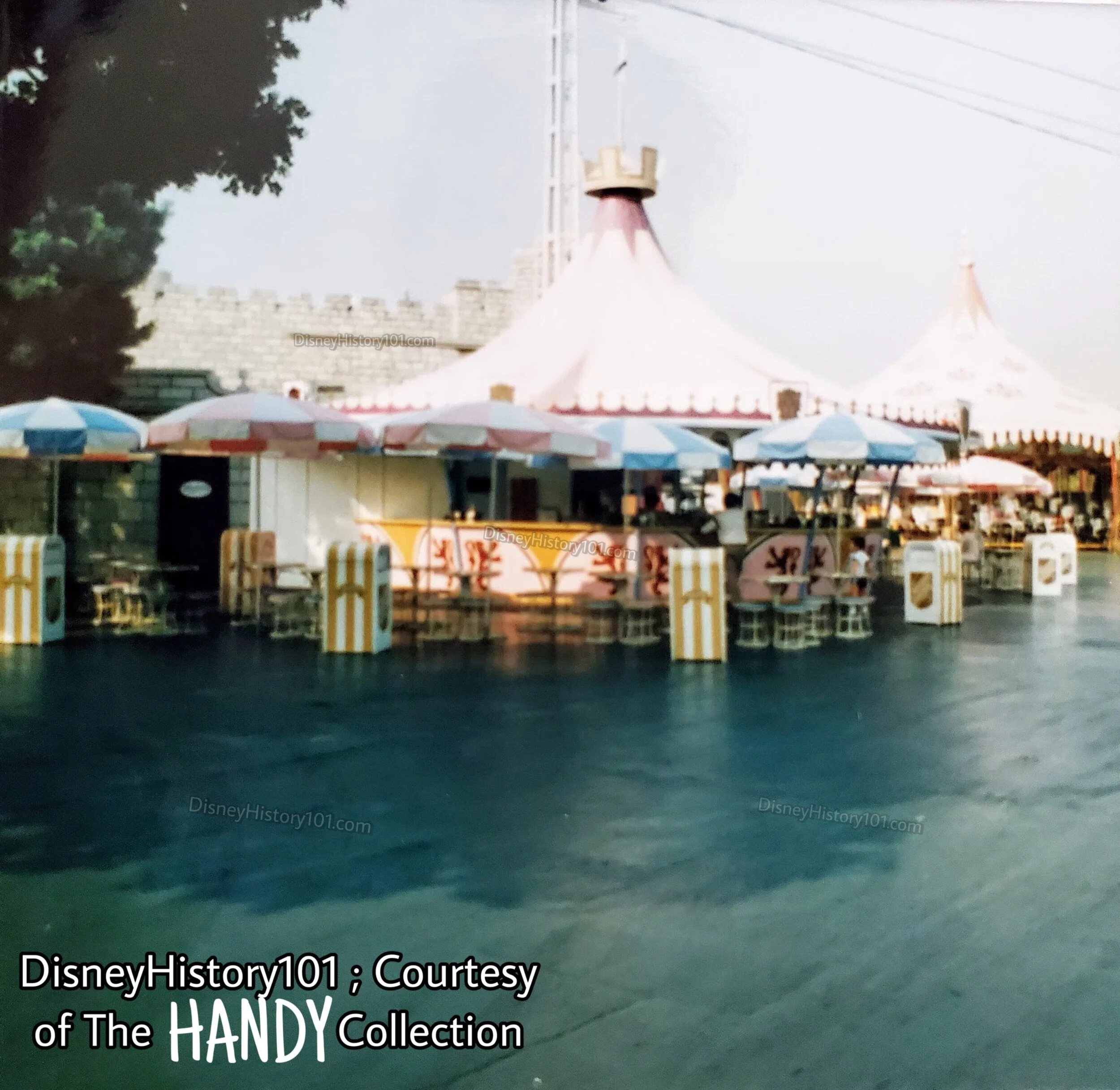
Fantasy Foods (2) in the character of a tournament tent in Fantasyland.
The main restaurants of Fantasyland were two Fantasy Foods locations (operated by United Paramount Theaters). The Disneyland Participant sponsor ran two conveniently located concessions on the East and West sides of Fantasyland - Fantasy Foods 1 and Fantasy Foods 2! Upon investigating Guest flow (decades later), it was decided to remove these restaurants. Many other attractions and services would disappear, including Fantasyland Juice Bar (by Welch’s Grape), the Fantasyland Theater, Character Foods (Fan II), Merlin’s Magic Shop, and the Fantasy Gift Fair.
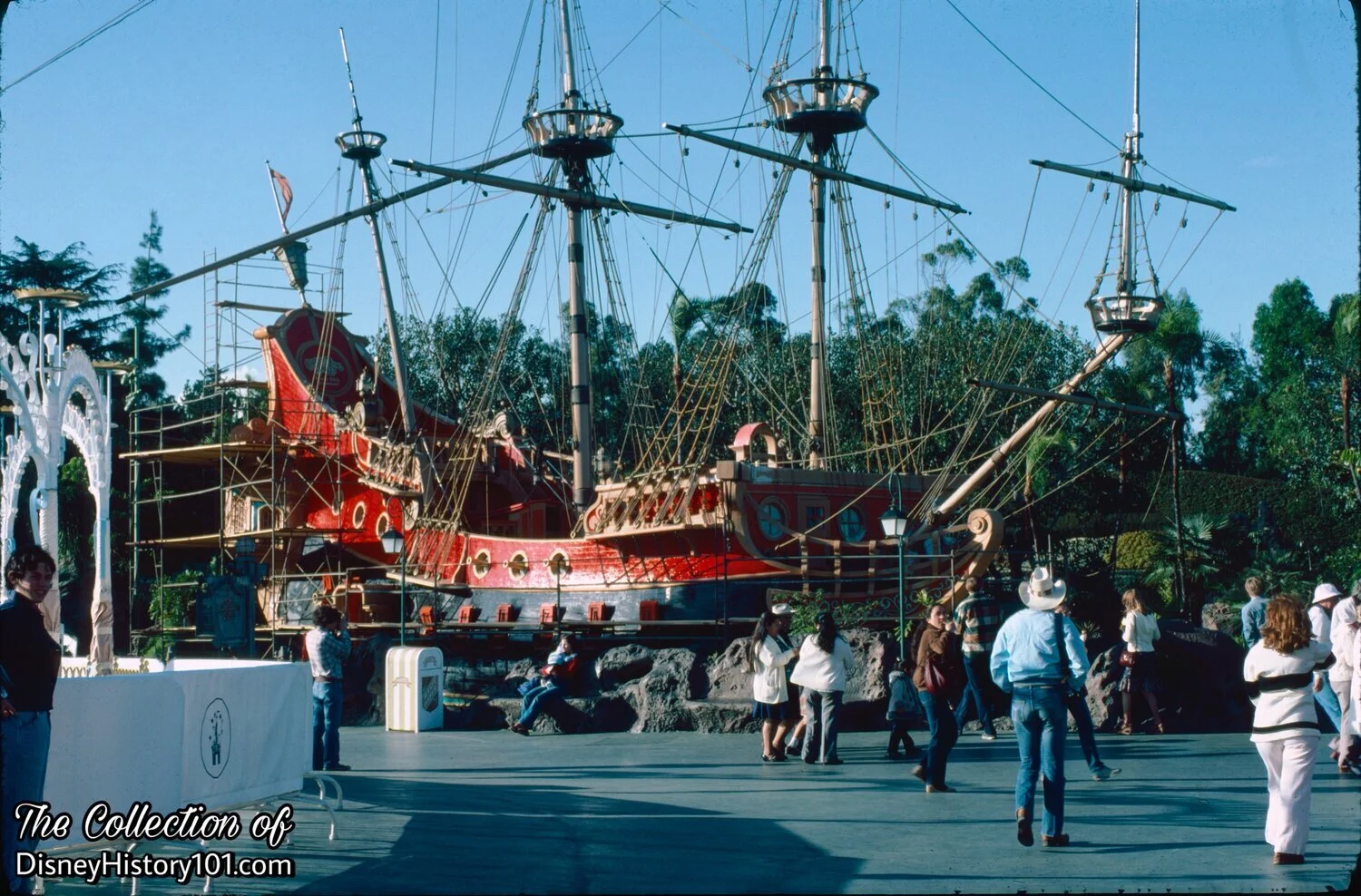
(March, 1981)
By 1981, plans were underway to include the Pirate Ship in the new Fantasyland! Walt Disney Imagineer John Stone worked with Ken Anderson, Ron Bowman, & Chris Tietz and Bruce Gordon under the direction Tony Baxter. John designed and developed alternative concepts for Neverland Cove using existing elements like “Hooks Ship” as a character stage for live action performances. This concept included a fast food Concession accessed from the open cannon bays below the stage on the lagoon and terraced dining that overlooked the performance area. John Stone designed a Playground and interactive area surrounding Hangman's Tree, Skull Rock and a miniature Indian Camp & Misty Mountains which added a new scene to Storybook Land that back dropped the entire experience.
Scaffolding appeared around the old pirate galleon and barriers around the Mad Tea Party Tea Cups (on the left). A construction partition would soon be raised, to shield guest from the construction. By the time that the construction of New Fantasyland was underway during late 1982, there were two functioning restaurants - Captain Hook's Galley and Fantasy Two, according to the Disneyland Menu Book (prepared by December 8, 1982).
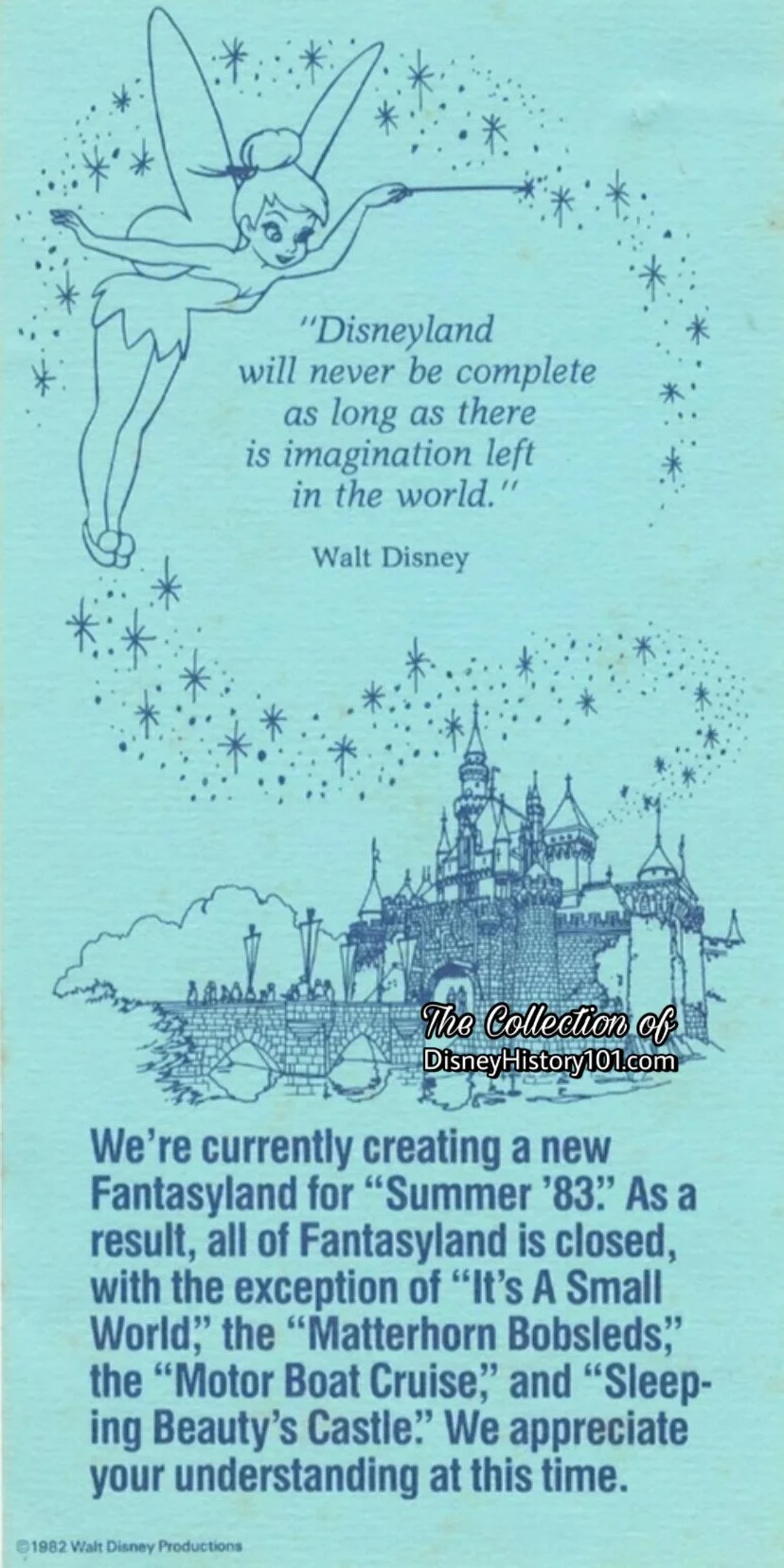
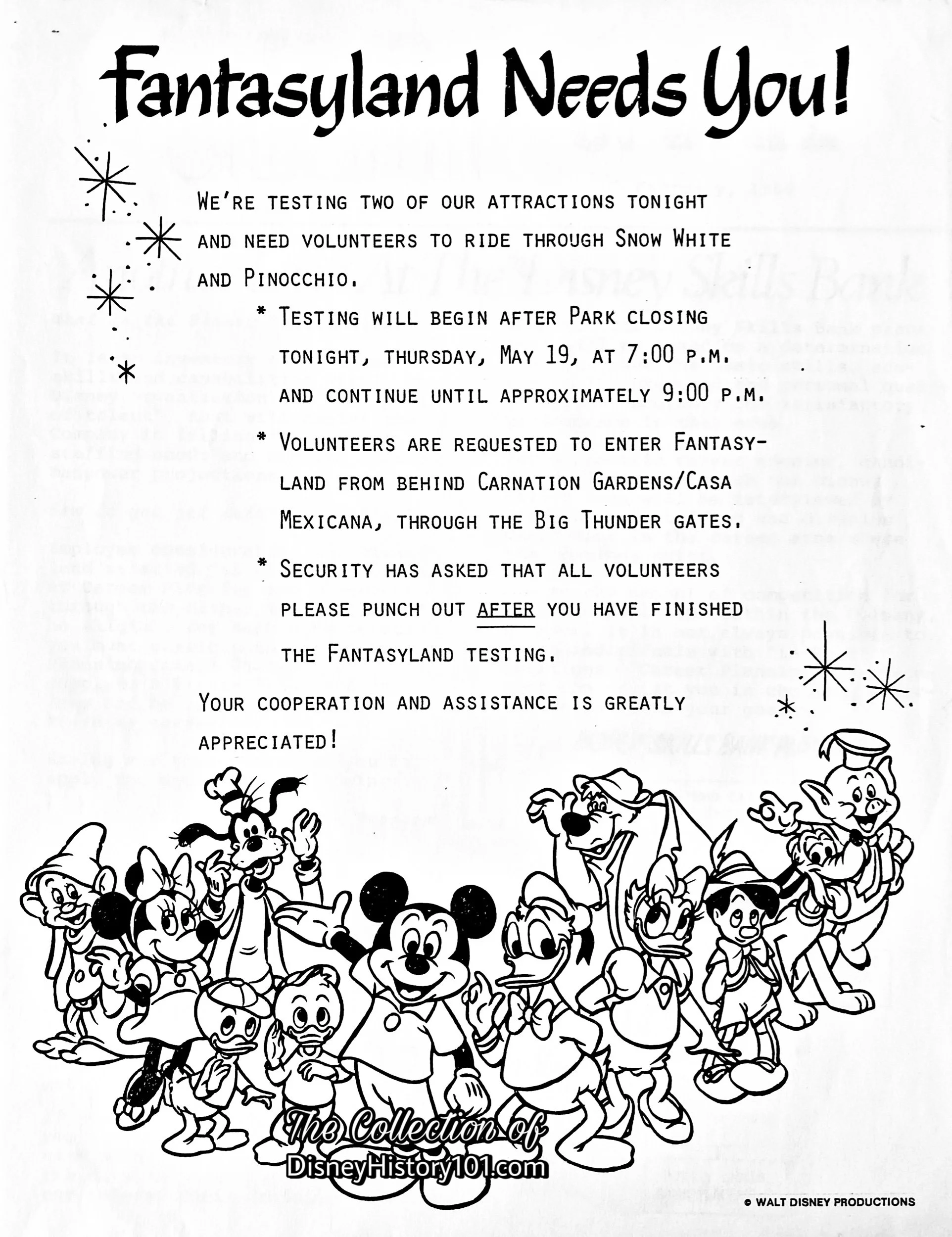
During the construction, this style of handbill was issued to guests of Disneyland.
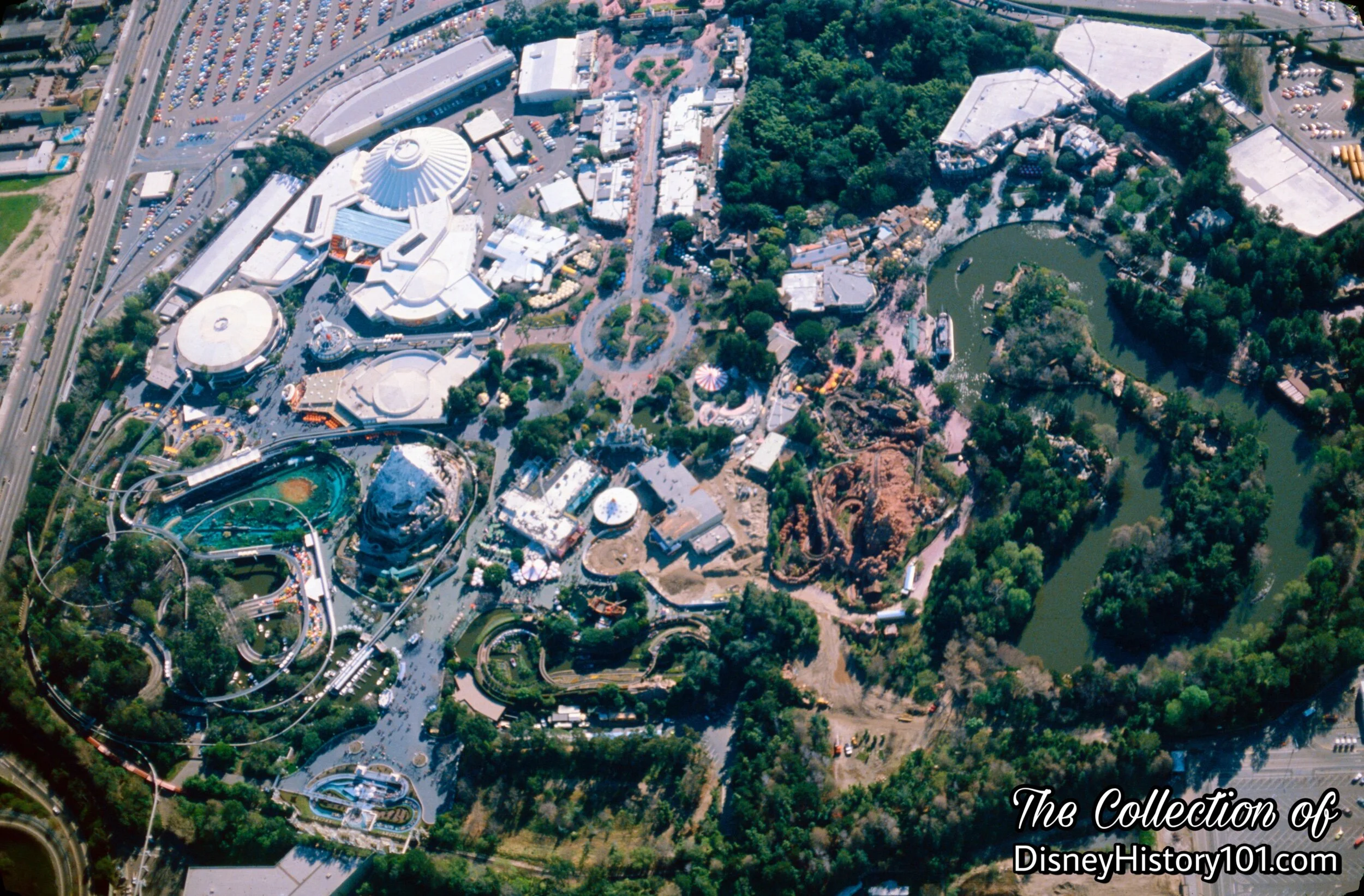
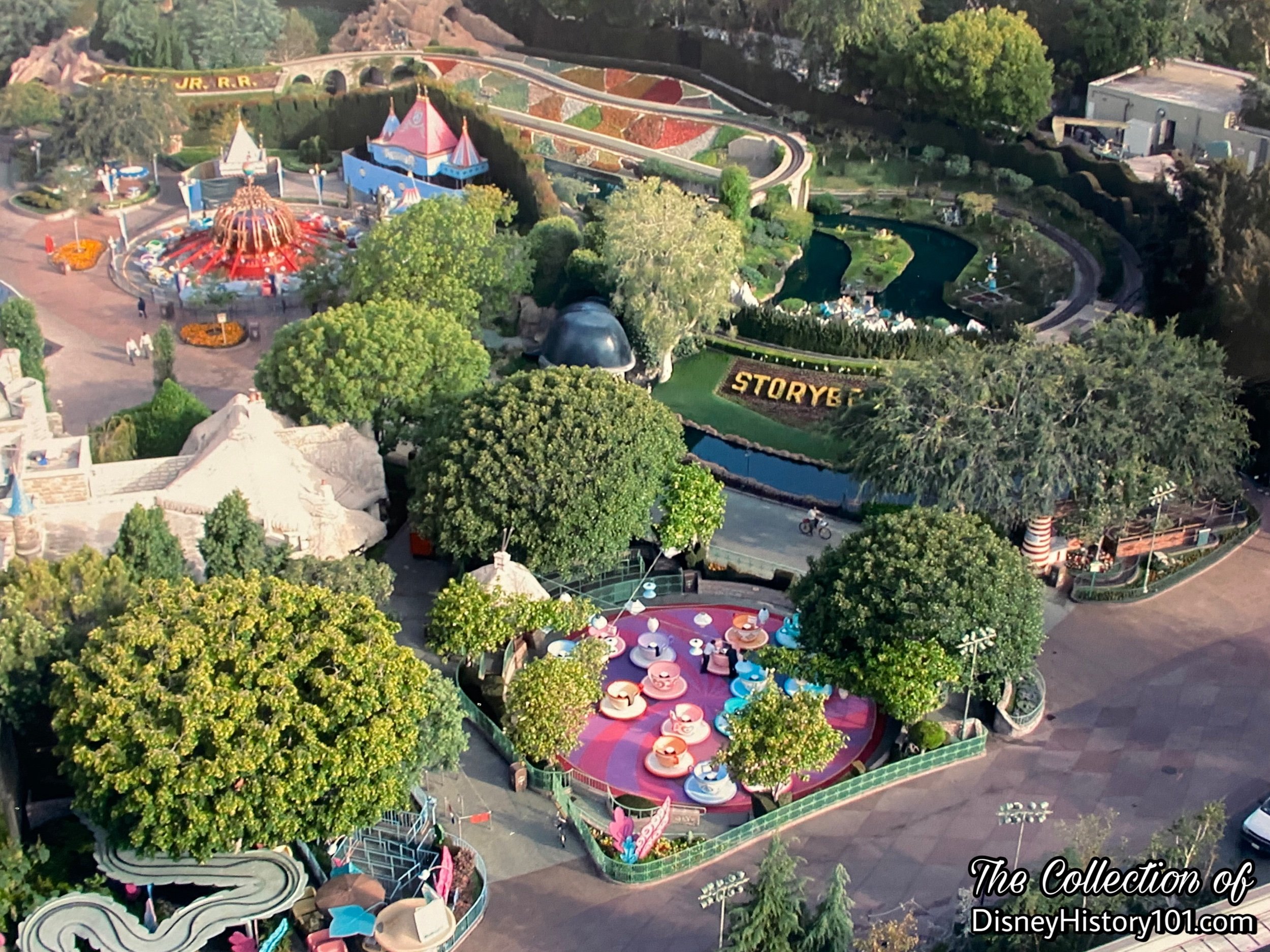
Disneyland Aerial Vintage View, 1982
In this aerial photograph taken during January of 1982, you can see that New Fantasyland’s refurbishment has already begun. If you look closely, you can see the barrier around the construction zone. Just beyond that, you’ll notice the King Arthur Carrousel (located in the courtyard right before Sleeping Beauty Castle’s portcullis), which would soon be moved several yards North where the Mad Tea Party used to be (a space has already been prepared for the Carrousel) . Just behind that, you can see The Pirate Galley is also still accessible in front of Storybook Land.
The New Fantasyland model would maximum utilization of space, efficiently open up the land for higher guest capacity, and reduce crowding. Some long-time popular attractions would disappear, while many new experiences based on timeless tales were planned. In addition, Fantasyland would receive a thematic “facelift.” What would some of those new facades look like? Please read on.
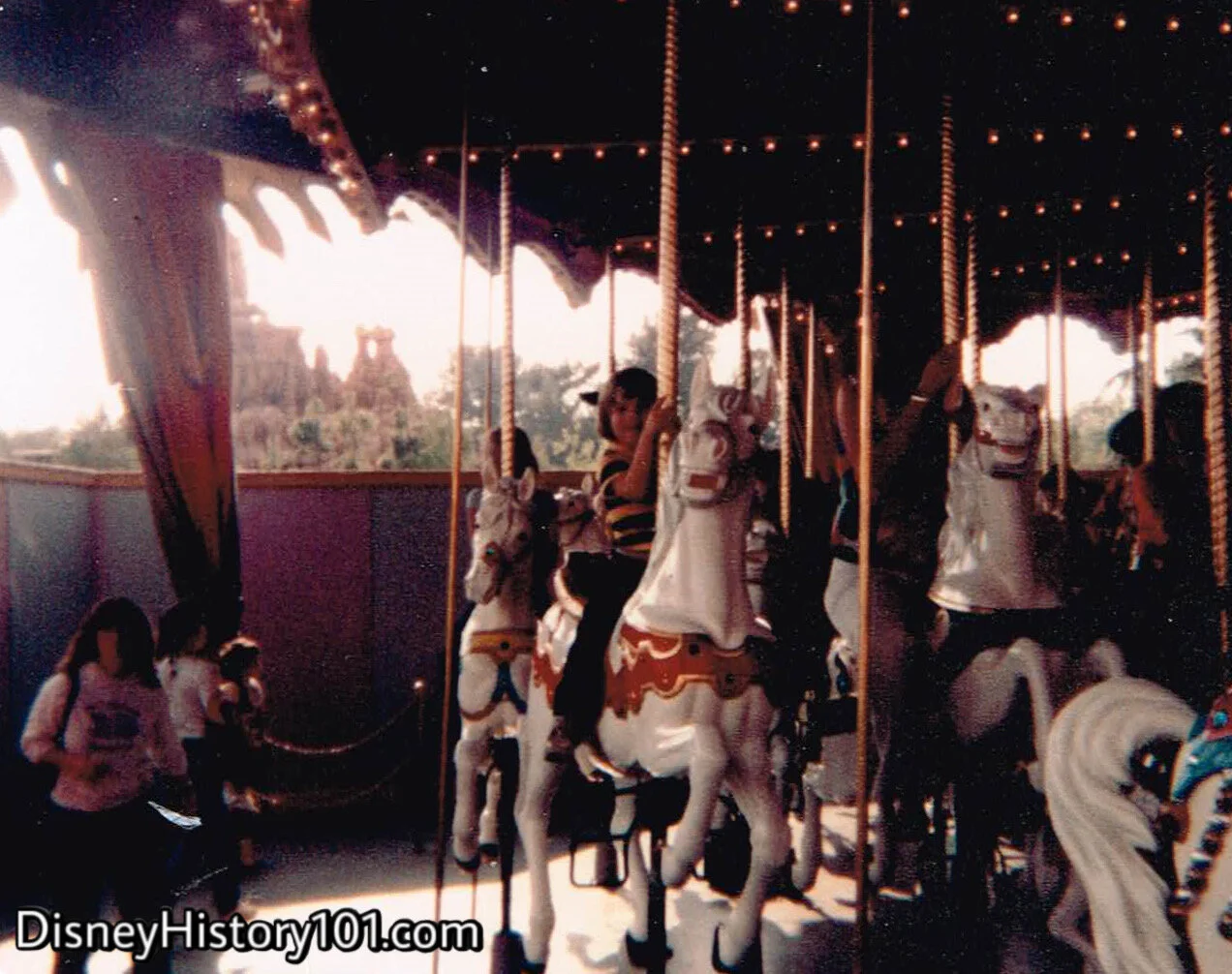
King Aurthur Carrousel, May 2nd, 1982.
While this young boy takes a memorable ride on one of King Aurthur Carrousel’s steeds, the spires of Big Thunder Mountain can be seen just over the New Fantasyland construction wall around the periphery! The same wall blocked Pirate’s Cove and some neighboring Frontierland developments from guest view during this time.
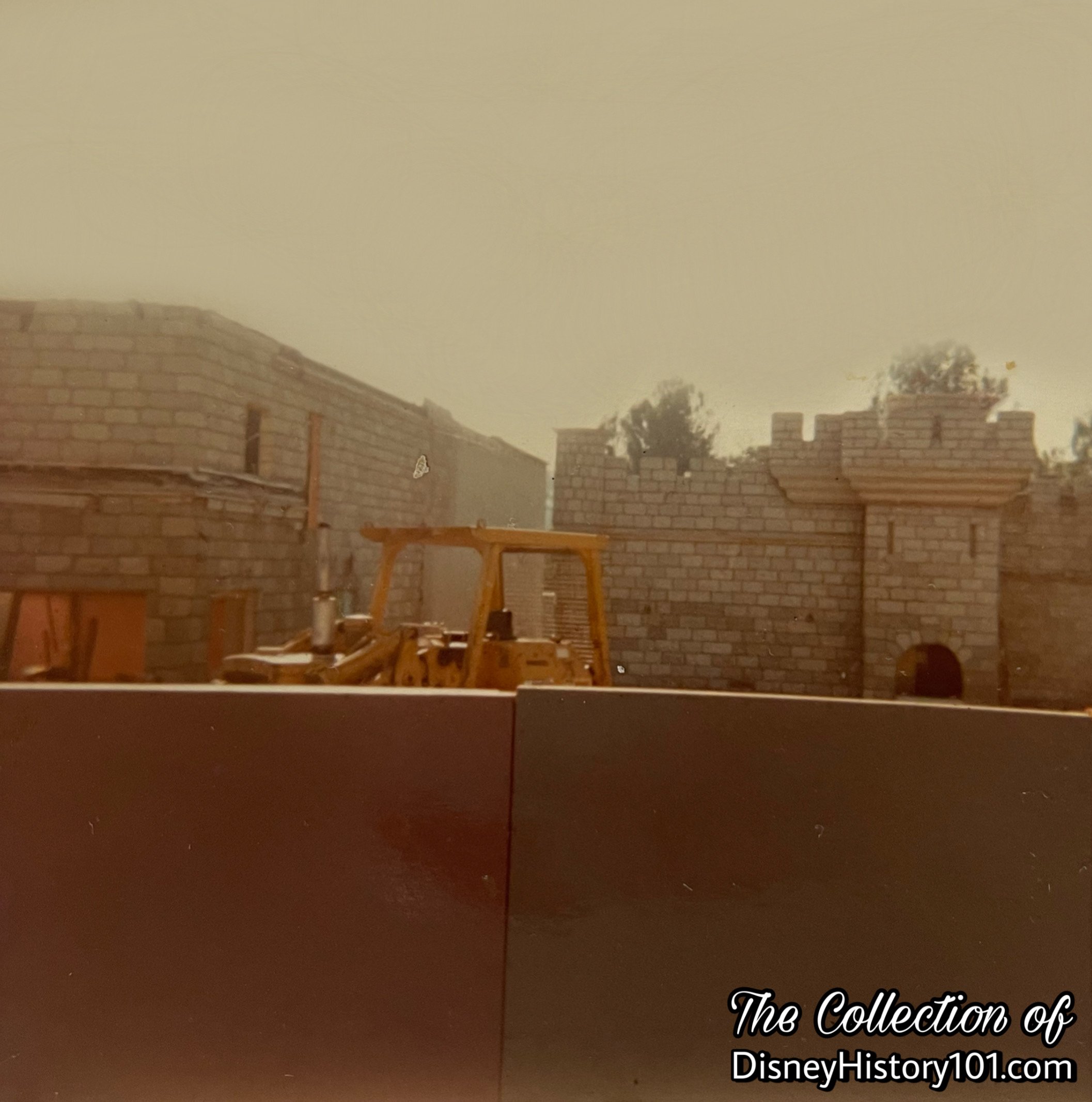
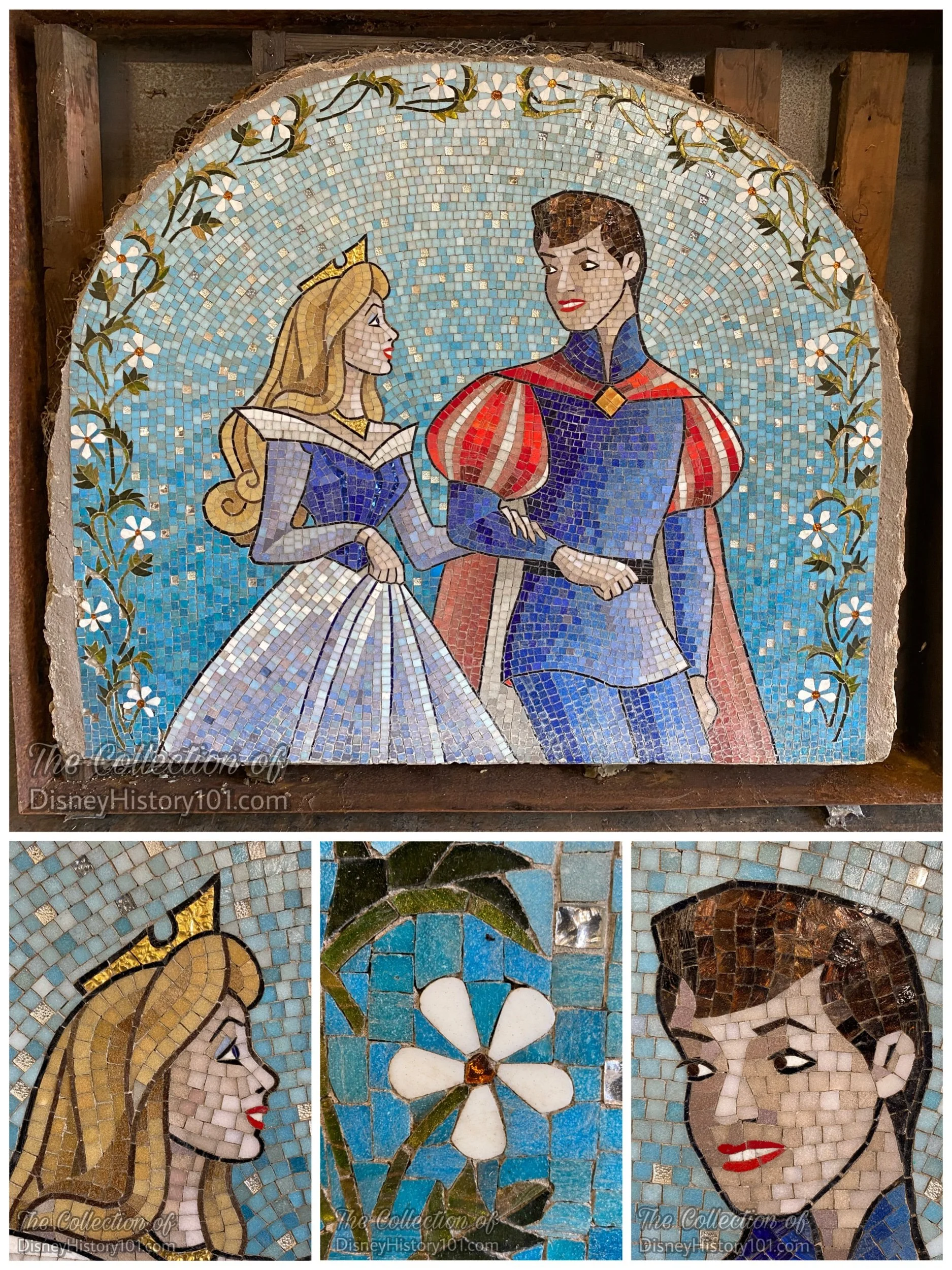
“Once Upon A Dream”
“Once Upon A Dream” (c. 1970s - 1982), Princess Aurora and Prince Phillip walked with each other through Sleeping Beauty Castle Courtyard! This magical moment was captured frozen time, through the magic of skilled craftspeople, and blessing of two meter-tall gifts bestowed upon Sleeping Beauty Castle - one to the west (pictured), and another to the east. But changes were in the wind, and when new developments (like the Village Haus Restaurant Sponsored by Sun Giant) began to take form during the early 1980s, this particular mural was removed from over a water fountain. Carefully preserved for decades, this “Sleeping Beauty Castle Courtyard Mosaic” surfaced as a lot in Van Eaton Galleries’ previous “Rediscovering Disneyland” exhibition and auction.
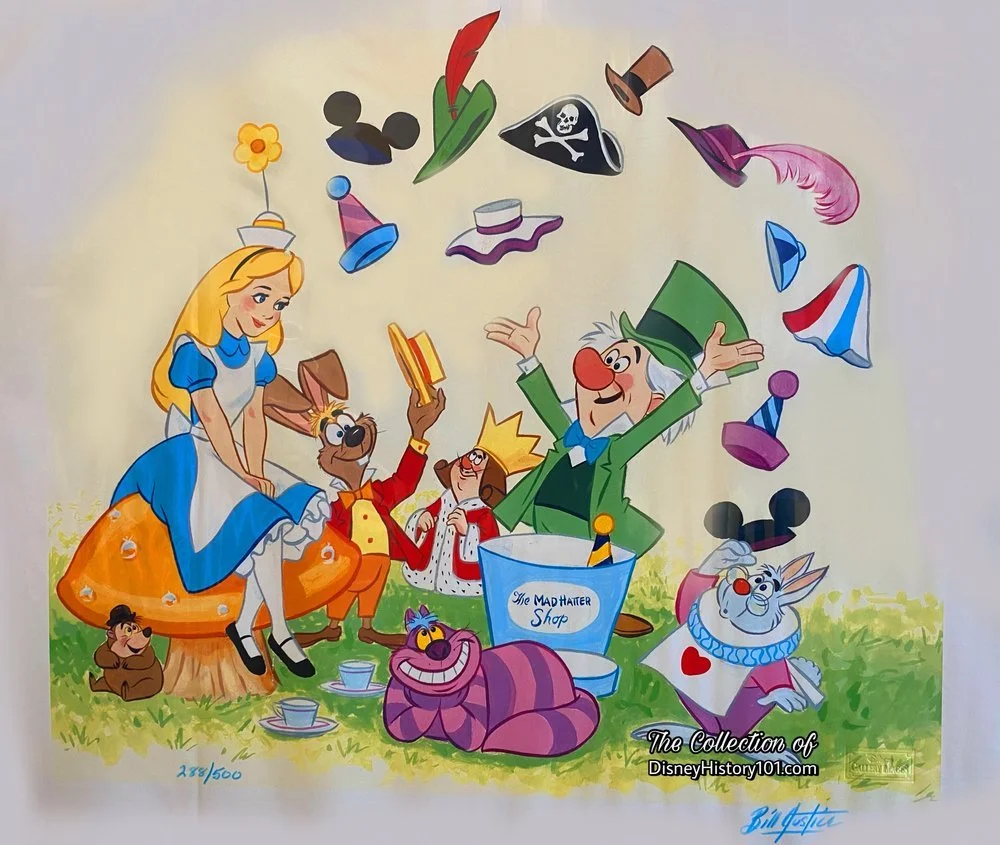
The Mad Hatter Mural designed by Bill Justice.
The mural was designed and created by Bill Justice in 1977. While the mural was demolished along with The Mad Hatter, the spirit of the Fantasyland shop (and Bill’s work) was preserved when a print of Bill’s work was offered through The Disney Gallery.
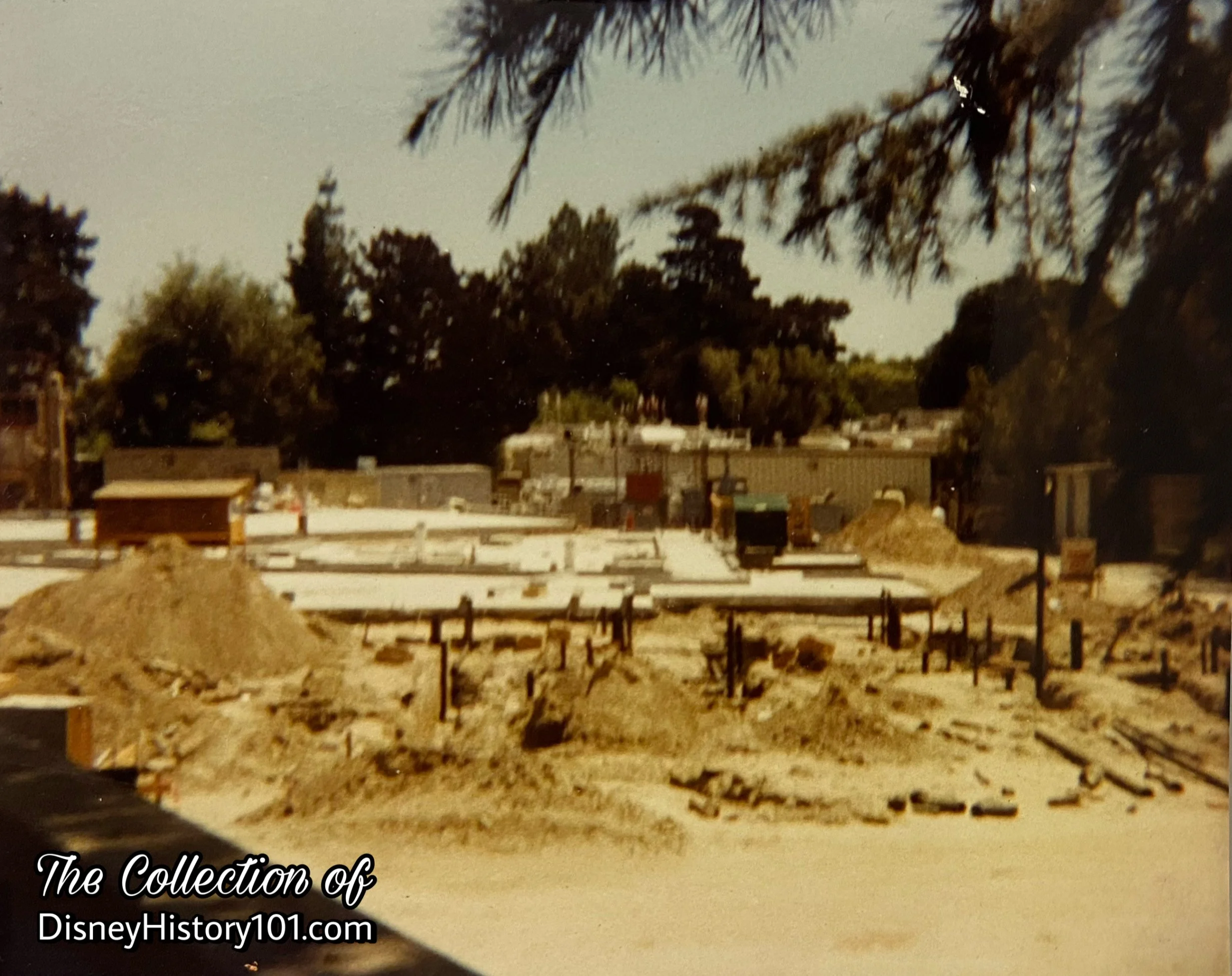
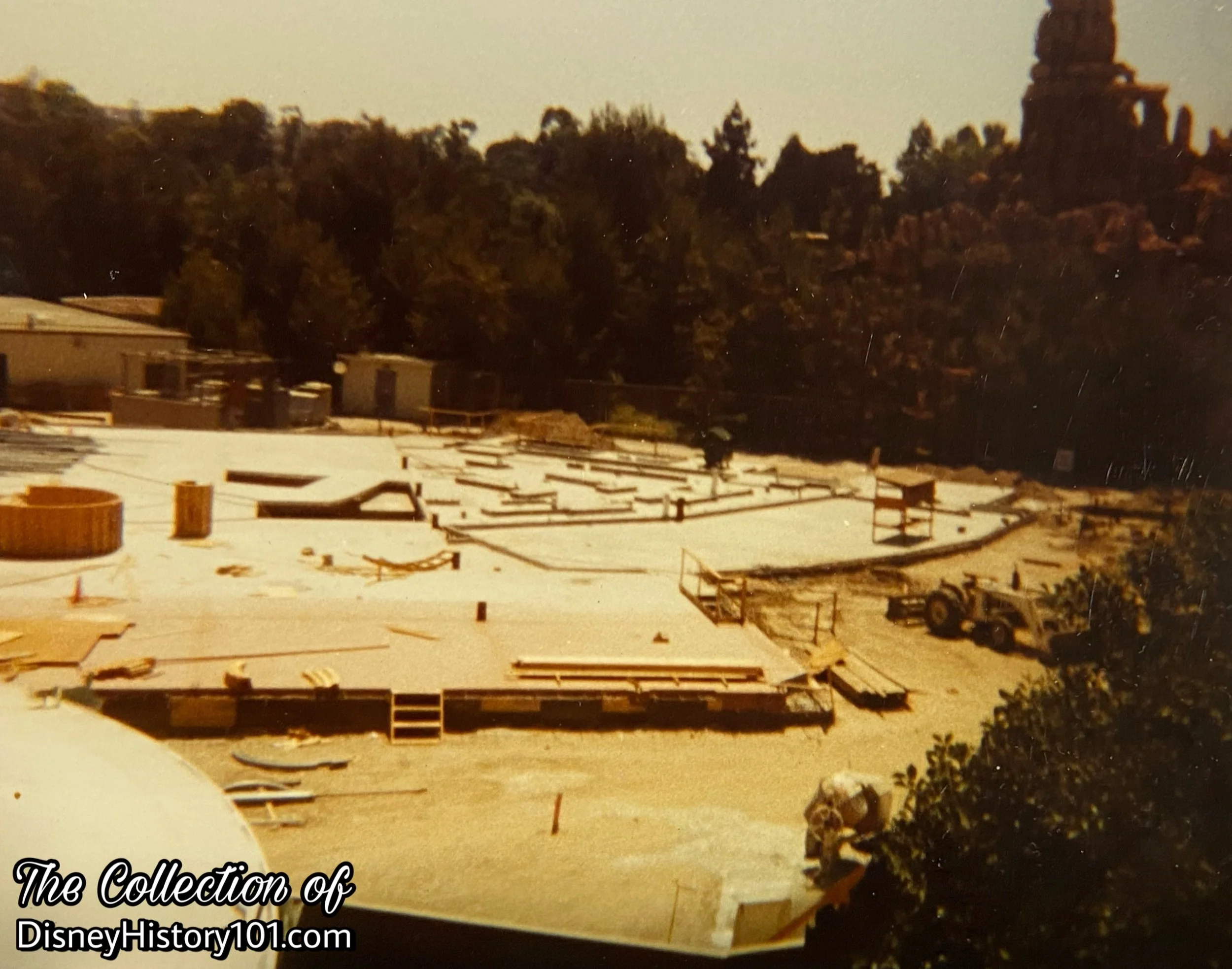
Future site of Pinocchio’s Daring Journey.
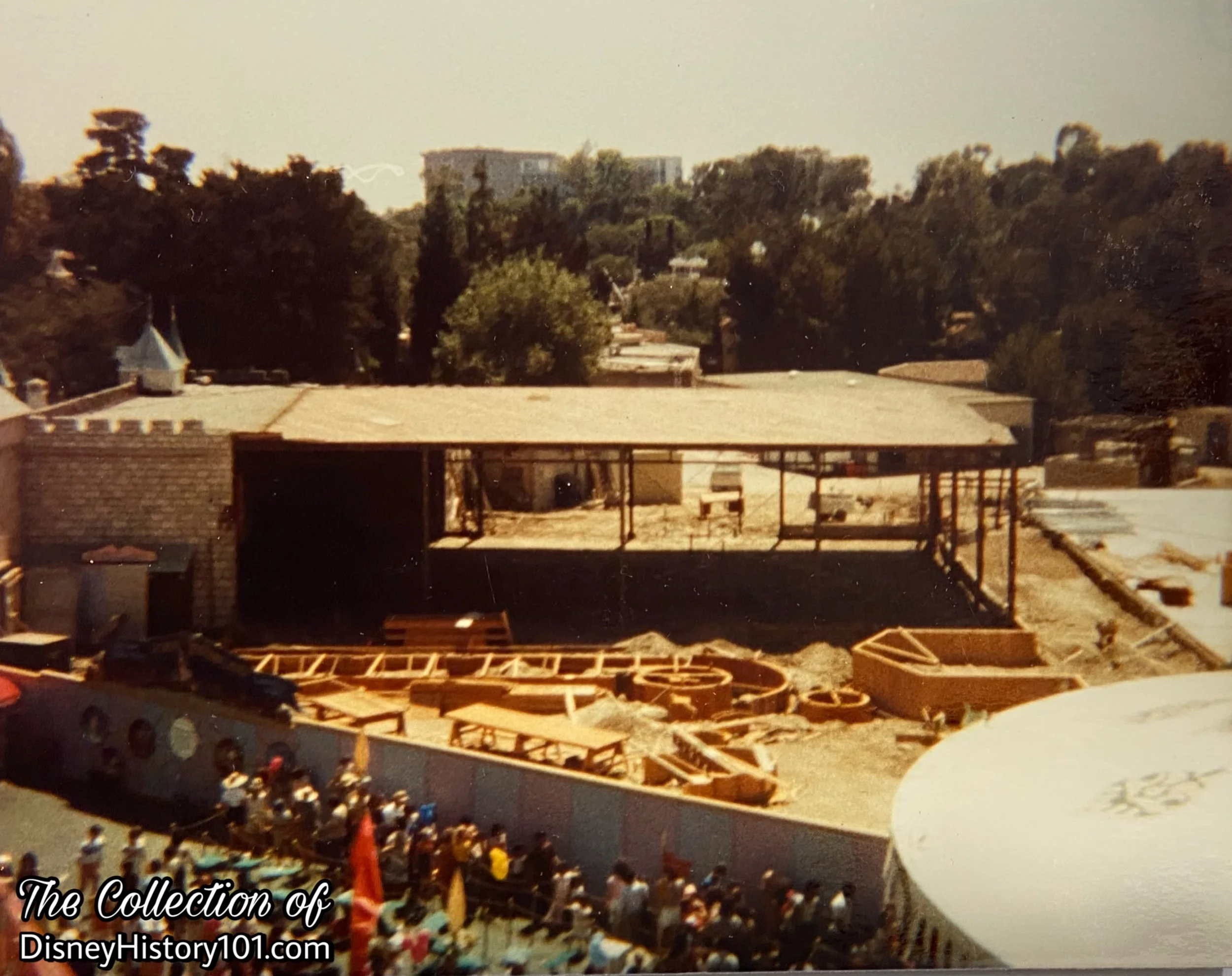
Future site of Snow White’s Scary Adventure.
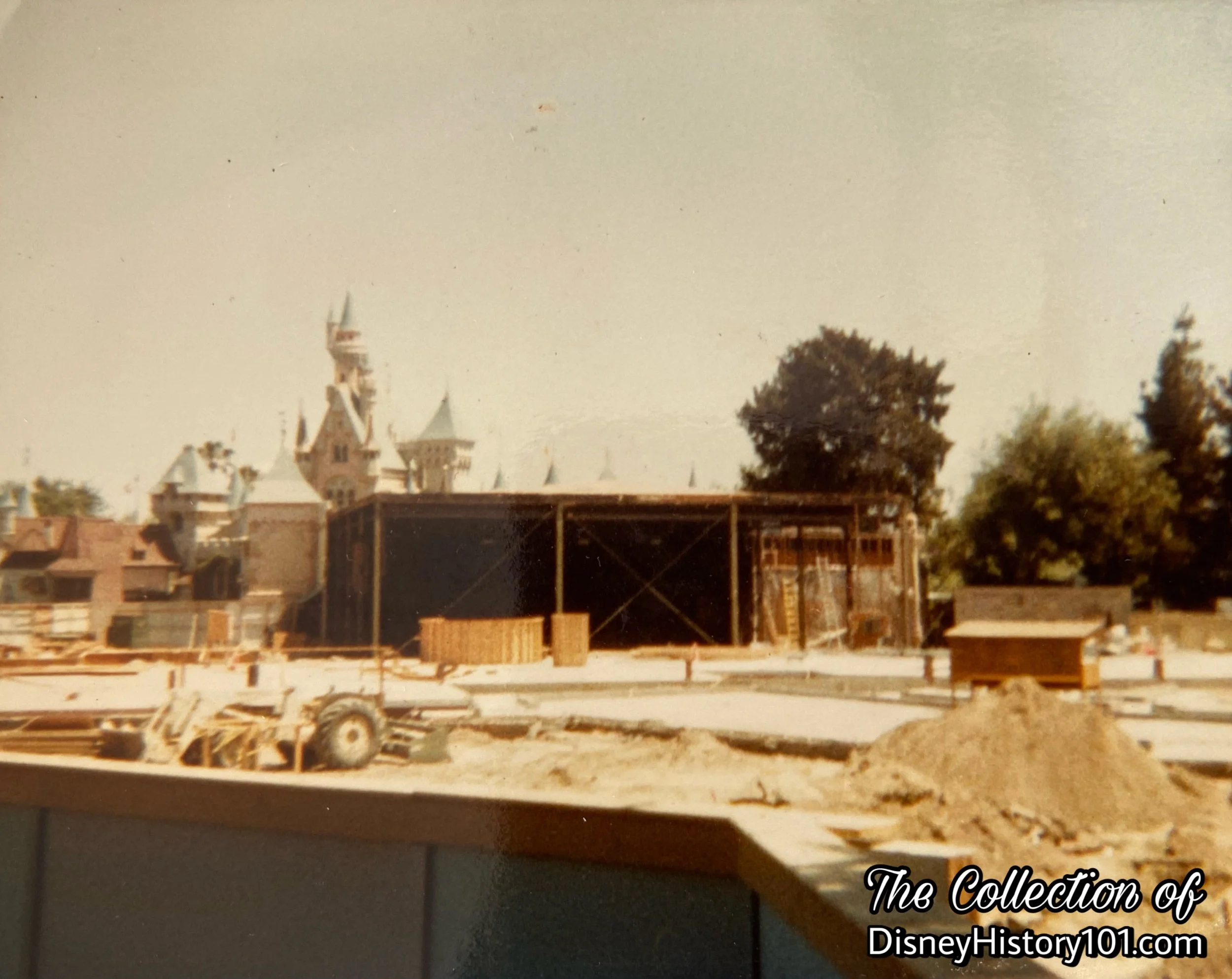
The framework of the old Fantasyland Theater (formerly Mickey Mouse Theater) after the period of demolition, in preparation for New Fantasyland construction.
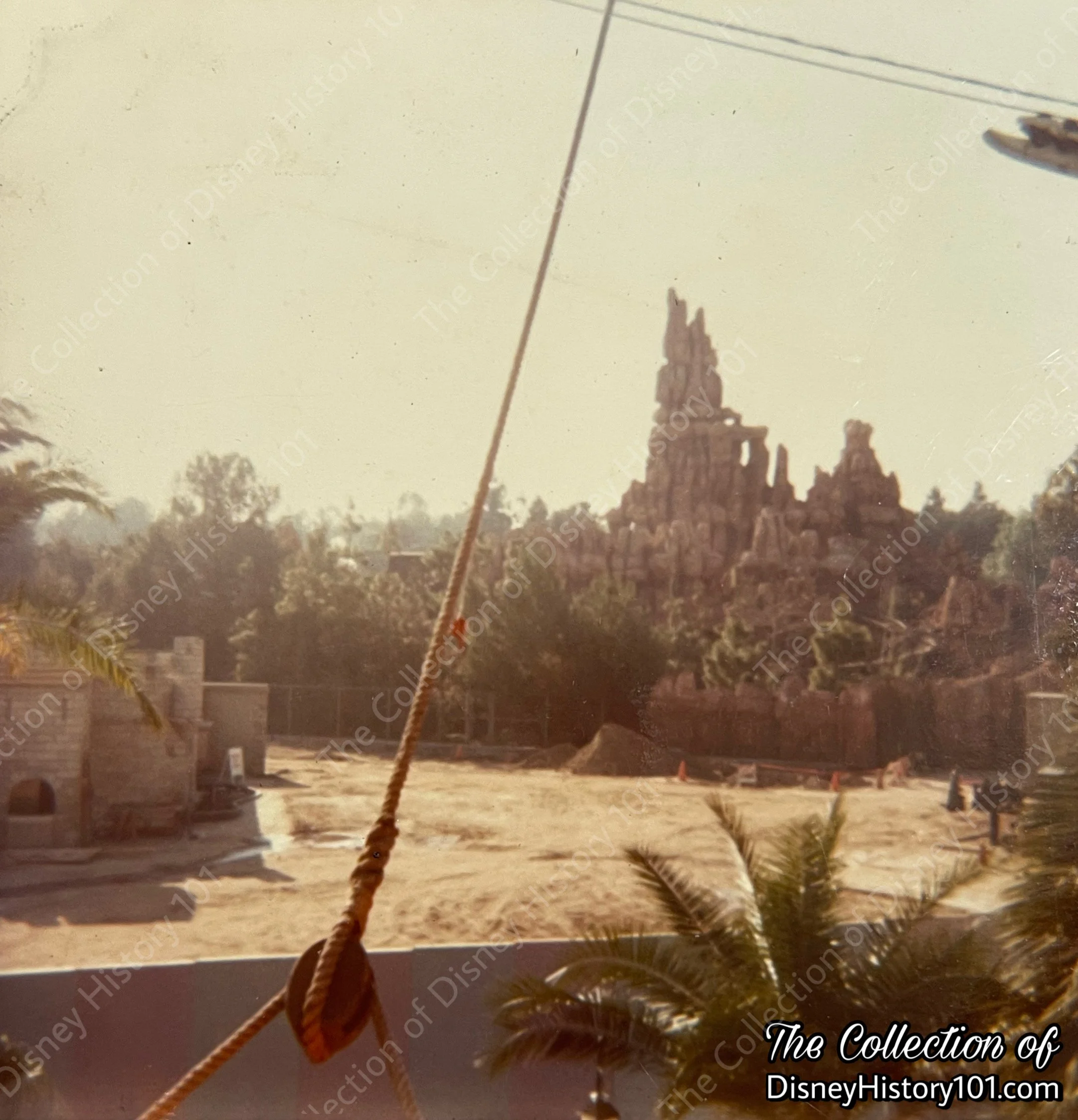
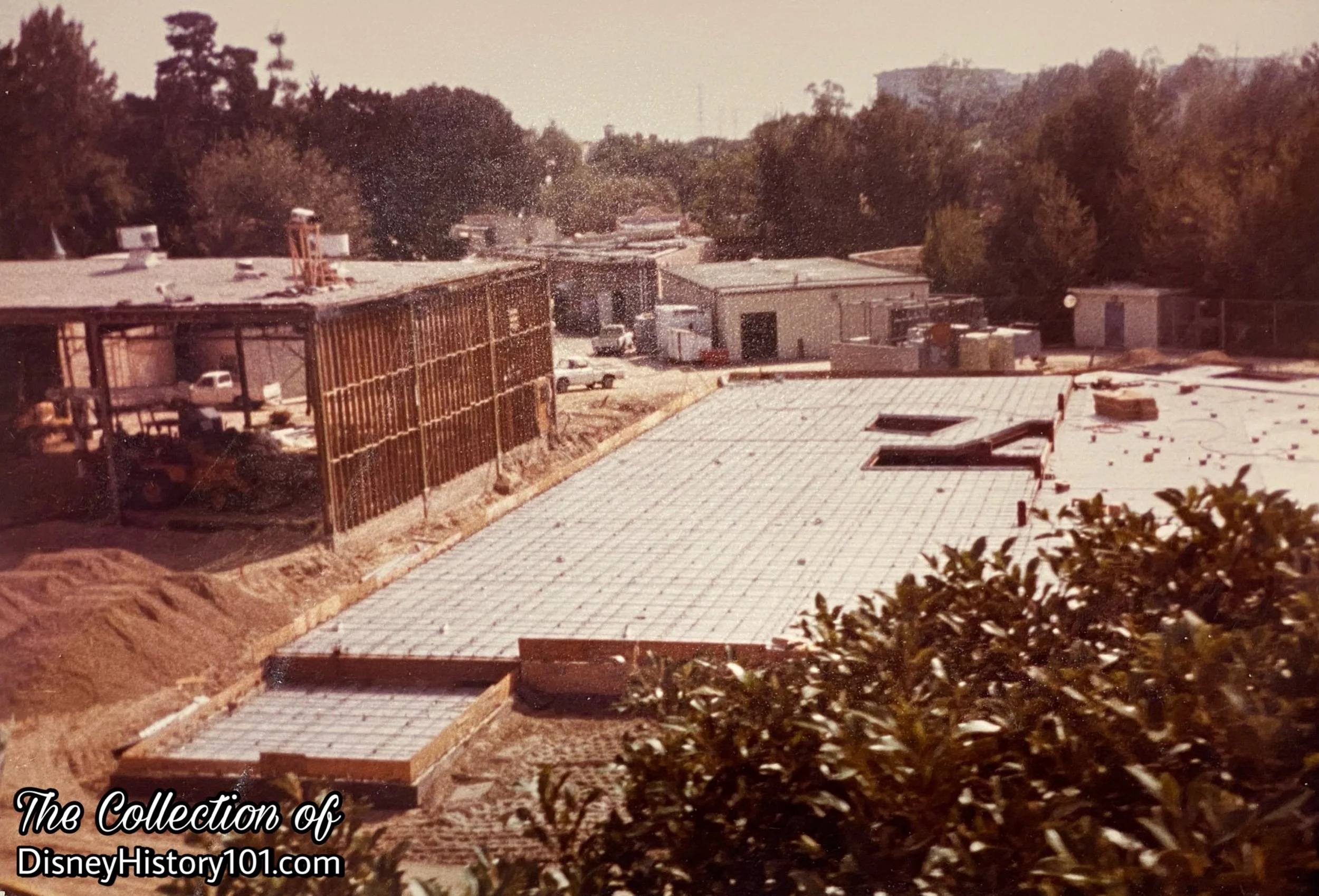
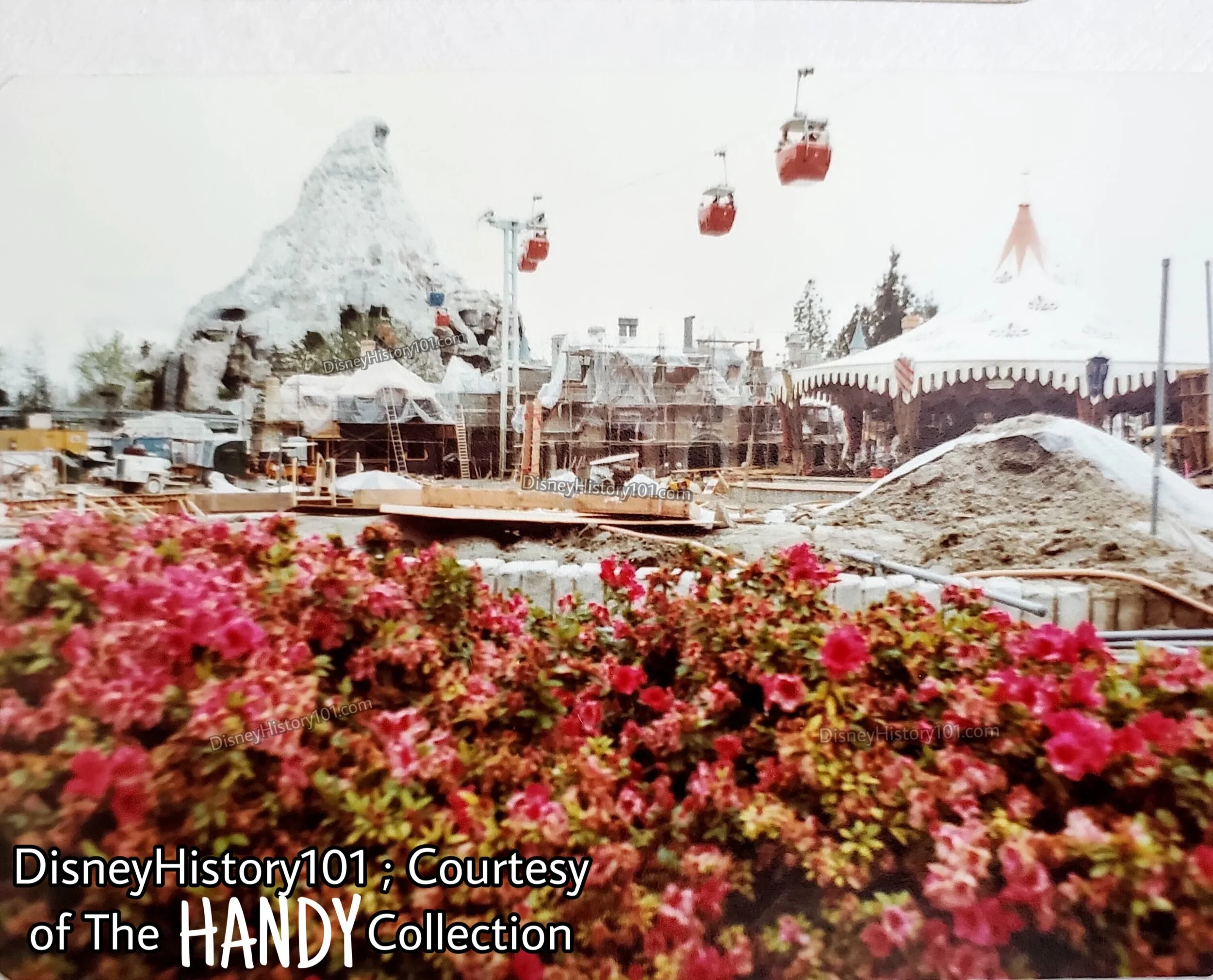
STORY BOOK LAND and CASEY JUNIOR TRAIN
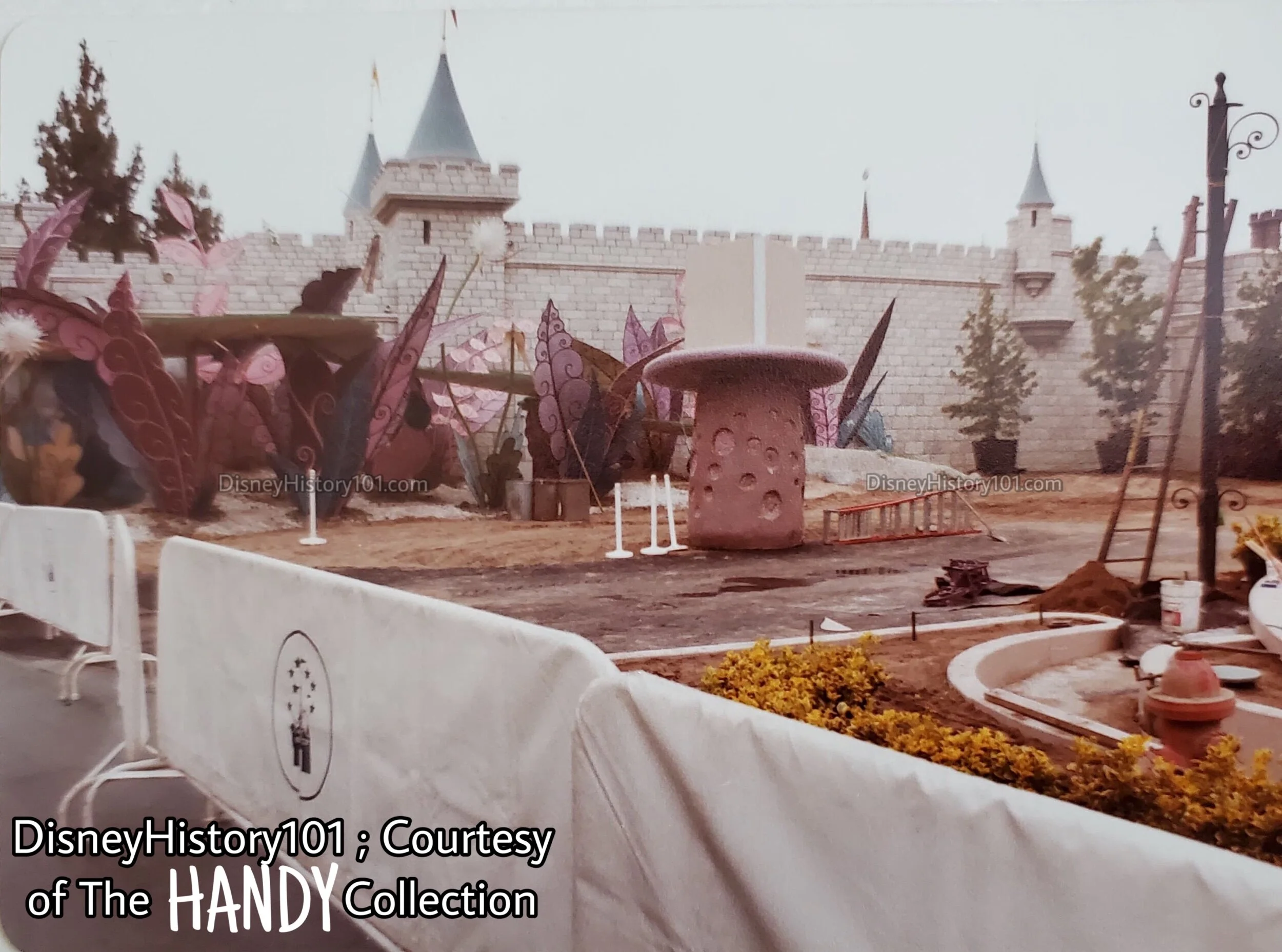
ALICE IN WONDERLAND
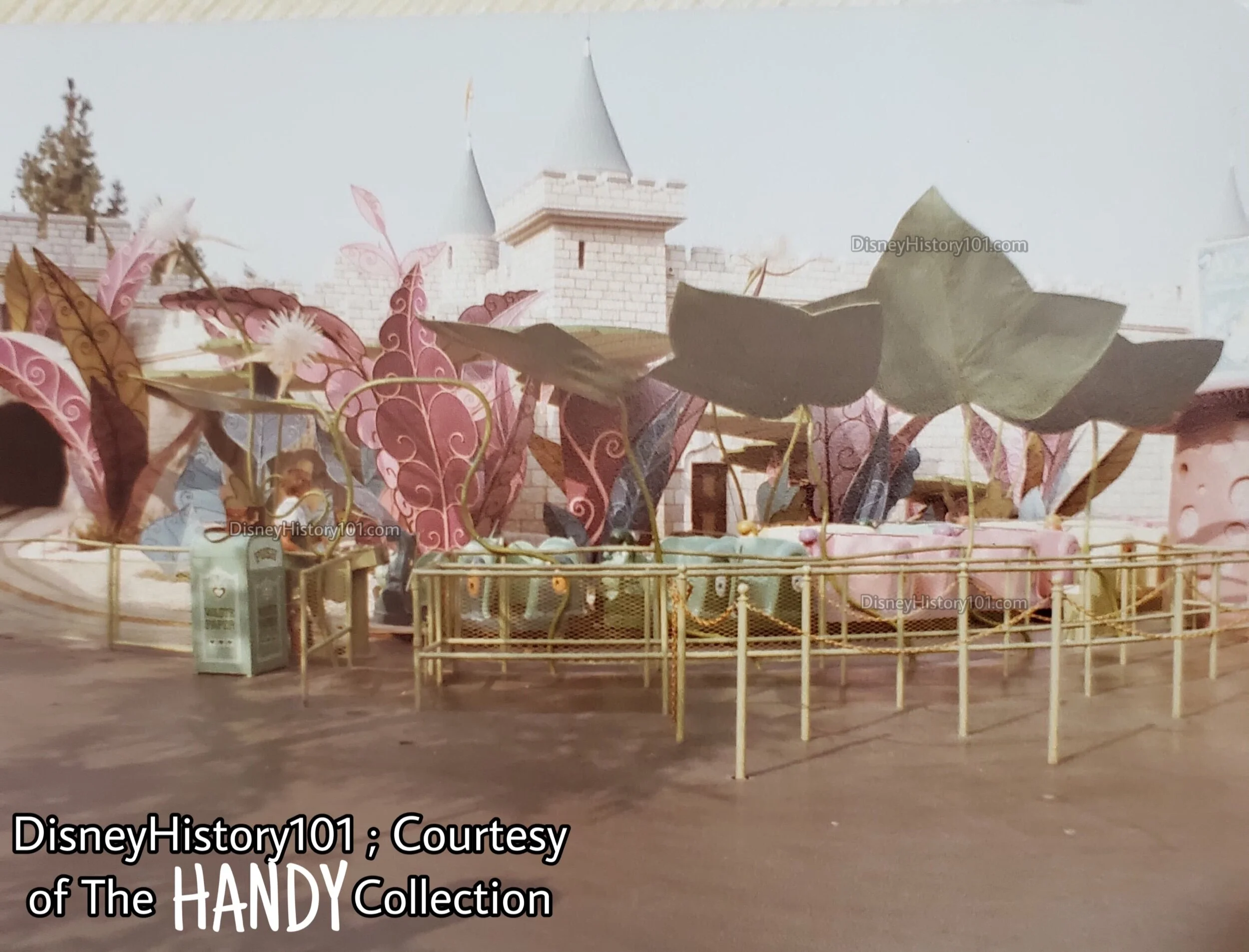
ALICE IN WONDERLAND and Guest Control queue area.
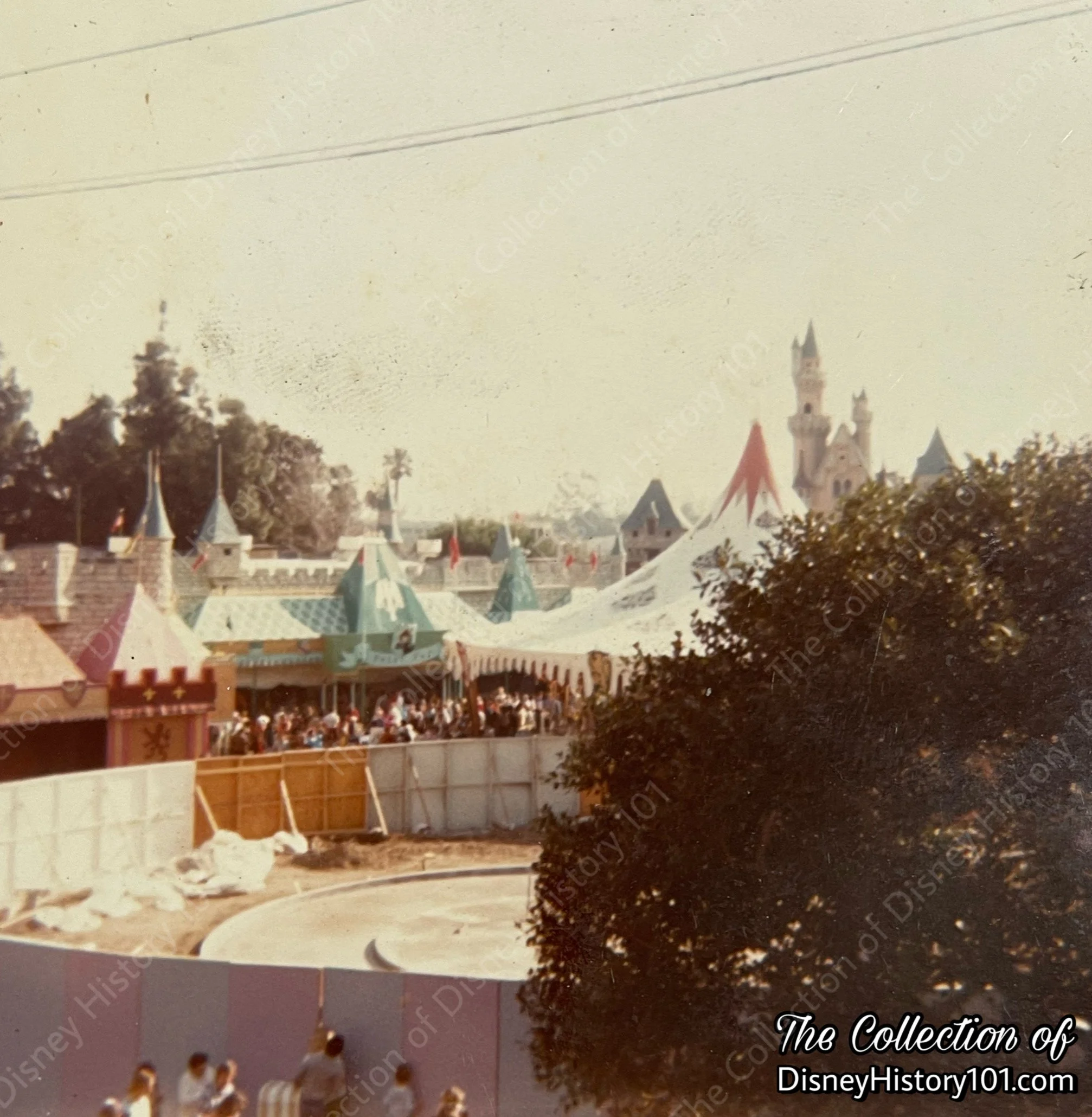
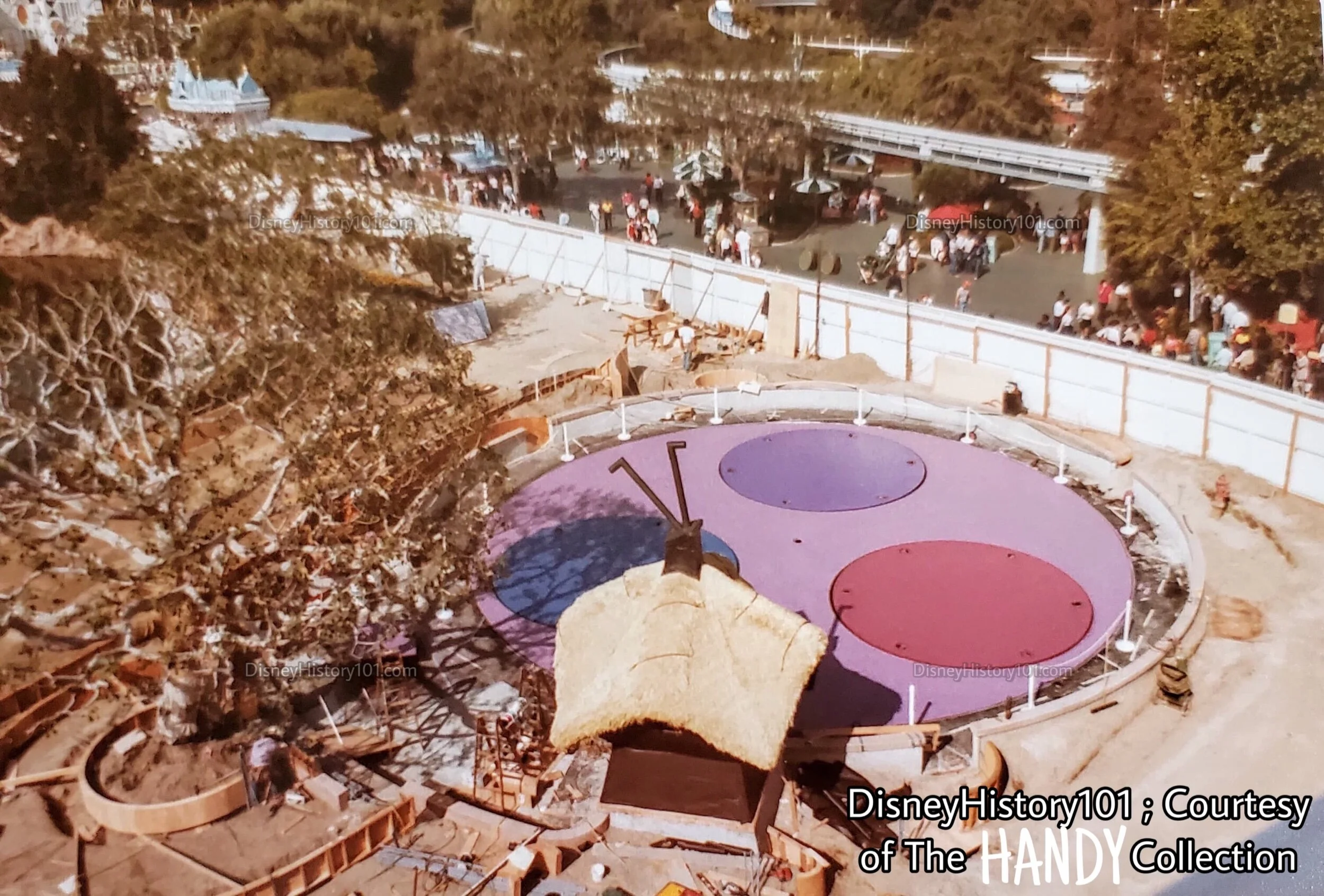
MAD PARTY TEA CUPS
Some attractions were moved to improve Guest flow through the land. The move of the Mad Tea Party to a close proximity to Alice in Wonderland and The Mad Hatter would also create a Wonderland-themed area within Fantasyland.
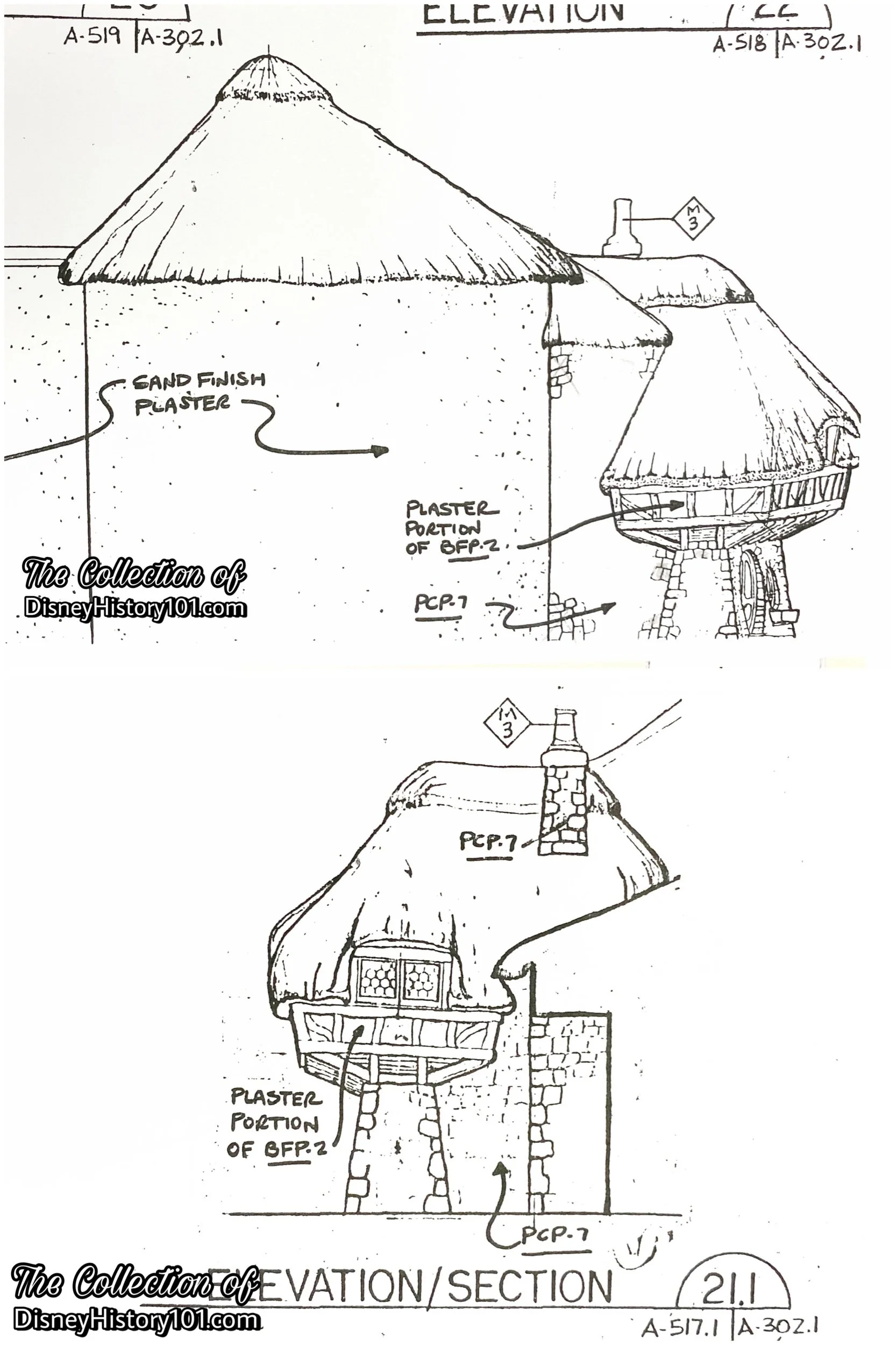
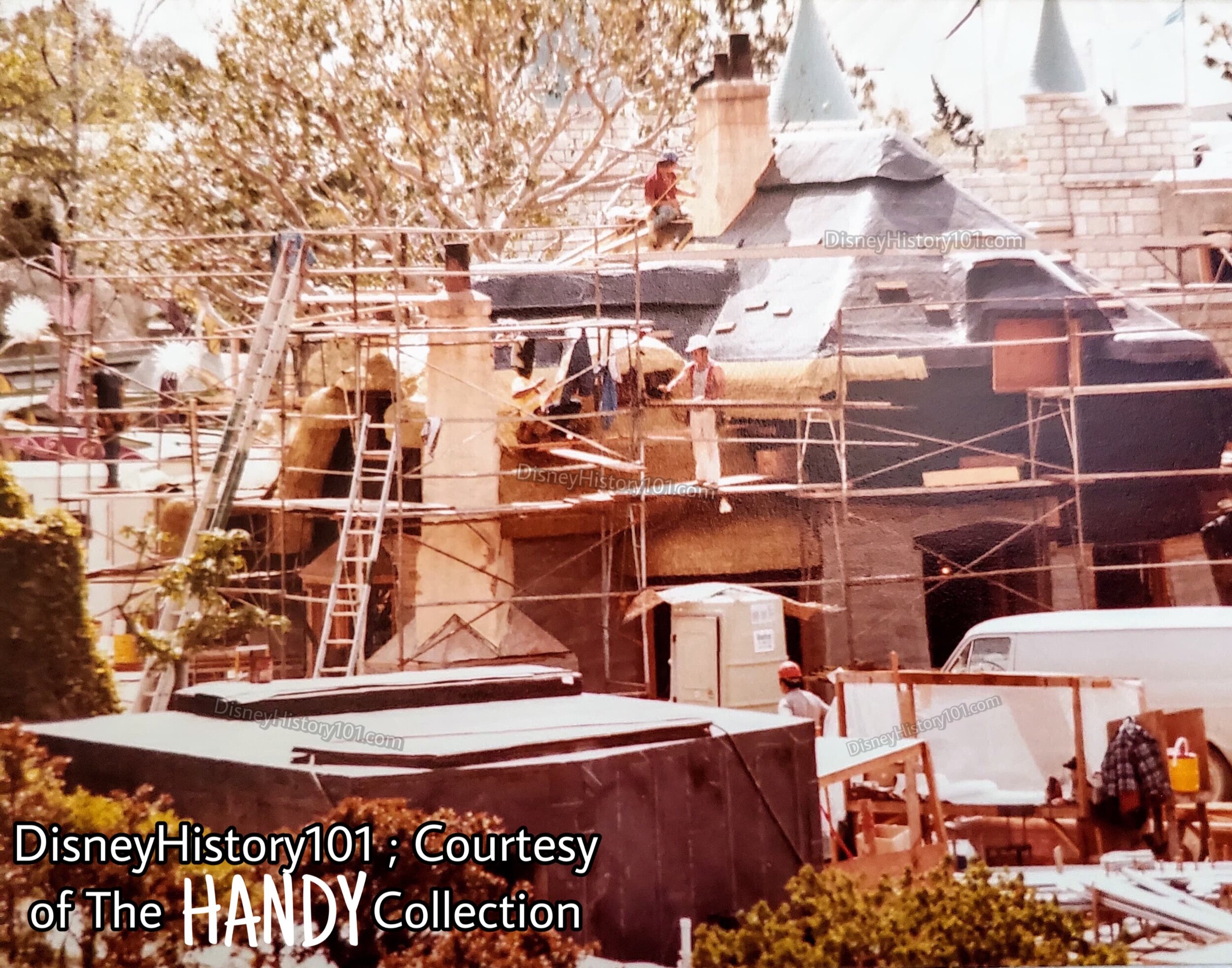
THE MAD HATTER
Attraction roofs were covered with tarps to protect them from dust.
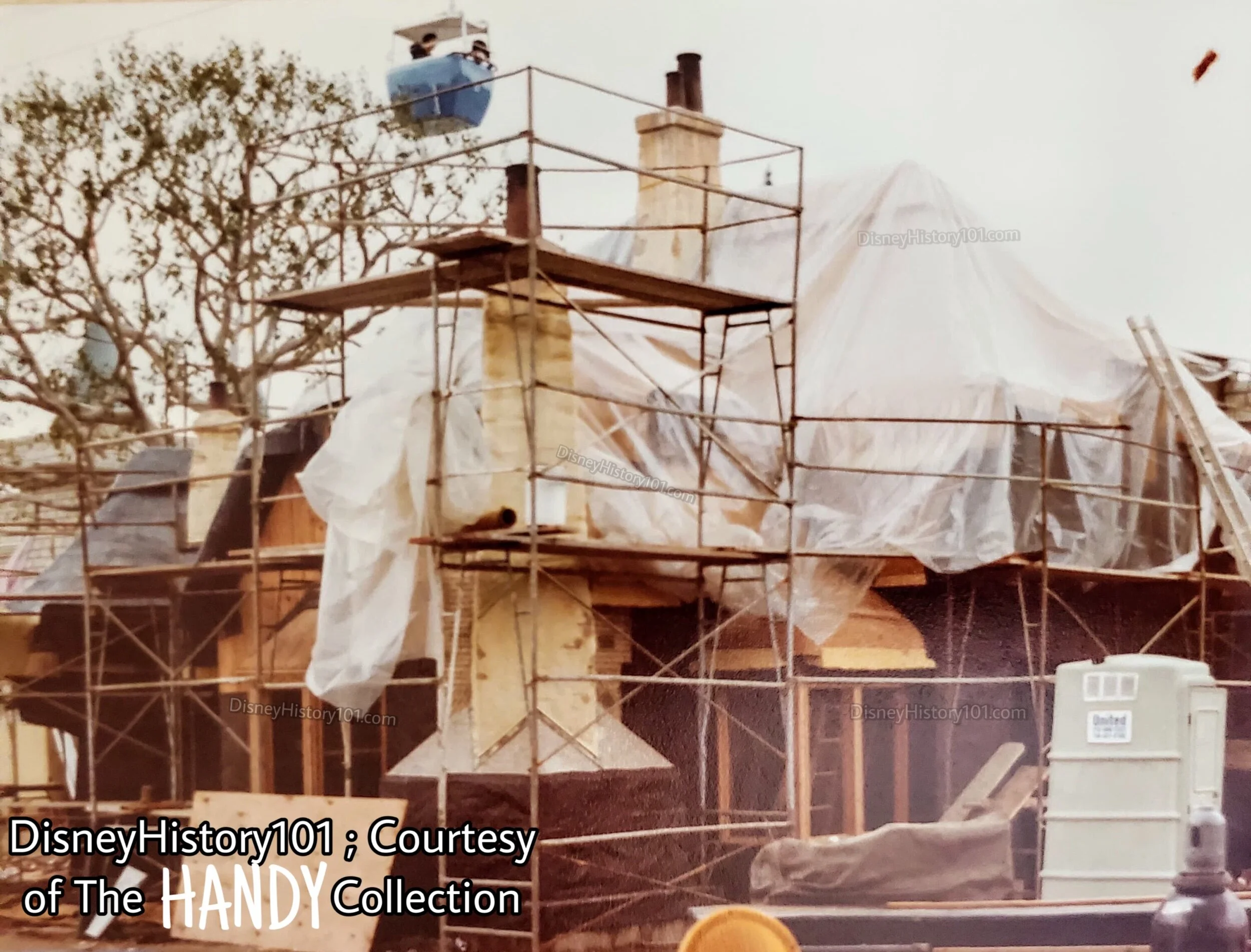
THE MAD HATTER
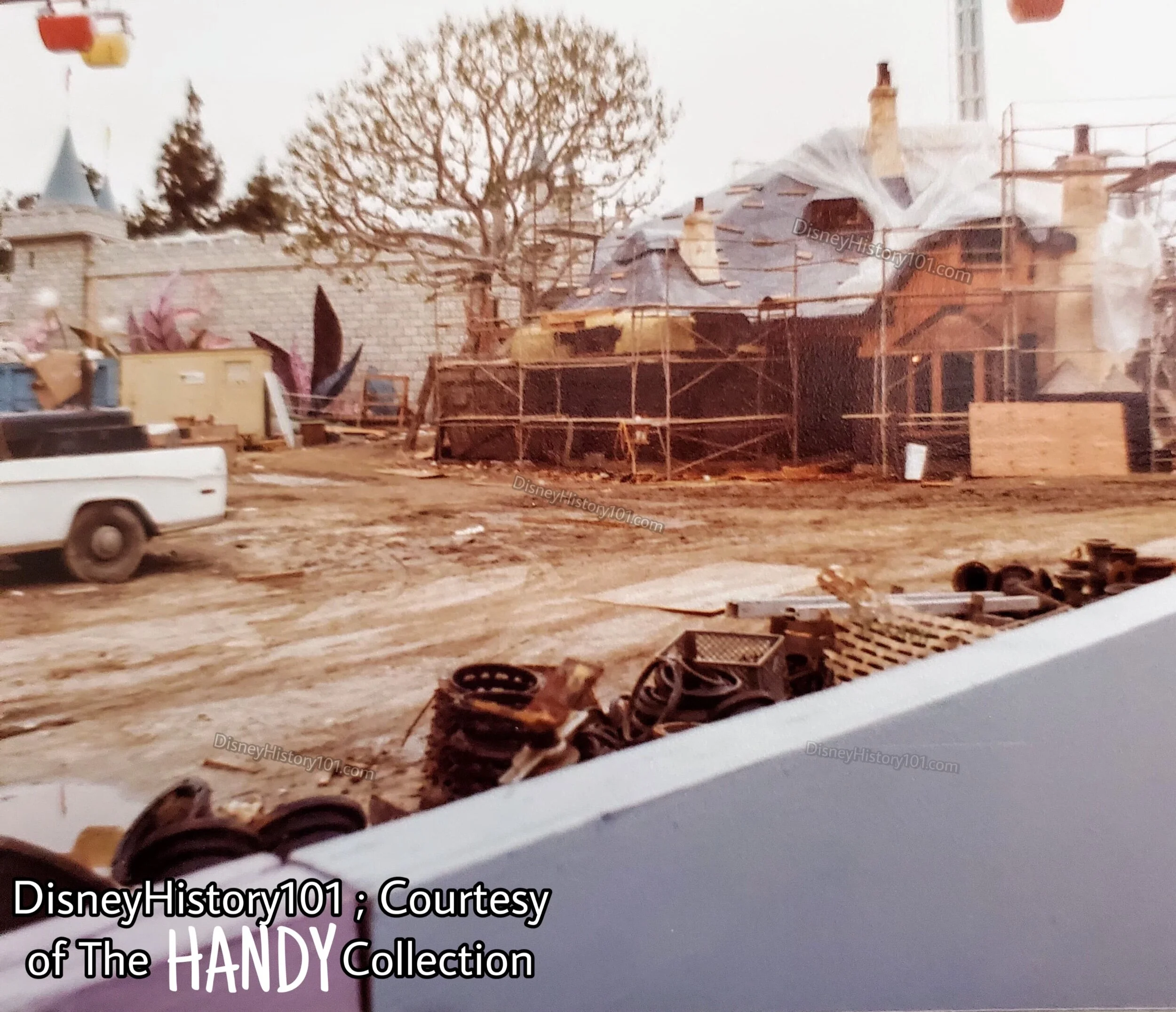
THE MAD HATTER
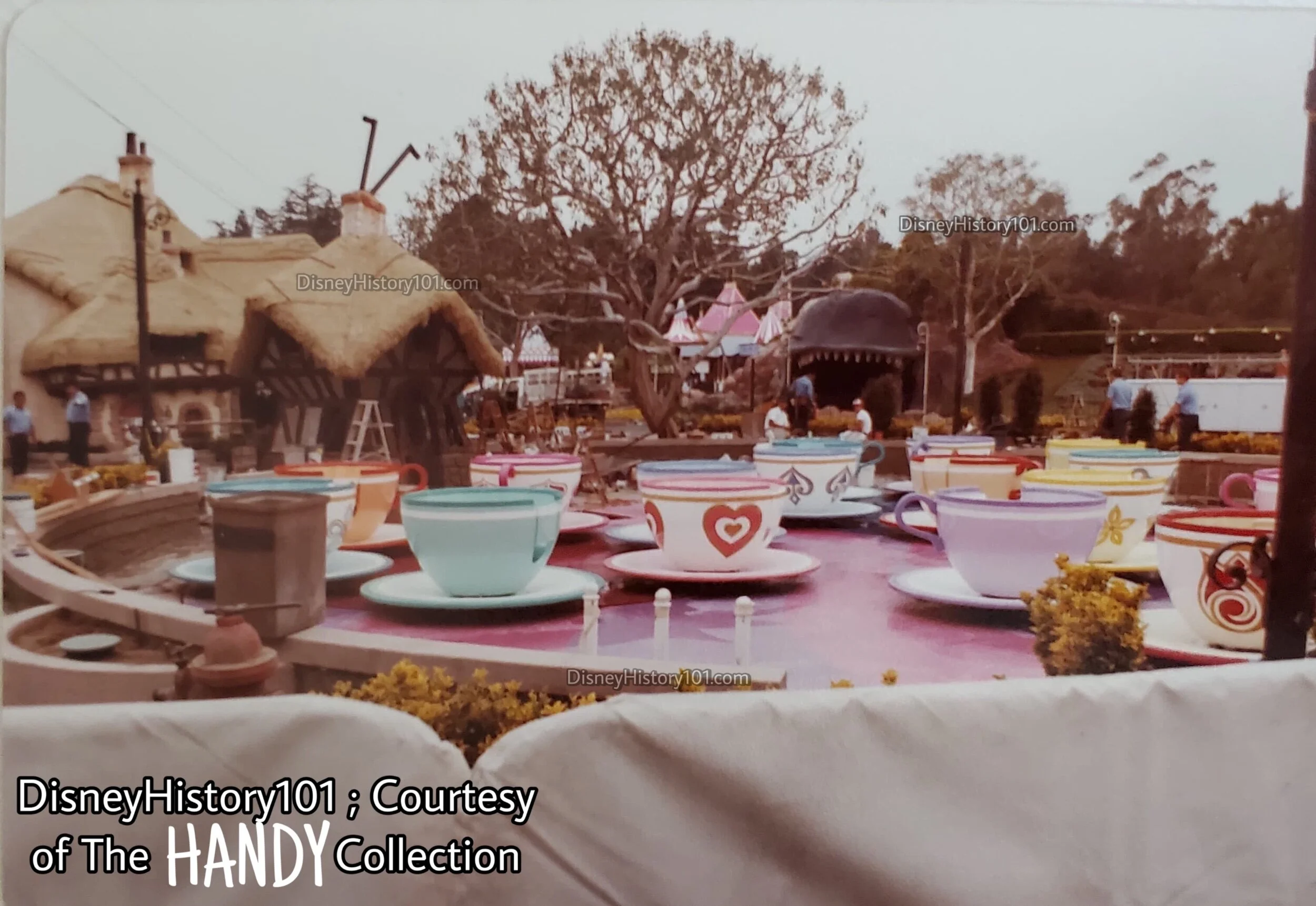
MAD PARTY TEA CUPS
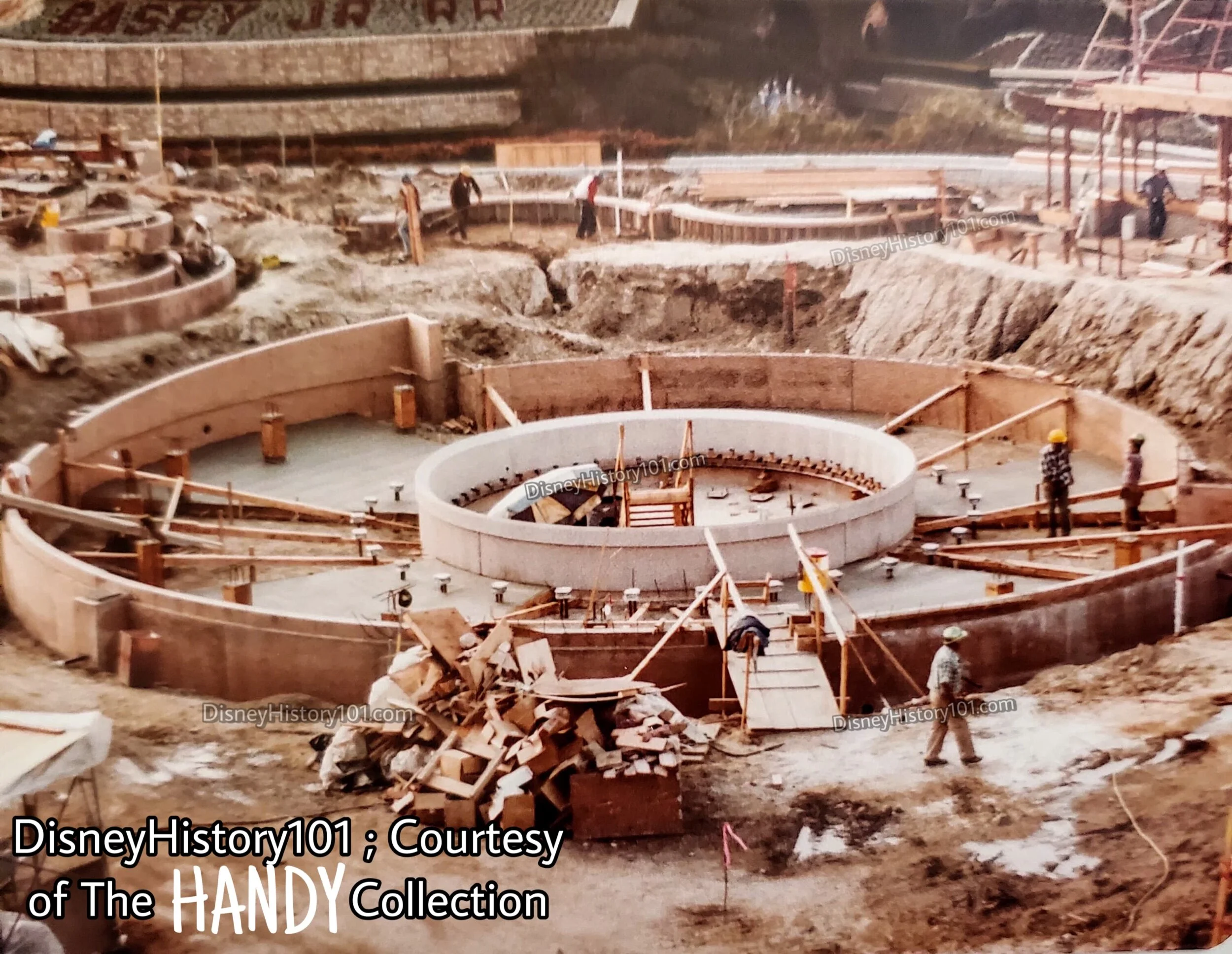
DUMBO FLYING ELEPHANTS
When Captain Hook’s Galley sailed off into Neverland, Dumbo the Flying Elephant landed in place of Skull Rock. In place of Dumbo’s old resting place was to be a new dining facility.
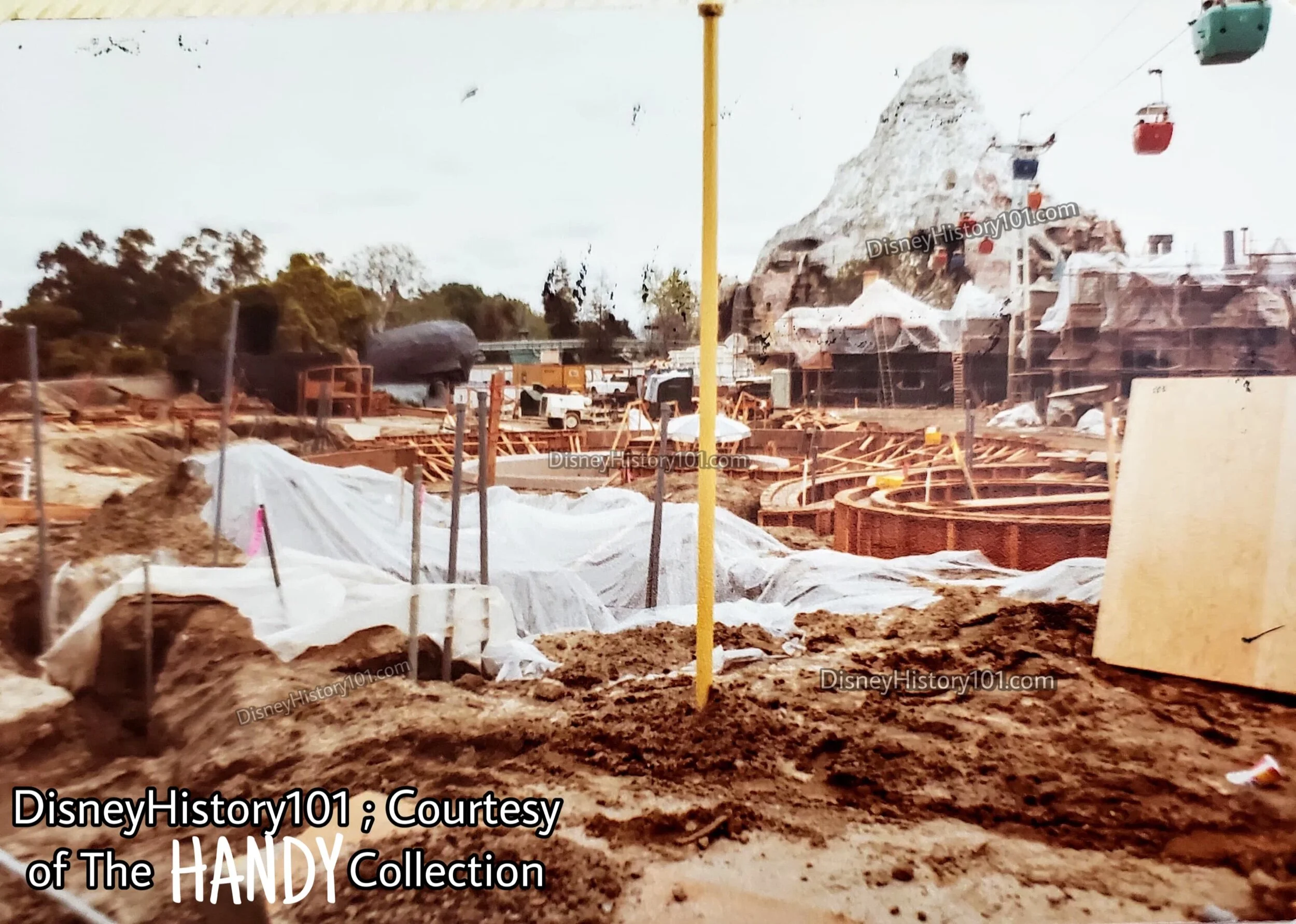
DUMBO FLYING ELEPHANTS
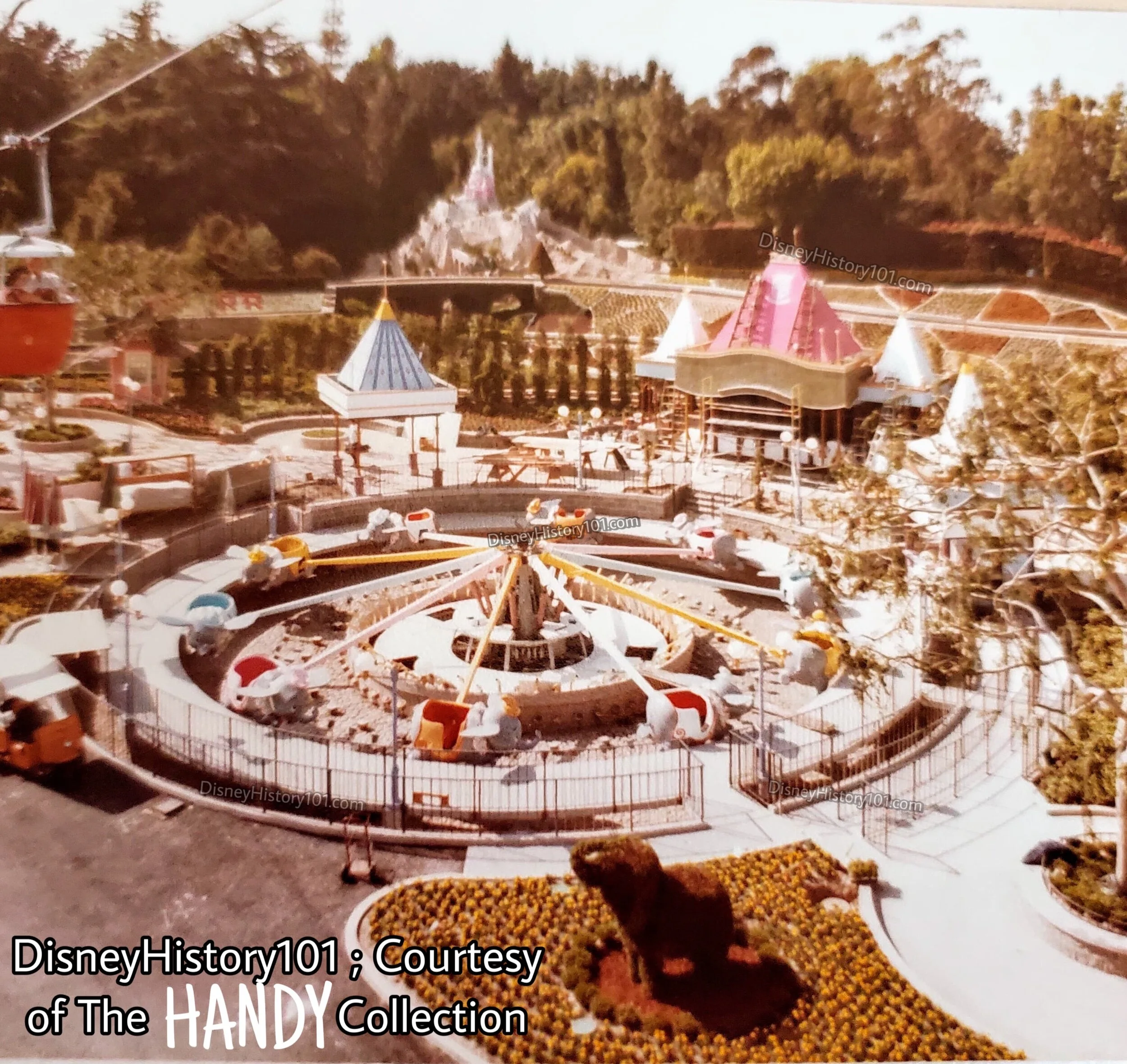
DUMBO FLYING ELEPHANTS
The new design of Dumbo the Flying Elephant still featured 10 elephants, but an all-new special propulsion system. The previous drive for Dumbo consisted ”of two 9.5 Hydro-Sheaves, each transmitting power from a 7.5-hp motor.” Now, this would be completely replaced.
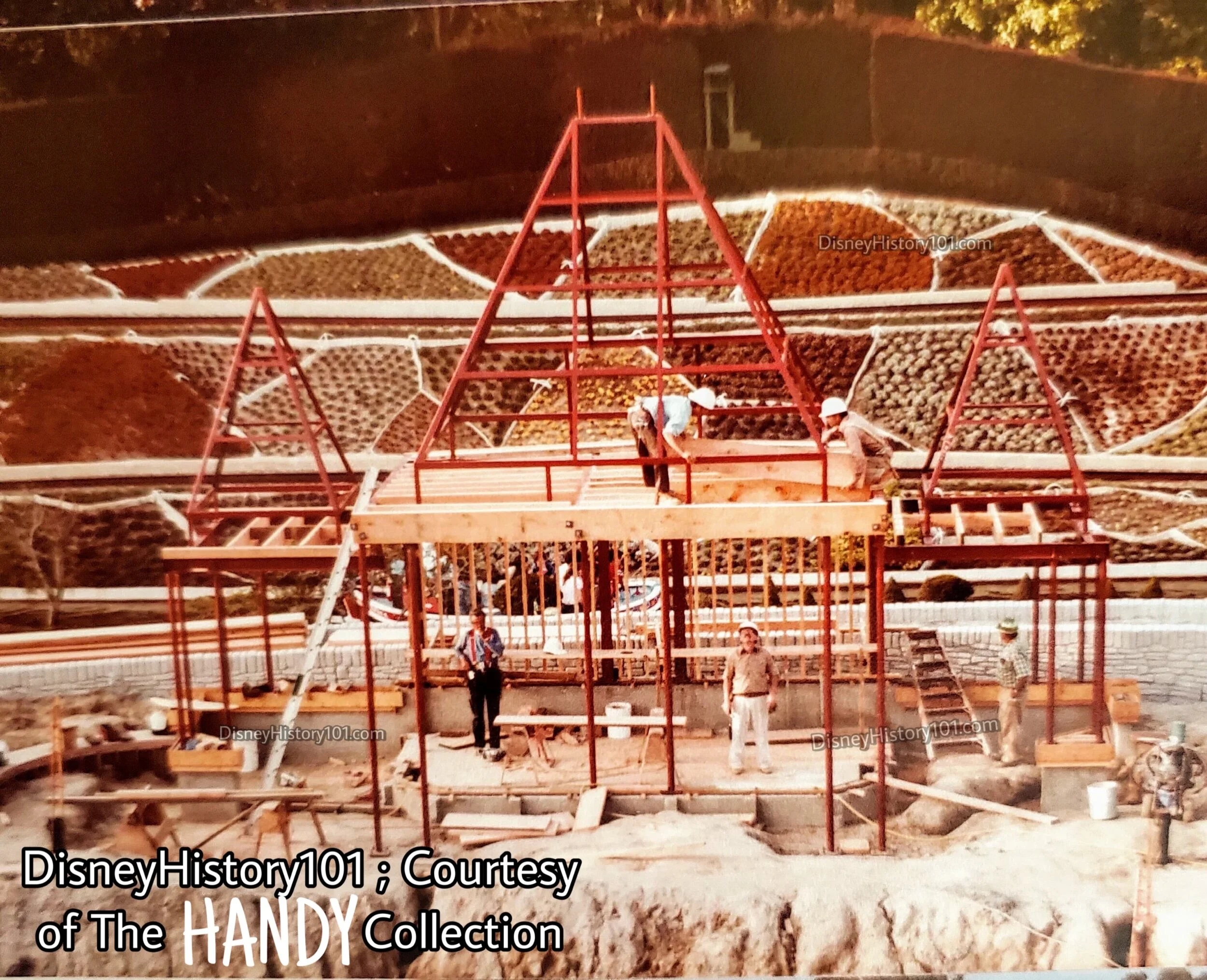
DUMBO FLYING ELEPHANTS
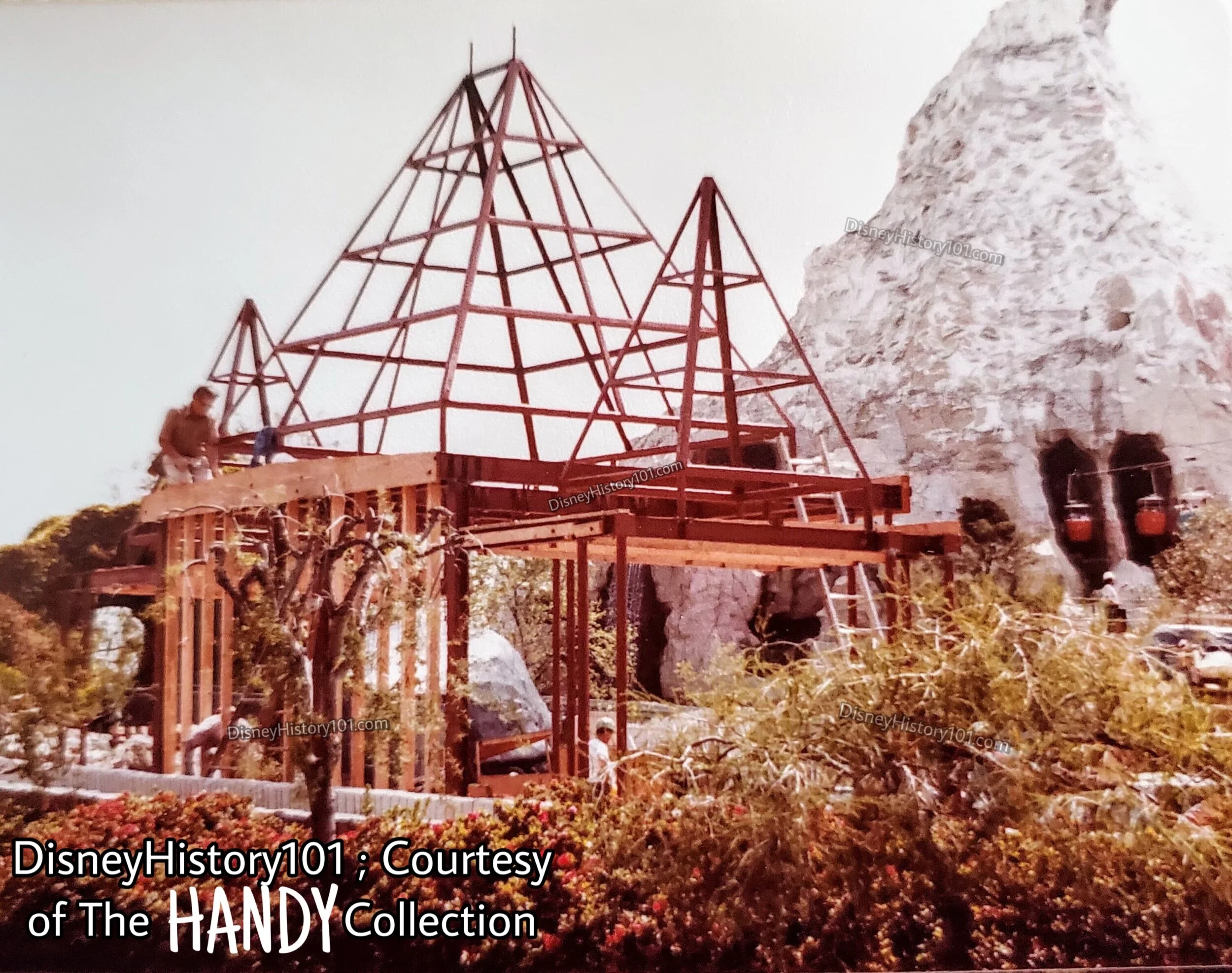
DUMBO FLYING ELEPHANTS
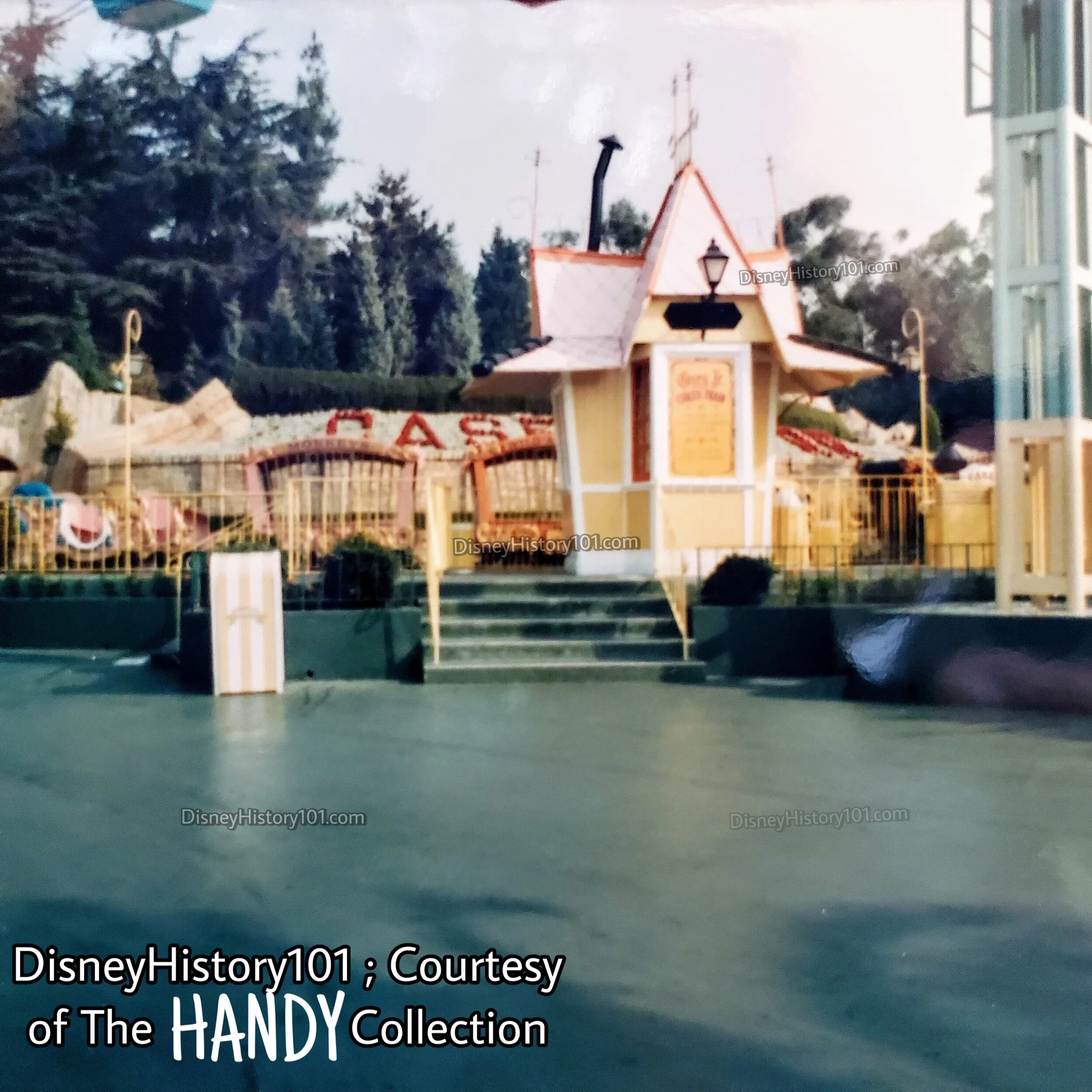
CASEY JR. CIRCUS TRAIN
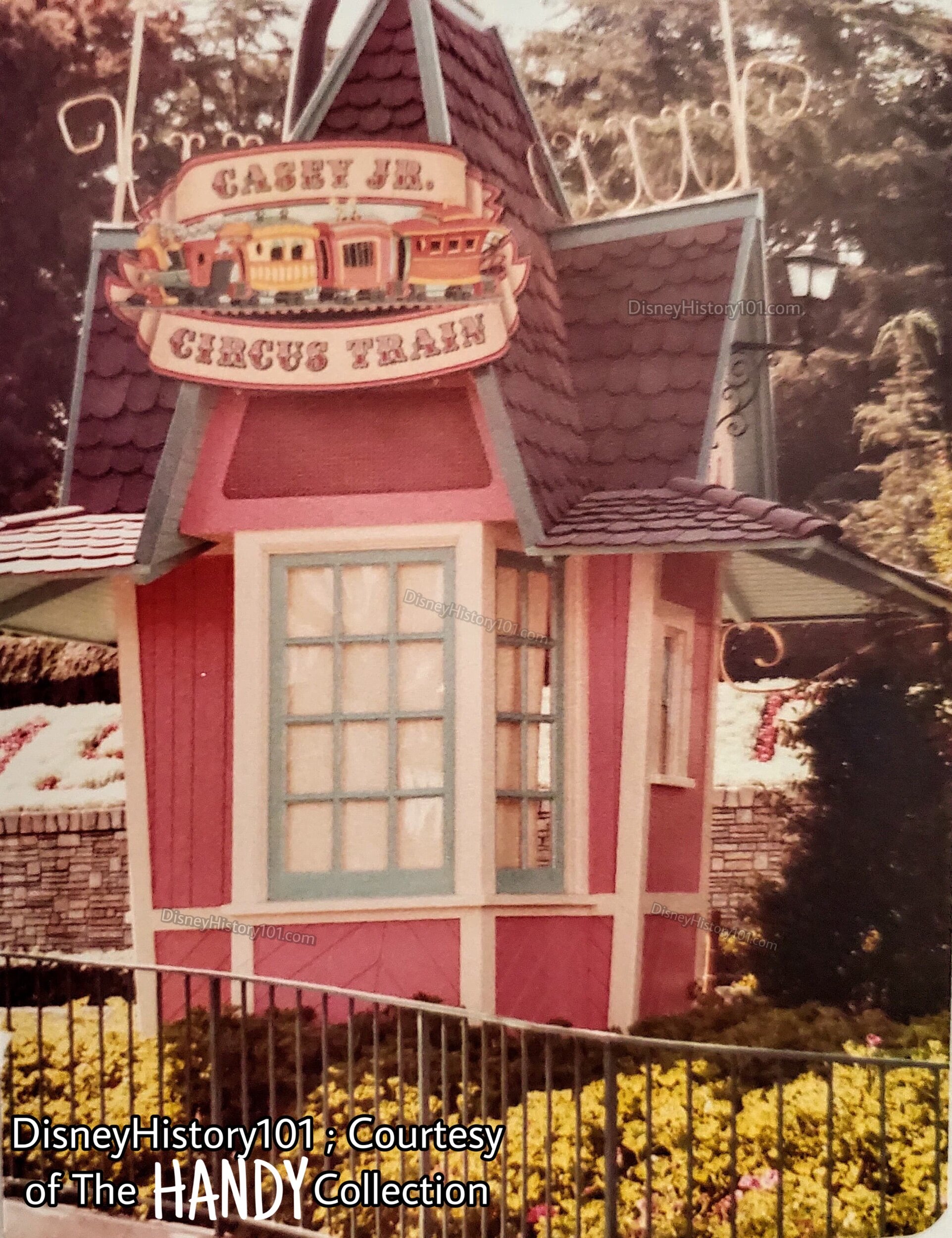
CASEY JR. CIRCUS TRAIN
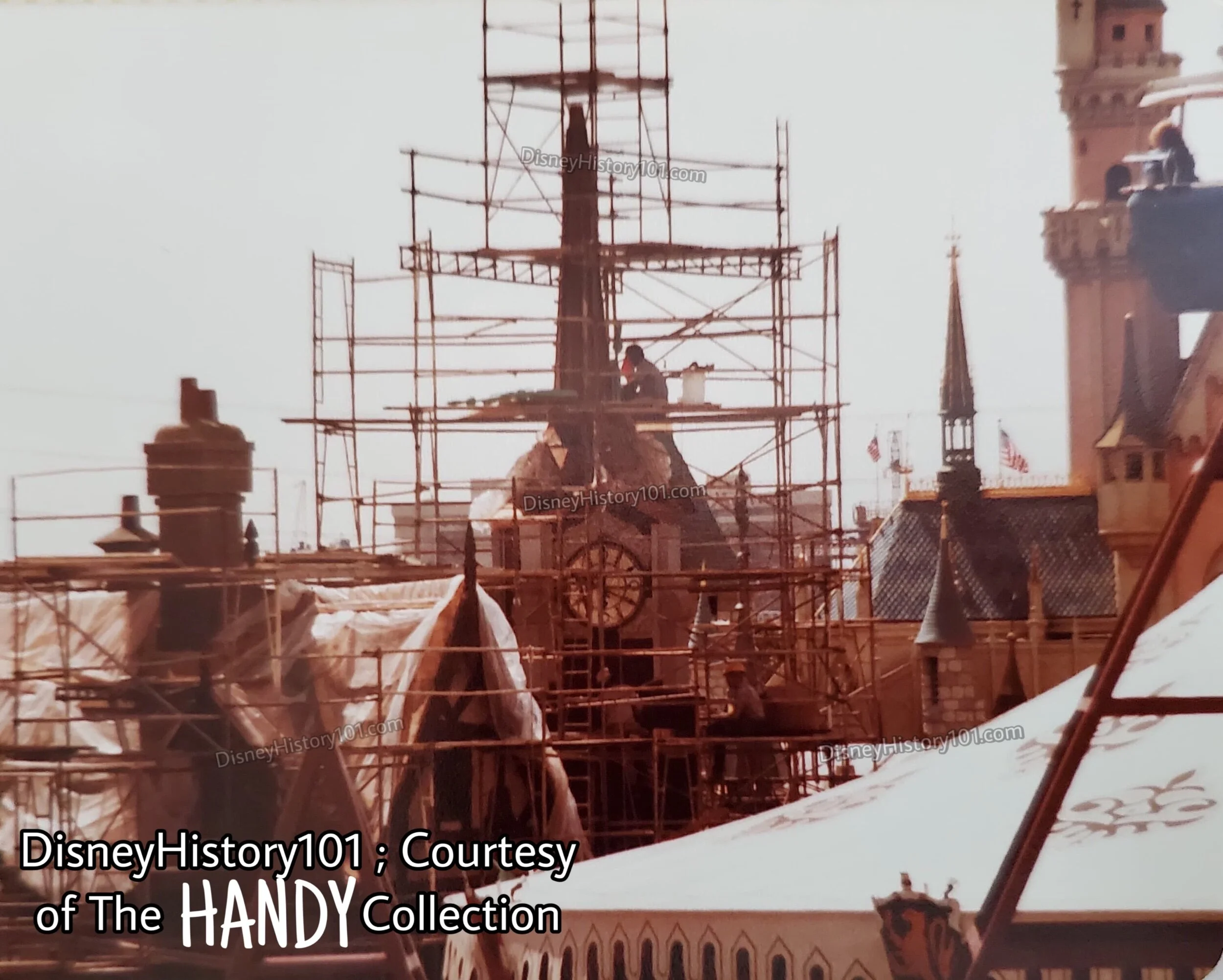
PETER PAN'S FLIGHT
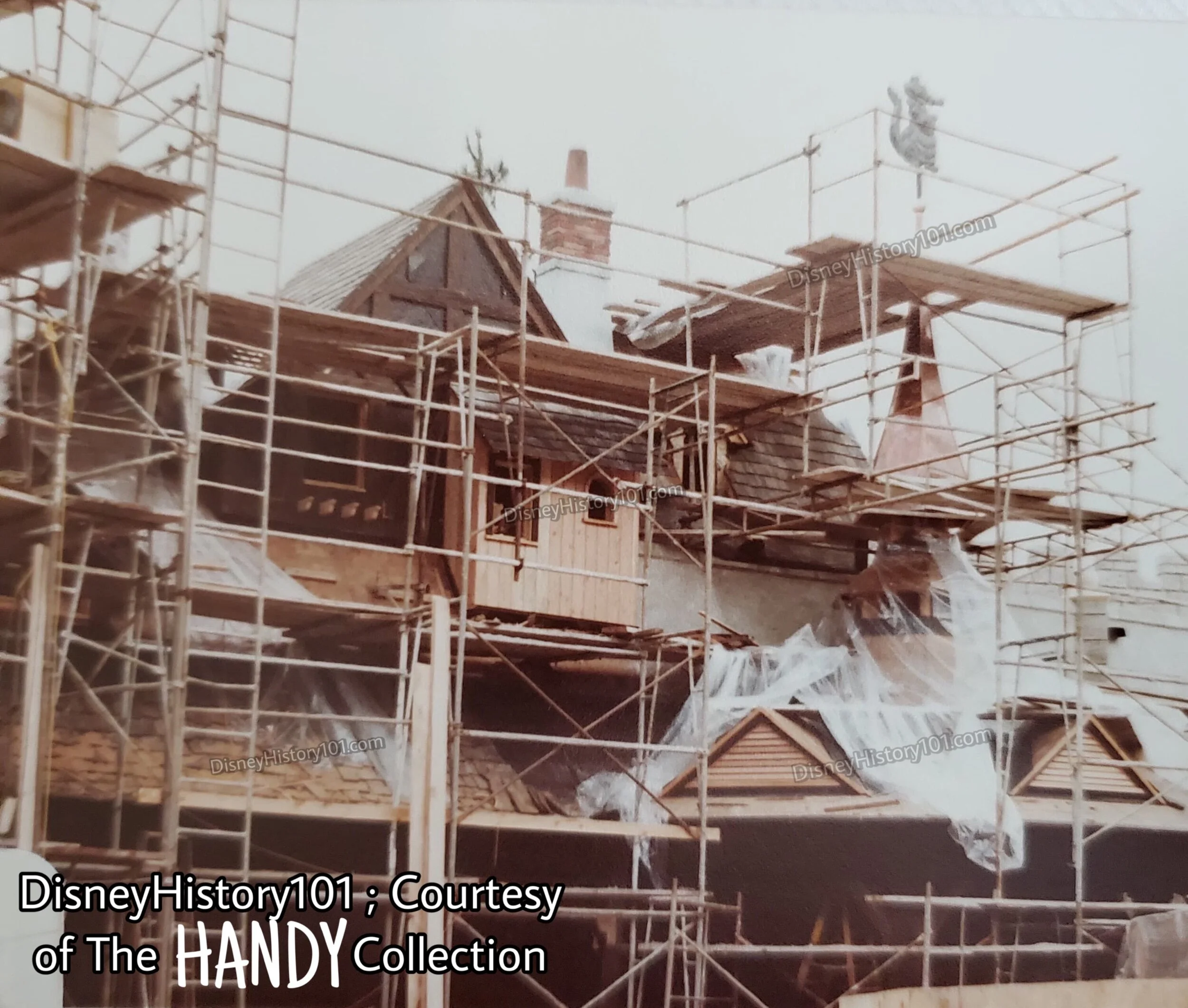
PETER PAN'S FLIGHT
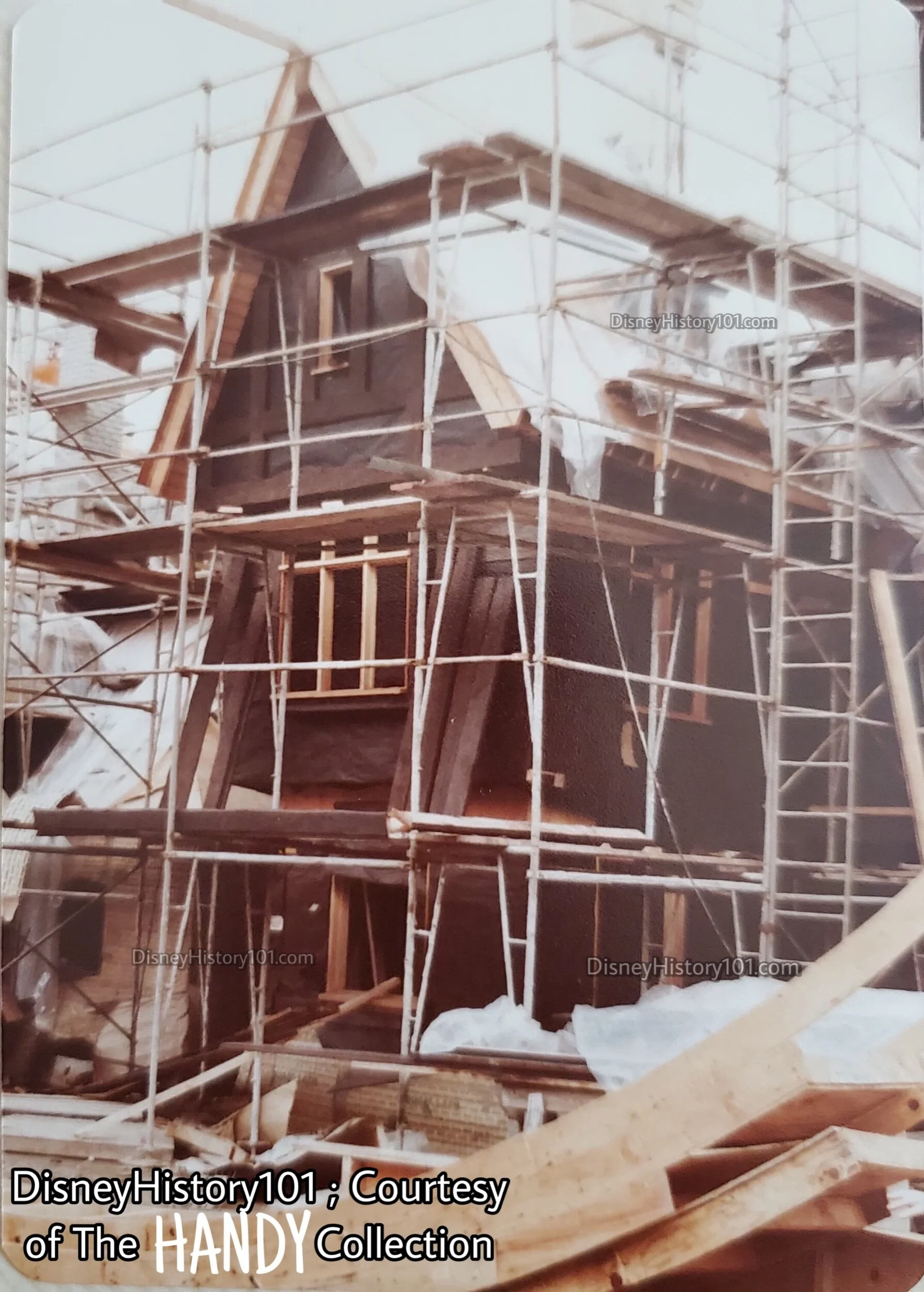
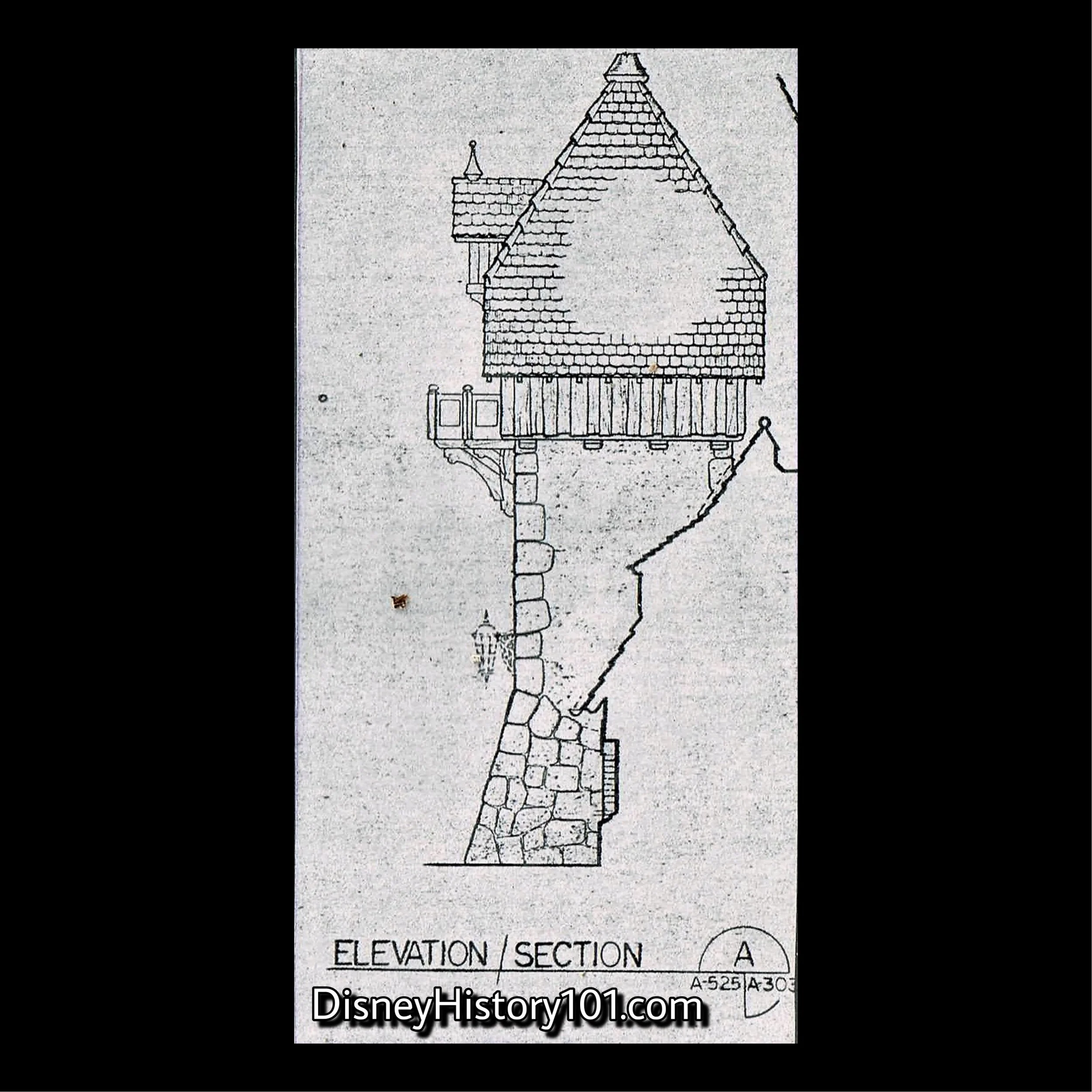
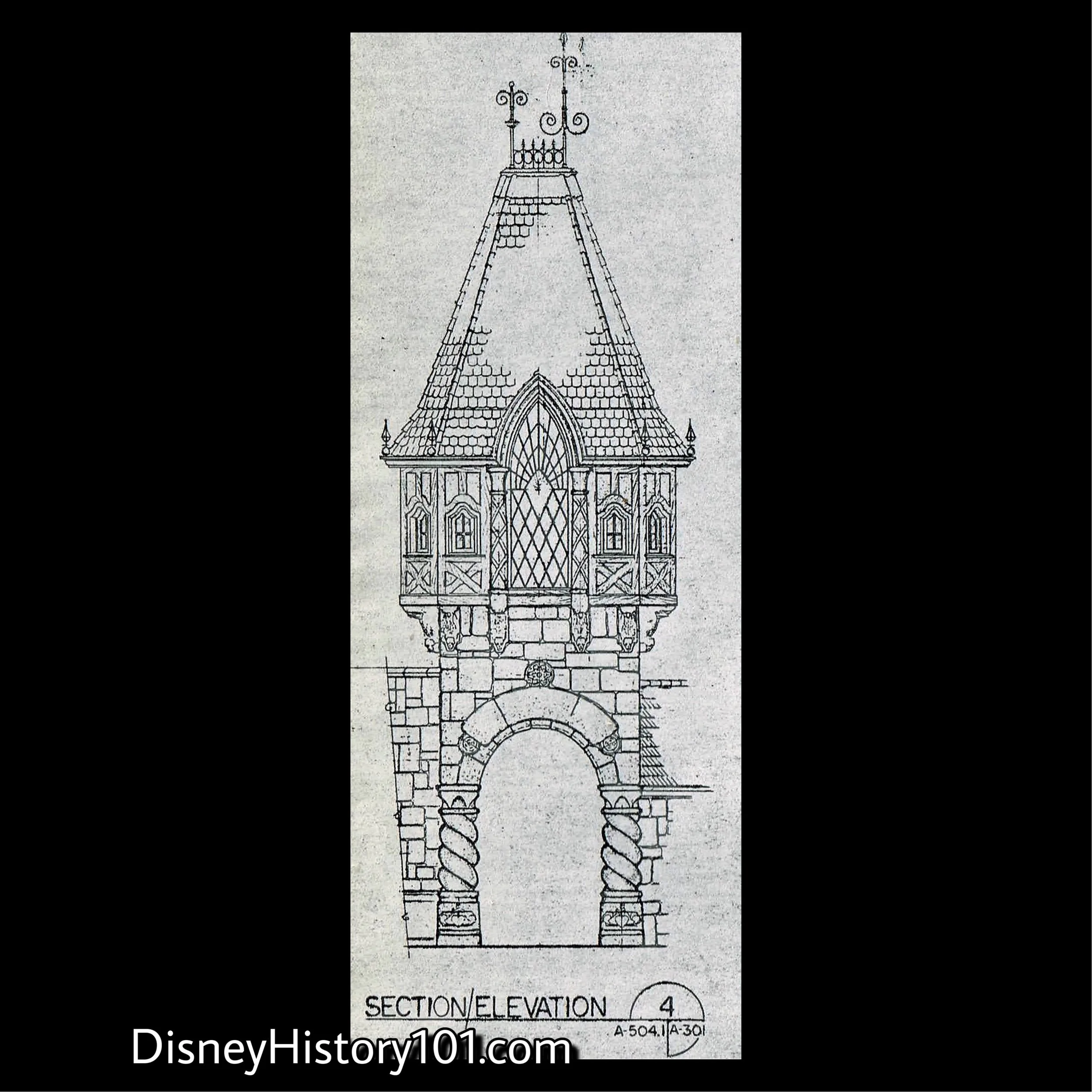
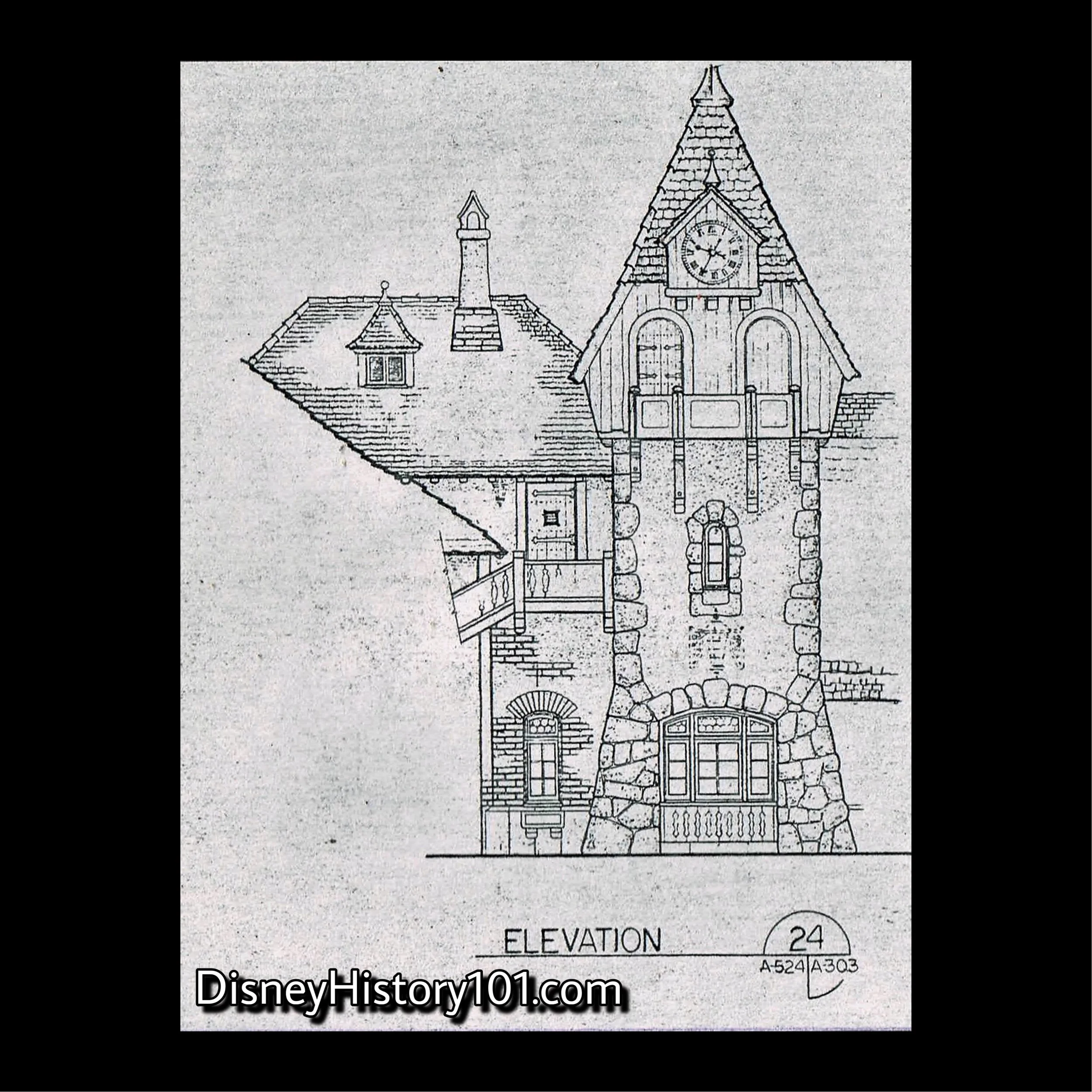
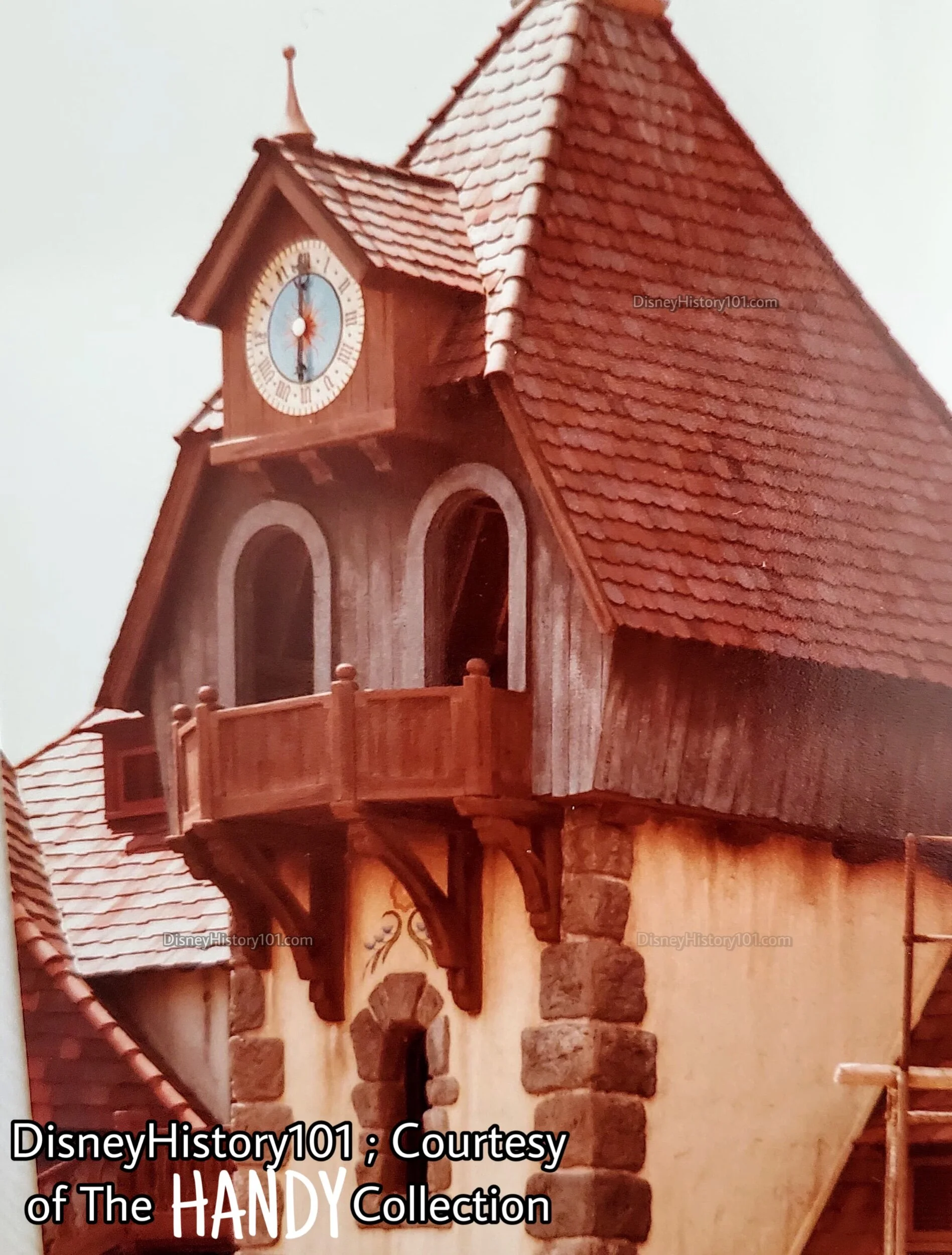
Fantasyland Clock Tower Elevation Drawing
After emerging from Fantasyland’s main entrance through Sleeping Beauty Castle, guests will still notice Tinker Bell Toy Shop on the left just beyond this clock. As Fantasyland guests walk on they will notice a new introduction to an opening day attraction.
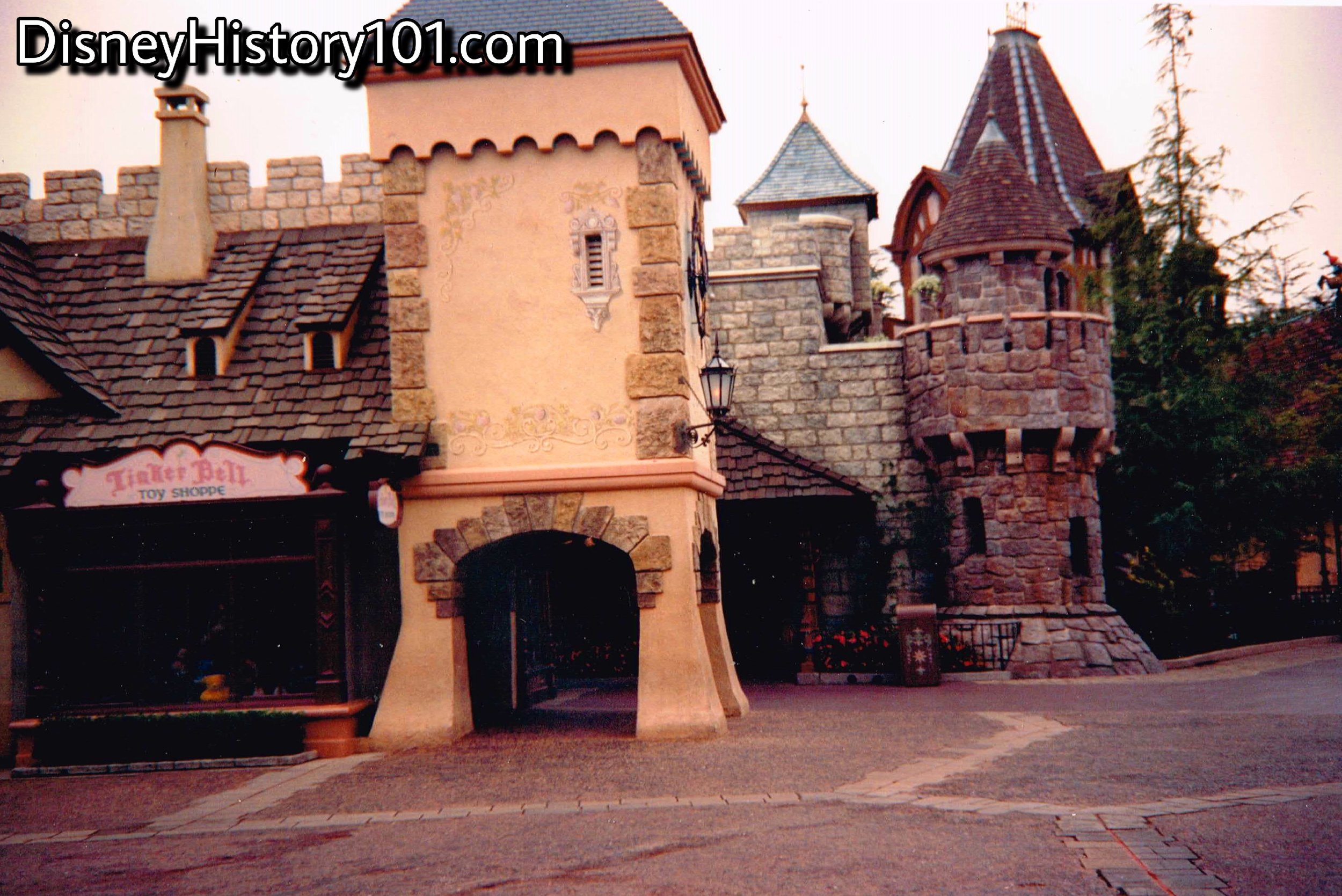
Tinker Bell Toy Shoppe and Fantasyland Clock Tower
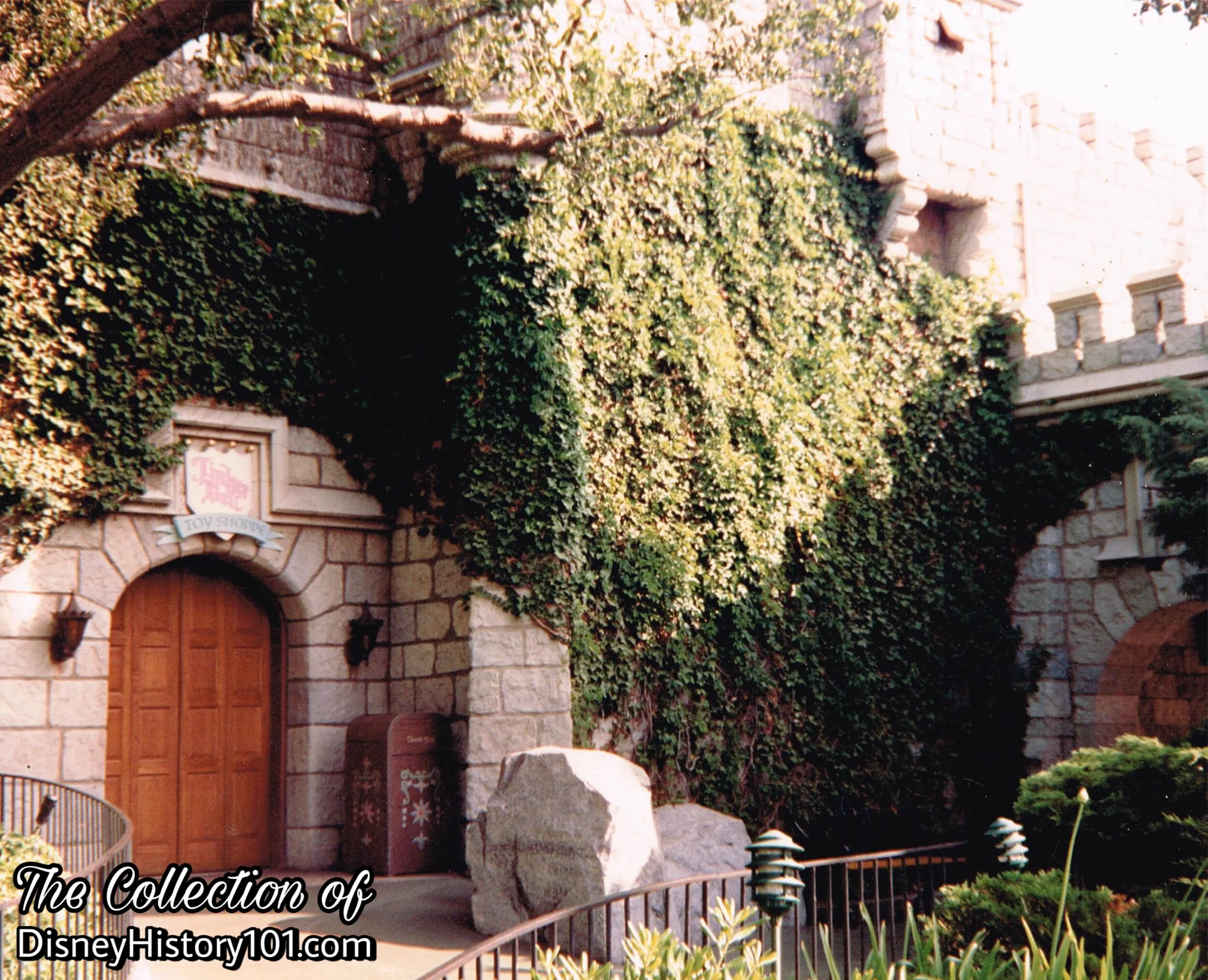
Tinker Bell Toy Shoppe and Fantasyland Clock Tower
Snow White's Scary Adventures Facade Elevation
It is appropriate that one of the first attractions guests would see would be Snow White's Scary Adventures. This attraction would receive an immersive “front” with a pre-show scene just above the entrance involving the jealous the Evil Queen.
According to WED Imagineers, the Snow White Dark Ride was vehicle was “designed to simulate a wooden work cart. The proposed conveyance system will consist of a sixteen pound rail track with insulated copper bus bar serving as a collector rail over which the vehicle will travel. The system is operated electronically. It is controlled by one Allen-Bradley 1774 (PLC) Programmable Logic Controller.”
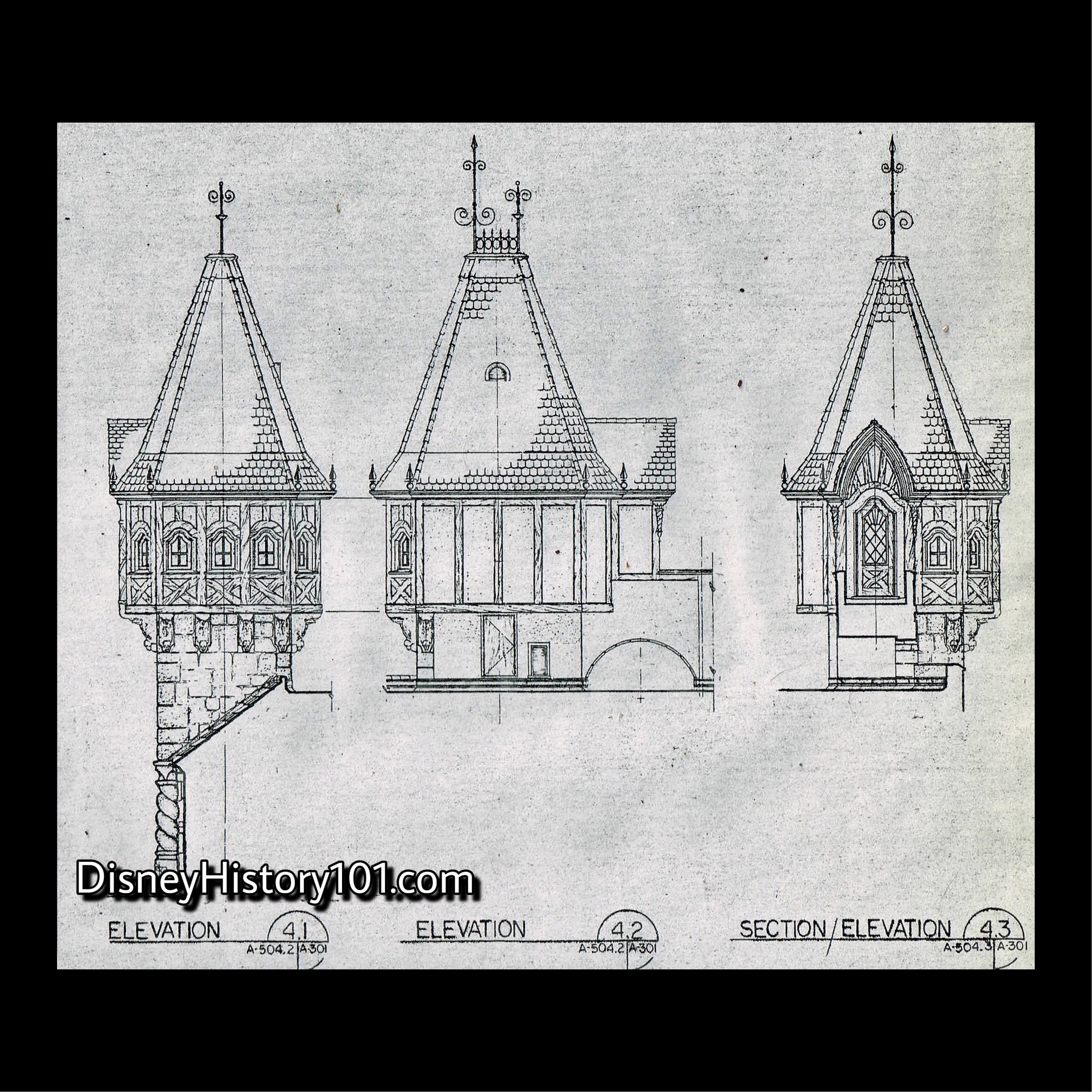
Snow White's Scary Adventures Facade Elevation
Snow White's Scary Adventures
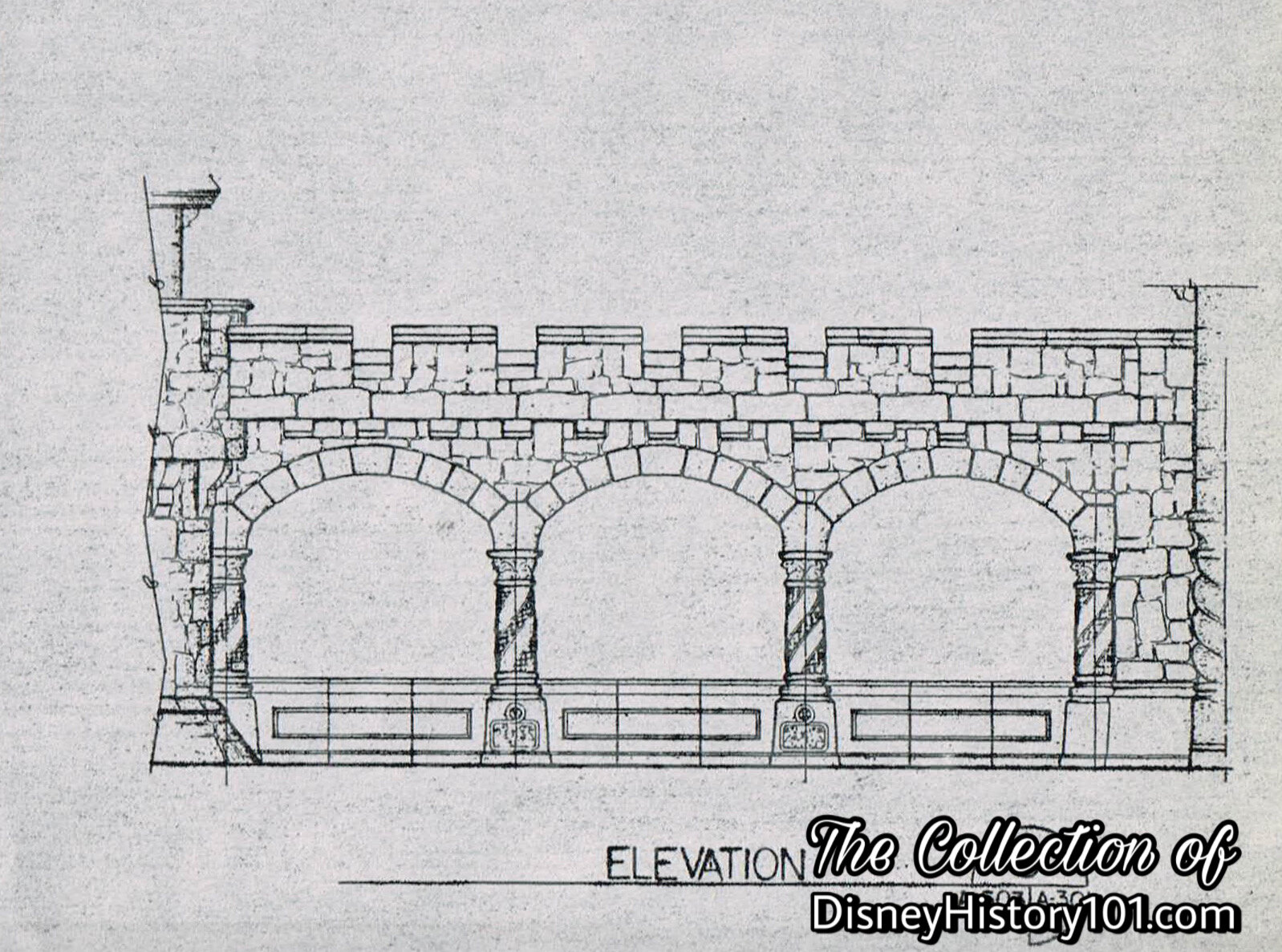
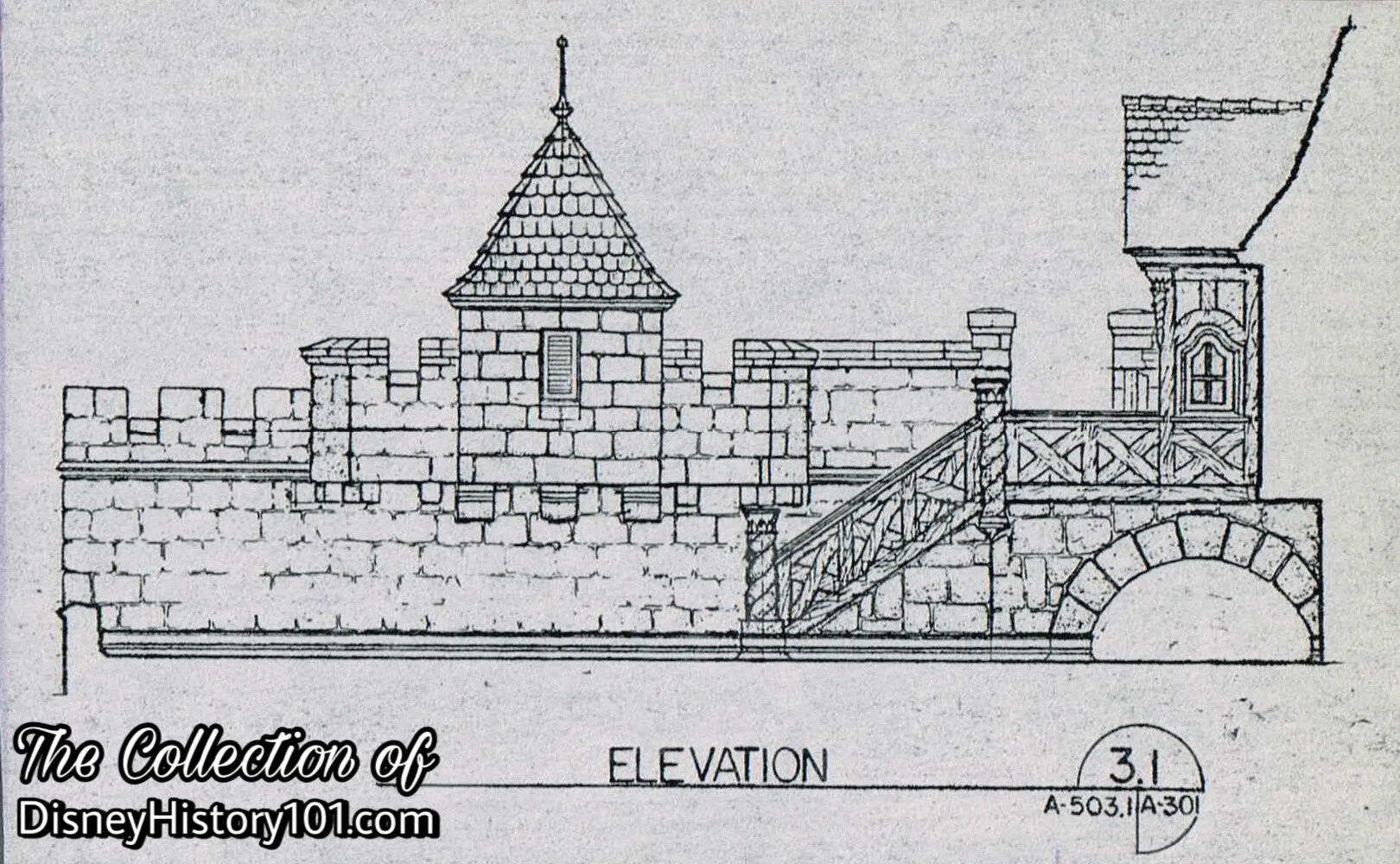
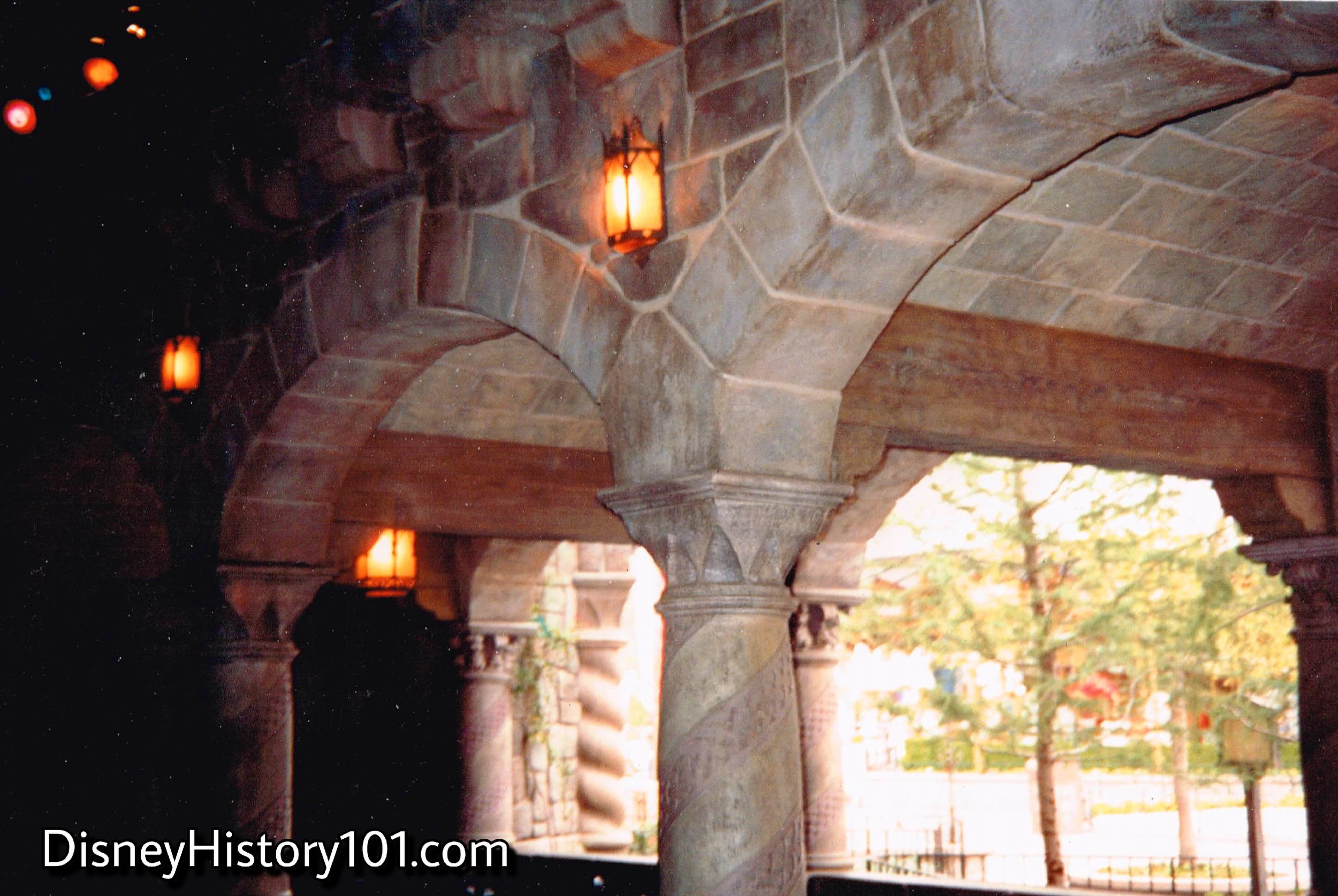
Snow White's Scary Adventures Loading Area and Guest Control Area.
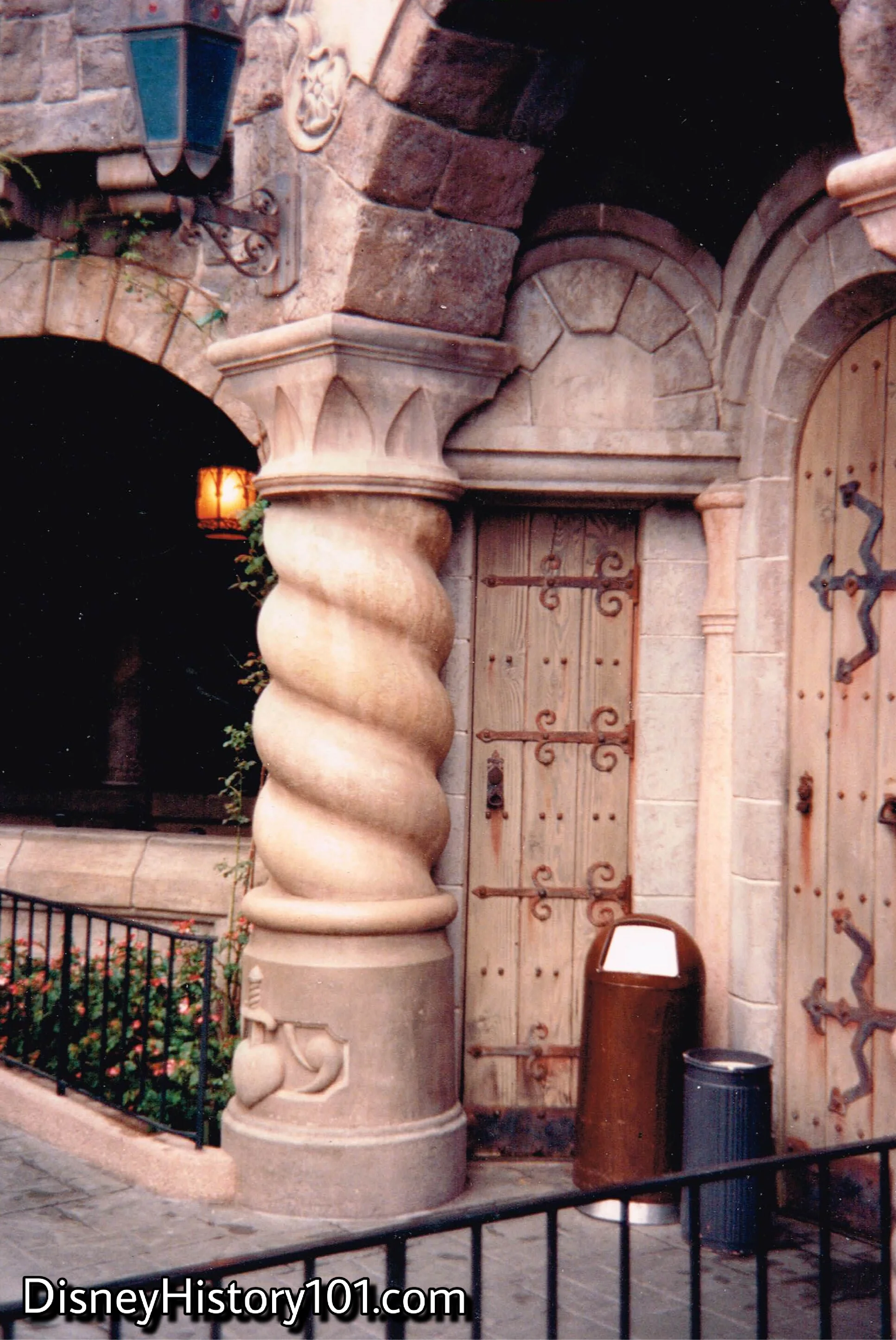
“Audience Waiting Areas” or “queue lines” were designed as part of the attraction to make the Guests' time in line as comfortable as possible. Columns with capitals giving a feel of the Evil Queen’s castle lined the interior arcades of Snow White’s Scary Journey queue.
Walt Disney Imagineer John Stone contributed major Show Design that included the Load /Unload Area and Scary Forest Scenes for Snow Whites Scary Adventures.
Snow White's Scary Adventures
Attention to detail is seen everywhere - like the heart emblem near the bottom of these engaged columns.
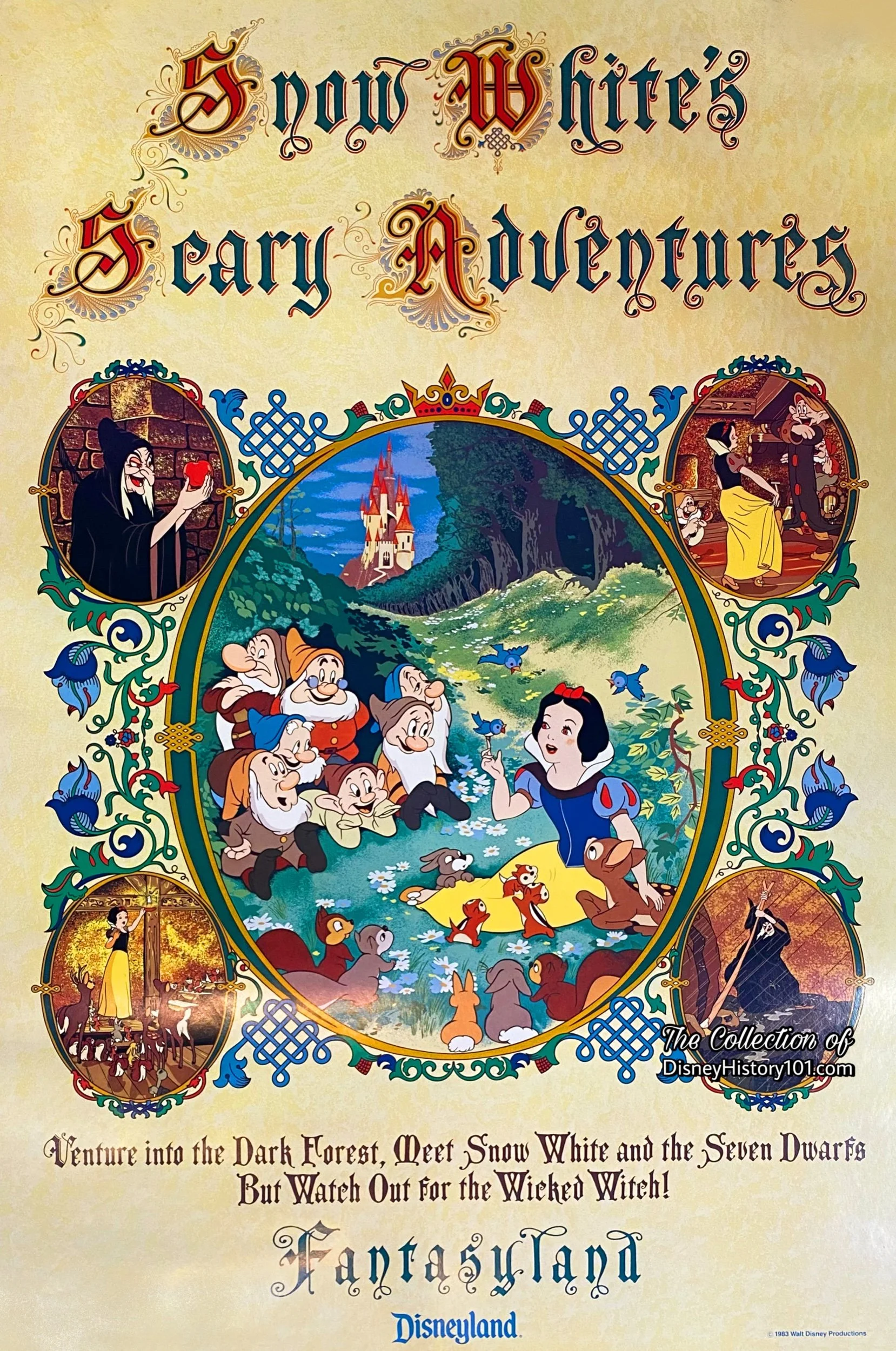
Snow White’s Scary Adventures poster design by Leticia Lelevier, 1983.
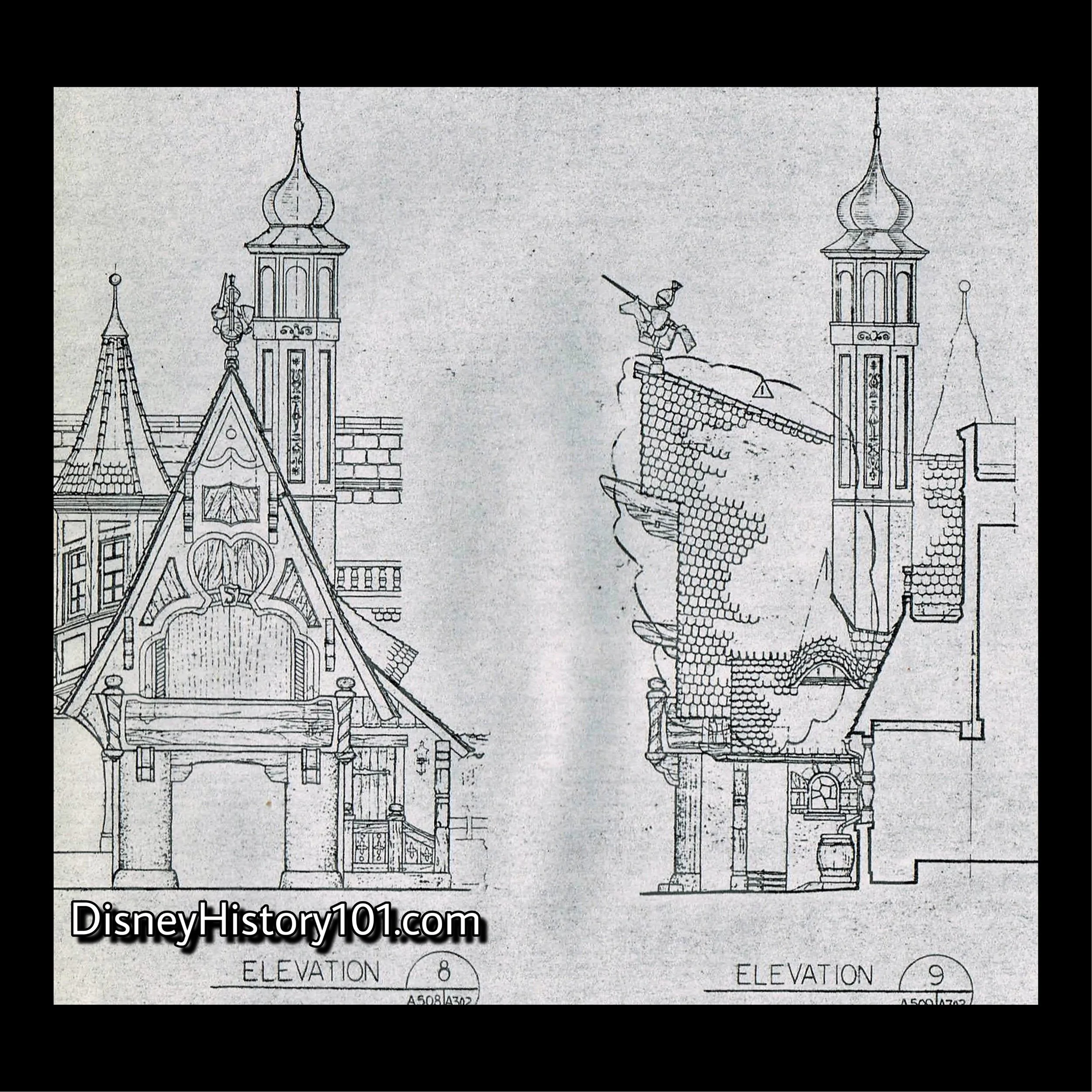
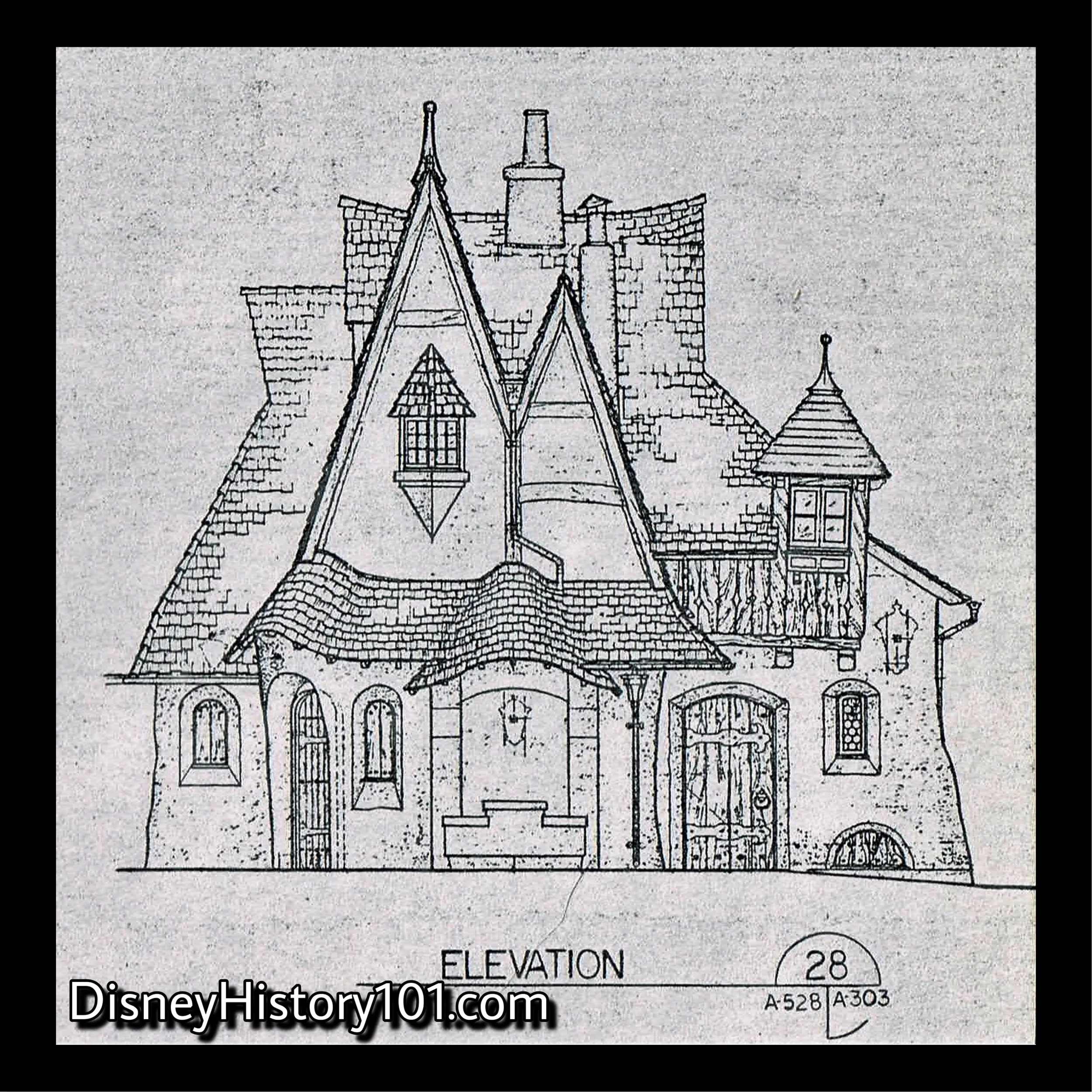
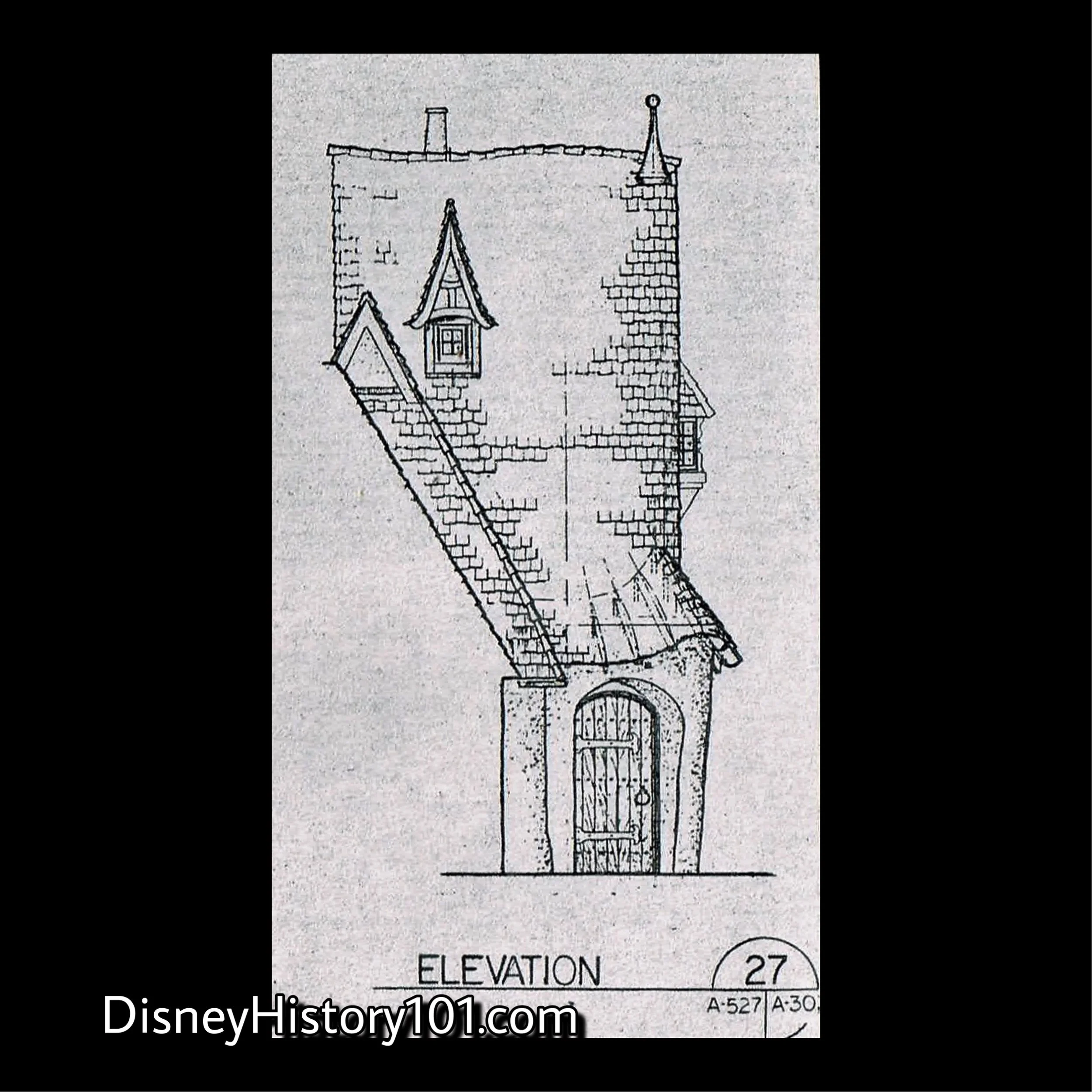
Pinocchio's Daring Journey Elevation
Upon reliving Snow White’s Scary Adventure, guests exit through a castle tower and are drawn into another adventure through the puppet show above the entrance. In Disneyland’s earliest years, artists envisioned a Pinocchio-themed walk-through attraction (next door to an Alice in Wonderland - themed attraction). At least one “Bird’s Eye View of Fantasyland” designed by WED Enterprises for Disneyland, Inc. included a “Pinocchio Square” attraction.
The area housing the space which would become the new Pinocchio-themed attraction was approximately 6,956 square-feet (in addition to its 925 square-foot queue), and one c.1981 proposal would expand this existing space to 11,740 square-feet (including its track, queue and storage areas).
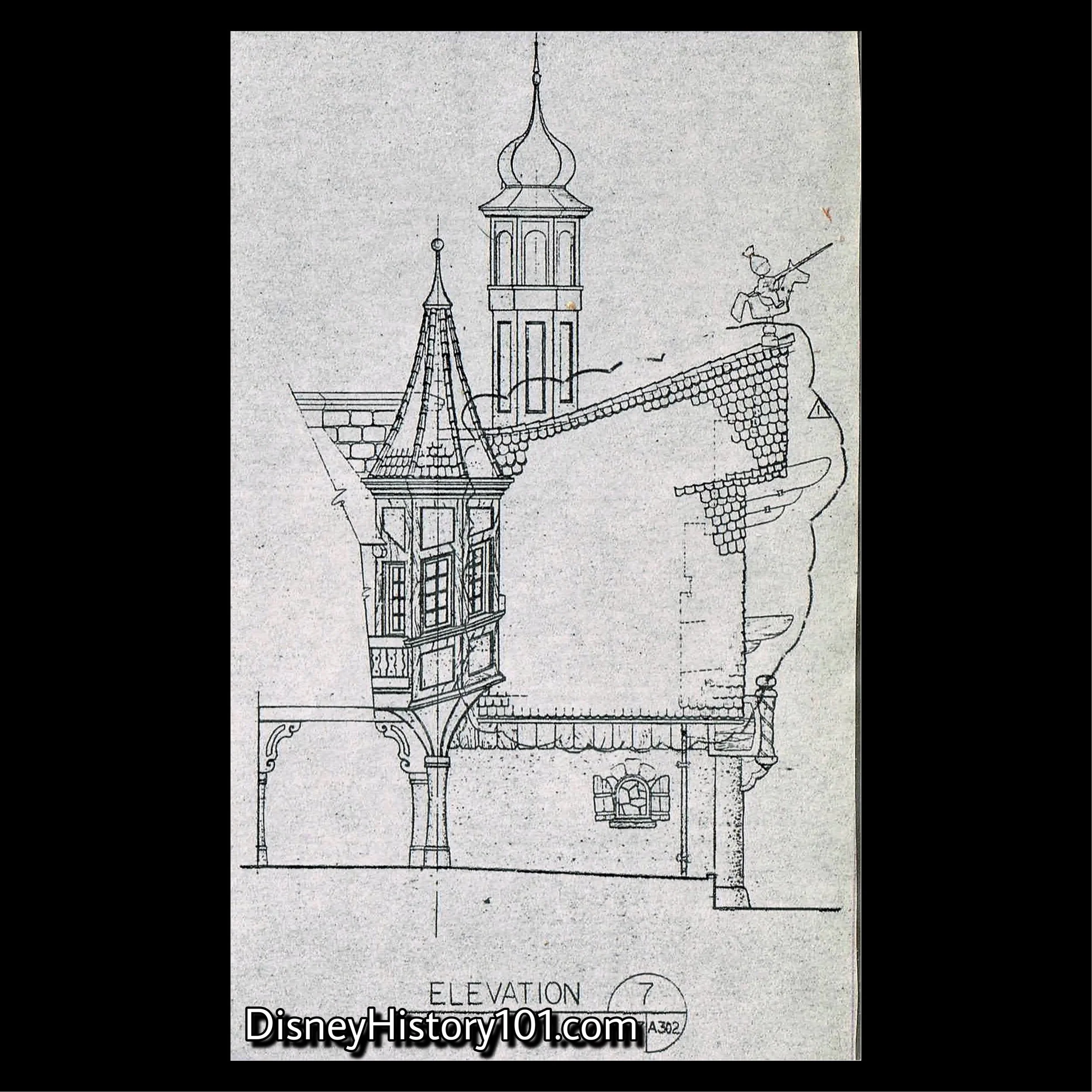
Pinocchio's Daring Journey Elevation
Even by its profile Pinocchio's Daring Journey would draw curious guests in for a closer look.
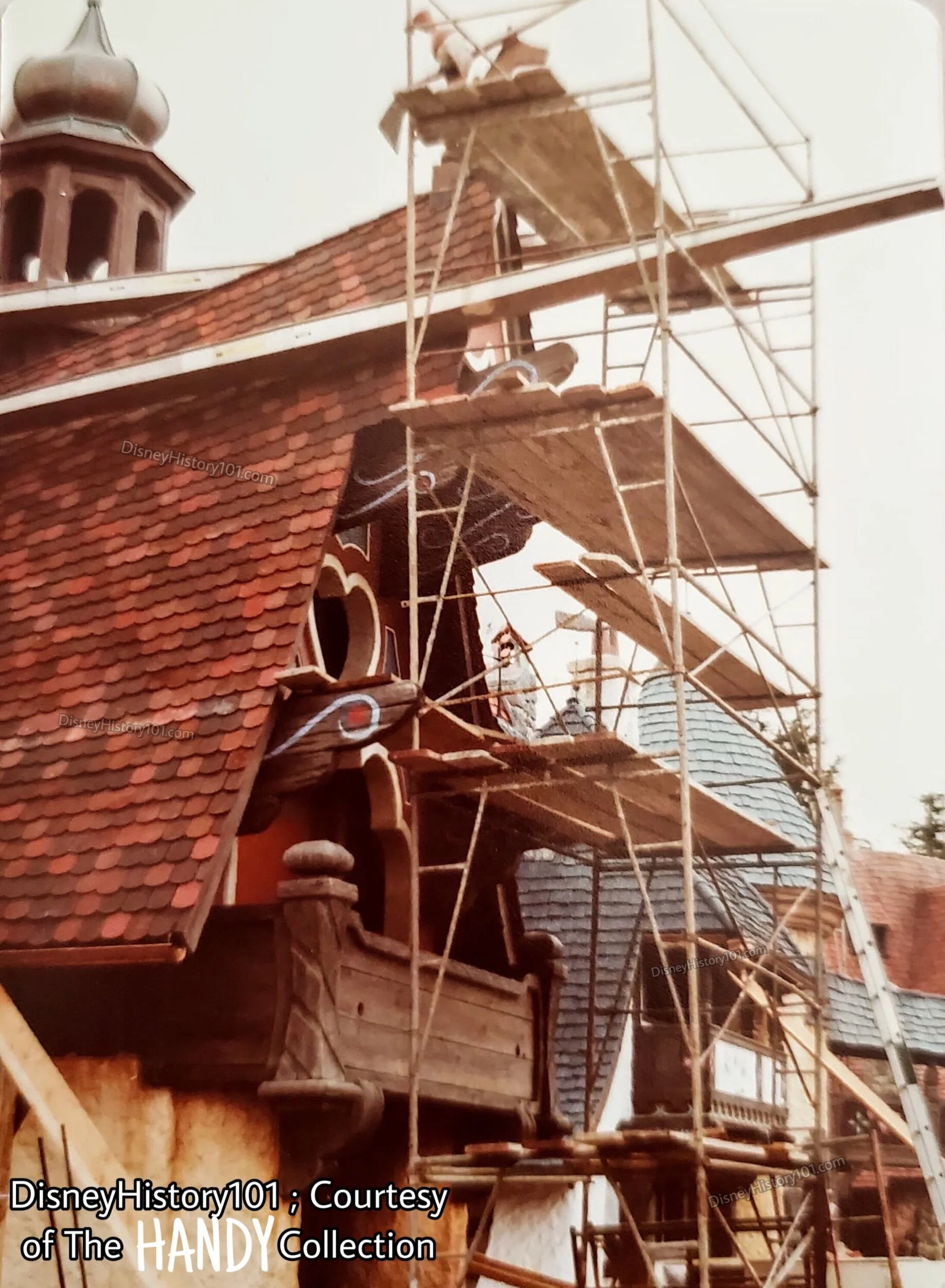
PINOCCHIO'S DARING JOURNEY
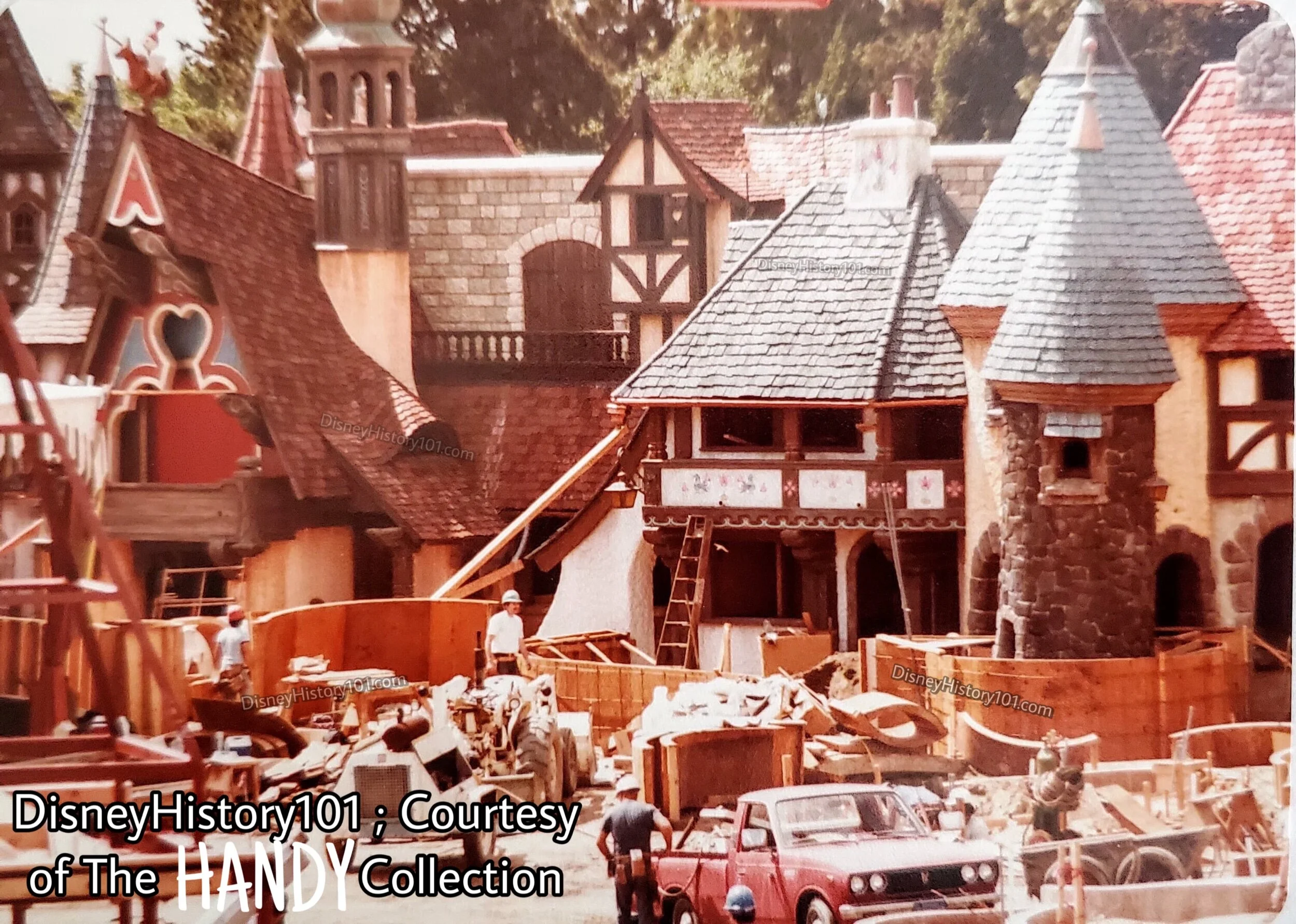
PINOCCHIO'S DARING JOURNEY and VILLAGE
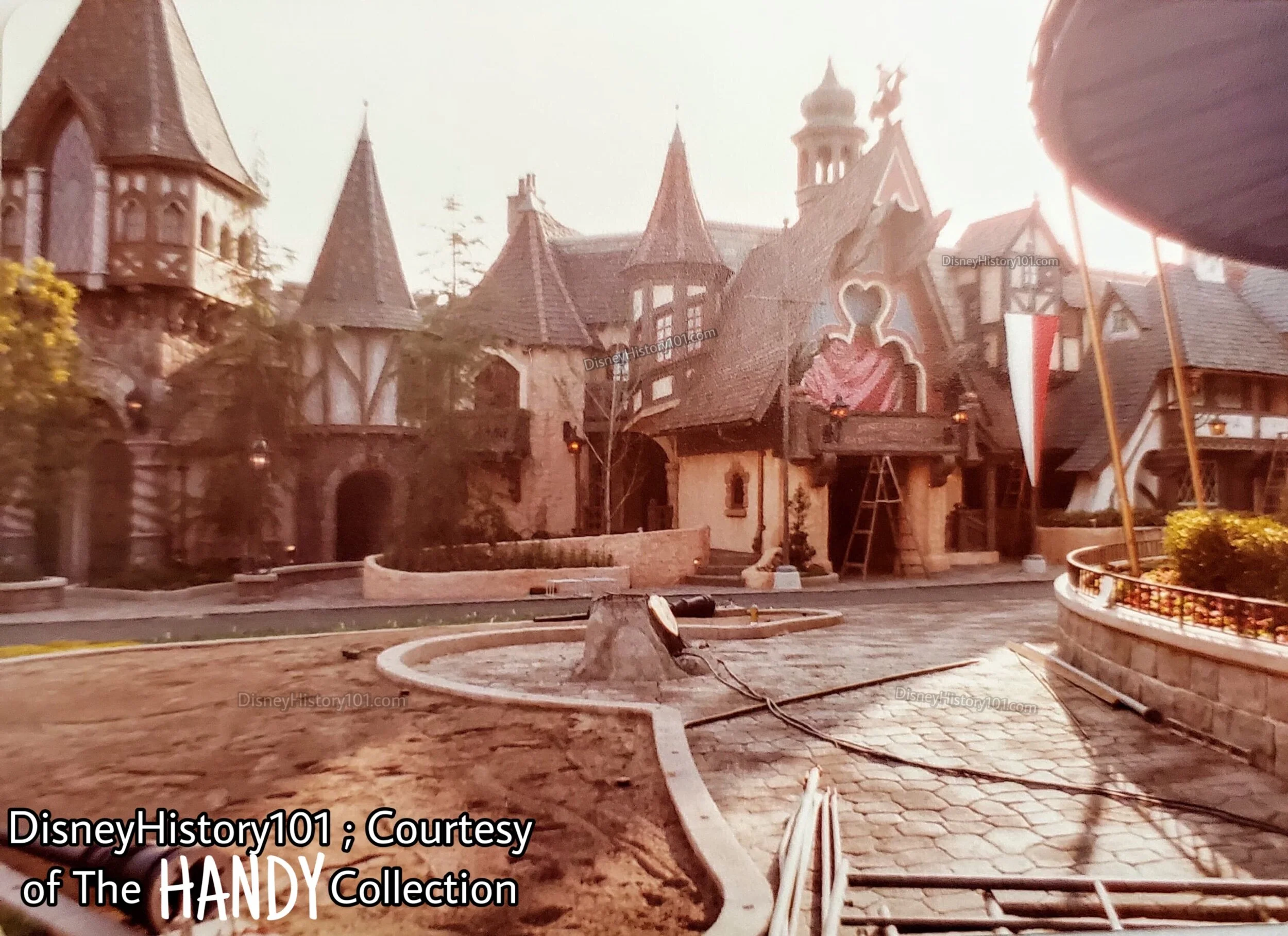
SNOW WHITE'S SCARY ADVENTURES and PINOCCHIO'S DARING JOURNEY
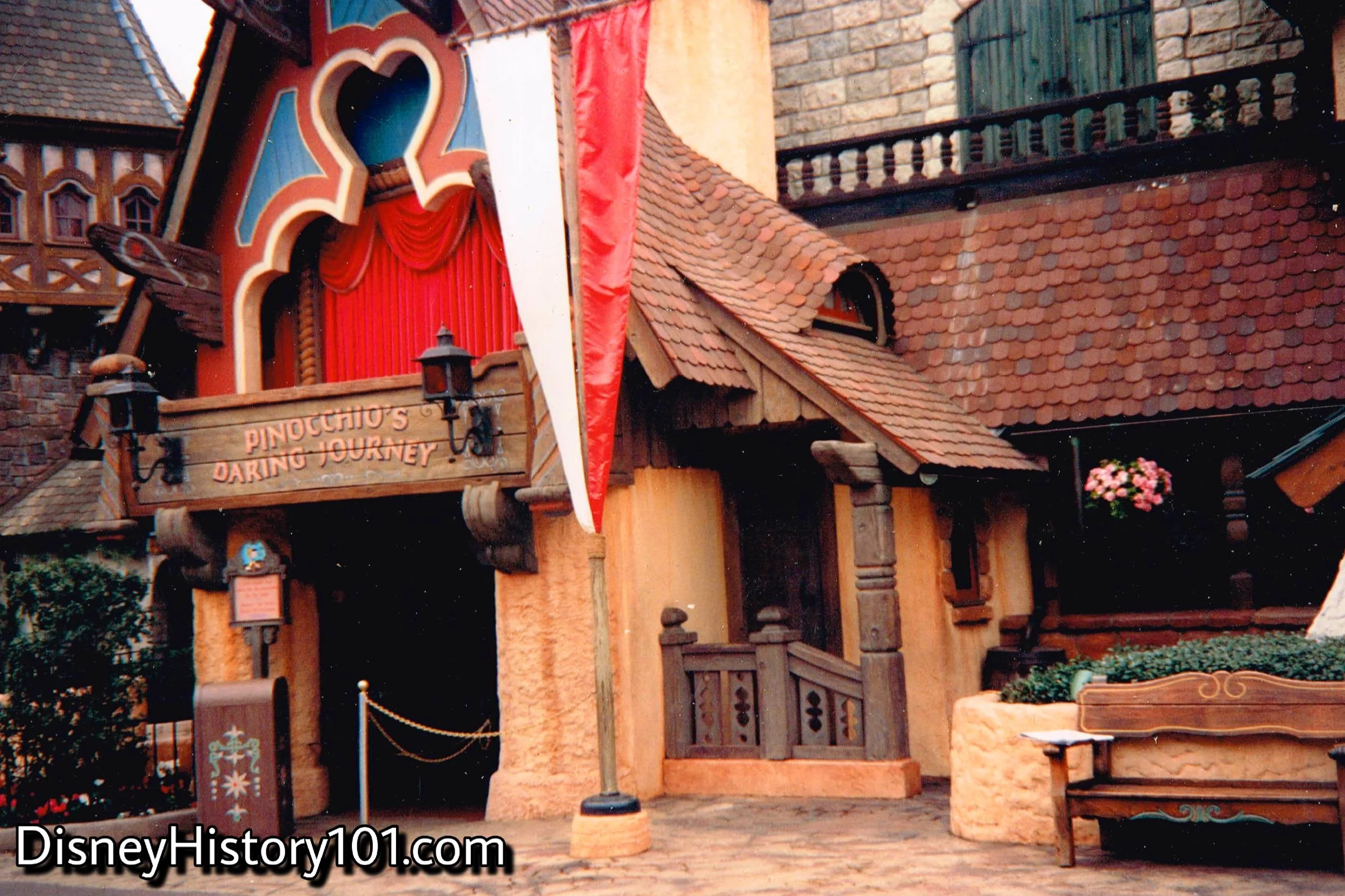
Pinocchio's Daring Journey (1983 - present)
Much artwork of Gustaf Tenggren (Swedish Walt Disney Studios artist from 1936 - 1939) was referenced for the concept and design of the Pinocchio’s Daring Journey show building, and can readily be seen in the final product.
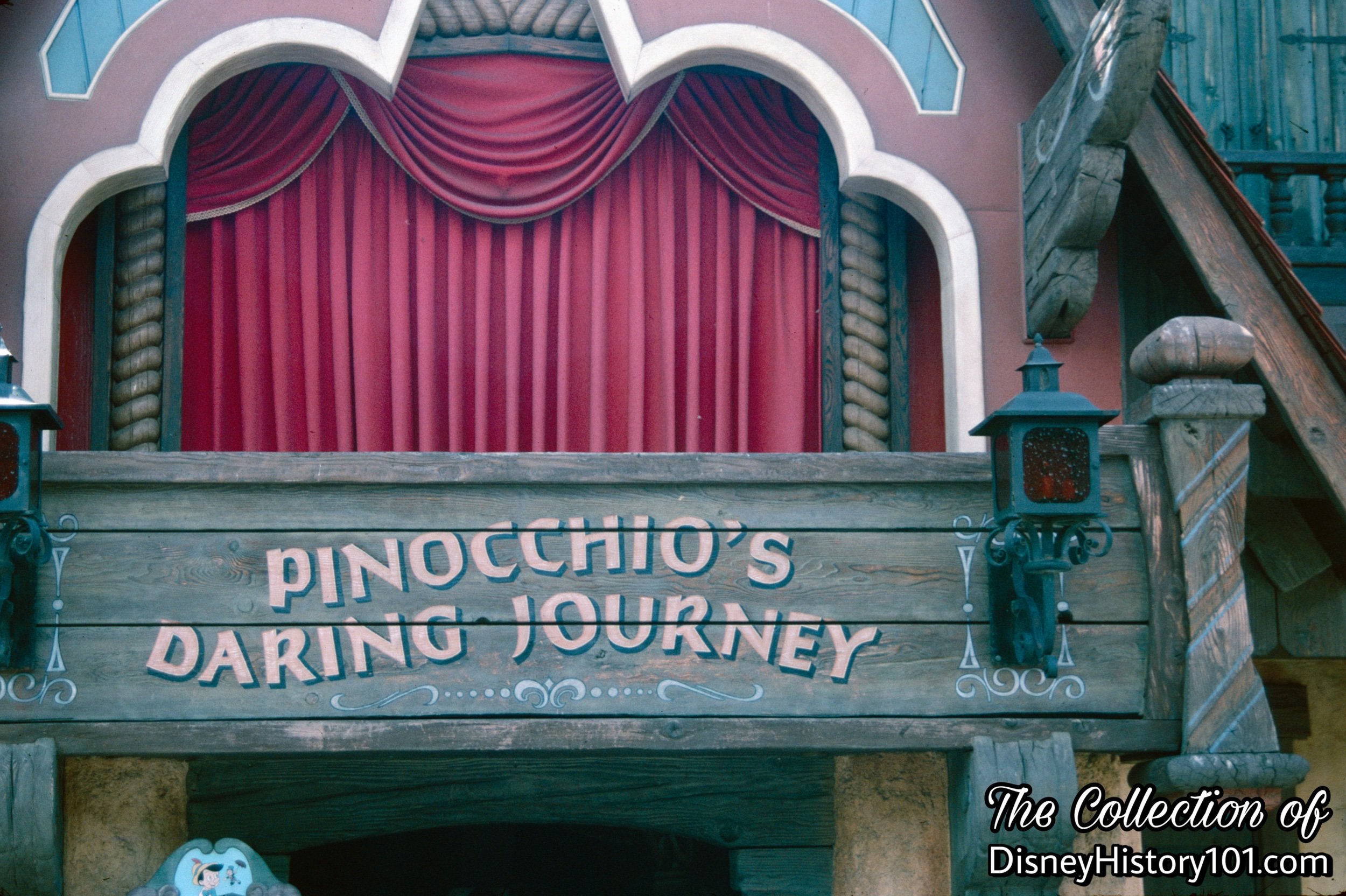
Pinocchio's Daring Journey (1983 - present)
Walt Disney once divulged “Of all the things I've done, the most vital is coordinating the talent of those who work for me and pointing them toward a certain goal.” Now, long after Walt (and after it’s debut at Tokyo Disneyland), Guests of Disneyland could finally join Pinocchio in his journey toward becoming a “real boy.”
A 1984 report revealed that the Pinocchio Cars weighed 500 lbs.
The attraction would feature the 1941 Academy Award-winning Best Song "When You Wish Upon A Star" by Leigh Harline and Ned Washington. The attraction would also feature the Original Score by Leigh Harline, Paul J. Smith and Ned Washington.
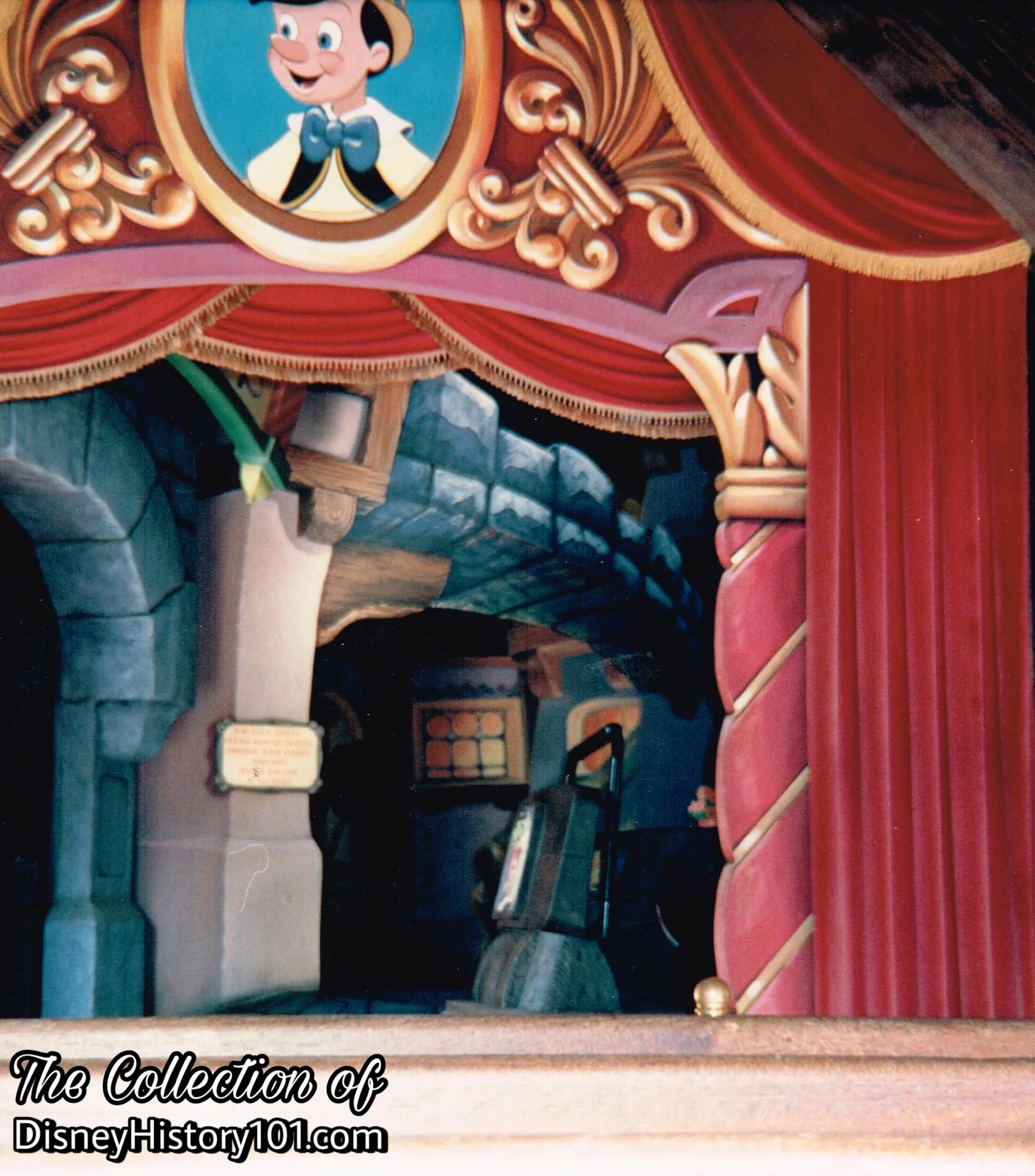
Pinocchio's Daring Journey (1983 - present)
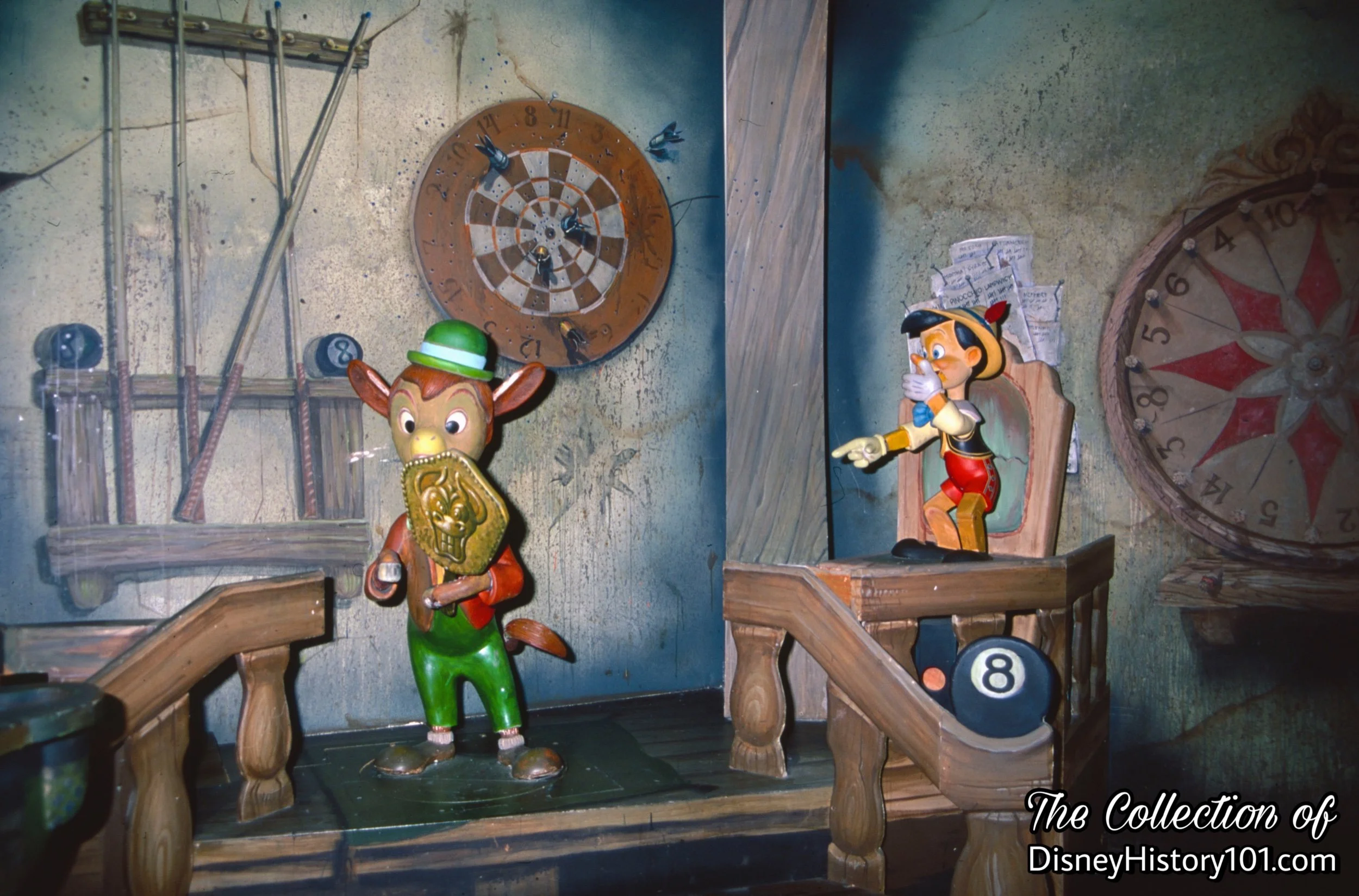
Pinocchio's Daring Journey (1983 - present)
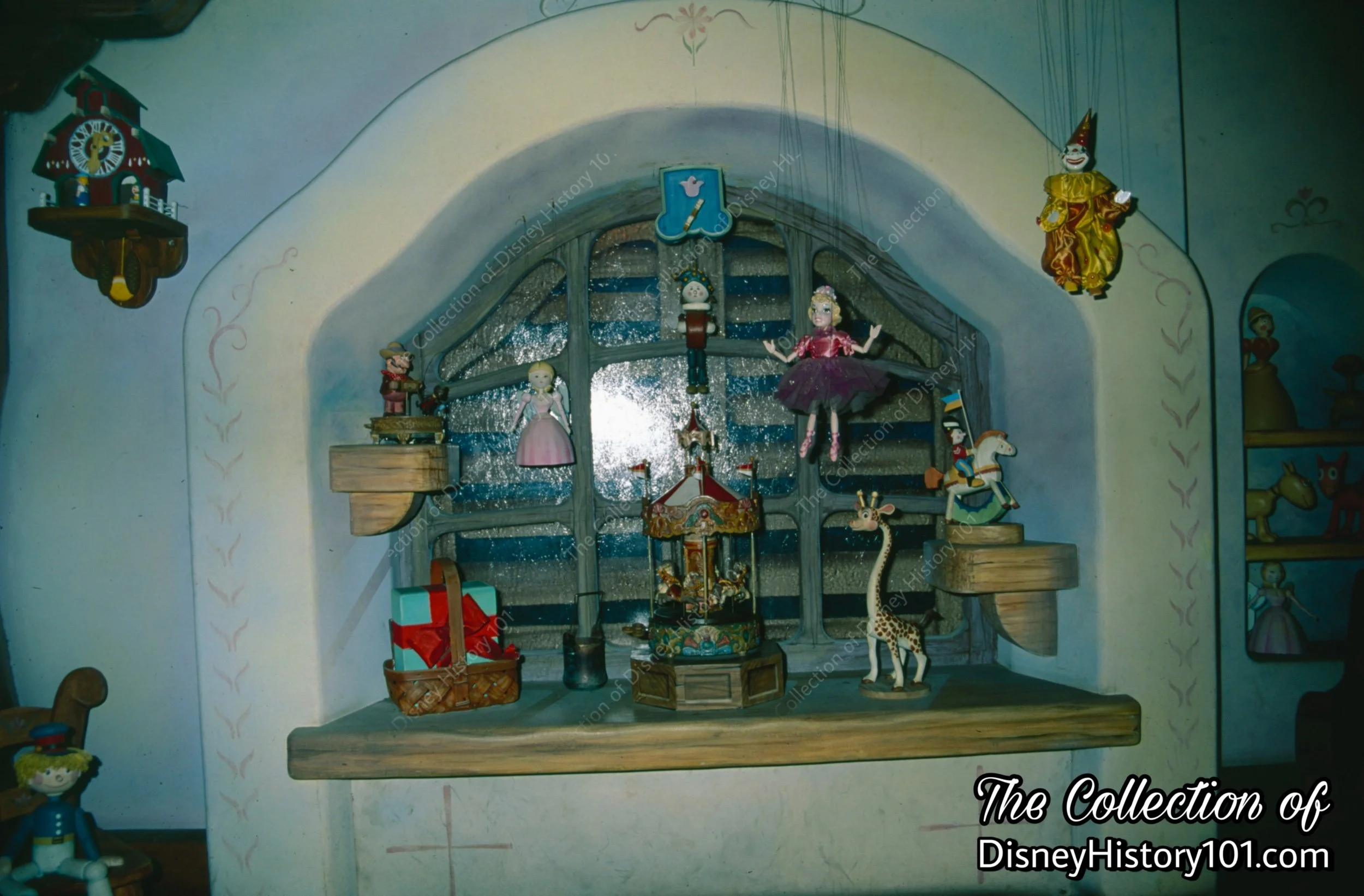
Pinocchio's Daring Journey (1983 - present)
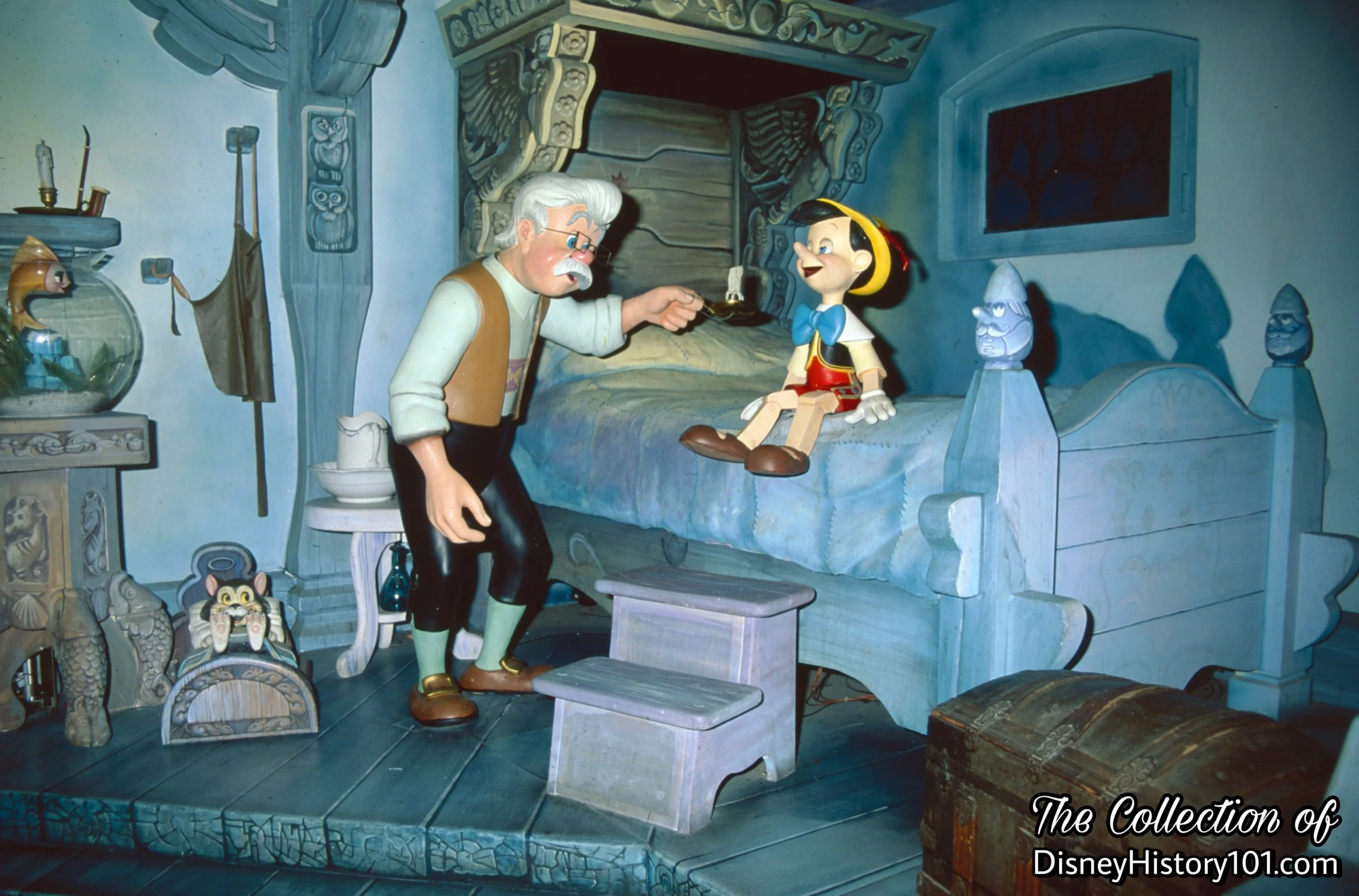
Gepetto wants a real son and Pinocchio wants to be a real boy in Pinocchio's Daring Journey, 1983 - present.
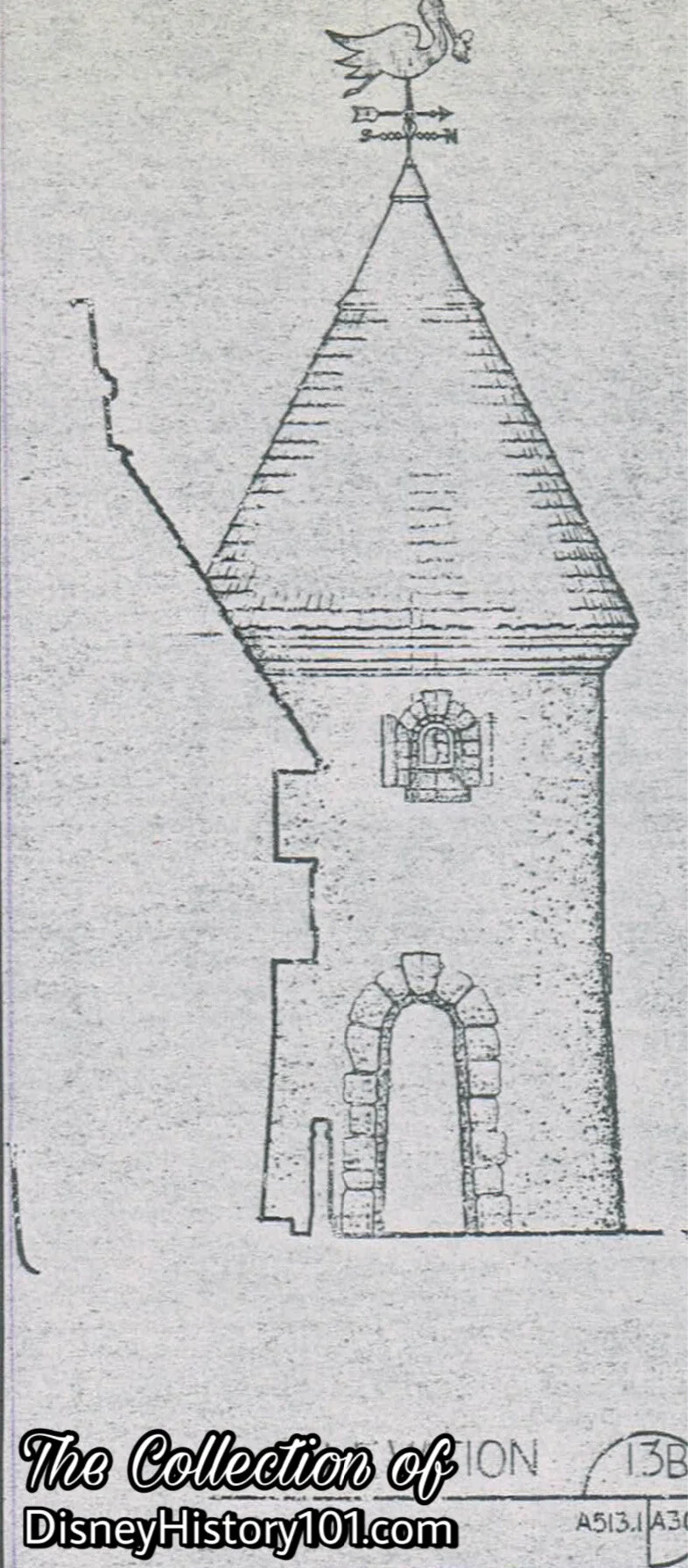
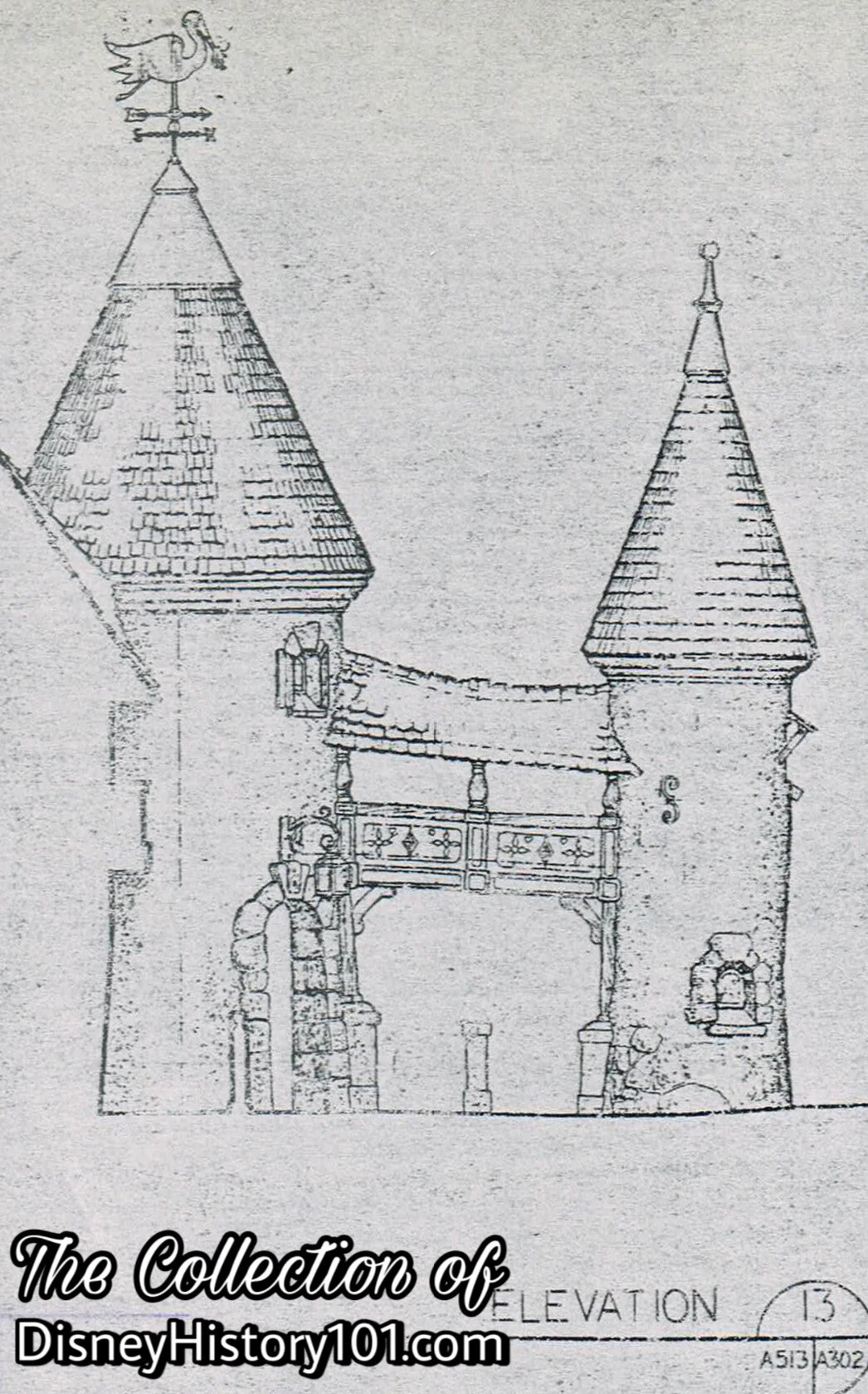
Pinocchio's Daring Journey Facade
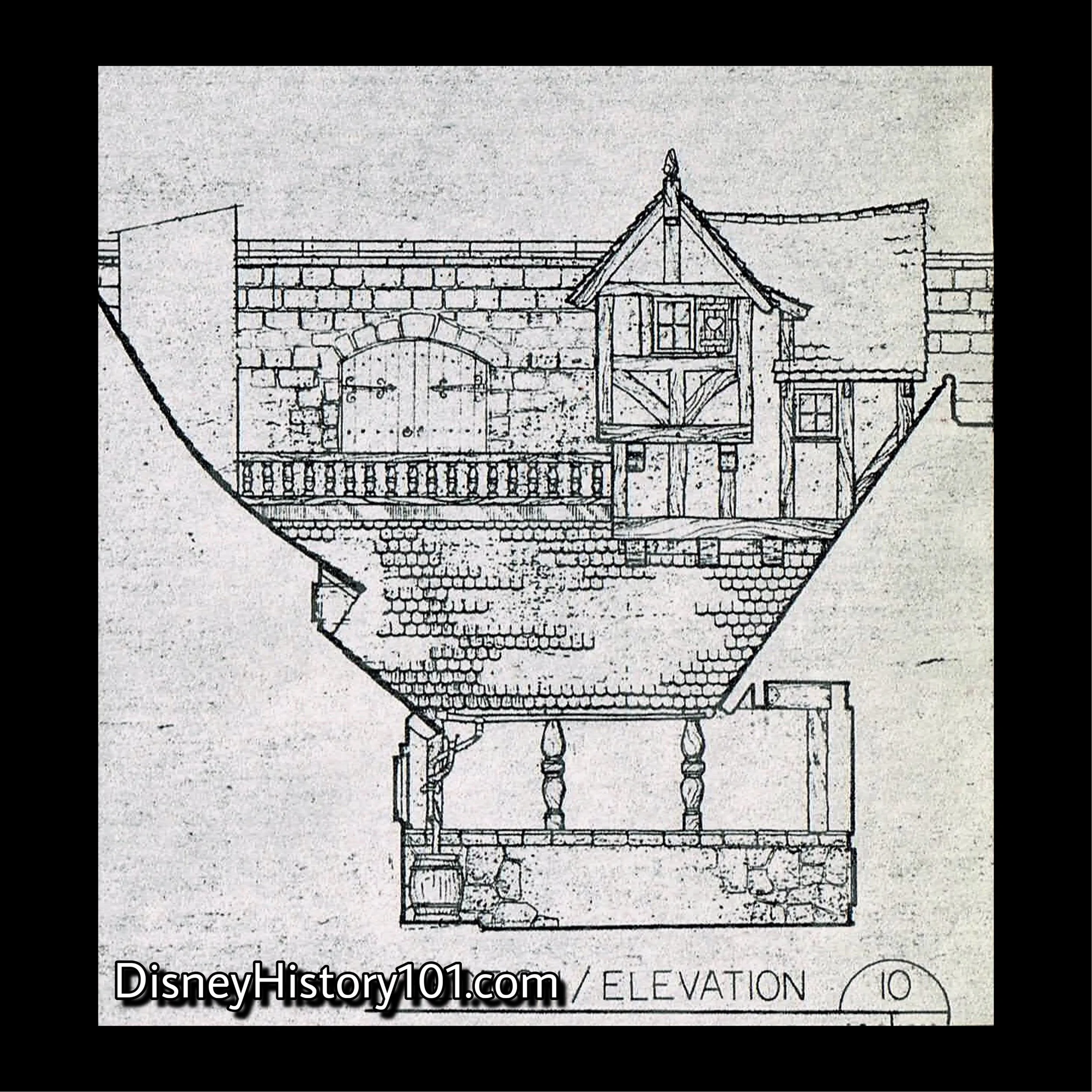
Pinocchio's Daring Journey Elevation
The structures to the right of Pinnochio's Daring Journey's entrance furthered the idea that you are strolling through a little Tuscan Village in Italy’s countryside!
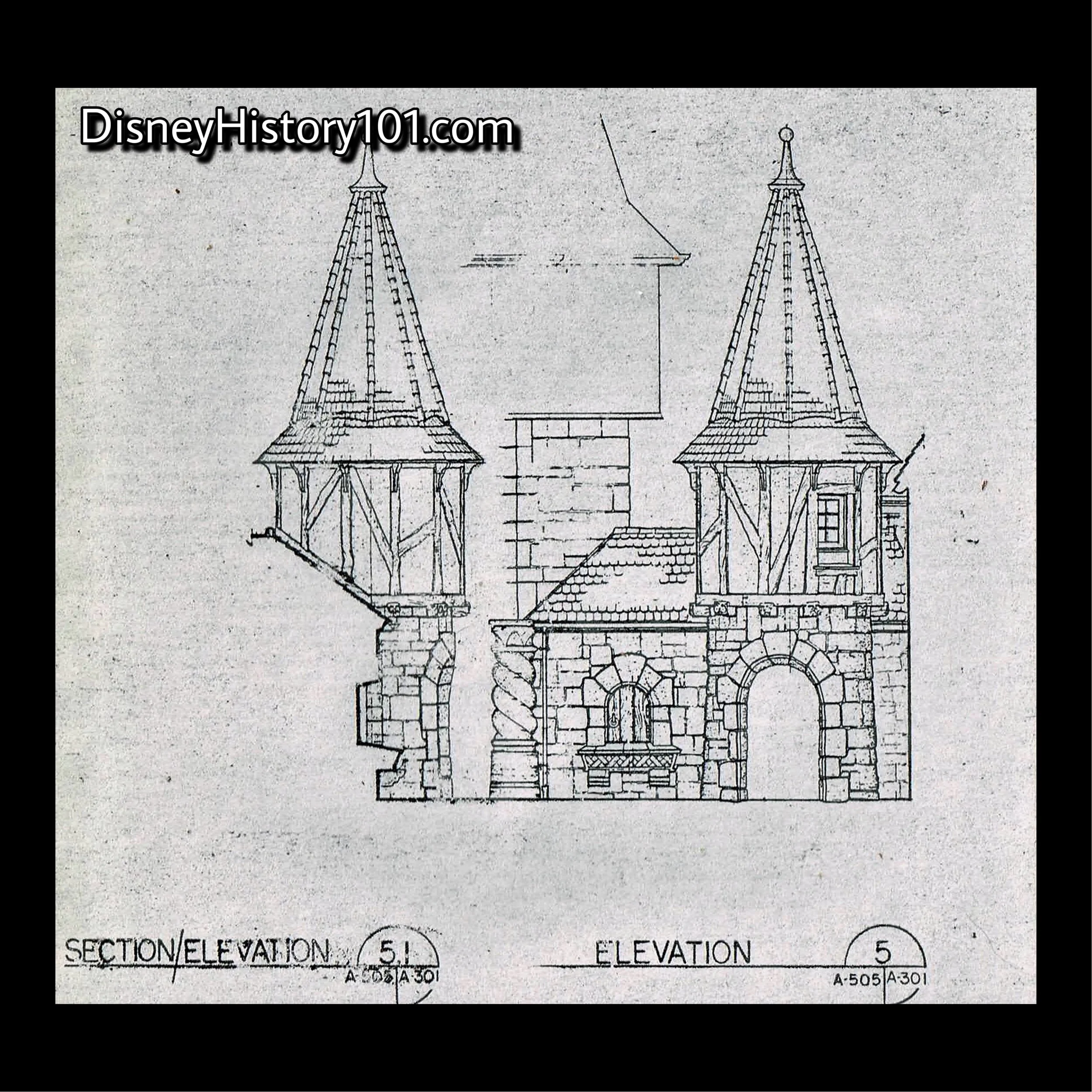
Pinocchio's Daring Journey Elevation
The towers to the right of Pinocchio's Daring Journey
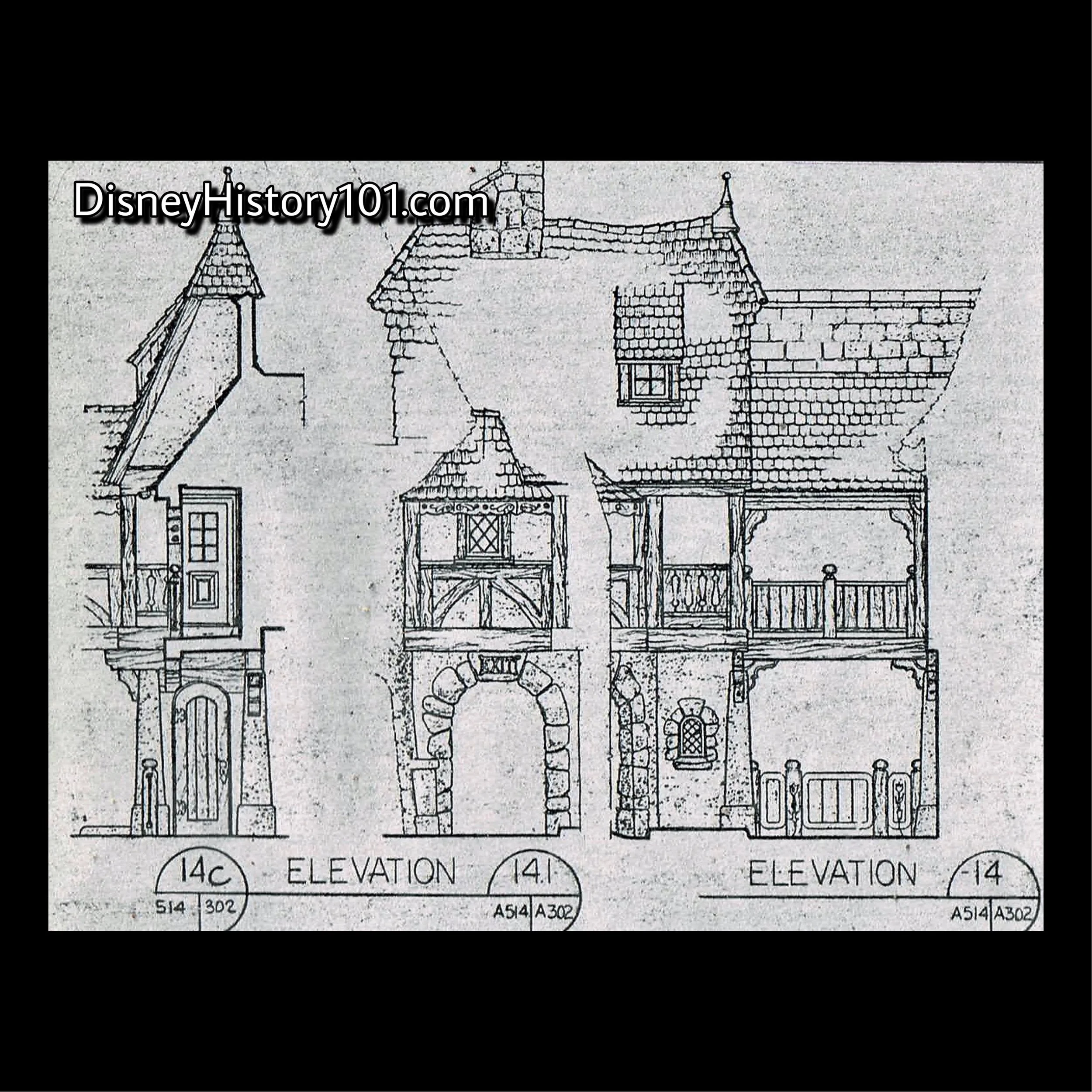
Pinocchio's Daring Journey Elevation
The Pinocchio’s Daring Journey exit to the left of Gepetto's.
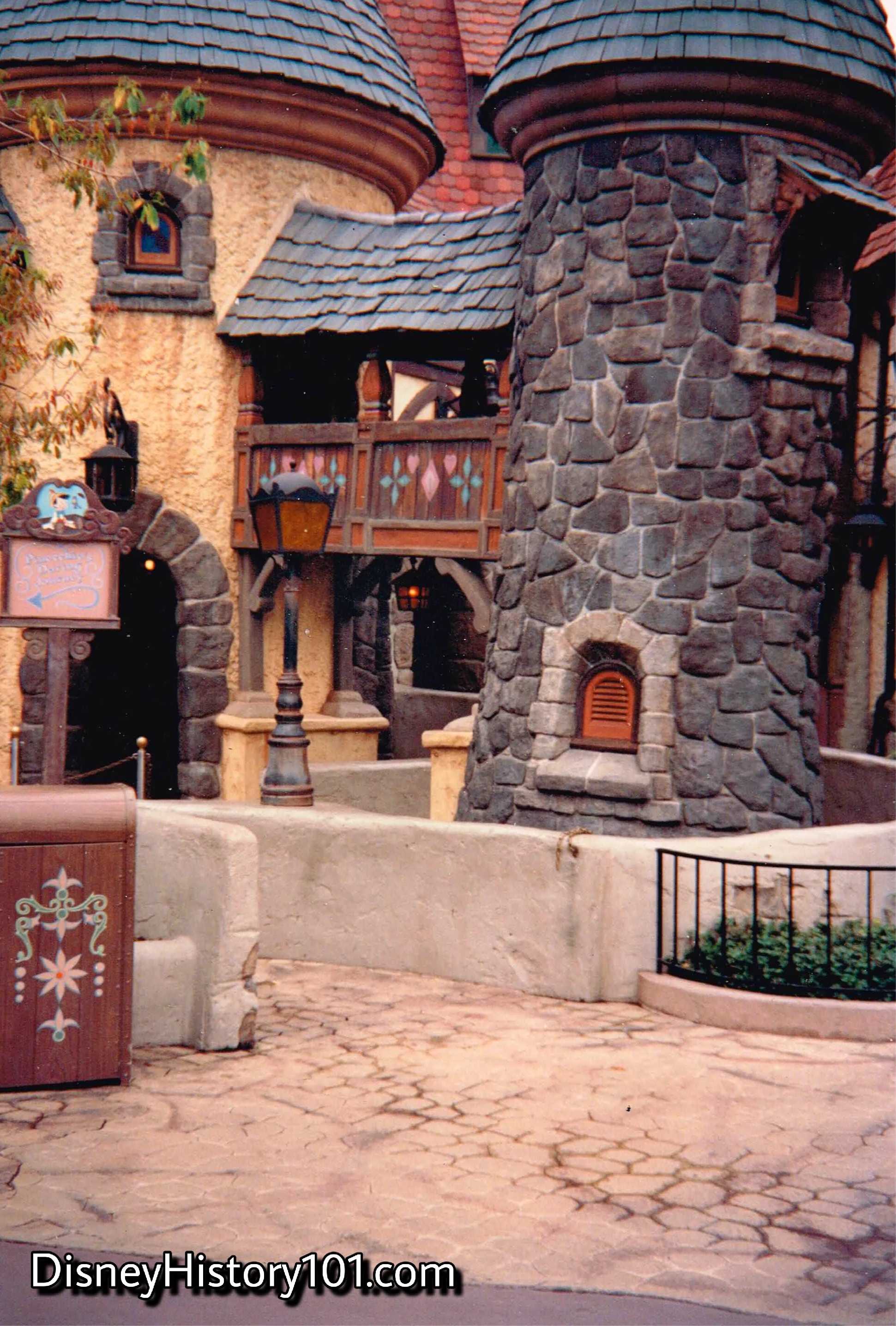
Pinocchio's Daring Journey facade
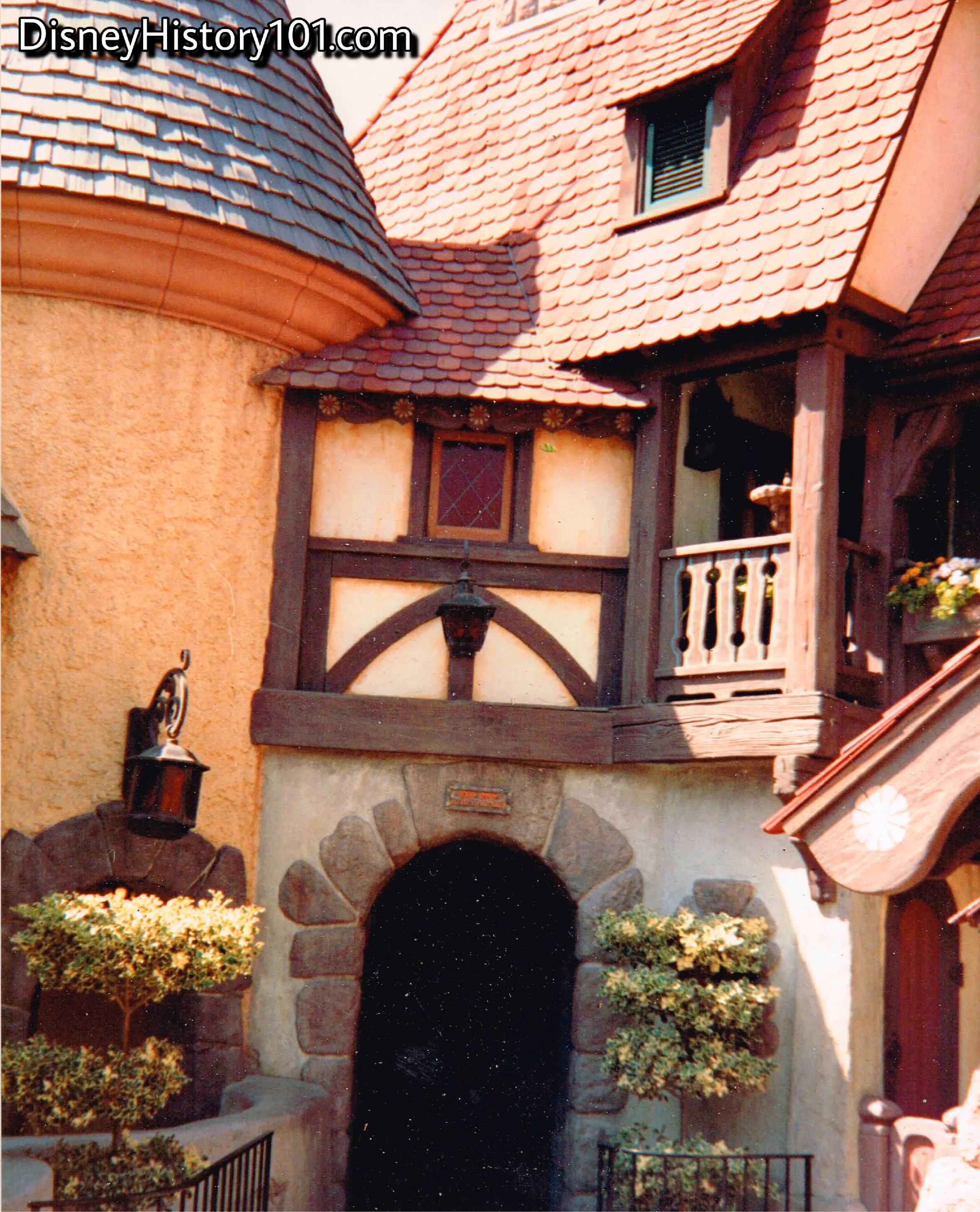
Pinocchio's Daring Journey facade
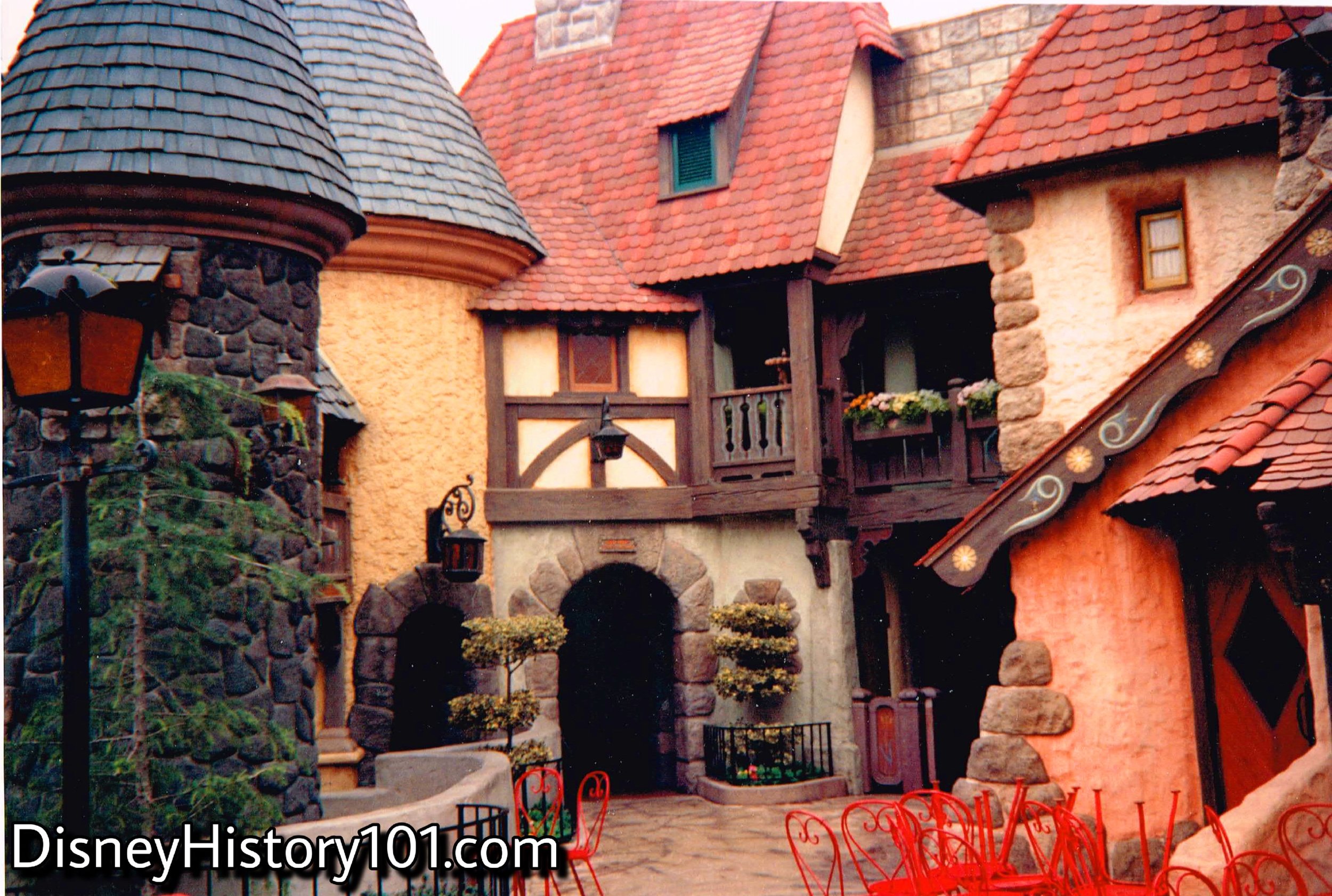
Pinocchio's Daring Journey & Village Haus facade
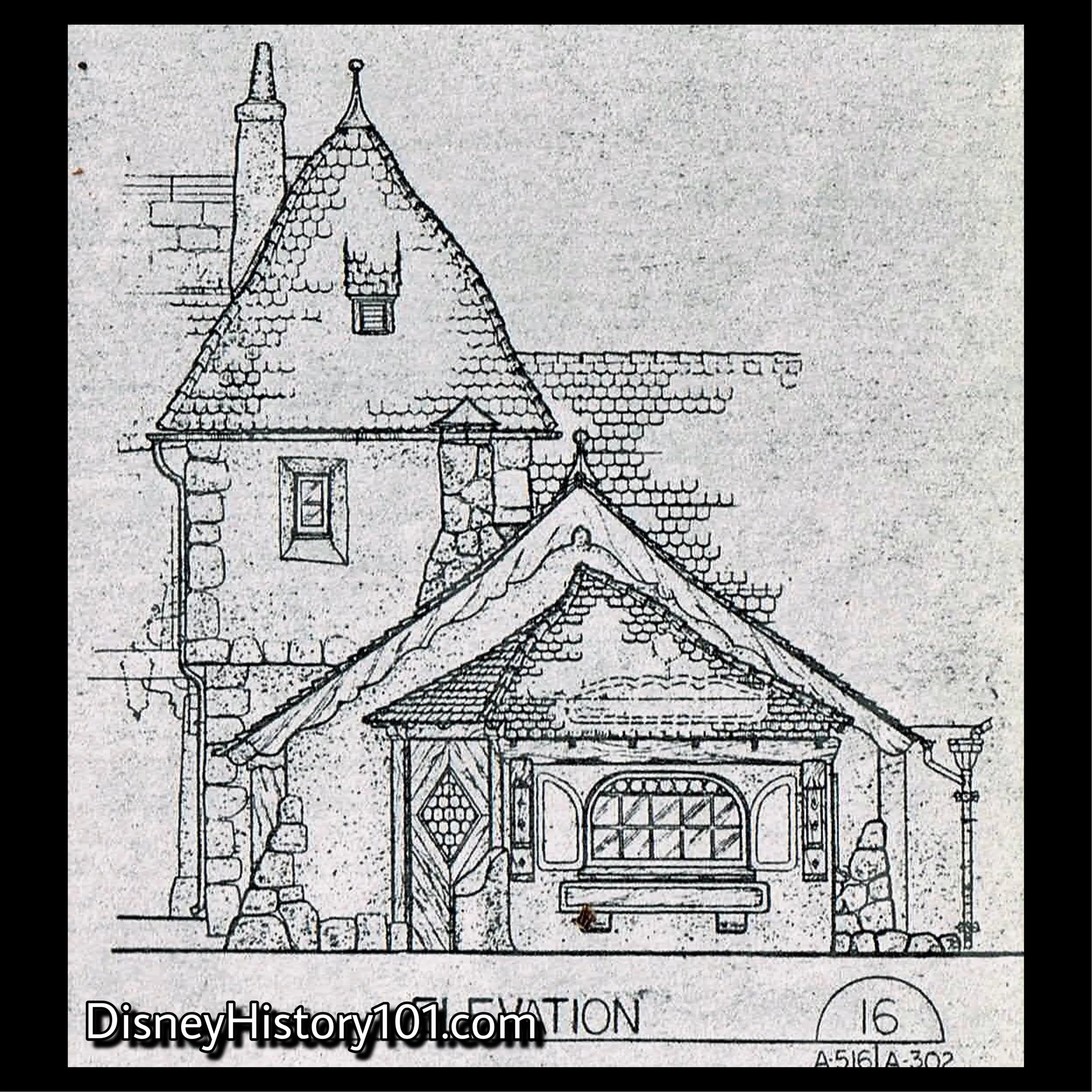
Geppetto's Arts & Crafts Elevation
The design of the shop’s facade was inspired by the concepts of Swedish-American Walt Disney Studio artist Gustaf Tenggren (1896-1970), who prepared backgrounds for Walt Disney’s Pinocchio.
Disneyland Line Magazine Feb 7 1992:
Charming dancing marionettes attract Guests. A three foot-tall, hand-carved woodworker's vise generates continual conversation with Guests.
Besides the diversity of the collectibles the shop carries, the character theme of Pinocchio dances throughout Geppetto's Toys and Gifts. Belinda comments, ‘Many Guests know that we have the most complete collection of Pinocchio merchandise in the Park, so they come in to add additional pieces. As the summer approaches, we will begin to stock even more product to coincide with the rerelease of the movie Pinocchio.’ At Geppetto's Toys and Gifts, there is always a big impression made on children. ‘I love to watch them talking and interacting with the marionettes dancing on the stage in the window of the shop. It is really cute,’ Mary adds. ‘The cuckoo clocks are another magnet that attracts their attention. Once Guests enter the shop, it's fun to show them our items and discuss the history and tradition of the pieces. I have a chance to interact with them because the Guests browse slowly due to the attention to detail and the smaller size of the shop.’
‘The detail work and uniqueness of the shop plus the extensive amount of collectibles amaze Guests,’ adds Belinda. ‘That's one of the reasons why enjoy working with the shop; its atmosphere and warmth are very inviting. And it's a challenge to satisfy the collectors by keeping the lines current, stocking the most popular items, knowing information about the future of the lines, and trying new things. Guests expect this.’
Diane echoes that challenge: ‘The $25 to $50 range cuckoo clocks sell very well at the shop; we strive to maintain a stock of clocks in that range so that every Guest has an opportunity to bring home a little bit of this European flavor." In keeping with Geppetto's Toys and Gifts' focus on being a Show location, a hand-carved, hand-painted Alice in Wonderland chess set is displayed in the window below the counter. Originally, when the new Fantasyland was opened in 1983, the intent was to place the set on a round table in the middle
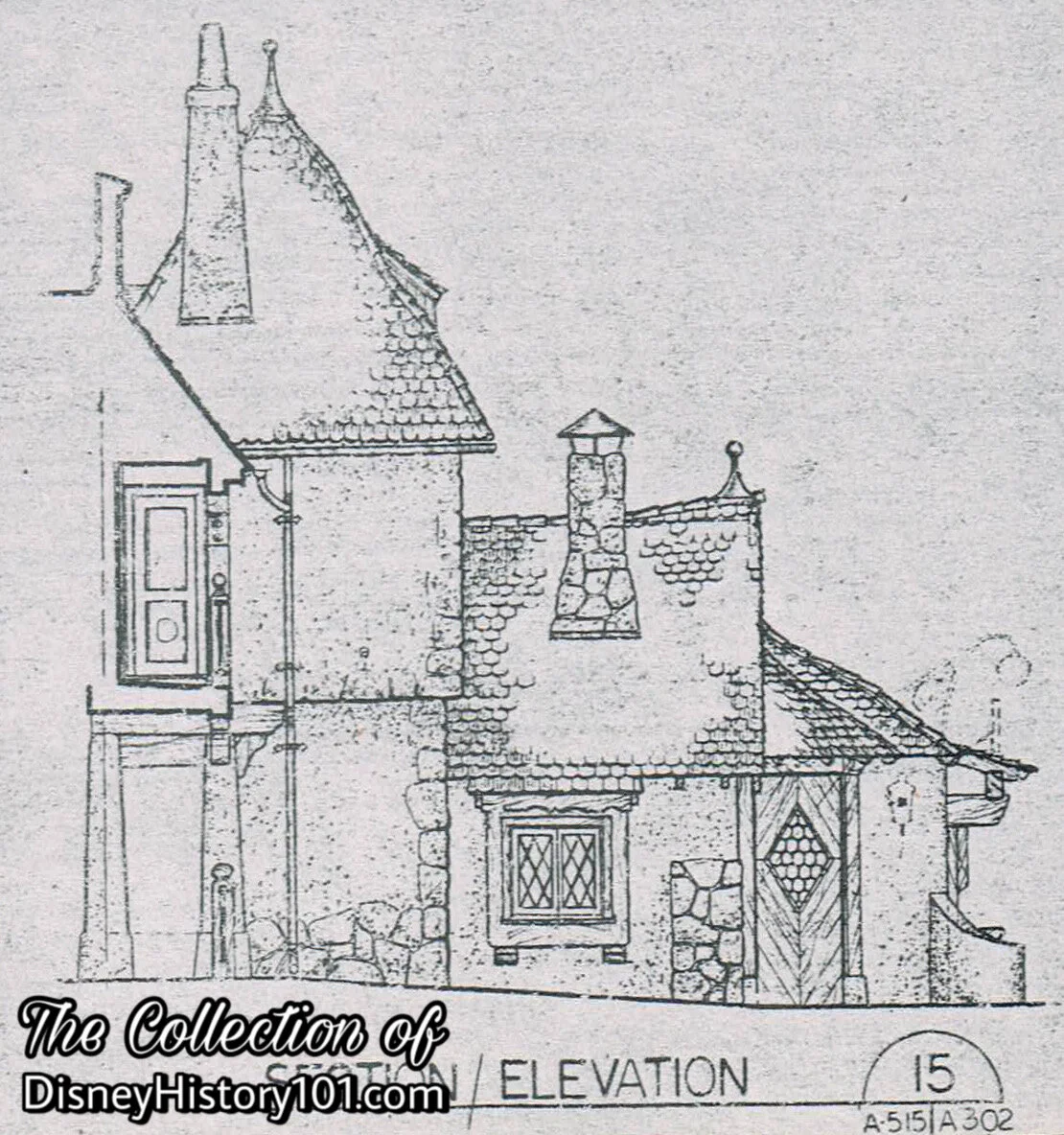
Geppetto's Arts & Crafts Elevation
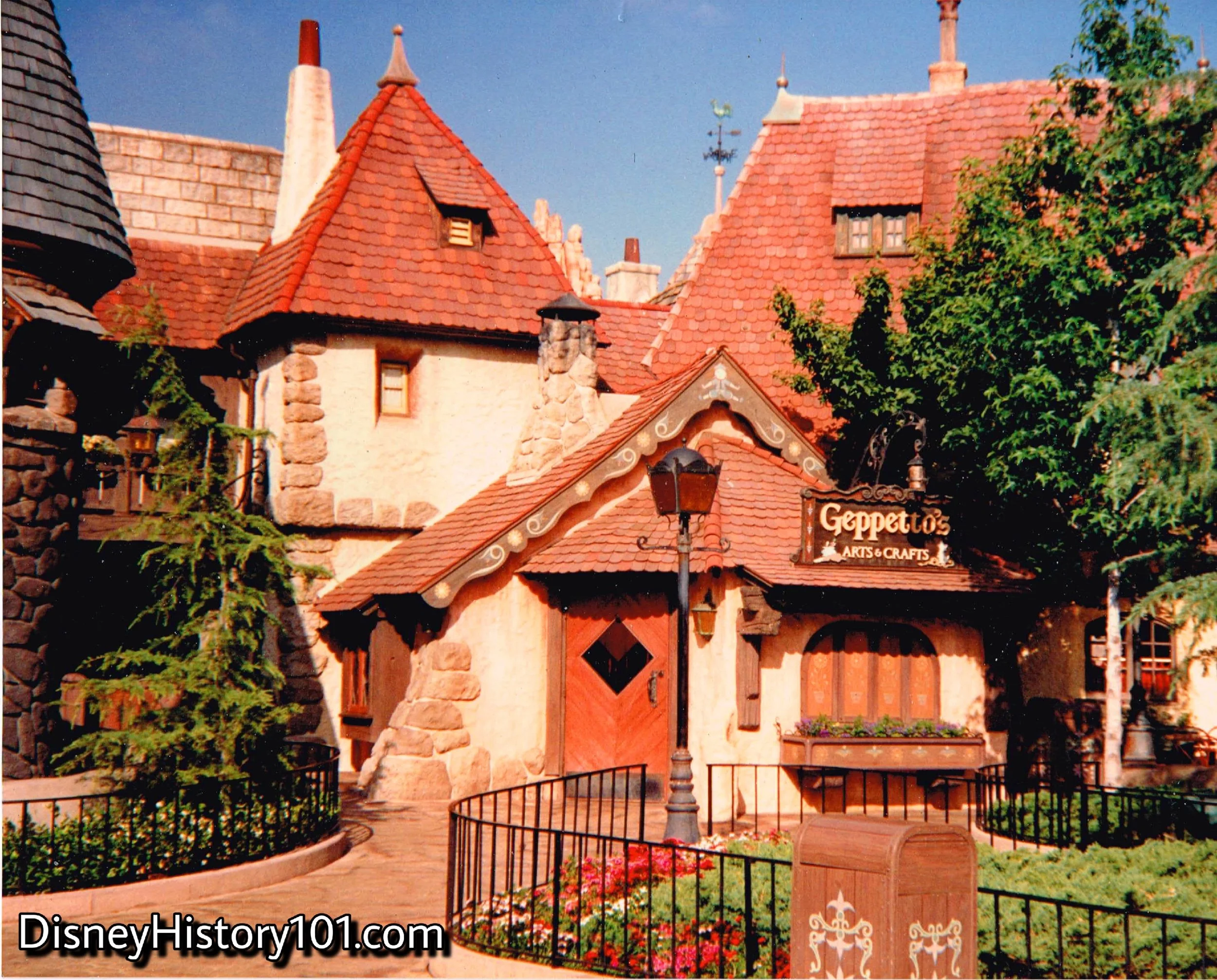
Geppetto's Arts & Crafts; 1983 - 2009.
The Disneyland News (published March 10, 1956) revealed that Geppetto’s Wood Carving Shop was among the plans for new additions that year when the Storybook Land Canal Boats were revealed on June 1st. The only catch is that it would be among the miniature buildings lining the canals.
Before it served as a “Candy Shoppe” (2004).
Geppetto’s Arts & Crafts (opened by c.1998) offered guests an opportunity to enter Geppetto’s workshop and select a little wooden friend to take home with them! Geppeto’s Arts & Crafts also became the site of free promotional giveaways. For example, this shop was among several locations to distribute free books featuring Disney’s The Gummi Bears! Several artists made appearances at Gepetto’s Arts and Crafts, like doll artist Laura Cobabe (May 22), Marie Osmond (May 29).
Next it was billed as “Geppetto’s Holiday Shop” (2005), and a “meet & greet” area for the cast of Tangled (2010) and Frozen (2013),
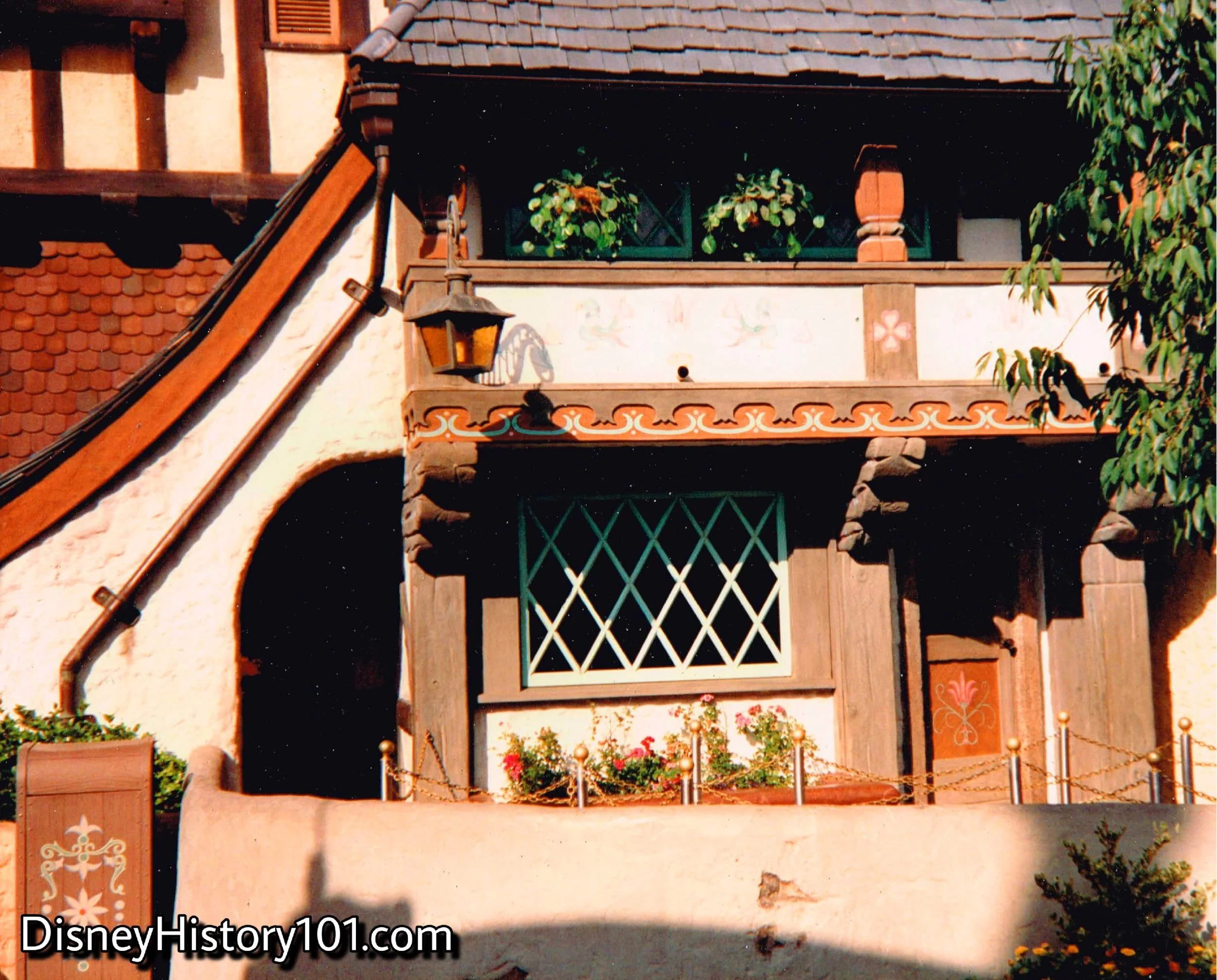
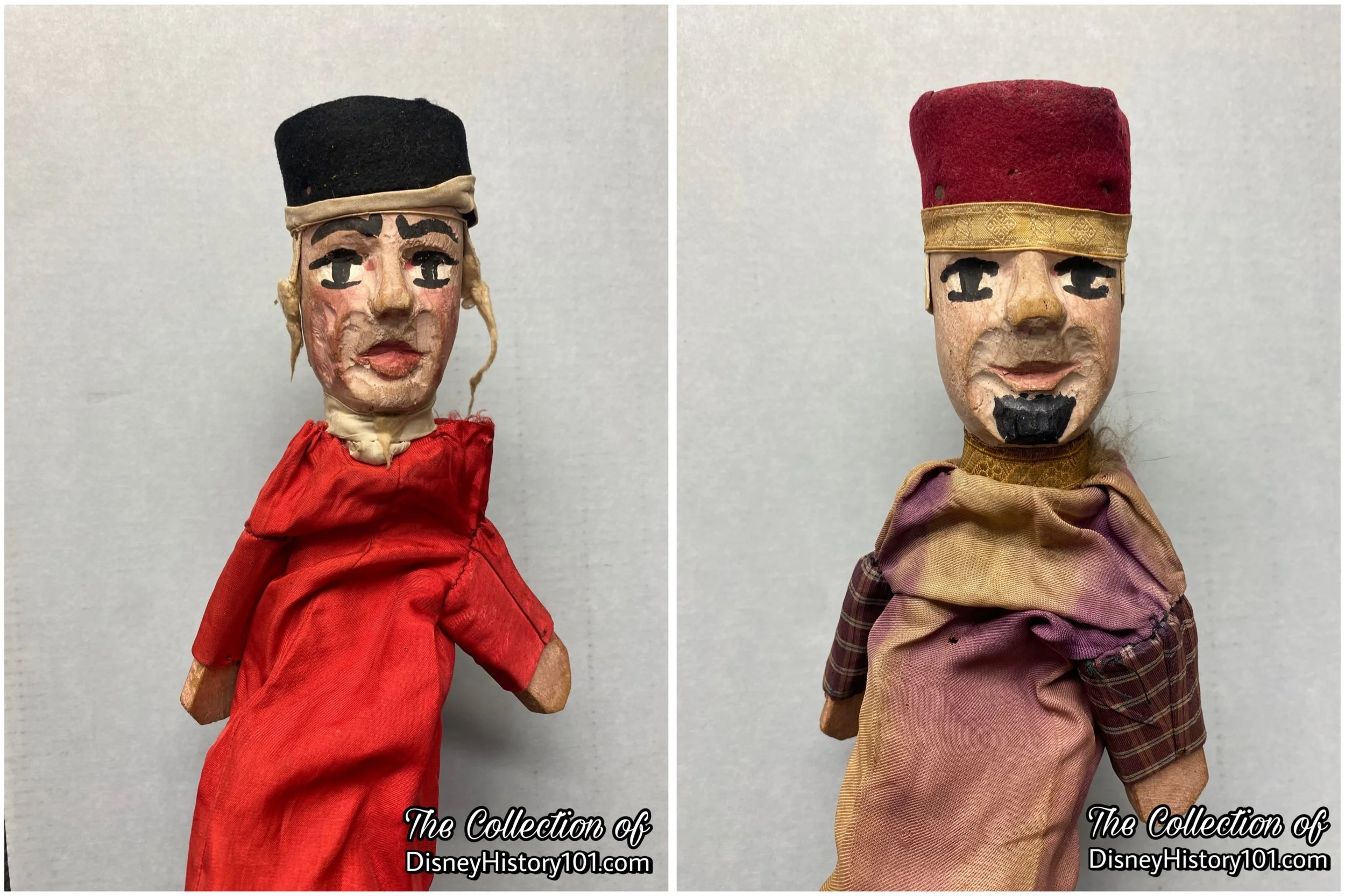
Prop Puppets from Gepetto’s Arts and Crafts
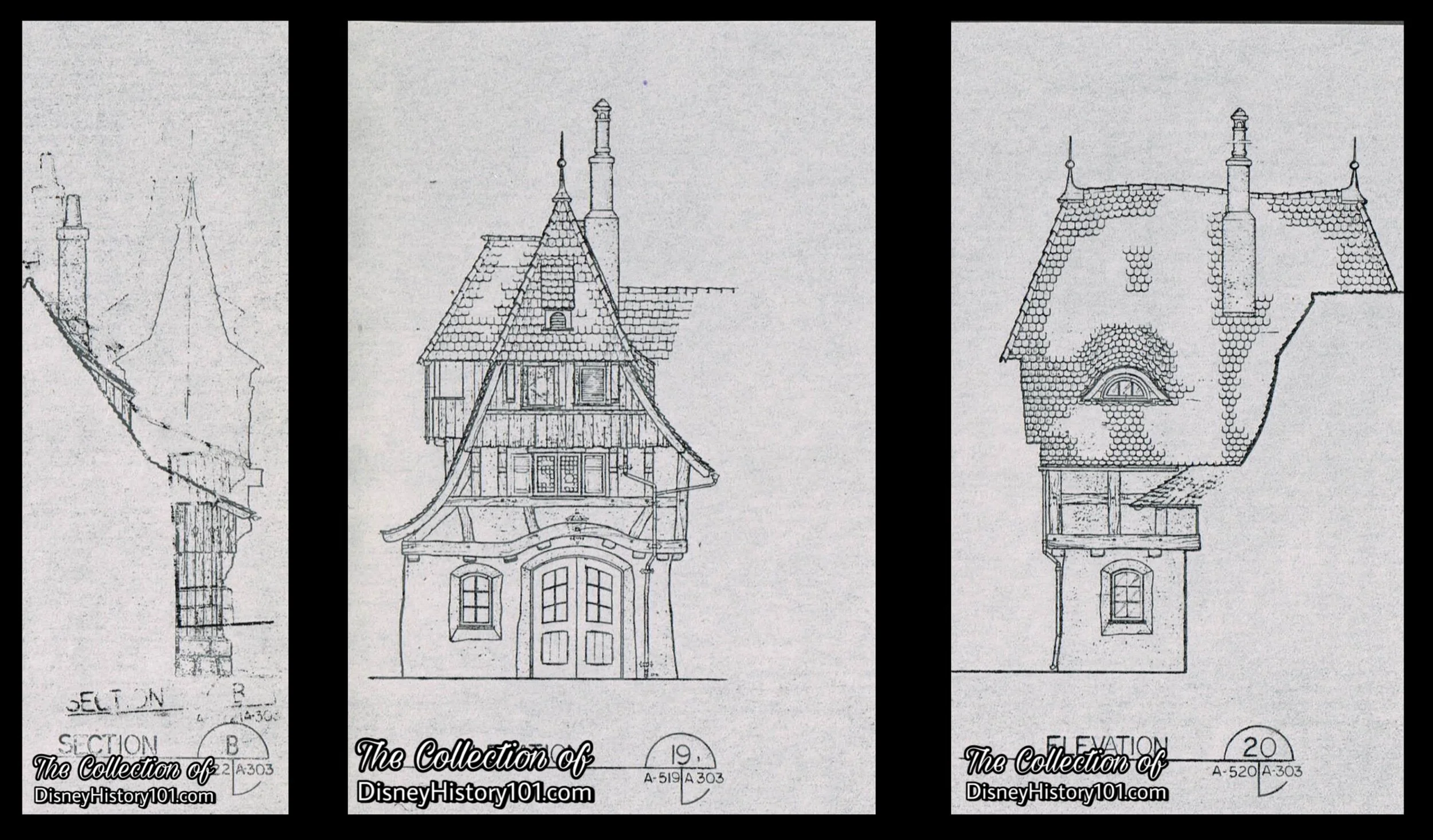
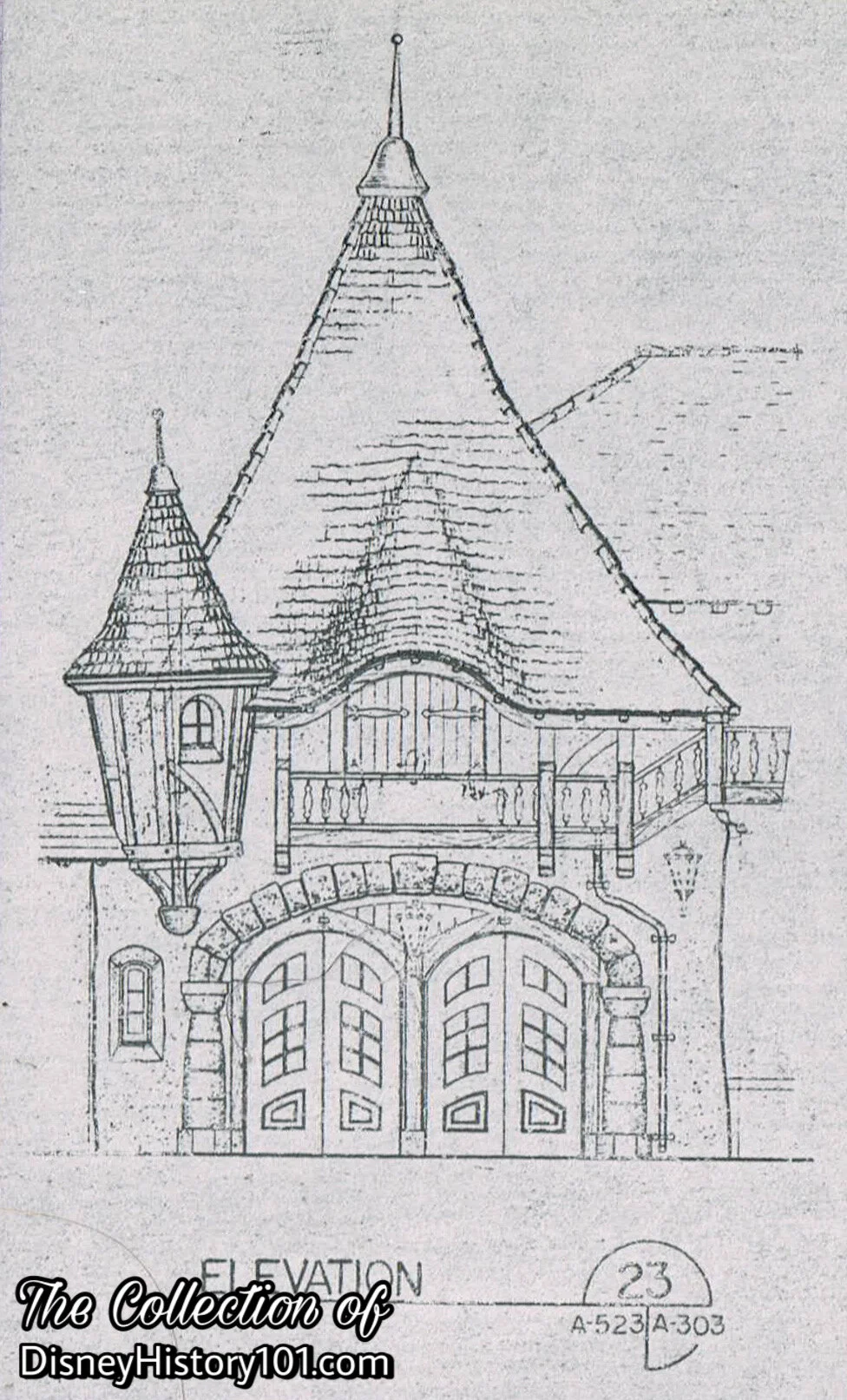
Village Haus Restaurant Elevation
WED Imagineering proposals for a “Pinocchio Restaurant” included a Kitchen, Rest Rooms, a Queue Area, and a Seating Area on site plans. Above, you’ll see an elevation plan except of the Village Haus Restaurant.
PINOCCHIO'S DARING JOURNEY
Merlin's Magic Shoppe Elevation
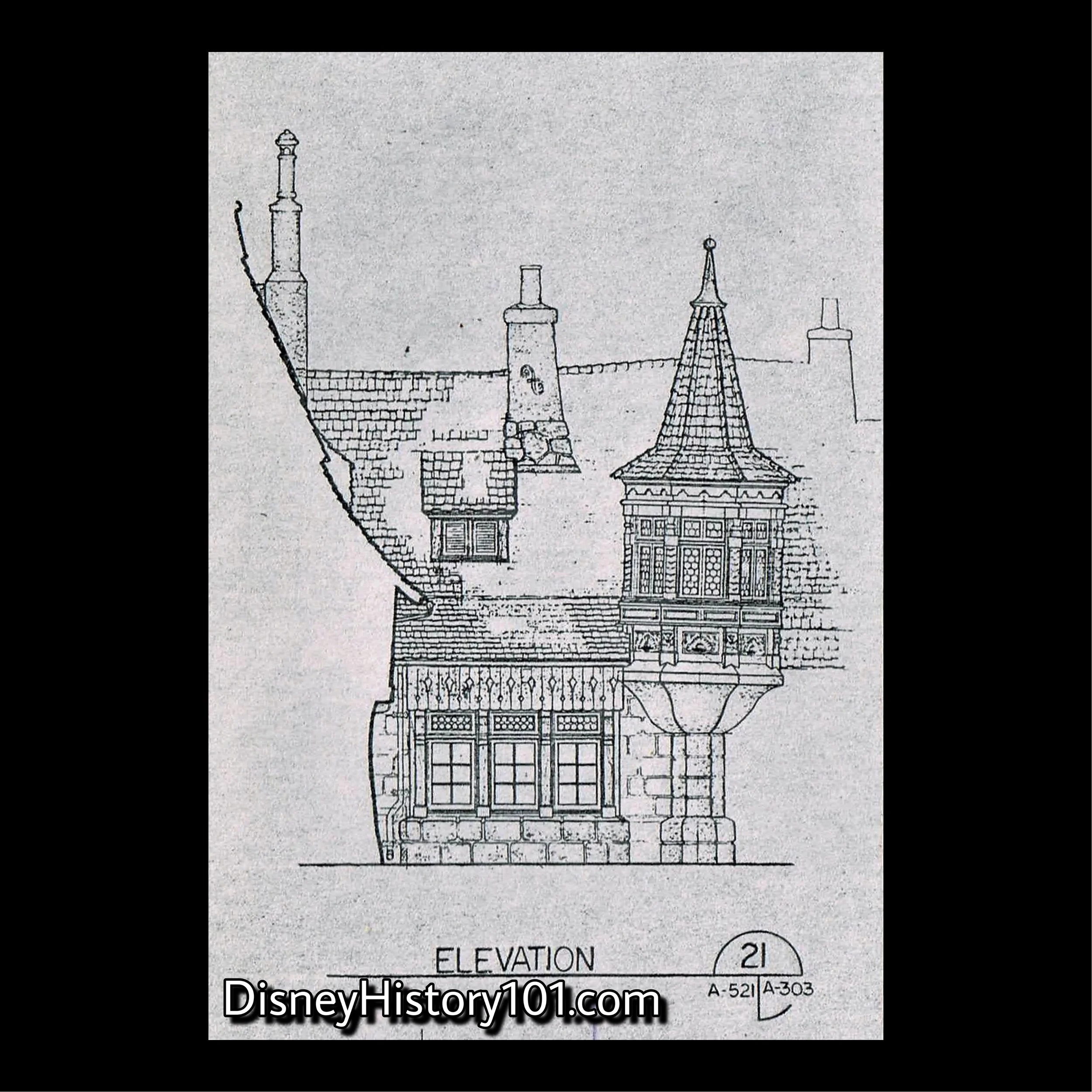
This structure would house Merlin's Magic Shoppe (1955 - 1983), followed by Briar Rose Cottage (1984 - 2007), and finally Castle Heraldry Shop (2008 - January 2017).
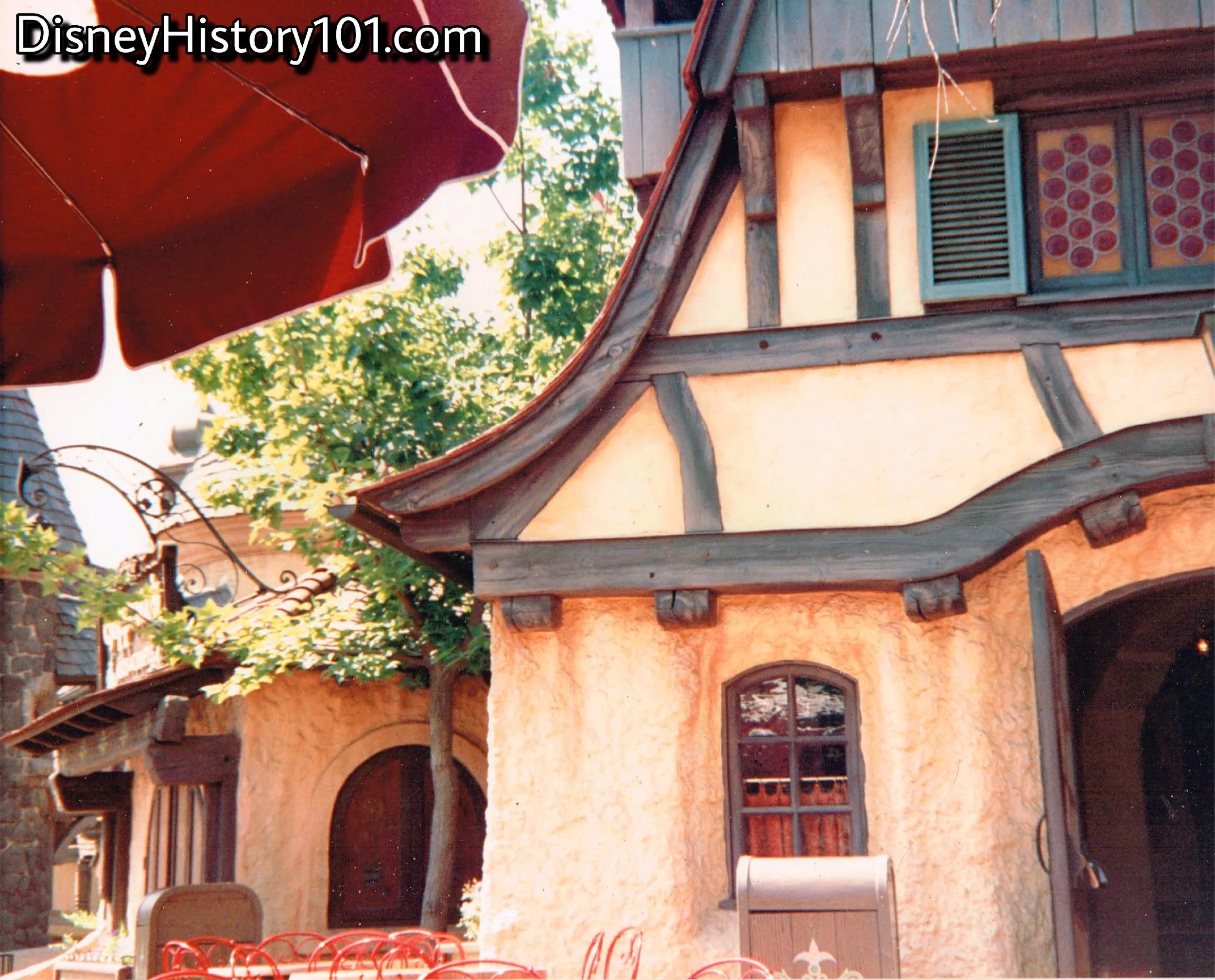
Village Haus Restaurant
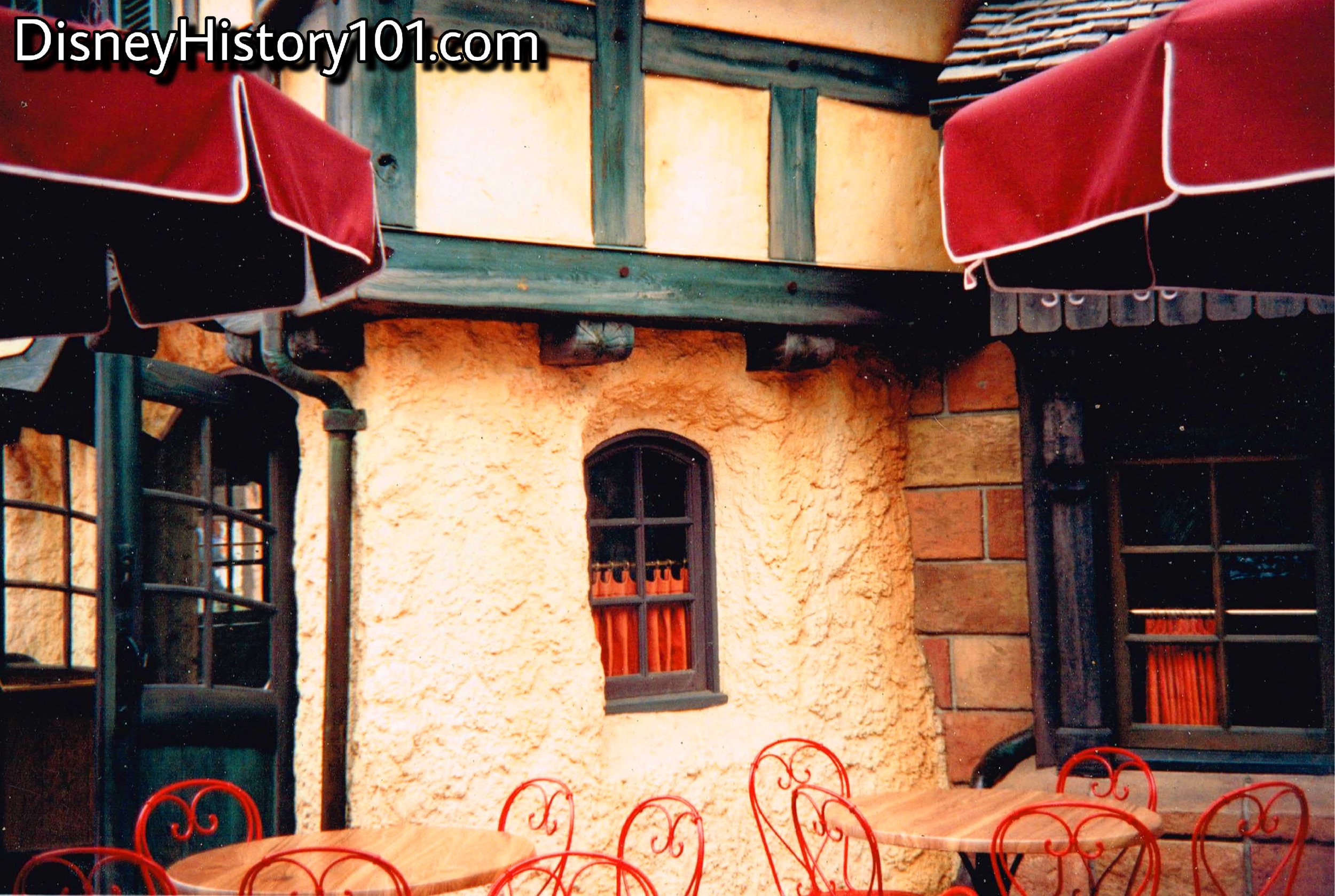
Village Haus Restaurant
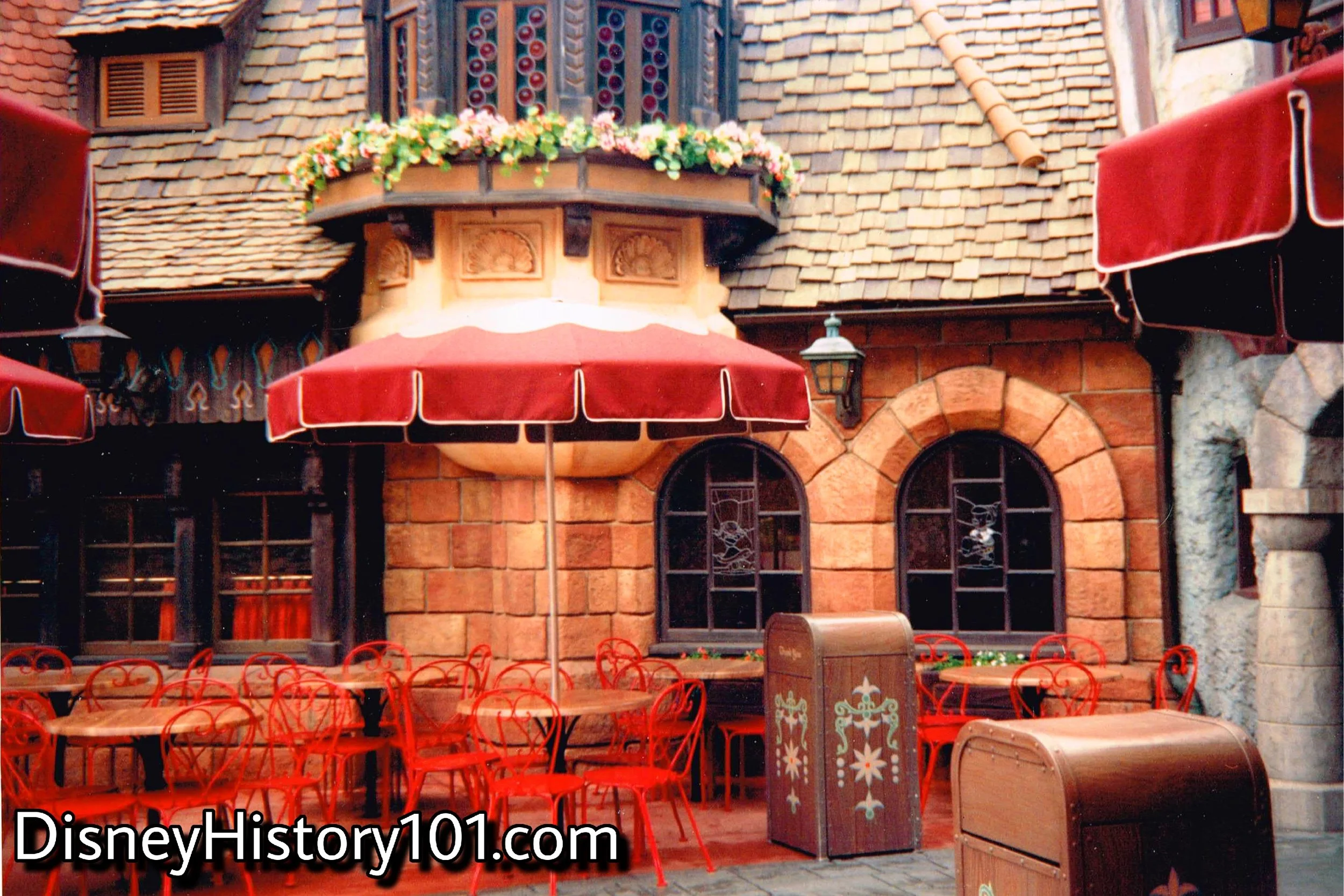
Village Haus Restaurant
The Pinocchio Village Haus Restaurant was an opening day success at Walt Disney World. Early WED Imagineering proposals (made April-June, 1981) for a “Pinocchio Restaurant” in the recently imagined New Fantasyland included square footage approximations of a facility (at 20,425 square-feet).
The Lower Level (8,000 square feet total) would house a Prep Kitchen (1,000 square feet), Refrigerators (500 square feet), Freezers (500 square feet), a Storage Area (1,400 square feet), a Syrup Tank Room (200 square feet), a Break Area (500 square feet), Employee Rest Room (250 square feet), a Fantasyland Area Office Space (1,100 square feet), a Corridor (400 square feet), a Service Elevator (150 square feet), and Equipment Rooms (2,000 square feet).
The Ground Level would house a Serving Area (1,250 square feet), a Kitchen Area (1,250 square feet), a Service Elevator (150 square feet), an Office Area (150 square feet), a Corridor (200 square feet), a Queue Area (2,500 square feet), a Dining Area (3,150 square feet), and a Guest Rest Room (1,400 square feet).
A Second Level Dining Area (2,375 square feet total).
Here, the Village Haus Restaurant Cast Member window, was accessible via the road behind Fantasyland.
During the years leading up to the Imagineering of New Fantasyland, there developed a growing necessity for an “employee food facility” in Fantasyland. The Backstage Small World Break Area was examined, but the physical set-up was deemed to small to “allow expansion as it is immediately adjacent to a fire lane.” It was also found that the existing break area had “neither the room nor the utilities to accommodate anything more than the vending machines” it once offered. According to Dale Burner (Fantasyland/Tomorrowland Director) to Disneyland LINE magazine (Vol.14, No.32; August 12, 1982): Relief was “on the way! The new Pinocchio Restaurant will feature a special employee window, (with discounted prices), as well as a major break area located in the basement below the restaurant. Plans for this new break area, in addition to a lounge and vending machine facilities, include a ‘quiet area’ for employees who wish to enjoy a book or newspaper without interruption. Look for these new additions as the Fantasyland Project progresses.”
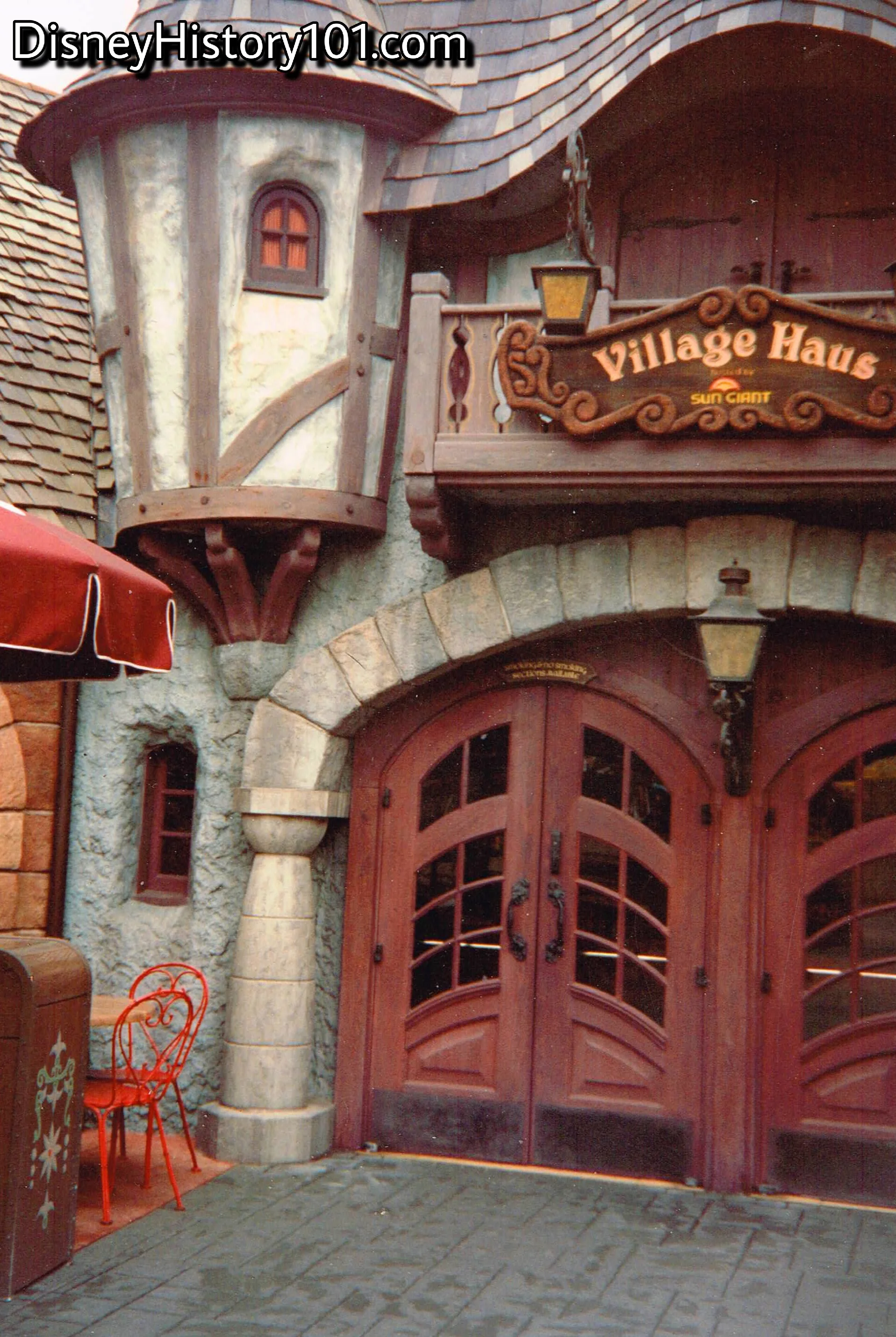
Village Haus Restaurant Front of House Sponsored by Sun Giant
“A SELDOM PRAISED WORK OF ART”
(Vacationland Magazine, Summer, 1982)
“At Disneyland 14 dedicated artists in the Sign and Pictoral Shop make sure that identifying signs within the park are easy to read, pleasant to the eye and themed to the area and time which they represent….Although designs and artwork may originate in Walt Disney Studio or WED Enterprises (the “Imagineering” Division of Walt Disney Productions), its up to the craftsmen and women of the Sign Shop to mix the authentic colors and apply their handiwork by brush or airbrush to any project where touching up is needed.”
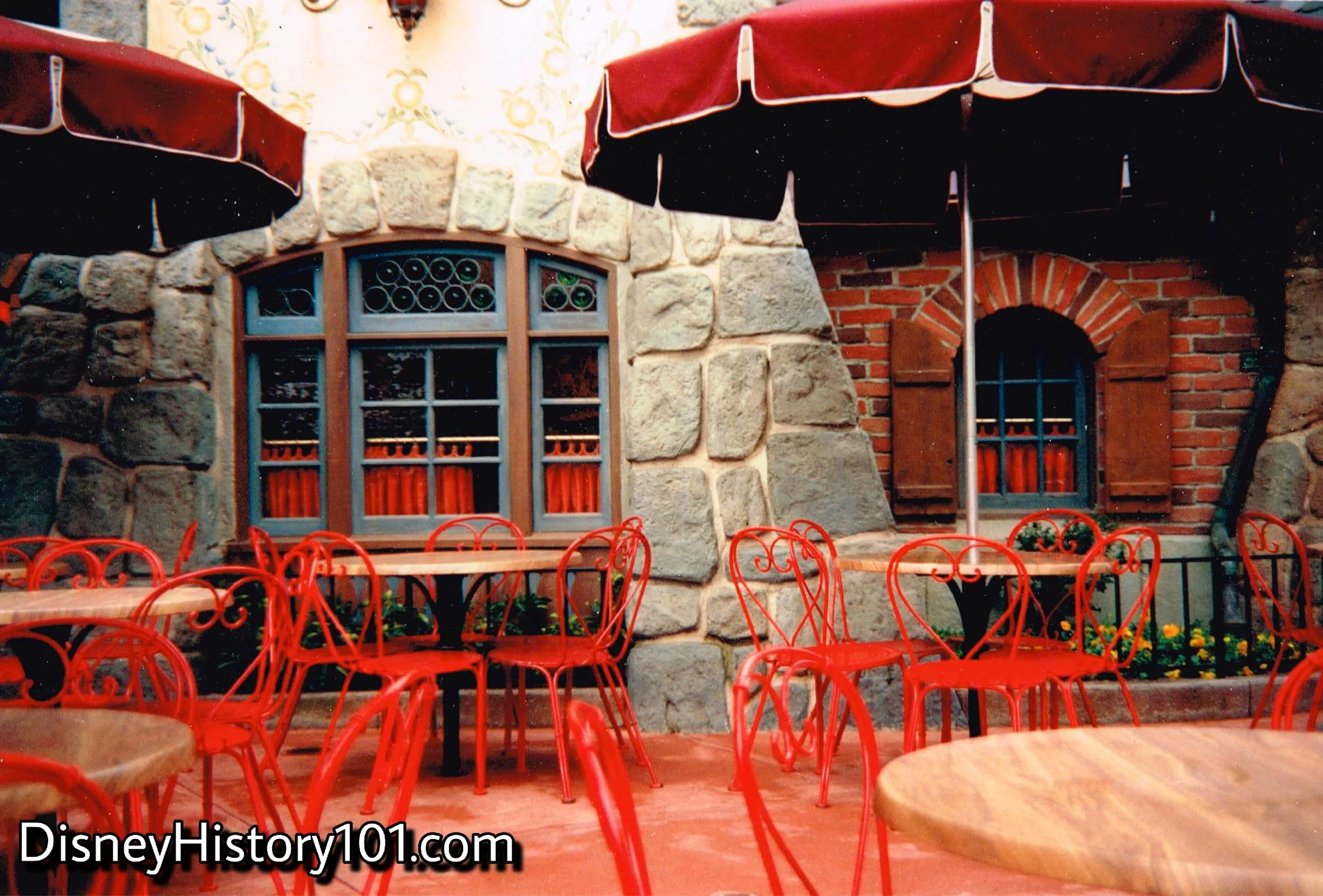
Village Haus Restaurant
All the seating would allow the Village Haus to occasionally hosted special events, like Private Parties (e.g. GM and Hughes Employees, January of 1986).
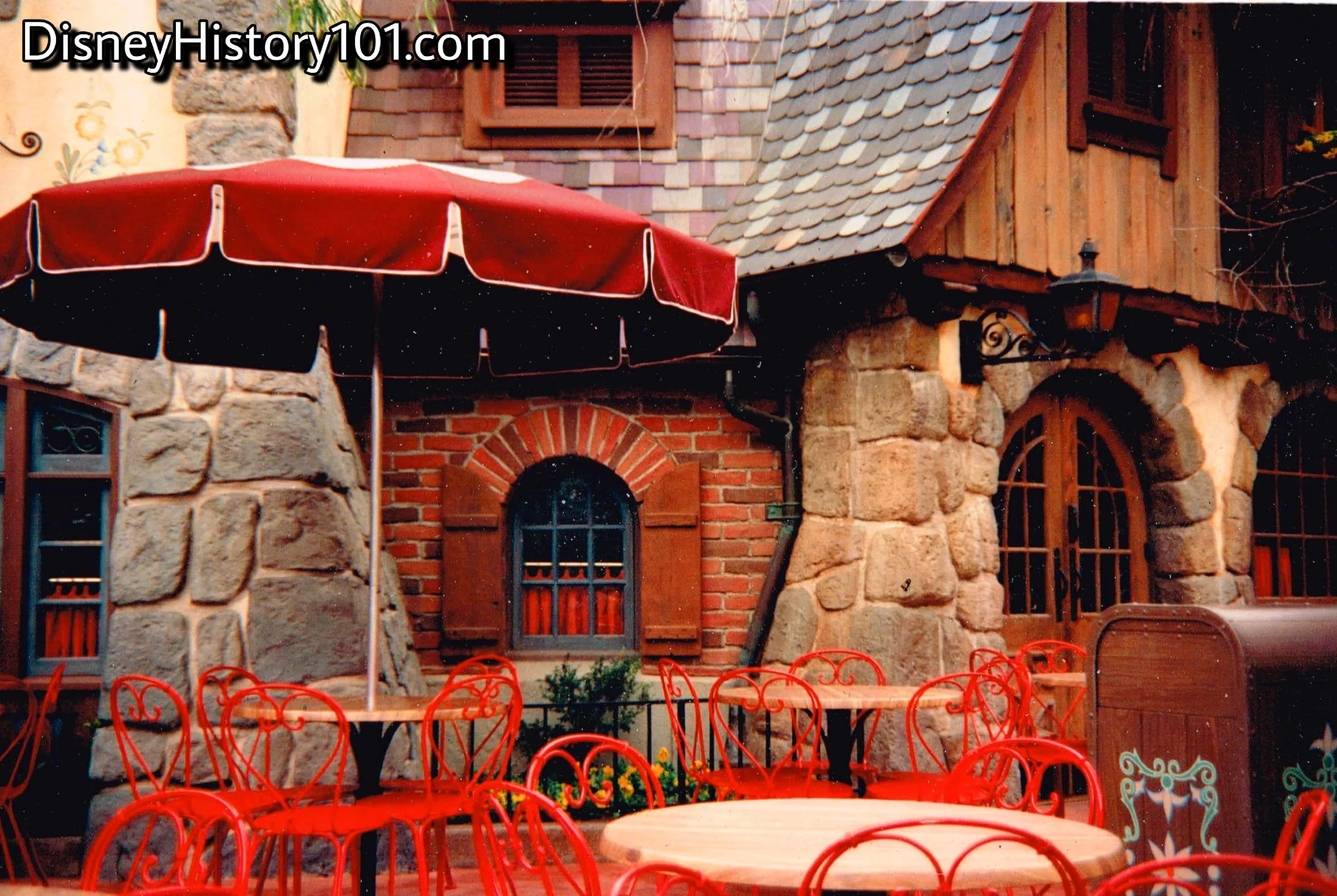
Village Haus Restaurant
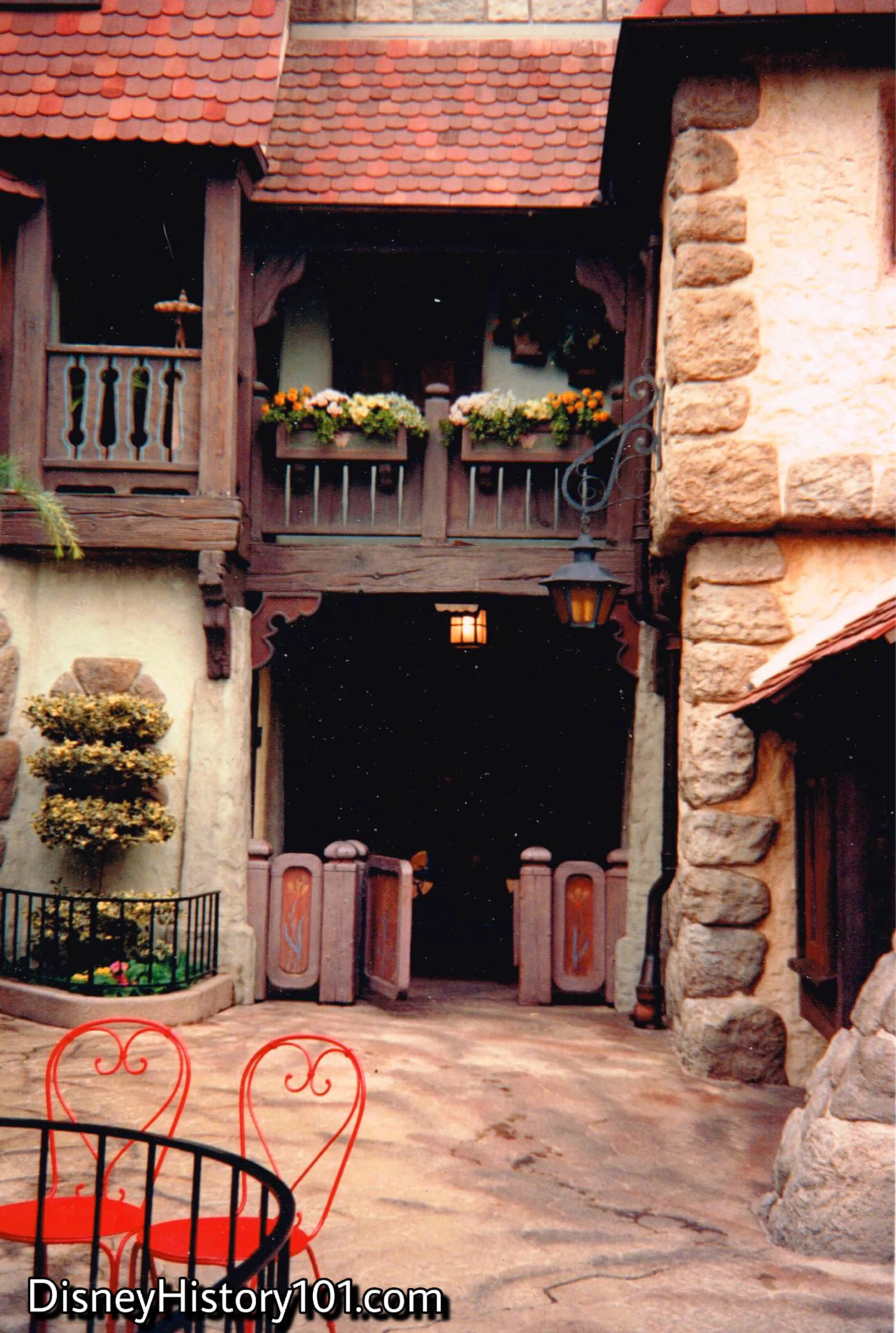
Village Haus Restaurant
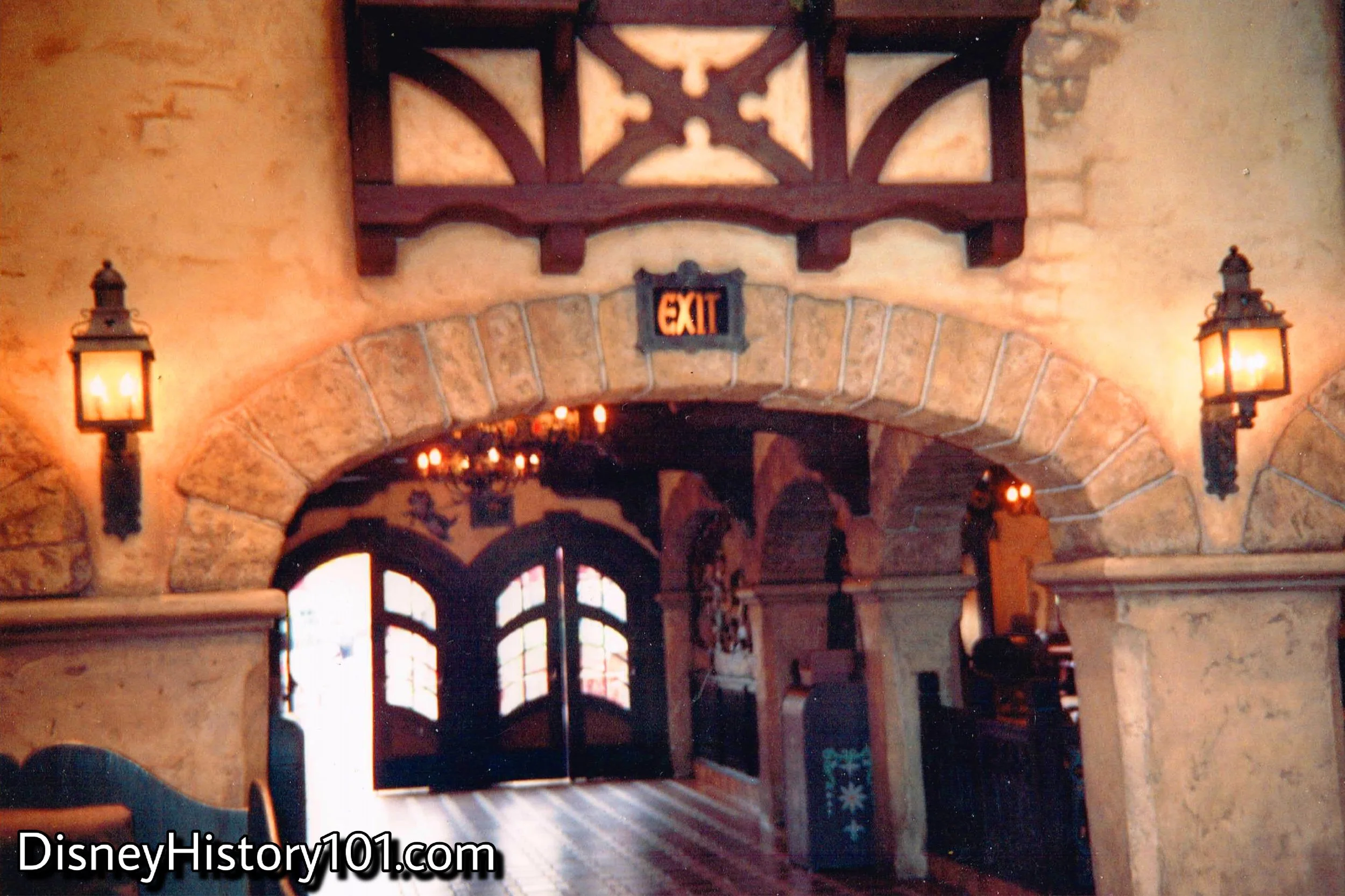
Village Haus Restaurant
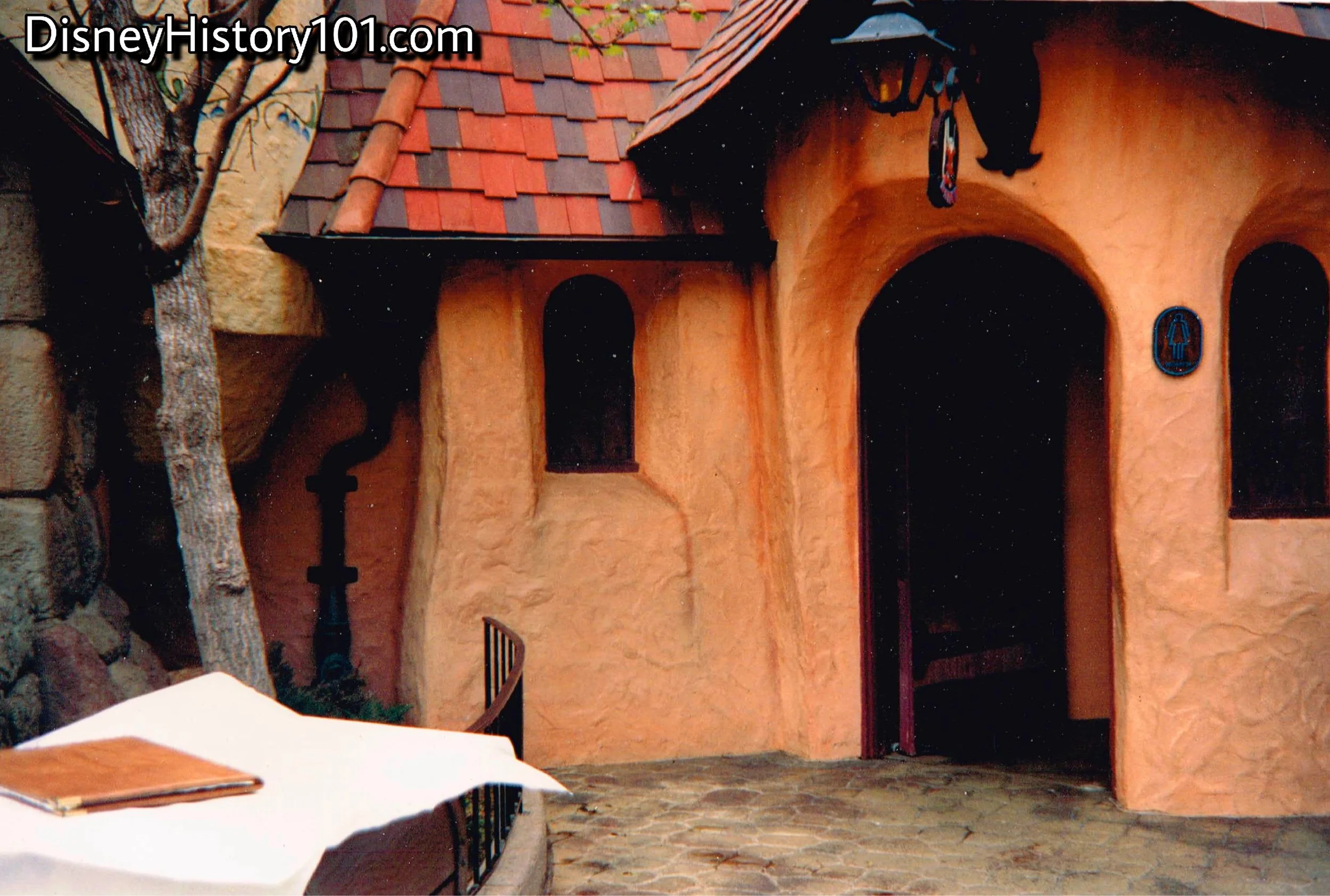
Village Haus Restaurant
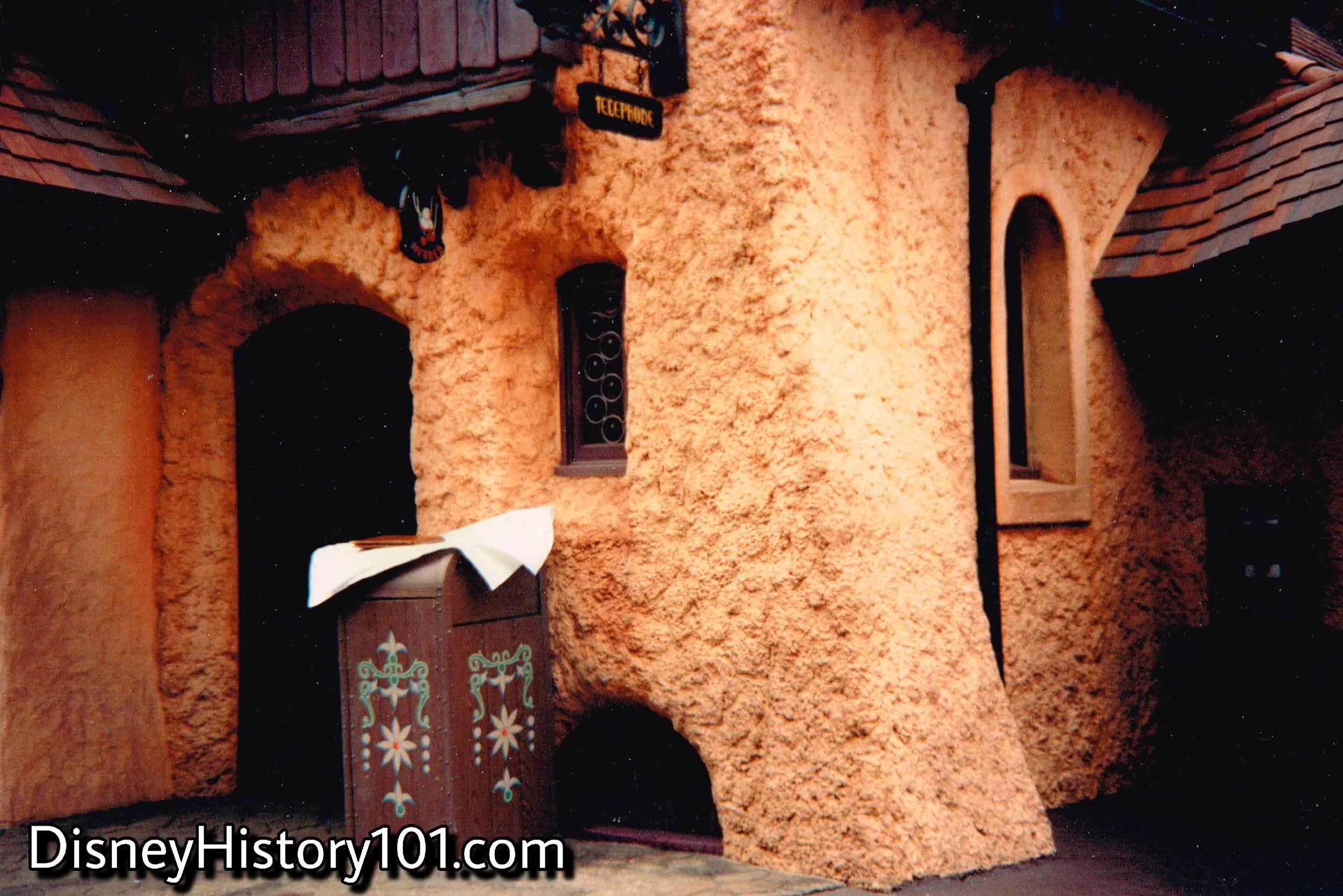
Village Haus Restaurant
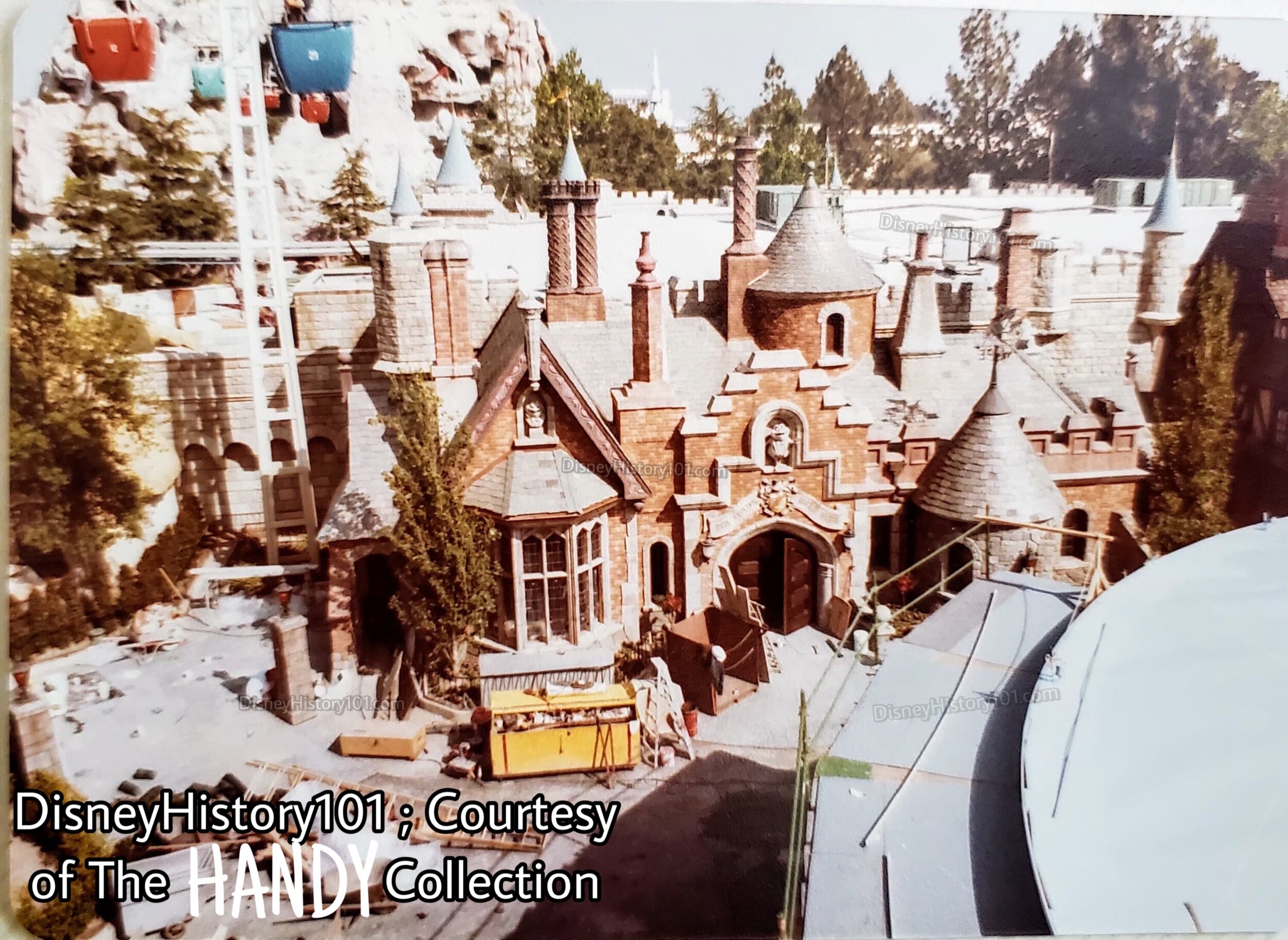
Here we can see the dramatic difference in these photographs of the final stage of the major refurbishment. These final two photographs were taken just days before the big reveal.
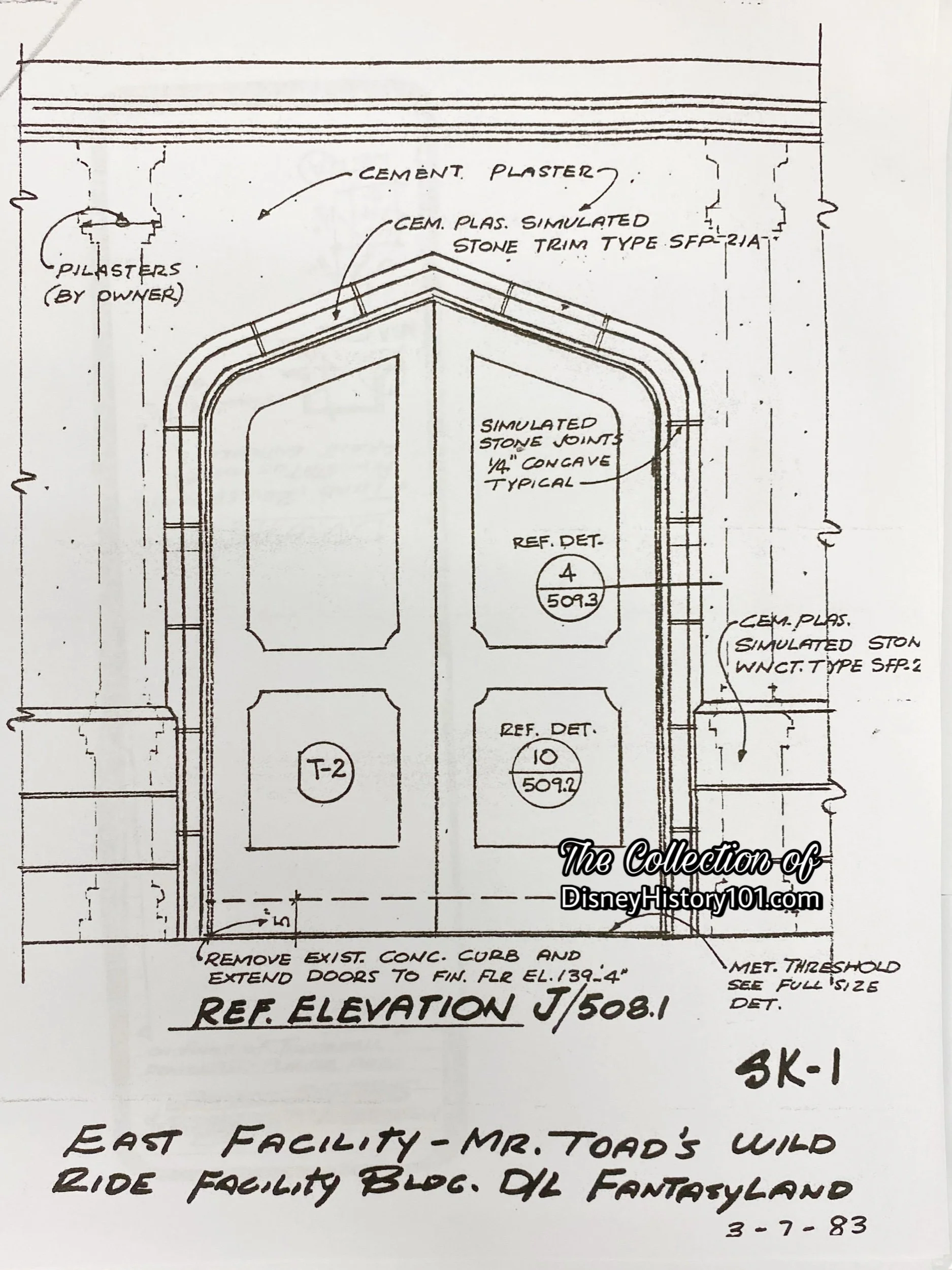
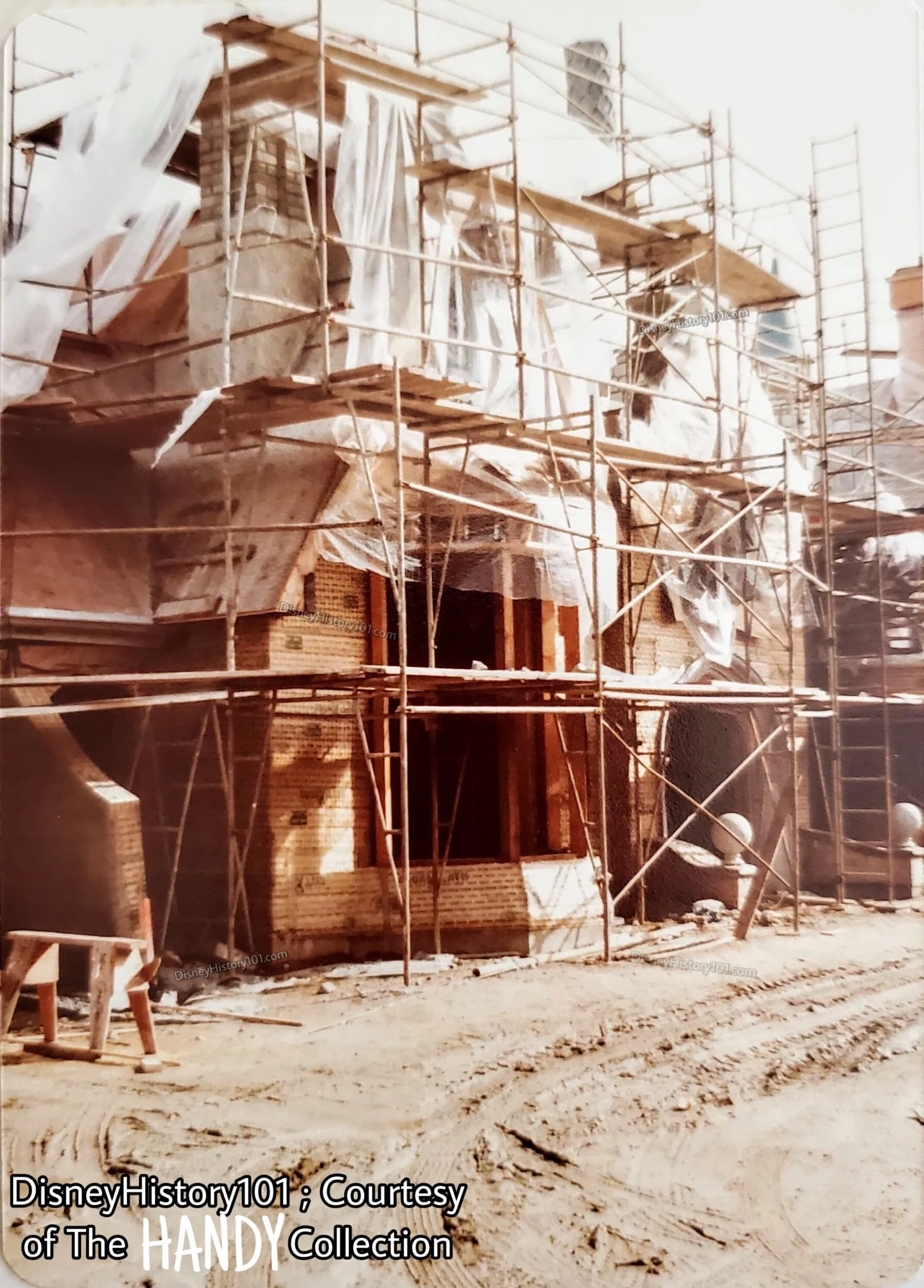
MR. TOAD'S WILD RIDE
MR. TOAD'S WILD RIDE
MR. TOAD'S WILD RIDE
PETER PAN'S FLIGHT
MR. TOAD'S WILD RIDE
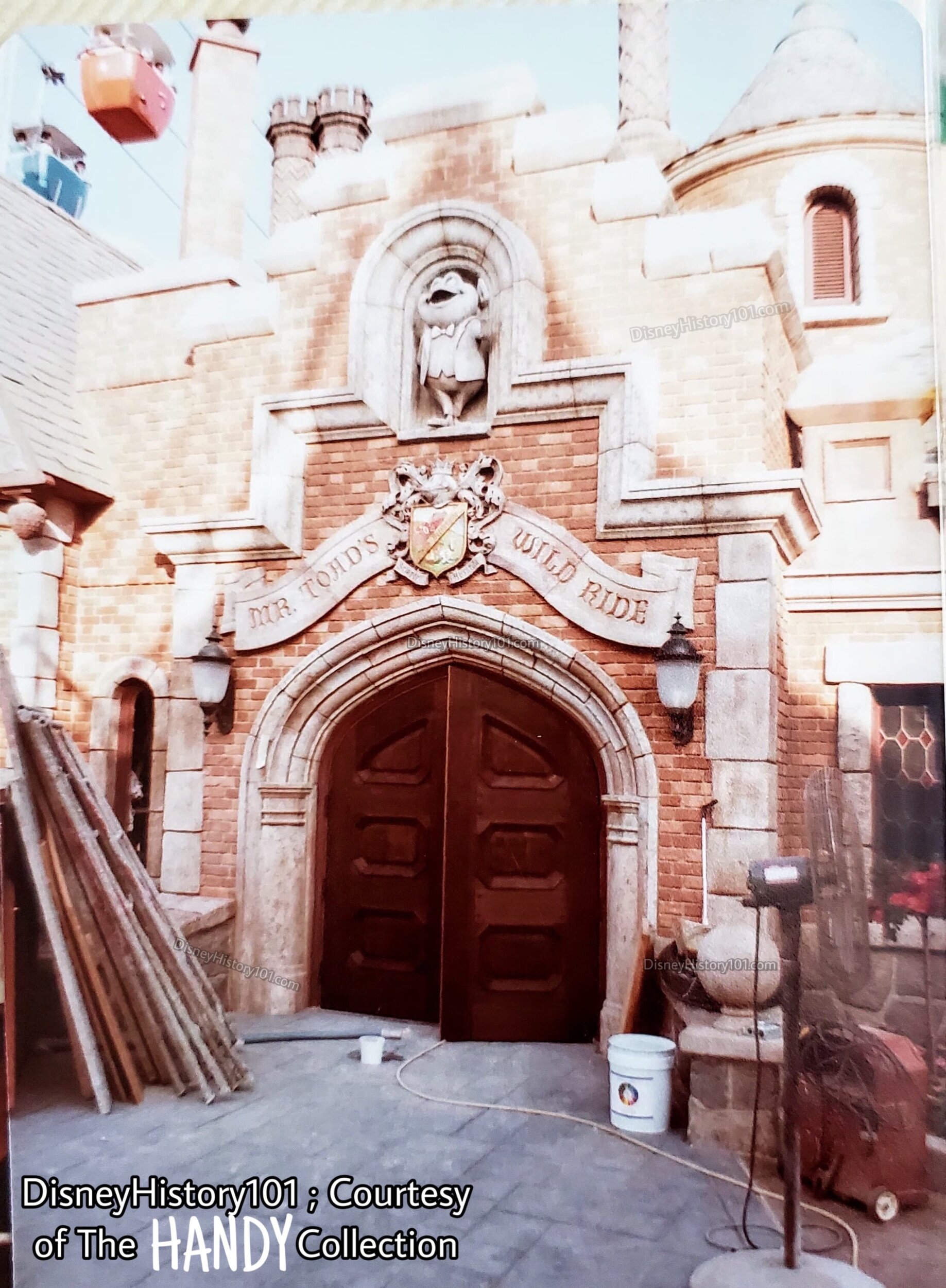
MR. TOAD'S WILD RIDE
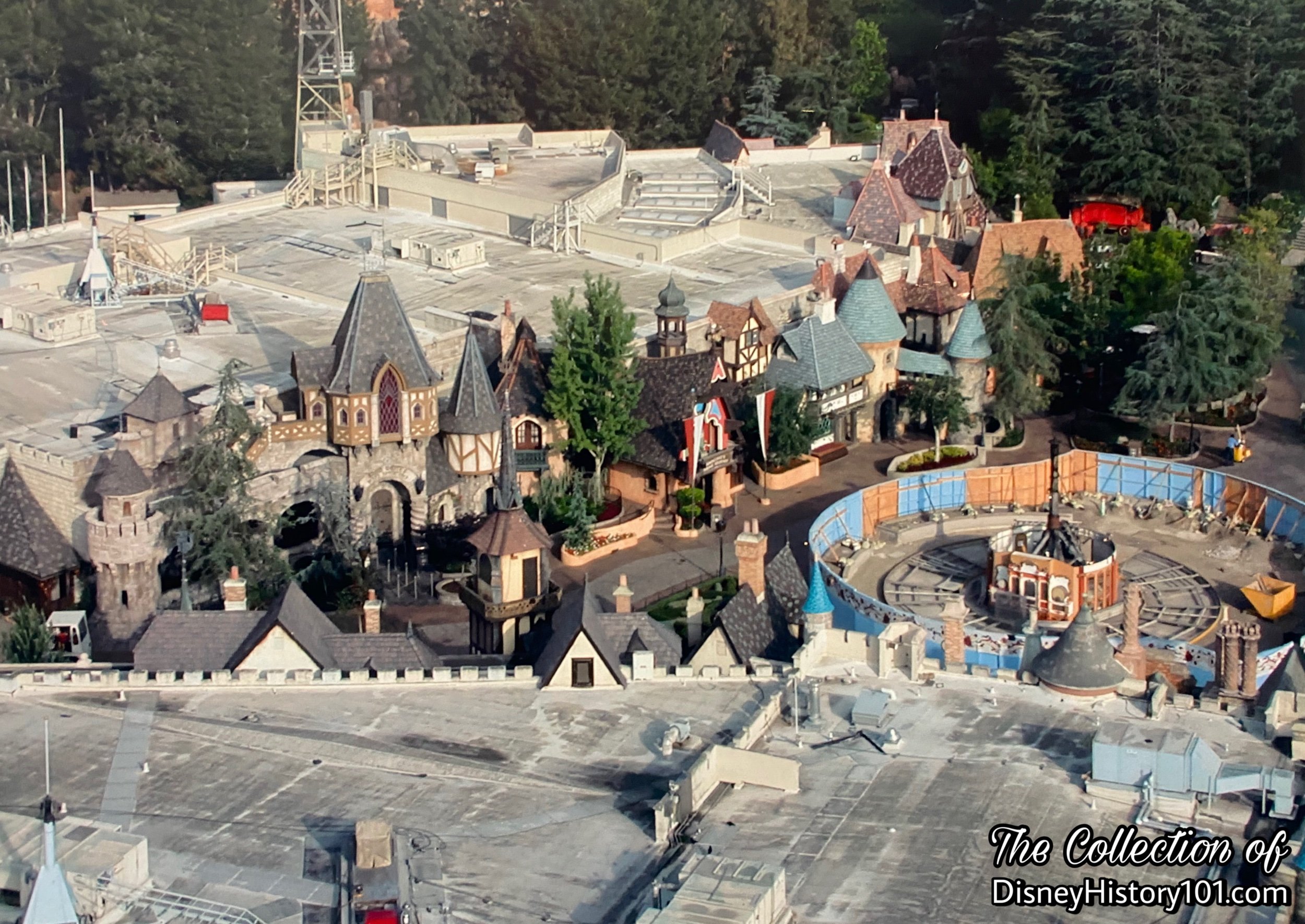
Show Documentation showcases Fantasyland in the Magic Kingdom at Walt Disney World.
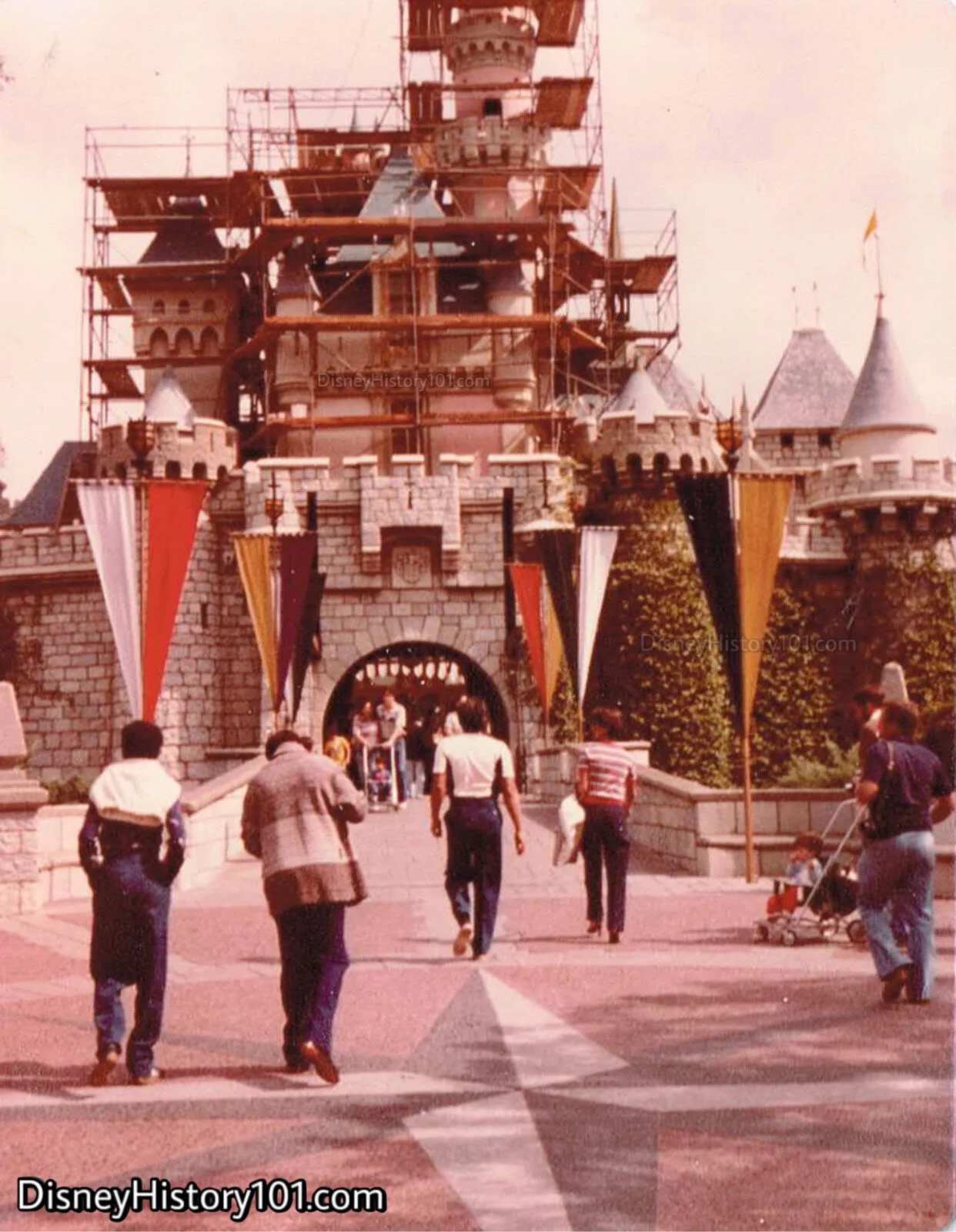
SLEEPING BEAUTY CASTLE (May, 1982)
Sometime after the 25th anniversary of Disneyland, scaffolding appeared around Sleeping Beauty Castle, in preparation for a furbishment in relation to the opening of New Fantasyland!
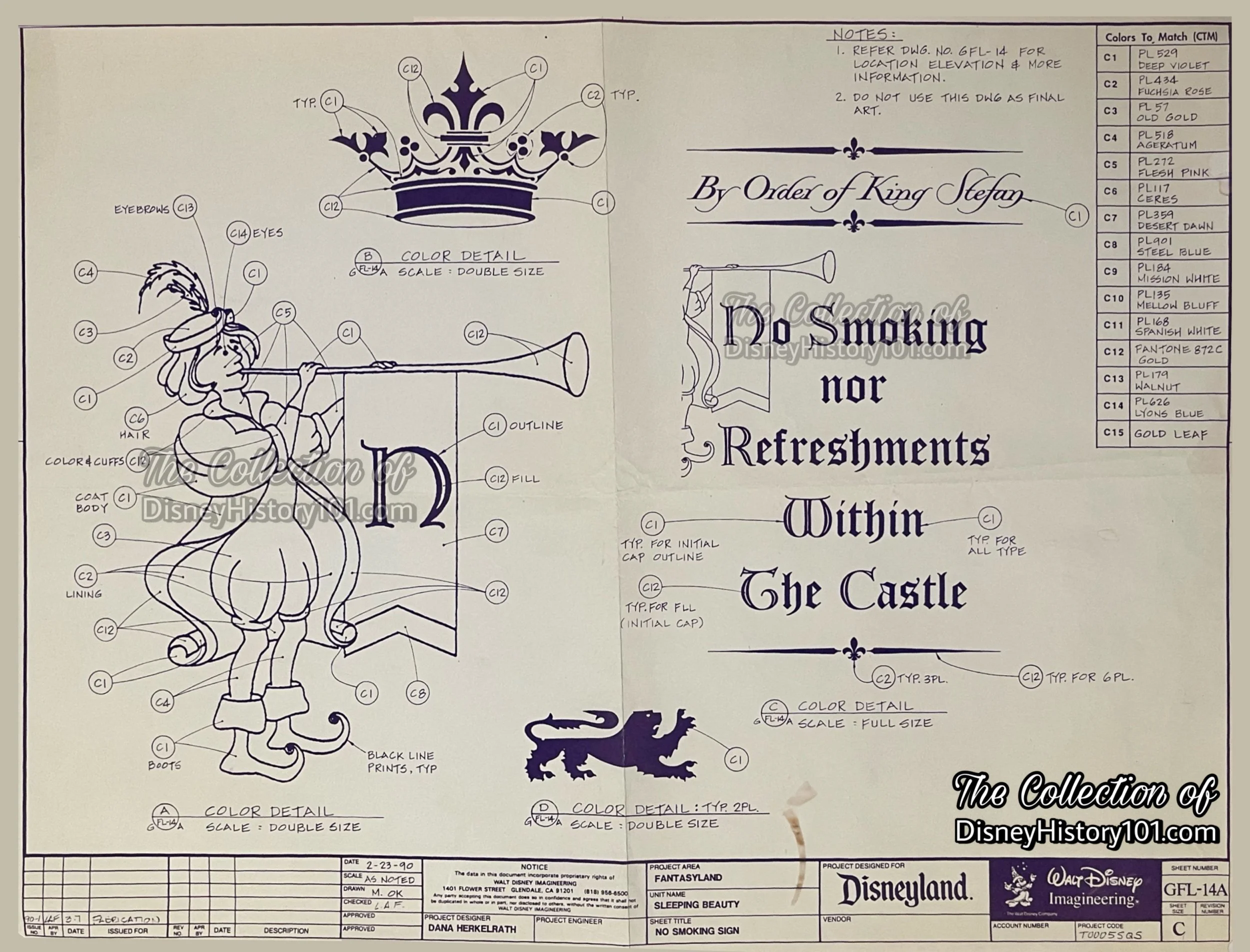
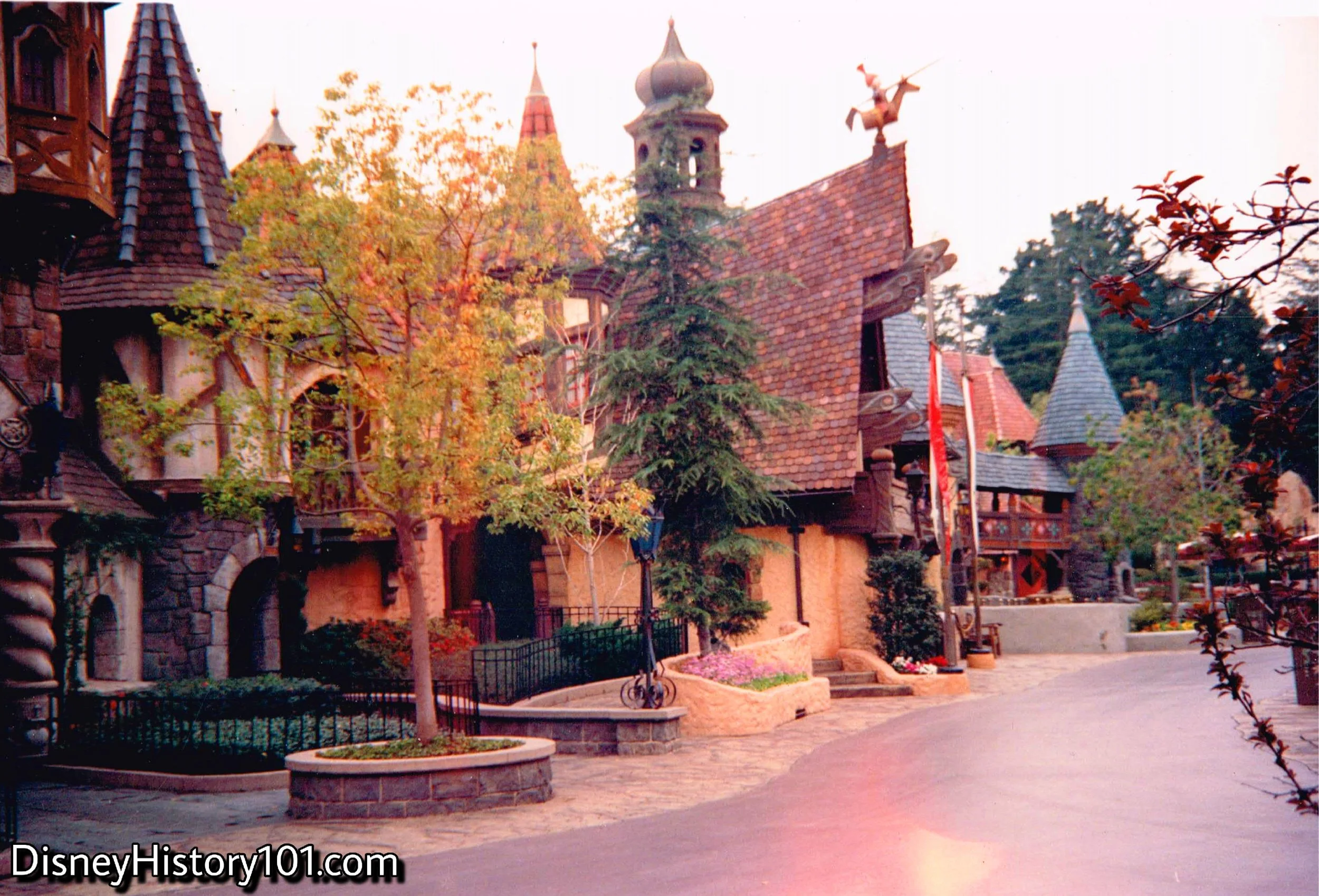
New Fantasyland Inspection
In March 1983, before the opening of New Fantasyland, Marc Davis, Don Edgren, Claude Coats, and Tom Masterson inspected rides like Pinocchio’s Daring Journey.
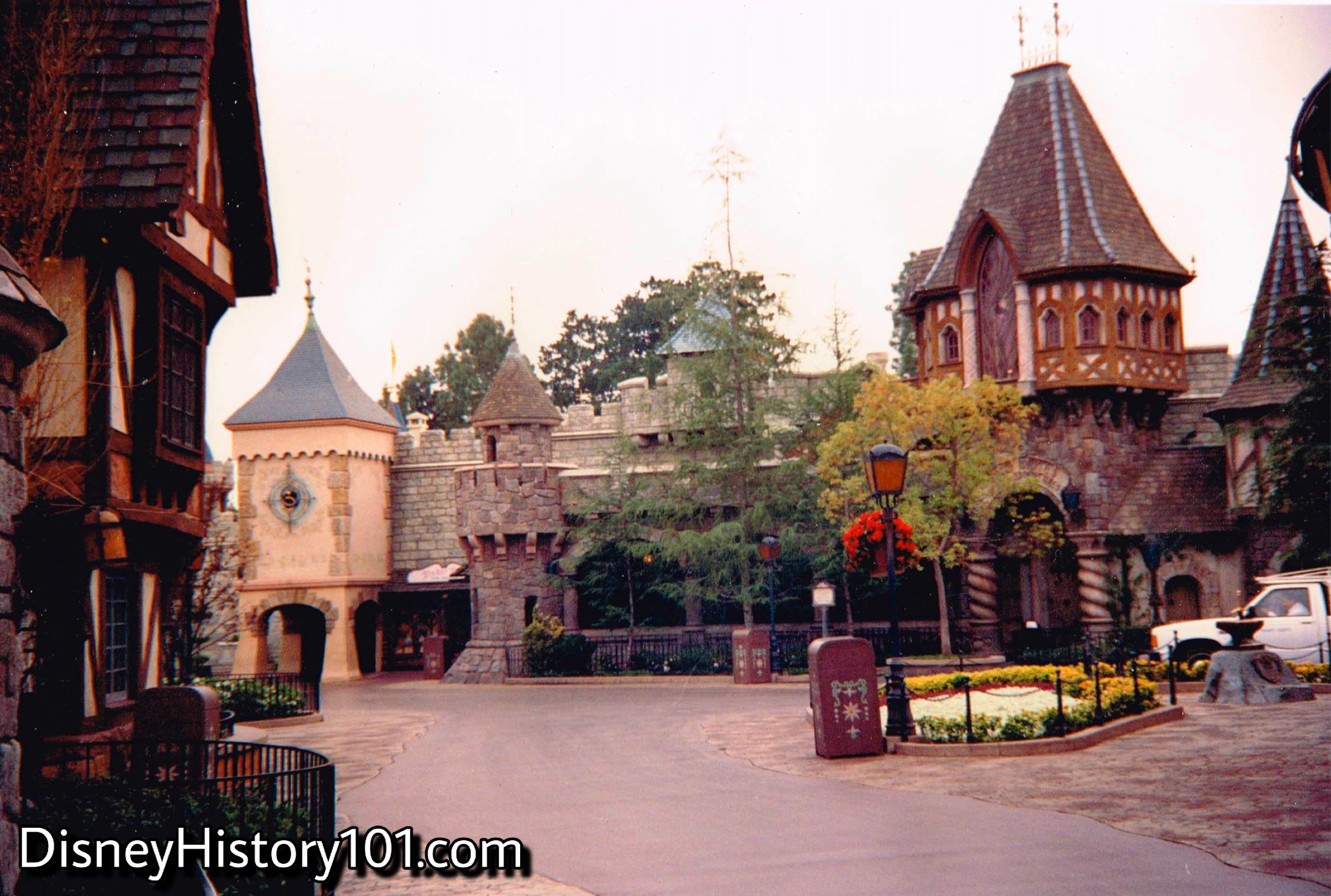
New Fantasyland Inspection
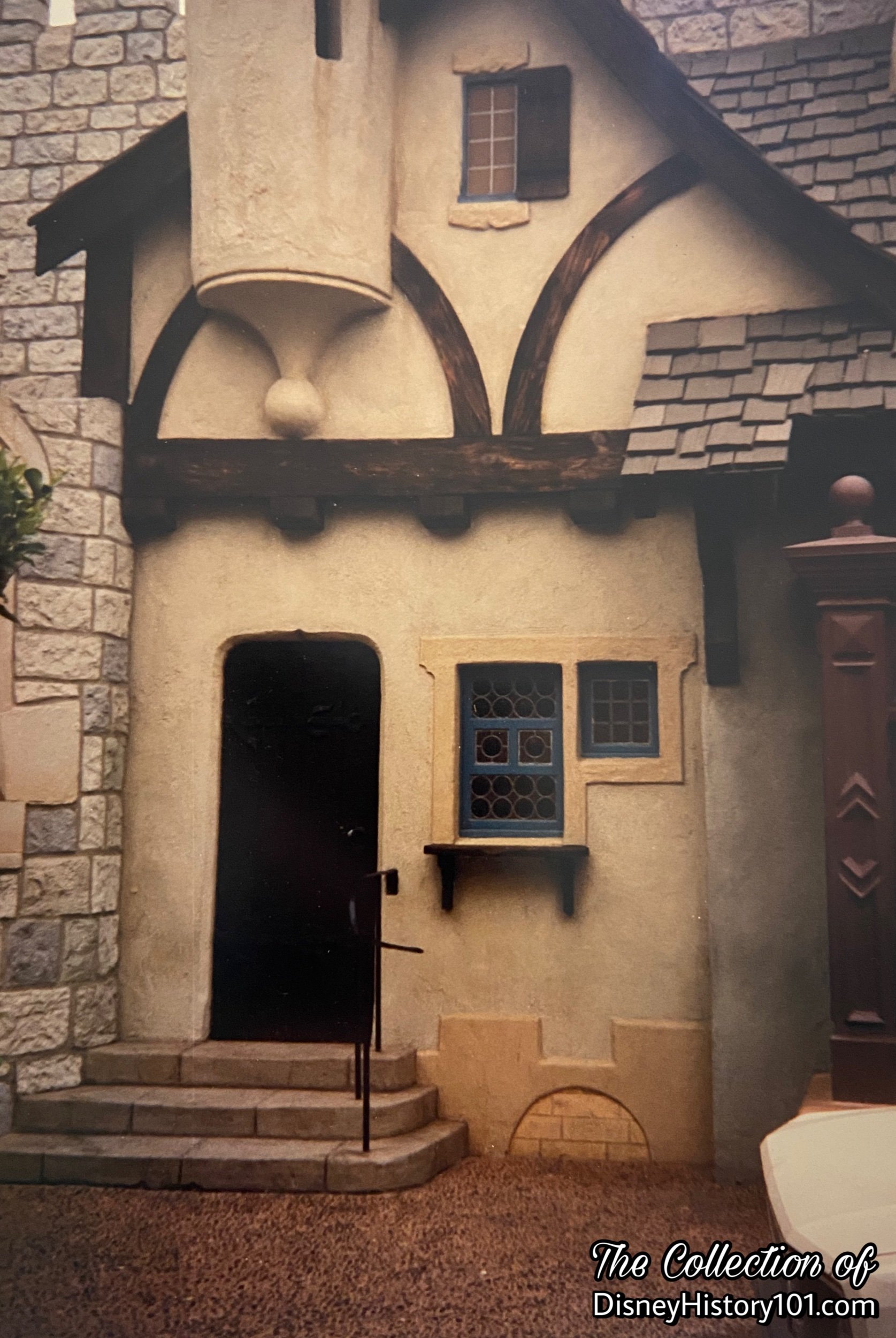
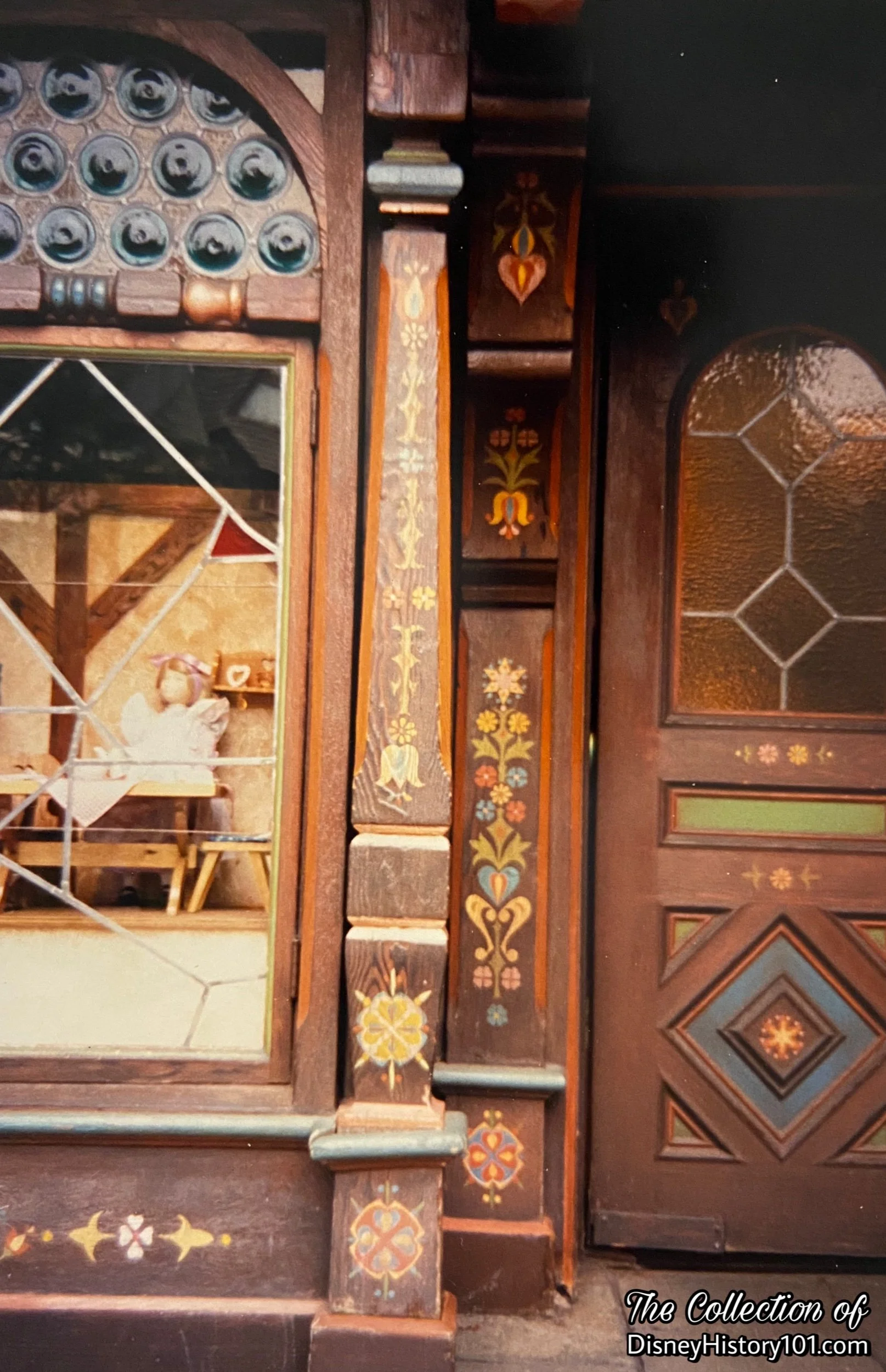
“Show Start-Up”
In 1983, Sleeping Beauty Castle’s drawbridge was raised - for the first time in 28 years. This was for the premier of New Fantasyland and to accommodate “Believe You Can, And You Can” - a Del Monte- sponsored television show (starring Mari Amsterdam and Heather O’Rourke) - which was shot before New Fantasyland opened to the public. As a sidelight, the television special features footage of the drawbridge being lowered before a young Heather O’Rourke, but played in reverse to appear as it is being raised (which may be of interest to you, if you’ve never seen this done before). According to LINE magazine (Vol.15, No. 10, March 10, 1983) : “Maintenance coordinated the raising, arranging at first to raise the bridge with a crane since it was uncertain whether the winch system would still work after 28 years. Then it was discovered that the original lead weights, used as counter balance in the winch system, were still in place in their assembly behind the portcullis. With the additions of more weight, approximately 1,500 pounds altogether, the system worked perfectly and the drawbridge was raised. Incidentally, the large winch outside Arts ‘n Crafts is decorative only ; the real winch is in the attic above the drawbridge.”
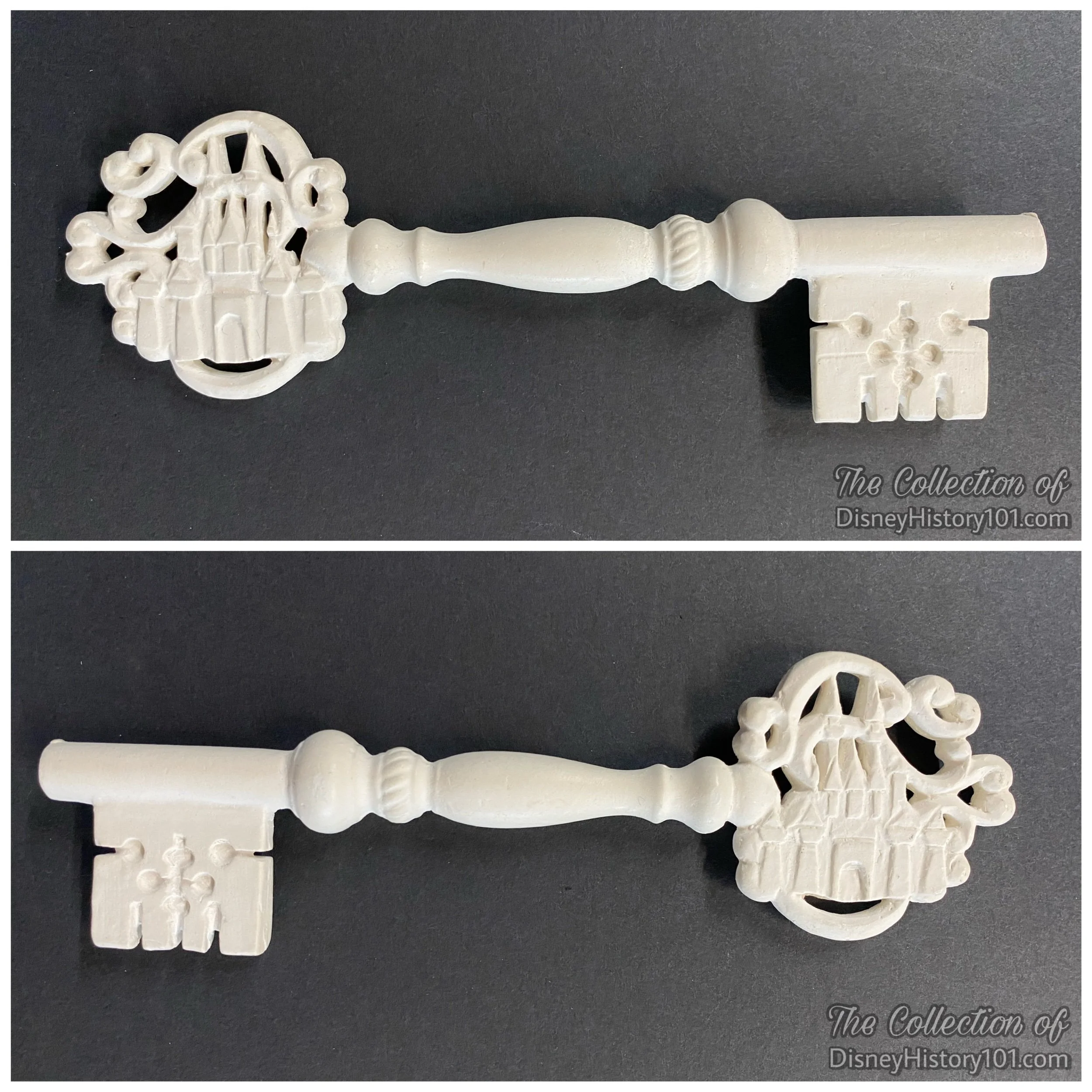
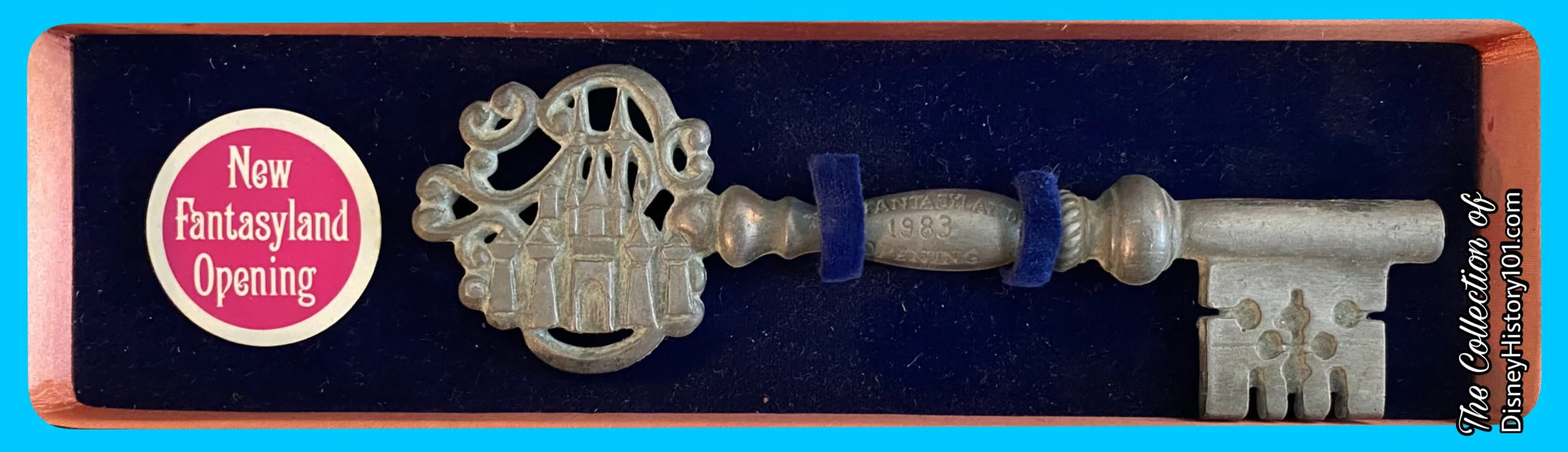
This is a prototype for the “Unlock the Magic” Invitational New Fantasyland Key.
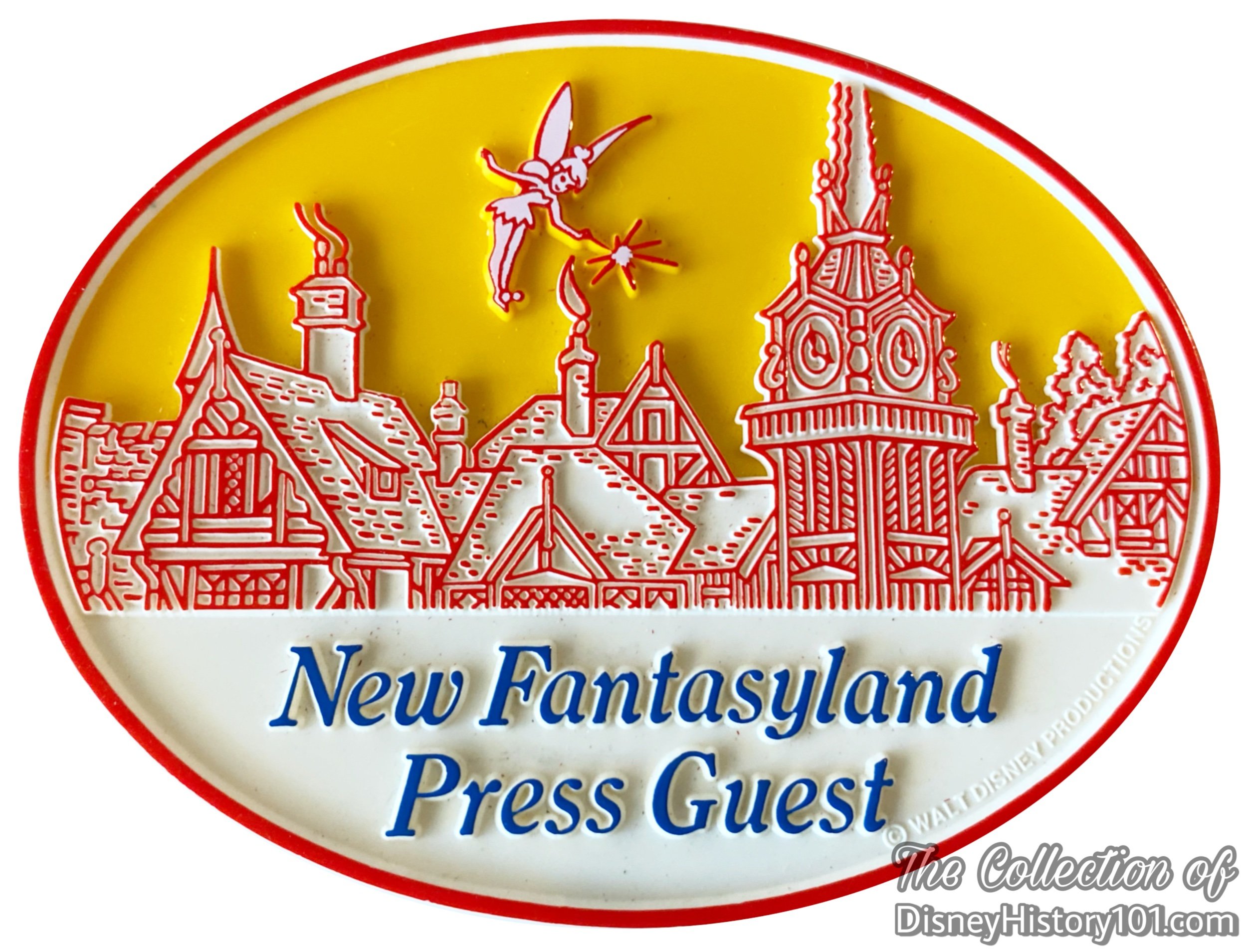
Soon, Disneyland Cast Members and their guests were “cordially invited to unlock the magic!” New Fantasyland Cast Premier Tickets were distributed through The Center or Activities Center between May 13 and May 25, 1983.
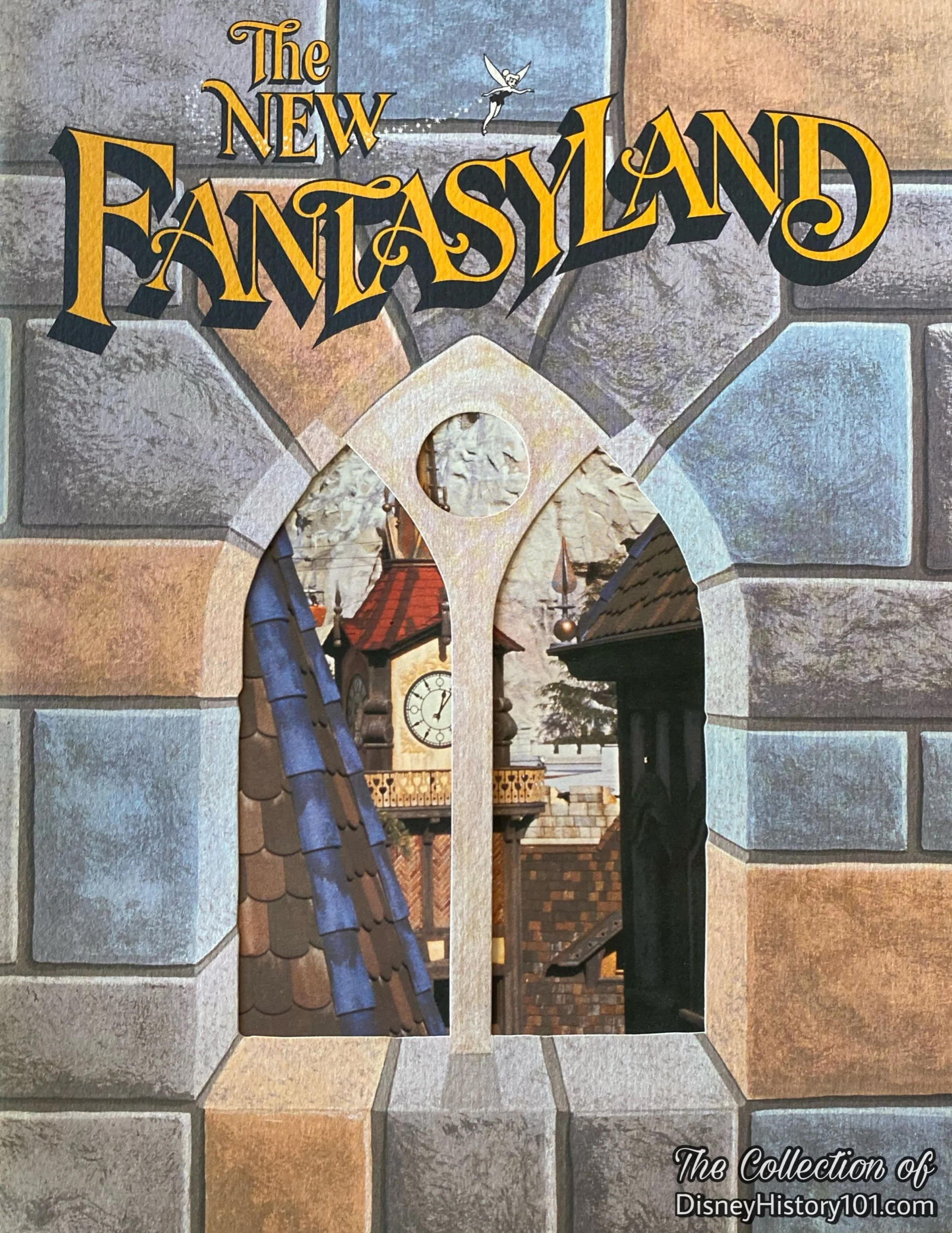
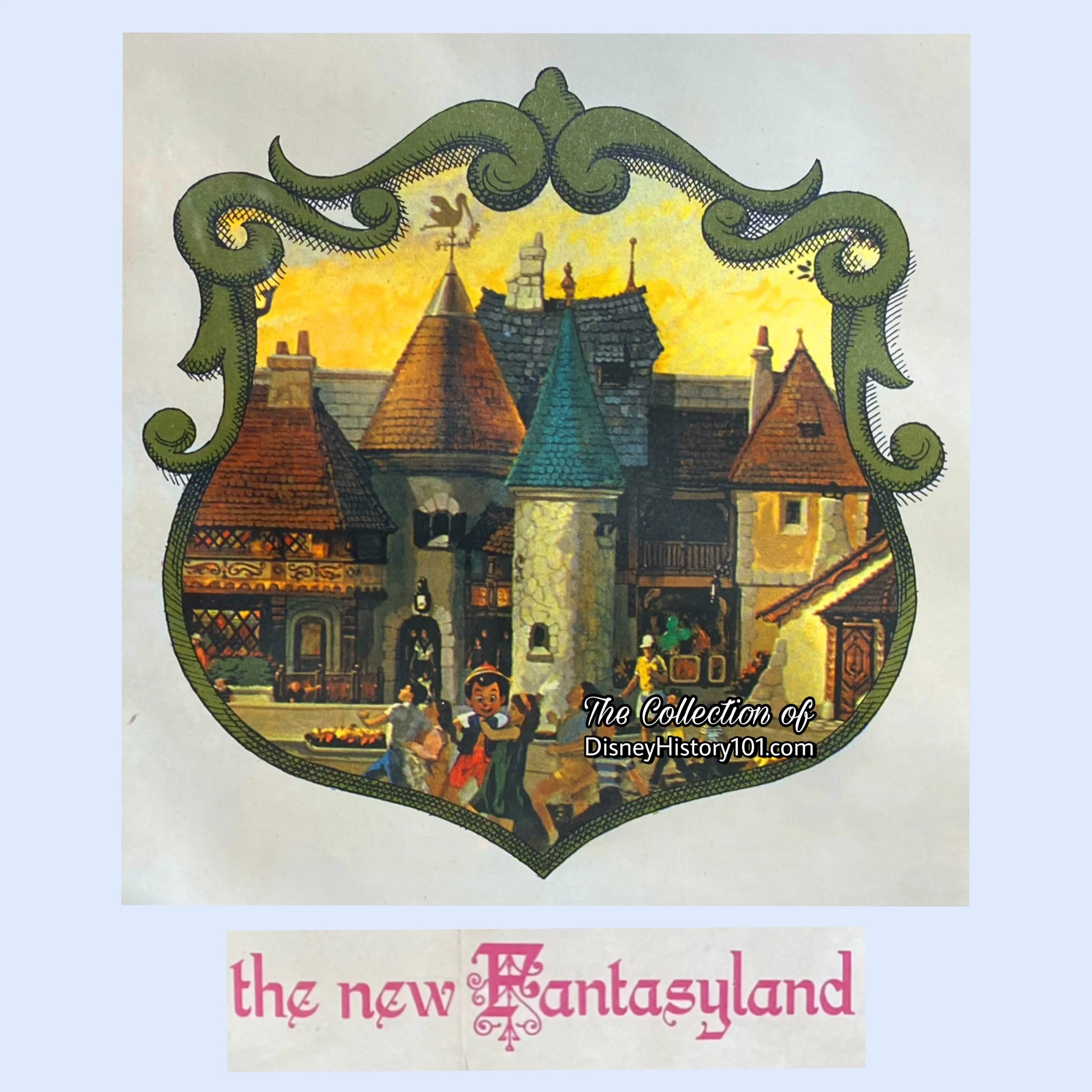
"The New Fantasyland" brochure cover.
The "Rededication of Fantasyland” took place on May 26th and 31st and June 1st and June 2nd, 1983! Dedication ceremonies began at 8:30 p.m., “in front of Sleeping Beauty Castle. Following the dedication, until midnight” guests enjoyed the “new and updated attractions as well as a few of your old Fantasyland favorites. Complimentary cake and beverages” were served at the Village Inn.
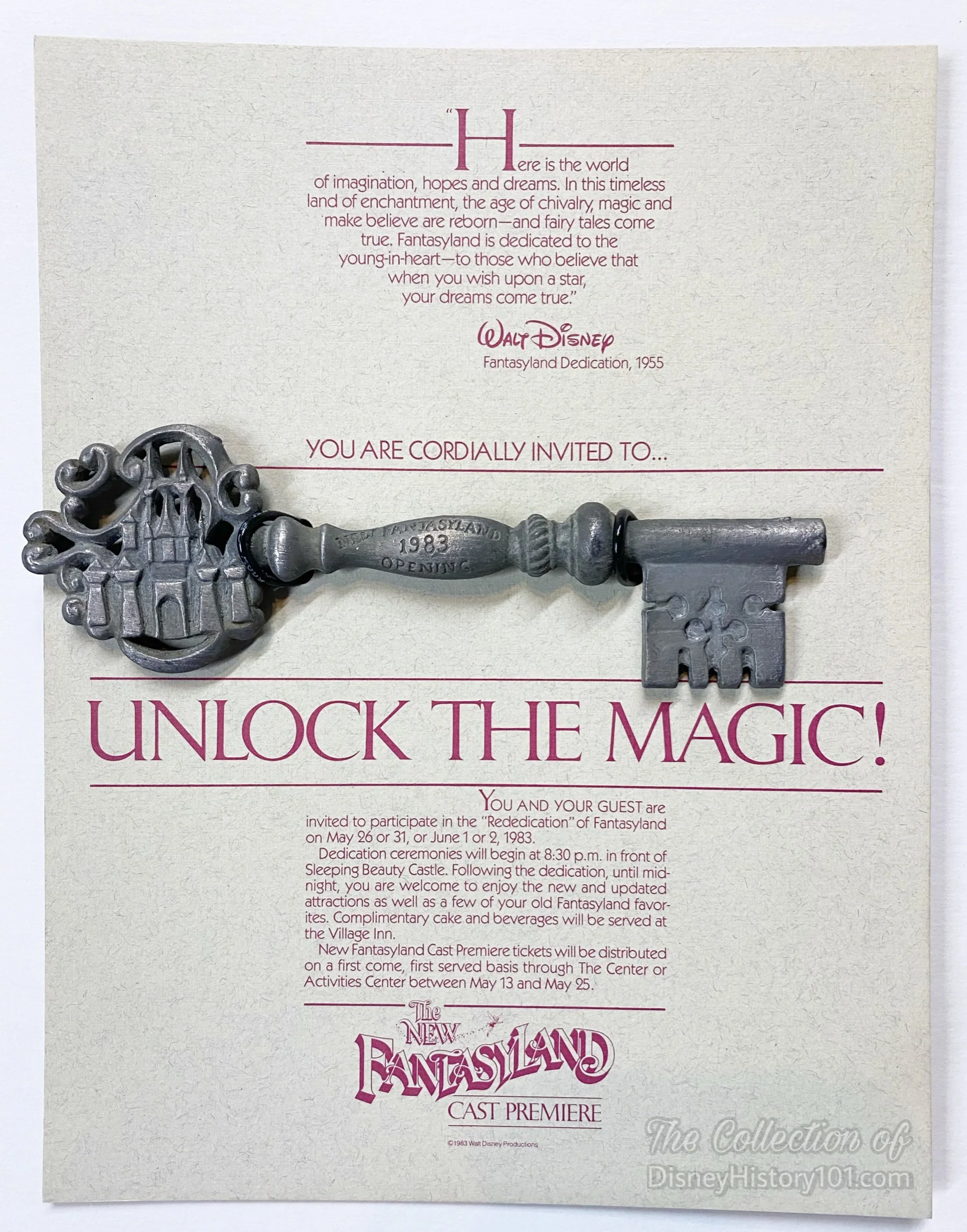
Unlock the Magic! Dedication Ceremony and Cast Premier, June 2, 1983, 8:30 pm.
Then, on June 2, 1983 the Magic was unlocked as The New Fantasyland Cast Premier and formal Dedication ceremony began at 8:30 p.m.
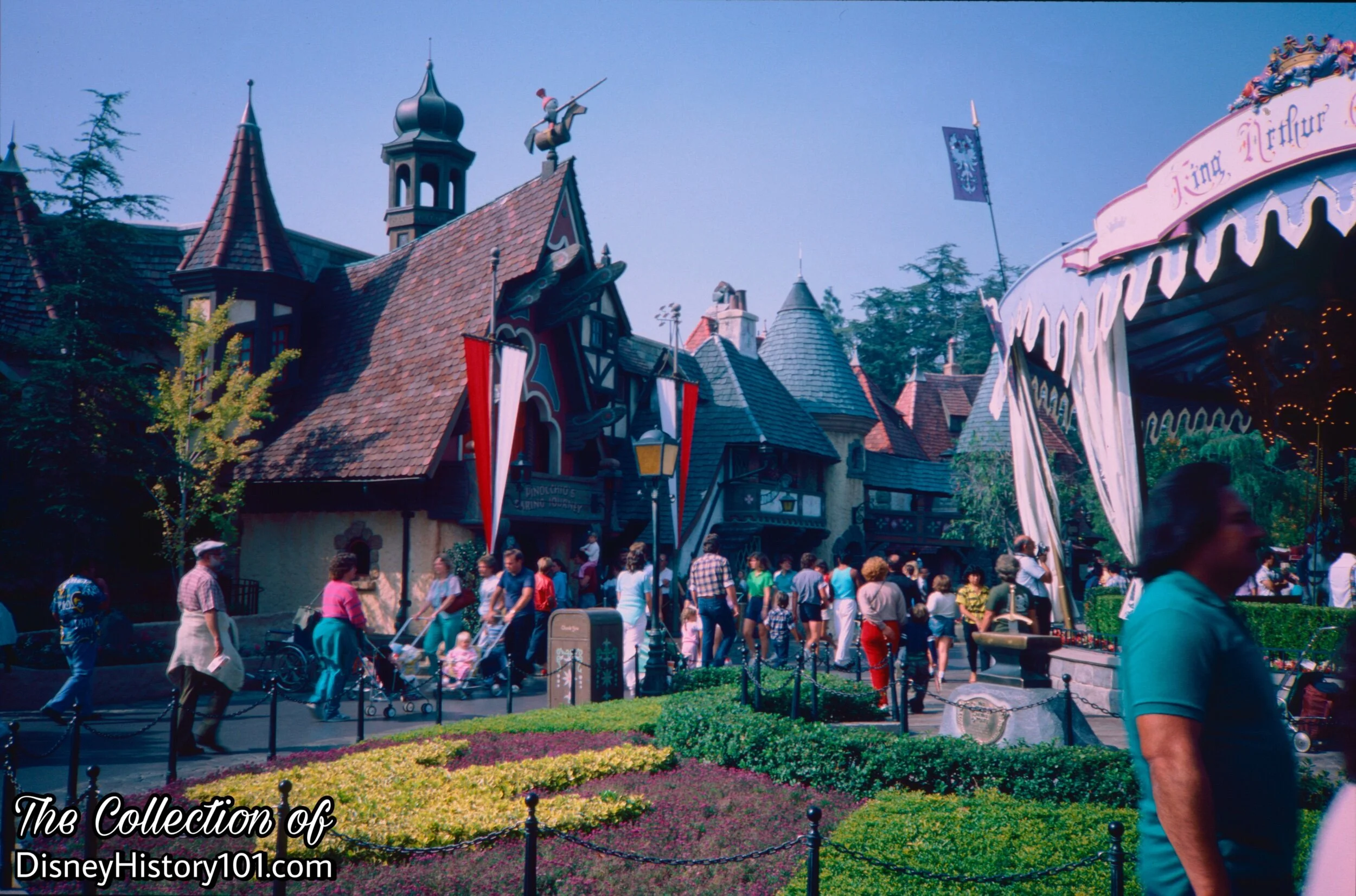
New Fantasyland West and Landscaping.
“Attractions”
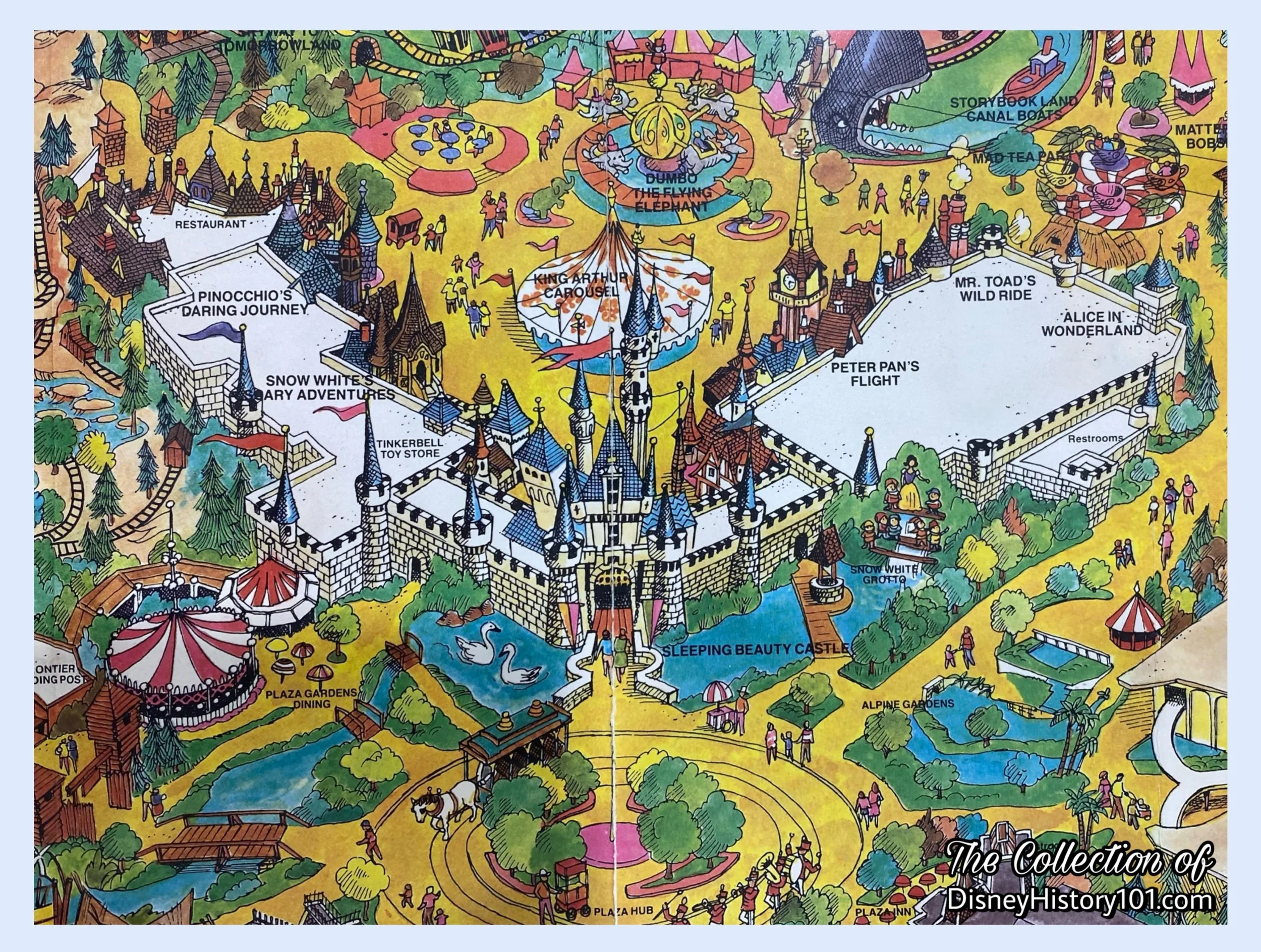
After all the expansions were complete (and by the year 1990), “the happiest realm of them all,” Fantasyland, held a total of 17 attractions, including Sleeping Beauty Castle, It’s a Small World, Snow White’s Scary Adventures, Pinocchio’s Daring Journey, Peter Pan’s Flight, King Arthur’s Carousel, Dumbo the Flying Elephant, the Skyway to Tomorrowland, the Casey Jr. Circus Train, Storybook Land Canal Boats, the Motor Boat Cruise, the Fantasyland Autopia, Matterhorn Bobsleds, the Mad Tea Party, Alice in Wonderland, Videopolis, and the Disneyland Railroad. [“Disneyland’s Fabulous Facts and Figures,” prepared by Walt Disney Productions, 1990]
“Entertainment”
Fantasyland Entertainment included the Make Believe Brass; Royal Jesters; Disney Characters daily; "Fantasy in the Sky" Fireworks with Tinker Bell at 9:00 p.m.
“Dining”
The Village Haus hosted by Sun Giant offered Hamburgers, hot dogs, special salads, French fries and beverages.
“Shopping”
Tinker Bell Toy Shoppe had toys, games and plush as well as a unique selection of children's Disney Character clothes and accessories. The Mad Hatter had souvenirs and decorative hats including Mickey Mouse Ears. Castle Candy Shoppe had a variety of unusual candies. Arribas Brothers had Damascene art and glassknitting. Geppetto's Arts and Crafts had unusual woodcarvings, steins, clocks and chess sets. The Kodak Kiosk was hosted by Eastman Kodak and offered film, cameras and accessories. Small World Gifts had unique gifts and toys from many lands. A Souvenir Stand had a variety of Disneyland souvenirs, plush tovs and film.
New shops opened like Mickey's Christmas Chalet which offered a large selection of Christmas decorations and gifts featuring Disney characters.
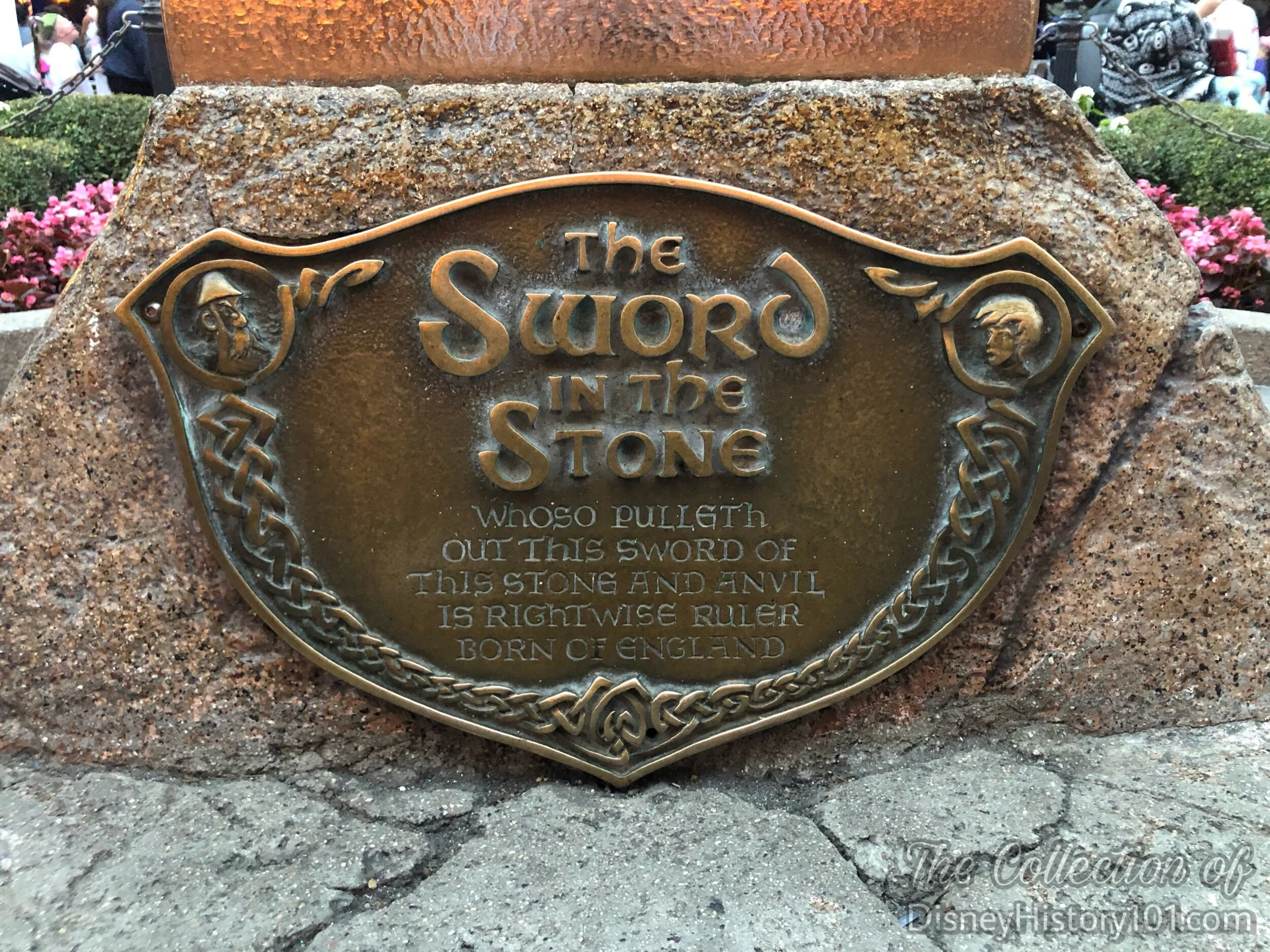
The Sword in the Stone Plaque
The Sword in the Stone is located south of King Arthur Carrousel. The area would be a “set” of sorts, home to a unique Character experience or “meet and greet.”
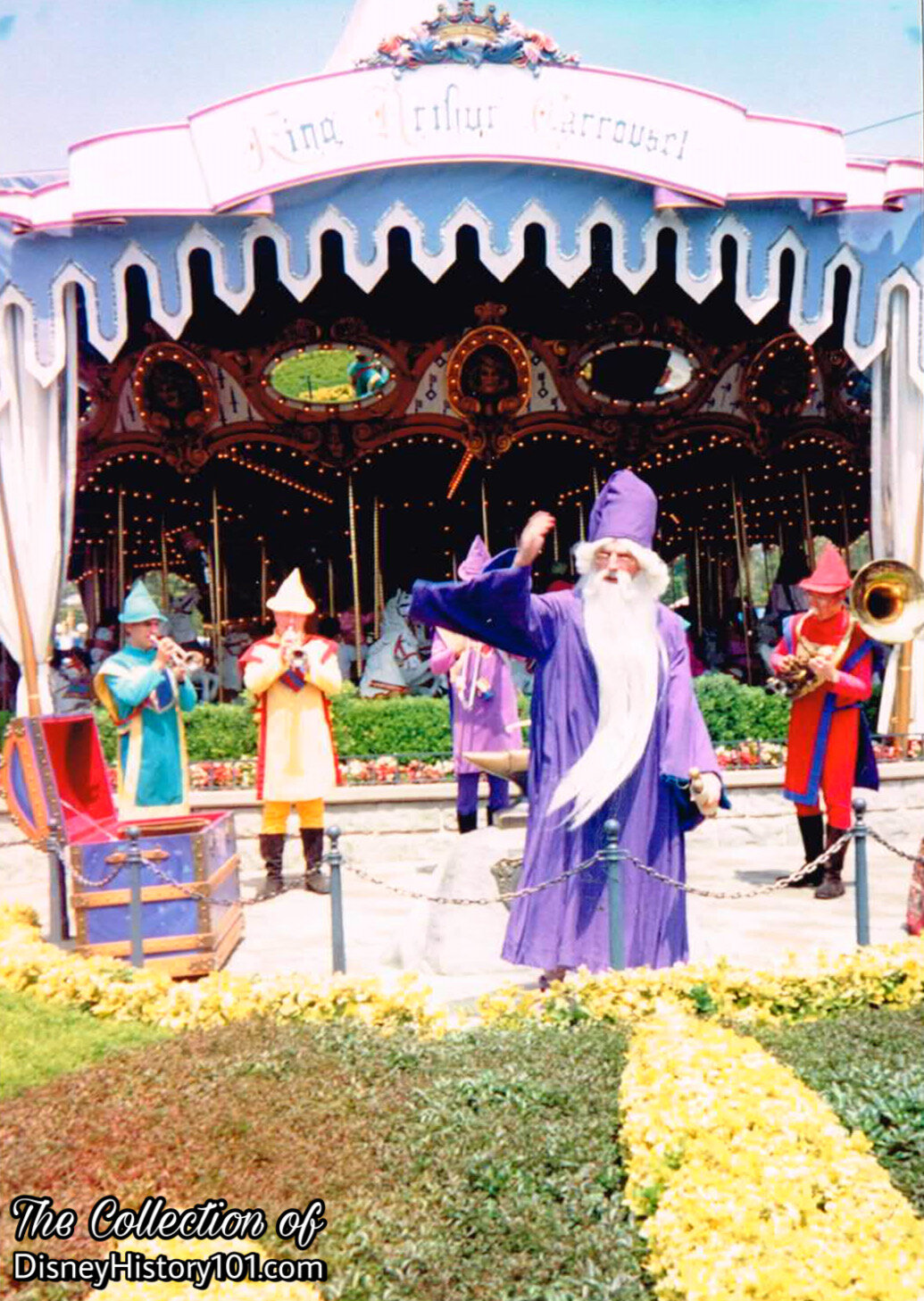
Merlin the Magician presides over the Sword in the Stone Ceremonies, (1989)
“The Magic of MERLIN Begins With ME” or “The Misadventures of Merlin”
Since 1955,“A Disneyland guest is the King in our Magic Kingdom.” - “Your Role in the Disneyland Show,” Disneyland, Inc., 1955. Queue areas were equipped with live entertainment to set the mood for the forthcoming show.
It wasn’t until 1982, that Walt Disney’s The Sword in the Stone would inspire a magical experience at Disneyland. Tony Baxter (WED Enterprises Imagineering Project Designer) oversaw Area Development for the Sword Stone. Now, Merlin the Magician provided Atmosphere Entertainment as he lead the Sword in the Stone Ceremony, a free show staged among Guests! At precisely 1:45, 3:30, and 4:30 p.m. (on Saturdays and Sundays) guests joined Merlin the Magician and the Make Believe Brass or Pearly Band as they created merriment in front of the King Arthur Carrousel.
Cast Member Kent Zbornak was once close to Merlin at this historic time.
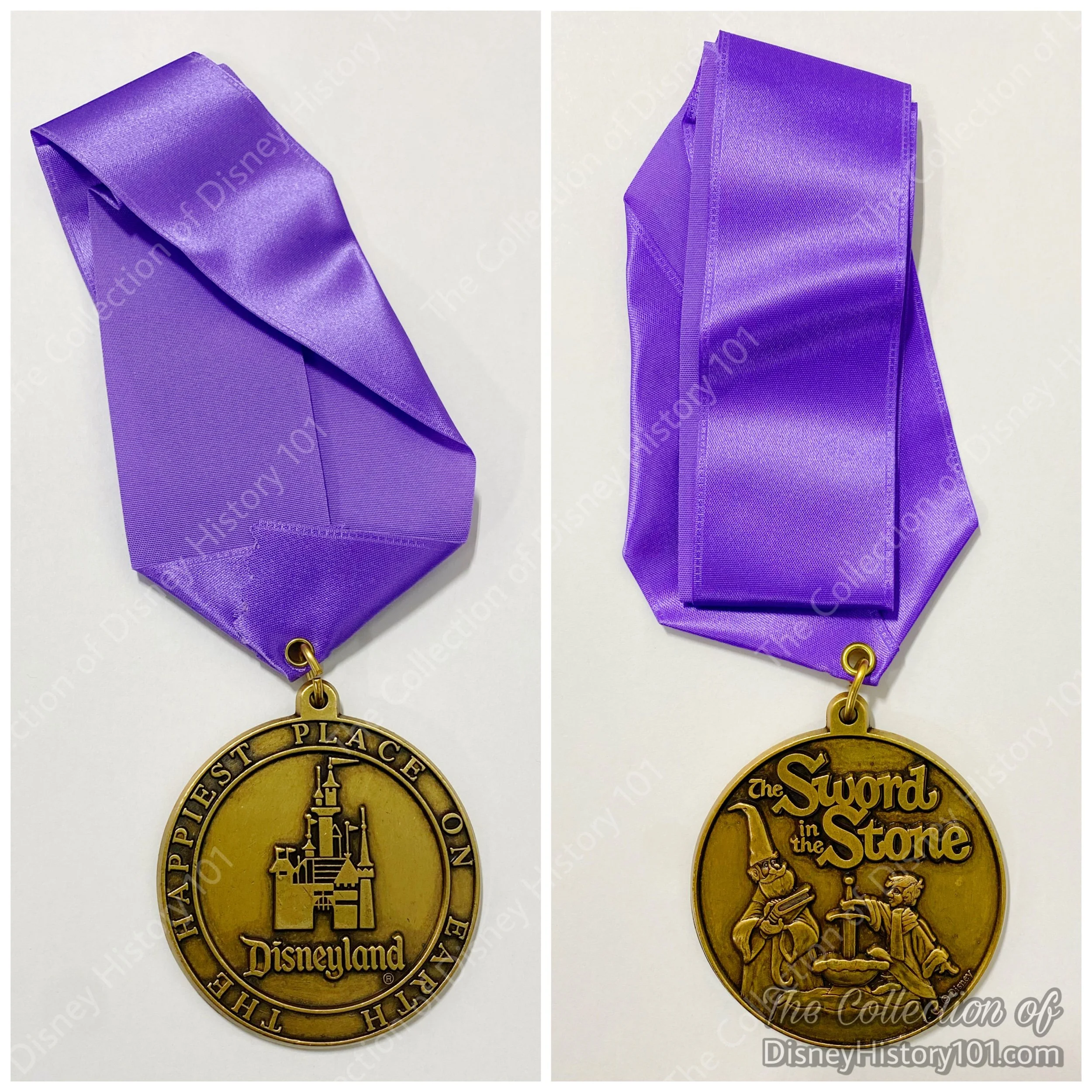
One guest (with the needed courage and strength) drew the magical sword, Excalibur, from the stone, and became king (or, queen) of all the realm of Fantasyland! The entire experience created tangible memories for Guests through Merchandise and Show.
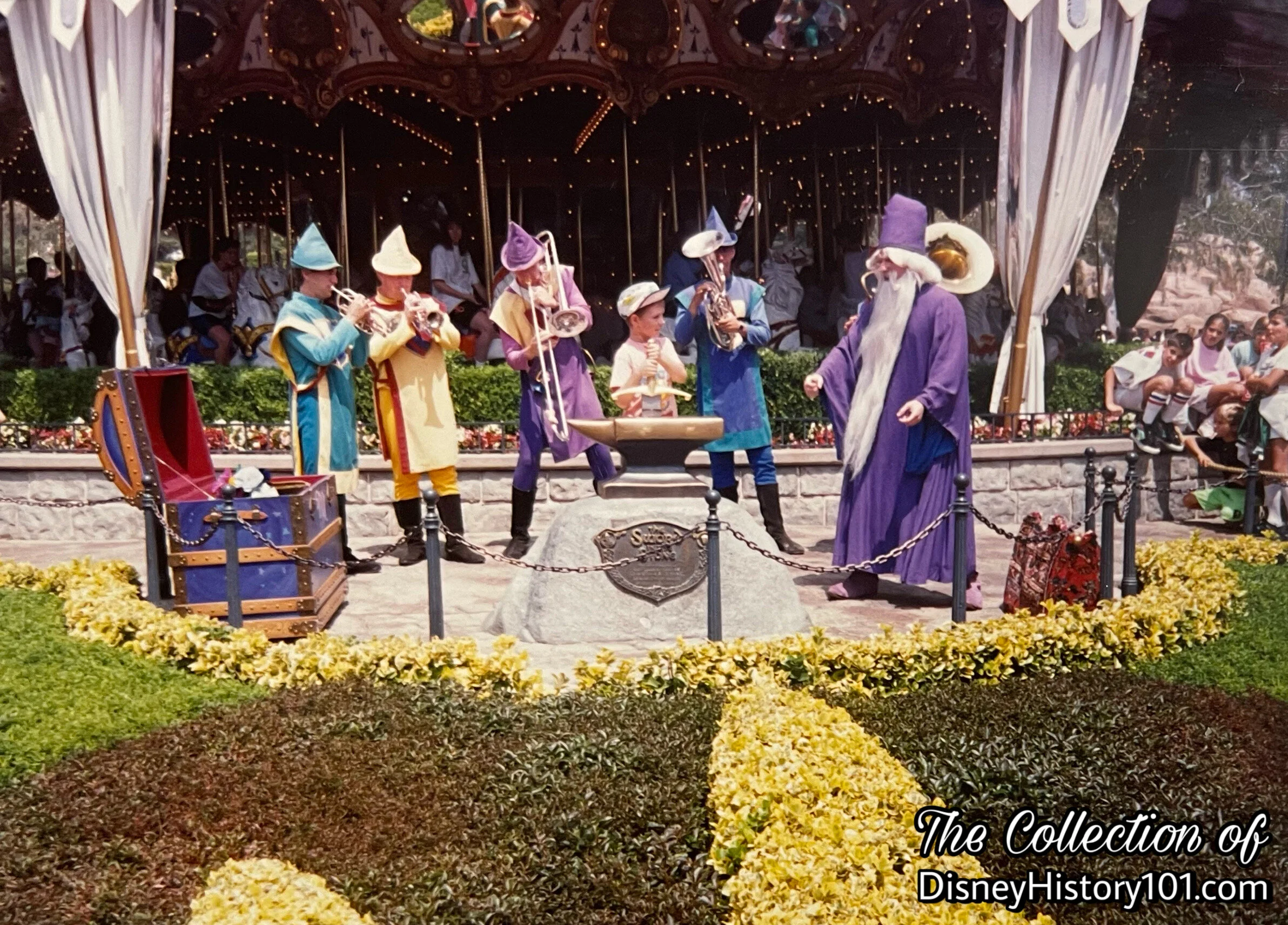
Sword in the Stone Ceremonies
The Sword in the Stone Ceremonies proved that “Disney Resort Experiences Are Magic”!
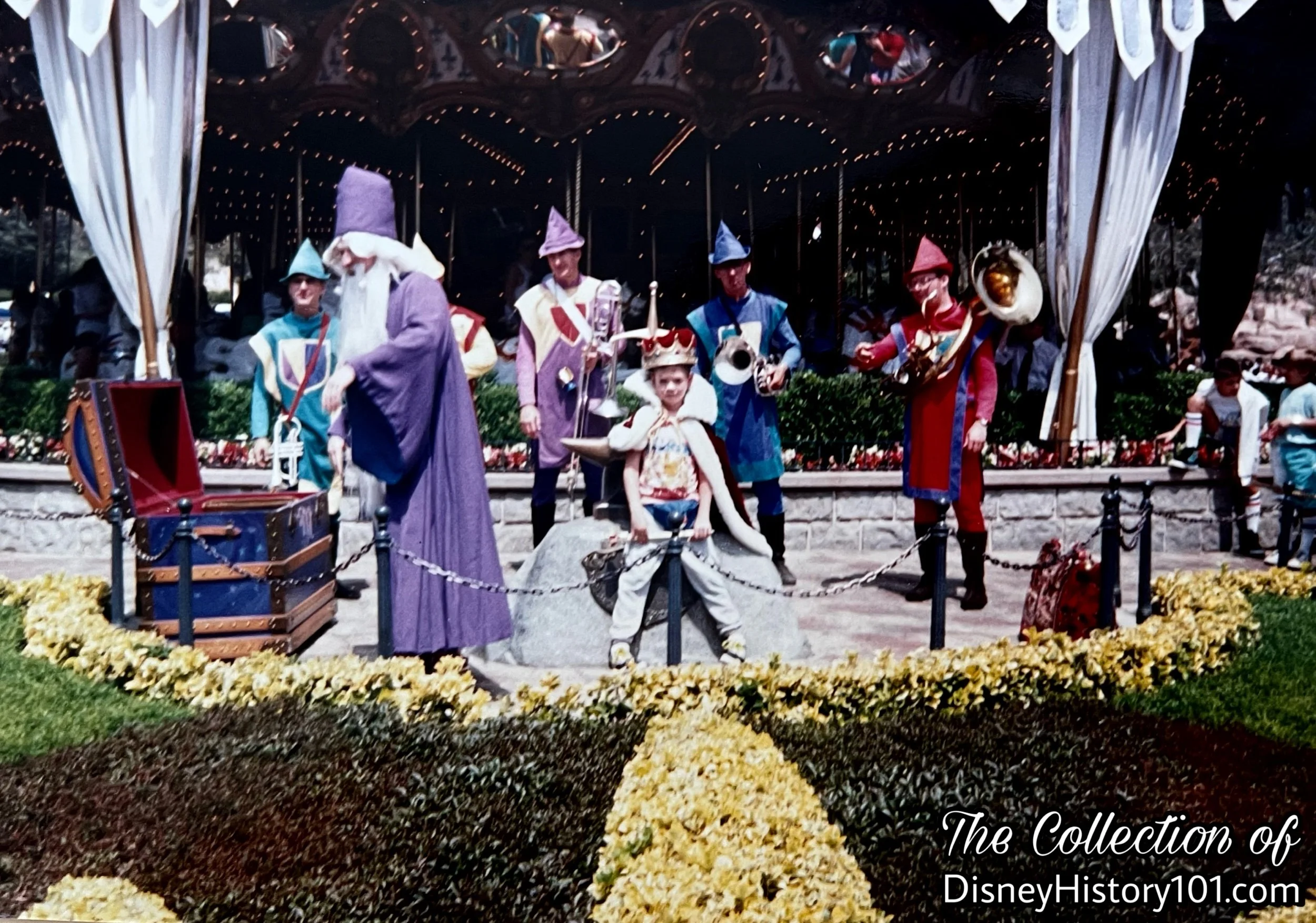
Sword in the Stone Ceremonies
By 1986 & 1987, Today at Disneyland heralded the Sword in the Stone Ceremony, Make Believe Brass, Matterhorn Mountain Climbers, the Royal Jesters and Videopolis as the daily entertainment in Fantasyland.
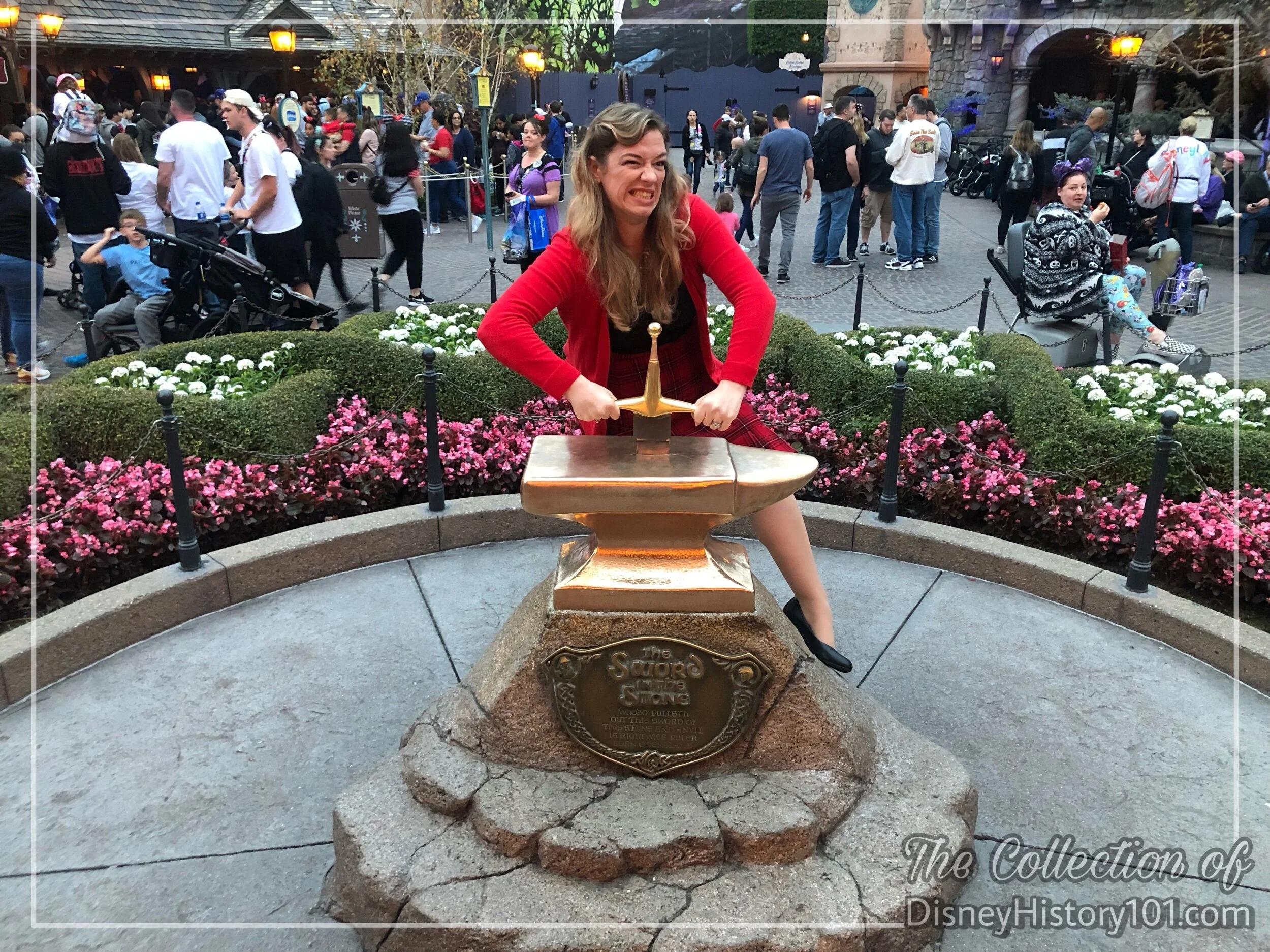
I try my hand at the Sword in the Stone at Disneyland.
By 2003, the Sword in the Stone attractionhad a legacy in Fantasyland at Honk Kong Disneyland. “Legend has it that there was a sword embedded in stone in the churchyard of a cathedral in London. Inscribed in the stone were the words ‘Who so pulleth out this sword of this stone and anvil is the rightful king born of England.’ This became the basis for the Disneyland animated feature The Sword in the Stone and also for this attraction, which sits in front of the Carousel, waiting for a guest to pull the sword from the stone.”
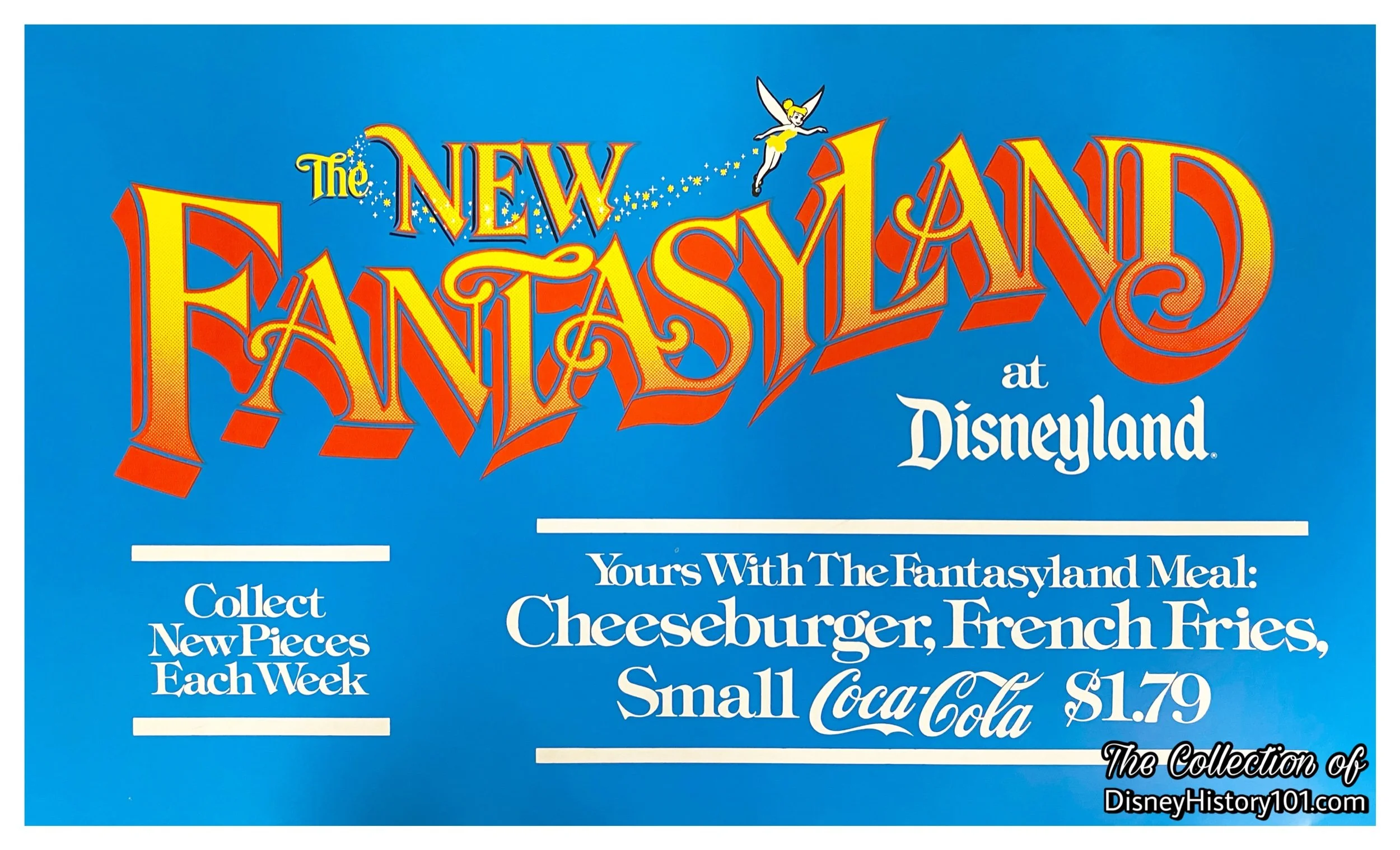
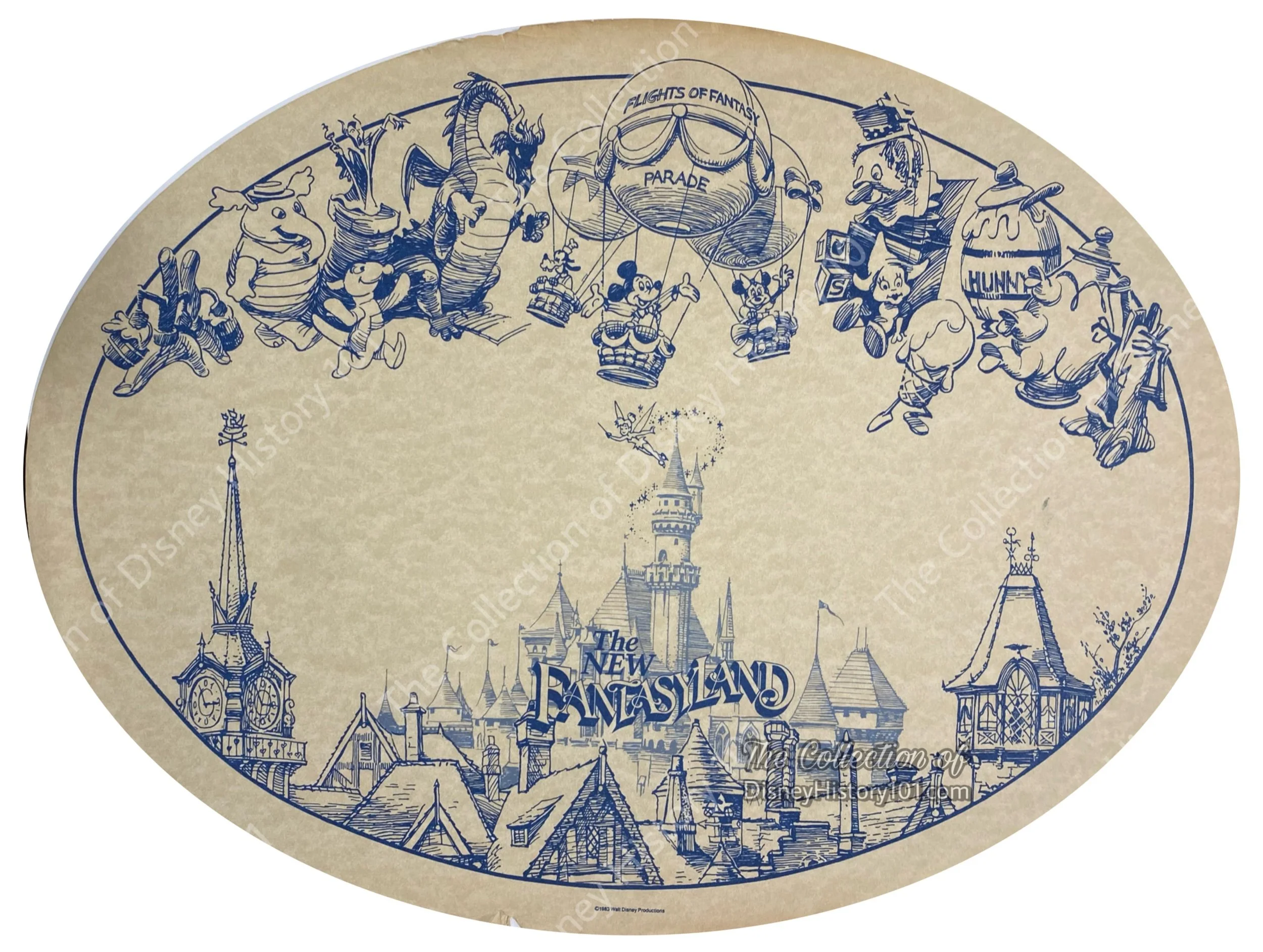
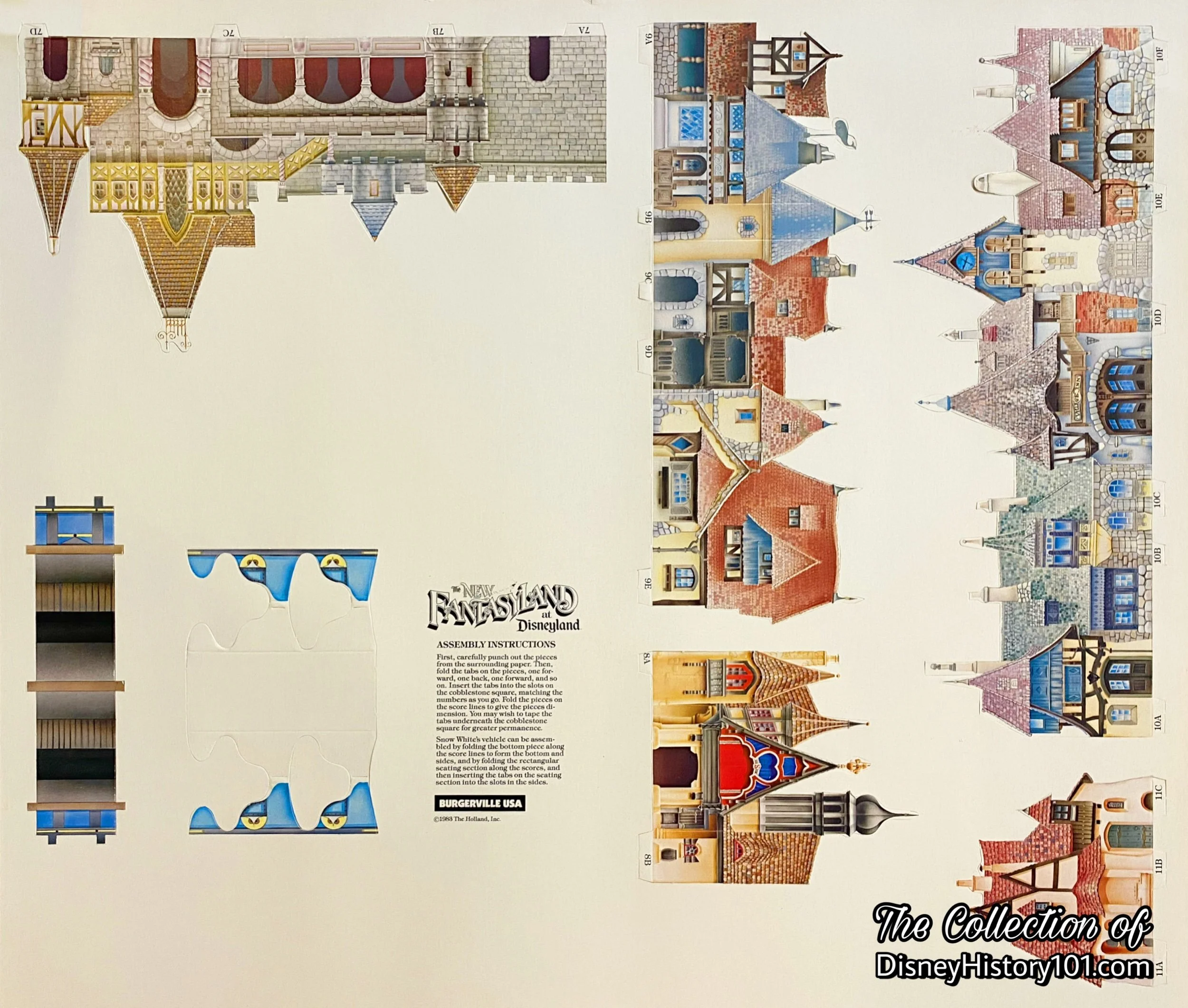
New Fantasyland diorama punch outs by Burgerville, USA.
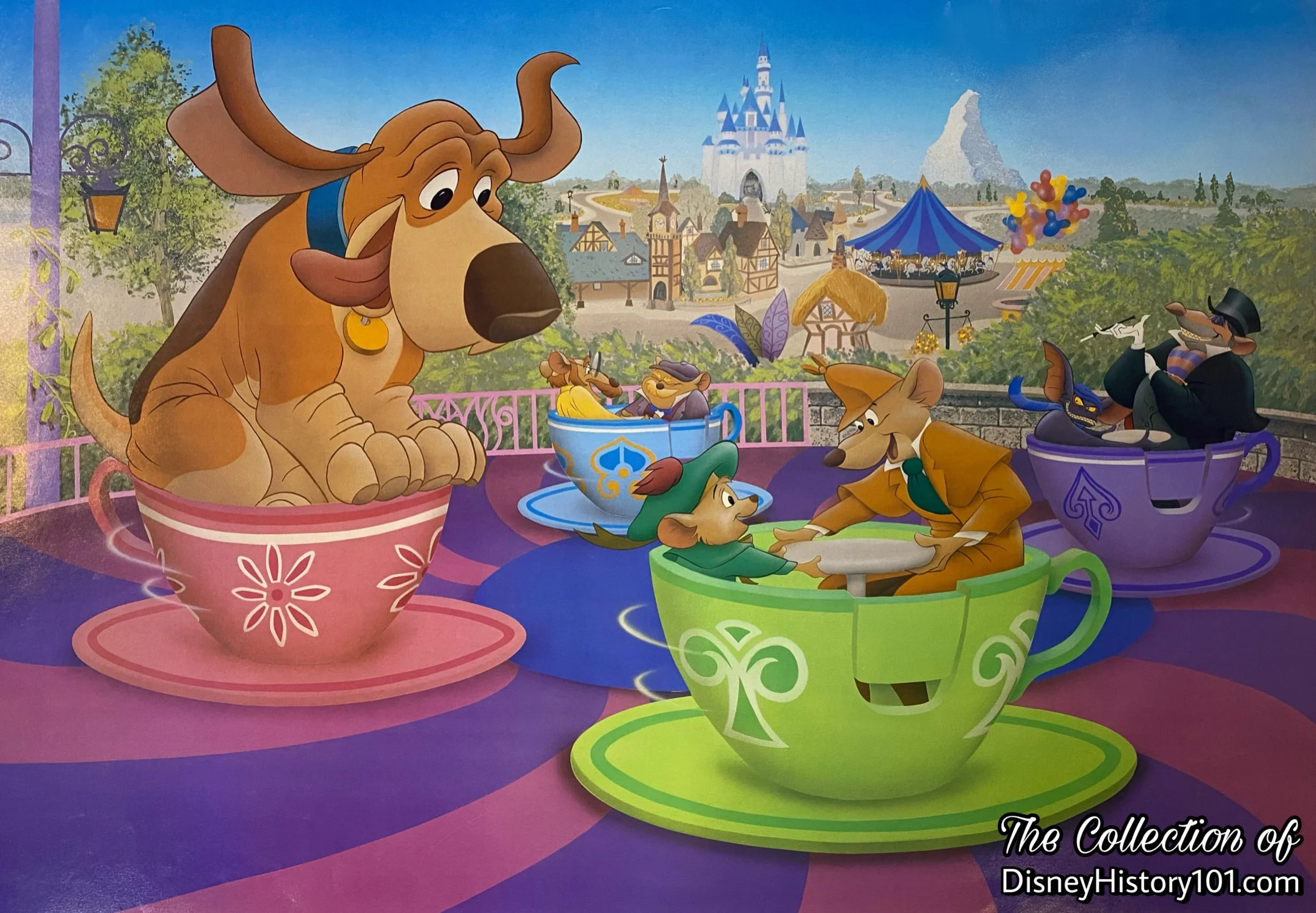
“The Great Mouse Detective at Disneyland,” created by Rubén Procopio & John Emerson for Disneyland’s 31st birthday on July 17, 1986.
Disney’s 26th animated feature “The Great Mouse Detective” premiered in July of 1986.
During 1983, a strike briefly affected the operation of Pinocchio’s Daring Journey, causing it to go “101.”
“Standard Operating Rotations”
Rotations would help Hosts and Hostesses to become with operating procedures. During peak periods, Mr. Toad's Wild Ride is combined in rotation with Peter Pan's Flight.
Winter/Private Party rotations combine Mr. Toad with Peter Pan and the King Arthur Carrousel. During peak periods, Snow White is combined with Sleeping Beauty Castle, Pinocchio is combined with King Arthur Carrousel and Alice is combined with the Mad Tea Party. Winter/Private Party rotations combine Snow White with Pinocchio and Casey Jr. and Alice combines with Mad Tea Party and Dumbo.
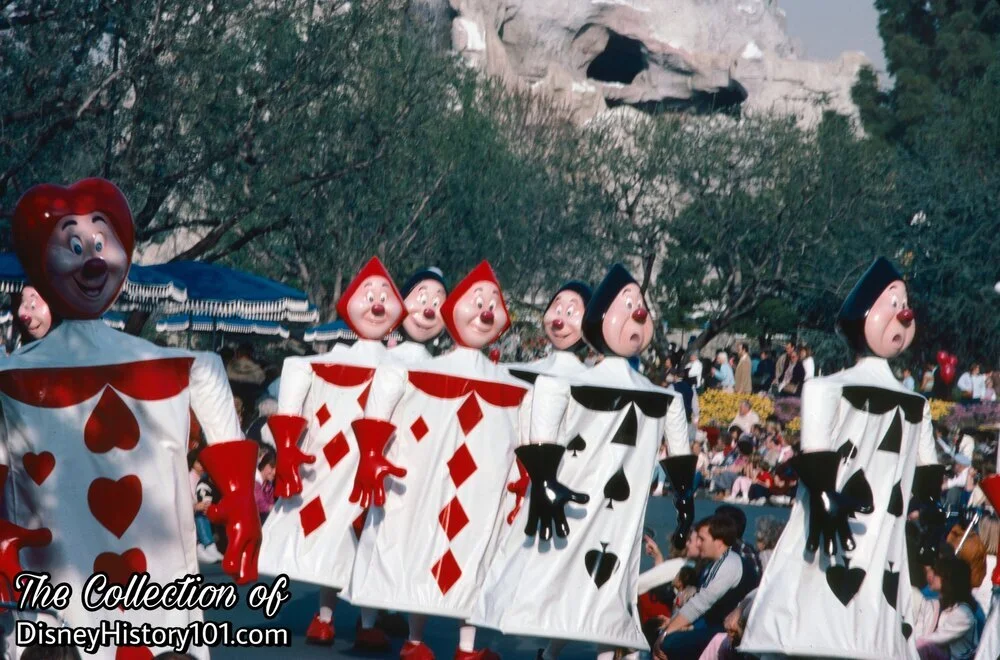
Alice in the Wonderland Cards in "Flights of Fantasy", (December, 1985)
This incarnation of the cards from Alice in Wonderland (originally a creation of Walt Disney Studio layout artist Ken O’Connor) look closest to the film version (than any others).
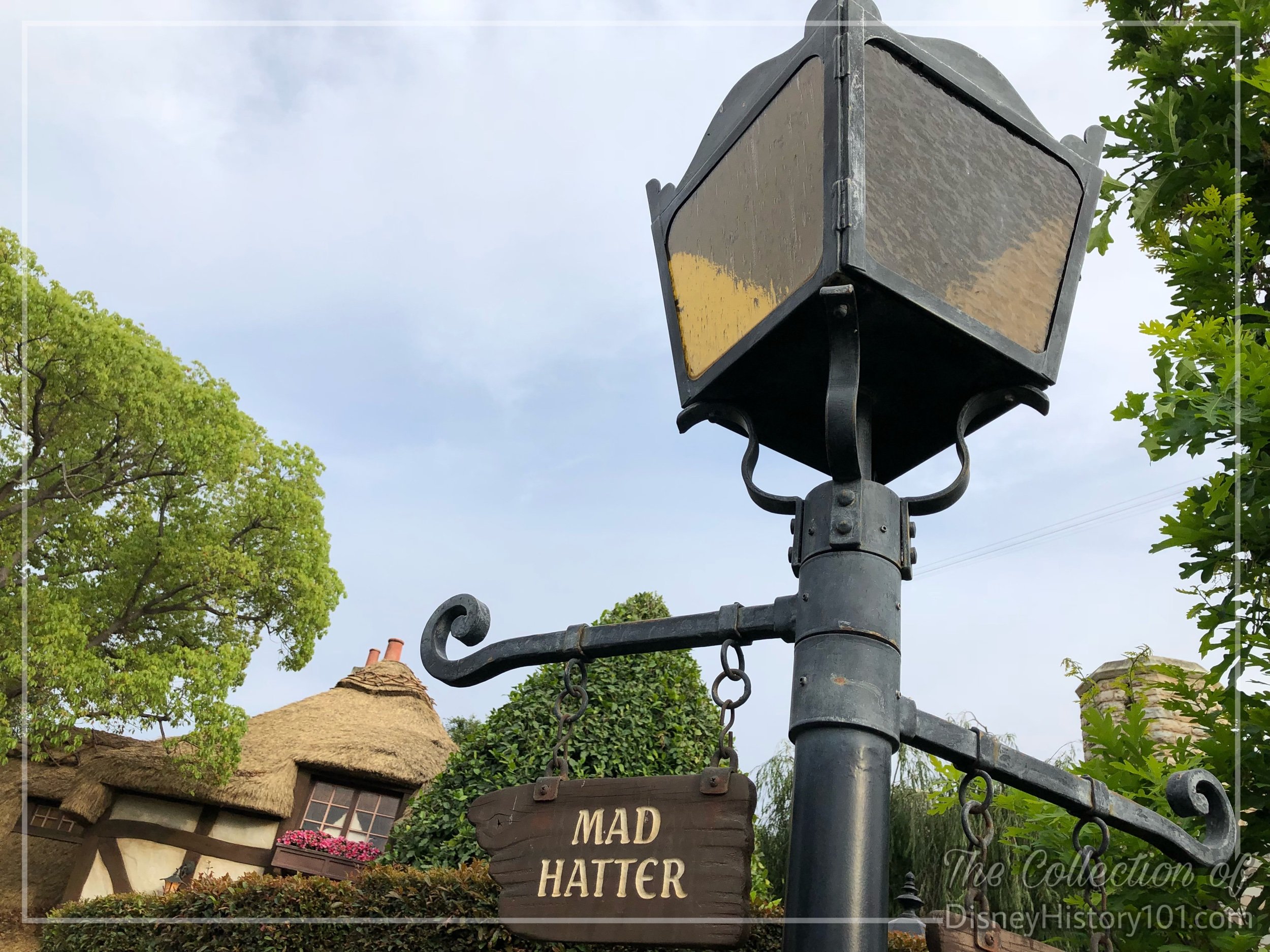
All fixtures were placed in their correct motif and many light fixtures of Disneyland were authentic antiques. Character lighting was themed to enhance the overall appearance and complement the interior, such as a chandelier or kerosene lamp. These add to the show, but don't necessarily create enough illumination for operation.
Still, the former Walt Disney Imagineering Principal Creative Executive Marty Sklar would probably agree that the small details like these make the story appealing.
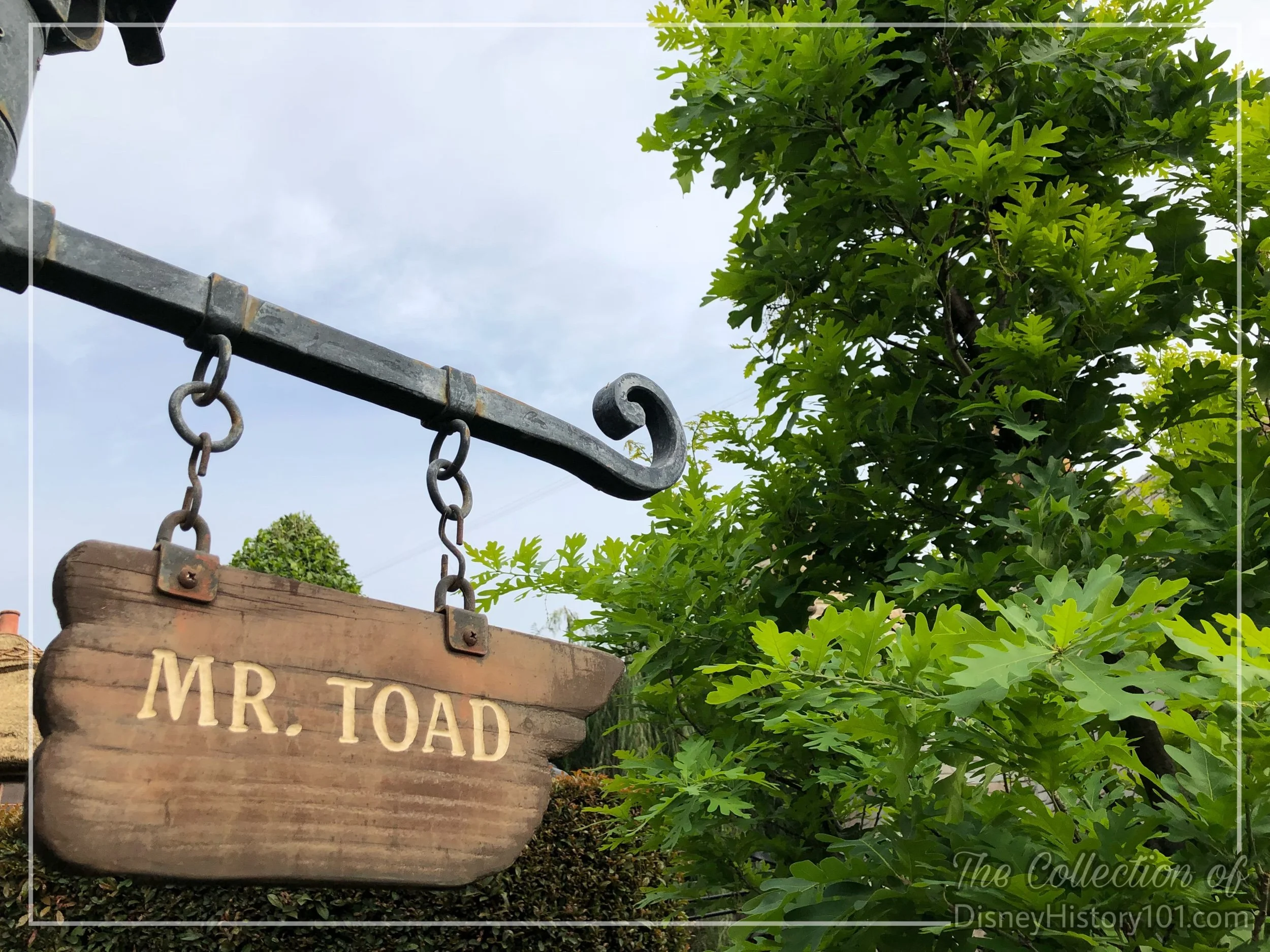
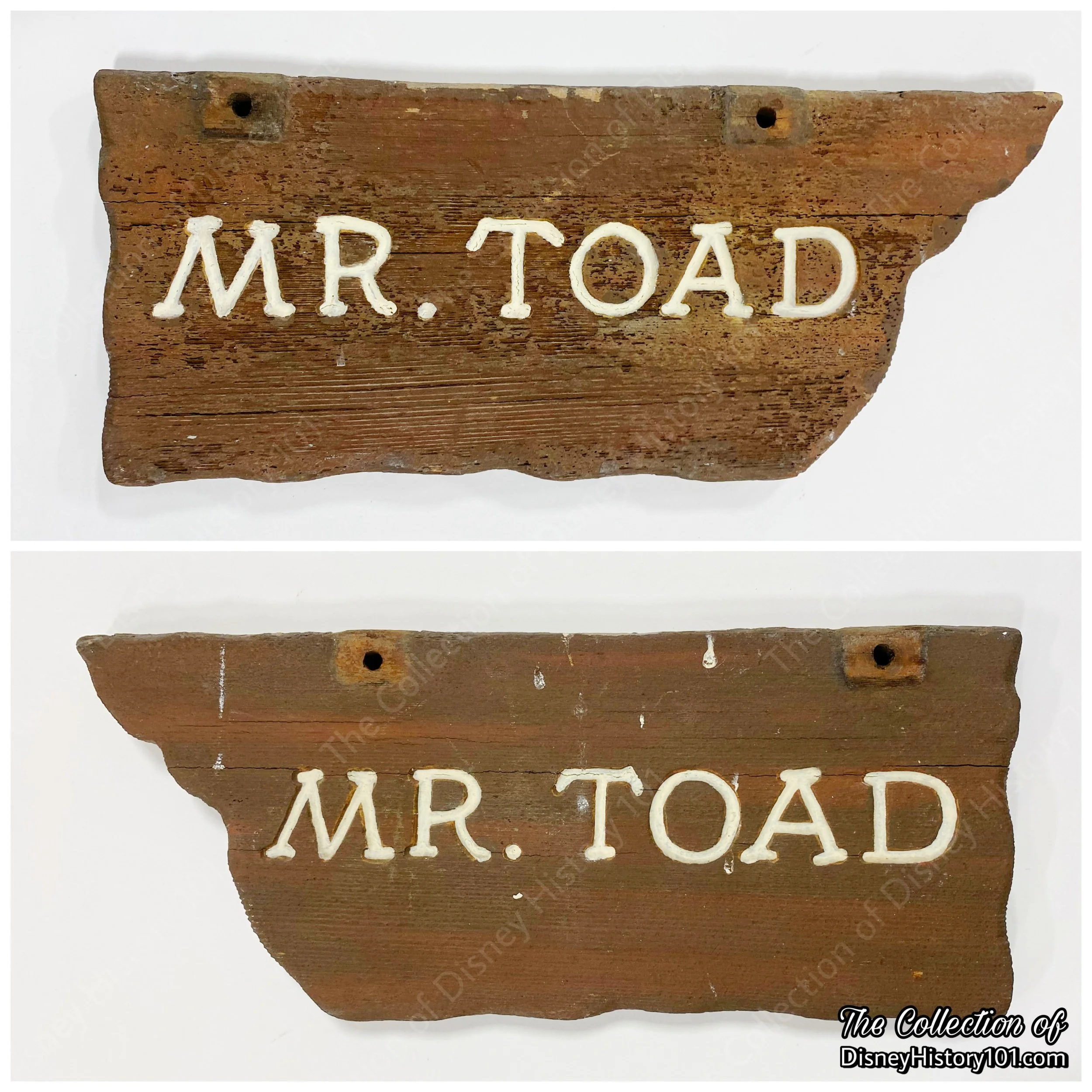
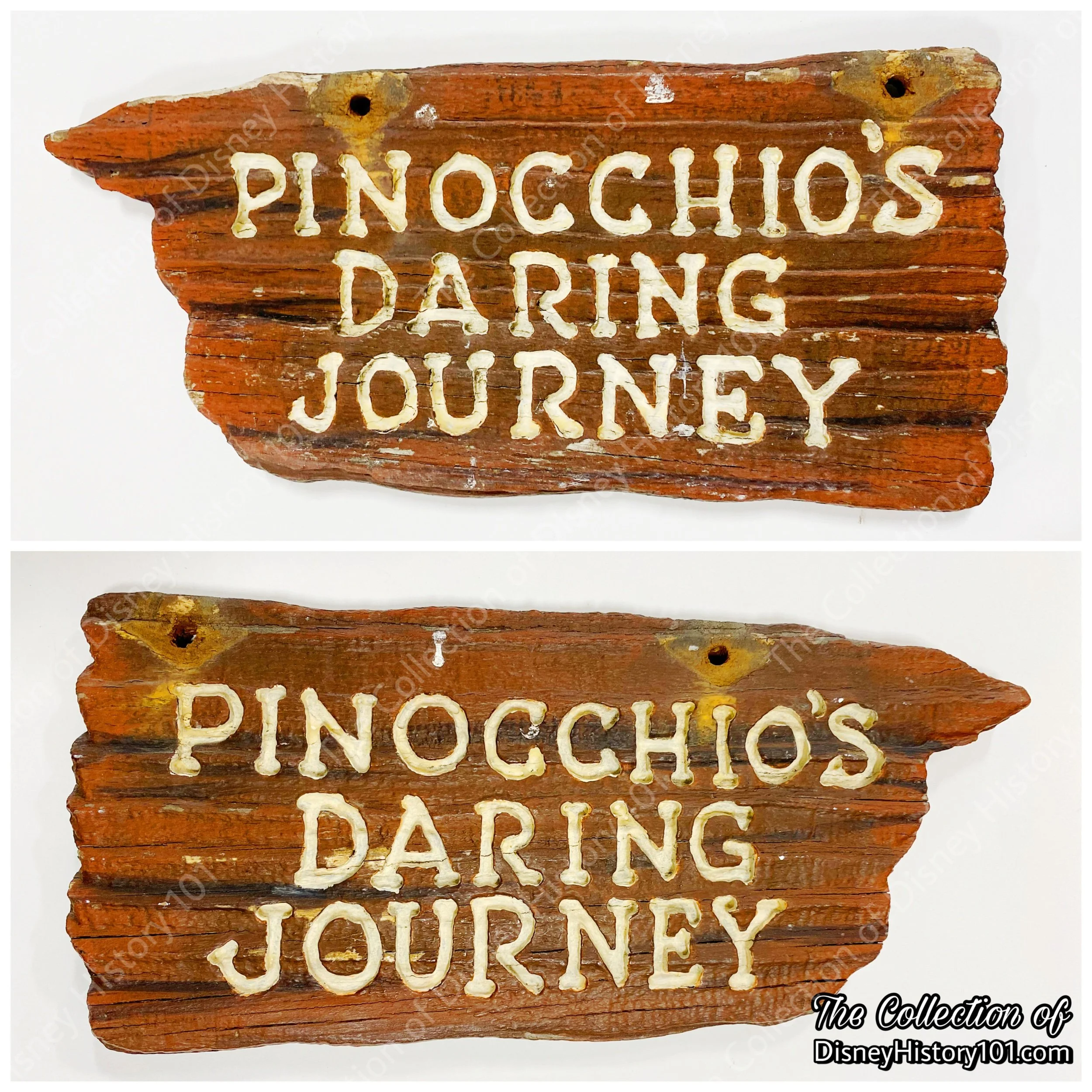
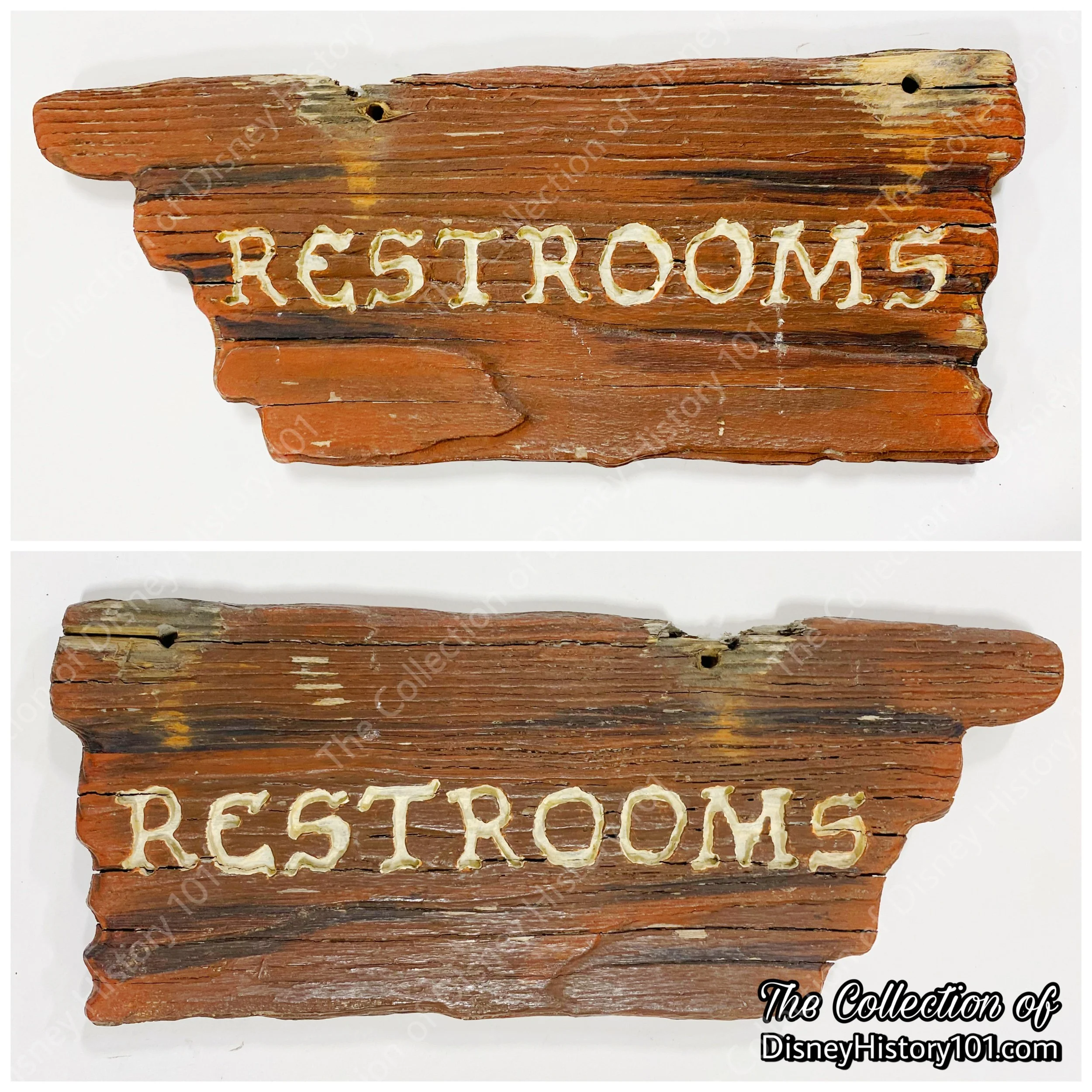
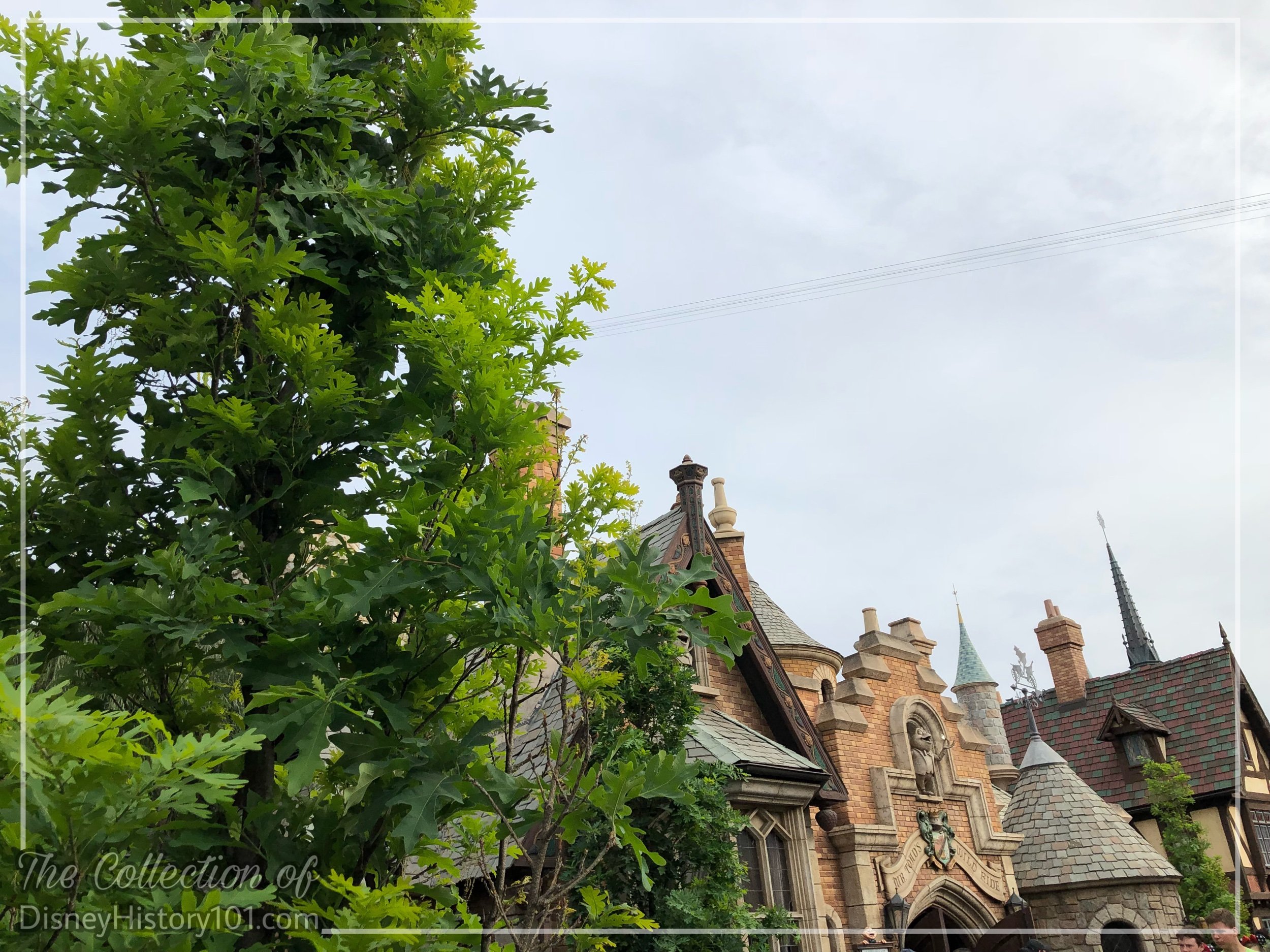
Signage that was looking pretty worn and stressed was replaced.
“Fantasy Faire”
Royal Proclamation heralded the opening of Fantasy Faire at the Disneyland Resort, on March 12, 2013. Fantasy Faire extended the Fantasyland experience with a variety of experiences highlighting interactions and adventures with Disney Princesses. New experiences were added in Fantasyland that share some of Guests' favorite stories and characters.
The extensively renovated Fantasyland Theatre opened with a brand new stage show - “Mickey and the Magical Map.” In the Royal Hall near the court of Sleeping Beaty Castle, Cinderella, Ariel and Aurora graciously received Guests of the kingdom. Belle and Rapunzel appeared at The Royal Theatre. The Royal Theatre plays host to thriling tales and brave deeds as told by Mr. Smythe and Mr. Jones. Figaro (both Gepetto’s and Minnie Mouse's adorable kitten) appeared among whimsical details can be found throughout Fantasy Faire.
“Mickey and the Magical Map” soon had a legacy in “Mickey and the Wondrous Book” at the Disney's Storybook Theater - Fantasyland in Hong Kong Disneyland in 2017.
During each day, Disneyland Park Operations M-42 Machinists would, at least once, check all attractions in Fantasyland and discuss with each Attraction Lead and problems, defects, or any other feedback regarding the department. M-42 Machinists would also respond to all downs and delayed openings in the Fantasyland area whether or not it was mechanical. Upon arriving at an attraction, they would determine whether what the failure was. M-42 would determine which crafts were needed, determine an estimated time of repair, notify M-1 and assist with crafts when necessary.
Quisque iaculis facilisis lacinia. Mauris euismod pellentesque tellus sit amet mollis.