TOBACCONIST (TOBACCONEST ; FINE TOBACCO SHOP)
Fine Tobacco Shop (July 17, 1955 - 1960)
AN IMPORTANT MESSAGE from DISNEY HISTORY 101 – Before we begin, we must admit that Disney History 101 (and its historic retrospectives) do not intend to endorse the use of Tobacco, or smoking in any form for that matter. Smoking is hazardous to your own health and that of those around you. It is well known that Walt Disney was a heavy smoker and suffered from a hacking cough during his later years. No one (even Walt) realized how serious it was until the bad habit had finally caught up with him. It’s a sad fact that Walt passed away at the age of 65, on December 15, 1966, the acute cause of death, complications of acute circulatory collapse, due to Lung Cancer.
In telling the story of the Main Street Tobacconist, we strongly believe that it is important to acknowledge the harmful impact of smoking and spark productive conversation that will both inspire and aspire the human spirit of our guests.
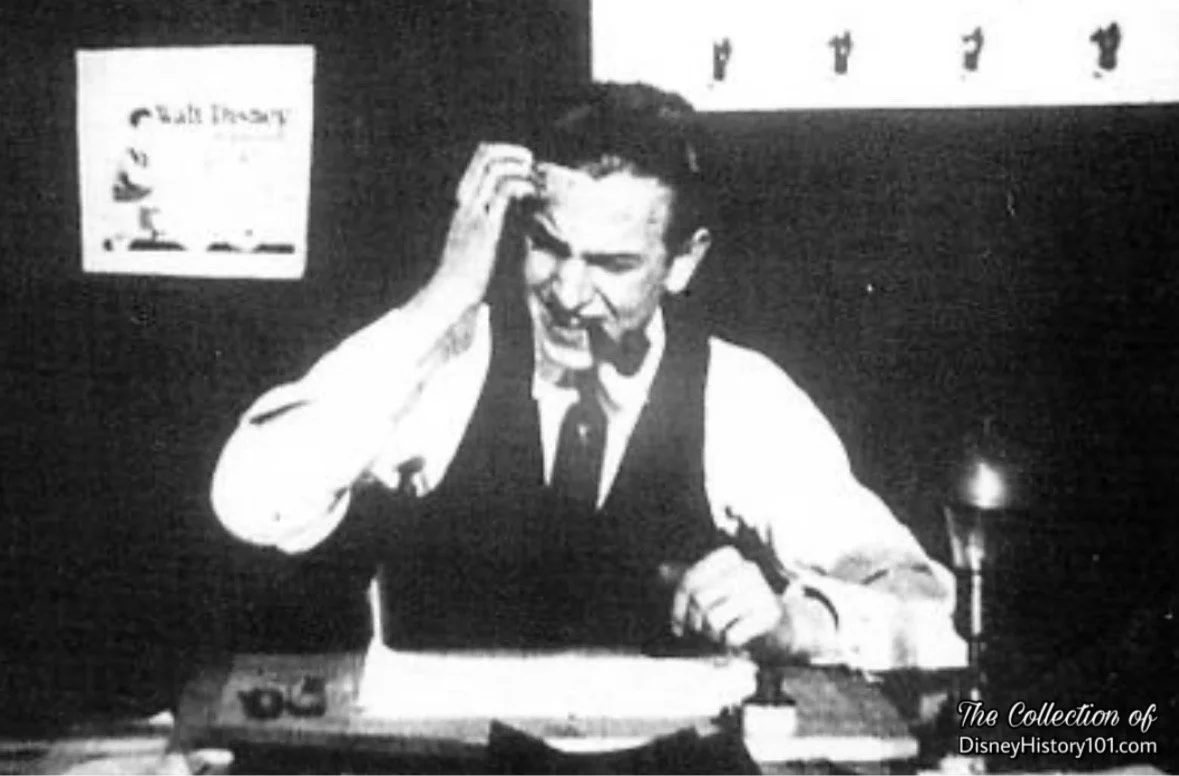
Walt Disney smoking a pipe, c. 1923
“The Story of Walt Disney and Smoking”
Smoking had more of a prominent place in the turn-of-the-century Victorian world when Walt grew up. But things may have been different in the Disney household. According to author Michael Barrier, Walt’s own father Elias Disney was a stern man who never drank alcohol and rarely smoked. Outside the home, Walt and Roy worked on the Santa Fe Railroad as a Fred Harvey ad-butchers, hawking orangeade, candy and cigars to passengers.
The little news butcher grew up, and at the outset of World War I, went off and drove an ambulance for the Red Cross in France. There, he continued to sketch, but by the war’s end he returned home, with a new habit – smoking. Over the next few years, Walt progressed from pipes to cigarettes, all the while developing into a master storyteller and showman, renowned for the creation of Mickey Mouse, Snow White, and many other fantastic animated characters.
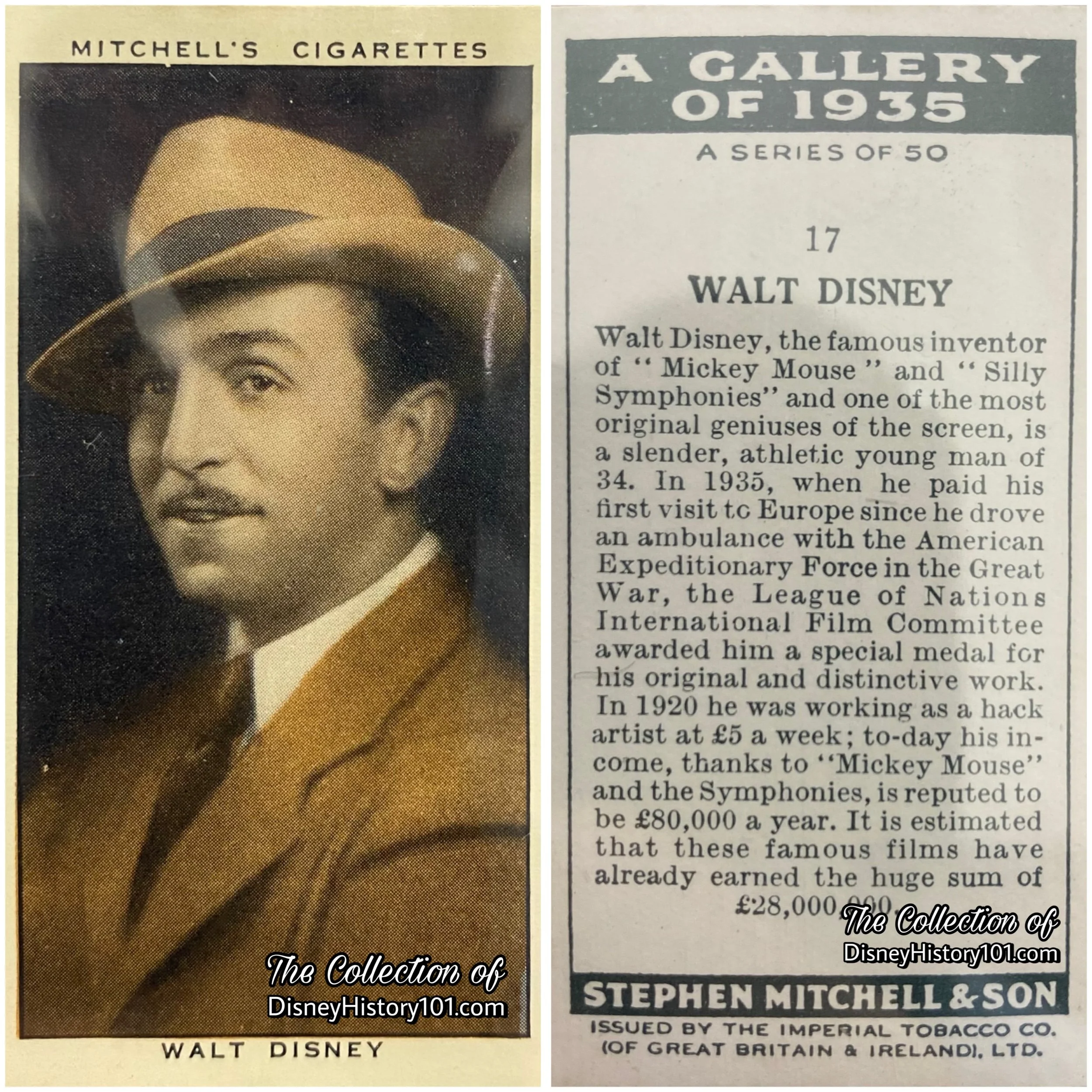
Walt Disney (and a short biography) is featured on a Mitchell's Cigarettes "A Gallery of 1935" collector card.
It was during the 1930s that Walt Disney’s cast of characters (and even the master showman himself) appeared on an at least two cigarette cards offered as a premiums that were inserted randomly into packs of cigarettes that were sold across the United States and Europe. Walt Disney and Mickey Mouse appeared on cards inserted in packs of Will’s Cigarettes (in 1931) and Walt Disney appeared on Mitchell & Son Cigarettes (in 1936).
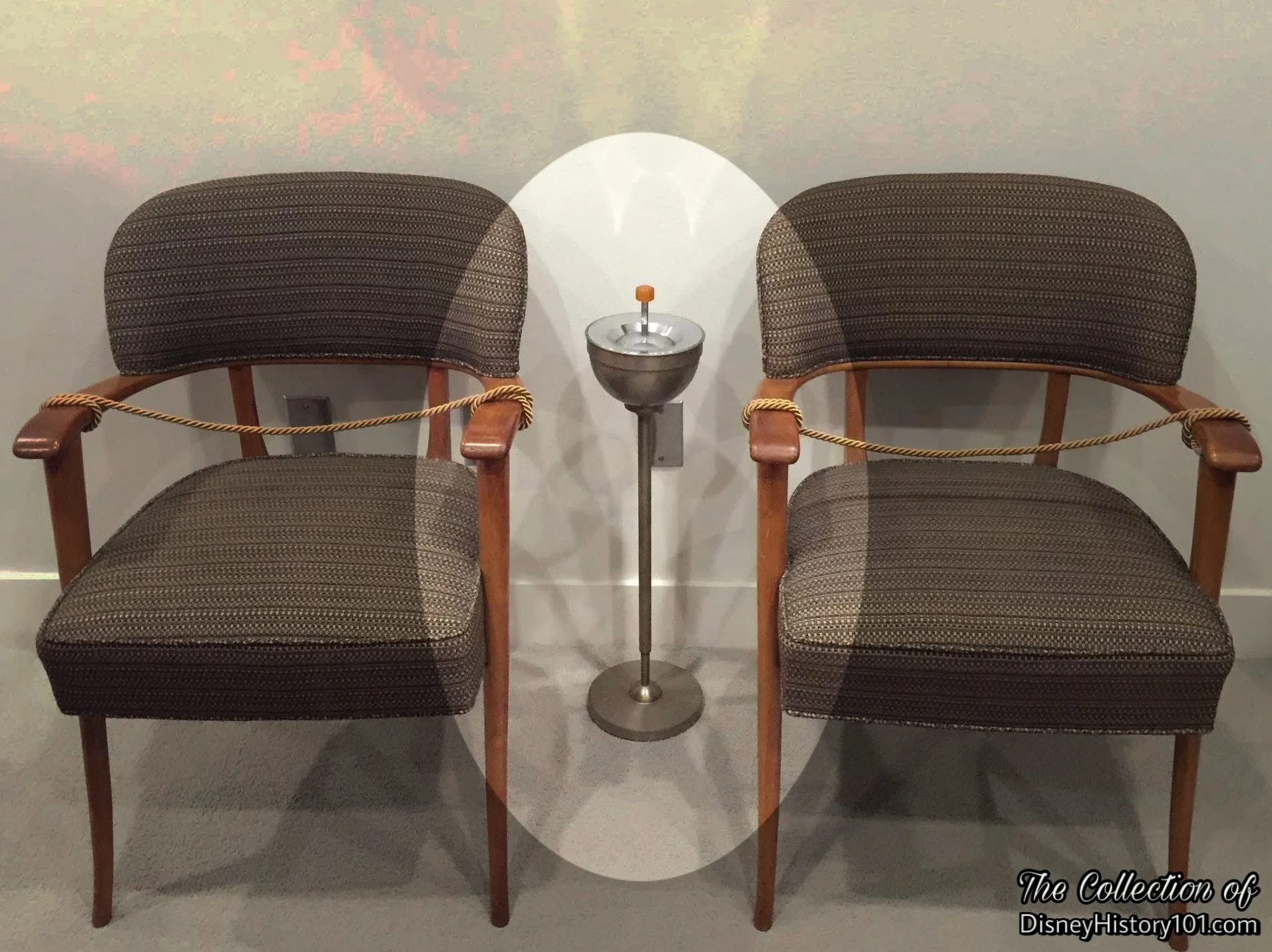
This rarely-mentioned, but omnipresent smoking stand in the Recptionists’ Office, was a former feature of Walt Disney Studios.
By the late 1930s, the Walt Disney Studios was being redesigned, and architect Kem Weber dreamt up functional office furnishings, including a modern smoking stand for offices. When the Walt Disney Studios opened in Burbank, smoking culture was common and pervasive.
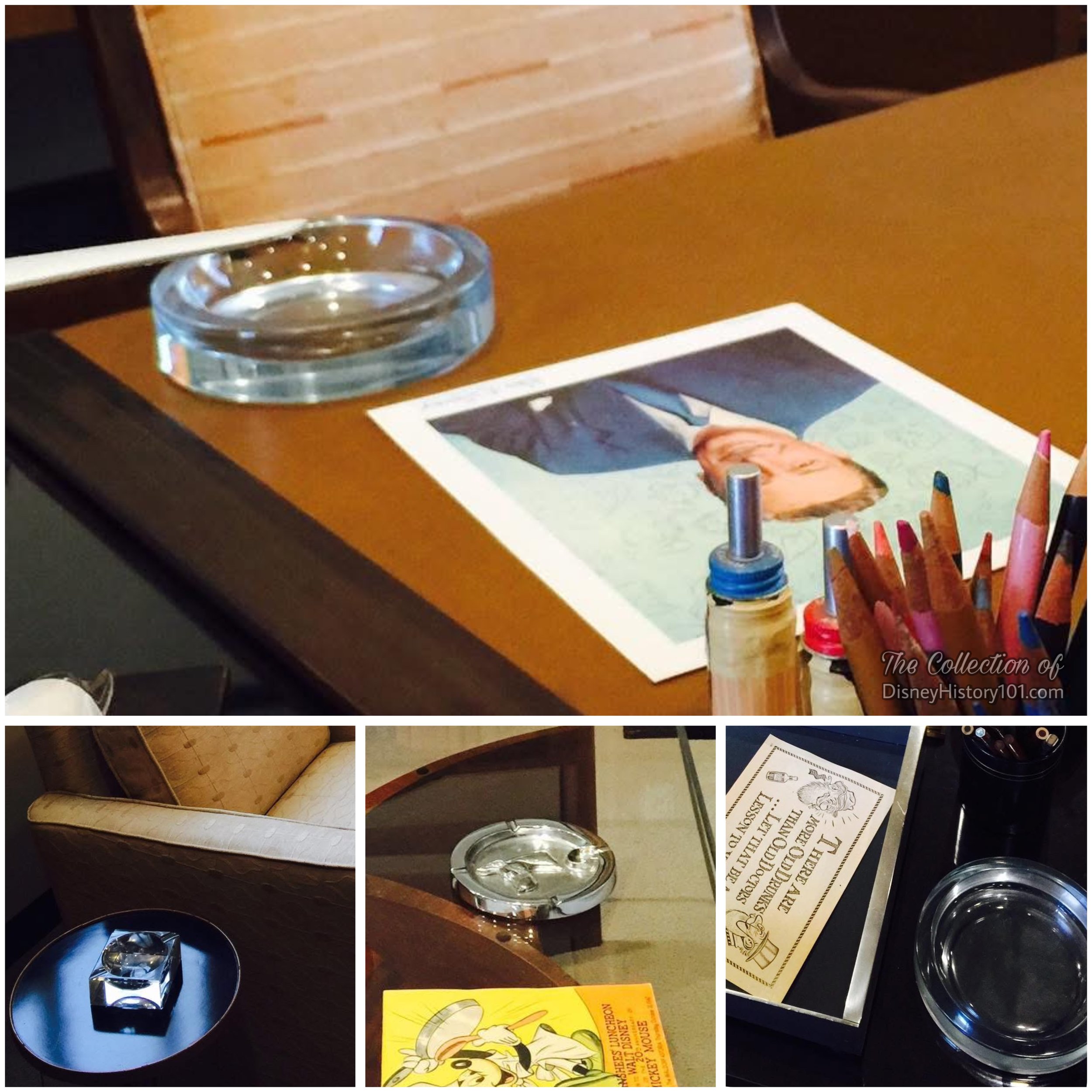
Ash trays in Walt Disney’s Formal and Working Offices of 3H at the Walt Disney Studios, placed in their original locations, by the team of the Walt Disney Archives.
By that time, Walt Disney was a longtime cigarette smoker, as were many of his studio employees and Guests. Ash trays populated offices (including Walt’s), because according to manners of the day, you wouldn’t reach over someone to use one. If there wasn’t a table lighter nearby, each was complimented with a matchbook touting the Walt Disney Productions logo.
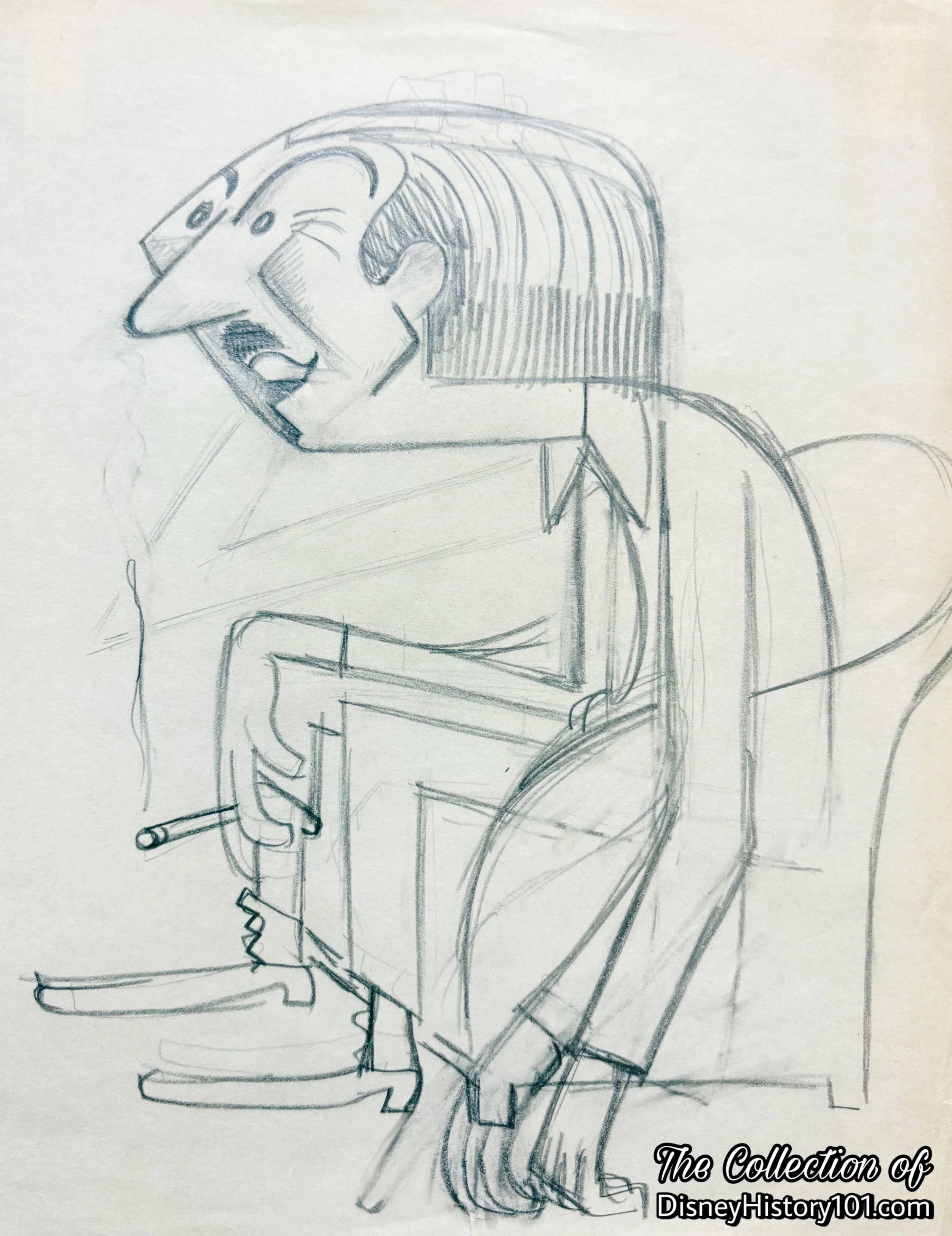
This caricature by Tee Hee captures Walt Disney‘s habitual smoking.
Walt often avoided smoking when within view of the public, in order to avoid being seen by children or photographed holding cigarettes. Around the studio, things were different, and Walt was often seen smoking Chesterfields, Camels, Lucky Strikes, and even Gitanes, a French import brand.
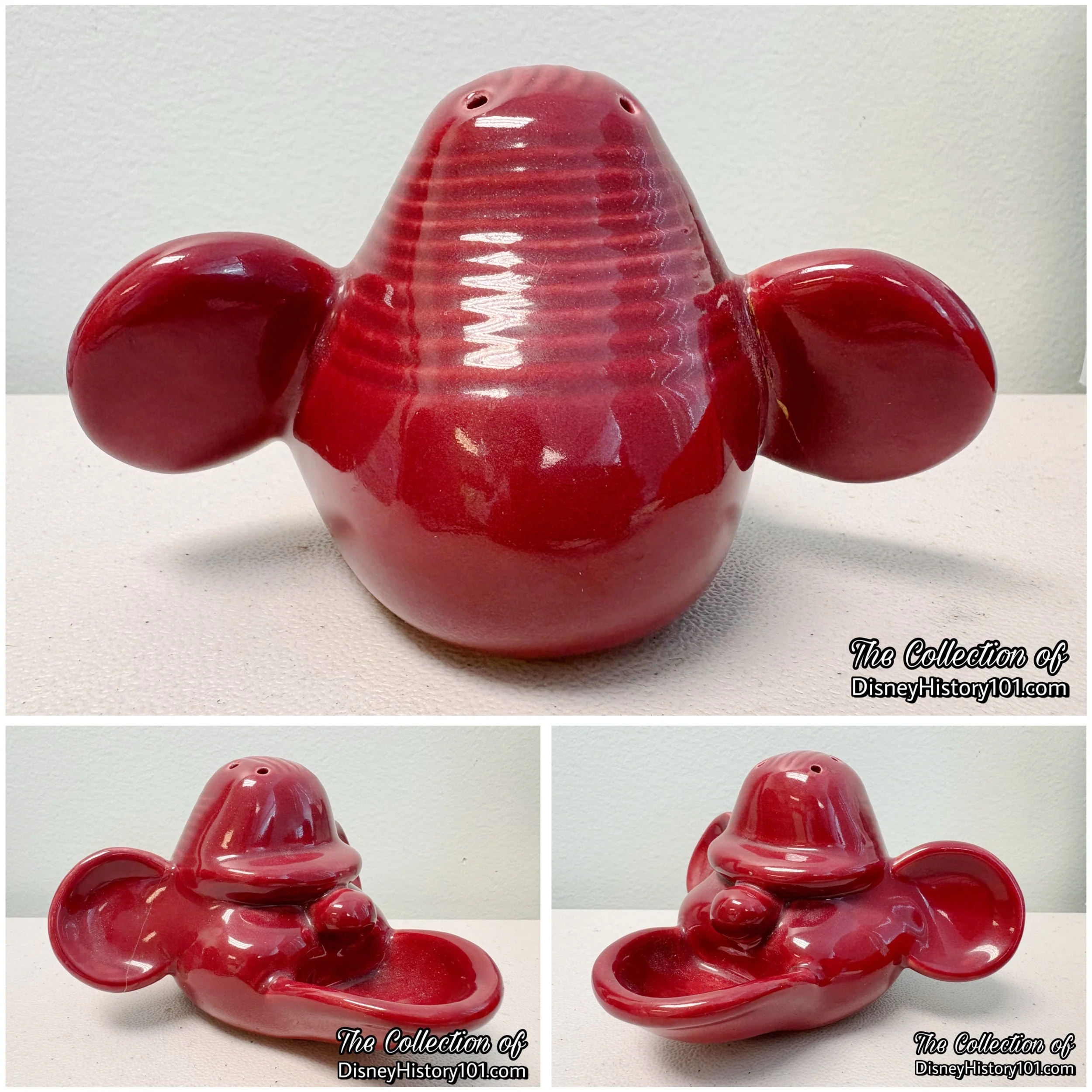
This ceramic ash tray in the character of Walt Disney Studio Animator Roy Williams, was a gift to the “gag man” who was known to enjoy smoking.
Many Walt Disney Studio employees were known to have smoked. This is impressed by the following memory from one of the Sherman Brothers who recalled “The Great Fire of Mickey Avenue” this way: “It wasn't a very big fire, honest. It wasn't the Great Chicago Fire, it wasn't even a Great Burbank Fire. It was just a smoking wastebasket and a few flames. The wastebasket was in our office, so of course everyone assumed the fire was our fault. Including Walt. Today we each have our own theories about whether the fire was started by Bob's cigarette or Dick's pipe, but no one (including Walt) was ever able to prove anything conclusively. After the Studio fire department left, we all went back to work and tried to pretend nothing had happened. All except Roy Williams, of course, who couldn't resist documenting the whole affair in these wonderful sketches.” [“Walt’s Time - From Before to Beyond” by Robert B. Sherman & Richard M. Sherman]
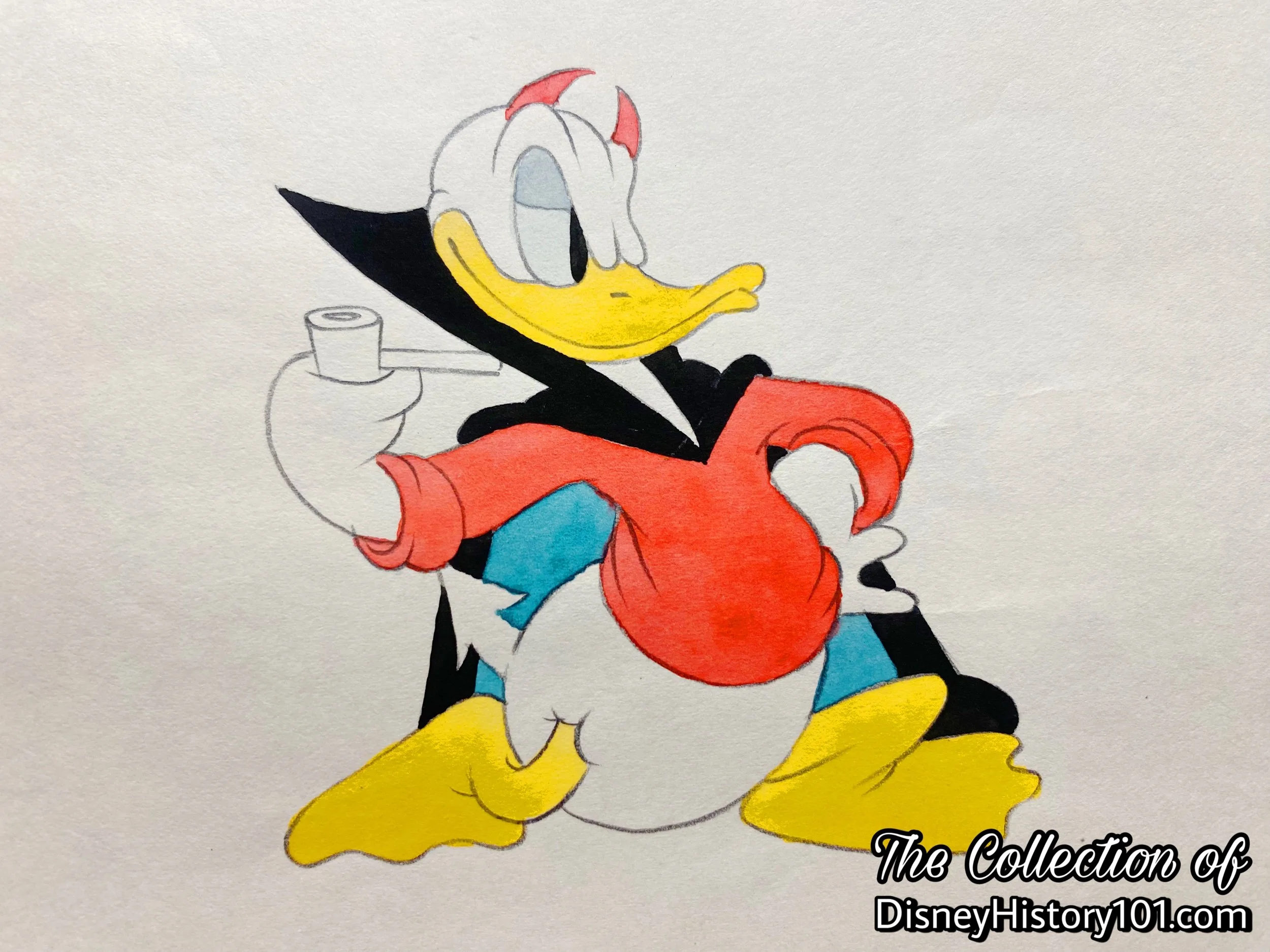
Donald’s evil half persuades him to smoke a pipe “like a real man” in “Donald’s Better Self”.
“Depictions of Smoking in Walt Disney Productions”
Long before Disneyland, smoking was depicted in numerous animated shorts and feature length films by Walt Disney Productions, though not in a “good light”. Smoking was still taboo, and often used as a plot device to establish character or for a comedic effect. Smoking and smoking paraphernalia was usually reserved for villains – big bad Pete both smoked cigars and chewed tobacco, Donald Duck’s devilish conscience in “Donald’s Better Self” smoked a pipe, Gustav the Giant in Brave Little Taylor rolled a giant-sized cigarette, and Captain Hook used a double-cigarette holder.
The “hero” characters only occasionally smoked, but when they did, they also used a variety of methods like pipes, cigarettes, cigars, and even hookah pipes (e.g. Jose Carioca, Pecos Bill, Jim Crow, several stars of “Alice in Wonderland” and “Peter Pan”). In many instances of storytelling, the depiction of smoking was negative and utilized in a plot device to establish bad behavior as when Donald Duck played hooky and smoked a pipe in “Donald’s Better Self” (1938), or the nephews were forced to smoke Donald’s birthday gift of cigars in Donald’s Happy Birthday” (1949), or when Pinocchio and Lampwick visited Tobacco Row on Pleasure Island in Walt Disney’s Pinocchio (1940).
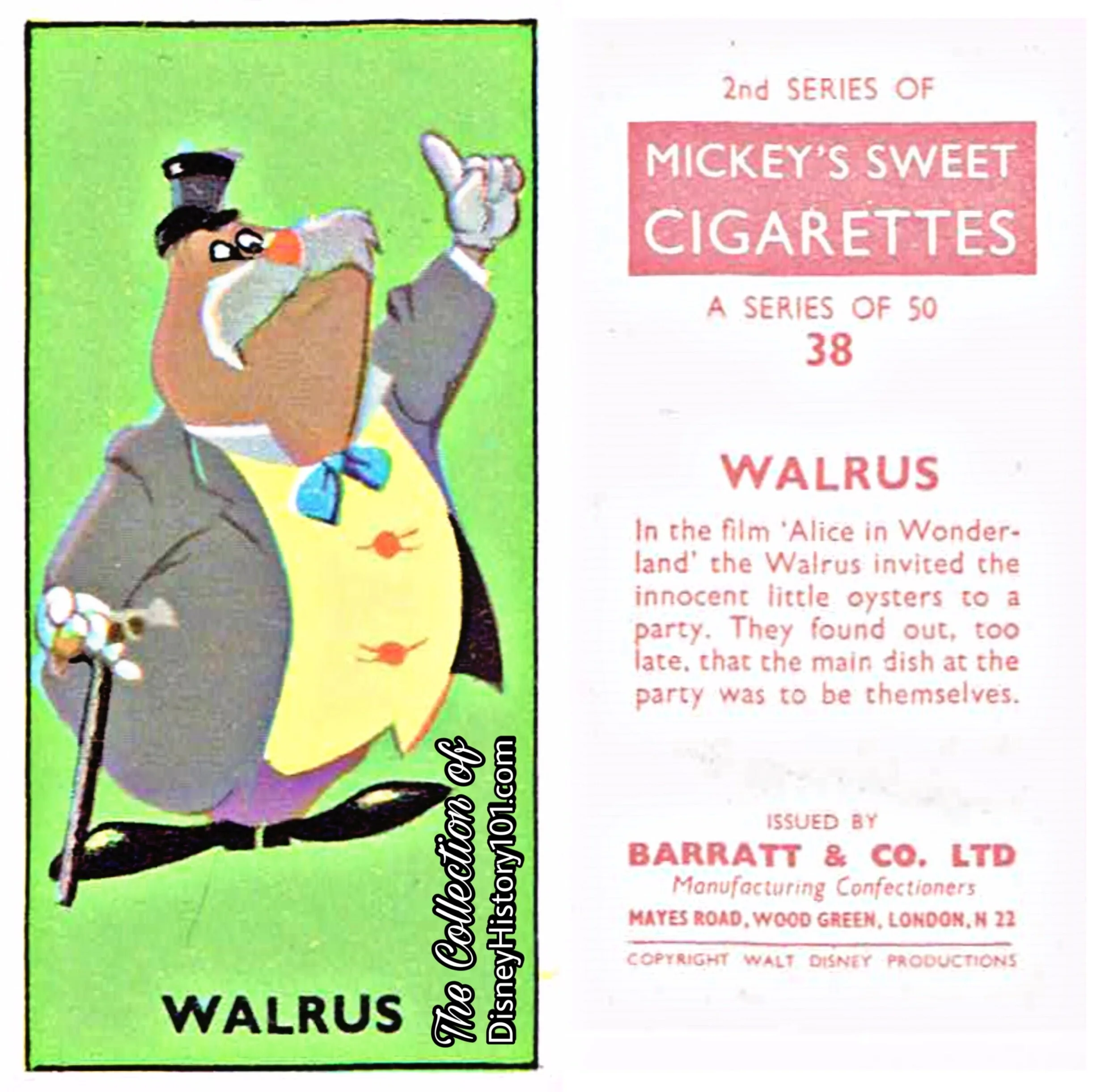
The Walrus holds a cigar on a “Mickey’s Sweet Cigarettes” Collectable Card by Barratt and Co. LTD.
As a sidelight, the antiquated “Mickey’s Sweet Cigarettes” (by Barratt and Co. LTD.) was a contemporaneous confectionary treat that did not contain tobacco but referenced smoking and was aimed toward a youthful demographic. During the 1950’s and 1960’s, Barrett’s candy cigarettes (and their two series of collectable cigarette cards spotlighting many different licensed Walt Disney characters inserted in packs) represent an old-fashioned and outdated era of confectionary (and Disney-licensed product) history.
In 1951, it may be no coincidence that Goofy publicly denounced smoking and “quit” in the Walt Disney Productions short film “No Smoking”.
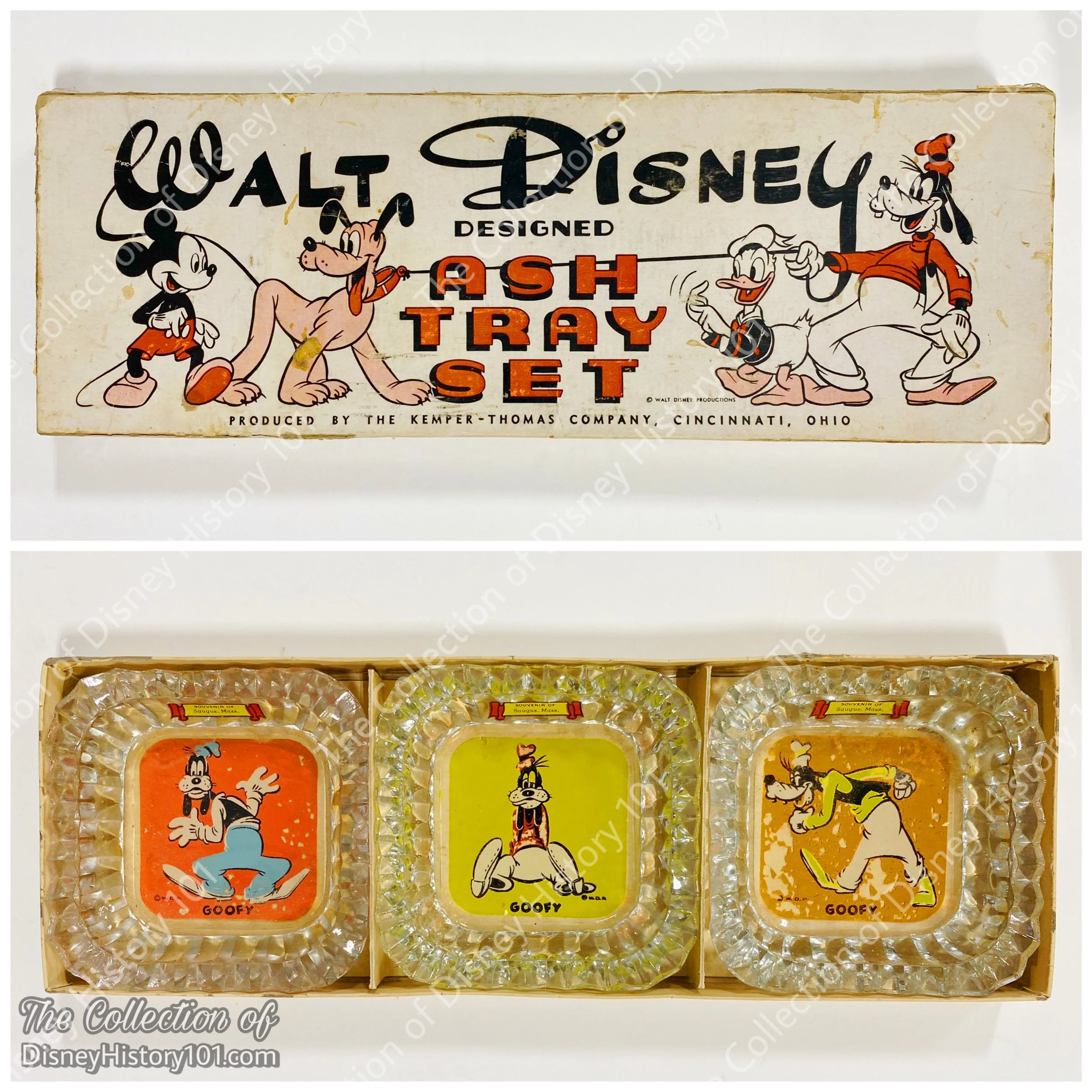
"How to Smoke" - Goofy is the star of the Walt Disney Designed Ash Tray Set by the Kemper-Thomas Company.
Through those years Walt Disney licensed products were largely intended for children, with some merchandise intended for adults. The Disney brand (with its licensed Disney characters) was only rarely affiliated with the manufacture of smoking and smoking paraphernalia. One of those rarities is the Walt Disney Designed Ash Tray Set (pictured above).
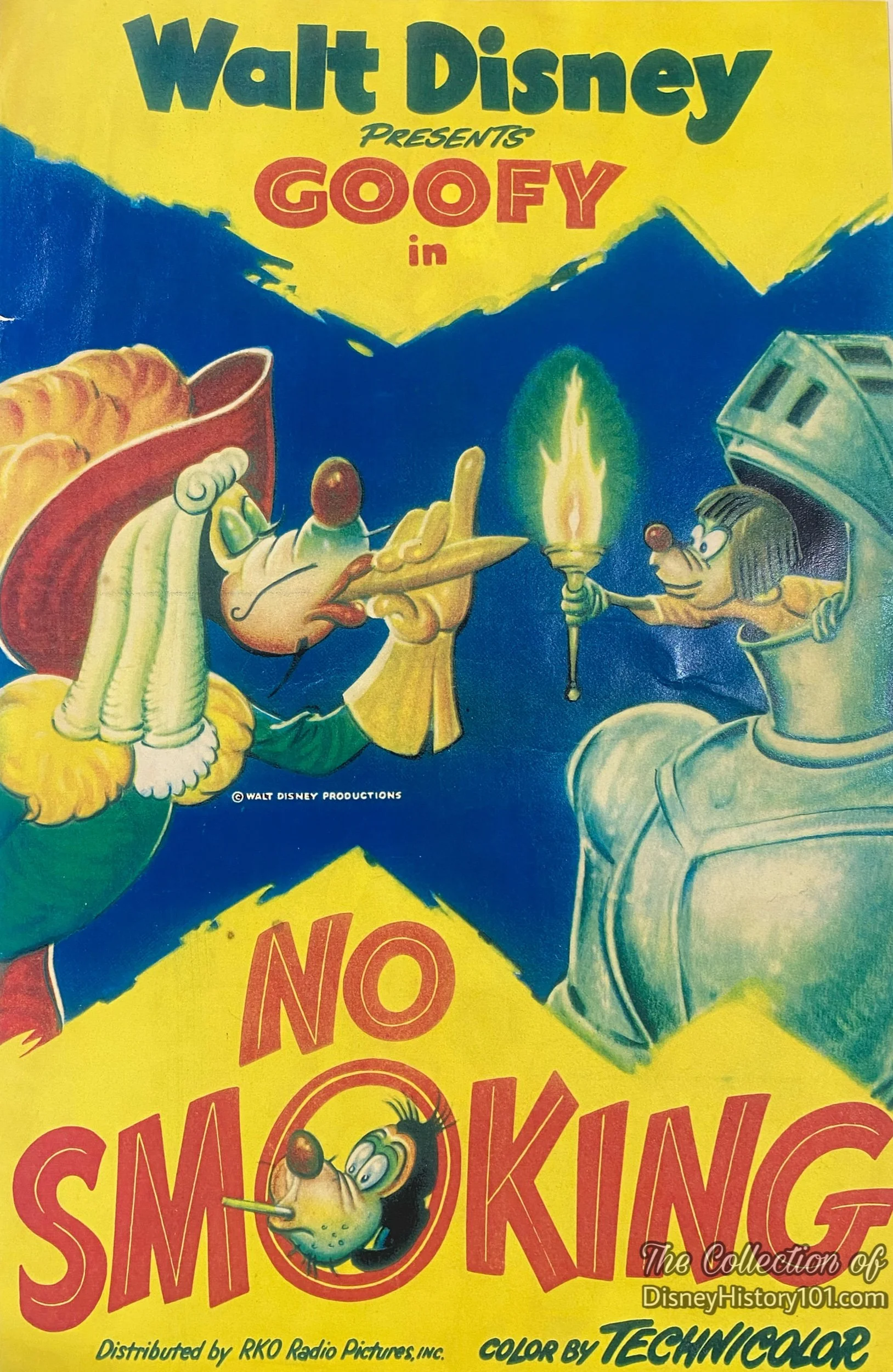
The theatrical poster for “No Smoking,” a short film starring Goofy, released 1951.
“Participant Sponsorship and Smoking at Disneyland”
During 1954, Walt was searching for Participants and Lessees to support shop and restaurant spaces at Disneyland, and help generate the necessary capital to fund construction of Disneyland. By July 1, 1954, George Whitney of Disneyland, Inc. directed Amusements, with Ron Miller overseeing analysis, philosophy, capacities, planning, operator training, and amusement procurement. Equally important was, Russel Tippett of Disneyland Inc. Advertising who oversaw Exhibitor’s Space Sales and Lease Agreements.
Within the proposed synergistic relationship, companies could sell their products and advertise their corporate names in Disneyland Park. This would prove necessary in the formative years of Disneyland. Years later in 1958, Bank of America appraisers figured of the total income received from the leases, 16.02% was derived from the selling of advertising rights and 40.12% from the leasing of space to concerns whose main reason for occupancy is for advertising purposes. The remaining 43.86% of the lease income was derived from stores that sell various products and food.
As a result of this arrangement, “shopping has been a part of the Disneyland scene since opening day, 1955, when just 45 employees worked in the Park’s five stores and stands,” according to Disney News (Fall, 1966). The same publication called Walt Disney’s “Magic Kingdom actually… like a huge specialty shopping center, with thirty Disney-operated stores catering to every taste and purse. In addition, some of America’s most famous ‘name brand’ merchandise is sold in the stores of Park lessees.” It is notable to mention that during these early years, it was commonplace for merchandise locations to stock General Merchandise - both non-character and/or decorative items, including film and sundries.
Among these locations were many shops, restaurants, and even the Disneyland Souvenir Catalogue which offered smoking-related souvenirs like silent butlers, porcelain ashtrays, lighters, and smoker sets for sale in addition to complimentary boxes and books of matches. Some merchandise (like the Mr. Sun Solar Engine radiometer sold in Hobbyland) synergistically referenced smoking.
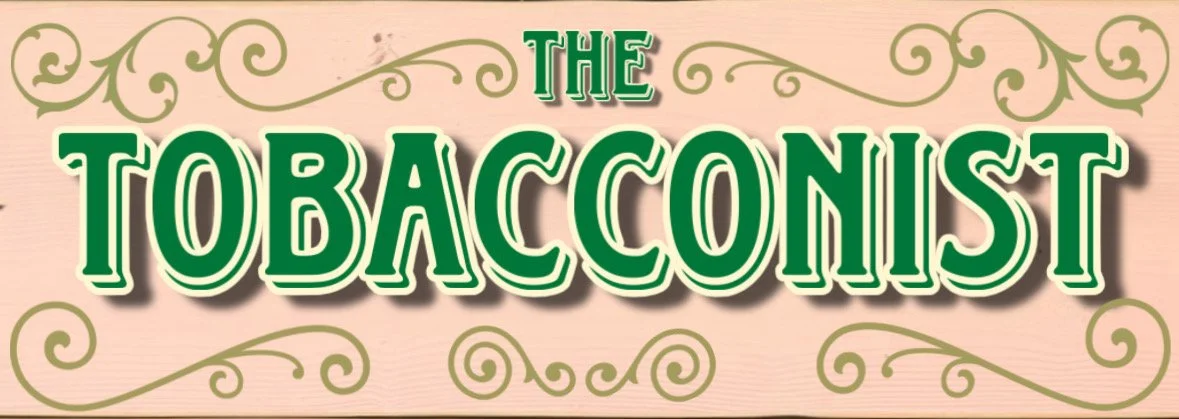
During the bygone era of Disneyland sponsorship and turn-of-the-century Main Street vendors, a quaint Main Street “Tobacconist” would find a home. (Though, from 1955 to 1956, the sign did read ‘Tobacconist’, but ‘Tobacconest’). Henry Fenenbock, (the original owner and proprietor of “Random Parts Inc. Tobacconist”) leased a 426 square-foot space on the 600 block of Main Street, to open Disneyland Fine Tobacco from 1955-1960. Disneyland Fine Tobacco was located not far from other memorable (and sentimental) representations of yesterday’s shops, like the Upjohn Pharmacy, the Wurlitzer Piano Shop, the Swift Market House, and Henry's Costume Jewelry Shop on Main Street, U.S.A.). Henry was a bit of an entrepreneur and also owned the Adventureland Bar and Cantina, Main Street Coin Shop, and the Main Street Pen Shop during Disneyland’s first five years of operation.
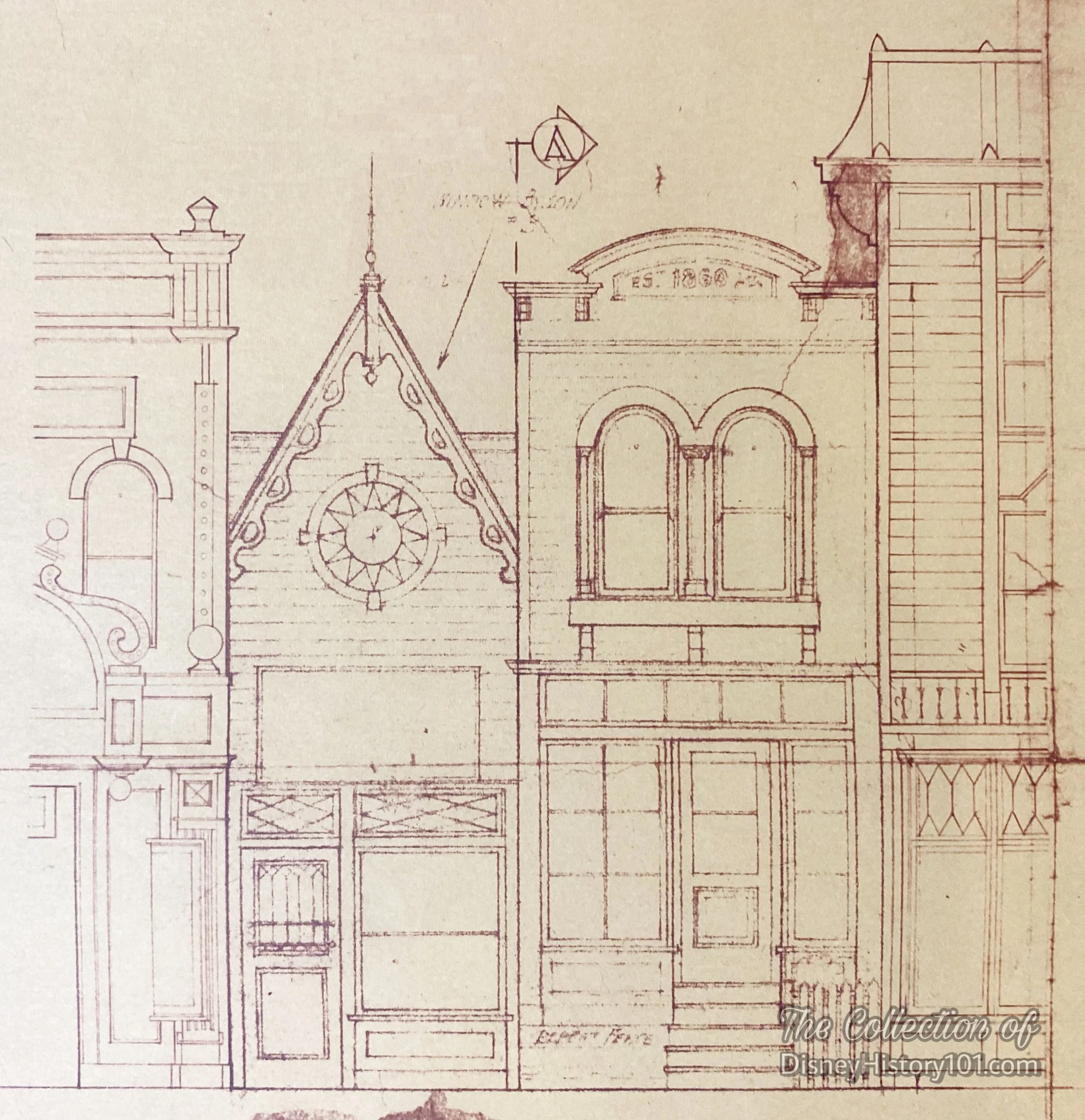
The store front for the future site of the Tobacconist on “1/4 Scale Plans & Elevations” for the 600 Block of Main Street Architectural Facade produced by WEDEnterprises, Inc.
“Design”
“Disneyland is unique in that some of the world's foremost creative artists and architects control all design at Disneyland.“ As early as 1953, artists Harper Goff, Herb Ryman, Sam McKim, Dale Hennesy, Harry Johnson (who was good friends with Herb Ryman, and whose designs were most influential), and others created many conceptual pieces for Main Street and it’s shops. Herb Ryman (who was an Illinois native, the same as Walt), “had a lot in common while discussing and developing Main Street” for the mid-west visitors, according to “A Brush with Disney” by Herbert Ryman, page 148. Herb Ryman would create the first “Schematic Aerial View” over Disneyland (including Main Street USA), originally produced September 26 & 27, 1953.
Other contributing artists were model-maker Fred Joerger (who was hired c.1953 to craft the “Barber Shop Quartet” show for “Project Little Man” of “Walt Disney’s Disneyland”) and Wathel Rogers were instrumental in translating the two-dimensional artwork into detailed miniature models of Main Street. On a leave of absence in 1954, Chuck Myall joined WED to help create some of the Main Street facades. Lesser known artist John Stoos is of particular note, for he prepared the architectural elevation and floor plan drawings for the 600 Block of Main Street by February 19, 1955. His architectural drawings helped define all designs, production and construction strategies, costs, schedule, and resource requirements. John’s drawings were soon checked (by a “GMB”), approved (by two individuals), and revised (by an “HGS”) by March 23, 1955.
The artists’ early thumbnail sketches and other concept artwork of Disneyland seemed to be unencumbered by restrictions of budget, schedule or the laws of nature and physics. Though guided by Walt, his artists appeared to engage in “free-thinking,” as if implementing the modern “Blue Sky” Imagineering process. However, in designing the Tobacconest and the rest of Main Street, there was a lack of 20th-century architectural reference material at the time of the conception of Disneyland, so some Walt Disney Studio artist (Ward Kimball) made the contribution of rare books of drawings from his own collection.
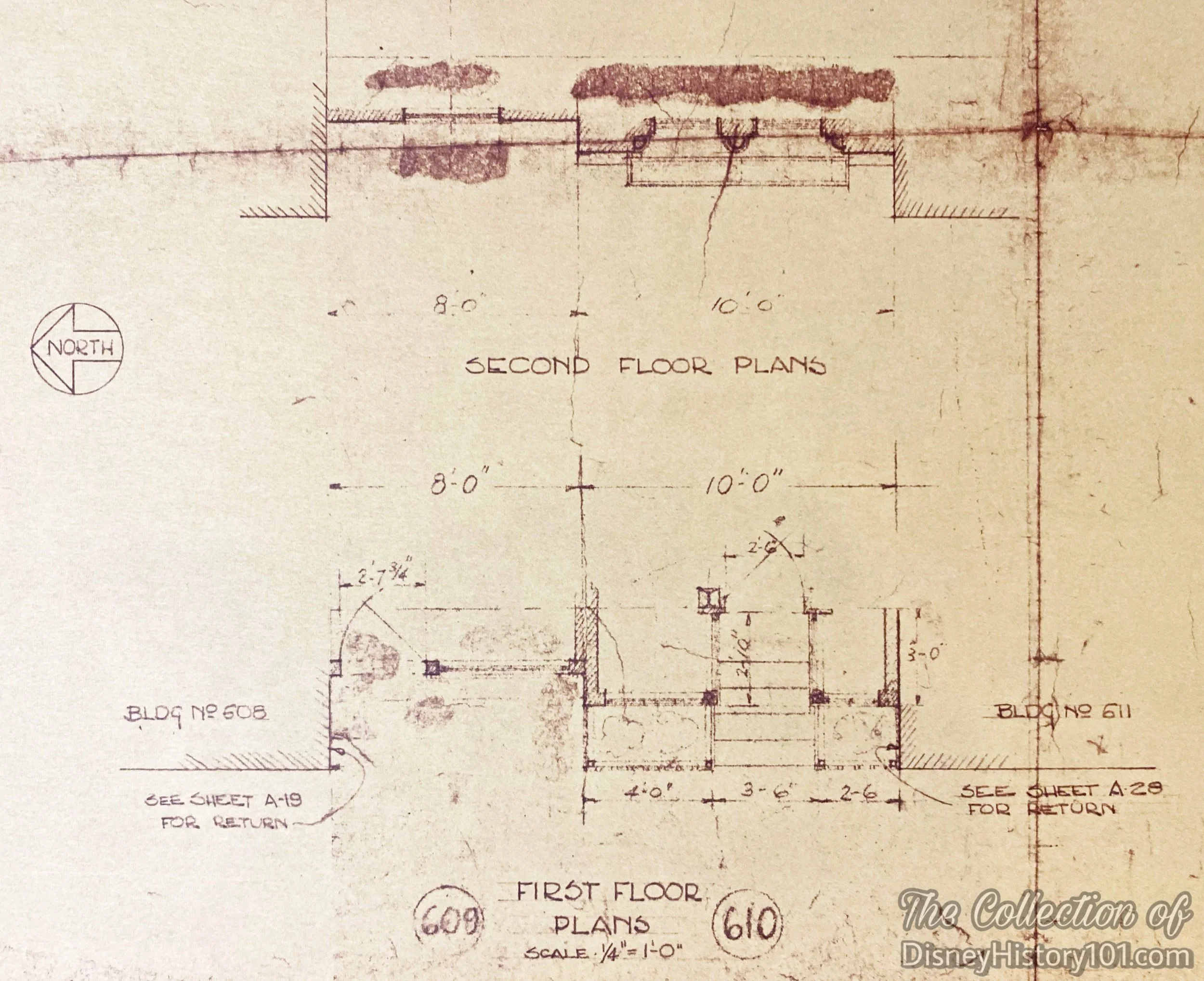
“1/4 Scale Plans & Elevations” for the 600 Block of Main Street produced by WEDEnterprises, Inc.
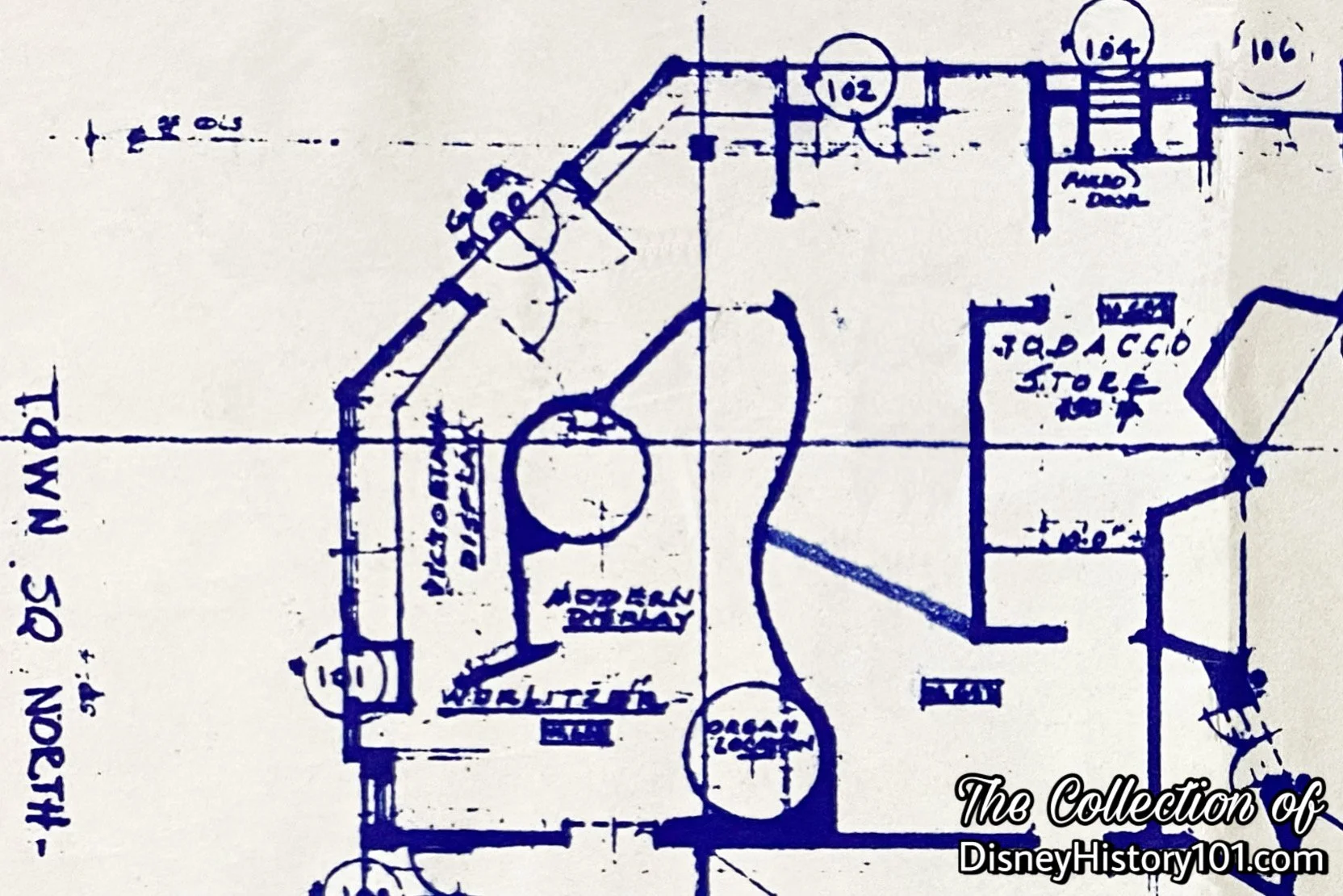
Note the Tobacco Store in the “Plan for Units 300 to 400 & 500 to 600” designed by WED Enterprises, Inc., c.1955.
“Construction”
“When the giant earth-moving undertaking was completed, the building crews took over. Soon, the rat-tat-tat of riveters was shattering the air, and sparks were flying from welders’ torches as the steel frameworks, capable of withstanding the ravages of time and the elements rose above the newly formed ground. While carpenters hammered and masons laid row upon row of brick and stone and mortar, the permanent buildings began to take shape and form,” according to “The Disneyland Story” published 1955. One of the first buildings to be constructed was the Main Street Opera House, which was used as the Mill. Here, the woodwork of Disneyland was generated - from the functional to the aesthetic! Approximately three and one-half million board feet of lumber went into the Park’s construction. Much of the wood was processed here by McNeil Construction (which formerly constructed Walt Disney Studio sound stages in 1947 and 1953), and under the direction of George Mills Sr. (the Prime General Contractor and Mill Foreman). Then, under the direction of Joe Fowler (Construction Supervisor), as well as Charles Alexander and Ray Conway (Construction Field Supervisors), the lumber was soon fashioned into the framing belonging to the very first buildings constructed at Disneyland - primarily the Main Street Complexes (on each side of the street).
In constructing each building, a concrete foundation and slab floors were prepared, followed by wood frame construction (while store units would have a combination wood and rigid steel frame). ”The first fabricated steel for the Main Street buildings arrived November 8 and was erected,” according to the narrator of “Disneyland - The Park,” a Disneyland anthology television series excerpt, first aired 1957 and Disneyland LINE (November 22, 1979).
According to inserts published in area newspapers during July of 1955, Disney buildings were roofed by Pioneer Roof & Shingle Company (then located at 608 Mateo Street, Los Angeles, California; 7522 Westminster Avenue, Westminster, California). The roof covering was a variable, dependent on the architectural design.
The building (as each on Main Street U.S.A.) possessed complete fire sprinkling systems. By June 30, 1955, related Disneyland Site Work Fire Protection Utilities Plot Plans were prepared for Disneyland Inc., by J.E. Thomasson of WED Enterprises Inc.
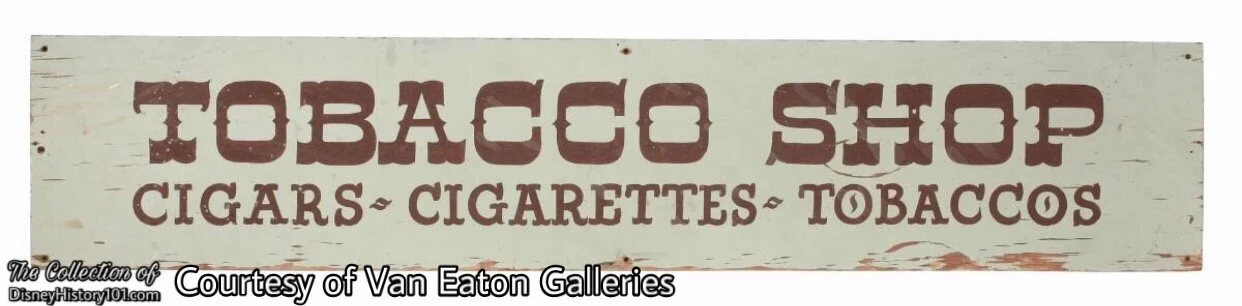
(Above : the Tobacco Shop sign that hung under the shop’s showcase window from 1955 - 1960.)
All fixtures were placed in their correct motif and many light fixtures of Disneyland were authentic antiques.
As of June 2, 1955, C.V. Wood Jr. sent an Inter-Office Memorandum to Walt Disney regarding the best estimates that could be obtained at the time regarding the completion status of individual sections of the Park and Opening Day. C.V. wrote: “Building #609 - Tobacco Shop: Will be completed.” As of June 2, 1955, C.V. Wood Jr. sent an Inter-Office Memorandum to Walt Disney regarding the best estimates that could be obtained at the time regarding the completion status of individual sections of the Park and Opening Day. C.V. wrote: “Electric Signs: All are in work - with the exception of the shoe store and the Bank of America, all will be completed.”
Ray Van de Warker (who became Department Manager of Office Support Services) remembered the distinct look of Main Street when he first came to work. “Main Street was dirt. Some of the buildings didn’t even have facades on.” (to Disneyland LINE, Vol.25, No.28, published July 16th, 1993). But soon the storefronts were erected. According to Florabel Muir (of the New York Daily News) divulged after a pre-opening (July 9th) tour by Walt, “the buildings are not false fronts as are seen on every studio backlot in Hollywood… Walking down Main Street, I saw a photographer’s shop, ice cream parlor, penny arcade, bakery, drug store, grocery and a butcher shop. These stores will be operated as concessions by well known U.S. firms. Swift & Co., for instance, will run the butcher shop, though instead of real pork, beef and lamb, they’ll sell candy imitations of their products.”
As with all of Disneyland’s Opening-Day landmarks, rides, and attractions, small local businesses provided materials, labor, and skills. Steel was provided by Triangle Steel & Supply Company (of Los Angeles). Newbery Electric Corporation “gave electricity to Disneyland,”Southern Counties Gas Company provided economical and clean gas, buildings were roofed by Pioneer Roof and Shingle Company (of Westminster, California), Mc Neil Construction Company provided labor, Evans and Reeves Landscaping Inc. (of West Los Angeles) achieved“the perfect landscape for Disneyland,” and so forth.
The buildings of Main Street (The Tobacco Shop included) were soon after described by an appraiser as “all very ornate, with variable embellishments. The basic construction, consists of concrete foundation and slab floors, wood frame construction, (store units also have a combination rigid steel frame) roof covering is variable, being dependant on architectural design. All buildings have complete fire sprinkling systems.” “Some of the cresting and railing to be seen in… Main Street came from old plantations in Nashville and Memphis, Tennessee. Other furnishings came from San Francisco, Oakland and Sacramento, dating back to the ‘49 gold rush days,” according to an article published in The Disneyland News (Vol.1 - No.1 ; July of 1955). [“Building A Dream”, Disneyland Public Relations Department]
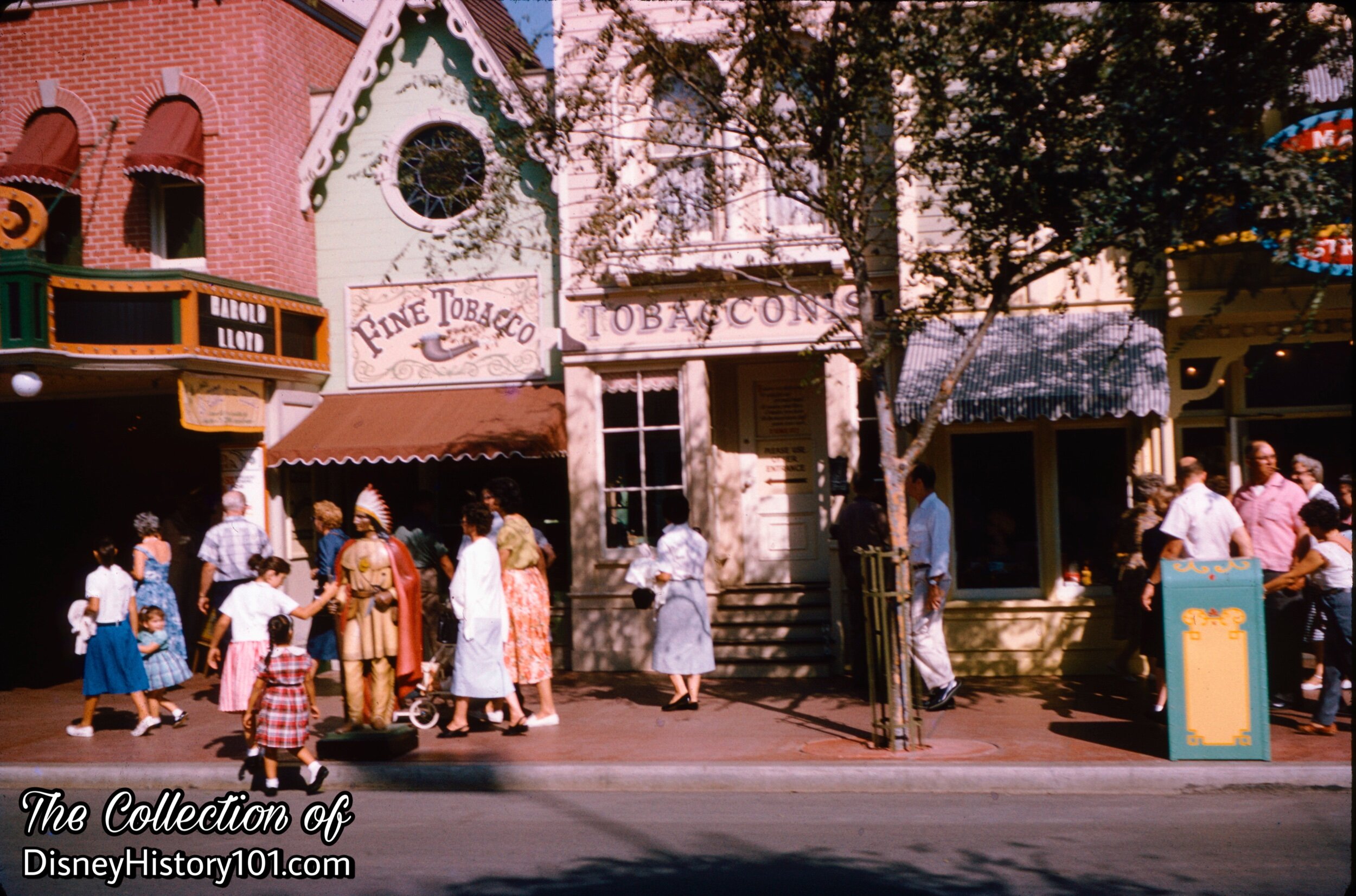
Pictured Above : MAIN STREET TOBACCONIST Store Front
“Press Preview Day and Grand Opening”
A contributing writer of The Daily Oklahoman (who visited on July 17, 1955) noted: “The guests walked into a city square of the 1900 era, bounded by an old time railroad station, city hall and fire station, opera house and other vintage merchant houses.” Main Street Tobacco Shop was part of Disneyland that created tangible memories for Guests through Merchandise and Show. Much like the Upjohn Pharmacy, the Main Street Tobacco Shop (located at 106 Main Street) also functioned as a museum to the turn-of-the-century shops of North America. There were many antiques and displays around the store. There were 18th century antique cabinets (manufactured by P. Lorillard).
Before Disneyland opened, an article published in Pacific Coast Review, mentioned: “All brands of smokes will be carried by Random Parts' tobacco shop.” True to those words, Si Myerson managed the Main Street Tobacconest, carrying a unique stock and shelves carried sack pouches of Bert Virginia Pine Pasteur-Galt Apothecary Tobacco, George Washington Tobacco, and Prince Albert Crimp Cut Tobacco. Some products included cigars, cigarettes, and pipes. There were ceramic “Smoker Sets” (which could be “used as candy containers,” according to one catalogue description), ashtrays both of porcelain and antimony, and the “miniature silent butler” (a “personal ashtray” used to store ashes). One of the more unusual pieces of merchandise were the hooks sold much later during the 1960s. One source elaborated on their wares this way : “So it is that one may find brands of cigarettes long thought to be out of production, imported brands and even pastel colored models. In all, Si estimates he carries about 50 different makes including the immortal ‘Sweet Corporal’ of the very early days and ‘Home Ruins’ popular during the 1920’s. Some of his other rarities include : Melachrino, Picayune and Sobranie - this last described on the container as ‘Imperial Russian - Made in England.’ And for folks who like their cigarettes to last, he stocks a brand imported from Egypt that is full half foot in length. But all this emphasis on cigarettes doesn’t mean that the pipe or cigar smoker is forgotten. Far from it. Pipe tobacco is imported from Scotland, cigars from Havana, and even snuff - from Denmark of course - line the shelves. And if you like pipe tobacco but don’t have a pipe, Is has an answer for that too; his shop stocks a full line of Meerschaums, Briars and even the old corncob variety. They range in size from tiny, fold-up models that fit a watchpocket to giants that with a three-foot draw.” In addition to all this, a few other service items like “Kleenex, aspirin, etc. may be purchased at the Tobacco Shop.” -“Your Role in the Disneyland Show,” Disneyland, Inc., 1955.
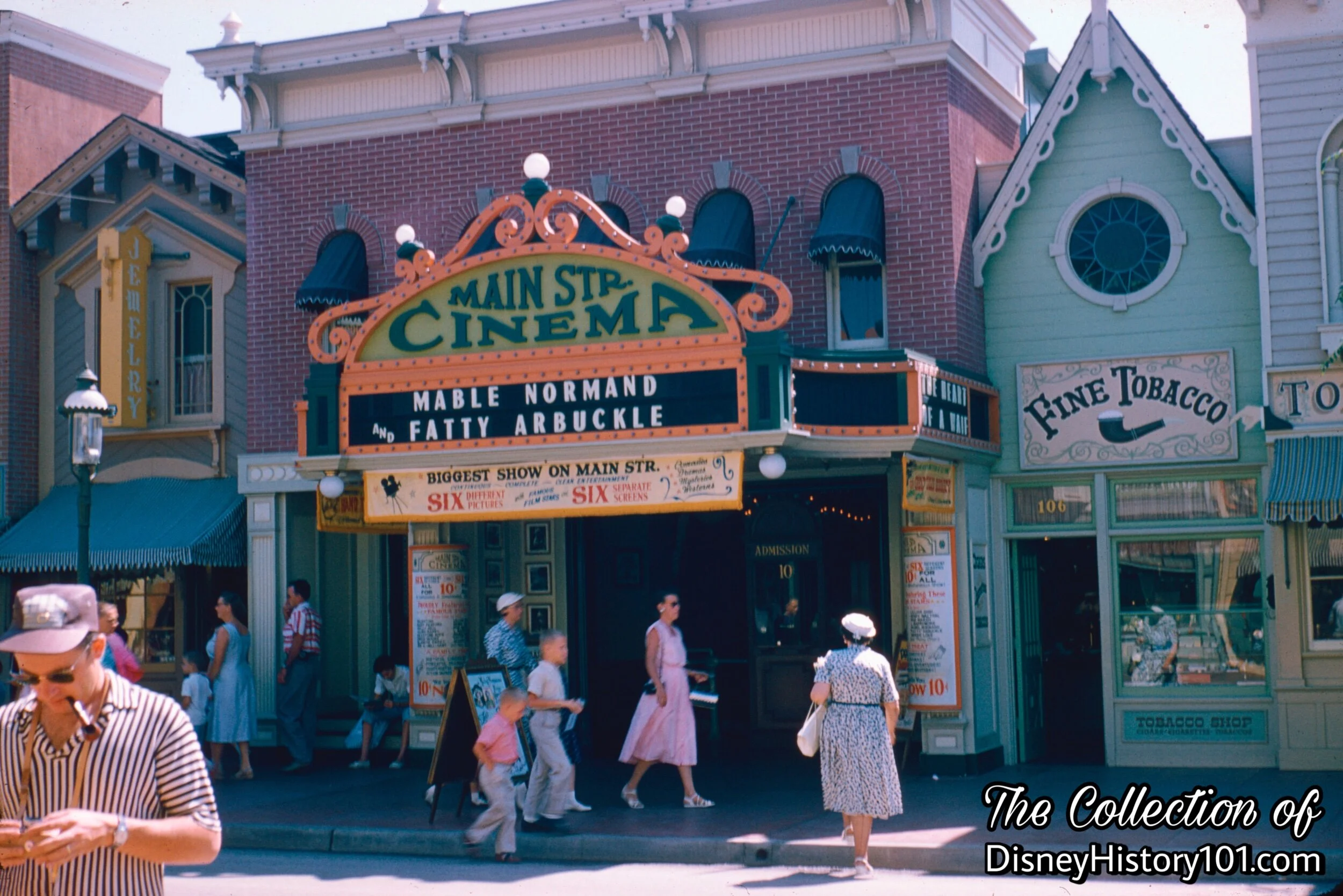
A pipe-smoking Guests departs the Main Street Tobacconist Shop.
“Exhibits”
The Main Street Tobacco Shop was a shop, but was also considered a free exhibit. Like most free exhibits, there were displays and other attractions, the foremost of which was the cigar store Indian. Through the years, the Main Street Tobacco Shop Cigar Store Indian became a Disneyland icon, representative of Main Street U.S.A., as much as the TWA Moonliner represented the land of Tomorrow.
Another notable feature was its window display, the first which was created for the winter season of 1955, when Main Street windows carried out Nursery Rhyme themes. For that time, the window of the Tobacco Shop presented the “Old King Cole story.”
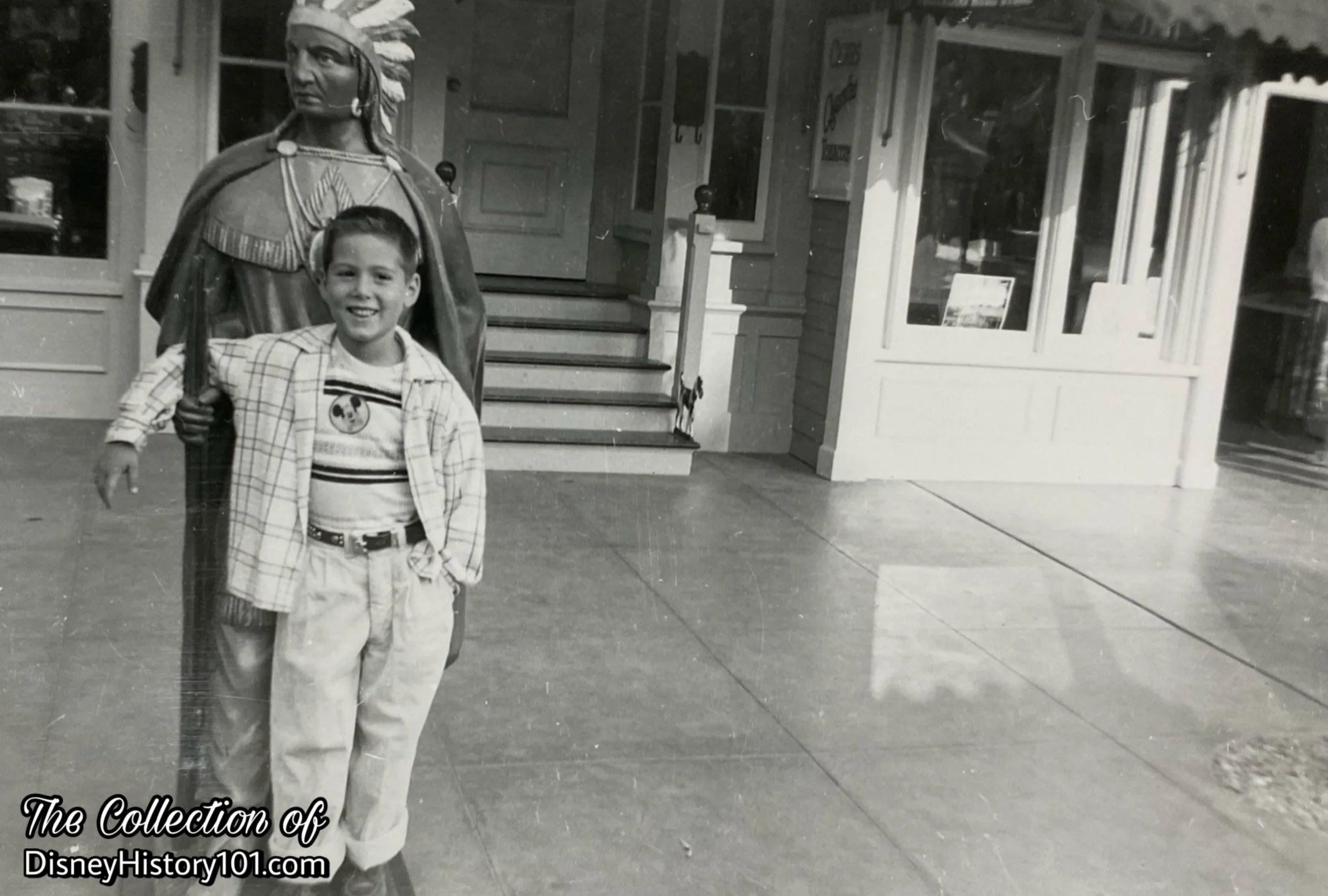
A young Guests poses with a bygone, iconic symbol of Main Street, the Tobacconist Shop Indian Figure.
The cigar store Indian was a Disneyland icon, representative of Main Street U.S.A., as much as the TWA Moonliner represented the land of Tomorrow.
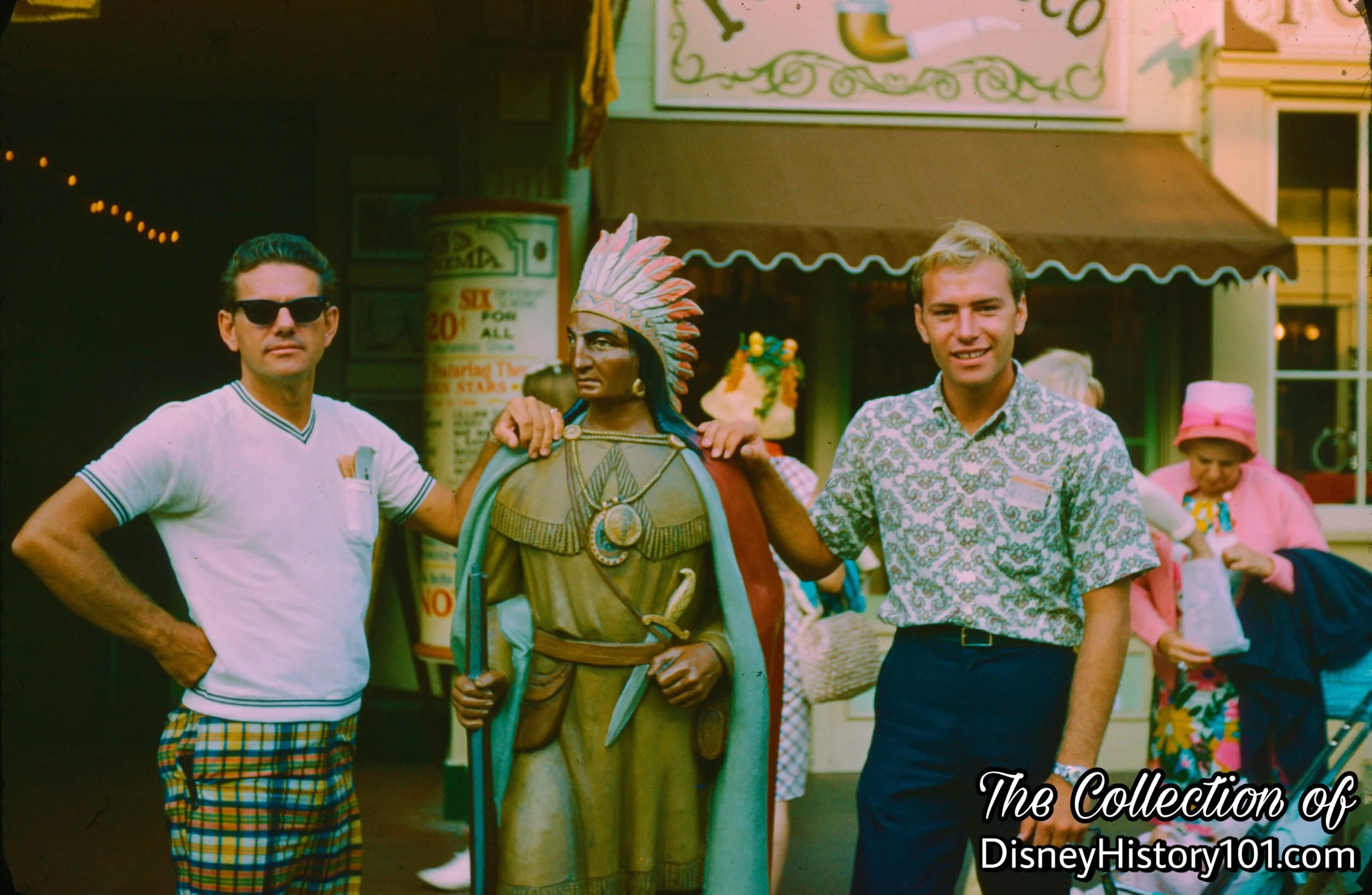
Two friends take a snapshot with the Main Street Tobacconist Shop Indian Figure, c. August, 1967.
Similar to the relationship between the “show globe” and the pharmacist, the Cigar Store Indian has been associated with the Tobacco Shops since the early 17th-century. There have been a total of two at Disneyland - one on Main Street, and another in Frontierland. It seems that guests just can’t resist commemorating their visit to Disneyland, with a photograph alongside either one! Many memorable V.I.P. visitors (like John Lennon of Beatles fame, and notable Kiowa-Comanche guitarist Jesse Ed Davis) have been photographed alongside the Main Street Tobacconist Indian.
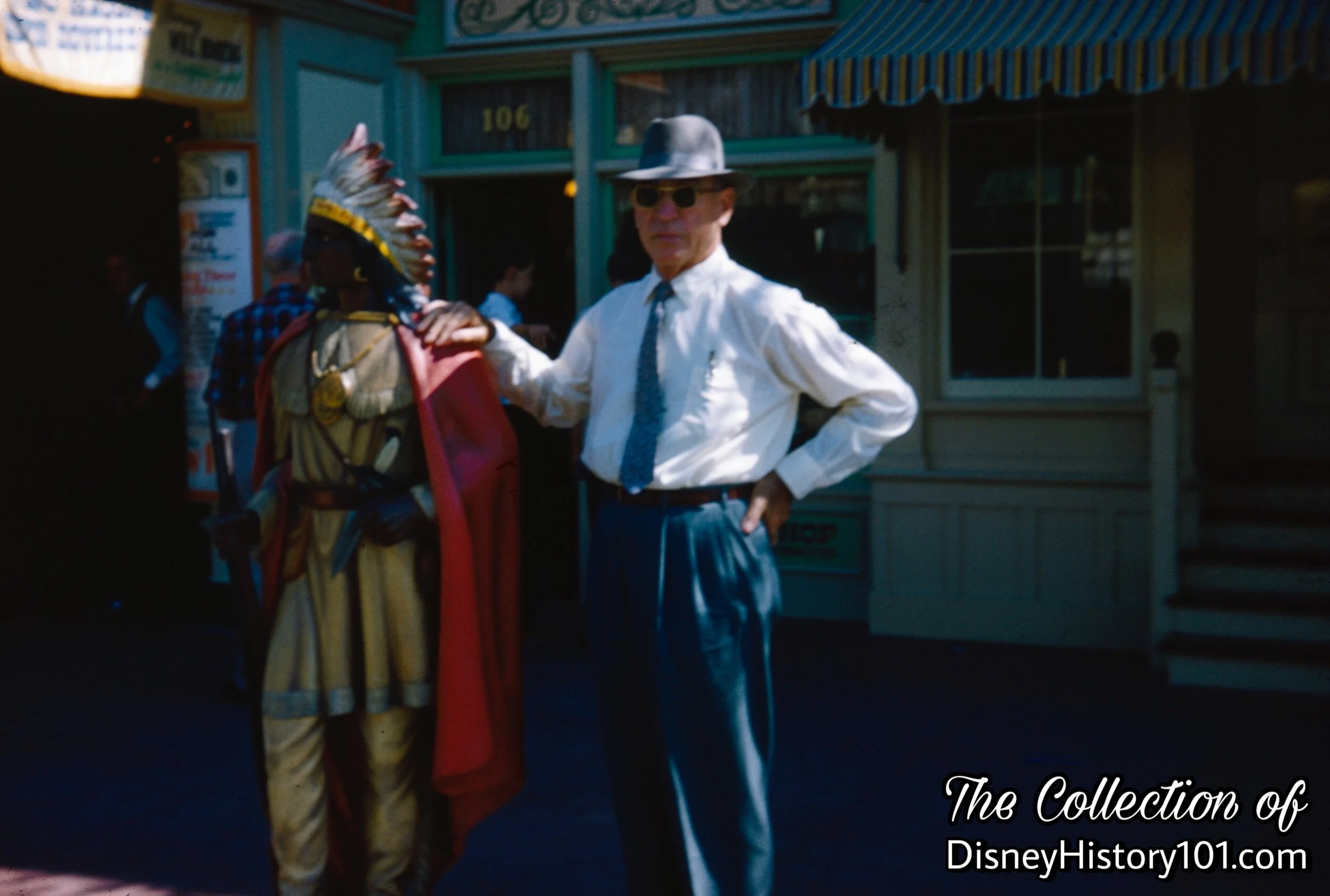
MAIN STREET TOBACCONIST SHOP INDIAN and GUEST
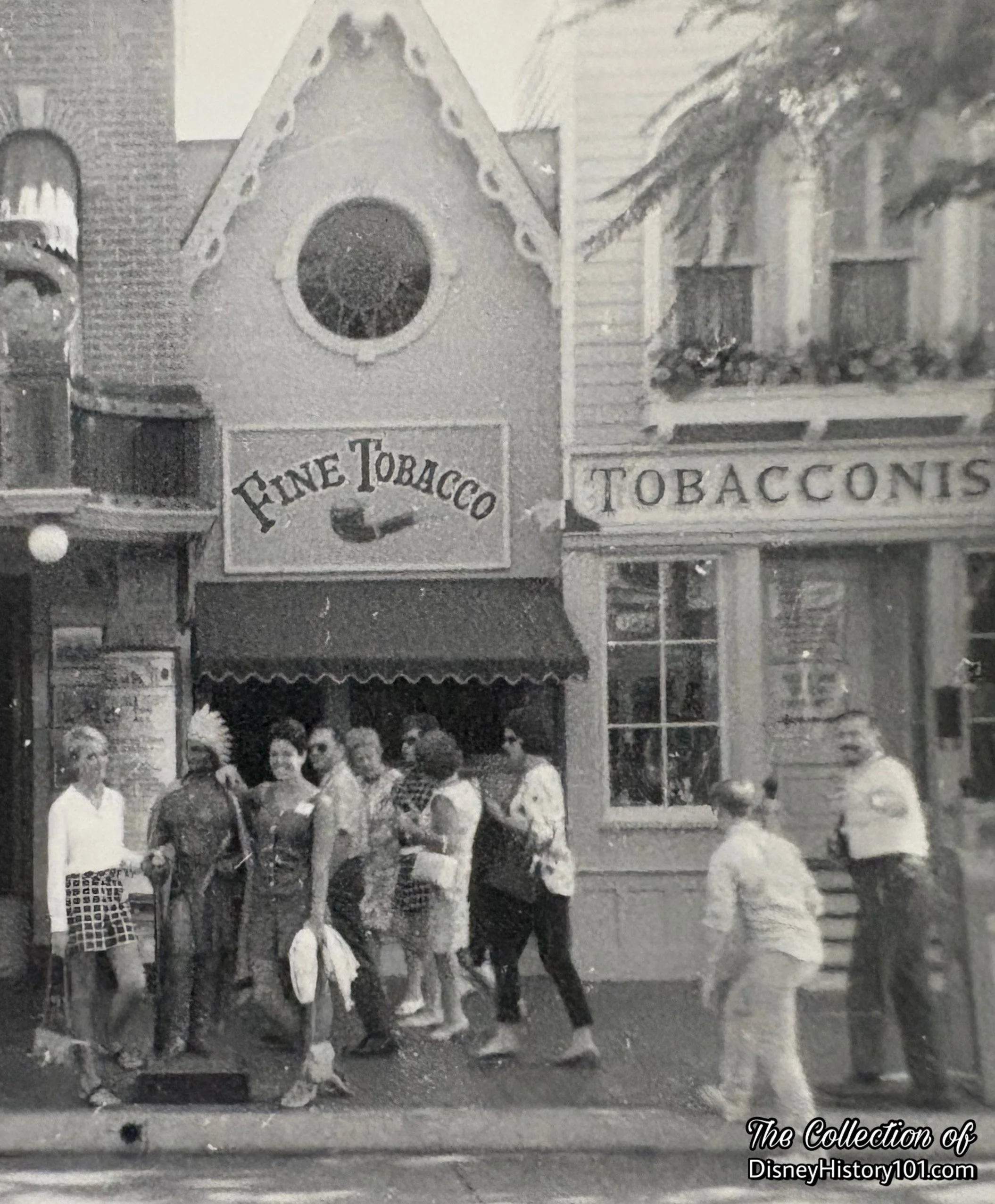
Two Guests take a photo with the Disneyland Tobacco Shop Indian; 1960s.
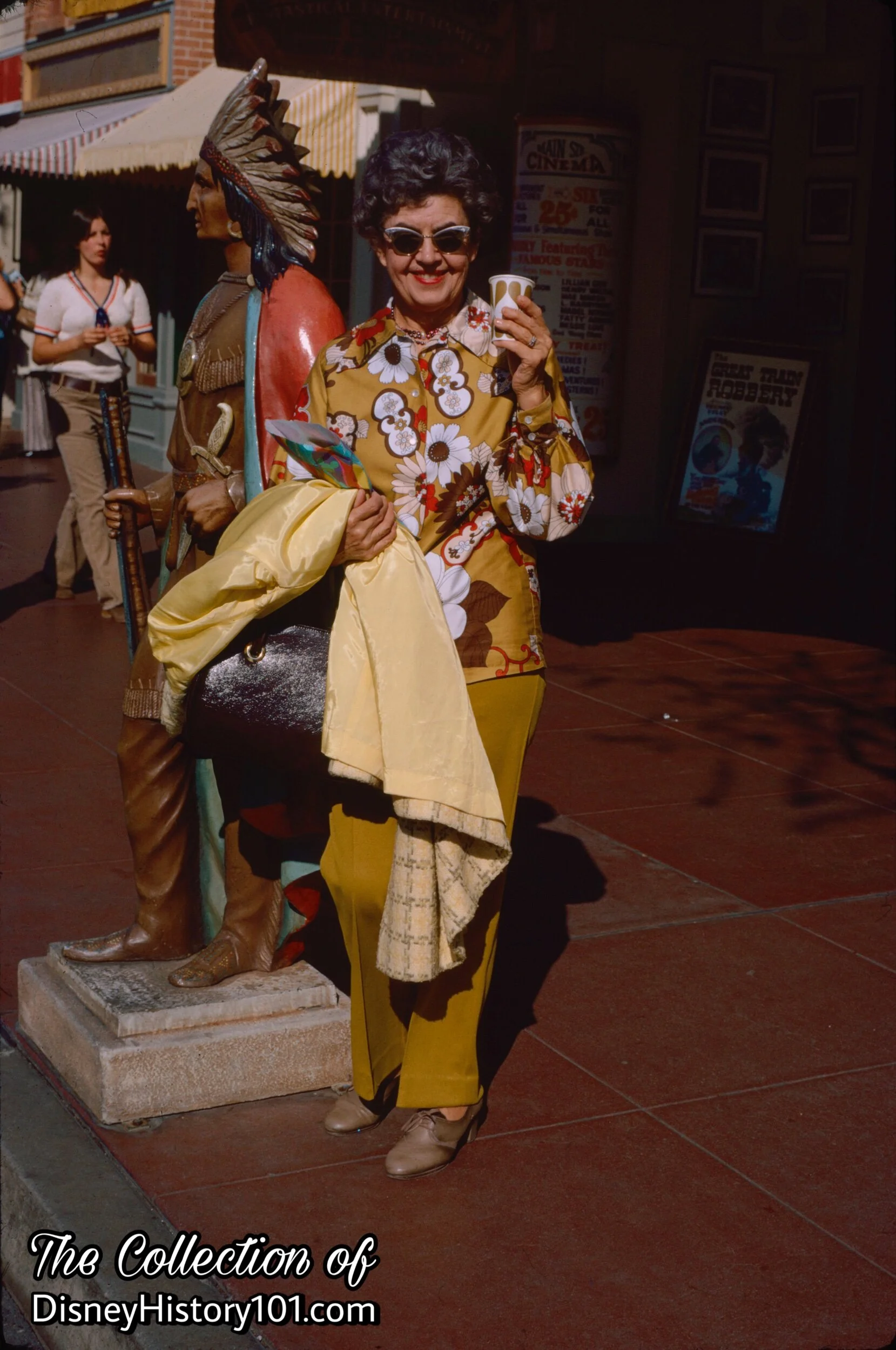
A Guest proudly displays two of her souvenirs of the Disneyland Tobacco Shop, October 30, 1971.
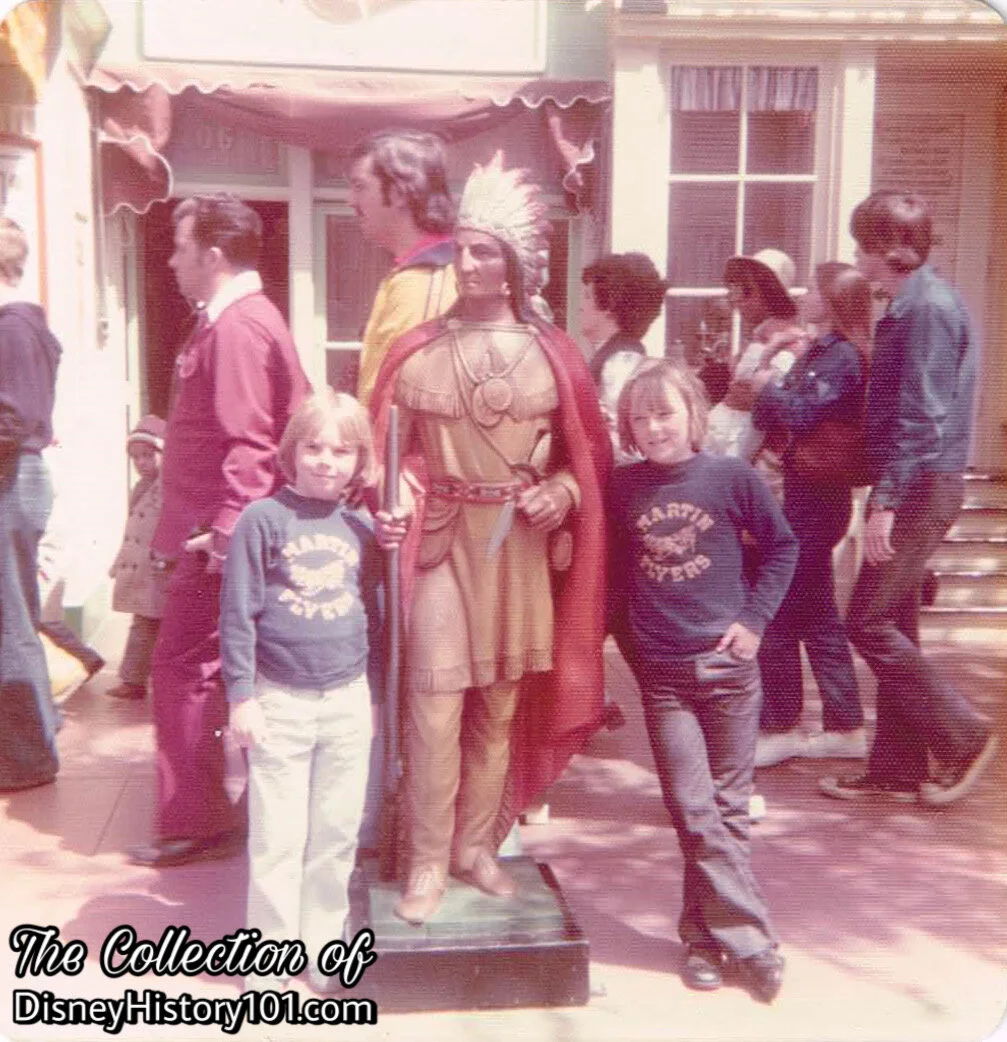
MAIN STREET TOBACCONIST SHOP INDIAN
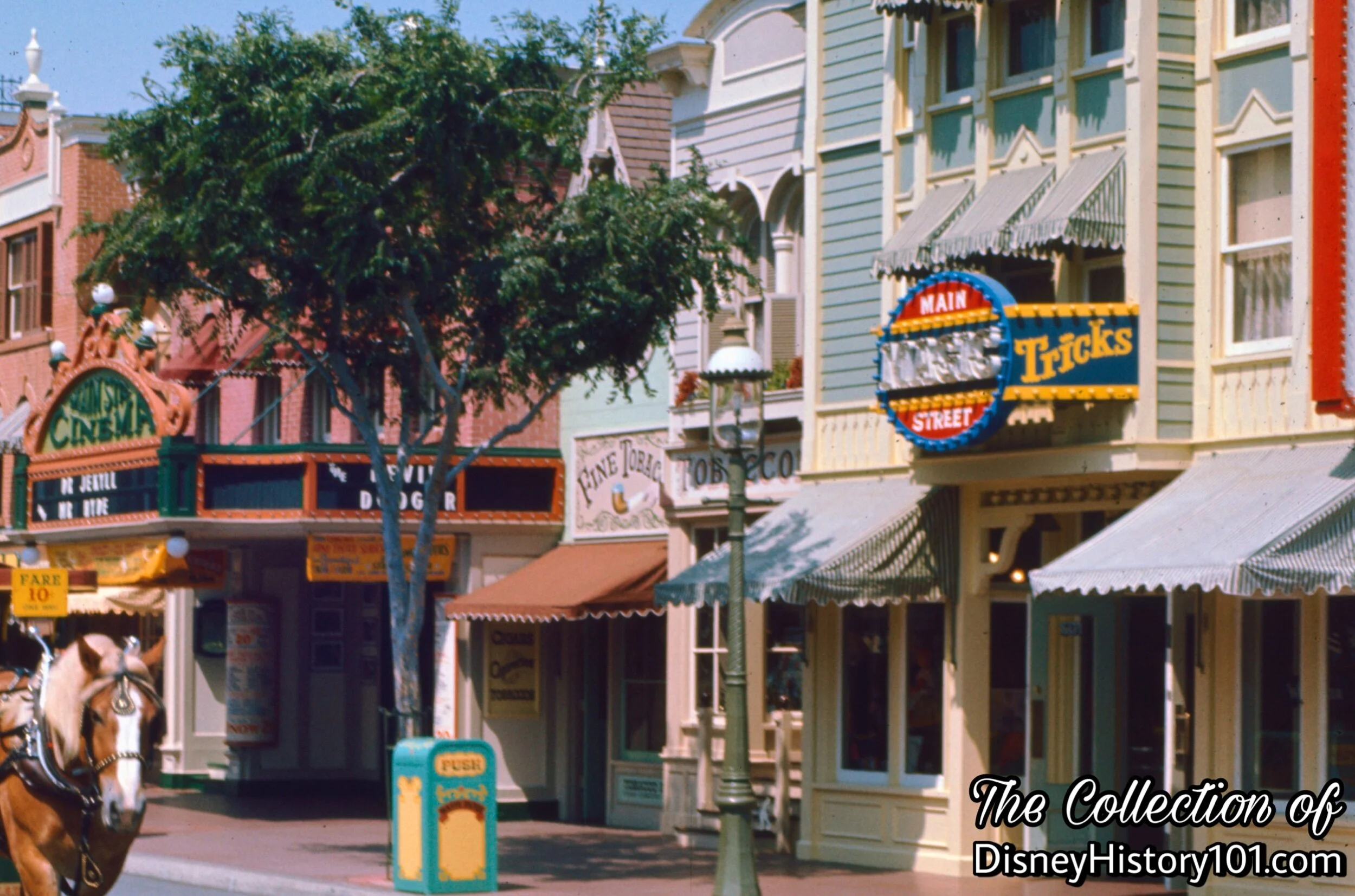
Tobacco Shop
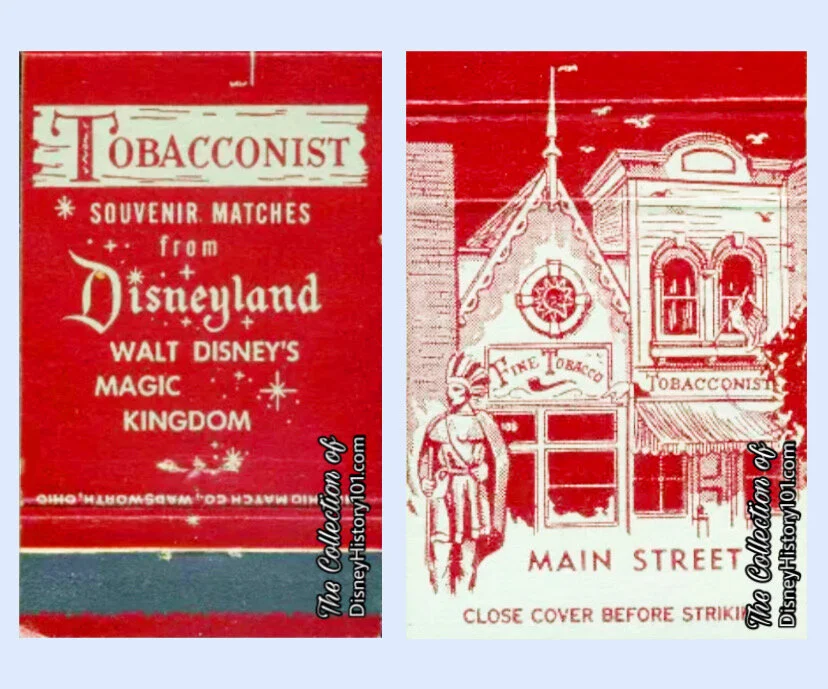
"Tobacconist Match Book", Mfg. by the Ohio Match Co. of Wadsworth, Ohio
Complimentary souvenir matchbooks were common during the formative years of Disneyland Park. Many free exhibits and restaurants like the Chicken Plantation, Casa de Fritos, and the Tobacconist made these souvenirs available to guests, who took them home and “struck up” conversations.
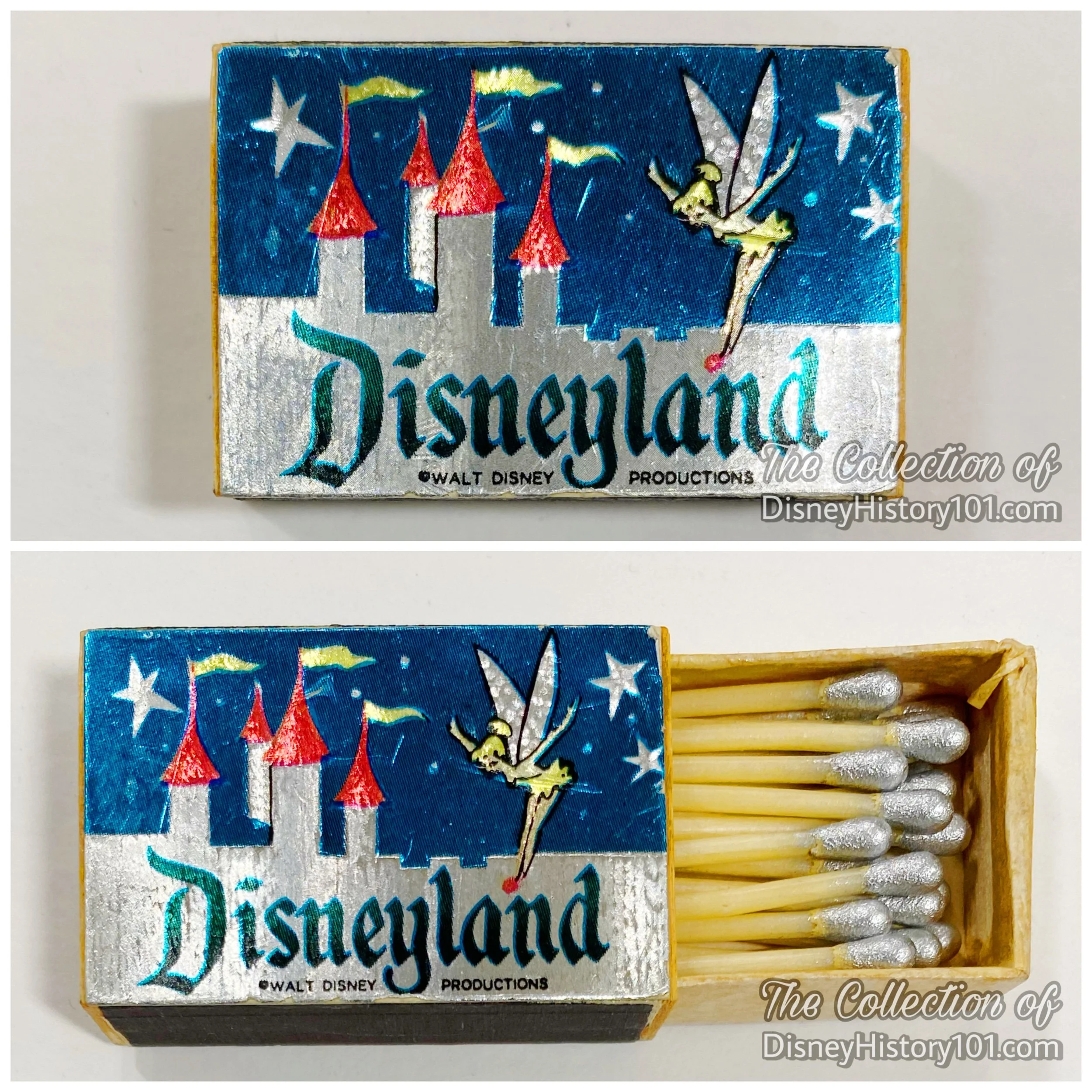
This match box full of silver-tipped matches was an early souvenir of Disneyland Park.
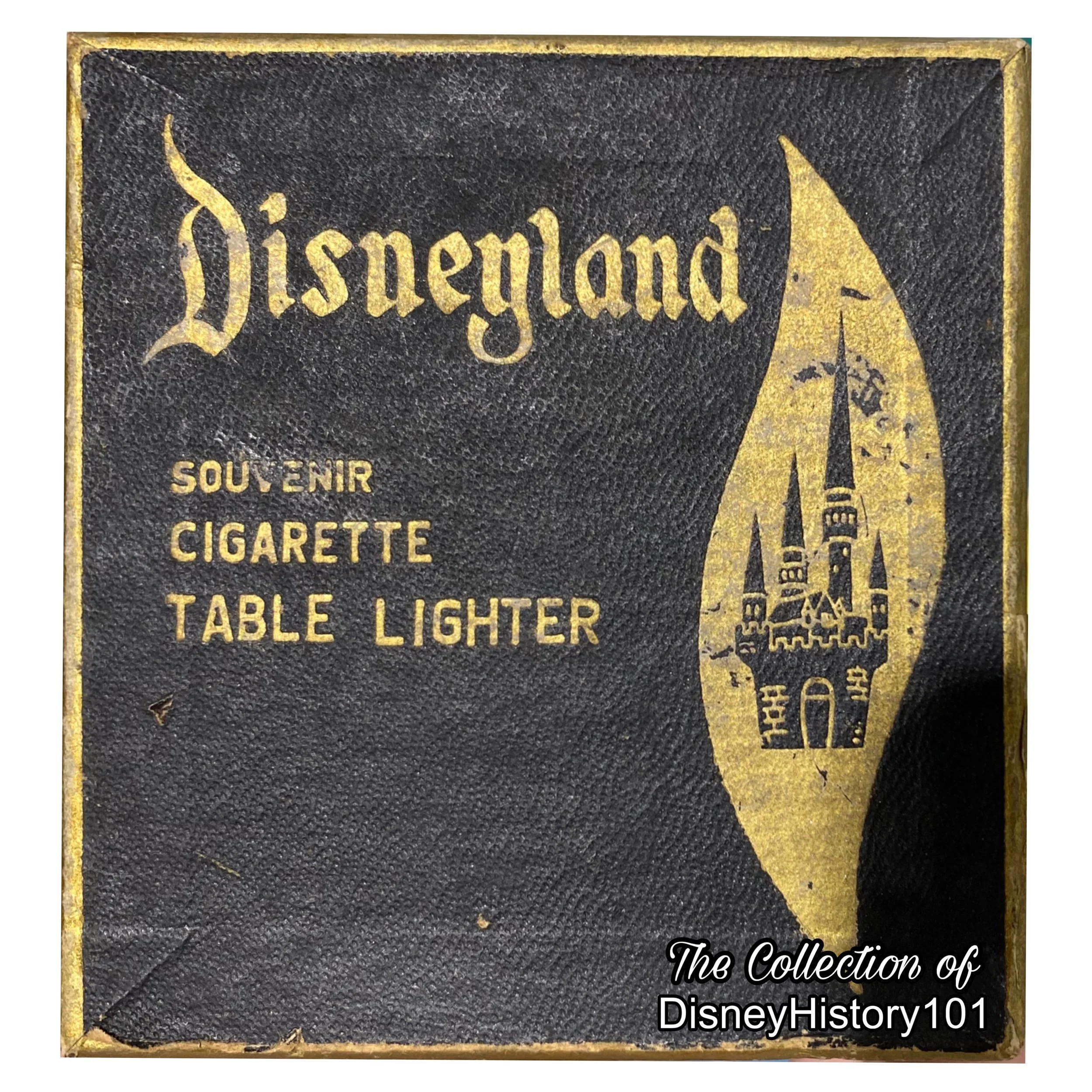
The Disneyland Souvenir Cigarette Table Lighter box.
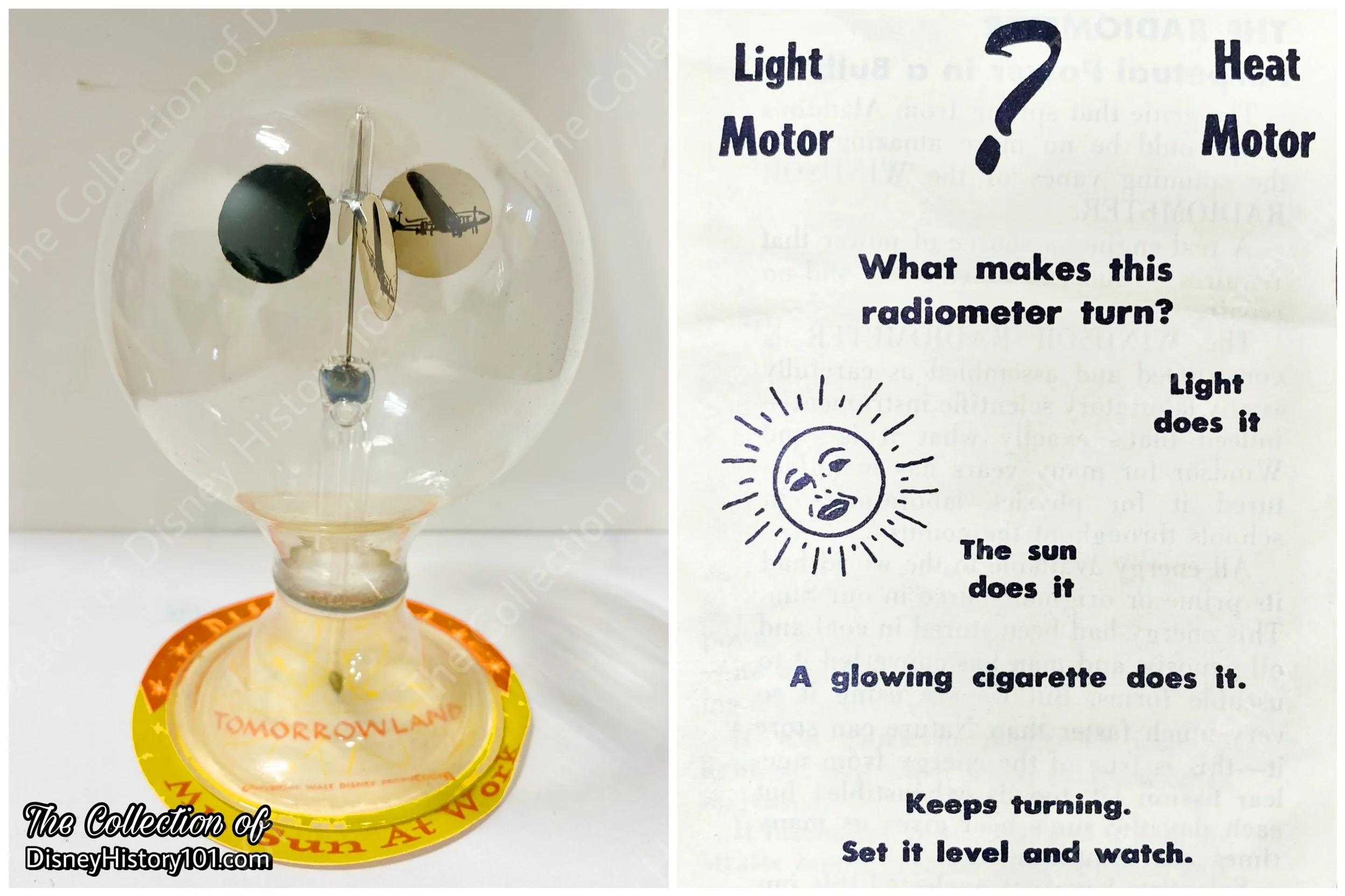
What makes the Mr. Sun radiometer turn? A glowing cigarette does the trick, according to instructions.
While not actually smoking paraphernalia, these scientific souvenirs would have appealed to Disneyland guests with a penchant for smoking.
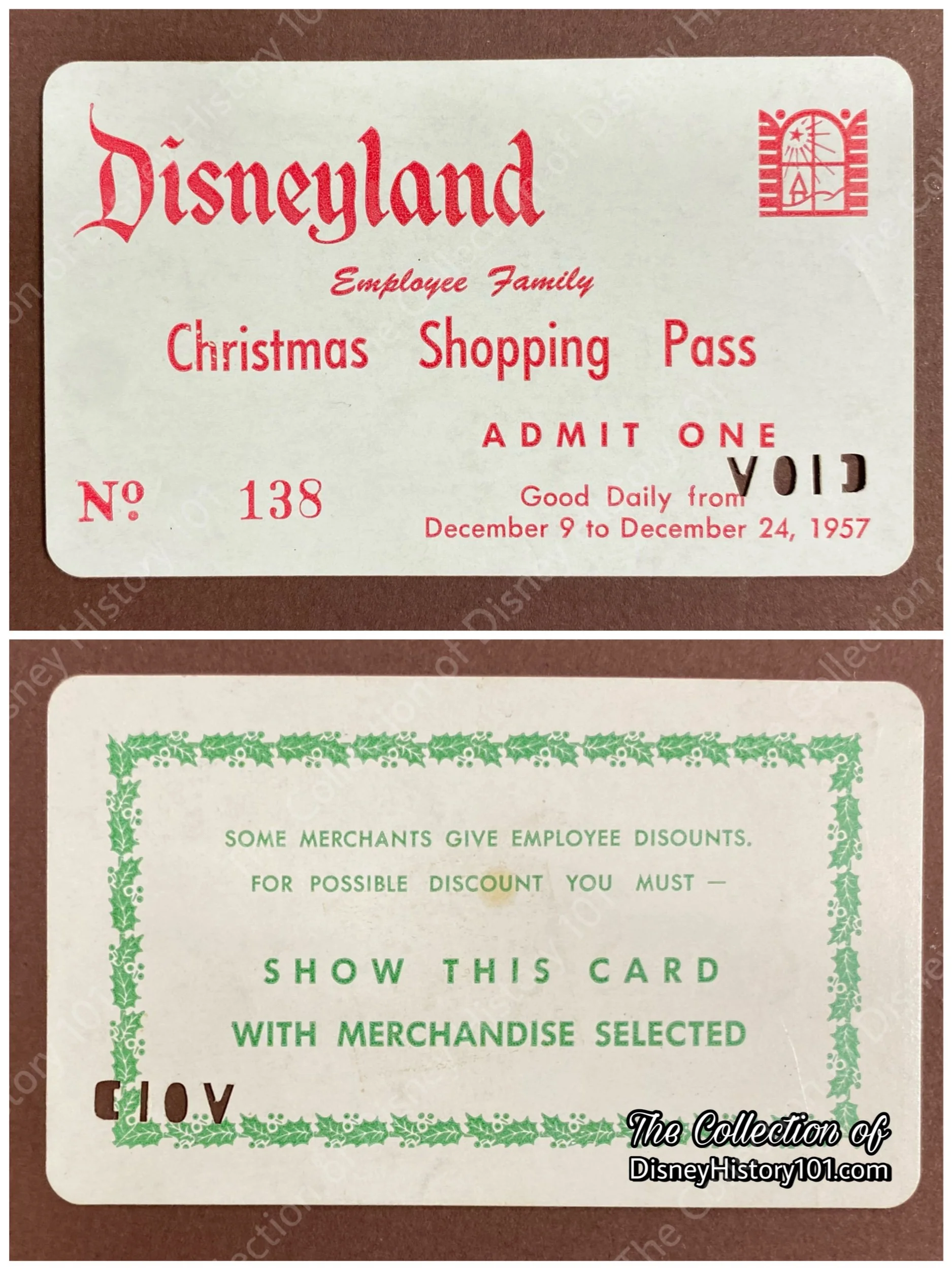
The Disneyland Employee Family Christmas Shopping Pass granted admission into the park and the occasional discount on merchandise with lesees (except tobacco products).
“Audience Response”
By the release of the “Disneyland 1st Anniversary Souvenir Pictorial” in 1956, the shop was included among the “stores whose shelves bulge with worlds of distinctive merchandise.” Both Disneylanders and audiences enjoys the wares. Disneyland Cast Members were not permitted to smoke while “On stage”, “Your Disneyland: A Guide for Hosts” reminding Disneylanders that “Smoking… is also taboo at any time.” However, while on their personal time, many Disneylanders like Van France, Ken Kohler (who was known as a “connoisseur of cigars”), and even Walt Disney frequented the Tobacco Shop.
“Promotions”
Shopping was especially encouraged during the first Christmas Season. According to The Disneyland Shopper (published 1955): “Half the fun of buying Christmas Gifts is the atmosphere you shop in. You couldn't ask for more in the way of the spirit of Christmas than to shop in Disneyland. Especially along Main Street will you catch the air of the good old-fashioned Christmas with wreaths of holly, Christmas bells, carolers, snow-frosted windows gaily decorated with fairytale rhymes, and the scent of pine boughs in the air. Ringing through this Magic Kingdom are the Christmas Songs we all love to hear.”
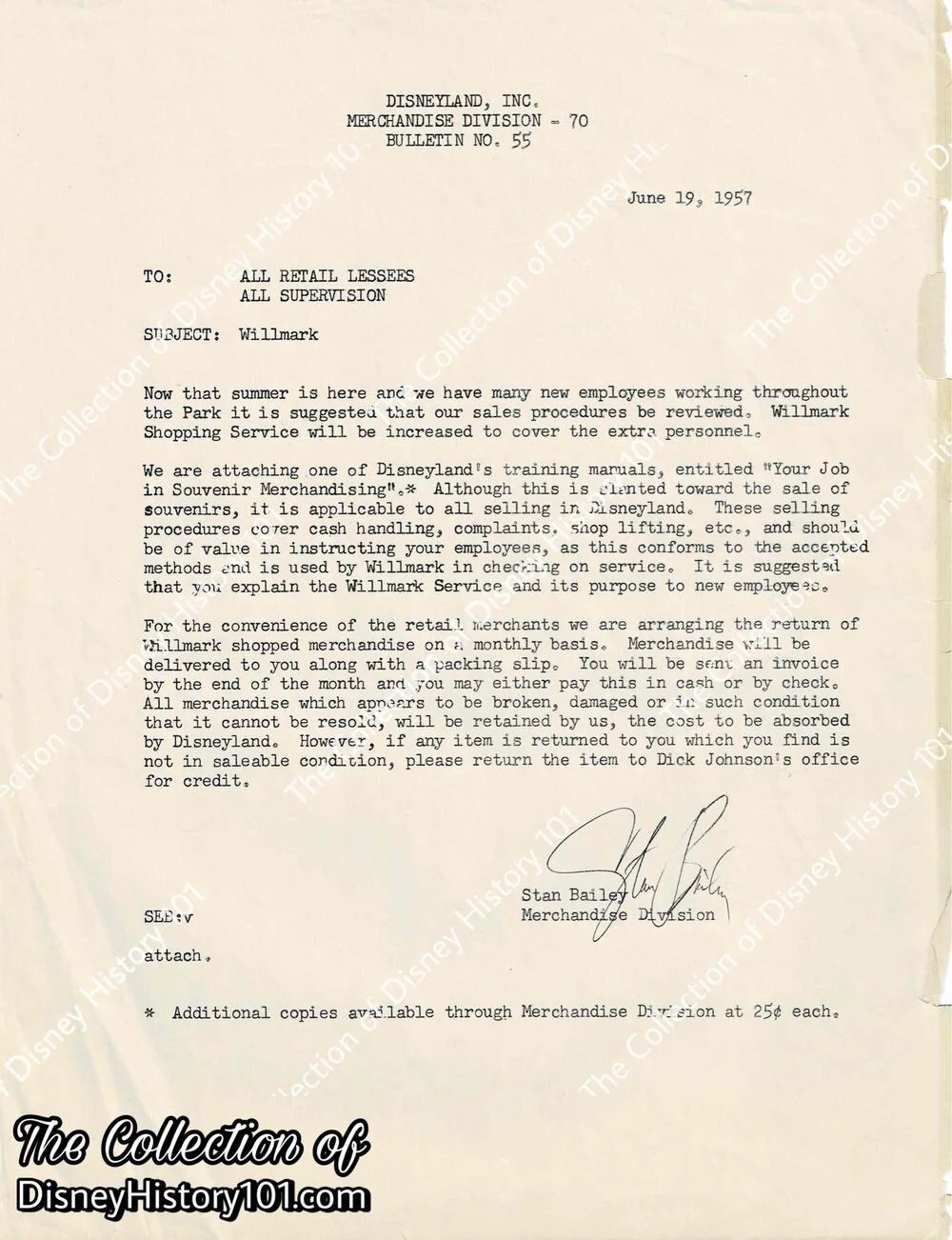
Disneyland, Inc. once utilized the Wilmark Shopping Service to assure higher levels of quality service in Souvenir Merchandising.
The 1957 TWA brochure “Let’s Talk About… My Visit to Disneyland, Anaheim, California: A Note from Mary Gordon TWA Travel Advisor” mentioned: “We learned that to fully explore Disneyland takes two days, so early next morning we were at the gates of the park again. The second day we spent more time shopping in the 50 inviting shops, and the youngsters bought inexpensive souvenirs to take home to friends.”
The “Disneyland Dictionary” (printed October 1958) made mention of the “Tobacco Shop… operated by Random Parts, Inc.“ and it’s “Scope of Sales: Tobacco and accessories, as well as aspirin and other service items.” The resulting corporate synergy was good for a time. Commercial lessee Random Parts, Inc. yielded revenue for Disneyland Inc. - $7,721 for the fiscal year ending September 29, 1957 and $8,241 for the fiscal year ending September 28, 1958.

(1960 - June 3, 1990)
When Disneyland, Inc. took over some of the Lessee Locations in 1960, Henry Fenenbock’s Fine Tobacco departed Disneyland. In its place, Disneyland opened its very own Tobacconist, similar in style to the previous shop. Therein, tobacco, pipes (including “the finest meerschaum pipes”), and smoking accessories from all over the world could be found. There were boxes of “pure Havana hand-made” cigars (both full-size and “petites”) on the counter. Behind the counter, were a variety of cigars (i.e. as those manufactured the Regina Cigar Co.) in wooden boxes, and pipes (both wooden, and corn cob). Disneyland even sold its own “special blend” of mildly aromatic tobacco, sold in 1.5 oz. cans featuring Sleeping Beauty Castle. Of course, every purchase included a complimentary book of matches.
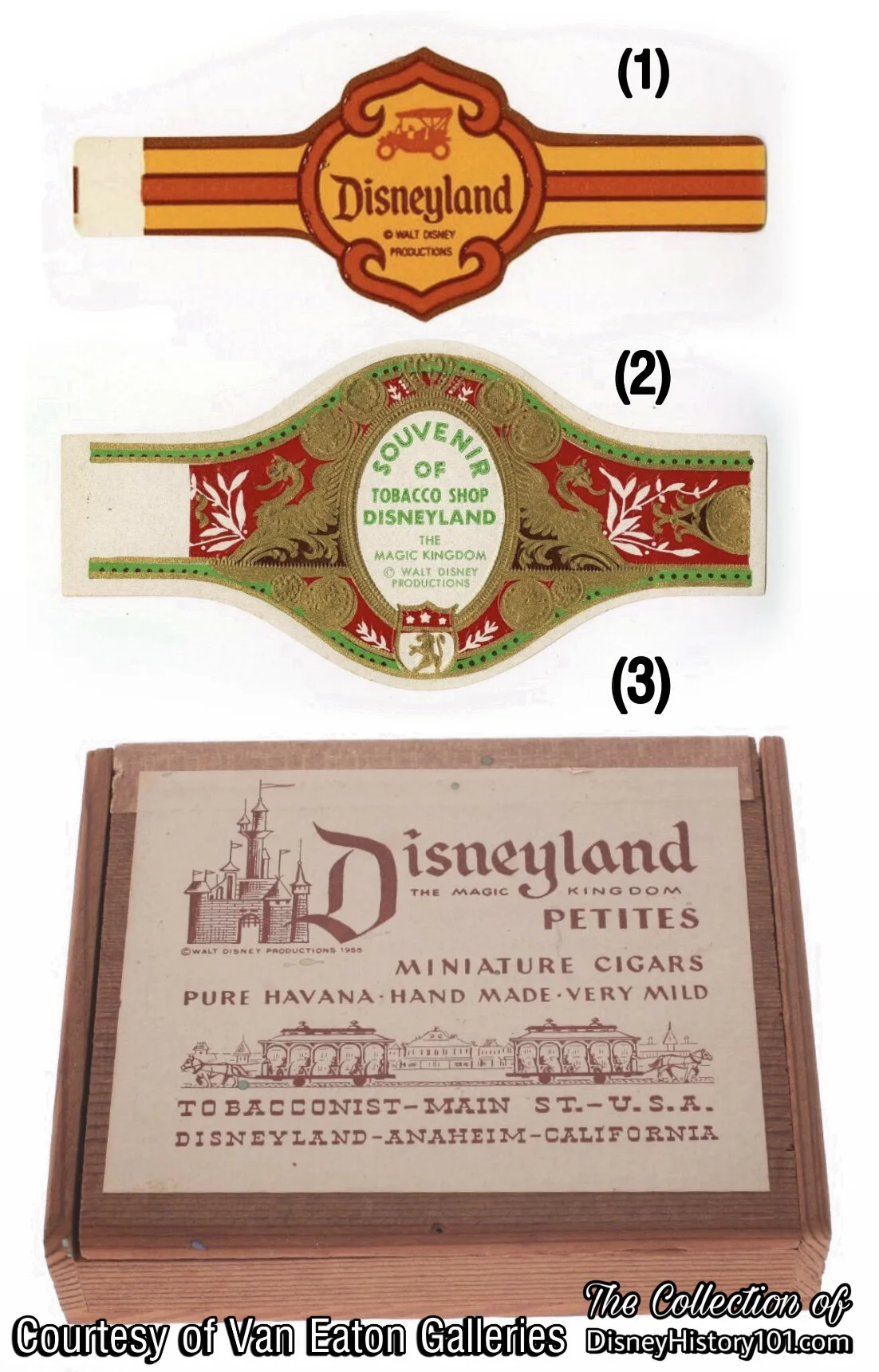
Three Main Street Tobacco Shop (Tobacconist) Artifacts.
Pictured Above:
(1) Disneyland cigar bands featuring the Main Street Horseless Carriage, (2) Disneyland cigar bands, and a wooden “mini-cigars” box from the estate of Henry Fenenbock, owner of the Tobacco Shop on Main Street.
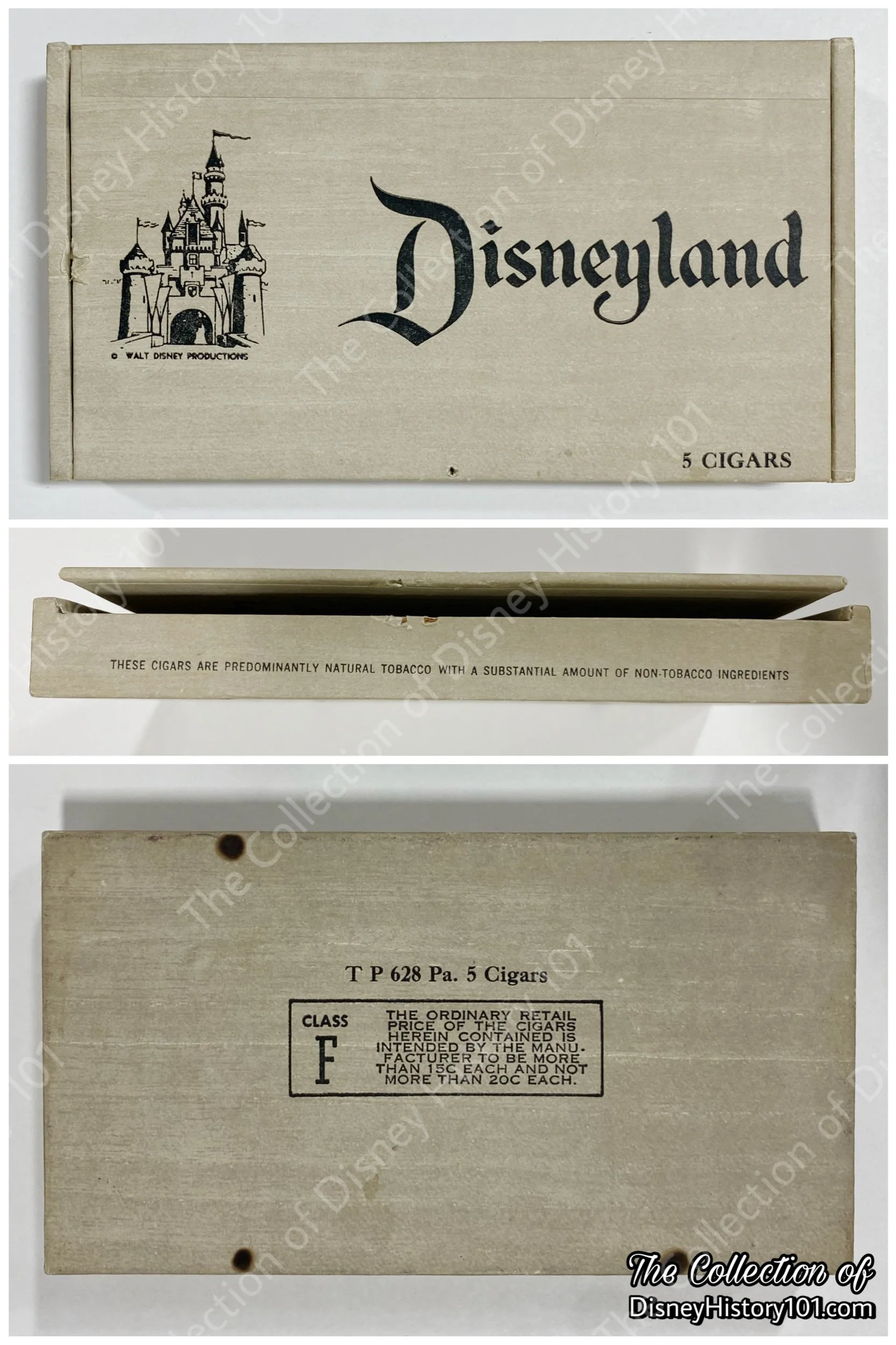
A Disneyland Cigar Box.
These cigars were predominantly, natural tobacco with a substantial amount of non-tobacco ingredients.
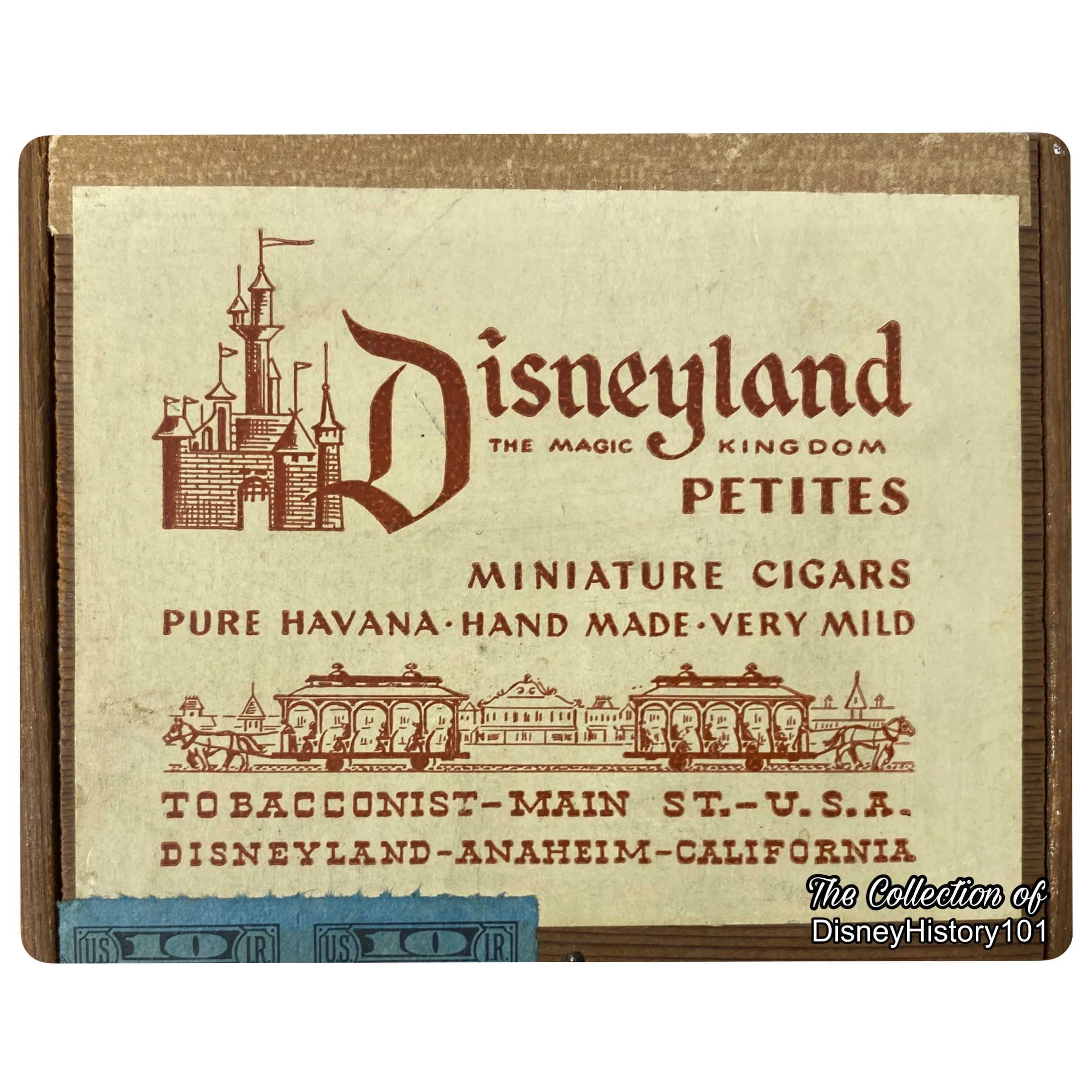
A Disneyland Petites Miniature Cigar Box.
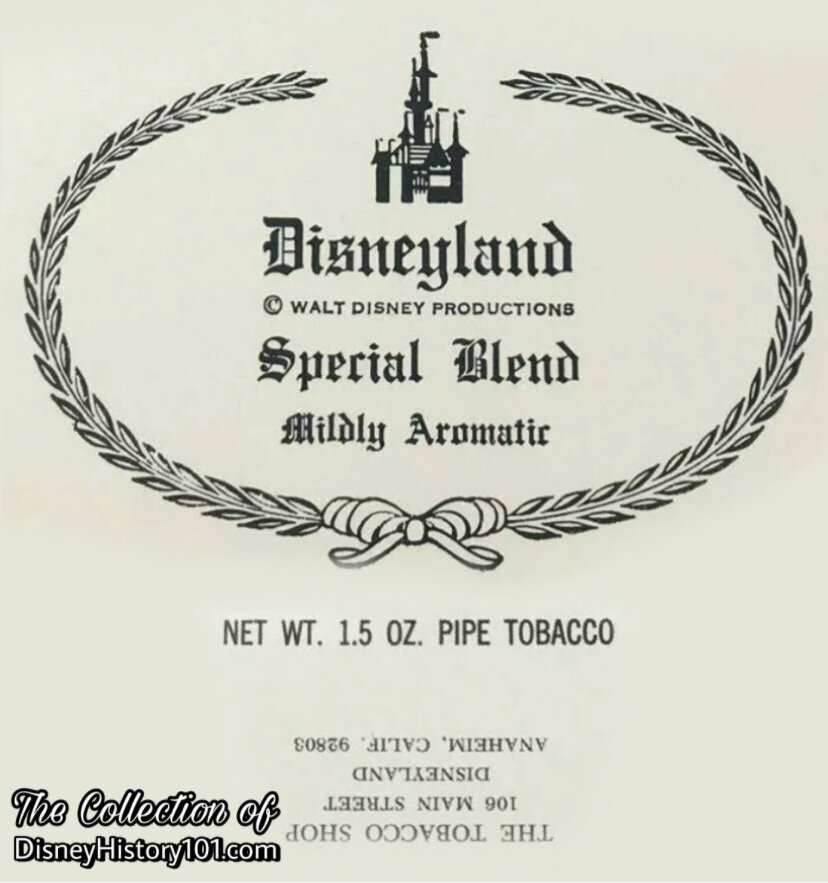
Disneyland "Special Blend" Mildly Aromatic Pipe Tobacco Packaging
During these years, guests were encouraged to enjoy their tobacco products inside Disneyland as much as a bag of hot peanuts or fresh Disneyland Popcorn. This was not unusual for theme parks, as the competing Freedomland (which opened in New York, in 1960) also had tobacco shops. However, Disneyland was unique in that it also had cigarette vending machines on the property and even had its own “Special Blend” of “Mildly Aromatic Pipe Tobacco.” With the acceptions of inside attractions (or waiting areas), guests could smoke these anywhere in the Park, because there were no designated smoking areas inside Disneyland. For a total of 35 years, Disneyland guests (16 years and older) entered the Tobacconist, and purchased Disneyland cigarettes, lighters, and matchbooks, and used them almost anywhere inside Disneyland.
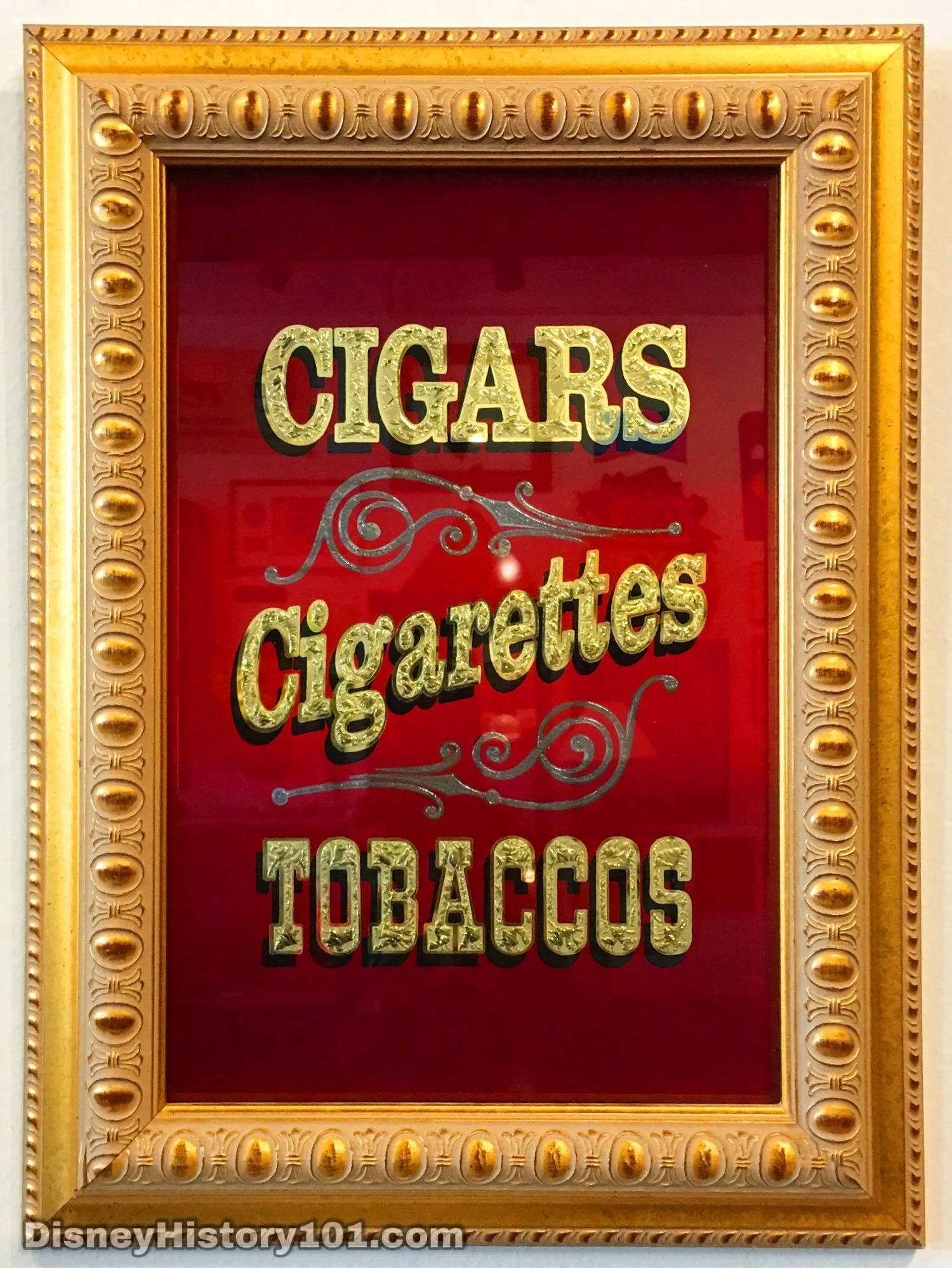
MAIN STREET TOBACCONIST SHOP MIRROR SIGN with GOLD LEAF LETTERS, (c. 1960s); When signage is looking pretty worn and stressed it is replaced or rehabilitated.
Many “old west” and “turn-of-the-century” shops commonly featured gold leaf letters applied to mirrors and windows. According to Van Eaton Galleries’ Curators : “A stunning original glass sign from the entrance to the Main Street Tobacconist Shop. The intricate techniques used in the creation of some of Disneyland's oldest signs have been passed down from the first artisans hired at Disneyland in 1954, to the apprentices working under them.”
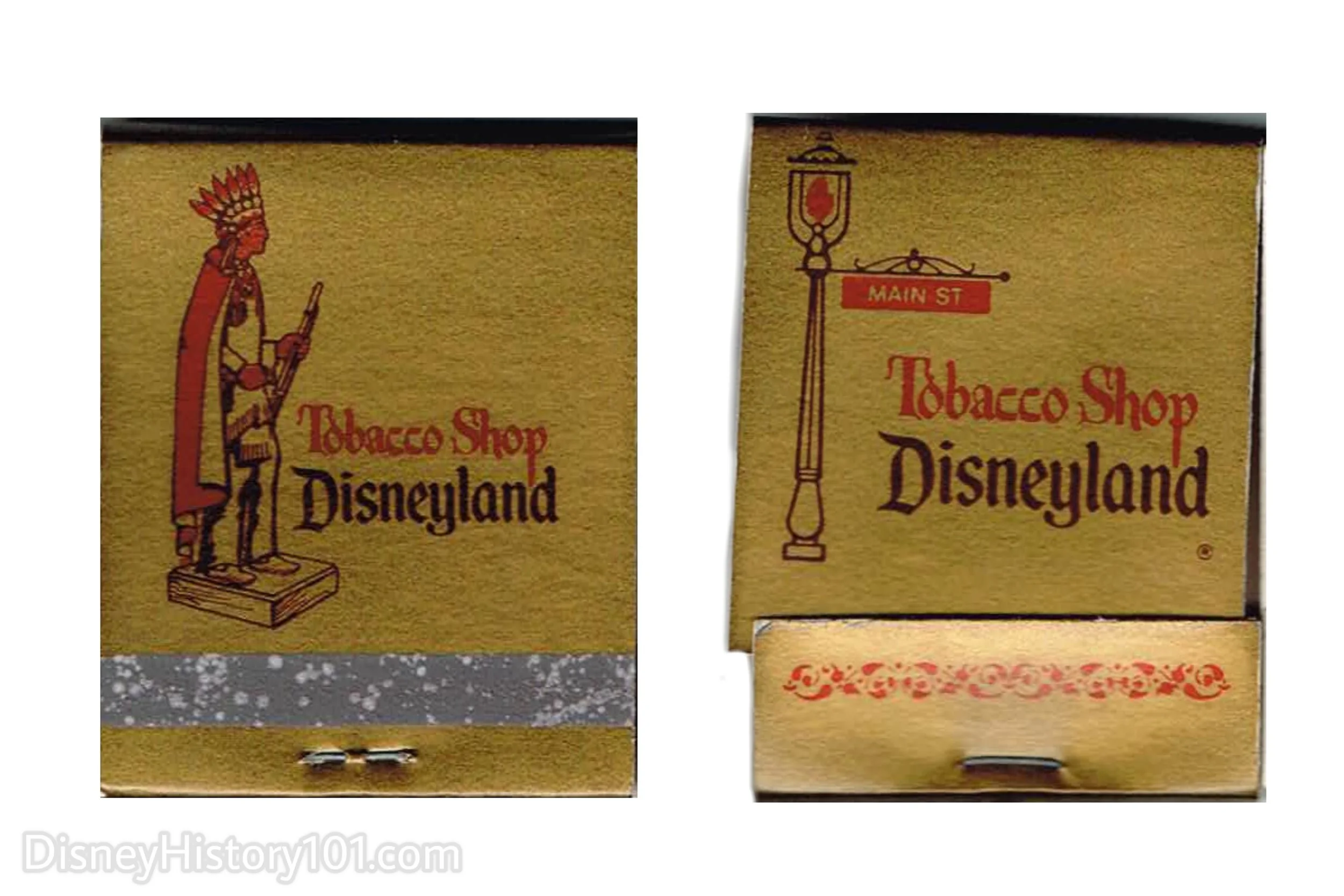
TOBACCO SHOP MATCHBOOK
Here, we can see the Main Street Tobacco Shop matchbook of the era, featuring a representation of the Main Street Cigar Store Indian (with red cloak). These were complimentary, souvenir matchbooks, usually given to guests at the time of their purchase from the Main Street Tobacco shop.
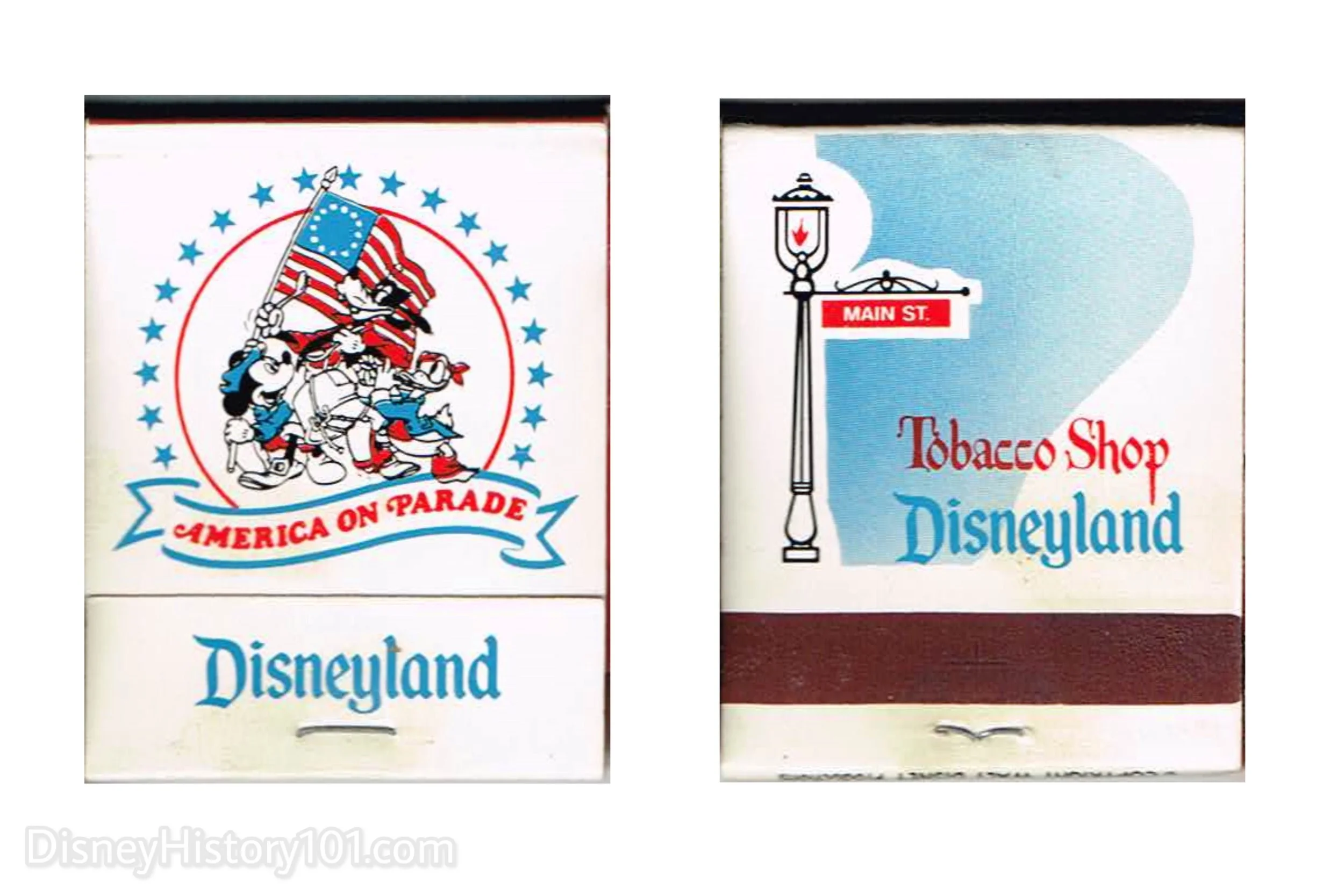
A matchbook featuring an America on Parade promotion; 1975 - 1976.
Complimentary matchbooks also promoted special events (like Disneyland anniversaries), and other Disneyland lessees (like Swifts Meats). Guests were permitted to strike their matches and smoke in many places at Disneyland. By 1969, Disneyland Building and Grounds Department would regularly clean 300 cigarette urns. However, guests were not permitted to smoke everywhere at Disneyland. You may recall some of the live narration of attraction hosts and hostesses (as those of the ALWEG-Disneyland Monorail trains of the 1960s) announcing: “no smoking, please.”
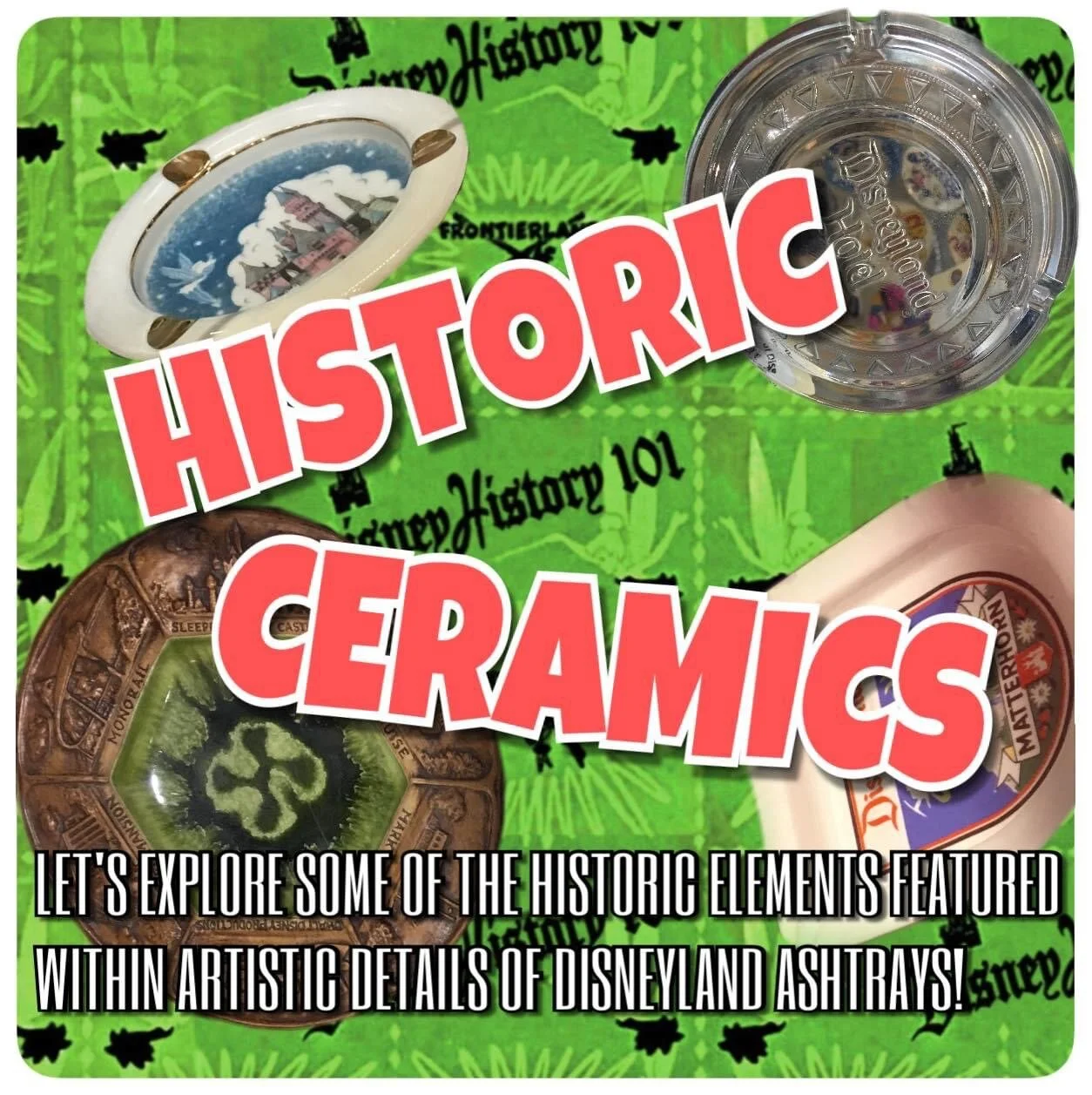
Walt Disney knew the advertising power of “conversation piece souvenirs” (as coffee table books, matchbooks, or vases), which guests would carry home, set on their coffee table, and share with their friends! During the first three decades, one of the highest selling “conversation piece souvenirs” was the ashtray, available for purchase in Disneyland Park as well as the luxurious Disneyland Hotel! JOIN US, AS WE TAKE A CLOSER LOOK AT JUST A FEW DECADE DEFINING DETAILS FOUND WITHIN THE FINE ASHTRAYS FROM DISNEYLAND'S YESTERYEAR!
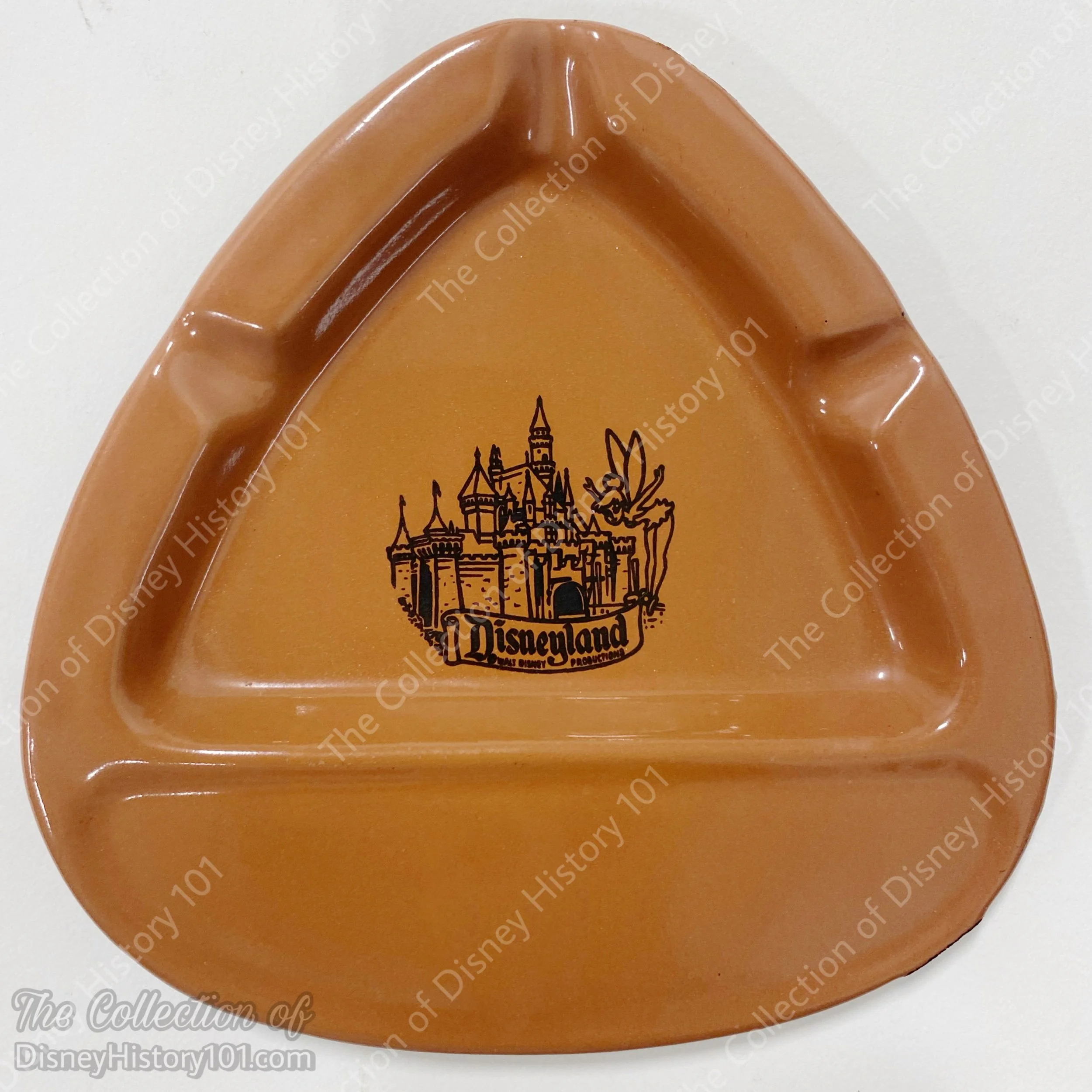
A ceramic Disneyland ashtray.
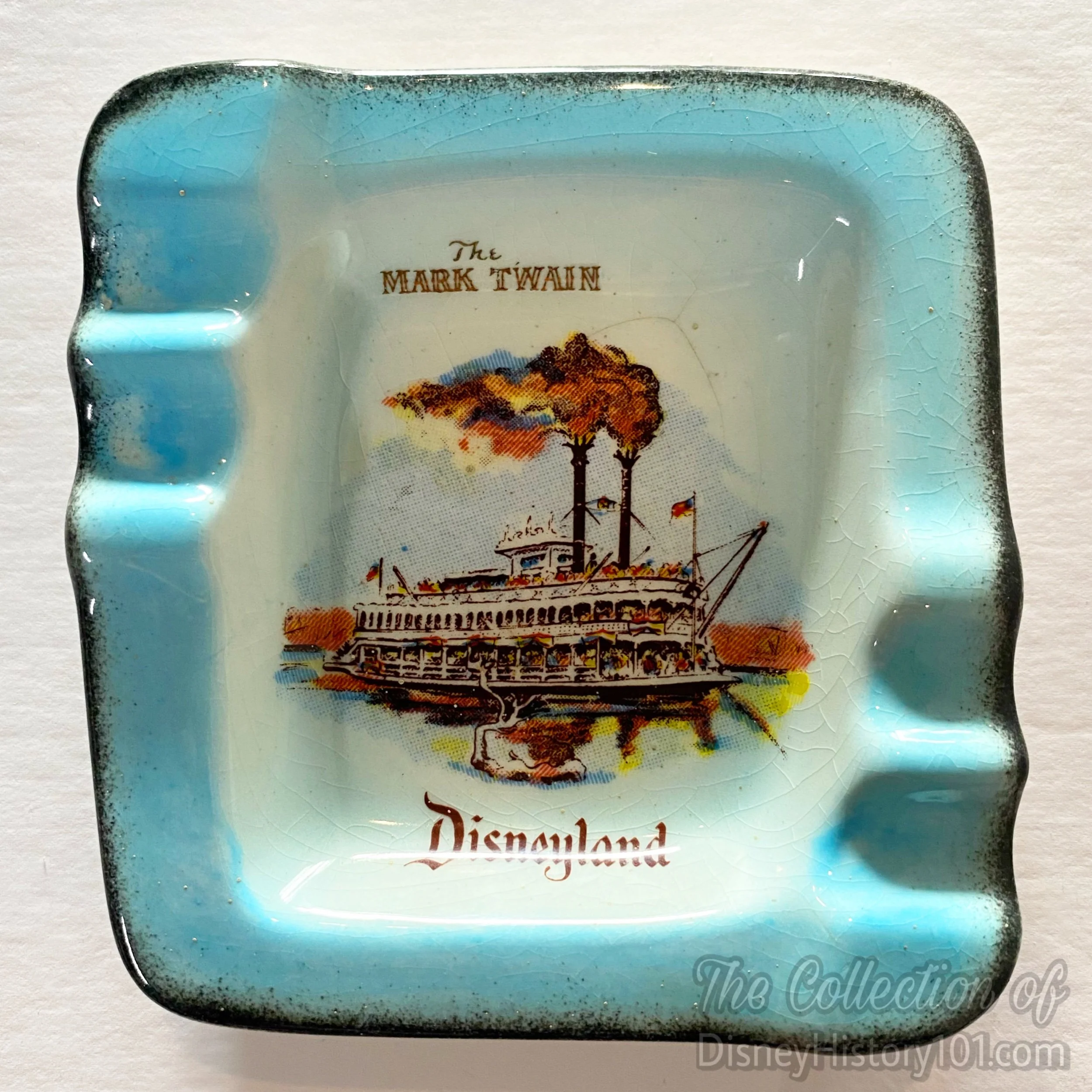
A Mark Twain Ceramic Ashtray by Eleanor Welborn Art Productions of Monterey California.
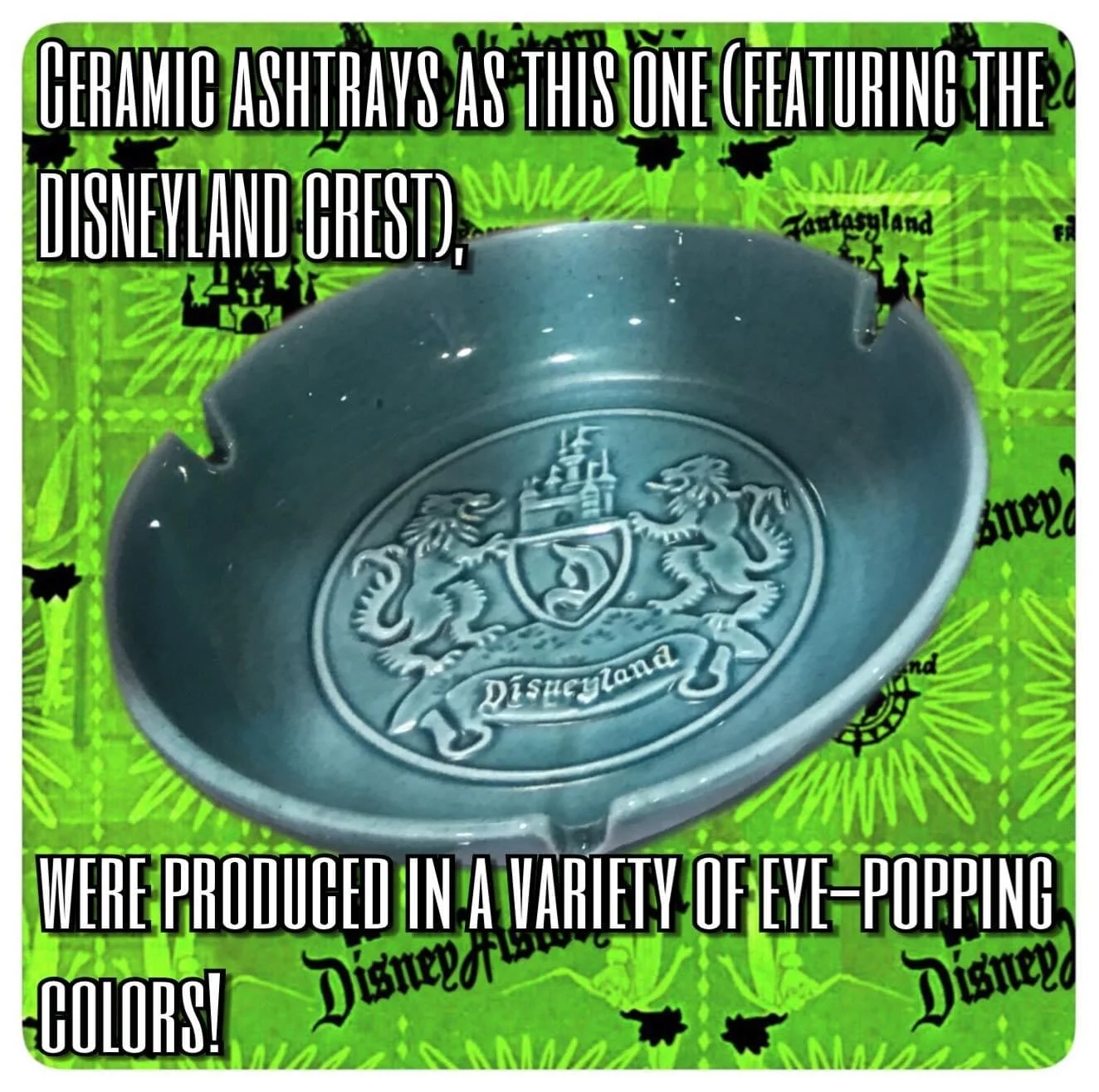
The Disneyland Crest as featured on a souvenir ashtray.
This Disneyland Crest includes two lions and was featured on a number of ashtrays, pennants and other merchandise during Disneyland's first two decades! It is not like the one seen in the castle courtyard of Fantasyland.
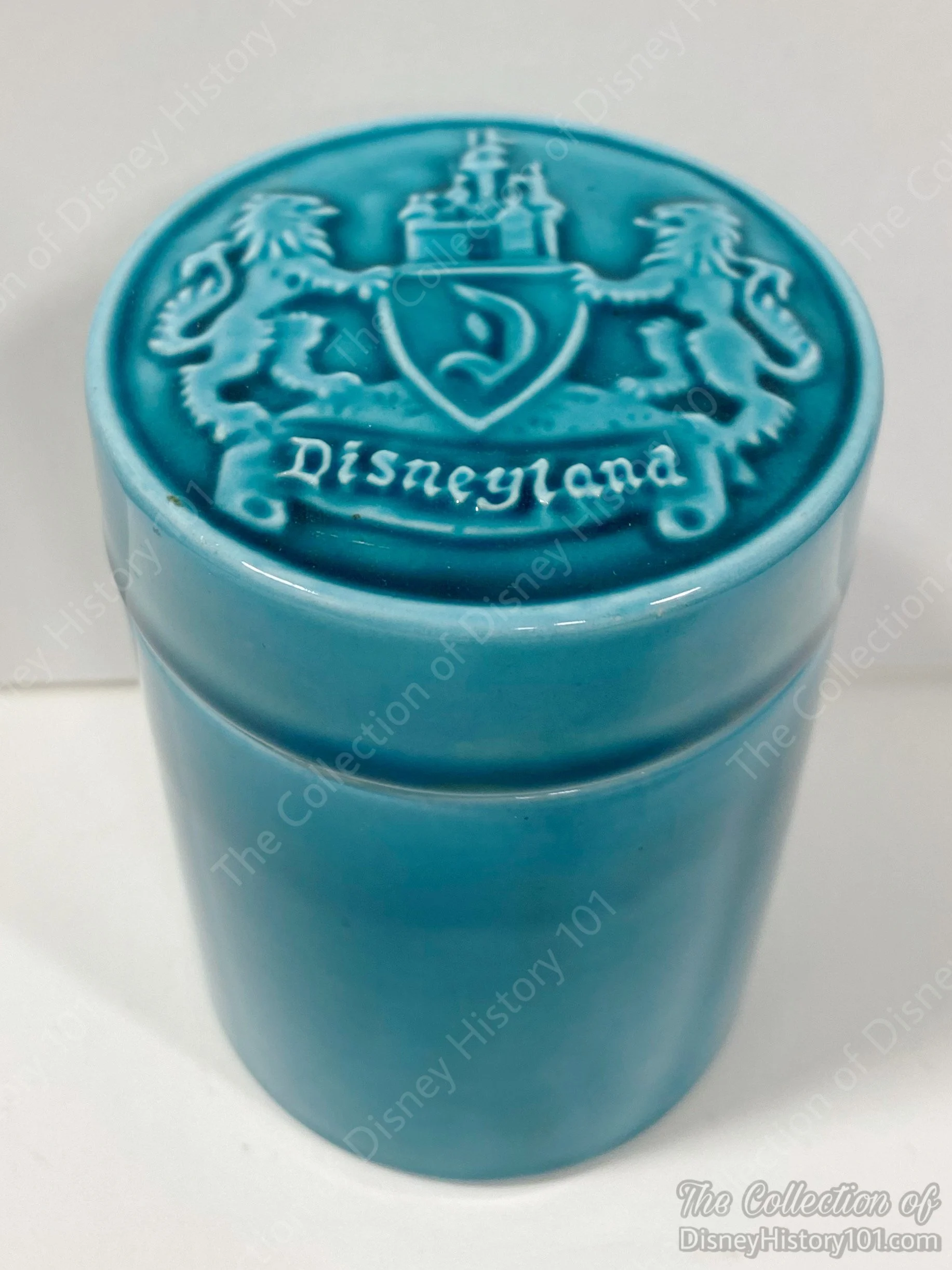
A Disneyland Humidor.
Humidors controlled the temperature of their stored contents. This style of glazed ceramic humidor features the Disneyland Crest. This souvenir of Disneyland was manufactured in Japan, for Walt Disney Productions.
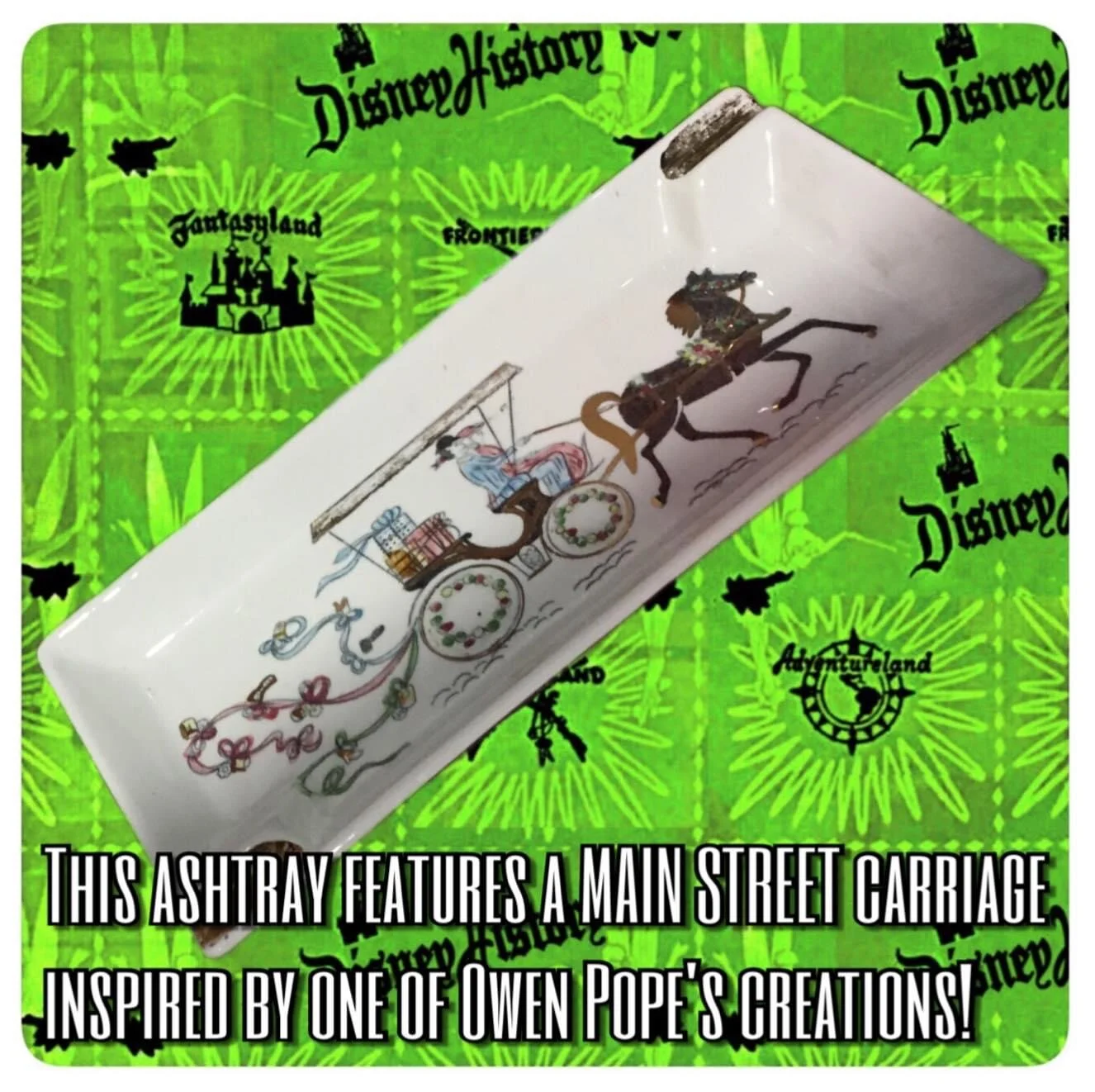
Owen Pope helped design and build a number of carriages seen both in Frontierland as well as on Main Street! As the Stagecoaches and Fringe-topped Surreys were quite popular with Guests, it isn't any wonder that carriages became a featured theme of much early Disneyland merchandise.
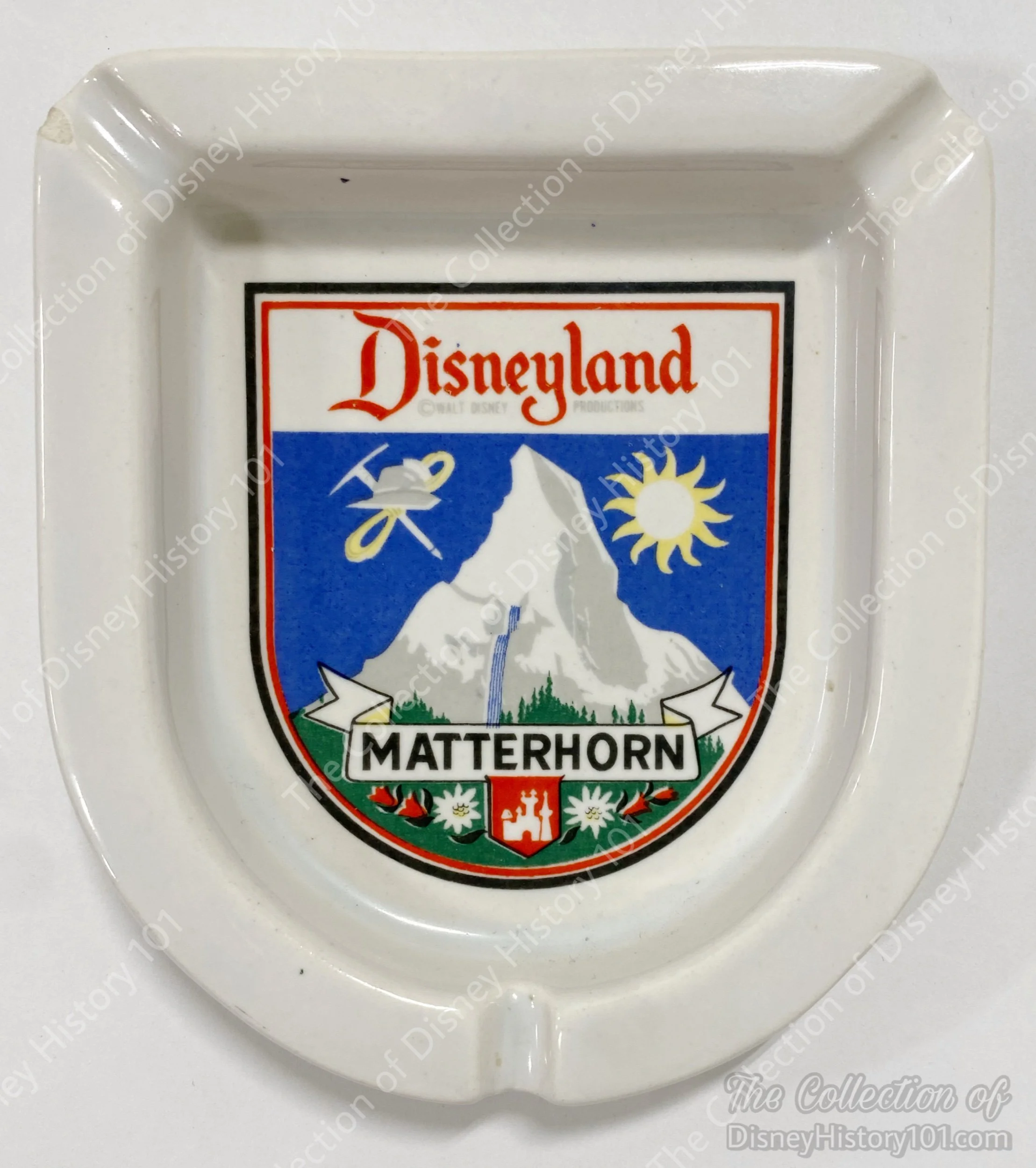
A Matterhorn ashtray.
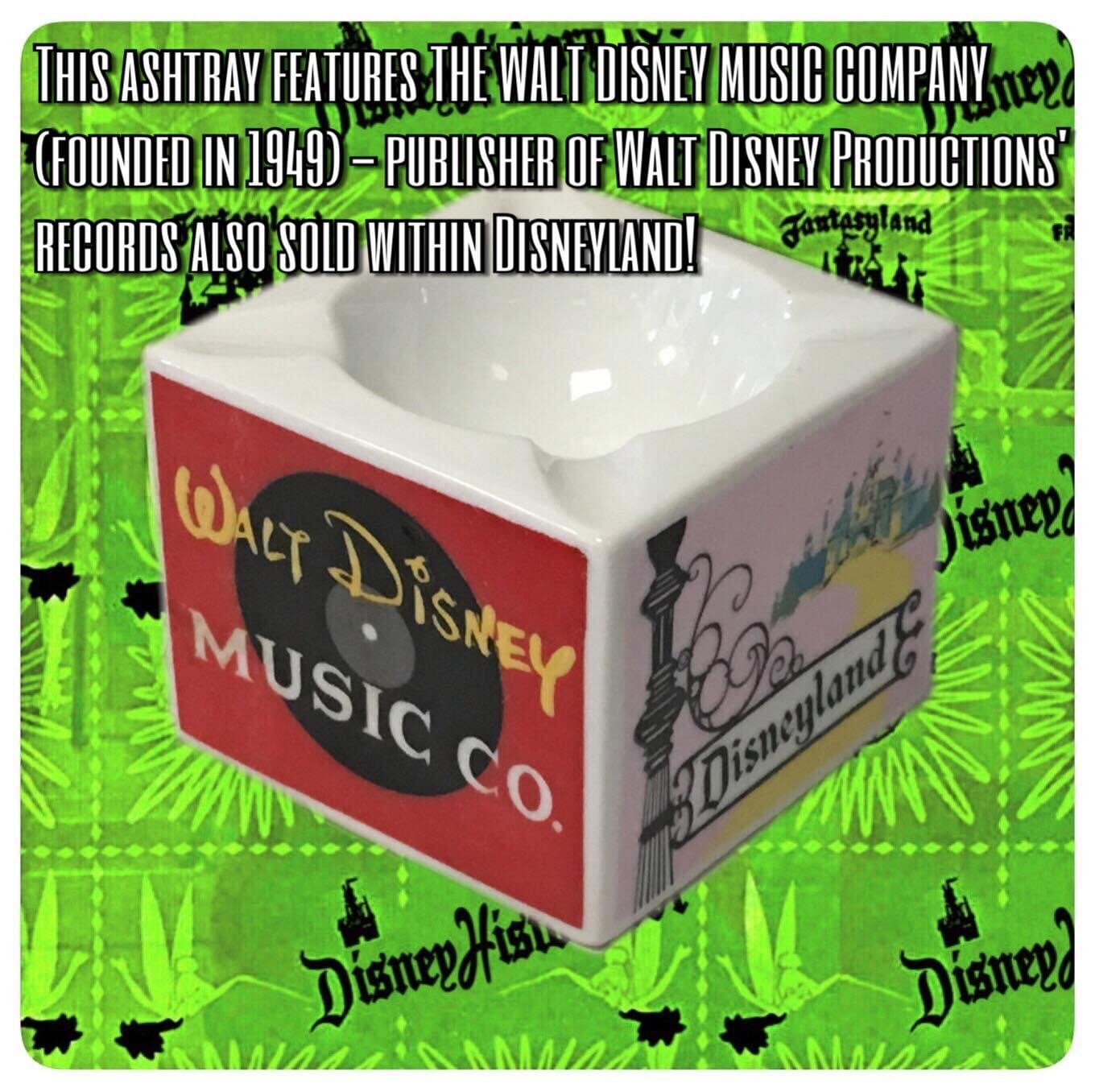
This souvenir would remind guests that WALT DISNEY MUSIC COMPANY tunes could be heard and sold inside the park!
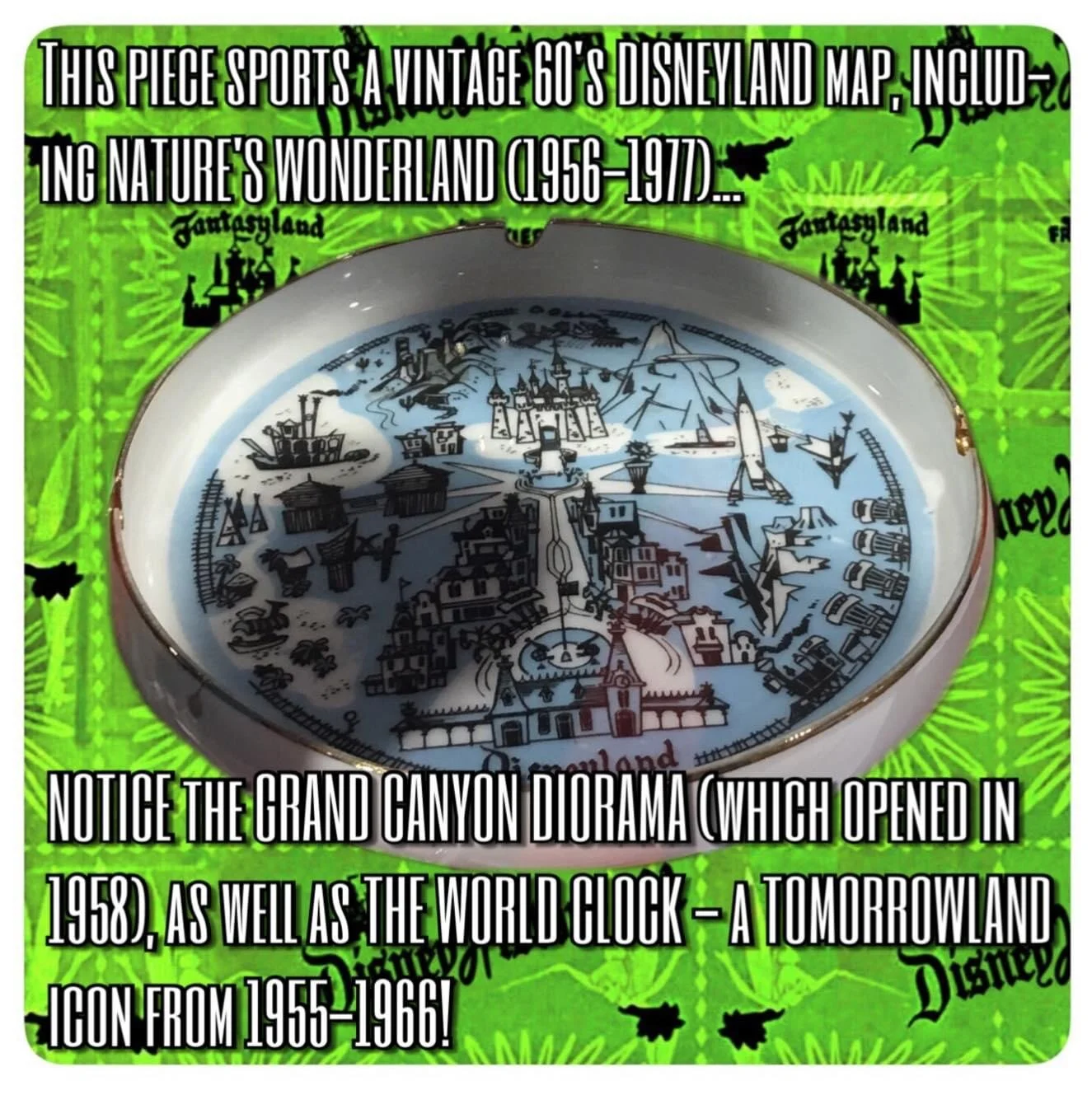
Several early Disneyland attractions can be seen on this early ashtray - NATURE'S WONDERLAND, THE GRAND CANYON, and THE TOMORROWLAND WORLD CLOCK!
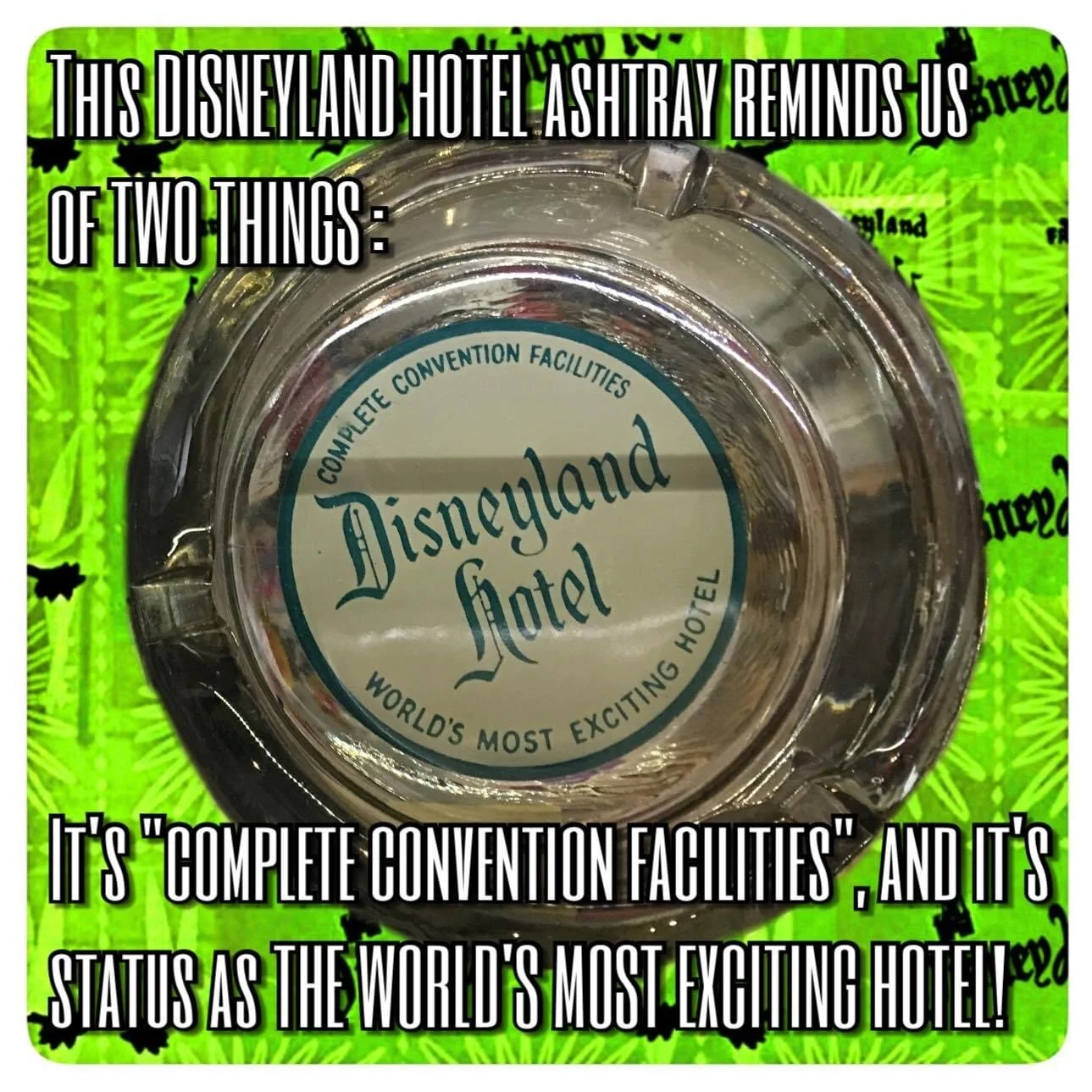
Upon the ribbon cutting in 1955, the Disneyland Hotel featured a banquet hall and convention center - inviting large groups and functions to take advantage of the hotel facilities!
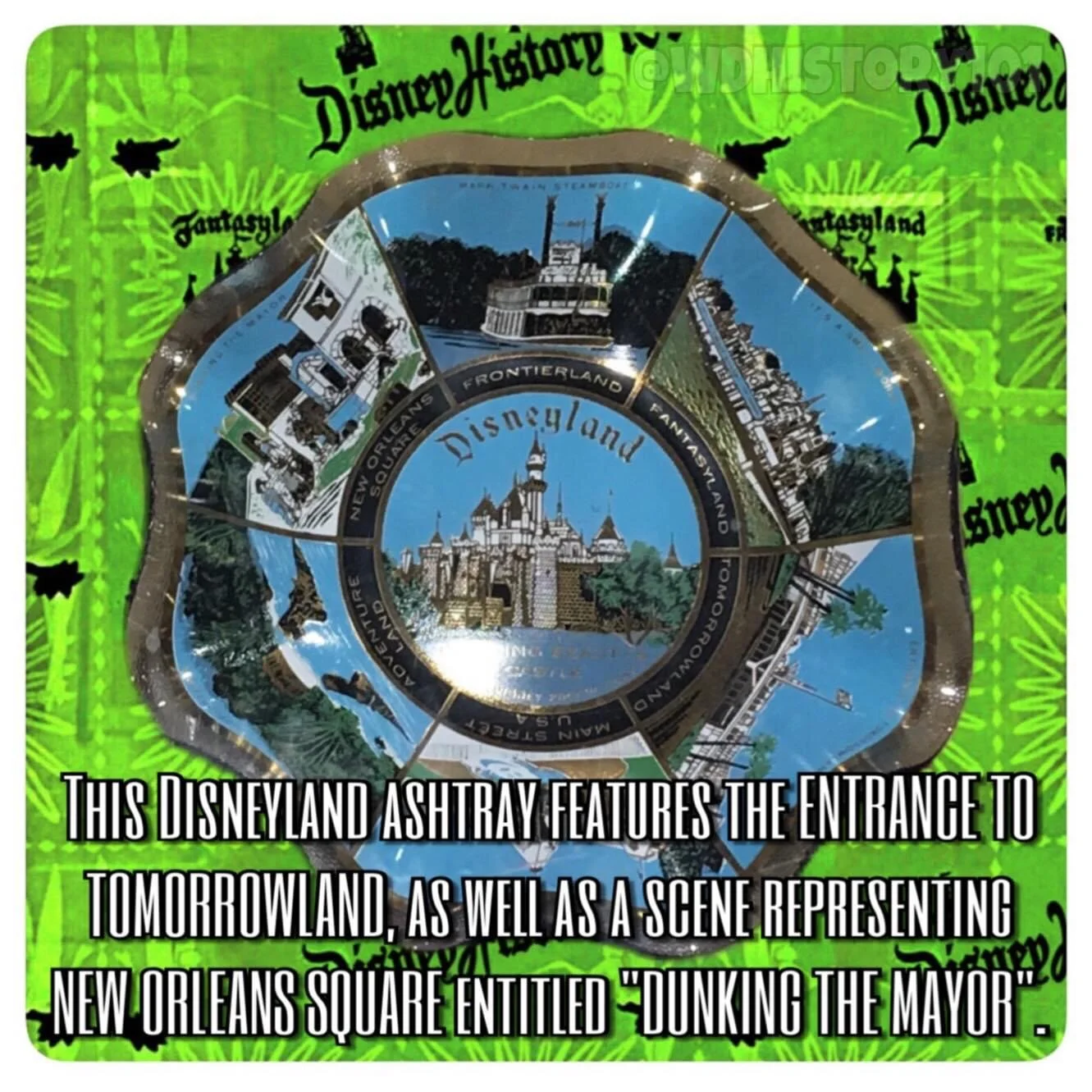
Rather than feature an exterior shot of New Orlean's Square, this ashtray features an interior scene from it's crowning attraction!
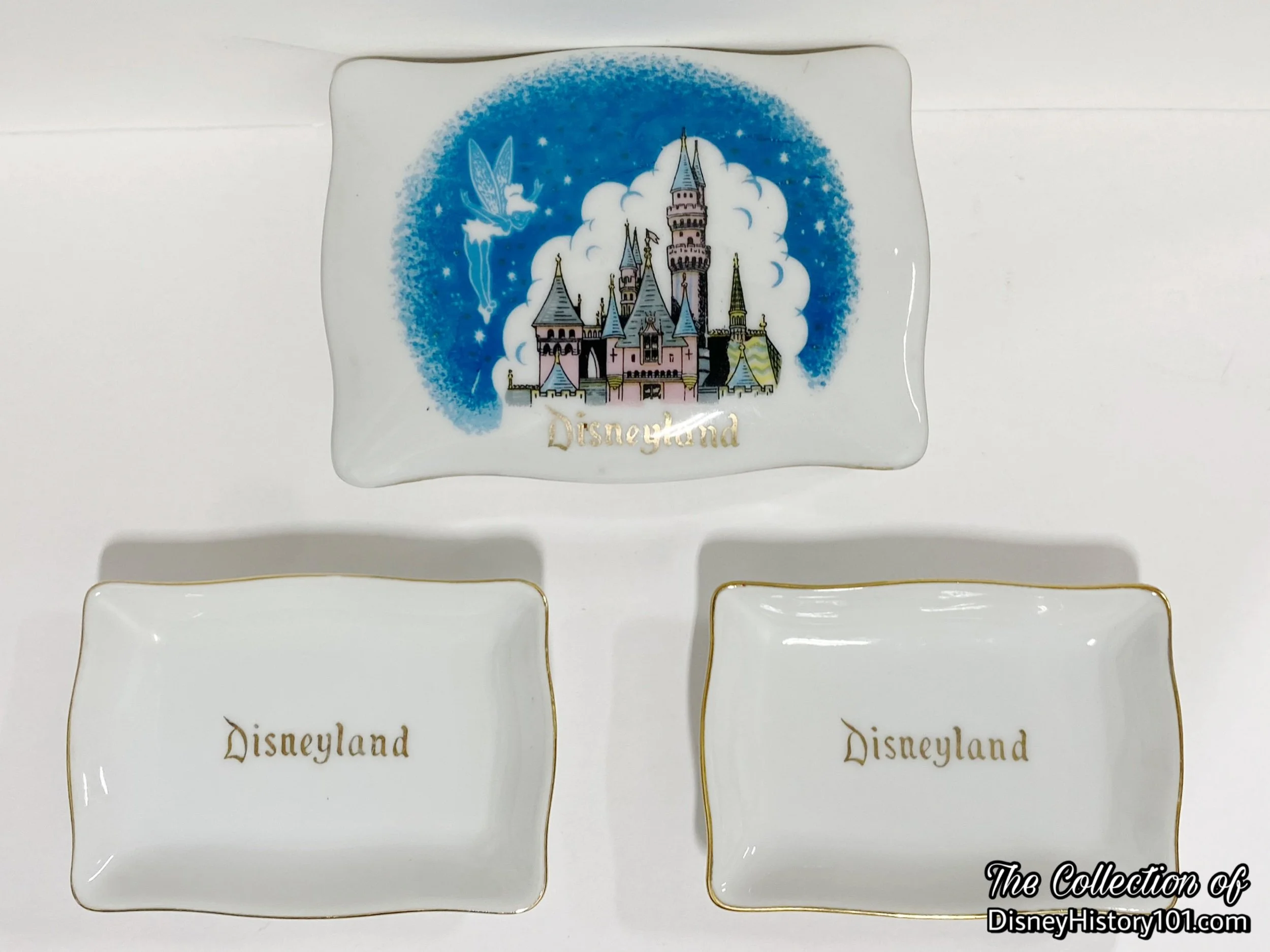
In the "Souvenirs of Disneyland" catalog, the Disneyland Smoker Set was billed under another name for non-smokers.
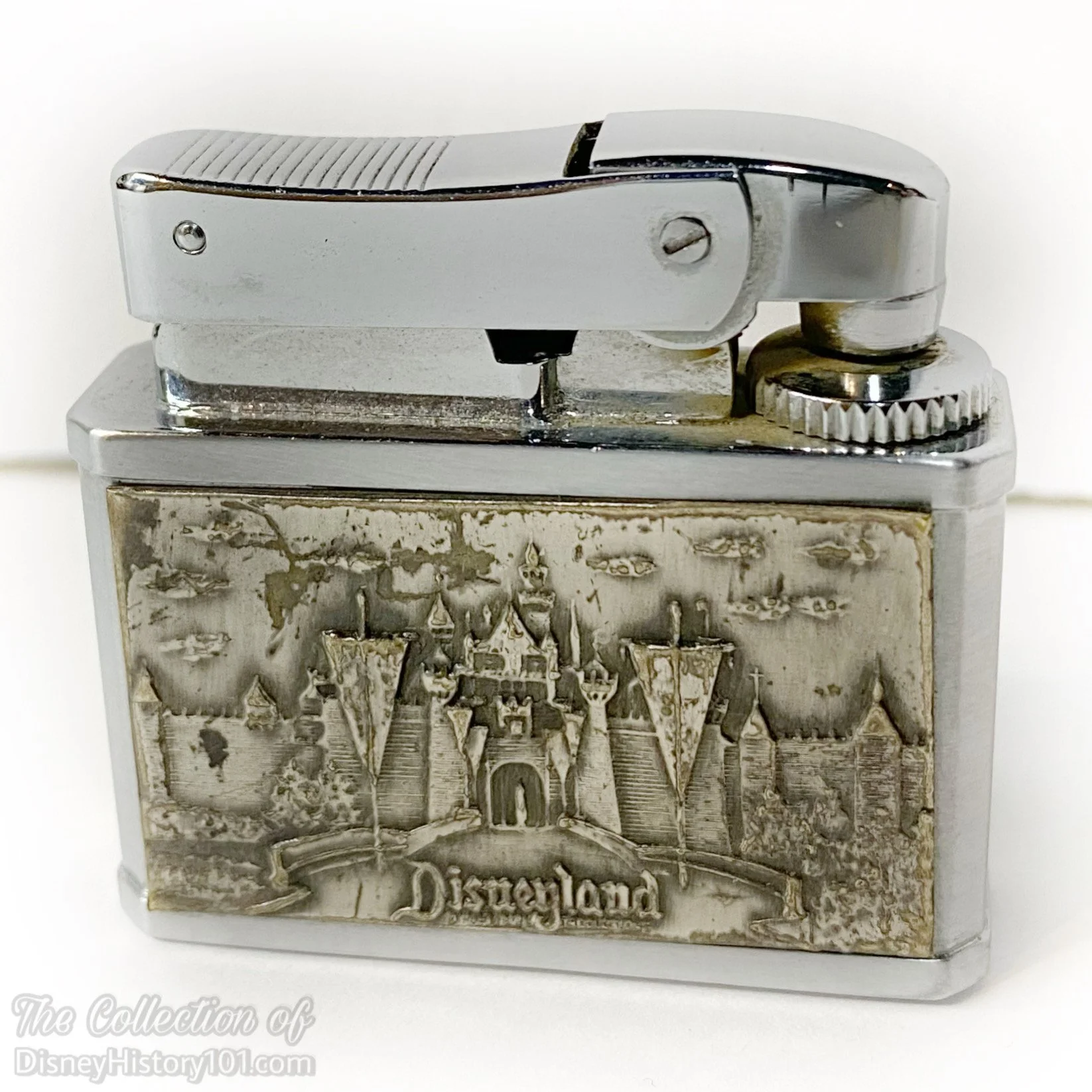
The Disneyland gas cigarette lighter by Brother-Lite, original price point - $2.00 (plus tax).
Lighters were manufactured by a variety of manufacturers (ZIPPO Zip windproof lighters, Brother-Lite, etc.), in a variety of styles (full-size, slim-size, keychain lighters), out of a variety of materials (even sterling silver and 14K gold). Many of these lighters were licensed by Walt Disney Productions, to feature Sleeping Beauty Castle or Mickey Mouse logos (as well as other artwork) copyrighted by Walt Disney Productions. Some (like one model by Brother-Lite) commemorated events like the Tencennial Celebration of 1965.
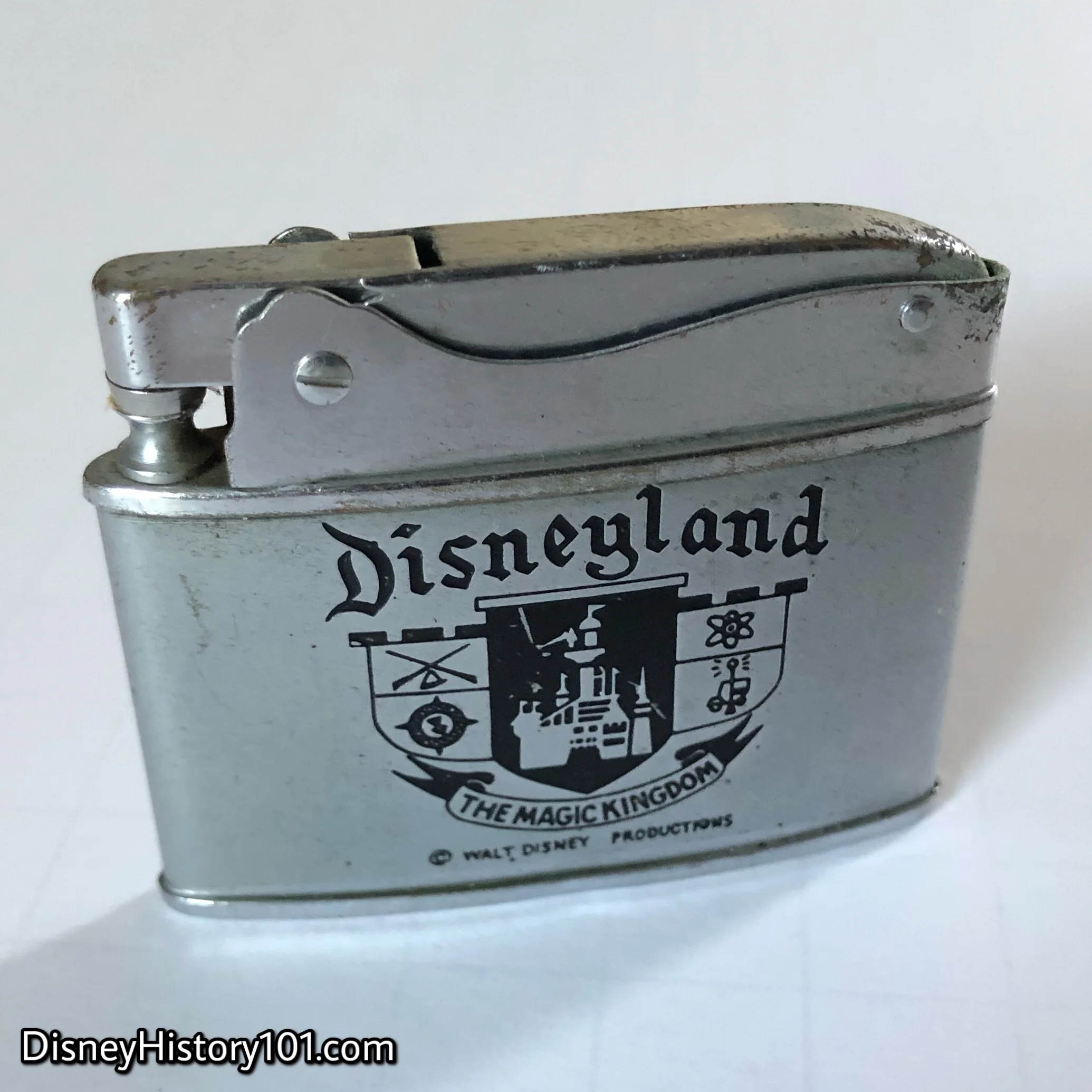
The Disneyland Automatic Hand Lighter by Brother-Lite, 1958.
This c. 1958 Brother-Lite Disneyland Hand Lighter (originally retailing for $1.00) is one of our favorite Tobacconist artifacts in our personal archives. As to its description, catalogues from the era read : “Press - flick - an instant lighter from this distinctive Disneyland lighter . . . A wonderful gift for either a man or woman. Slim-flat, uniquely compact - almost weightless, silver-finish casing. Side panels feature engraved-like, coat-of-arms crest embracing symbols of each land in Walt Disneys Magic Kingdom.”
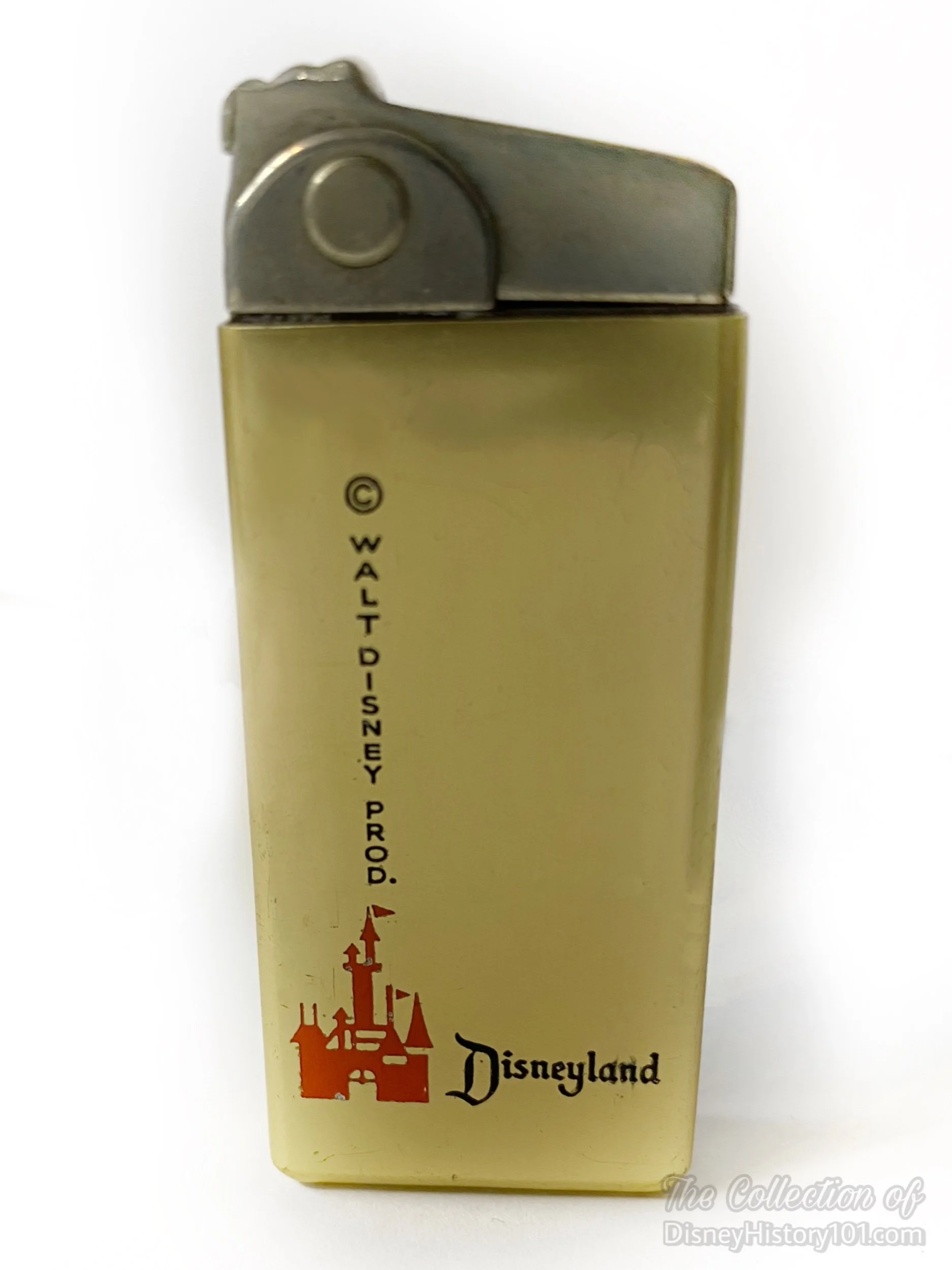
Disneyland lighter by Espirit 2000, c.1950s-1960s.
Many lighters featured Sleeping Beauty Castle and the Disneyland name, and Walt Disney characters like Snow White, Mickey Mouse, and Donald Duck.
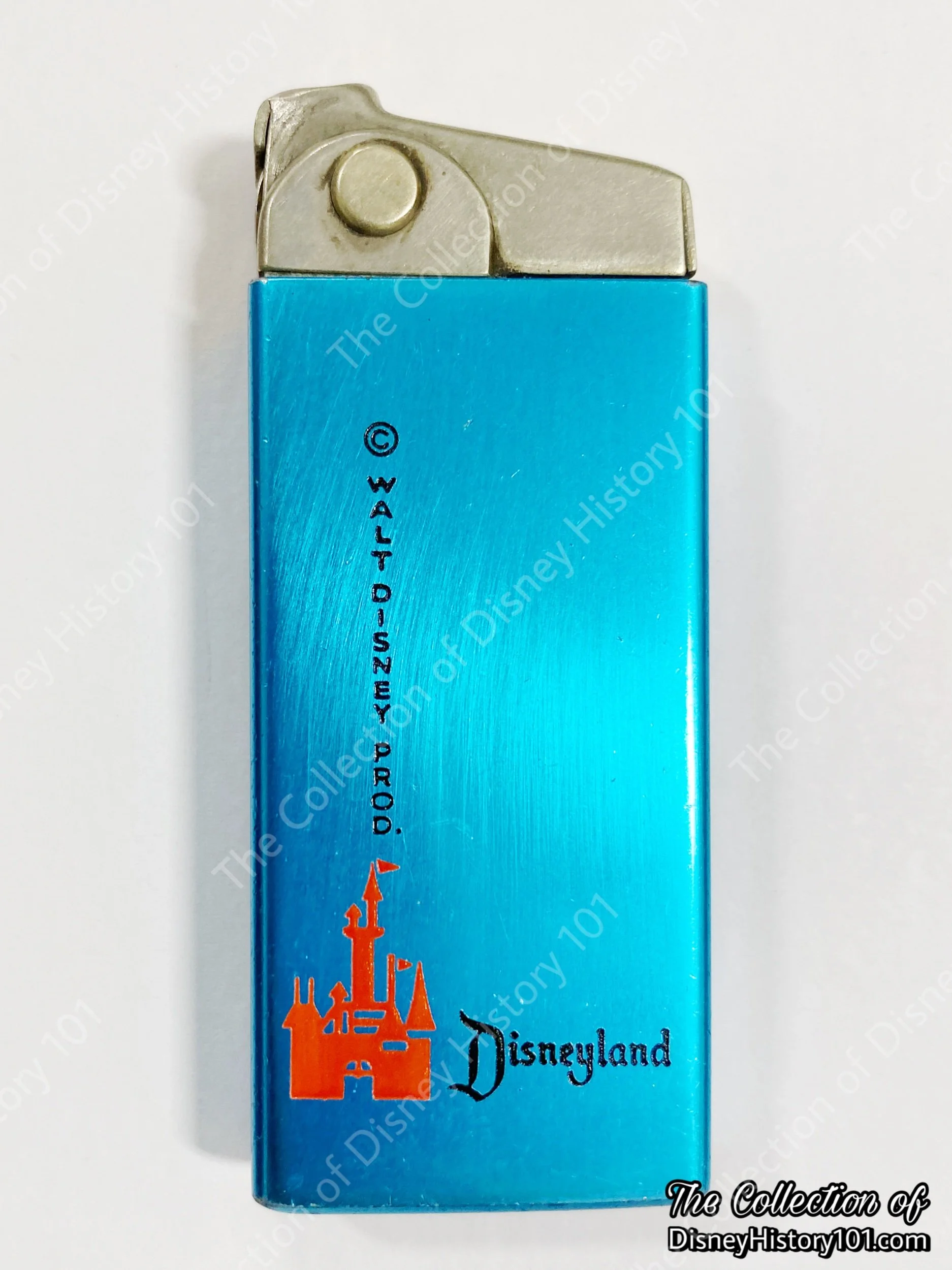
The Disneyland Espirit 2000 blue lighter made in Germany.
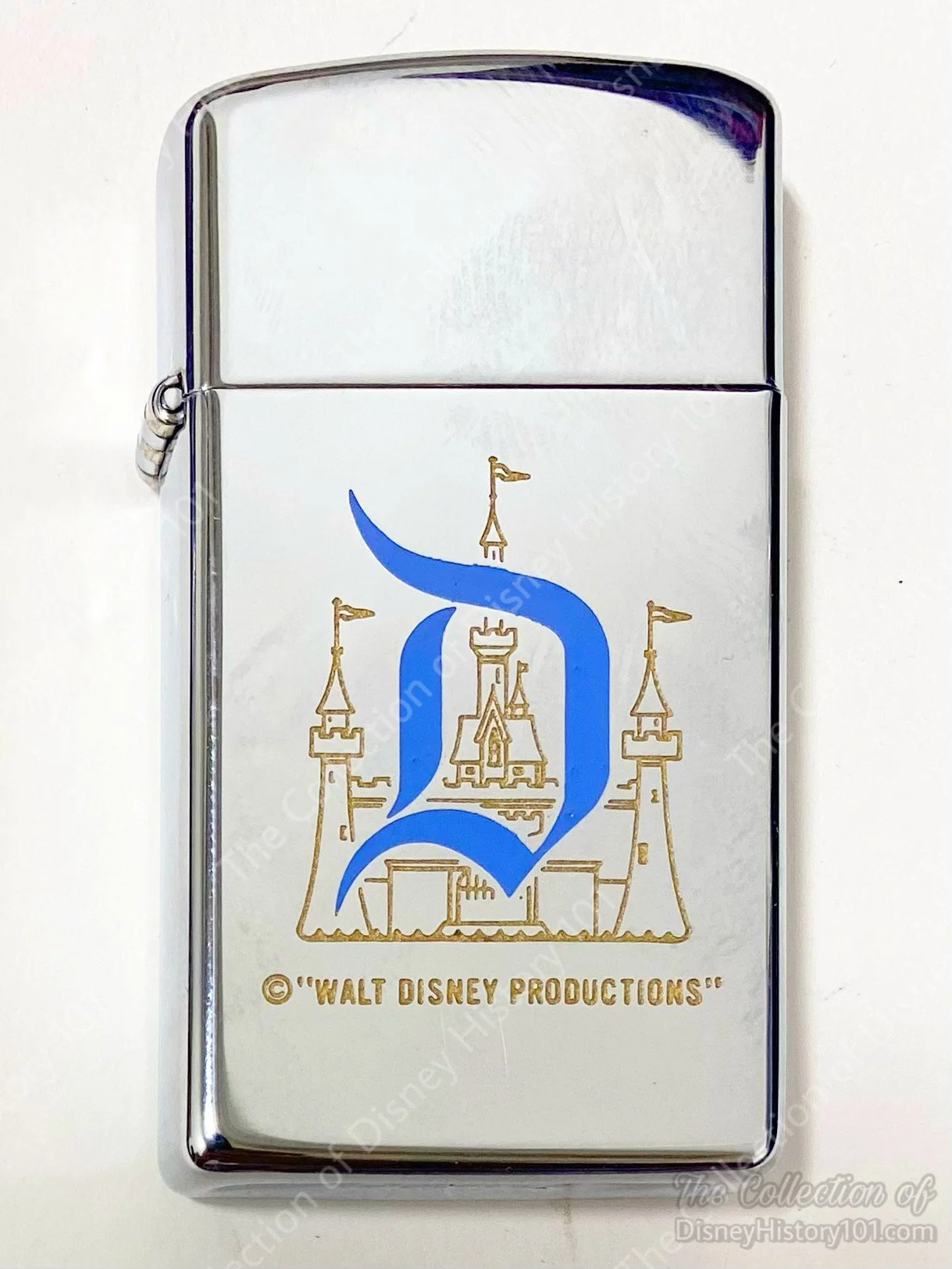
The Disneyland Monogram Lighter by Zippo.
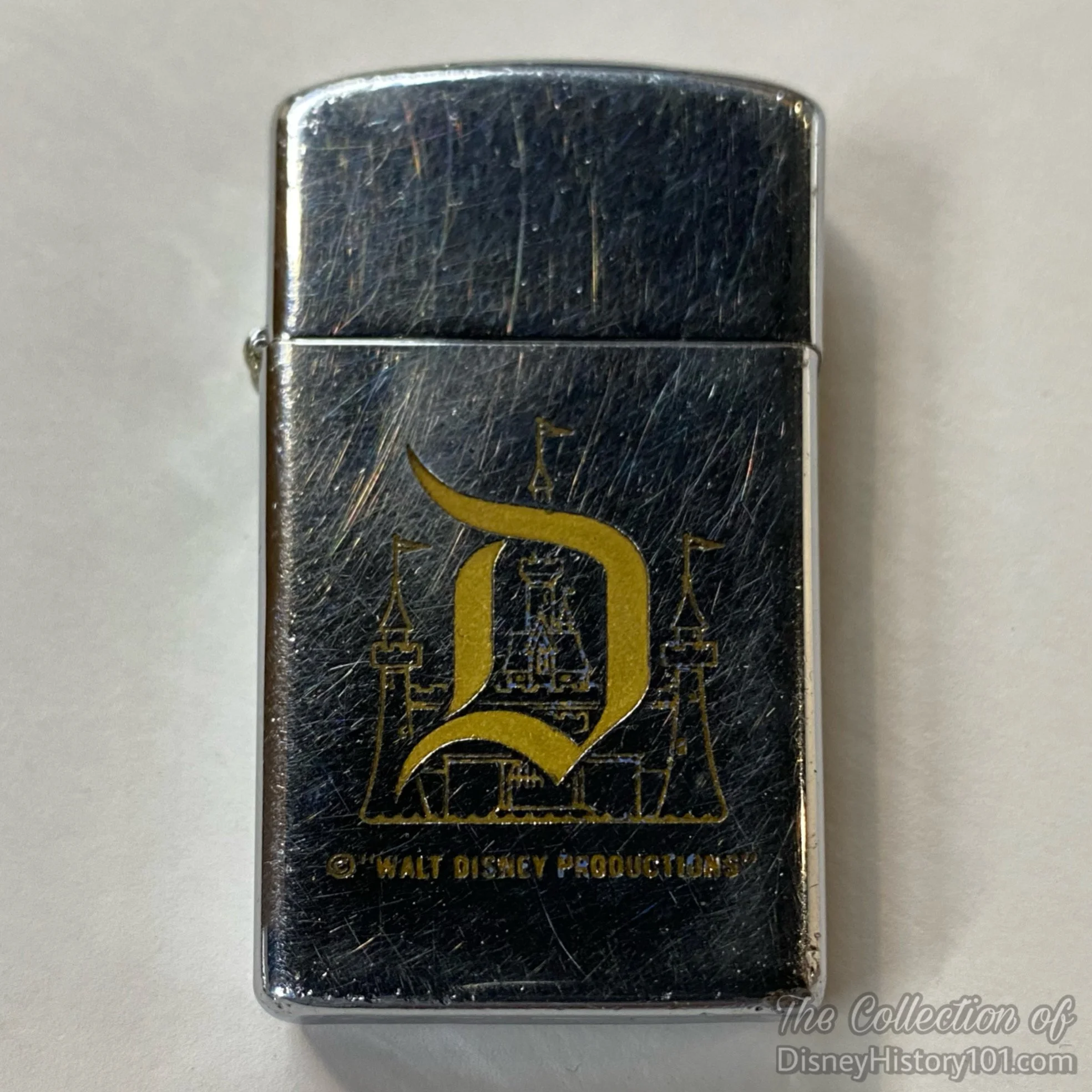
The Disneyland Monogram Lighter by Zippo.
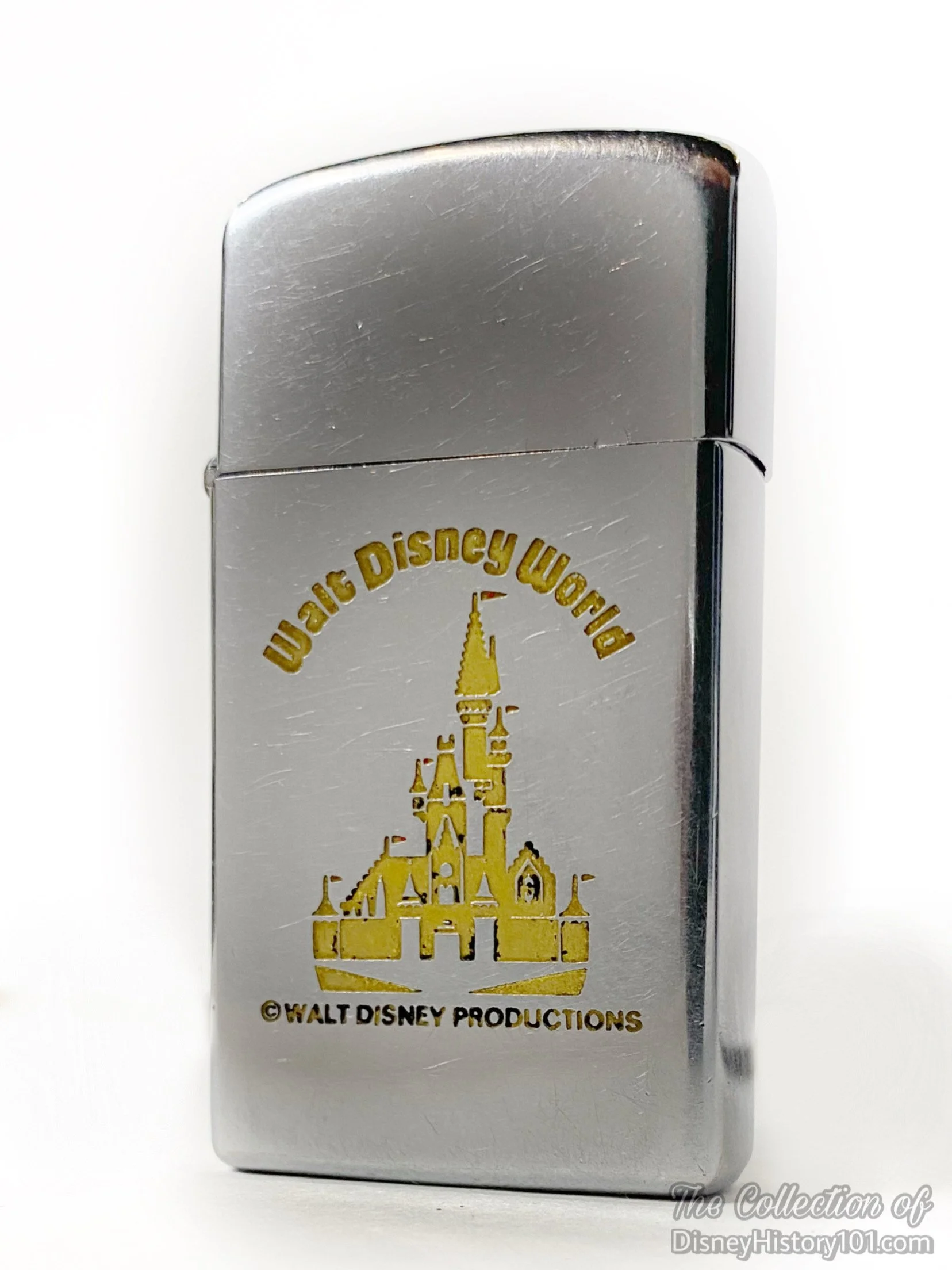
Walt Disney World Lighter by Zippo.
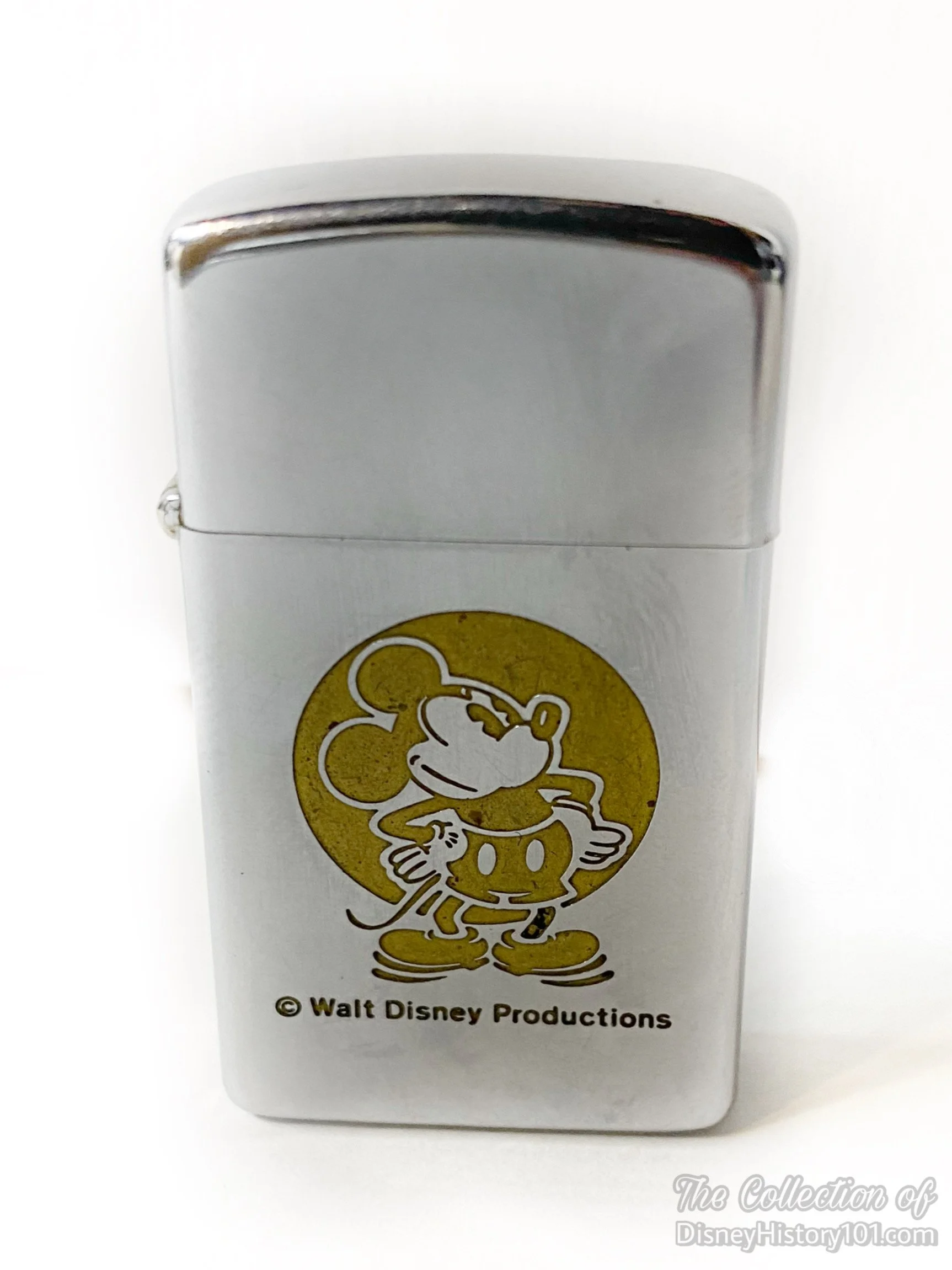
A Mickey Mouse Lighter by Zippo.
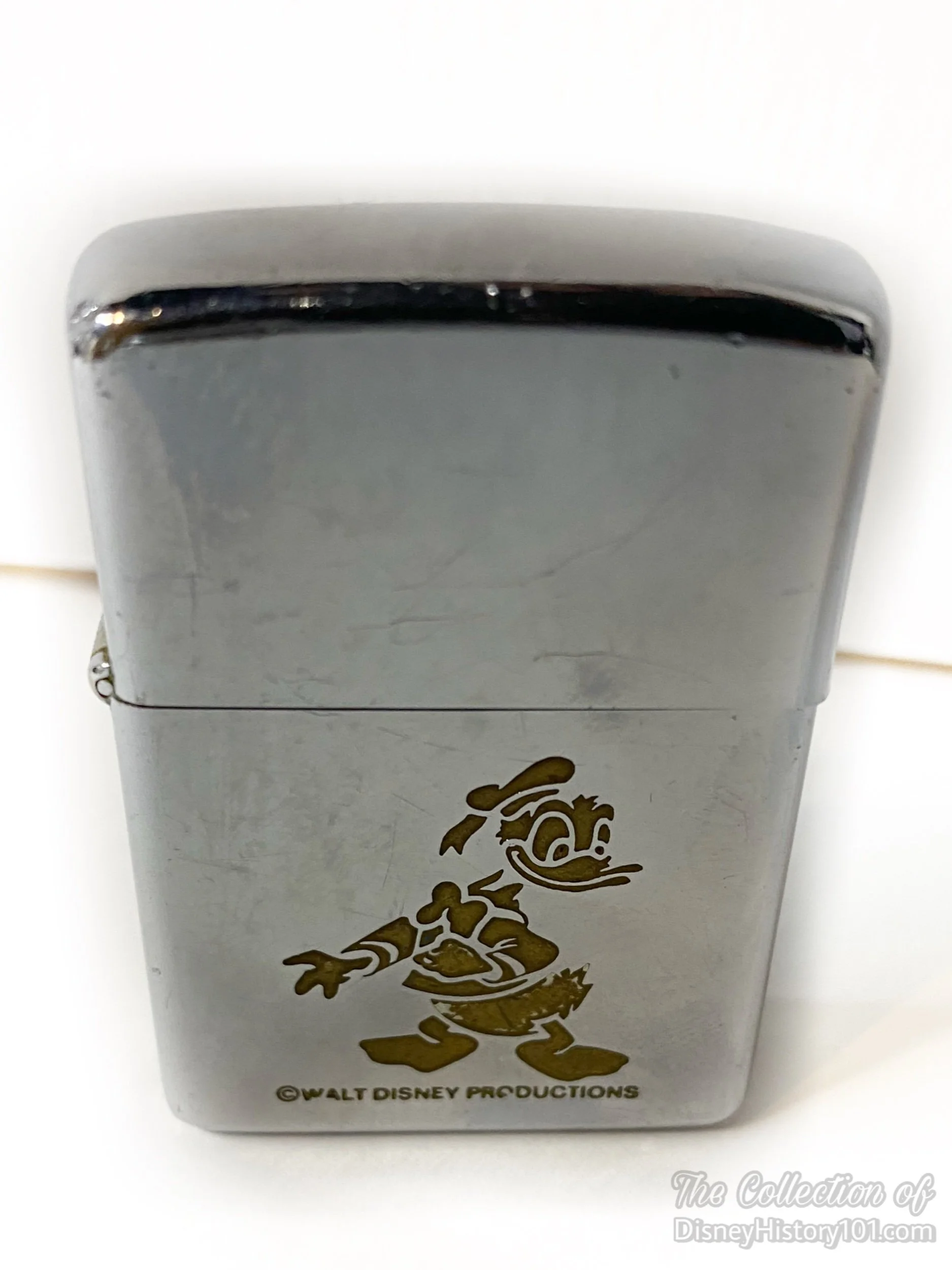
A Donald Duck Lighter by Zippo.
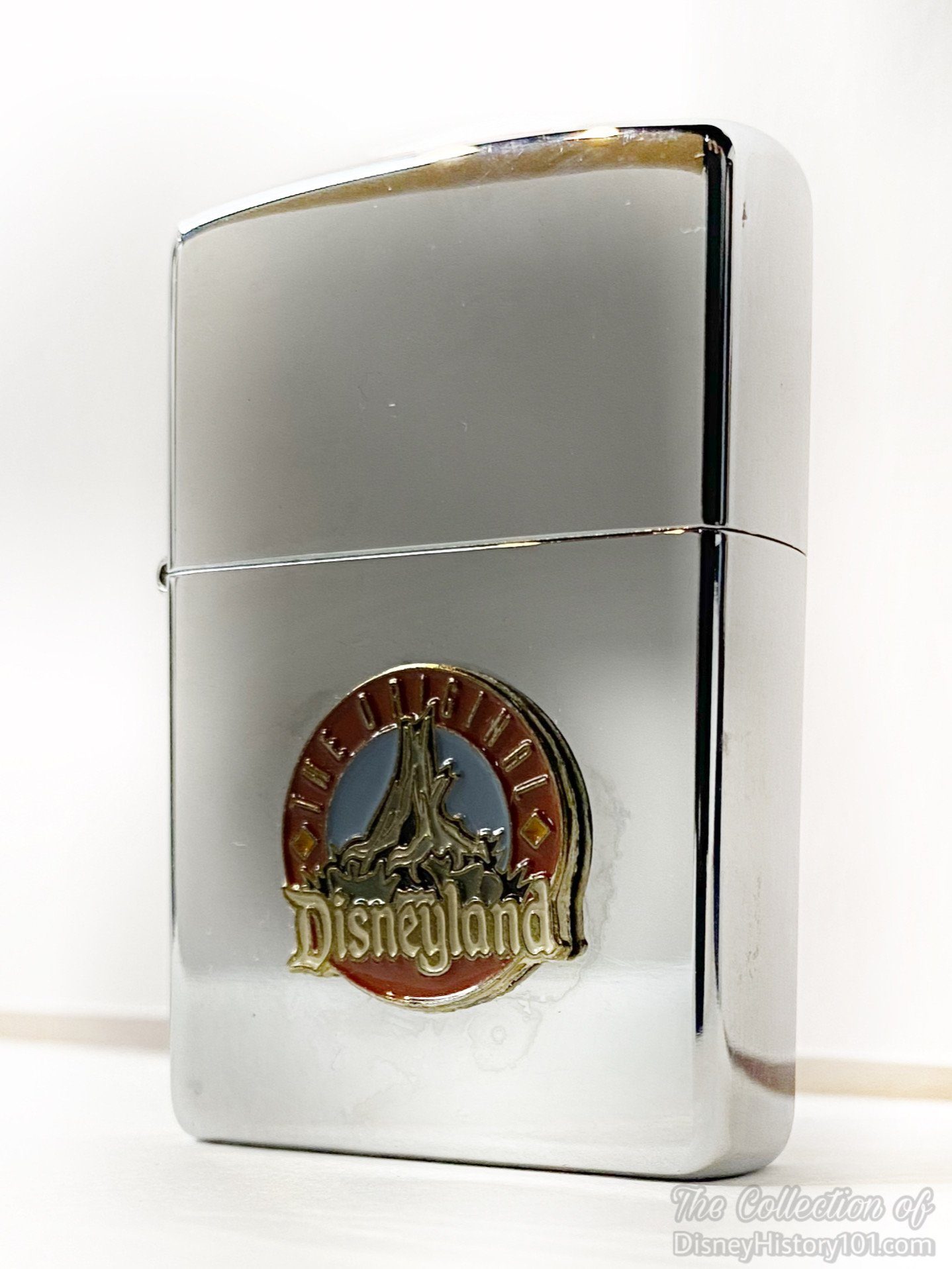
One of few pieces of smoking paraphernalia featuring licensed Walt Disney Productions characters, names, and related indicia that followed The Original Disneyland lighter by Zippo.
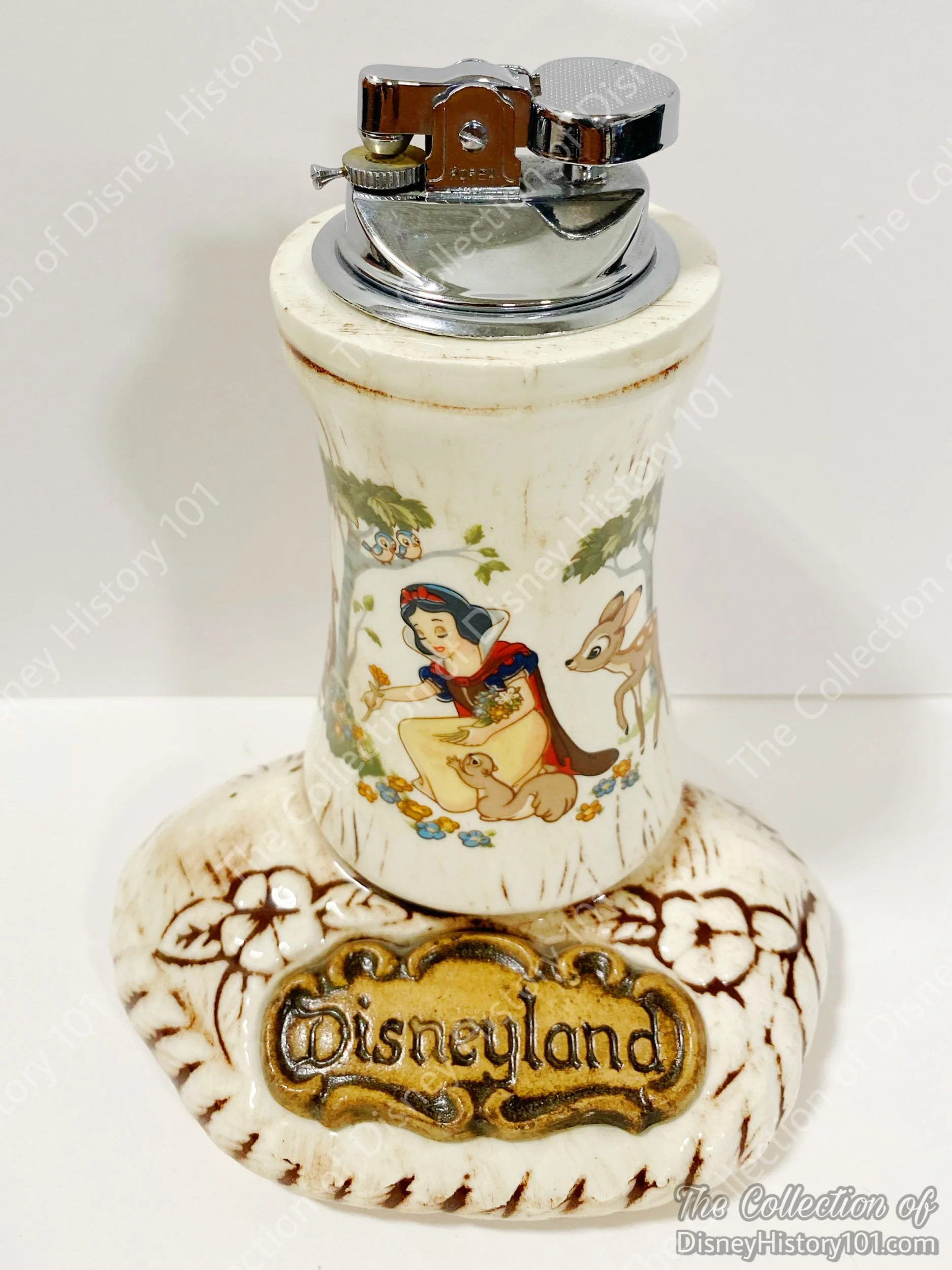
The Snow White Table Lighter.
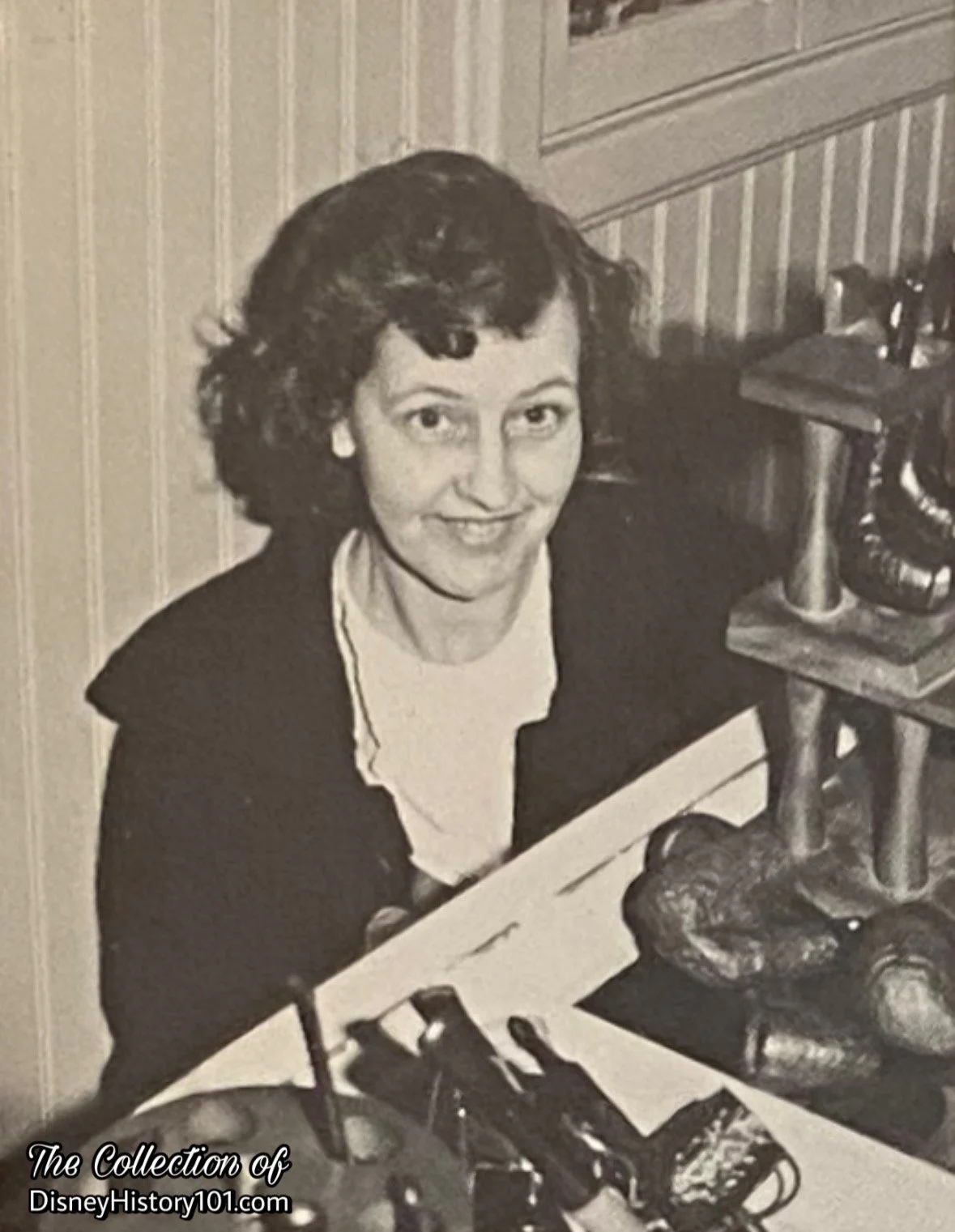
Disneyland Tobacco Shop Hostess Doreen Goodman and some of the pipes in stock, Spring 1966.
This diverse inventory was stocked, maintained and sold by Disneyland Tobacco Shop Hosts and Hostesses.
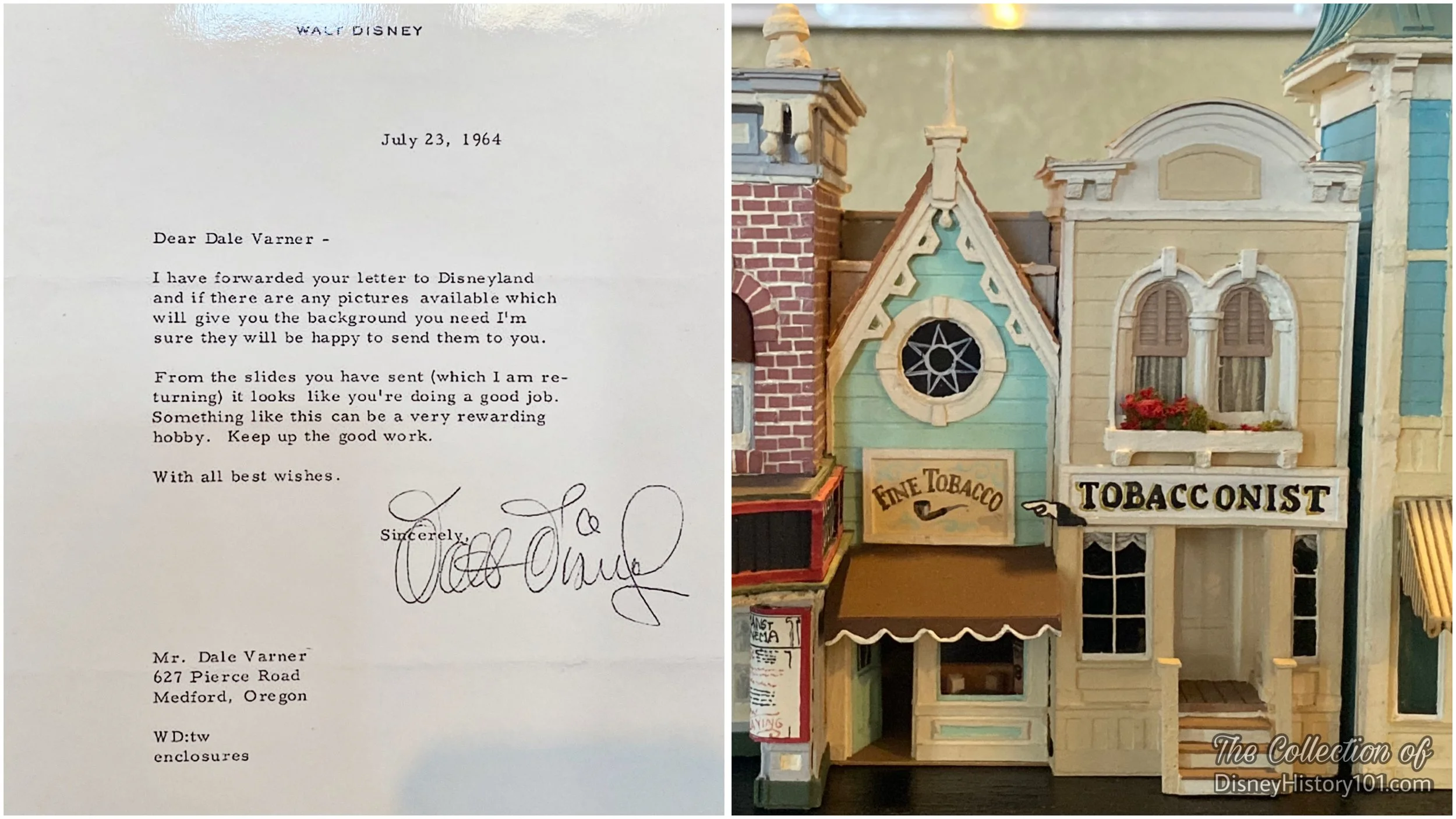
Miniaturist Dale Varner’s tiny Tobacconist, at the Walt Disney Hometown Museum.
Back in 1964, a Mister Dale Varner (of Walt’s hometown of Marceline, Missouri) was creating a compact replica of Disneyland. He photographed his work and sent the slides to Walt, requesting photographic references to use for his project. Walt replied with a letter of encouragement, commenting “it looks like you're doing a good job”. Dale finished New Orleans Square, but never had the opportunity to complete his project. However, in his miniature mock-up of Main Street USA there is a tiny tribute to the Tobacconist, which continues on, as a part of this minuscule model of Disneyland, in the care of the Walt Disney Hometown Museum.
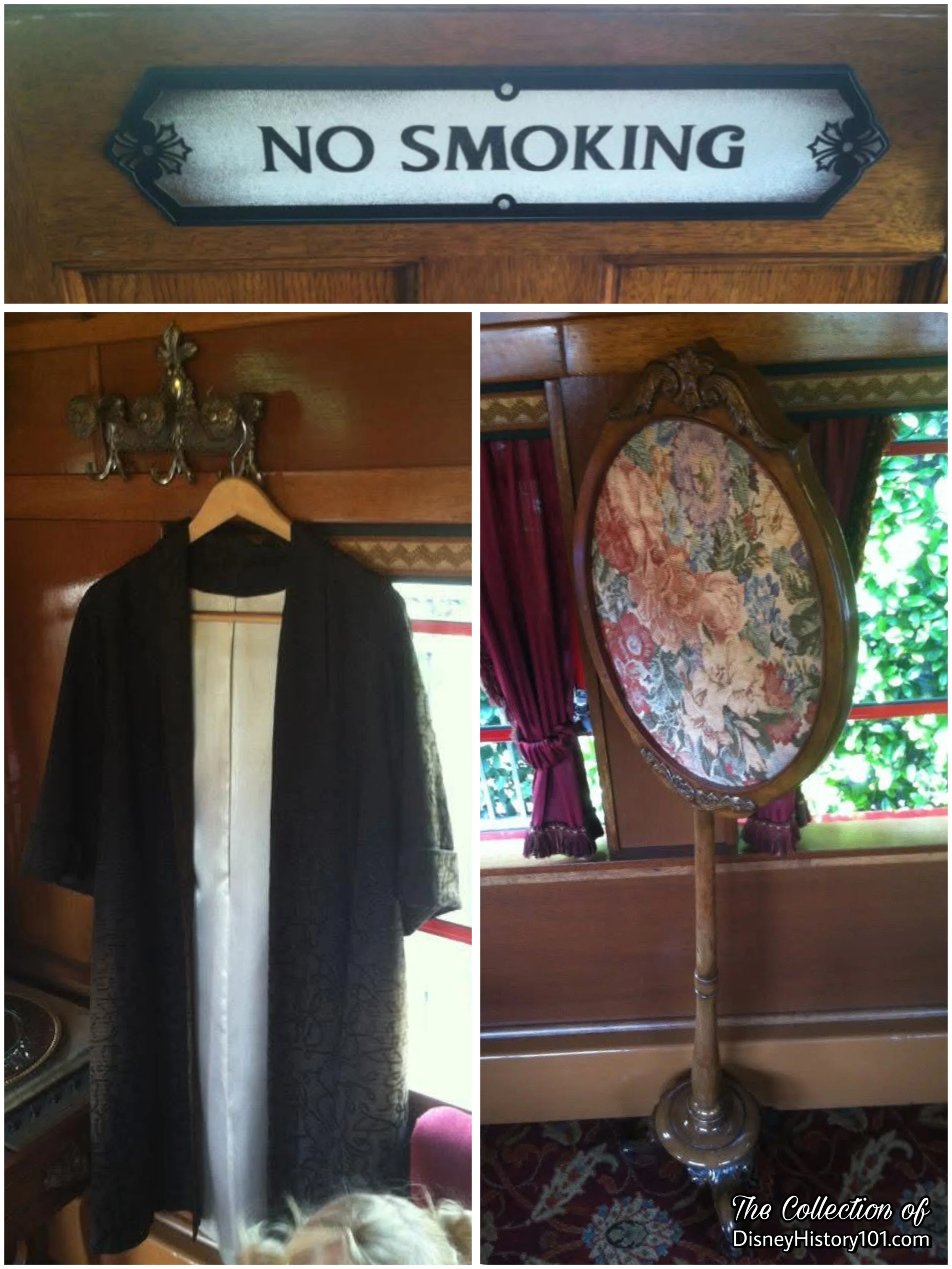
Three artifacts aboard the Lilly Belle Presidential Car, which are clearly seen but were never talked about.
“The Loss of Walt Disney”
Internal materials published in 1966 mentioned: “With… major new attractions nearing completion for summer, 1966, openings at Disneyland, Walt and his staff at WED are looking toward 1967 - 1968.“ Walt looked to the future, his 65th birthday falling on December 5, 1966. However, ten days later, on Thursday, December 15, 1966, at 9:35 a.m., a brother, a friend, and a leader, Walt Disney died. Many Disney personnel who were present, remembered this tragedy. Soon after, Roy O. Disney, President and Chairman of the Board of Walt Disney Productions addressed the staff with an official statement, in which it was conveyed:
“Walt Disney spent his entire life and almost every waking hour in the creative planning of…Disneyland… and the other diversified activities that have carried his name through the years. Around him, Walt Disney gathered the kind of creative people who understood his ways were always unique and he built a unique organization. A team of creative people that he was justifiably proud of… Many have been with us for over thirty years. They take great pride in the organization which we helped to build. Only through the talent, labor and dedication of this staff could any Disney project get off the ground…
Much of Walt Disney’s energies had been directed to preparing for this day. It was Walt’s wish that when the time came he would have built an organization with the creative talents to carry on as he established and directed it through the years. Today this organization has been built and we will carry out this wish.
Walt Disney’s preparation for the future has a solid, creative foundation. All of the plans for the future that Walt had begun… the expansion of Disneyland… will continue to move ahead.”
Eventually, one forthcoming project involved the reimagining of an original passenger train car from the rolling stock of Walt Disney’s Santa Fe & Disneyland Railroad. The Grand Canyon Coach car was redesigned into a luxury VIP parlor car which debuted in 1976, a decade after Walt’s passing. At that time, the widowed Lillian Disney actively helped decorate the car’s interior, before the car was named in her honor.
Along the “Walk in Walt’s Footsteps” Tour you may recall riding aboard the Lilly Belle Parlor Car and seeing these furnishings – a replica of Walt Disney’s black smoking jacket, an ornamental floral, oval-shaped smoking screen, and a “No Smoking” sign. These props of the grand Disneyland Show were not just mere stage dressing, but visible story elements that were thoughtfully added to subtly reinforce a true-life cautionary tale. Walt may have loved trains, but he never had the pleasure of enjoying his grand circle tour aboard the Lilly Belle Parlor Car. This somber fact cannot be so easily “airbrushed” out of the minds and hearts of those who knew him and love him.
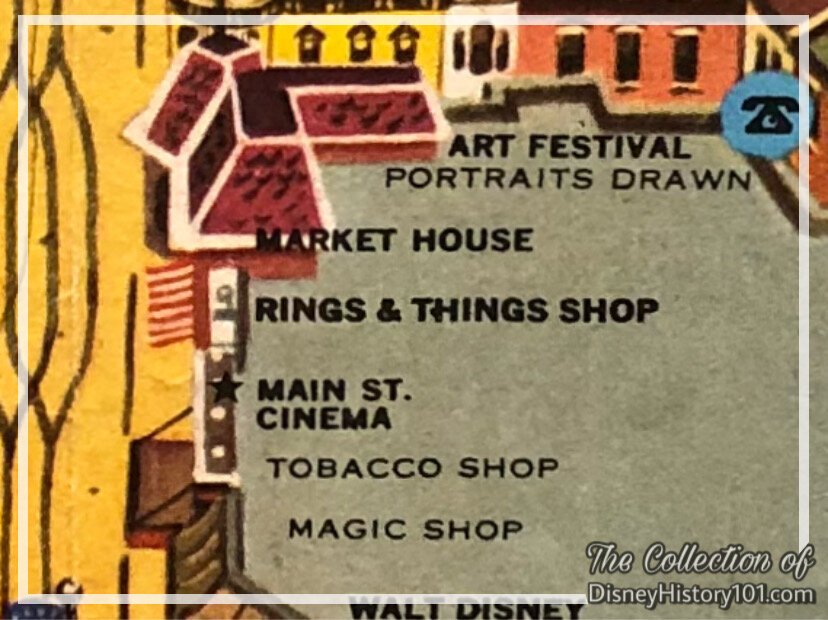
“Walt Disney’s Guide to Disneyland” Map Excerpt, c. 1968 - 1972
The Tobacco Shop was a representative of a bygone time of small towns across the United States of America and a seeming mainstay on Main Street. But some Disneylanders were not so permanent. For instance by 1969, Barbara Stillwell (Tobacco Shop) left for Frankfurt, Germany on an extended European trip, with plans to live with her grandmother for a while.
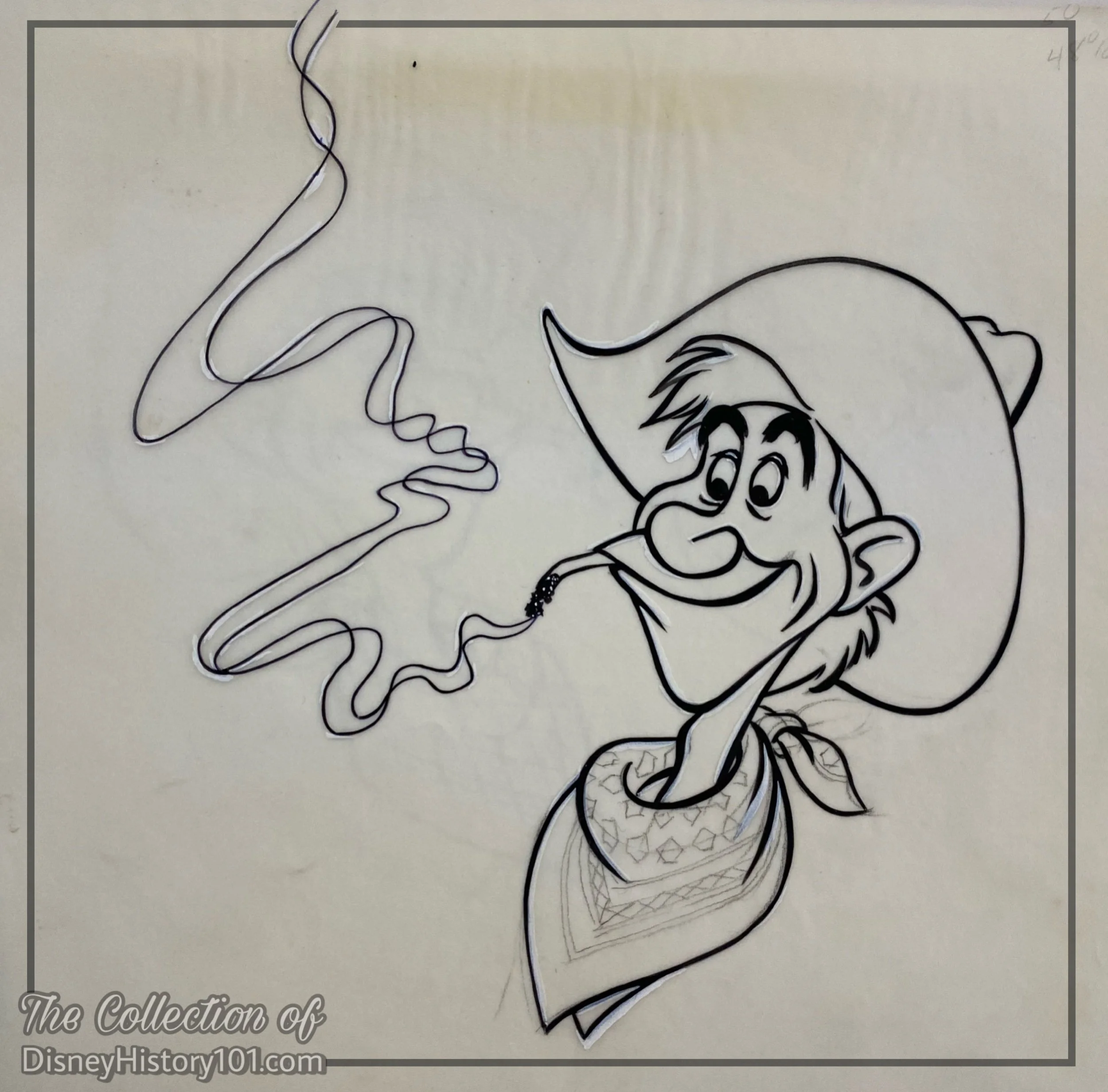
Pecos Bill Anti-Smoking Signage Concept Artwork.
More than a decade after his big screen debut in Melody Time (1948), the cigarette-smoking cowboy star Pecos Bill, lit up the screen for a double-feature at the Fantasyland Theatre in 1966. Times were different, and the full, unabridged short film was likely shown, without a disclaimer, including the scene where “the toughest critter west of the Alamo…roped a ragin’ cyclone… rolled a smoke and lit it… and… tamed that orn’ry wind down to a breeze.”
Three years later in 1969, smoking-related paraphernalia was still being sold through the Tobacco Shop and even vending machines at Disneyland. But the winds of change were blowing against big tobacco companies and their smoking consumers. Thus began the anti-smoking campaigns from the late 1970’s thru the late 1980s that would swiftly regulate and usher an end of an era for this seeming mainstay from turn-of-the-century America.
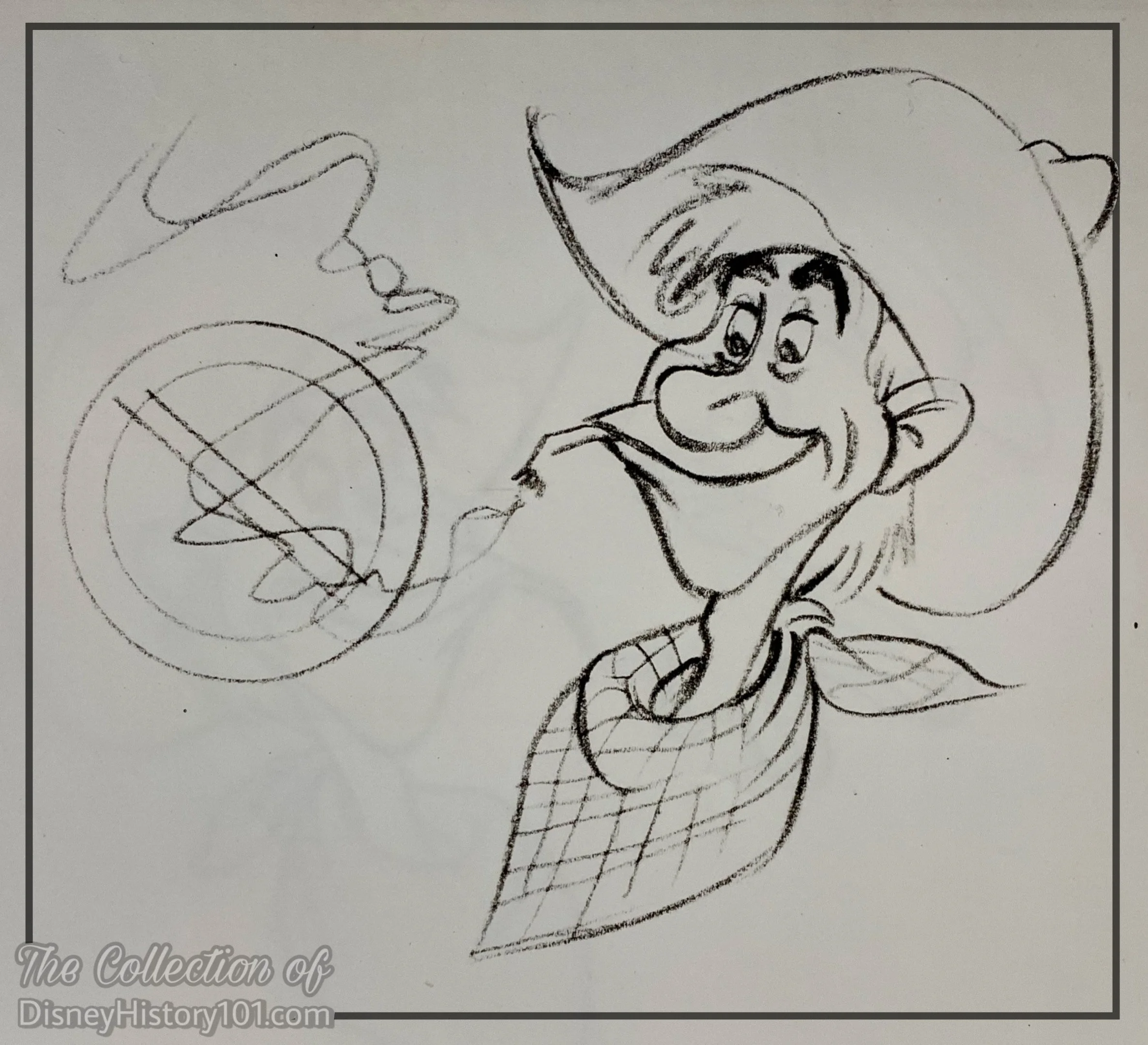
Pecos Bill Anti-Smoking Signage Concept Artwork (with the general prohibition sign over the cigarette).
Meanwhile Disneyland Park began to sponsor anti-smoking campaigns. For instance, Disneyland Cast Activities presented a free informal discussion - “Stop Smoking Seminar” sponsored by the Schick Center, held at The Center (on Thursday, August 16, 1979, at 5:15pm). The discussion introduced a program called Habit Helpers to “help break nicotine’s hold on you.”
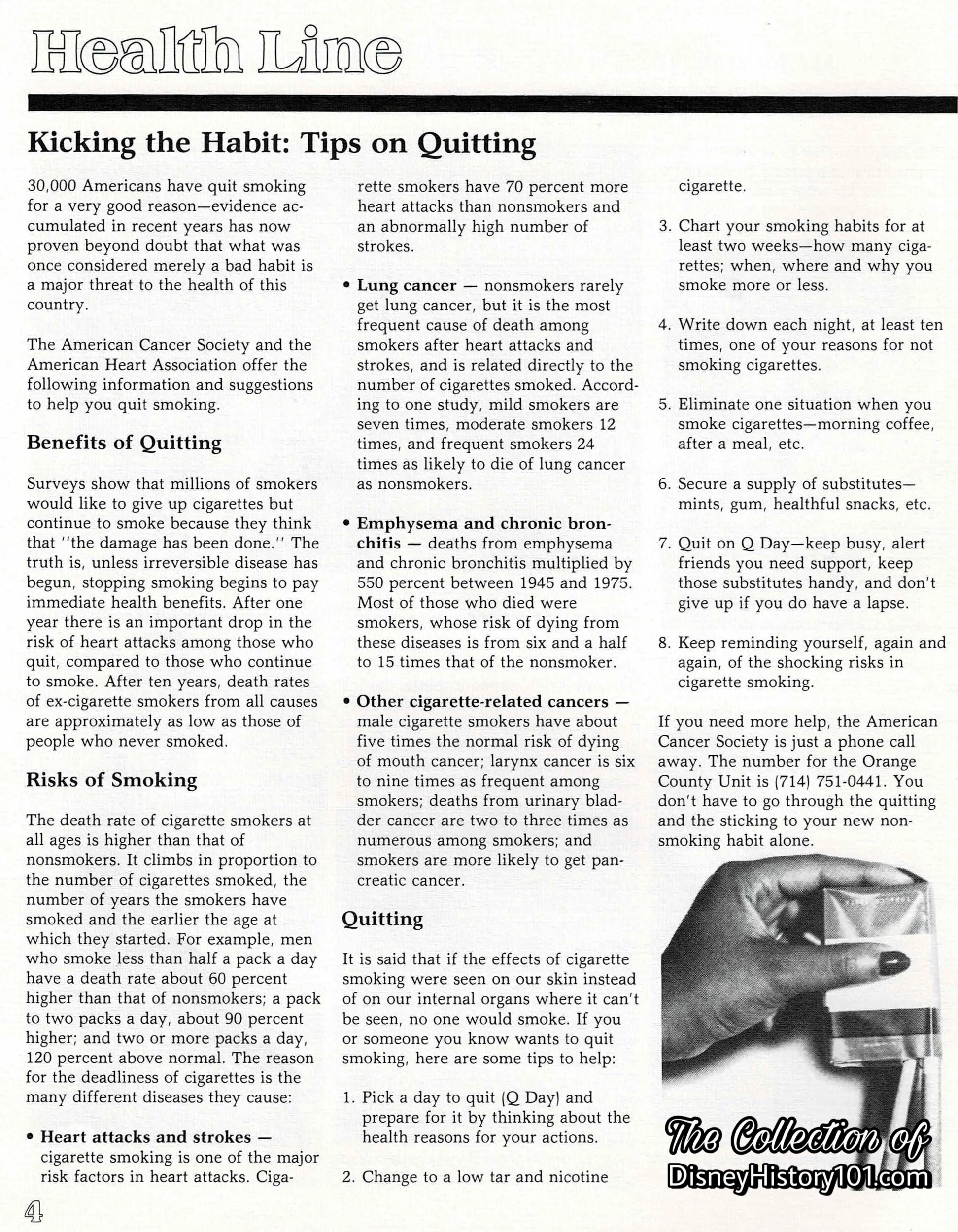
The “Kicking the Habit” article published in Disneyland LINE (Vol.18 ; No.34), August 21, 1986
Times and views were changing.
You may recall a sign which hung in one window and read : “Tobacco is a dirty deed, it satisfies no normal need, it makes you thin, it makes you lean, it’s the worst darn stuff you’ve ever seen… I like it.” While these words may have reflected a majority of smokers, the Magic Kingdom opened at Walt Disney World Resort in Florida with the Main Street Tobacco Shop in the Emporium. There, the legacy was carried for a brief time as a unique location where product like basket pipes, Cinderella Castle ashtrays, or Virginia Ovals king-size cigarettes could still be purchased.
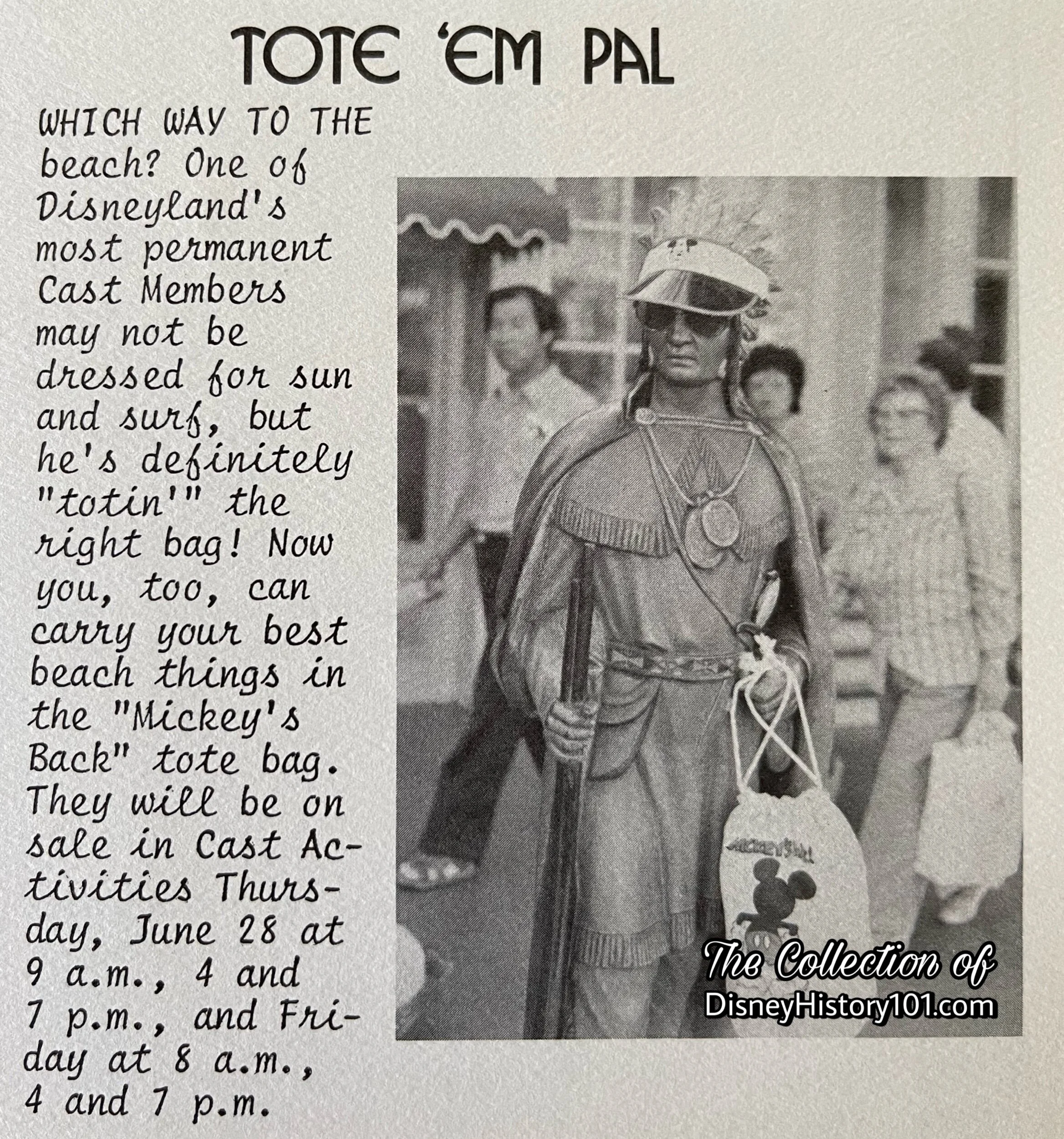
The Main Street Tobacconist Indian takes on a new supporting roll in a Disneyland LINE Excerpt, published June 21, 1979.
Contemporaneous with the “Stop Smoking” campaigns, it seems that the Main Street Tobacconist Shop Indian had turned to modeling, become less interested in touting tobacco and instead toting bags, for one advertisement published in Disneyland LINE (June 21, 1979).
By 1981, Tobacco Shop continued to offer worldwide tobacco and smoking accessories, contributing $354,000 to $10,602,000 in total Main Street East Merchandise area sales. And yet, Disneyland LINE magazine occasionally published pieces like the anti-smoking article (pictured above) for Disneyland Park Cast Member. By September 30, 1982, construction was in progress, and WED & MAPO opened a mysterious job numbered R177-2 (at a cost of $20,231.66) for the “Tobacco Shop” at Disneyland.
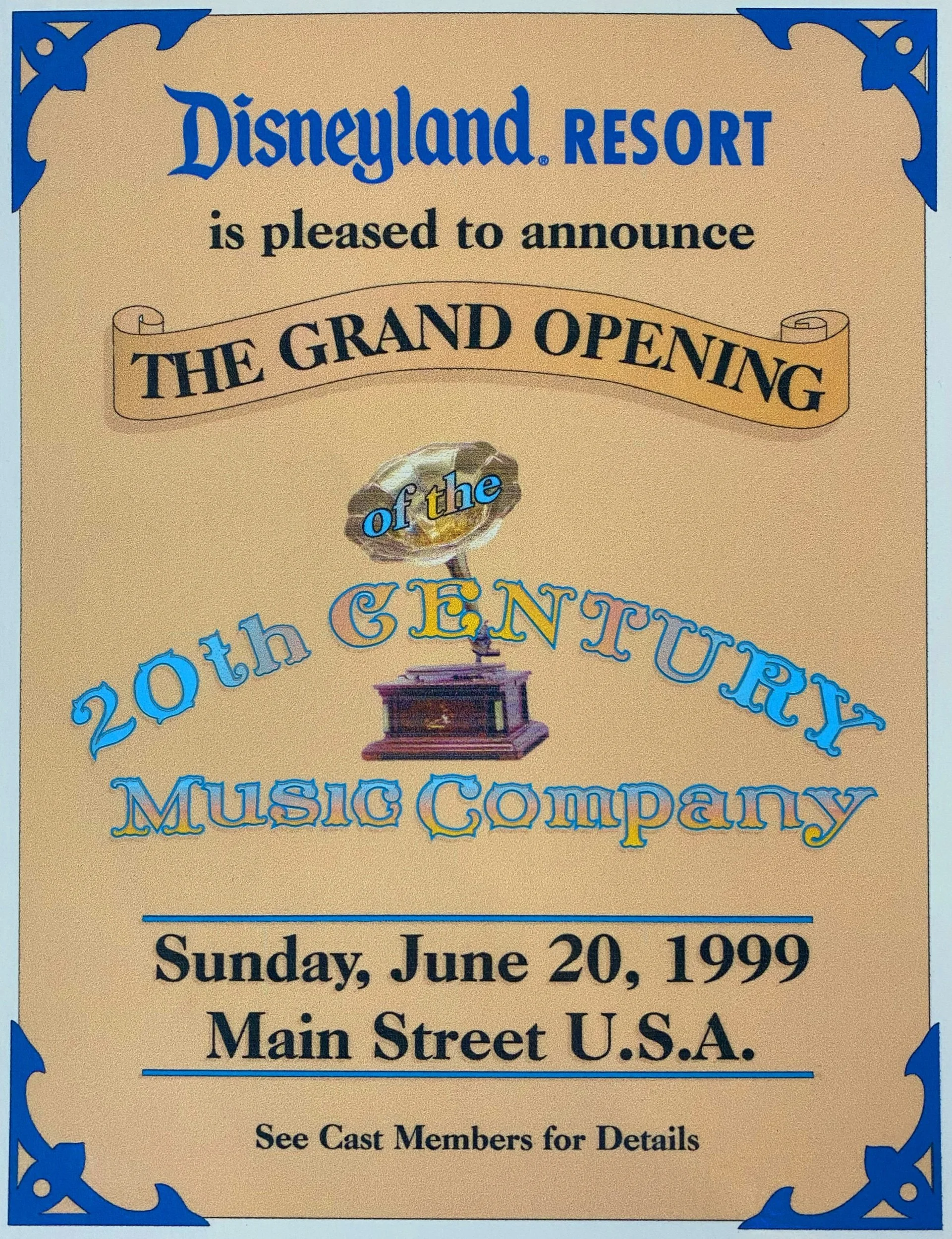
20th Century Music Company Grand Opening sign.
"The End of the Main Street Tobacconist"
One of the biggest anti-smoking campaigns of the 1990s was “Cartoon All-Stars to the Rescue” (first airing April 21, 1990). The premise was simple - After a young boy named Michael was pressured by the villainous Smoke, his young sister Corey teamed up with cartoon characters to save her big brother. The event was the most massive cartoon crossover ever, and included familiar Disney Characters Winnie the Pooh, and DuckTales stars Huey, Dewey, and Louie.
A few months after this aired, the Tobacconist closed its doors on June 3, 1990, also about the time the “No Smoking” sign (below) was designed at WDI. Van France was a long-time patron and supporter and expressed: “June third of this year was a sad day for me. It was when the Tobacco Shop was snuffed out, and replaced by profitable merchandise. I can't argue with the so-called ‘bottom line’ financial reasons. Much of the nation is on a health kick, and cigarettes, and those of us who smoke them, are generally condemned. I always felt that Walt, who smoked as much as I do, was sort of a kindred spirit. What does worry me is that we are bowing to the current audience and forgetting that a Tobacco Shop was always found on a Main Street at the turn of the century.” While the shop had a brief legacy in the Tobacconist in the Magic Kingdom at Walt Disney World, it was the end of an era for Disneyland.
Soon, Great American Pastimes opened in its stead for a few years. By 1992, The Great American Pastime - offered Sports trading cards and memorabilia. A a few years later, Great American Pastimes was followed by the 20th Century Music Shop, which opened on Sunday, June 20th, 1999.
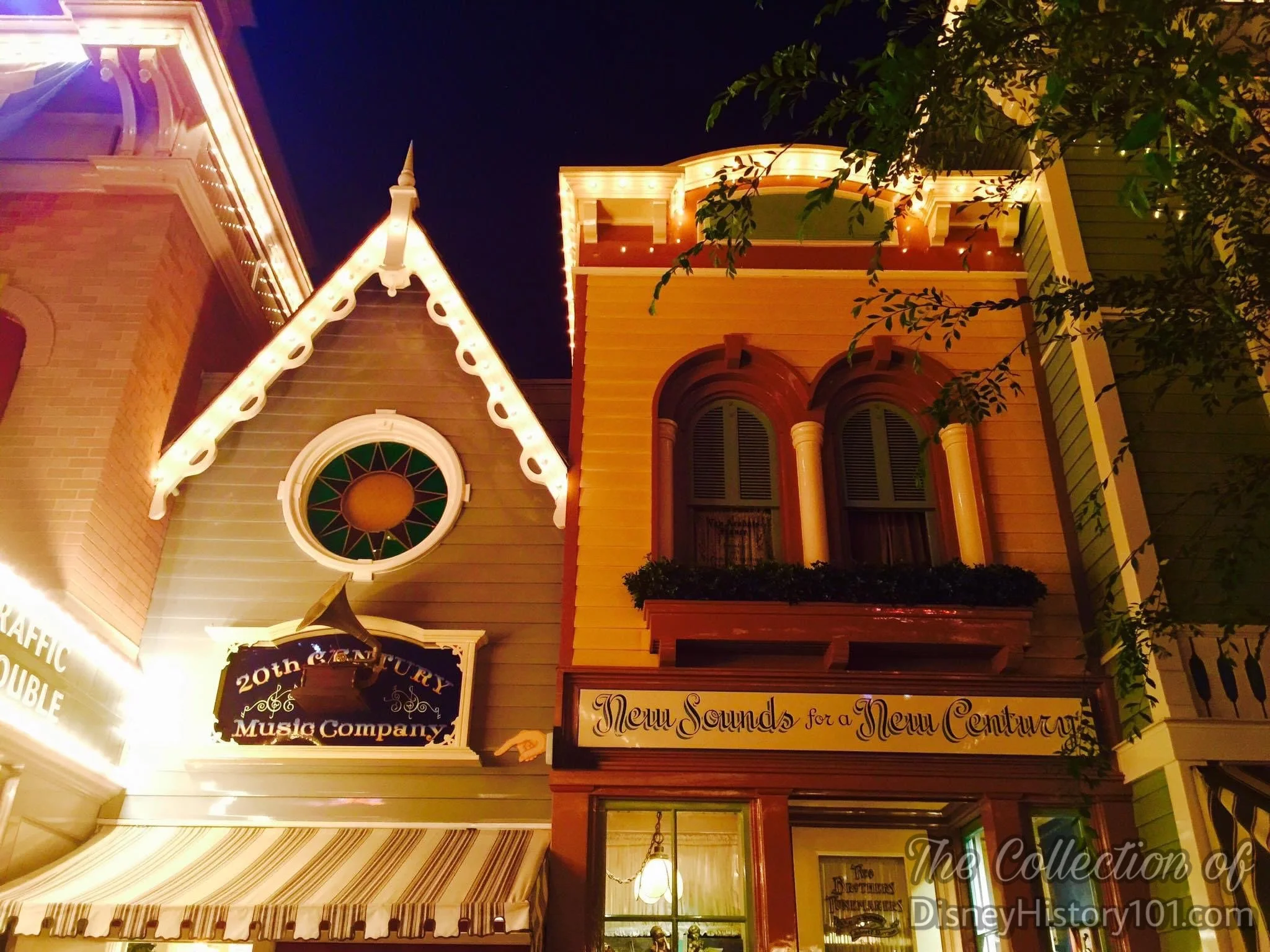
20th Century Music Company (former Tobaccnist Shop)
“20th Century Music Company – Main Street Window Honors ‘Tobacconist’ Patron Van Arsedale France"
Martin Sklar once said “an individual's contribution can usually be found in the final product if one looks closely enough, but the Disney mind frame is to never point out ‘what I did’ to anyone.” However, a few outstanding individuals have been publicly recognized for their contributions and even ceremoniously honored by the Company. There are thousands of windows at Disneyland. Above the street, is a window honoring “‘Van Arsdale France. Founder of Prof. Emeritus. Disney University.’ Van coordinated the activities of the Disney University, the training and development area of Disneyland,” and by 1990, was serving as the President of the Disneyland Alumni Club, according to “Disneyland - A Treasure Chest of Trivia,” prepared by Walt Disney Productions, 1990.
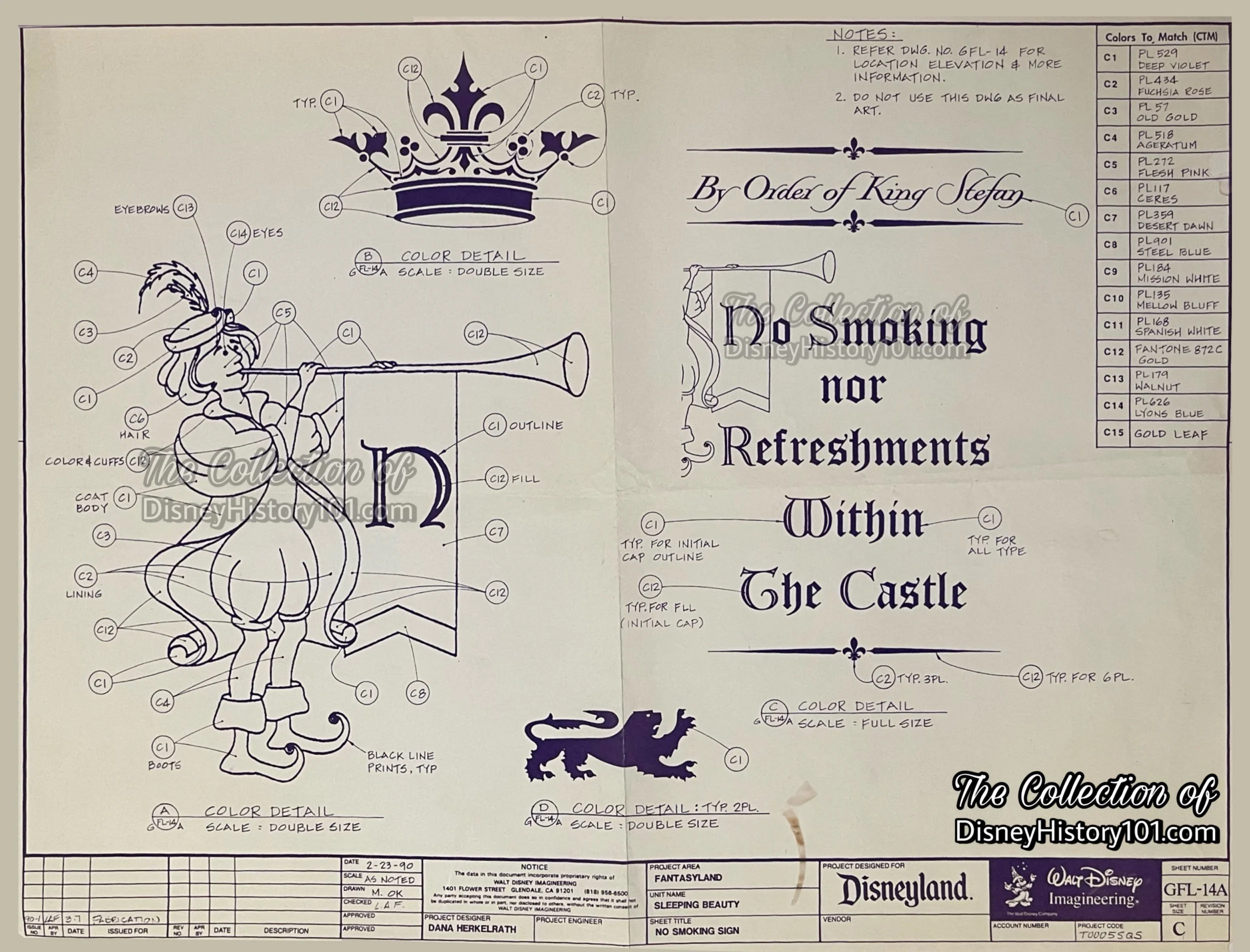
Note the whimsical nature of this Fantasyland “No Smoking” Sign Design by WDI, 1990.
If you were a Disneyland Cast Member during this era, you may recall the Disneyland Smoking Policy established and regulating the use of tobacco Backstage. Smoking was “prohibited in conference and meeting rooms, restrooms, First Aid facilities, hallways and elevators,… areas which contain equipment, records, supplies, or hazardous materials that are sensitive to fire, ash, or smoke,… also designated as non-smoking areas.” For some time, smoking was still “permitted in private and enclosed facilities, such as personal offices, which are occupied exclusively by a smoker, or in a large office where all of the occupants are smokers.” Maybe you remember the Inn Between and the downstairs break area in Fantasyland establishing a “Smoke Free” Backstage Area for your dining comfort.
Custodial Department Team Members of this era may recall cigarette urns with filter screens to facilitate removal of debris which needed to be checked as part of their area responsibilities. These cigarette urns were included in rehabilitations performed by the maintenance services department paint shop at Disneyland.
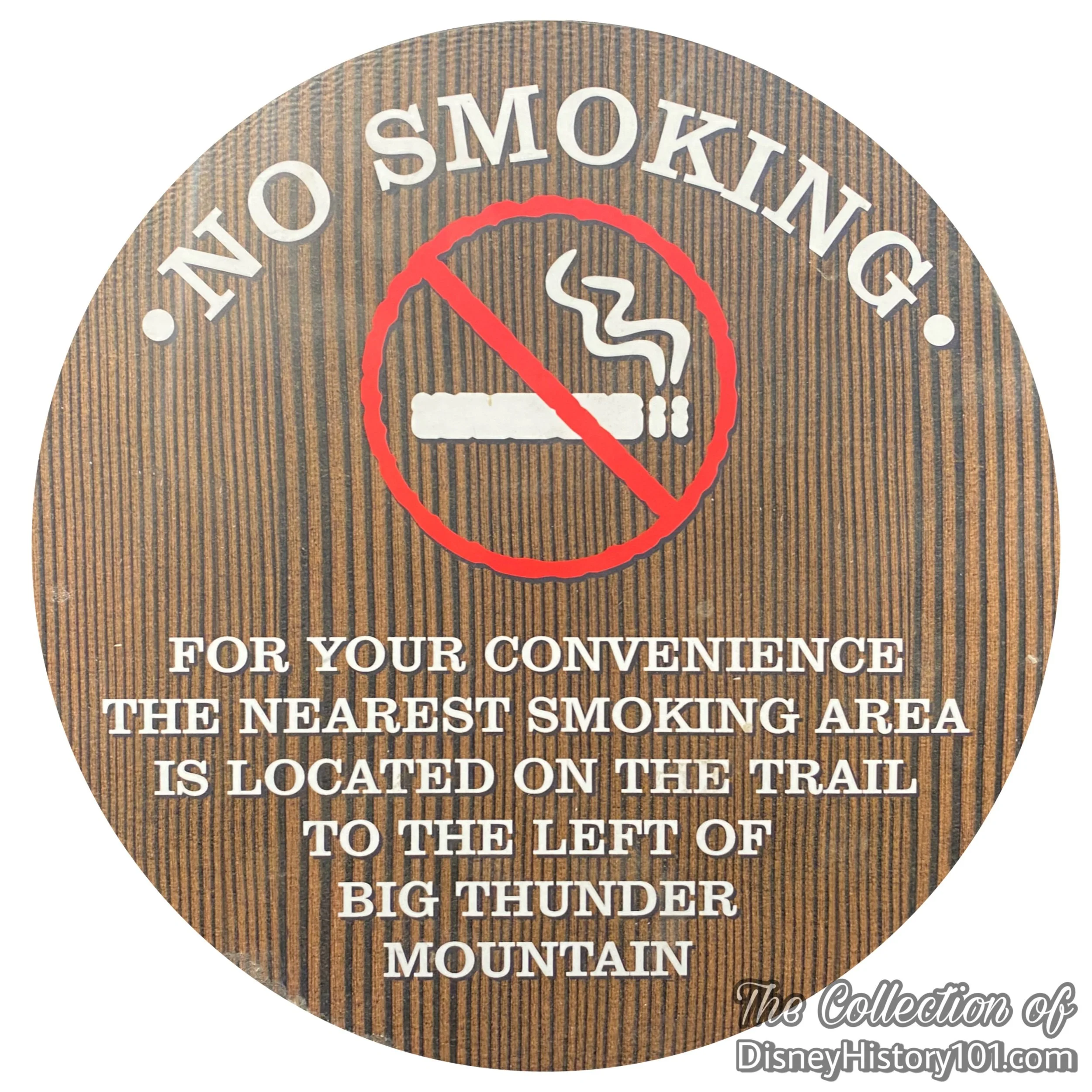
This Disneyland Frontierland area “No Smoking” sign recommended nearby areas for Guests’ convenience.
In 2002, Tour Guides reminded “everyone that Disneyland is a non-smoking Park” with “designated smoking areas.”
Things were far different at Walt Disney World, where former Disneyland Cast Member Brian Levine recalled “By 1993, all tobacco stores in Disney World (Florida) were gone. The only place one could get a tobacco product then was behind the counters in Disney resort hotel gift shops… Somewhere around 2002 or ’03,… a specialty pipe at Walt Disney World. It had Mickey Mouse in the pipe stamp.” [“Walt Disney: American Icon, Inventor of Pop Culture – Pipe Smoker” by Kevin Godbee, published July 11, 2012, at pipesmagazine.com]
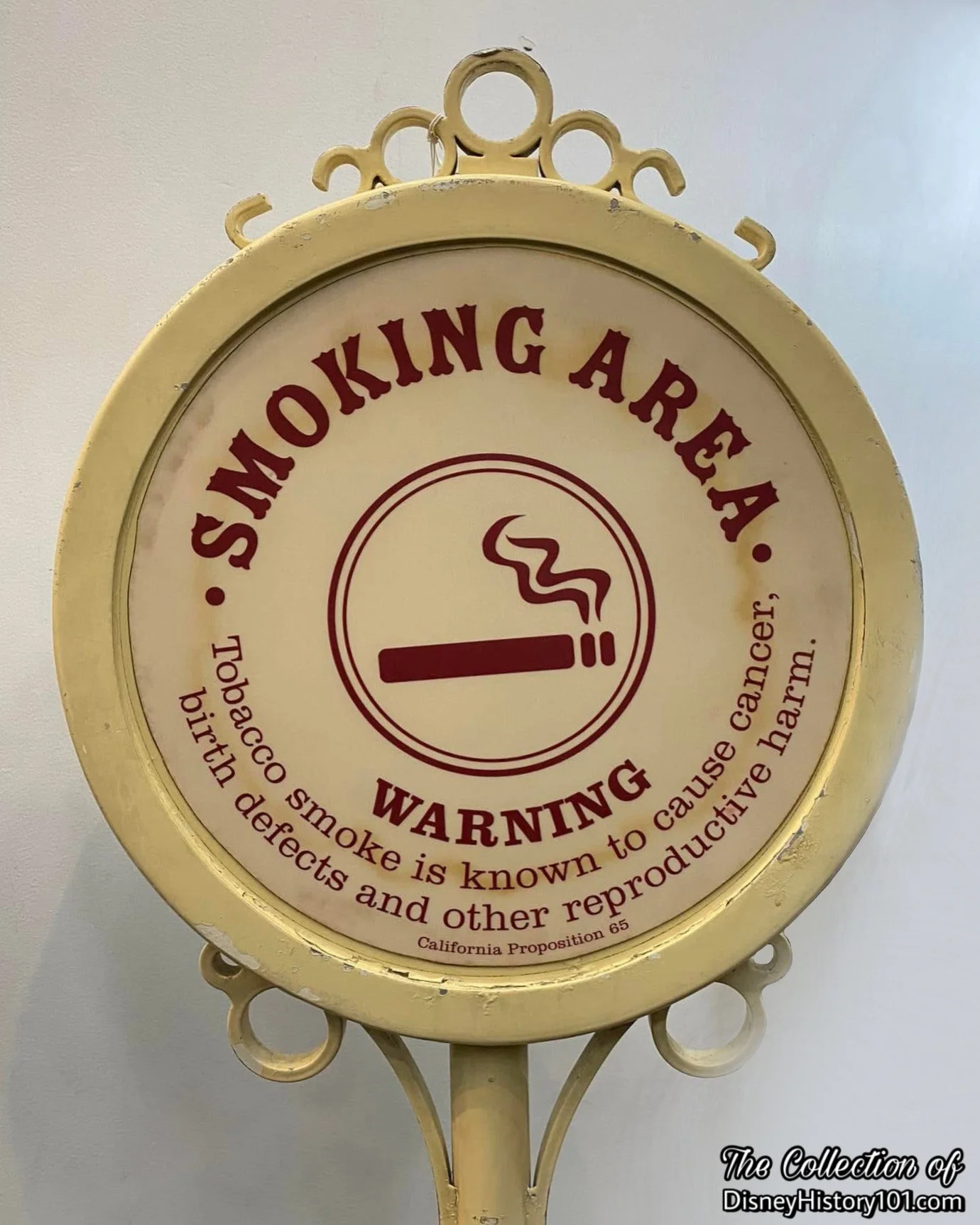
This progressive Disneyland “Smoking Area” Sign administered warnings of cancer, birth defects, and reproductive harm, in addition to referencing California Proposition 65.
Finally, by 2007 it had been seventeen years since cigarettes had been sold On Stage in Disneyland and a lengthy amount of time since they were sold at the Walt Disney World® Theme Parks. And so by 2008, the nearest Guest Smoking Area to Main Street U.S.A. was located in the Main Entry Plaza (outside the park).
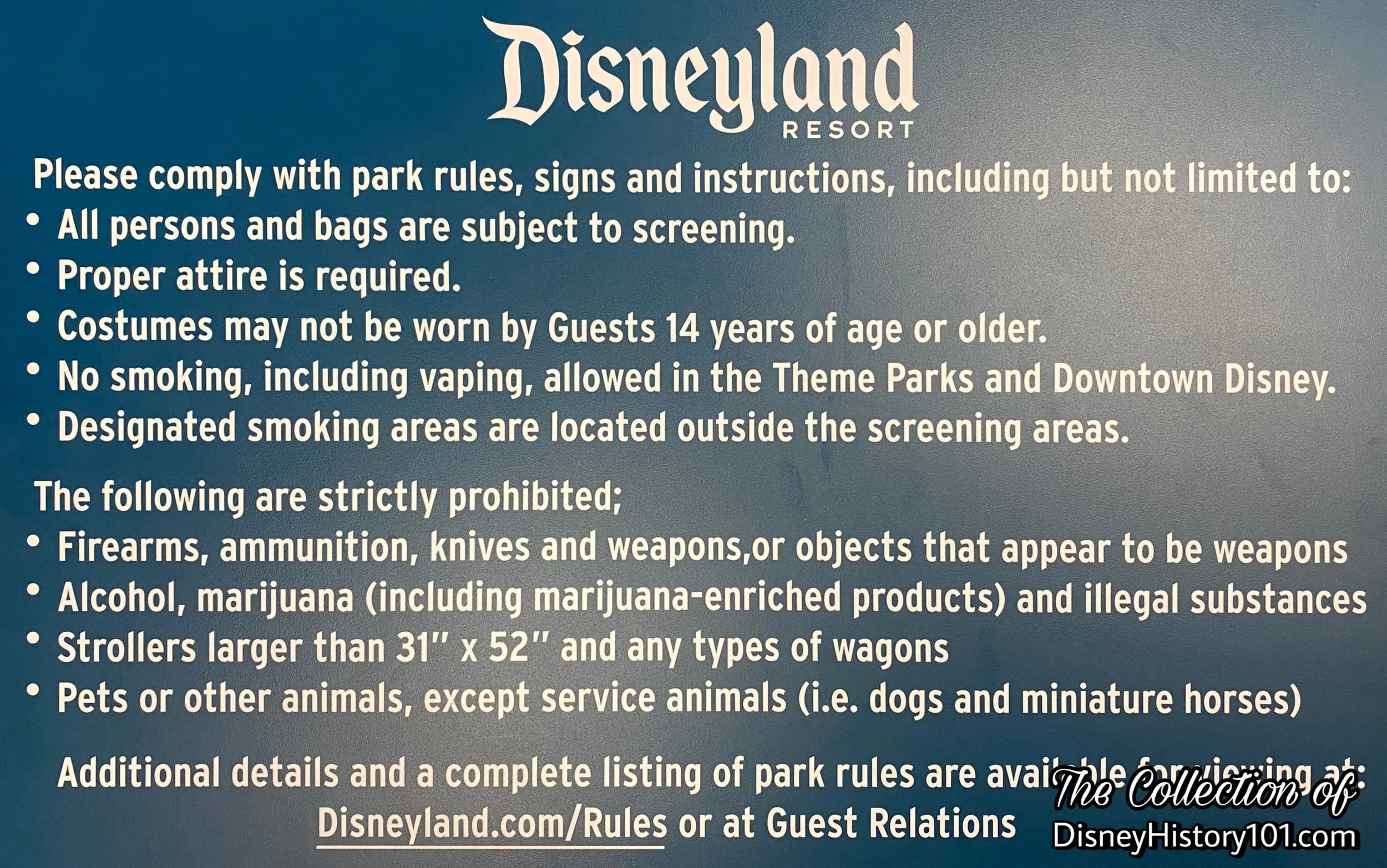
Fast forward to the present, when smoking, vaping, marijuana and related paraphernalia are prohibited throughout all of Disneyland Resort, including Disneyland Park, Disney California Adventure Park, and Downtown Disney. The cigarette stands, ashtrays and cigarette vending machines have long vanished from the Disneyland Hotel and the Park. Gone are the days of the potential for finding cigarette ends on the ground, or Cast Members walking around with a handful of cigaret ash until they find a bin.
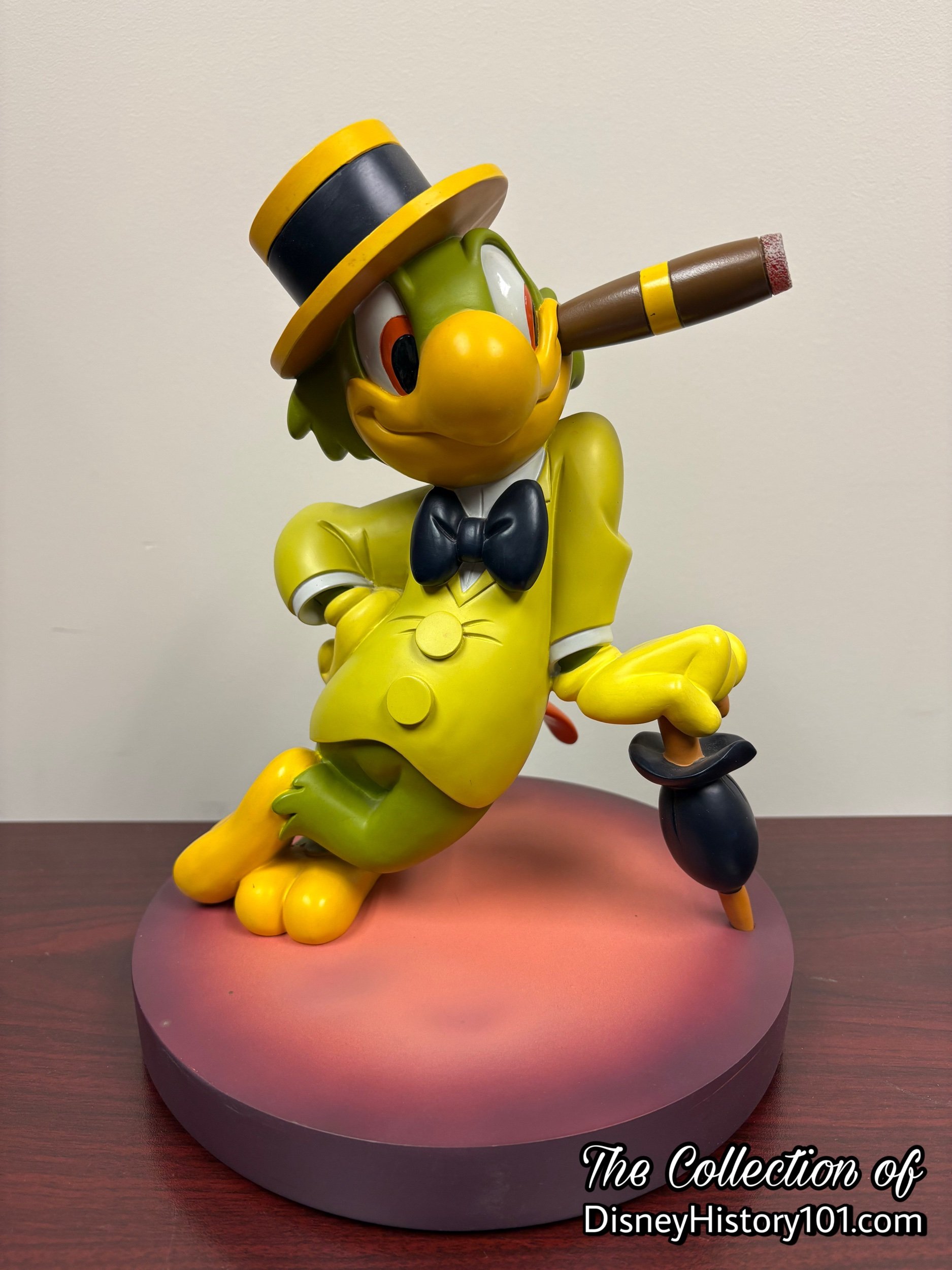
The Jose Carioca Disney Medium Figure (designed by Kevin Kidney and Jody Daily) features an illuminating cigar.
It has become a rare sight to find licensed merchandise referencing cigars or other smoking-related paraphernalia. The “Three Caballeros 60th Anniversary Figurine Set” featuring a Jose Carioca Figure (with light-up cigar), designed by Kevin Kidney & Jody Daily, was certainly an exception to the rule. The collectable was released in Spring, 2005, issued in a limited edition of 1000.
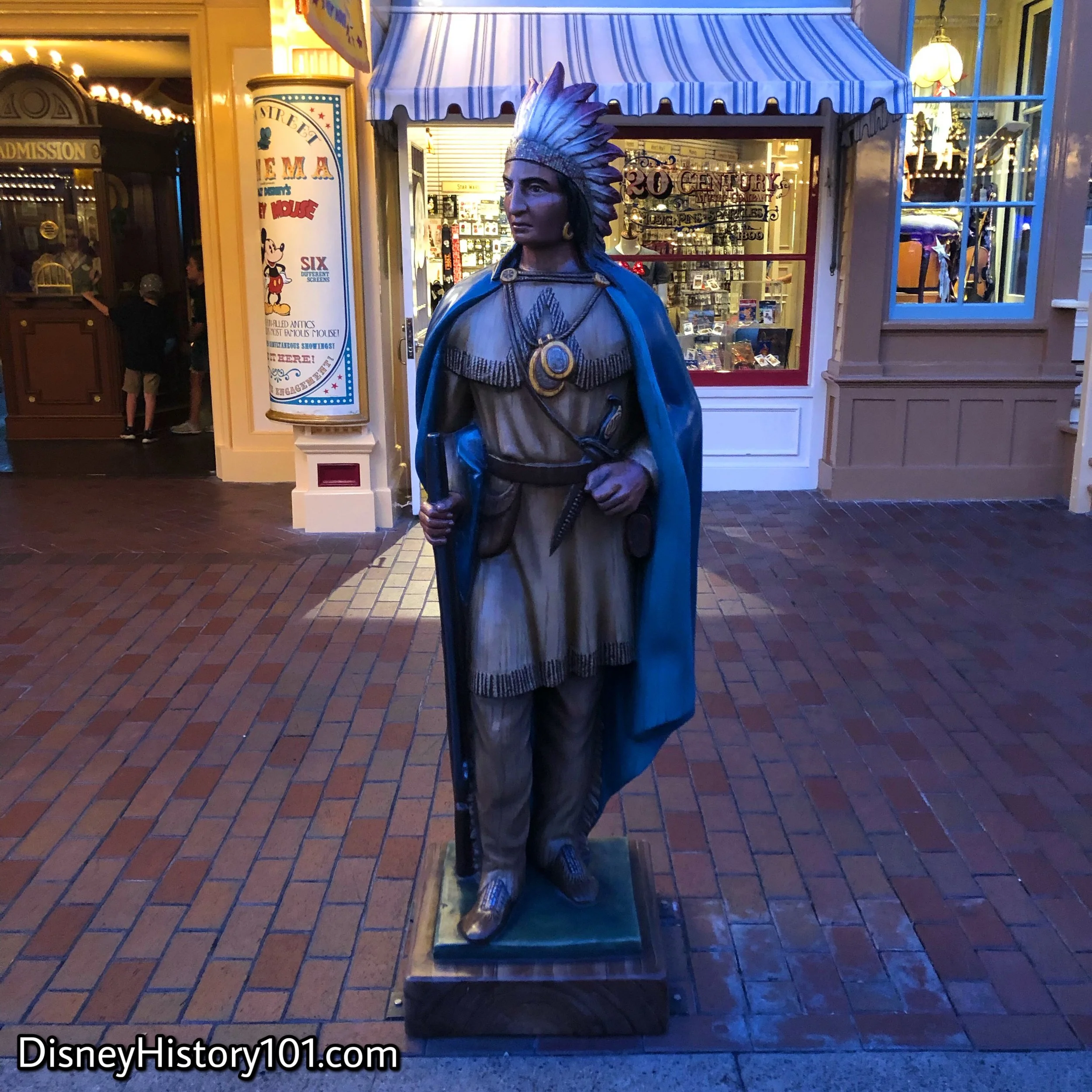
The Main Street 20th Century Shop Indian.
In our present-era, there are few remnants of Tobacconist and Disneyland-related smoking paraphernalia or artifacts left in the Park (if, any). It may surprise you to learn that neither of the current Cigar Store Indians (on Main Street, or in Frontierland) are original. Yes, both of them (like the building façades) were cast, and replaced by fiberglas versions in preparation of Disneyland’s 50th Anniversary year. The originals were sold and are currently in private collections. The current Cigar Store Indian’s original appearance has been altered a little - his cloak is noticeably blue instead of red.
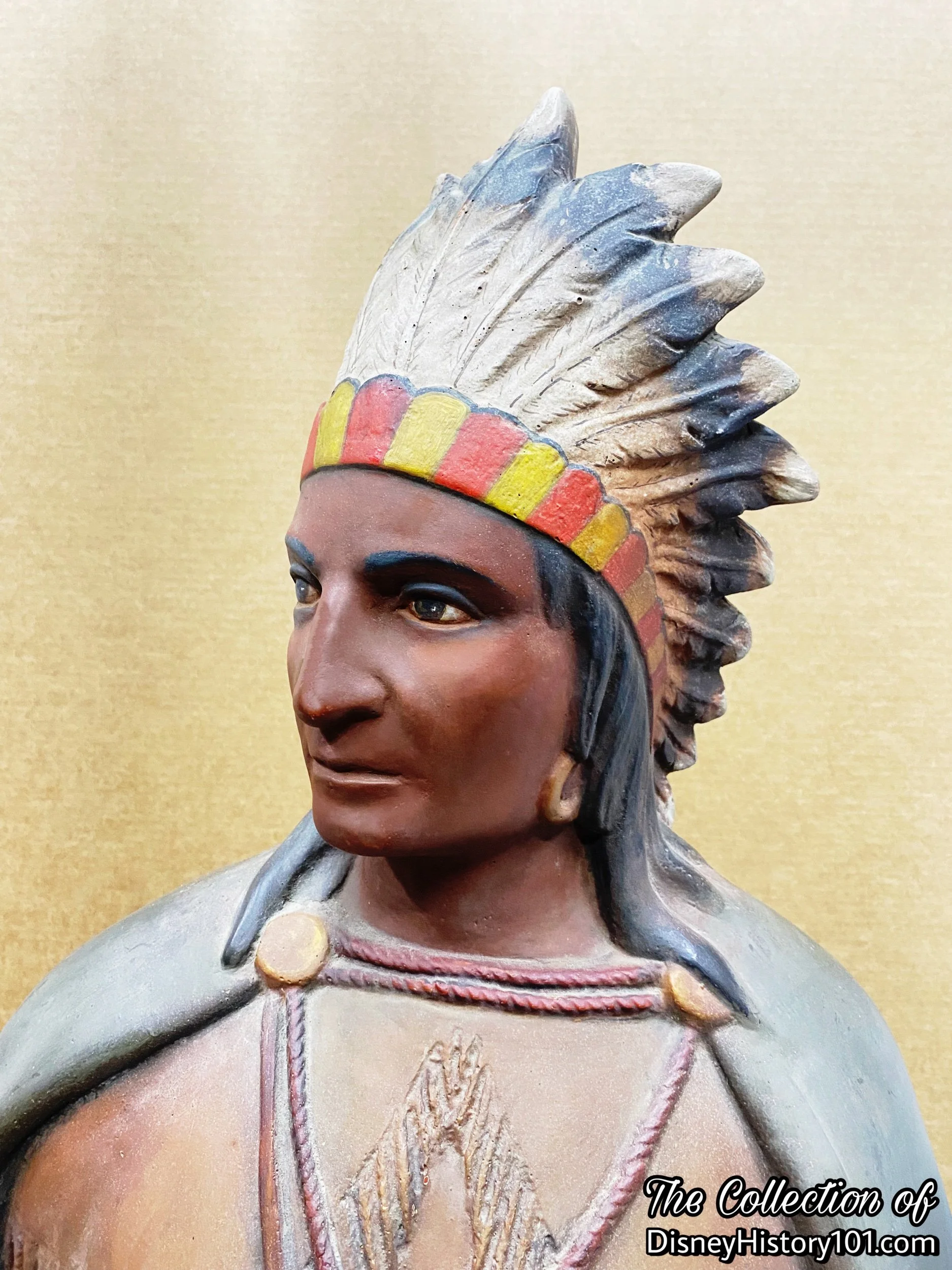
A close up of the unique palette of the 20th Century Shop’s not-so-distant cousin, the Frontier Trading Post Indian.
Paint is important. The “Master Color Book” is the Bible for color selection at Disneyland, maintaining a catalogue of 4,000 shades of color. The book contains color specifications for every land, building, exhibit, and prop which requires paint maintenance (as the Cigar Store Indian). It insures that Disneyland will always have the same bright colors selected by the art directors who designed the attraction. In addition to the Master Color Book, there is a standby supply of ready-mixed paint available for touch up work. Thousands of cans of paint are stored in a special room which sounds like a walk through of Disneyland. Each can is labeled with names like “Tobacco Shop Indian.”
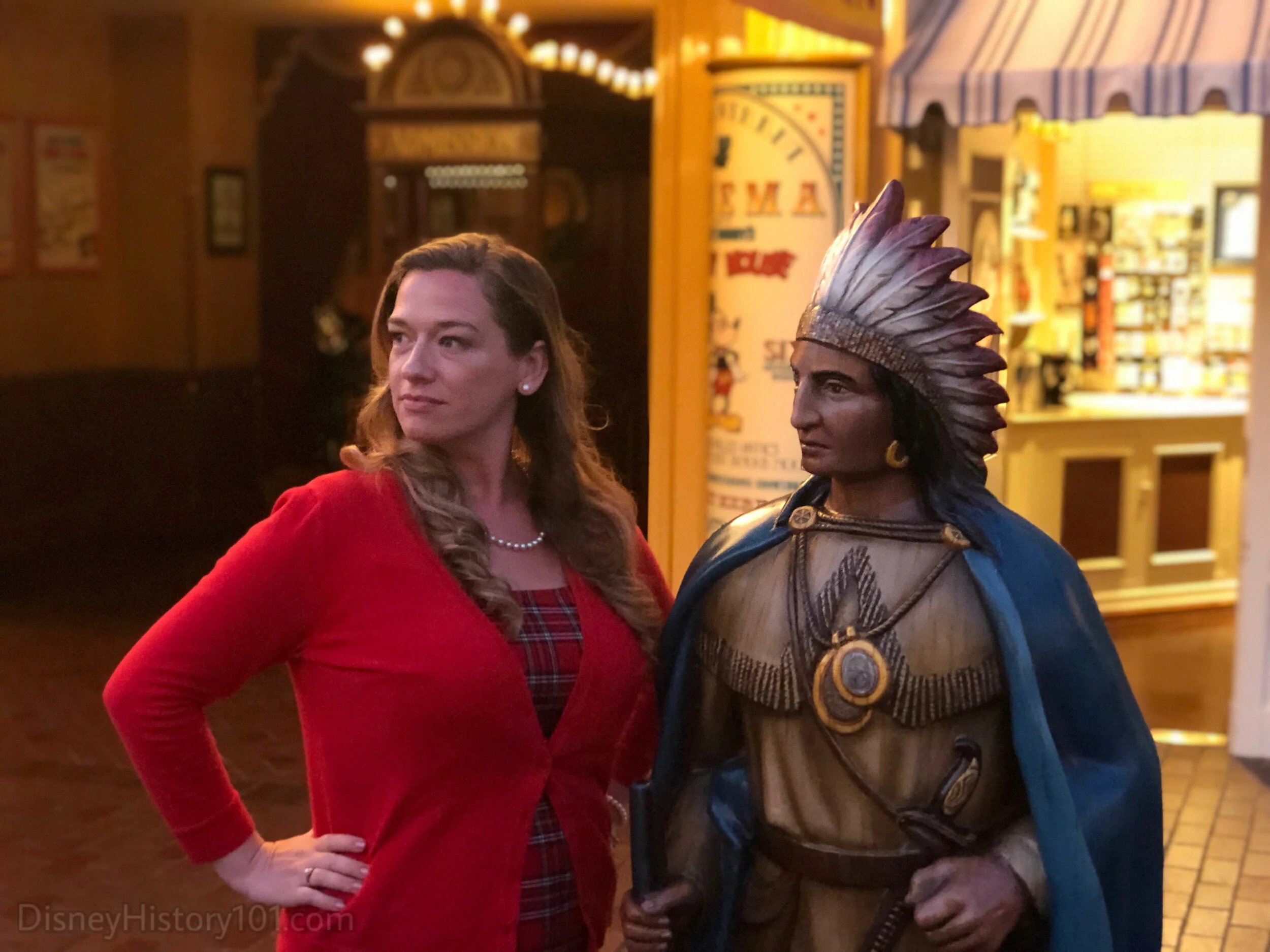
MAIN STREET TOBACCONIST SHOP INDIAN, (The Present)
Now, that the 20th Century Music Co. has moved in (and the Tobacconist has long since been a thing of the past), we occasionally wonder just who the Cigar Store Indian stands poised to welcome. Still, the Cigar Store Indian remains as an archaic symbol of a simple and bygone era of Main Street U.S.A., and turn-of-the-century small towns across the United States of America!
Quisque iaculis facilisis lacinia. Mauris euismod pellentesque tellus sit amet mollis.