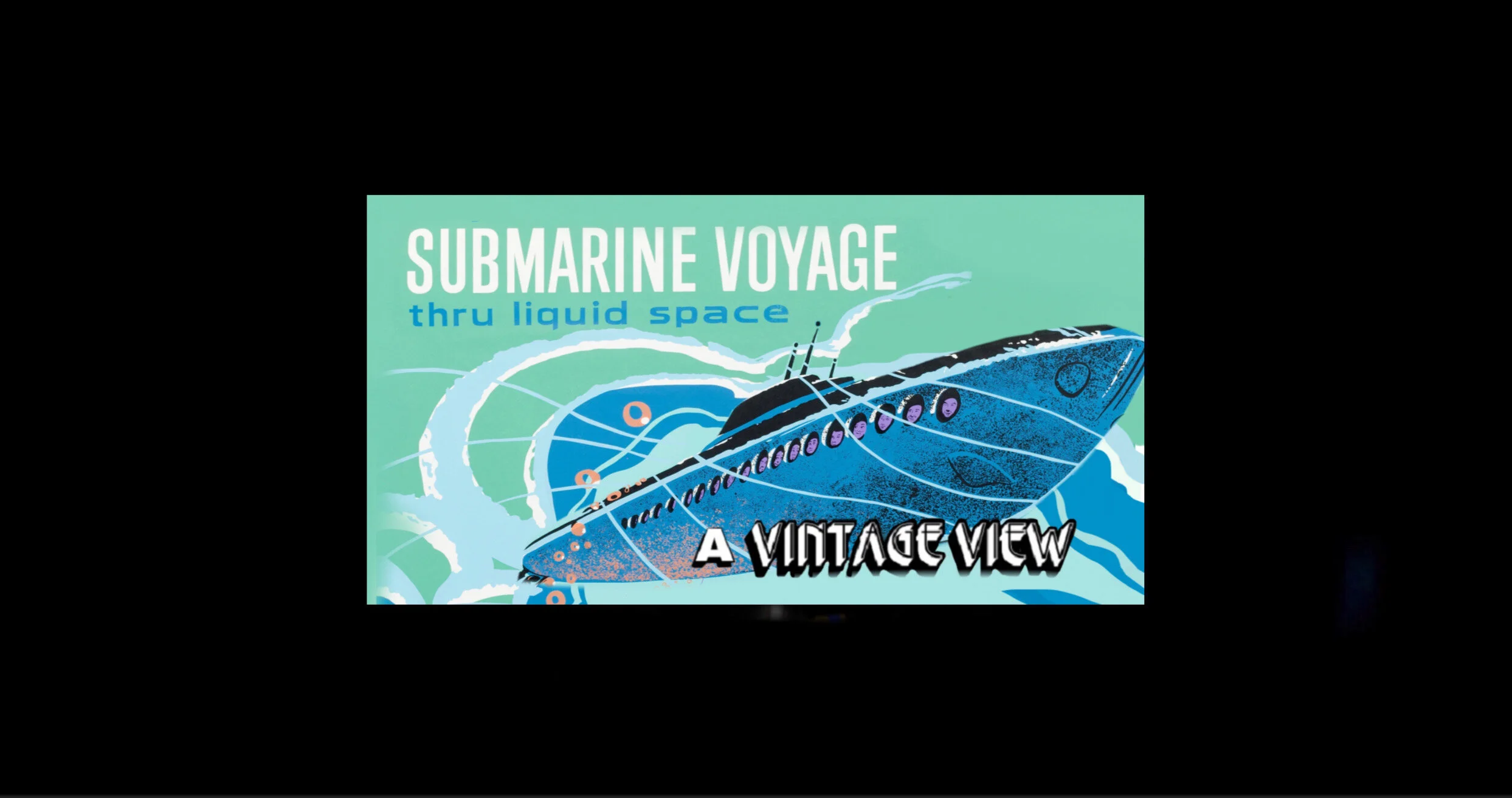
SUBMARINE VOYAGE THROUGH LIQUID SPACE
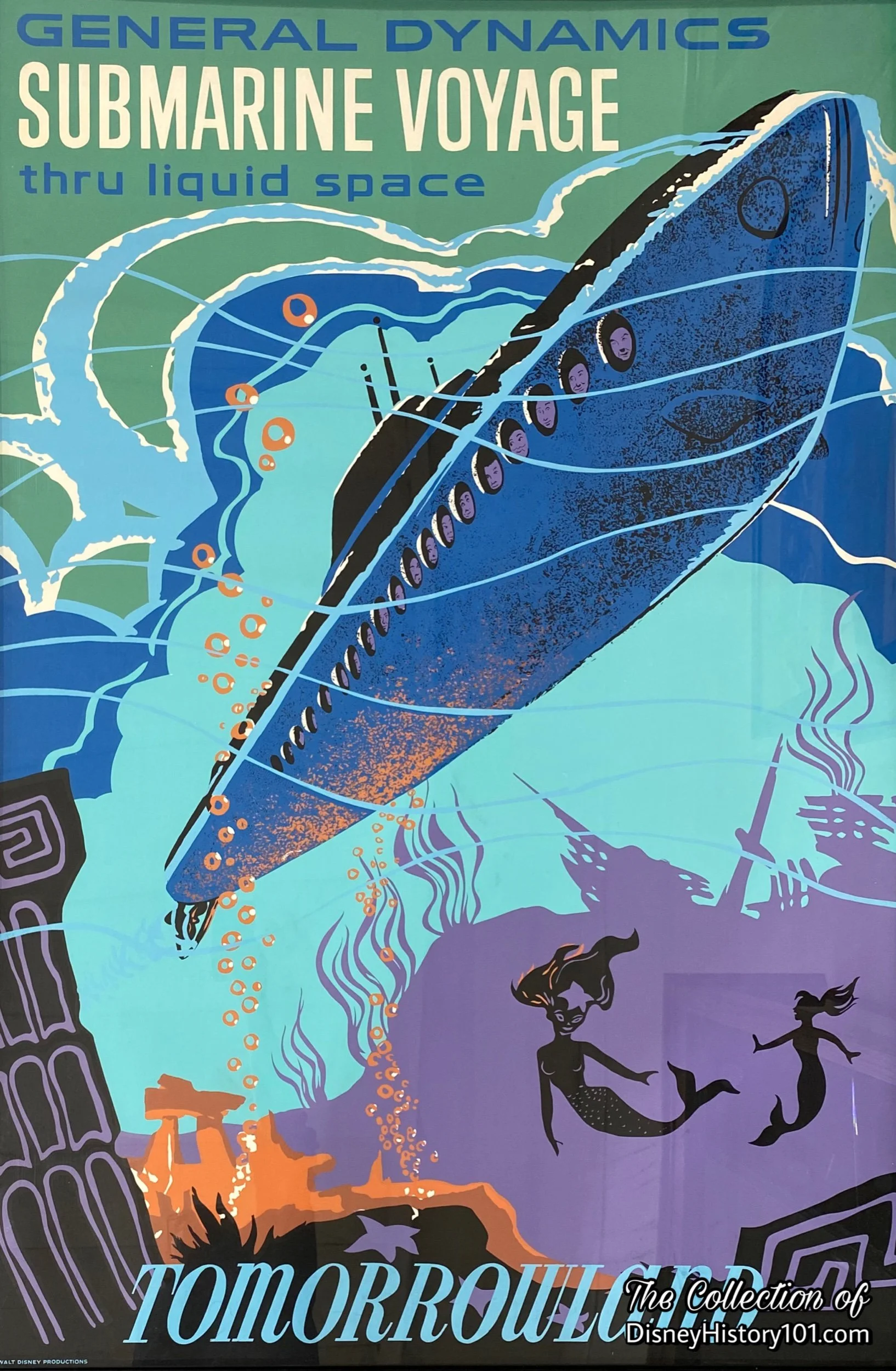
General Dynamics Submarine Voyage thru Liquid Space poster by Sam McKim.

(June 14, 1959* - Tuesday, September 8, 1998)
*Some sources cite a soft opening - June 6, 1959; The Official Dedication by Walt Disney and U.S. Navy officials taking place in June 14, 1959.
One can easily slip into the jargon of “ride,” but at Disneyland there are adventures, each one a living experience for the guest. This is because adventures have stories. Disneyland ride-through attractions or adventures have officially been defined as an “individual show, ride, or exhibit designed to produce an entertaining Guest experience. Disney attractions stir the imagination, enliven the senses, and provide the participants with positive, innovative entertainment, which is the essence of the DISNEYLAND Show.”
There is also a “story behind the story" of every adventurous attraction. It is important to review the story of the attraction, tell the story, explain it, and create interest. This is the story of Submarine Voyage Thru Liquid Space.
“Blue Sky for Submarine Voyages”
At least one “Bird’s Eye View of Fantasyland” designed by WED Enterprises for Disneyland, Inc. included a “Nemo’s Sub” attraction next to the Pirate Ship in Fantasyland. Despite this concept, a “20,000 Leagues” exhibit would be displayed in Tomorrowland. “I had been the art director on 20,000 Leagues Under the Sea… We were originally talking about a submarine ride, but we decided to wait until we could build it out of income instead of advance cash. We realized that we would have to have absolutely clear water to see anything, so we would need a great filtration plant. That would have to come later,” according to Harper Goff (in a April 24, 1979 interview with Don Peri ; “Working With Walt - Interviews With Disney Artists”).
Disneyland opened for its first day of operation on July 18th, 1955. However, on the eve of Disneyland’s first day of operation, Walt Disney promised that “Disneyland will never be completed. It will continue to grow, to add new things, as long as there is imagination left in the world.”
“An Influential True-Life Adventure”
By the Fall of 1955, Veteran film reporters Lloyd Beebe and Elmo Jones accompanied Navy photographers to Antarctica, where they photographed all phases of Operation Deepfreeze for Walt Disney. Progress reports on Operation Deepfreeze, the United States’ most ambitious Antarctic expedition, were to be shown over Disney’s television outlets. Disney planned to produce a full-length motion picture on the subject in CinemaScope and Technicolor. A year after Disneyland opened for operation, “Antarctica - Past and Present” aired on Walt Disney’s Disneyland television show on ABC, August 15, 1956! The program starred Captain Charles W. Thomas, USCG and Rear Admiral George Dufek, USN (“commander of Navy Task Force 43, the United States Exploration Unit in the South Pole where a Disney photography team secured program material”). It is perhaps this United States Naval connection, that allowed for the use of the U.S.S. Redfish Naval submarine in filming a scene featured in 20,000 Leagues Under the Sea. Later, there was the Nautilus, which “had just made its historic voyage under the North Pole.” [“Walt Disney Disneyland,” page 49, printed by Officine Grafiche Arnoldo Mondadori - Verona; first published 1964] This story element would soon “find its way into the Disneyland adventure.”
“The Search for Participant Sponsorship”
Meanwhile, Disneyland Participant Corporate Sponsors were carefully selected. as high quality, long term corporate sponsors would provide the incremental income that enabled enhancement of the show and attractions, offset some operating expenses, and capitalize on marketing opportunities.
Employees C.V. Wood, Jr. and Van Arsdale France were both familiar with General Dynamics (an aerospace and defense company), having worked there years before coming to Disneyland, Inc. In fact, Van France was an educational consultant to General Dynamics and the U.S. Army in Europe.
The Submarine Voyage Through Liquid Space would be presented by General Dynamics.
(Pictured Above : The 18-foot-long sign that hung over the entrance of the queue, c. 1980 - 1990)
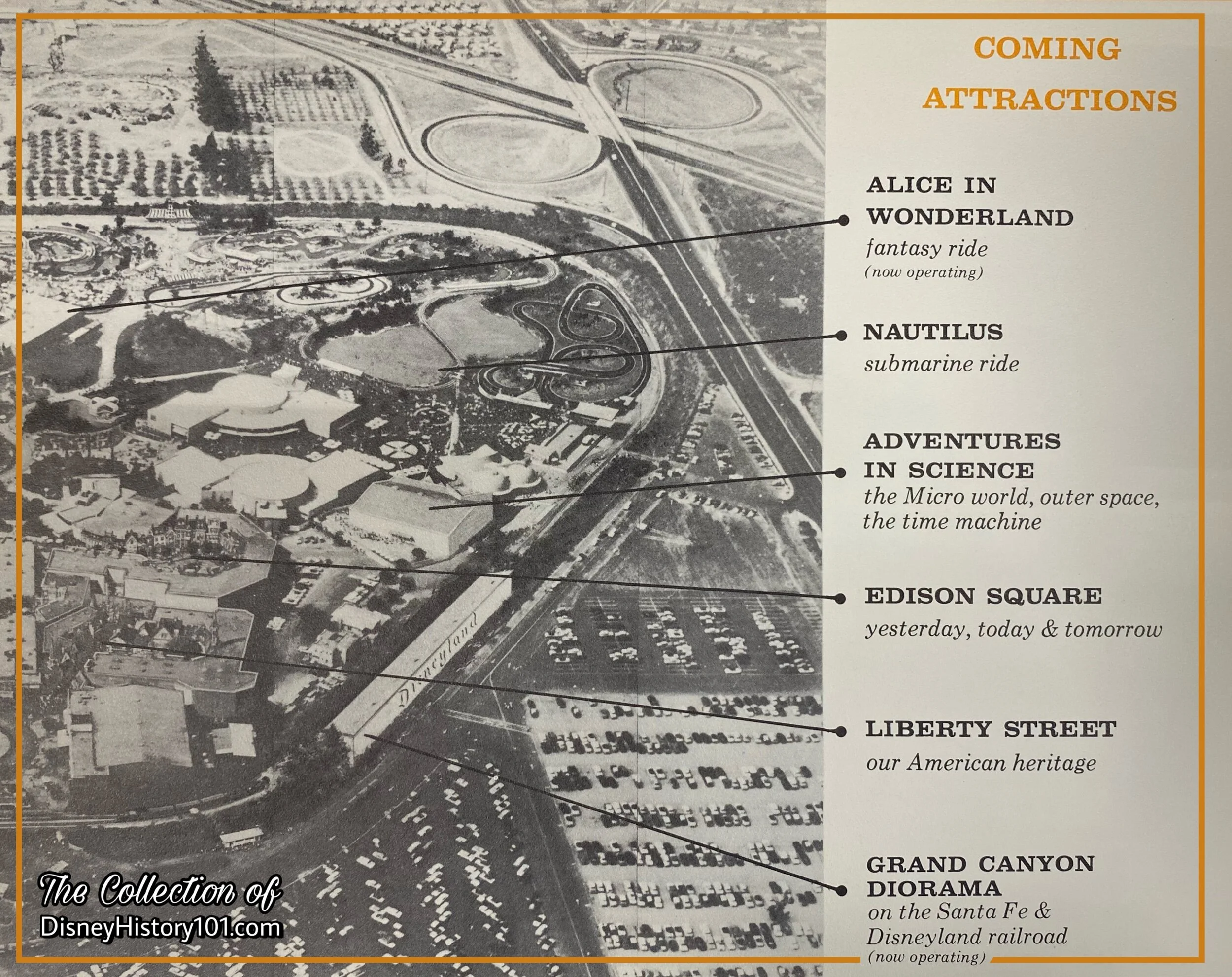
“Disneyland U.S.A.” Excerpt (Published 1958)
“Teasers and Early Announcements”
Soon, the TWA publication “Let’s Talk About My Visit To Disneyland Anaheim California: A Note From Mary Gordon TWA Travel Advisor” divulged new adventures heading to Disneyland. This publication was printed in 1957, several years ahead of the attractions’ grand openings. The publication stated: “Other coming attractions include: The Nautilus-Submarine Ride, Adventures in Science, Alice in Wonderland, Adventure Ride, Liberty Street (our American Heritage), a Full-Rigged, Three-Masted Sailing Ship, Thieves Market, New Orleans Square, and a Haunted House.” A contemporaneous “Walt Disney’s Guide to Disneyland” published its “Dreaming” section on page 26, teasing an “Undersea Voyage” with a sole image of a submarine encountering a sunken city. The same section added that “actual dates of their installation cannot be promised.”
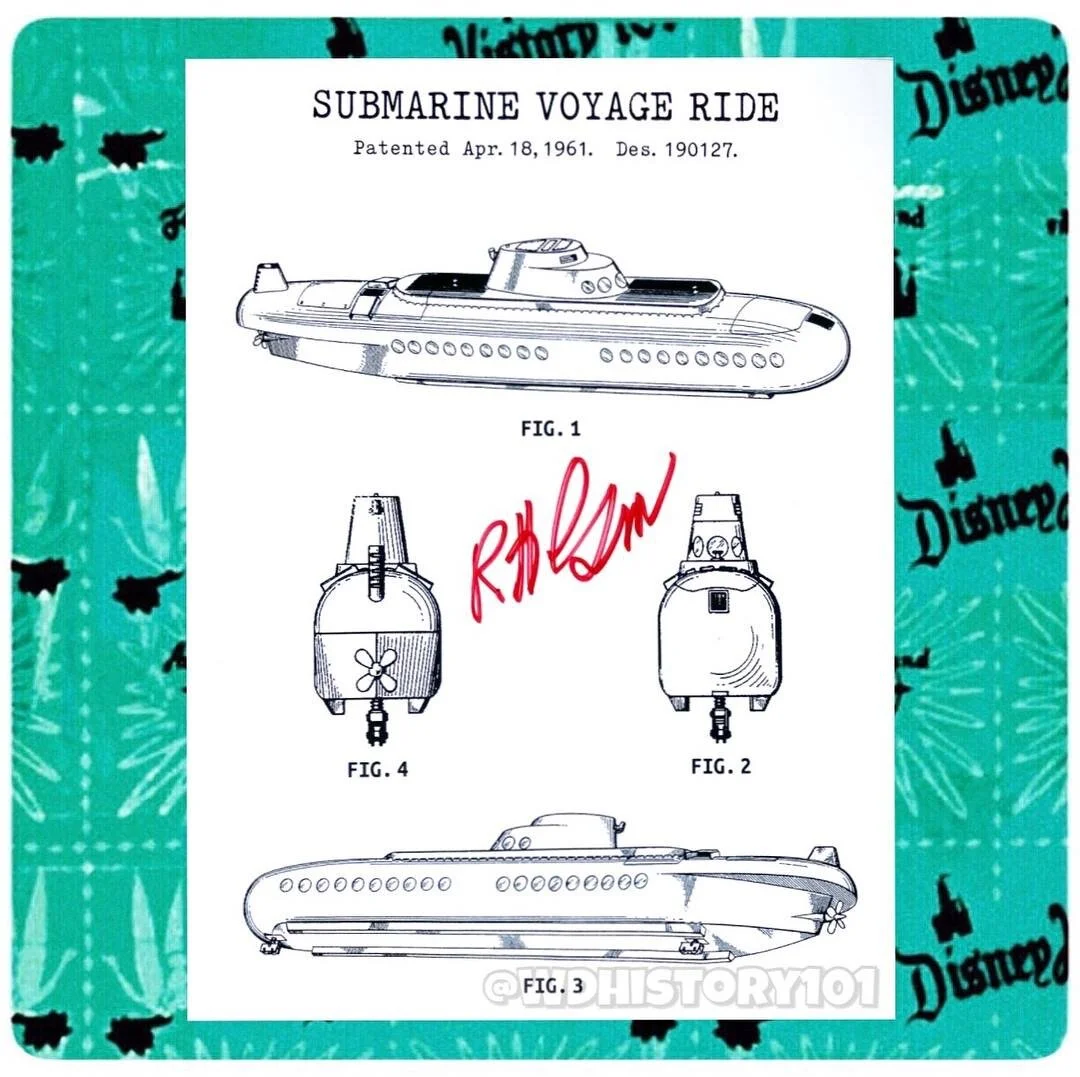
"Submarine Voyage Ride" Vehicle Patent Figures Facsimile Autographed by Bob Gurr
“Secure ship for sea. Make all preparations for getting under way...All hands to stations.”
Originally conceived as a “glass-bottom boat ride,” Walt responded with ‘No…Let’s give them a real submarine ride. We’ll take them down in the water and let them look out of portholes. Give ‘em a real show,’” according to Disneyland LINE magazine. As development was underway, the United States Navy expressed interest in sponsoring Walt’s future underwater project. However, Walt Disney declined and commissioned the related General Dynamics Corporation (an old firm that designed and built the first nuclear powered submarine, the Nautilus) to both provide technical data and design a fleet of submarines in 1958. Todd Shipyards (of San Pedro, California) soon got to work building eight hulls, for what would become the world’s largest fleet of peacetime submarines in the world. Then, the technicians of the Disneyland Naval Shipyards (under the direction of Admiral Joe Fowler), completed work on the 47-ton, 52-foot-long (from nose to stern) vessels [though some sources state a length of 56 feet in length], meeting the artistic vision (in consultation with General Dynamics). Each air-conditioned submarine boat was capable traveling about 1.7-1.8 miles per hour (while holding 40 Guests and displacing 47 tons), all with the help of a silent four-cylinder Cummins diesel-electric engine (depicted in a photograph on Page 6 of the “Disneylander” of March, 1959). These guests view the “wonders of the deep” through 38 12-inch porthole windows.
Work also began (in Tomorrowland), to fashion a brand new American Bridge Steel and concrete lagoon (or, “inland sea”) to hold this fleet! A cascading waterfall was likely partially owing to civil and electrical engineer Jacob Samuel Hamel (who was previously referred by General Electric representatives to be a Disneyland consultant during the initial construction) and specified the type of electric pumps needed to keep Schweitzer Falls cascading.
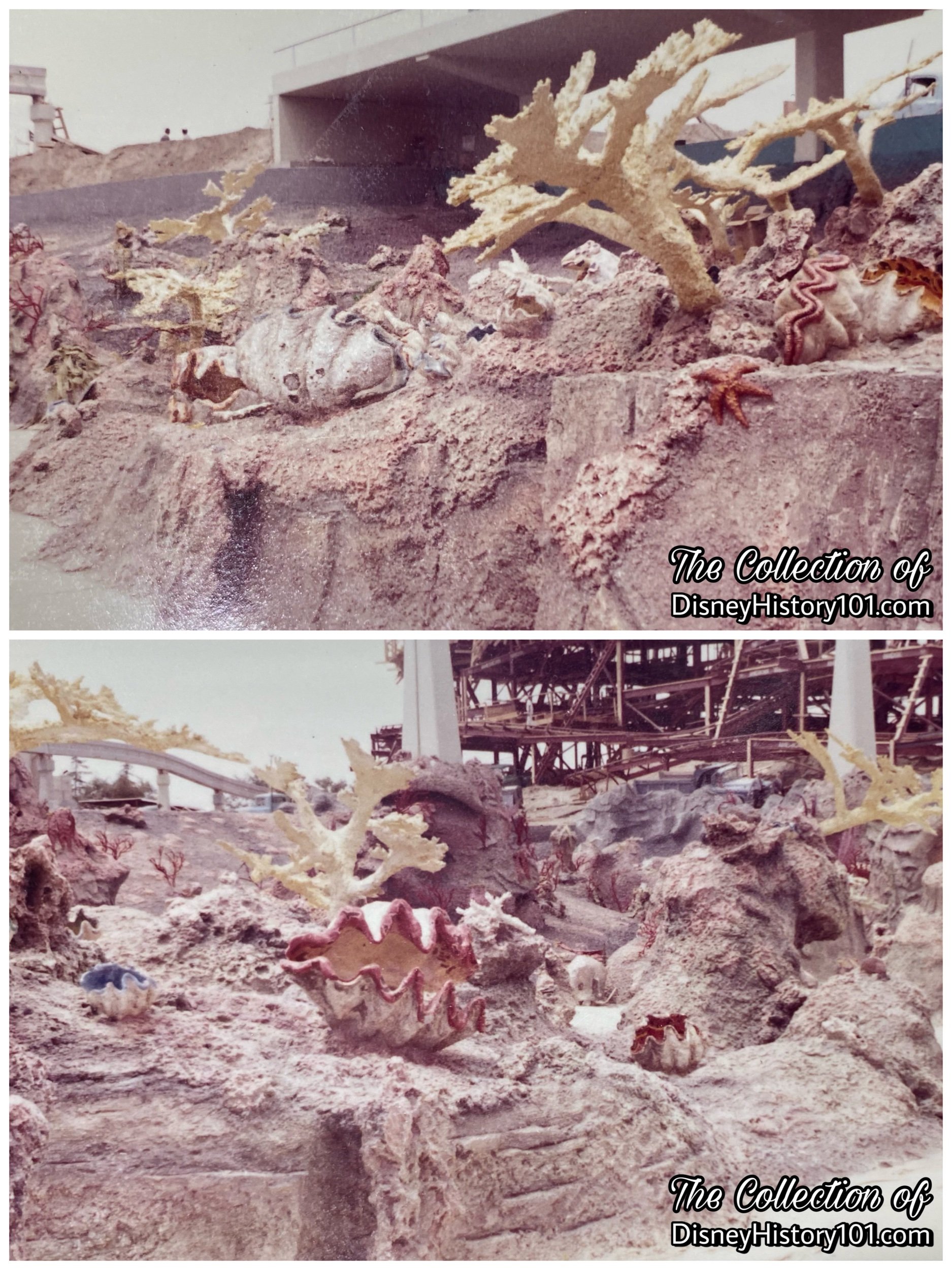
“There were many puzzling aspects of construction. The answers were found only by building a special tank at the Disney Studio and experimenting with the use of black light underwater, paints that would retain their color under highly chlorinated conditions (which are necessary for clear viewing), and the mechanical equipment operating huge manta rays, lobsters, sharks, a giant sea serpent and dozens of other exotic sea creatures. And there were less obvious details to be worked out. Thousands and thousands of barnacles were fastened to decaying Venetian galleys and Viking ships in the Graveyard of Sunken Ships. Hundreds of pieces of ‘authentic’ coral were built of plaster when a shipment of the real thing failed to arrive on time. Typically, antique shops were searched for much of the treasure cache of urns, jewels and trinkets spilled at the bottom of the sea,” according to “Walt Disney Disneyland,” pages 49 & 50, printed by Officine Grafiche Arnoldo Mondadori - Verona; first published 1964.
According to Disneylander (March, 1959), the creatures first materialized on the drawing boards of Art Directors Bill Martin and Claude Coates. The Submarine Ride Plan Layout was completed by Sydney Louis Lev. by November 1958. Artists Claude Coats, Nick Rendich, and Bill Washo worked on the fabrication of some creatures like the giant squid.
Bob Sewell contributed to the creatures in these vignettes of the Submarine Voyage. The Decorating Department would populate the underwater stage with approximately 10,000 artificial plants, 539 static figures, and 126 animated figures (including 16 mermaids, 2 giant squid, and 2 sea serpents). The final destination was “the legendary Lost Continent of Atlantis, where sunken treasure and huge statues are covered with 24 carat gold sparkle, and are guarded by a huge octopus,” according to Dodge magazine (May of 1960). As a sidelight, the Treasure Chests in the lagoon were originally “cast from actual chests recovered from a sunken pirate ship,” and the aforementioned gold leaf “sparkle” of statues was far less expensive than “gold colors which must redone constantly,” according to Backstage Disneyland magazine (vol.4, No.4 ; December 1965). As to the latter, it was once written that “on a typical day at Disneyland, thousands of visitors pass within a few feet of 24 karat gold valued at more than $5,000. Yet the gold is in no danger of disappearing. It has its own built-in safeguard. It is under ten feet of water. The goal is on view of the Graveyard of Lost Ships and the Lost Continent of Atlantis - two features of the most expensive adventure ever constructed in the entire annals of outdoor entertainment.” [“Walt Disney Disneyland,” page 49, printed by Officine Grafiche Arnoldo Mondadori - Verona; first published 1964]
By 1969, the inventory list was maintained by the Disneyland Decorating Department and was perhaps the most unique manifest of items existing anywhere. It contained about 35,000 items of various sizes, shapes, and values like a treasure chest for the Submarine Adventure.
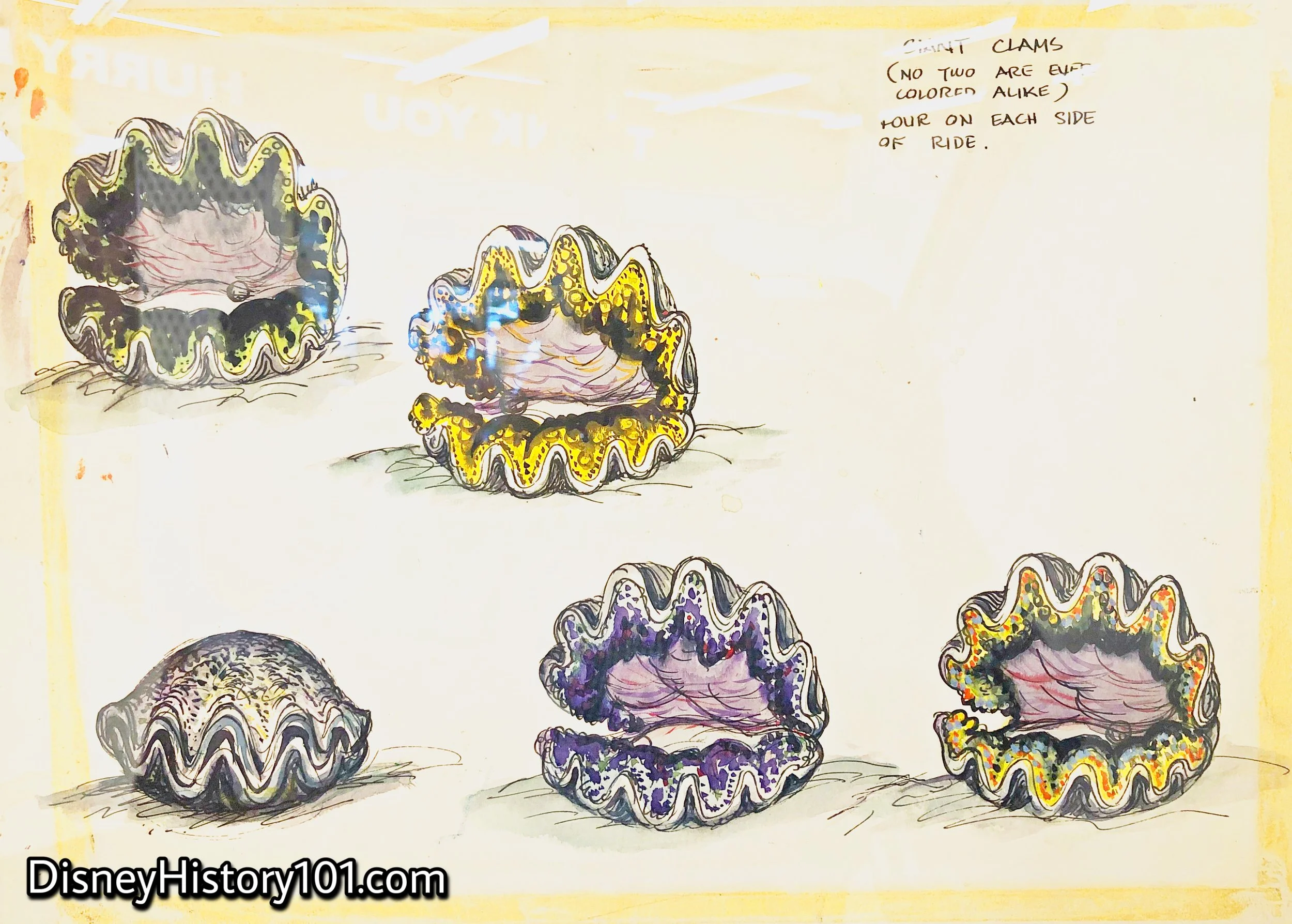
“Draw Concept” - A Giant Clam Concept Drawing, (c. 1959), Former Richard Kraft Collection
“Story Development”
Scenes were carefully programmed from the start through a series of storyboard sessions. Beginning with the basic theme of an attraction, WED imagineers first sketched individual ideas and then storyboards were created. These were boards on which illustrations, and sometimes written commentary outlining the story concept were pinned. The story was continuity developed, changing, shaping and reshaping the individual elements all the while. During this storyboard process, ideas were introduced, thrown out and then reintroduced again until everyone was satisfied that the story had been told in a way the audience would understand and enjoy.
Bob Sewell, researched deep sea life. Artists like Marc Davis and set designer Wilson “Bill” Martin (an art director who had left 20th Century Fox, to work on Walt Disney Productions’ Disneyland project) and Claude Coats made contributions to the design of the project. Soon, these giant clams (above) would emit air bubbles.
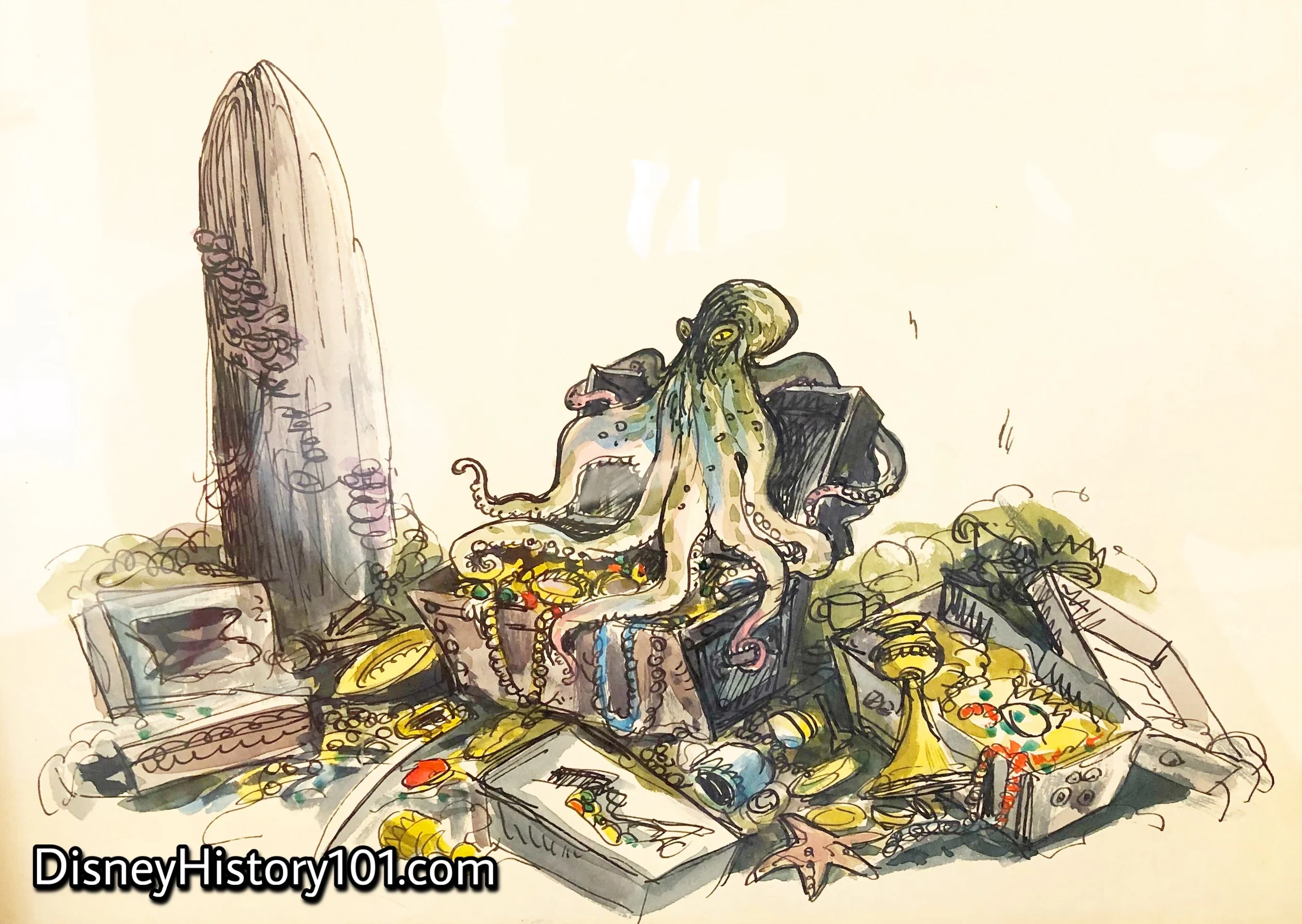
Submarine Voyage Octopus and “Sunken Treasure” Concept, (c. 1959), Former Richard Kraft Collection
Once complete, the partially submerged Diesel-electric vehicles were propelled around a man-made “coral lagoon,” filled with 9,000,000 US gallons of (filtered and “softened”) water, that featured various underwater scenes, including Davy Jones’ Locker (a veritable “Graveyard of Lost Ships”). The Submarine Lagoon was once (c. 1961) one of two independent circulating filtered water systems at Disneyland (the Matterhorn mountain was the other one). The waters of the Submarine Lagoon needed to be kept crystal clear, so that guests may view undersea plants and other aquatic life. This was accomplished “with a giant six-tank sand filter…[and an additional] fully automatic vacuum diatomite filter designed by L*A Water Conditioning, Inc., and one of the first ever built and used in this country. The filter is controlled by Clayton Automatic Valves and Liqui-Dial Controllers, manufactured by Claval Co. of Newport Beach, California, and which have been used to help solve many other of Leo’s critical problems of hydraulic control”, according to one ServiSoft Exchange periodical.
All of these elements contributed to total Park investments reaching $30,900,000! To support this massive expansion, Disneyland, Inc. required a loan through Bank of America. By September of 1958, a Park-wide appraisal was conducted of all cash, accounts receivable, employee benefits, liabilities, deposits, advances, stockholder’s equity, Park assets (including land, adjoining properties, service areas, and utilities), and even those aforementioned jobs in progress.
The elements of this hand-painted and hand-inked drawing were produced (c. 1959), before perhaps being incorporated into several different show scenes.
•Getting Under Way
•Diving and Lagoon
•Graveyard of Lost Ships
•North Pole
•Bottom of the Sea
•Mermaid
•Lost Continent of Atlantis
•Volcano
•Sea Serpent
The Graveyard of Lost Ships would be realized as a final resting place for Venetian, Greek, and Viking sailing vessels in addition to their cargo, while the Lost Continent of Atlantis would be realized with rumbled, barnacle-covered columns and golden statues.
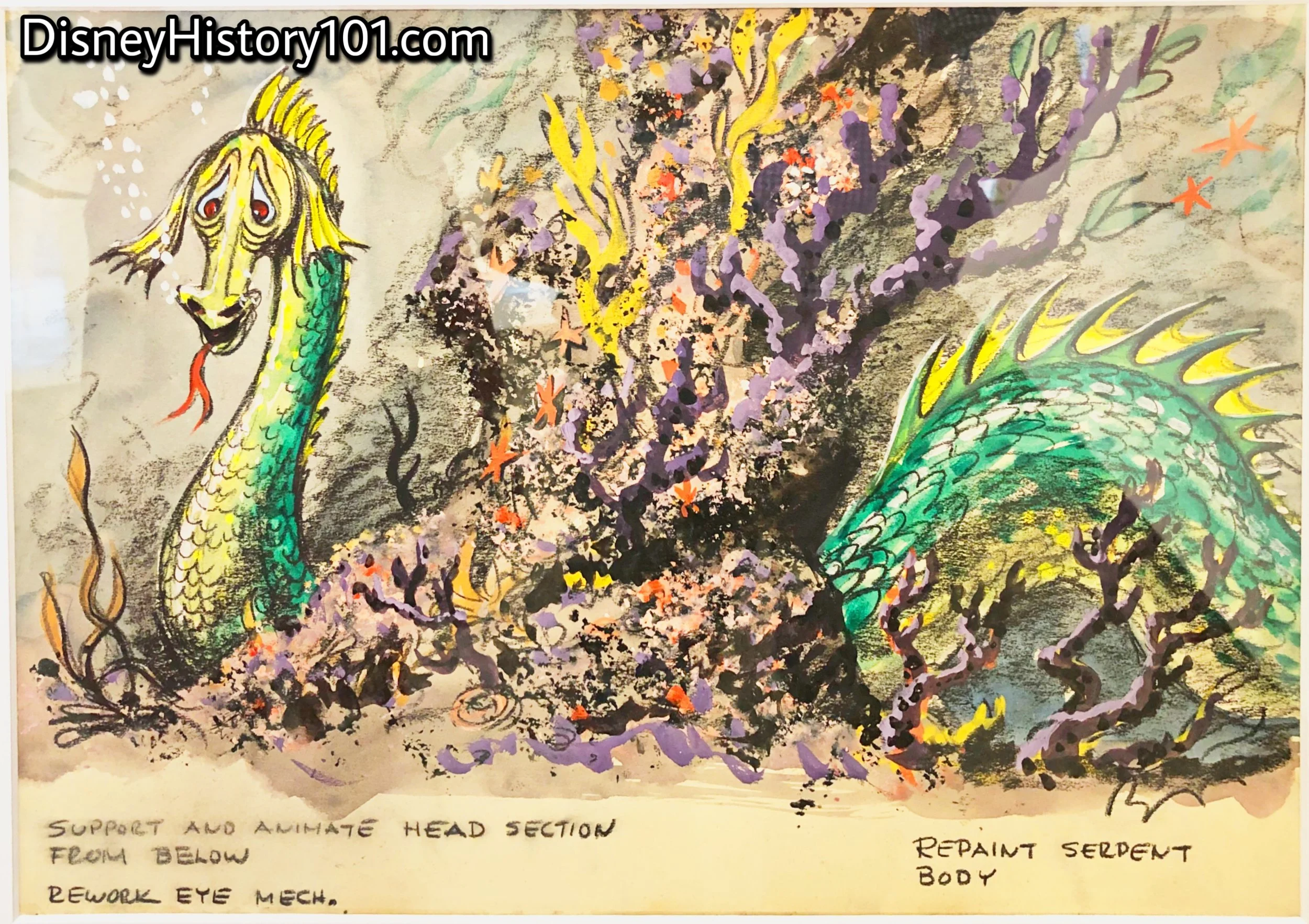
"Submarine Voyage" Animatronic Sea Serpent
By September 28, 1958, Disneyland Inc. had opened jobs for the Submarine Ride (4063/4064), including design and testing (4063-092) at $108,508, mock-up (4064-528) at $108, and even a Sea Serpent (4064-52) at $111.

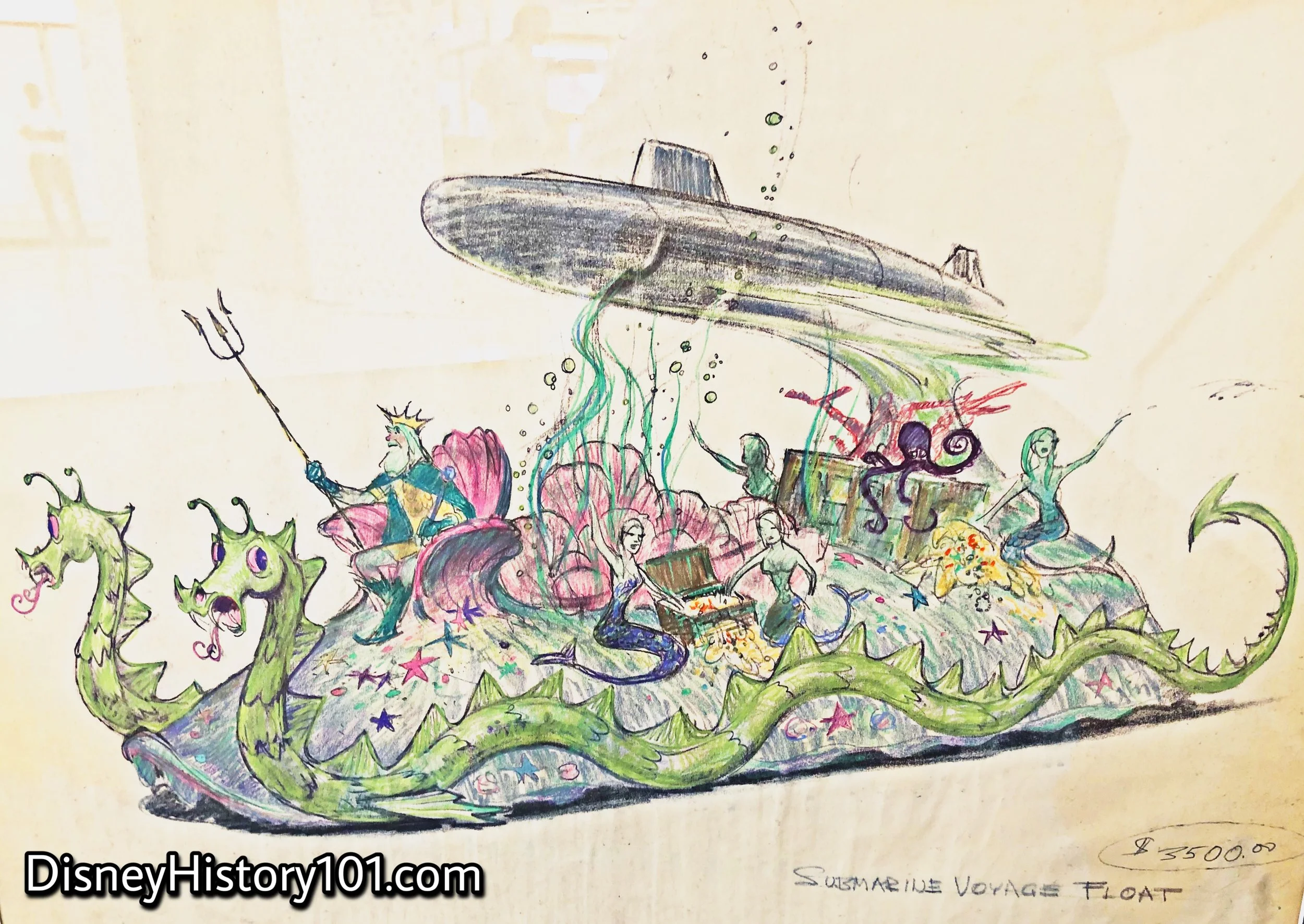
"Submarine Voyage" Disneyland Float Design, (1959)
The opening day featured a parade highlighting Tomorrowland’s newest attractions showcased in a procession of moving floats with costumed performers. According to Van Eaton Galleries Curators : “An original hand-colored concept brownline for a float design featuring the ‘Submarine Voyage’ attraction. This float design was created for the 1959 ‘Grand Re-Opening’ of Disneyland which debuted such attractions as the "Matterhorn", ‘Submarine Voyage’ and ‘Monorail’.”
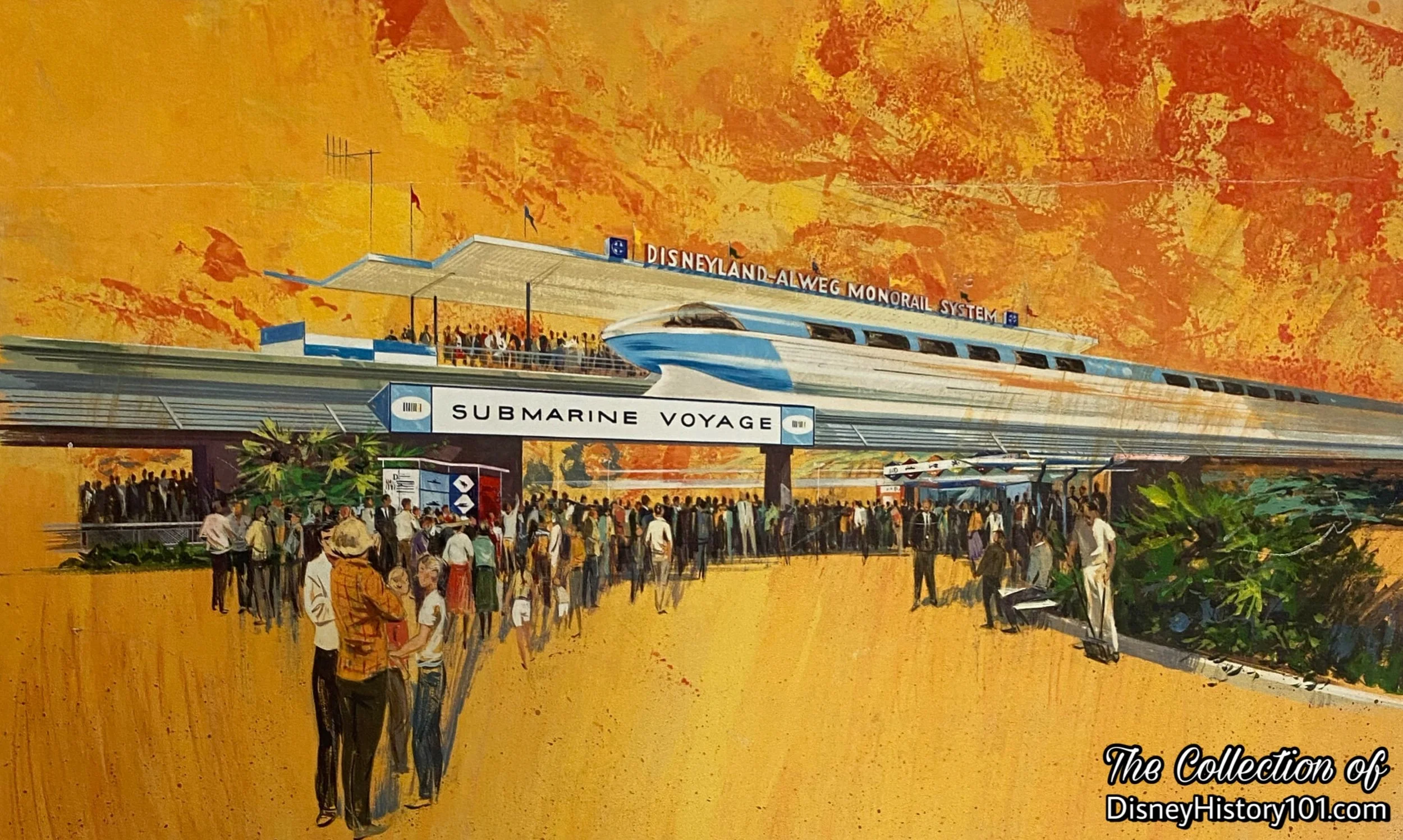
Some of these viable project Concepts (as seen above), were supported by a well-developed business case and built expectation.
Disneyland “queue lines” were designed as part of the attraction to make the Guests' time in line as comfortable as possible.
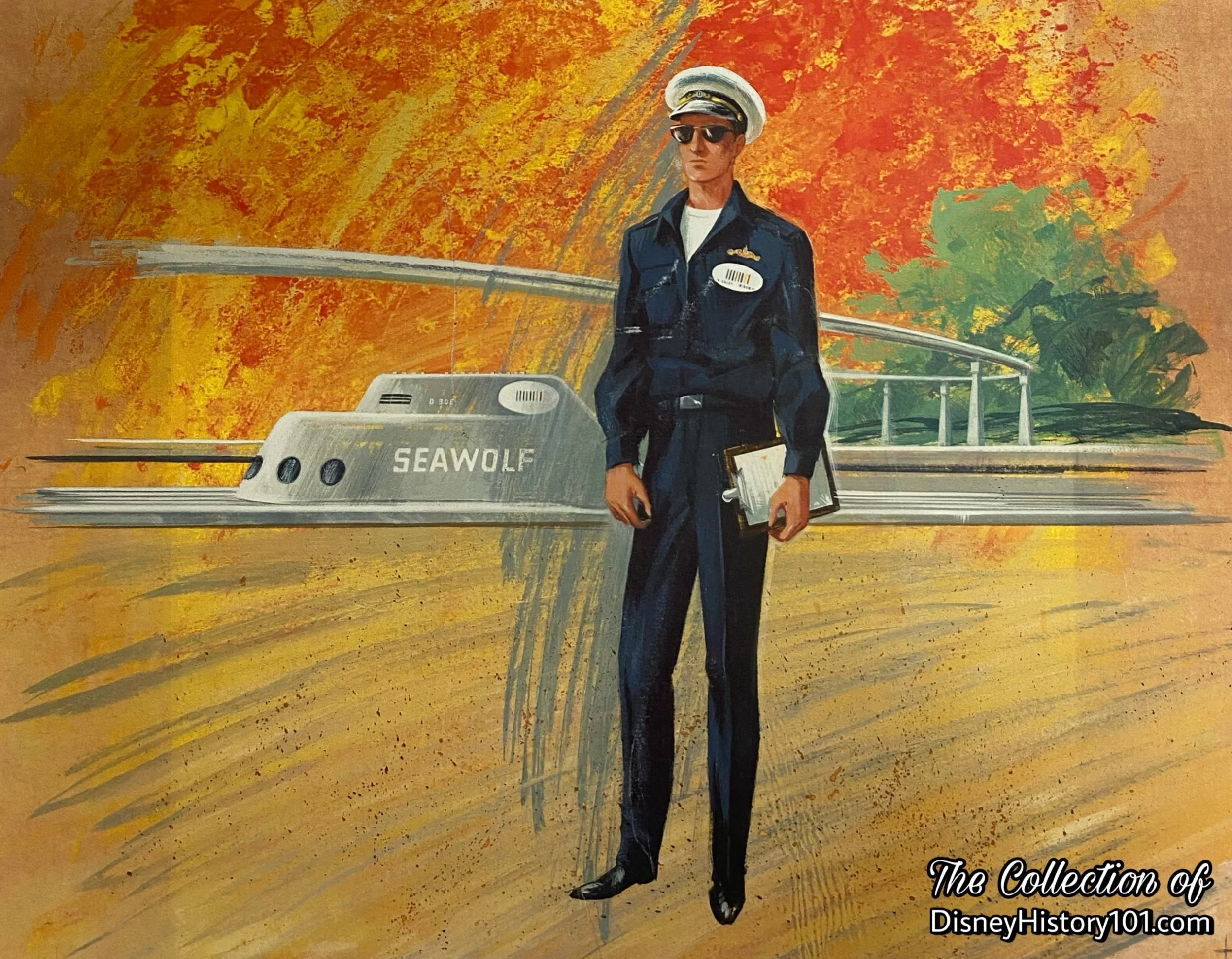
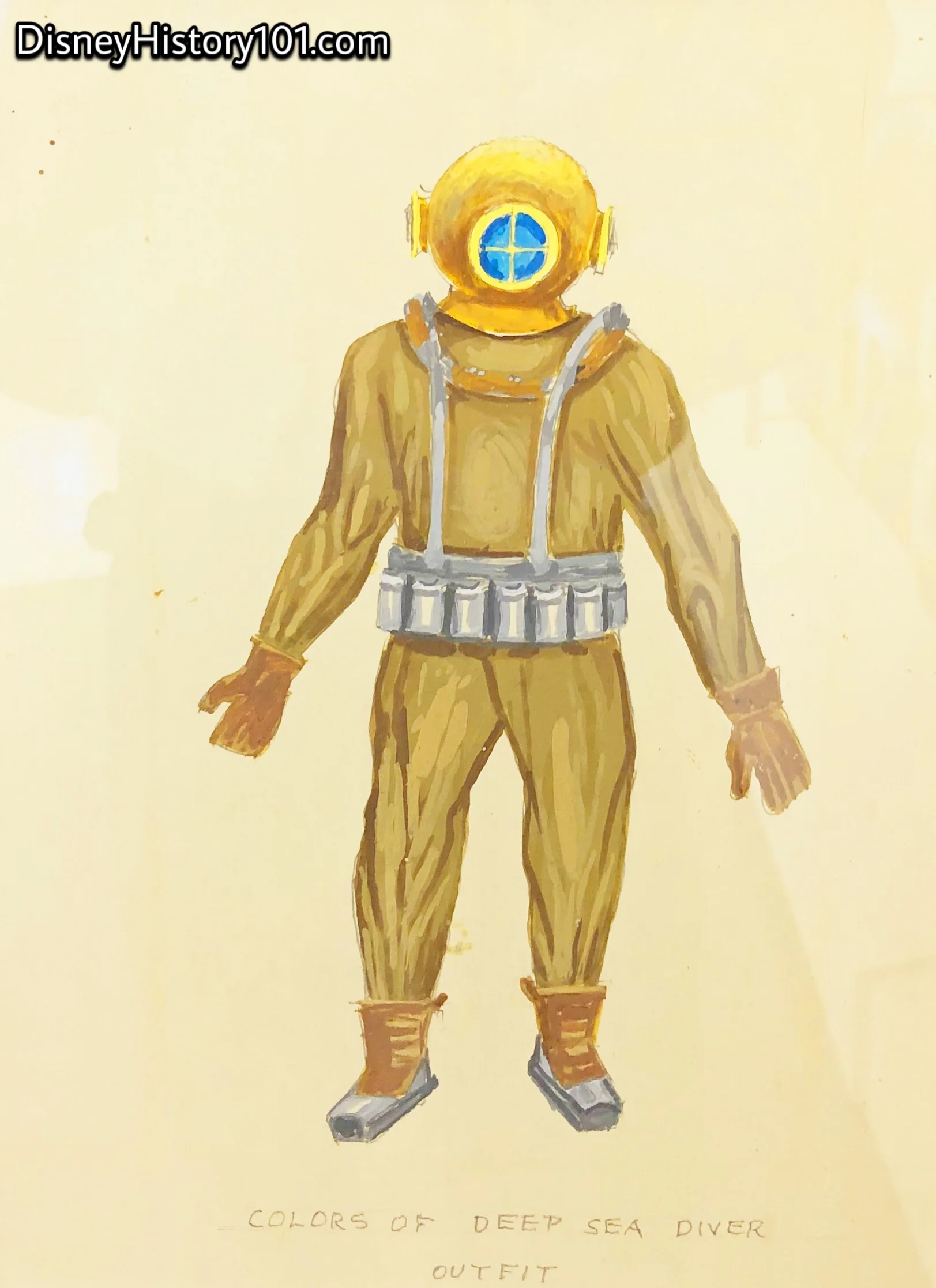
Attractions Host Wardrobe concept.
John Hench was wardrobe consultant for all of Disneyland's attractions.
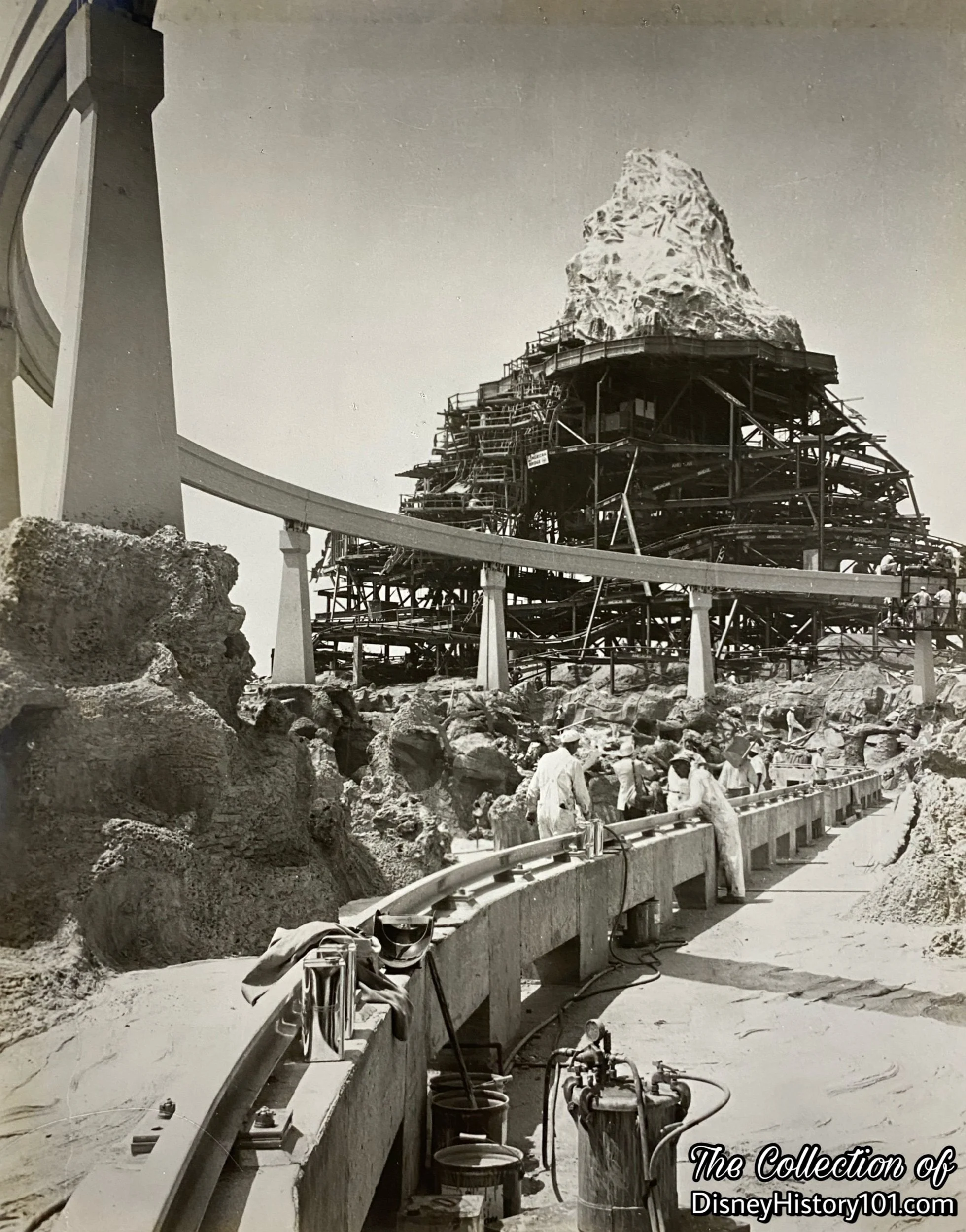
Front Lagoon under construction.
The earth moving machines of the JAMES L. BARNES Construction Company had completed the digging, moving and shaping of the new lake bed.
Soon, 1,365 feet of track was laid which would provide about 8 minutes and 15 seconds of showtime (once the boats got underway at about 1.8 miles an hour).
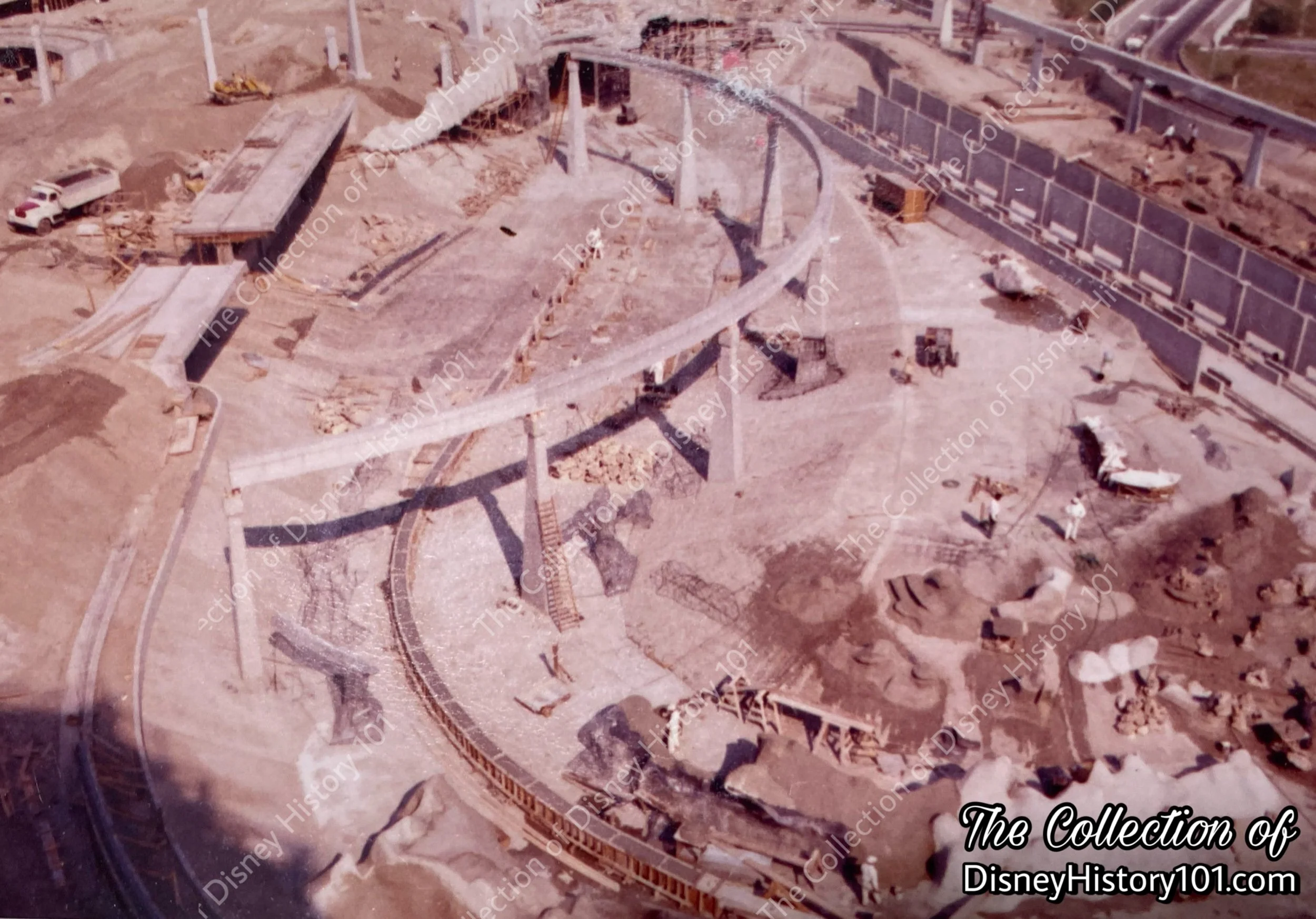
The Dock and Front Lagoon under construction.
Metallic frames were rust-proofed by individuals like Girdwood Averill.
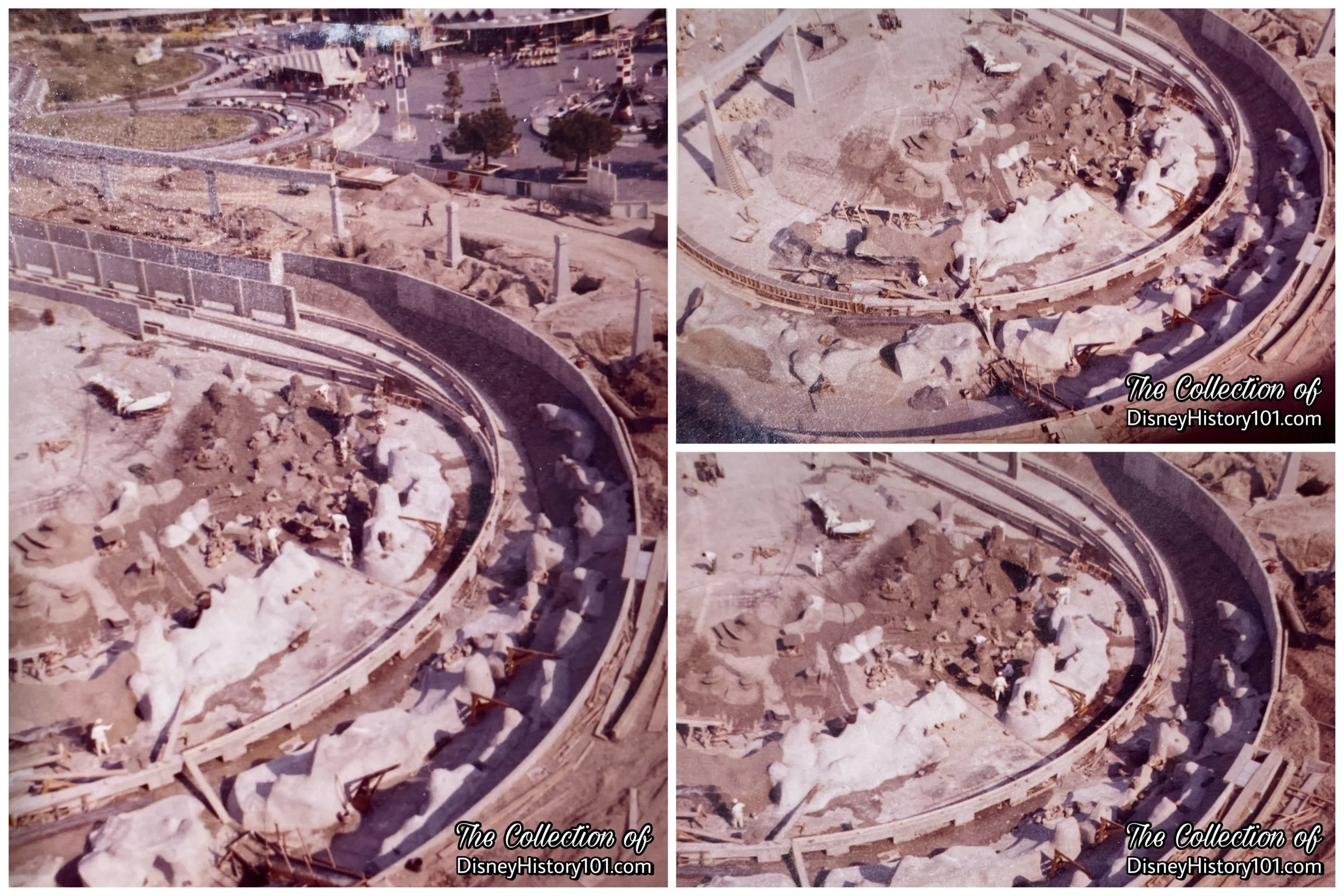
Front Lagoon under construction.
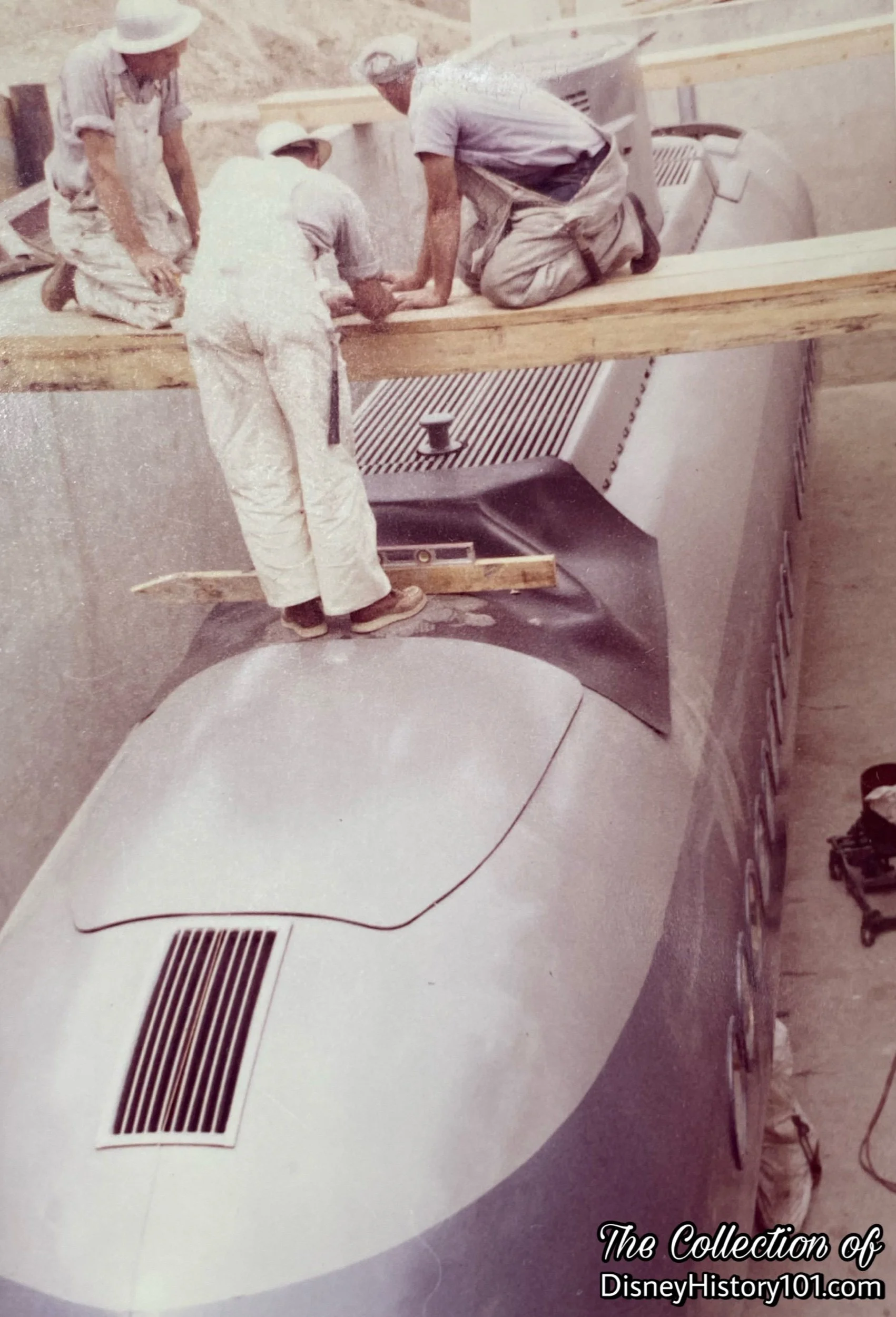
Submarine Boat under construction.
Each of the submarines in Disneyland's Navy, world's eighth largest undersea fleet, was 56 feet long.
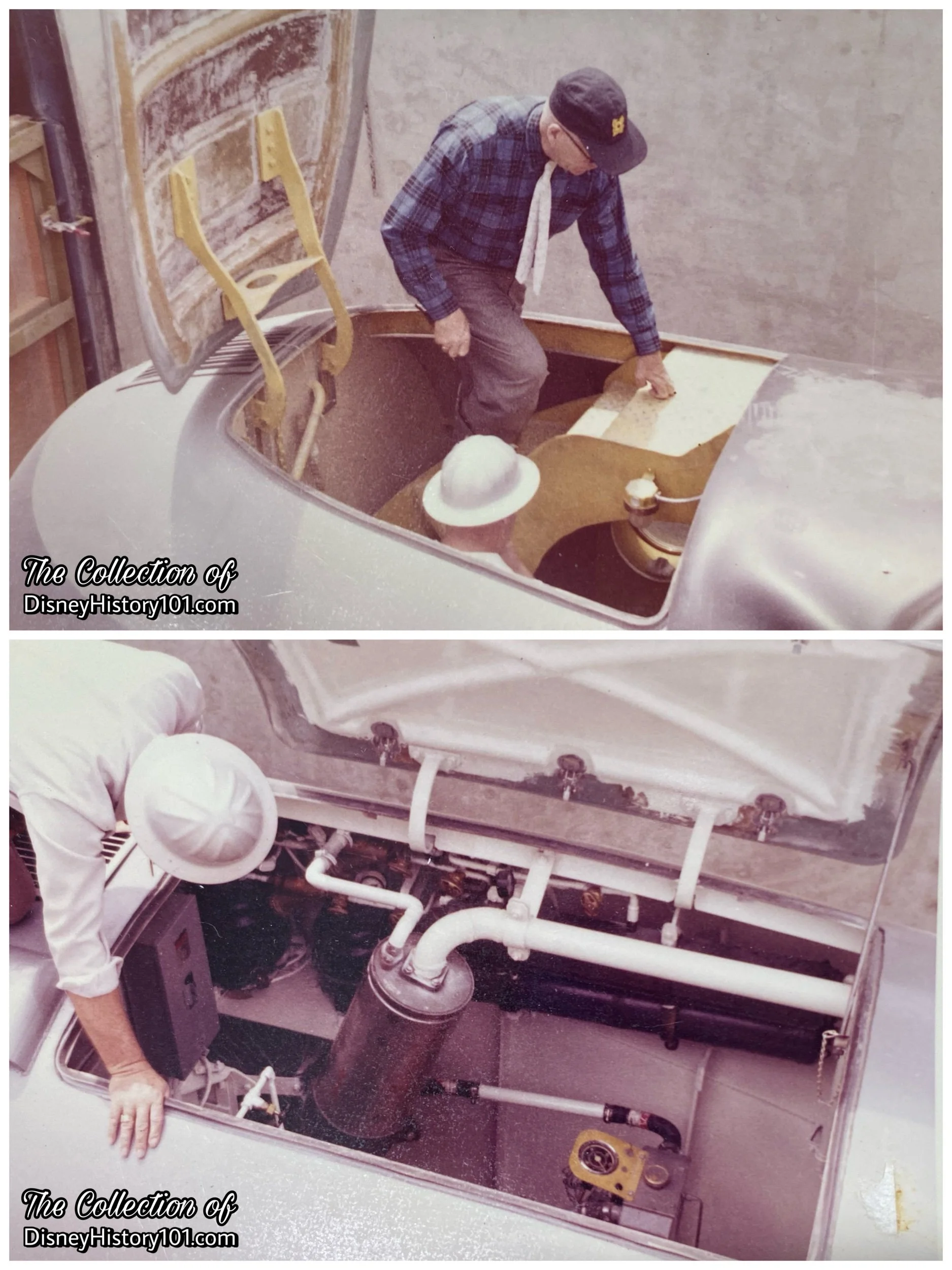
Submarine Boat under construction.
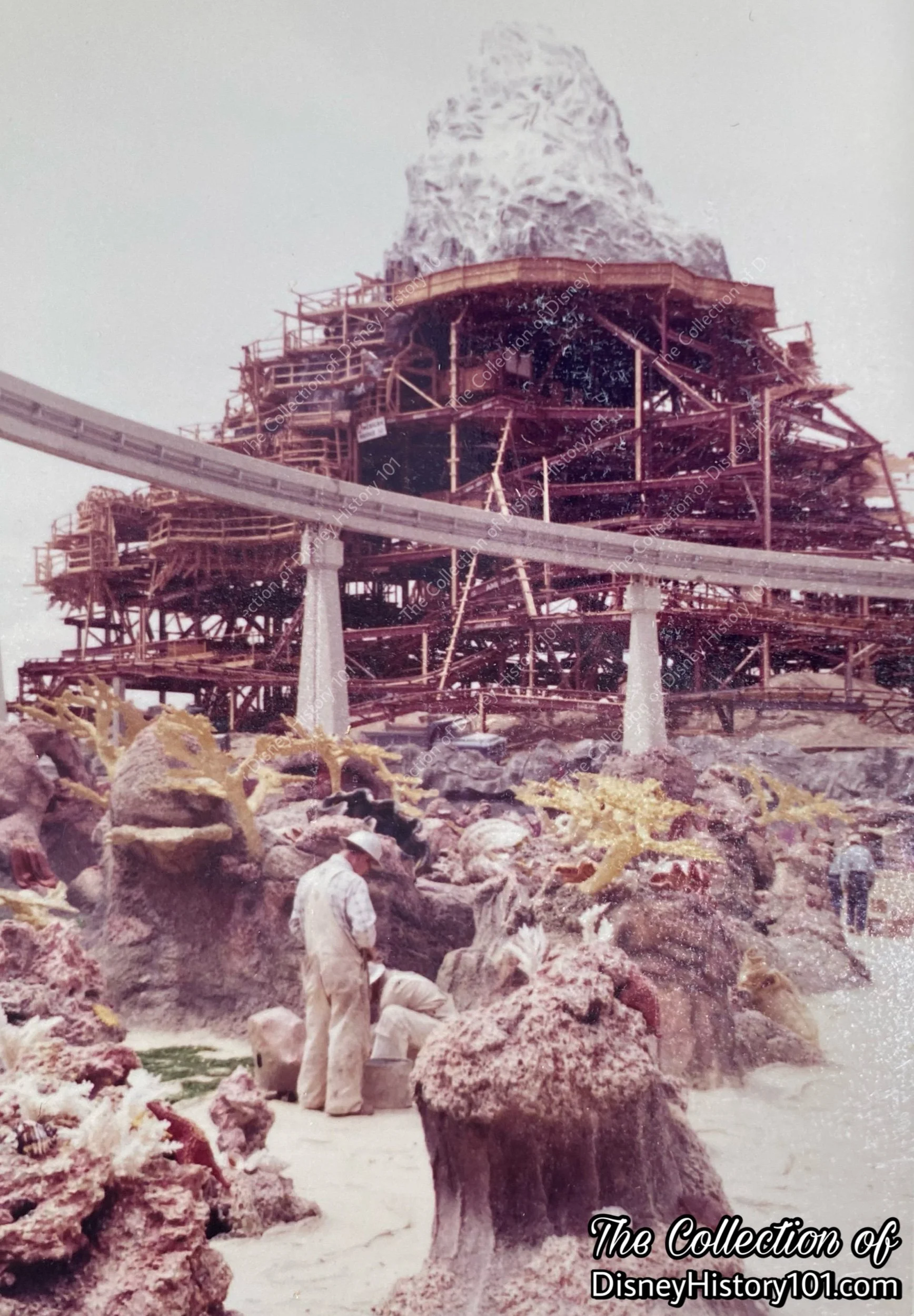
Front Lagoon under construction.
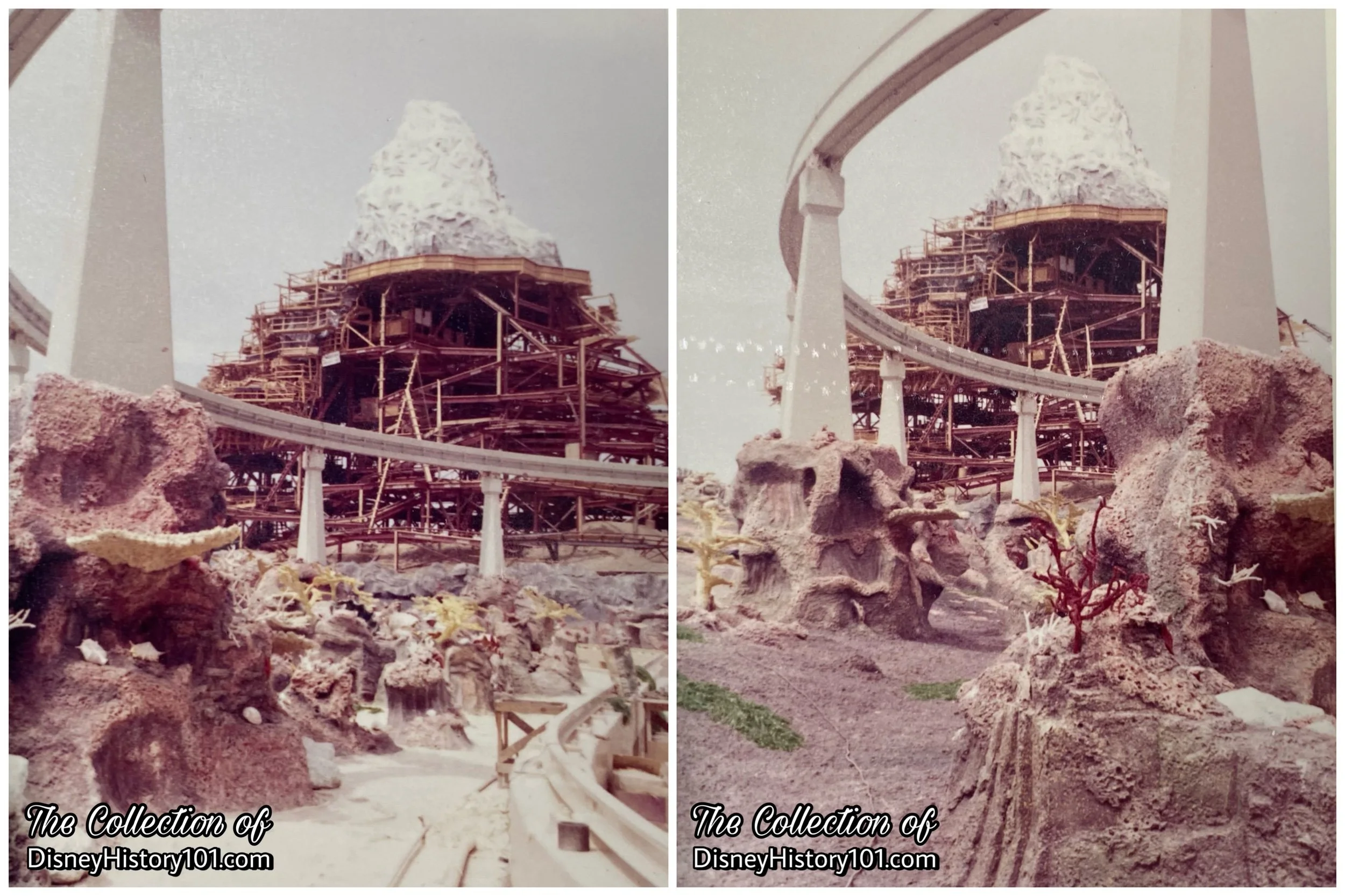
Front Lagoon under construction.
Front Lagoon under construction.
According to the Disneylander, set designer Emile Kuri “spent many hours of research and study to procure just the right kind of shells and coral for the ocean depths of the ride.”
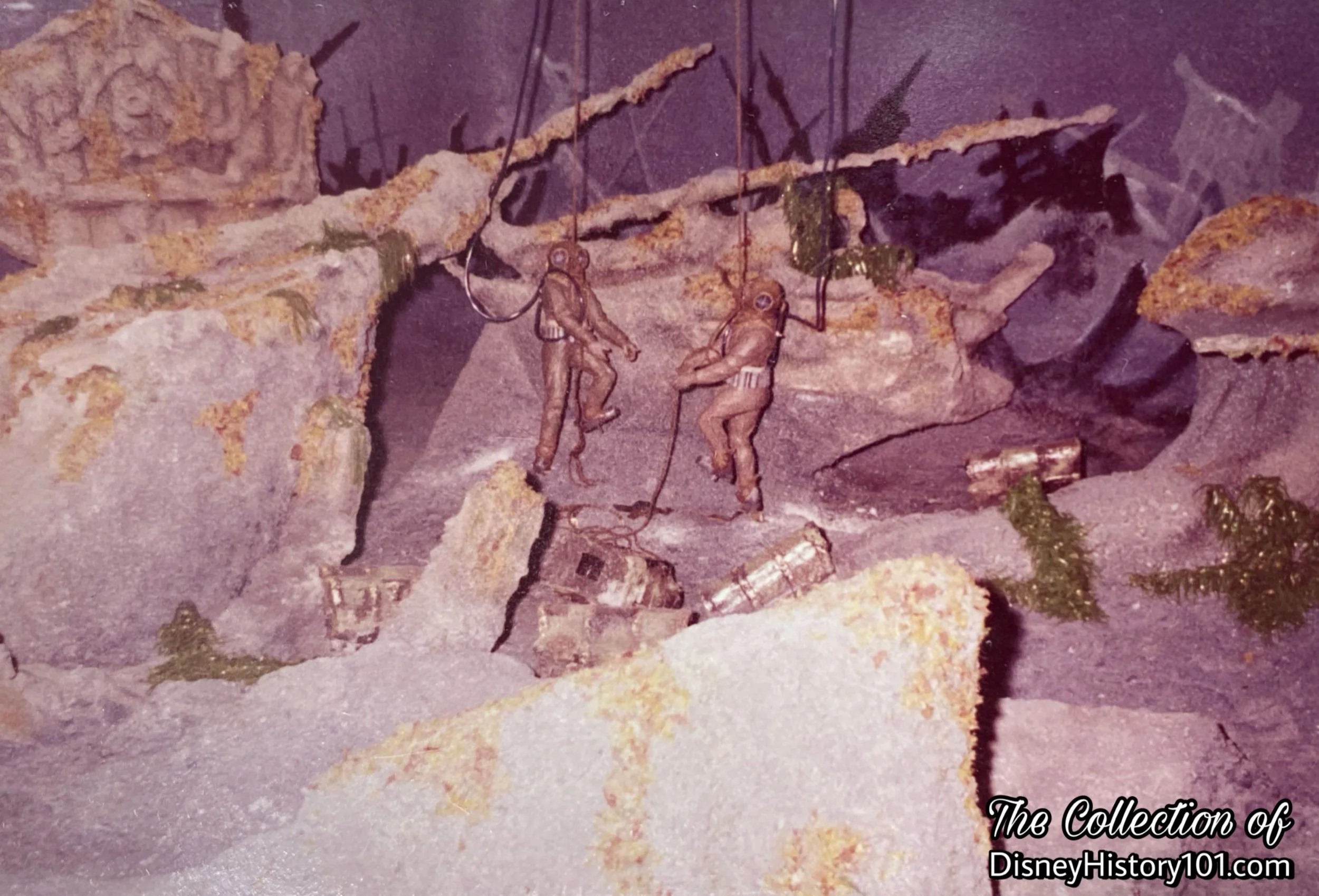
Graveyard of Lost Ships under construction.
“Deep Sea Cavern”
According to “Big Jobs Need… Big Machines and Men” published in “The Disneylander” (March 1959): The construction men were ready to build the cavern building for the Submarine ride. But they had already dug down deep in sandy soil, and had to build a firm foundation for the building, by installing some good sturdy footers. The building was to be flooded to a depth of 10 feet, and water pressure would bring about a great deal of stress on a structure. Caisson boring machines were brought in to dig the holes for the supports. Because of the sand strata, the workers had to go down to a depth of 32 feet in order to get solid ground into which concrete could be poured to form the supporting caissons. the machines proved inadequate. They just could not bore to that depth. A man was lowered with a shovel and bucket into this 3 foot wide opening and completed the operation by hand.
Steel workers, carpenters and laborers followed and the walls of the building began to take shape. Disneylanders watching this operation with avid interest are seeing something that will never be seen again. The guest who enjoys the Submarine Voyage will only see the interior sets, and passengers on the Monorail and the Autopias will ride over the building unsuspecting that the beautifully landscaped freeways, lakes and terrain, camouflage a ‘deep-sea’ by cavern.
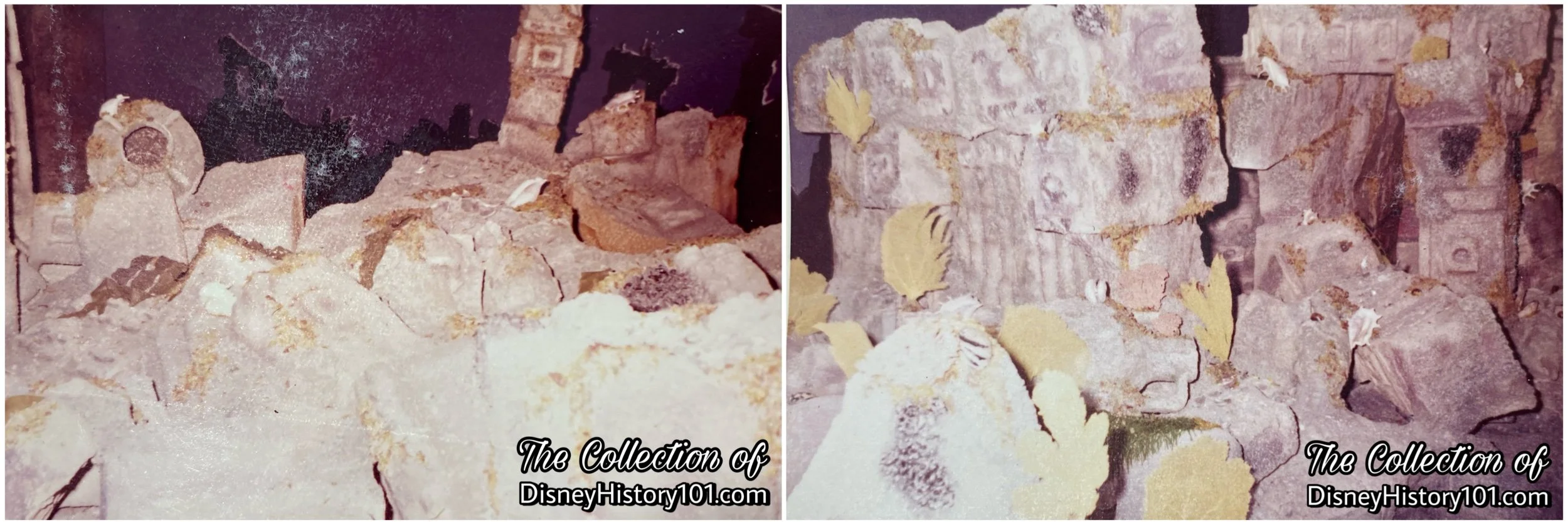
Lost Continent of Atlantis under construction.
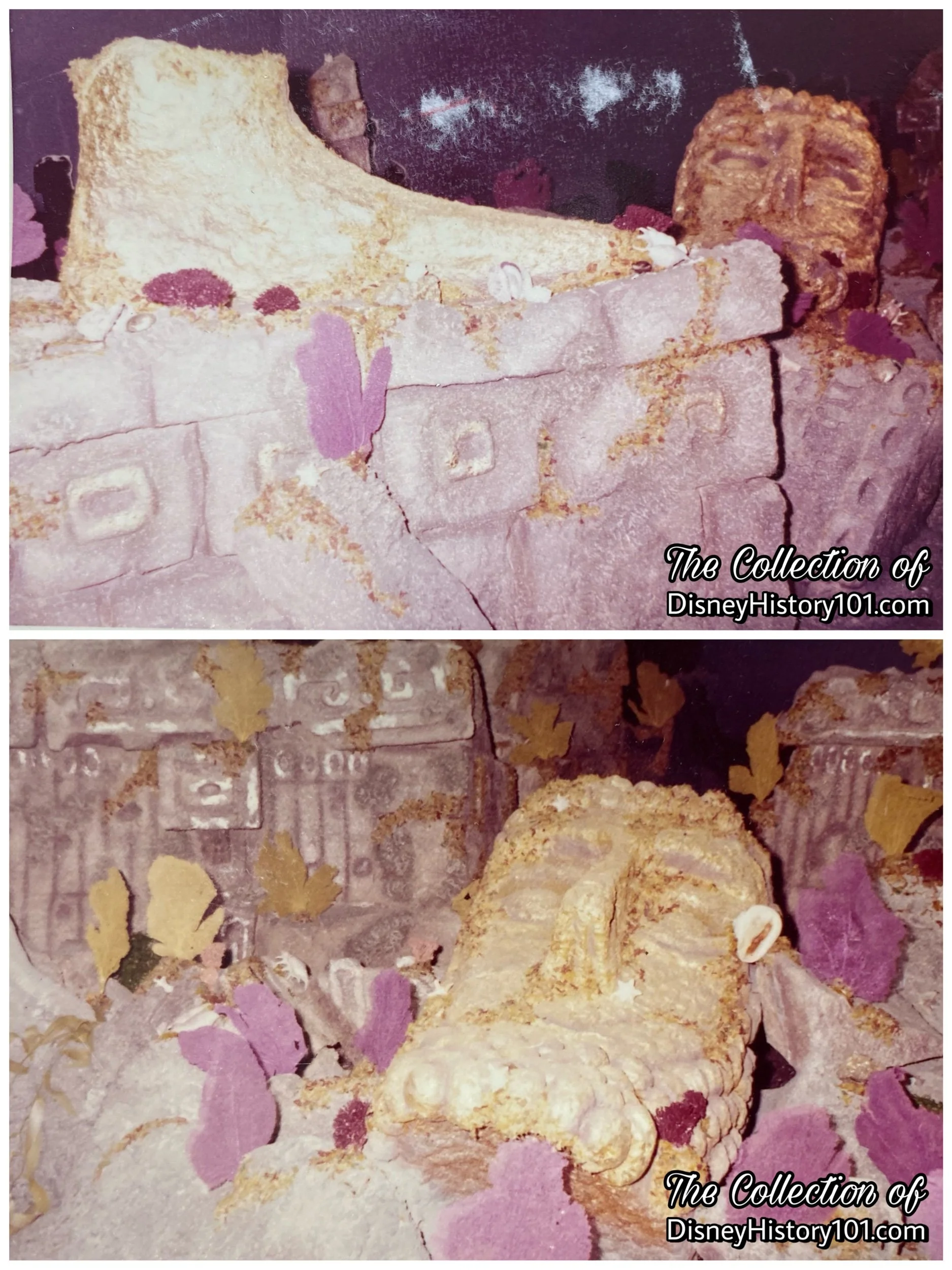
Lost Continent of Atlantis under construction.
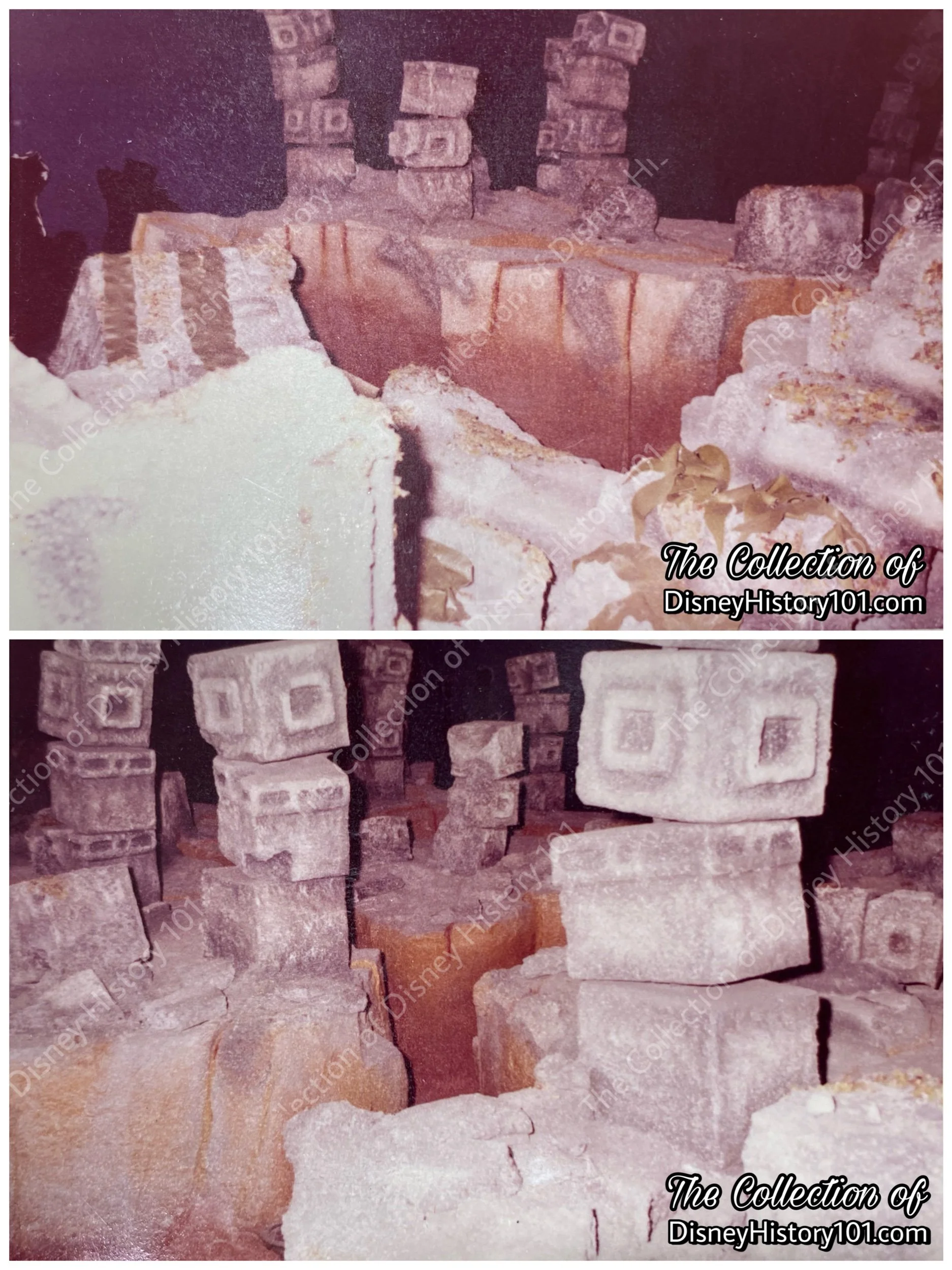
Lost Continent of Atlantis under construction.
Attractions required illumination, and George Feldcamp and Jim Eddy worked on the lighting for the subs and the Matterhorn.
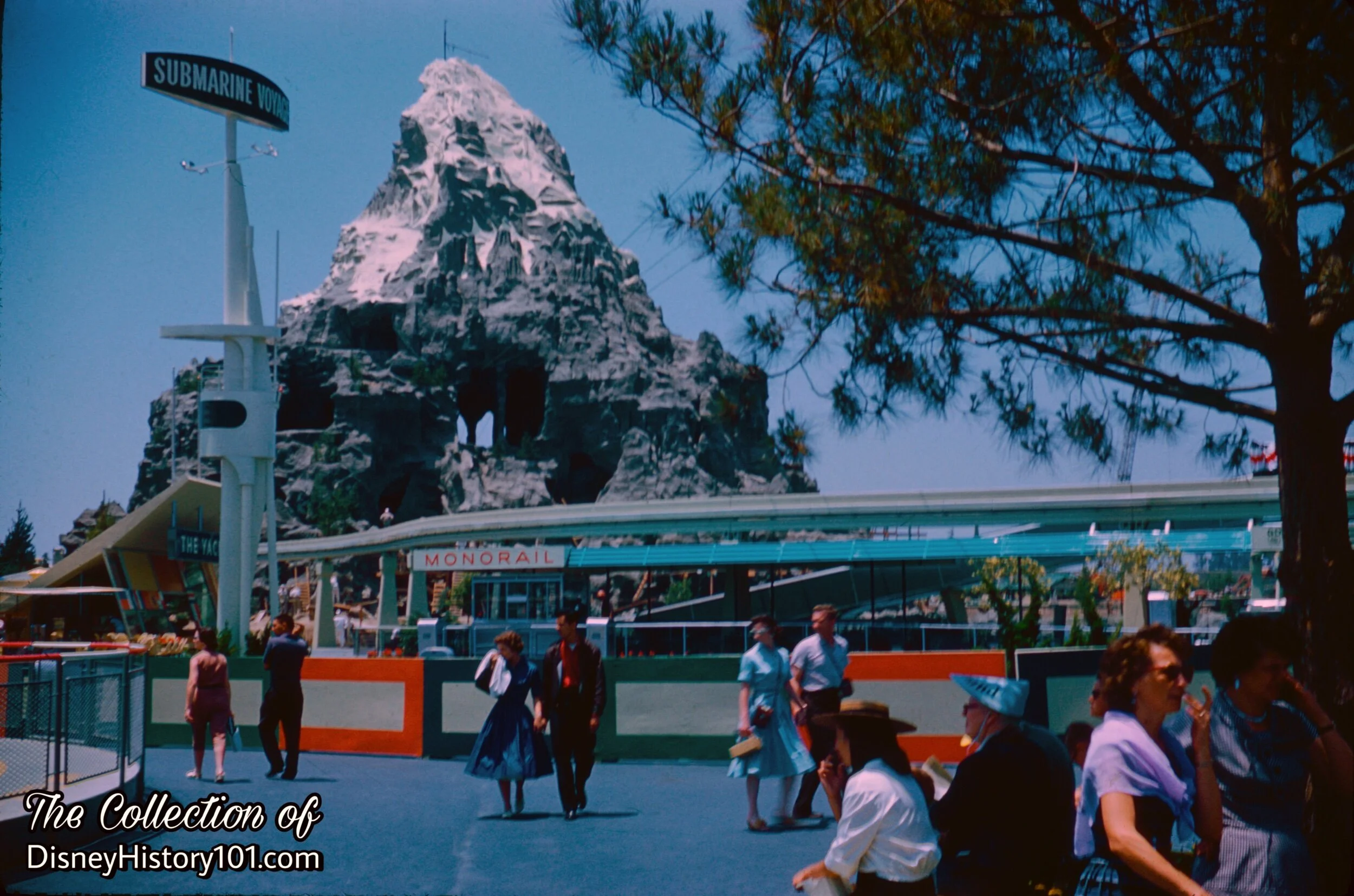
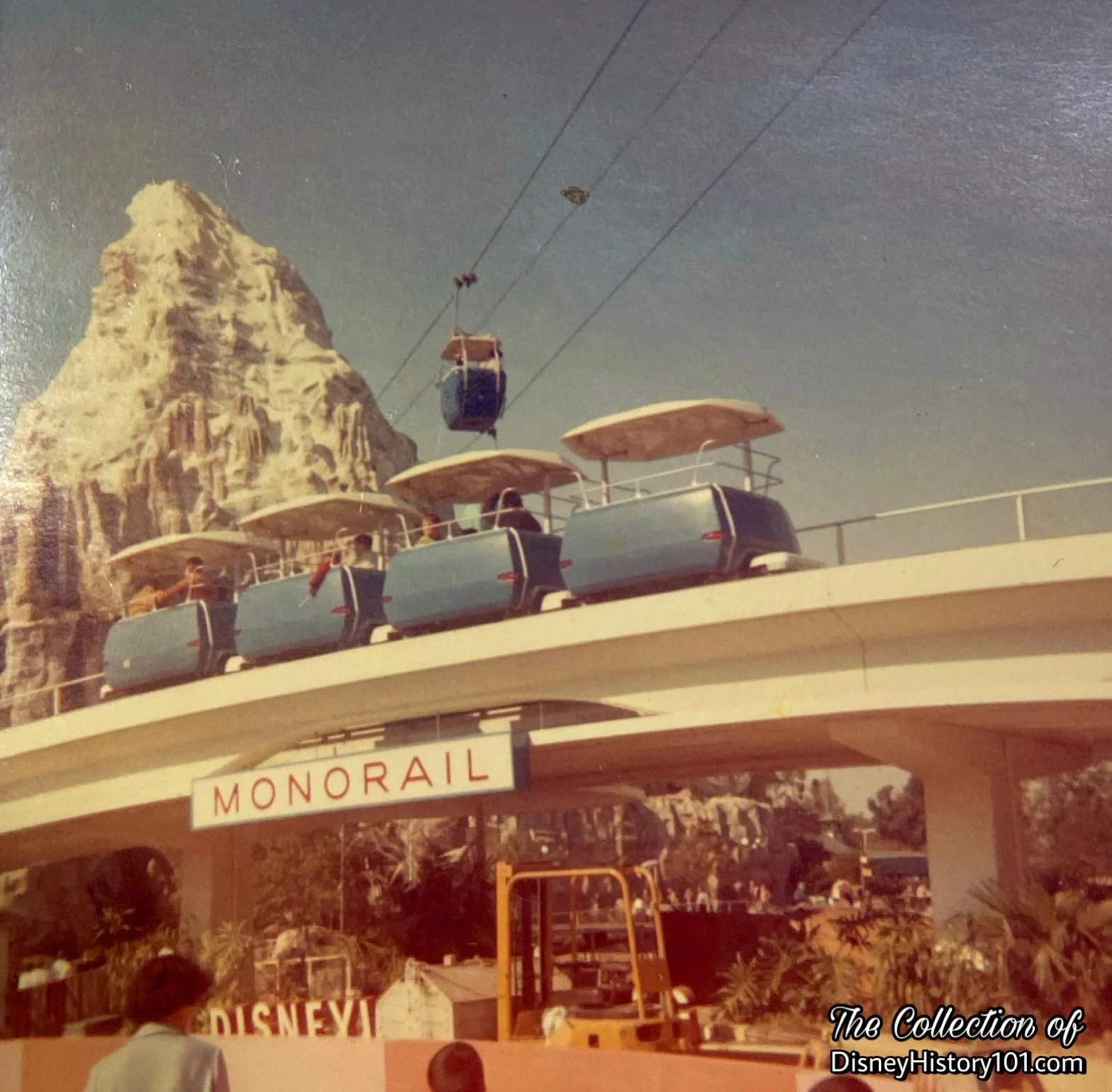
Matterhorn, Skyway, Monorail, and (most importantly) Submarine Lagoon construction is nearing its end in this Vintage View from 1959. Just take a look at those crowd-control barriers and red, white, and blue bunting around the Tomorrowland Monorail Station entrance and Submarine Voyage Thru Liquid Space perimeter and entrance! Even the adjacent nautical themed Yacht Bar and General Dynamics Stage falls within this barrier as construction wraps up.
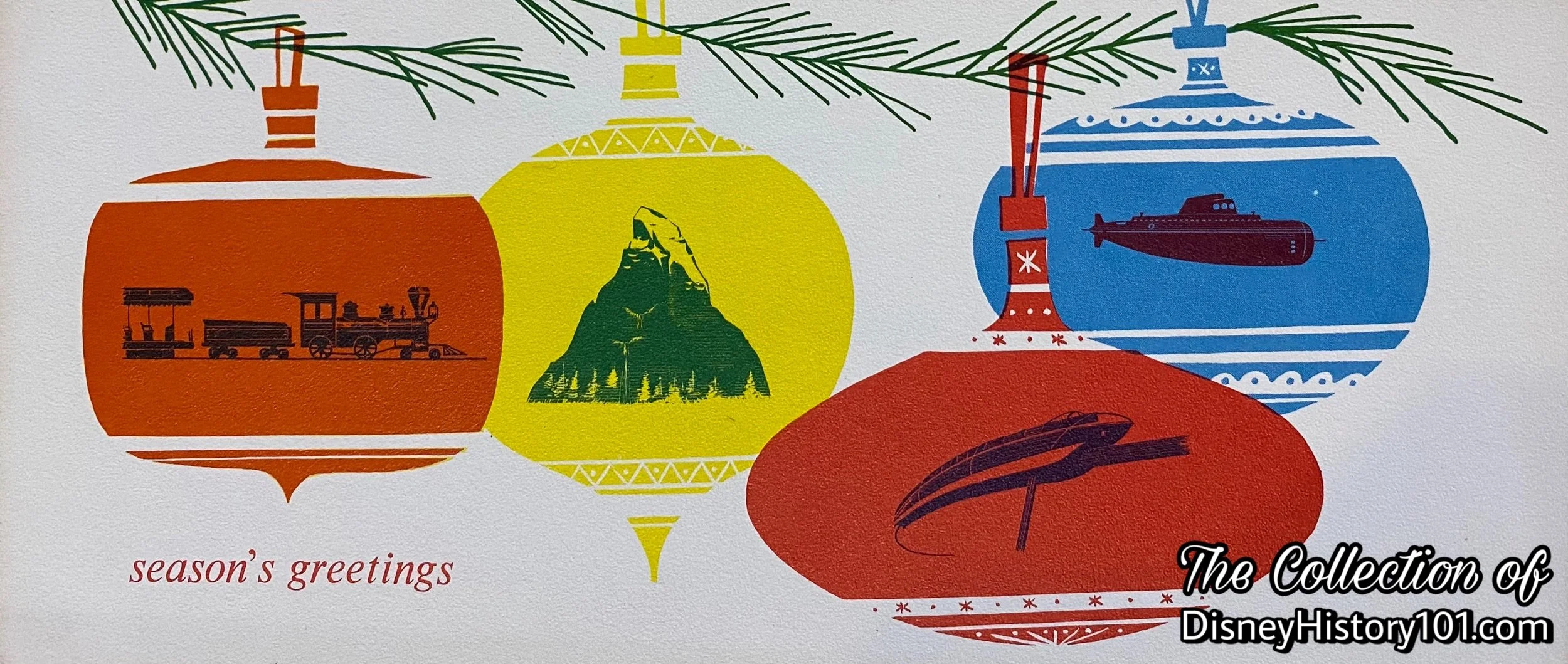
This Seasonal Greeting card was distributed to employees of Walt Disney Productions.
To Walt’s satisfaction, a massive, ambitious expansion brought new adventures to Tomorrowland and brought about “the second opening of Disneyland”! This project was at a cost of $7.5 million, nearly half the original construction cost for the Park and brought the total investment to date, to $30.9 million.
There was an enlarged Motor Boat Cruise in Fantasyland, and an addition of two new freeways and an enlargement of the super Autopias in Fantasyland and Tomorrowland. The 147-foot-high-Matterhorn mountain debuted with two bobsled runs over Fantasyland. The Disneyland-ALWEG Monorail System located in Tomorrowland was America's first complete, daily-operating monorail fleet, and was dedicated by former Vice President Richard M. Nixon. Also among the six new adventures was an eight-vessel underwater fleet - Submarine Voyage Through Liquid Space.
The $2,500,000 Submarine Voyage Through Liquid Space was unlike the previous attraction (Phantom Boats), in that the new attraction took passengers on an 8-minute journey through “the mysterious depths of the Seven Seas…cruise under the North Pole to the legendary Lost Continent of Atlantis.” This journey would attract large crowds (of approximately 1,300 to 1,400 Guests during peak summer months), and conveniently debut the same year as the Disneyland “E” ticket!
On June 14, 1959, the Monorail, Matterhorn Bobsleds, and Submarine Voyage were dedicated at Disneyland. First Submarine Foreman Broney Ciesluk recalled: “Oh, the Grand Opening of the Submarine Voyage. The christening was done on Disneyland's first submarine, the NAUTILUS, named after America's first nuclear powered sub-marine. She was all decked out with ceremonial flags and bunting. The Navy band was up from San Diego, along with an Admiral and a Chief Petty Officer. The Chief had sailed with the original NAUTILUS on her maiden voyage and his wife broke the champagne bottle on our sub's conning tower. Then away she sailed as the band played, ‘Anchors Away.’ I sure hoped that she would make it back!”
Broney also remembered: “Then there was the time that Jimmy Durante came up to take a Sub ride. As he boarded, he said, ‘Is the ride safe?… Can anything go wrong?’ I replied that it was perfectly safe and that everything would be fine. Well, the boat came off the rail, and when he was rescued some time later, he turned to me and said, ‘Cap, what the hell happened?’”
Van France recalled: “I didn't think it would be successful, thinking that everyone (like myself) had claustrophobia. I was wrong, of course.”
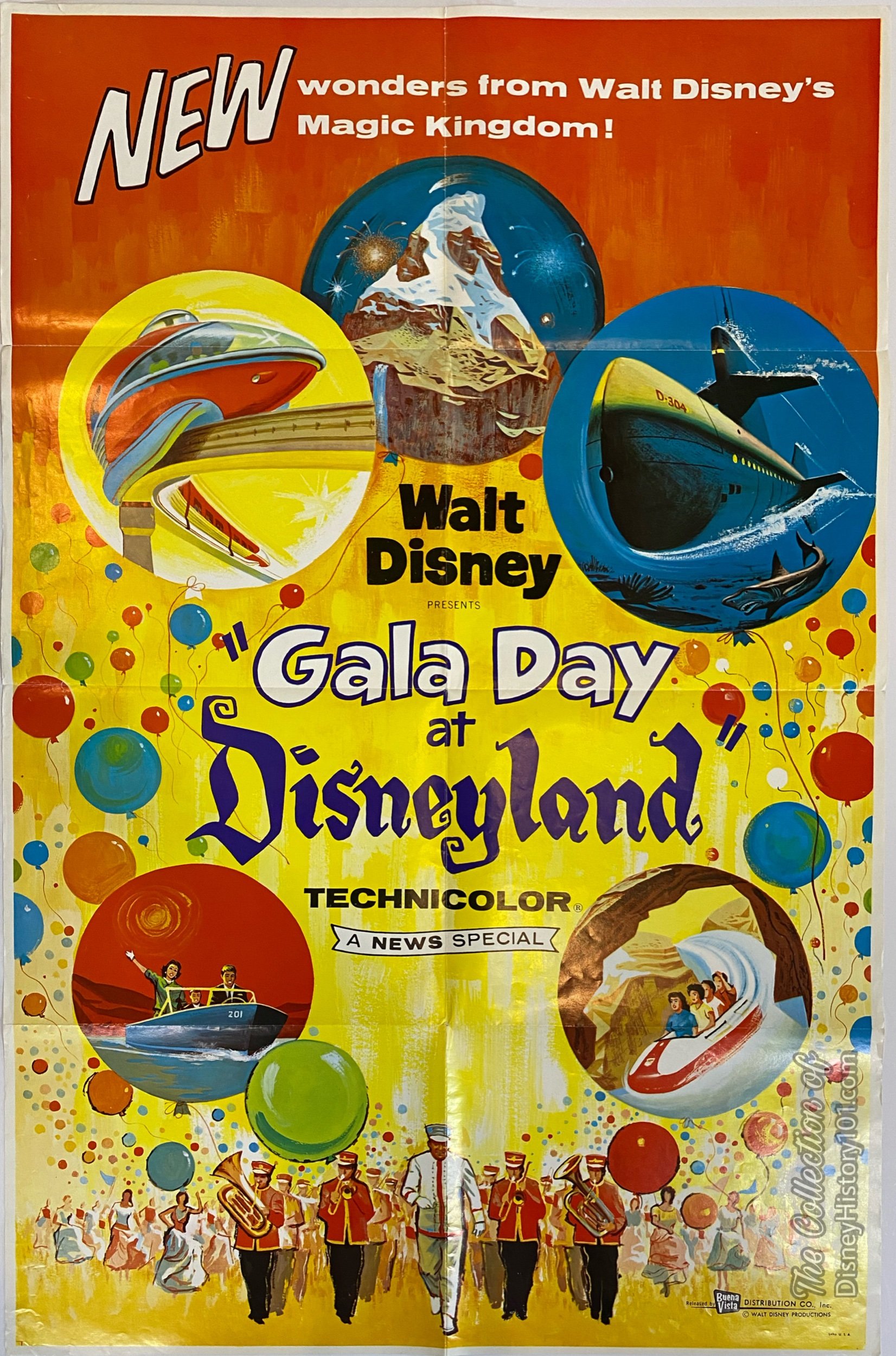
Gala Day at Disneyland Poster, c. 1959
After all, a theatrical release chronicle the festivities and announced the debut of “Six Spectacular New Adventures” to movie-goers in 1959.
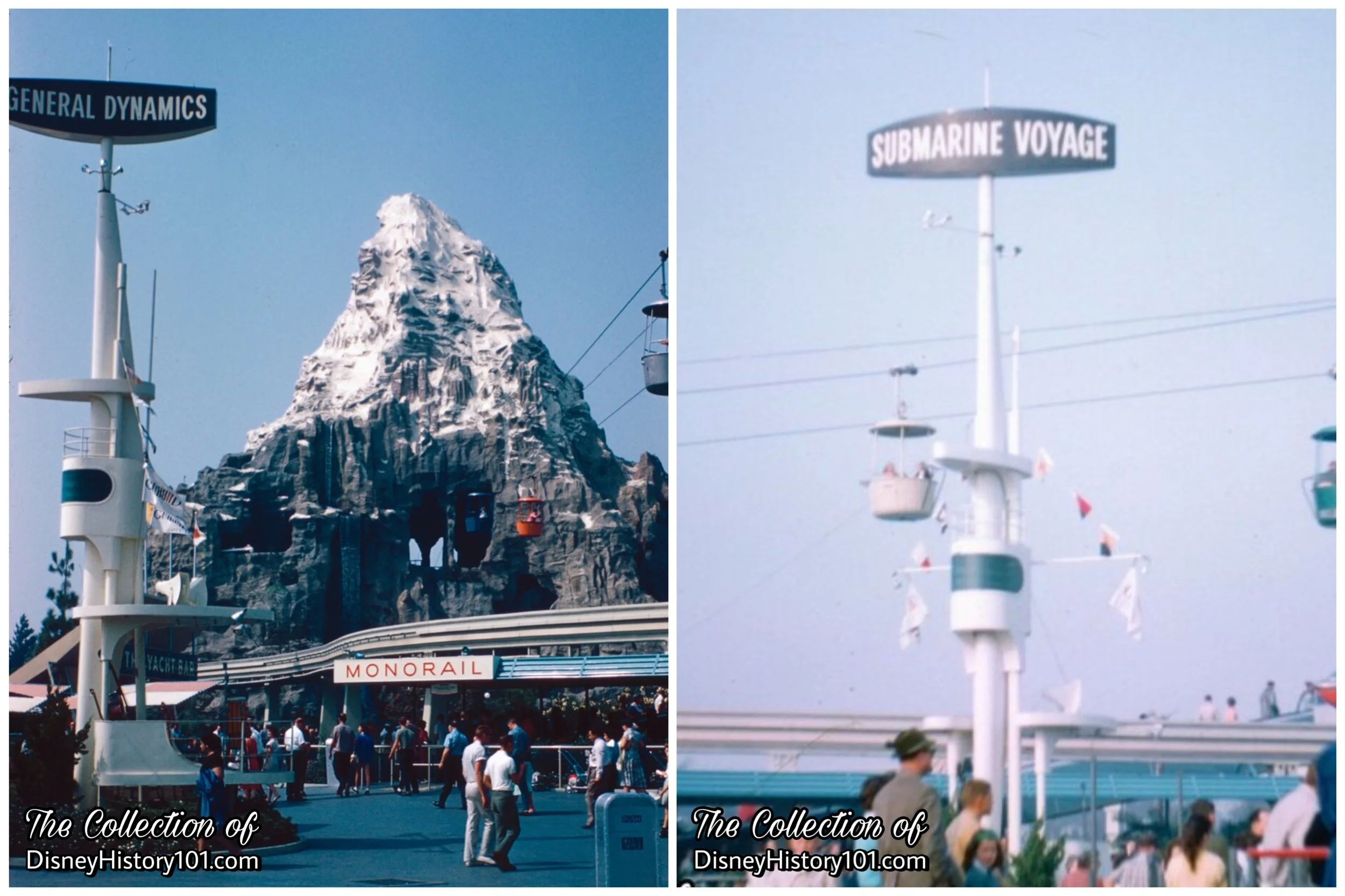
October, 1961 (left); January, 1962 (right).
The mast near the Yacht Bar is a usually a great place to meet friends in Tomorrowland. Not far from other technological and “natural” marvels (like the Matterhorn Bobsleds attraction, Monorails, Peoplemovers, and Skyway Cabins) you’ll find General Dynamics’ Submarine Voyage Through Liquid Space! Please step toward the dock, as we will be boarding momentarily.
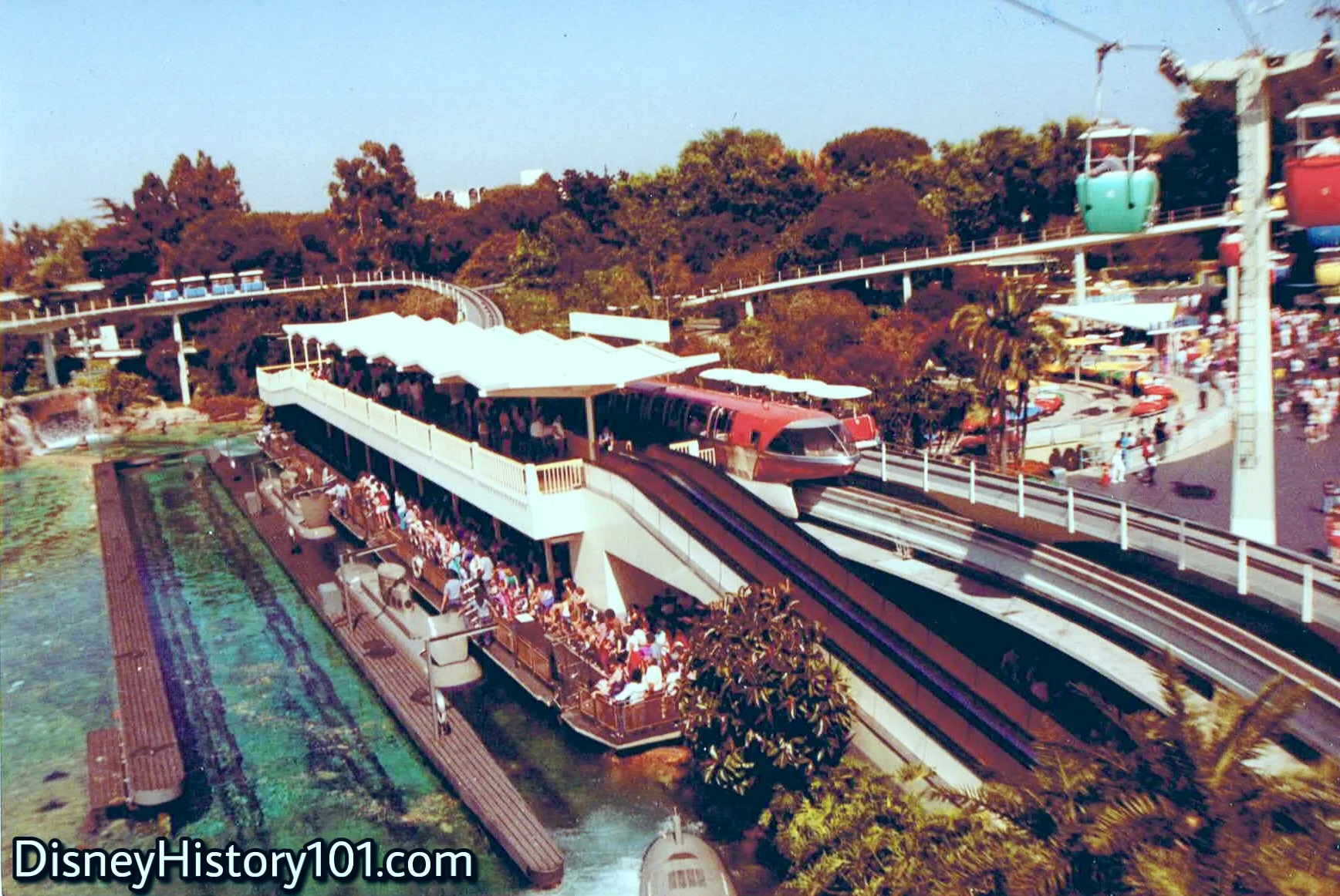
Submarine Voyage Guest Control queue area.
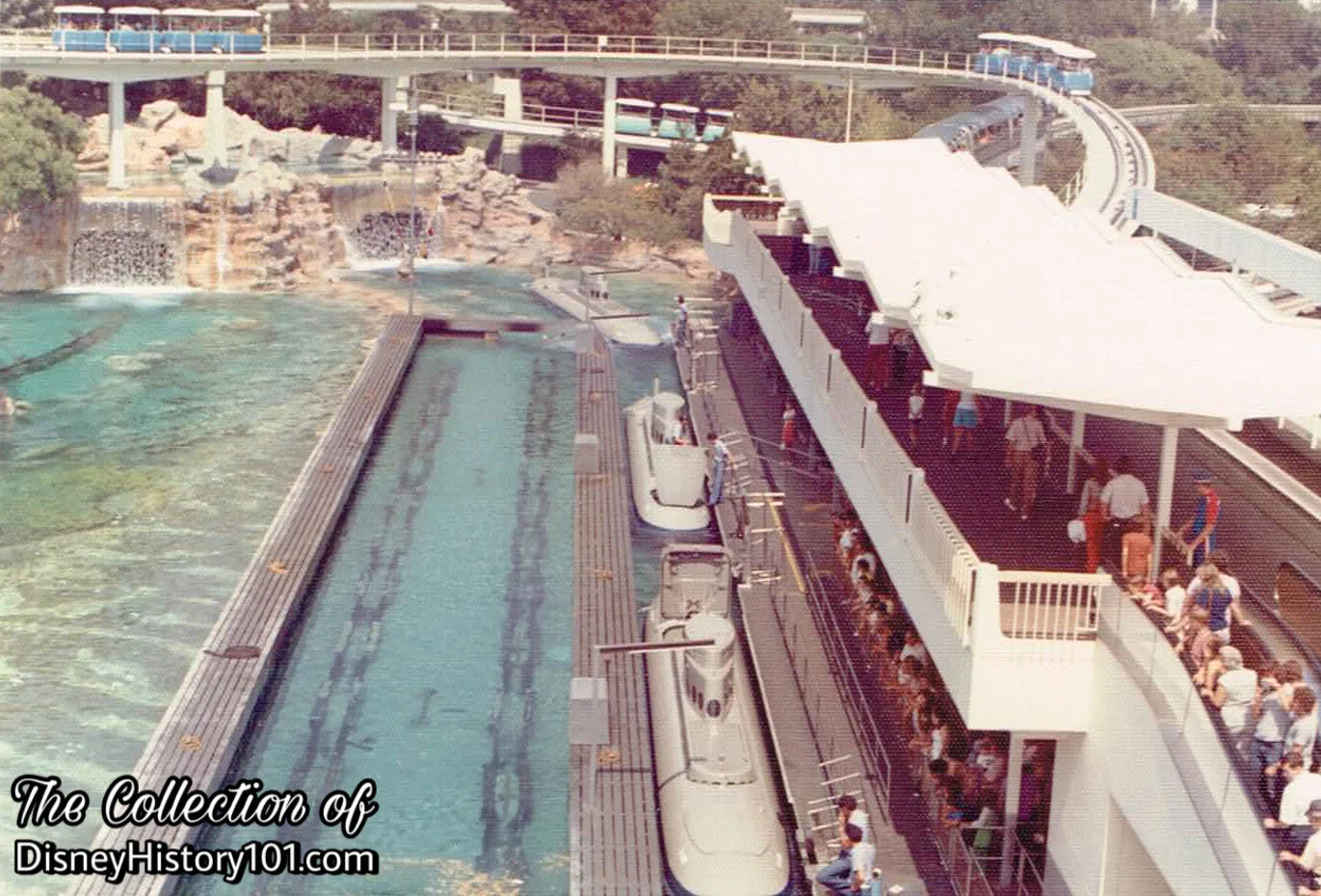
It looks like a busy day at Disneyland - the submarine Storage Dock is empty, but the attraction queues are full of guests!
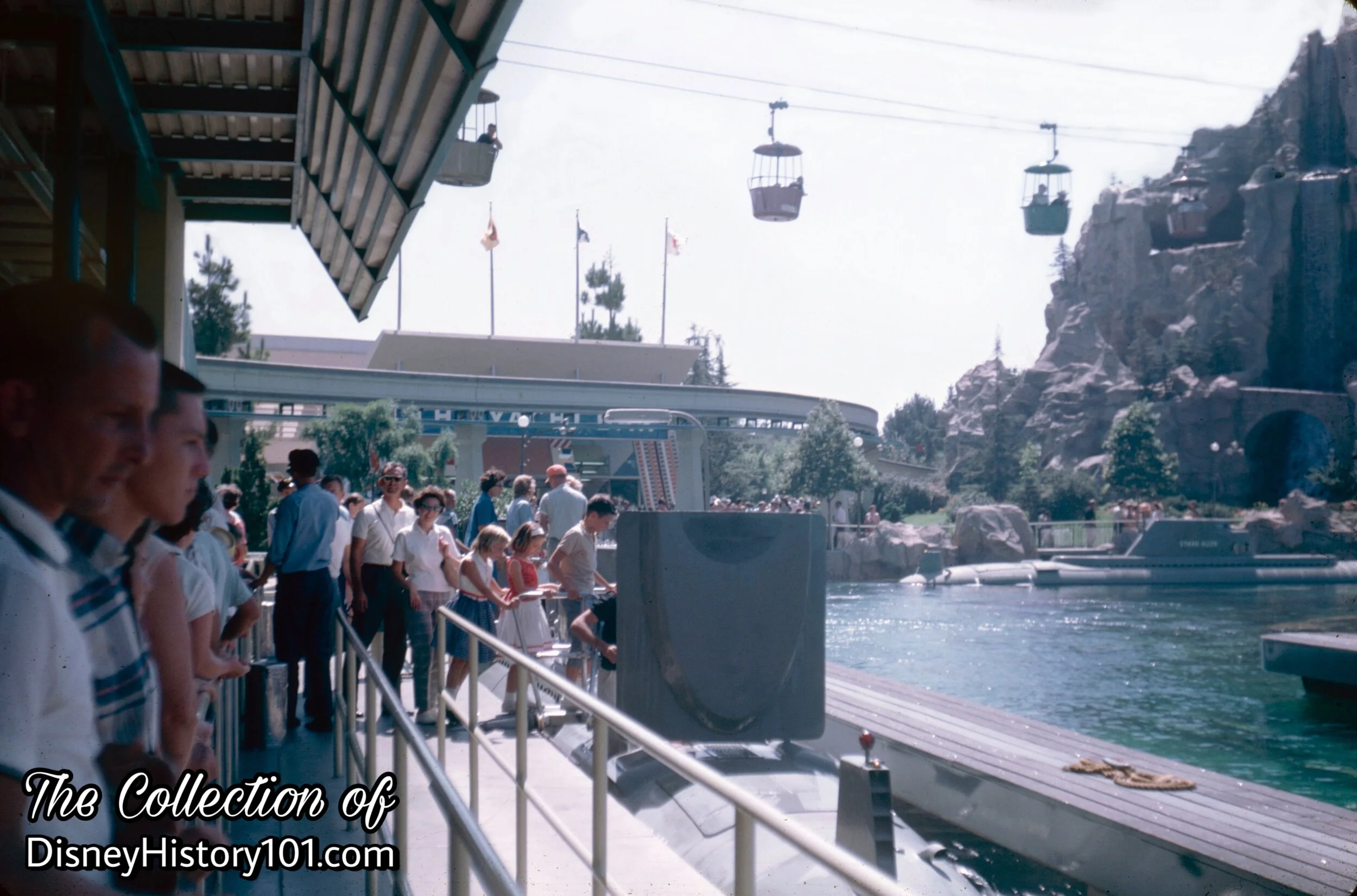
Submarine Voyage Guest Control queue area and Intermediate Dock, July, 1963.
There is plenty to look at while we wait our turn to board a Submarine.
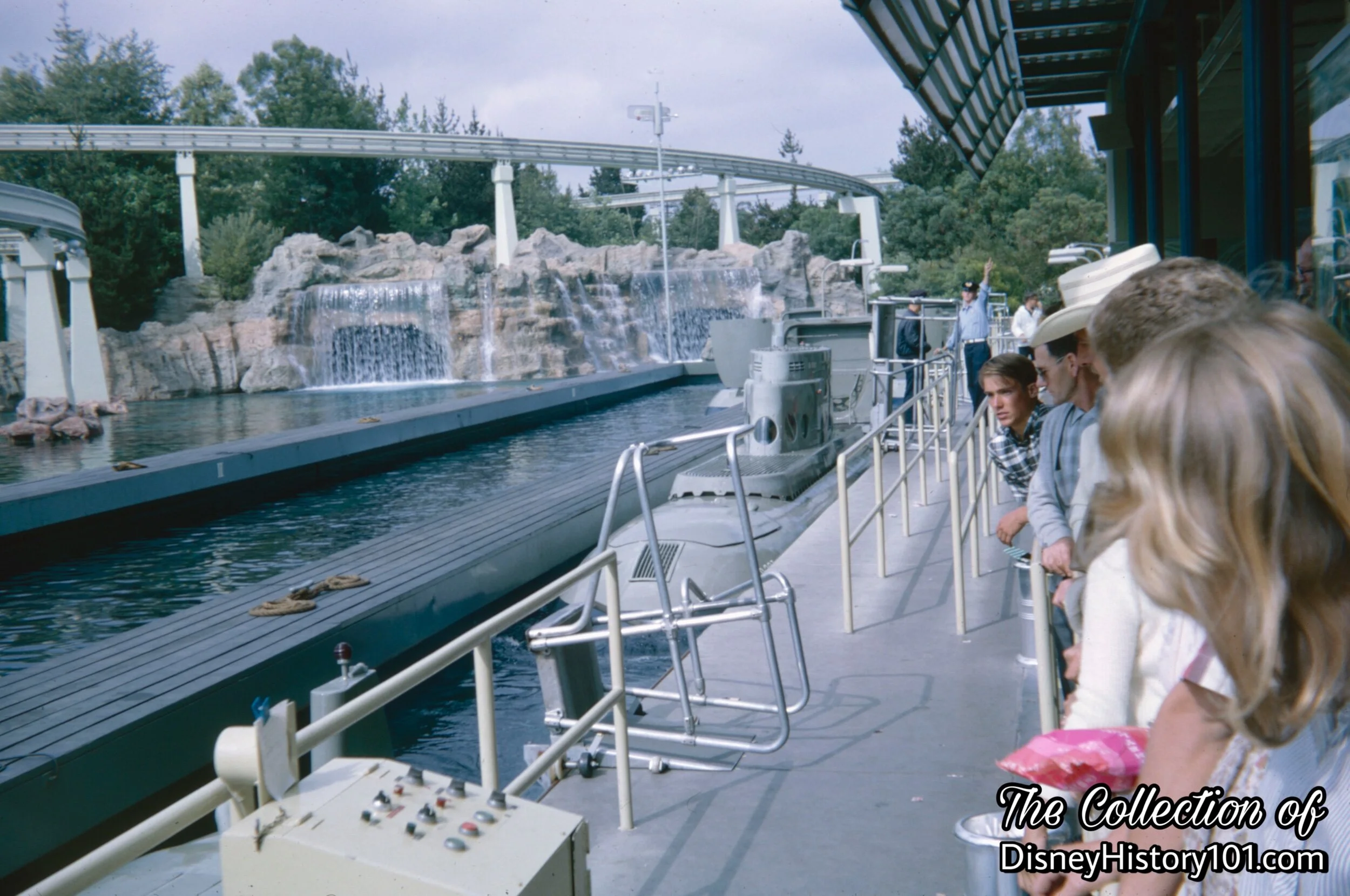
View of the Front Dock from the Submarine Voyage Guest Control queue area.
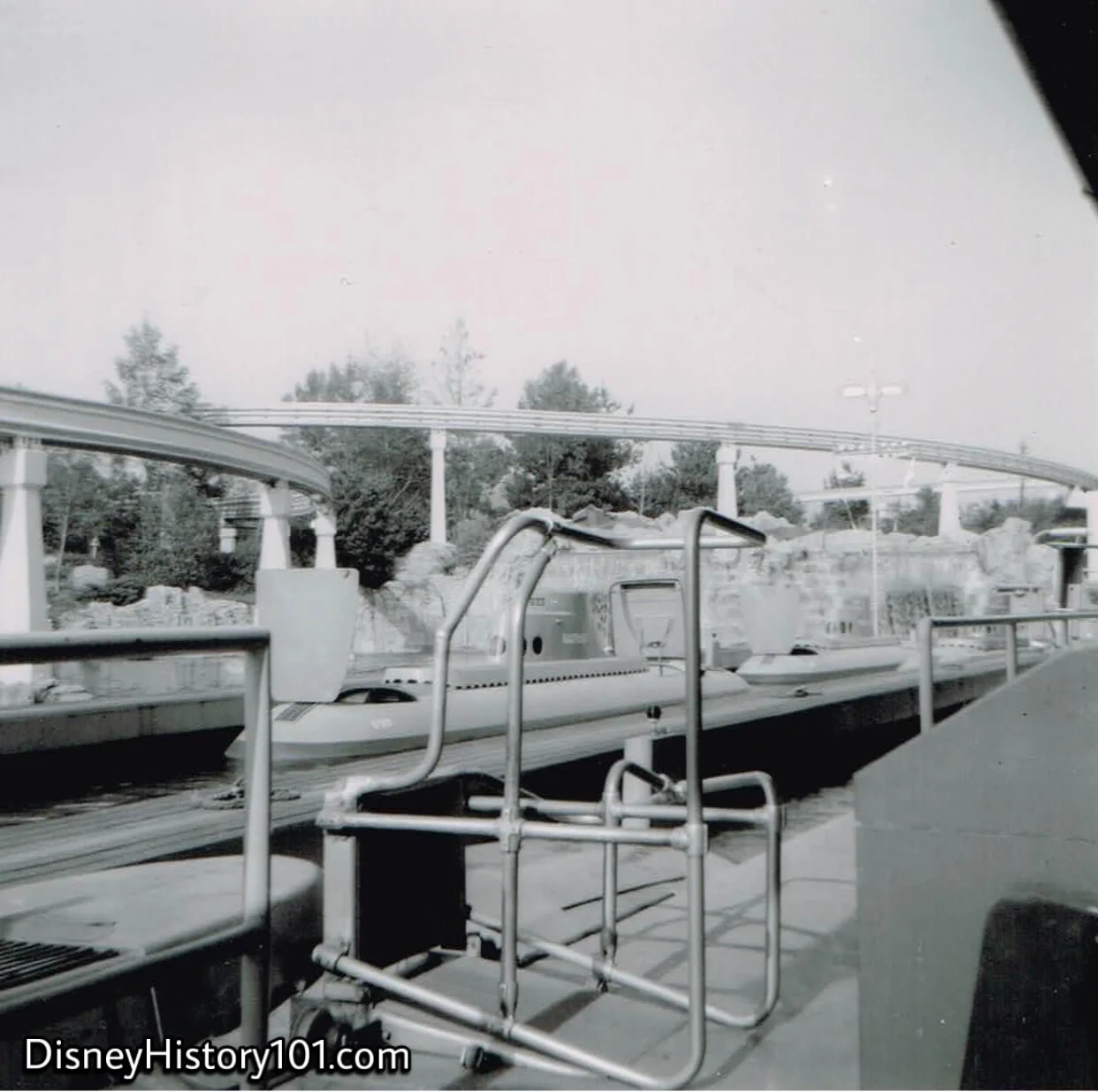
FRONT DOCK
We’re on the Front Dock, looking back toward the Intermediate Dock and the Rear Dock. Just beyond the passenger ramp, we also have a great view of the Storage Dock. The Storage Dock is where the extra submarines are kept when not in use. Here, the Submarines are refueled, by those who work after midnight.
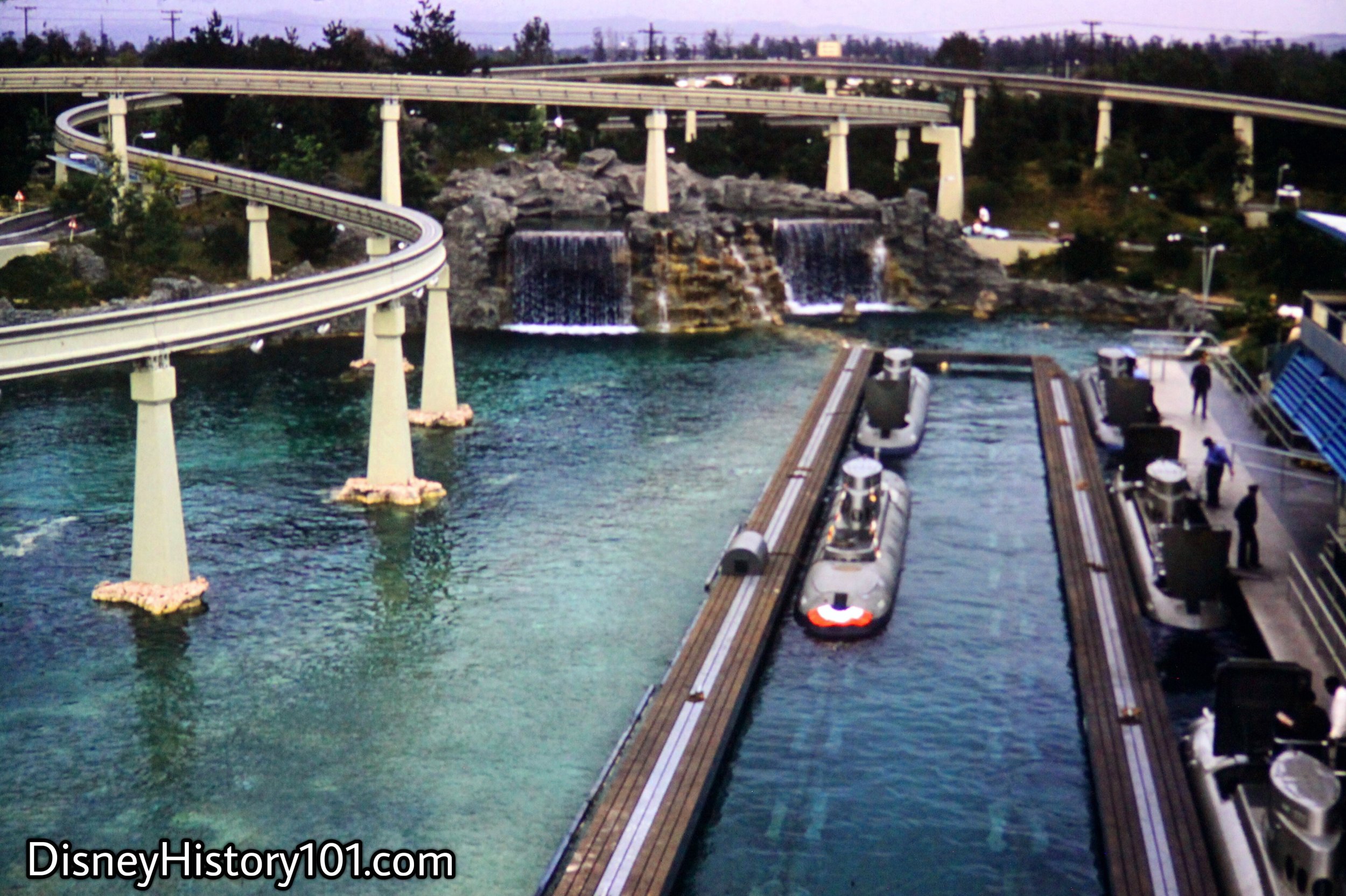
The Storage Dock and Storage Rails, May, 1960.
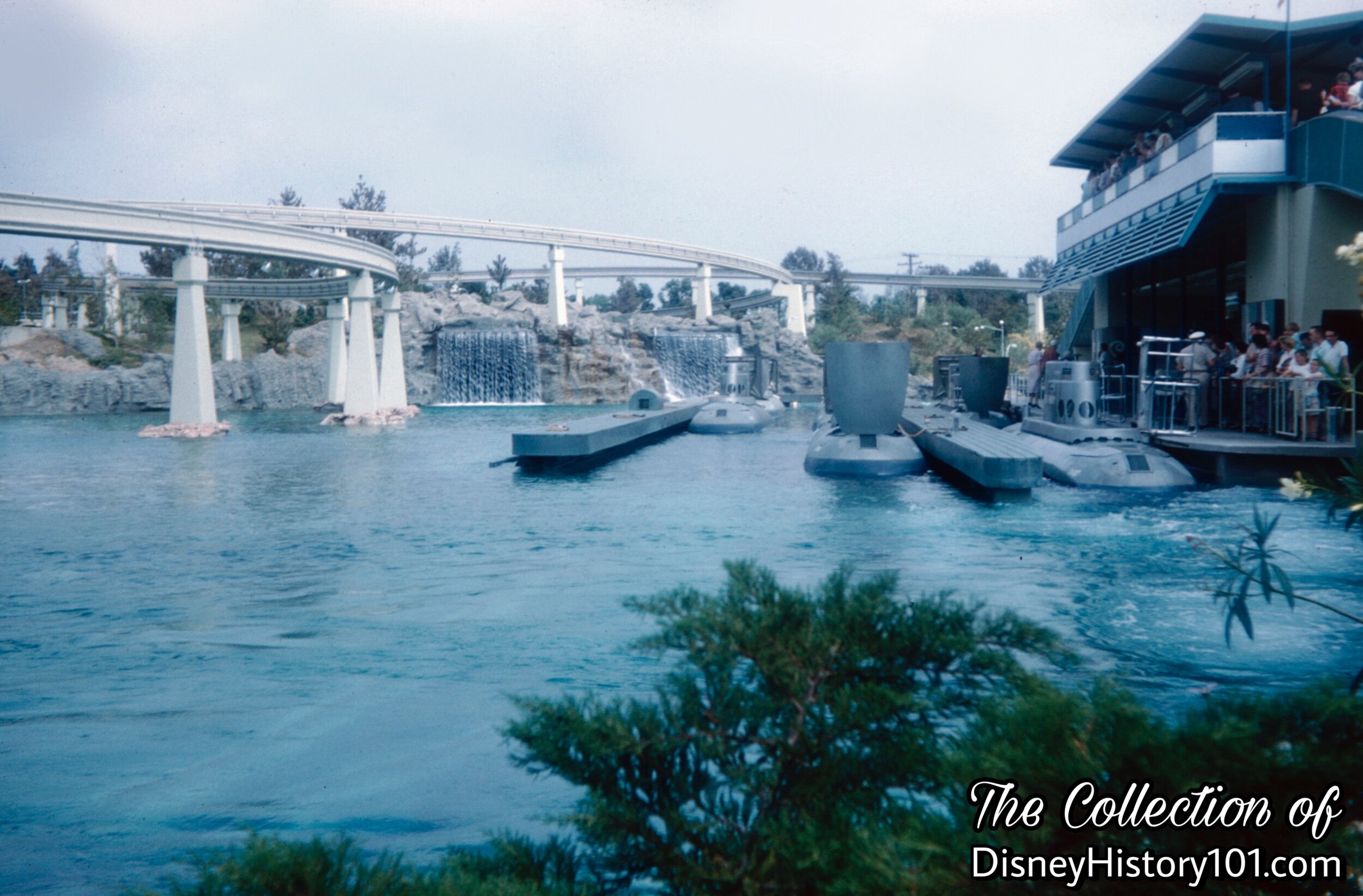
We are overlooking a fantastic Vintage View of the Rear Dock, Intermediate Dock, and Forward Dock (pictured to the right). During peak periods, up to three submarines can be loaded at the same time (in procedure once referred to as “wolfpacking”). Extra submarines are docked in the rehabilitation Storage Dock center for Disneyland’s Submarine Fleet (to the left). If you look closely, you can see that one of the submarines is still decorated with the red, white, and blue opening-day bunting!
Also in 1960, outside Walt Disney’s Magic Kingdom, Walt Disney’s Mysteries of the Deep premiered, a Technicolor Featurette short subject that told the fabulous stories of The Undersea Kingdom, and presented “its many myths, legends, and wonders.”
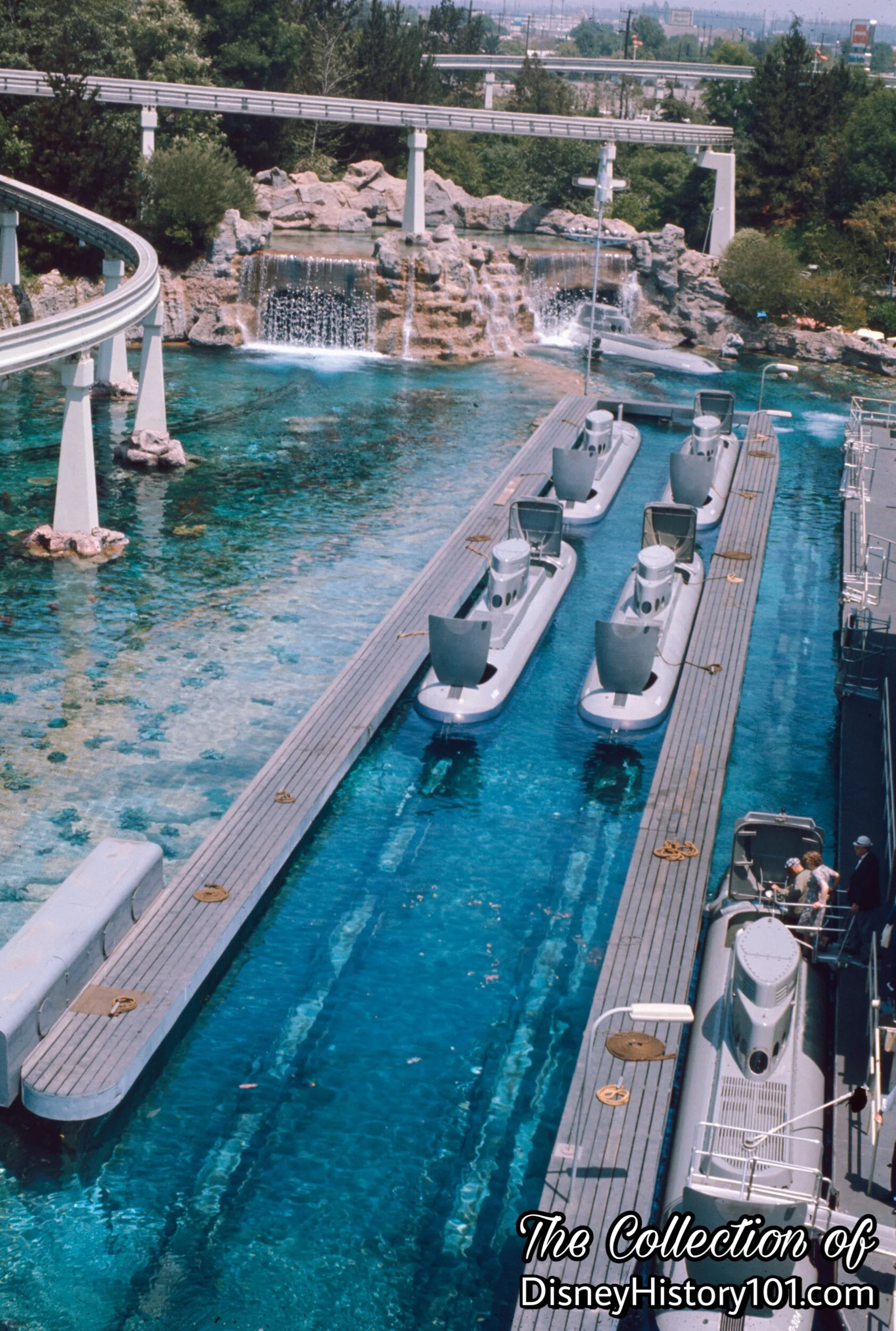
The Storage Rails, 1966.
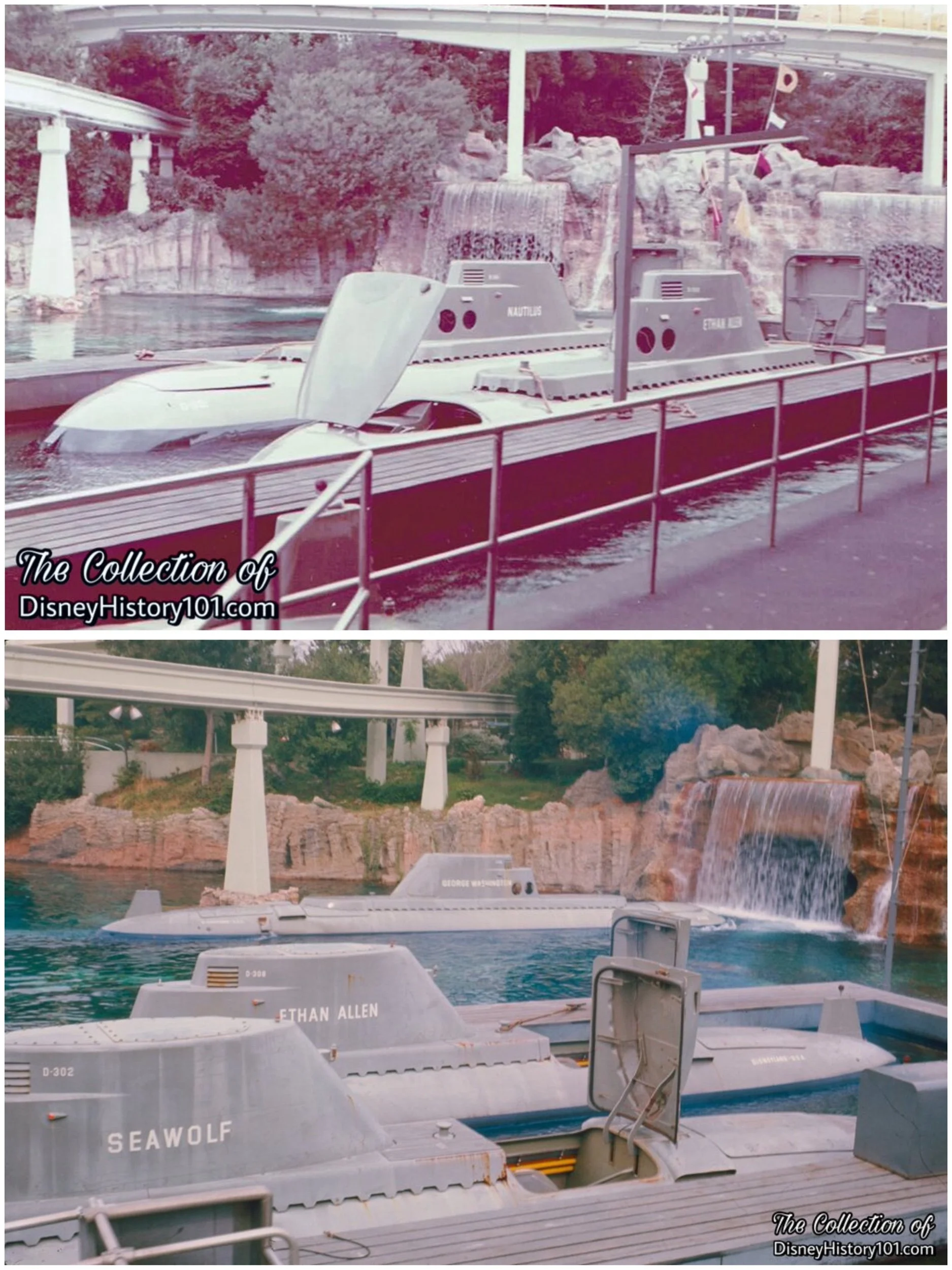
Above: The Ethan Allen and Seawolf at the Storage Dock as the George Washington enters Sub Caverns' Entrance Falls, November, 1967.
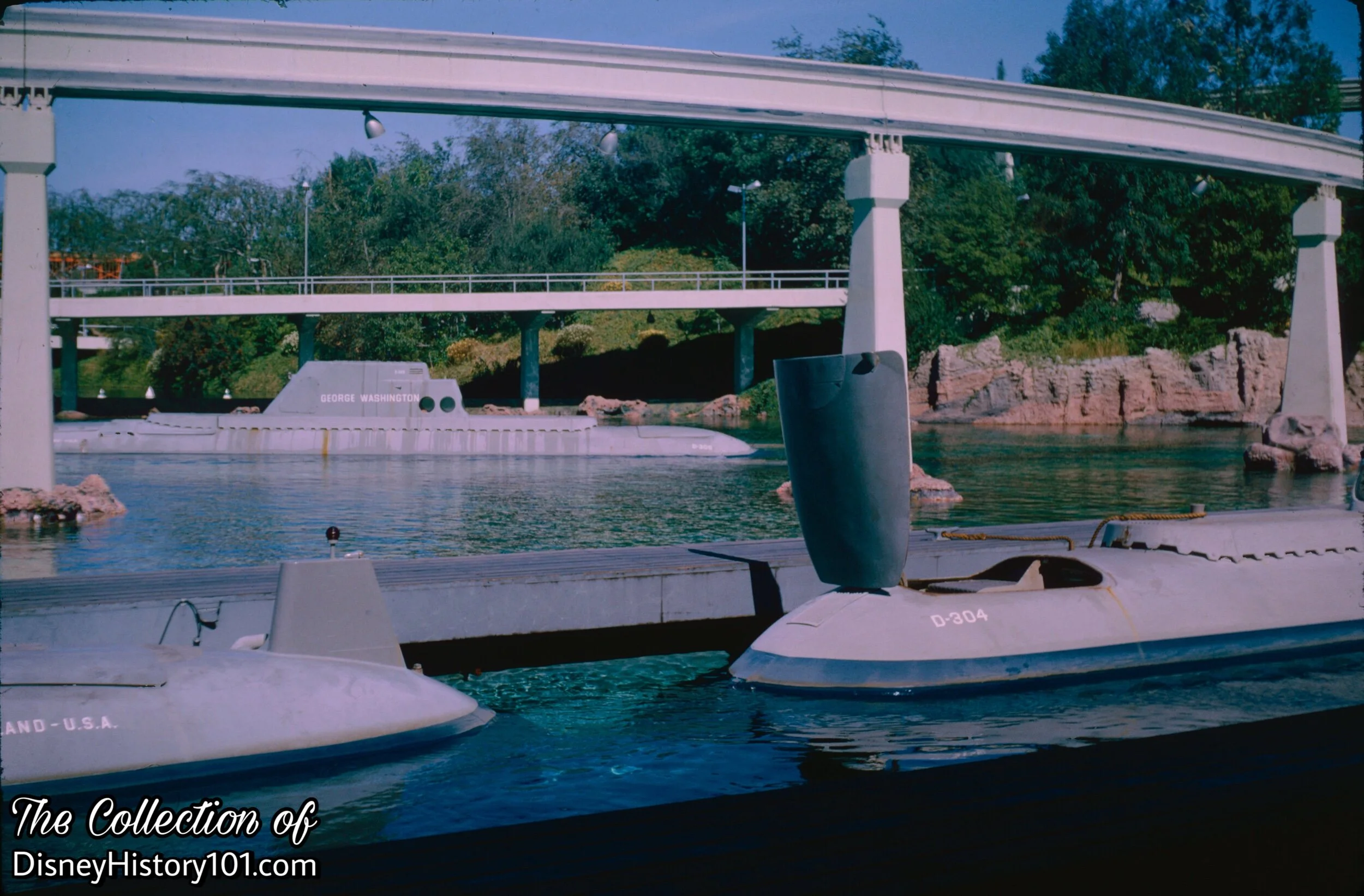
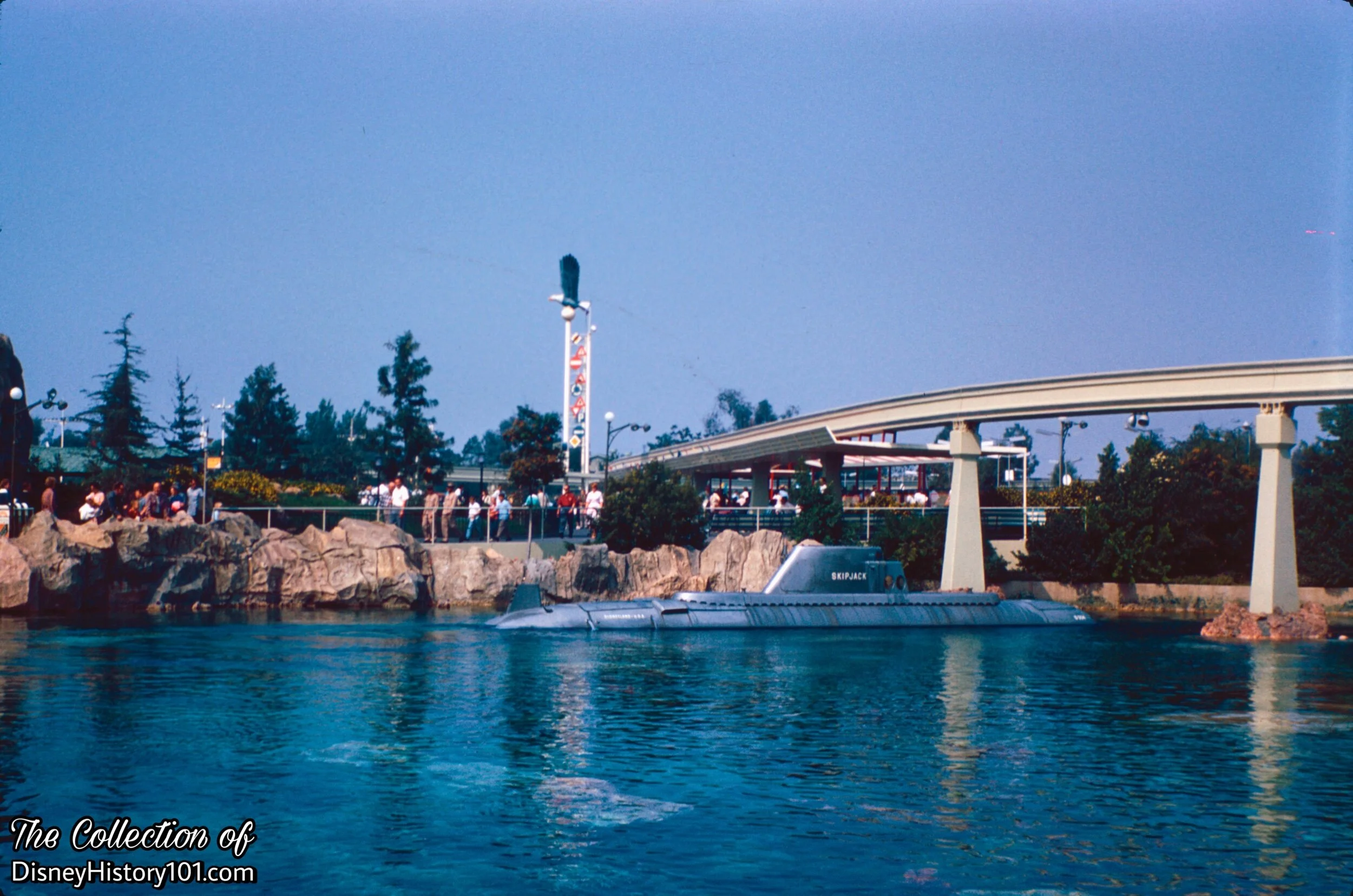
The Skipjack and another Submarine Boat at the Storage Dock, November, 1965.
FRONT DOCK
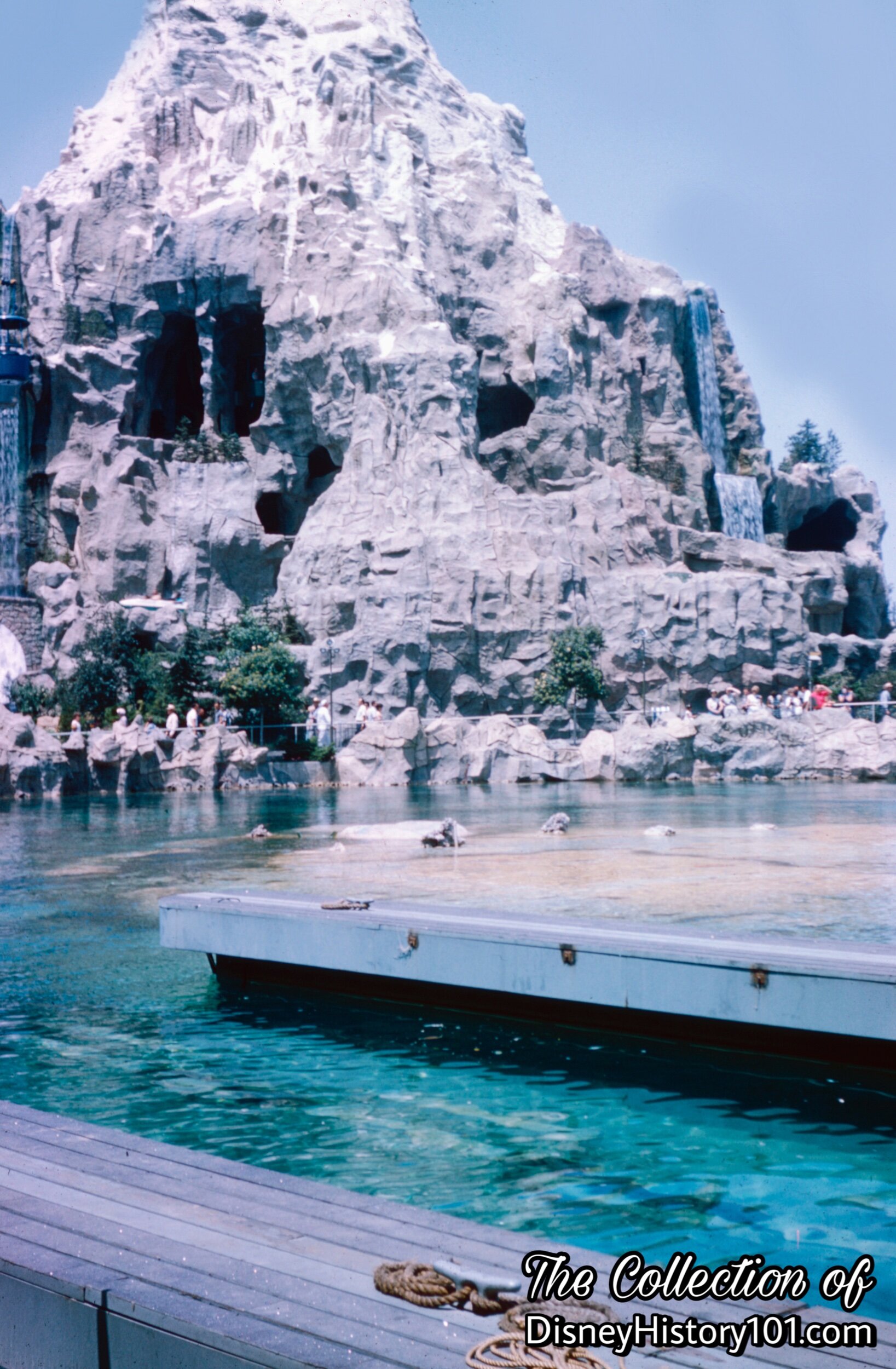
On the other side of the Front Dock (in the foreground), we can see the Storage Rails of the Storage Dock. This zone is used for submarine storage after hours, and during periods of non-operation. The bight (or, loop) on one end of the rope, is secured around the metal cleat on the “pier”. This is called “mooring”, and keeps the submarine tethered to the Front Dock while guests and crew board the vessel.
INTERMEDIATE DOCK
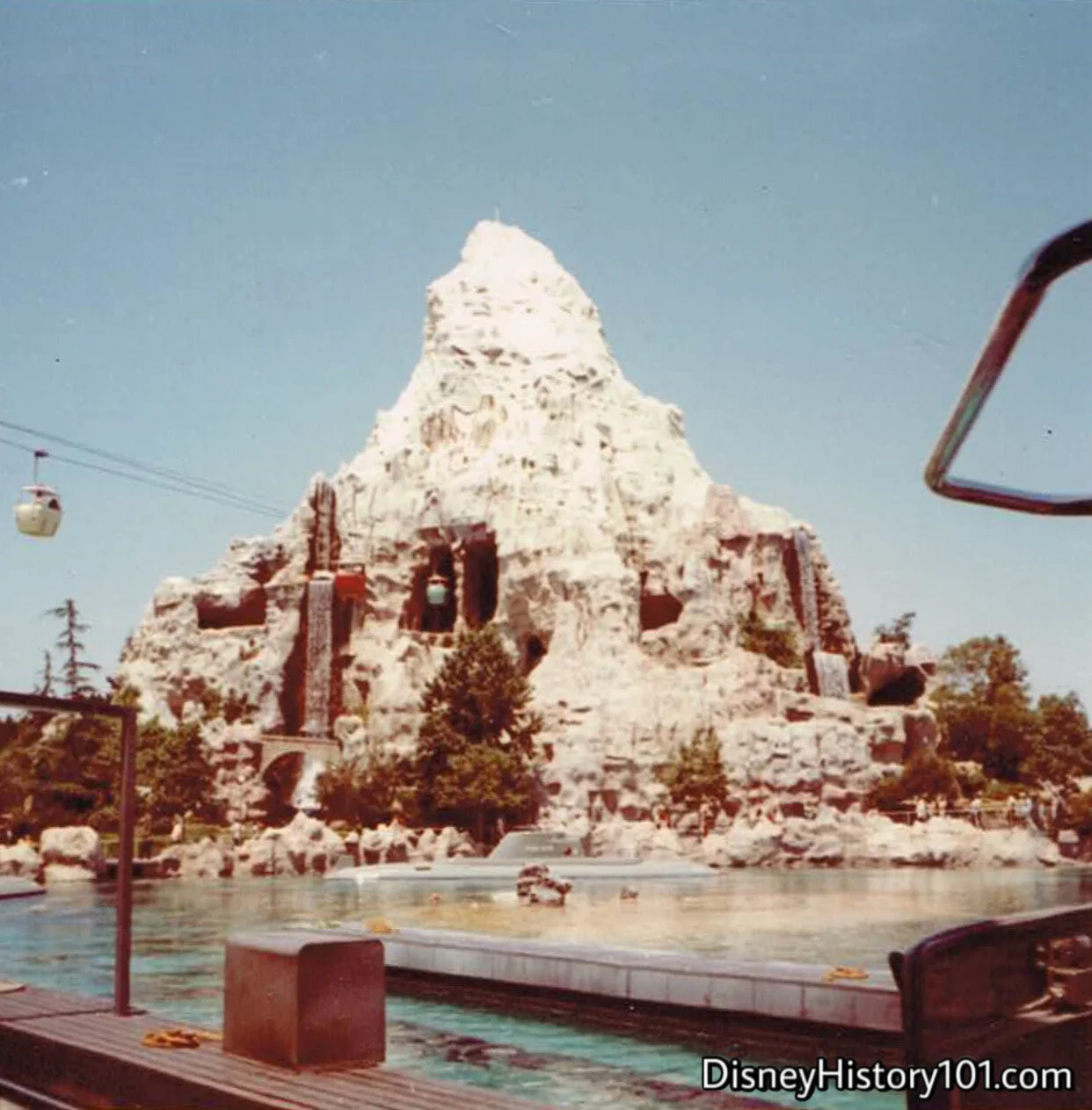
From the Intermediate Dock, we can see beyond the Storage Rails and into the Front Lagoon! Before exploring the natural wonders that lay below, we are granted a magnificent view of one of Disneyland’s tallest “natural wonders” - “the Mighty Matterhorn”!
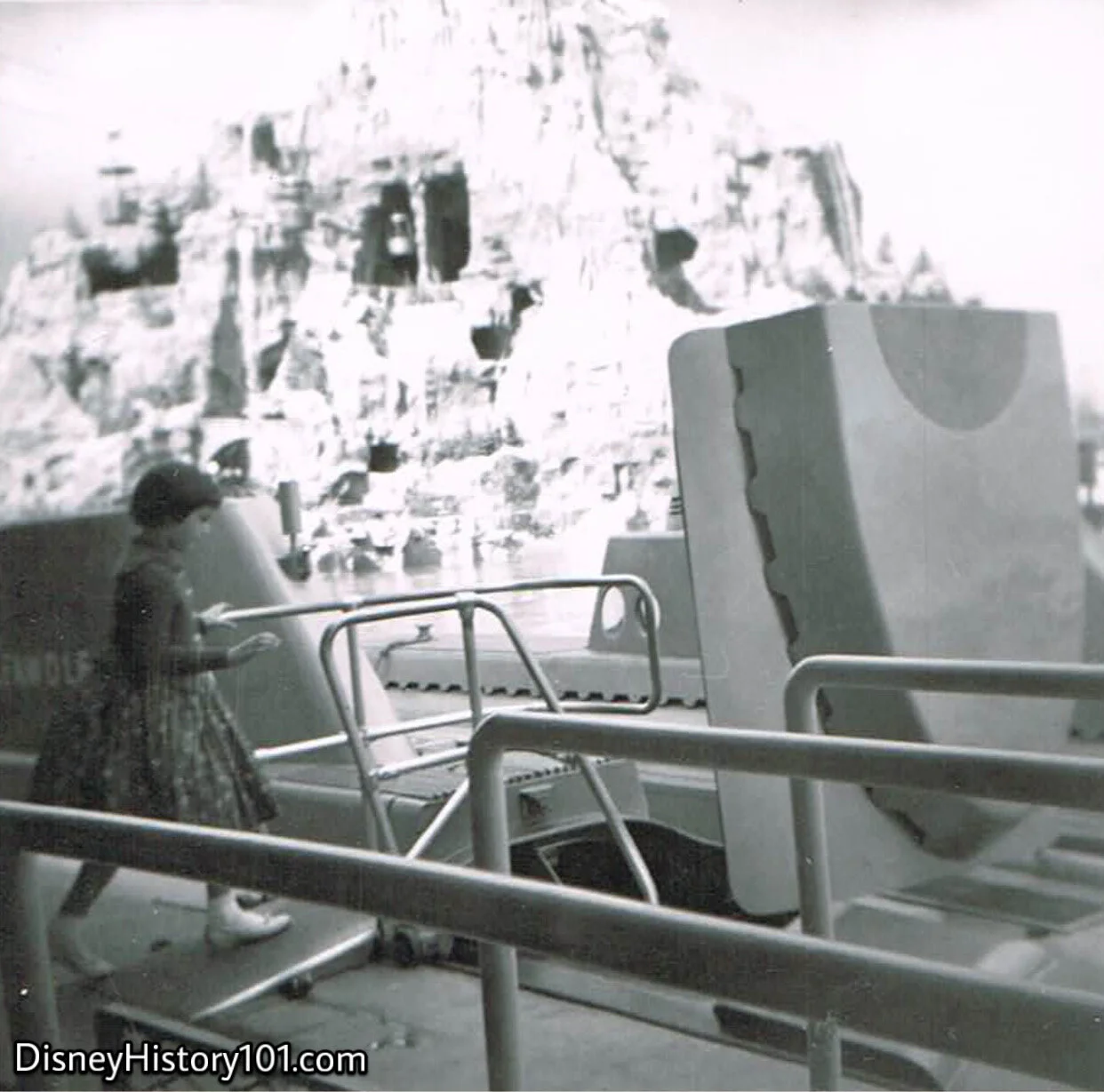
FRONT DOCK
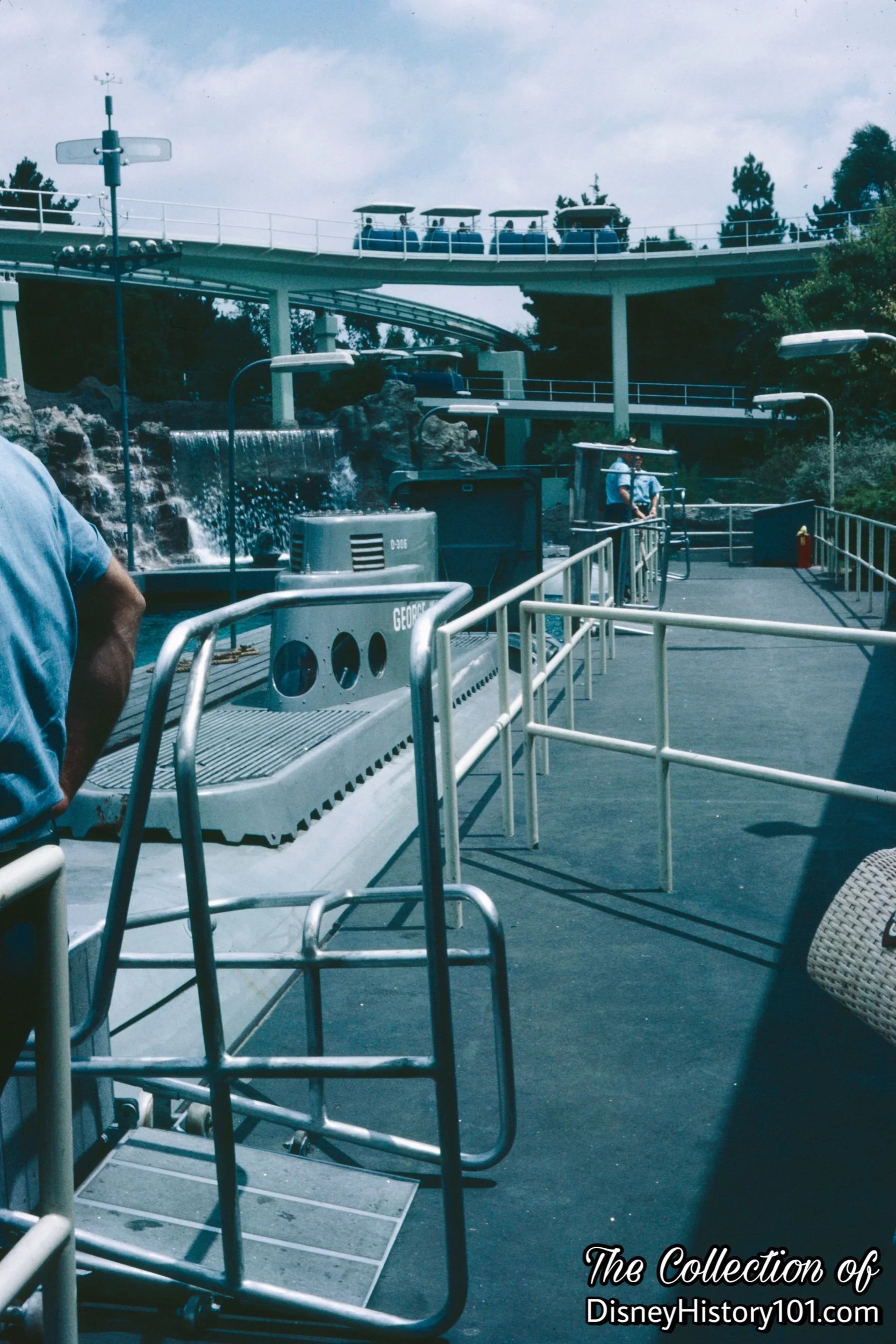
In stepping aboard Disneyland’s submarines, you’ll enter in a nontraditional place (as far as submarines are concerned) - a hatch located just forward of the Sail. Now, please watch your step across the ramp, and make use of the hand rails as you descend to the aft section of the boat.
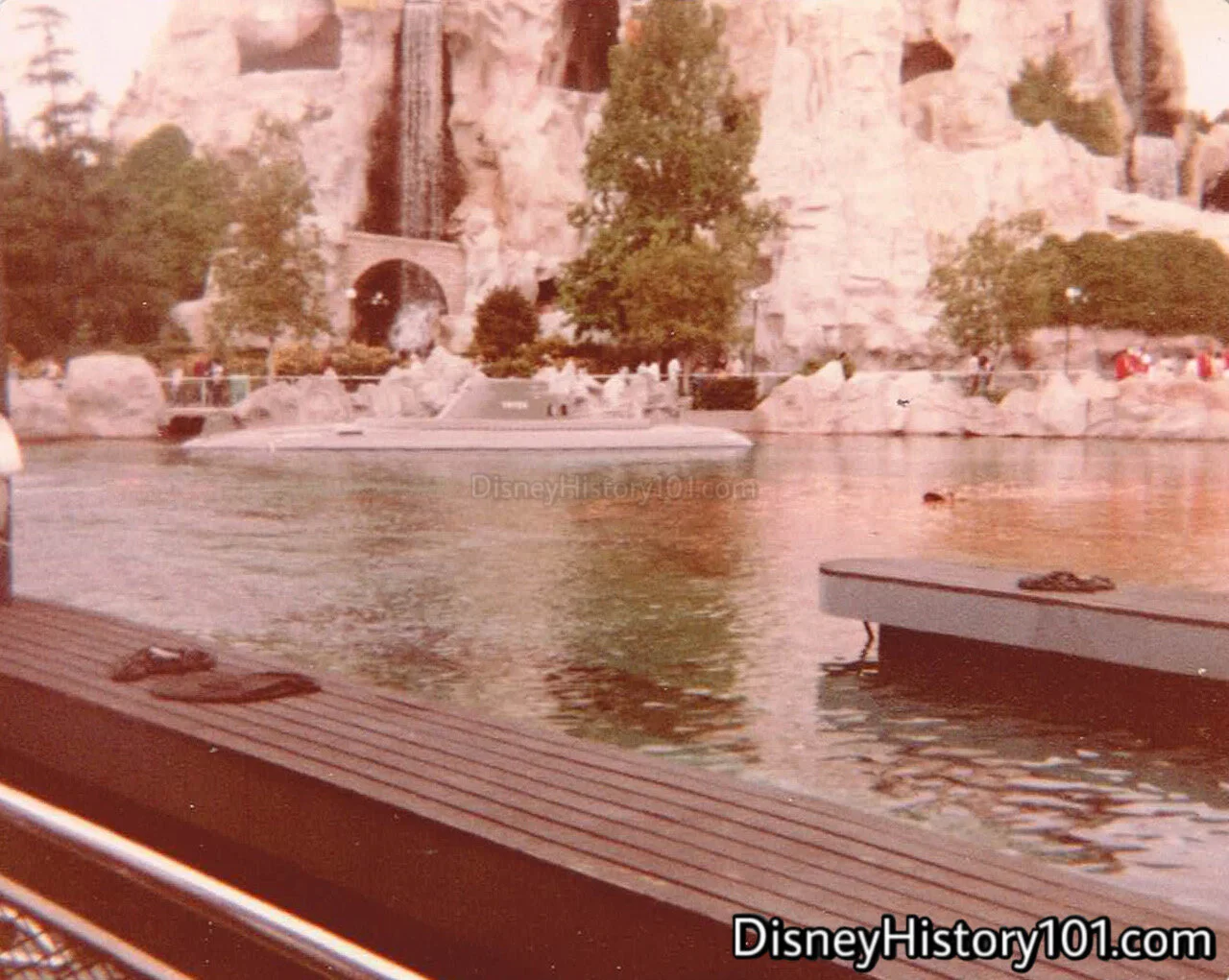
INTERMEDIATE DOCK (1981)
in the distance, Submarines pass through the waters of the Front Lagoon.
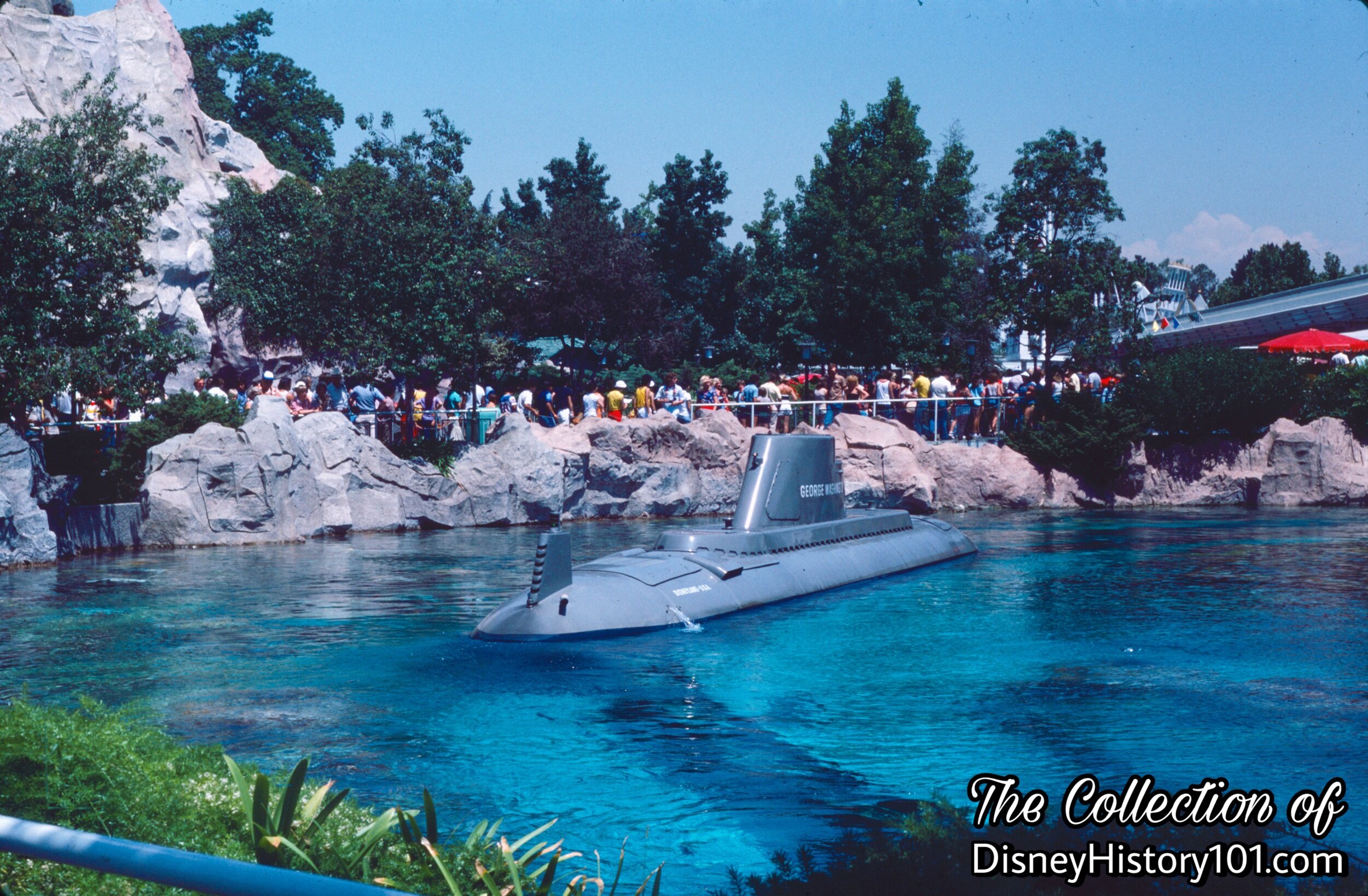
(August, 1980)
“All ahead, one-third.” Our journey aboard “scale replicas of the nuclear-powered Nautilus” will take us on an exciting cruise through the depths of the Seven Seas, where we will explore the “liquid space” of tropical waters and even the uncharted depths of the ocean’s floor en route to the North Pole (all in about eight minutes and 15 seconds). It’s hard to believe that the entire journey is a length of 1,365 feet!
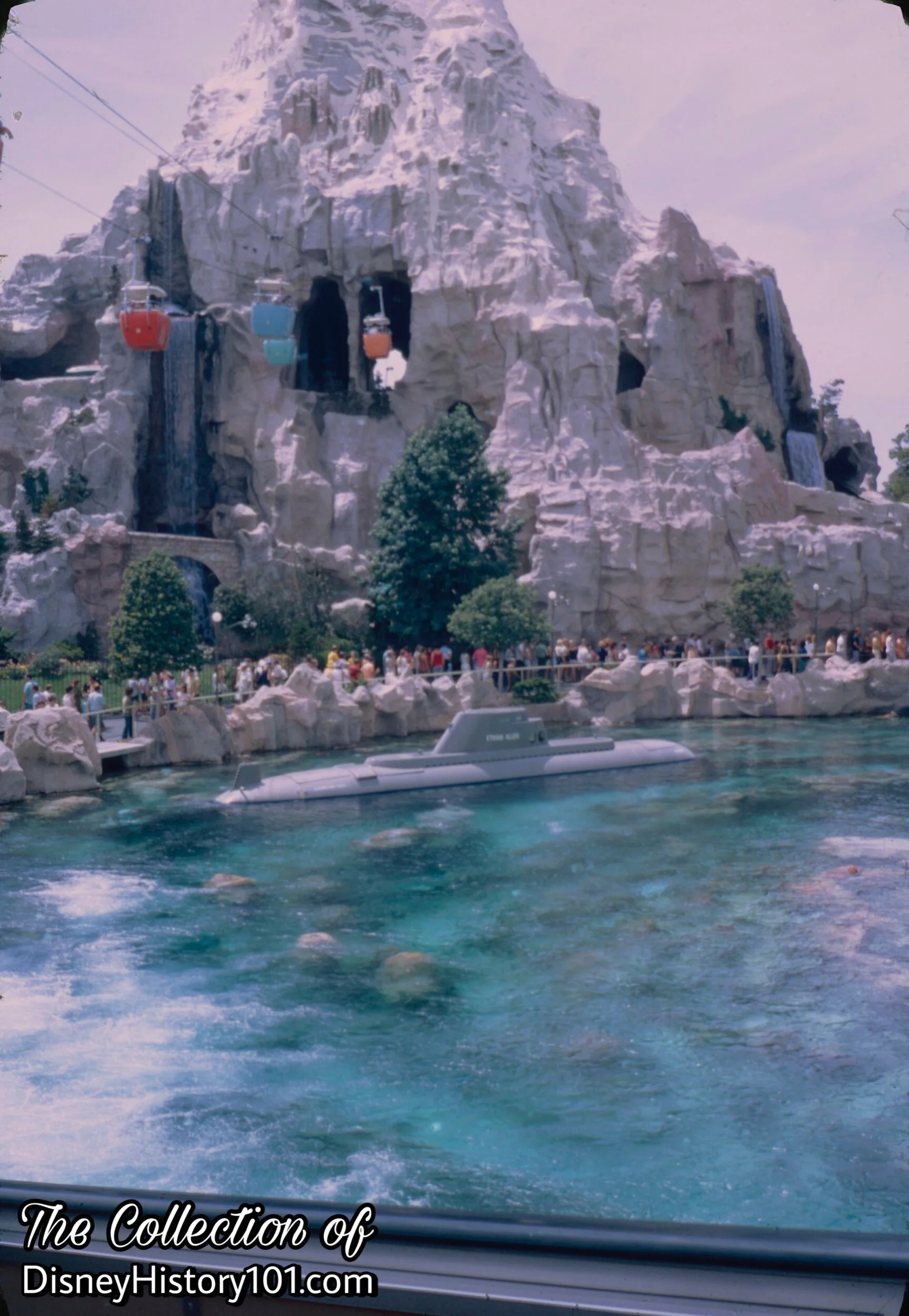
(August, 1971)
Departing Boats circumnavigate the waters of the Front Lagoon in the distance, and give us a “surface” idea of the Submarine Voyage that awaits us. It will be an entirely different view, from below.
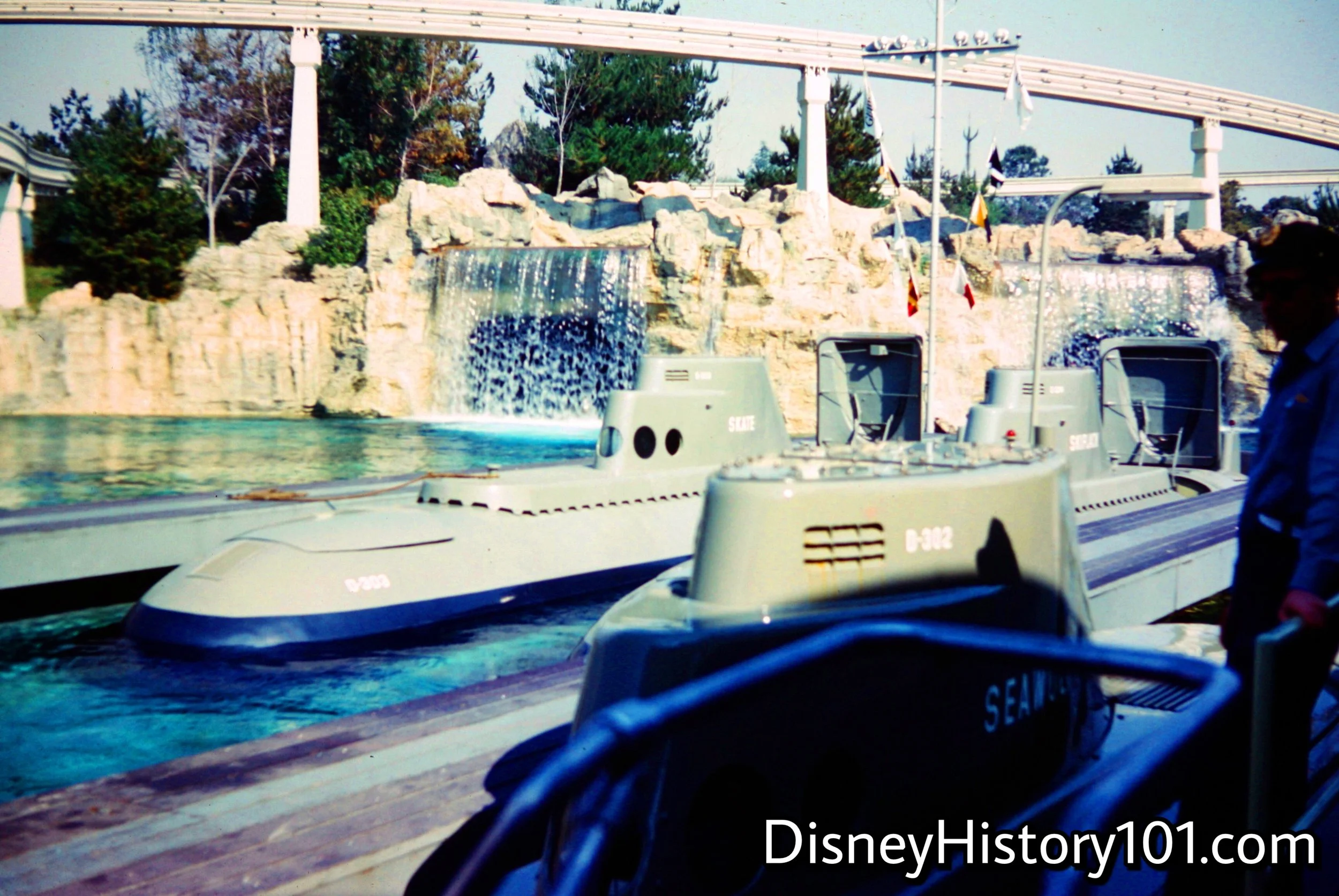
INTERMEDIATE DOCK
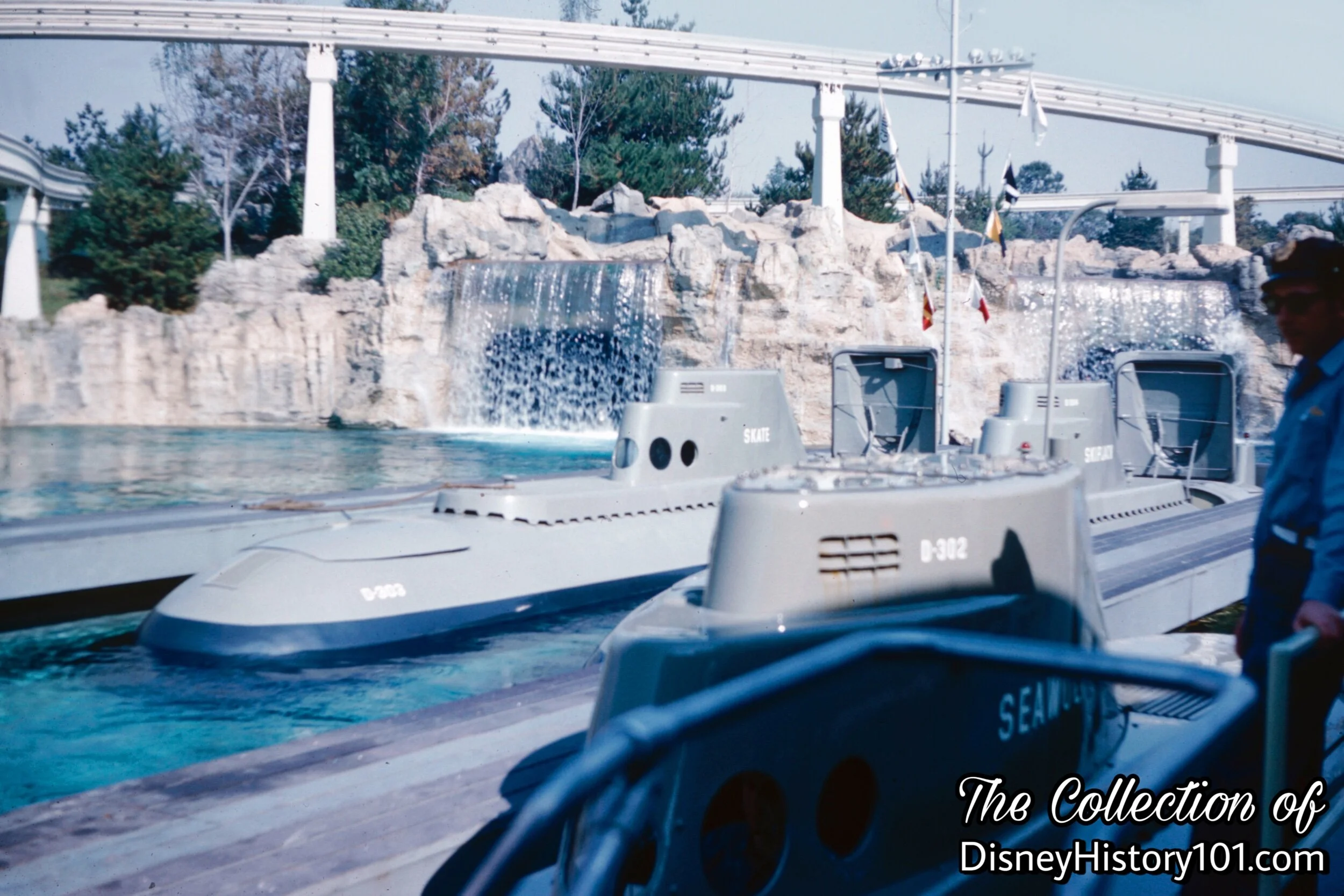
Guests board submarines here - on the lower deck of the Disneyland Naval Yard in Anaheim, California! Eight ($80,000) hulls were constructed in Todd Shipyards of San Pedro, California - creating “one of the world’s largest peacetime submarine fleets”. The eight vessels had appropriate names which changed during the 1987 refurbishment. But originally, the submarines had names like Seawolf (D-302)…
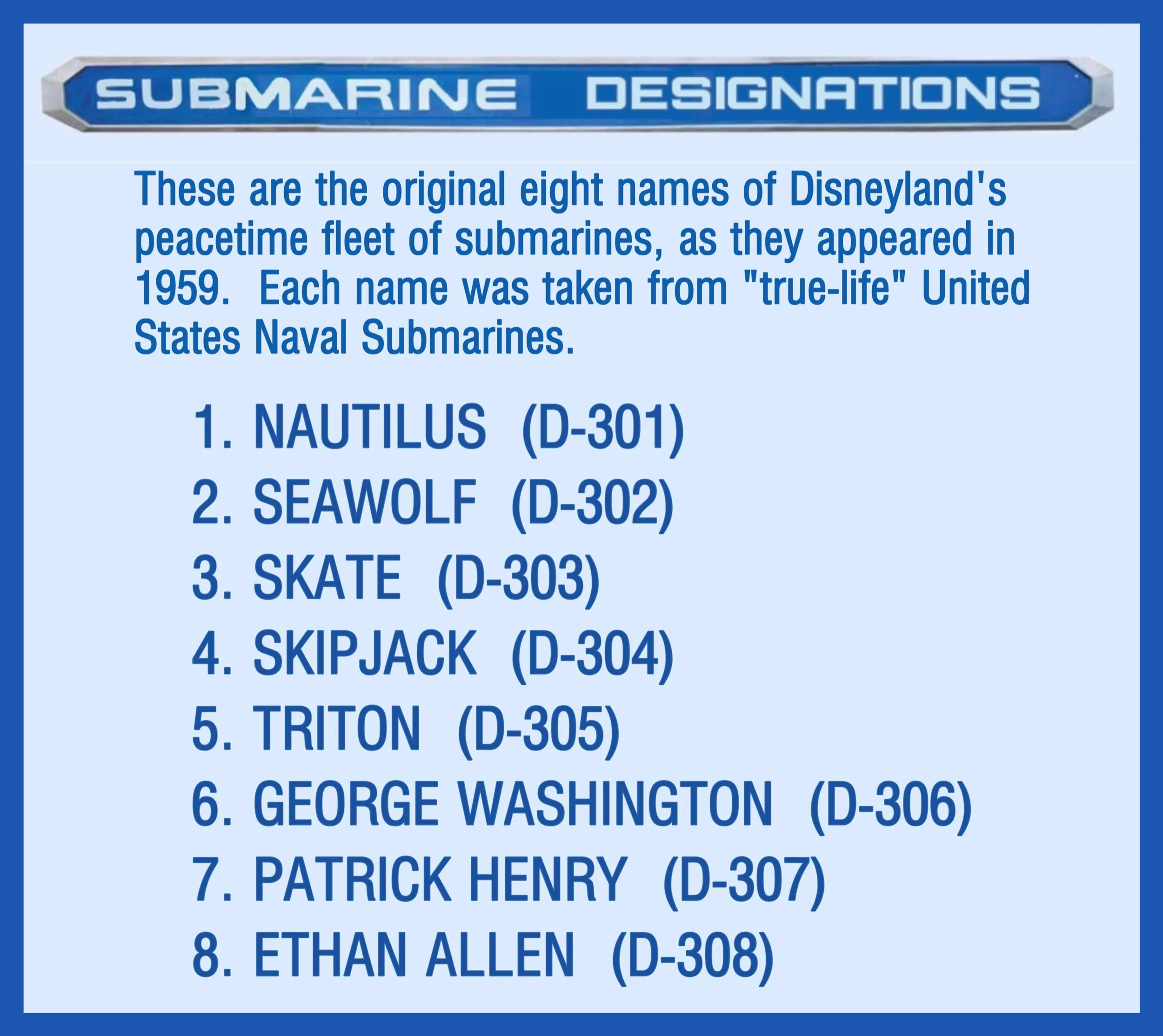
The names of the Navy gray boats were painted in white near the aft portion of the sail (that area where Disneyland’s submarine operator sits).
As mentioned on the chart (above), each of those eight original submarine names were derived from “true-life” United States Naval Boats.
Of particular note is the name of the Nautilus, which (though borrowed from a mollusk) was direct homage to the 3,000-ton atomic-powered and armed USS Nautilus, and not the Nautilus of featured in Walt Disney’s 20,000 League Under the Sea. The USS Nautilus made headlines when it had recently completed “Operation Sunshine” - a transit of the North Pole (in the name of scientific expedition) - completed on August 3, 1958. It’s name was taken from the very first (21-foot-long, iron) Nautilus, constructed by Robert Fulton in 1800.
The other boats have counterparts. The Seawolf was the second nuclear-powered undersea craft. The Triton circumnavigated the world under the water for the first time, while the Skate was the first undersea craft to cross the Atlantic twice without submerging. Finally, the Skipjack was the name of the United State’s first attack submarine.
On the attraction’s opening day (approximately 3:30 pm), a Submarine Dedication Ceremony took place. Rear Admiral Charles C. Kirkpatrick and Mrs. Mildred Stuart Nelson (former WAVE, and wife of the U.S.S. Nautilus’ Chief Machinist Stuart N.M. Nelson) christened Disneyland’s Nautilus (D-301)! As the USS Nautilus became a symbol of peaceful nuclear energy, so Disneyland’s submarine fleet gained the reputation of “the world’s largest fleet of peacetime submarines.”
By June 17th, 1961, the subs had seen their 5 millionth guest. Some of them were occasionally featured in promotional media. For instance, in September of 1962, Max Stewart, Larry Clemmons, and Art Crookshank (of the Walt Disney Studio) filmed and shot scenery in which they “cued the Nautilus, the Ethan Alan, with the Red and Blue Monorails” for Studio Production #3185.
Numerous Disneylanders supported the Submarine Voyage stage at the Disneyland show, like Earl Dandie (c.1962).
By the October of 1962, the Submarines were operating with 5 boats during weekdays and 8 boats on weekends. This was common during winter operating schedules.
Up to October 2, 1971, 35,213,561 guests had stepped aboard Disneyland’s Submarines for a trip en route to the North Pole.
Now, let’s see how many other submarines we can identify, from the walkway near the Front Lagoon!
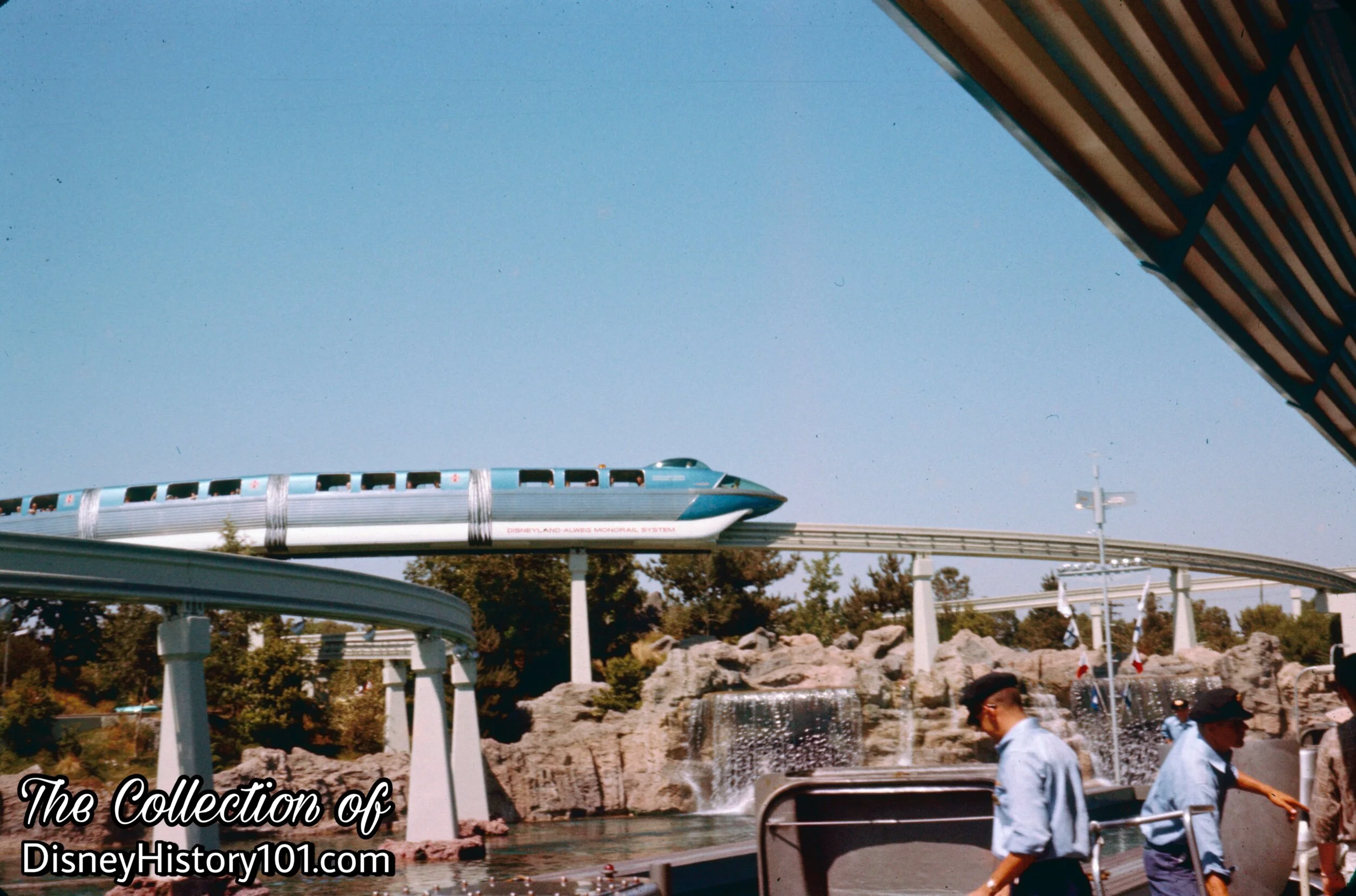
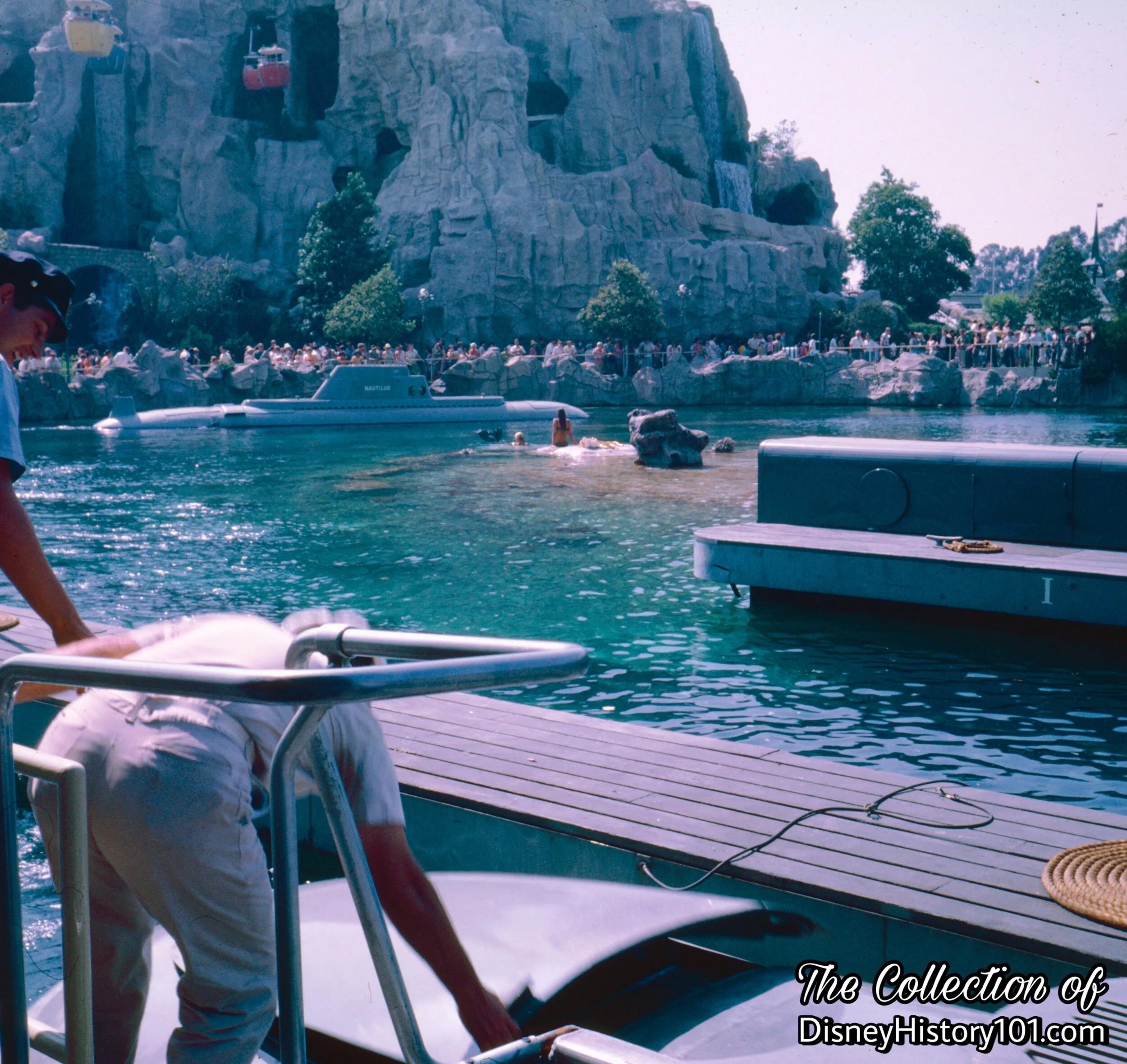
A couple of operators perform “shore duty” on the Loading Dock.
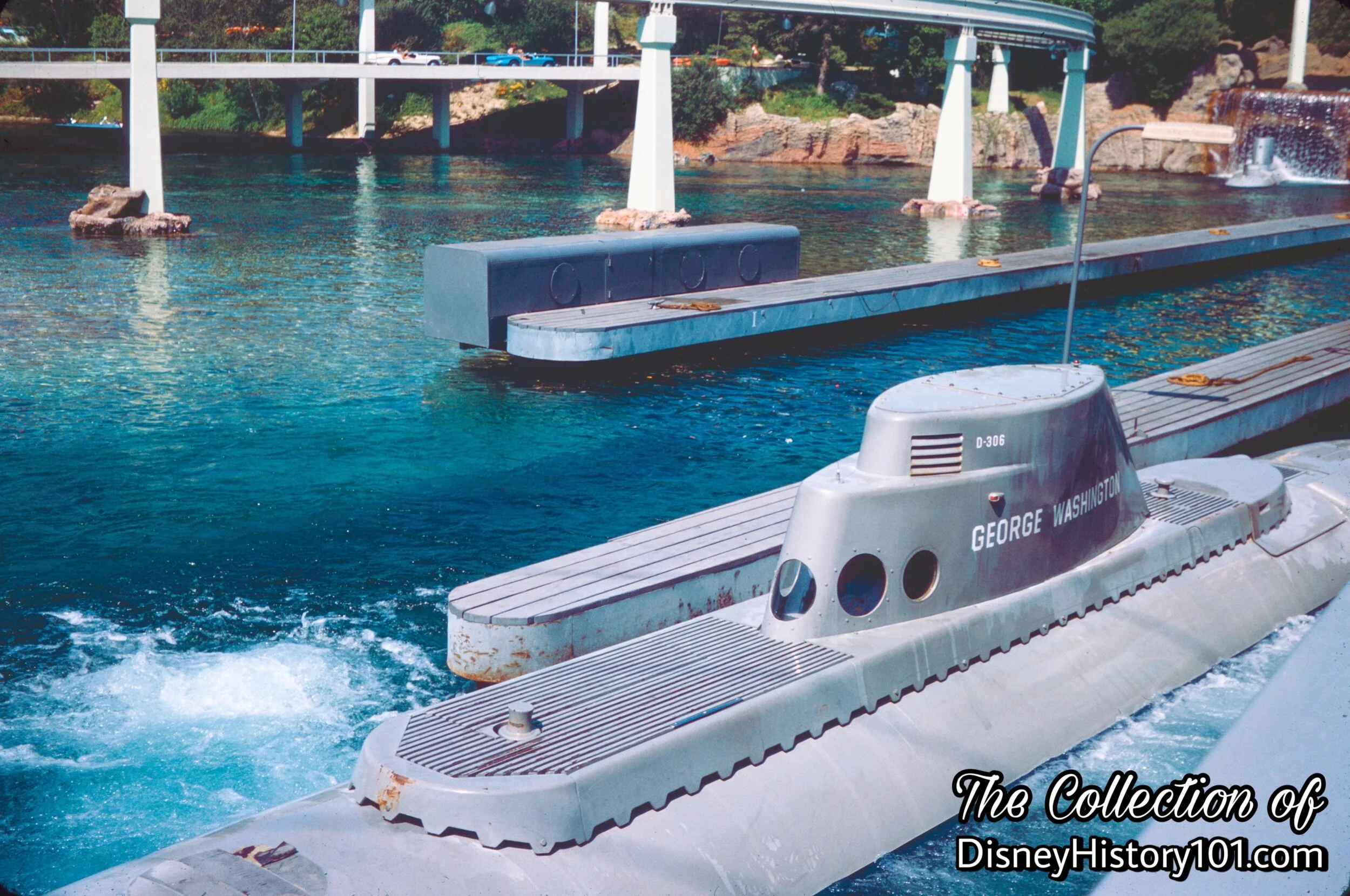
George Washington “All ahead one-third!”, 1967.
As the bridge is cleared and the hatches are secured, the Captain greets us : “This is the Captain speaking. Welcome aboard. We are now underway and proceeding on a course that will take us on a voyage of exploration through ‘liquid space’.”
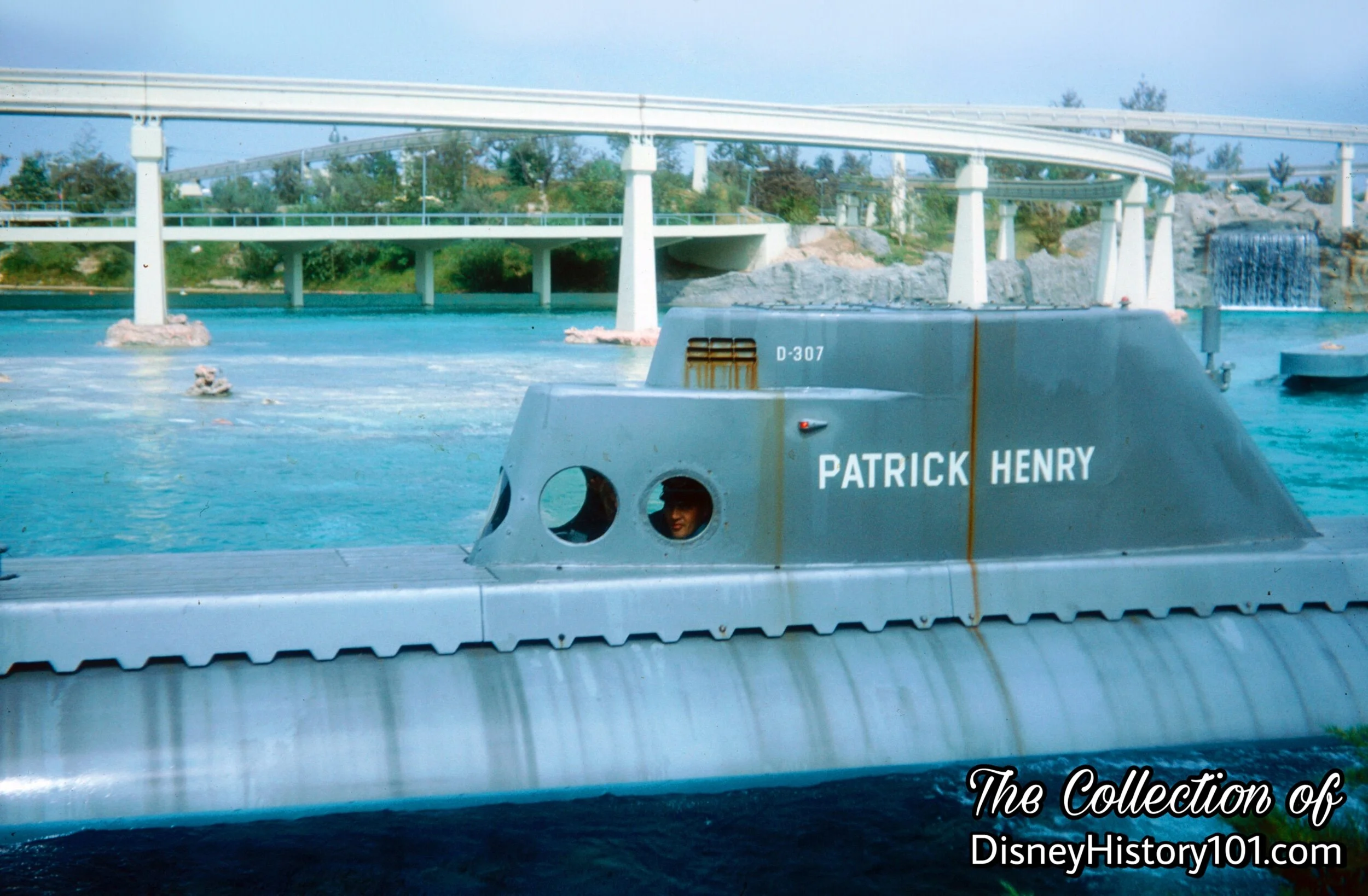
Patrick Henry and Pilot, 1959.
Disneylander and “55er” Jack Taylor recalled: “One summer on the Submarine attraction there was a sudden summer storm, with thunder, lightning and rain. There came a big loud thunderclap and a little kid looked up at his mother and quivered, ‘Mommy, how did THEY DO THAT?’”
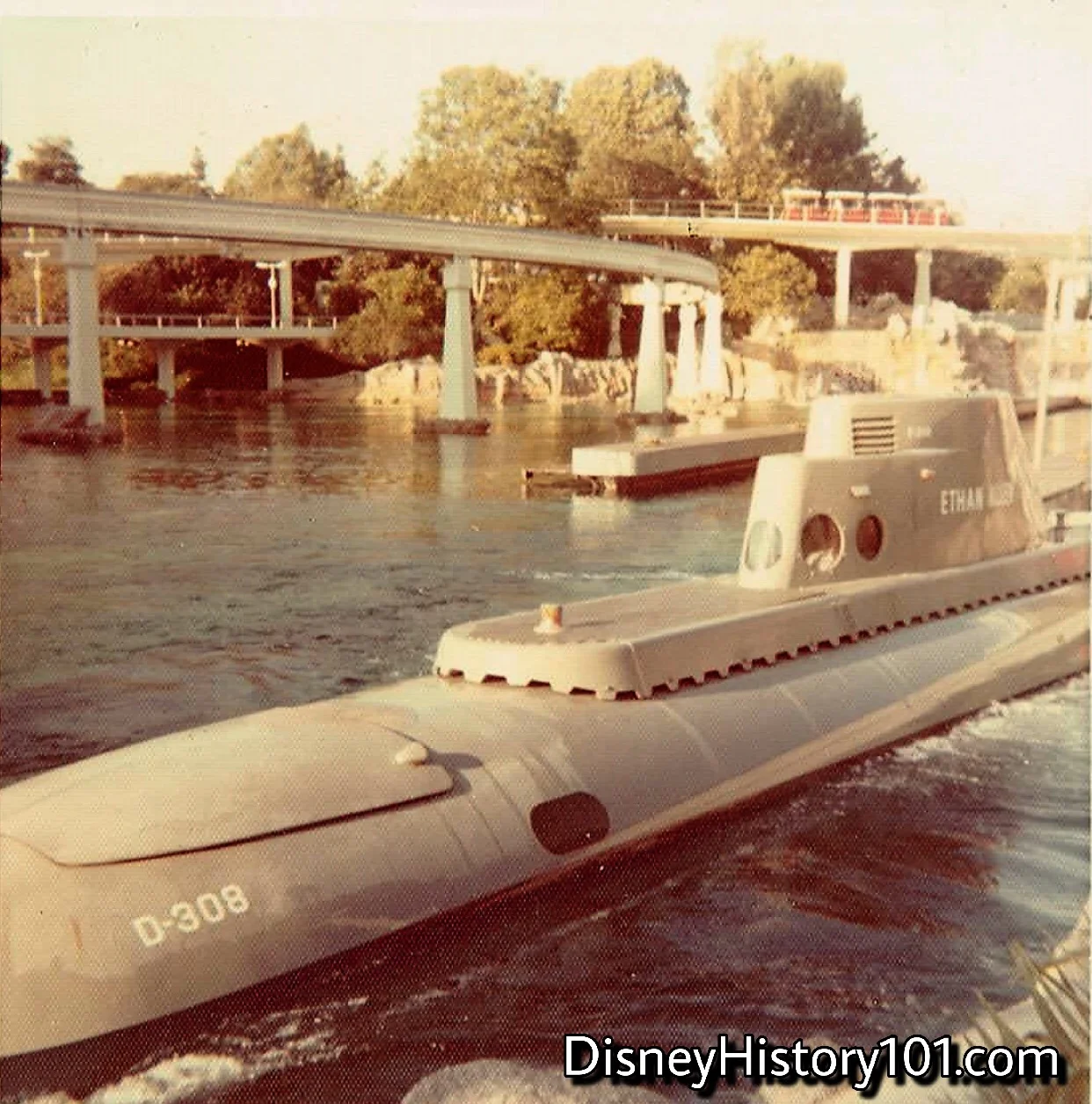
Ethan Allen (D-308)…
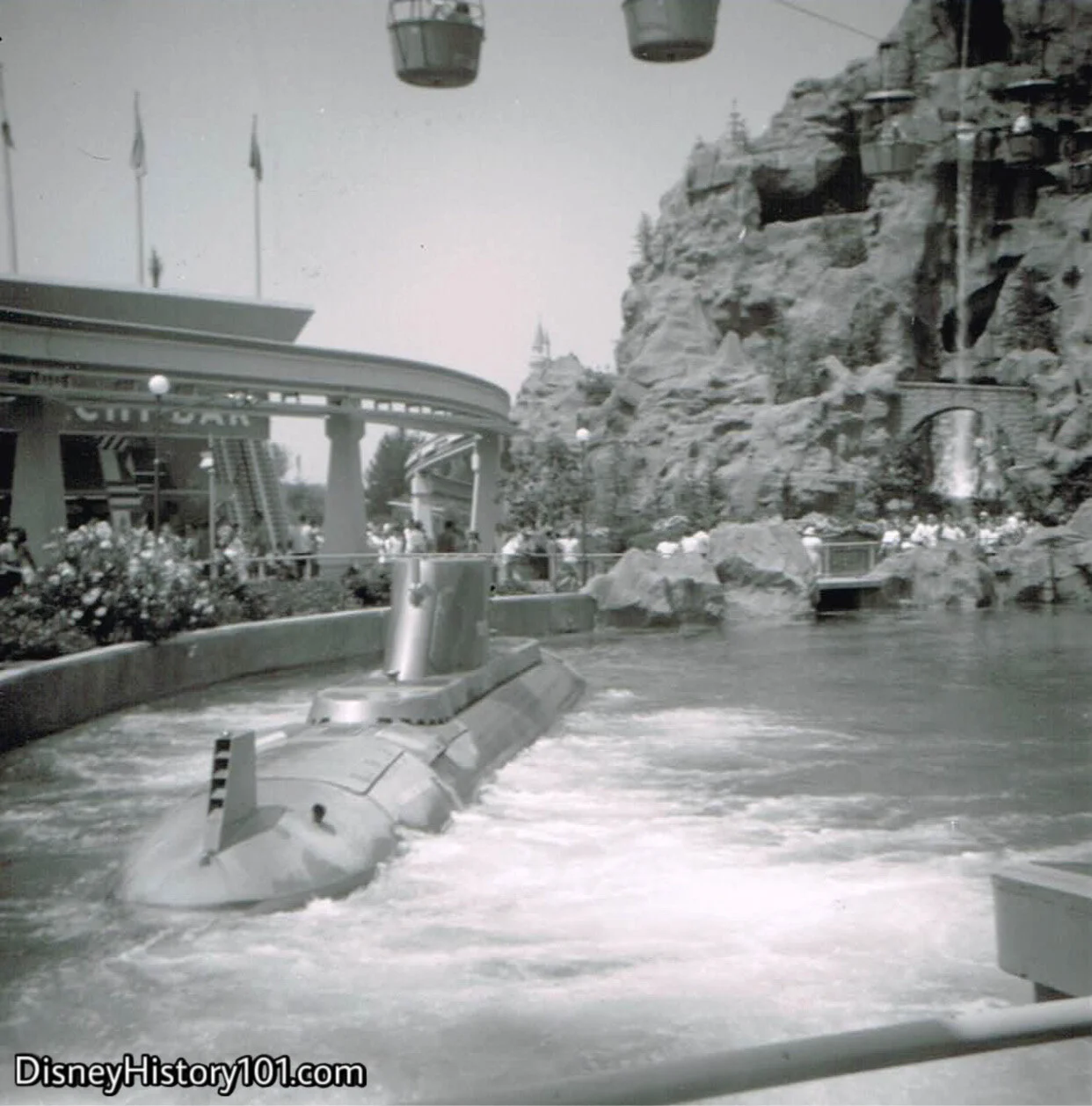
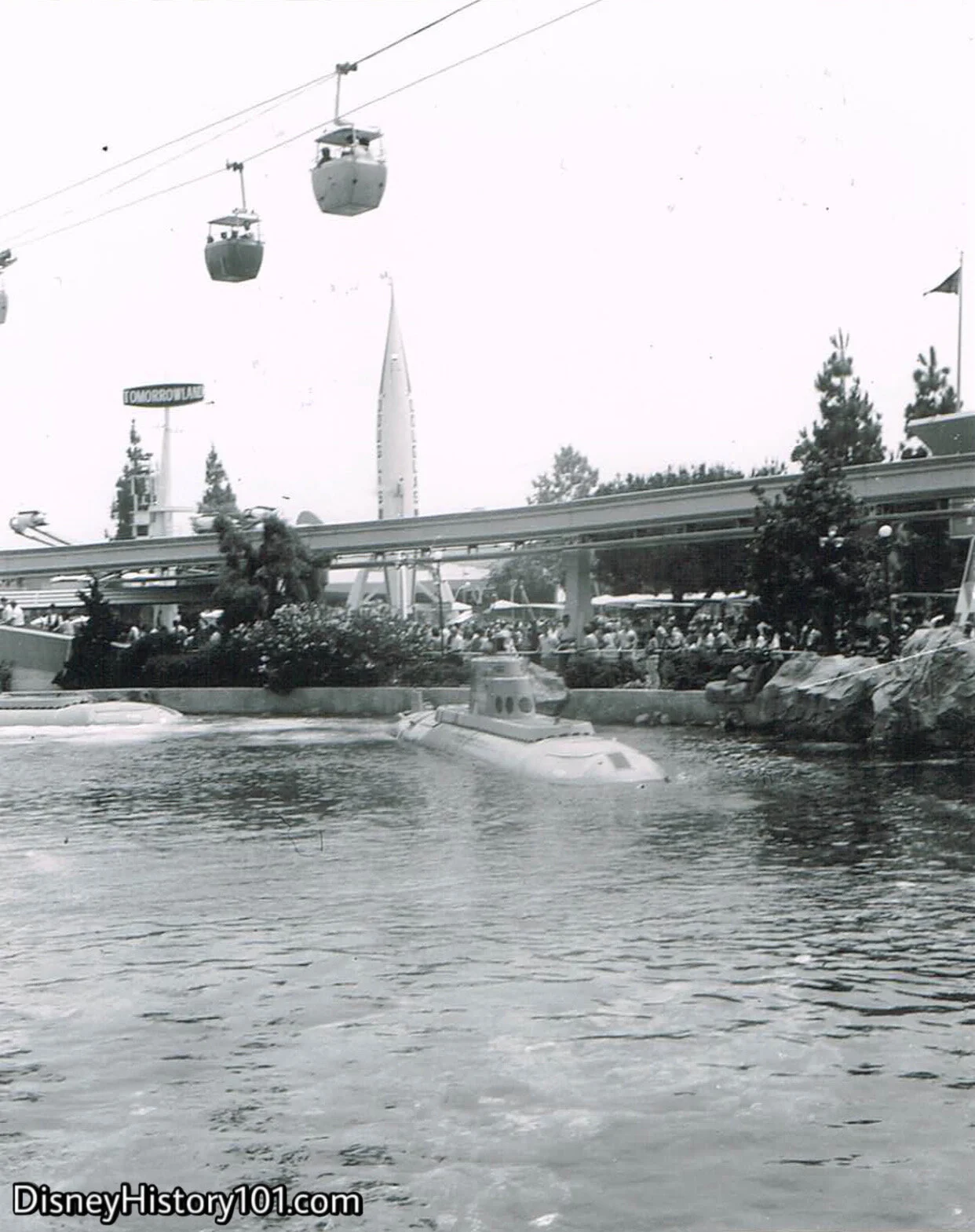
“All ahead one-third!” A “dense curtain of small bubbles rush toward the surface of the water” and the hull, as the boats begin to “dive.” Submarines head into the Front Lagoon, and yet the conning towers never submerge. Below the water, passengers catch their first glimpse of a Tropical Reef. Adjacent fences near the Yacht Bar afford the opportunity to watch passing submarines in the Front Lagoon.
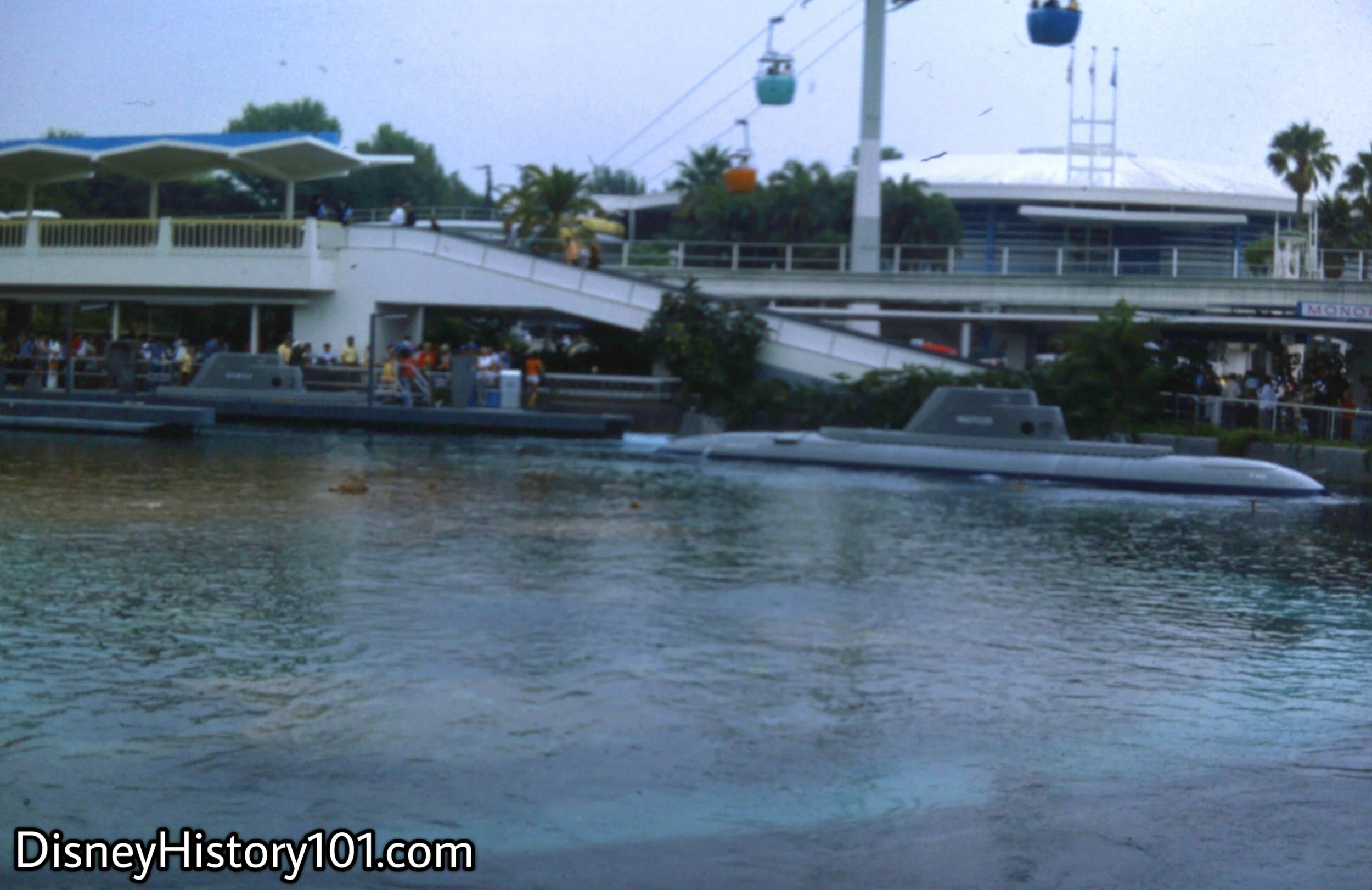
FRONT LAGOON
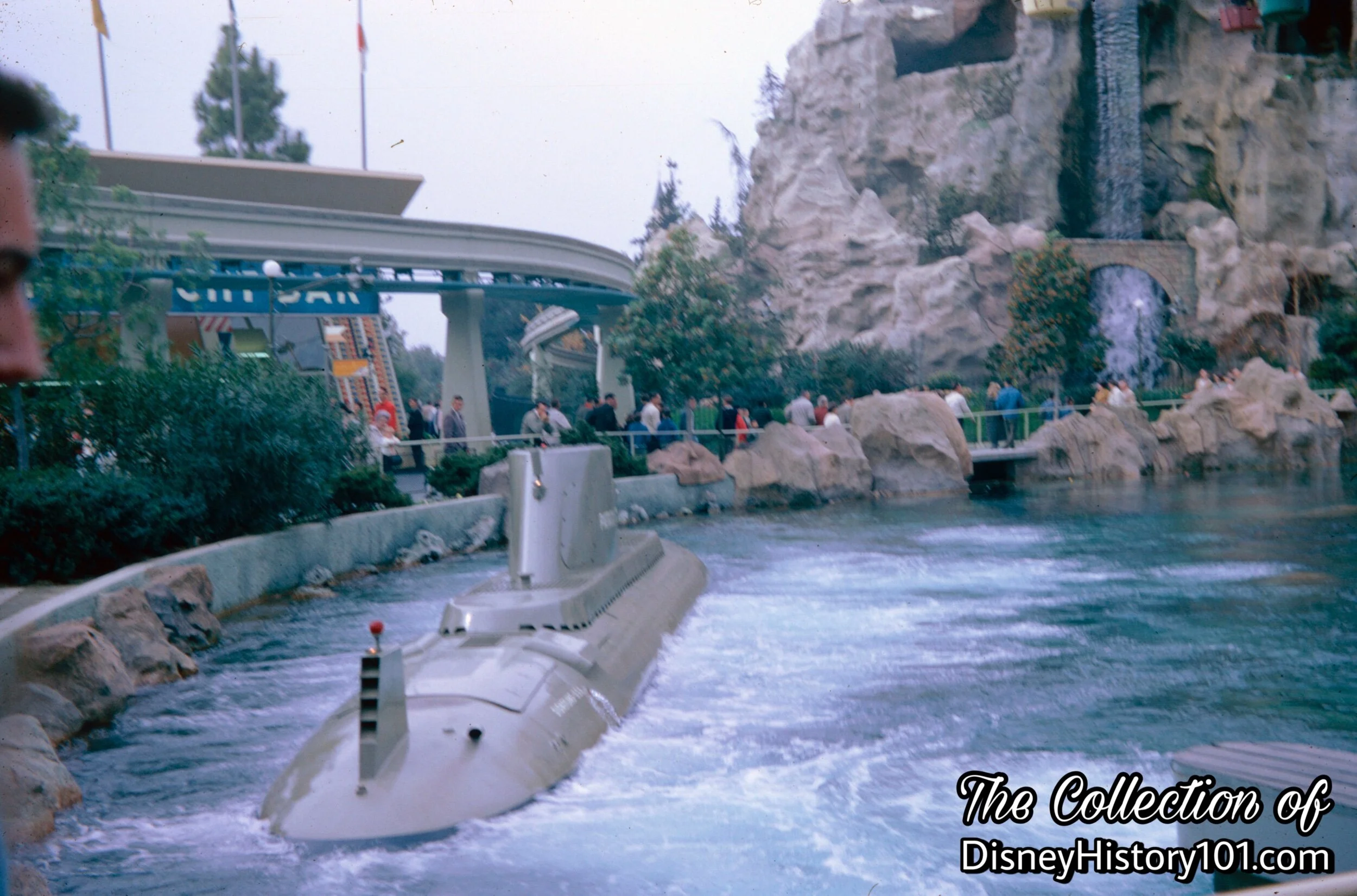
FRONT LAGOON (1965)
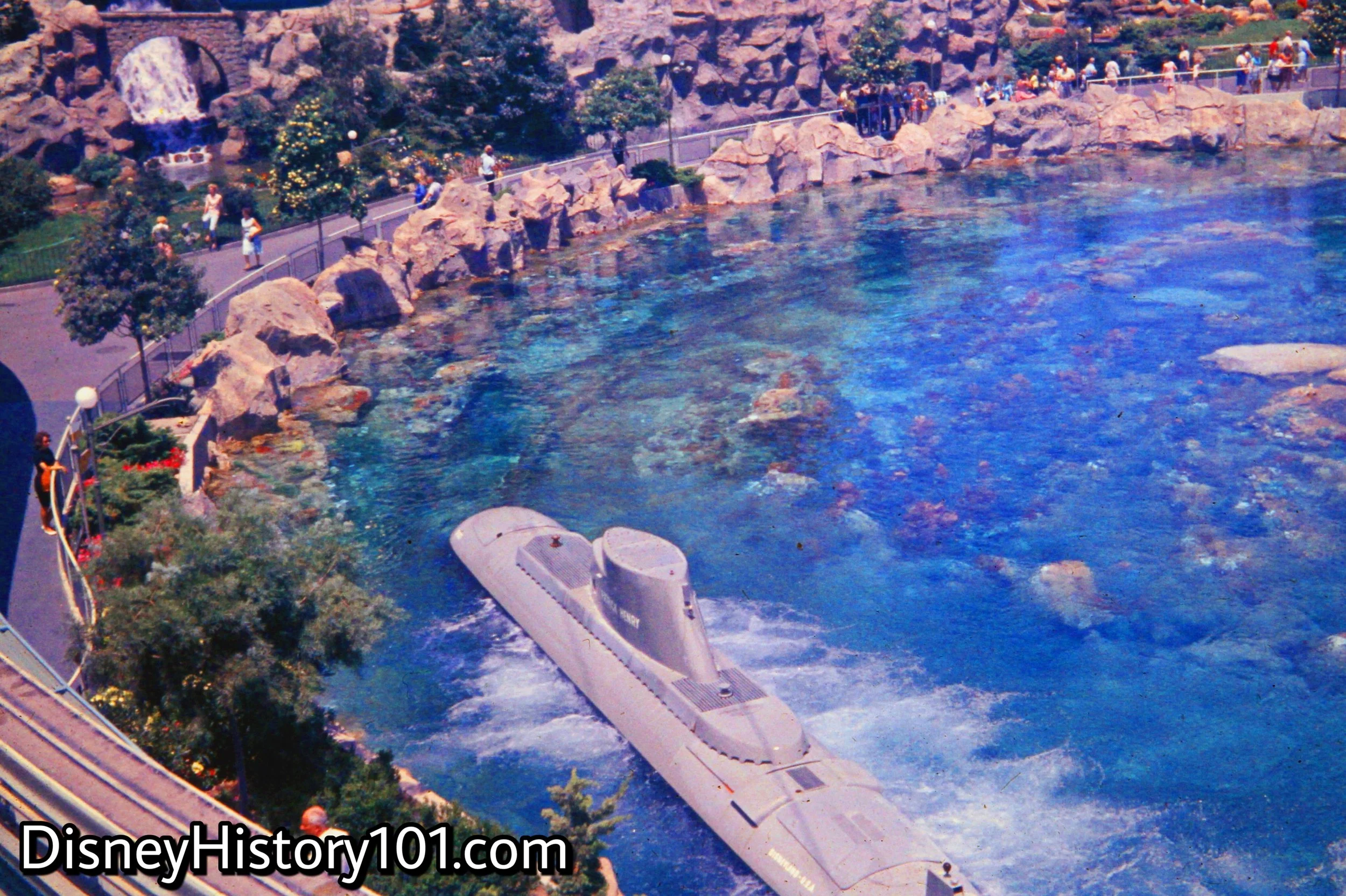
1963.
“Cast off forward. Cast off aft. All ahead one-third.”
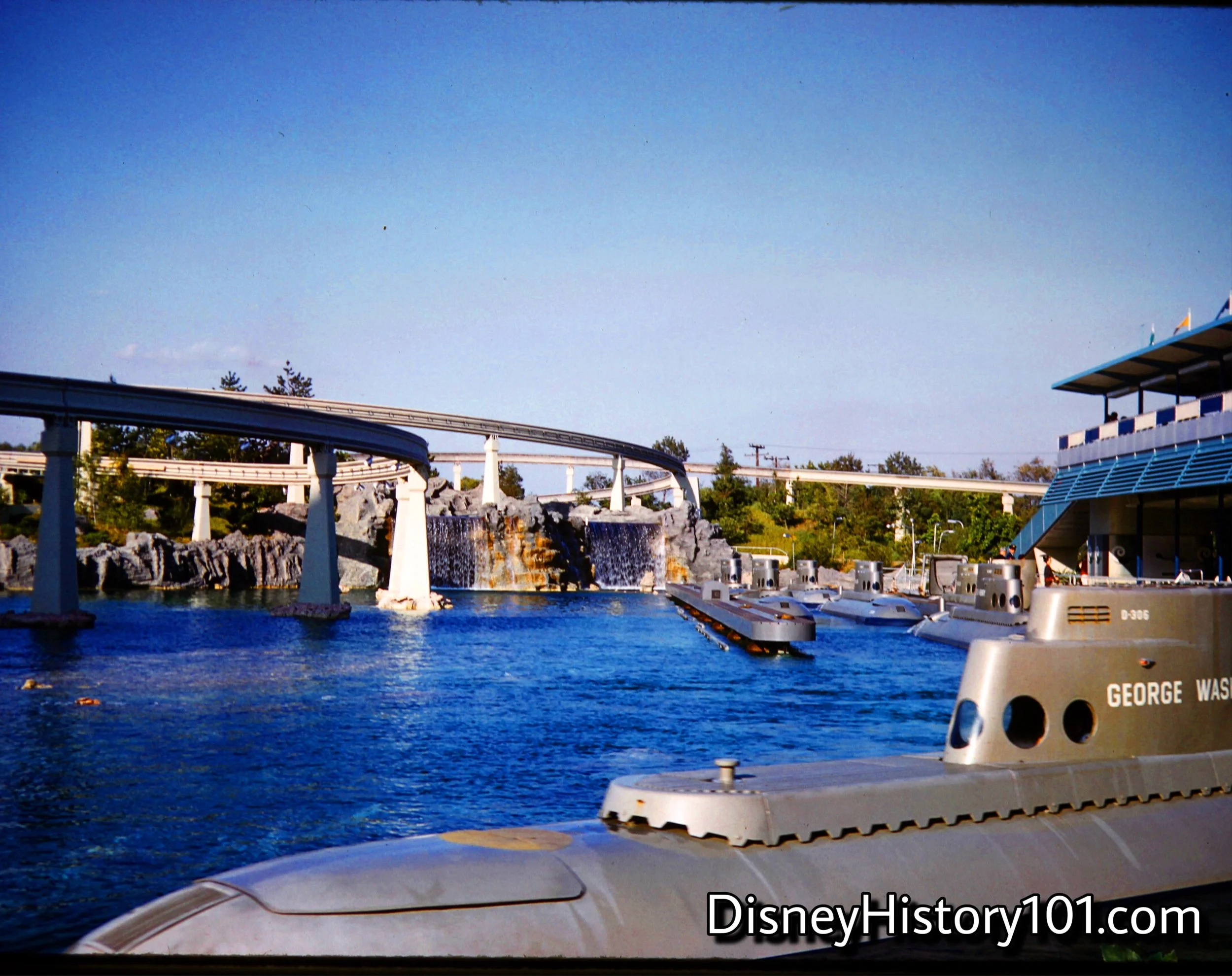
1960
George Washington (D-306).
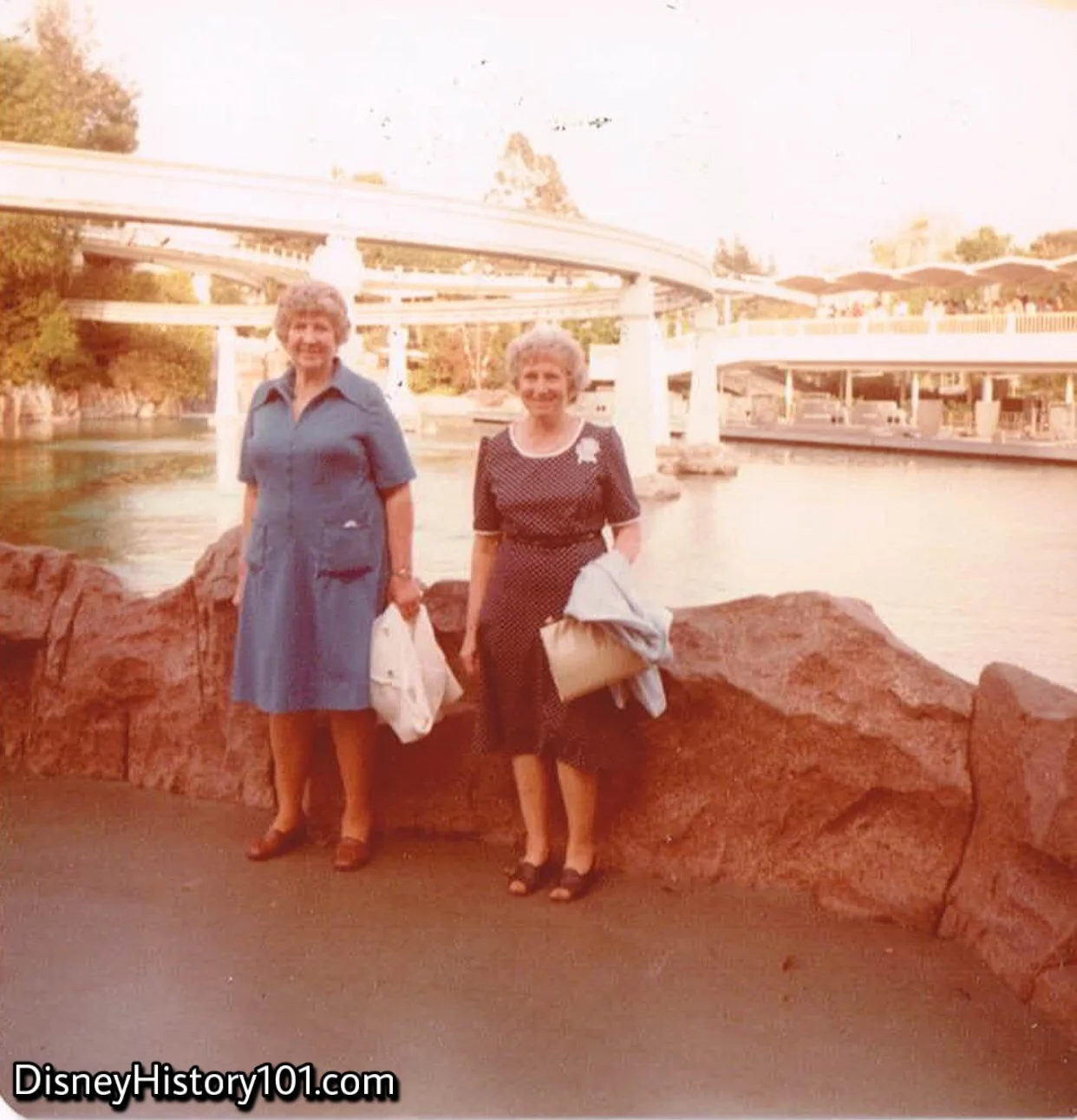
The walkway between the Matterhorn and the Submarine Lagoon has always been a favorite “Photo Spot” for guests hunting for a picturesque backdrop.
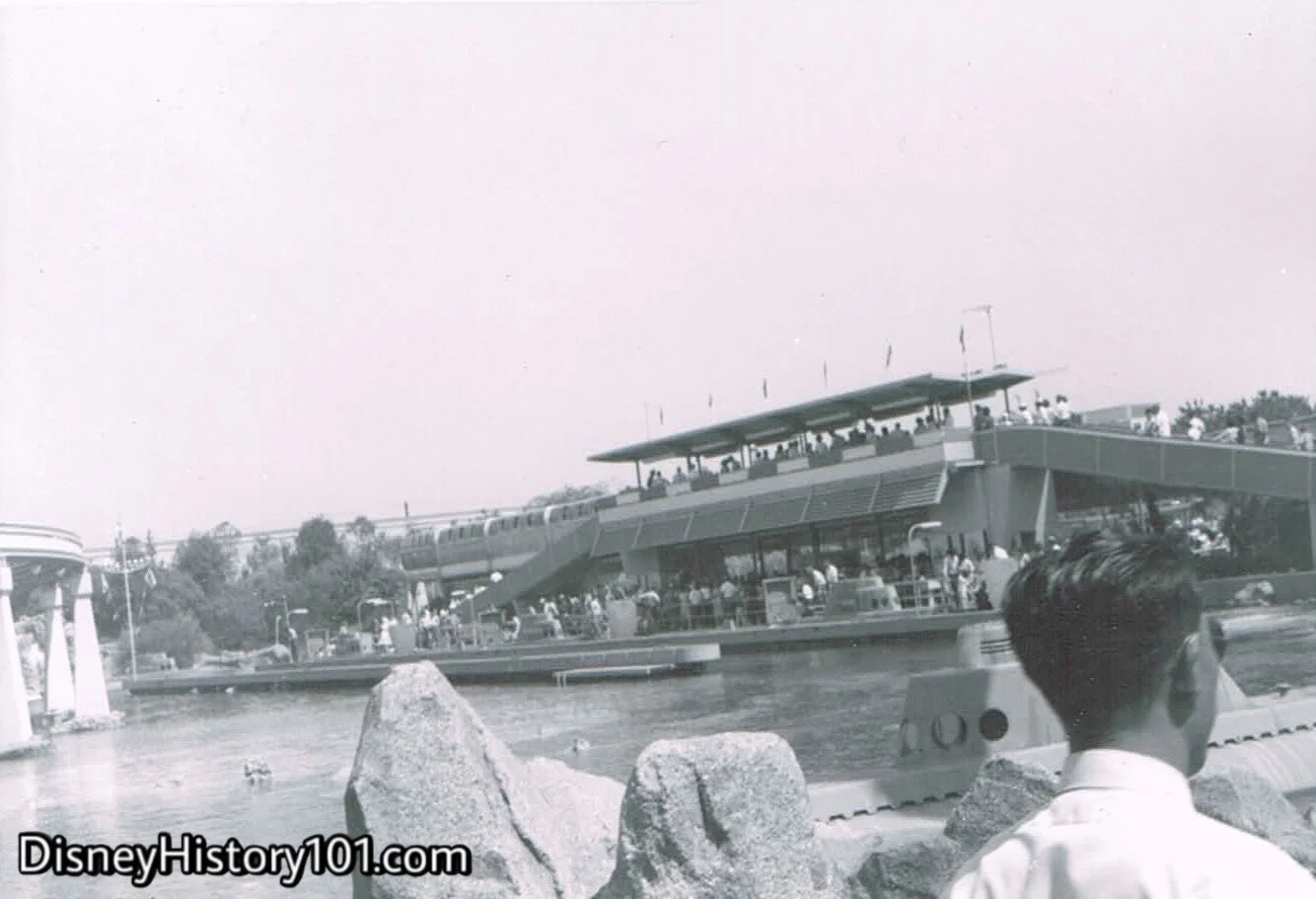
FRONT LAGOON
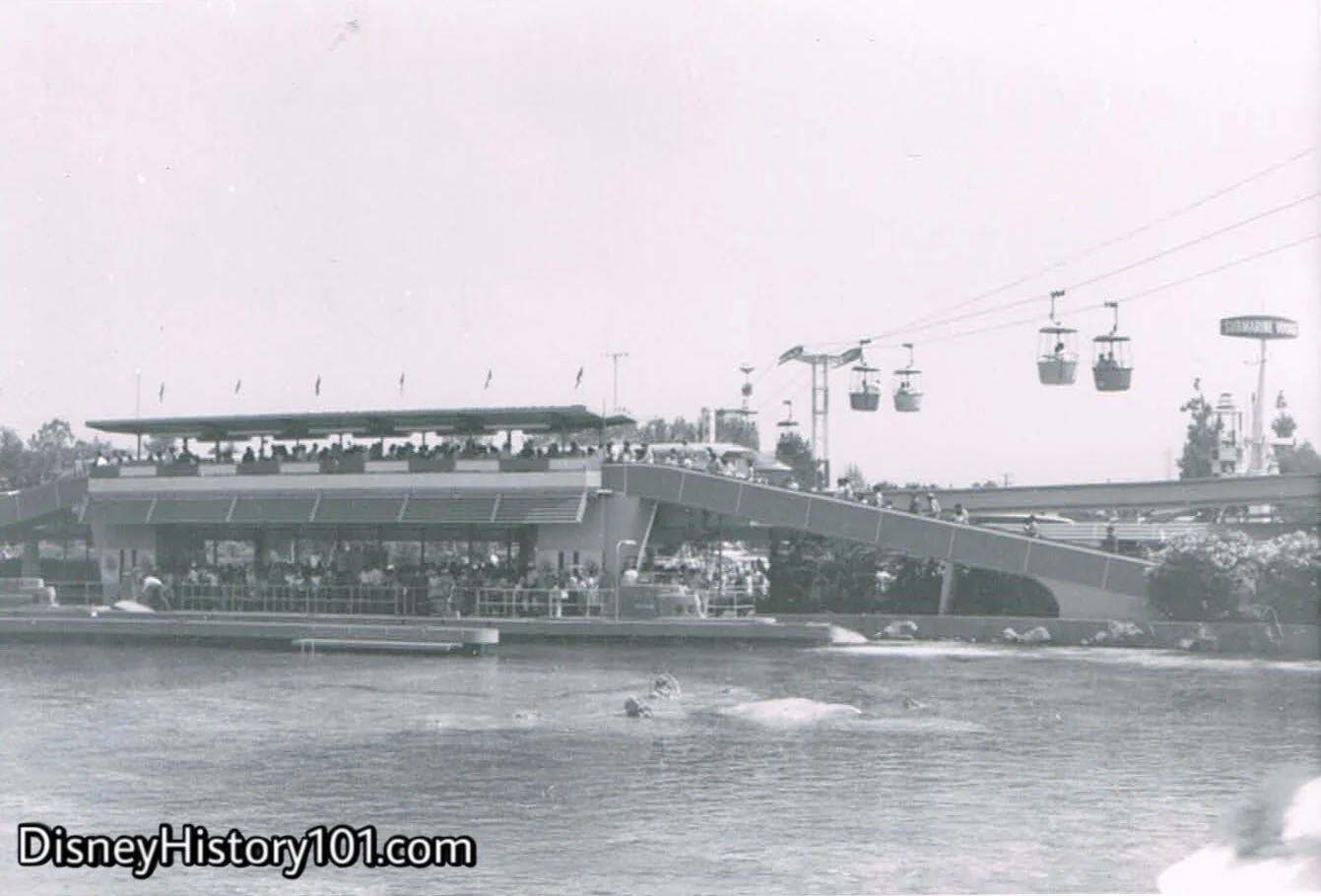
FRONT LAGOON
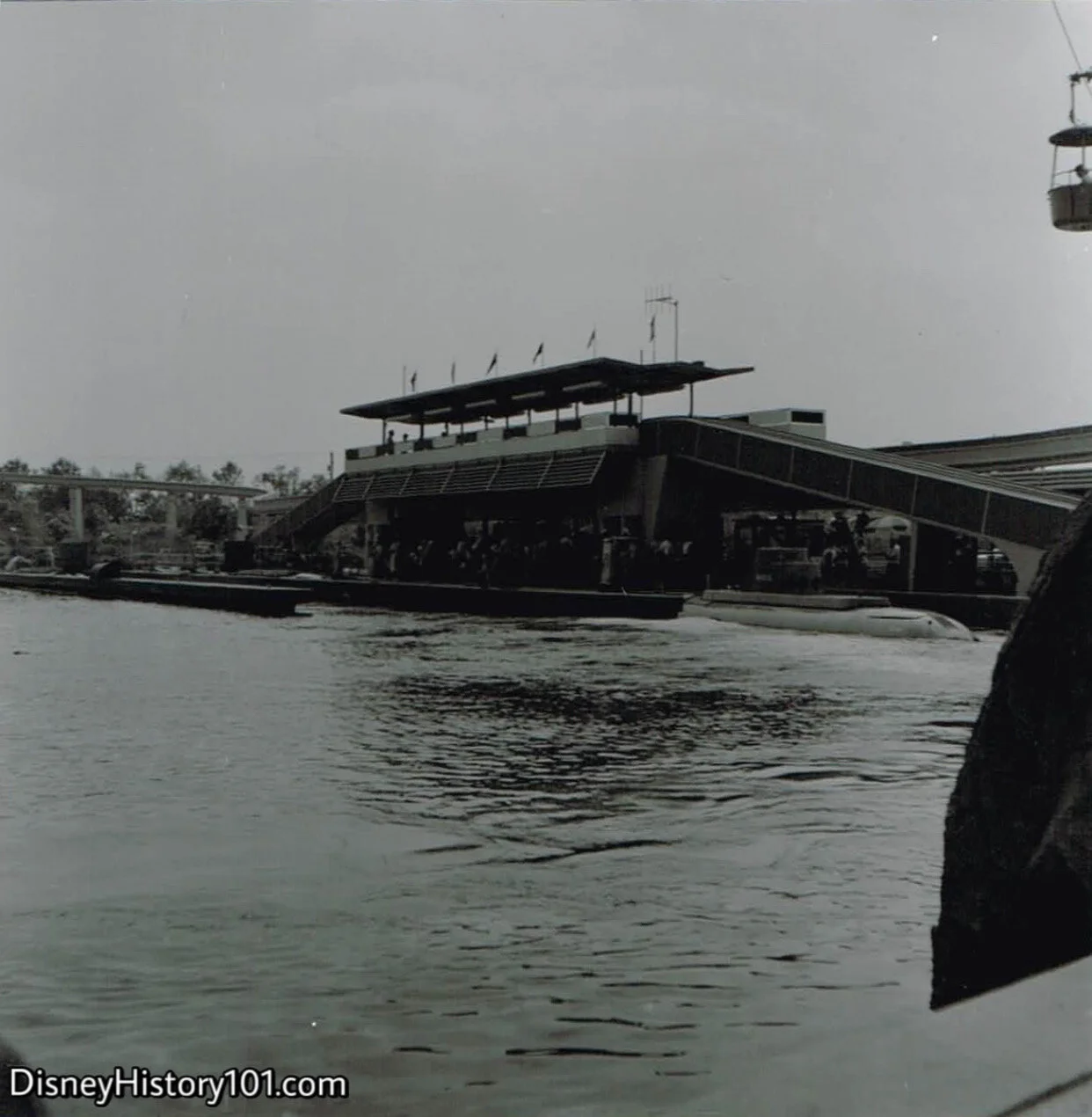
FRONT LAGOON
There are no submarines at the Storage Dock today!
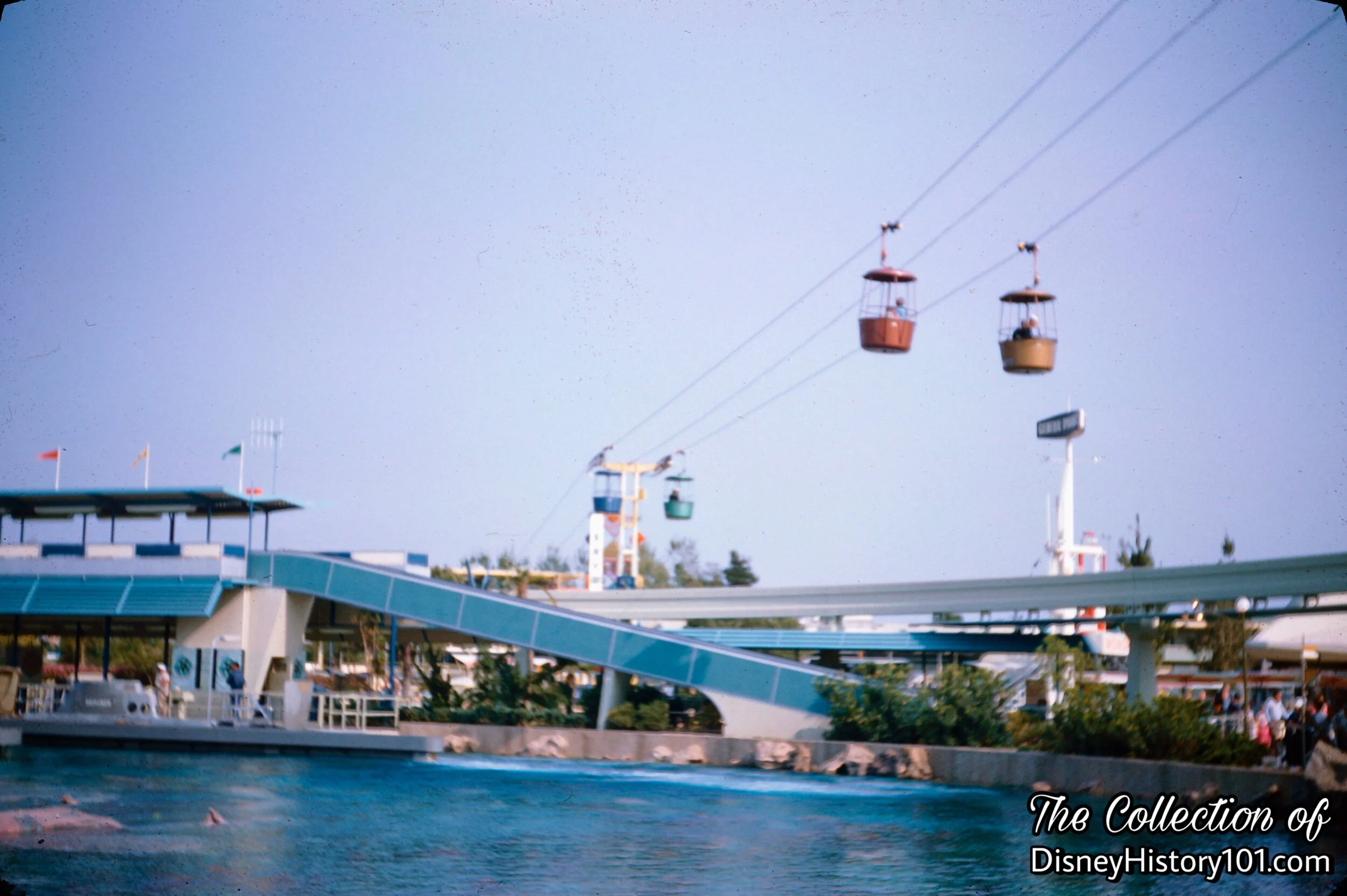
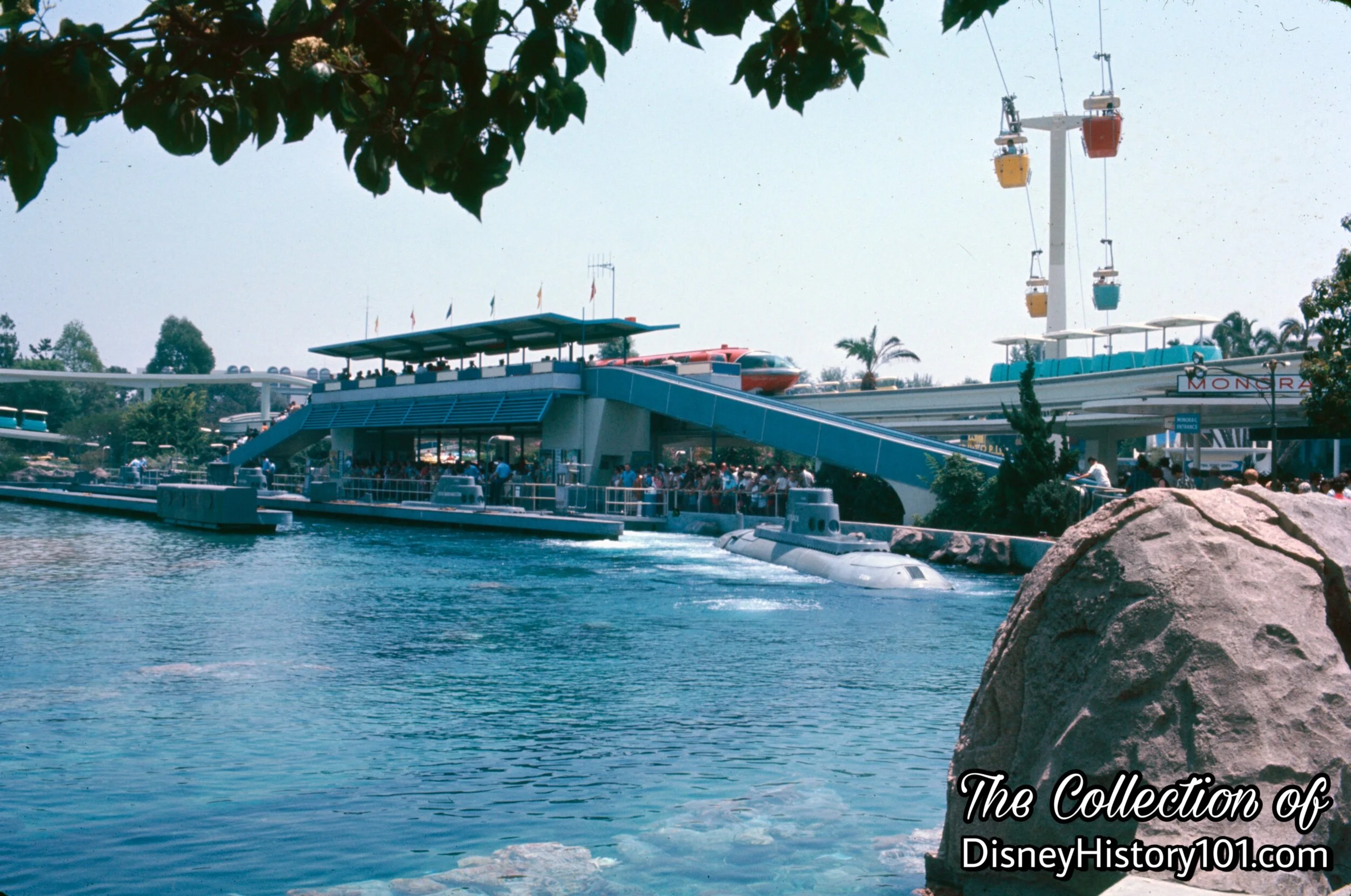
FRONT LAGOON (1967)
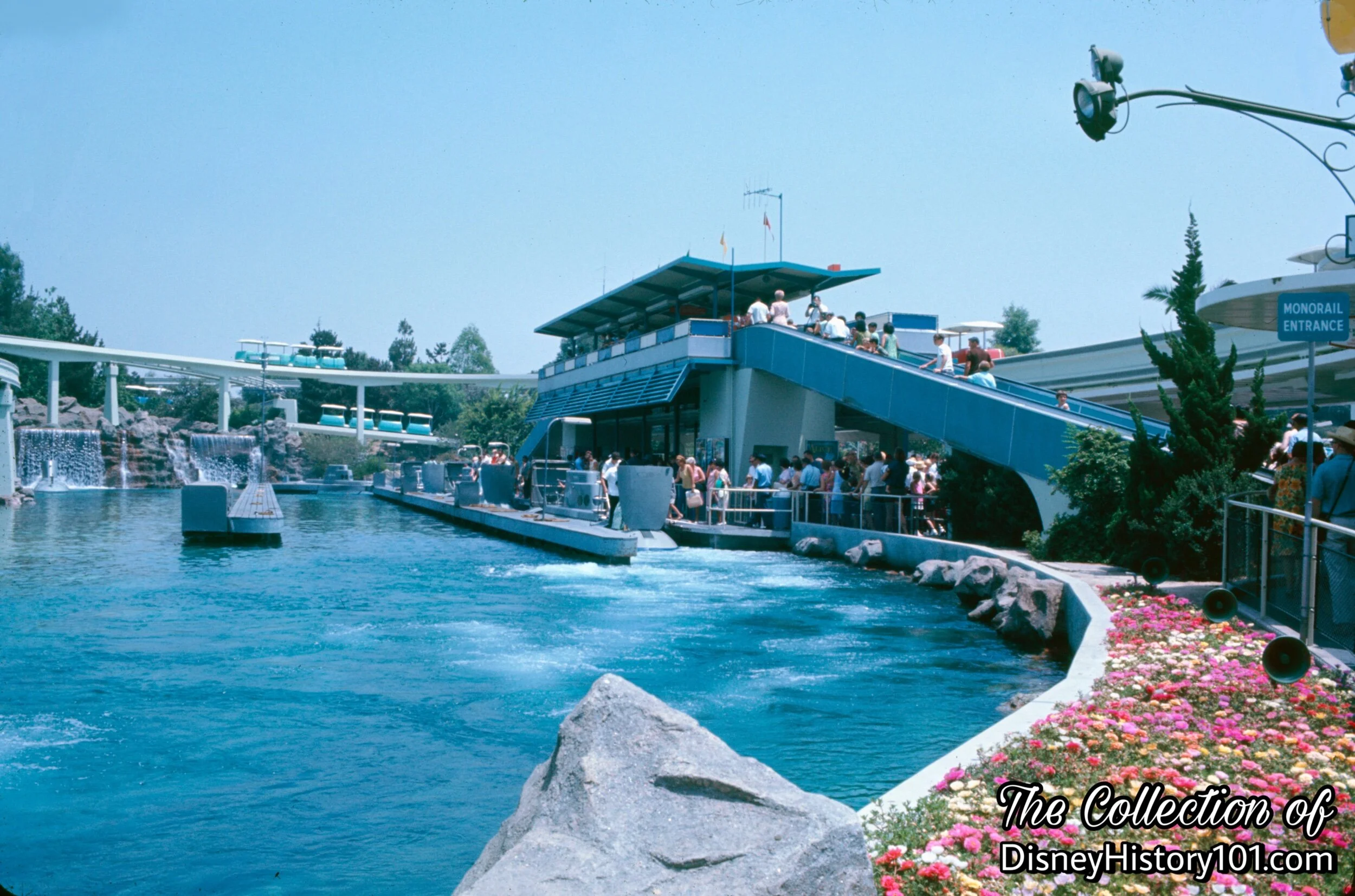
Front Lagoon during a "peak period," (1967)
By October of 1959, flowers were purchased at a total cost of $2,735.46
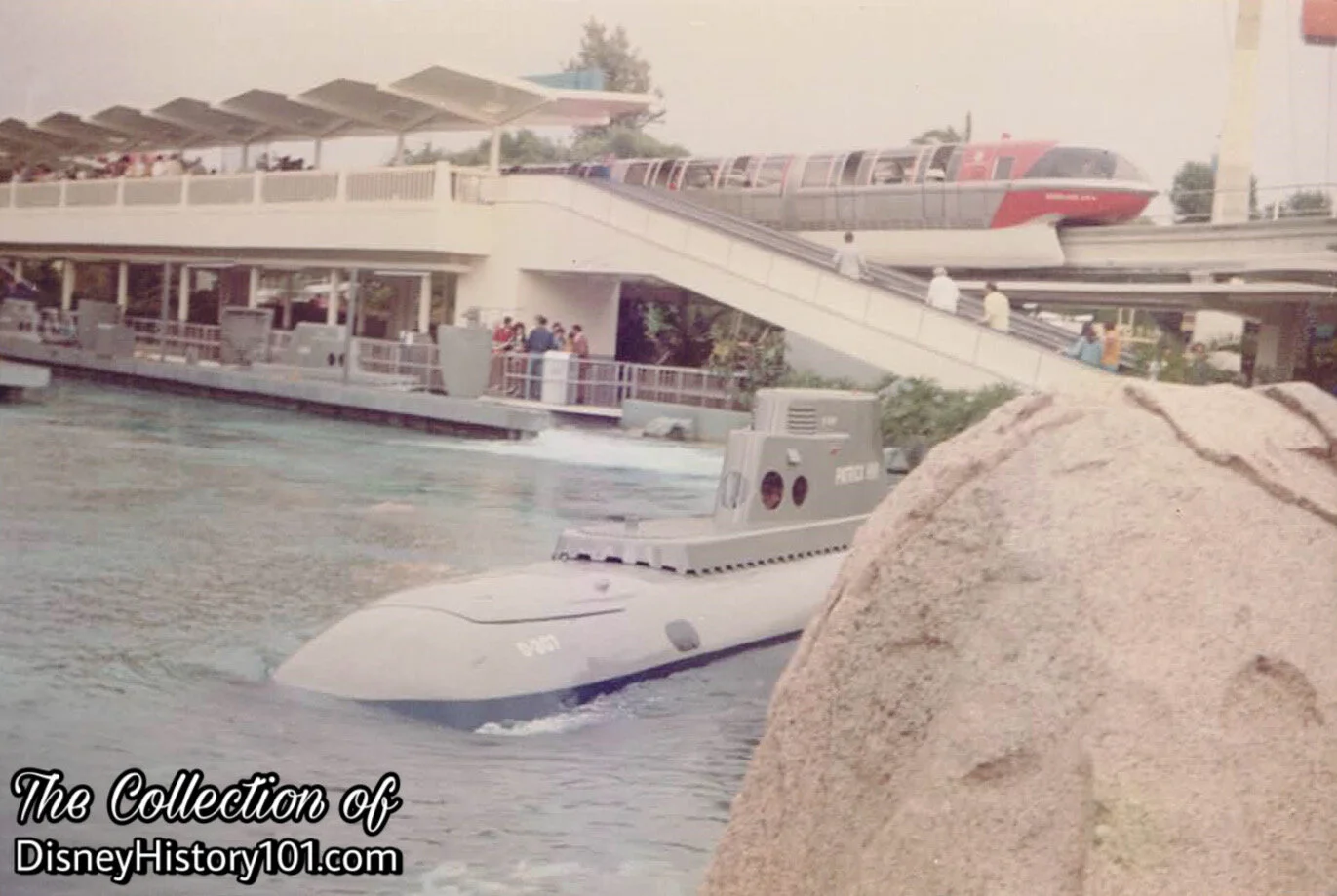
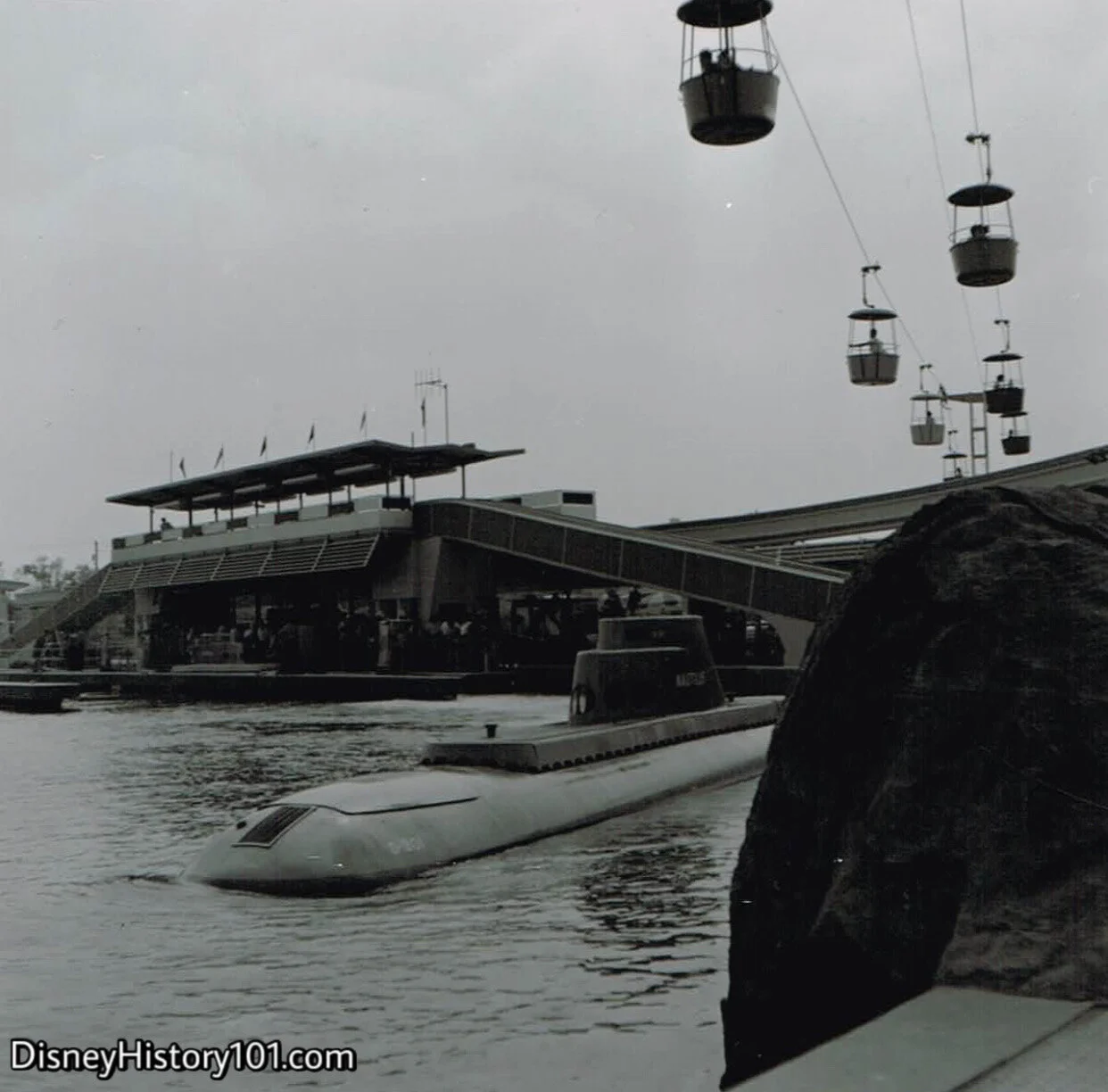
FRONT LAGOON
Our first submarine that comes along is a little hard to identify at this angle.
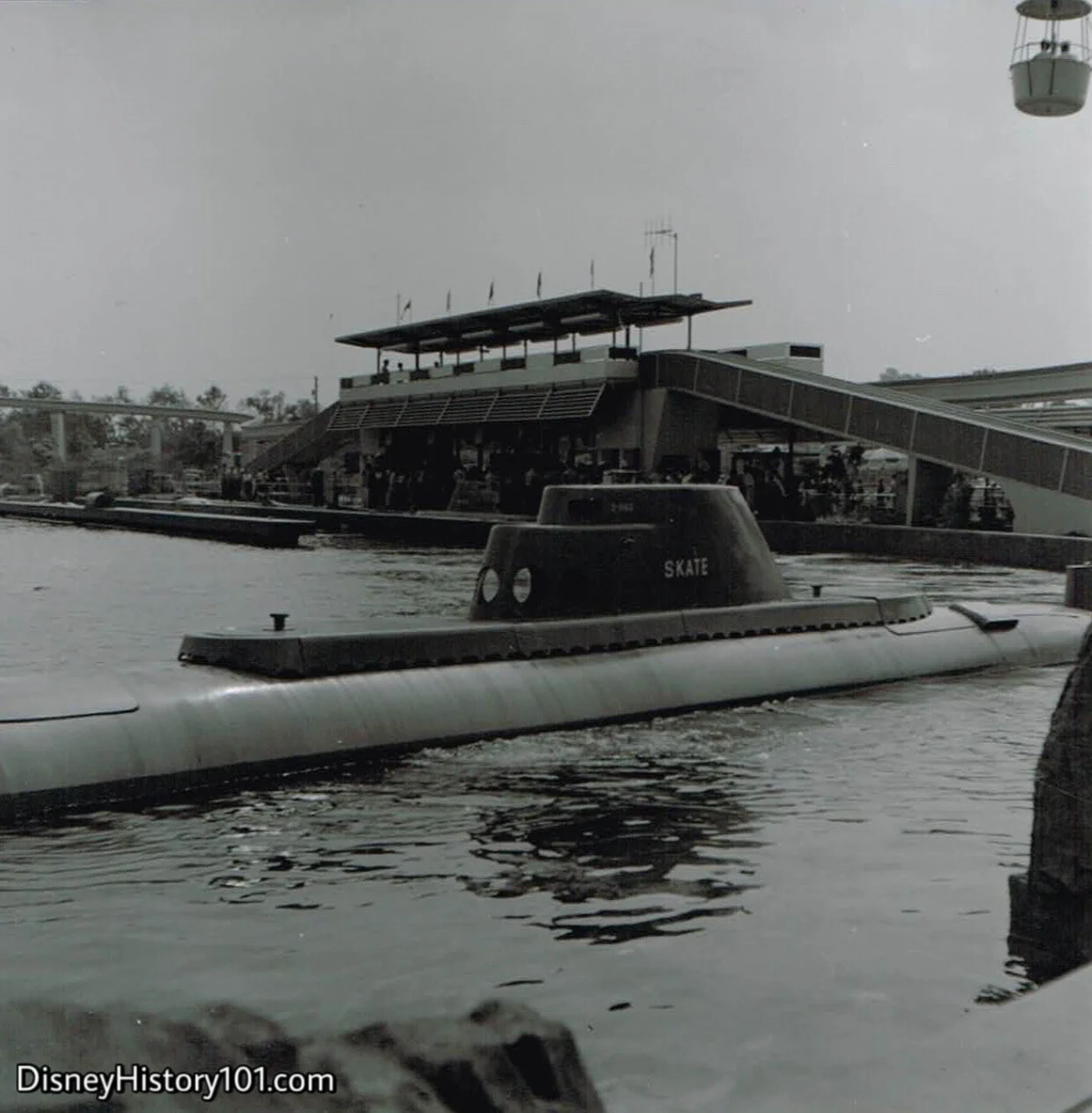
SKATE
The Skate heads through the waters of the Front Lagoon.
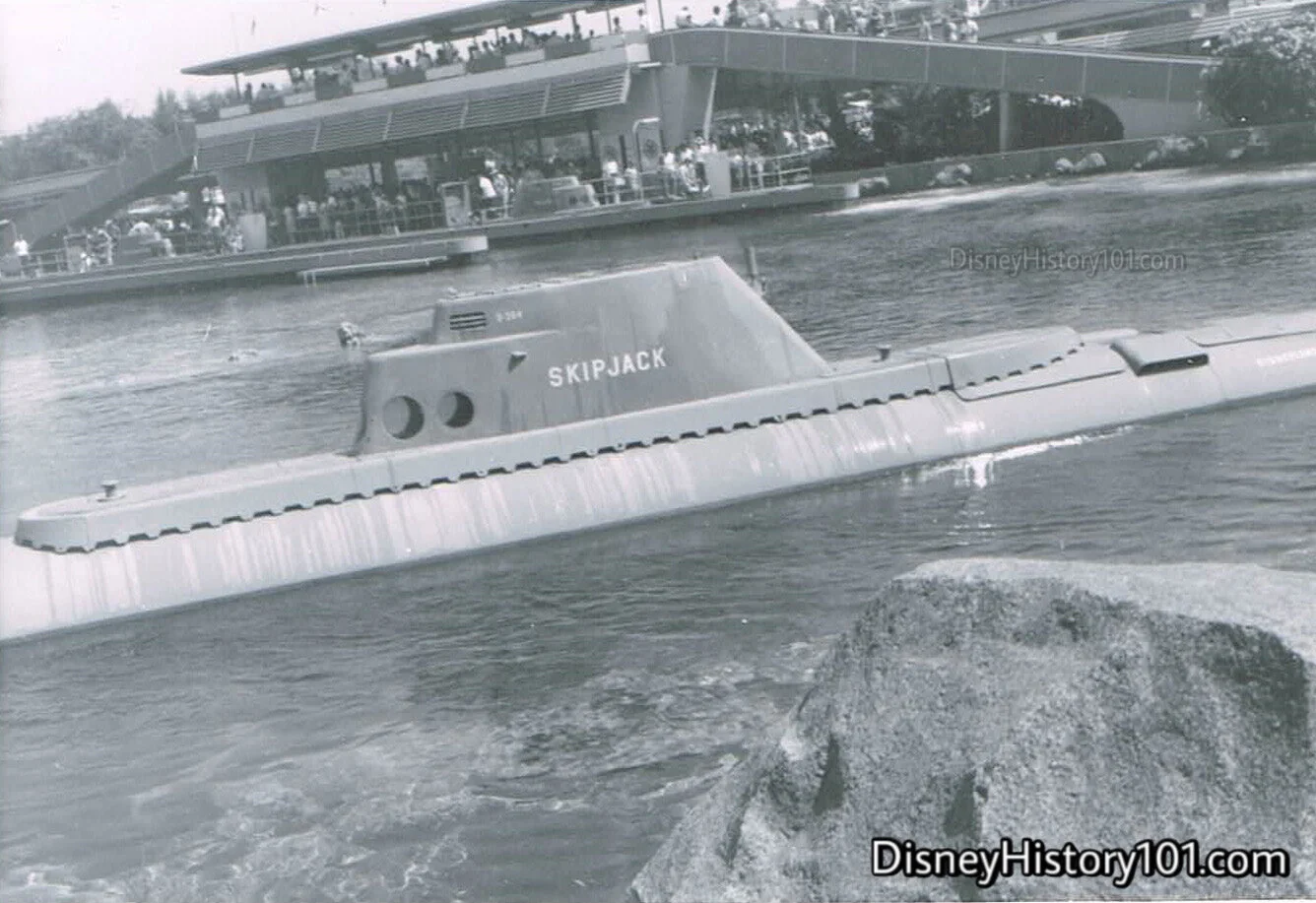
SKIPJACK
The Skipjack makes its way through the waters of the Front Lagoon.
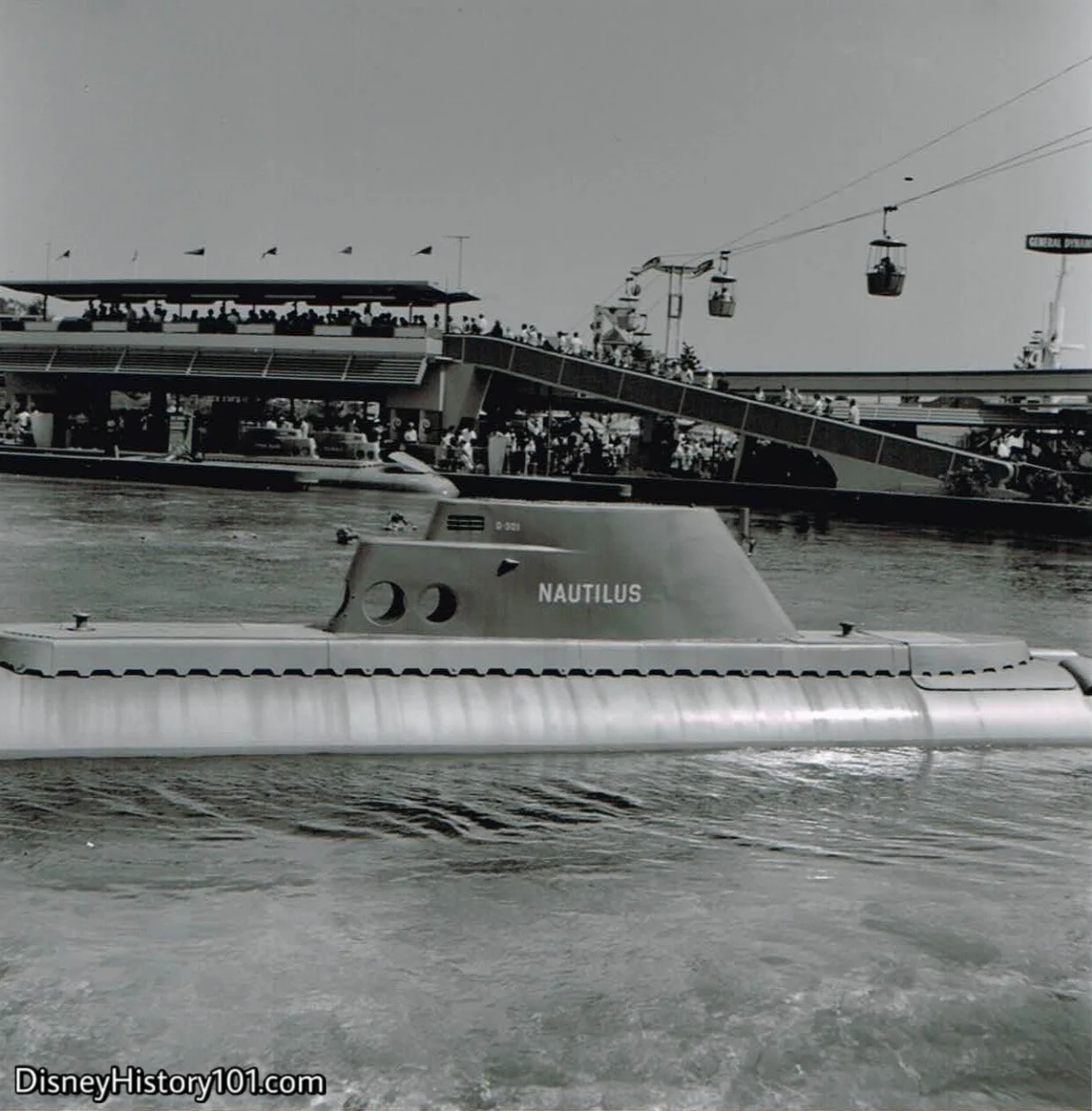
NAUTILUS
The Nautilus heads through the waters of the Front Lagoon.
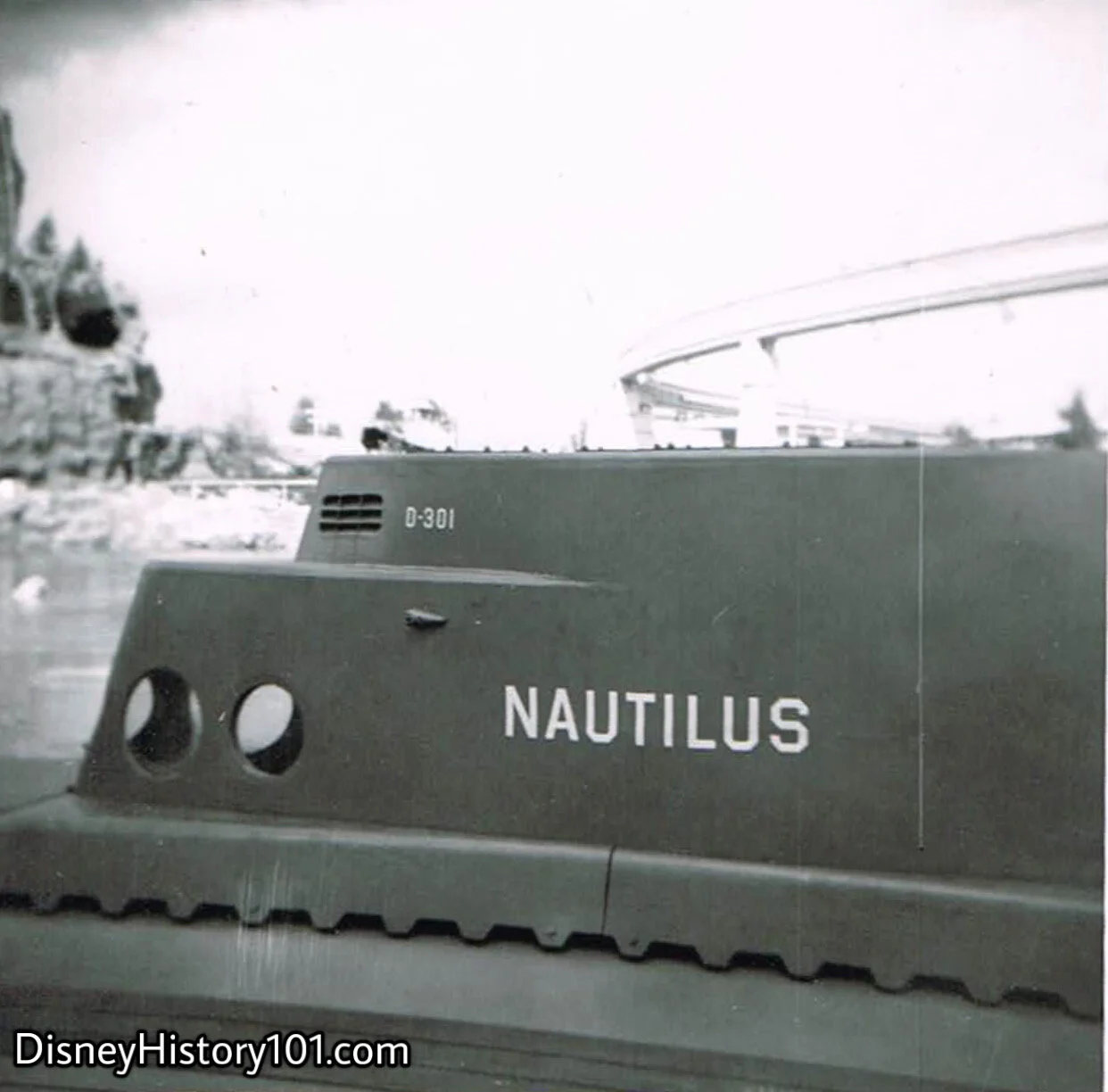
NAUTILUS
“Anything one man can imagine, other men can make.”
-Jules Verne, Around the World in Eighty Days, first published 1873
No better words sum up the creation of this new attraction than those aforementioned words of Jules Verne! Disneyland’s Nautilus is named after the world’s first nuclear submarine, which was constructed more than a century after Jules Verne penned Twenty Thousand Leagues under the Sea.
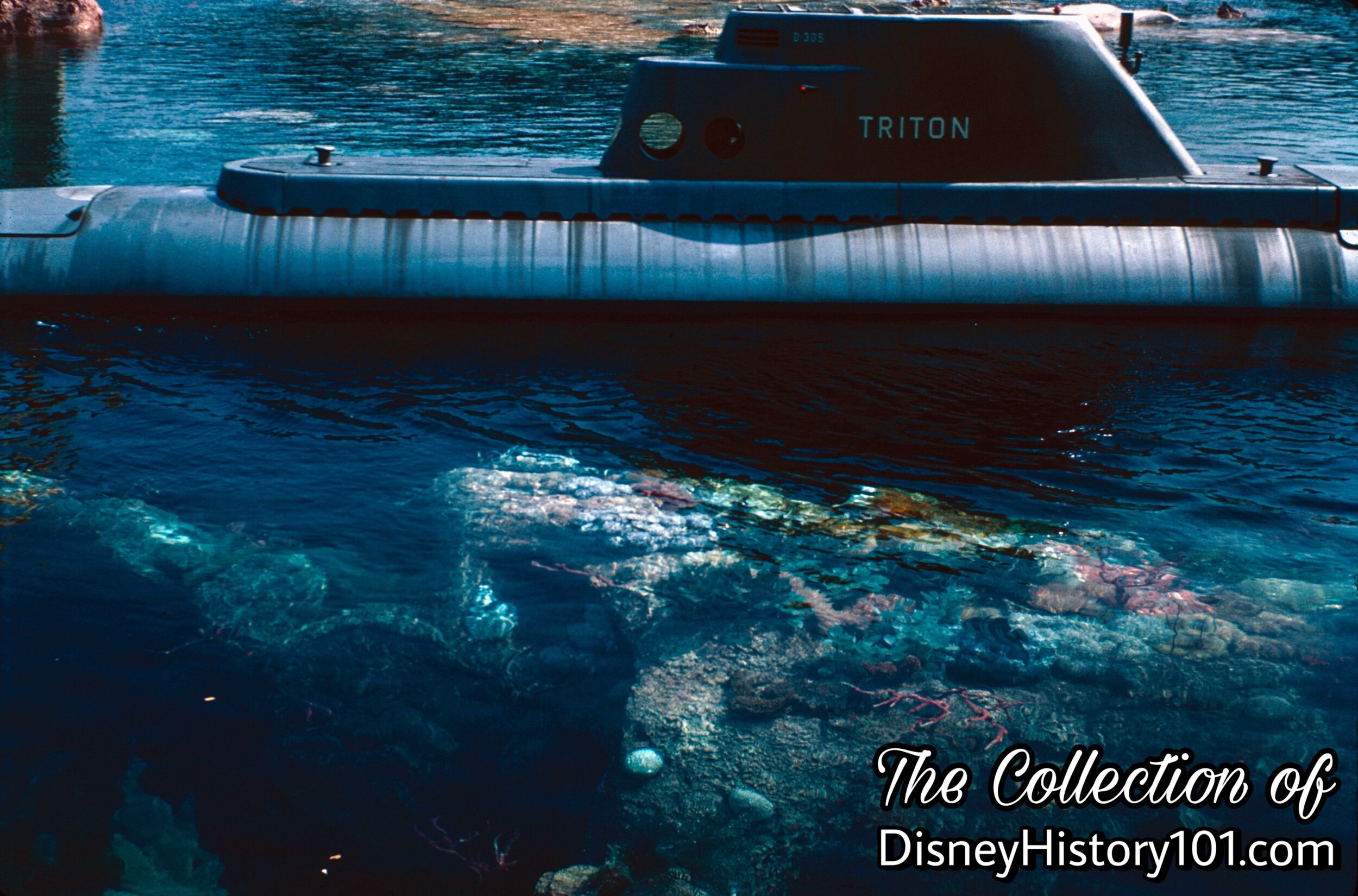
TRITON (1961)
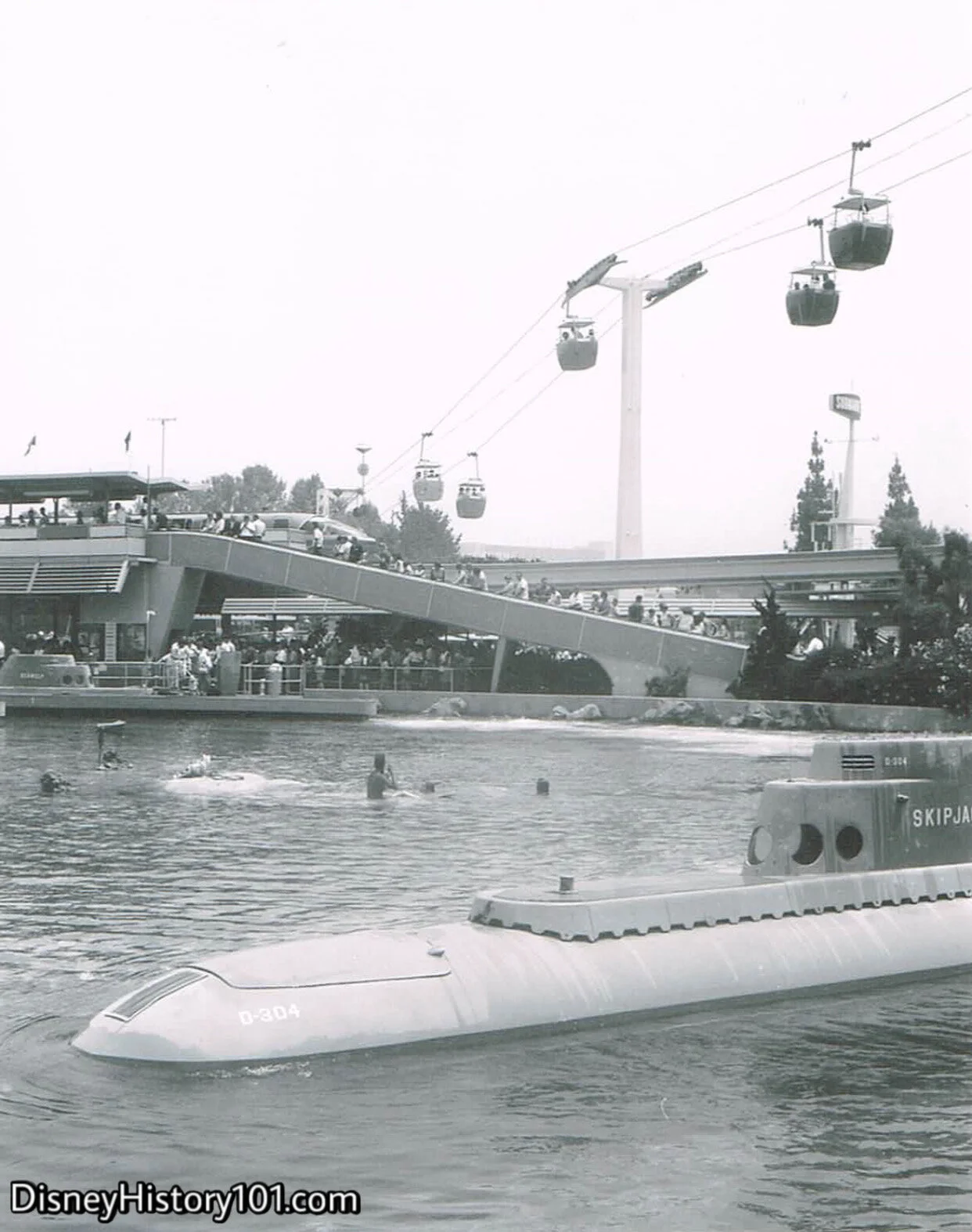
SKIPJACK
The Skipjack circles the Front Lagoon, and some strange looking sea creatures atop the coral reef!
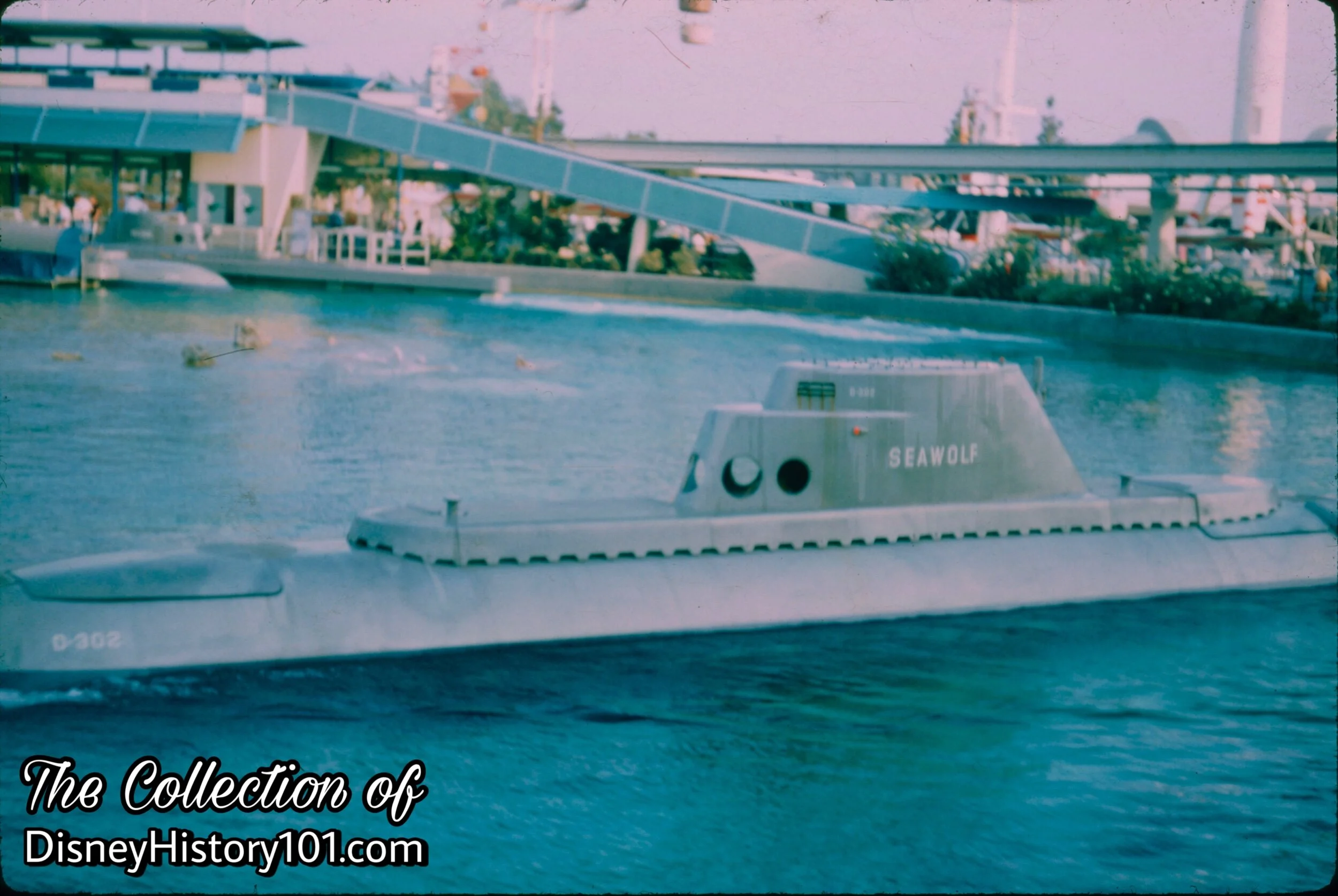
SEAWOLF (1960)
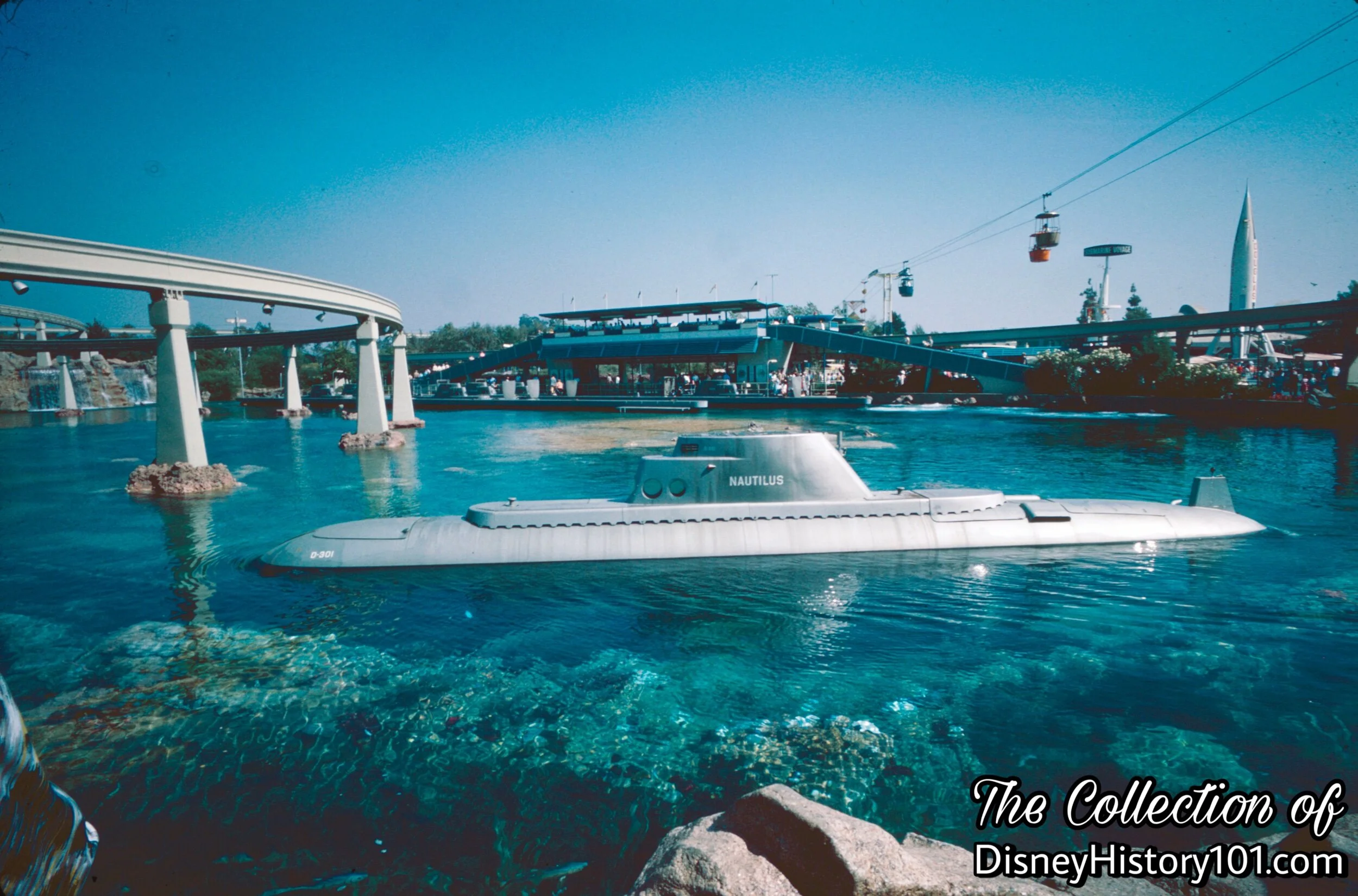
NAUTILUS (1962)
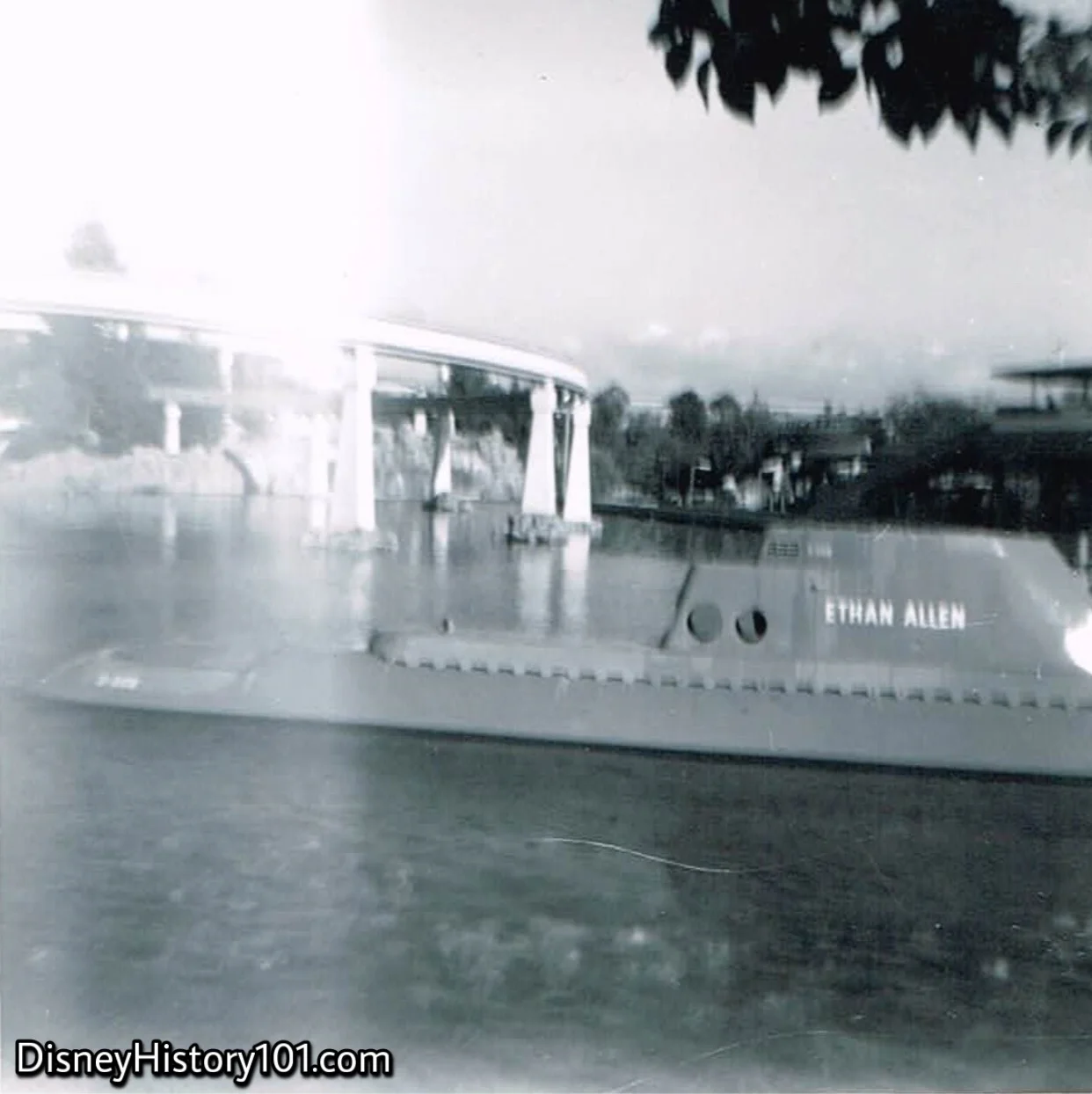
ETHAN ALLEN
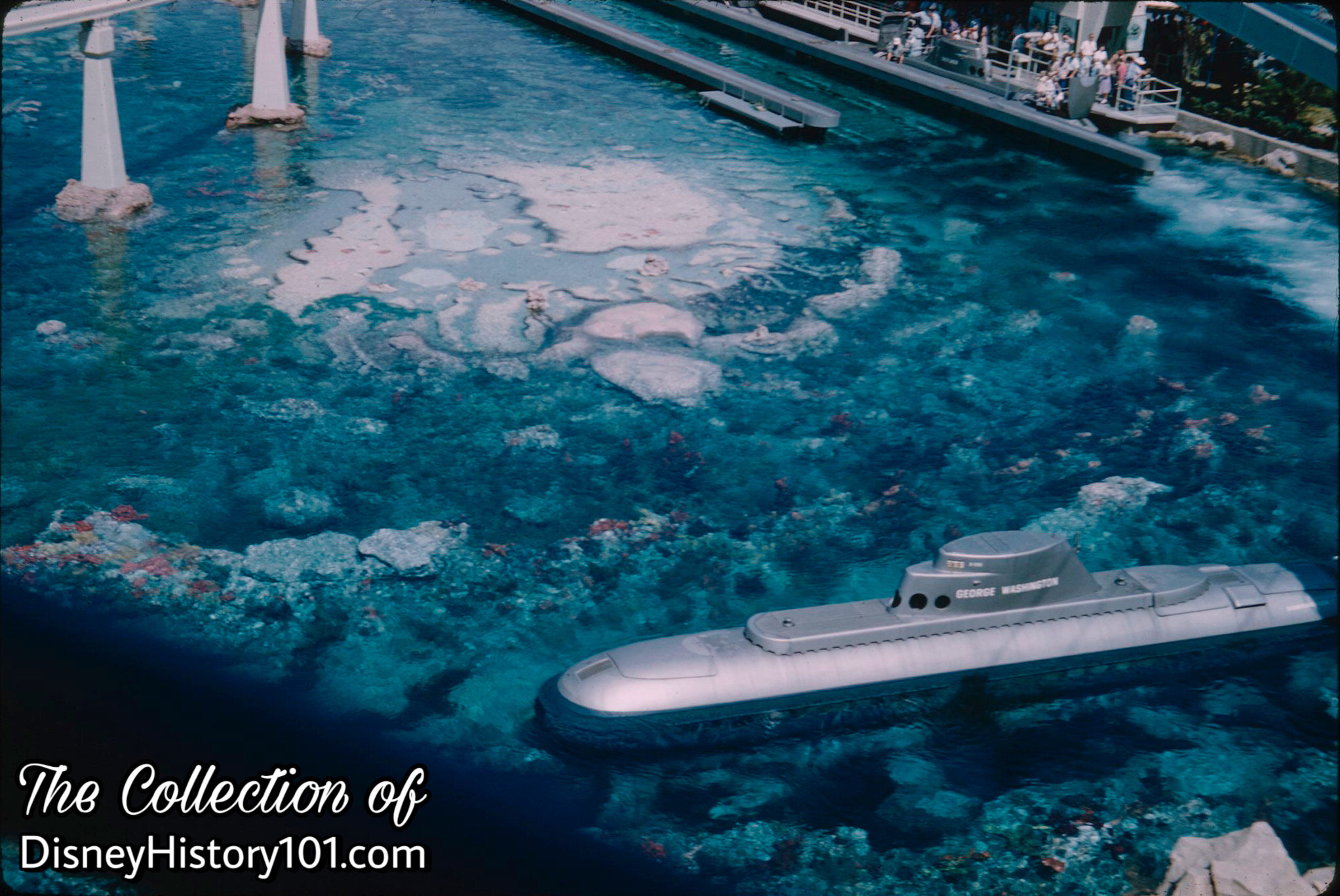
GEORGE WASHINGTON, (c. June, 1961)
The George Washington, leaving the Dock, heads out into the Front Lagoon!
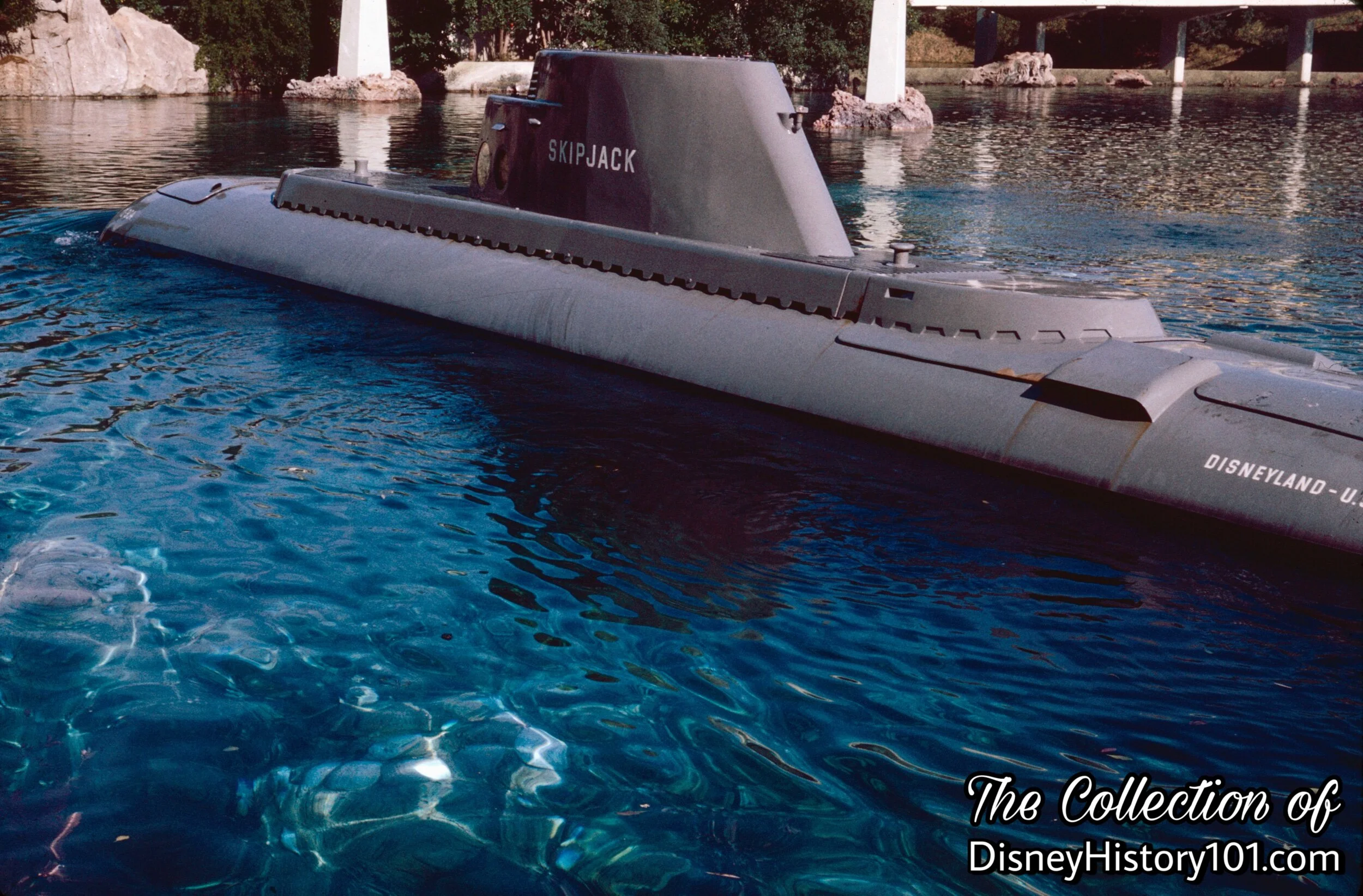
SKIPJACK (February, 1969)
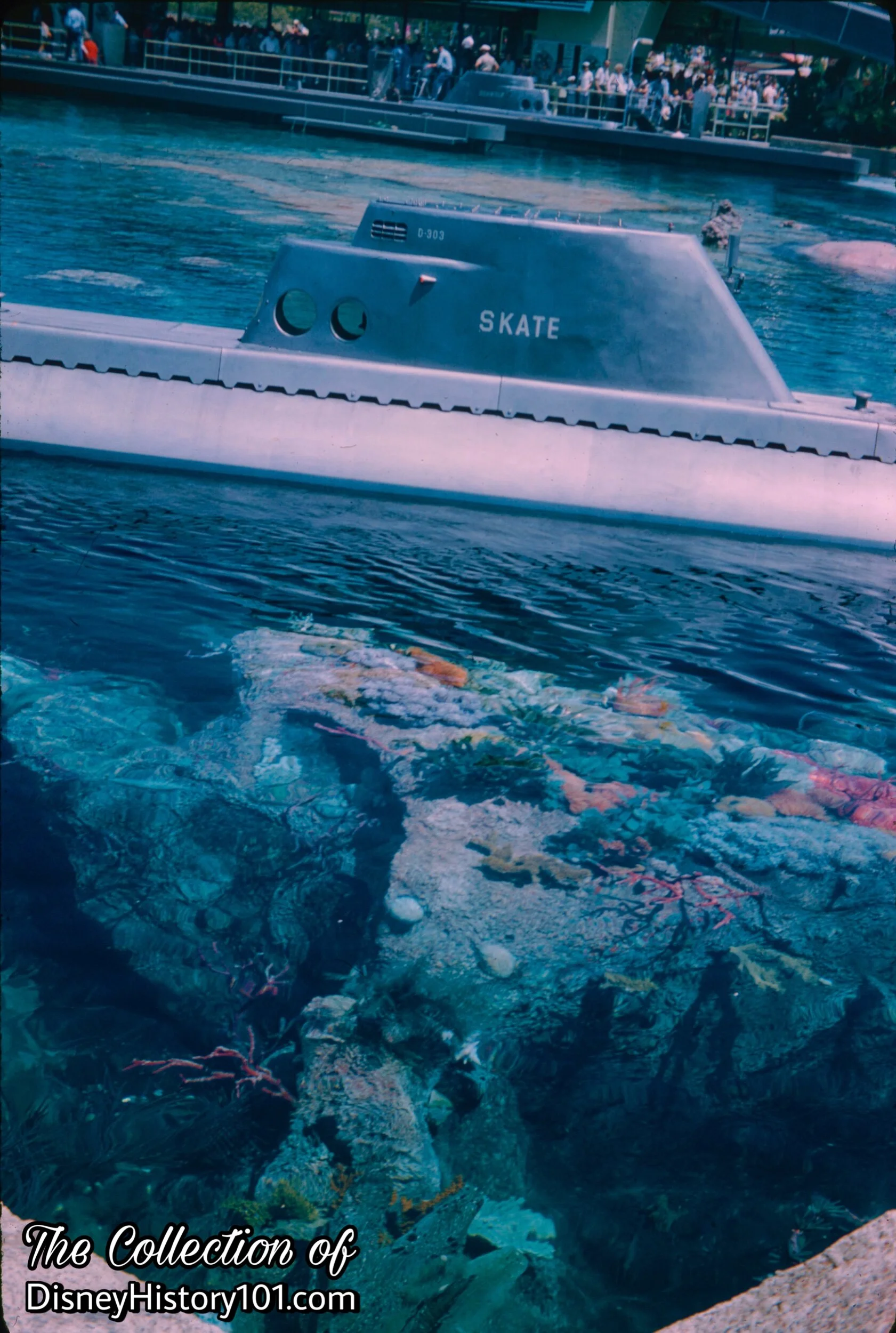
SKATE (June, 1961)
Skate heads through the rear portion of the Front Lagoon.
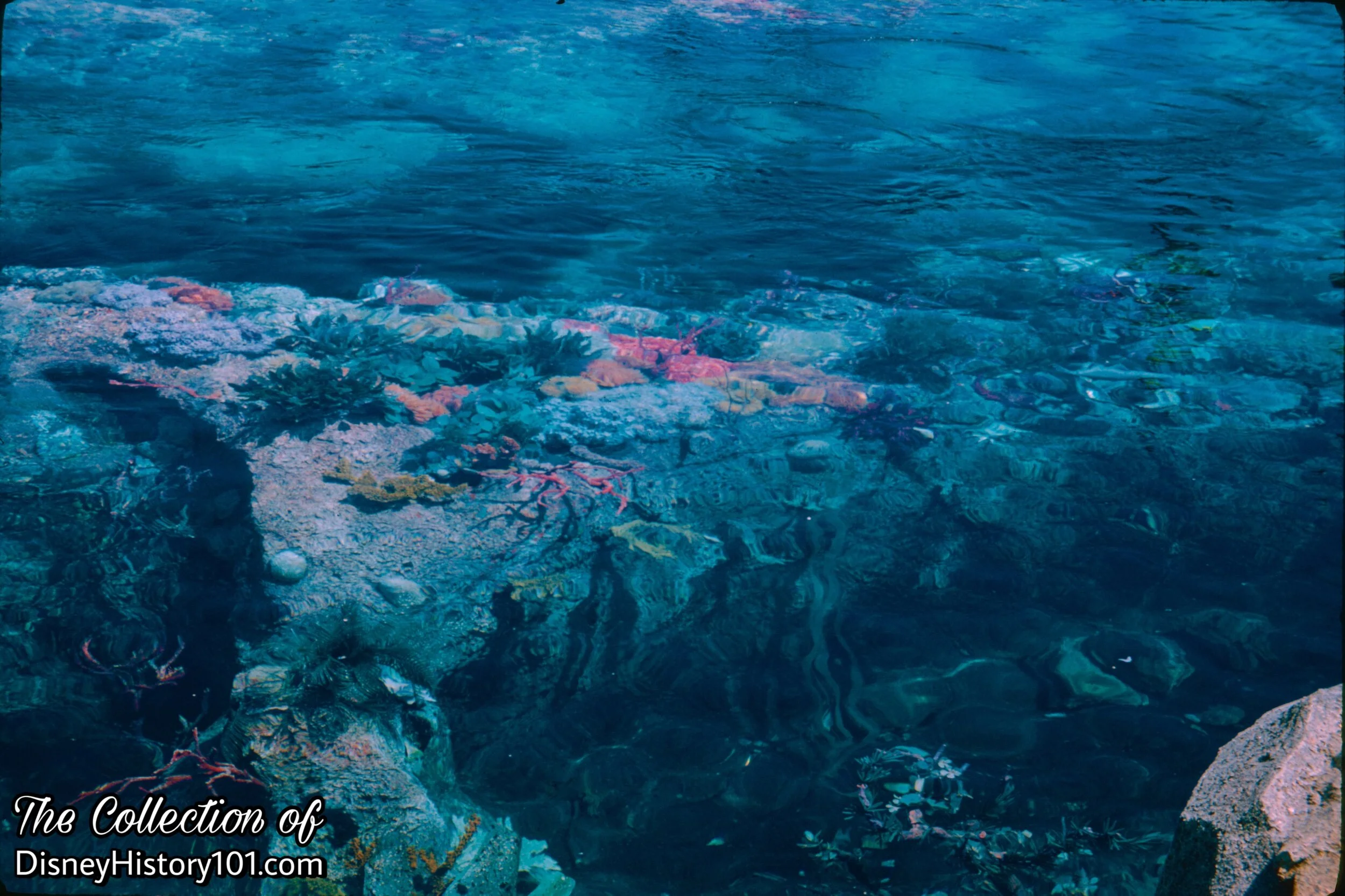
FRONT LAGOON (June, 1961)
The walkways give us a close-up view of the top of the submerged coral reef in the Front Lagoon.
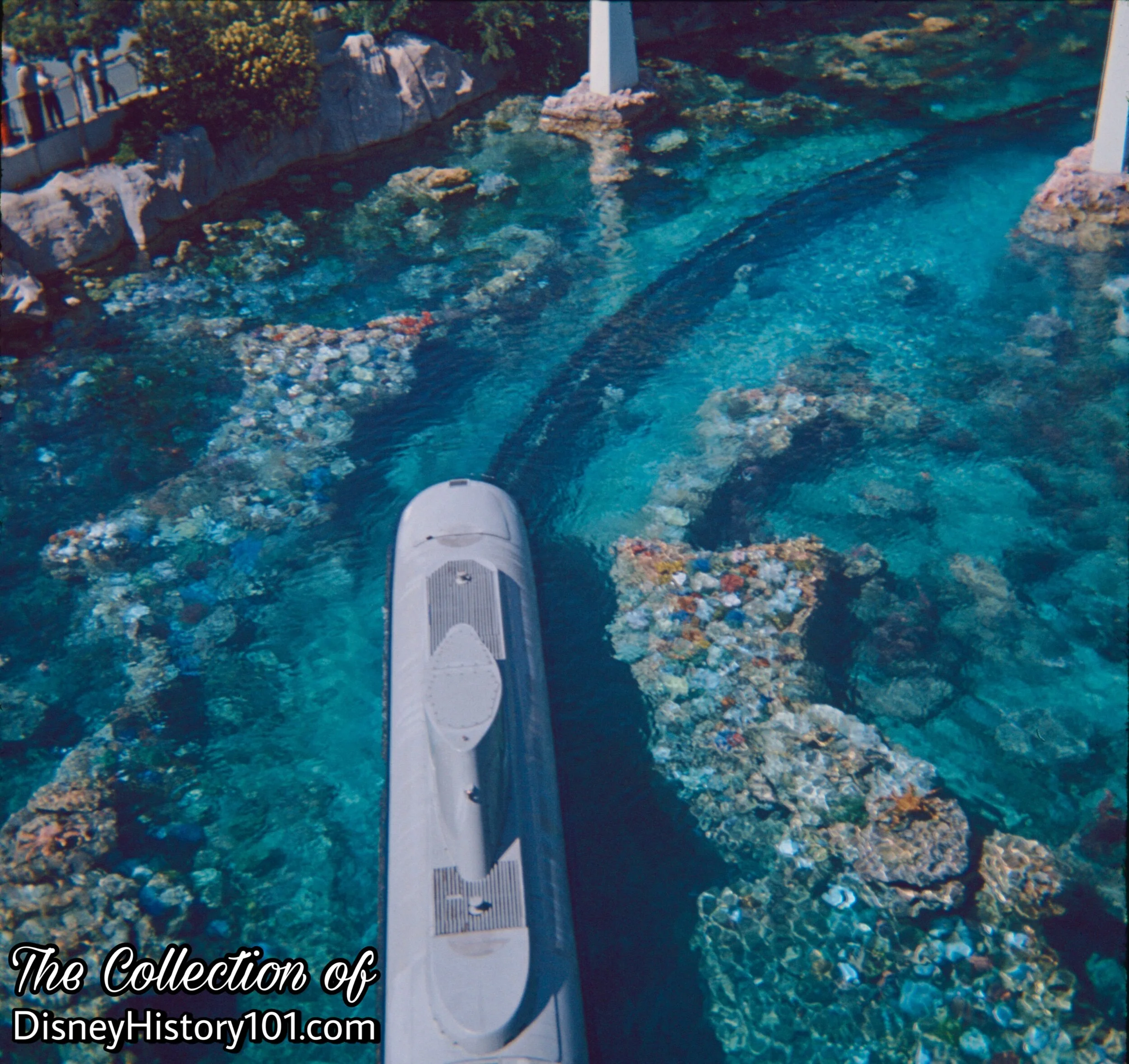
FRONT LAGOON, (July, 1966)
An unidentified boat heads through the coral reefs of the Front Lagoon.
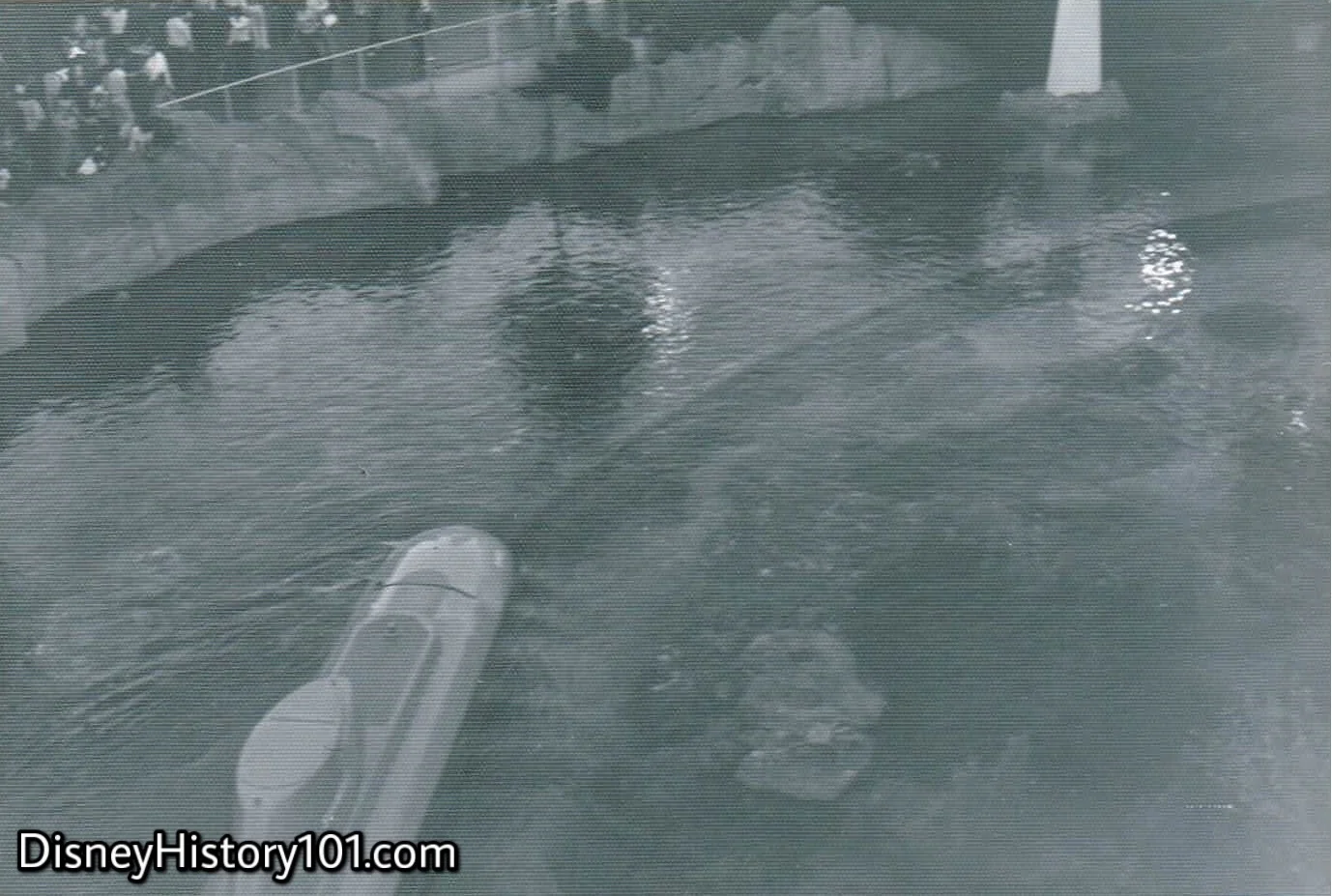
FRONT LAGOON (1975)
The Front Lagoon.
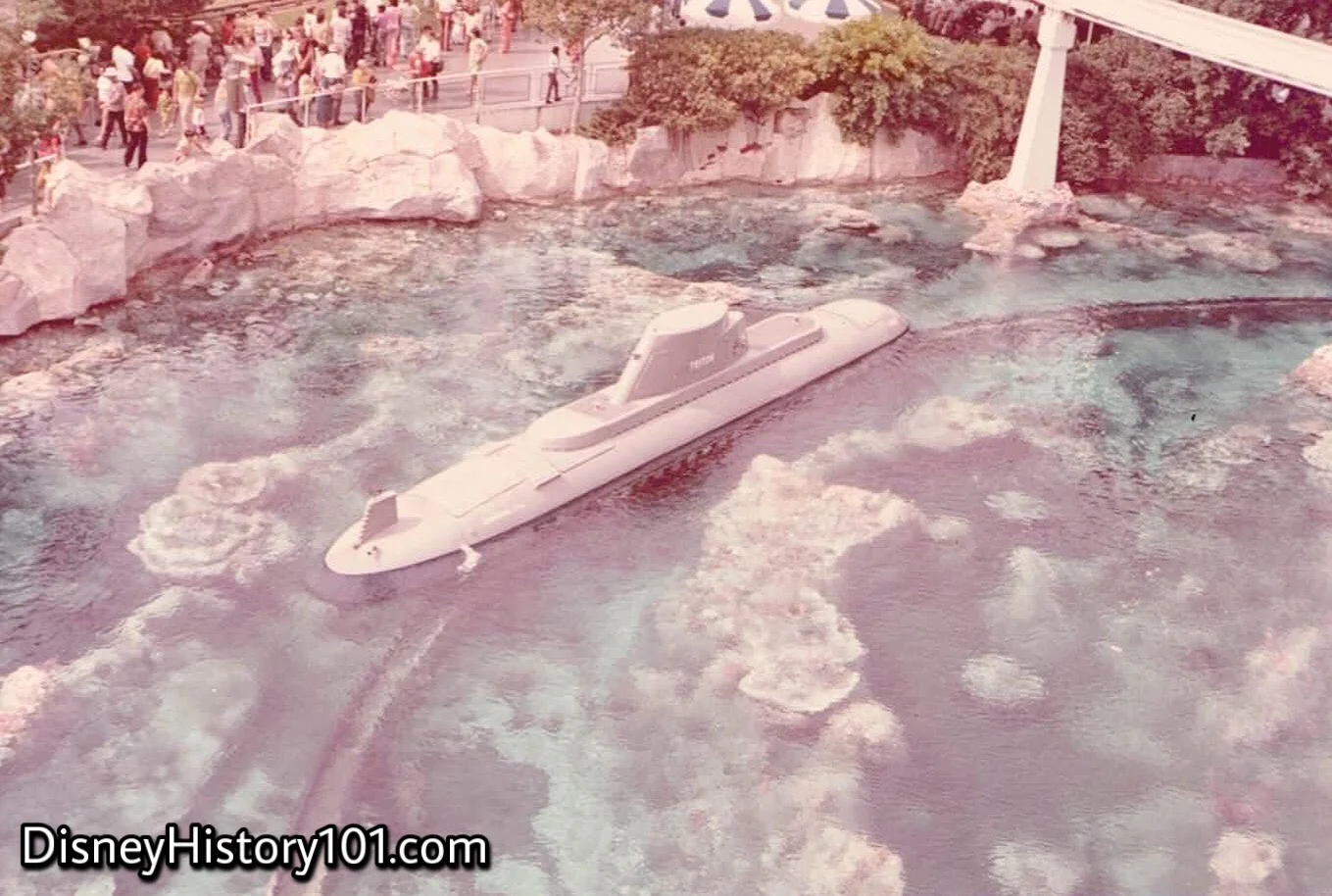
FRONT LAGOON
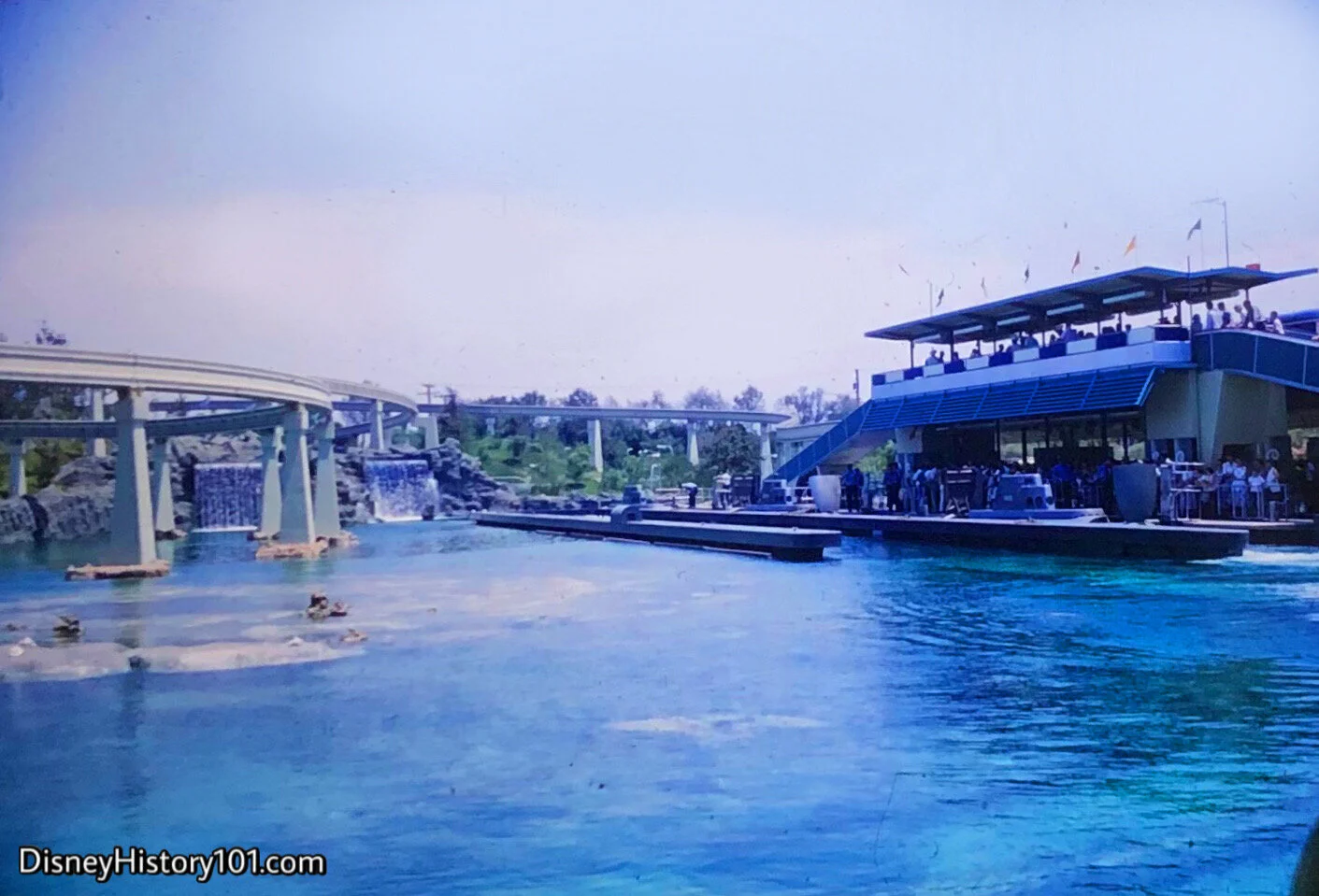
FRONT LAGOON
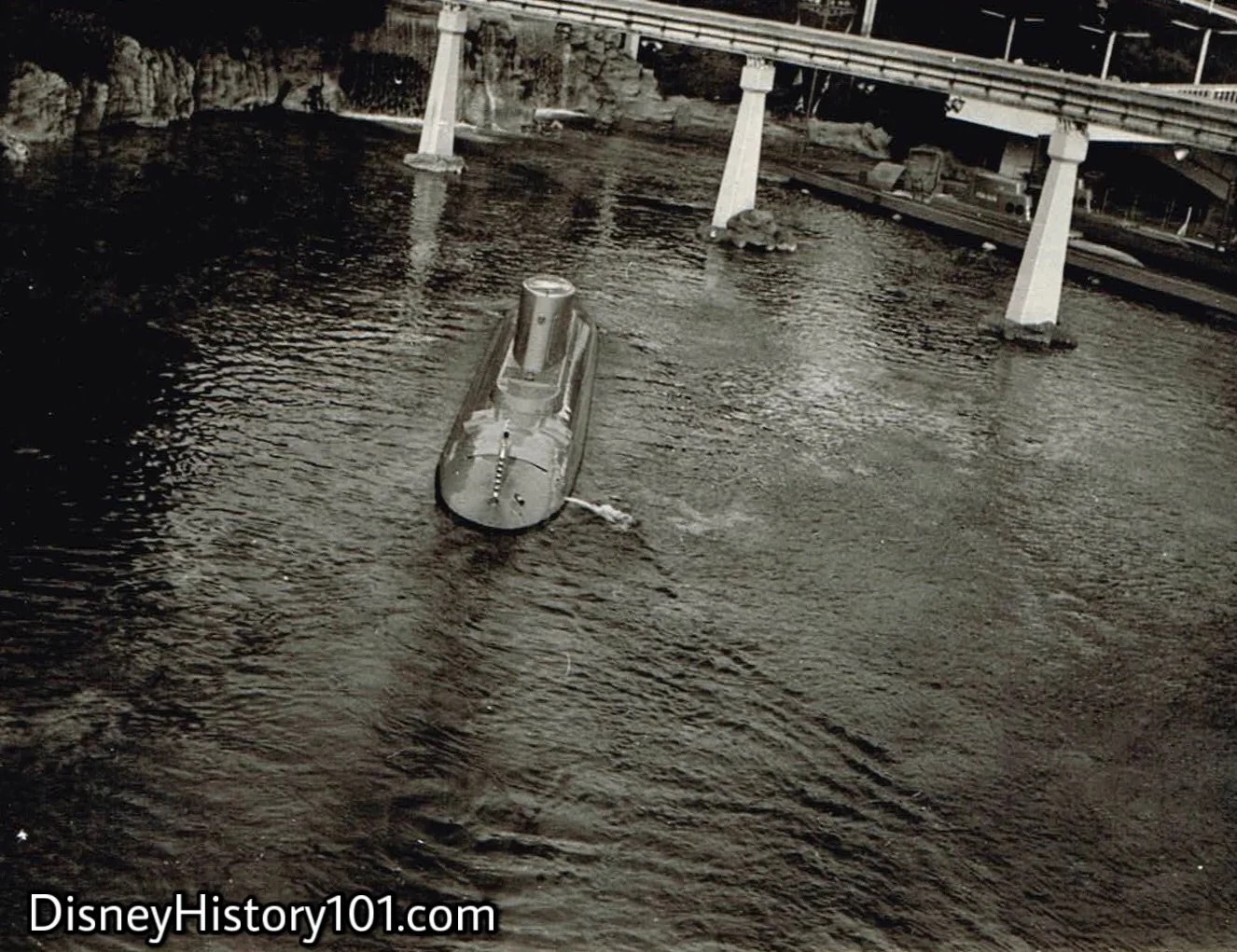
INTERMEDIATE LAGOON (1975)
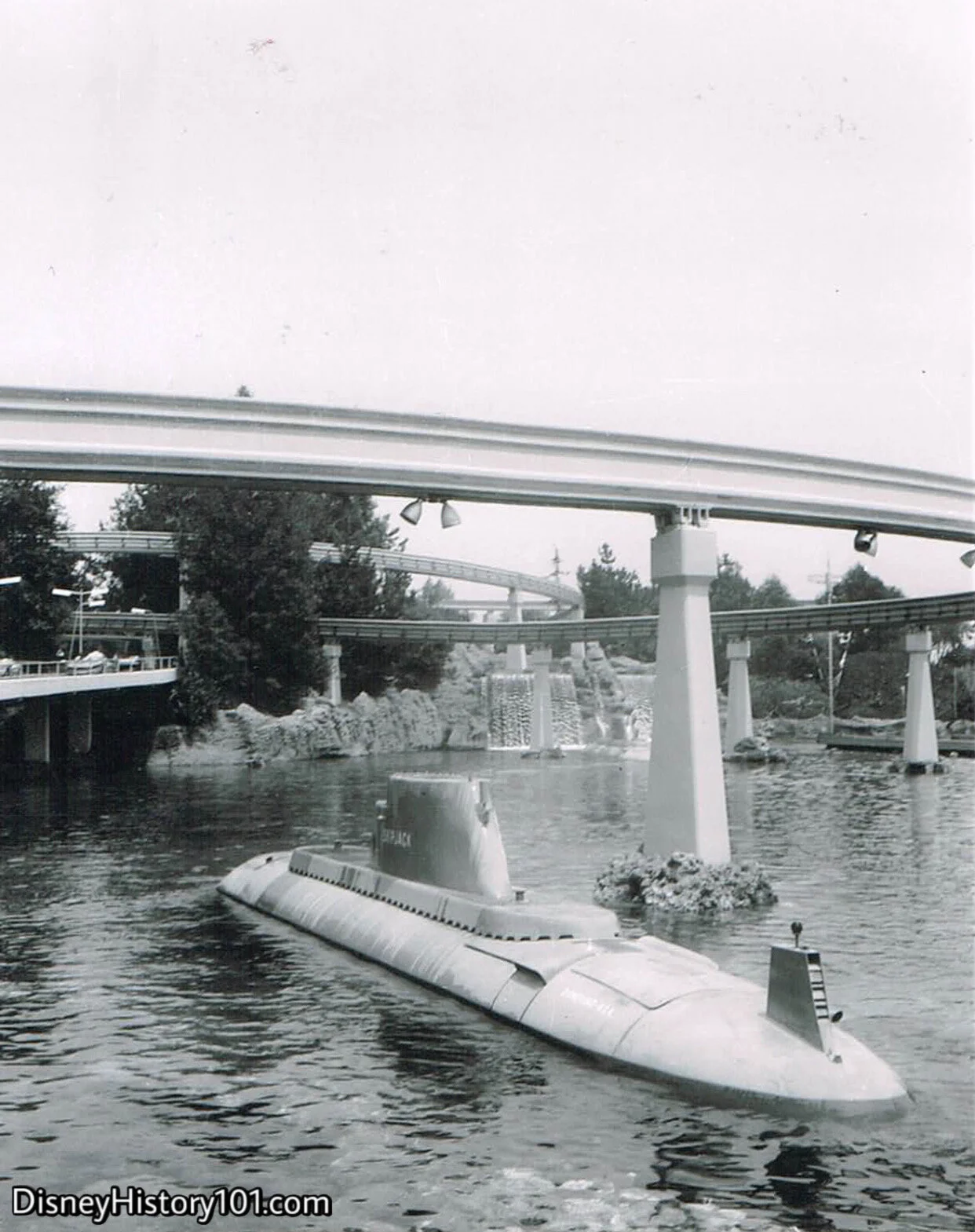
FRONT LAGOON
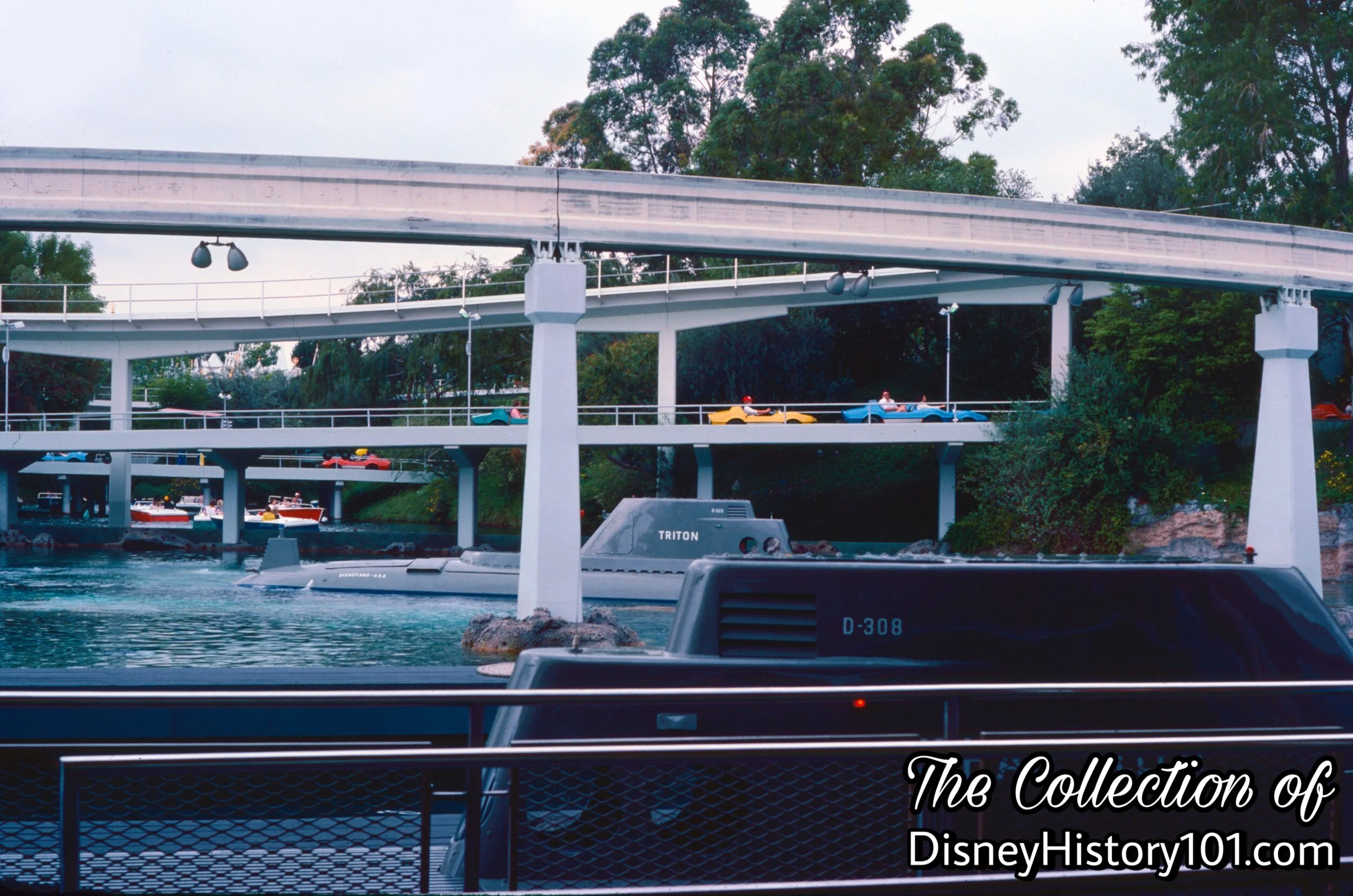
As the Skipjack continues through the waters, it passes underneath towering Monorail pylons.
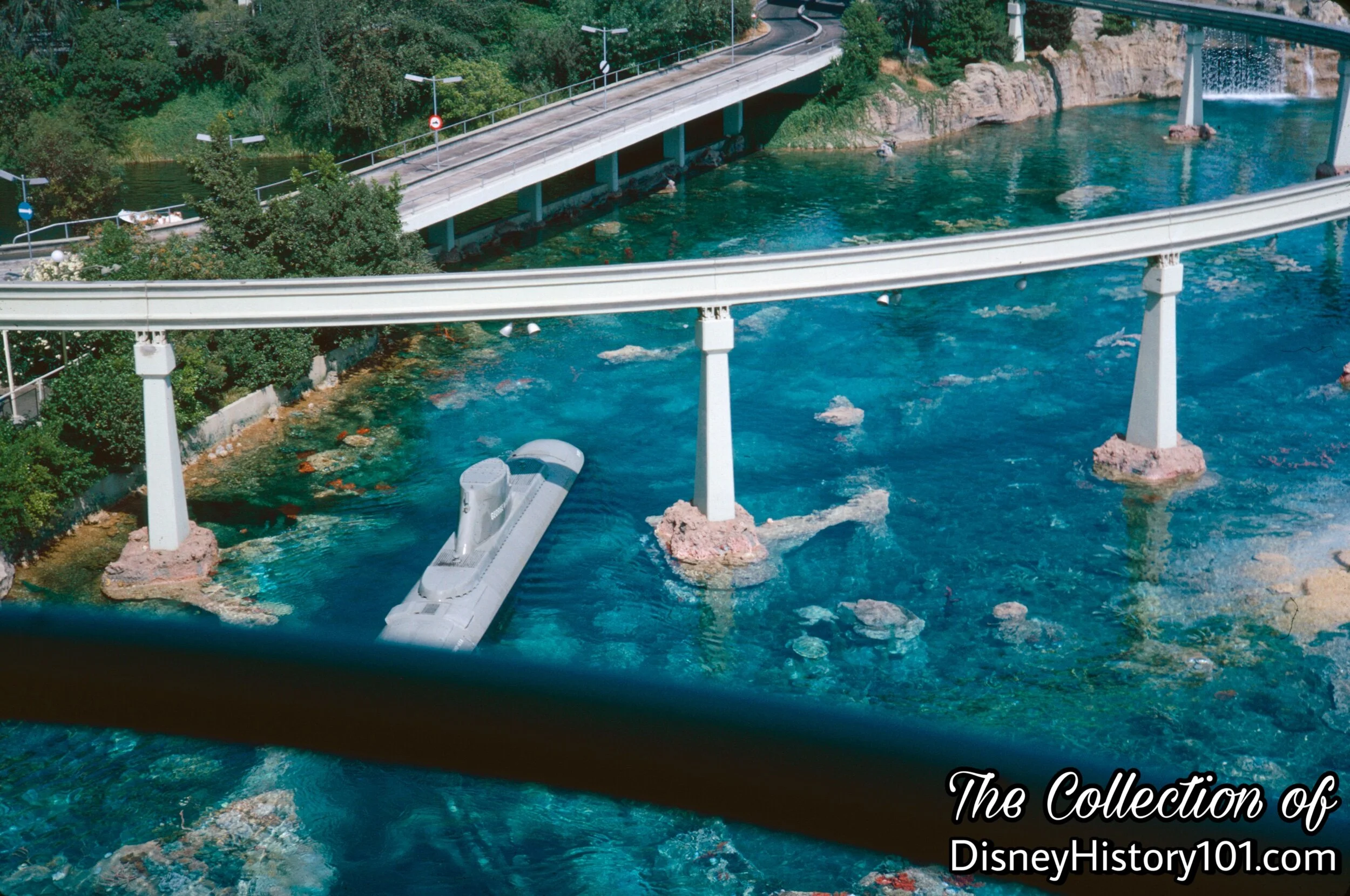
A small section of Monorail pylons carry trains over a portion of the Submarine FRONT/INTERMEDIATE LAGOON, 1962.
Those coral-covered Monorail pylons mark the division between what Submarine Pilots call the Front Lagoon and the Intermediate Lagoon. Crossing the boundary (of the Front Lagoon and the Intermediate Lagoon) means entering different seas.
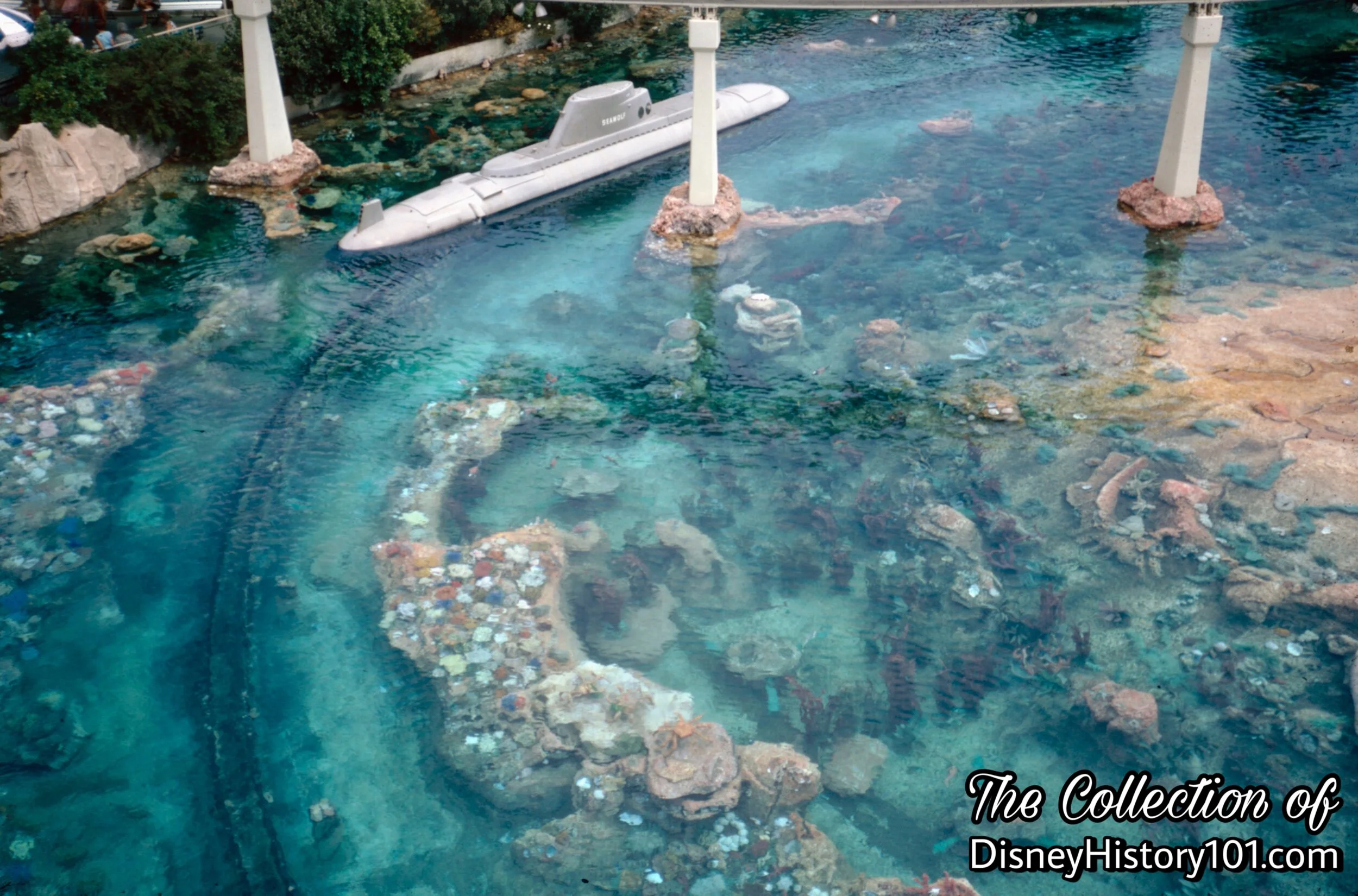
FRONT LAGOON
A submarine passes the Monorail pylons and heads into the Intermediate Lagoon.
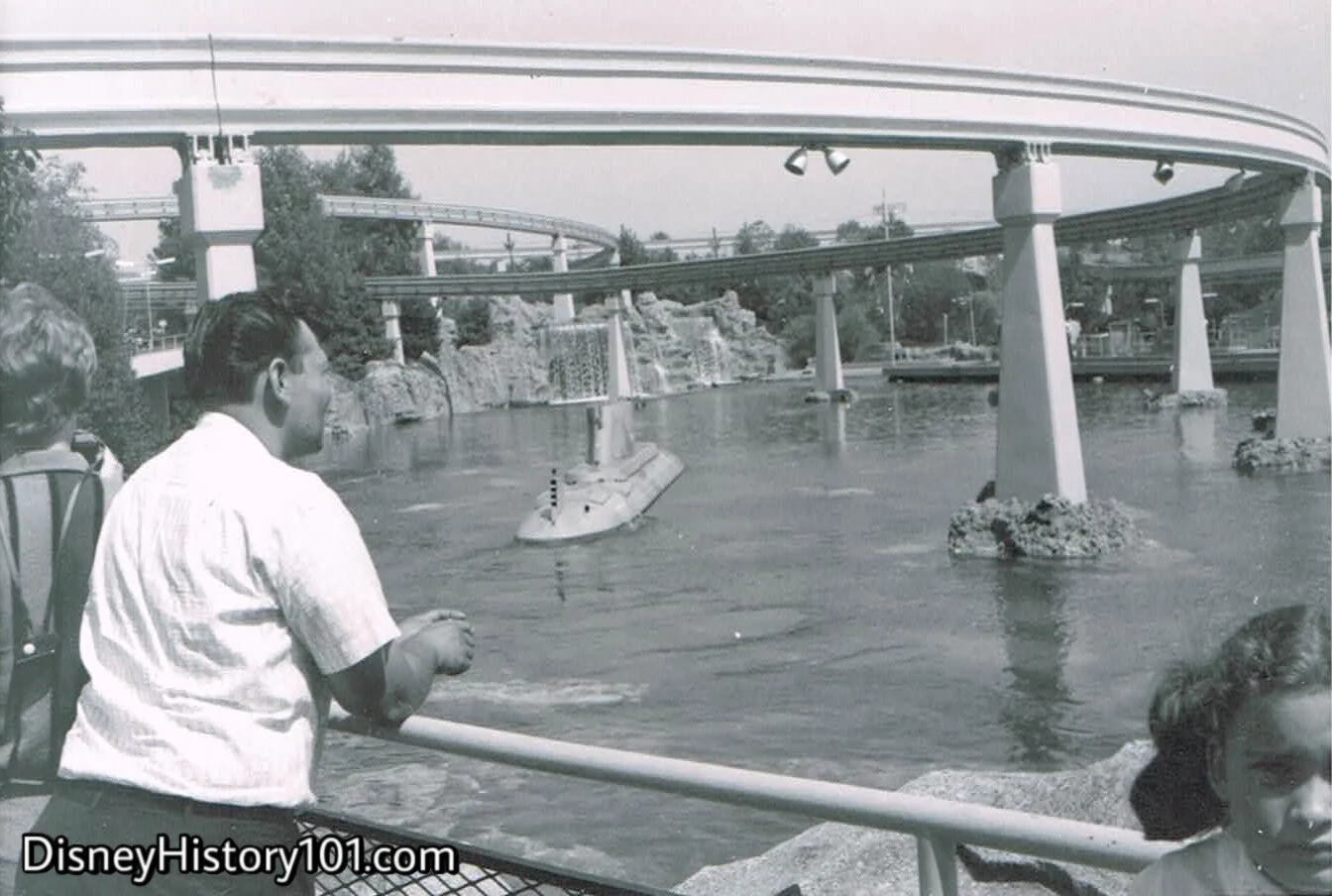
FRONT LAGOON
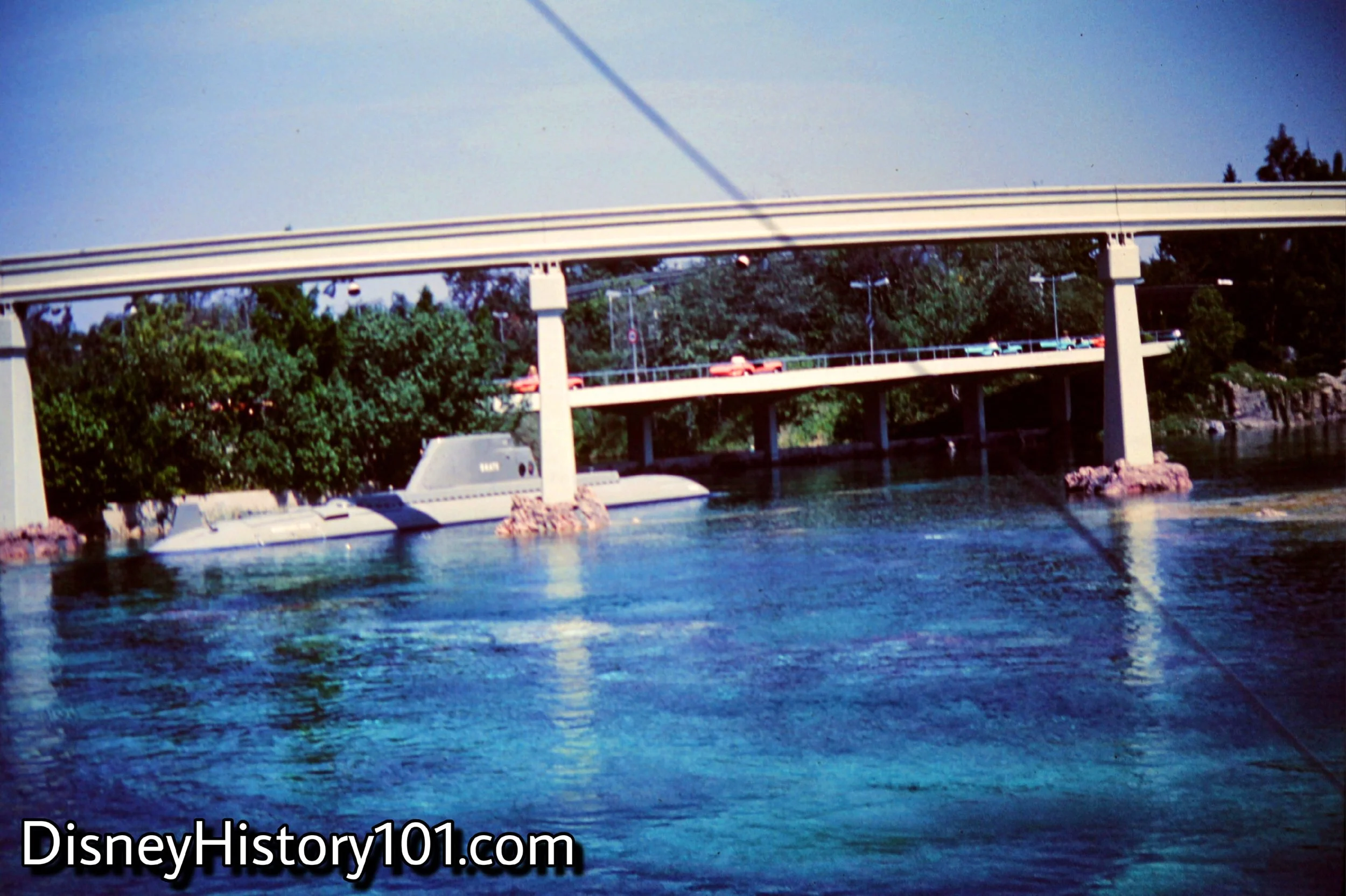
INTERMEDIATE LAGOON (1963)
A submarine heads into the Intermediate Lagoon.
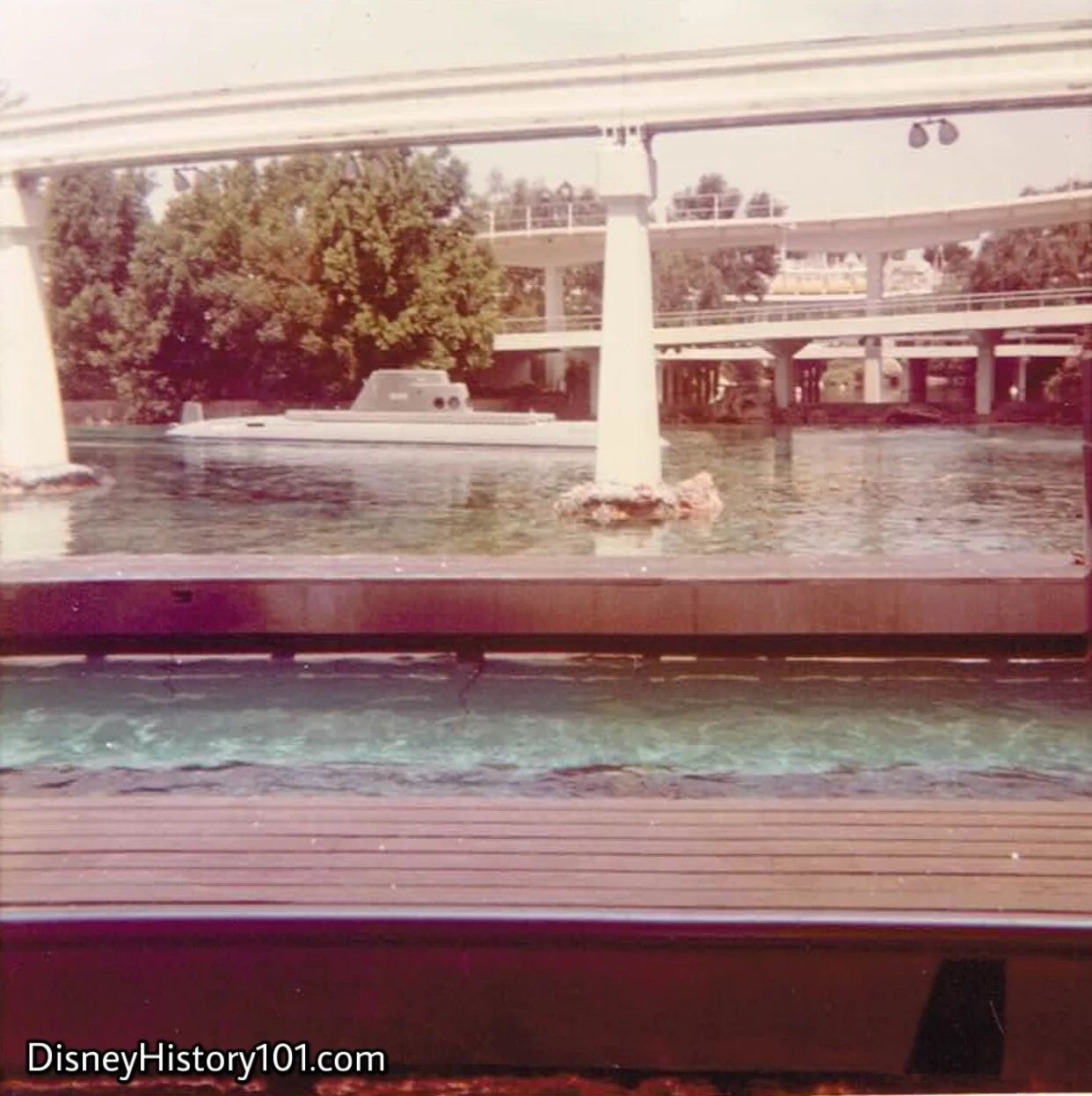
INTERMEDIATE DOCK, STORAGE RAILS, INTERMEDIATE LAGOON
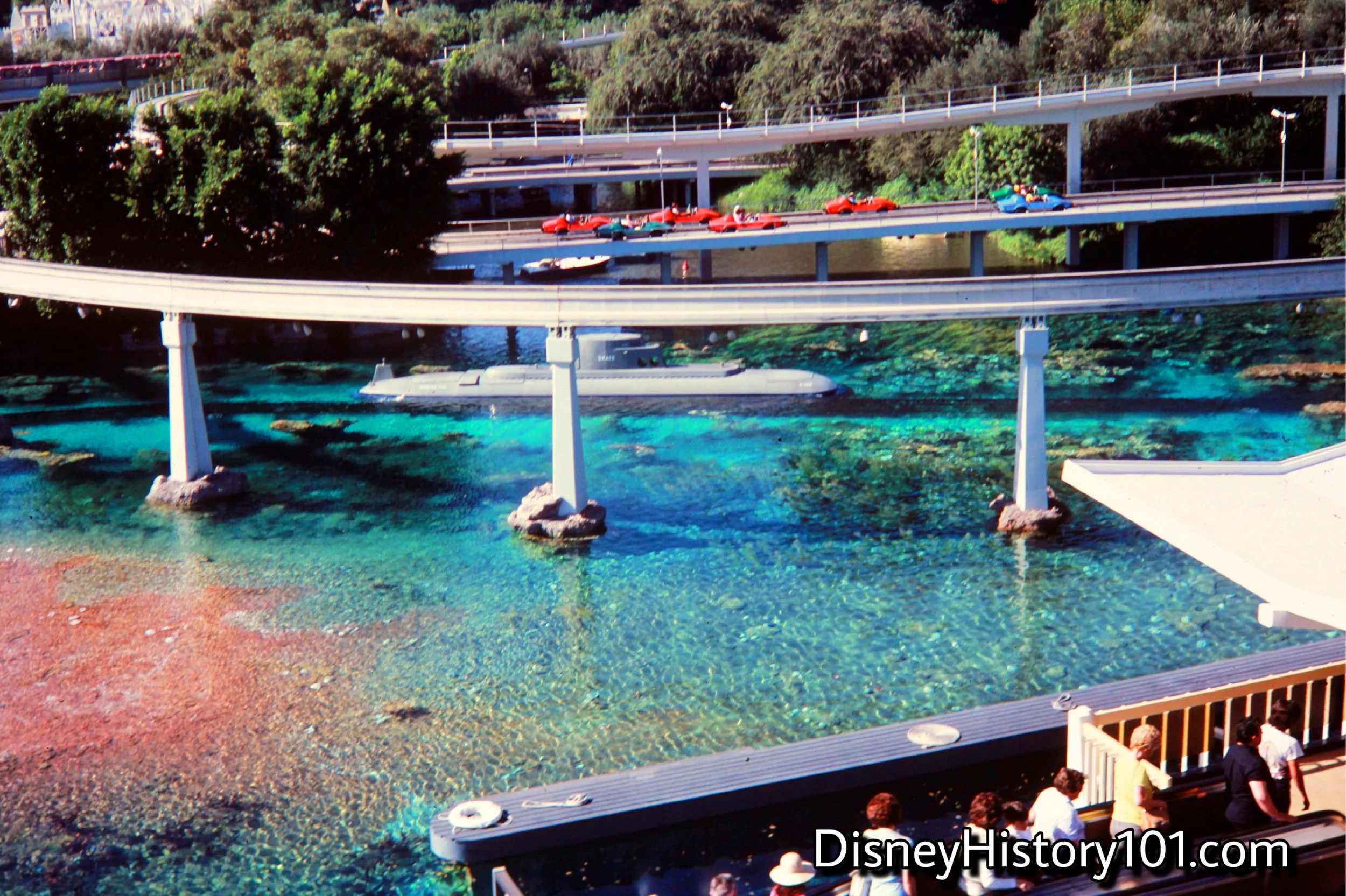
From the upper deck of the loading area, guests received a clear (and very different) view of the submarines as well as the Front Lagoon.
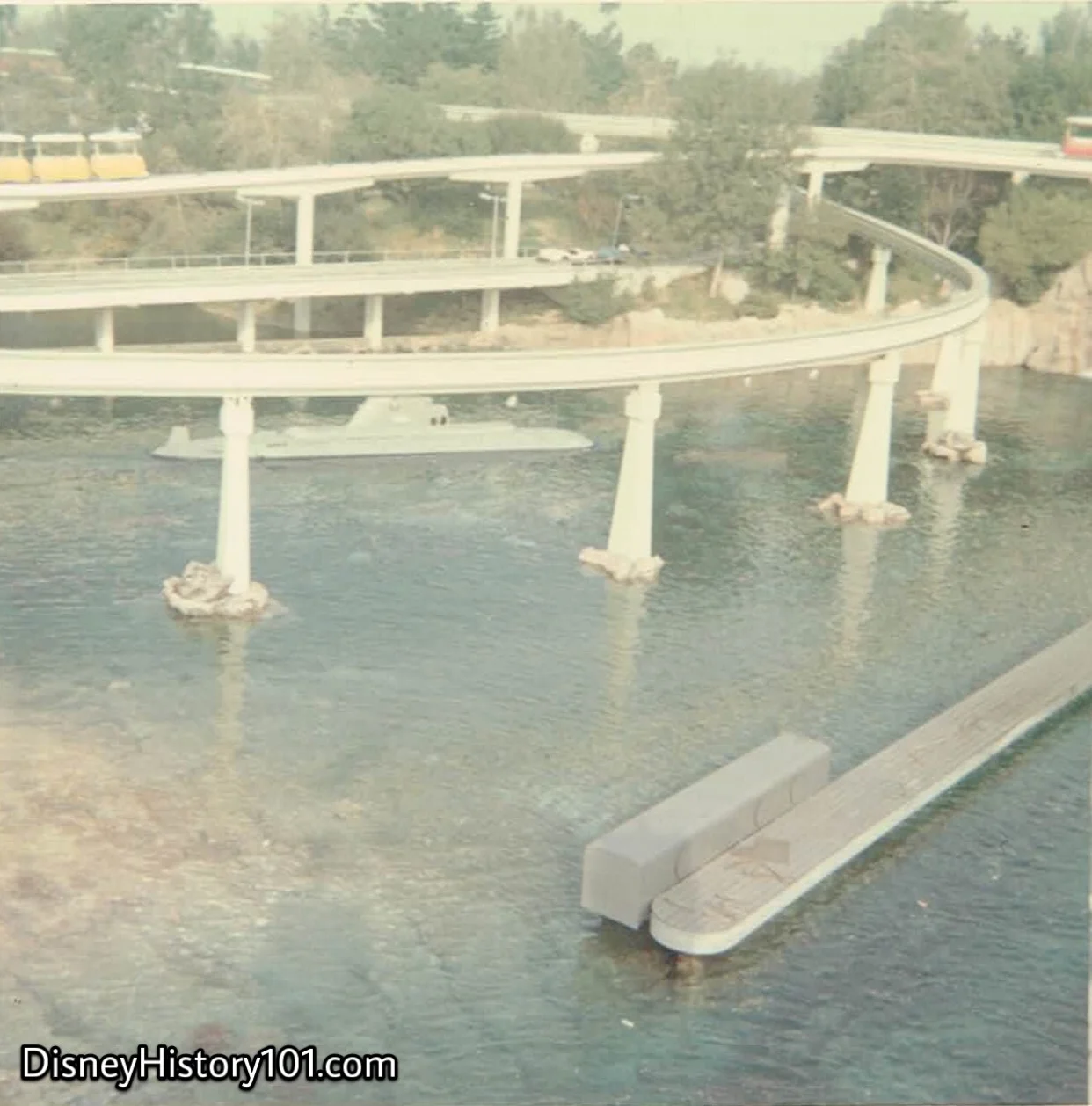
FRONT LAGOON / STORAGE RAILS (1967)
A submarine passes beneath the ocean’s floor in the Intermediate Lagoon.
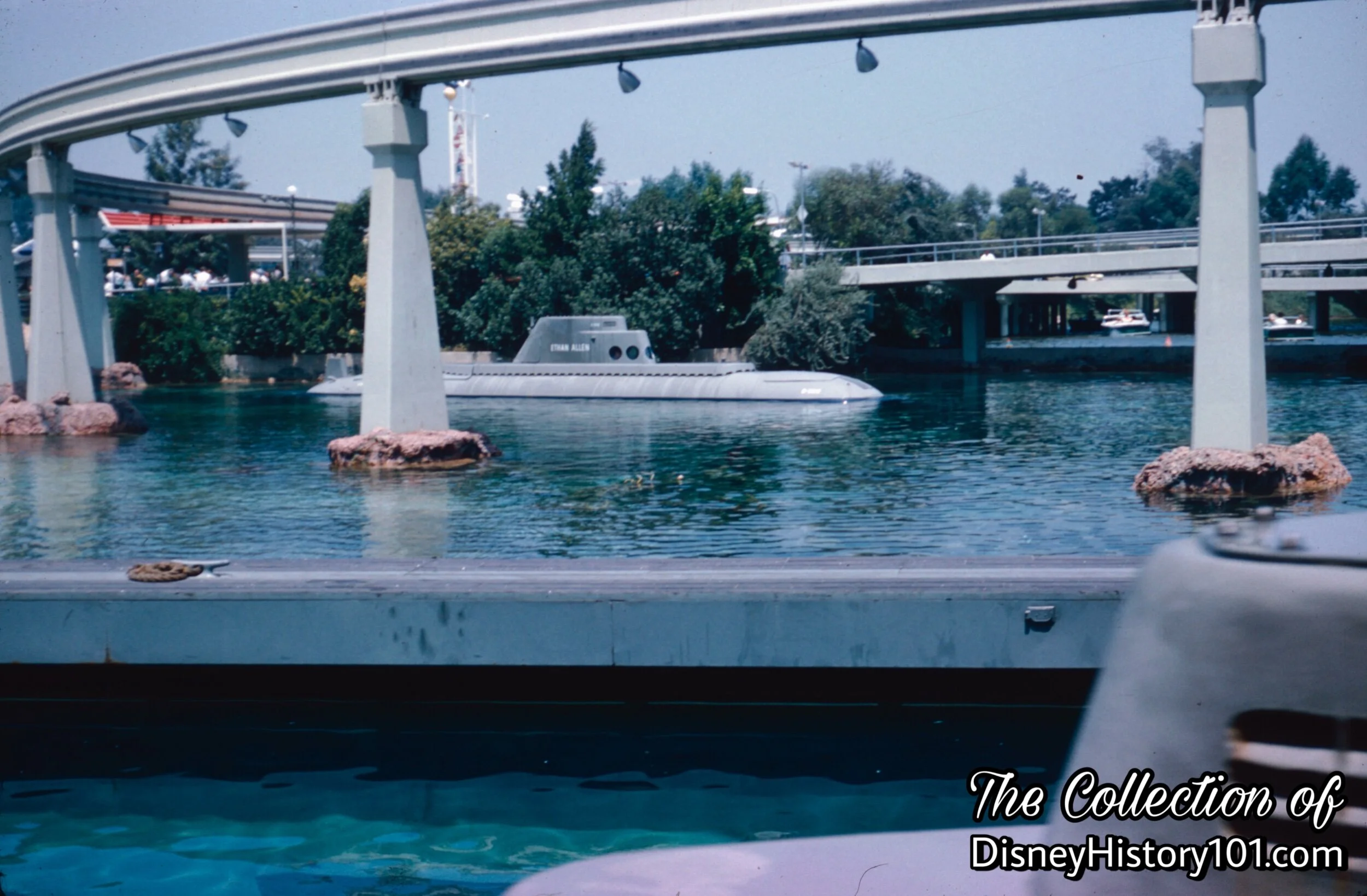
INTERMEDIATE LAGOON
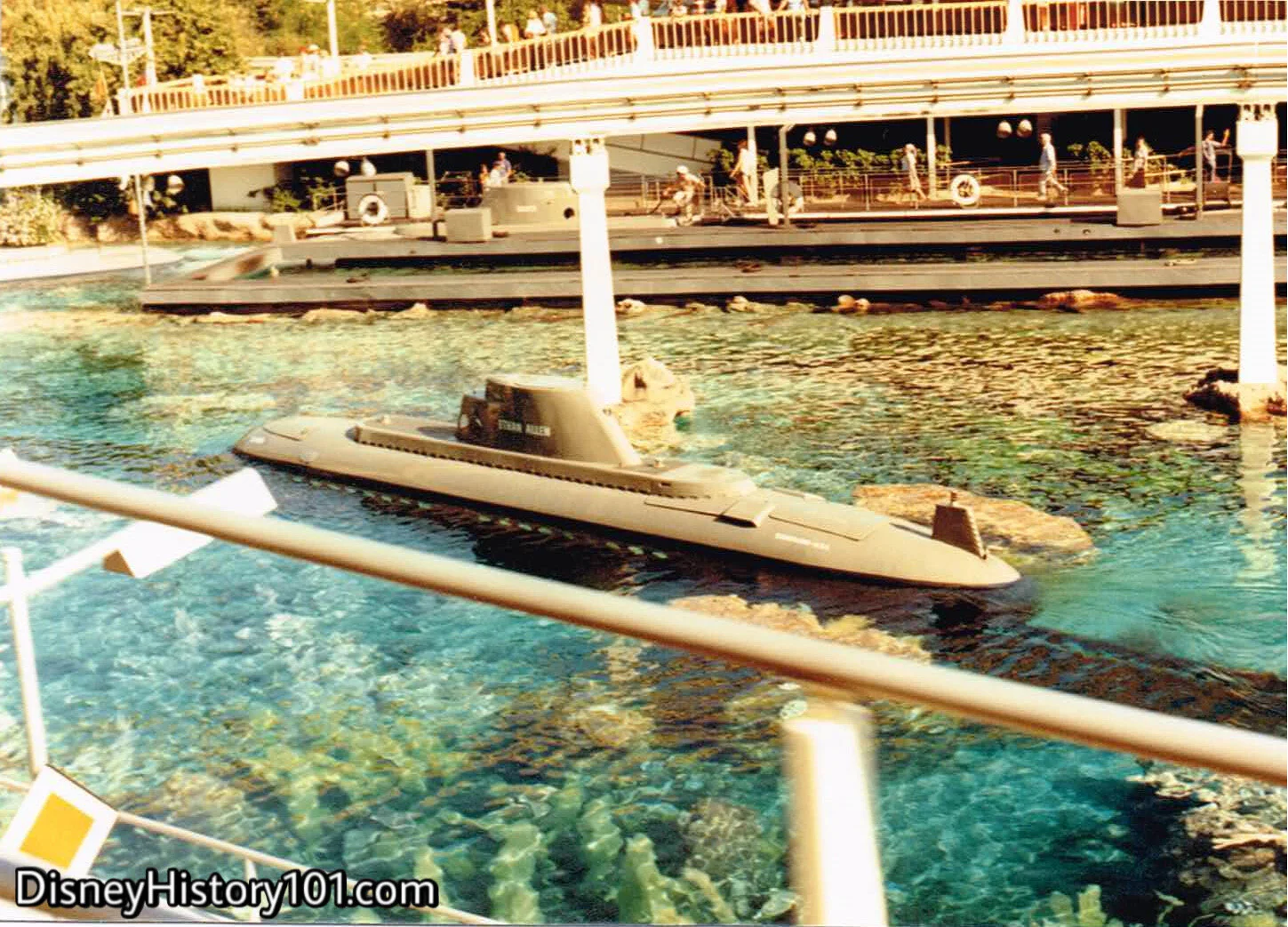
INTERMEDIATE LAGOON
The Ethan Allen heads through the waters of the Intermediate Lagoon.
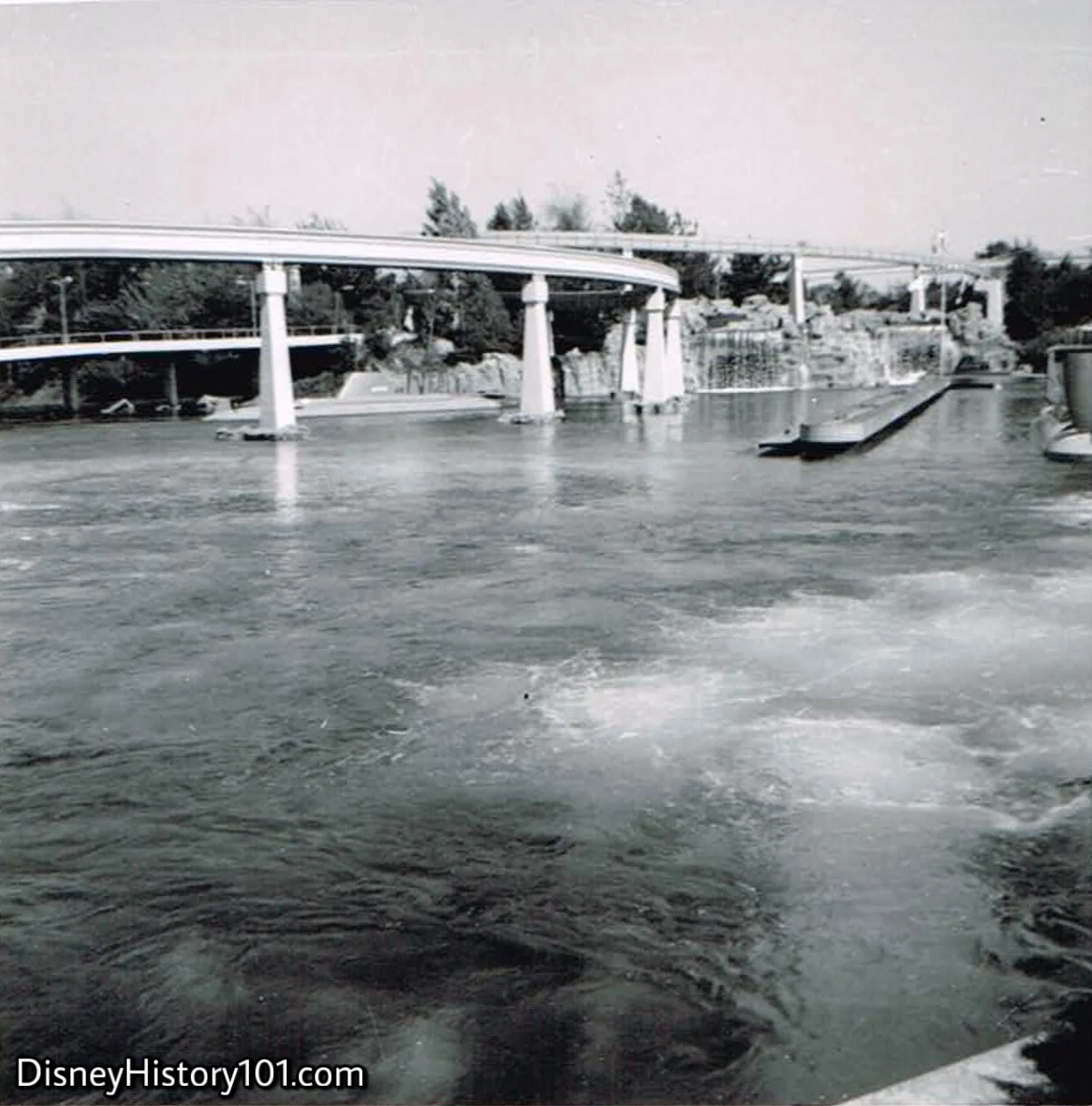
FRONT LAGOON
In the distance, a submarine makes its way through the waters of the Intermediate Lagoon.
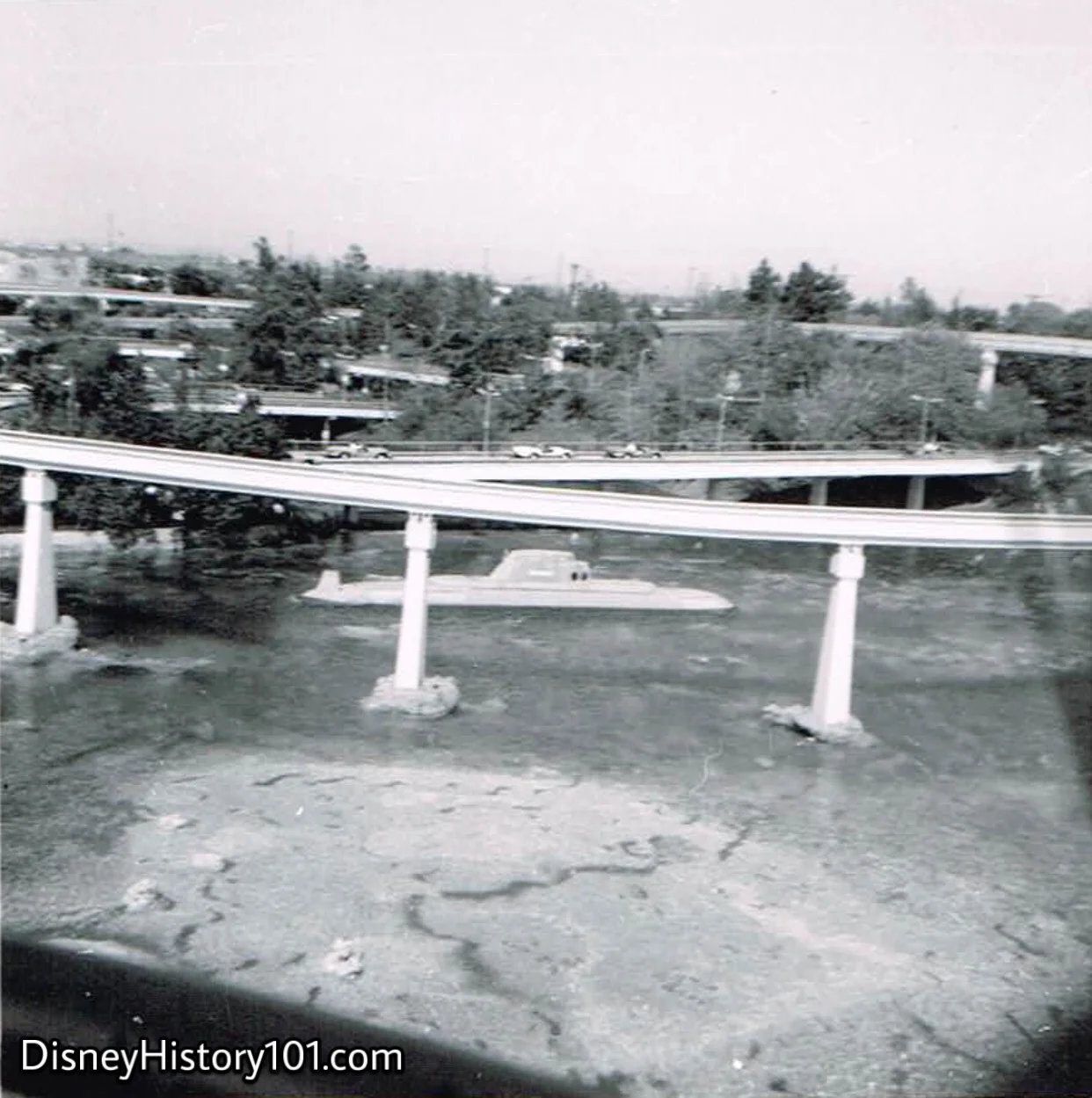
FRONT LAGOON (Coral Reef) ; INTERMEDIATE LAGOON
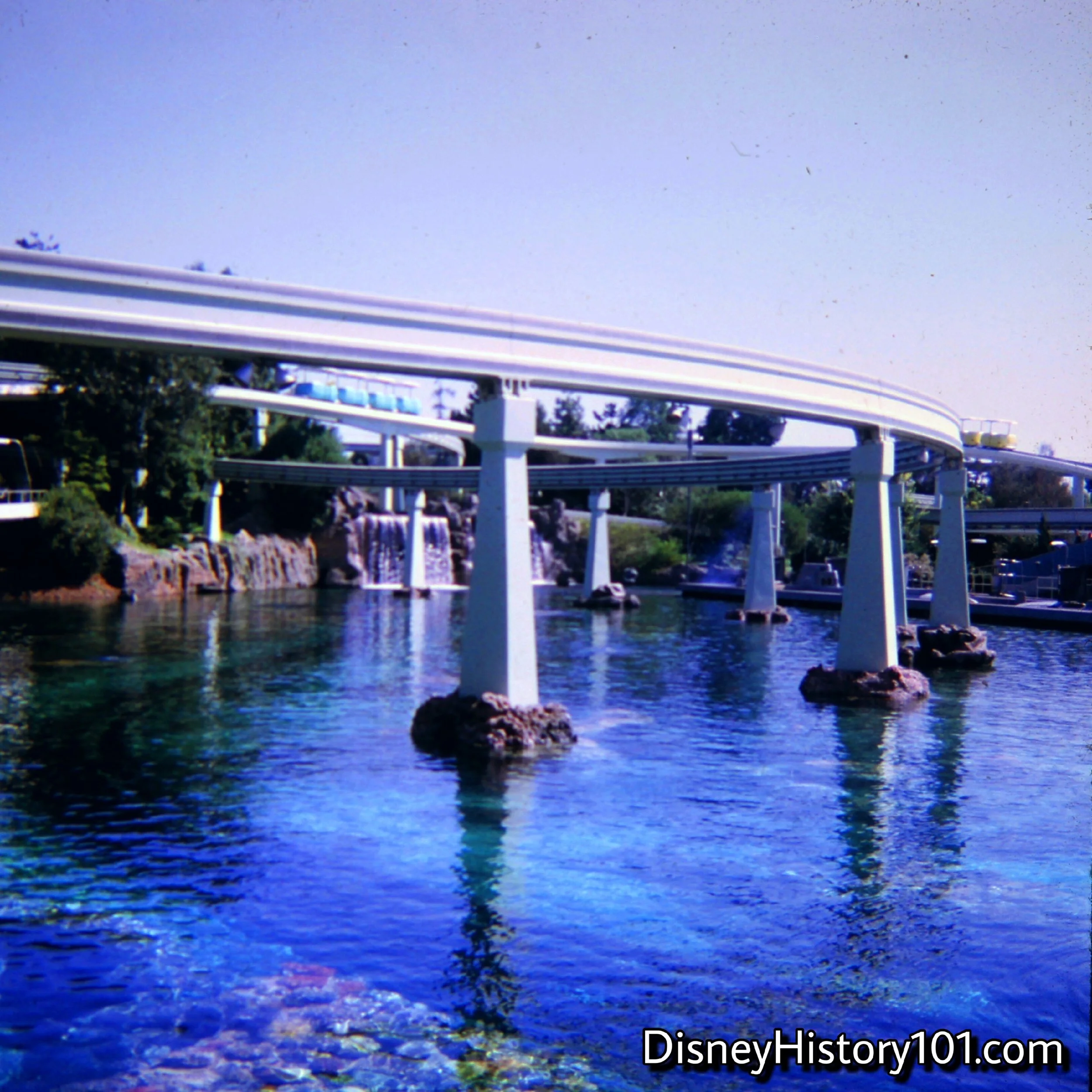
INTERMEDIATE LAGOON (1967)
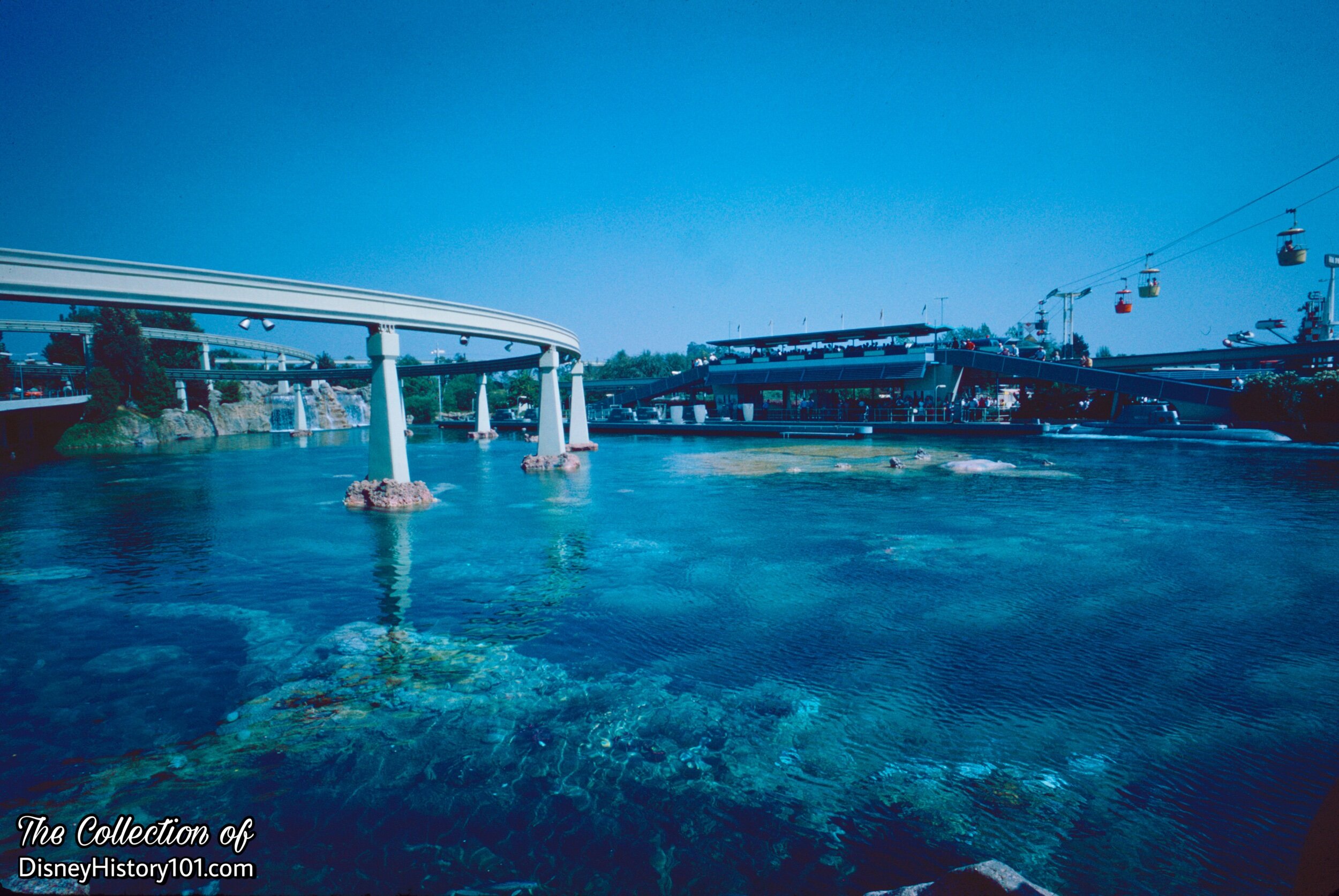
Front Lagoon, (September, 1962)
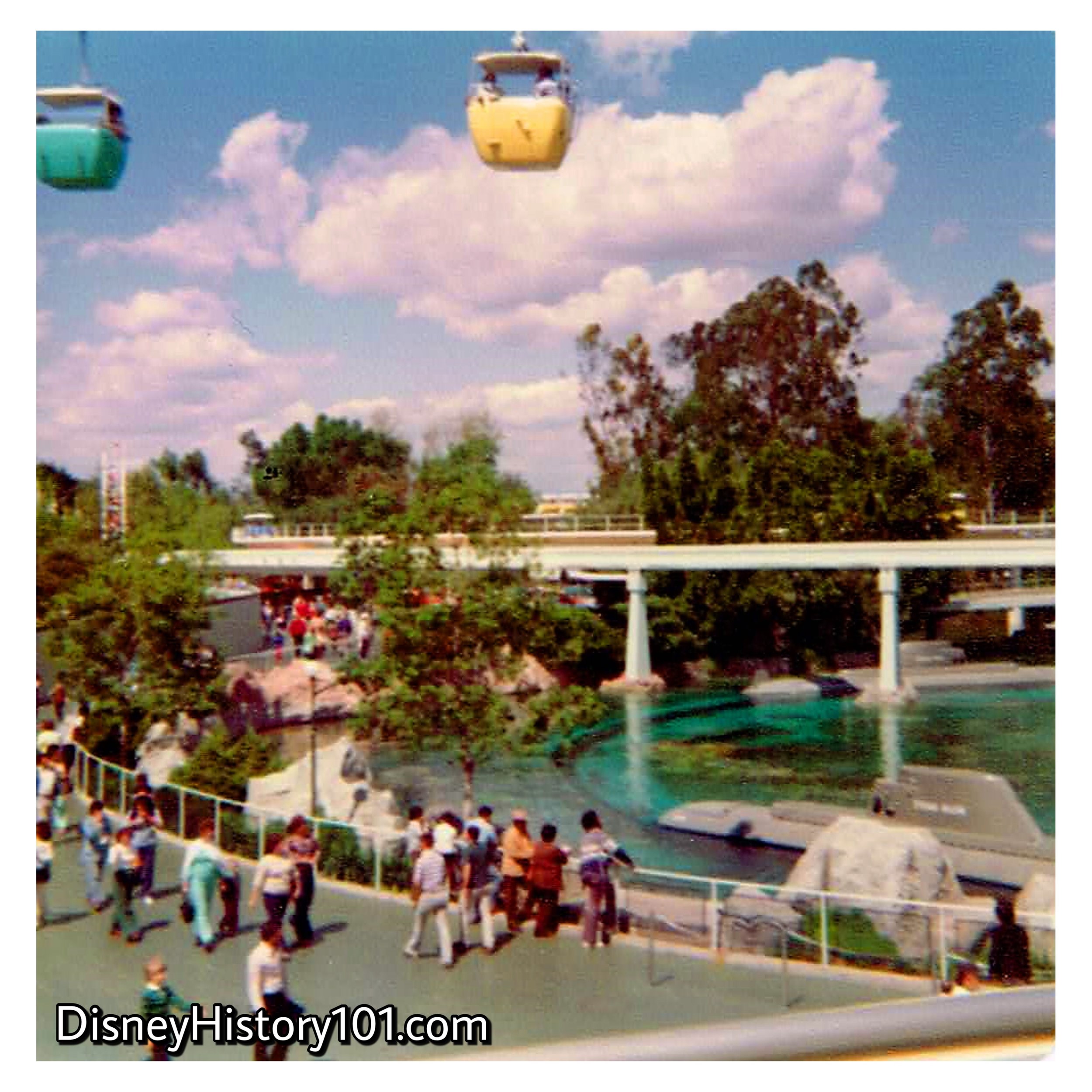
FRONT LAGOON (1978)
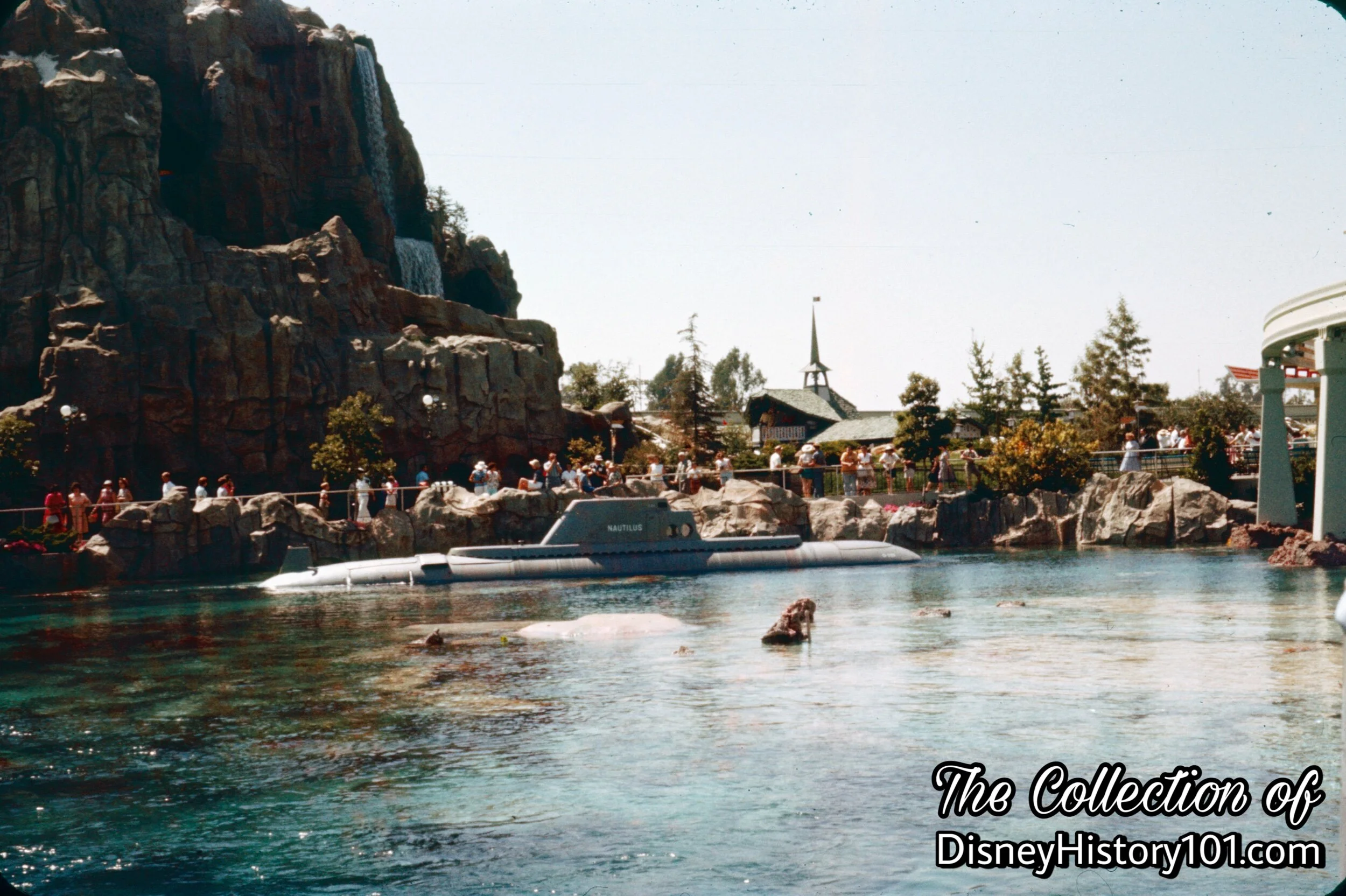
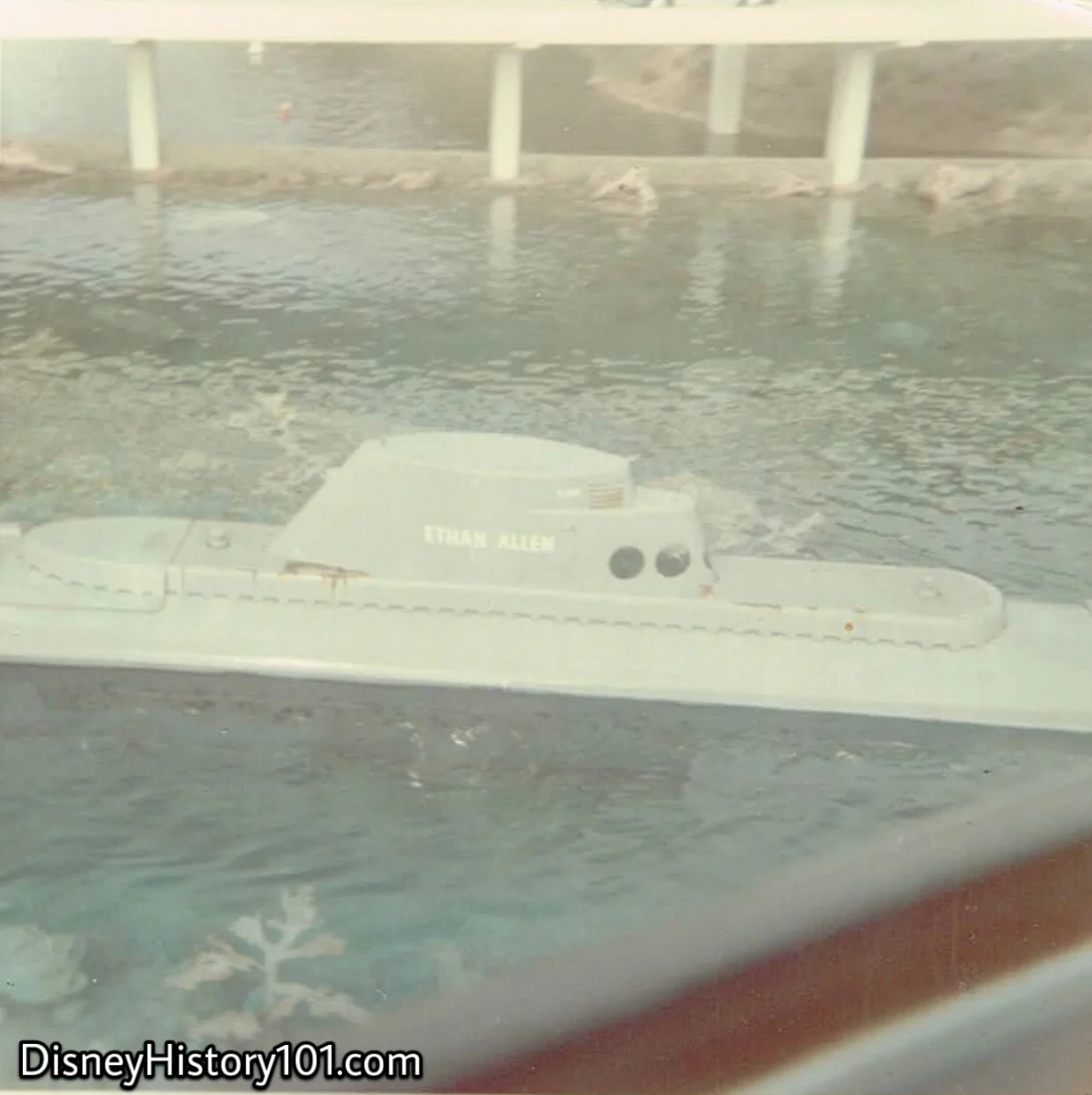
INTERMEDIATE LAGOON (1967)
(1959 ; 1965-1967)
Founder and Professor Emeritus of the University of Disneyland, Van France once said: “In a theater, when there are more people in the audience than seats, there is ‘standing room only.’ At Disneyland, when the people outnumber the ride capacity, the ‘standing’ is done in long, frustrating lines. Since we didn't have the money to create expensive attractions, we had to find innovative, inexpensive ways to keep the guests entertained. Live shows and free attractions provided entertainment for the guests at a time when we didn't have adequate capacity or attractions to handle them.”
Disneyland “Audience Waiting Areas” are especially designed as part of the attraction to make the guest's time waiting in line as comfortable as possible. Since the beginning, Atmosphere Entertainment complimenting the theme of areas was staged to entertain Disneyland Guests on an immediate and personal level. With the Submarine Voyage Thru Liquid Space soon-to-open, Walt was searching for ways to alleviate the boredom of waiting in lines (especially during the summers). One way was to create atmosphere though shows. Queue areas would be equipped with live entertainment to set the mood for the forthcoming show.
According to Van France, “Tommy Walker came up with the idea of using real live mermaids.“ At that time (in 1959), Chuck Corson (a big fan of the Golden Horseshoe Revue) became Disneyland Entertainment Director, and soon helped create many new acts around Disneyland’s lands. Chuck would also come to have a hand in the creation of the Dapper Dans, The Yachtsmen, the Matterhorn Climbers, and another memorable act - Living Mermaids From Mythical Times! All this occurred some two decades before Daryl Hannah made a similar “splash” on the big screen.
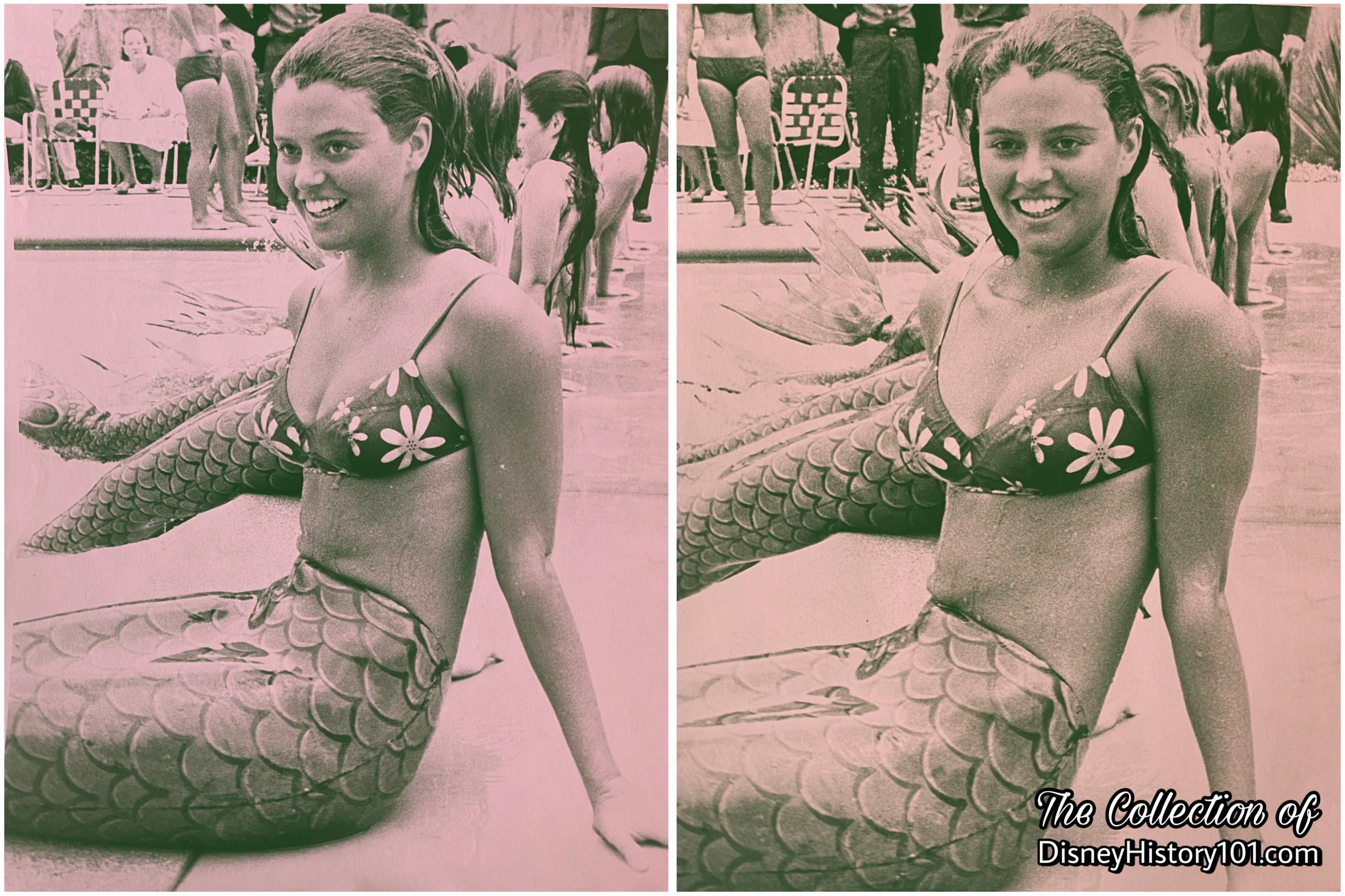
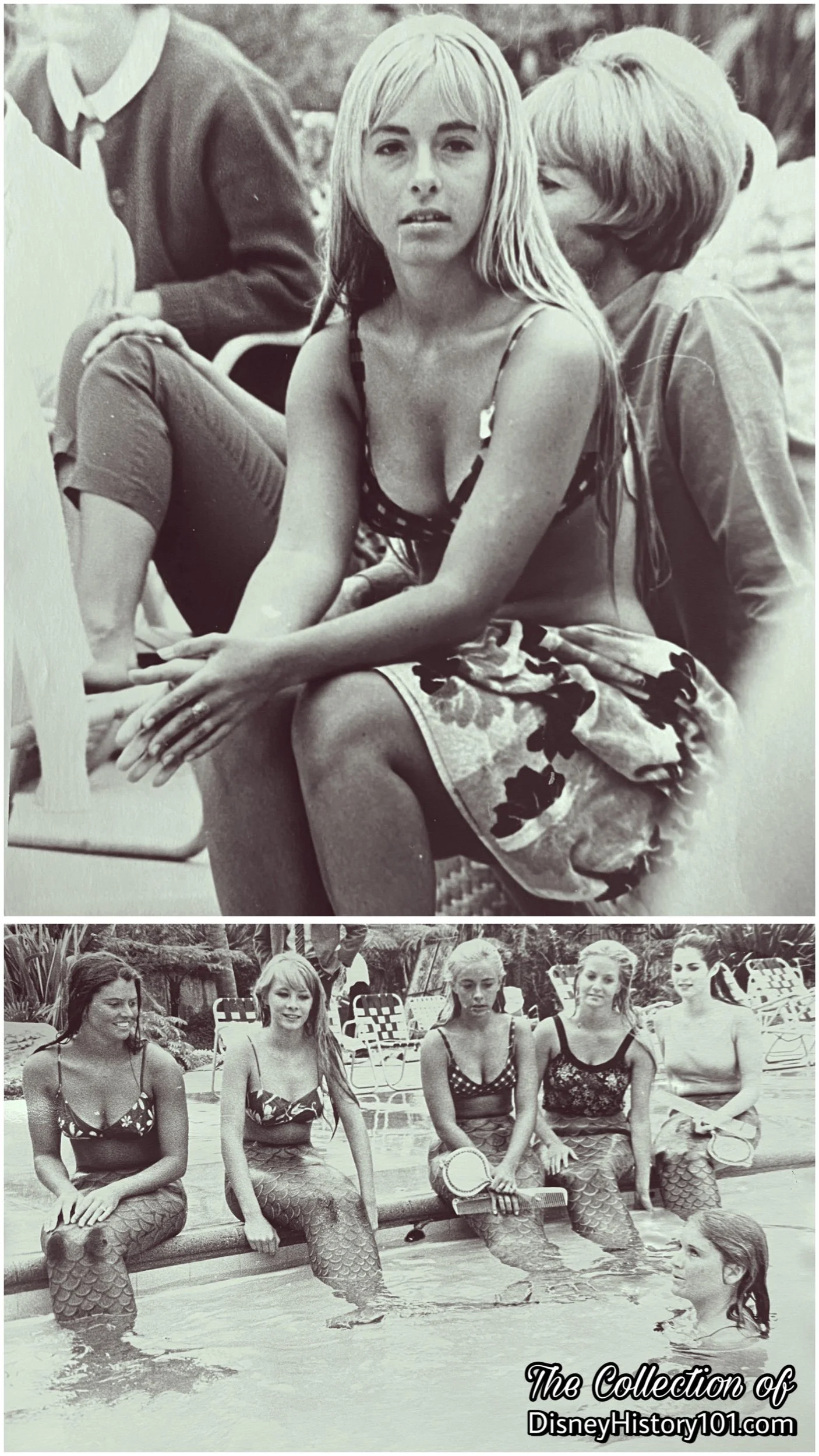
“Perhaps the most unique role in the Disneyland show made its debut in the summer of 1960. Specifying a preference for long hair and good swimming ability, mermaids were hired to adorn the coral reefs of the Submarine Lagoon. Tryouts were held in the Disneyland Hotel swimming pool, and while the job notice did ask young ladies to bring their own bathing suits, it assured them that ‘Disneyland will supply other portions of mermaid attire.’… The costume consisted of a custom-made, Fibre-glass and rubber ‘tail’, decorative shell top, and sparkling jewelry… Getting changed into costume those early years was also a challenge.”
In 1958, a new 8’x12’ Women’s Dressing Room was constructed at a cost of $1,248.06. It was located in the Service Area, attached to the Hills Bros. Storeroom, but there was a catch. “Some the first lockers consisted of canvas curtains set in a tent-like arrangement, but with no roof. Dick Nunis recalled that they provided an attraction not described in the guide book, as ‘planes used to dive down to see the women dress.” - Disneyland LINE (Vol 12, No. 29 ; July 17, 1980)
Anyhow, “Of the 75 applicants, five were chosen to work the summer season. Shifts were four hours, and the S.O.P. included strumming harps, combing hair, swimming and posing.” - Disneyland LINE (Vol 12, No. 29 ; July 17, 1980) Bob Sewell (WED Enterprises Staff Model Maker) recalled : “Live mermaids made special appearances…their flexible lower bodies and tails were individually fitted to these professional swimmers, all of whom were choreographed to music by Tommy Walker (who headed Disneyland’s Entertainment Division). The rehearsals were done at the Disneyland Hotel’s pool.” Van France recalled “Watching the auditions at Disneyland Hotel was definitely a fringe benefit. The mermaids provided a good show, almost too good, since our scuba diving maintenance men would often make extra trips out to make sure they were all right.”
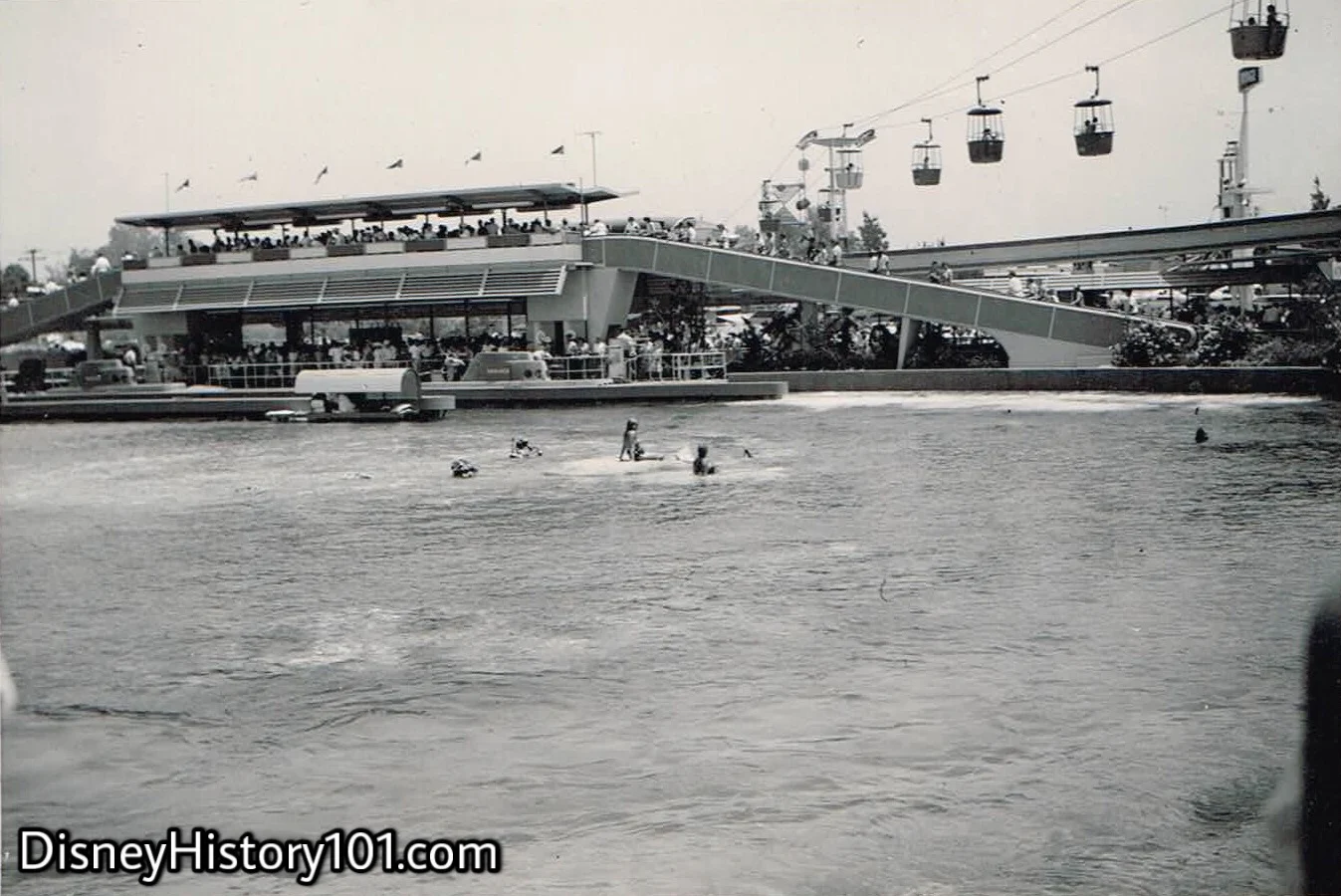
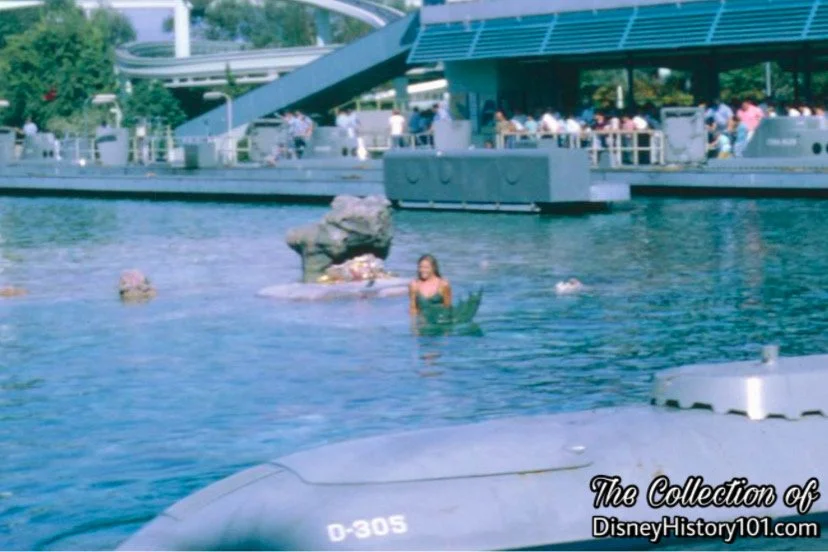
Soon, those Living Mermaids from Mythical Times appeared not only in the underwater Mermaid Lagoon, but daily on the small Coral Reef island above the tide of the South Seas Coral Lagoon in the Front Lagoon, (from 11:00a.m. to 5:45p.m.), during the summer of 1959! Both Submarine Pilots and Guests alike would begin to exclaim, “I don’t believe it. Something must be causing these hallucinations.” When it comes to the “Living Mermaids From Mythical Times”, the older folks would get as starry-eyed as their young, according to Art Linkletter (popular television emcee of the 1960s). “Each youngster likes a different ride or a different attraction, and each for a different reason. On my ‘House Party’ show, I frequently ask the kids if they’ve been to Disneyland, and if so, what they like best. One youngster said recently : ‘I like the scary rides like the Matterhorn Bobsled Run ; but daddy always takes me on the submarine - he likes the mermaids.’”
“The siren song sometimes proved too beguiling, as male guests occasionally dived into the lagoon to pursue the mermaid of their dreams,” according to the same aforementioned excerpt from Disneyland LINE (Vol 12, No. 29 ; July 17, 1980). For instance, “55er” Broney Ciesluk “was the first foreman on the new Submarine Attraction.” He recalled “we had mermaids in those days. One day when I was on the dock, I got a call from a Sub that a fellow was swimming to MERMAID ROCK!” According to Mike O’Brien of Backstage Disneyland (Vol.4, No.4 ; December 1965) : “Yvonne Hudson was a mermaid and, although it is well known that there is no such thing as a mermaid, Yvonne was a mermaid if there ever was one. On occasion, an amorous and adventurous youth would jump into the Submarine Lagoon and swim out to Mermaid Rock for a rendezvous. Yvonne thought that such an event was ‘just darling.’ The Security Officers did not share this opinion.”
Despite all this, the Mermaids made such a “splash” with guests, that they reappeared seasonally, from 1965 to 1966, from 11 AM to 7 PM. During early summer Customer Relations Staff Meetings, it was not uncommon to hear or read the following words among the minutes : “It was suggested that we start thinking of mermaids in the lagoon.” About the summer of 1965, Robin (who filled the role, just for the Tencennial season), Kat, Virginia Hall, and Yvette were among the girls chosen to represent these women in the water. In 1966, Jini (a skilled swimmer) was transferred to promoted to supervise the Mermaids (like Cynthia, Edie, Judy, Lynn, Marcia). Promotional publicity photos published 7/24/67, showcased what was “undoubtedly the coolest job in California” featuring Shannon Johnson. But alas, mermaid sightings above the tides ended for good during the summer of 1967.
“The Other Women in the Water”
There’s a “sidelight” (and little known fact) about the women in the water of the Submarine Lagoon. The Mermaids From Mythical Times weren’t the only females in the waters of Disneyland’s own “Seven Seas”. Though navies nationwide barred women from piloting submarines until 1985, Disneyland’s “silent service” became the first fleet in the world to put female submarine pilots at the helm, below the tide!
Living Mermaids From Mythical Times, (June, 1960)
Living Mermaids From Mythical Times, (1967)
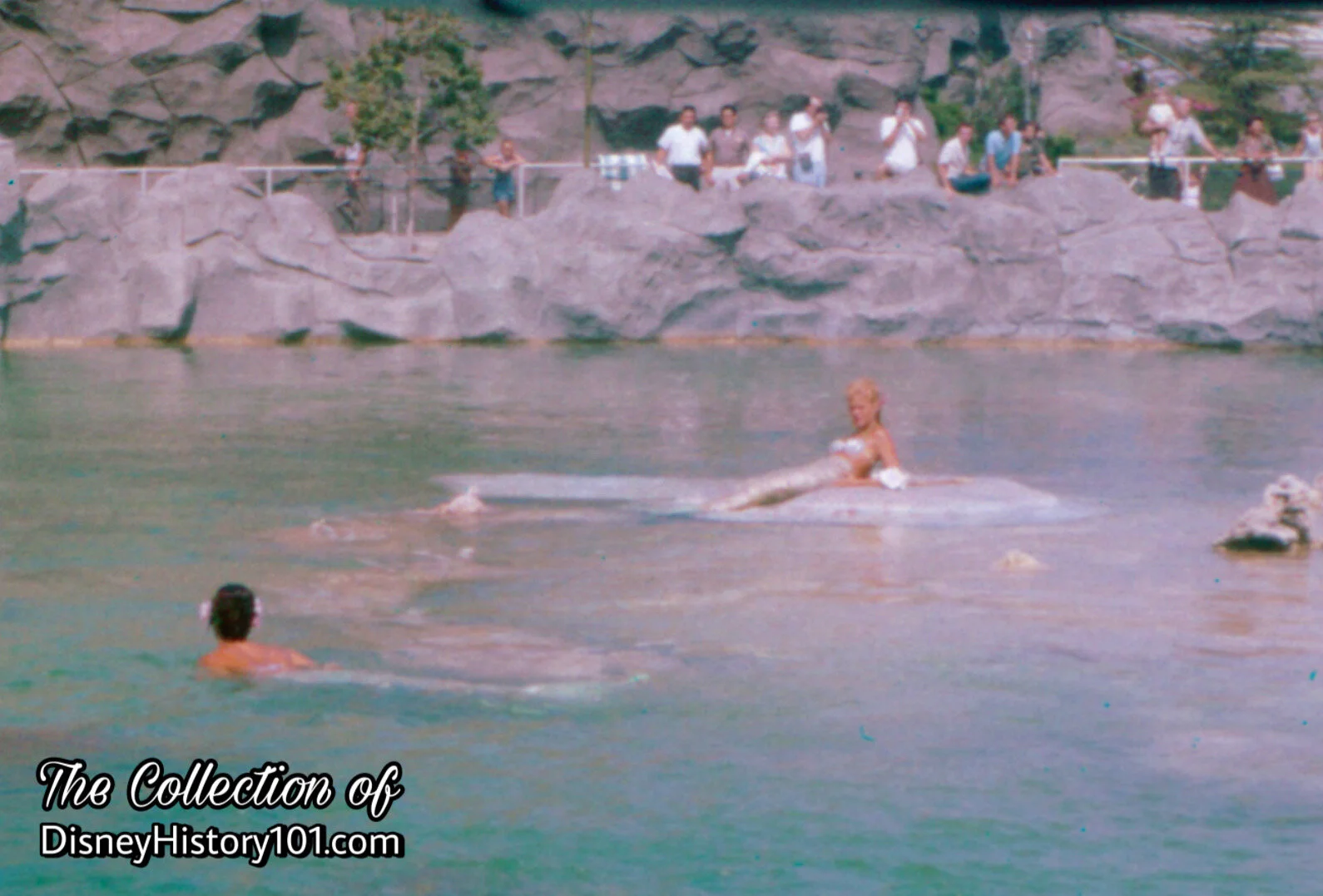
Living Mermaids From Mythical Times
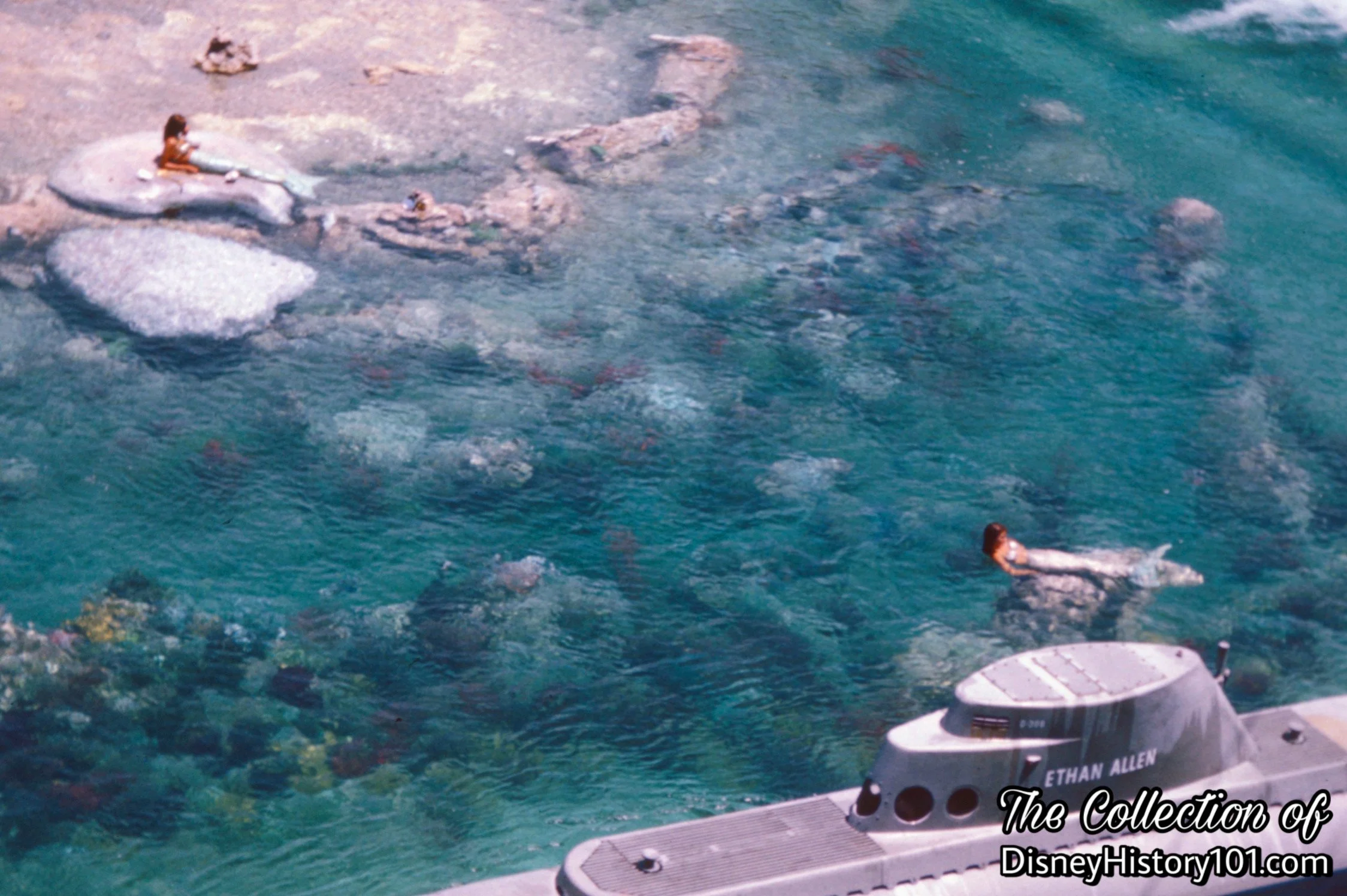
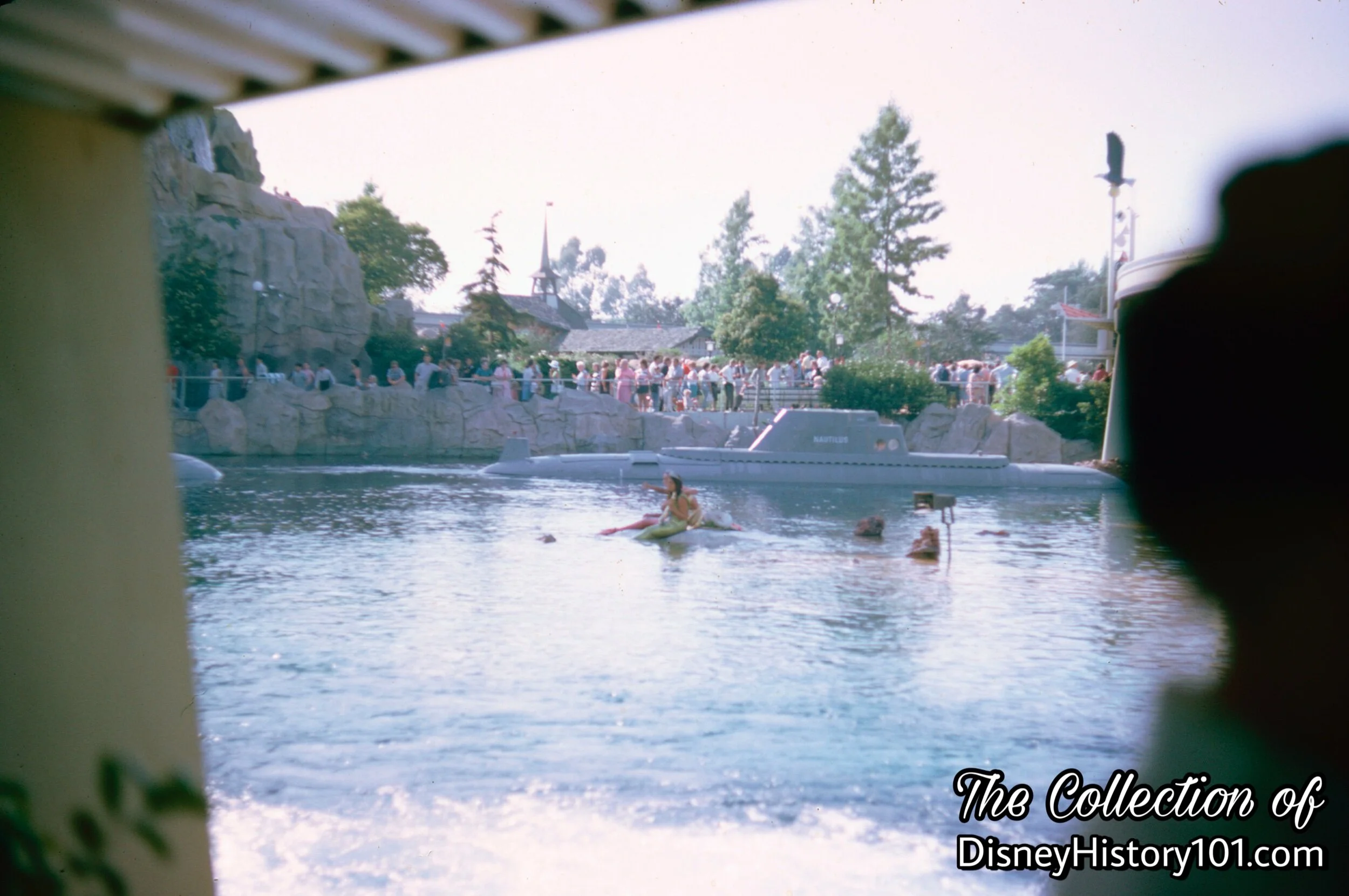
Living Mermaids From Mythical Times, (August, 1965)
“Or, can it REALLY be possible…”
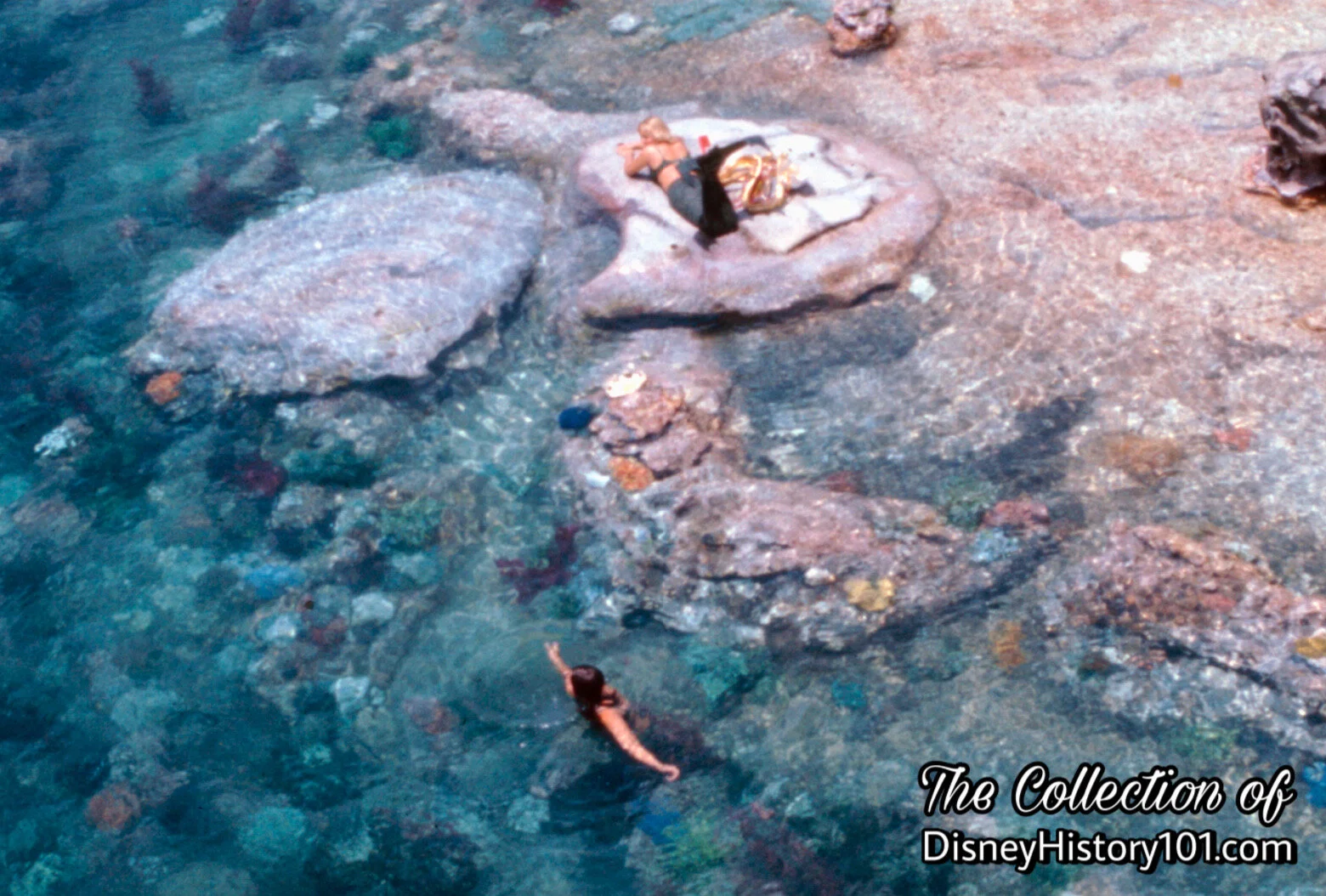
Living Mermaids From Mythical Times, (1967)
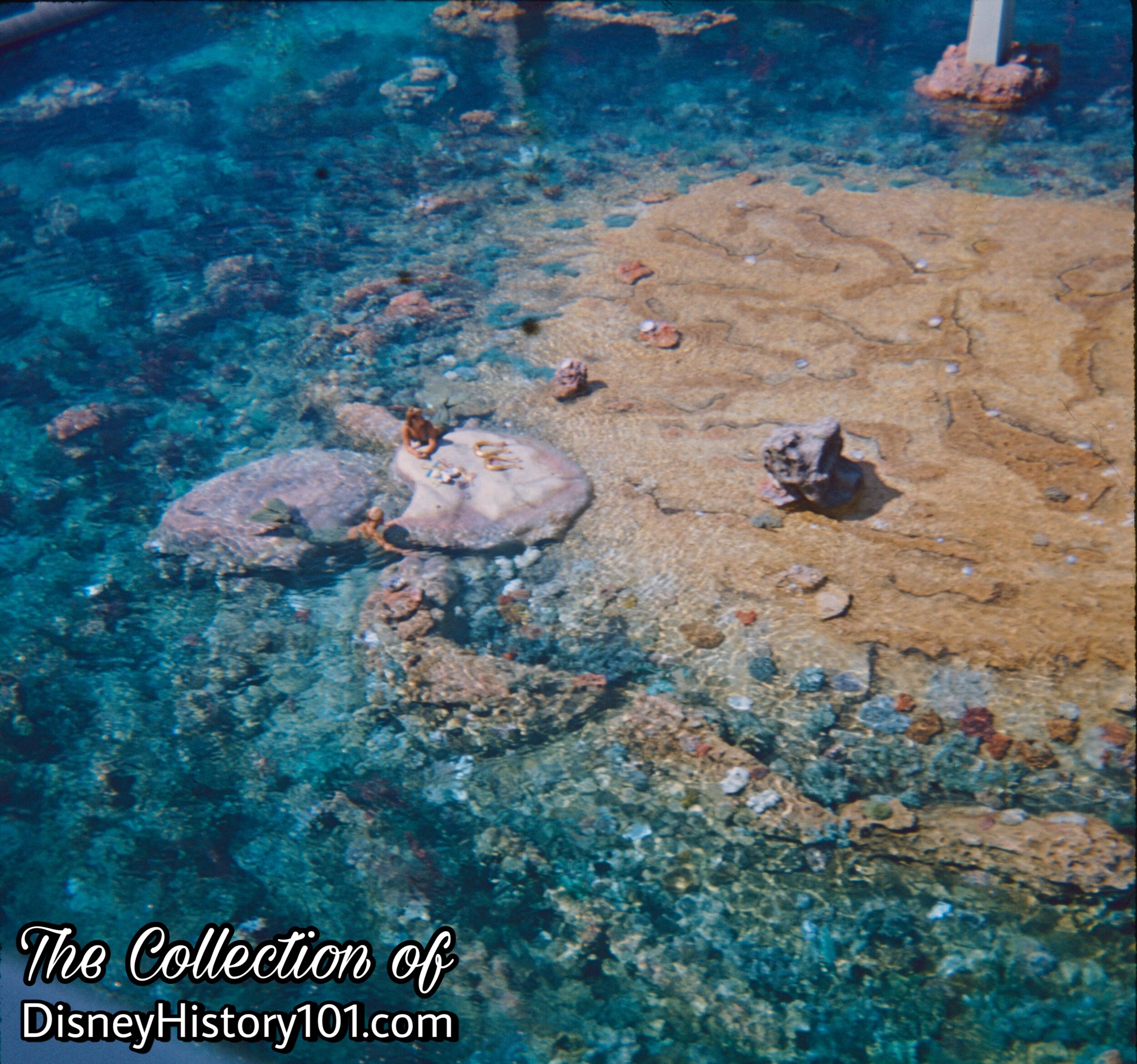
Living Mermaids From Mythical Times, (July, 1966)
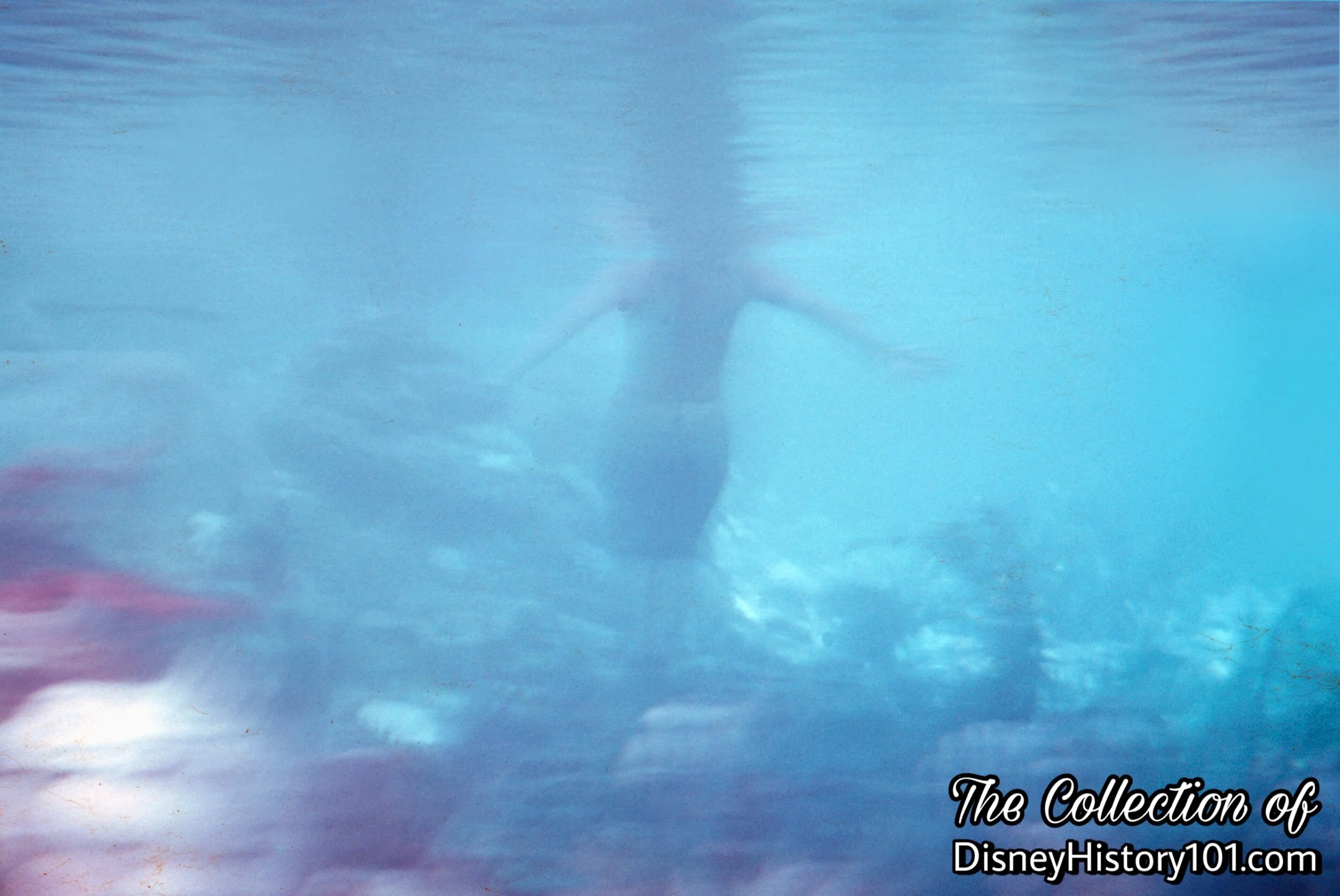
Living Mermaids From Mythical Times
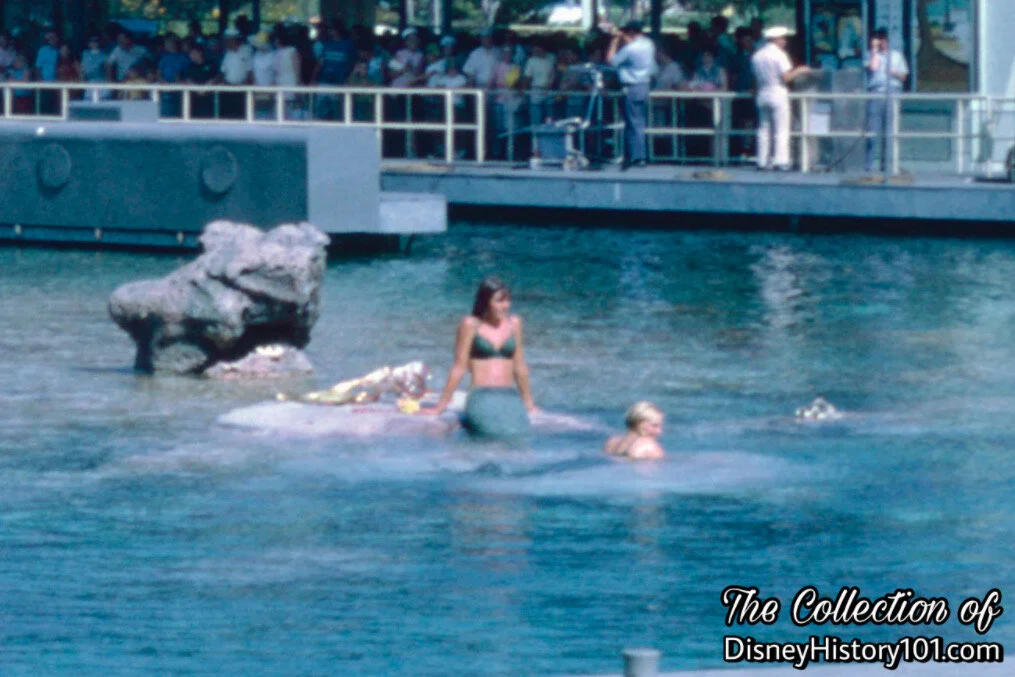
Living Mermaids From Mythical Times, (1967)
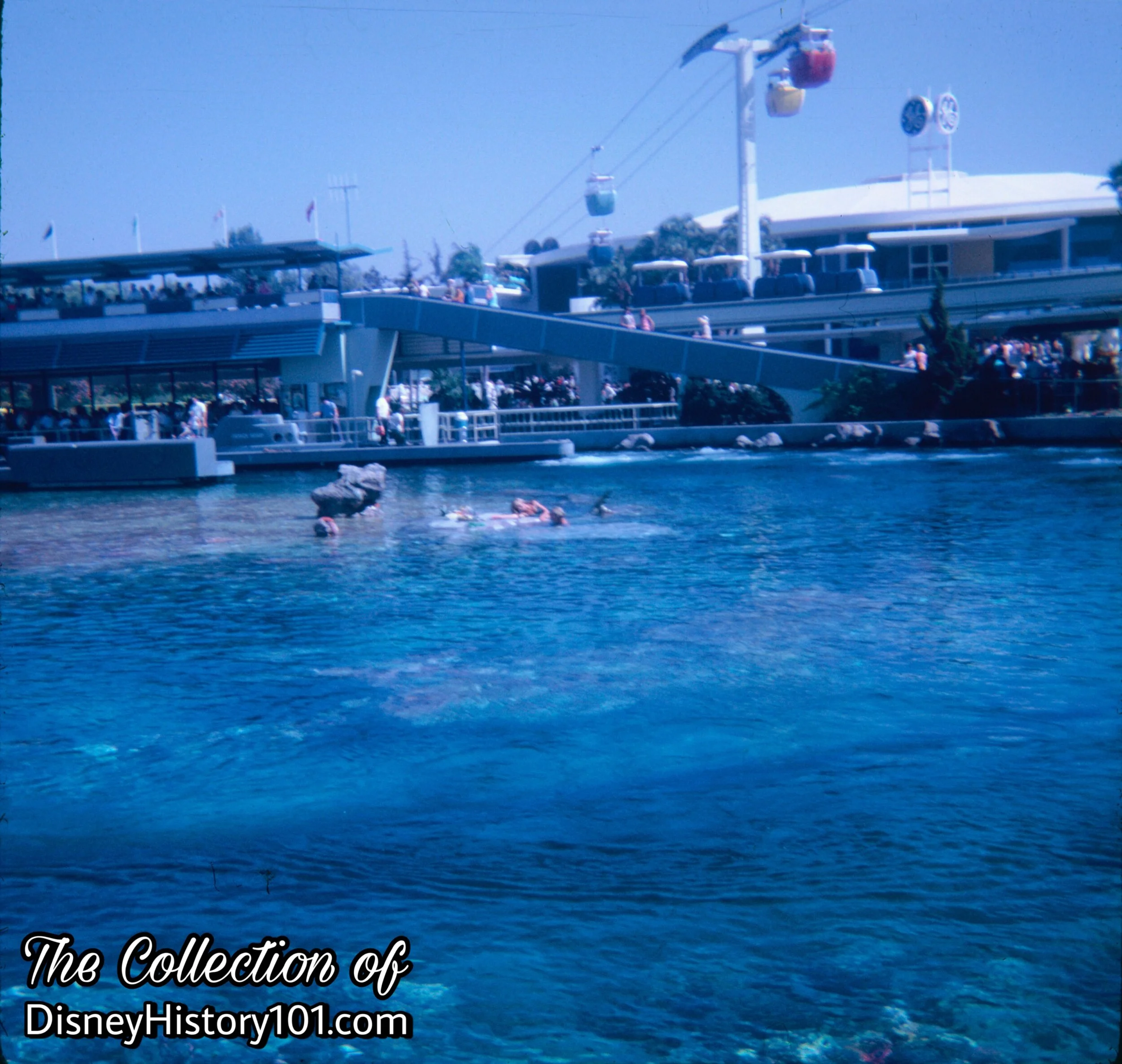
Living Mermaids From Mythical Times, (March, 1967)
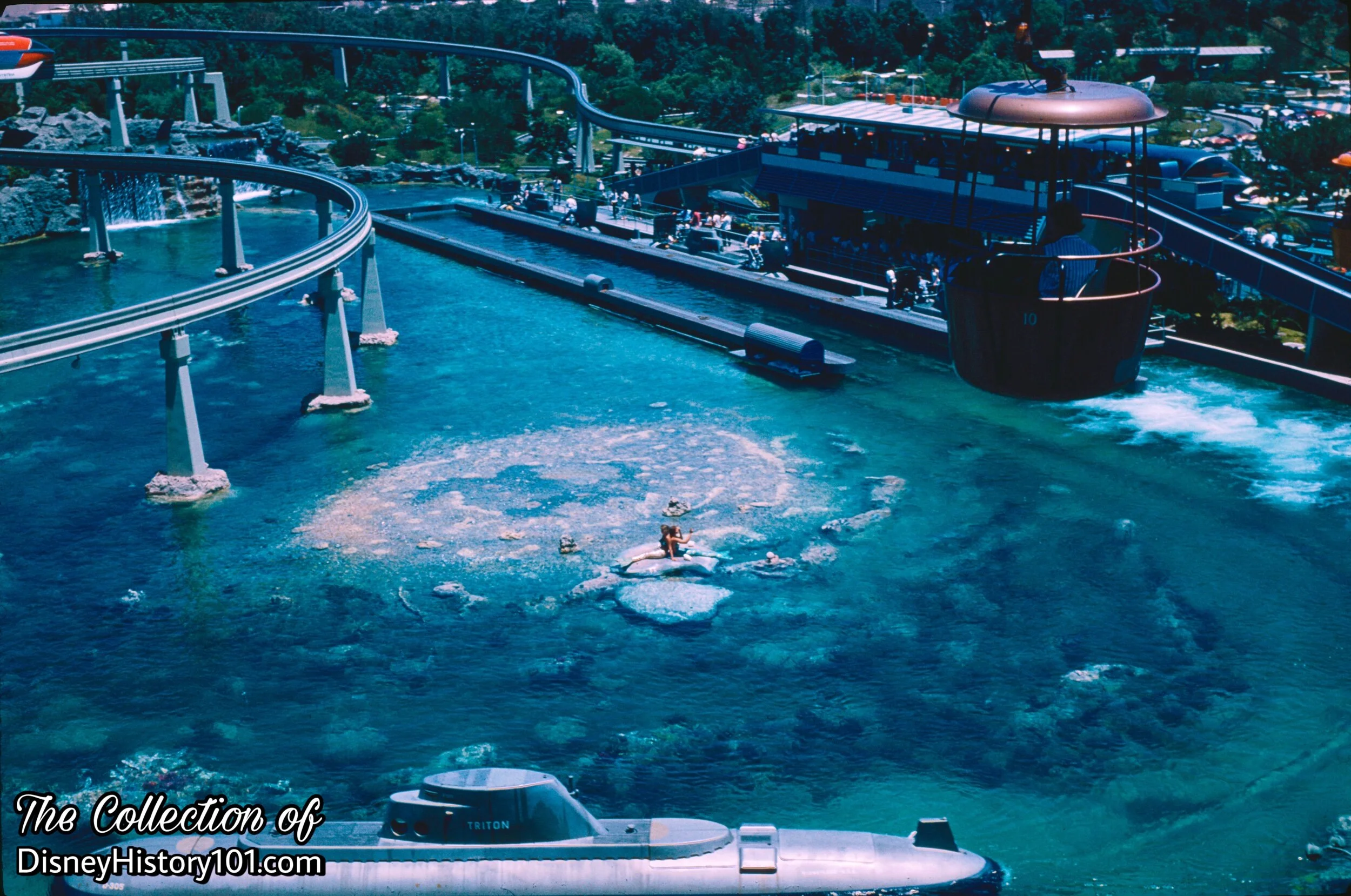
Living Mermaids From Mythical Times in The Front Lagoon
From the Skyway Cabins, we can see the Front Lagoon and any “hallucinations” atop, clearly. We note that the Storage Dock is empty, meaning that “all hands are on deck” for this likely a peak period for Disneyland guests.
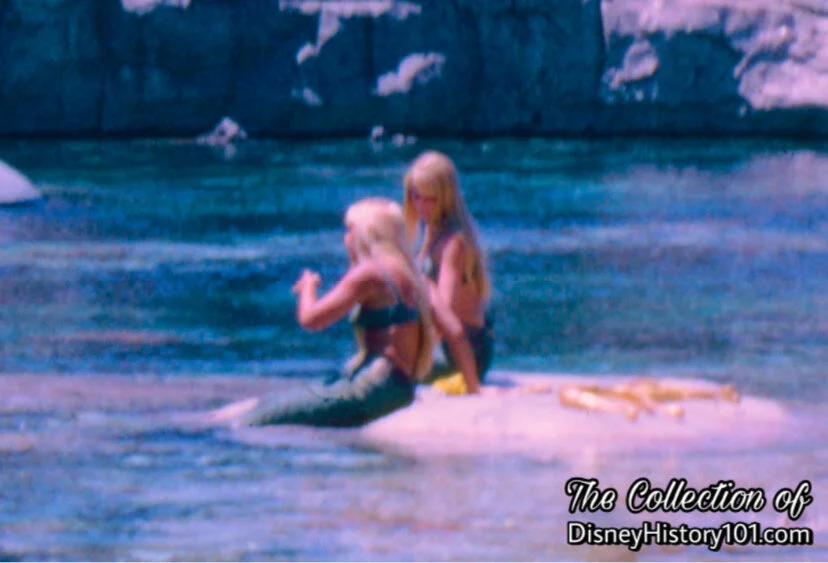
Living Mermaids From Mythical Times, (August, 1966)
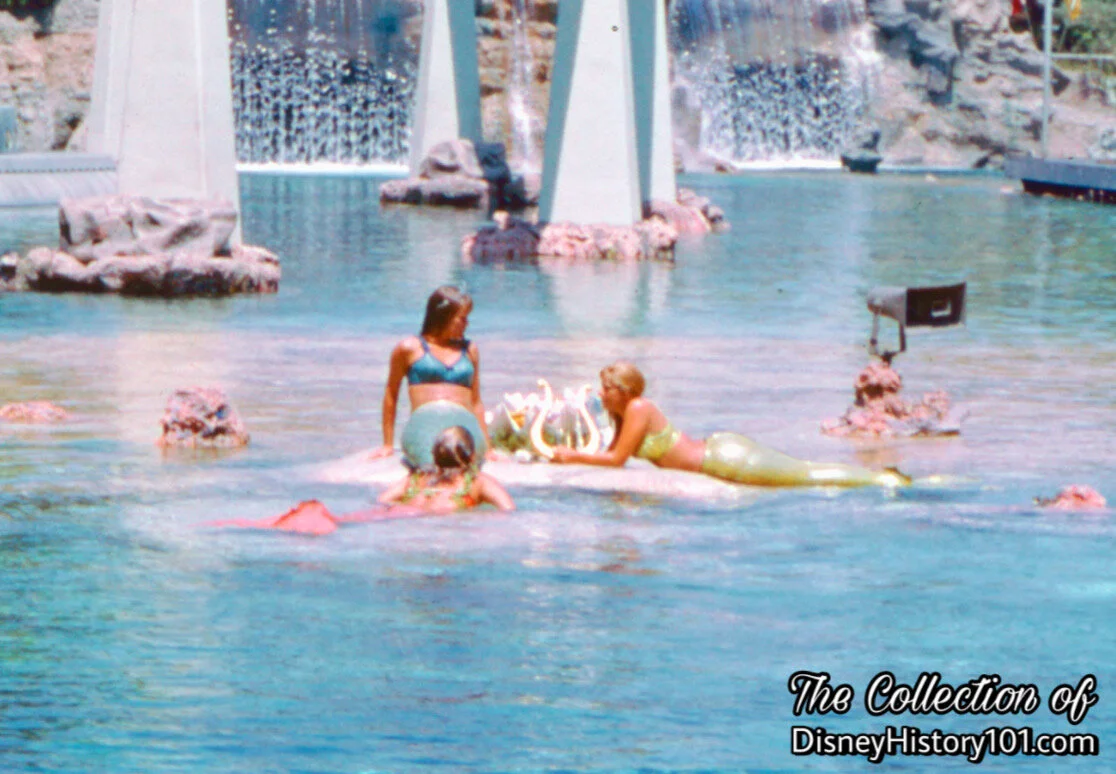
Living Mermaids From Mythical Times, (1965)
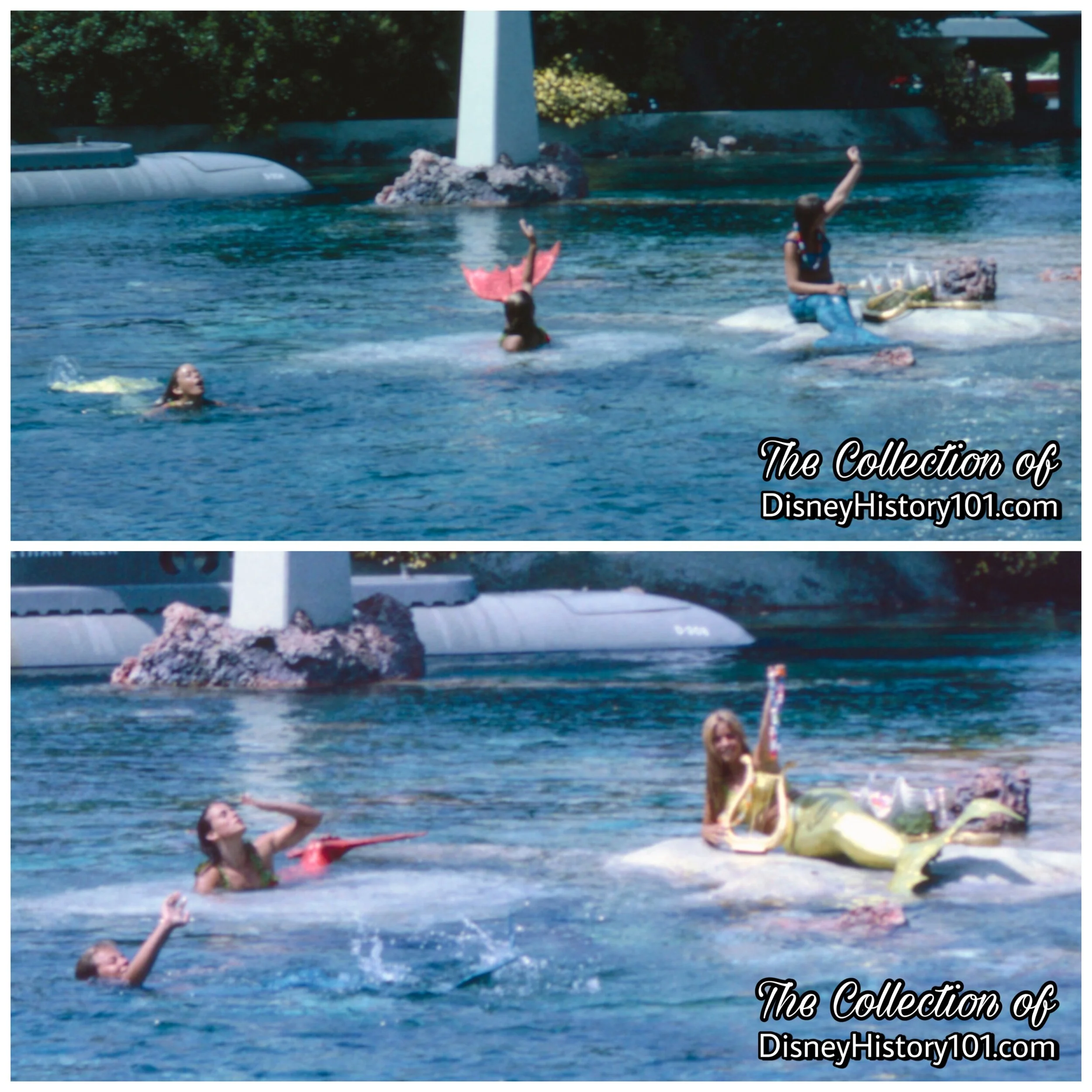
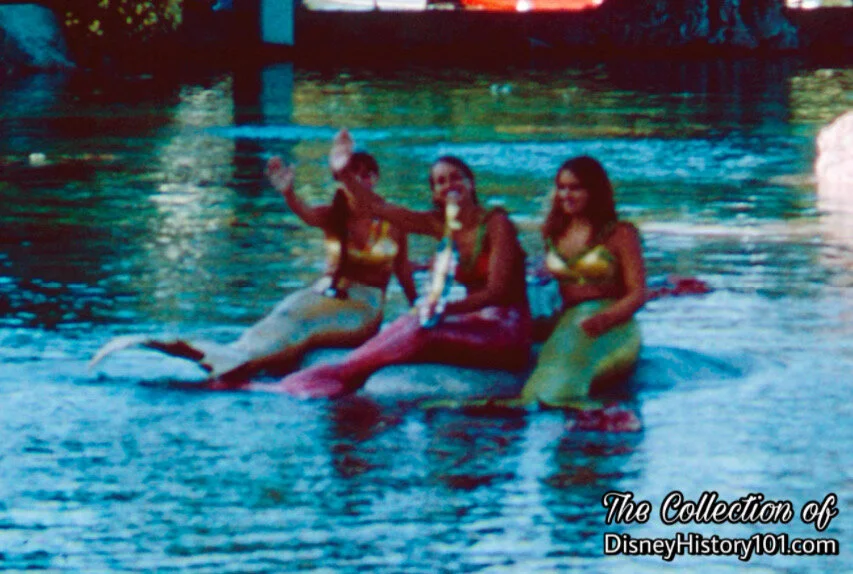
Living Mermaids From Mythical Times, (August, 1965)
The Submarine Lagoon once served as a “set” of sorts, home to a unique Character experience or “meet and greet.”
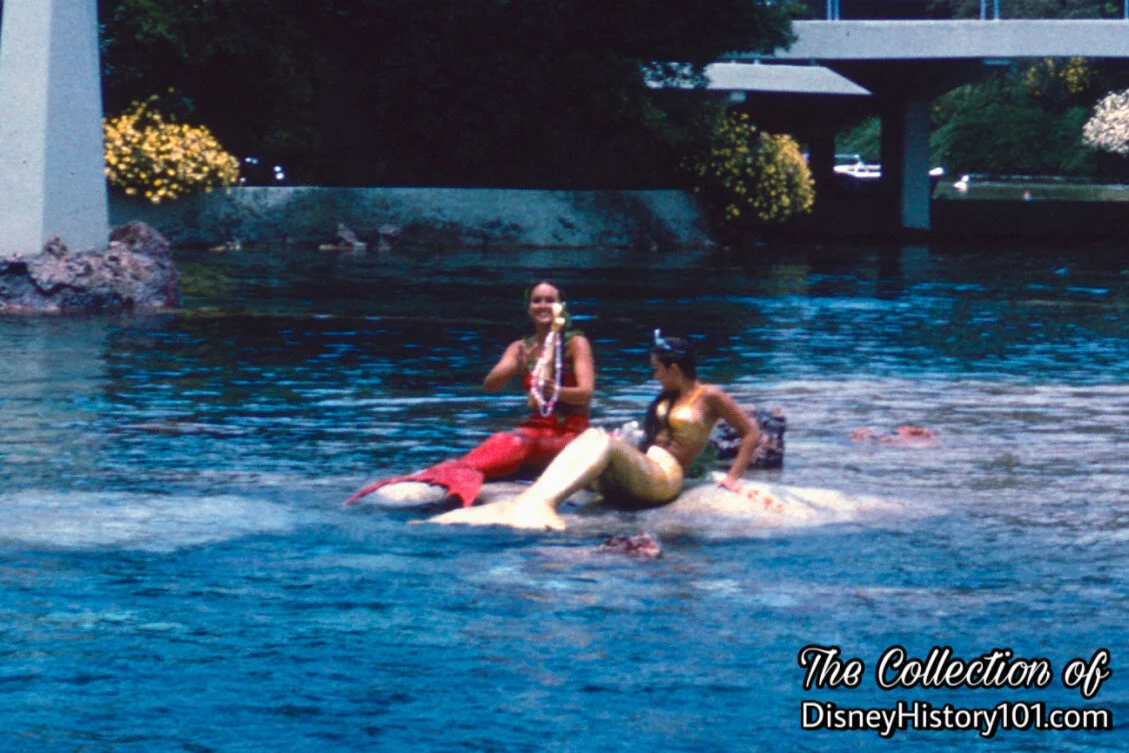
Living Mermaids From Mythical Times
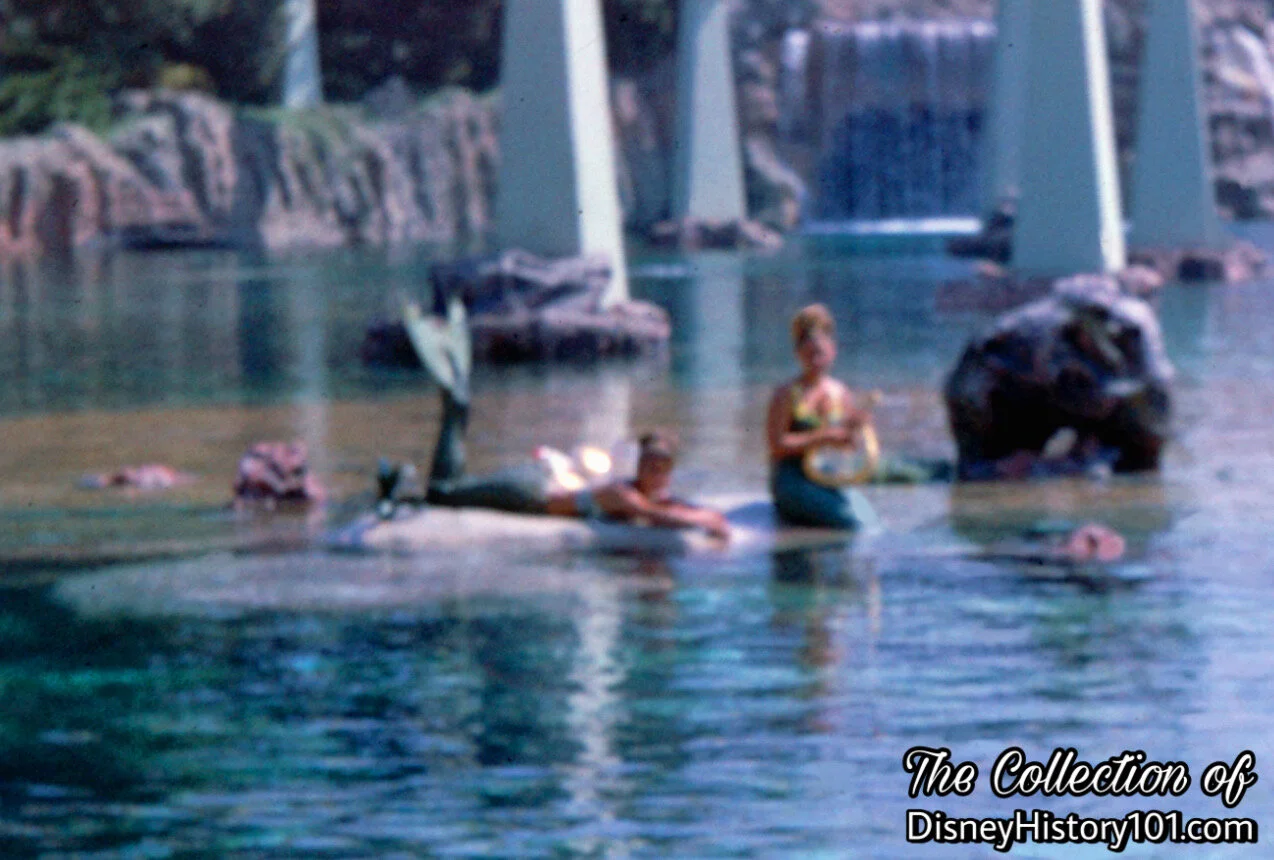
Living Mermaids From Mythical Times
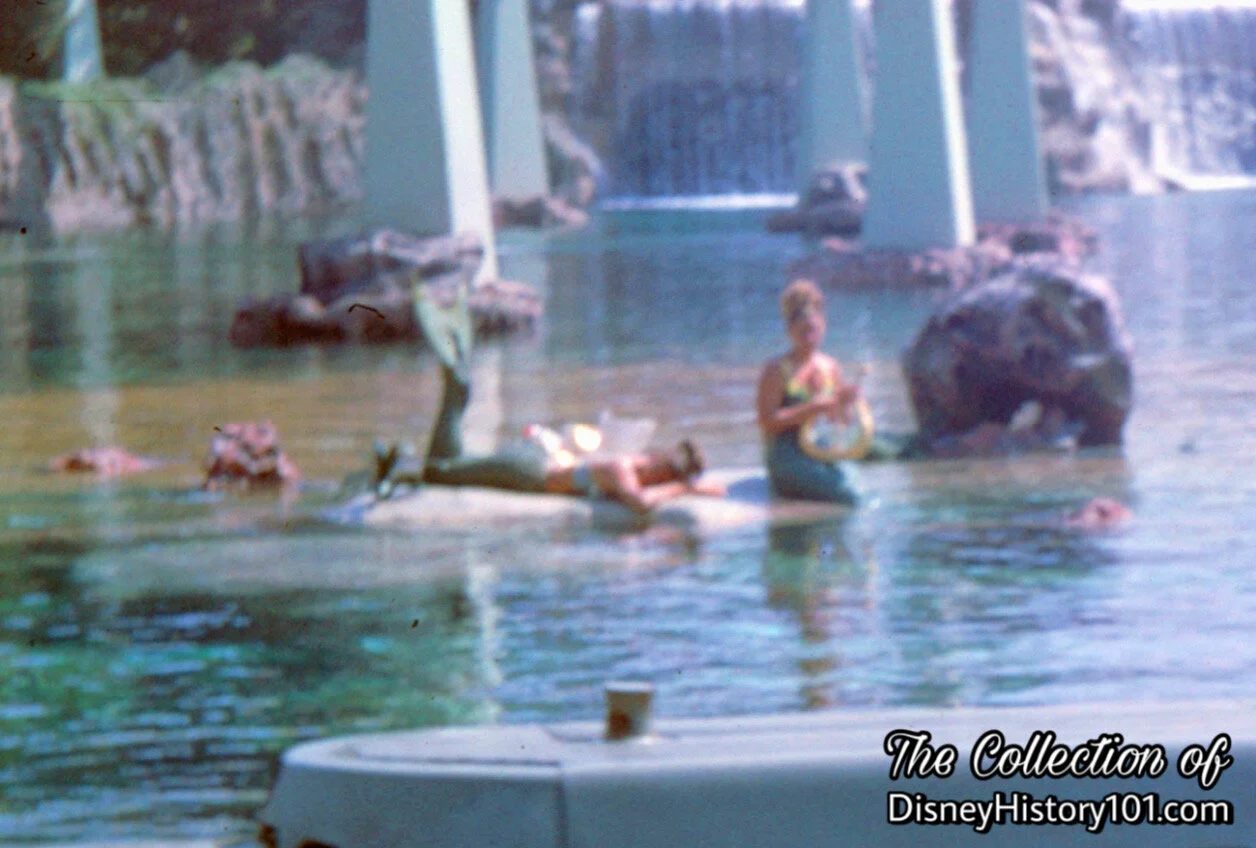
Living Mermaids From Mythical Times
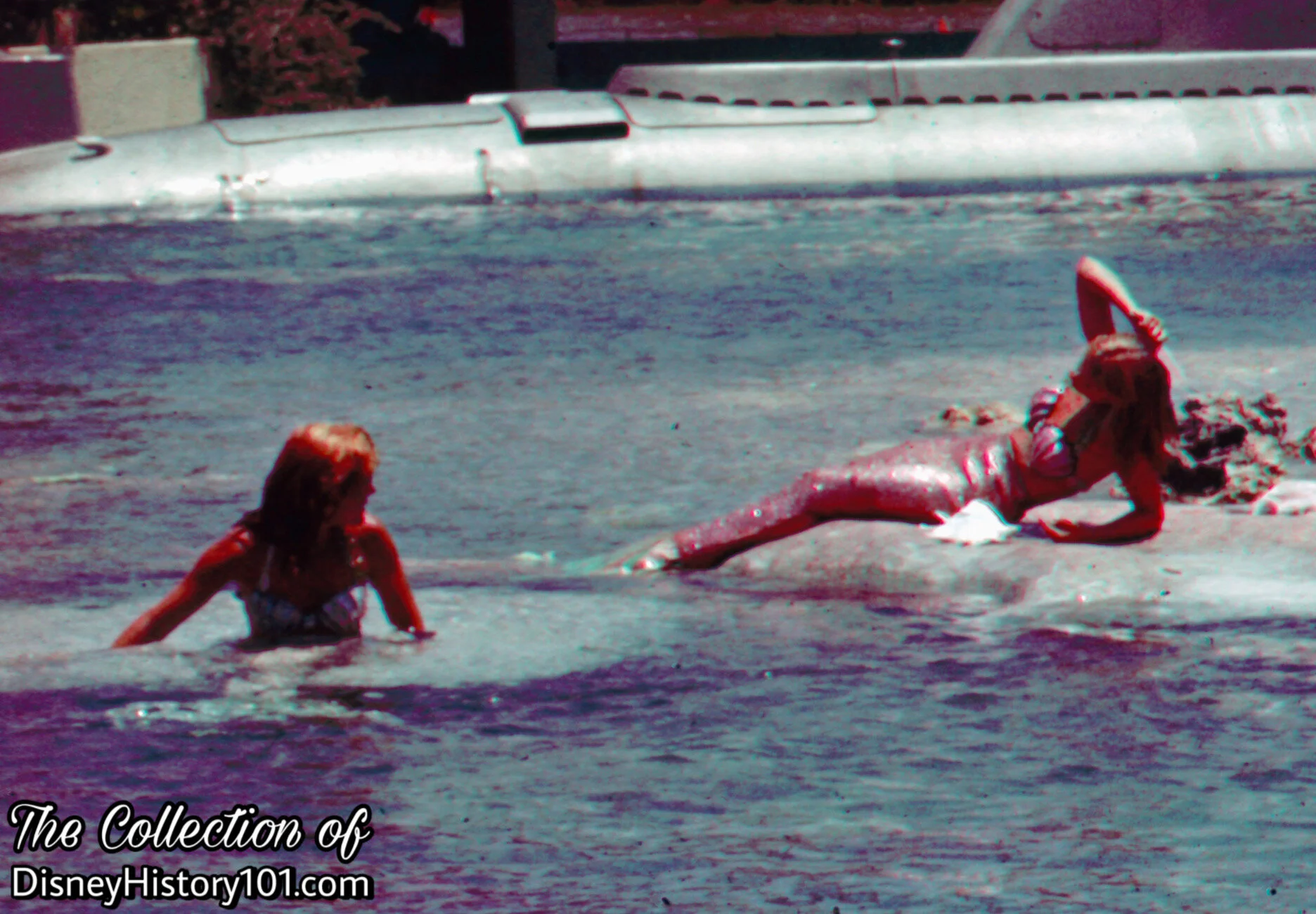
Living Mermaids from Mythical Times, (Summer, 1960)
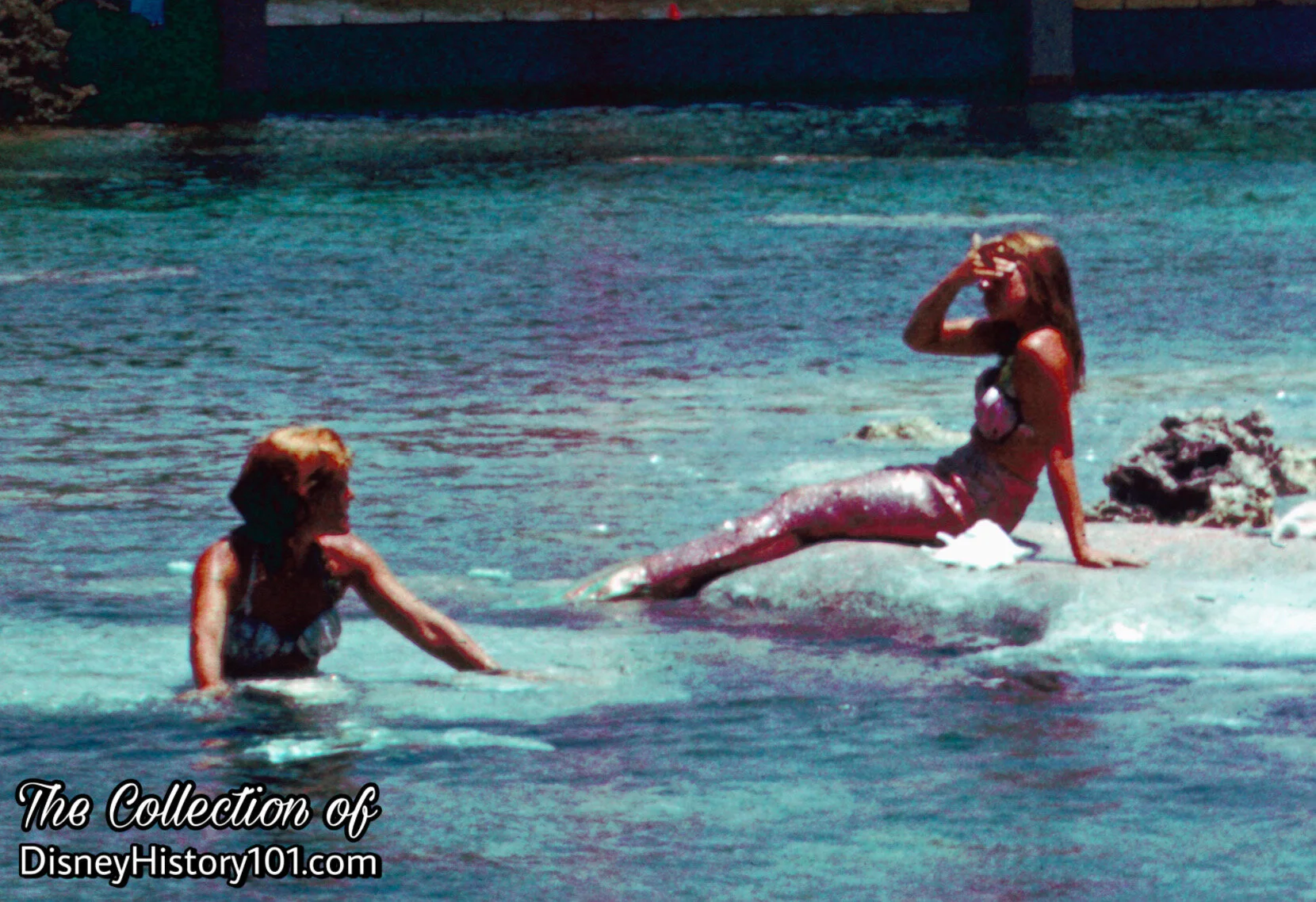
Living Mermaids from Mythical Times, (Summer, 1960)
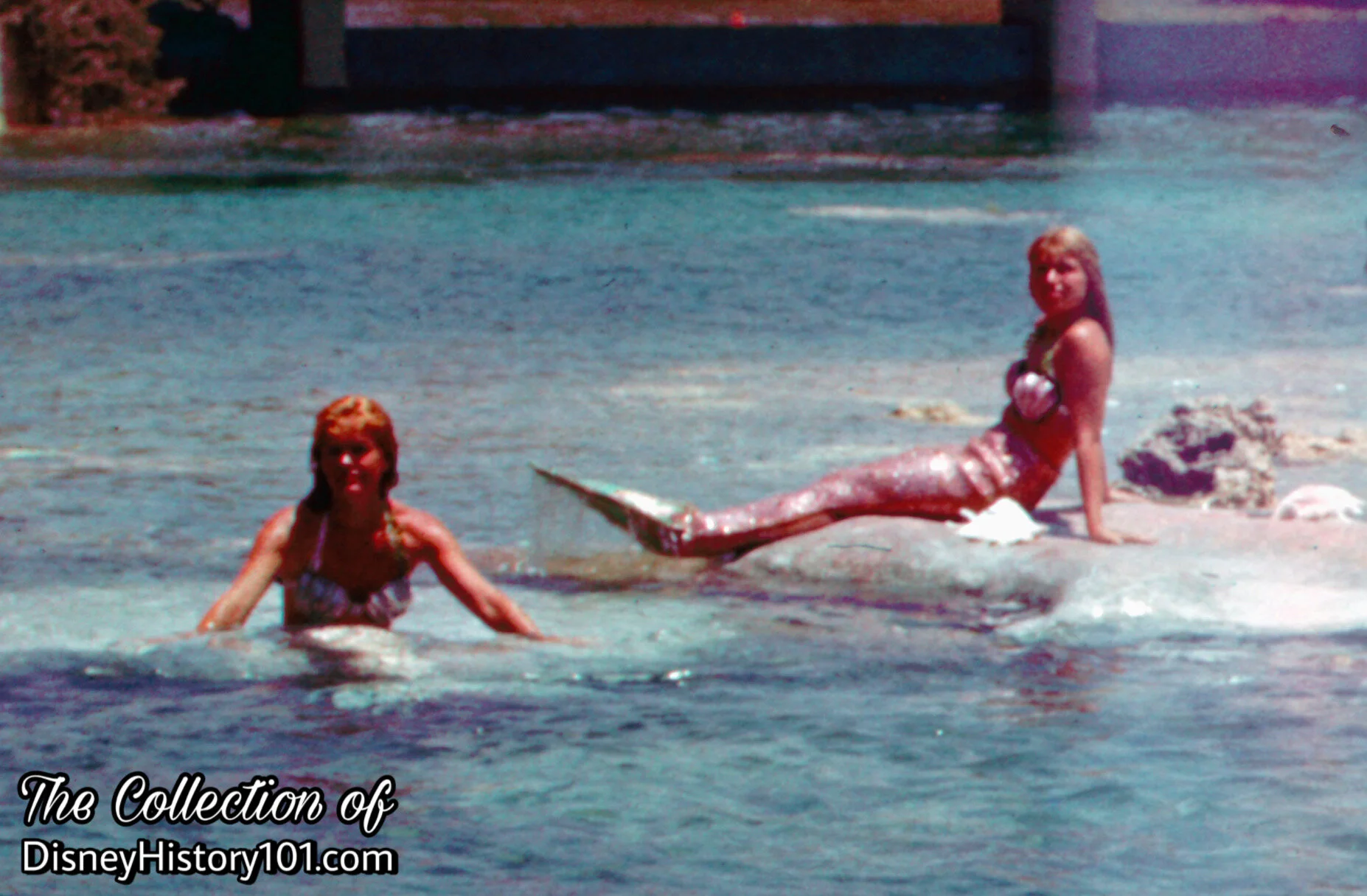
Living Mermaids from Mythical Times, (Summer, 1960)
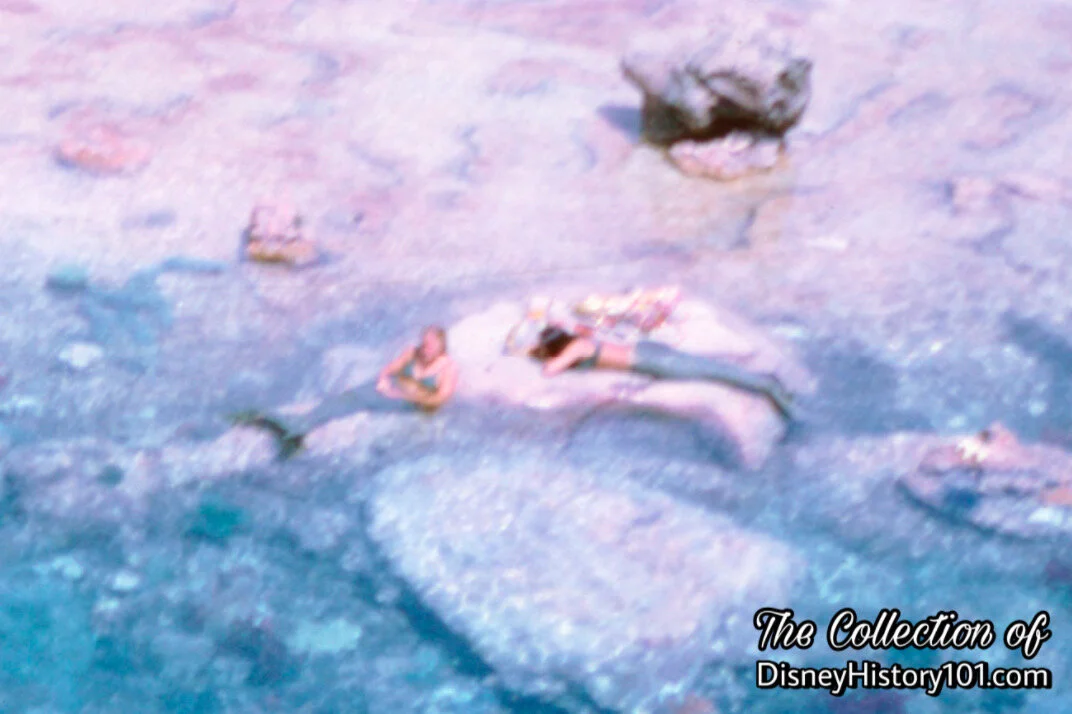
Living Mermaids From Mythical Times, (1967)
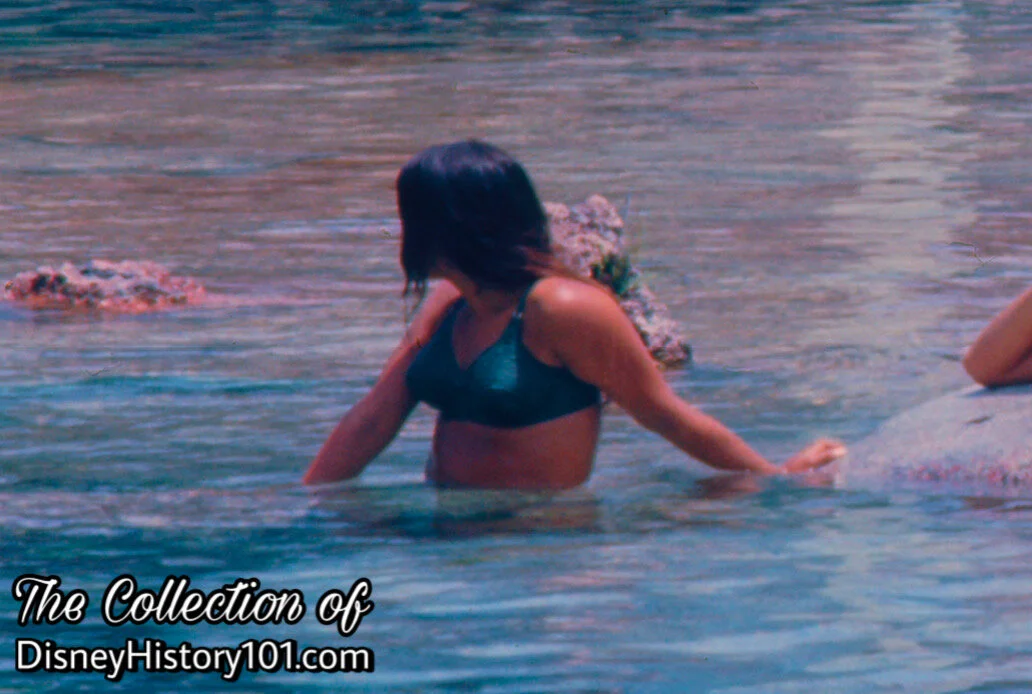
Living Mermaids from Mythical Times, (1967)
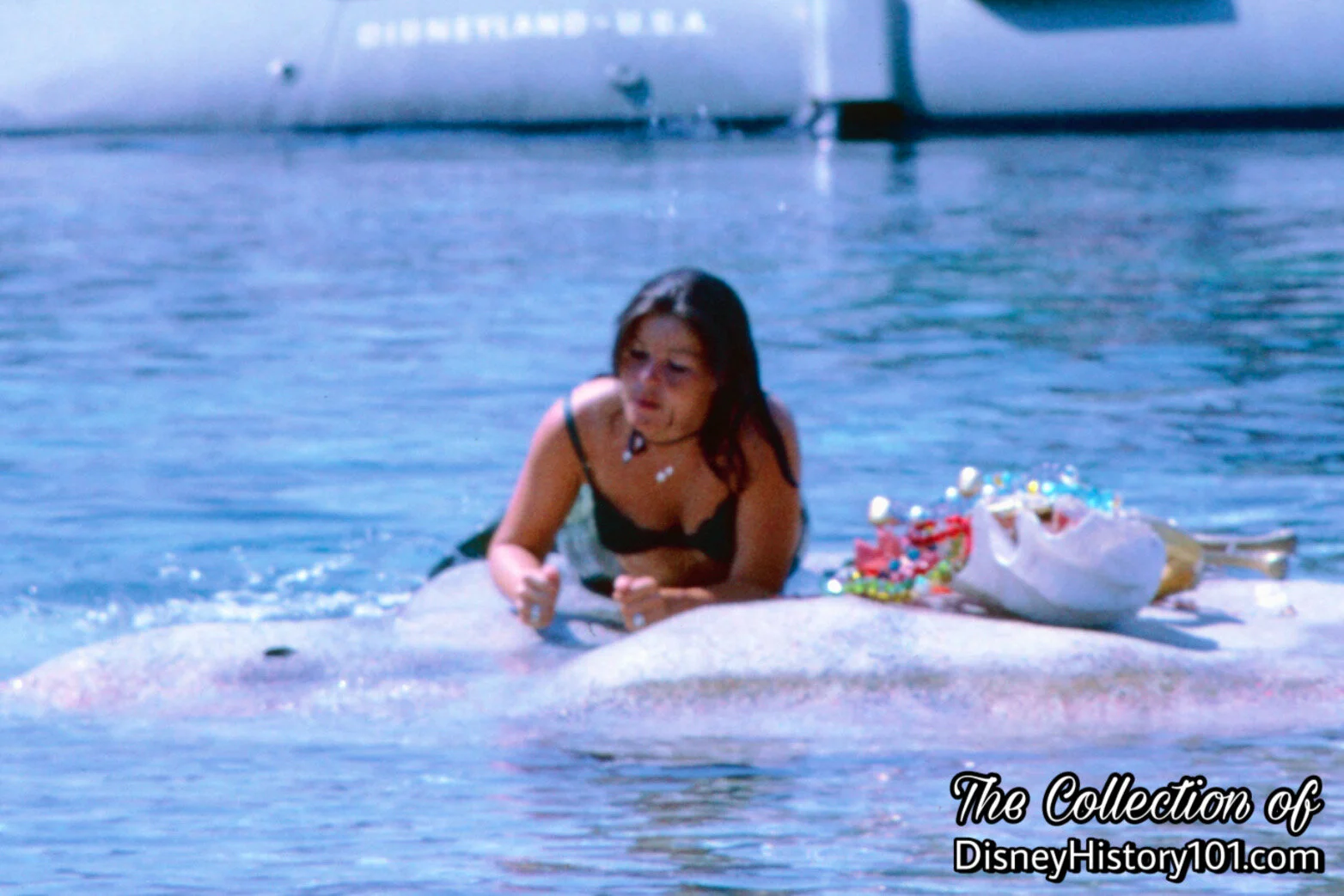
Living Mermaids From Mythical Times
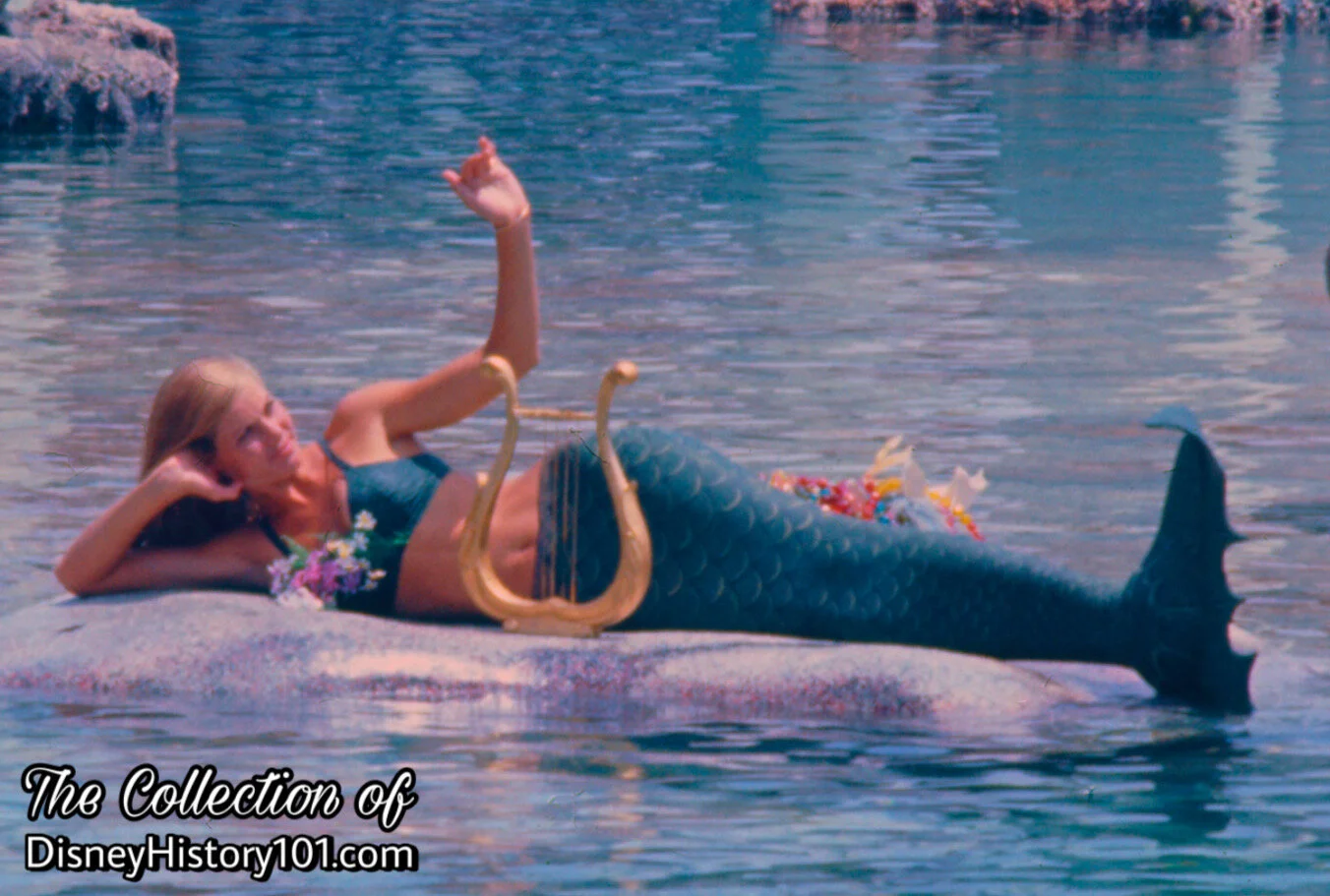
An animated Living Mermaid from Mythical Times, (1967)
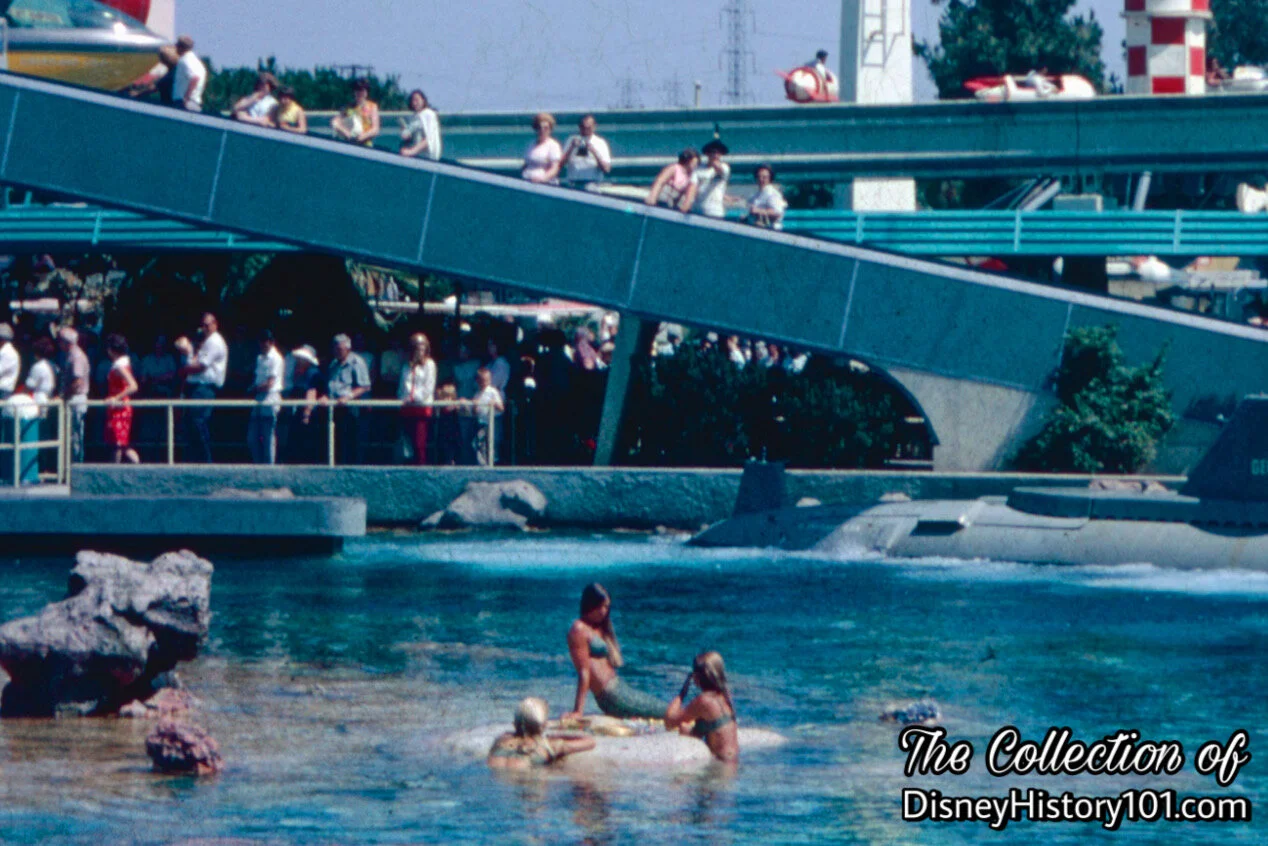
Living Mermaids From Mythical Times
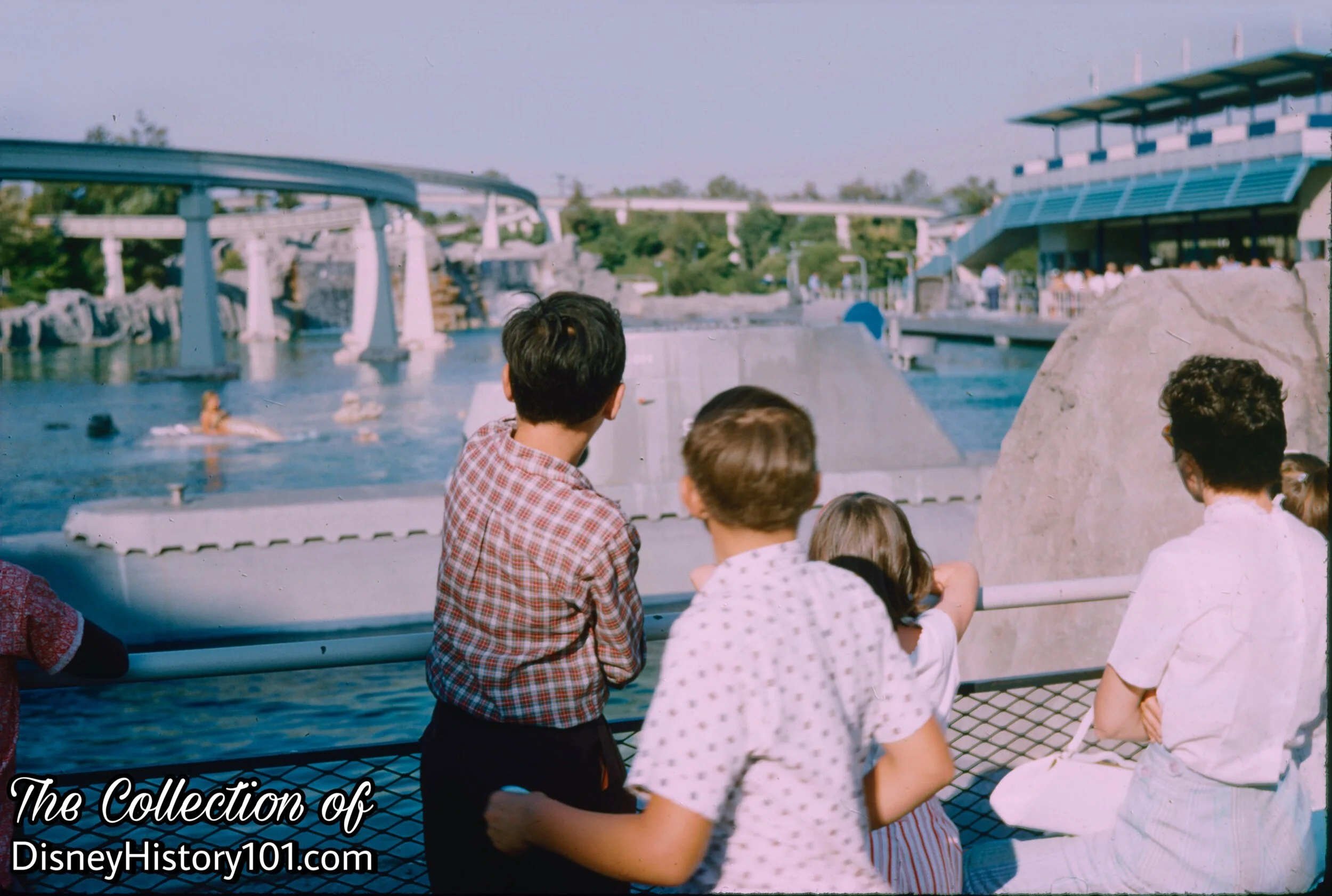
Living Mermaids From Mythical Times, (December 22, 1960)
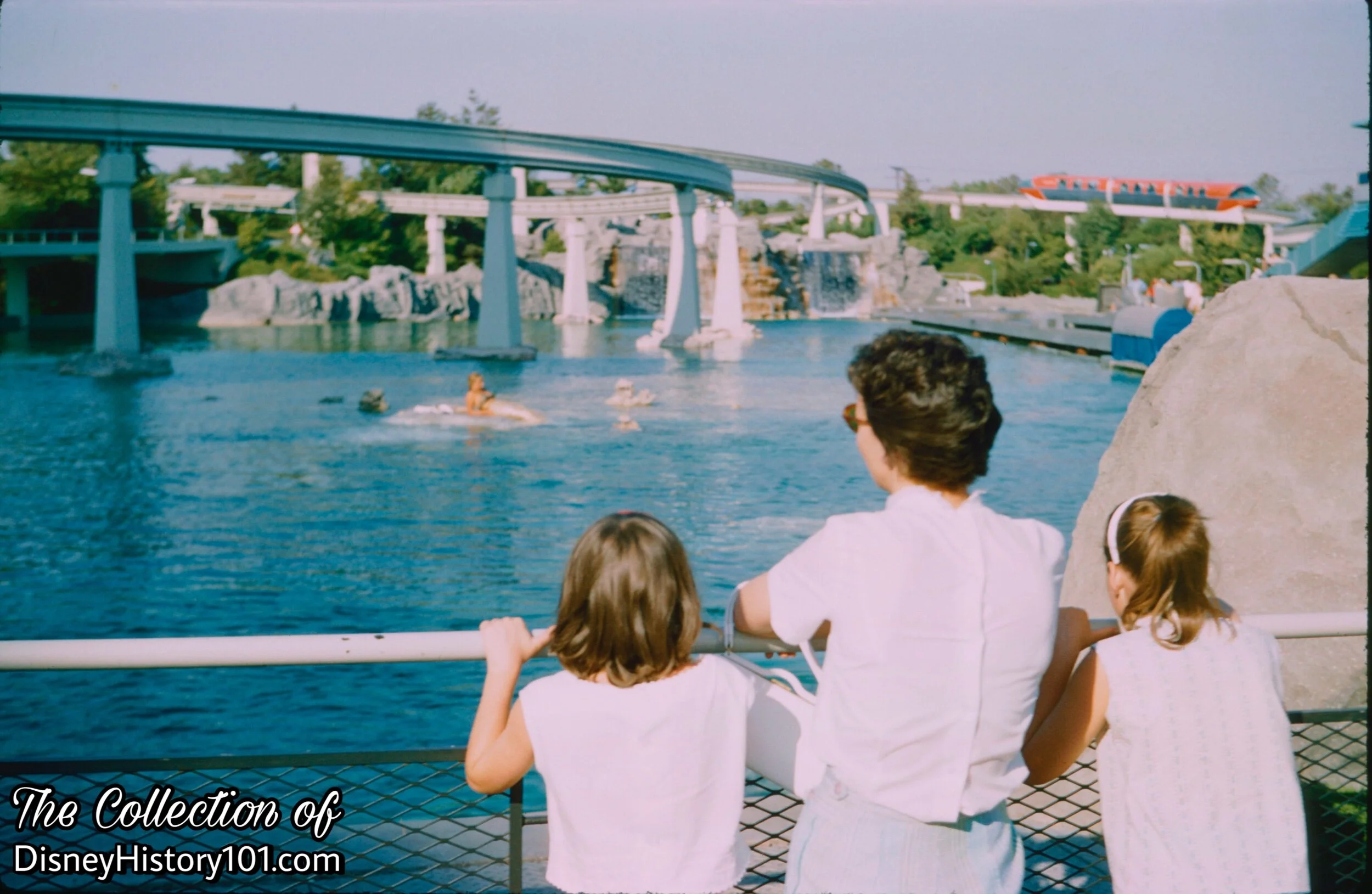
Living Mermaids From Mythical Times, (December 22, 1960)
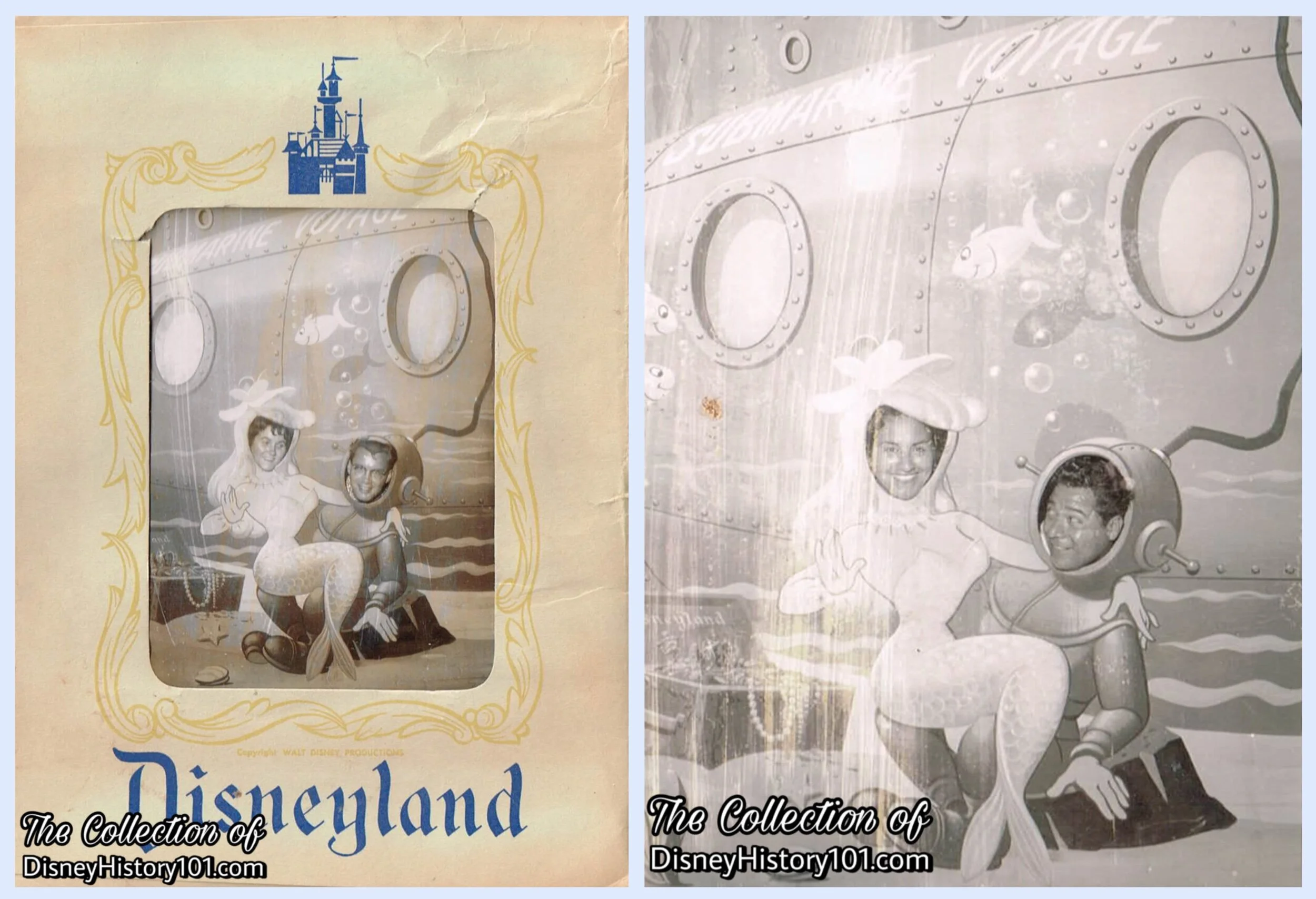
Mermaid Souvenir Photo, (left, 1964 ; right, 1959)
As you can see, photographic proof of such hallucinations was captured by many a guest, who desired to take a “Living Mermaid from Mythical Times” home with them. If you missed your opportunity to spot Mermaids above the reef of the Front Lagoon (or in Its a Small World or Neverland), the neighboring Fun Photos (inside the South Tomorrowland Exhibit Hall) offered this fun alternative!
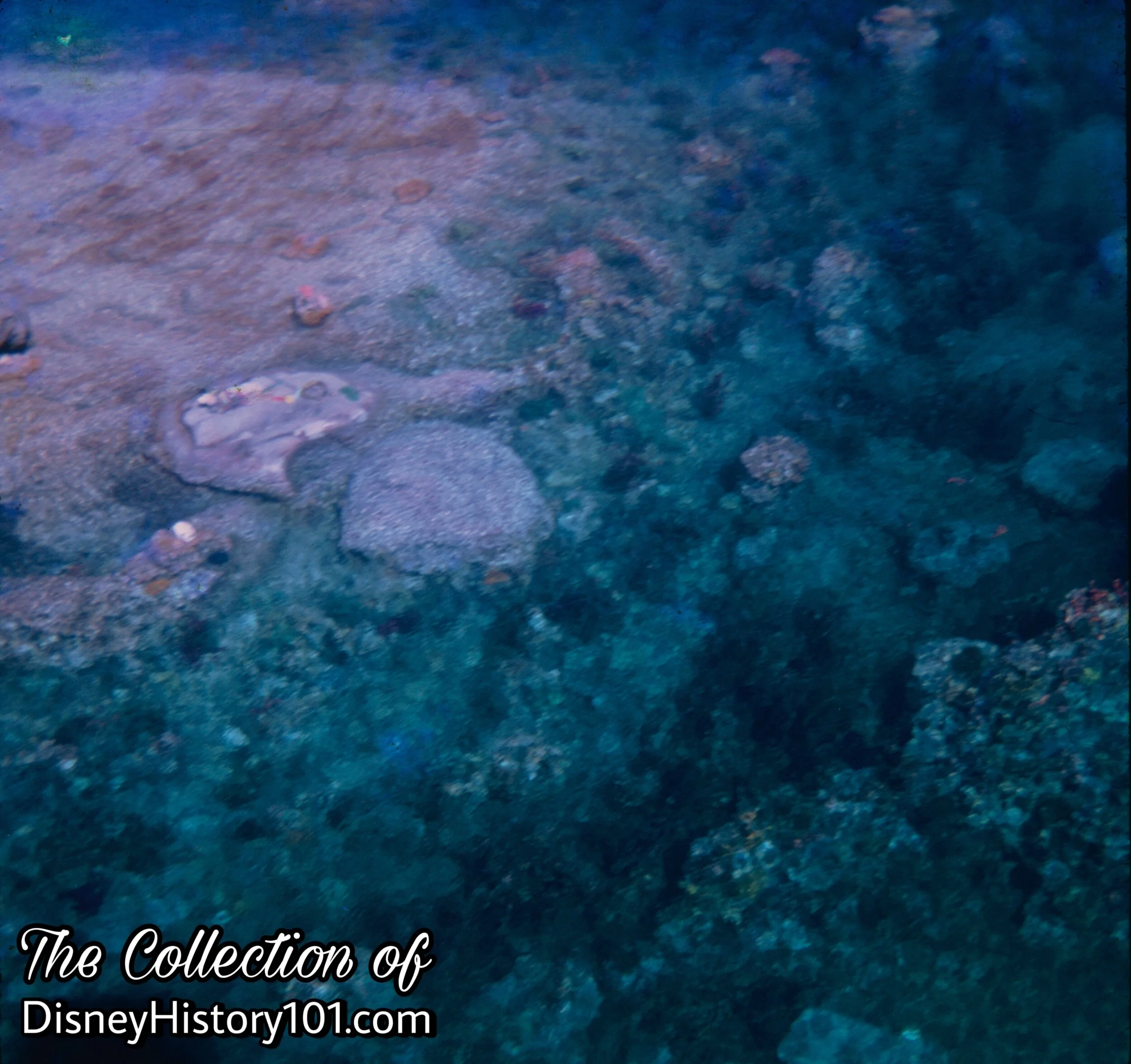
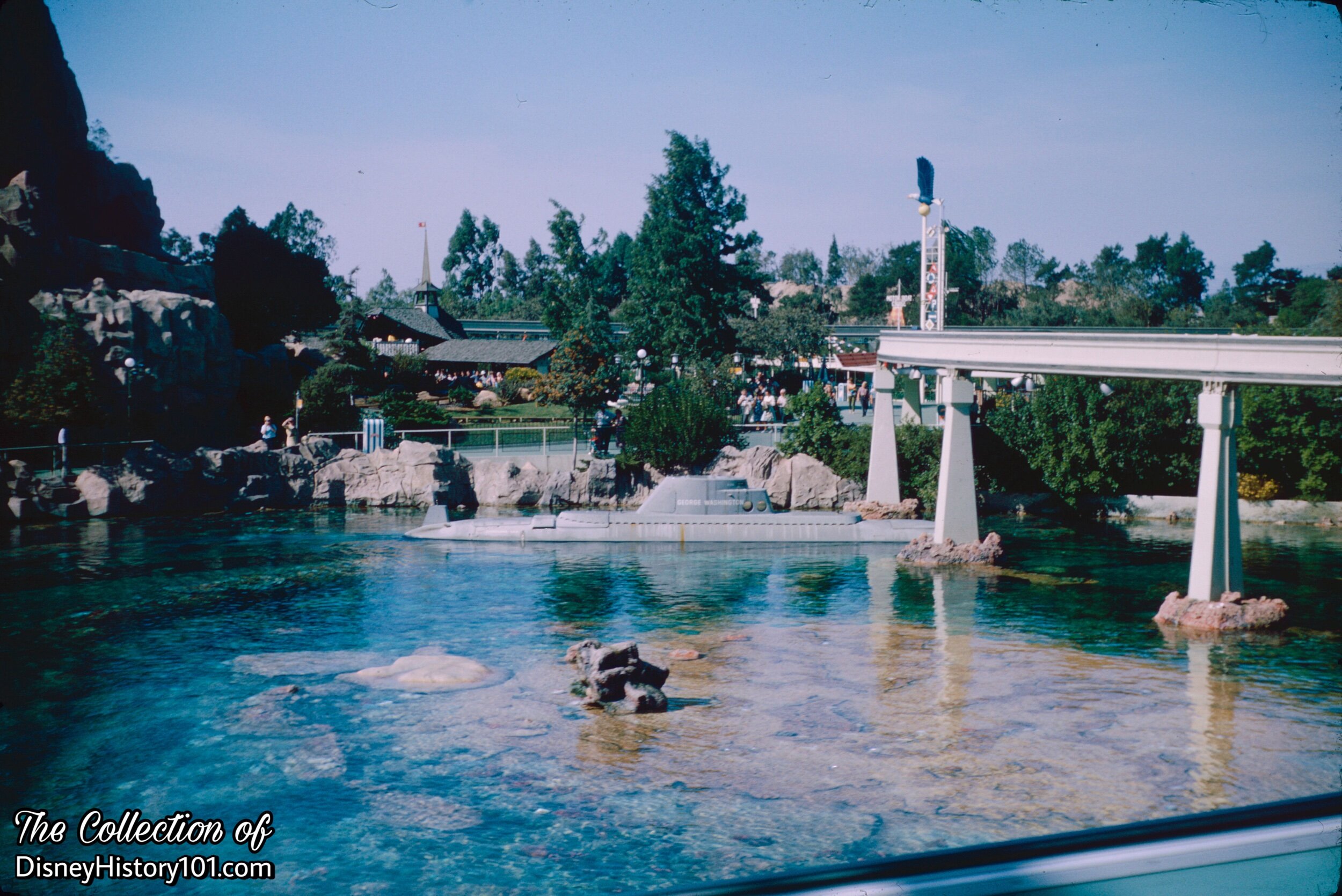
Front Lagoon, (November, 1965)
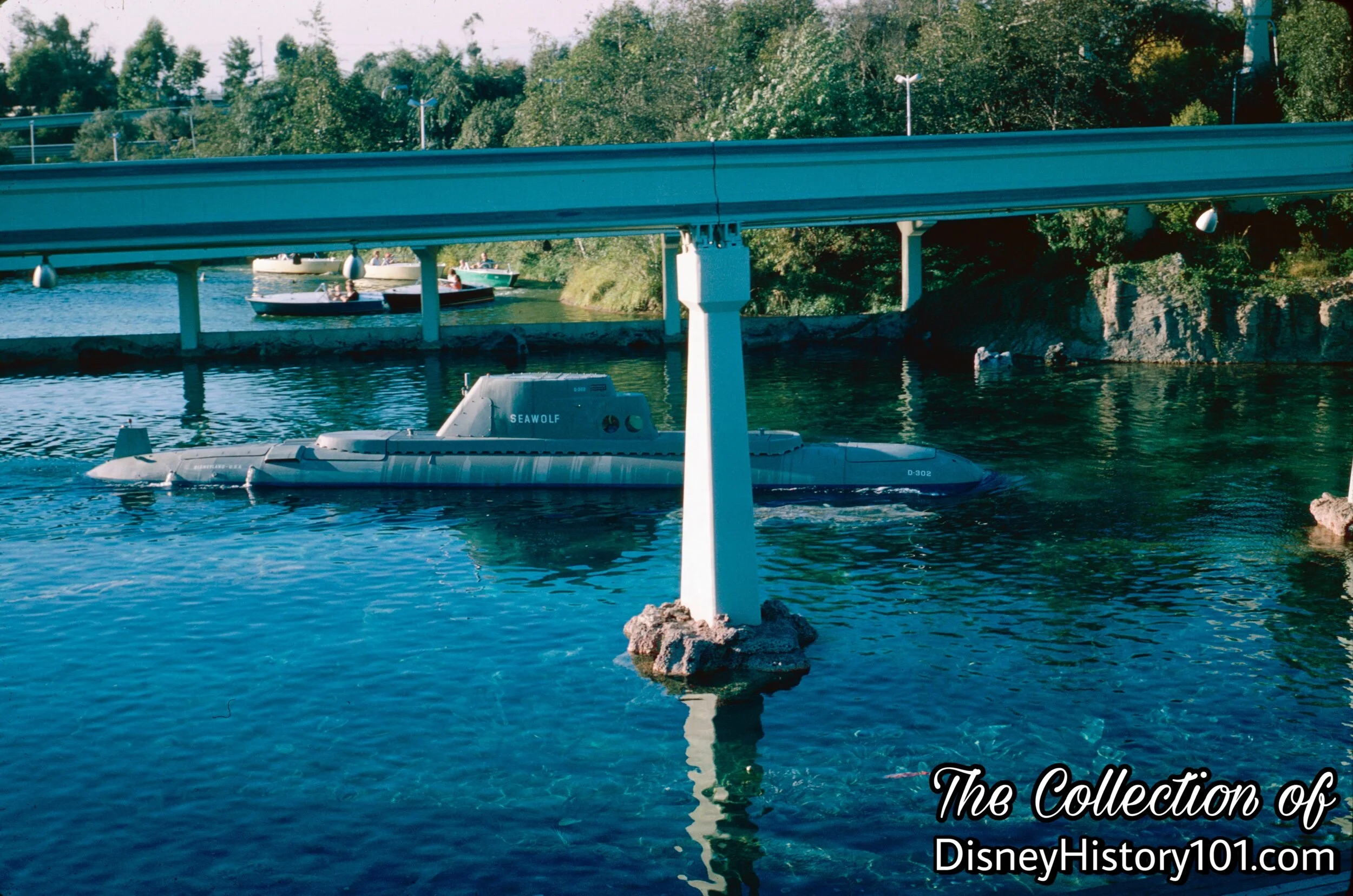
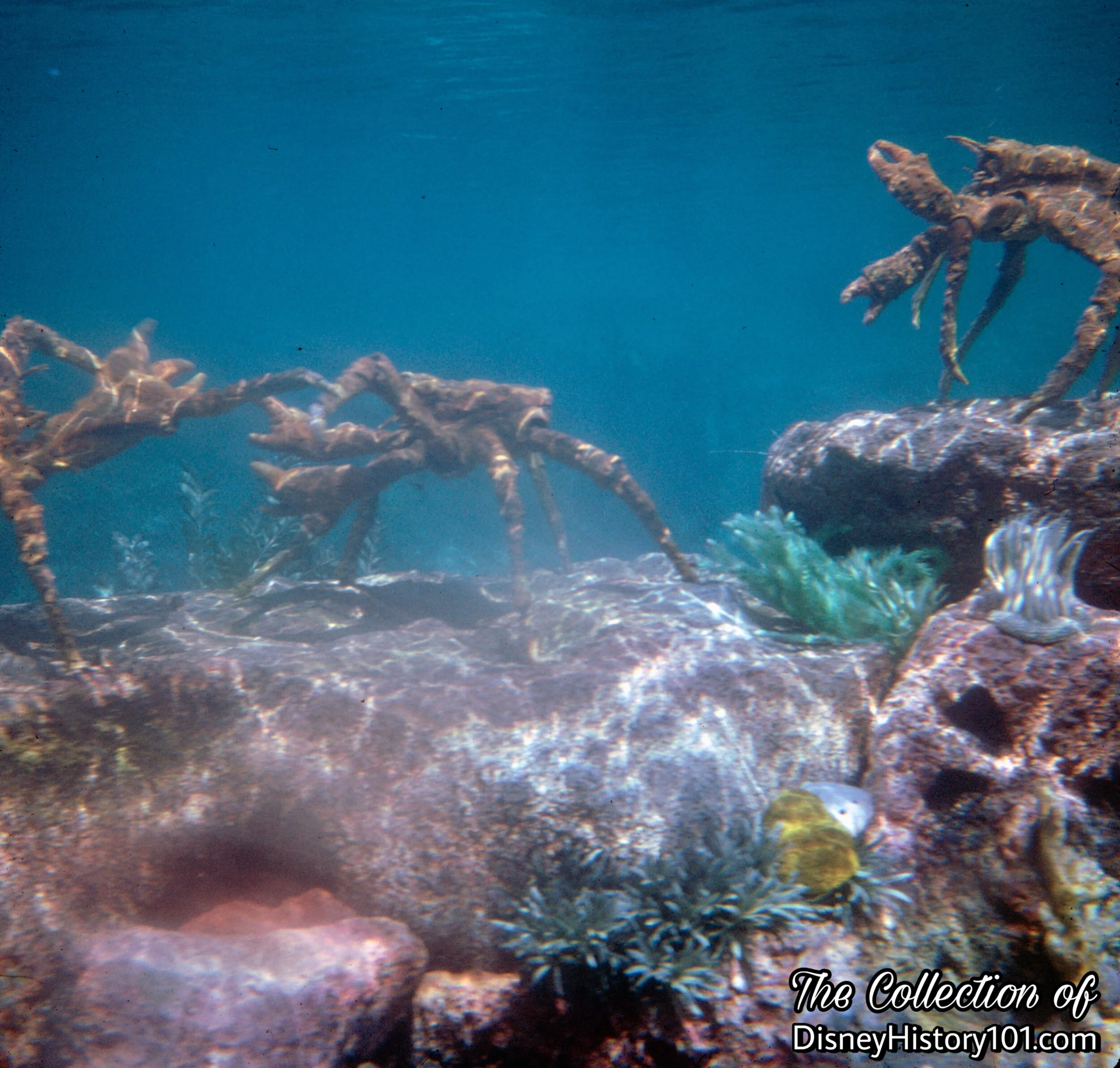
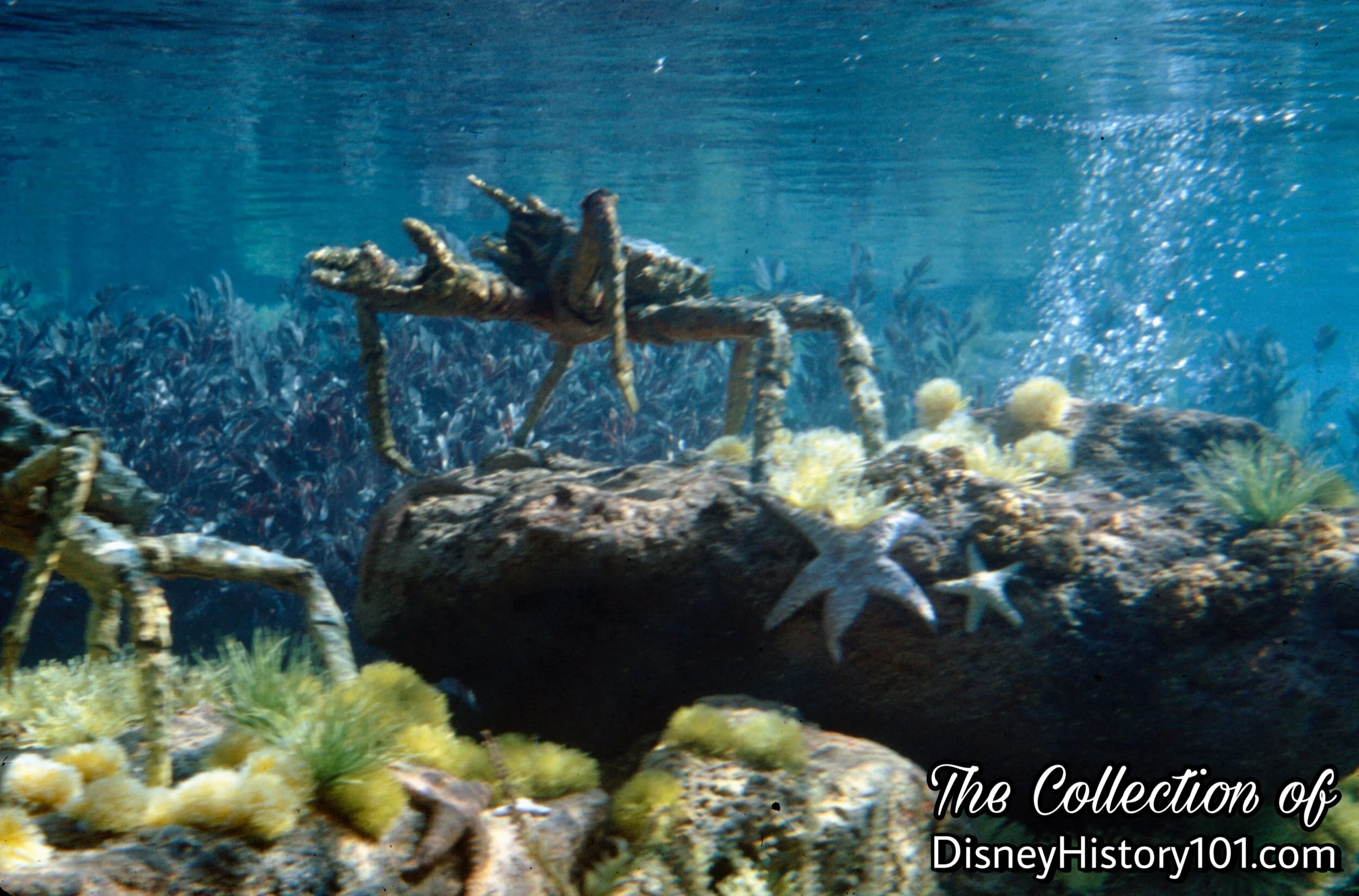
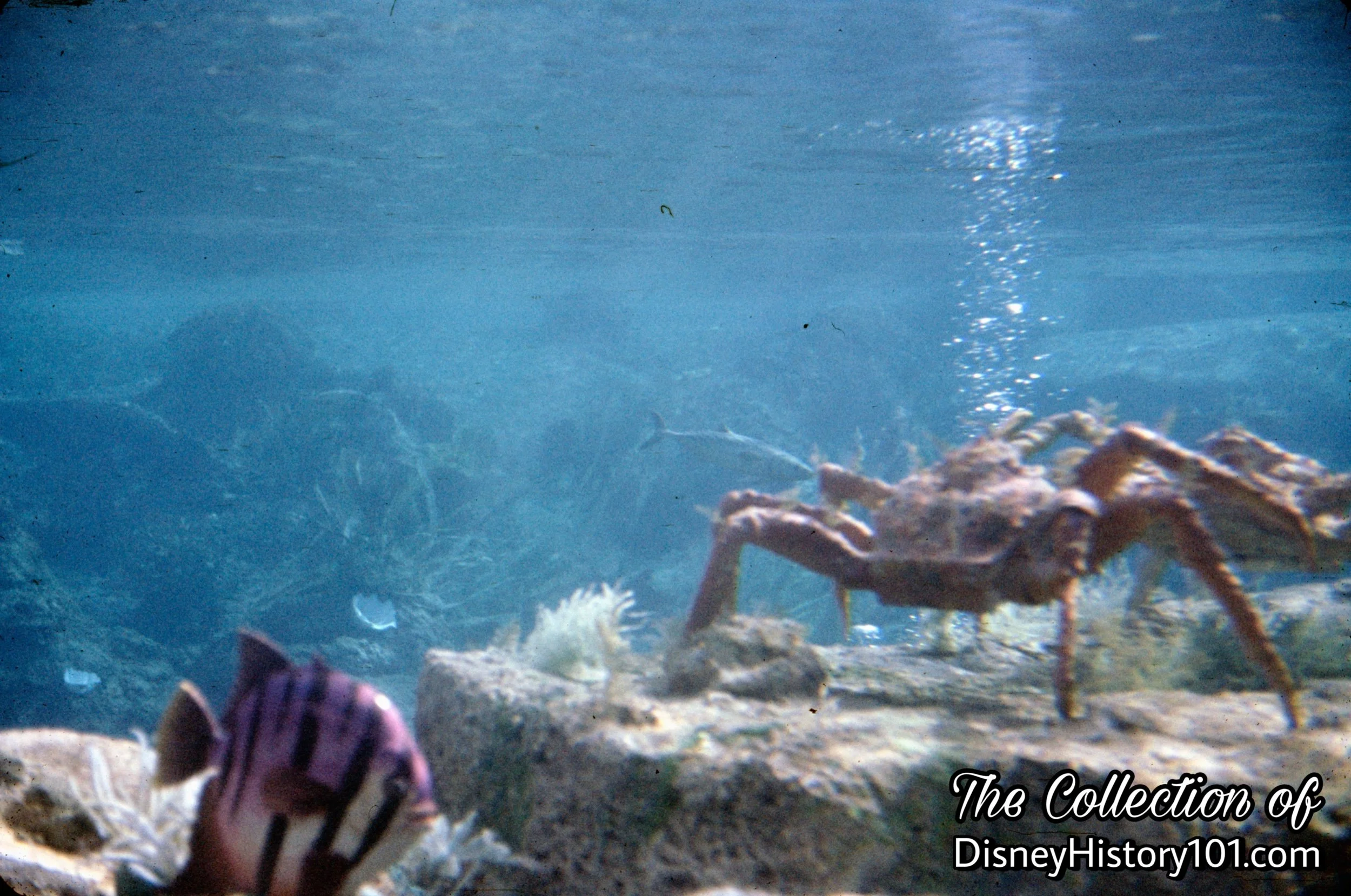
(September, 1970)
(July, 1964)
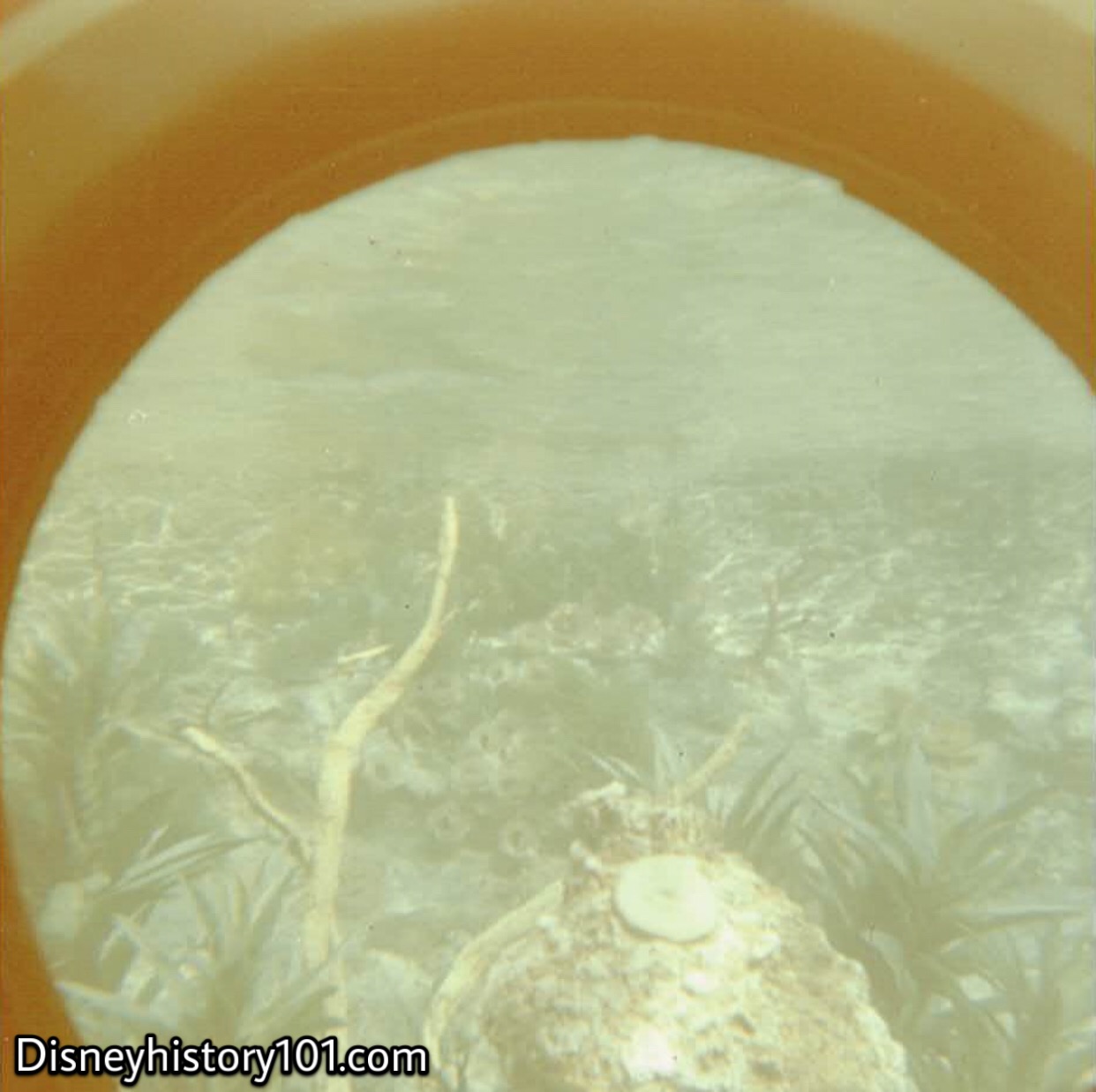
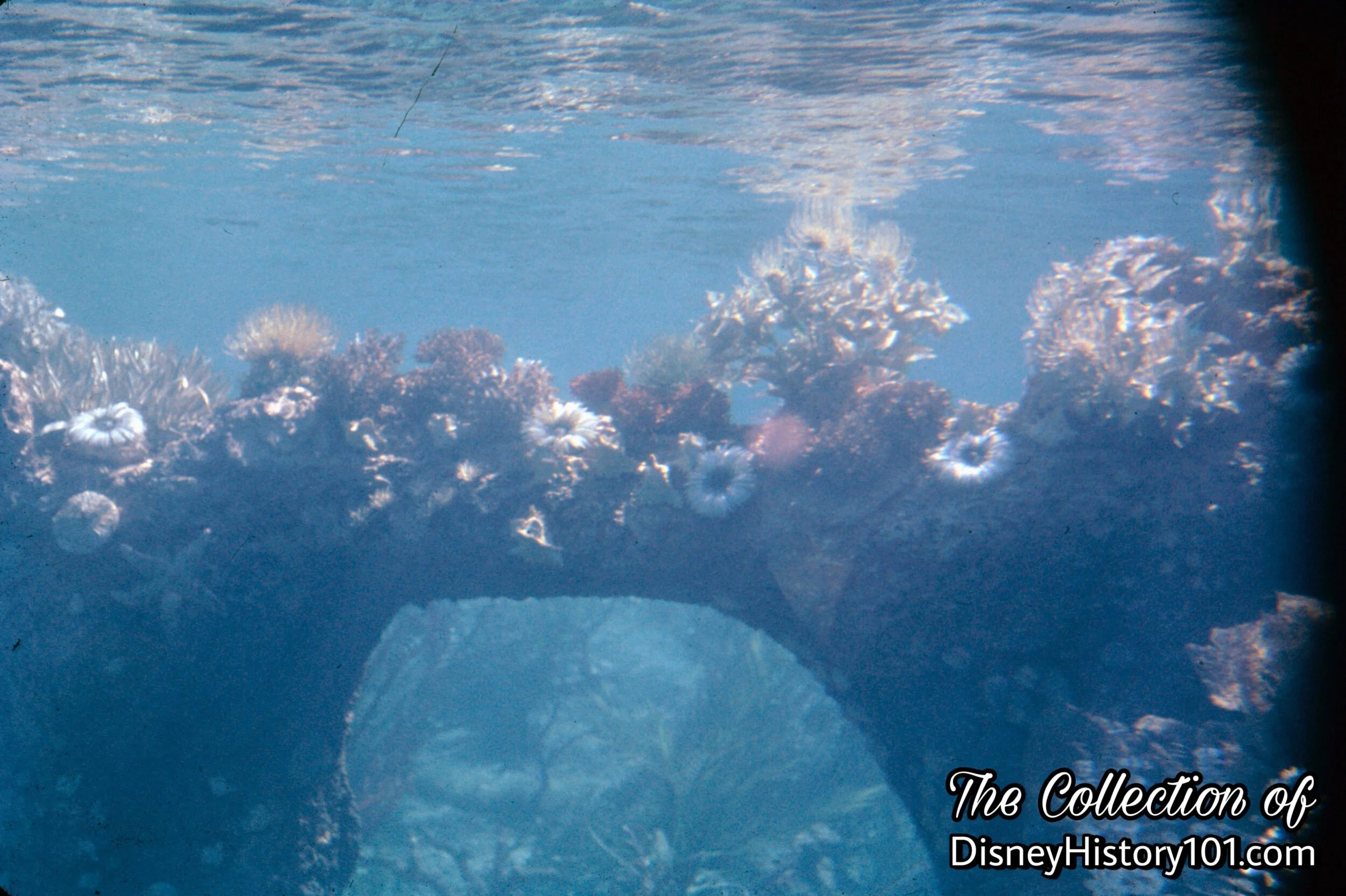
“Through his own individual porthole in the 38-passenger air-conditioned vessel, the guest ‘crewman’ viewed a South Seas coral Lagoon.”
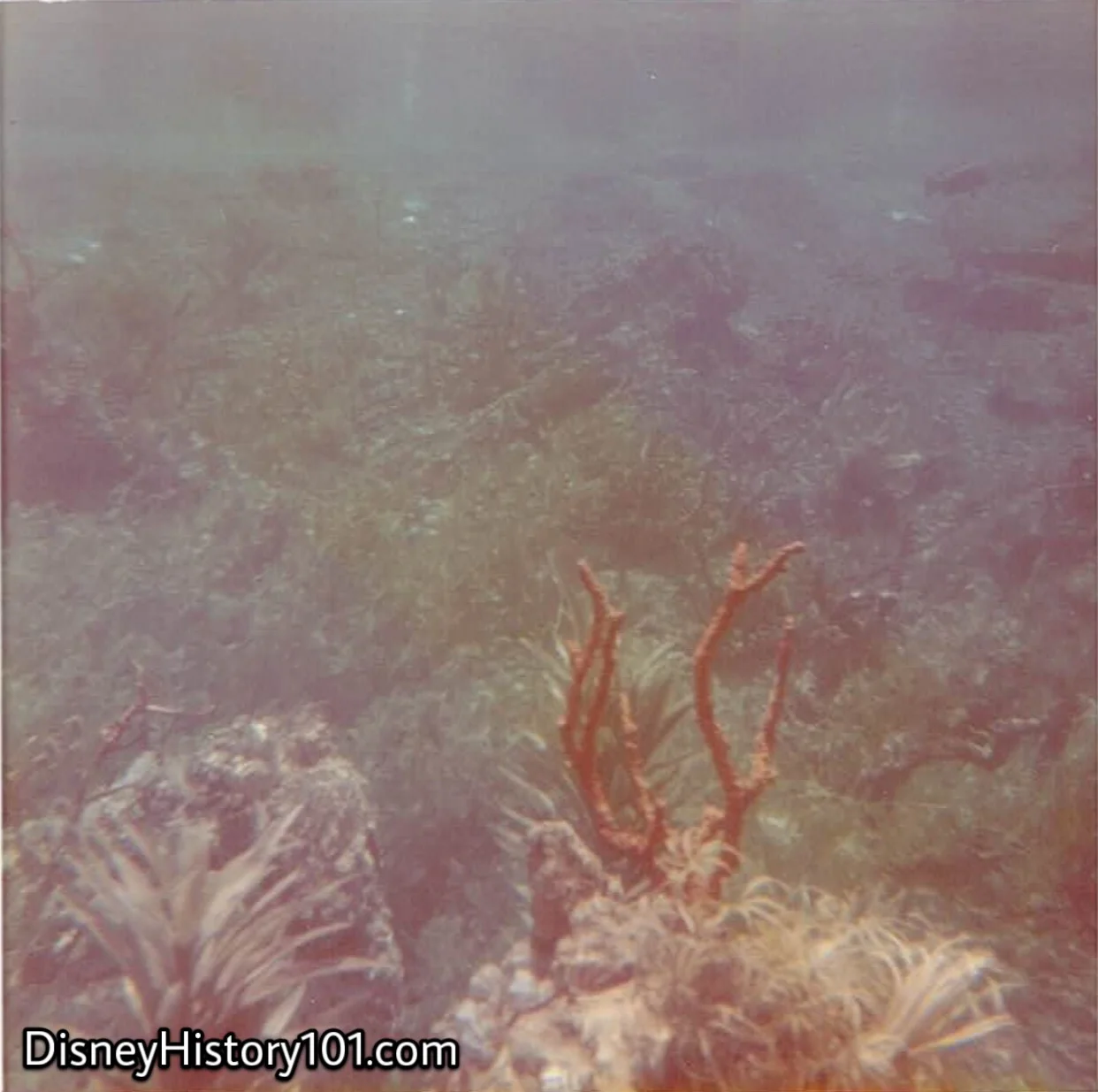
1972
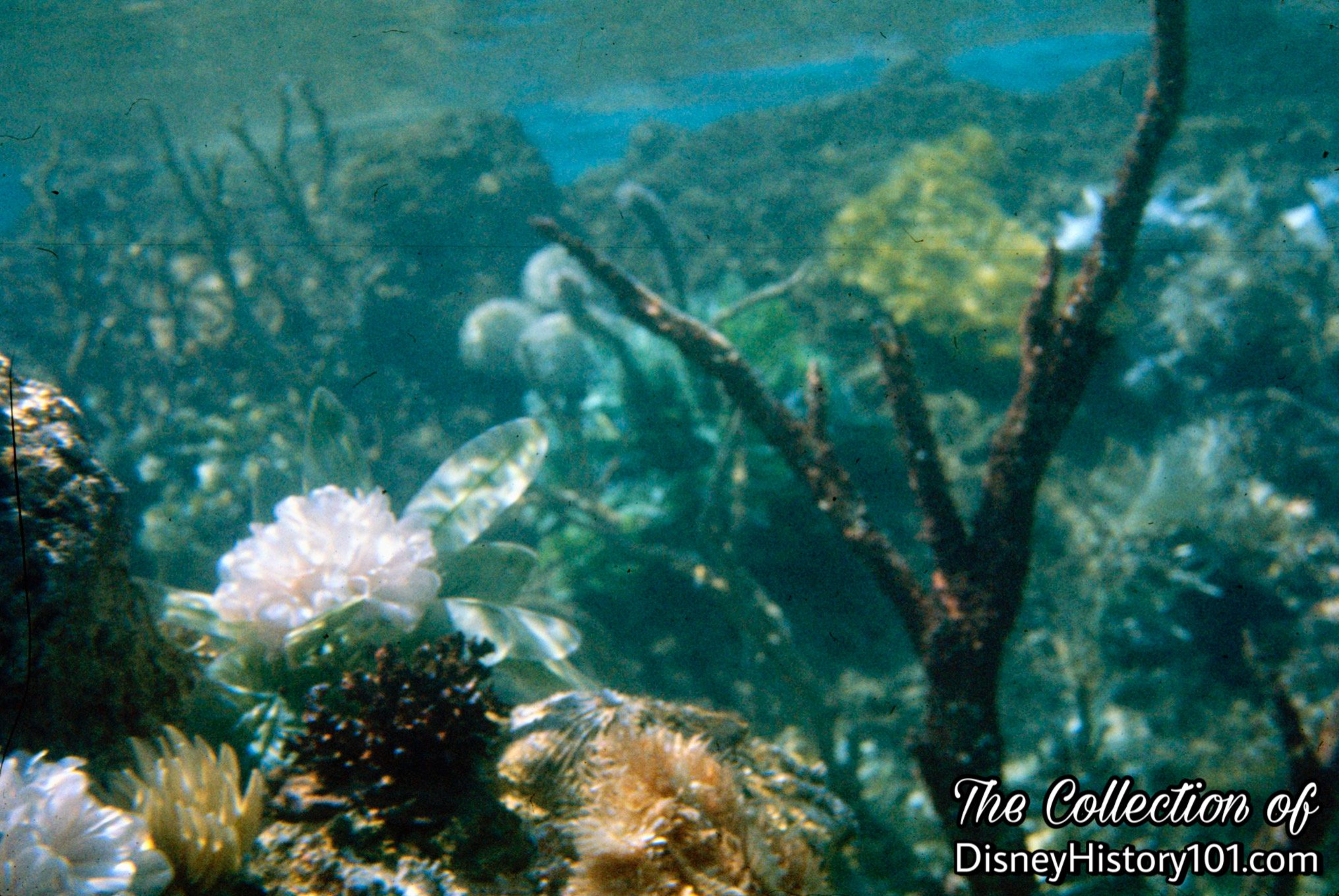
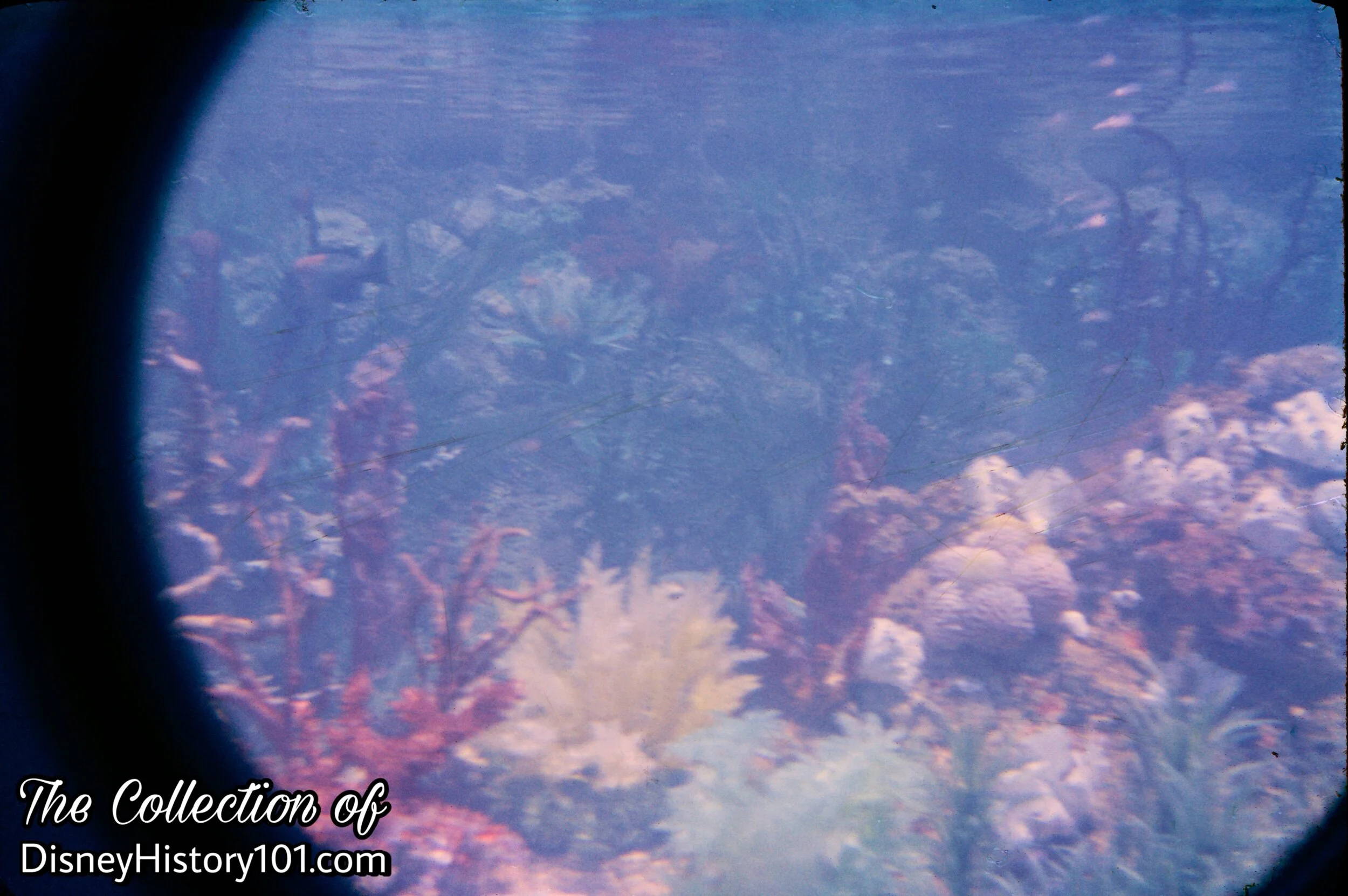
(August, 1963)
A typical view through the one-foot porthole reveals that “among these coral reefs you’ll see various species of marine life feeding among the sea weed and unusual rock formations.”
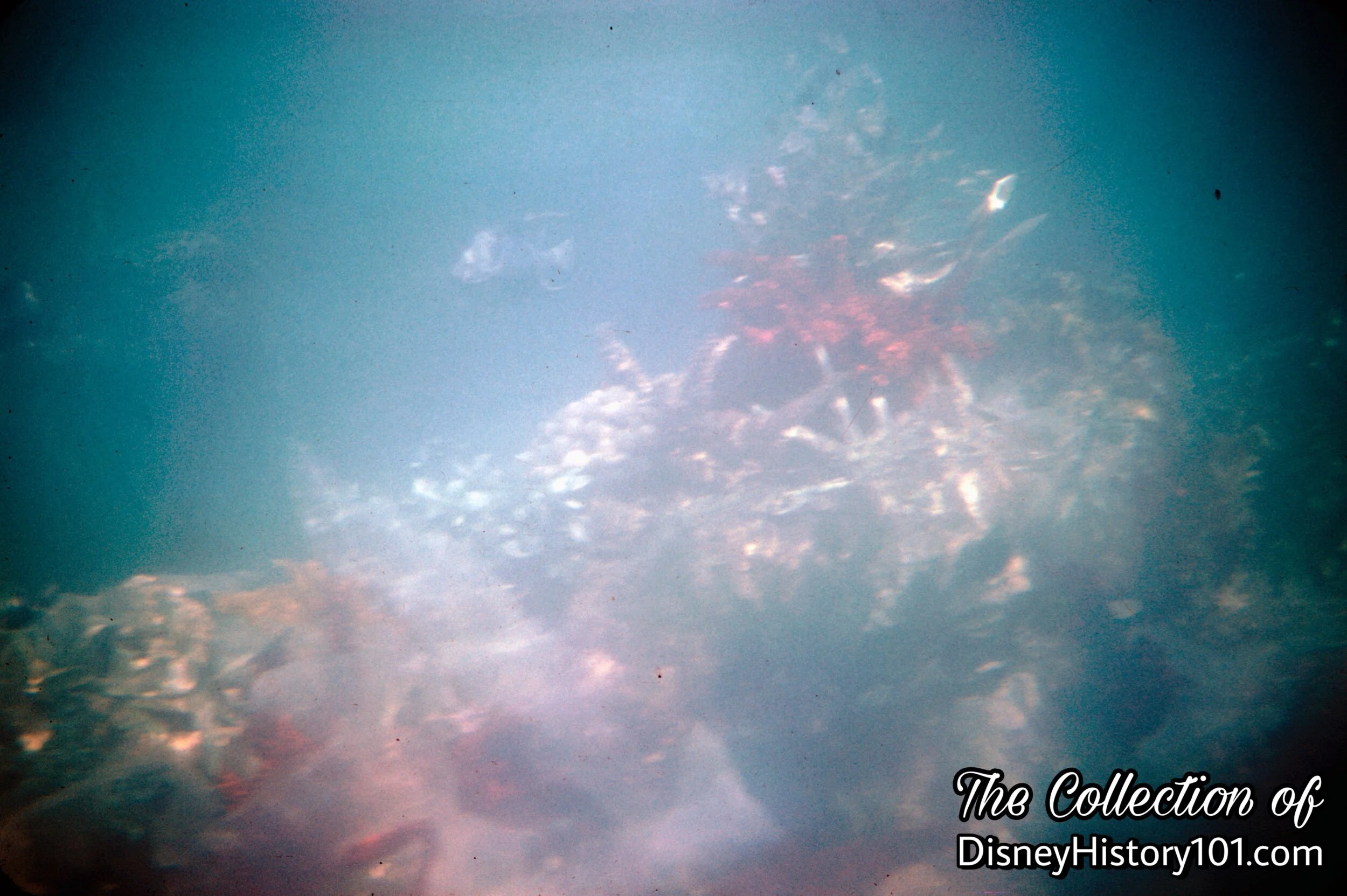
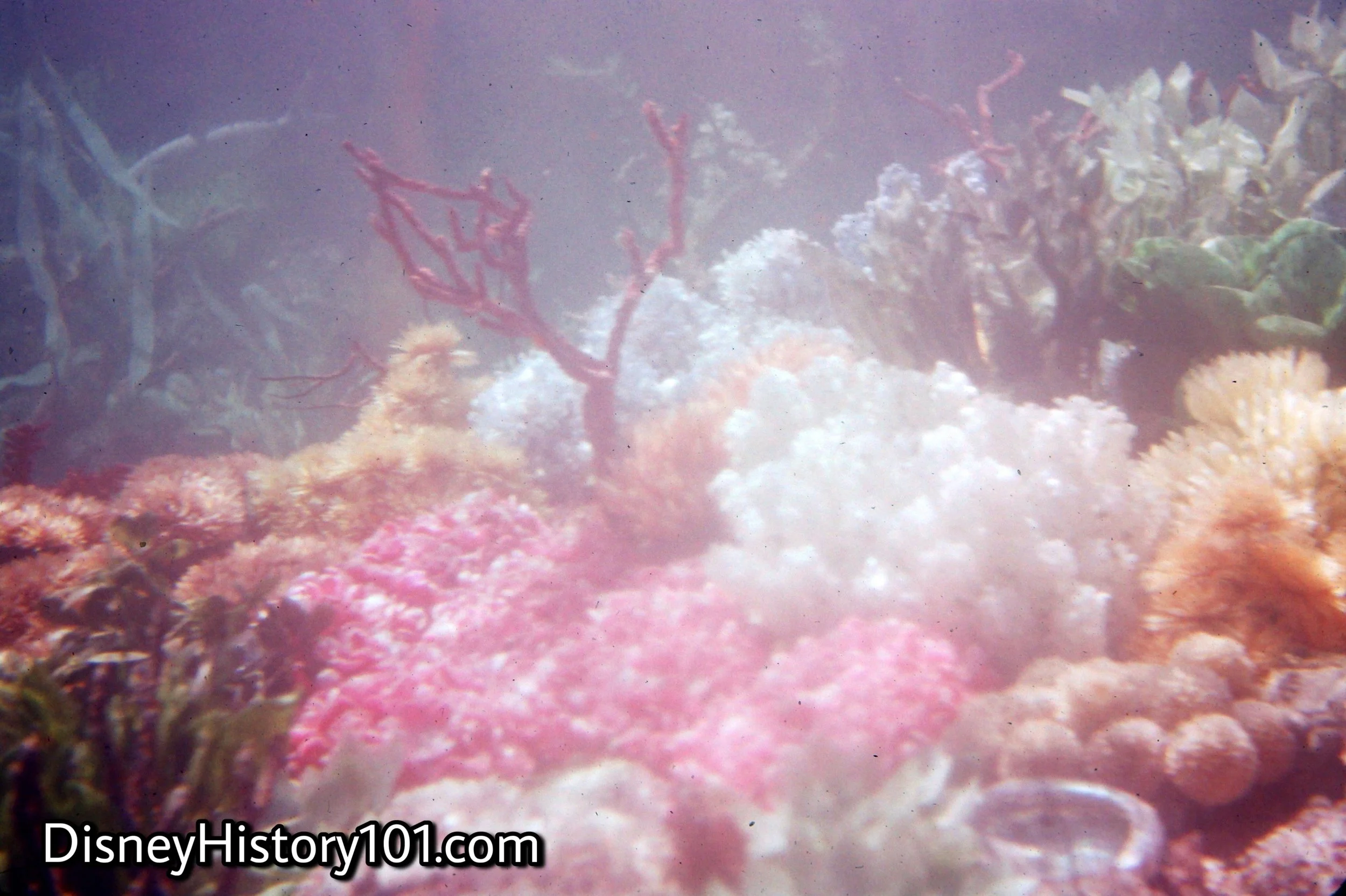
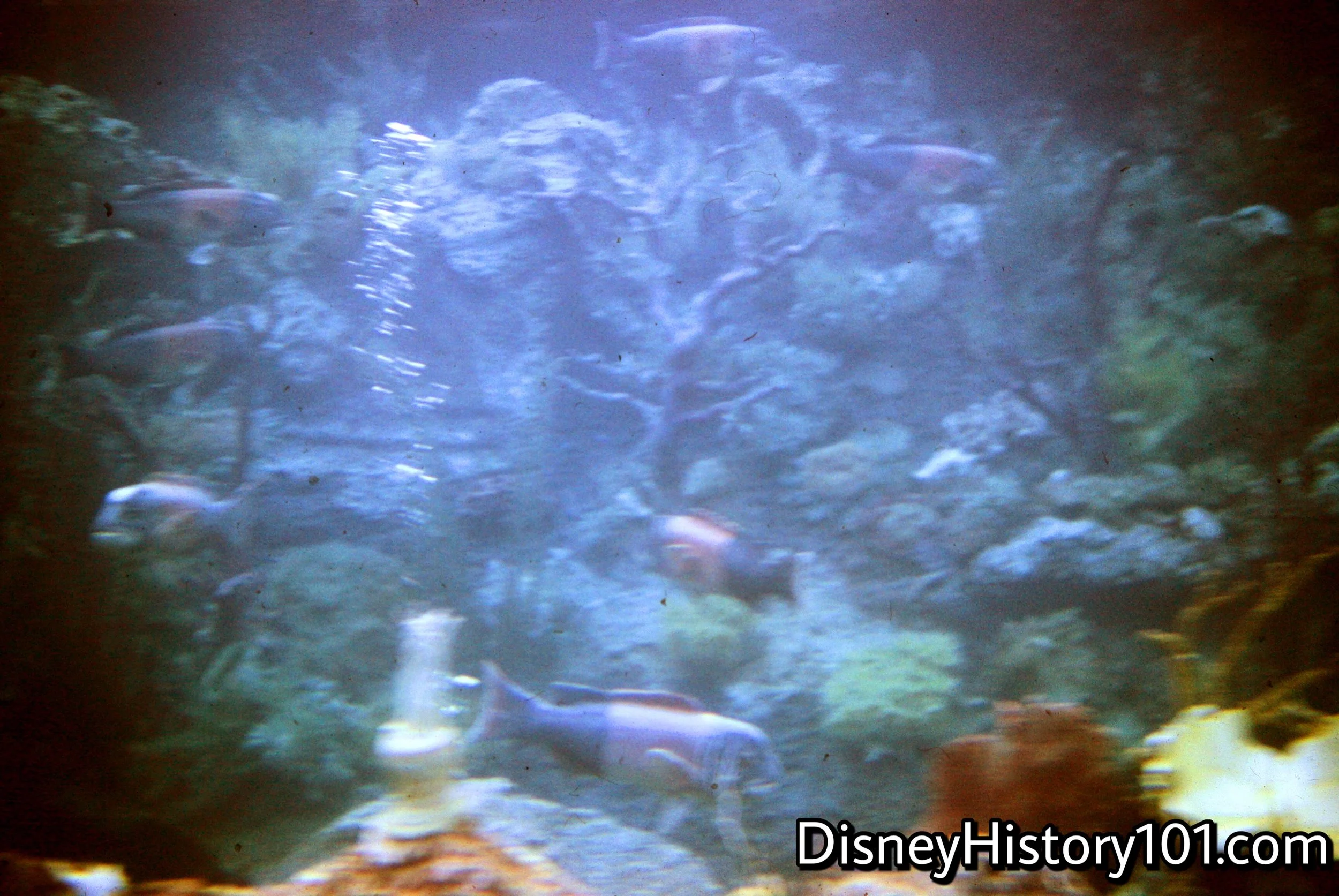
1967
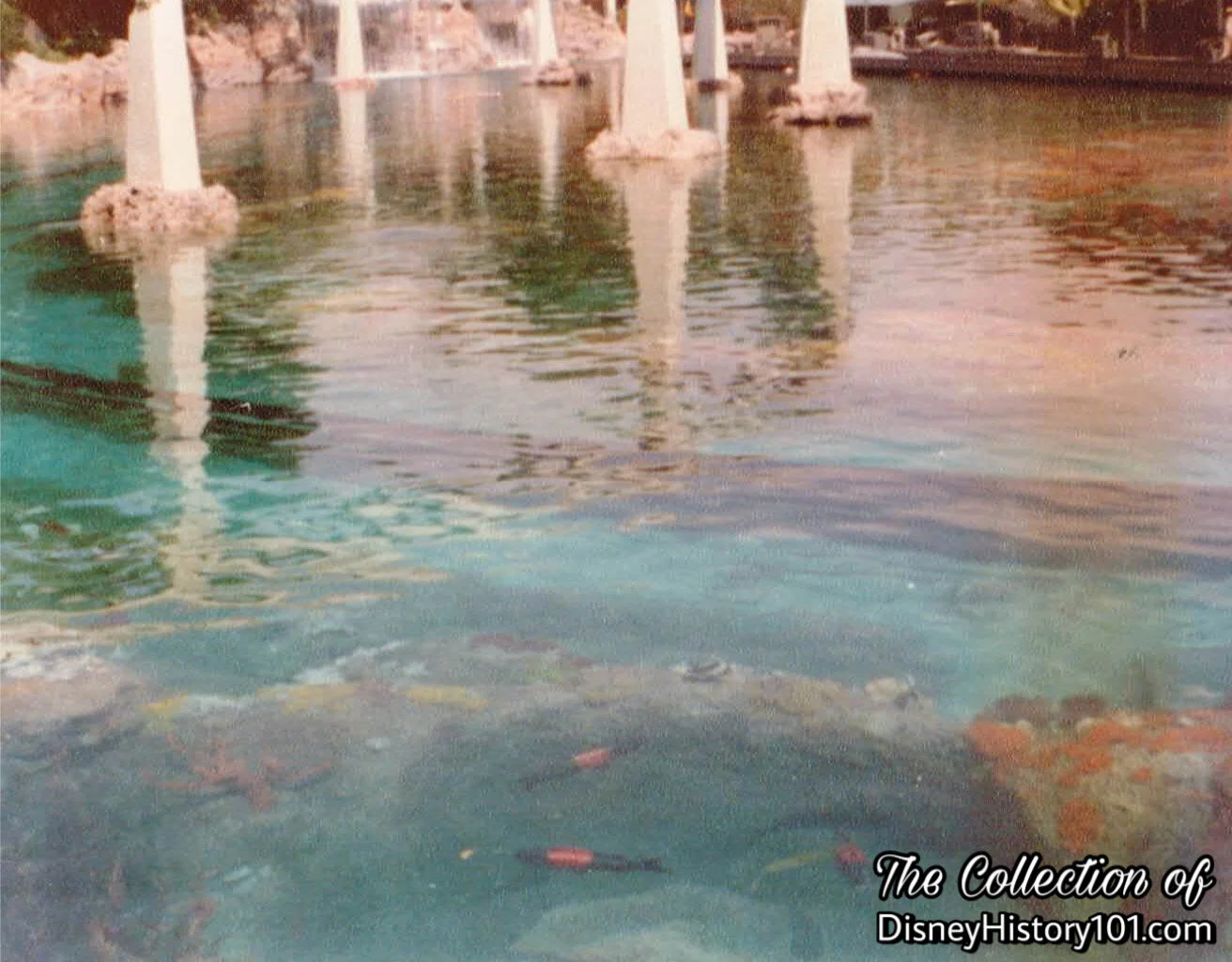
(May, 1960)
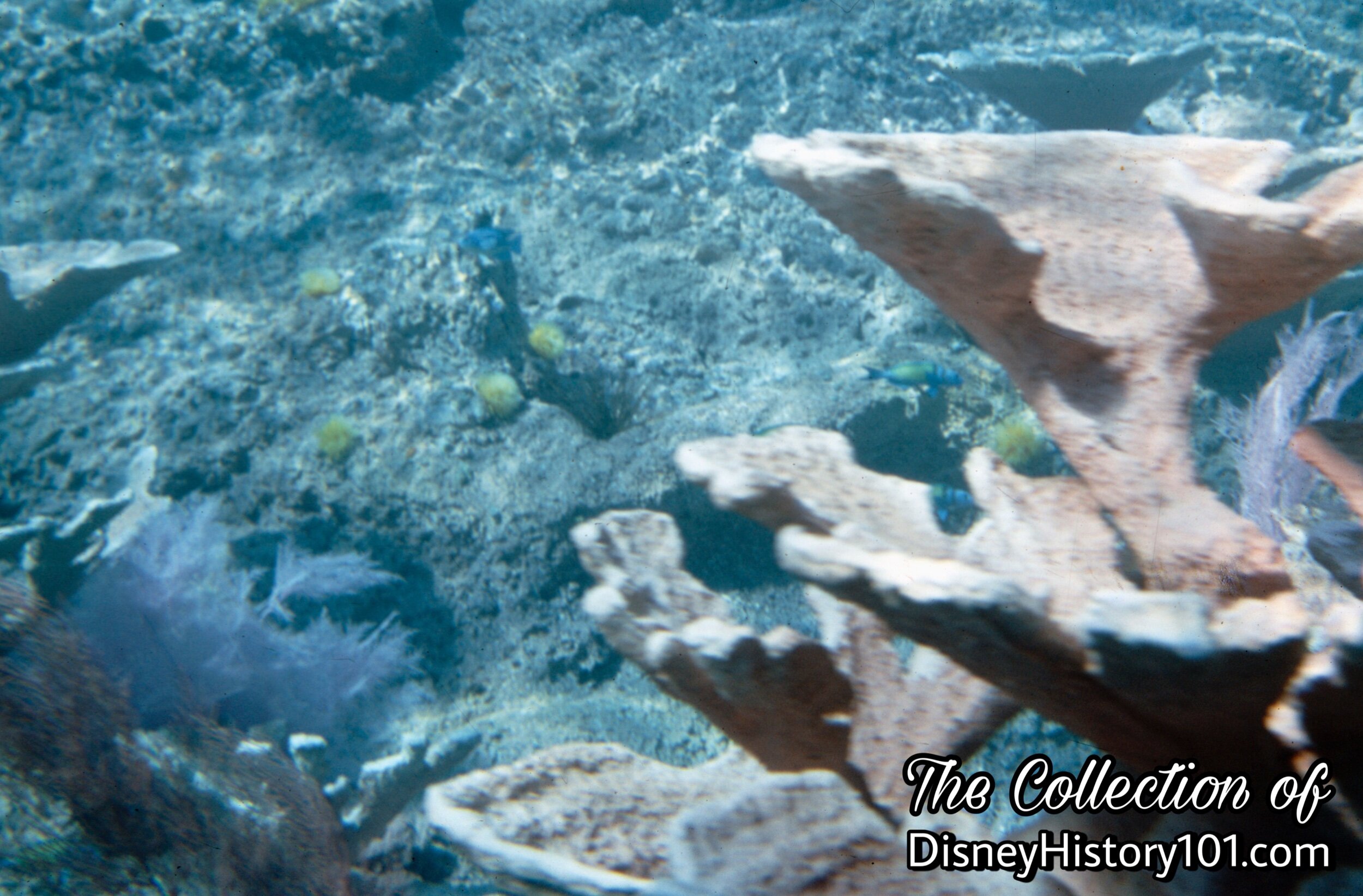
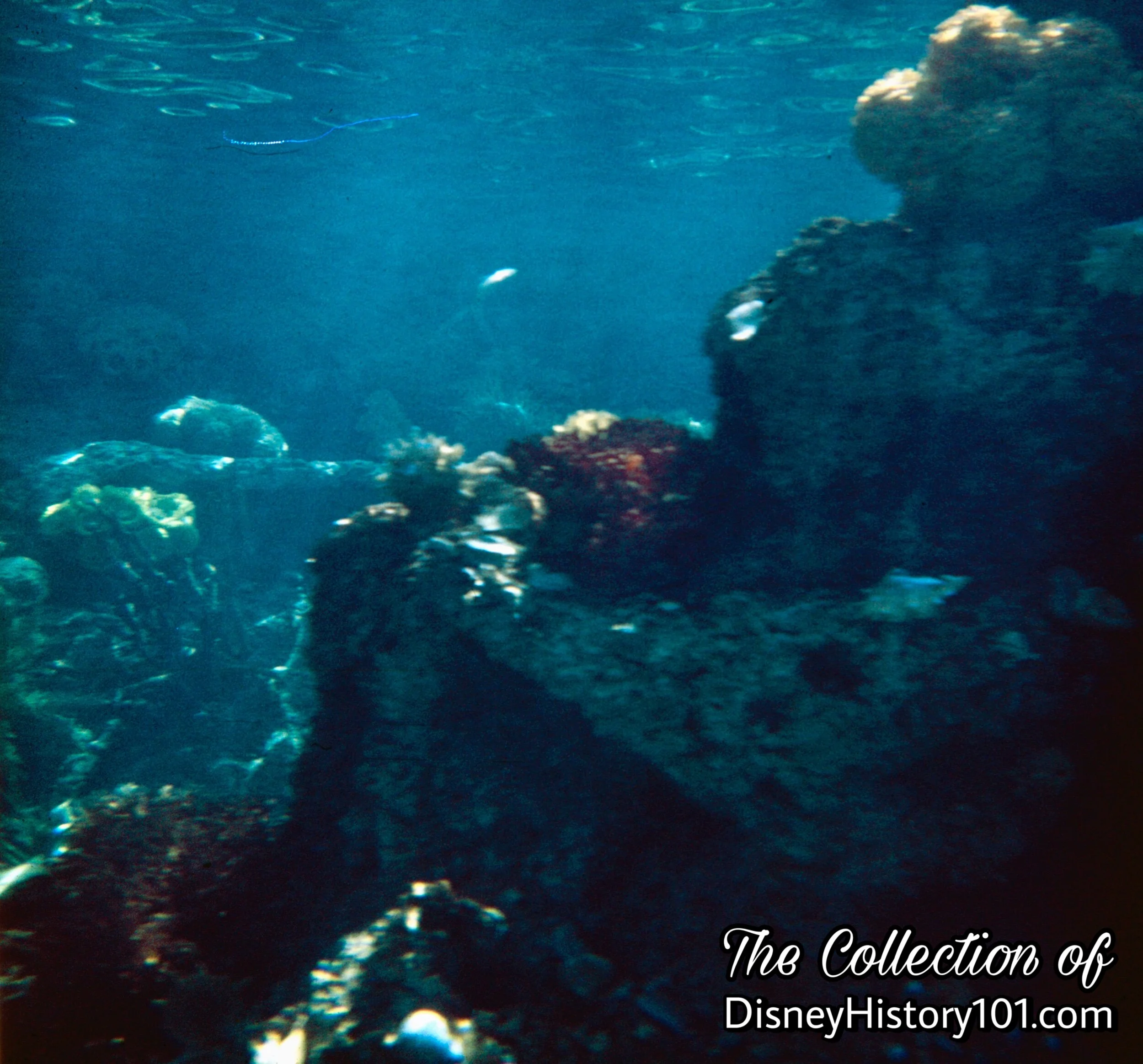
(October, 1967)
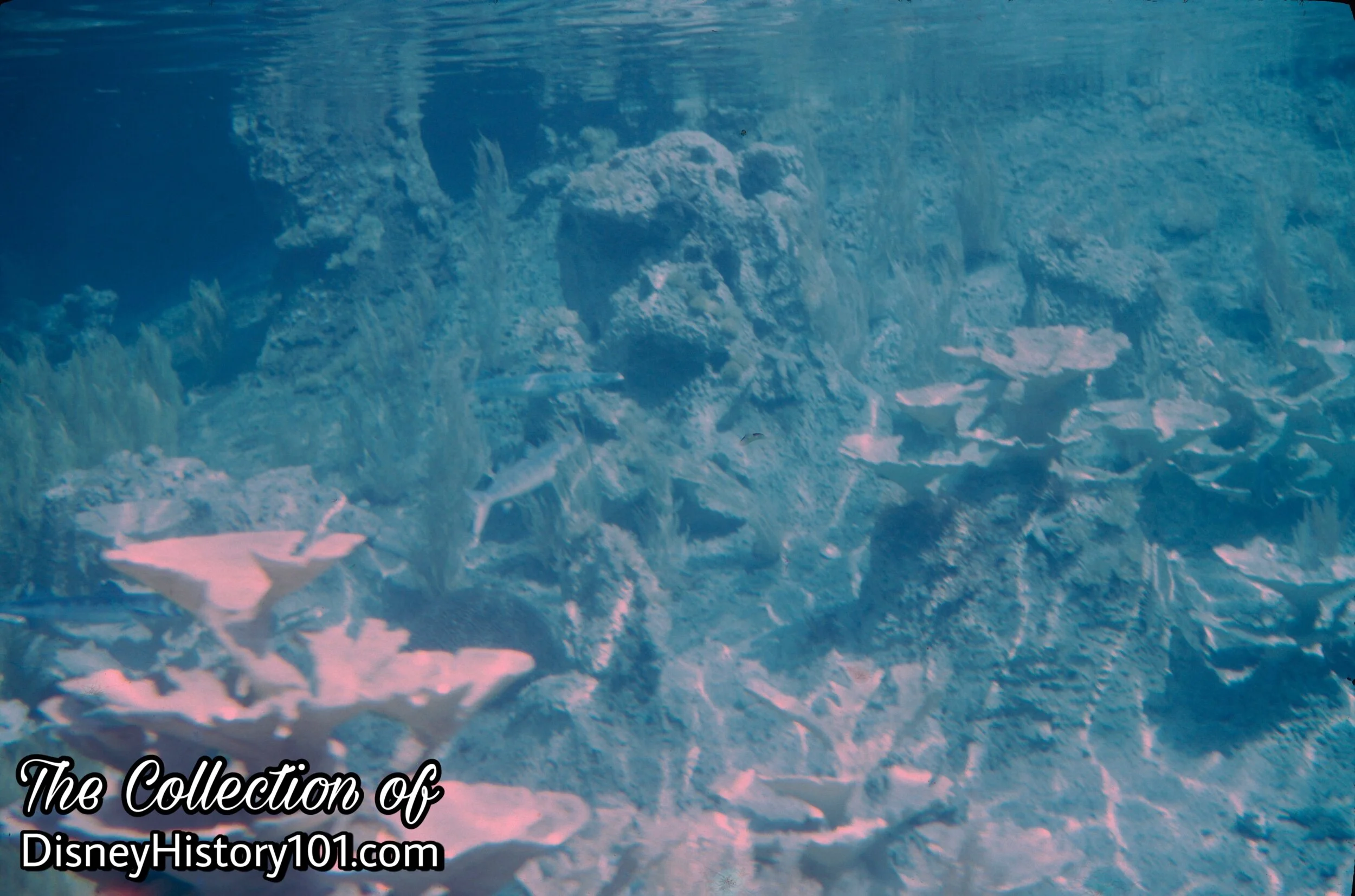
CORAL REEF (c. September, 1976)
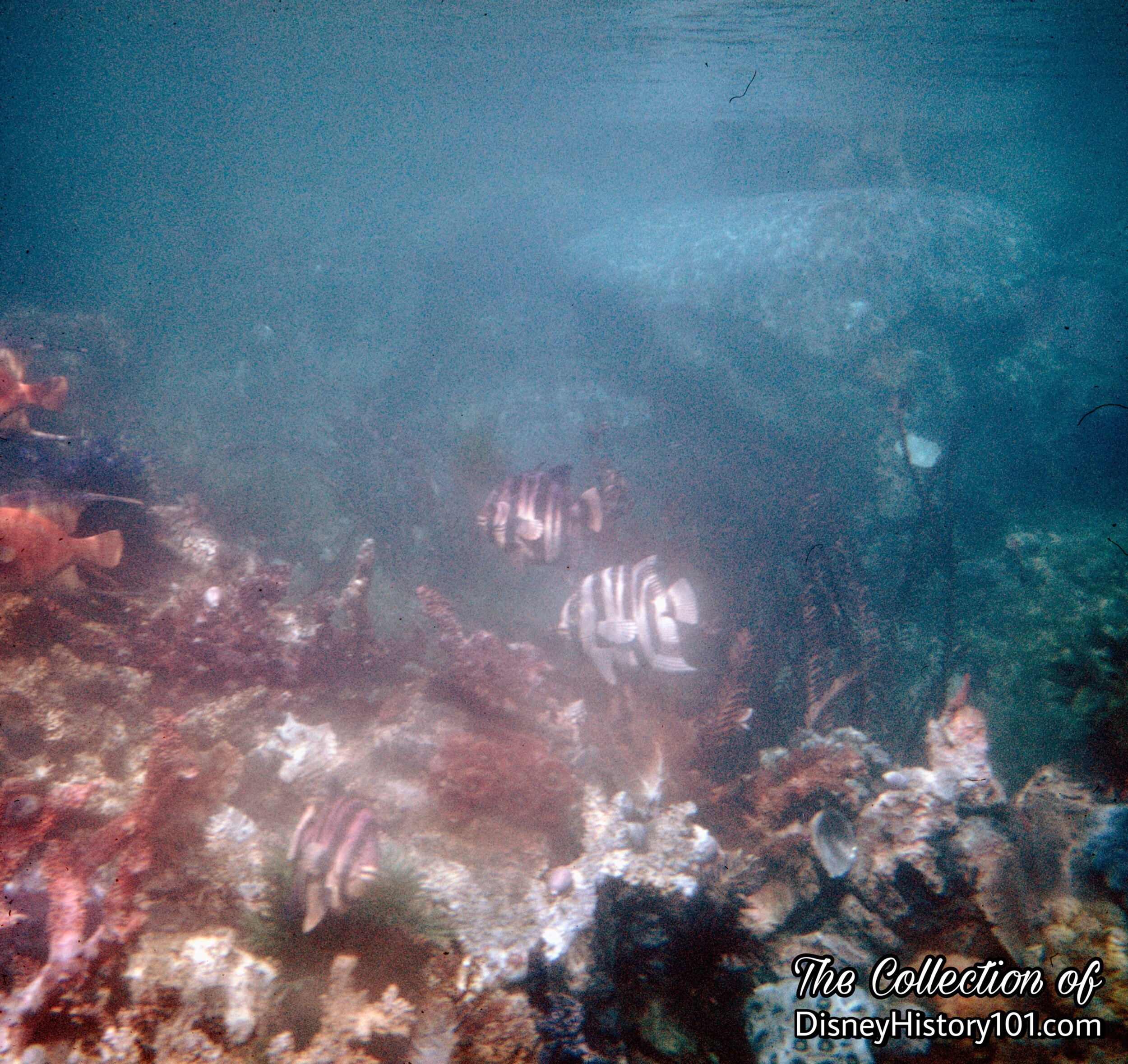
(1967)
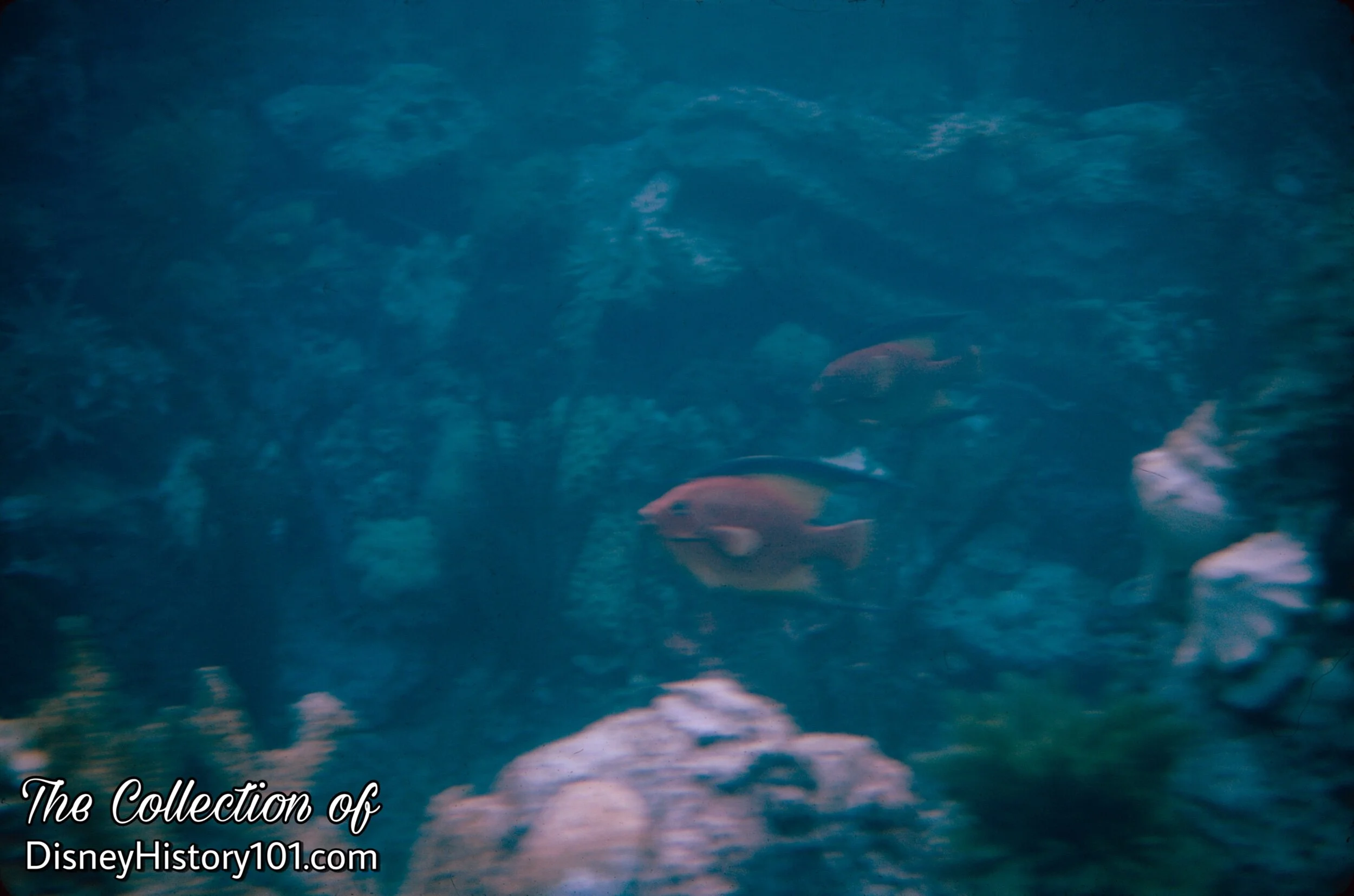
1967
These warm waters are home to colorful TROPICAL FISH.
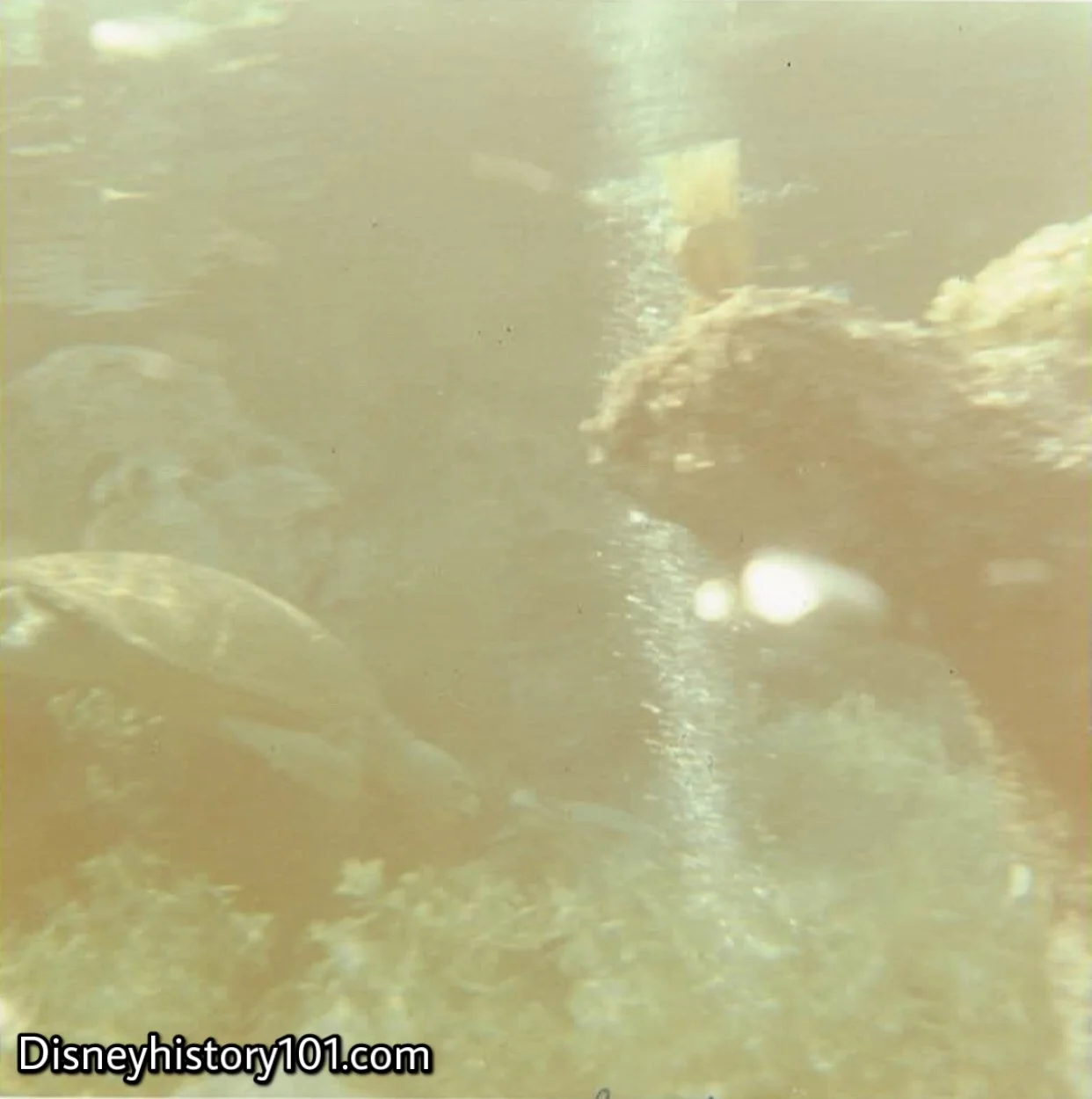
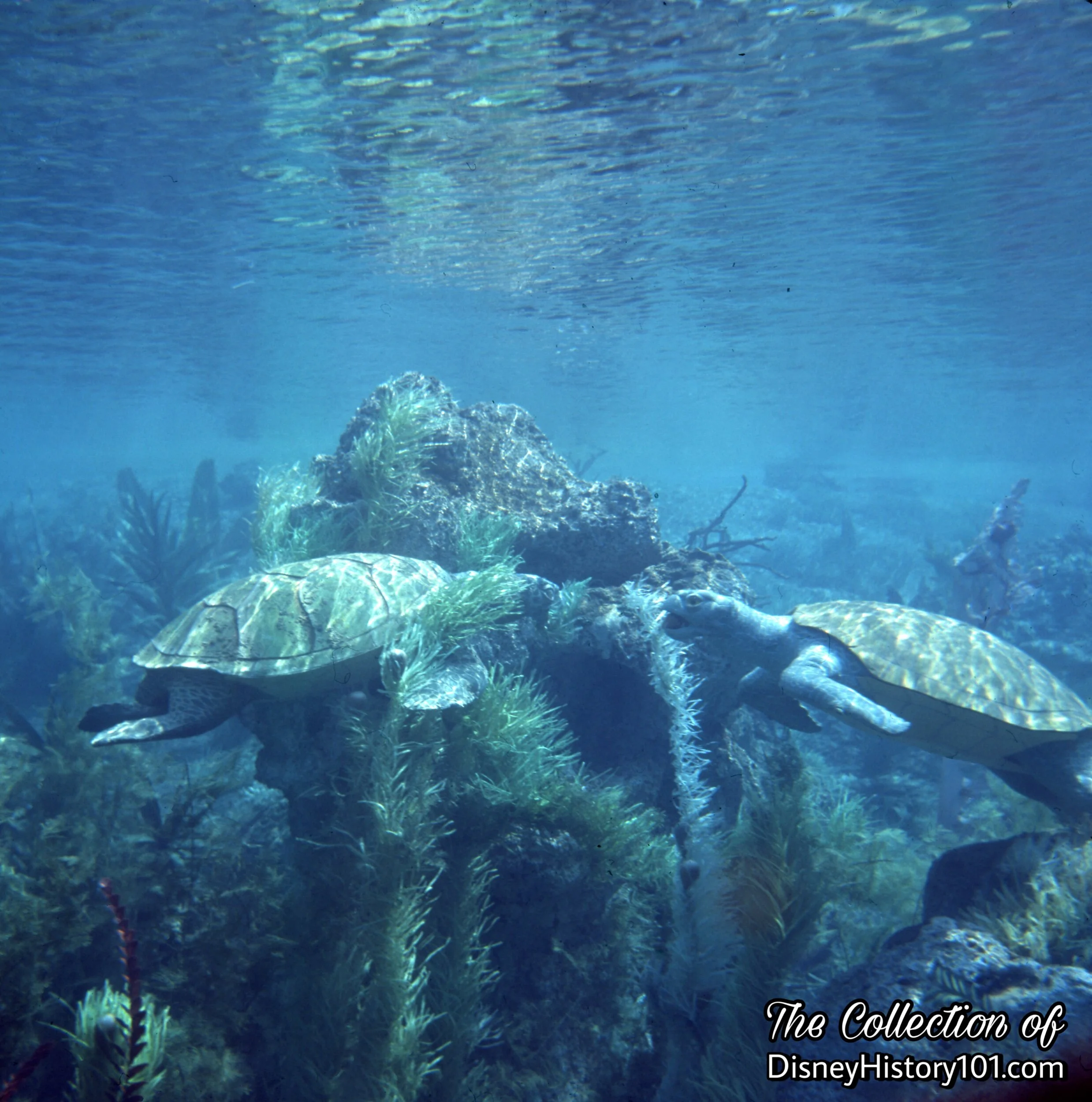
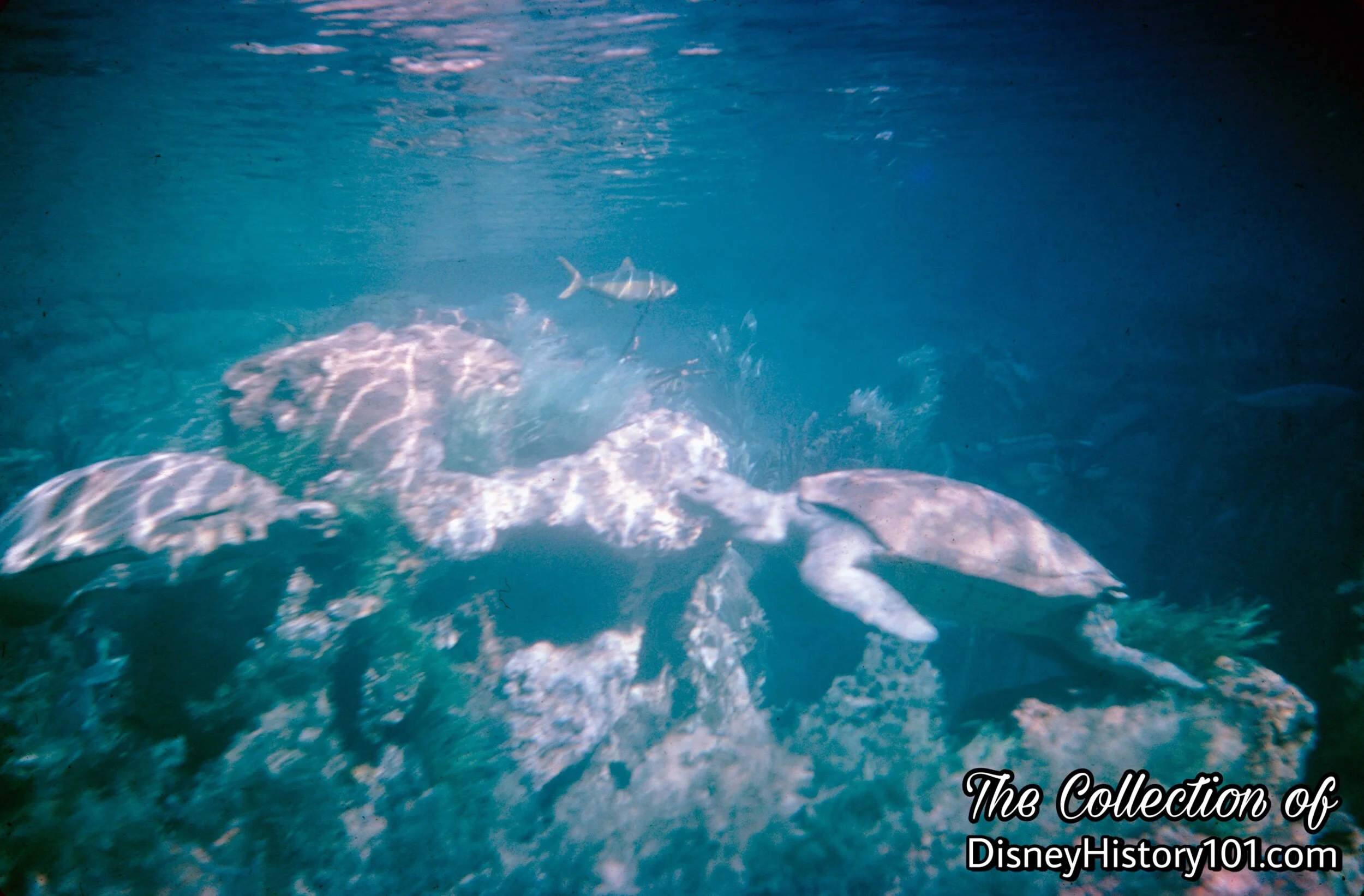
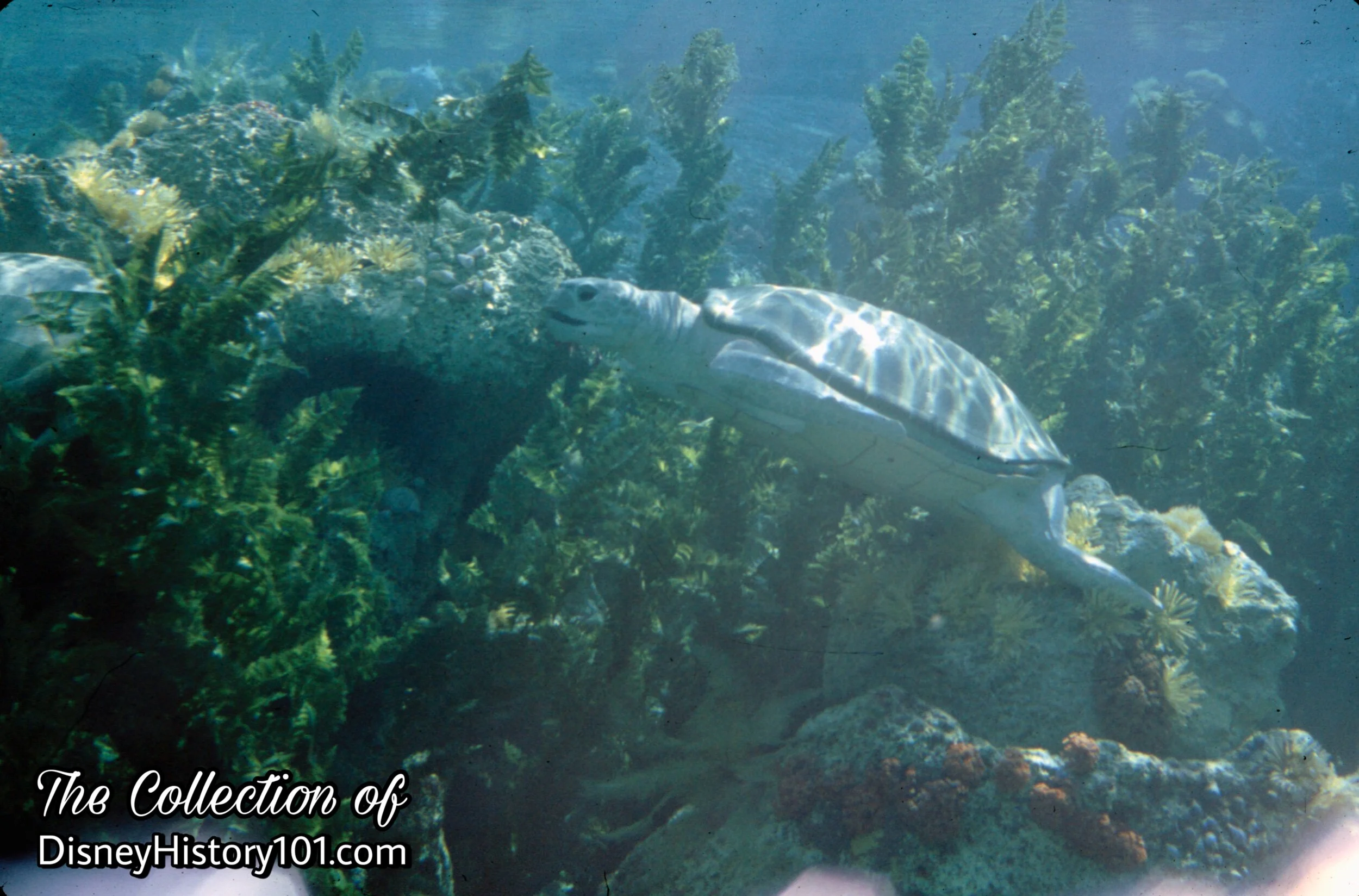
ROCKING TURTLES
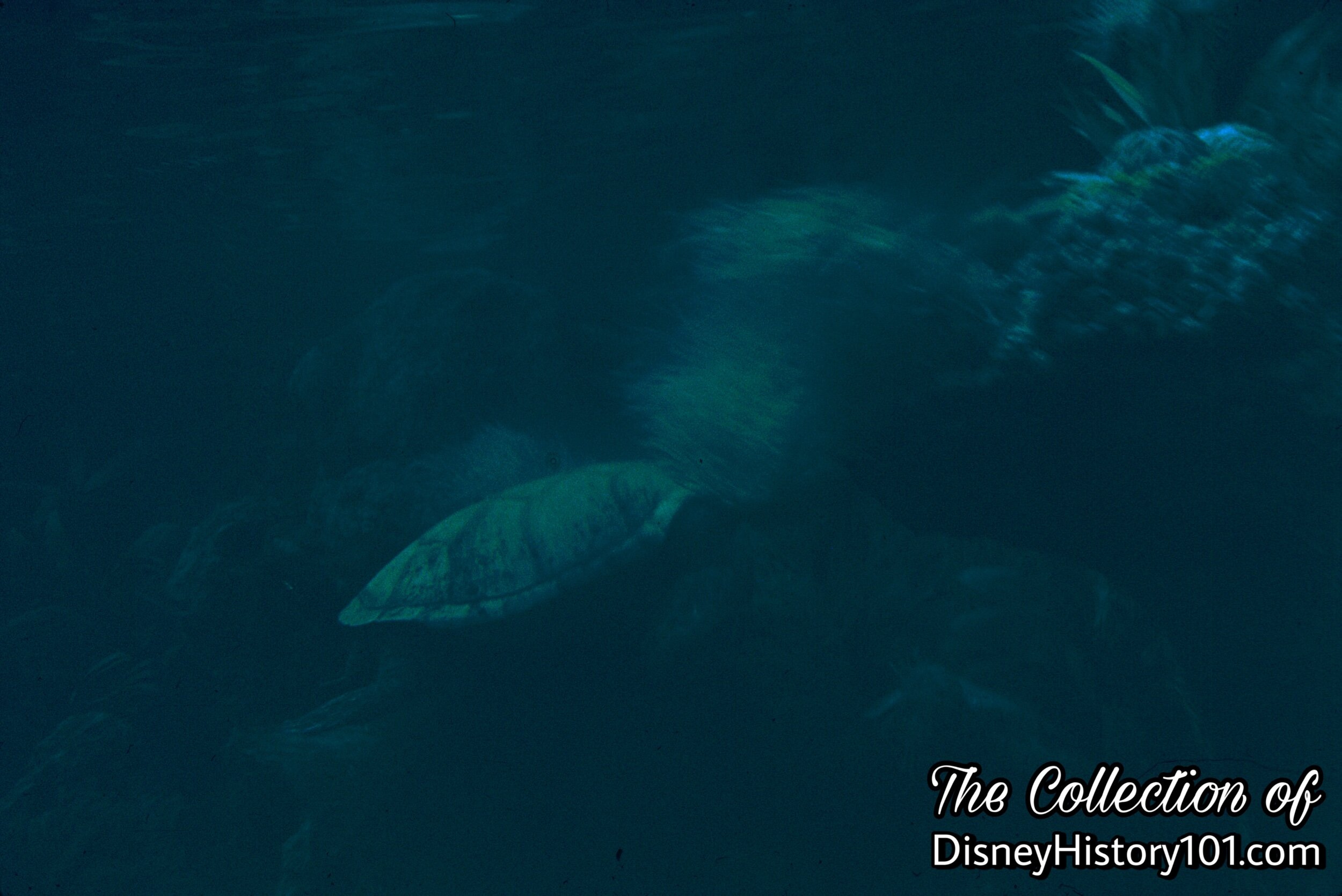
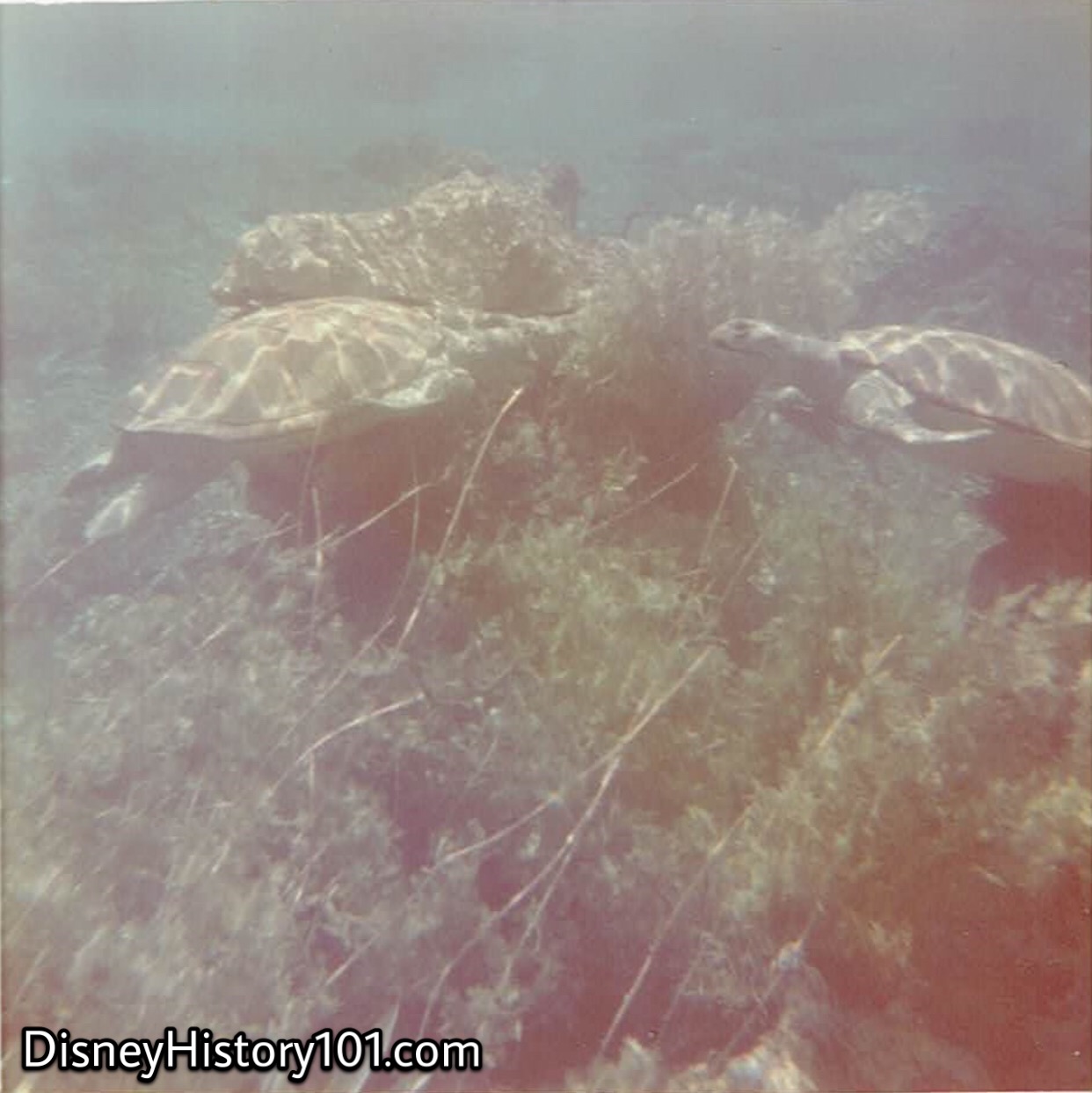
ROCKING TURTLES (1972)
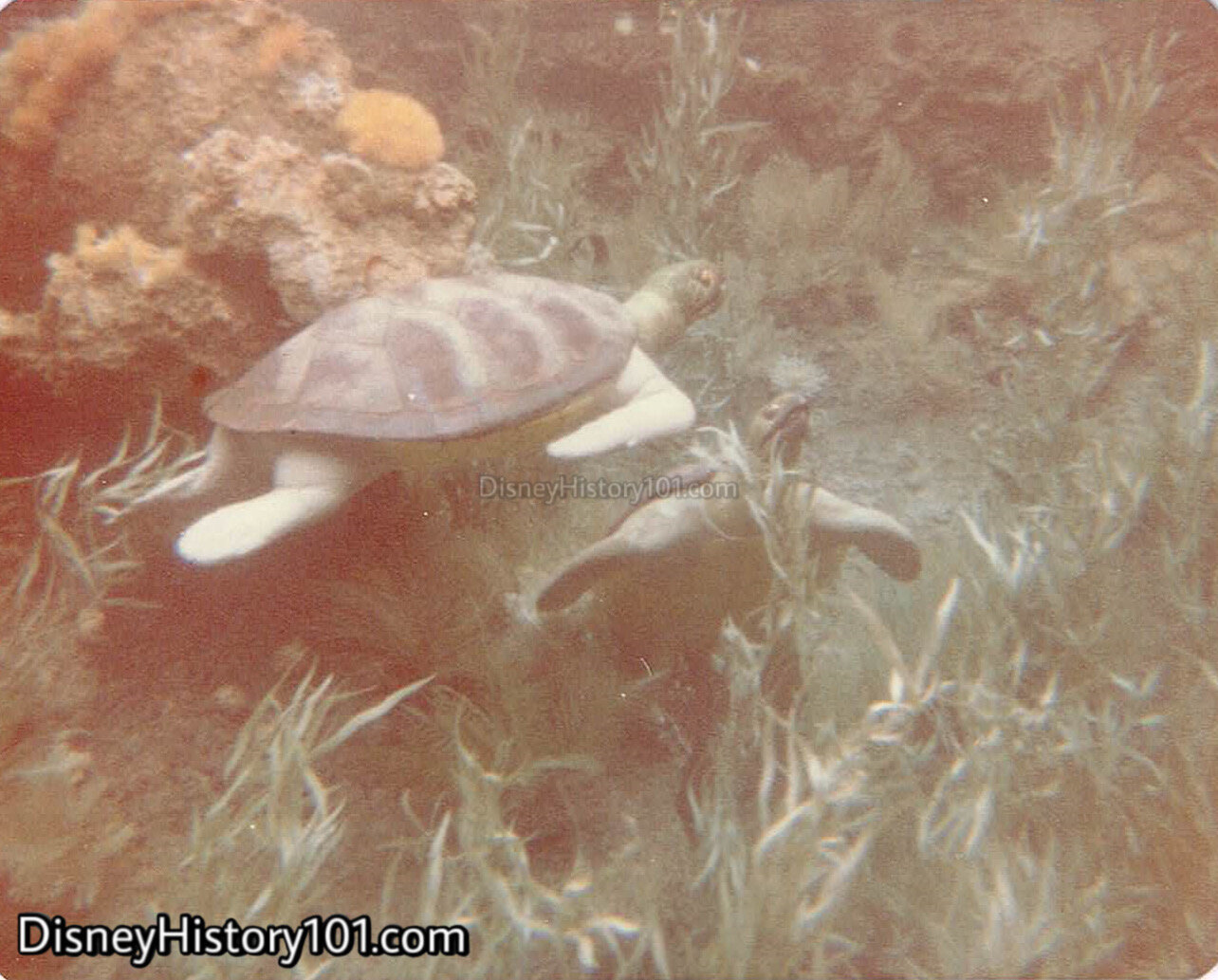
ROCKING TURTLES (1981)
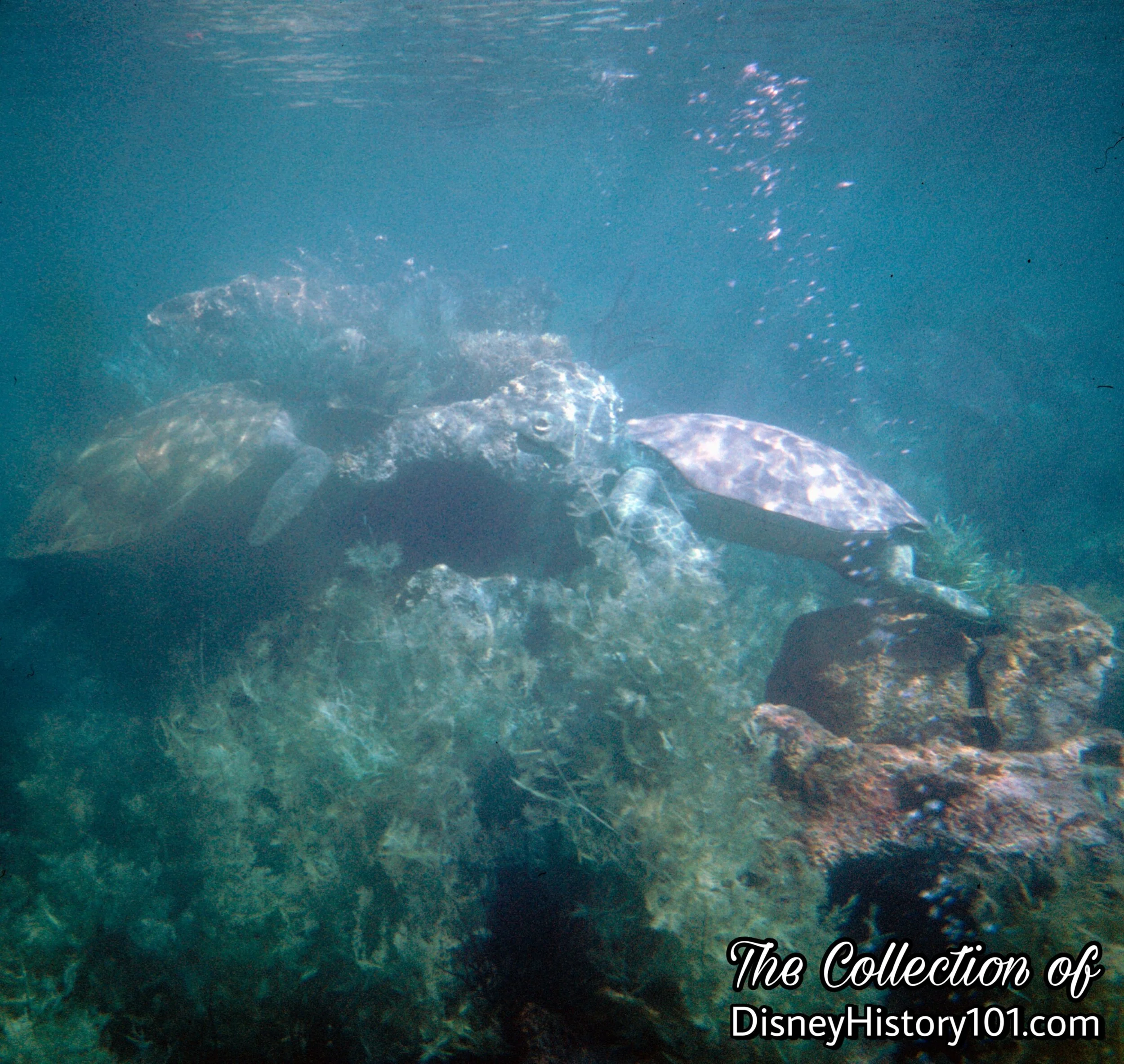
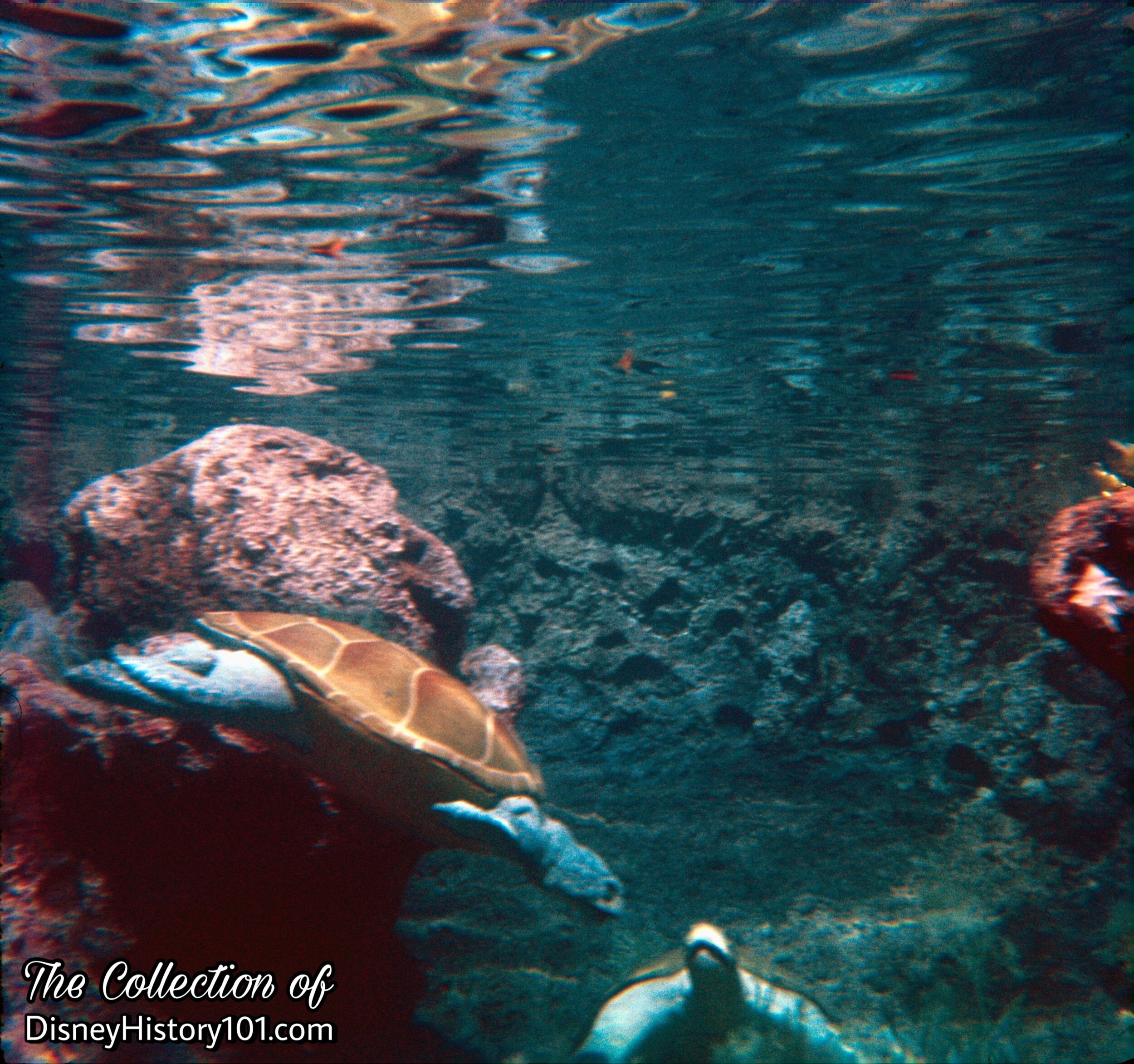
ROCKING TURTLES (October, 1967)
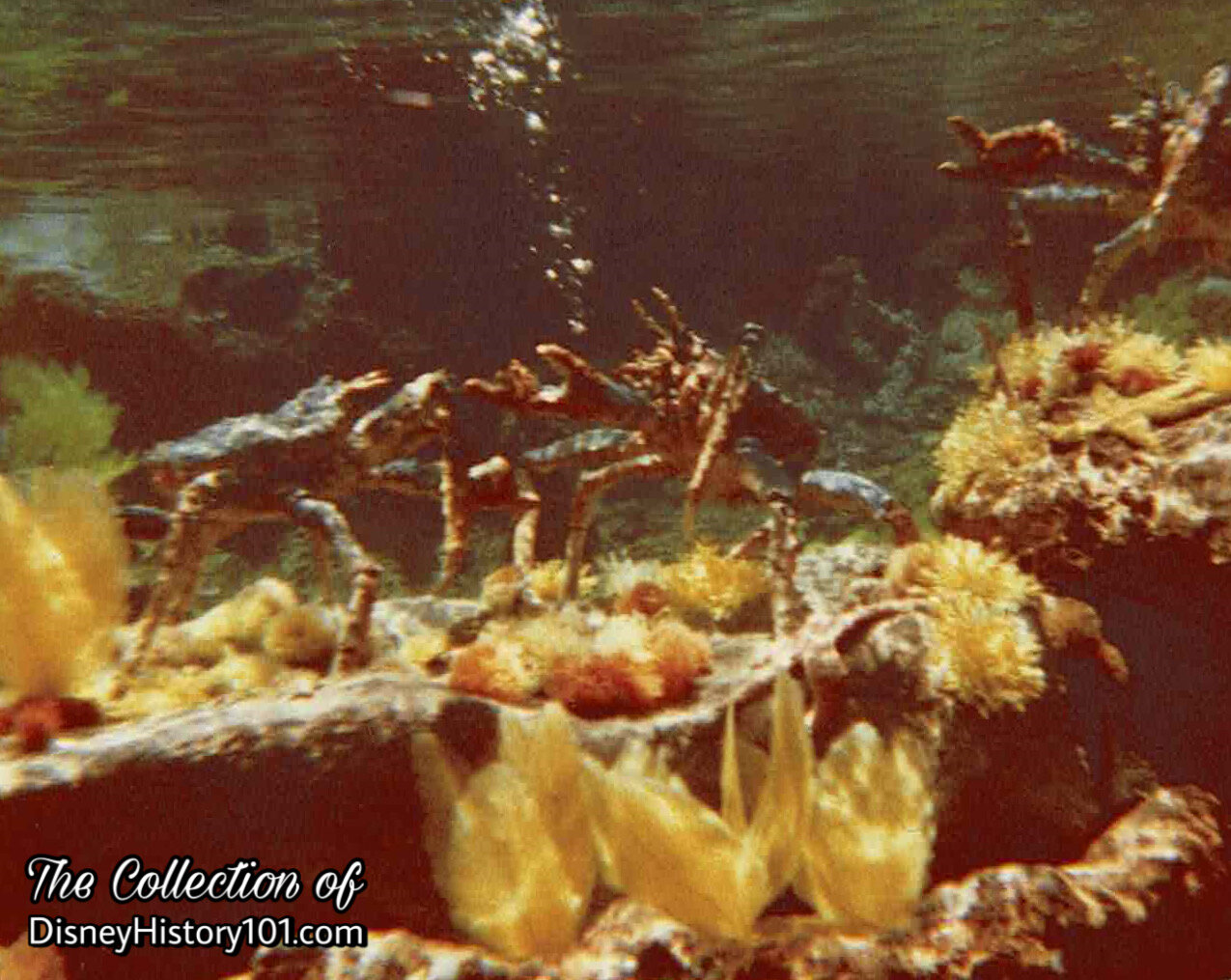
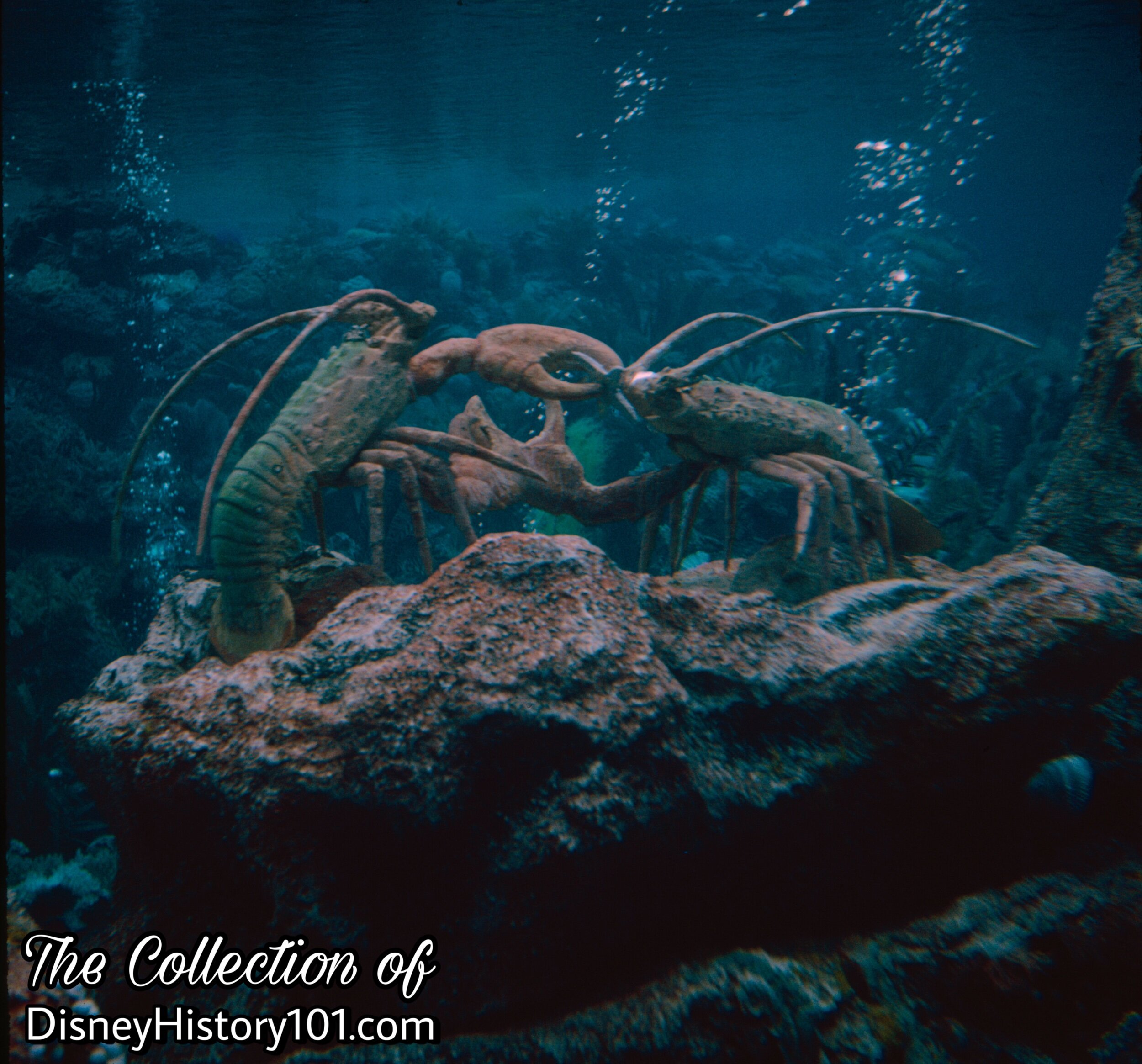
There are lobsters, crabs, and “rocking” sea turtles in these tropical lagoon waters.
FRONT LAGOON, (October, 1961)
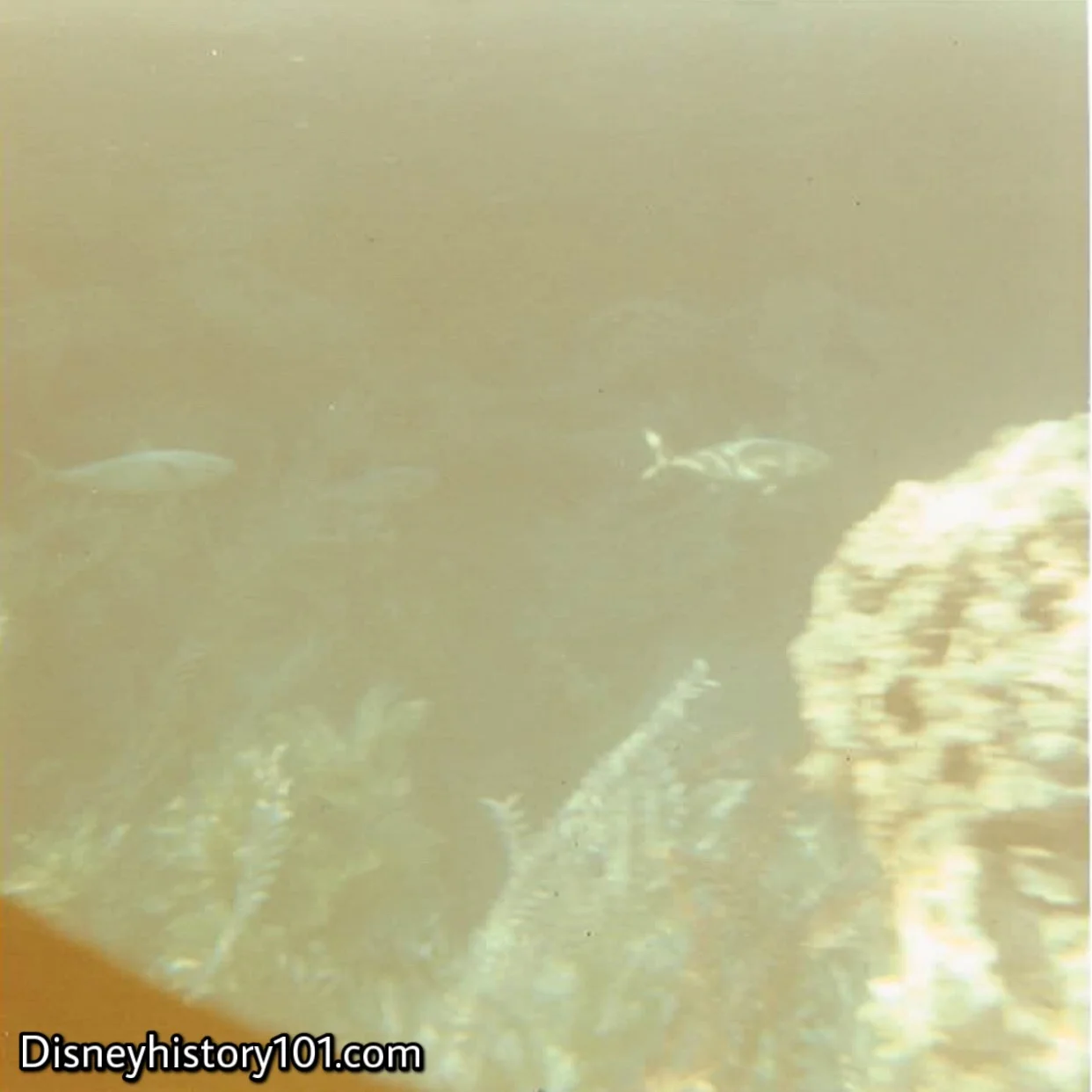
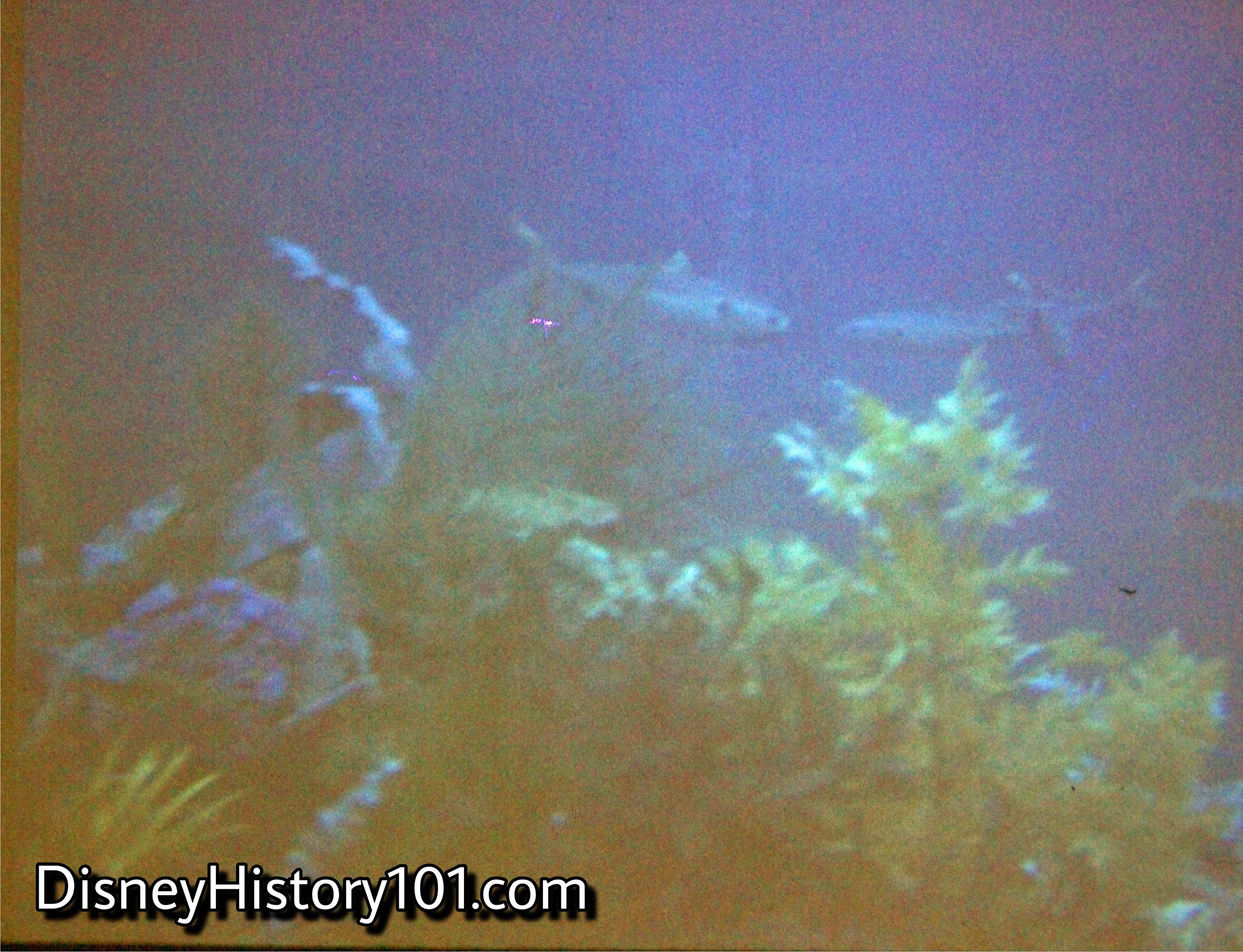
1960
The fish world has always been considered a ‘silent habitat’, but now thanks to remarkable advances in marine technology we can use instruments such as our sonar hydrophone to actually hear the fish talk.
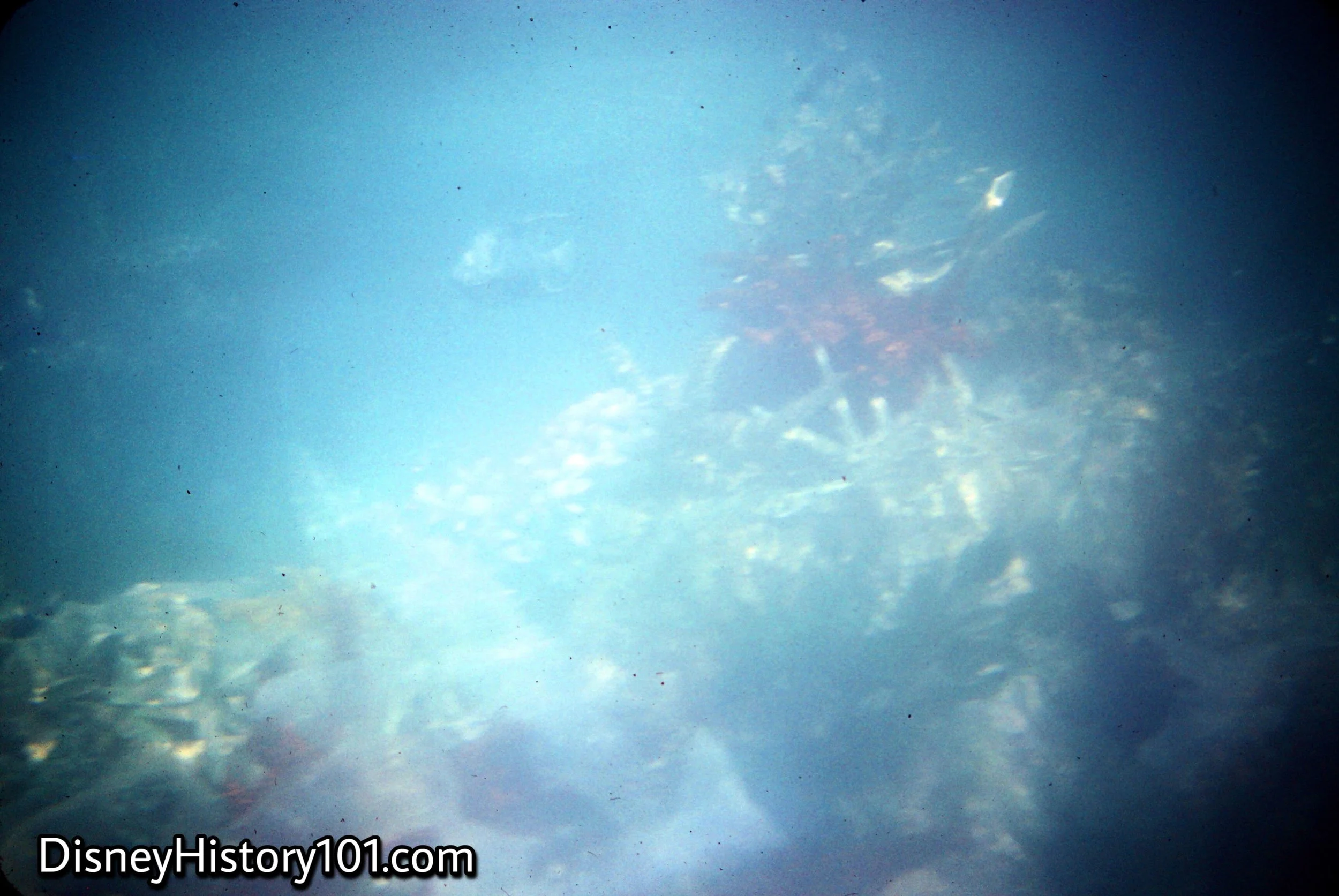
1960, August
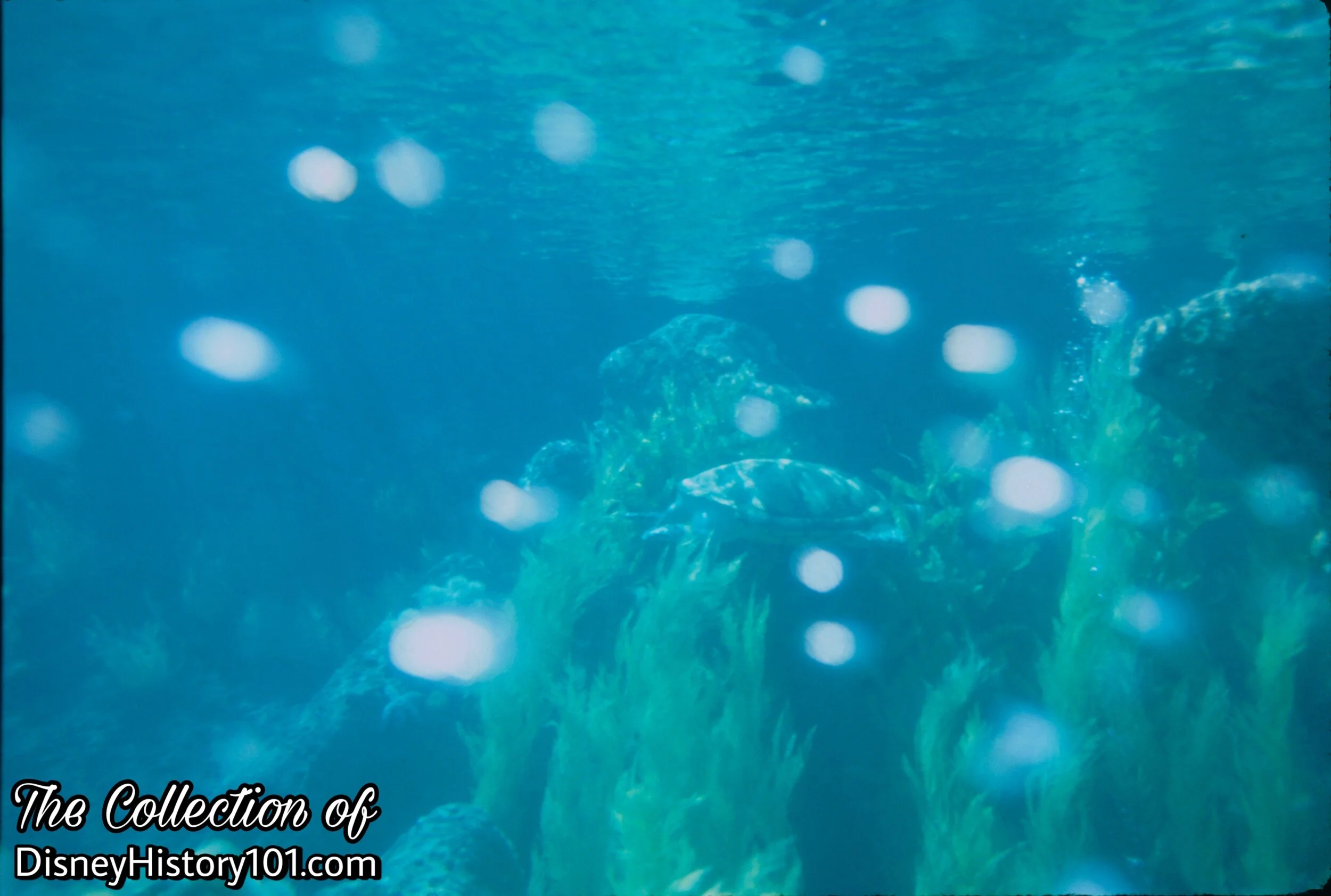
SEA TURTLES (starboard), (July, 1979)
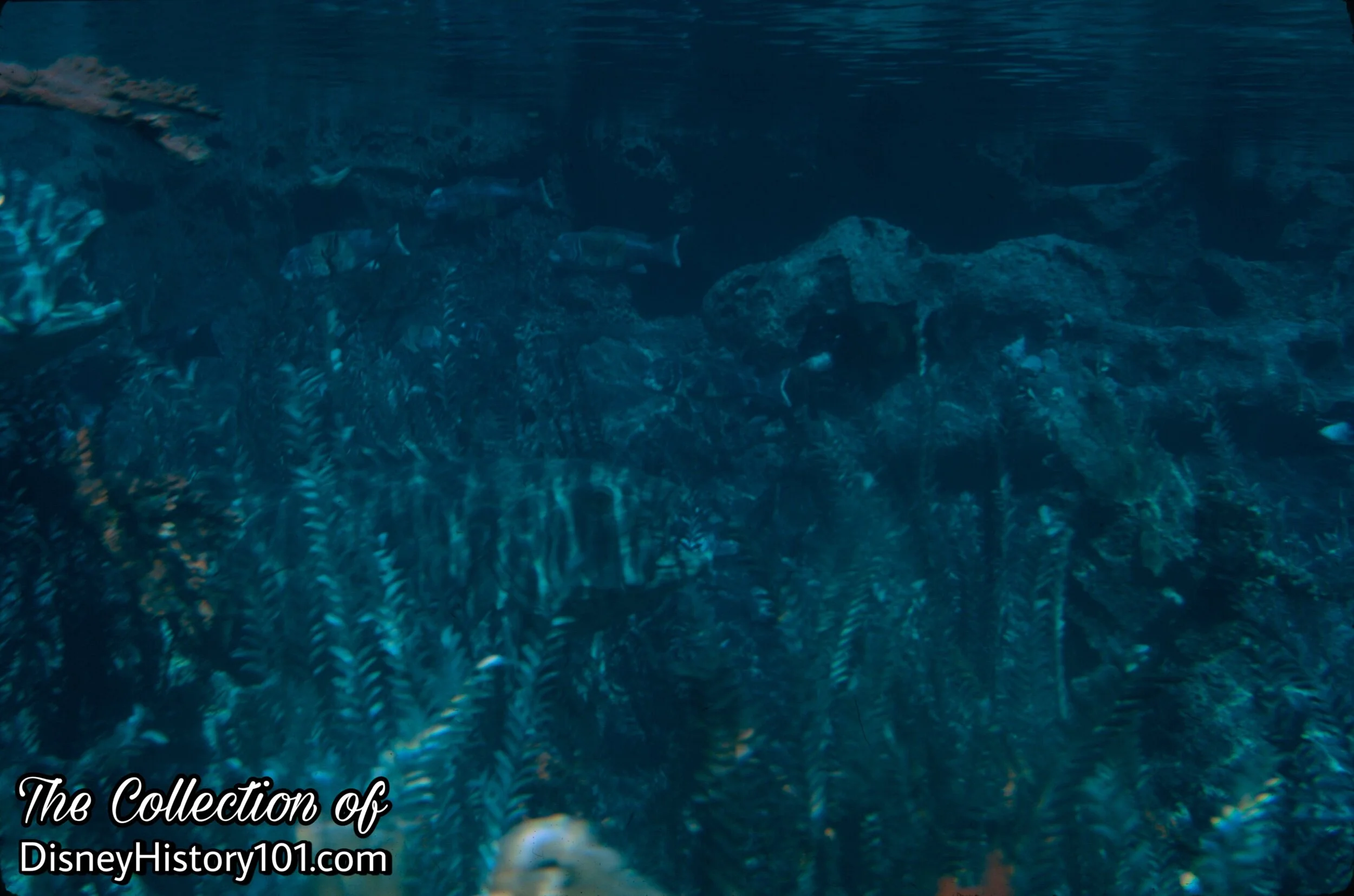
(October 30, 1971)
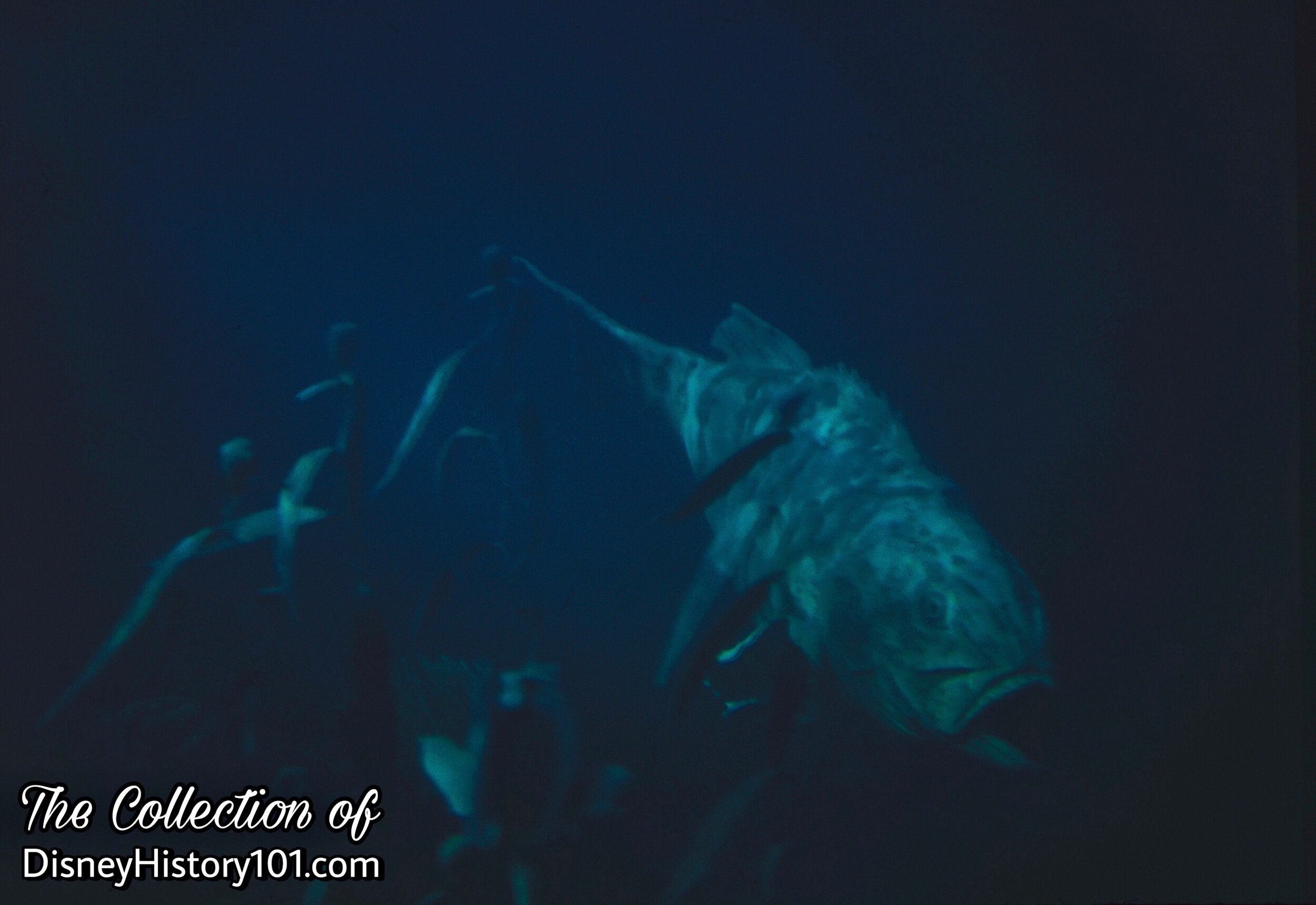
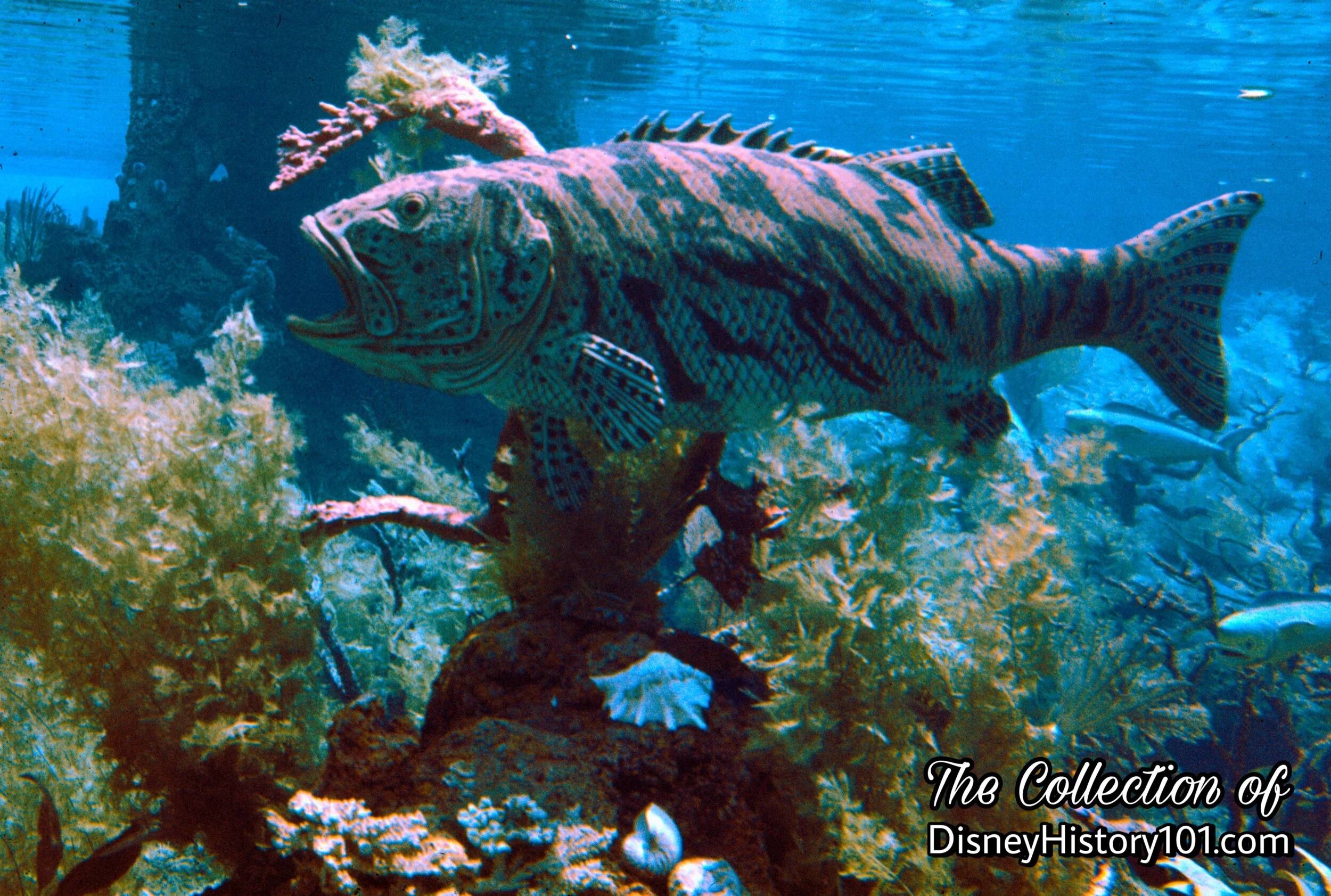
GIANT SEA BASS (May, 1960)
Roaming the coastal sea bottom in search of food are the Groupers or Giant Sea Bass.
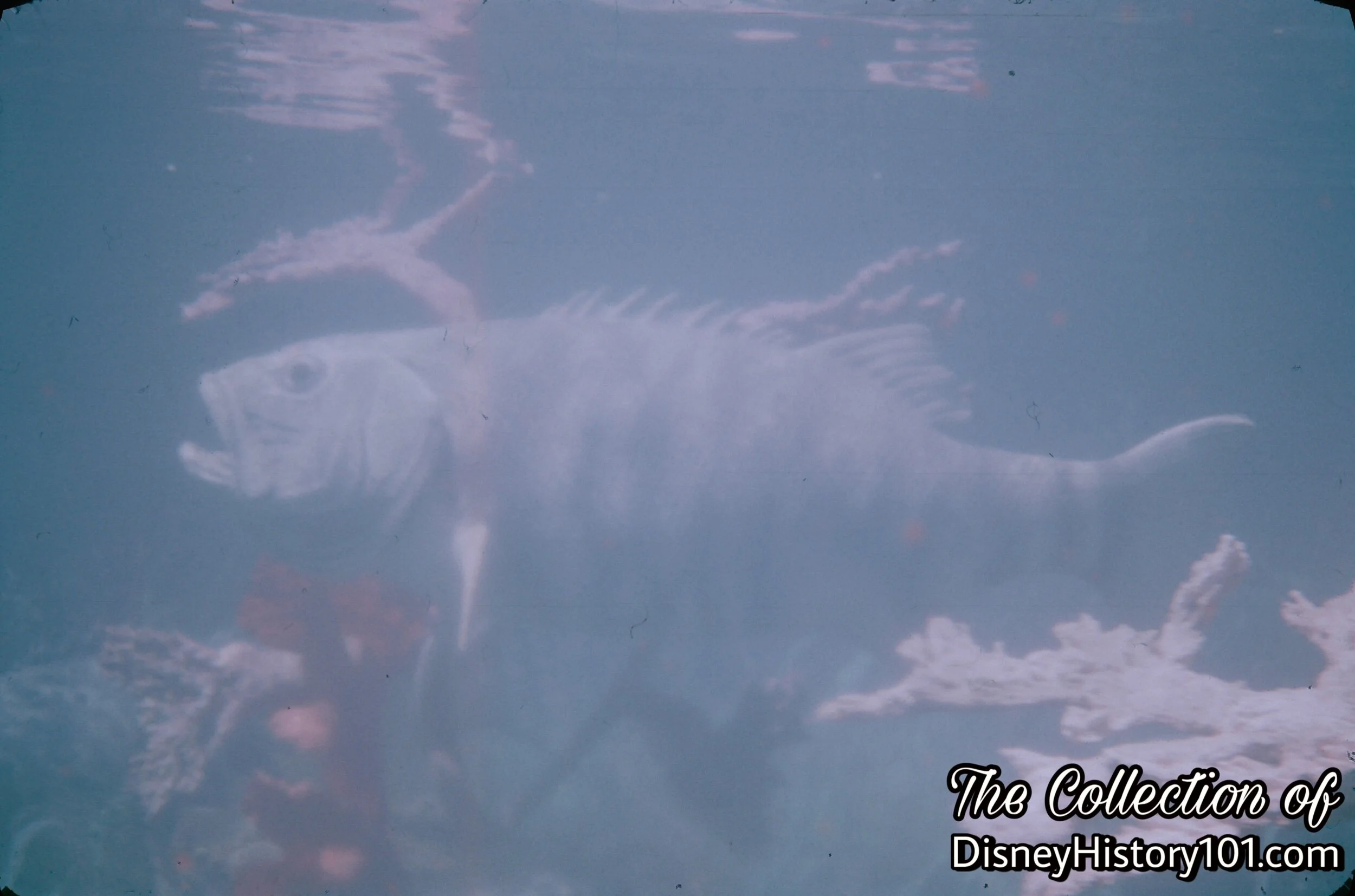
GIANT SEA BASS
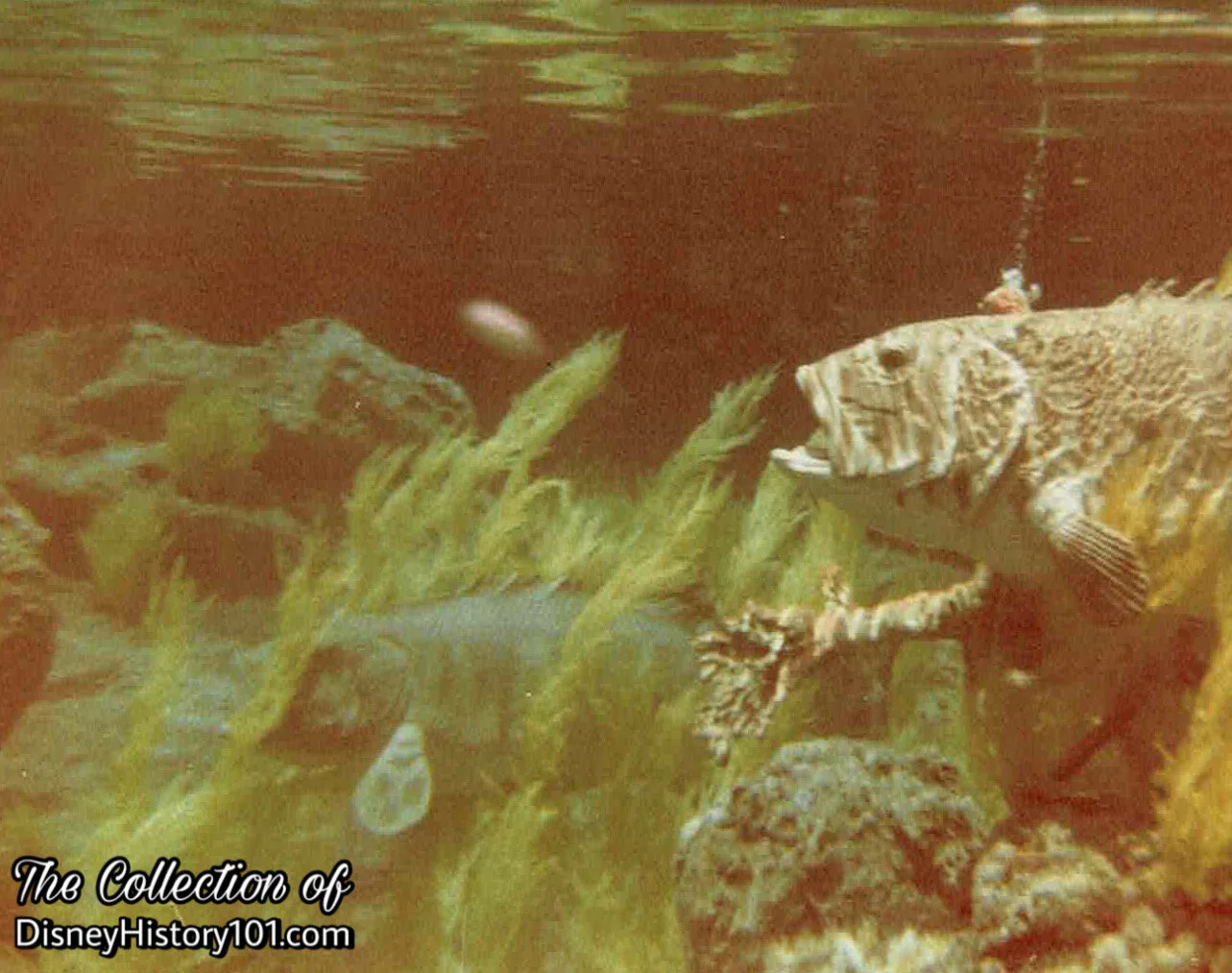
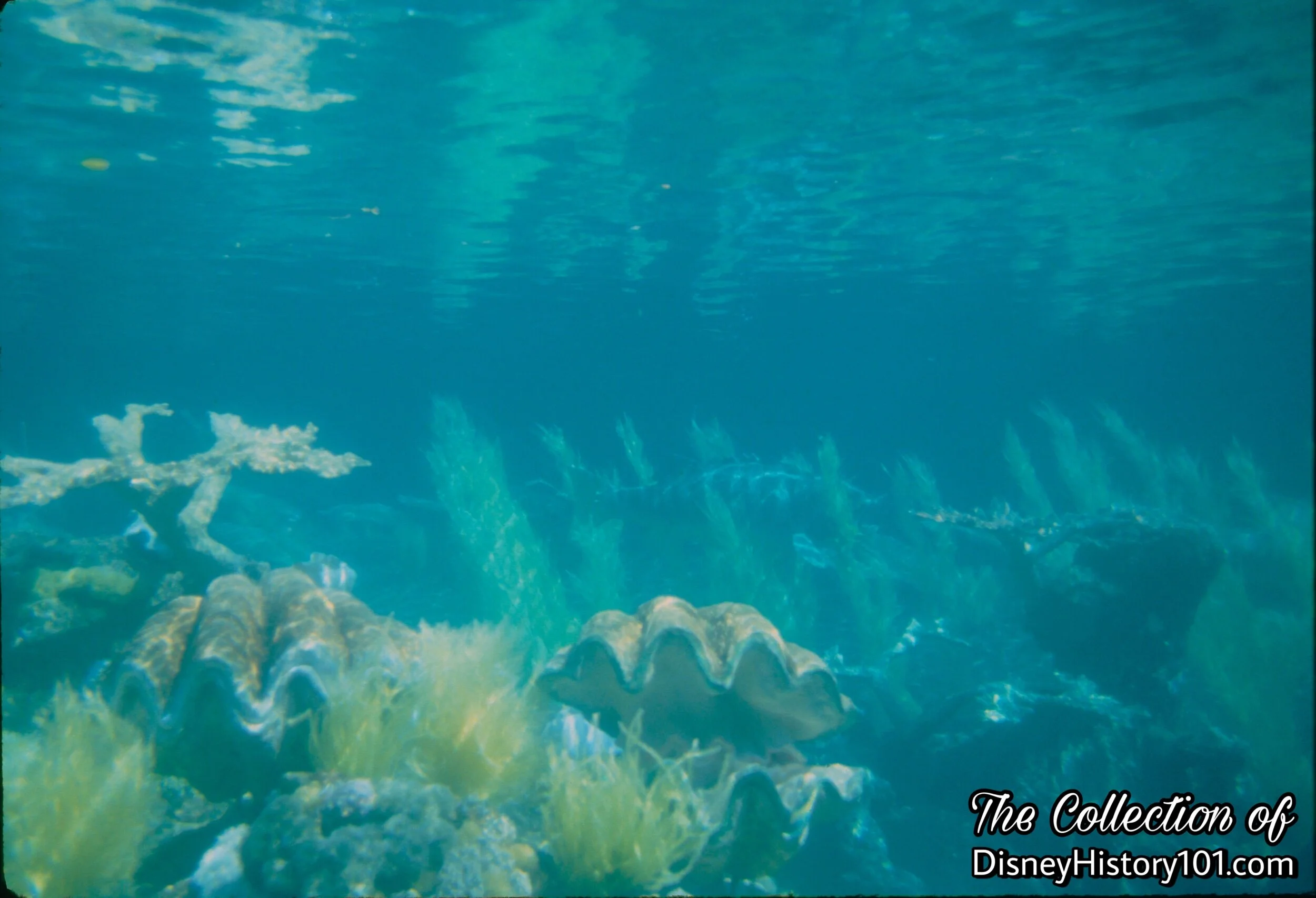
GIANT CLAMS and SEA BASS (starboard), (July, 1979)
As we move forward through the “Intermediate Lagoon”, we make our way to the costal sea floor, where we encounter Giant Clams. Some of their East Indies coral reef-inhabiting counterparts have been known to weigh up to 500 pounds!
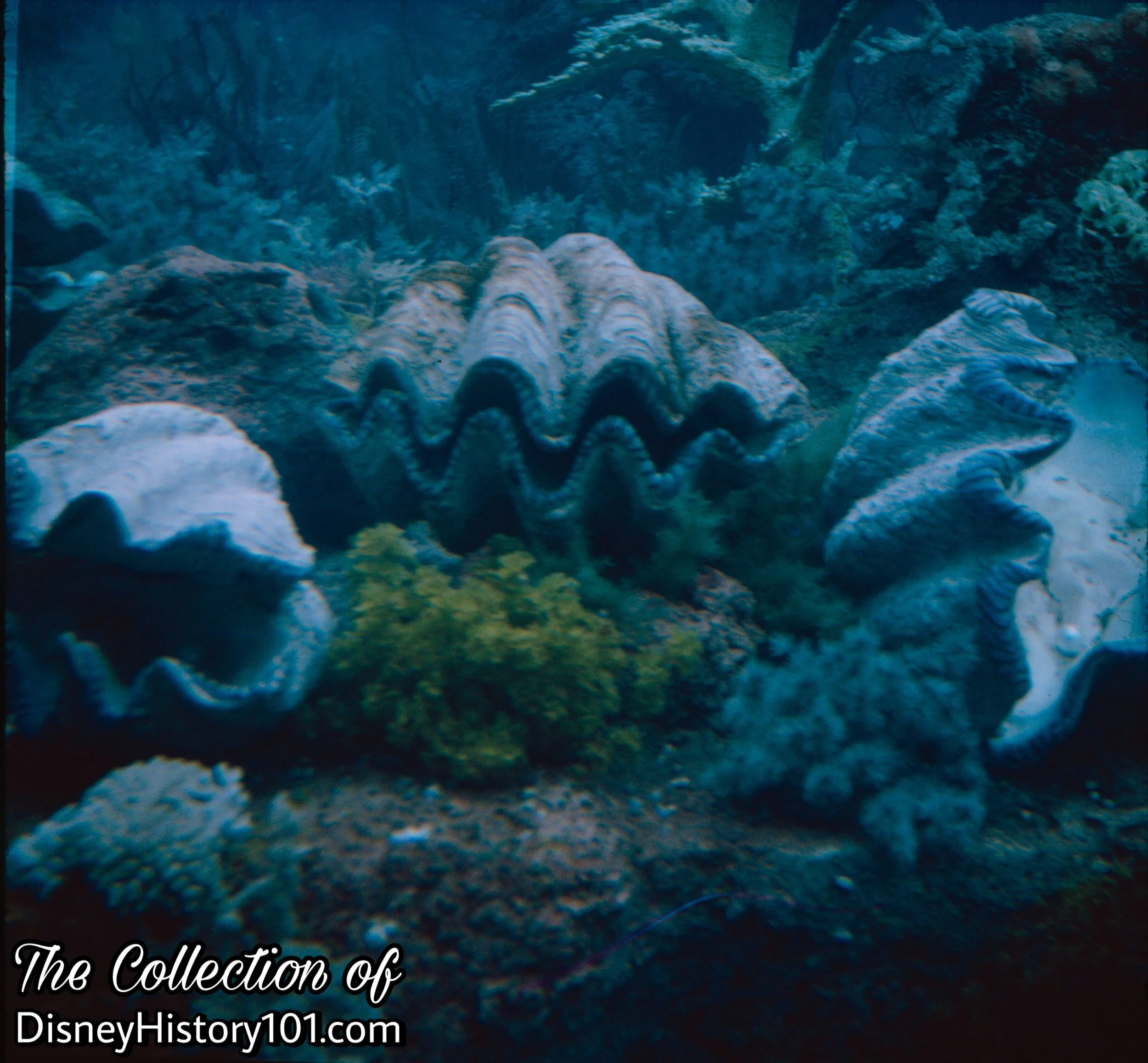
Giant Clams emitting air bubbles, (July, 1964)
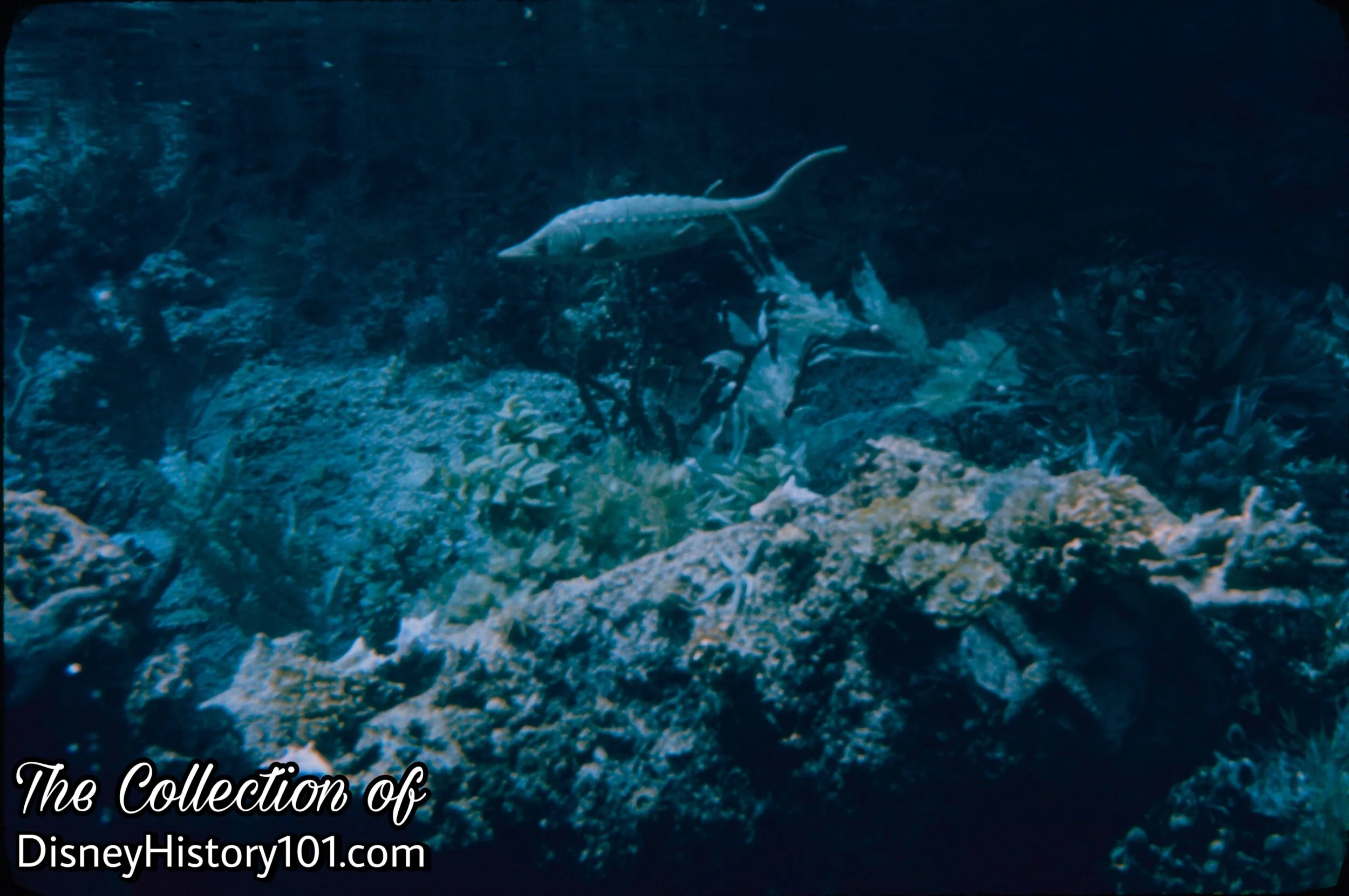
STURGEON (port)
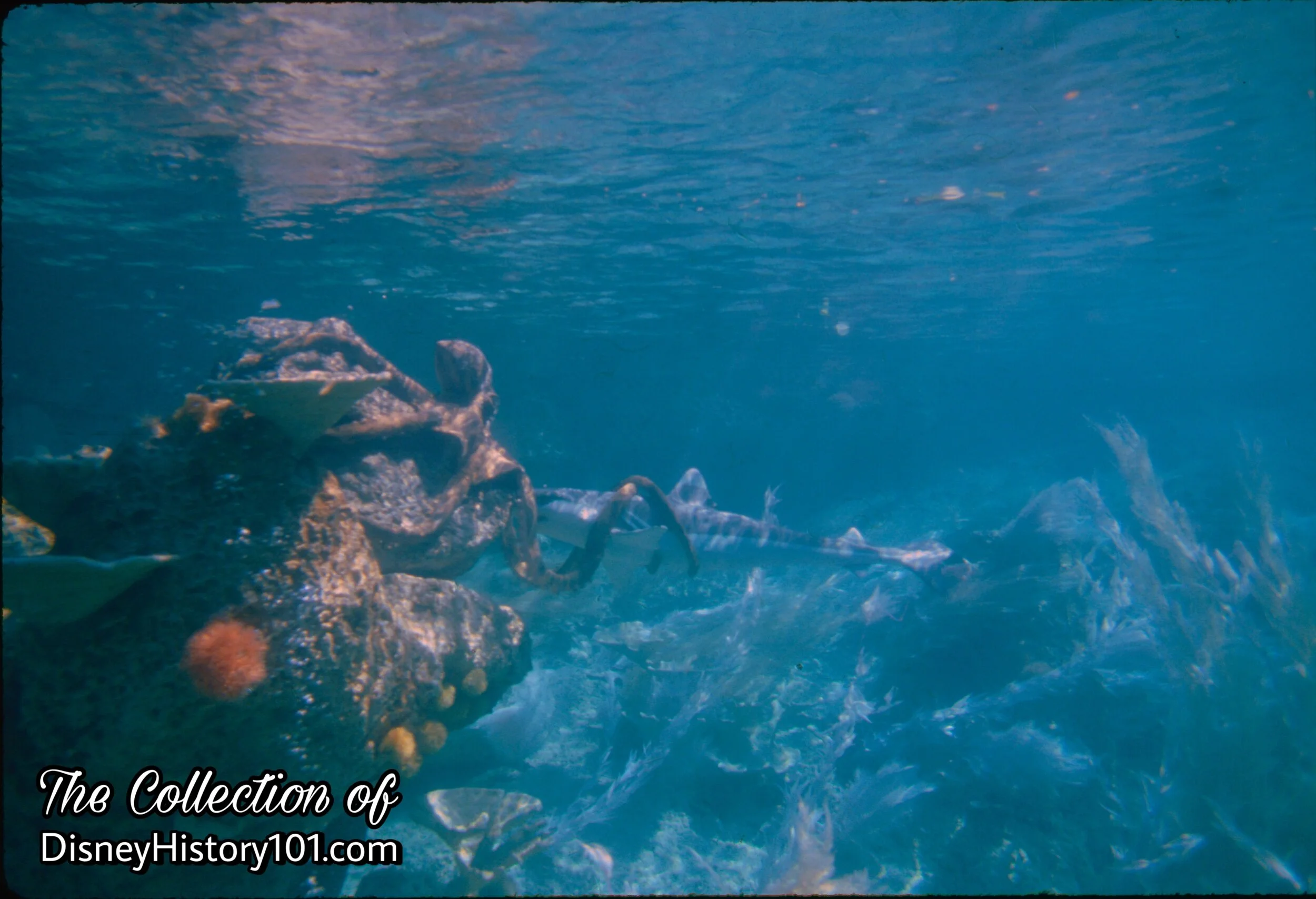
OCTOPUS AND SHARK (starboard), (July, 1979)
Before leaving the “Intermediate Lagoon” and heading through the “Entrance Falls”, we catch a glimpse of an unusual sight - an octopus struggling for survival with a shark! The shark looks to twist free from the octopus’ grips.
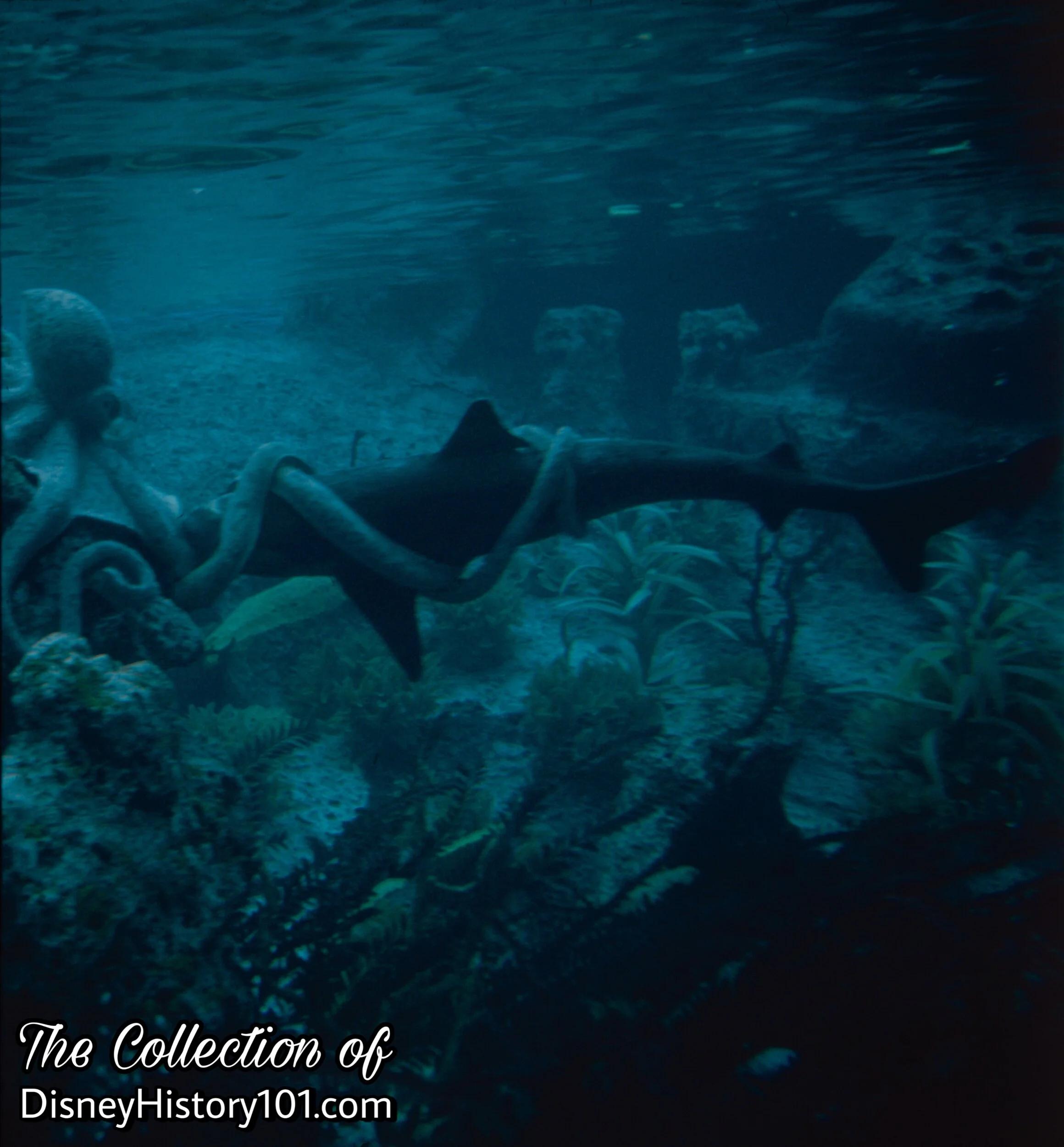
“Shark Vs. Octopus Fight”, c. July, 1964.
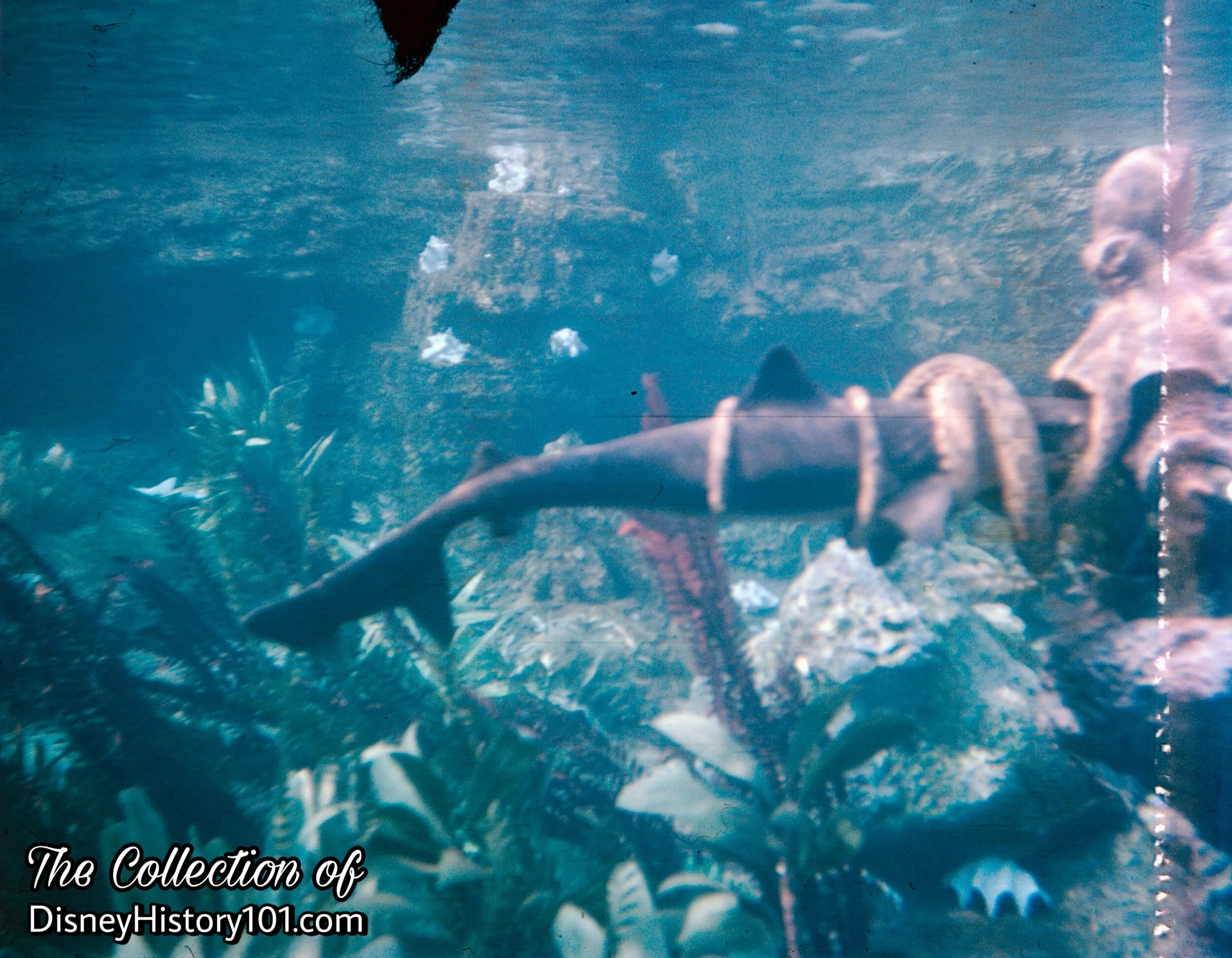
“Shark Vs. Octopus Fight”
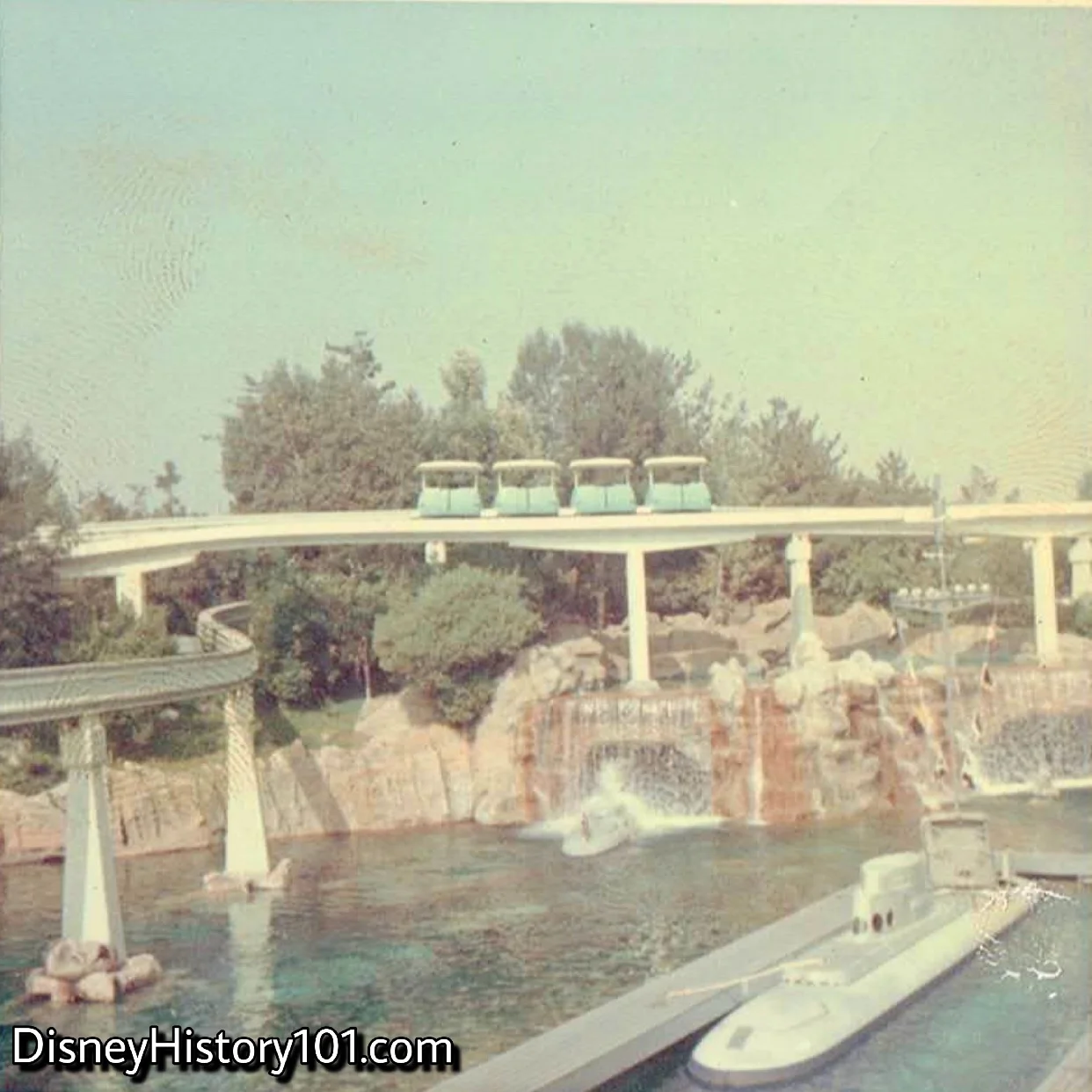
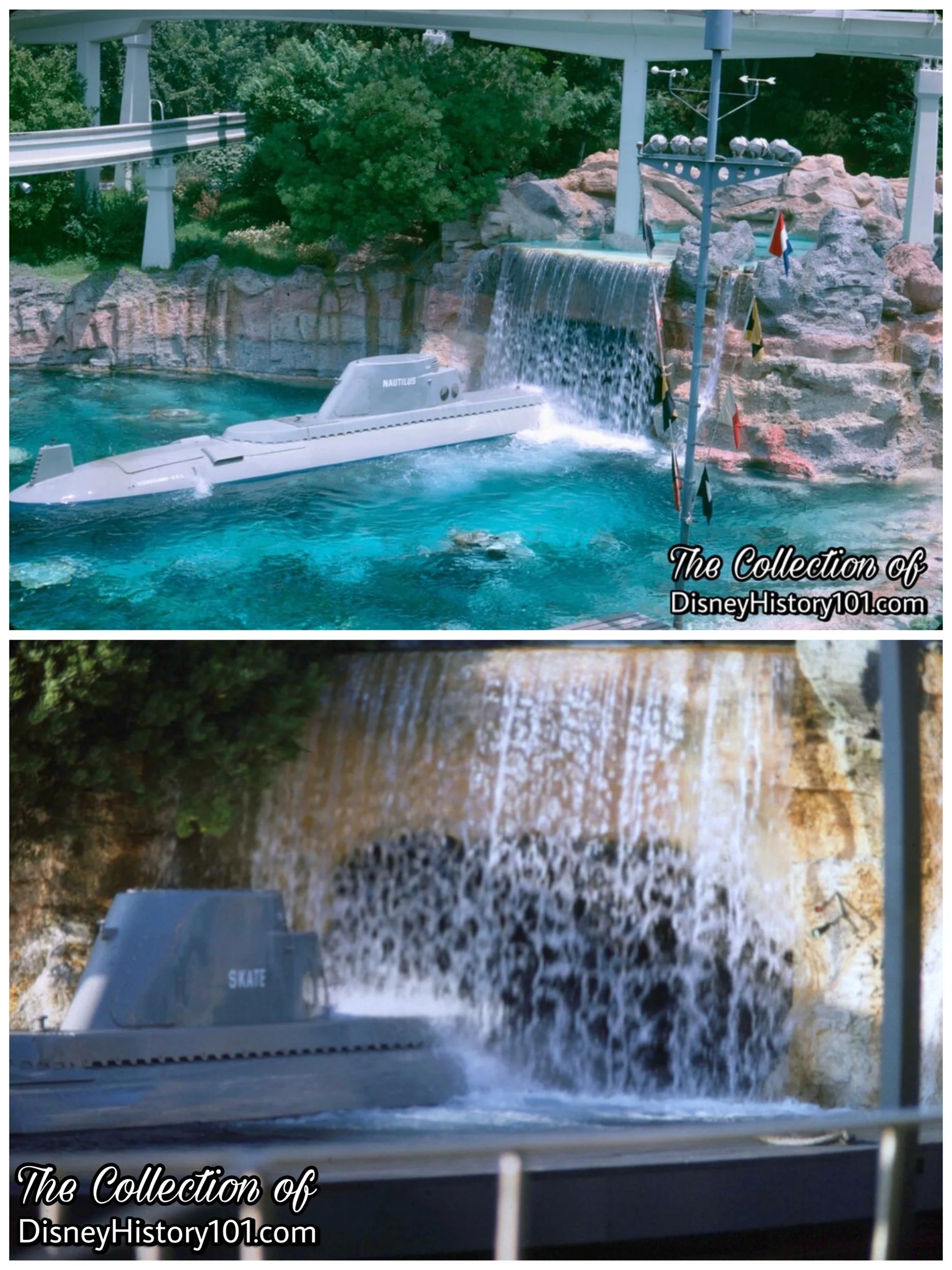
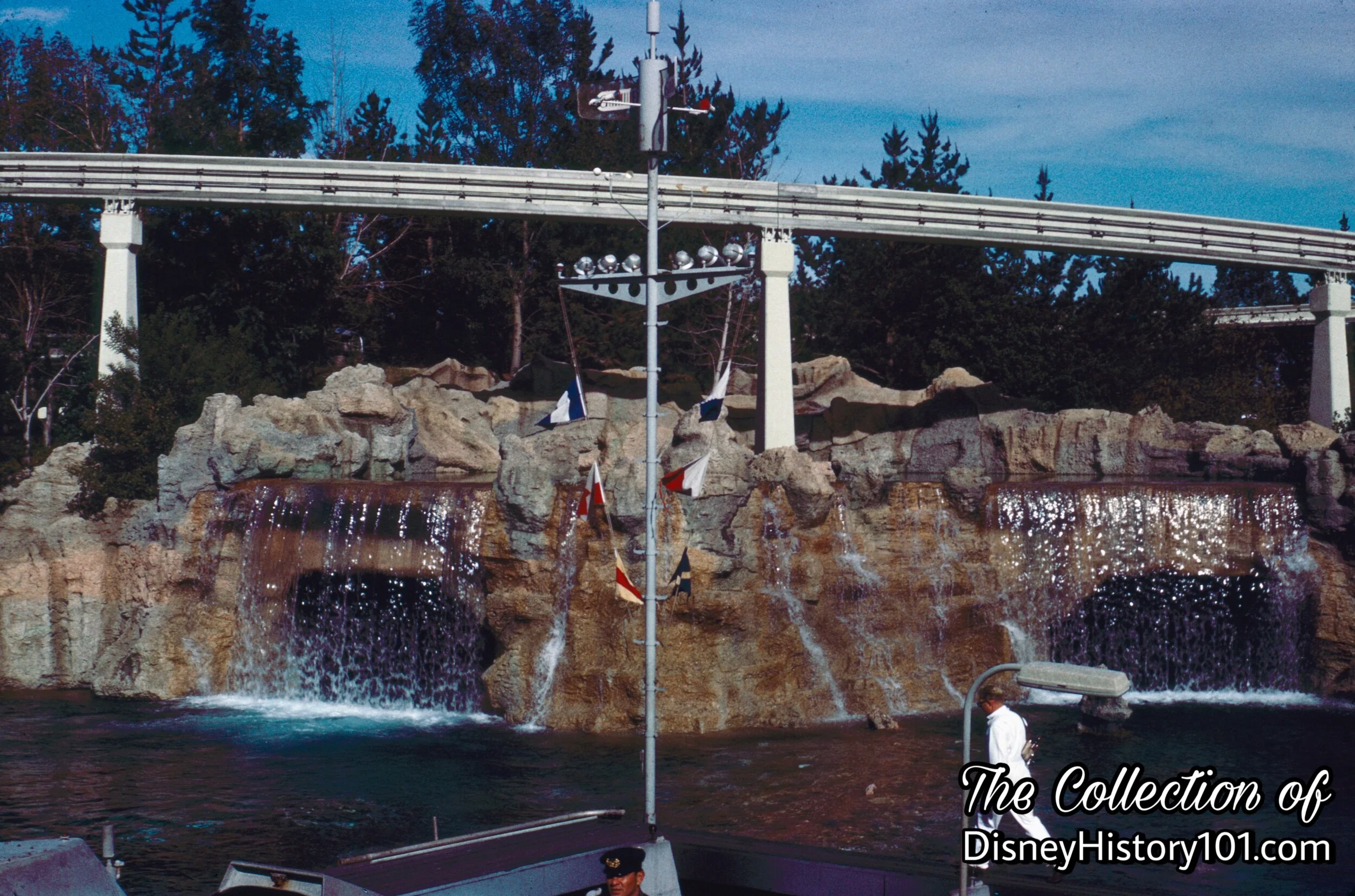
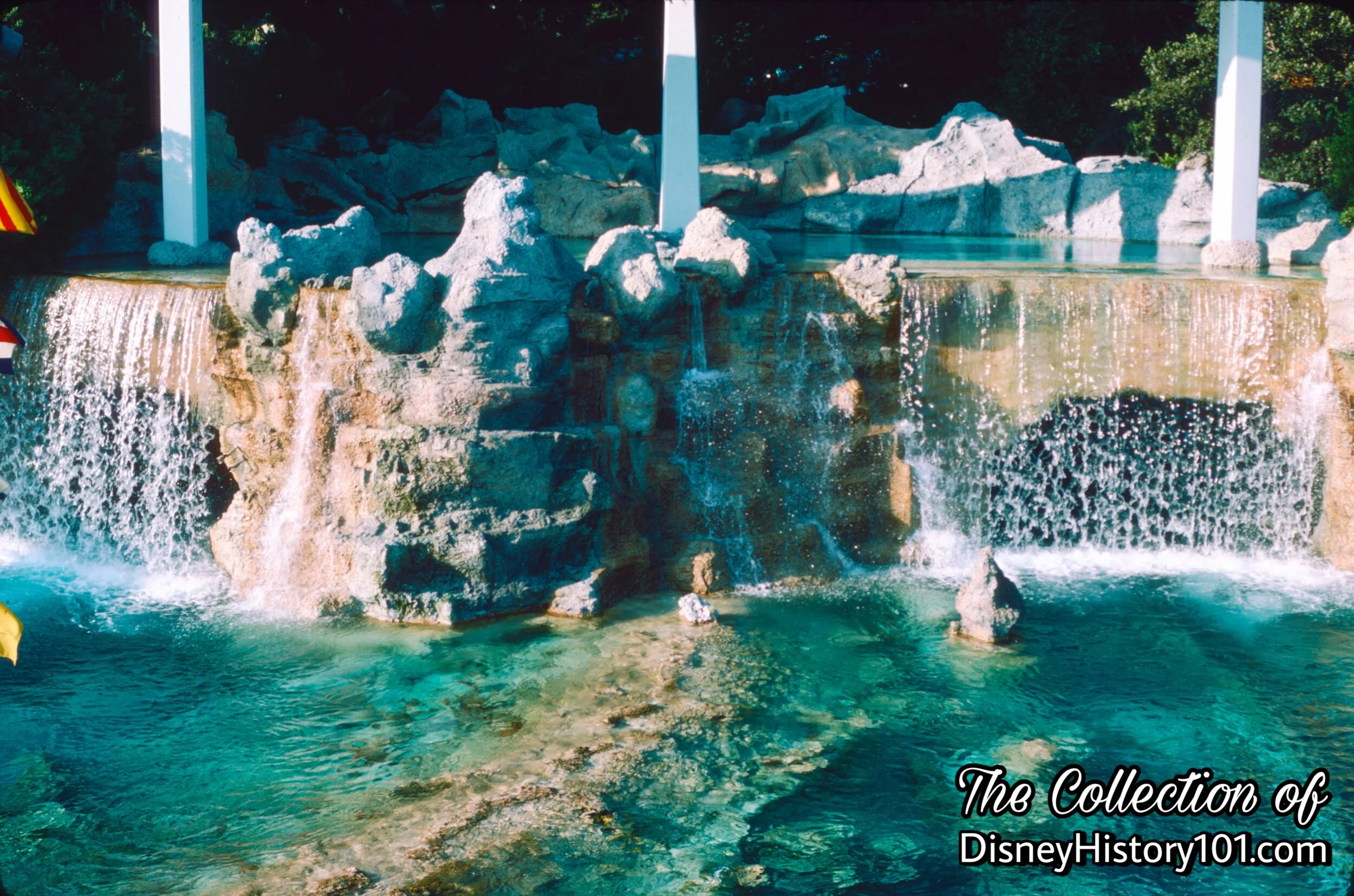
"SUB CAVERNS' ENTRANCE FALLS" - This was one of 12 waterfalls in Disneyland by 1974.
As for the roaring waterfalls of the Submarine Lagoon, they pour an impressive 9,500 gallons of water per minute, into the 6,500,000 gallon lagoon! The water level was regularly checked and maintained with the help of the Disneyland Security nighttime crew.
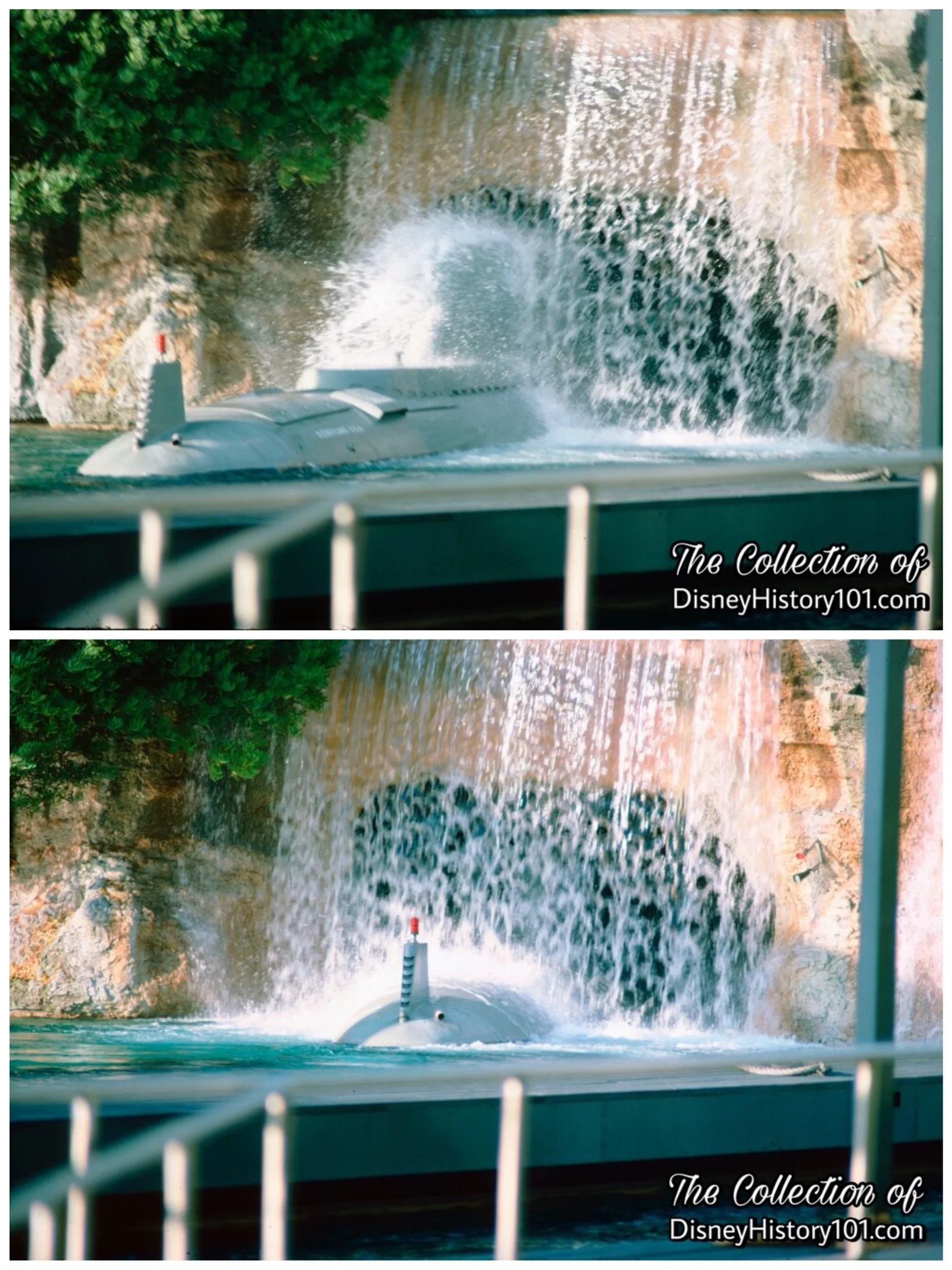
"SUB CAVERNS' ENTRANCE FALLS"
Beyond was the Entrance Falls was the flooded building known as Sub Caverns. Just ahead, we’ll enter the “Graveyard of Lost Ships.”
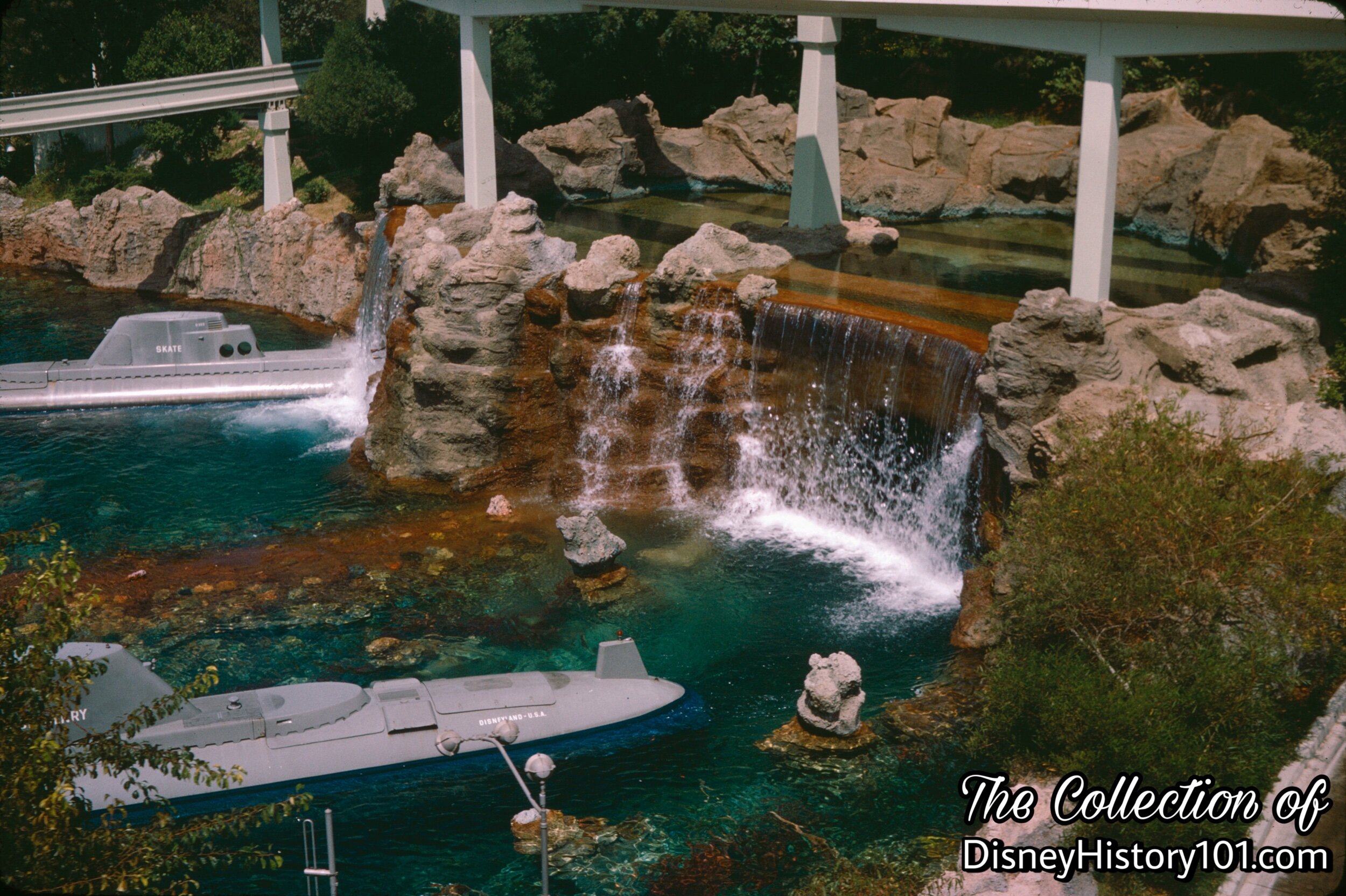
Submarine Falls, (1967)
Above the Submarine Caverns is the “Roof Garden”. One Monorail Operation manual describes it this way : “all the trees and vegetation are growing in a thin layer of soil atop the concrete roof of the Submarine Caverns". Evergreen Ash, Monterey Pine and Silk-Oak are some of the trees that border the beamway on both sides.”
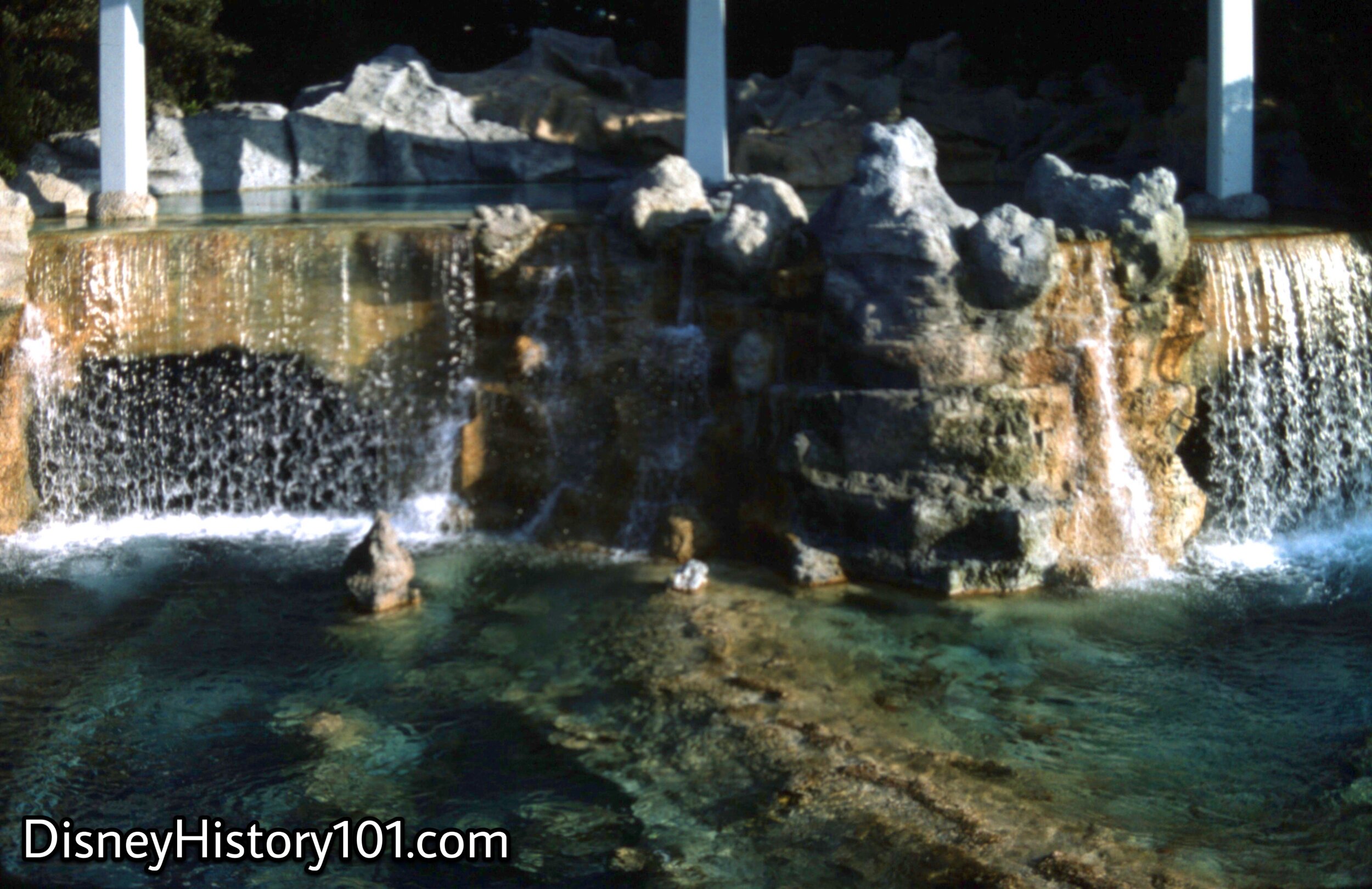
"SUB CAVERNS FALLS"
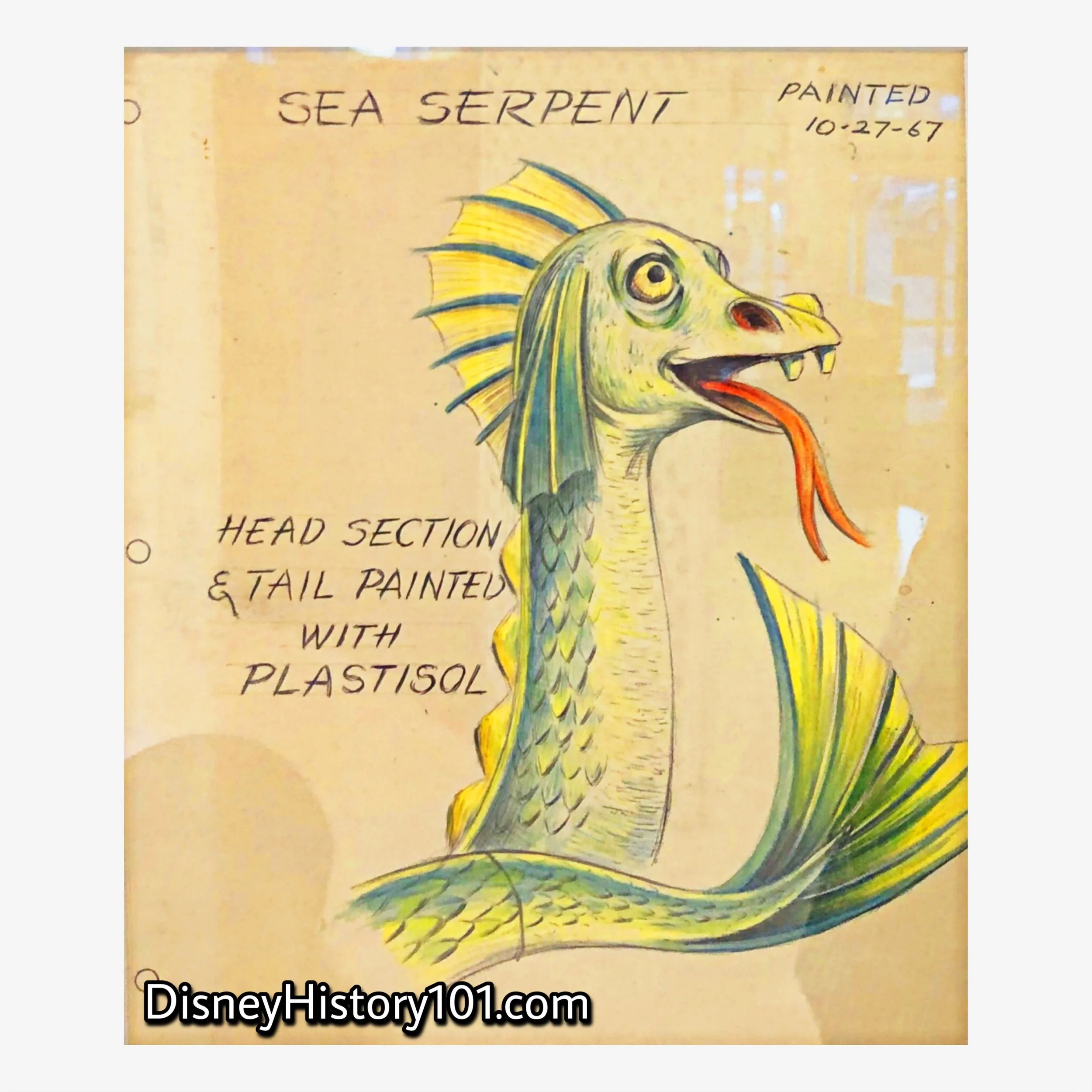
"Submarine Voyage" Sea Serpent Painting, (1967) - Former Richard Kraft Collection
Artist’s renderings give us an idea of what hallucinations can be fathomed, when sailors spend too much time under the waves. This pair of original illustrations was used in a refurbishment project for Disneyland's "Submarine Voyage".
According to Van Eaton Galleries’ Curators : “A pair of original illustrations used in a refurbishment project for Disneyland's ‘Submarine Voyage’. These drawings depict the animatronic Sea Serpent from the iconic ending of the attraction, and show the head and a body section of the figure. In addition to the beautiful hand-drawn and colored artwork, these illustrations include notes on the paints and sealers used for the figure.”
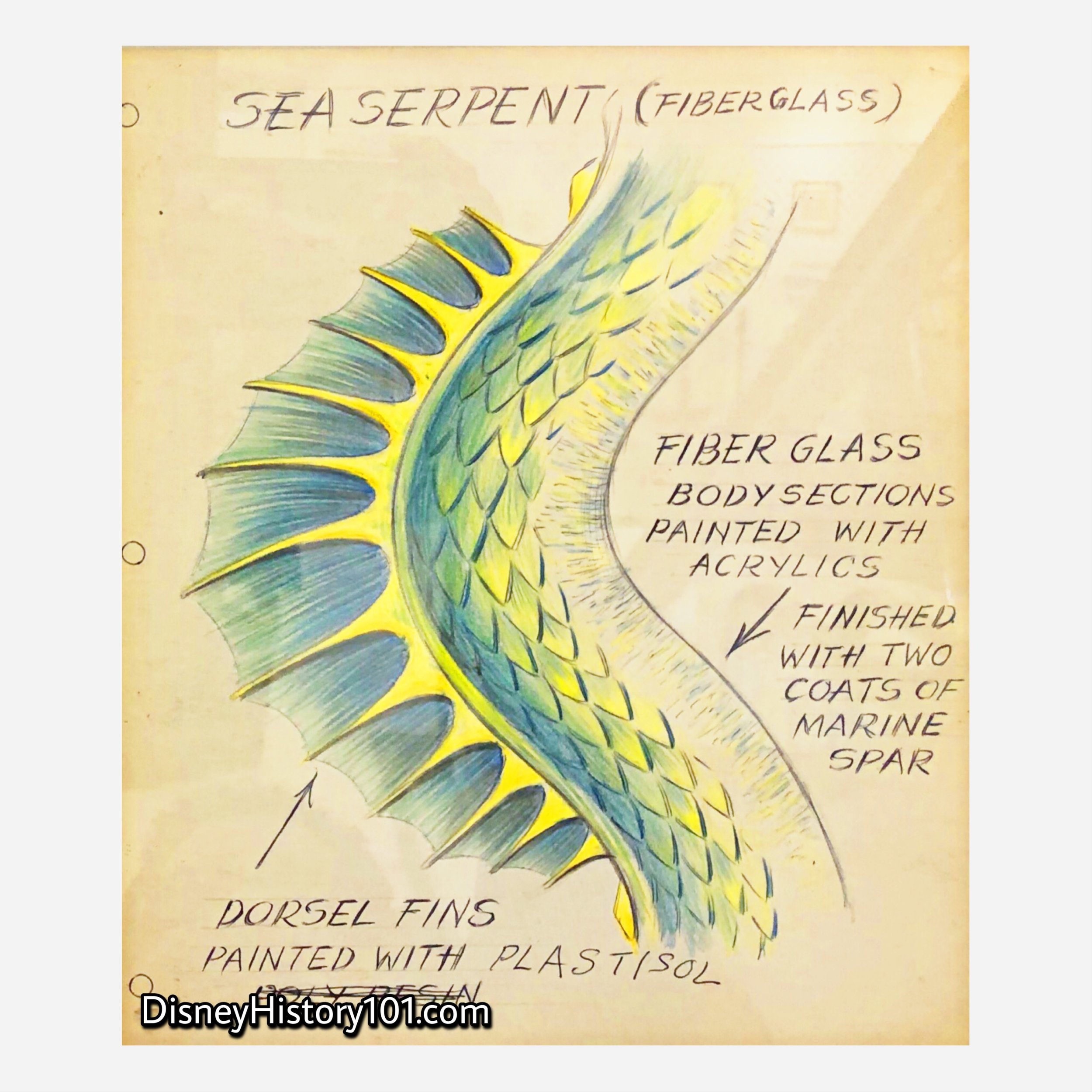
"Submarine Voyage" Sea Serpent Painting, 1967; Former Richard Kraft Collection
According to Van Eaton Galleries’ Curators : “A pair of original illustrations used in a refurbishment project for Disneyland's ‘Submarine Voyage’. These drawings depict the animatronic Sea Serpent from the iconic ending of the attraction, and show the head and a body section of the figure. In addition to the beautiful hand-drawn and colored artwork, these illustrations include notes on the paints and sealers used for the figure.”
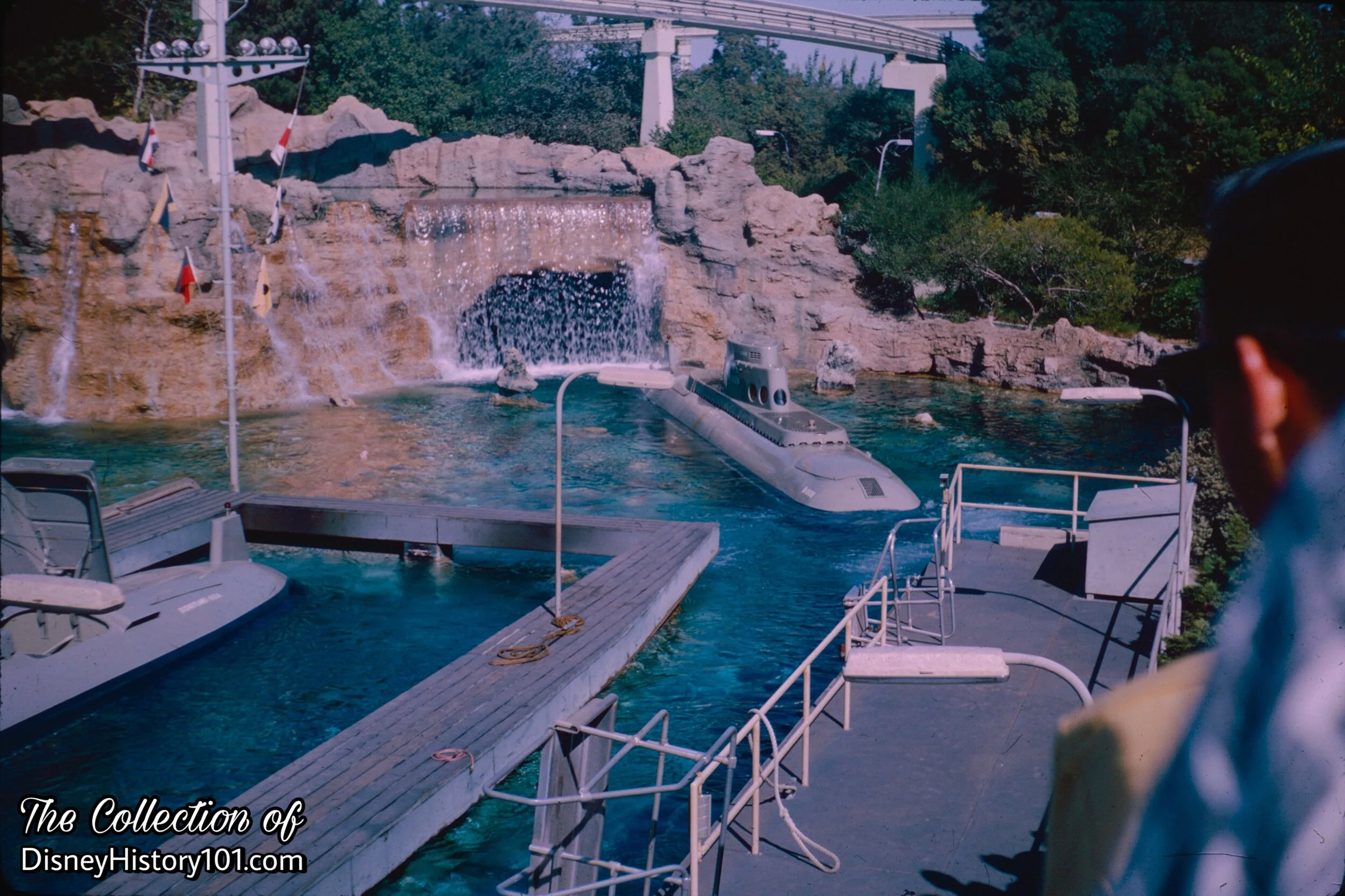
Submarine Falls, (November, 1965)
From the Monorail Station Platform, we spy one of Disneyland’s Submarines emerging from the Submarine Falls - the shrouded exit of the dark mysterious cavern. Who knows what untold encounters the crew has just had.
Now, ladies and gentlemen, we will head for our home port.
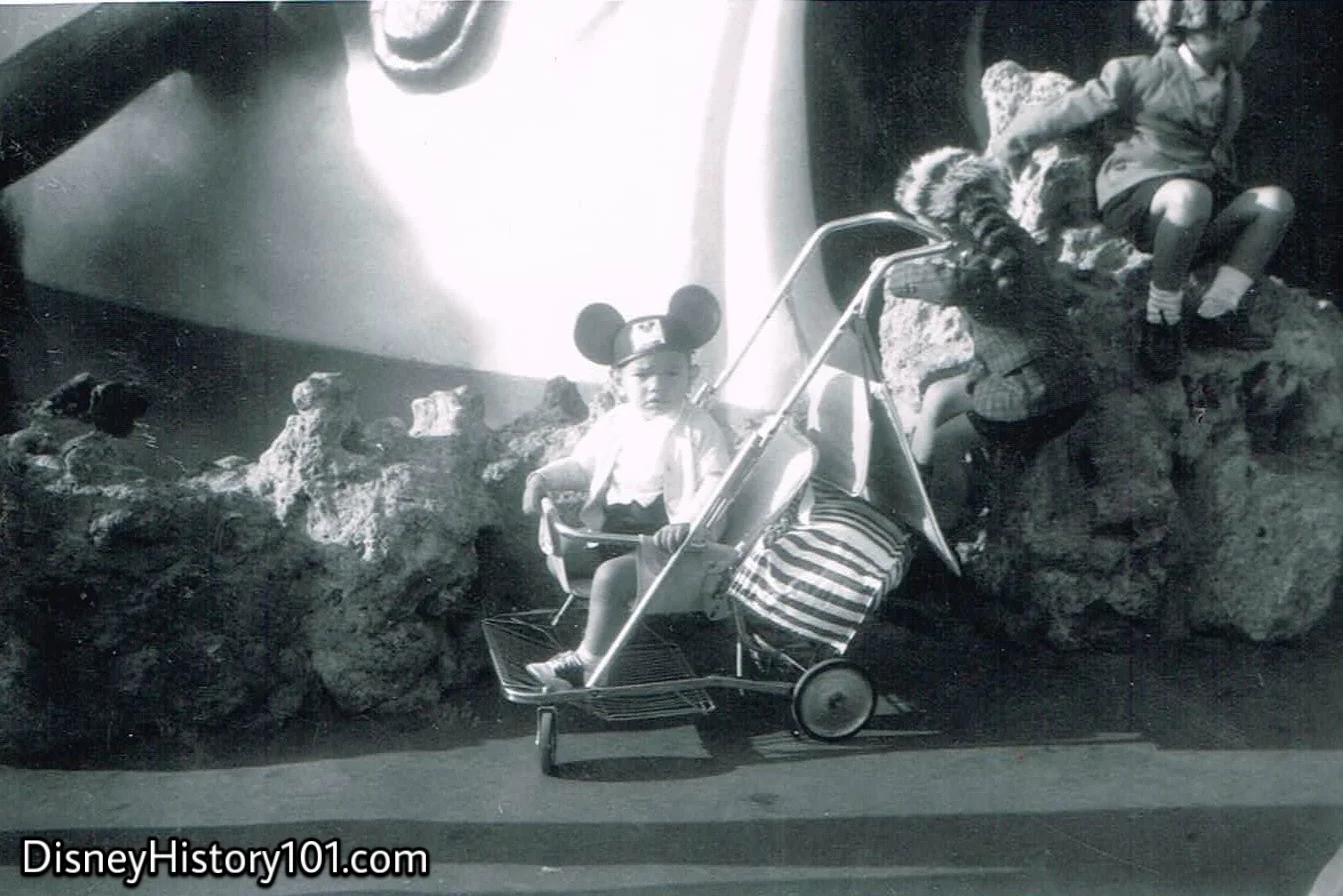
Are you wondering just where to park those strollers while riding the Submarine Voyage Through Liquid Space?
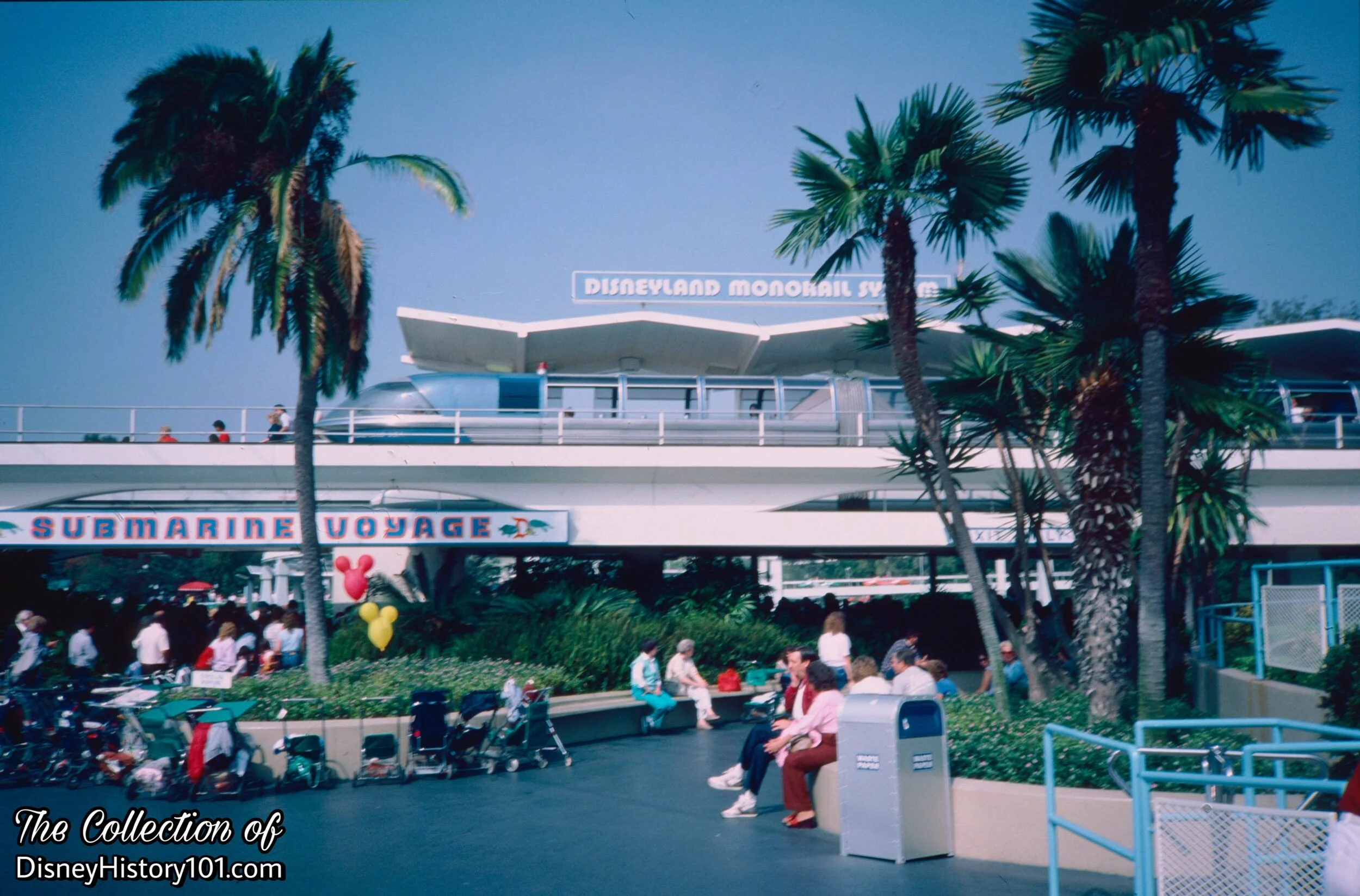
(Early 1970s)
By this time the popular attraction had undergone several refurbishments (the memorable sign changed to the one pictured here).
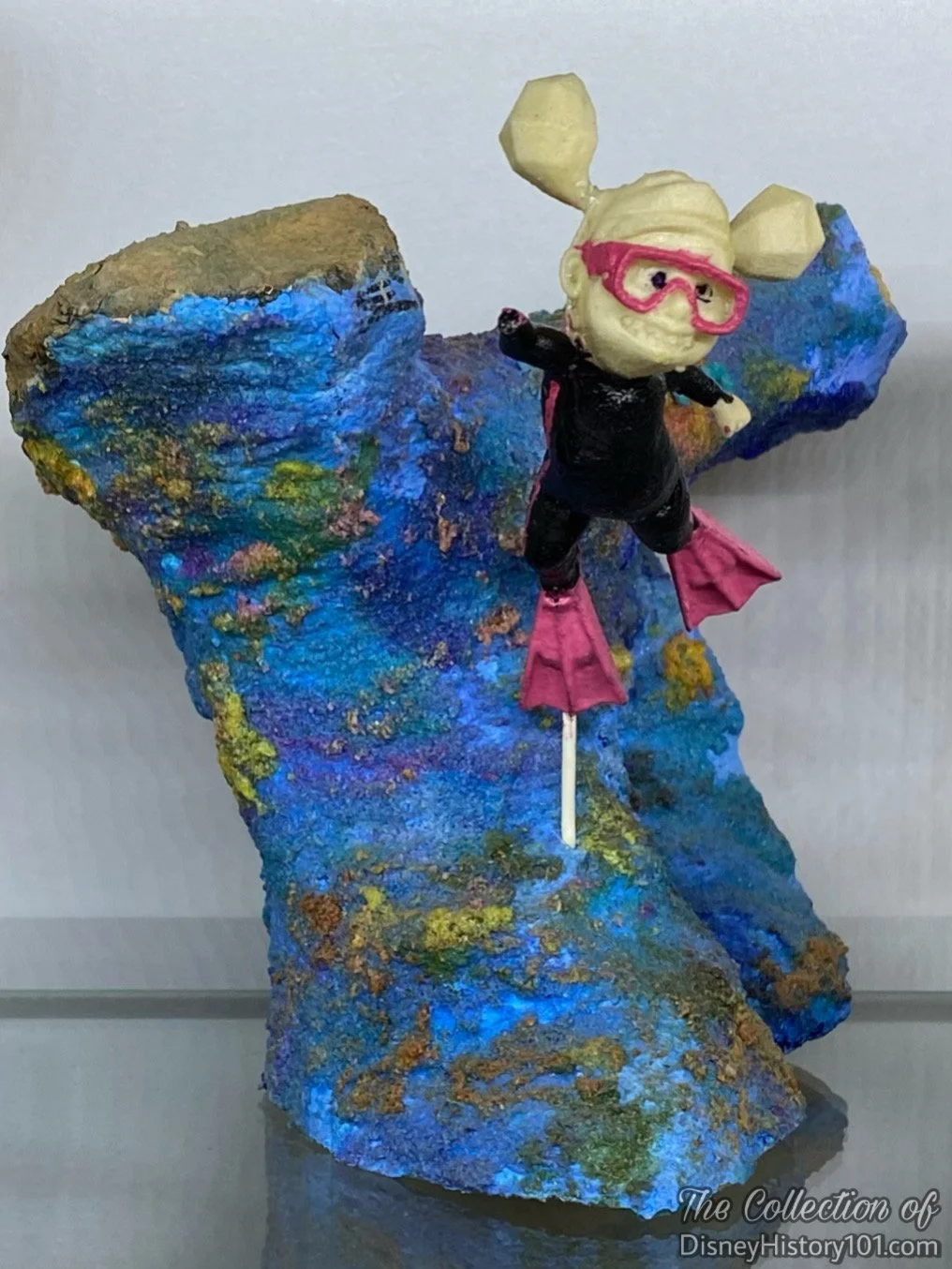
c.2006
Disney•PIXAR The Finding Nemo Submarine Voyage at Disneyland Resort.
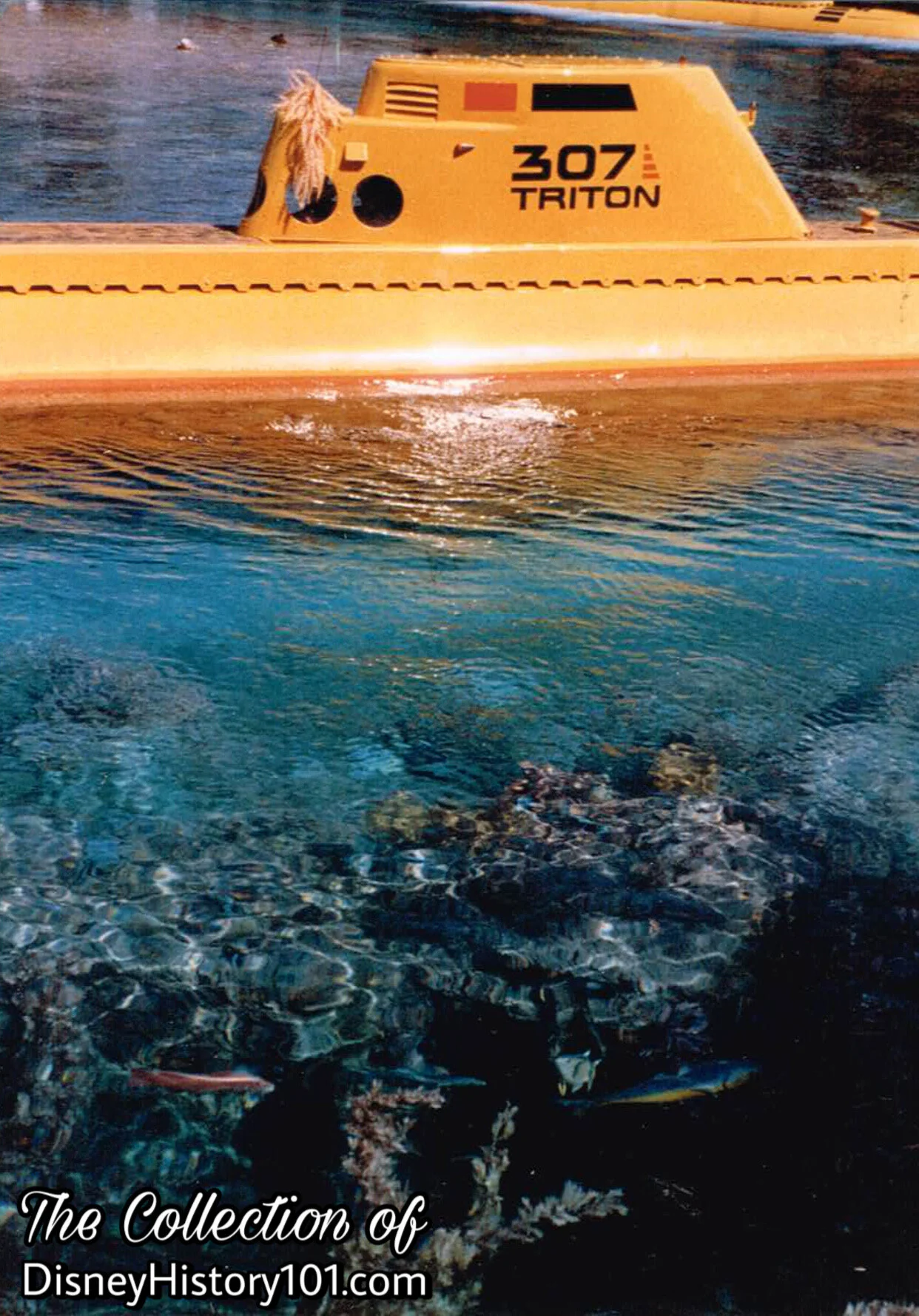
During the mid-1990s, a crew of 21 was kept on deck during peak periods to assist the approximately 1,300-1,400 guests, and operate the submarine boats. By this time the boats were propelled by a Cummins Diesel engine. Most notably, some of the names among the fleet had changed:
•Nautilus
•Neptune
•Sea Star
•Explorer
•Seeker
•Argonaut
•Triton
•Seawolf
By 1998, the Submarine Voyage was closing to make way for a new, water-themed attraction in development at Walt Disney Imagineering. The new attraction was scheduled to premiere in 2003. The Submarine Voyage celebrated its final day of service at Disneyland Park on September 8, 1998. The attraction opened to Disneyland Guests for Magic Morning at 7:30 a.m. and remained open throughout the day. Cast Members were invited to celebrate the occasion at two Cast events:
•From 6:45 to 7:15 a.m., the eight submarines of the Disneyland fleet were "decommissioned" in a Cast-exclusive ceremony on the Submarine Voyage dock.
•Cast Members can take a final ride on the attraction after Park closing (approximately from 9 to 11 p.m.) that night. So that as many Guests as possible could take the final opportunity to enjoy the attraction during the day, Cast Members were encouraged to bid their farewell at either or both of these events.
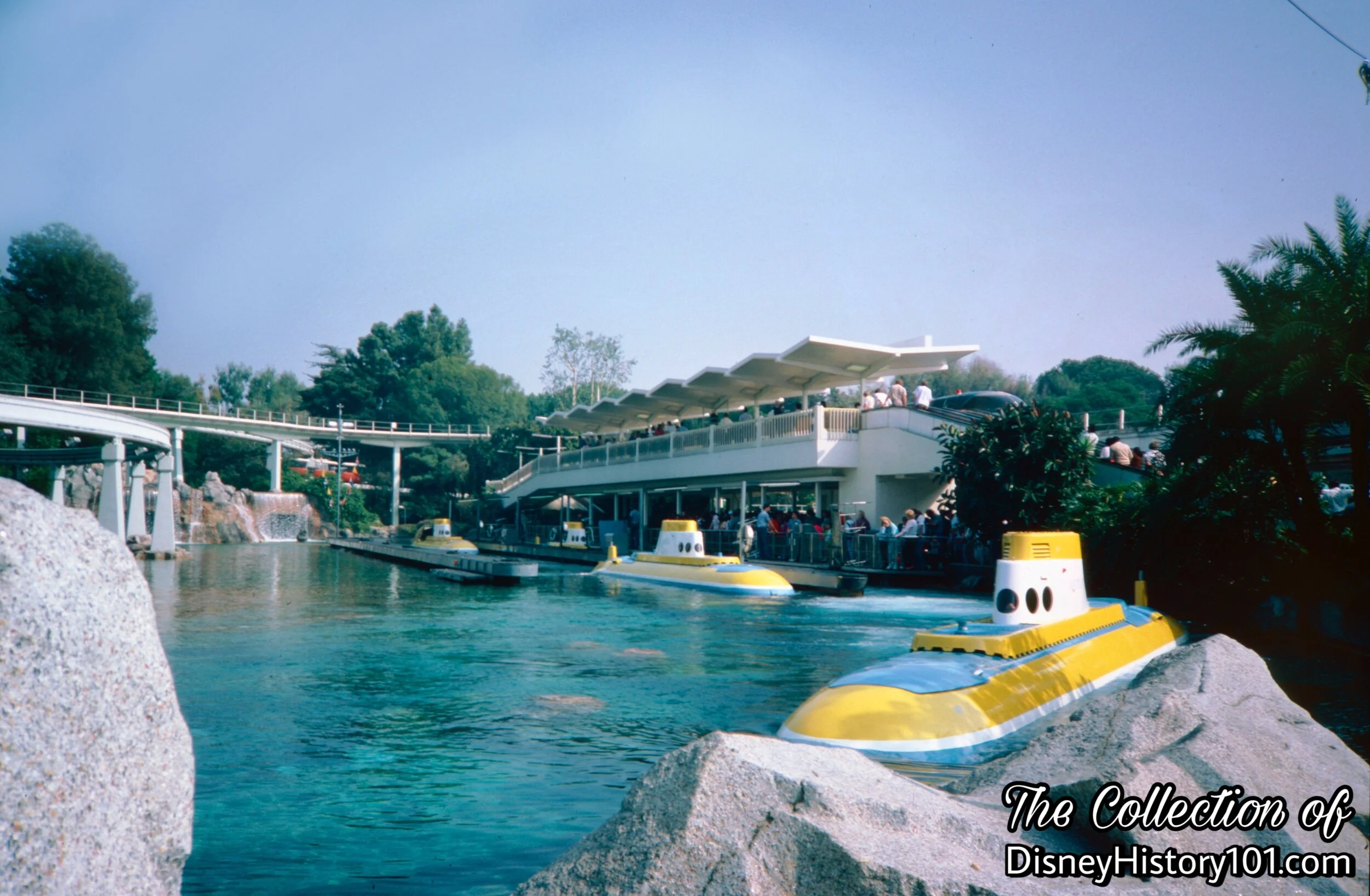
Guests were first welcomed aboard the Finding Nemo Submarine Voyage during 2007.
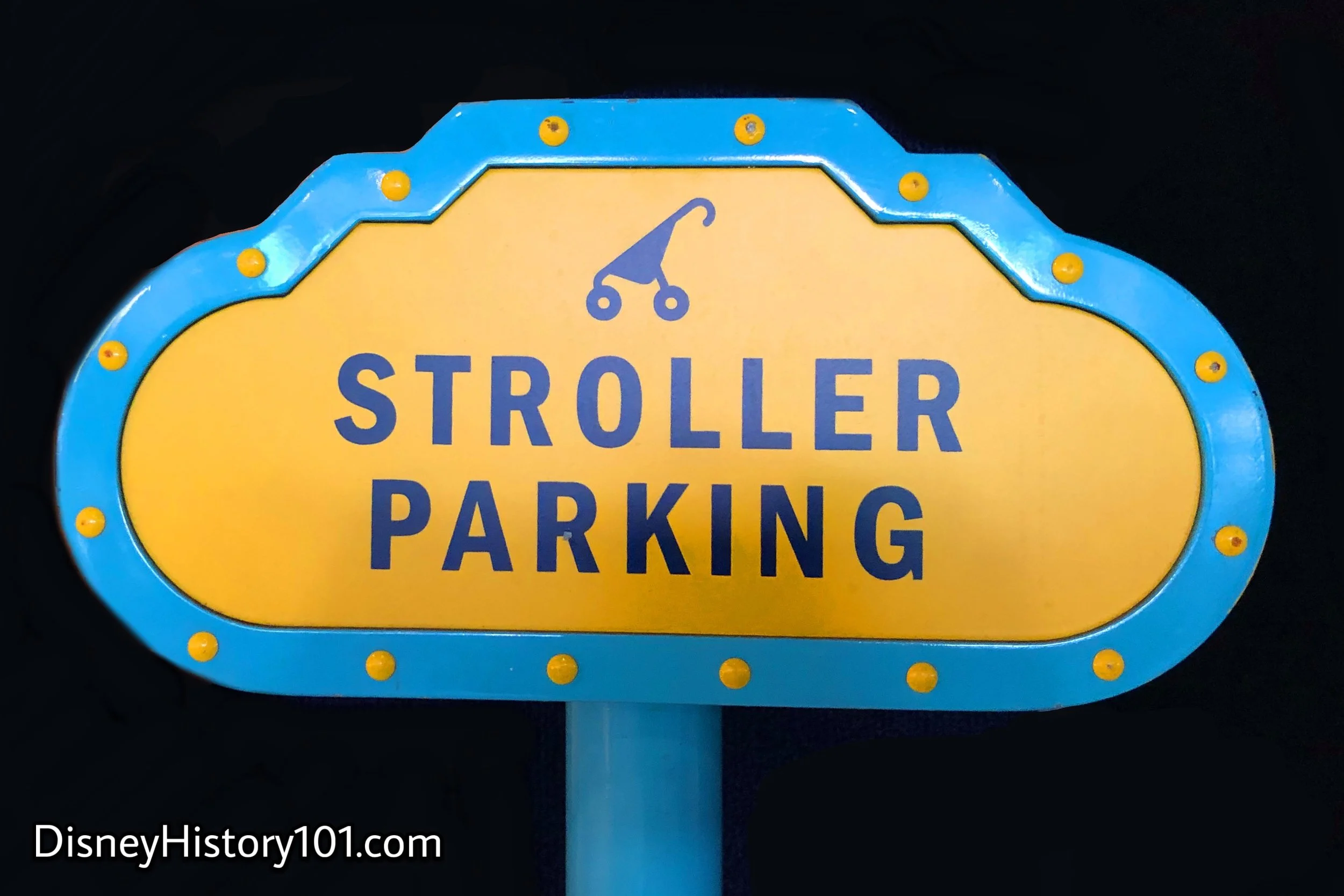
STROLLER PARKING SIGN (Disneyland, c.2000s) A rare sign from Disneyland's "Finding Nemo Submarine Voyage"
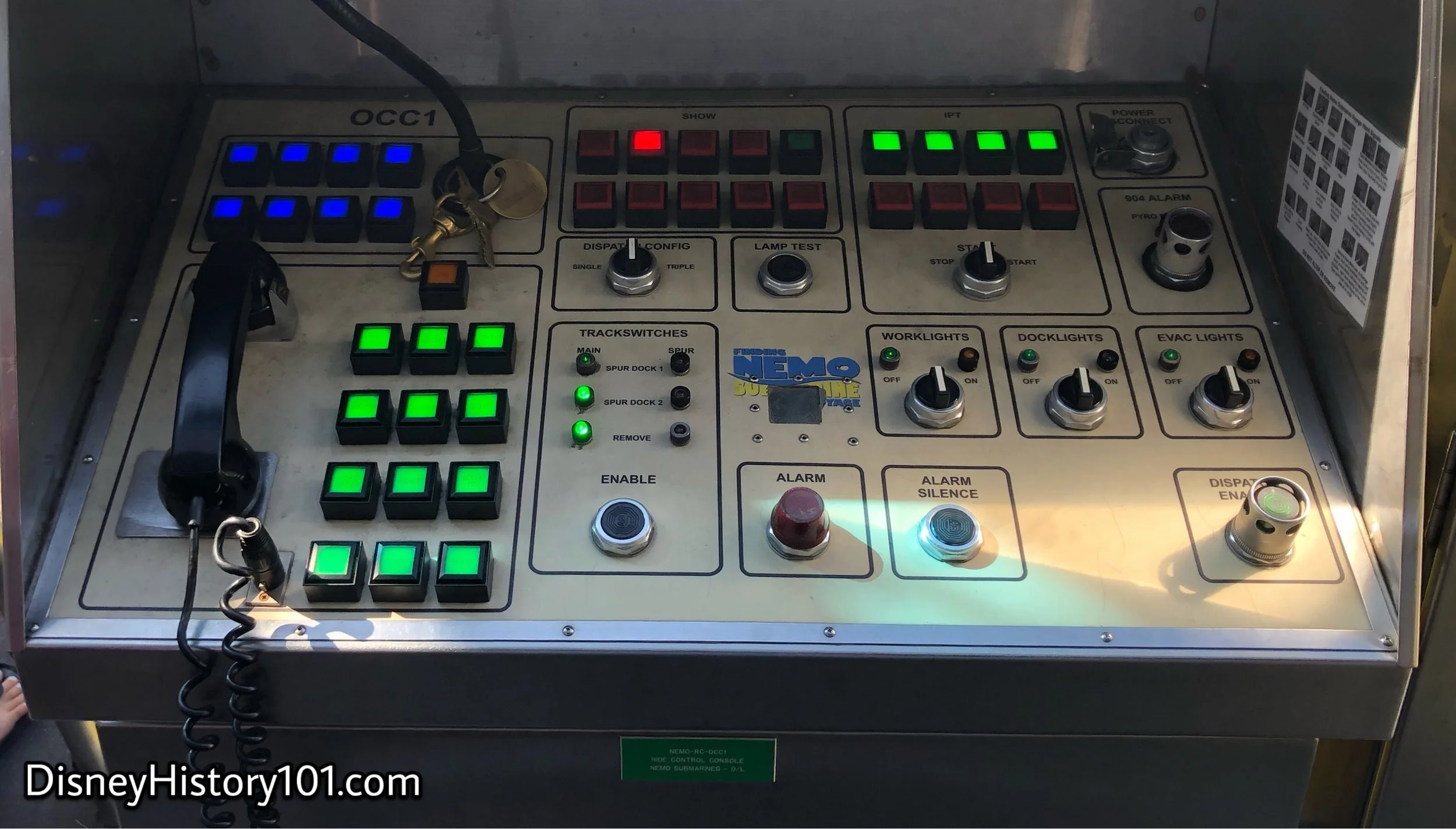
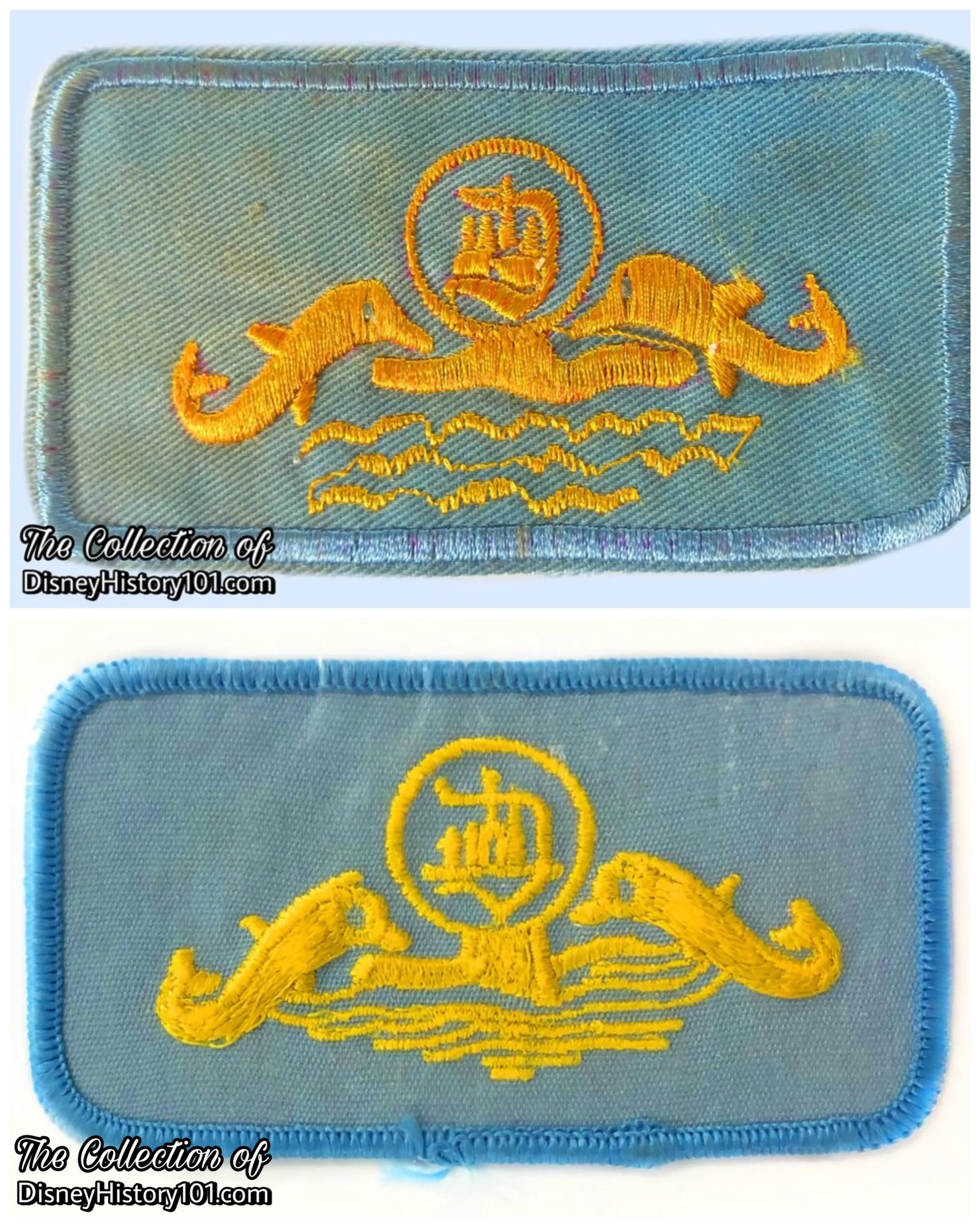
SUBMARINE VOYAGE CAST AND CREW PATCH
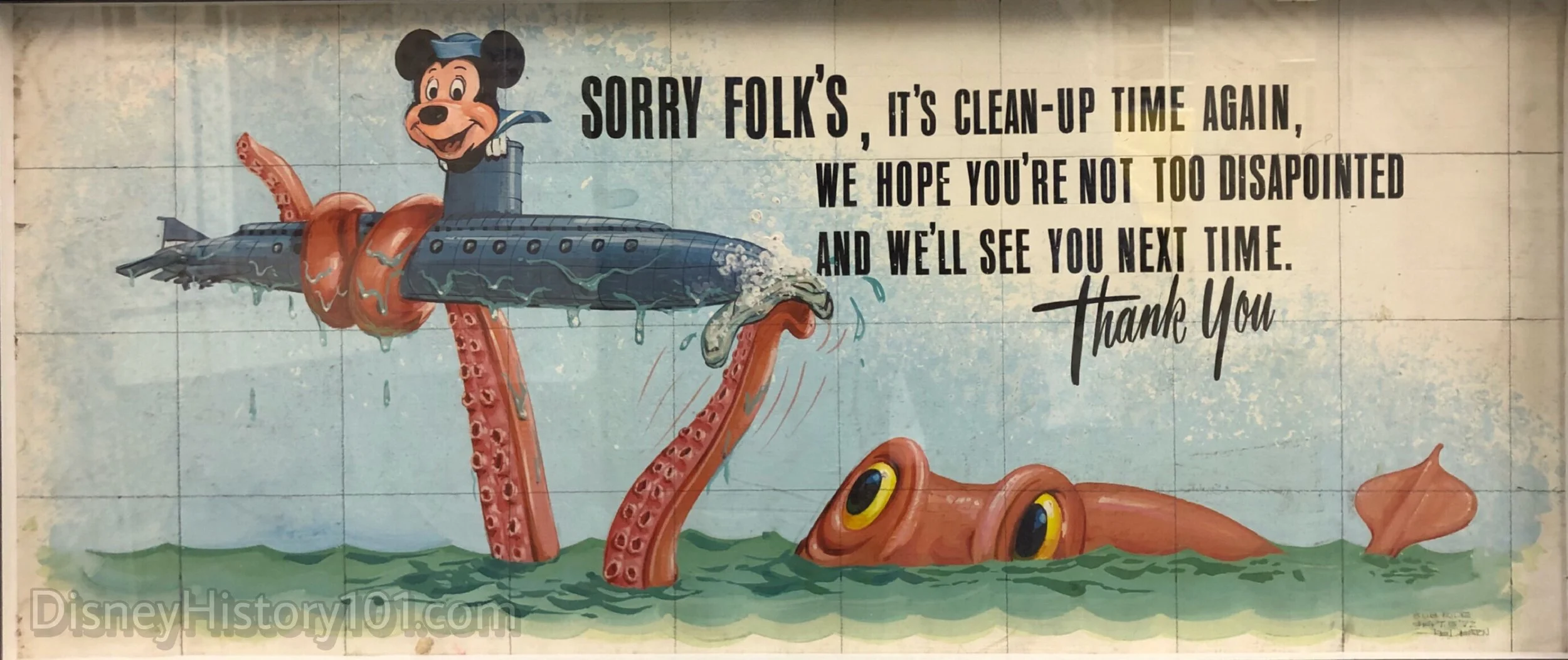
(Pictured Above : Submarine Voyage rehab construction Sign, 1972; The Former Richard Kraft Collection)
“Operation Undersea - The Maintenance of Magic”
After construction, installation, testing and adjusting, there has always come the milestone event of “TurnOver” when the Disneyland Operating team finally accepts the project and becomes responsible for the daily maintenance and operating needs. Maintenance has always been an important facet of upholding the quality of the show and has always been a trademark of Disneyland Park! It was Walt who once admitted that, “those sharp pencil guys tell you, ‘Walt, if we cut down on maintenance, we’d save a lot of money.’ But I don’t believe in that - it’s like any other show on the road; it must be kept clean and fresh.”
This maintenance is the sole responsibility of Disneyland Shops - the Maintenance Division at Disneyland.
“Submarine Maintenance”
Set off to the right of the Santa Fe & Disneyland Railroad tracks is the Disneyland Naval Yard (an attraction viewable from the Santa Fe and Disneyland Railroad), and both the home port and rehabilitation center for the Disneyland Submarine Fleet. In this dry dock area, all rehab and repair work is done on the Disneyland Submarine Fleet, the eighth largest submarine fleet in the world.
Park Operations Crew M-43 Machinists would make a standard opening inspection of of the Submarine Voyage, check it’s overall appearance, check for any discrepancies and notify M-1 Machinists and the proper department supervisor. M-43 Machinists would respond to all Downs and delayed openings in the Tomorrowland area whether or not it was mechanical. Upon arriving at a down attraction, they would determine what the failure was, determine which crafts were needed, determine an estimated time needed to repair, notify M-1 Machinists of all available information, and assist other crafts to repair attraction as needed.
Nightly tasks were performed by Maintenance Services, like refueling the submarines. Nightly the pools and fountains of this attraction were cleaned. Magic making MAINTENANCE MACHINISTS were challenged by unique new problems each day. Since it costs a fortune to drain the ride, Machinists (or highly skilled craftsmen) would learn scuba diving, and dive down to where the action is to check the equipment and the rails. A typical maintenance request representing part of a day's work may sound like: “Guest lost her camera by boarding dock, Sub Ride. Please retrieve it.”
Oren Gallegly worked as a diver and animation mechanic and did most of the work with the building of the Submarine attraction. Oren remembered about Walt: “He used to show me and other animation mechanics animated figures that he'd bring back from Europe. Some of the figures had been given to Walt by dignitaries in foreign countries.” It was written about Gallegly: “There are 700 pumps in the Park, with one to be found on nearly every attraction and ‘Pepper’ is THE PUMPMAN. He repairs and maintains them all and he's the ONLY millwright in Disneyland that works with the machinists on projects. Ken Grinstead likes to tell about the exploits of the former ‘wetsuit wonder’. He recalls that the daring Disneyland diver could not swim! He would surface, sputtering and calling out, ‘Somebody throw me a rope!!!’”
“New Show Quality Enhancing Additions for 1961!”
The attraction was down for its first major rehabilitation from Apr. 22-May 10, 1963. The WED Enterprises, Inc. Submarine Plan Ride Plan Layout design (approved by Art Directors Bill Martin and Claude Coats on November 4, 1958; released December 16, 1958) was extensively updated with new bubble distribution, restaged tableau, and new animation.
The RockWork along the porthole view of the Submarine Loading Platform area was dressed four feet below the water surface with algae, barnacles, shells, starfish, and mussels. The distribution of bubbles was improved to hide the spur track. The Mermaid Platform was extended to the bottom of the lagoon.
There were more than 45 new fish, amphibians and mammals added to the show.In the Front Lagoon, 3 mechanical lobsters were added on each side, 2 mechanical sea turtles were added to each side, 3 mechanical crabs on each side, new sea bass were added on each side, the shark versus octopus was added, 3 “darting” moray eels were added, a small ray (with flapping wings) was added, new circling sharks were added, and killer whales.
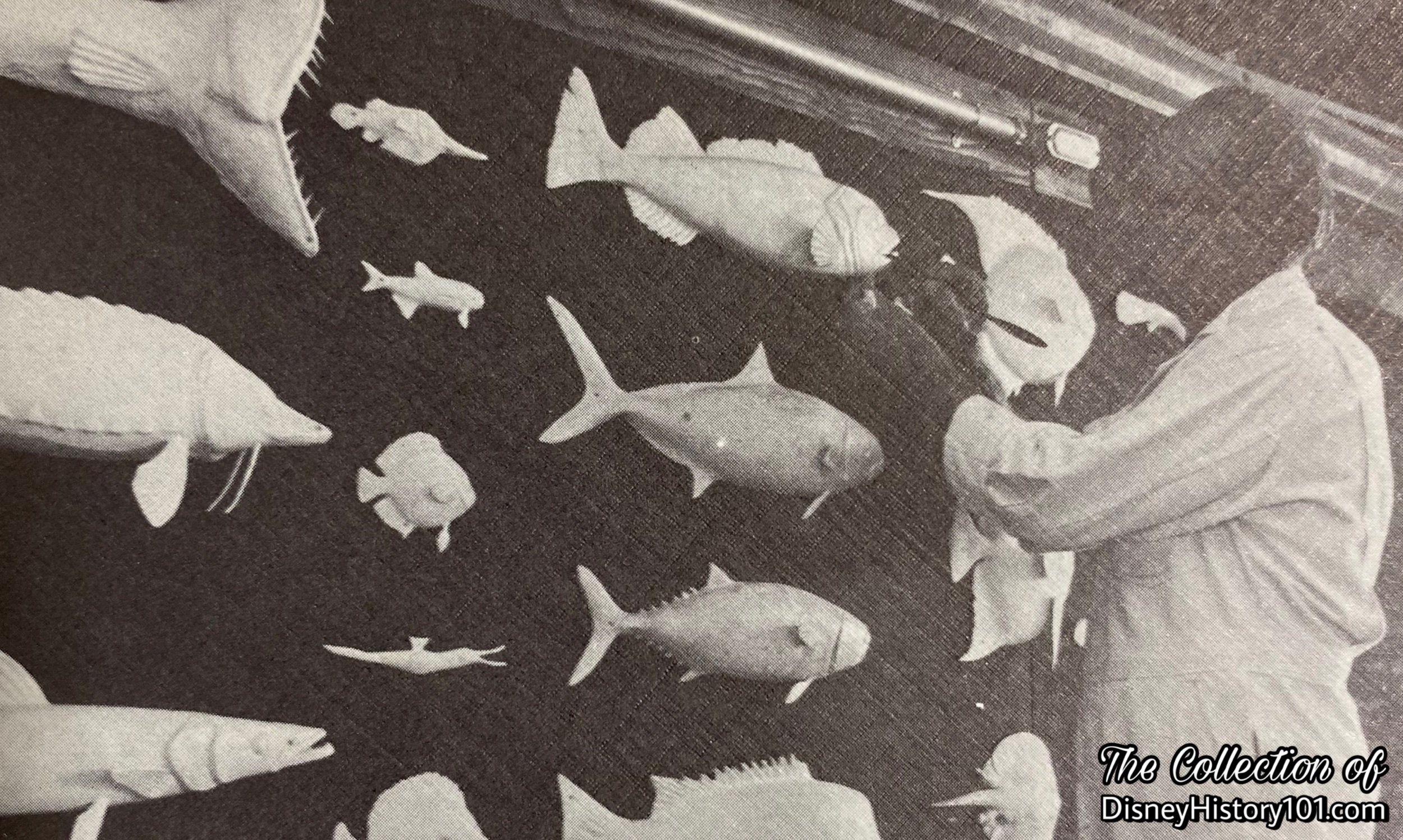
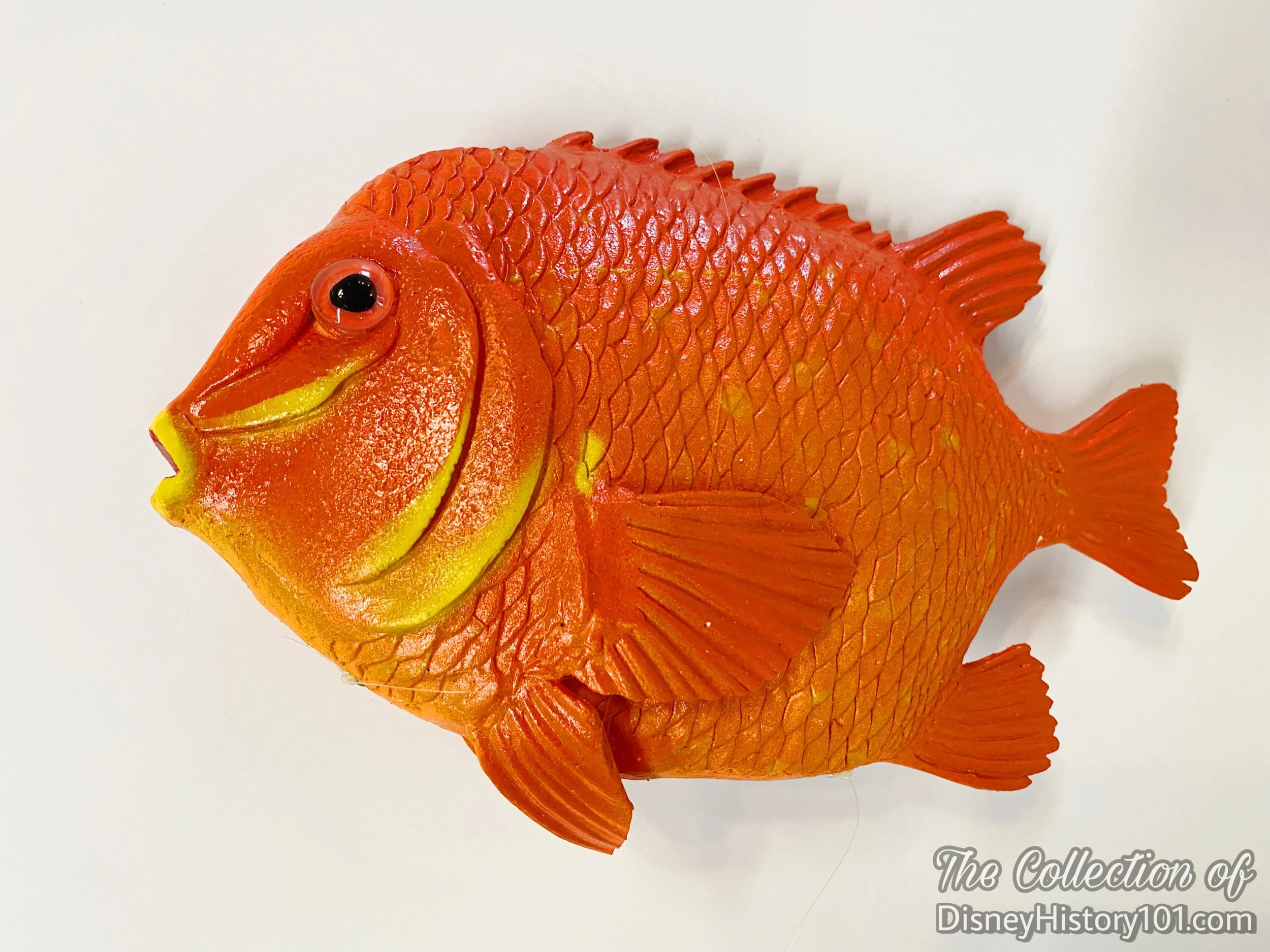
Fish were improved with a rigid laminac body for a more durable paint job, glass eyes, new and improved leader line attachments, flexible, translucent fins and tails, and a realistic iridescent paint job.
During the 1960s, Disneyland used about 50,000 pounds of chlorine in their waterways each year, to help in clarifying process. The water needed to be treated to kill any types of bacteria which could be harmful to the Maintenance personnel who had a rather large sized underwater maintenance job. This treatment required that Disneyland keep careful and constant records.
By 1989, Disneyland Plumbers used chemicals and processing to create the filtered water necessary for the Submarine Voyage.
The impossible 50-foot serpent was once animated by water hammer action and an overhead mechanism. He would work under water, and his eyes would need to wiggle on cue. Since it would cost a fortune to drain the ride, the machinists would have to dive down to where the action is.
During the 1970s, October and June of each year, was a period of major maintenance and rehabilitation which touched virtually every attraction, contributing to improved operations and show elements for the public. The original artist Joe Denton signed this contemporaneous piece of artwork (pictured above; dated September 5, 1972). The artwork would be used for signs announcing the attraction’s refurbishment. This sign would sit atop a barrier when the 6,300,000-gallon Submarine Lagoon (and its caverns) was drained for maintenance. This was completed in “three stages with a six to twelve hour intermission between. This allowed sufficient time for the storm drains to clear without flooding. The whole process lasted about 80 hours,” according to Disneyland LINE magazine [Vol. 12, No. 5 ; January 31, 1980]. According to the same publication : “Immediately the water level line of the attraction was scrubbed to prevent a permanent ‘bathtub ring’ of oil and mineral deposits. Once the water is completely removed, heaters and pumps were hooked up to complete the drying process.
Now, the attraction is in the process of a complete refurbishment : all surfaces sandblasted of paint and mineral deposits, animation and fish removed, mortar ‘muddies’ (which hold the foliage) hammered out, rock strictures rebuilt or patched where necessary, specific areas prepared for improved animation, motors overhauled, wiring replaced, the anode system which sends electric current through the track to retard rust).”
Normally major rehabilitations like this, would occur every three years (with the exception of 1977, due to water conservation).
The popular Submarine Voyage Thru Liquid Space received regular early morning maintenance by divers. There were Electrical Divers (who maintained the underwater “electrical lighting, track switch systems, and cathodic safety systems,” according to Disneyland LINE), Mechanical and Welding Divers (who maintained the underwater track), Decorating Divers (who maintained the underwater foliage), and Maintenance Division Divers (who inspected the underwater “animations”). In addition to this, the Submarine Voyage Thru Liquid Space received several refurbishments over the decades. The lagoon was first updated with “new animations” during a major rehabilitation in 1961. During 1961, Eleanor Heldt (Magic Kingdom Club Administrator) commented that “During a major rehabilitation, it is sometimes necessary to close an attraction for several weeks. This, of course, is when the smallest details were checked, replaced or repaired as required for the maximum safety, convenience, and comfort for our guests.” Even after that, regular maintenance (by Cycle Shop staff) would still keep the attraction and “animations” looking fresh, and of the best show quality for filming that often took place (as for the Eastman Kodak commercial filming during February of 1966).
While the Cycle Shop staff performed the welding, painting, plastering, sheet metalwork, sign & pictorial production, and other labor, there was one WED Inc. Department that was established (at Disneyland in 1979), to be involved in the Park’s regular rehabilitations. The following year (by January of 1980), the Submarine Lagoon was subjected to its first dry rehabilitation in seven years. The entire process would take two months. Within 80 hours, the 6,300,000 gallons of water were drained, after which the “bathtub ring” (or “water line,” of oils and minerals) was immediately scrubbed. Then heaters and pumps were set up to speed the drying process. Next, the surfaces were sandblasted of paint and minerals, fish and plants were removed, “mortar ‘mudpies’ (which held the foliage) were hammered out,” rocks were patched or entirely rebuilt, “specific areas were prepared for rebuilt animation, motors overhauled, wiring replaced, the anode system (which sends electric current through the track to retard rust) replaced with a similar but more efficient system and ship-to-shore sound systems completely revamped.” [Disneyland Line, January 31, 1980] After all, the Area Supervisor would conduct an end of rehab walkthrough with the Area Show Supervisor.
They soon developed into WDI Show Quality Standards (in 1984), and continued the same work (of twice-yearly “walk-throughs,” developing suggestions for improvements (as during the 1986 Submarine Voyage rehabilitation). According to Disneyland LINE magazine (published for December 4, 1986), “‘WDI basically oversees the aesthetics of the attraction,’ says Wayne. ‘During the rehab we can make enhancements by changing colors, types of foliage, etc.’ ‘Ralph Nielson, from WDI, is currently directing the paint and foliage restoration,’ notes Terry, ‘bringing them back up to the original show intent. Katherine Klatt is leading the figure finishing, while Production Coordinator Darlene Todd is coordinating the recasting of new silicone fish. Tom Morris, Paula Dinkel, Katie Polk and Tracy Trinast have created a new look for the queue area. Tim Delaney, Katie and Tracy have revamped the color schemes of the submarines themselves to bring them closer to the look of a research vessel. We’re presently working toward bringing a diving bell that’s being provided by the U.S. Navy as part of an exhibit in front of the attraction.’”
The attraction got another major refurbishment, and reopened as The Finding Nemo Submarine Voyage on June 11, 2007. Draining the Submarine Lagoon was a huge undertaking, considering that the entire “lagoon "holds nine million gallons of water” according to one operation manual.
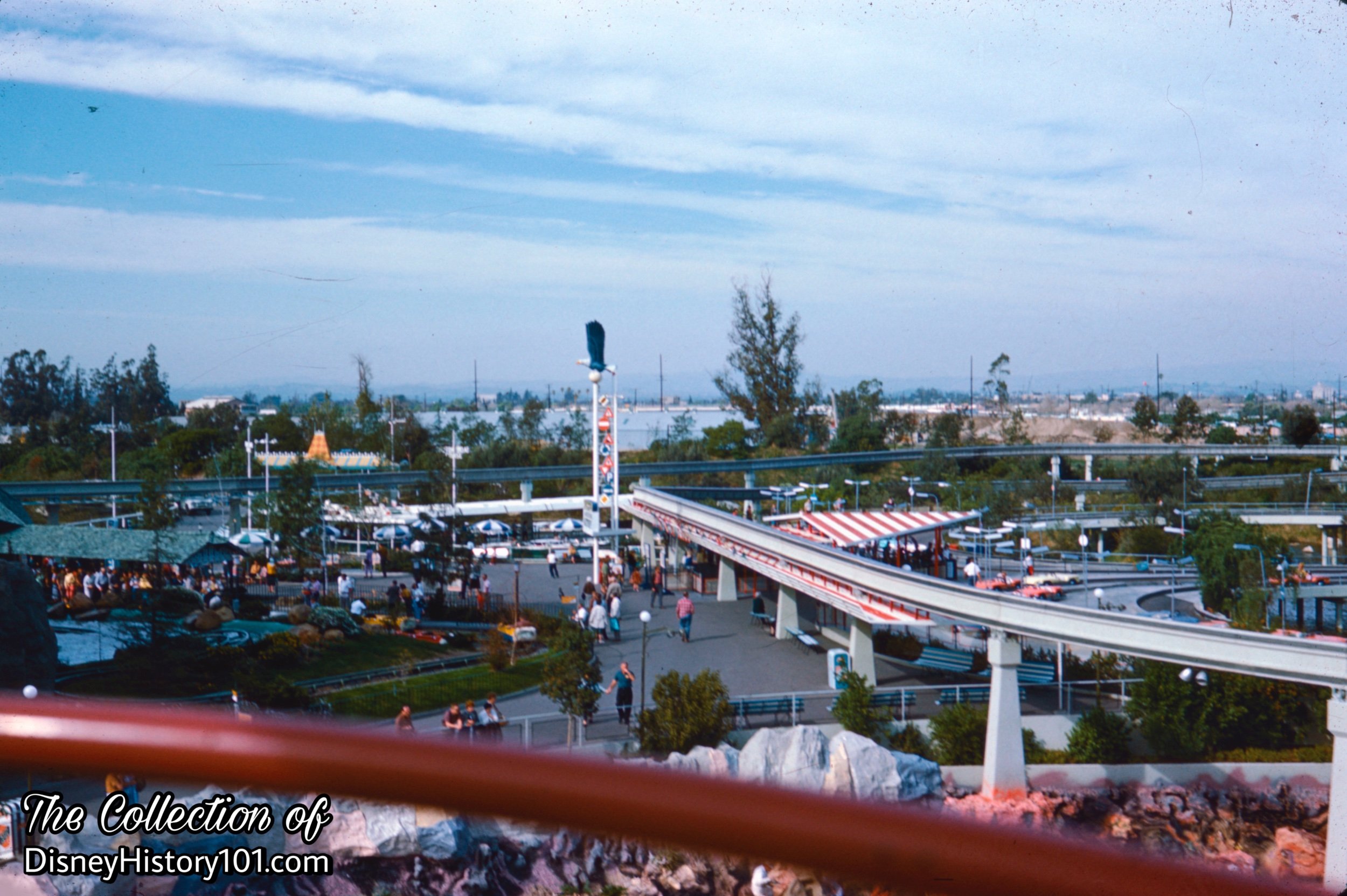
A Skyway Bucket gives a glimpse beyond the perimeter and of the drained Submarine Lagoon.
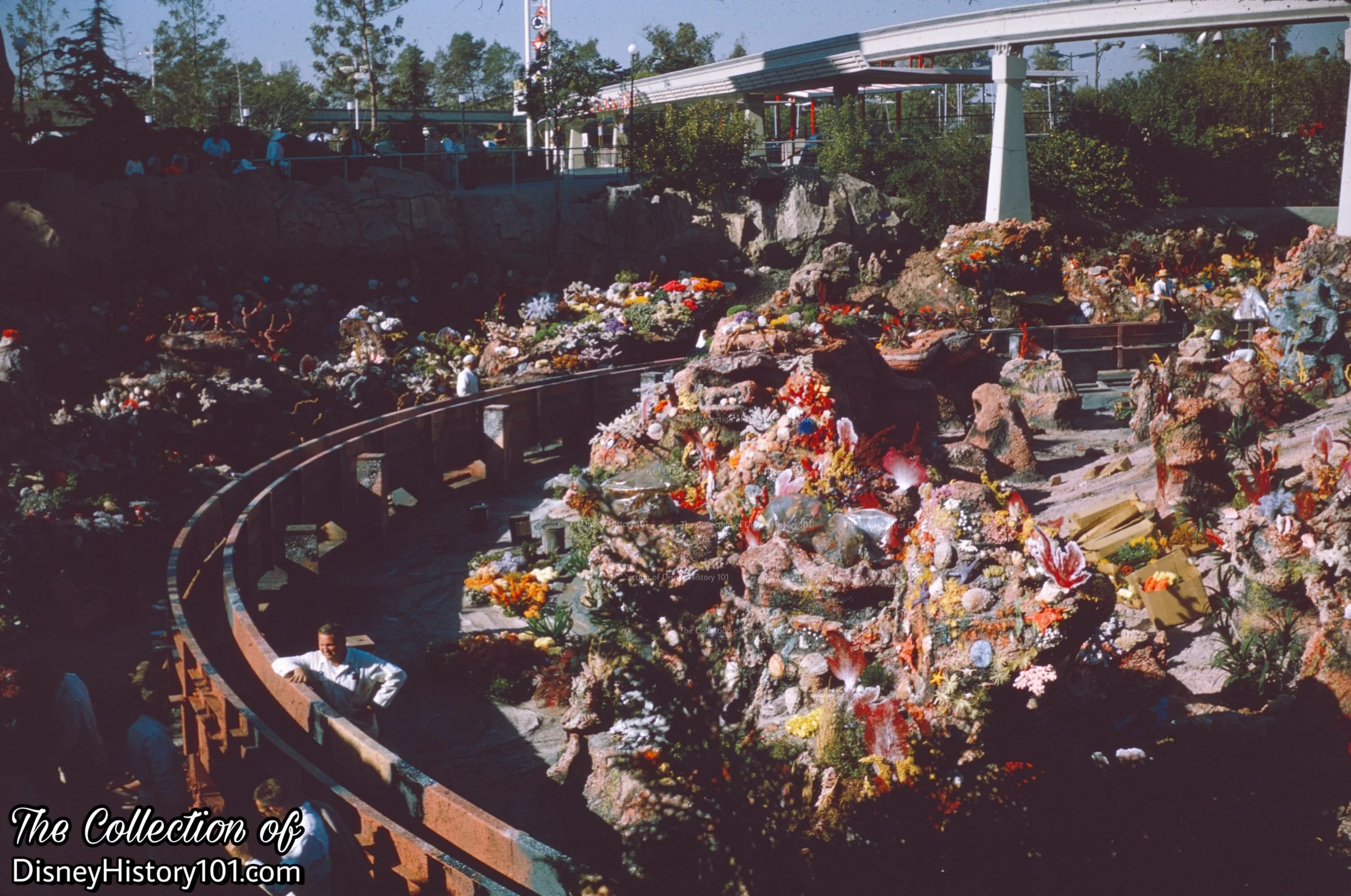
Submarine Voyage Through Liquid Space Front Lagoon Rehabilitation, (1964)
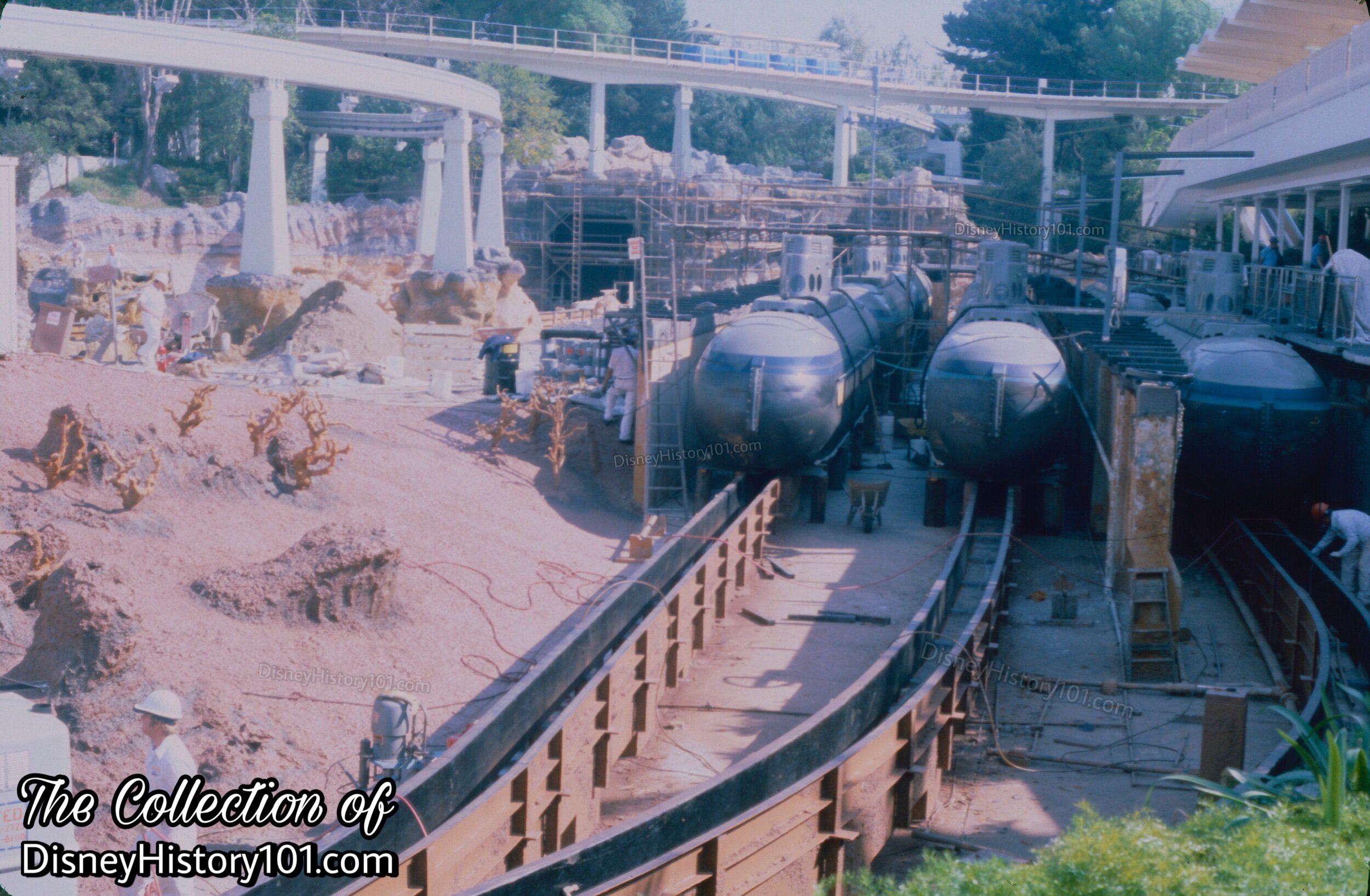
Intermediate Dock and Storage Rails drained, (1980)
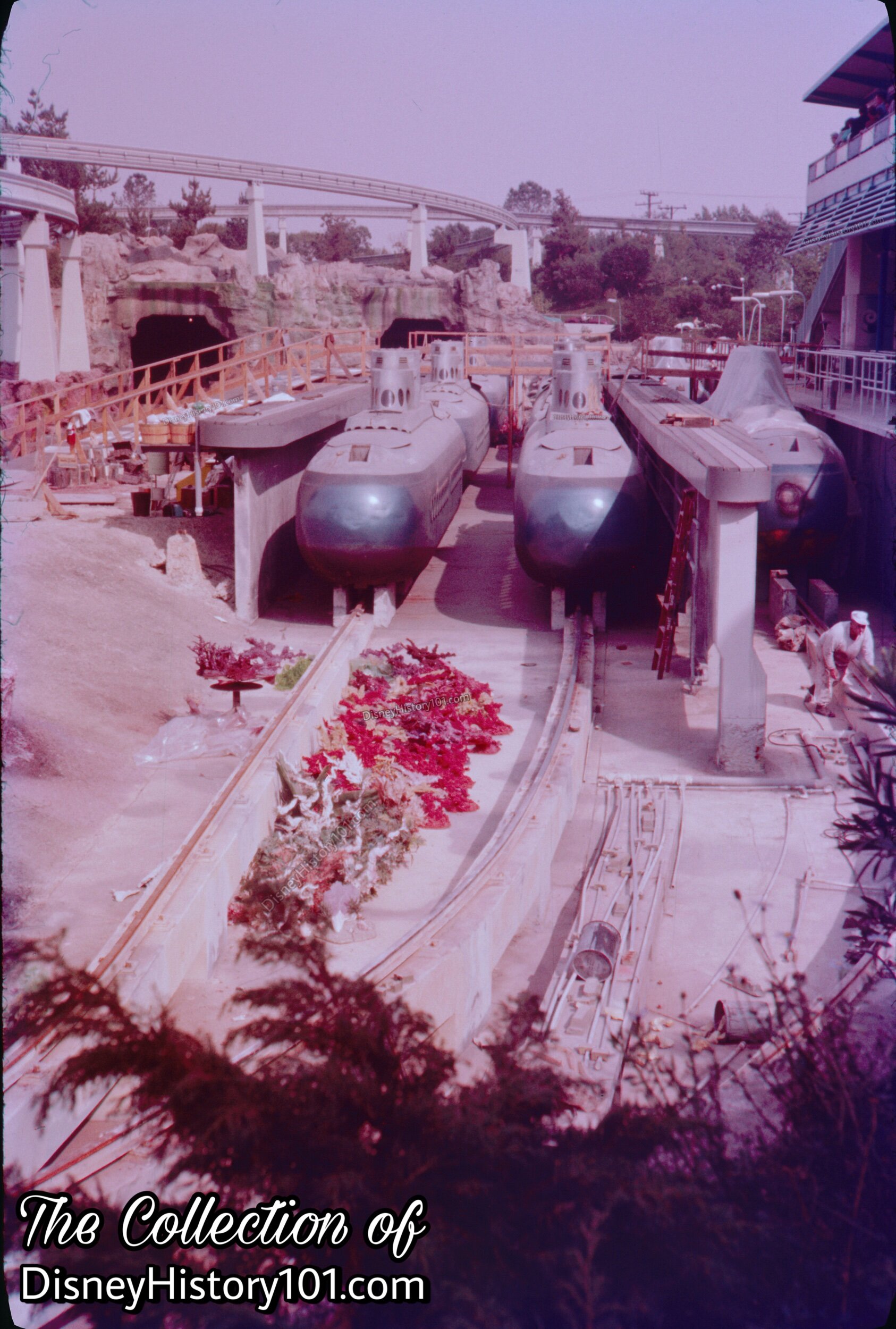
Intermediate Dock and Storage Rails drained
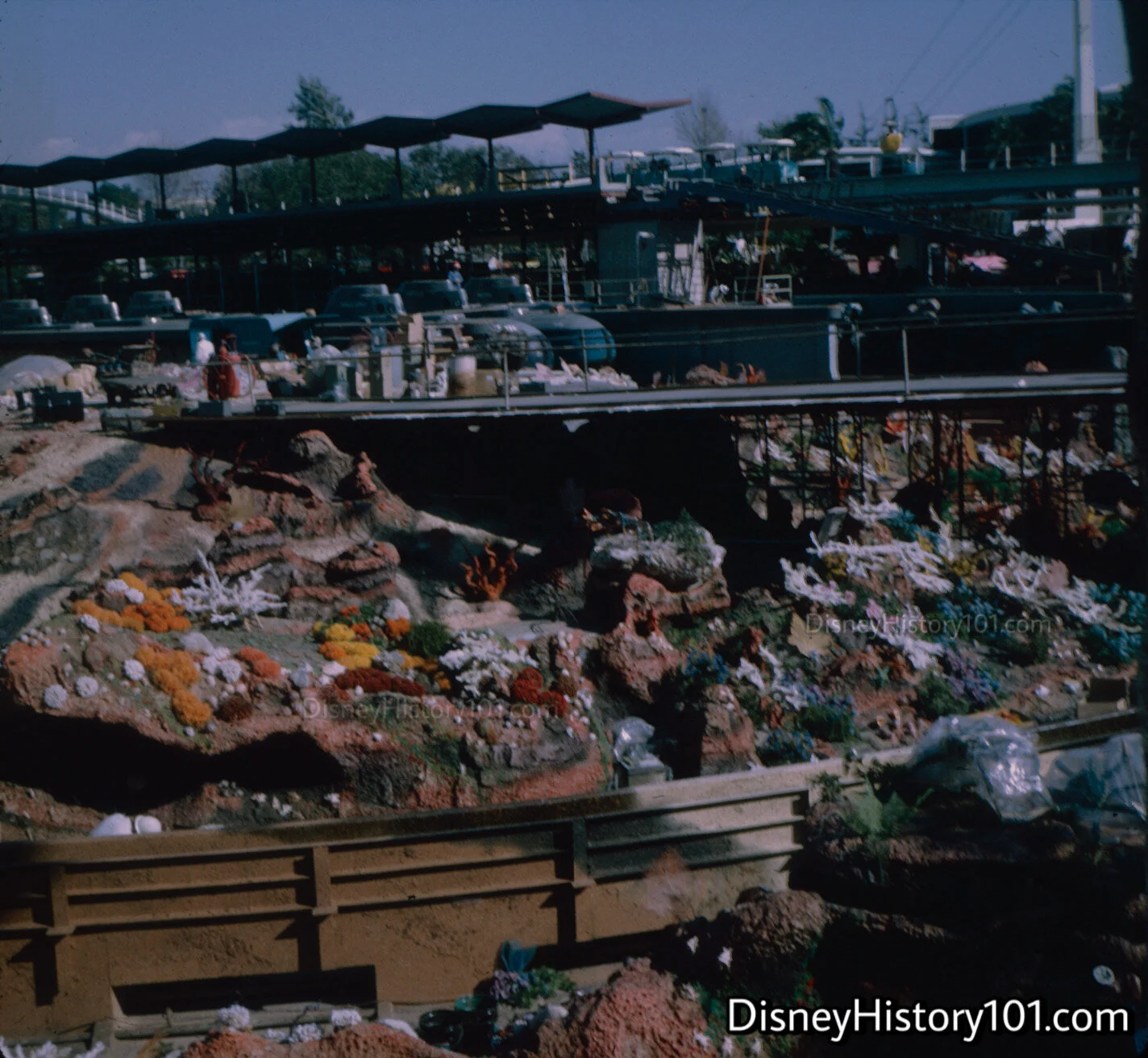
Front Lagoon, (Winter/Spring, 1969)
Here at Disneyland, our coral reefs are repainted to match their original, brilliant underwater color. Below, we get a rare glimpse of just a section of the (1,365 feet of) Guide Rails that carry Disneyland’s boats along their coarse. The look of the Submarine Lagoon remind me of a funny anecdote published in Disneyland LINE (Summer, 1964) :
“Frank McNell, foreman in Tomorrowland, overheard a couple of guests asking one of the employees why the Sub Lake was drained. The employee said : ‘One of our guests lost his car keys, and we’re trying to find them.’ The guests went away commenting, ‘They certainly do a lot for us, don’t they?’”
In actuality, in this dry state it is easy to retrieve “buried treasure” (or lost articles) as glasses, cameras, and watches.
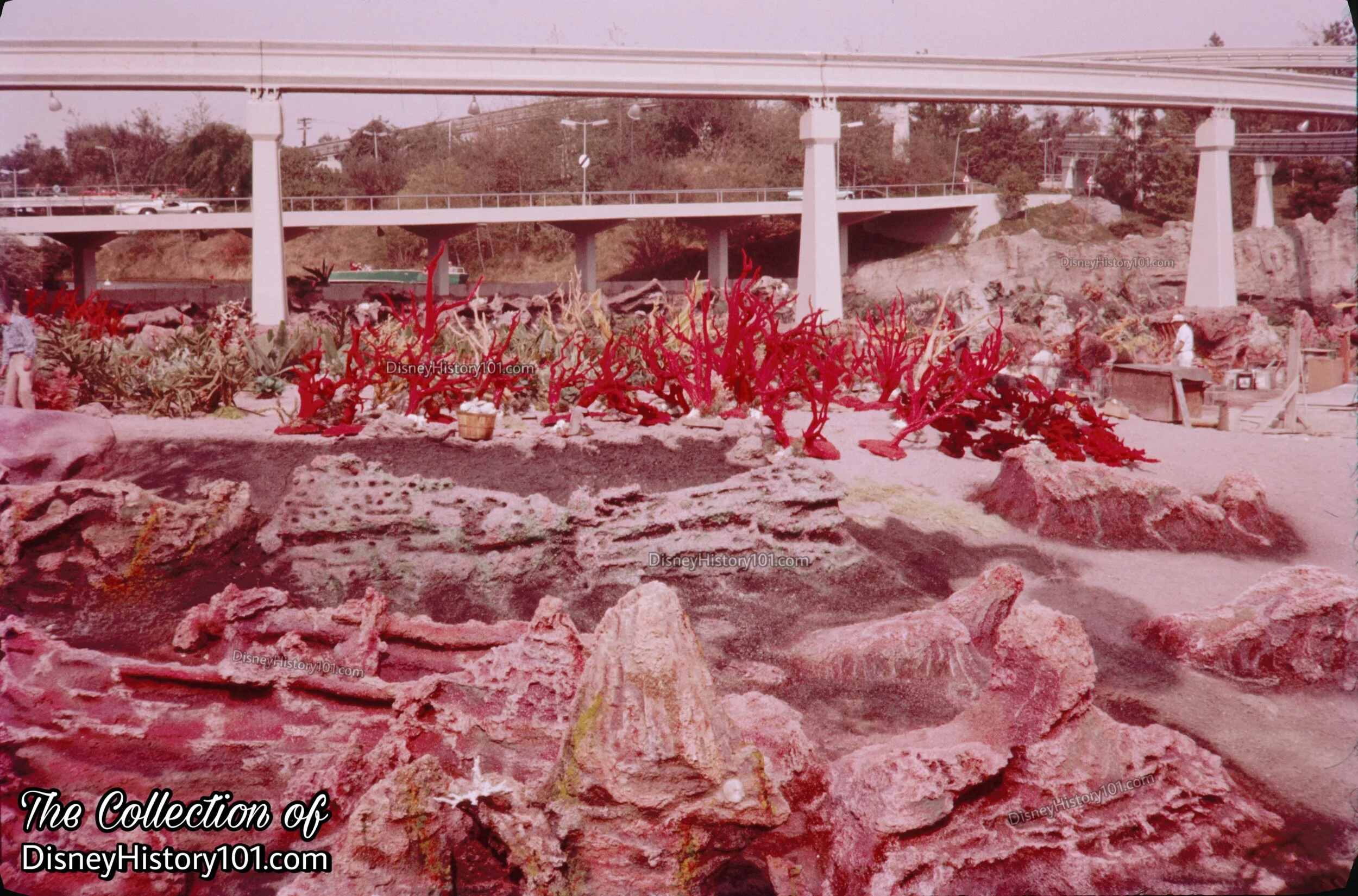
Front Lagoon drained
Initially, the plastic seaweed would absorb water and not respond to the water current. Now, corals and Seaweed await installation, from atop the man-made reefs of the Front Lagoon. This area will soon resemble a tropical coral reef. By the mid-1990s the lagoon would hold close to 10,000 artificial plants.
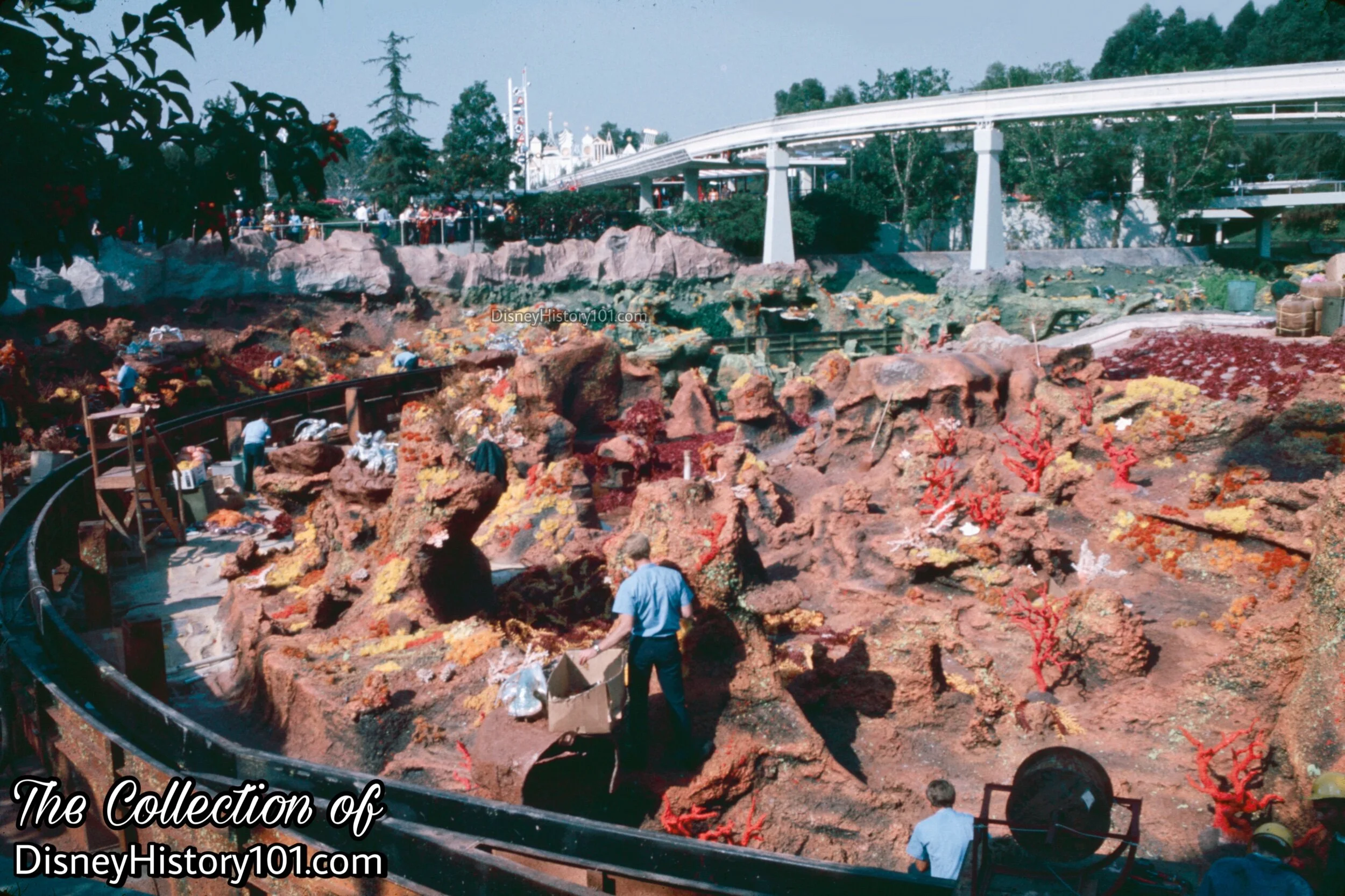
Submarine Front Lagoon Rehabilitation, c. 1971-1972
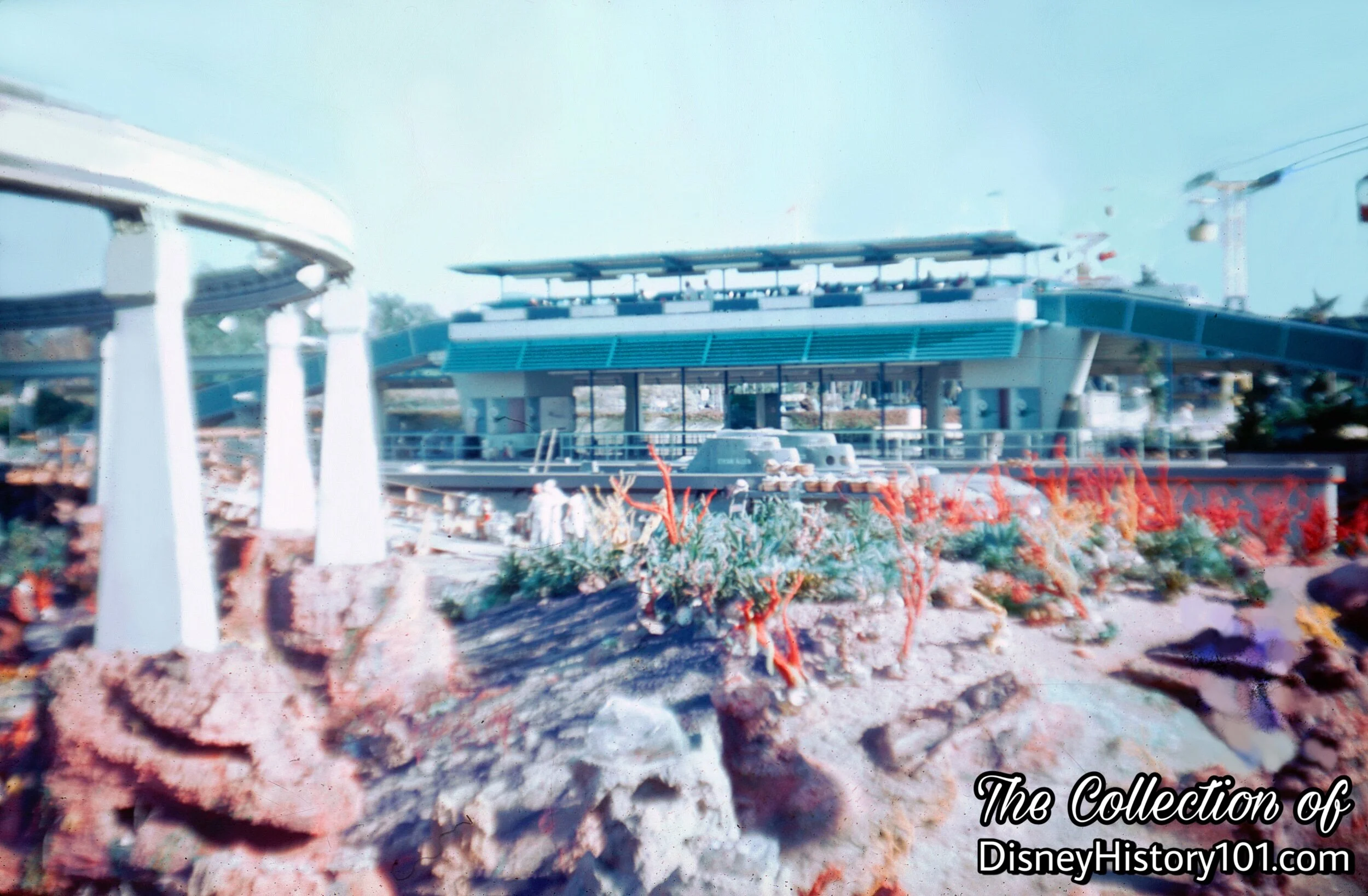
Submarine Voyage Front Lagoon, (March, 1961)
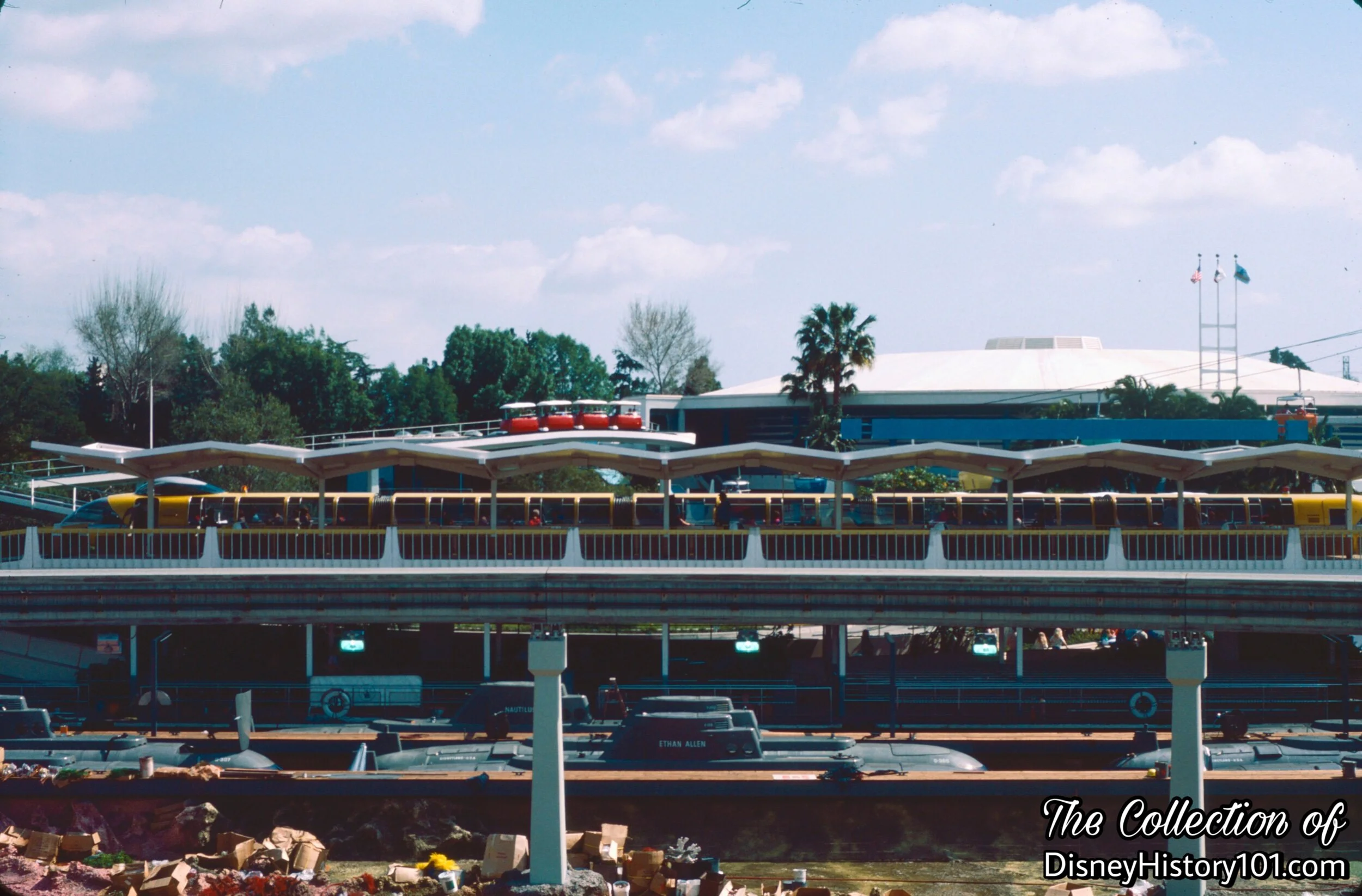
Submarine Voyage Intermediate Dock ans Storage Rails, (April, 1980)
Monorail trains and PeopleMovers were always the best forms of Tomorrowland transportation to allow for sneak peaks of the Submarine Lagoon refurbishments!
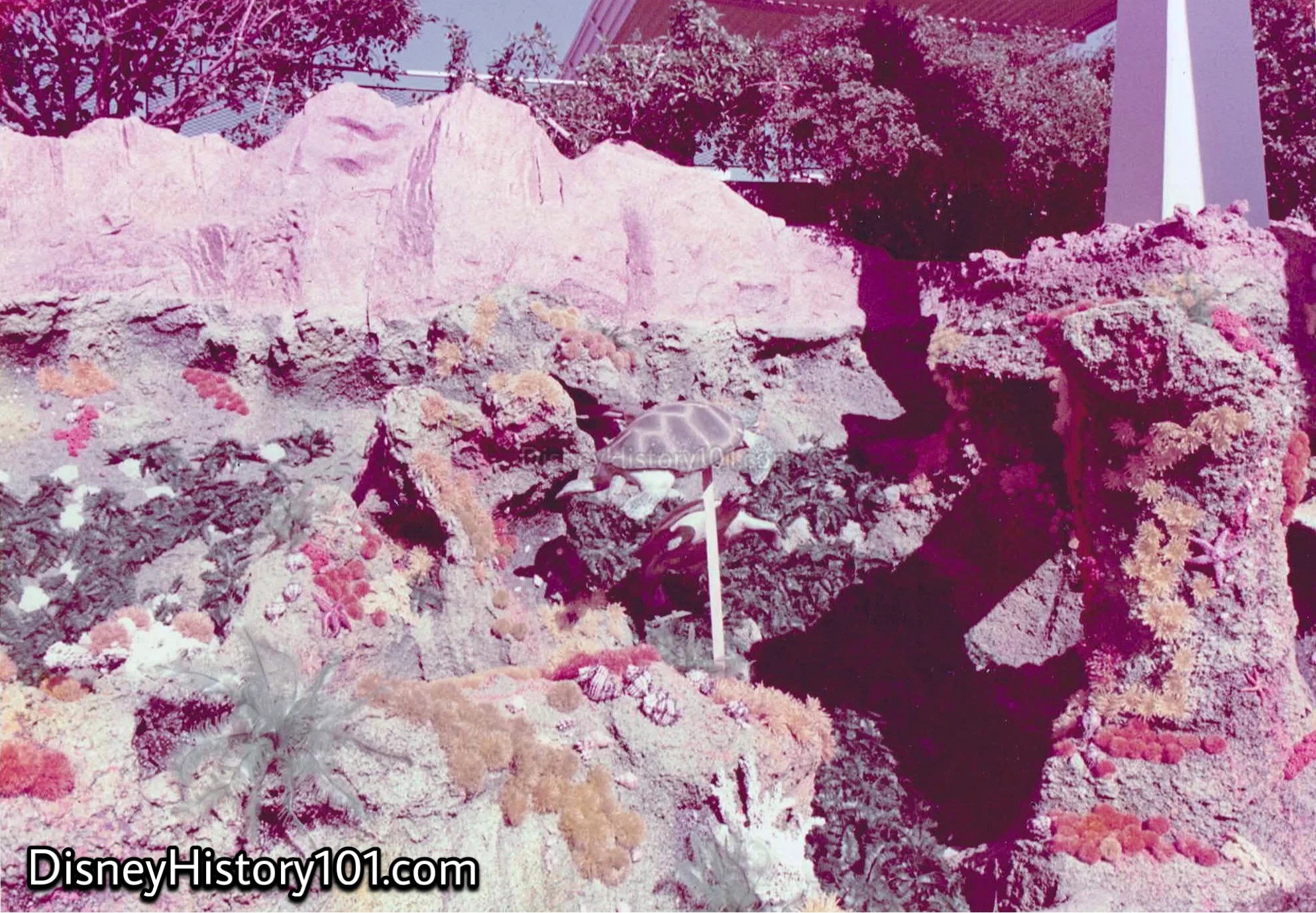
INTERMEDIATE LAGOON (drained), c. 1972
The Sea Turtle scene is drained, before touch-up begins on these underwater Animatronic figures.
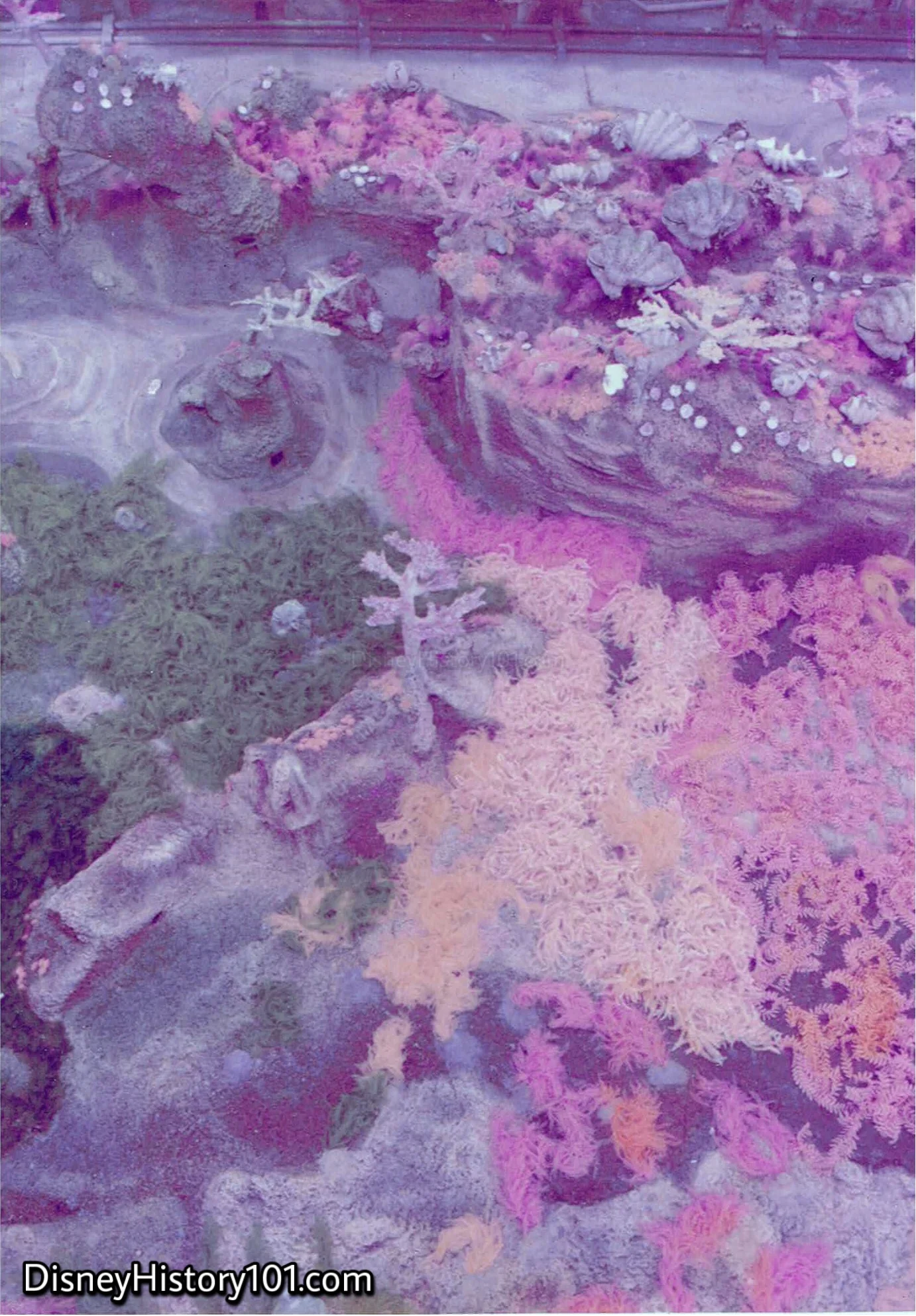
INTERMEDIATE LAGOON (drained), c. 1972
Here, we can see what a portion of the Intermediate Lagoon looks like (from above), after having been drained for maintenance during a “dry” rehabilitation. Notice the Giant Clams and all those plants which inhabit this segment of the Ocean’s Floor. According to Bob Sewell, in the early years, the “plastic kelp was made by the same company that supplied all the flexible vinyl material used for sharks, mermaids, etc.,” but by 1980, new foliage was made “to Disney specifications in Hong Kong.” [Disneyland LINE magazine, Vol. 12, No. 5 ; January 31, 1980]. By that same “silver anniversary” year, ‘mortar muddies’ were done away with, and the plants were serviced with ease owning to stainless steel hooks on the Submarine Lagoon floor.
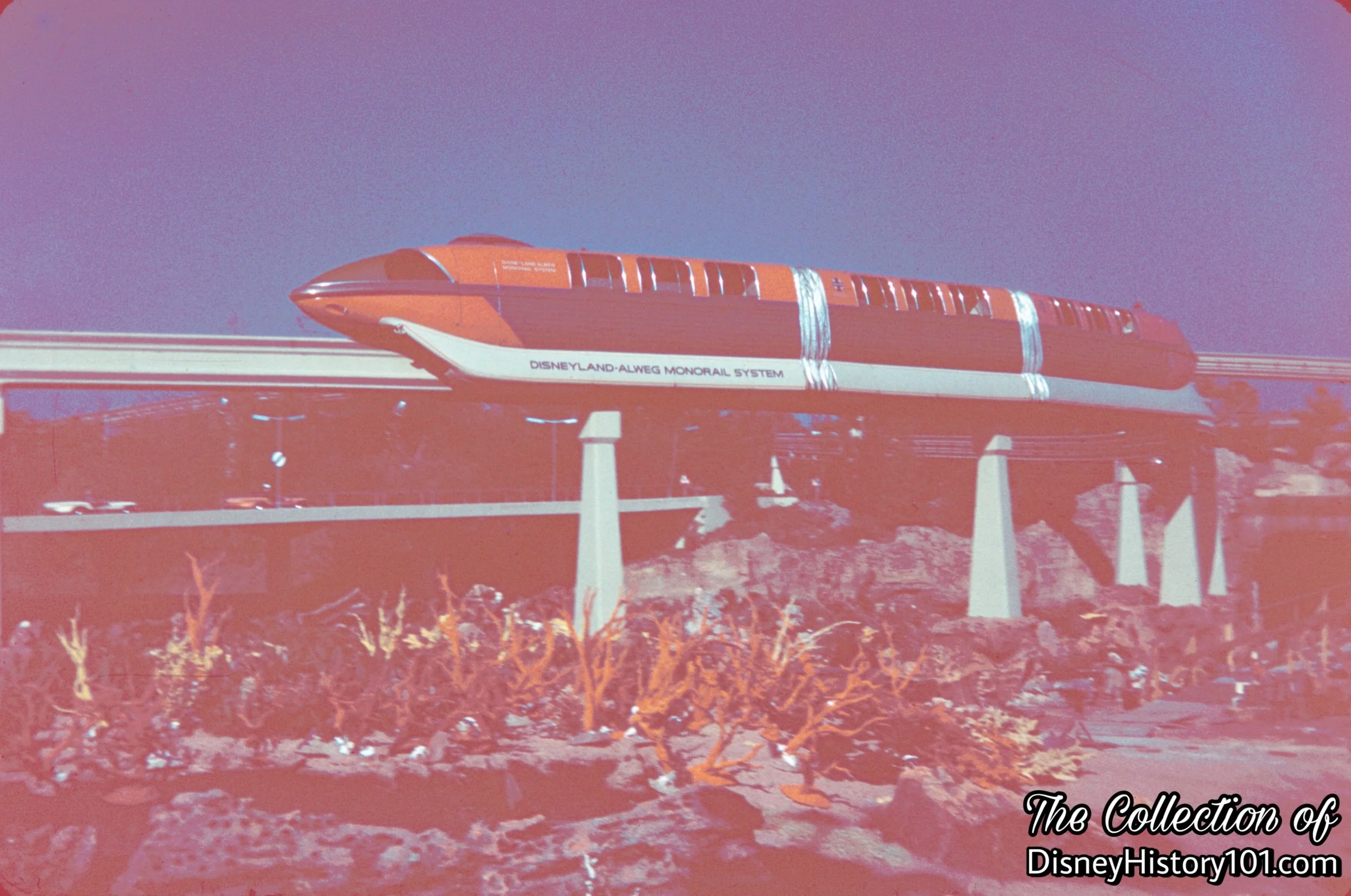
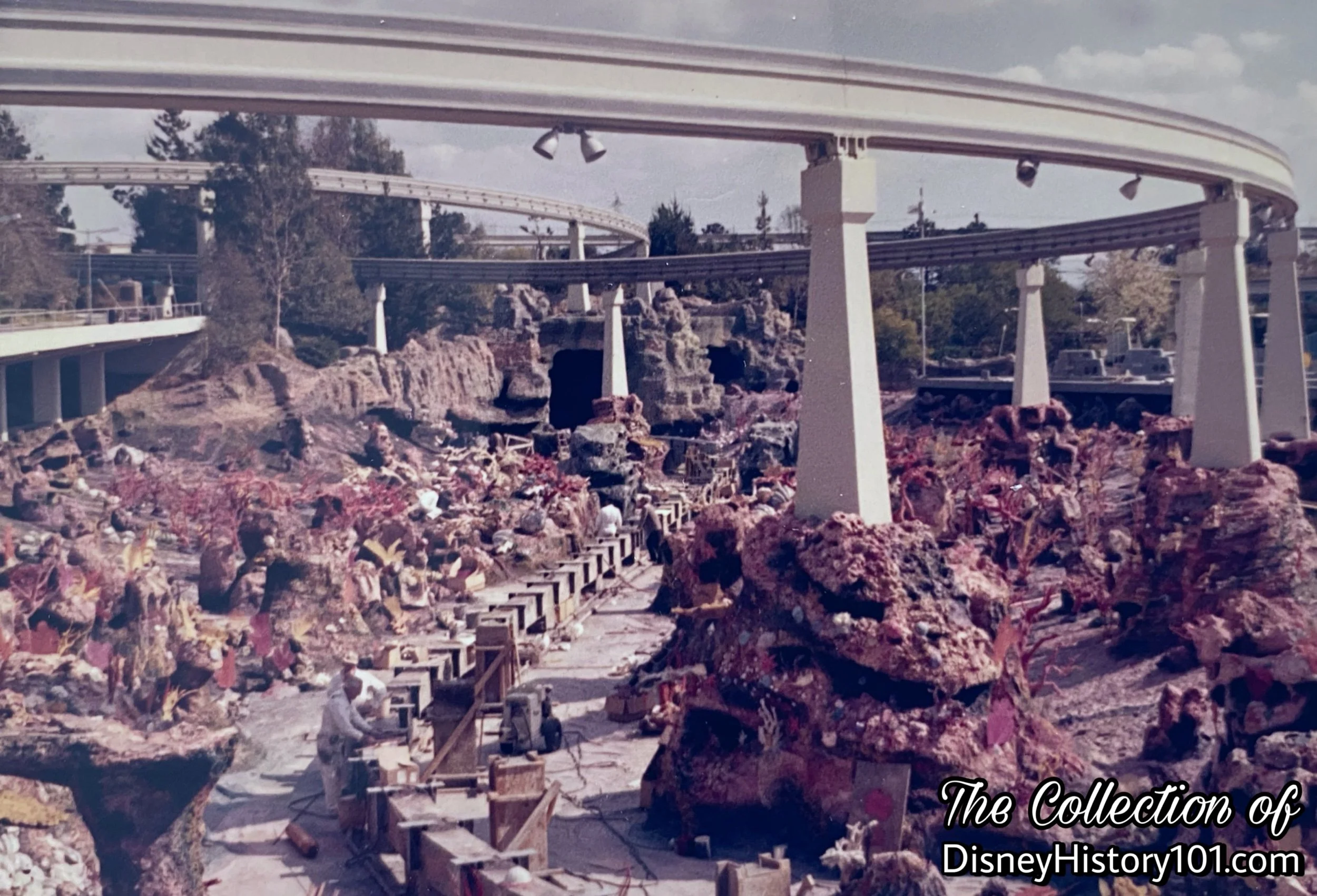
(c.1964)
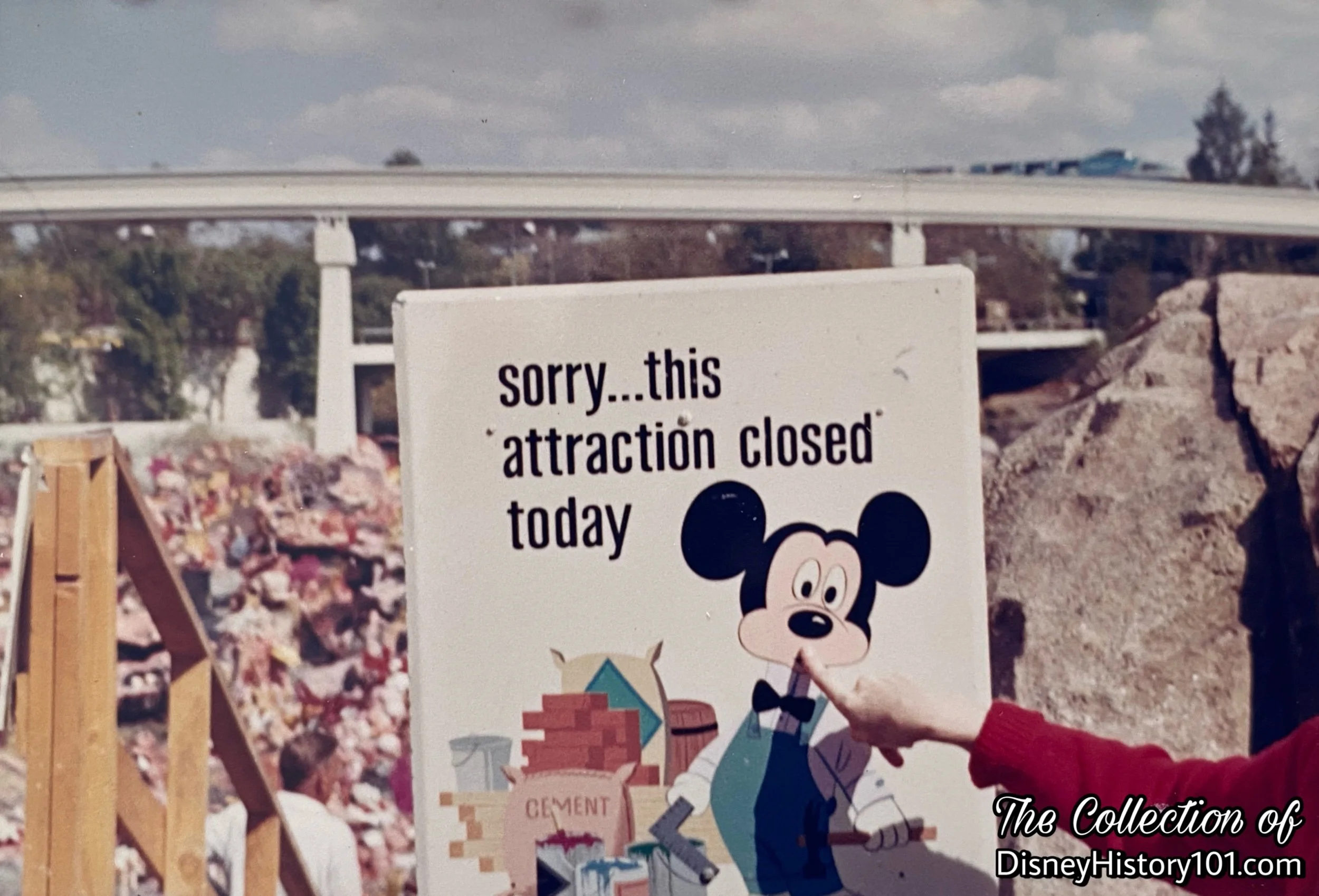
An “Attraction Closed” rehab sign manufactured in the Sign Shop, c.1964.
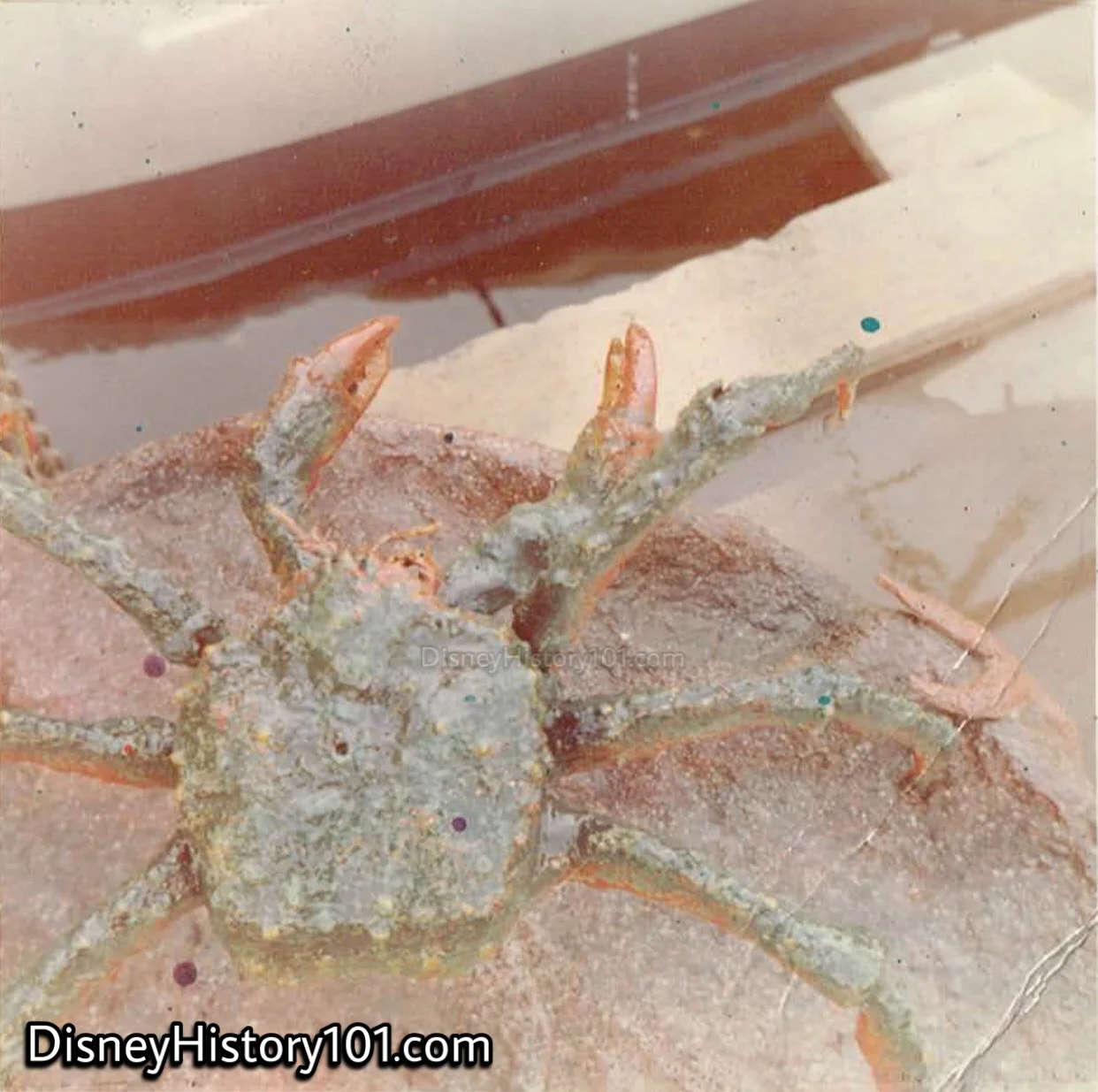
CRAB (FRONT LAGOON), c. 1972
Crabs inhabit the tropical reefs in the waters of the Front Lagoon. Generally, approximately fifteen certified Animation Department Divers of the Maintenance Division perform a check of the submerged crab’s animation. Much of the work is done at 15 or more feet-in-depth, on a “touch and feel” basis, since it is usually impossible to see in the dark. Now (with the entire lagoon drained) one of those crabs is brought into the light, where it is documented, before receiving a necessary care. The Disneyland Welding Department would occasionally perform surgical work on the crabs. Since 1971, the Disneyland Cycling Shop would care for these animatronics, giving them a fresh look.
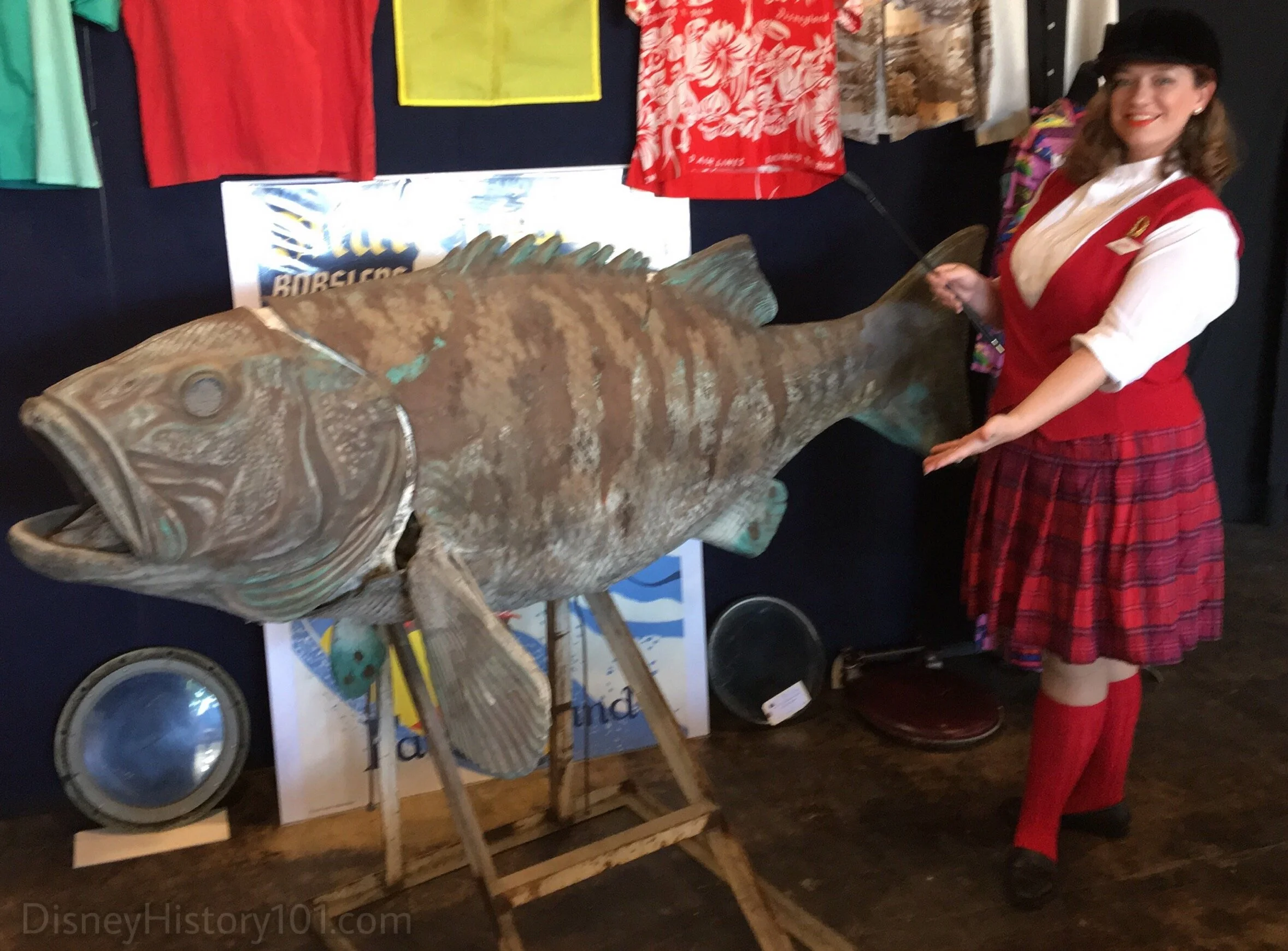
GIANT SEA BASS (Coastal Sea Grouper), Van Eaton Galleries
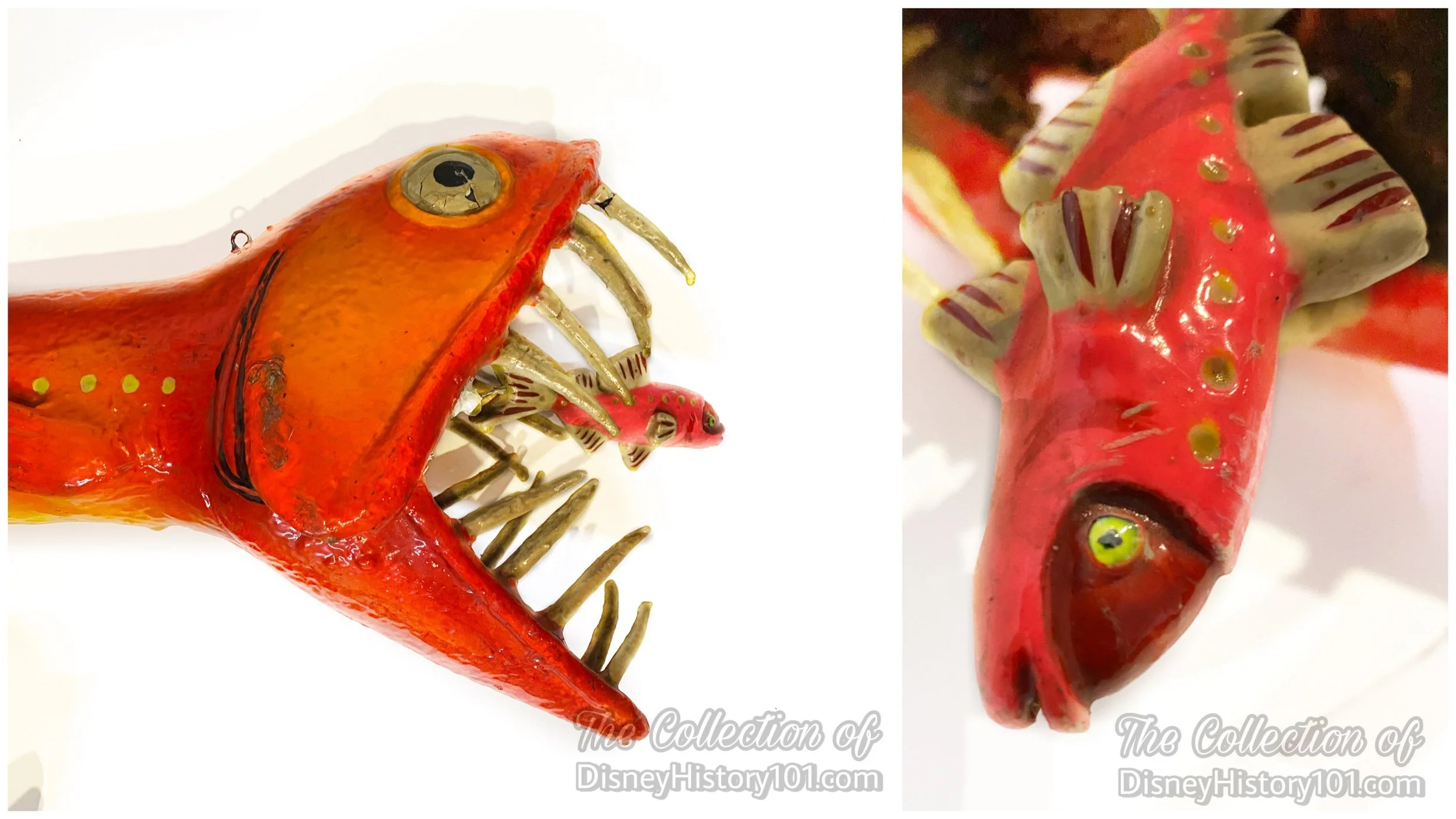
We briefly caught this fish before it got away. This Coastal Sea Grouper once passed through Van Eaton Galleries in Sherman Oaks, California! By the mid-1990s, there were 126 animated creatures and 539 static figures in the waters of the Submarine Lagoon!
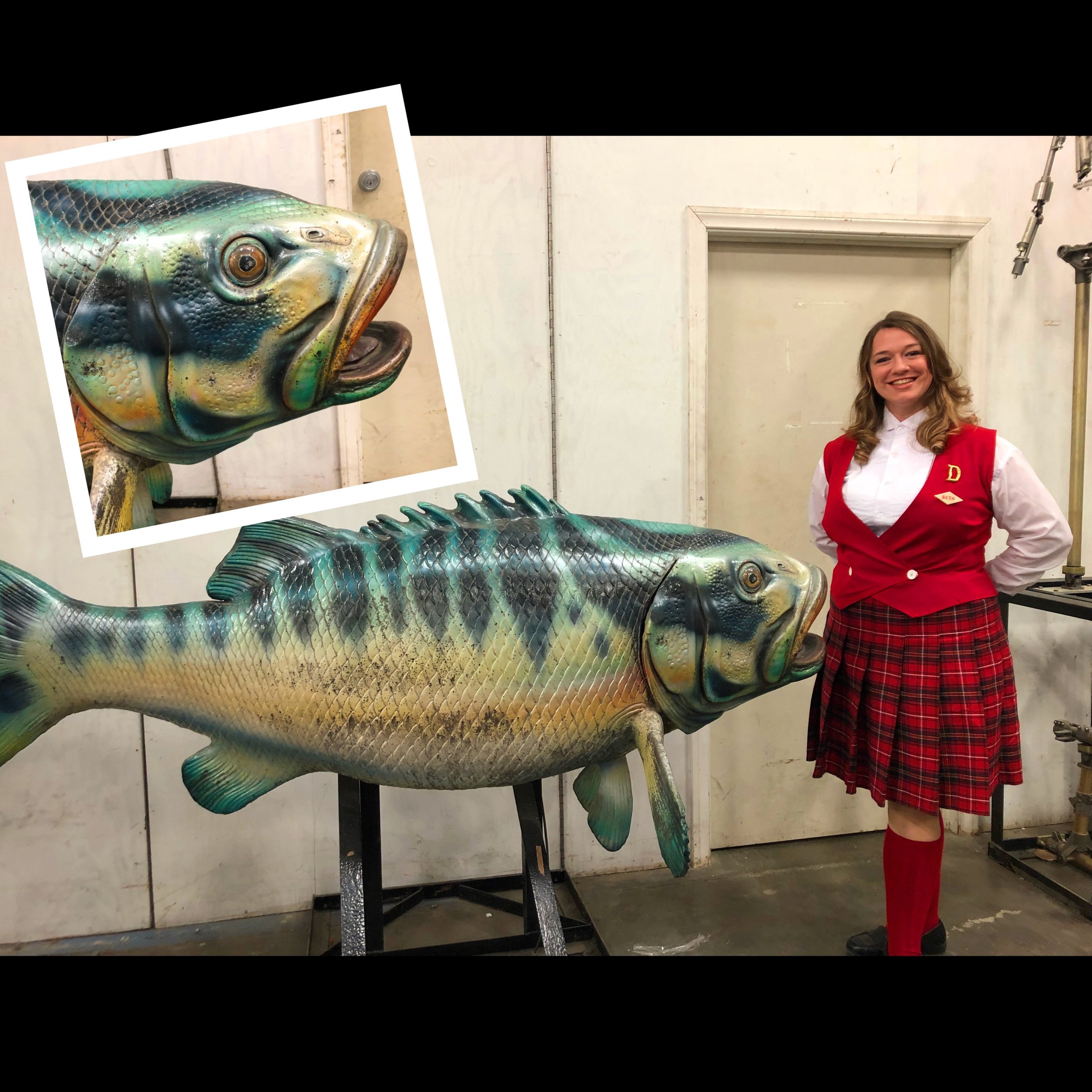
GIANT SEA BASS (Coastal Sea Grouper), The Collection of Garner Holt
Audio Animatronics wizard Garner Holt has an impressive collection of Disneyland attraction figures in his “Trophy Room”, which includes this Coastal Sea Grouper.
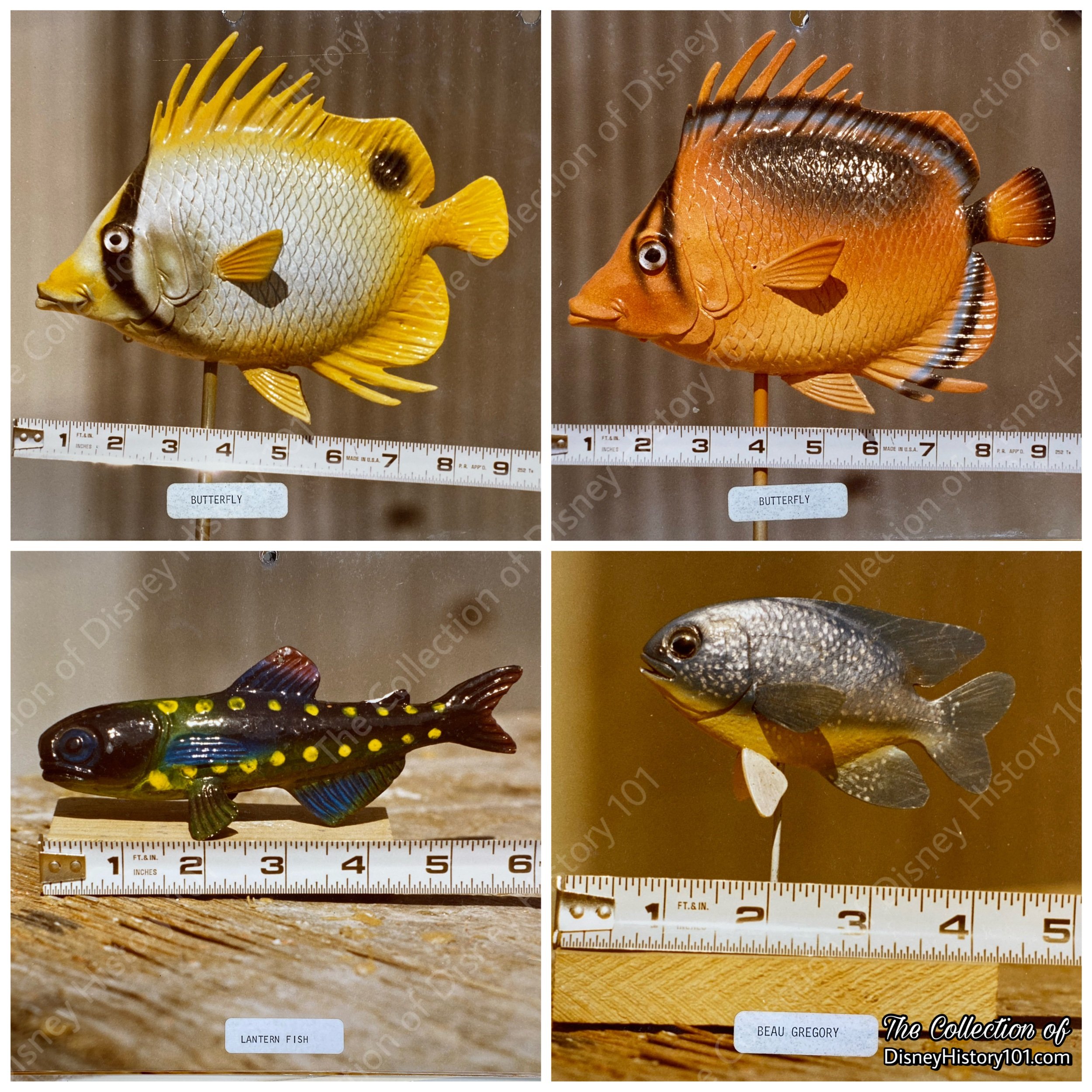
These were used in the Art Direction of Maintenance Work, and supported Show Quality.
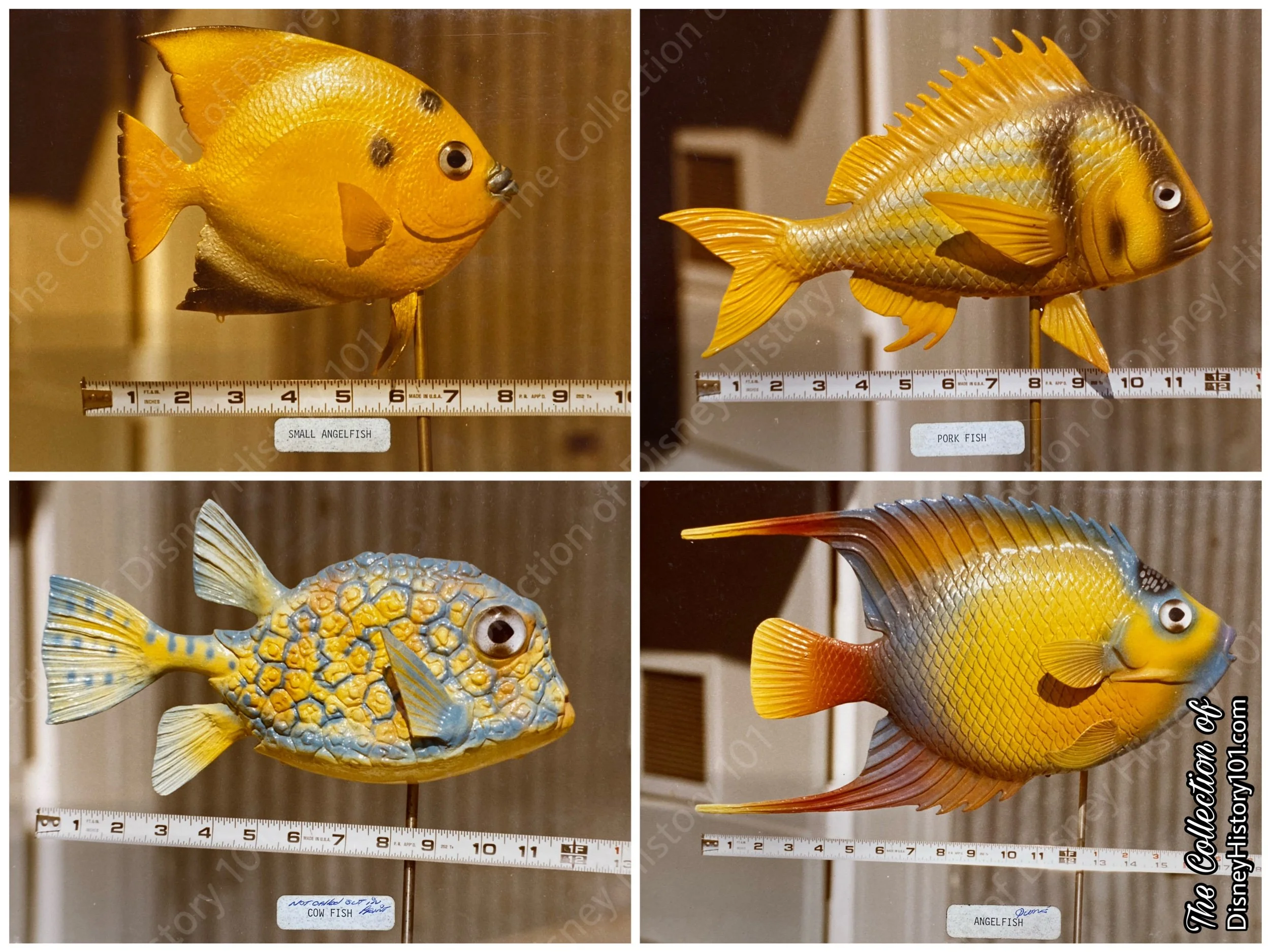
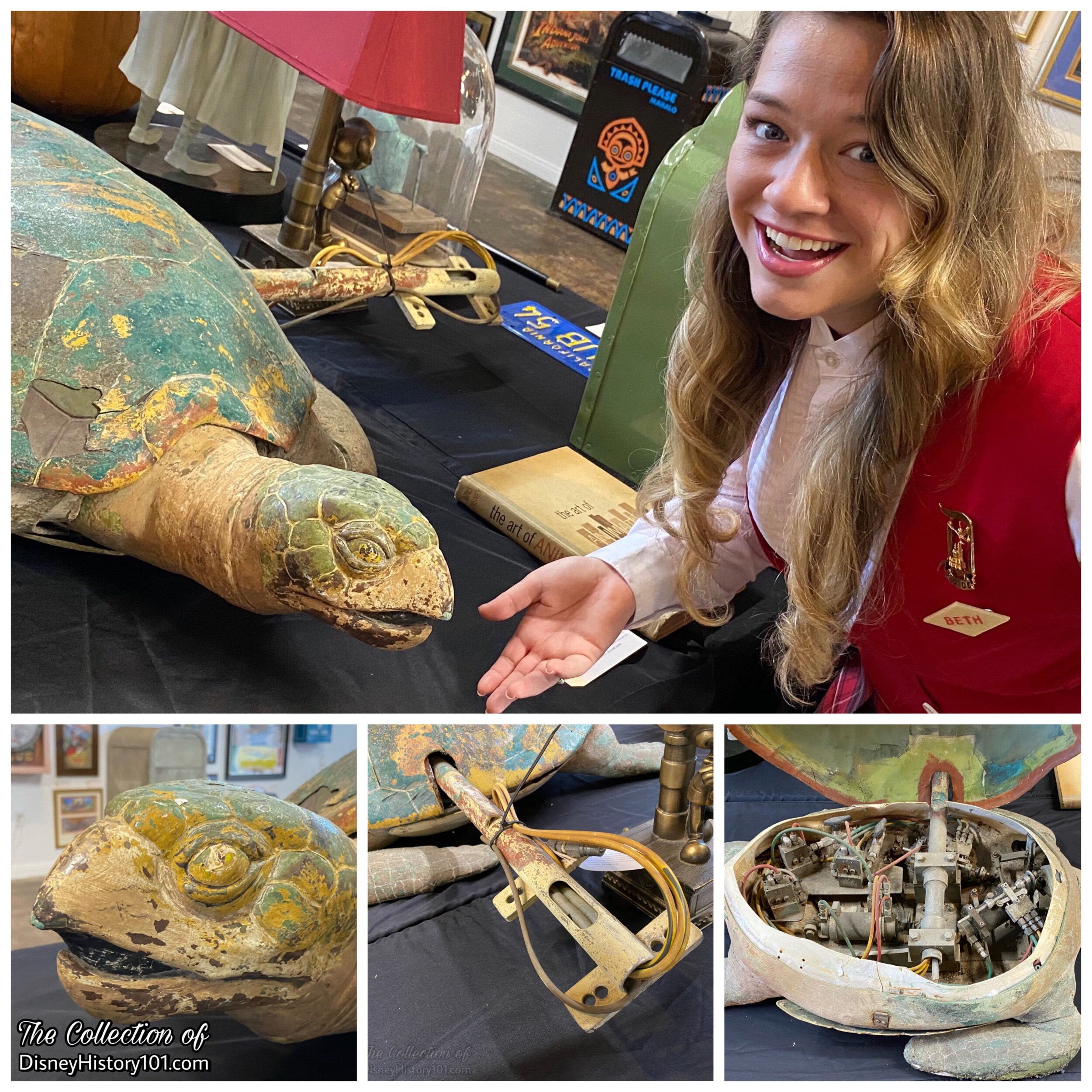
c. 1960s Animatronic Sea Turtle Figure
This Animatronic Sea Turtle (manufactured by the Disneyland Staff Shop) featured pneumatic components and a support arm to simulate swimming motion, as well as fiberglass insulation under rubber. These were maintained by those same craftspeople of the Disneyland Staff Shop (once housed in a huge “corrugated iron studio” in the Backstage) and Cycling Shop staff.
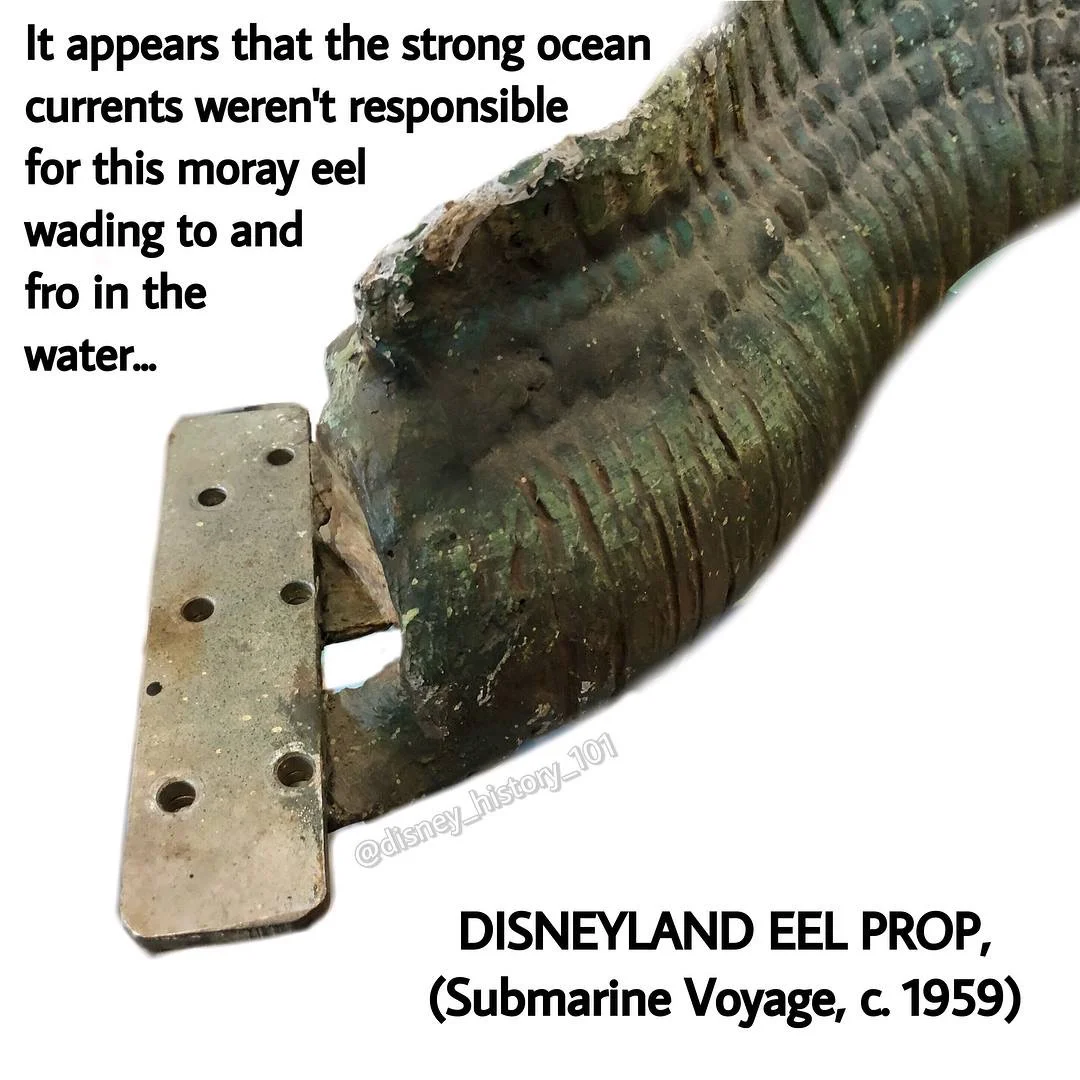
MORAY EEL Animatronic Figure, Van Eaton Galleries
In 1961, new sea life was spotted darting 15” out of the rock faces. These strange denizens of the deep - Moray eels - have been spotted hiding among the seaweed and lurking inside mysterious caves of the Disneyland’s Tropical Lagoon reefs. Here, we see a rarely-seen view which is typically only seen by diving Machinists or Cycling Shop craftspeople.
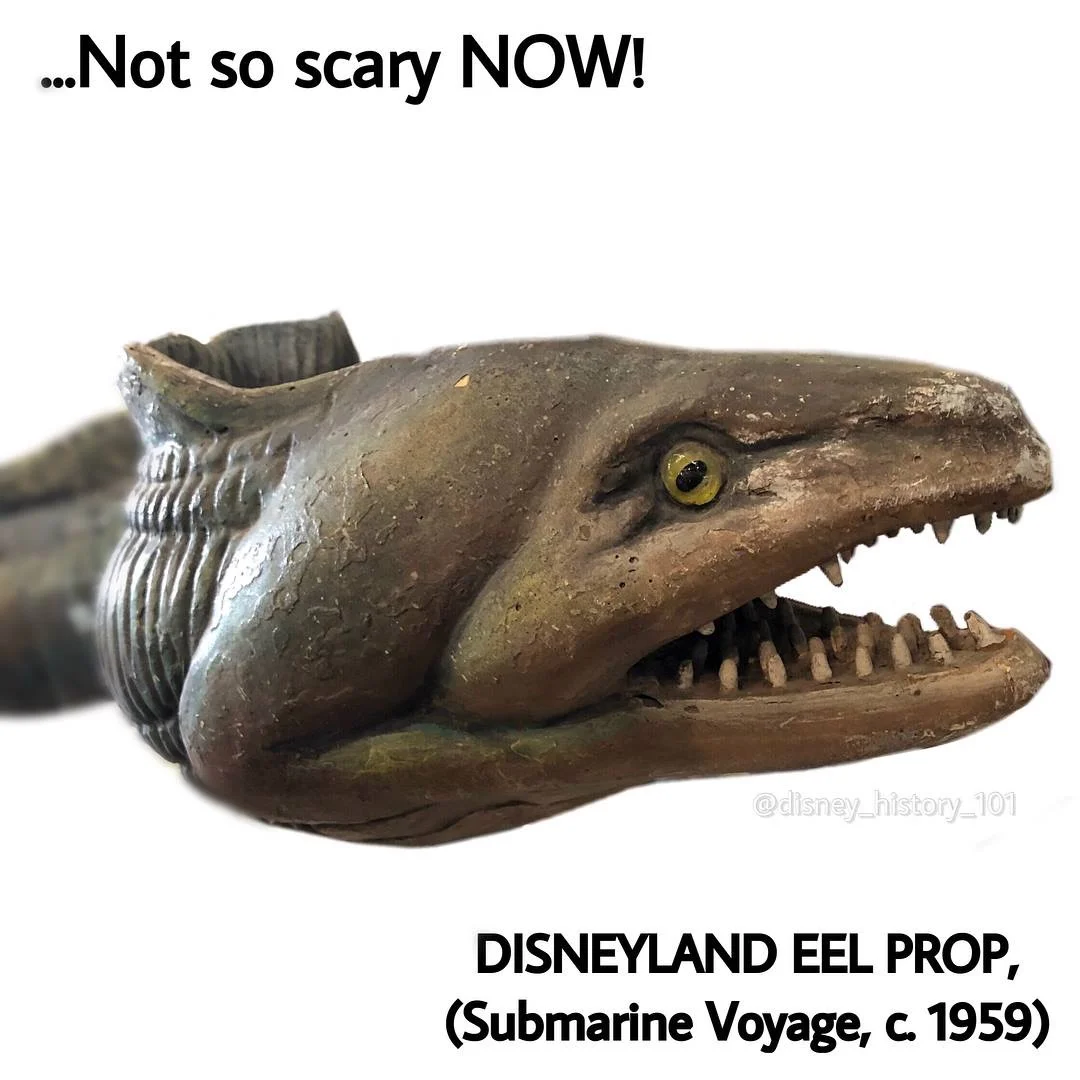
MORAY EEL, Van Eaton Galleries
Okay, he’s still a little frightening.
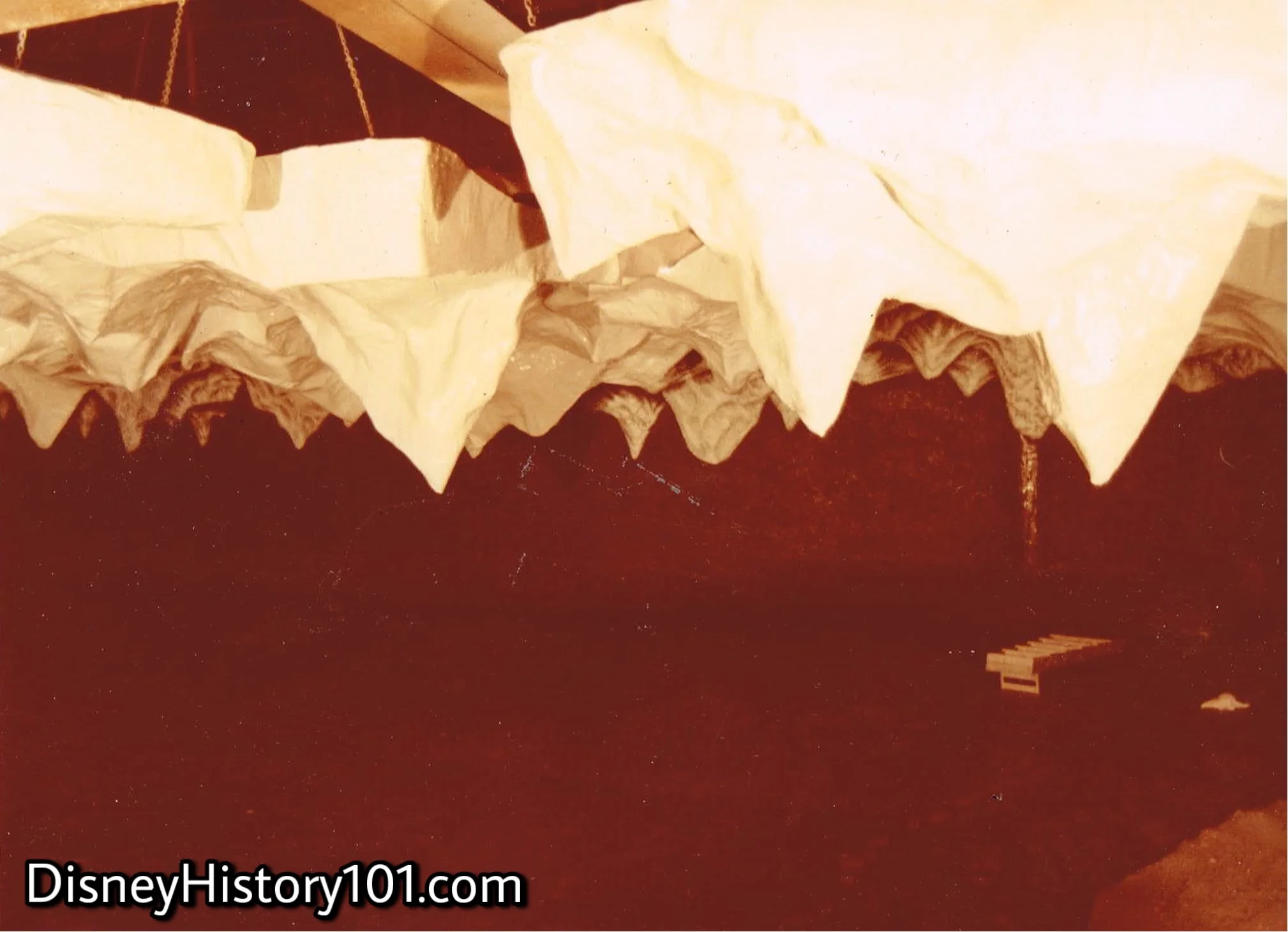
NORTH POLE segment (drained), c. 1972
“Men Against the Arctic” (a People and Places feature film, released December 21, 1955) perhaps stirred interest in these chilling and vastly unexplored regions.
Through a stormy sea, subs pass under the “Polar Ice Cab” to an exotic world where light has never penetrated and enter the “North Pole” segment of the journey recreating the historic journey made by the U.S.S. Nautilus under the polar ice cap in 1958. While simulating the depths of the ocean, this stretch of our journey was actually through a watery depth of ten feet. Typically, guests would not see this sight before hearing the sound of motors accompanied by a multitude of bubbles. The hatches would be sealed because of the submarine’s passage under the waterfalls into and out of the building.
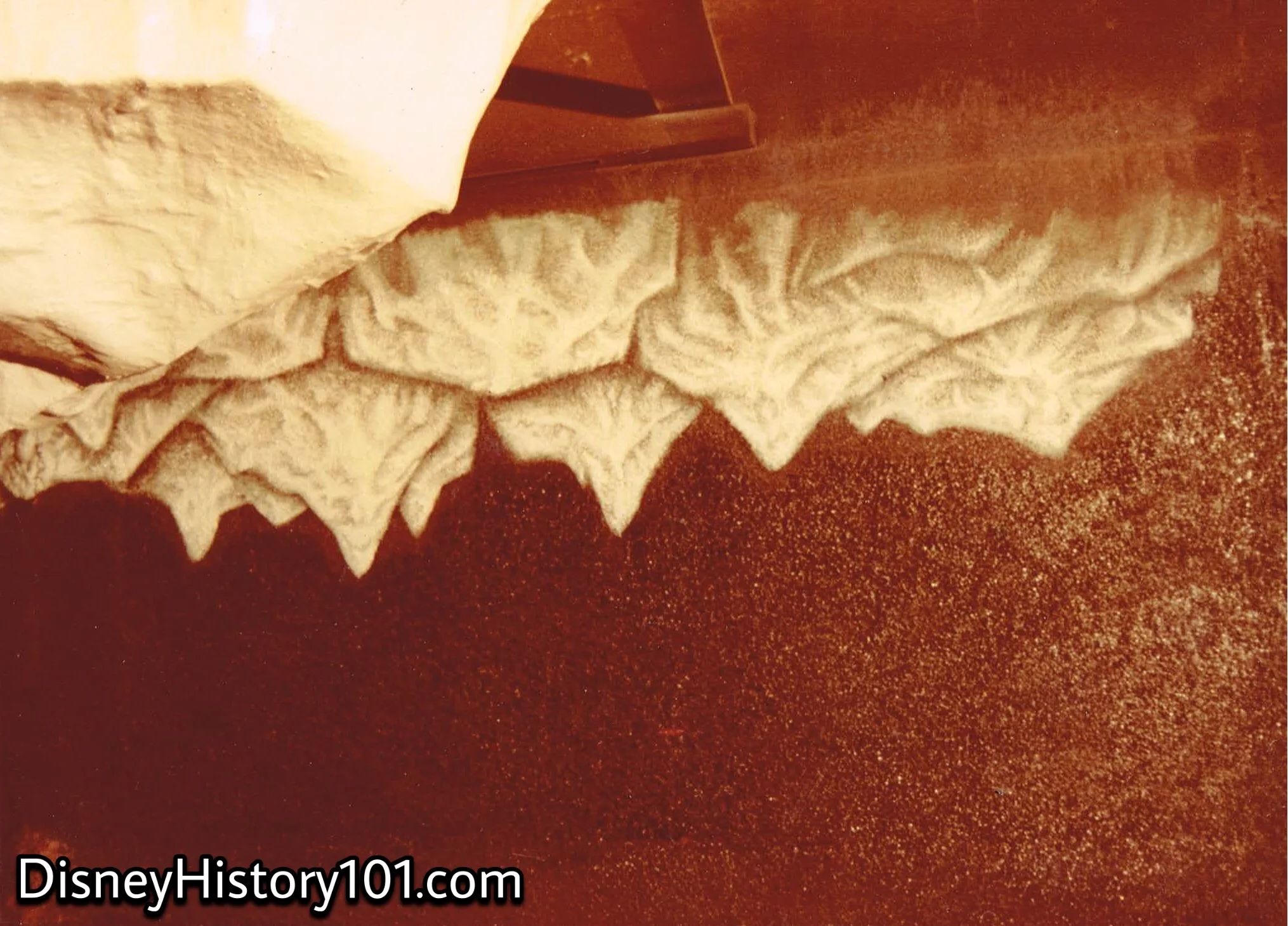
NORTH POLE (drained), c. 1972
Did you ever call the North Pole? Previously, Disneyland Cast Members could dial extension “000”, and a Disneyland PBX Operator would patch them through to a telephone located at the “North Pole” (tucked within the Submarine Caverns).
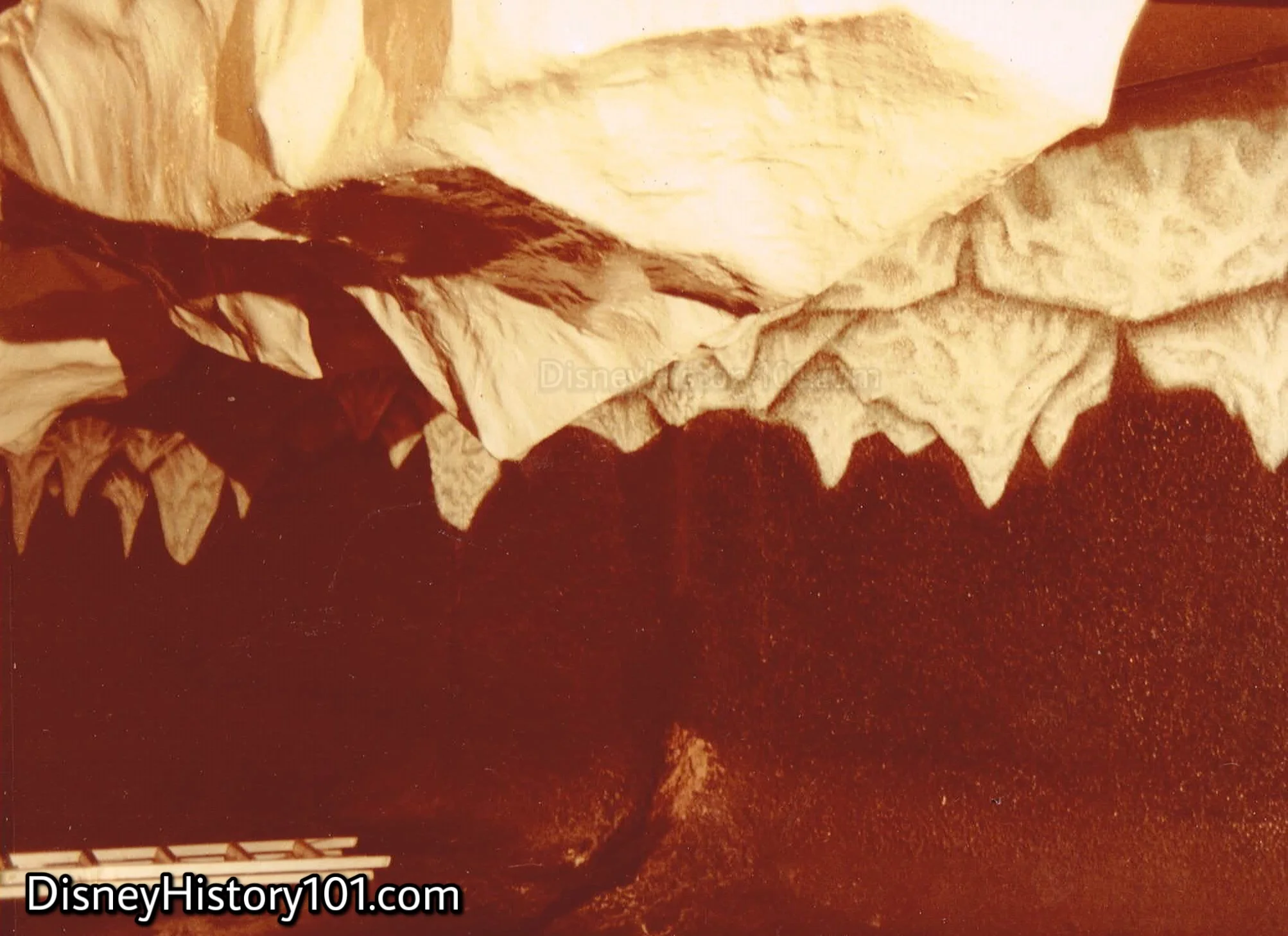
NORTH POLE (drained), c. 1972
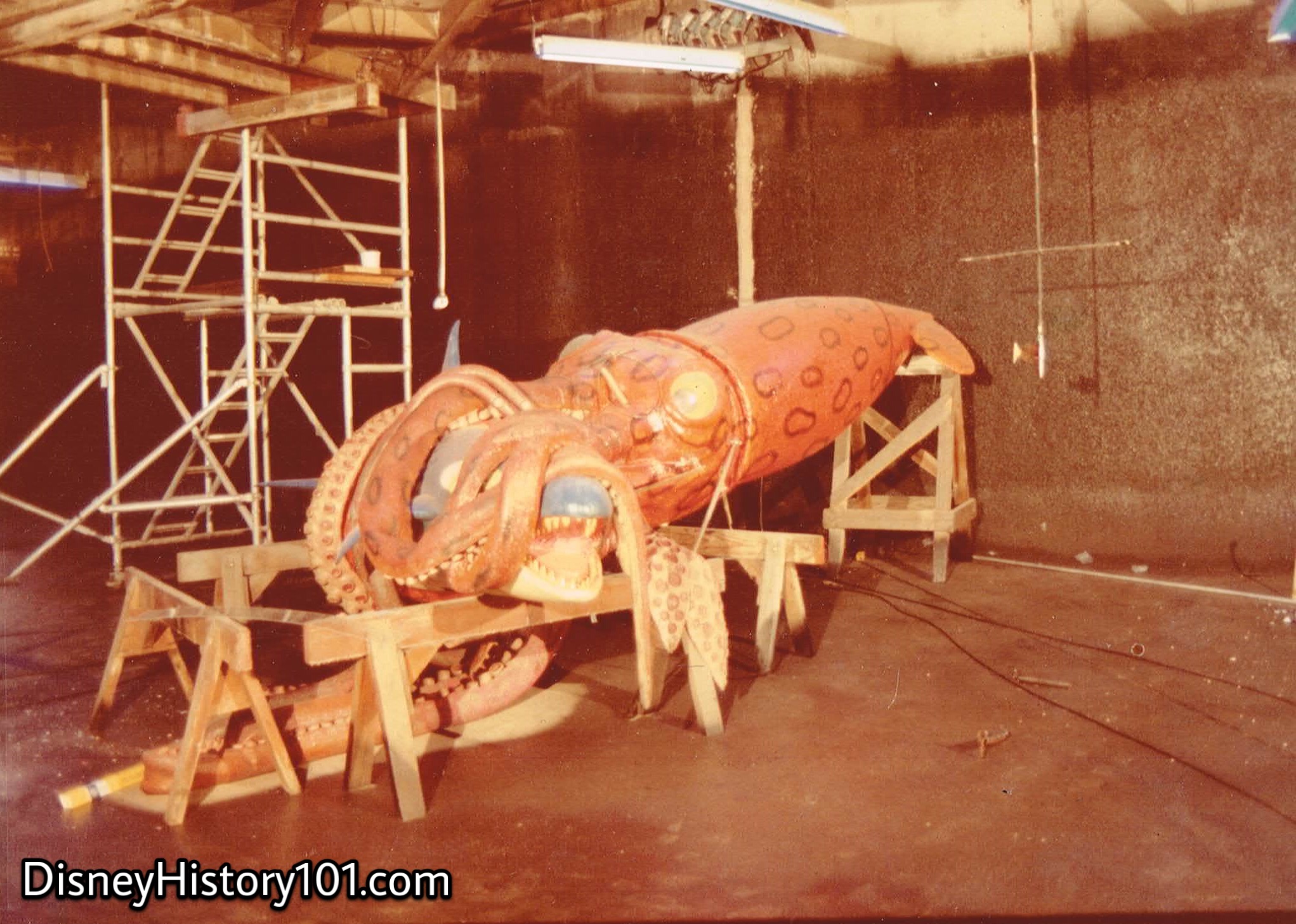
The GIANT SQUID and Squid Scene as viewed by Maintenance Services, c. 1972
“Is that… a sea serpent?”
As long ago as “the year 1868 the shipping world was alarmed by rumors of an avenging monster on the loose. A series of strange events befell certain vessels cruising the great South Seas and travel along this nightmare sea lane dwindled to a few bold ships.”
It’s was discovered that an unusually large Archit Euthis Princeps (Which usually lives 600 feet below the depths of the sea) was to blame. They have been known to grow to a staggering 50-feet in length. According to some submarine captains, “Giant Squid are a reminder to all mariners that tales of ocean monsters have no basis in fact and therefore should be classified as fiction (along with myths about mermaids).”
Now (with the seas drained, and not far from the Dry Dock), we catch a rare glimpse of the magnificent and terrifying beast that was the source of these “alarming rumors”! In fact there were a total of two giant squids among the submarine lagoon’s animated creatures! Each tentacle was realistically activated by water jet.
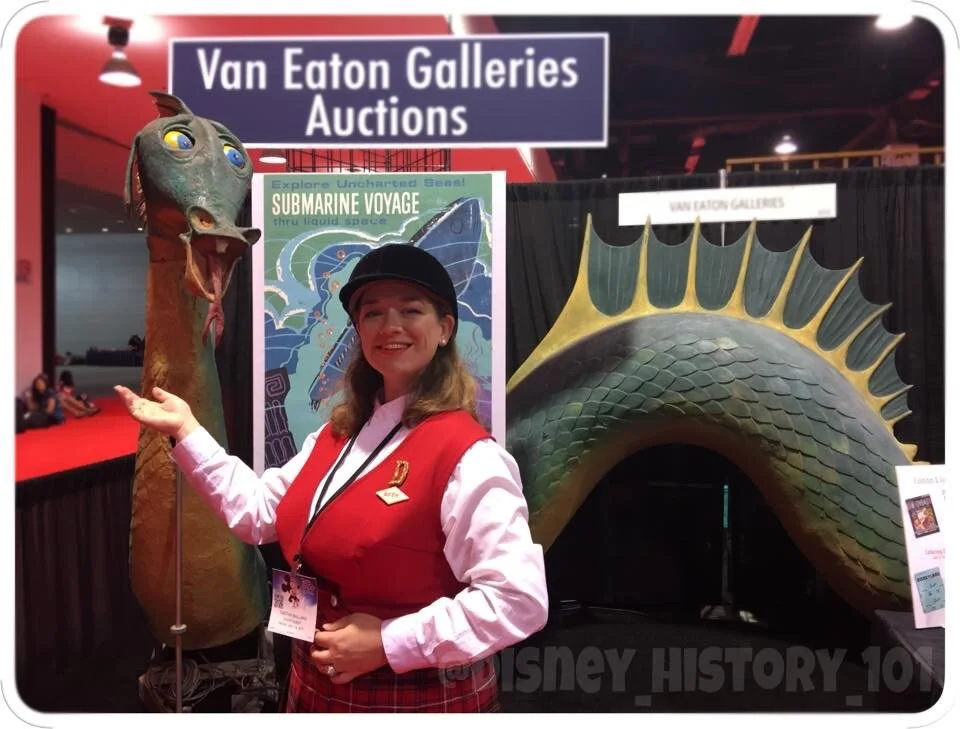
“SUBMARINE VOYAGE” ANIMATRONIC SEA SERPENT
There were also two sea serpents among the submarine lagoon’s 126 animated sea creatures. Richard Kraft’s former Sea Serpent trophy “resurfaced” at the Van Eaton Galleries kiosk during D23 - 2017 event, allowing us to “size him up” in person.
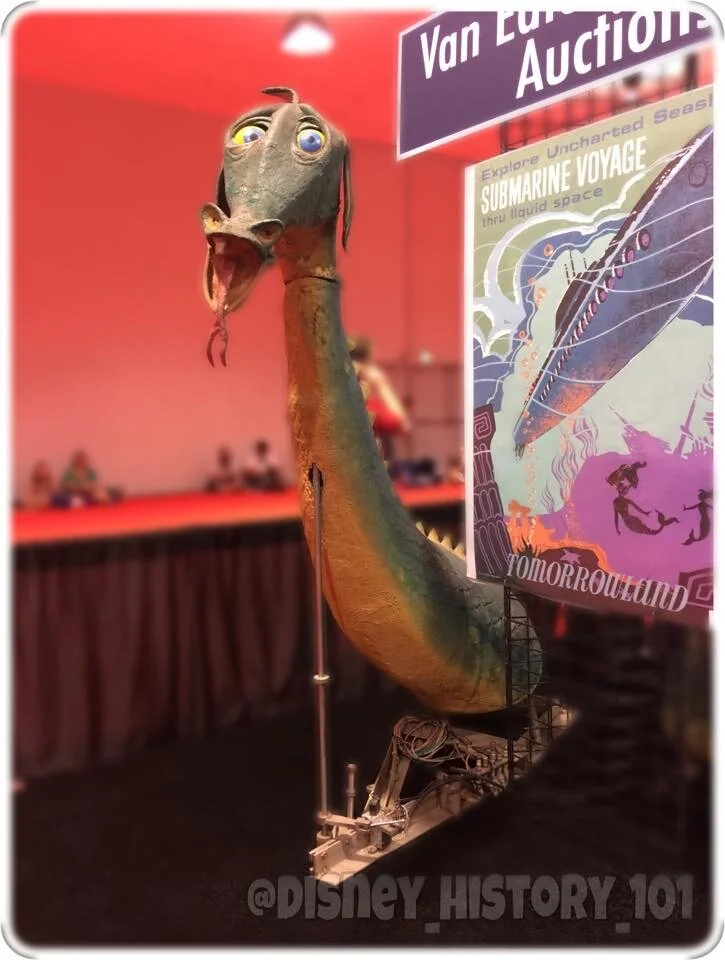
c. 1959 Submarine Voyage Animatronic Giant Sea Serpent
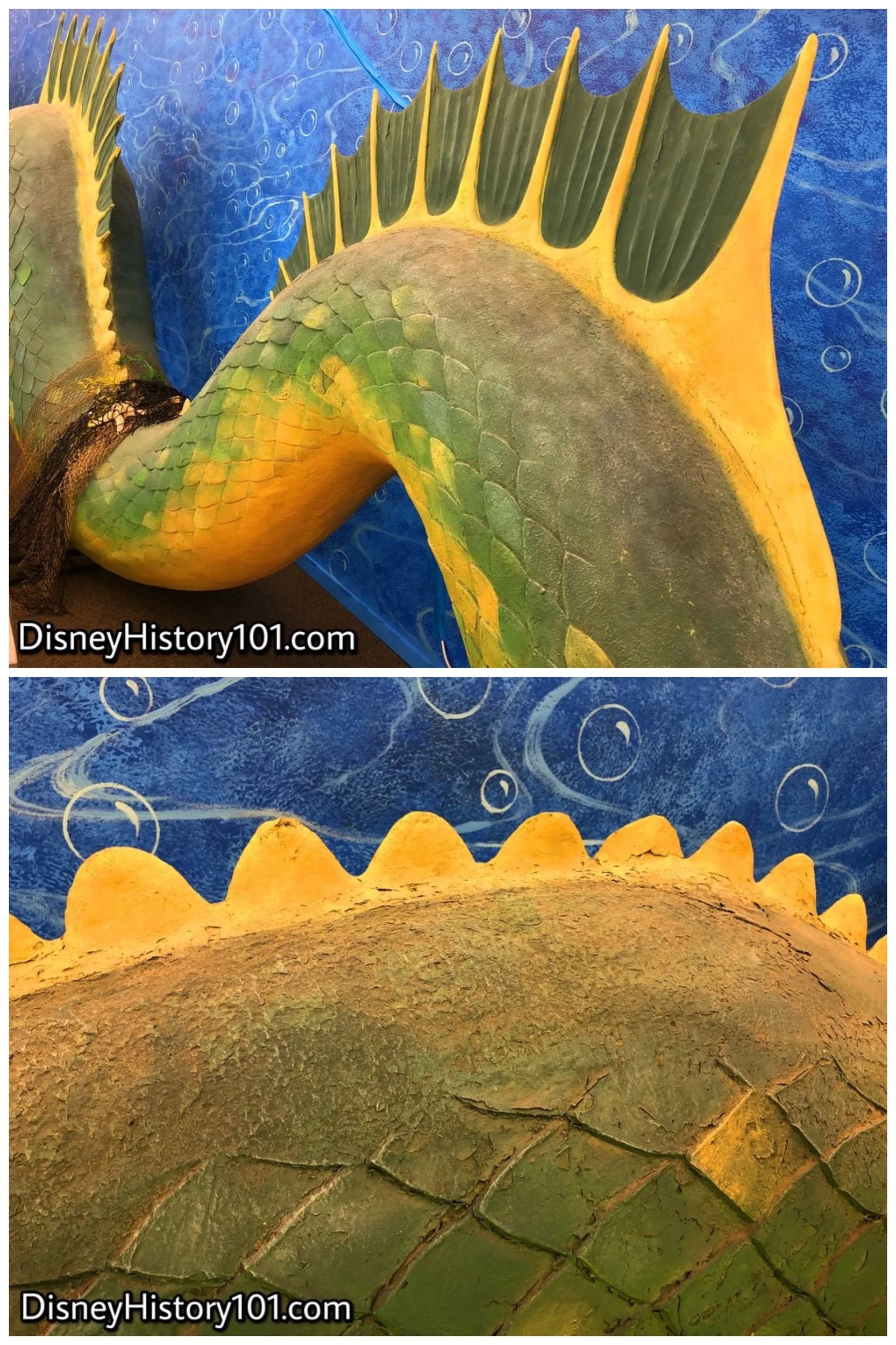
c. 1959 Submarine Voyage Animatronic Giant Sea Serpent.
You may recall the world's longest and whackiest sea serpent that threatened undersea travelers.
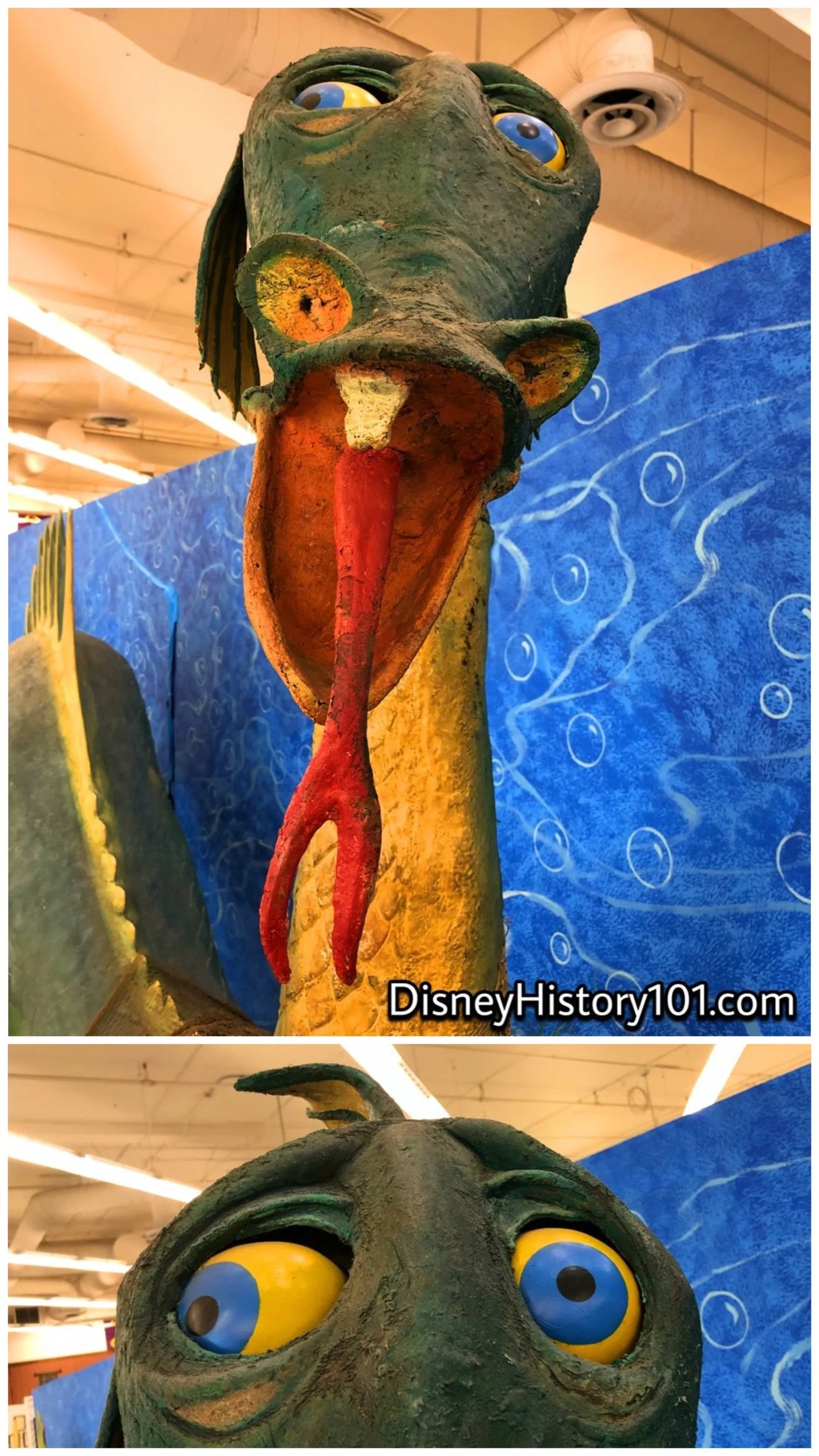
c. 1959 Submarine Voyage Animatronic Giant Sea Serpent.
Those animated rolling eyes…
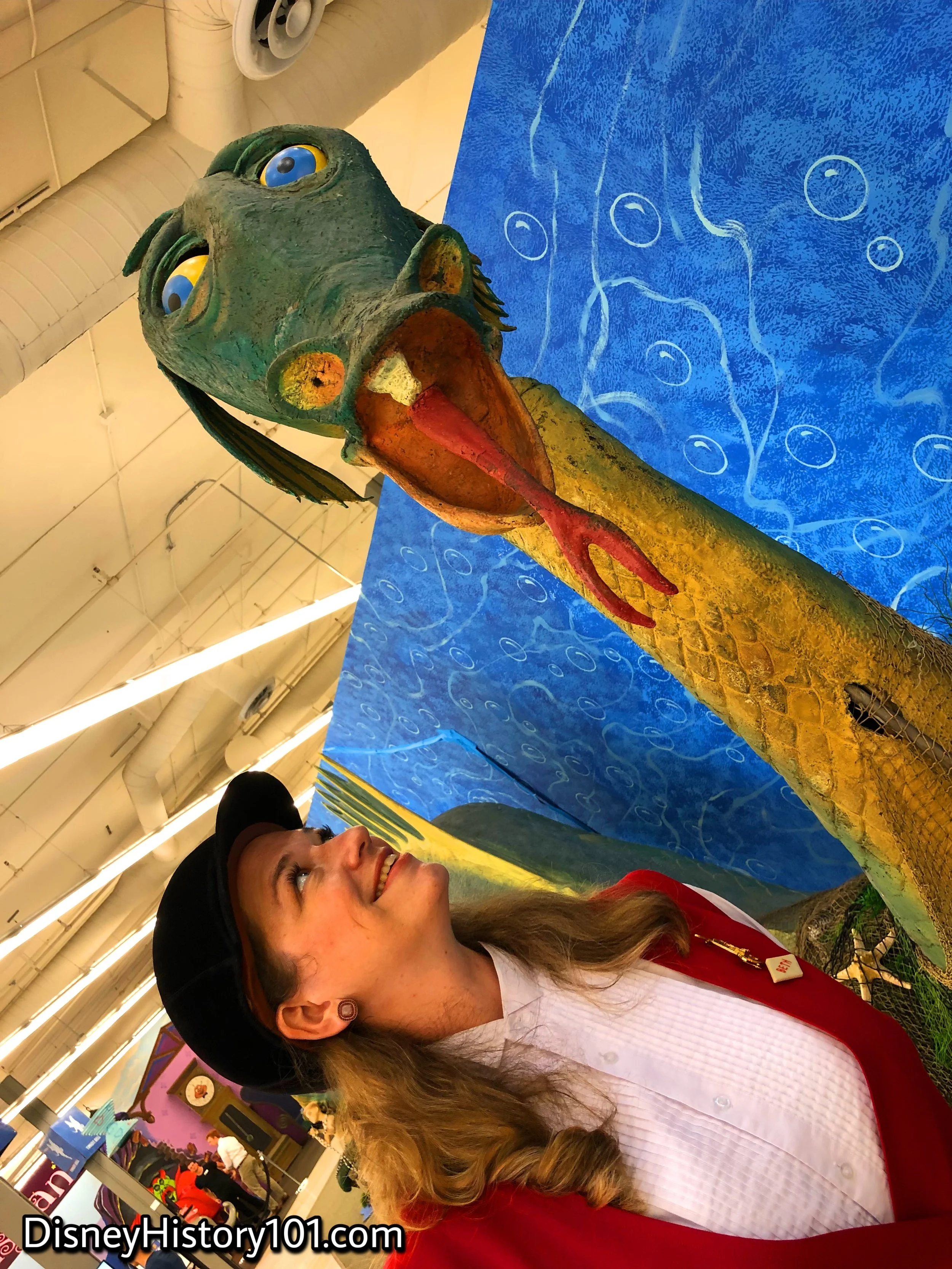
c. 1959 Submarine Voyage Animatronic Giant Sea Serpent
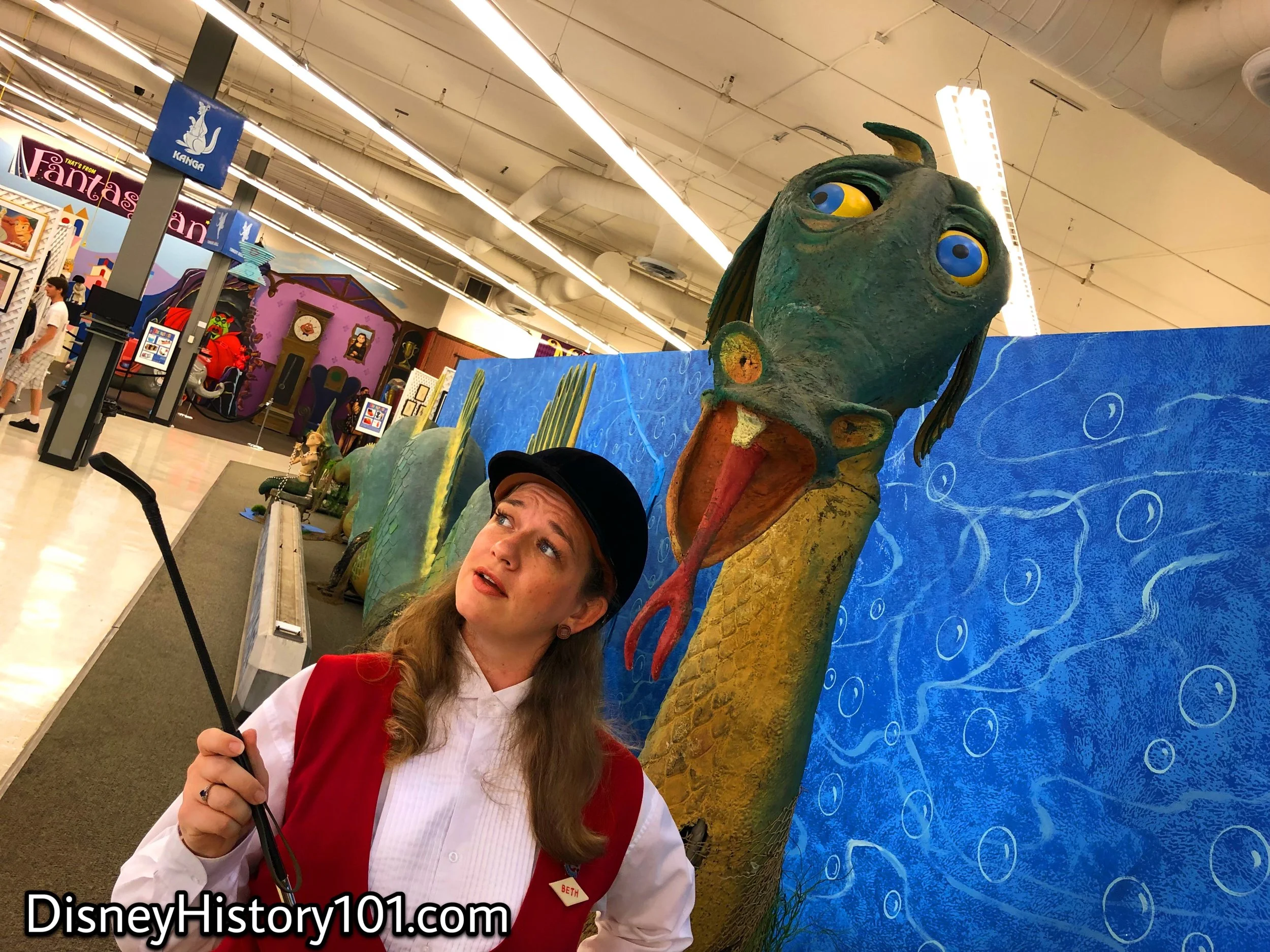
c. 1959 Submarine Voyage Animatronic Giant Sea Serpent
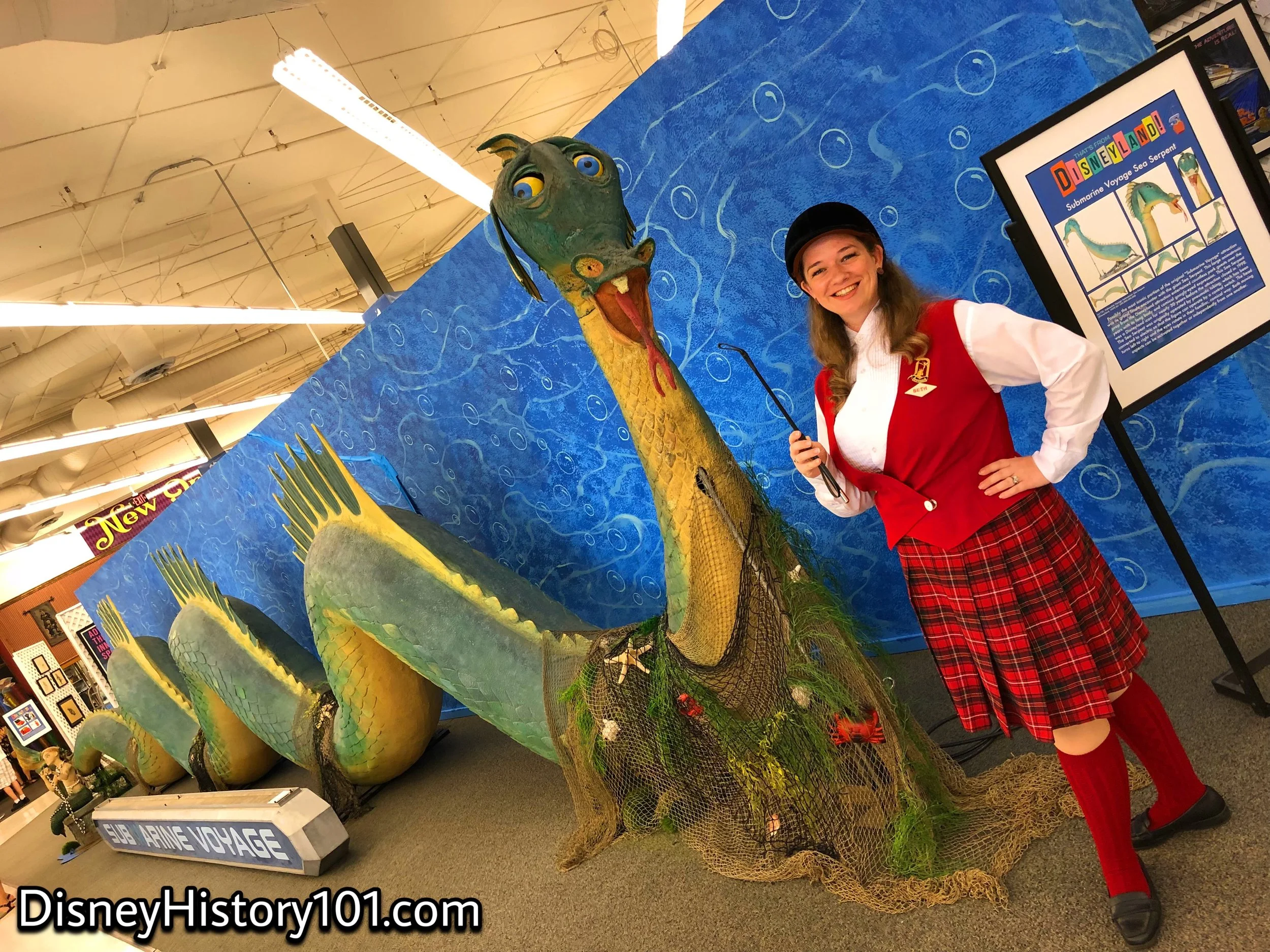
c. 1959 Submarine Voyage Animatronic Giant Sea Serpent
According to Van Eaton Galleries’ Curators : “Possibly the most iconic portion of the original ‘Submarine Voyage’ attraction was its grand finale encounter with the giant [80-foot-long] Sea Serpent. This large animatronic prop from the Disneyland attraction entertained countless park guests over the years with its long body and comical googly-eyed expression. This Sea Serpent was a Disneyland icon for nearly 30 years before the attraction closed in 1998. This large animatronic prop was removed prior to the ‘Finding Nemo Submarine Voyage’ refurbishment in 2007. The Sea Serpent is composed of five separate sections, which were disguised by rock formations in the attraction. Each section is made of hand-painted fiberglass which has been lightly touched up. The Sea Serpent was originally operated by pneumatic tubing, which has now been switched to electric so the figure can operate by a control switch. The head turns left to right and the eyes rotate in their familiar, comical way. Both moving aspects can be activated together or independently from one another. Currently (without the obscuring rock of the ocean’s floor), this incredible Disneyland artifact measures an impressive combined 48ft long, 6ft tall, and 3ft wide.”

c. 1959 Submarine Voyage Animatronic Giant Sea Serpent
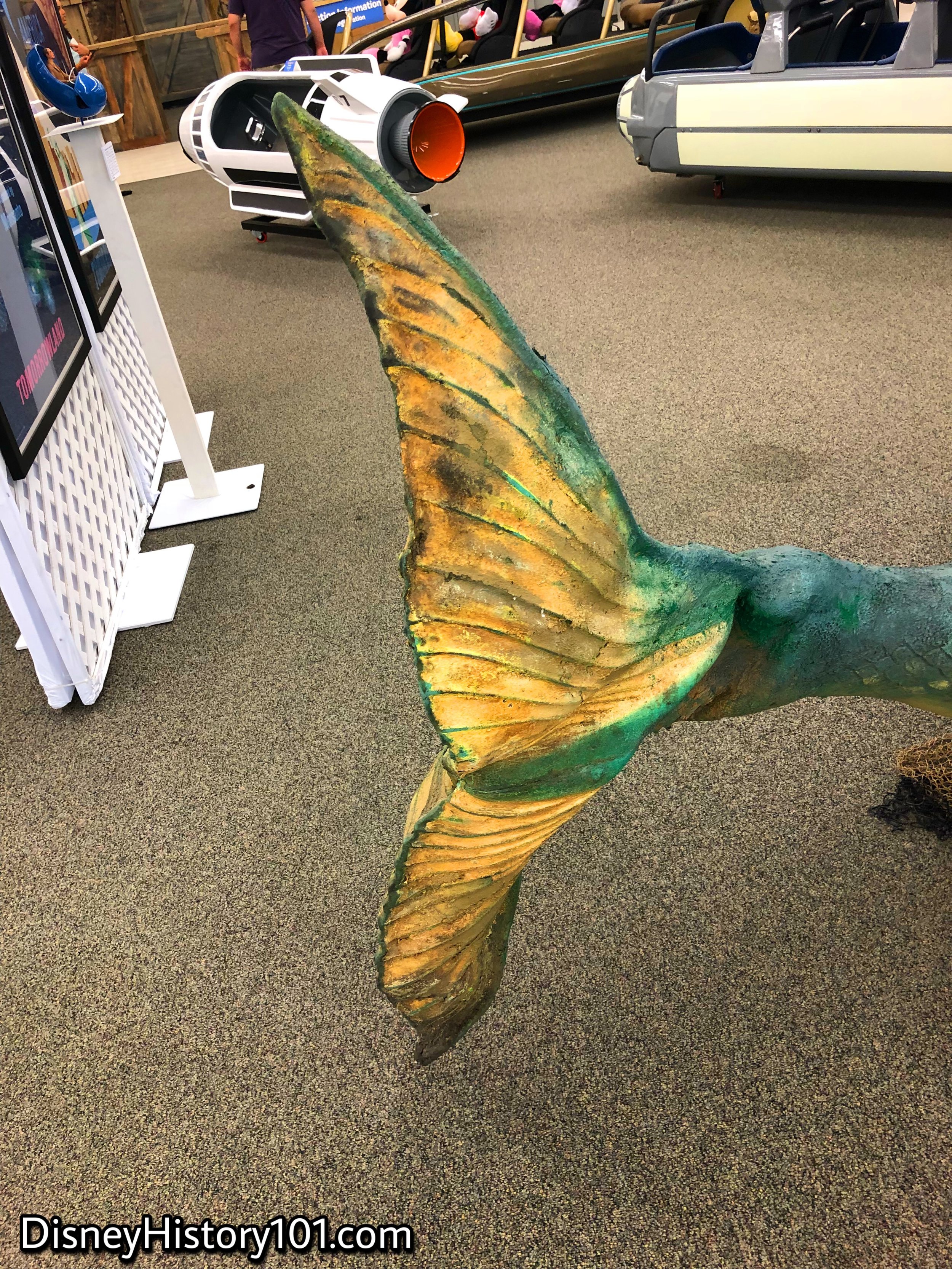
It looks as if we’ve reached the veritable “tail-end” of our tour today! You’re not hallucinating. According to submarine captains, “Chinese records dating back to 488 A.D., for example, mention a black, scaleless, 300-foot long marine monster that swam in the Chien Tany River. Early Norse literature and folklore center around this gargantuan, sea-faring creature, a popular subject for even modern-day authors.”
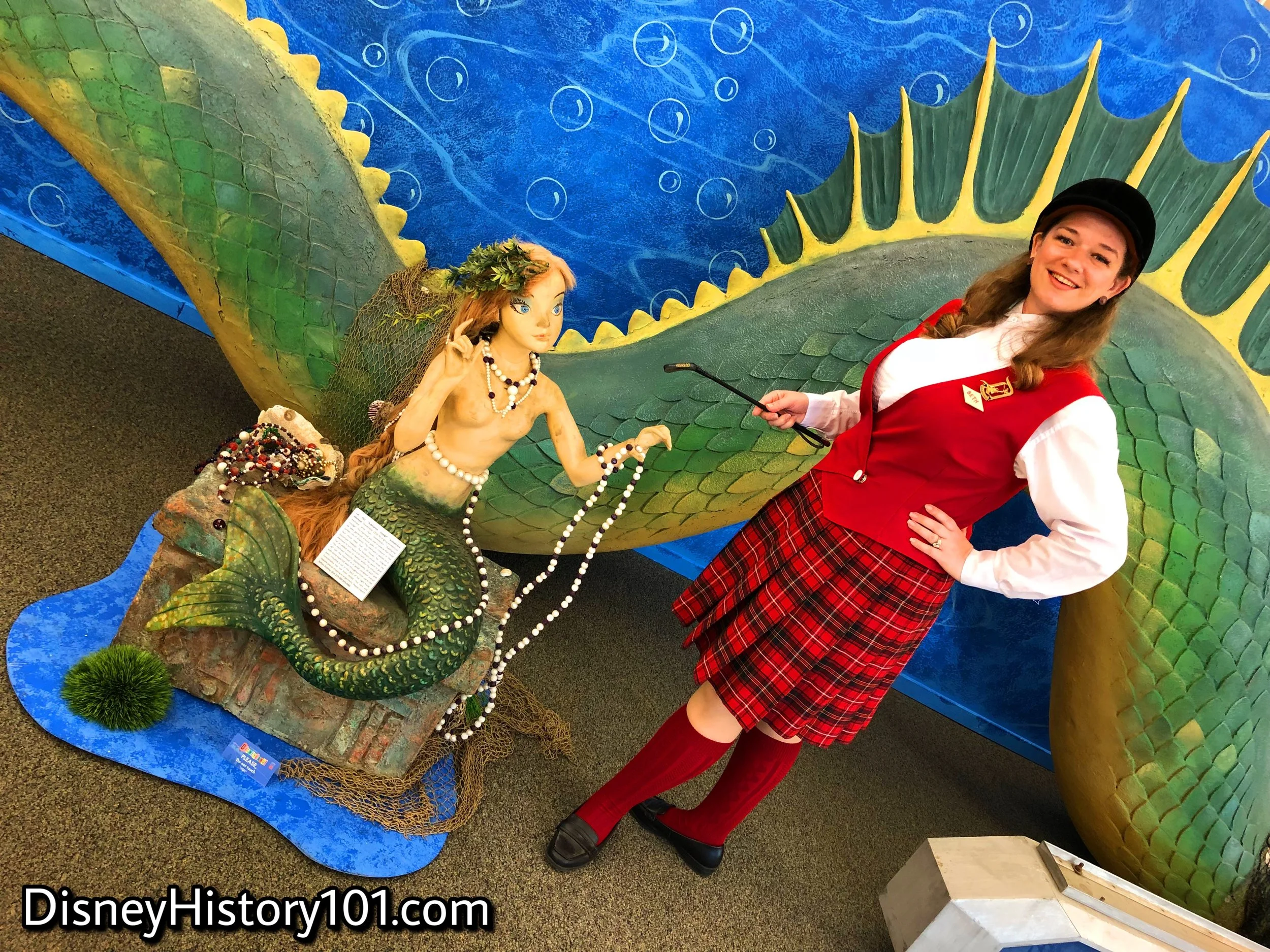
MERMAID AUDIO-ANIMATRONIC
There were 16 such mermaids found under the waters of the Submarine Lagoon. These mythical (half-woman, half-fish) residents of the sea have their origins in the folklore of Europe. Can you believe that mermaids have been known to allure “amorous men to destruction by enticing them into the depths of the sea.” “The mermaids (modeled by Blaine Gibson) were painted in our Model Shop and elaborate wigs were designed. Much of this work was done by Harriet Burns until others learned of her methods. The mermaids were sensational. It was Walt himself that decided that they did not need seashell bras.”
-Bob Sewell
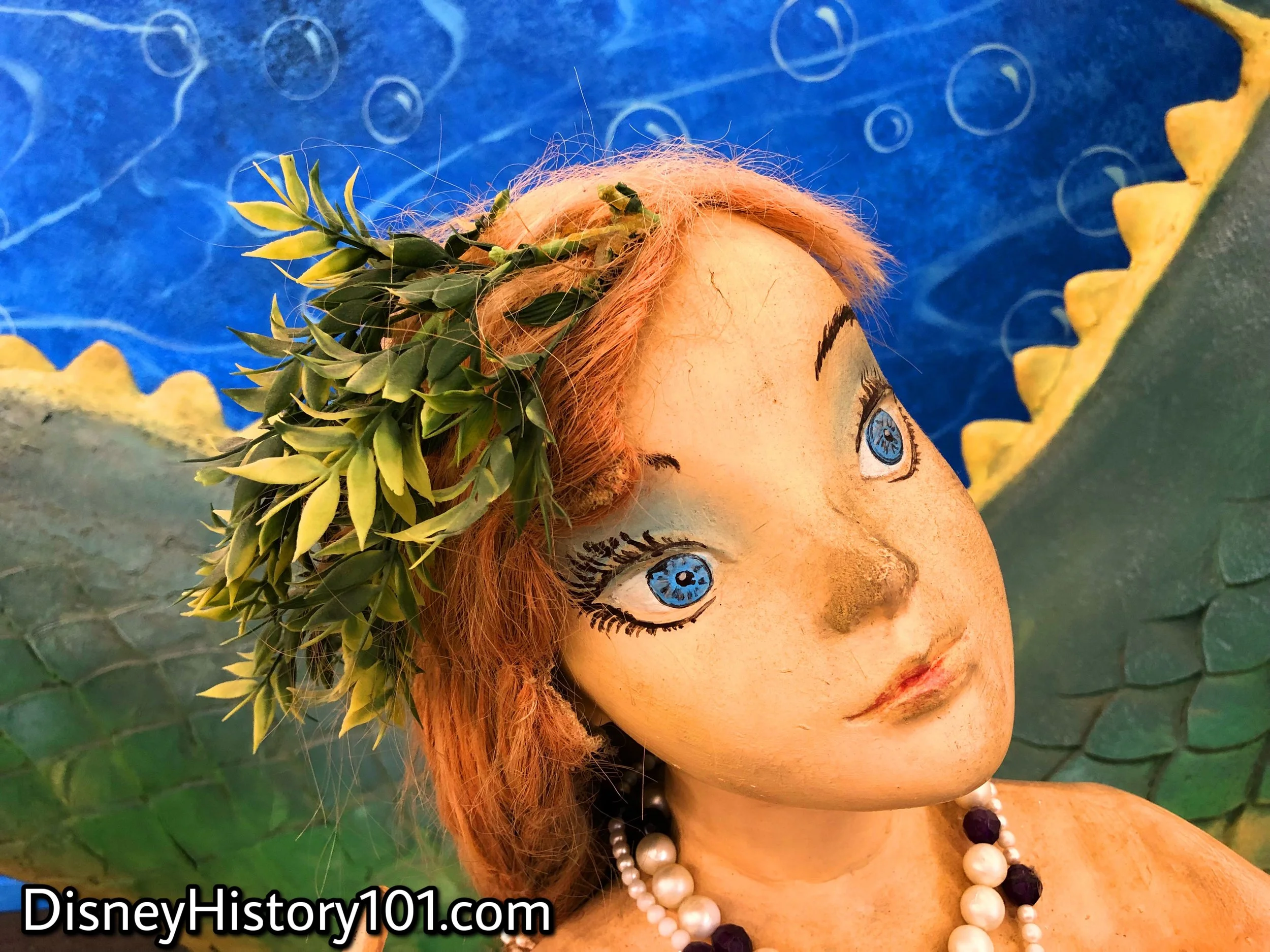
MERMAID AUDIO-ANIMATRONIC
This particular Mermaid Animatronic looks great considering she has likely skipped a few of her mandated annual overhauls. During such rehabilitations, the Mermaids were stripped of their show elements, and even their “skin” and “hair” was reapplied anew by the craftspeople of the Disneyland Cycling Shop! The synthetic nylon hair was susceptible to color loss from the chlorinated water and required a special dye that would retain its color.
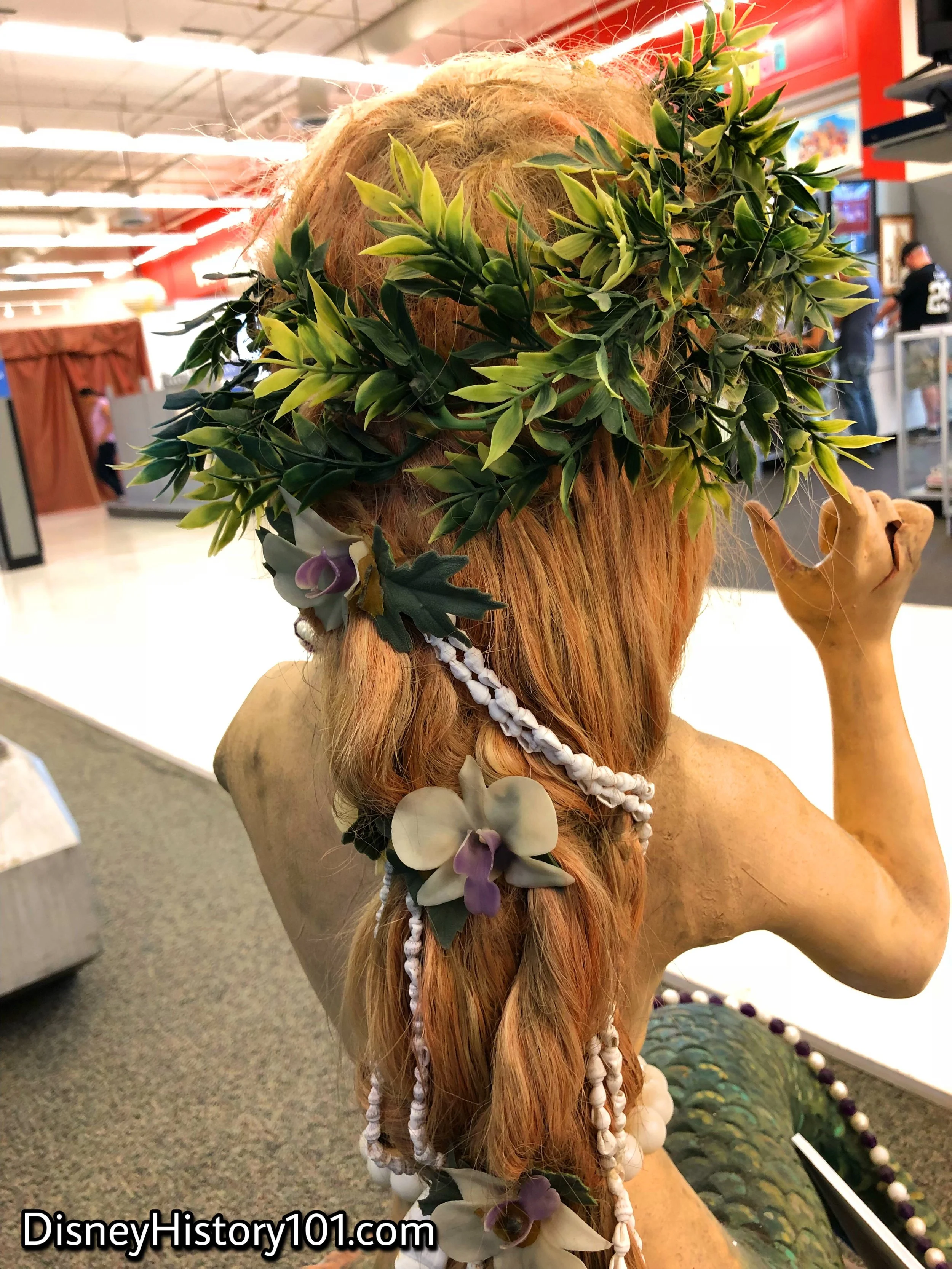
MERMAID AUDIO-ANIMATRONIC
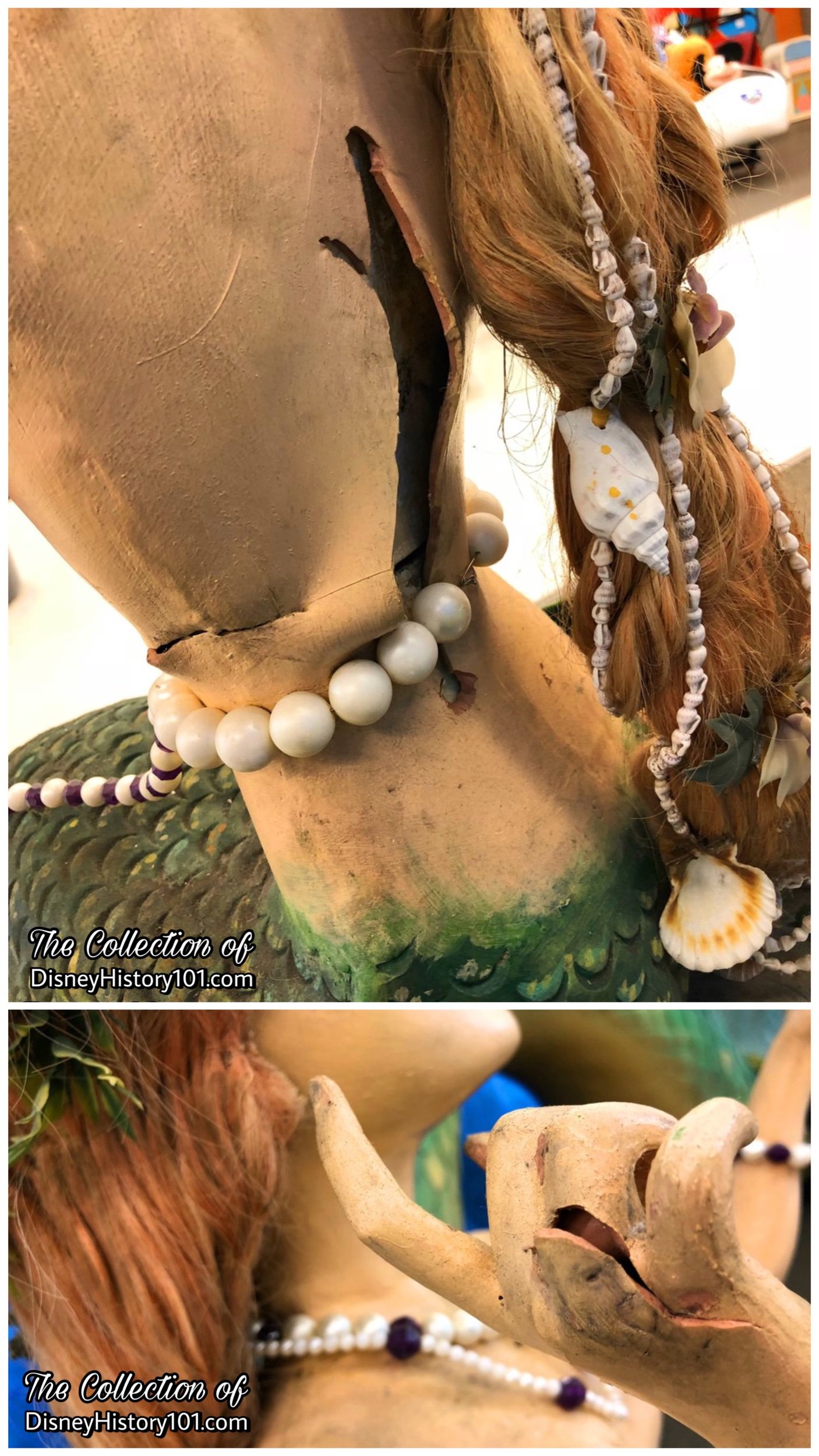
MERMAID AUDIO-ANIMATRONIC
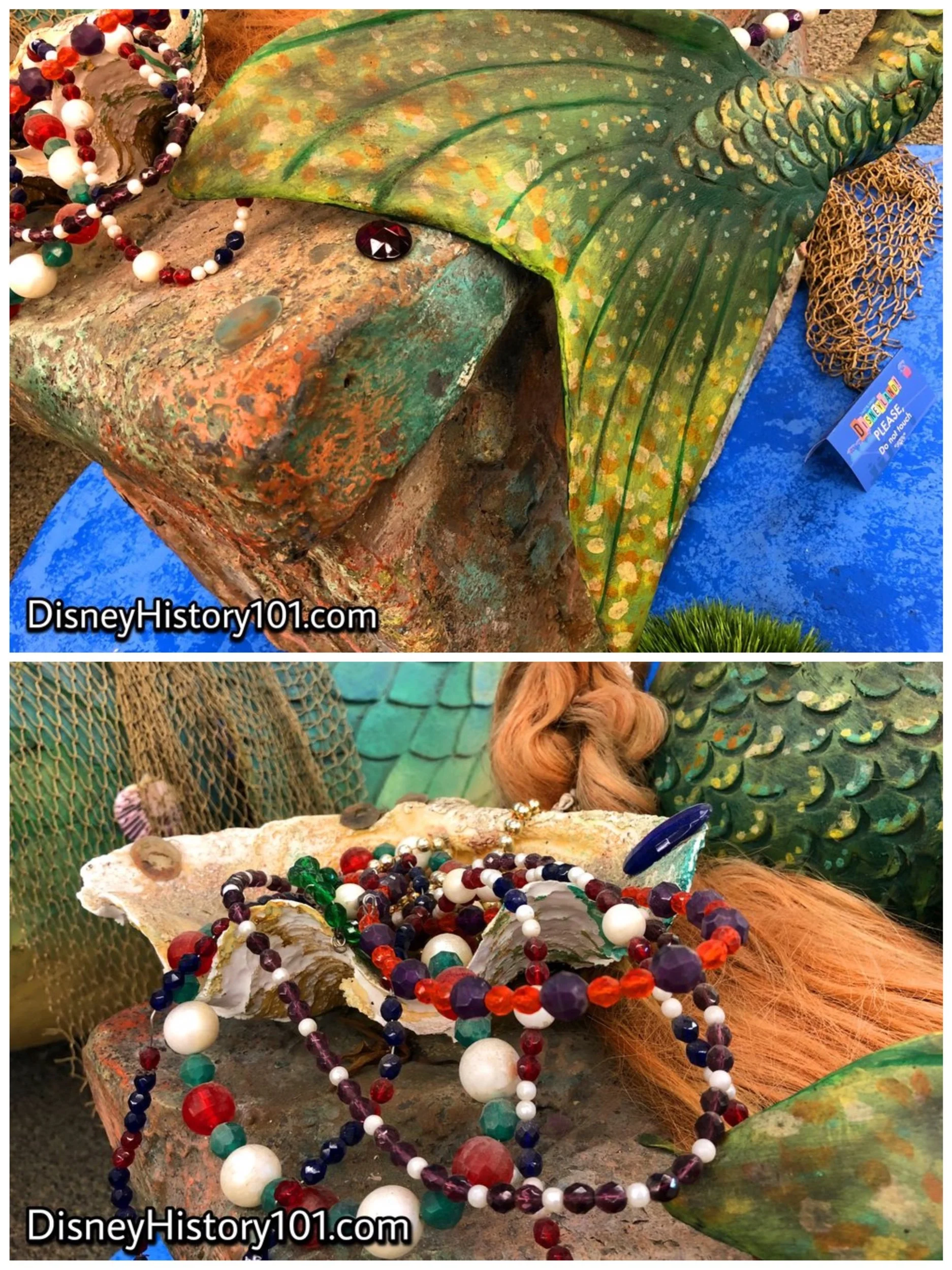
MERMAID AUDIO-ANIMATRONIC
It looks as if Mermaids are inhabiting the vicinity of the lost (and sunken) city of Atlantis, and have claimed its treasures made by the hands of surface dwellers hundreds of years ago.
Quisque iaculis facilisis lacinia. Mauris euismod pellentesque tellus sit amet mollis.