Your Custom Text Here
Sleeping Beauty Castle (1955 - present)
“Sleeping Beauty Castle - A Symbol of Disneyland”
Since Walt embarked into television, the castle has been a symbol of something magical and fantastic! In one pre-Opening interview with Bob Thomas, Walt once divulged : “‘That’s why I used the castle for the symbol on the TV show,’ he said. ‘I think fantasy captures the imagination more than anything else.’” For this reason, a fairy tale castle became a visual element at the beginning of each Disneyland story! While some early elements of Disneyland were not so defined and sure, Herb recalled that Walt “knew he wanted a castle.”
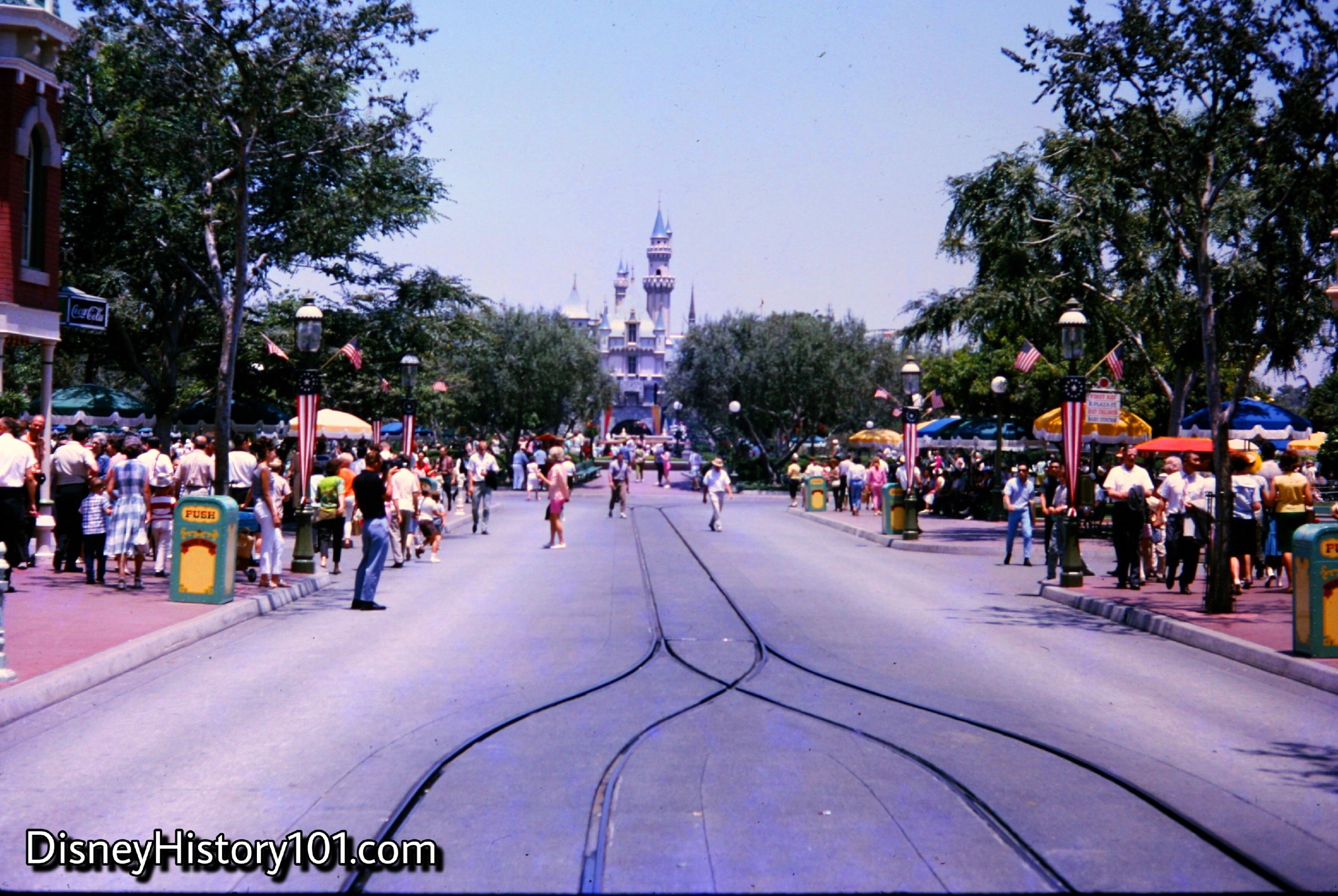
The castle was to serve as the “marquee” of Disneyland, but more so than the Main Street Station and Floral Marquee, as Walt referred to it - a “wienie.” Walt once expressed: “‘This is a magic place… The important thing is the castle. Make it tall enough to be seen from all around the Park. It’s got to keep people orientated,’” according to “Disneyland - Inside Story” by Randy Bright.
“Draw Concept” - A Bavarian castle like King Ludwig's is depicted in "Aerial Over Disneyland" Drawing by Herbert Ryman, originally produced September 26 & 27, 1953.
“Concept and Design”
In 1952, Walt Disney founded a company called WED Enterprises, Inc. in order to master-plan and design his dreams of a Park. Walt knew that it would require the assembling of a coalition of talents to Imagineer his “Sleeping Beauty Castle” main attraction at Disneyland. The company was staffed by Animators, Art Directors, Artists, Artisans, Architects, Set Designers, and Planners from the Studio. Early thumbnail sketches and other concept artwork seemed to be unencumbered by restrictions of budget, schedule or the laws of nature and physics. Though guided by Walt, his artists appeared to engage in “free-thinking,” as if implementing the modern “Blue Sky” Imagineering process.
While many artists contributed, the talented Herbert Ryman is of note. Herb had joined the Disney Studio in 1938, after Walt saw a public show of his work in New York. (Herb's paintings were being exhibited with those of another up and coming artist, Andrew Wyeth.) Herb Ryman acted as art director for such films as Fantasia and Dumbo, but had left Walt Disney Studios in 1946 and (by 1953) was employed by 20th Century Fox. Walt reached out to Herb and during one weekend (September 26 & 27, 1953) the first “Schematic Aerial View” over Disneyland originally produced!
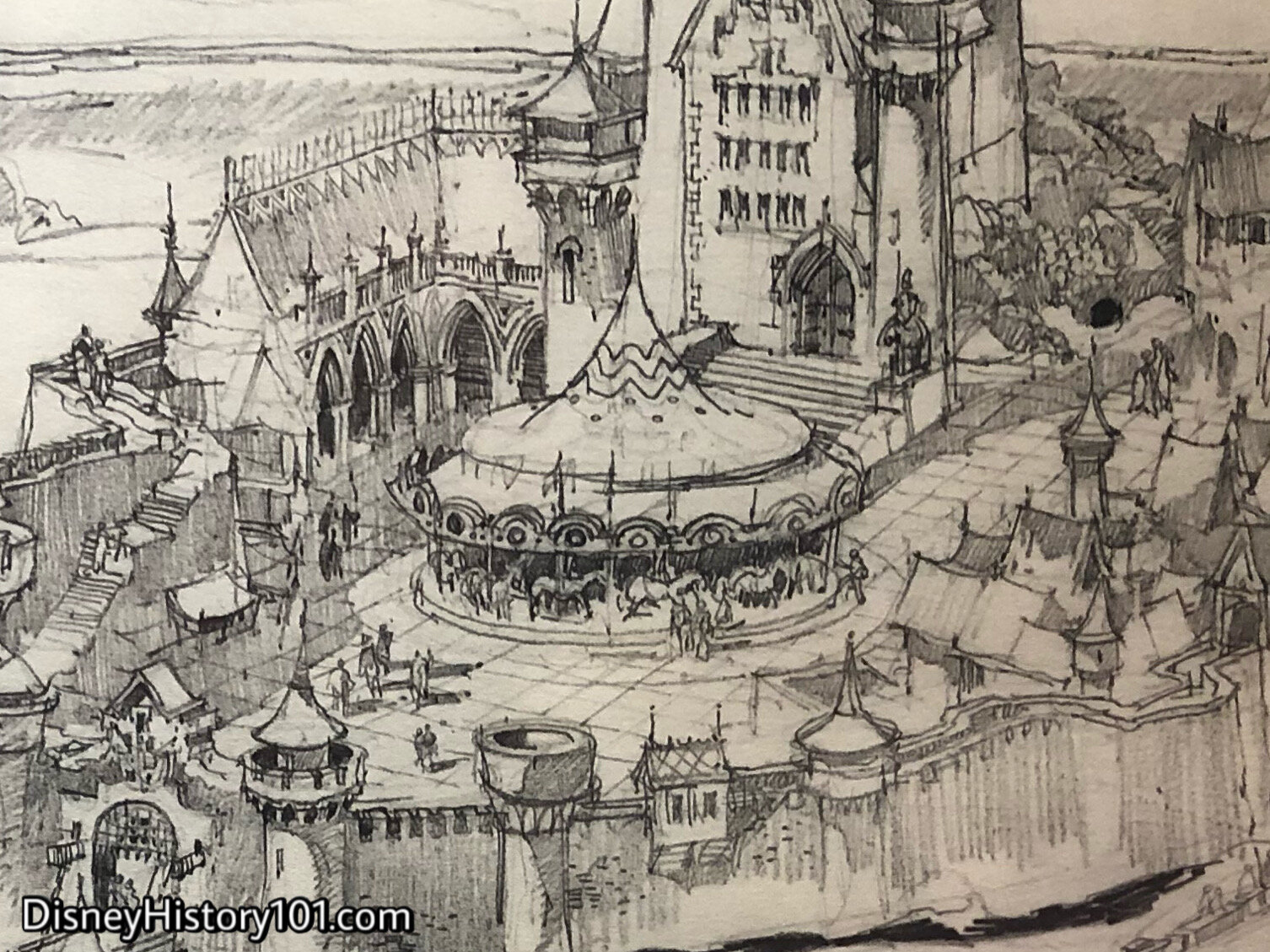
As you will see, Herb recalled [“Working With Walt - Interviews With Disney Artists” by Don Peri] his initial reluctance to grant Walt’s request as the drawing was due Monday morning. However, the designs of the castle were produced, with inspiration from medieval European architecture like Ludwig II’s Bavarian Schloss Neuschwanstein located in Allgäu in Germany. This is evident in the work of Marvin Davis and Herb Ryman (as you will see). In fact one particular (prepared by July 21, 1953) entitled “Castle Entrance to Fantasyland” by WED Enterprises, Inc. artist Marvin A. Davis featured certain forward-facing elements very similar to Neuschwanstein.
According to the account of Herb Ryman in “A Brush with Disney” (pages 143-147): “It was about 10 A.M. on September 26, 1953,” when Dick Irvine called. He said, “Walt wants to talk to you.” That was when Walt grabbed the phone, according to “Disneyland Inside Story” by Randy Bright. Herb Ryman continues: “Walt called unexpectedly. When I remarked that he was at the Studio on a Saturday morning, he commented, ‘Yes, it’s my Studio and I can be here any time I want.’
I was not working at the Disney Studio at that particular time, because in 1946 I had gone back to 20th Century Fox. I had deserted Walt, which was a very criminal act (at least he thought it was). However, I was curious, and flattered, that Walt would pick up the phone and call me. I had no idea what he wanted.
He asked how long it would take me to get there. I said if I came in the clothes I’m in now, it’ll take 15 minutes, but if I get dressed, take a bath and shave, it’ll take 30 minutes. He said, ‘Well, why don’t you come as you are. I’ll be out front waiting for you.’ So I drove over to the Studio and sure enough Walt was out in front, standing there. We went into the Zorro building. Bill Cottrell, Dick Irvine and Marvin Davis were there, all friends of mine. Walt said, ‘Herbie, I’m in the process of doing an amusement park, we’re working on it right now.’ I asked, ‘Where is it going to be?’ He said, ‘Well, we don’t know. I’ve got Harrison Price at Stanford Research working on where it ought to be, the feasibility survey.’ I asked, ‘What are you going to call it?’ He said, ‘Well, I’m going to call it Disneyland.’ I said, ‘Well, that’s a good name. What is it that you want to see me about?’ He said, Well, my brother Roy is going to New York on Monday morning. He’s flying out of here to go to New York to see the bankers. Herbie, we nee $17 million to get us started.’
Walt had sold his insurance policy and his house in Palm Springs, trying to get the money together. ‘You know, the bankers, they have no imagination. They can’t visualize when you tell them what you’re going to do before we can have any chance of getting the money.’ I said, ‘I would love to see what you’re going to do. Where is it?’ He pointed at me and said, ‘You’re going to do it!’ I said, ‘No, I’m not. You’re going to call me on a Saturday morning at 10 A.M. and expect me and it will embarrass you.’ Walt asked the other guys to leave the room.
We were alone. Walt paced around the room with his arms folded, kind of paced back and forth, then went over and stood in the corner, kind of looked back at me over his shoulder with a little kind of sheepish smile, like a little boy who really wants something.
With eyes brimming, he asked, ‘Herbie, will you do it if I stay here with you?’ I begin to think, well, he’s very serous about this, and Walt, after all, was my friend, and so I said, ‘Sure, if you stay here all night tonight and all night Sunday night and help me , I’ll stay here. I’ll see what I can do.’
Our agreement cheered Walt, and he sent out for tuna salad sandwiches and malted milks and we started to work. Marvin and Dick and Harper Goff had a lot of preliminaries and groundwork on other parks that Walt had conceived of, which were very small things. So all of this was sort of put into the hopper. Walt had shown me plans from many well known Los Angeles architects, which he had relegated to the garbage pile. These architects went to so much work figuring out sewers and electrical specifications, but they were unable to capture the vision that Walt was trying to achieve. Finally he turned to his own people. He explained to me that Disneyland was to be a world apart. Entering its portals was to leave behind the hum-drum everyday world. This was my assignment. I got a big piece of paper and started to draw.”
And so the first “Schematic Aerial View” over Disneyland was completed (over two days - September 26 & 27, 1953). It depicted the castle with much “draw concept,” prominently appearing at the highest point. This artwork was to be carried by Roy Disney to potential bankers and other investors during 1954 to 1955. Subsequently, about 140 of these drawings are believed to have been produced during Disneyland development, varying in details. Herb Ryman’s mother, who was excited about the project, recorded in her diary: “Herbert is helping Walt to do a map of an amusement park. Roy Disney is going to New York soon to talk to the money people about helping finance Disneyland.” About a year later, Herb would continue to produce more suggestions of the illuminated Sleeping Beauty Castle at night, and no doubt, his mother had much more to record. For now, the next stage in the master planning of Sleeping Beauty Castle would commence.
By July 1, 1954, George Whitney of Disneyland, Inc. directed Amusements, with Ron Miller overseeing analysis, philosophy, capacities, planning, operator training, and amusement procurement.
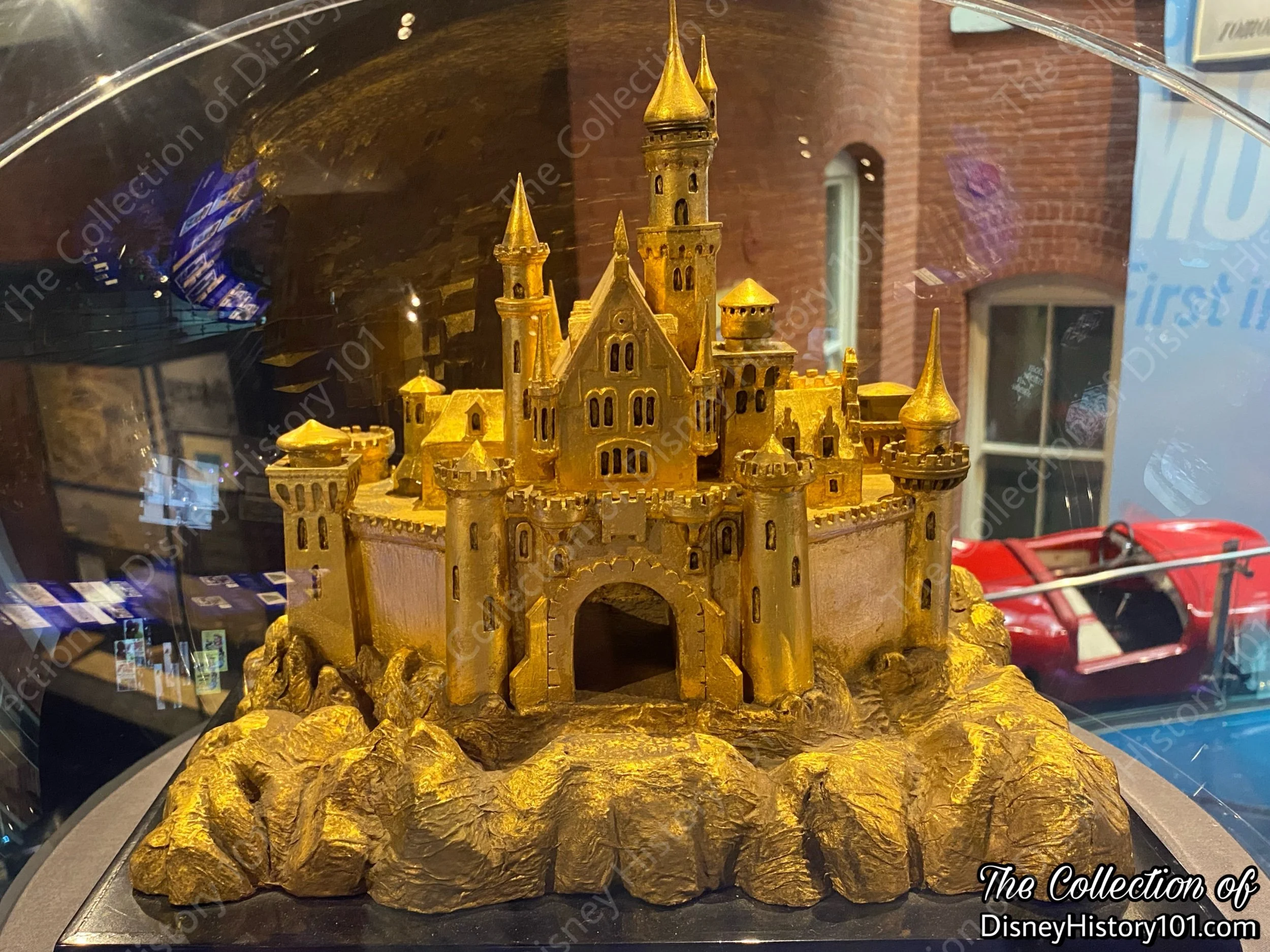
ORIGINAL MODEL OF FANTASYLAND CASTLE DESIGNED FOR WALT DISNEY; by Marvin Davis; built by Fred Joerger, 1953.
“Architectural Models”
"From fairytale castles to extraordinary buildings", the settings and stages of Disneyland and Disney Parks are brought to life in part, due to their "architecture with a plot", as expressed by Beth Dunlop, Author of “Building a Dream: The Art of Disney Architecture”.
In the beginning, Harriet Burns and Fred Joerger “worked in a tin shack out in back of the Studio, building models to help… work out the original designs for Disneyland. Everything depended on models, and Fred and Harriet were the best you could get.” A dimensional architectural model was created by Fred Joerger, Wathel Rogers and possibly Ken Anderson (which currently resides in Gallery 9 of the Walt Disney Family Museum). Models explored the various dimensional relationships, site-lines, flow patterns, ergonomics, and visual appeal to convey the desired creative intent. But there was one problem - the top half of the Castle was placed backwards atop the bottom half of the castle. This was noticed by Herb Ryman, who (in order to end the debate) picked the pieces up and turned the top of the castle around. When Walt unexpectedly walked into the Model Shop room, he like the design, approving the look of the Castle.
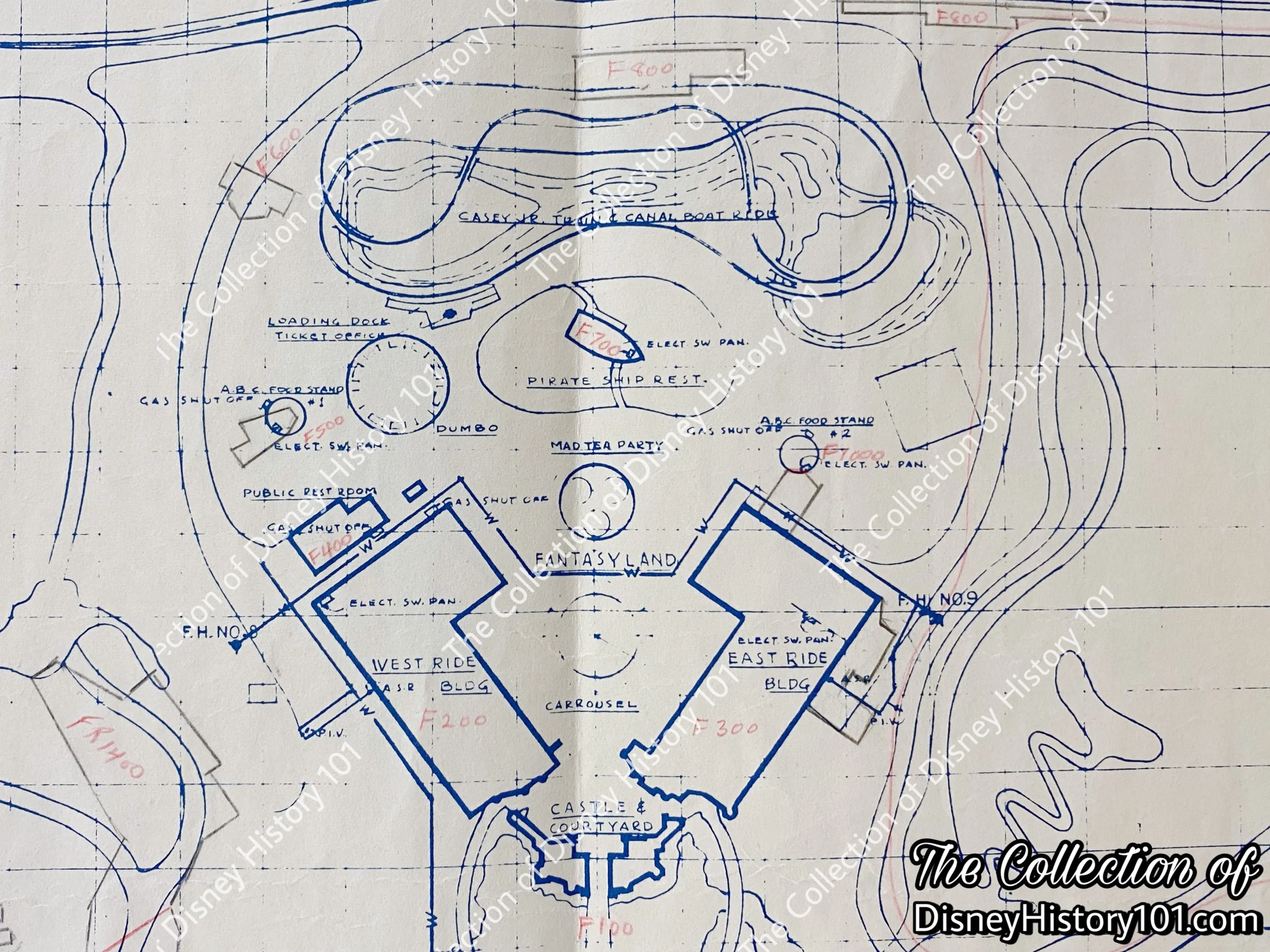
An early Site Plan of Fantasyland and Sleeping Beauty Castle
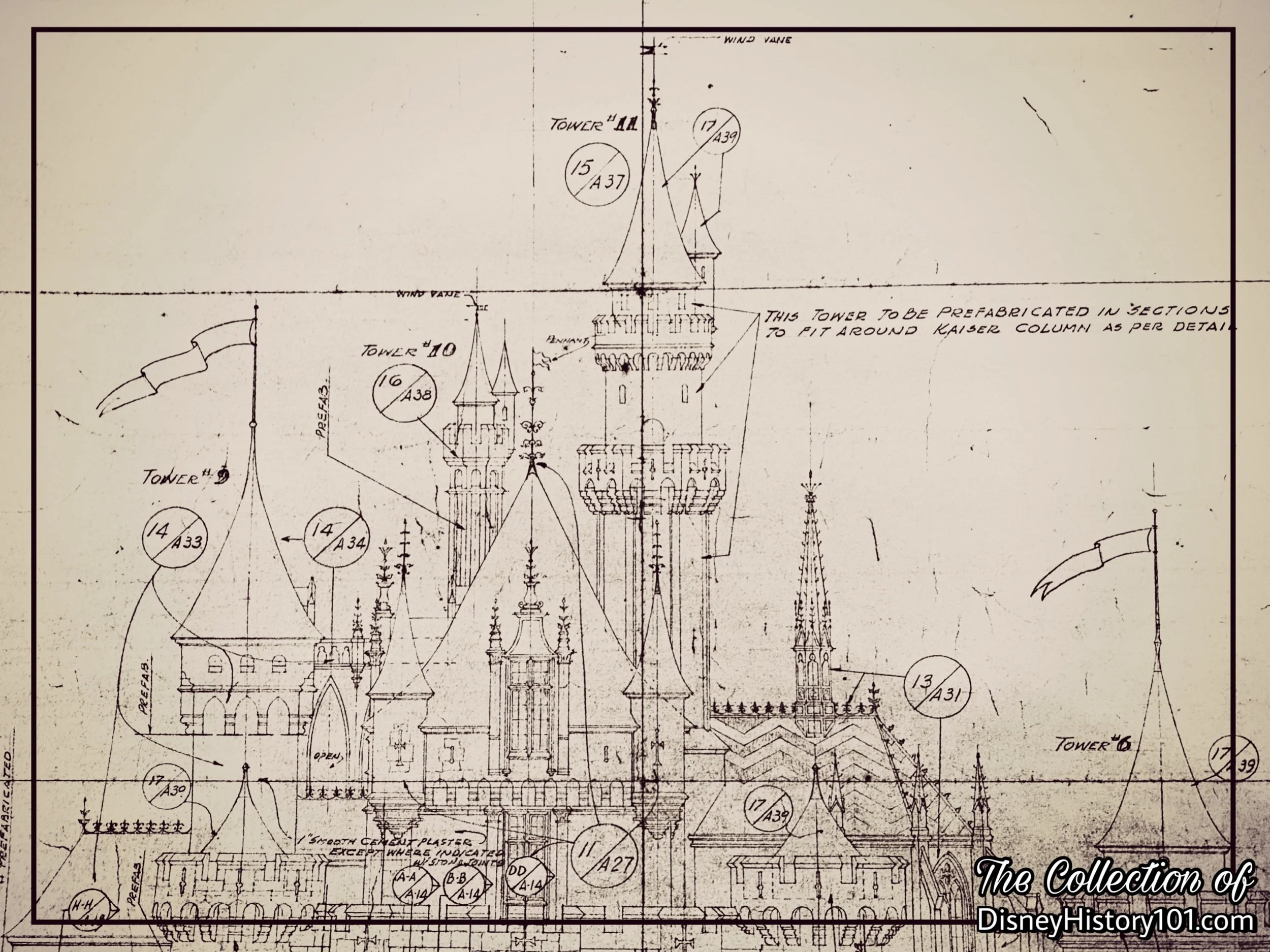
An excerpt of the “Fantasy Land” Castle South Elevation Working Construction Drawing “theatre concept” at 1/4 Scale by Disneyland Inc., produced around February 12, 1955.
Architectural drawings helped define all designs, production and construction strategies, costs, schedule, and resource requirements. “Disneyland is unique in that some of the world's foremost creative artists and architects control all design at Disneyland.“ By February 12, 1955, working construction elevation drawings (by architect Roland E. Hill) were approved by both Bill Martin and Richard Irvine, engineers of WED Enterprises, Inc. (then located at 2400 West Alameda Avenue in Burbank, California). Forced perspective (a scaling toward the top) was employed to produce an illusion of greater size or depth.
“Construction”
Soon after the specs were complete, work began on laying the “concrete foundation, constructed of plaster and concrete material formed to similate stone.” Next, a steel and heavy wood frame was erected. Then work began on the walls and battlements, which achieved forced perspective, “constructed of stone cut in graduated sizes, from large at the foundation to small at the topmost sentry posts.” [“Walt Disney Disneyland,” published 1964]
Atop these were laid a “wood and plastic shingle roof with numerous steeples and turrets of varying heights to approximately 40 feet.” A total of 11 such steeples and turrets would tower over Sleeping Beauty Castle. The lone cathedral spire has similar architectural elements to those found on Berner Minster in the old city of Bern, Switzerland. According to inserts published in area newspapers during July of 1955, Disney buildings were roofed by Pioneer Roof & Shingle Company (then located at 608 Mateo Street, Los Angeles, California; 7522 Westminster Avenue, Westminster, California).
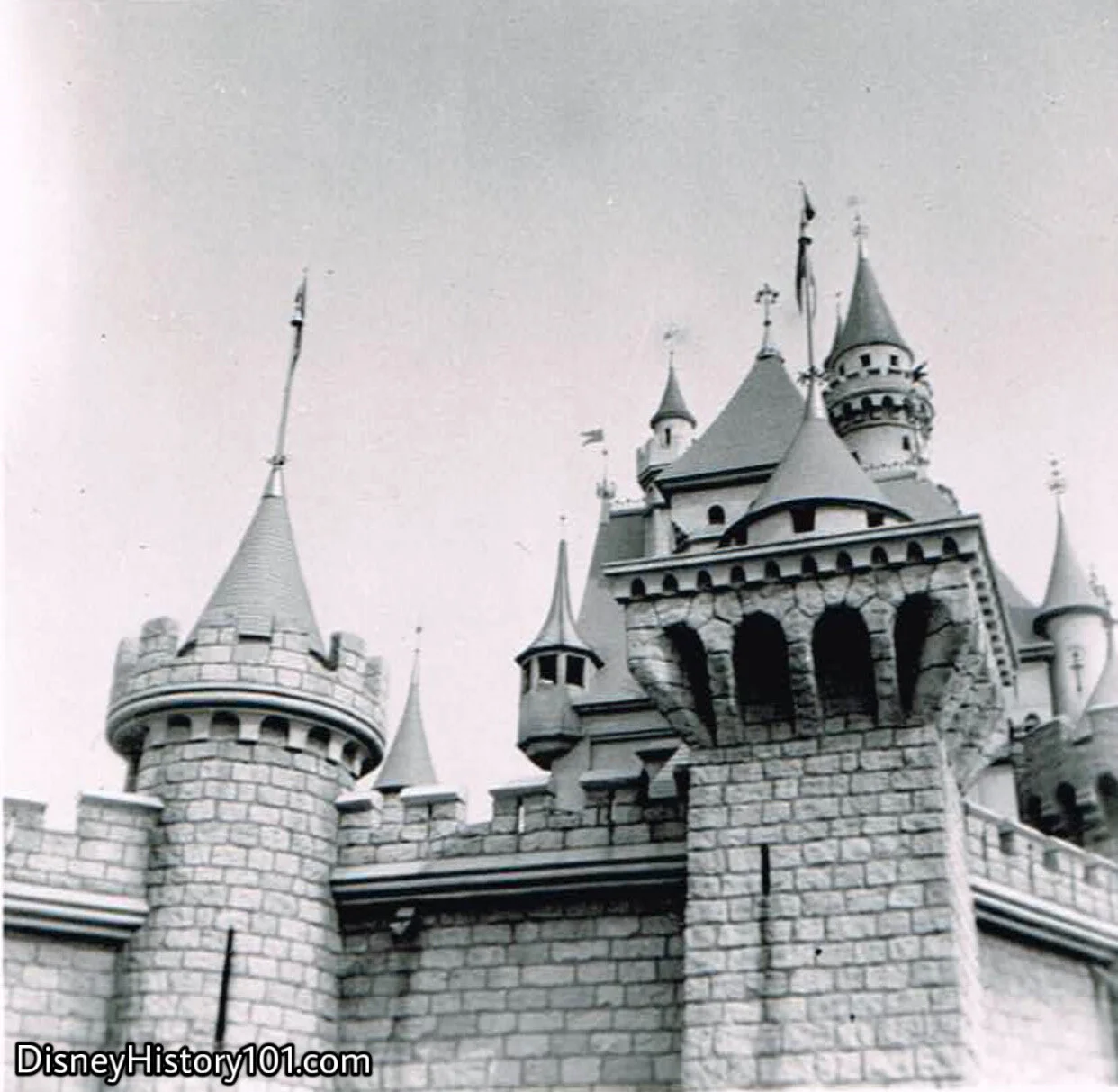
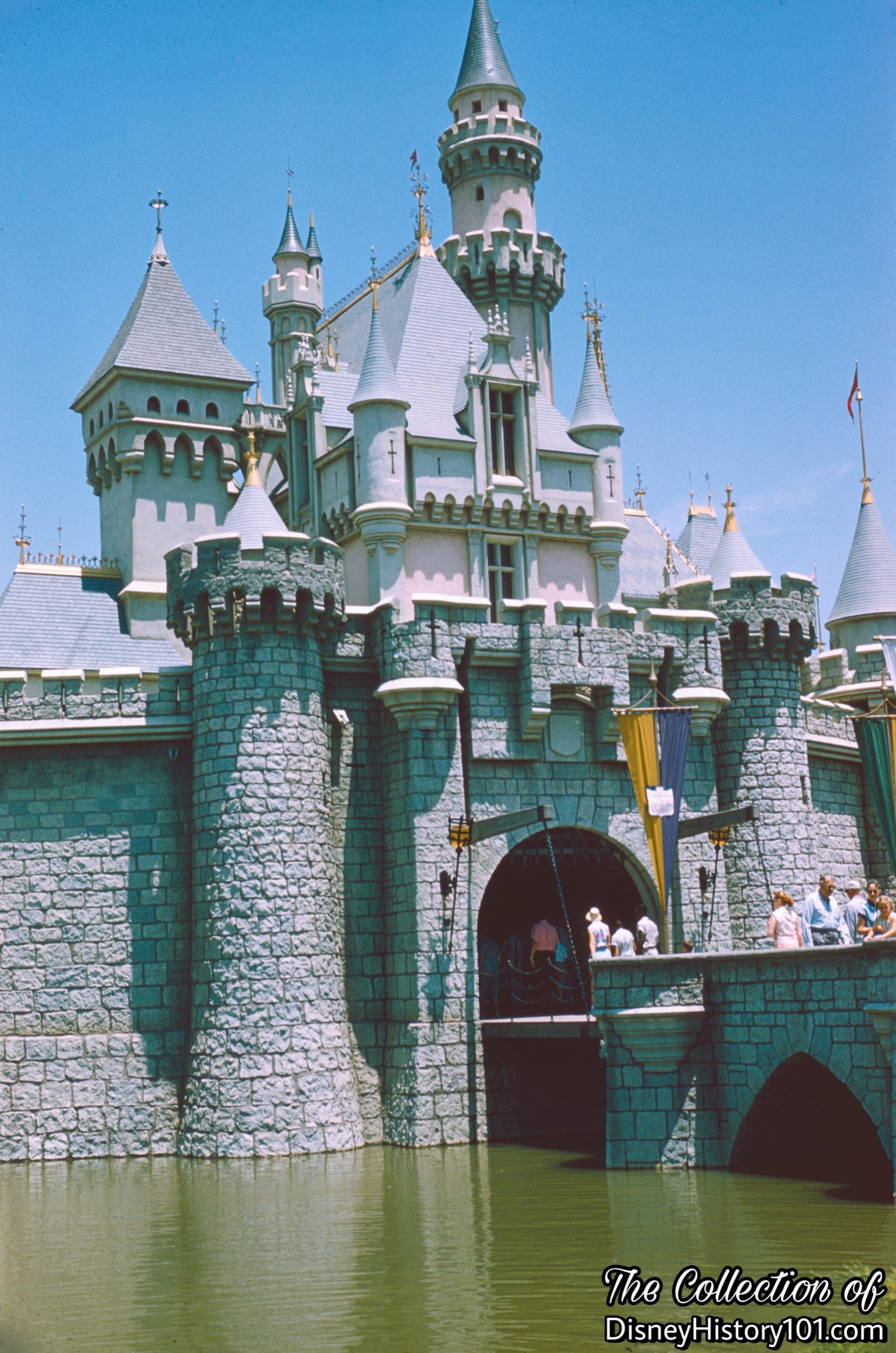
The forced perspective technique was applied to the Castle. The blocks on the bottom of the castle were constructed bigger and got smaller the higher up. The reduced scale helped frame views of Sleeping Beauty Castle, securing it as a visual anchor, the Castle drawing the Guest down towards the hub. The perspective also supported a feeling of well being.
Inside, was space for an attraction and two small stores (comprising 4,292 square feet). The interior finish was of sheet rock, wood panel and other variable materials for effect. By 1958, the entire castle was appraised at a value between $326,800 and $322,000.
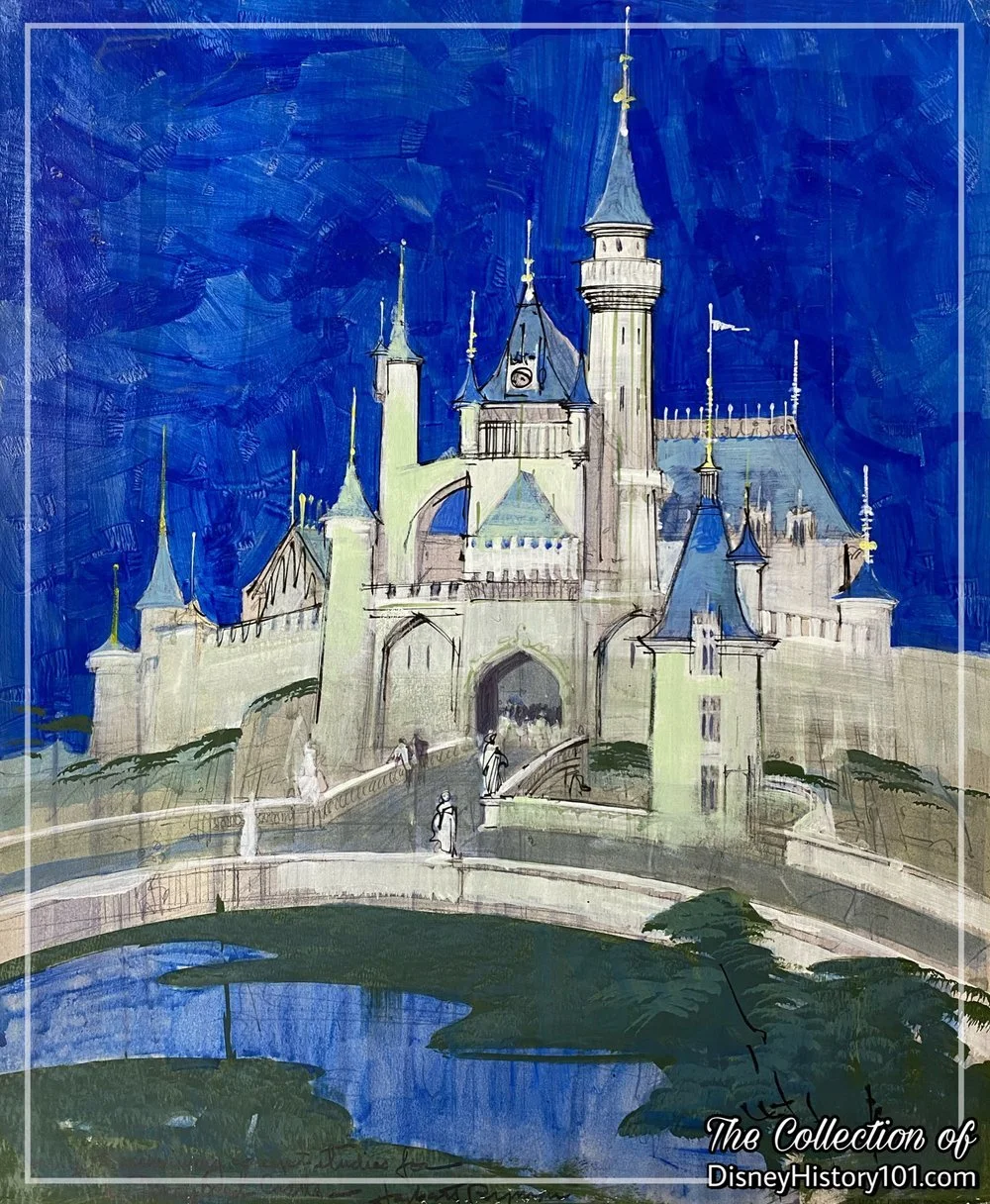
A “Disneyland Castle Concept” by Herb Ryman, c.1954-1955.
Walt also liked the color palette as Harriet Burns recalled, “because he thought it would blend with the sky, making the castle looks taller.” Speaking of Harriet Burns (who had previously designed and built the Mickey Mouse Club Mouse Clubhouse for the television series), she also made notable contributions toward Sleeping Beauty Castle. Soon (during 1954), parade-goers received one of the earliest previews of the attraction when a Sleeping Beauty Castle float appeared in the Anaheim Halloween Parade. Even atop the float, the castle was was designed to have ”draw concept” - designed in a manner in which it would generate interest and beckon the observer. Like some advanced “High Concept,” final designs were quickly generated and approved.
When Disneyland was being constructed, the McNeil Construction Company was the primary construction company on site. According to one source, “much of the construction was unique for the firm for it meant going well back into yesterday in building the Main Street U.S.A. area. Castles of old and such structures were new to the workers but they took them in stride.” Much of the physical labor of Disneyland’s construction was arranged through Bruce and Lawrence’s McNeil Construction Company (located at 5858 Wilshire Boulevard, Los Angeles, California).
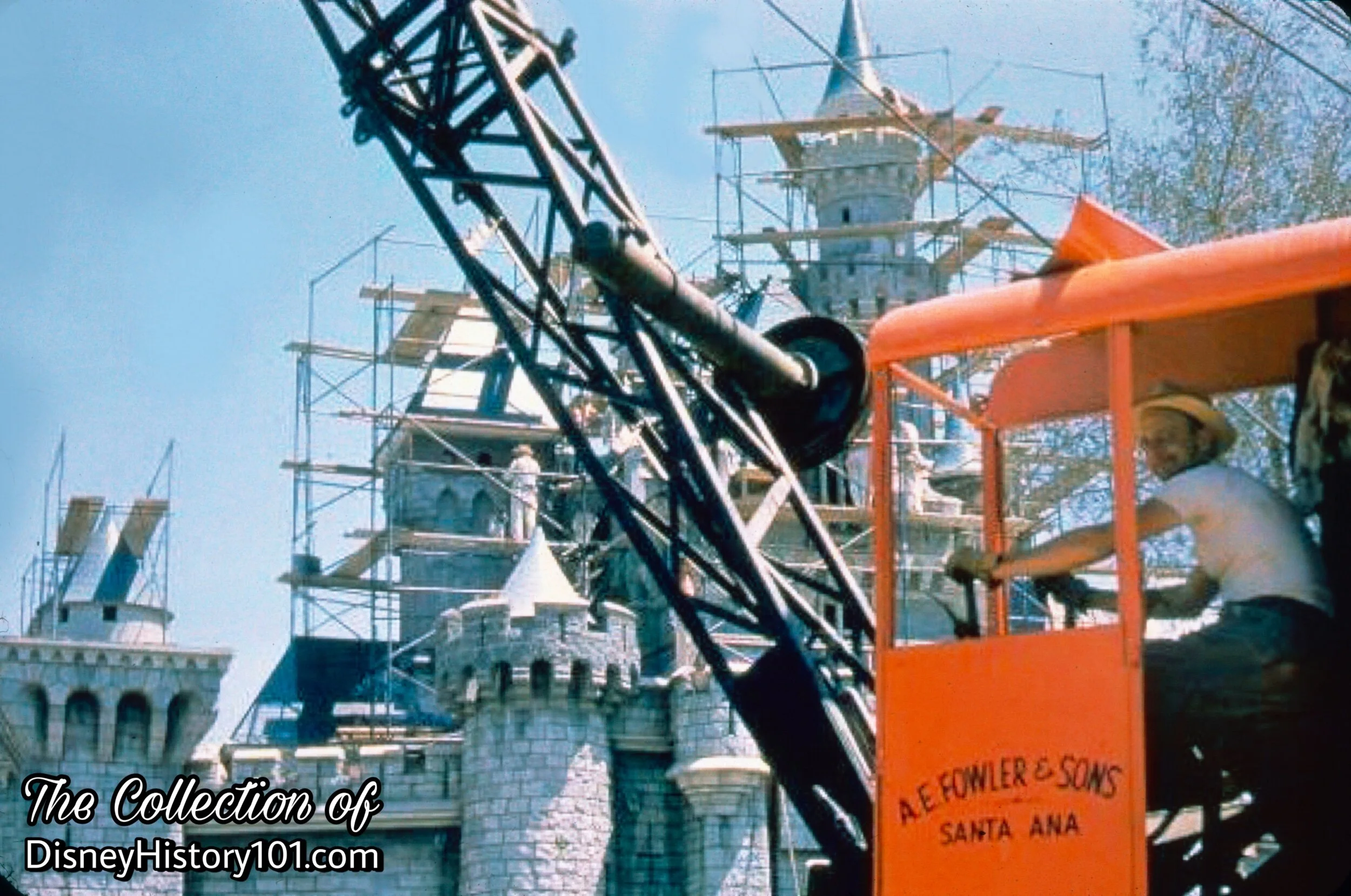
1954 - Ron Vasey at the controls of A.E. Fowler and Sons' 20-ton Loraine crane
However, A.E. Fowler and Sons was the official company contracted to supply the lone crane (and heavy machinery) that was essential to constructing Disneyland. A.E. Fowler and Sons (of Orange, California) was a truck crane service company that was previously instrumental in building many well known locations around Orange County including Disneyland! The company offered bulldozers, skip loaders, dump trucks. They also provided excavating and earth moving services, performed grading, as well as heavy hauling.
Now, one A.E. Fowler and Son’s crane was to be utilized in heavy lifting around Disneyland. For instance, the crane was utilized in constructing the Jungle River Cruise, and lowering the boats into the water. It was also used to transport the Mark Twain’s boiler to its deck, and lumber to the Golden Horseshoe and Mark Twain loading dock. Time lapse photography (taken about 4 months before the park’s opening) shows this crane being utilized in numerous other ways around the construction site. It can be seen transporting steel and wooden framing, placing trees and walls, elevating workers, tools, and materials (like lumber and concrete) to otherwise unreachable heights (i.e. towers, spires, and roofs). Attesting to the usage of A.E. Fowler and Son’s crane is its appearance in “A Trip Through Adventureland” (an episode of “Walt Disney’s Disneyland”), where the crane is used to both support a cameraman who is “keeping a day-to-day record of the growth of Adventureland,” and (off-camera) place one of the Naphtha Launches in the Jungle River.
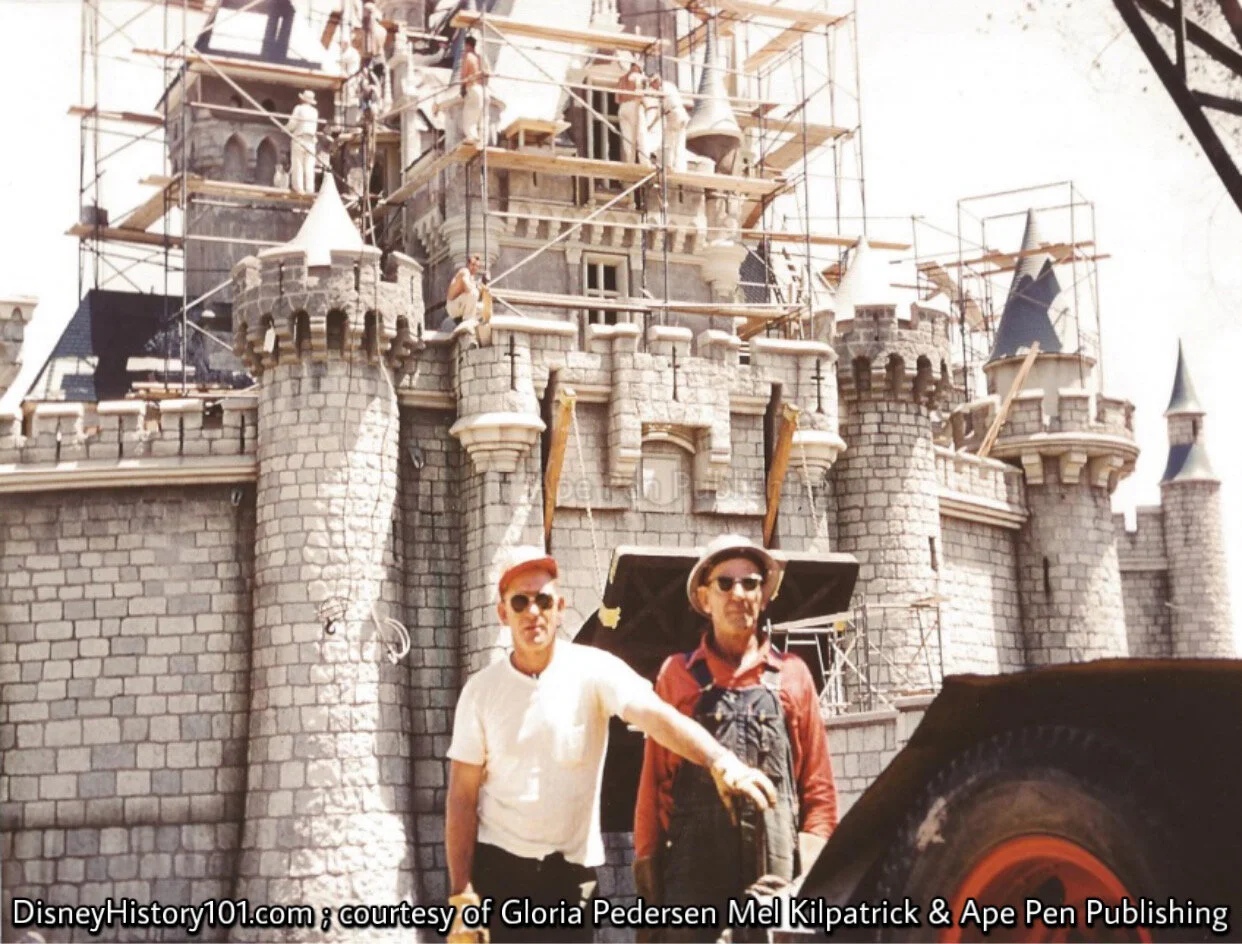
A.E. Fowler and Son’s had four crane operators on site at Disneyland - Ivan Myrick and partner Gayle Funk in one crew, Ron Vasey and “Bonie” Bonebreak in the other crew. Both crews worked day and night (around the clock) from 1954 to 1955. This rigorous work schedule was such that Ron’s daughter Rhonda remembers that period this way: “My Dad was very good with his hands. I didn’t know much of what my father was doing. My father spoke once about helping put the Jungle Cruise boats in the river. But I wasn’t told a lot of what was going on…I do remember going to visit my dad in a dirt field.”
Gloria Pedersen relates : “Mell Kilpatrick took the photo and was Walt’s personal photographer. He just showed up in the beginning of construction and started taking pictures. He became “chatty” with Walt and Walt liked him. So, Walt ended up giving him permission to take all the photos he wanted.” You can read more about the life of Mell Kilpatrick by visiting this official link HERE.
As Masterson Scaffolding Rises Behind, Two of Four A.E. Fowler and Sons Crane Operators - Ivan Myrick and "Bonie" Bonebreak, c. 1954 ; photo by Mell Kilpatrick
Gloria Pedersen (daughter of Ivan Myreck) recalls : “I was 8 years old when Disneyland opened but a couple years before that we lived in South Santa Ana. I remember vividly, that Daddy came home from work one day and said he had a surprise. He piled everyone into the family sedan and we drove and drove. It started to get dark, and Dad would stop the car. Mother would get out of the car and look at the street signs because we were in the middle of orange groves. We drove for about an hour until we finally arrived. He stopped the car, told us all to get out, and we all thought Father had lost it. Then he said, ‘This is where they are going to build…Disneyland’. We had never heard the word Disneyland before, so my brother asked, ‘WHAT is Disneyland?’
Daddy’s company got the contract with Disney because they needed a big crane and daddy’s company had one. My dad (Ivan Myrick) worked as a crane operator for A.E. Fowler and Sons, and their crane was the only one present…when they “broke ground” at Disneyland.
Walt had a deadline and worked people around the clock. While one team was operating, the other was sleeping. Dad didn’t come home for weeks on end. There were no cellular phones or pagers back then. On ‘pay day’, he would call Mom [from a pay phone] and have her bring him a change of clothes. Mom would ask him, ‘How will I find you?’ Dad would answer, ‘Just look for the boom of the crane - its the largest thing out here.’ Mom just headed for that boom, and that’s how we would find Daddy.
I have vivid memories of going to Disneyland before it was opened to the public, and before Press Day. Anybody who had anything to do with the creation of Disneyland was there. There was free food, and there were only a few attractions open (the carousel and Mr.Toad’s Wild Ride). Daddy asked Walt what he should do with the crane and Walt said, ‘Leave it here. Something might go wrong. We might need it. Leave it here.’ We were on the train, and we just passed the Indian Village. All of a sudden, they kept paging my dad, ‘Myreck, get to the Main Street Station immediately.’
I remember yelling at him, ‘Daddy, don’t do it. You’ll get killed!’ Well, Daddy jumped off the train while it was still moving. Back then the cranes were all manual, so Daddy’s arms and legs got a good workout all day long while operating it. He ran all the way from the Indian Village to the Main Street Train Station, to find out that a passenger train had derailed. It turned out that he used the crane to put the train back on the tracks. That was my Dad, who saved the day!”
“Walt Disney’s Railroad Story : The Small-Scale Fascination That Led to a Full-Scale Kingdom,” by Michael Broggie (2014), pp. 235-237 elaborates further on this derailment. Within a week of Disneyland opening, a brakeman had pulled the switch connecting the Santa Fe & Disneyland Railroad’s main line with the parallel line at Main Street Station. The caboose had not made it fully across the switch and was derailed. But that’s a story for another “Vintage View” section.]
In addition to assisting the heavy construction of buildings and placing trees at Disneyland, “A.E. Fowler and Sons built schools, shopping centers, and banks. They planted trees and poured concrete. They used to call my dad ‘Mr. Orange County’, because you really can’t go anywhere without seeing his work. We went to The Walt Disney Story inside the Main Street Opera House to watch the film, and there was Daddy’s crane!”
“Walt was fascinated by the big pieces of equipment and the men who operated them. He was there watching Daddy work that day and that’s the day I met Walt Disney.”
- ”The Birth of Disneyland” by Gloria Pedersen (daughter of Ivan Myrick)
And so, Sleeping Beauty Castle began to take form (with the help of A.E. Fowler and Sons’ orange Crane). The drawbridge was built at the Mill (on the future site of the Opera House), before being transported to Sleeping Beauty Castle.
The Mill temporarily included the Plaster Shop which created ornamental archway pieces for Sleeping Beauty Castle. The stone and staff work on our Castle was built with more than two thousand sacks of cement ... enough to pour a sidewalk three feet wide and a mile long.
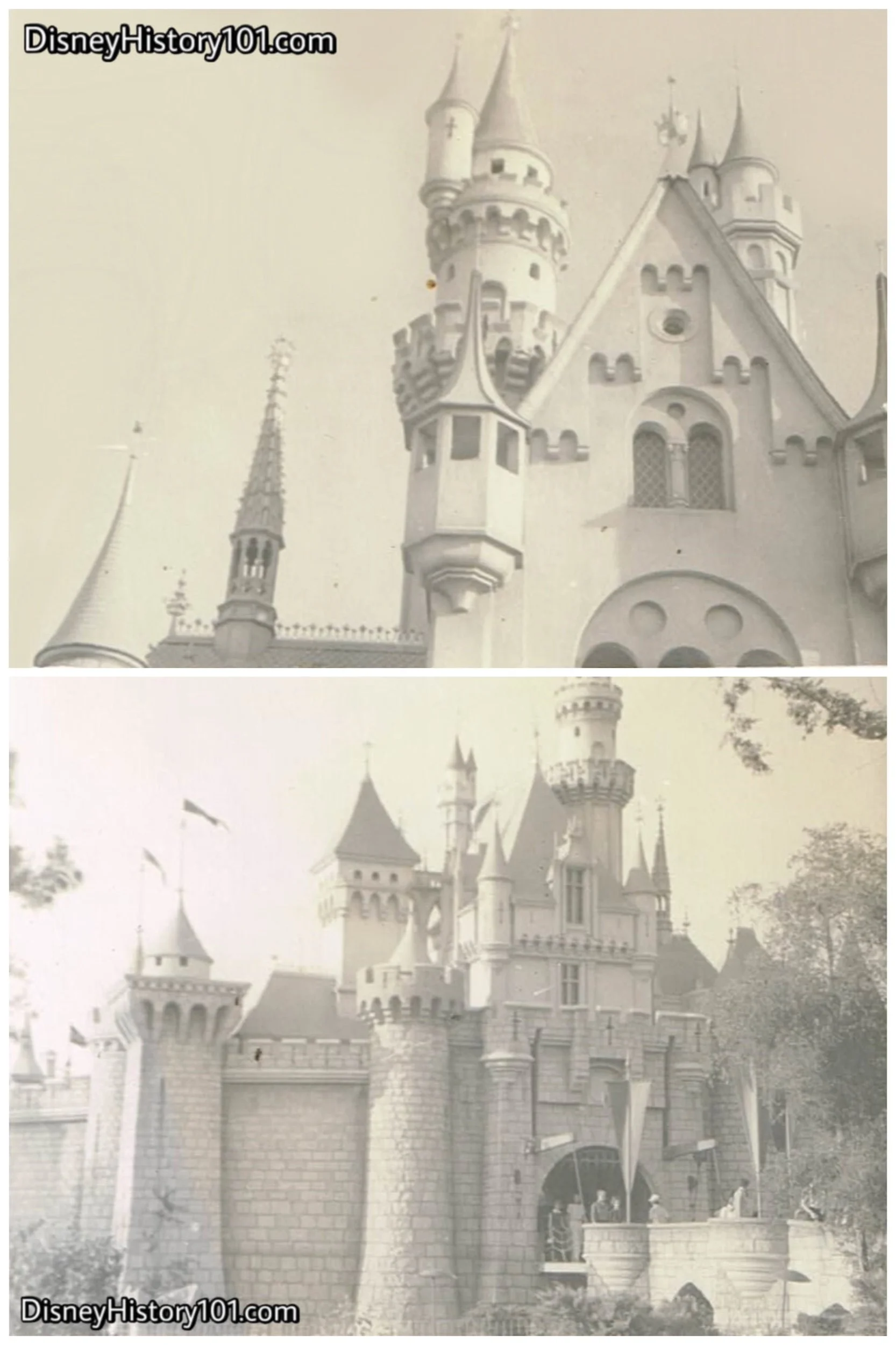
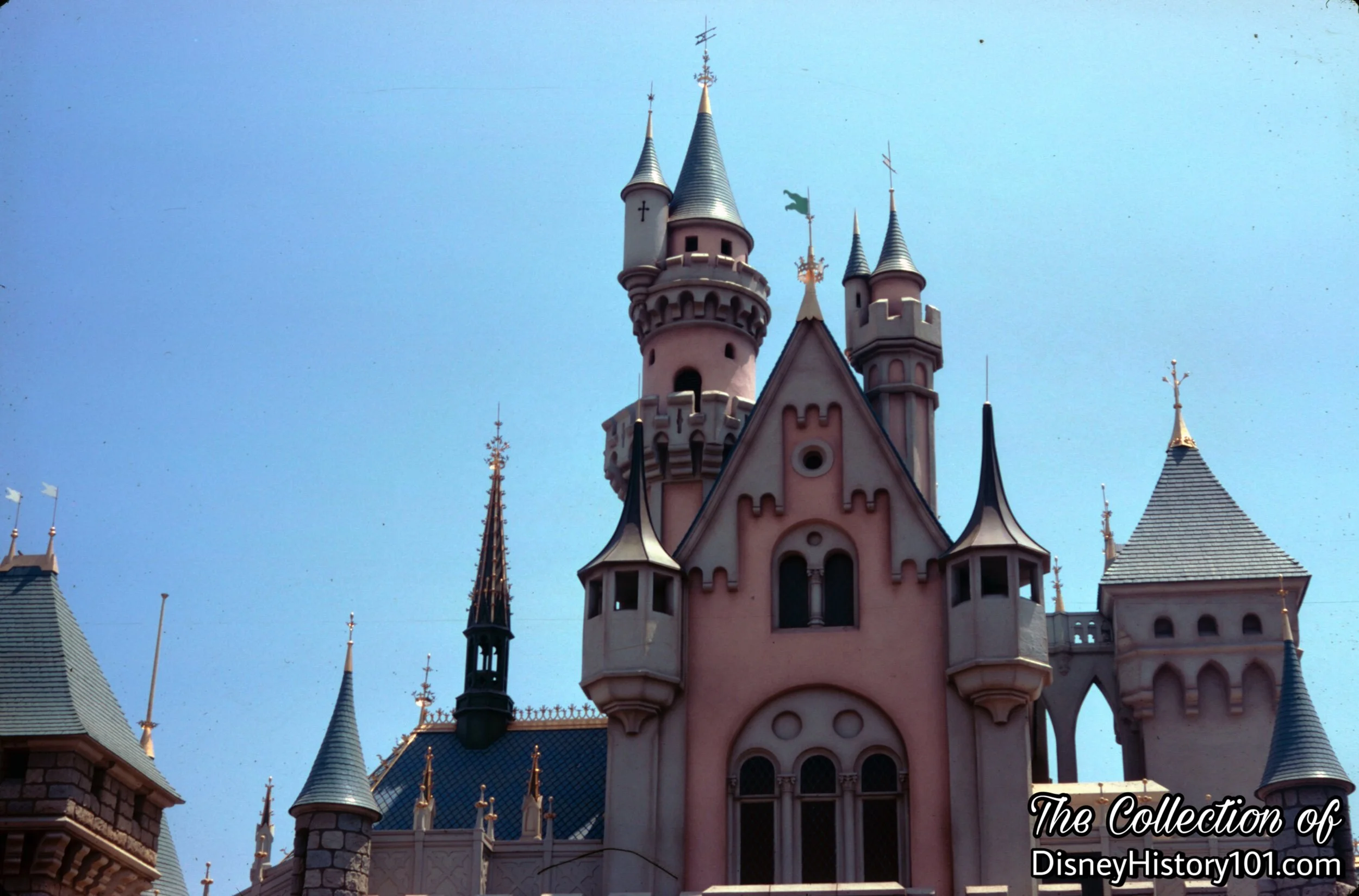
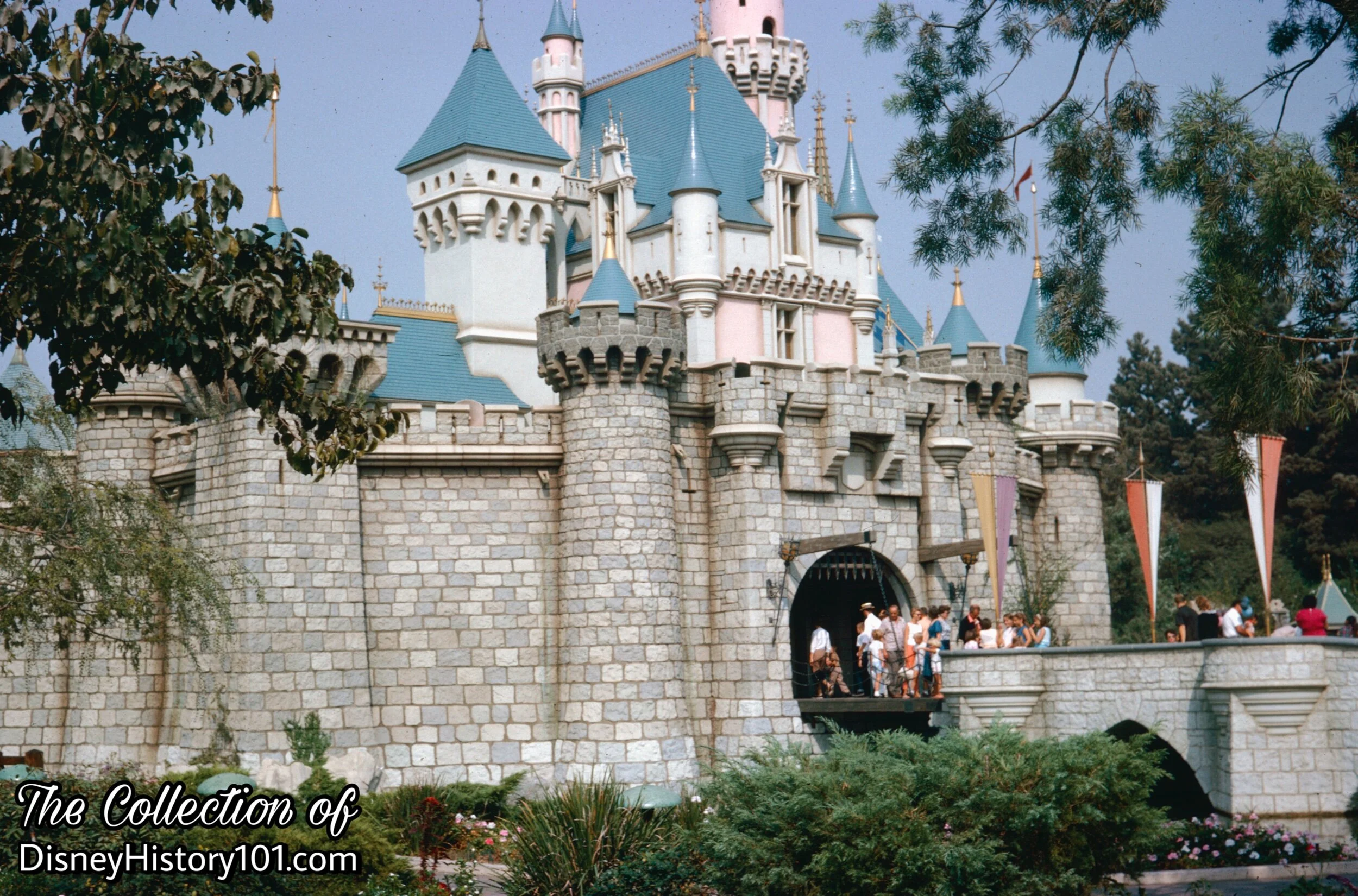
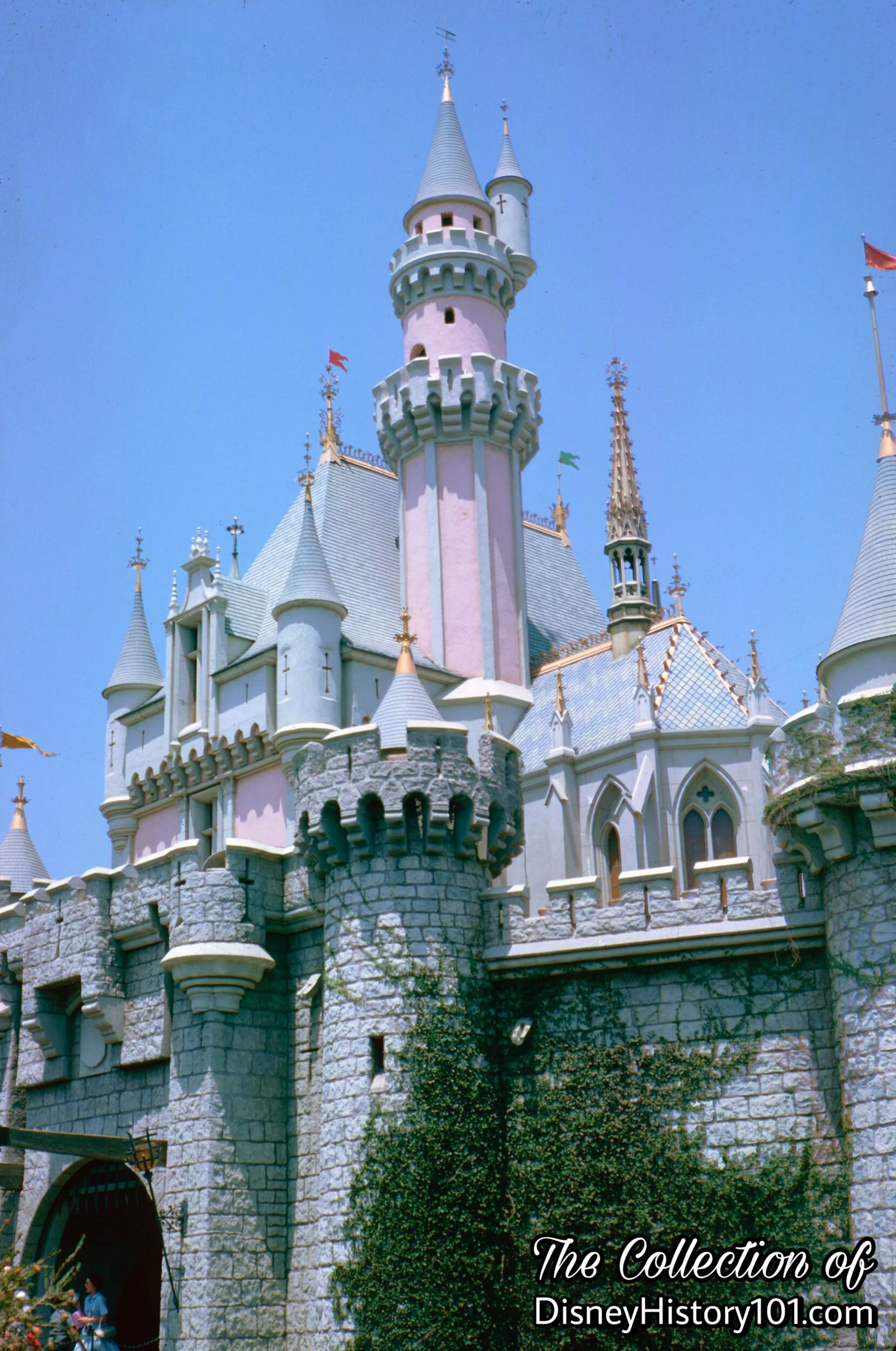
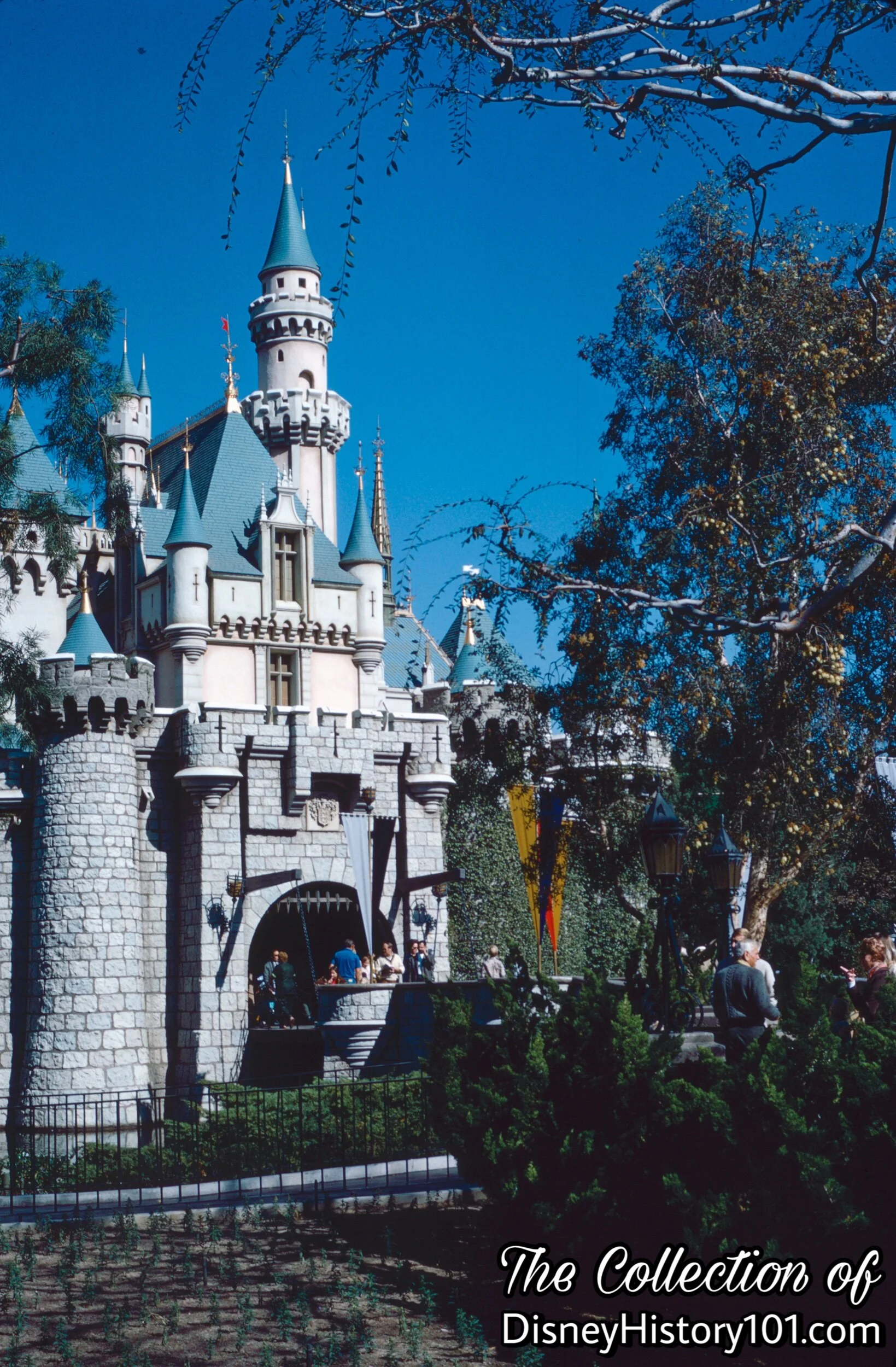
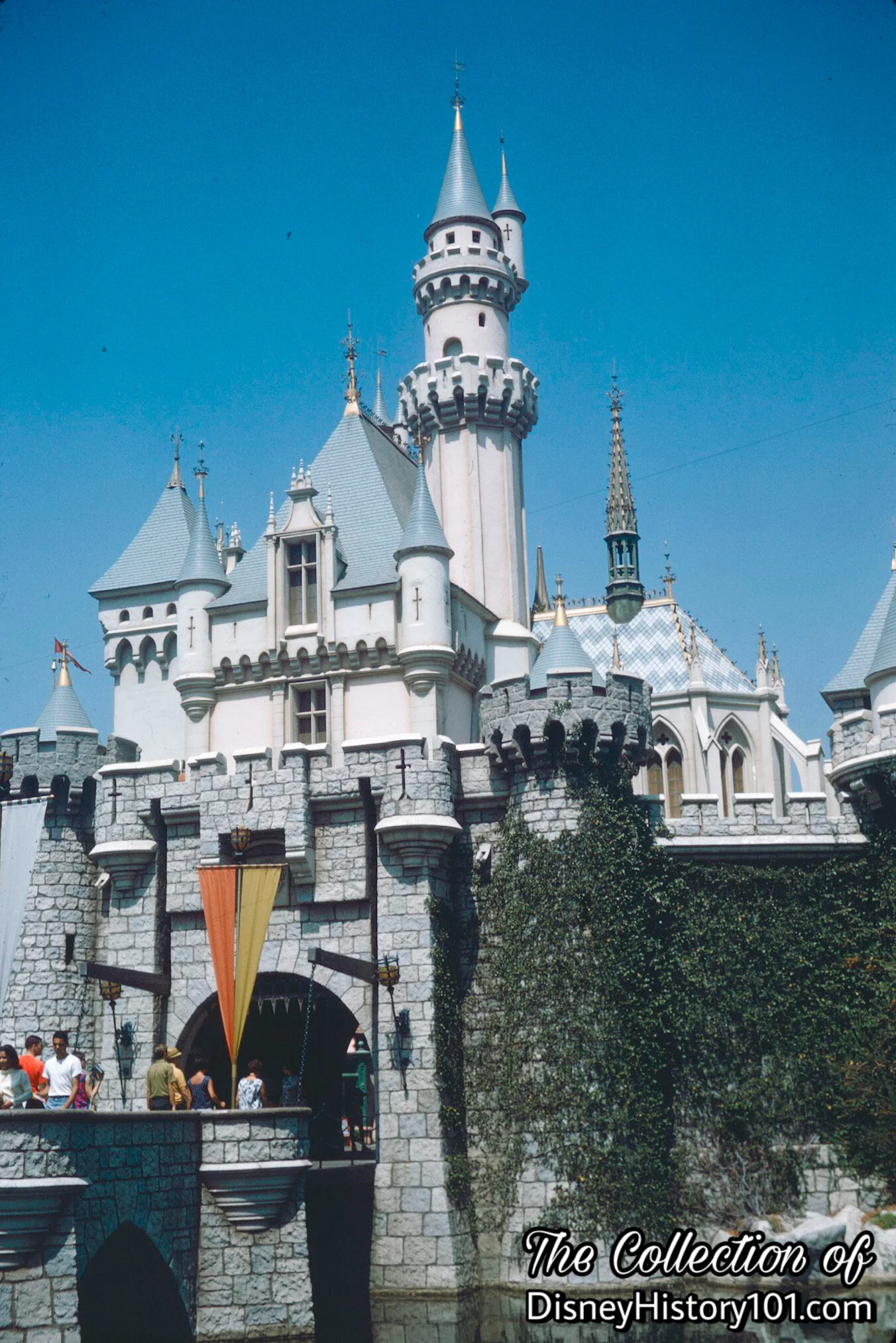
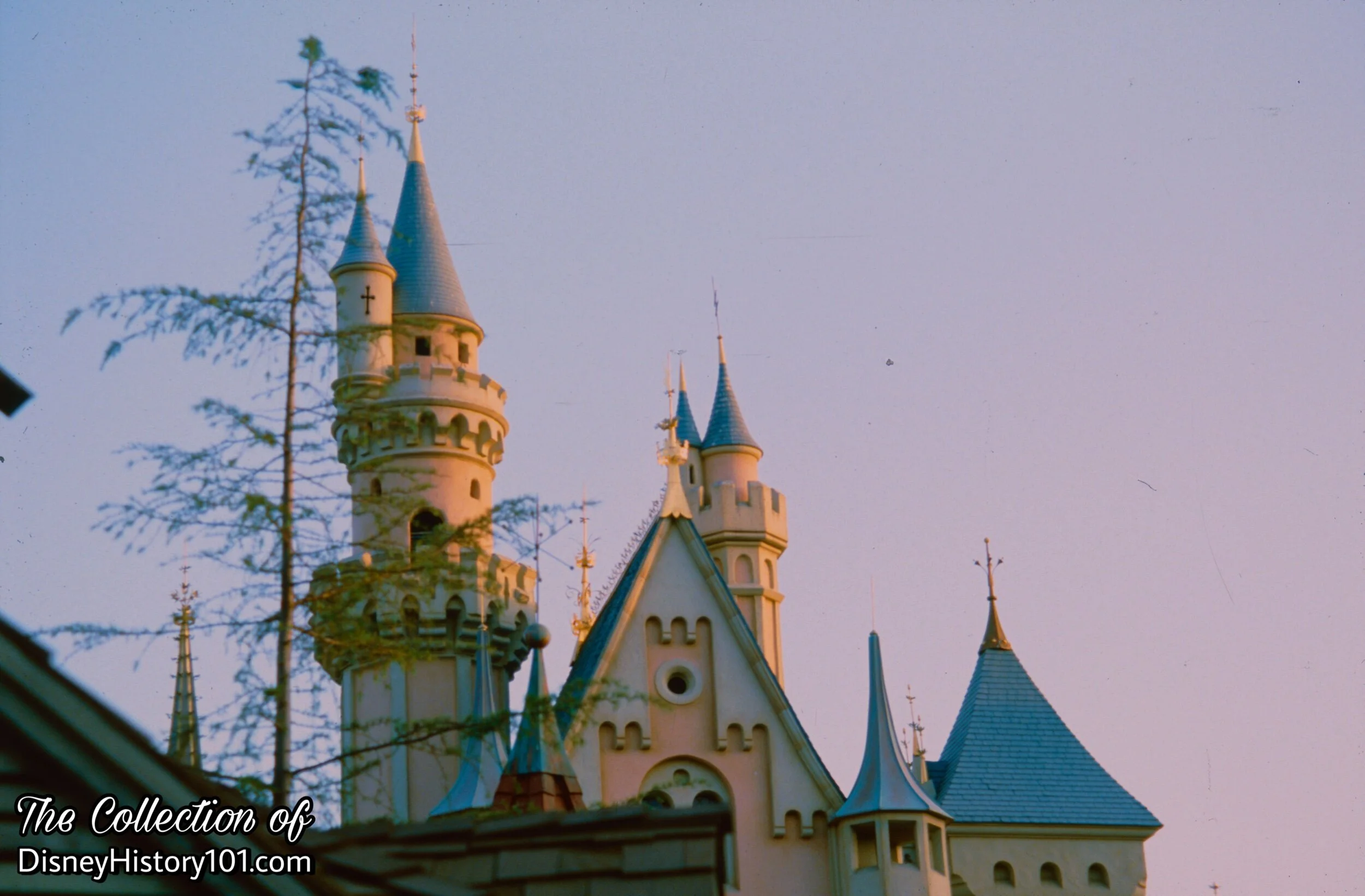
“The Sleeping Beauty Castle at Disneyland is seventy-five feet tall. Because the bricks in the upper courses of the base are slightly narrower than those below, the perspective is ‘forced,’ making the castle appear taller than it is.” According to Dave Smith (Chief Archivist Emeritus of The Walt Disney Archives), “Sleeping Beauty Castle was built of lath and plaster, and sculptured concrete. The ‘stones’ were sculpted, with larger ones at the bottom rising to smaller ones at the top, with the forced perspective making the castle seem taller than it really is.” [Disney Facts Revealed by Dave Smith, 2016] The “tower sections” with those tiny bartizan towers (or, echaugettes) topped with conical roofs and spires were prefabricated and placed on top of crenelated kaiser columns and other top rooftop sections (the tallest one rising some 77 feet above the moat).
Some of these spires were topped with wrought iron roof cresting. Many of the gleaming finials, crests, wind vanes, and flagpoles were comprised of lightweight aluminum which had been “anodized a rich gold,” according to the Anaheim Bulletin, Tuesday, July 5, 1955. For a final touch, “22k gold leafing covers the spires of Sleeping Beauty Castle,” according to “Disneyland - A Treasure Chest of Trivia” prepared by Walt Disney Productions, 1990. From the flagpoles, swallowtail flags would fly.
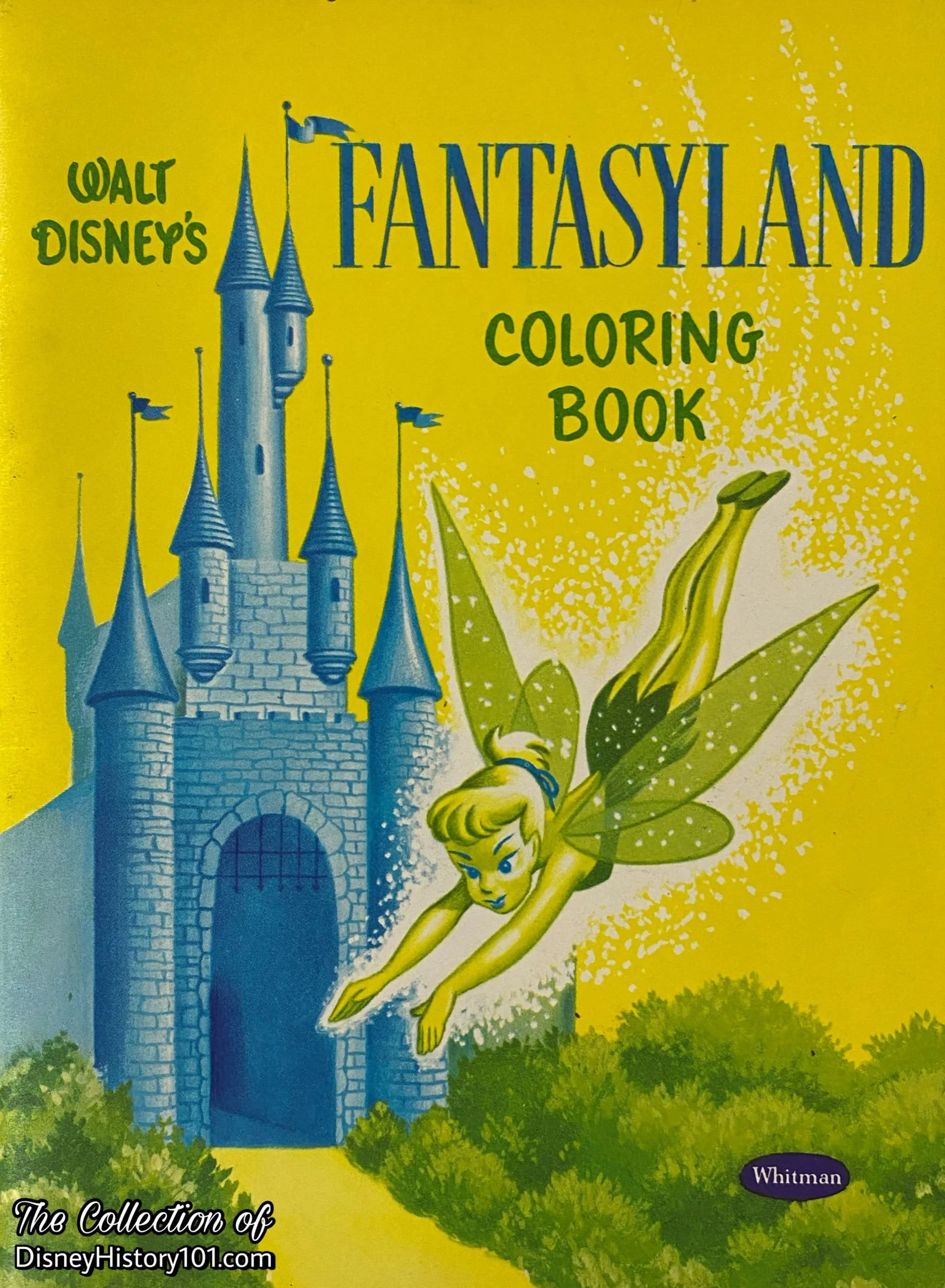
Sleeping Beauty Castle as it appears on the cover of Walt Disney’s Disneyland Fun Box Fantasyland Coloring Fun Book by Whitman, c.1955
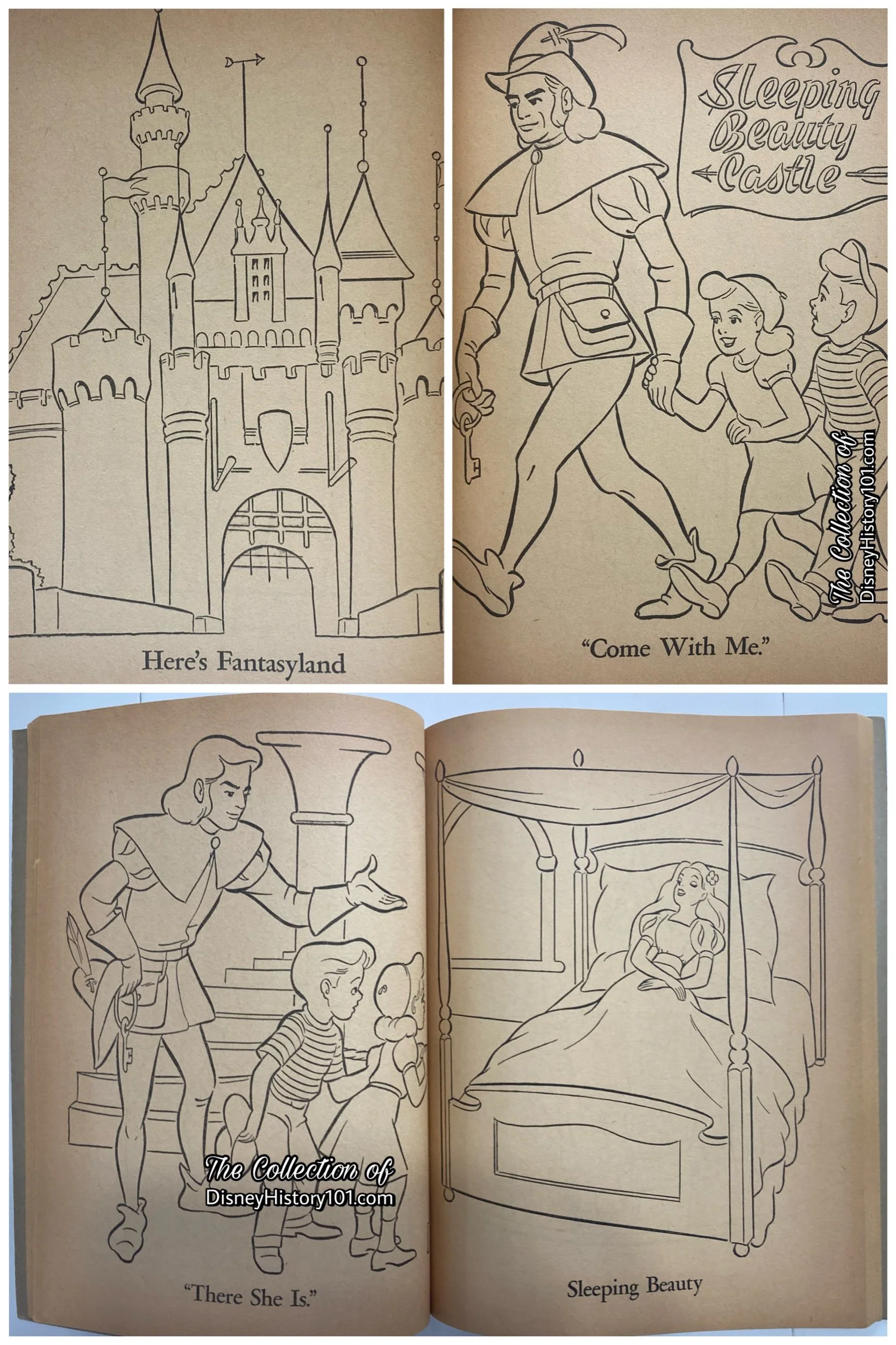
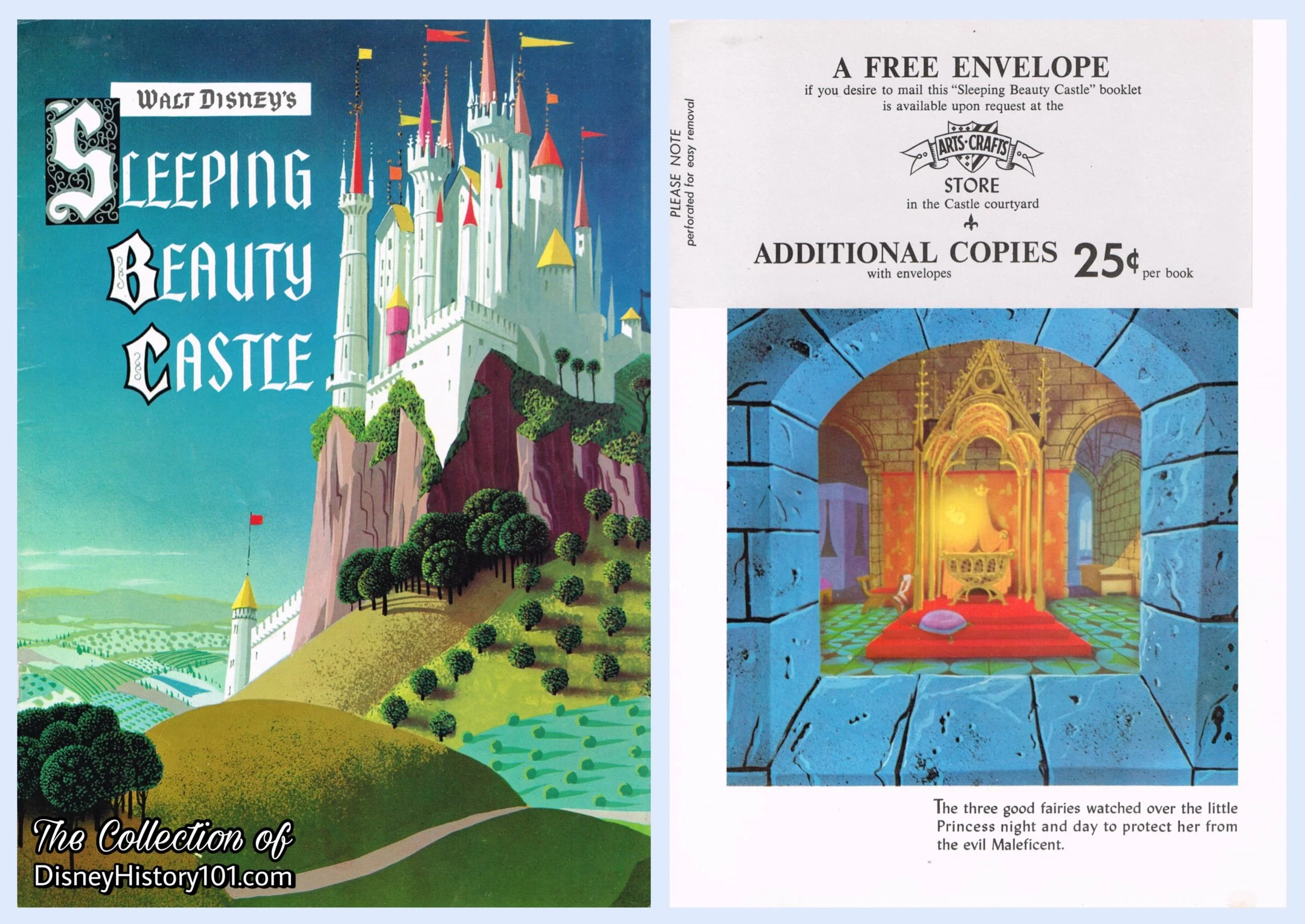
Sleeping Beauty Castle appeared on quite a few pre-opening day licensed products like television trays, games, and coloring books. Many ideas for licensed merchandise were suggested, including a Sleeping Beauty Castle Doll House, proposed by the Strombeck-Becker Mfg. Co. All these suggestions were regulated by the Walt Disney Productions Mfg. Co., overseen by Philip Sammeth (c.1955).
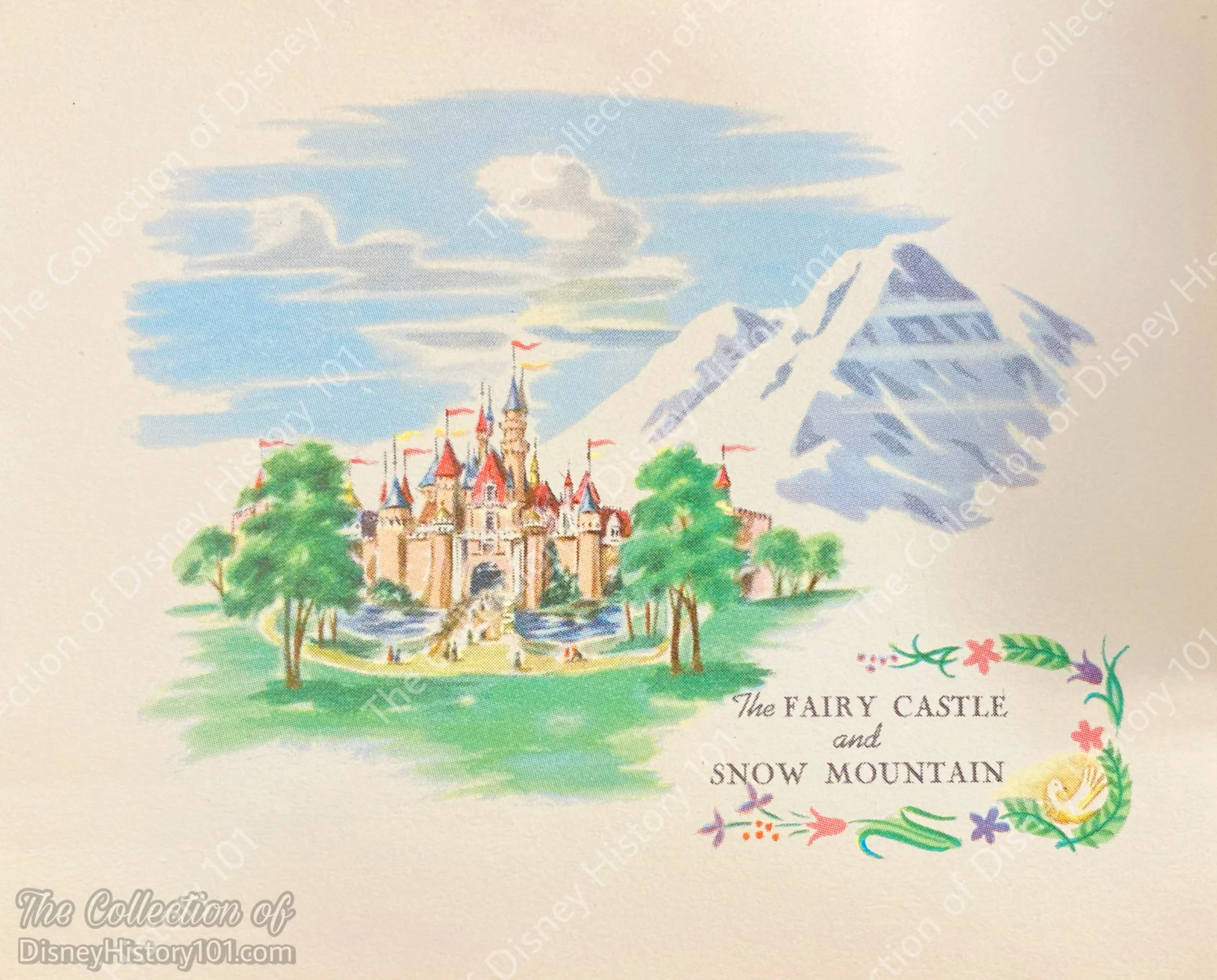
"The Fairy Castle" appears on this greeting card.
Years before the Walt Disney Productions motion picture release, an interior walk-through was suggested within Walt Disney’s Disneyland Coloring Book by Whitman excerpt, c.1955.
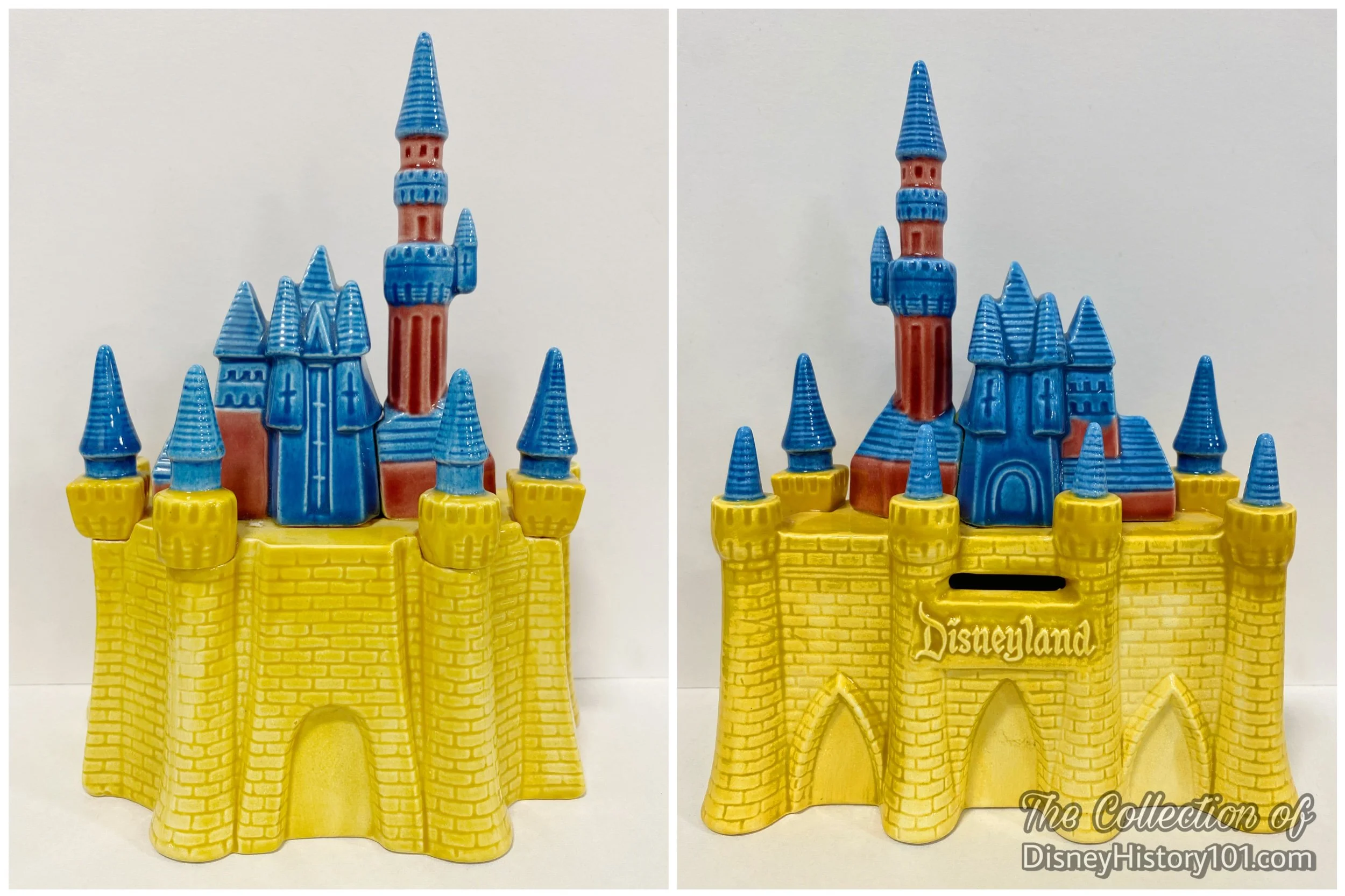
A Disneyland Bank originally retailing at $3.10.
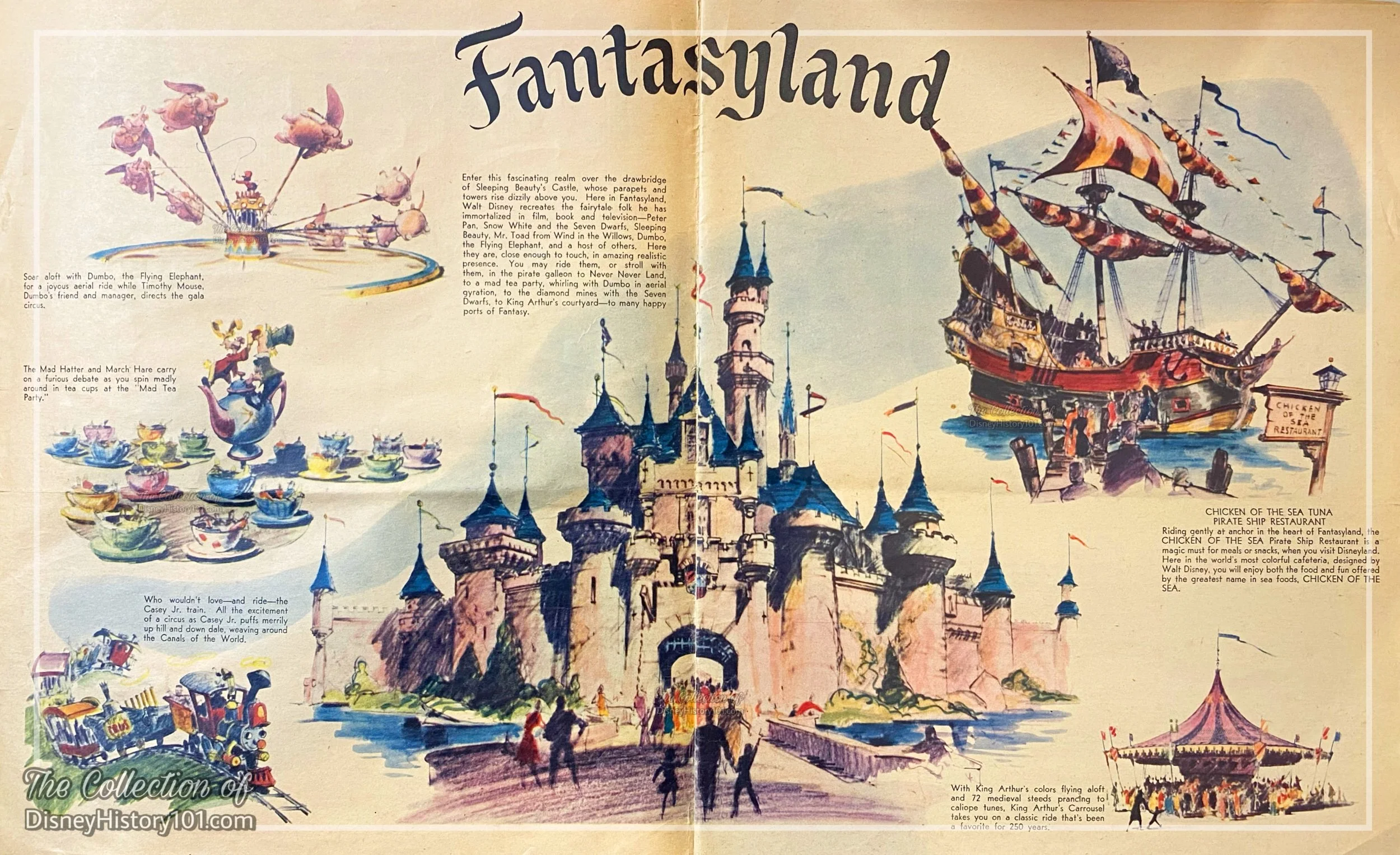
Sleeping Beauty Castle as previewed in the "Disneyland" newspaper supplement, published July 15, 1955
Some of these viable project Concepts (as seen above), were supported by a well-developed business case and built expectation.
As of June 2, 1955, C.V. Wood Jr. sent an Inter-Office Memorandum to Walt Disney regarding the best estimates that could be obtained at the time regarding the completion status of individual sections of the Park and Opening Day. C.V. wrote: “Castle and Courtyard: The exterior construction will be complete.”
“With just days until the Park’s unveiling, Walt decided he wanted the castle drawbridge to be lowered for the first pint-sized patrons to run across into Fantasyland. His men worked feverishly to find and install a motor on the stationary drawbridge.” [“Mouse Tales: A Behind-The-Ears Look at Disneyland” by David Koenig] Scenes of the drawbridge being lowered and raised during the construction period are seen in a few brief scenes of A Pre-Opening Report from Disneyland.
Even before Walt Disney’s Magic Kingdom opened to the public, few visiting members of the press glimpsed inside Sleeping Beauty Castle only to describe what they saw. Florabel Muir (of the New York Daily News) revealed in her (July 10th, 1955) article “Walt’s Wonderland,” “Up a set of stone steps we found Sleeping Beauty sacked up the medieval splendor in a vaulted bedchamber. Below was a dungeon (not yet staffed with a resident ogre) equipped with kiddie-size implements of torture.”
A short time later, in fact “two days before opening, Sleeping Beauty’s Castle sprang a gas leak. There were little blue flames burning all around it, but fortunately, we were able to get it fixed,” according to the recollection of Ken Anderson.
A press release photo gives a rare glimpse of the raised drawbridge and crowds in Sleeping Beauty Castle Forecourt; ©️Walt Disney Productions.
“Press Preview & Grand Opening”
“55er” Cora Lee Sargent recalled: “I thought that the unfinished Castle was breathtaking!”During Dateline Disneyland, Art Linkletter asked his six-year-old daughter Diane, “Where would you like to go, of all the places in Disneyland?” After a moment, she responded (not fully understanding the significance of what she was about to say), “To the great big castle, where Sleeping Beauty is!”
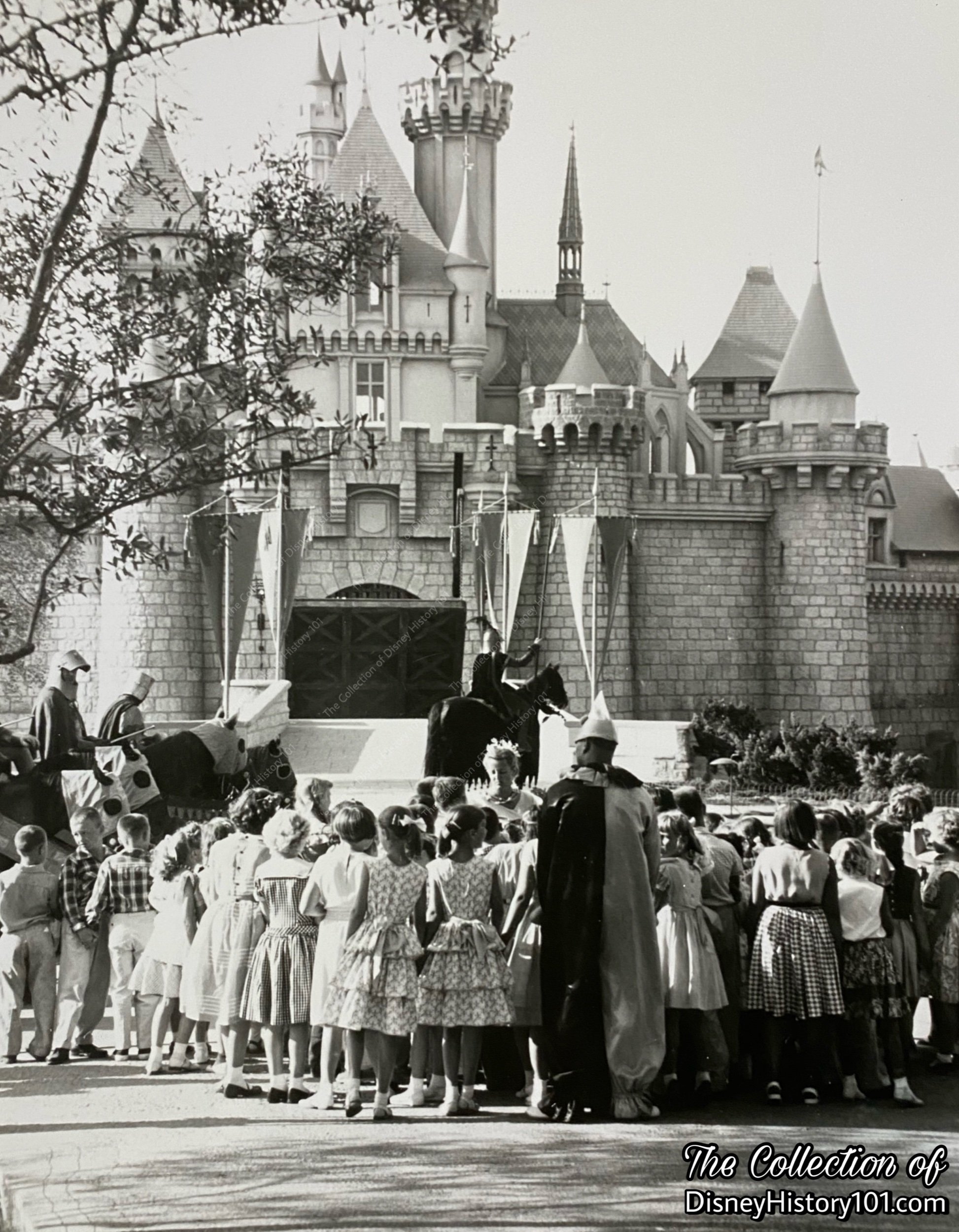
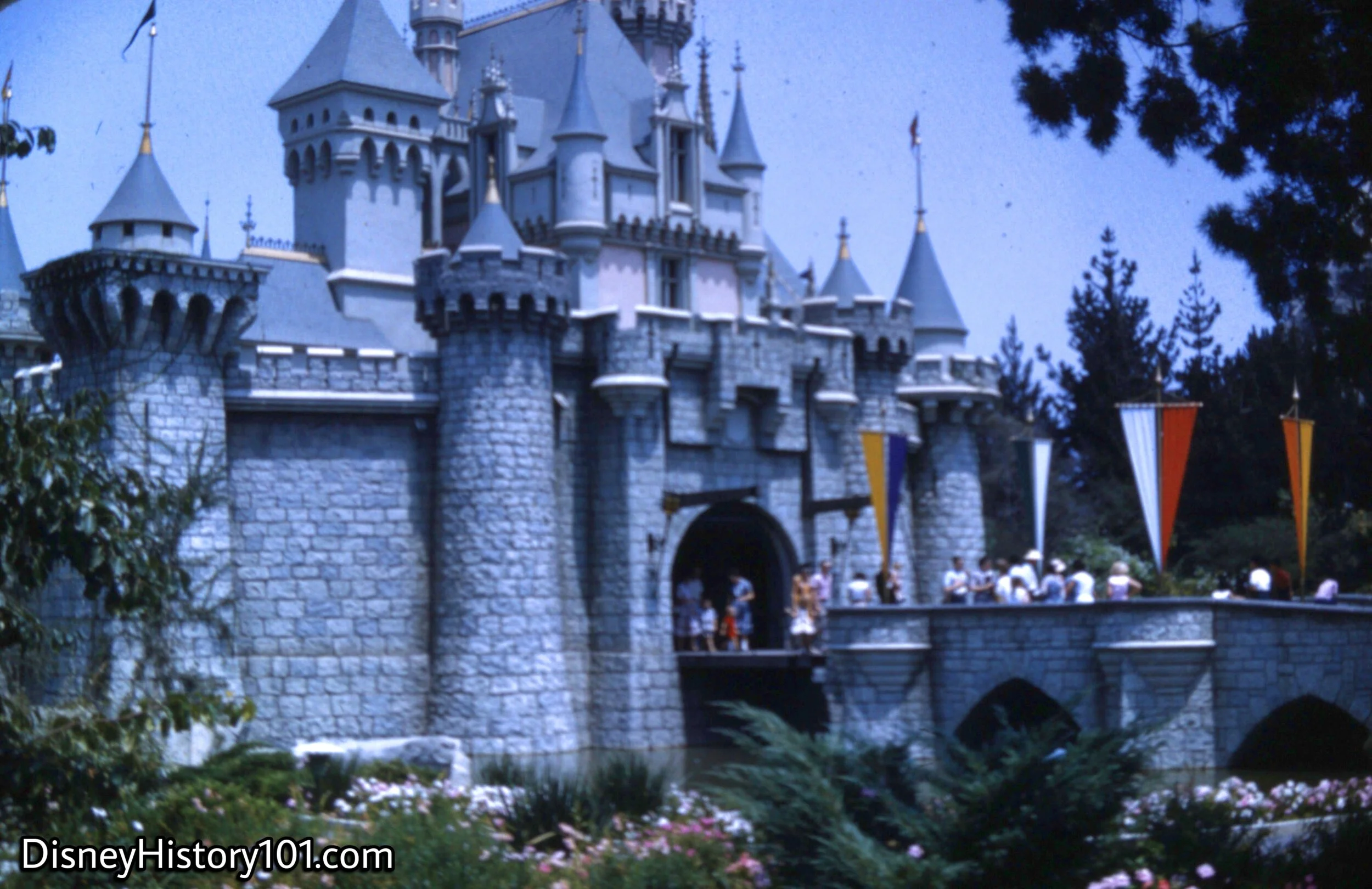
Crowds of children stood at the fairy-tale castle at the entrance to Fantasyland, south of the drawbridge. Then the drawbridge (once referred to as “the world’s most unusual welcome mat”) was lowered by Frank Heidemann, operating using hoists and weights, similar to those used in medieval times. Bob Penfield (who served as Supervisor of Construction Services) once shared: “On Opening Day I remember standing in the Carrousel when they lowered the drawbridge for the first time.” (Disneyland LINE, Vol.25, No.28, published July 16th, 1993)
“Recalled one longtime employee, ‘There were two doors to inside the castle and one was left unlocked, so we had people climbing up into the castle thinking it was an attraction. But it was just superstructure in there. I've always wondered how no one got killed.’” [“Mouse Tales: A Behind-the-Ears Look at Disneyland” by David Koenig]
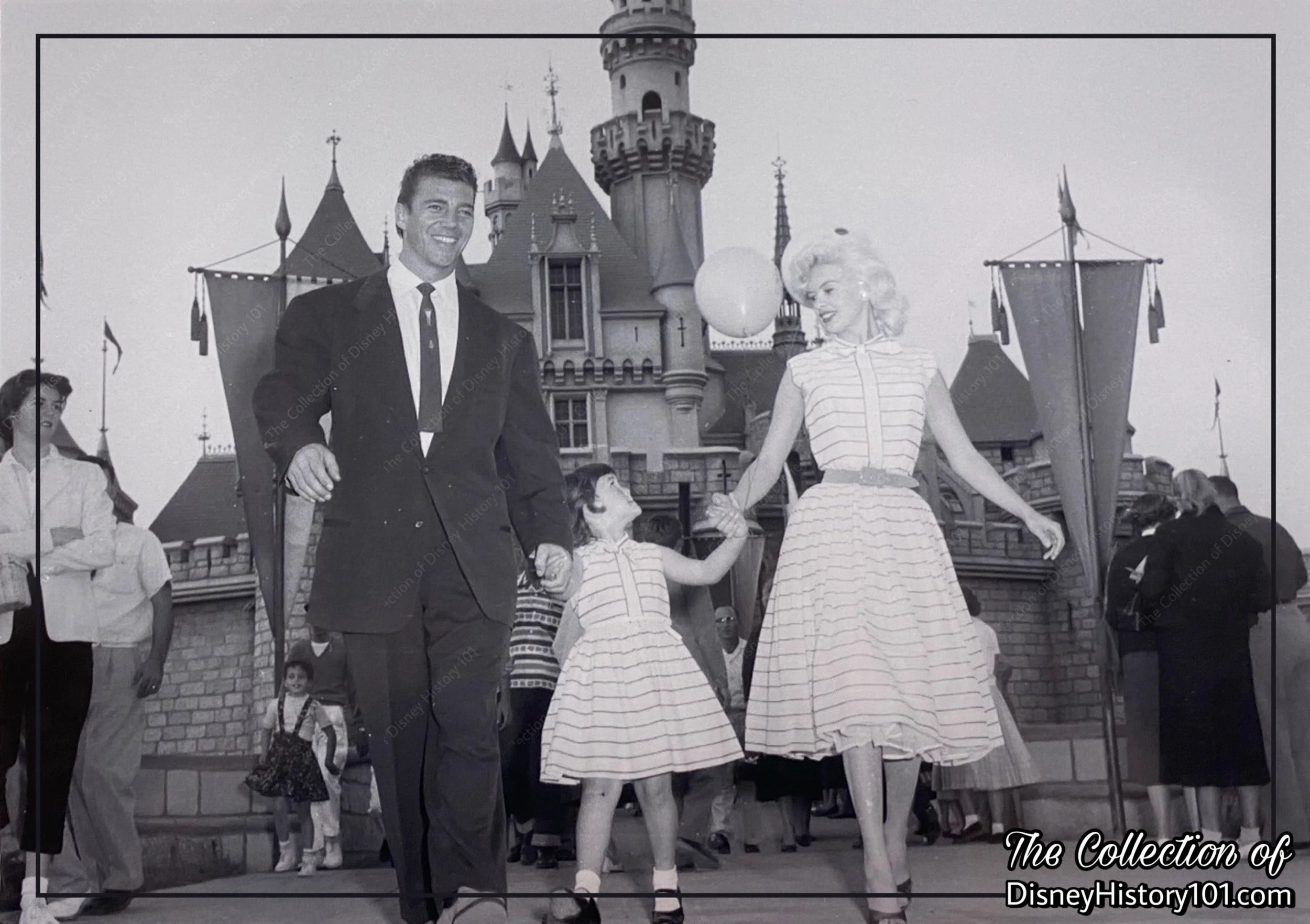
A trio of V.I.P.s depart from Sleeping Beauty Castle in Walt Disney’s MAGIC KINGDOM®.
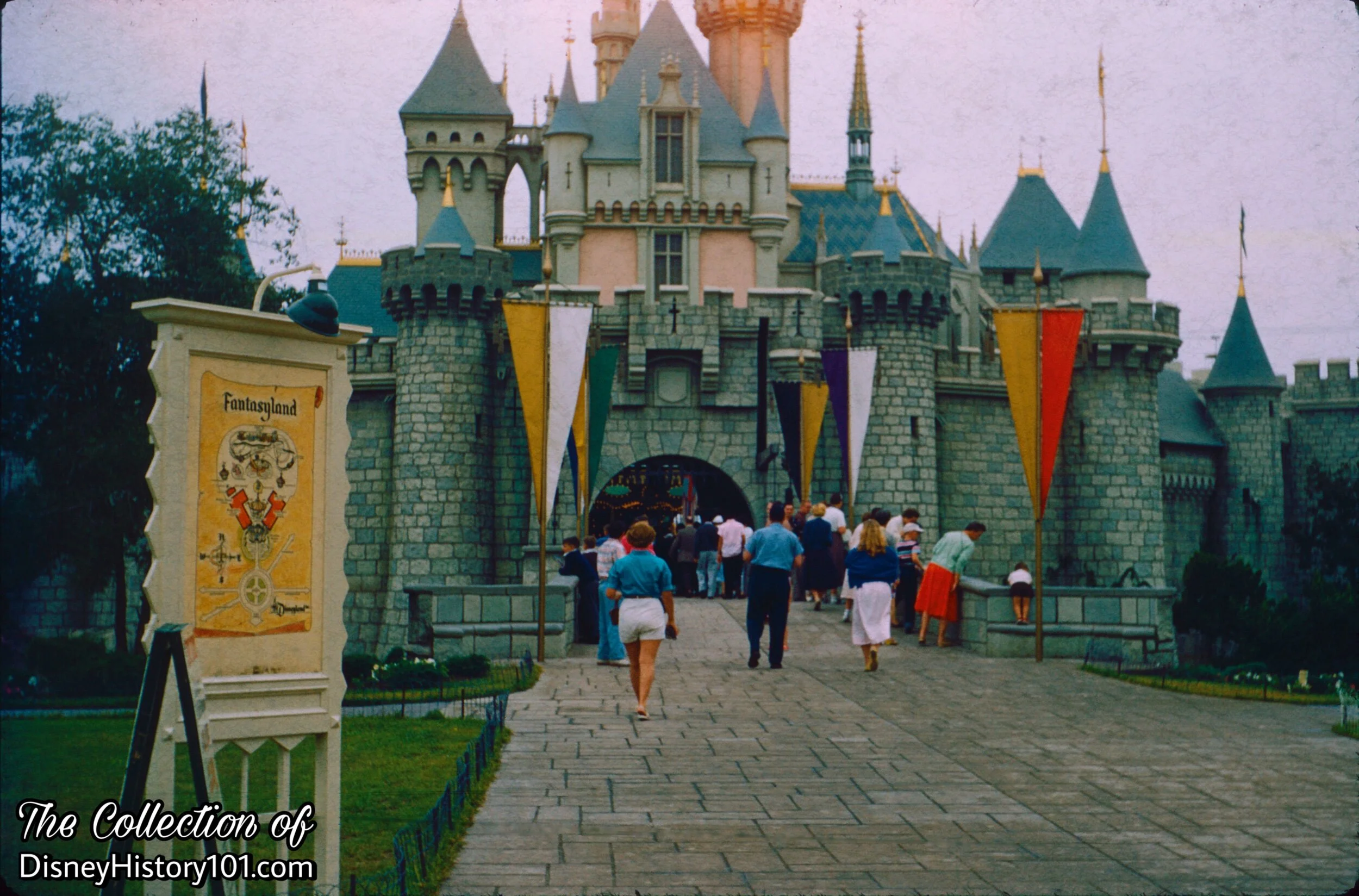
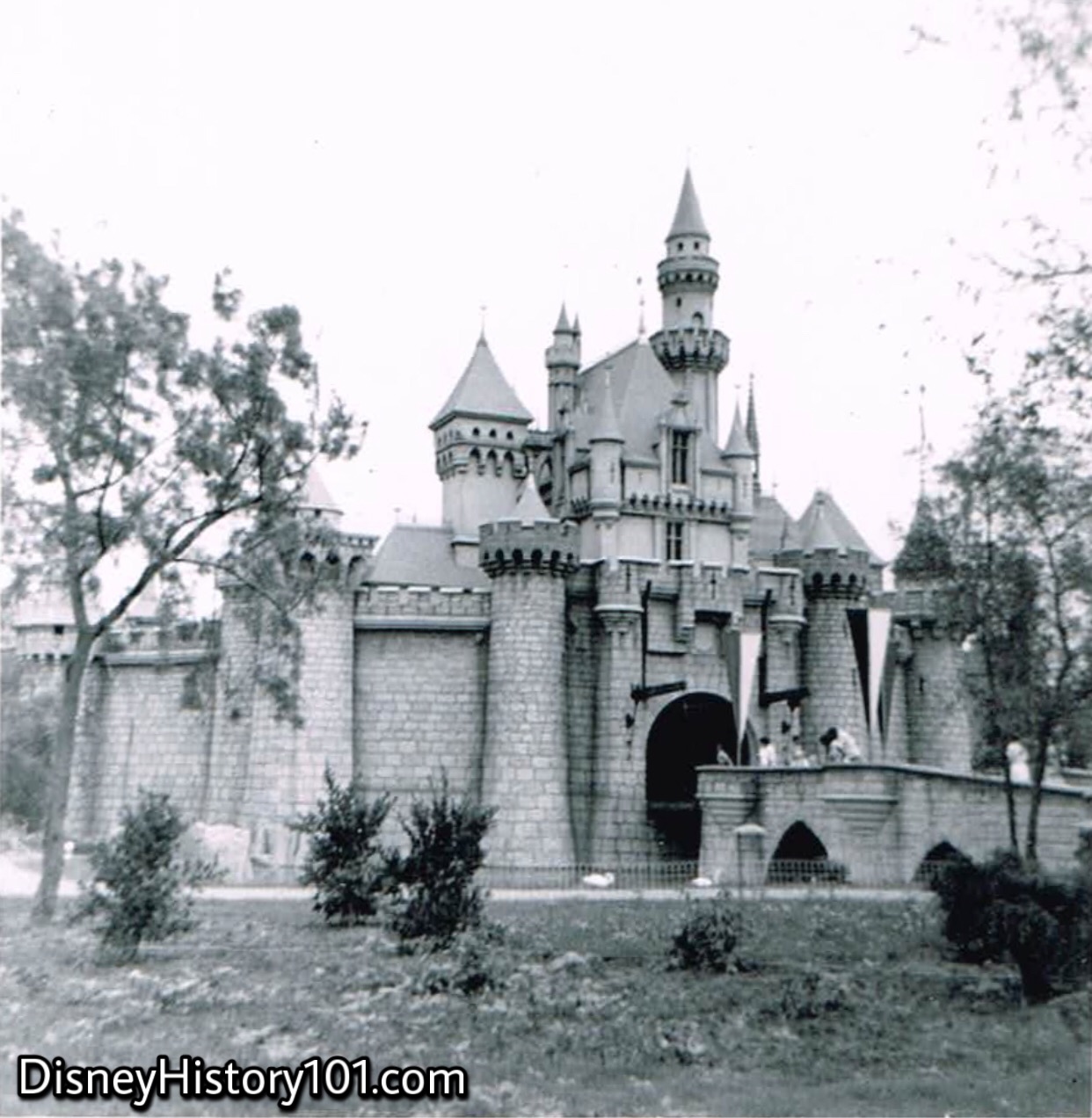
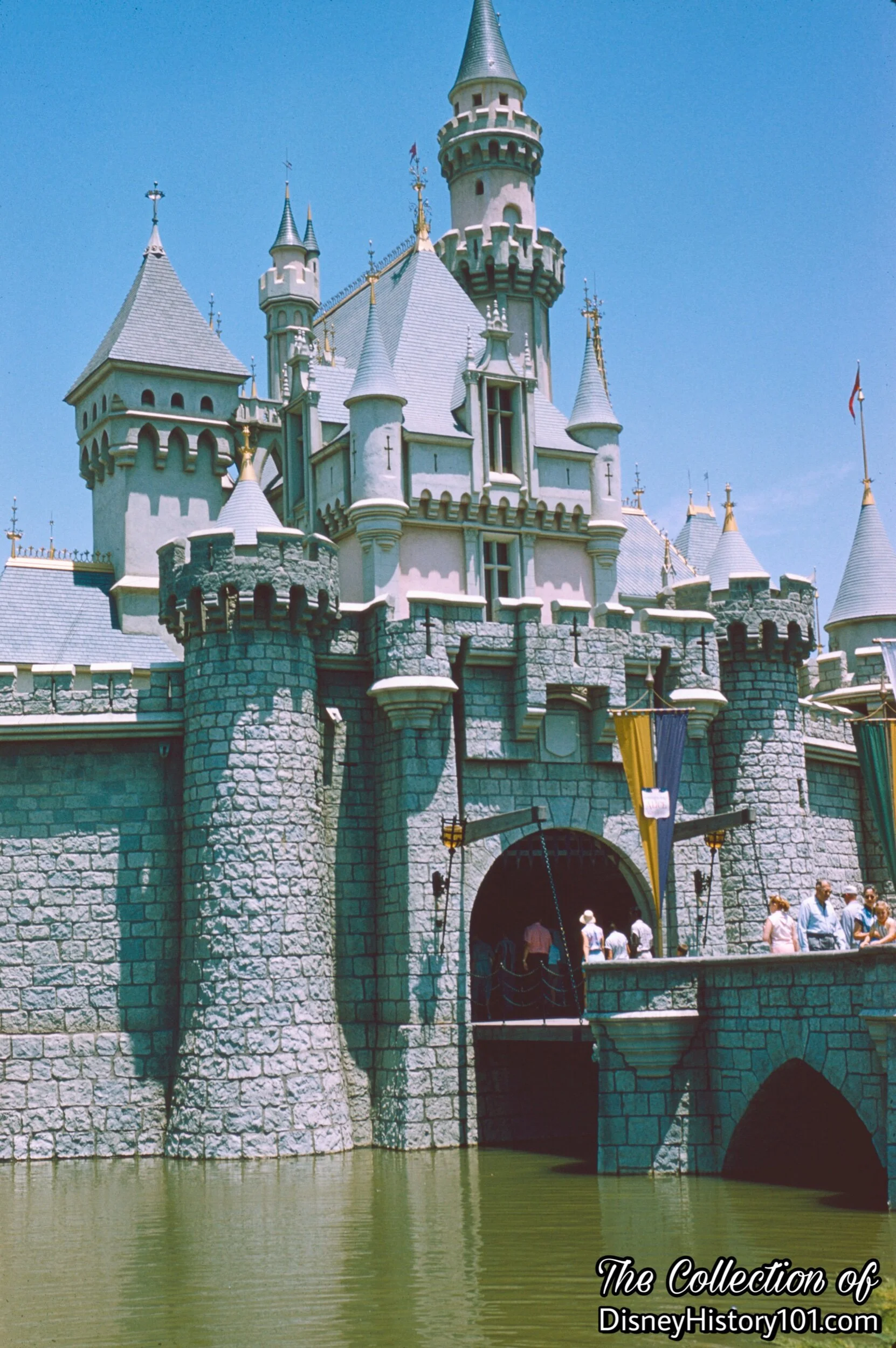
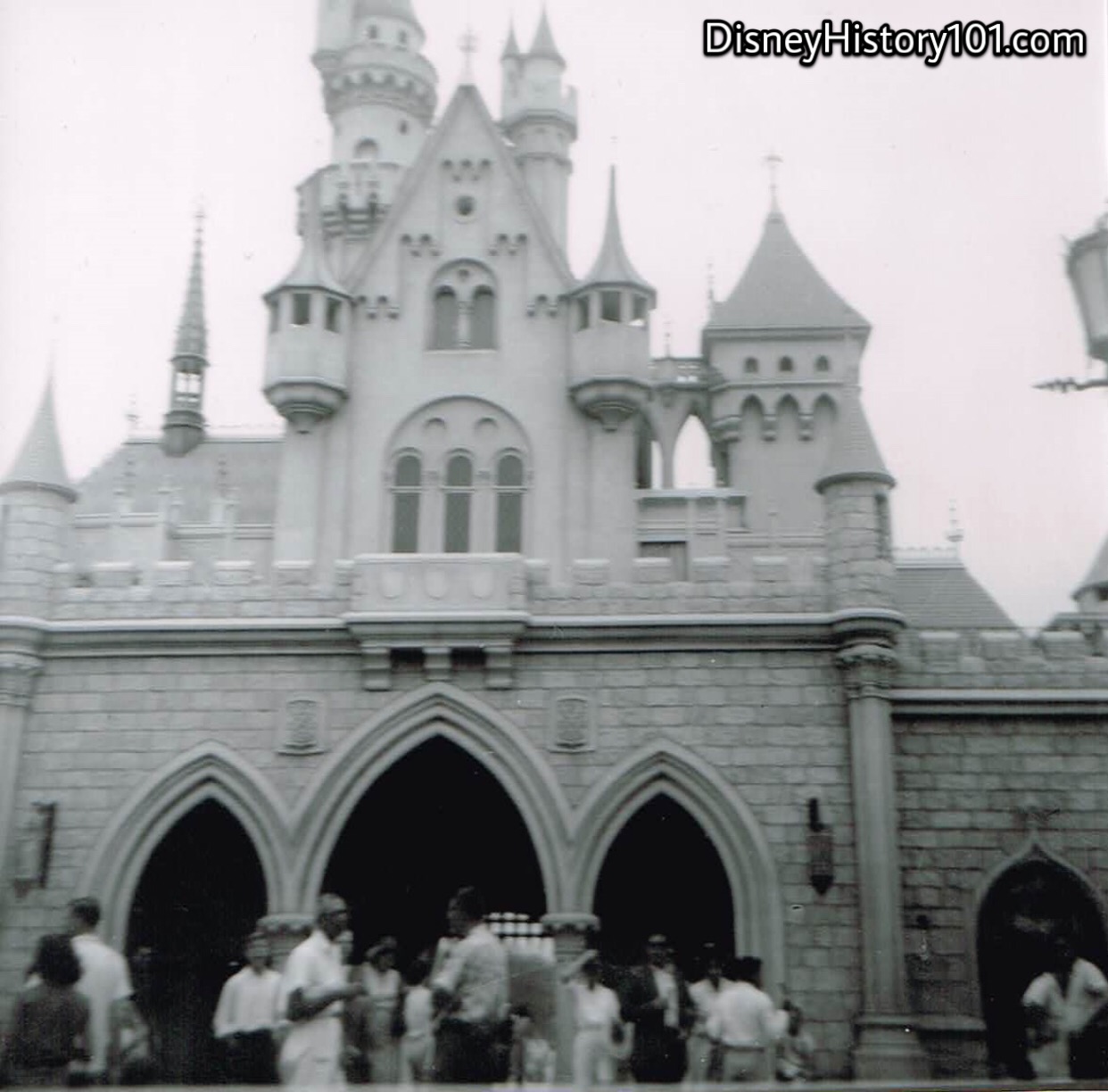
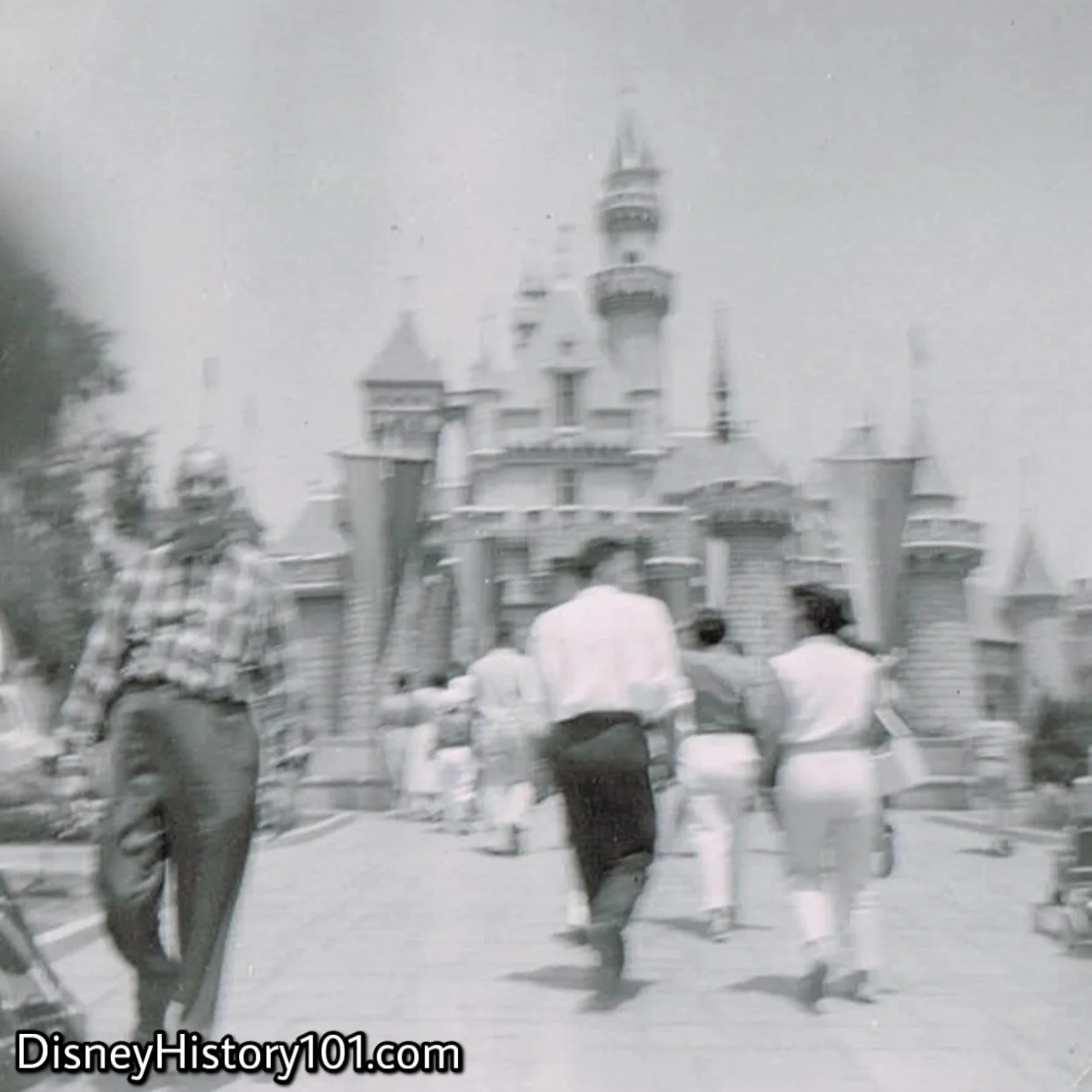
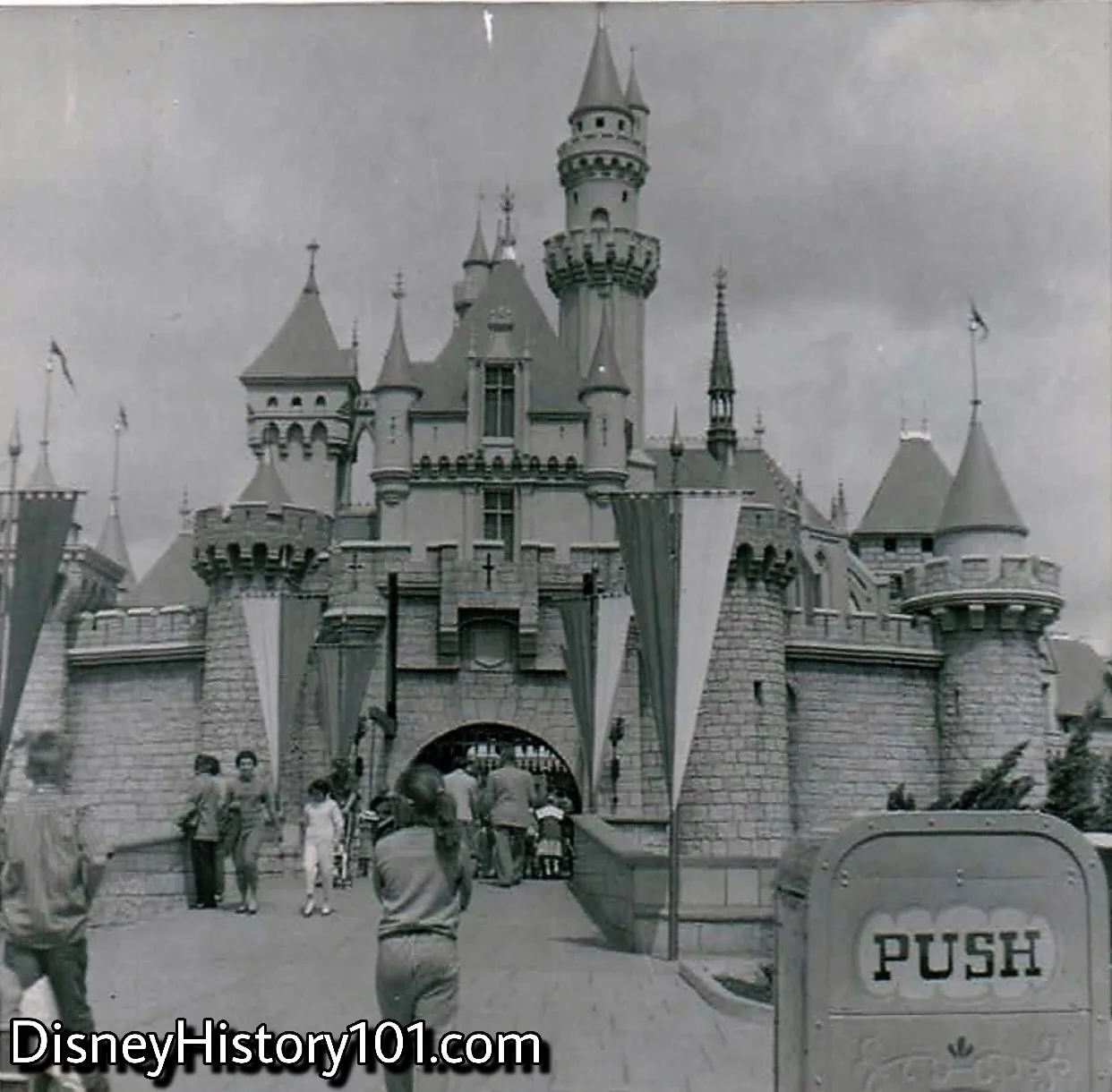
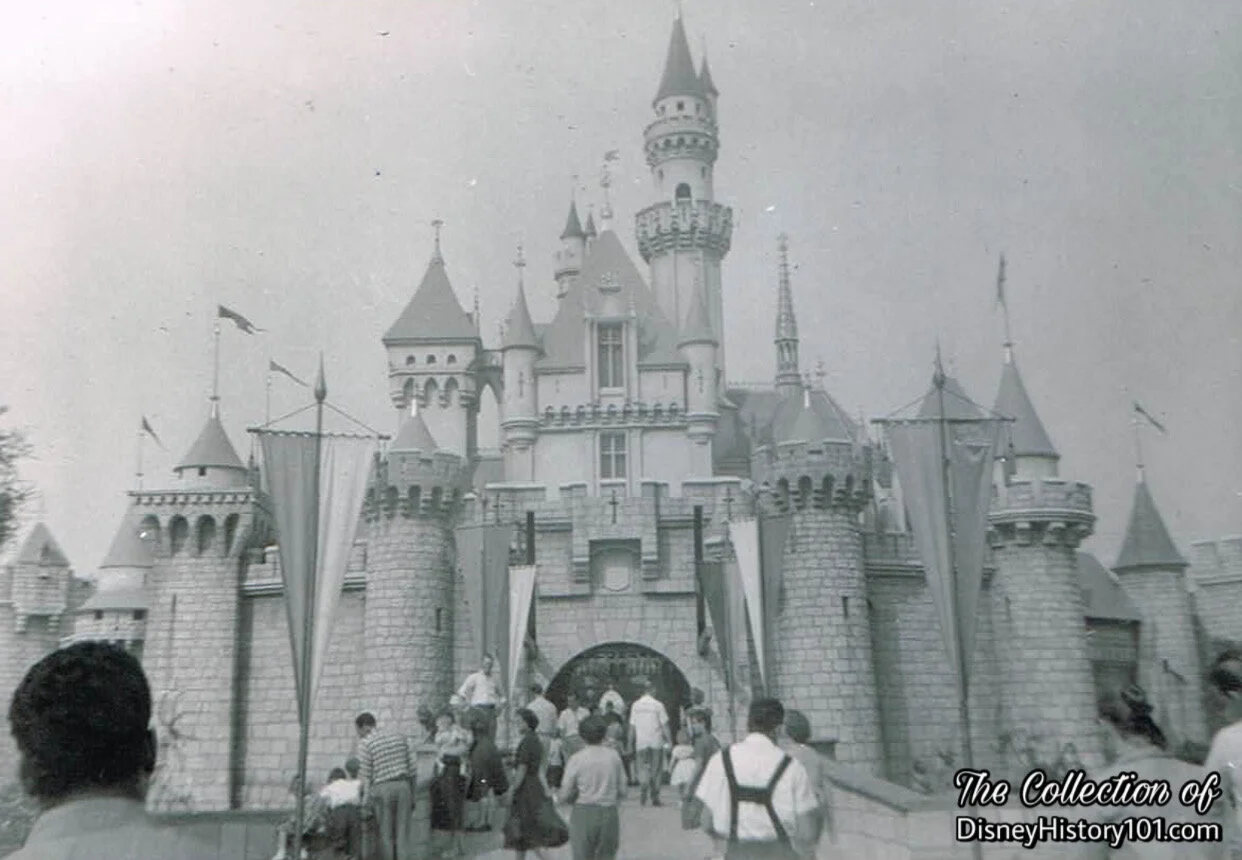
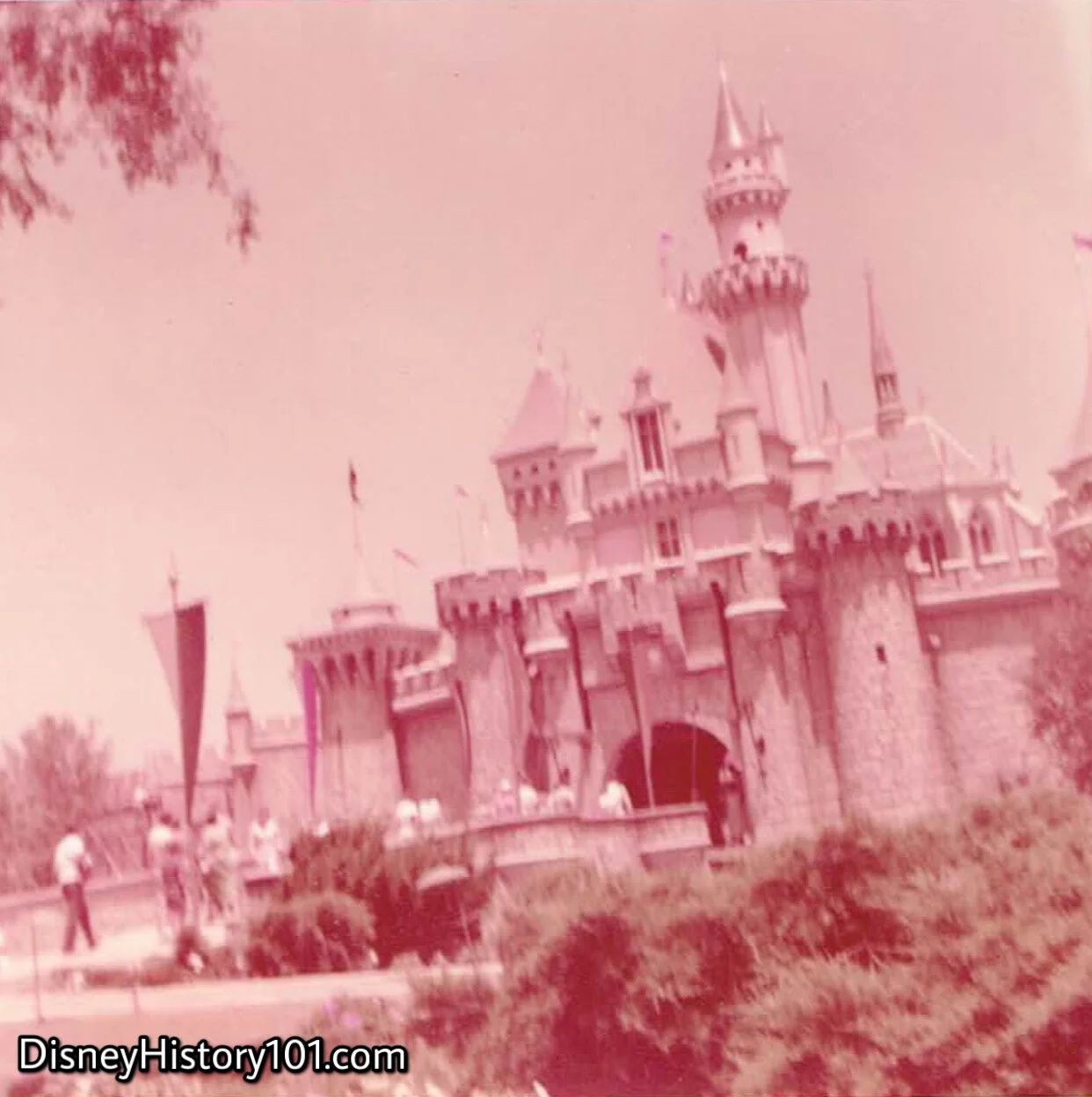
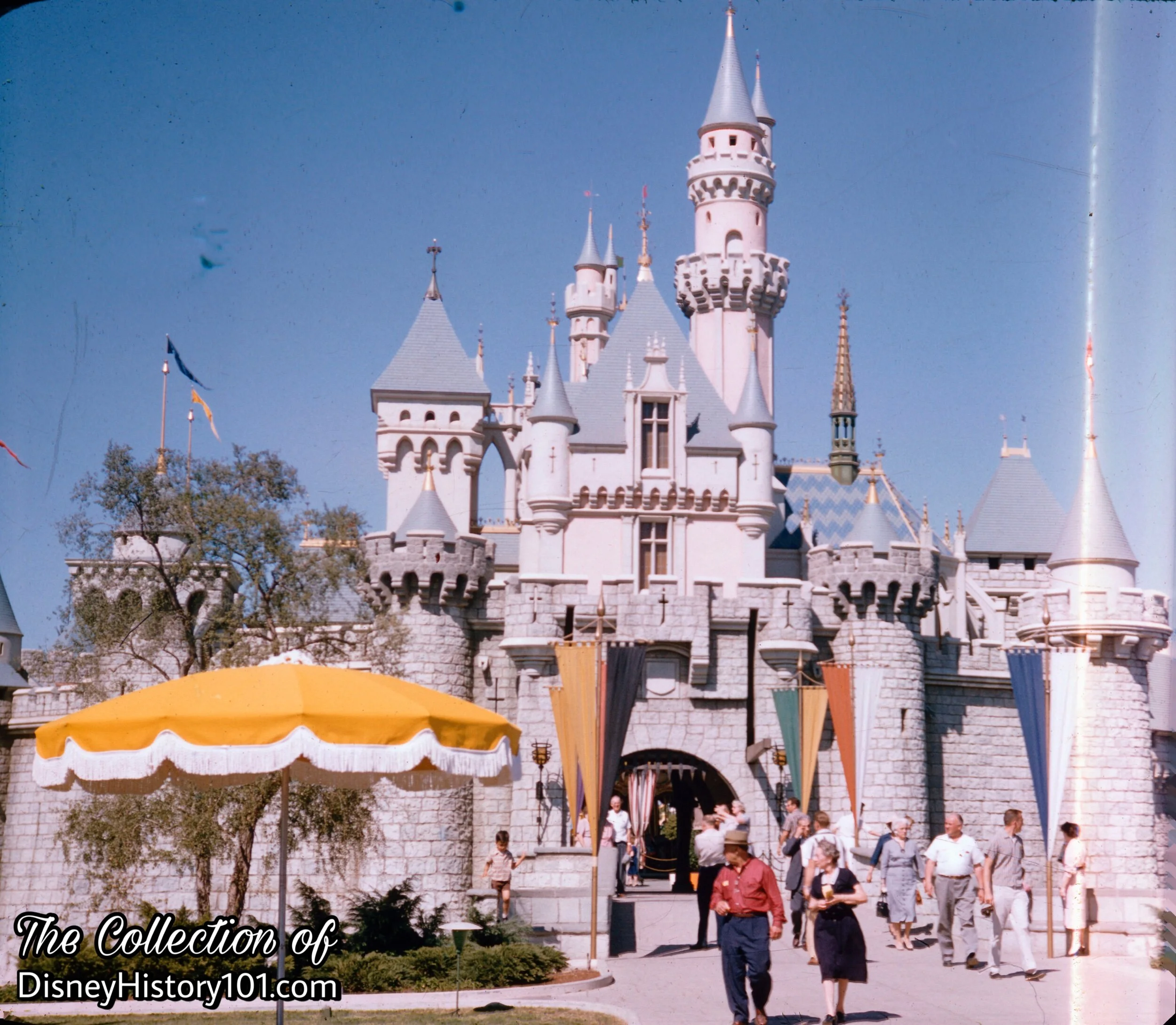
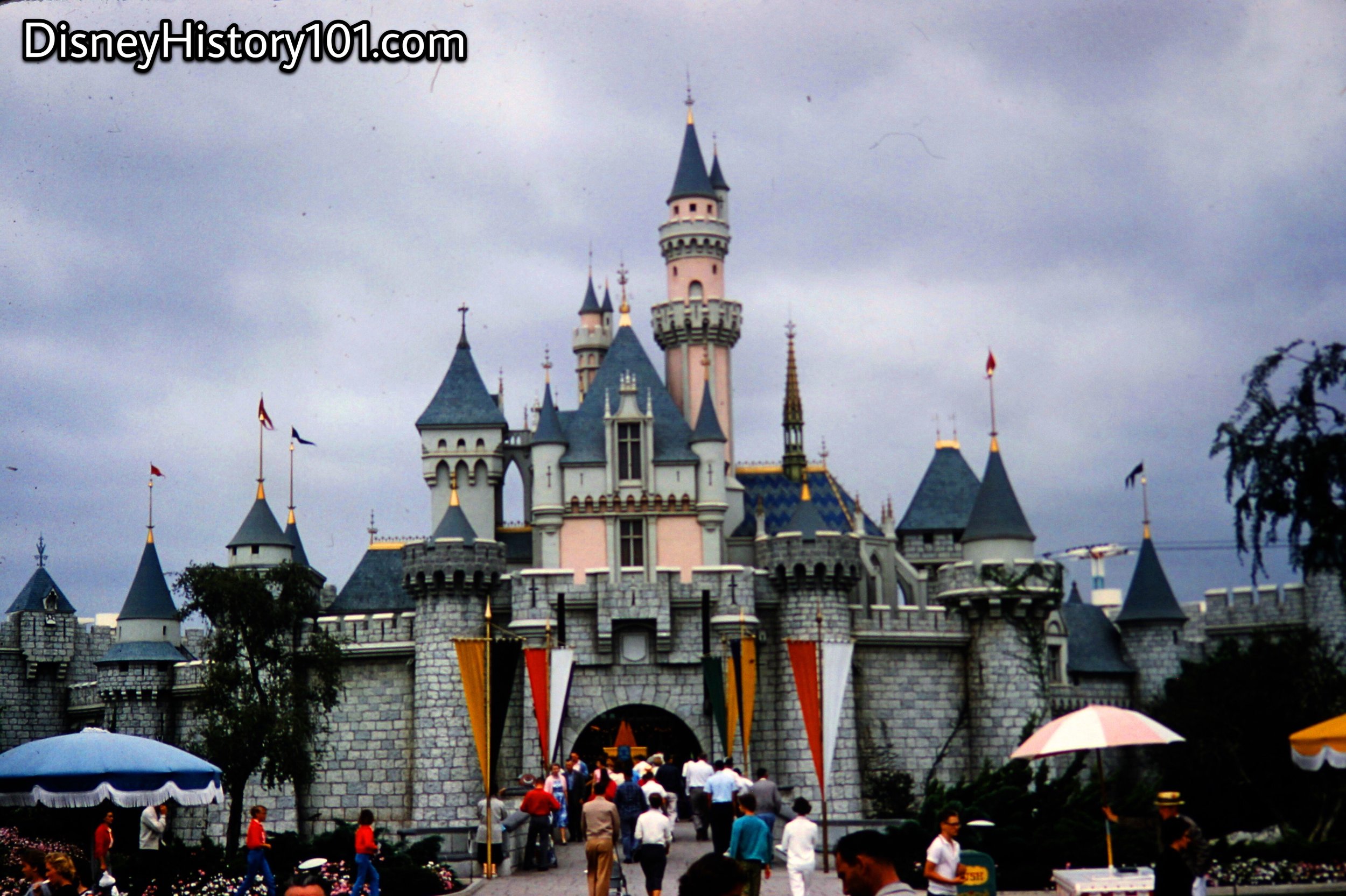
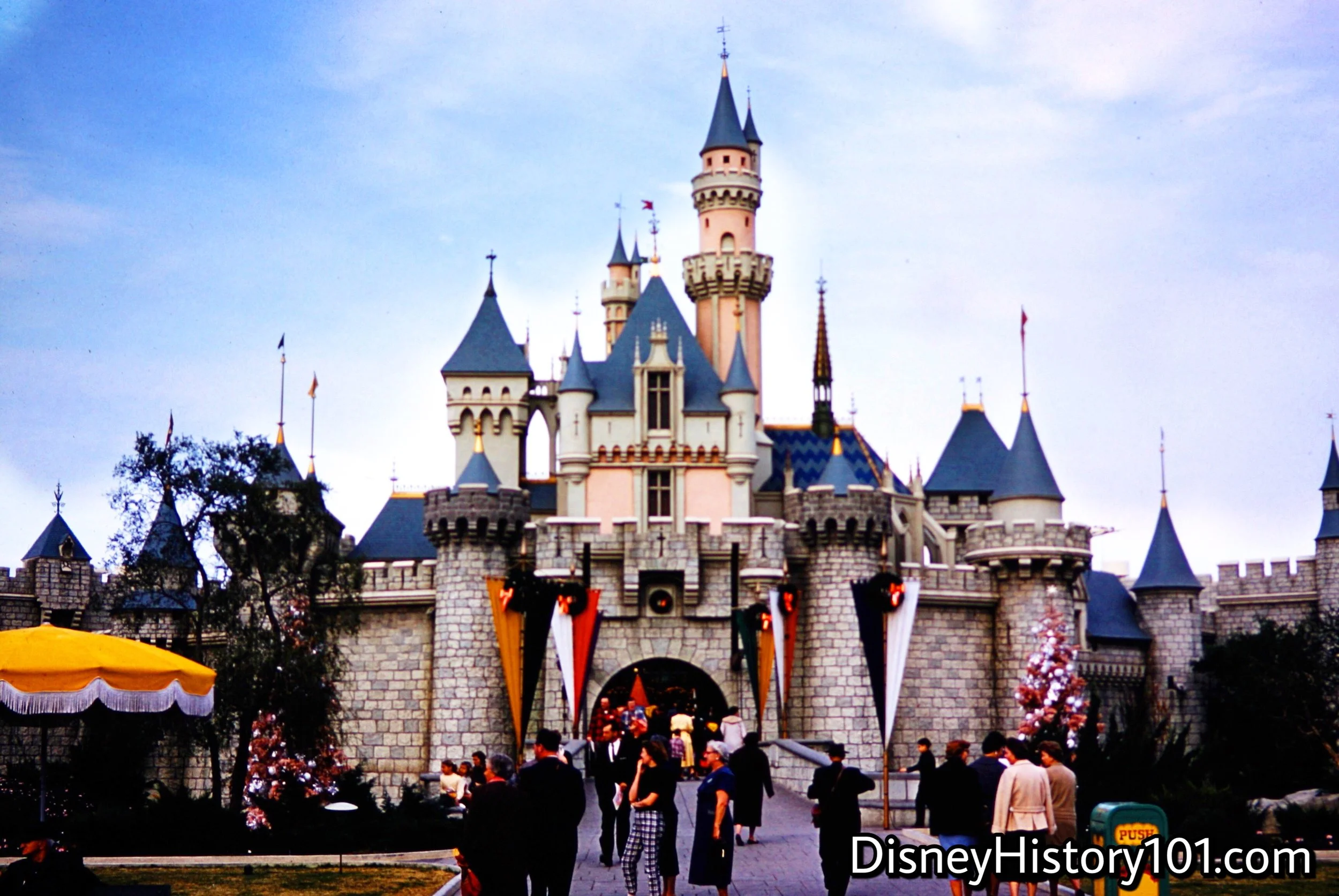
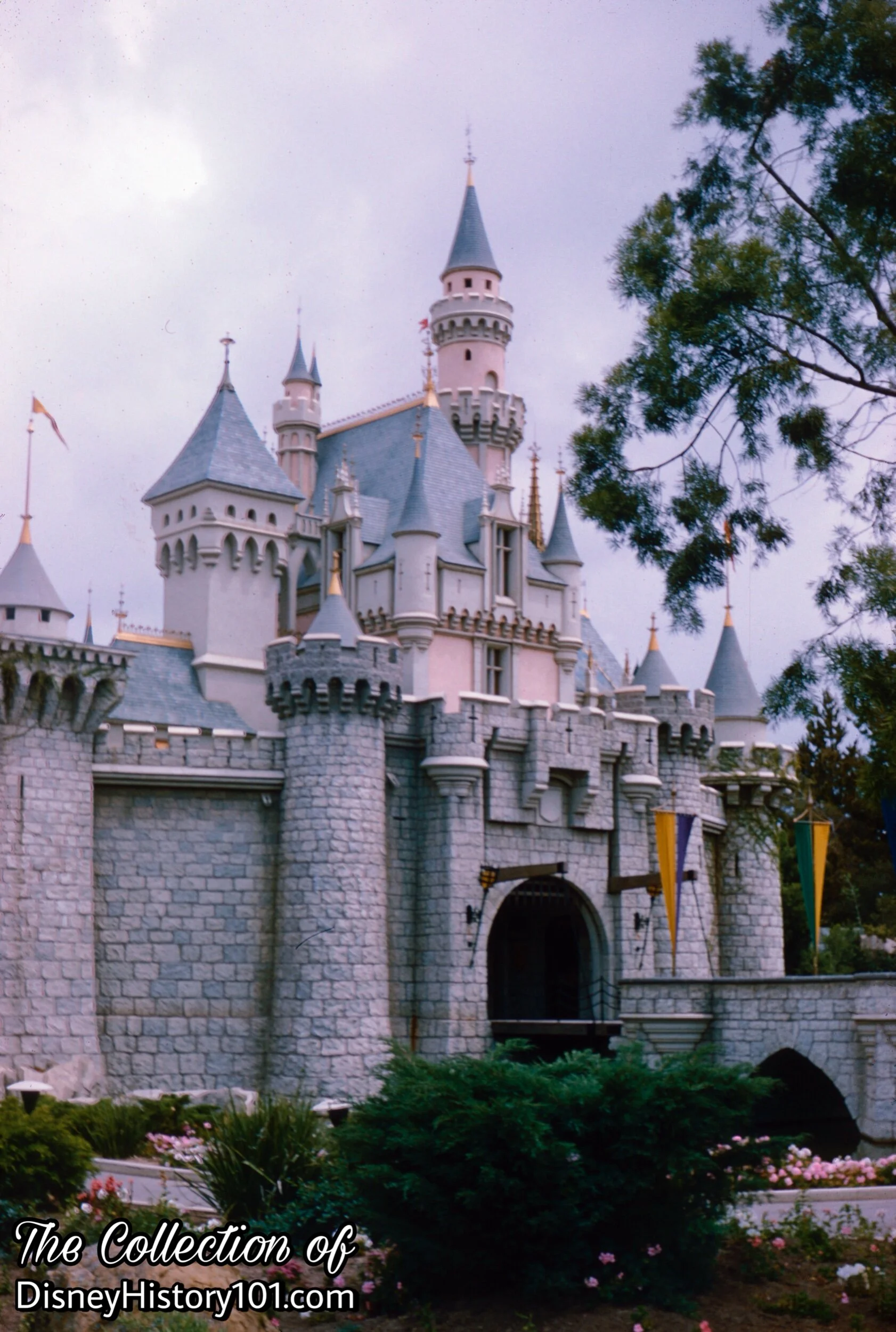
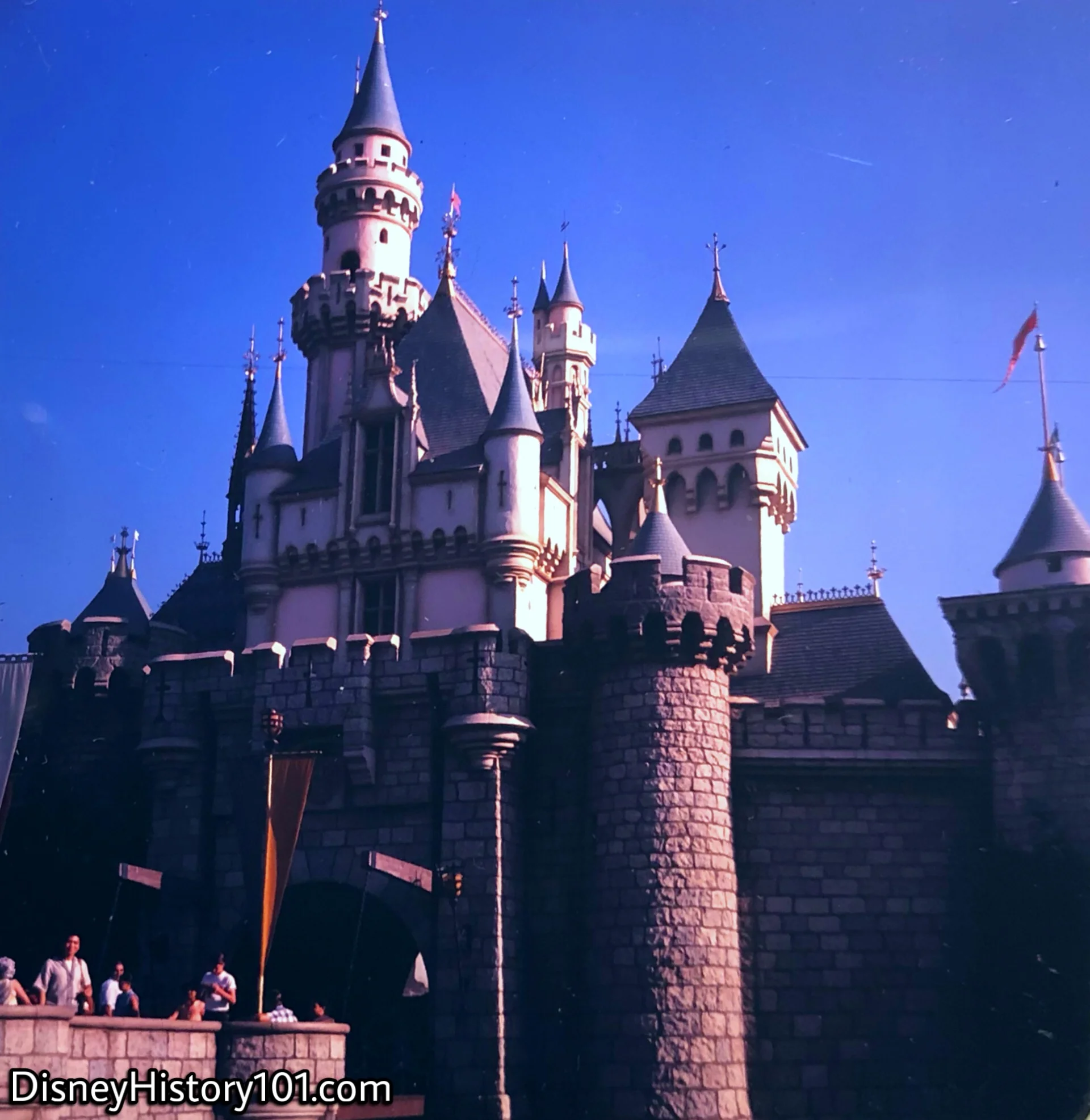
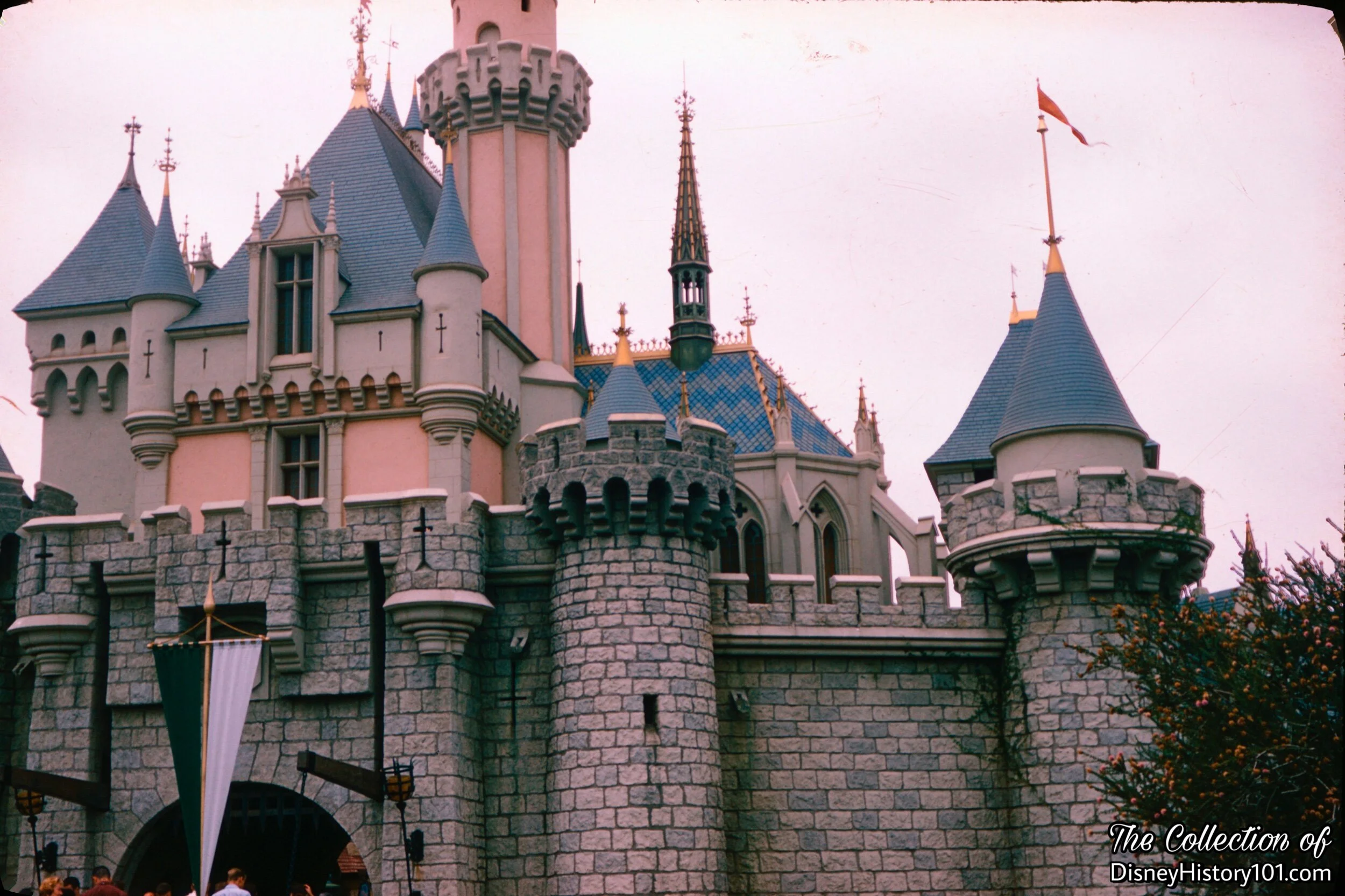
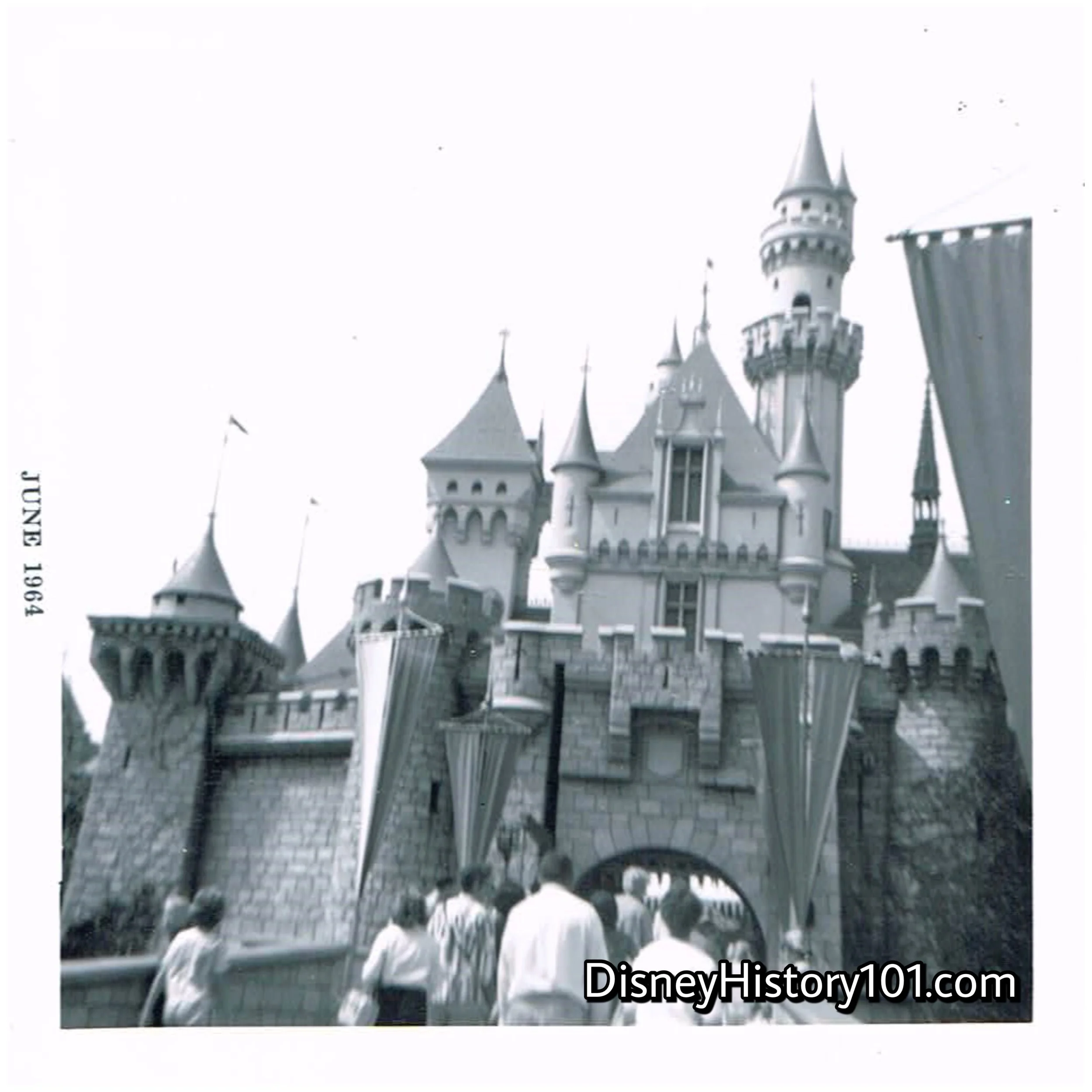
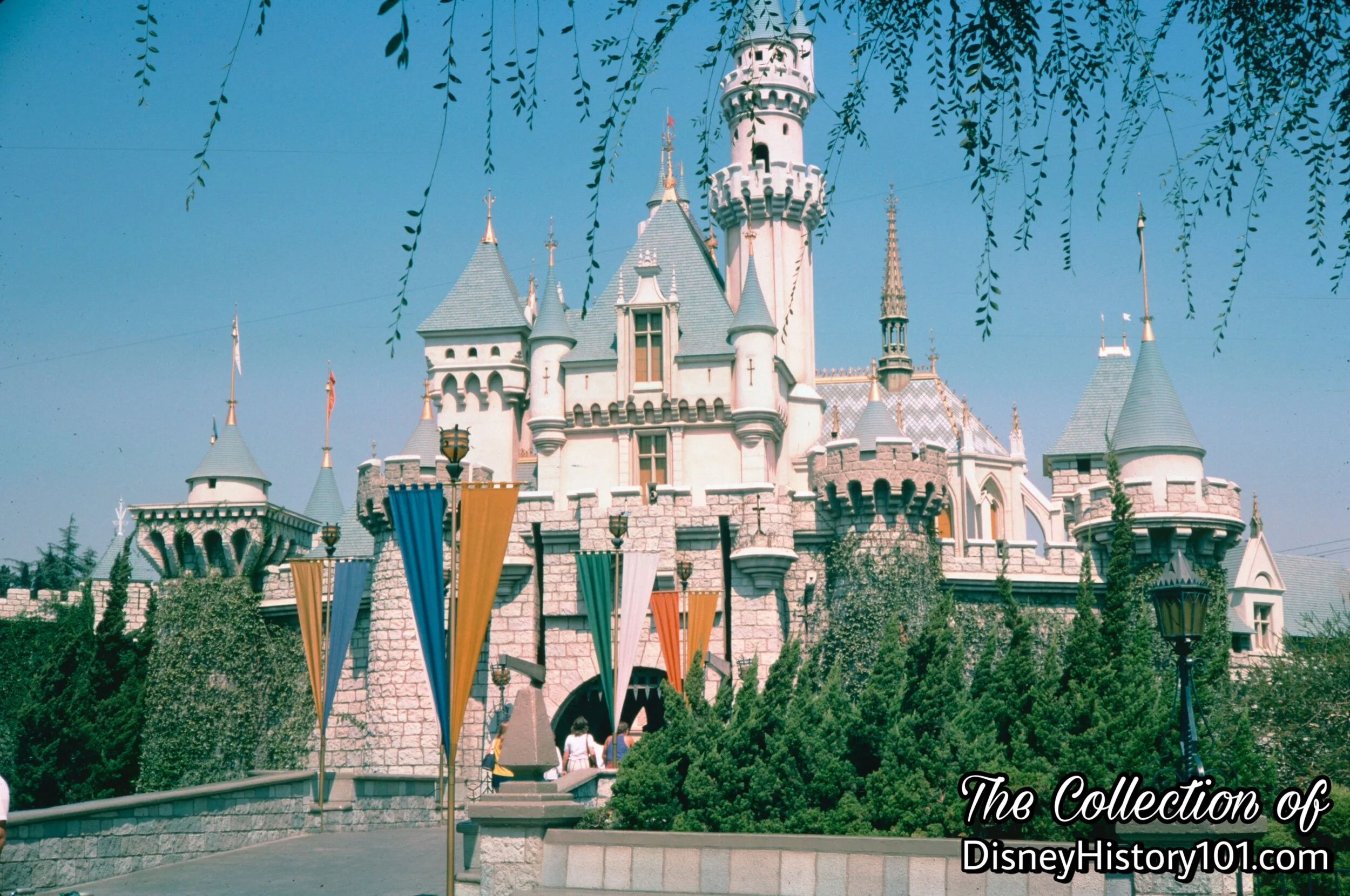
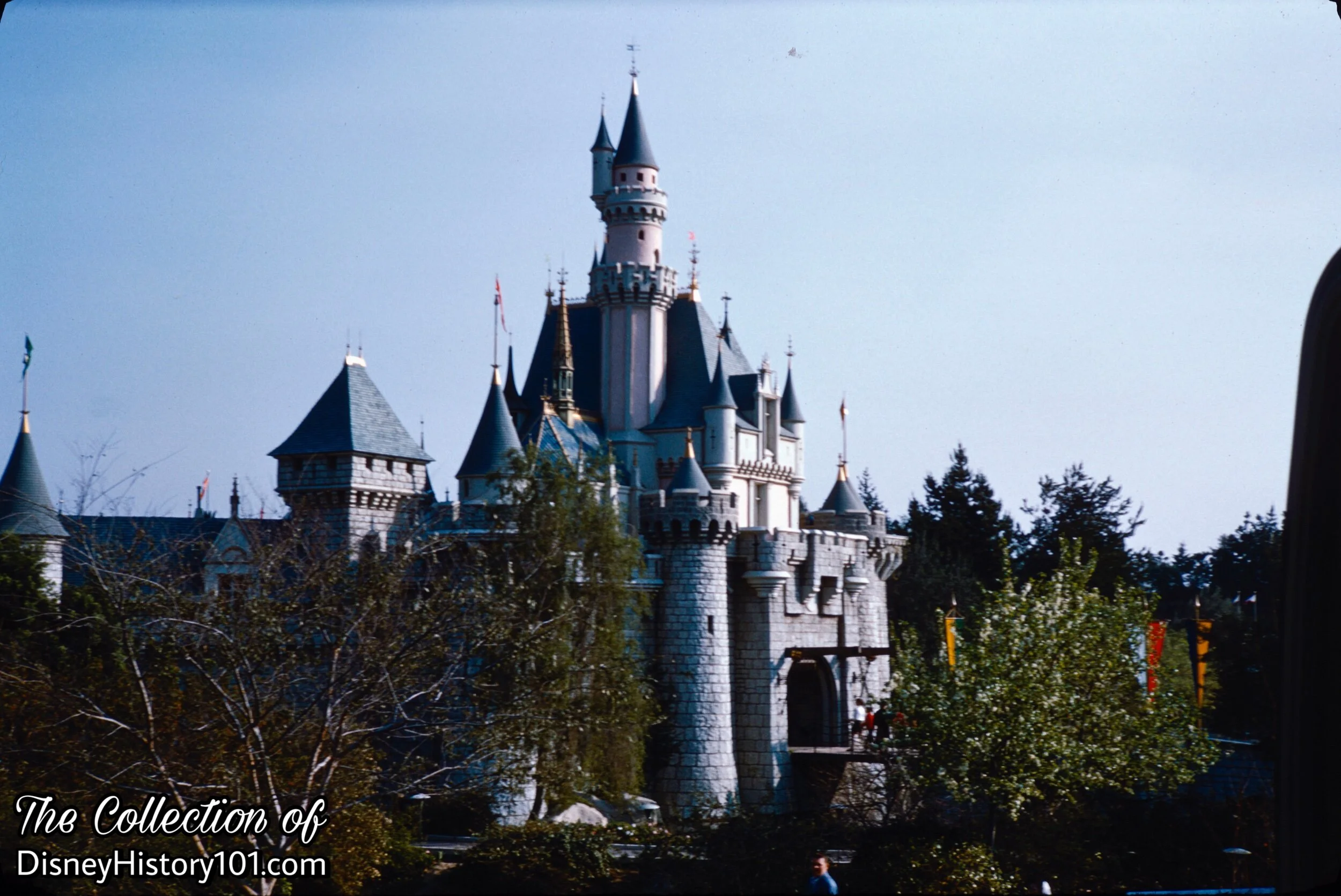
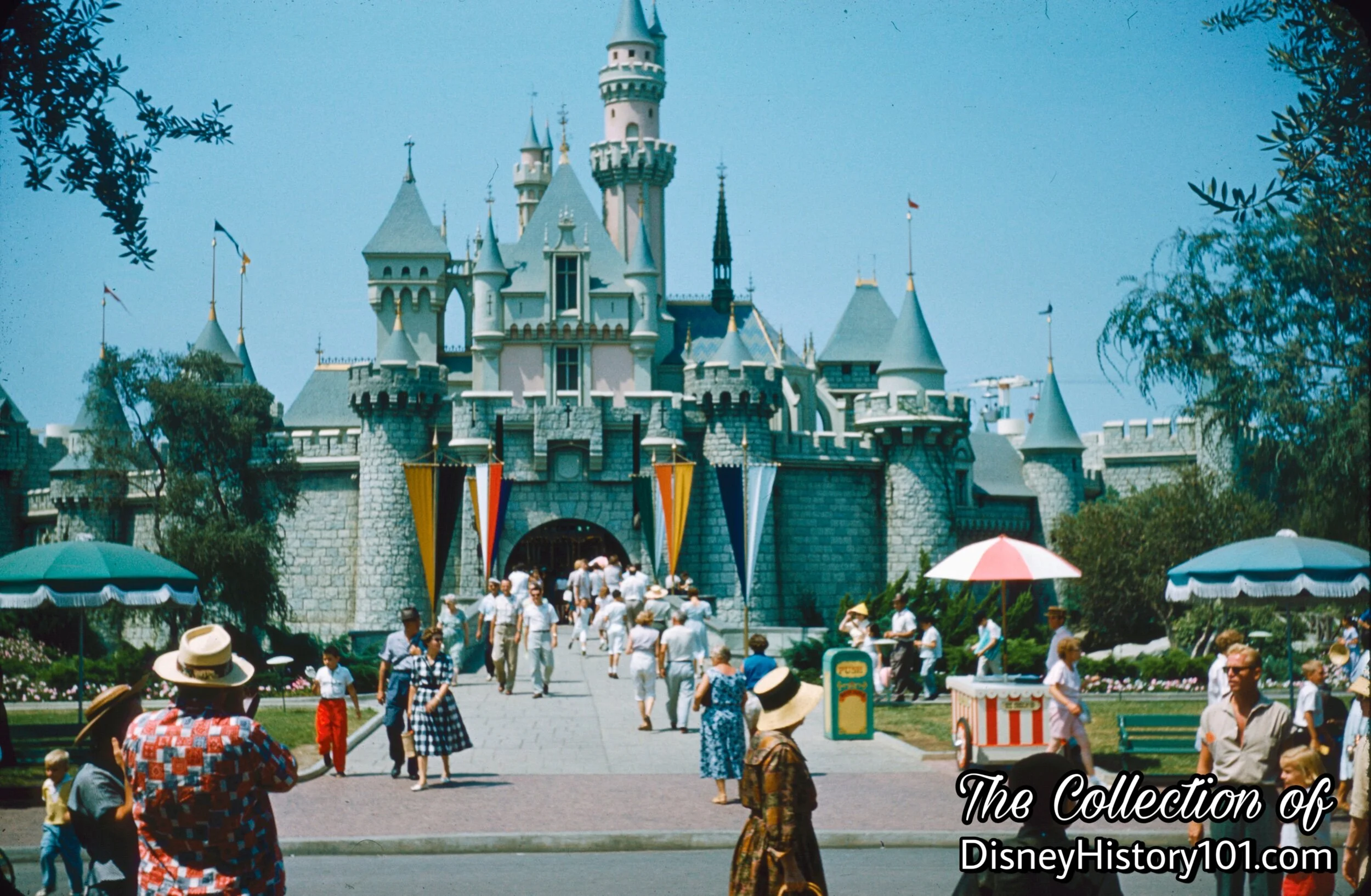
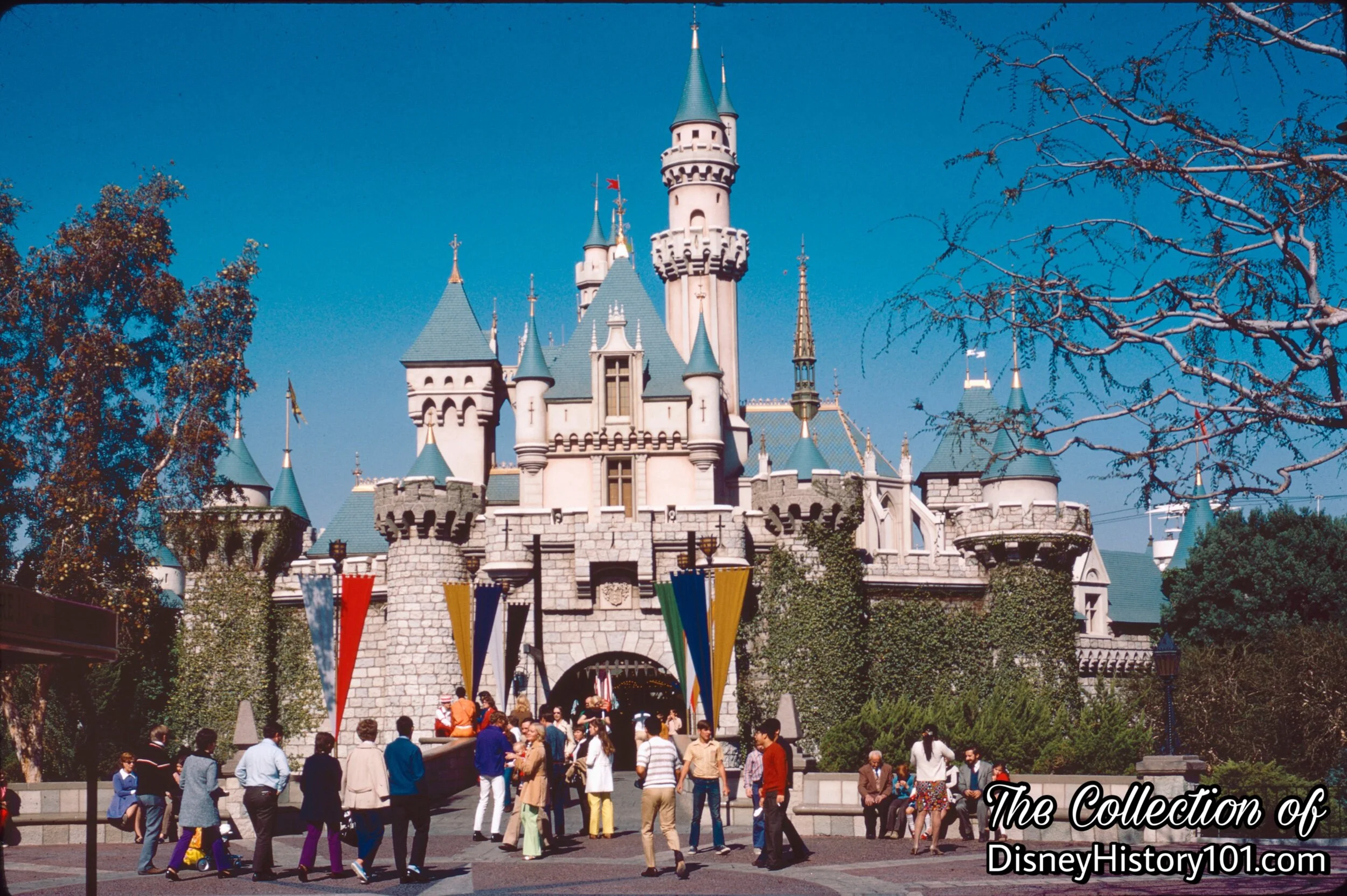
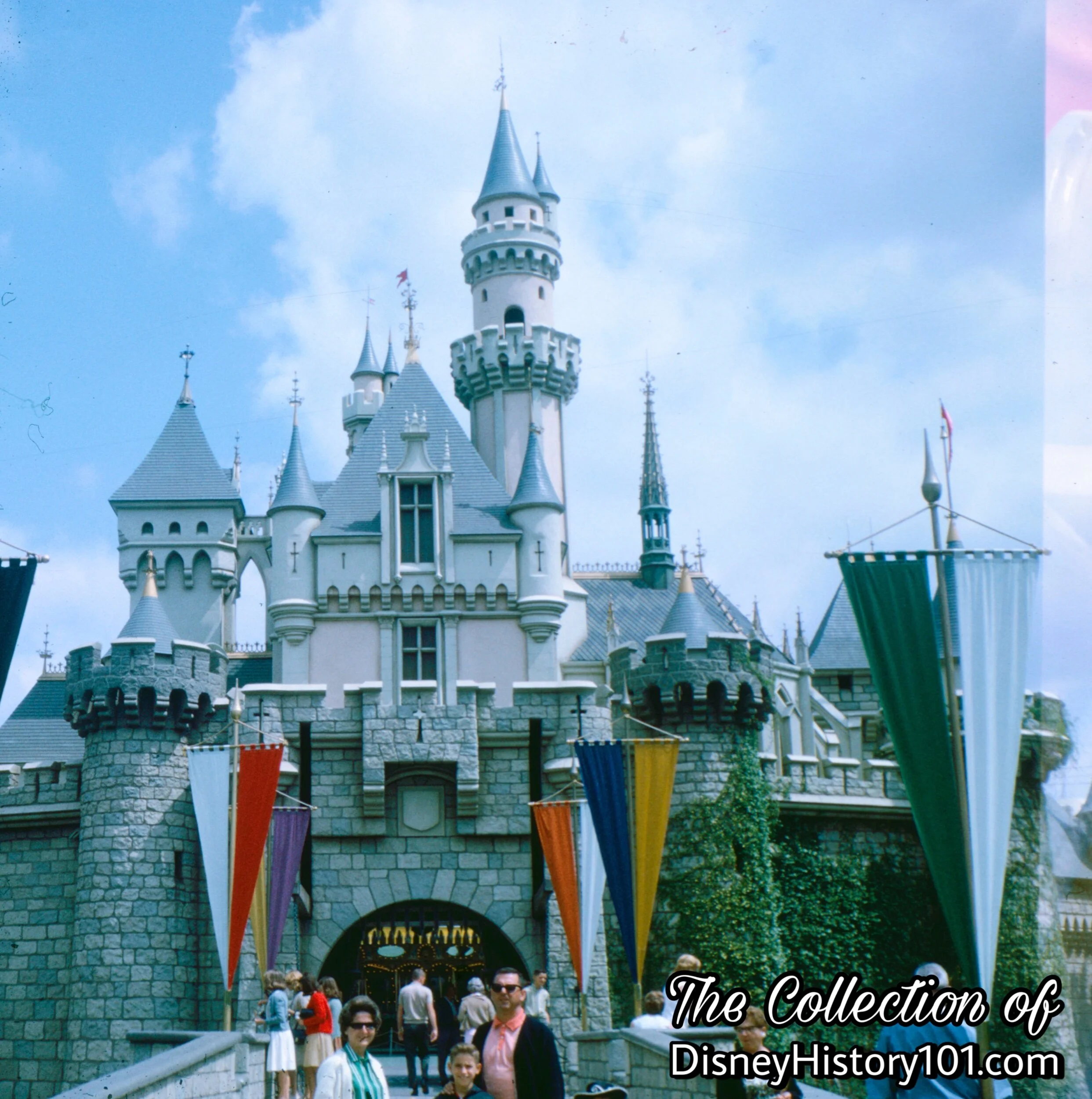
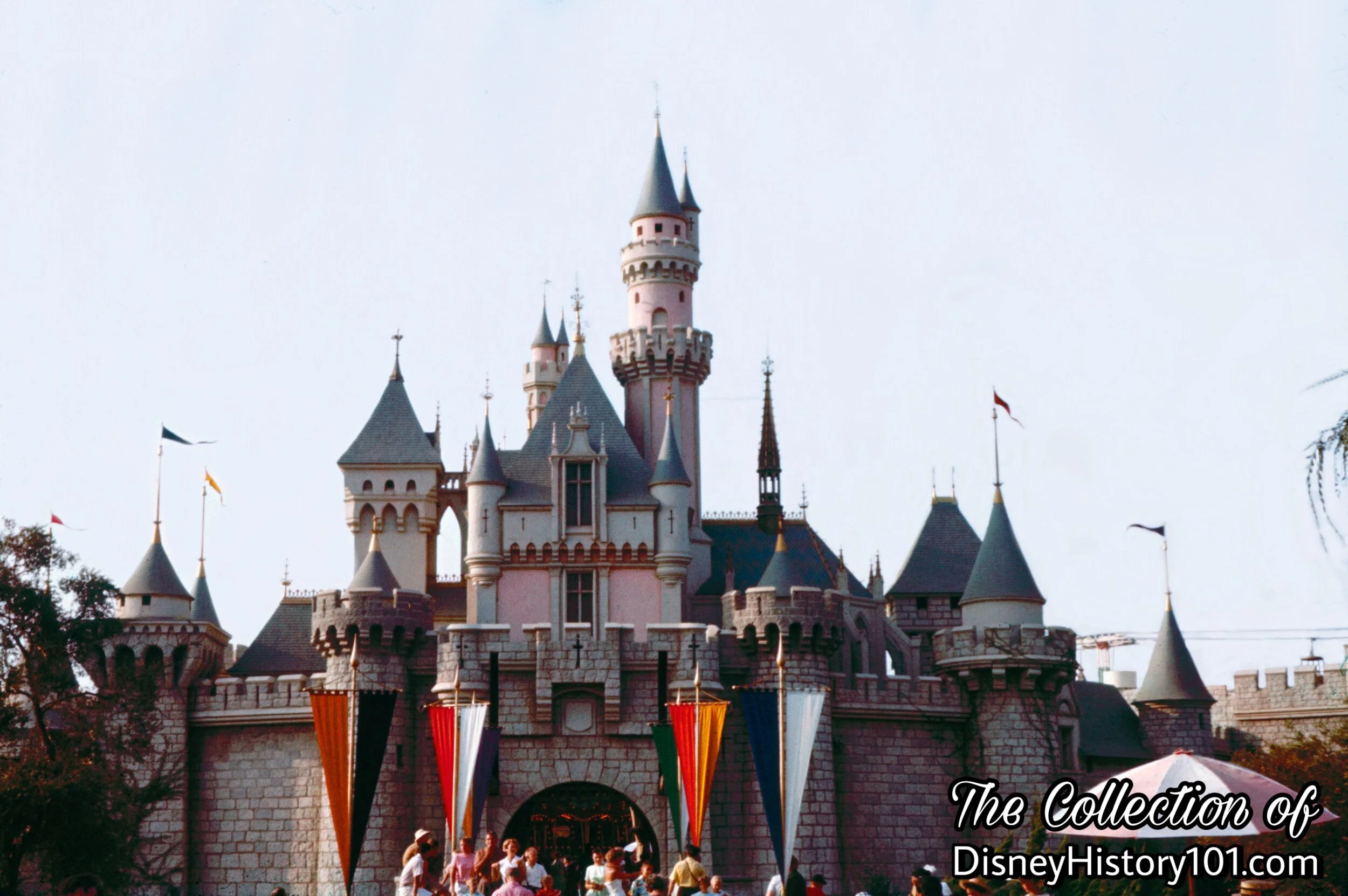
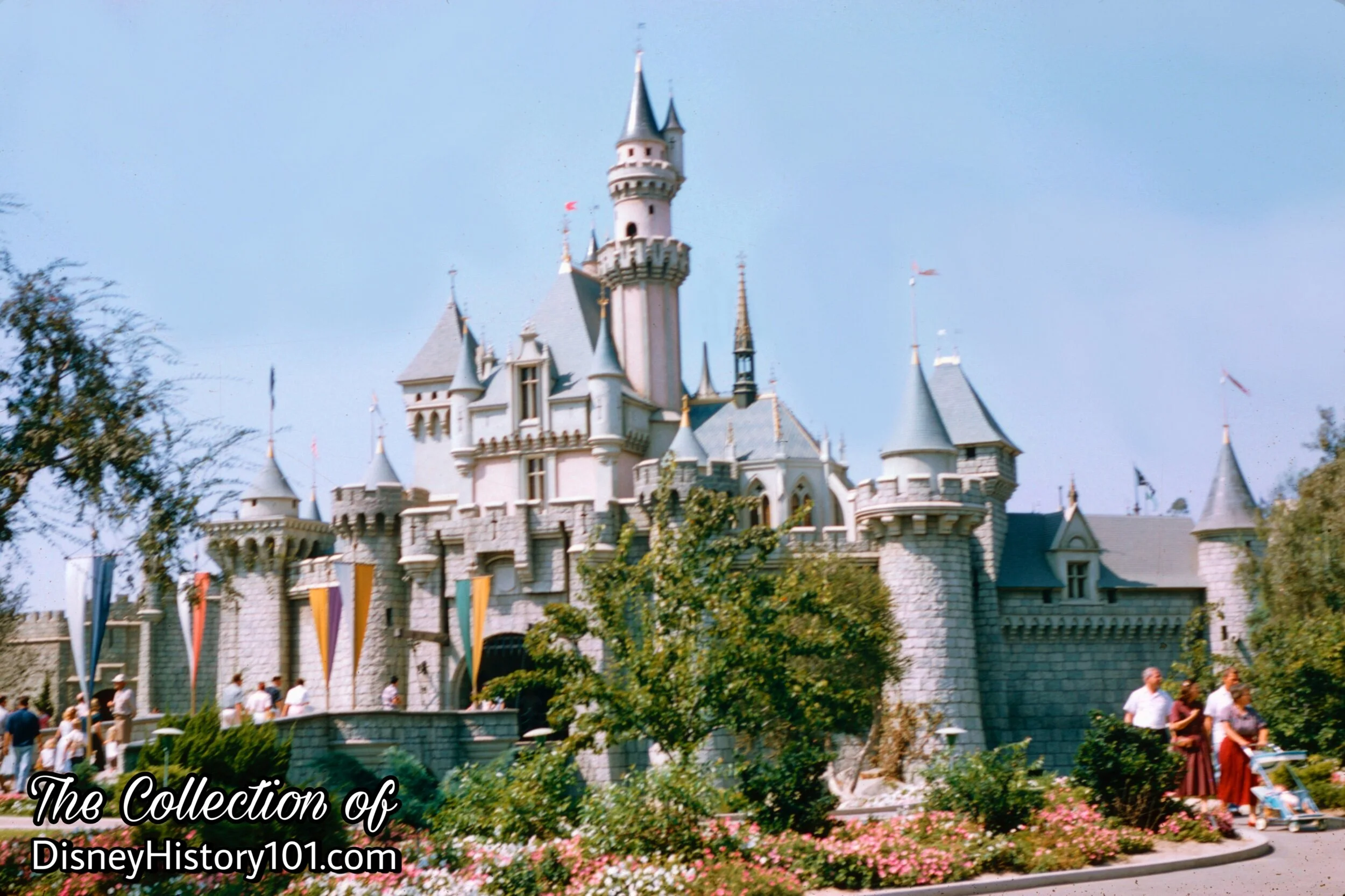
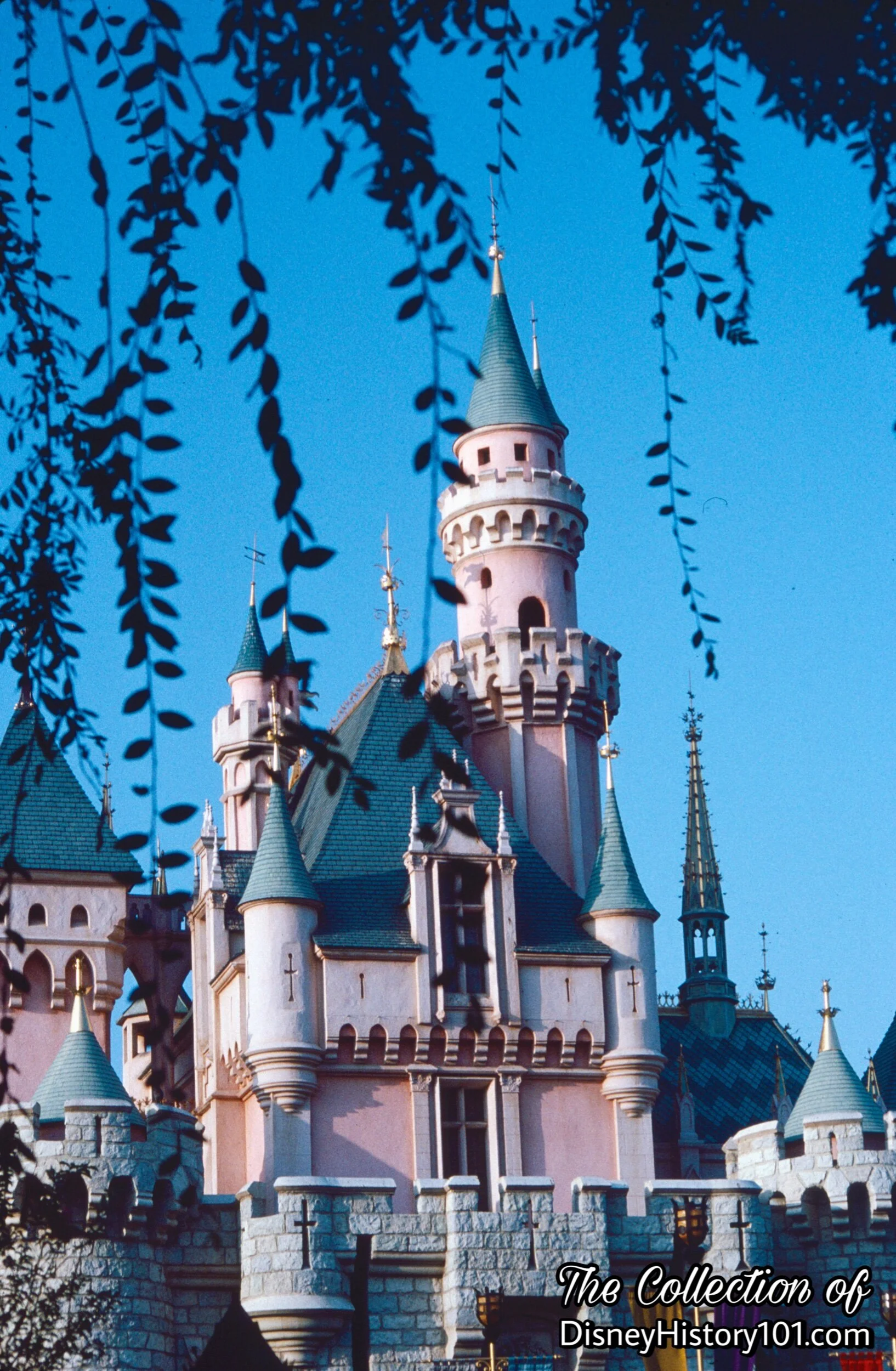
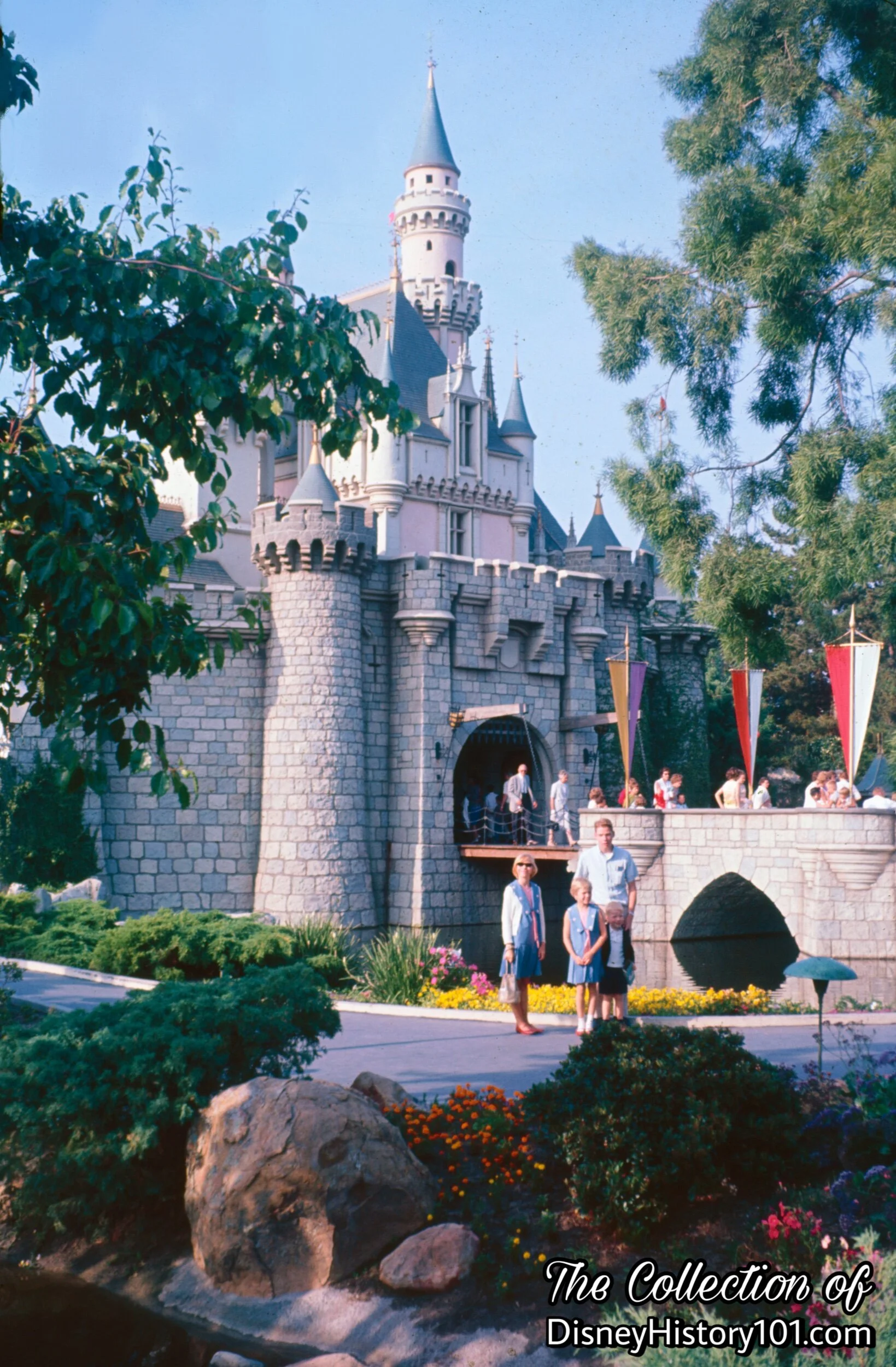
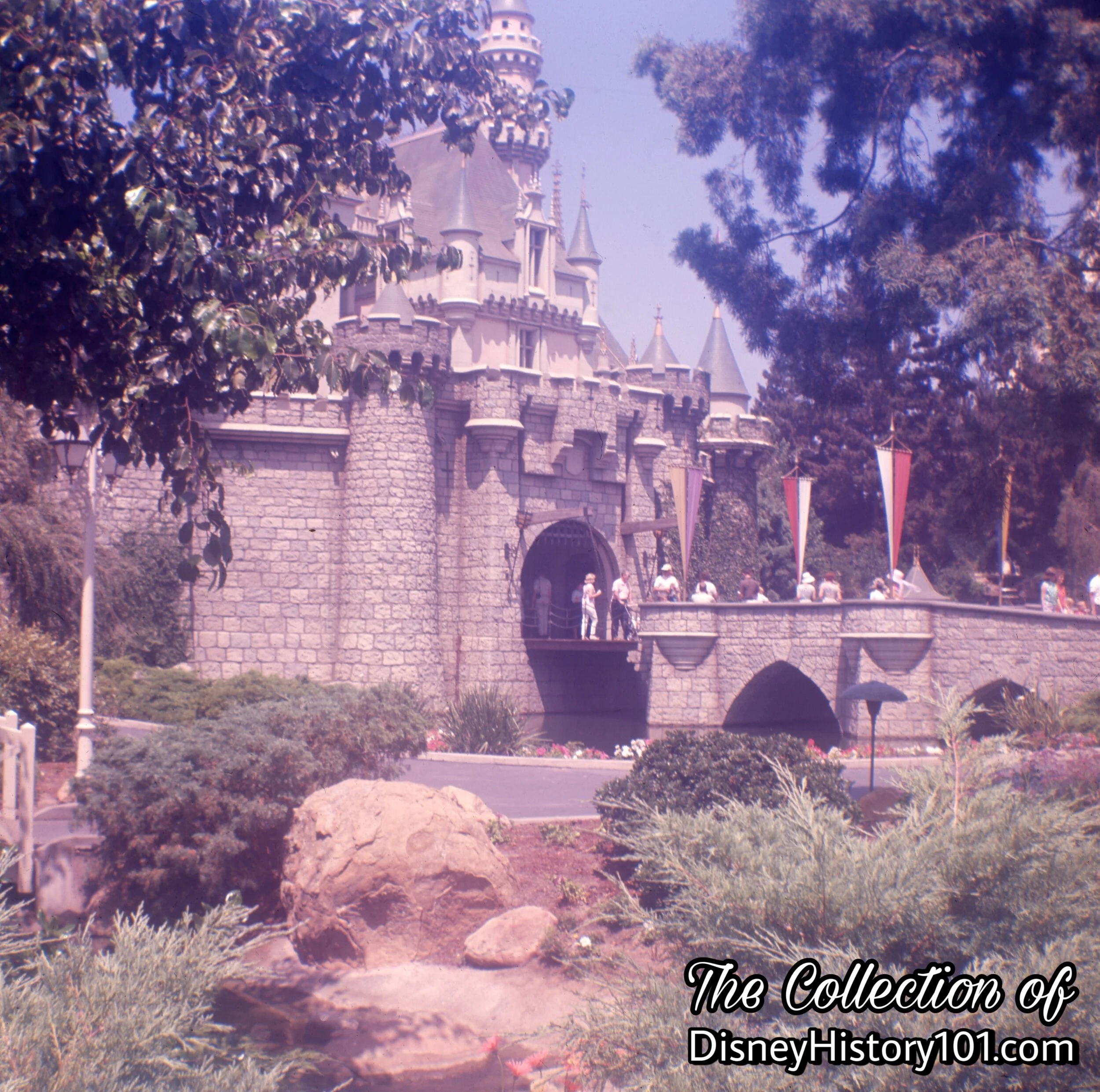
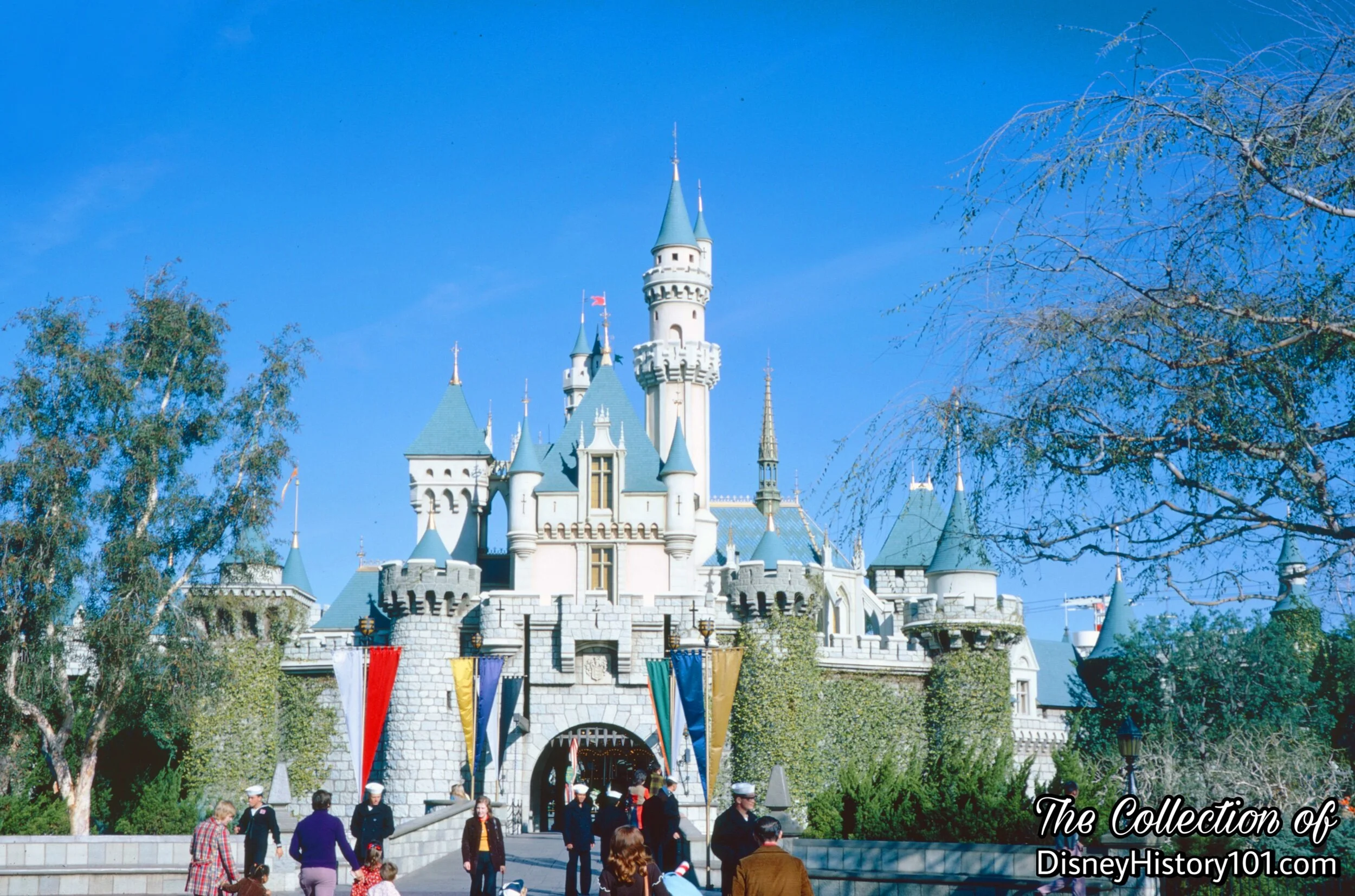
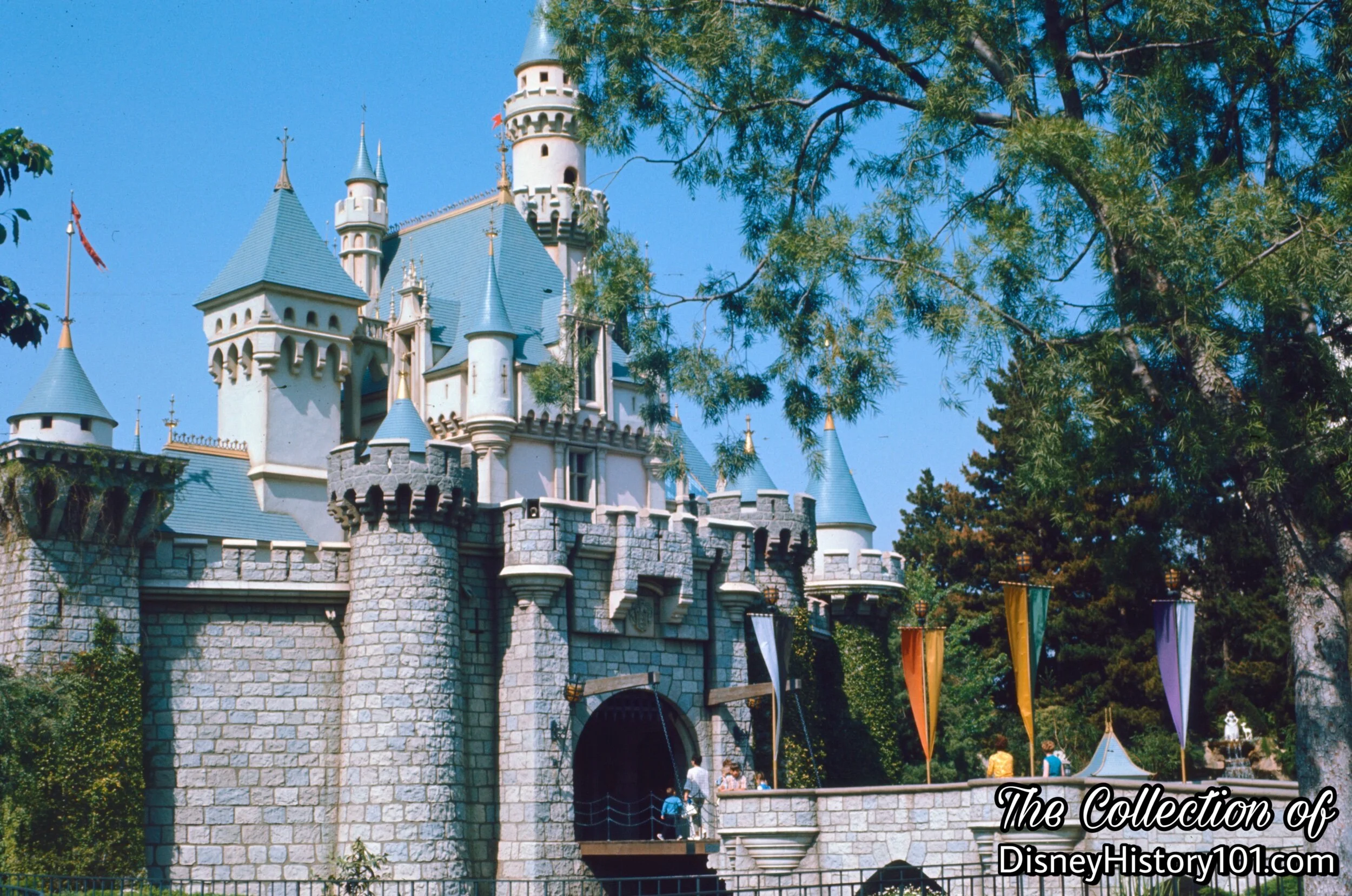
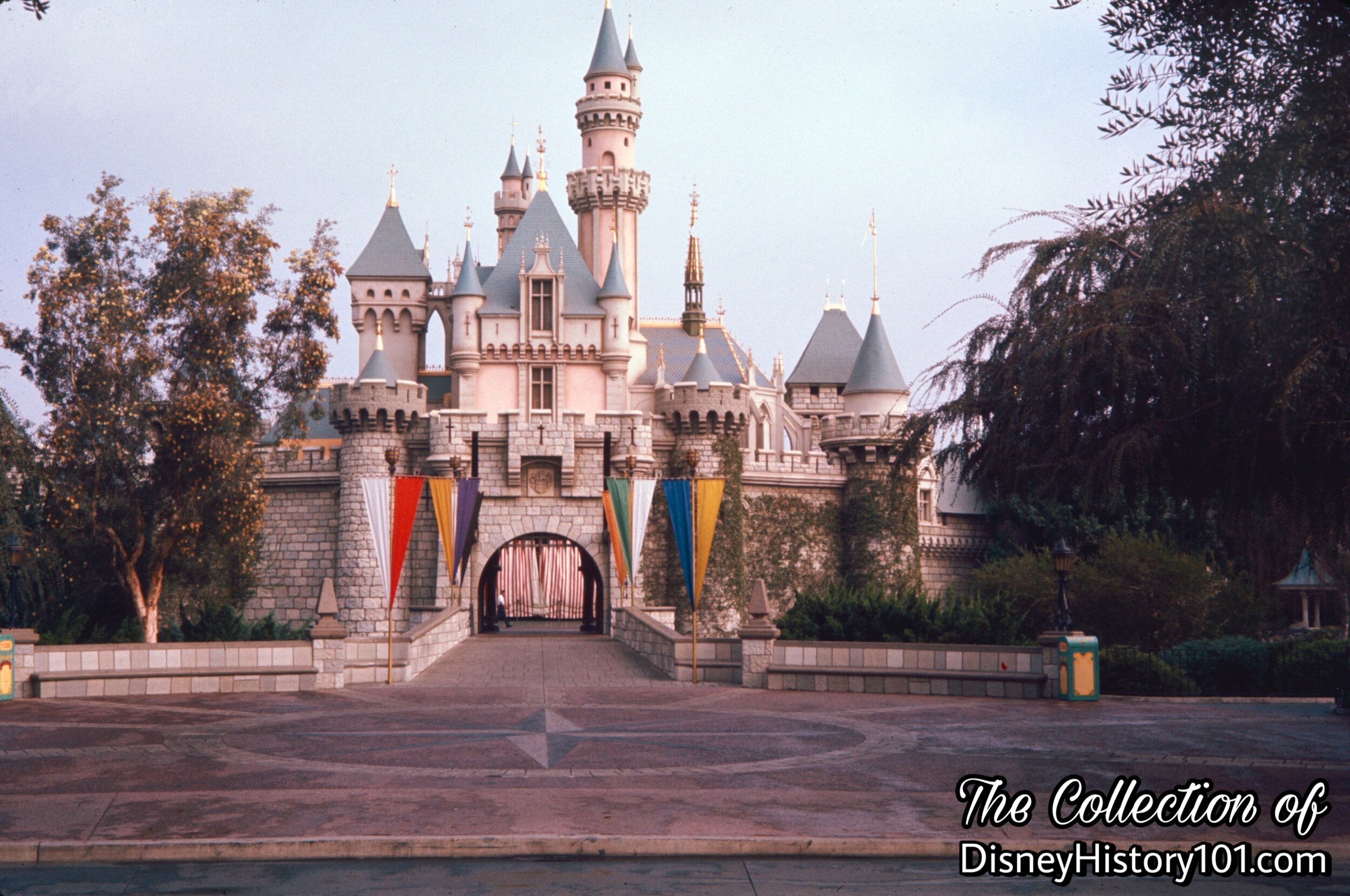
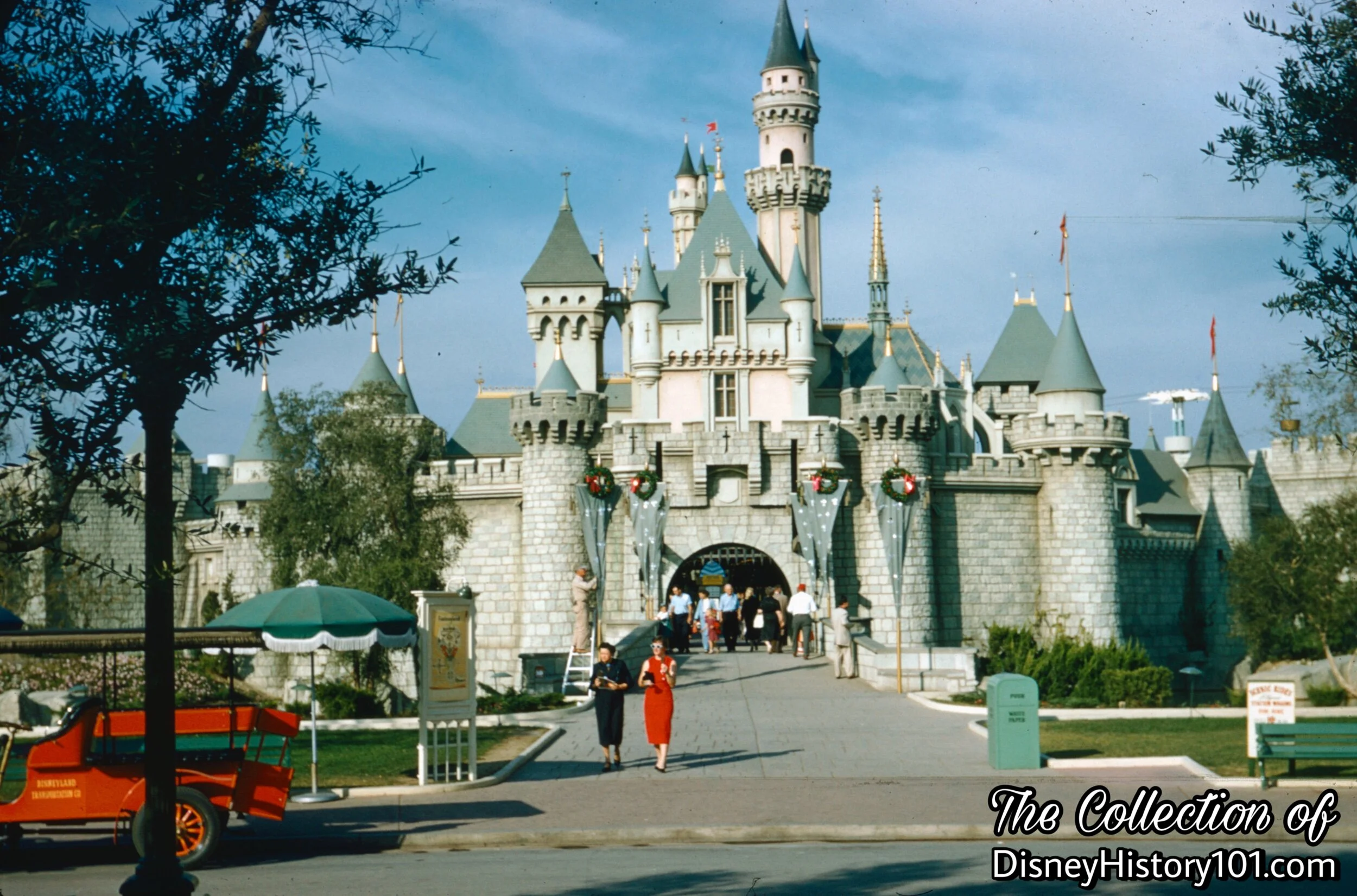
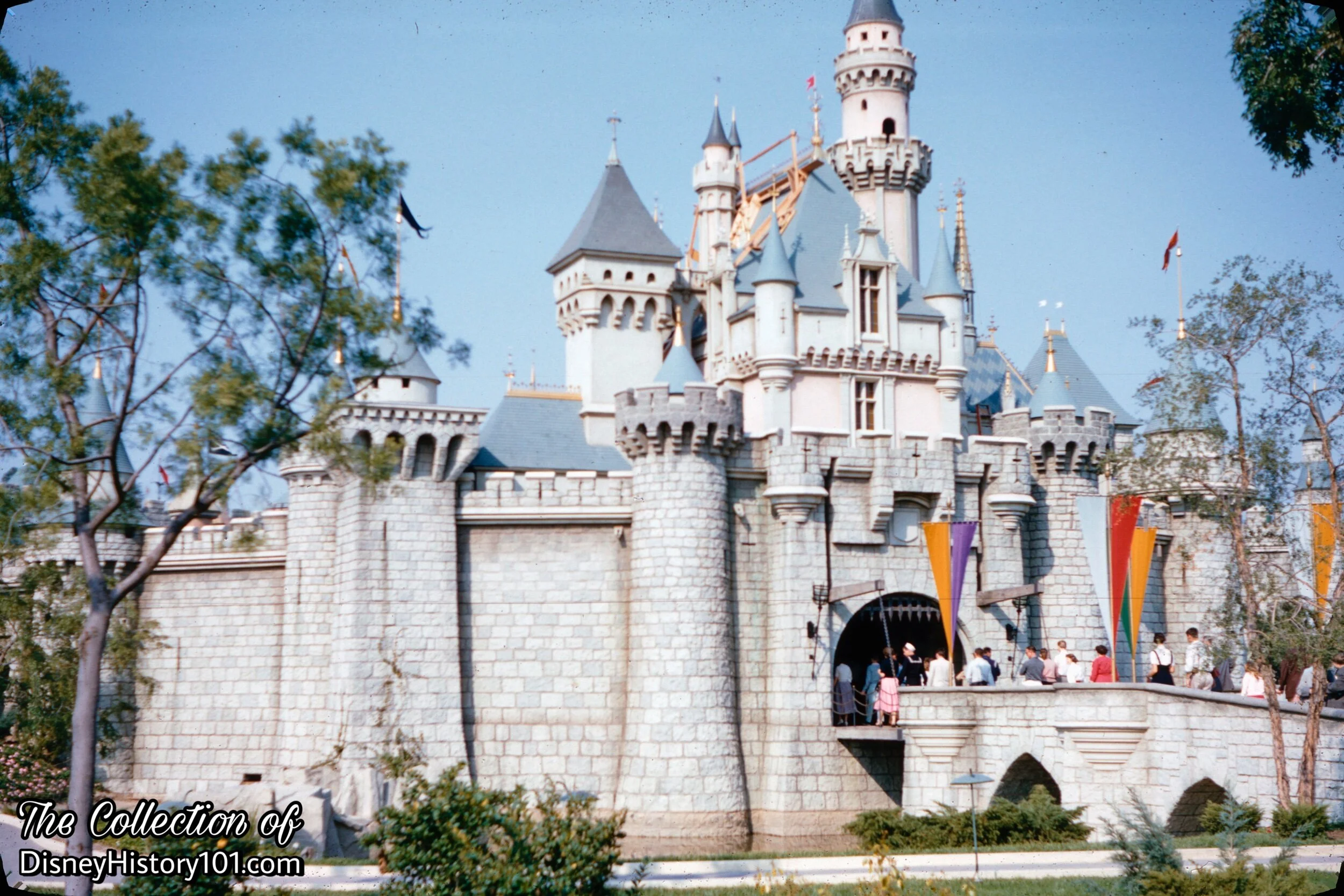
At long last, the iconic Sleeping Beauty Castle (with its eight towers and battlements, some rising 71 feet high in the sky) marked the entrance to the enchanting Fantasyland - the happiest land of them all! All this was constructed four years before the film debuted - the initial walk thru giving guests a preview of the future feature film release!
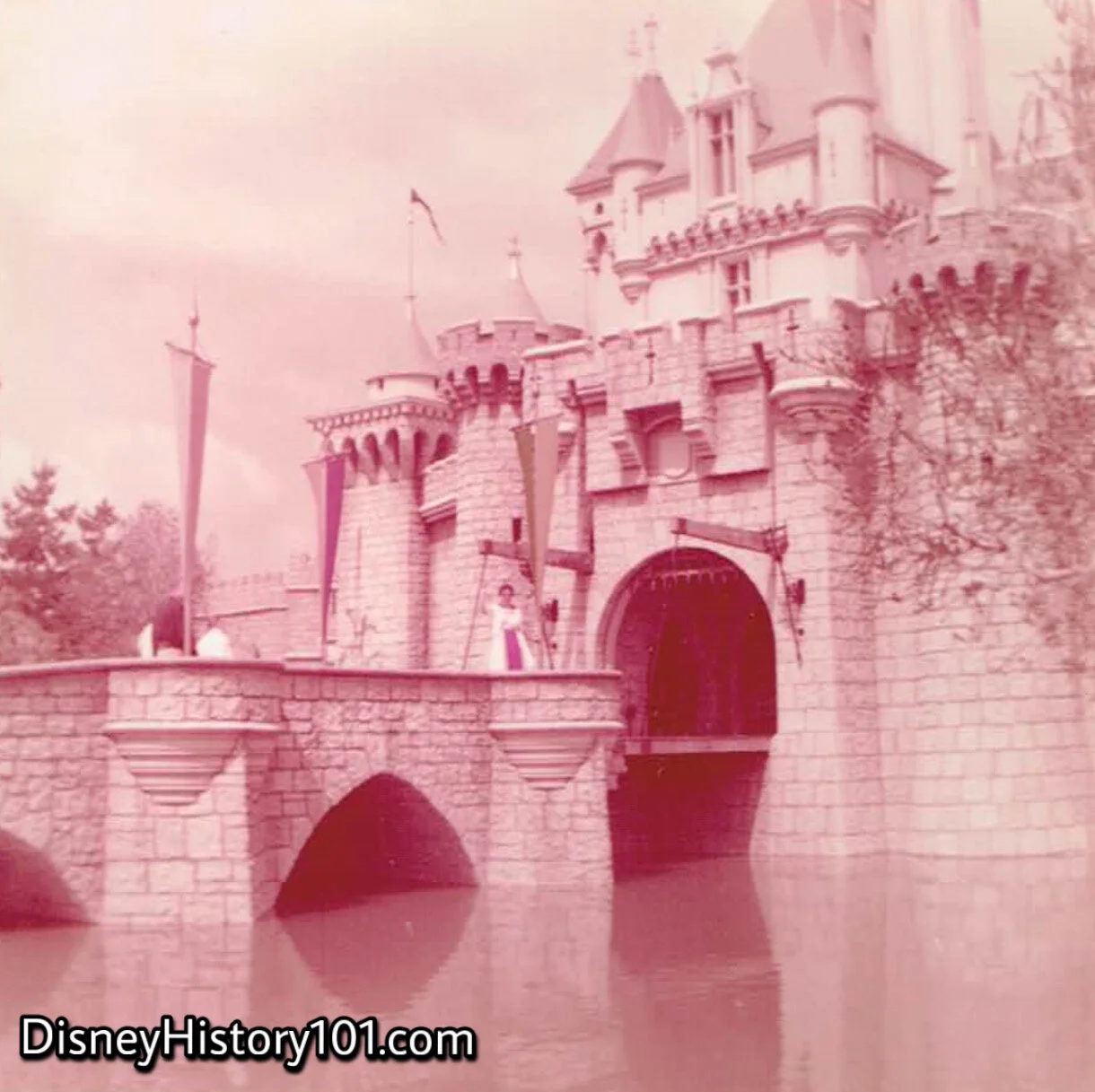
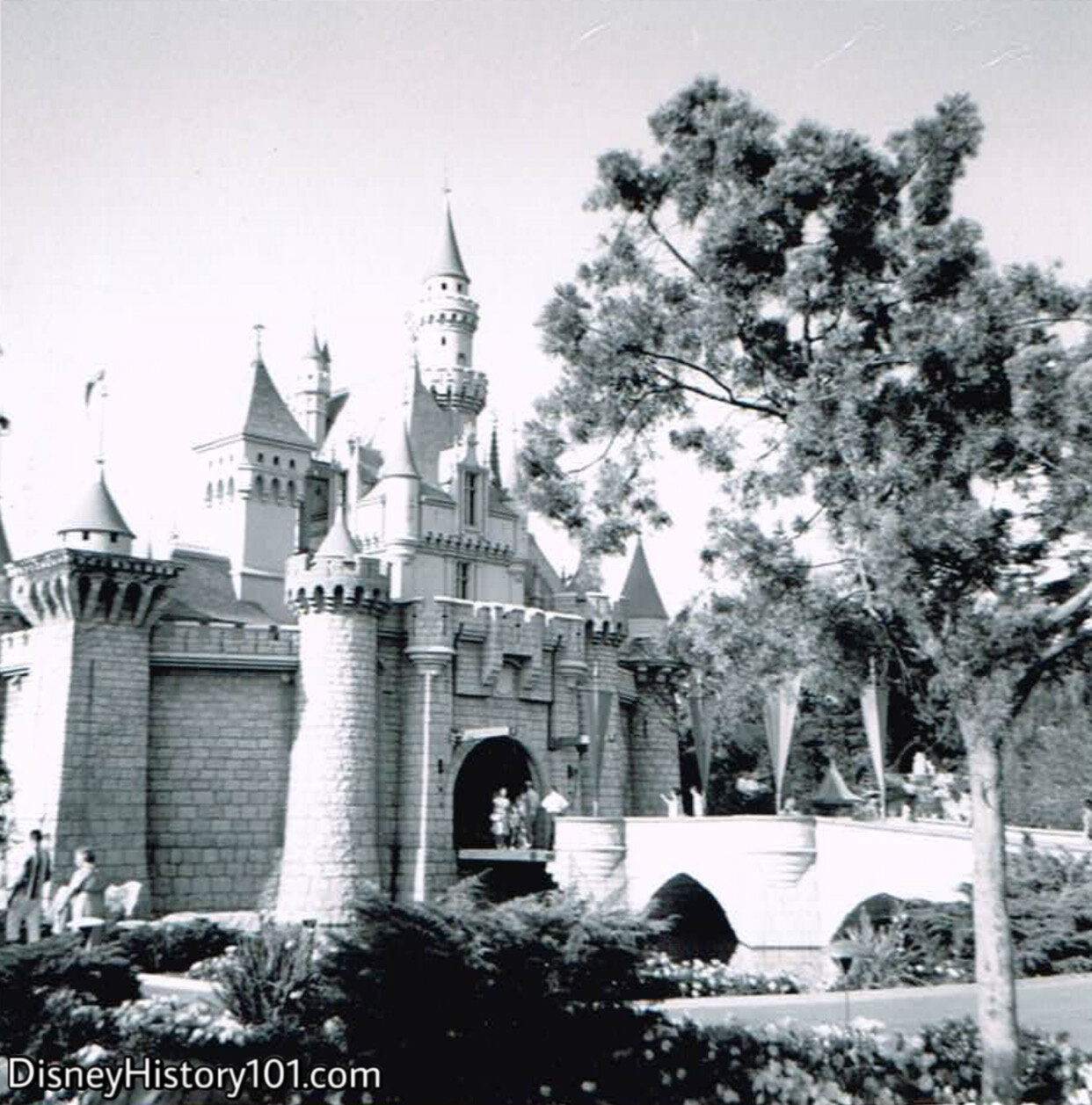
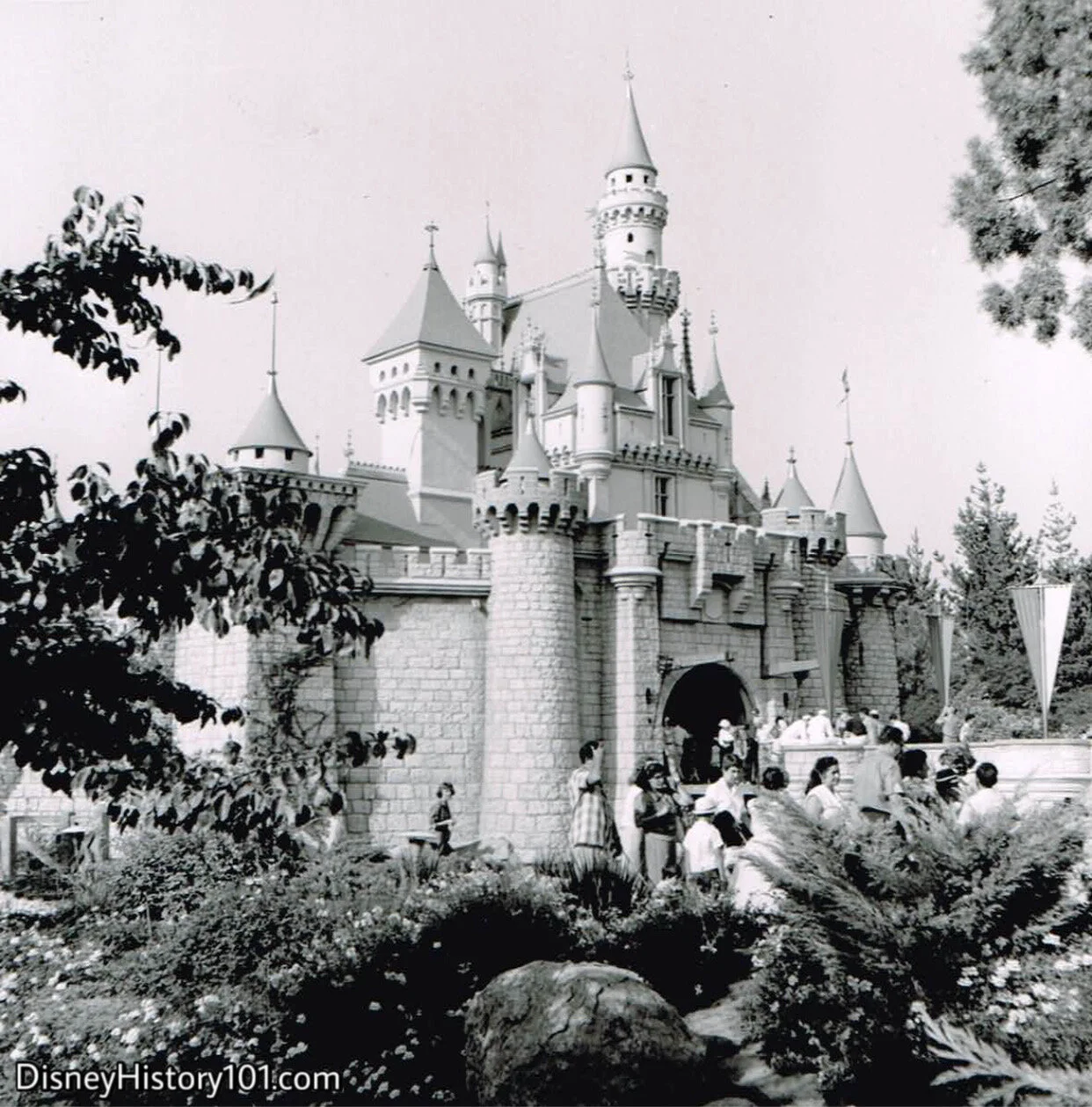
Sleeping Beauty Castle, (1955)
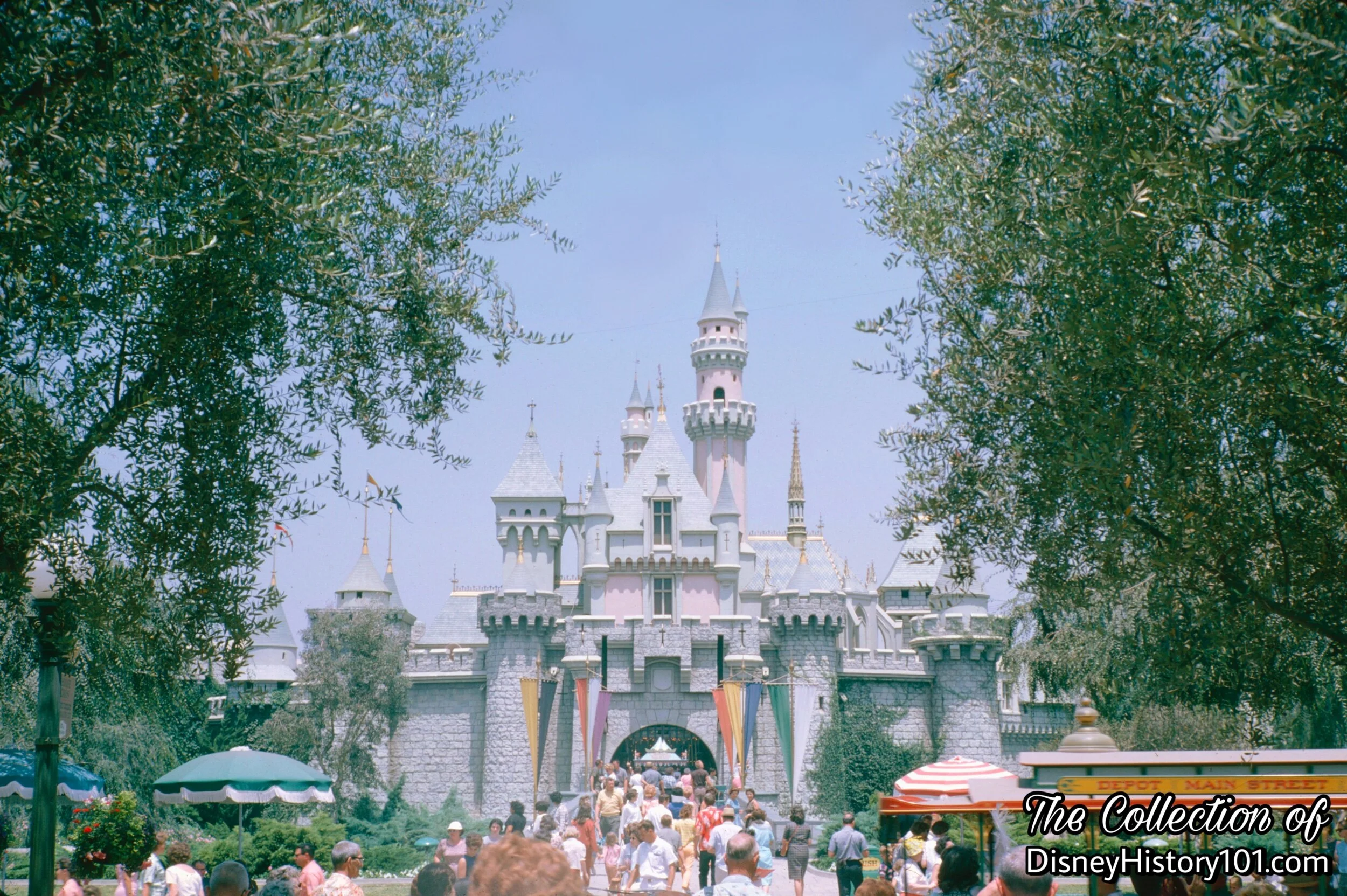
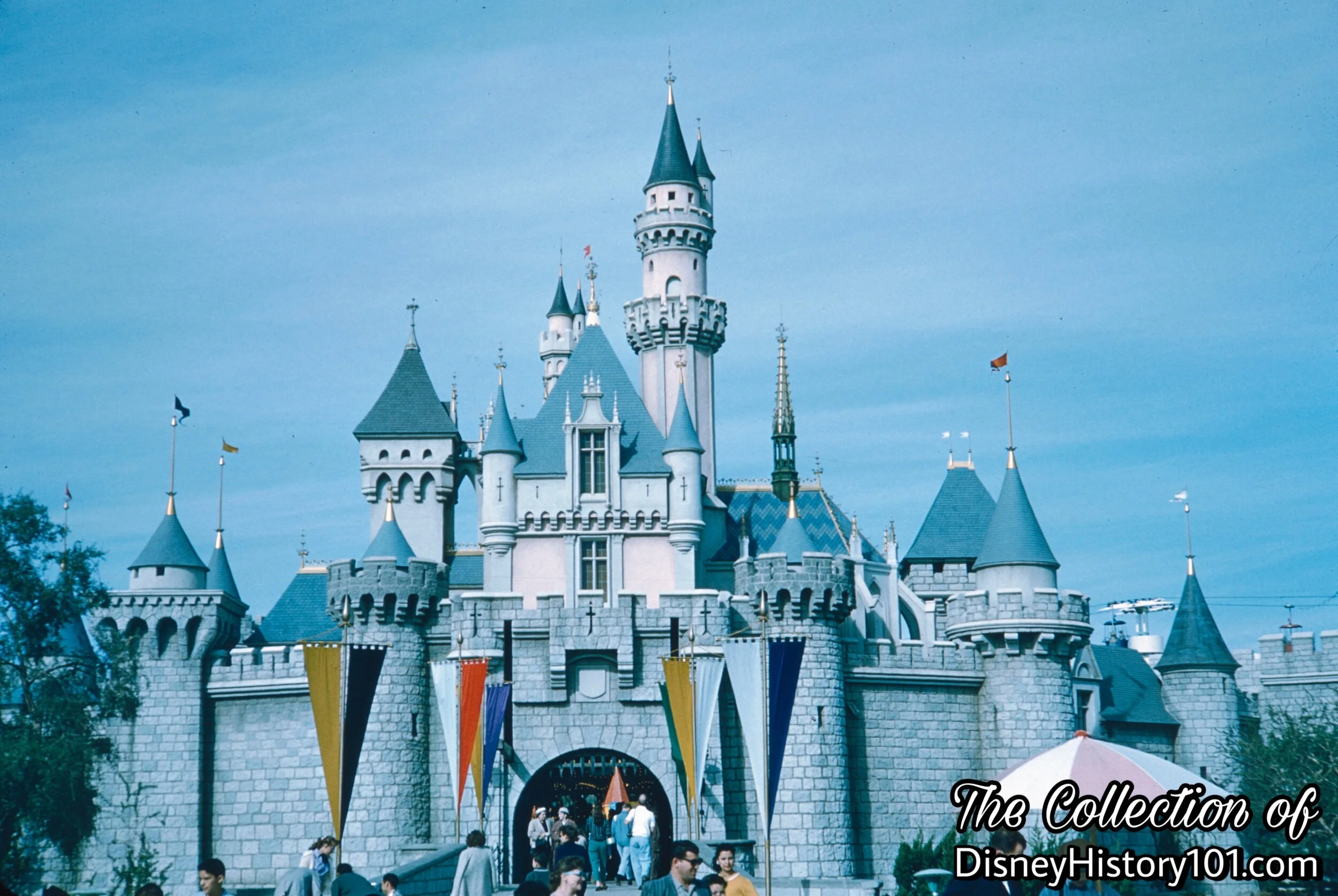
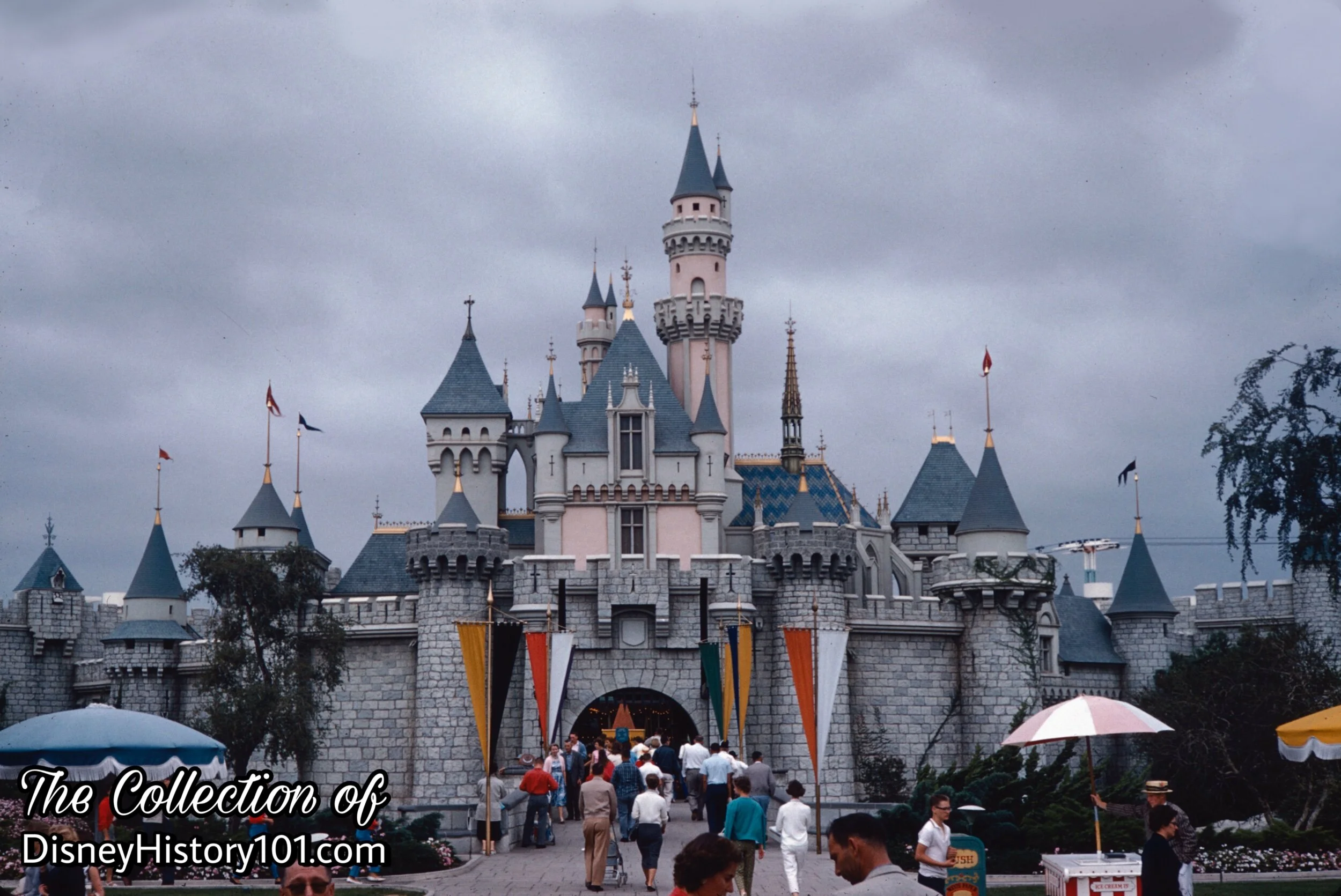
The landmark was a “composite of many castles - both real and legendary,” according to the narrator of “Disneyland U.S.A.” (released December 20, 1956, by Buena Vista Film Distribution). “Sleeping Beauty’s Castle” (as it is called in the very same feature film of 1957), would become one of the outstanding features of the Disneyland skyline, and the chief icon and symbol of Walt’s “Magic Kingdom” - Disneyland!
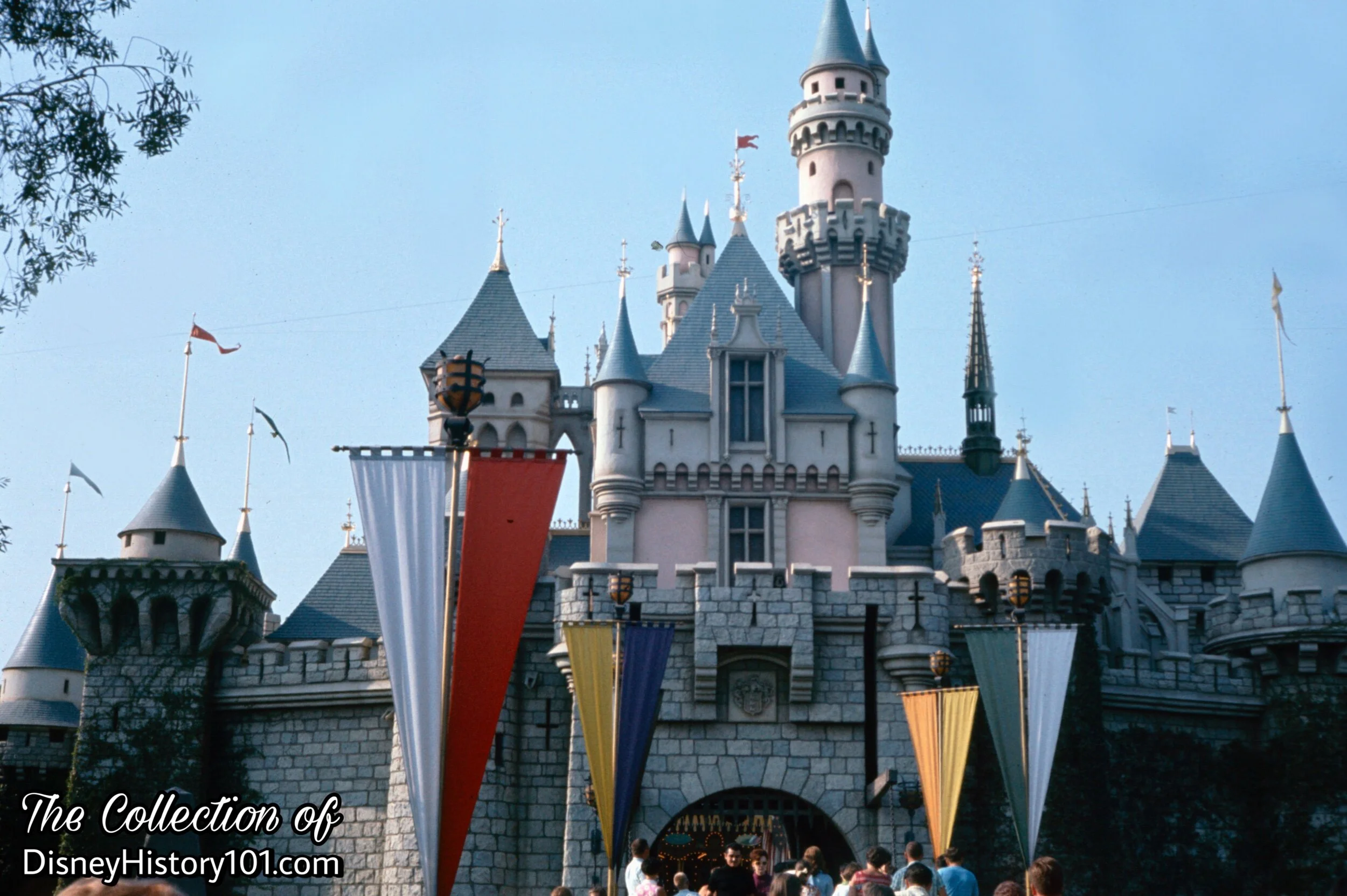
Sleeping Beauty Castle
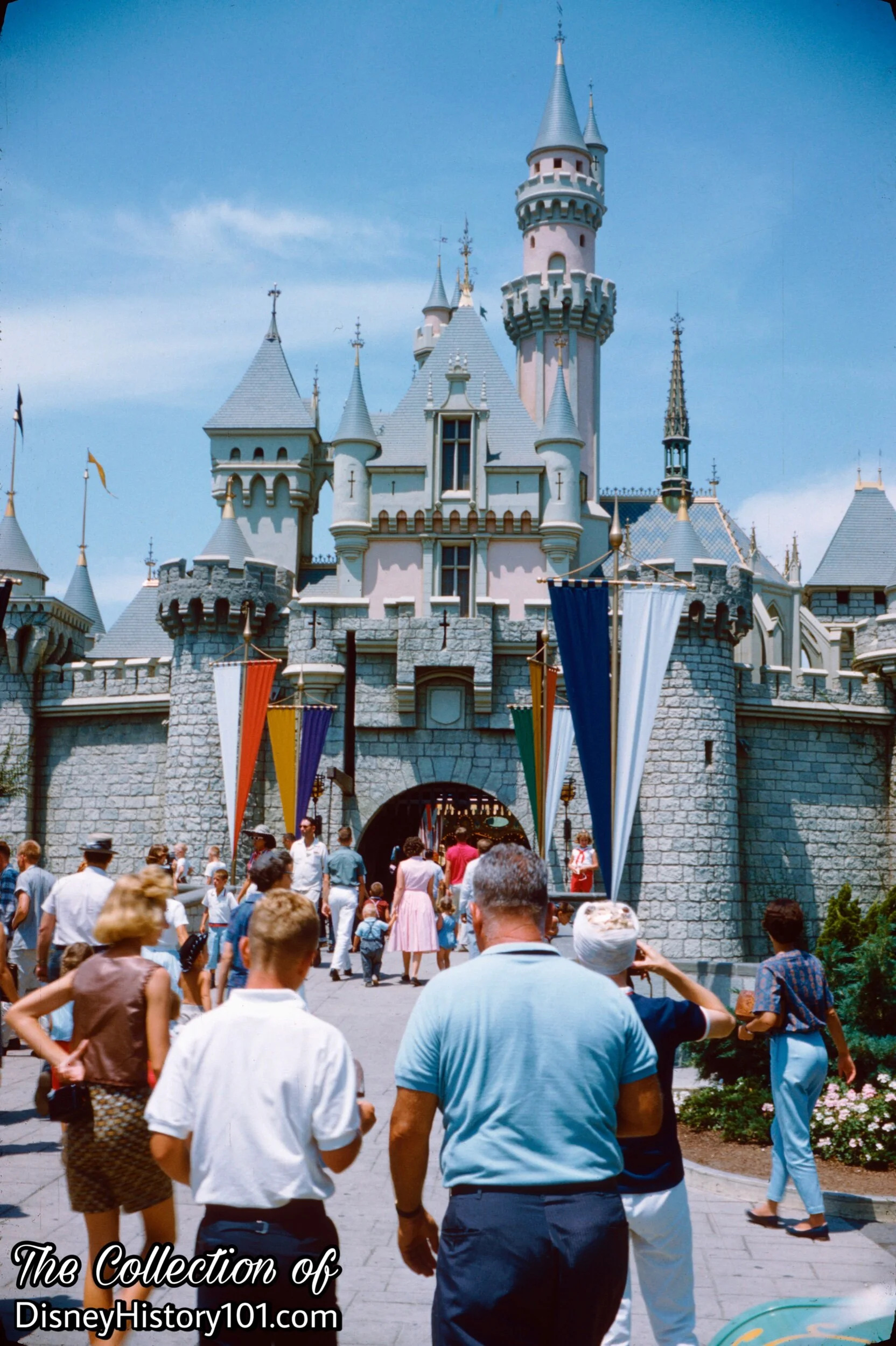
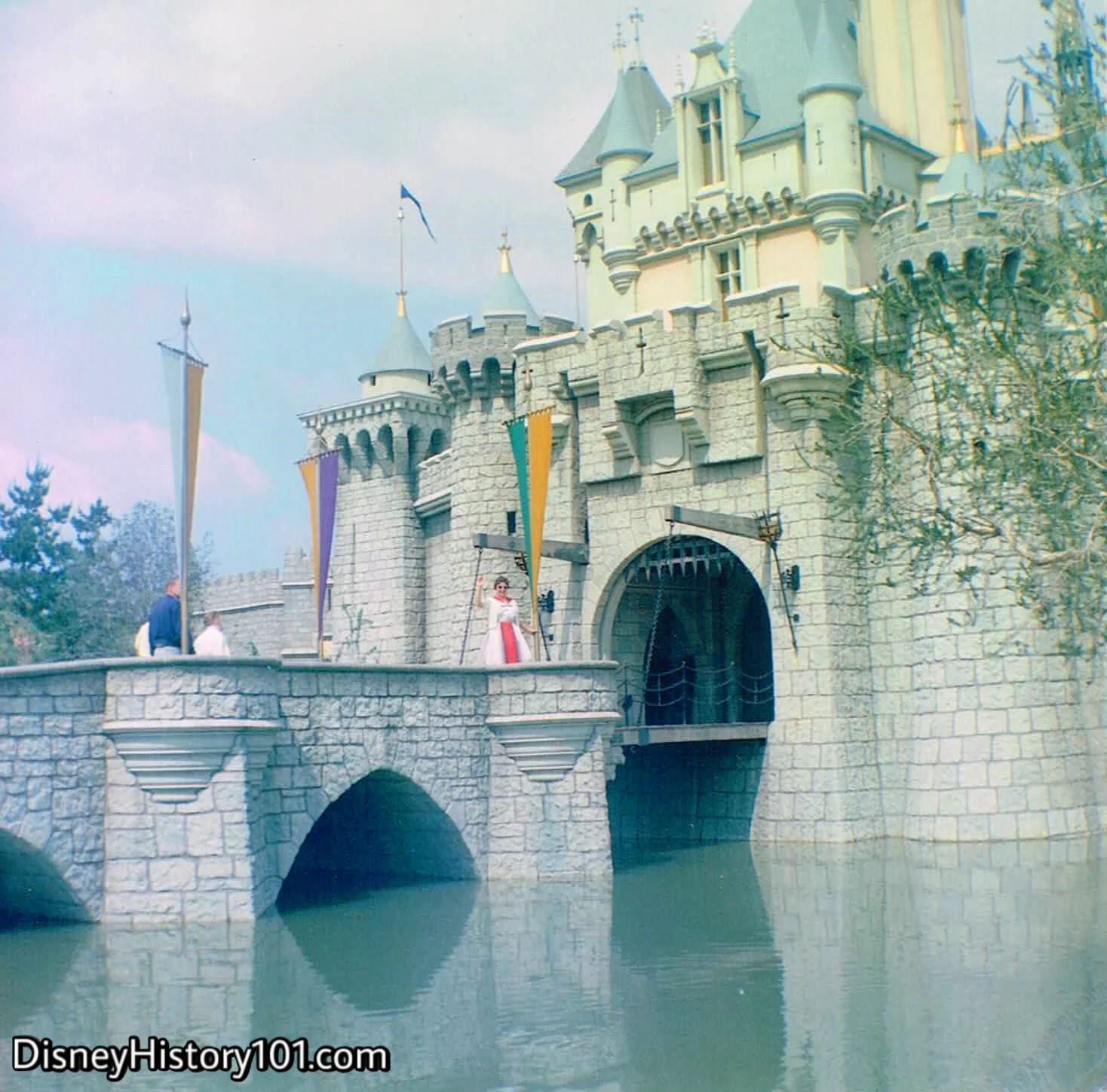
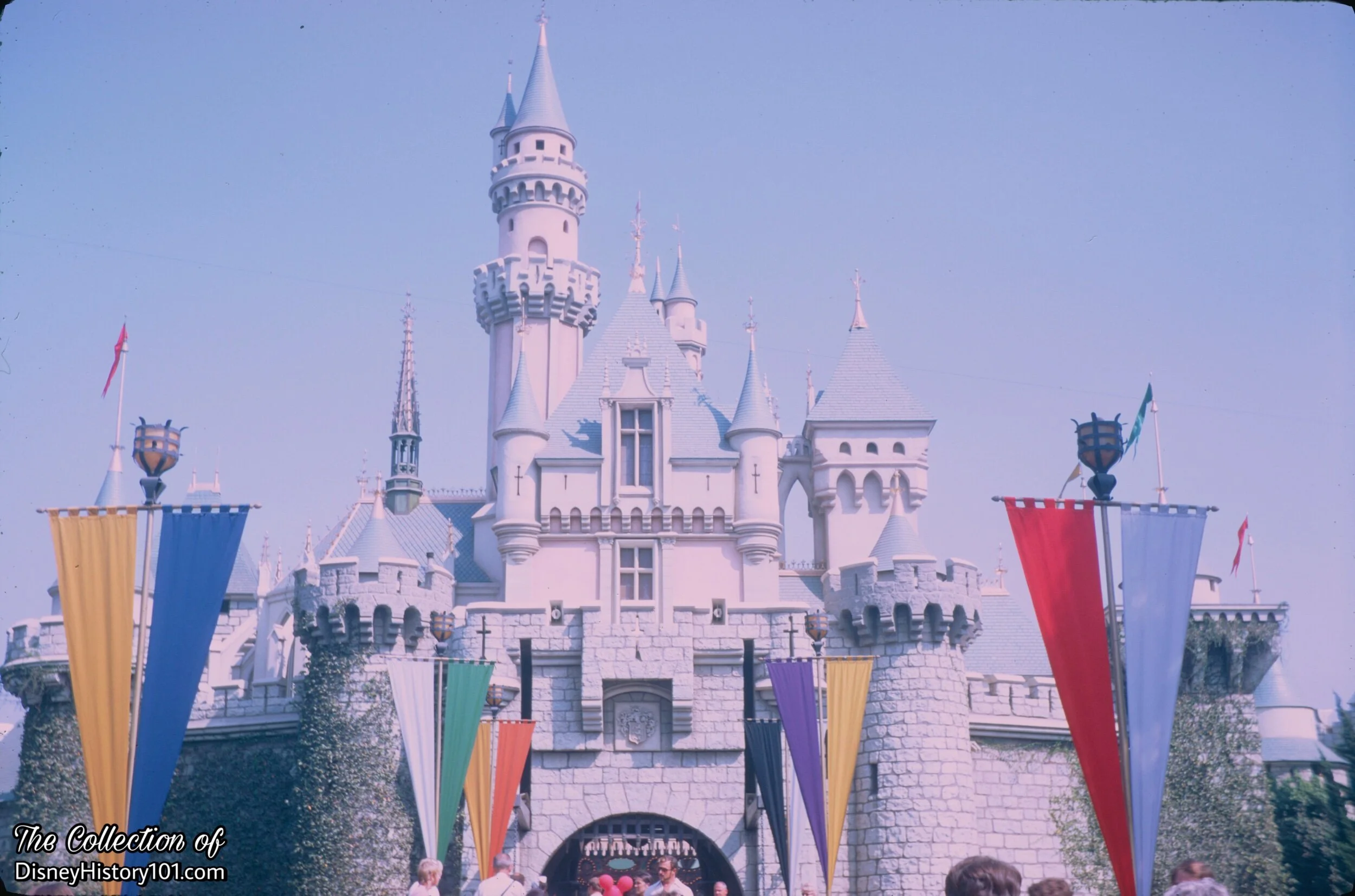
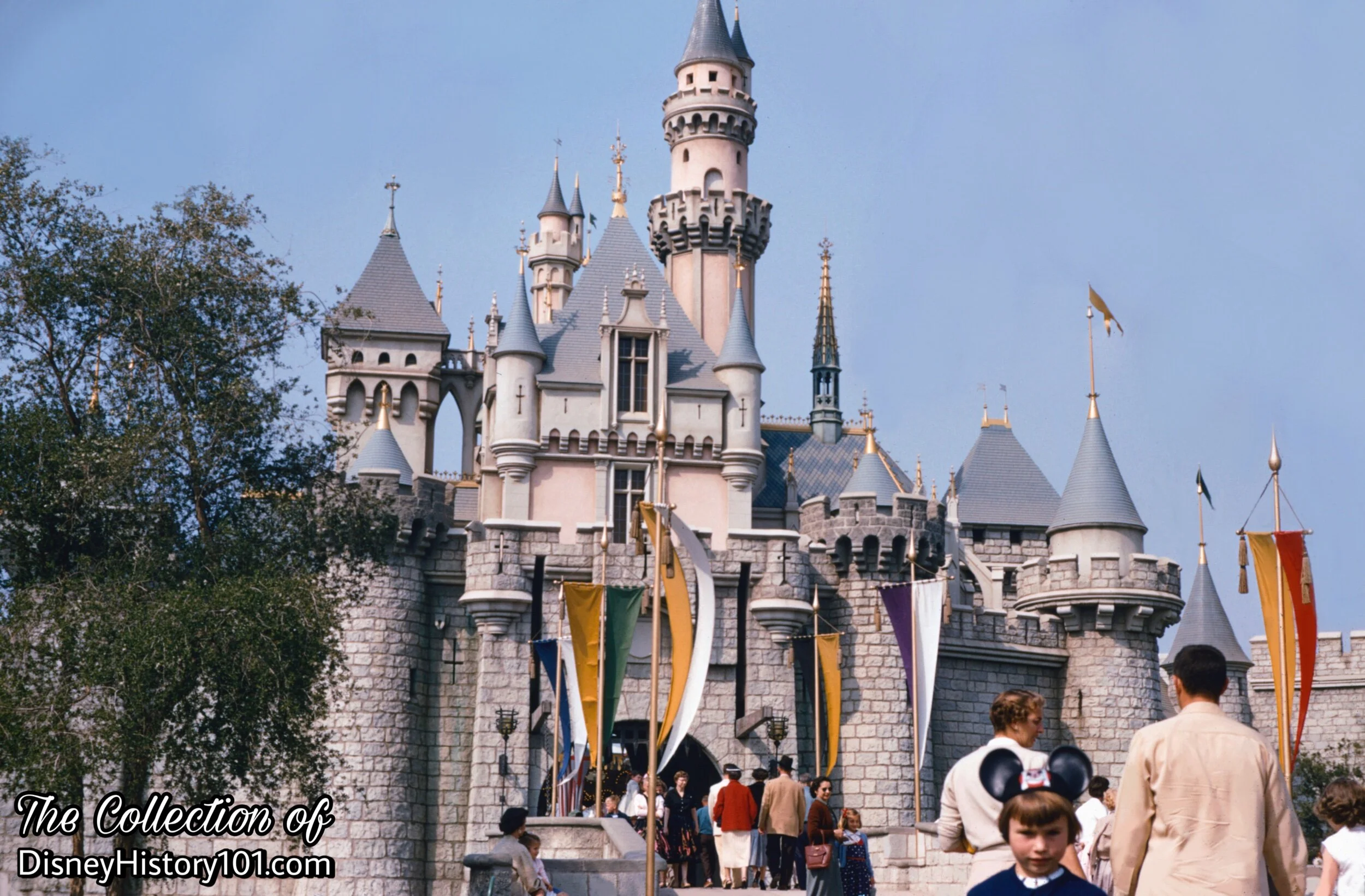
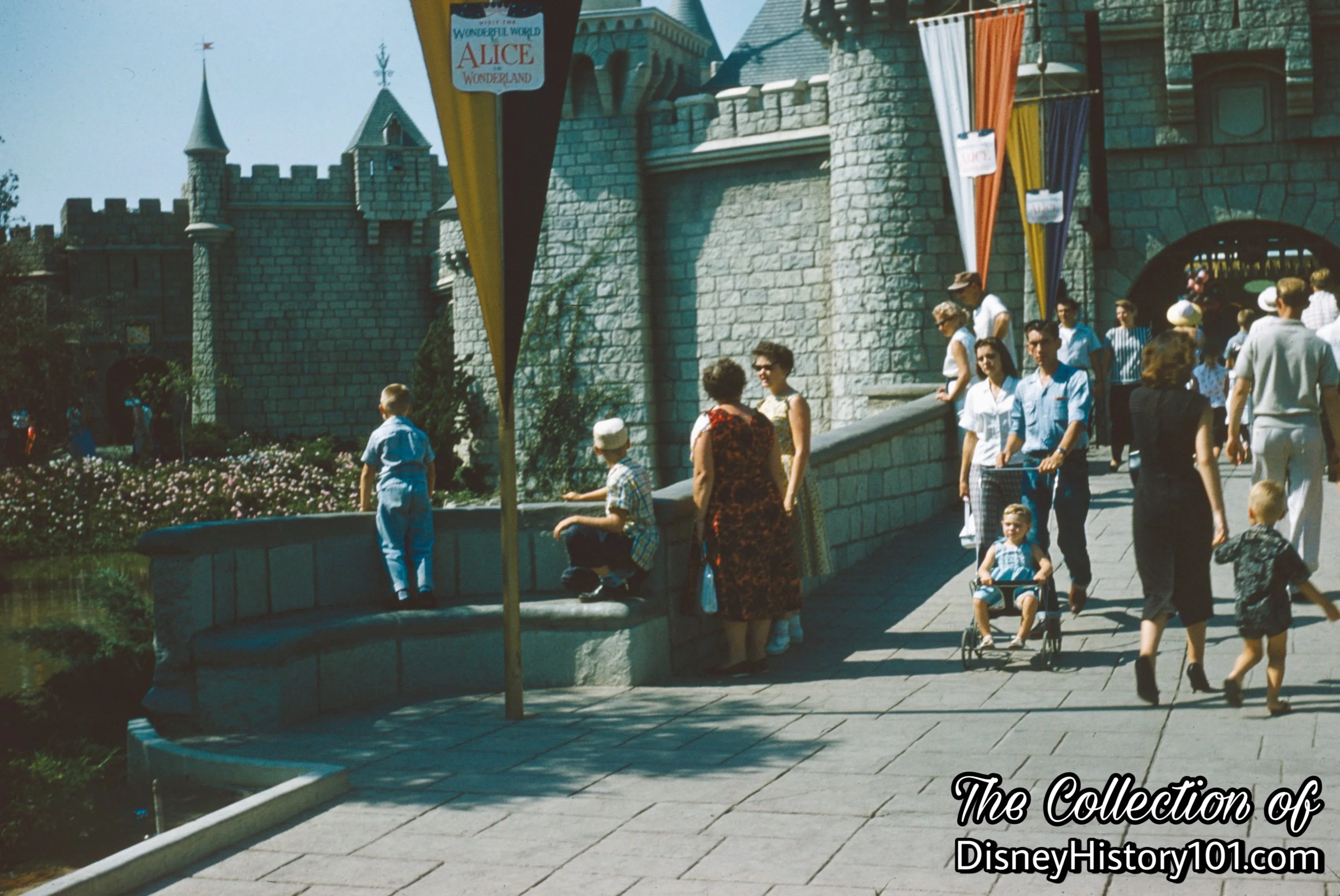
By October of 1959, there were no flags in Fantasyland, only pennants and banners.
Sleeping Beauty Castle
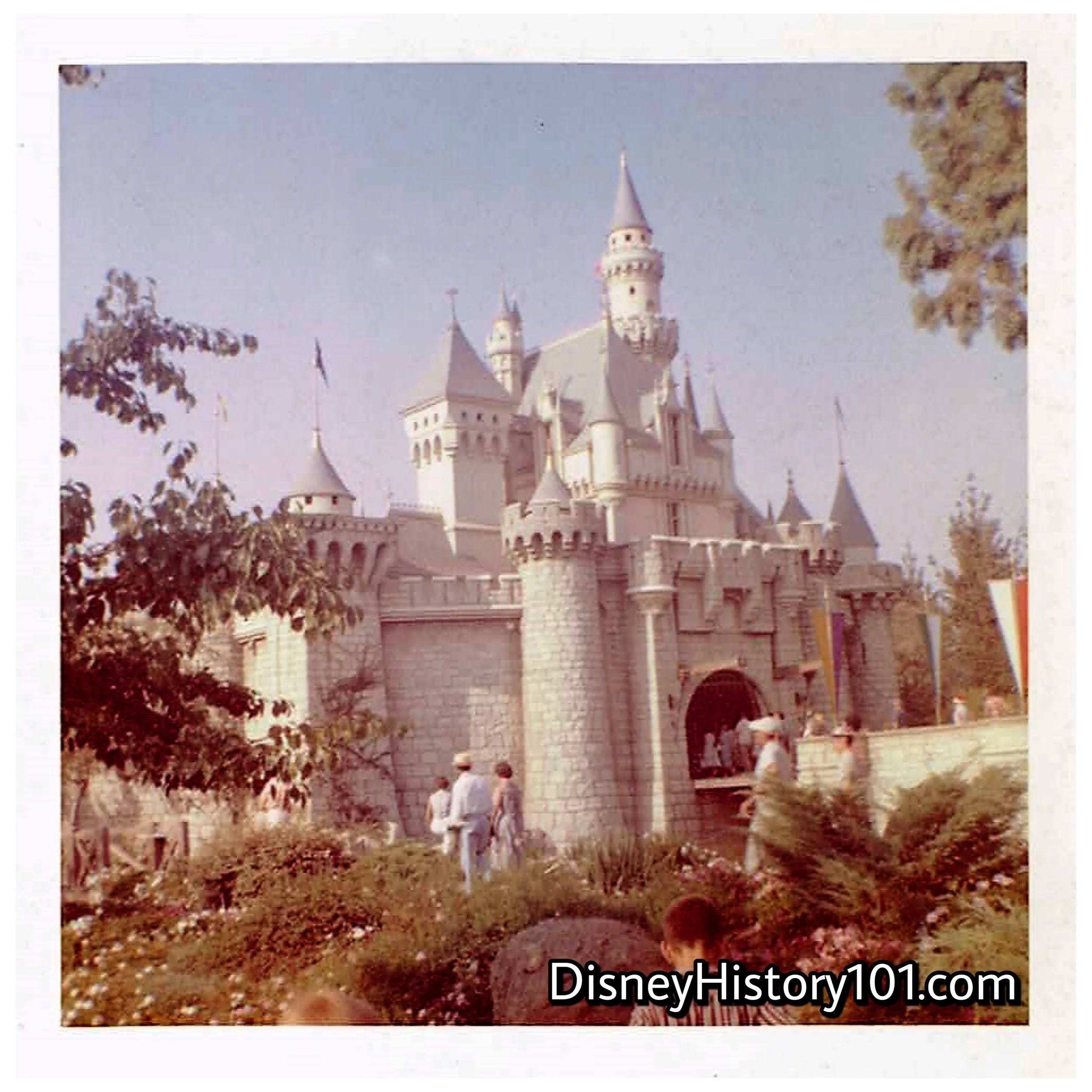
Sleeping Beauty Castle’s towers and battlements rising high in the sky.
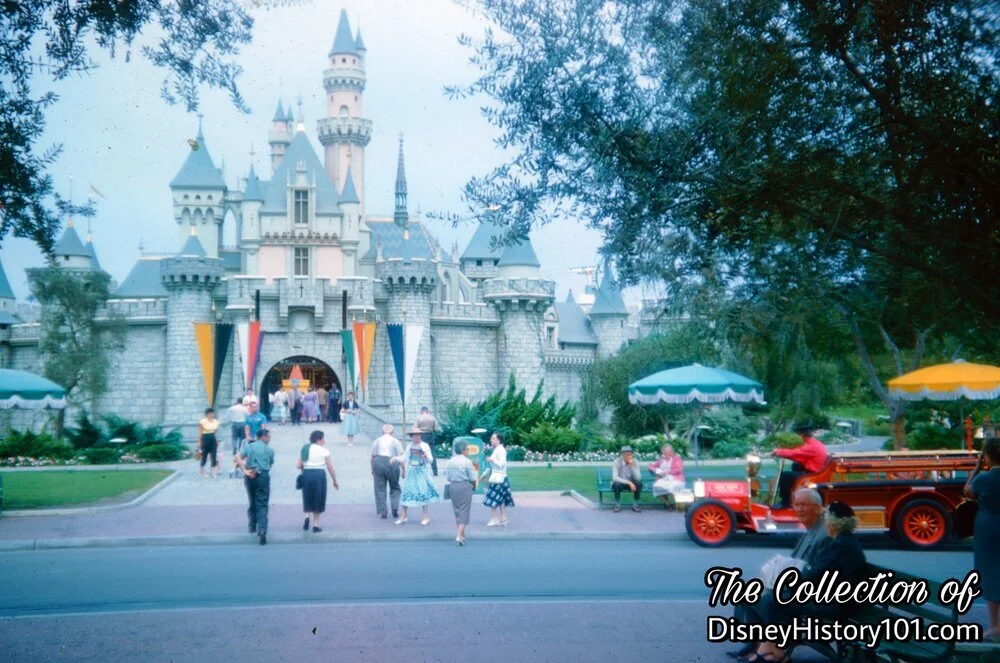
Happy “Magic Morning” from Sleeping Beauty Castle Courtyard, 1955.
Sleeping Beauty Castle, (1955)
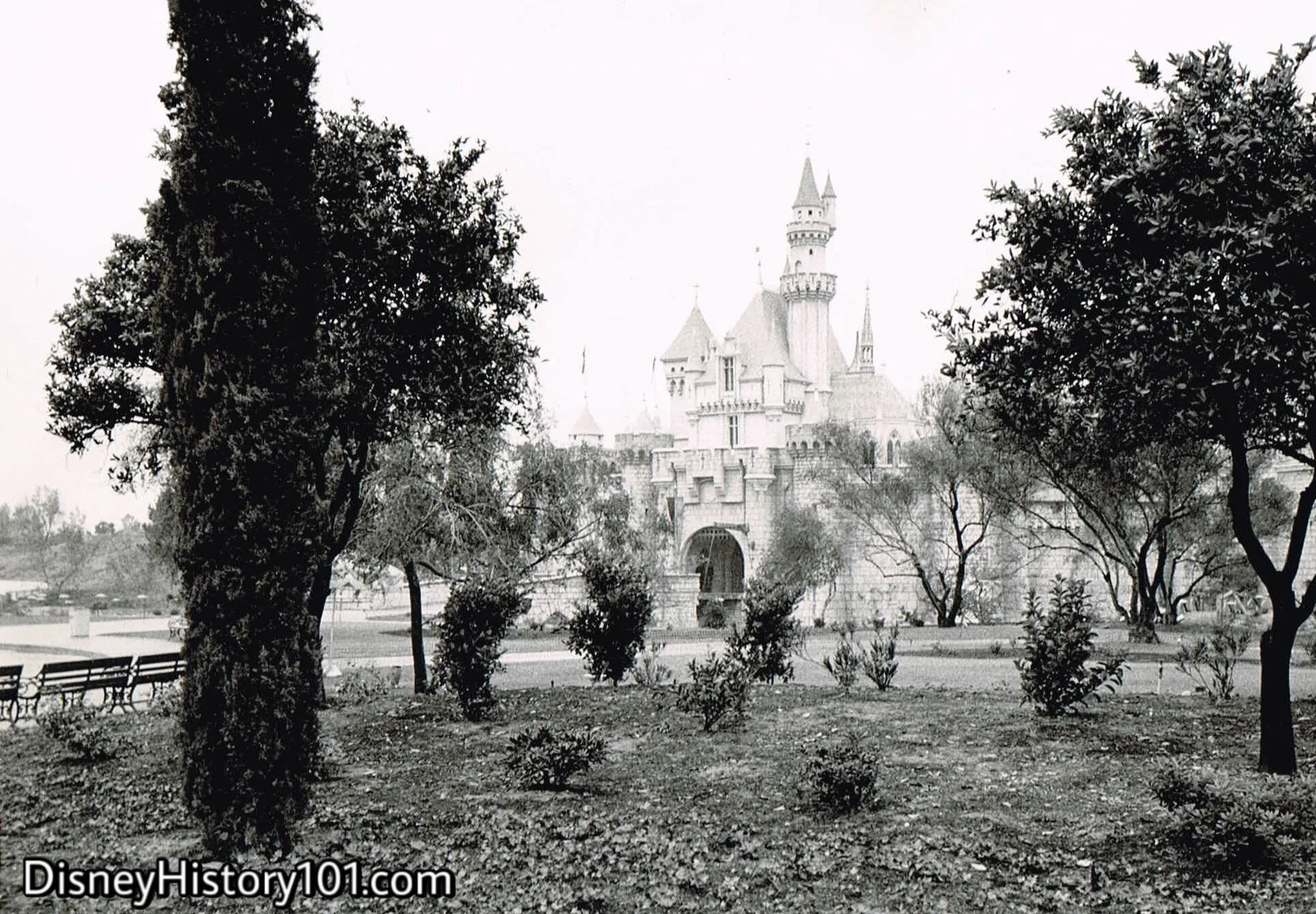
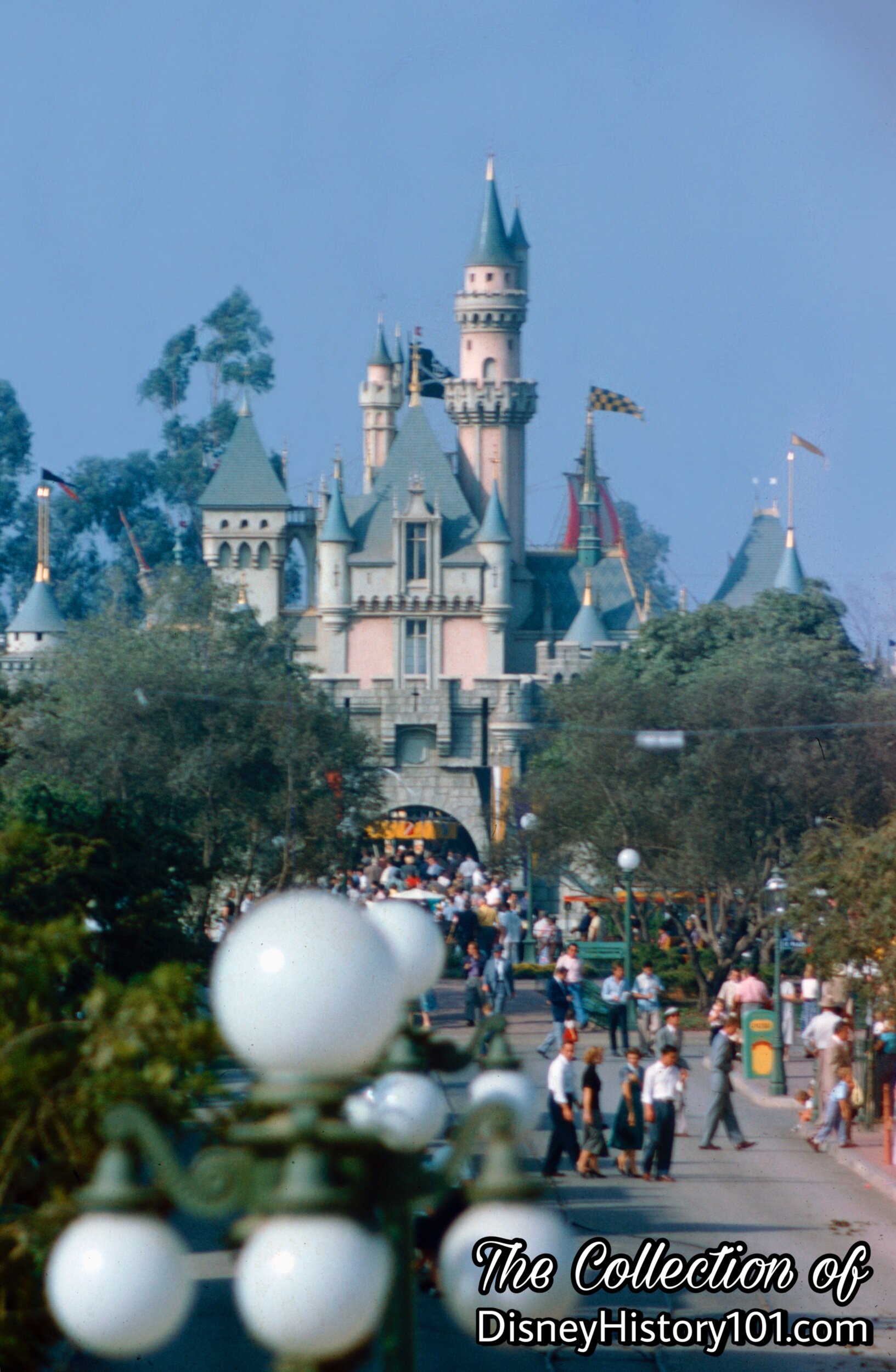
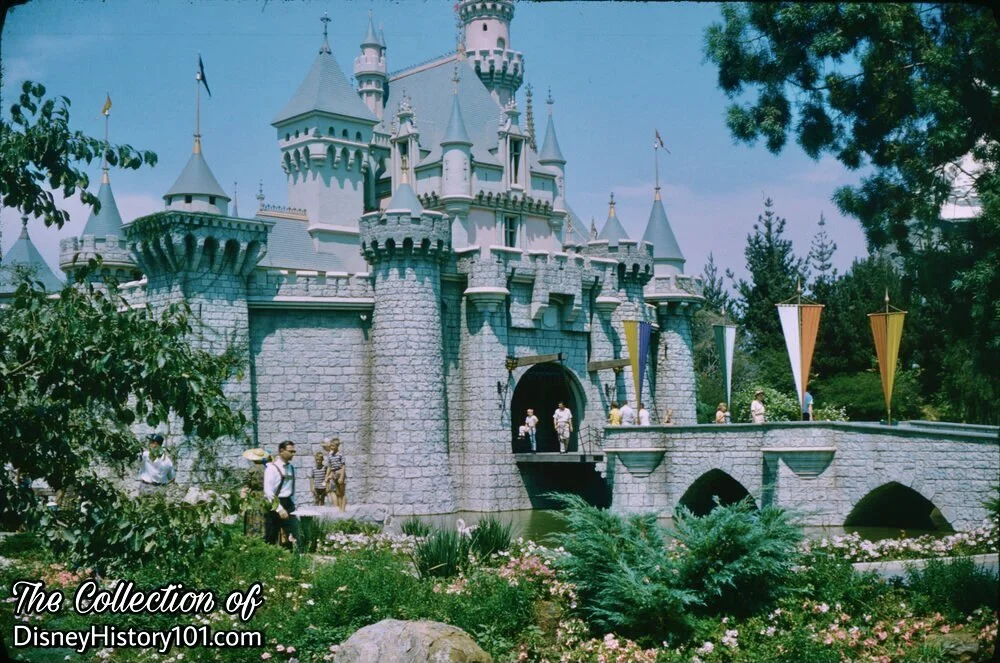
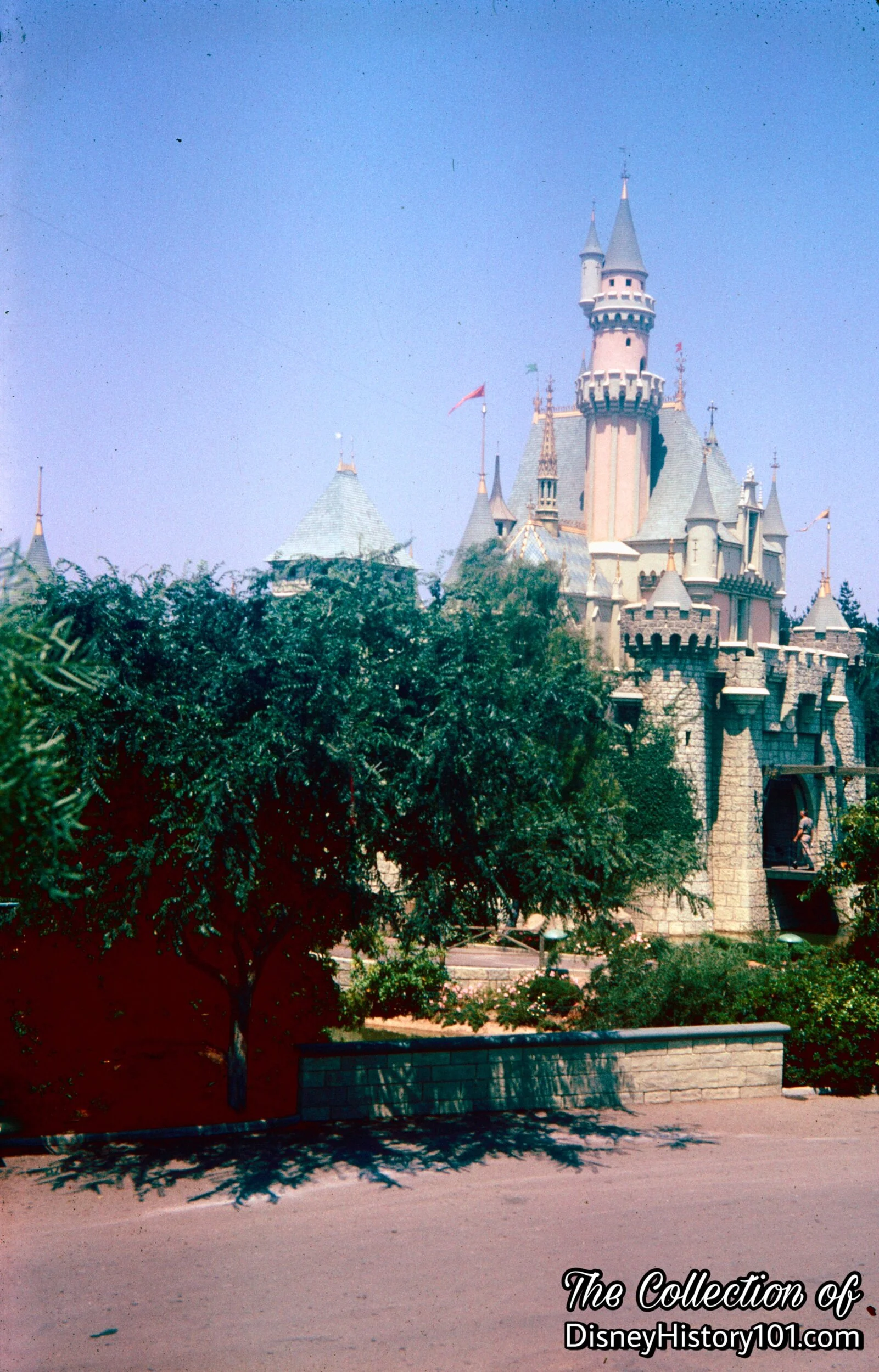
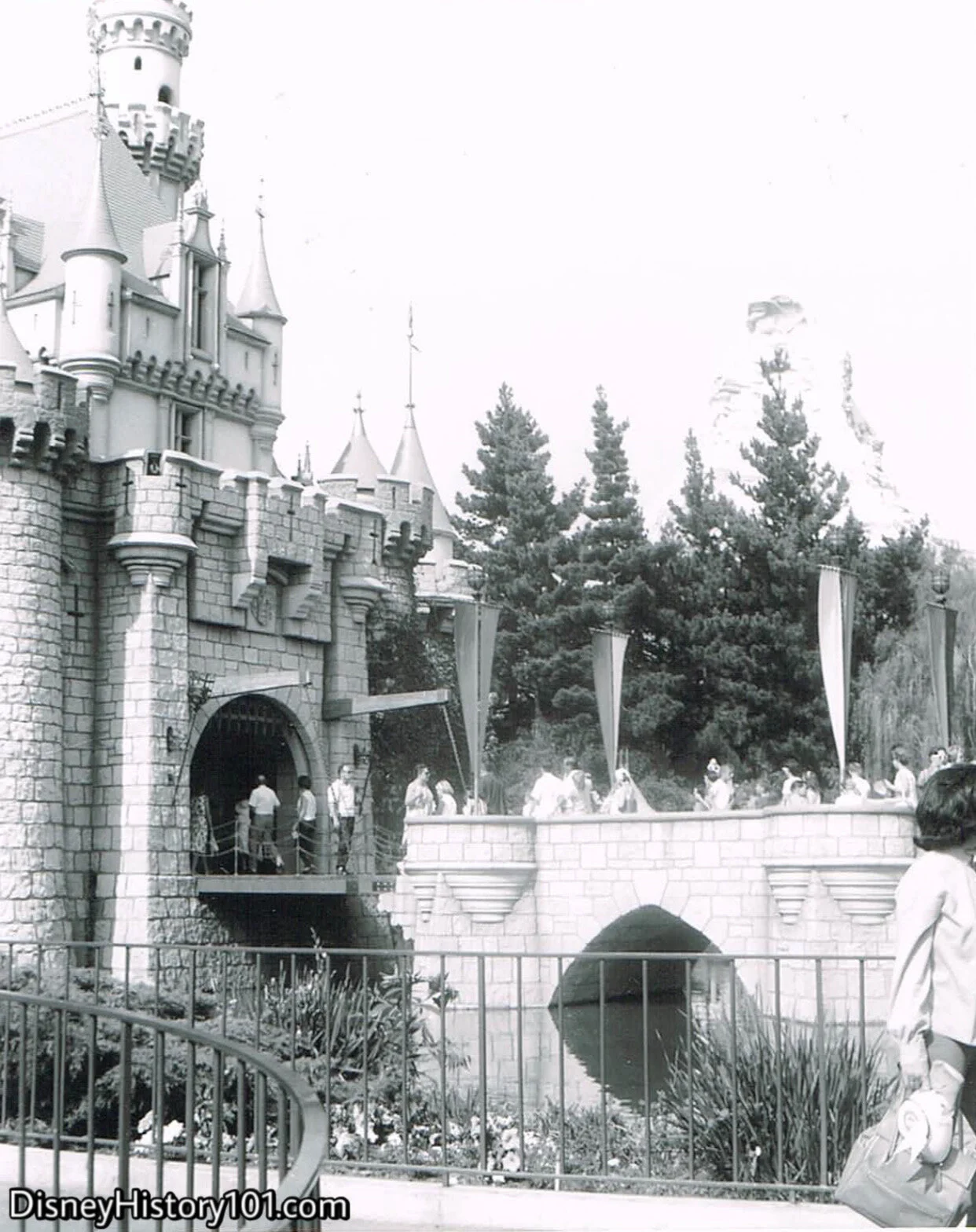
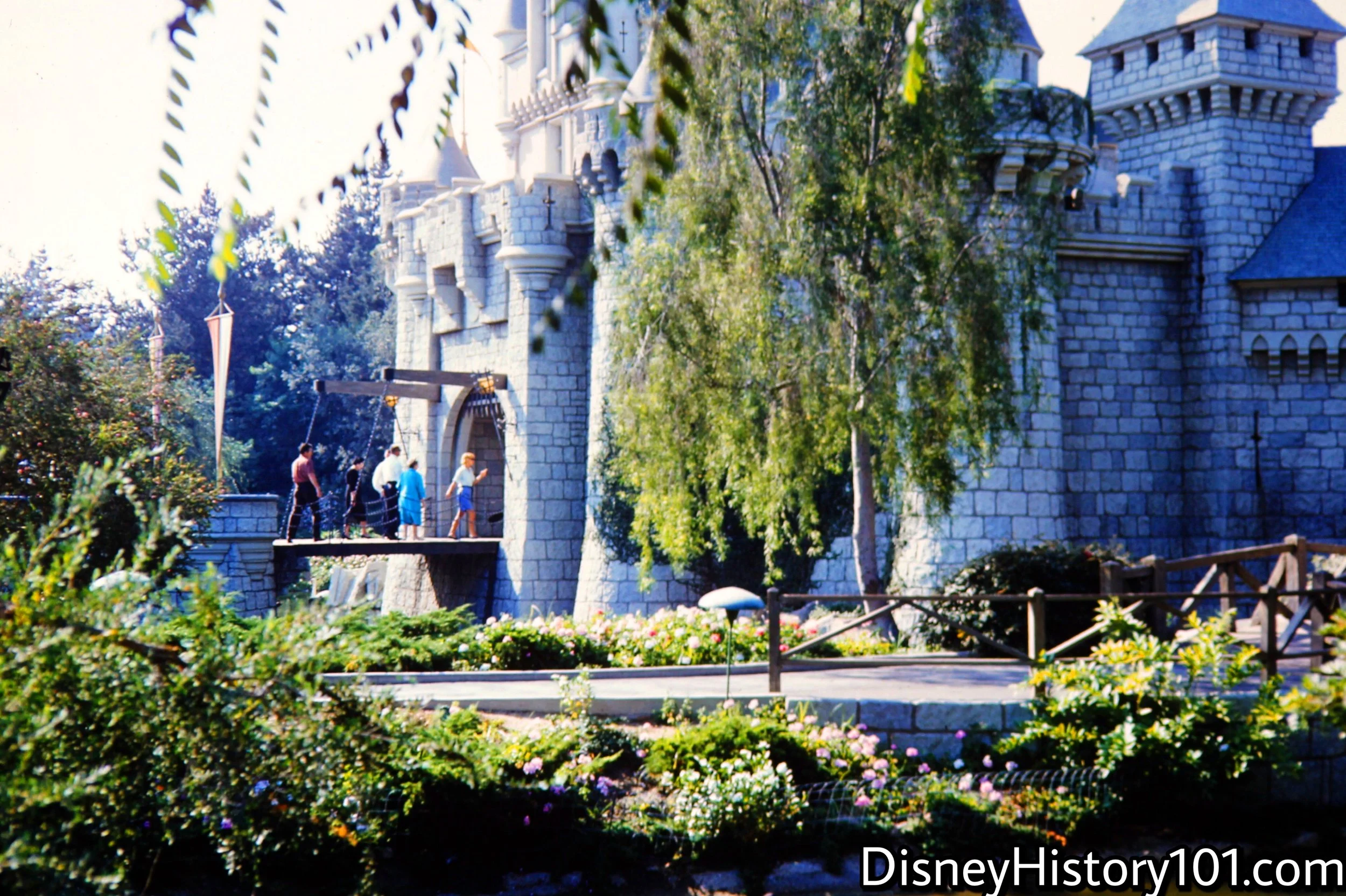
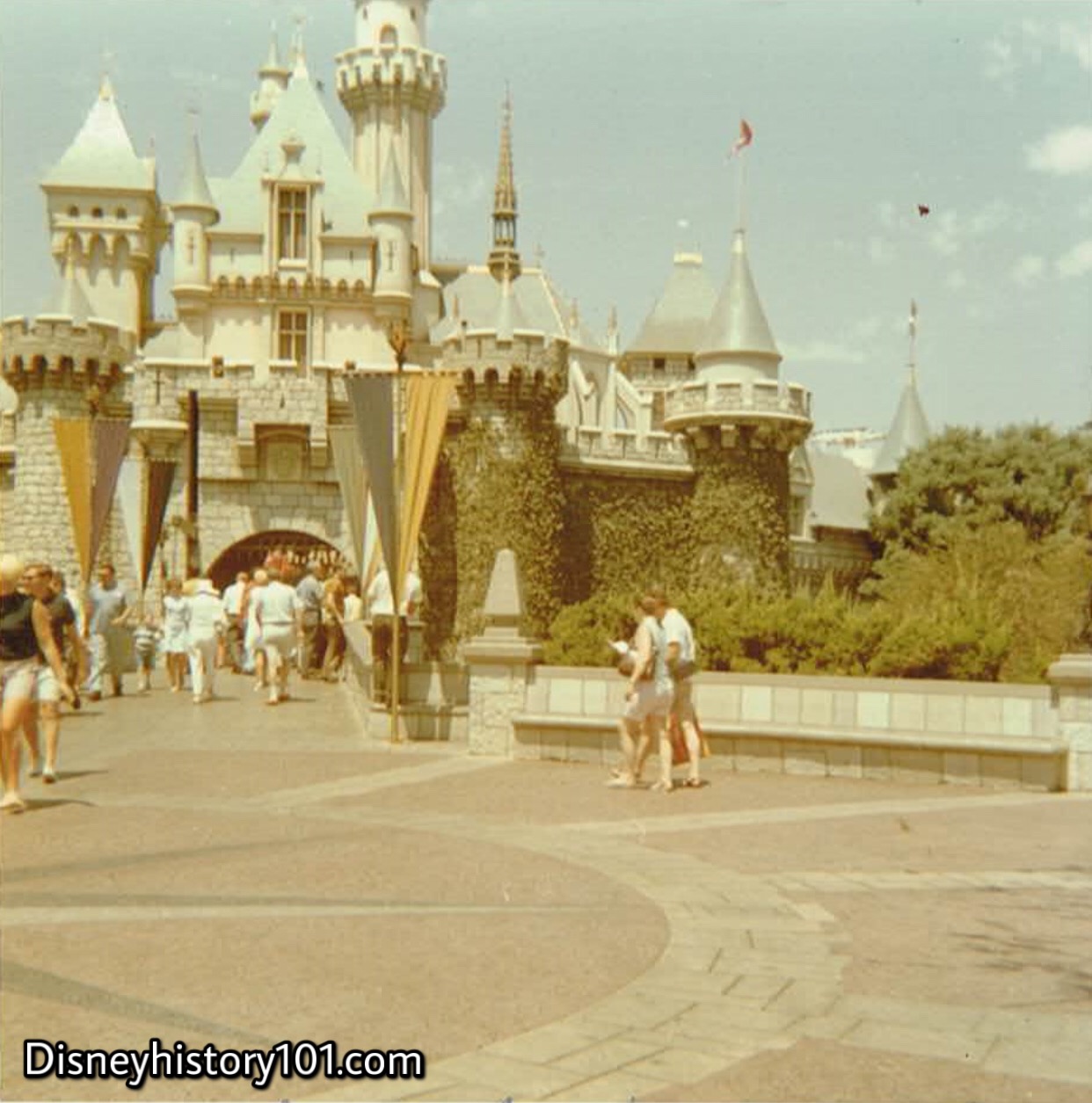
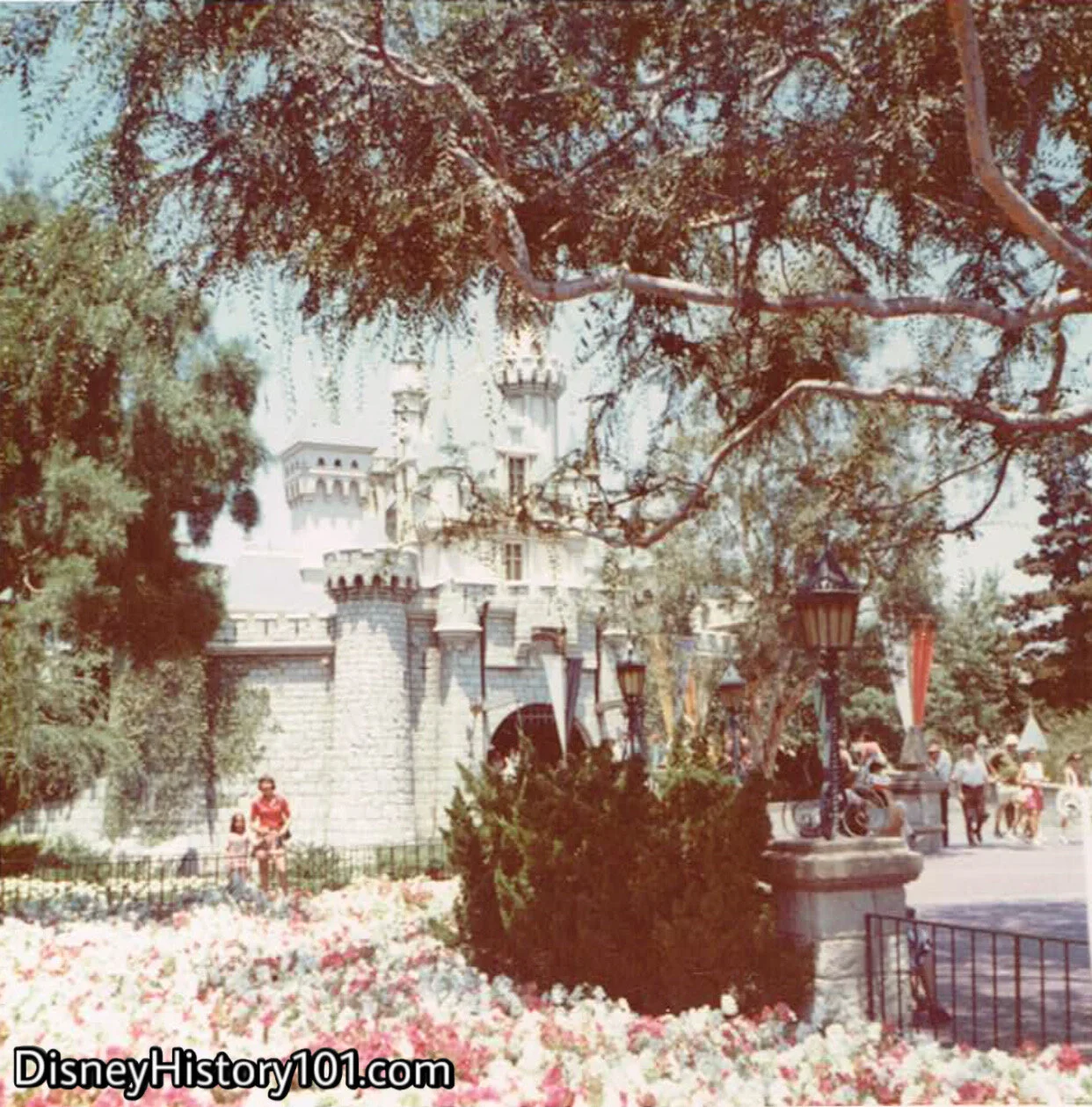
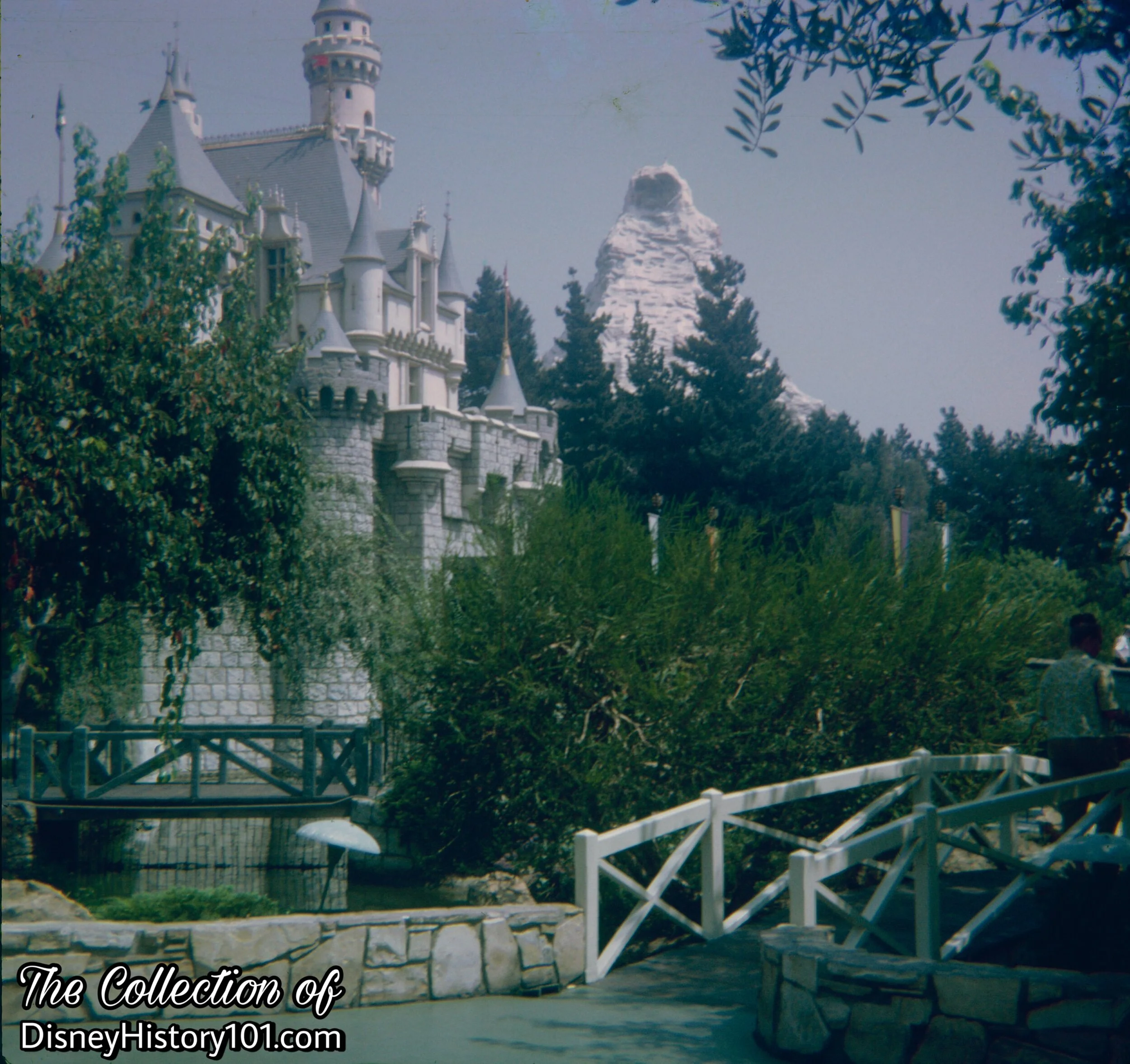
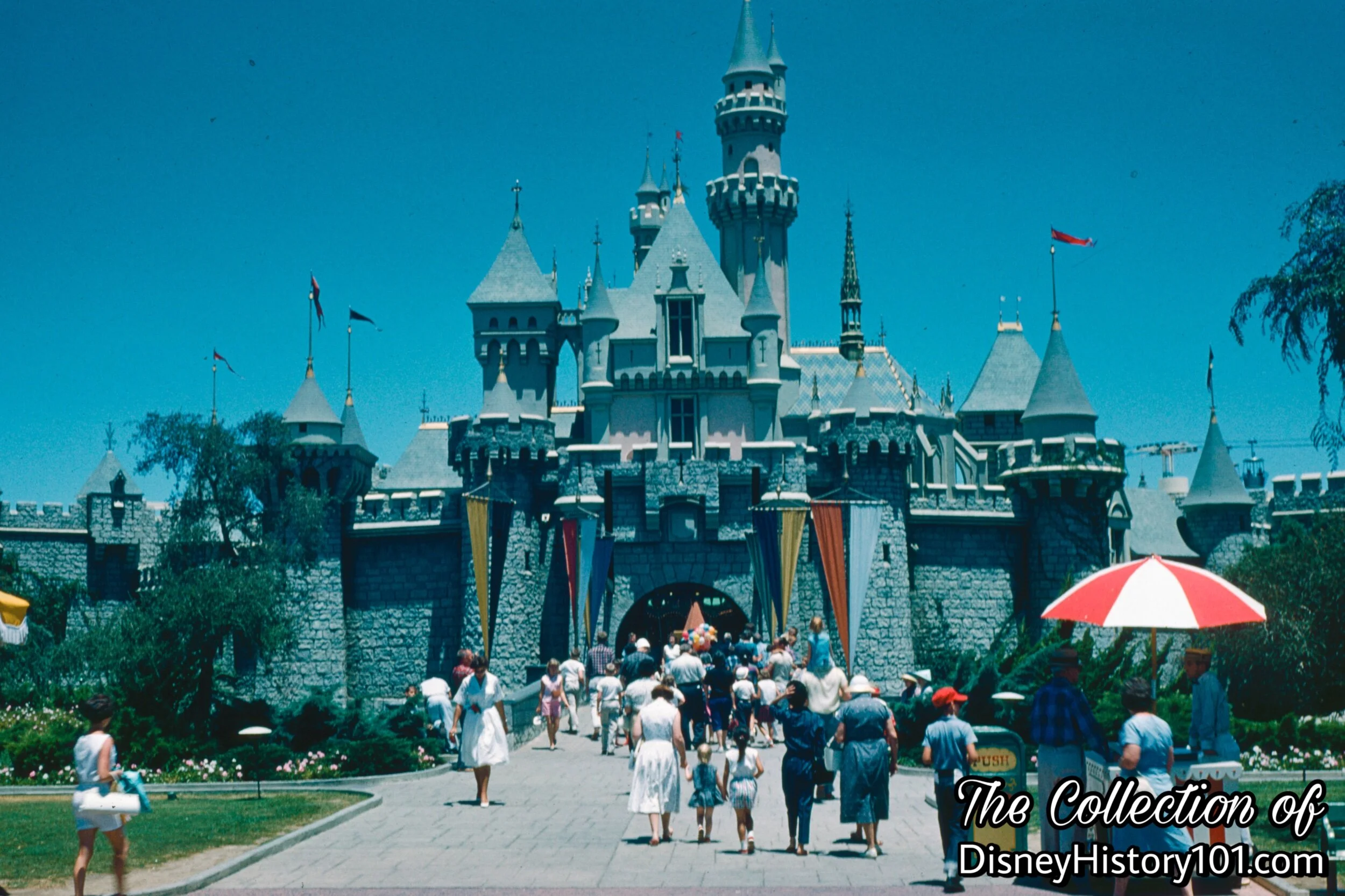
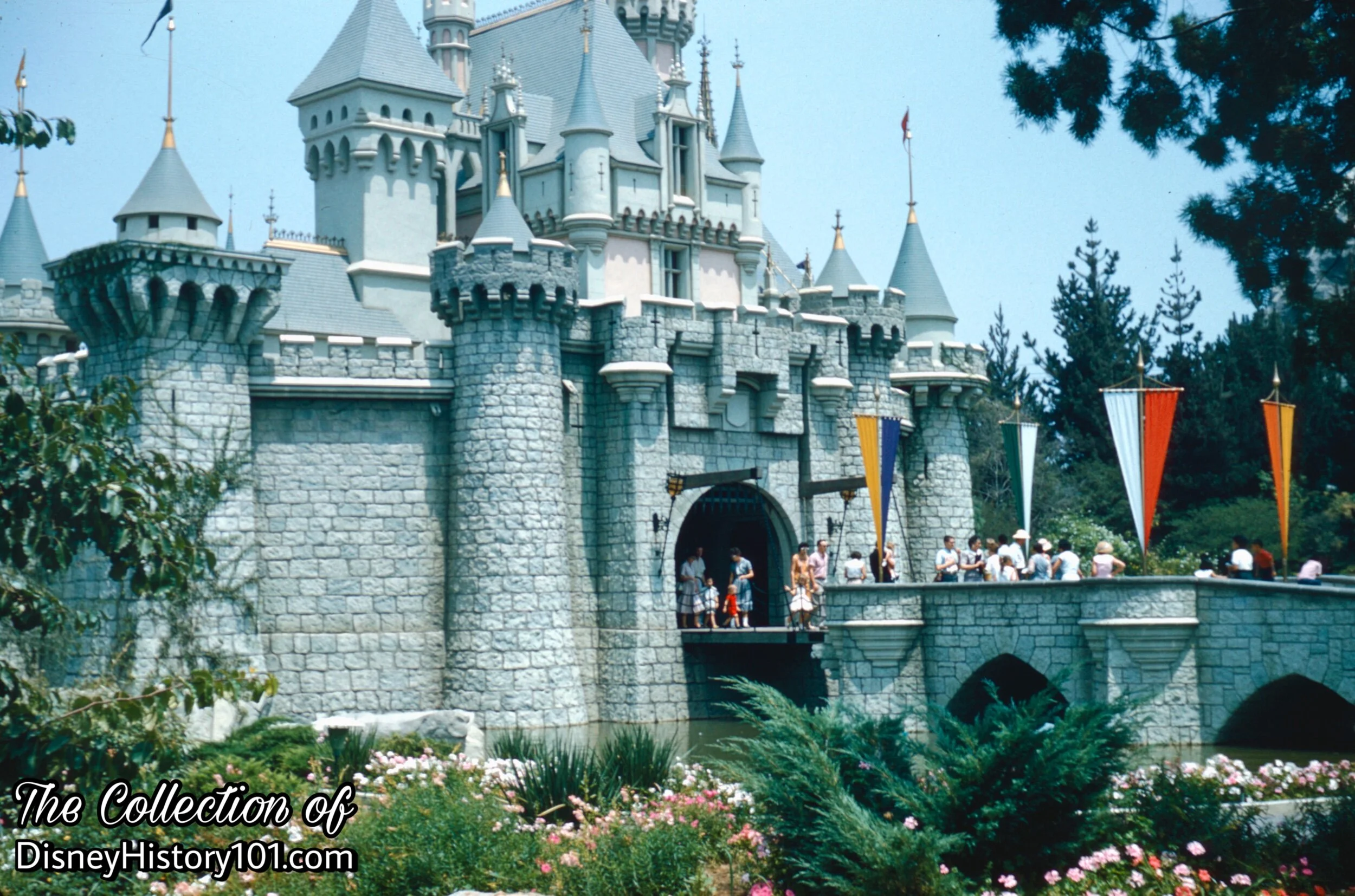
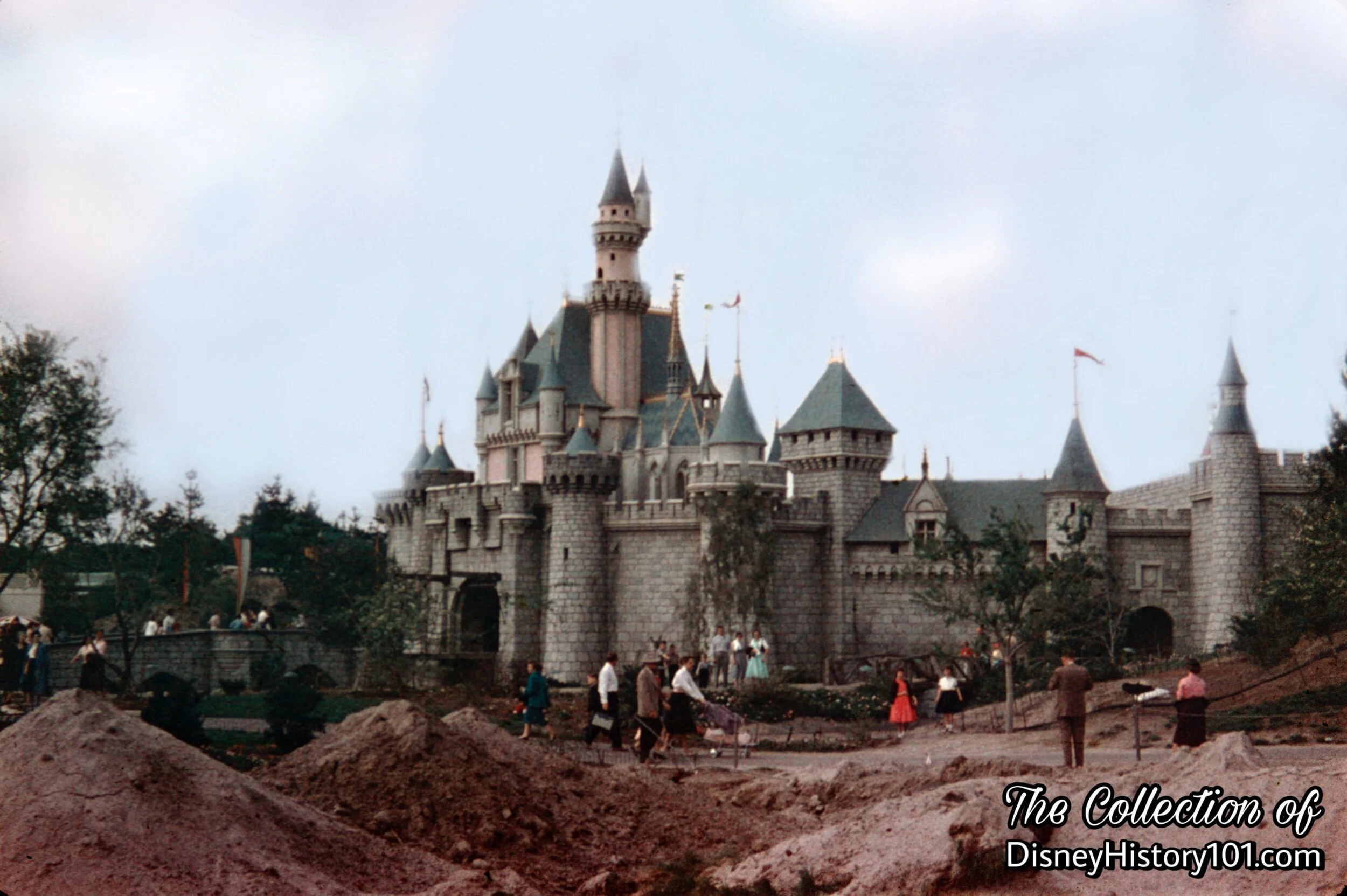
Accenting Sleeping Beauty Castle was an abundance of tress and flora. On the left, you’ll notice one of the “stately Italian cypress trees supplemented by groupings of cocculus, viburnum, and Pittosporum tobira,” (according to Disneyland World of Flowers, published 1965). Each of these was (no doubt) selected by landscape architect Ruth Patricia Shellhorn and placed by horticulturalists Jack and Bill Evans.
Sleeping Beauty Castle From The Frontierland Entryway, (c. 1956)
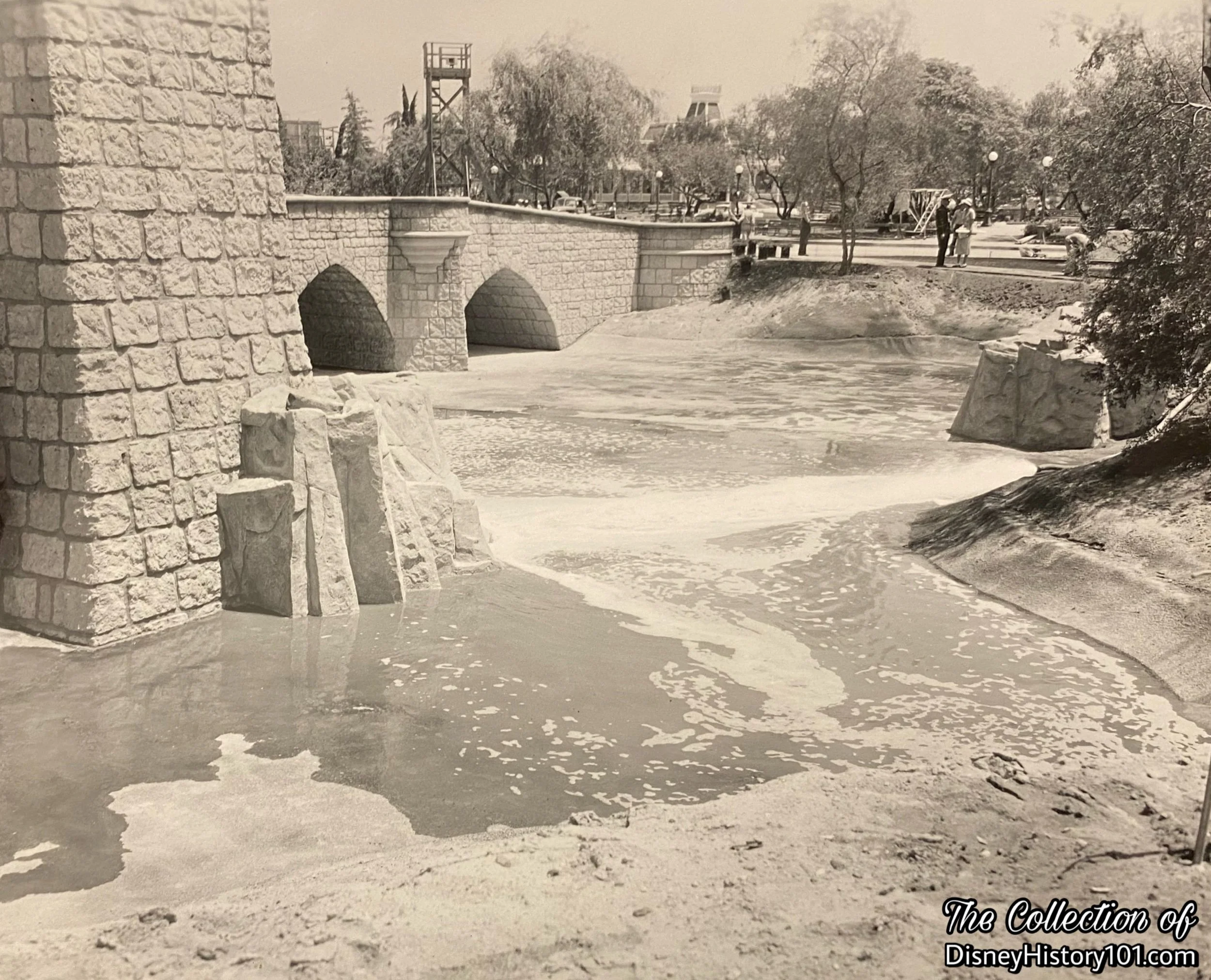
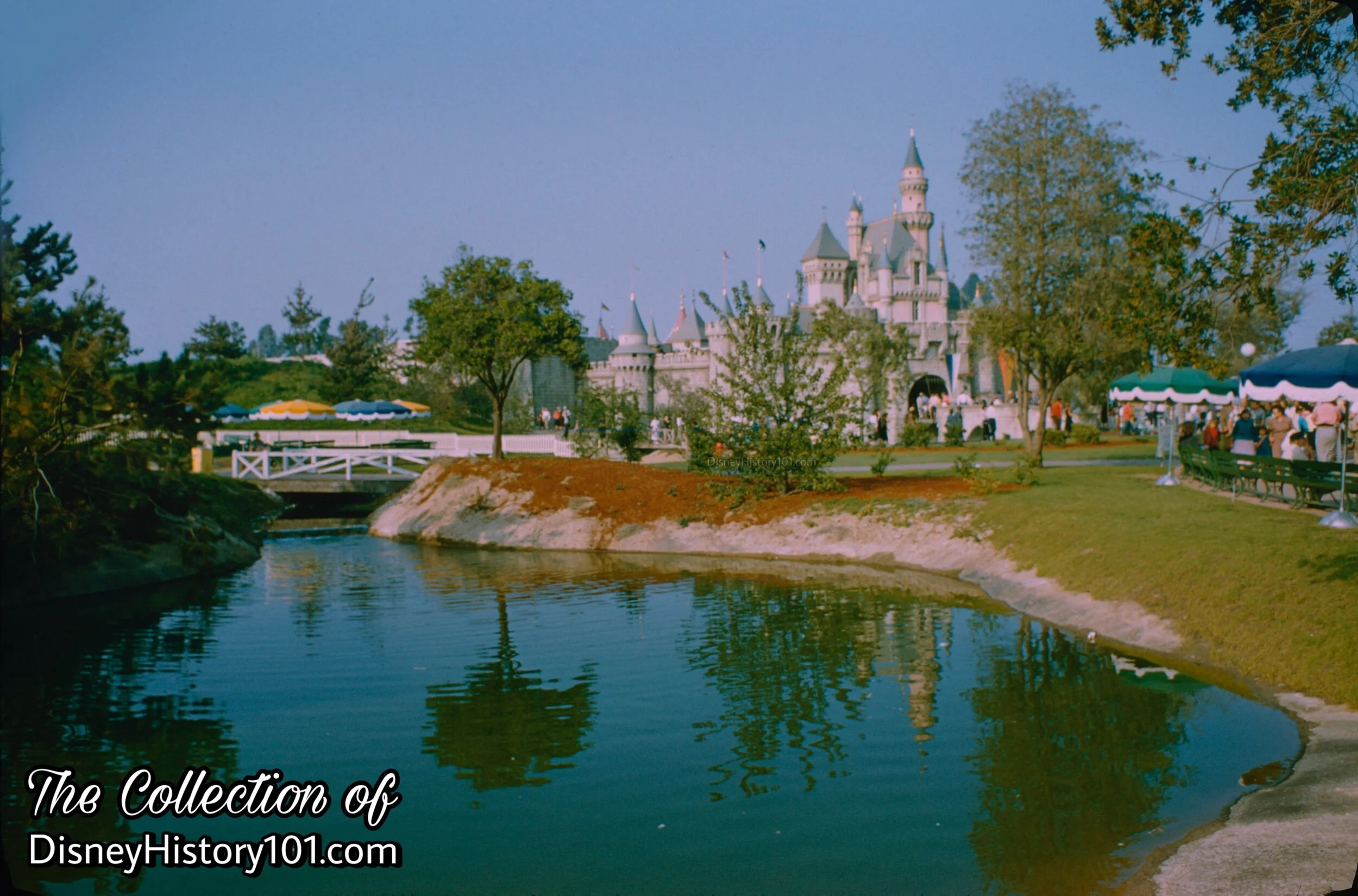
The gravity flow of water began in Tomorrowland, the highest point in the waterway system, passing Fantasyland and filling the castle’s moat, flowing past the entrances to Frontierland and Adventureland and ultimately filling the Jungle Rivers of the World before flowing into the Rivers of America. The water enters a Main Pumping Station where hydraulic pumps send 2 million gallons of water every hour through subterranean cement tunnels and back to Tomorrowland. While engineers and construction workers were responsible for the drafting and installation, the very idea of this system (at a drop of seven feet) has rarely been attributed to Ruth Shellhorn. “Designing in the field without plans, she helped lay out water courses with stakes and string and supervised grading around the moat to dramatize the Park’s centerpiece, the majestic castle,” according to “Ruth Shellhorn” by Kelly Comras.
Nightly these pools and fountains were cleaned.
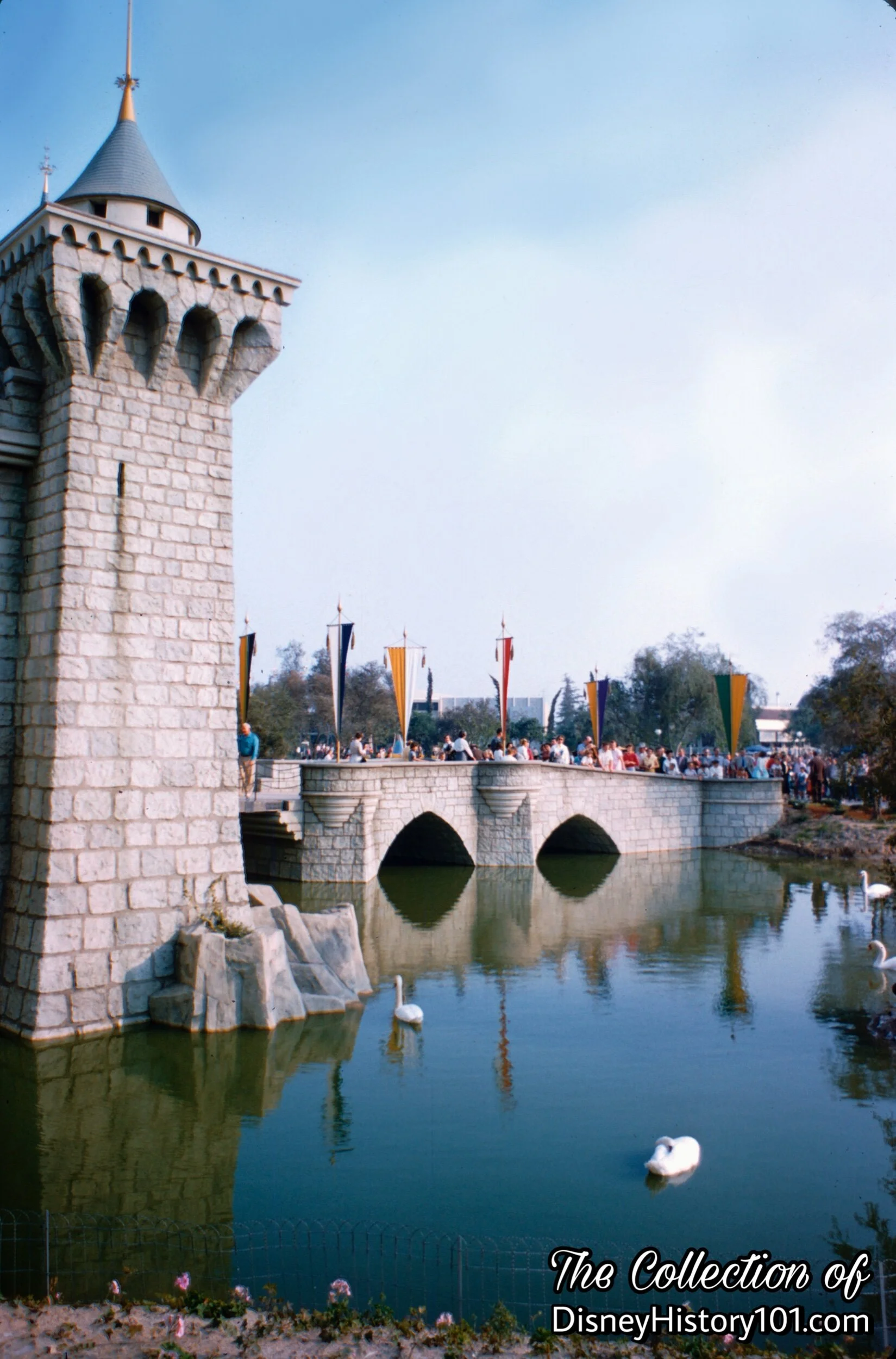
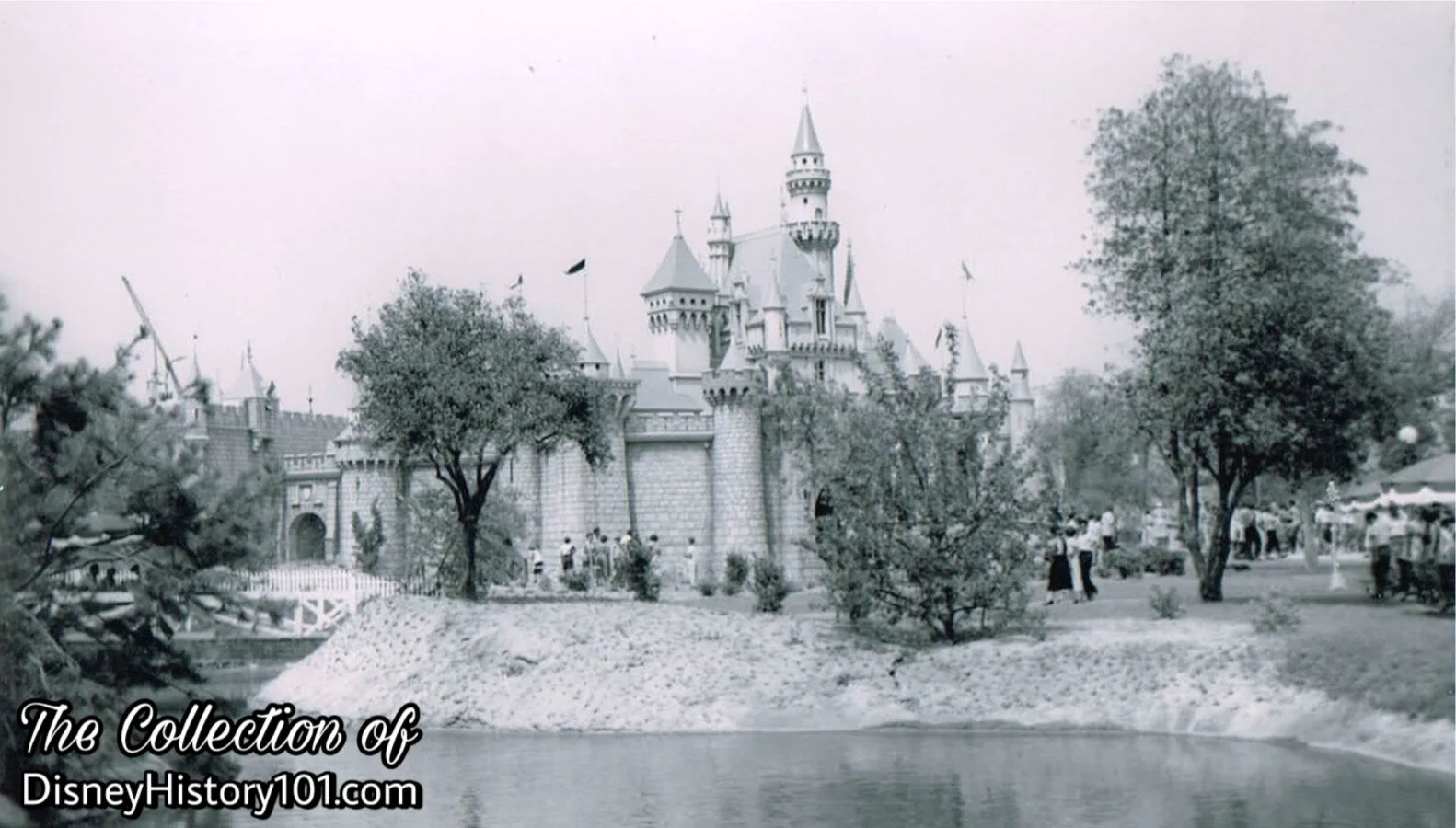
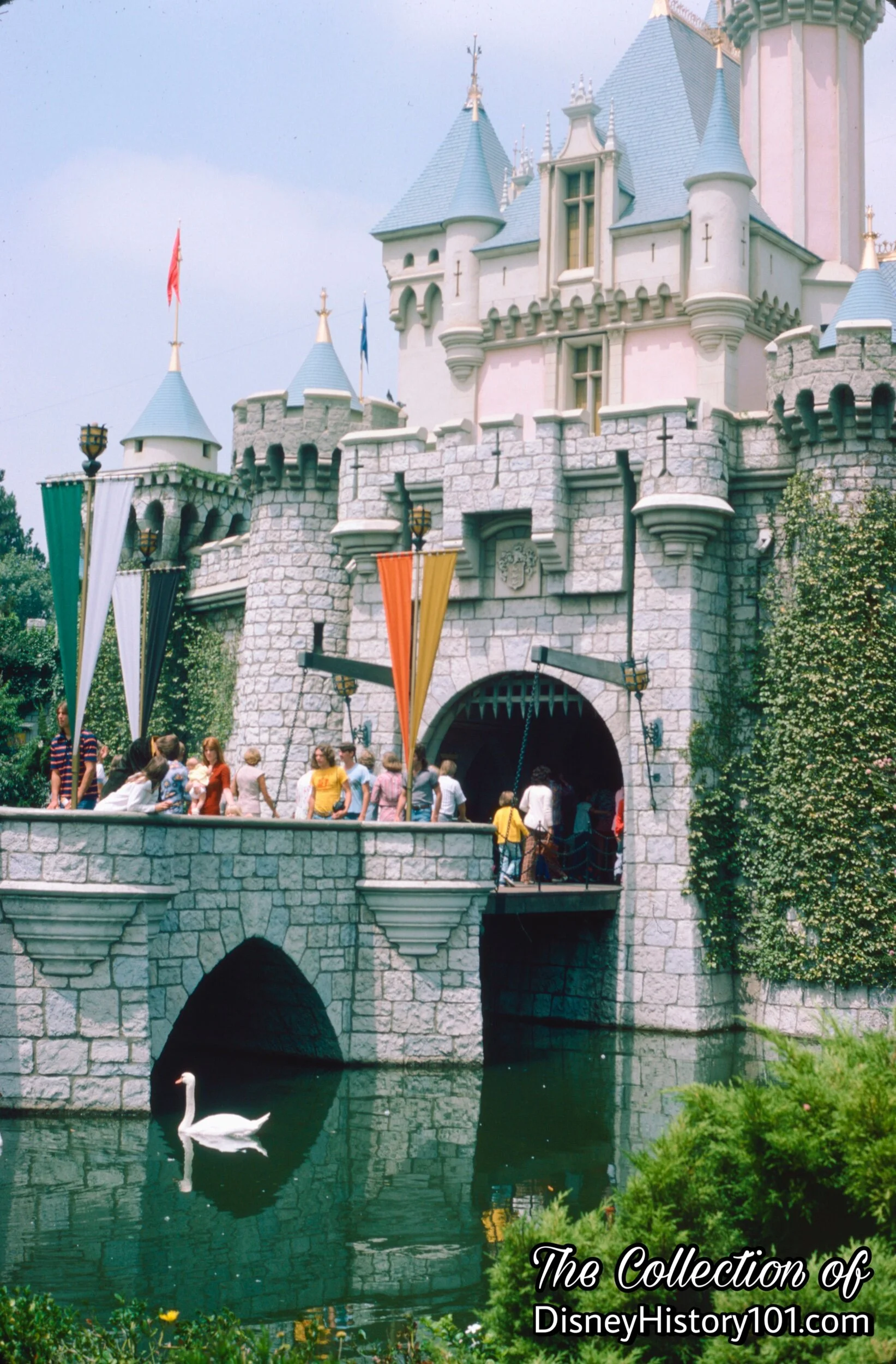
Sleeping Beauty Castle & Swan Lake, (1955)
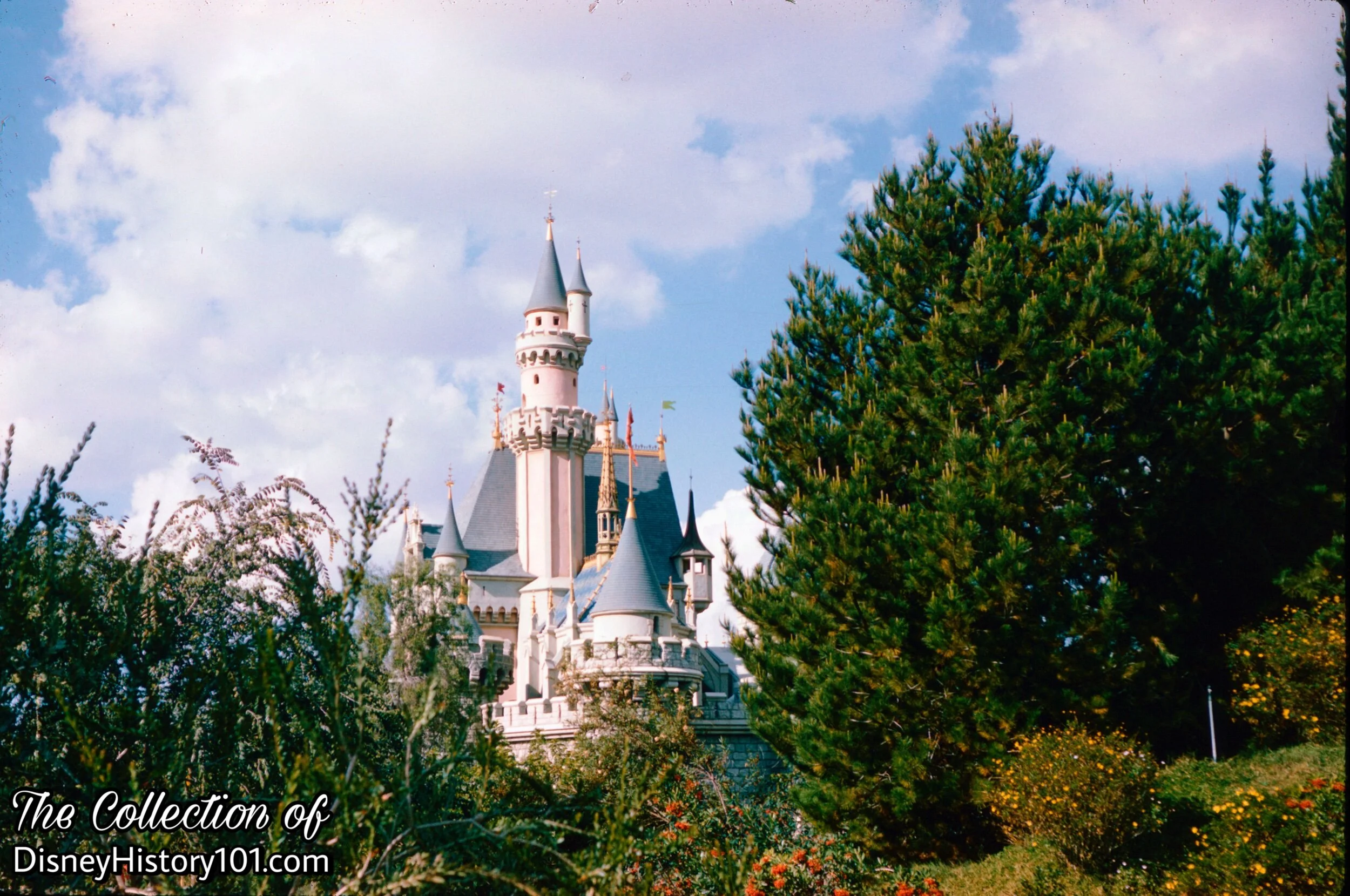
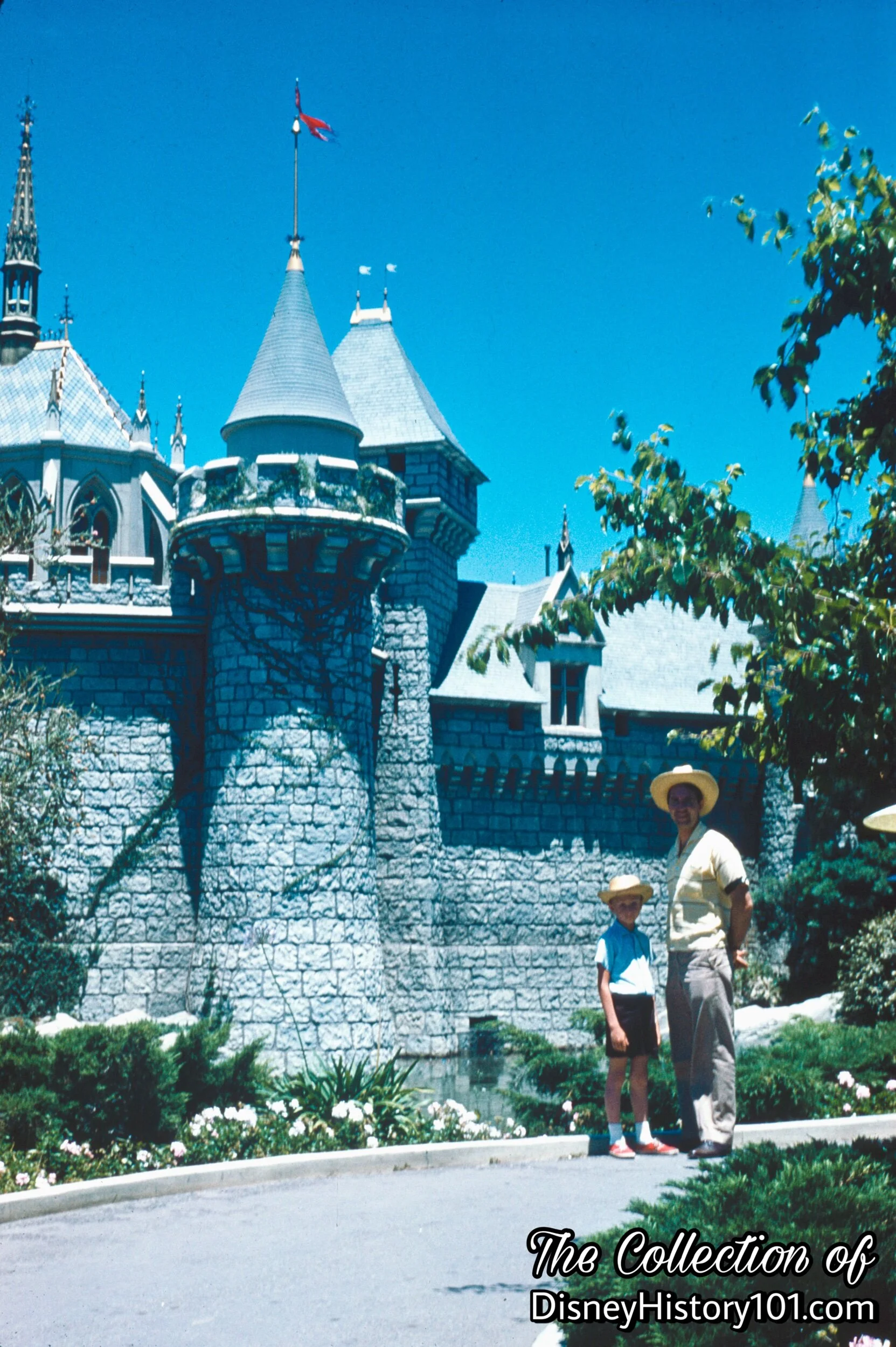
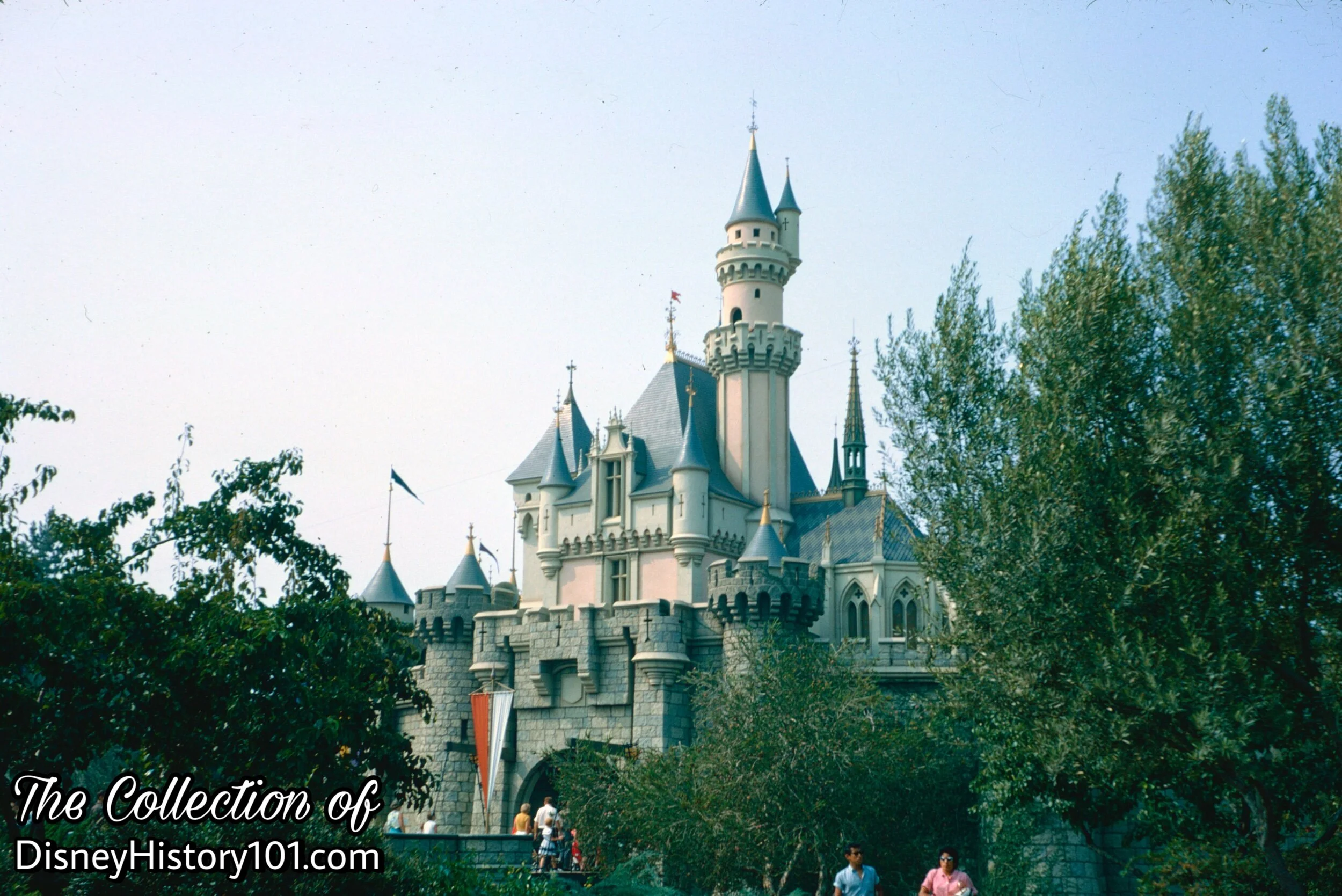
“Sleeping Beauty Castle, flanked on either side by enormous earthen berms, was anchored with a thickly planted background of what oddly become towering pine trees and cedar trees. Shellhorn specified that the trees be planted in drifts, making the castle seem to emerge from a deep, dark forest. Canary Island pine was substituted for the Northern European fir and spruce trees that surrounded Neuschwanstein Castle in Germany, the likely model for the Disney’s theme park palace,” according to “Ruth Shellhorn” by Kelly Comras.
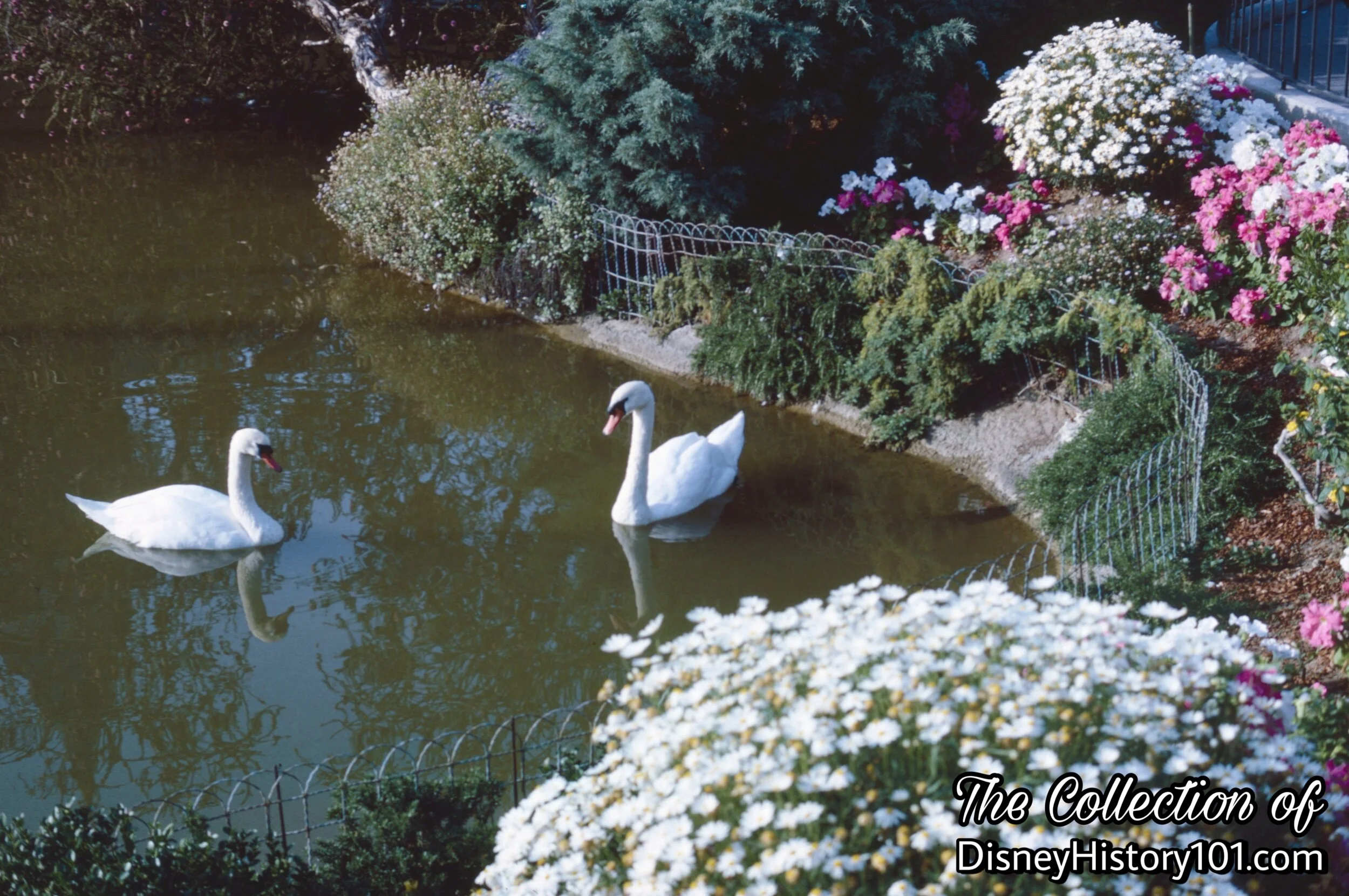
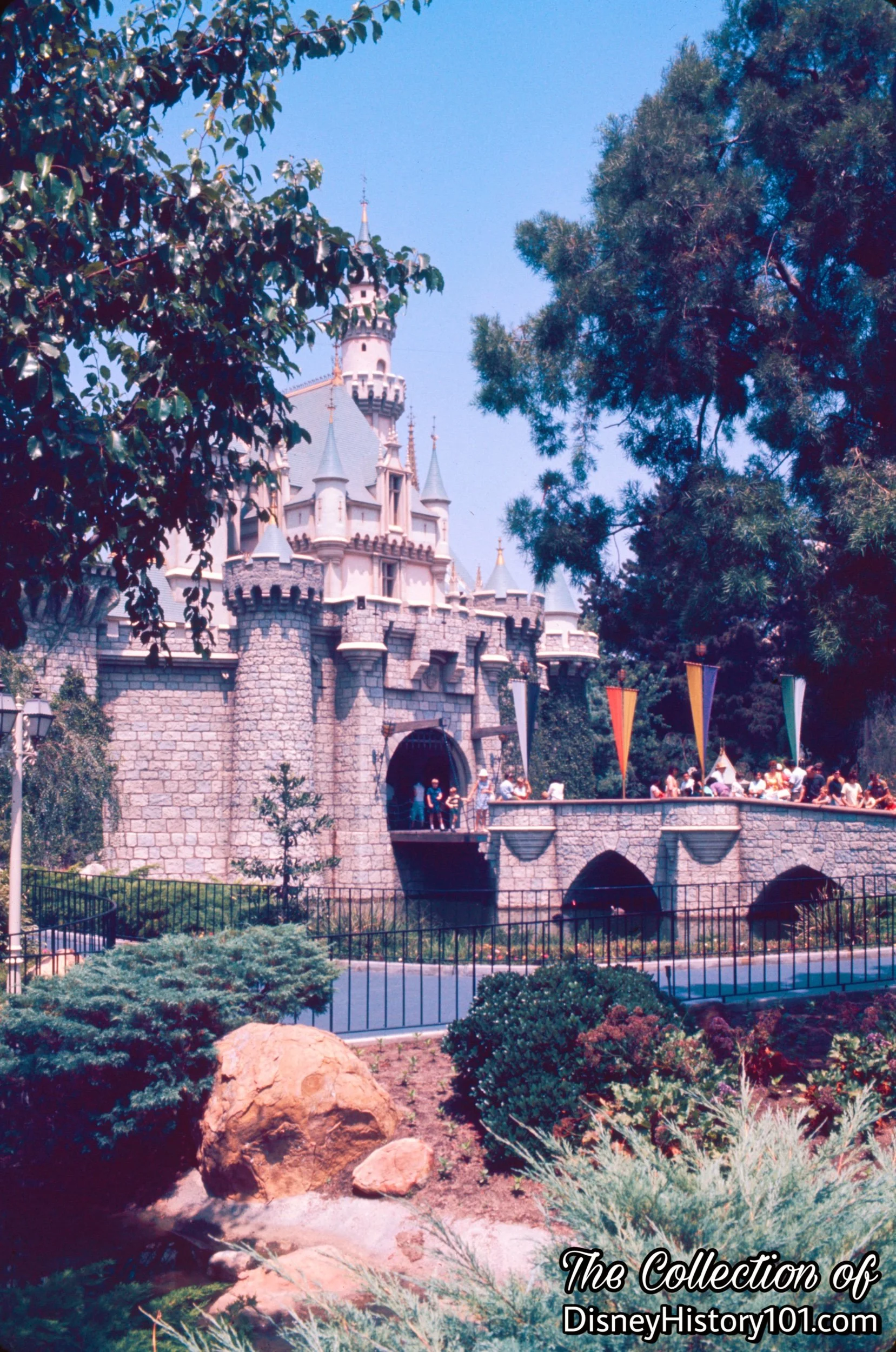
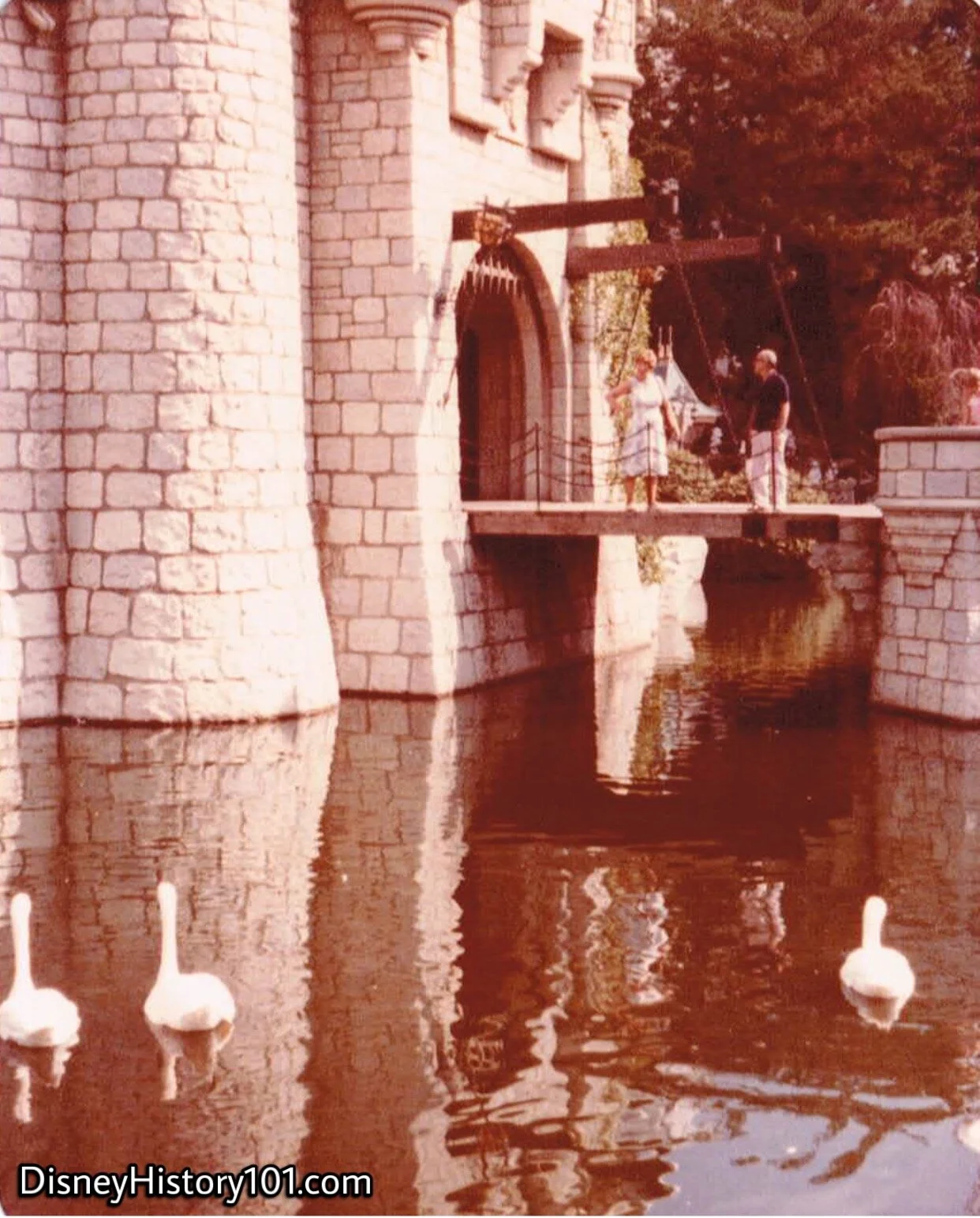
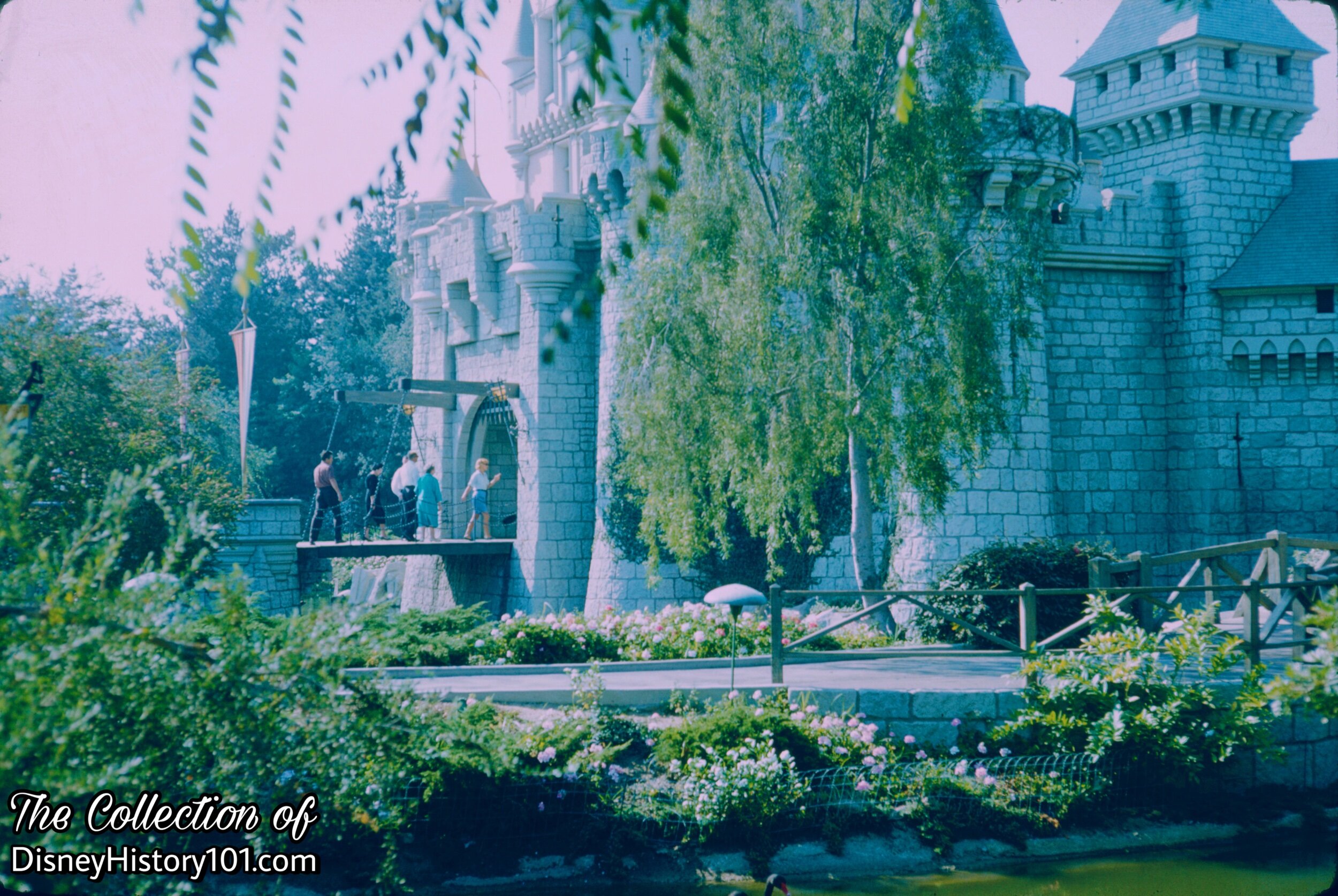
About the landscape, Disneyland World of Flowers (published 1965) divulges : “The drawbridge leading to Fantasyland crosses a moat edged with "swan-proof" juniper. We call it swan-proof because those graceful white birds will eat almost anything - except juniper. Thus we are able to keep green foliage along the water's edge.
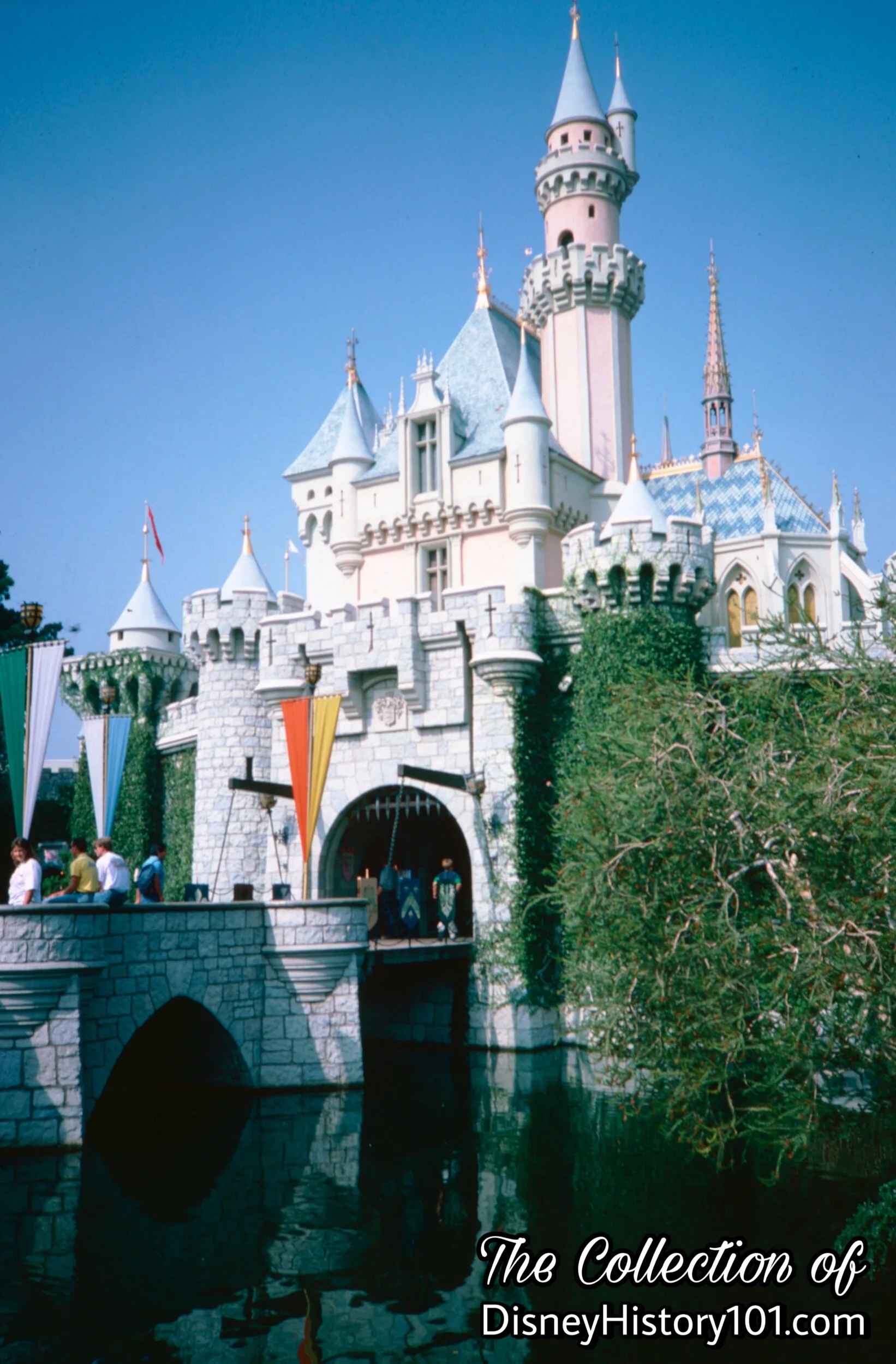
To the right of the drawbridge, two unusual trees arc reflected in the waters of the moat. The taller looks like a stylized weeping willow. It is equally graceful, green all year, and produces quantities of tiny yellow flowers in the spring. An aristocrat of the garden, this fine tree bears an awesome Latin name of Pittosporum Phillyraeoides, or willow leaf Pittosporum. Its companion is melaleuca nesophila, which arches out over the water. The melaleuca is also evergreen, displays dainty lavender flowers for many weeks in early summer, and is fast growing. This specimen is a good example of how to bring out the best in a plant by pruning. Both trees, incidentally, are native to Australia.”
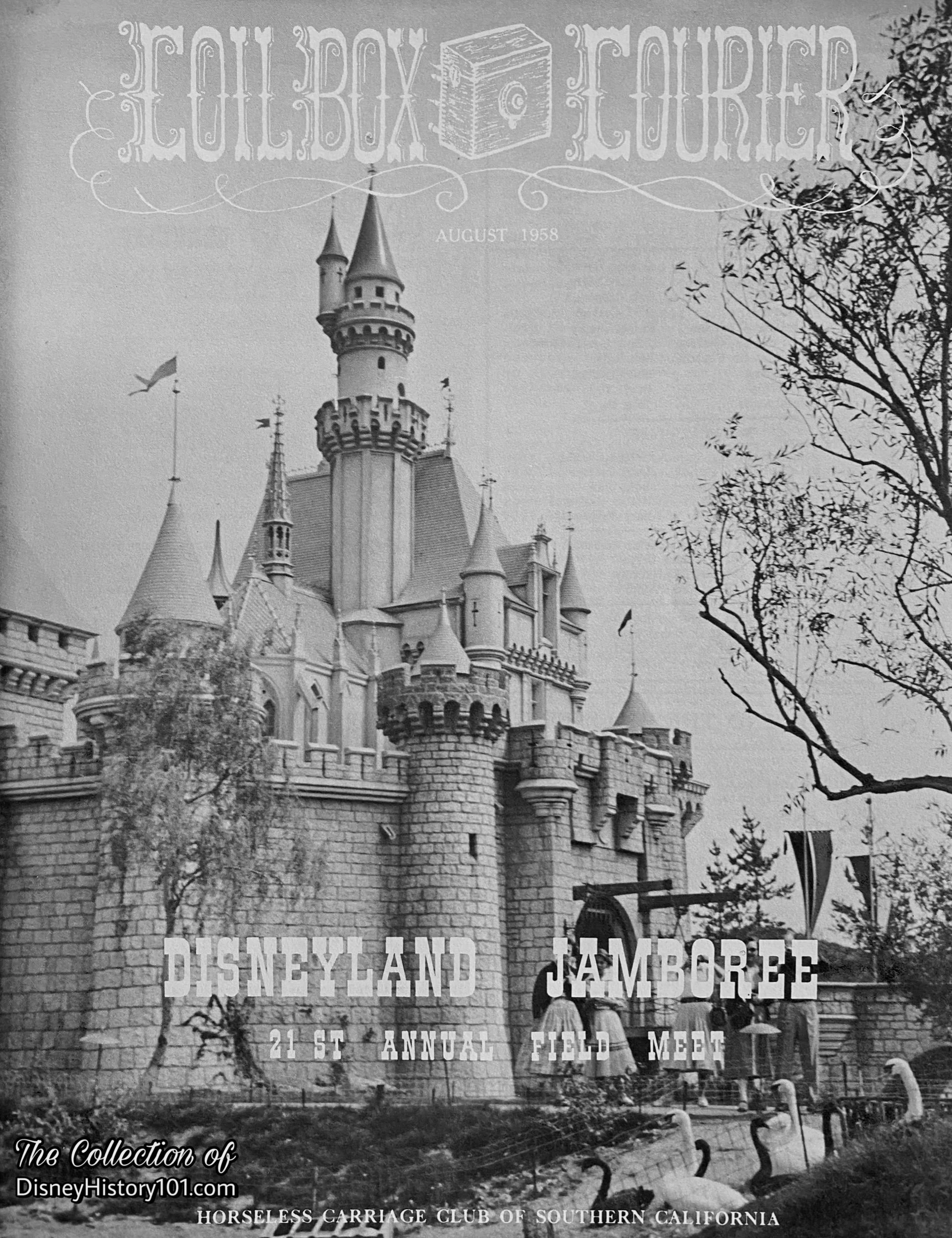
Note the swans in the foreground on the cover of “Coilbox Courier” (August 1958).
“True-Life Water Birds of Disneyland”
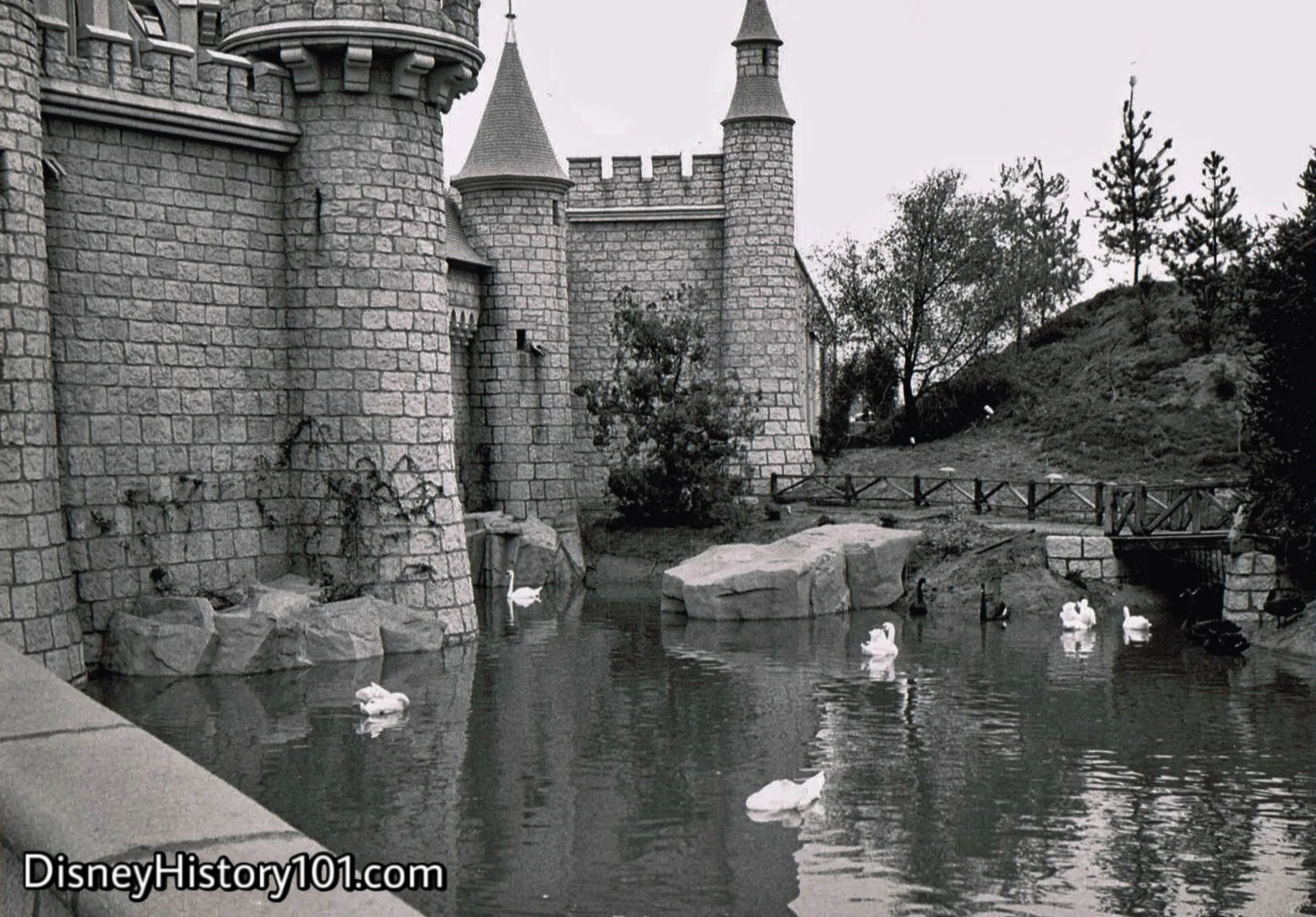
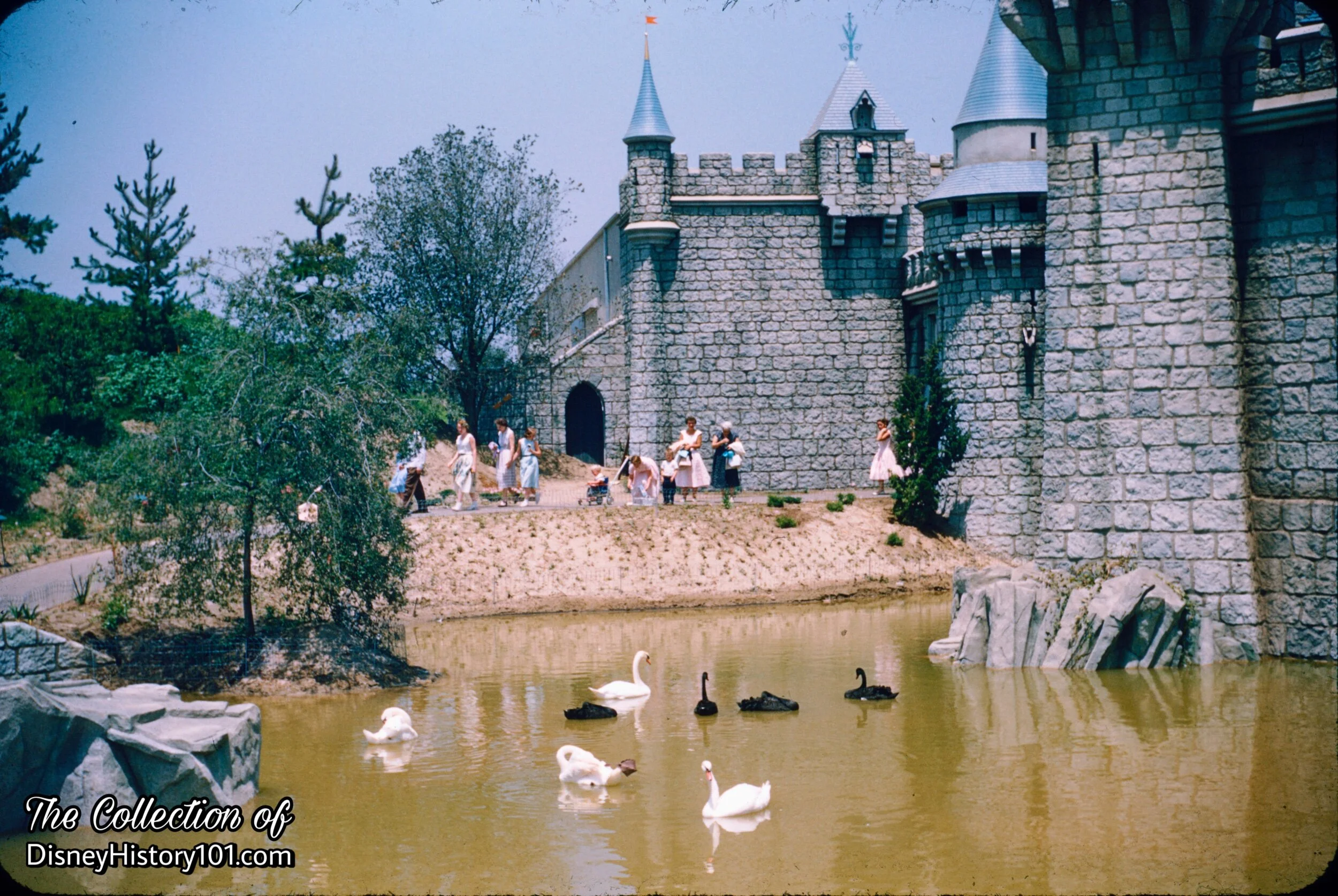
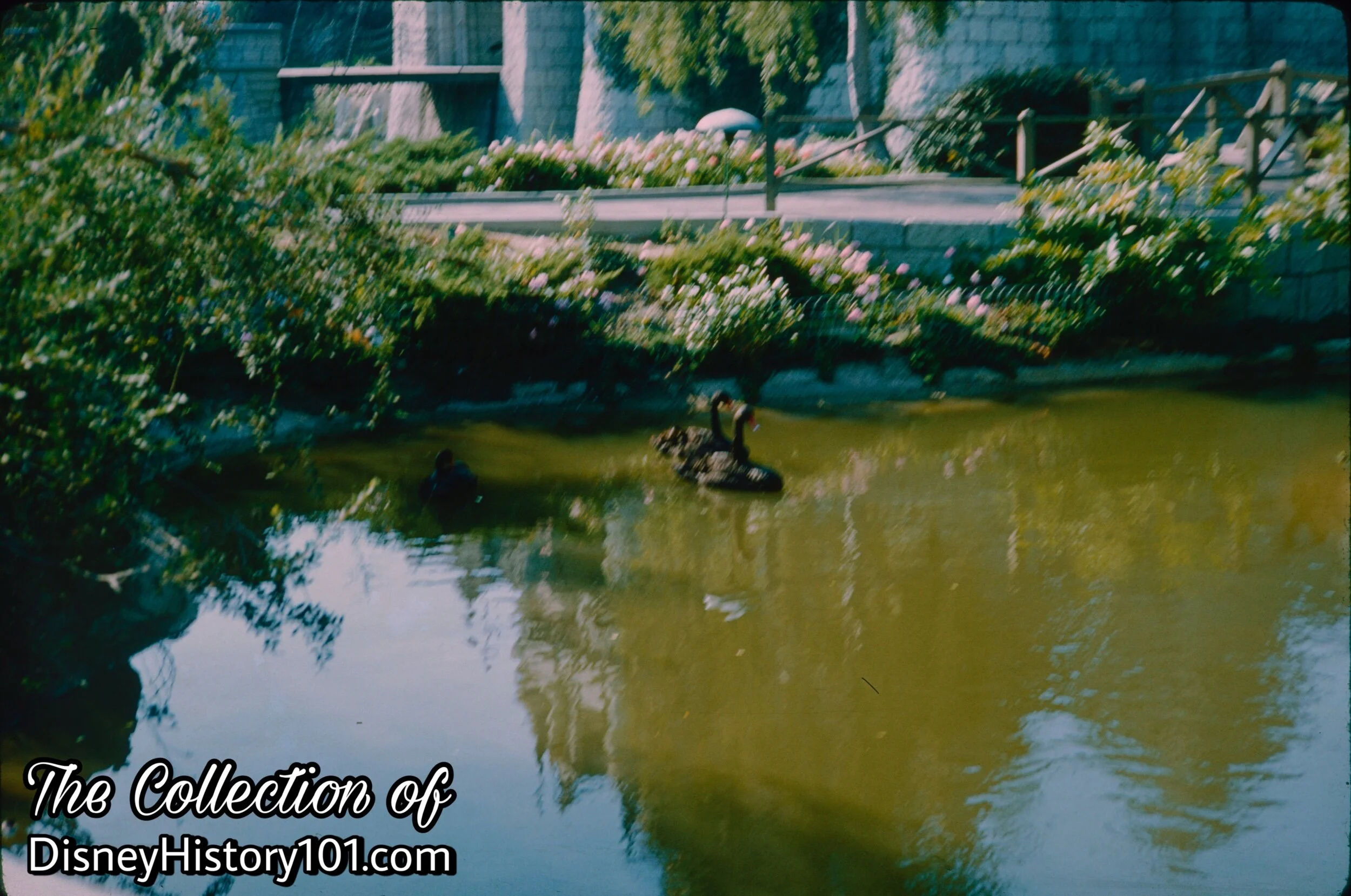
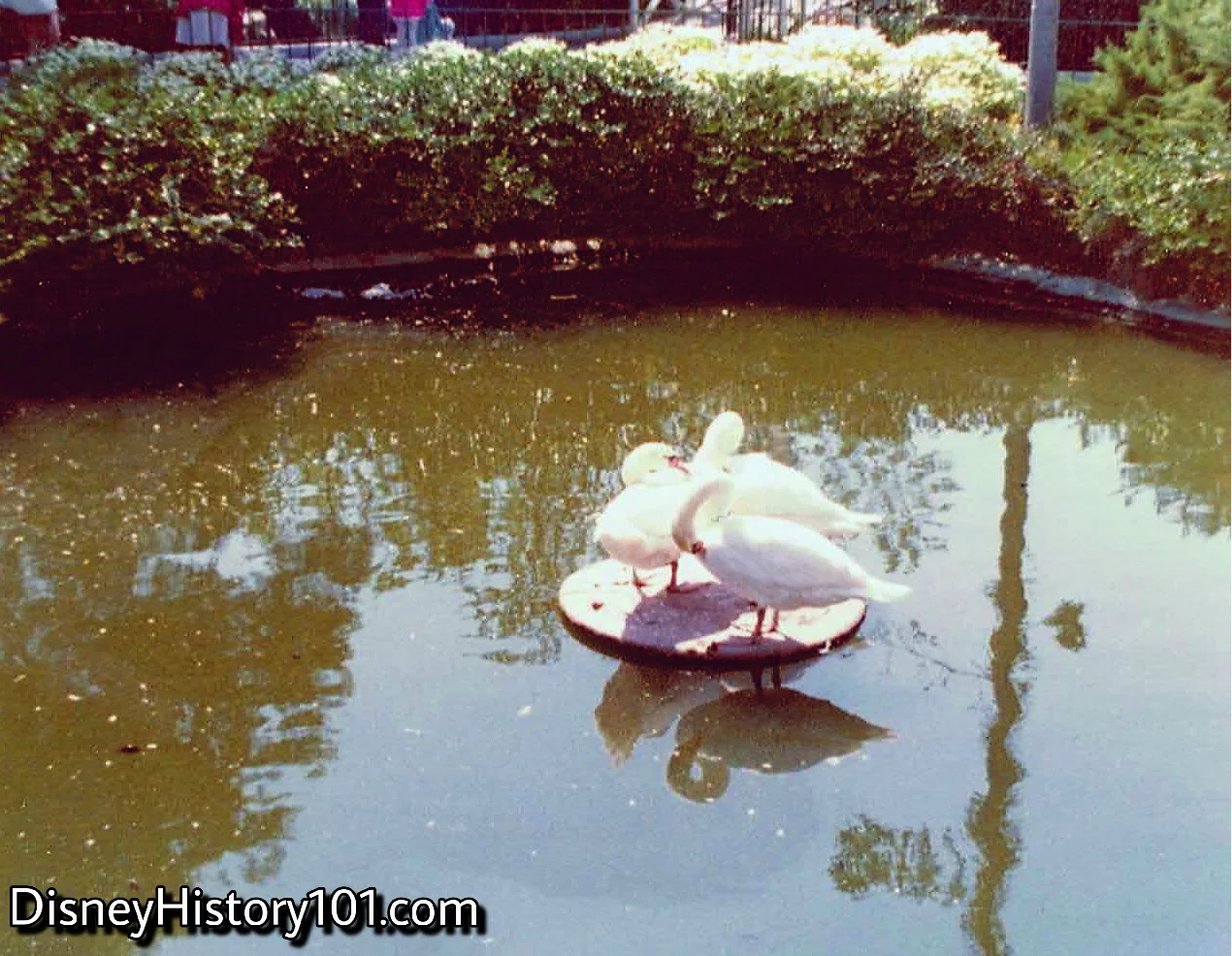
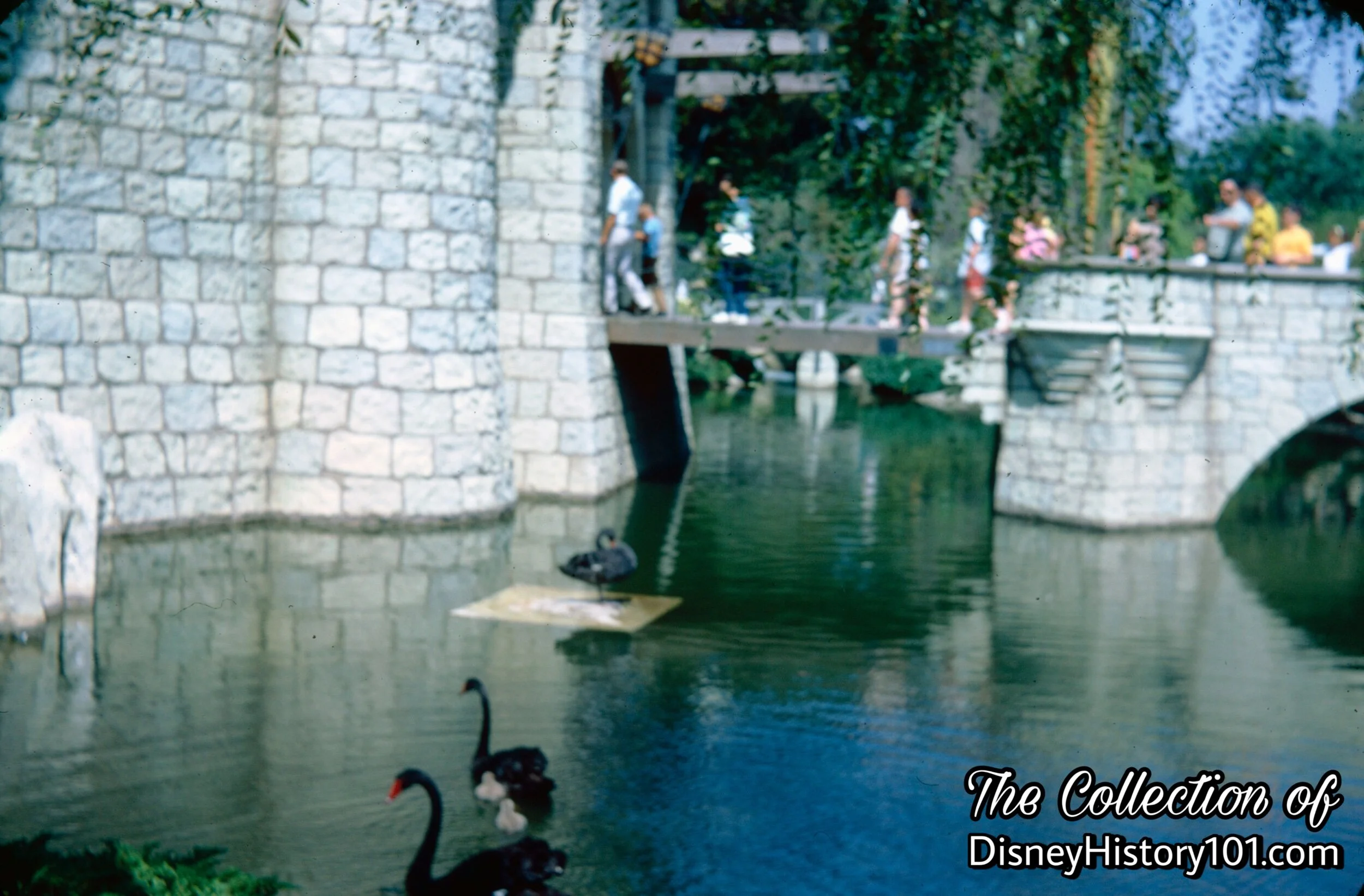
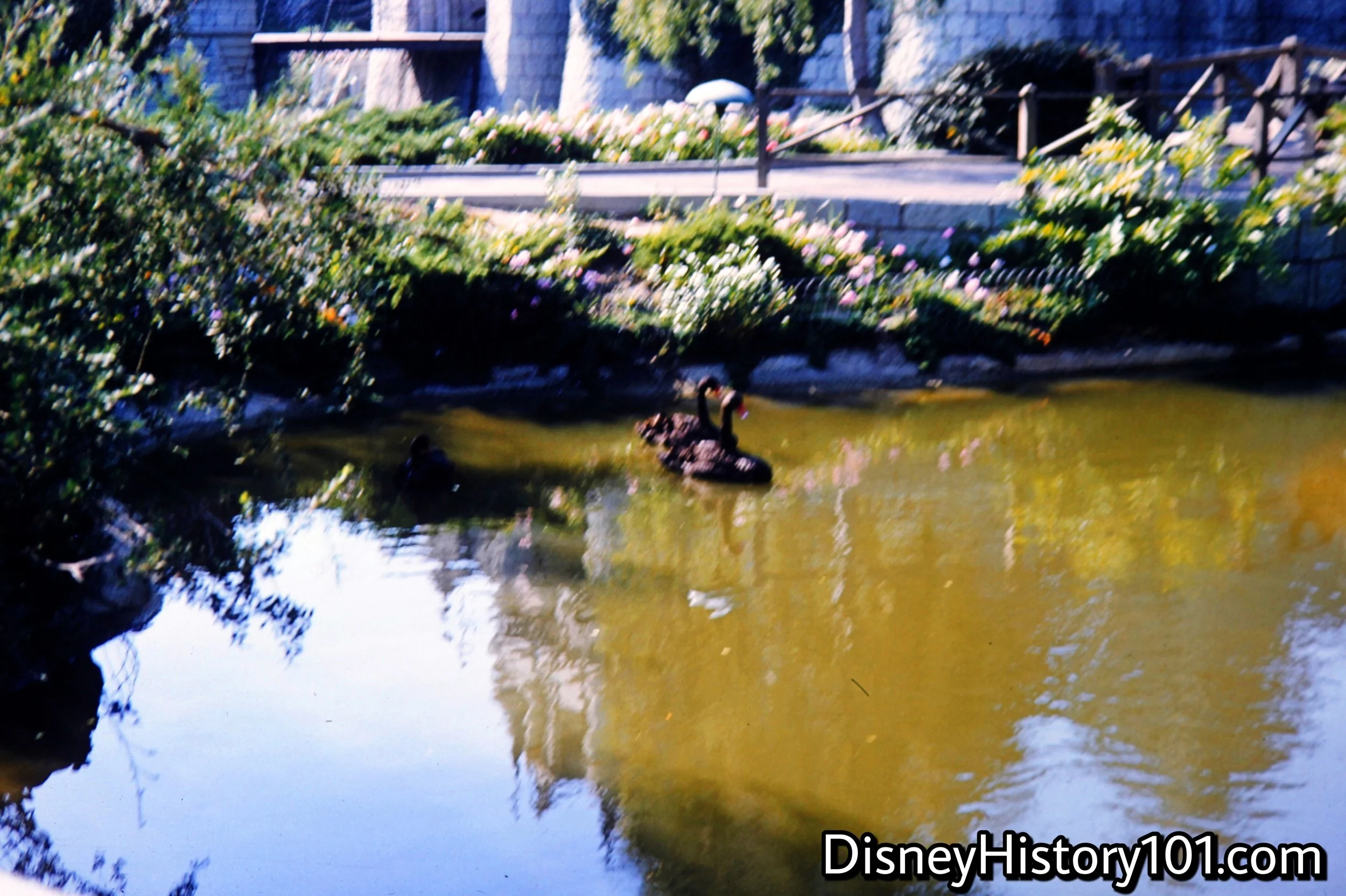
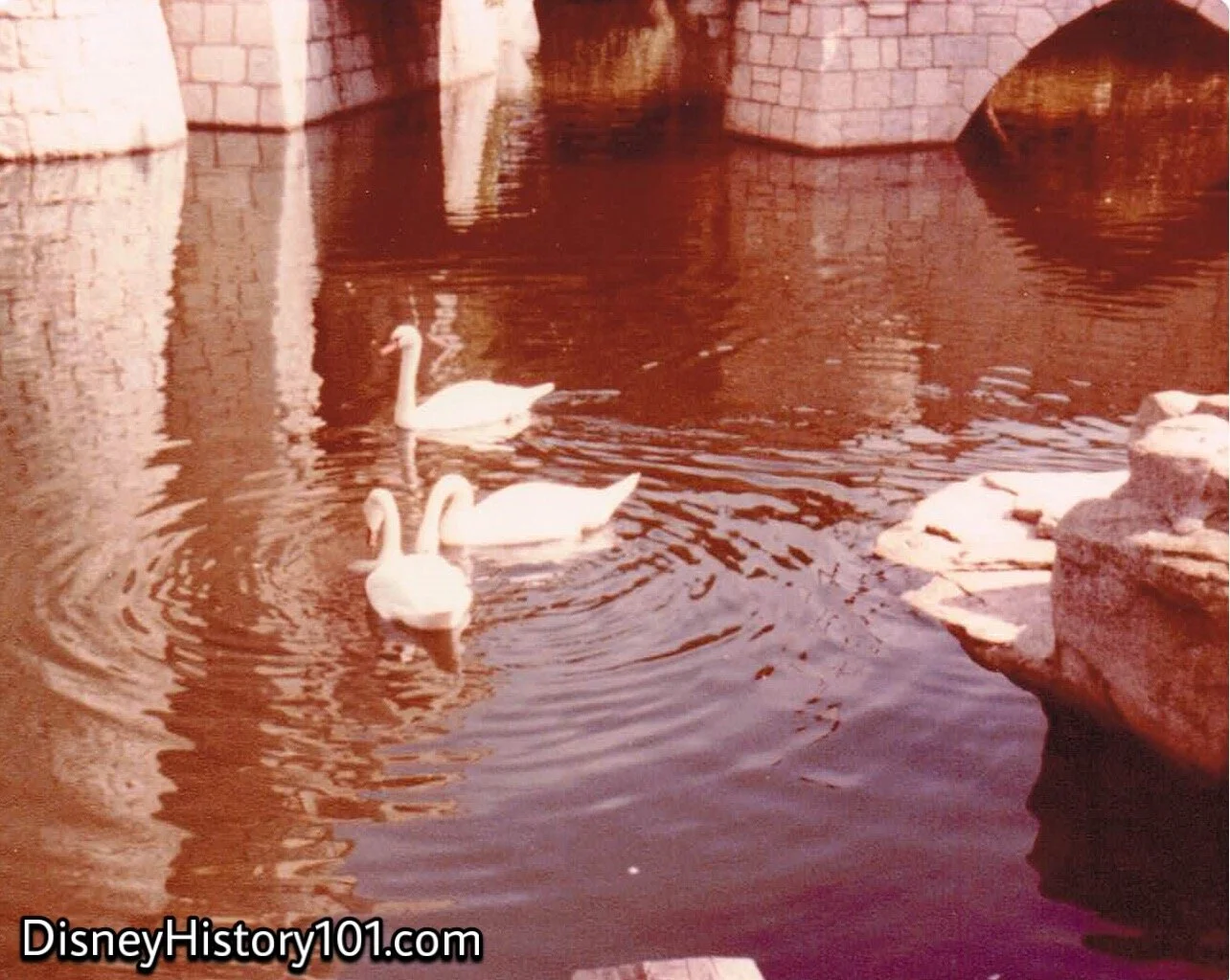
Despite what Ward Kimball may lead one to believe, it hasn’t always been “tough to be a bird,” especially around Walt Disney’s Magic Kingdom. Since the beginning, the pools of Disneyland have been residences for a small variety of wildlife. Here in the moat surrounding Fantasyland Castle was a place for peaceful swans to swim and reside. As opposed to the migrant wild geese, mallards, and other birds of Frontierland, these “white, and the black swans residing in the moat around the Fantasyland Castle were a gift from the Hollywood Turf Club.” (“Disneyland Dictionary”). Mouse Tales elaborates how Walt Disney and an unnamed woman accepted the gift of black and white swans for his castle moat from Dore Schary, head of MGM Studios, and director Meryn LeRoy soon before the opening of Disneyland. “Unfortunately, the birds had bad tempers and were determined to escape. They had to be penned in with a short wire fence.”
“Maintenance”
When the first swans died off, Disneyland began renting replacements, getting a fresh batch every six months.
The Park owned its own moat team. Great care went into maintaining their environment and the pools were kept clean by Custodians who worked in the Park after midnight. Magic making MAINTENANCE MACHINISTS were challenged by unique new problems each day. A typical maintenance request representing part of a day's work may sound like: “Swans in castle moat are oily... check out.”
Sleeping Beauty Castle & Swan Lake.
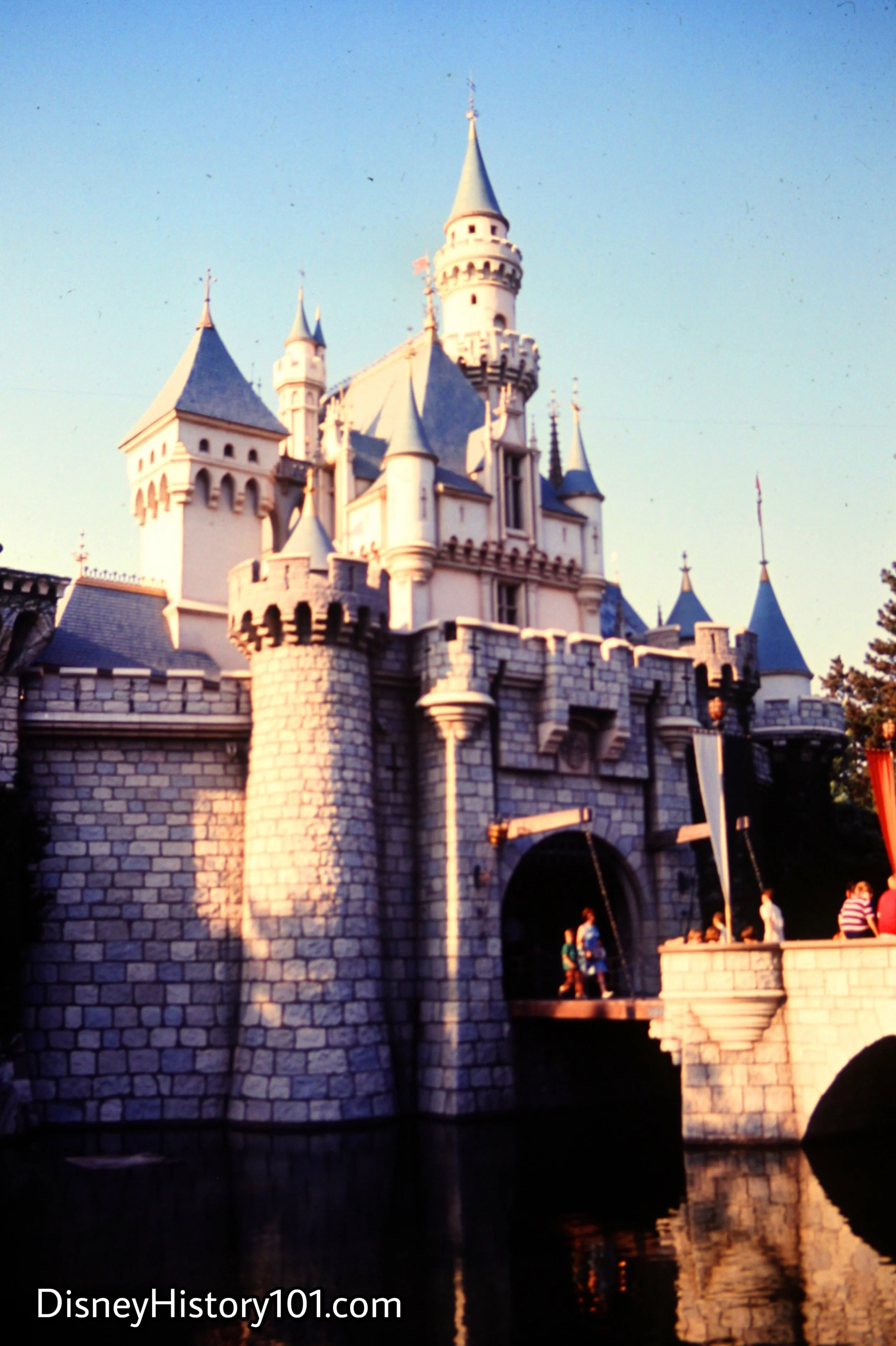
Sleeping Beauty Castle & the most surrounding it, known as Swan Lake
The short wire fence didn't stop guests from going down to try to pet them - and getting snapped at. Disneylander Dean Narath recalled “watching a swan come out of the Castle moat, take out after Dominic Conte, and chase him down Main Street!”
Sleeping Beauty Castle & Swan Lake
Sleeping Beauty Castle & Swan Lake, (November 23, 1958)
Sleeping Beauty Castle, (August 4th, 1955)
Sleeping Beauty Castle, (August, 1955)
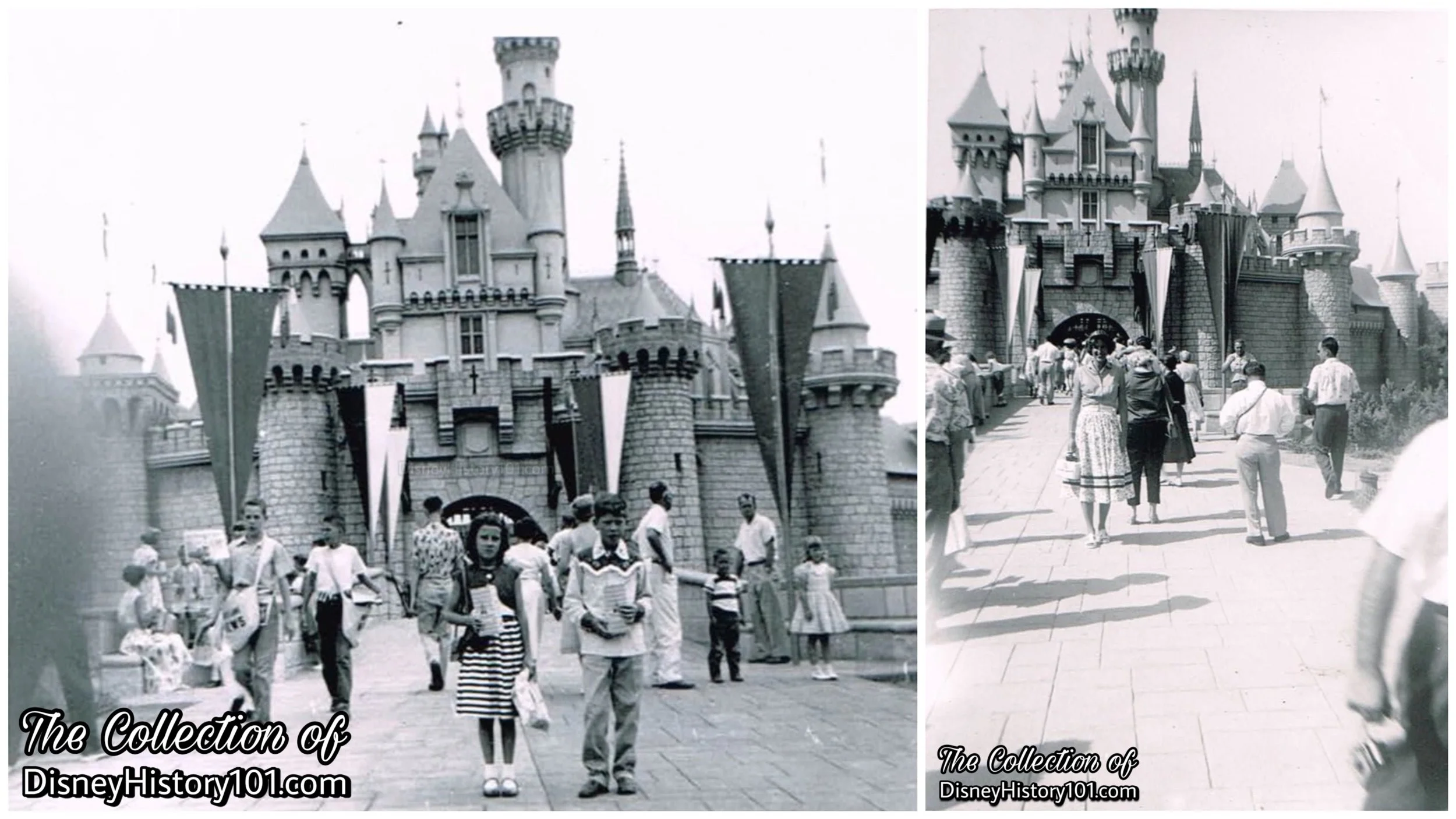
Disneyland Newsboys and Young Guests with Popcorn near Sleeping Beauty Castle, (August 4th, 1955); Sleeping Beauty Castle, (August, 1955)
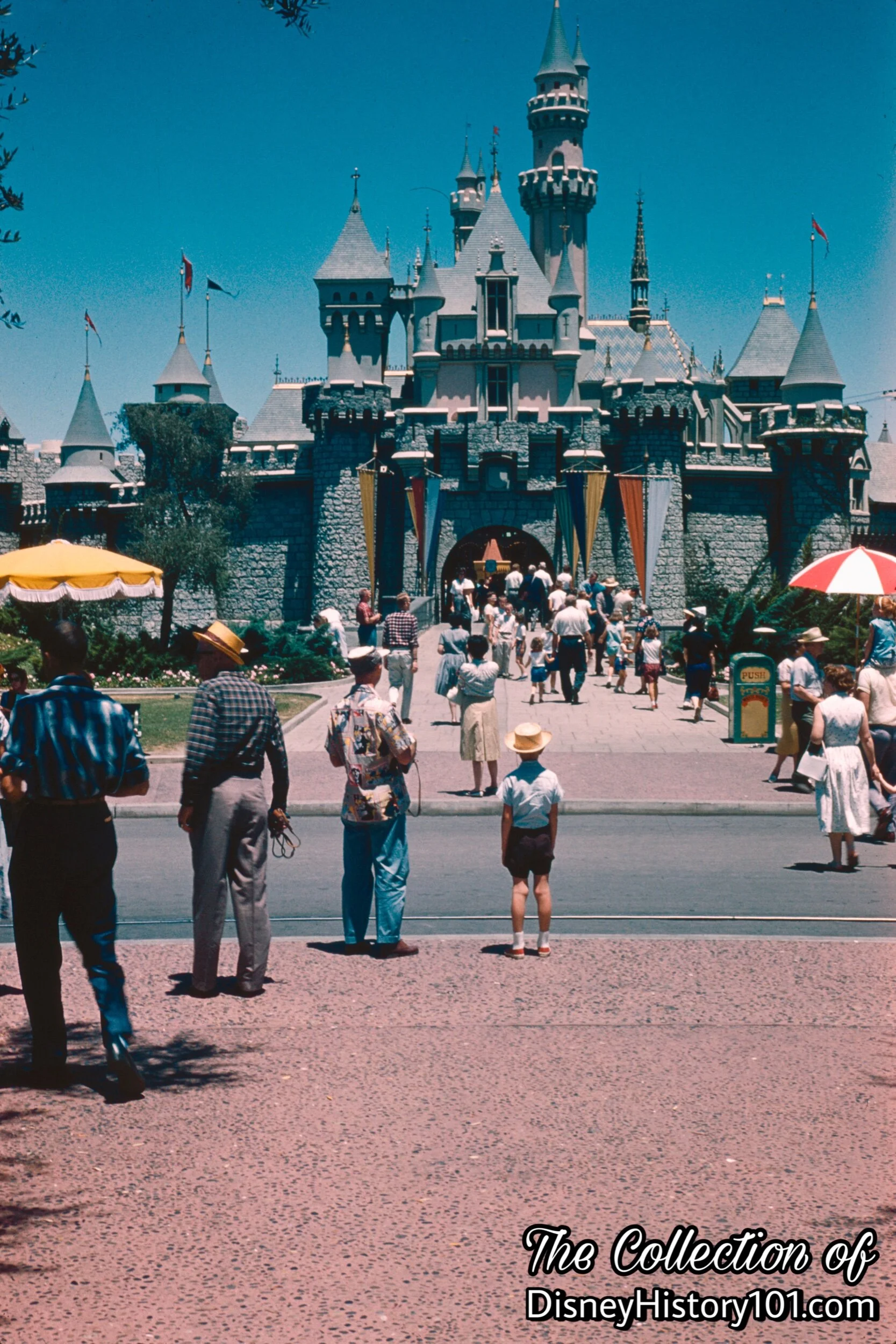
Sleeping Beauty Castle
(November 23, 1958)
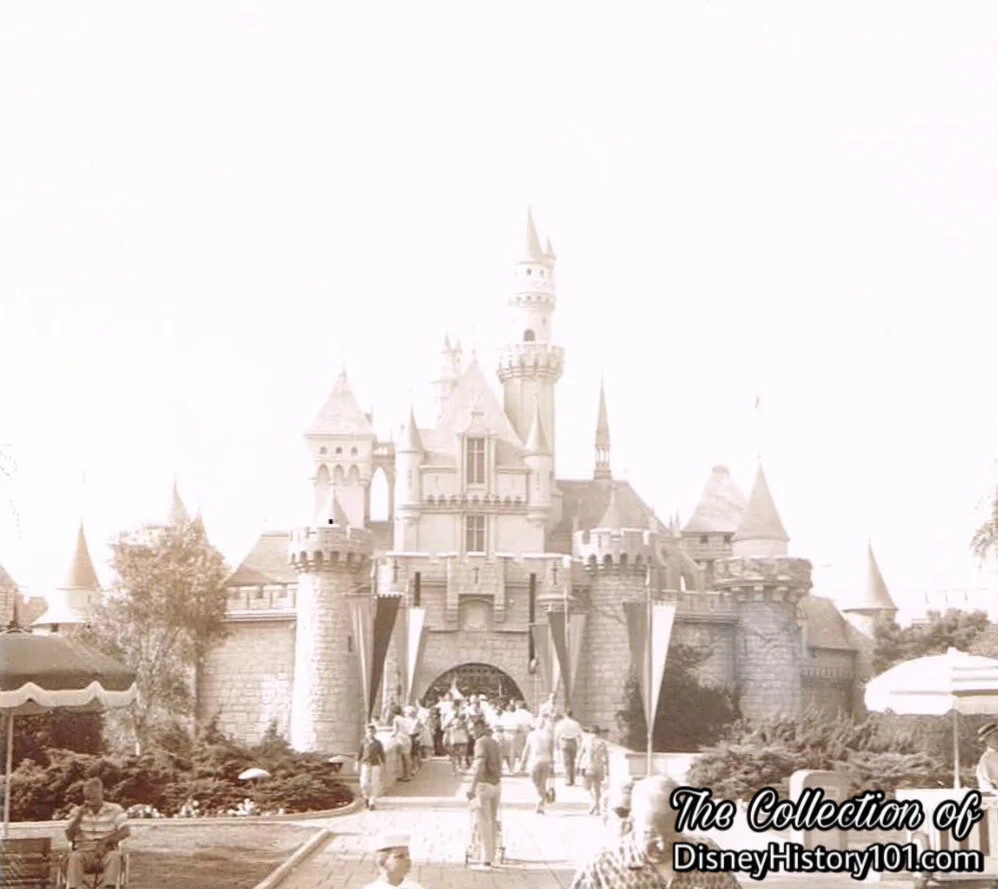
Sleeping Beauty Castle
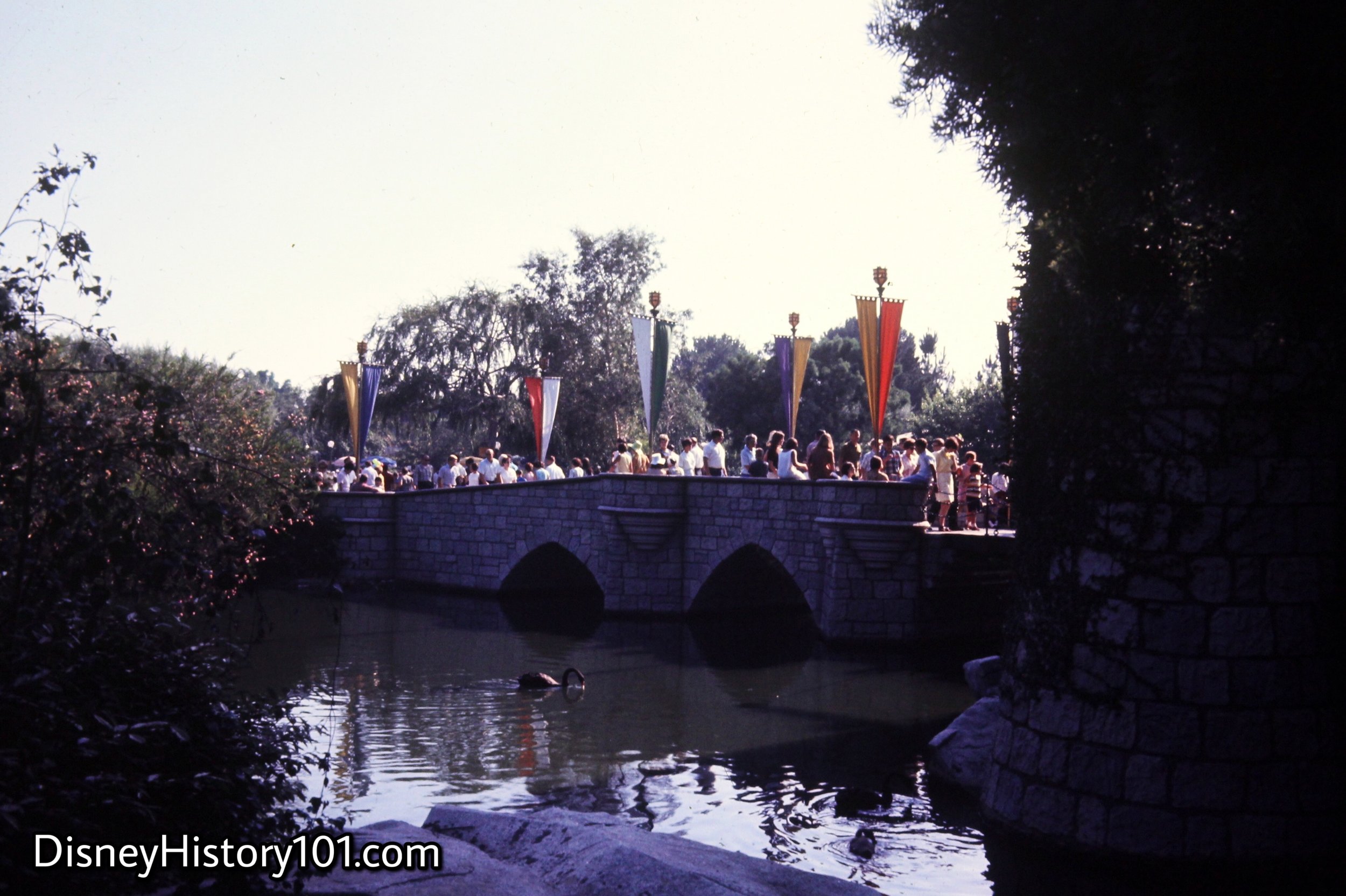
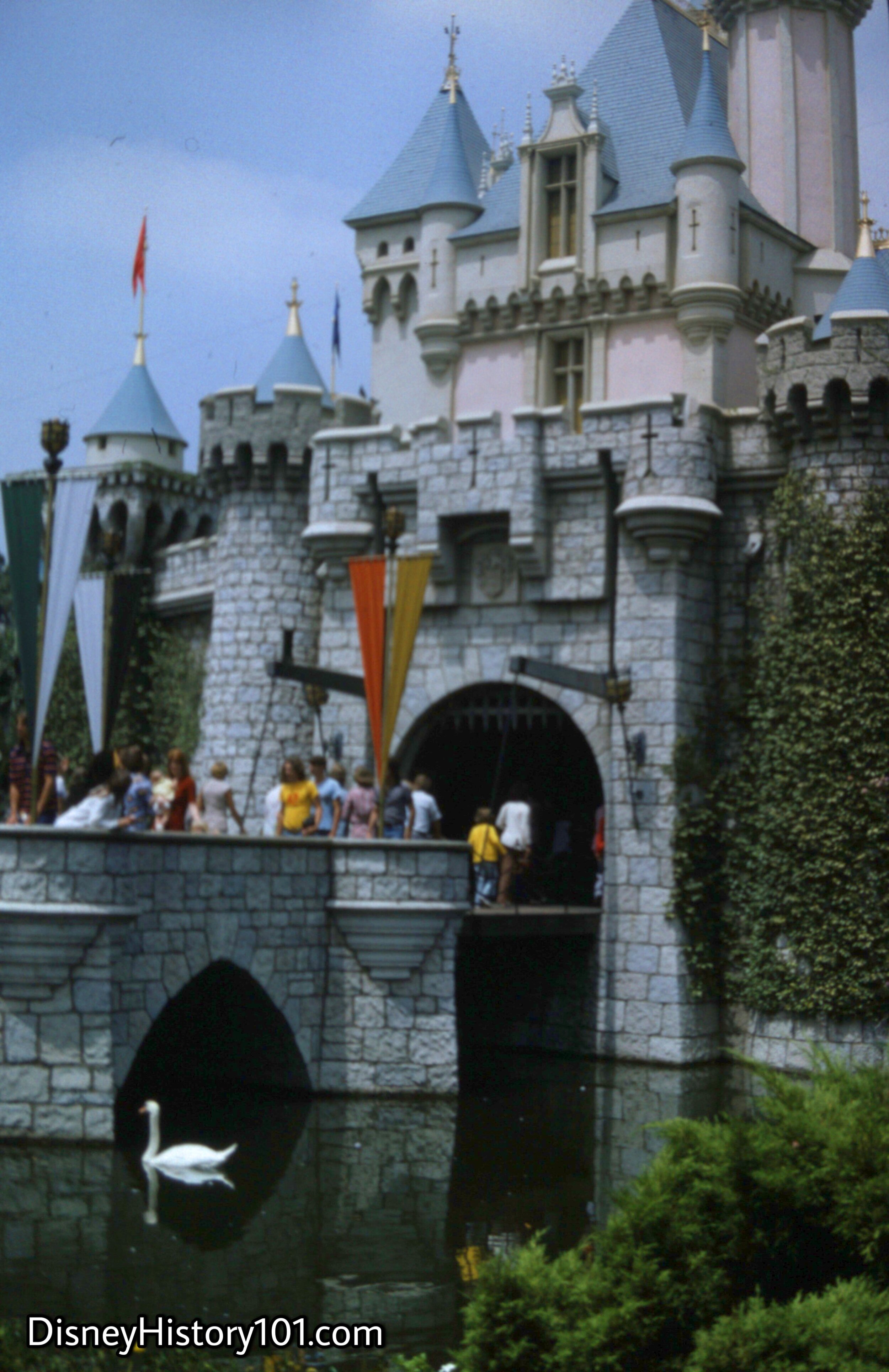
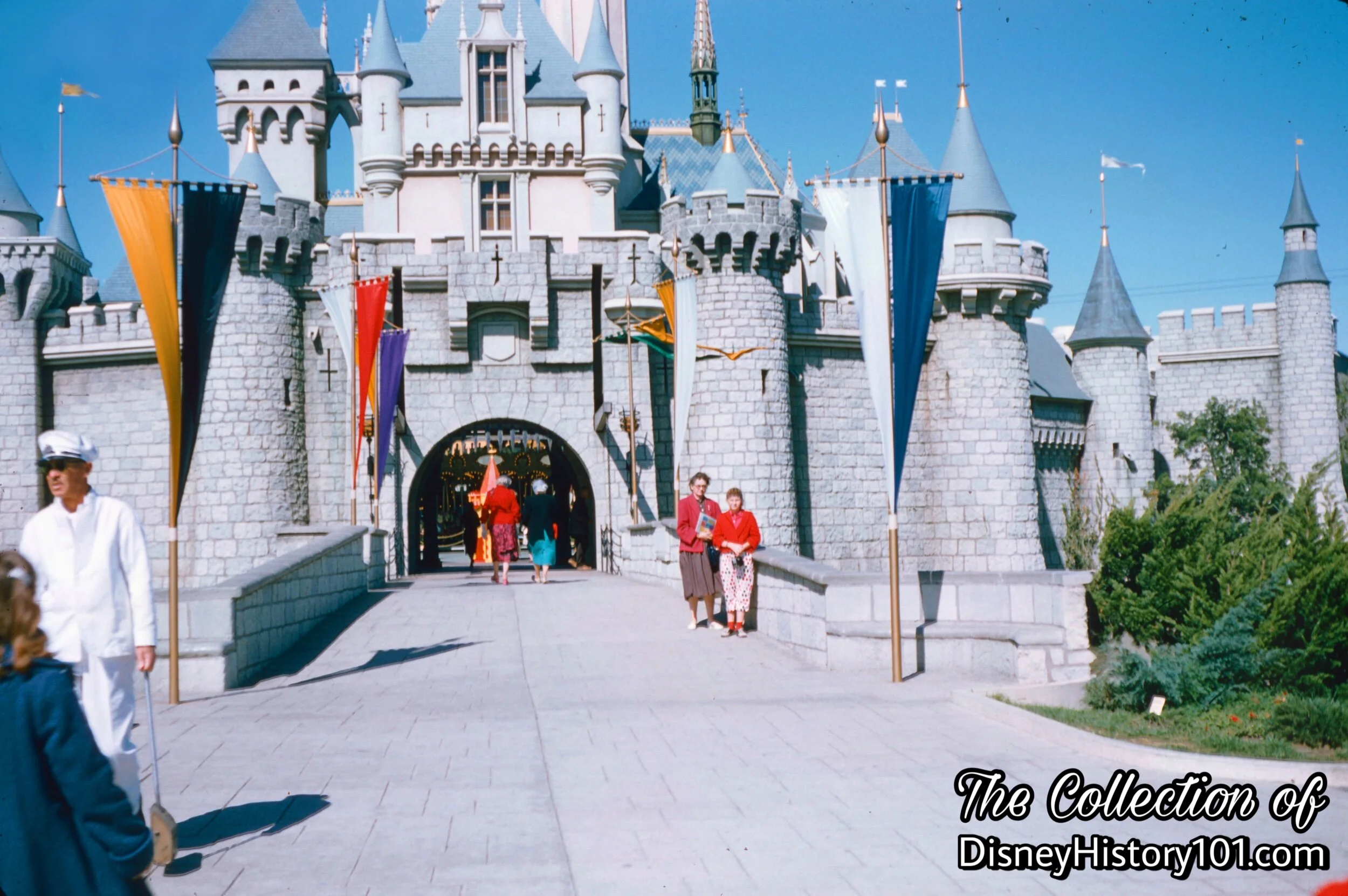
Sleeping Beauty Castle Bridge
Sleeping Beauty Castle
Sleeping Beauty Castle
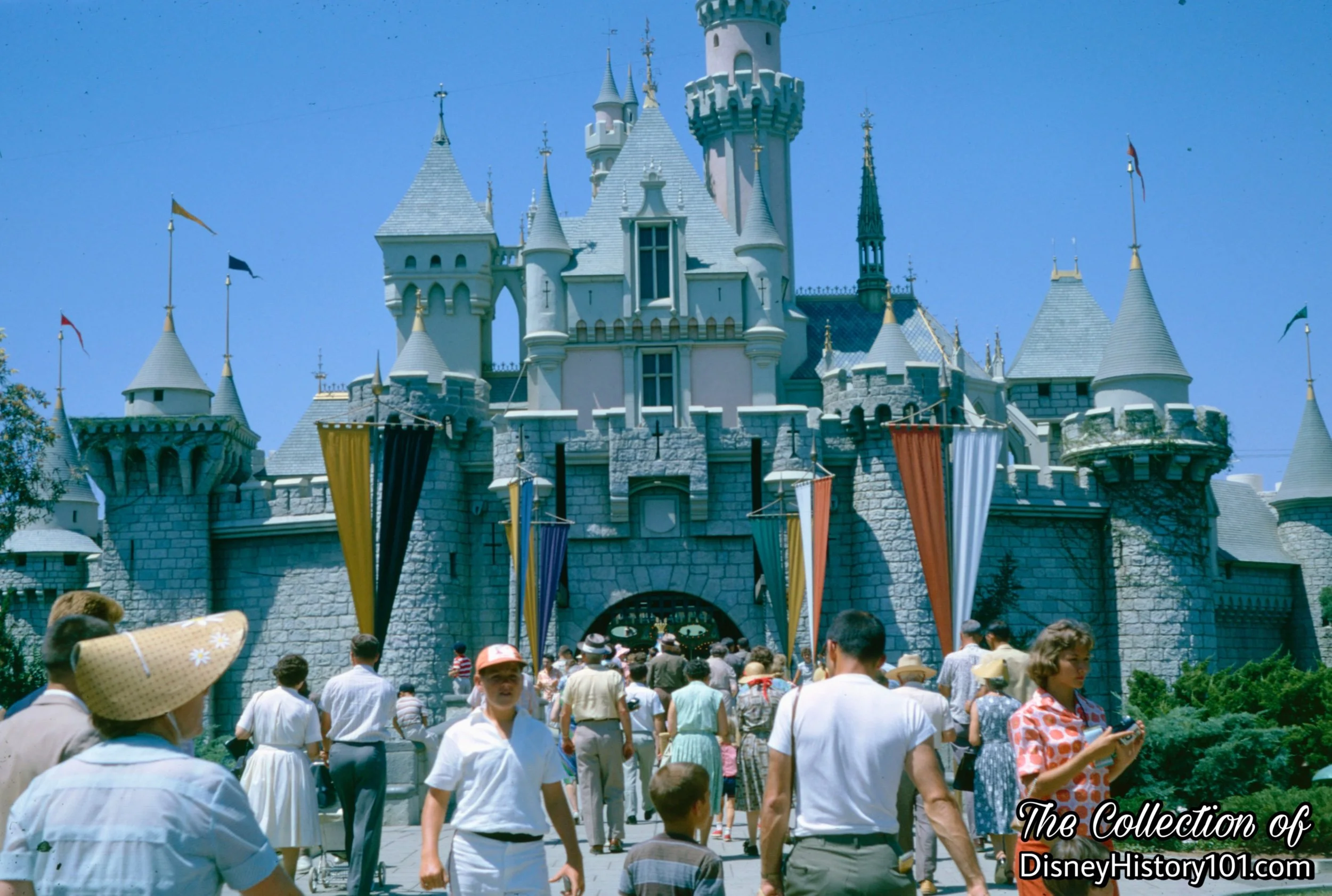
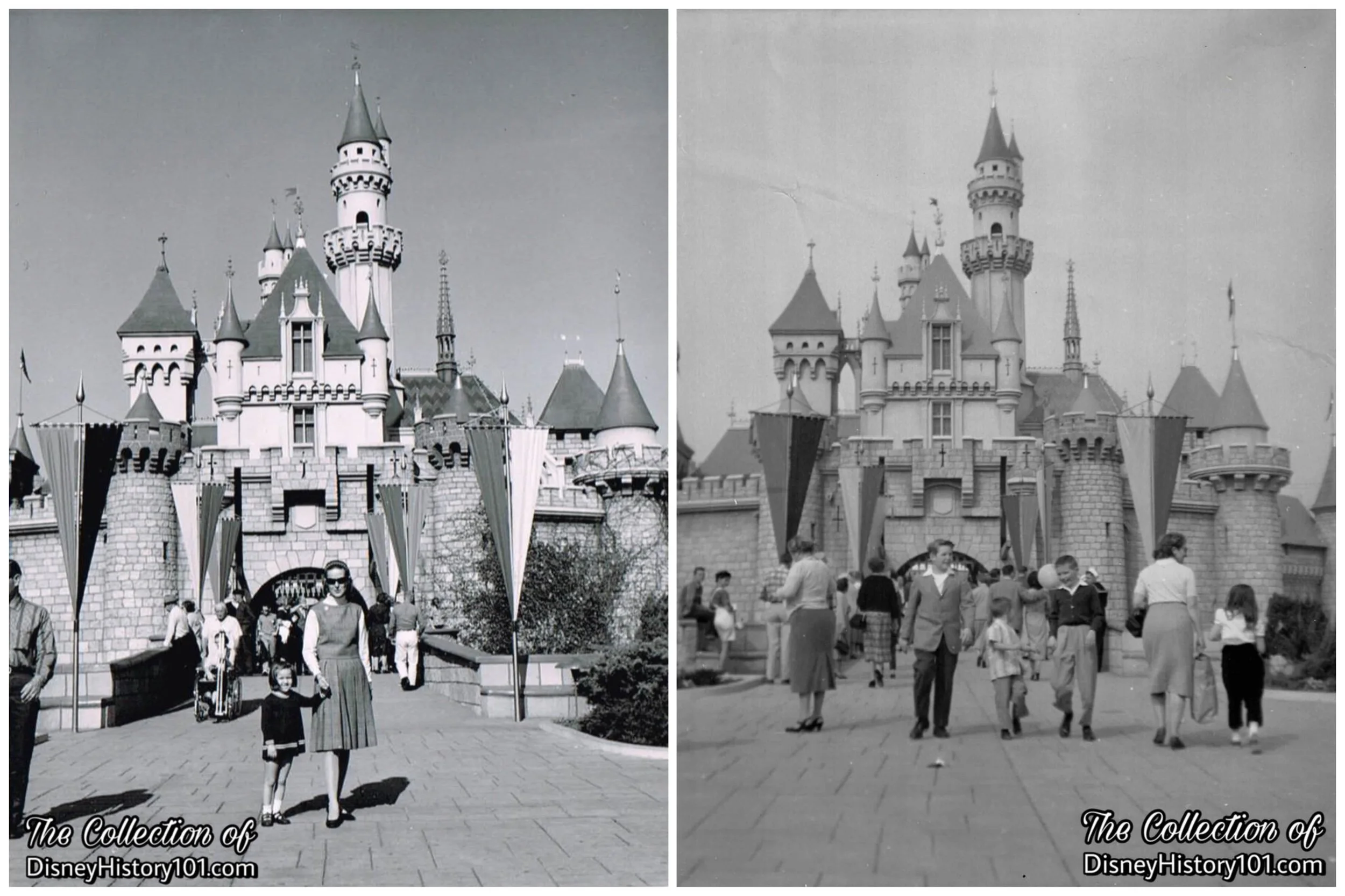
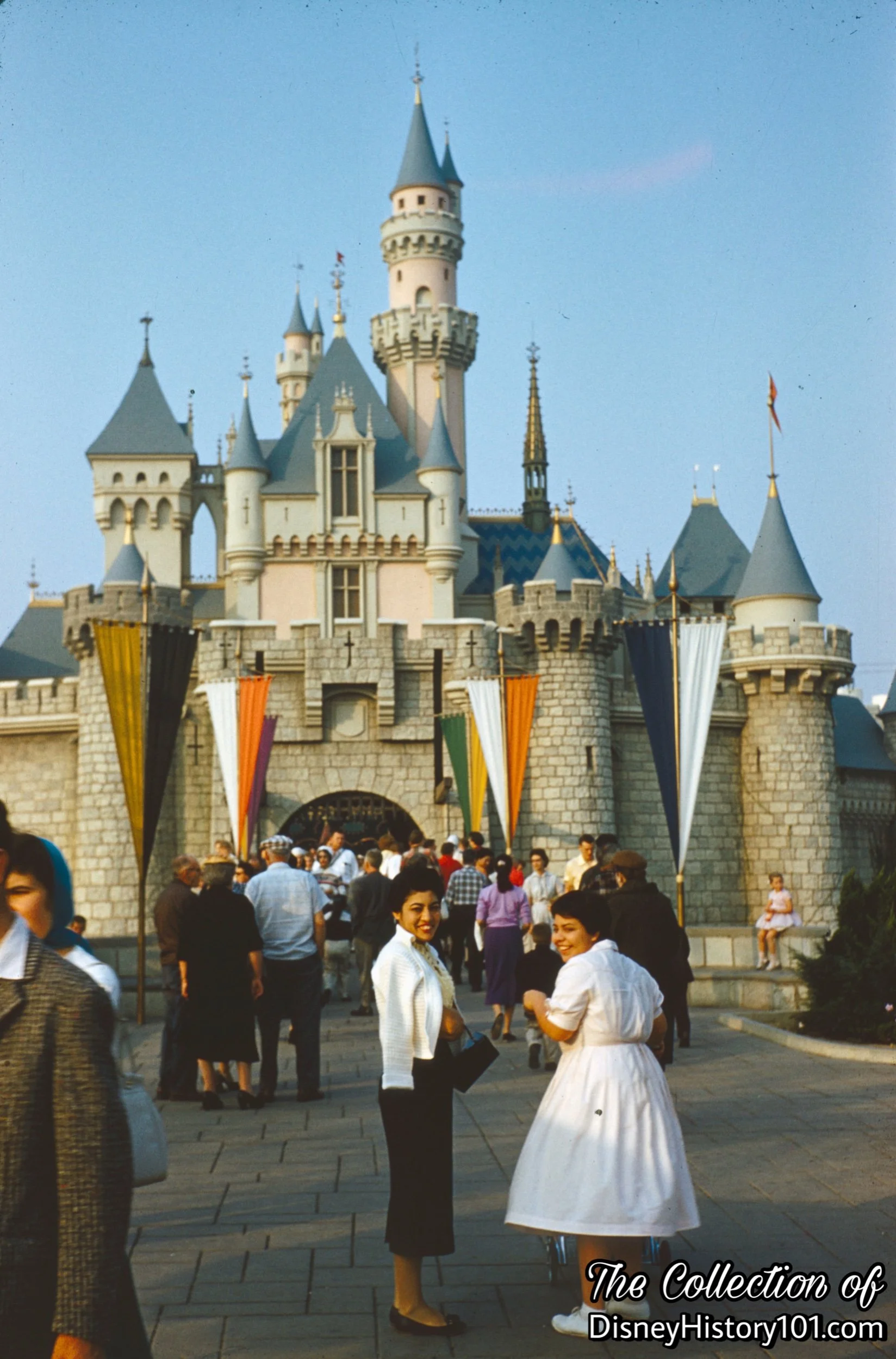
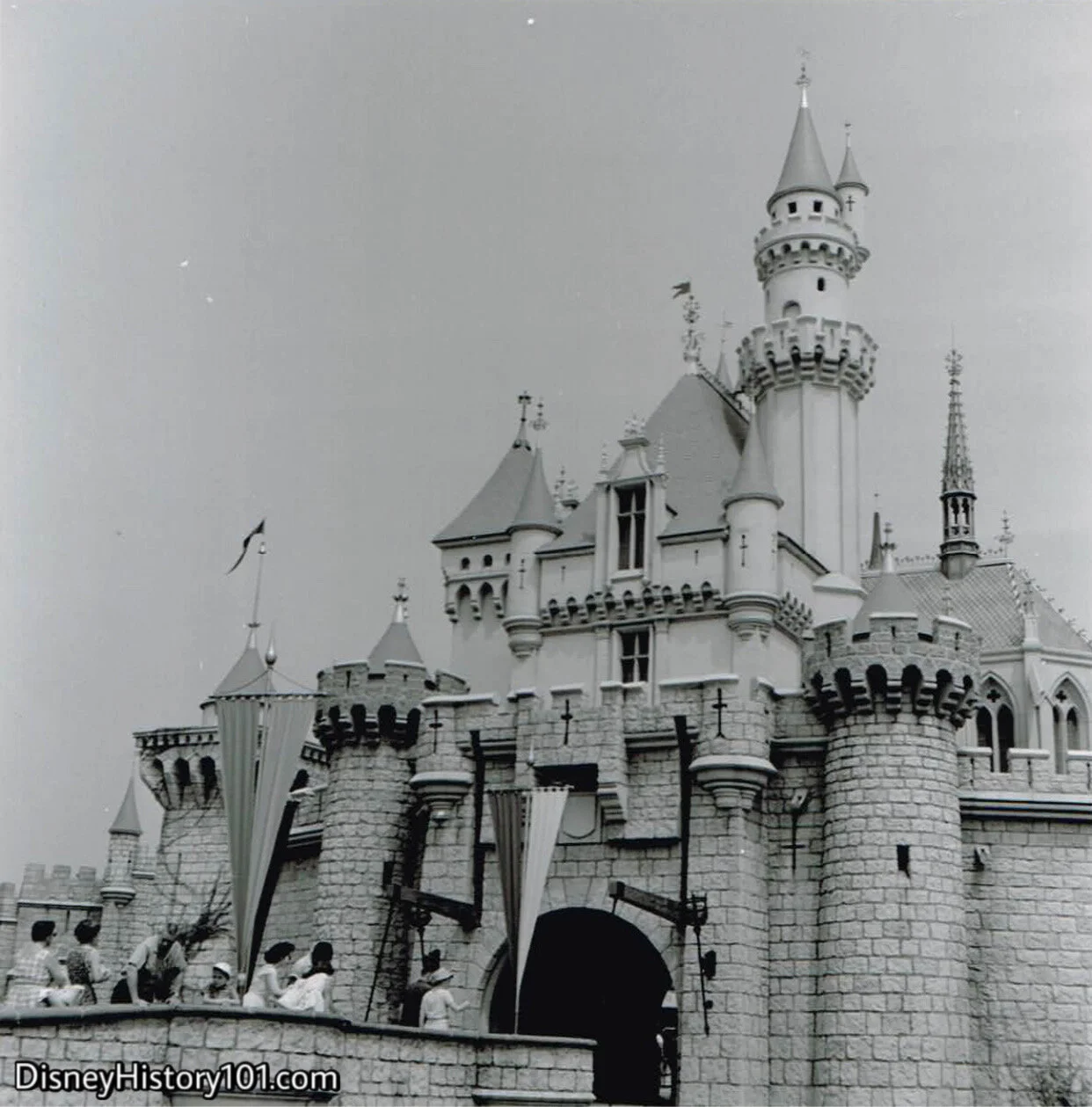
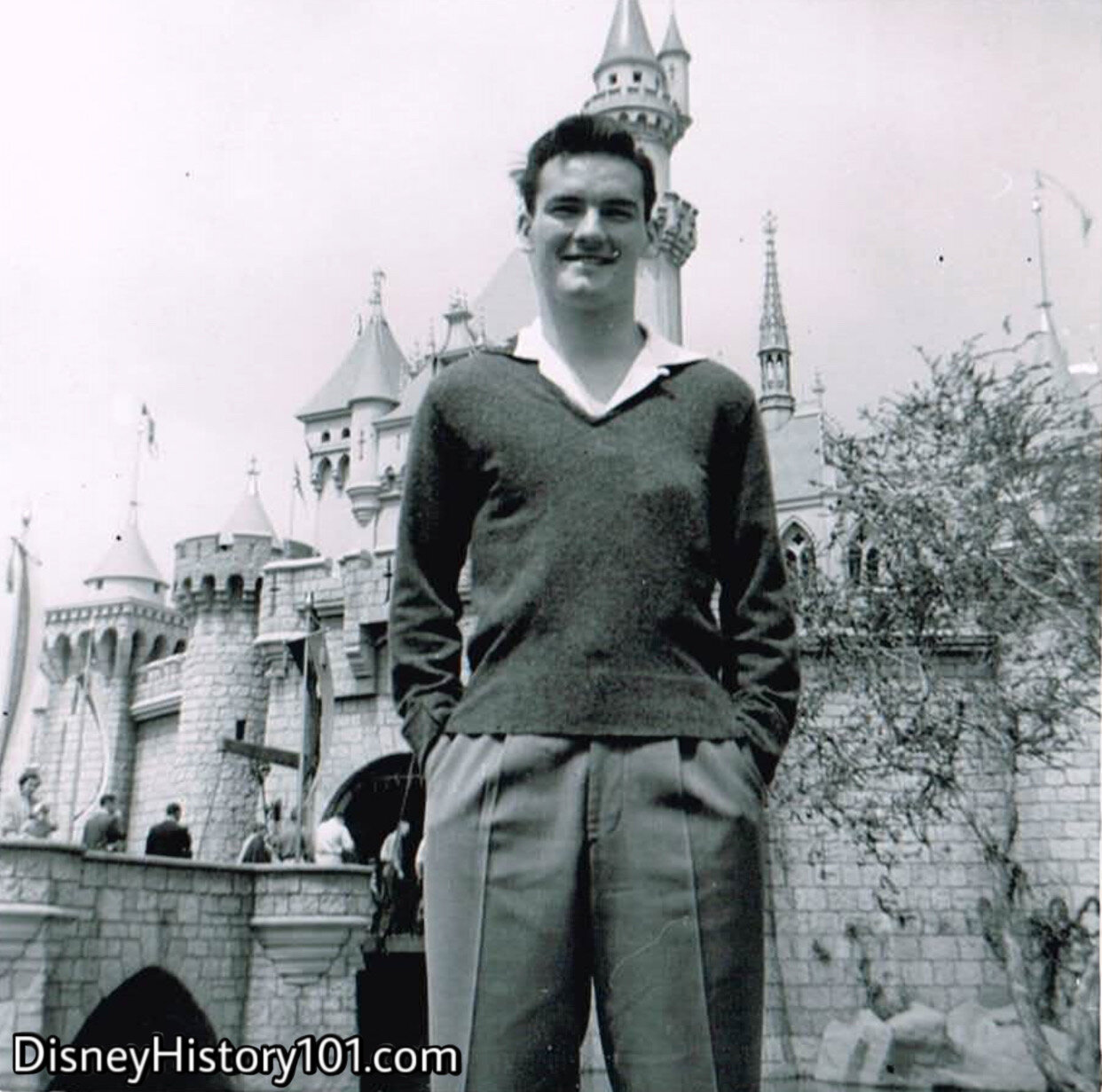
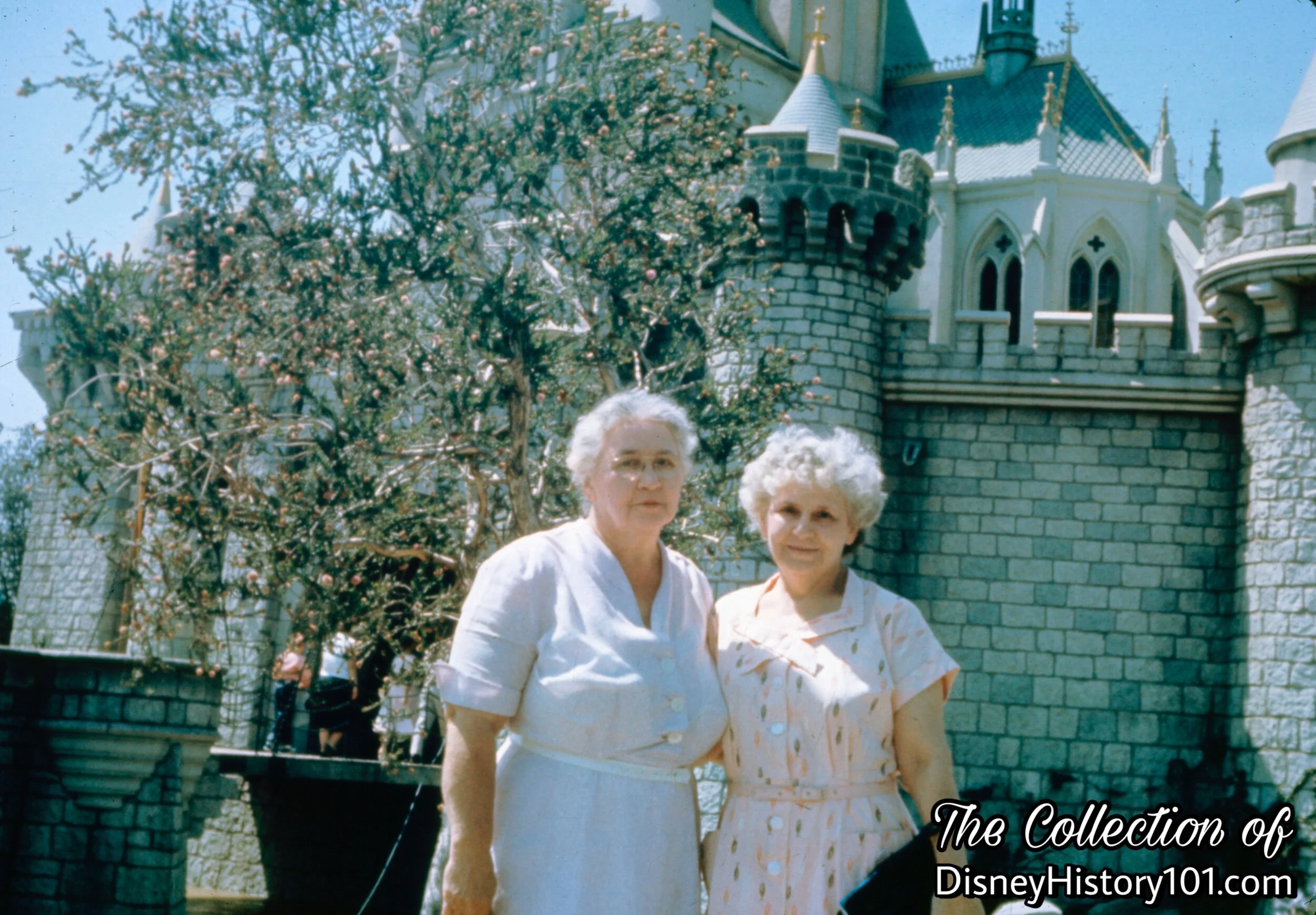
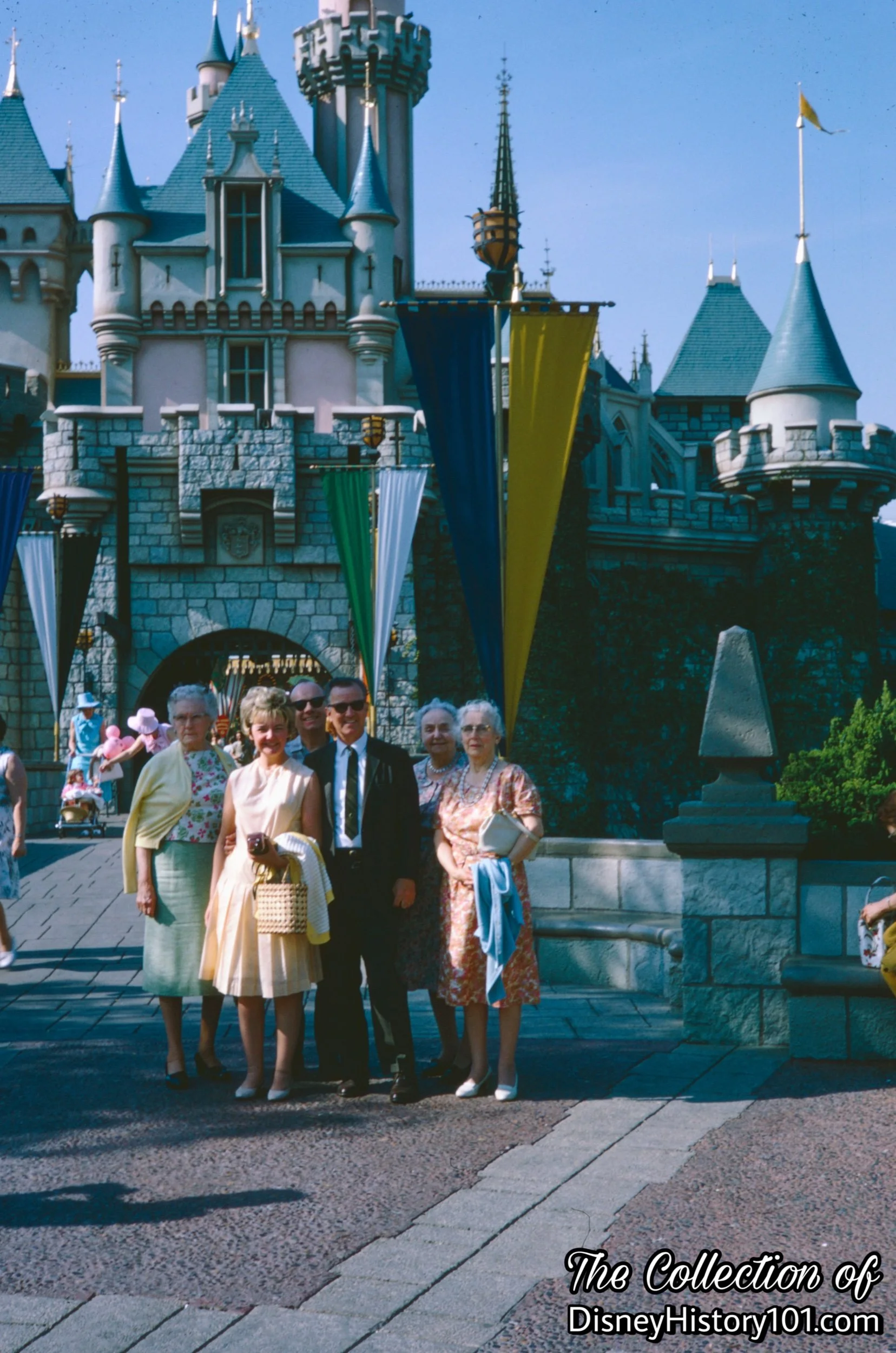
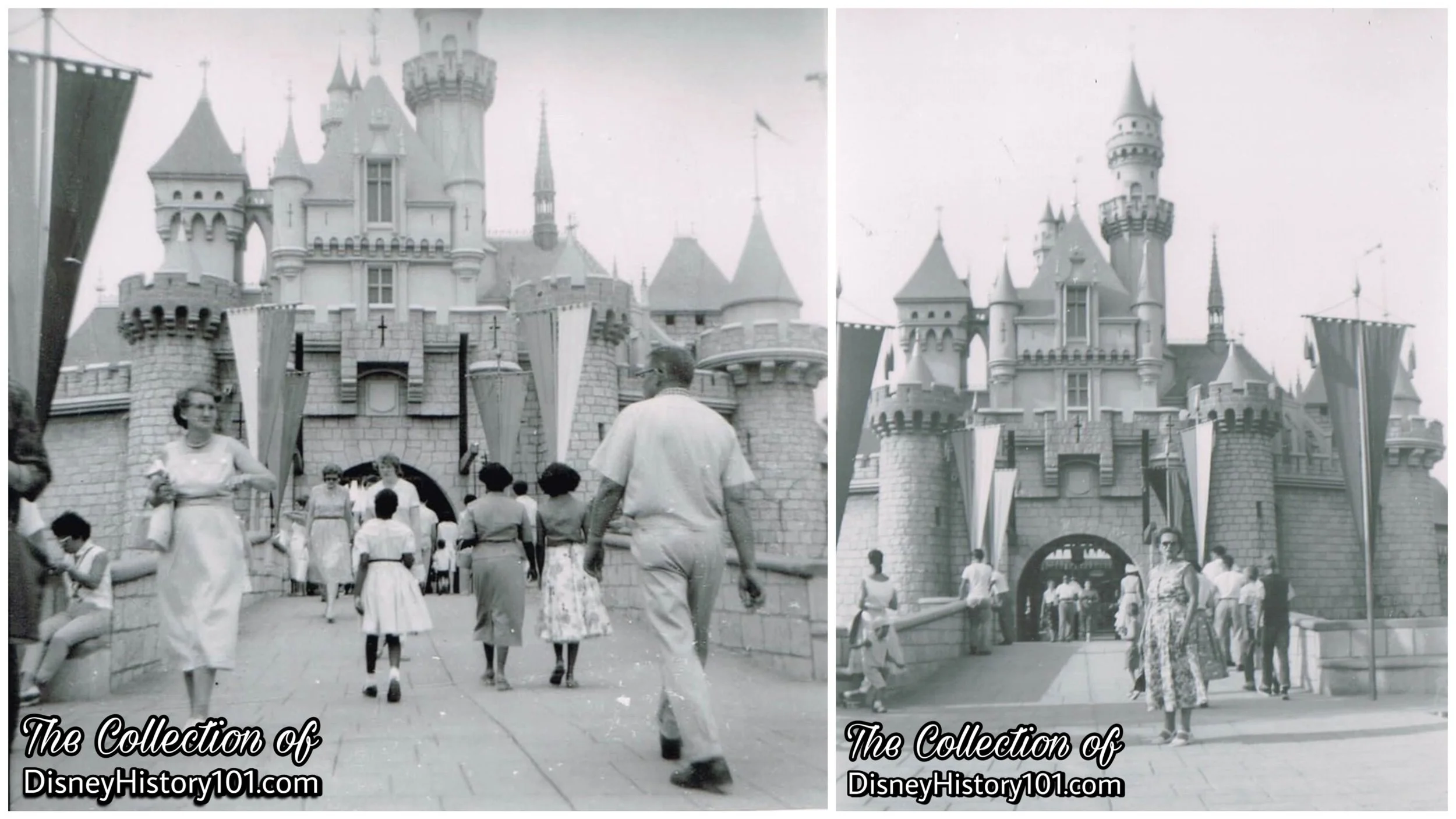
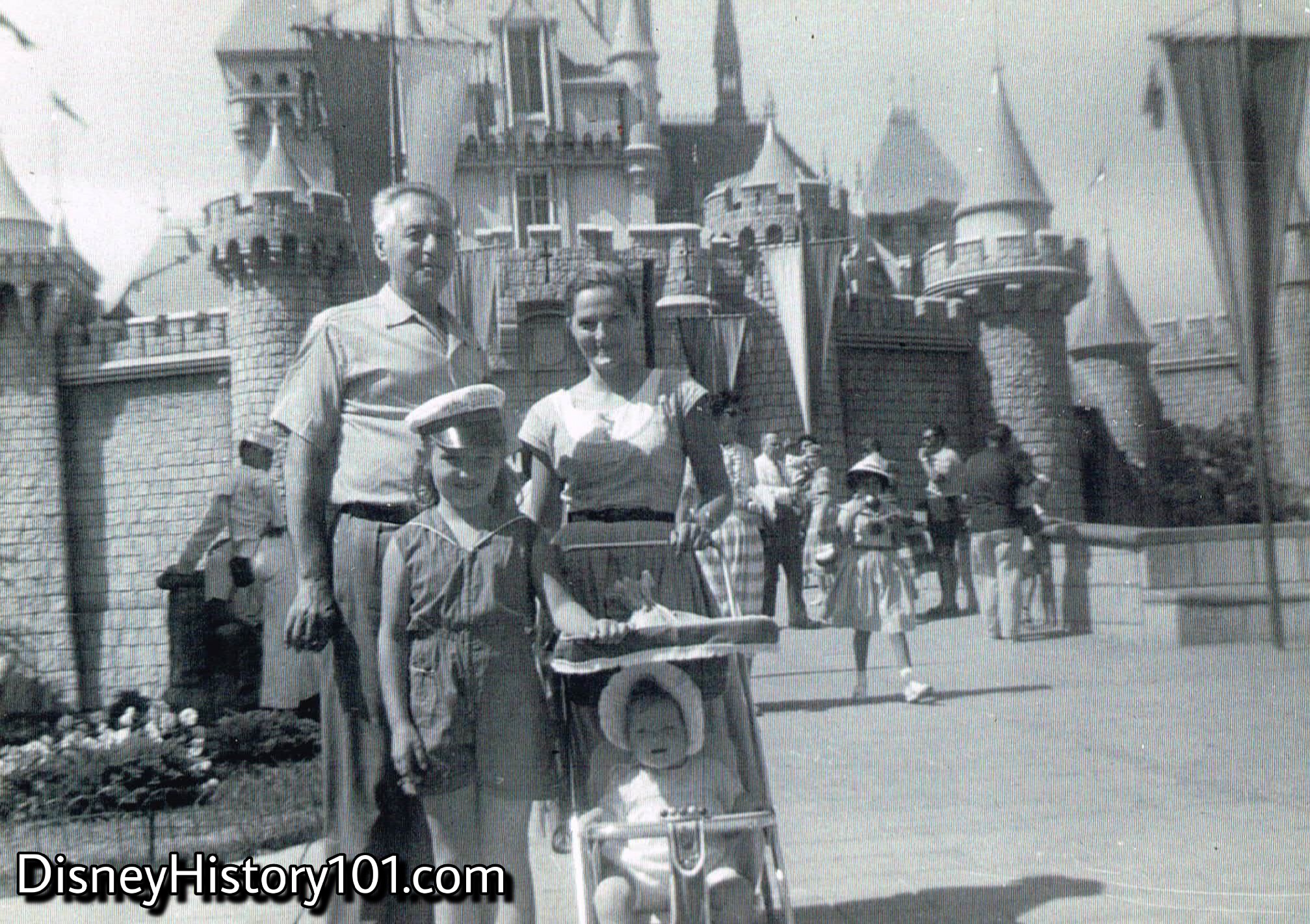
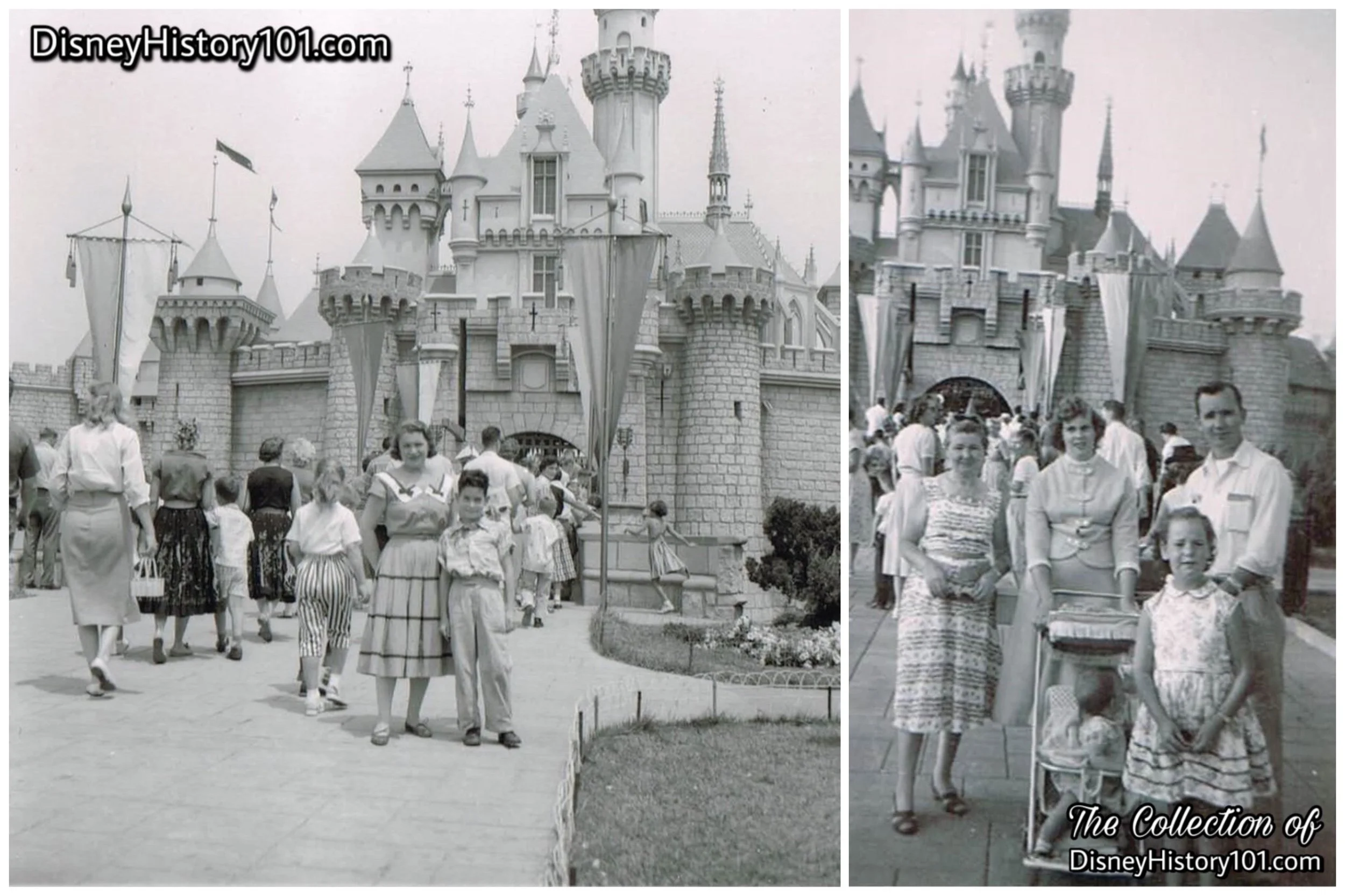
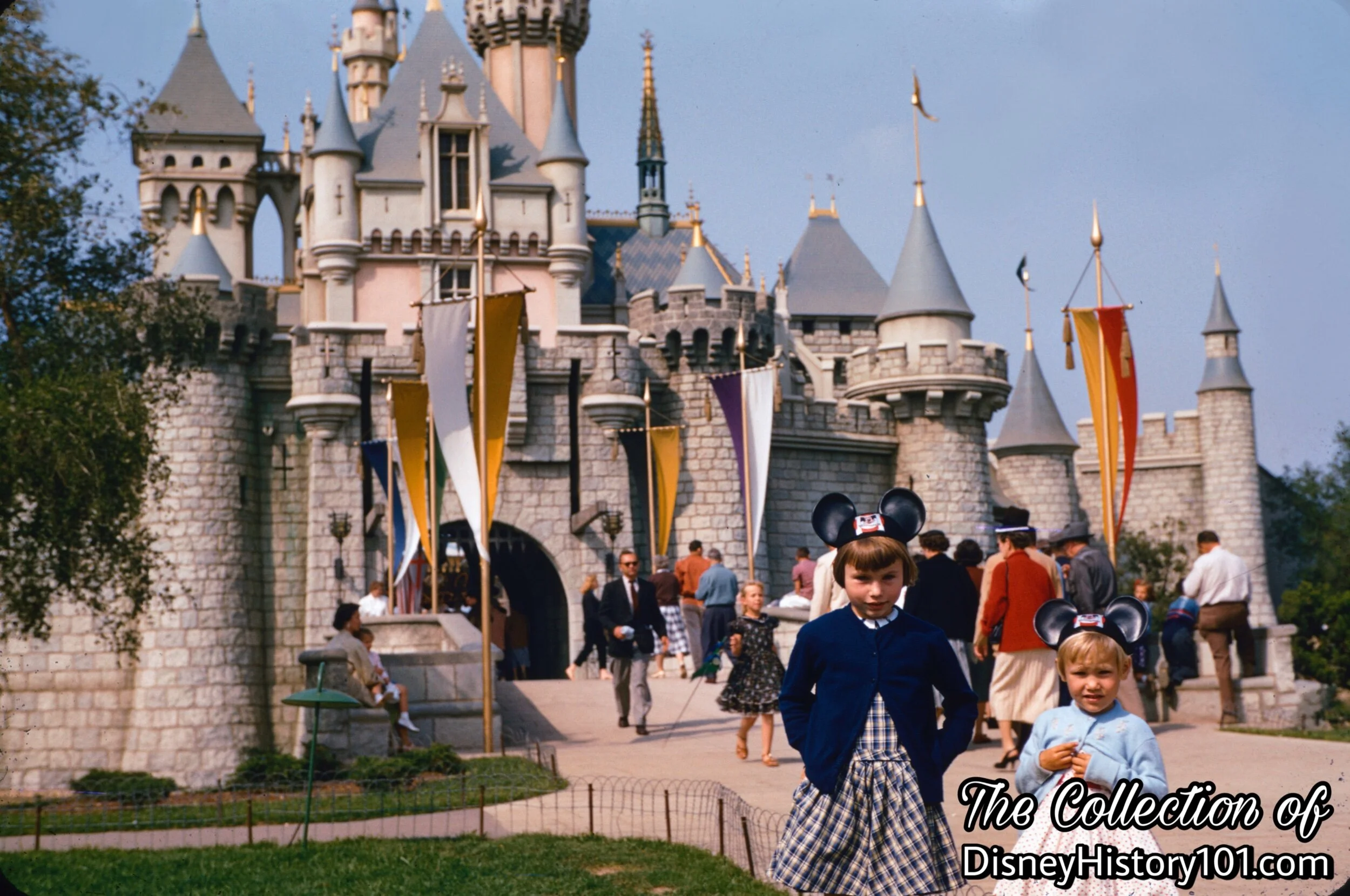
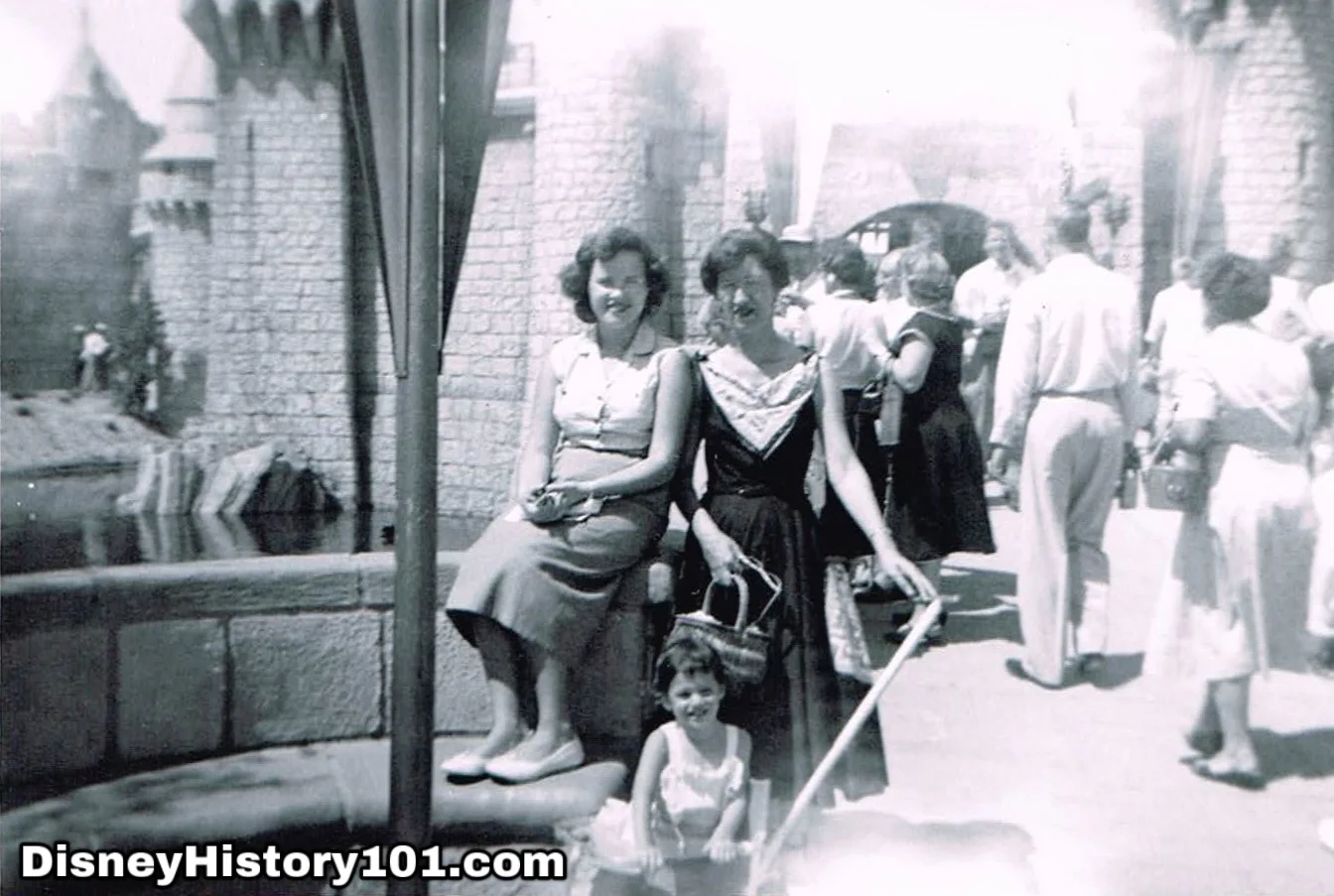
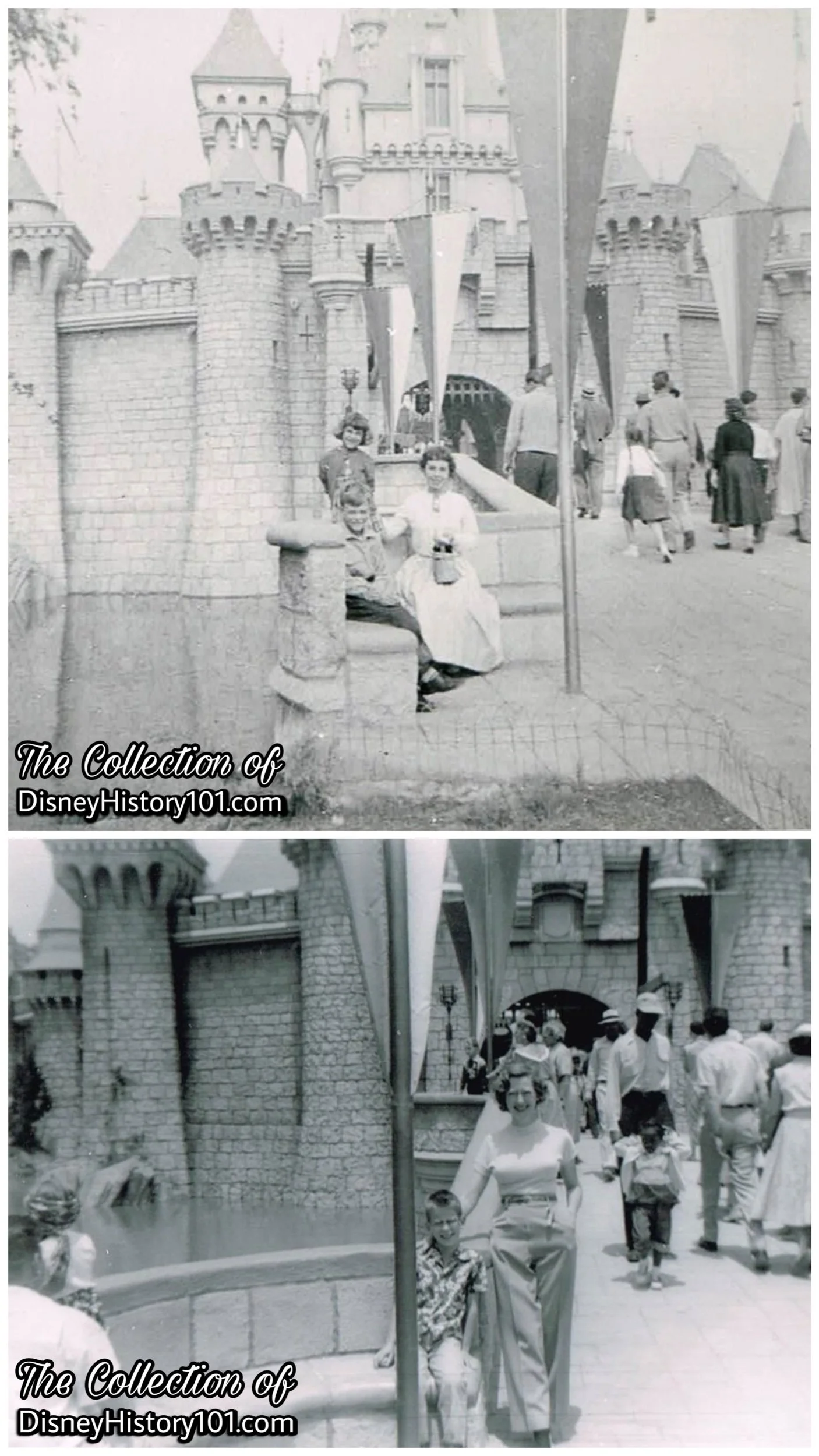
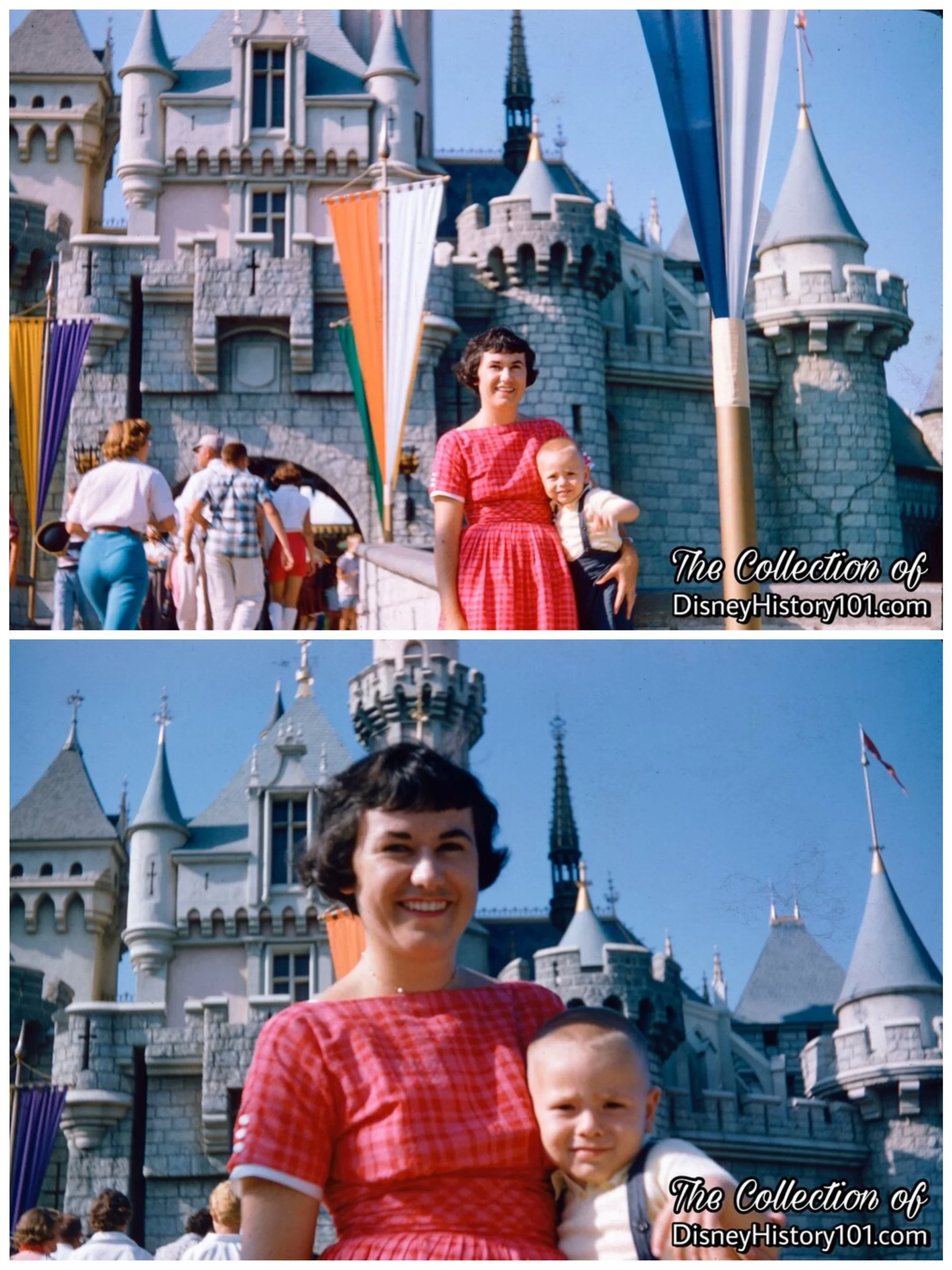
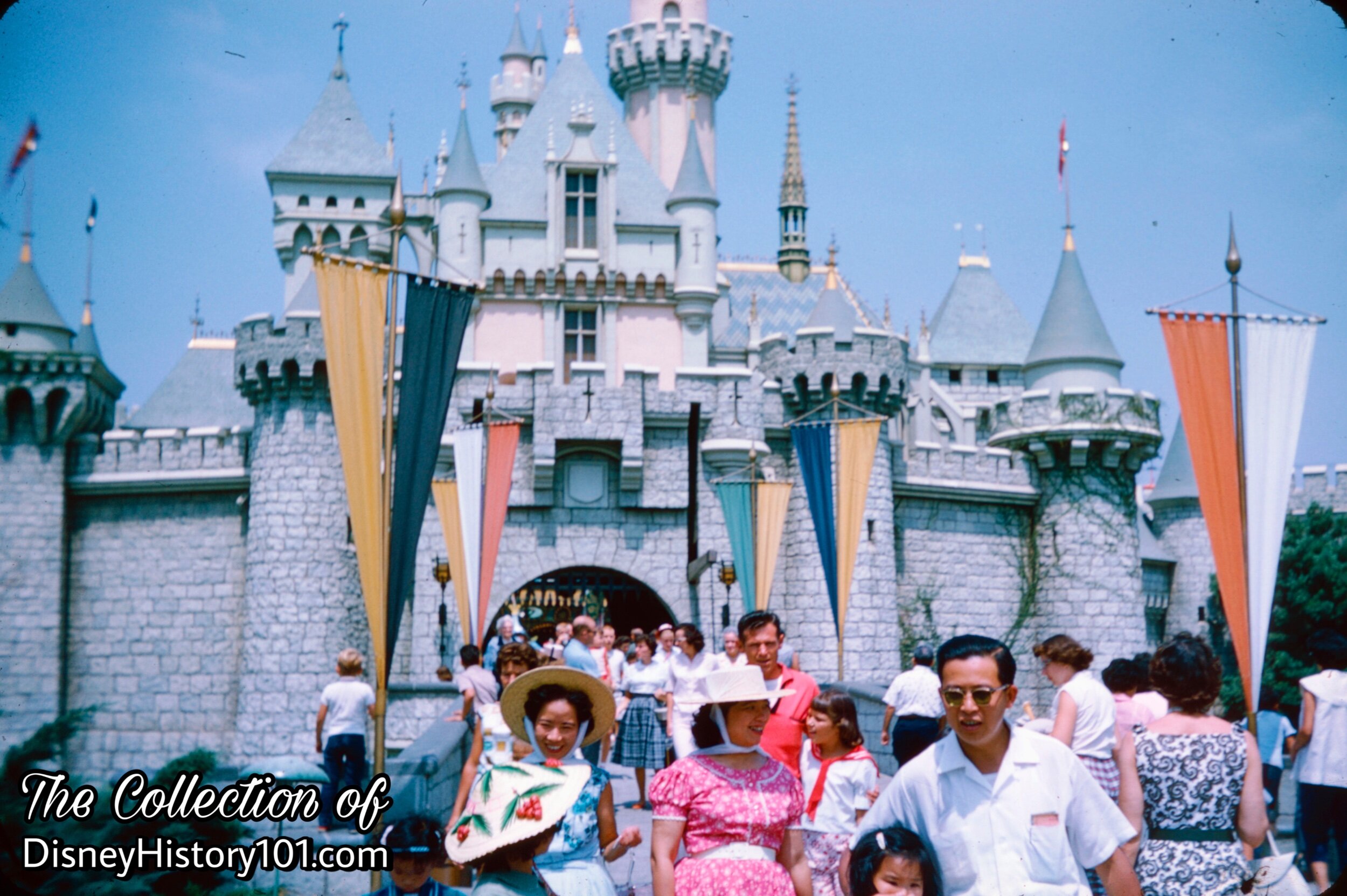
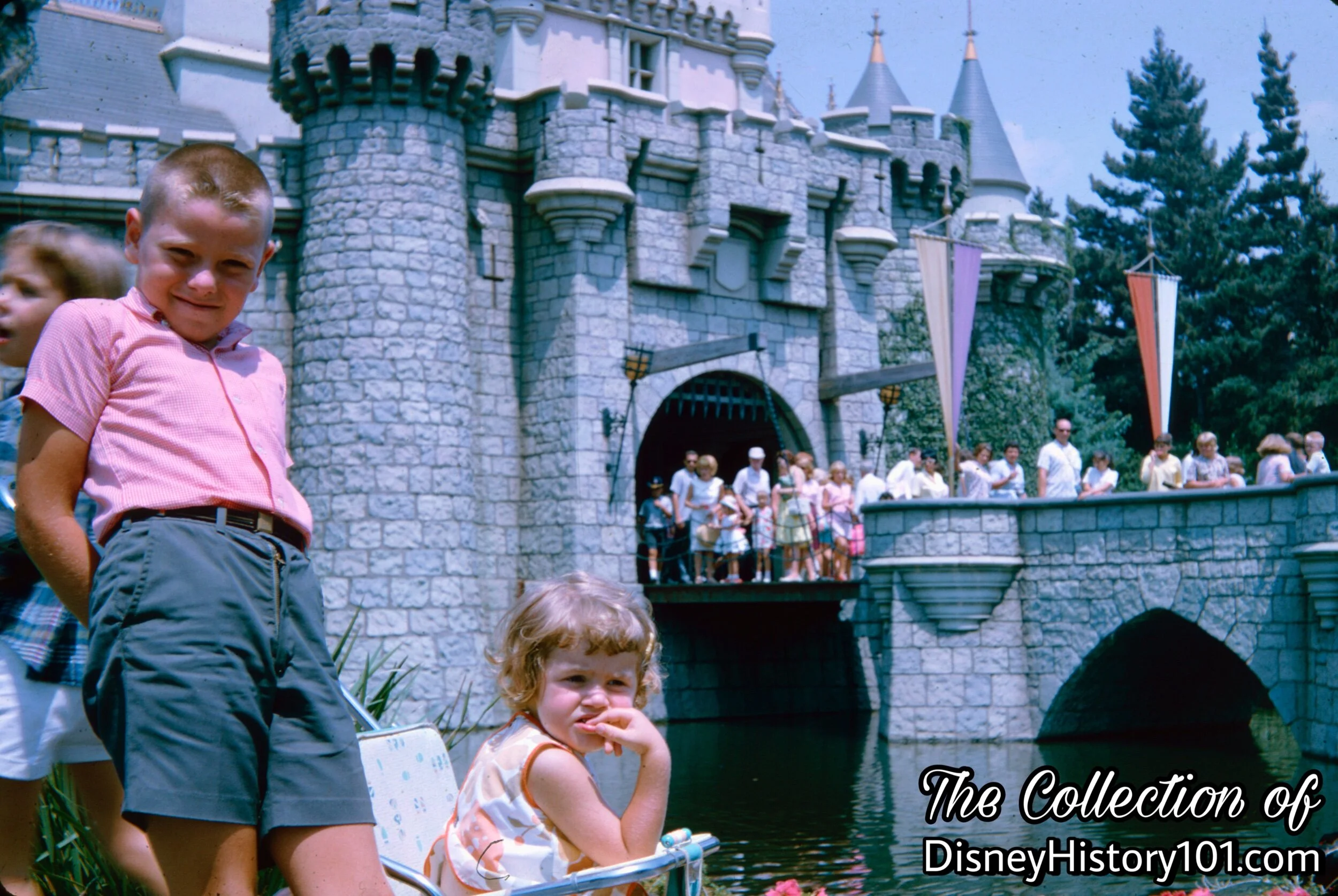
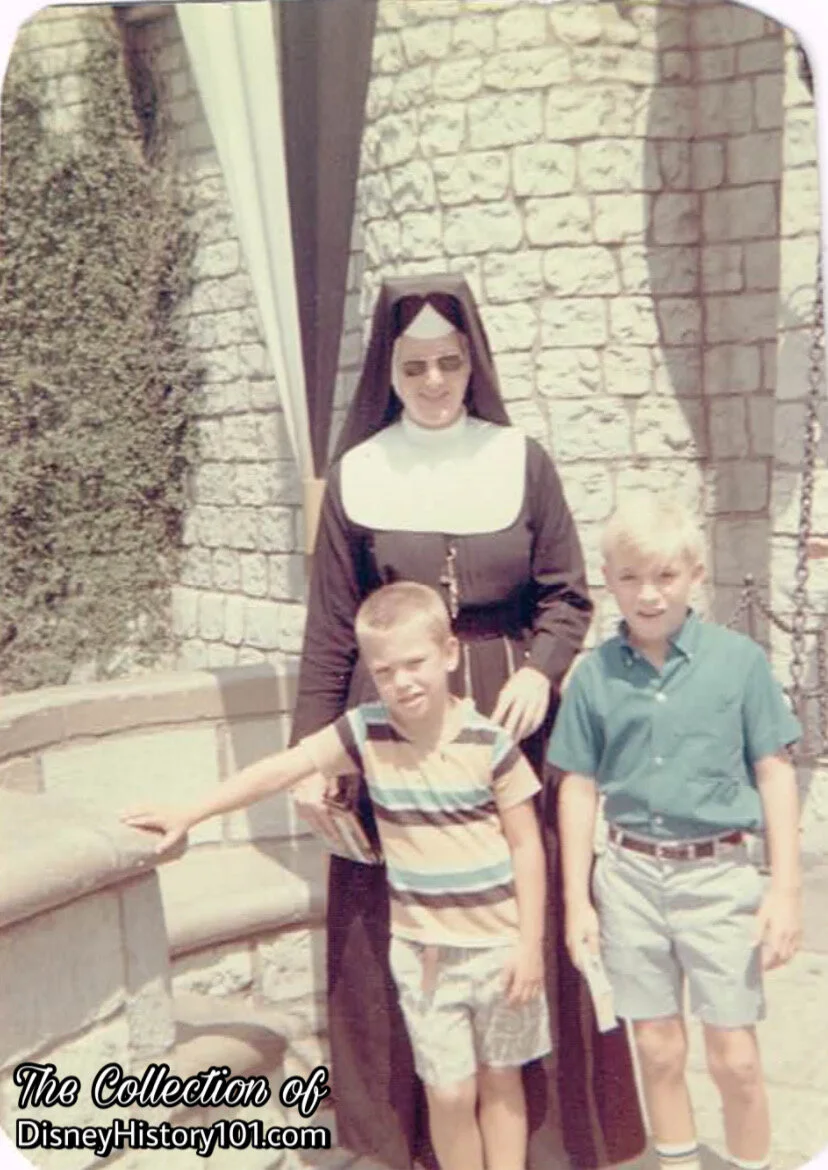
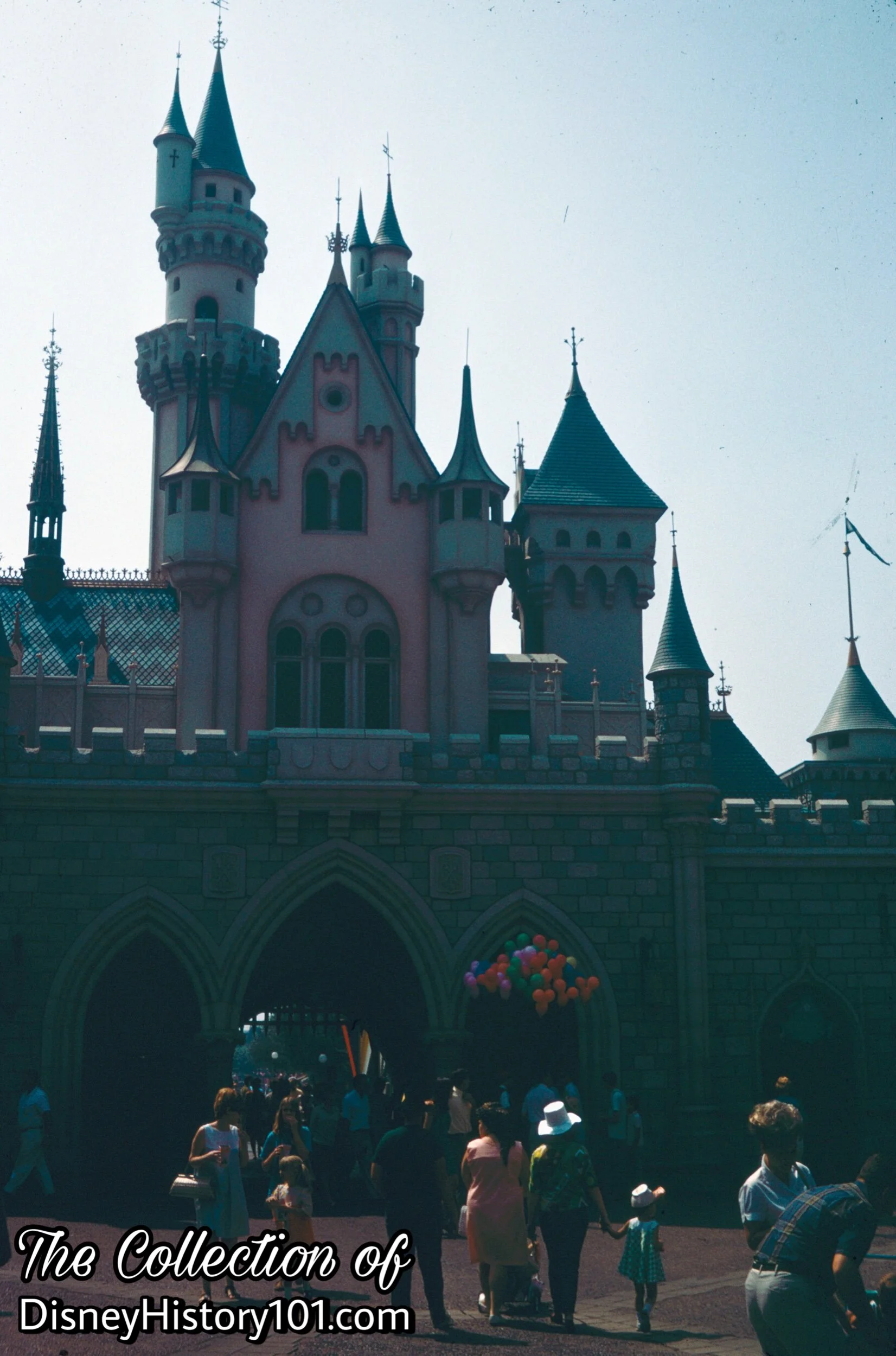
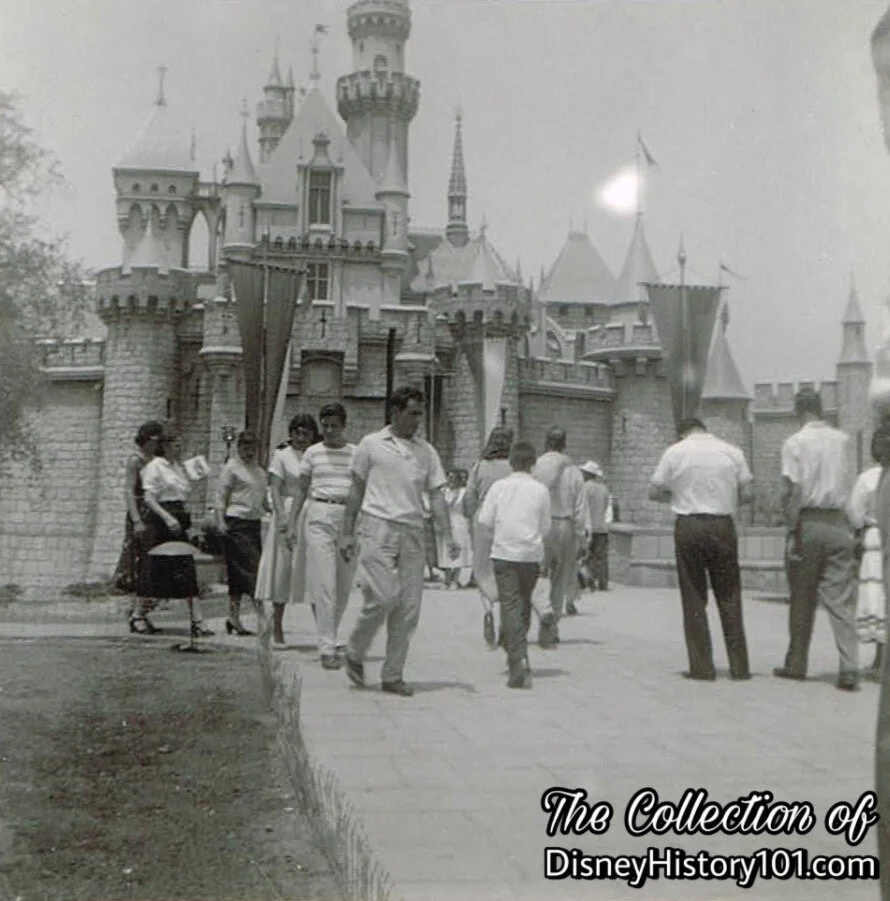
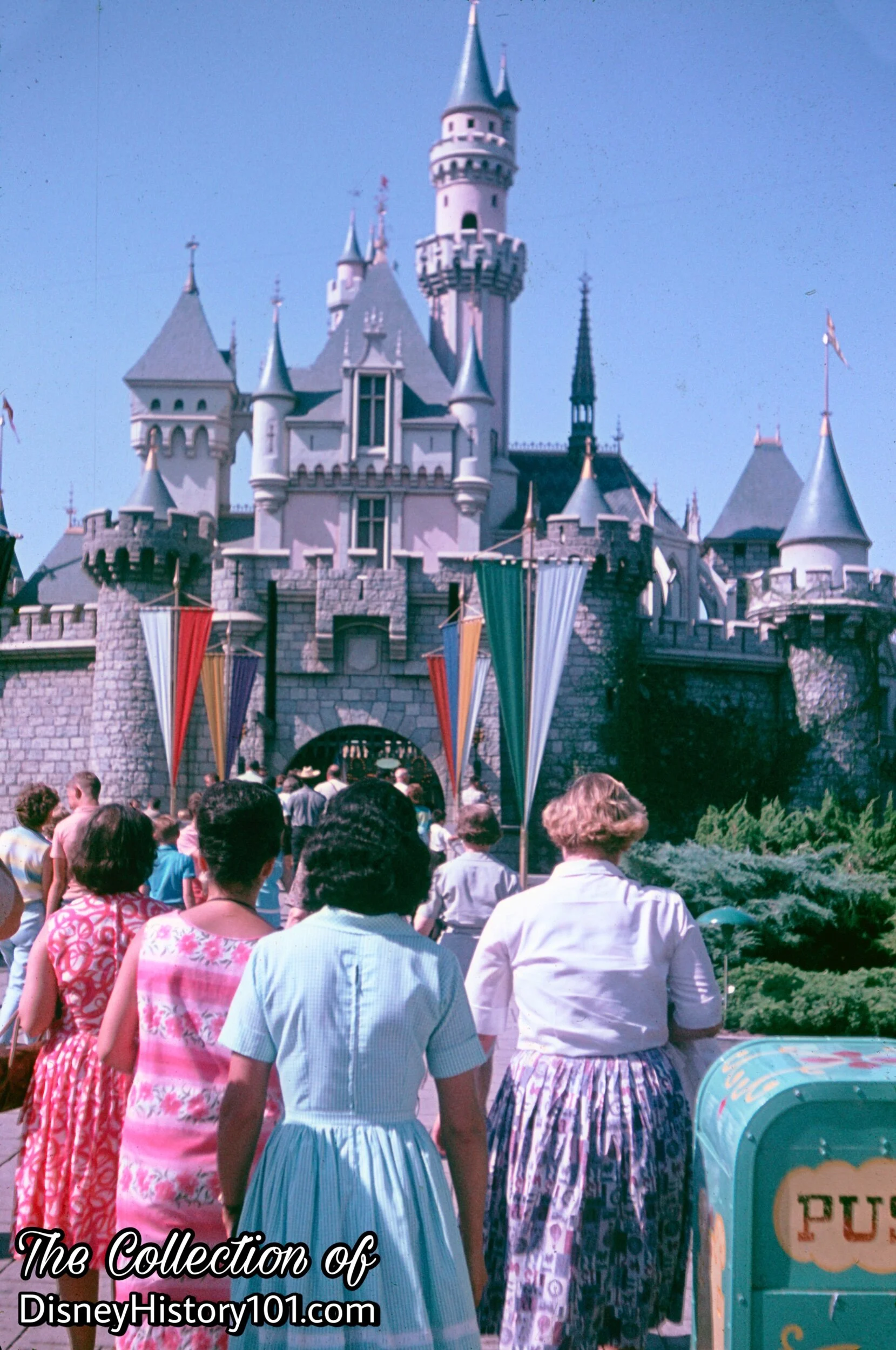
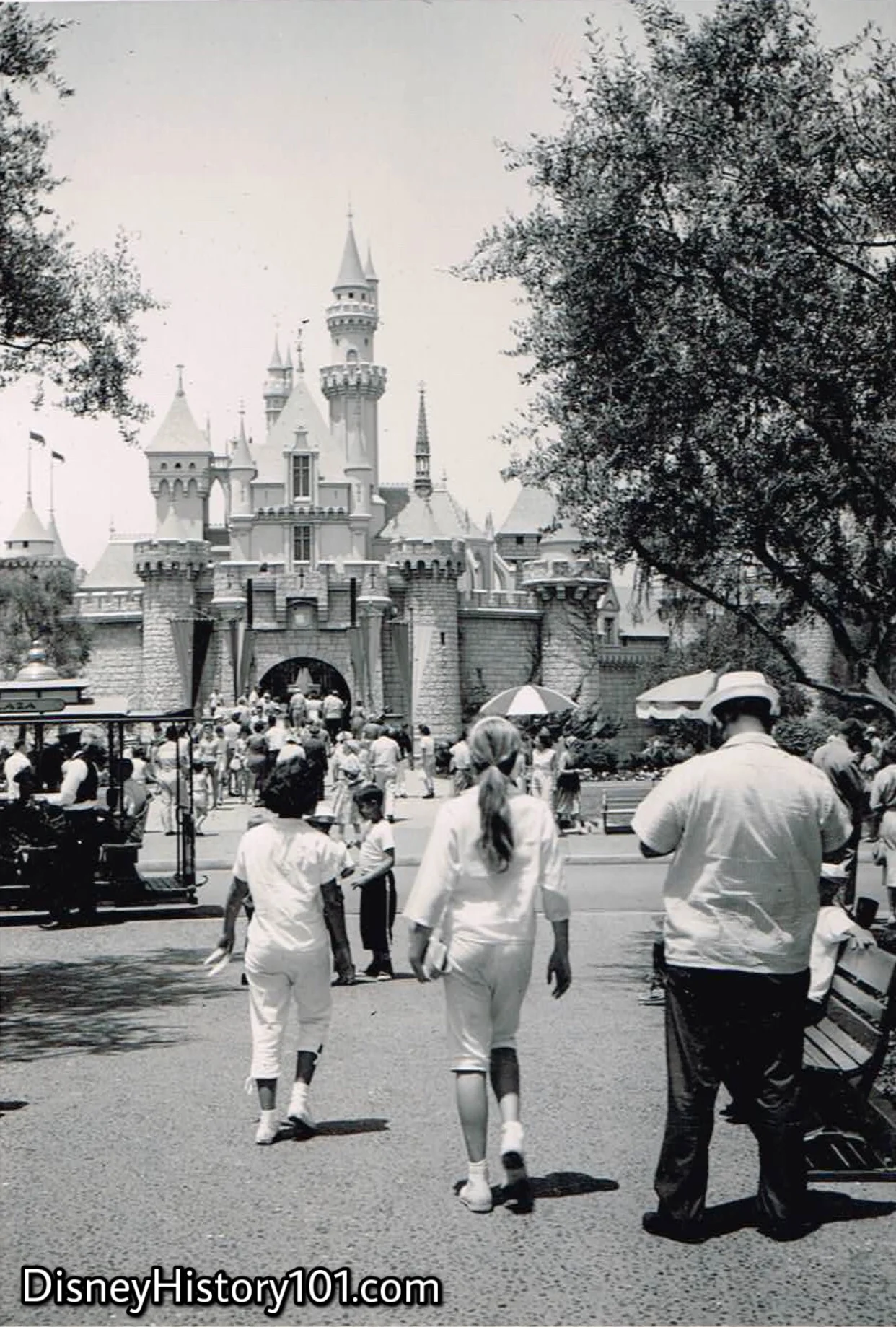
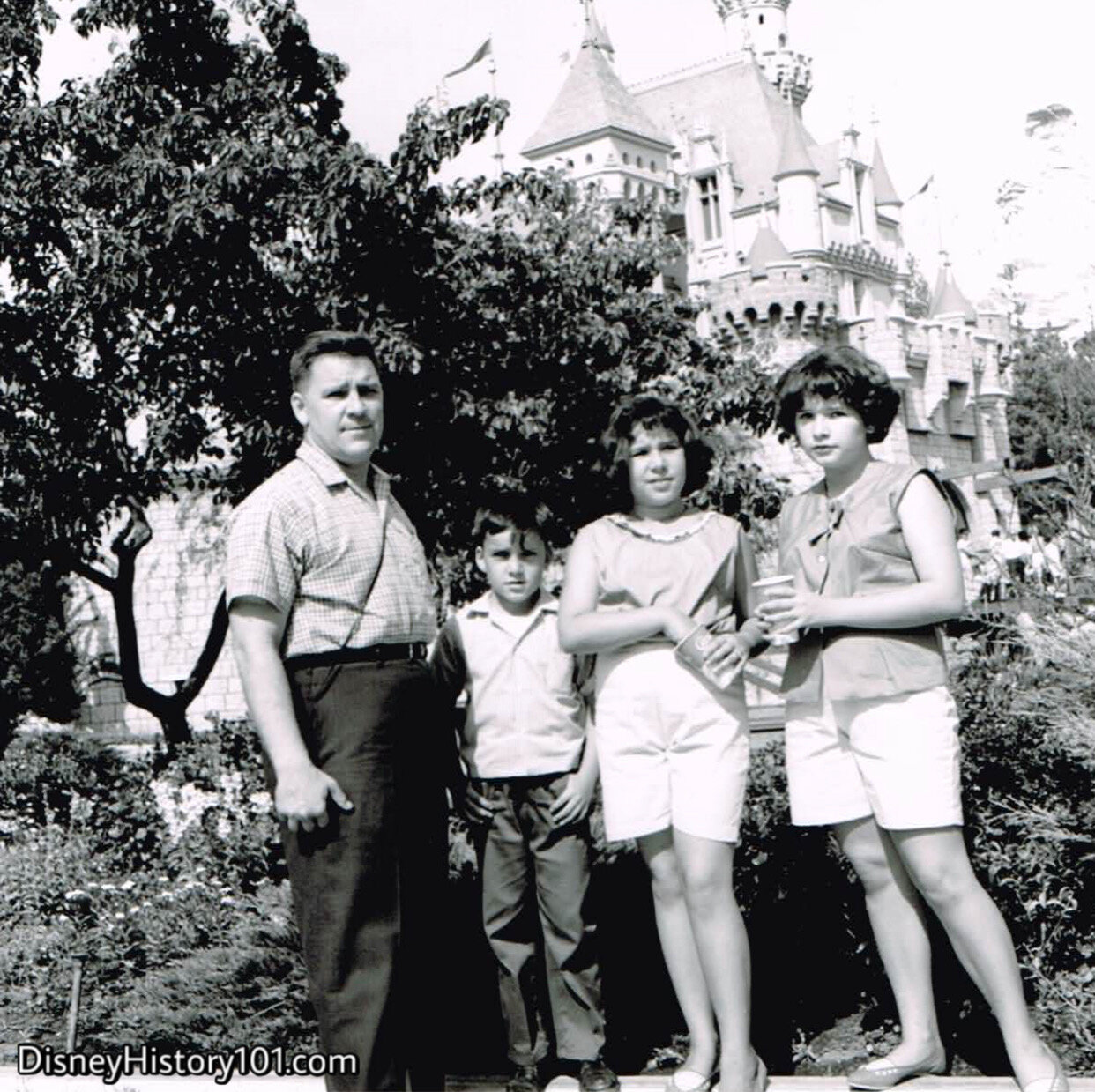
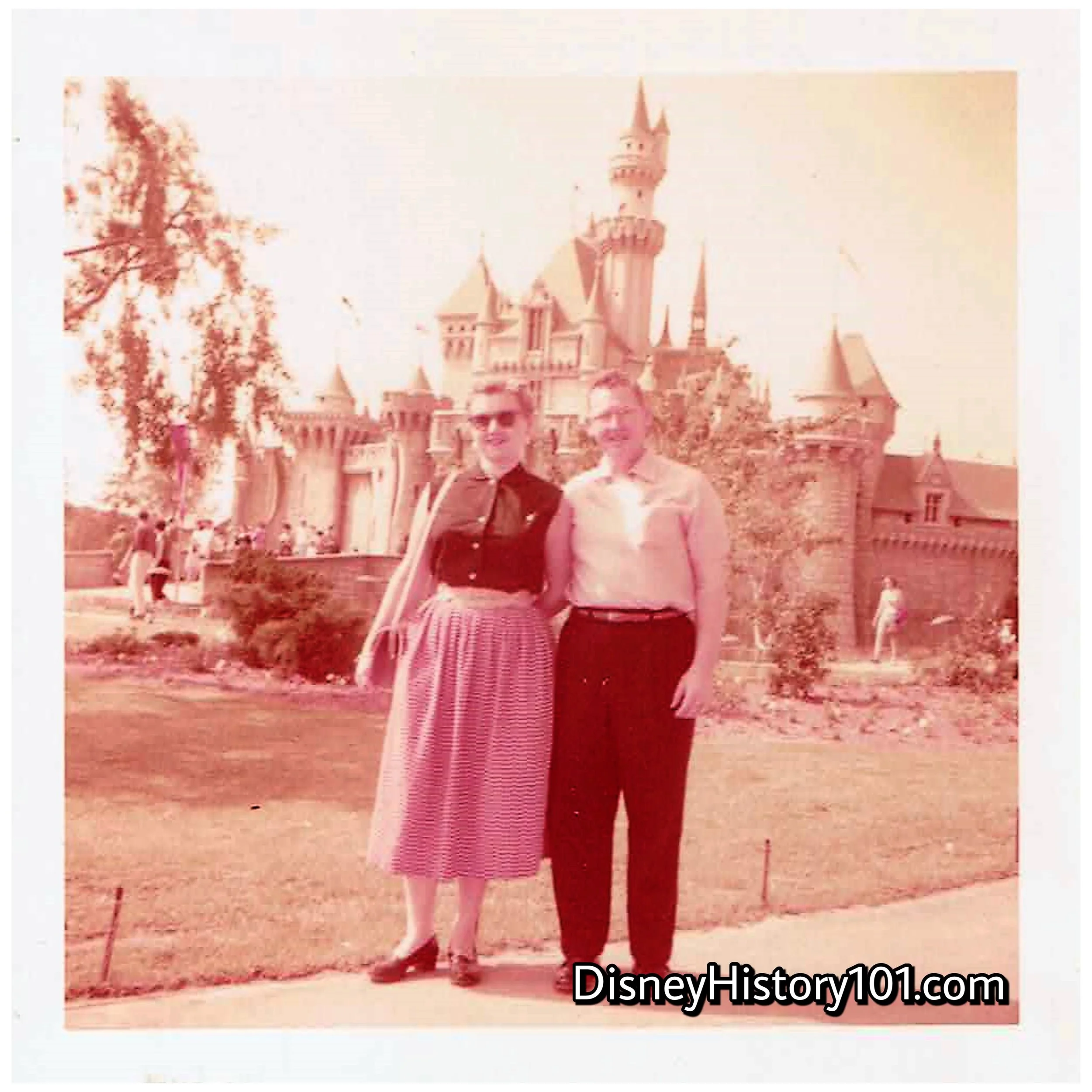
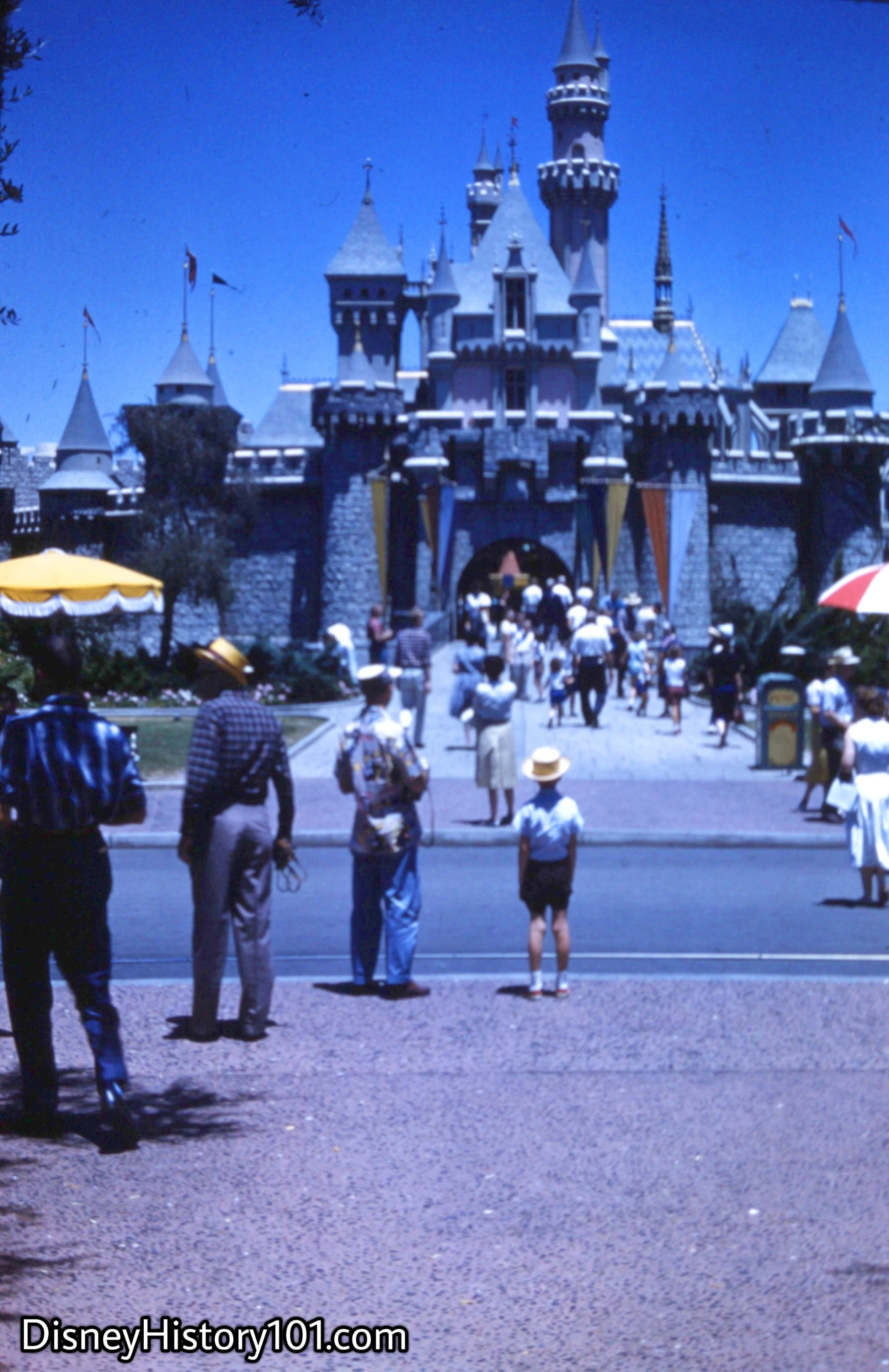
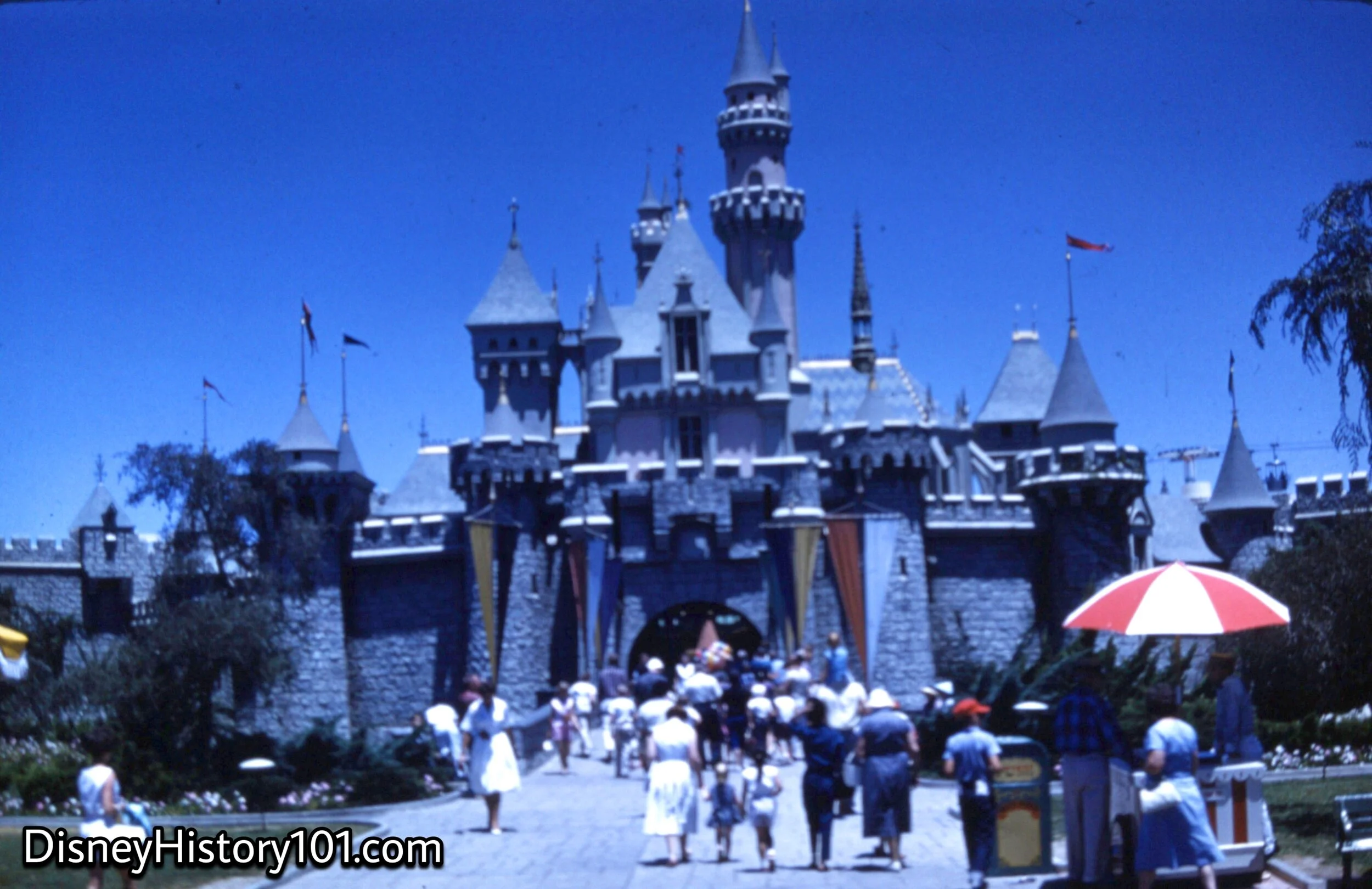
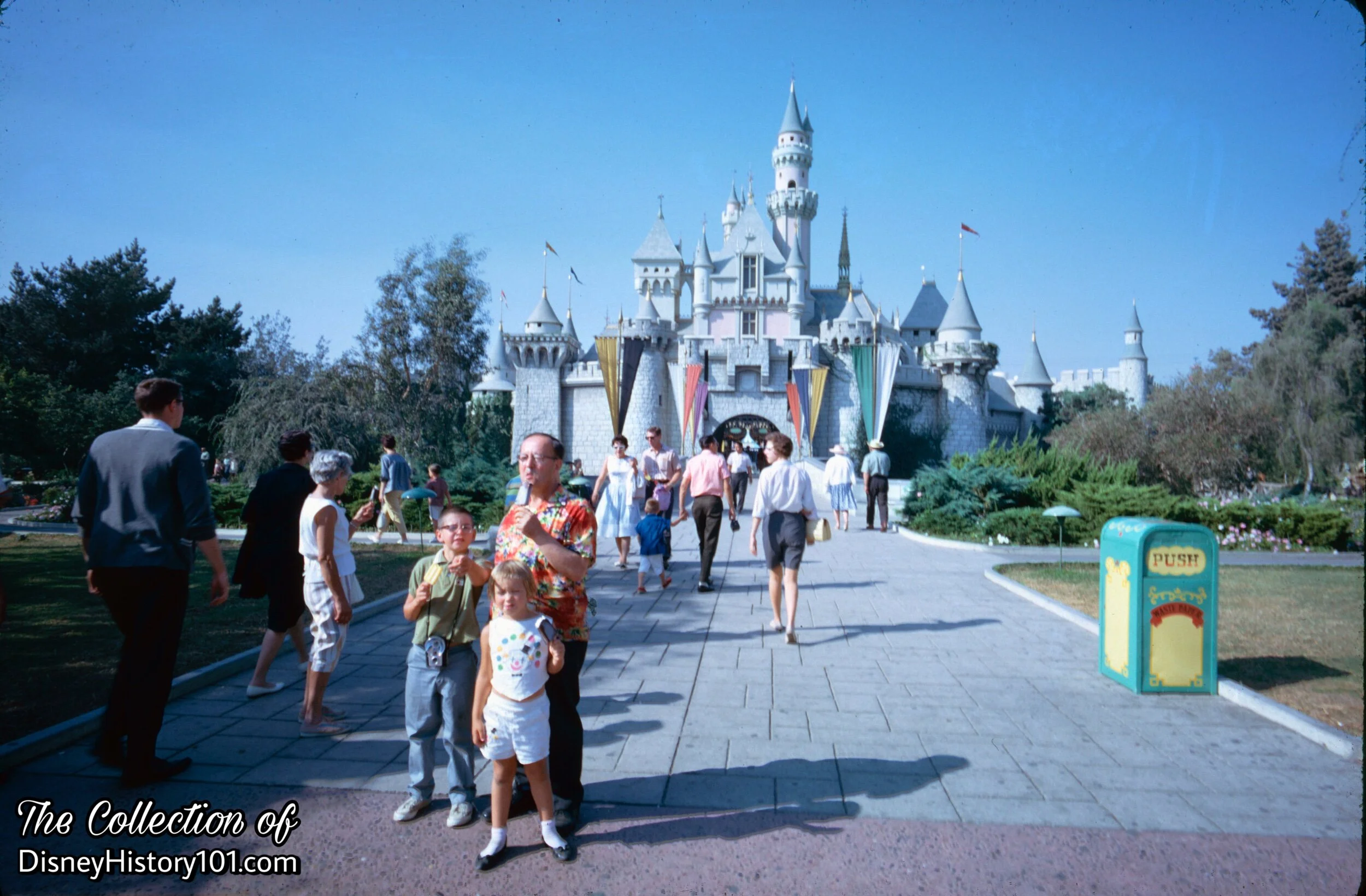
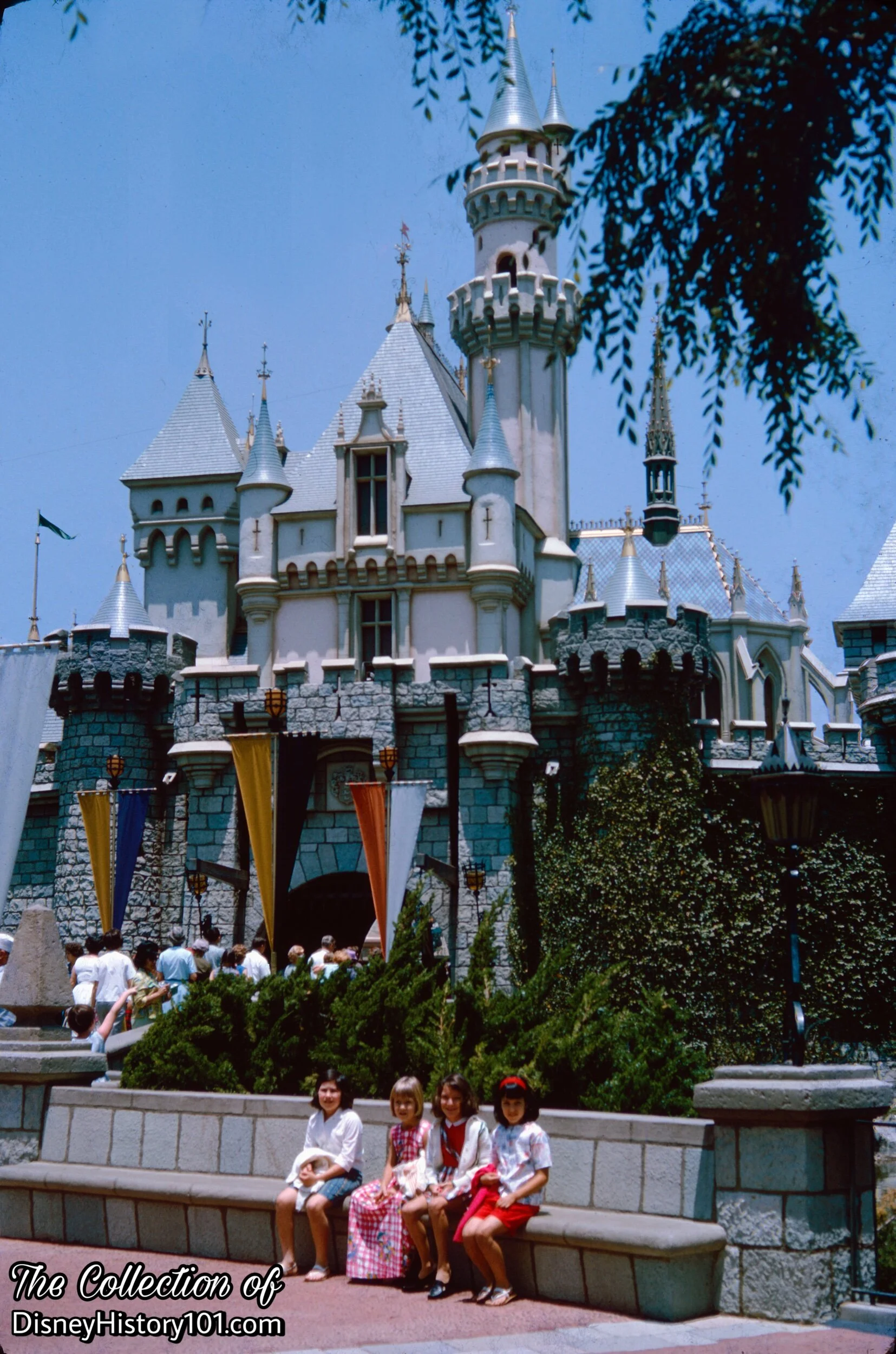
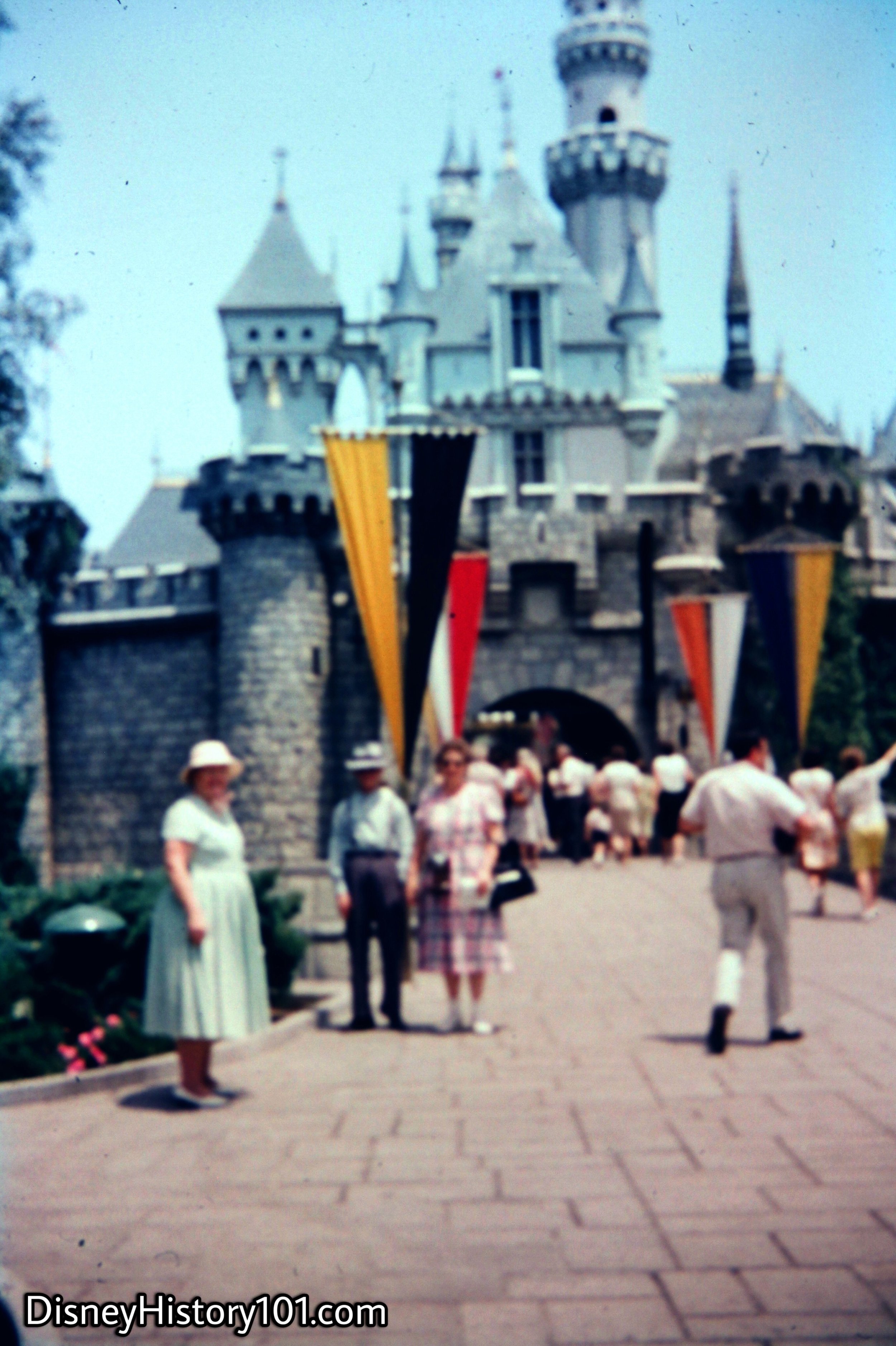
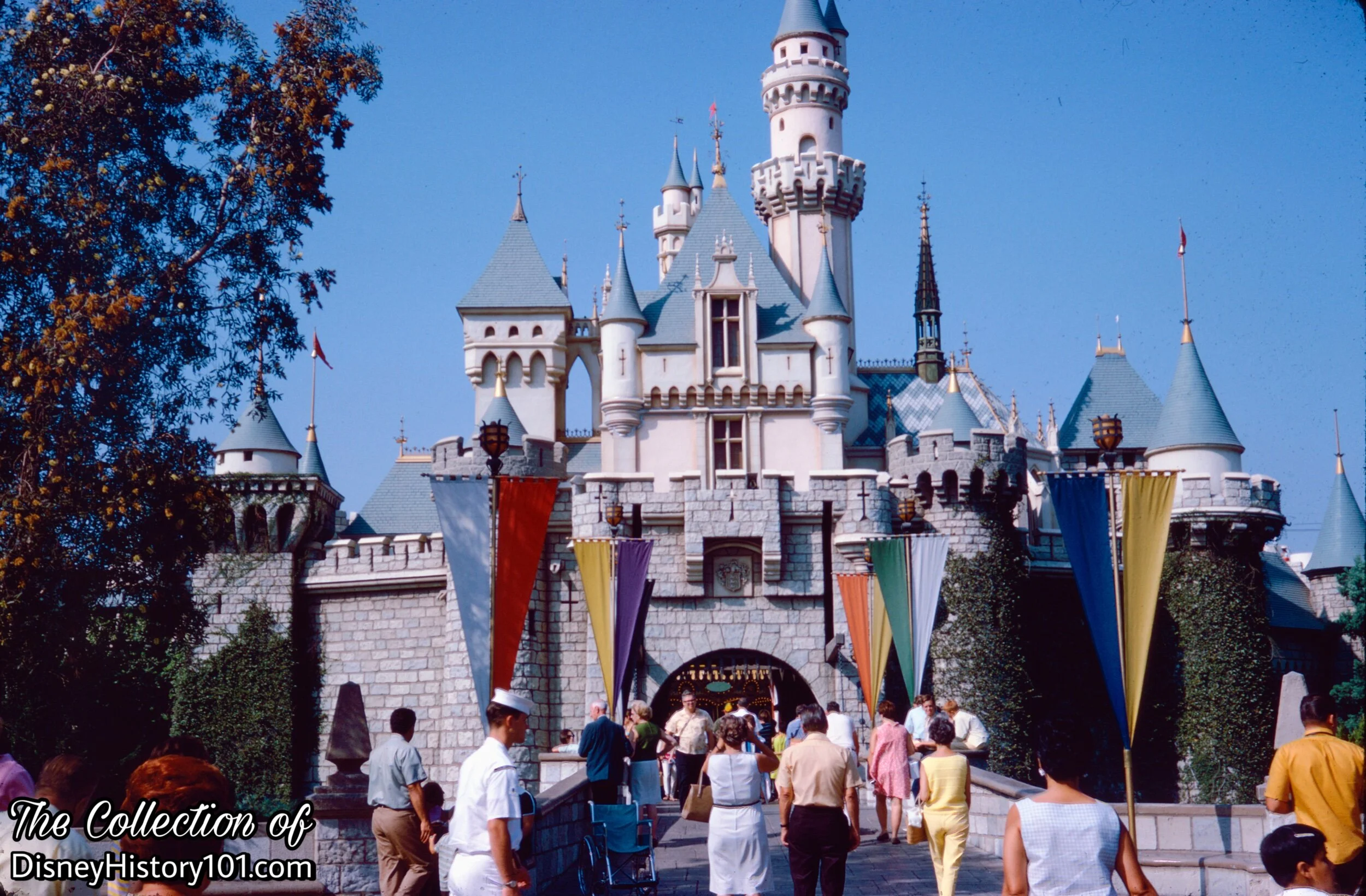
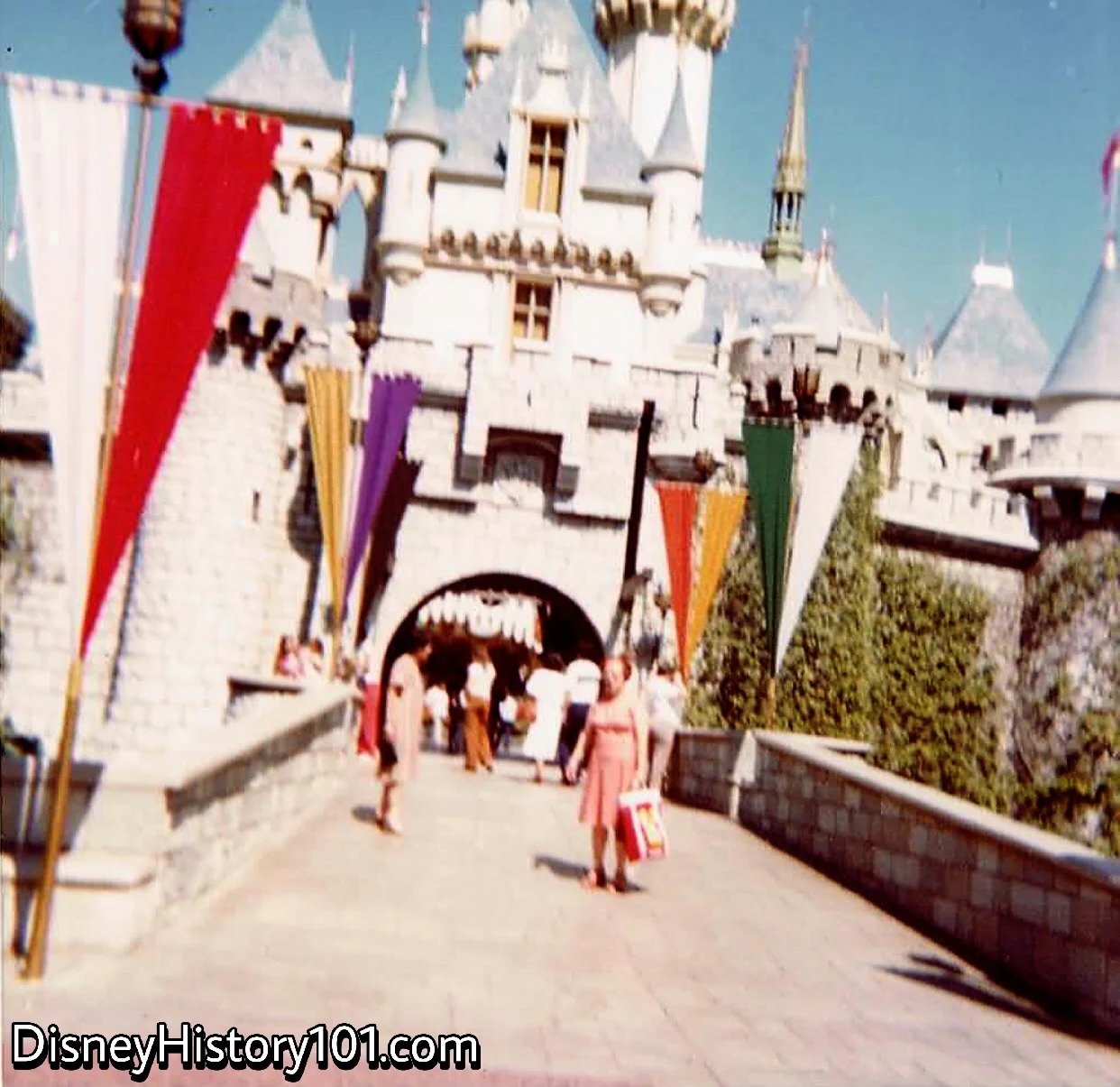
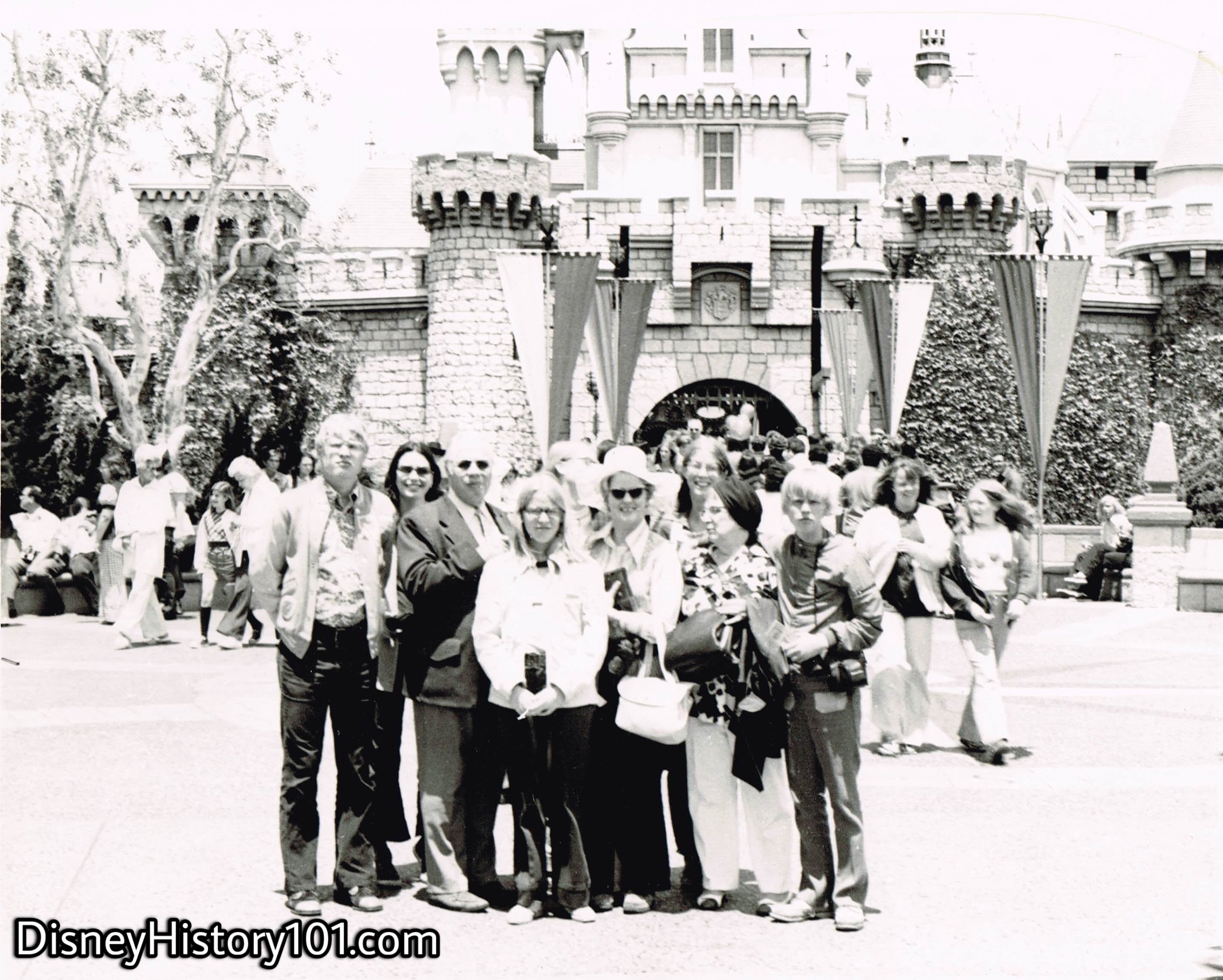
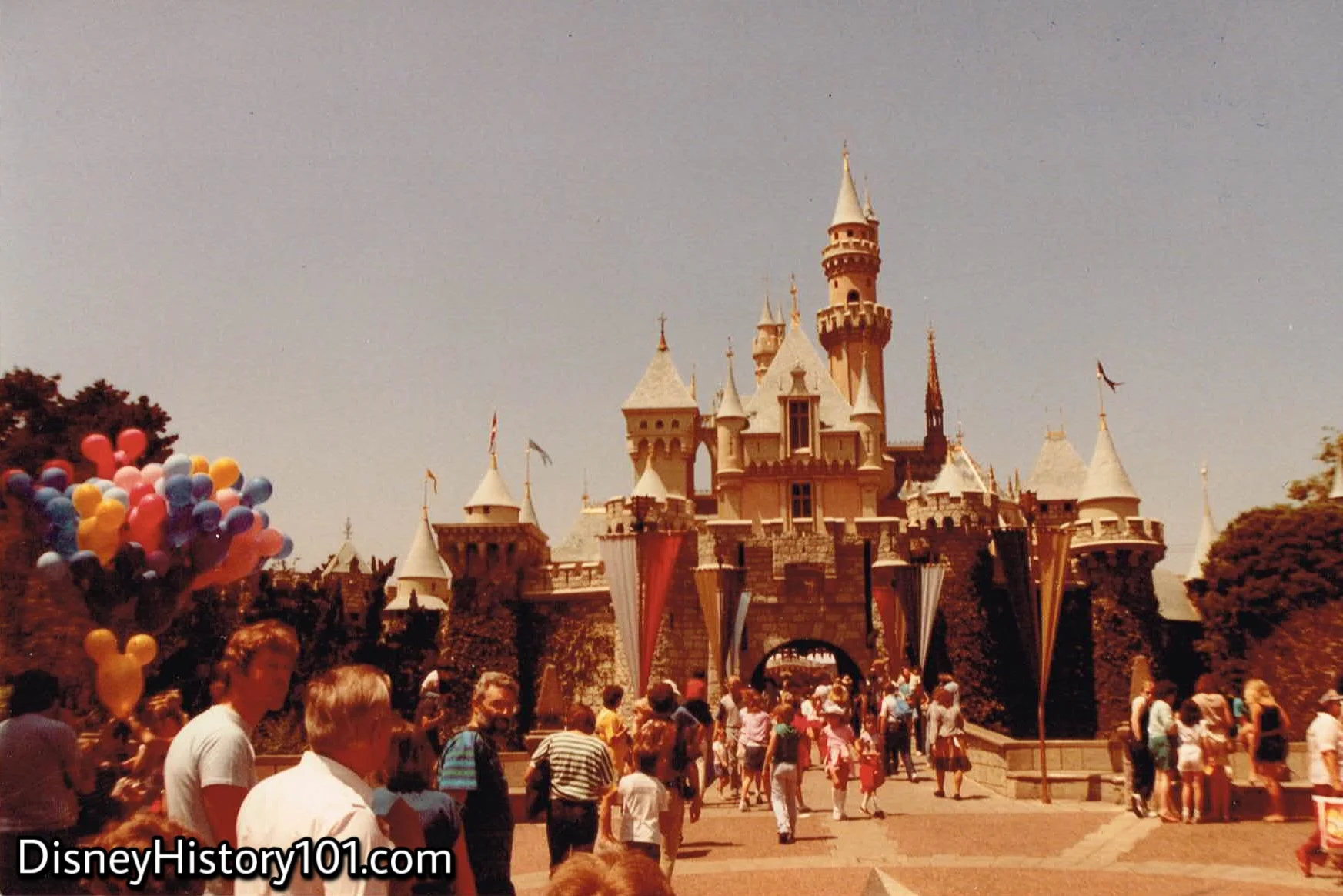
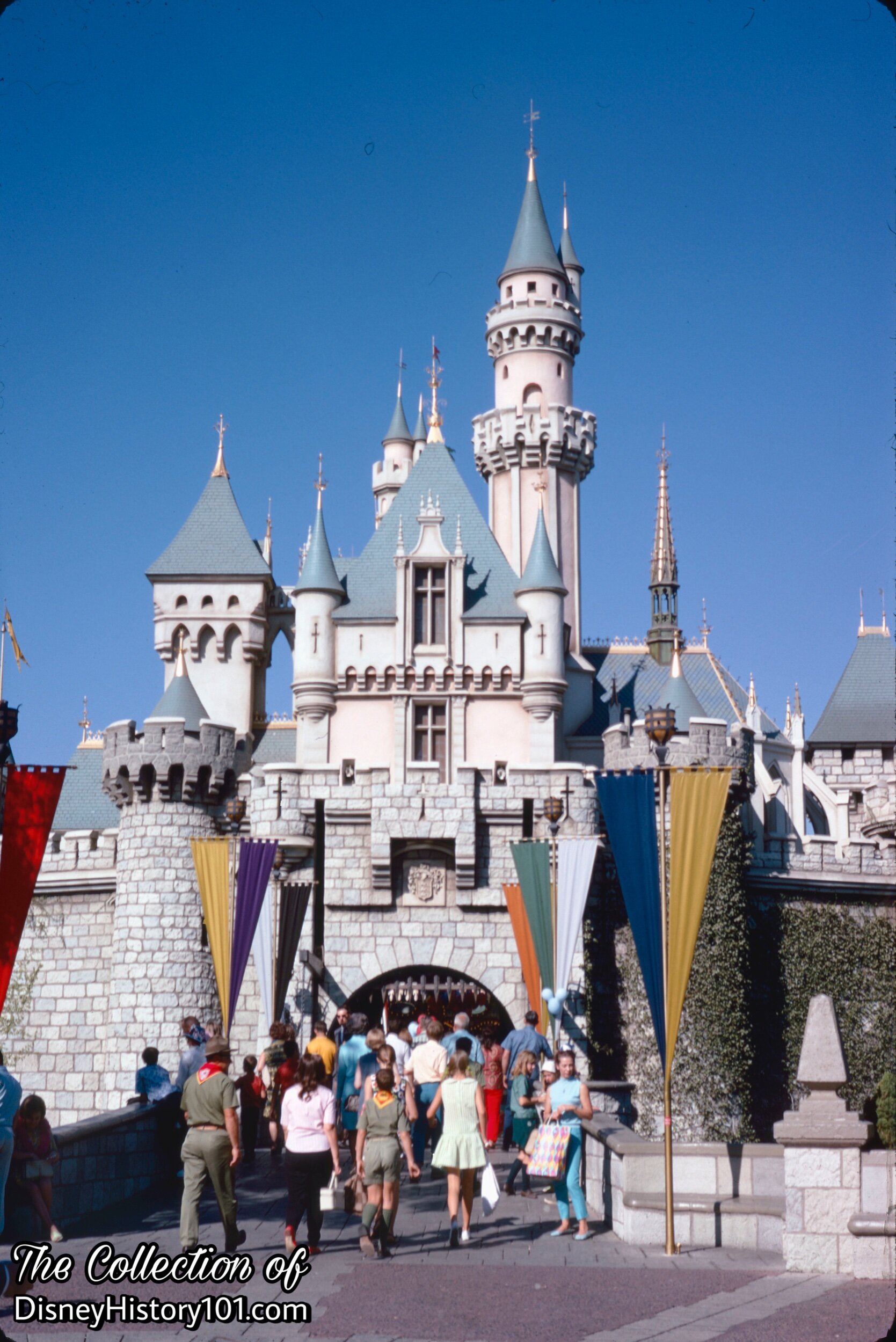
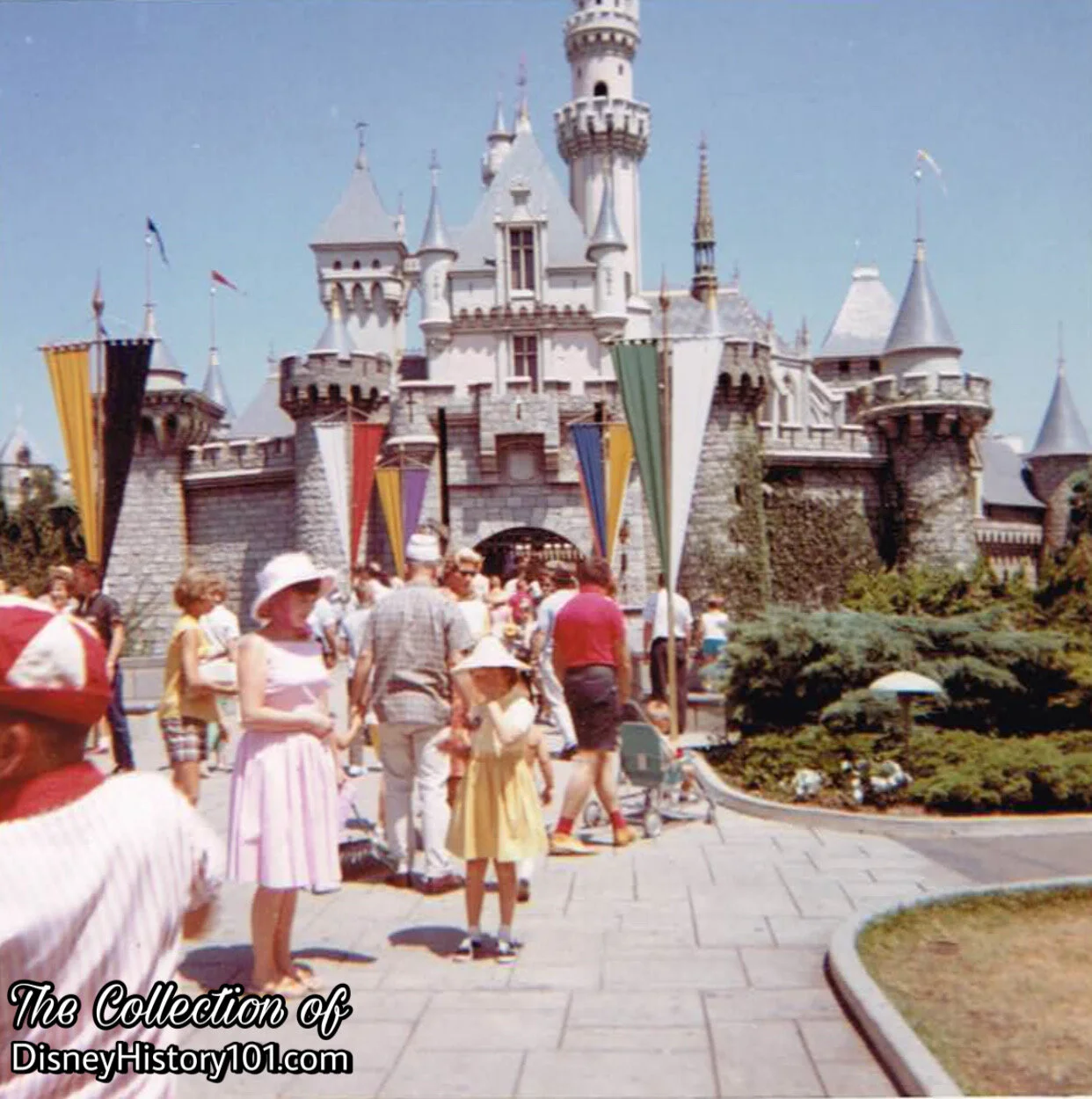
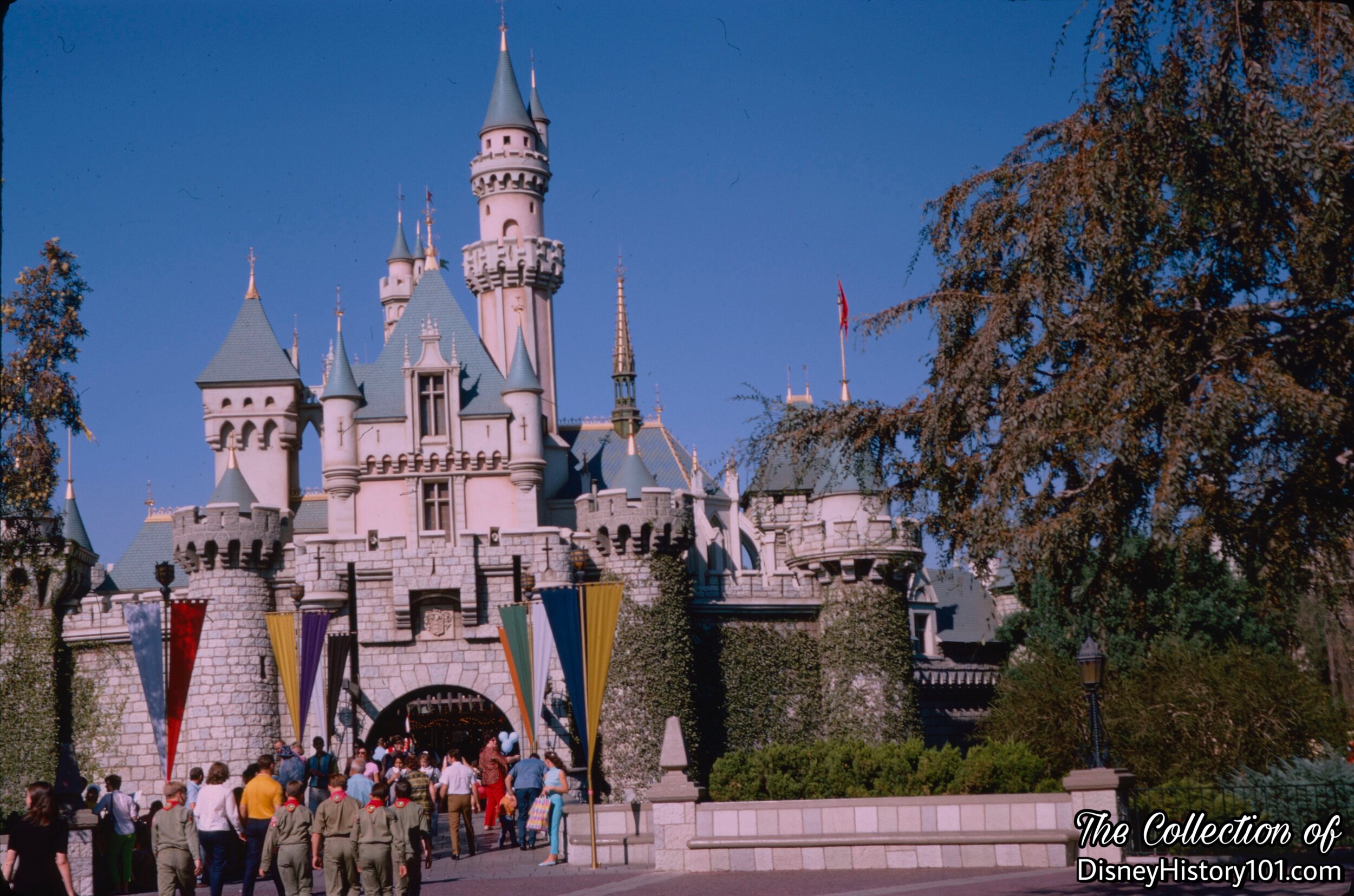
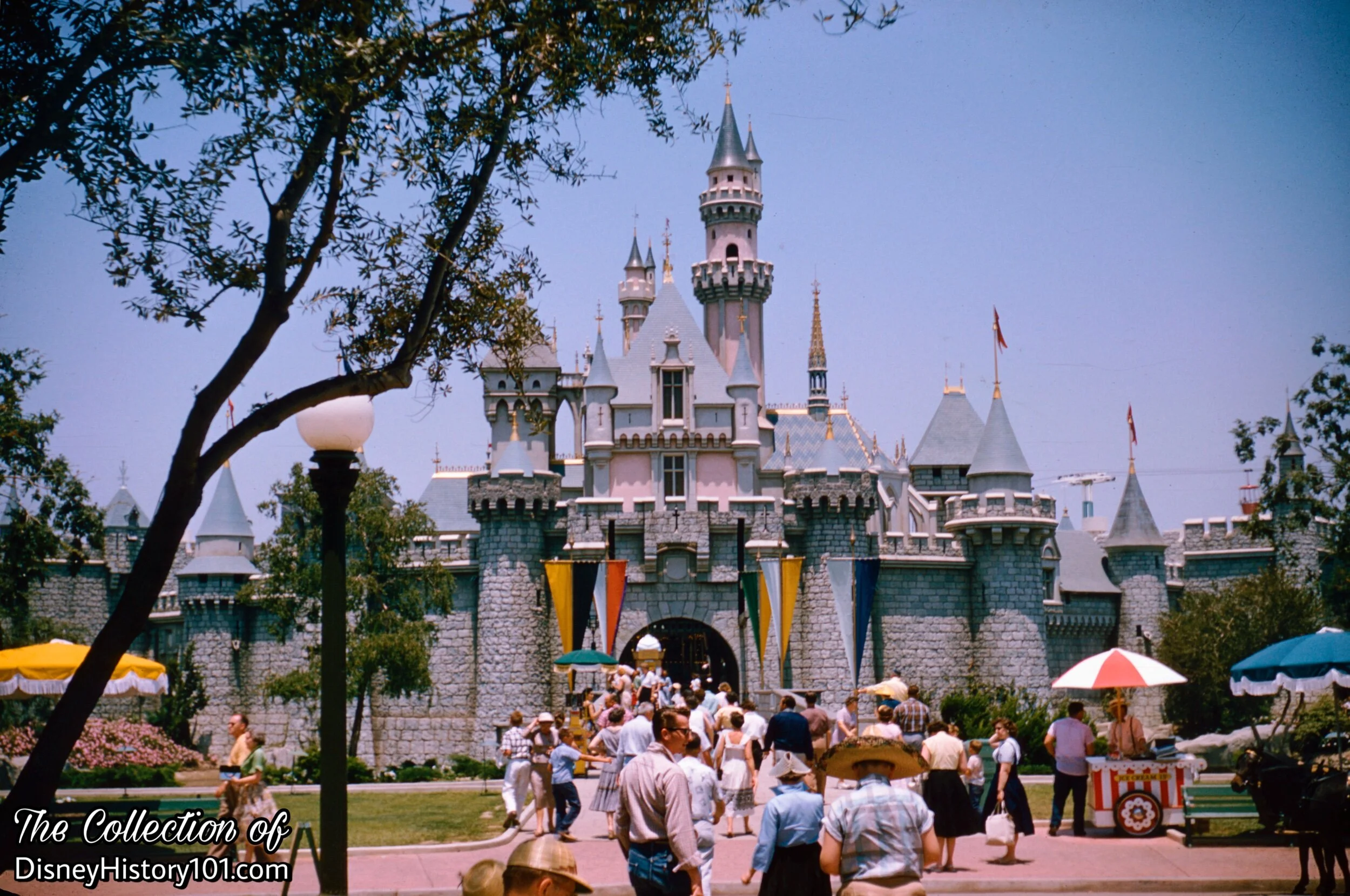
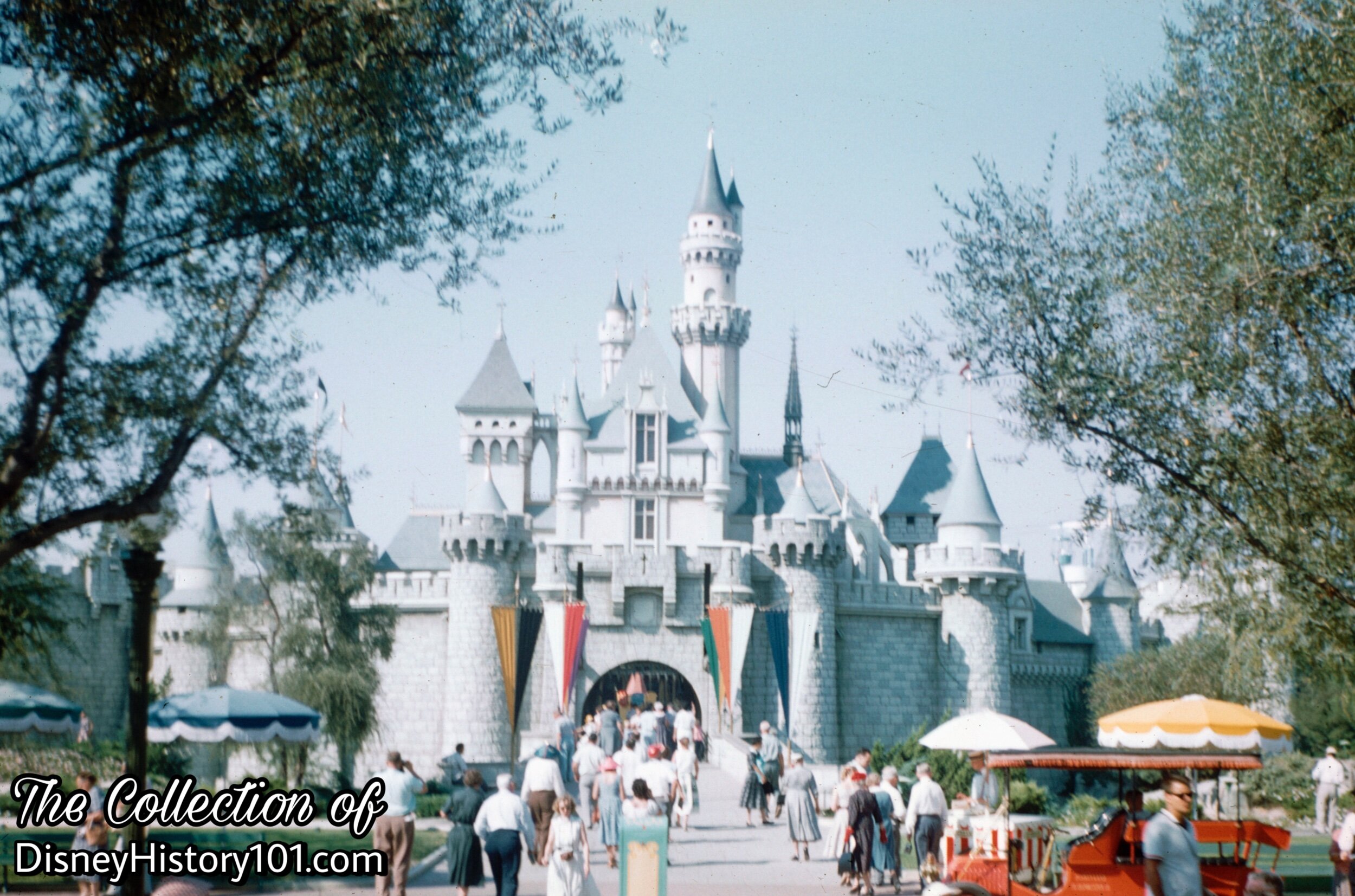
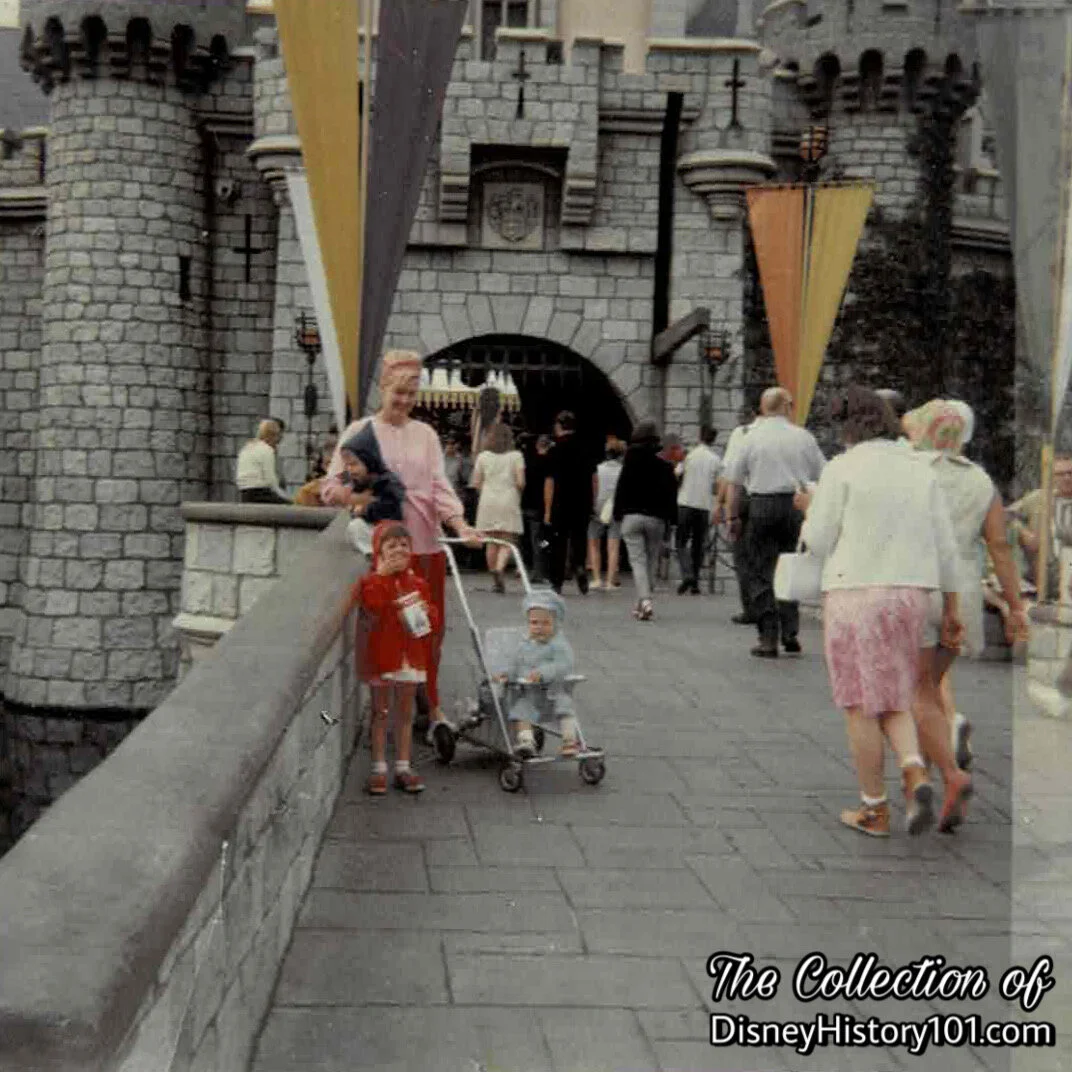
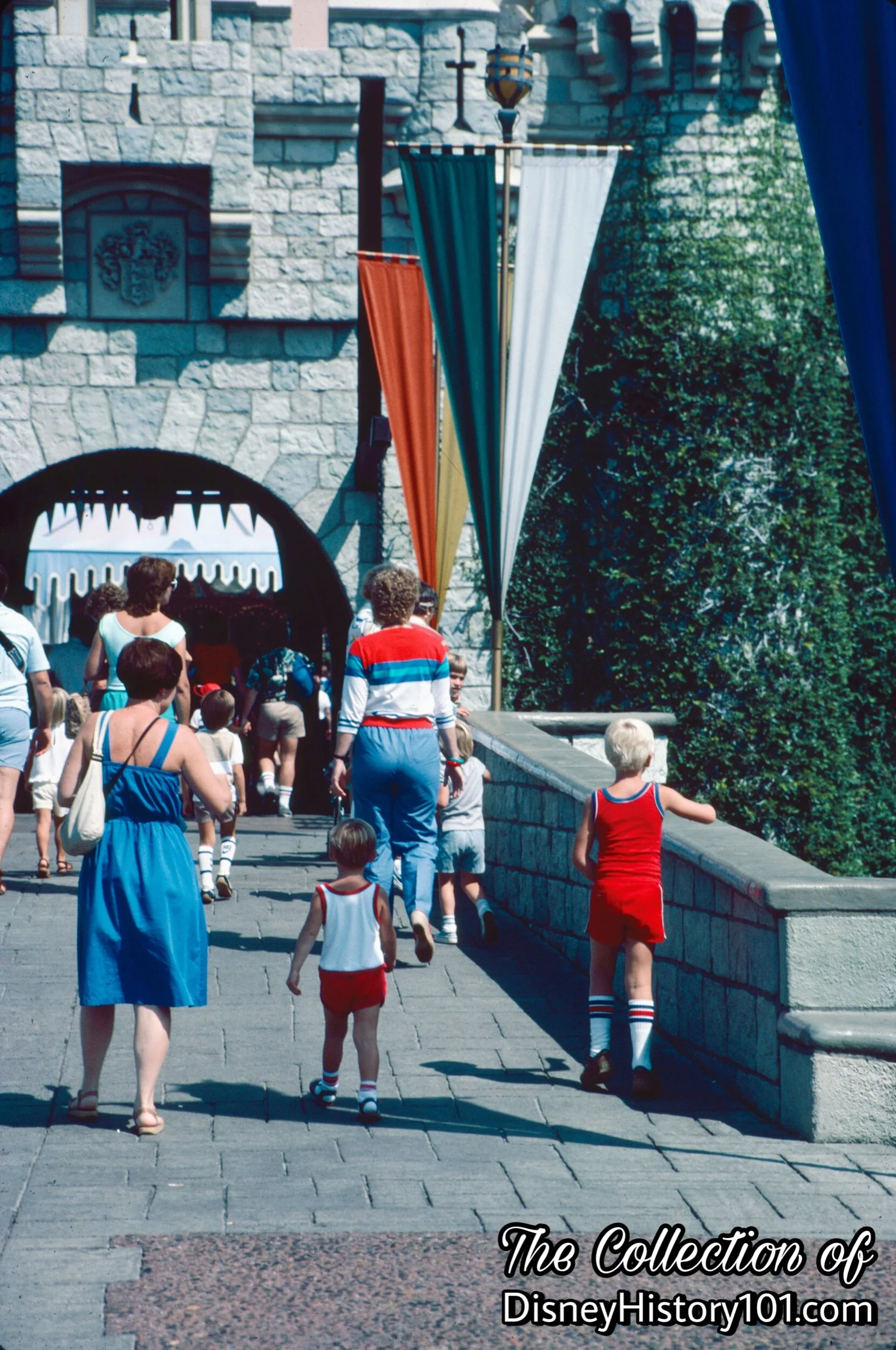
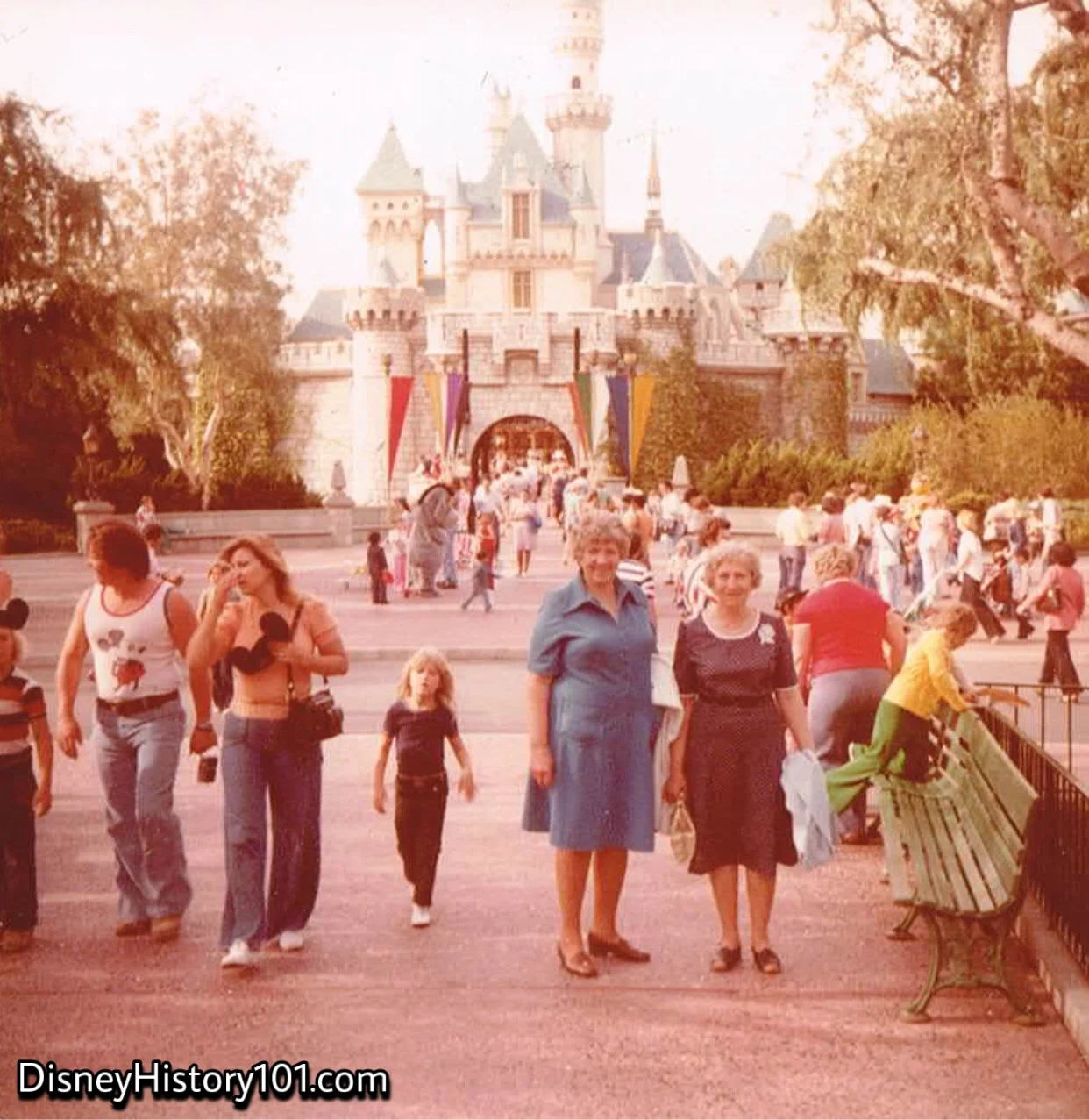
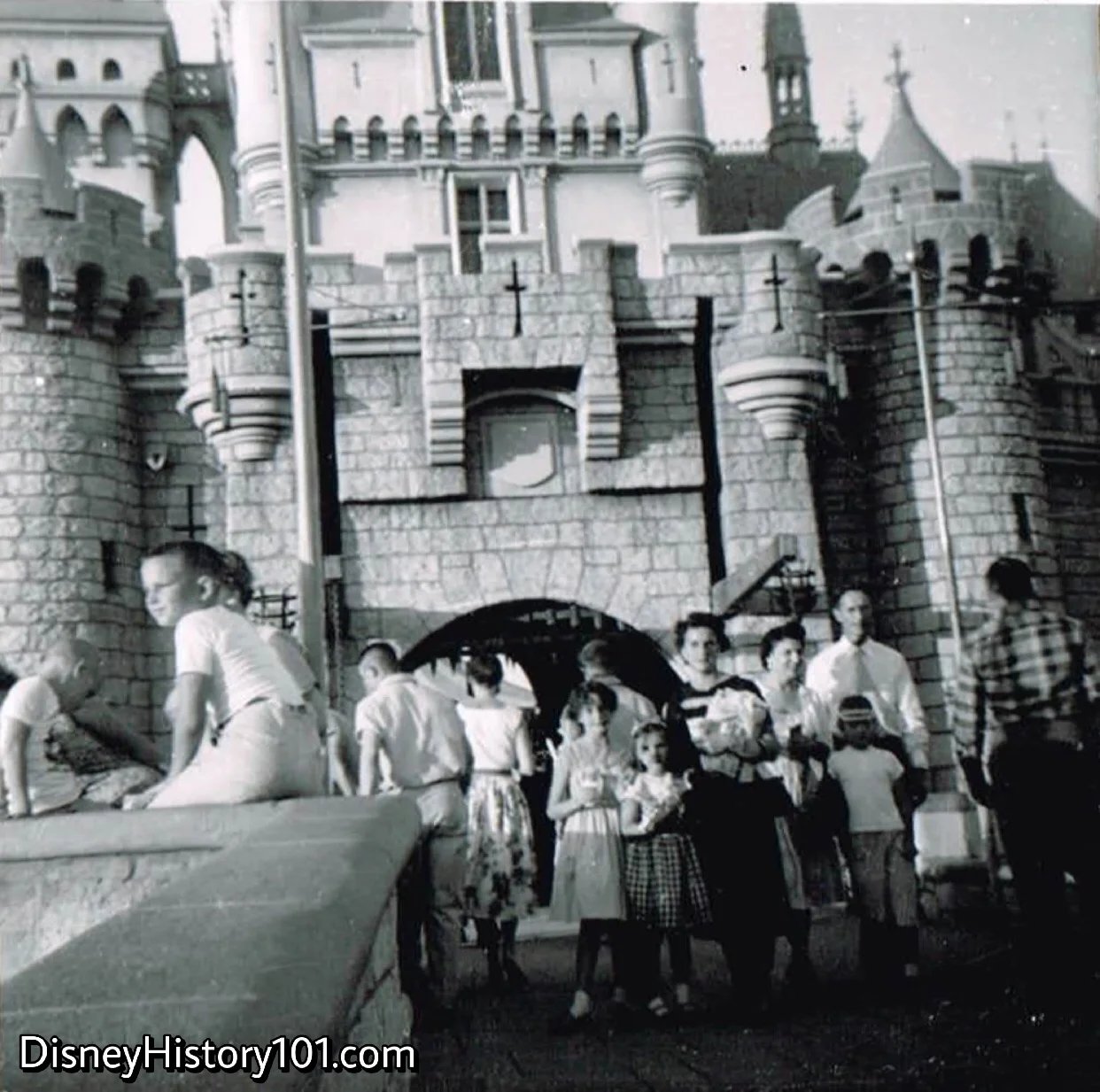
Walt dedicated Fantasyland to “the young and young at heart.” As to what you may call a key demographic of those audiences who pass through the turnstiles and toward the realm of fantasy beyond Sleeping Beauty Castle, Walt once divulged: “Disneyland is not just for children.” This may be evident by the number of adults depicted in the Vintage Views of Sleeping Beauty Castle.
Sleeping Beauty Castle
Fred and Mary (the grandparents of the children; pictured above) flew all the way out to visit Disneyland during 1955 because their son worked for Mattel and the company had a contract with Disneyland.
Sleeping Beauty Castle
Sleeping Beauty Castle
Sleeping Beauty Castle
Sleeping Beauty Castle; August, 1956 (top), Summer, 1956 (bottom).
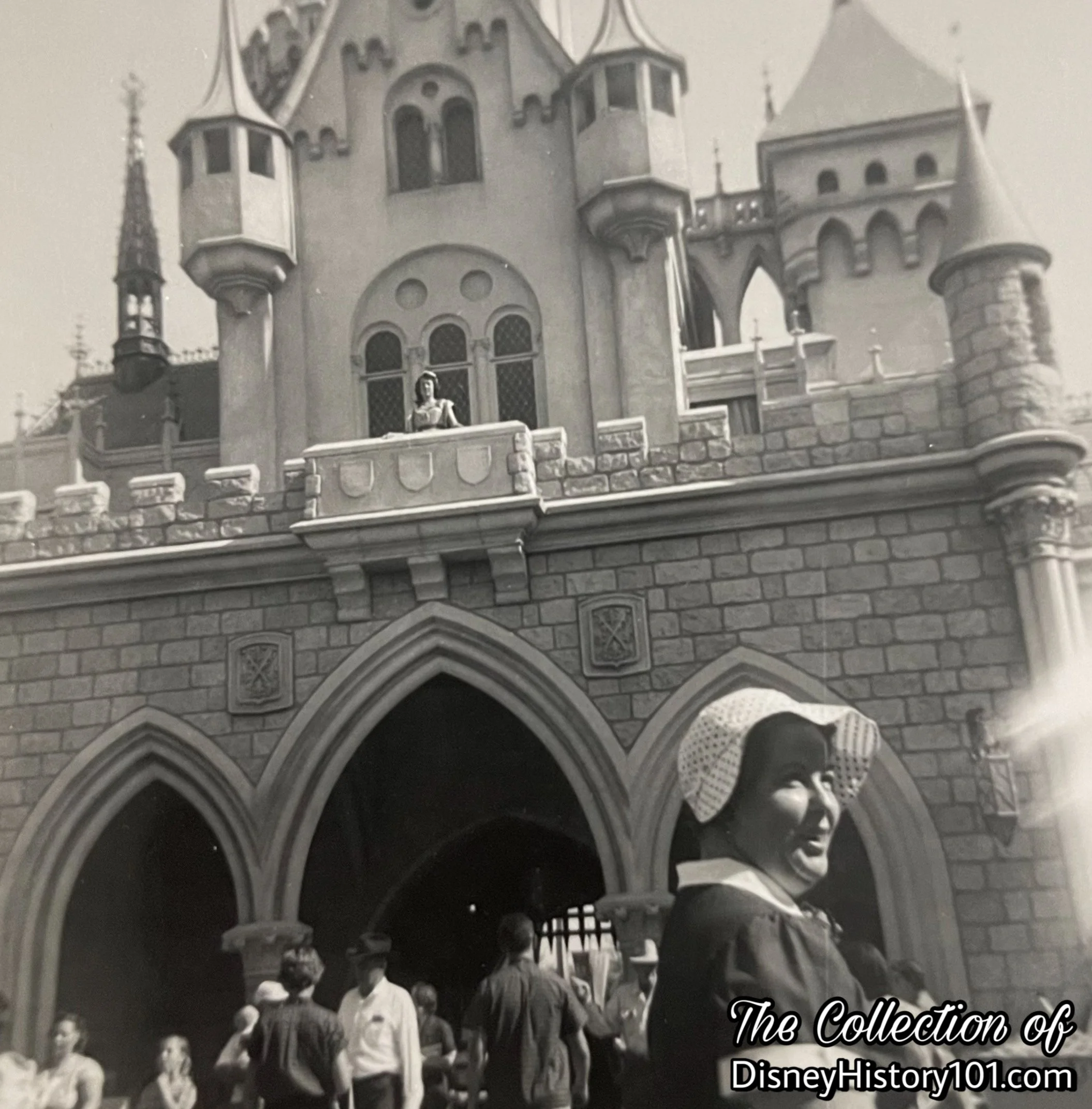
One of the “castle girls” high atop Sleeping Beauty Castle, (July, 1957)
NATALIE BRASHIER (possibly seen above), pretty cover girl of “Disneylander” (October 1957), spent a long and busy summer as one of the “Princesses” in Sleeping Beauty's Castle. While Van Arsdale France and even Walt once mistakenly referred to it as “Snow White’s Castle,” it was always called “Sleeping Beauty Castle.” [See Disney Facts Revealed by Dave Smith, 2016] Four years after Sleeping Beauty Castle opened, the animated feature Sleeping Beauty premiered in 1959.
Sleeping Beauty Castle Souvenir given to visitors as a bonus.
Walk-Through attraction (April 29*, 1957 - October 2001 ; December 5, 2008 - )
According to “Disneyland: Inside Story,” “Ken Anderson remembers the time when Walt discovered an empty space at Disneyland. (Empty spaces were always anathema to Disney.) It was inside Sleeping Beauty Castle at the entrance to Fantasyland, and it would soon turn out to be less empty than Walt had thought.
Disney invited Anderson and 20,000 Leagues set designer Emile Kuri on a walk-through of the facility. Anderson had just finished his work on Sleeping Beauty, one of the Studio's most ambitious and beautiful animated films. The trio ascended an obscure ladder high inside the castle, and Walt continued to talk to Anderson. ‘Now, Ken, I know this is awfully crowded, but I'm sure you can build a Sleeping Beauty attraction right in here... in this castle.’”
“Wildlife was discovered living inside Sleeping Beauty Castle before the diorama was put in. When the design crew went in to inspect the supposedly vacant quarters, they found dozens of wild cats - and thousands of fleas.”
Ken continues: “Meanwhile, Kuri, dressed in an immaculate white suit, had moved ahead of the group and was poking curiously around the premises. It seemed that everywhere he poked, he discovered cats. There were cats on the beams, cats on the walkways, and cats underfoot with practically every step. And they were wild, not friendly in the least. It seemed that they had probably taken up residence in the castle sometime during the construction period two years earlier.
Kuri jumped over a partition to a spot where a large cardboard box rested with a gunnysack over it. In the dim light, he picked up the old gunnysack. Suddenly, shockingly, his sparkling white suit turned gray. He let out a half-scream, half-cry for help and began jumping up and down violently. In desperation, he ran toward Disney and Anderson.
‘We were covered with fleas,’ remembers Anderson. ‘It seemed the whole area was so filled with cat fleas that they were happy to see people! We were slapping ourselves and rolling up our trousers when Walt said, ‘Don't worry, fellows. I've got a phone here!’ Disney made a quick call and said, ‘Hello, this is Walt.’ There was a pause. ‘Walt Disney, that's who!’
After the great escape, and the even greater de-fleaing, Disney wouldn't let the staff harm the cats. After all, an entire ‘civilization’ had taken up permanent residence in the formerly lifeless castle. He arranged for their relocation, finding new families for the ‘castle cats.’
By the way, Anderson did indeed figure out a way to cram a Sleeping Beauty attraction inside a castle that was never planned to host a show. When the attraction opened in 1957, the guests climbed a winding staircase through the castle, where beautiful miniature dioramas unfolded before them, telling the story of Sleeping Beauty. Irvine thought of the dioramas as being like de-partment-store window dressing, but he gave Anderson high marks for great illusions and beautiful sketches.”
Page 11 of “Marc Davis: In His Own Words” features a picture of Fred Joerger, Walt Disney, Claude Coats, and Ken Andersen (who served as art director for Sleeping Beauty) reviewing models for the Sleeping Beauty Castle walk-through during late 1956.
Soon one Associated Press article “Plan Trip Into Drop of Water, Liberty Square for Disneyland” (by Bob Thomas, published April 20, 1957) briefly divulged the big project. Upon being invited to Walt Disney Studio, Bob Thomas mentioned, “Walt gave me a preview of his ambitious plans at his Burbank studios. He showed models and sketches… Now under construction : the interior of Sleeping Beauty’s Castle, depicting the princess’ story.” The walk-through attraction included 12 “look-into” scenes “which visualize the ageless love story of Sleeping Beauty and her Prince Charming,” according to Disneyland Holiday (published Summer of 1957). The “ride structure” (passageways and sets) of this amusement was appraised at a value between $118,350 and $129,400. This newest adventure represented an “added ‘plus’” not only for the iconic landmark, but “for your visit to Disneyland, Walt Disney’s Magic Kingdom,” according to Vacationland, Summer of 1957.
In 1957, the walk-through Sleeping Beauty Castle attraction (with narration and dramatic scenes viewed through glass) was to open, being accounted as a major addition to Disneyland. As early as February of 1957, Walt Disney’s Mickey Mouse Club Magazine advertised the new attraction (in a two-page pictorial). Some sources (as “Disneyland Admission Media Rides and Attractions” report, page 40, published 1971) mention a soft opening occurring on April 13th.
Some sources (as “Disneyland Admission Media Rides and Attractions” report, page 40, published 1971) cited a soft opening occurring on April 13th, while other sources state April 28th, 1957, and “Disneyland Backstage” magazine (Summer, 1965) cites an official opening occurring in “June.” Next, the walkthrough attraction opened on April 29, 1957. Some sources state that the opening occurred on April 28th, 1957, and “Disneyland Backstage” magazine (Summer, 1965) cites an official opening occurring in “June.”
A press release photo preserves the magic in Sleeping Beauty Castle Courtyard; ©️Walt Disney Productions.
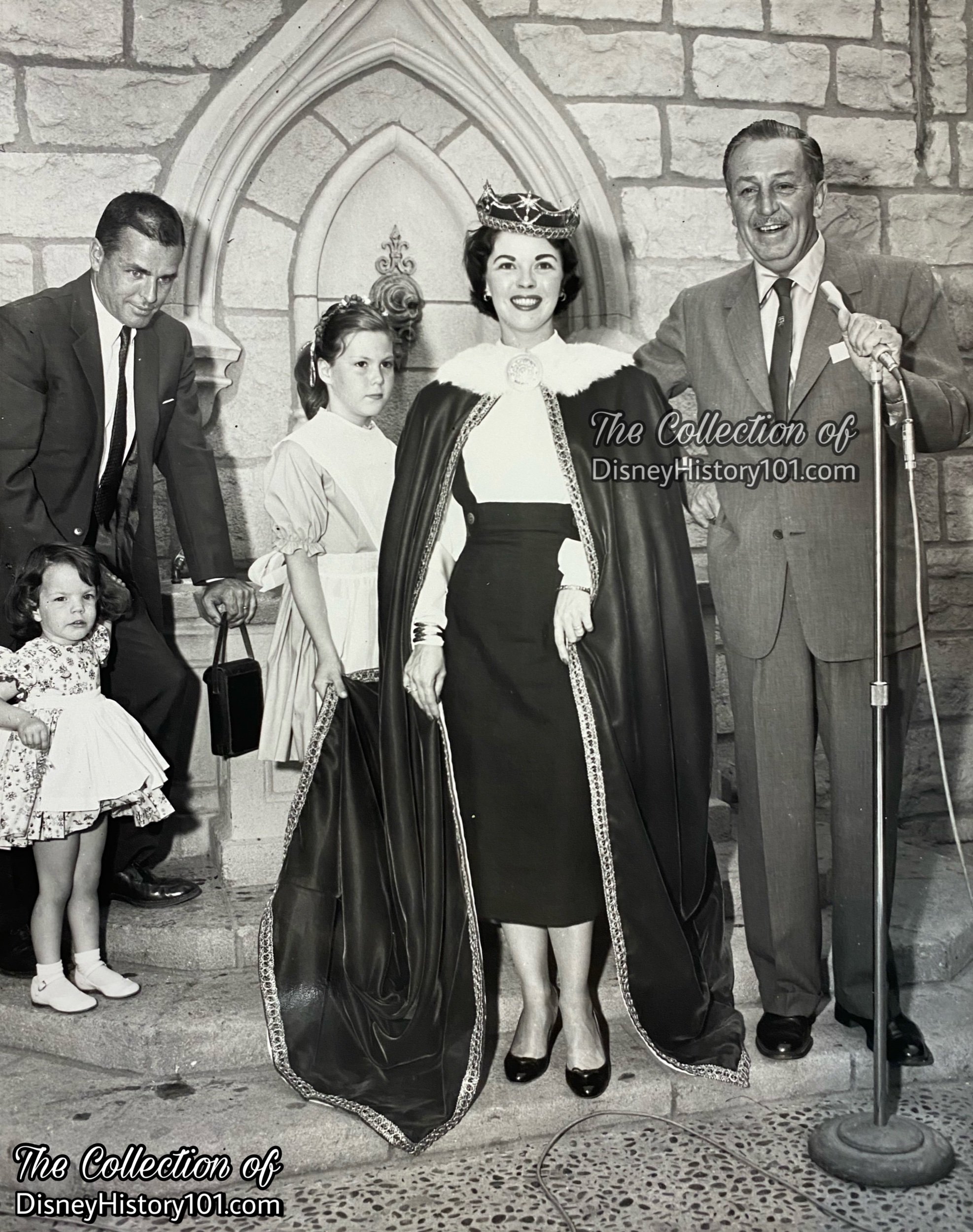
Actress, diplomat, and author Shirley Temple Black helped to unveil the new walkthrough attraction, featuring diorama scenes from Walt Disney’s retelling of the famous story! Disneyland Map Guides (revised for 1957) describe Sleeping Beauty Castle in the following way: a “medieval castle where Sleeping Beauty slumbers in her magnificent bedchamber.”
Hank Dains recalled: “Well, I quess one of the funniest things happened when we were opening the Castle. Wathal Rogers and I worked on the sets. We were waiting for Walt and the press to come out and we decided to check something out. One of our sets had slipped. I had to crawl into a hole to fix it. Wathal said, 'You get in there, and I'll tell you when it's right.’ So I got in there and got stuck. Wathal said the set was fine, ‘but they're coming up the steps now. just lie down and shut up!’ And so...I laid there holding up the sets while Walt and the press walked through.”
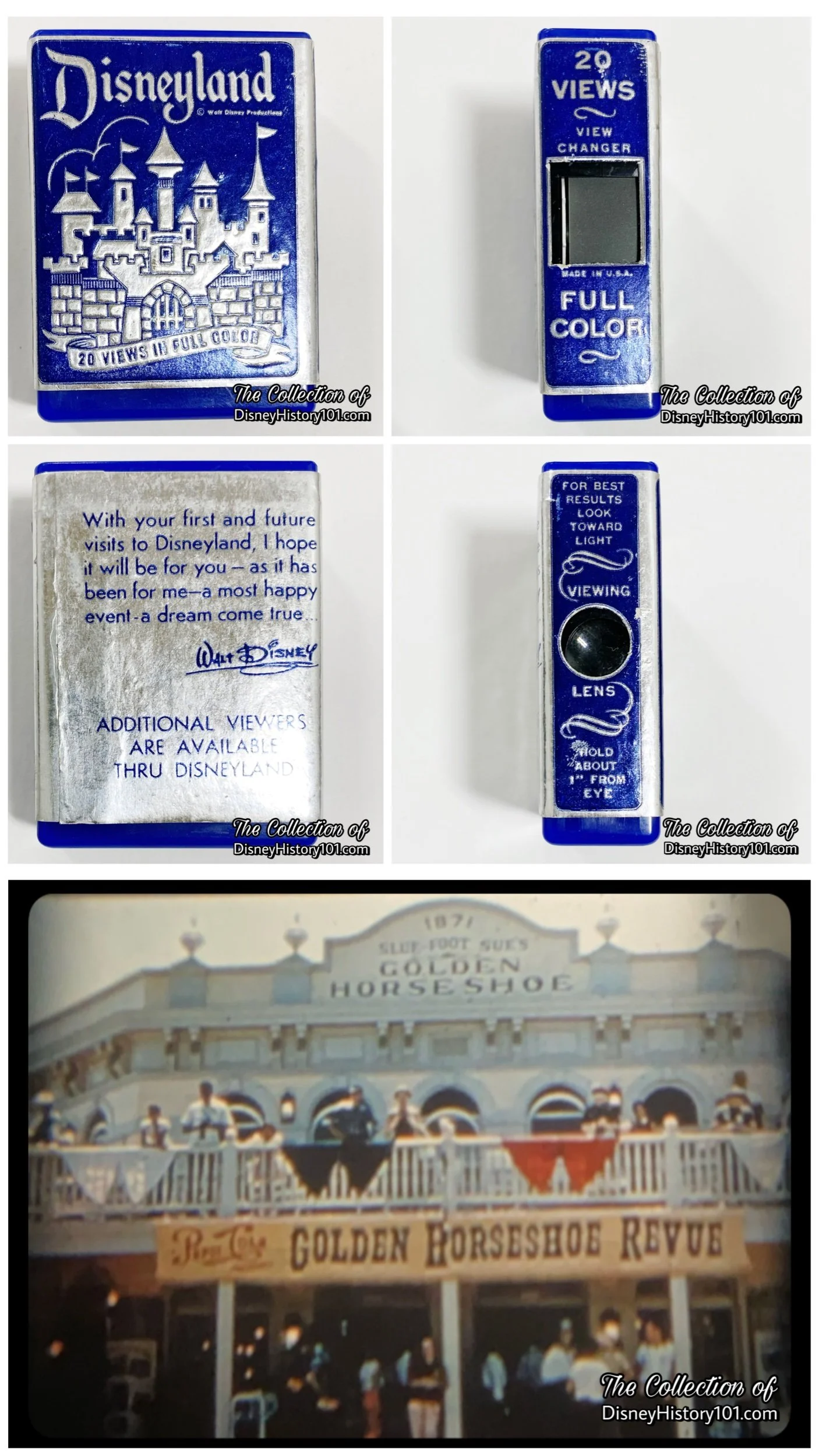
A MICRO-FAX viewer preserves Shirley’s visit.
By 1960, the Guided Tour of Disneyland included “a close look at the wonderous things behind the walls of Sleeping Beauty's Castle.“
Sleeping Beauty Castle Exhibit Entrance in the Castle Courtyard, c. July, 1964.
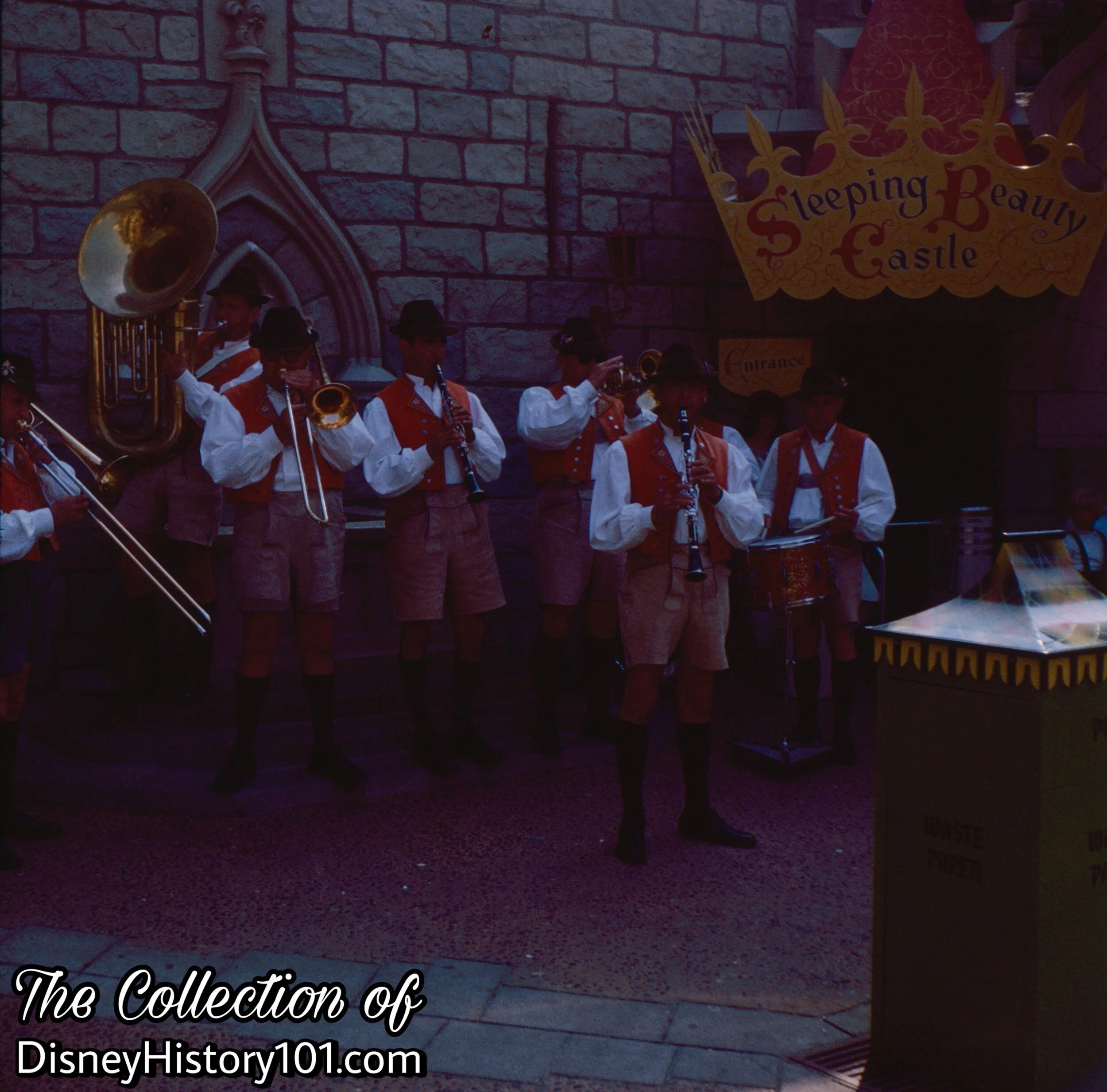
The “Schnickle-Fritz” Polka Band plays their “jolly music with an ‘um-pa-pa’ beat strolling through” the Fantasyland Courtyard. Behind them, is the crowning attraction of Sleeping Beauty Castle.
(June, 1957 - September, 1958)
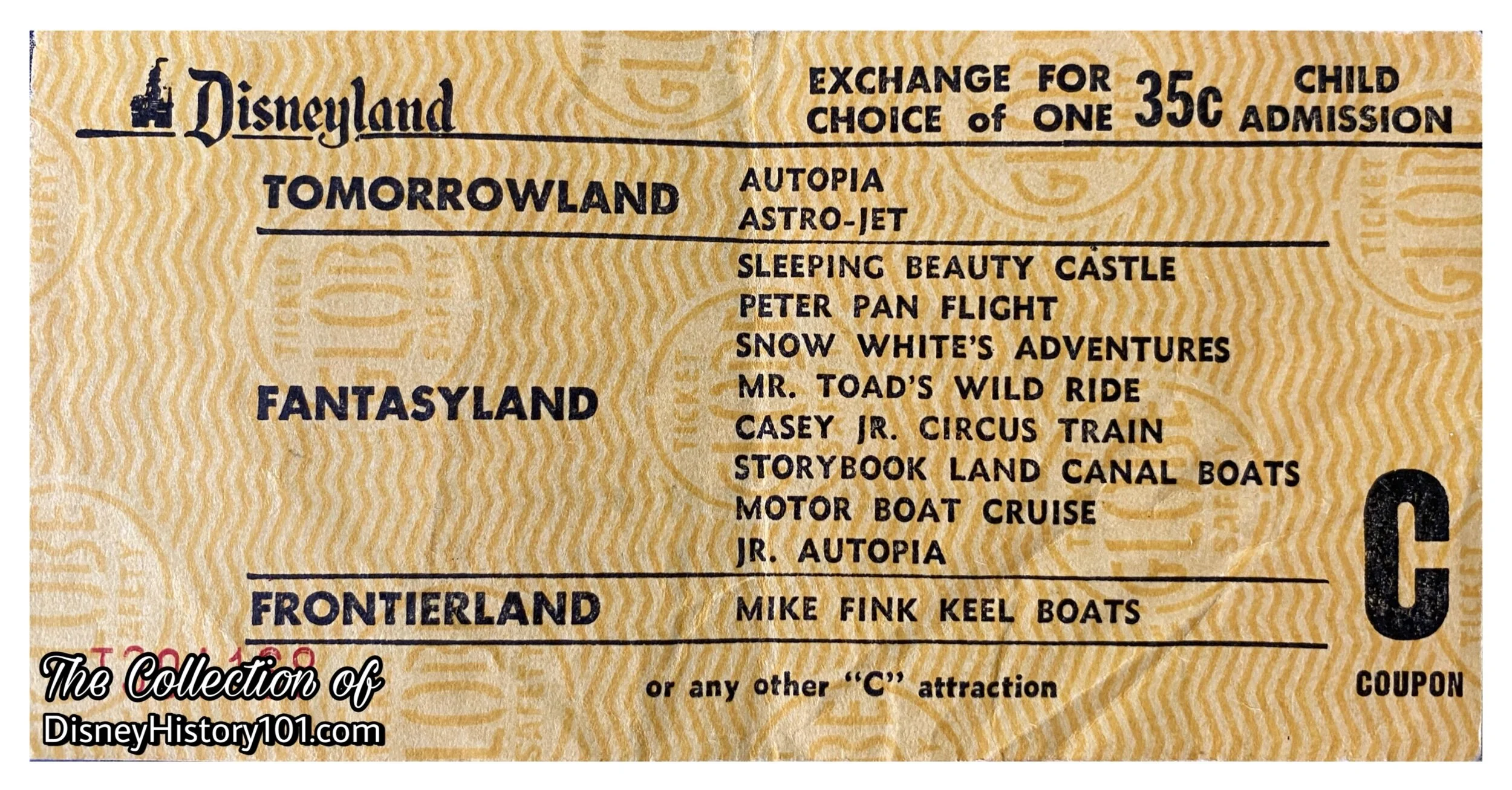
The admission for both the Sleeping Beauty Castle walk-through attraction was one “C” Coupon (35 cents).
However, in the years that’s followed, Dick Nunis (in one Inter-Office Communication dated July 19, 1961) divulged : “Our experience from guest reaction has been that walk-thru attractions have a low appeal.” And so the Sleeping Beauty Castle walkthrough would briefly cease operation during the winter season of 1962.
Meanwhile, Sleeping Beauty Castle had inspired another attraction. By 1964, the character of the 3rd hole of The Magic Kingdom Golf Course of the Disneyland Hotel Golf Centre was still themed after Sleeping Beauty Castle.
Sleeping Beauty Castle, (1958)
Sleeping Beauty Castle, (August, 1960)
Sleeping Beauty Castle, (1965)
Sleeping Beauty Castle
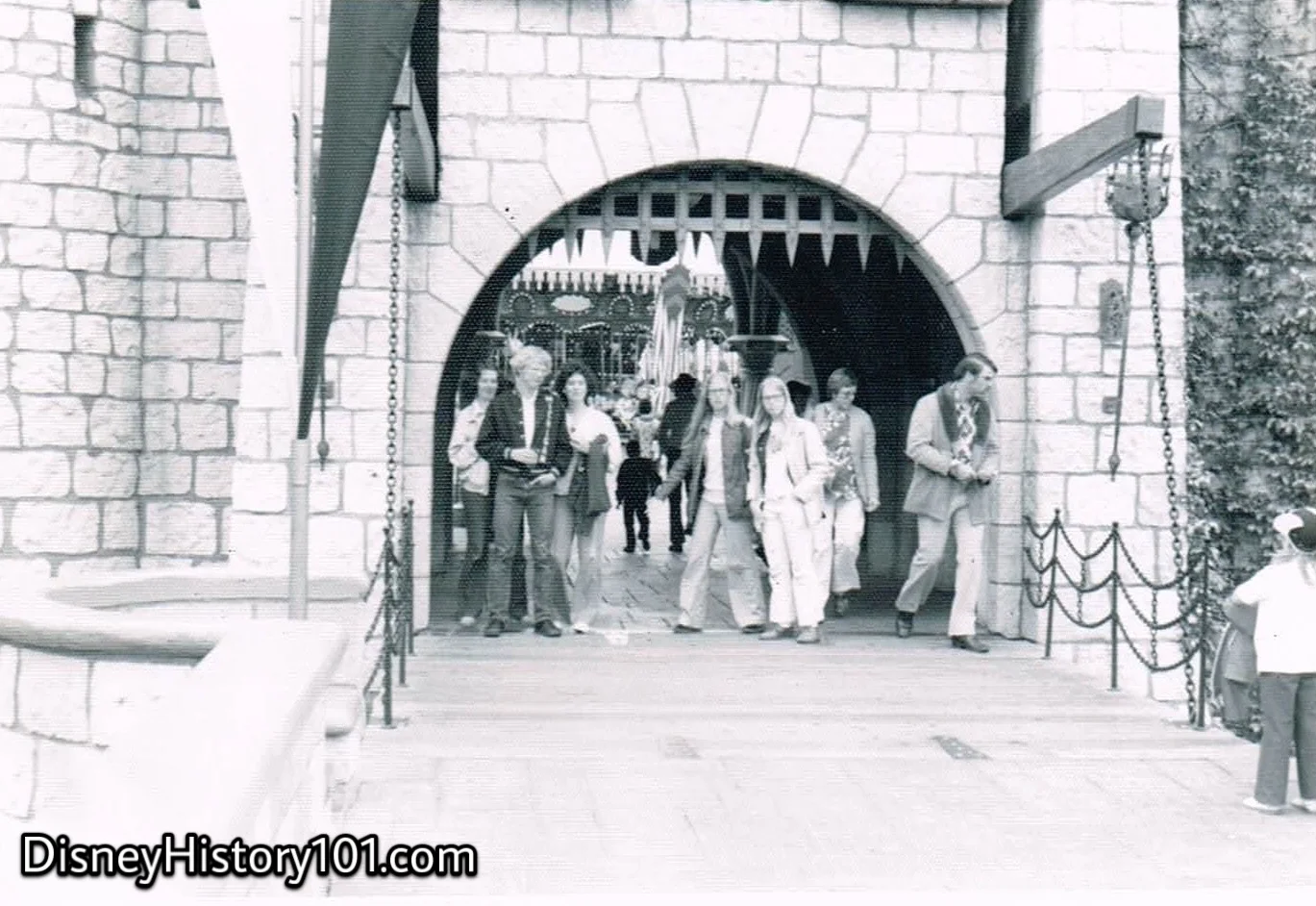
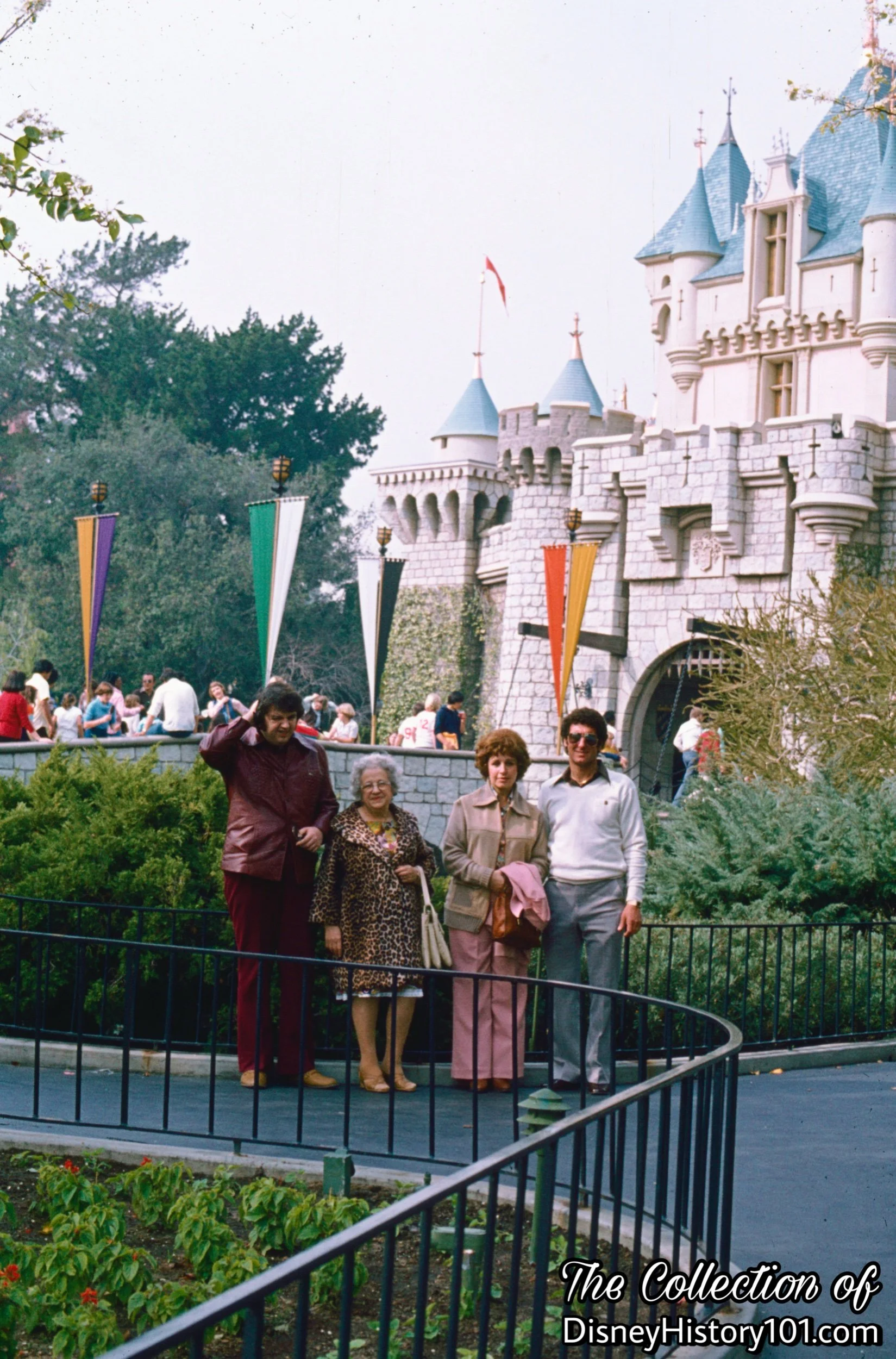
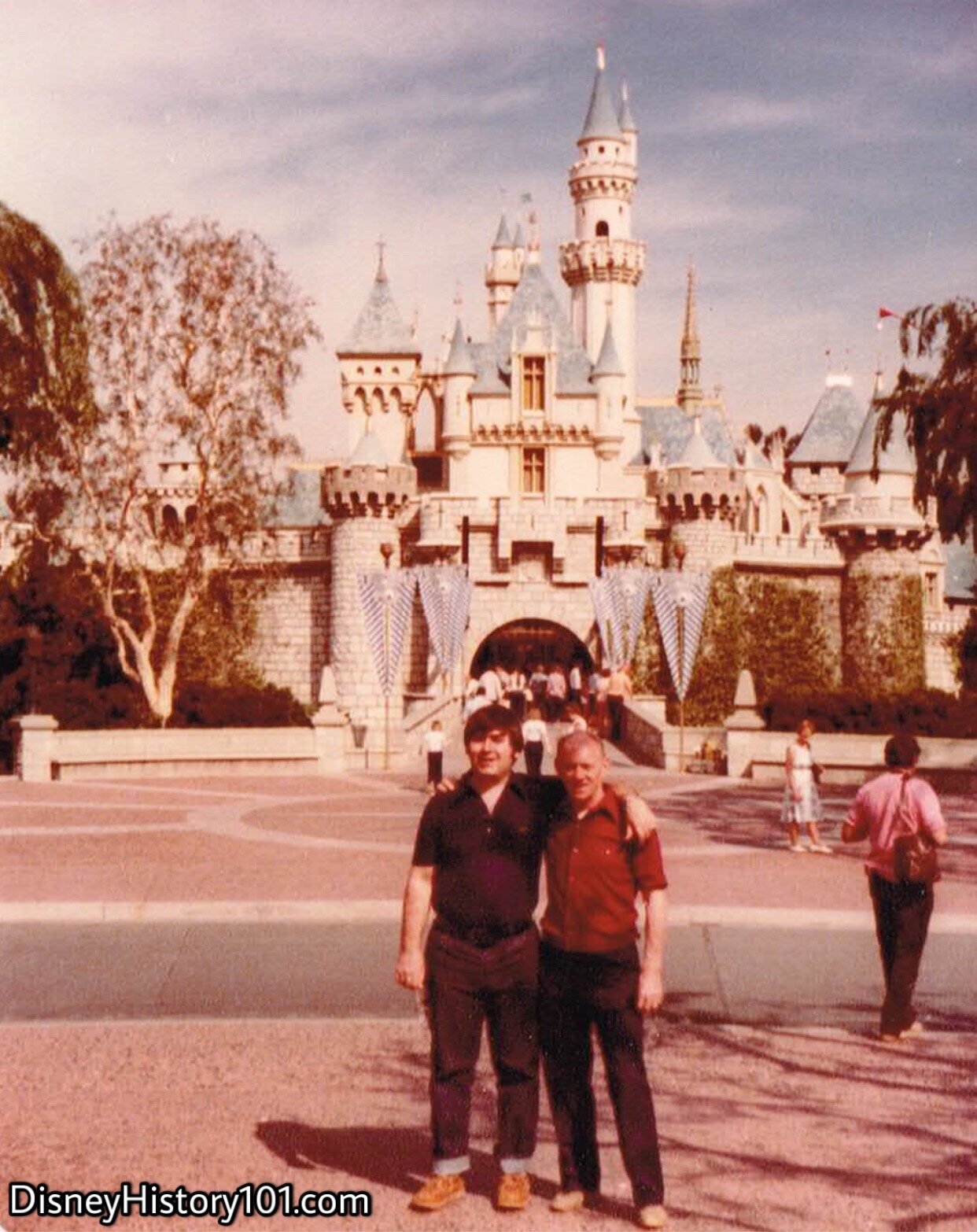
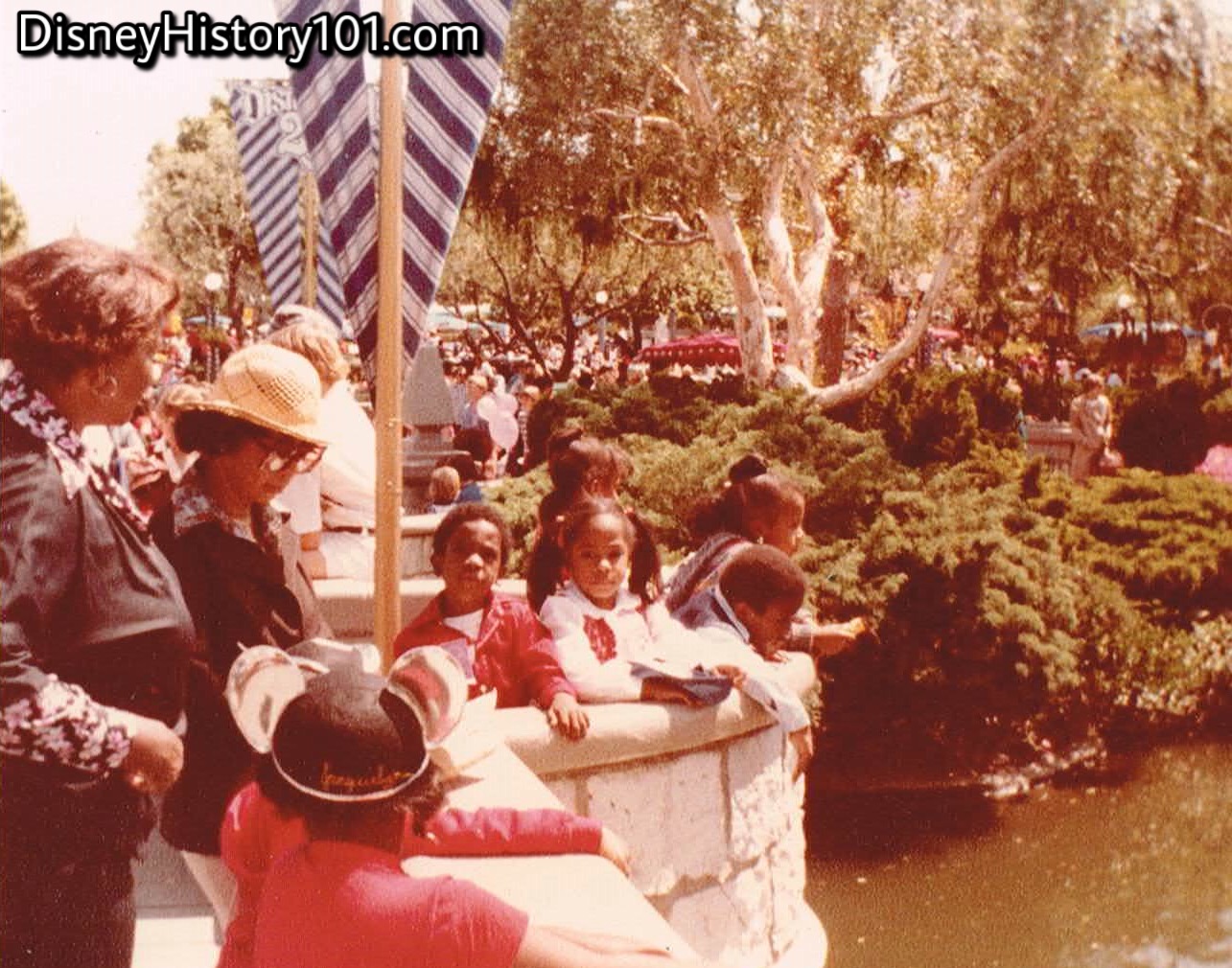
These Vintage Views of visitors (of various walks of life) commemorating their visit to Walt Disney’s Disneyland are reminiscent of the words of one Military Chaplain Reverend Glenn D. Puder, who partook in the Dedication of Disneyland on July 17th, 1955: “Let us join with him then, in dedicating these wonder-filled acres to those things dear to his heart and ours. To understanding and goodwill among men - laughter for children, memories for the mature, and aspirations for young people everywhere.”
Sleeping Beauty Castle
Sleeping Beauty Castle, (1967)
Sleeping Beauty Castle
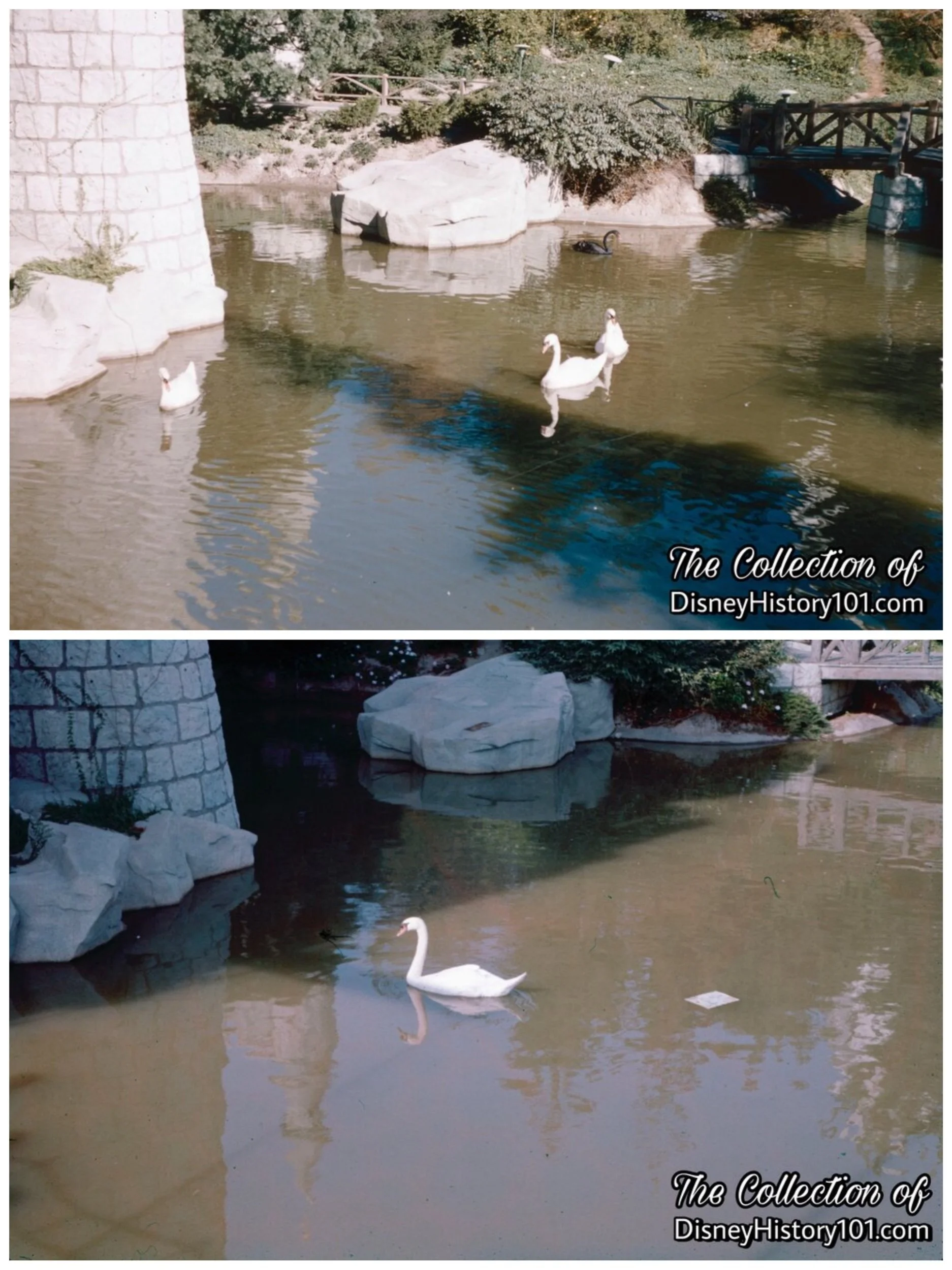
Swan Lake and swans, September, 1962.
The swans of Swan Lake.
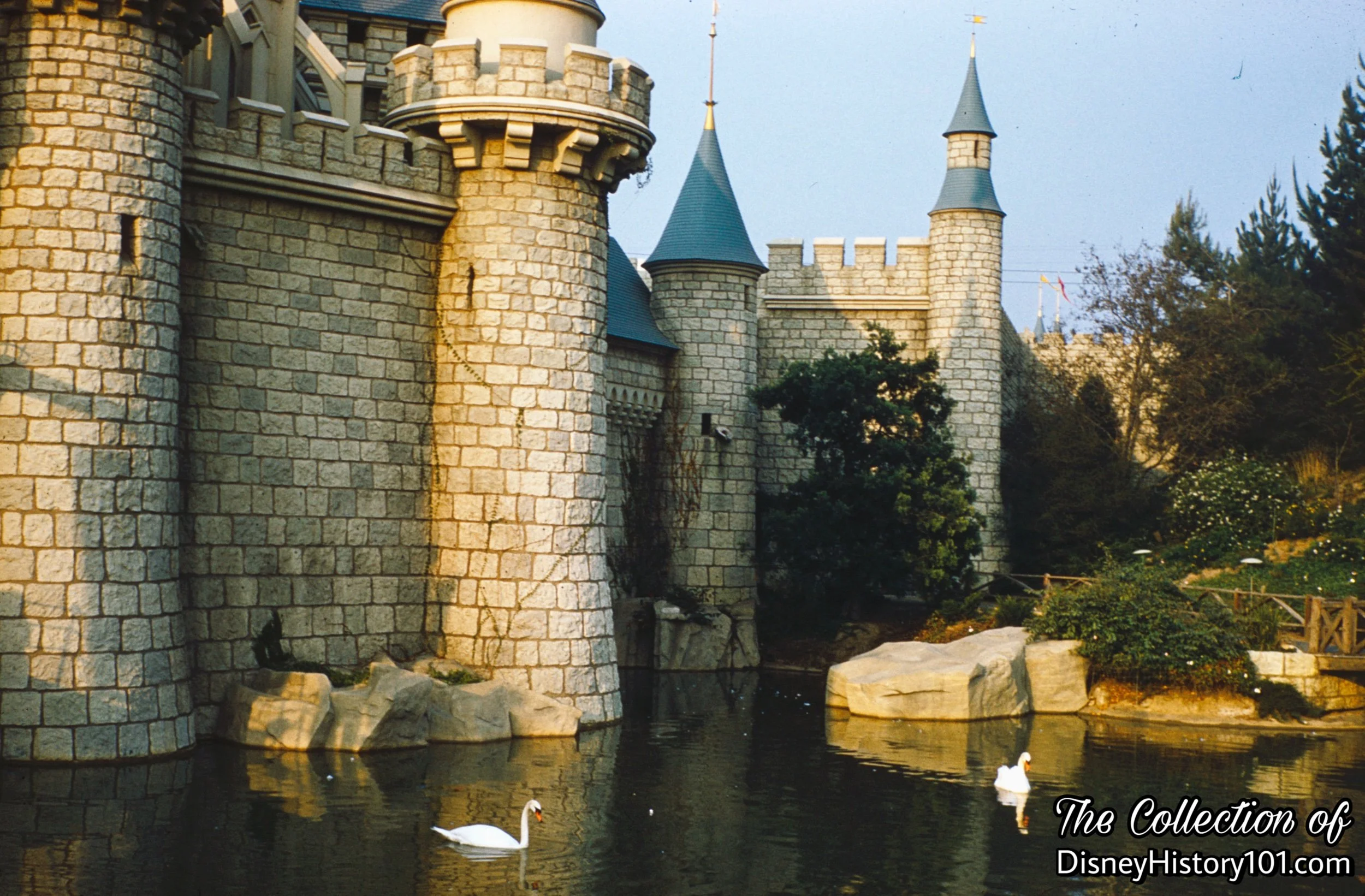
Sleeping Beauty Castle and swans.
Swans of Swan Lake (or, The Lake of the Swans).
Sleeping Beauty Castle
Sleeping Beauty Castle
Sleeping Beauty Castle
Sleeping Beauty Castle, (September, 1960)
Sleeping Beauty Castle, (June, 1960)
Sleeping Beauty Castle
Sleeping Beauty Castle
Sleeping Beauty Castle, (1959)
Sleeping Beauty Castle
Sleeping Beauty Castle
Sleeping Beauty Castle, (April 5th, 1958)
Sleeping Beauty Castle
Sleeping Beauty Castle
Sleeping Beauty Castle
Sleeping Beauty Castle
Sleeping Beauty Castle, (April 5th, 1958)
Sleeping Beauty Castle, (1959)
Sleeping Beauty Castle
Sleeping Beauty Castle
Sleeping Beauty Castle
Sleeping Beauty Castle
Sleeping Beauty Castle, (1959)
Sleeping Beauty Castle, (May, 1960)
Sleeping Beauty Castle
Sleeping Beauty Castle
Sleeping Beauty Castle
Sleeping Beauty Castle
Sleeping Beauty Castle, (1960)
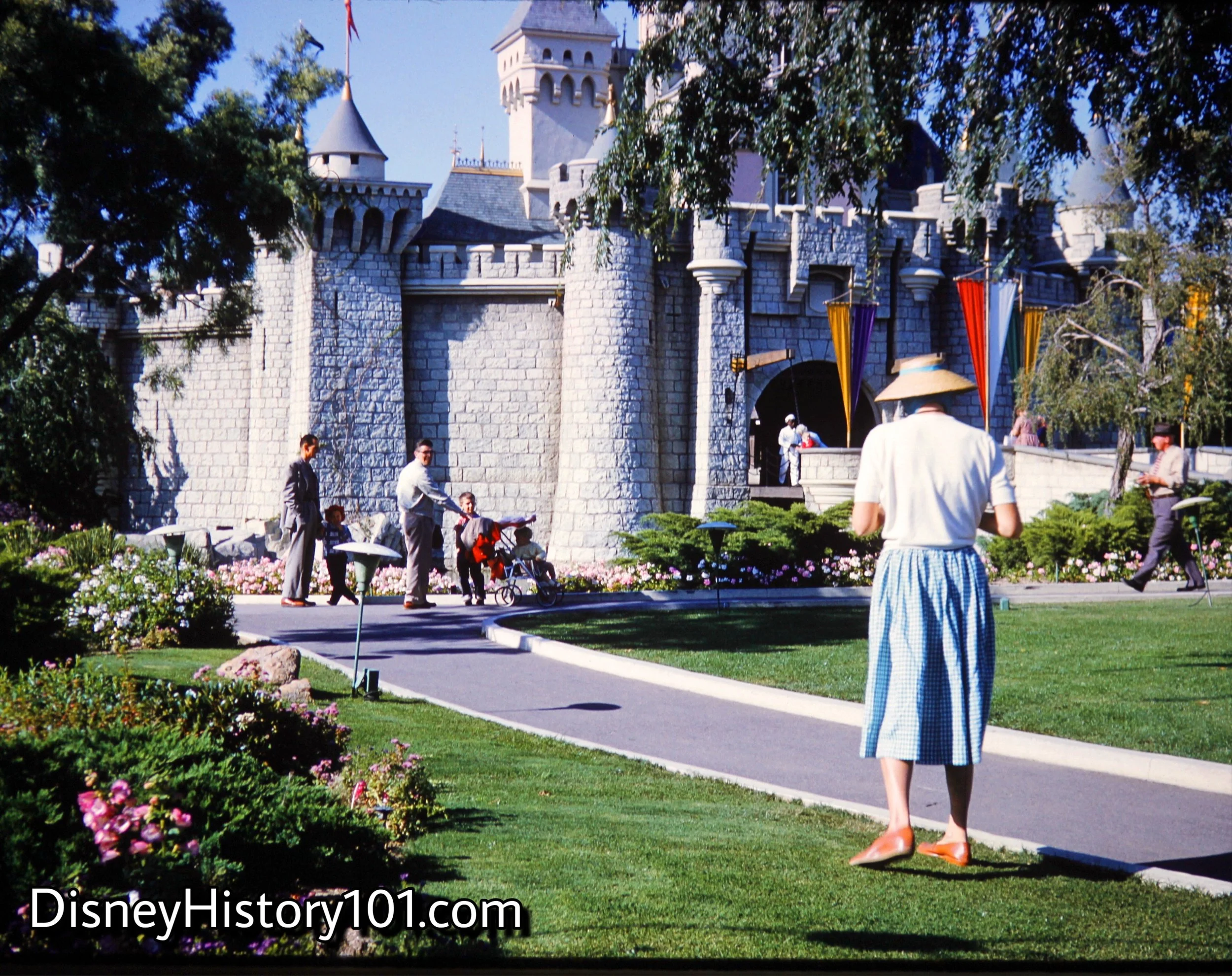
“Grassy areas of the Park are cut weekly, and lawns must be completely renewed at least once a year”, according to Disneyland World of Flowers, published 1965.
Sleeping Beauty Castle, (December 2, 1960, Late Afternoon)
Sleeping Beauty Castle, (July, 1959)
Sleeping Beauty Castle
Sleeping Beauty Castle, (May, 1961)
Sleeping Beauty Castle
Sleeping Beauty Castle
Sleeping Beauty Castle
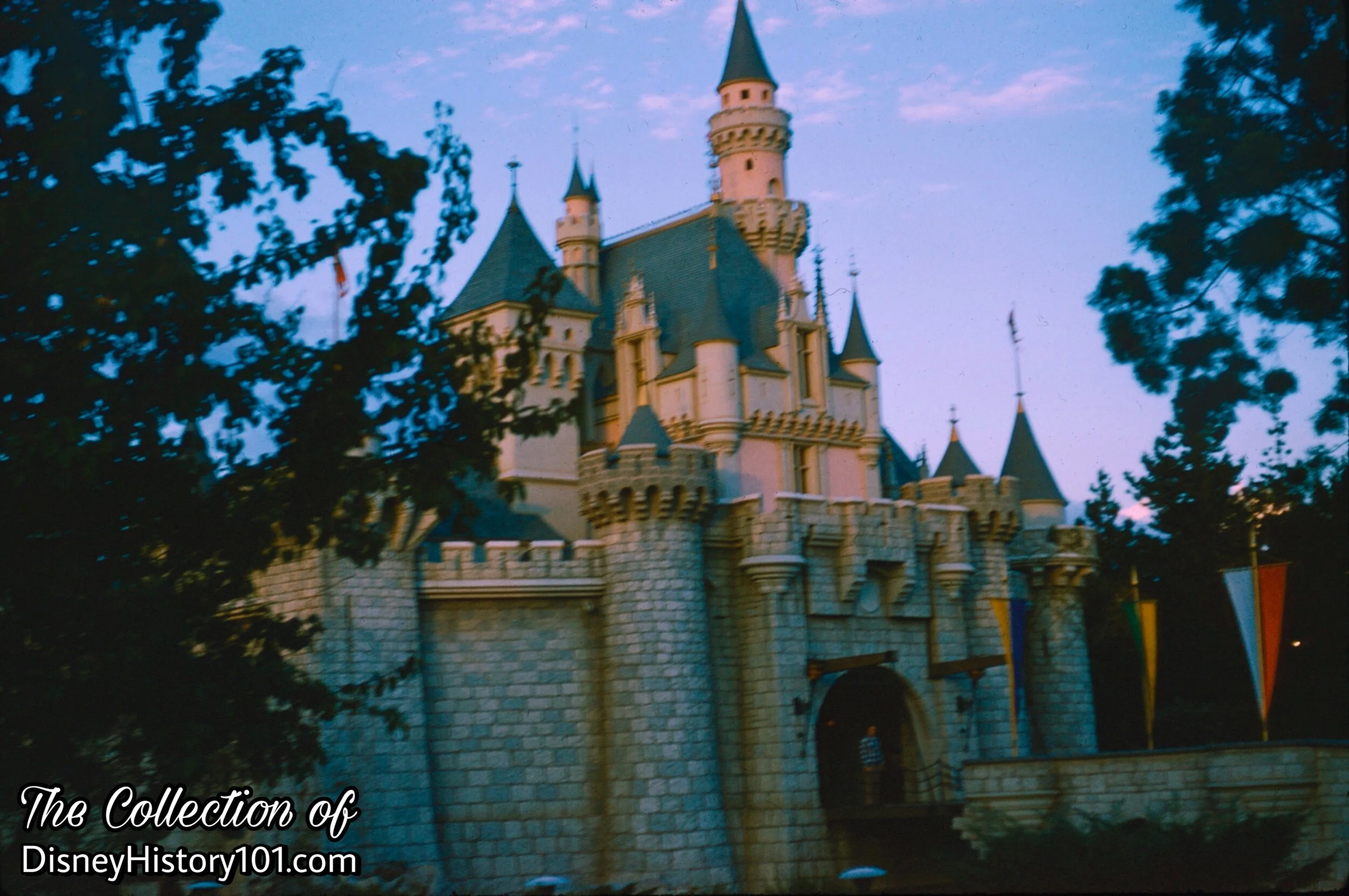
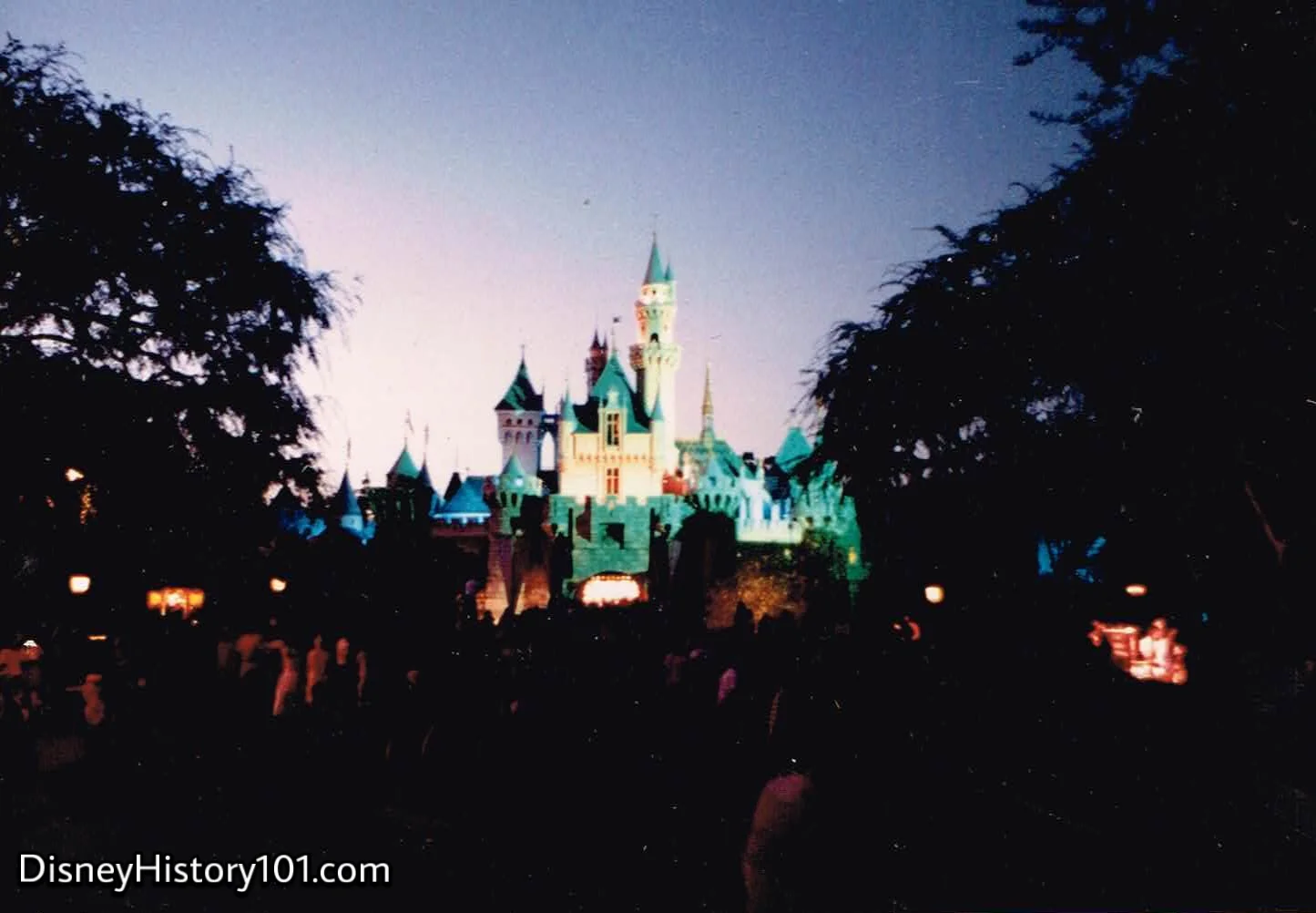
According to Light magazine published for July and August 1956: “Incandescent floodlighting was used to emphasize the natural color of stonework and decorative elements. Pink and blue fluorescents are concealed in battlements. Simulated candles in windows.”
Sleeping Beauty Castle
Sleeping Beauty Castle Forecourt, 1961.
Sleeping Beauty Castle, (September, 1965)
Sleeping Beauty Castle, (1962)
Sleeping Beauty Castle
Sleeping Beauty Castle, (August, 1962)
Sleeping Beauty Castle, (1967)
A pair of Siberian Elms frame the entrance to Fantasyland. In contrast from the elms that line Main Street USA, these ones are permitted “a more natural character”, according to Disneyland World of Flowers (published 1965).
Sleeping Beauty Castle, (1967)
Sleeping Beauty Castle Forecourt, 1962.
Sleeping Beauty Castle, (1962)
Sleeping Beauty Castle, (1963)
Sleeping Beauty Castle, (1964)
Sleeping Beauty Castle, (1966)
Sleeping Beauty Castle, (September, 1965)
Sleeping Beauty Castle
Sleeping Beauty Castle, (September, 1965)
Sleeping Beauty Castle Forecourt, 1964.
Sleeping Beauty Castle, (August, 1967)
Sleeping Beauty Castle, (December, 1967)
Sleeping Beauty Castle
Sleeping Beauty Castle
Sleeping Beauty Castle, (1960s)
Sleeping Beauty Castle
Sleeping Beauty Castle
Sleeping Beauty Castle
Sleeping Beauty Castle
Sleeping Beauty Castle, (1968)
Sleeping Beauty Castle, (1971)
Sleeping Beauty Castle, (1967)
Sleeping Beauty Castle
Sleeping Beauty Castle, (September, 1972)
Sleeping Beauty Castle, (1978)
Sleeping Beauty Castle, (1975)
Sleeping Beauty Castle, (1975)
Sleeping Beauty Castle, (1975)
Sleeping Beauty Castle Forecourt, 1975.
Sleeping Beauty Castle
Sleeping Beauty Castle
Sleeping Beauty Castle
Sleeping Beauty Castle
Sleeping Beauty Castle
Sleeping Beauty Castle
Sleeping Beauty Castle
Sleeping Beauty Castle
Sleeping Beauty Castle
Sleeping Beauty Castle, (c. September, 1970)
Sleeping Beauty Castle Forecourt
Sleeping Beauty Castle
Sleeping Beauty Castle
Sleeping Beauty Castle Forecourt
Sleeping Beauty Castle
Sleeping Beauty Castle
Those wooden bridges were constructed of beams which were “fired” to give the illusion of centuries-old wear to new wood.
Sleeping Beauty Castle
Sleeping Beauty Castle, (c. March, 1961)
Sleeping Beauty Castle, (December 2, 1960)
Sleeping Beauty Castle
By 1969, 38 jovial gardeners were employed in the Land scape Department carrying out their daily tasks tending flora and fauna; 60 percent or more had been in the department for 10 years plus. To stimulate their interest, as well as the guest's, Tony Virginia and Simon Dubois, who head up the department, were introducing new plant materials never seen before by many, such as new hybrids and old fashioned plants including that grandma used to grow, such as Godetia (planted along the castle moat).
Sleeping Beauty Castle Forecourt
Sleeping Beauty Castle
Sleeping Beauty Castle
Sleeping Beauty Castle
Sleeping Beauty Castle
Sleeping Beauty Castle
Sleeping Beauty Castle, (1960)
Sleeping Beauty Castle
Sleeping Beauty Castle
Sleeping Beauty Castle
Sleeping Beauty Castle
Sleeping Beauty Castle
Sleeping Beauty Castle
Sleeping Beauty Castle
Sleeping Beauty Castle
Sleeping Beauty Castle
Sleeping Beauty Castle, (1958)
Sleeping Beauty Castle
Sleeping Beauty Castle
Sleeping Beauty Castle
Sleeping Beauty Castle
Sleeping Beauty Castle
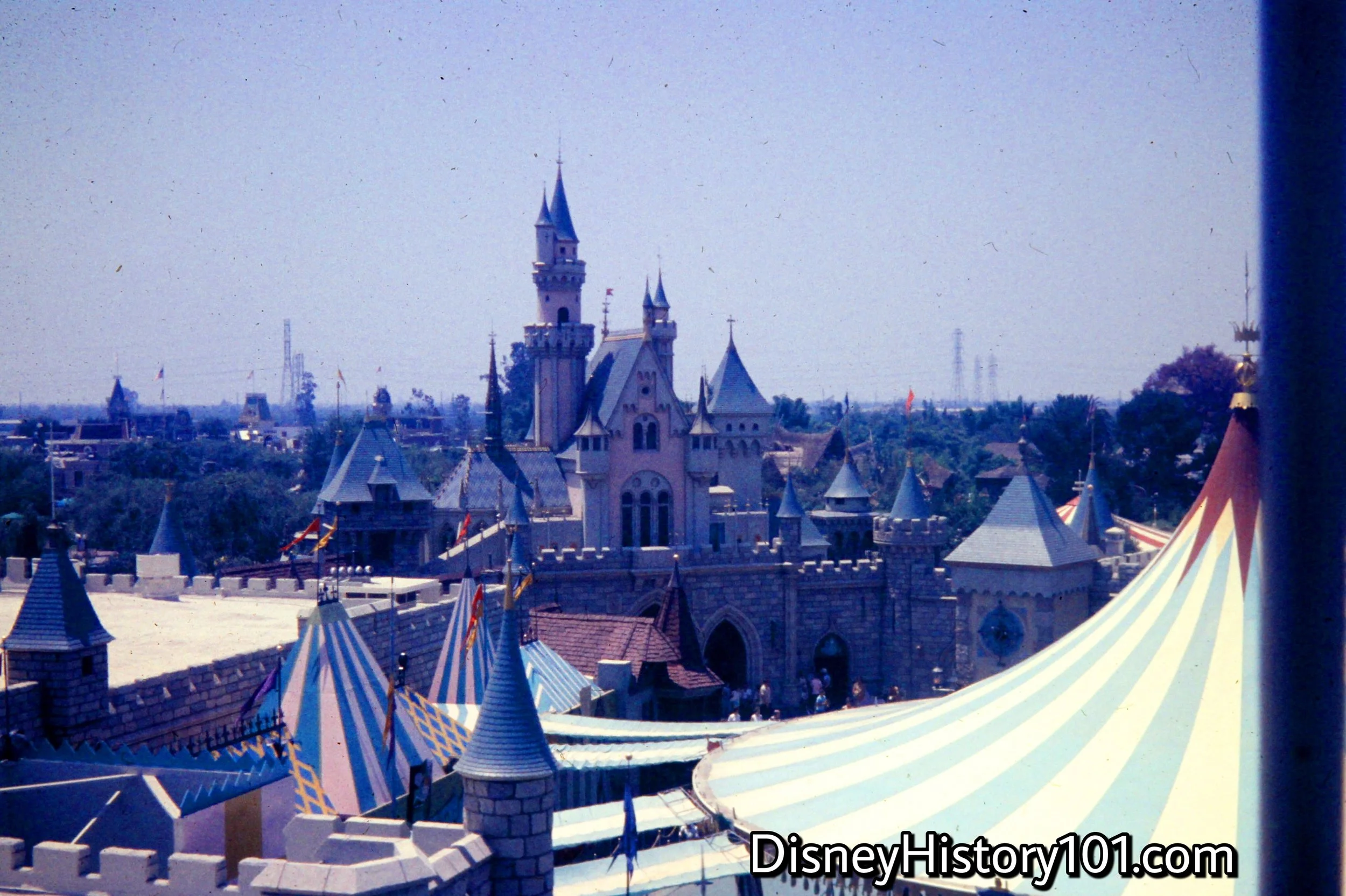
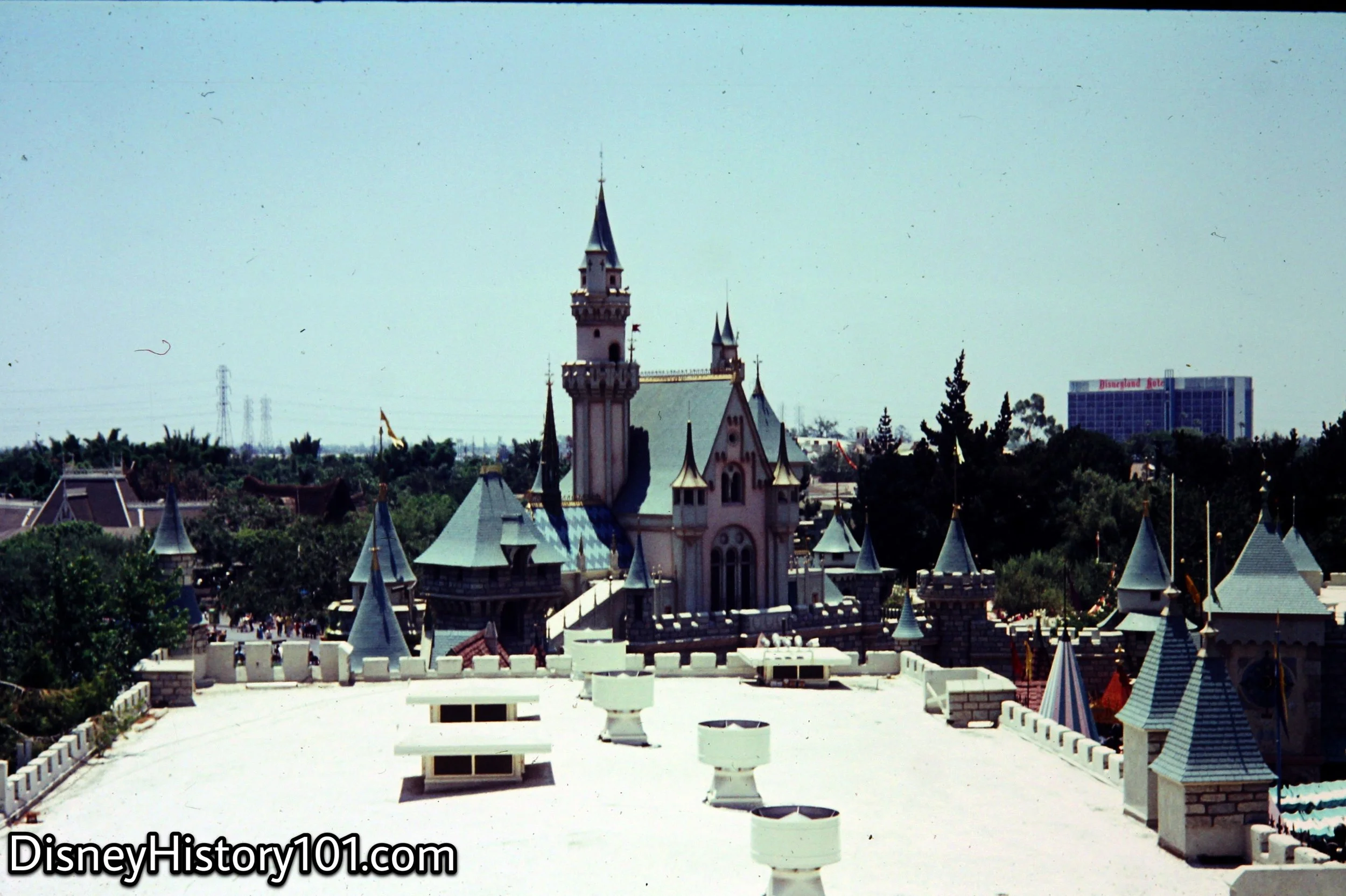
According to one early 1960s Vacationland magazine: “Many of Disneyland's rides, notably the Sky Ride and Monorail, take guests high above building roof-tops. Consequently, in order that the views seen are tidy and colorful, roofs are brushed regularly and washed or painted when needed.”
Sleeping Beauty Castle
Sleeping Beauty Castle
(1966)
Sleeping Beauty Castle & Disneyland Compass Rose
Sleeping Beauty Castle & Disneyland Compass Rose
Sleeping Beauty Castle & Disneyland Compass Rose, (1979)
Sleeping Beauty Castle & Disneyland Compass Rose
Sleeping Beauty Castle & Disneyland Compass Rose
Sleeping Beauty Castle & Disneyland Compass Rose
Sleeping Beauty Castle & Disneyland Compass Rose
Sleeping Beauty Castle & Disneyland Compass Rose
Sleeping Beauty Castle & Disneyland Compass Rose
Sleeping Beauty Castle & Compass Rose, (August, 1966)
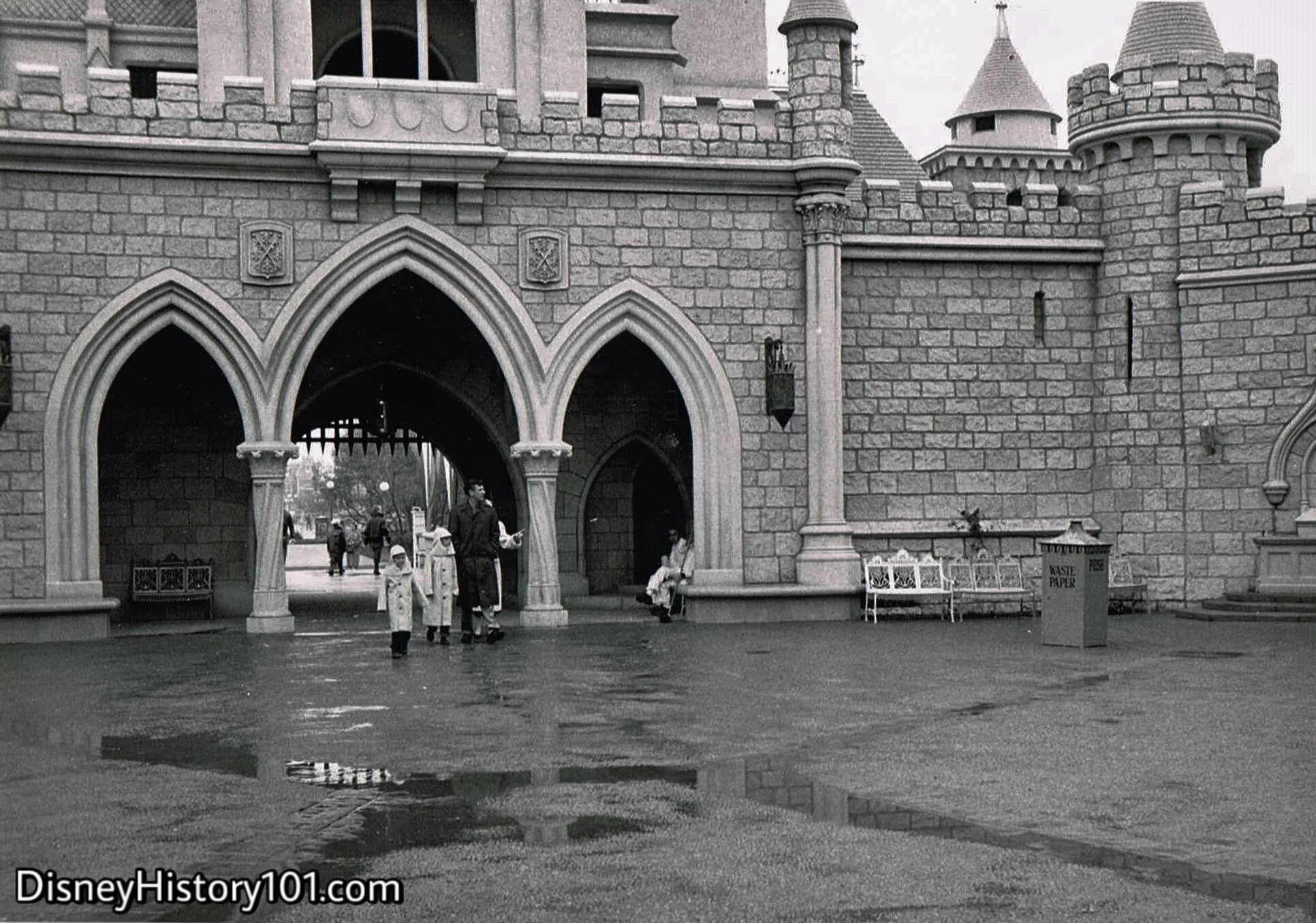
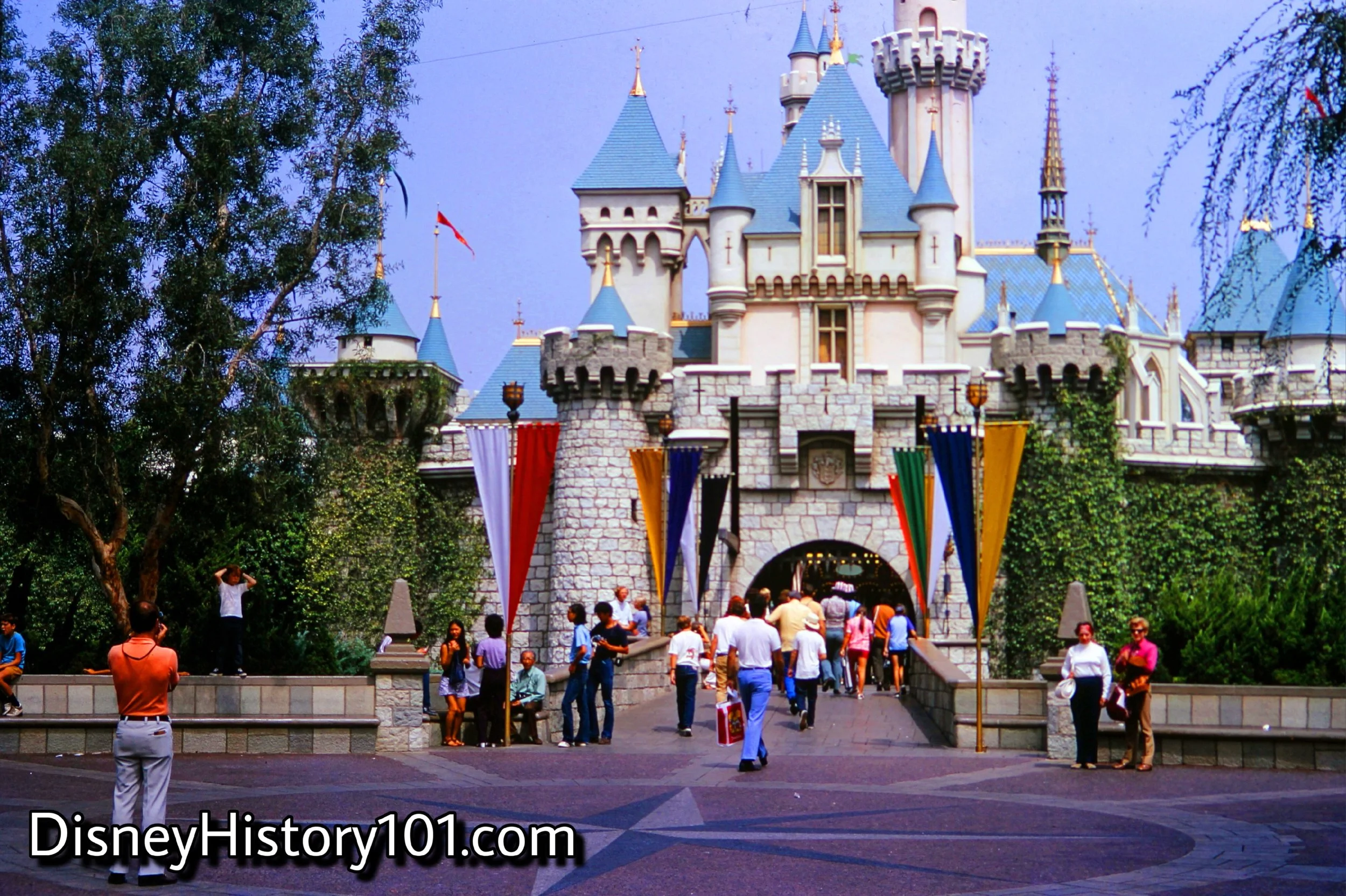
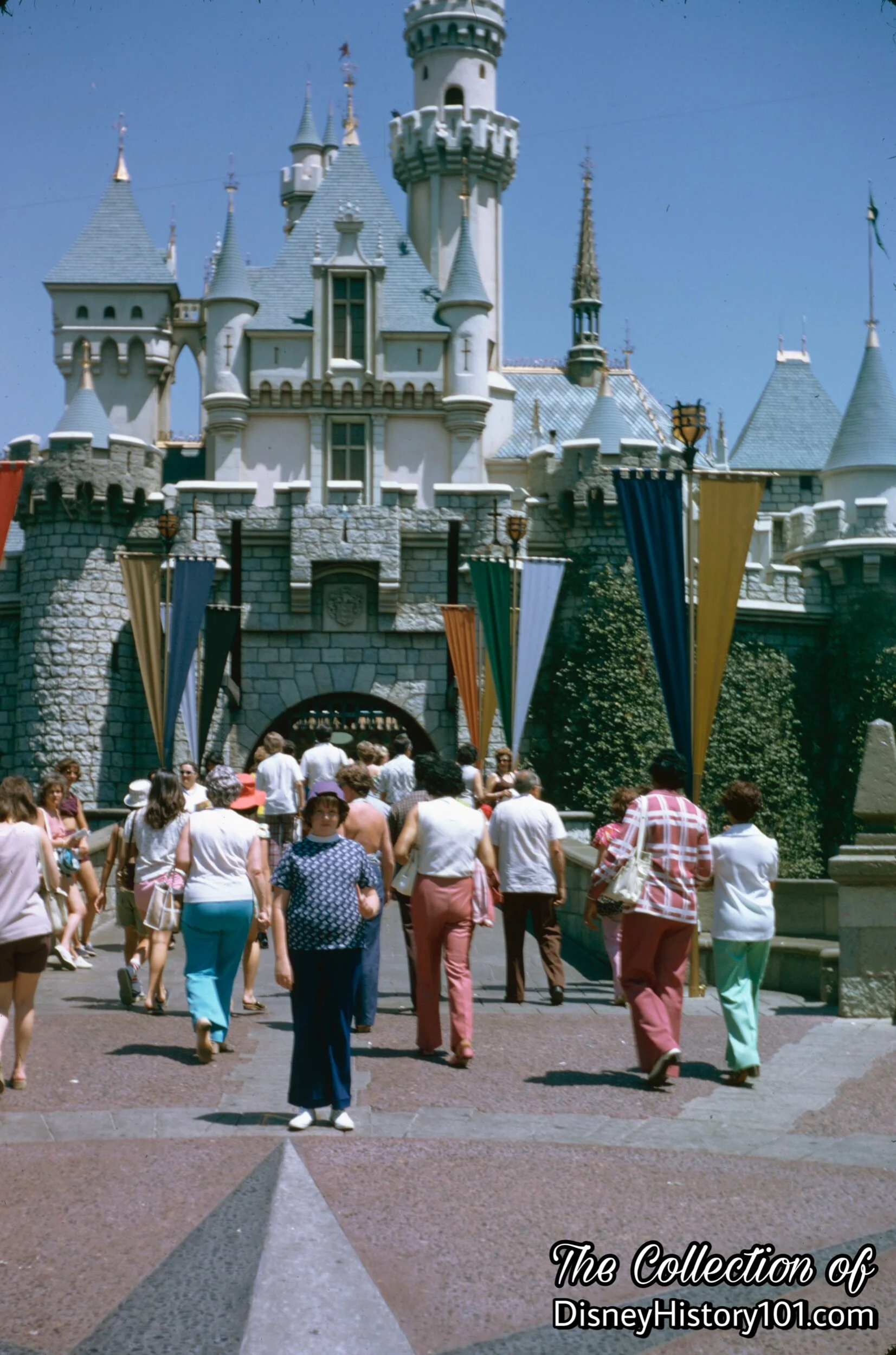
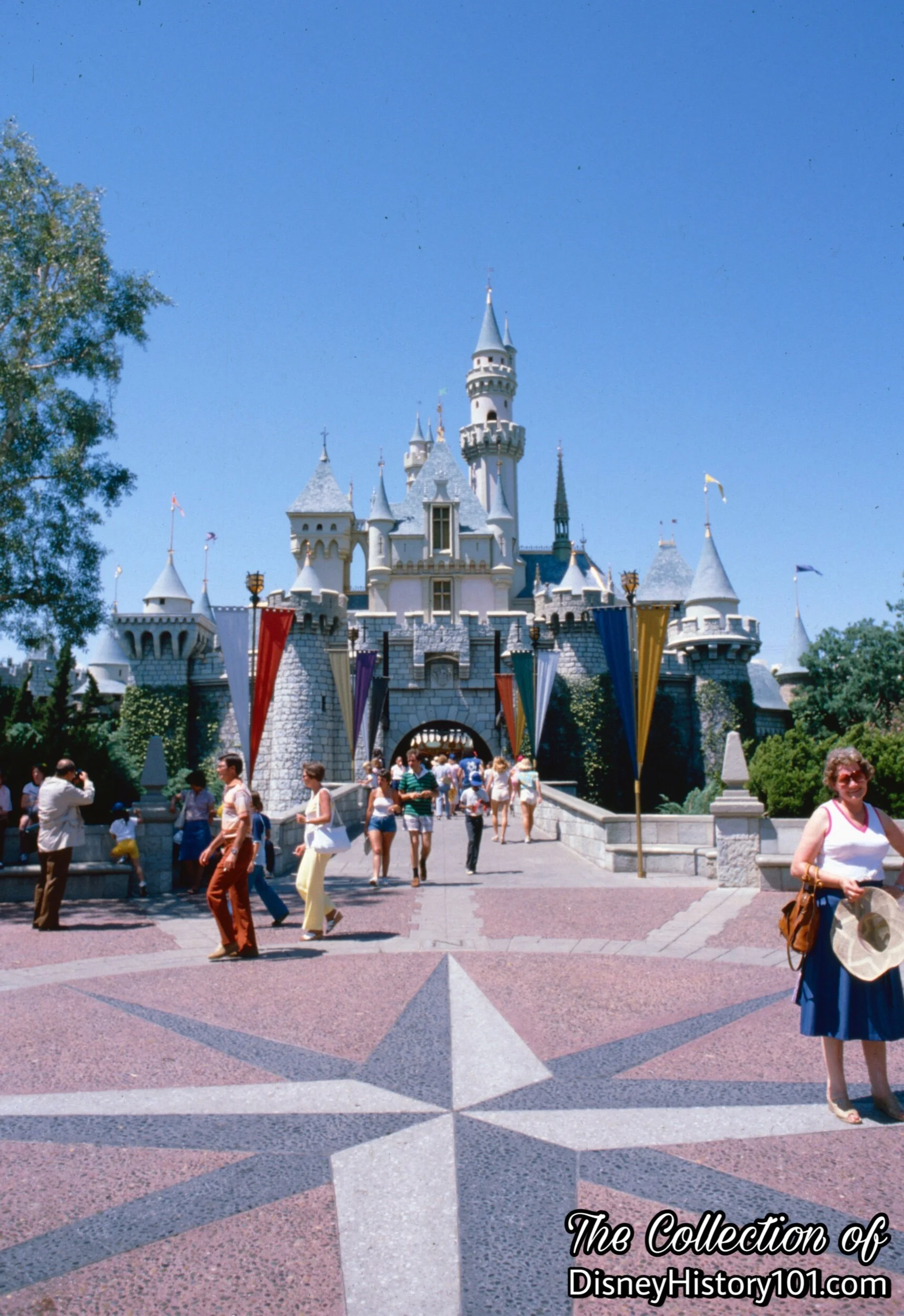
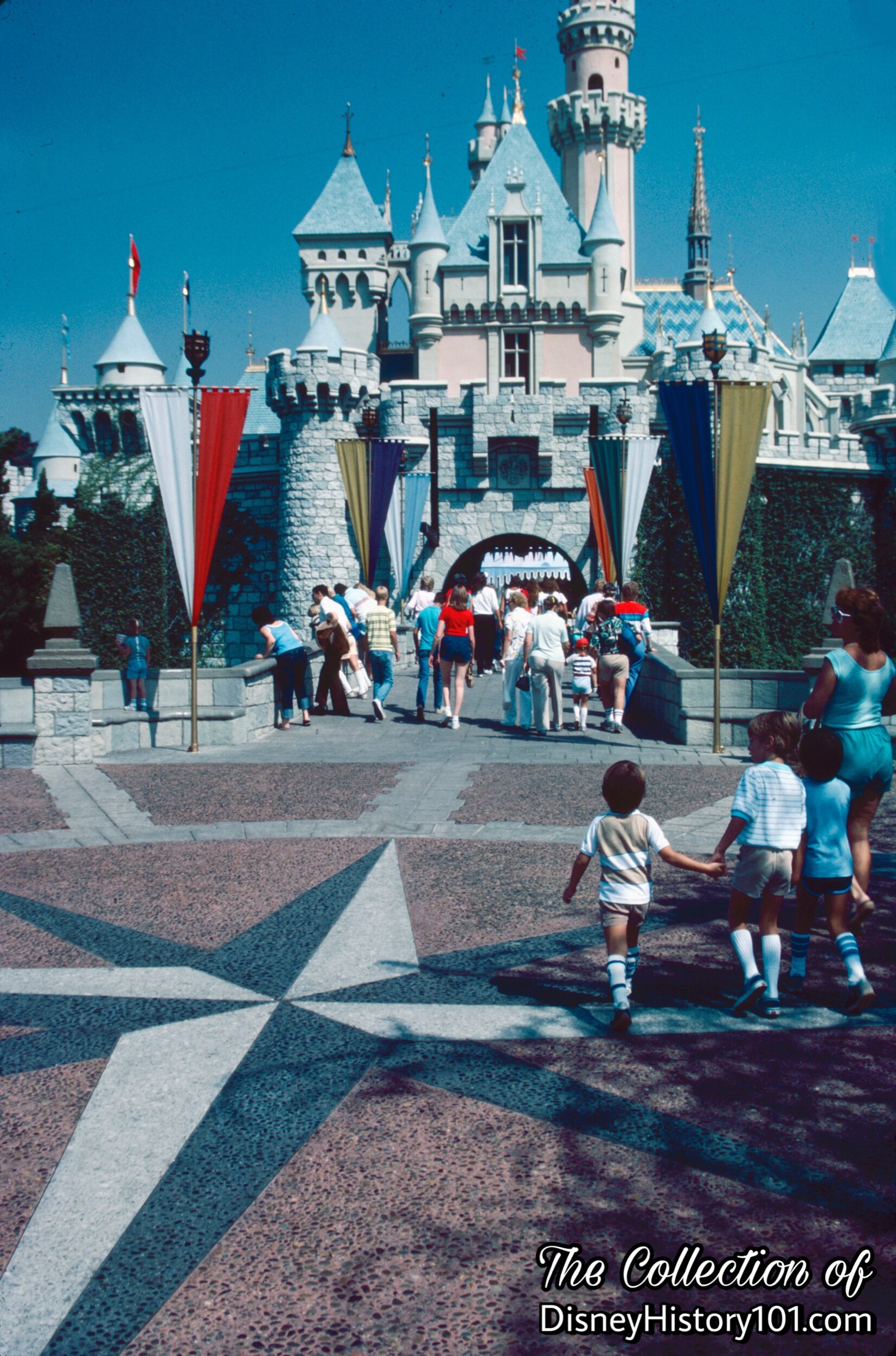
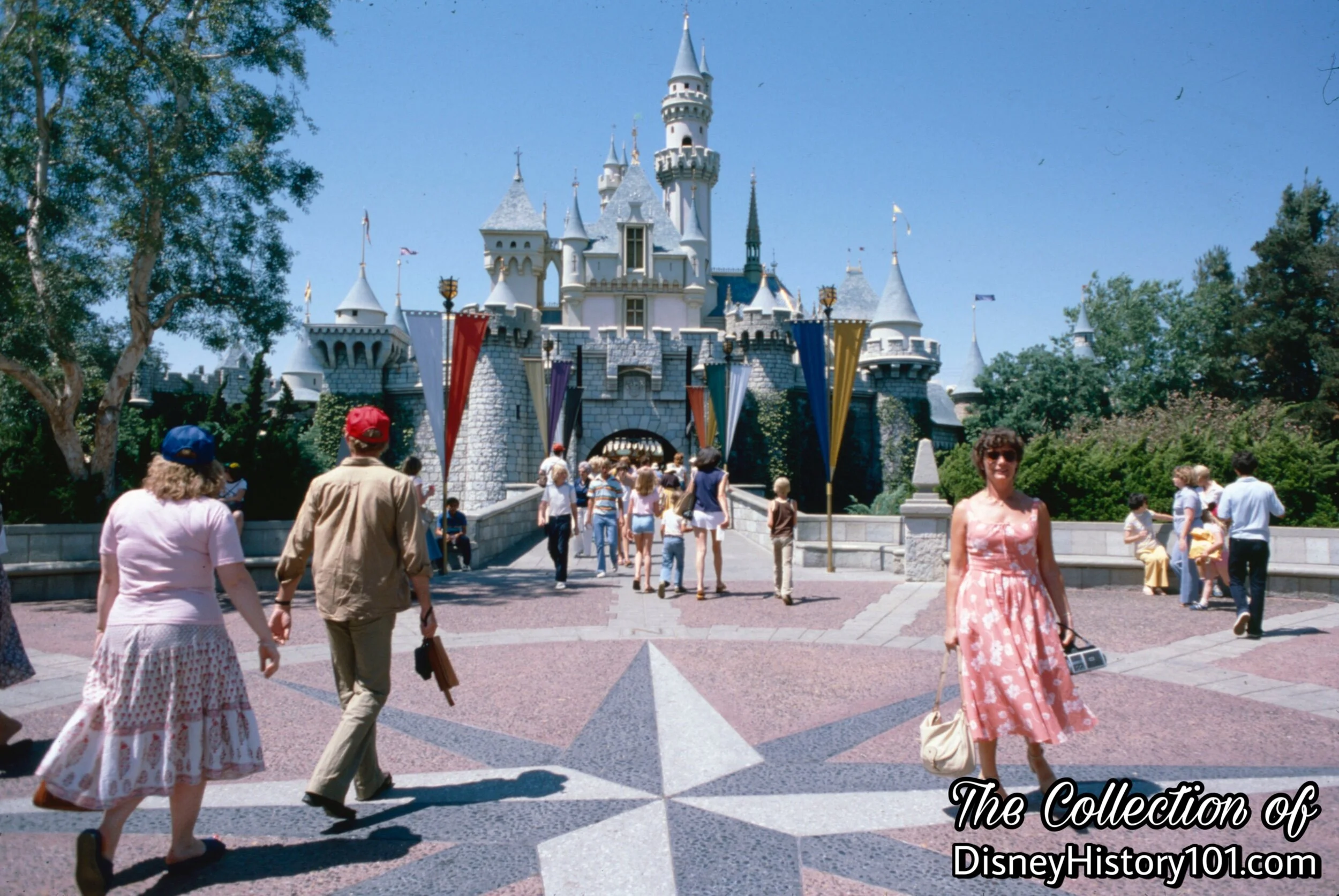
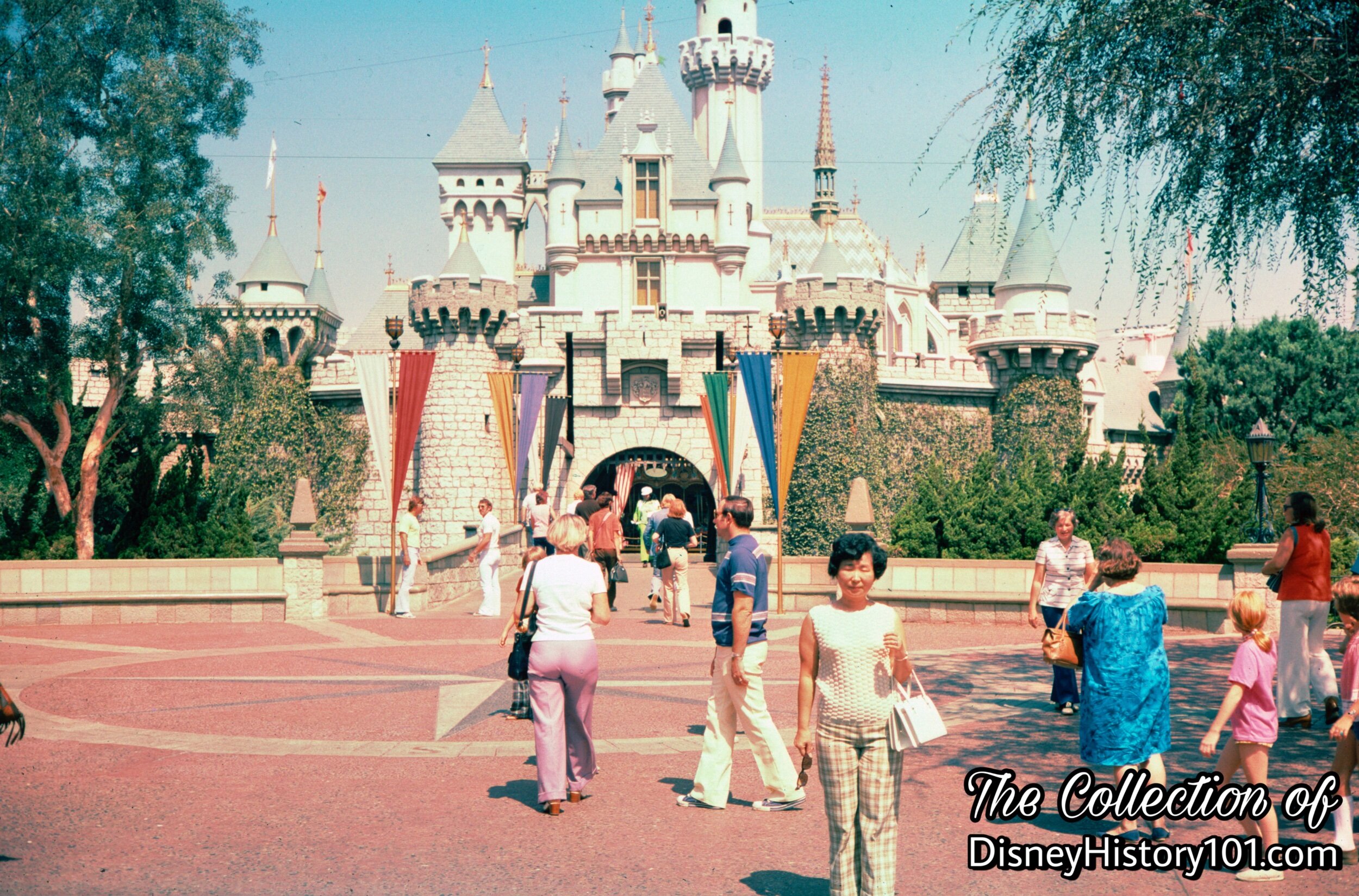
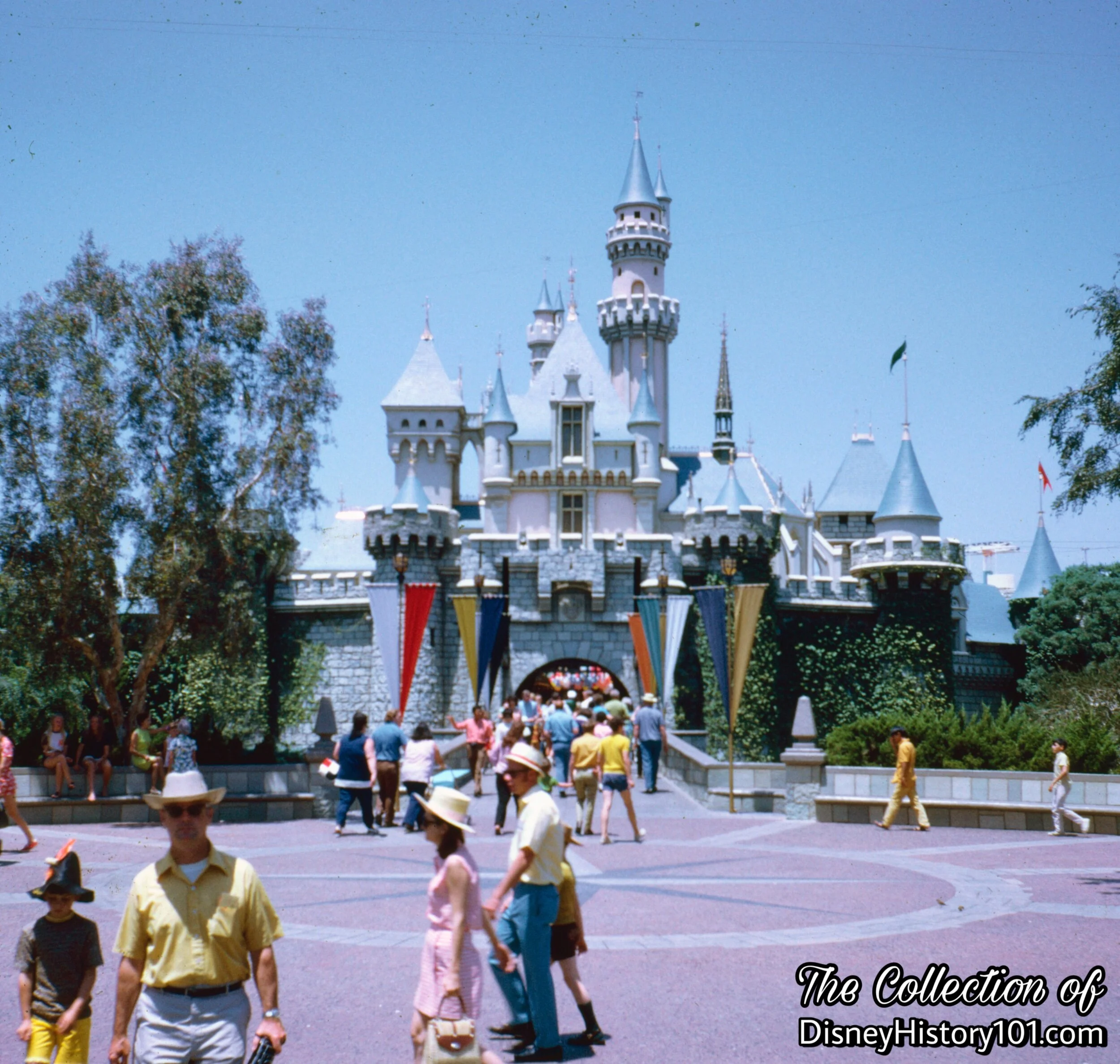
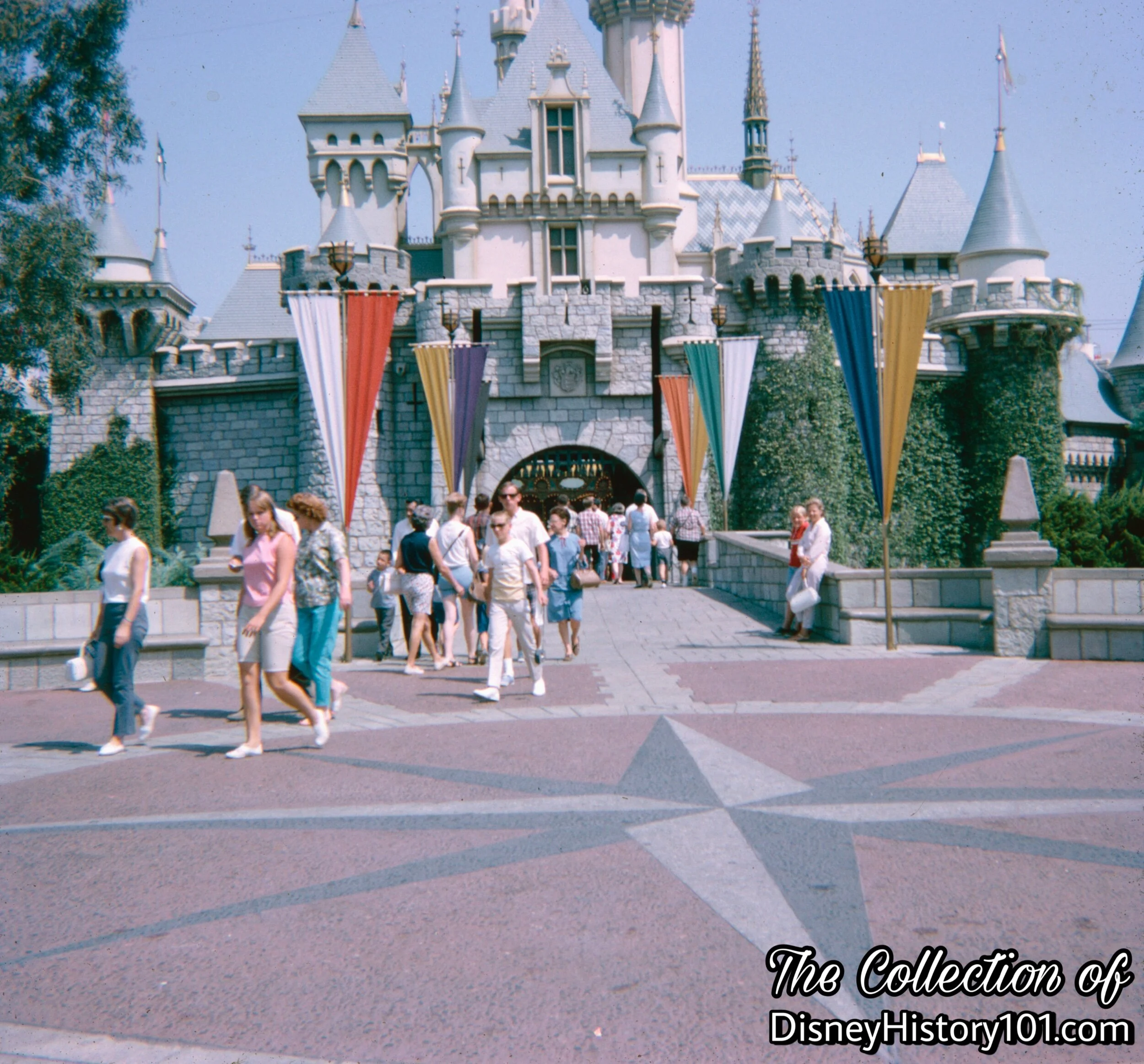
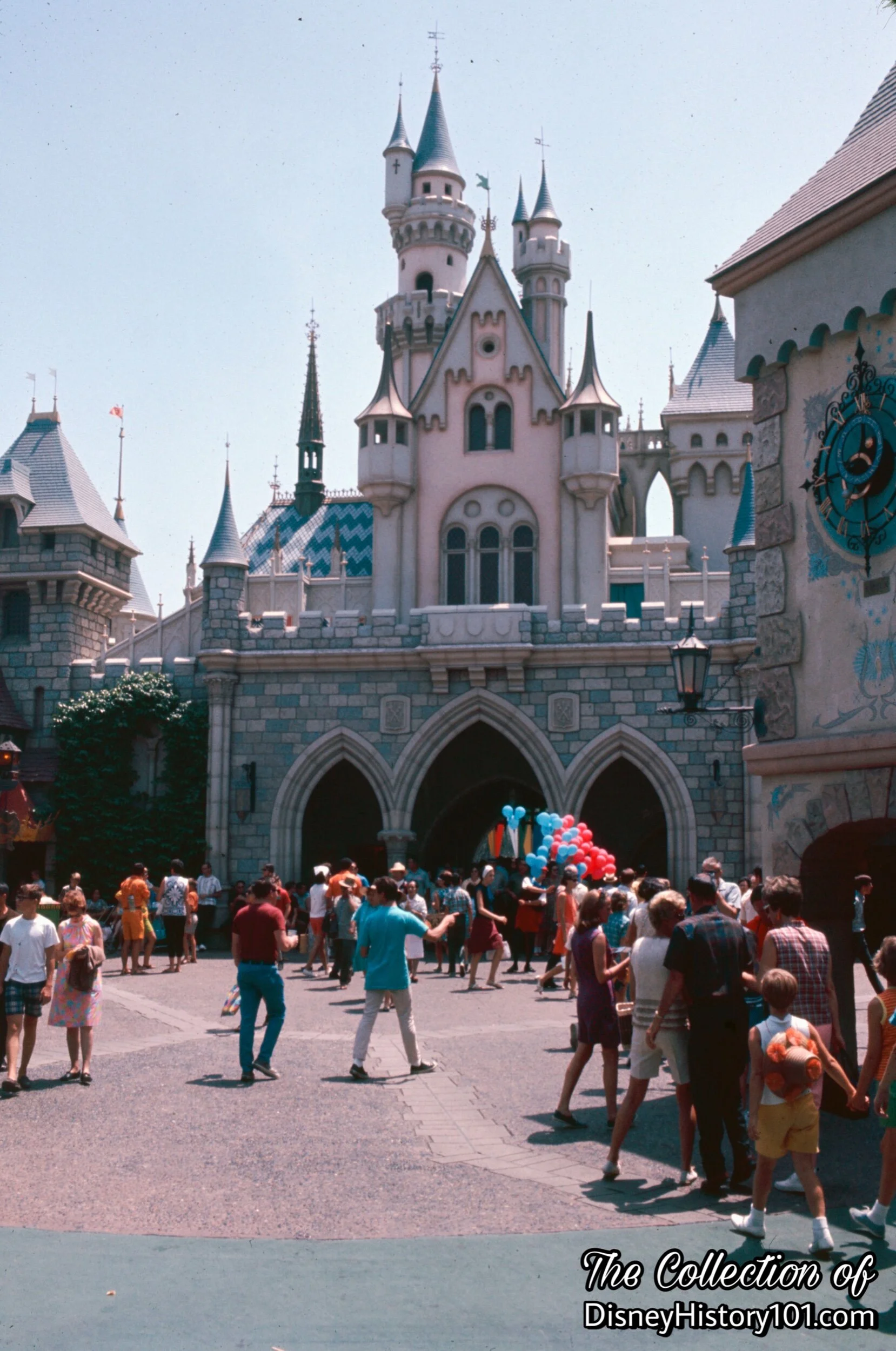
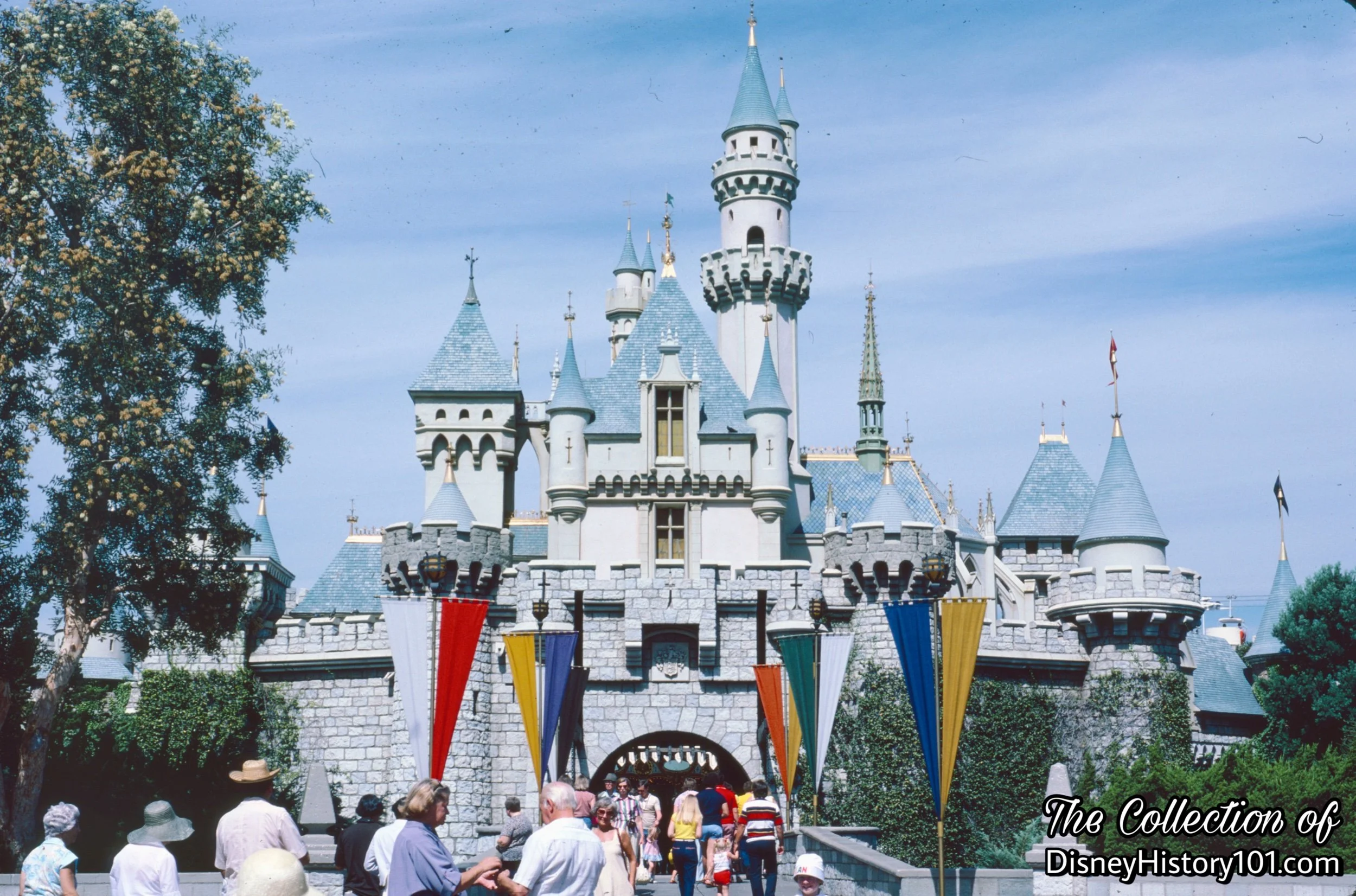
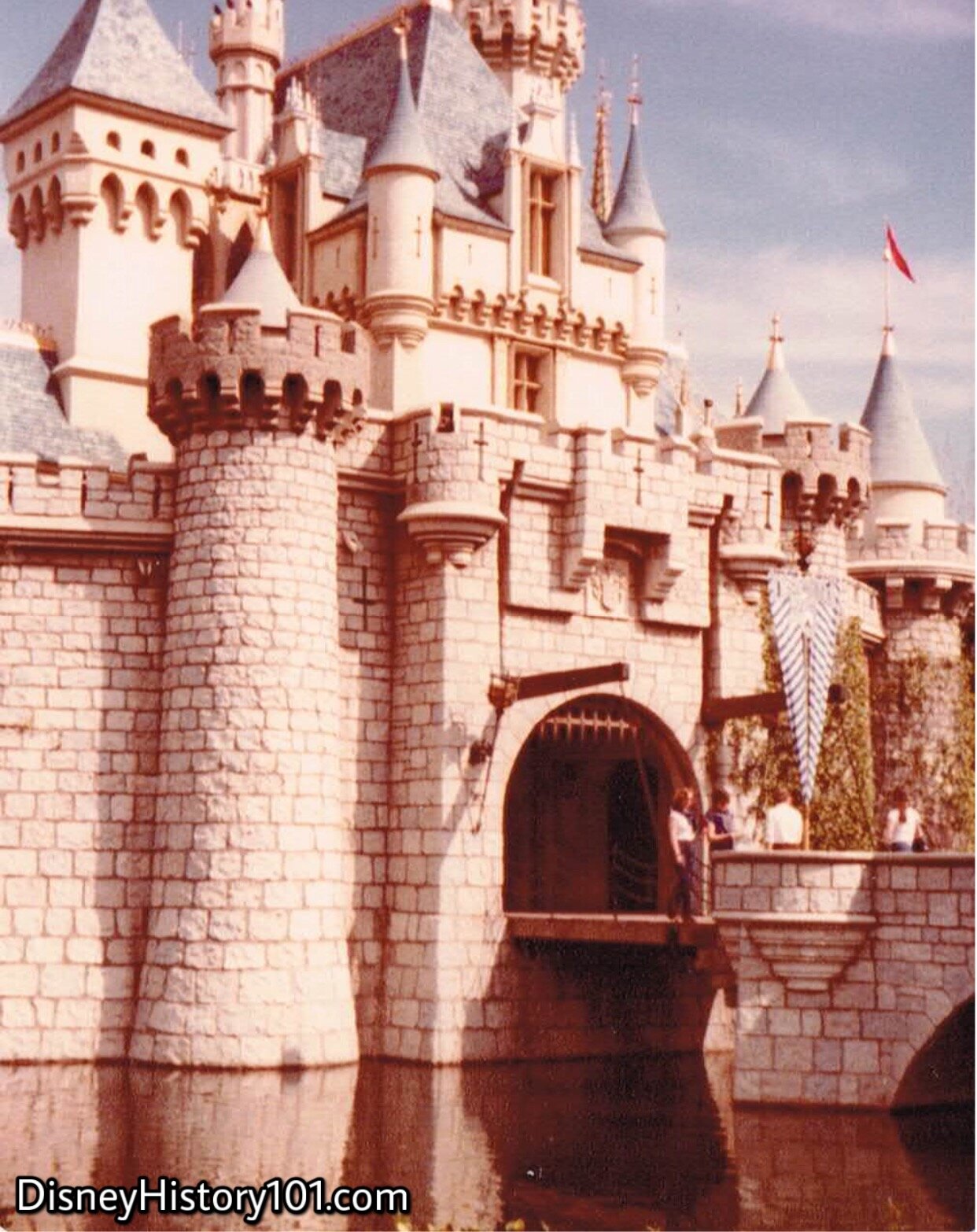
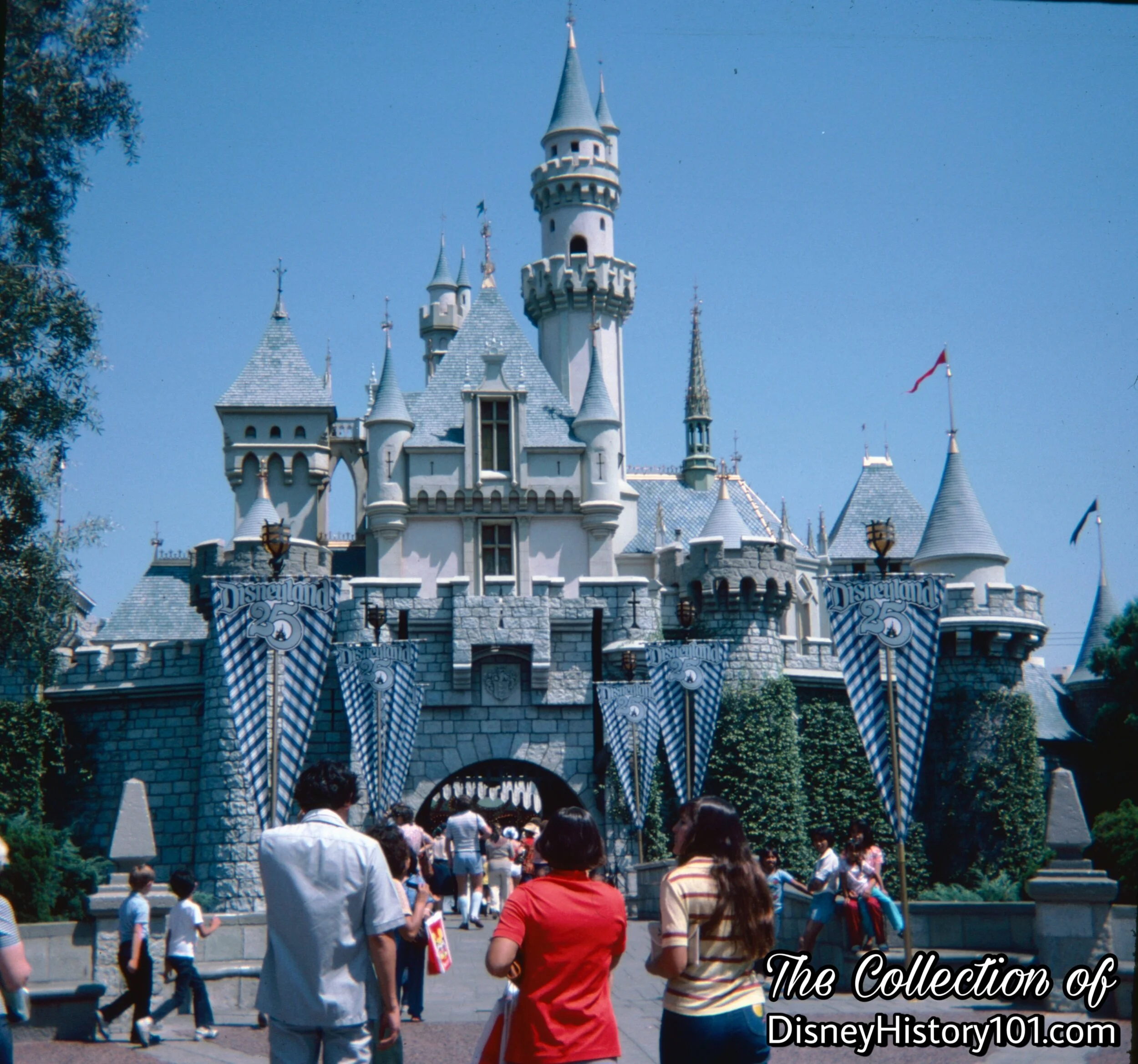
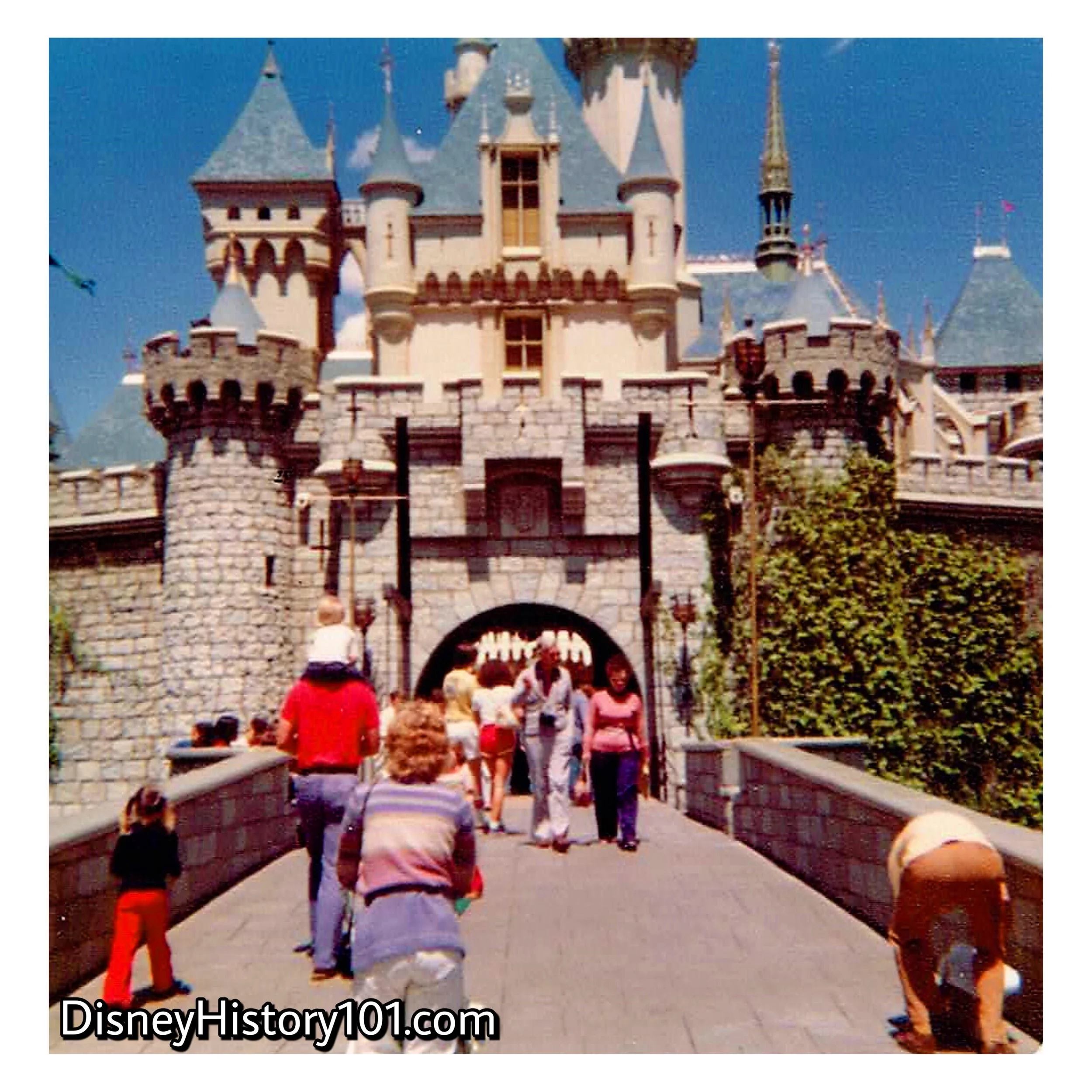
Here, we can see the Disney family crest has been added over the castle’s “dummy portcullis.” In addition, a compass has been added to the Castle Forecourt ground in the “Compass Rose” of Disneyland. The all-new Compass Rose pattern in reminiscent of the introduction of Walt Disney’s Disneyland, where “(each week) as you enter this timeless land, one of these many worlds will open to you - Frontierland, tall tales and true from the legendary past, Tomorrowland, promise of things to come, Adventureland, the wonder world of nature’s own realm, Fantasyland, ‘the happiest kingdom of them all’”, and of course, Main Street U.S.A.! Like a true-life compass, the points of the Compass Rose lead from the Main Street U.S.A.’s hub, and (like spokes on a wheel) into the four cardinal realms of Disneyland!
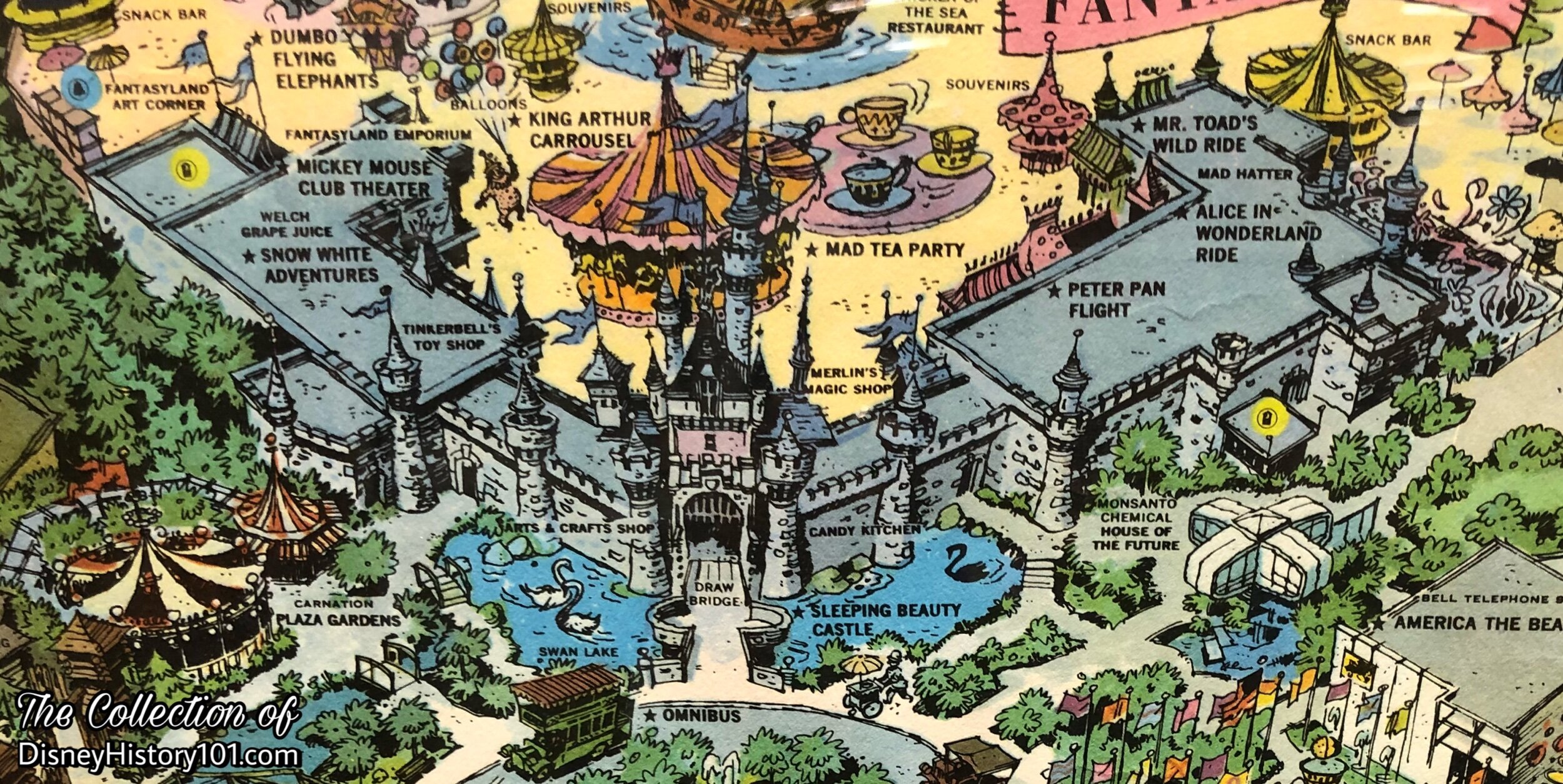
Sam McKim Disneyland Map
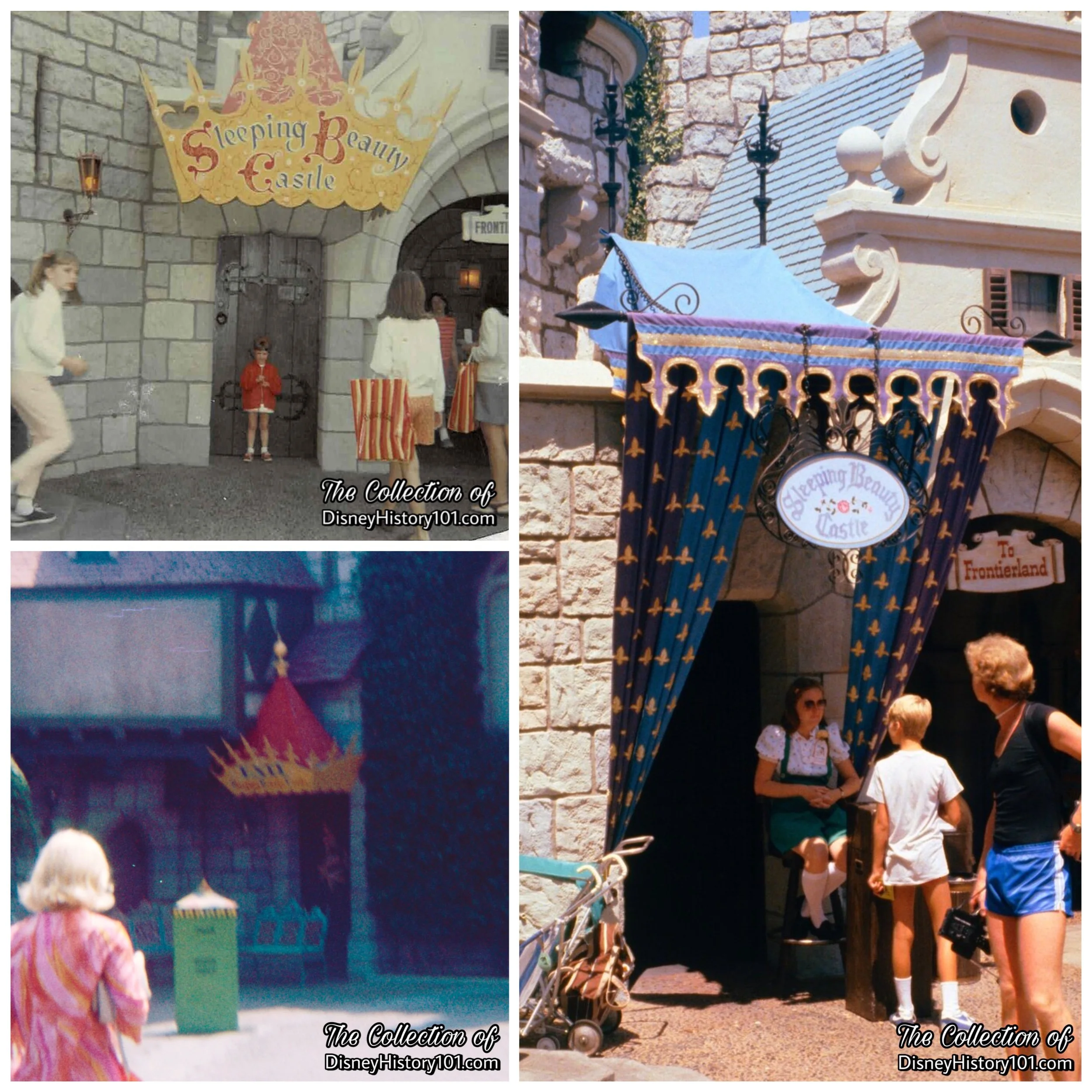
Sleeping Beauty Castle also came to house many services, including wheel chair rental ($5.00 a day) and stroller Rental (ranging from $1.50 - $1.75 in the early days), and two shops - a clock shop, and the A.R. Brooks Corporation’s Candy Kitchen (later renamed Castle Candy Shoppe) which offered a variety of unusual candies!
The song “When You Wish Upon a Star” (lyrics by Ned Washington; music by Leigh Harline) is often associated with Fantasyland and Sleeping Beauty Castle.
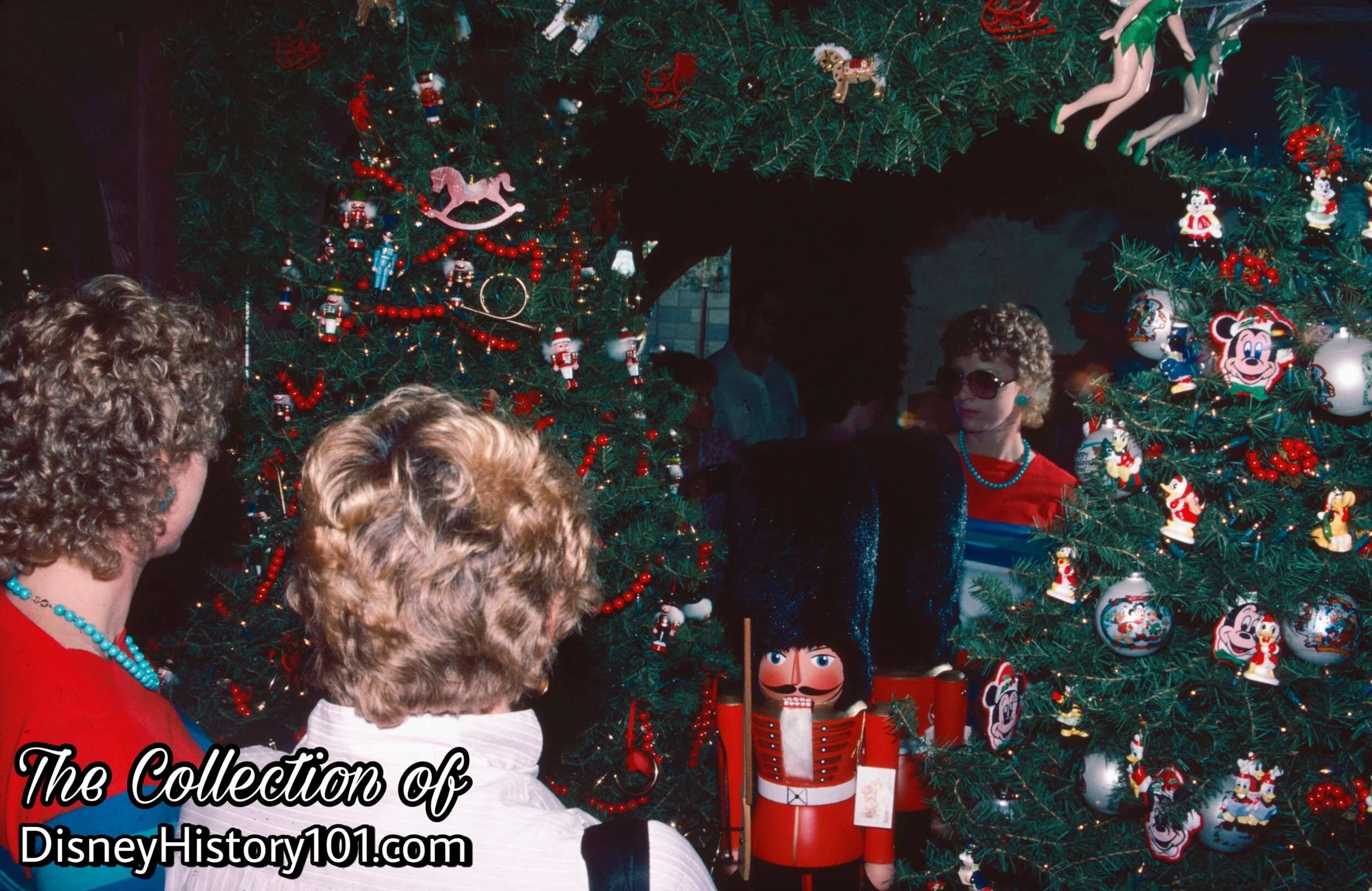
Sleeping Beauty Castle, Castle Christmas Shoppe
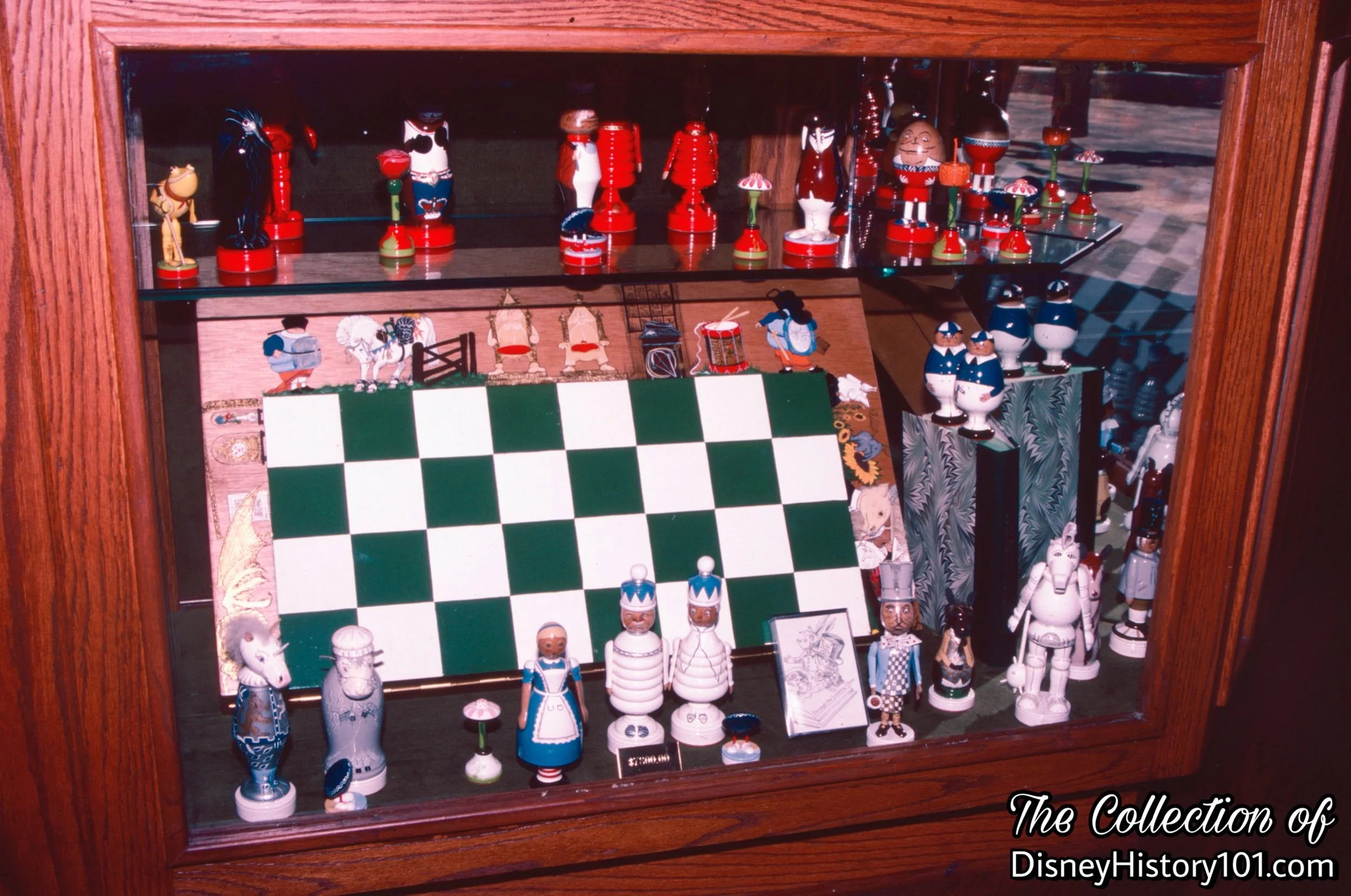
By 1977, Sleeping Beauty Castle archways was home to the Arts and Crafts Shop (specializing in ornate carvings, clocks, music boxes and crafts from “Italy, Sweden, Spain, Norway, England, Poland, Czechoslovakia, and Austria”. The shop offered “inexpensive wooden toys, cuckoo clocks, bear steins and collector’s art pieces, like the popular German ‘Hummel’ figures.” According to Disneyland LINE (April 14, 1977), there was a waiting list for the Hummels (priced at up to $900, and a top seller for three years). At the time of publishing the aforementioned publication, there were “about 45 people on the list”
Sleeping Beauty Castle, Castle Christmas Shoppe
Sleeping Beauty Castle, Castle Christmas Shoppe
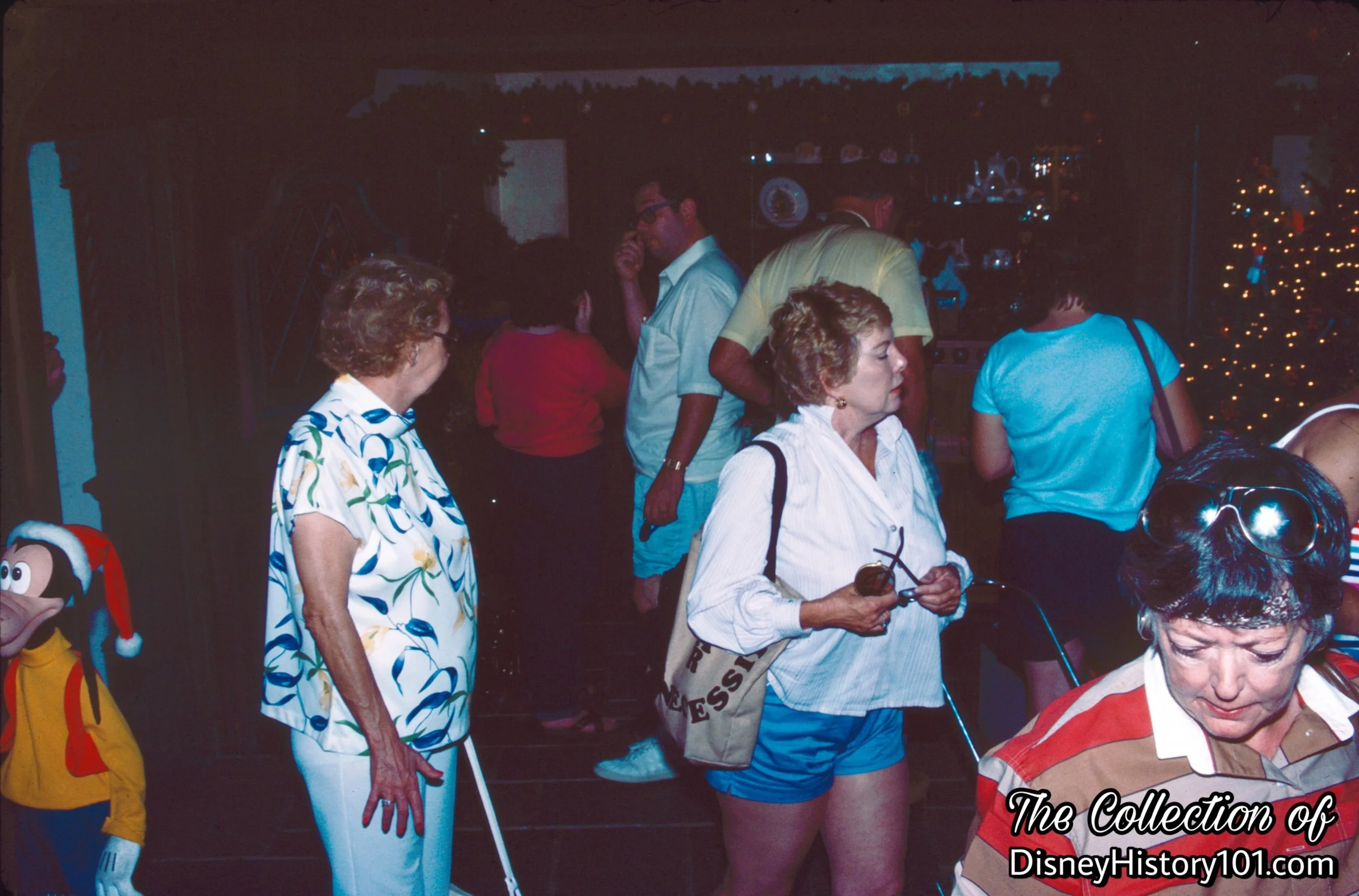
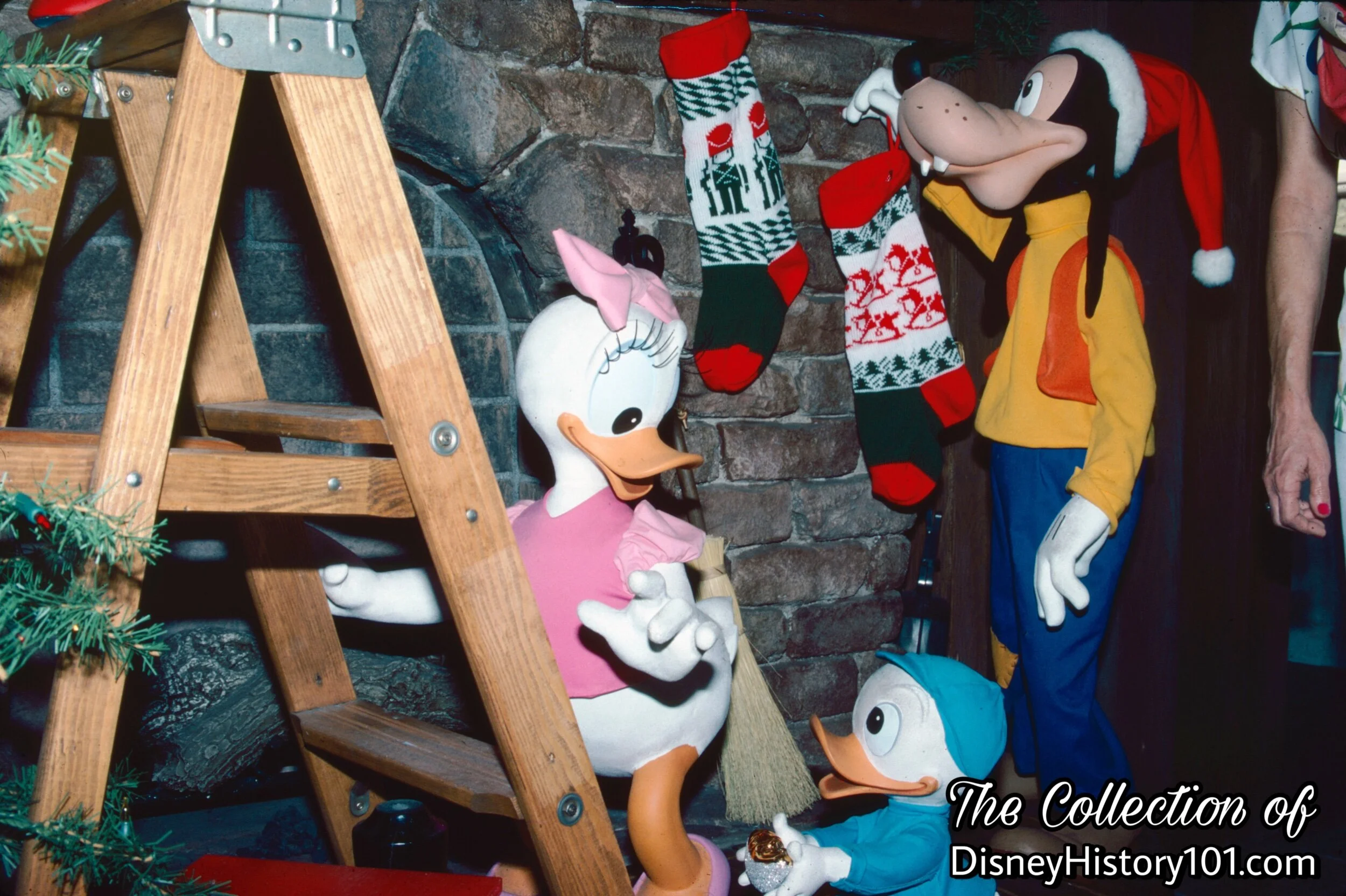
Its Christmas year-round with Yuletide decorations and gifts featuring the Disney characters.
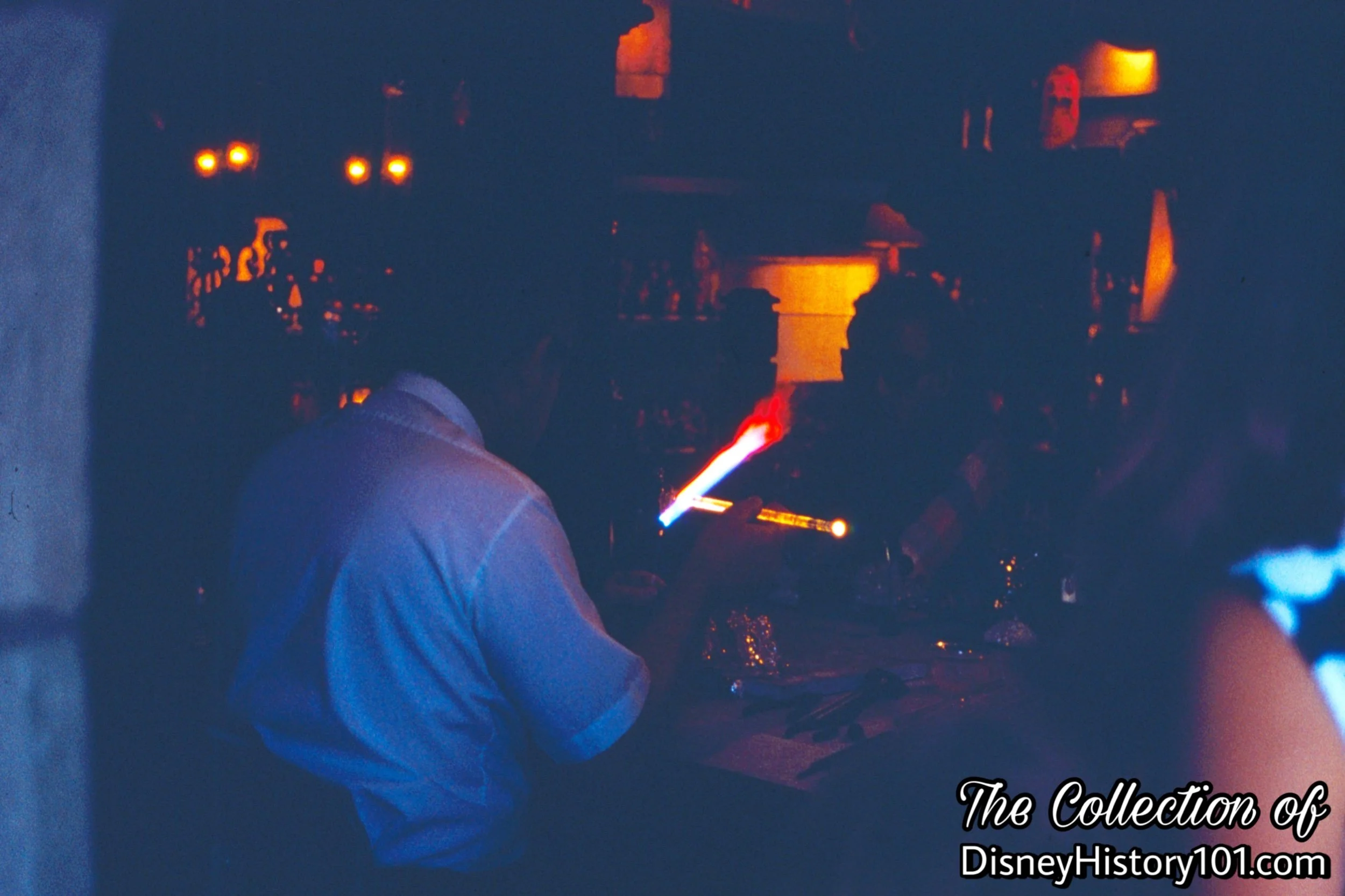
A Lampworker at the Disneyland Glass Blower
By (April-June) 1981, WED Imagineering surveys of Sleeping Beauty Castle (and it’s shops) were conducted, including the 2,248 square-foot structure, its 351 square-foot Candy Shop, the 583 square-foot Arts and Crafts, and the 116 square-foot Glass Blower. The 4,675 square-foot Courtyard was also surveyed.
All of these were evaluated before the forthcoming New Fantasyland refurbishment.
Sleeping Beauty Castle, (August, 1967)
Sleeping Beauty Castle Walk-Through Attraction and Attractions Hostess with whom “the magic begins” (right), August, 1981.
In 1968, this attraction about the slumbering princess received a major expansion. The story of Sleeping Beauty was revealed in miniature sets and tableaux. The following four statistics are based on the results of Disneyland Attractions Time Studies gathered in 1968:
Theoretical Hourly Capacity : 1200
Instantaneous Capacity : 130
Total Area Available for Guests: 1262 square feet
Dispatch Interval Time: :03
Average Time Spent in Castle: 6:12
The dioramas slightly differed through the 1980s and 1990s.
Guests continued to enter Sleeping Beauty Castle to see diorama scenes from Walt Disney’s popular film “Sleeping Beauty” for a number of decades until the walkthrough was closed in 2001. The attraction remained closed until 2008. But by 2008 (during the Disney Princesses theme and experience initiative), WDI master plans entertained the concept of some sort of Buena Vista Home Entertainment and Blu Ray “synergy project” involving the Castle Walk-Through. When the attraction reopened that year (in 2008), it featured numerous pluses!
Sleeping Beauty Castle Attraction, (December 2, 1960)
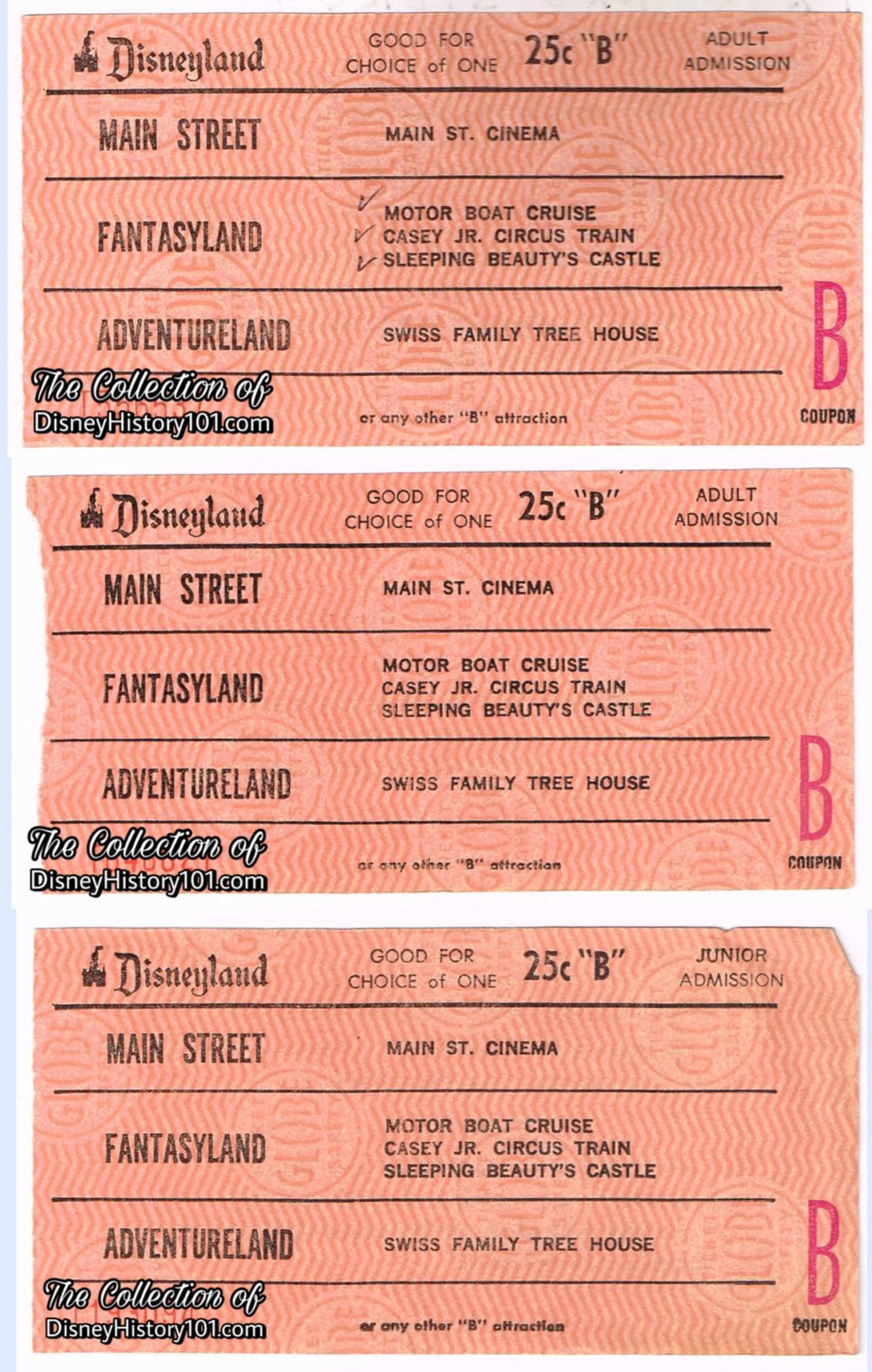
Disneyland Jumbo "B" Adult Attraction Coupon (25 Cent Value) ; Disneyland Jumbo "B" Junior Attraction Coupon (25 Cent Value) ; Disneyland Jumbo "B" Adult Attraction Coupon (25 Cent Value)
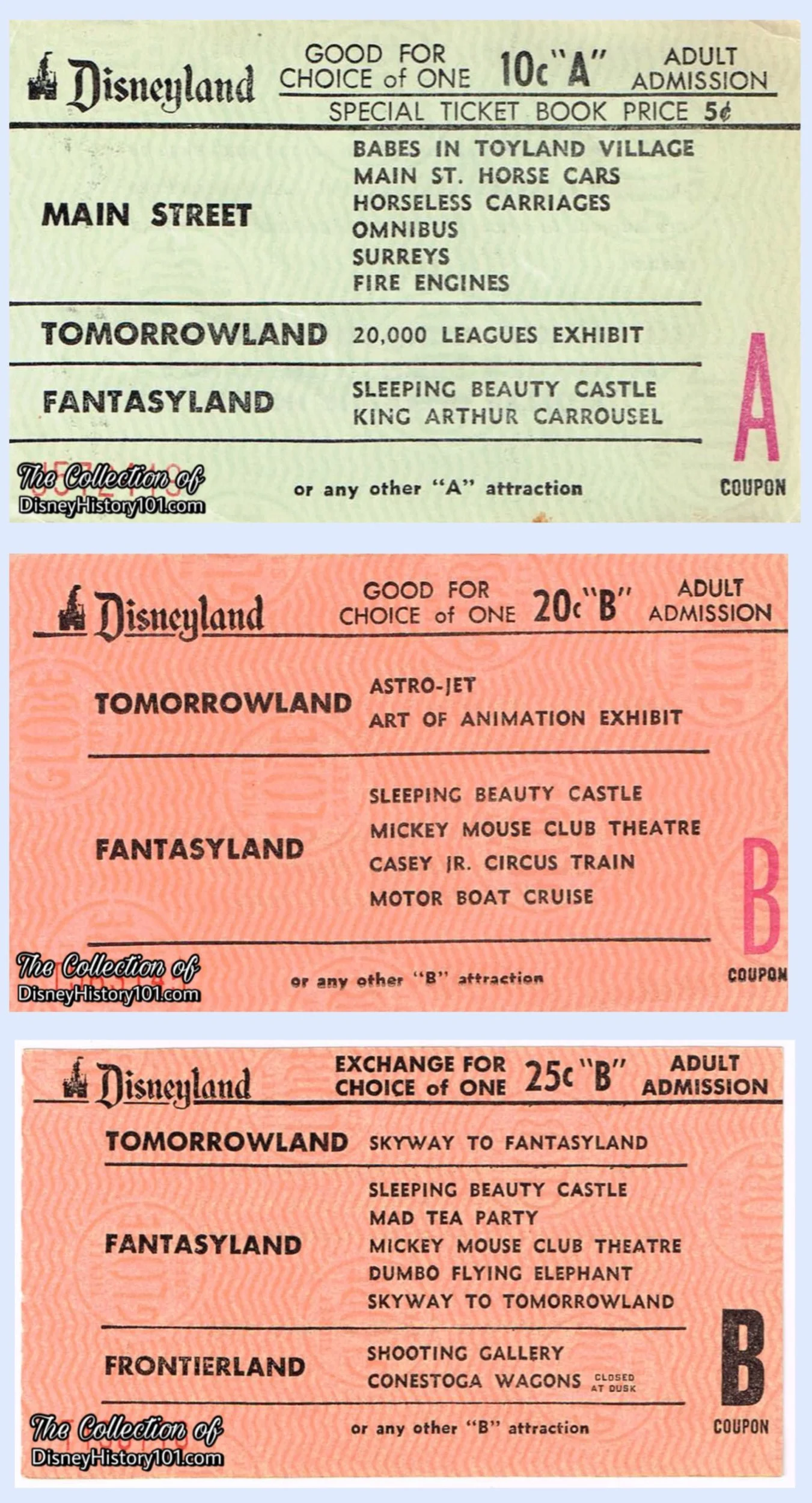
Disneyland "B" Adult Attraction (20 Cent Value), May of 1960 - August of 1964 ; Disneyland "A" Adult Attraction (10 Cent Value), December of 1961 - September of 1963 ; Disneyland Jumbo "B" Adult Attraction (25 Cent Value)
Sleeping Beauty Castle, (Winter, 1956)
Sleeping Beauty Castle
Sleeping Beauty Castle
Sleeping Beauty Castle
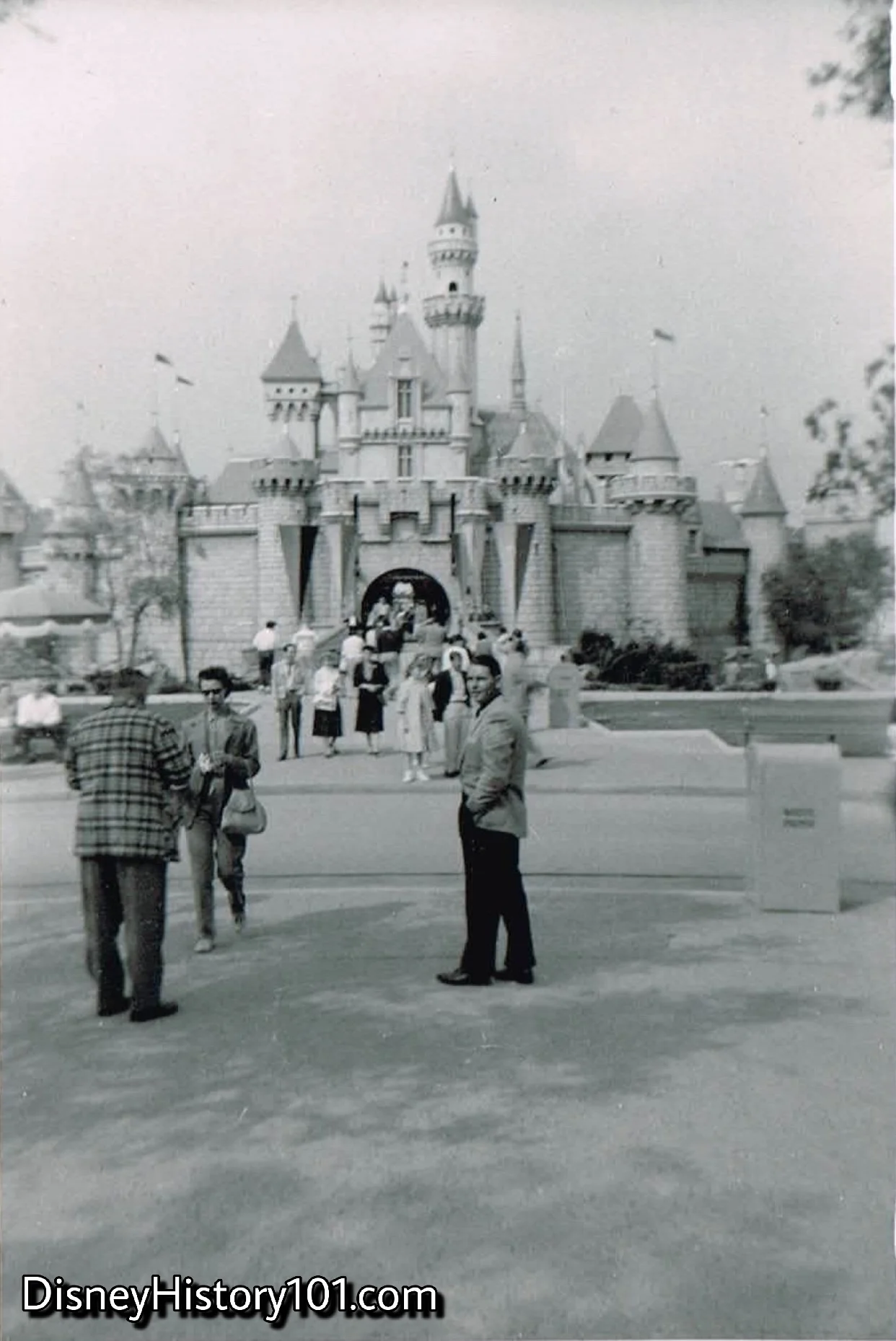
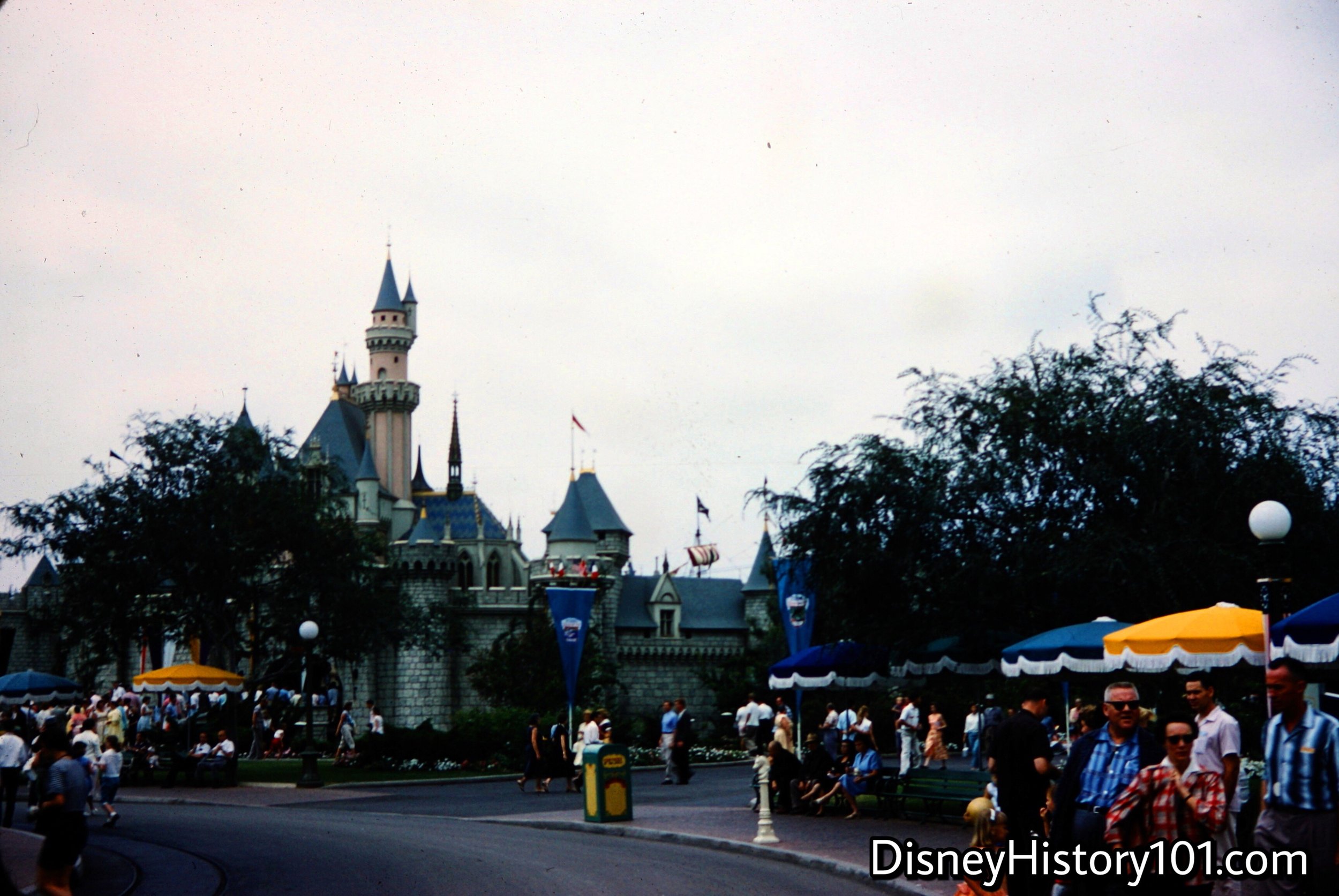
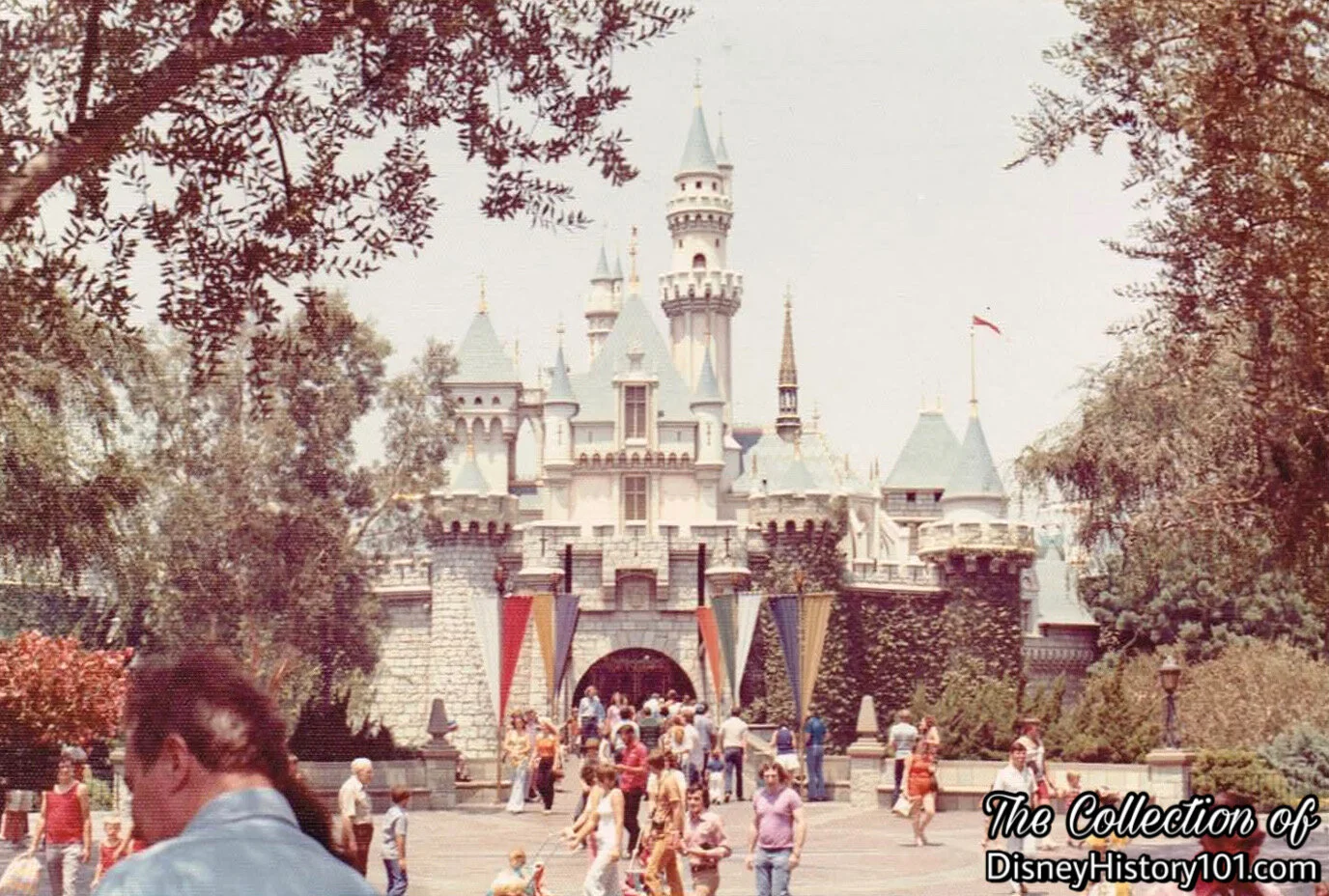
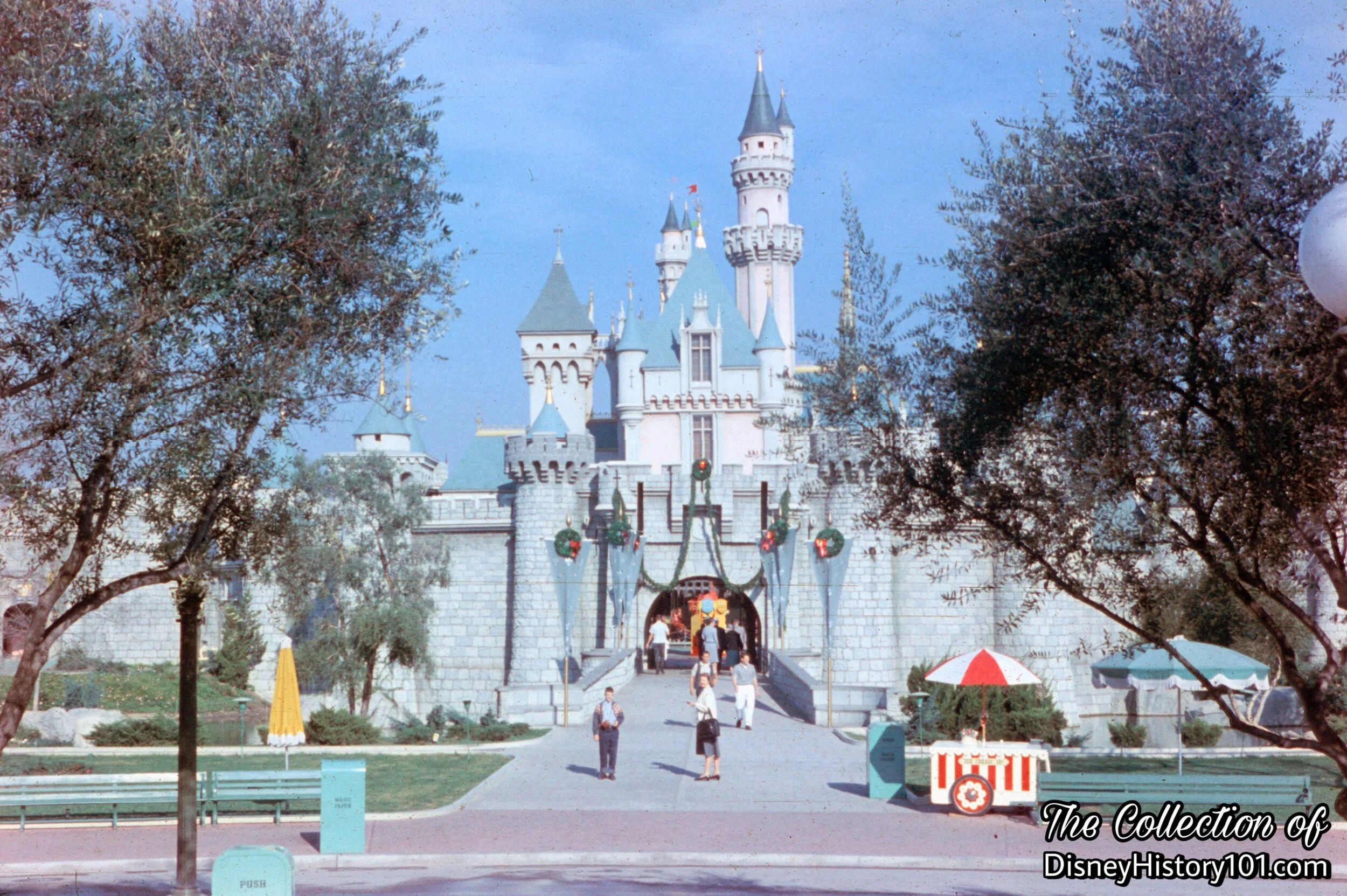
You may notice that there was no Compass Rose before Sleeping Beauty castle in the early days of Disneyland.
Sleeping Beauty Castle, July 19, 1958
Sleeping Beauty Castle
Sleeping Beauty Castle, (December of 1959)
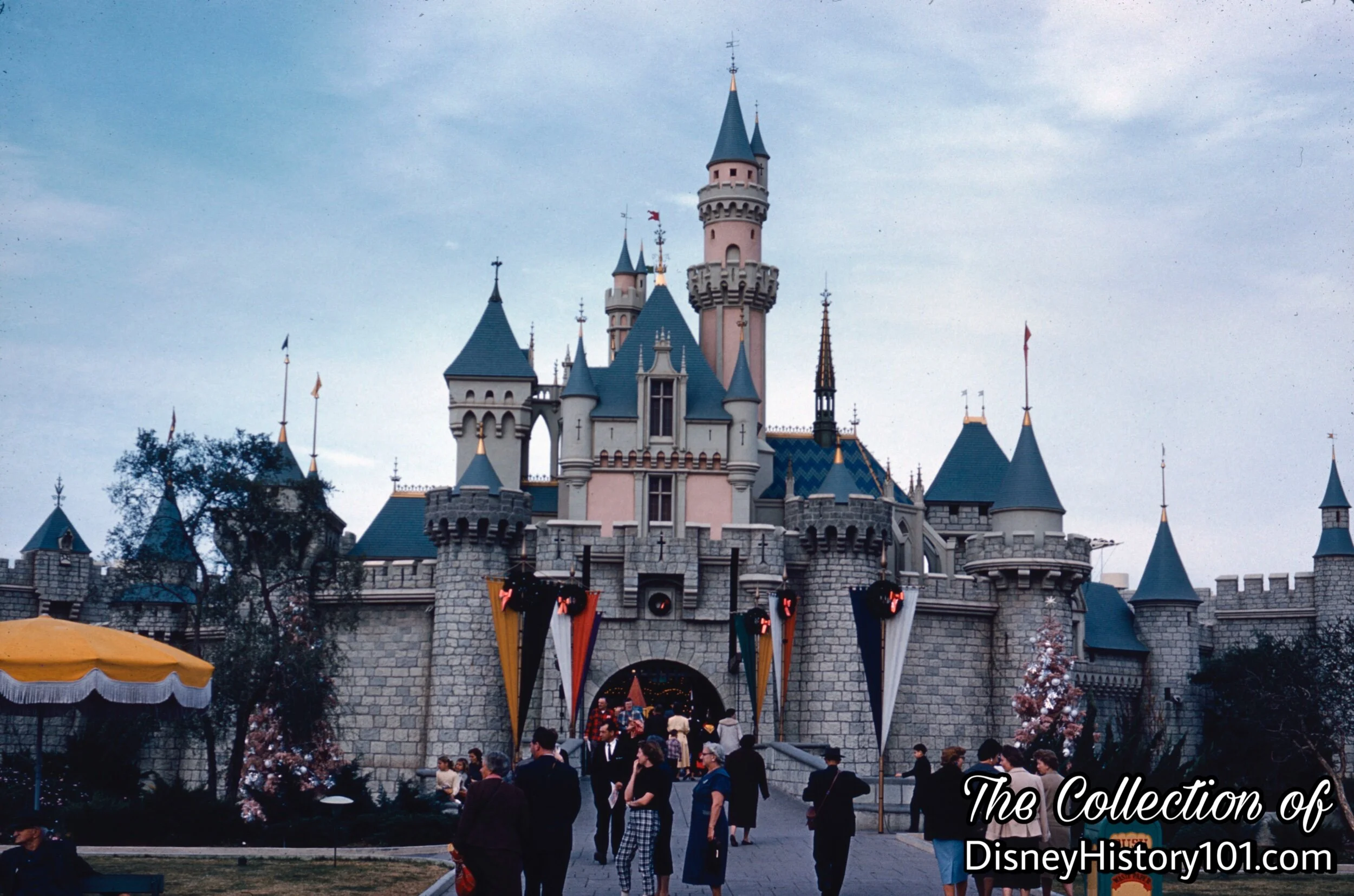
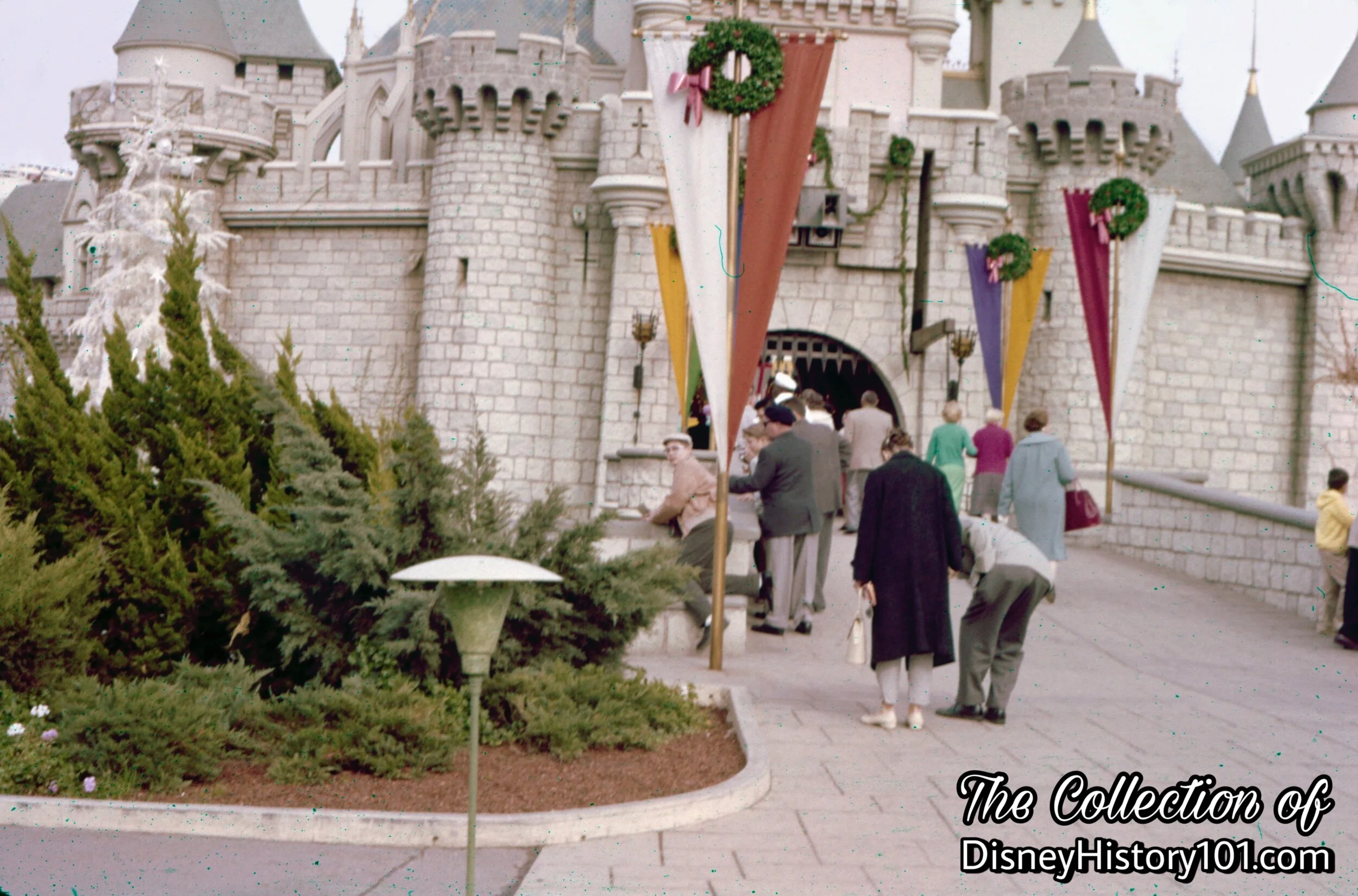
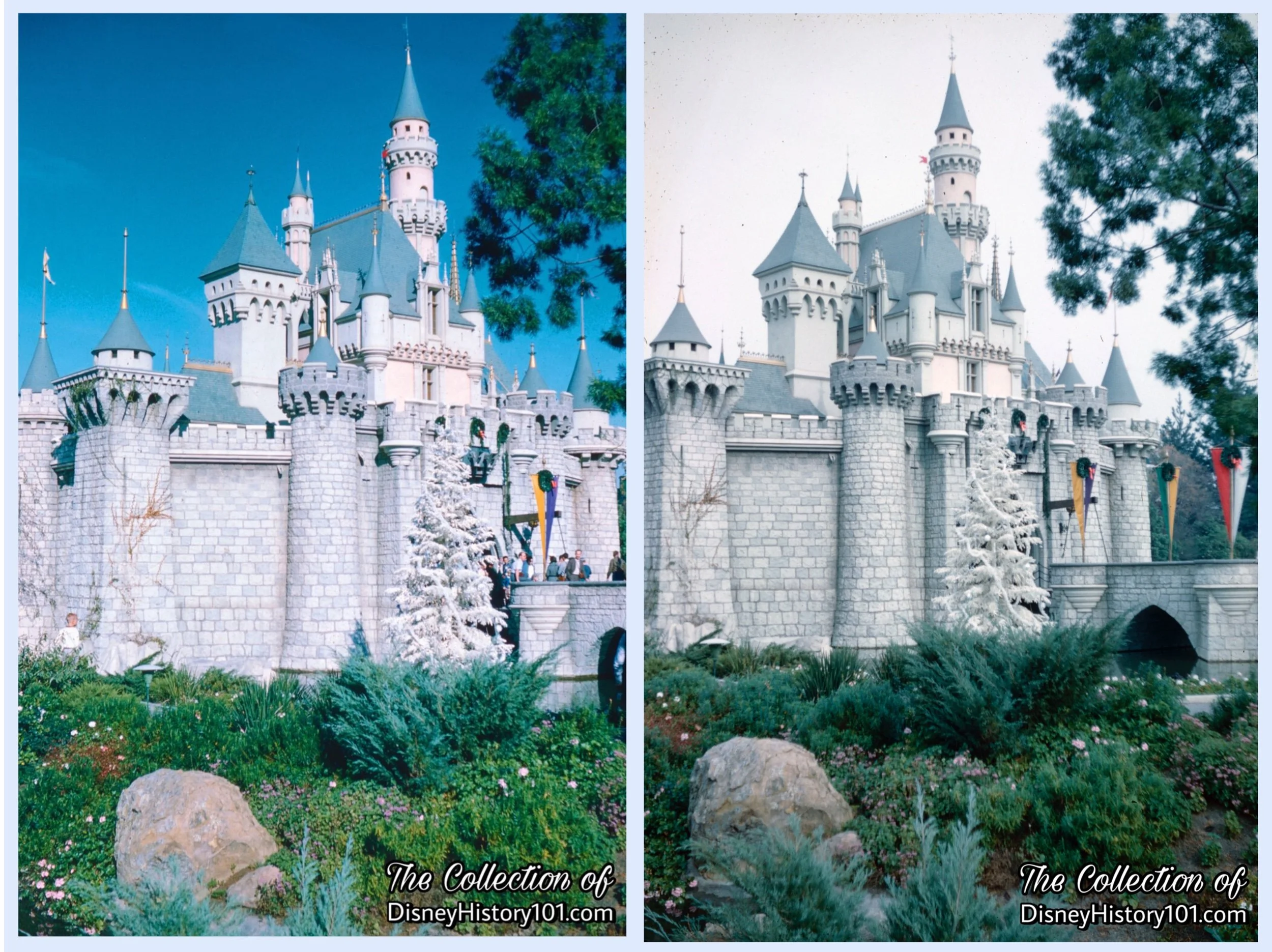
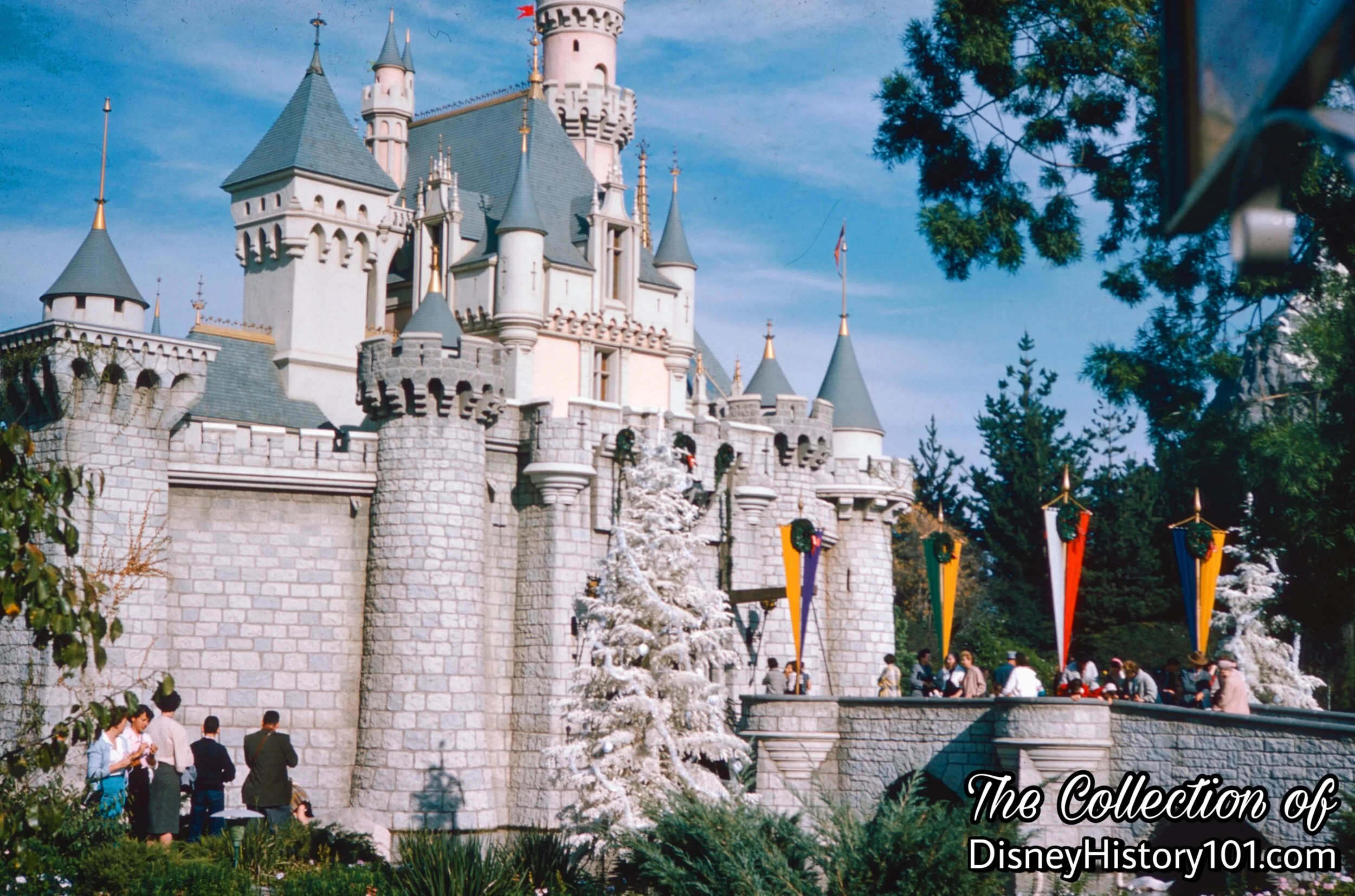
Sleeping Beauty Castle and Christmas Tree, (Winter, 1959)
Sleeping Beauty Castle
Sleeping Beauty Castle
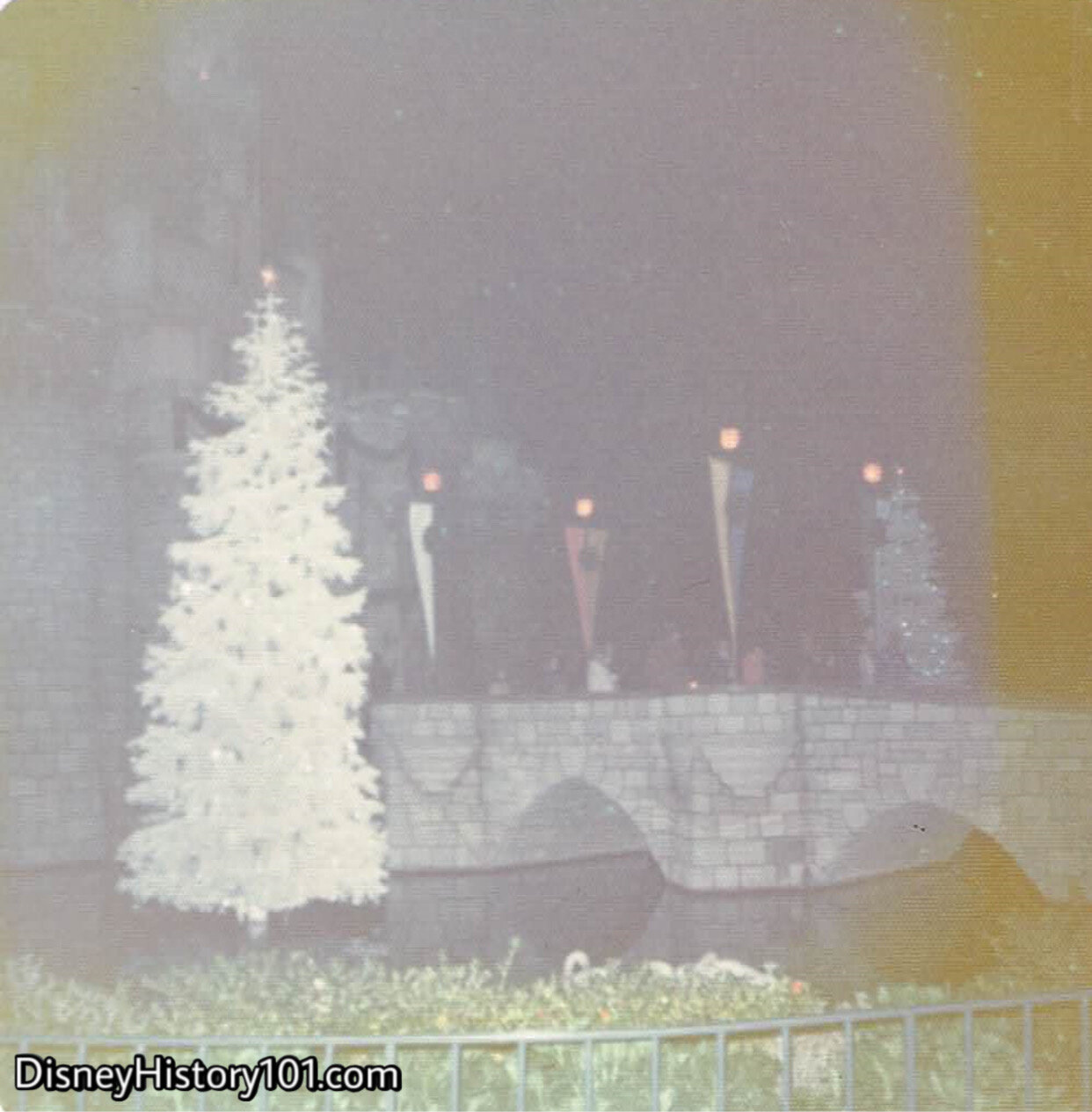
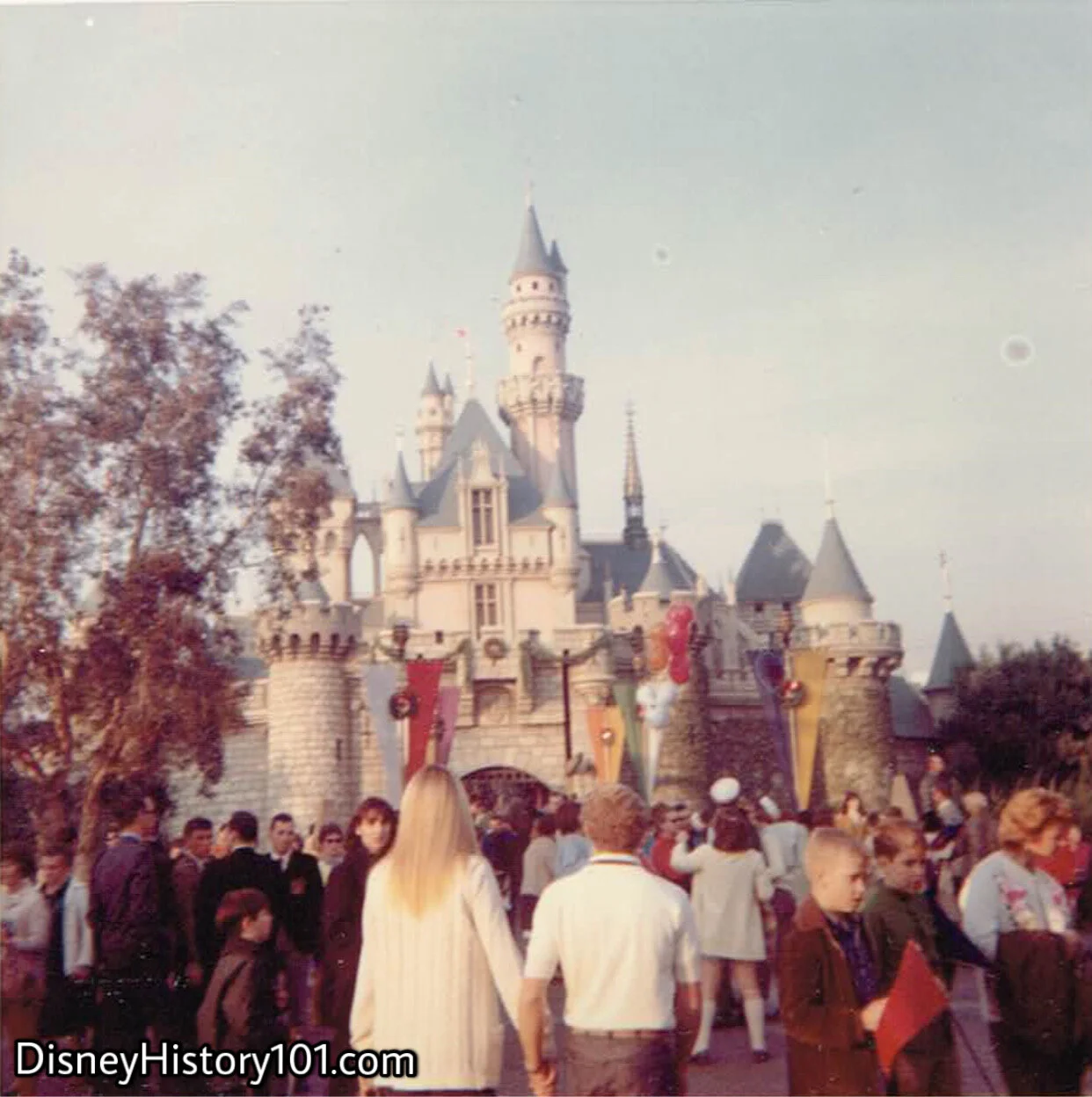
During the early days of Disneyland, Christmas trees would be positioned here, not in Town Square. The cover of Dell Comics Christmas in Disneyland (December of 1957) would preserve this tradition.
Sleeping Beauty Castle, (1969)
Sleeping Beauty Castle, (1980)
Sleeping Beauty Castle, (August, 1980)
Sleeping Beauty Castle, (1980)
Sleeping Beauty Castle, (1980)
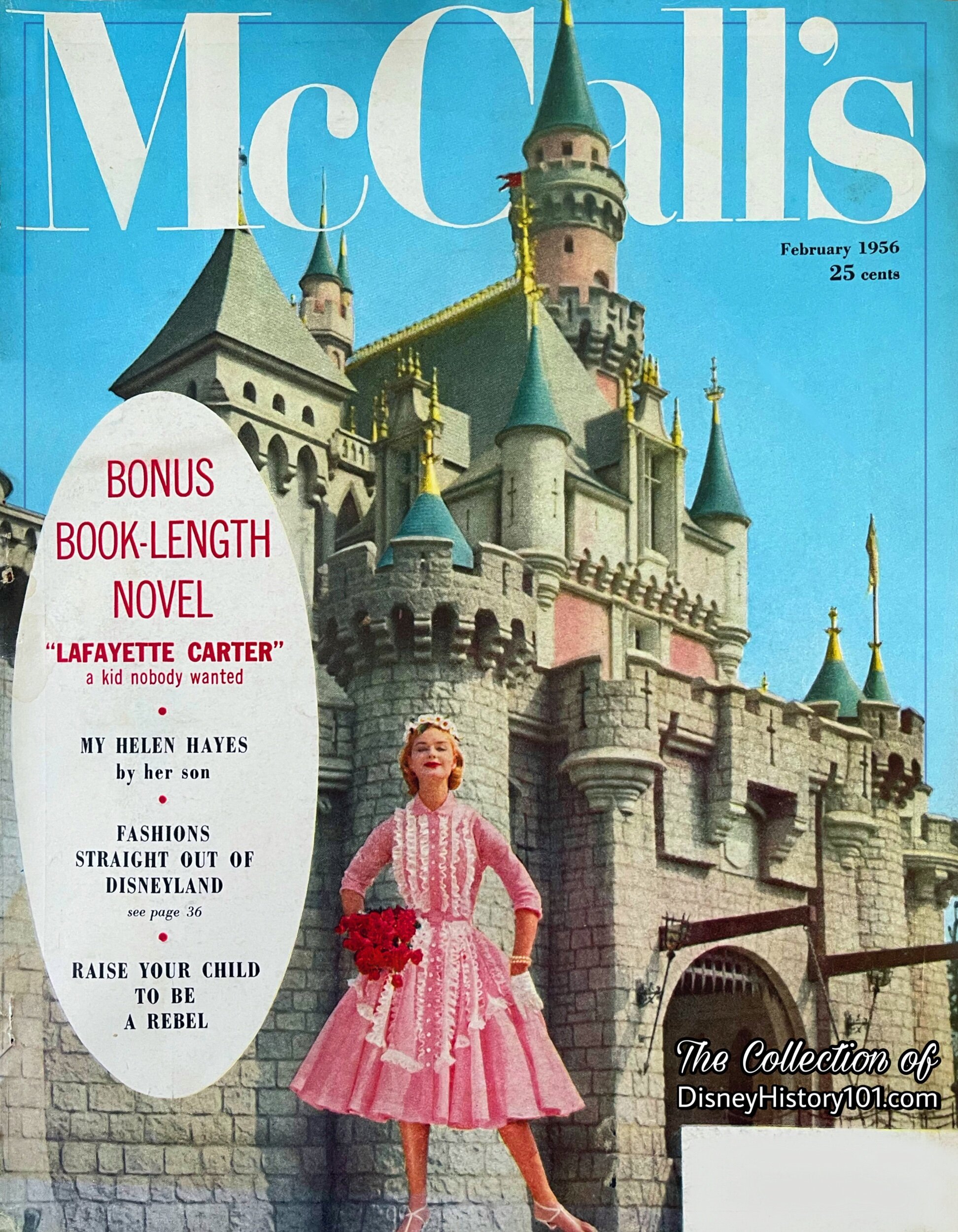
Sleeping Beauty Castle on McCall’s magazine, February of 1956.
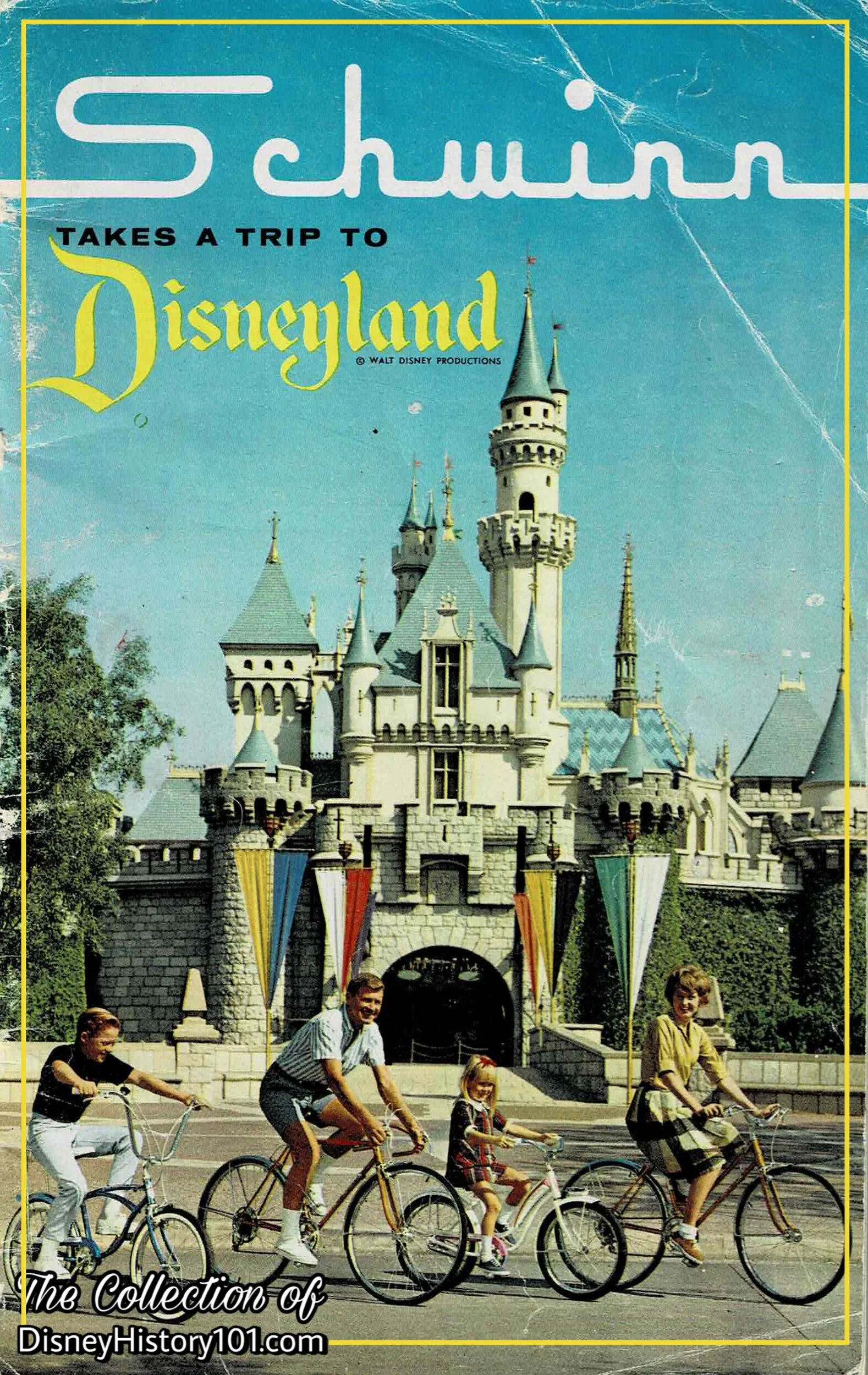
Disneyland (and Sleeping Beauty Castle & Disneyland Compass Rose) was used as the backdrop for numerous magazine articles (in publications like McCalls, 1956 ; Better Homes and Gardens, 1956) and catalogues (as American Playground Device Company, 1956 ; Schwinn Bicycles) as far back as 1955.
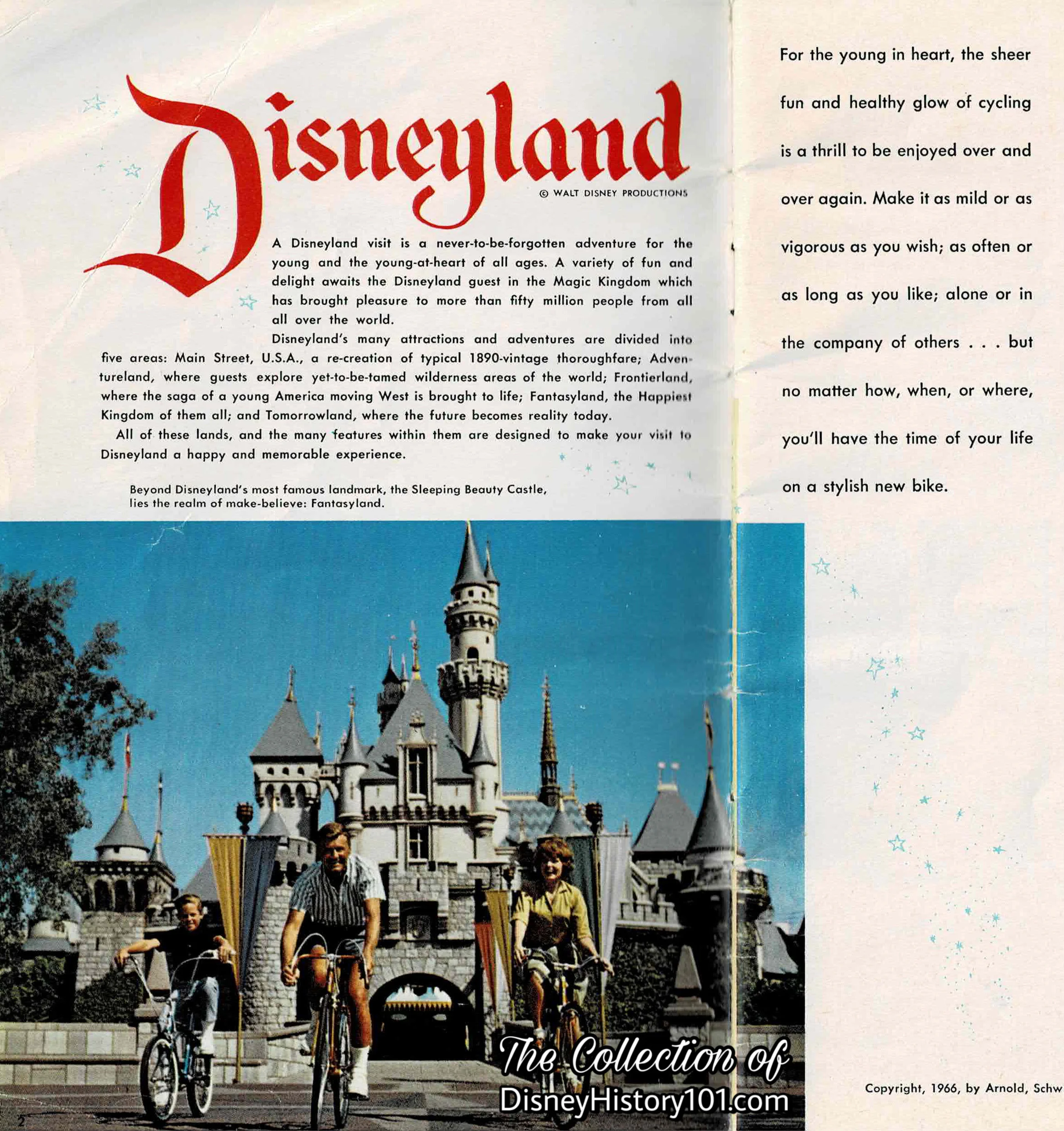
The Compass Rose (before Sleeping Beauty Castle) was occasionally utilized as the backdrop for promotional photographs used in advertisements and press release material. For instance, models wearing Manhattan (“quality makers of the finest men’s furnishings, sportswear”) and Lady Manhattan Mansmooth ®️ Batiste Sport Shirts were photographed here for a 1962 advertising campaign. A few years later, photographs for this Schwinn catalogue were shot at Disneyland during the Tencennial celebration of 1965 (the cover of which is pictured above).
“Schwinn Takes A Trip To Disneyland” Catalogue, (1966)
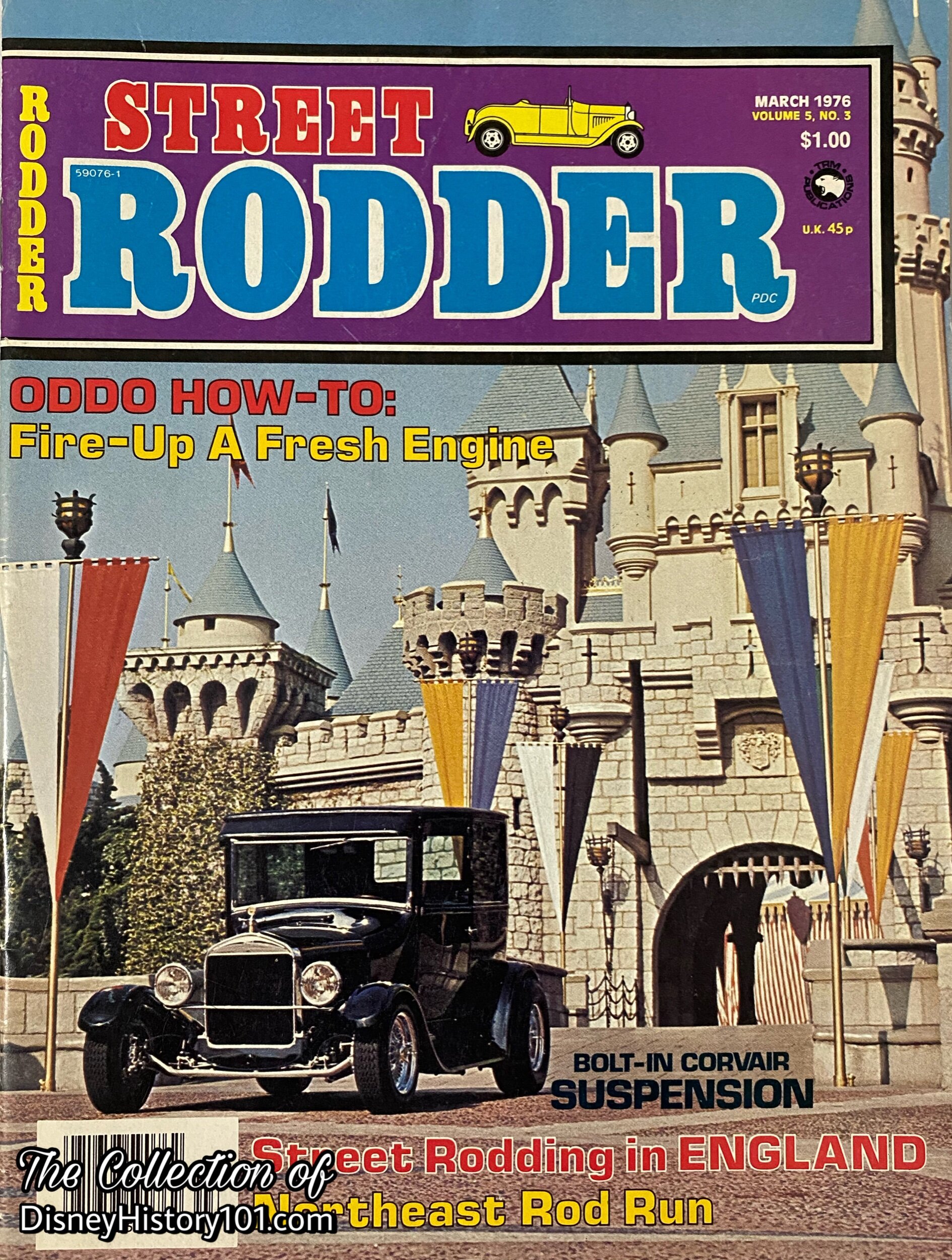
Street Rodder, March of 1976
When Disneyland was closed, it was very common to see vehicles parked in Compass Rose for some promotional feature.
In 1984, a GM Pontiac J2000 was parked here for a National Car Rental Advertisement in coordination with the PSA “Magical Smiles Tour.”
“Schwinn Takes A Trip To Disneyland” Catalogue, (1966)
Sleeping Beauty Castle was also featured in a Look Magazine photo shoot (in conjunction with new Disneyland 3-D post cards) on May 23, 1966.
Sleeping Beauty Castle was also featured in another type of promotional form of media - the music video! Presumably during the winter of 1974, the location was used as the setting for a few shots featured in Karen and Richard Carpenter ‘s “Mr. Postman” music video, released in 1975. Sleeping Beauty Castle Courtyard was occasionally appeared in promotional television spots, as when it was staffed and operated for an RCA commercial (filmed April 10th, 1963). The location occasionally appeared in promotional media, as when Michael Jackson sang “When You Wish Upon A Star” near Sleeping Beauty Castle and Swan Lake for the televised Disneyland 25th Anniversary special.
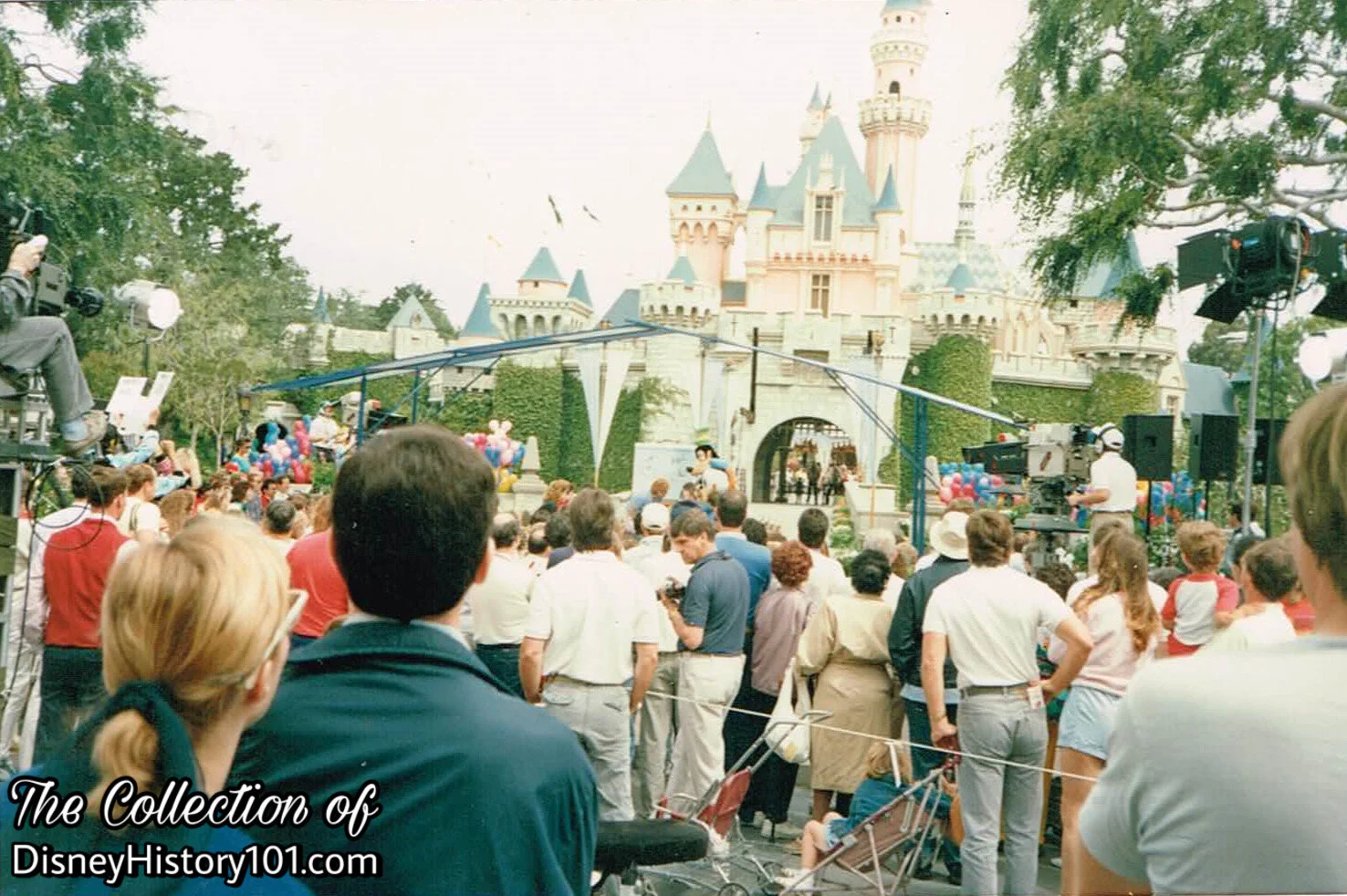
By the mid-1980’s, Disneyland (and the Castle Forecourt) became the Stage for “special groups” of - “talented High School, College, and Community Groups.” For instance (in May of 1986), the Castle Forecourt welcomed West High School Marching Band and Banning High School Marching Band.
An unknown filming utilizing the Stage of Sleeping Beauty Castle at a backdrop.
Sleeping Beauty Castle became the backdrop for many scenes of television commercials, and television shows.
Sleeping Beauty Castle
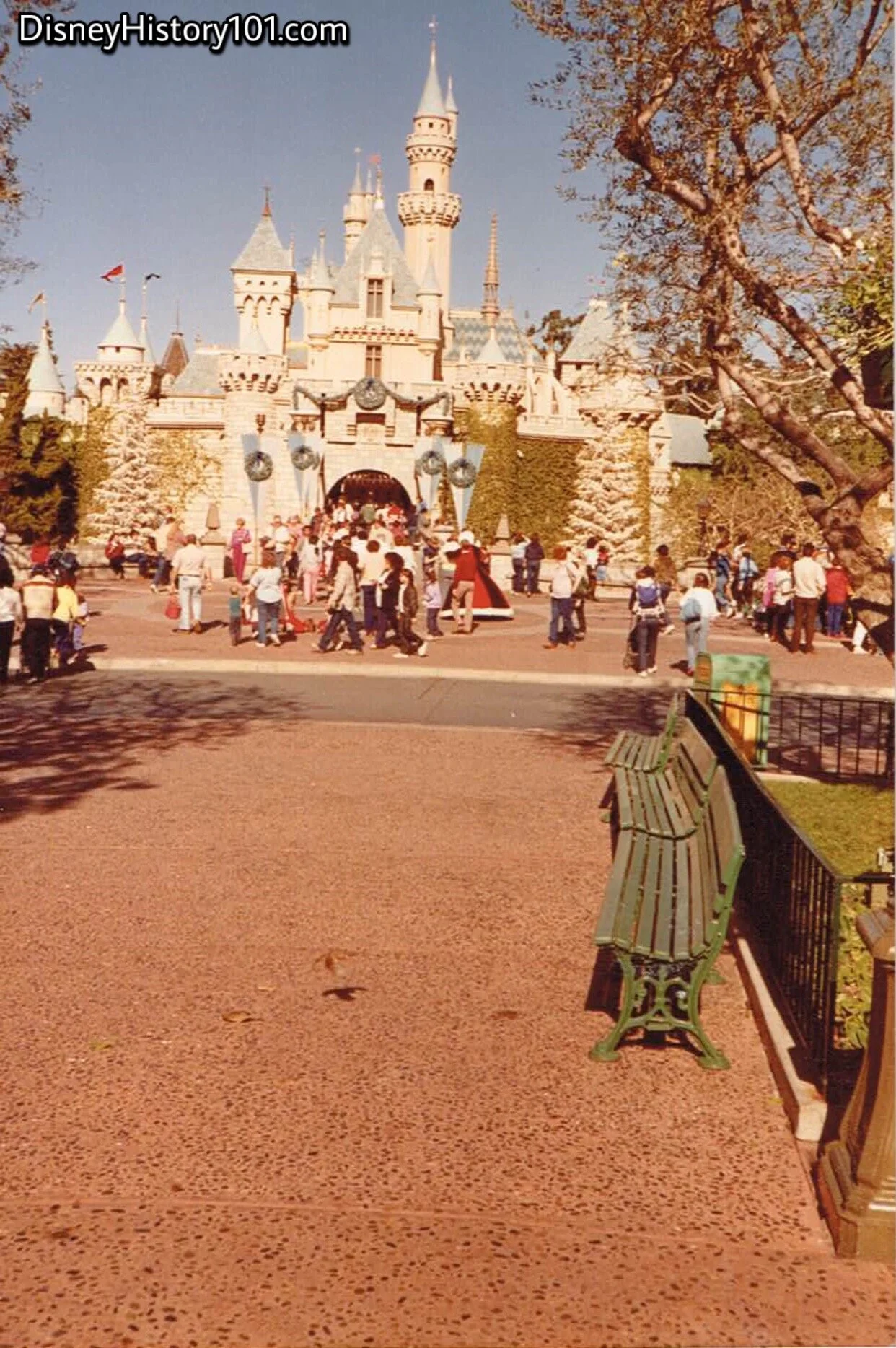
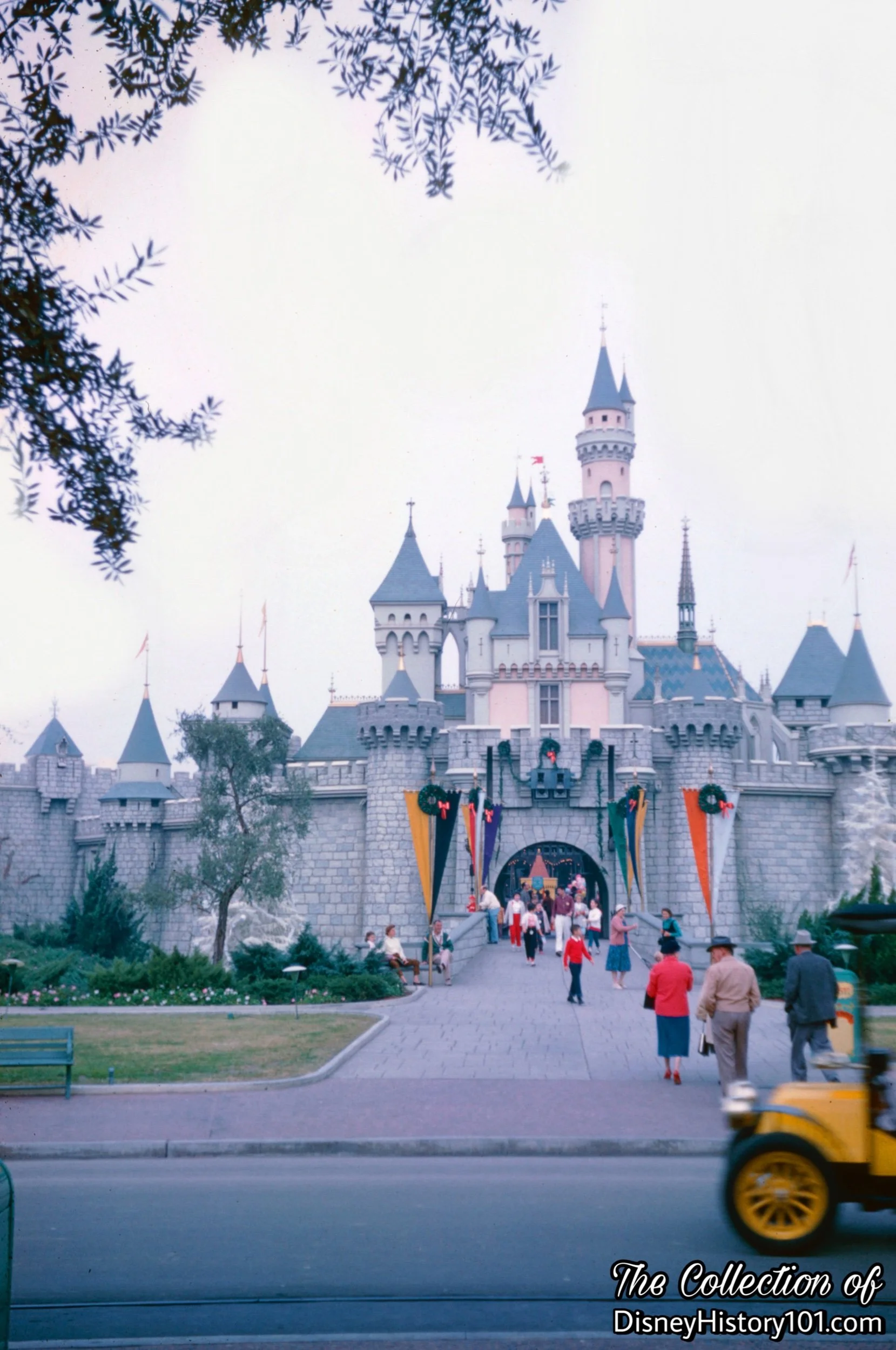
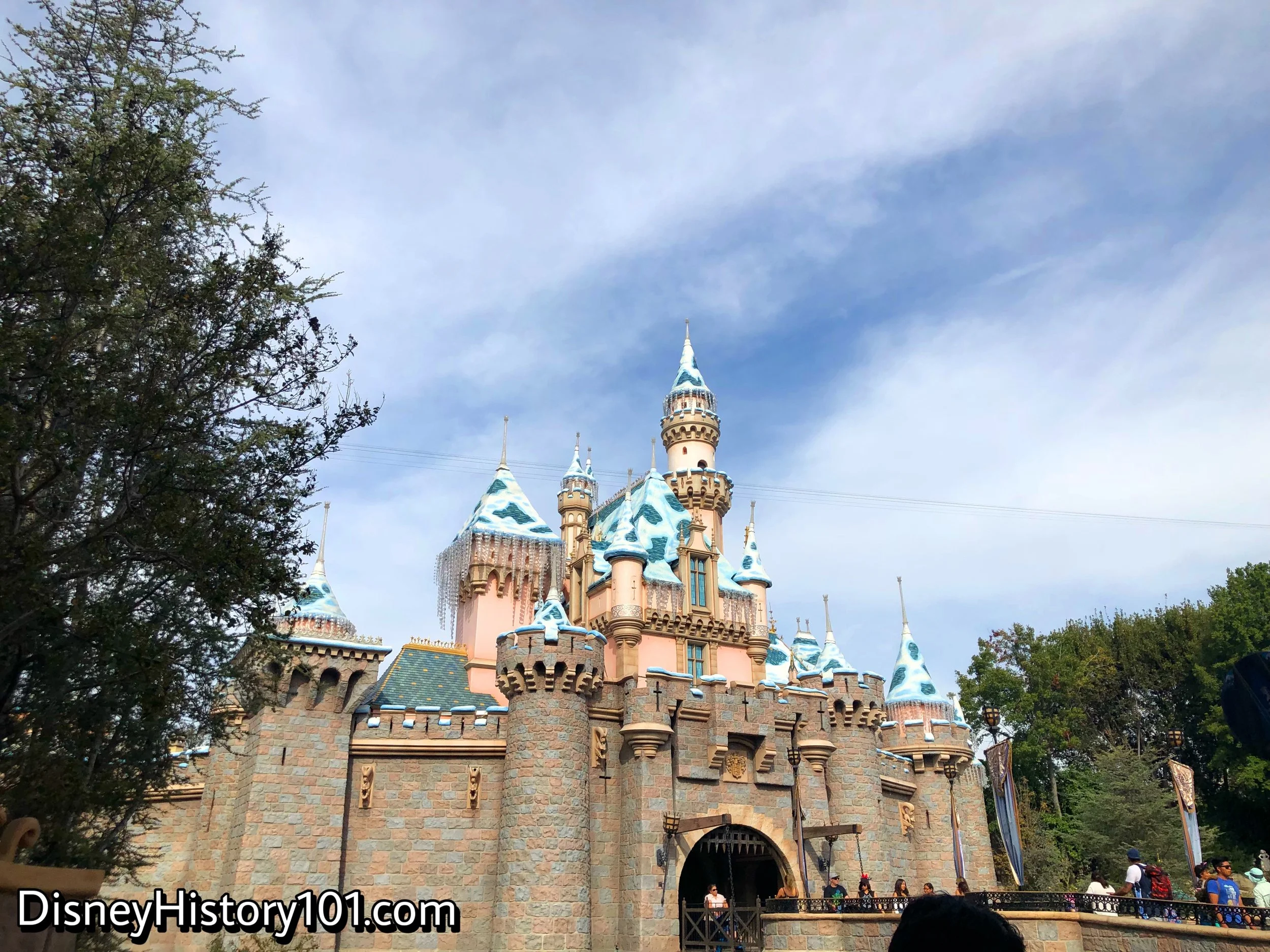
Sleeping Beauty Castle with a winter season overlay.
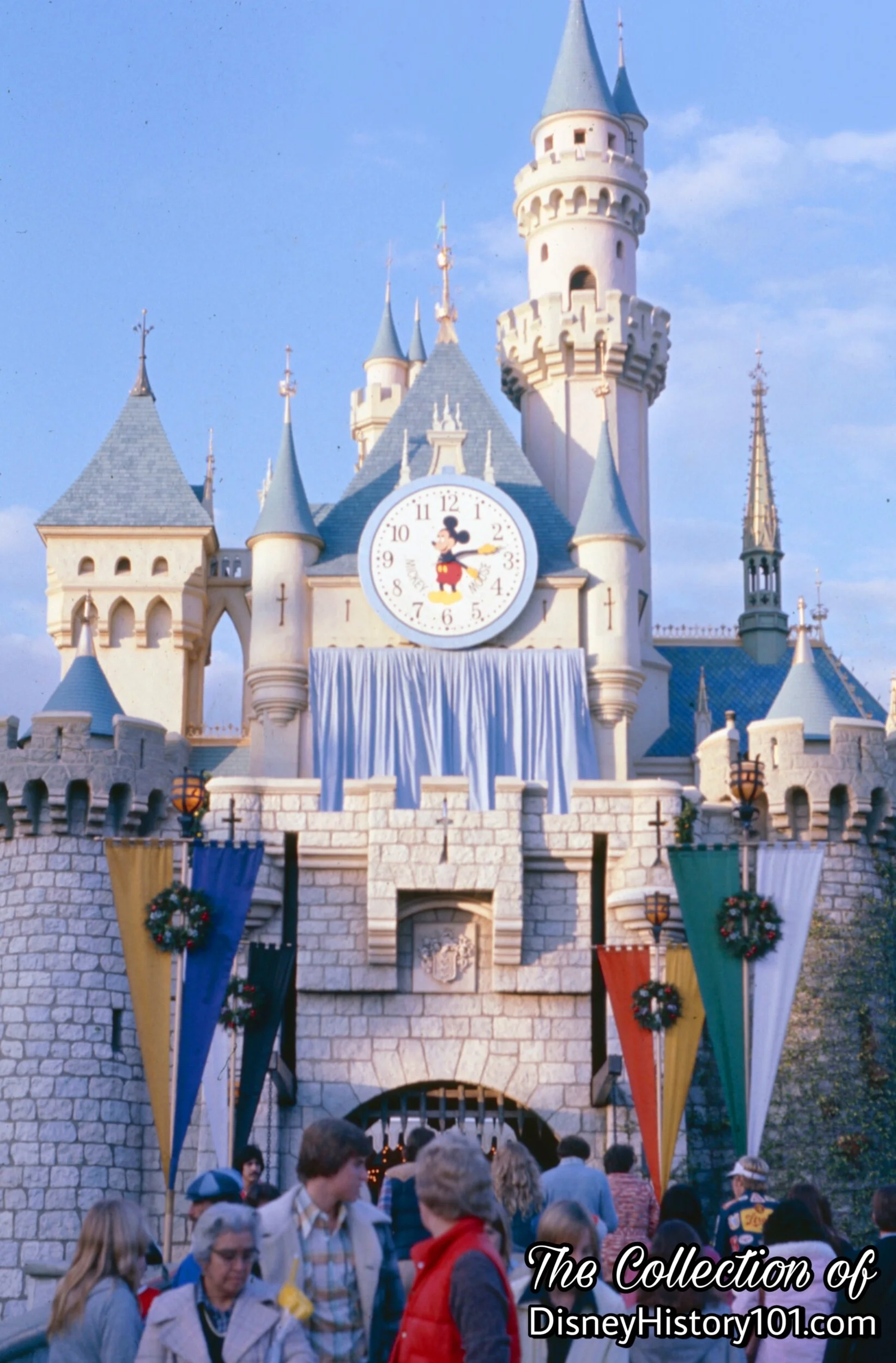
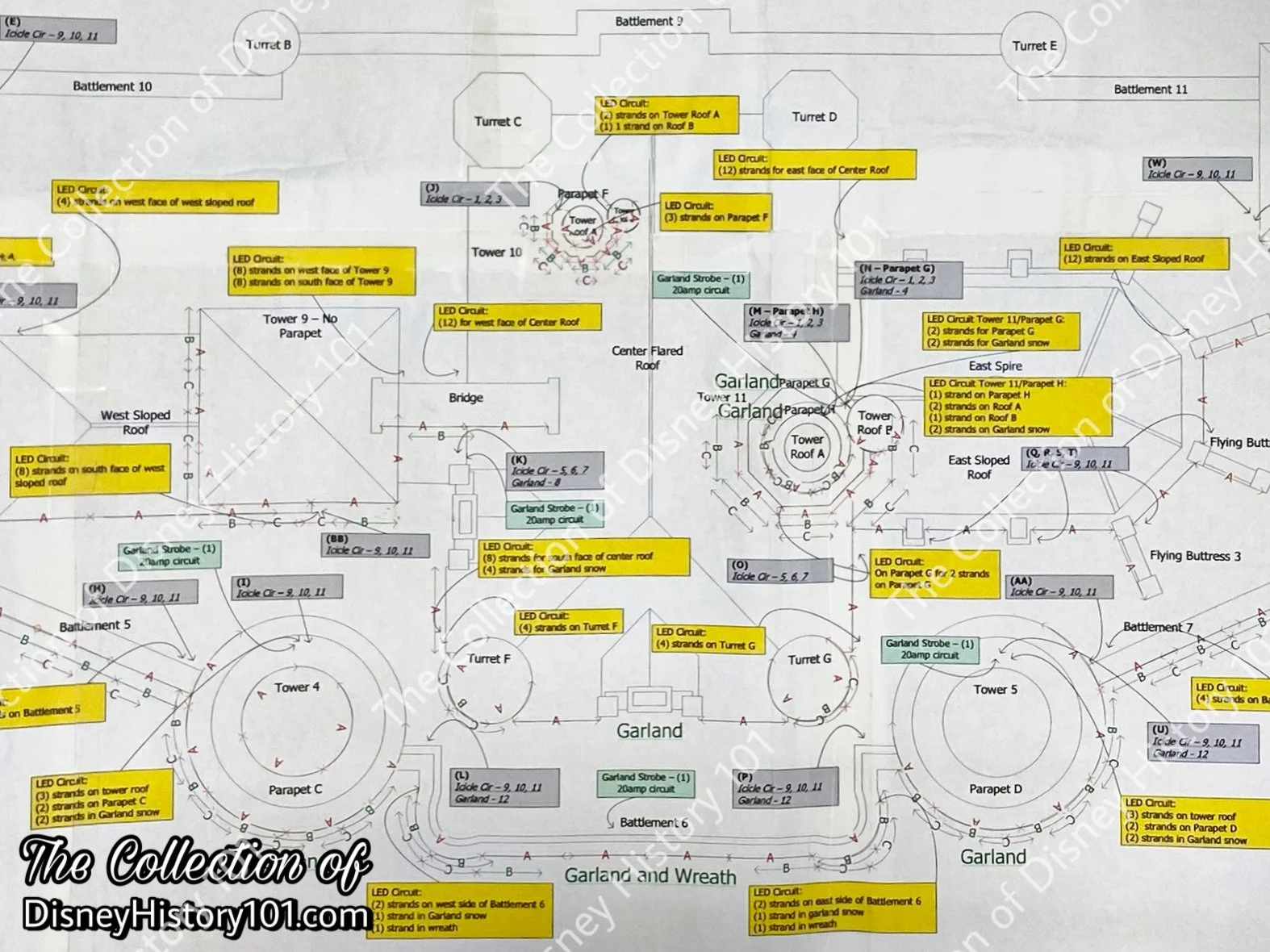
By the 2000s, the winter season overlays were more extravagant. The castle battlements, turrets, towers, flying buttresses, and parapets were draped in snow garlands, wreaths, garland strobes, LED circuits, and Icicle light sets. Contributing to the 2007 stage was Show Designer John Addis, Lighting Designer, Technical Director and draftsperson K.C. Wilkerson, and Scenic Designer Tom Butsch.
Sleeping Beauty Castle with a winter season overlay.
Sleeping Beauty Castle Rehabilitation
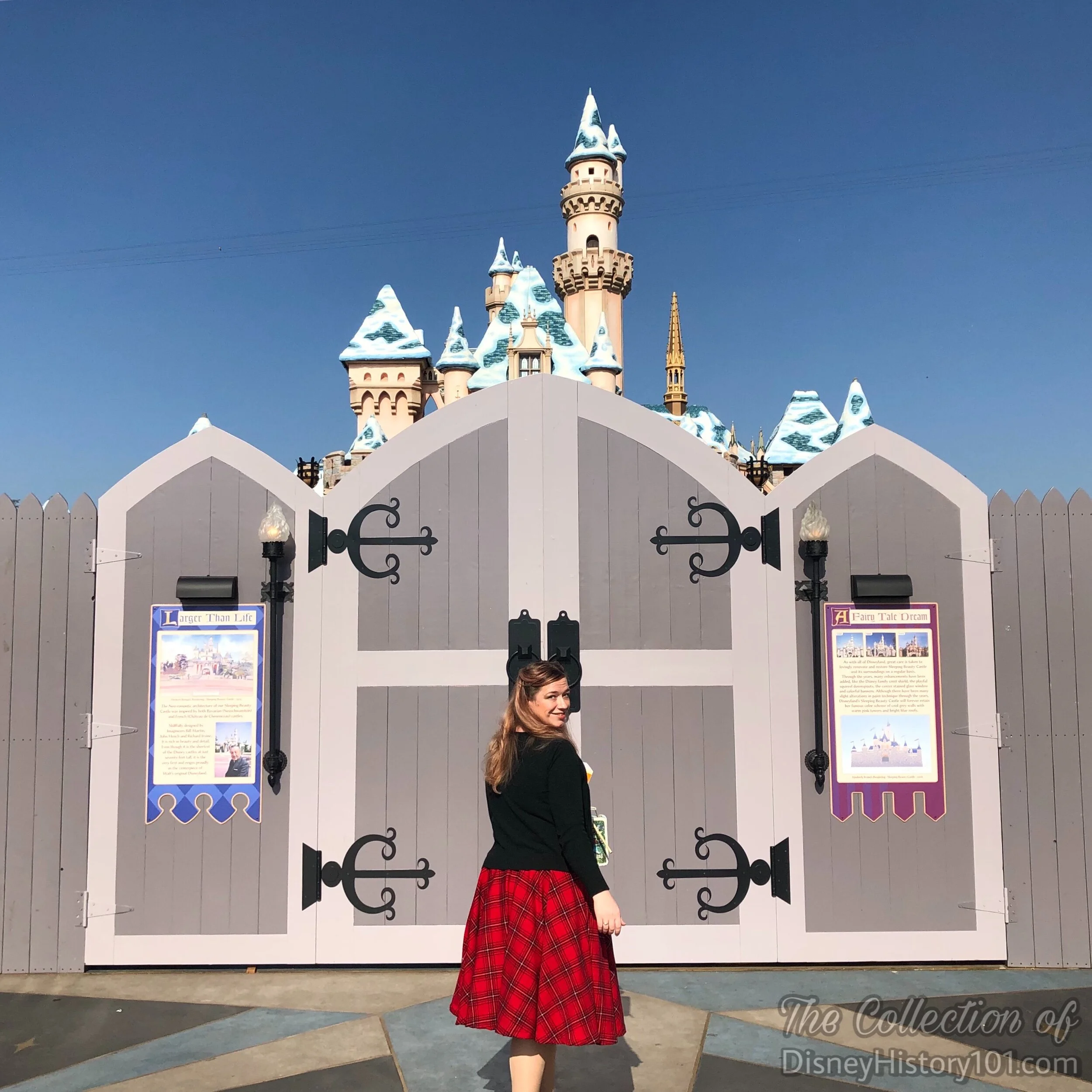
Most days, the drawbridge of Sleeping Beauty Castle is down and the welcome mat is out! However, necessary rehabs are occasionally in order to maintain the integrity of the Show. However, rehabilitations aren’t what they used to be. Back in “Ye Olden Days” of yore (before retaining walls obscured much Disneyland development in lieu of Show Quality), Disneyland visitors were once invited to become “sidewalk inspectors” of “the greatest construction show on earth.”
Refurbishment work has much impact on the Guest experience. Today rehabs, themselves, are viewed as a distraction. Locations undergoing work are often covered to minimize distraction. Sometimes, temporary fencing or signage is used. In those instances, Cast Members try to stay true to the theme and story. For example, these walls keep Guests informed but support the story.
Let’s take a look back at just a few projects, as they were perceived by audiences.
Walt Disney Imagineer John Stone designed, developed, and supported overall design by producing Massing Models of Sleeping Beauty's Castle.
Sleeping Beauty Castle Rehabilitation & Swan Lake
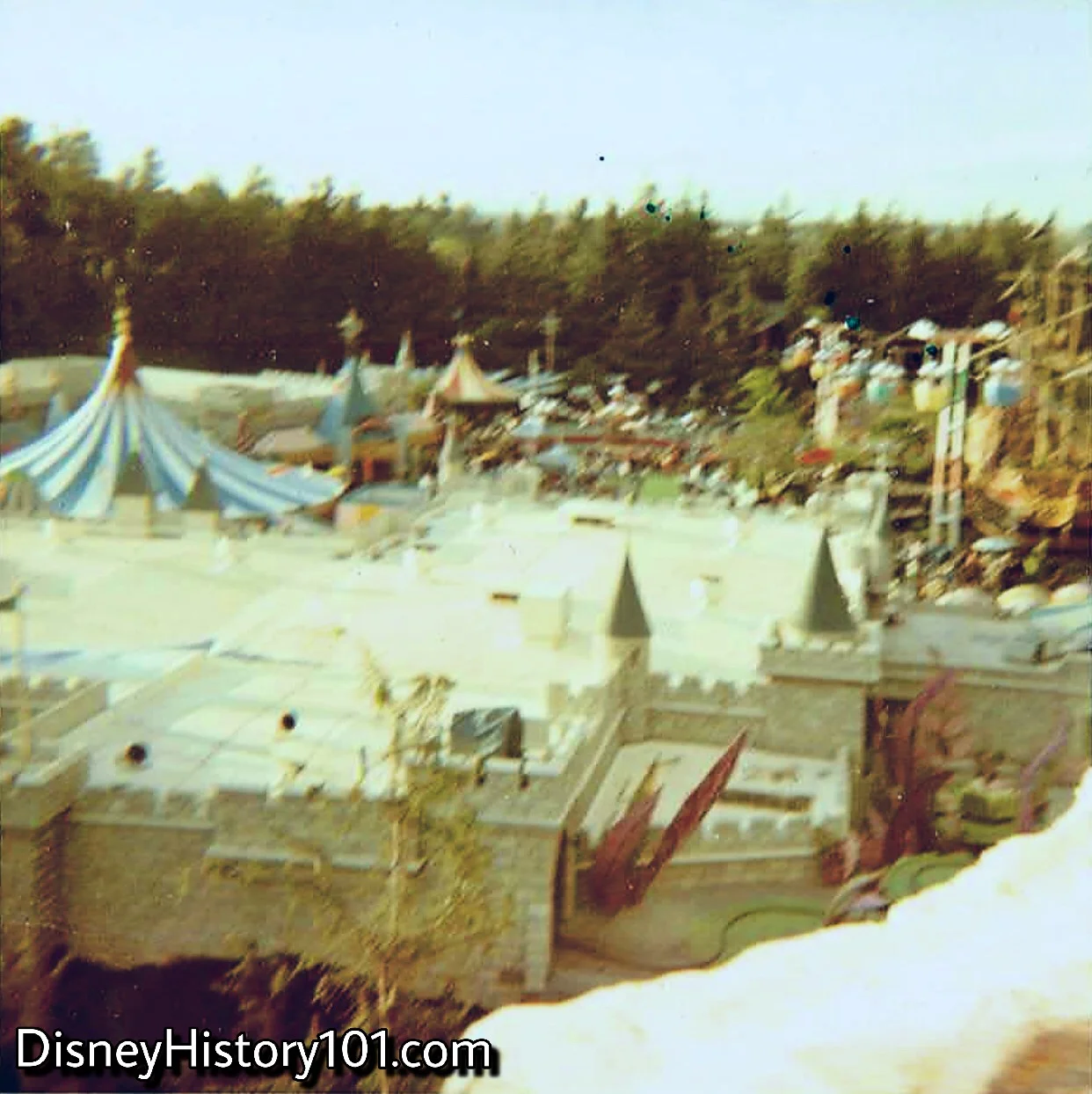
Rehabs were planned to follow the Disneyland waterway flow: (1) Storybook Land Canal, (2) Motor Boat Cruise, (3) Sleeping Beauty Castle Moat, (4) Rivers of America, and (5) Jungle Cruise.
Sleeping Beauty Castle and Bridge without Banners, (Late 1950s)
The majestic Sleeping Beauty Castle towers over "Future Developments" on the Plaza, c.1950s.
Sleeping Beauty Castle Rehabilitation, (1957)
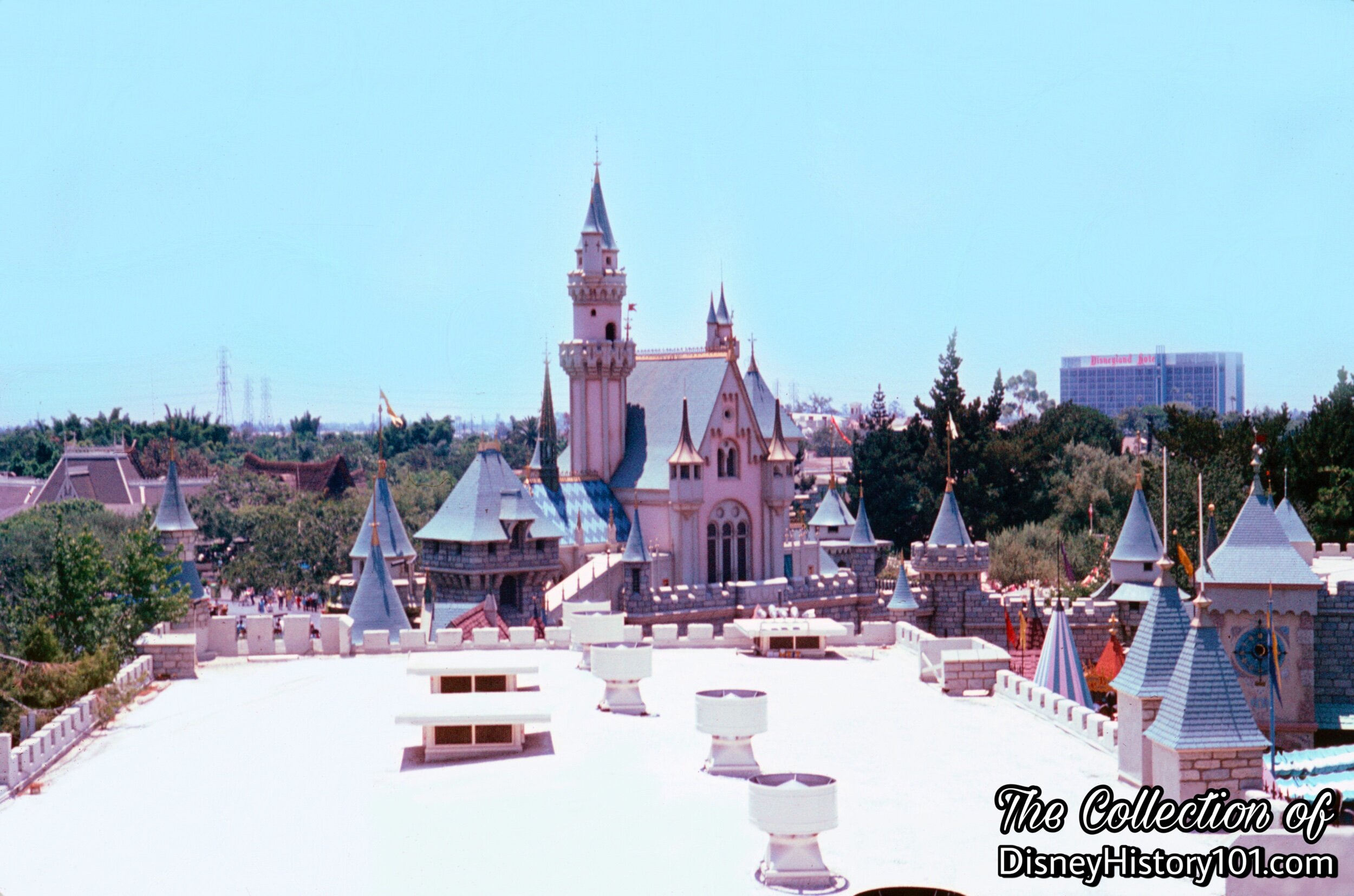
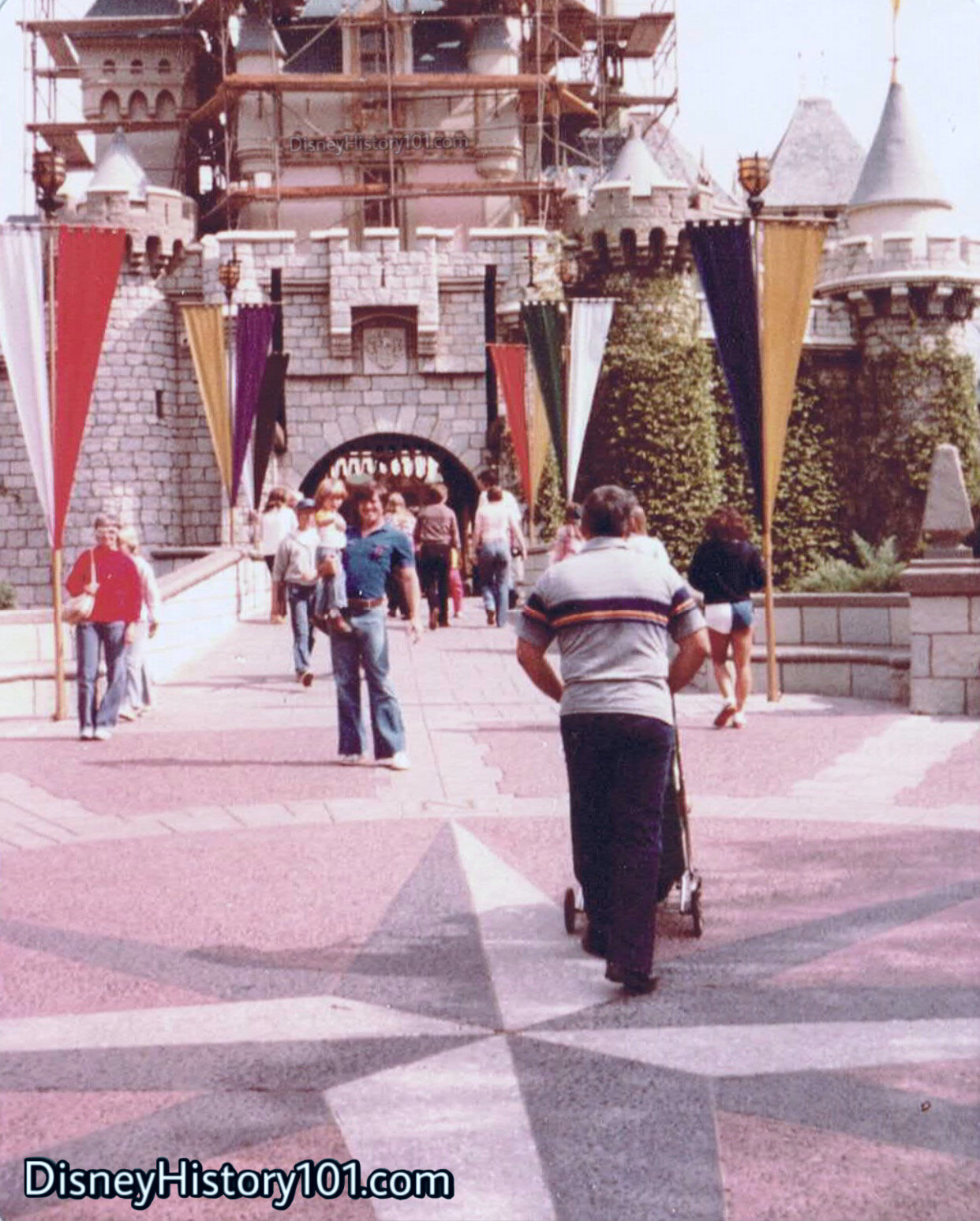
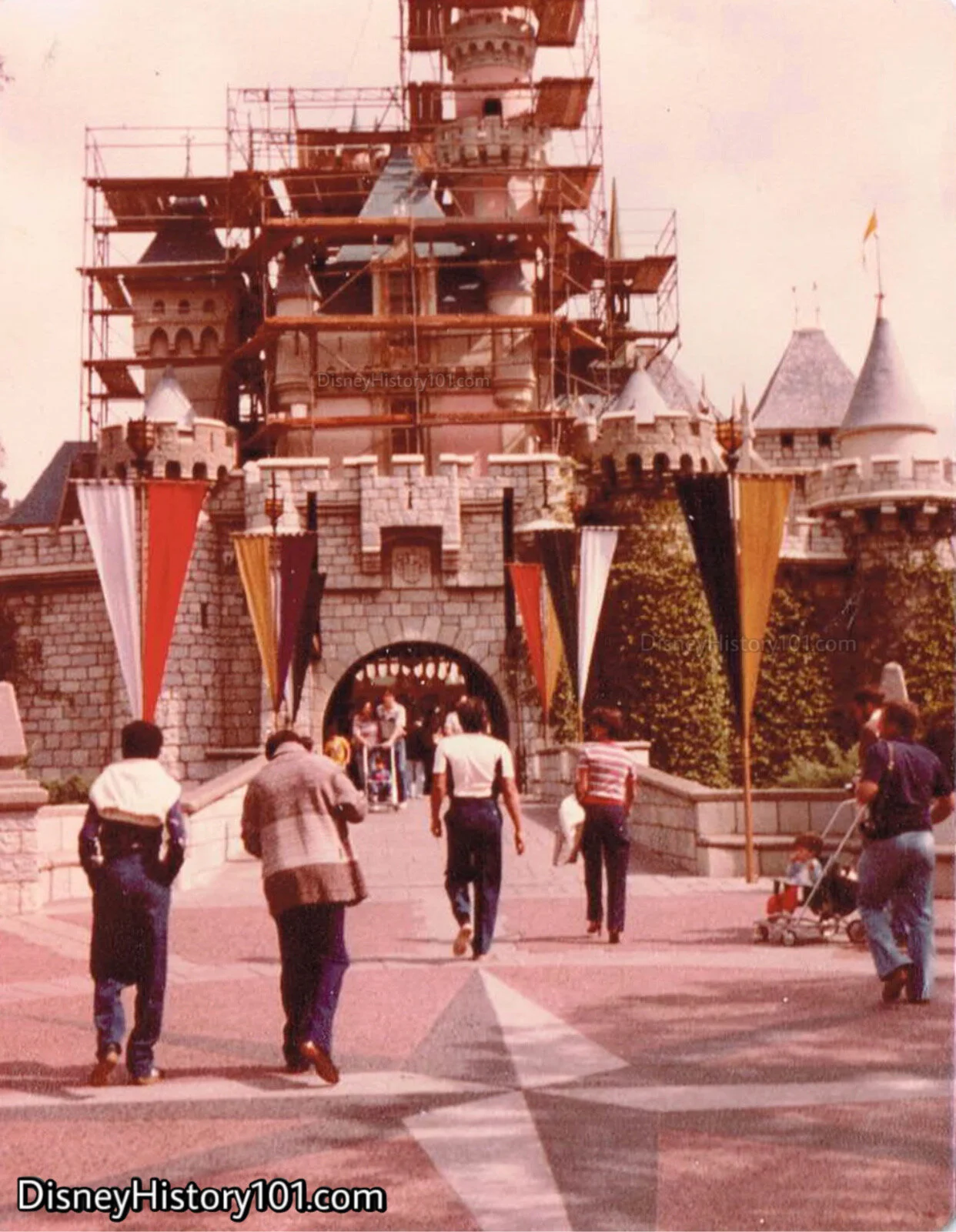
Some minor refurbishment and construction taking place at the top of Sleeping Beauty Castle, indicated by the rooftop scaffolding near the turrets. Meanwhile crowds of guests pass under the “Dummy Portcullis” below.
Sleeping Beauty Castle Rehabilitation, c.1960s-1970s
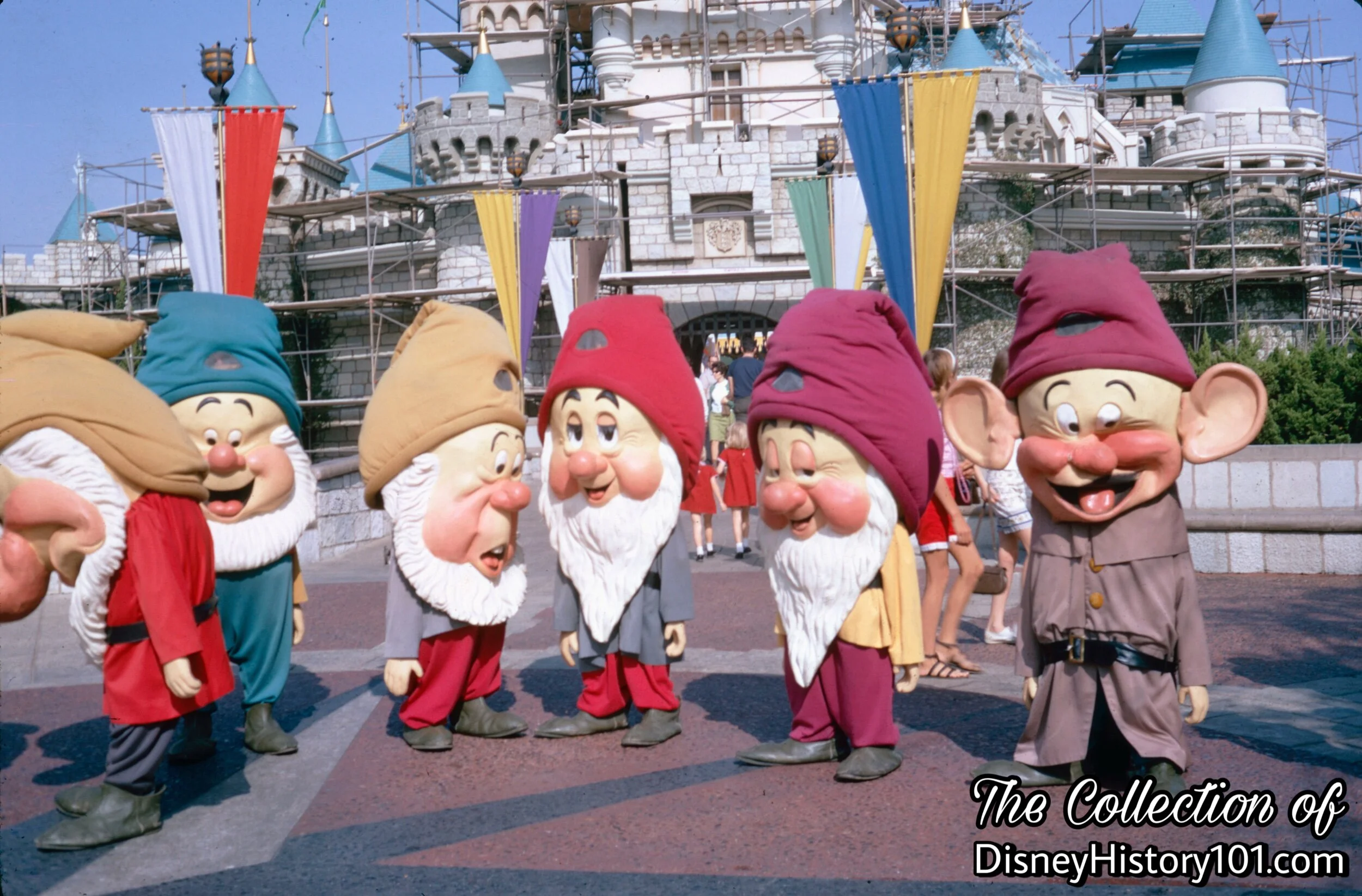
Before recent decades, scrim-encompassed scaffolding did not obscure rehabilitations from the eyes of guests or Dwarfs.
Paint is important. The “Master Color Book” is the Bible for color selection at Disneyland, maintaining a catalogue of 4,000 shades of color. The book contains color specifications for every land, building, exhibit, and prop which requires paint maintenance. It insures that Disneyland will always have the same bright colors selected by the art directors who designed the attraction. In addition to the Master Color Book, there is a standby supply of ready-mixed paint available for touch up work. Thousands of cans of paint are stored in a special room which sounds like a walk through of Disneyland. Each can is labeled with names. Disneyland painters repainted every prop in the Park, as in Sleeping Beauty Castle every two years. Projects included “aging” doors in Sleeping Beauty Castle.
Sleeping Beauty Castle sans banners, (1978)
Sleeping Beauty Castle Rehabilitation, (c. 1981-1982)
Sleeping Beauty Castle Rehabilitation, (May, 1982)
In 1983, Sleeping Beauty Castle’s drawbridge was raised - for the first time in 28 years. This was for the premier of New Fantasyland and to accommodate “Believe You Can, And You Can” - a Del Monte- sponsored television show (starring Mari Amsterdam and Heather O’Rourke) - which was shot before New Fantasyland opened to the public. As a sidelight, the television special features footage of the drawbridge being lowered before a young Heather O’Rourke, but played in reverse to appear as it is being raised (which may be of interest to you, if you’ve never seen this done before). According to LINE magazine (Vol.15, No. 10, March 10, 1983) : “Maintenance coordinated the raising, arranging at first to raise the bridge with a crane since it was uncertain whether the winch system would still work after 28 years. Then it was discovered that the original lead weights, used as counter balance in the winch system, were still in place in their assembly behind the portcullis. With the additions of more weight, approximately 1,500 pounds altogether, the system worked perfectly and the drawbridge was raised. Incidentally, the large winch outside Arts ‘n Crafts is decorative only ; the real winch is in the attic above the drawbridge.”
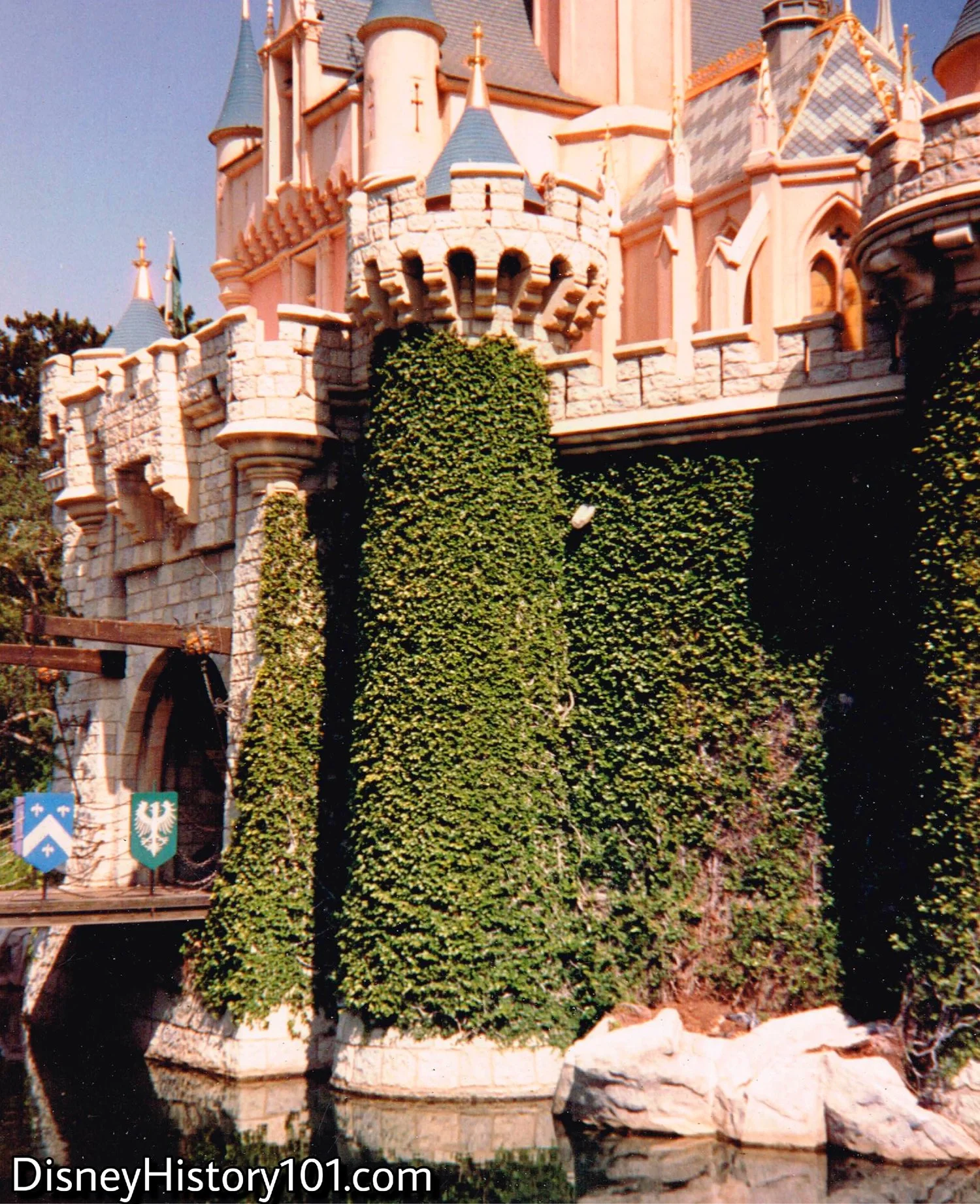
Sleeping Beauty Castle - (notice the shields along the drawbridge).
The heraldry of the shields that once lined the Sleeping Beauty Castle Drawbridge are the same ones that could be seen high atop the Courtyard.
“Legacy”
By the mid-1960s, the Disneyland Hotel Golf Centre: The Magic Kingdom Golf Course had a Sleeping Beauty Castle hole inspired by the attraction.
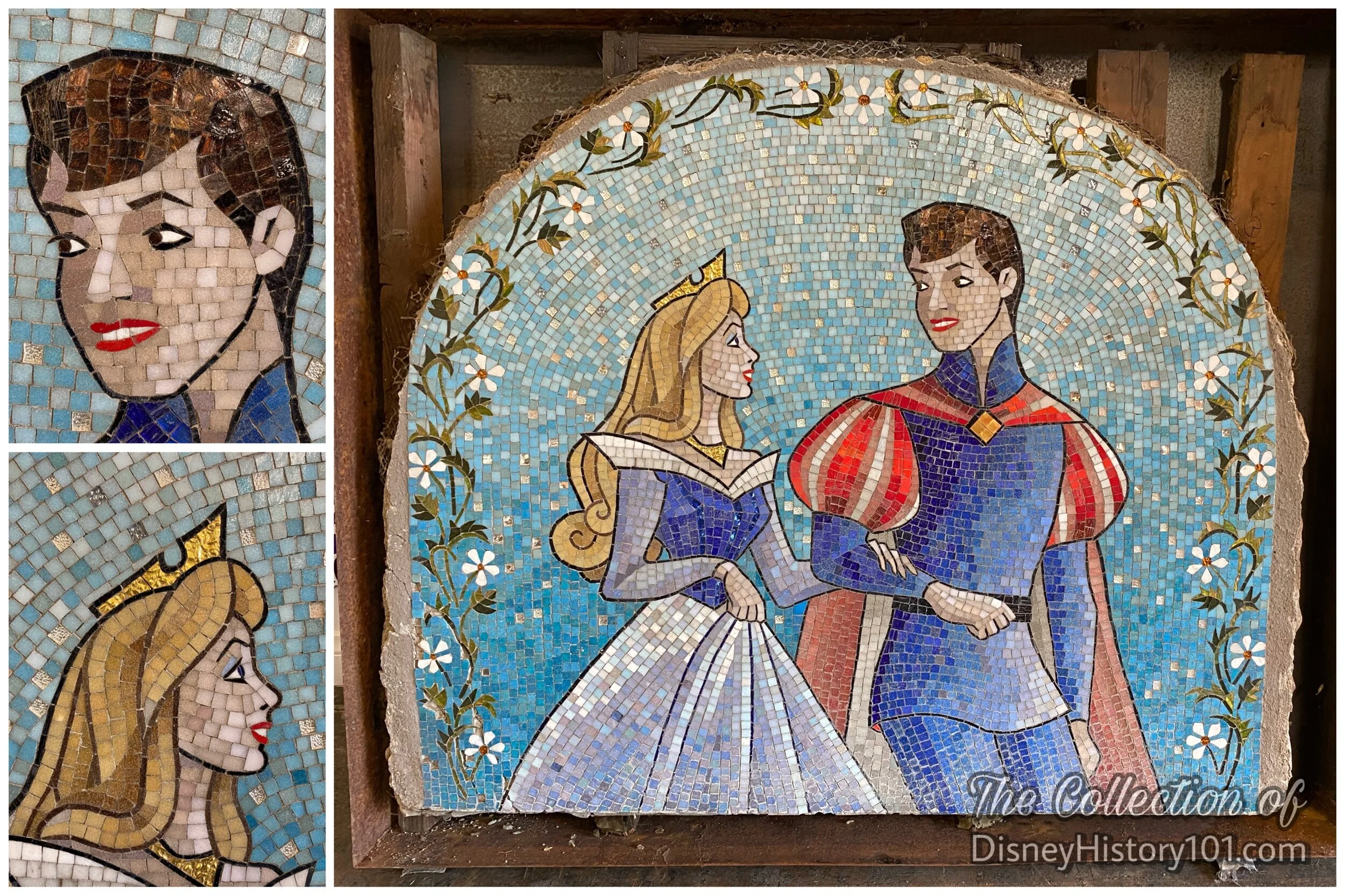
Mosaic, (c. 1970s-1982)
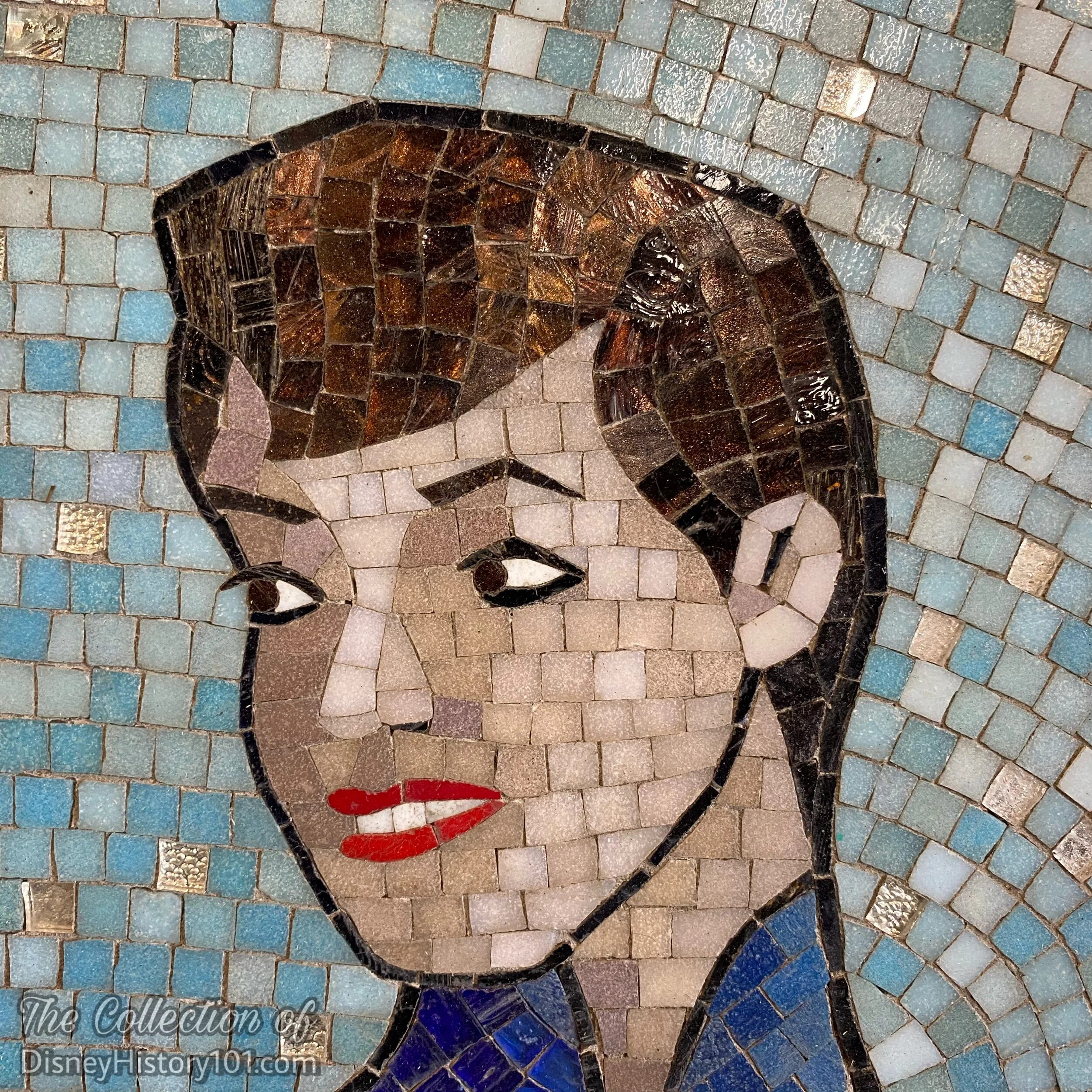
“Once Upon A Dream” (c. 1970s - 1982), Princess Aurora and Prince Phillip walked with each other through Sleeping Beauty Castle Courtyard! This magical moment was frozen time, through the magic hands of skilled craftspeople, and the blessing of two gifts bestowed upon Sleeping Beauty Castle - one to the west (pictured), and another to the east. But changes were in the wind, and when new developments (like the Village Haus Restaurant Sponsored by Sun Giant) began to take form during the early 1980s, this particular mural was removed from the water fountain.
Today there are hand-rendered frescos of scenes from Sleeping Beauty on the walls.
Mosaic
Quisque iaculis facilisis lacinia. Mauris euismod pellentesque tellus sit amet mollis.