MARK TWAIN
“Preface”
One can easily slip into the jargon of “ride,” but at Disneyland there are adventurous attractions, each one a living experience for the guest! Disneyland ride-through attractions or adventures have officially been defined as an “individual show, ride, or exhibit designed to produce an entertaining Guest experience. Disney attractions stir the imagination, enliven the senses, and provide the participants with positive, innovative entertainment, which is the essence of the DISNEYLAND Show.” It is important to review the story of the attraction, tell the story, explain it, and create interest. This is the story of Mark Twain.
“The Story of the Steamboat and True-Life Frontierland”
The story of the Mark Twain attraction starts more than 100 years before the spark that lead to Disneyland. Walt described Frontierland as “a tribute to the faith, courage, and ingenuity of the pioneers who blazed the trails across America.” Many types of Flatboats were once commonly constructed and utilized to transport cargo down the Ohio and Mississippi Rivers, and these soon joined the river traffic of canoes, keel boats, and canal boats. An example of American ingenuity was the steam-powered paddle wheeler, the only recognized form of mass transportation invented in the United States.
The steamboat also has its origins set deep in American history, (and much like Walt) by a pioneering inventor whose invention was doubted by the masses. While the steam engine came from England, the hull was made in America, by Robert Fulton. Once called “Fulton’s Folly,” the Claremont (launched down the Hudson River in 1807), was soon considered the first successful steamship in America. A few years later (in 1819), the first steamship even crossed the Atlantic Ocean. Soon after, the sternwheel became a typical sight on the Ohio and Mississippi Rivers, transporting passengers and goods as residents of this country moved West.
Before the approach of the mid-19th century, a young Samuel Longhorne Clemens (1835-1910) grew up in Hannibal, Missouri, along the shore of the Mississippi River. He would pen many stories like “Tom Sawyer” and “The Adventures of Huckleberry Finn” under the name “Mark Twain” - a borrowed name inspired by the “nom de guerre” of a particular old captain who once published river conditions in the New Orleans Picayune.
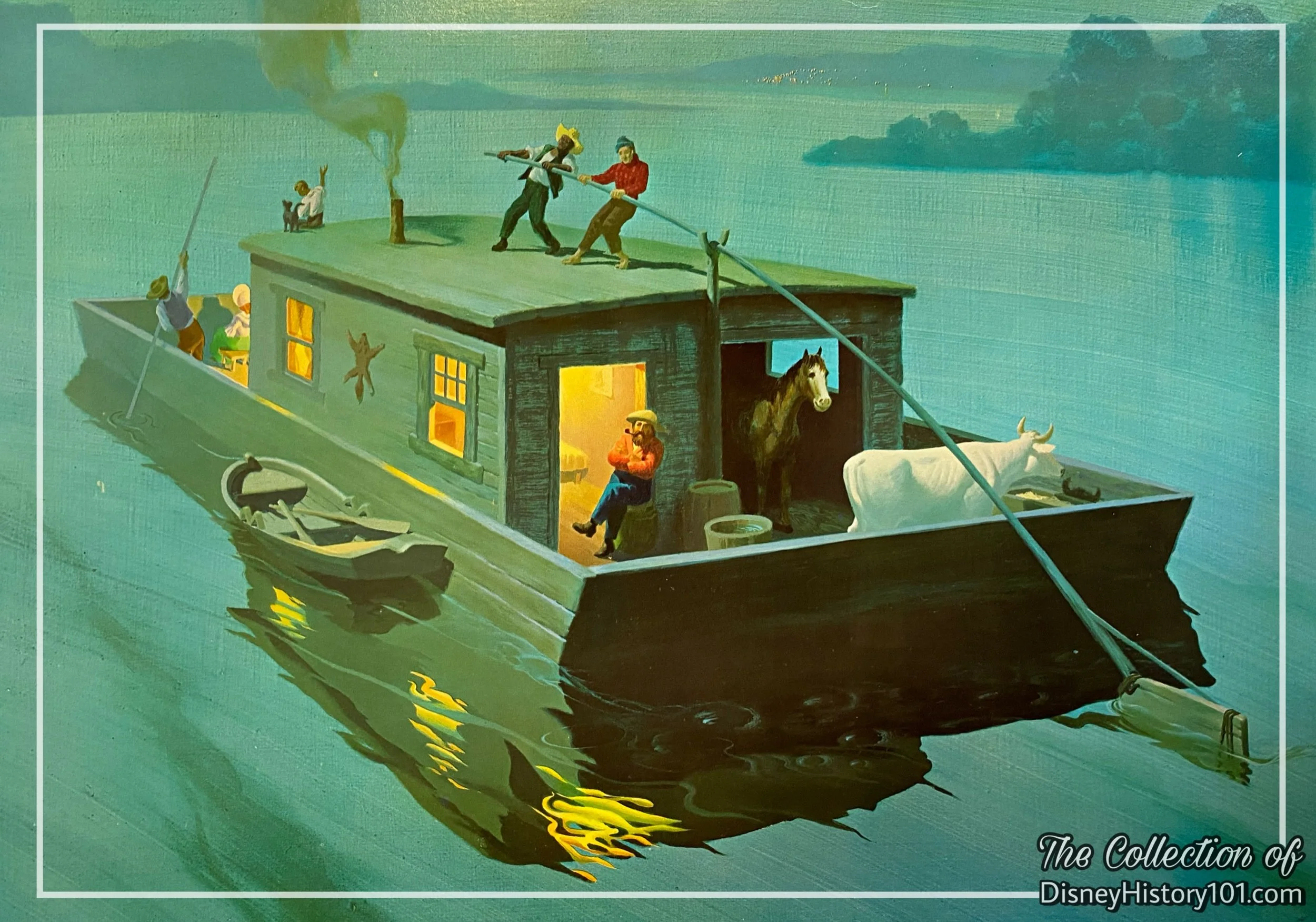
Walt Disney Educational Media Company Print “D” from Set 200 - “Early American Transportation” depicts a flat bottomed boat.
“Walt & Company Recollect Riverboats”
The last sternwheelers were built in the U.S. approximately around the year 1900, so some of Walt’s own staff would be familiar with true-life riverboats. For instance, c.1954 hire Van Arsdale France once had a job as a dishwasher on a river boat going from Pittsburgh to New Orleans.
Walt Disney had a fondness for riverboats. In fact, in October 1931, Walt and Lilly Disney set out on their very first vacation together, and went first to St. Louis, where Walt planned to take a steamboat down the Mississippi. More than two decades later, Walt shared his most romantic expressions toward riverboats this way:
“One of the biggest joys of my life is sitting on the levee in the Frontierland section of Disneyland, our park in Anaheim, California. As I gaze to the north, I can see the smokestacks of the steamer Mark Twain belching smoke and skirting along toward the top of Tom Sawyer Island. Then the boat moves into view ; the crowd line against the white railings. It moves majestically along, the stern paddle churning up the river foam. The captain lets the whistle blast, signaling his attention to land, and the Dixieland band on the shore swings into a ragtime tune. I thrill all over every time that happens. Other people have told me they too get a big kick out of the Mark Twain swinging in to shore, but I doubt it if anybody could enjoy it as much as I do. You see, I go back a long way with stern-wheelers ; back to the Missouri River in the 1910’s. When I was growing up in Kansas City, there were still two stern-wheelers plying out of that town. They were called the Chester and the Majestic, and they were handsome boats to see. They ran down the river to St. Louis, but on Sundays one would be in port and would take customers on river excursions for a dollar a head. I was on hand for a cruise whenever I could scrape together a dollar from selling newspapers. The Missouri River boats had to be stern-wheelers because there were so many sand bars. When they ran aground they could reverse the wheel and pull off, something a side-wheeler couldn’t do. One of the thrills of my young life was when one of the excursion boats I was riding struck a bar. It remained there for an hour while the deck hands pushed long poles into the sand and the wheel churned mightily. Finally with a great whoosh and swirl of foam, the boat pulled itself free. These boyhood memories are the reason for my fondness for Frontierland. Of course, all the realms of Disneyland intrigue me - Fantasyland, Adventureland, Tomorrowland, and Main Street. But Frontierland evokes a special response because to reminds me of my youthful days on the Missouri.” [“Frontierland” by Walt Disney, True West magazine ; June, 1958, page 10].
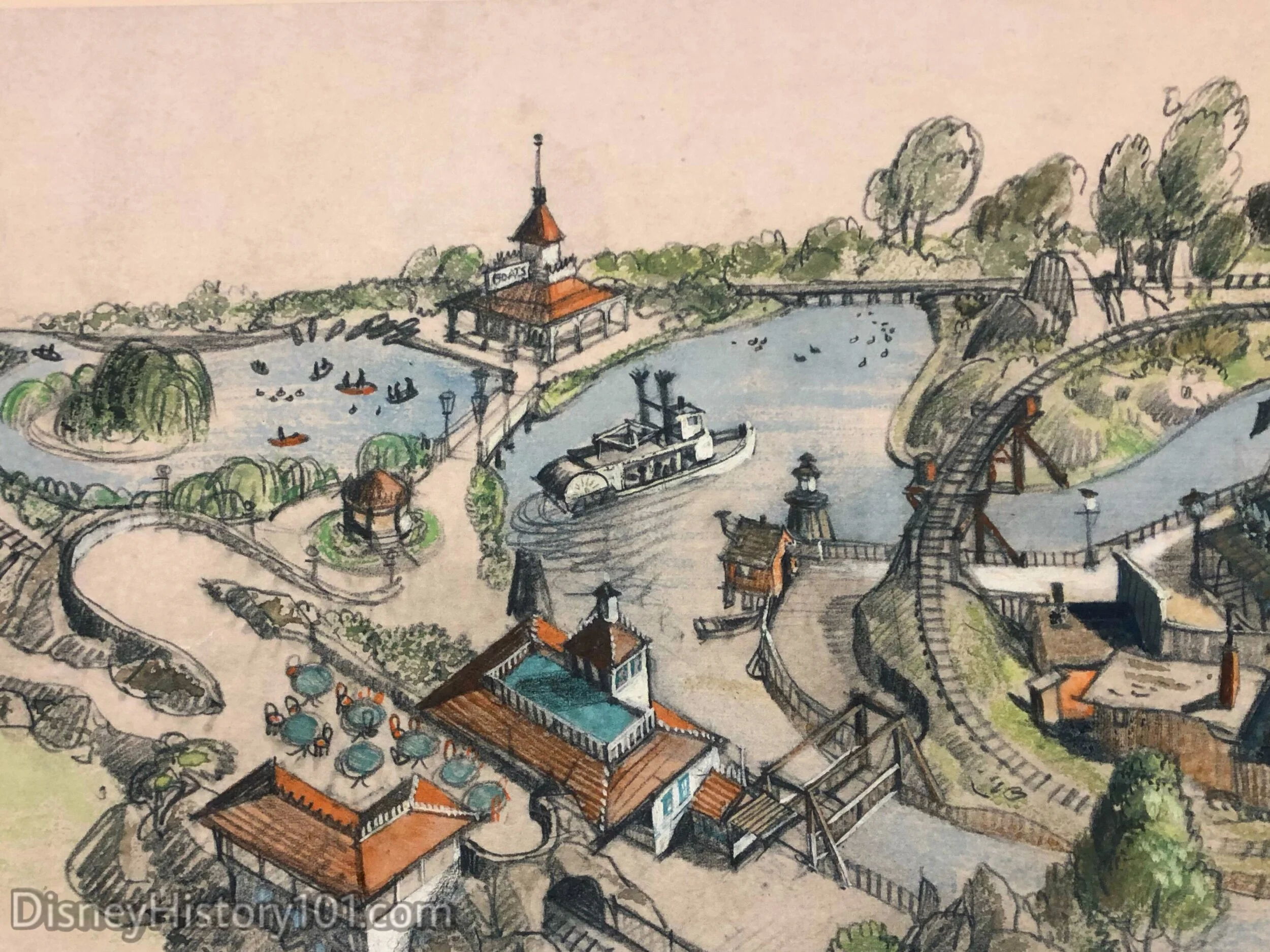
A paddlewheel steamboat is depicted in a Mickey Mouse Park concept created by Harper Goff, c.1951
“Master Planning, Research & Developement”
Custom rides were created that would be subordinate to story and setting. And so naturally, some of the earliest drawings of Walt Disney’s “Mickey Mouse Park” featured a steam ship navigating a river! Can you imagine seeing the smoke stacks of a steamboat from the 11-acre triangular plot of land on other side of Riverside Drive in Burbank California? This almost became a reality, courtesy of these early drafts and proposals.
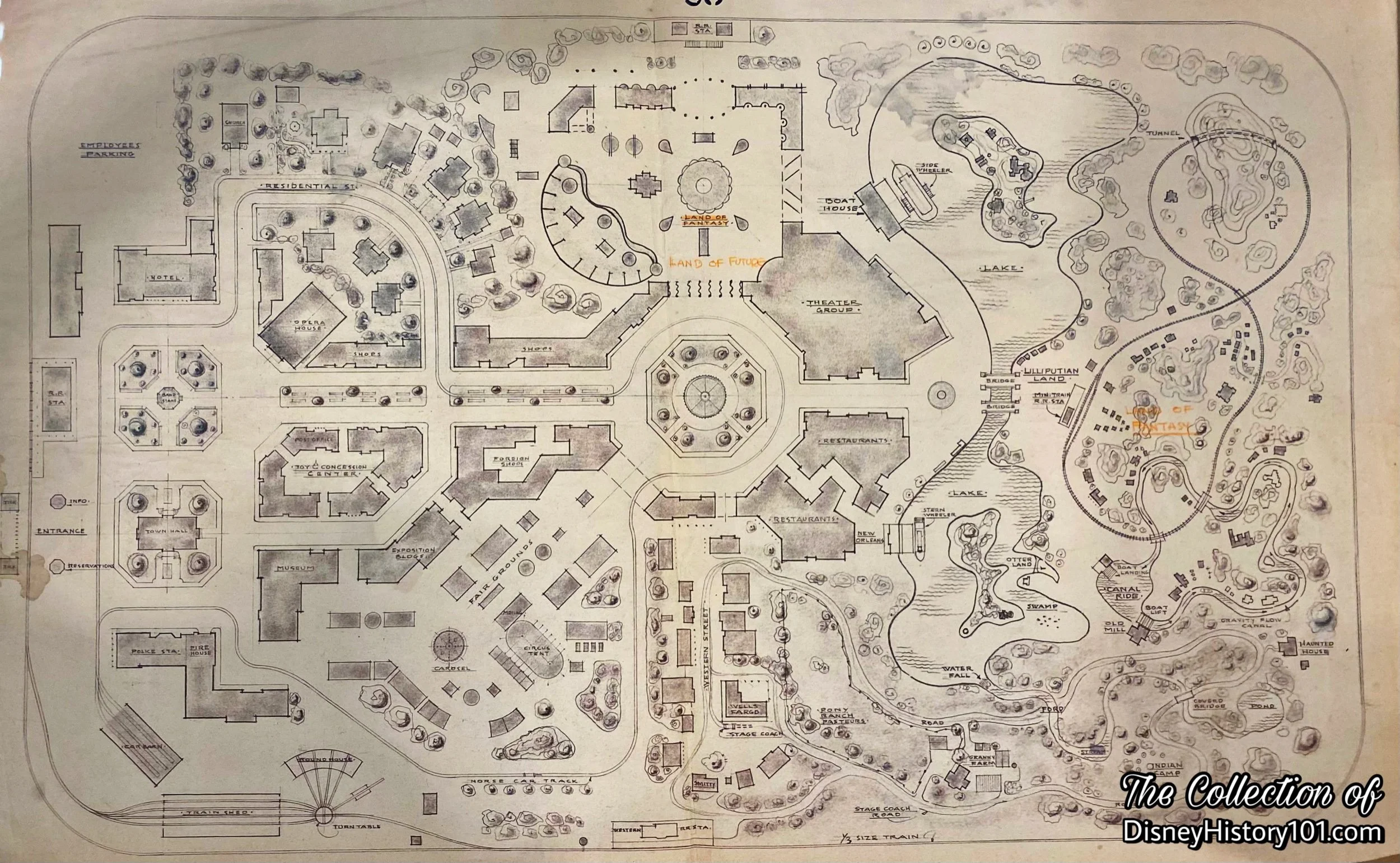
Both “sidewheeler” and a “sternwheeler” attractions made appearances in the “Disneyland Preliminary Scheme #1”
Then in 1952, Walt Disney founded a company called WED Enterprises, Inc. in order to master-plan and design his his dreams of a Park. The company was staffed by Animators, Art Directors, Artists, Artisans, Architects, Set Designers, and Planners from the Studio. Early thumbnail sketches and other concept artwork seemed to be unencumbered by restrictions of budget, schedule or the laws of nature and physics. Though guided by Walt, his artists appeared to engage in “free-thinking,” as if implementing the modern “Blue Sky” Imagineering process. Some of these viable project Concepts (as above), were supported by a well-developed business case and built expectation.
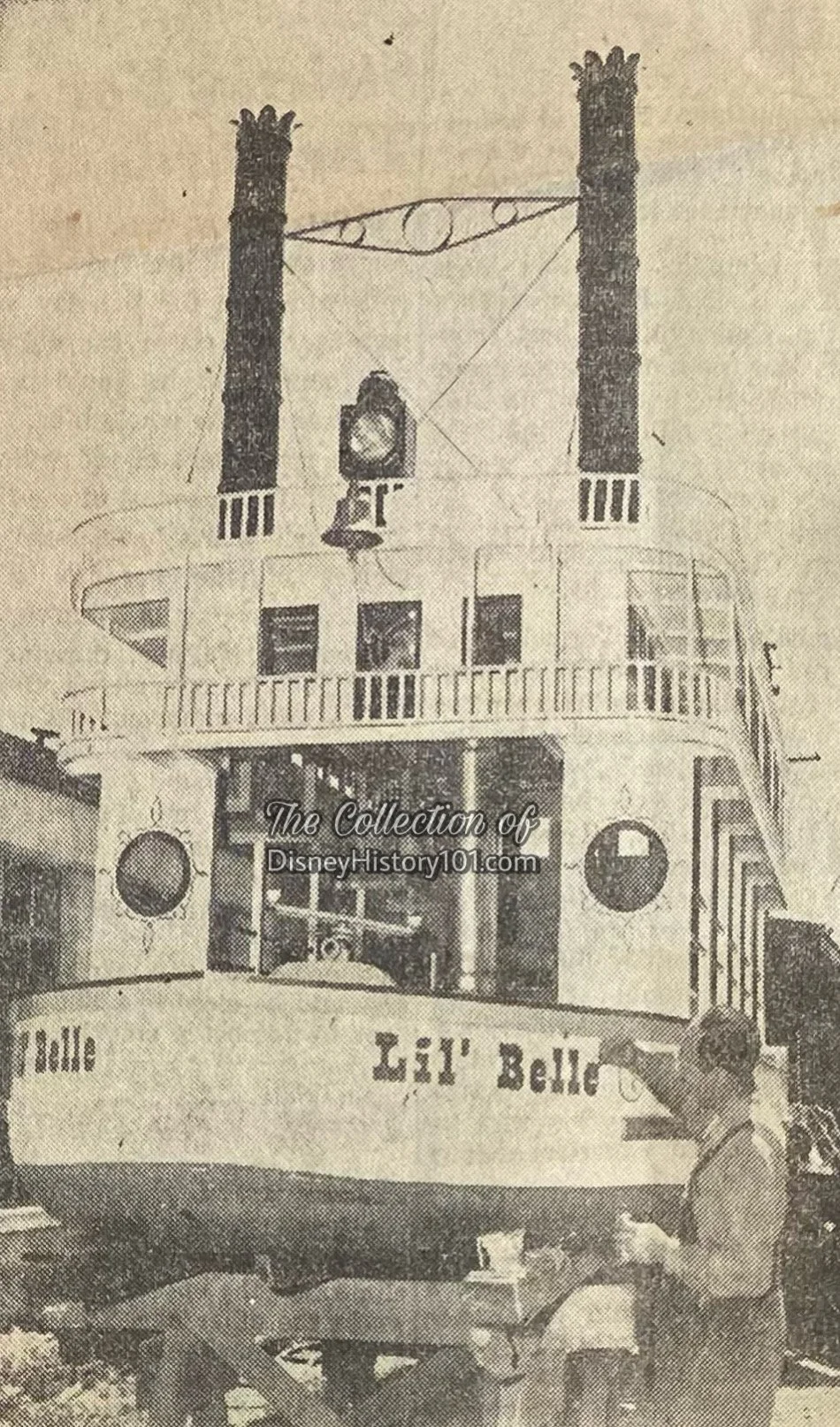
Angus Anderson paints the letters on the Lil’ Belle (a miniature 30-person Ferryboat for Lake Merrit in Oakland, California; one inspiration for the Mark Twain at Disneyland).
“A Lil’ Inspiration”
Walt soon began to inquire about the acquisition or production of a steamboat. This was carried out through Richard Irvine (a new c. 1952 hire of W.E.D. Enterprises), in a January 6th, 1953 letter addressed to Mr. W.J. Hardiman (of Arrow Development Co., Inc.). In the letter, Dick requests information about a 30-passenger boat which was being tested in the Anderson Reservoir before going into operating in a lagoon off Lake Merrit in Oakland, California. Arrow’s Lil’ Belle sternwheeler steam boat - authentic in many details was far smaller than the Mark Twain would be; by comparison (the Lil’ Belle was only 8 feet wide, 24 feet in length, and 14 feet high). Later, on April 17th, 1954, Walt Disney travelled to Children's Fairyland (along with Nat Winecoff and C.V. Wood), and it’s a possibility that he saw the Lil’ Belle in operation on nearby Lake Merritt during his visit.
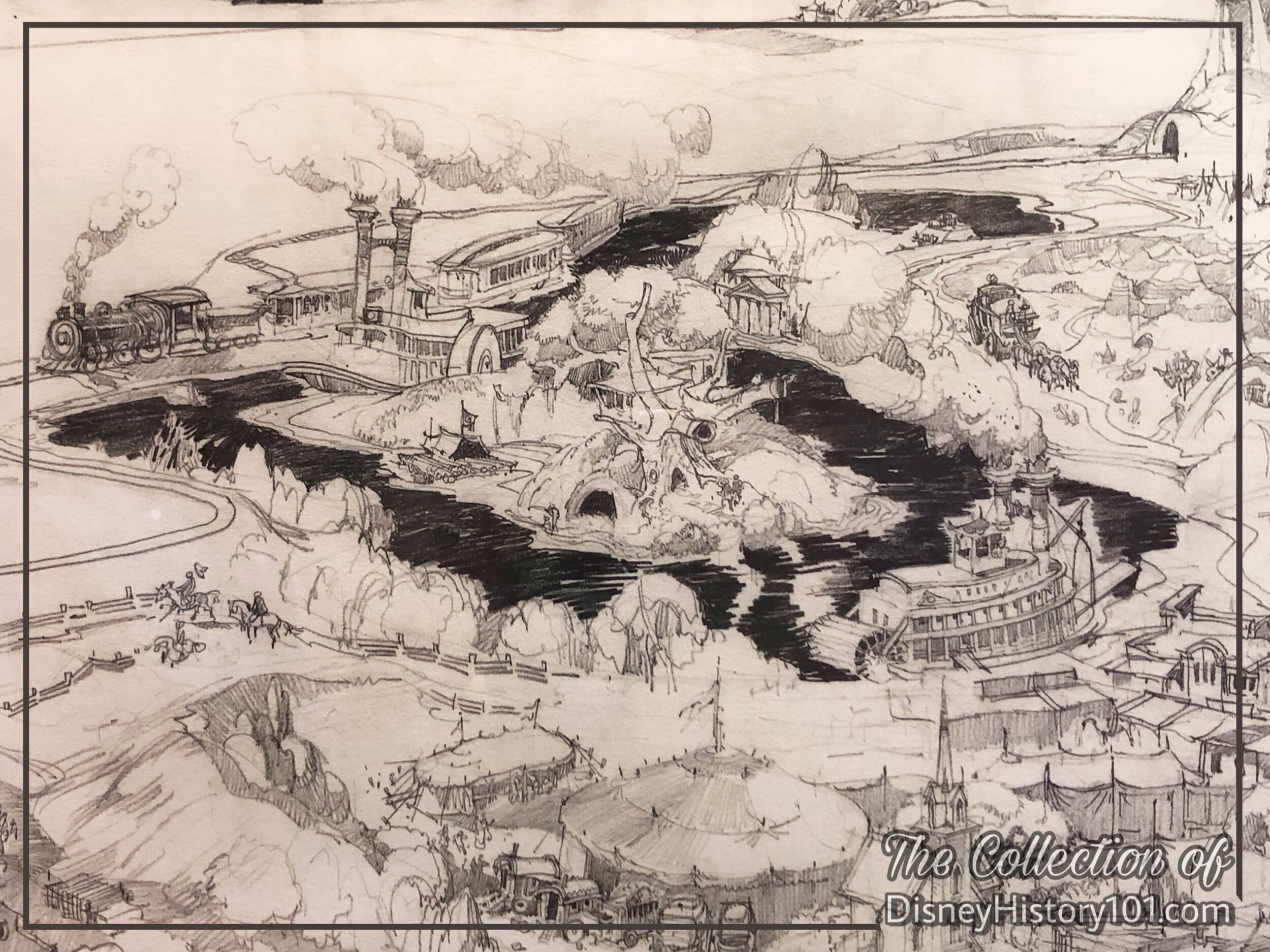
Herb Ryman's "Aerial Over Disneyland" Excerpt features both stern-wheeler and side-wheeler paddle steamers sending billows of steam into the air, originally produced September 26th & 27th, 1953.
“Herb Ryman’s Aerial Over Disneyland and the Mark Twain”
Walt’s plans (with audiences in mind) continued to involve a steamboat, as indicated by Herb Ryman’s “Aerial Schematic View” over Disneyland, which was created under the watchful eye of Walt Disney, originally produced September 26 & 27, 1953. Though the sternwheeler and “sidewheeler” riverboats were flowing backwards (in a counter-clockwise fashion) in Herb Ryman’s drawing, many story elements were present, that would help imaginative artists and engineers further the design of the riverboats and the design of the river itself. This and a portfolio of colored sketches by Herb Ryman, Bruce Bushman, Harper Goff, and others was prepared for Dick Irvine and Nat Winecoff to take back East to sell the Disneyland concept to prospective licensees.
According to Magic Circle magazine (June, 1956): “Translating an idea into a real object usually isn’t a simple task at best, even when you know exactly what you want to produce. Take Frontierland’s river boat Mark Twain, for example. Here, the idea-into-object task was not further complicated by the idea being an original one. There have been thousands of river boats built. But not lately. There had been no sternwheel of the Mark Twain type built in the United States for half a century,” around 1900. The Mark Twain was based on true-life river boats like the Natchez and Little Rufus, but at 5/8 scale (similar to the Horseless Carriages and the Disneyland Railroad trains).
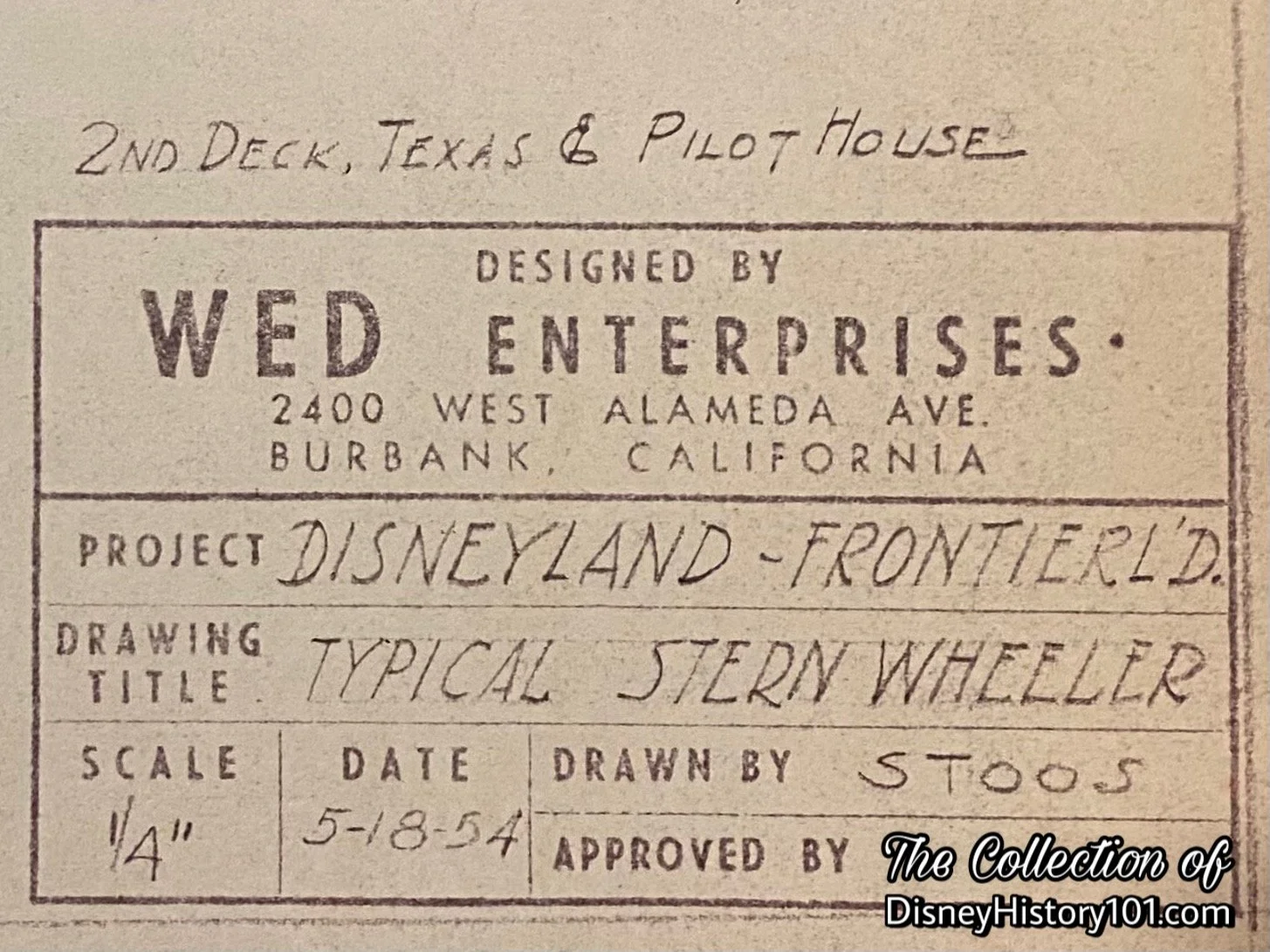
“Disneyland - Frontierland Typical Stern Wheeler” title block by John Stoos; May 18, 1954
“Designing the Disneyland Sternwheeler”
By May 18-19, 1954, John Stoos of WED Enterprises had prepared 1/4 scale drawings of a “Typical Sternwheeler.” By July 1, 1954, George Whitney of Disneyland, Inc. directed Amusements, with Ron Miller overseeing analysis, philosophy, capacities, planning, operator training, and amusement procurement.
Soon, Mark Twain designs were so far along, that a Mark Twain float even appeared in the 1954 Anaheim Halloween Festival courtesy of Yale Gracey. By that time (in 1954), some of the earliest suggestions and concepts of Walt Disney’s “Disney Land” included descriptions of a “Riverboat Ride.” According to “Disneyland” (prepared for Disneyland Inc. by WED Enterprises), “At the end of Frontier Street is the boatlanding for Riverboat Ride. The old stern-wheeler takes you downstream on a nostalgic cruise past the romantic river towns, Tom Sawyer’s birthplace, and the old Southern Plantations.”
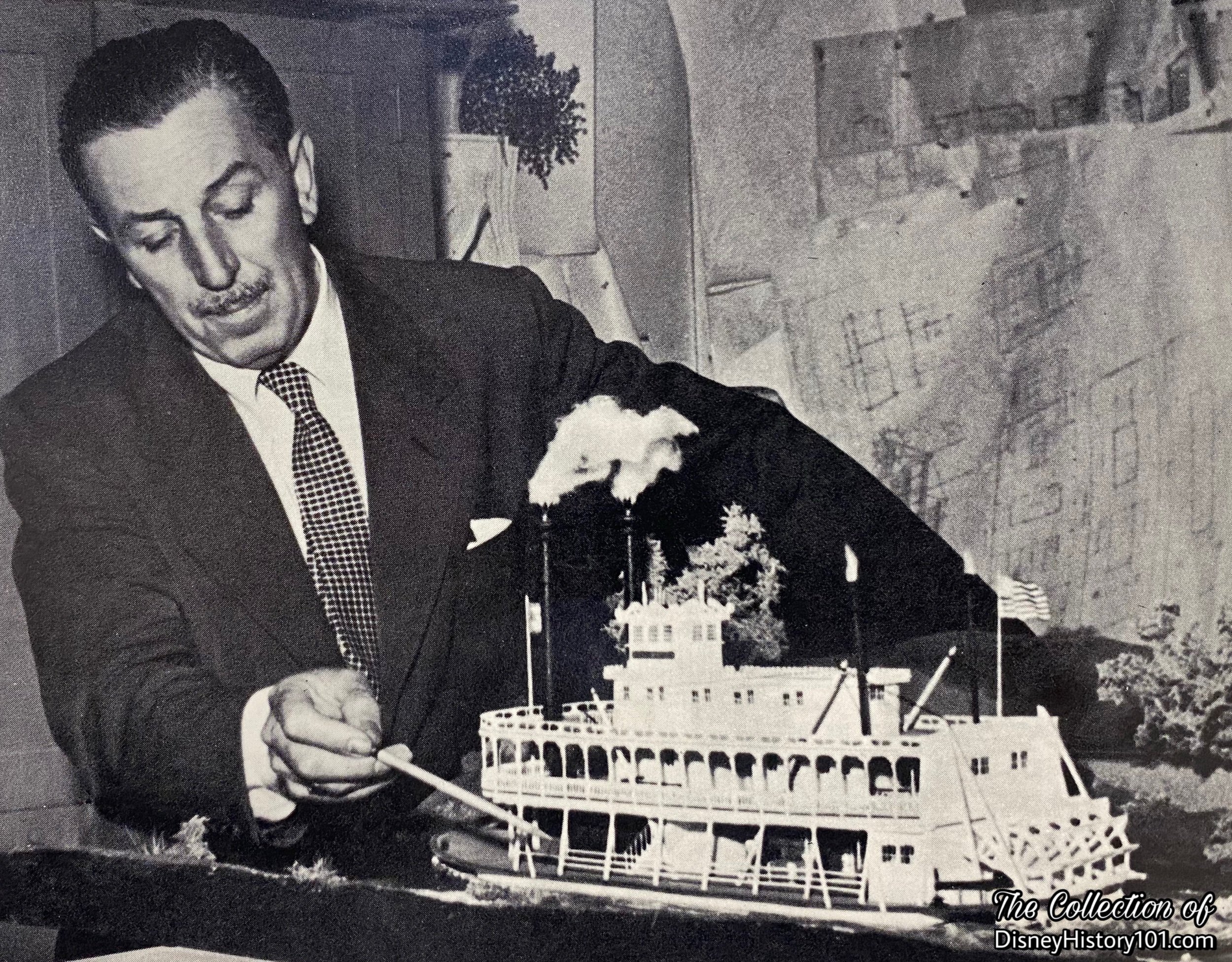
Detailed scale models were a key part in the "Imagineering" of the Mississippi paddle-wheeler, Mark Twain; Disneyland: The First Quarter Century, © 1979 Walt Disney Productions.
Once a design had achieved approval, it went to the model shop for one-dimensional cutout mock-ups in black and white medium.
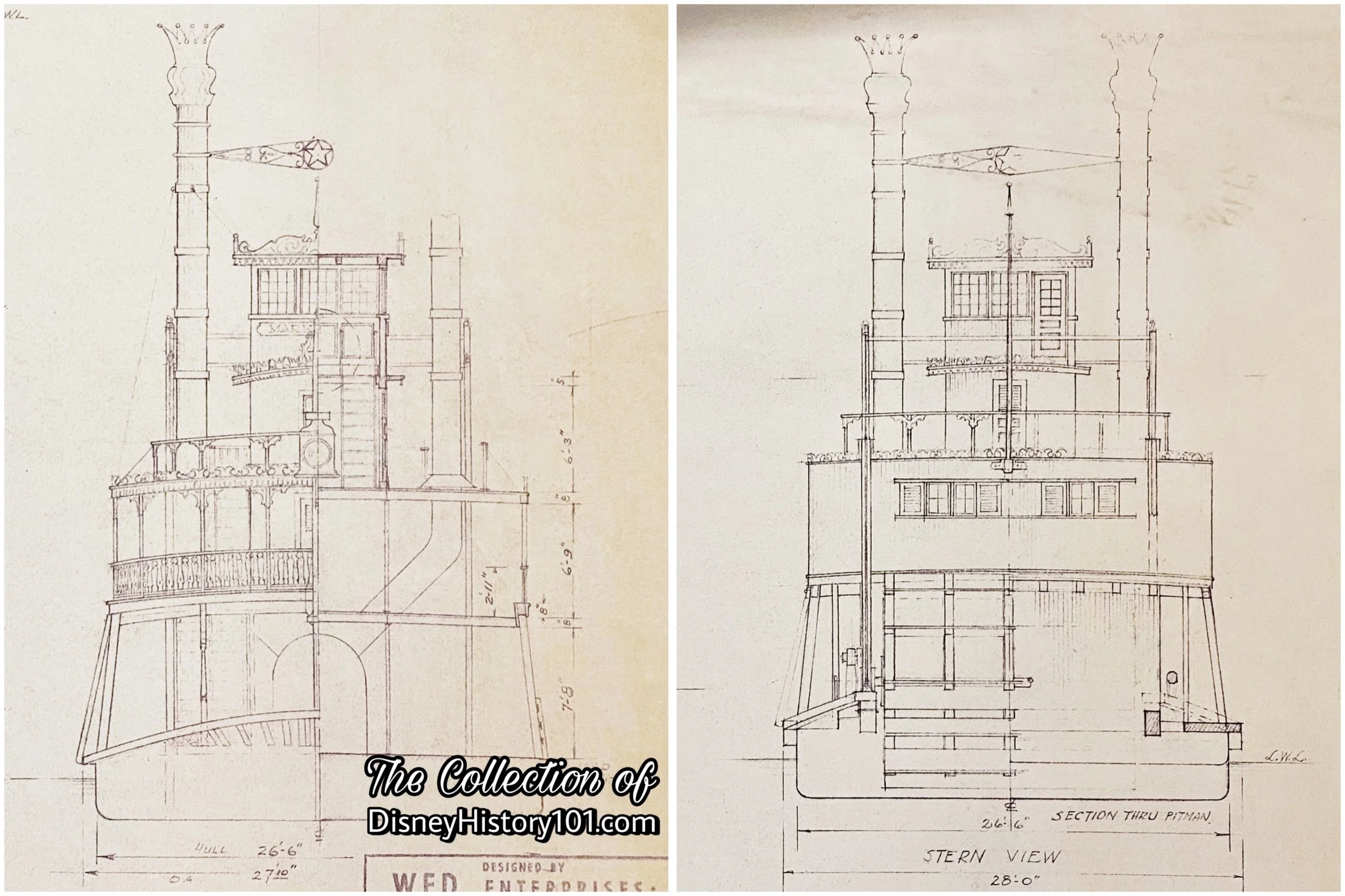
Mark Twain drawing by John Stoos; May 18, 1954
“The Hull”
Soon, the watertight five-compartment steel hull was being constructed (in November of 1954) by Todd Shipyards in San Pedro, California (with Todd Shipyards maintaining the rights to the original drawings off the hull). Wheeled mechanisms were built into the hull to interact with the underwater guide rail, and guide the boat on its tortuous course.
“The Paddlewheel”
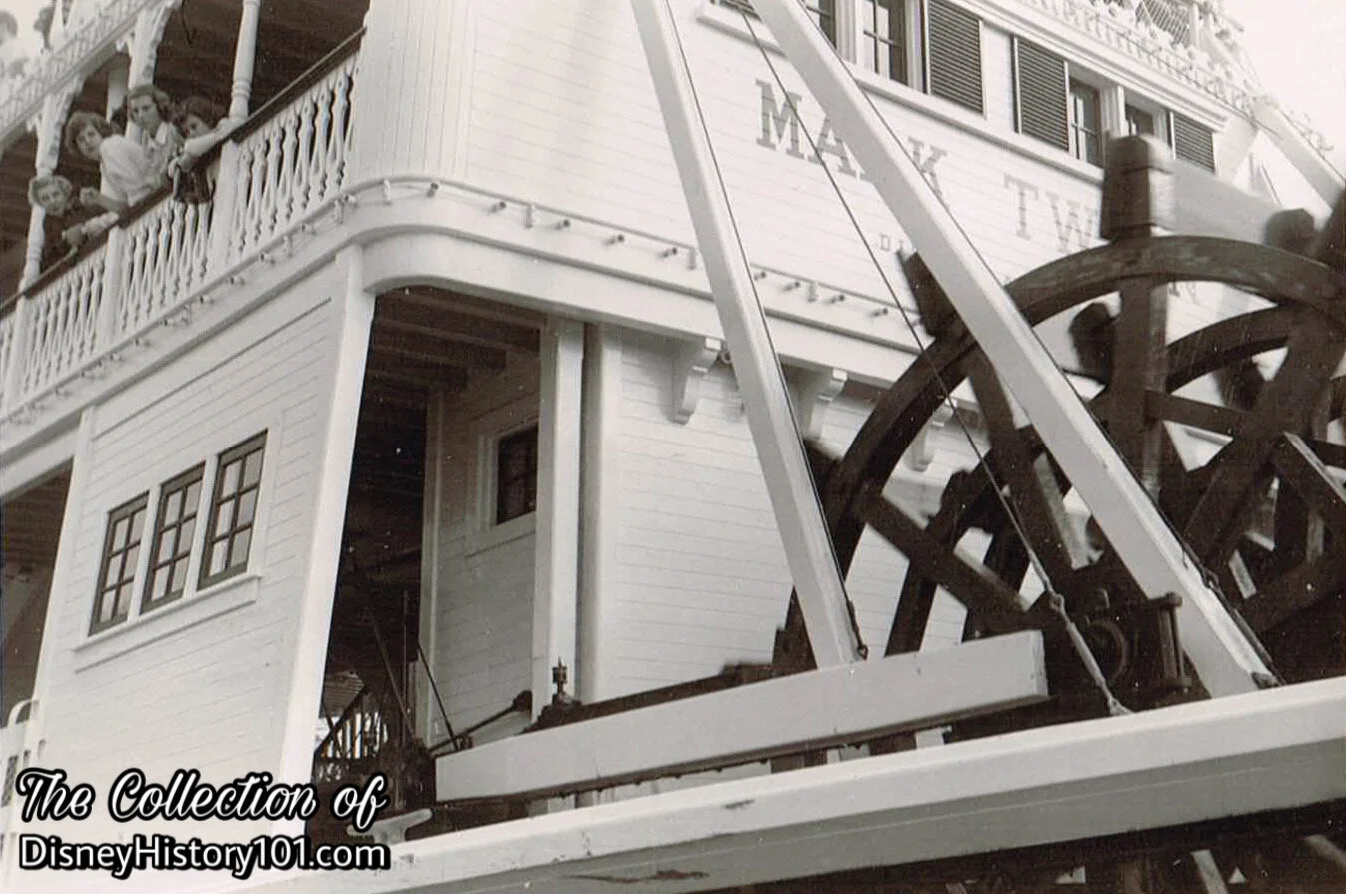
The 9-ton paddlewheel (with paddles made of Douglas Fir, and spokes of mahogany) was also built by Todd Shipyards in Wilmington (San Pedro), California. According to one Kaiser publication: “The big beams that drive the paddle wheel on the 105-foot Frontierland steamboat had to be light to keep down above-decks weight, yet strong enough to withstand 22,000 pounds of alternate pull and thrust pressure. Aluminum I beams 13 feet long with 10-inch webs proved to be the solution.”
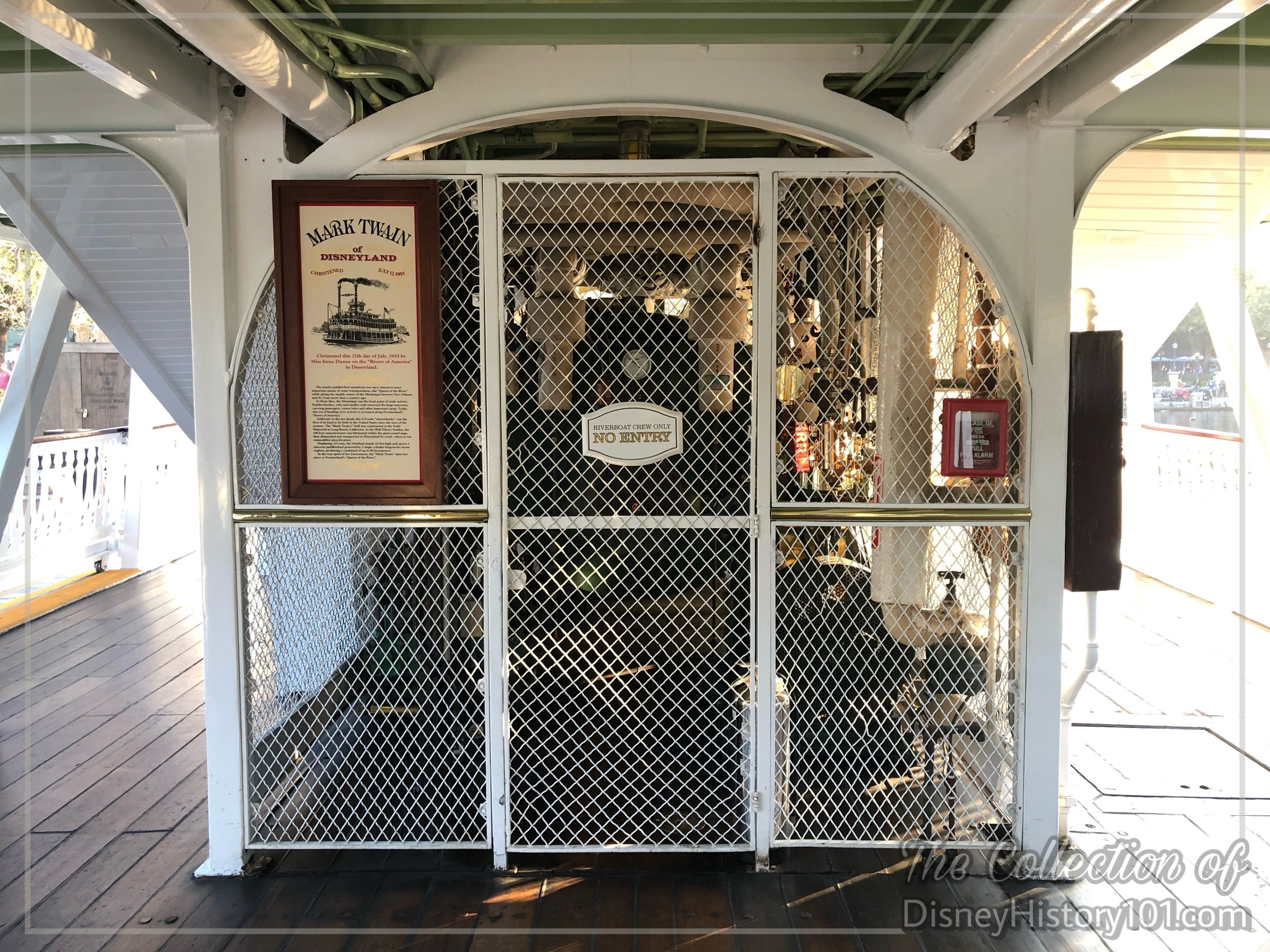
Mark Twain Engine; the present.
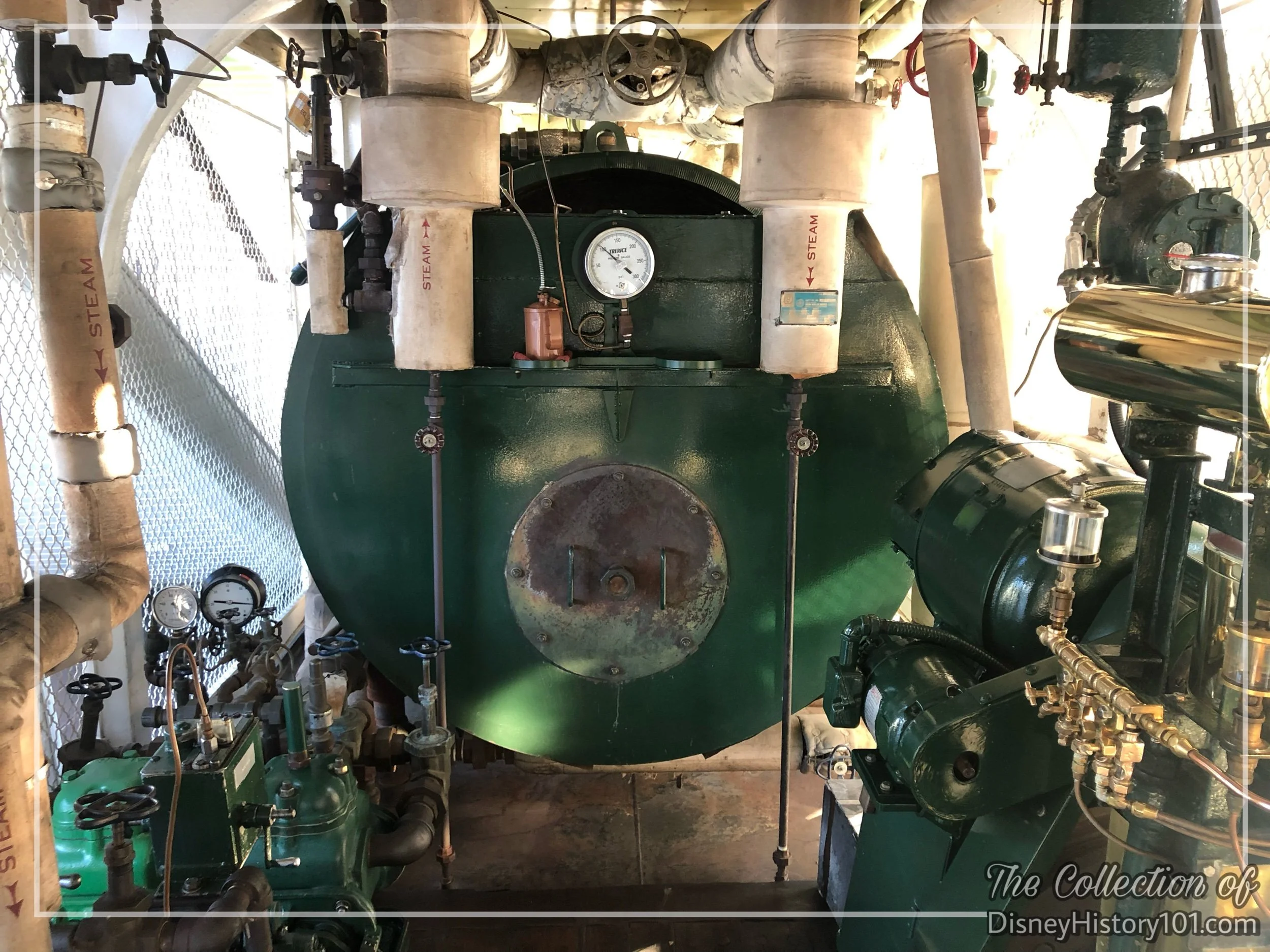
Mark Twain Engine; the present.
“The Engines”
The stern wheel propelled by twin horizontal, noncondensing steam engines (with a diesel fuel boiler). The engines were engineered by Dick Bagley. The engines were then built from scratch in The Walt Disney Studio Machine Shop, which was referred to as “a machine shop in the local area with qualified past experience,” according to “Building A Dream,” prepared by Disneyland, Inc. Public Relations Department, c. 1955. “Special construction was also called for in fitting the boiler into the hold,” according to “News From Disneyland” (a c.1956 press release document). This feature particularly impressed “the head of a tugboat company from New York,” according to Herb Ryman [in “Work With Walt” by Don Peri].
“Construction and De-Construction at Walt Disney Studios”
The Mark Twain paddlewheeler was a collaboration of Roger Broggie (the WED employee behind some of the Santa Fe & Disneyland Railroad’s engines), Dick Bagley, and Roland Peterson. Details and the super-structure of the vessel were manufactured by employees on the king-sized Stage 3 of the Walt Disney Studios, “where only a little while back, Davy Crockett was battling the soldiers of General Santa Ana,” (as seen in the televised Disneyland episode “Pre-Opening Report From Disneyland”) and 20,000 Leagues Under the Sea was partially filmed. “Since the deck slopes from one end to the other, each piece of wood had to be individually cut and fitted. To make sure it was completely authentic, we called in a supervisor - a Mississippi riverboat captain, who had spent a lifetime running just such a boat. Constructing such a large boat inside a building, 50 miles from water caused a lot of raised eyebrows. But unlike the fellow that built a boat in his basement, and couldn’t get it out, we had a plan.” The decks (sans hull) were entirely assembled on the “20,000 Leagues” soundstage. Scenes of these processes can be seen briefly in A Pre-Opening Report from Disneyland. It is worth mentioning a little-known fact, that “Walt’s father, Elias Disney, participated as a building contractor on the construction of the Mark Twain,” according to “Disneyland - A Treasure Chest of Trivia,” prepared by Walt Disney Productions, 1990.
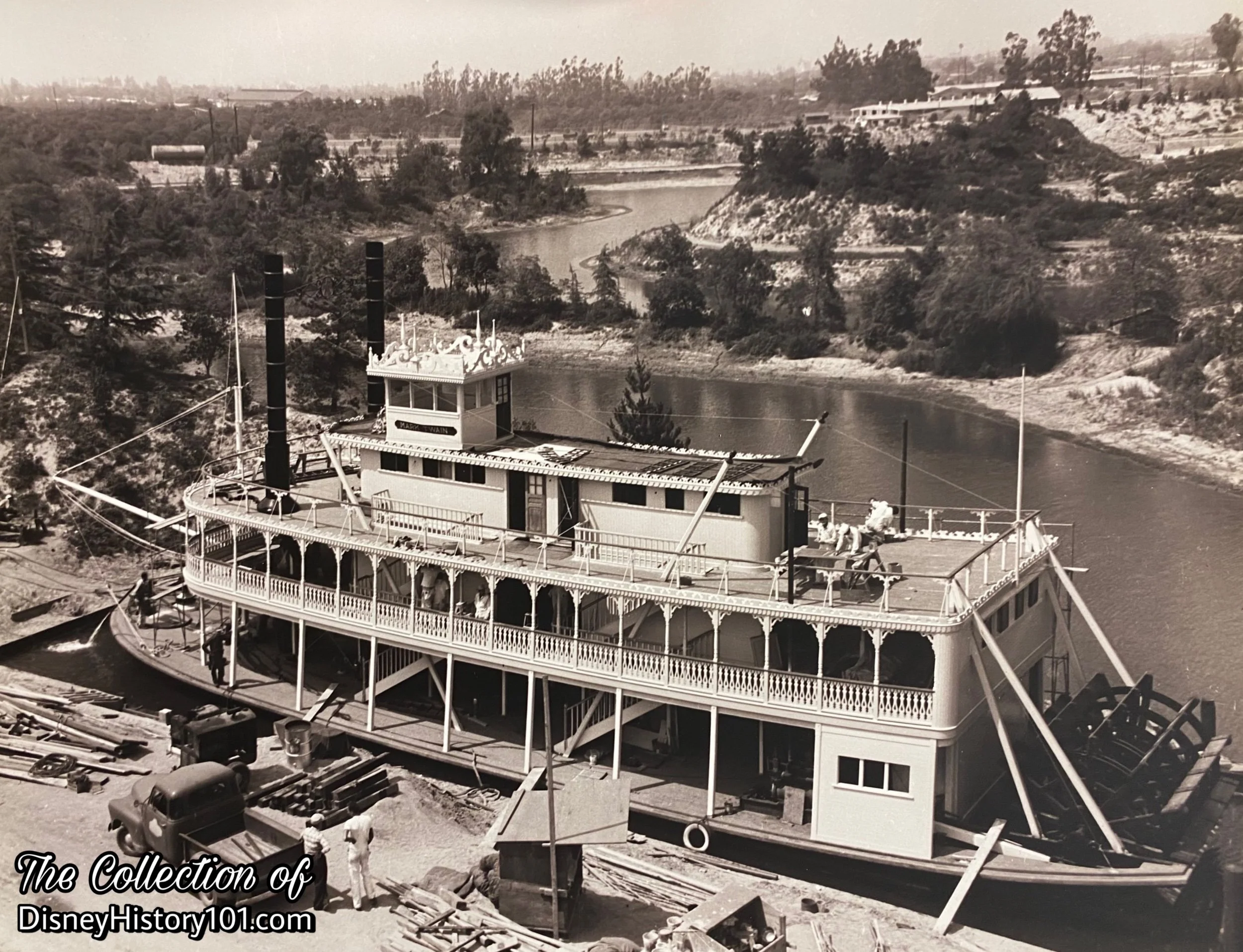
“Re-Construction at Disneyland”
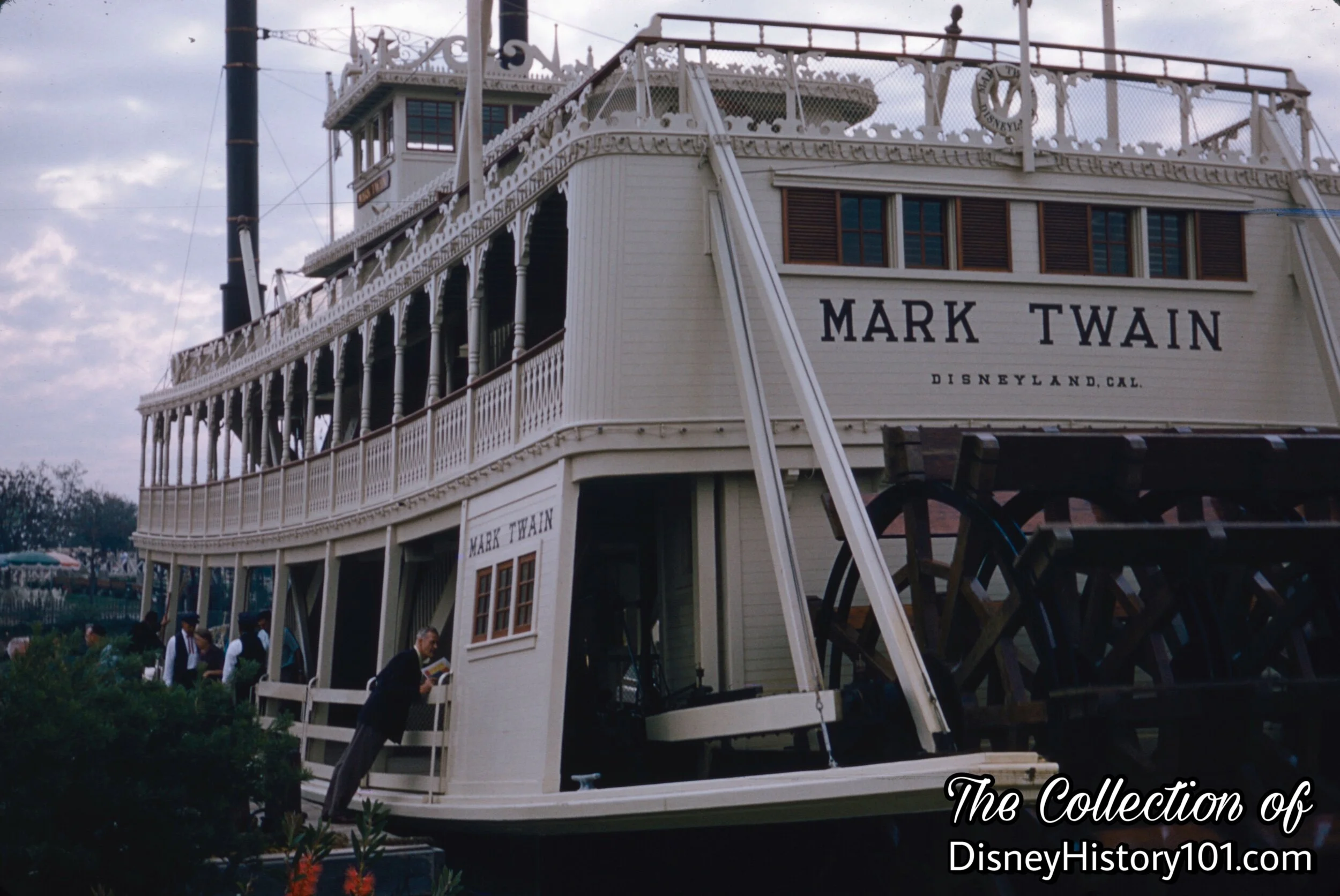
Because of its massive size, the Mark Twain (108 feet long, 150 tons, was much too large and heavy to move through the doors of the giant sound stage of the Disney Studio. It was built only to be disassembled for shipping to Disneyland. According to “Walt Disney Disneyland” (published 1964): “It was… dismantled and trucked over the freeway, piece by piece.” This towing via truck, to Disneyland, from Todd Shipyard can be seen in “Homecoming - Destination Disneyland” by Carlene Thie ; photos by Mel Kilpatrick.
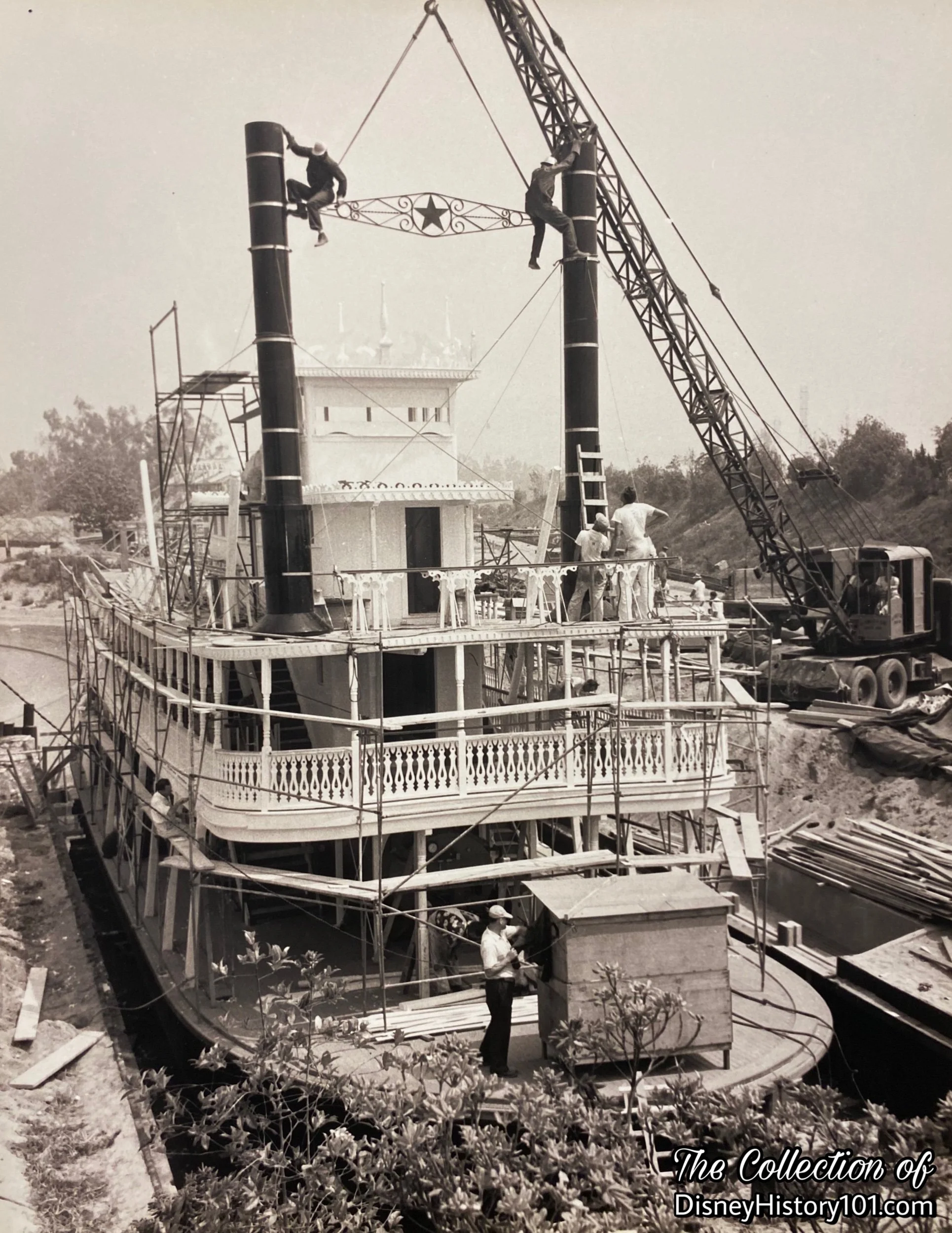
Soon the entire boat would be assembled and completed at Disneyland under the direction of Rear Admiral Joe Fowler, USN (Ret.) Vice President of Disneyland, Inc. and Director of Construction and Maintenance Division. The hull was the first component to arrive at the Joe Fowler’s Dry Dock in Frontierland, (even before the Rivers of America were filled with water. Once the decks arrived near the Frontierland Dry Dock at Disneyland, A.E. Fowler & Sons’ 20-ton Lorraine crane was used to place the assembled 5/8 scale decks on top of each other, eventually comprising the 150-ton vessel. In an amazing feat, the hull and decks fit together perfectly. This can be briefly seen in the Disneyland anthology episode entitled “Pre-Opening Report From Disneyland.” Other assembly was performed on site, and this is briefly preserved on film, in “Disneyland - The Park,” a Disneyland anthology television series short film (originally aired in 1957). Some of Mel Kilpatrick’s photographs of the smokestacks being placed on the Mark Twain with the help of a crane can be seen in “Homecoming - Destination Disneyland” by Carlene Thie, with photos by Mel Kilpatrick. According to the narrator of the aforementioned short film, “well-coordinated planned assured a perfect fit for all parts.” Walt inspected the construction near the Dry Dock, as seen in “Homecoming - Destination Disneyland” by Carlene Thie ; photos by Mel Kilpatrick.
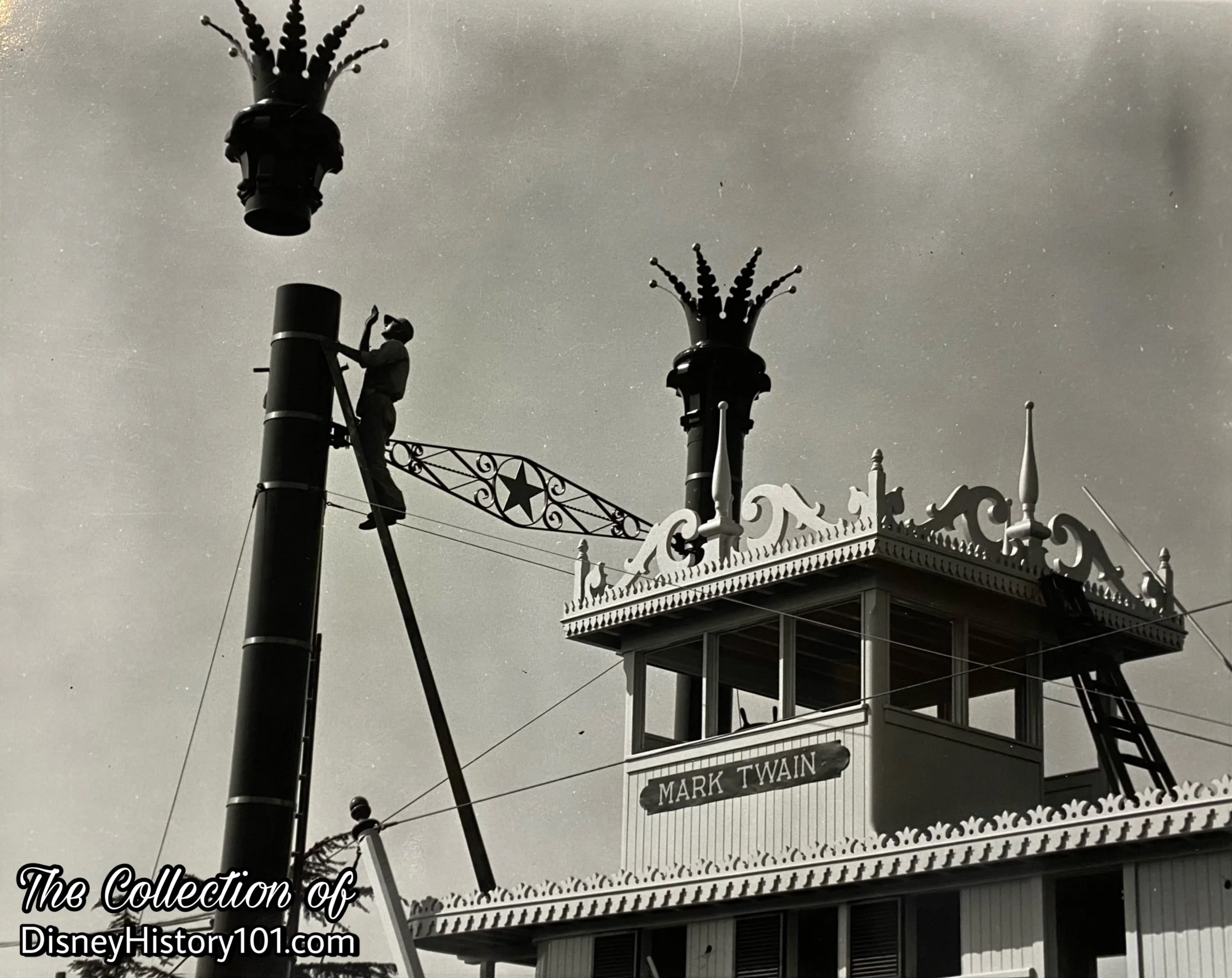
The Mark Twain Smokestacks are placed on their Chimneys in a press release photograph; ©️Walt Disney Productions.
“Illumination and Ornamentation”
LIGHT magazine (July and August 1956; published by the Large Lamp Department of General Electric, 1956) “shed some light” on the illumination. The Mark Twain, was “outlined in a thousand 7½-watt lamps for a gay and decorative effect. Power for lighting” was “generated by equipment right on the boat.” These 1,000 7½-watt lamps outlined the structure, each with porcelain sockets and open wiring.
“Marine equipment houses were searched over the nation for the gimble lights,” according to The Disneyland News (Vol.1, No.1 ; for July of 1955). Custom-built props - firefighting buckets and racks, gimble lights, smoke bells, and running lights - (of the period and size required), ornamented the vessel. The finished ship would hold what were once described as “ornate and plush cabins… on the upper decks,” including a captain’s quarters, wheelhouse, lounges. Including all this elegance (and Guests), the steam-powered ship would draw “about two feet of water” as it traveled the five-foot-deep Rivers of America, according to “News From Disneyland” (a c.1956 press release document).
To top off the proud American “Queen of the River” off, several 1861 34-star flags were flown from the top. According to Herb Ryman [in “Work With Walt” by Don Peri], “No steamship that ever plied the Mississippi River was as elegant as that little jewel that Walt built for Disneyland.”
“Working Title Announced & Studio Staff Preview”
Soon, one authorized “Disneyland Information & Nomenclature List” (prepared by Bill Cottrell of Disneyland Inc., May 25, 1955) divulged the working title of the “300 passenger sternwheeler” to Disneyland, Inc. employees as the “MarkTwain,” and elucidating the attraction the following way : “the S.S. Mark Twain takes you on a romantic story book cruise of the Rivers of America.”
As of June 2, 1955, C.V. Wood Jr. sent an Inter-Office Memorandum to Walt Disney regarding the best estimates that could be obtained at the time regarding the completion status of individual sections of the Park and Opening Day. C.V. wrote: “River Boat: Okay.”
Lastly, the Mark Twain (though incomplete) was dressed with patriotic bunting for a 4th of July party held for members of the Walt Disney Studios and their families. According to inserts in area newspapers, “Mickey Mouse enjoyed a trip with Walt aboard the Mark Twain as she got up steam and the nine-tone paddles turned for the first time.” The Mark Twain would embark on (what would become) a routine 20-minute journey, along a 2,450 foot-long guide rail located at the bottom of the Rivers of America. At 11:30 that night the Mark closed up and Walt invited the entire crew to a party at the Golden Horseshoe.
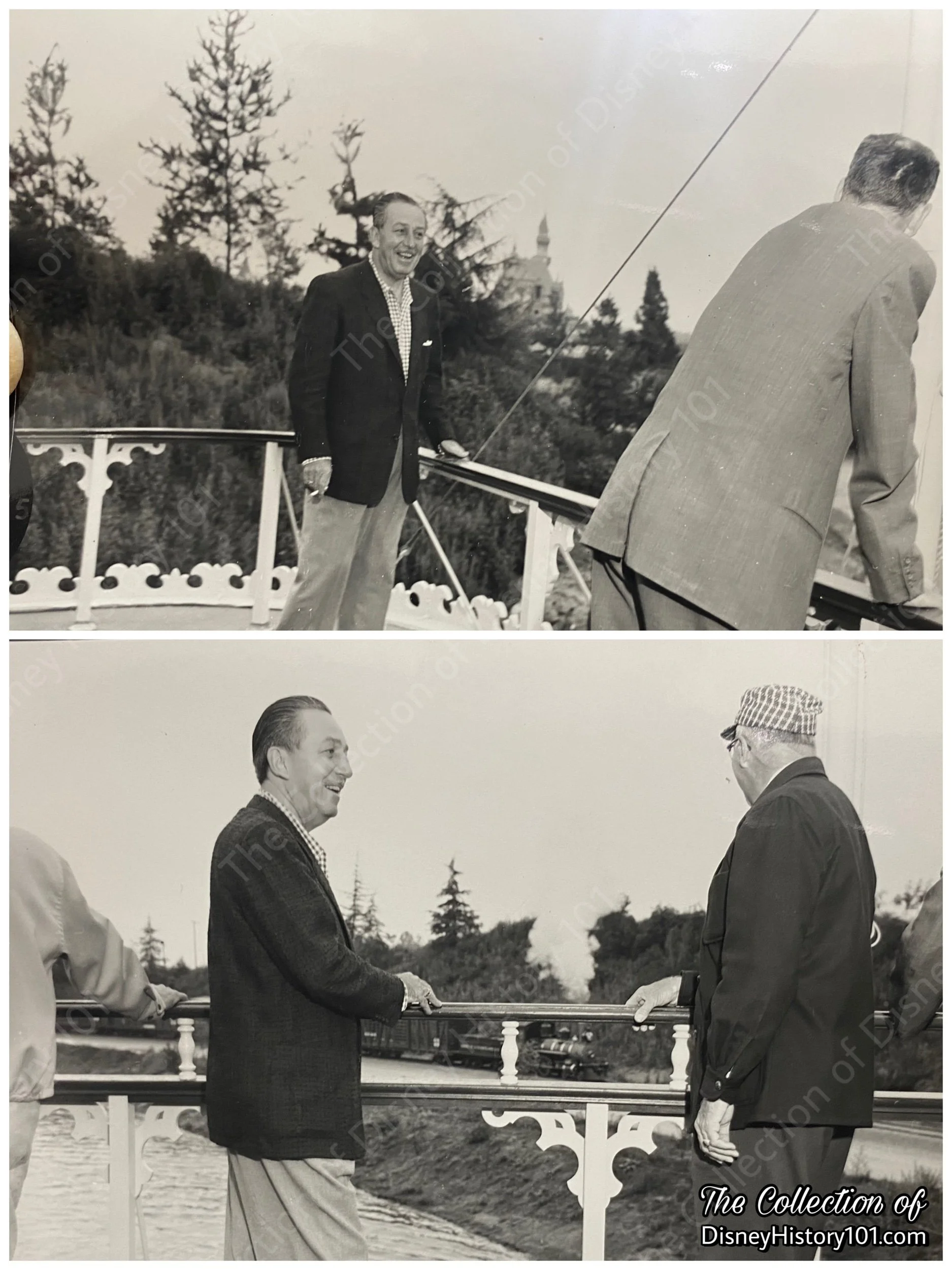
Walt and company ride aboard the Mark Twain.
“Union Negotiations”
As the deadline neared, some unions descended on Disneyland. Among these was the Inland Boatmen’s Union who wanted jurisdiction over the Mark Twain Pilot operators, according to the recollection of Van Arsdale France. After negotiations with the Orange County Central Labor Council there was (what Van France referred to as) a “shotgun marriage” and a resulting total of 29 unions at Disneyland. But the talk of unions could not out a damper on what happened next.
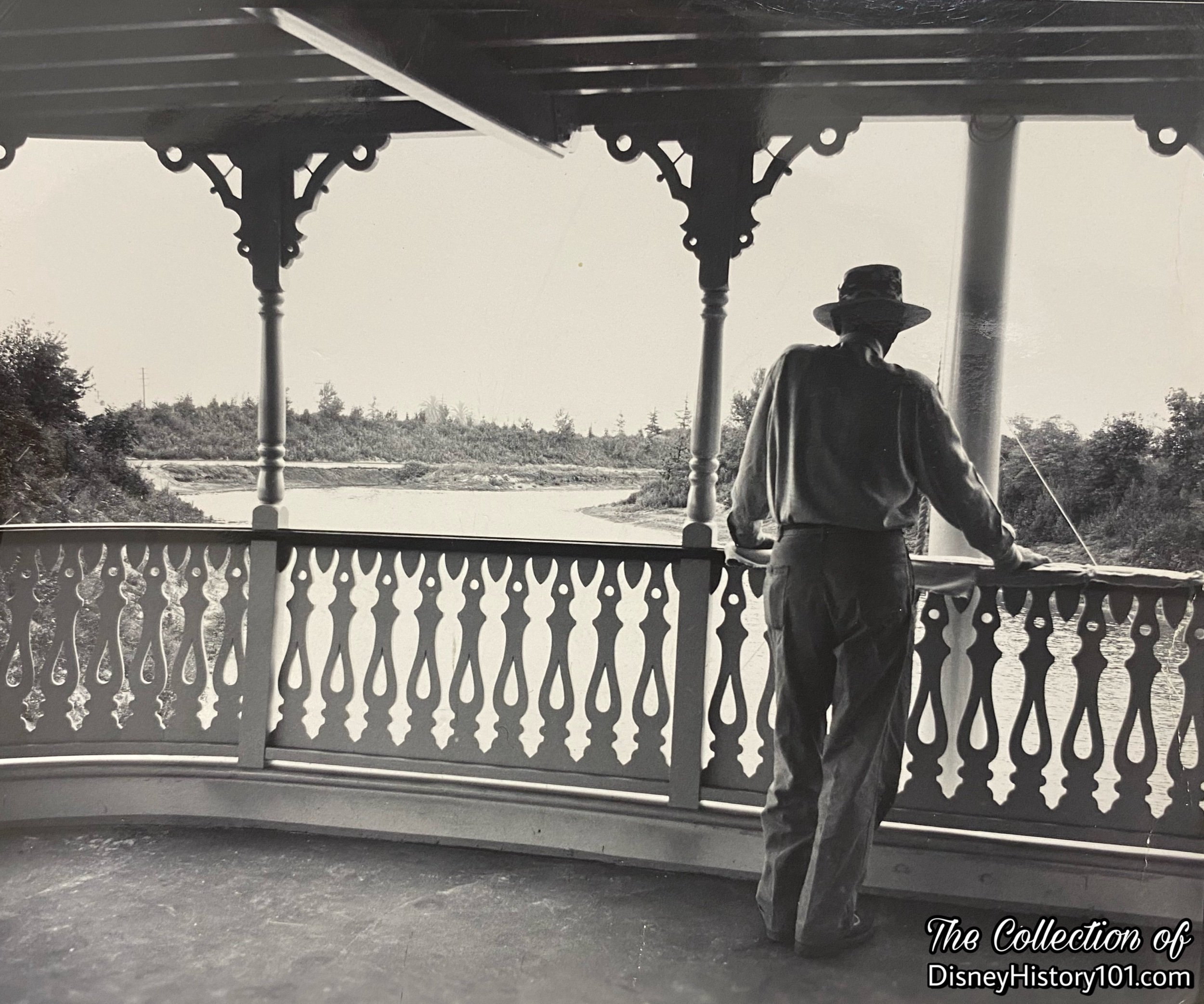
By June 25, 1955, the Mark Twain Riverboat was mostly finished. But before the Mark Twain Riverboat was christened, several important events were scheduled.
Marc Davis and others from the Walt Disney Studio attended an exclusive preopening party for Disneyland on July 4, 1955. The Mark Twain was nearly ready for that event, a photo in “Marc Davis in His Own Words,” page 7, testifying to its near-complete condition. Then another event was scheduled.
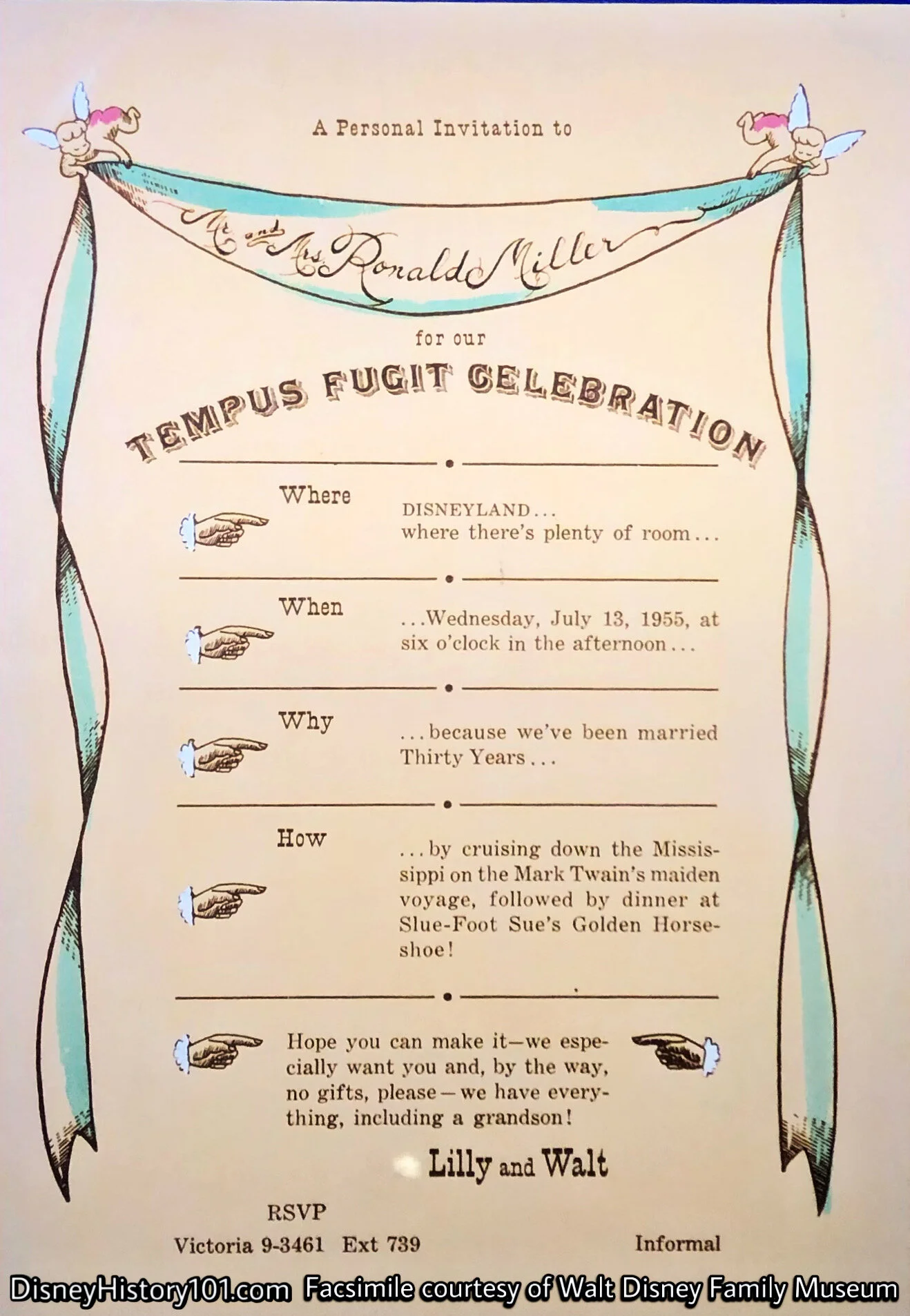
Walt and Lillian’s July 13th, 1955 Anniversary Party Invitation
“The Mark Twain and Walt & Lillian’s Tempus Fugit Celebration”
According to Van France, “Walt had been working… at the Park, and welcomed the chance to relax with his friends and co-workers and show off Disneyland.” Five days before Disneyland opened to the public, Walt and Lillian Disney celebrated their 30th wedding anniversary with a star-studded party on the decks of the Mark Twain. Of this happy occasion, Bob Thomas once wrote: “The completion of Disneyland coincided with Walt and Lilly’s 30th wedding anniversary… and an invitation went to 300 people for the ‘Tempus Fugit Celebration.’
Where: Disneyland… where there’s plenty of room.
When: Wednesday, July 13, 1955 at 6:00 in the afternoon.
Why: Because we’ve been married 30 years.
How: By cruising down the Mississippi on the Mark Twain’s maiden voyage, followed by dinner at Slue-foot Sue’s Golden Horseshoe!
Hope you can make it… we especially want you and by the way, no gifts, please… we have everything, including a grandson!
-Lilly and Walt.”
Despite the fact that the invitations read: “6 o’clock,” many guests had not arrived. According to Van France’s recollection, “Jack Sayers was with Walt at the Main Gate at six o’clock… and nobody had shown up. I remember his escaping for a while to tell me… ‘God, Walt keeps saying, ‘Where is everybody?’ and I don’t know where they are. He’s blaming me because the guests are probably hung up in traffic.’”
Meanwhile, “using the Mark Twain that night made Joe Fowler very nervous. He had had a dream the previous night that the river had once again sprung a leak and gone dry. And the stern-wheeler had not yet been tested on the river, leaving a wide opening for Murphy's Law (if anything can go wrong, it will go wrong).
Fowler slipped away from the raucous party an hour before the planned excursion and headed for the ship landing. There he ran into a woman frantically sweeping shavings from the deck. Handing the startled admiral a broom, she said, ‘Come on, hurry, let's get this thing cleaned up!’ Together Fowler and Walt's wife, Lillian, gave the Mark Twain a ‘spit and polish’ cleaning for its maiden journey.” [Disneyland Inside Story by Randy Bright, page 93]
Finally, the cleaning was completed, and the party guests arrived. Mint juleps were served to the Disney’s closest friends aboard the Mark Twain! Then, the ship set off for its maiden voyage around the River. According to the recollection of Van Asdale France, Dick Nunis “served as a bartender at the party. And… if I know Dick, he ended up the evening doing janitorial work… counting and securing the liquor and sweeping up the Mark Twain.”
“55er” Joyce Belanger recalled “The night before opening the Mark Twain ticket booth was not finished windows were dirty all over... there was a lot that still looked unfinished.”
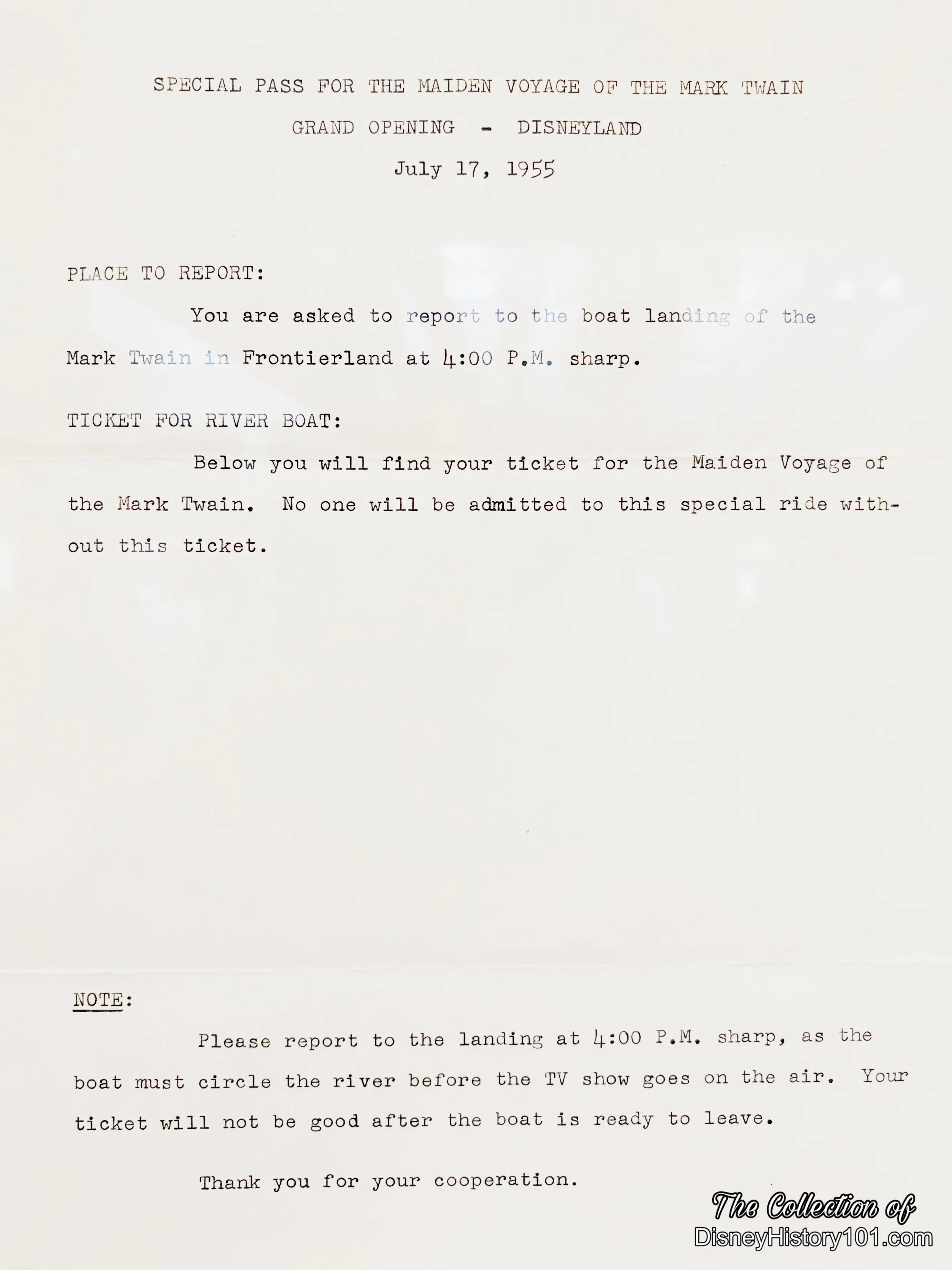
This letter accompanied the Special Pass for the Maiden Voyage of the Mark Twain, on July 17, 1955.
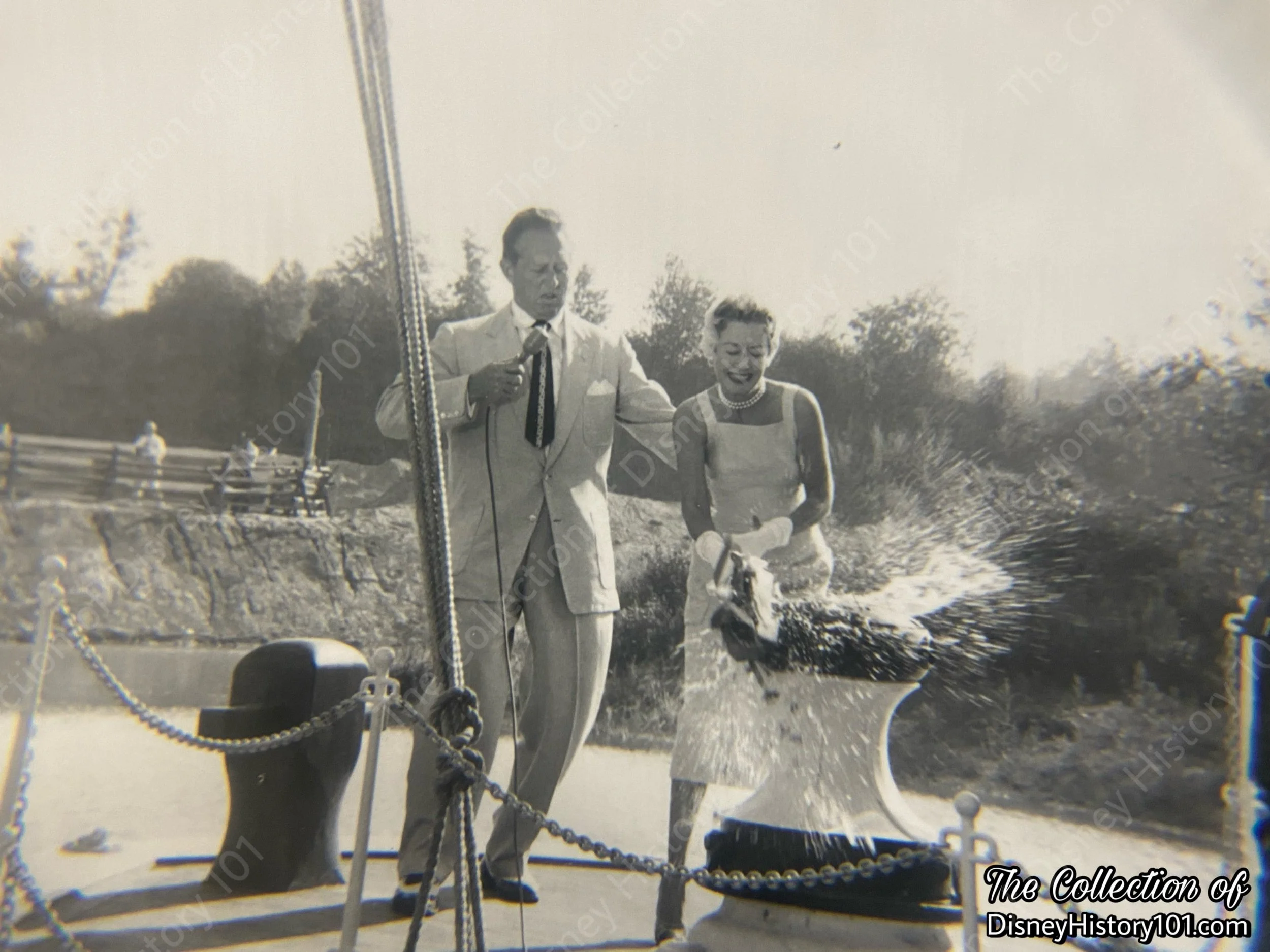
Irene Dunne launched the "Mark Twain" by breaking a flask filled with water from all the rivers of America instead of the traditional bottle of Champagne.
“The Press Preview of Disneyland and the Mark Twain Dedication”
Walt insisted on including a “romantic riverboat” in Frontierland and, though he had to pay out of his own pocket, The Mark Twain made it to opening day. Once Disneyland opened to the public, the Mark Twain would hold the place of 1 of 22 initial major attractions at the MAGIC KINGDOM®!
On Press Preview Day, selected Guests reported to the boat landing of the Mark Twain in Frontierland at 4:00 P.M. These ones redeemed their “Special Pass for the Maiden Voyage of the Mark Twain” – Attraction Admission Tickets which had been issued in advance. No one was admitted to this special ride without this ticket, and the ticket was not good for admission after the boat left. Next, Guests were loaded onto the boat, and it circled the river before the TV show went on the air. Then, the Mark Twain was officially dedicated by actress Irene Dunne of “Show Boat” (1936) fame (a plaque located behind the boat’s engine continues to commemorate Irene’s role in the dedication). This was more than appropriate, as Irene’s father “used to be supervising general of steamships in America” and her “grandfather used to build boats like this,” by her accounts to Art Linkletter.
“Art Linkletter called upon actress Irene Dunne to christen the Mark Twain with a bottle containing waters culled from the great rivers of the country. ‘My, it's listing,’ she noted, as a big crowd stormed on board the vessel. Dunne mistakenly called Linkletter ‘Walt’ and Art referred to the bottle's contents as coming from ‘the rivers of the world - of America, that is!’” Actually, Irene christened the Mark Twain, with a flask of water from all the true-life “leading” rivers of America, which was broken open (instead if the traditional bottle of champagne).
With that, Art Linkletter scurried off the deck, and while Admiral Joe Fowler blew the whistle (from the Wheelhouse) the Mark Twain departed for its half-mile maiden voyage plying the Rivers of America, at about four knots per hour! Actual capacity was reached with so many guests aboard, that Dick Nunis recollected, the Mark Twain was “overloaded and sinking,” that very day. According to one publication, “water washed up on the deck of the overcrowded Mark Twain Steamboat.”
“Since the Mark Twain had no set load limits, operators kept waving on guests until the deck neared the water line. During one trip along the sparsely vegetated river route, the ship almost capsized as passengers stampeded from one side to the other to view the riverbanks' few attractions. Immediately, the park established maximum capacities, which are still in effect today.” To top it all off, “a window fell out of the upper deck of the Mark Twain onto a man's head.” [“Mouse Tales: A Behind-The-Ears Look at Disneyland” by David Koenig]
However, after riding the Mark Twain, guests could enjoy the Mark Twain Special - a hearty, man sized stack of tangy Aunt Jemima Buckwheat Cakes.
“Grand Opening of Disneyland and the Mark Twain”
Cecil Gibson was the first engineer on the Mark Twain and recalled Opening Day: “There were 14 operators aboard and seven of them were 'Break Men. There was NOTHING on the River... and only a pile of earth for the Island. But the people thought it was great just to be riding on a steamboat!“ “55er” Homer Holland recalled: “I was supposed to be working on the Mark Twain, but they still didn't have my uniform by opening day. Well, the Mark Twain had too many operators and the jungle didn't have enough, so I went to the jungle for a year.”
Generally, the guide rail and a precise water level (of the Rivers of America) would assure that the vessel did not float off of the rail or drop onto the guide rail and break it. Almost. Disneylander and “55er” Dick Galentine recalled “One black winter night, many years ago, I was making my tour of the Park. I came aboard the Mark Twain to make a routine inspection of the fire fighting equipment. It had been raining very hard for a couple of days and the river was extremely high. While I was doing my duties, the Mark floated right off of her guides and the ship moved out several feet from the dock. All this was unbeknownst to me as I stepped off, right into the river! The water sure was cold, but the razzing I got was hot!”
“Response - The Mark Twain Makes the News”
Now, it was said that “Disneyland is News” as innumerable publications and journals reported on Disneyland just during the “first fabulous decade” alone. As really as 1956, “Motorboating” (a “nationally distributed magazine for yachtsmen and boat buffs”), published an article on the Mark Twain, written by Stewart Robertson, for June of 1956. As a result of the press reports, even more “high state, local and national government officials” as well as “luminaries from motion pictures, television and the theater” turned out to “pay tribute to this happy land” including the Mark Twain. [“Disneyland 1st Anniversary Souvenir Pictorial”, 1956, page 9] Among the first four million visitors to step though the Main Entrance Gate turnstiles and take a romantic river excursion was Groucho Marx and his family.
The Mark Twain was part of the Disneyland show that heightened the bar for the entire amusement park industry. The Mark Twain even directly inspired similar attractions at other theme parks around the world. For instance Freedomland (in New York) had two 110-foot, 400-passenger sternwheelers. These boasted to be the “last sternwheel steamers to be built in the United States,… specially constructed for FREEDOMLAND by Todd Shipyards.”
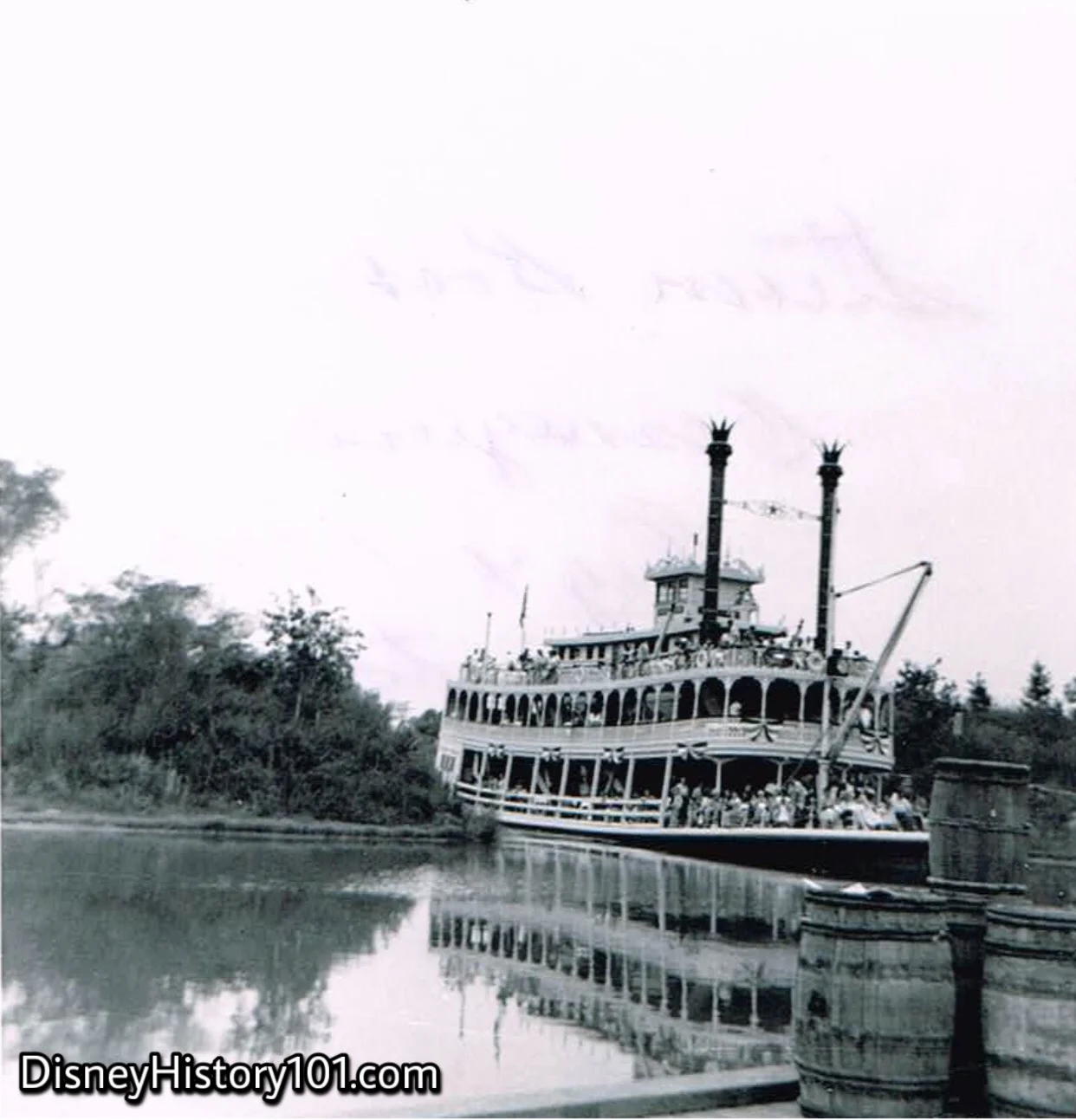
August 4, 1955.
Tom Sawyer Island didn’t open until June 16th, 1956. This was the sparse scene along the shore of the Rivers of America when Disneyland opened. The feel of the journey was similar to taking a true-life steamboat cruise down the real Mississippi River.
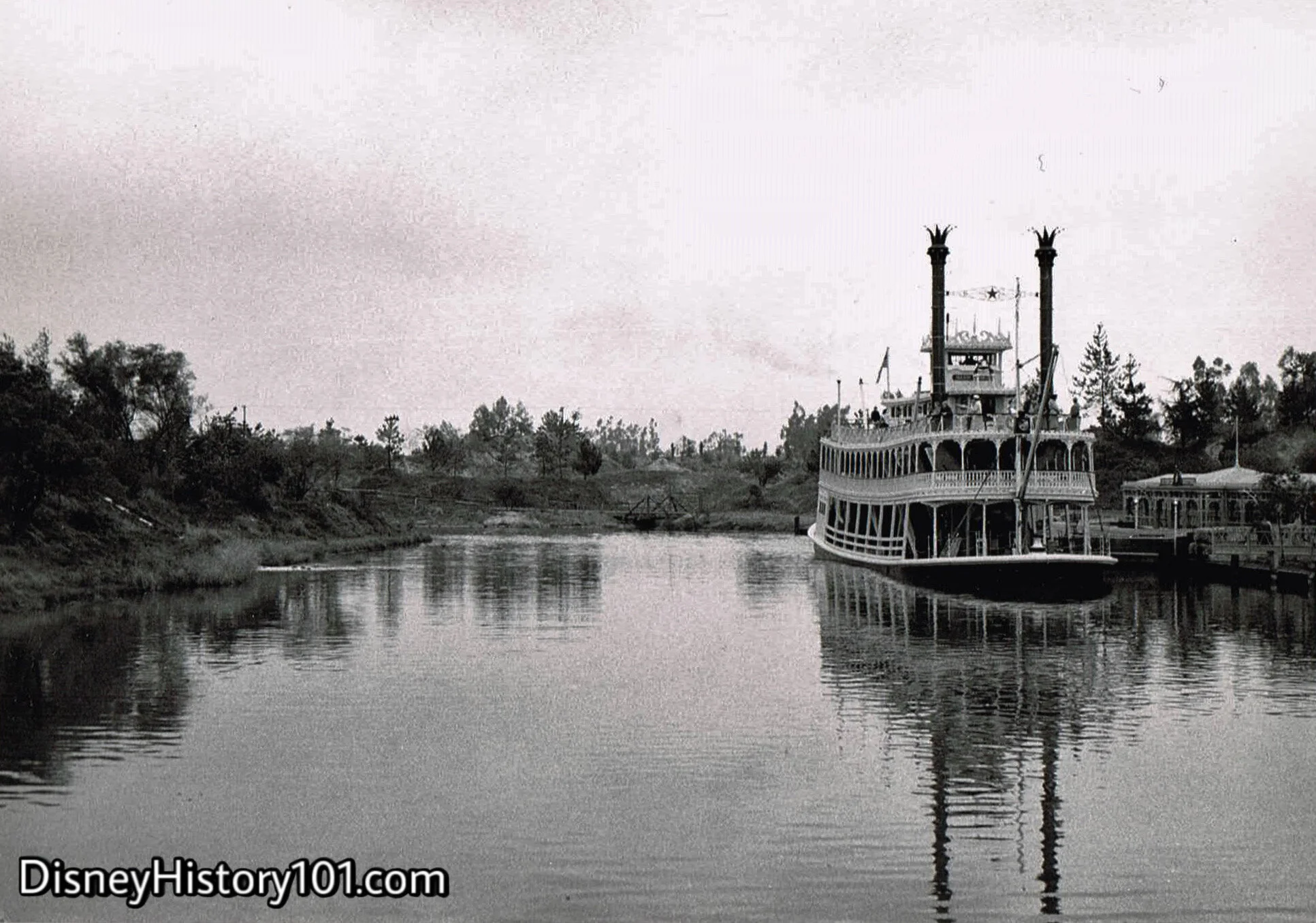
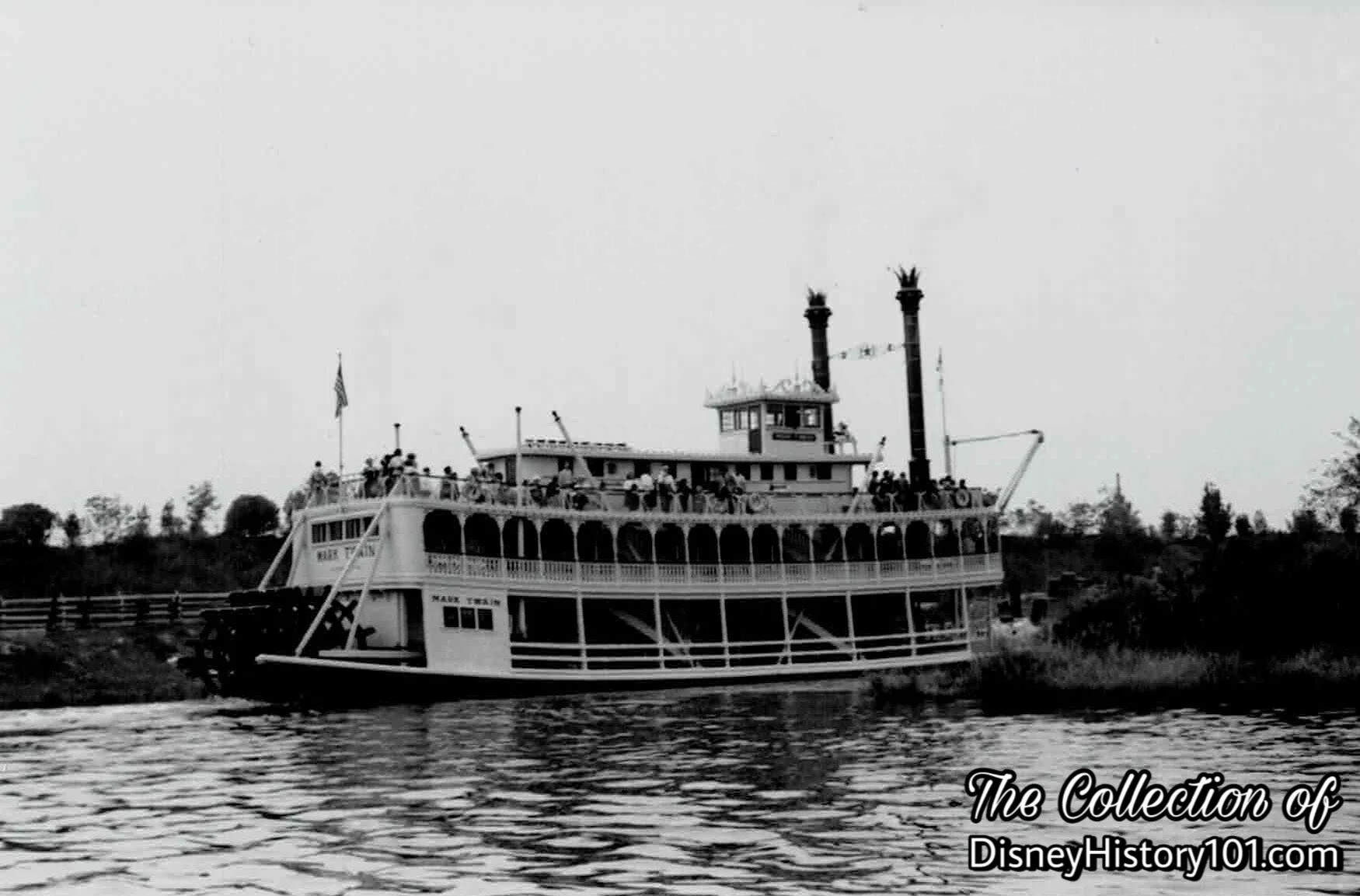
(1955)
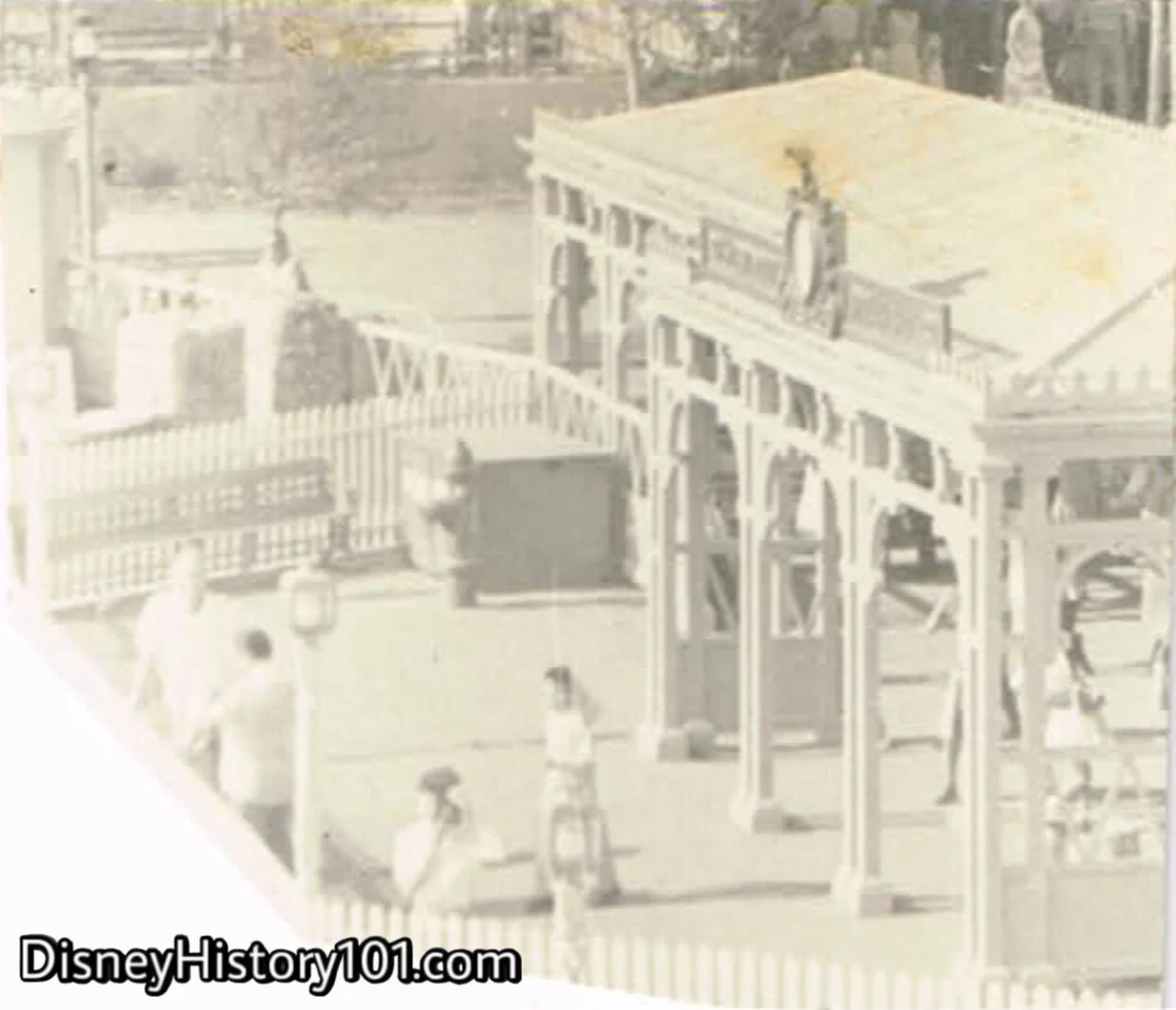
Mark Twain Steamboat Dock in 1956, also known as Frontier Landing in the present. At this time, it exclusively served the Disneyland Steamship Co.
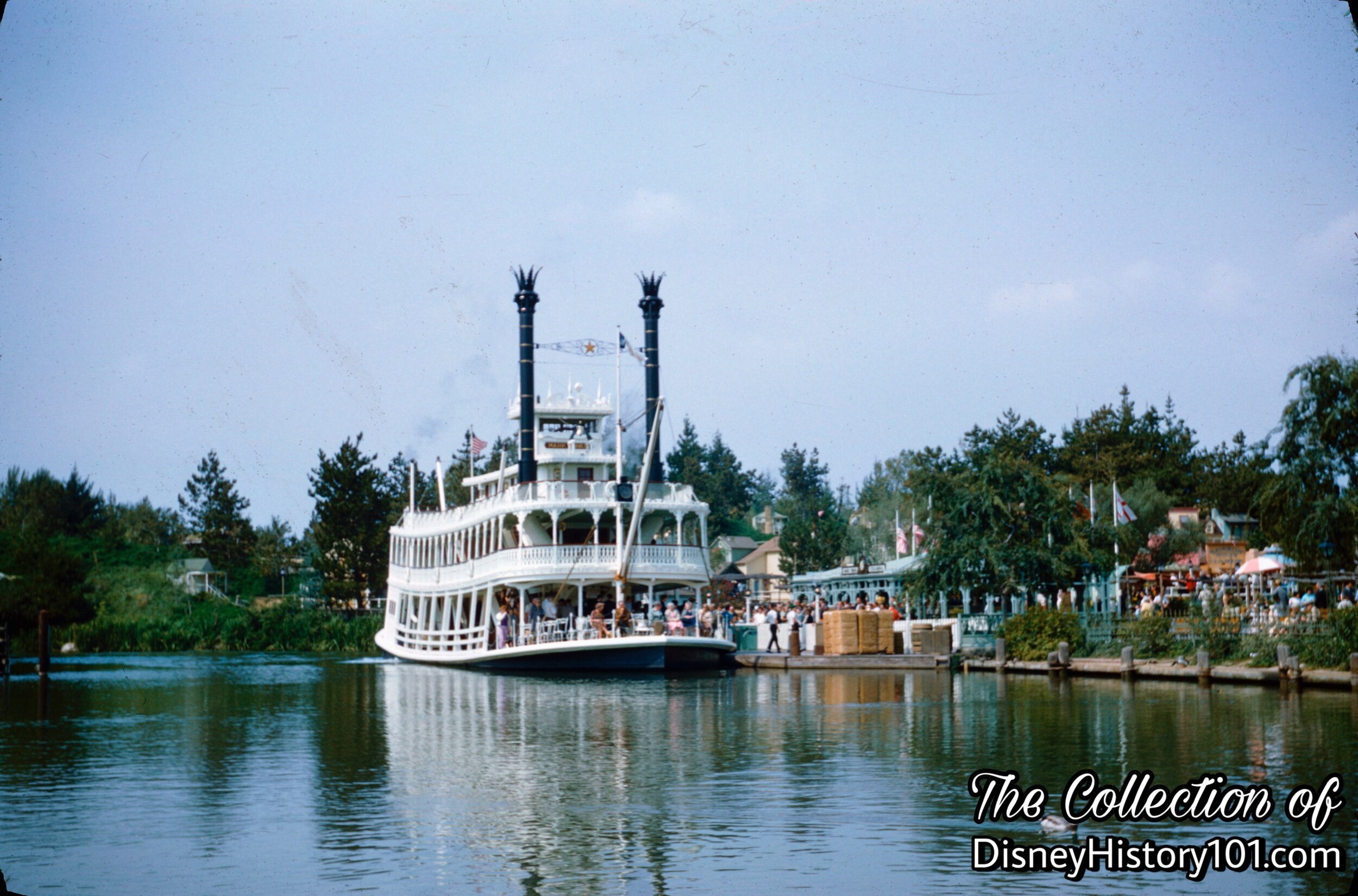
But eventually, the Mark Twain was open to the public and guests waited their turn at the Frontierland Dock (next to the Ice House), as the riverboat ran its course through the Rivers of America.
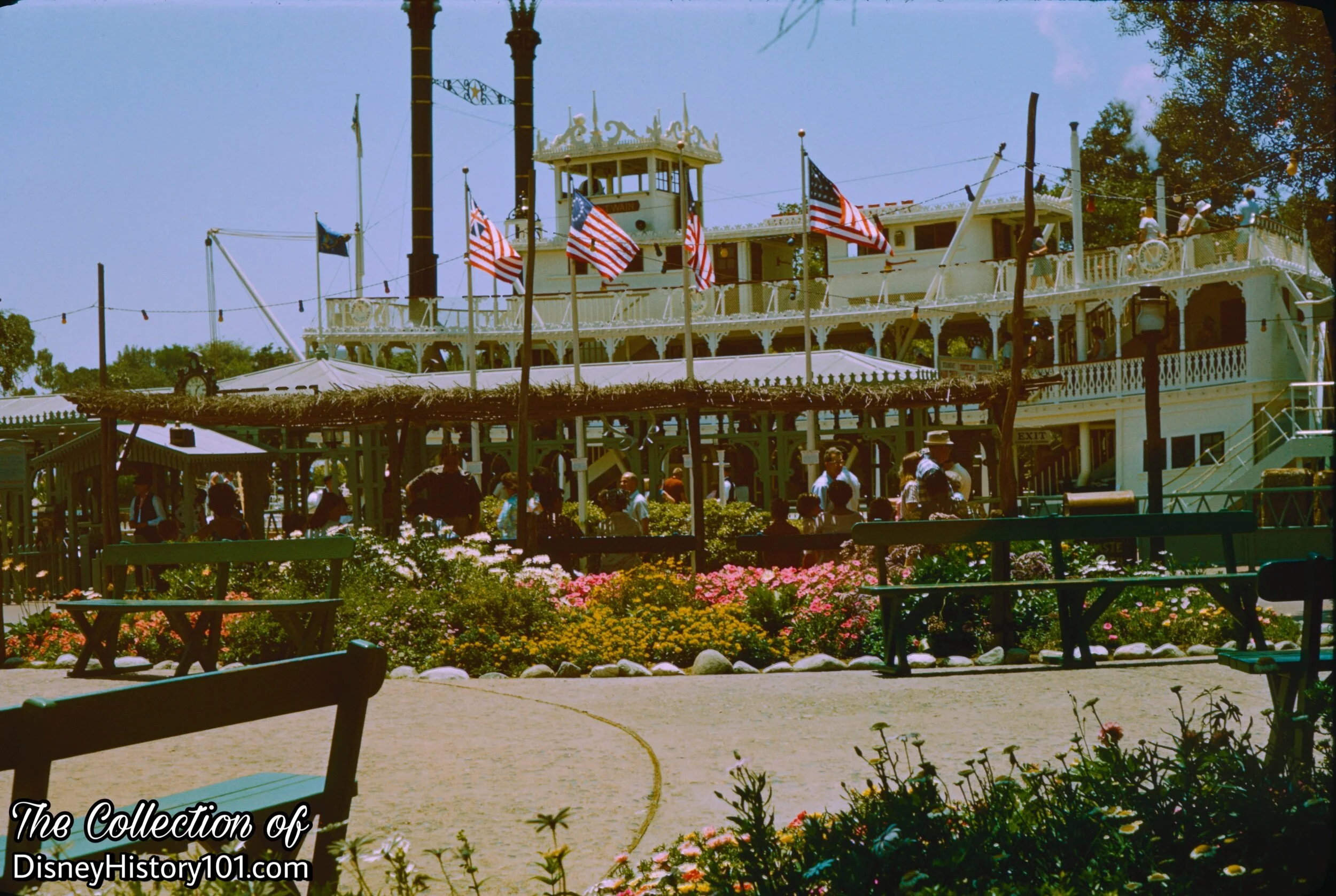
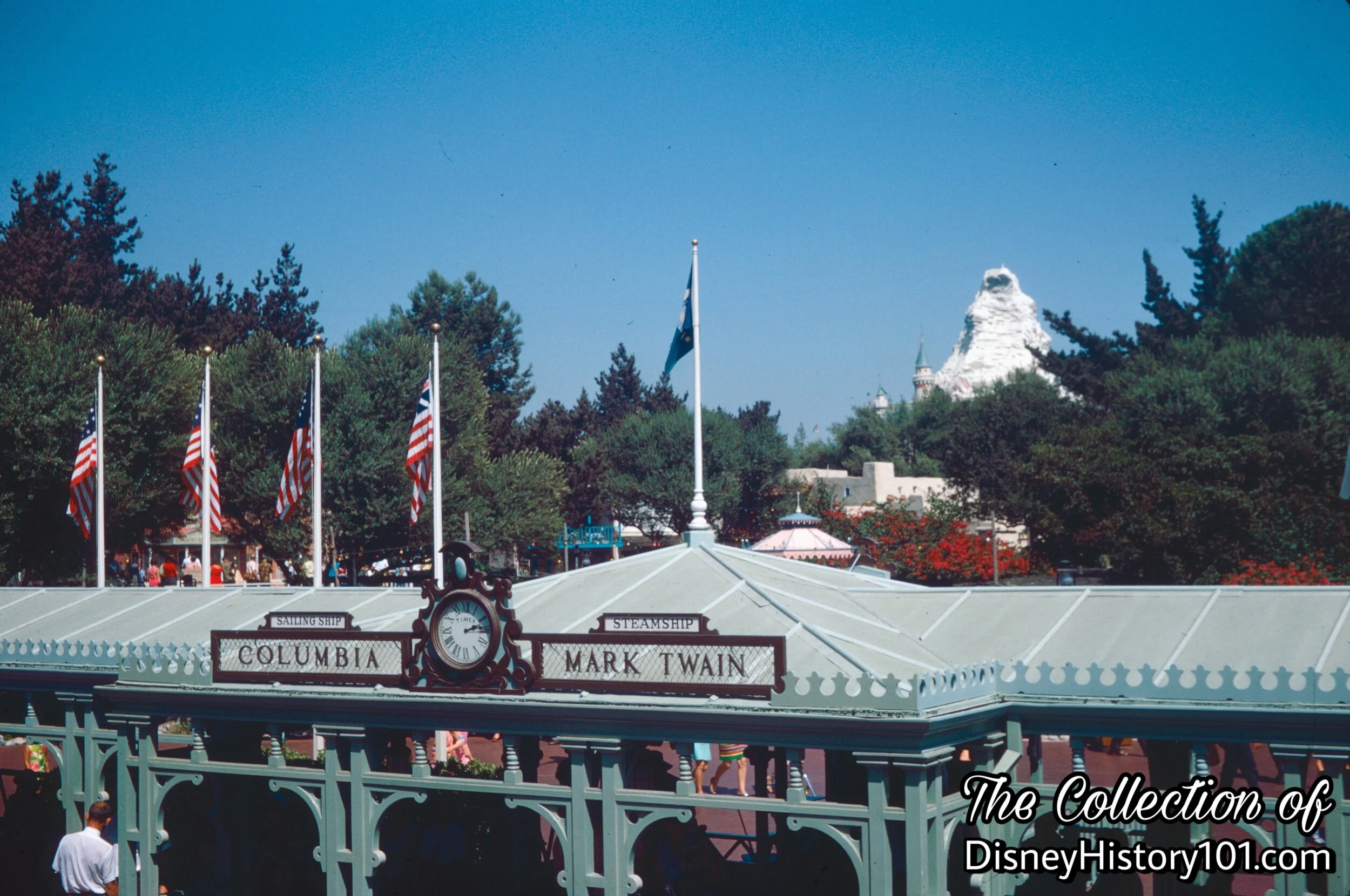
Mark Twain Steamboat Dock (“Frontier Landing”) with early American Flags, (July, 1966)
Eight early American flags were flown from the related Mark Twain Steamboat Dock. Among them were the Kings Colors (English Flag), Continental Flag, Betsy Ross (original 13 stars & 13 stripes), Grand Union Flag or Cambridge Flag, the John Cabot or St. George Cross flag flown over the Jamestown Settlement in 1607, the Pine Tree Flag or Washington's Cruisers Flag first carried by the ships of the American Navy, the first "Old Glory" (24 stars & 13 stripes), and the “Star Spangled Banner” (featuring the fifteen stripes and fifteen stars that inspired Francis Scott Key to write the national anthem). This is the only fifteen star flag that flies in Frontierland, as the rest have thirteen stripes of red and white. One version of the blue and gold Disneyland Flag (featuring Sleeping Beauty Castle, the Disney “D,” and six stars) manufactured by Hortie Van also flew over the Mark Twain Steamboat Dock (this one was different from the one flown from the Mark Twain).
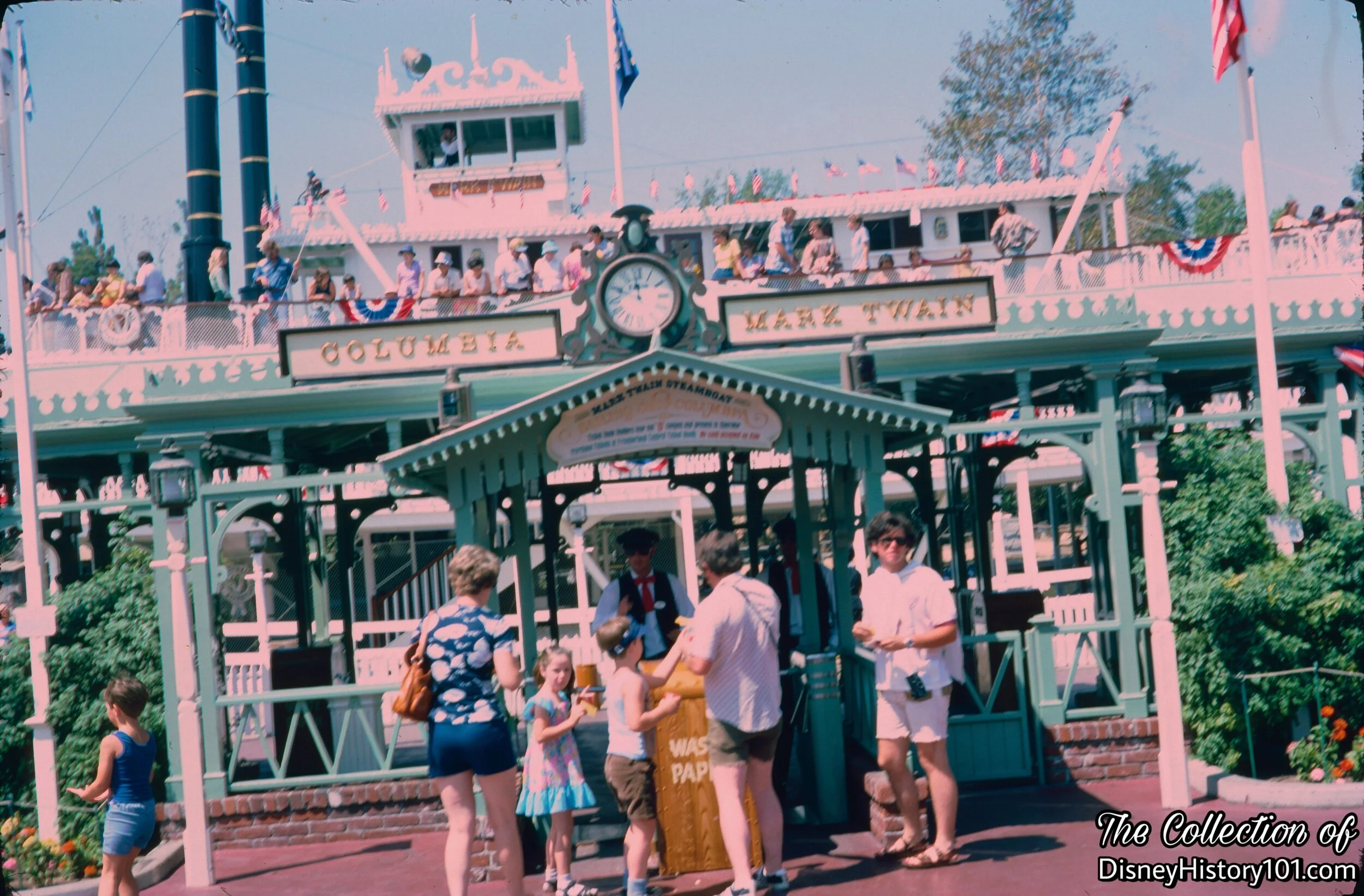
Mark Twain Steamboat Dock (or, “Riverboat Landing”) leading to the Guest Control queue area, September, 1976.
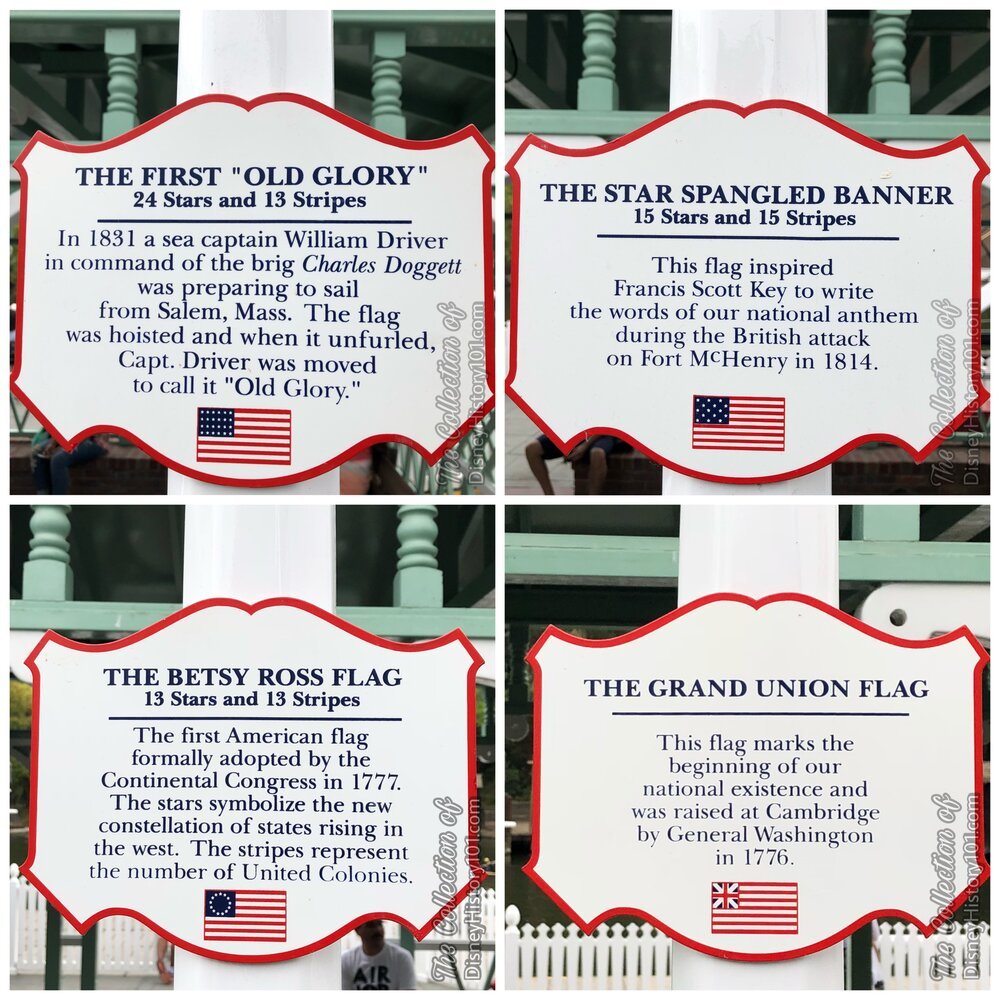
Mark Twain Steamboat Dock American Flag Plaques
Among the early American Flags flown are the John Cabot Flag flown over the Jamestown Settlement in 1607, the Pine Tree Flag first carried by the six initial ships of the American Navy, and the “Star Spangled Banner” (featuring the fifteen stripes and fifteen stars that inspired Francis Scott Key to write the national anthem). This is the only fifteen star flag that flies in Frontierland, as the rest have thirteen stripes of red and white.
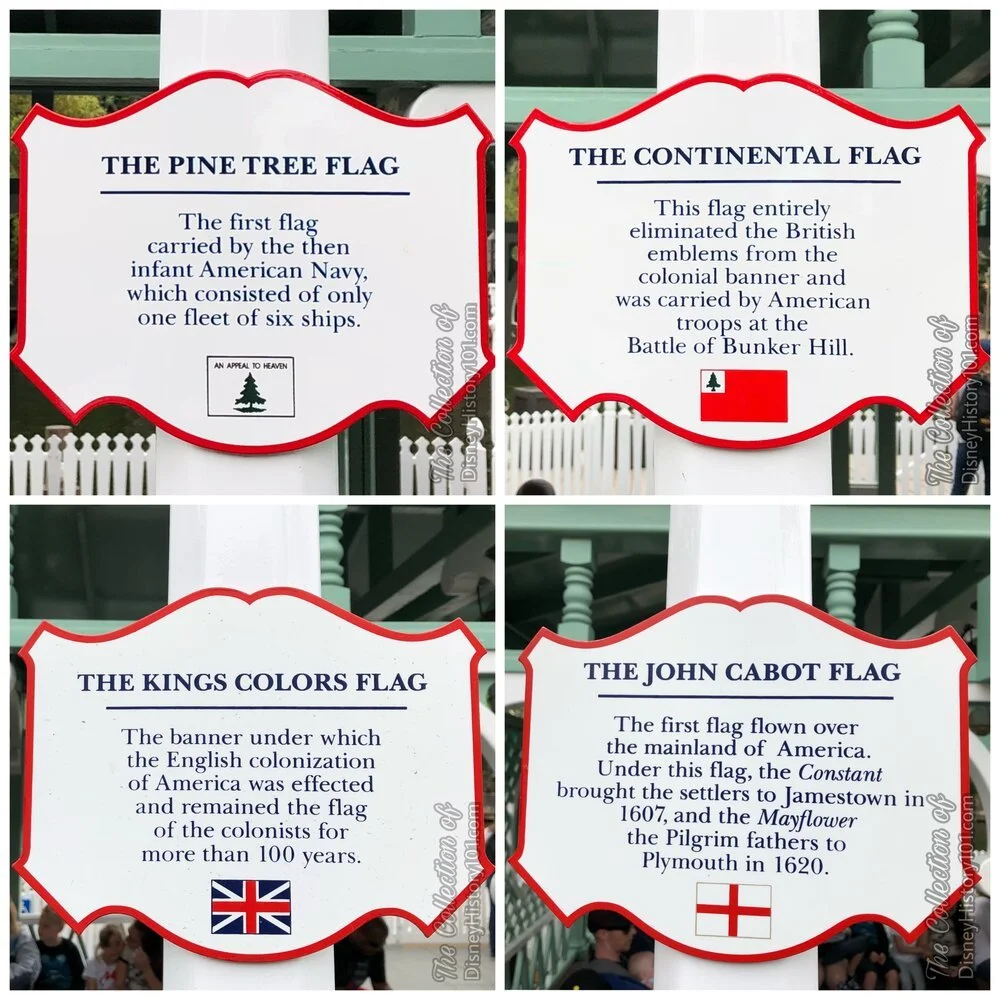
Mark Twain Steamboat Dock American Flag Plaques
At Disneyland, signs were themed to support the stories with respectful graphics, colors, fonts, terminology, the overall design of sign, materials (wood, metal, banners, etc.), and verbiage used on the signage. These curate the American flag exhibit.
Paint is important. The “Master Color Book” is the Bible for color selection at Disneyland, maintaining a catalogue of 4,000 shades of color. The book contains color specifications for every land, building, exhibit, and prop which requires paint maintenance. It insures that Disneyland will always have the same bright colors selected by the art directors who designed the attraction. In addition to the Master Color Book, there is a standby supply of ready-mixed paint available for touch up work. Thousands of cans of paint are stored in a special room which sounds like a walk through of Disneyland. Each can is labeled with names. Disneyland painters repainted every prop in the Park every two years. By 1969, these signs were eight of 20,000 signs of various sizes and shapes and colors that needed to be maintained in their original condition.
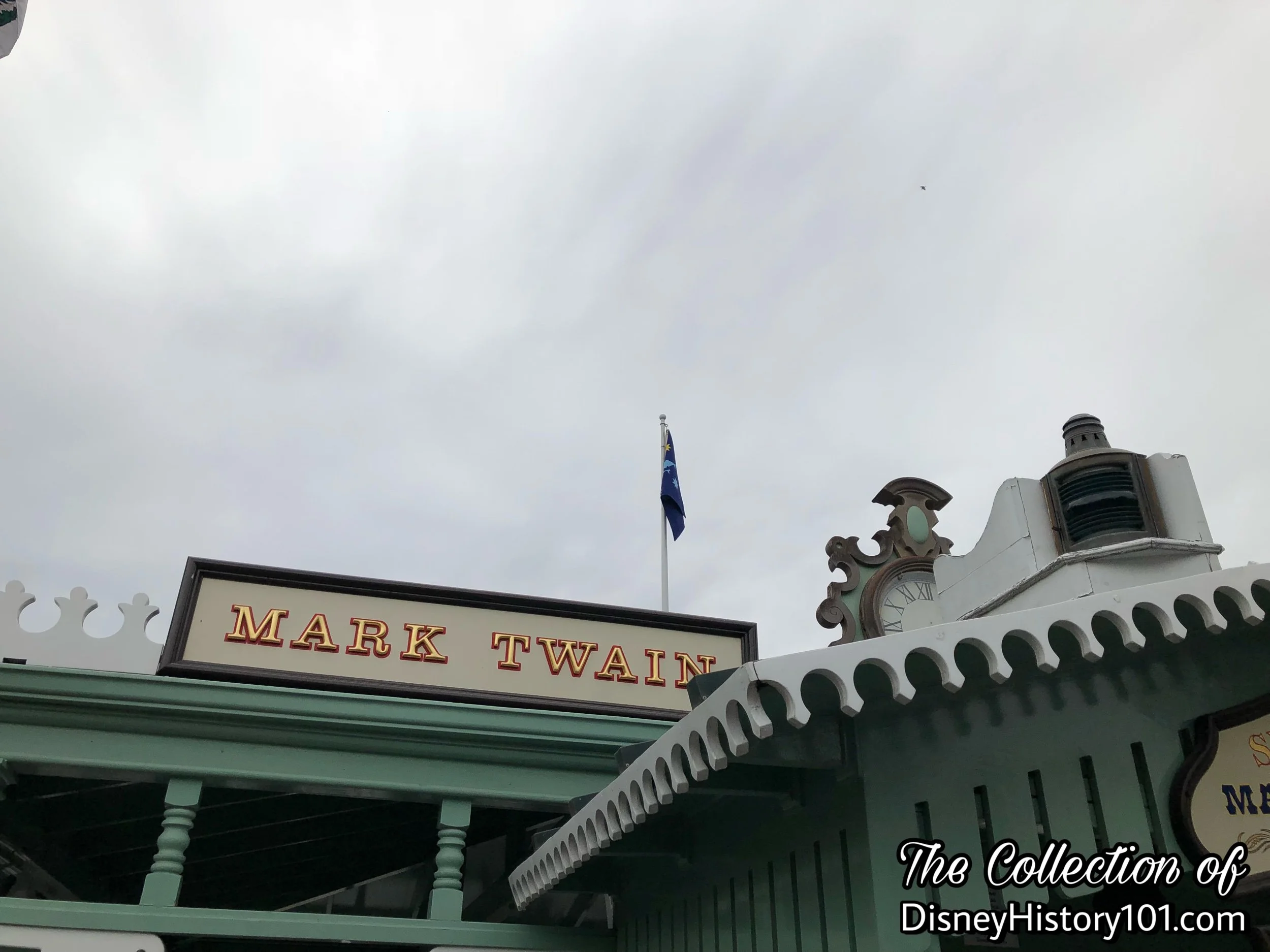
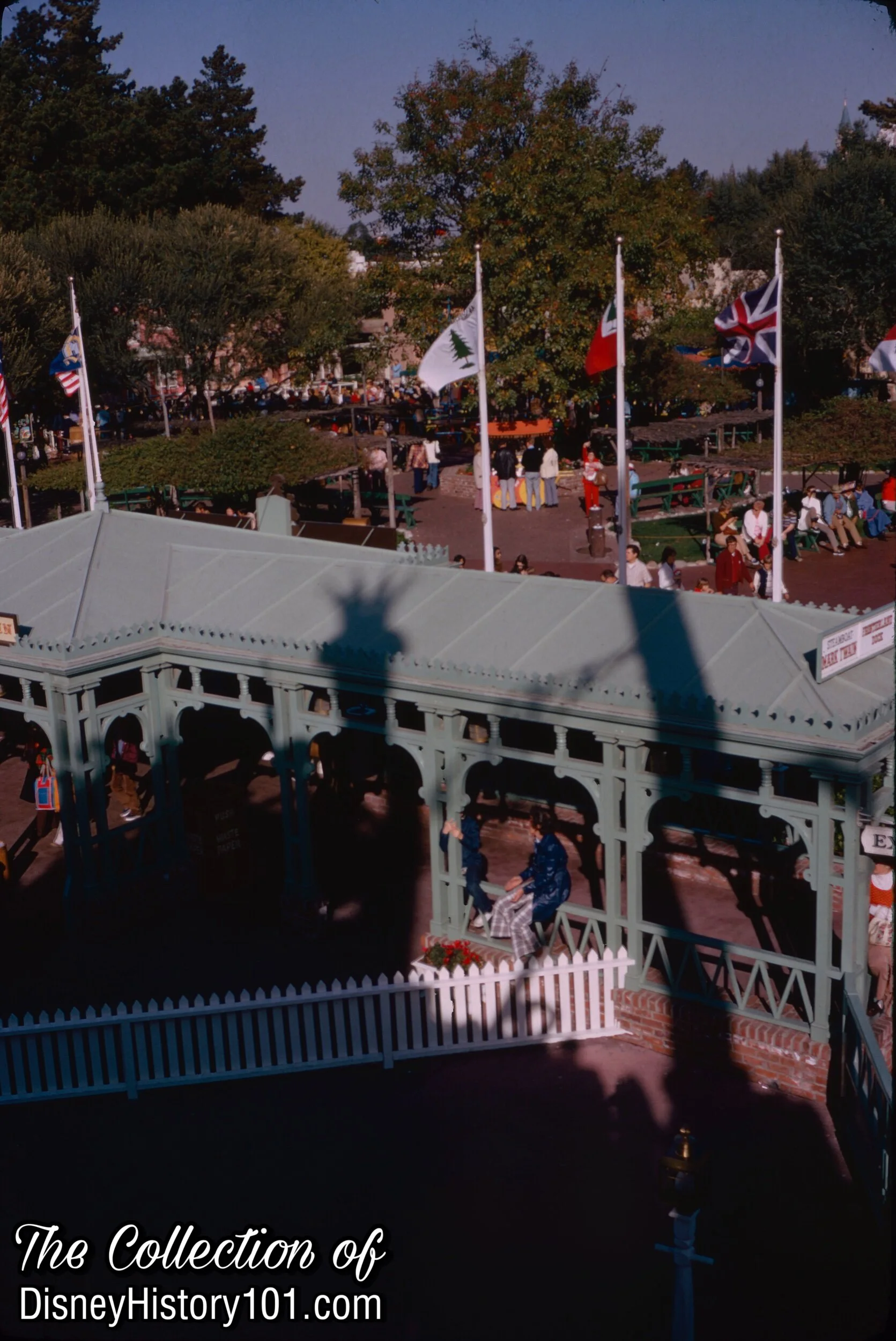
Mark Twain Steamboat Dock Guest Waiting Area, March, 1974.
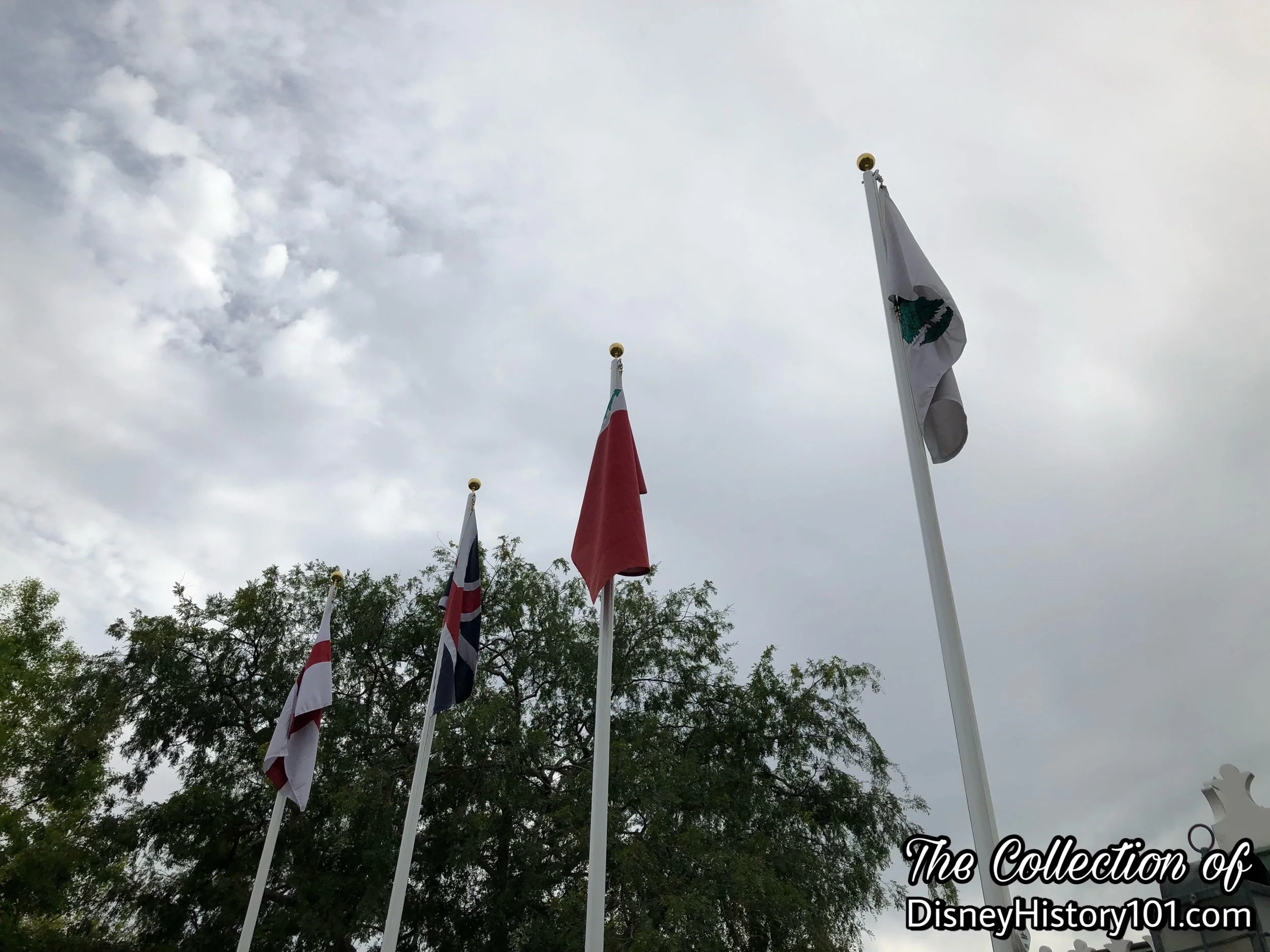
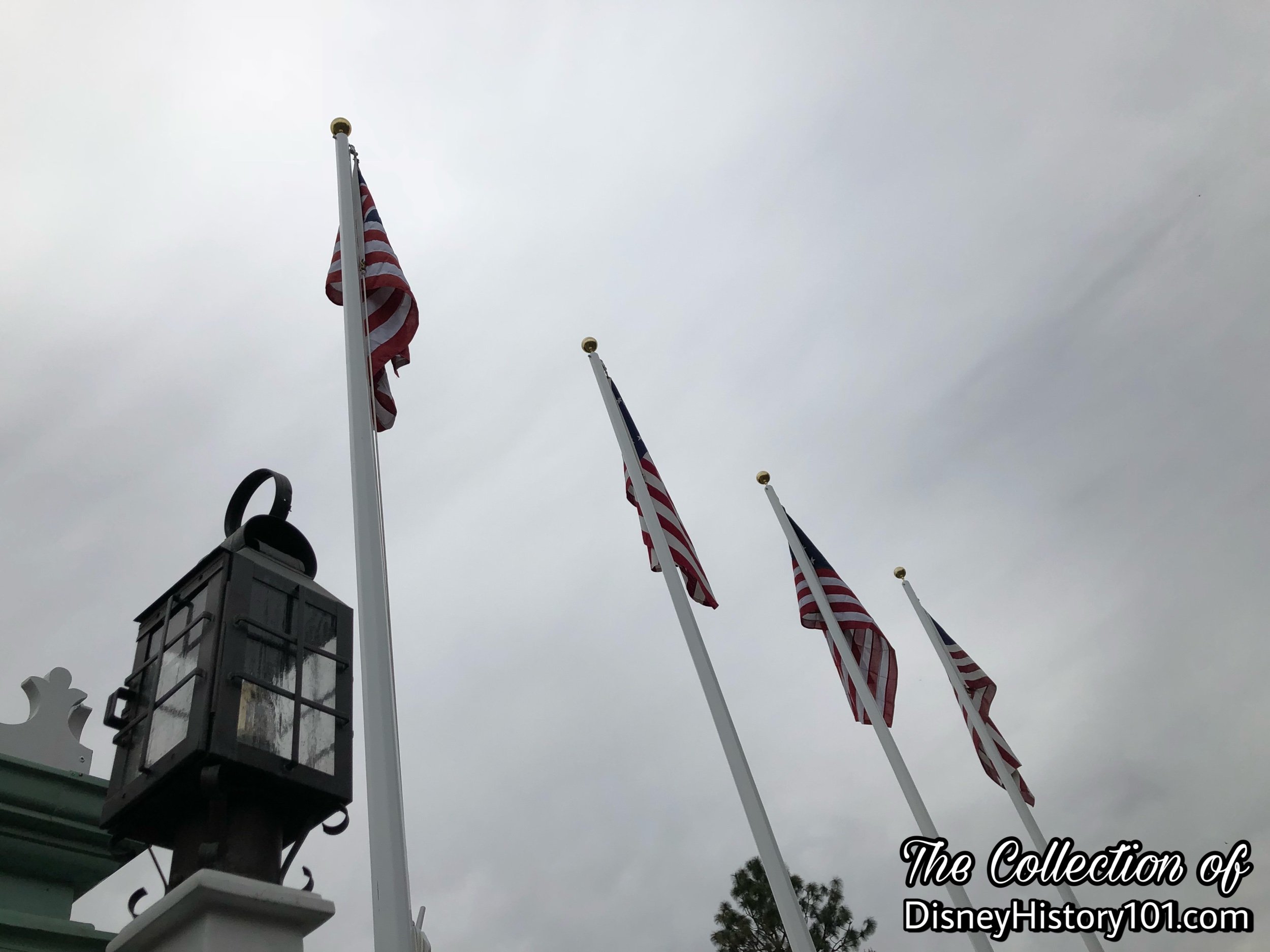
Mark Twain Steamboat Dock Guest Waiting Area with early American Flags and Disneyland Flag
One version of the blue and gold Disneyland Flag (featuring Sleeping Beauty Castle, the Disney “D”, and six stars) manufactured by Hortie Van also flew over the Mark Twain Steamboat Dock (this one was different from the one flown from the Mark Twain).
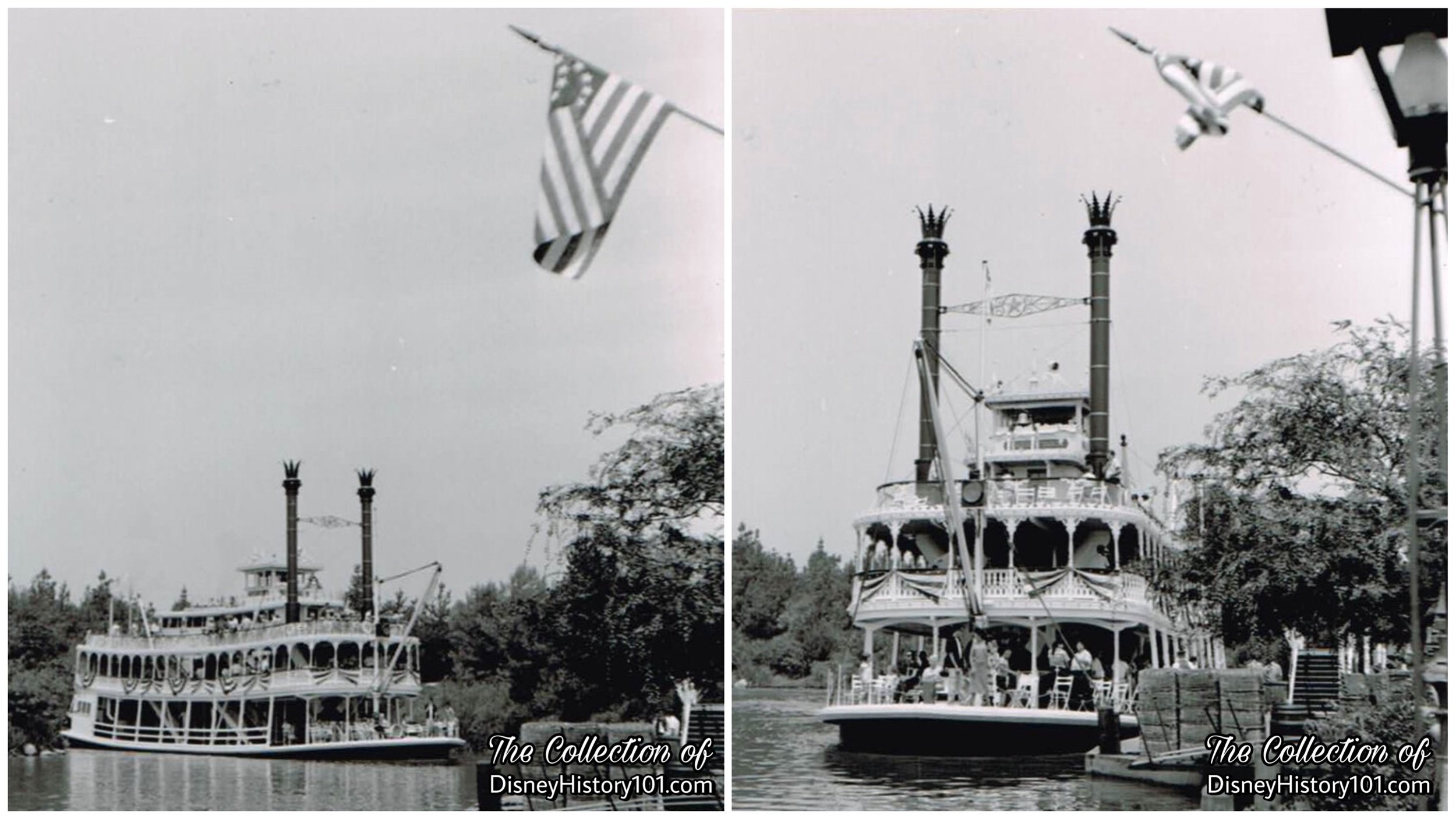
As a representation of a “Betsy Ross Flag” hangs over the dock, we are immediately transported back to the time of the mid-19th century - a time of steam-powered river boats on the romantic tree-lined Mississippi River. From the sound of the Mark Twain’s whistle blowing, it sounds like they’re close to arriving at the dock.
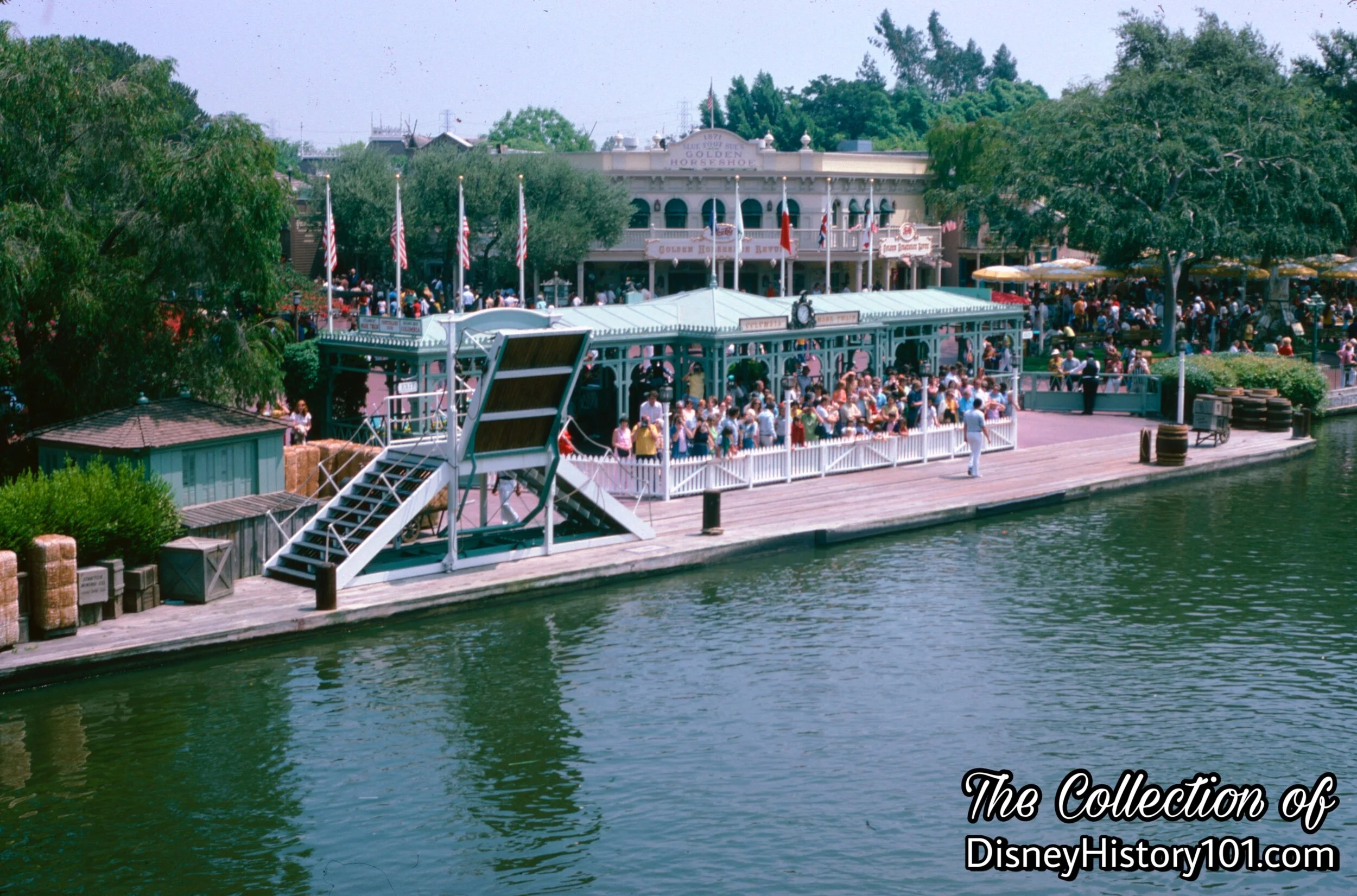
Mark Twain Steamboat Dock
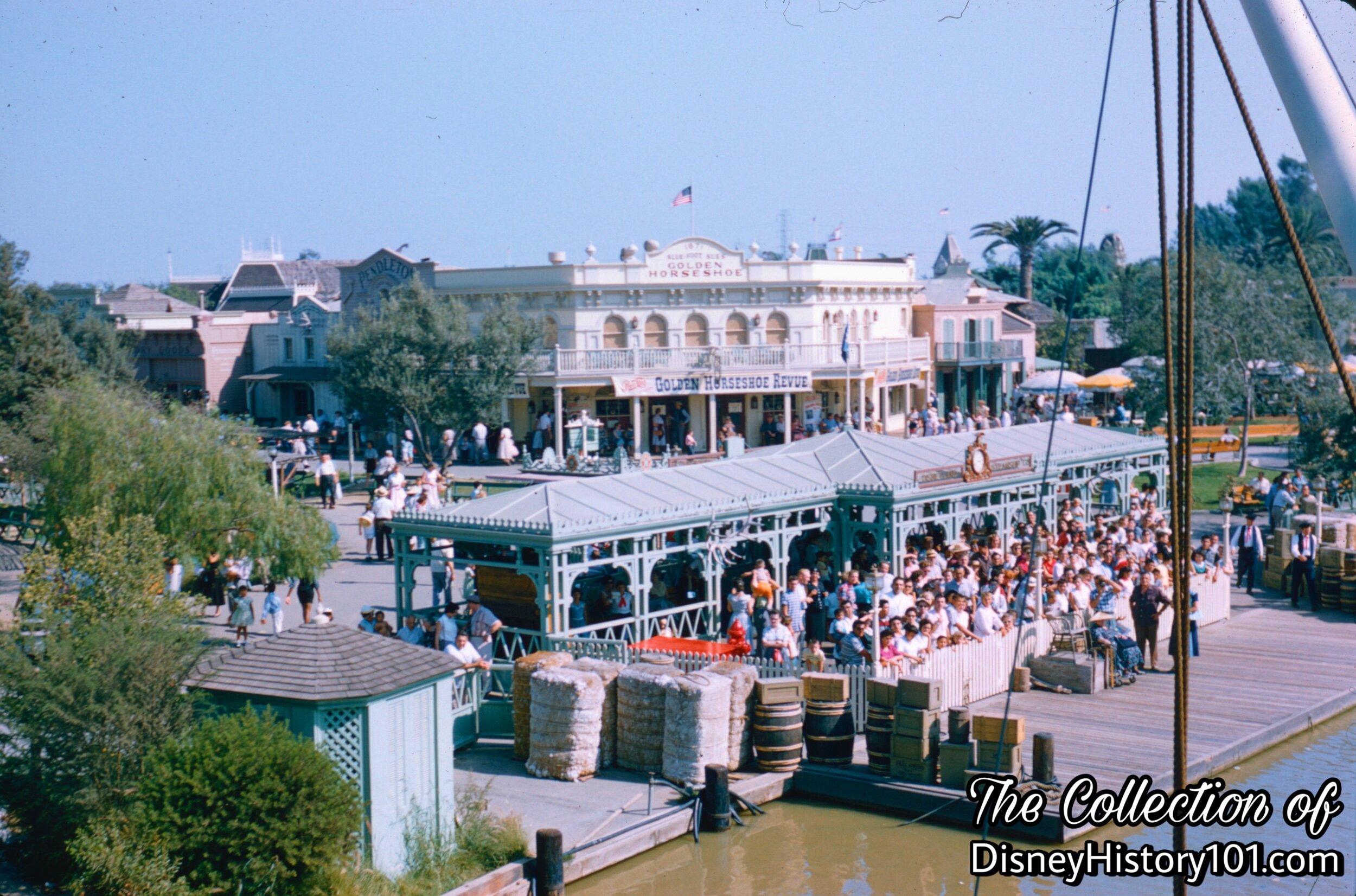
Mark Twain Steamboat Dock
There was plenty of entertainment for guests awaiting their voyage near the Mark Twain Steamboat Dock. During the mid-1950s (c. 1958, for instance) an orchestrion was housed near the dock.
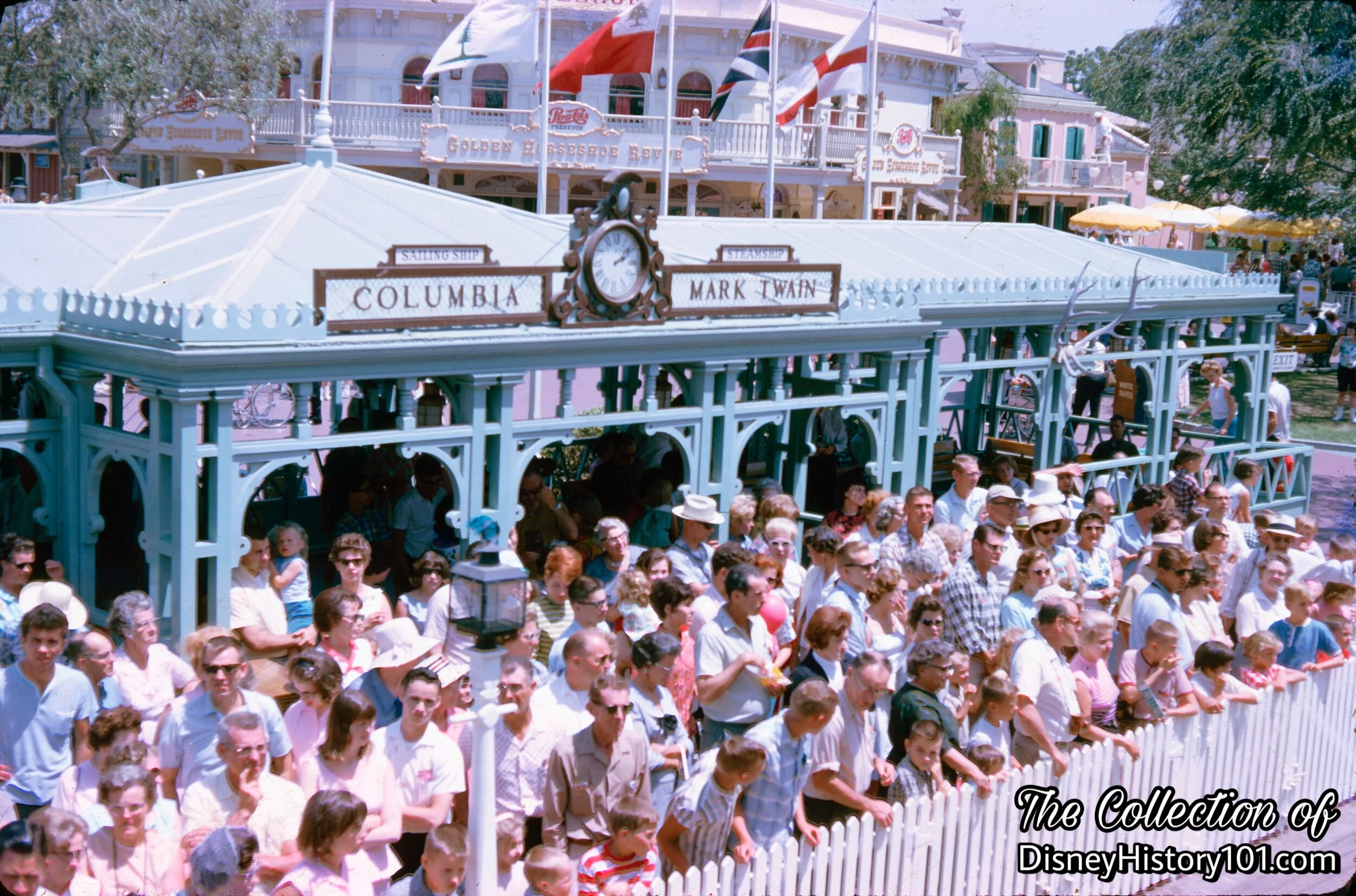
Mark Twain Steamboat Dock, (1965)
Disneyland “queue lines” (or Audience Waiting Areas) were designed as part of the attraction to make the Guests' time in line as comfortable as possible.
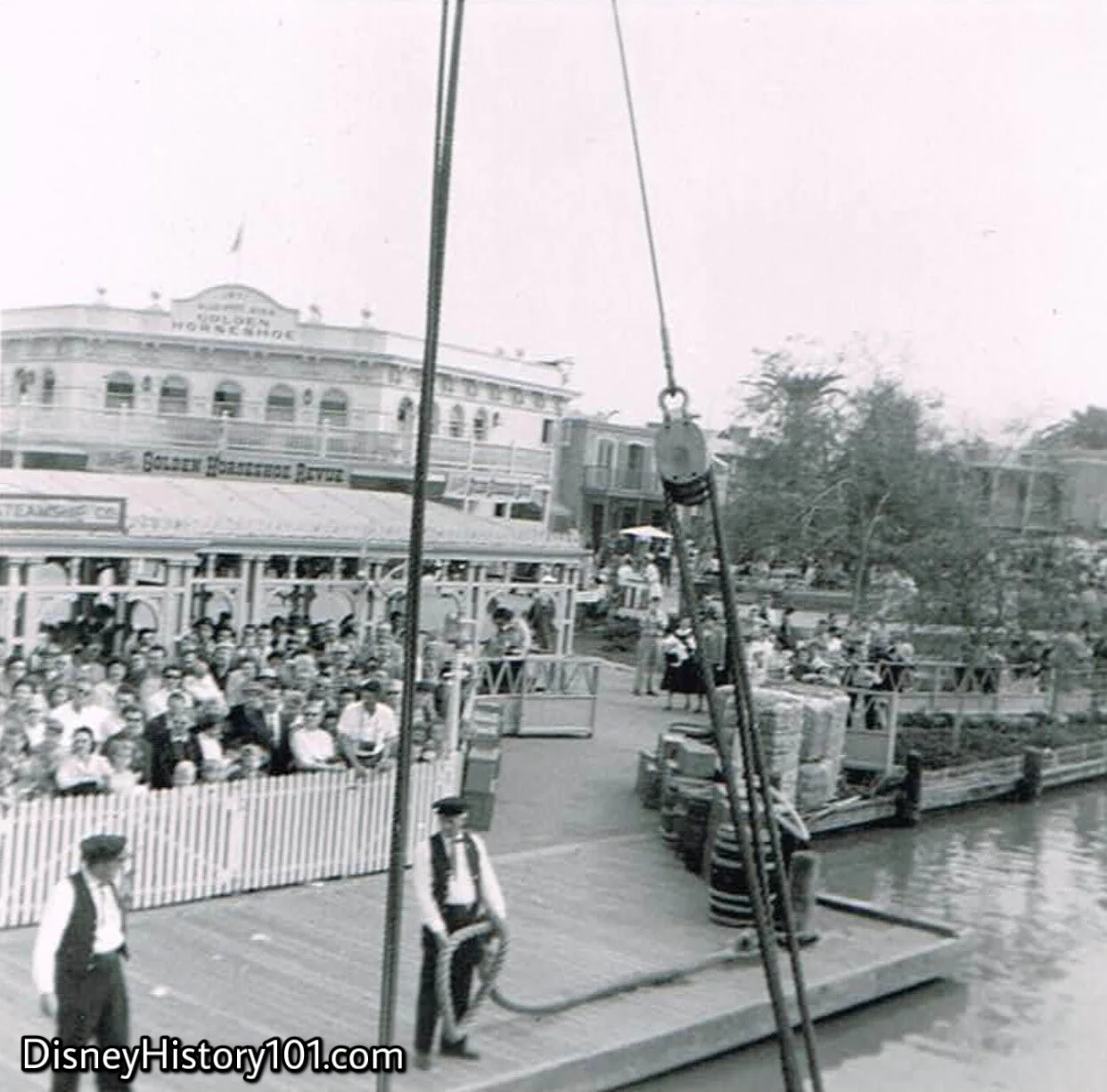
Mark Twain Steamboat Dock, (1956)
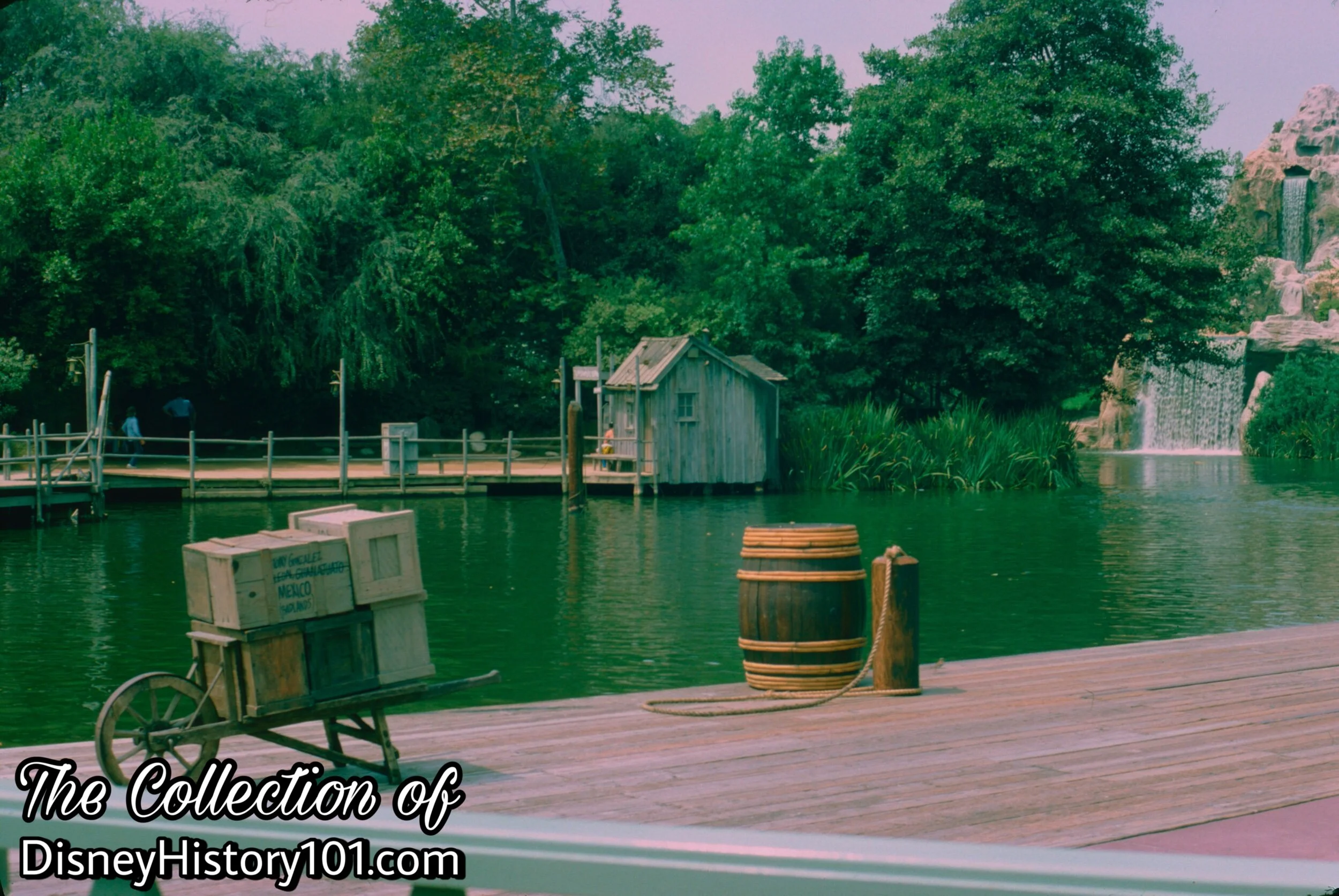
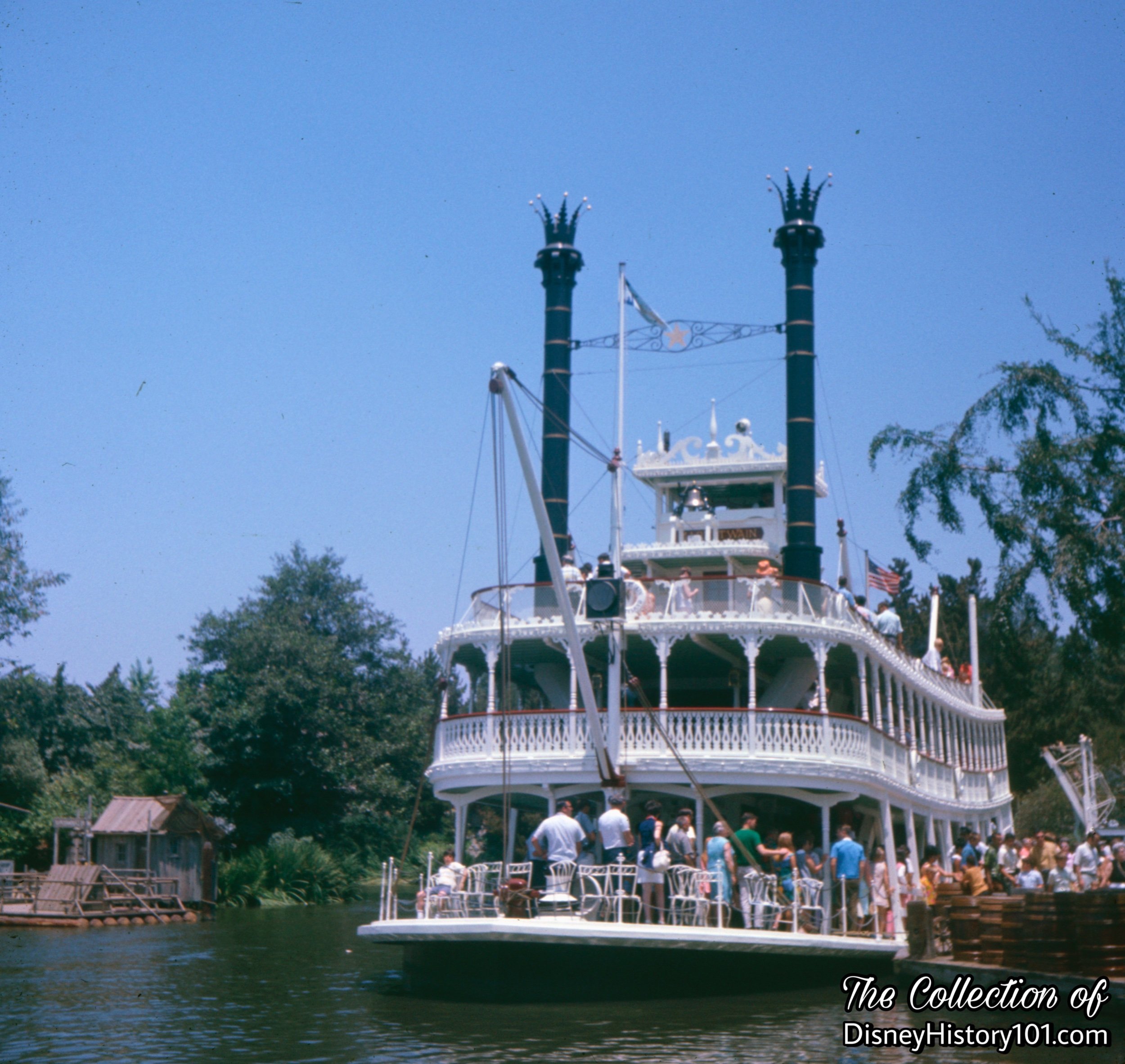
We wait on the dock of the New Orleans section of Frontierland, next to cargo “boxes, barrels, wooden buckets and sacks of cotton bales,” as the 1870’s paddle wheeler Mark Twain docks.
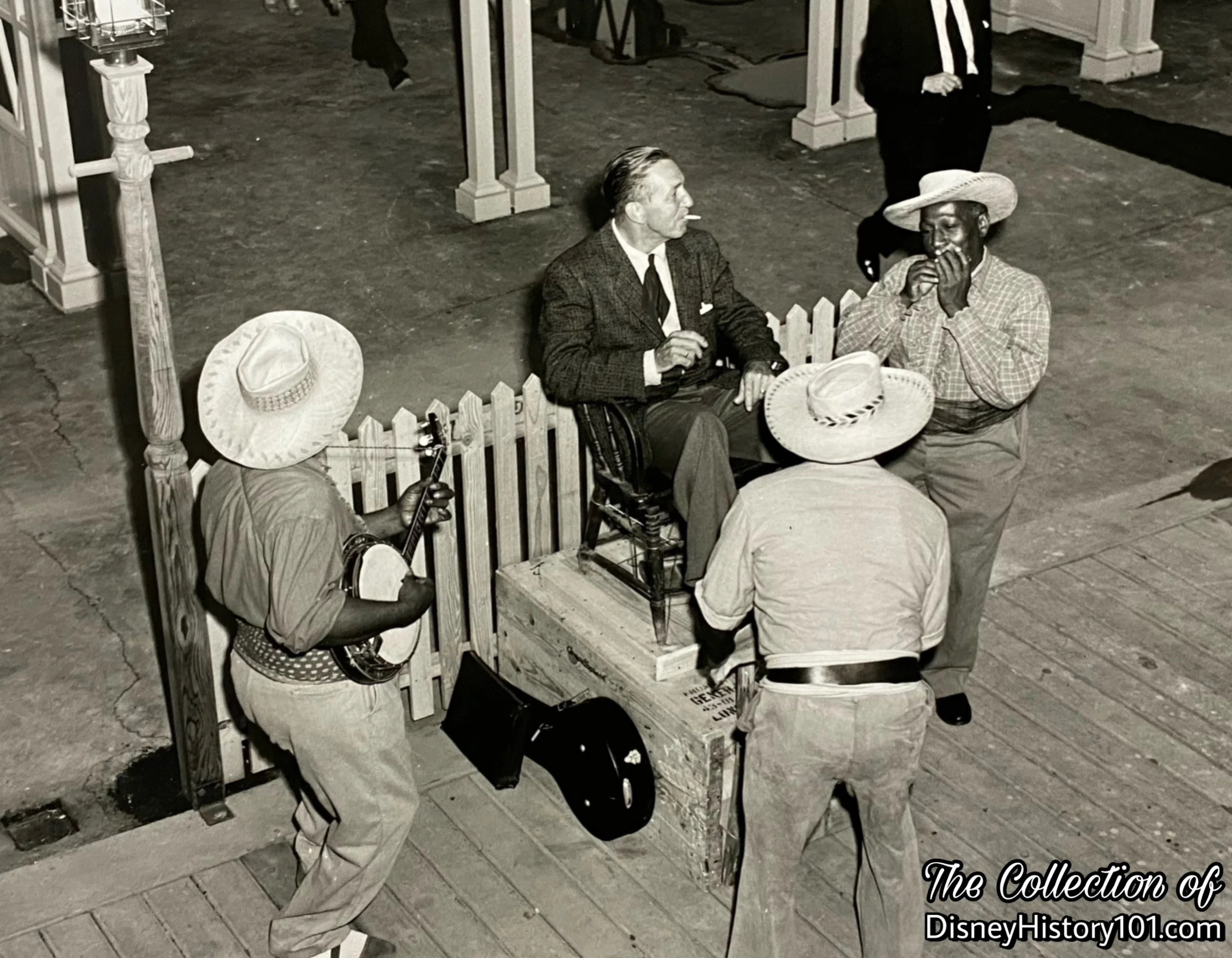
Wayne and Bill, Shoe Shining Co. on the Mark Twain Dock; ©️Walt Disney Productions.
According to “THE DISNEY THEME SHOW - an introduction to the art of Disney outdoor entertainment”: “Important are the sounds which permeate the scene, for without them, the theme show is a silent movie . . . but with them it is a symphony of music, effects, and natural sounds that the finest stereo system in the world can't duplicate. These sights and sounds are provided not only by imagineered attractions and shows, but also through the multi-talented efforts of live entertainers . . . in special musical groups . . . in parades and pageants . . . providing an everchanging backdrop to virtually every area in the theme show.”
“Audience Waiting Areas” were especially designed as part of the attraction to make the guest's time waiting in line as comfortable as possible. Since the beginning, queue areas were equipped with live entertainment to set the mood for the forthcoming show. Before Shoeshine Boys (Teddy and Kenny) there was Wayne and Bill, Shoe Shining Co. Around the winter of 1956 and 1957, they performed for Guests near the Mark Twain Dock on Saturdays and Holidays (from 9:30 AM until 4:00 PM). In 1956, they entertained every other day from Saturday the 15th until December 31st.
(c. August, 1975)
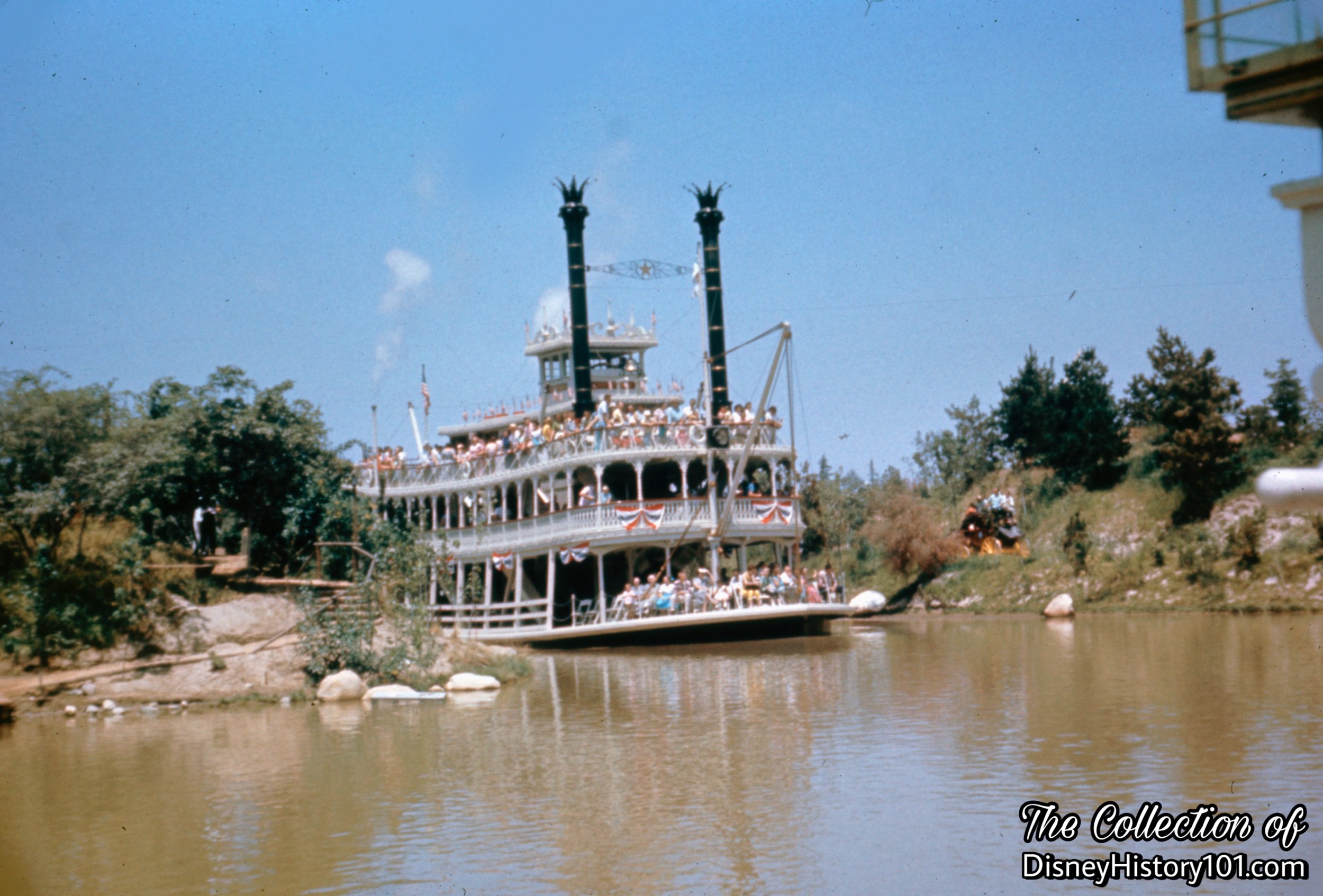
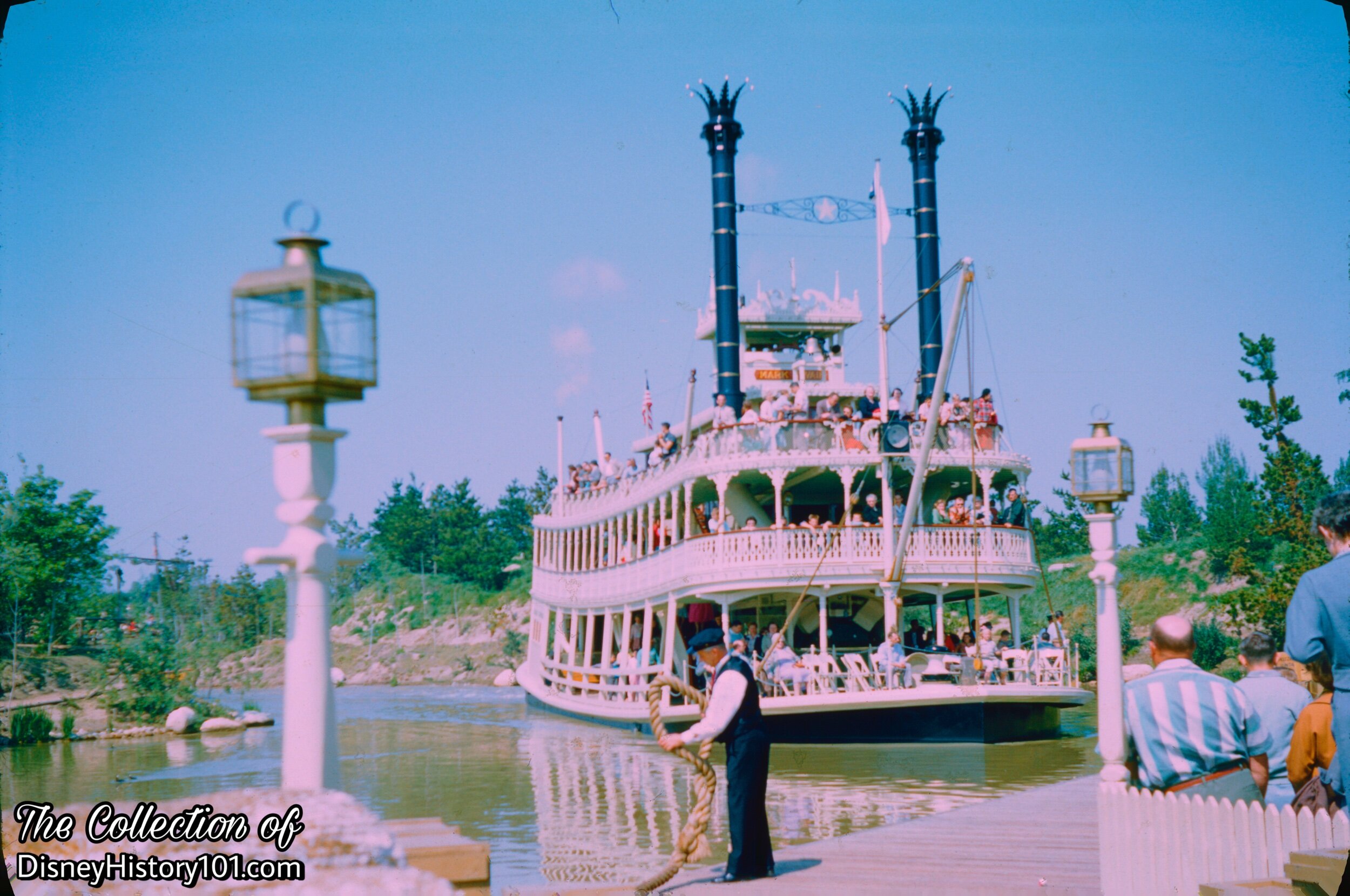
Mark Twain Steamboat Dock, (1957)
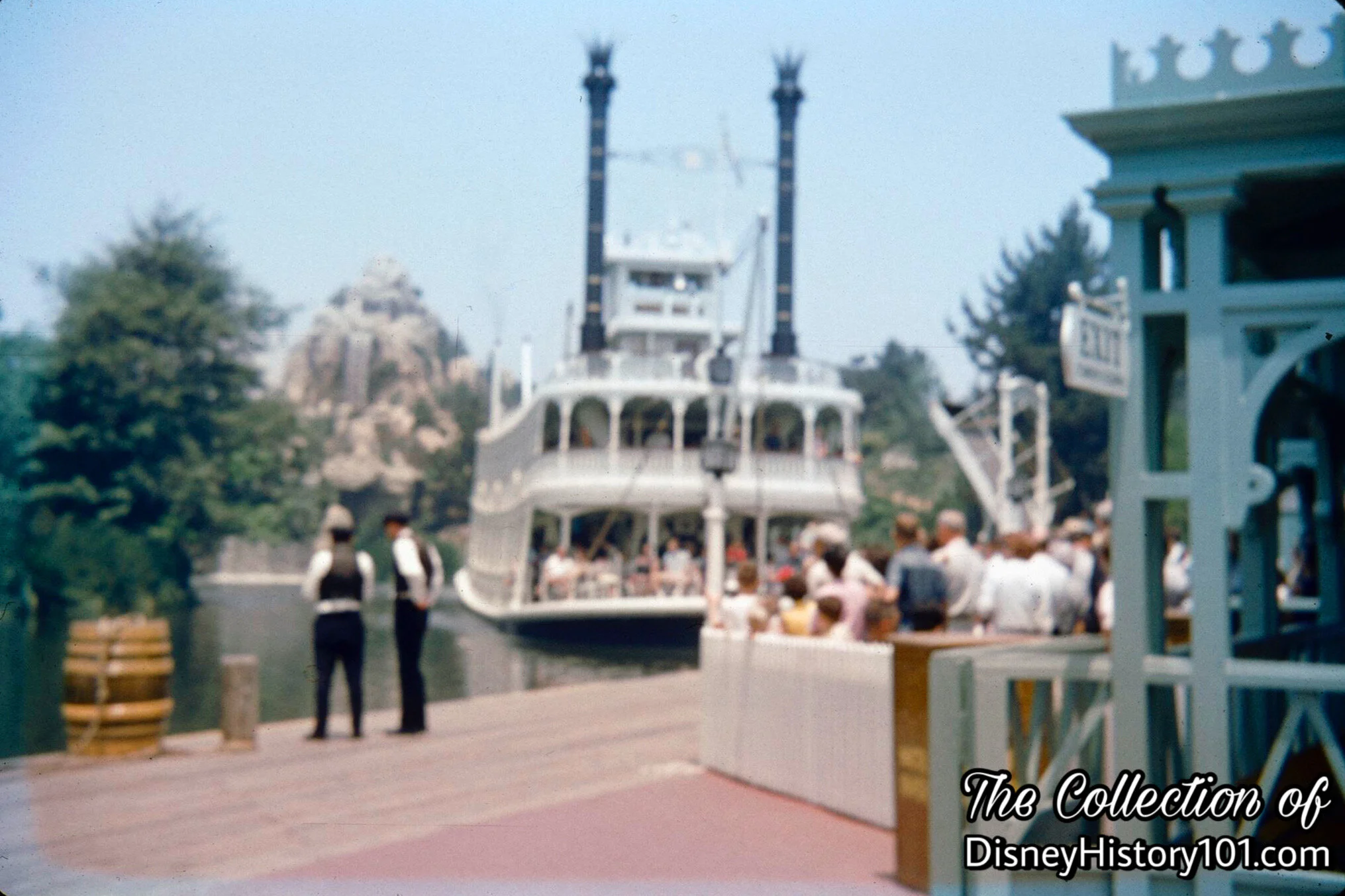
Mark Twain Steamboat Dock, (July, 1964)
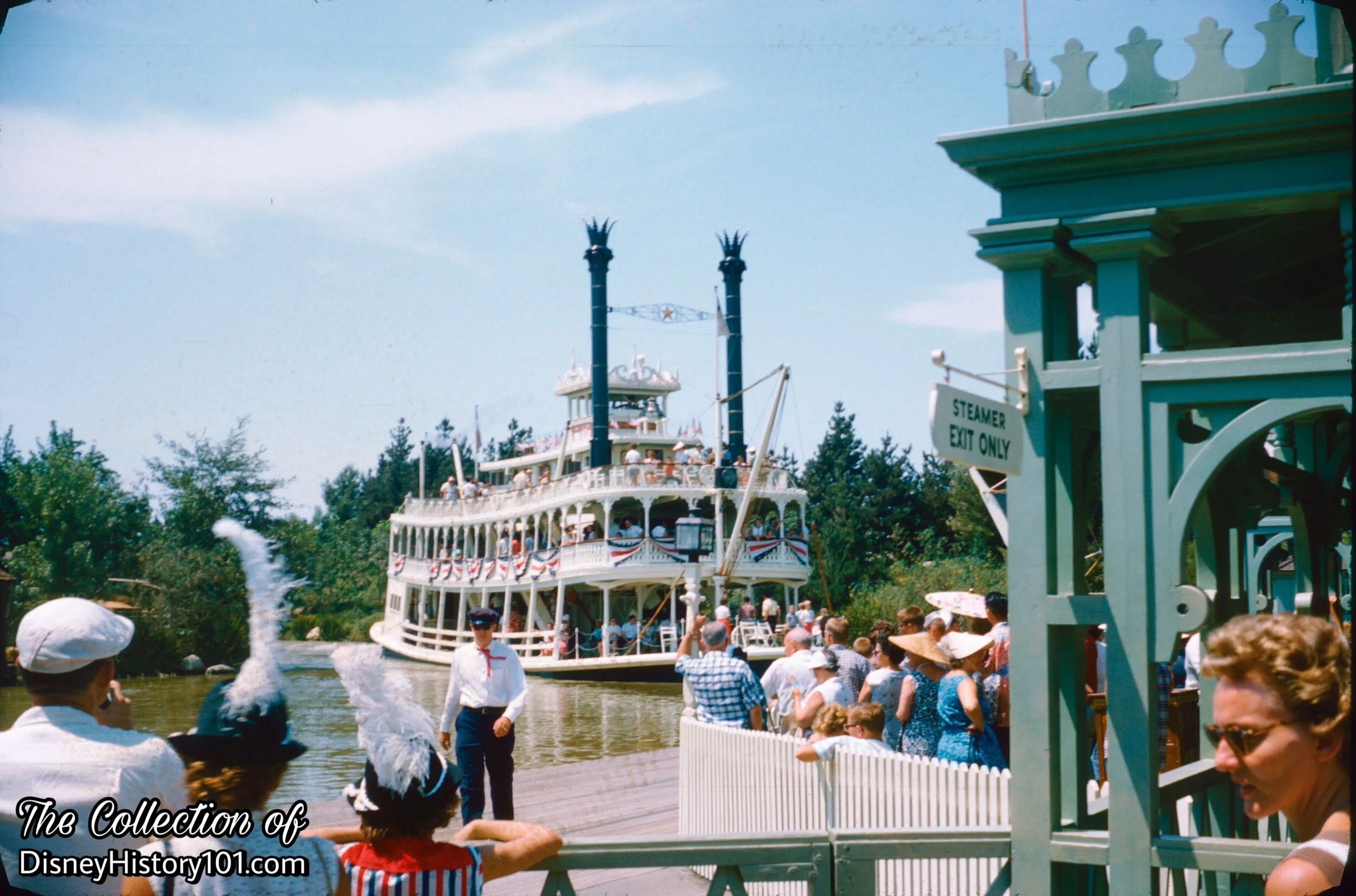
Mark Twain Steamboat Dock
Safety has always been key to the Disneyland Show. Related to this, the Foremen of attractions had the responsibility of checking out a Handie-Talkie radio unit (using the Radio Log) before reporting to their respective attractions each morning. The battery operated radios were carried via belt and holster. In Frontierland, the units were located at the Mark Twain and Columbia Sailing Ship (on main line), Mark Twain Dock (Mark Twain foreman, located at turnstile), and Tom Sawyer Island. The Handie-Talkie radio units were housed in a charging unit when in operation on the Mark Twain, Mark Twain dock, and the Columbia.
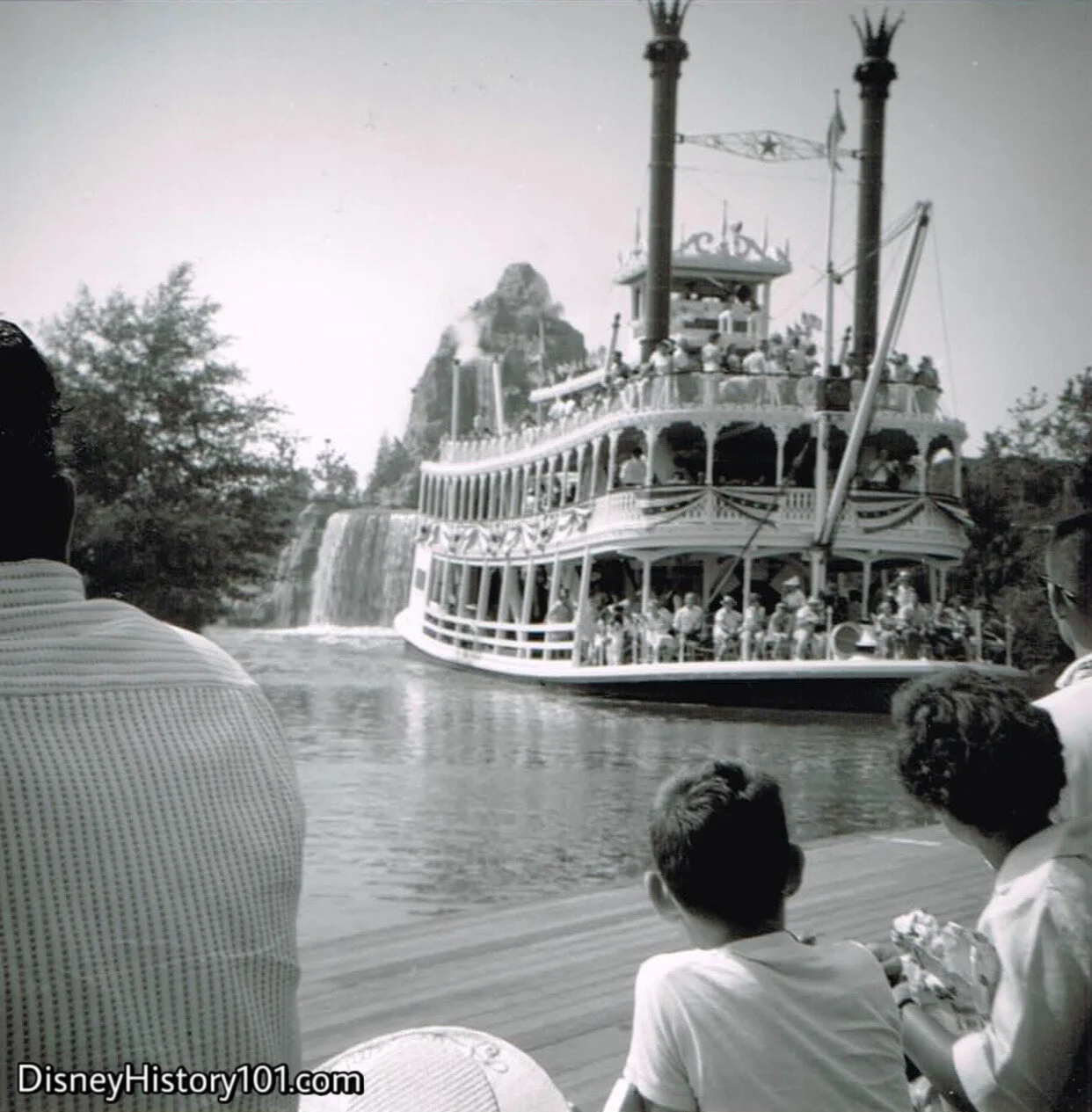
Mark Twain Steamboat Dock, (Early 1960s)
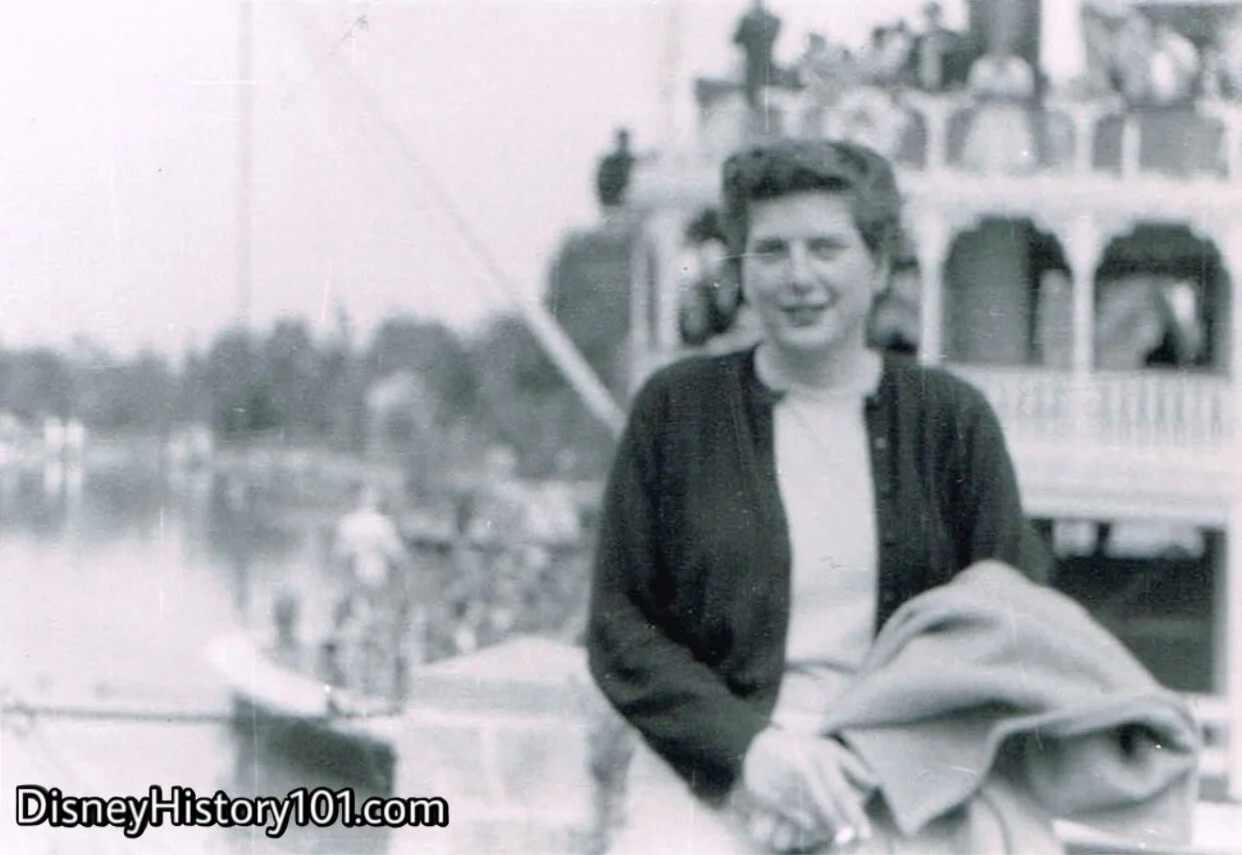
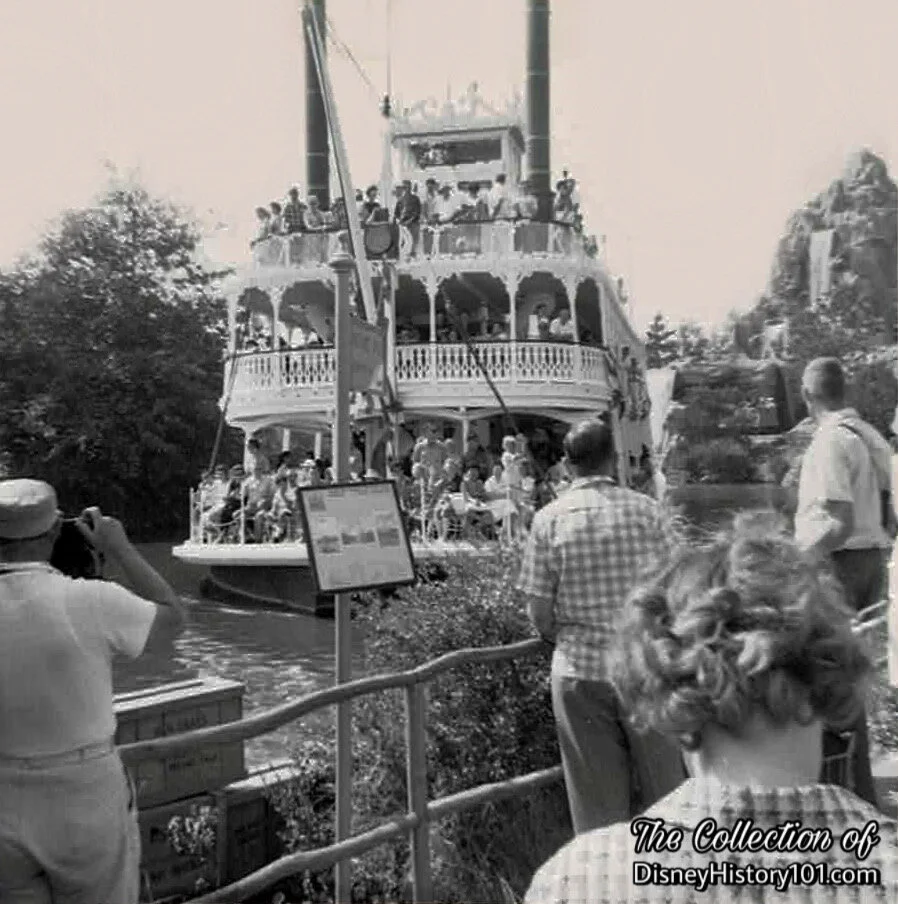
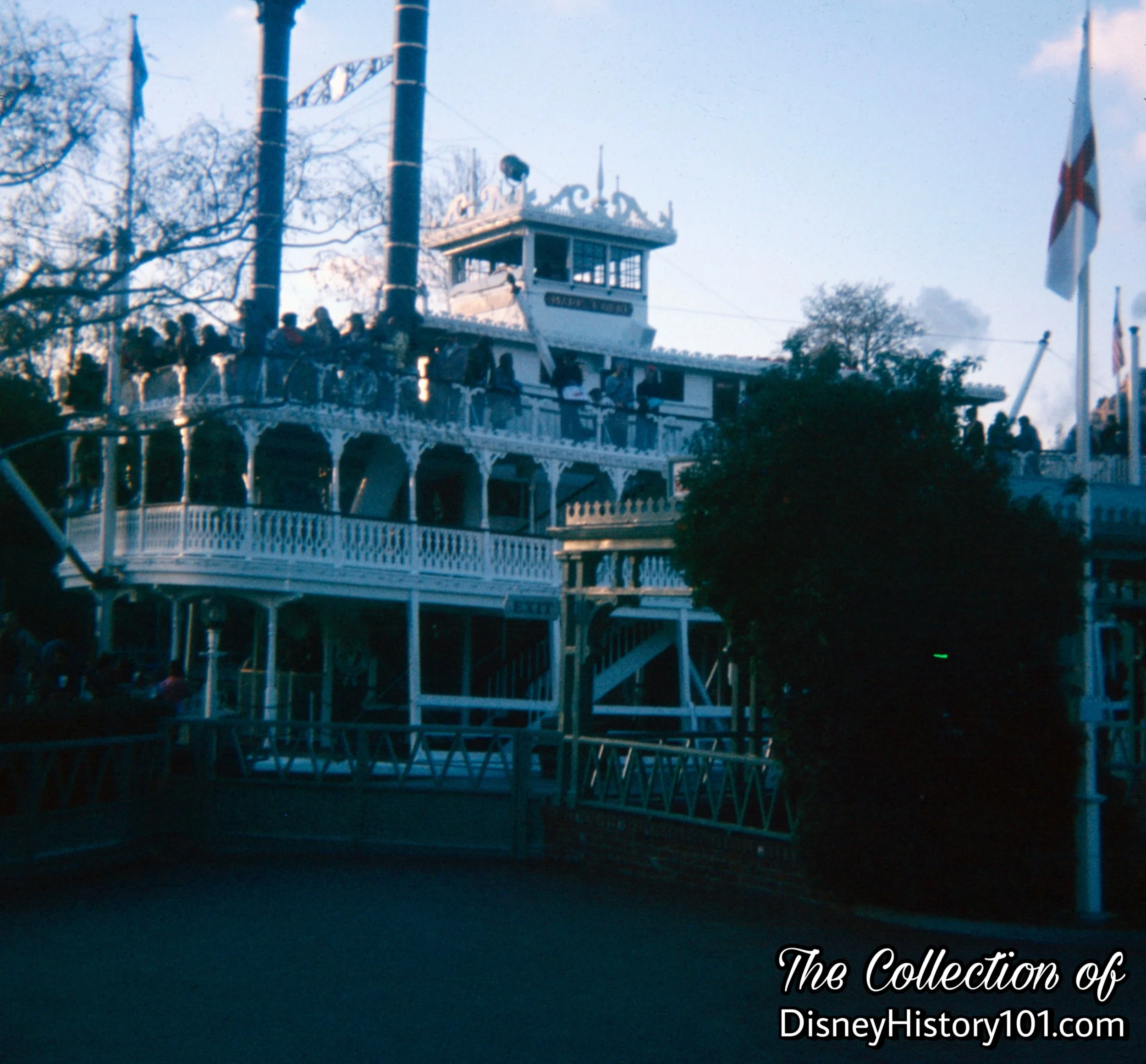
While waiting for the Mark Twain to arrive (or simply enjoying the waterfront scenery), many guests have used the opportunity to take a memorable photograph of their experience in Frontierland.
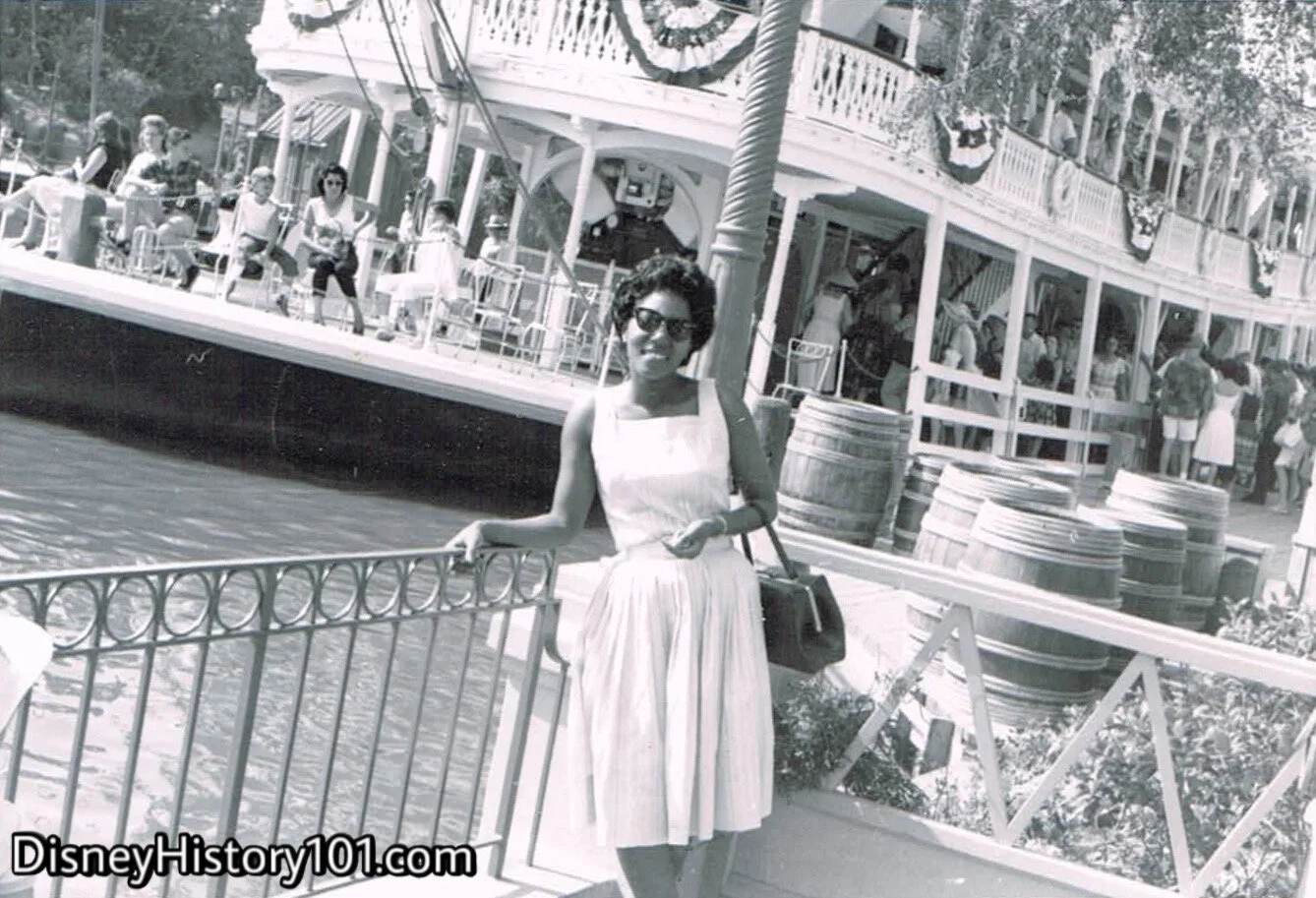
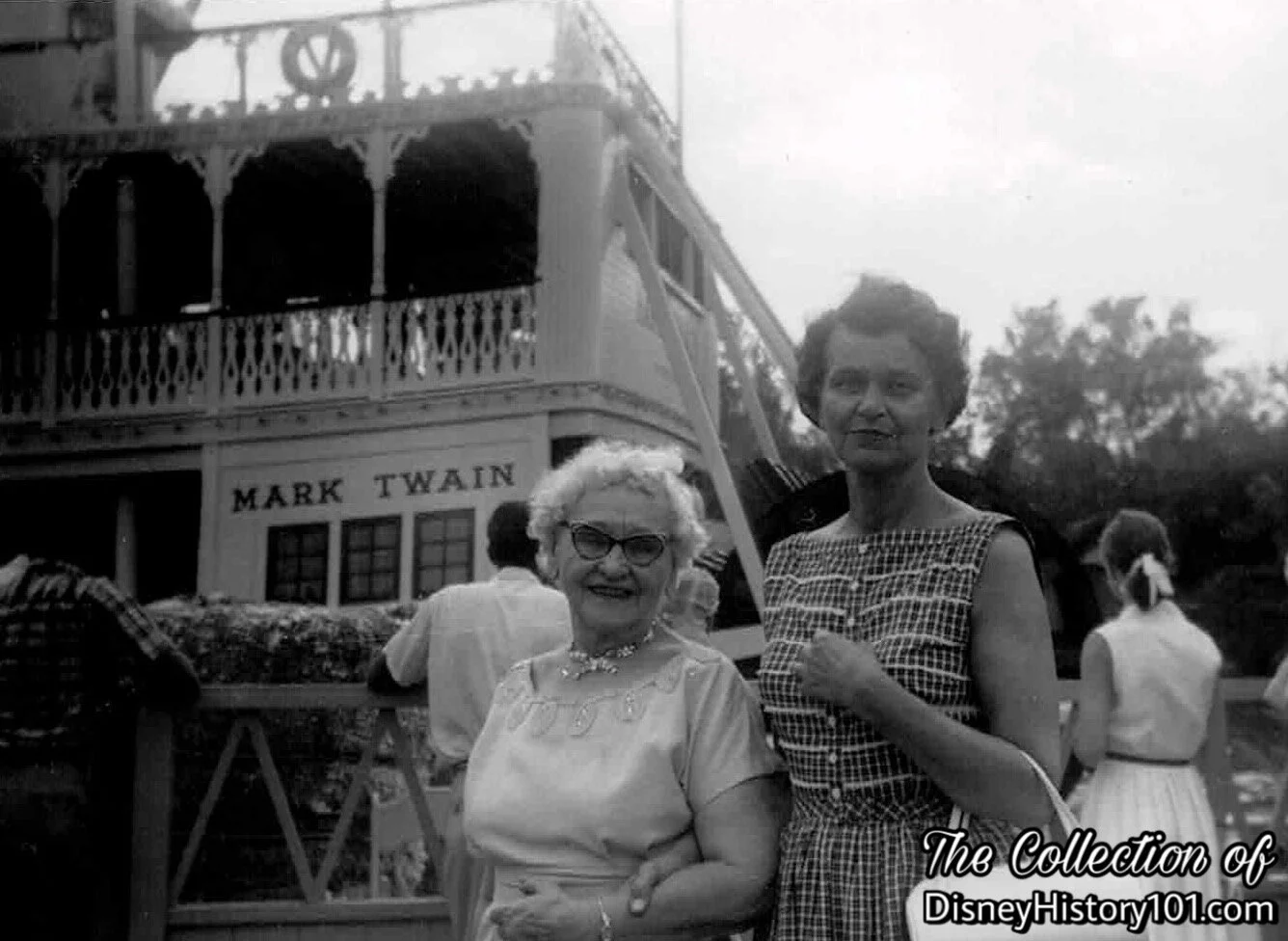
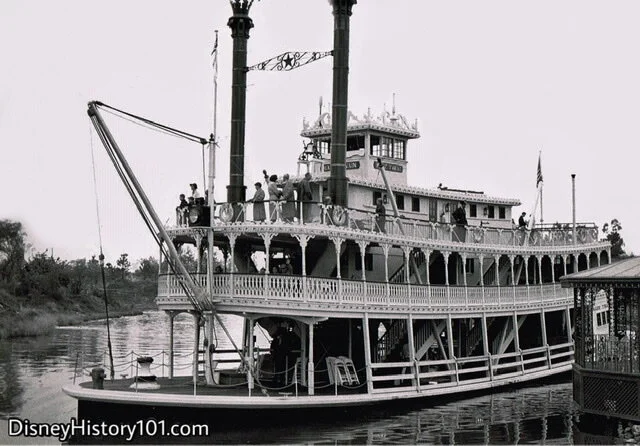
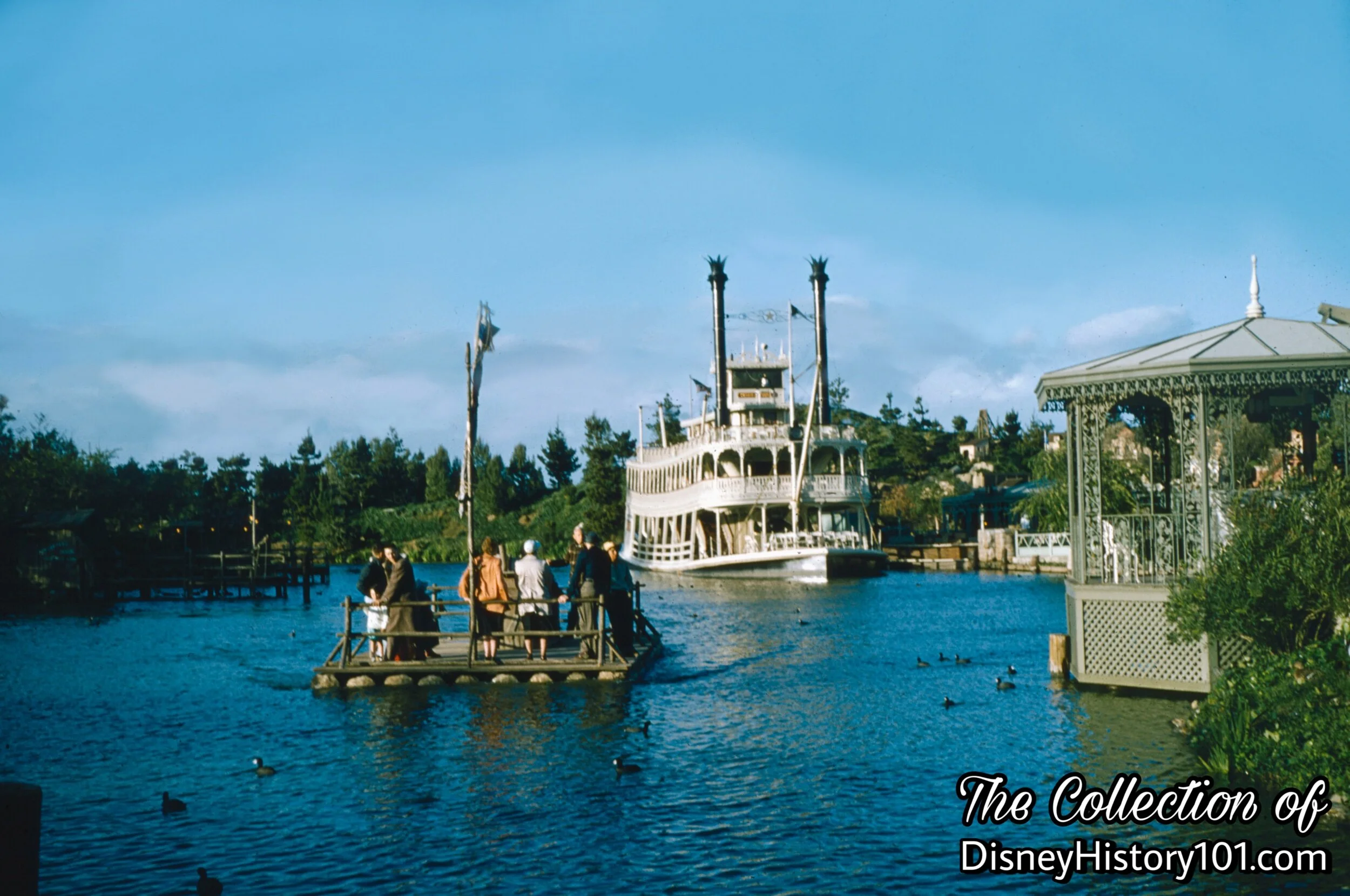
The Mark Twain moves past the Dixieland Bandstand Gazebo.
“IT LOOKS PRETTY GOOD” - Former Indian Village performer Cheryl recalls, “I remember [my father] …was working at the naval shipyard in Long Beach at Todd Shipyards part time. There were contracts a number of companies working at that time in Long Beach. He had between one and two jobs at a time to support us. My dad never bragged, but he just mentioned it later to us.” While visiting Disneyland with her father one day, they were passed by the Mark Twain, to which her father joked, “Well, it looks pretty good now.” As it turns out, he was a welder, and had worked on the hull construction of the Mark Twain, while it was in Todd Shipyards, San Pedro, California! Cheryl continues : “He never knew we were going to be working at Disneyland. It wasn’t a job he was searching for. It just happened. I remember that was a biggie when he said that he worked on the Mark Twain.”
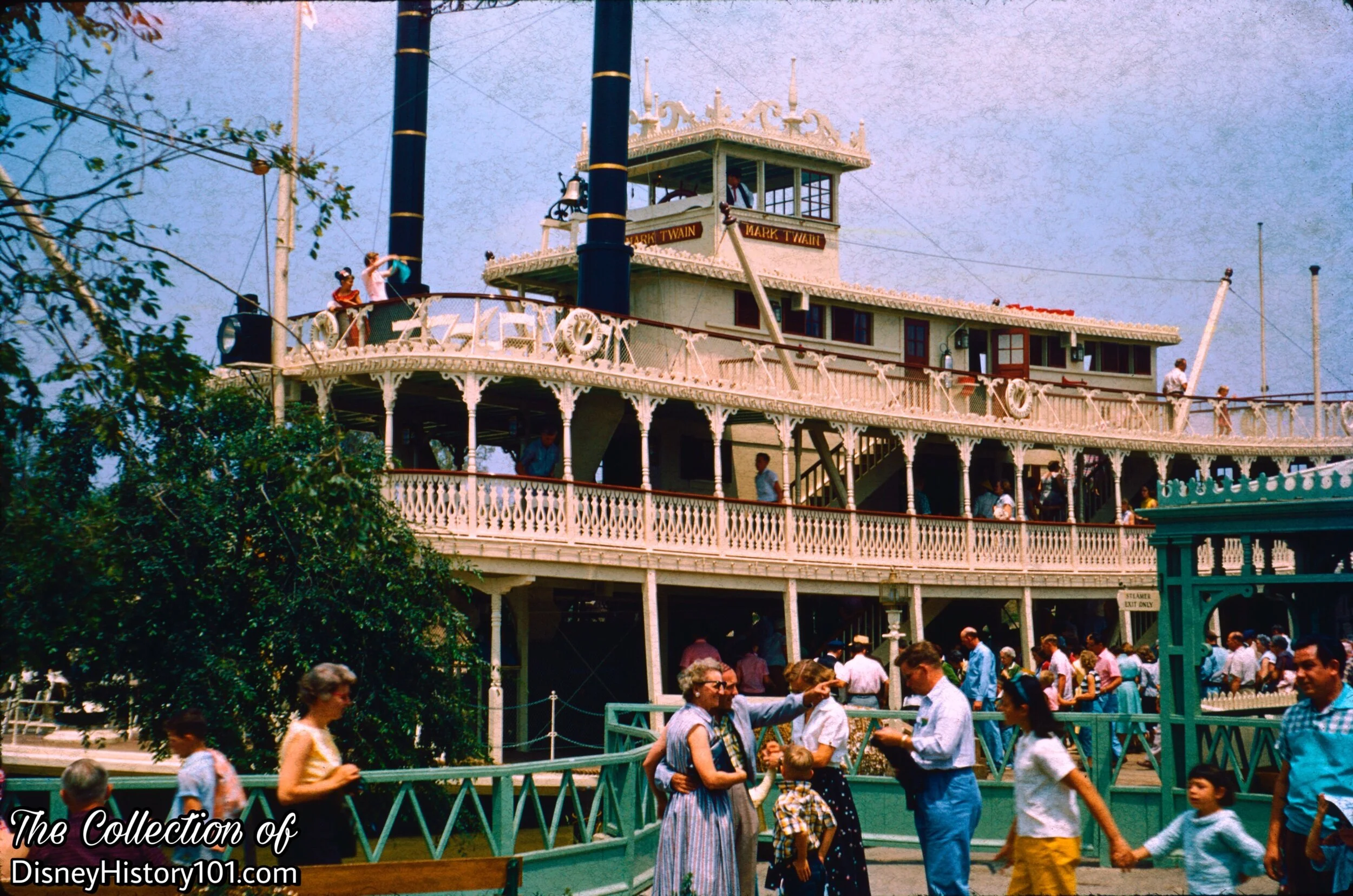
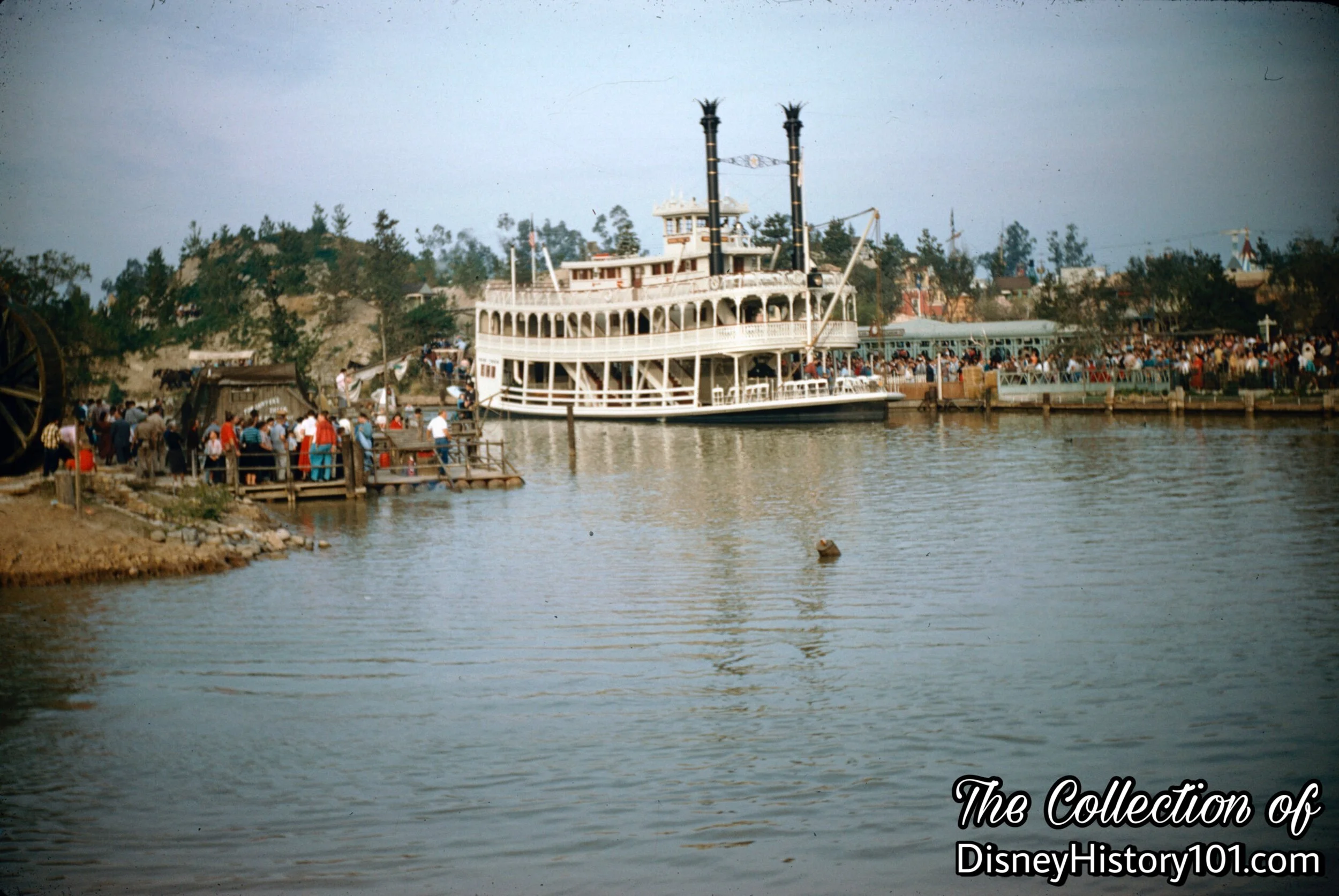
Mark Twain at the Mark Twain Steamboat Dock, (1955)
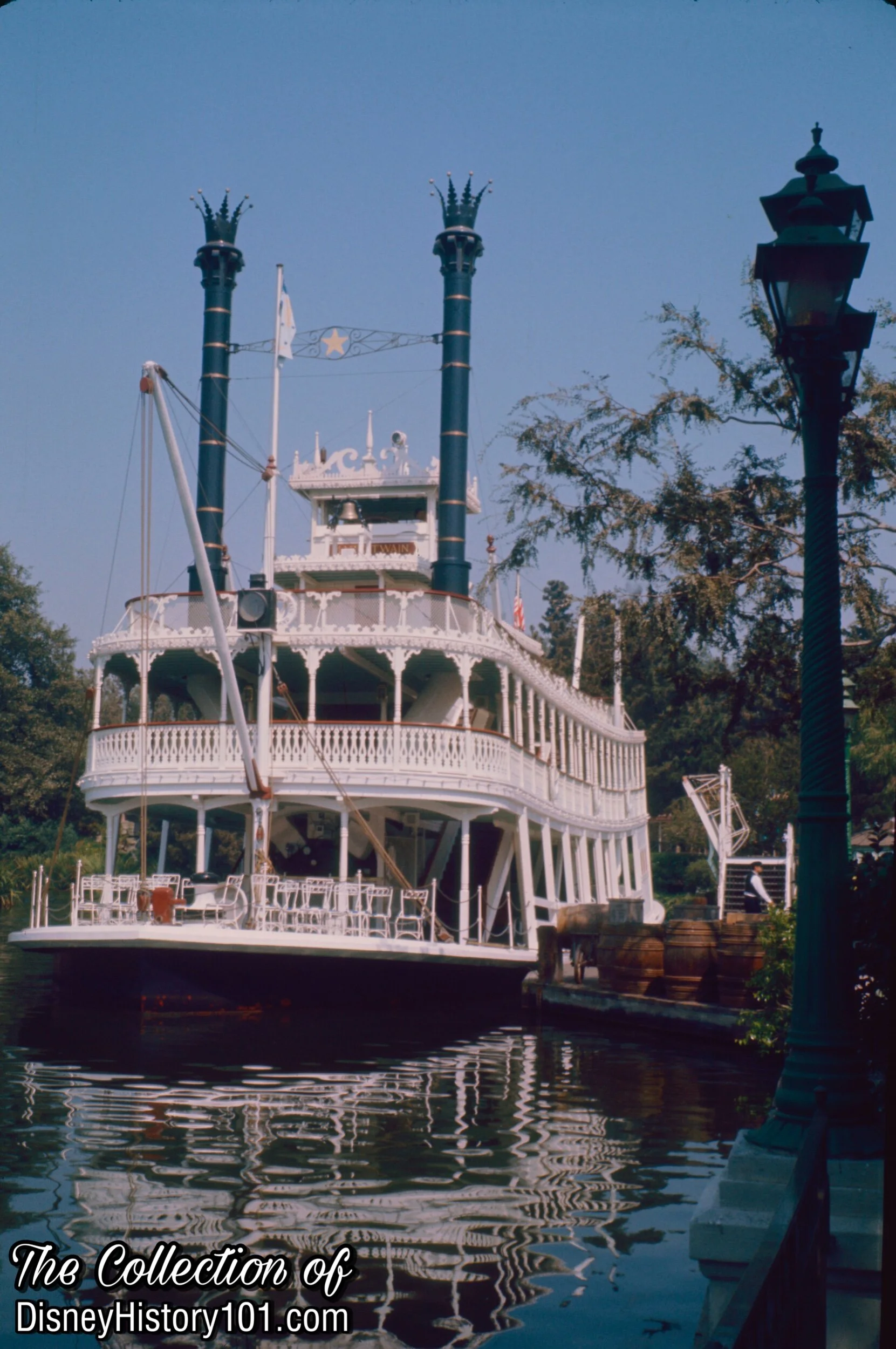
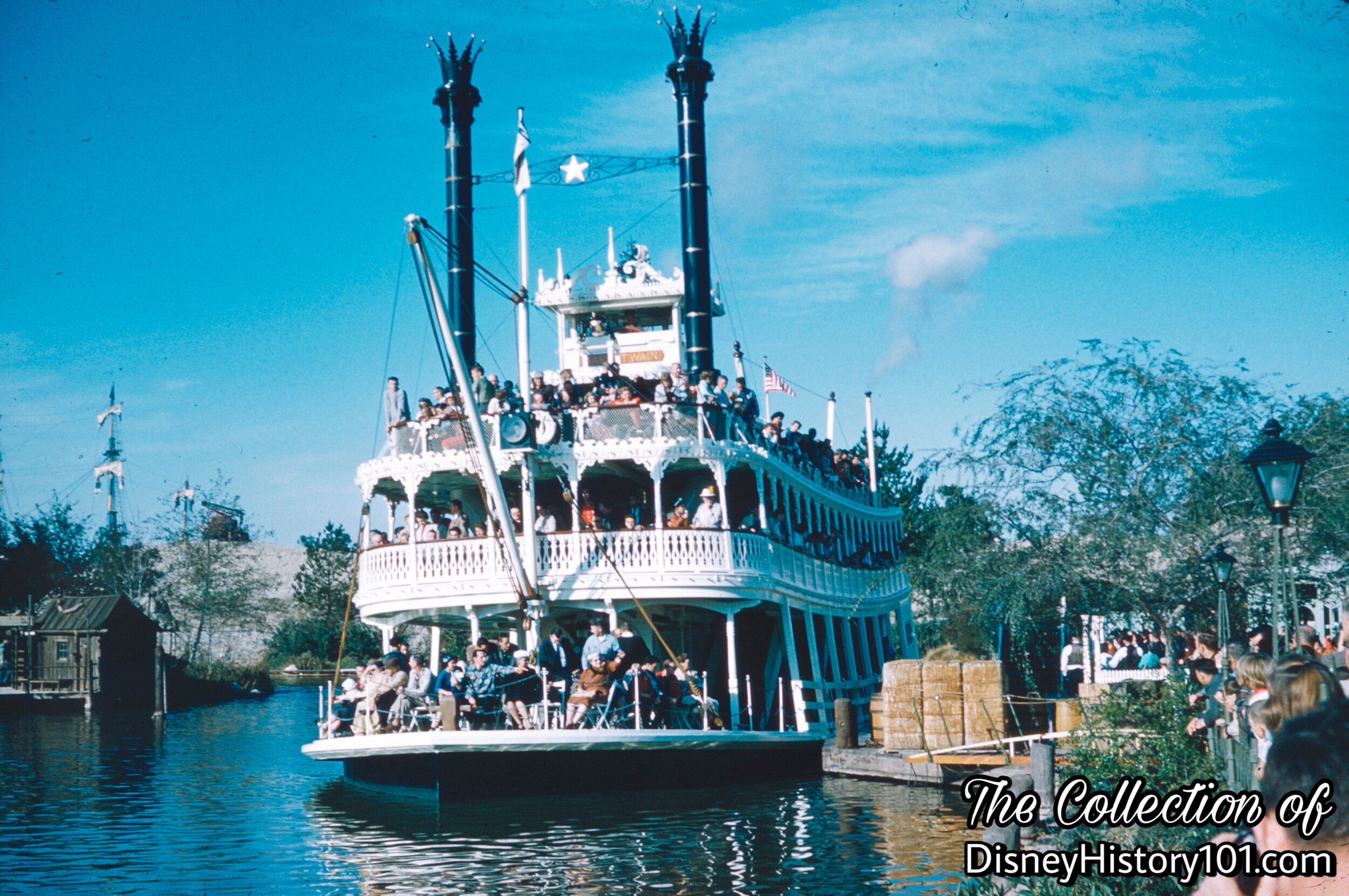
The Mark Twain takes on passengers, as its crew prepares to embark on passage through the waters of the Rivers of America!
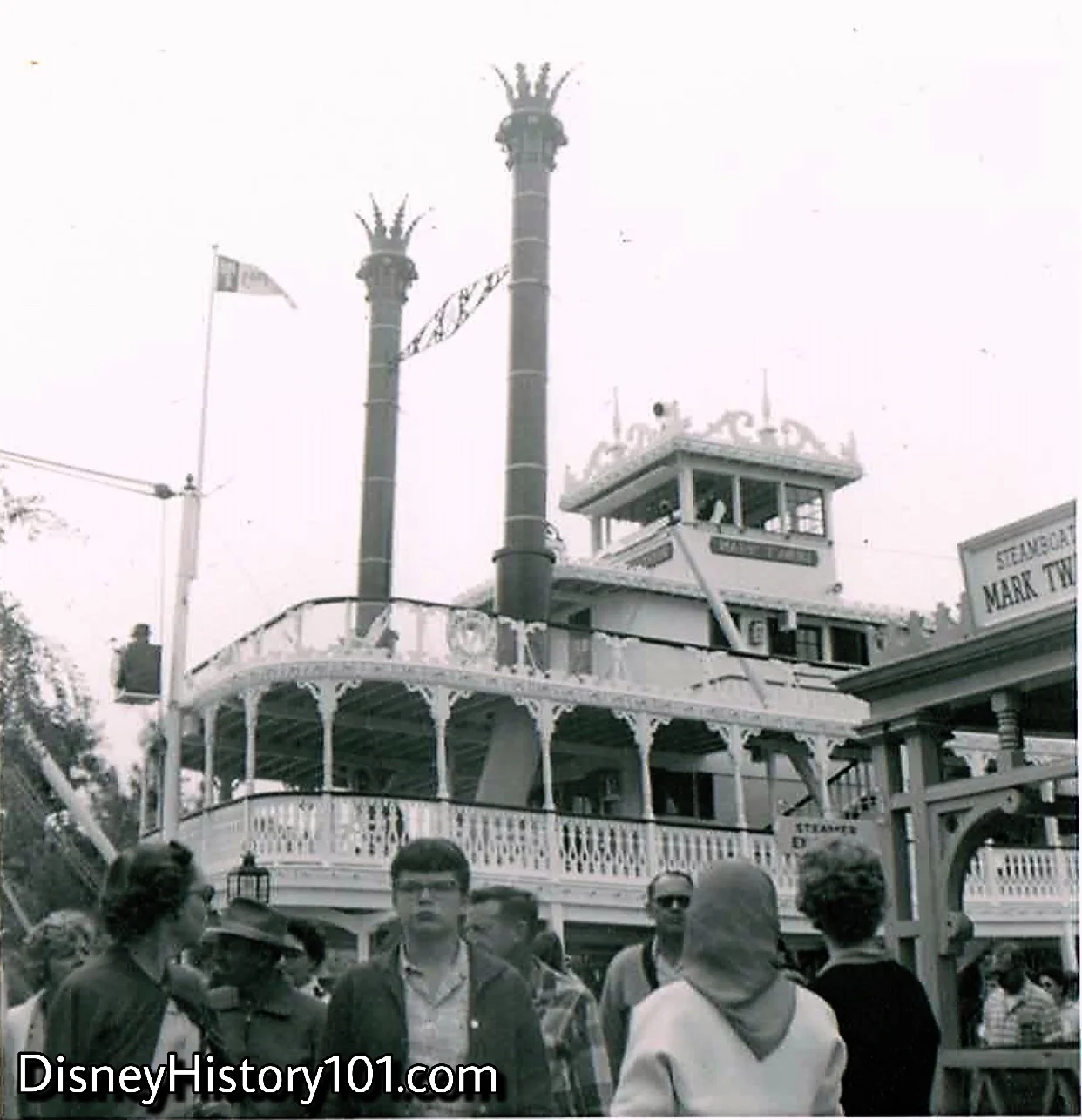
Mark Twain at the Mark Twain Steamboat Dock, (1959)
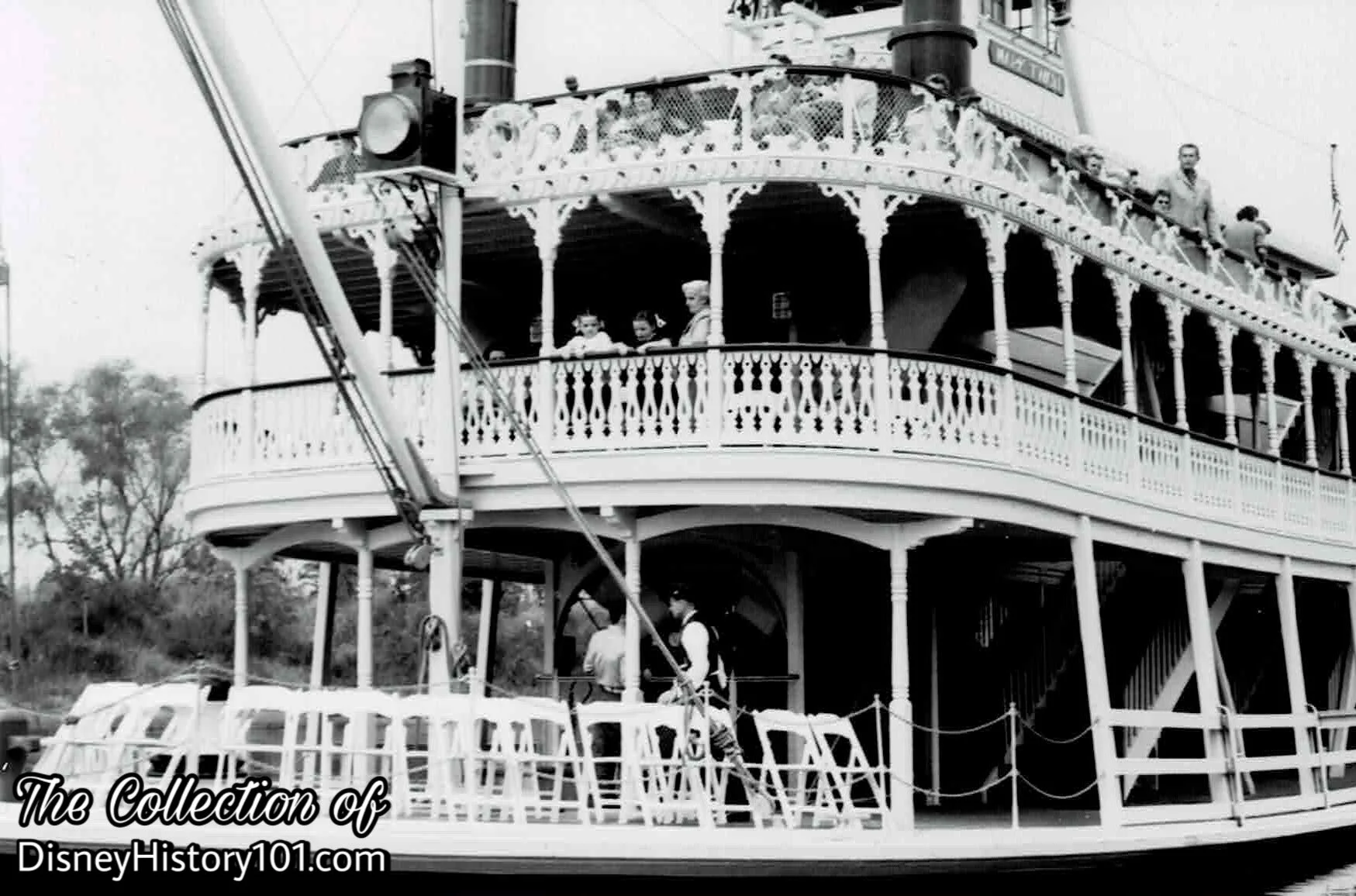
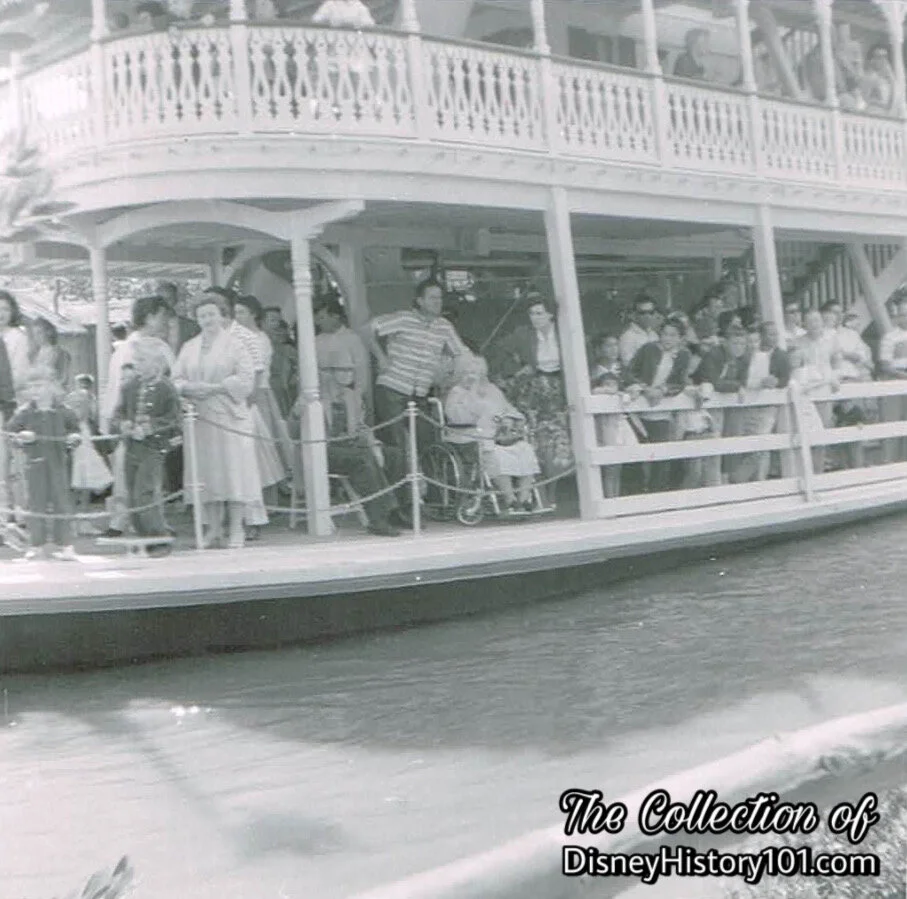
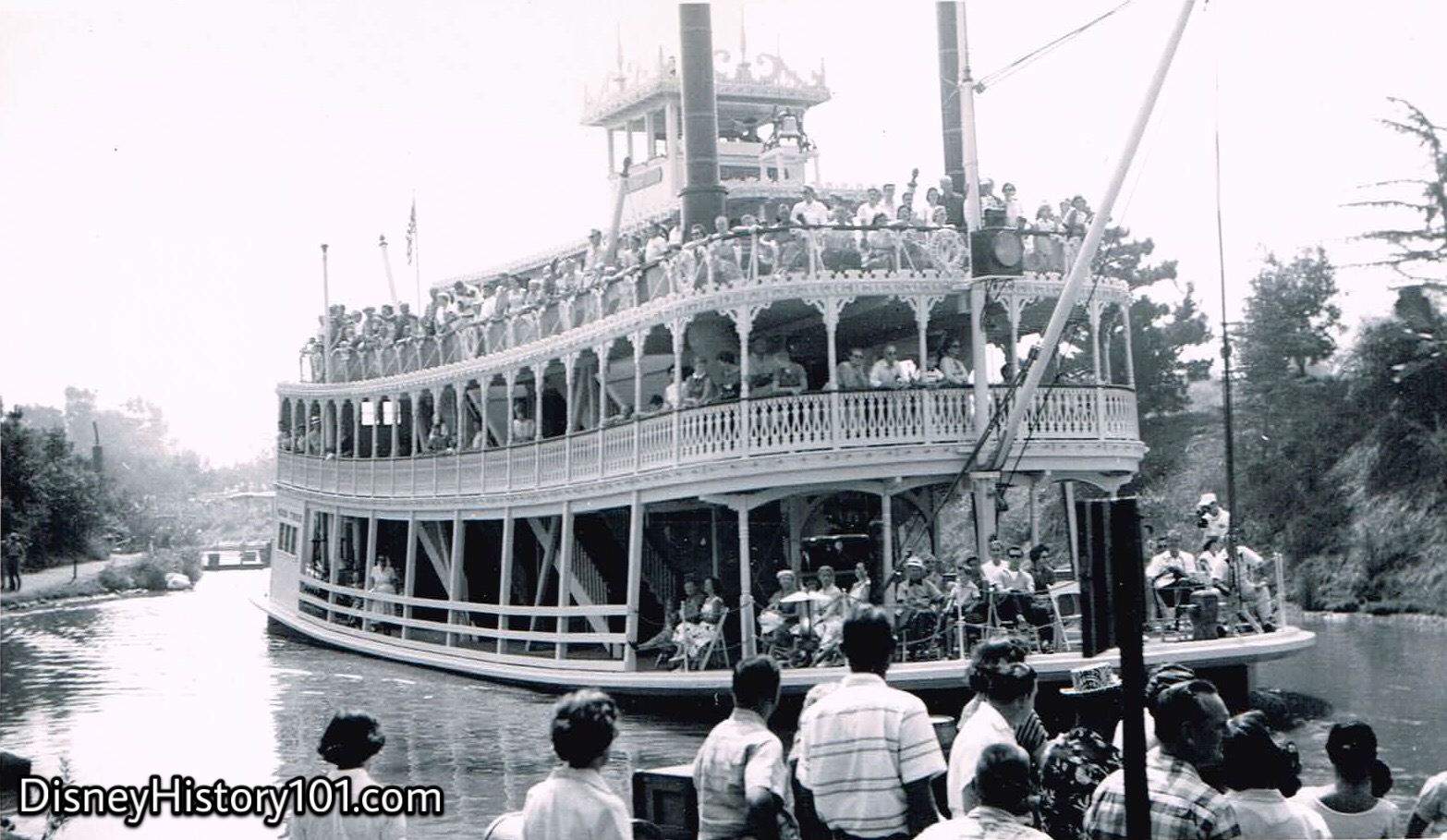
Mark Twain Main Deck full of Guests, (August, 1957)
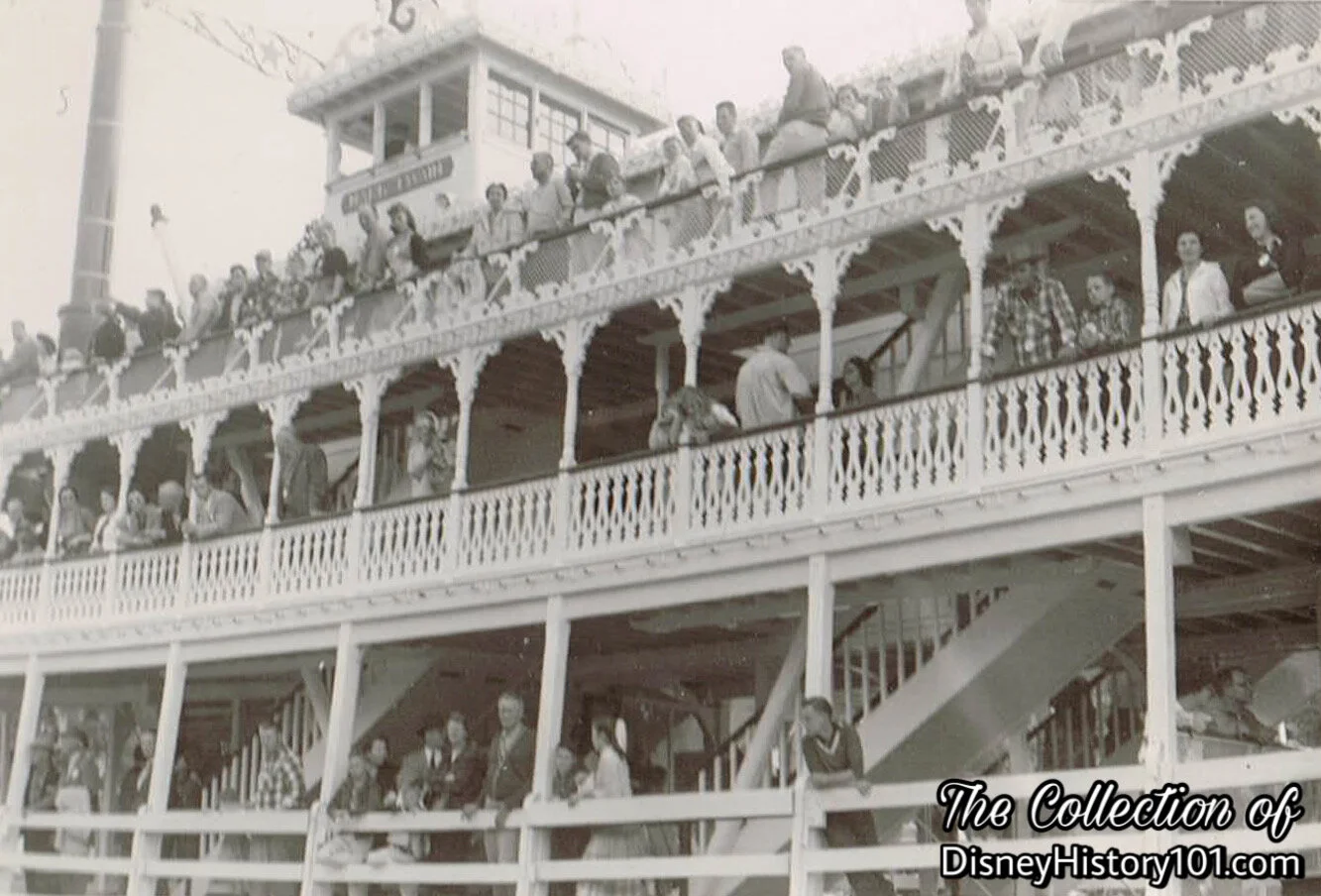
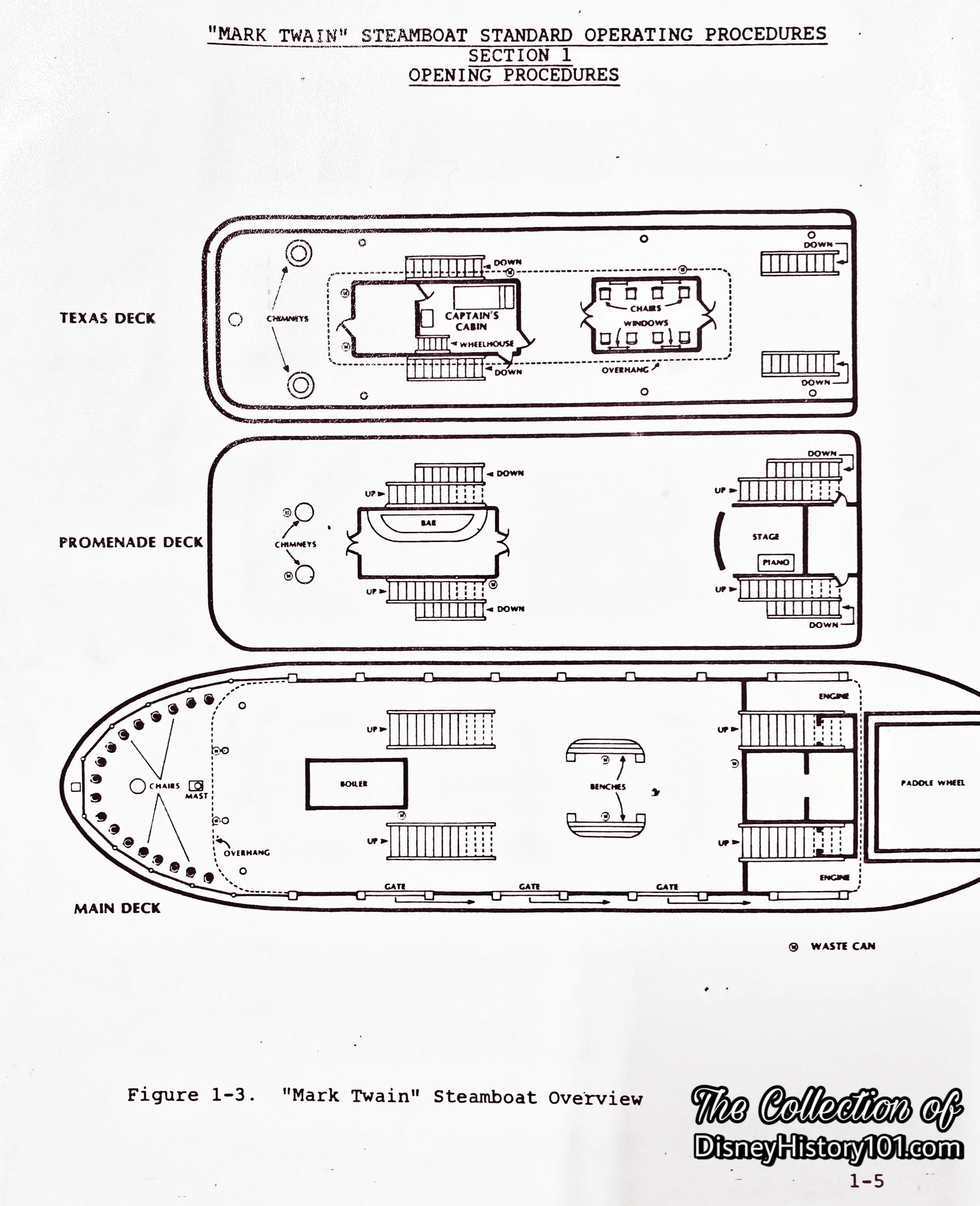
Mark Twain Decks - Main , Promenade, and Texas.
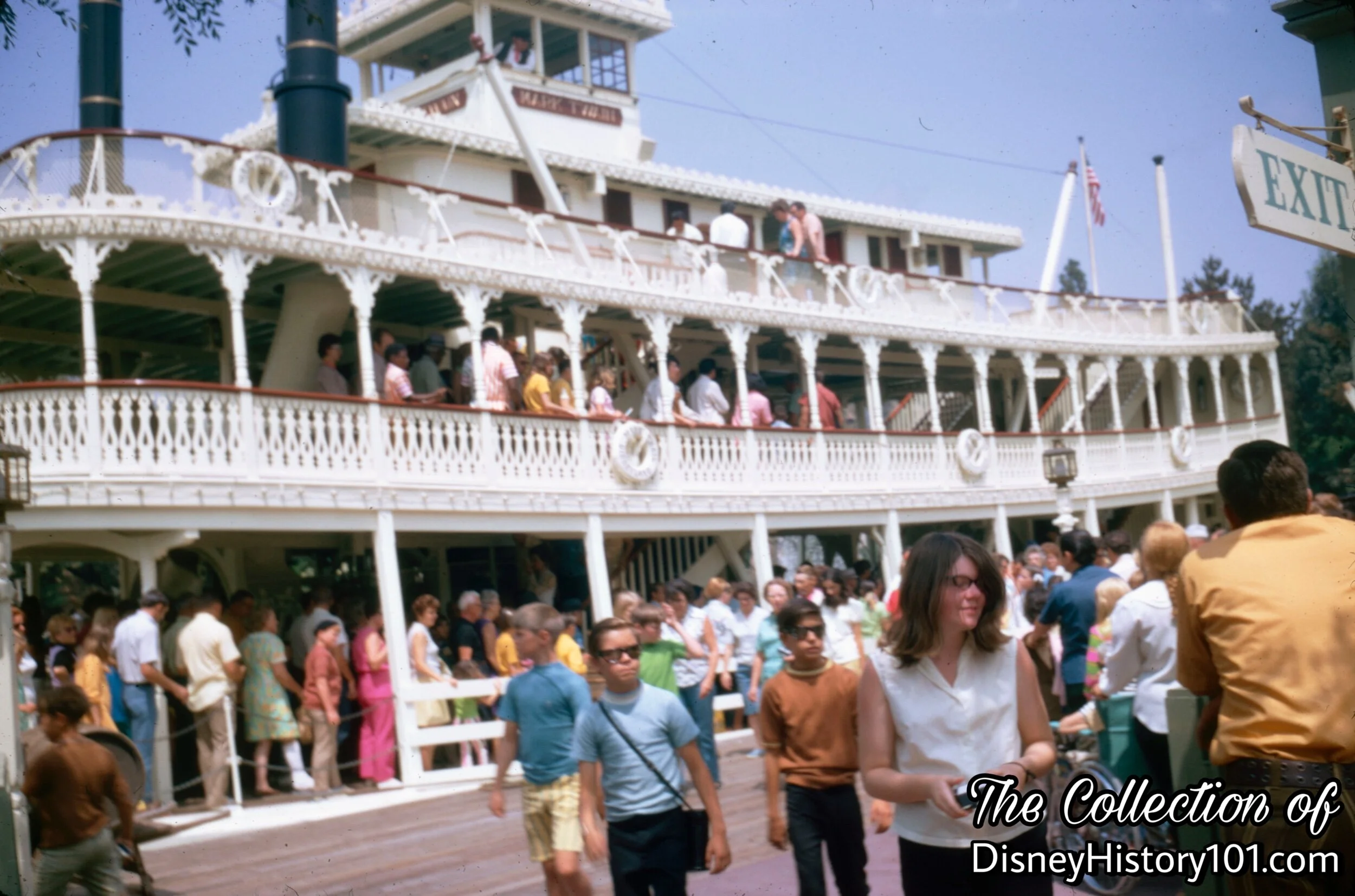
Mark Twain Unloading at the Mark Twain Steamboat Dock
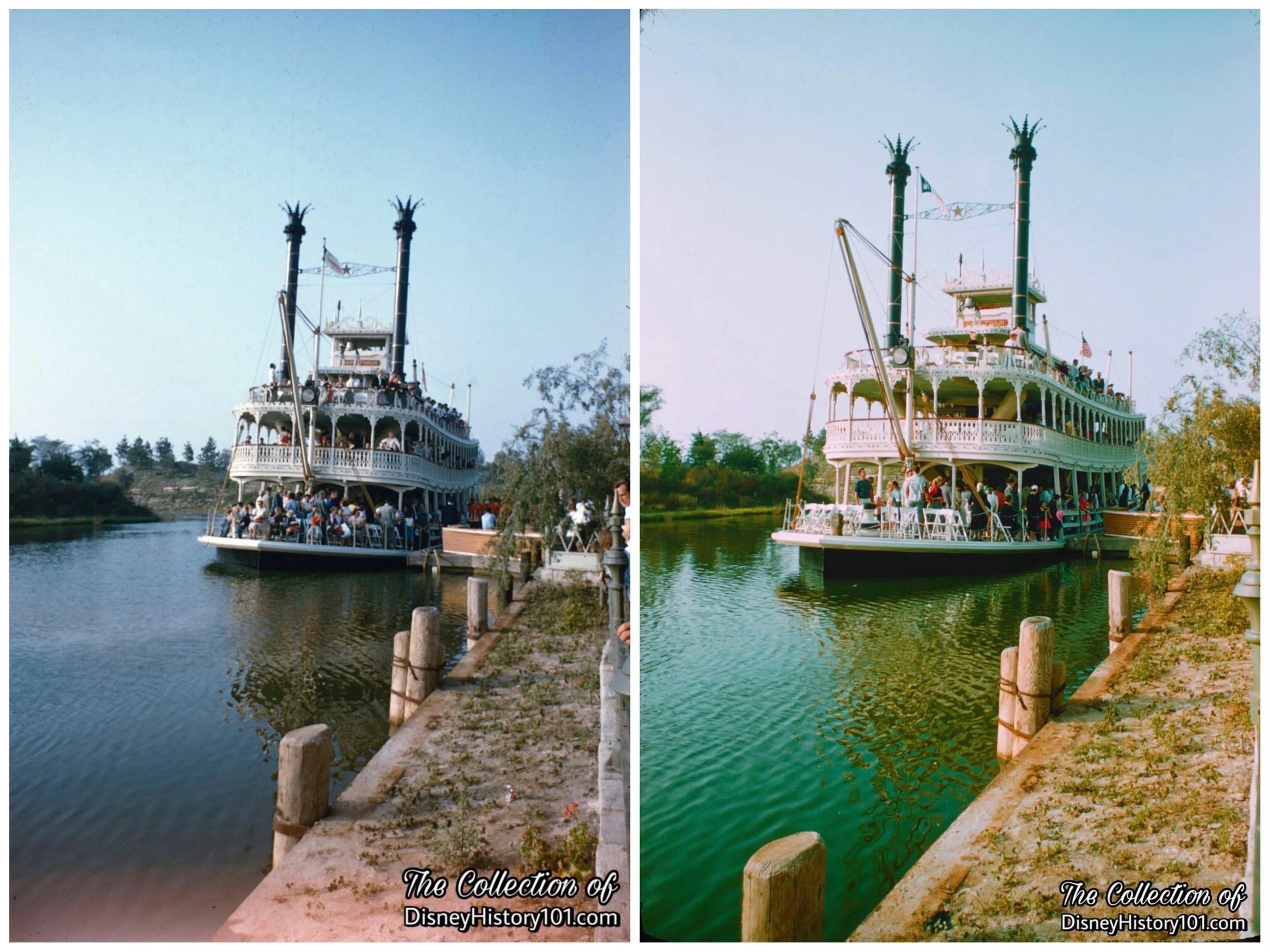
The Mark Twain at the Loading Dock, (July, 1955 - early 1956)
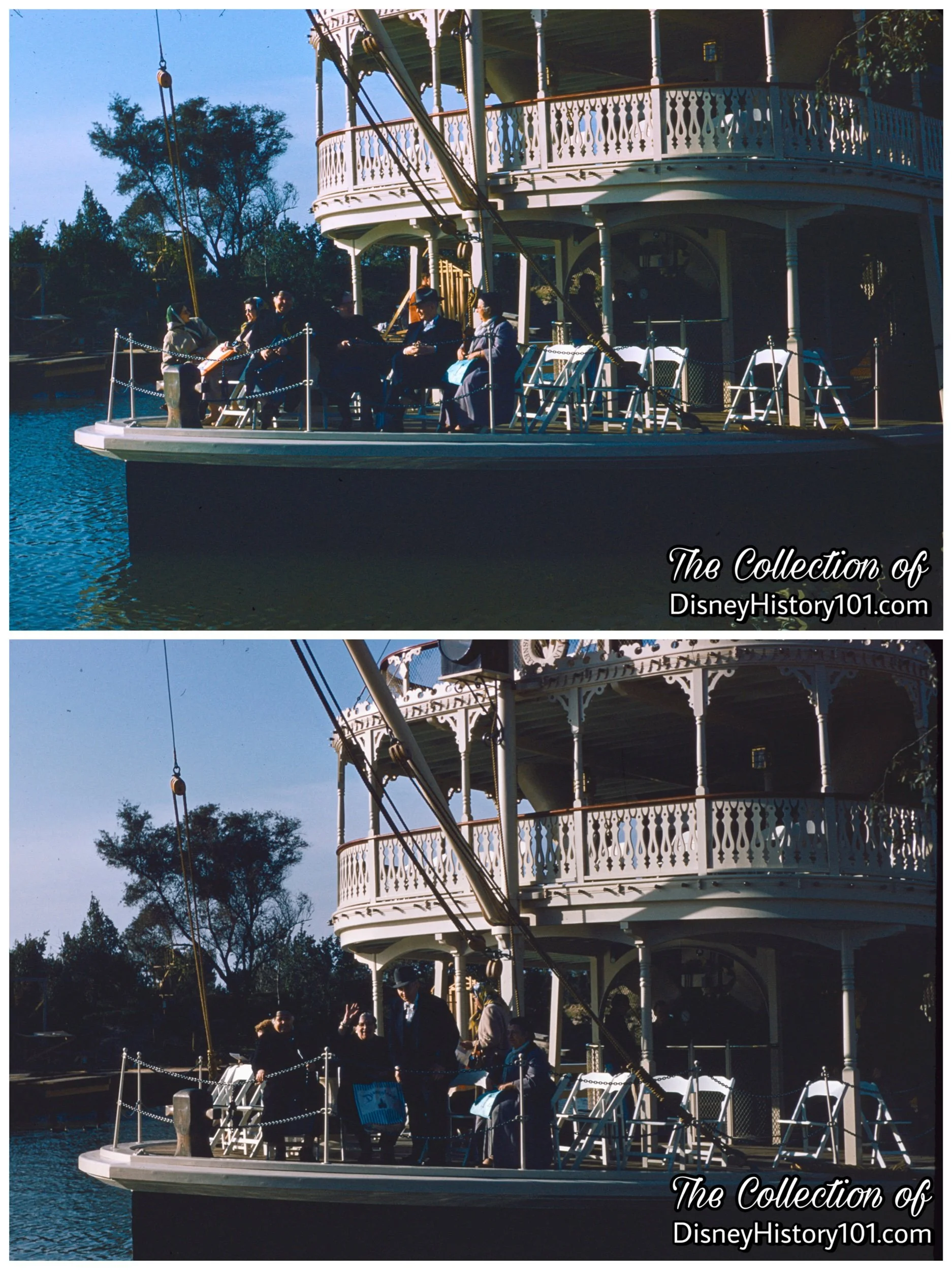
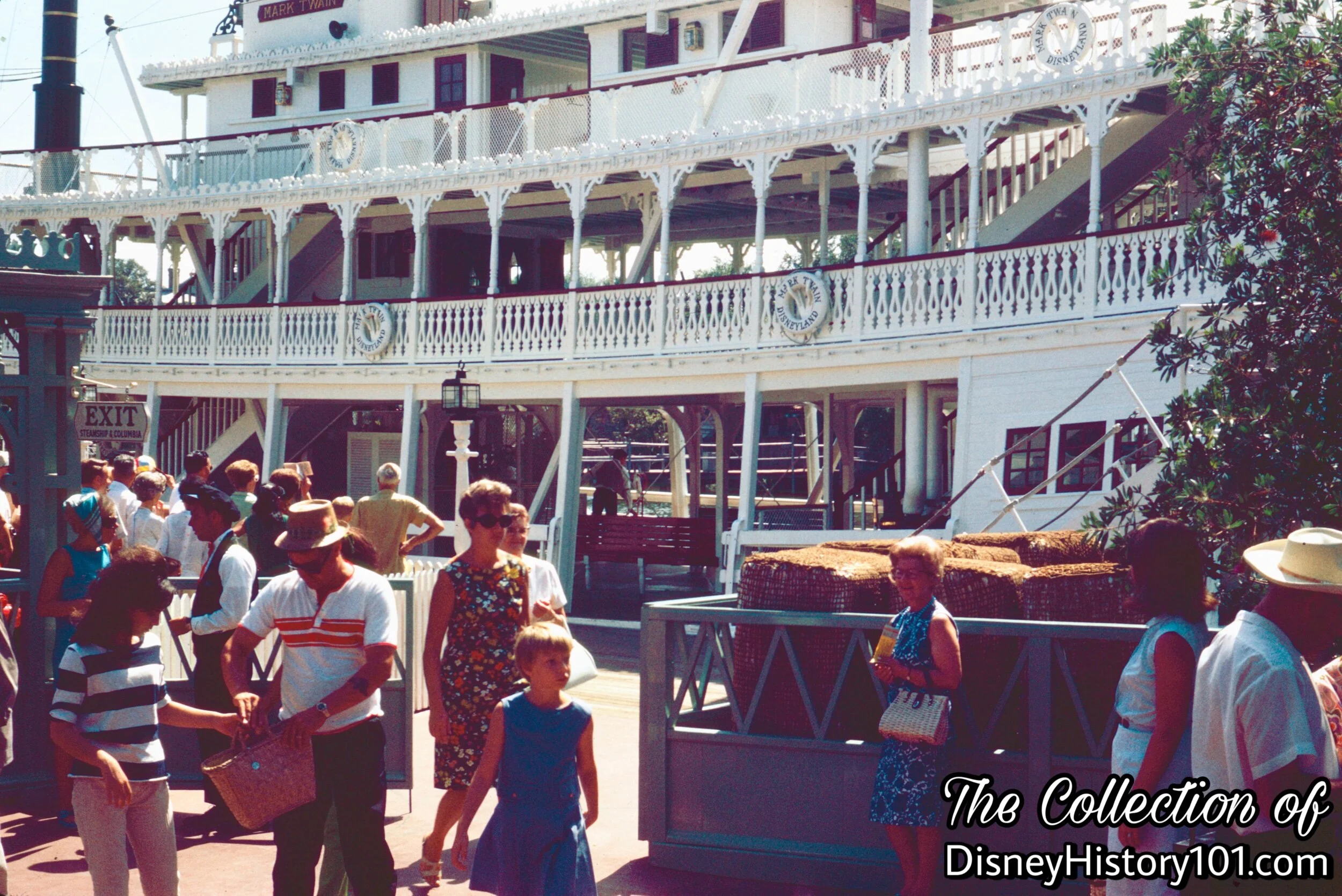
Mark Twain Unloading at the Mark Twain Steamboat Dock
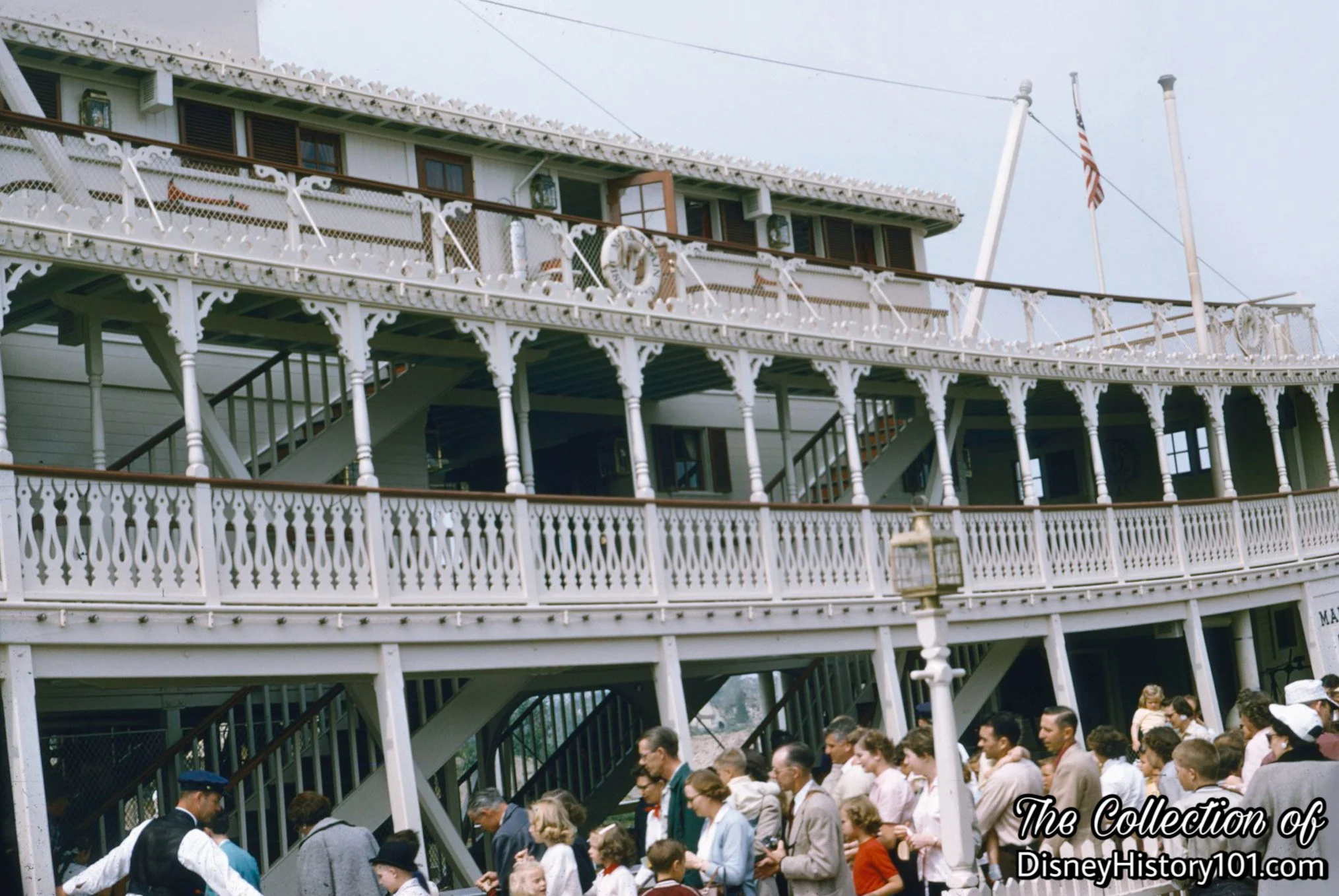
Mark Twain Loading at the Mark Twain Steamboat Dock
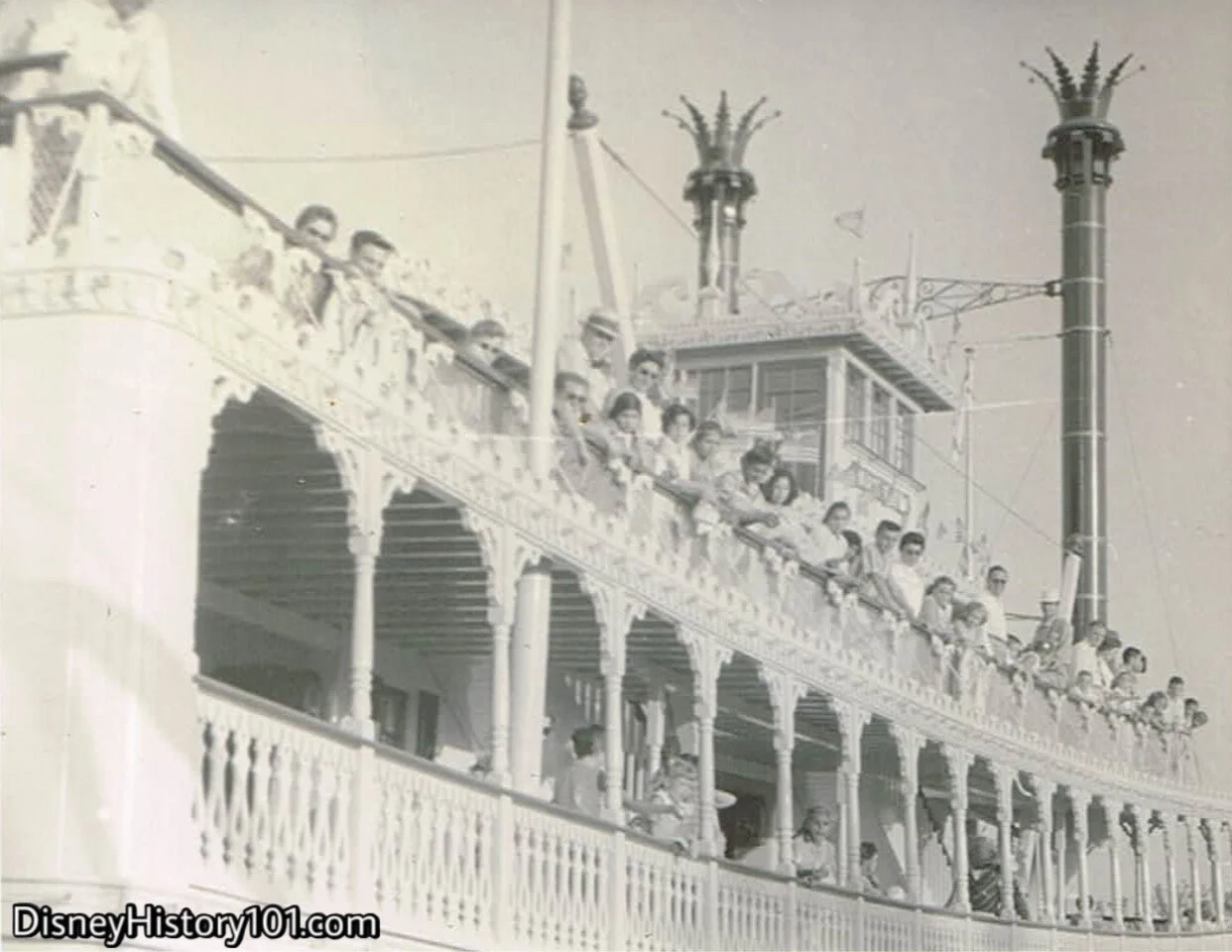
Mark Twain at the Mark Twain Steamboat Dock, (July 7th, 1956)
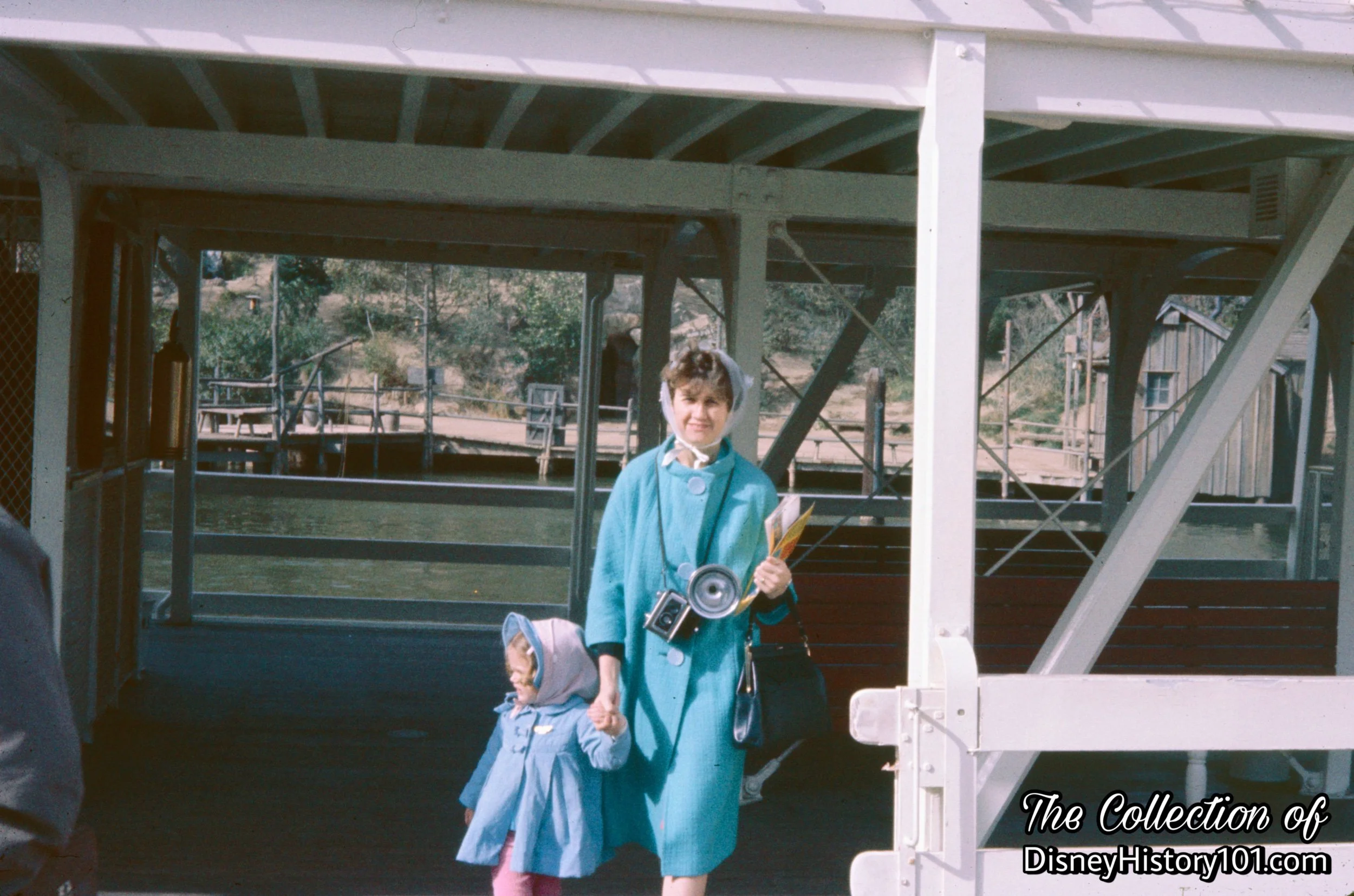
Guests near the entrance to the Mark Twain Main Deck.
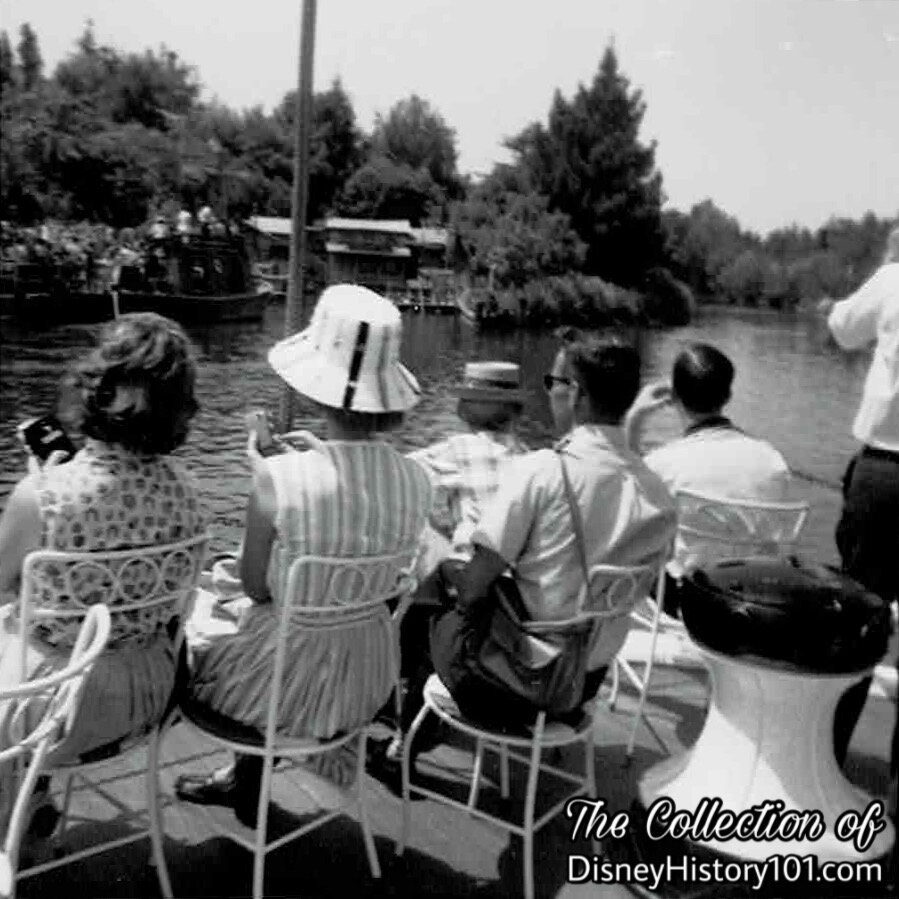
Mark Twain Main Deck and Guests, (April, 1963)
As we step aboard, we’re welcomed : “Howdy folks!…I’d like welcome you aboard the MARK TWAIN - the “Queen of the River Boats”. Our journey today will take us up the Rivers of America and into the western frontier. Along the way, I’ll be pointing out some interesting sites and tellin’ ya a few stories!” Leadsmen shout their safety calls “by the Mark” , to beckon the start of our journey, and we’re off!
Ahead of us, lay a romantic, nostalgic, “circuitous” trip into the rustic “splendor of the Old South and Early America” as it once was on the Mississippi, (as described by many early press publications)!
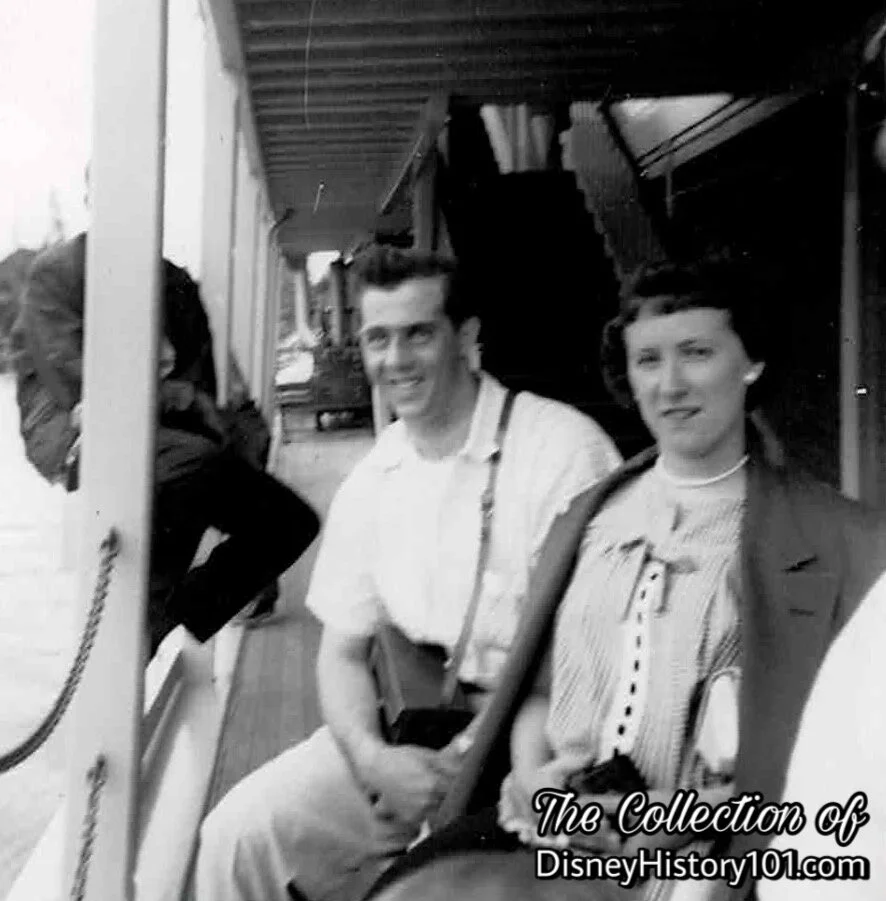
Mark Twain Main Deck
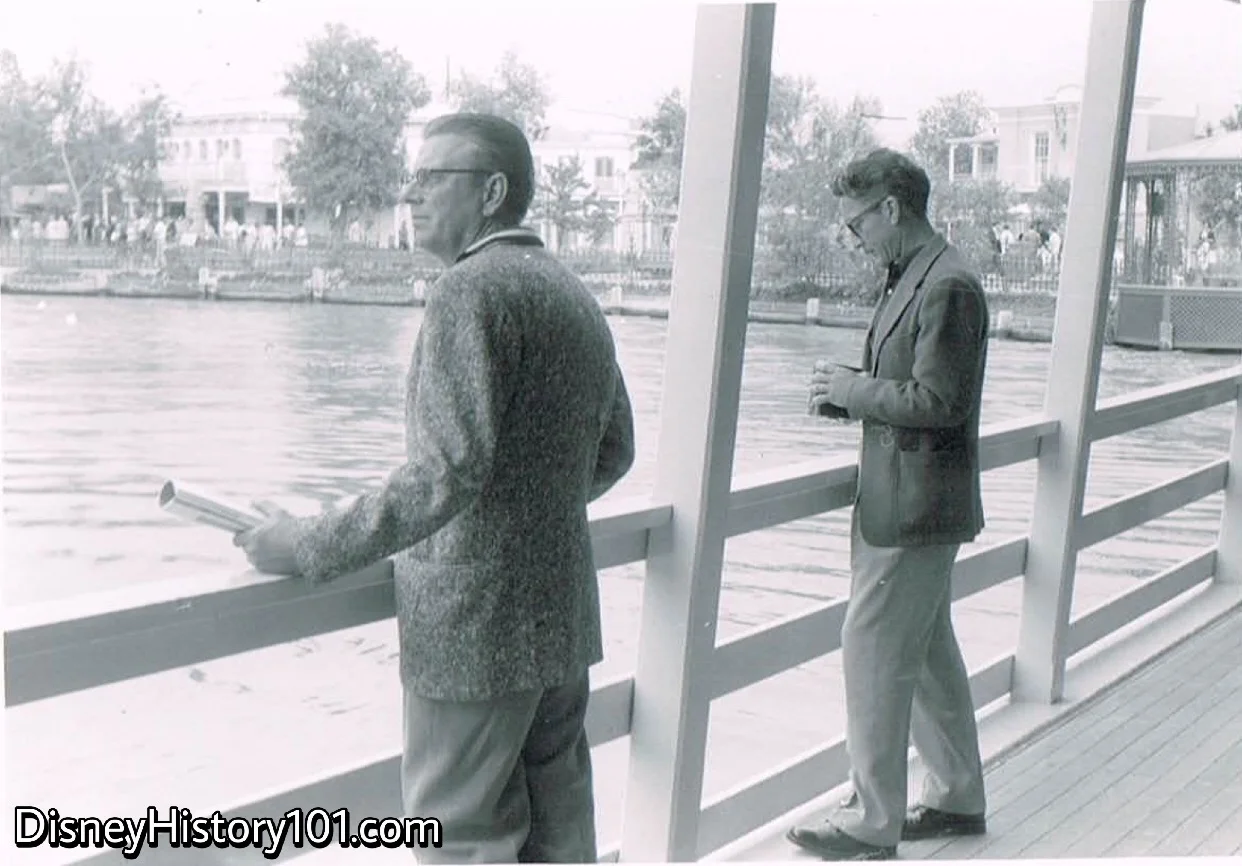
Mark Twain Main Deck, (May, 1958)
Perhaps you can recollect the “feel” of experiencing the Rivers of America for the first time, from the Main Deck of the Mark Twain. Maybe you can recall the sights of passing the tree lined riverbanks, the smell of the water, and sounds from the performing Dixieland bands. Walt had an affection for these elements and always loved the Mark Twain, later divulging to Joe Fowler, “When things get hectic, we can always get on the Mark Twain and just ride around the Rivers of America.”
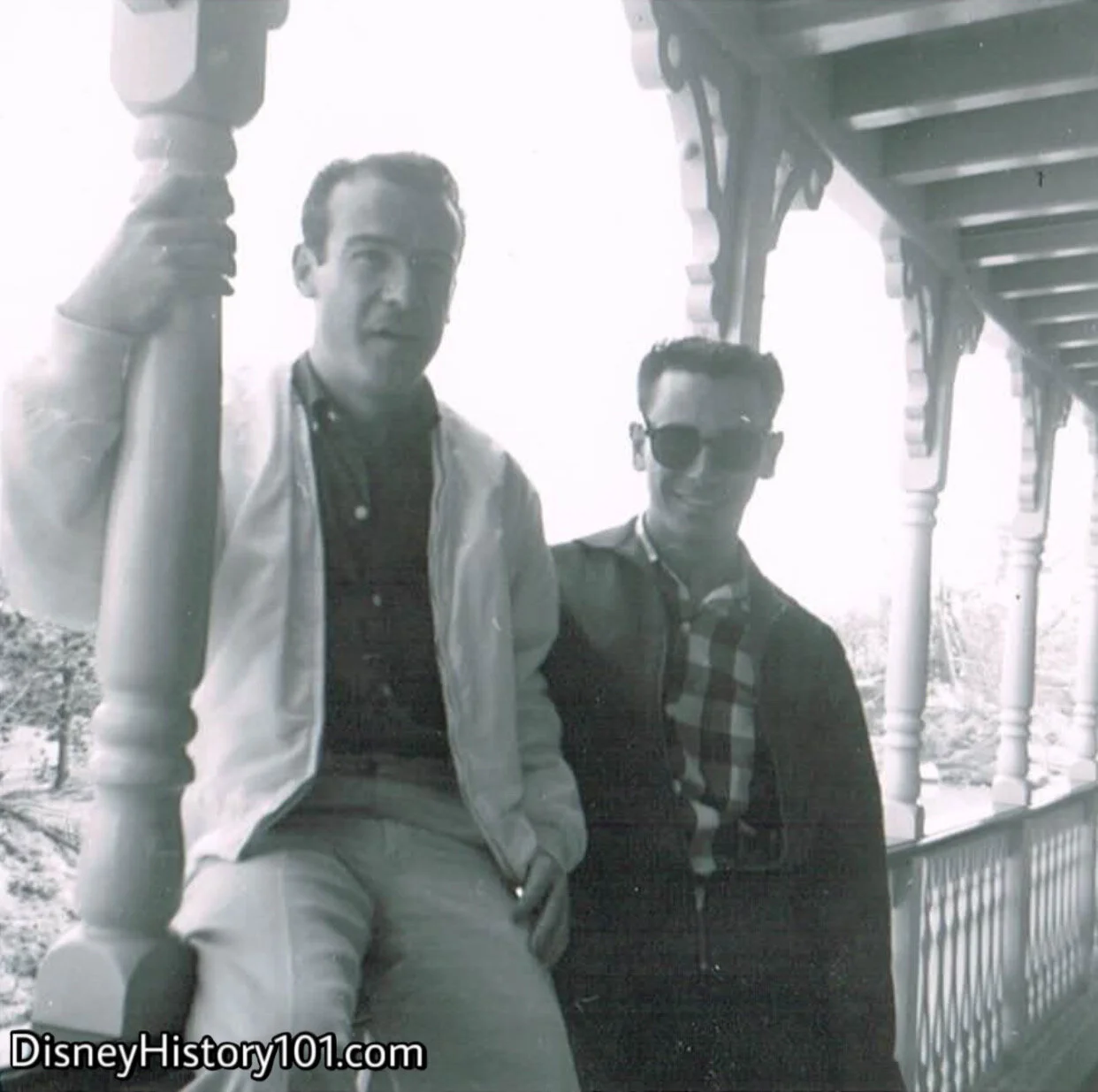
Mark Twain Promenade Deck
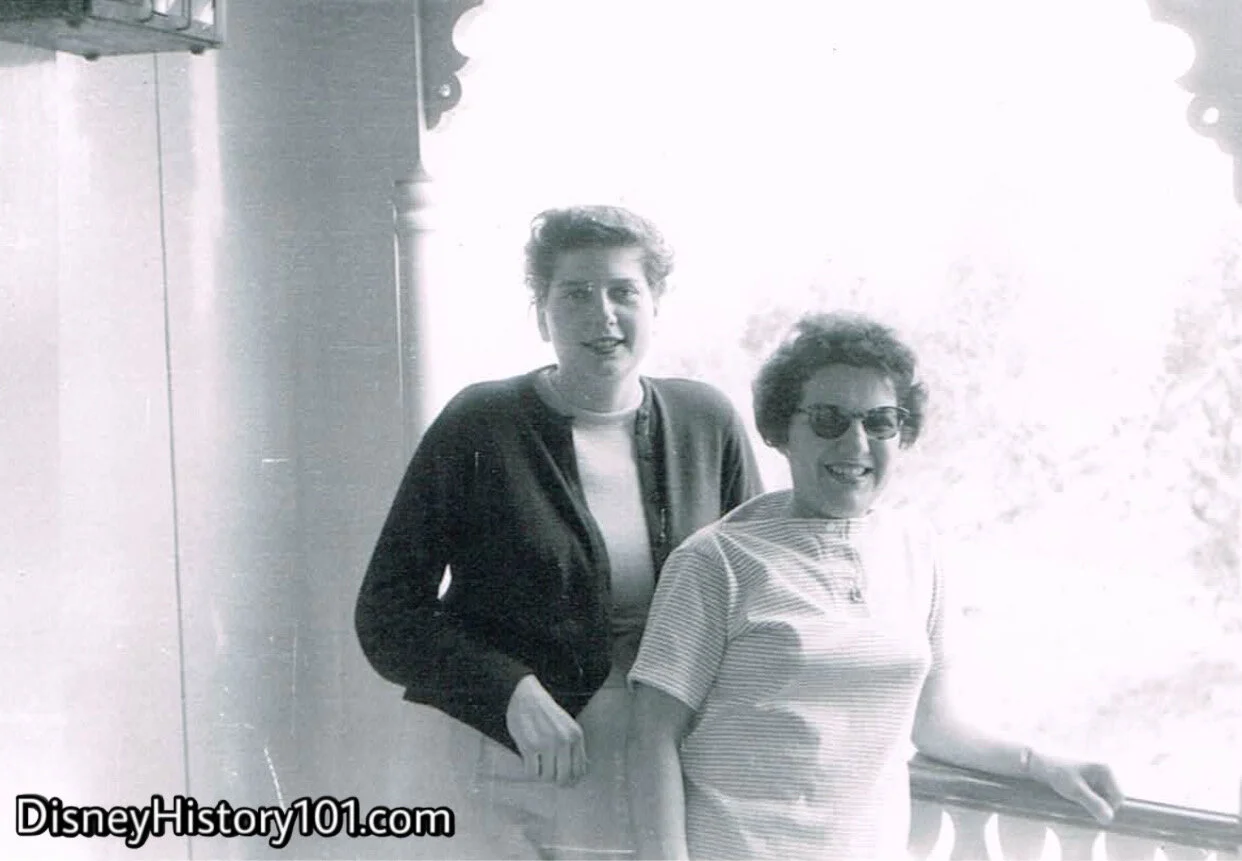
Mark Twain Promenade Deck
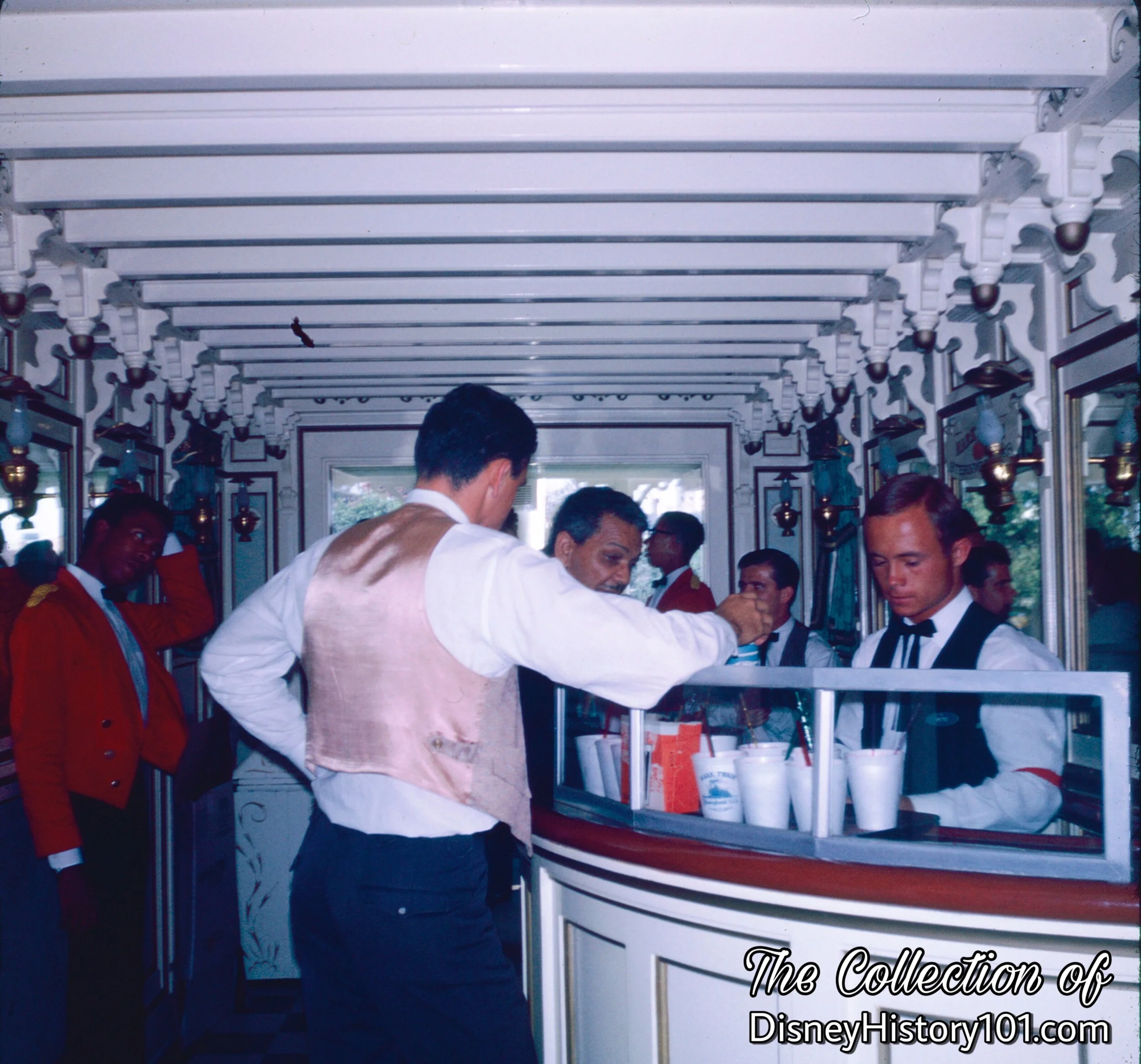
Mark Twain Promenade Deck Bar, (July, 1967)
The Promenade Deck (the second floor) once had a bar where guests (and performers) could order non-alcoholic refreshments (like Mint Juleps). These were served “during summer months,” according to the “Disneyland Dictionary”, compiled by WED Enterprises, Inc. and WED Public Relations Department, c. 1968. Here, a shutterbug has managed to capture Michael Delay (of The Young Men From New Orleans) getting a quick refreshment from the Promenade Deck Bar.
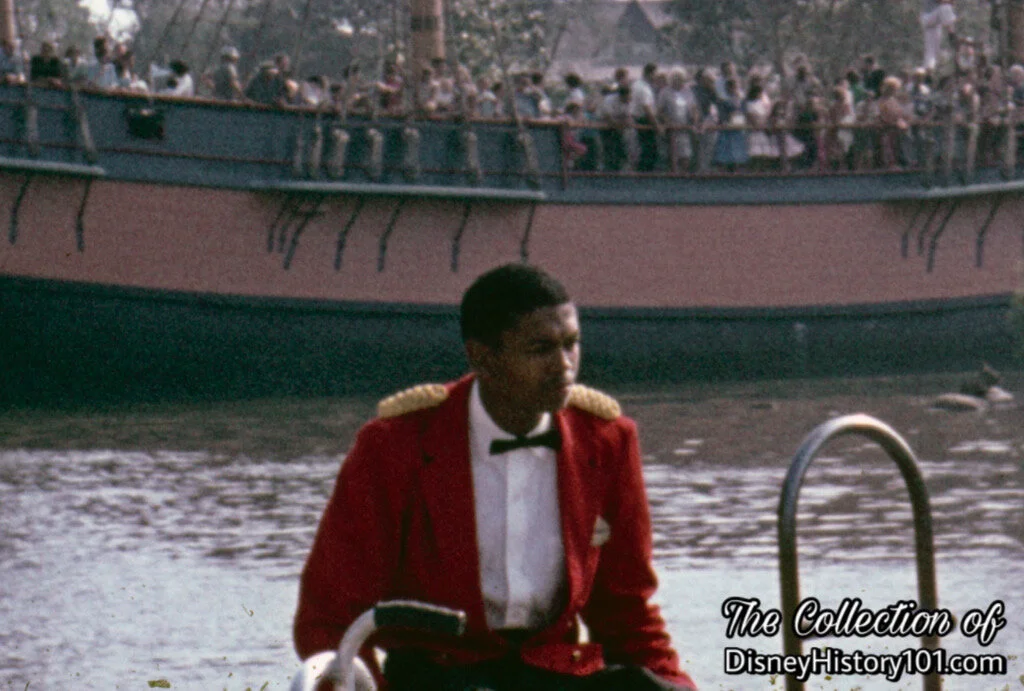
Disneyland Promenade Deck Bar Employee waits near the Mark Twain Steamboat Dock
There were many positions within the rotation - the set order of operating positions established by the attraction's Working Lead. The Promenade Deck Bar would not have functioned without Disneyland Employees (above) who both stocked and served Disneyland audiences.
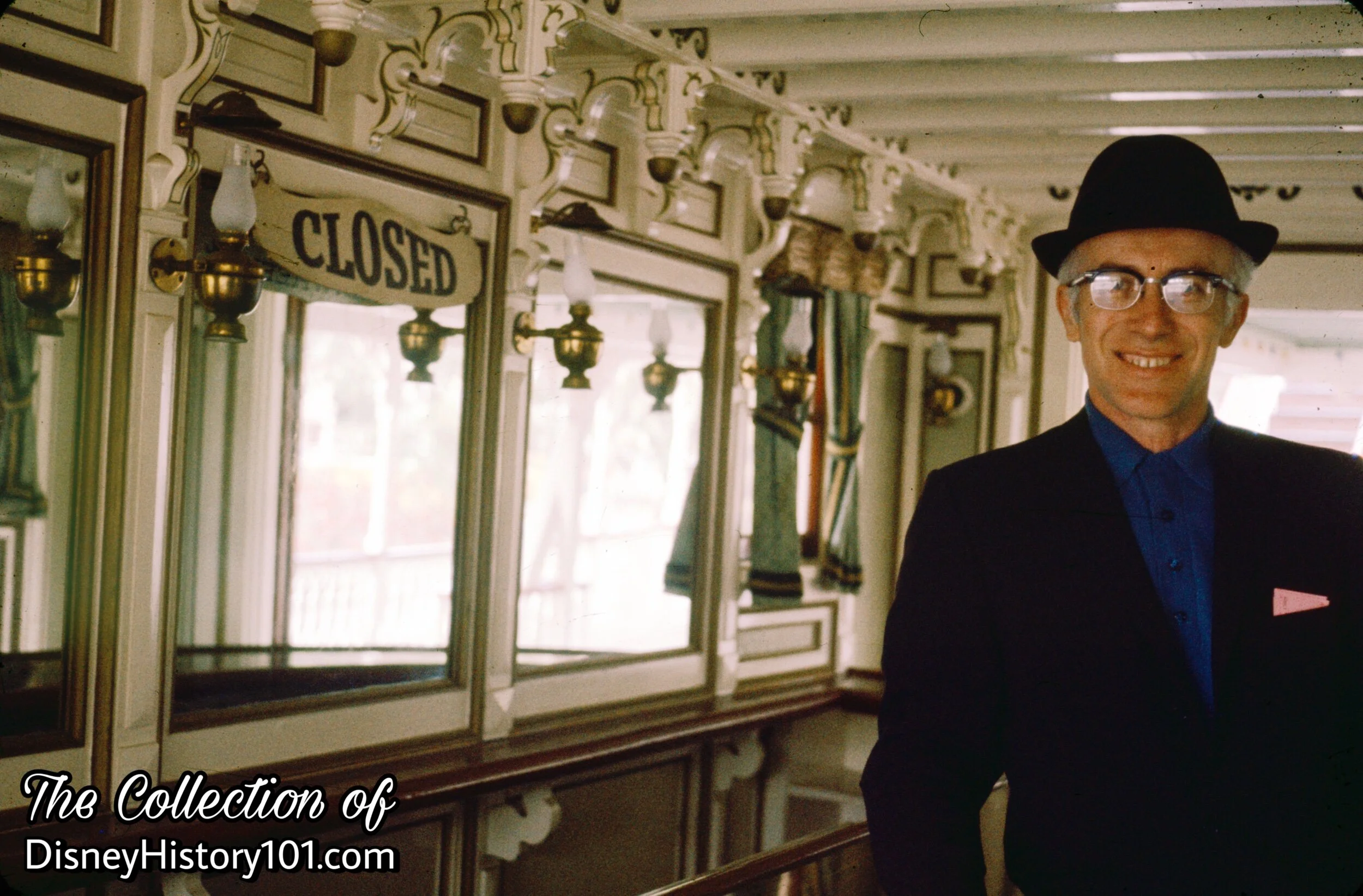
A Guest inside the Closed Mark Twain Promenade Deck Bar, May of 1970.
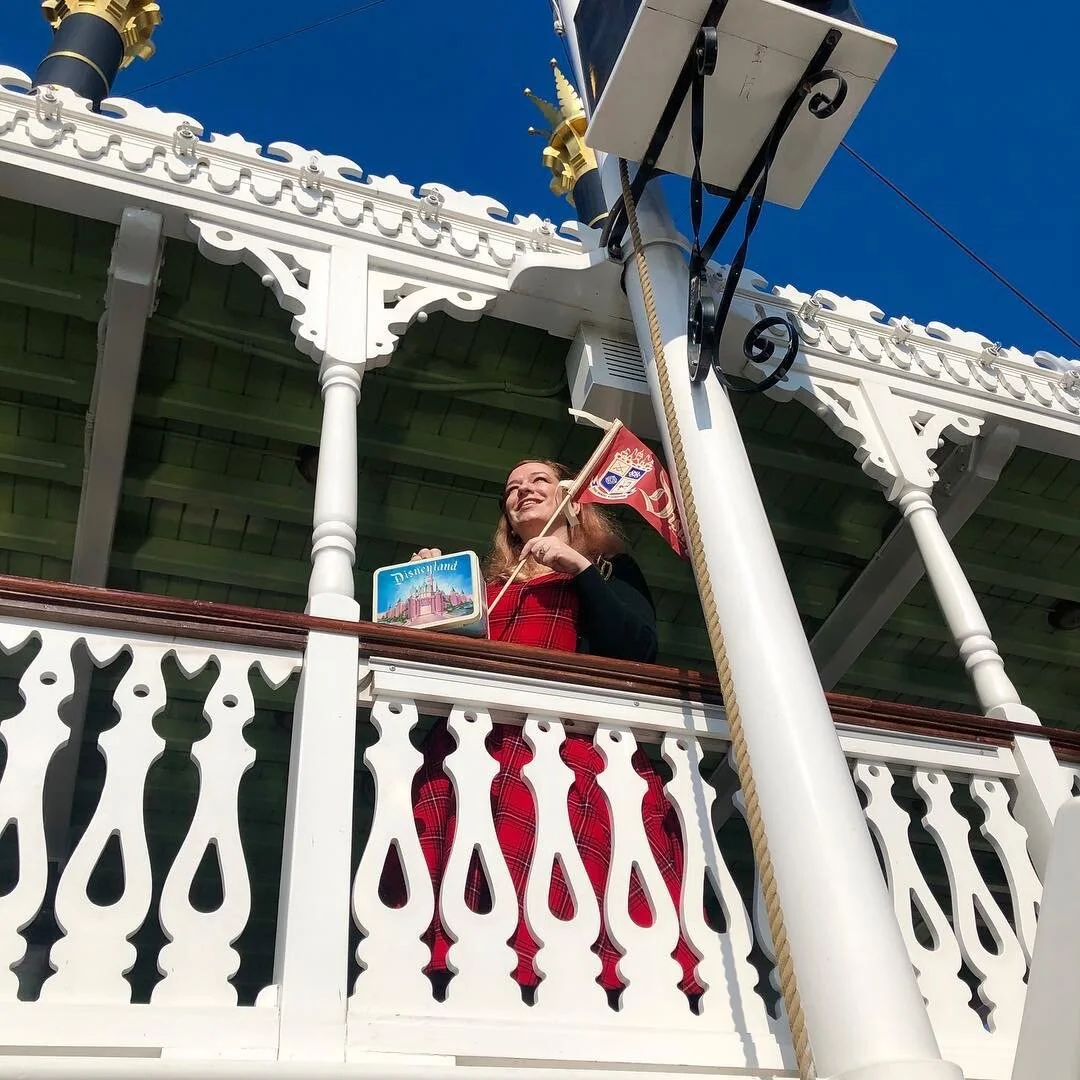
Mark Twain Promenade Deck
The Mark Twain Riverboat is one of several truly timeless Disneyland attractions! One 1958 appraisal by Bank of America made the following statement: “While the bulk of the improvements are 3 1/2 years old they have been considered as effectively new due to exceptional maintenance and slight obsolescence. Improvements to the real property including the landscaping and also the Columbia and Mark Twain have been given an economic remaining life of 40 years.”
In one of his final publications, Dave Smith (previous Chief Archivist Emeritus of the Walt Disney Archives), included the Mark Twain Riverboat among “the only attractions still at Disneyland today that were there on opening day, July 17, 1955.” [Disney Facts Revealed by Dave Smith, 2016] Dave continued : “It would be very difficult to make a count [of how many trips the Mark Twain Riverboat has sailed around the Rivers of America since the Park first opened], because many factors would have to be taken into consideration : the number of trips per day, the fact that Disneyland was closed on Mondays off-season from 1955 to 1957 (and on Mondays and Tuesdays from 1958 to 1985), the various rehabs of the attraction, the days on which the Mark Twain was cycled with the Columbia, and weather closings of the Park and of the attraction. Perhaps someone will attempt an estimate someday.”
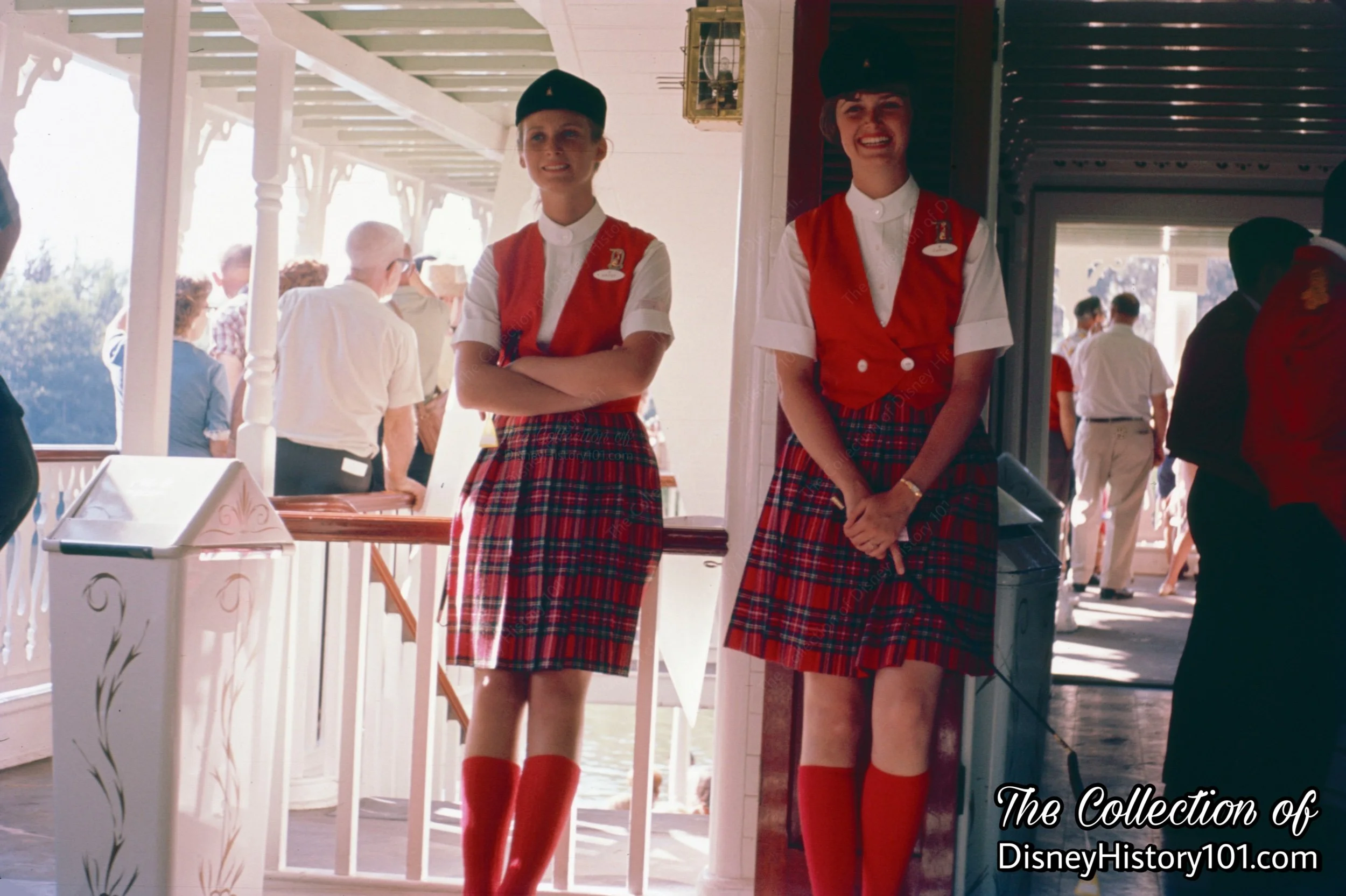
Disneyland Guided Tour Hostesses on the Mark Twain Promenade Deck, July of 1966.
By the 1960s, the Guided Tour of Disneyland included “a leisurely cruise on the Rivers of America aboard the elegant paddle-wheel steamer Mark Twain.” This seems like an appropriate time to share a few sidelights about the Mark Twain Steam Boat.
Scale : 5/8
Height : 28 feet tall (from Keel to Pilot House)
Length : 108 feet, unassembled 105 feet, (according to the televised Disneyland episode “Pre-Opening Report From Disneyland”)
Draft: 2 feet, 3 inches
Weight : 159 tons
Displacement : 125 tons
Beam : once 26 feet, 6 inches; 27 1/2 feet
Decks : 4 (From bottom to top - Main Deck, Promenade Deck, Texas Deck, Pilot House)
Crew : 1 Captain, 1 Engineer, 1 Deckhand
Passengers : 350 (c. 1955) ; 300 (current maximum)
Speed : Four Knots per Hour
“By The Mark, Twain.”
A few talented voices have been heard in this role through the years including Pete Renaday (providing the voice-over narration of Mark Twain).
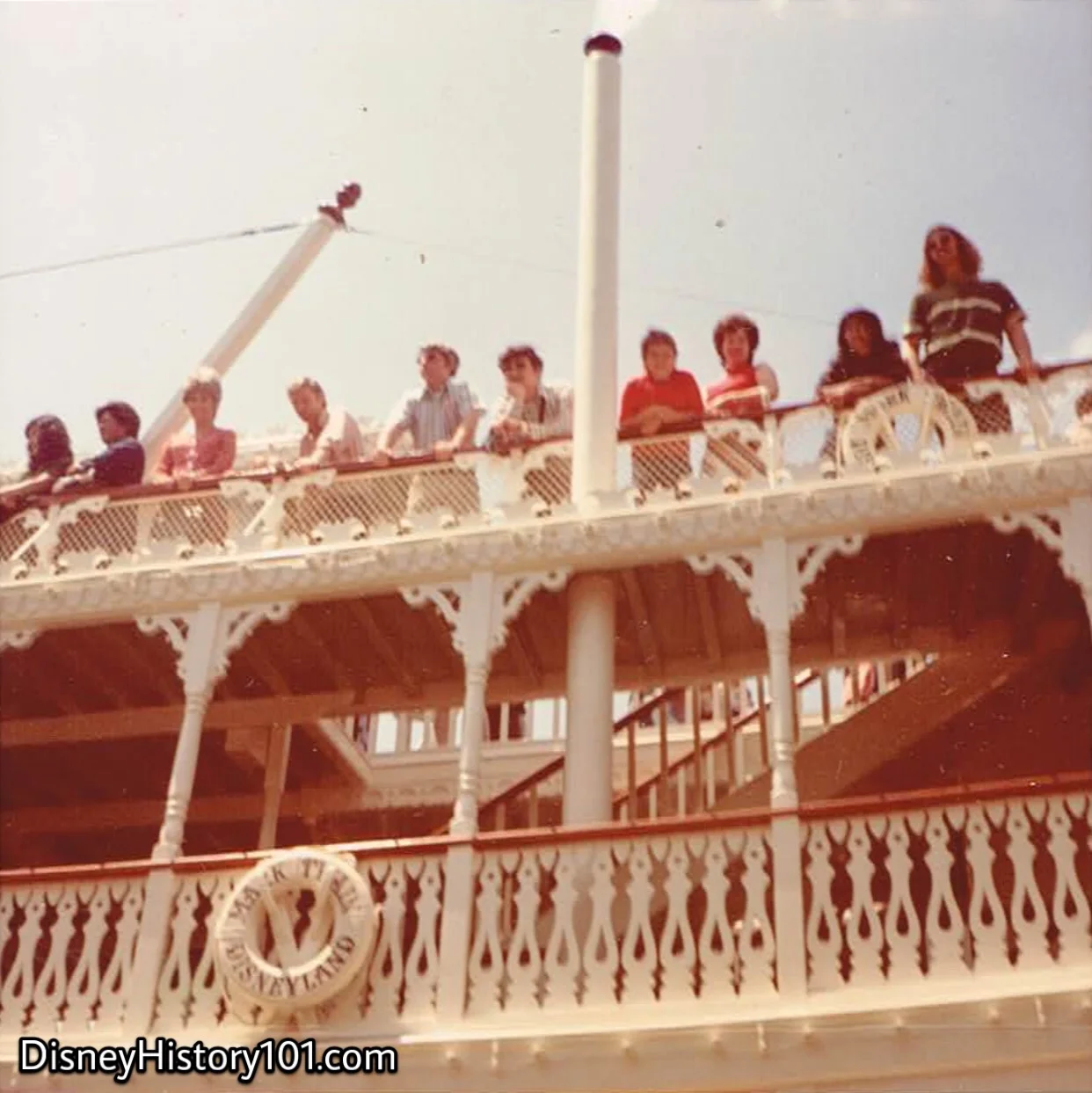
Guests stand on the Mark Twain Texas Deck House as viewed from the Mark Twain Steamboat Dock
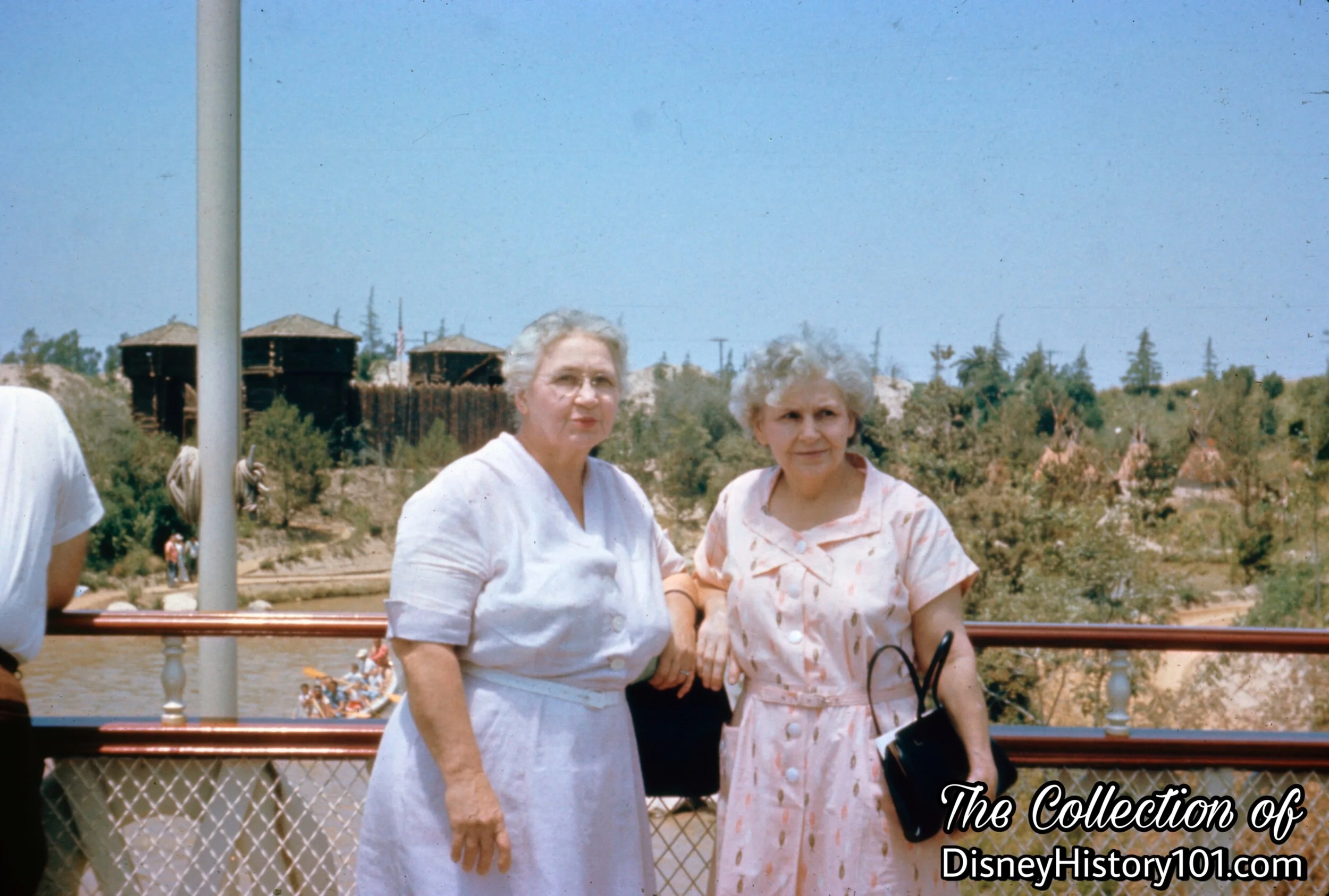
Mark Twain Texas Deck
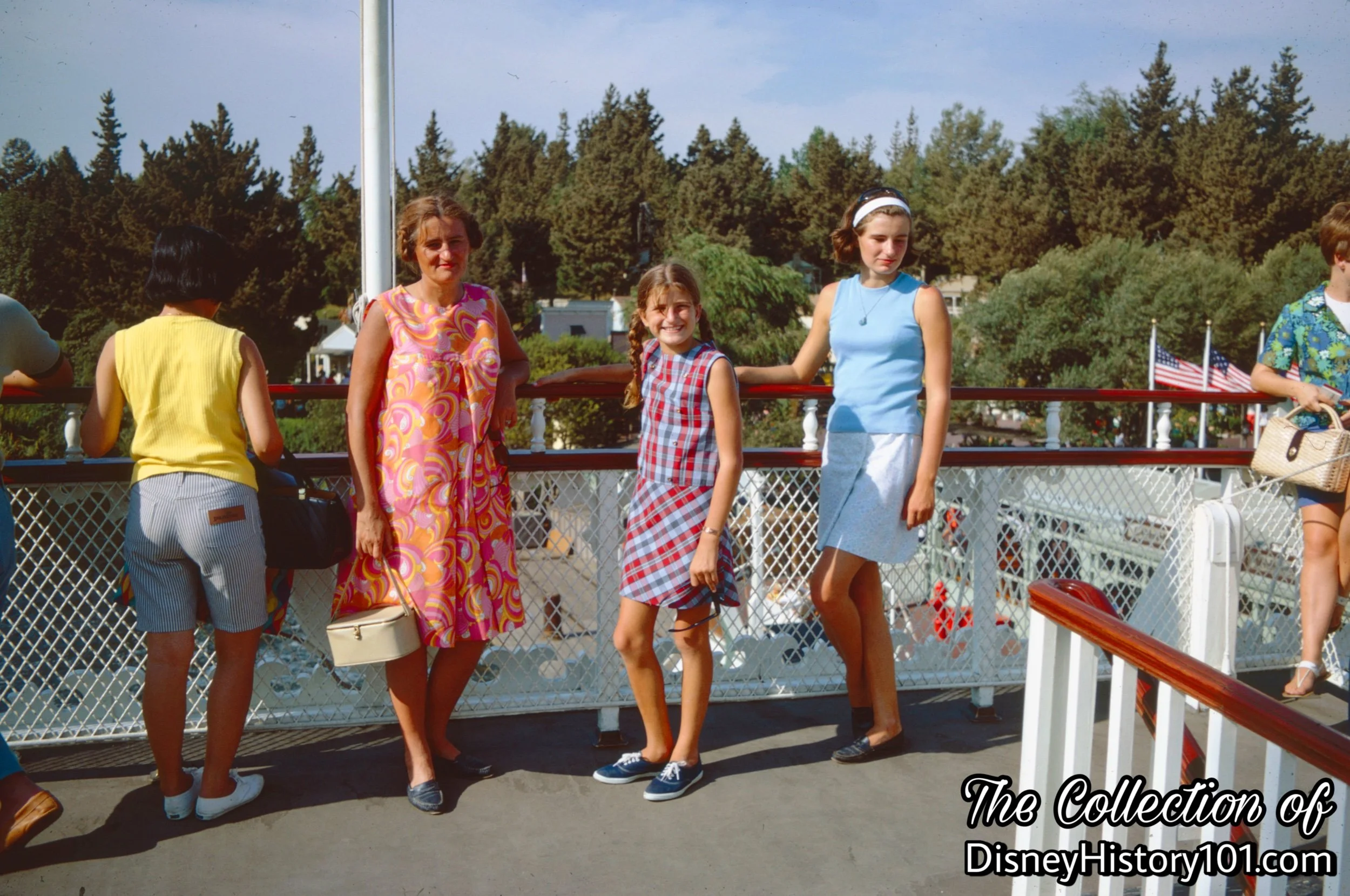
Mark Twain Texas Deck
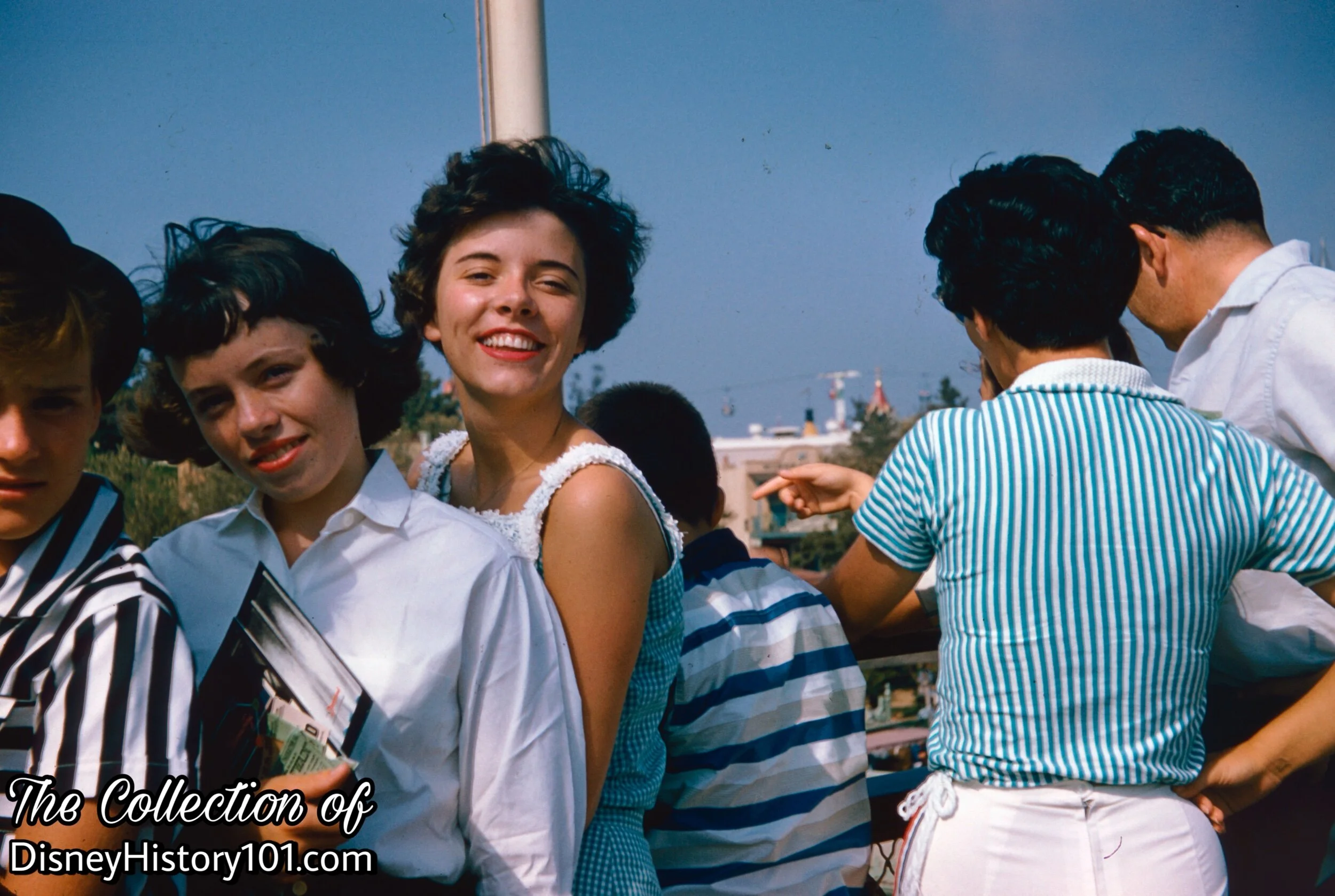
Mary Dodds and Other Guests Aboard the Mark Twain Texas Deck, (1959)
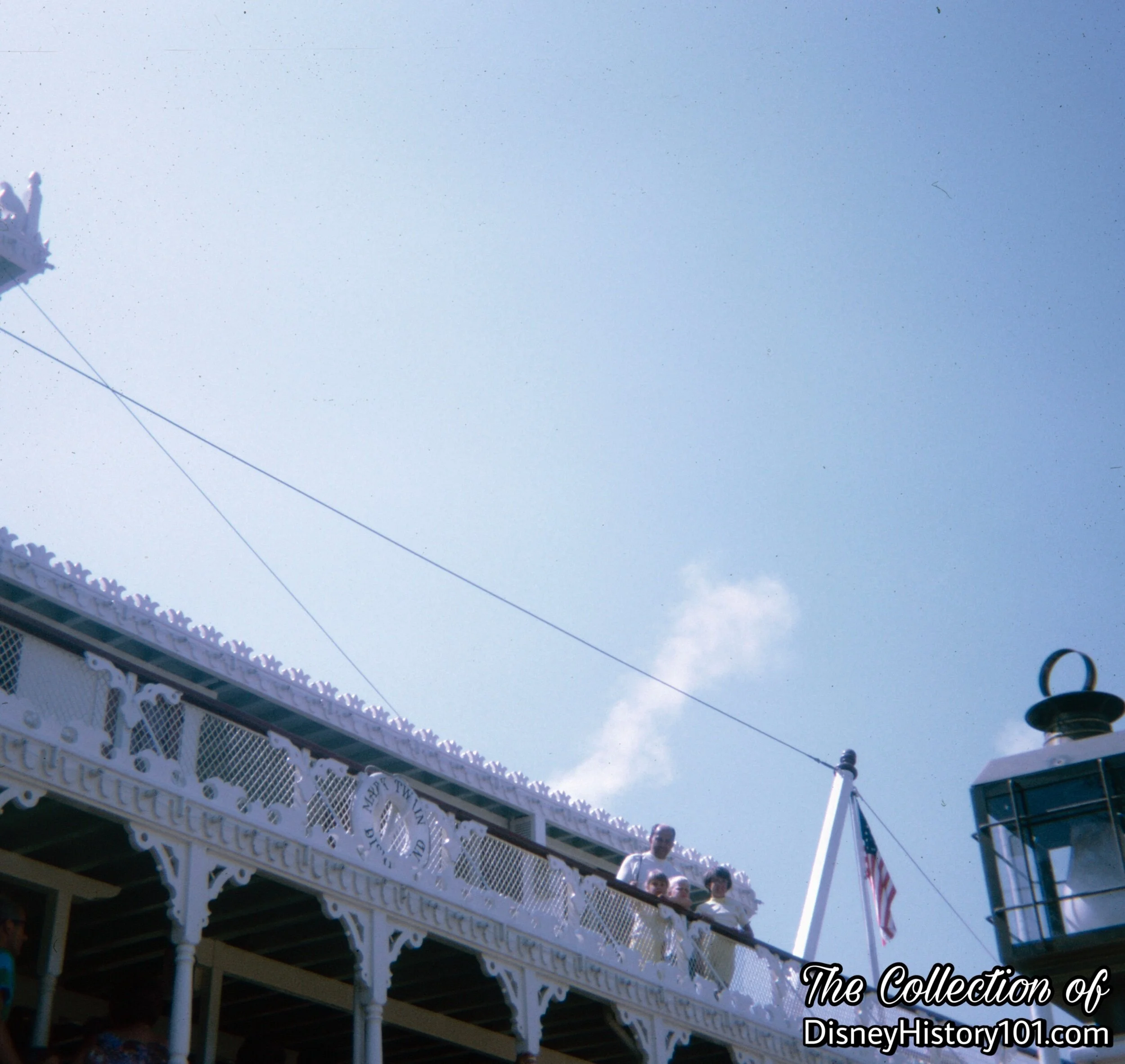
August of 1970.
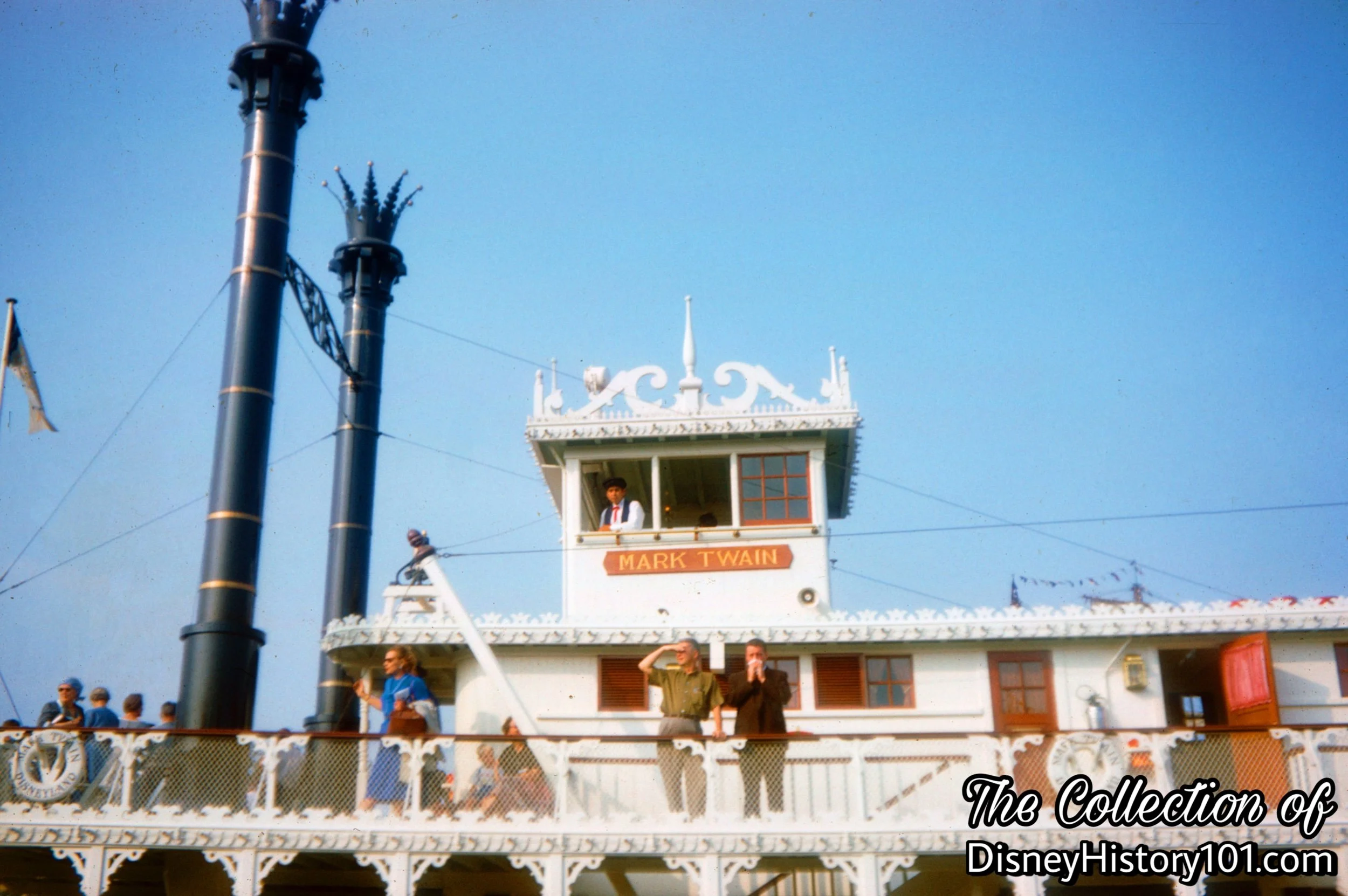
Mark Twain Texas Deck and Wheelhouse (above), October of 1959.
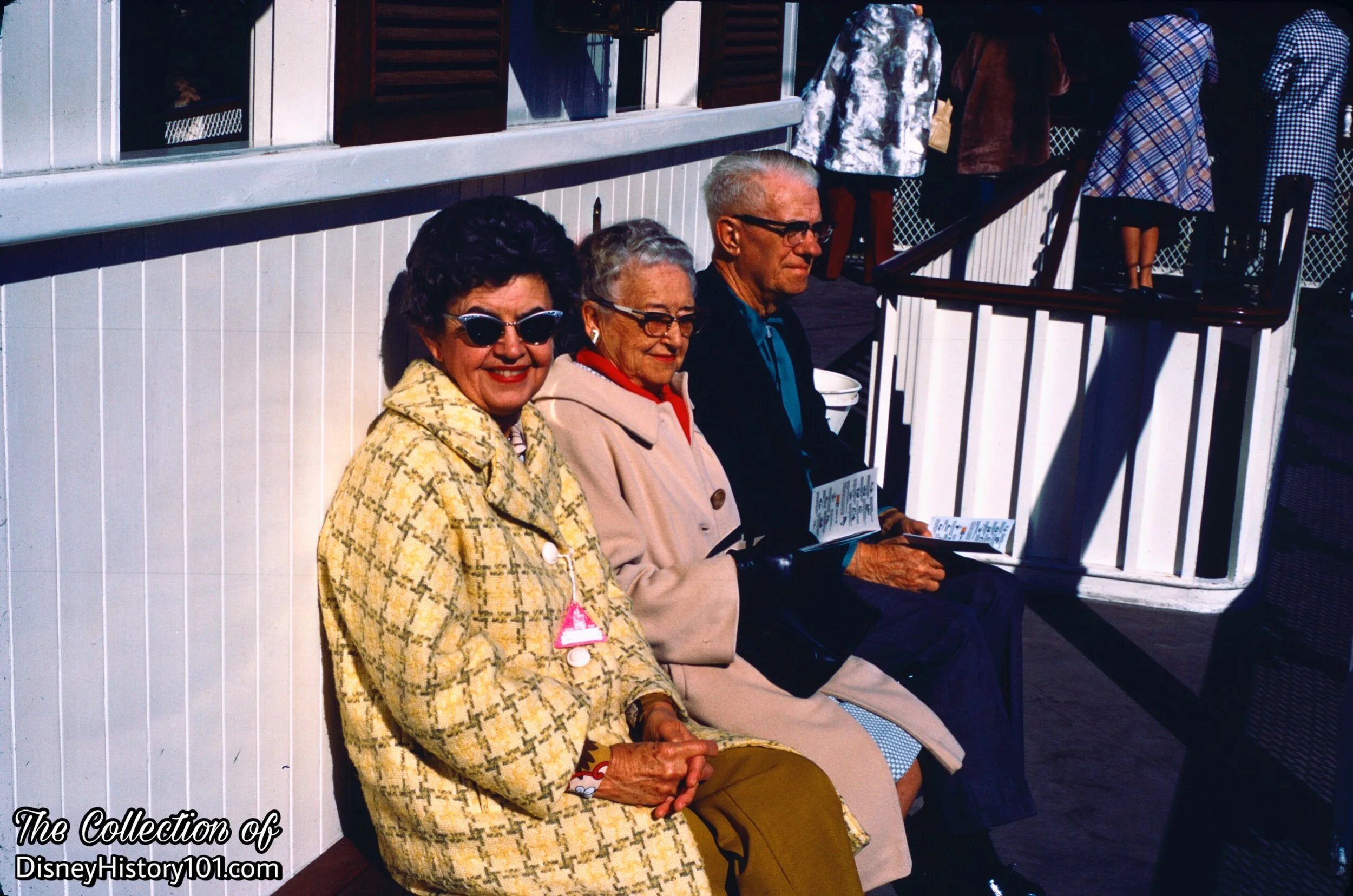
Mark Twain Texas Deck, near the Captain's Quarters, (October 30, 1971)
Disneyland Guests Hilda and Lucille & Jim Roberts ride as passengers aboard the Mark Twain during their Tour of Disneyland! The Texas Deck was so named for the grand vantage of the northern Texas river bank granted to passengers of boats navigating the Rio Grande River!
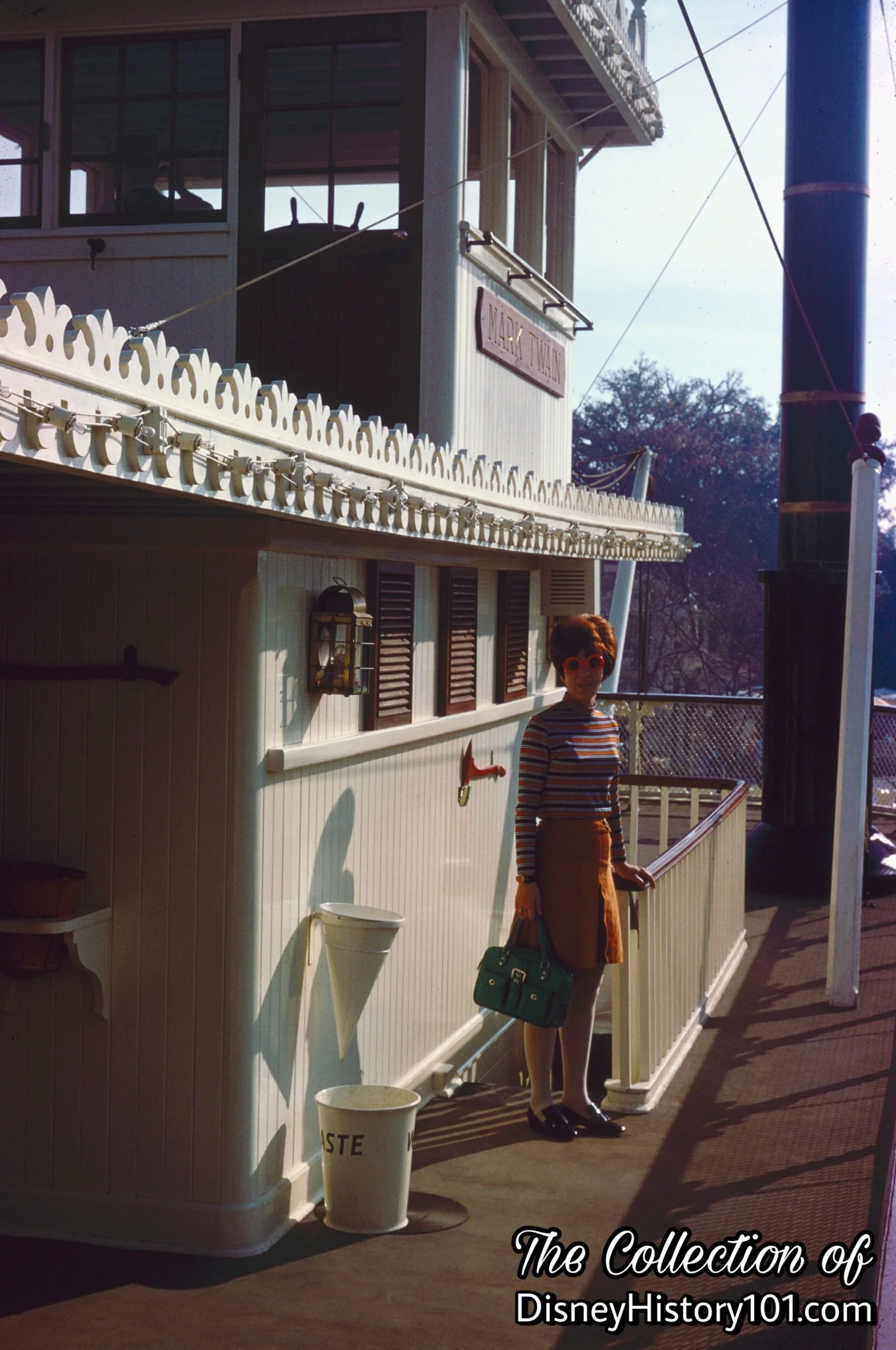
Mark Twain Texas Deck near the Captain's Quarters (Cabin) and Wheelhouse (above), (February, 1969)
The Texas Deck offers one of the highest vantages to be enjoyed by most guests (aside from the Wheelhouse). The Texas Deck also features the lower level of the Wheelhouse with a recreation of the Captain’s Quarters.
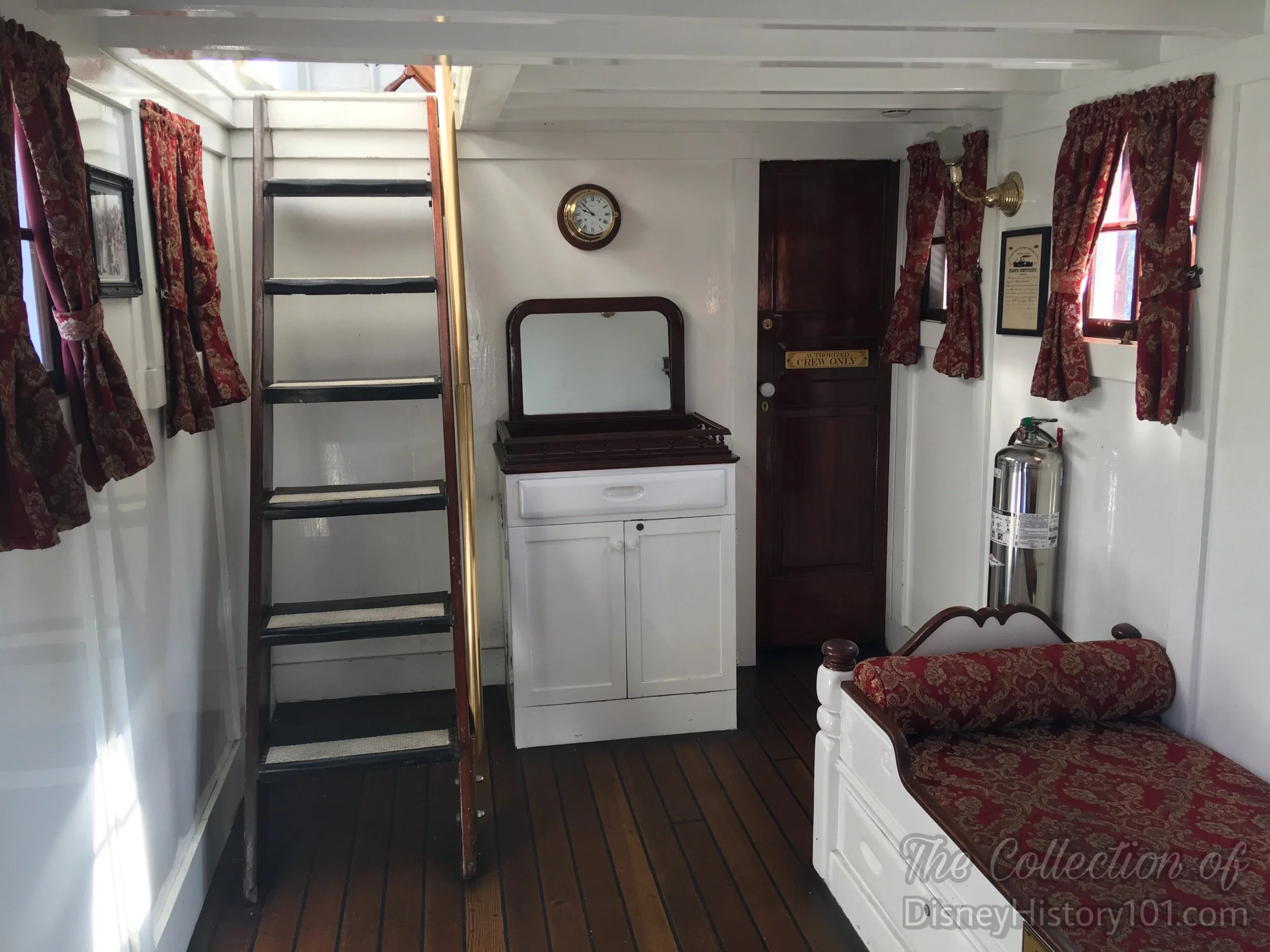
Captain’s Quarters (Cabin) on the Texas Deck.
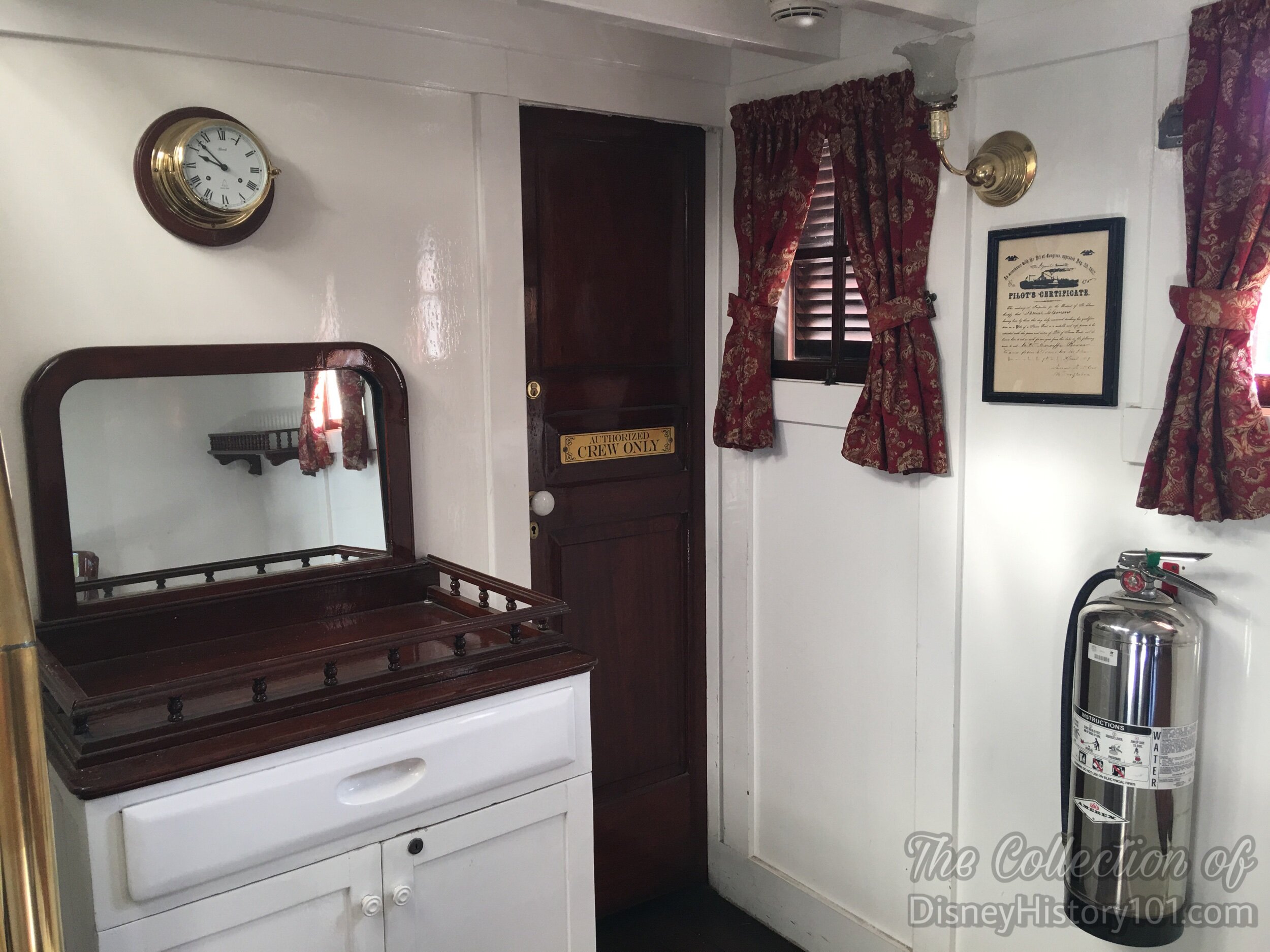
Captain’s Quarters (Cabin) on the Texas Deck.
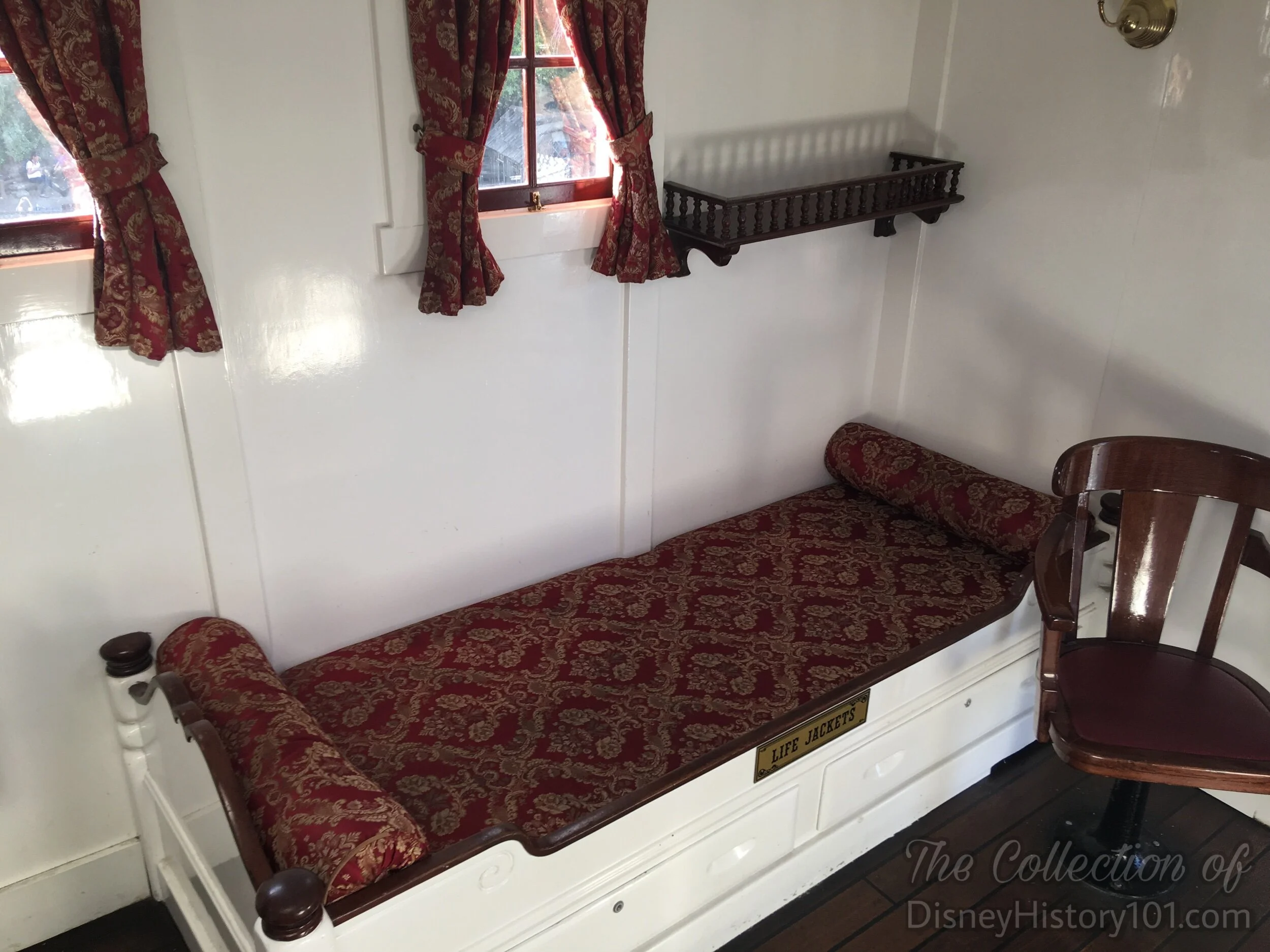
Captain’s Quarters (Cabin) on the Texas Deck.
The former Walt Disney Imagineering Principal Creative Executive Marty Sklar would probably agree that the small details like these make the story appealing.
“55er” electrician George Short recalled meeting Walt : “I would run into him quite frequently on the Mark Twain. He would like to spend some time in the cabin below the pilot house.”
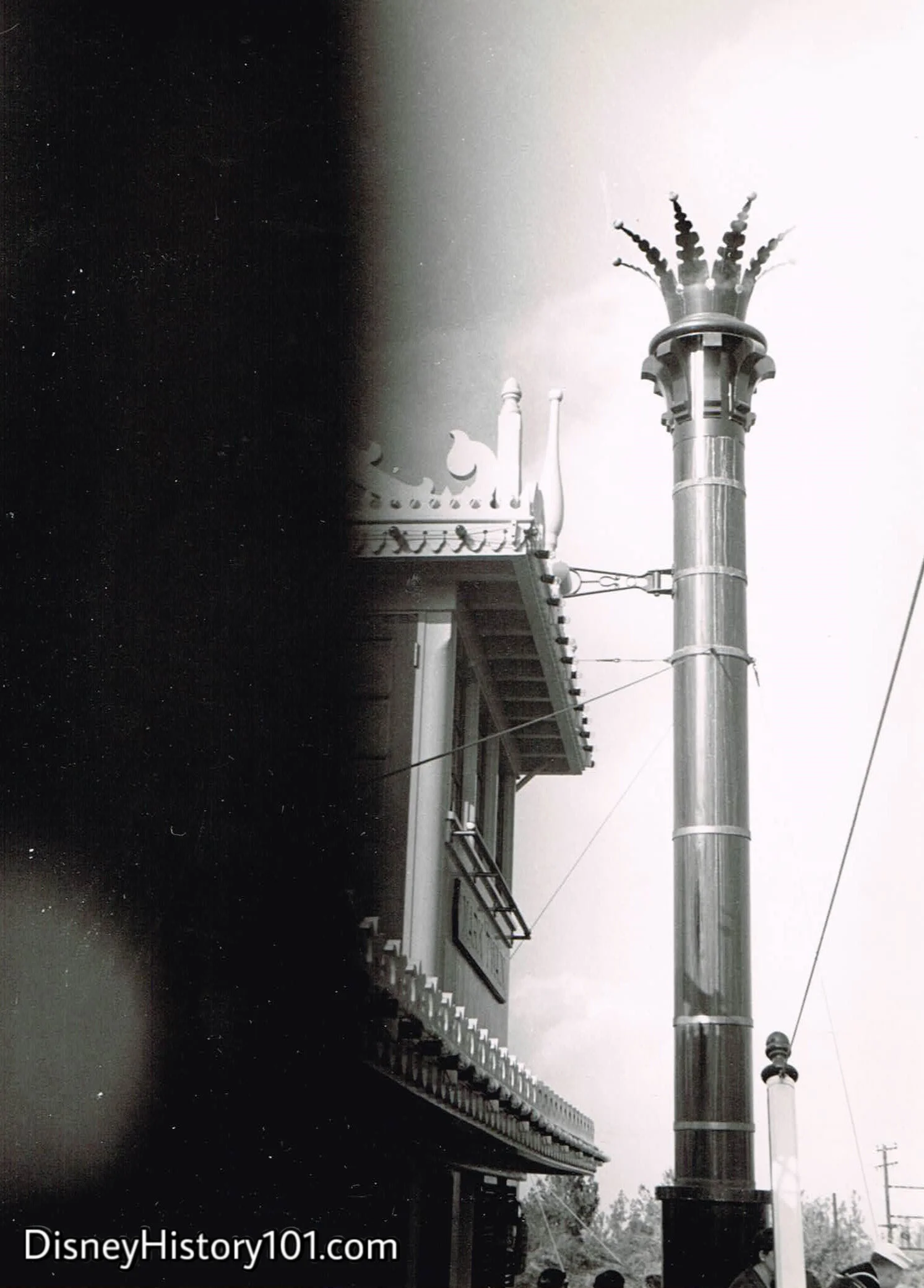
Mark Twain Wheelhouse from the Texas Deck
From the Texas Deck, we can see the Wheelhouse where the Captain controls and steers the Mark Twain. We use the term “steer” loosely, as the Mark Twain is guided by rails running 2,450 feet in length around the Rivers of America.
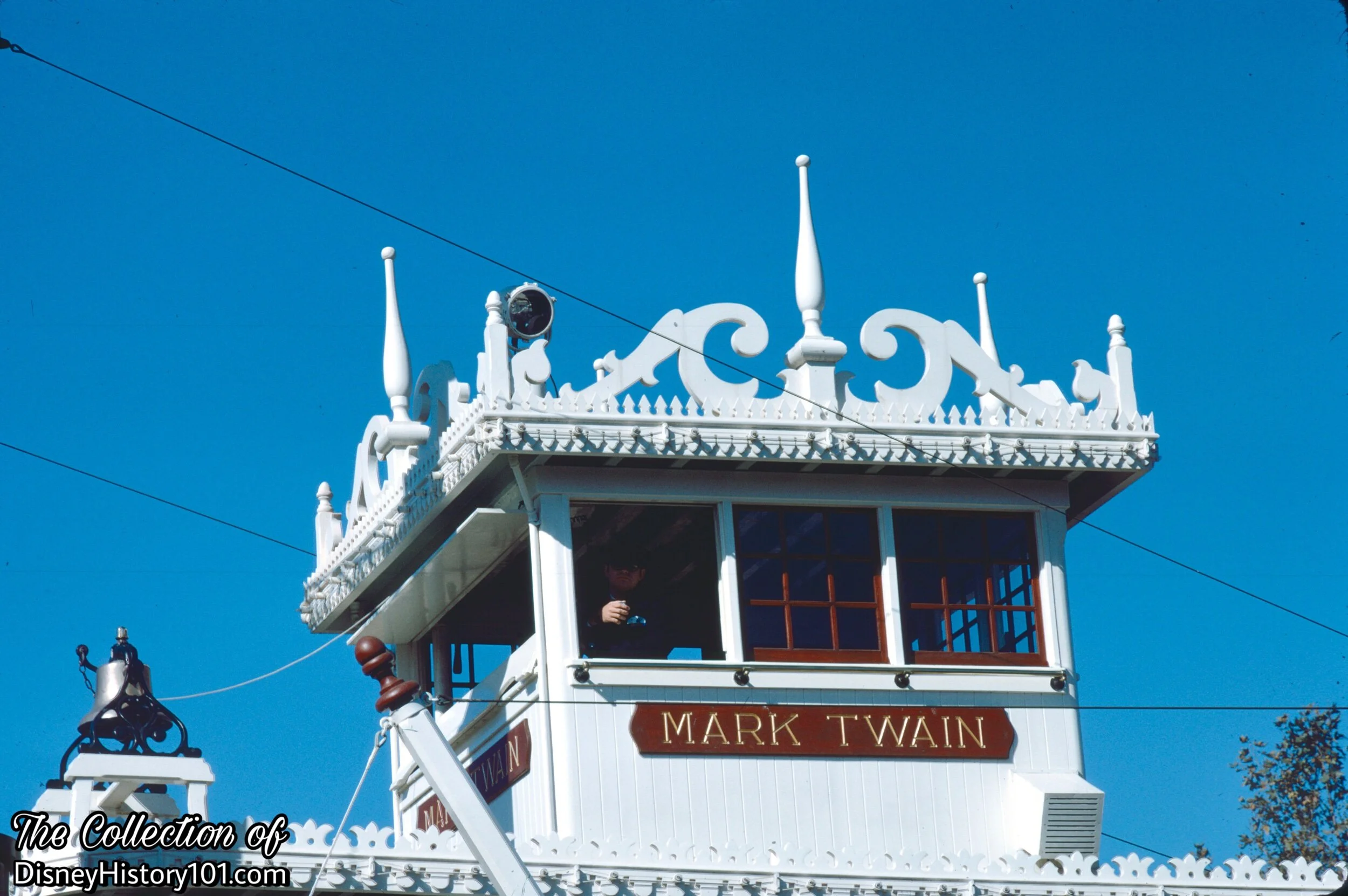
Mark Twain Pilot House (or, "Wheelhouse"), (October 30, 1971)
The Wheelhouse Host/Hostess has two primary responsibilities - Safety and show. Safety is always of primary importance, nevertheless show is also very important in creating quest happiness and enjoyment. Many responsibilities are observed by the wheelhouse Host/Hostess. They are the “eyes” of the Mark Twain. Because of the numerous other river craft and potential hazards, they are to be alertat all times and ready to respond to any situation with the appropriate action, using a two-way radio, emergency bell signals, intercom, life preservers, etc. From a show standpoint, their role is that of a riverboat Captain in frontier America. They play any spiels on cue, ring and blow the whistle, and steer the ship.
Each day brings a new adventure and new passengers to the Wheelhouse Host/Hostess. Cecil Gibson (the first Mark Twain Engineer) recalled: “I remember when an elderly, grey haired man with a yachtsman's cap came up to me and said that he never saw a man handle a boat on landing like that young whippersnapper up in the Pilot House. The man had been a steamboat captain back on the Mississippi. Now he stood shaking his head at such good landings.”
“55er” Roy Brem recalled “the day the Beauty Pageant girls came aboard the Mark Twain!… They were all over the boat, getting pictures taken and up in the wheelhouse steering the boat with me.”
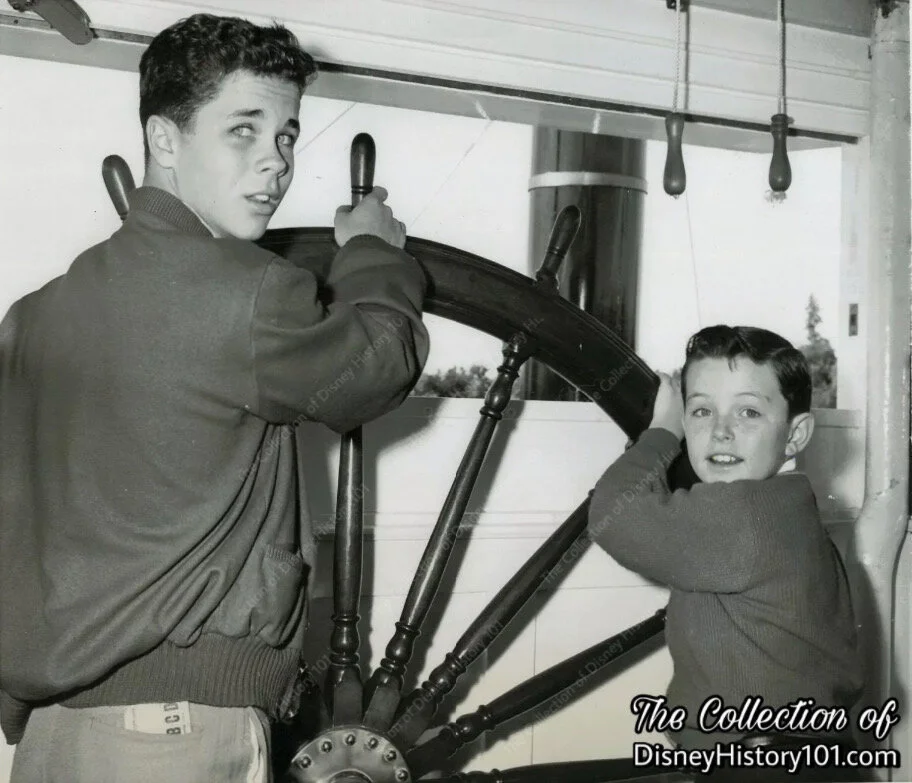
Tony Dow and Jerry Mathers of "Leave it to Beaver" take the wheel in the Mark Twain Pilot House (or, "Wheelhouse")
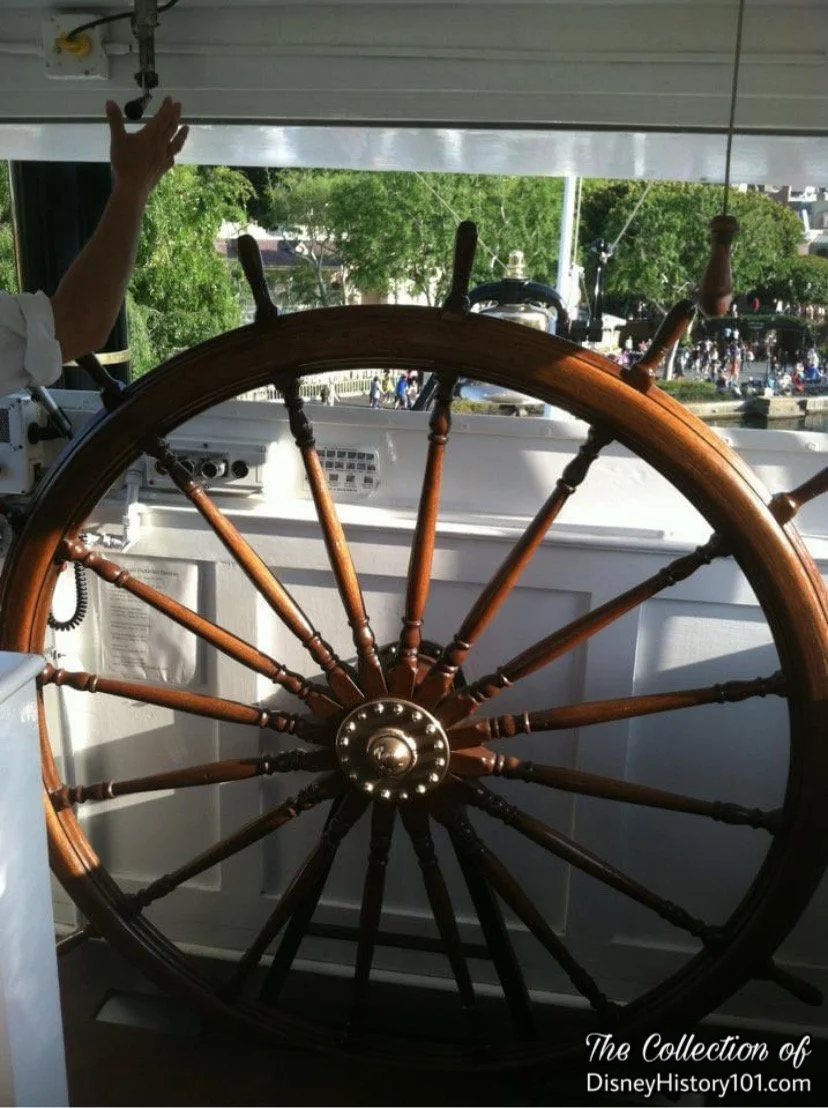
The Mark Twain Pilot House (Wheelhouse) Wheel; The Present.
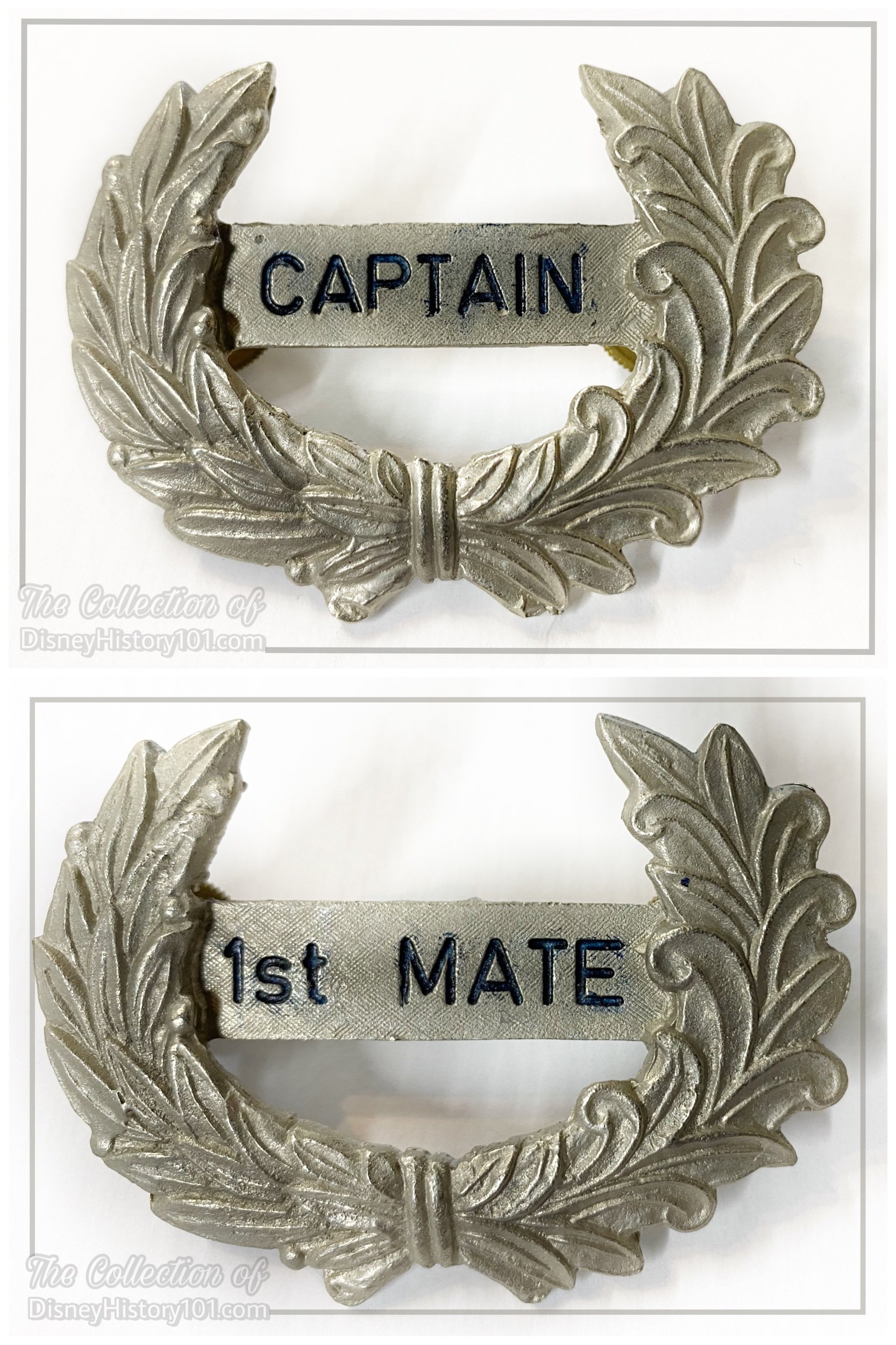
Badges worn by the Mark Twain “Area Captain” and 1st Mate.
The Mark Twain Riverboat is unique (along with the Disneyland® Railroad) among Disneyland attractions in that vehicle operation is performed by facilities Cast Members, not operations Cast Members.
So many Disneylanders worked the Mark Twain. For instance, Hank Block worked on the Mark Twain longer than any Disneyland employee. By 1966, Dick Wells was a Mark Twain Captain and went on to become an Assistant Supervisor of Frontierland.
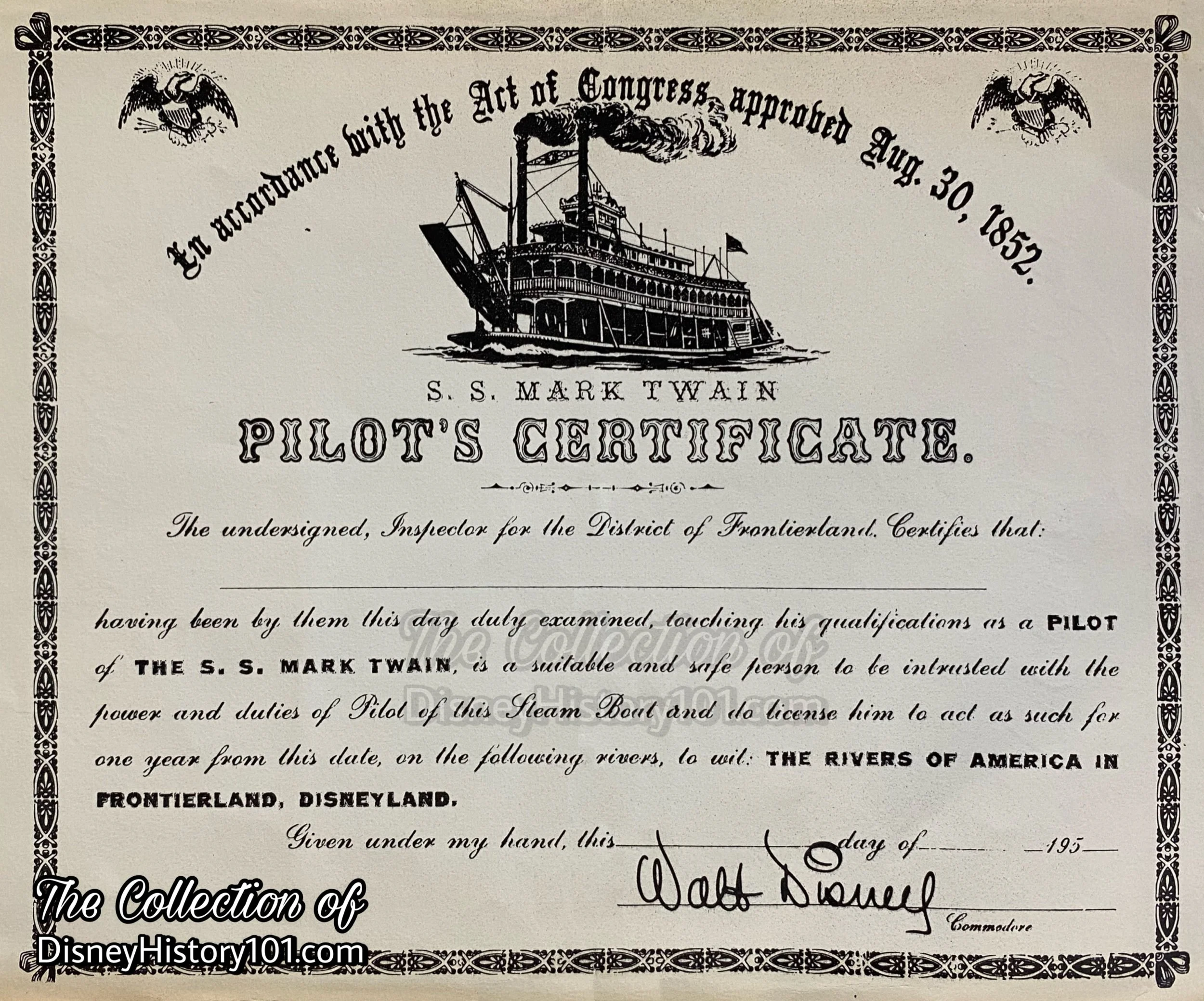
A c.1950s "S.S. Mark Twain Pilot's Certificate."
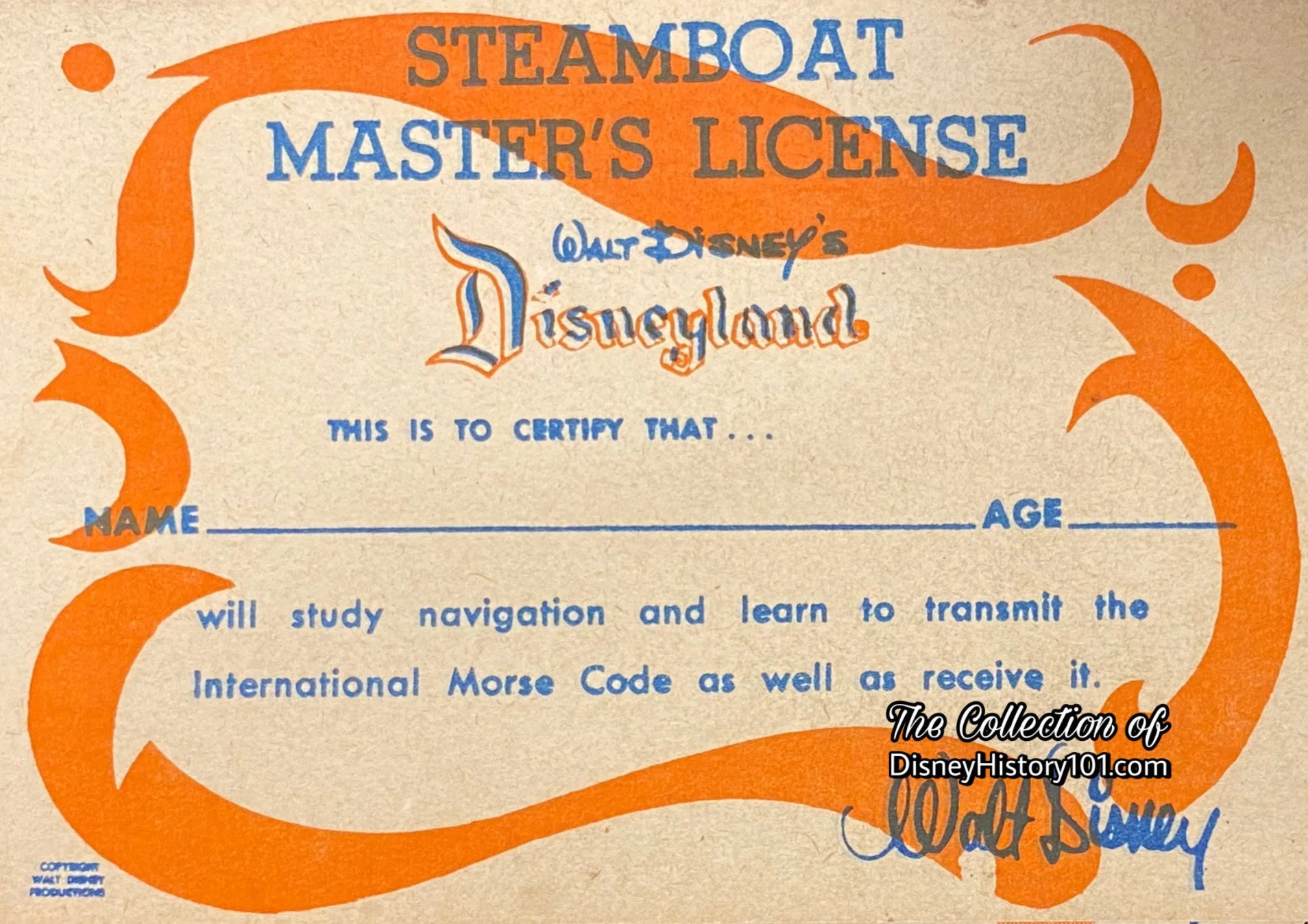
You may have acquired your Moon Pilot License, or Autopia Driver’s License. Since the 1950s, those permitted to step inside the Wheelhouse were often made Honorary Pilots.
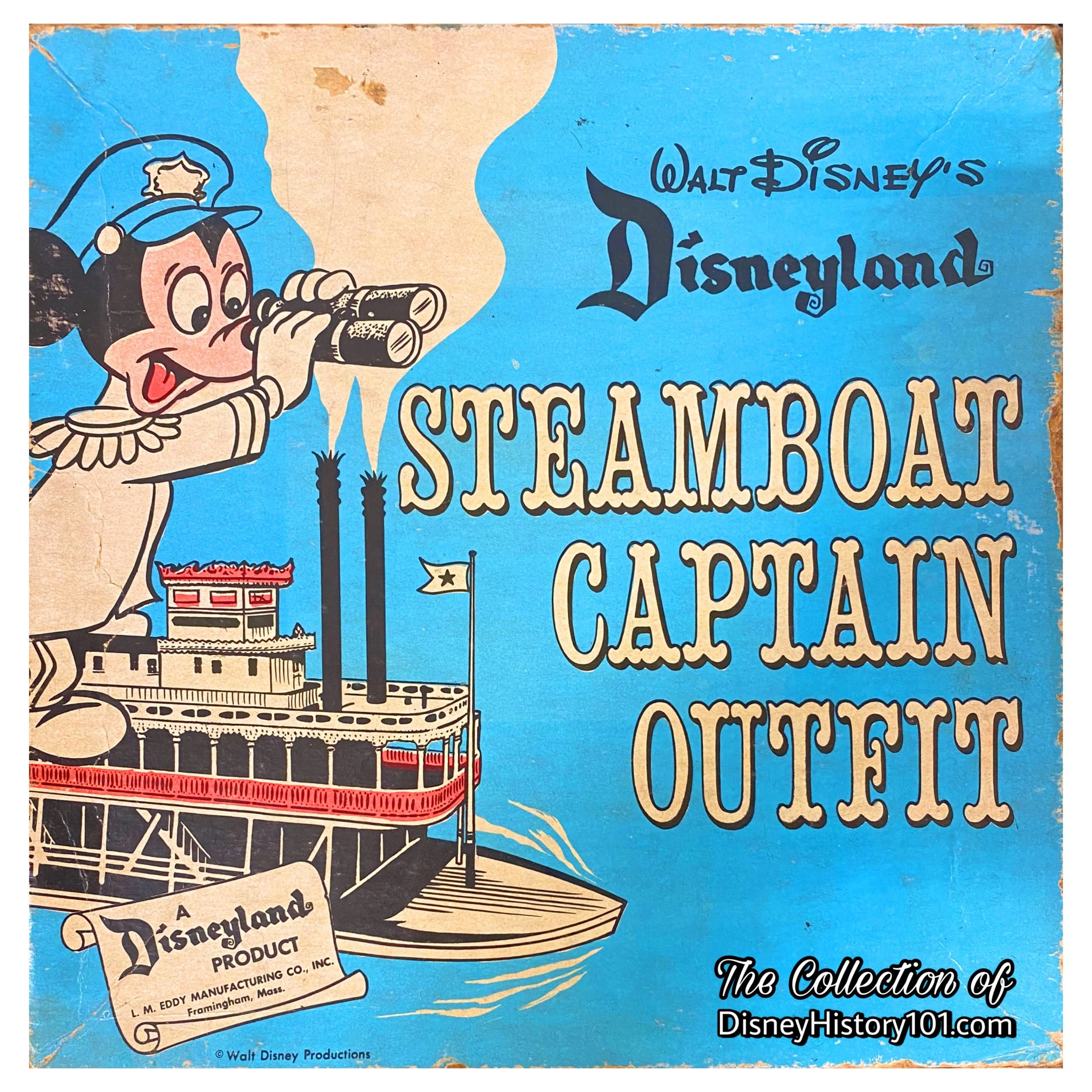
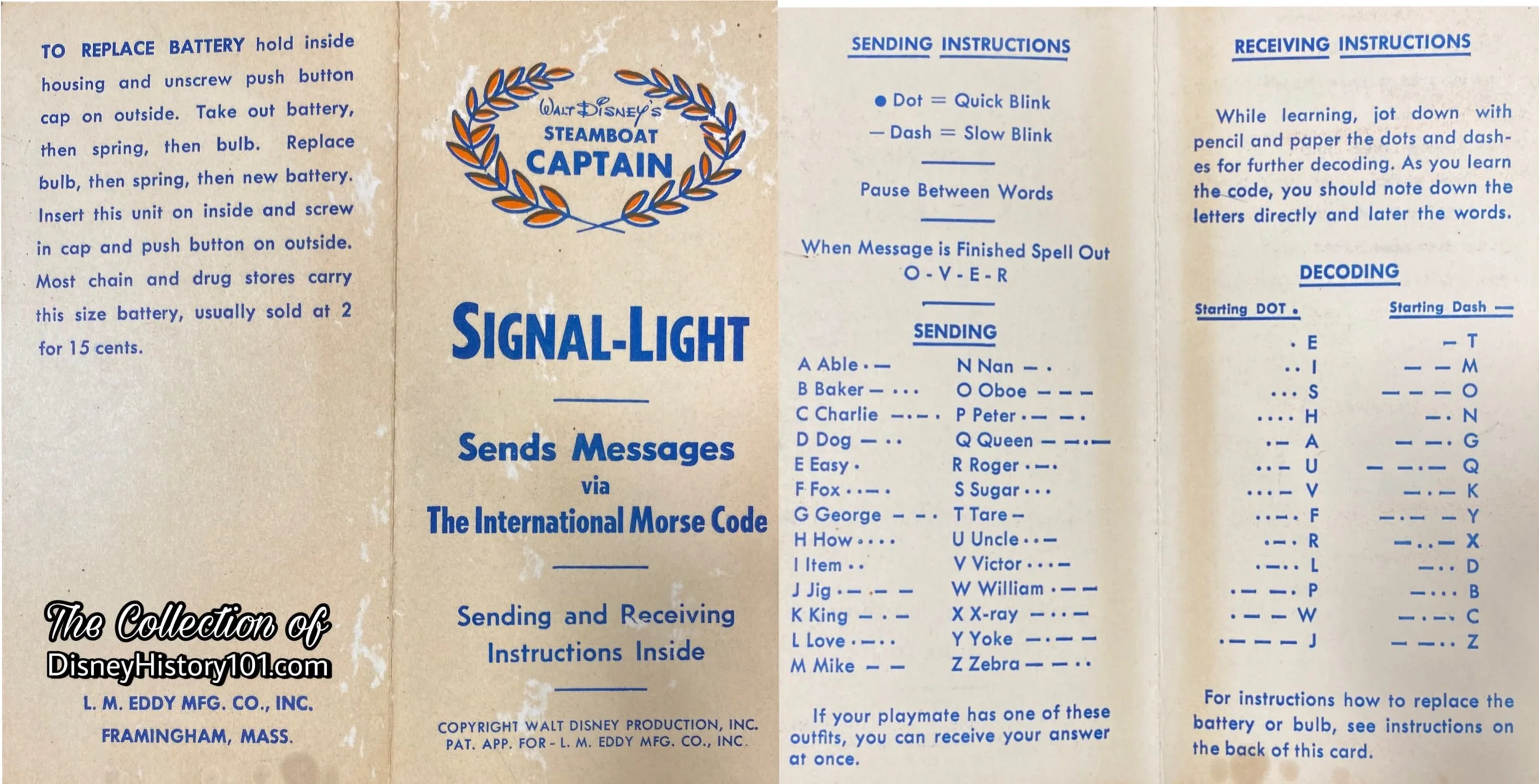
Walt Disney's Steamboat Captain Outfit Roll-playing Toy for Children.
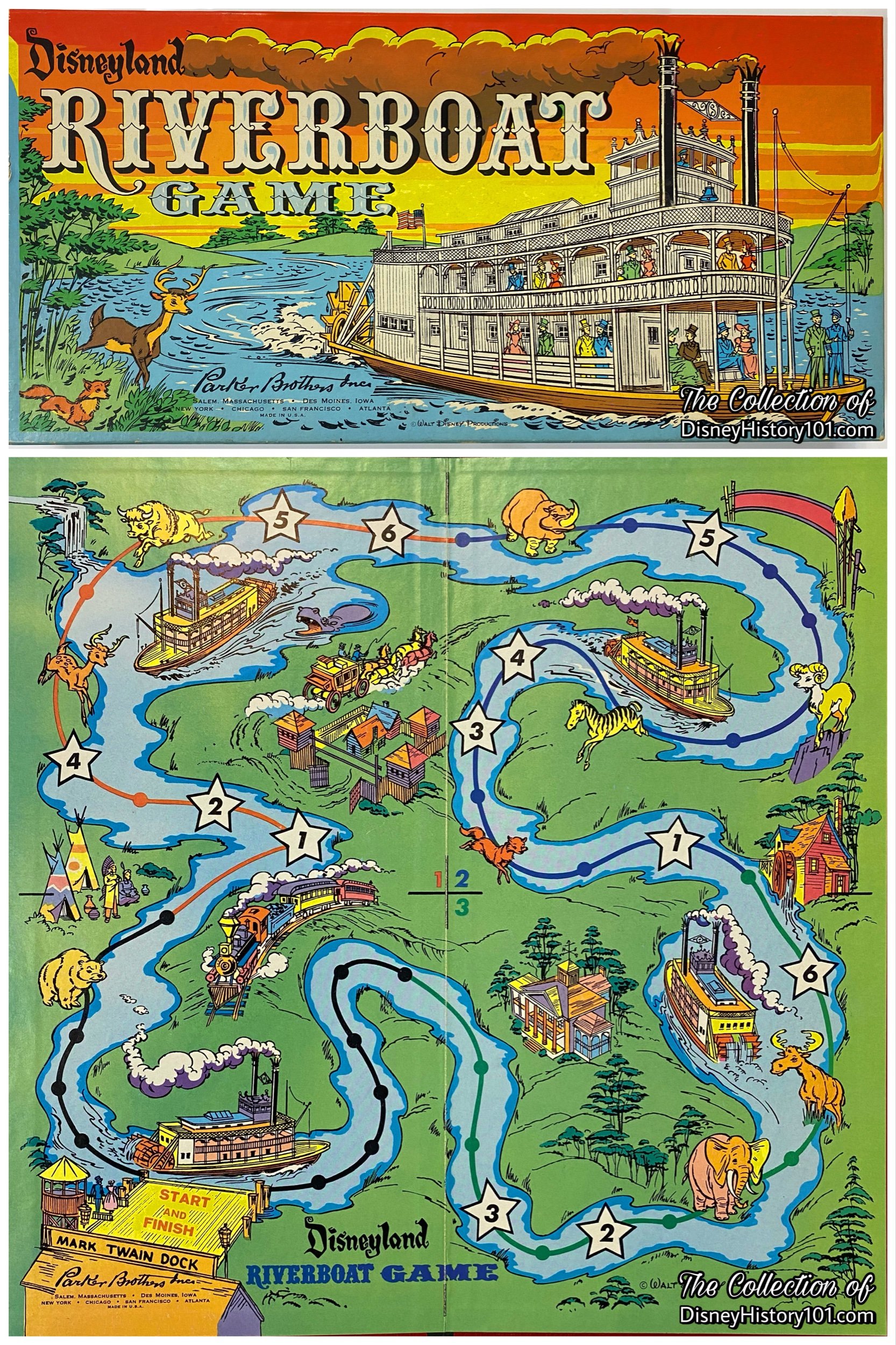
The Disneyland Riverboat Game by Parker Brothers.
A great deal of licensed merchandise was inspired by the Mark Twain like the Riverboat Board Game and the Strombecker Paddle Wheel River Boat model kit. The latter was initially modeled by Herb Lozier, with designs drawn by Don Miller (both of Walt Disney Productions’ Character Merchandise Division, suggested and prepared from 1954-1955.
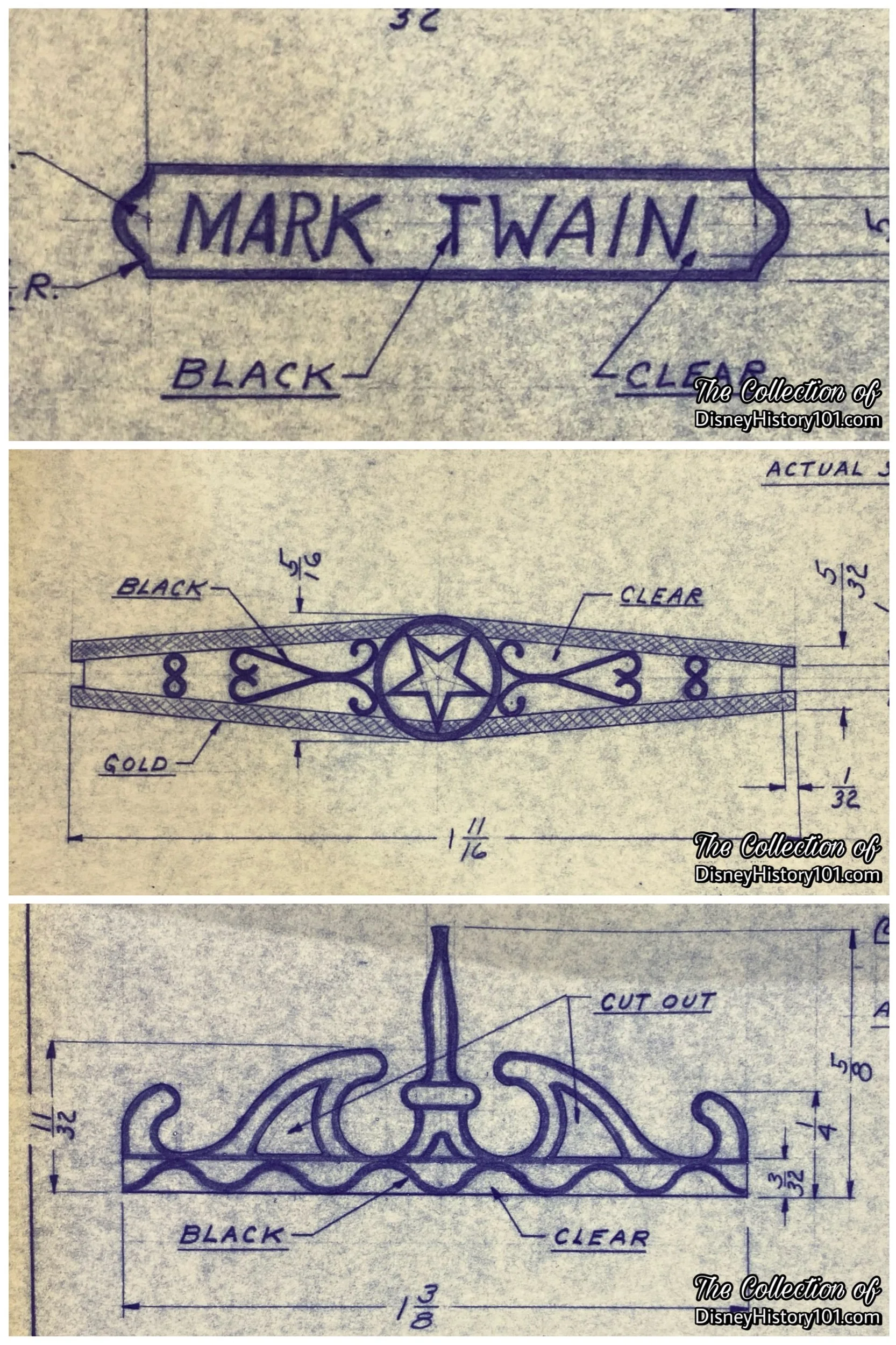
Mark Twain Model designed by Don Williams for Strombeck-Becker; July of 1956.
Designs for an acetate and styrene Mark Twain model were prepared by Strombeck-Becker. Details were created of the filigree, bell, and wheel of the pilot house, paddle wheel, smoke stack, flag pole and more.
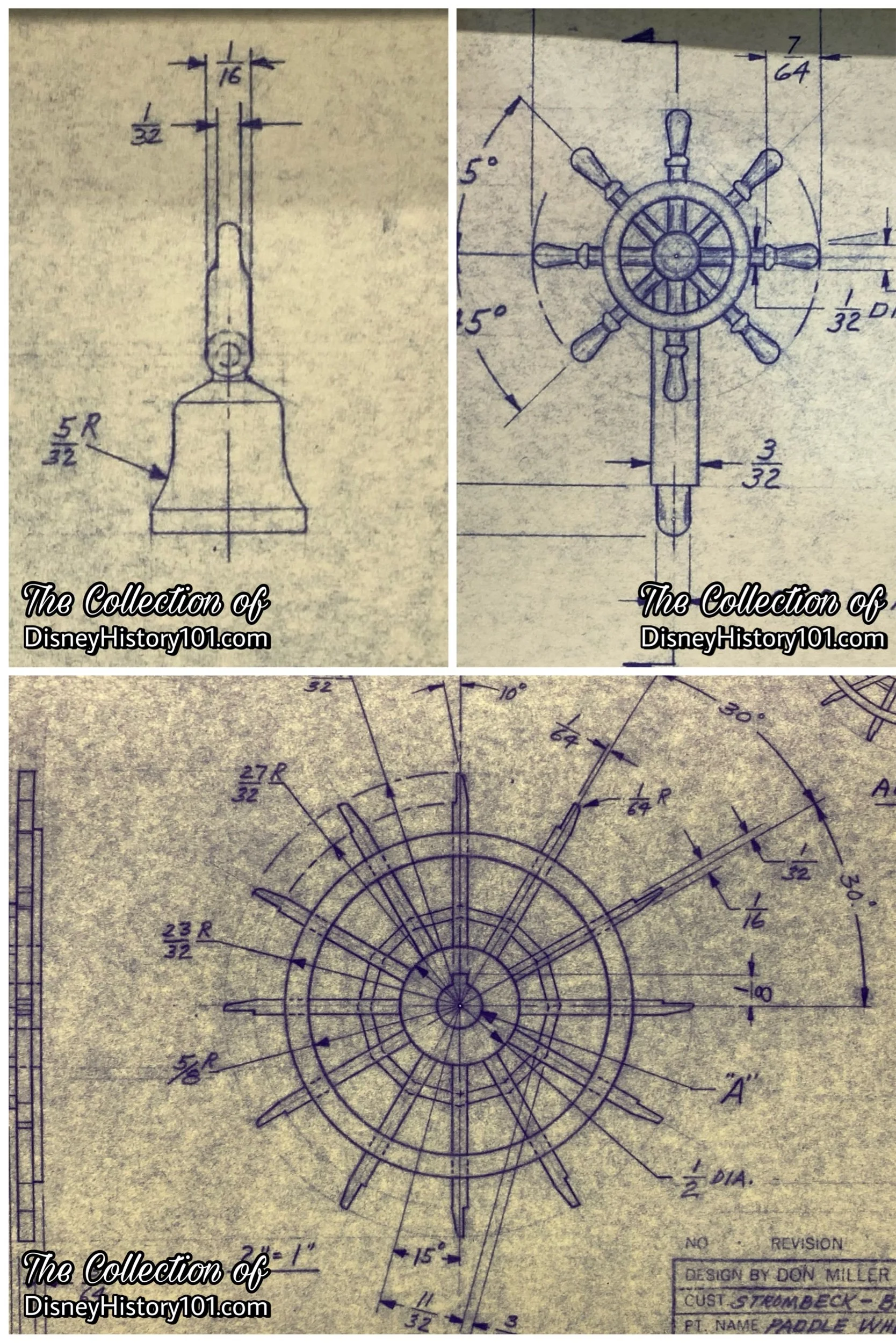
Mark Twain Model designed by Don Williams for Strombeck-Becker; July of 1956.
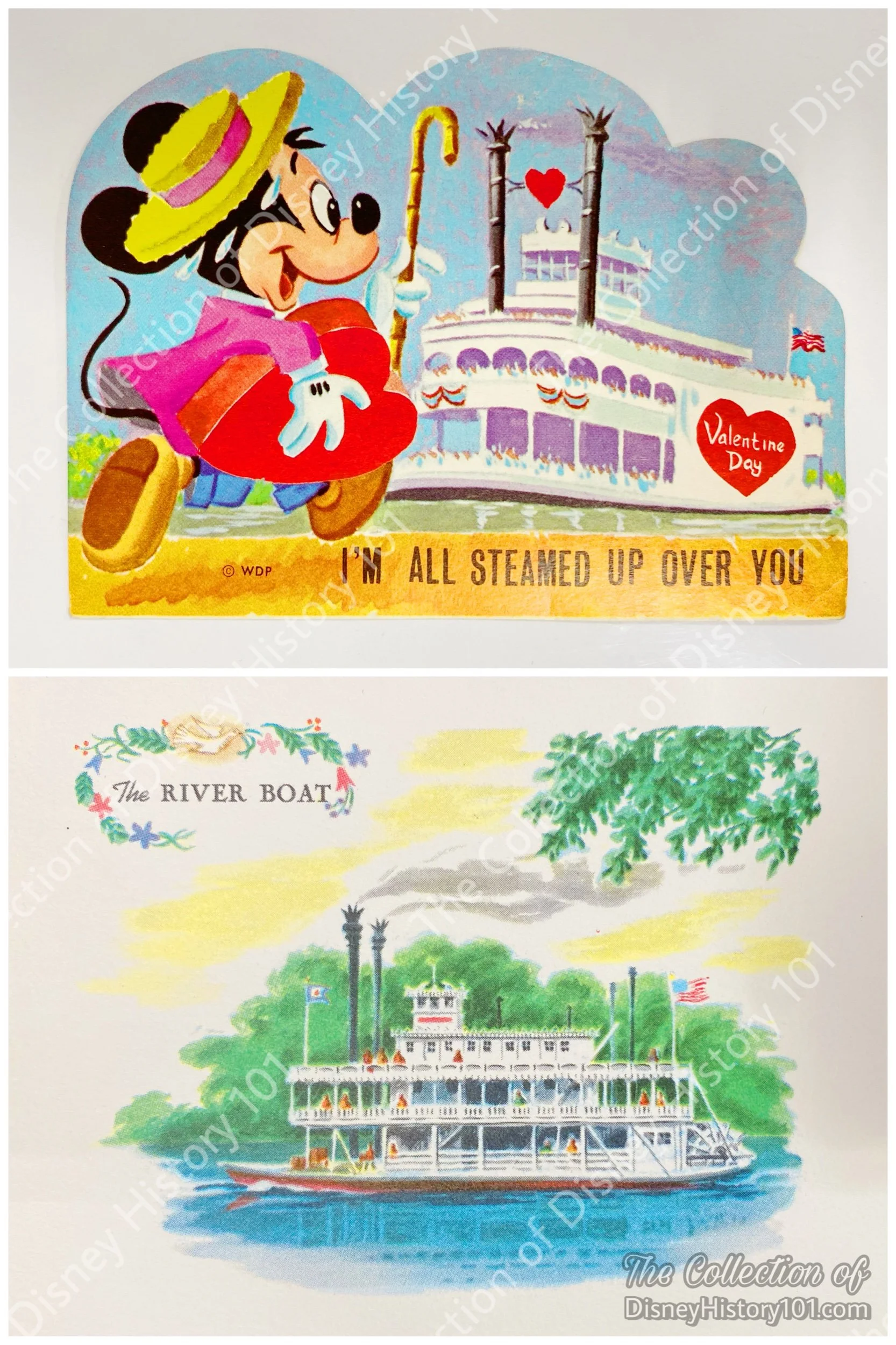
A Disneyland Greeting Card and Valentines Day Card.
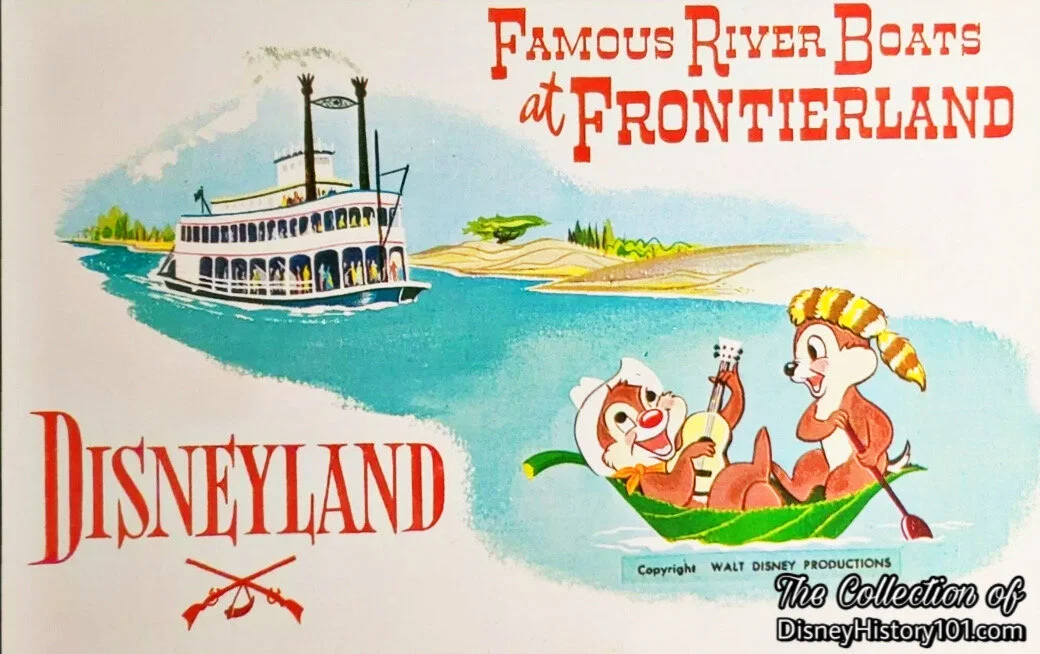
Disneyland "Famous River Boats at Frontierland" Postcard from the Disneyland Art Corner.
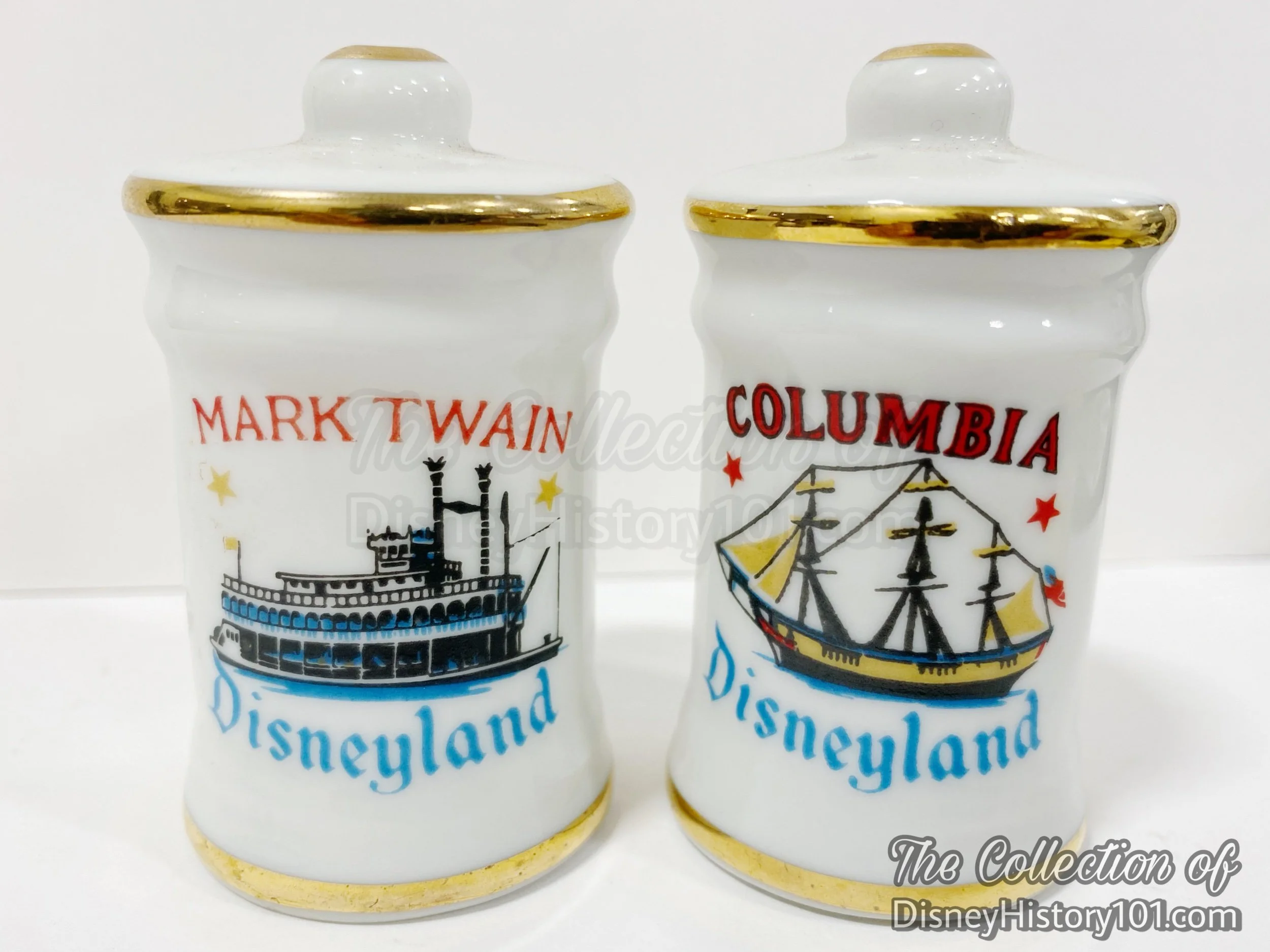
Mark Twain and Columbia Shaker Set.
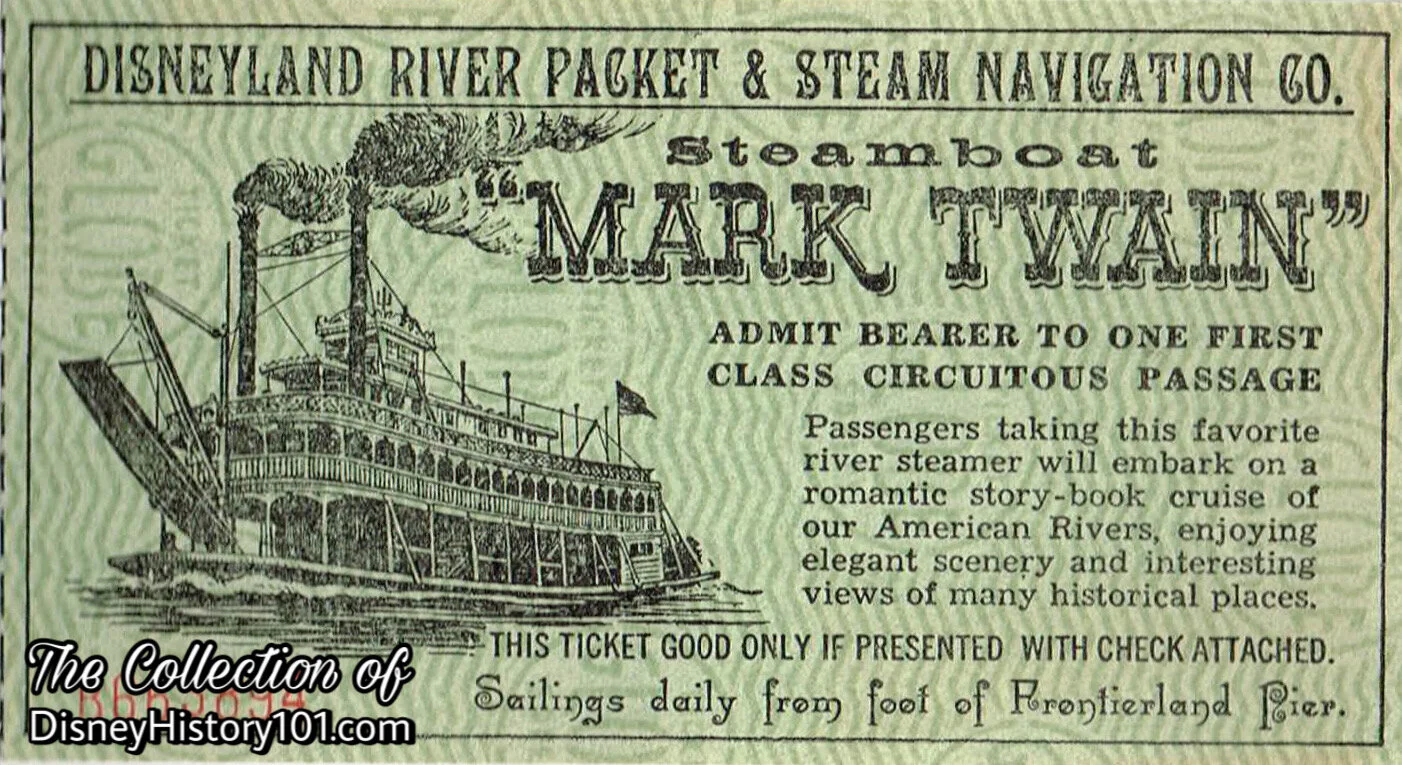
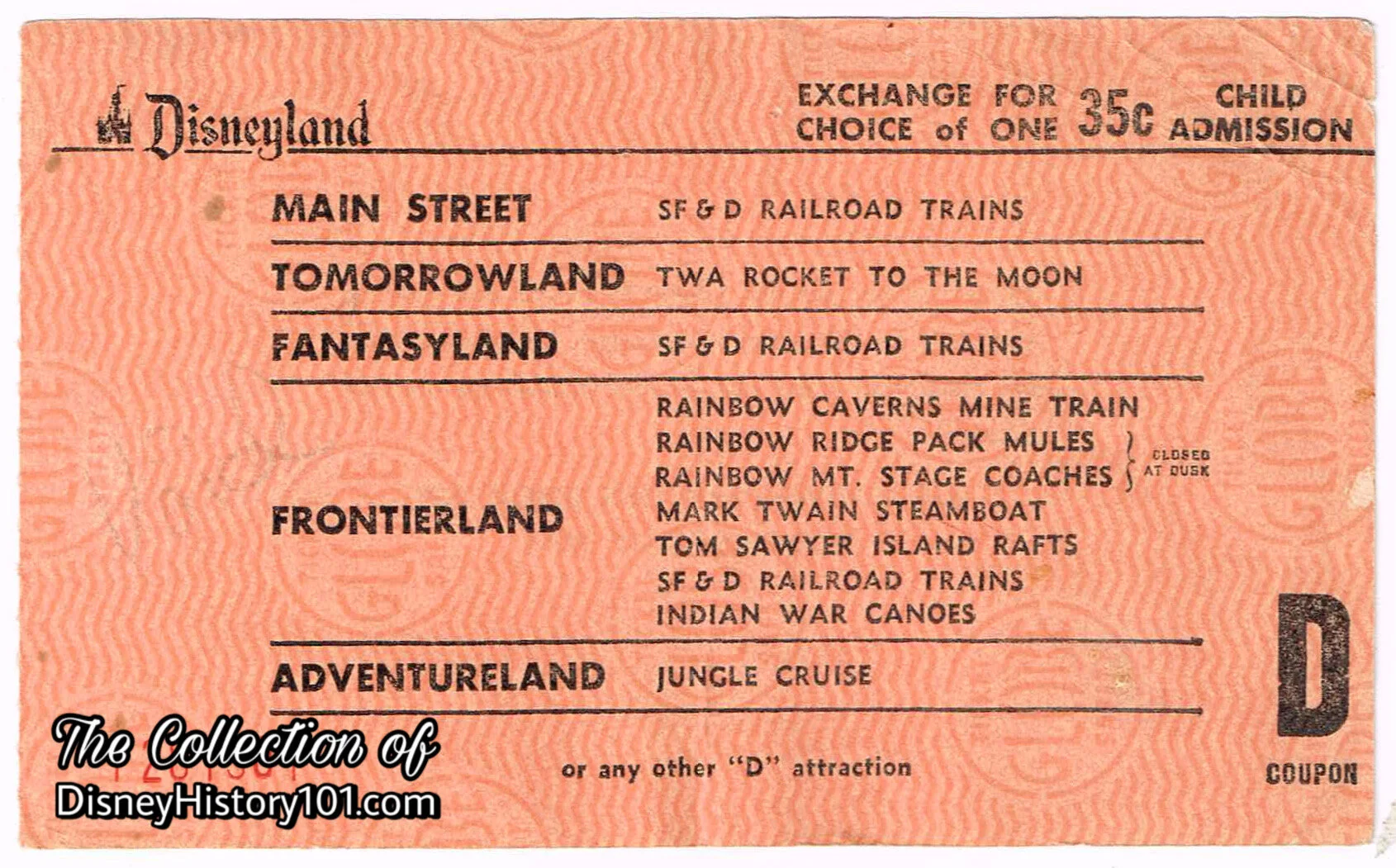
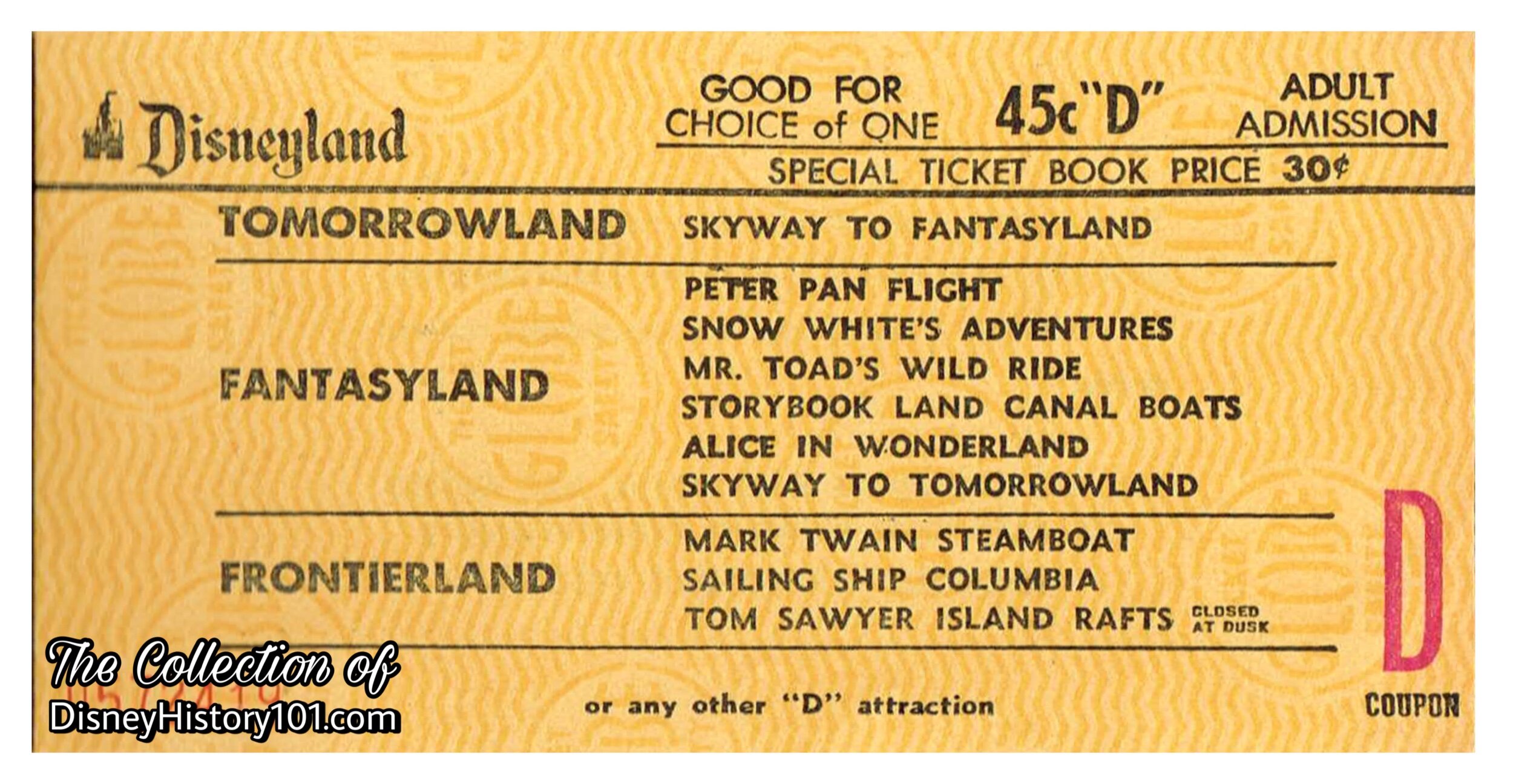
Mark Twain fare changed over the decades. Admission during 1958 was one “jumbo” “D” coupon (the price of 35 cents, for one child), the same as the Jungle Cruise, Indian War Canoes, or the Tom Sawyer Island Rafts. On one day in the month of August, 1958, Disneyland's visitors took a total of 5,600 boat trips on the Park's nine (9) water rides (including the Mark Twain Steam Boat). By the very same year of 1958, the Mark Twain attraction (still popular as ever) was appraised, the ride structure valued between $47,500 and 50,000 and the equipment, scenery, props, and associated chattel valued between $280,200 and $260,000.
By 1959, Joe Fowler was Vice President of Disneyland Operations Committee and Doc Lemmon of Disneyland Operations was overseeing Operators of Rides & Amusements (like the Mark Twain Steam Boat), Livestock, Parking Lot, and Ticket Sellers.
By June 22, 1965, the Mark Twain carried 18,040 guests, beating the old record of 15,969.
At Disneyland, Atmosphere Entertainment compliments the theme of the area and was often staged to entertain Guests on an immediate and personal level. Since Walt and Lillian’s “Tempus Fugit Celebration,” the Mark Twain has been the scene of such live entertainment!
During the first year of operation through the late 1960s, the Disneyland Band often marched through Disneyland (from 11:20 a.m. to 12:15 p.m.), ending with a concert aboard the Mark Twain Riverboat. A selection of Dixieland folk melodies performed by the Disneyland Band often could be heard emanating from the Main Deck of the Mark Twain as it circumnavigated the River. This common sight was reminiscent of “Walt Disney’s Disneyland Band Concert” (the Disneyland Band’s 1956 “on location” record album cover. We can almost hear the Riverboat Medley (“Waitin’ For The Robert E. Lee”, “Cruisin’ Down the River”, and “Here Comes The Showboat”) now!
“The Mark Twain Stage - For Television”
Since the beginning, Disneyland has synergistically worked with Walt Disney Studios to keep the Disney characters before the public and provide a source of material for television programs. Around Disneyland, the name Mark Twain became so synonymous with live entertainment, that the vessel began to be utilized as a set piece or stage for numerous television shows filmed at Disneyland. The Mark Twain has even been the Stage for numerous productions captured on film for motion picture usage, including television specials, commercials, and even music videos. Twice, the Mark Twain acted as the main stage for the production of “Meet Me At Disneyland” (during the 3rd and 12th episodes) airing on ABC television in August of 1962. The “Rhythm of the River” episode (partially filmed aboard the Mark Twain) starred The Excelsior Banjo Band and The Young Men From New Orleans, while “Dixie On The Delta” (filmed almost entirely on the Mark Twain) starred the Hot Jazz Society Marching Band, the Albert McNeil Choir, Voices of the Hope, The Young Men From New Orleans, and Kid Ory! After this, Louie Armstrong performed aboard the romantic river steamer during the Disneyland After Dark television special in 1963.
The Mark Twain was also staffed and operated for television advertisements. An RCA commercial (filmed April 9th, 1963) featured the Queen of the River. Then, the 26-minute “The New Christy Minstrels” (episode 4) sponsored by Ford, was recorded in front of the Mark Twain on August 3, 1964, and broadcast on NBC, August 13, 1964.
On Thursday, August 18, 1966, some Walt Disney Studio photographers (under the direction of Hamilton Luske) took a few long shots of the Mark Twain (and New Orleans Square from the Mark Twain) for use as background plates. During the 1970s, E.J. Peaker performed and sang aboard the Mark Twain during a segment of “Disneyland Showtime” (a c.1970 Wonderful World of Disney episode).
“Special Performances Aboard the Mark Twain”
During Friday and Saturday nights of the summer of 1962, The Young Men from New Orleans Dixieland group performed from the Mark Twain during Disneyland After Dark. Also during the 1970s, the Banjo Kings provided happy music to accompany your “first class circuitous” journey down the Rivers of America. During the winter of 1976, the Kids of the Kingdom performed a show while riding aboard the Mark Twain. They were followed by more Kids of the Kingdom performing aboard a a Keel Boat, and the Rivers of America Water Pageant (a fireworks display set off from three separate barges around Tom Sawyer Island)!
The Mark Twain was once even the site of the first Disneyland wedding reception aboard an attraction, on Sunday, September 24th, when a “Just Married” banner was unfurled from the stern of the vessel in honor of the union between Patricia Gazda and Kevin Sullivan.
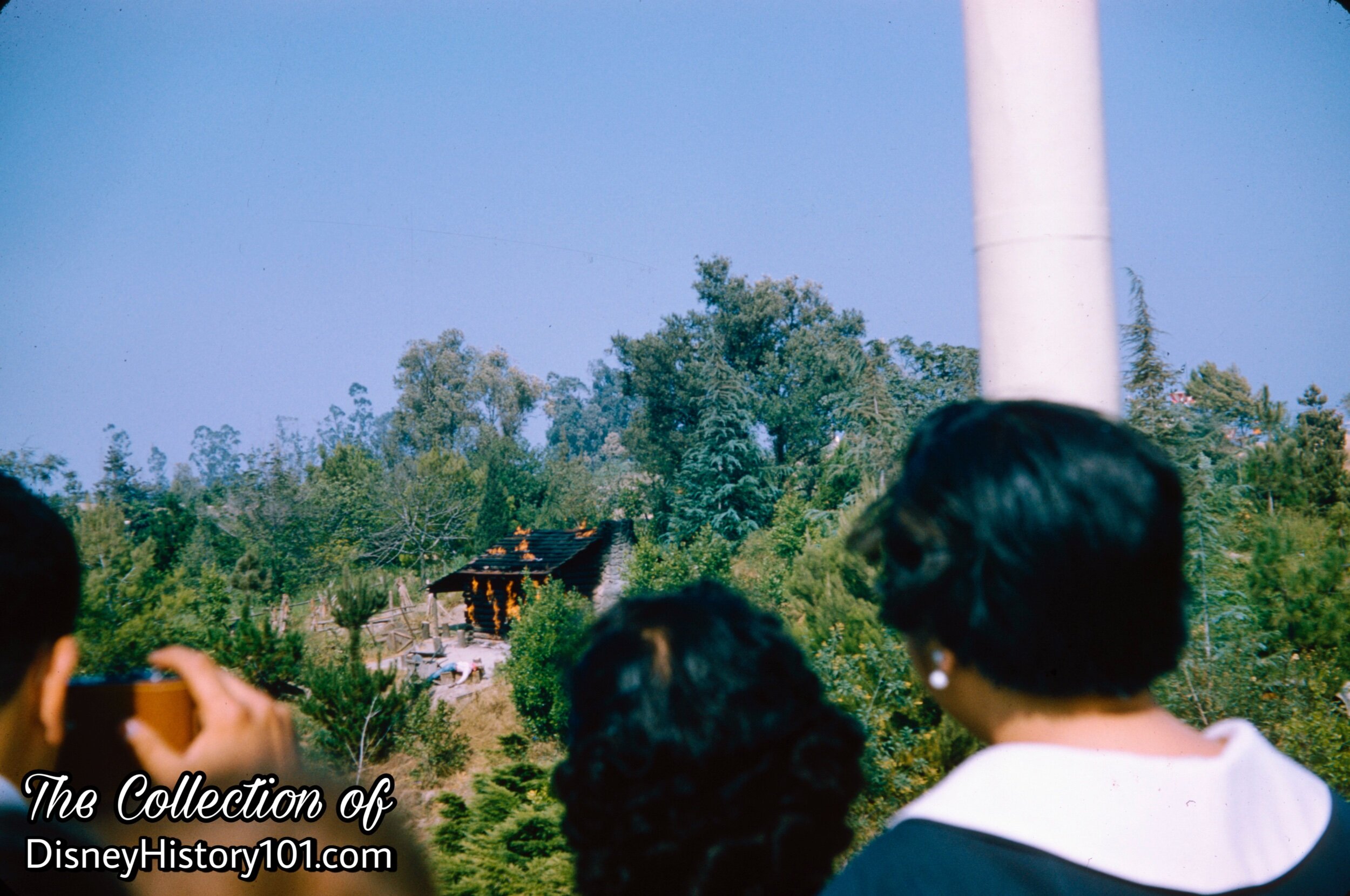
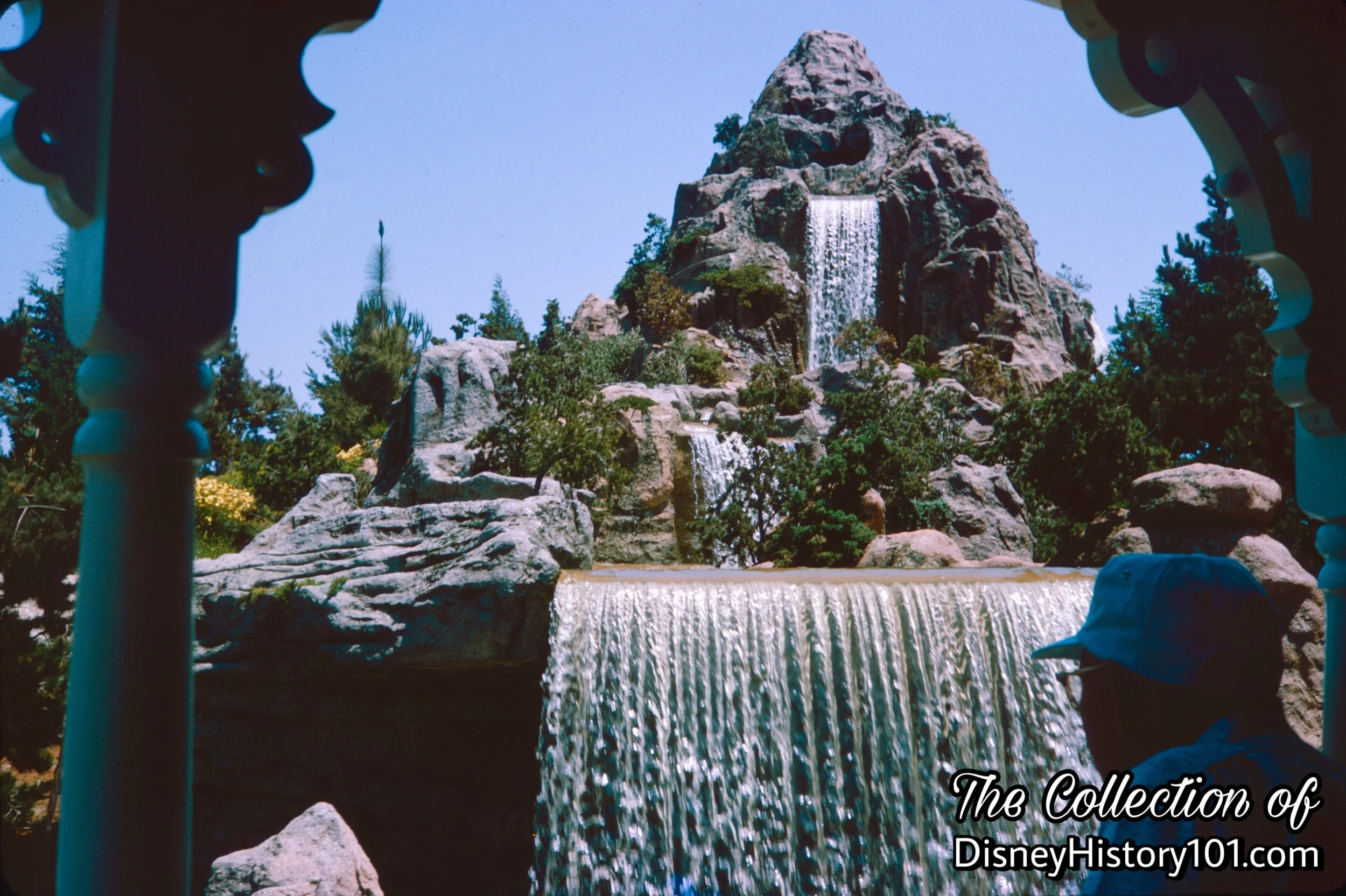
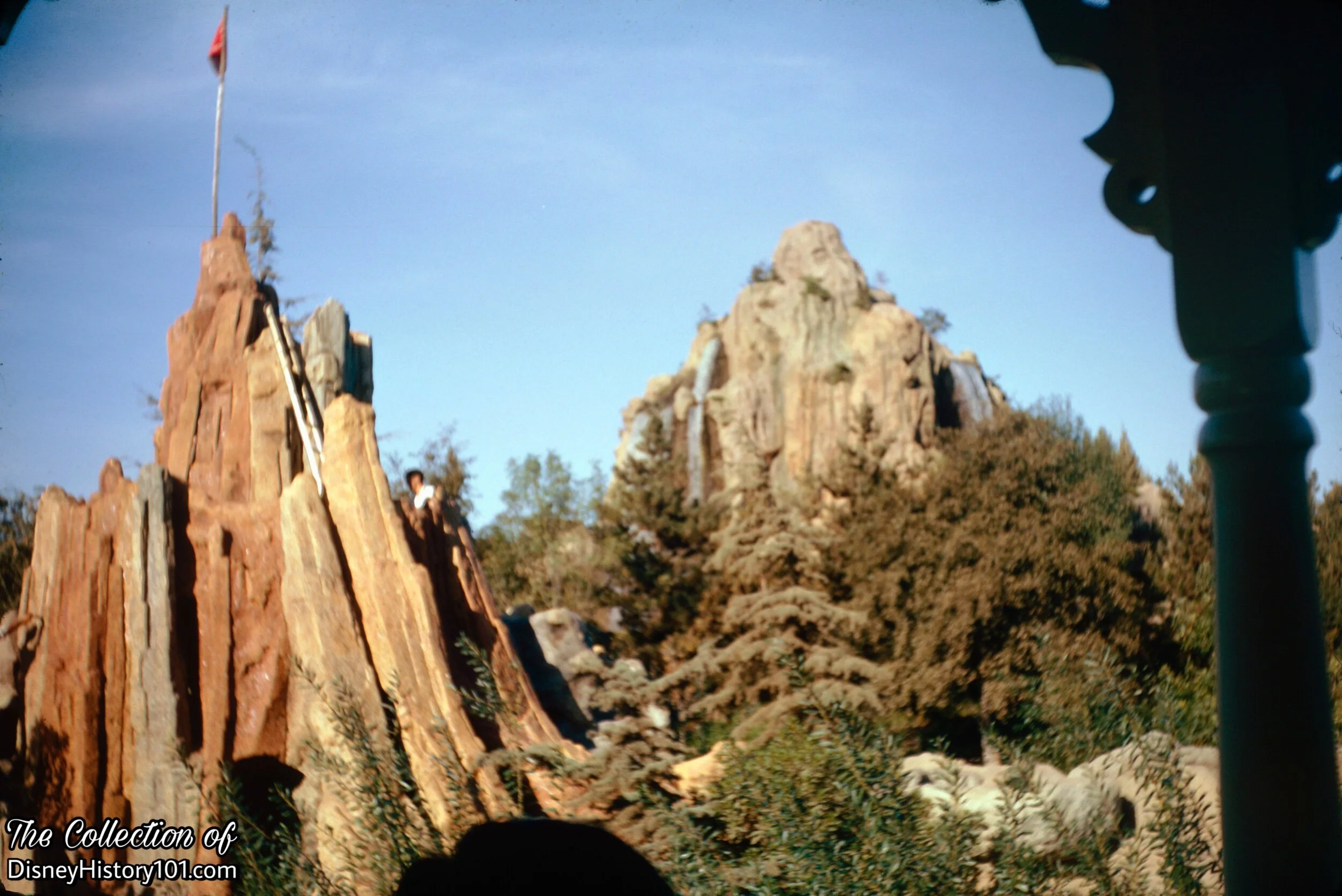
Of course, the most entertaining aspects of the adventure are the scenery as the Mark Twain circumnavigates the Rivers of America. Many sights have come and gone since the maiden voyage of the ship - Cascade Peak, Big Thunder Falls, Twin Sisters Falls, Burning Settler’s Cabin, Catfish Cove, the Cider Mill, and the Indian Village Burial Grounds.
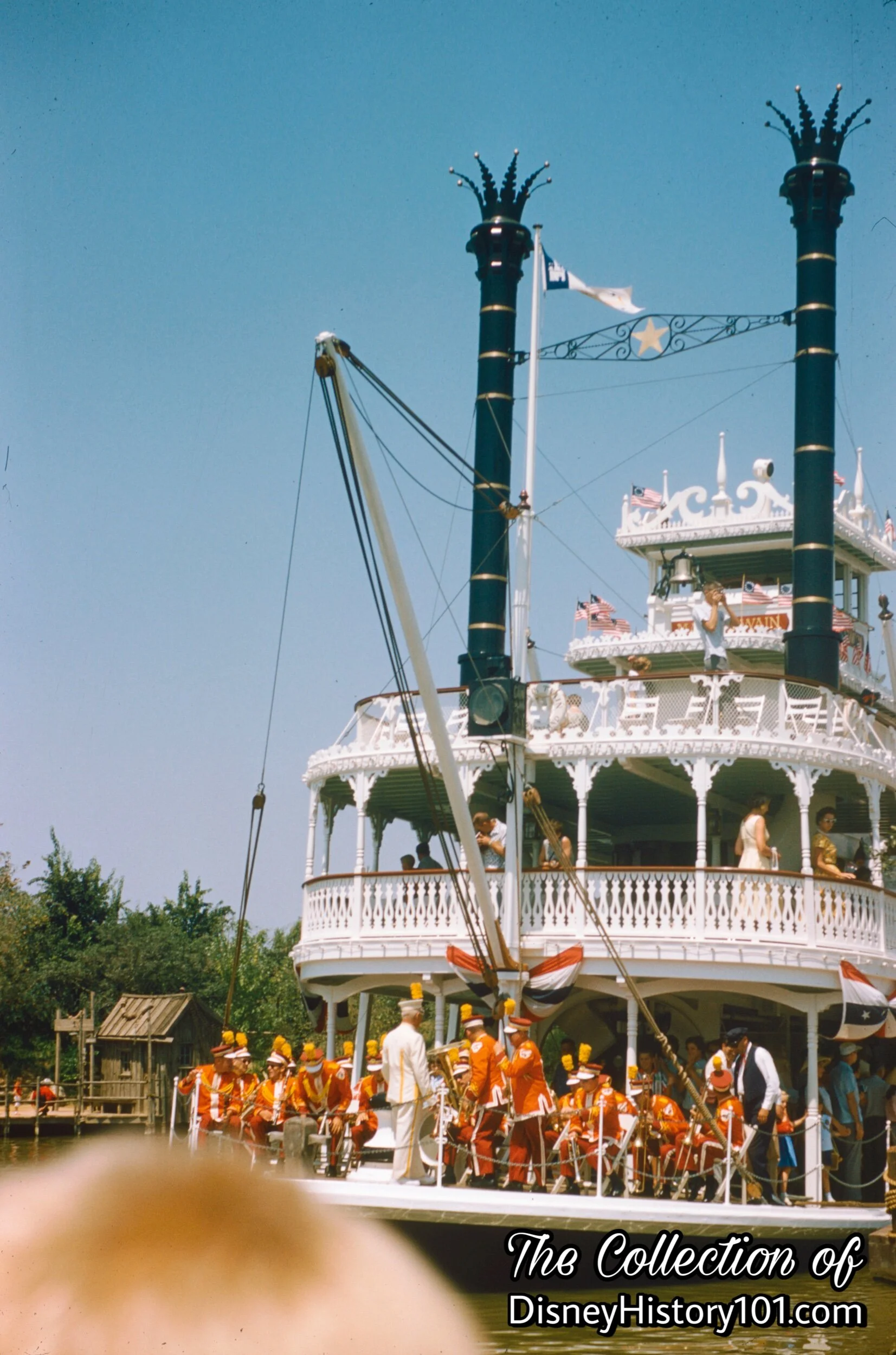
Vesey Walker leads The Disneyland Marching Band in an open-air concert aboard the Mark Twain
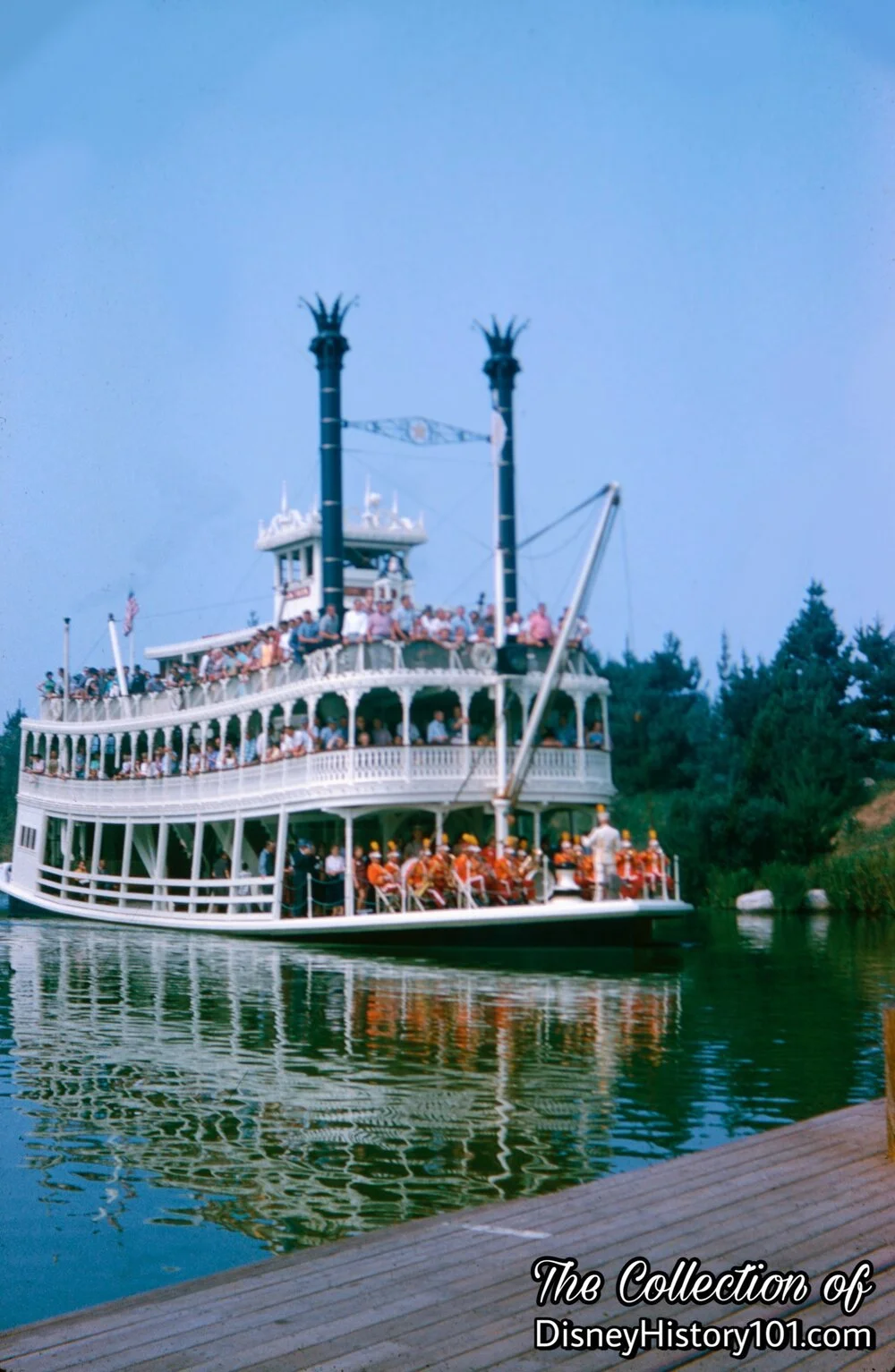
Vesey Walker and The Disneyland Marching Band Aboard the Mark Twain, c.1958.
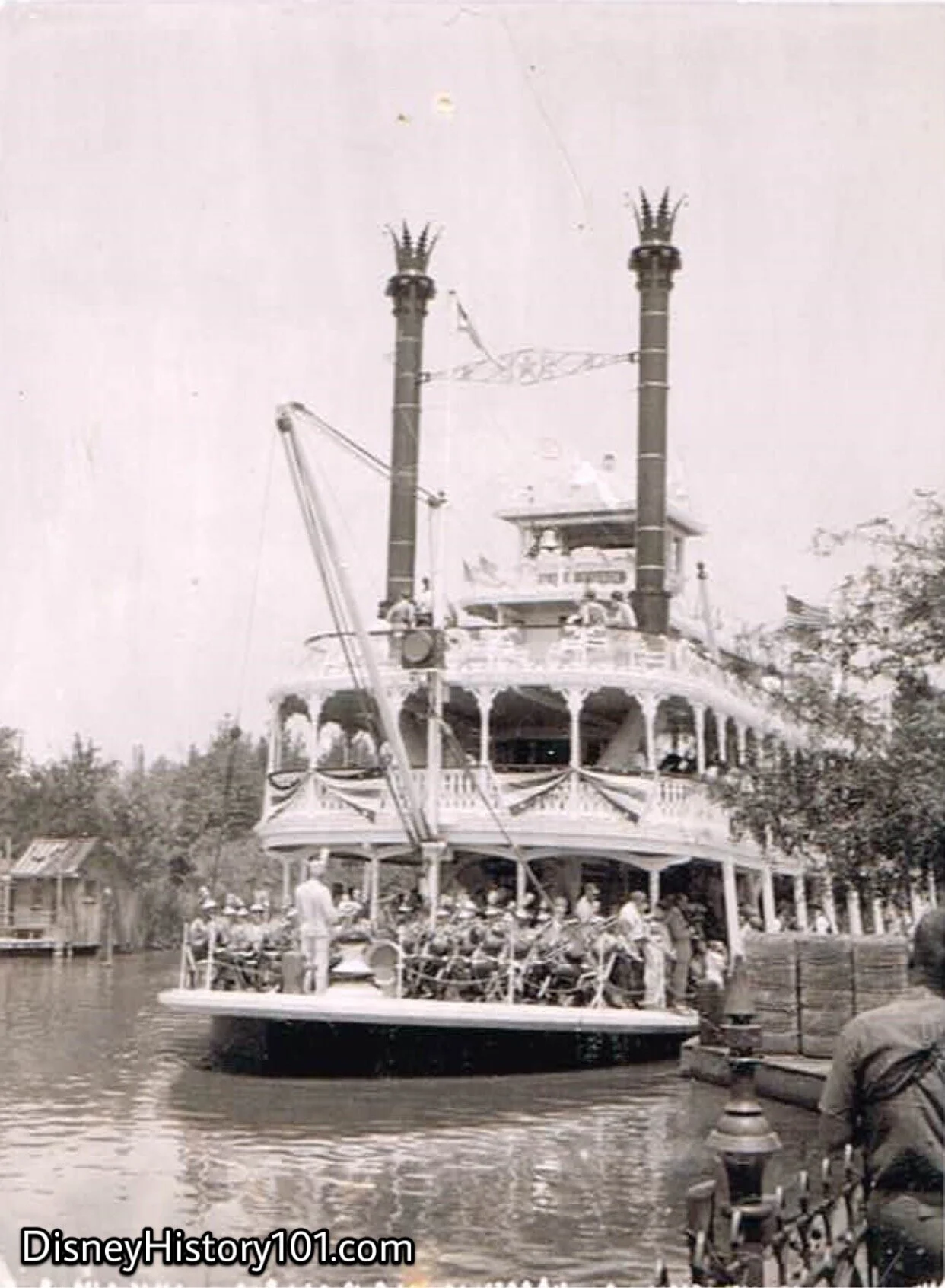
Vesey Walker and The Disneyland Marching Band Aboard the Mark Twain, c.1958.
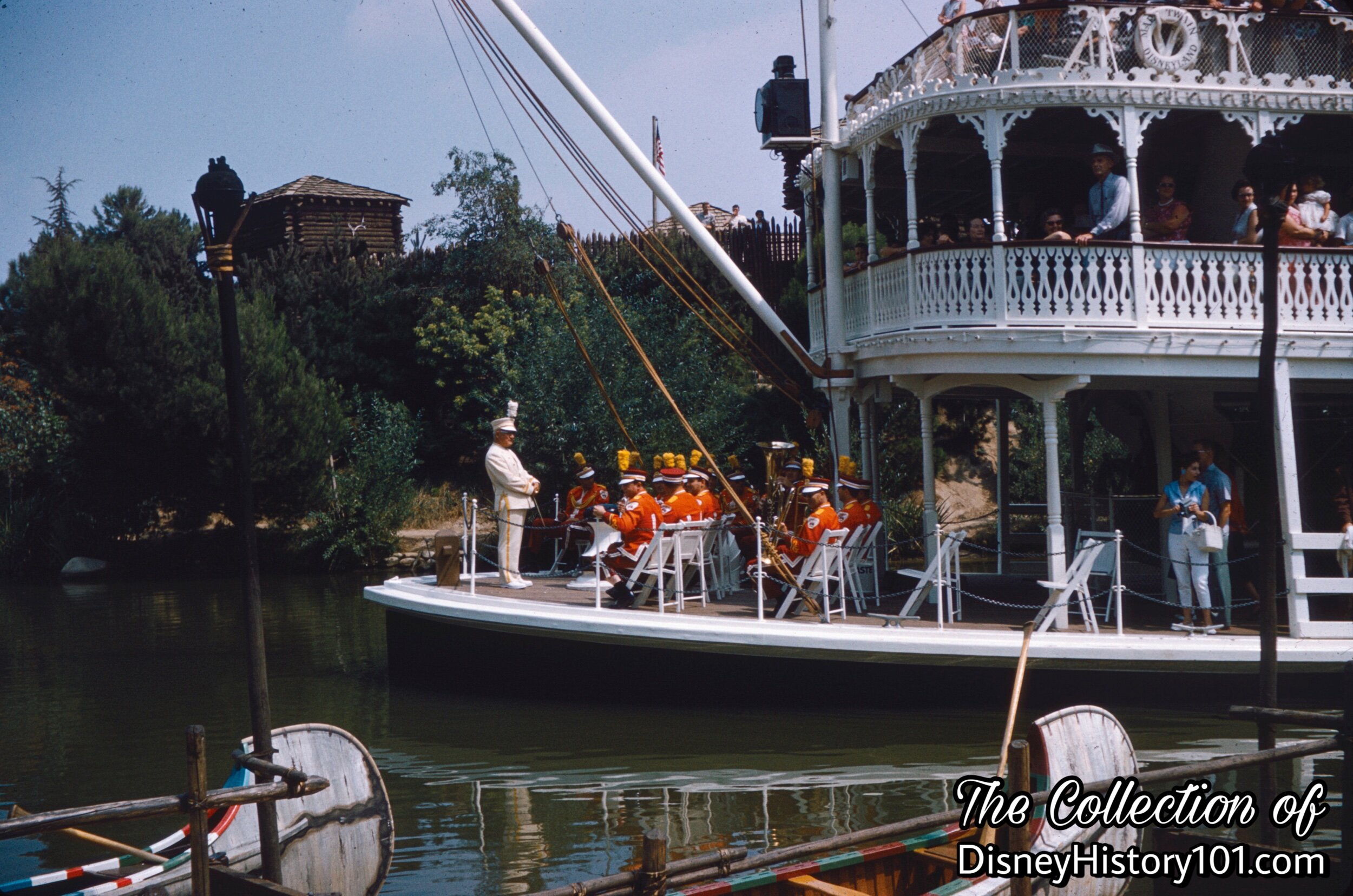
Vesey Walker and The Disneyland Marching Band Aboard the Mark Twain
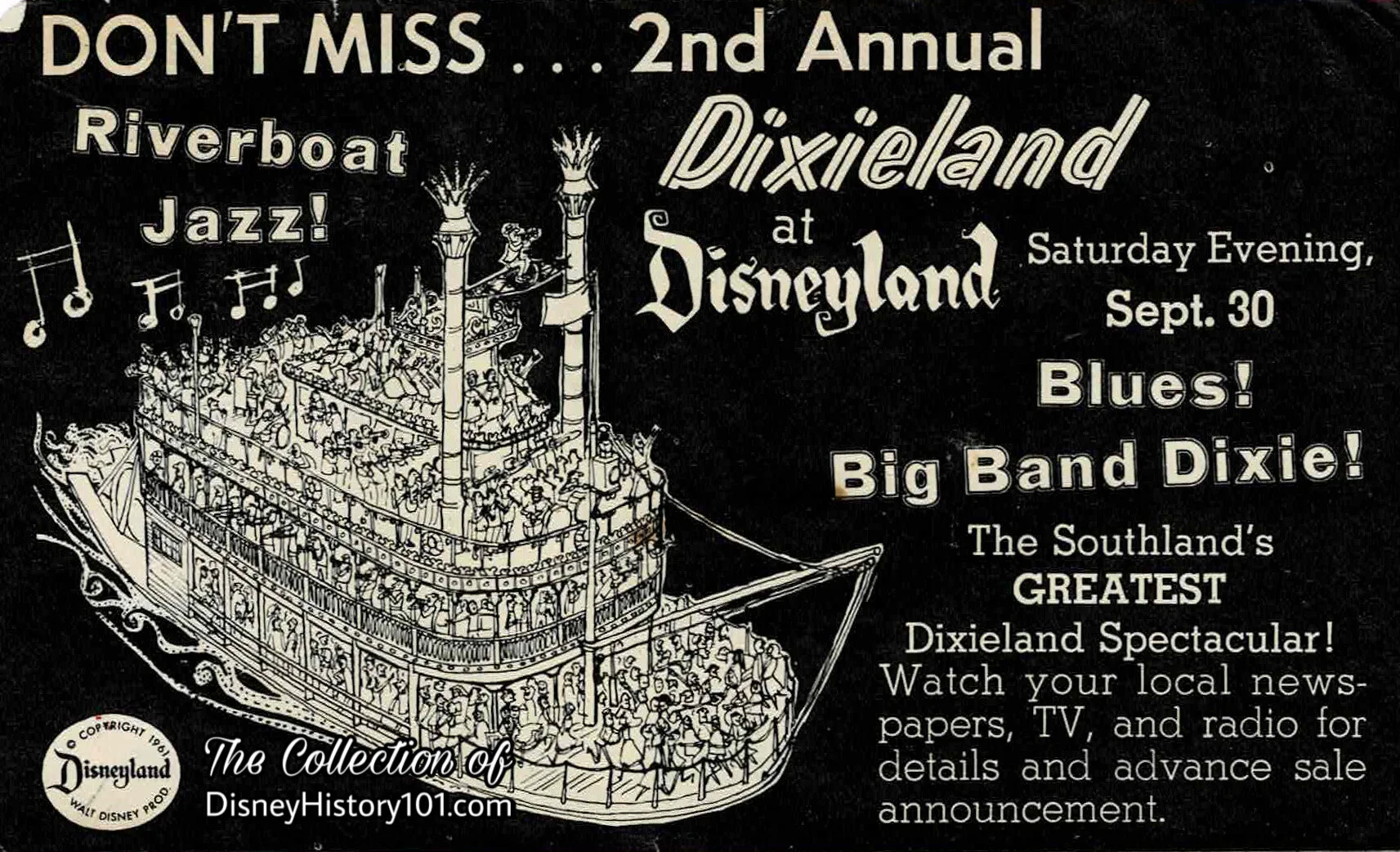
“Two Wonderful Ways To Enjoy Disneyland” Excerpt, (1961)
“Here Comes the Showboat”
1960 - The first annual Dixieland at Disneyland (featuring performances by six bands aboard rafts) was held October 1st, 1960, on the Rivers of America and other locations around Disneyland. The “two-beat Dixieland Jaxx and riverboat rhythms” of very first Dixieland at Disneyland attracted an attendance of 9,000 Guests (and drew “acclaim from guests and reviewers” according to The Disneyland Diary). According to Amusement Business magazine, “nearly 15,000 people… paid from $75,000 to $80,000 for admissions” to watch the shows. According to the same publication, “The Albert McNeil Choir of 50 opened on Tom Sawyer’s Island in the play of spotlights. Using river rafts as moving stages, Teddy Buckner and His Disneyland Band, Matty Matlock and His Dixieland All-Stars, The Firehouse Five Plus 2, The Young Men From New Orleans” and others were among the talent. Disneylander and “55er” John Gerlack recalled: “In my 20 years, I was most impressed by the show put on on Tom Sawyer Island for a Dixieland Night. there were pinwheels, rockets, everything. I thought the whole island was going to blow up!” “55er” electrician George Short remembered “The most exciting event was a big Dixieland Night on the River. The Mark Twain came around, blacked out except for hundreds of people with sparklers. The massed bands of Bob Crosby, Louis Armstrong, Teddy Buckner played on the bow.. and the fireworks on the Island!”
1961 - The second annual ‘Dixieland at Disneyland’ was held Saturday, September 30, 1961, from 8pm to 2am, bringing 14,000 guests. The event souvenir program cover featured the Mark Twain with good reason, for the advertised “conclusion” starred Louis Armstrong leading “the array of bands on rafts down the Rivers of America in Frontierland, followed by the ‘Mark Twain’ with 50 musicians playing ‘When The Saints Gio Marching In’ aboard.” Of the featured bands was “The Young Men From New Orleans,” (Johnny St. Cyr on banjo, Paul Barnes, Mike Delay on trumpet, Alton Redd on drums, with Monette Moore and by some accounts Harvey Brooks on piano), who performed their “St. Louis Blues” while “Floating Down the River.” By this time, The Young Men from New Orleans was considered a “permanent” band at Disneyland by 1961, appearing earlier from the deck of the Mark Twain, during Date Nites at Disneyland events, held during the Summer of 1961, (Fridays ‘til midnite and Saturdays ‘til 1:00a.m.). They would also perform their “pure” Jazz on Easter Sundays. Other headliners of the Second Annual Dixieland at Disneyland included Edwin “Kid” Ory, Teddy Buckner and his Dixieland Band, Matty Matlock and his Dixieland All-Stars (Eddie Miller, Moe Schneider, Dick Cathcart, Stan Wrightaman, Nick Fatool, and Ray Leatherwood) with special guest Louis Armstrong performing at the 20,000 Leagues Stage (and a specially designed floating Raft stage with crown atop), “housebands” The Firehouse Five + 2 (Eddie Forest, Danny Alguire, George Probert, Dick Roberts, Frank Thomas, and Don Kinch) at the Plaza Gardens, The Albert McNeil Choir (comprised of 50 voices) and The Disneyland Strawhatters (Warren Gale, Johnny Schmidt, Jim Barngrover, Ed Erickson, Sonny Anderson, and Jim Martin) at the Golden Horseshoe.
1962 - Louis “Satchmo” Armstrong would return alongside other musicians for Dixieland at Disneyland of 1962. Before that, the “Disneyland After Dark” live television broadcast (airing April of 1962) featured the previous (1961) appearance of Louis Armstrong singing “Up The Lazy River” aboard the Mark Twain.
1963 - “Dixieland at Disneyland” (of 1963) included “Al Hirt and a cast of 300 in a musical Mardi Gras”, and “drew 18,000 music lovers.”
The entertainers of the Fifth Annual Dixieland at Disneyland (of September 25 & 26, 1964) included Louie Armstrong joined by two of his “hot five,” (Kid Ory and Johnny St. Cyr of The Young Men from New Orleans), Sharkey Bonano and His Kings of Dixieland, Sweet Emma Barrett and Her New Orleans Jazz Band, Ben Pollack and His Dixieland All-Stars, the Clara ward Gospel Singers, the Elliot Brothers and their Big Band Dixie, and the Firehouse Five Plus Two. All appeared in “All That Jazz” staged on the Rivers of America in Frontierland, with a huge stage “being erected on the tip of Tom Sawyer Island for the production numbers staged and choreographed by Burch Mann. The entire river becomes a part of the stage as the starring musical groups drift by on colorfully decorated floats with settings taken from the streets and bistros of New Orleans. The climax comes when the entire cast of over a 100 is assembled together as the huge sternwheeler Mark Twain rounds the bend loaded with a full orchestra and hundreds of performers spinning lighted sparklers. At this moment a giant fireworks display is unleashed into the air and across the top of the water. It’s a thrilling sight, and one that will be remembered for years to come. Never in jazz history - even in New Orleans - have so many all-time greats gathered together for such a performance at that planned for this year’s ‘Dixieland at Disneyland.’” [as reported by Small World Newsletter, September 23, 1964, page 2] Film coverage of some acts took place on Thursday, October 1st, 1964. Maybe you recall the scene: “the riverboat Mark Twain steams round the bend twinkling with sparklers from bow to stern as Louis Armstrong leads 50 Dixieland jazzmen into When the Saints Come Marchin’ In.” [Walt Disney Disneyland, published 1964]
During the third week of January (c. 18th - 10th), of 1965, Tommy Walker, Card Walker, Ed Ettinger and Ben Harris (and others) spent some time at a Disneyland Staff Planning Meeting in Palm Springs. One of the subjects that was discussed was the forthcoming Dixieland at Disneyland event of 1965. While there, they met with Ben Pollack and His Five Piece Dixieland Band (at Ben Pollack’s Palm Springs home) over their appearance in Dixieland at Disneyland of 1964, as well as their ideas for 1965.
On September 22nd, 1965, a Ford car was prepared (washed and gasoline put in the tank) to pick up Louie Armstrong.
Dixieland at Disneyland was held Saturday, October 1, 1966 from 8pm to 2am.
The 1967 edition of Dixieland at Disneyland occurred Saturday, September 30, from 8 p.m. to 2 a.m. The edition starred Louis Armstrong and his band, Eddie Condon, Teddy Buckner and his band, Doc Souchon and his New Orleans All-Stars, the Firehouse Five +2, the Young Men from New Orleans, the Southern California Hot Jazz Society Marching Band, and the New Dixie Band (winner of Disneyland’s recent youth Dixie Band contest). Advance sale tickets (at $6 each) were available at the Disneyland Box Office, with $7 tickets available at several locations like Bank of America, Desmond’s stores, Wallich’s Music City, and the Disneyland Box Office.
Dixieland at Disneyland (Saturday, September 28, 1968, 8:30 pm to 2 am) brought Louis Armstrong and His Band, Turk Murphy and His Band, Teddy Buckner and His Band, the Firehouse Five + 2, and The Young Men From New Orleans! Louie Armstrong performed “Ten Feet Off the Ground” from “The One and Only, Genuine, Original Family Band”. This song was the third Sherman Song that Louis Armstrong recorded - first, in 1937, Robert “On A Little Bamboo Bridge.” Then, in 1955, Dick’s “Christmas In New Orleans.” And “Ten Feet off the Ground”!
During 1972, Banjo Kings (Sonny Helmer) performed.
Even after Dixieland at Disneyland ended its run, other bands (like The Banjo Kings, c. 1978) would perform from the Mark Twain.
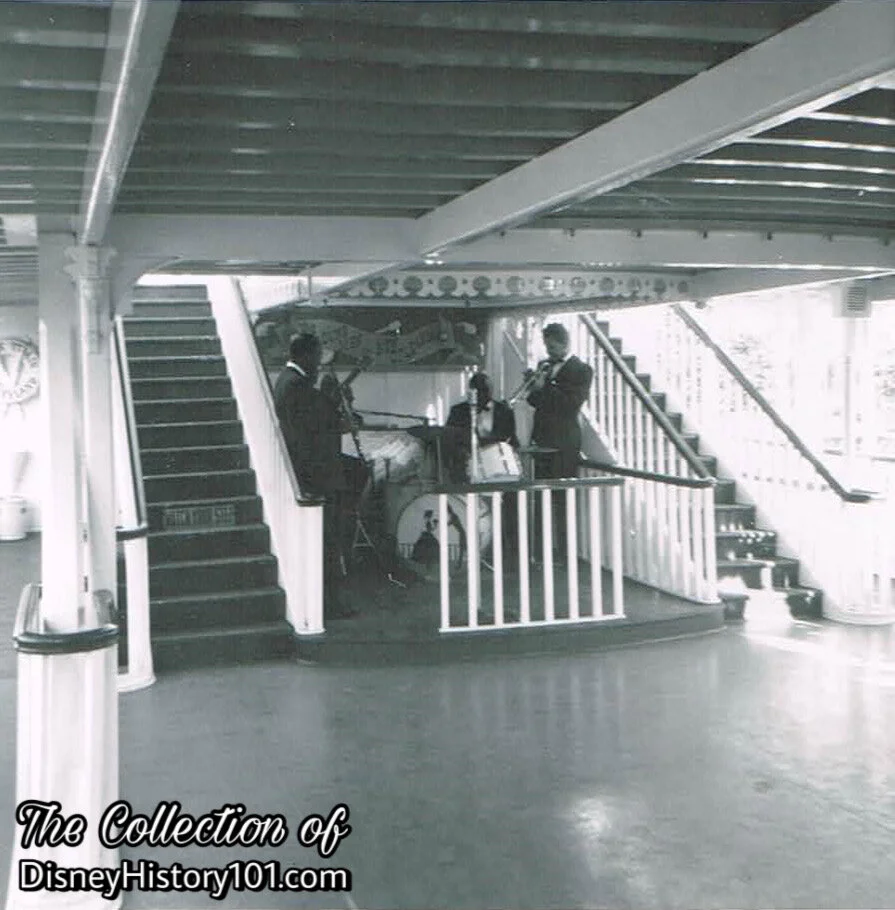
Mark Twain Main Deck Stage, (1963)
According to the Guided Tour Script of 1962 : “On weekends and holidays the Young Men of New Orleans, an authentic Dixieland Jazz Band, play for your dancing and listening pleasure as you float down the river.” It has been said that Harvey Brook’s Young Men From New Orleans “evoke memories of Fate Marable” as they perform “A Variety Musical Treat” aboard the Mark Twain Stage, on the Main Deck of the Steamboat!
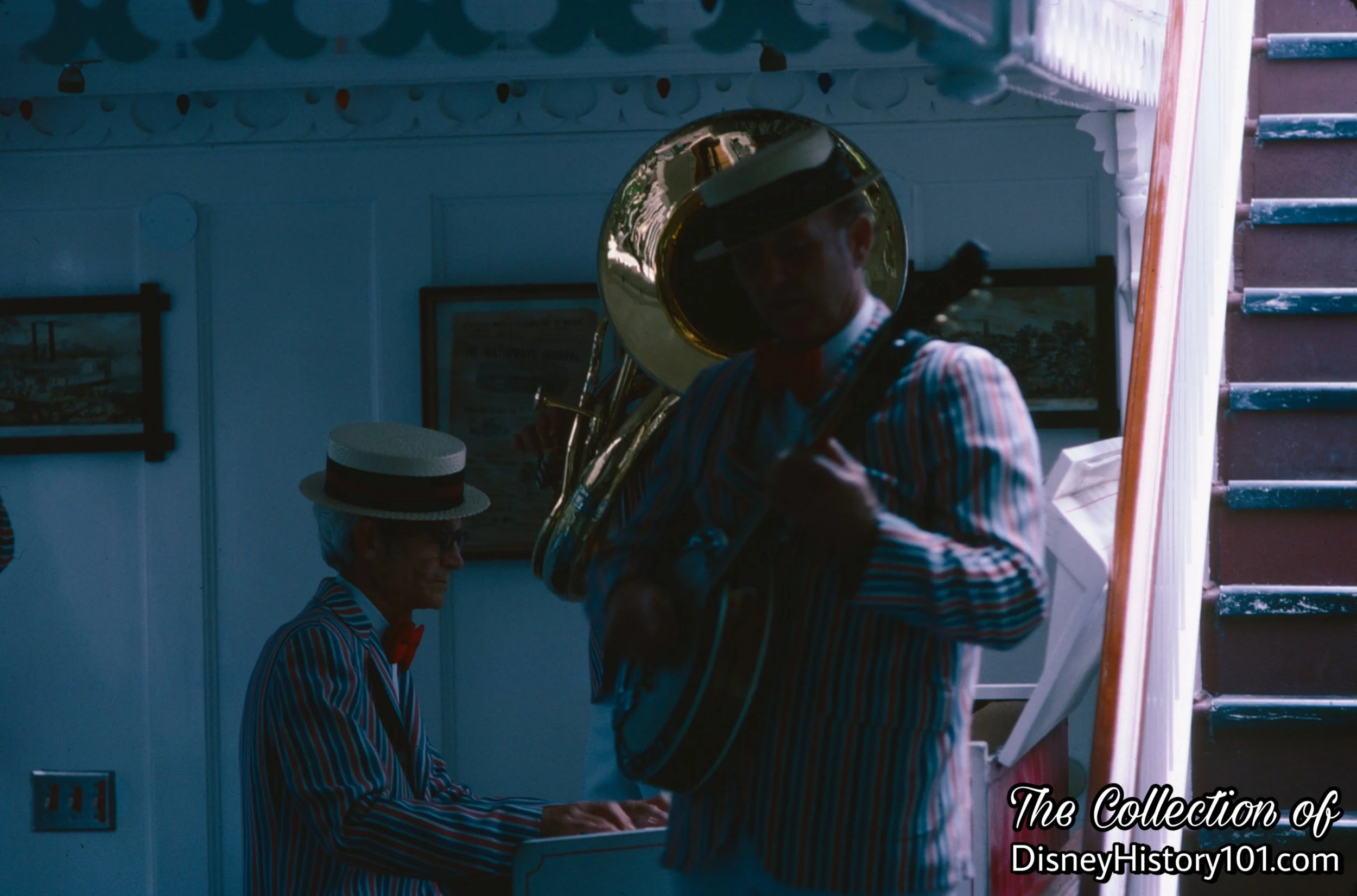
A second dance floor was added on the upper Texas Deck of the Mark Twain for entertainment during the summer of 1961. The Disneylander (VOL. 5, NO. 6; JUNE, 1961) announced: “The real ‘show stopper’ is likely to be the newest addition authentic old New Orleans Dixieland jazz played in a setting to match the music aboard the Mark Twain. A dance floor has been added on the top deck of the stern wheeler and as it steams along the Frontierland river, ‘The Young Men From New Orleans.’ will rock the ship with all the Dixieland favorites.” According to the Guided Tour Script of 1962 : “On weekends and holidays the Young Men of New Orleans, an authentic Dixieland Jazz Band, play for your dancing and listening pleasure as you float down the river.”
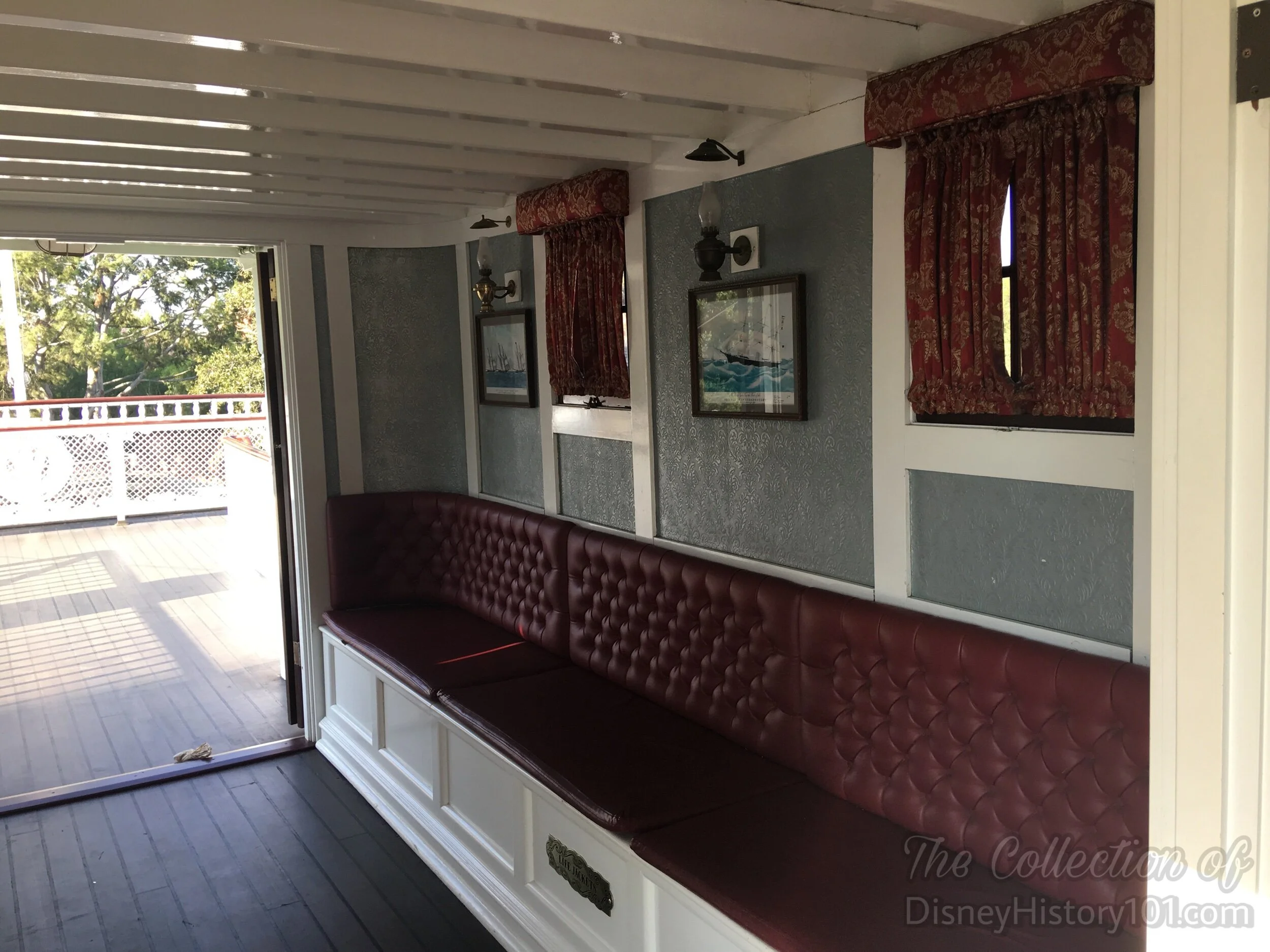
Mark Twain Texas Deck and chairs in the present
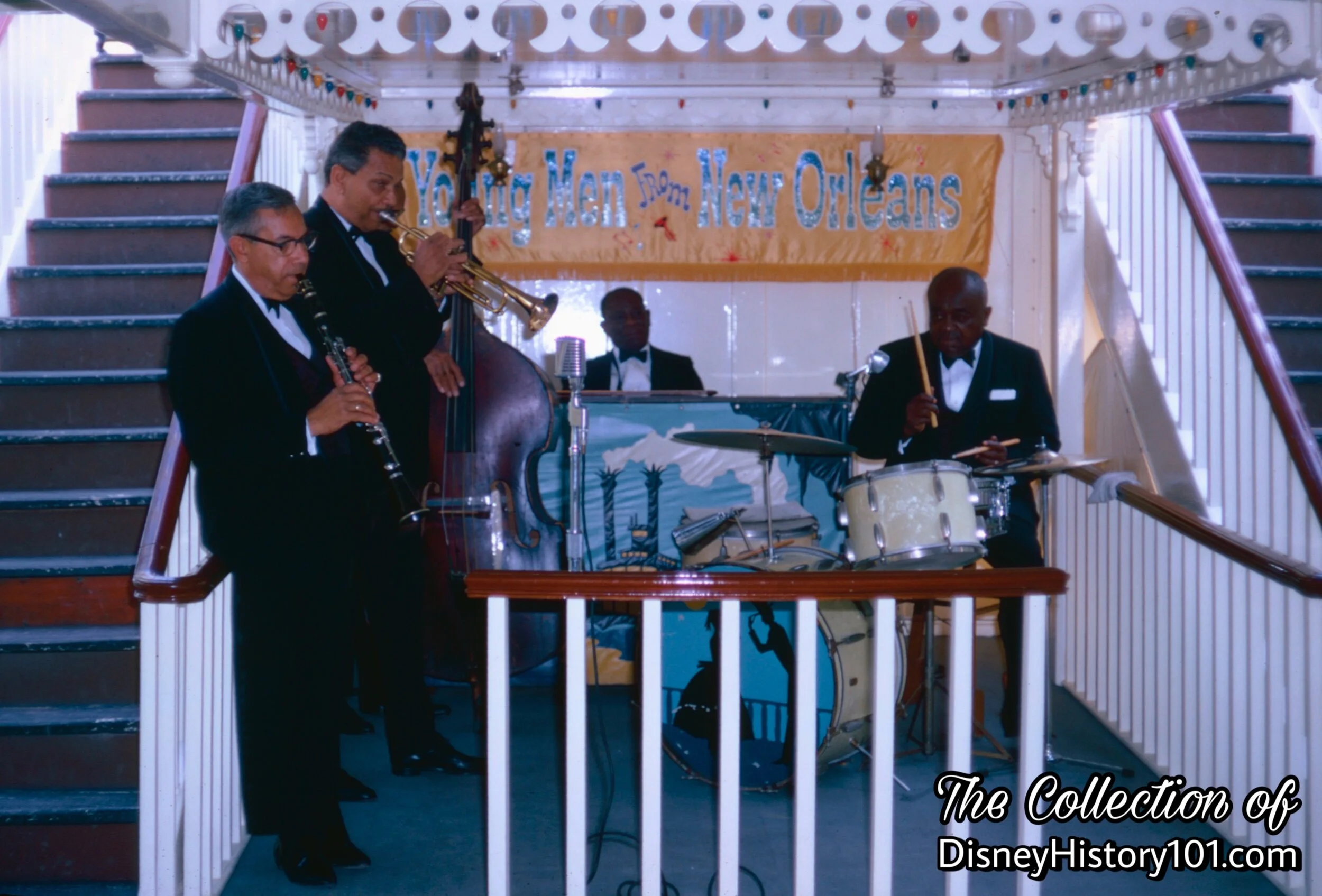
Mark Twain Main Deck Stage, (1968)
The immortal Young Men From New Orleans (the legendary Johnny St. Cyr occasionally on banjo, Harvey Brooks leading on piano, Alton Redd on drums, Joe Darensbourg on Clarinet, Aldolphus Morris on bass, and Michael Delay on trumpet) were the genuine article “long-time greats, and each member is over 60” (in fact some of them 70 years of age) according to Vacationland (Summer, 1961). The Young Men of New Orleans appeared on the third episode of “Meet Me At Disneyland” (airing on ABC) alongside The Excelsior Banjo Band, beginning in June of 1962. They also were part of the 1962-63 Winter Holiday Talent Schedule.
They also performed their “St. Louis Blues” while “Floating Down The River” during several important celebrations like the New Year’s Eve Special Party of January, 1963, and Grad Nite of 1964. During late 1960s Date Nites at Disneyland, The Young Men From New Orleans generally played sets of two-beat “Dixie Melodies” from the Mark Twain’s stage (pictured). Guests gathered to either dance or just listen as the stern-wheeler made its way down the river. This evening entertainment generally lasted from 5 p.m. to twelve midnight, so heaters were regularly set up on stage to accommodate the musicians.
During the 6th edition of Dixieland at Disneyland, the Young Men from New Orleans (Harvey Brooks on piano, Alton Redd on drums, Joe Darensbourg on clarinet, Adolphus Morris on bass, and Michael Delay on trumpet) entertained aboard the Mark Twain in Frontierland.
During the 7th edition of Dixieland at Disneyland (which was also incidentally the Third Camp Pendleton Night at Disneyland), the Young Men of New Orleans (Harvey Brooks on piano, Joe Darensbourg on clarinet, Michael Delay on trumpet, Alton Redd on drums, and Bernard Carrere on bass) performed from the Mark Twain on the night of Friday, September 29, 1967 from 8:00p.m. to 1a.m.! The Young Men From New Orleans also performed seven shows daily, from the Promenade Deck during the winter (from December 16, 1967 to January 1, 1968). The following Disneyland “Spring Fling” (occurring April 6th, 1968) brought The Young Men From New Orleans to the Mark Twain, and that is possibly the event that has been captured in this Vintage View (above).
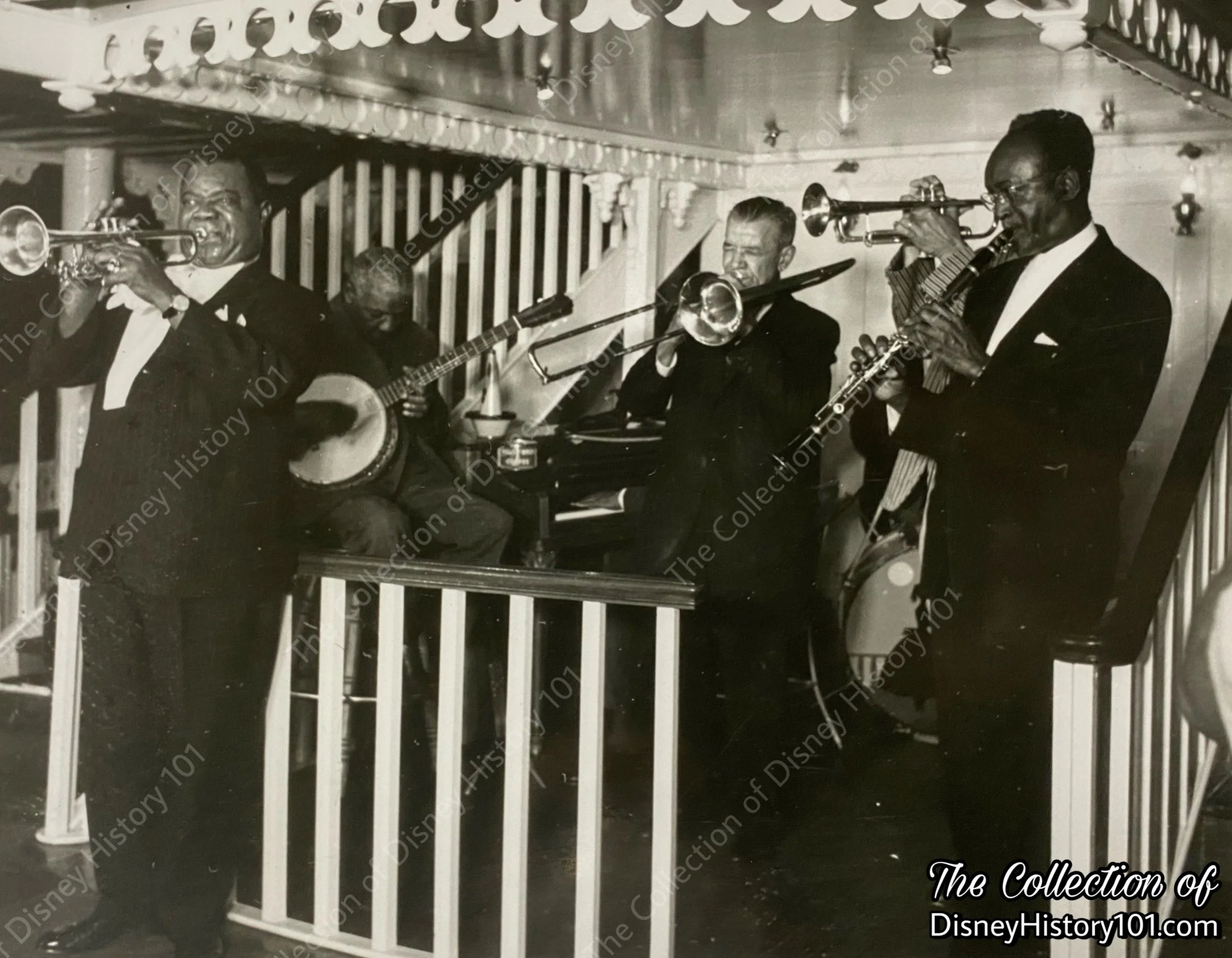
Louis Armstrong performing from the Mark Twain; ©️Walt Disney Productions.
Other bands performed from the decks of the ship. For instance, Disneyland’s own Banjo Kings performed from the Mark Twain, in “American Music on Parade” on Memorial day, Monday, May 29, 1972. From November 26, 1972 through May 26, 1973, the Banjo Kings performed from 5:00 PM - 12:00 M.
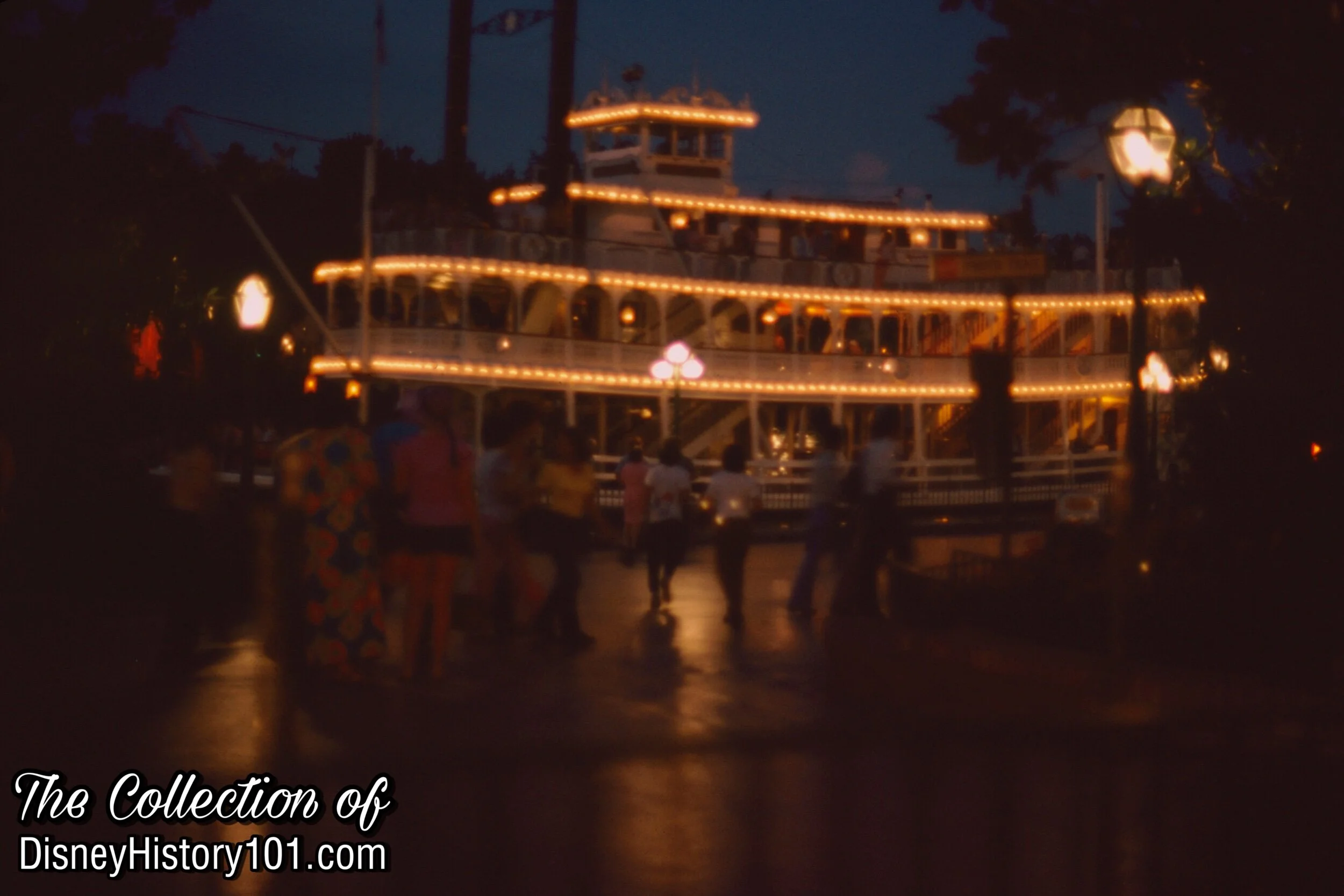
(c. June, 1973)
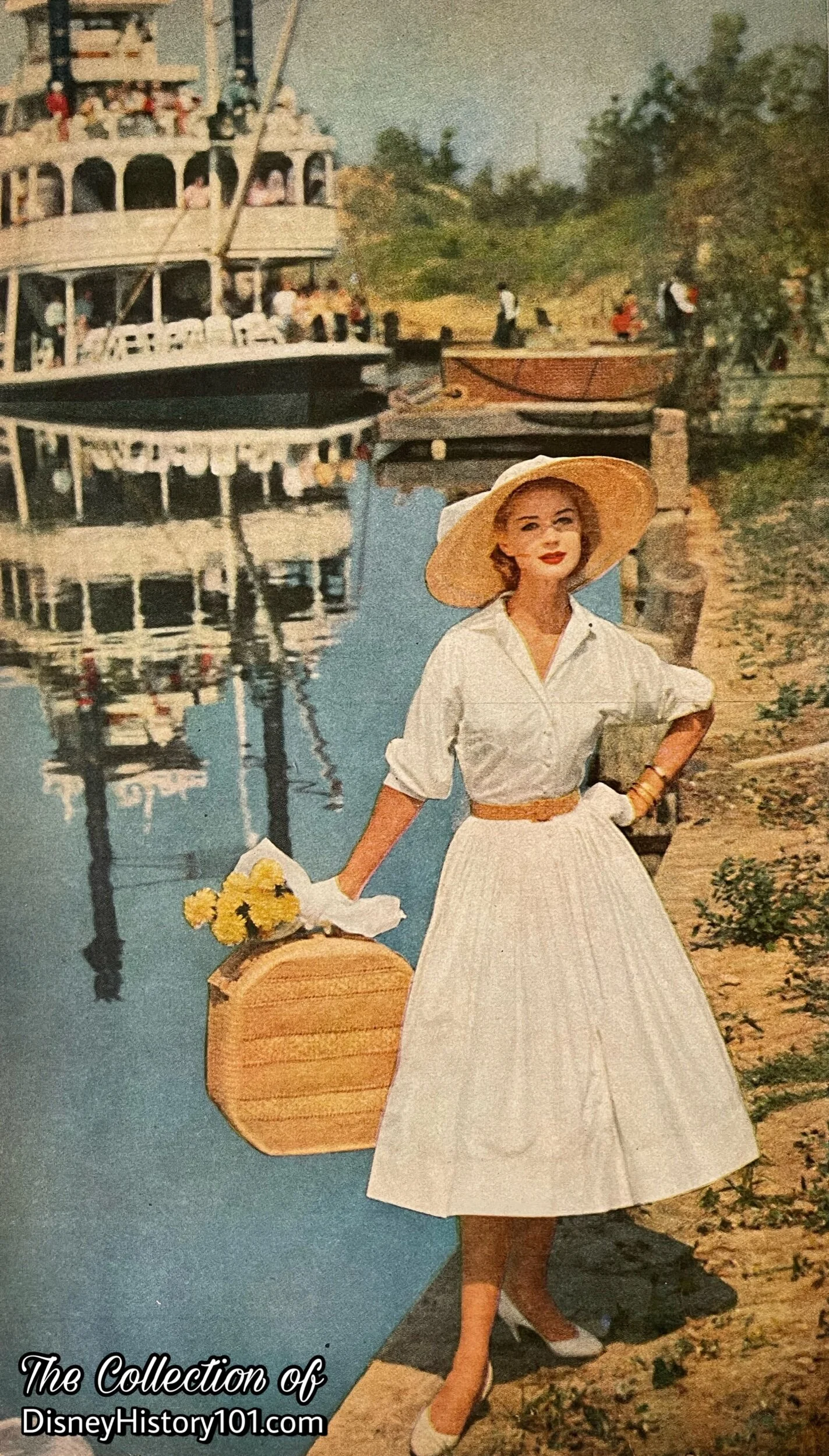
McCall’s Magazine, (February of 1956)
The Mark Twain was used as a set piece or stage for numerous television productions. Twice (during the 3rd and 12th episodes), the Mark Twain acted as the main stage for the production of “Meet Me At Disneyland”, airing on ABC, in August of 1962. The “Rhythm of the River” episode (partially filmed aboard the Mark Twain) starred The Excelsior Banjo Band and The Young Men From New Orleans, while “Dixie On The Delta” (filmed almost entirely on the Mark Twain) starred the Hot Jazz Society Marching Band, the Albert McNeil Choir, Voices of the Hope, The Young Men From New Orleans, and Kid Ory! After this, Louie Armstrong performed aboard the romantic river steamer during the Disneyland After Dark television special in 1963.
The Mark Twain was also staffed and operated for an RCA commercial (filmed April 9th, 1963). The 26-minute “The New Christy Minstrels” (episode 4) sponsored by Ford, was recorded in front of the Mark Twain on August 3, 1964, and broadcast on NBC, August 13, 1964. On Thursday, August 18, 1966, some Walt Disney Studio photographers (under the direction of Hamilton Luske) took a few long shots of the Mark Twain (and New Orleans Square from the Mark Twain) for use as background plates. During the 1970s, E.J. Peaker performed and sang aboard the Mark Twain during a segment of “Disneyland Showtime” (a c.1970 Wonderful World of Disney episode).
The Mark Twain was featured in numerous pieces of promotional media and advertisements. Ten years after the first day of operation, the Mark Twain was featured in a Look Magazine photo shoot (in conjunction with new Disneyland 3-D post cards) on May 23, 1966.
During the 1970s, E.J. Peaker sang aboard the Mark Twain during a segment of “Disneyland Showtime” (a c.1970 Wonderful World of Disney episode). Karen and Richard Carpenter utilized the front of the lower deck during the filming of several scenes of their “Mr. Postman” music video released in 1975.
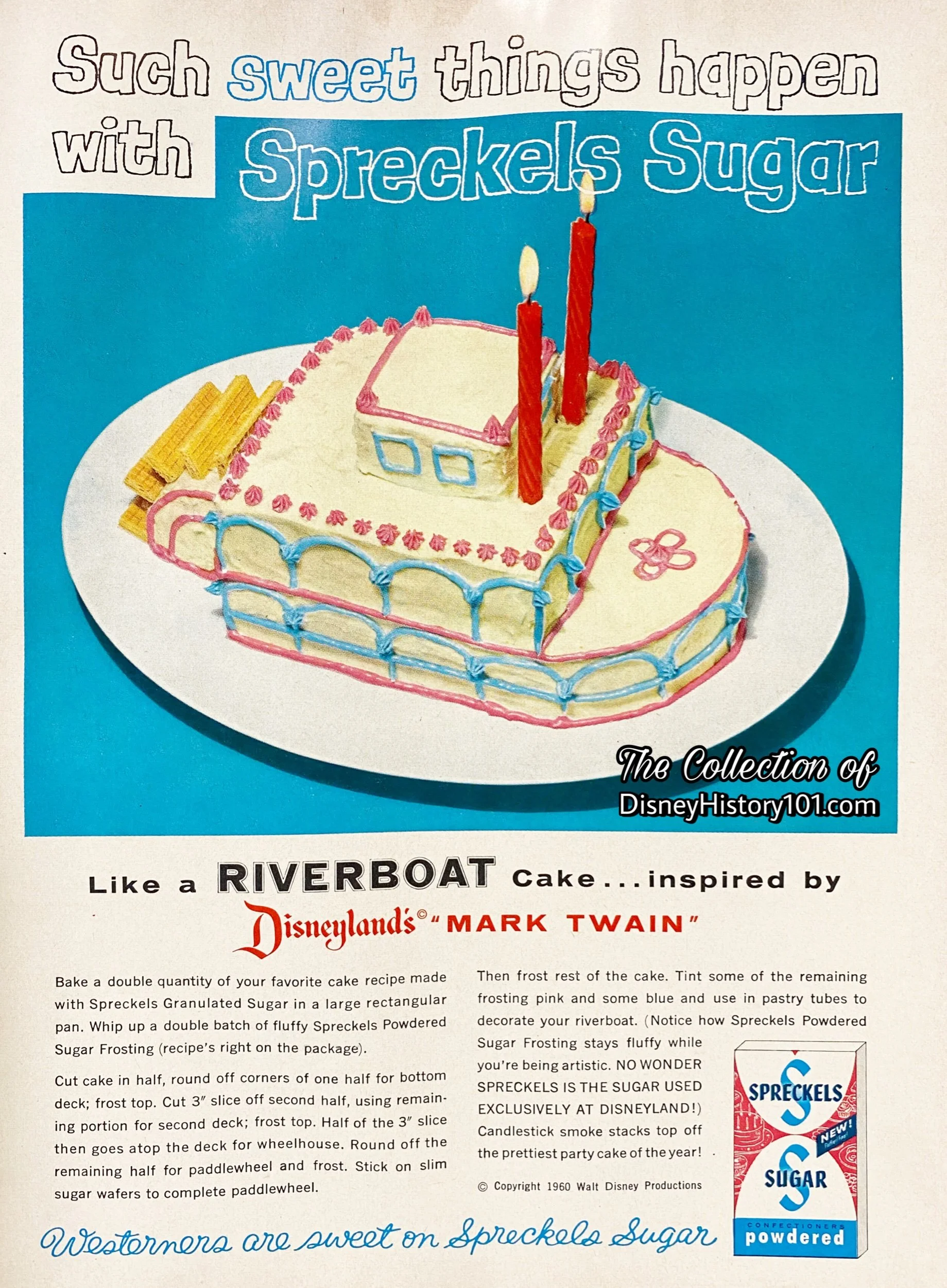
The Mark Twain inspired many things. In 1960, Freedomland opened in New York with a Great Lakes Cruise by sternwheeler, boarded from its Chicago 1871 area.
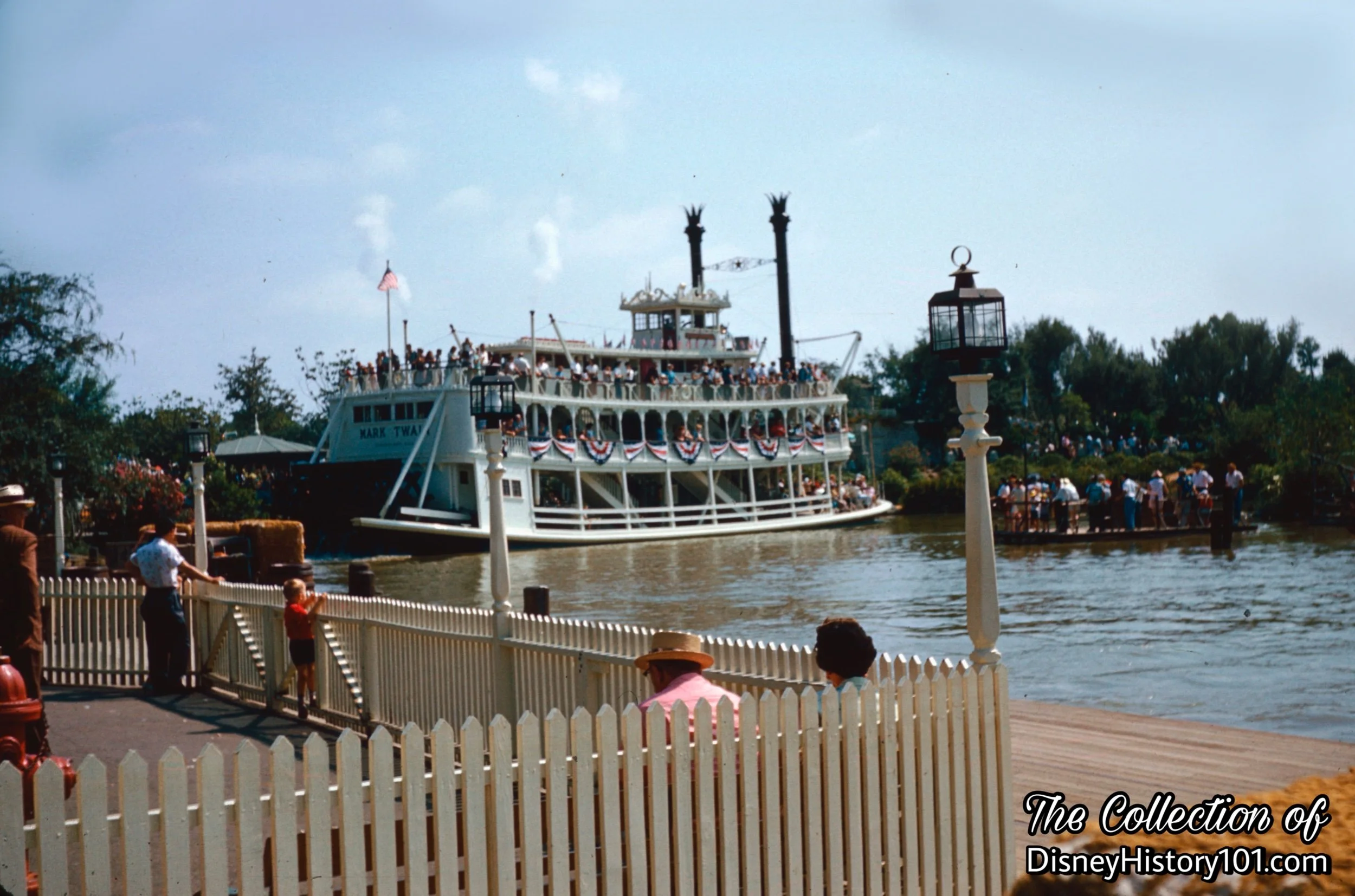
1966, August
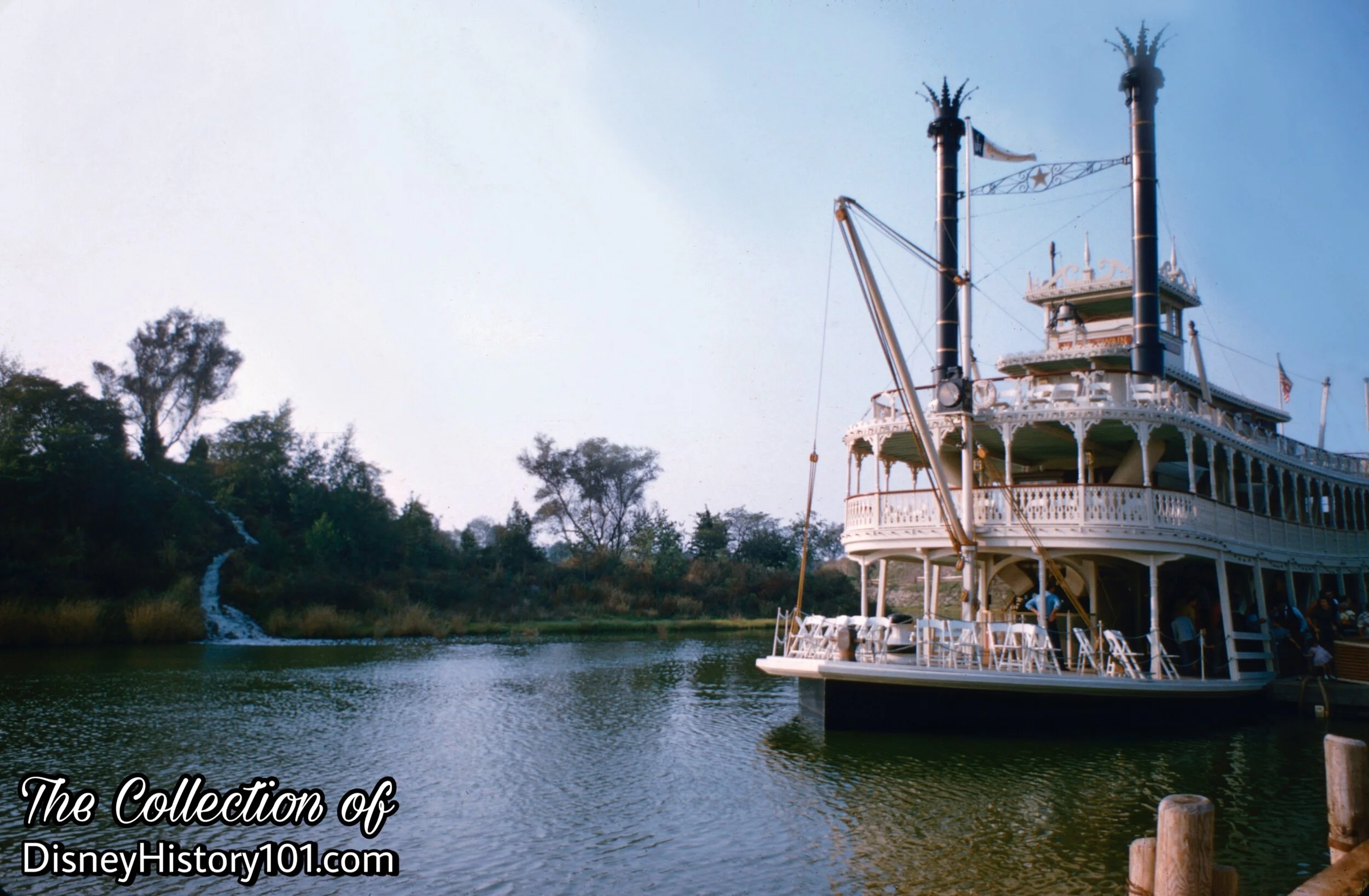
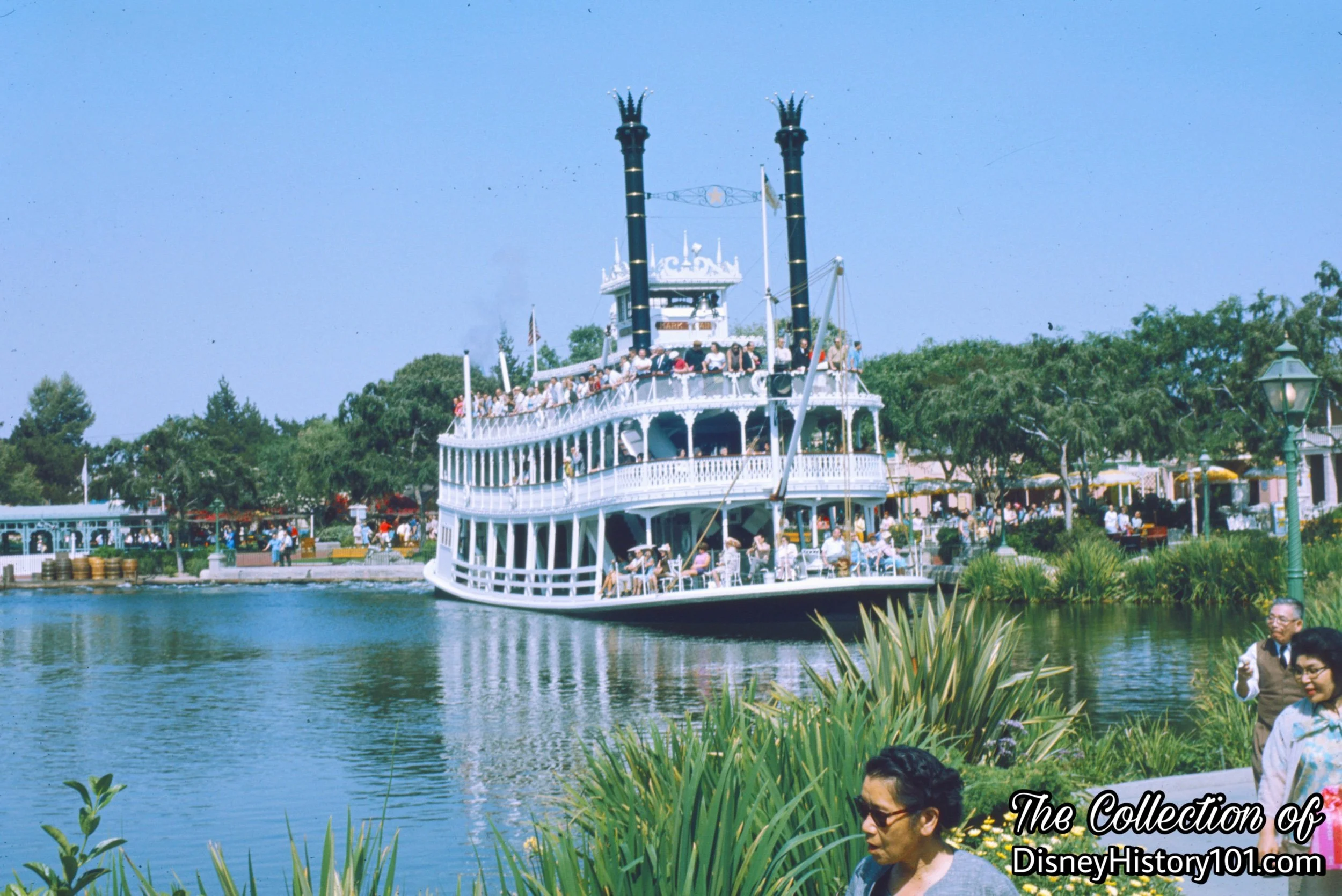
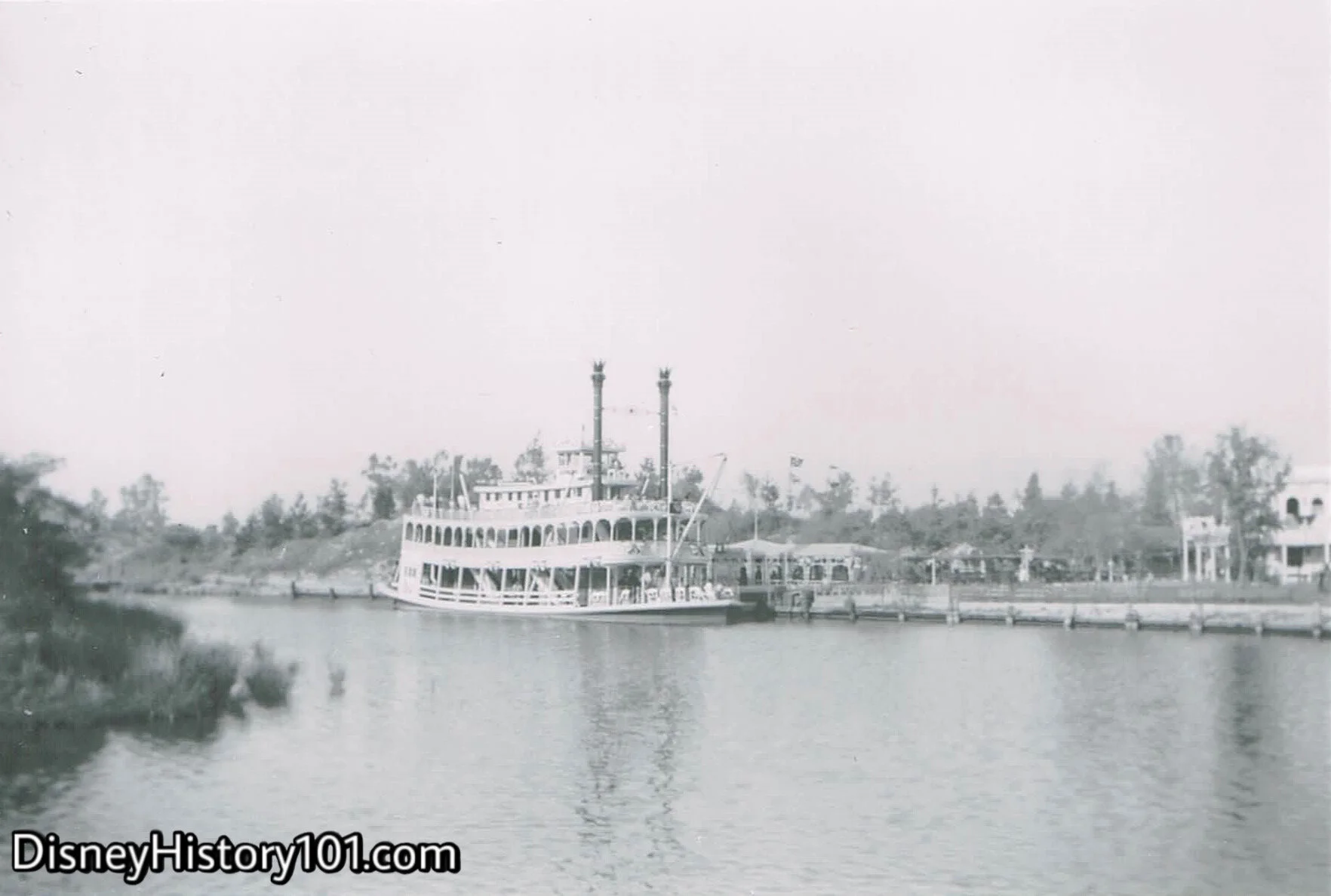
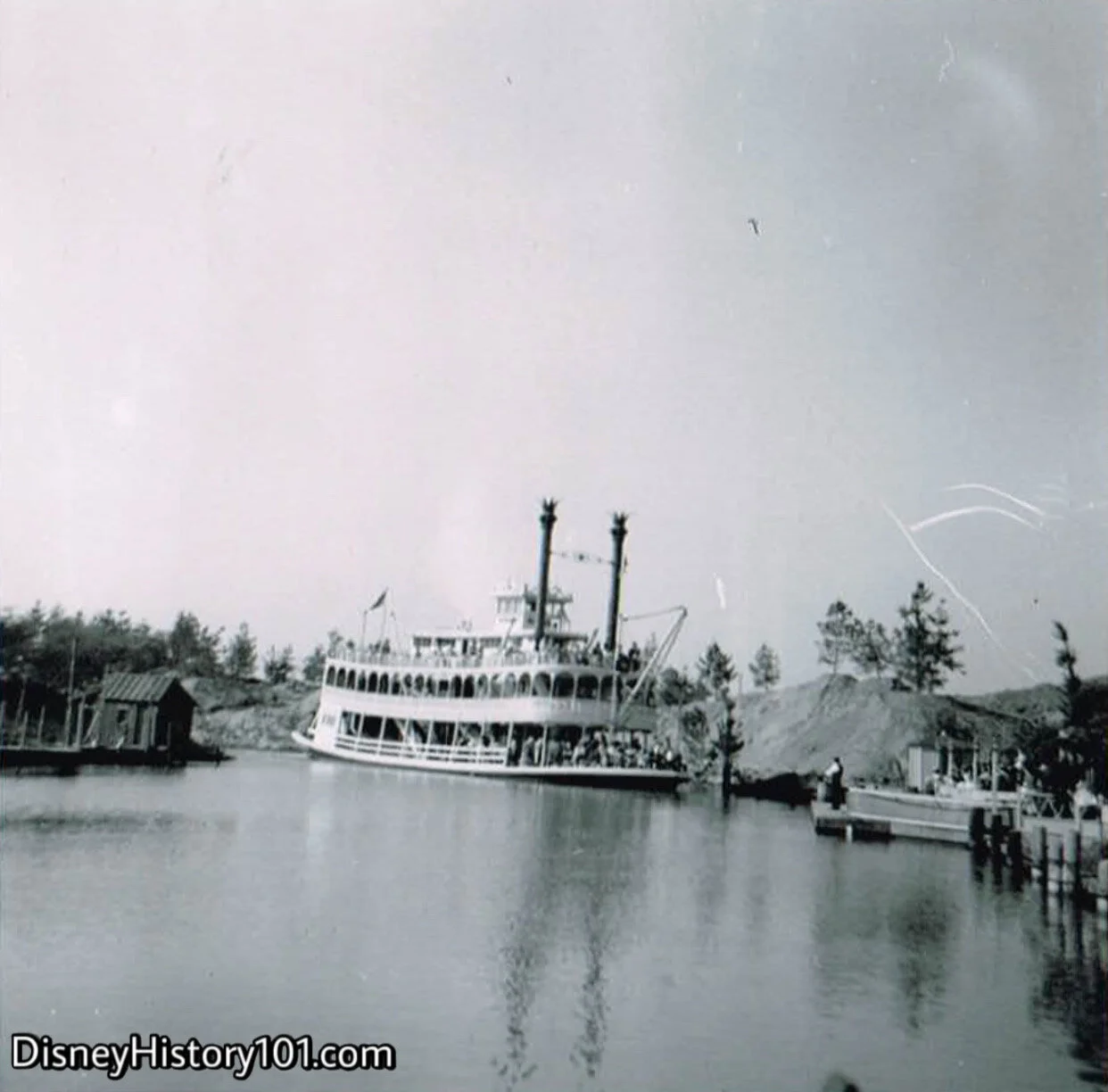
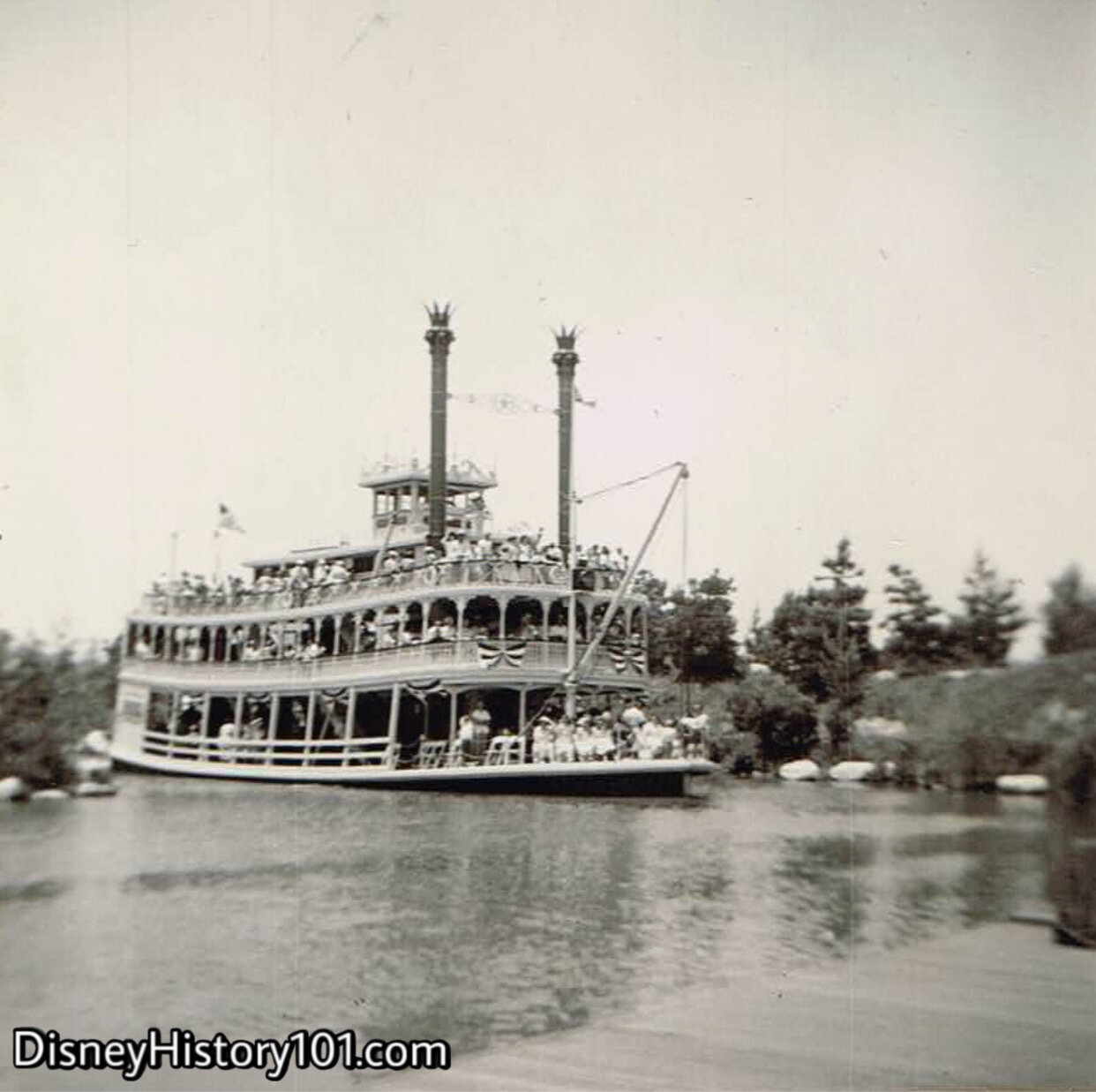
1957
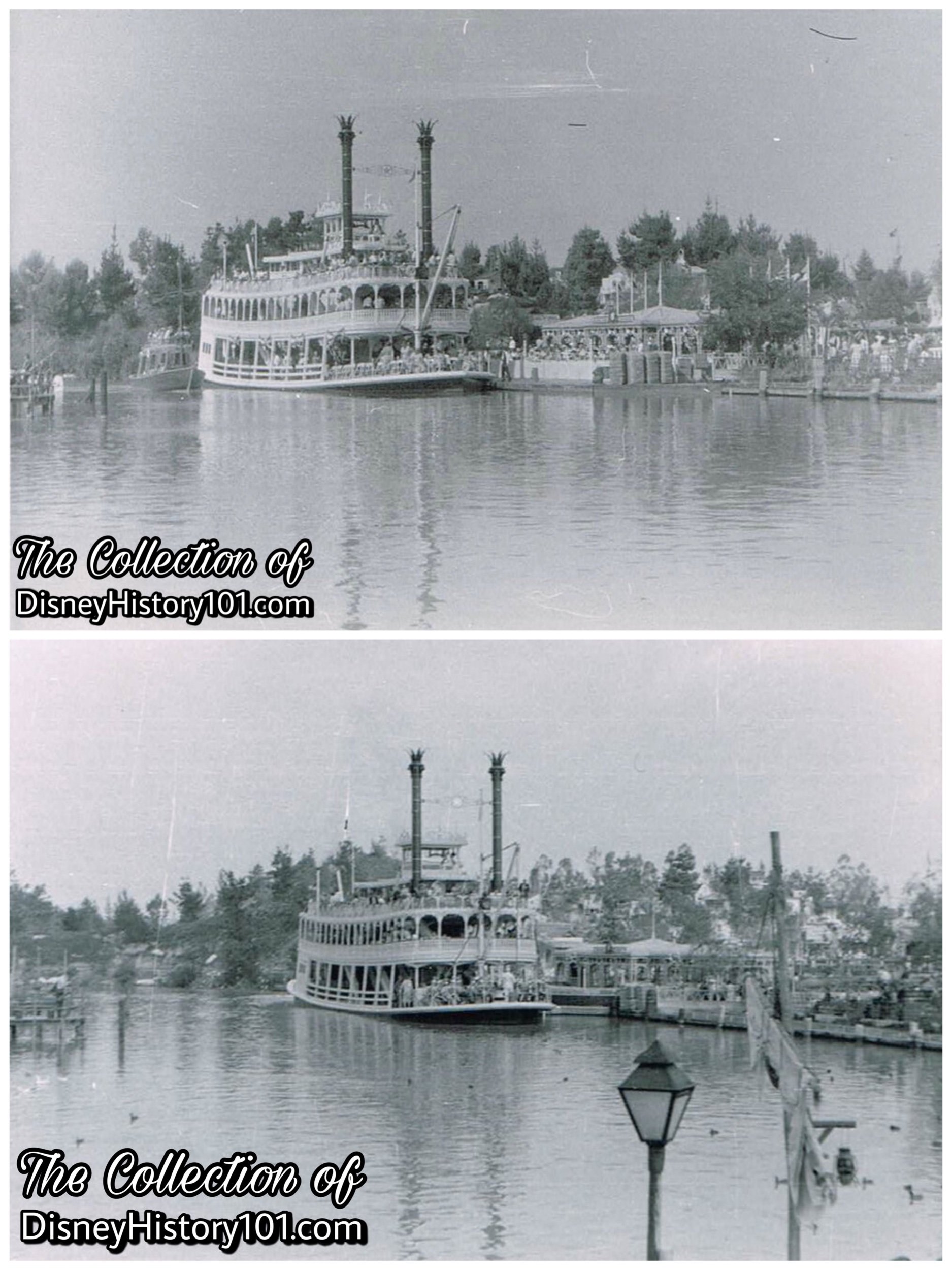
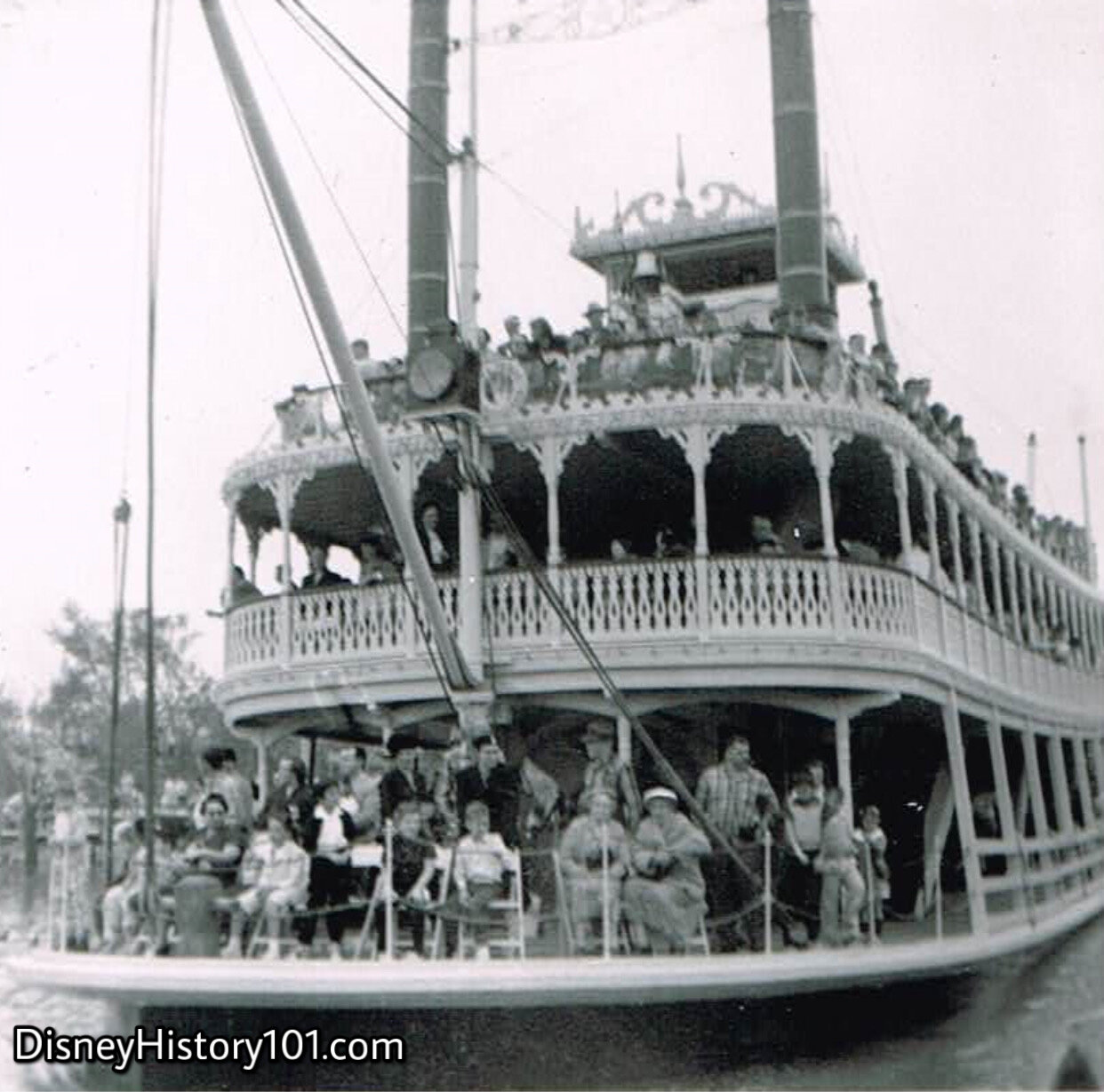
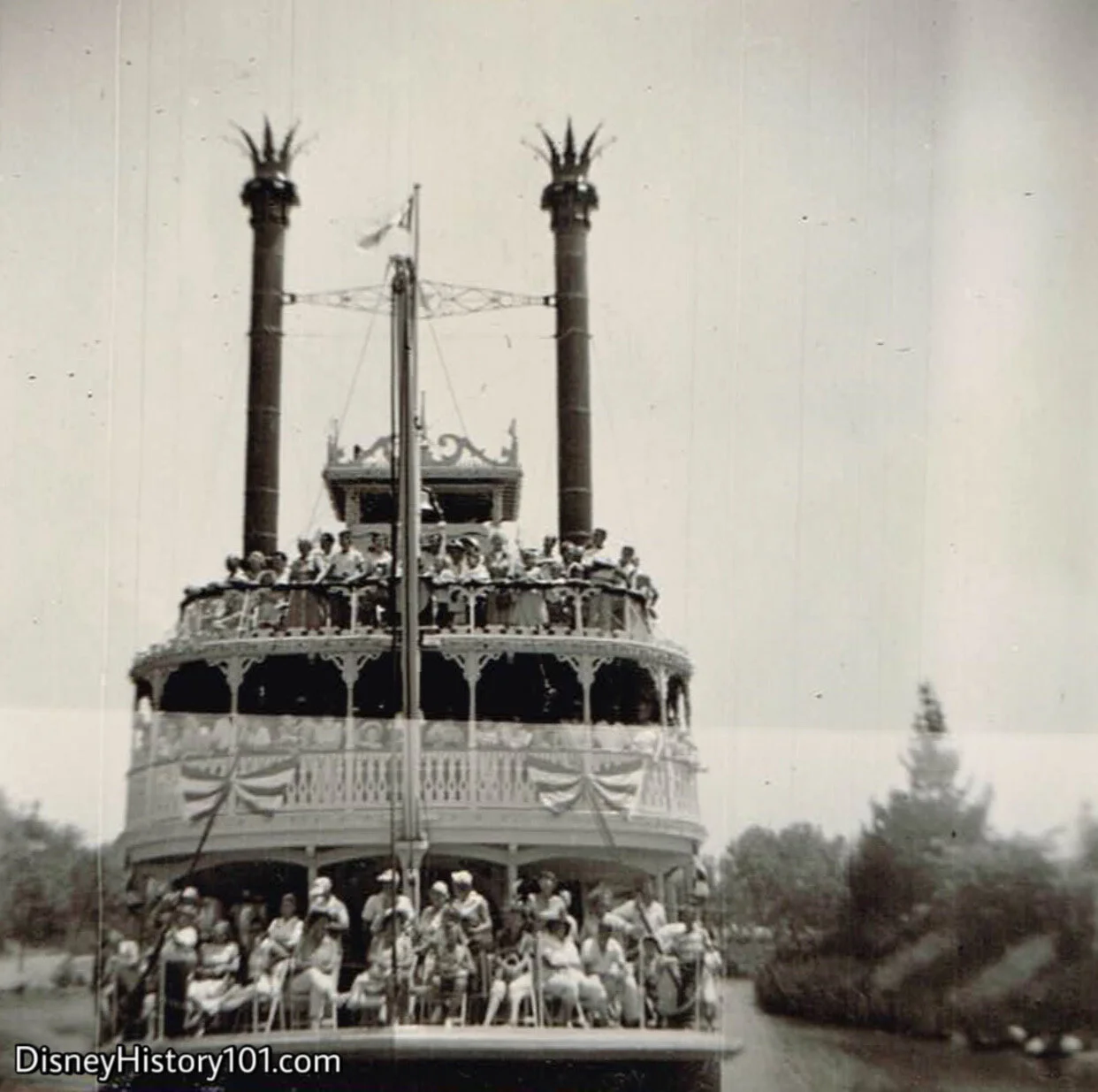
1957
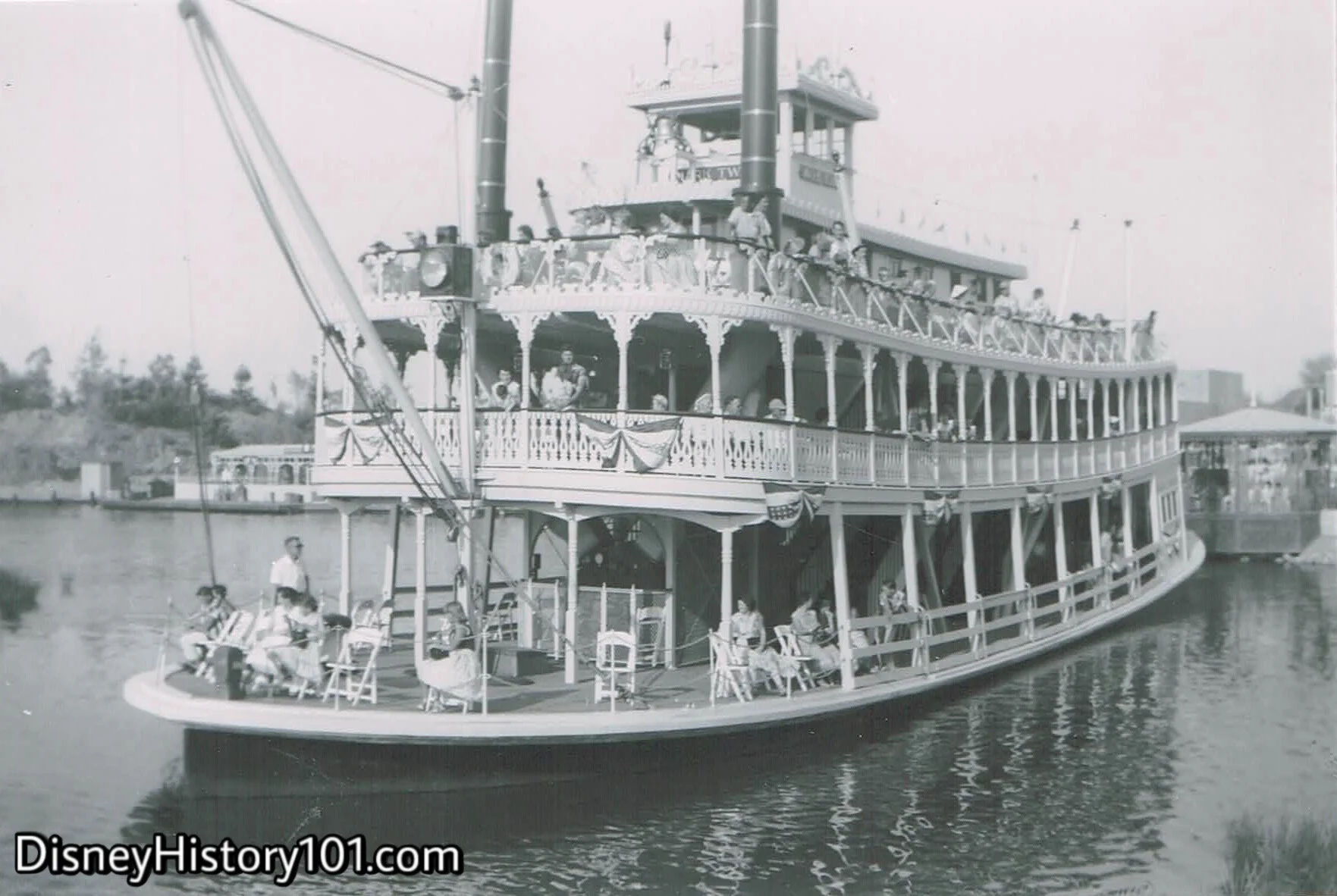
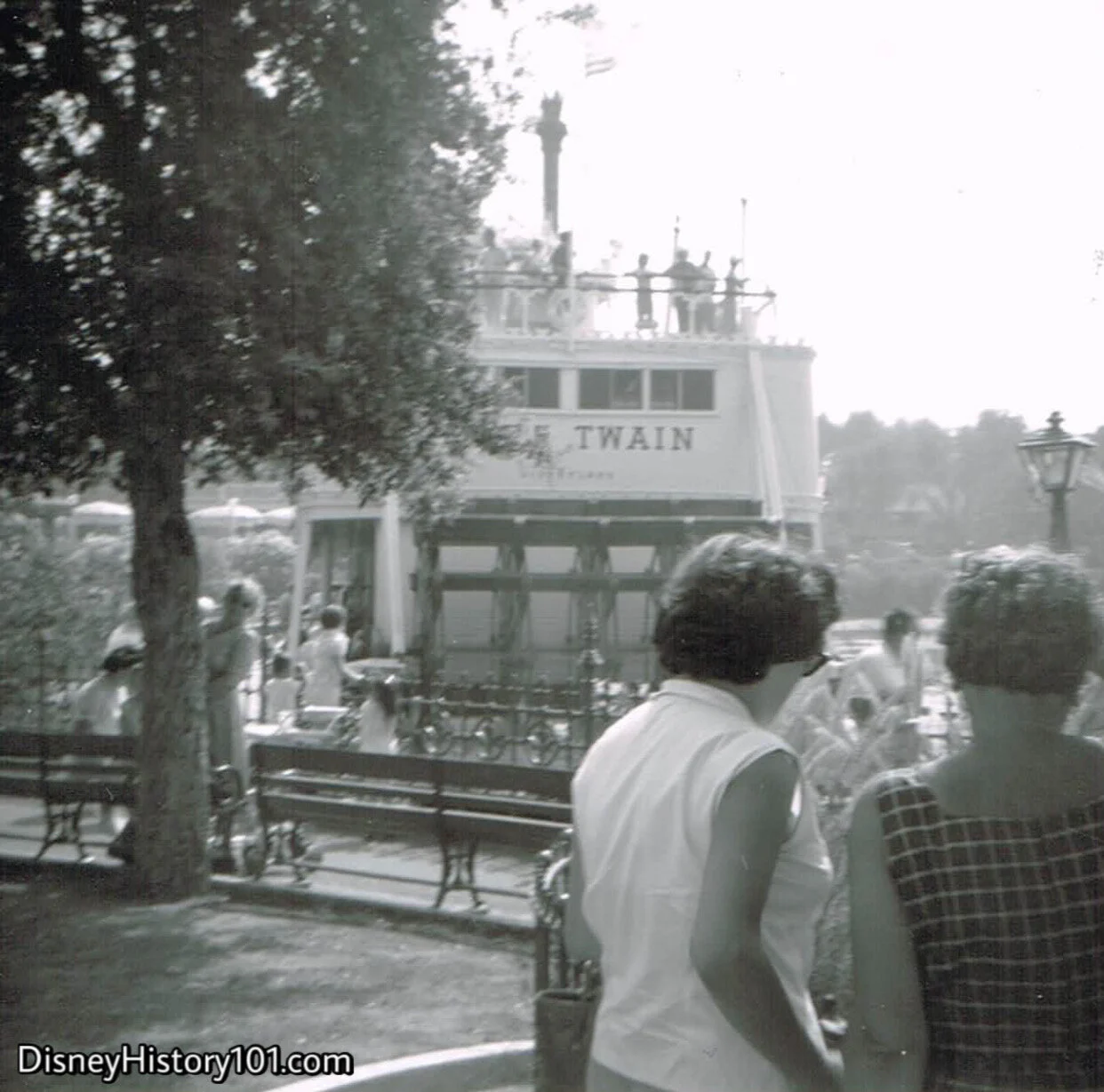
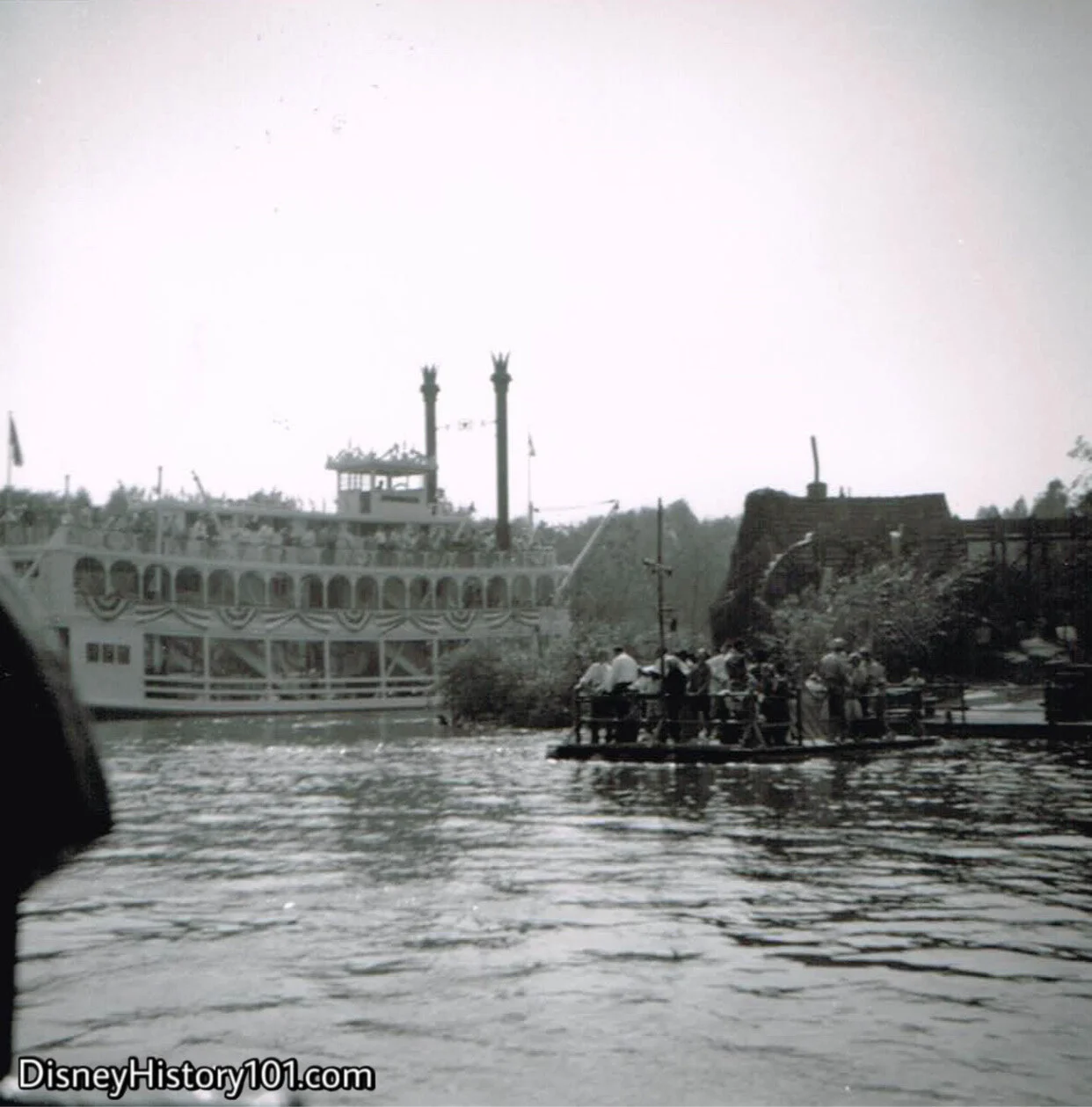
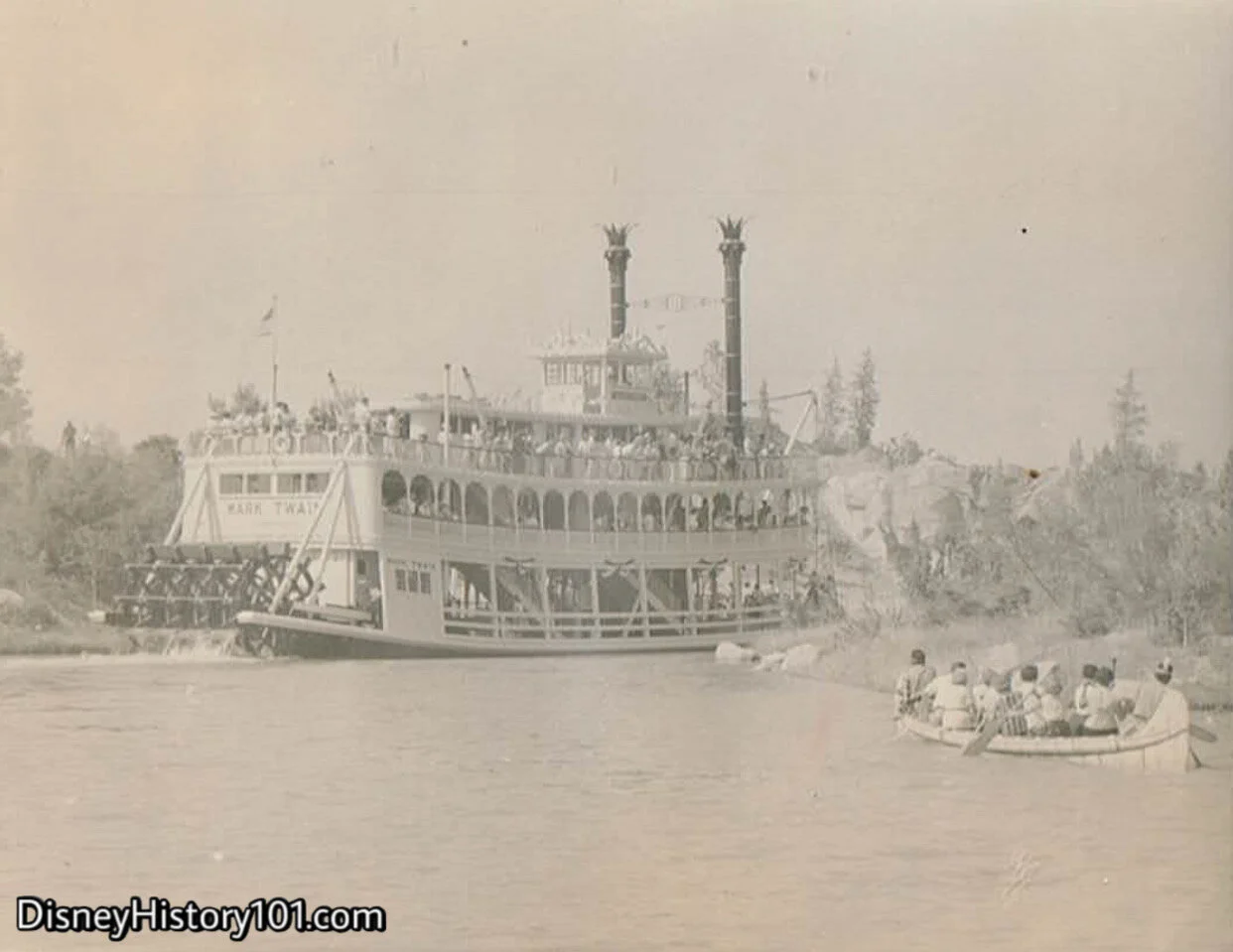
1956, July 7th
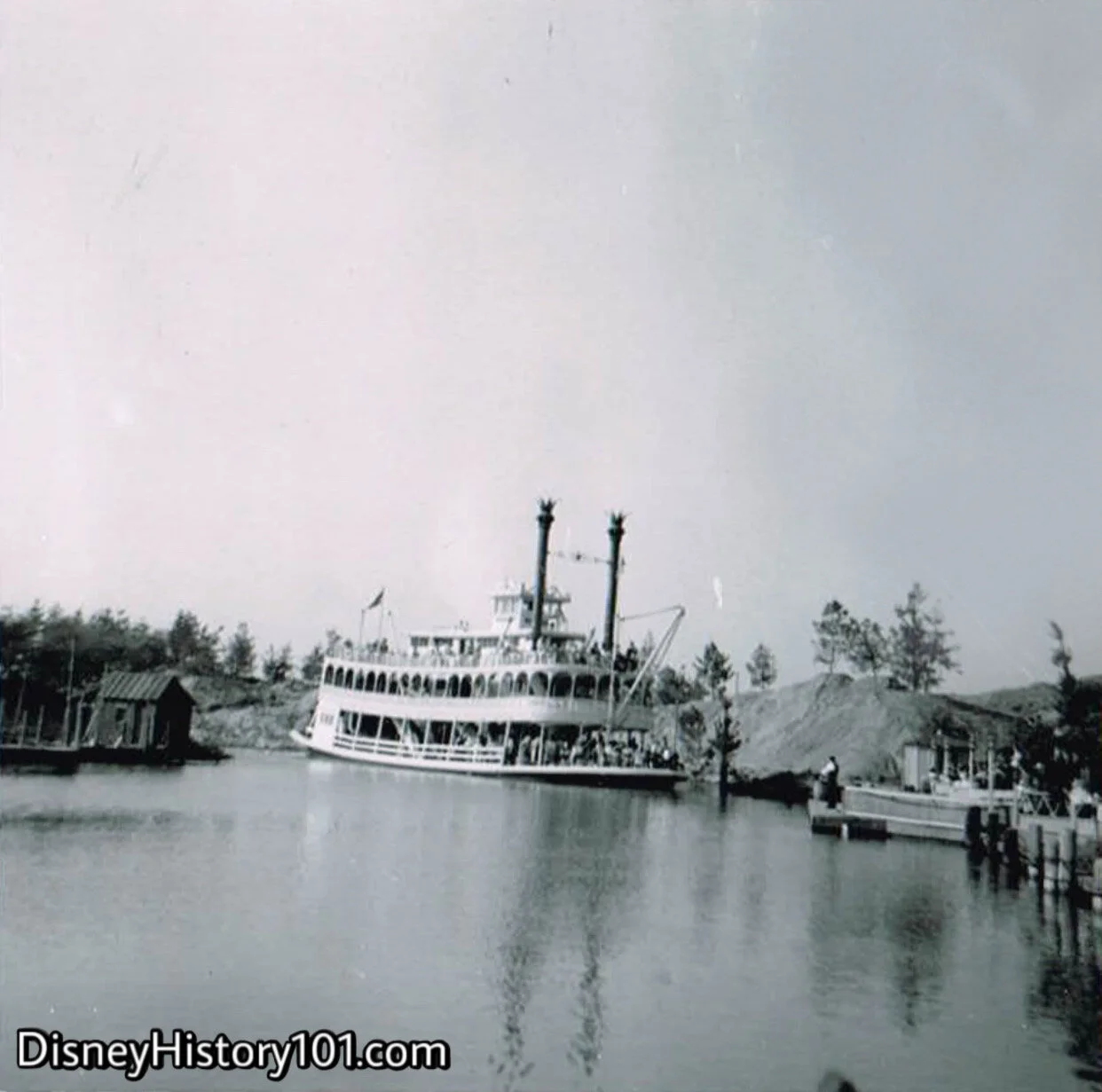
1957
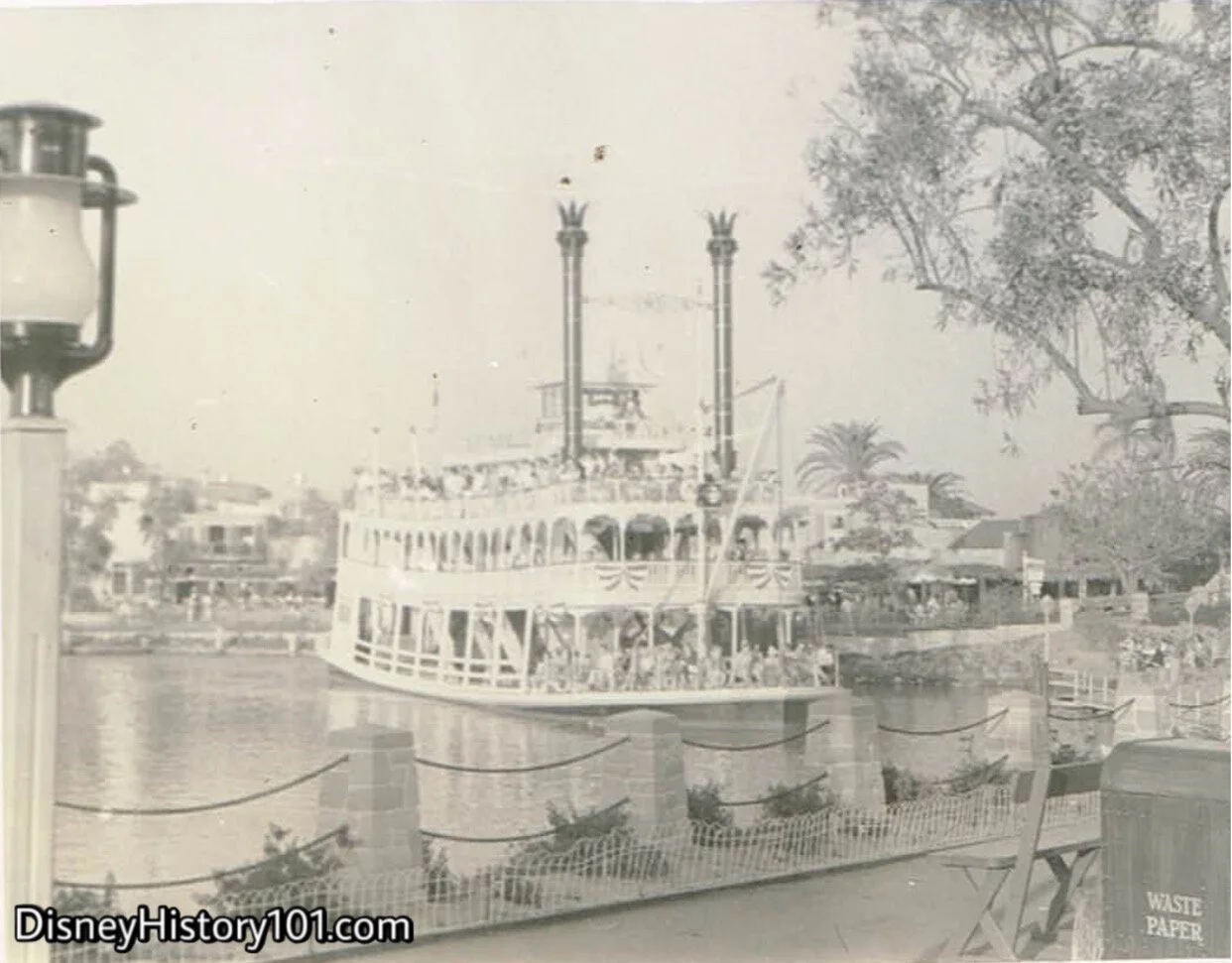
1956, July 7th
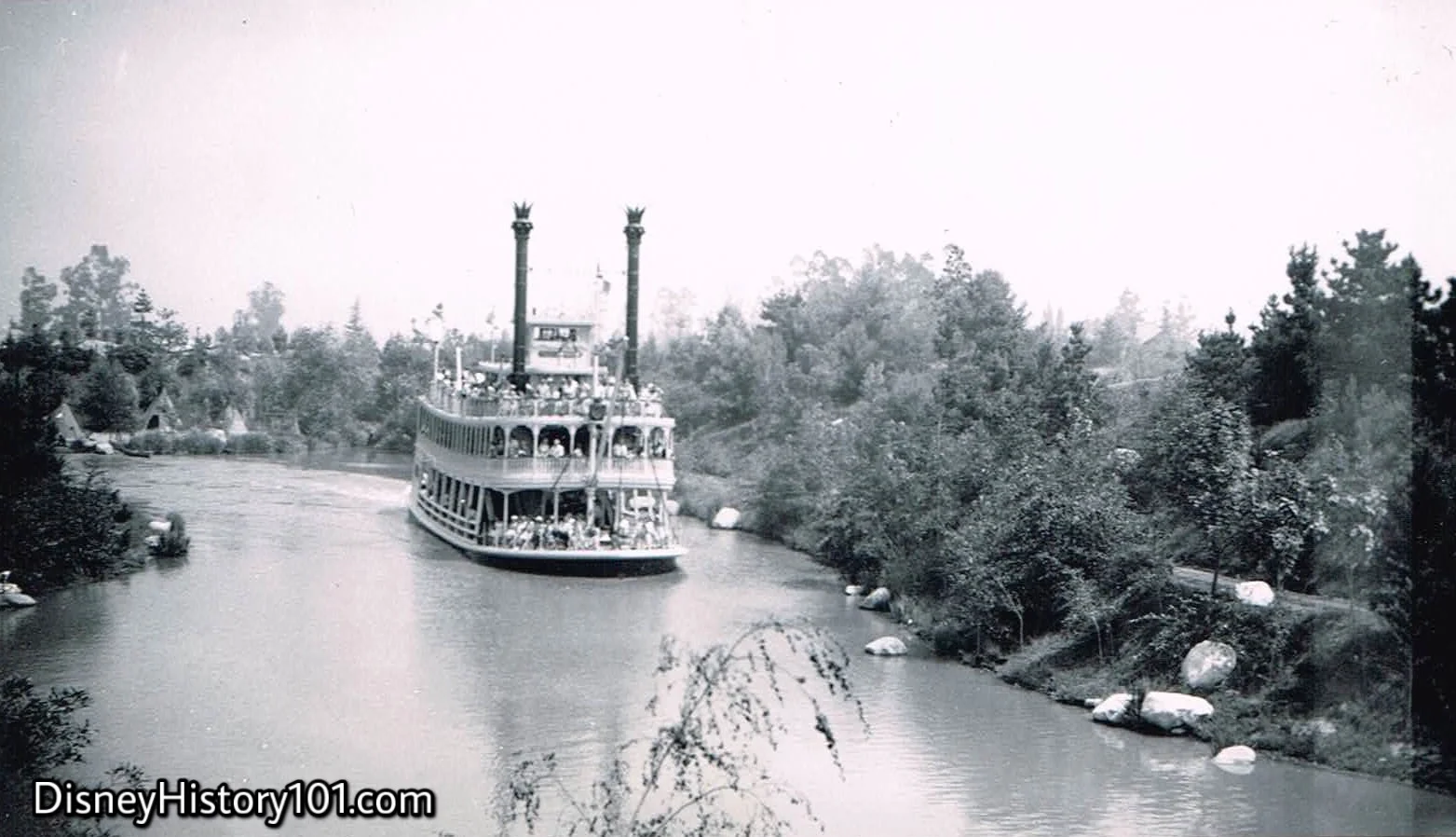
1963
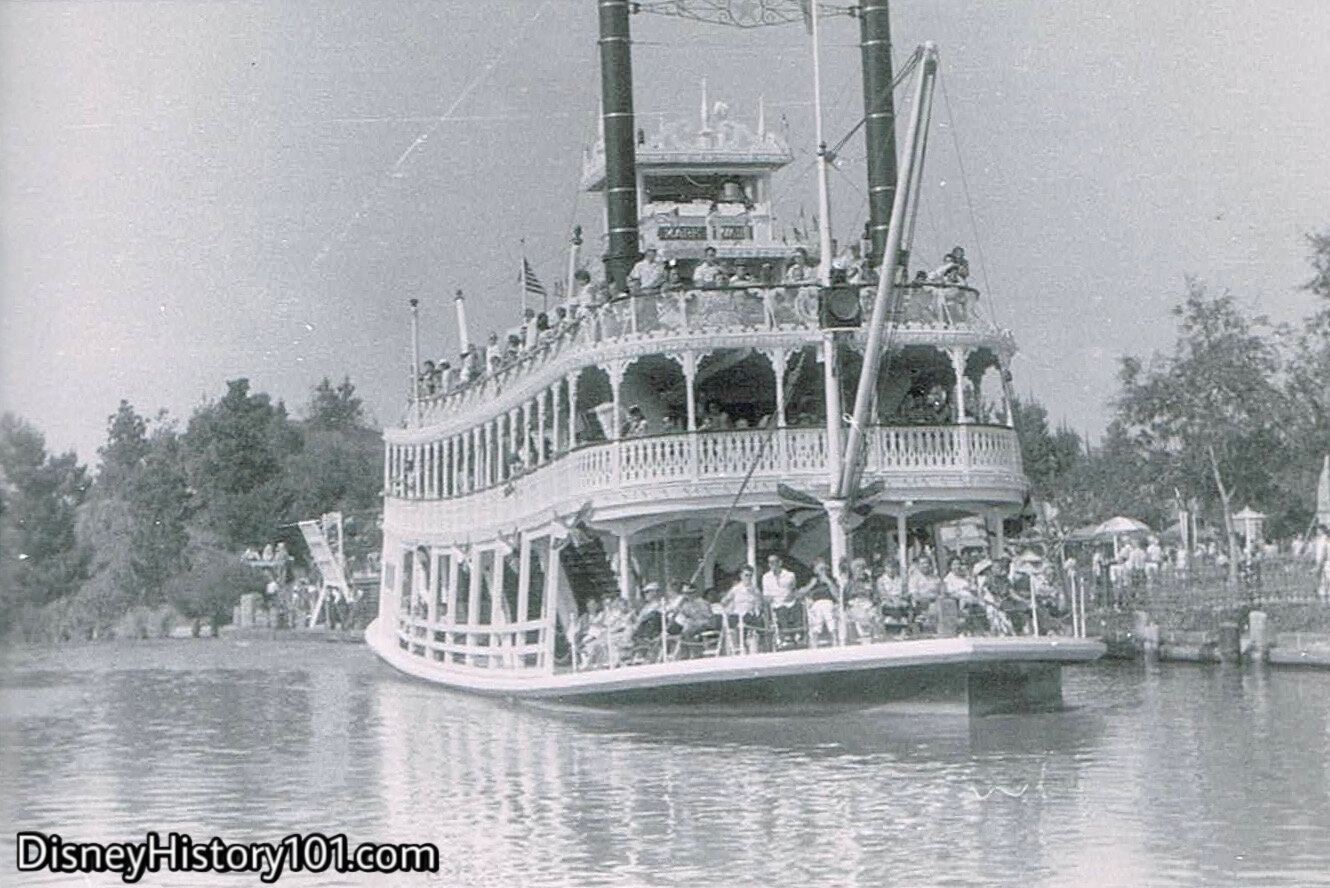
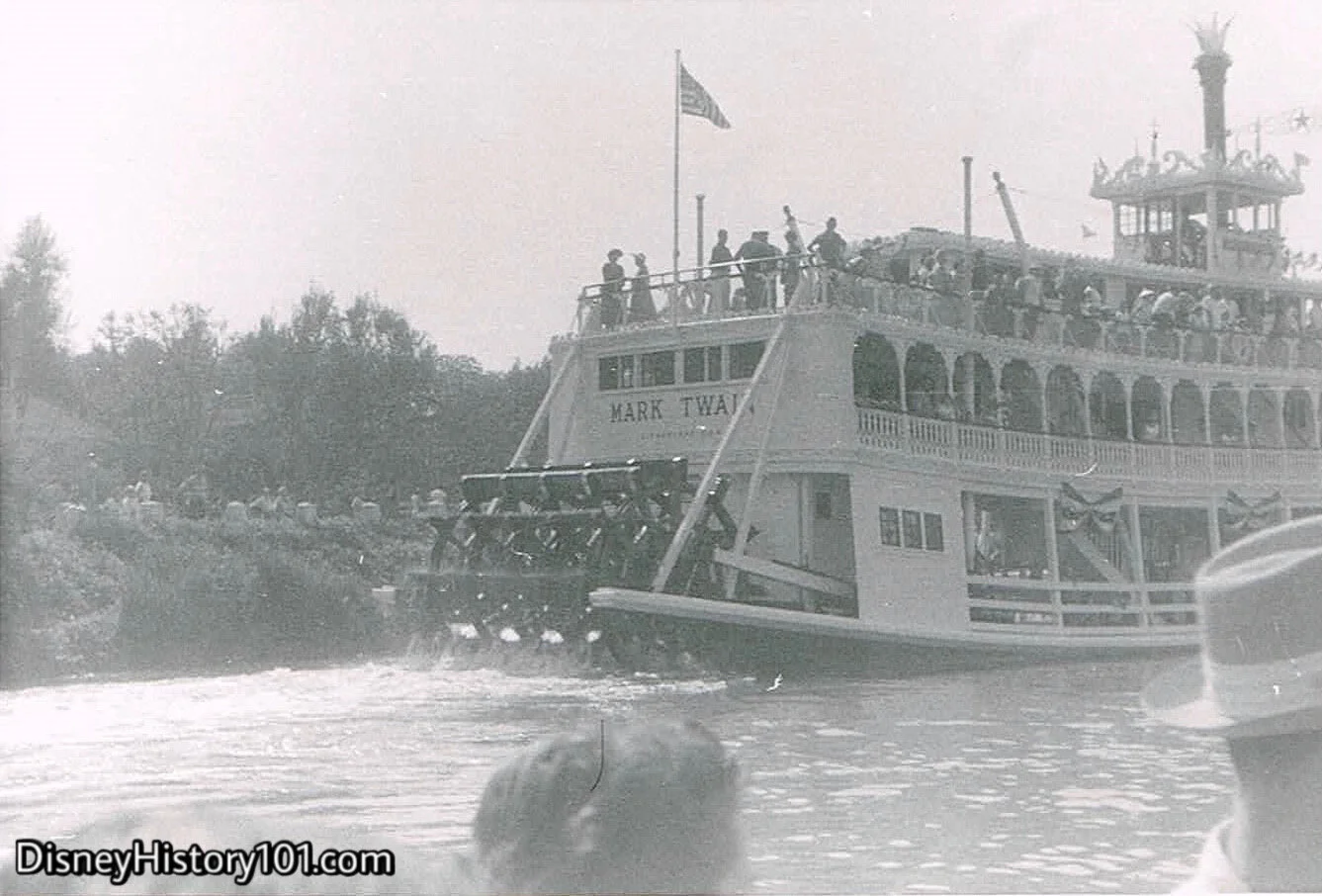
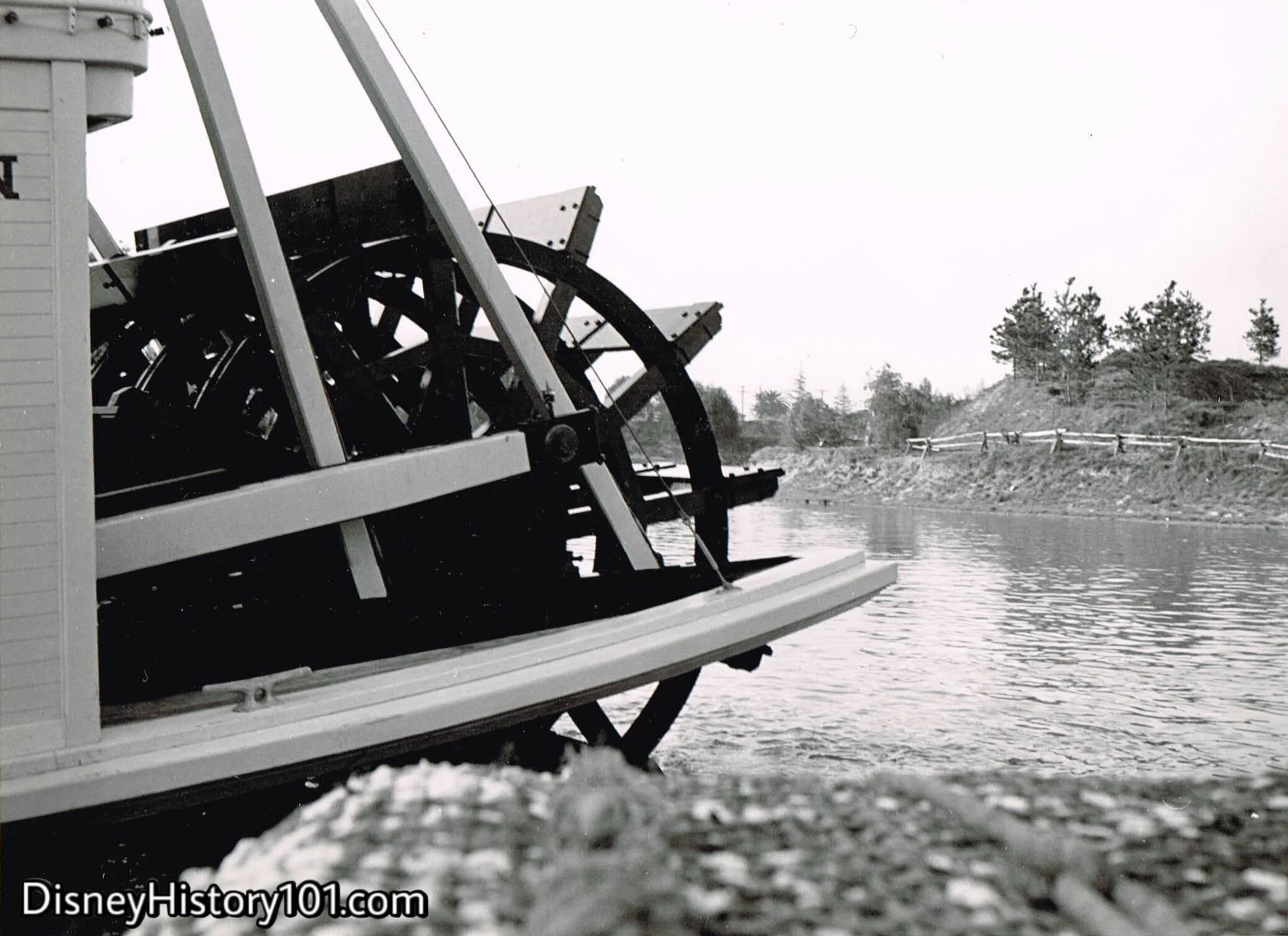
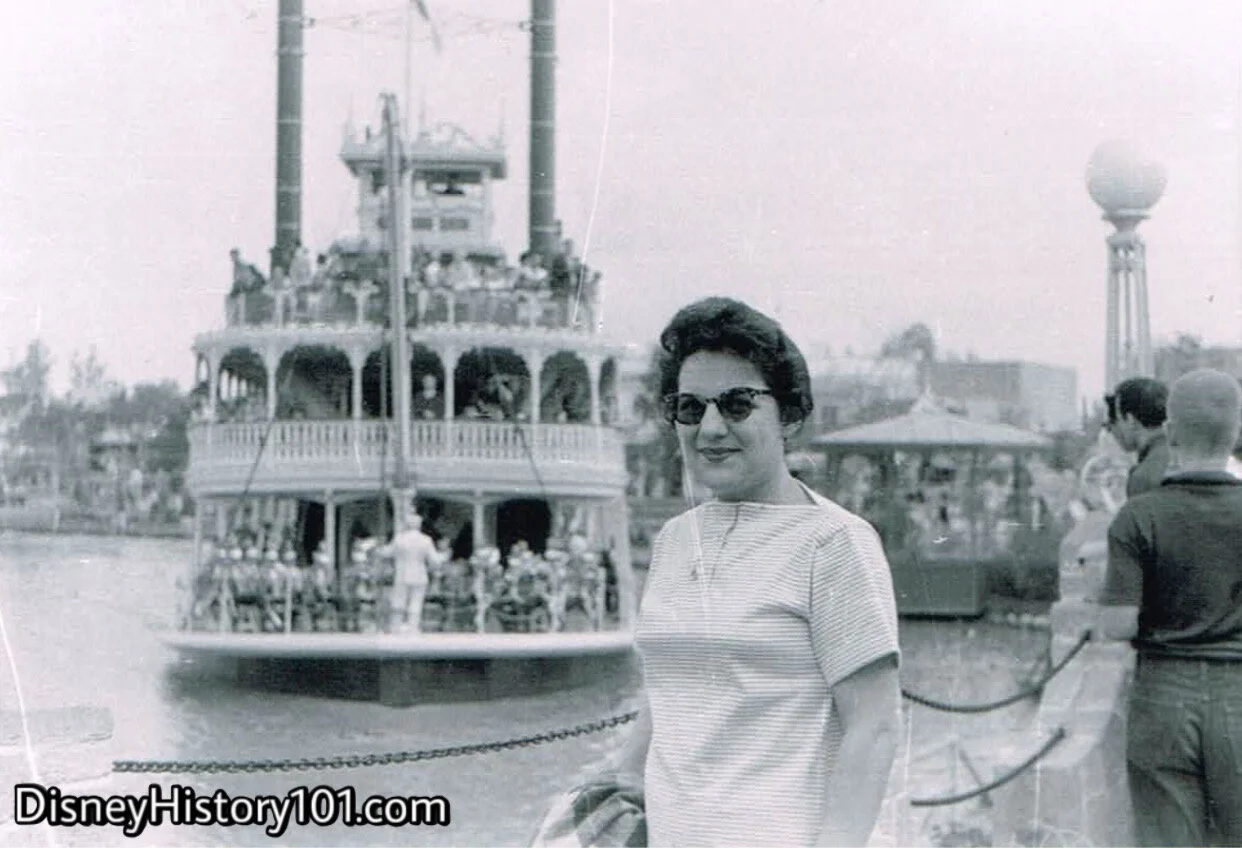
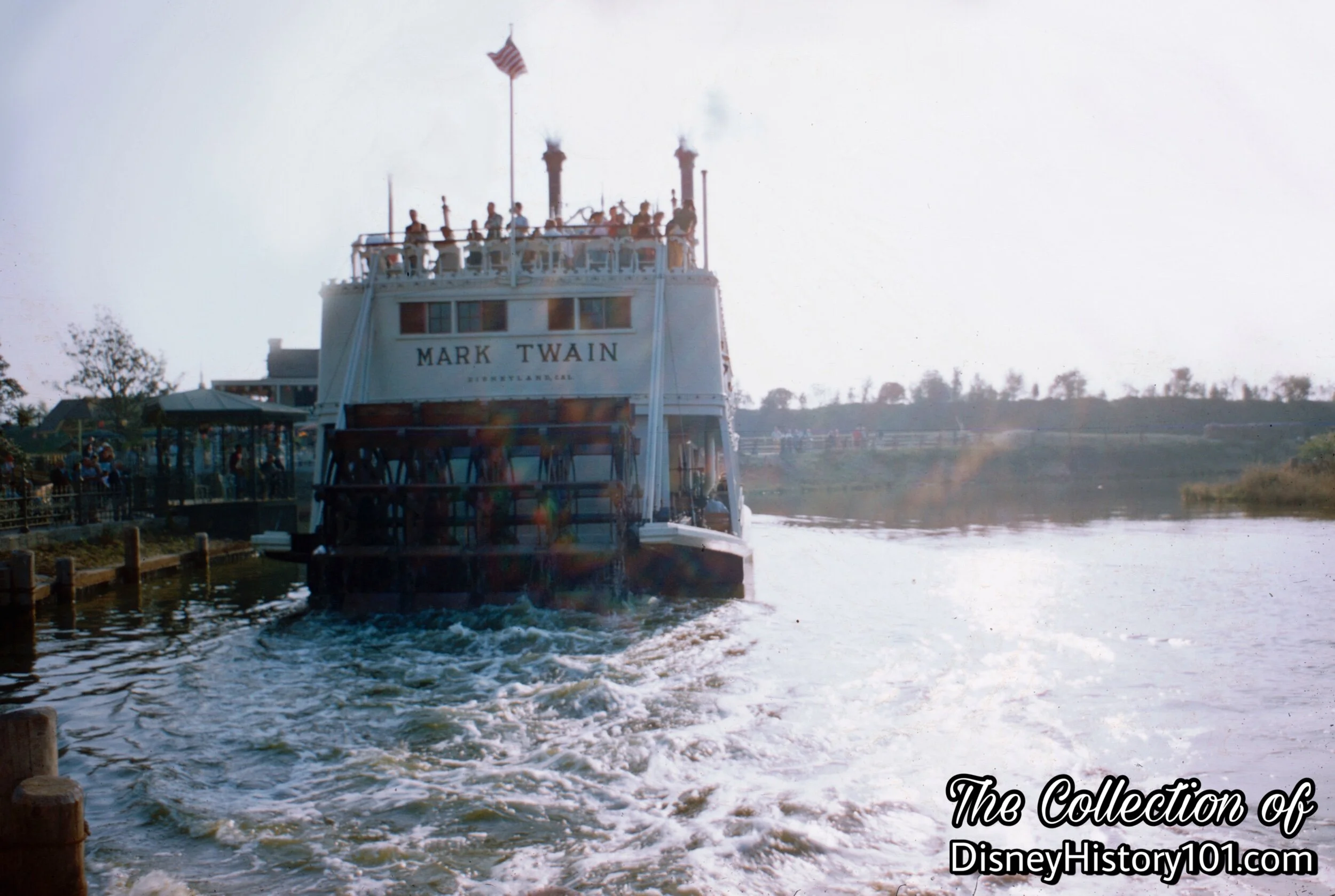
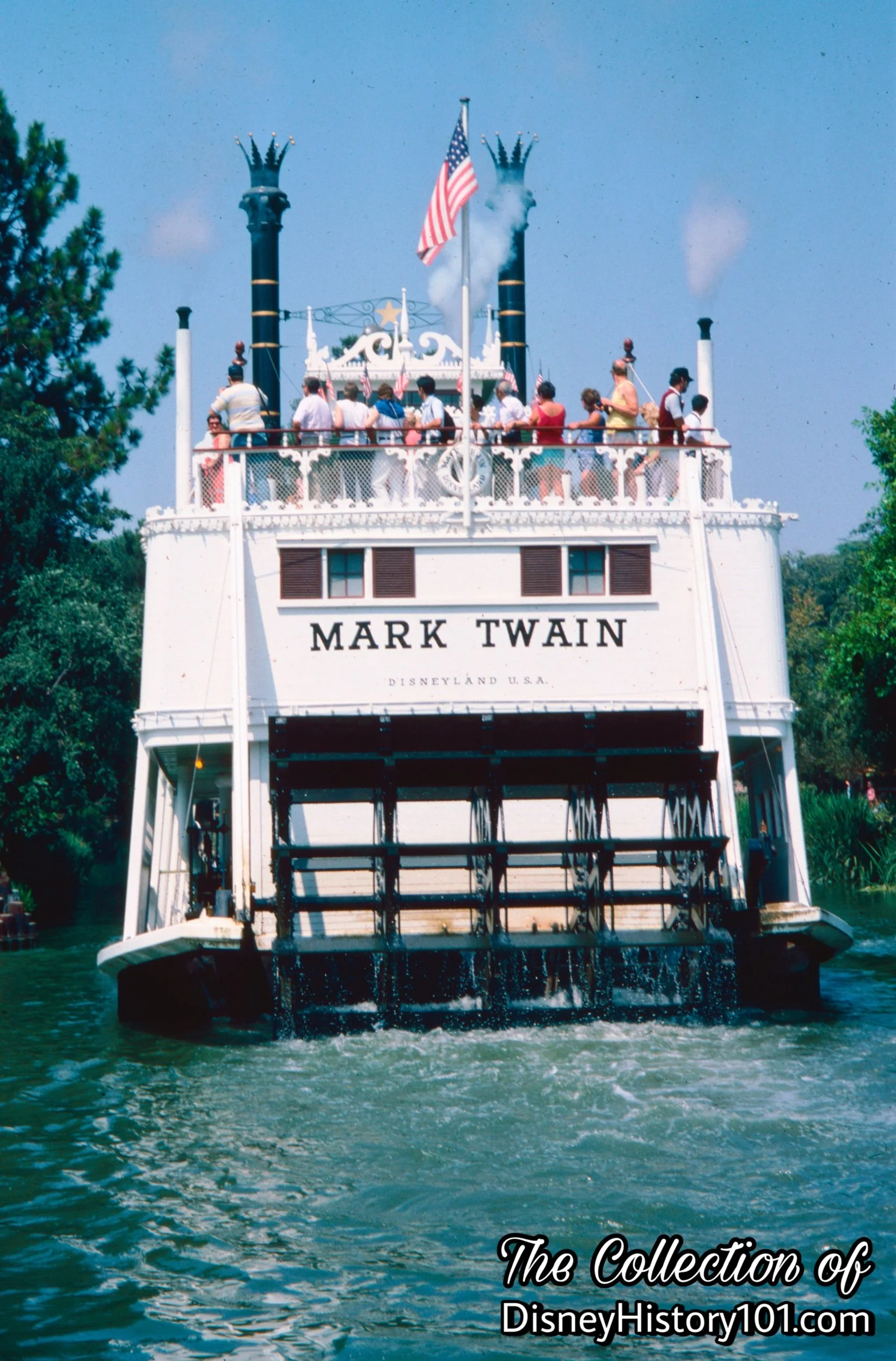
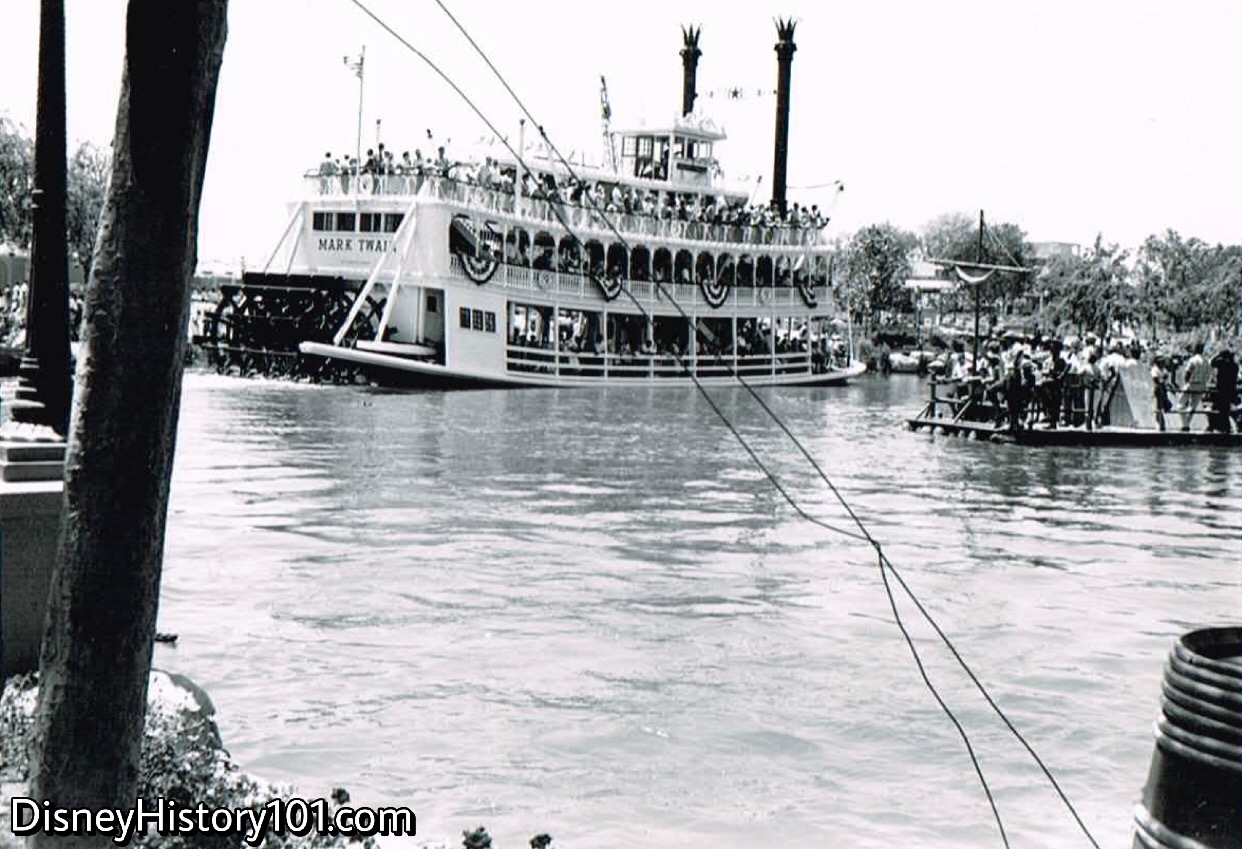
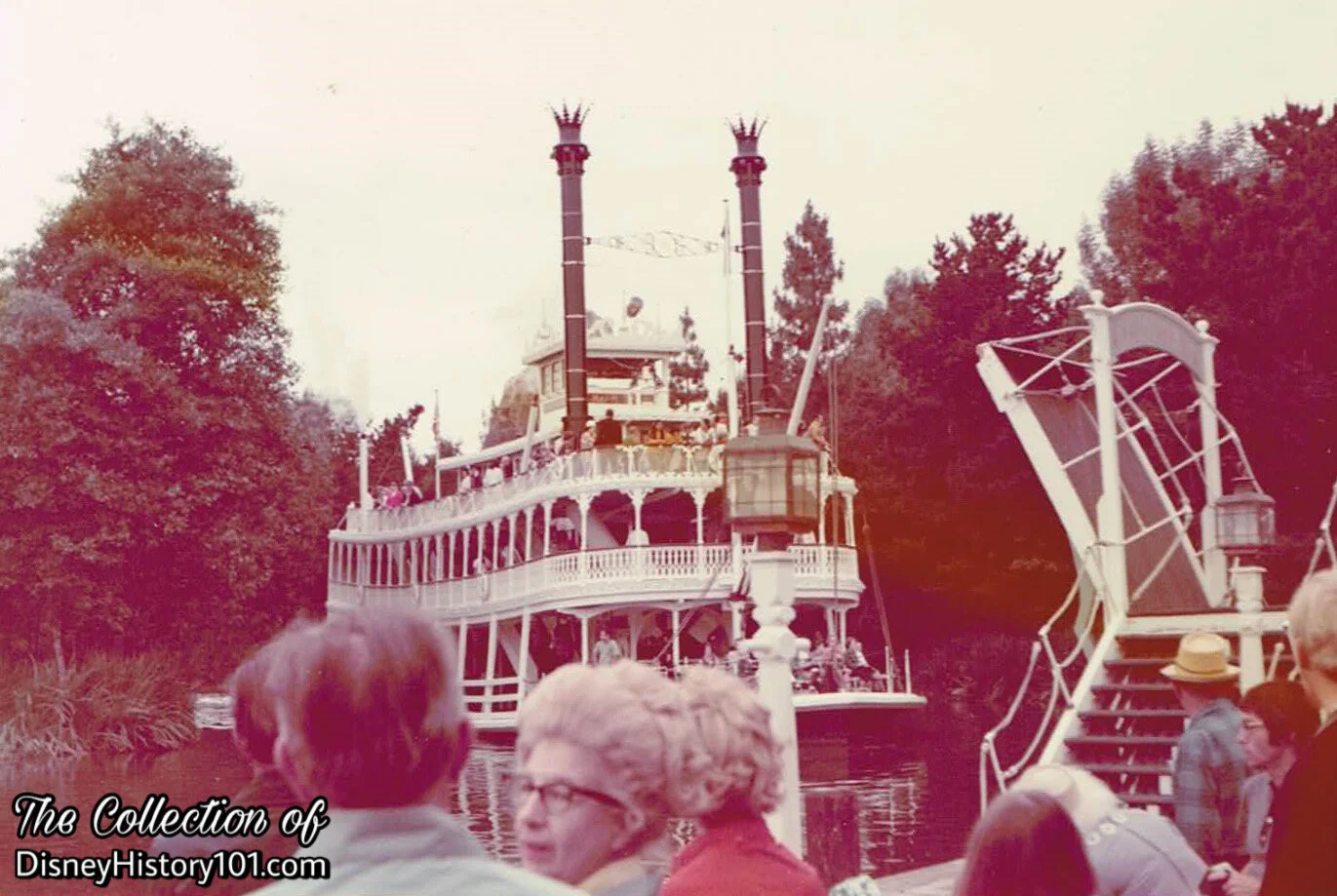
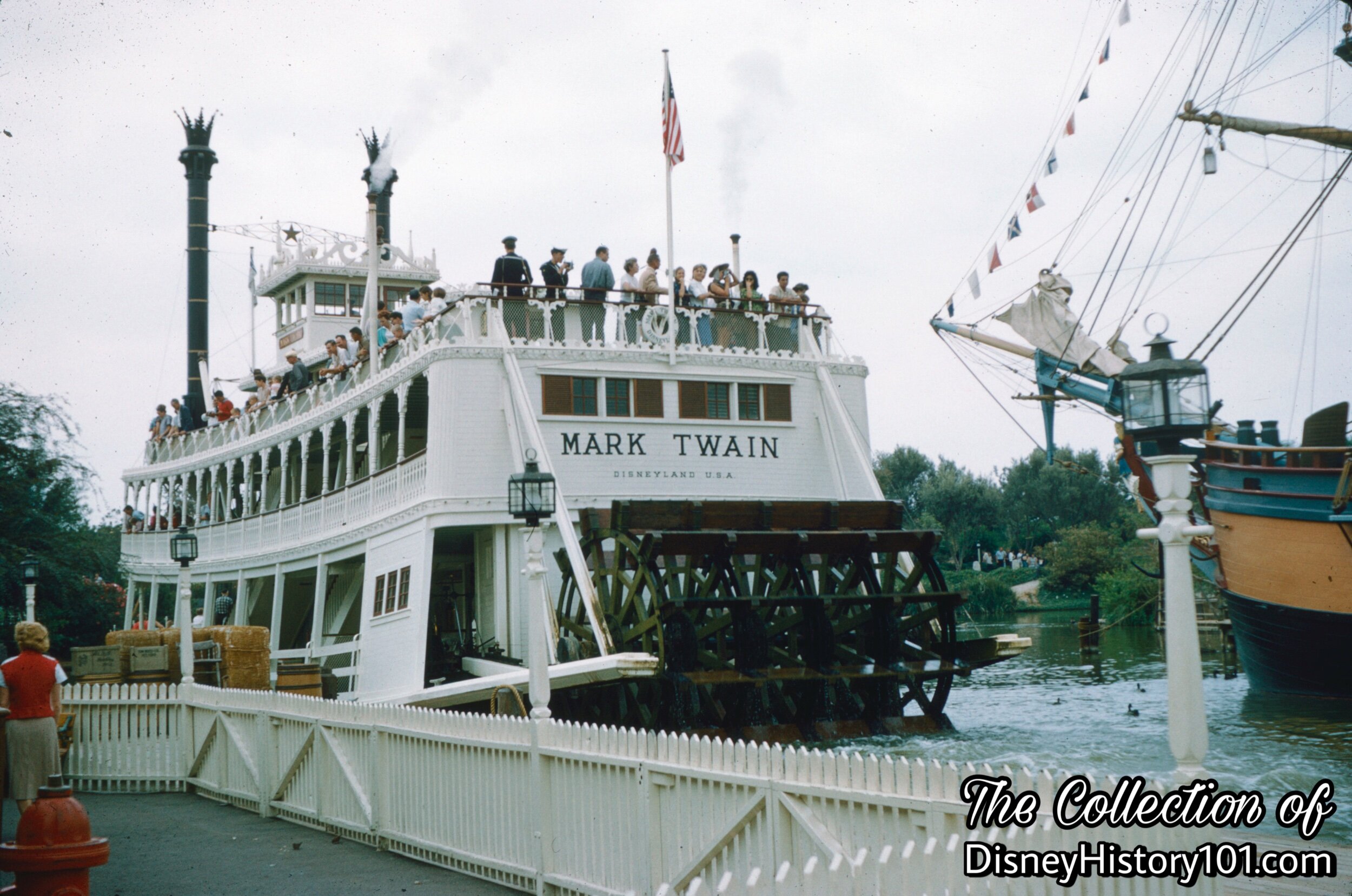
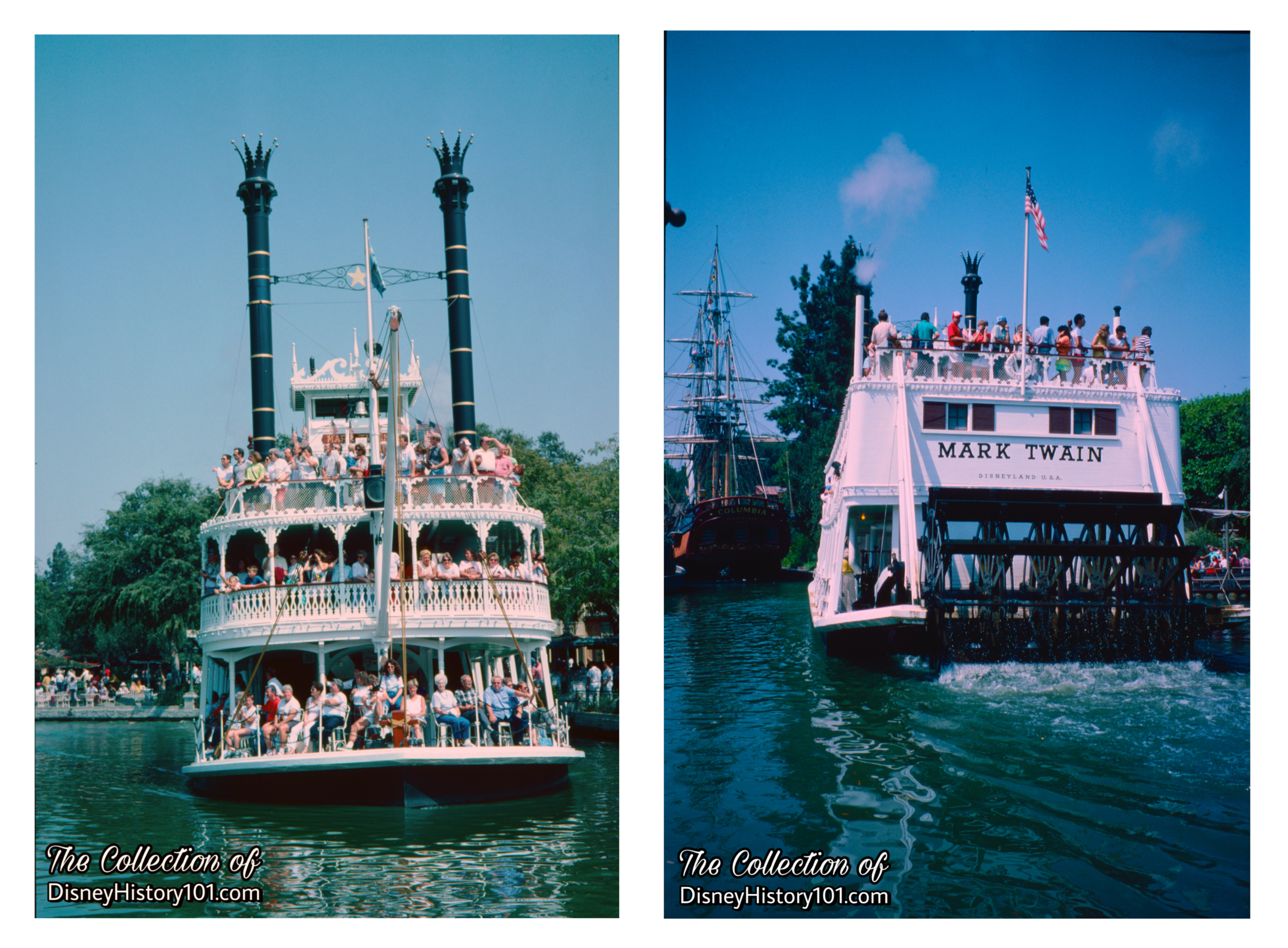
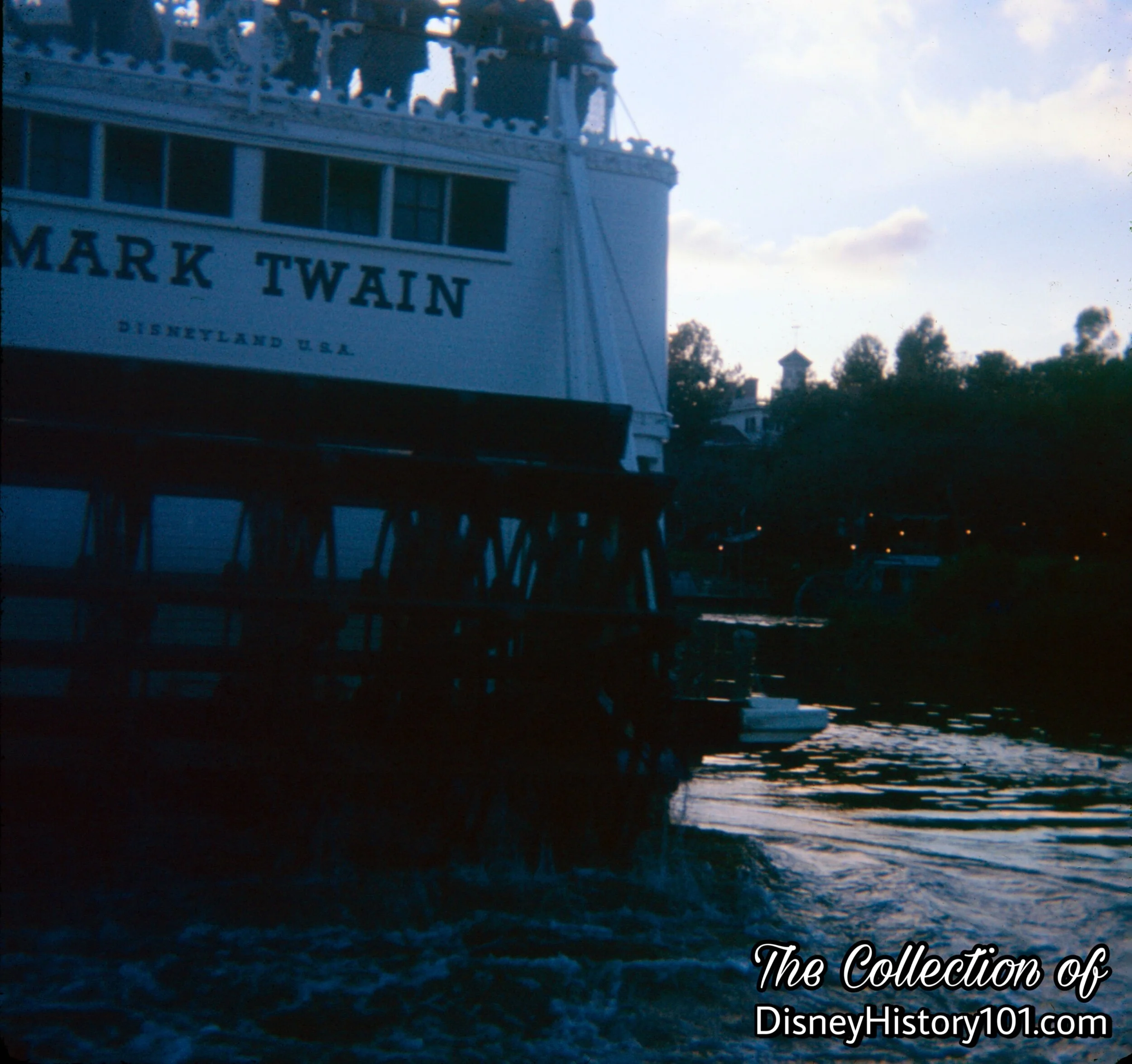
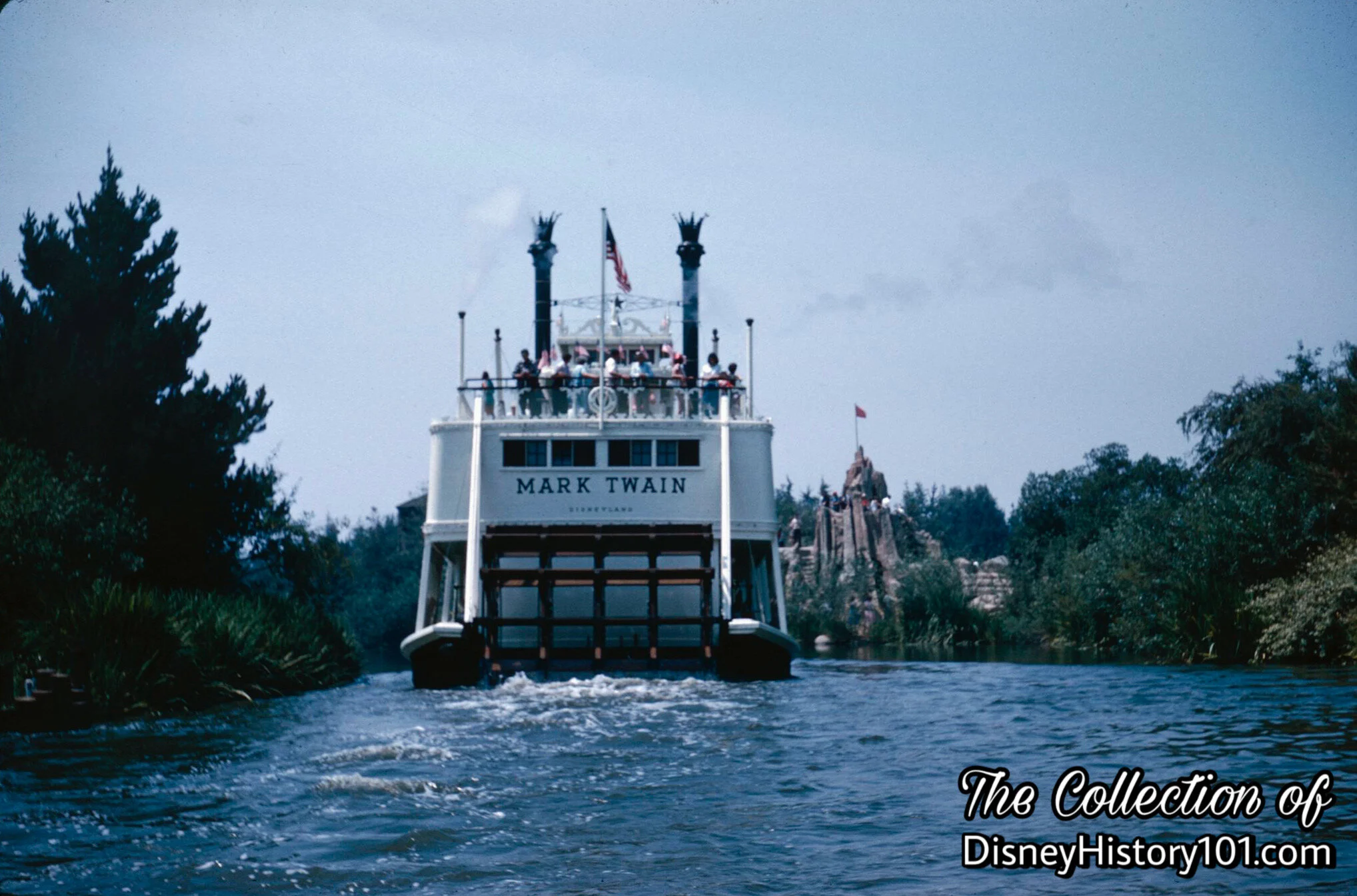
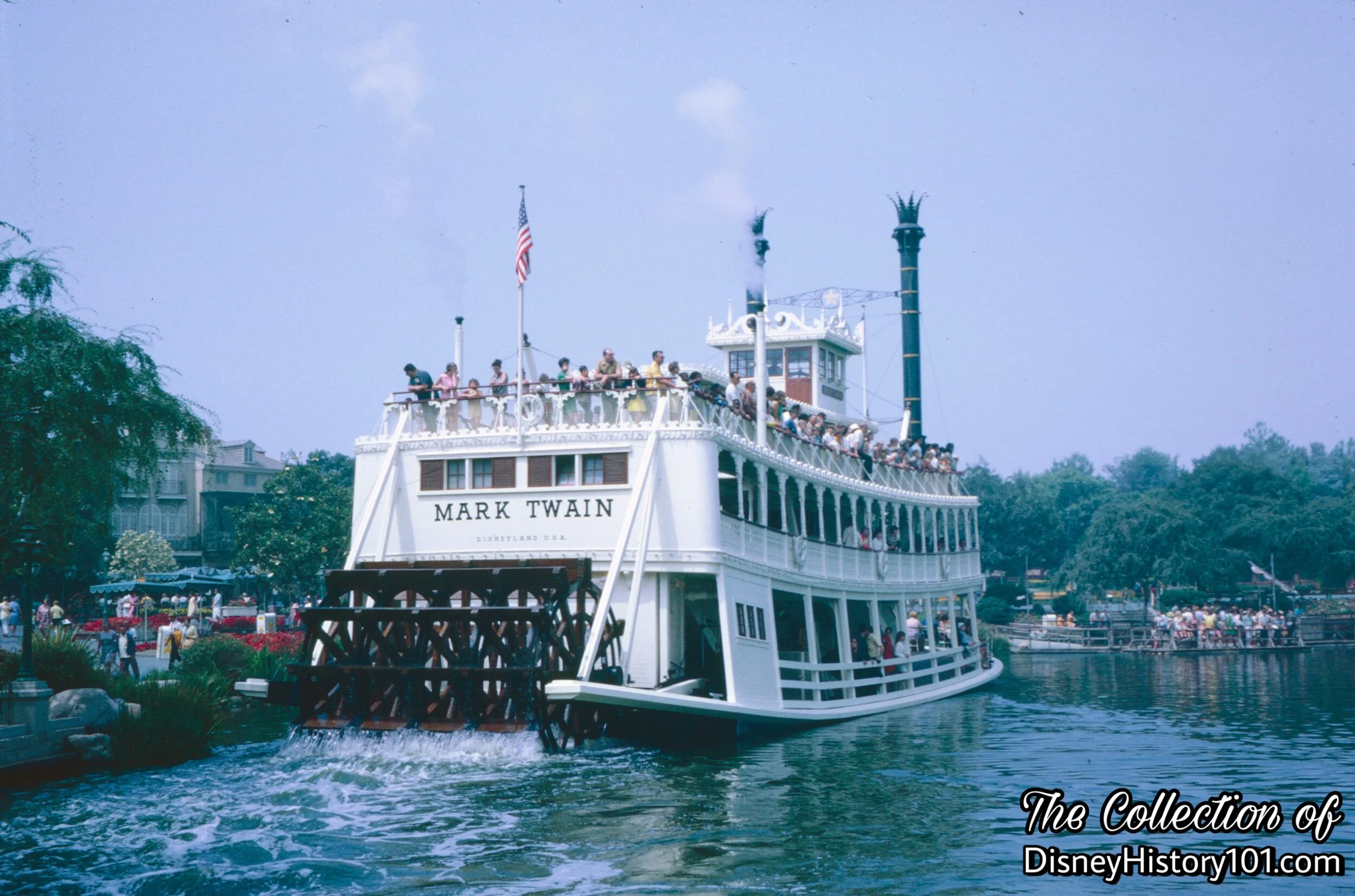
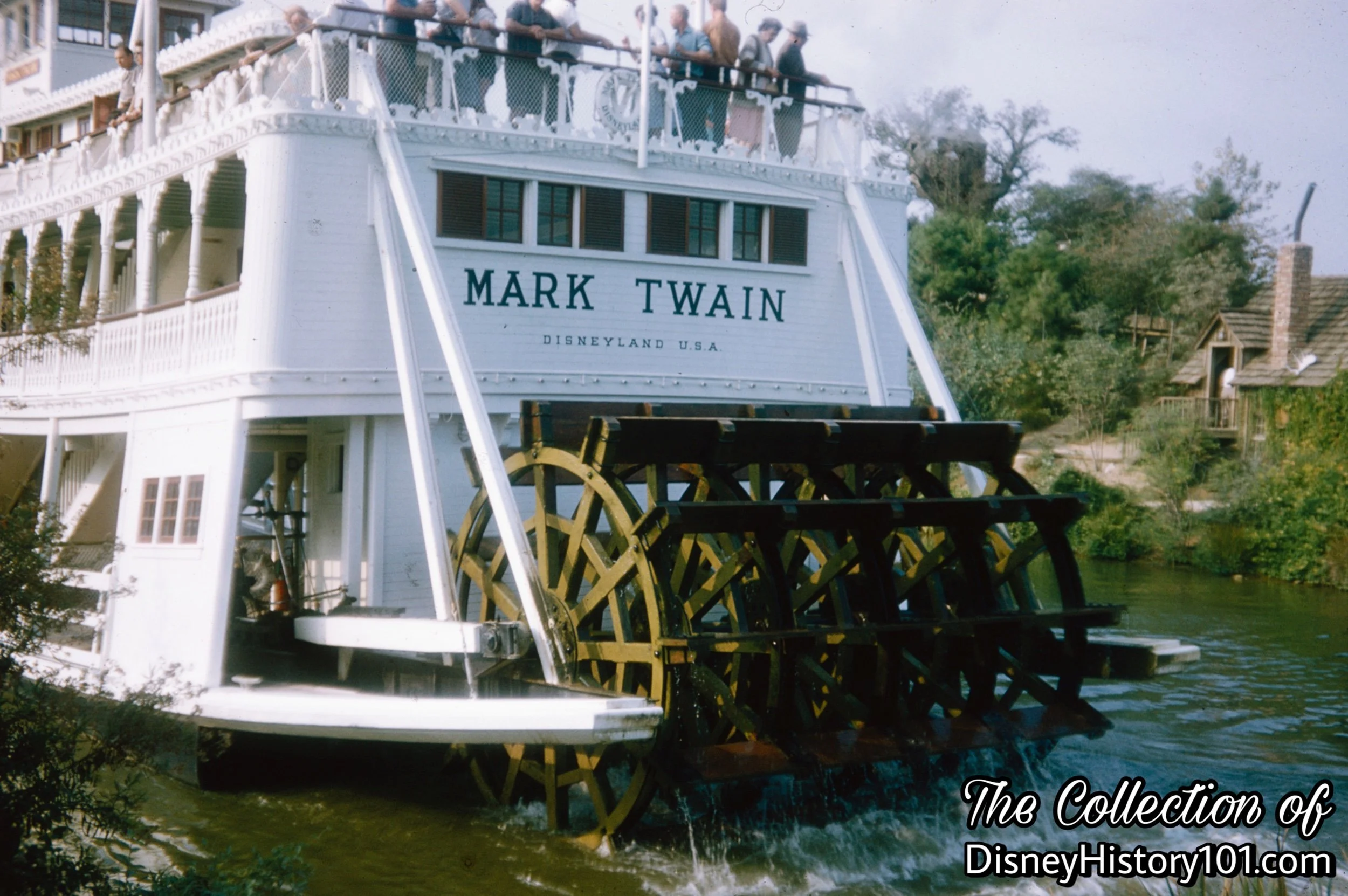
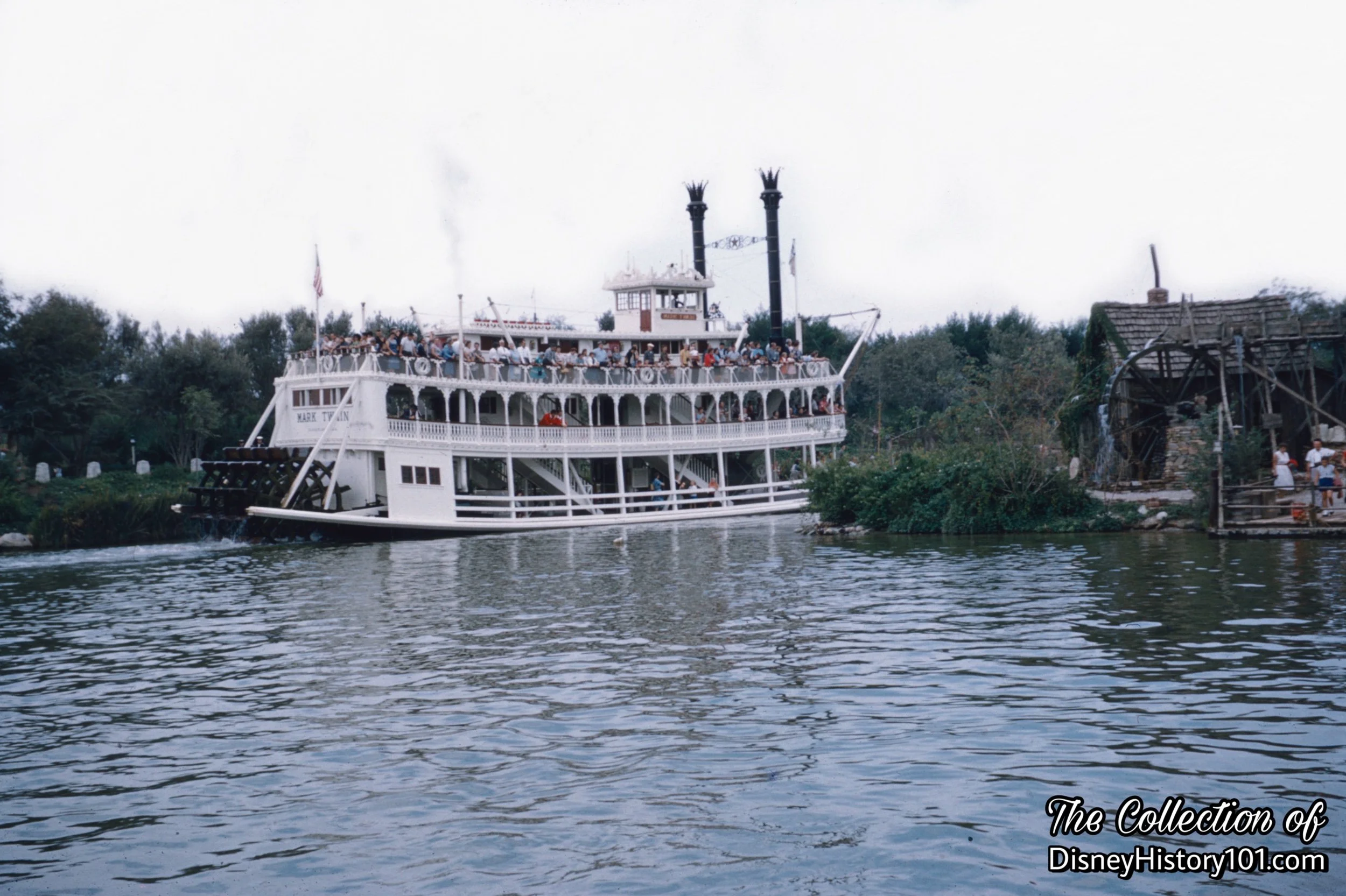
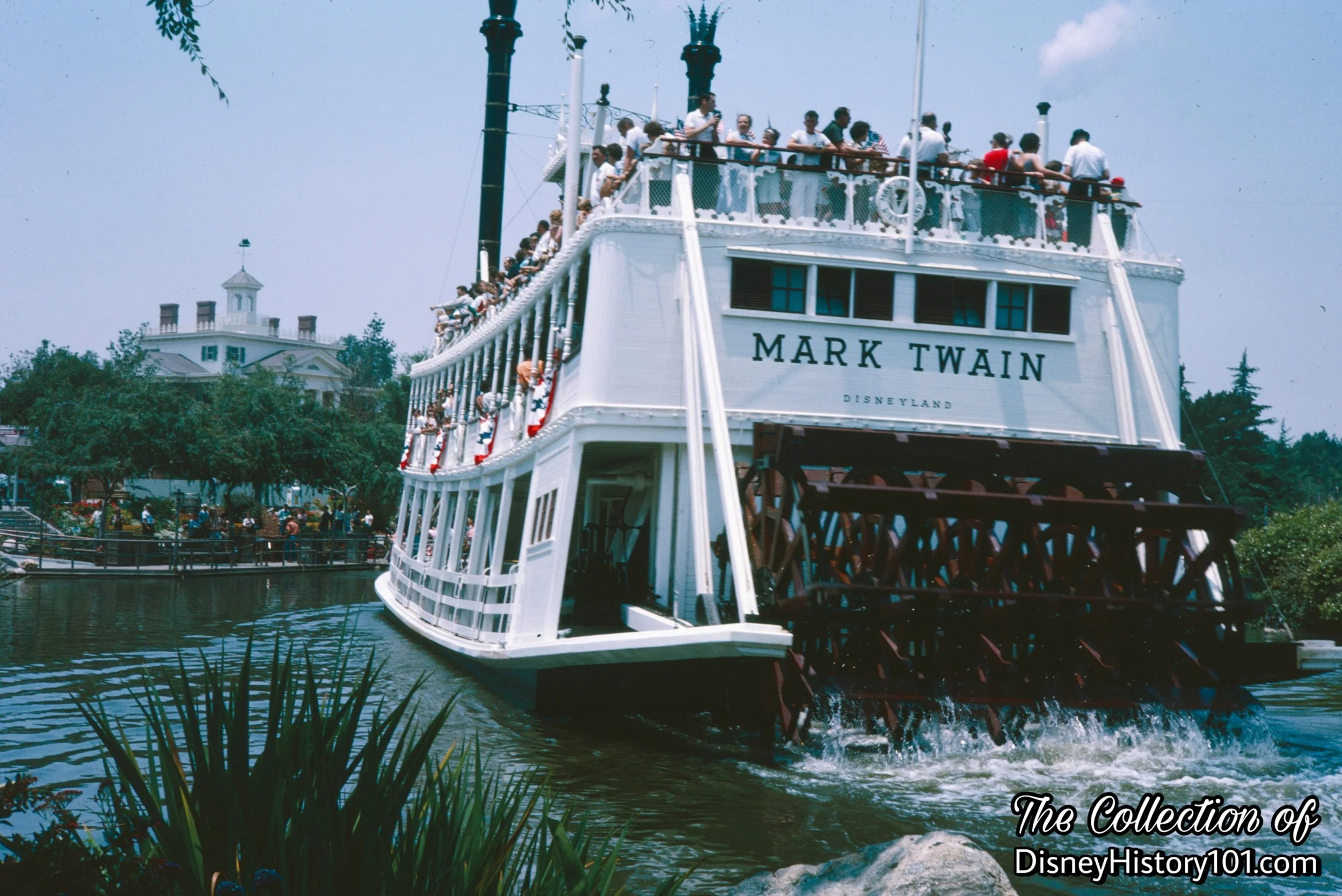
The Mark Twain Sternwheeler’s single wheel propels the paddle-river steamboat down the Rivers of America.
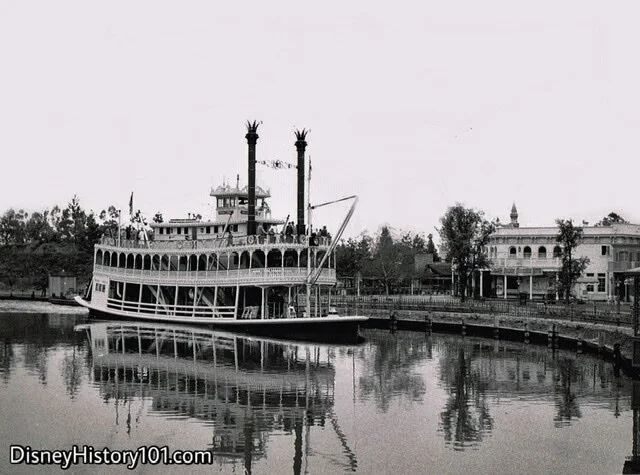
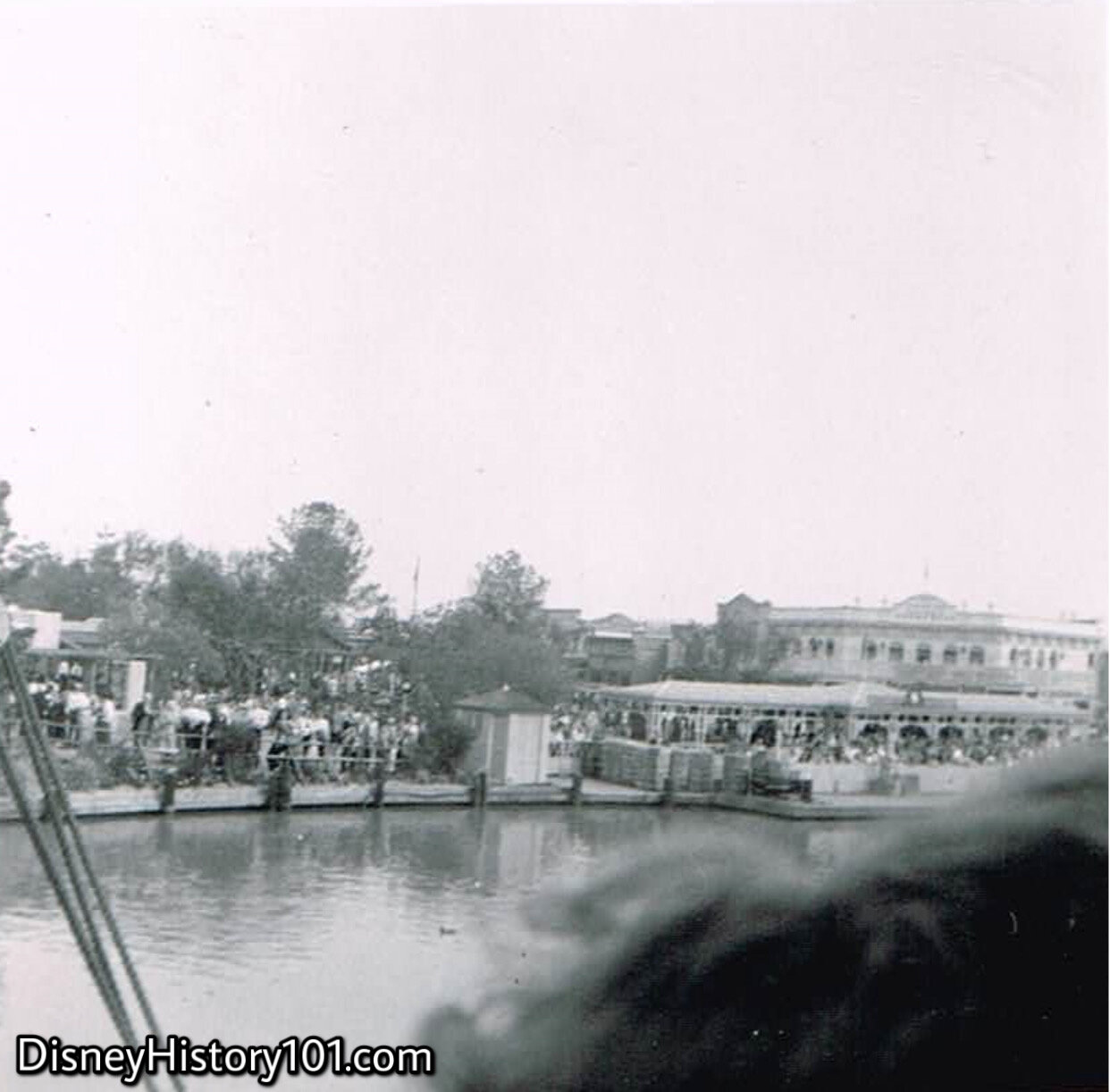
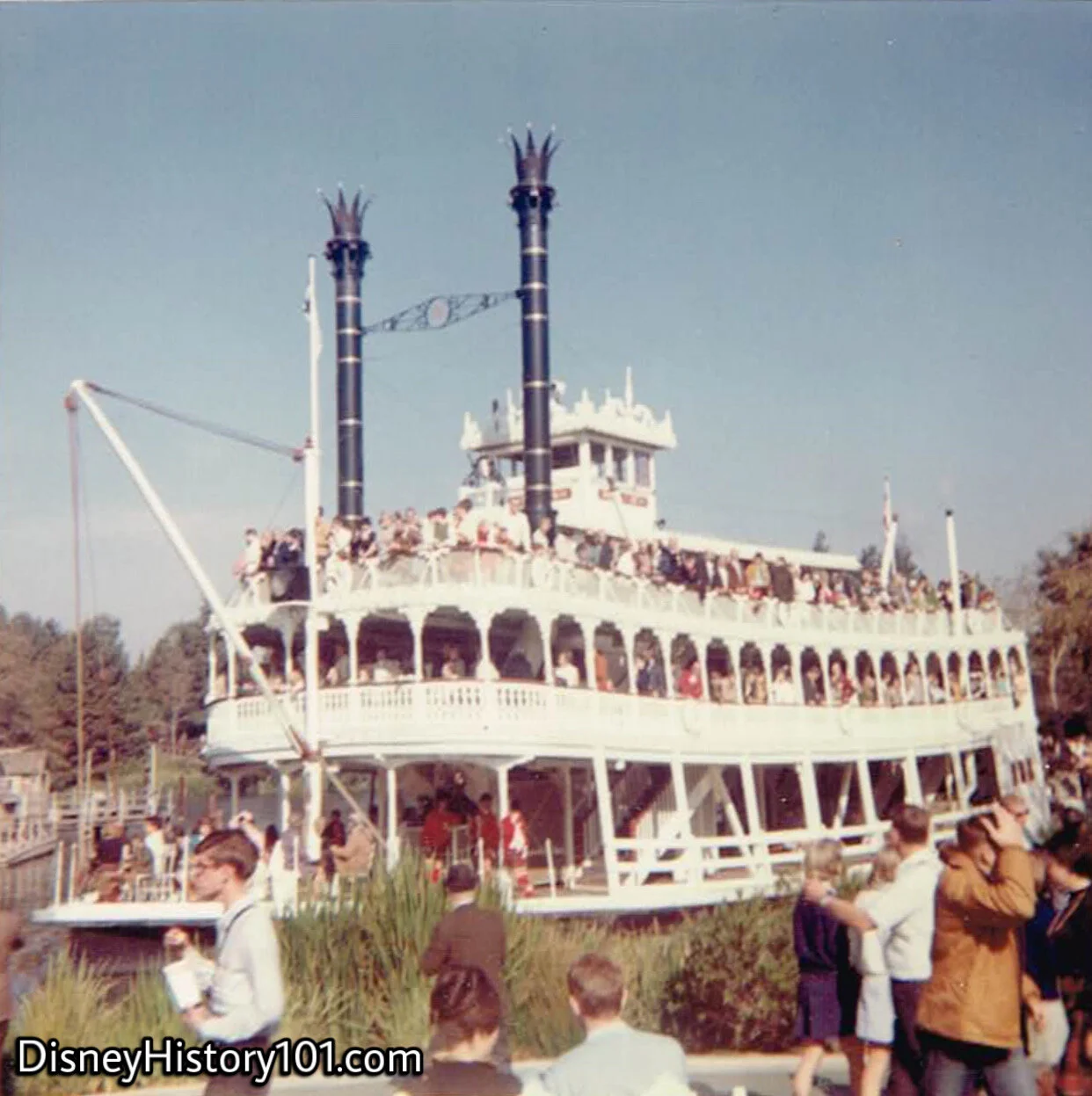
1969
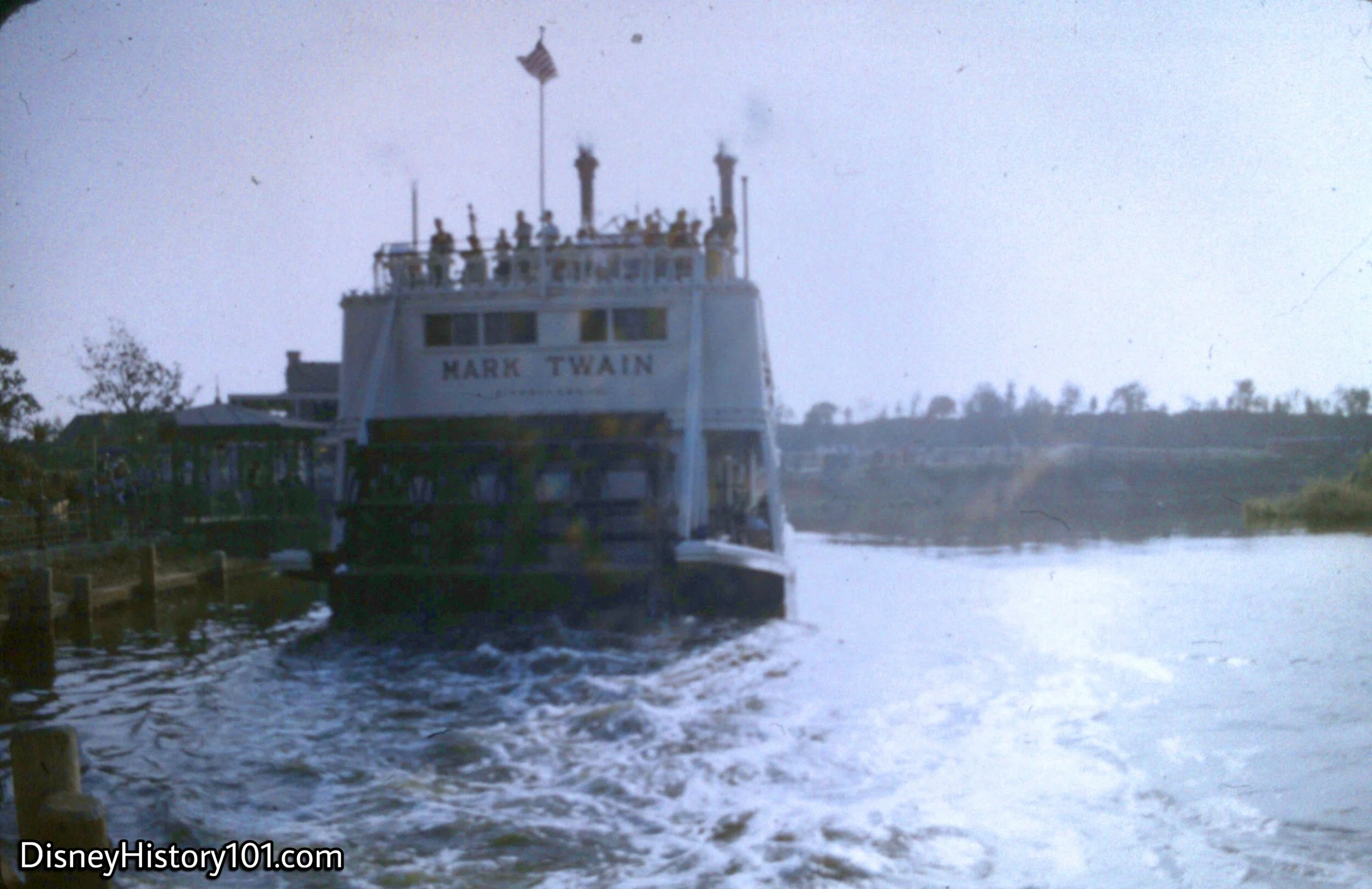
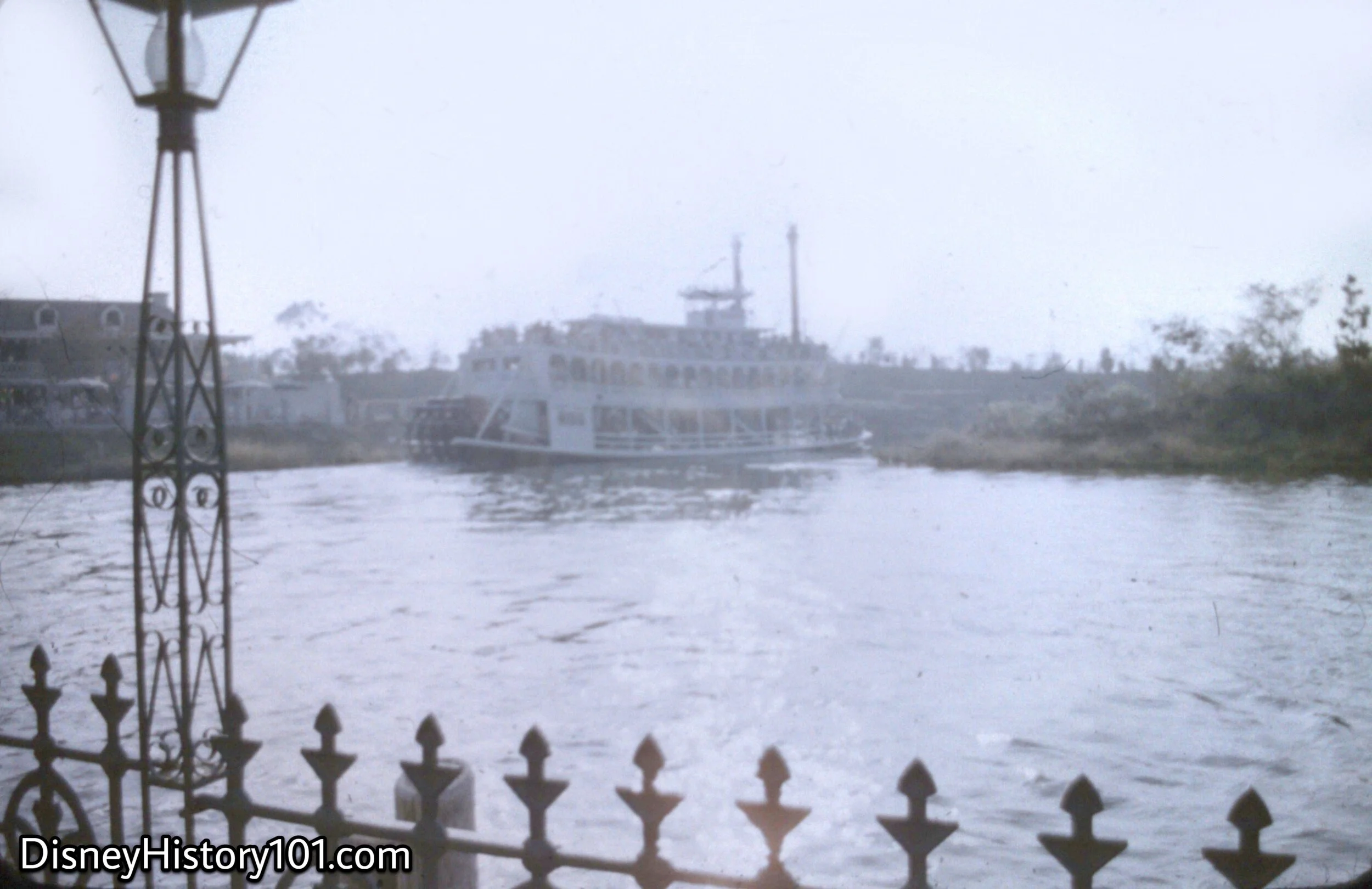
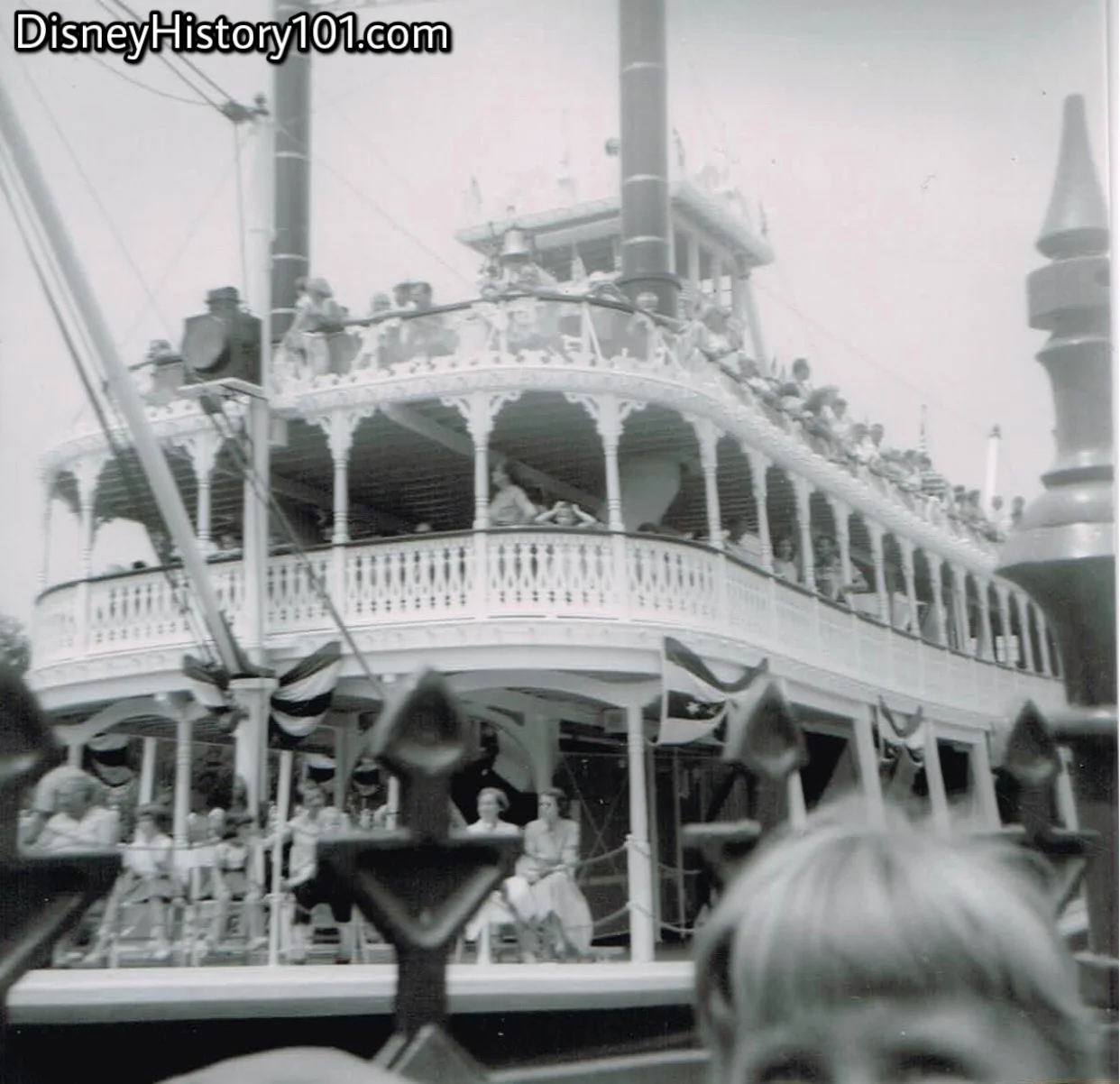
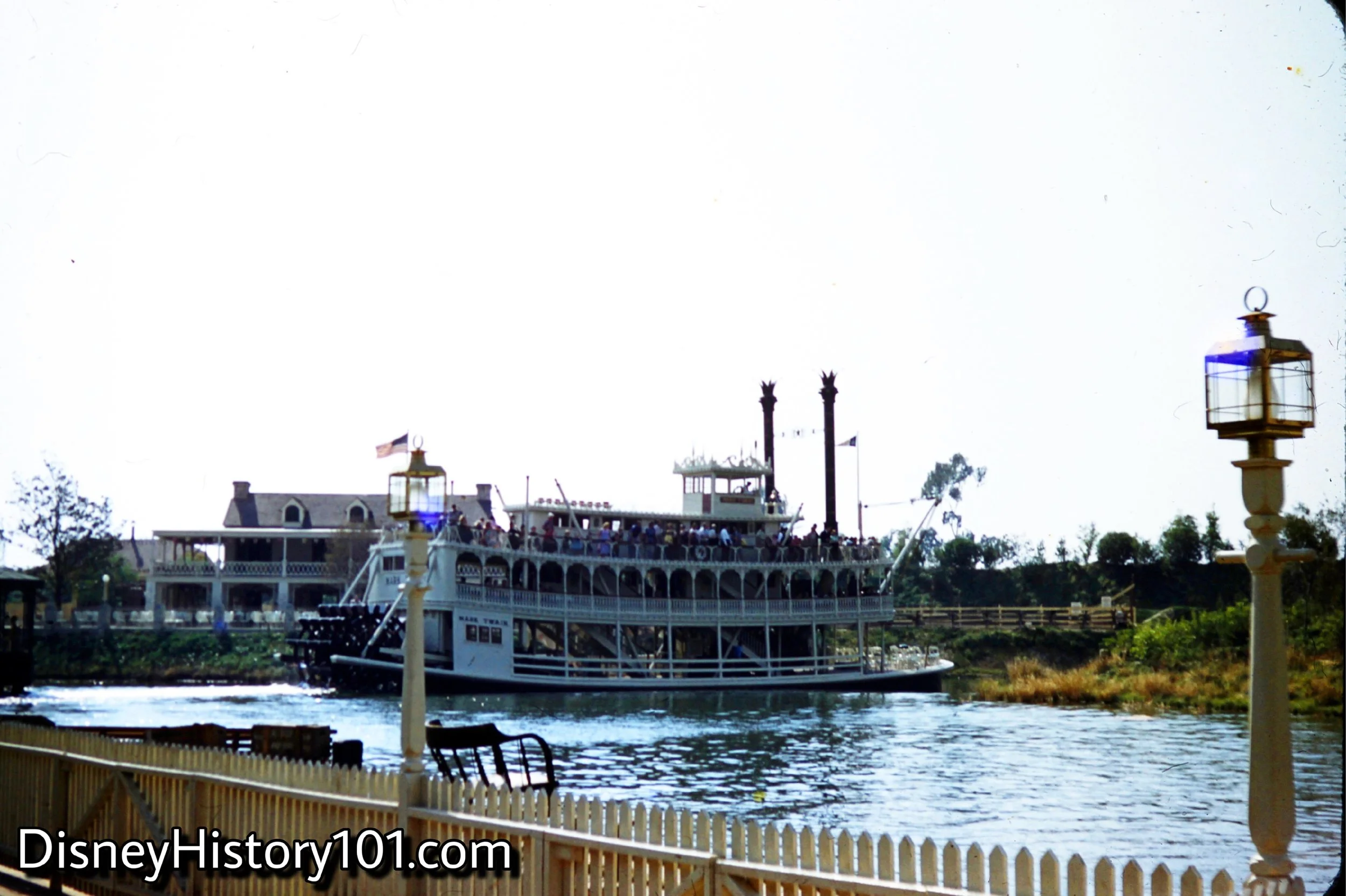
1956
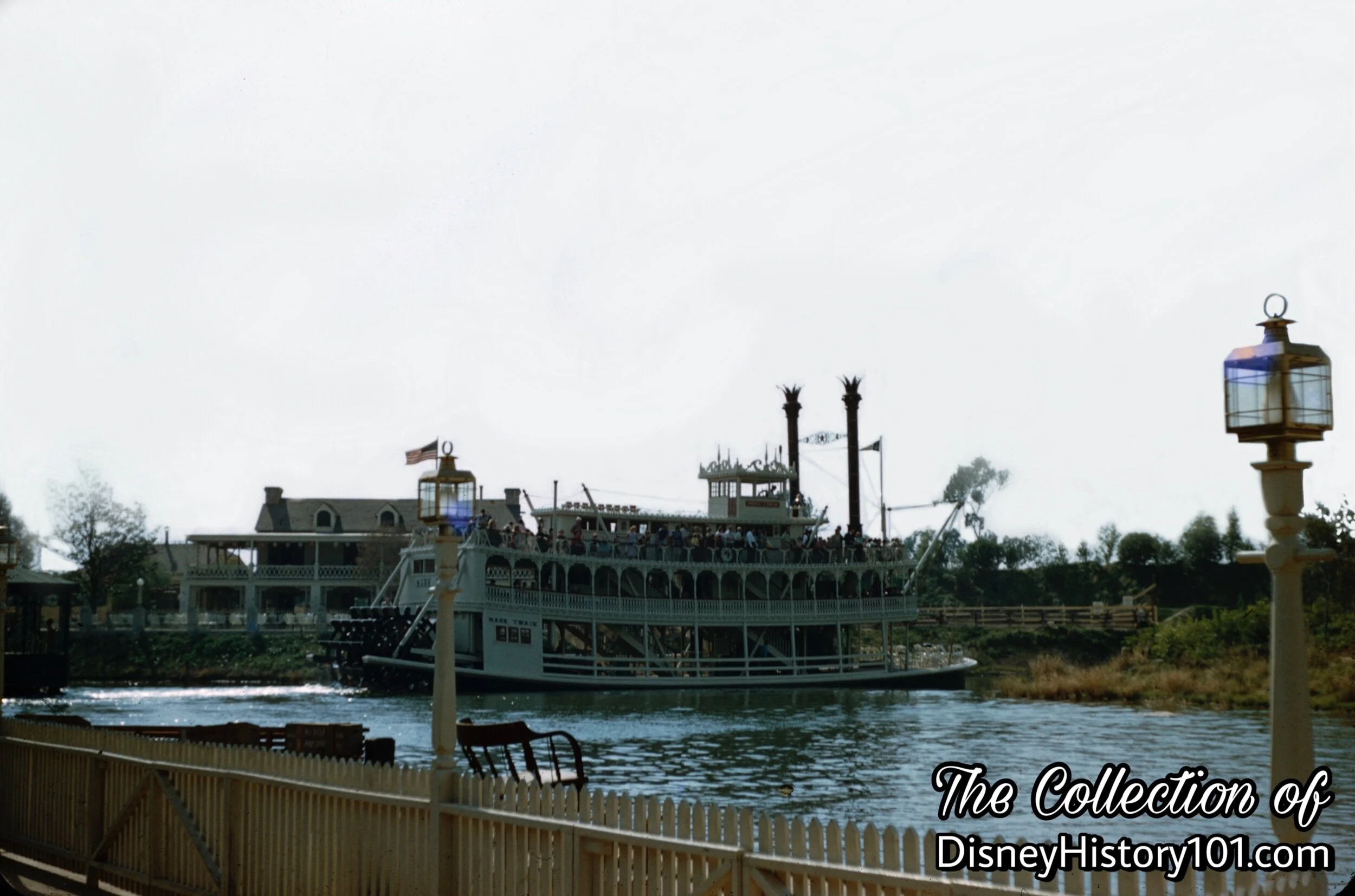
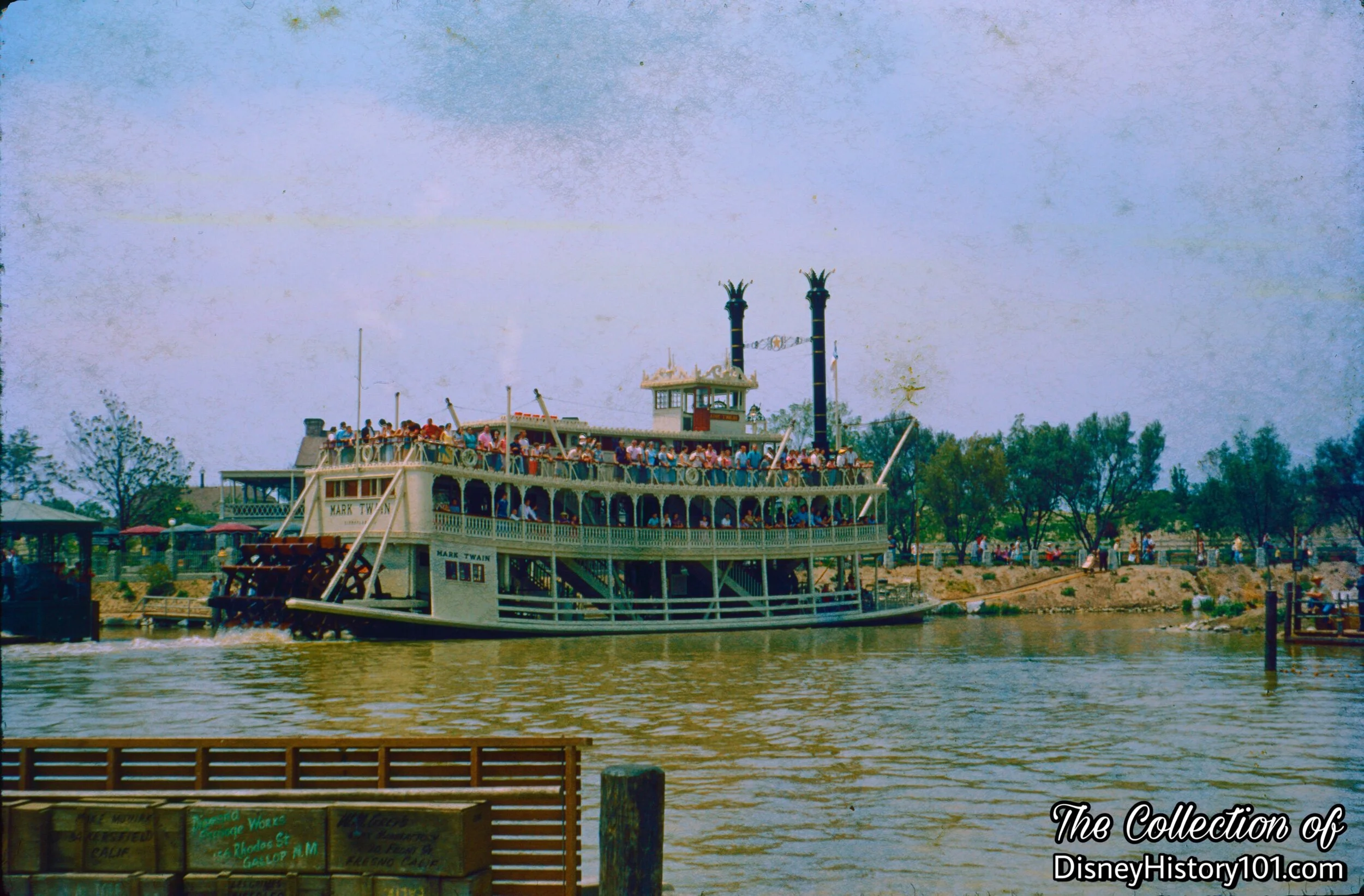
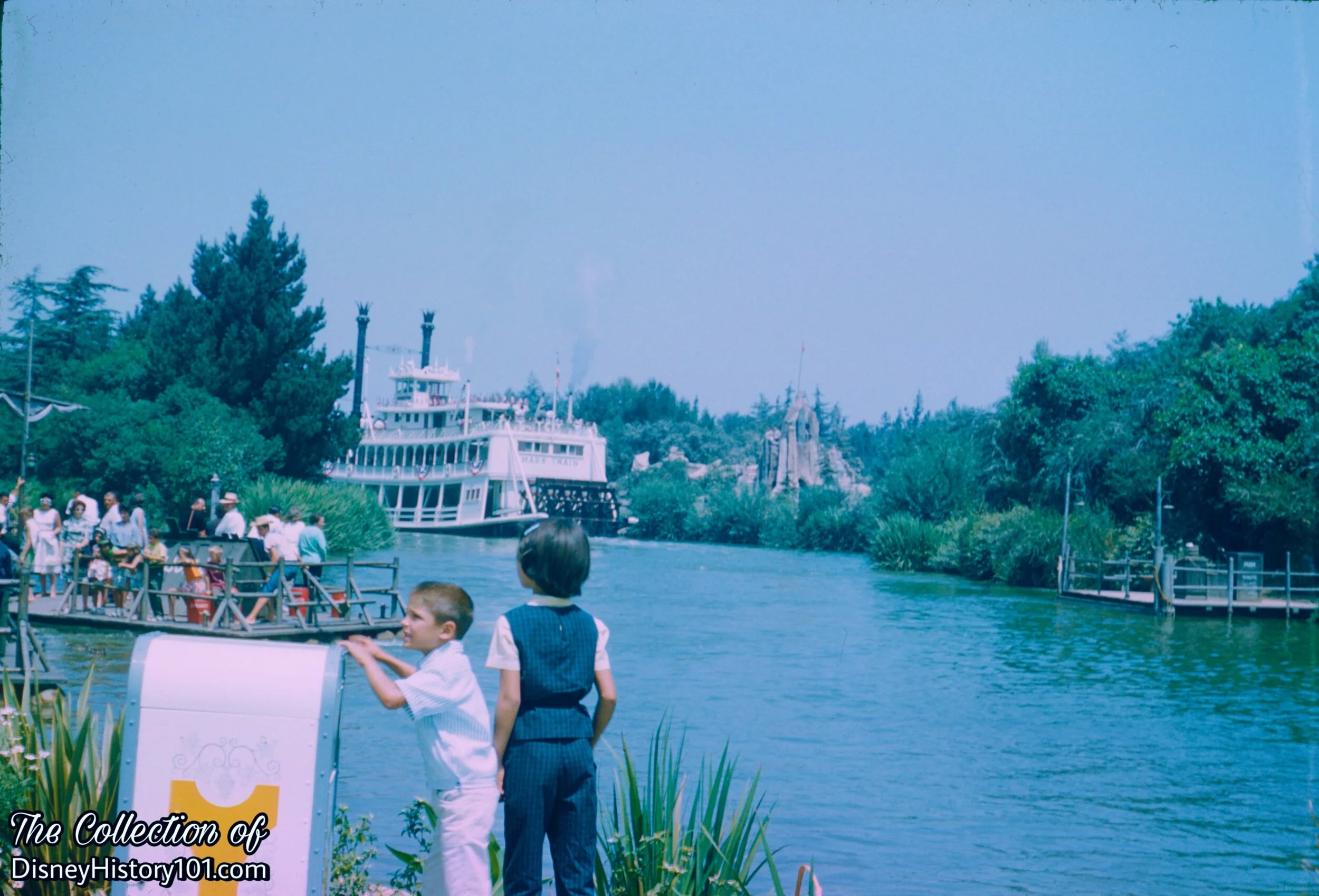
We wait our turn at the dock, as the Mark Twain Steamboat passes Swift’s Chicken Plantation restaurant before heading deep into “Frontier” territory.
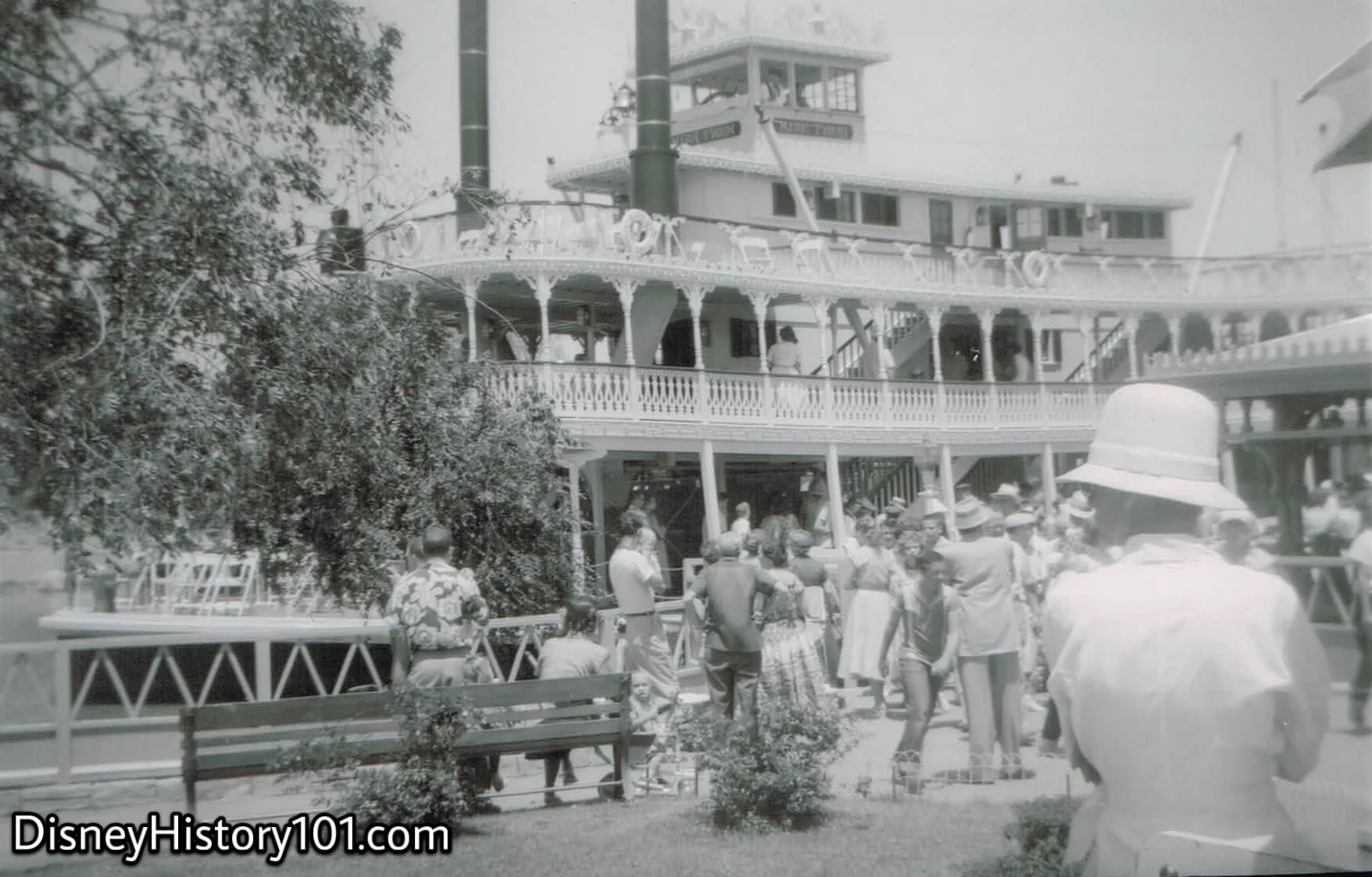
Get ready for a nostalgic ride down the Rivers of America!
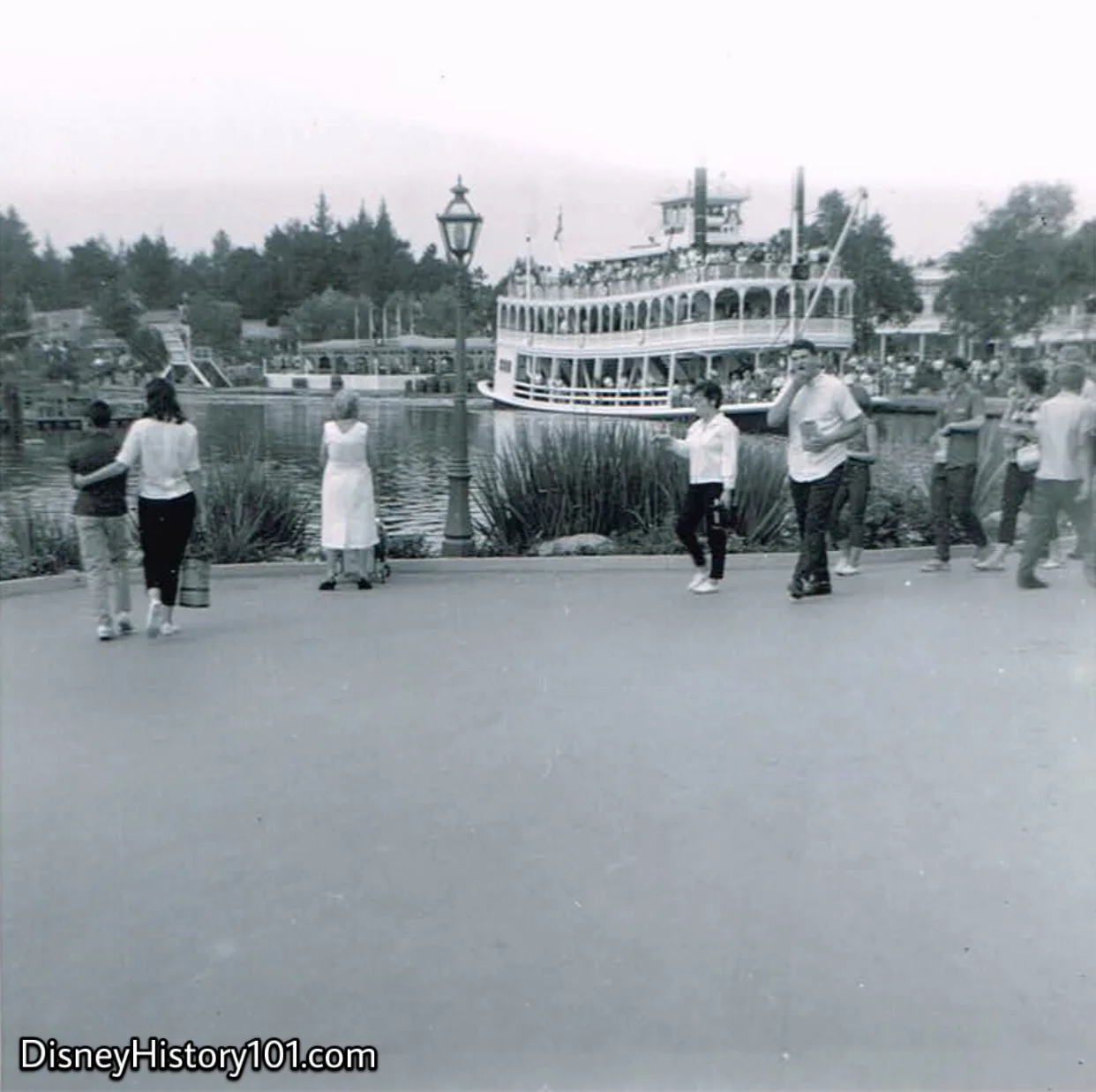
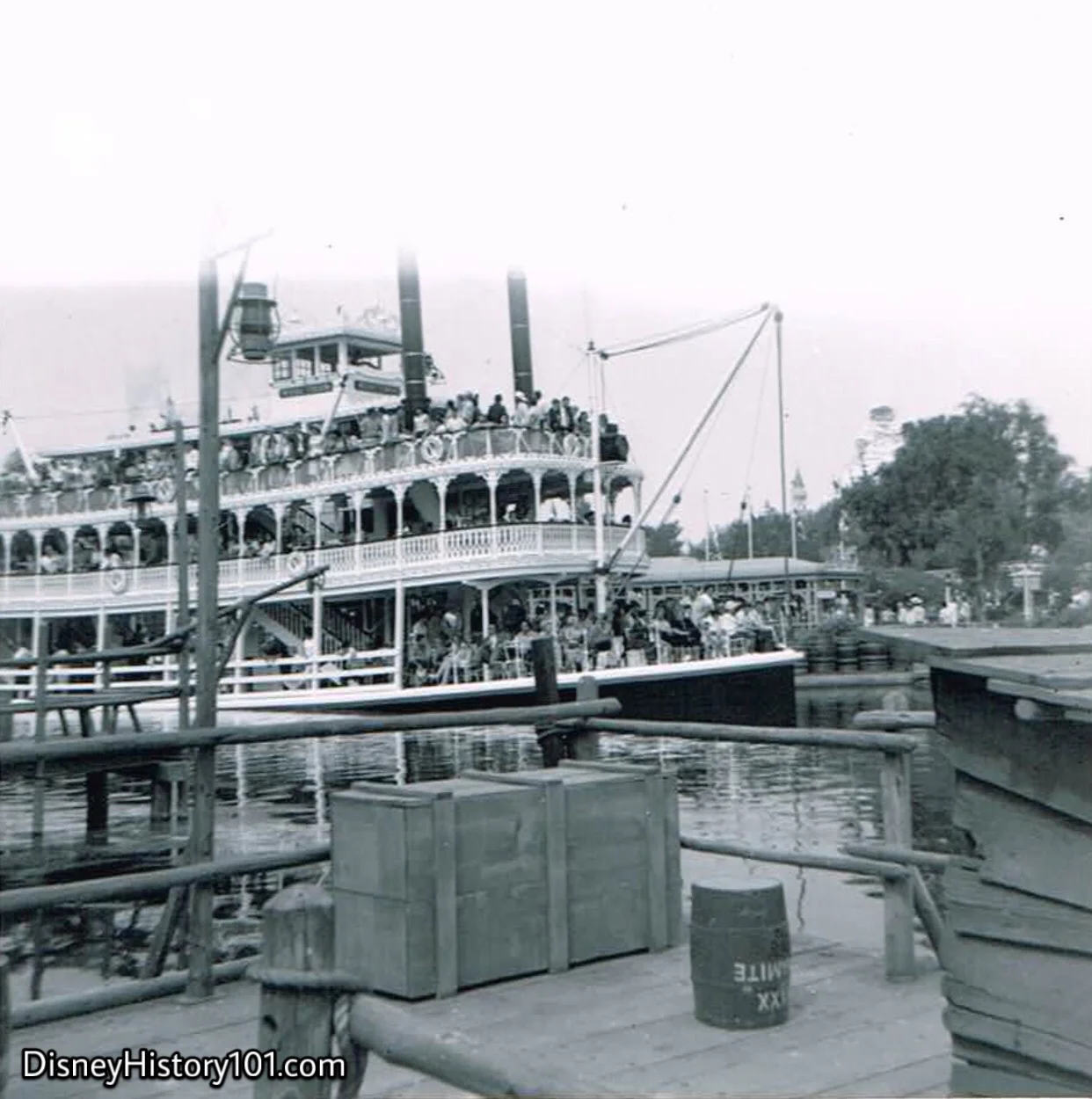
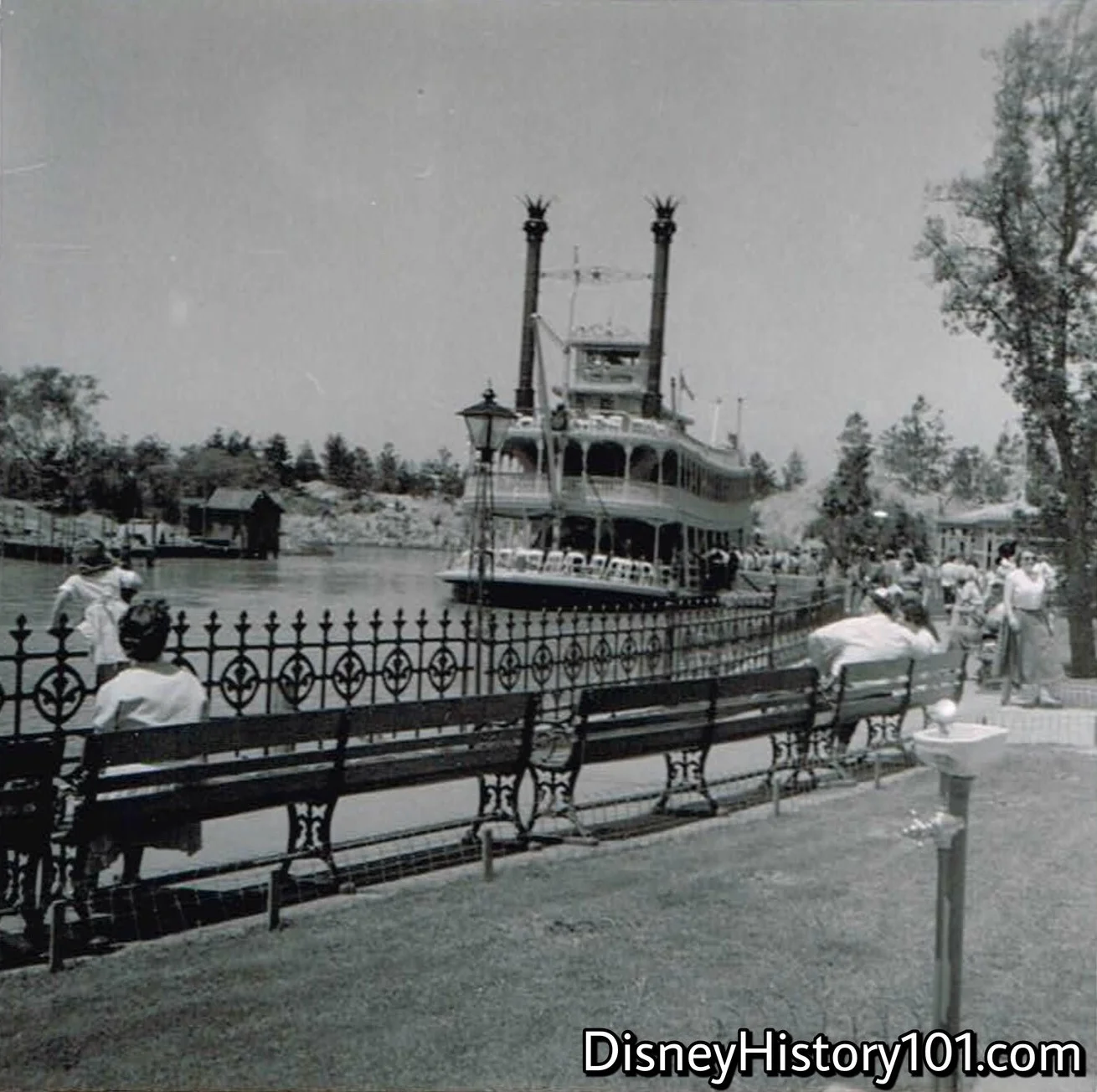
1957, March
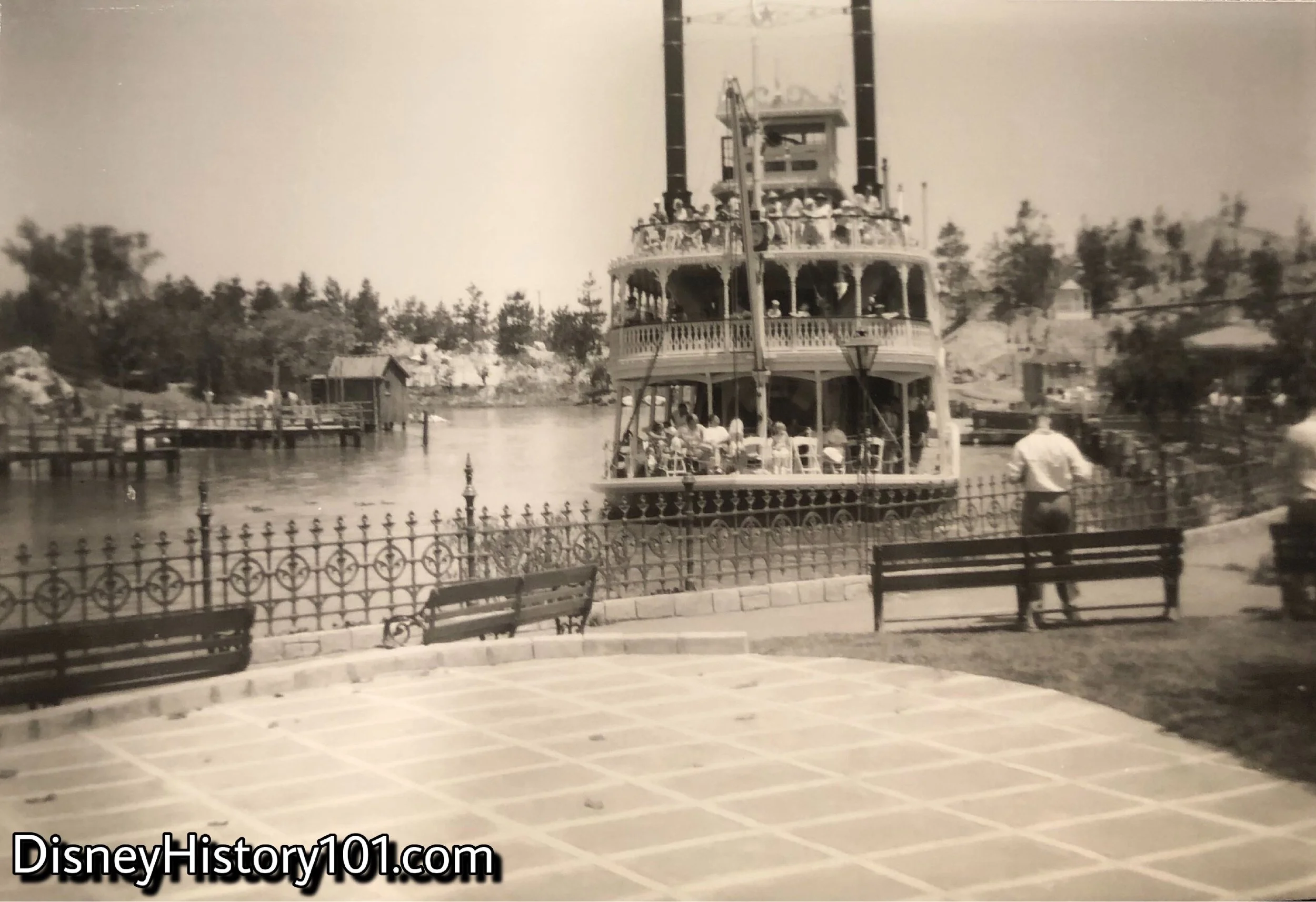
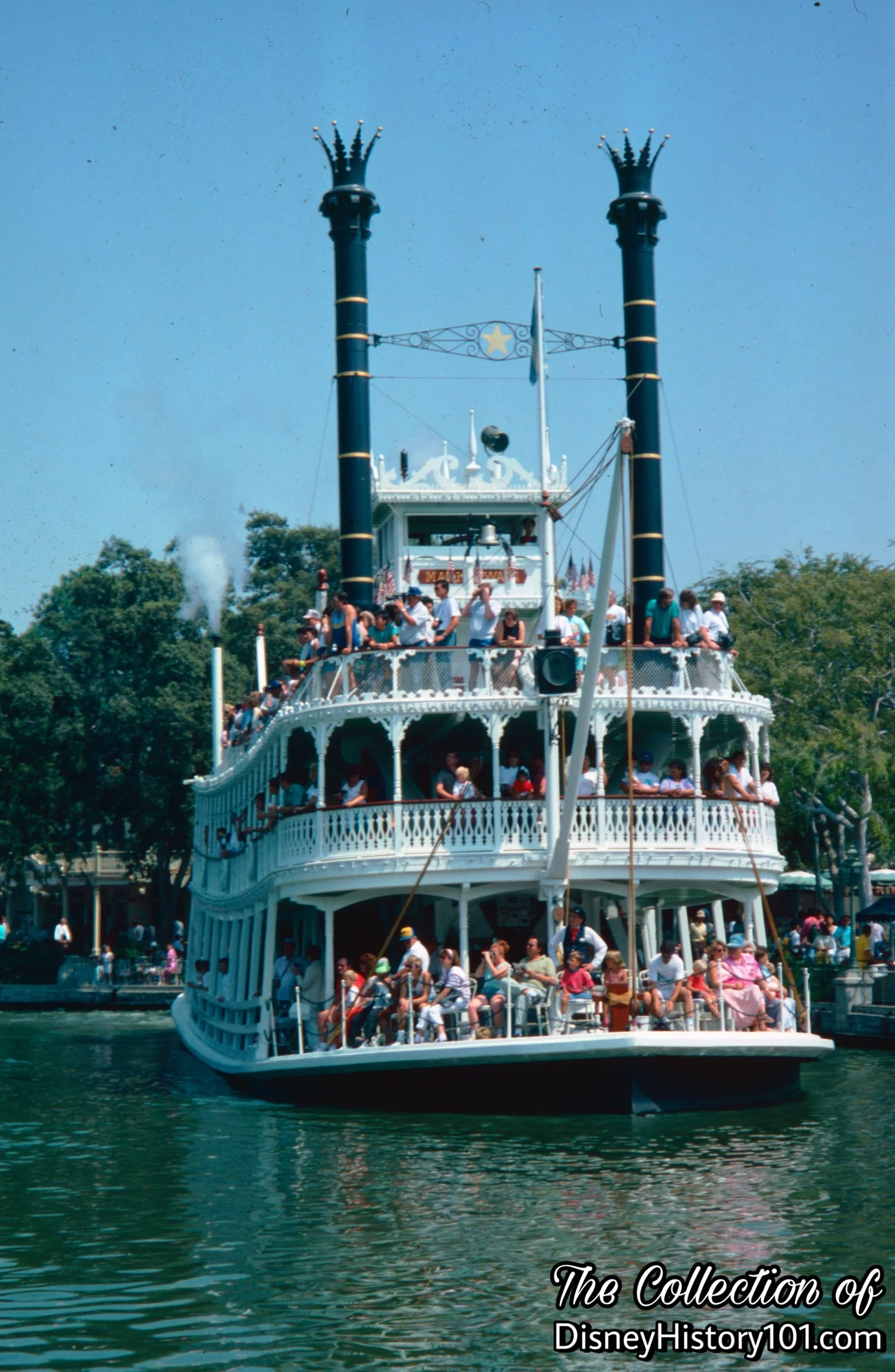
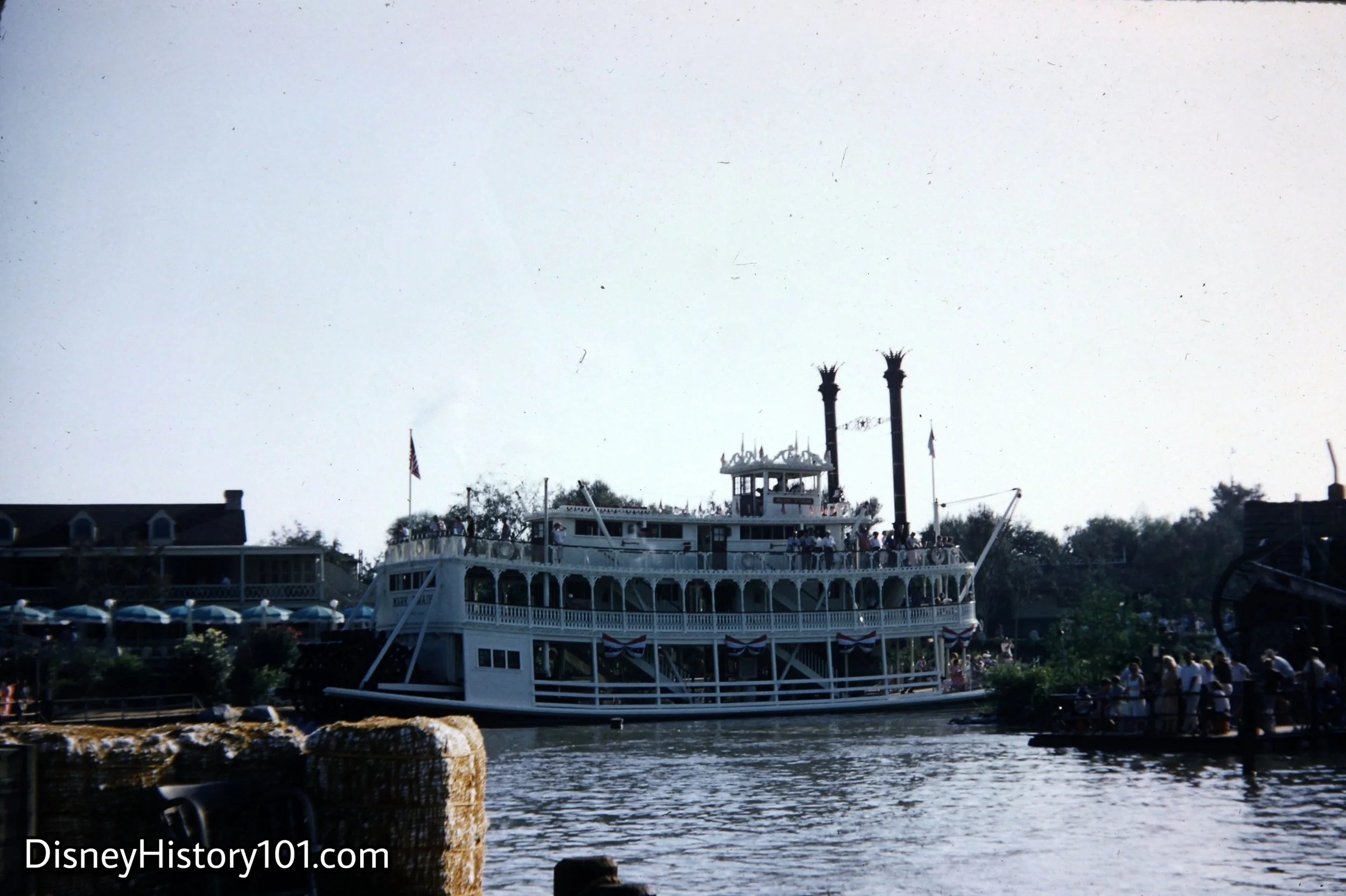
1958
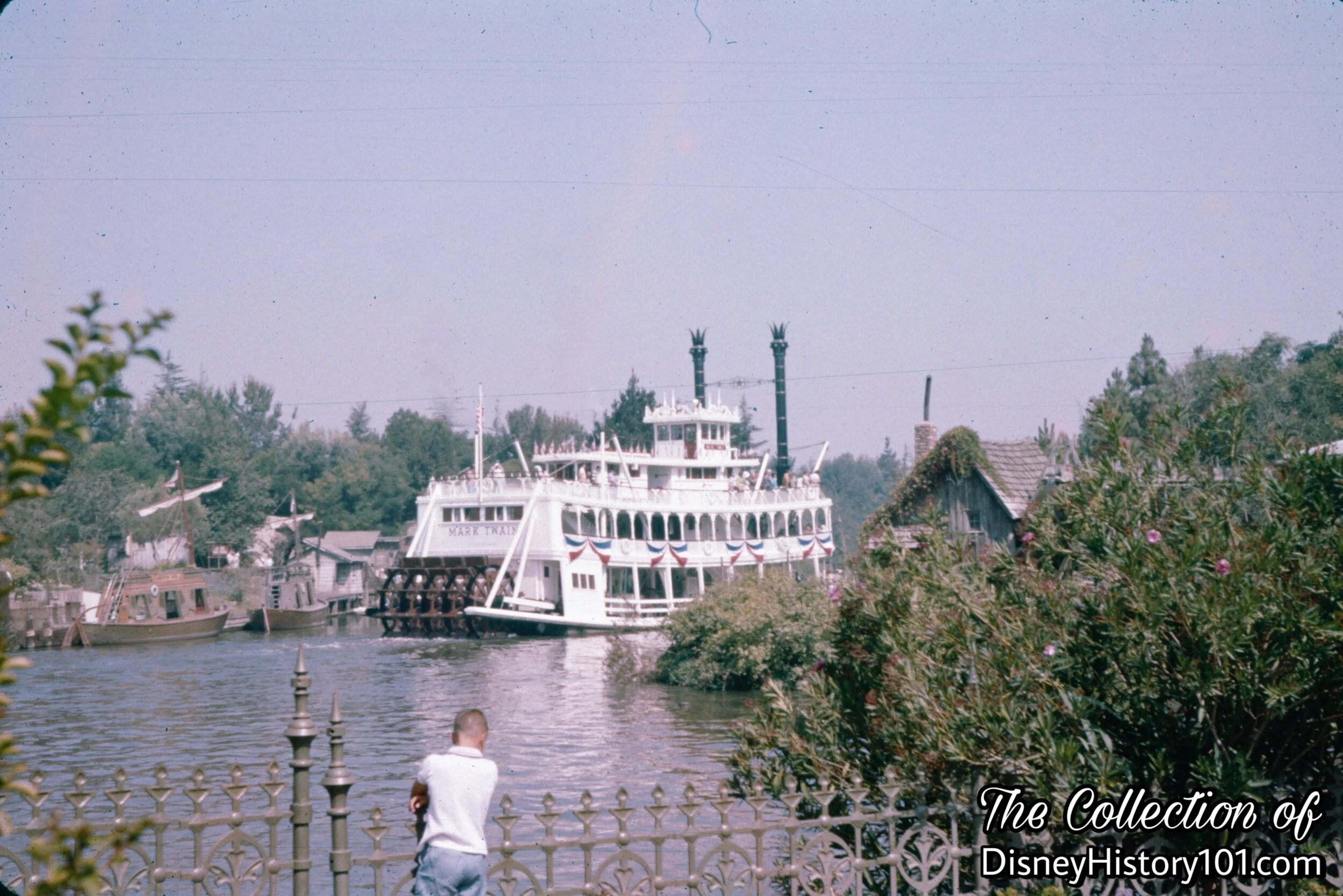
The Mark Twain rounds the southern bend of Tom Sawyer Island and the Rivers of America, passing the Chicken Plantation House.
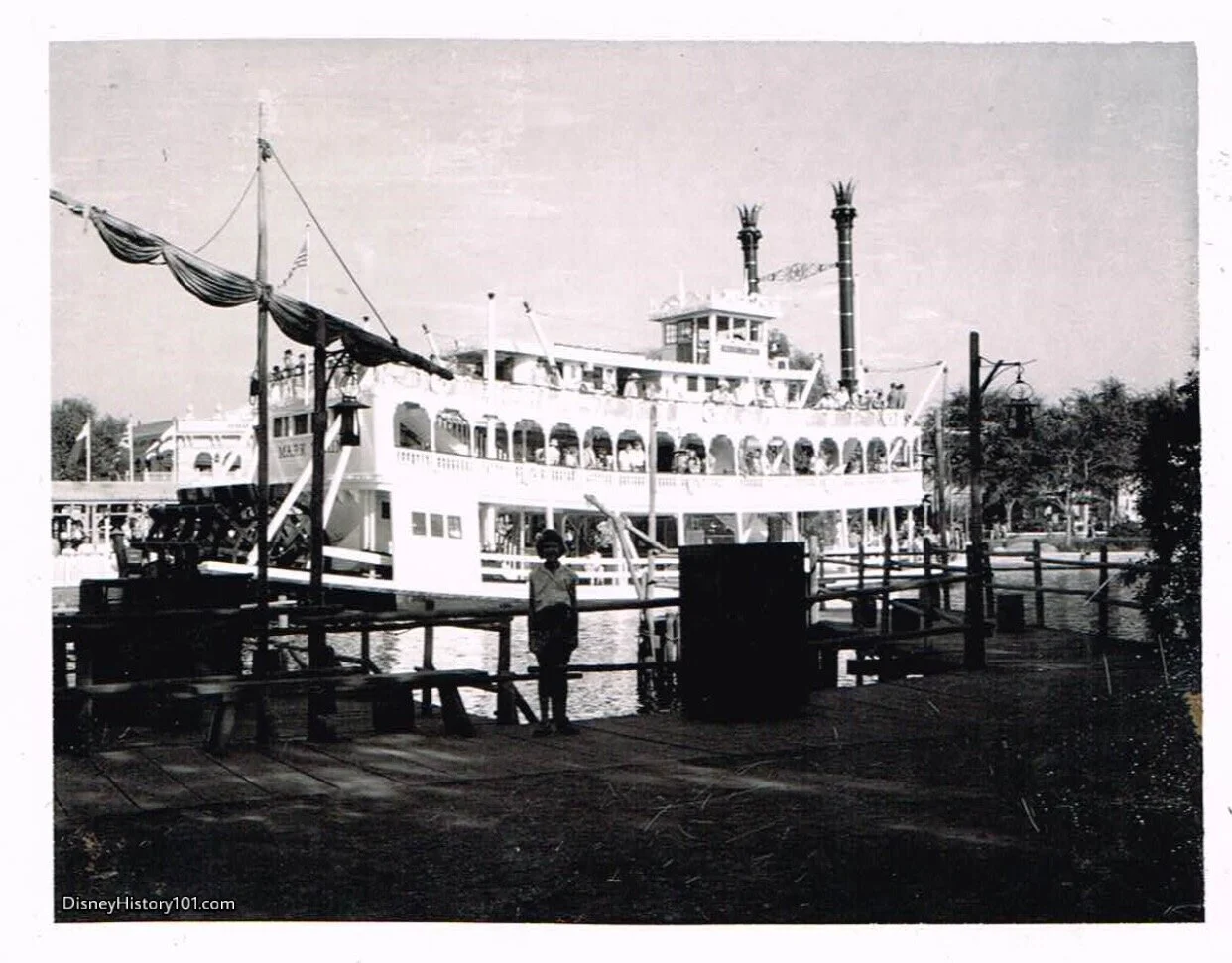
1959
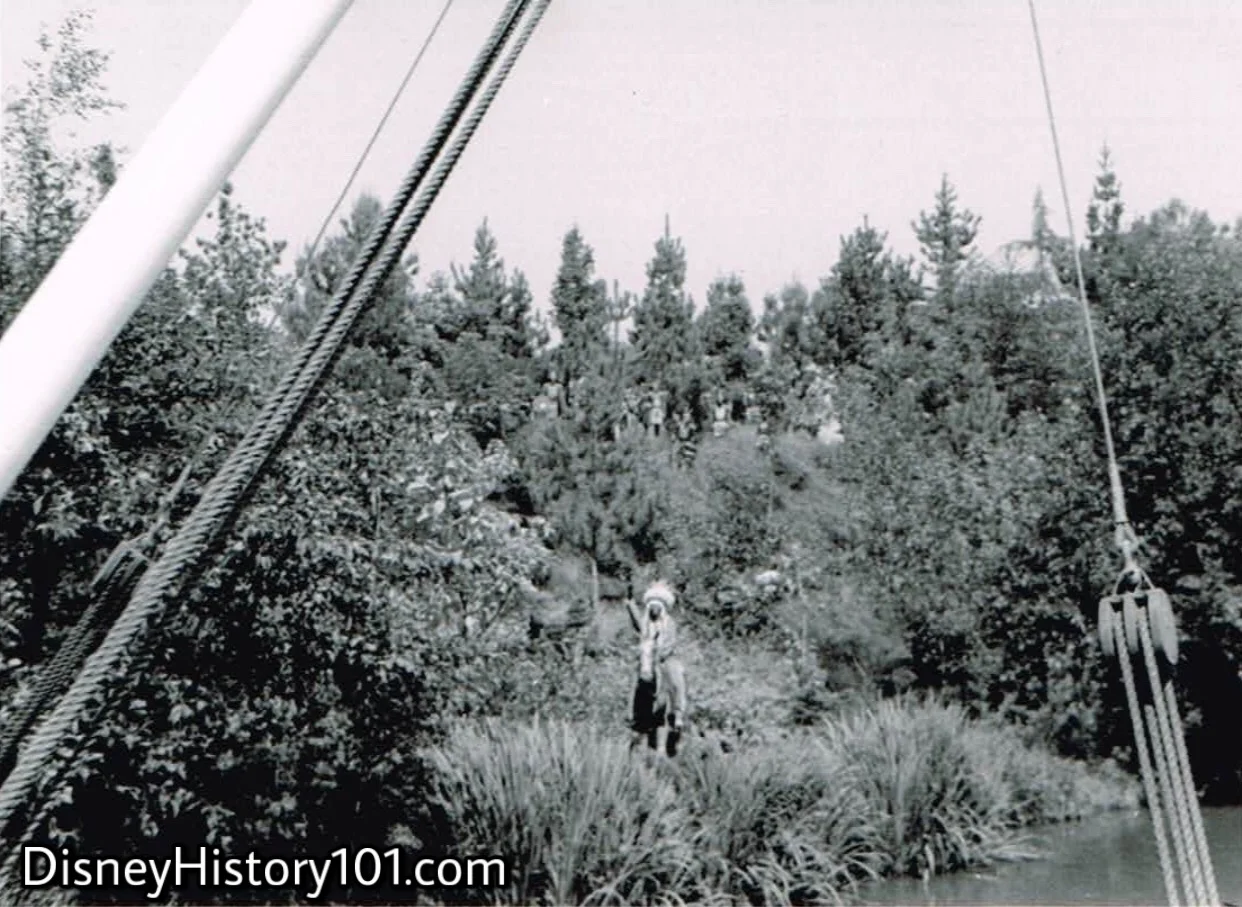
1960, September

1960
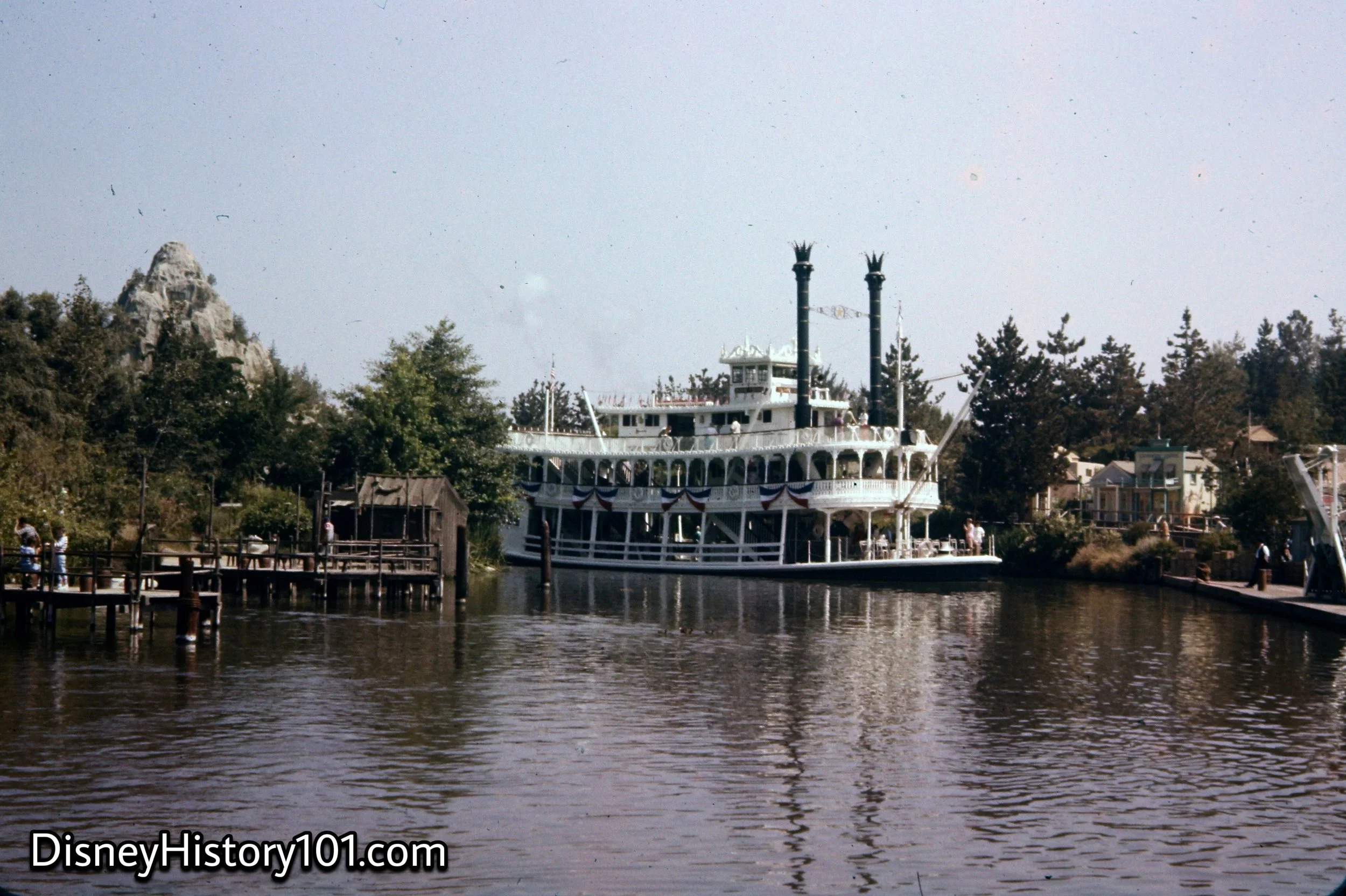
1961
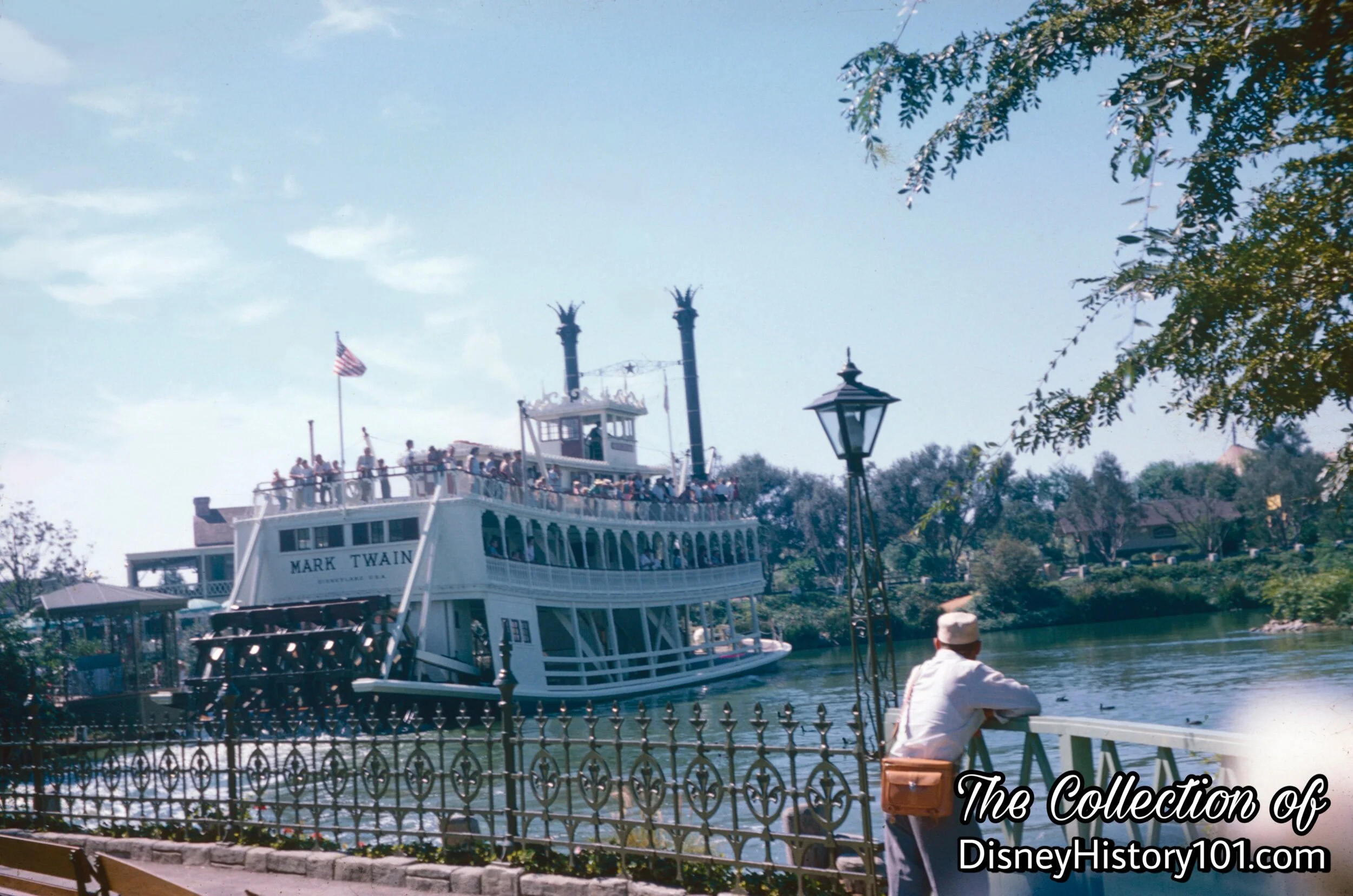
1961
1961
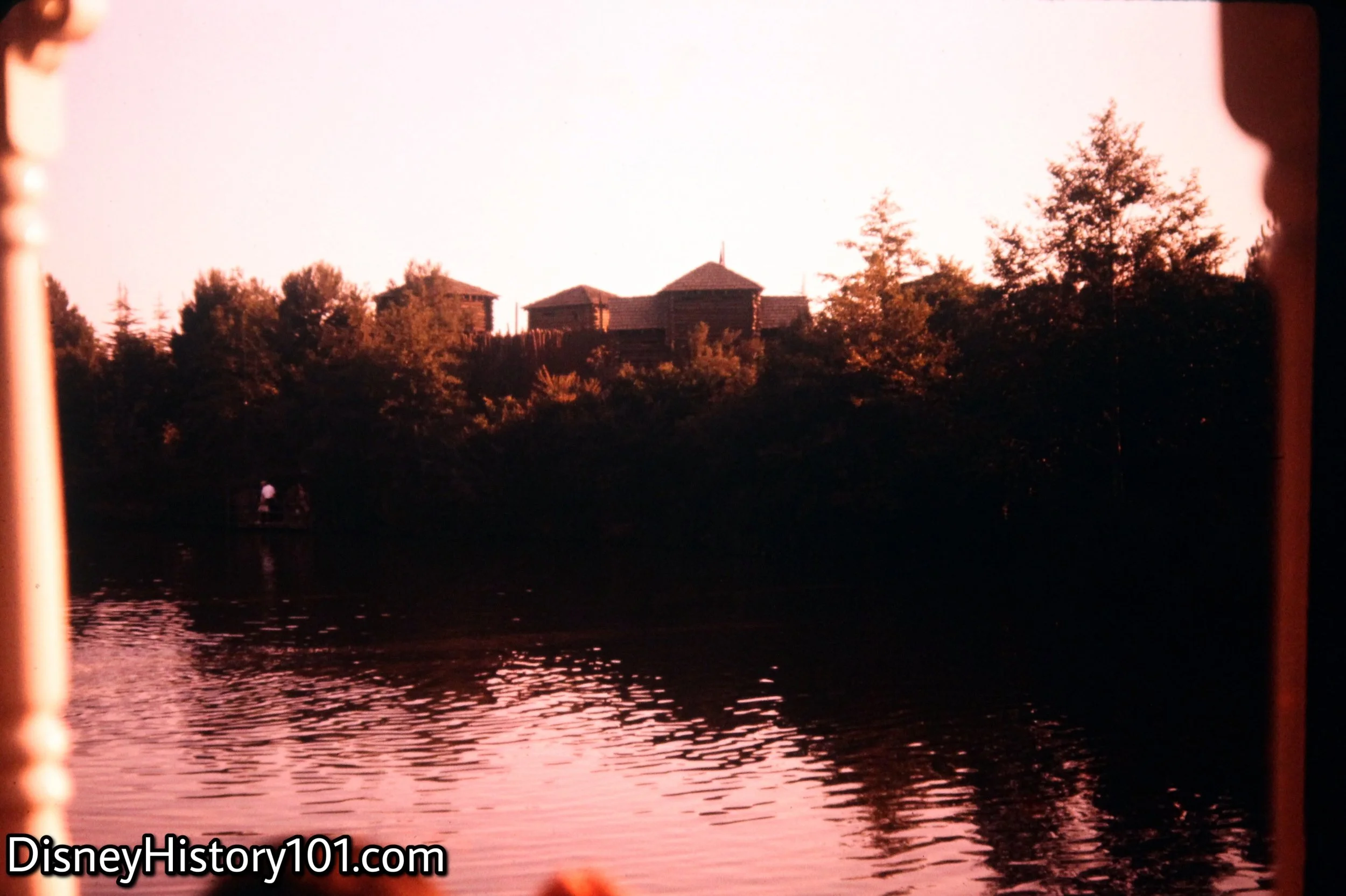
Fort Wilderness (the last stand between the unfriendly Indian camp and civilization), stands tall above the forest of Tom Sawyer’s Island.
(May, 1961)
1962, August.
1963
(1964)
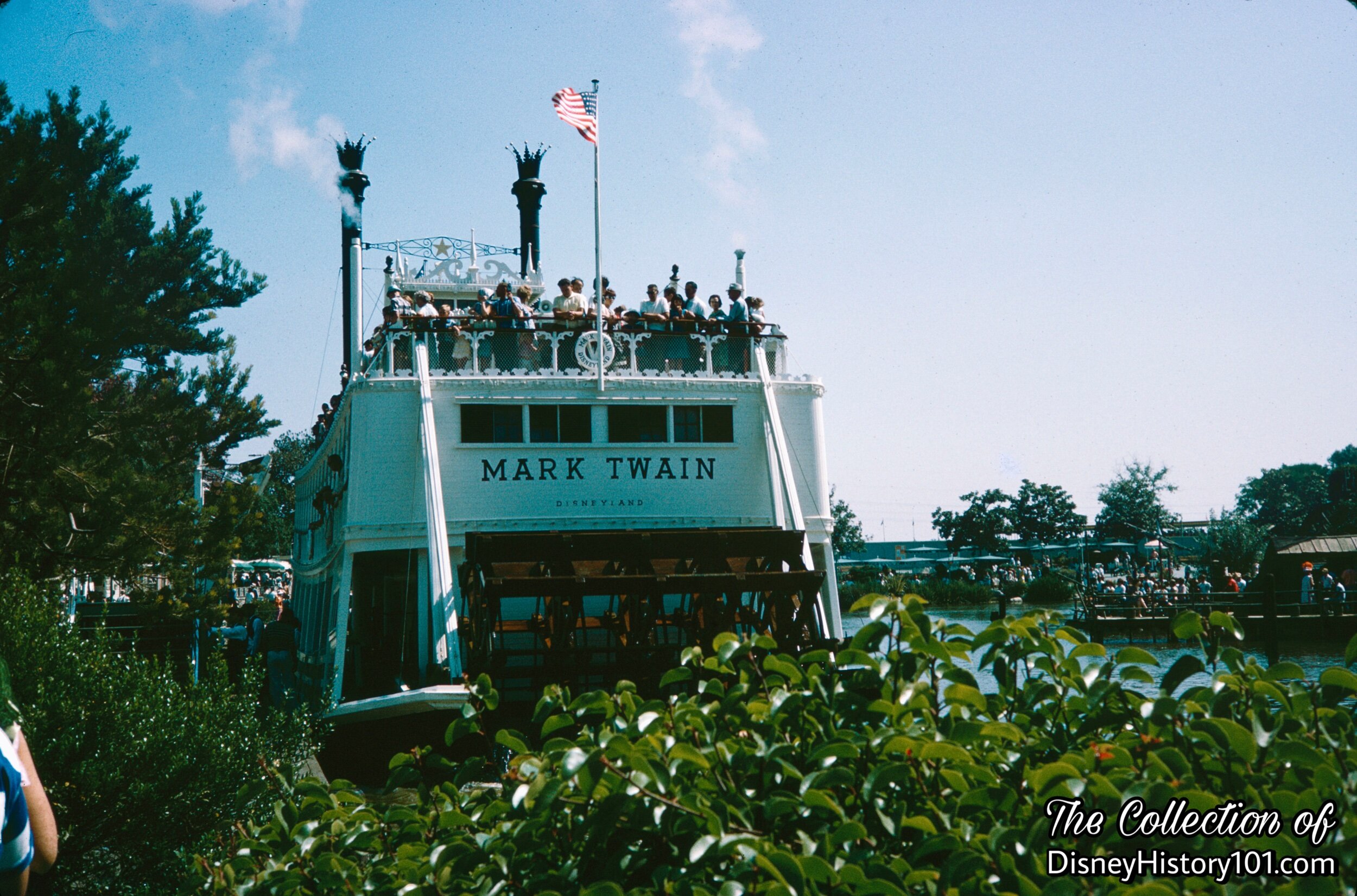
August 1965.
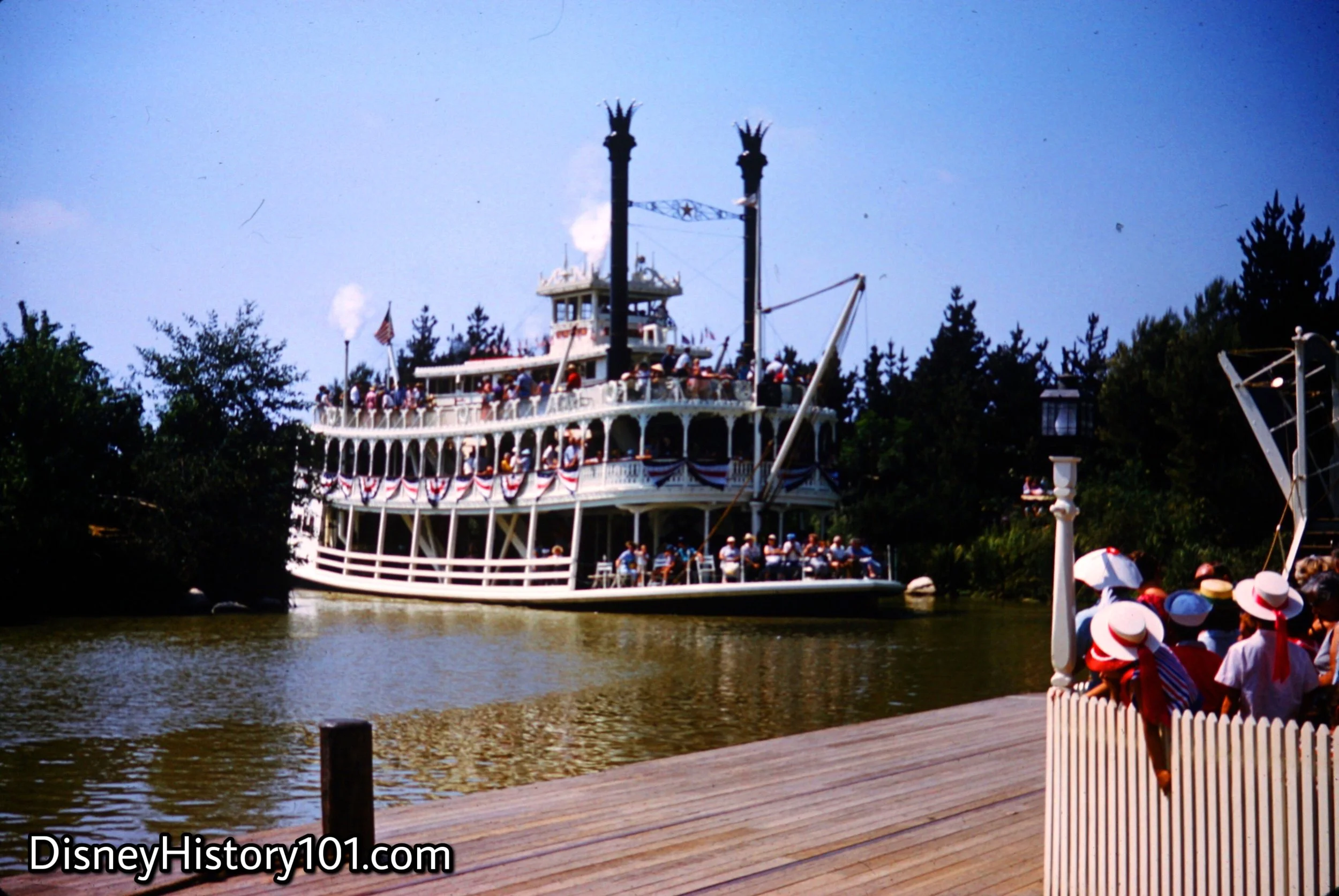
1966, August
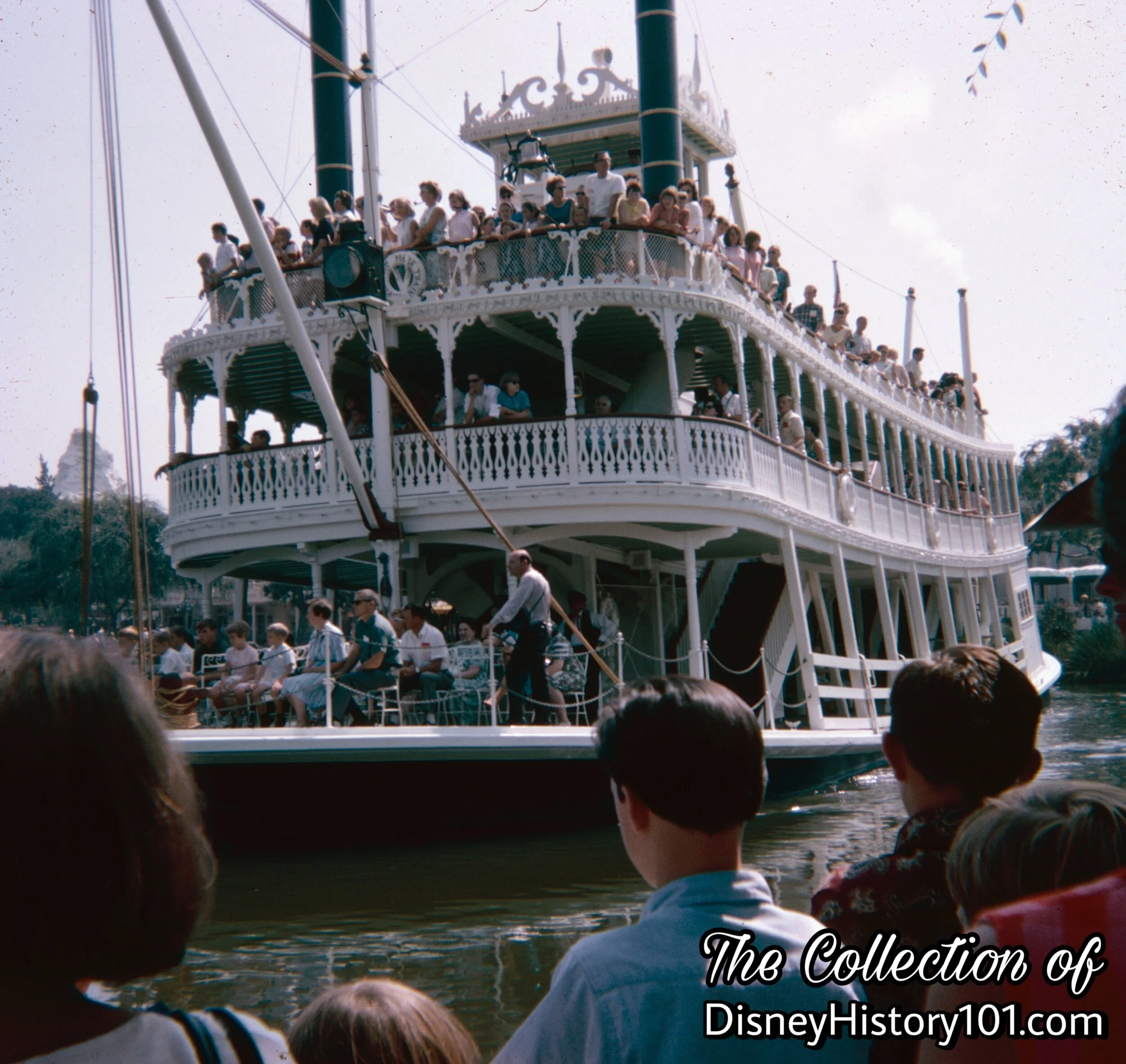
August 1966.
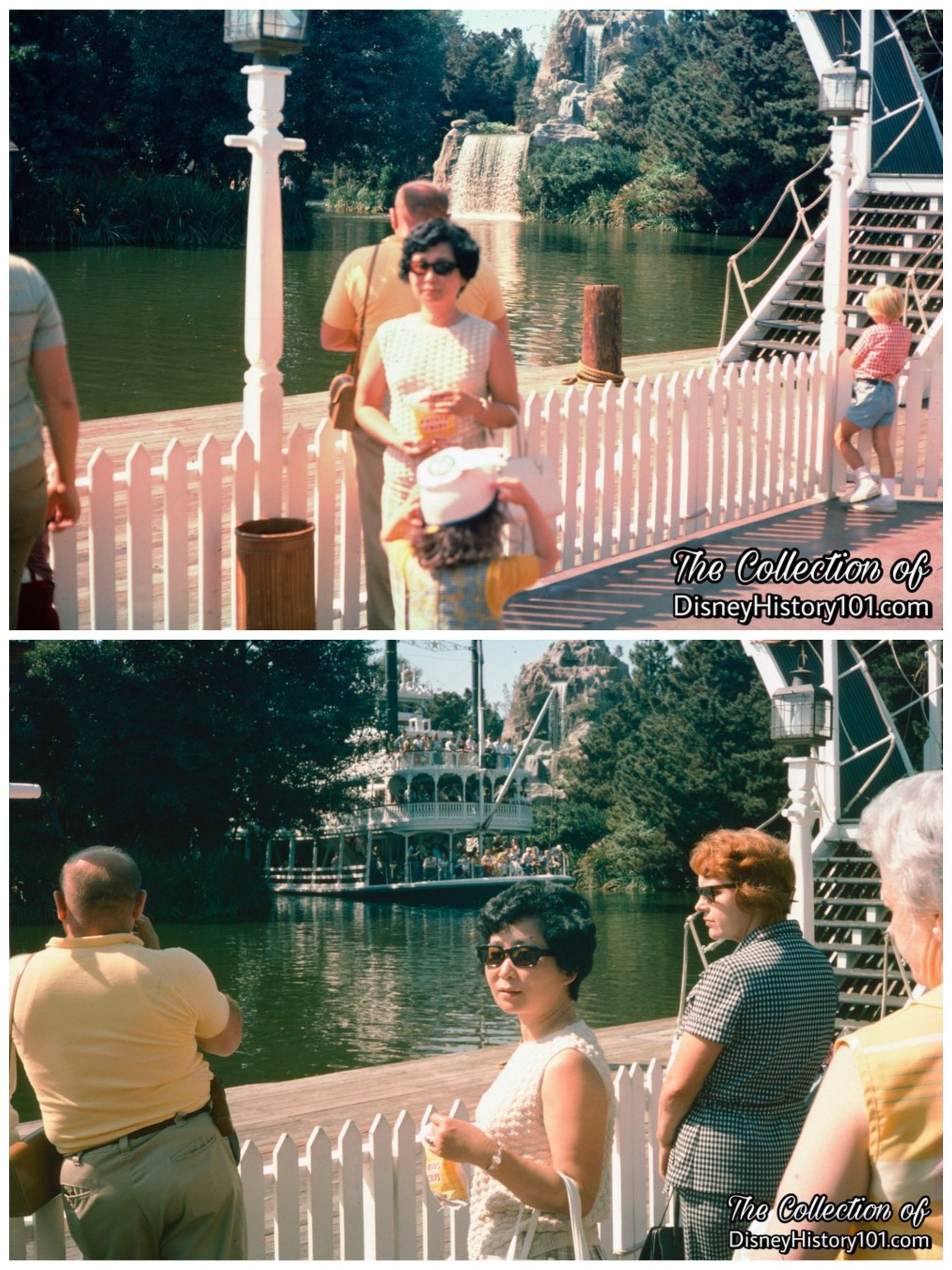
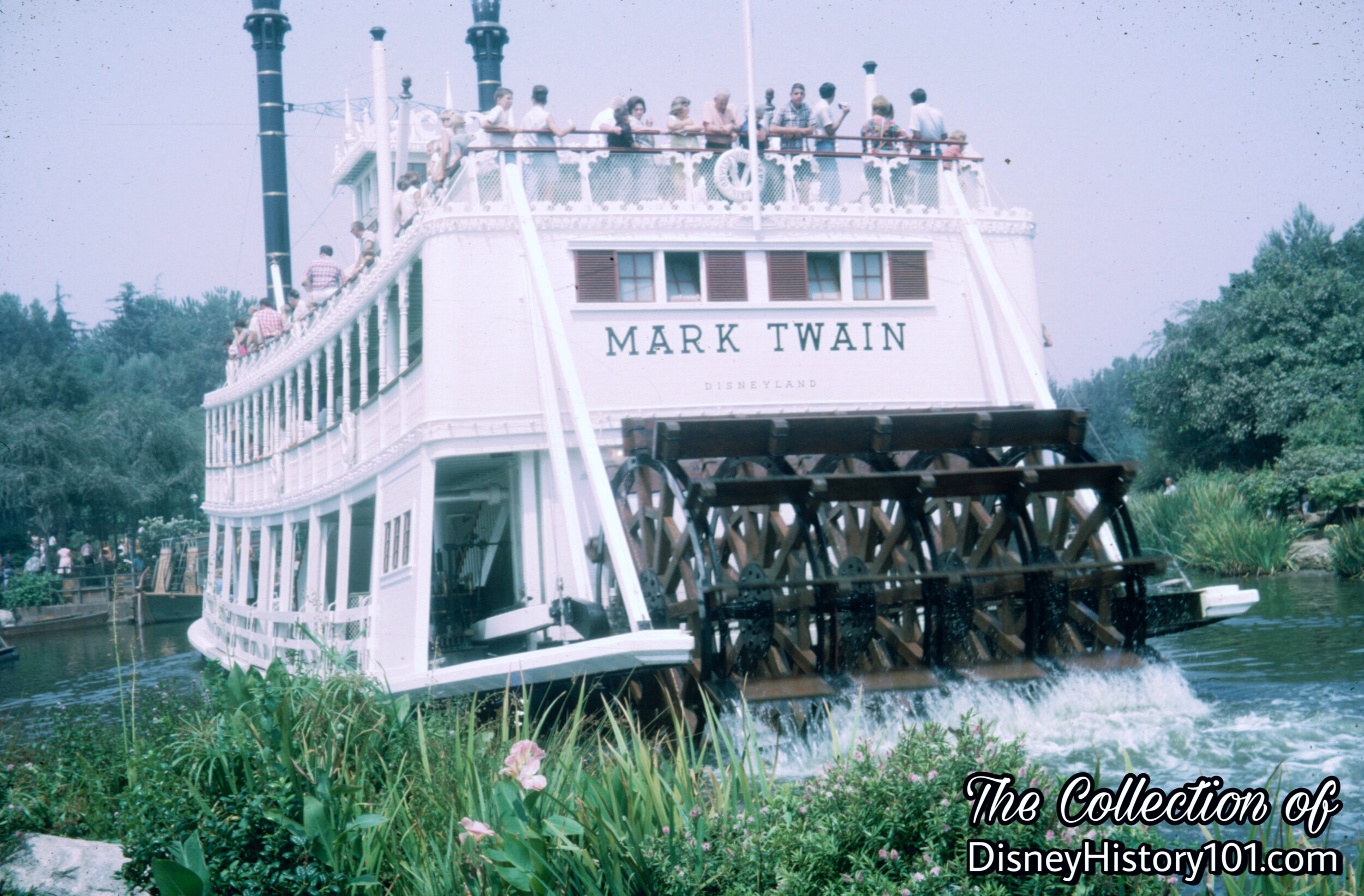
September 1966.
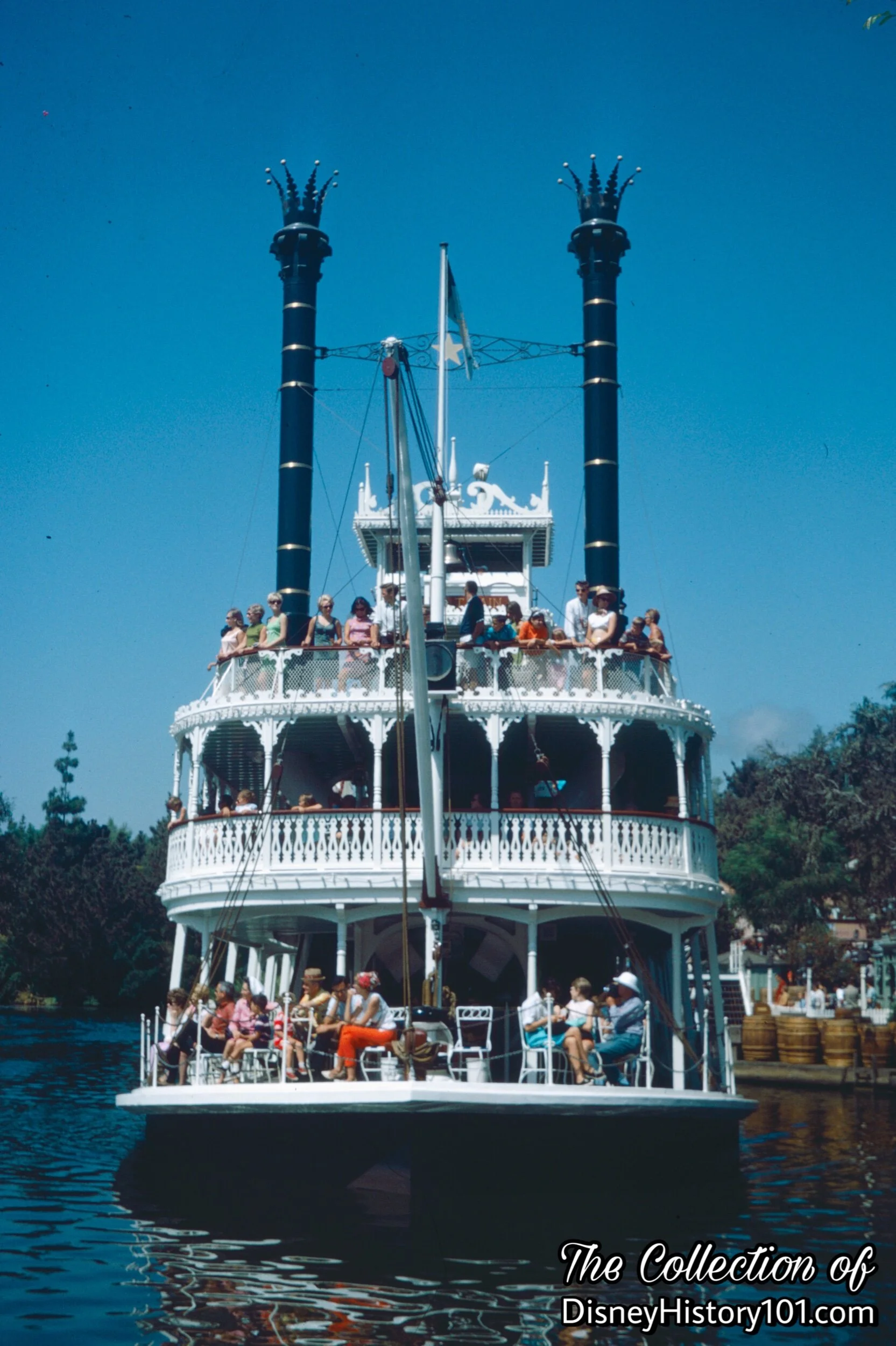
(1967)
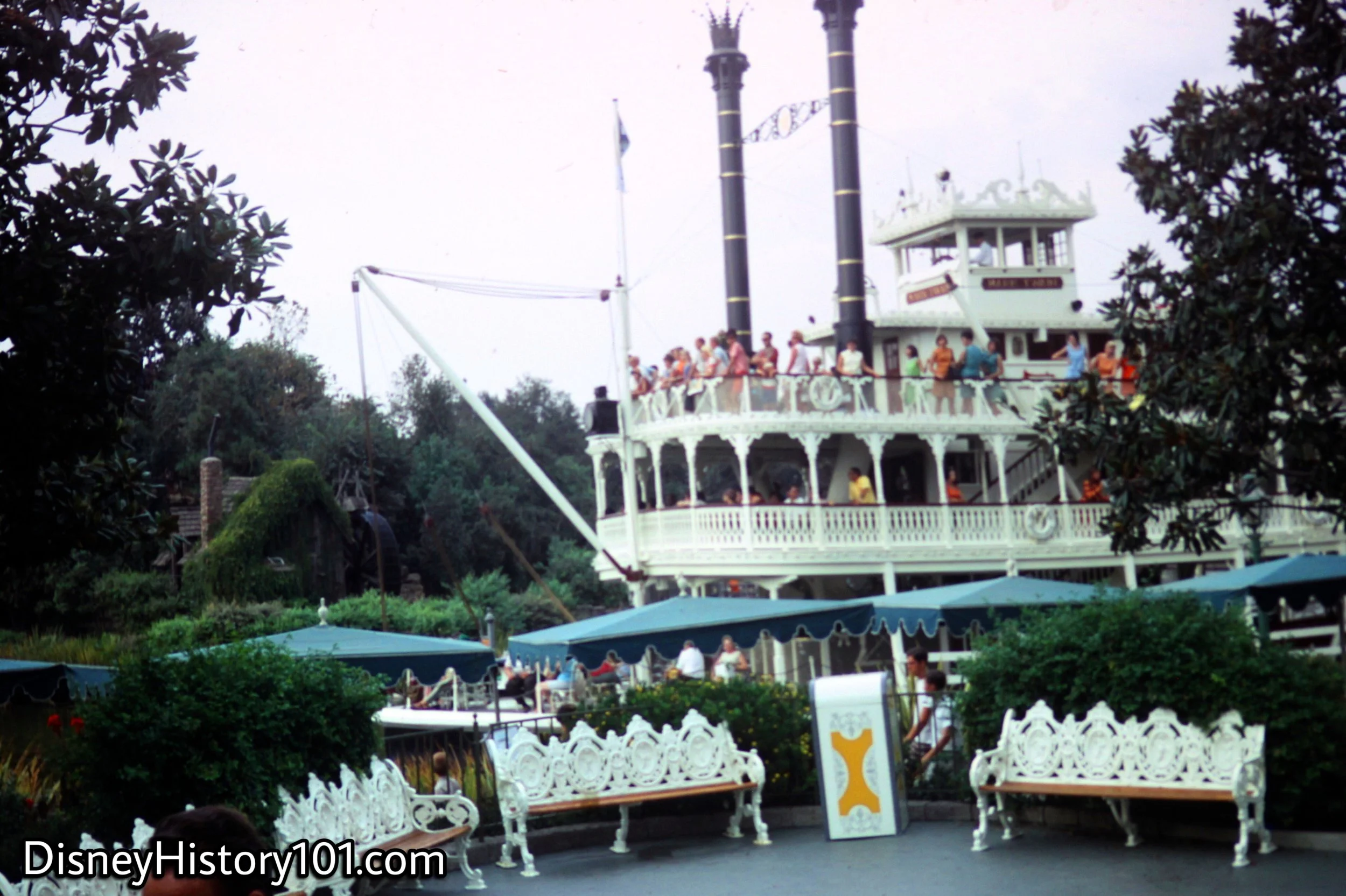
1967, August
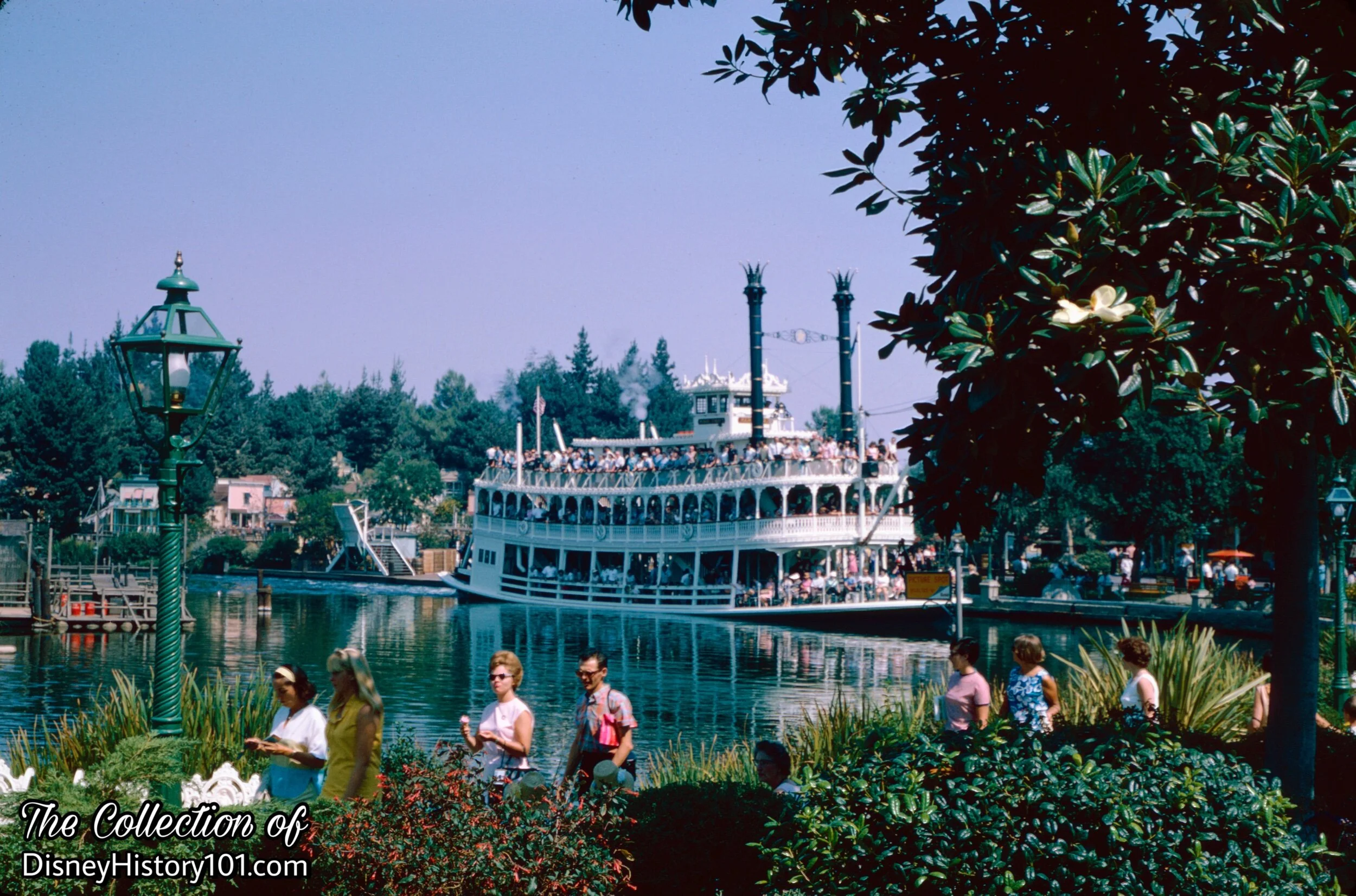
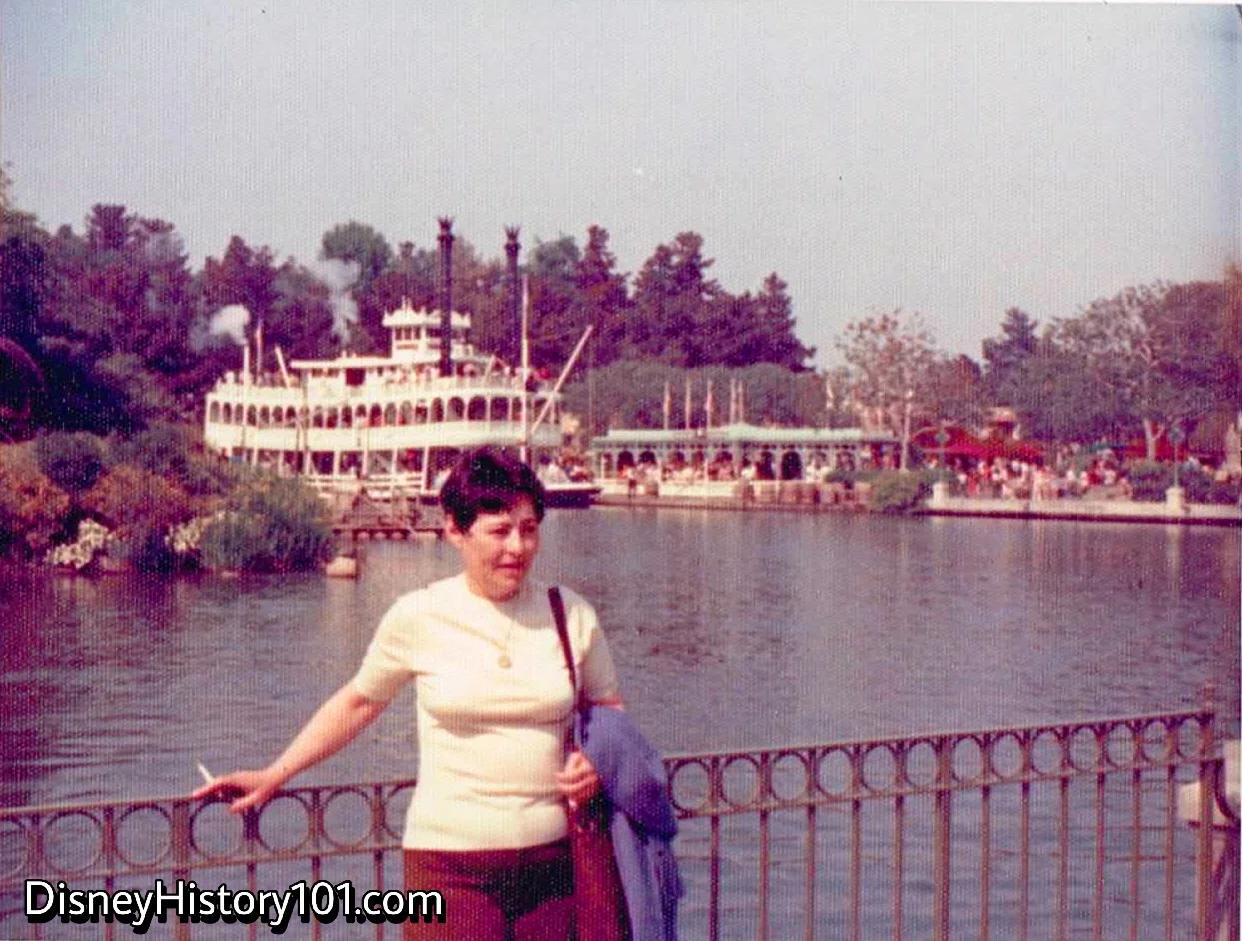
1960s.
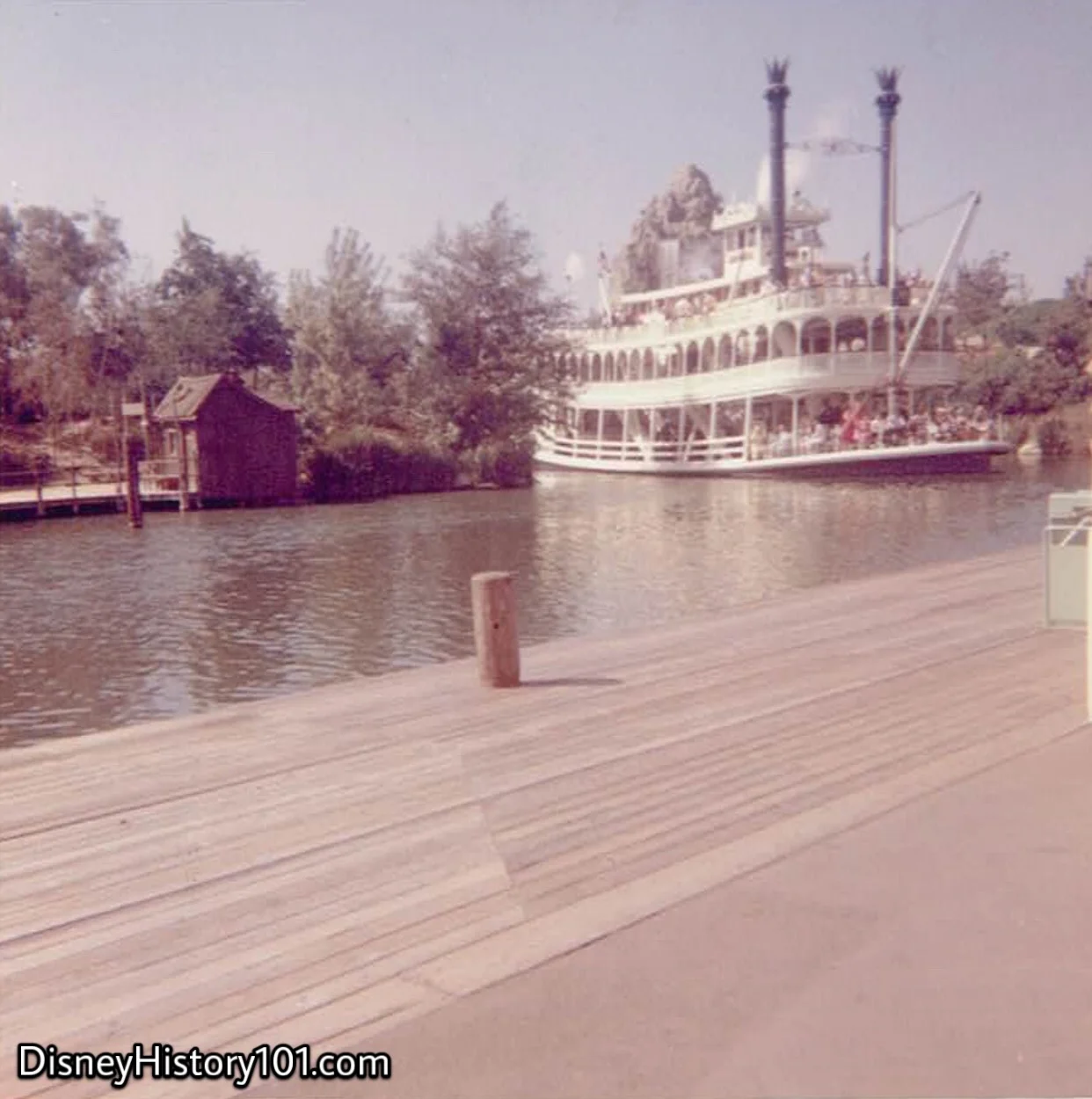
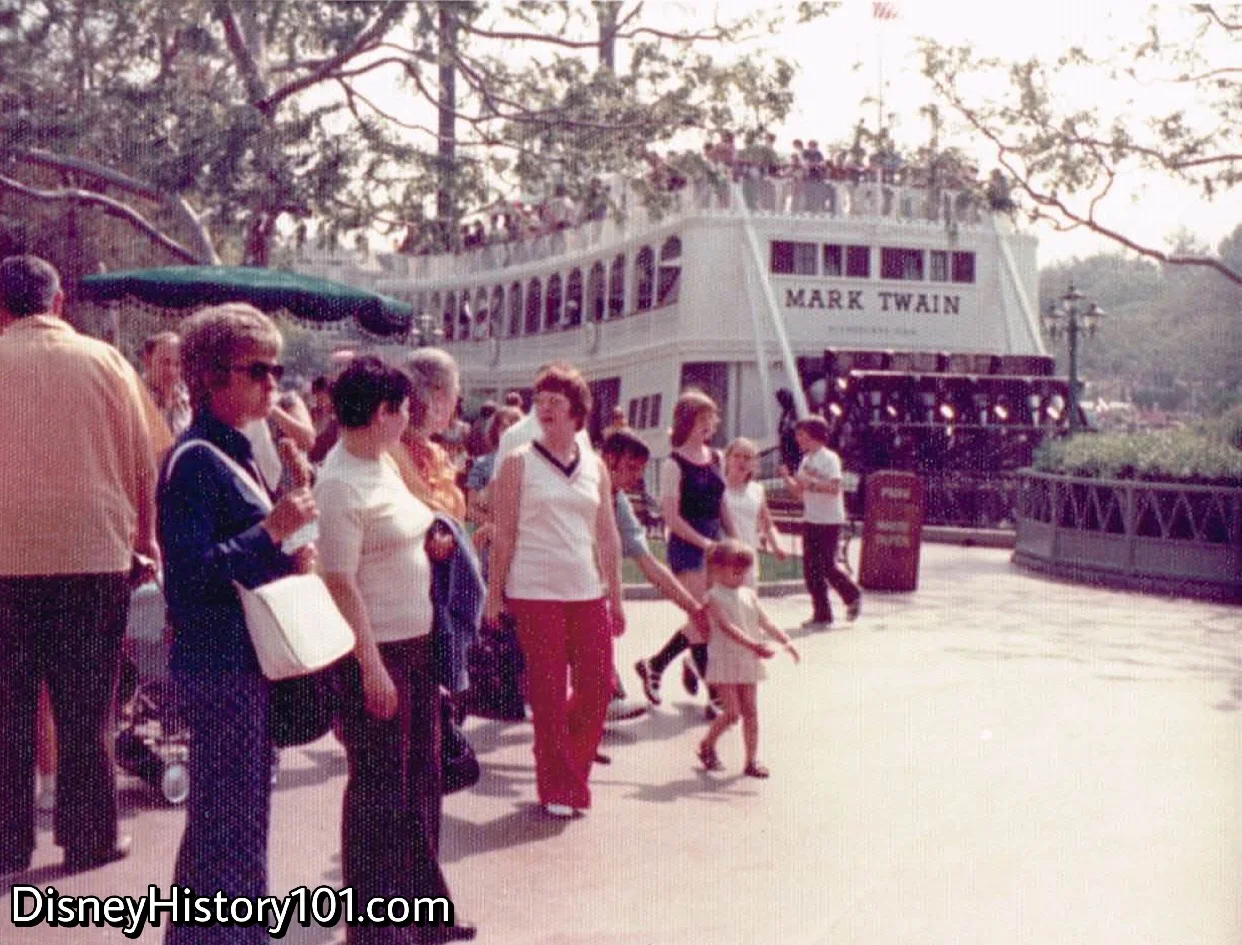
1960s.
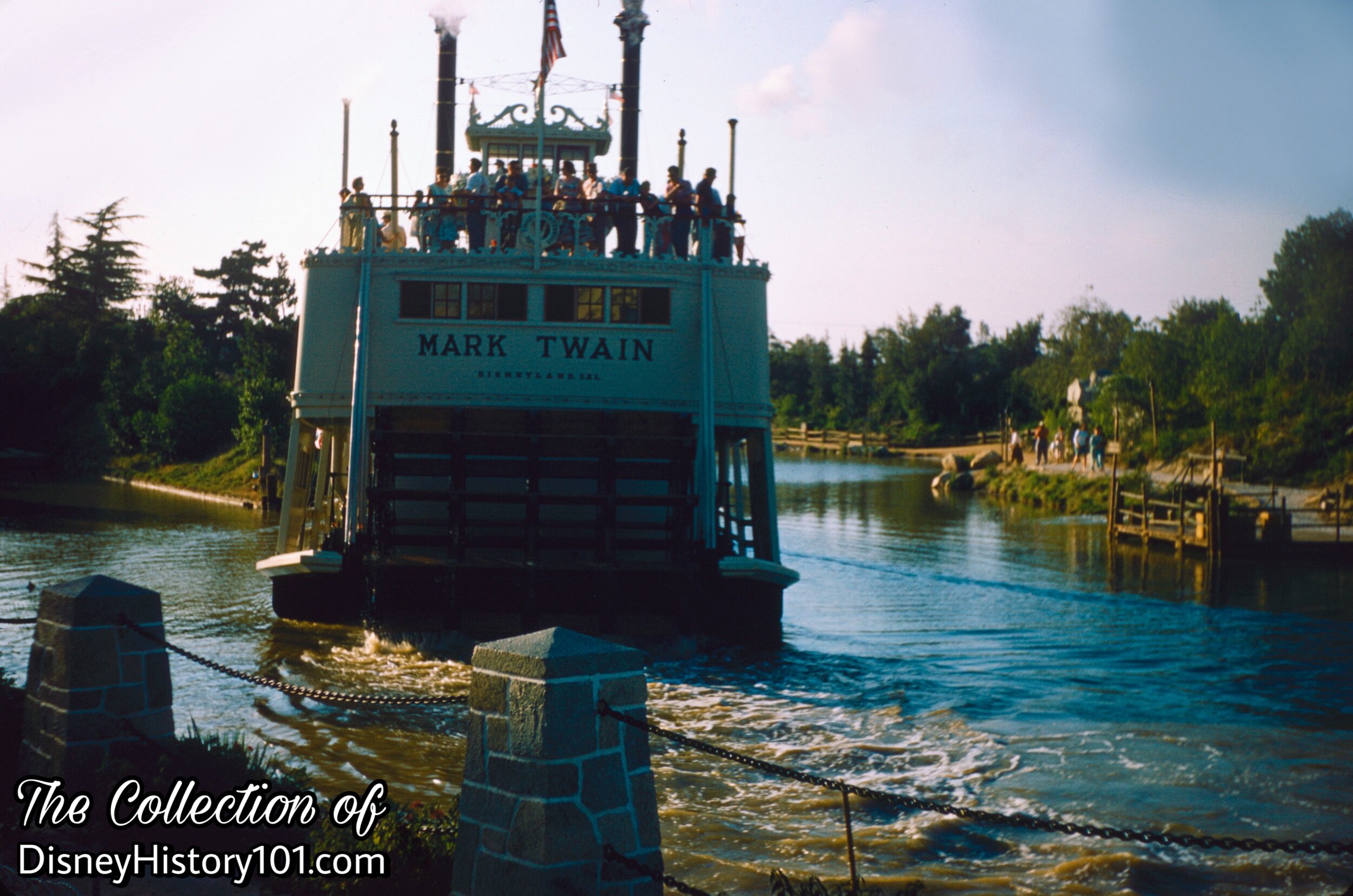
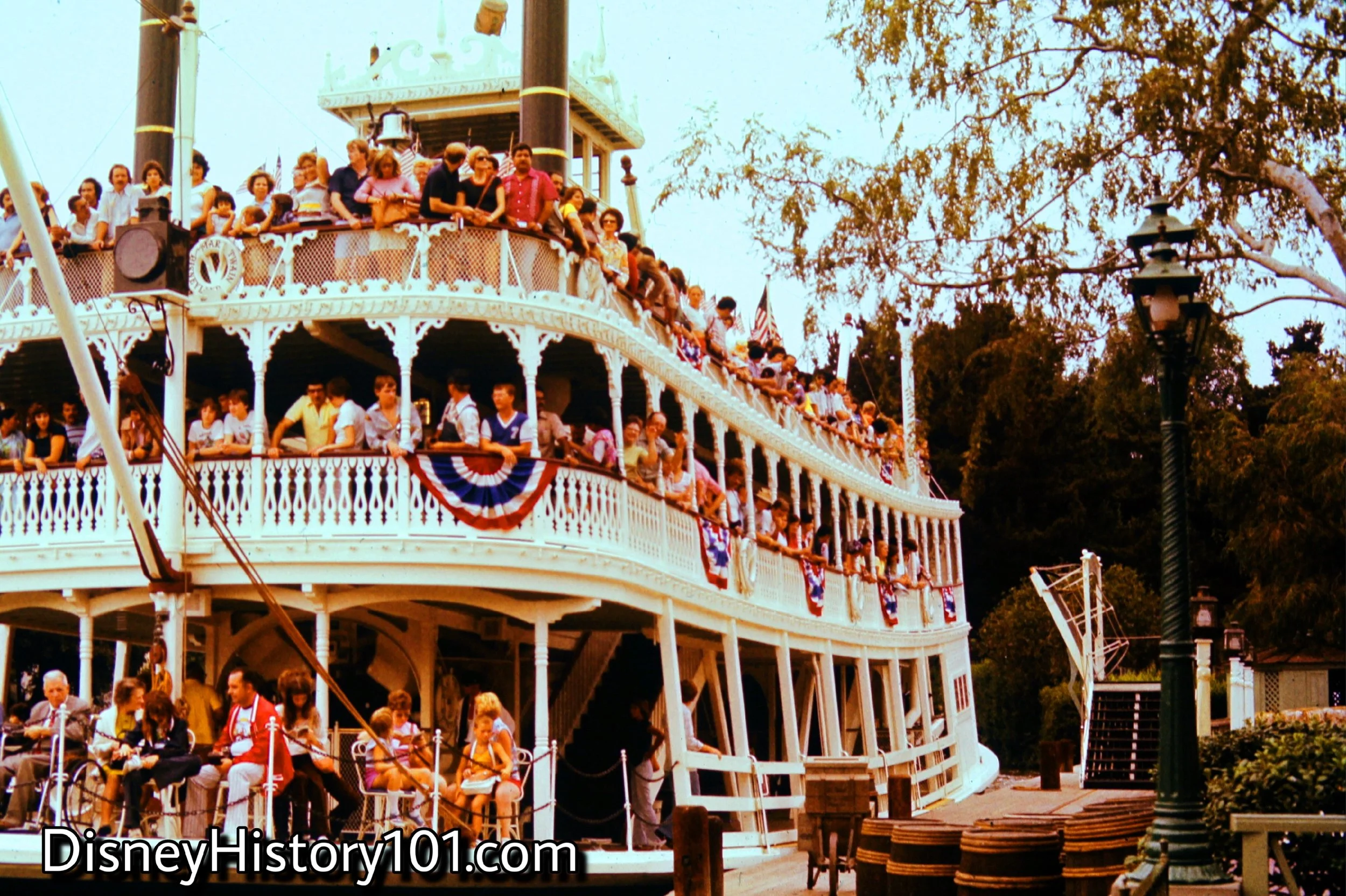
1976
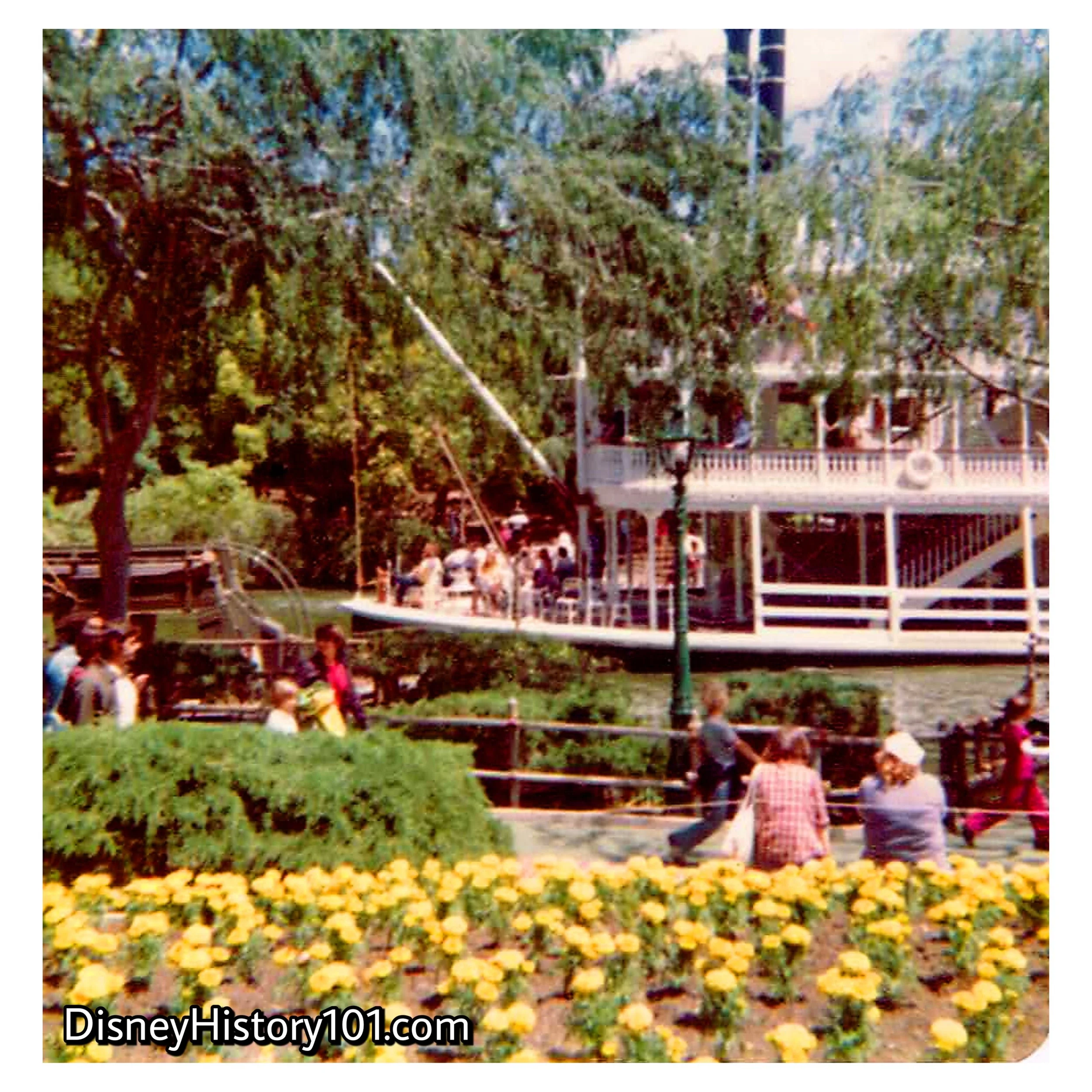
1978
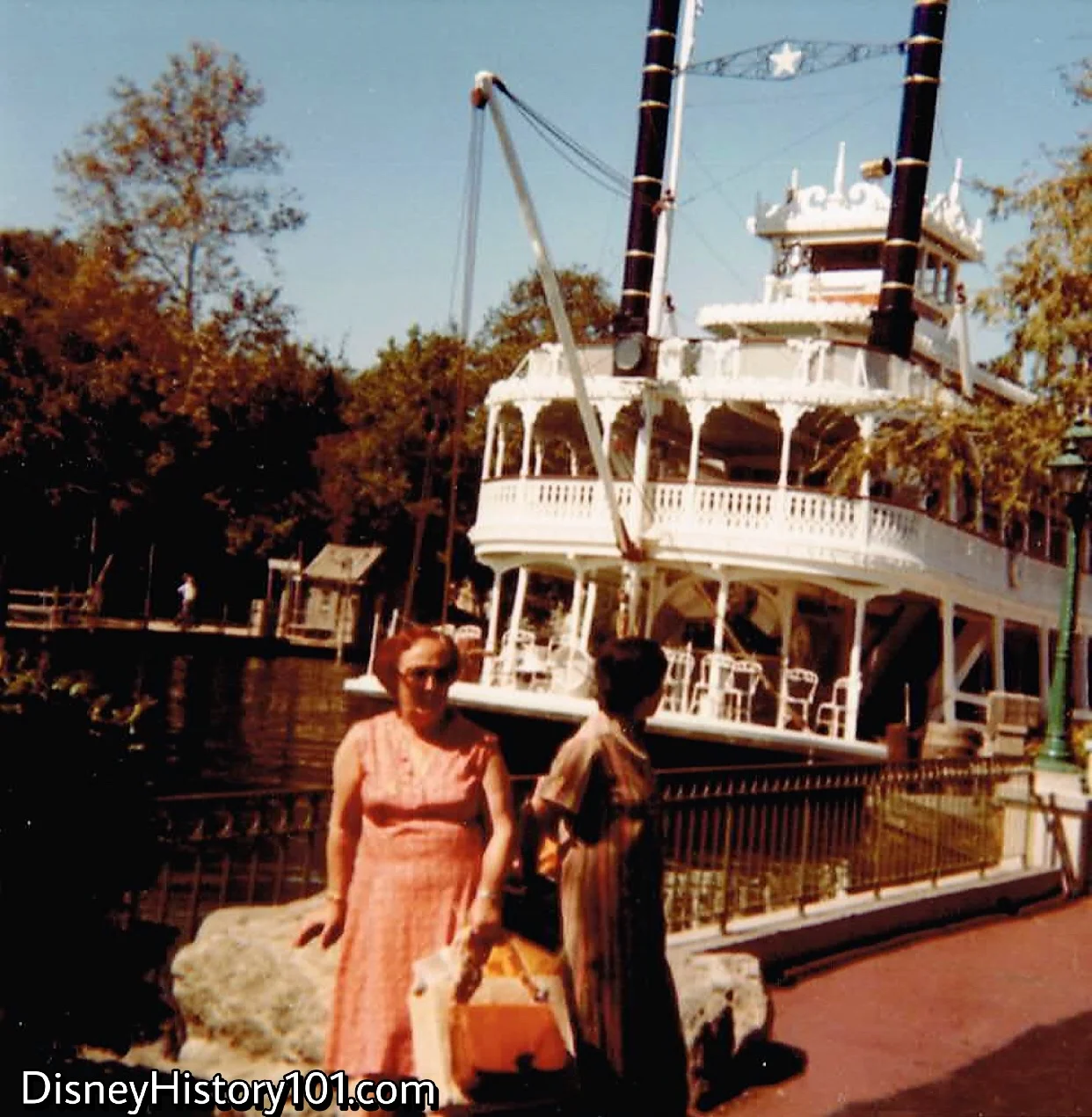
1978
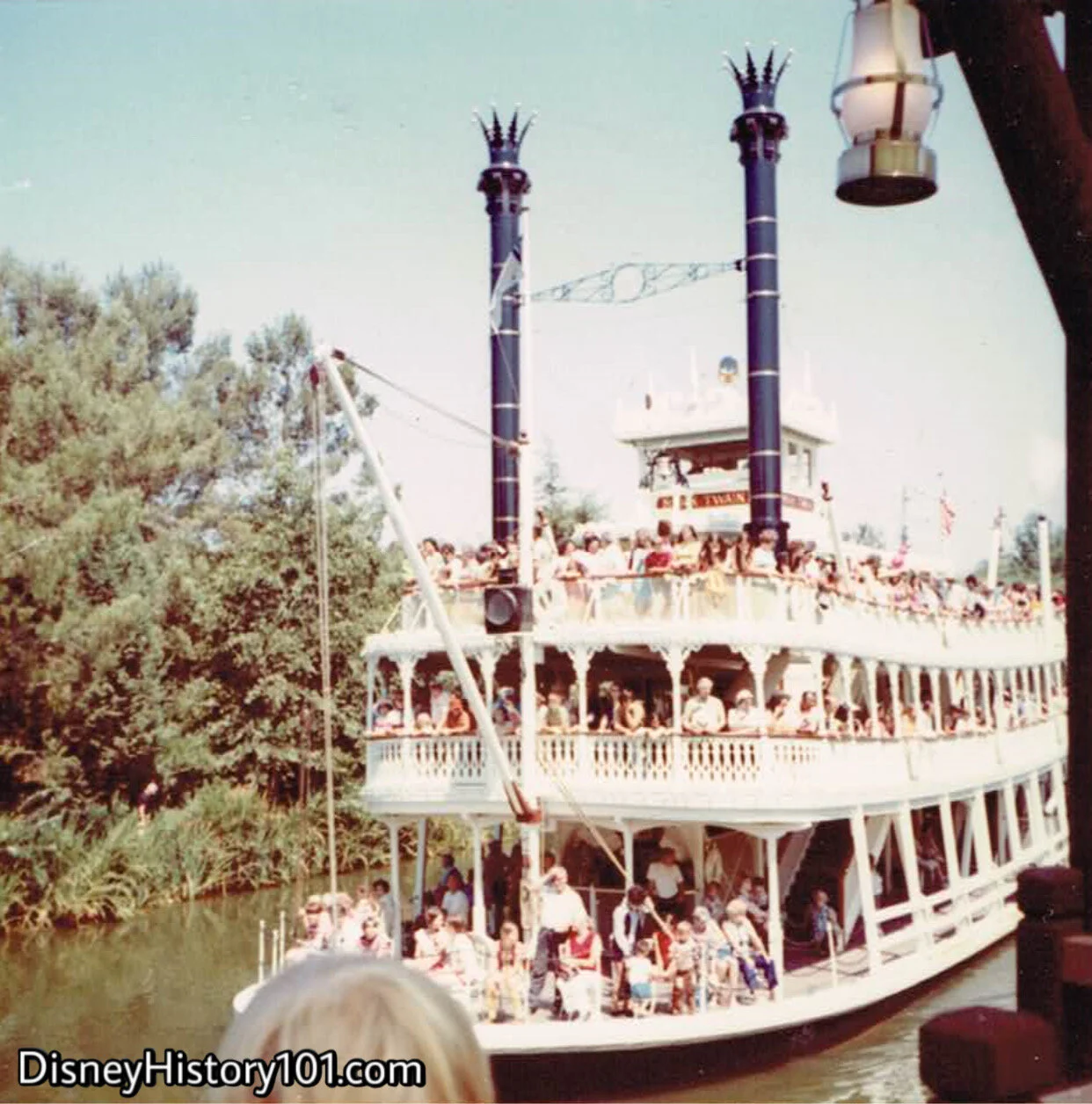
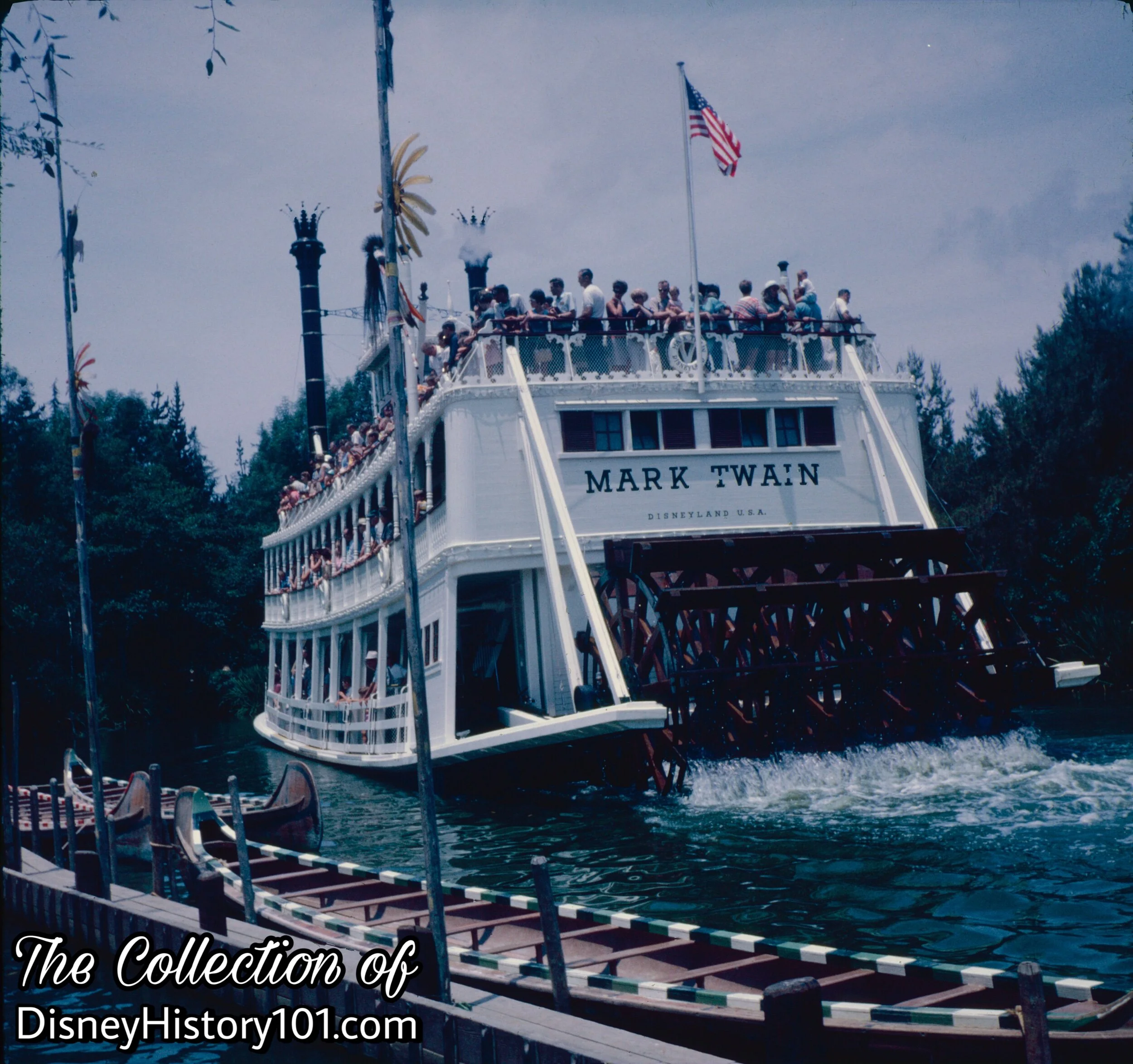
(c. July, 1967)
The Mark Twain offered transportation down the Rivers of America when other craft were in periods of seasonal non-operation.
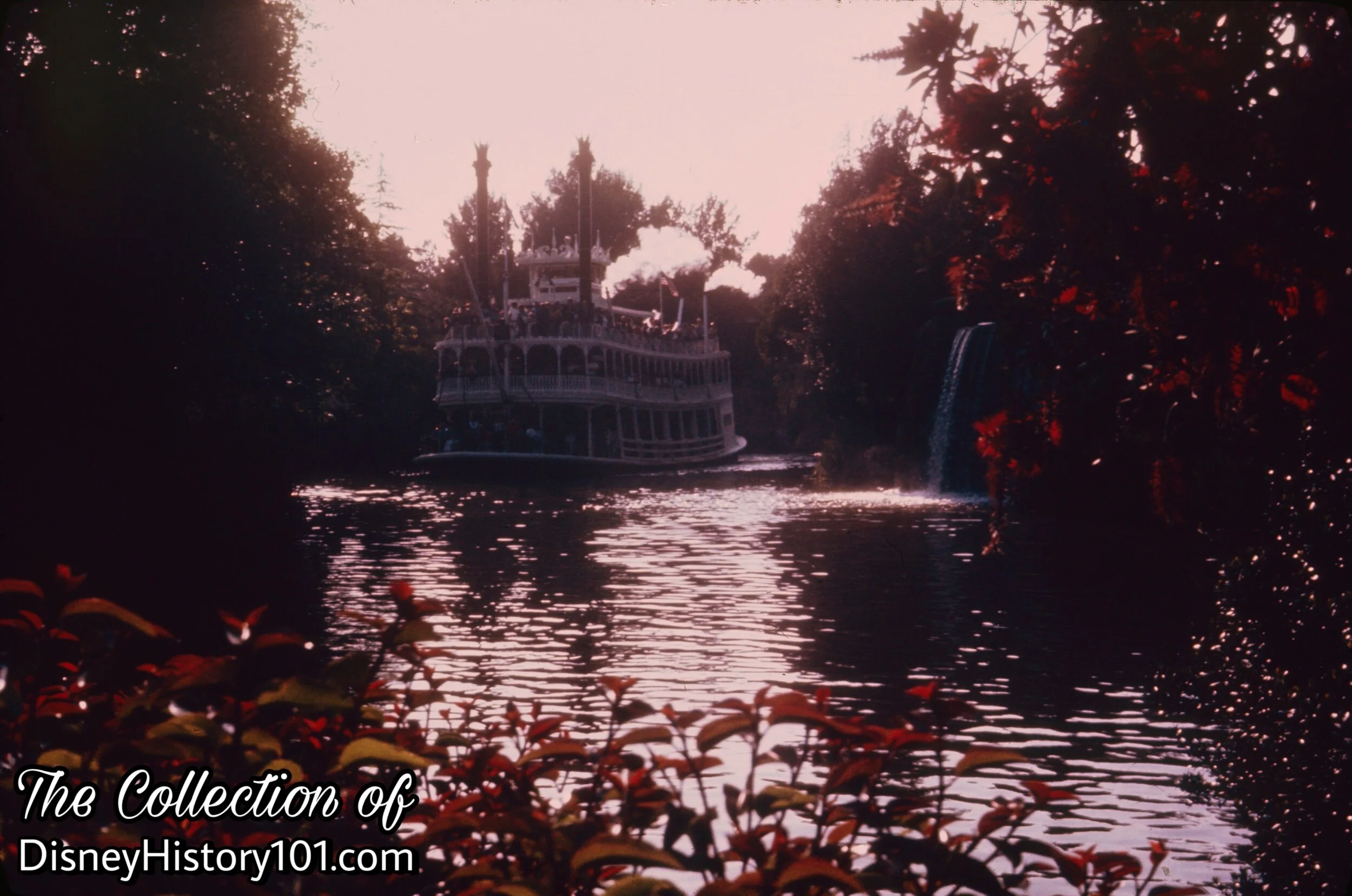
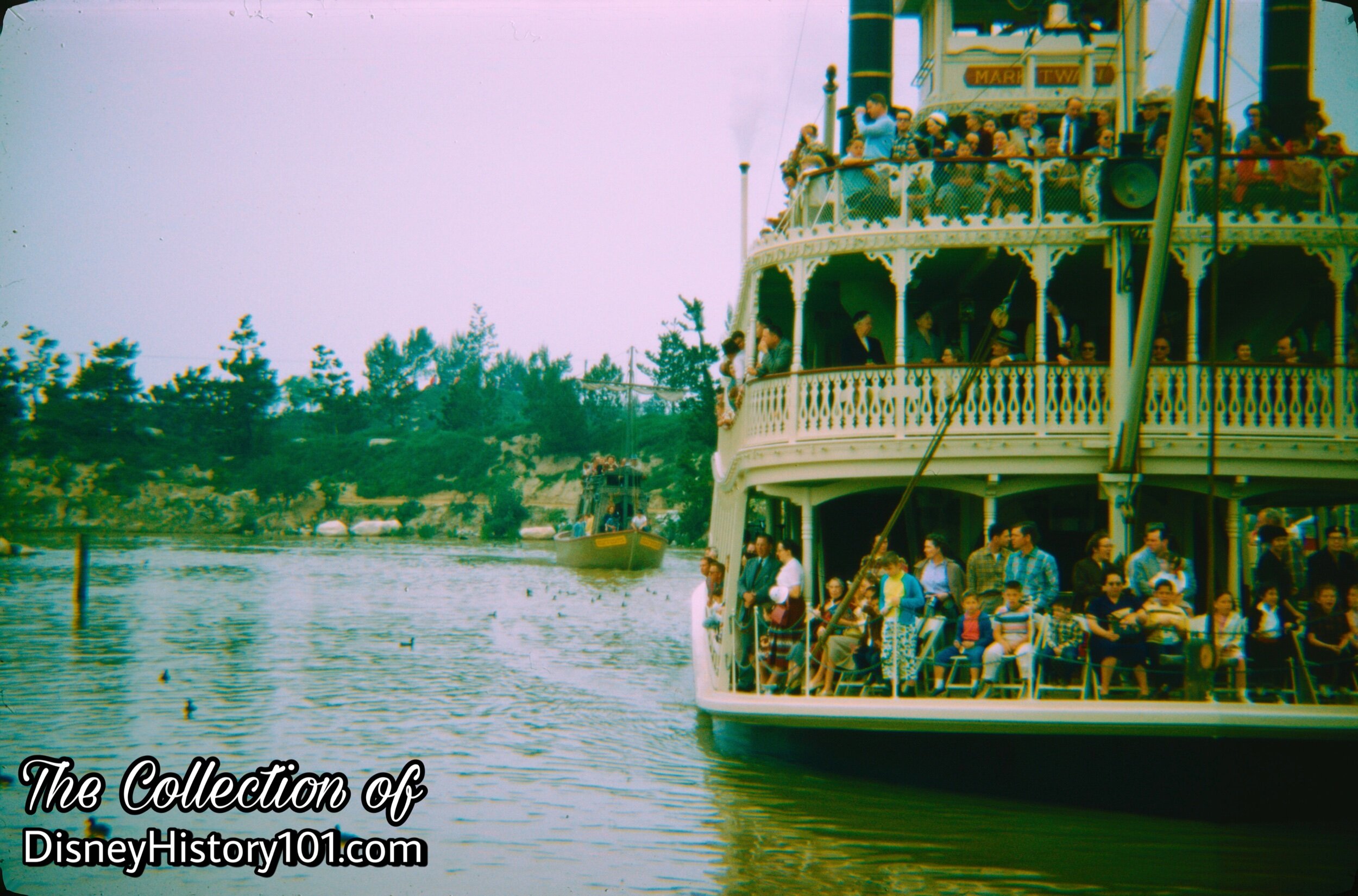
(1950s)
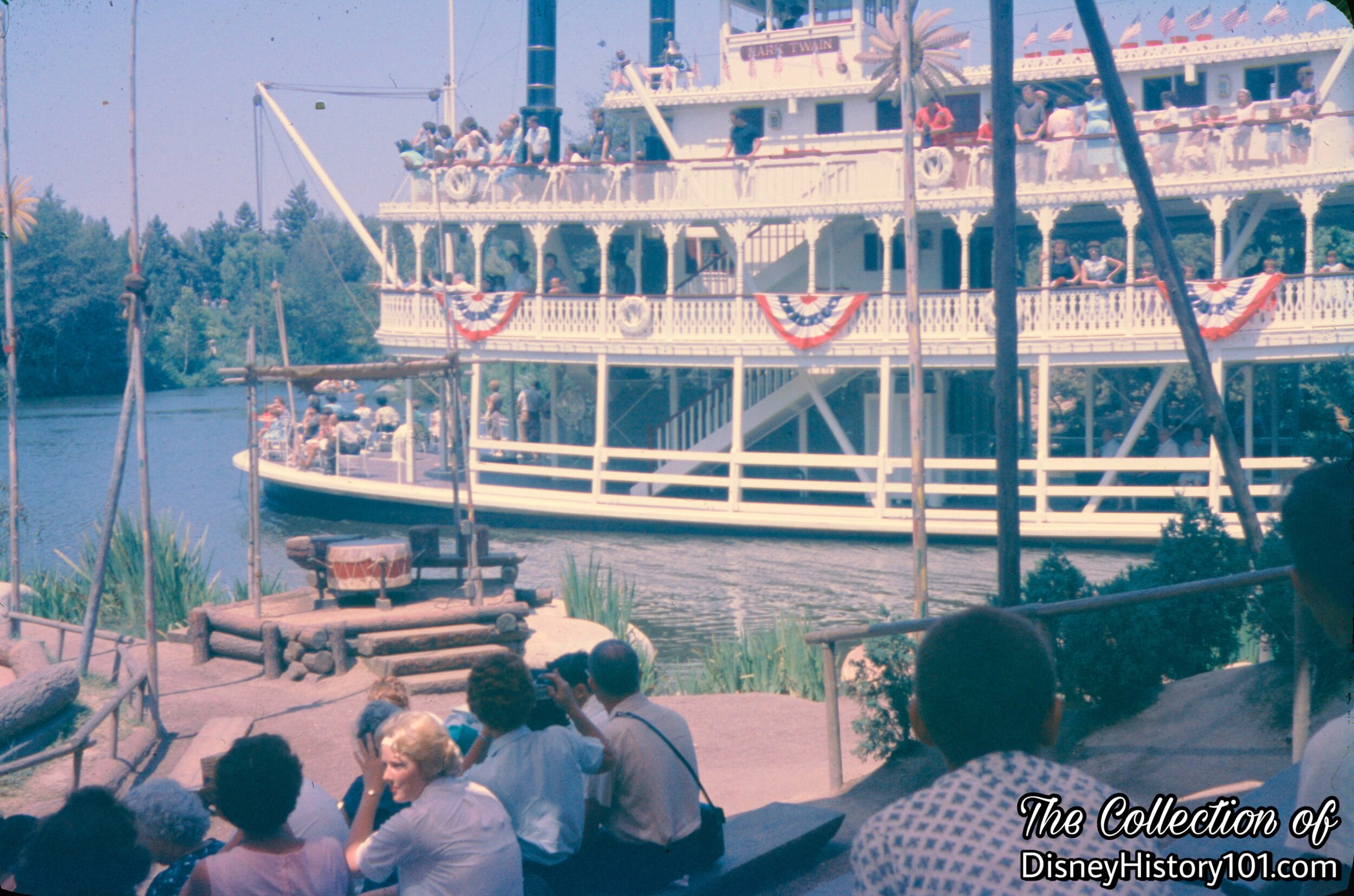
(August, 1963)
(1981)
(January, 1977)
(December, 1964)
(September 17, 1970)
(December 2, 1960)
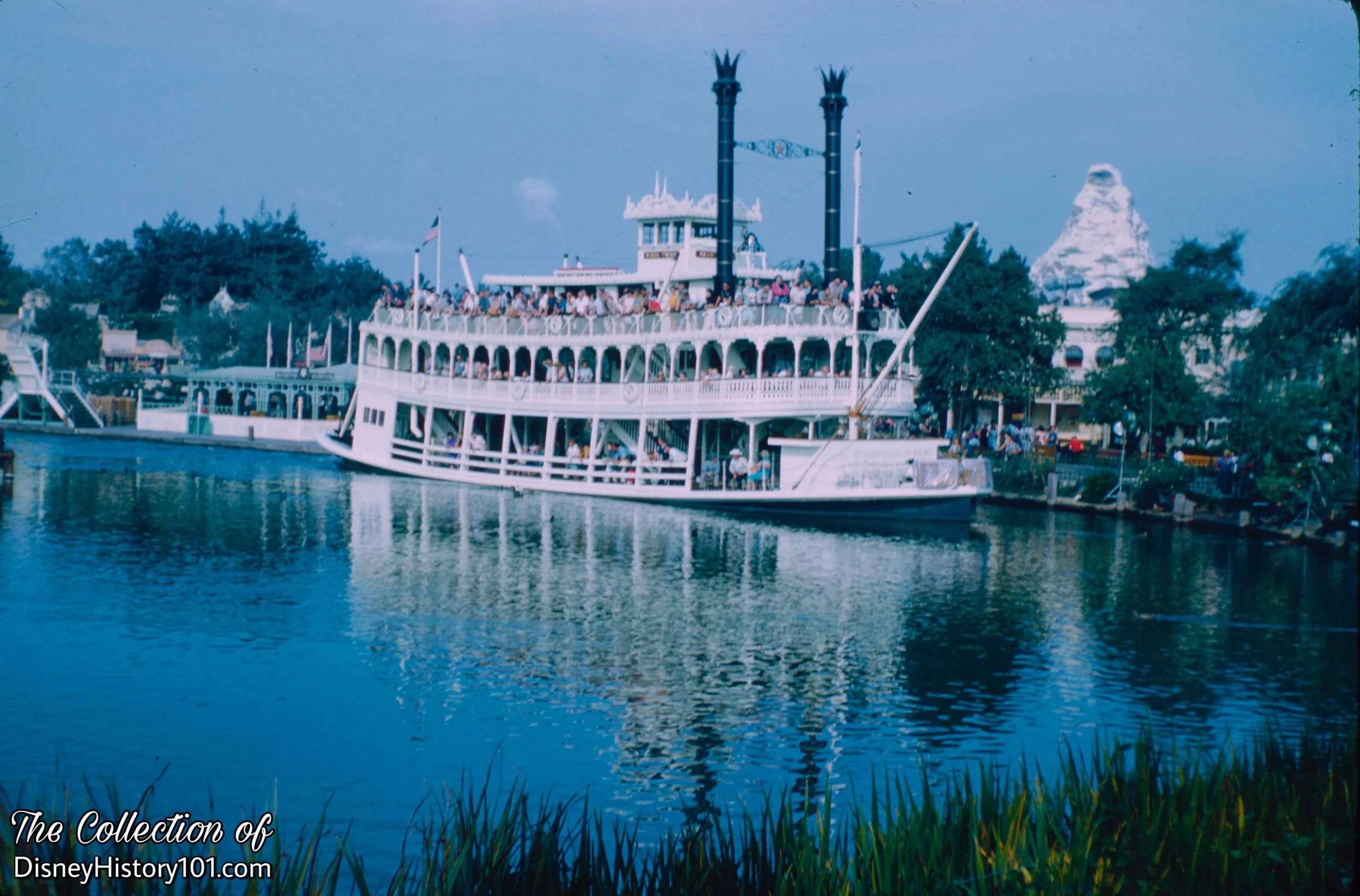
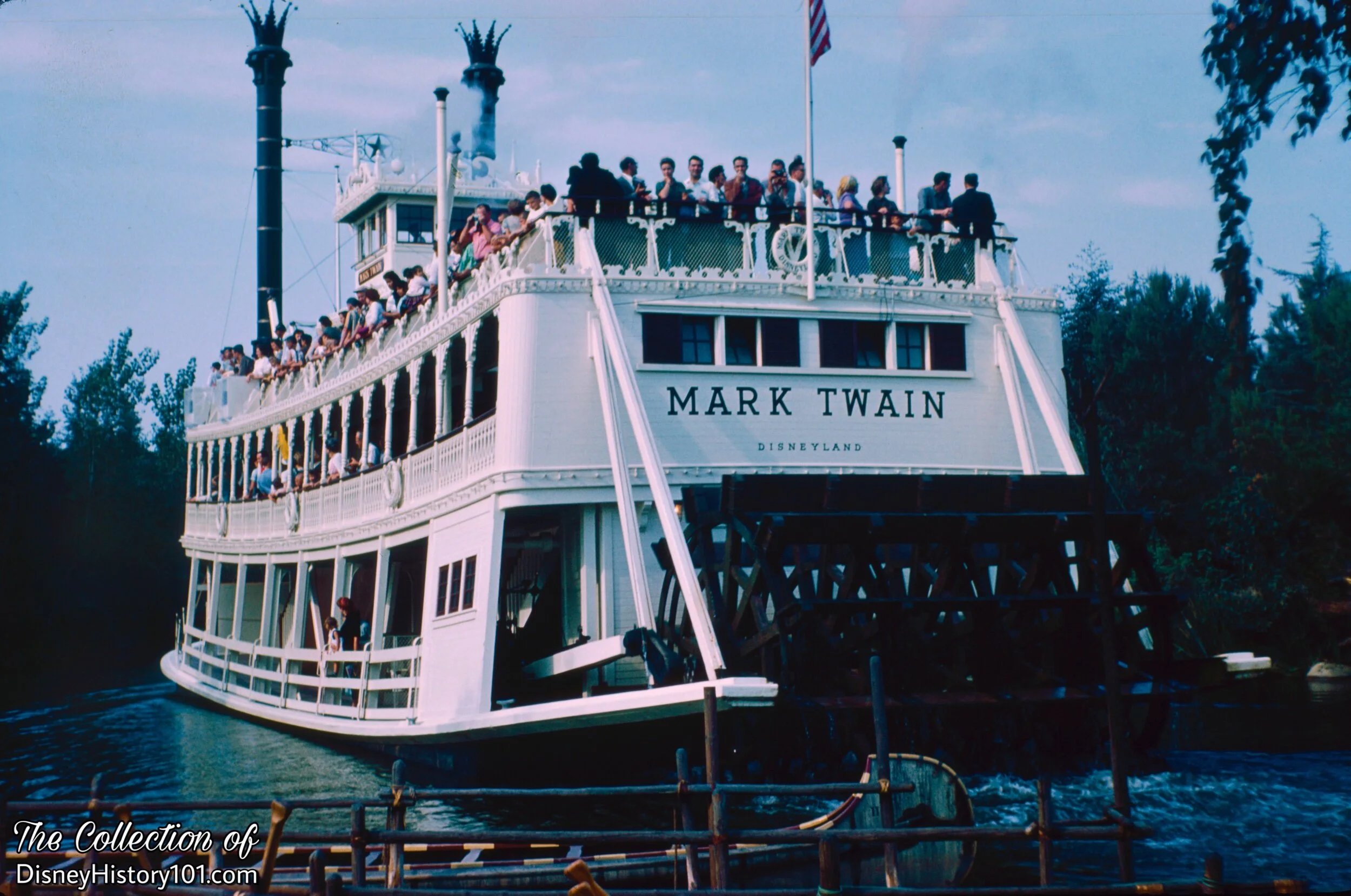
October, 1961.
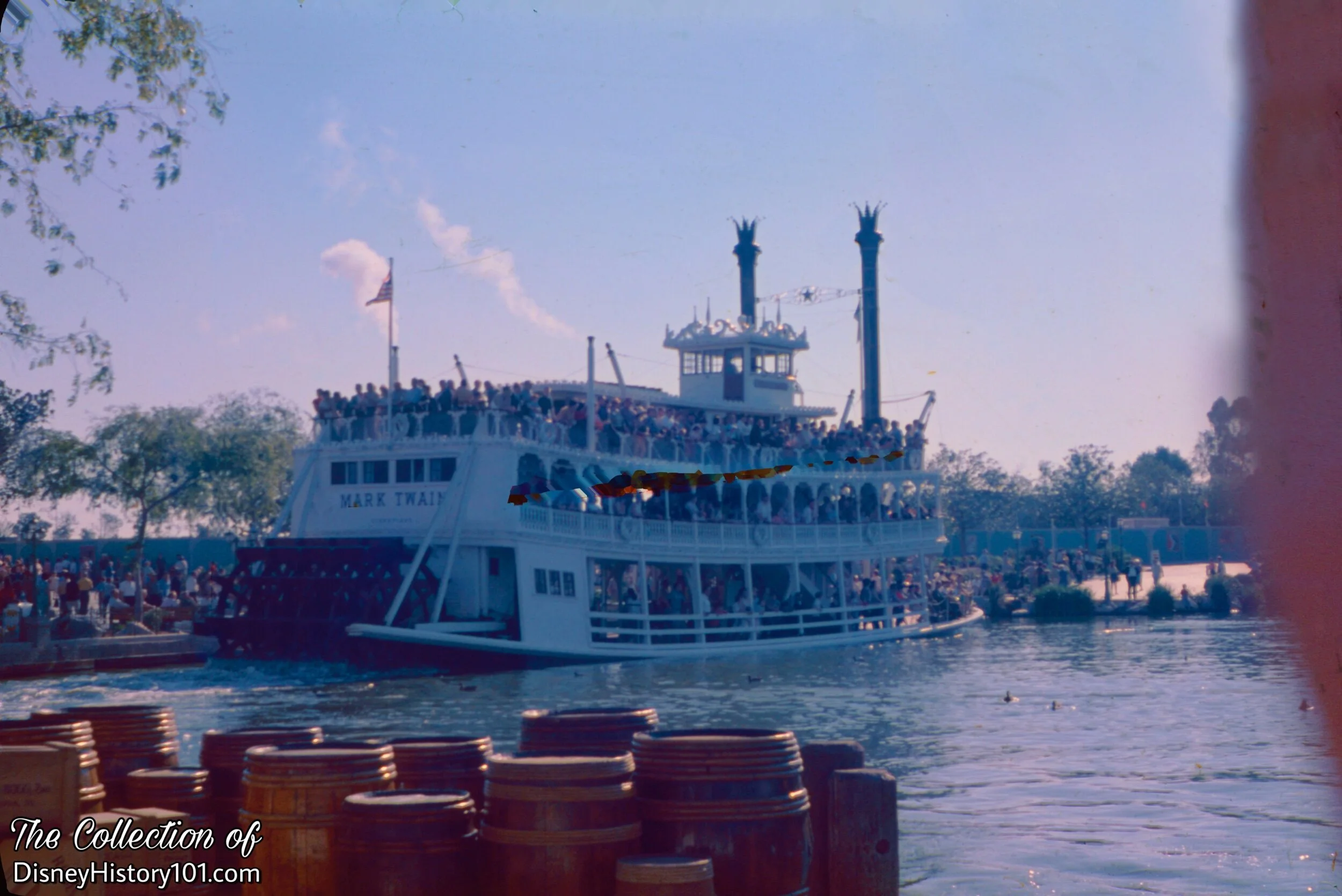
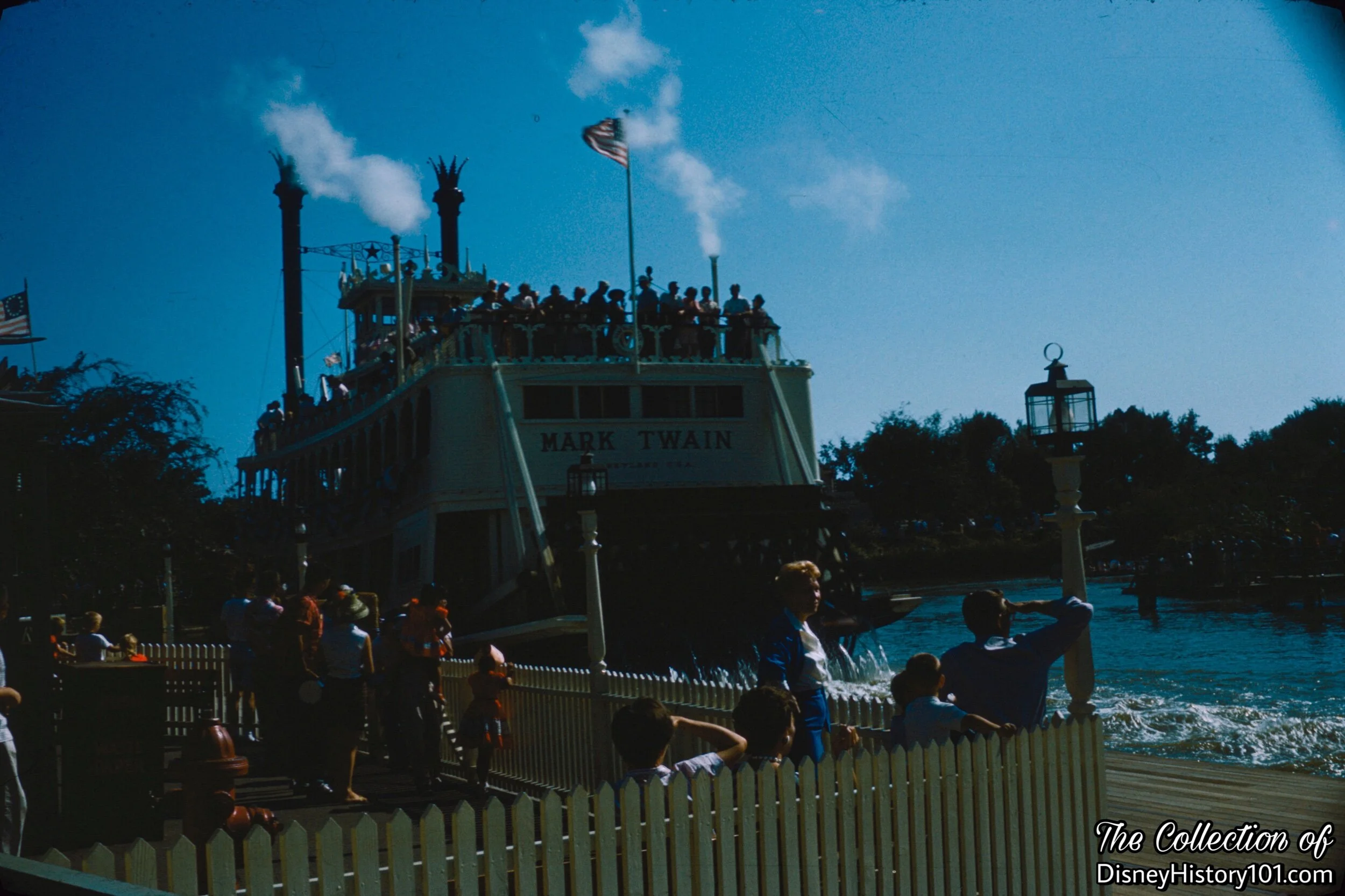
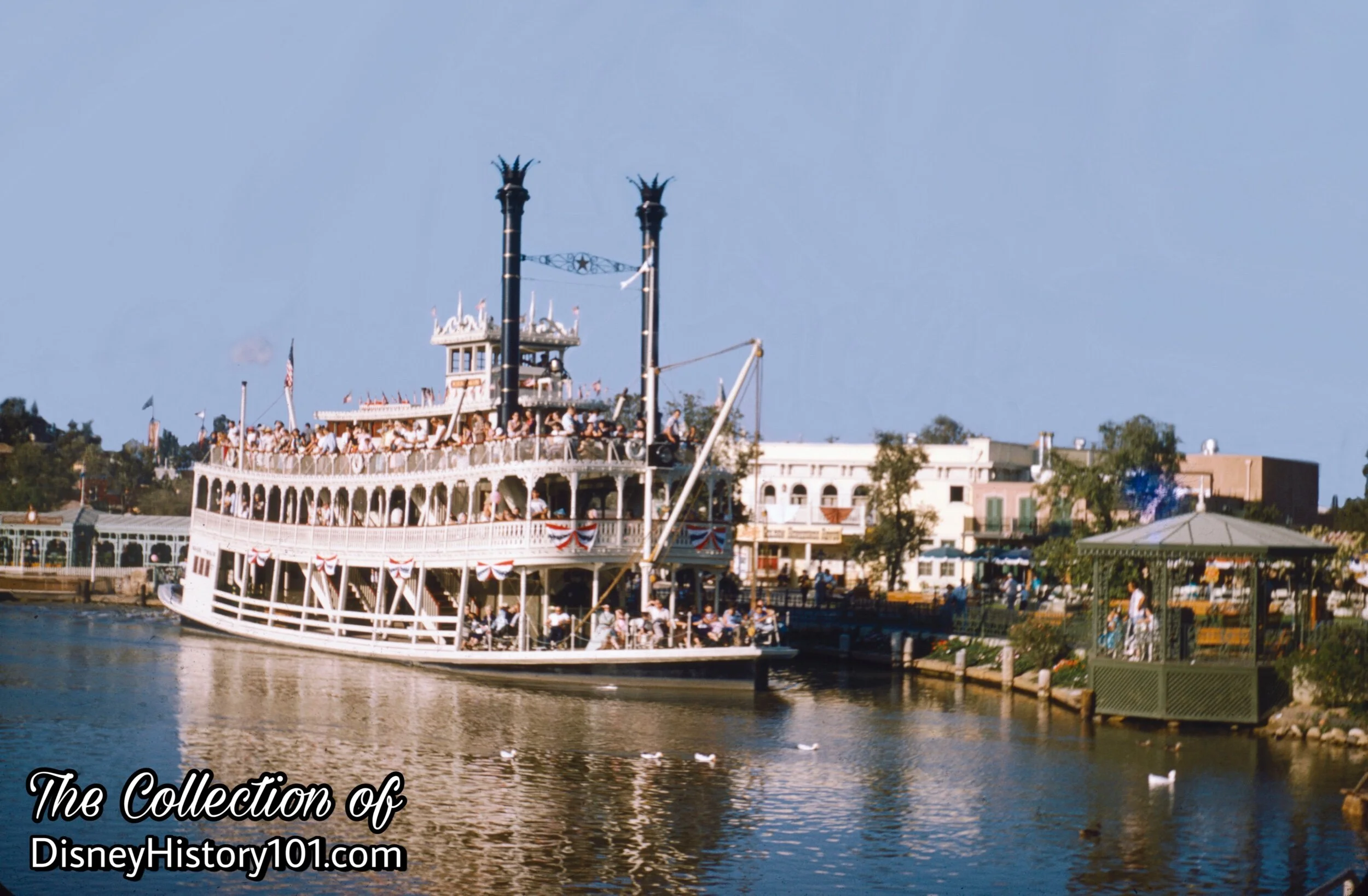
Mark Twain, (1957)
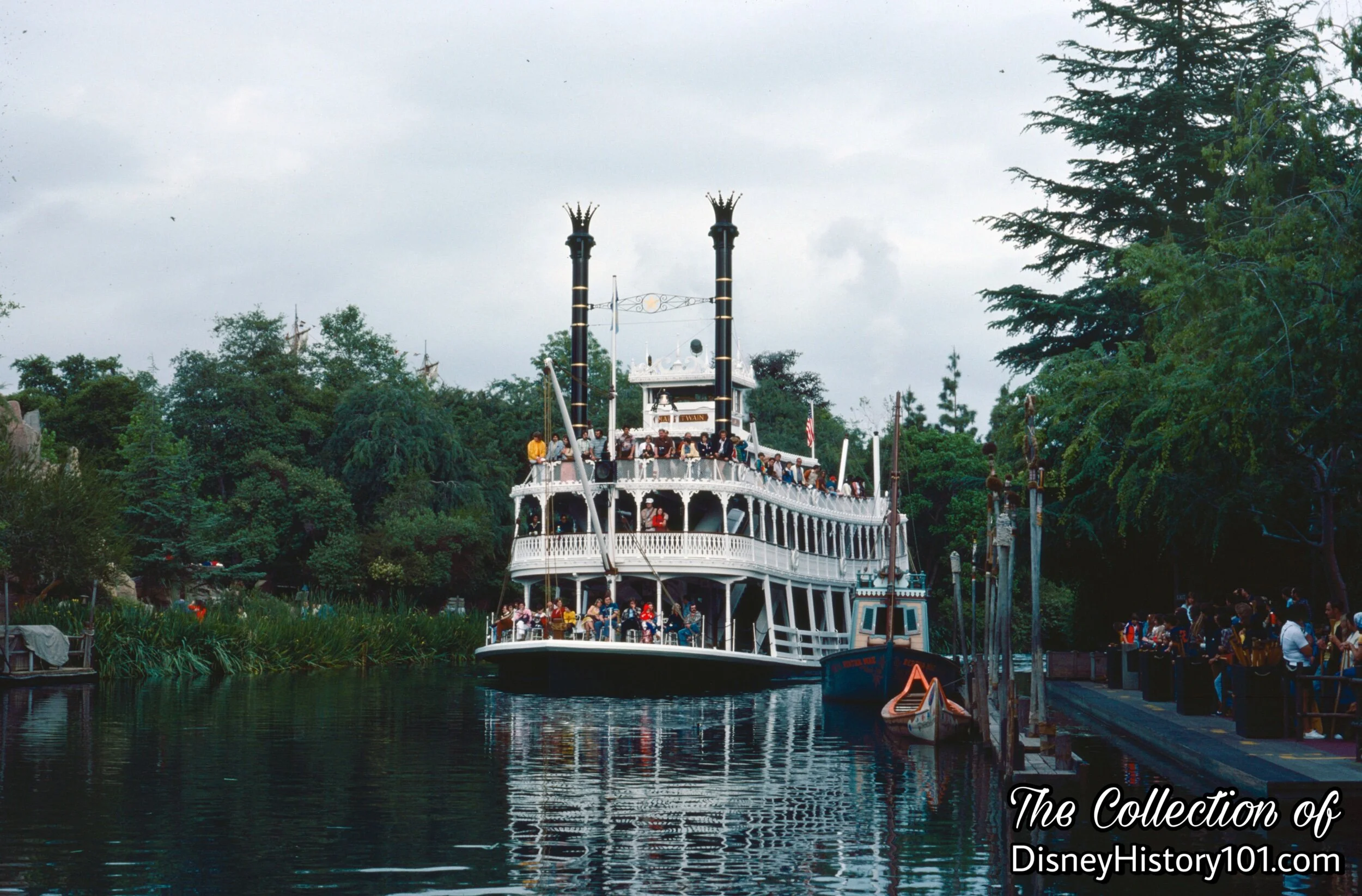
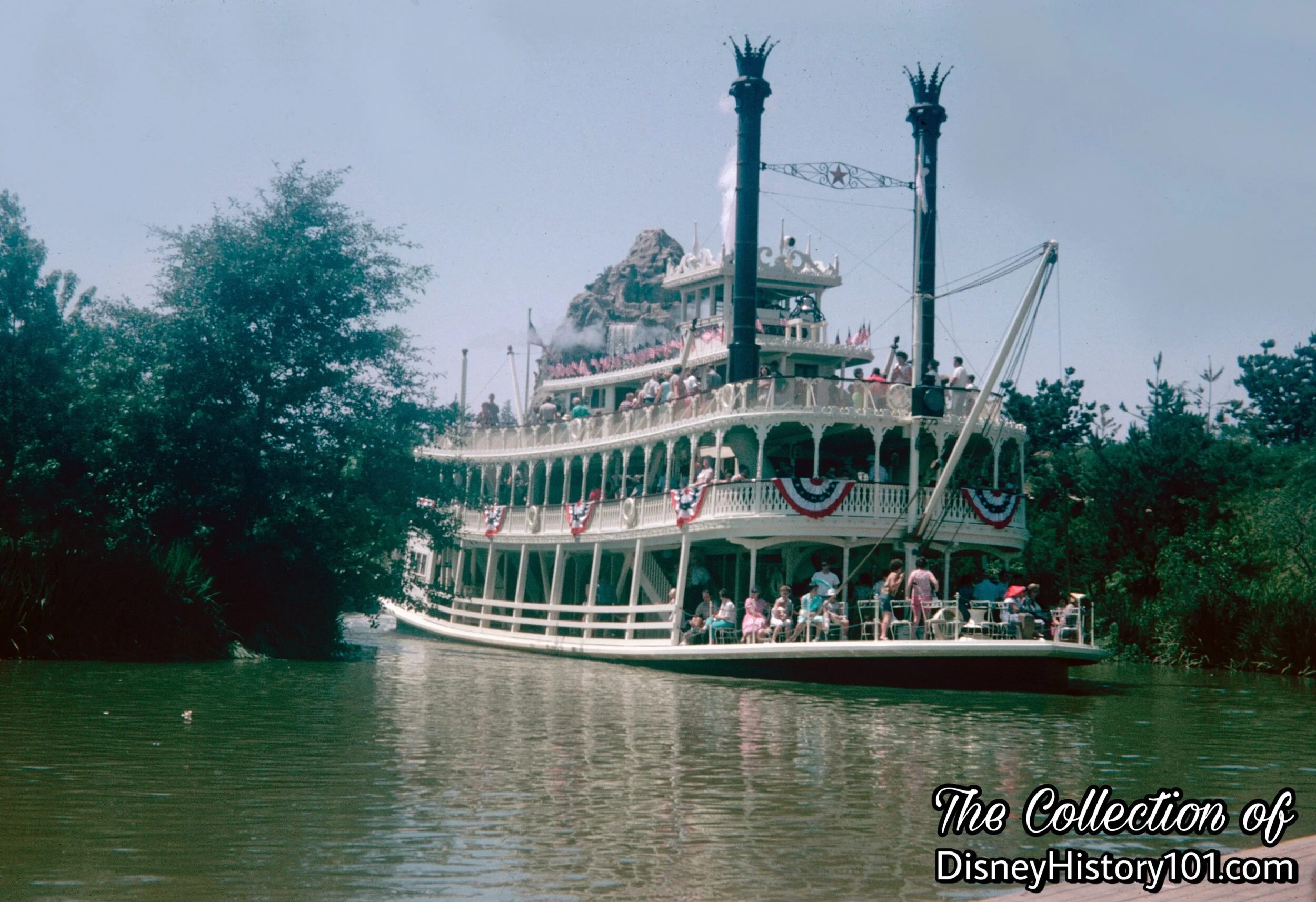

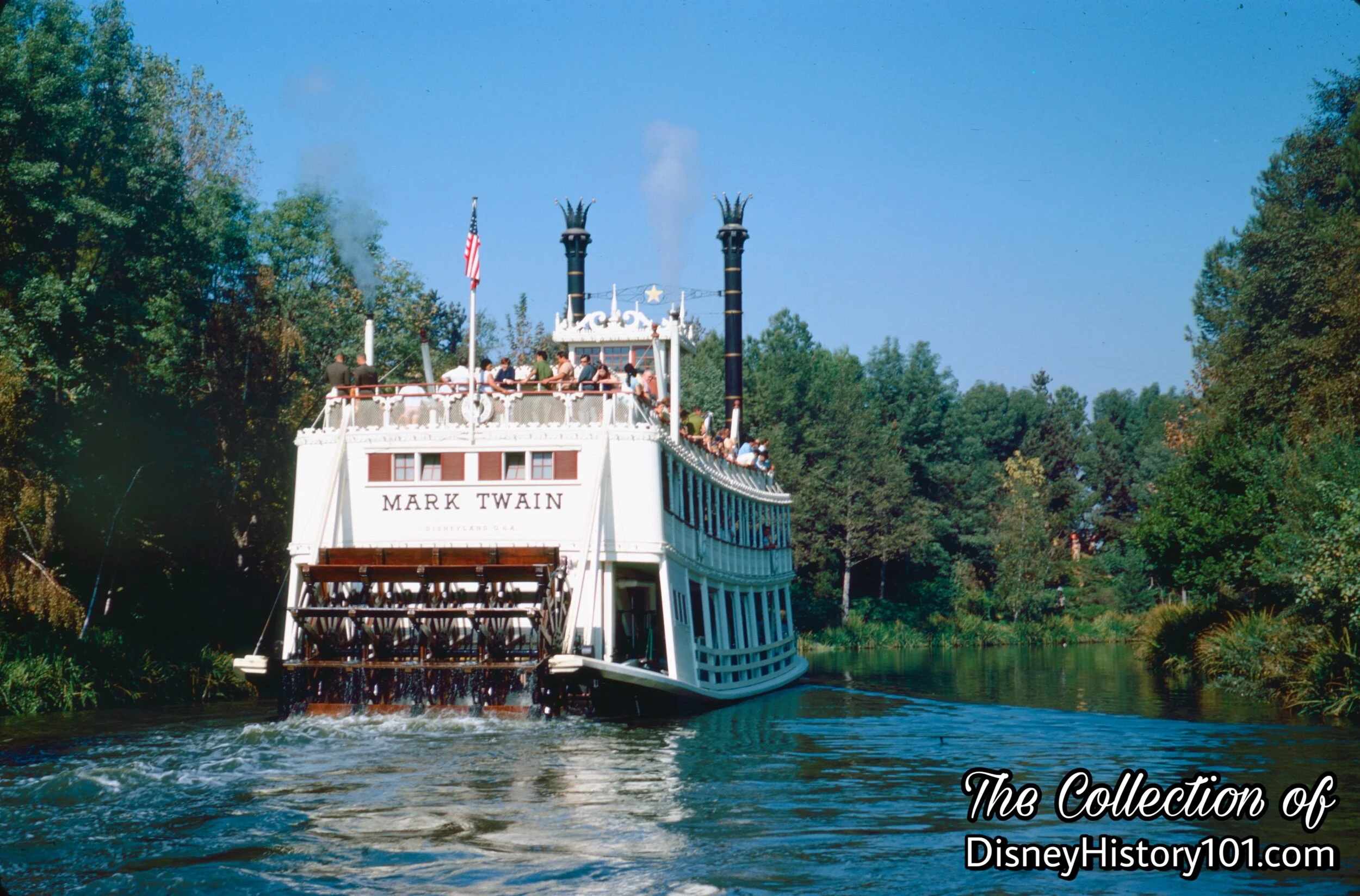
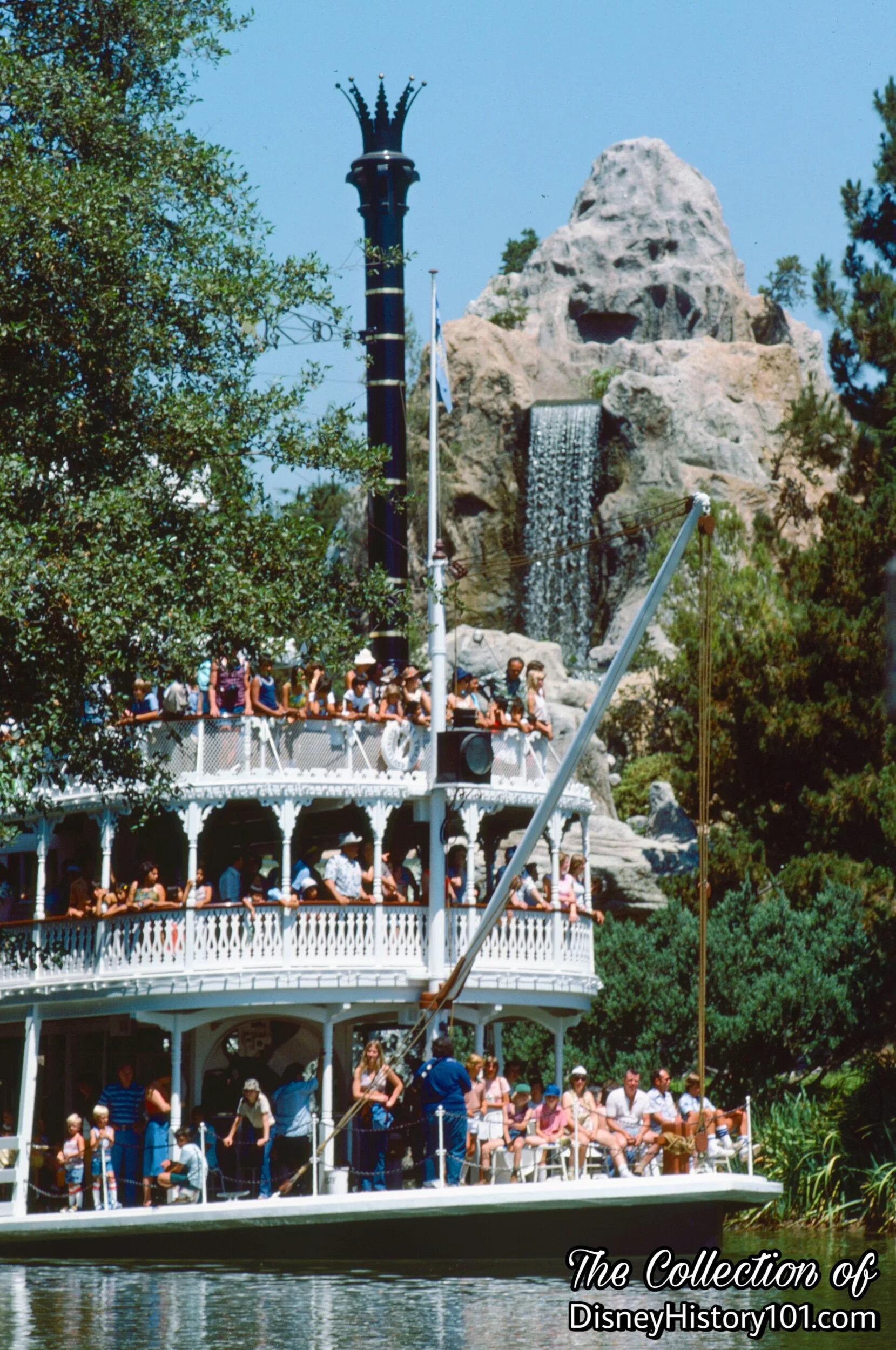
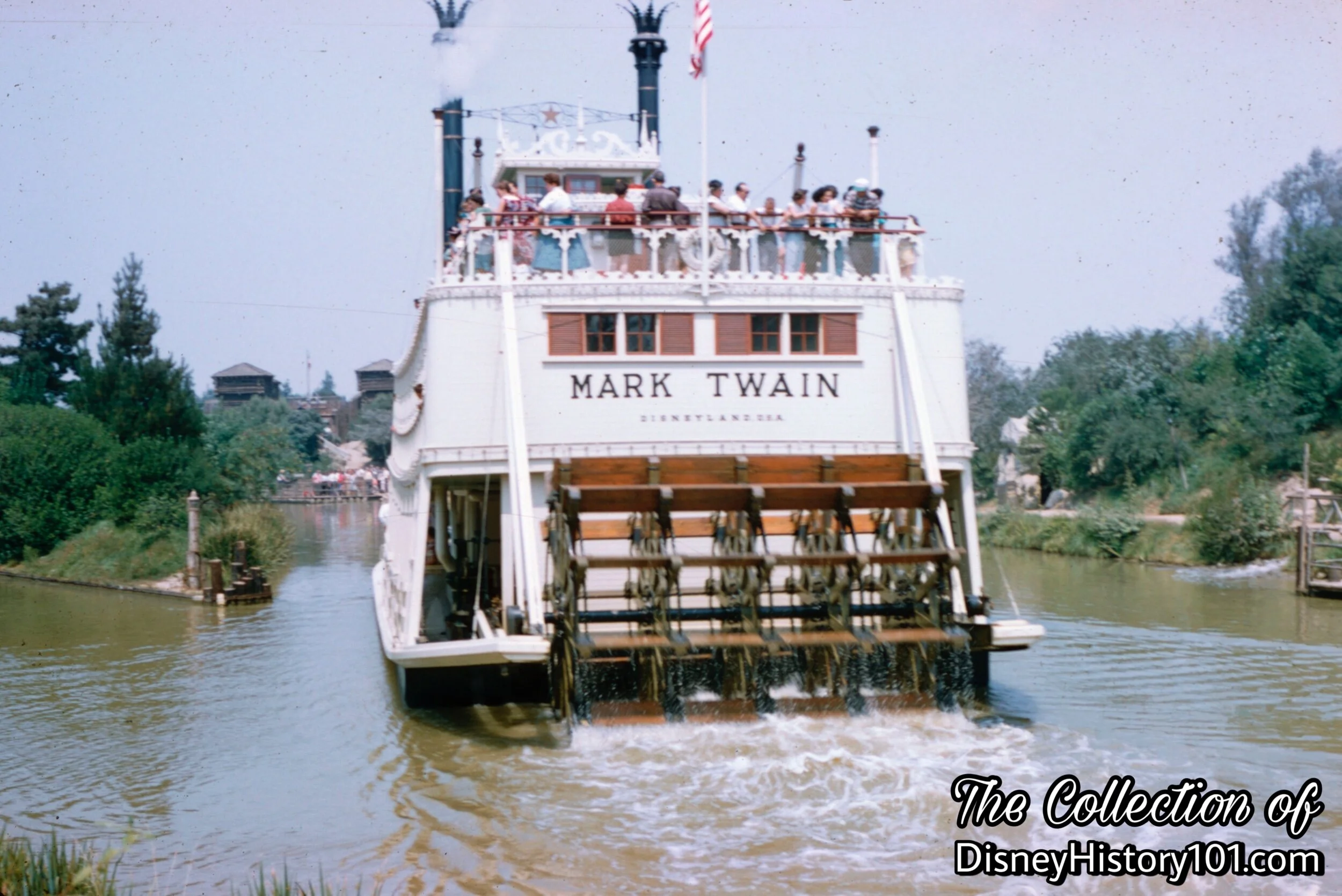
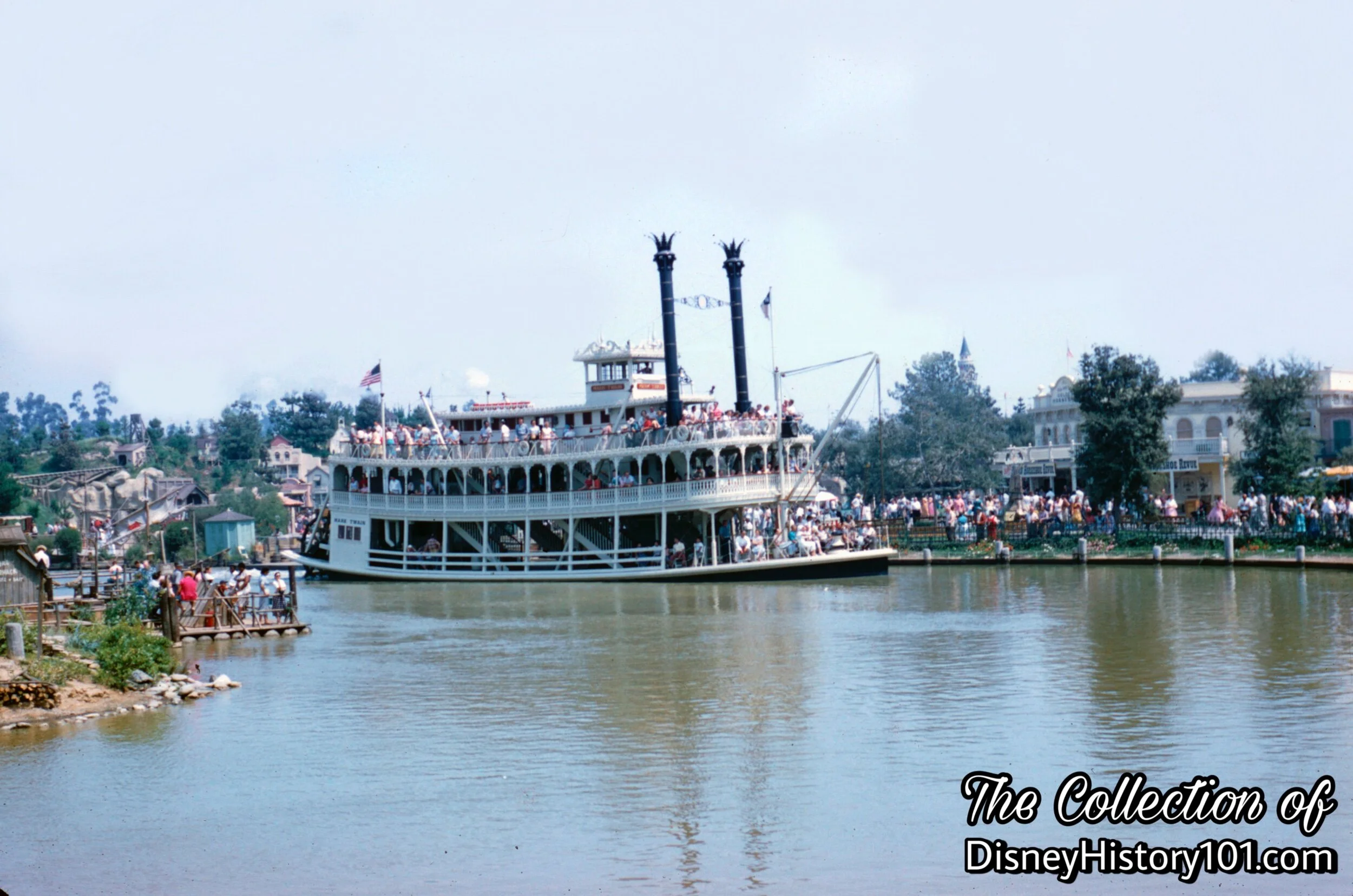
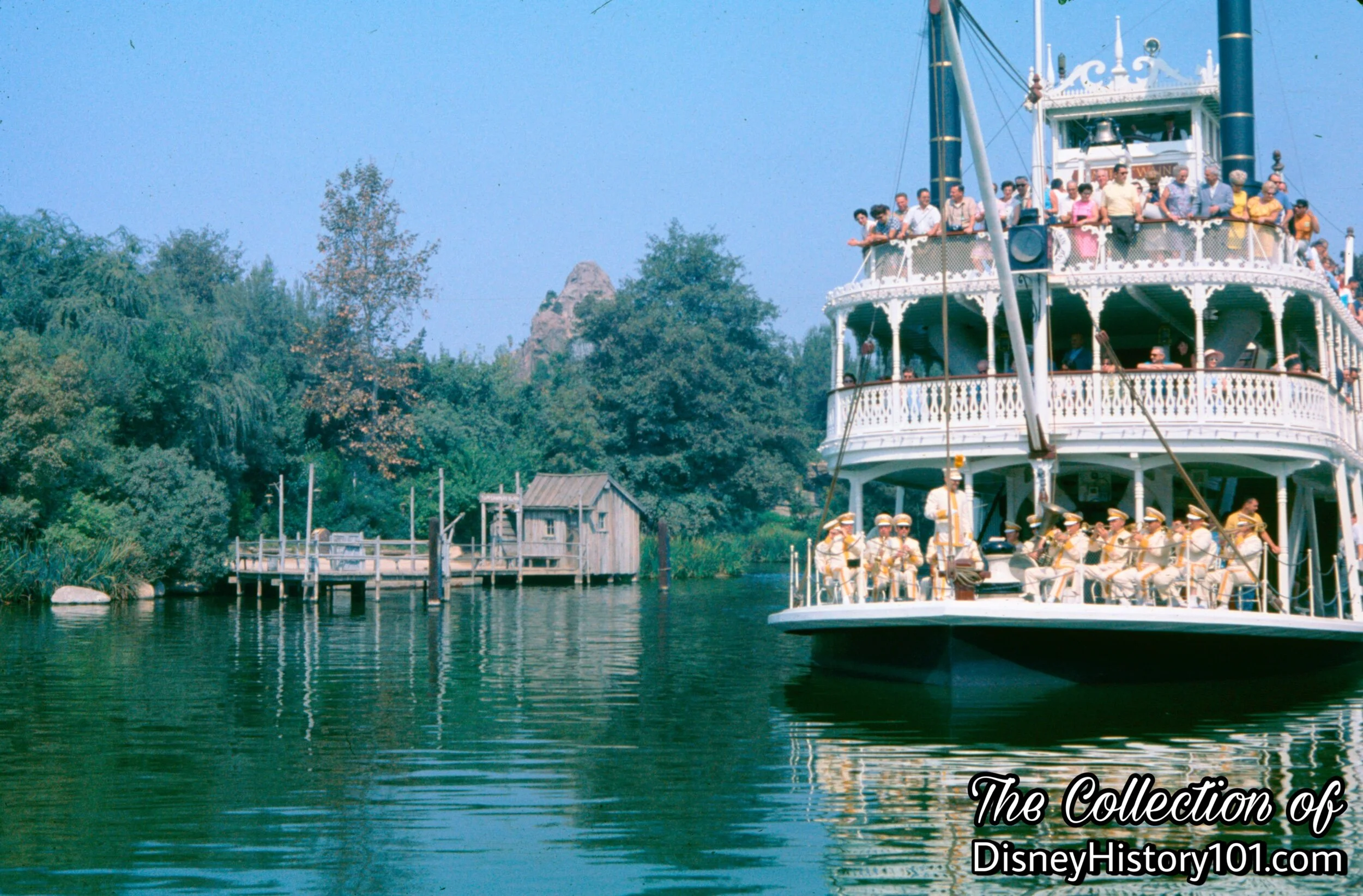
Mark Twain, September 1978.
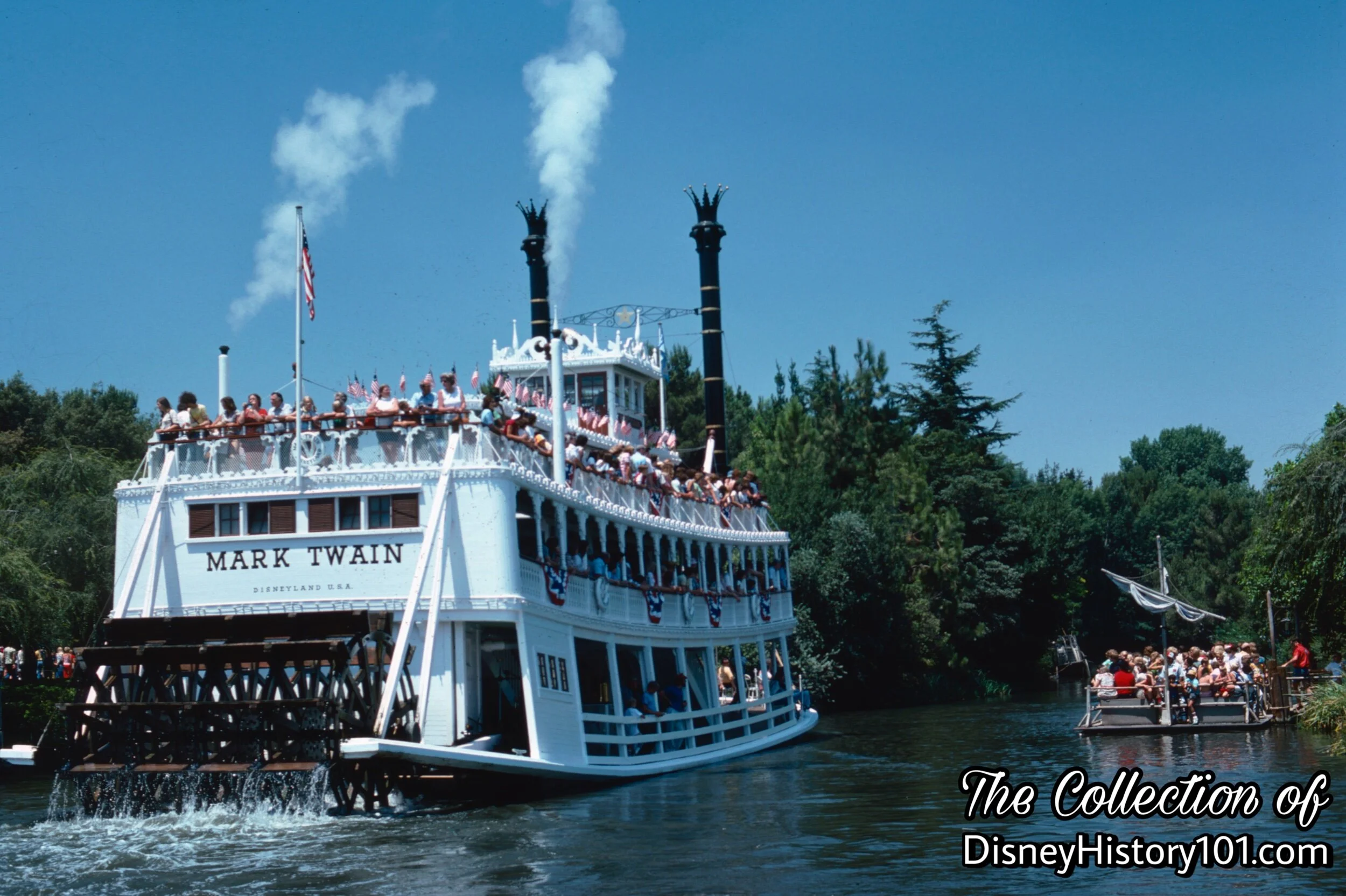
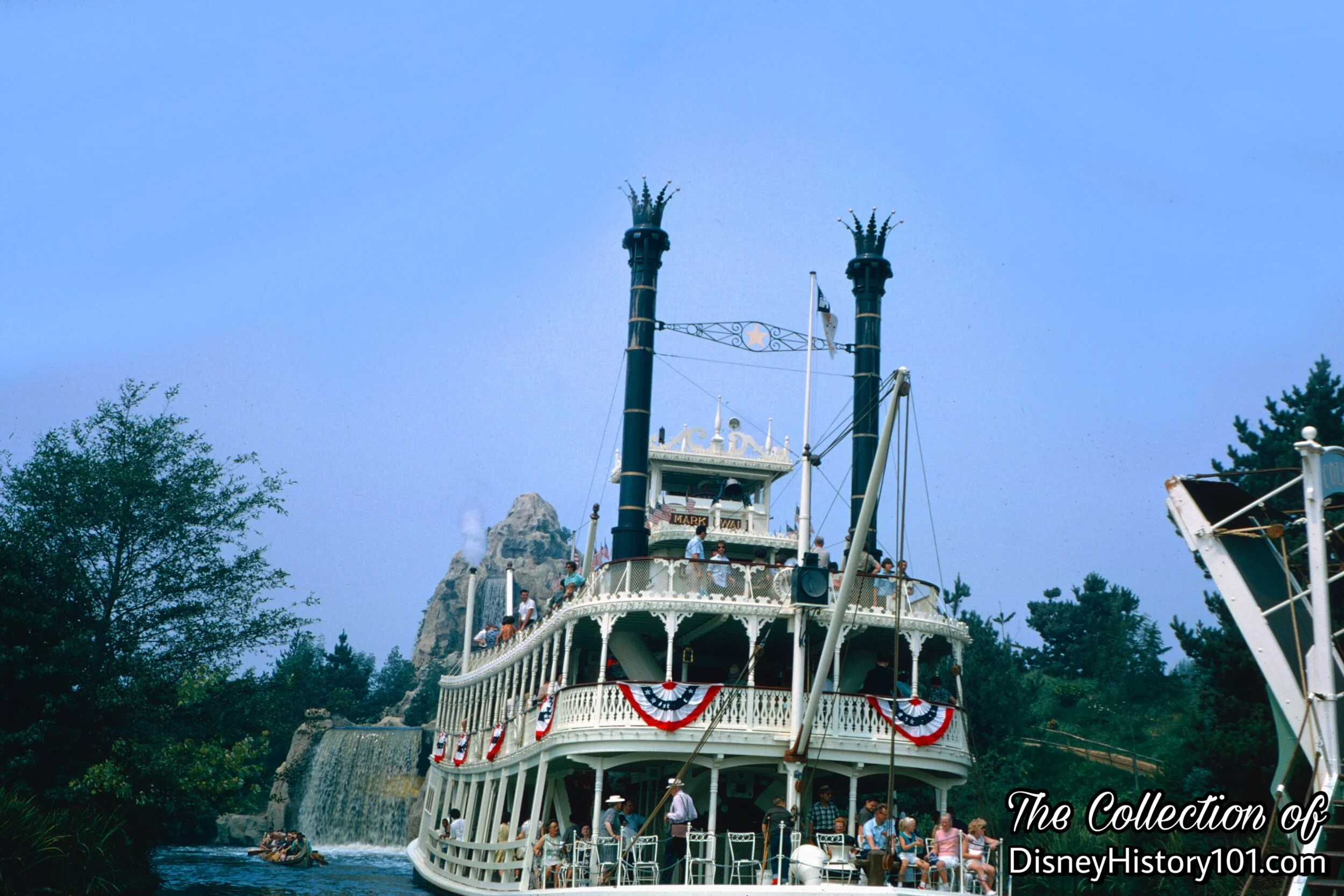
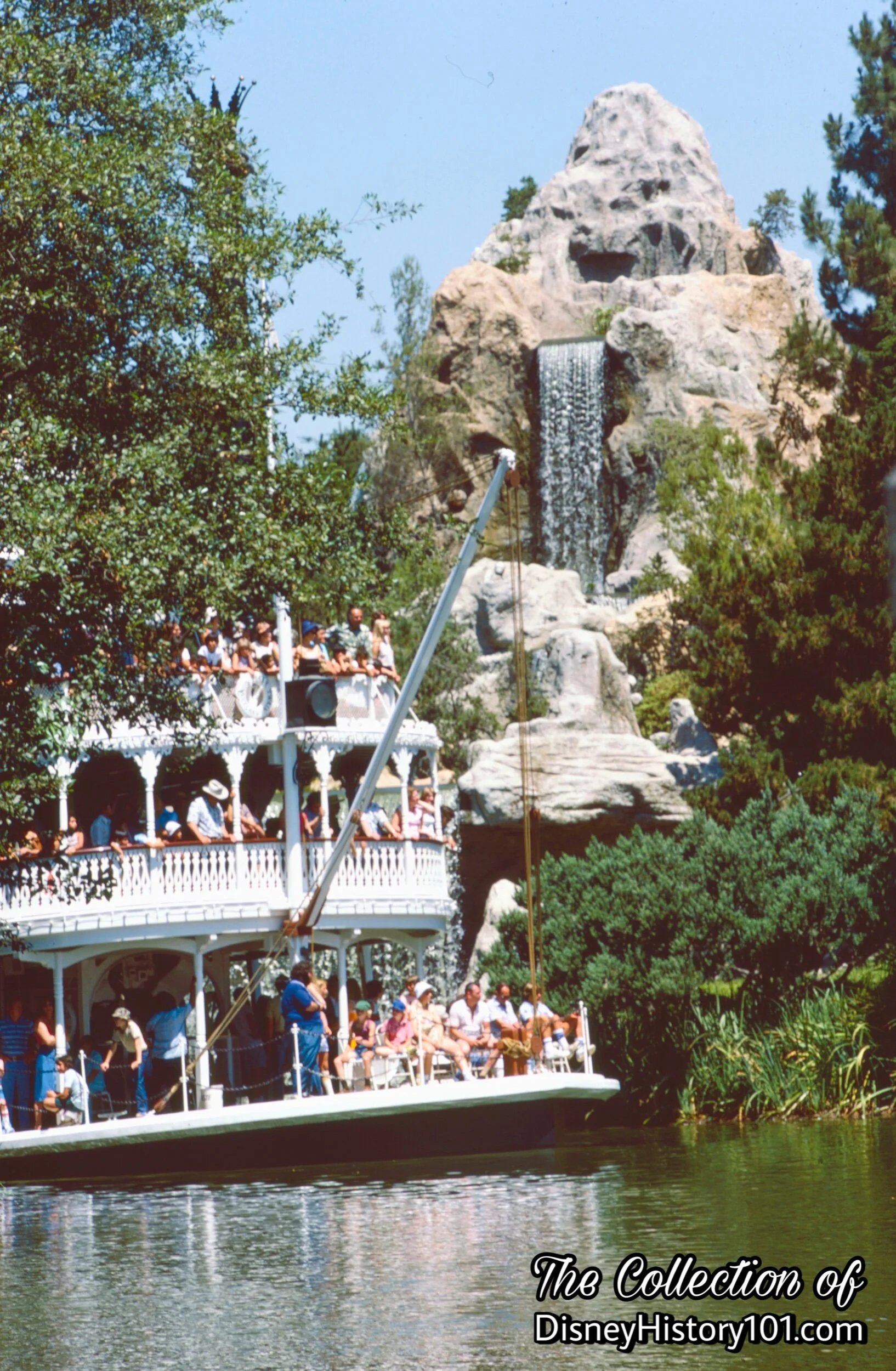
Mark Twain passes Cascade Peak, October 30, 1971.
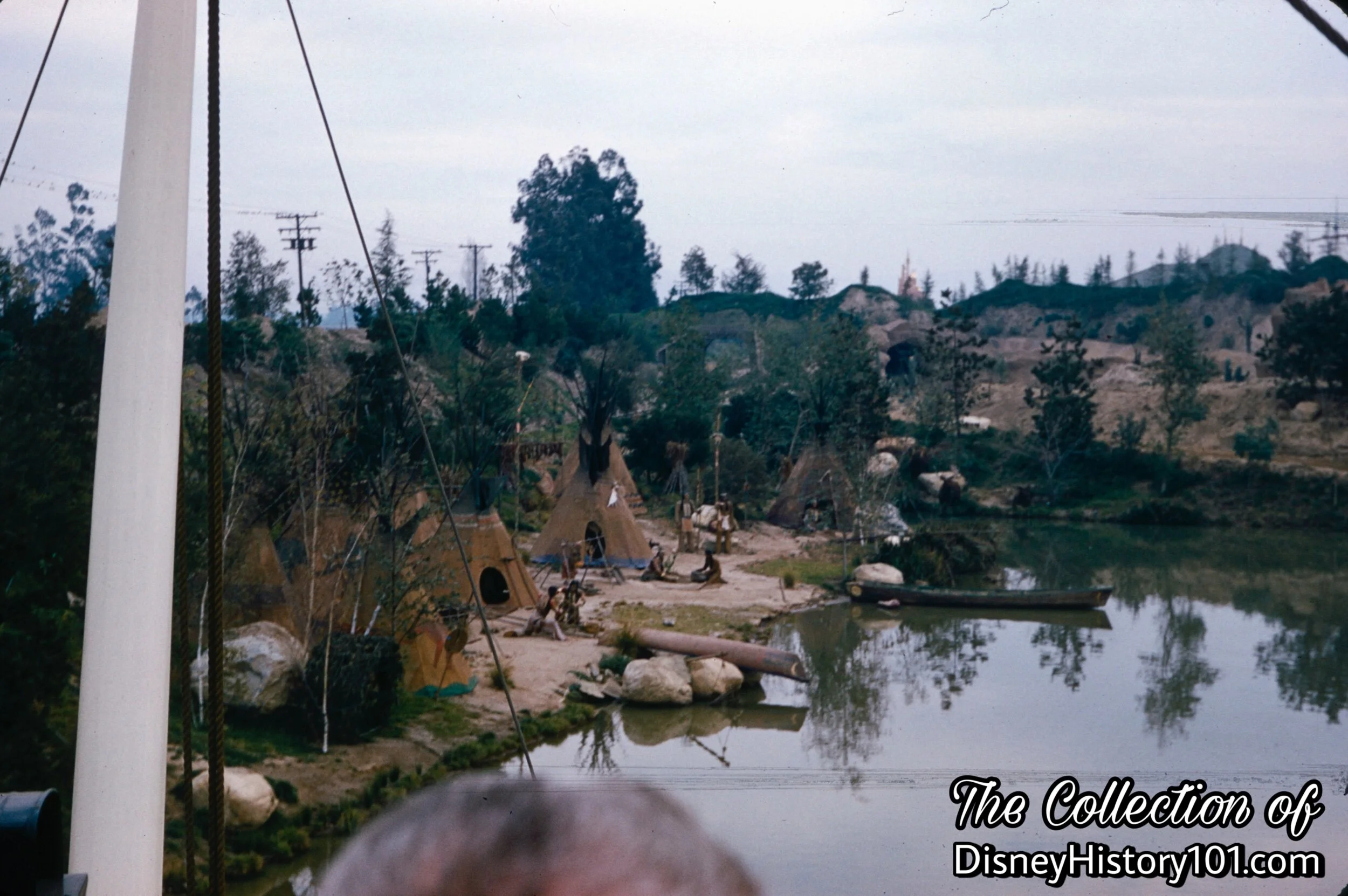
The Friendly Indian Village from the Mark Twain.
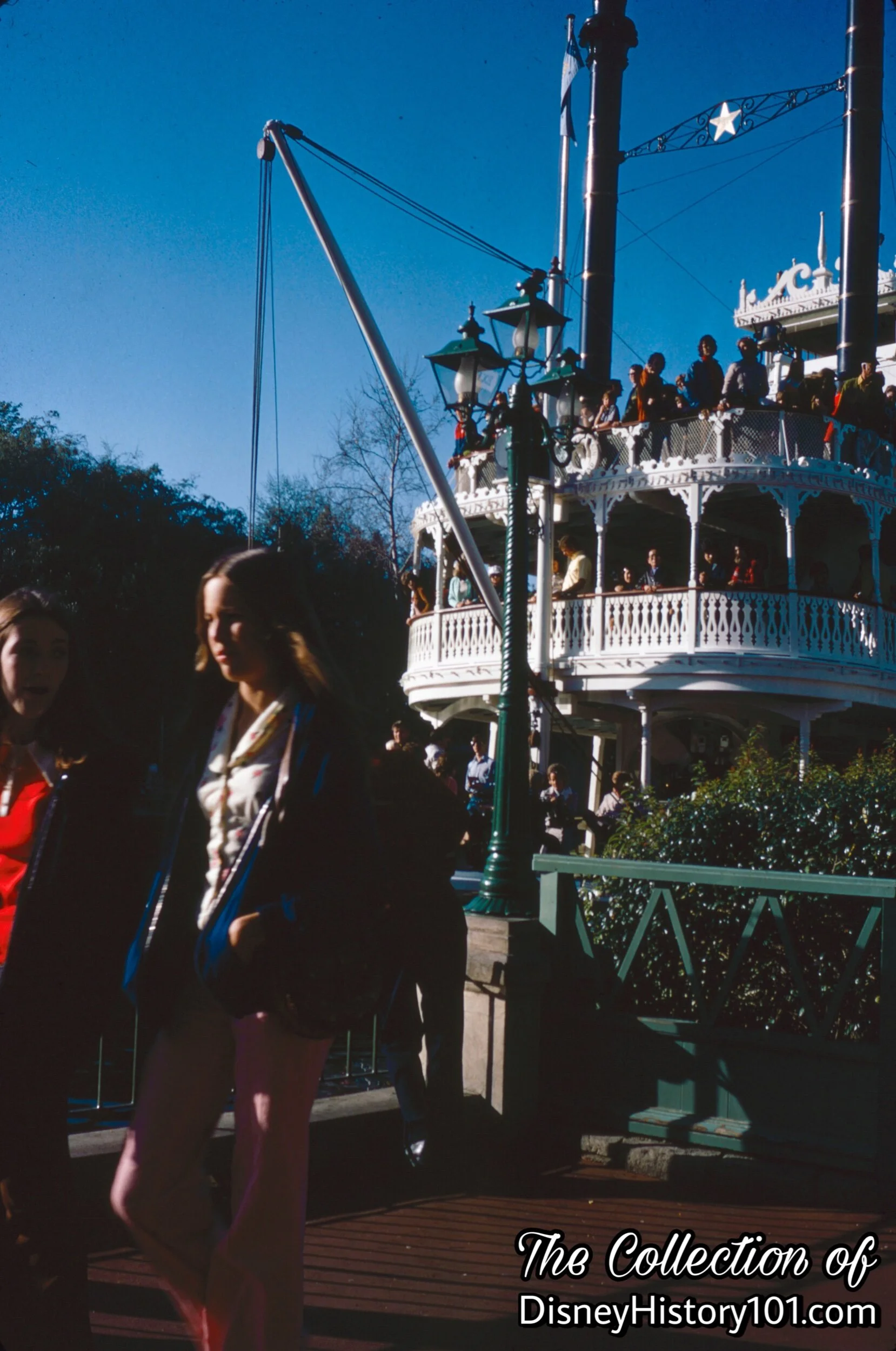
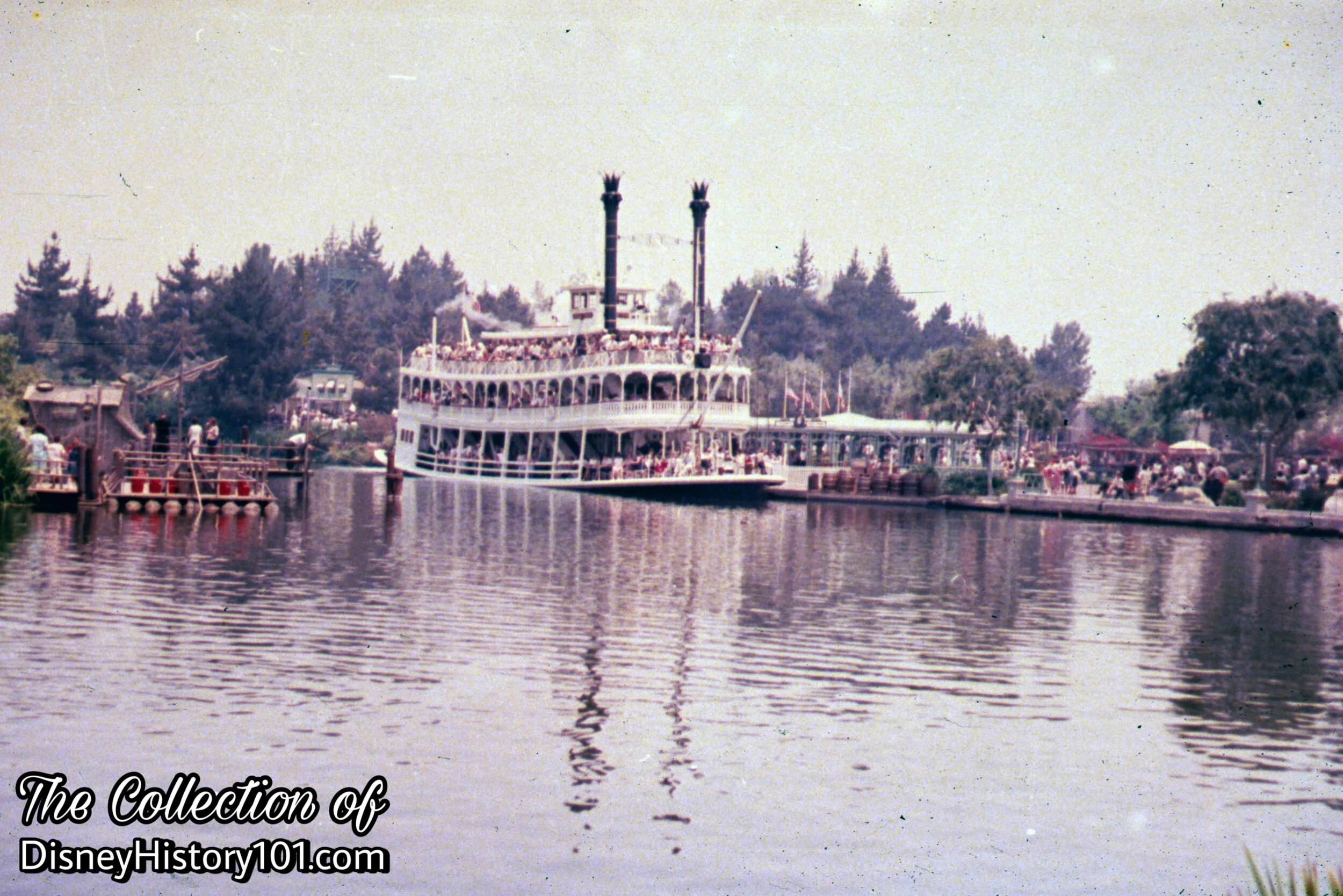
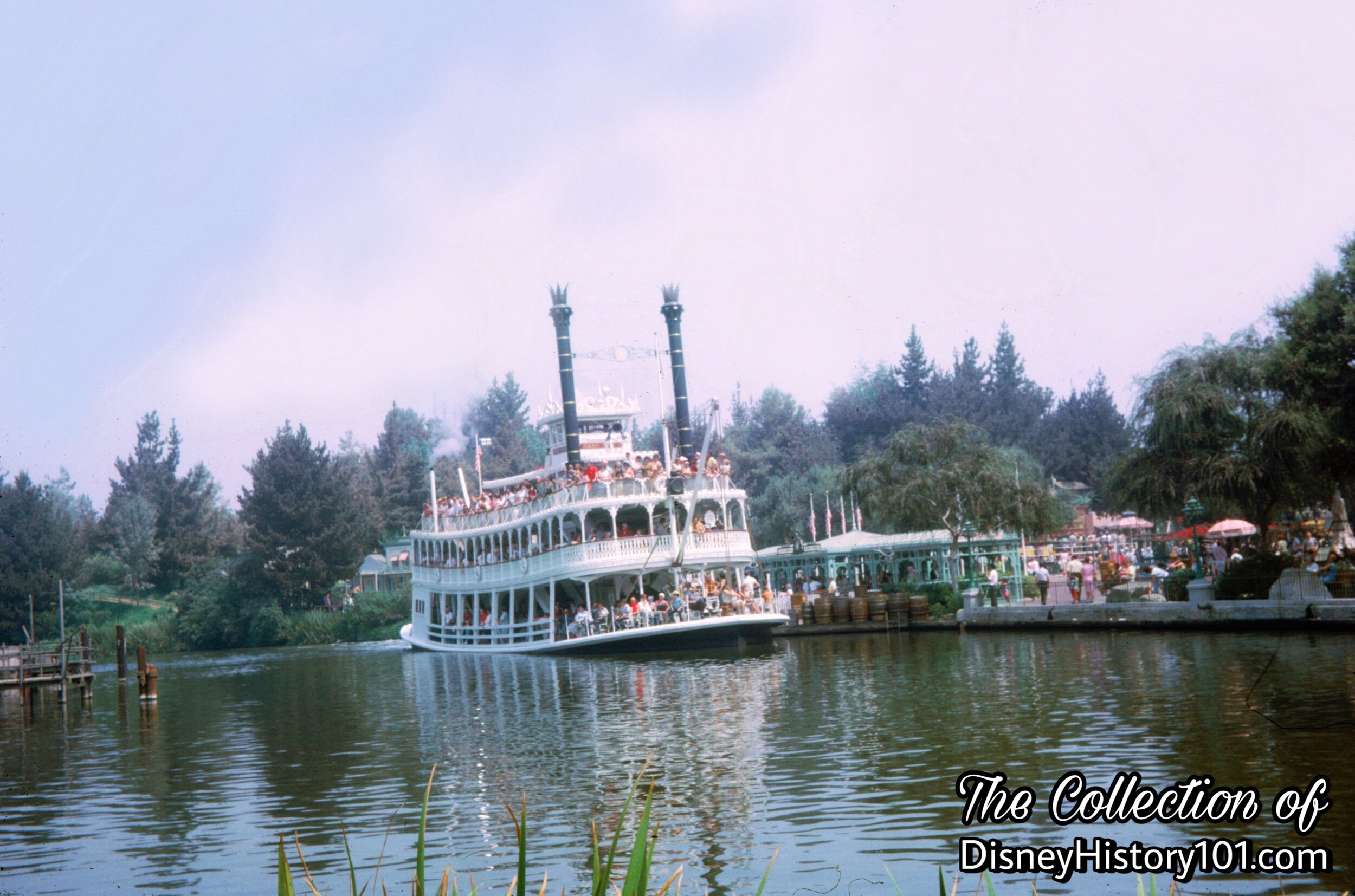
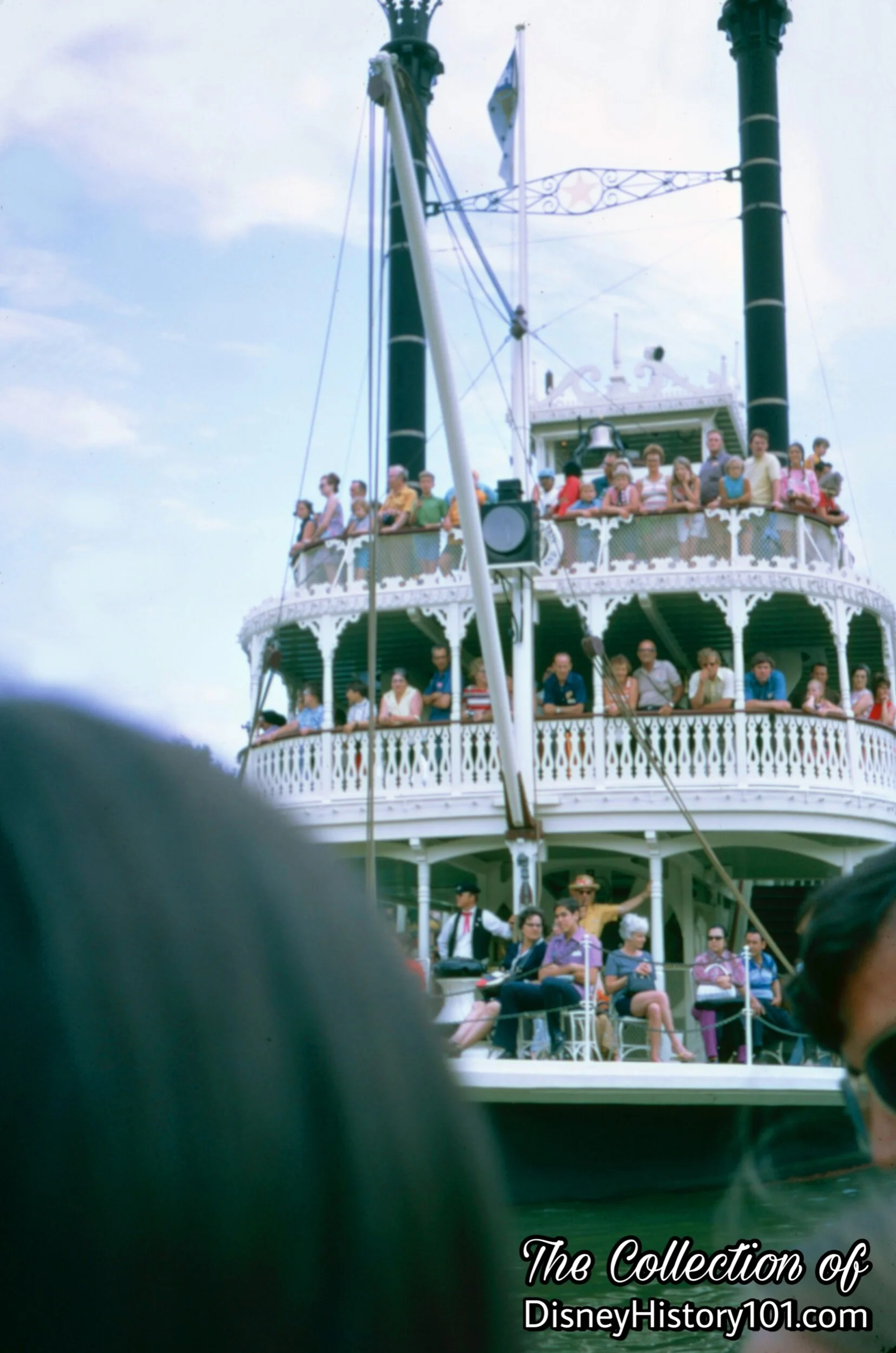
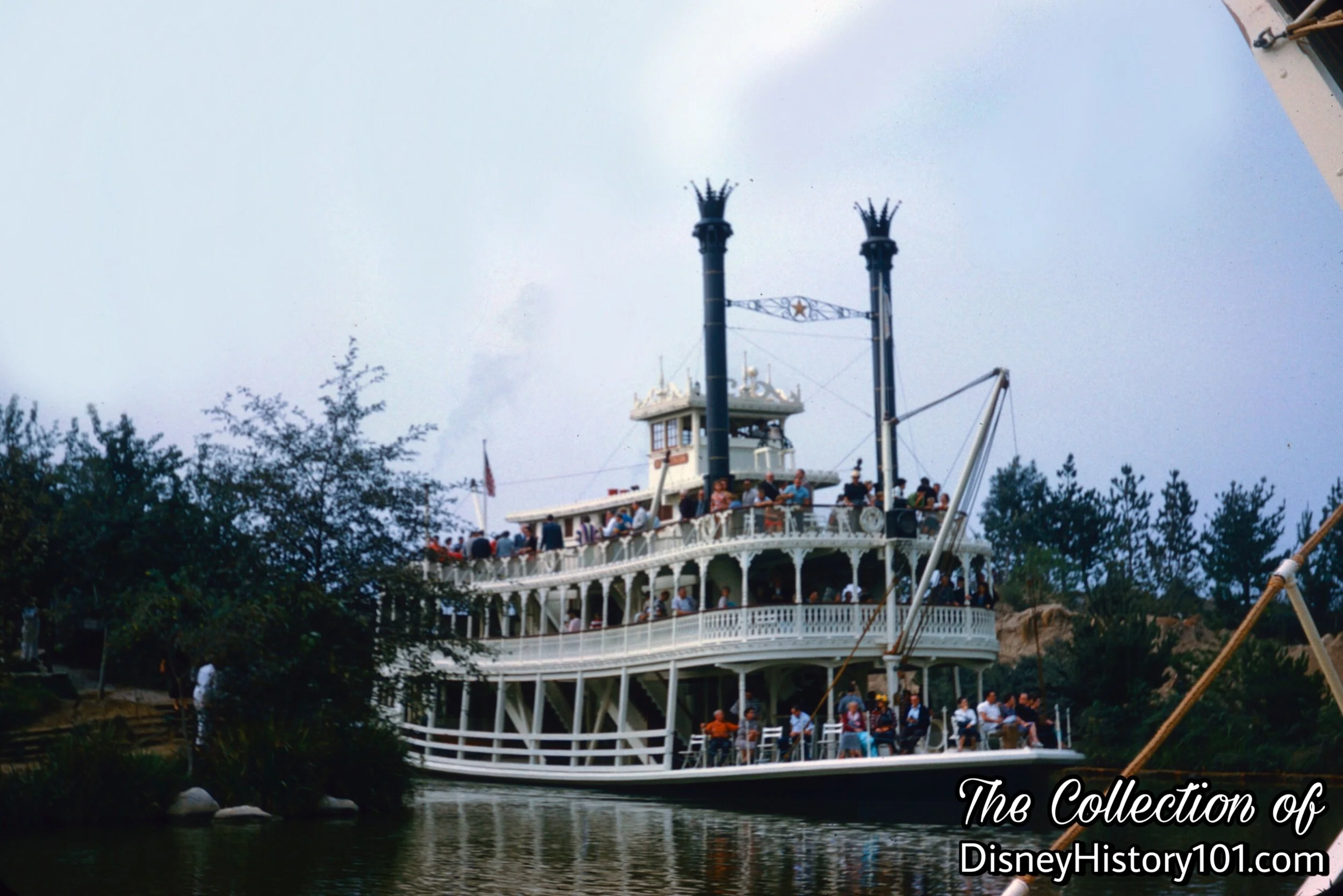
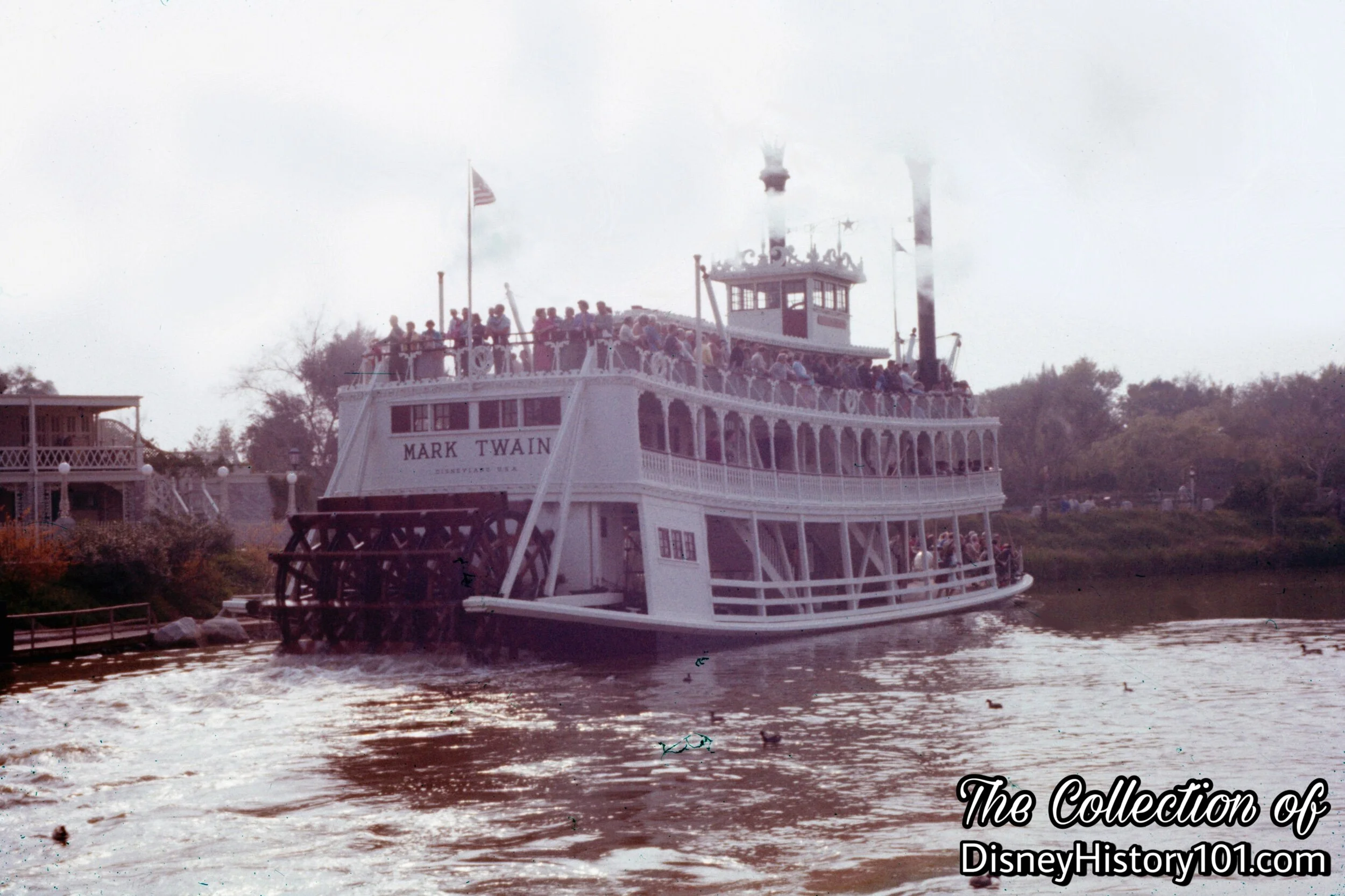
Mark Twain, 1978.
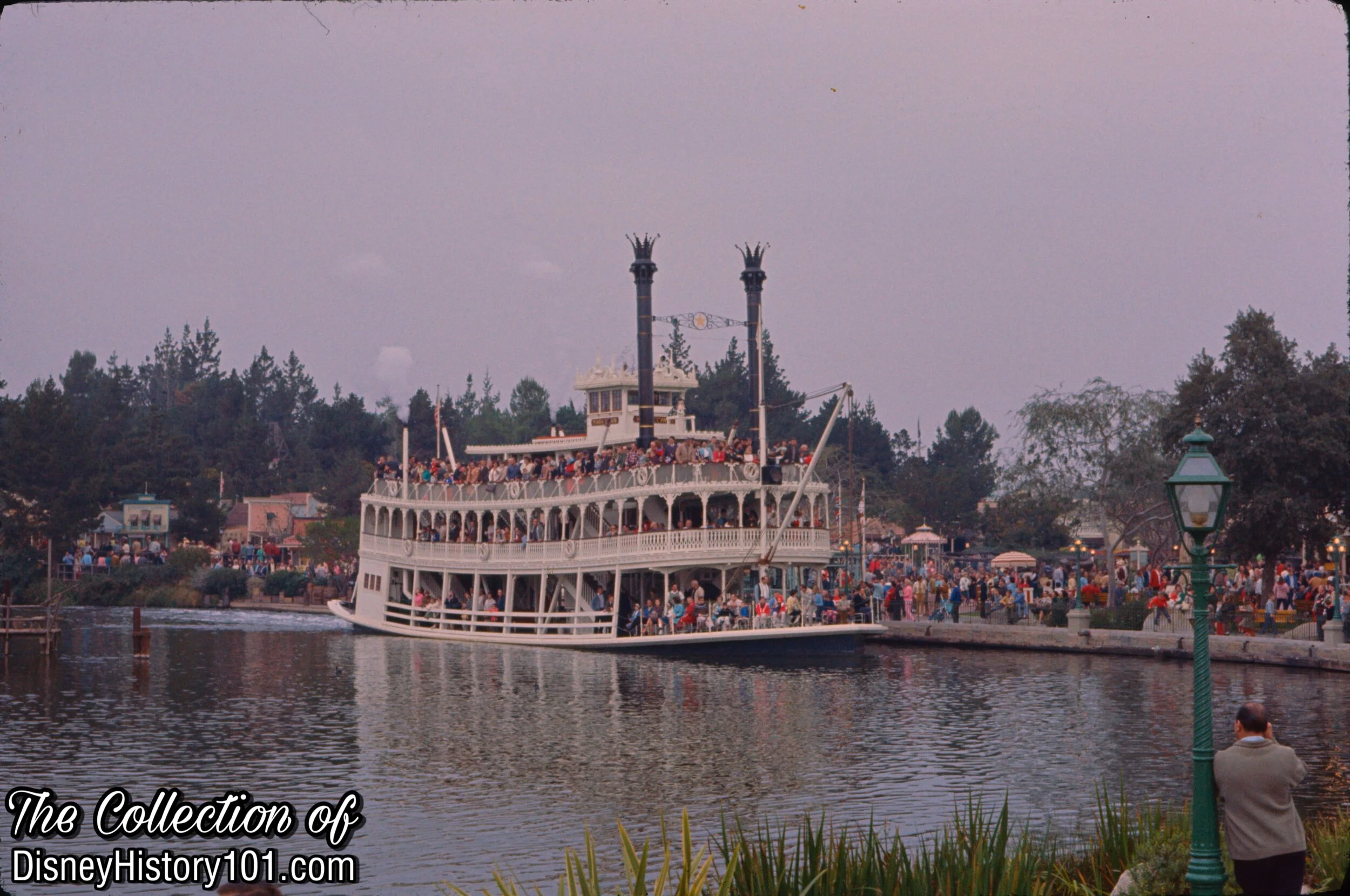
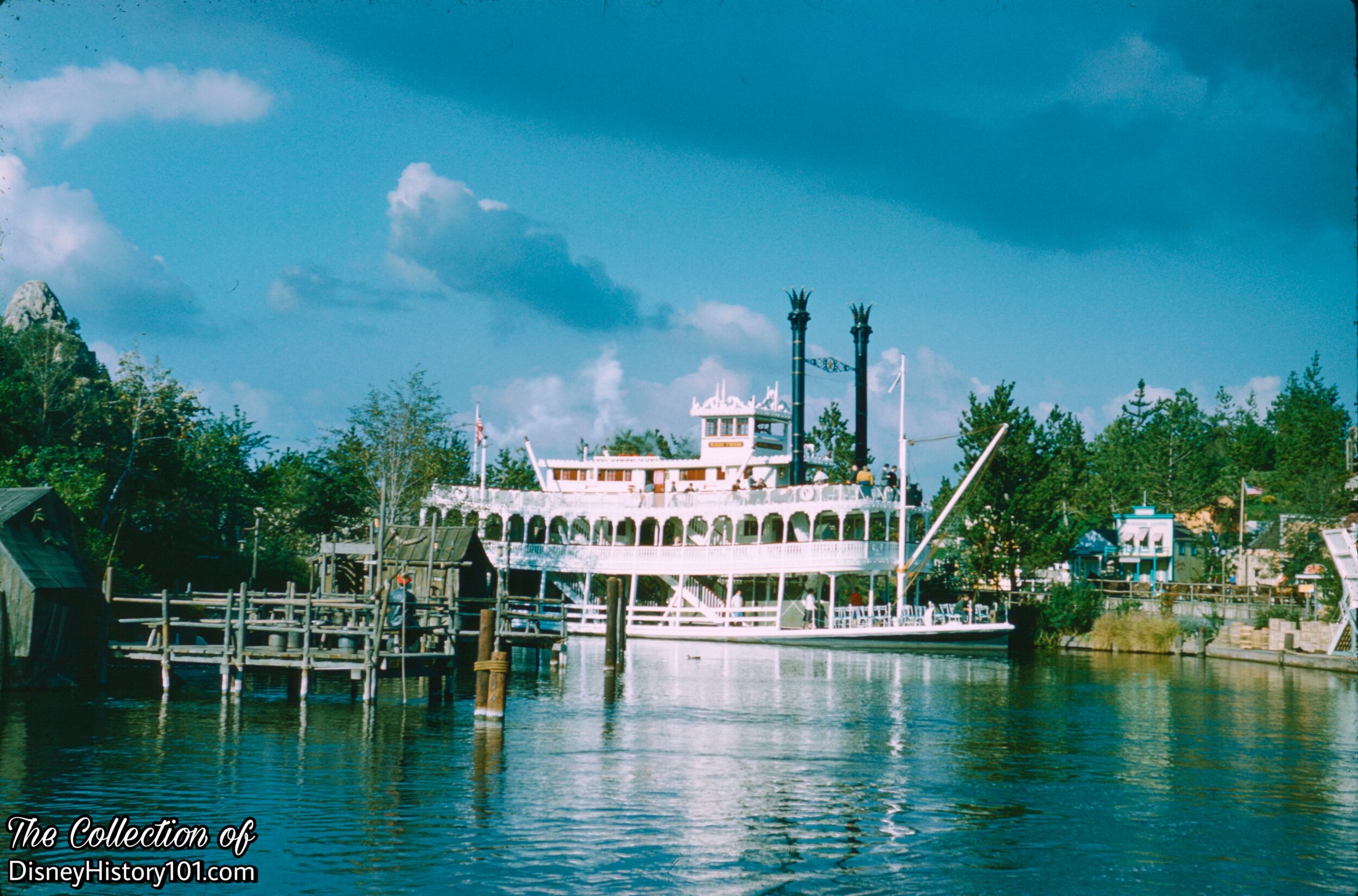
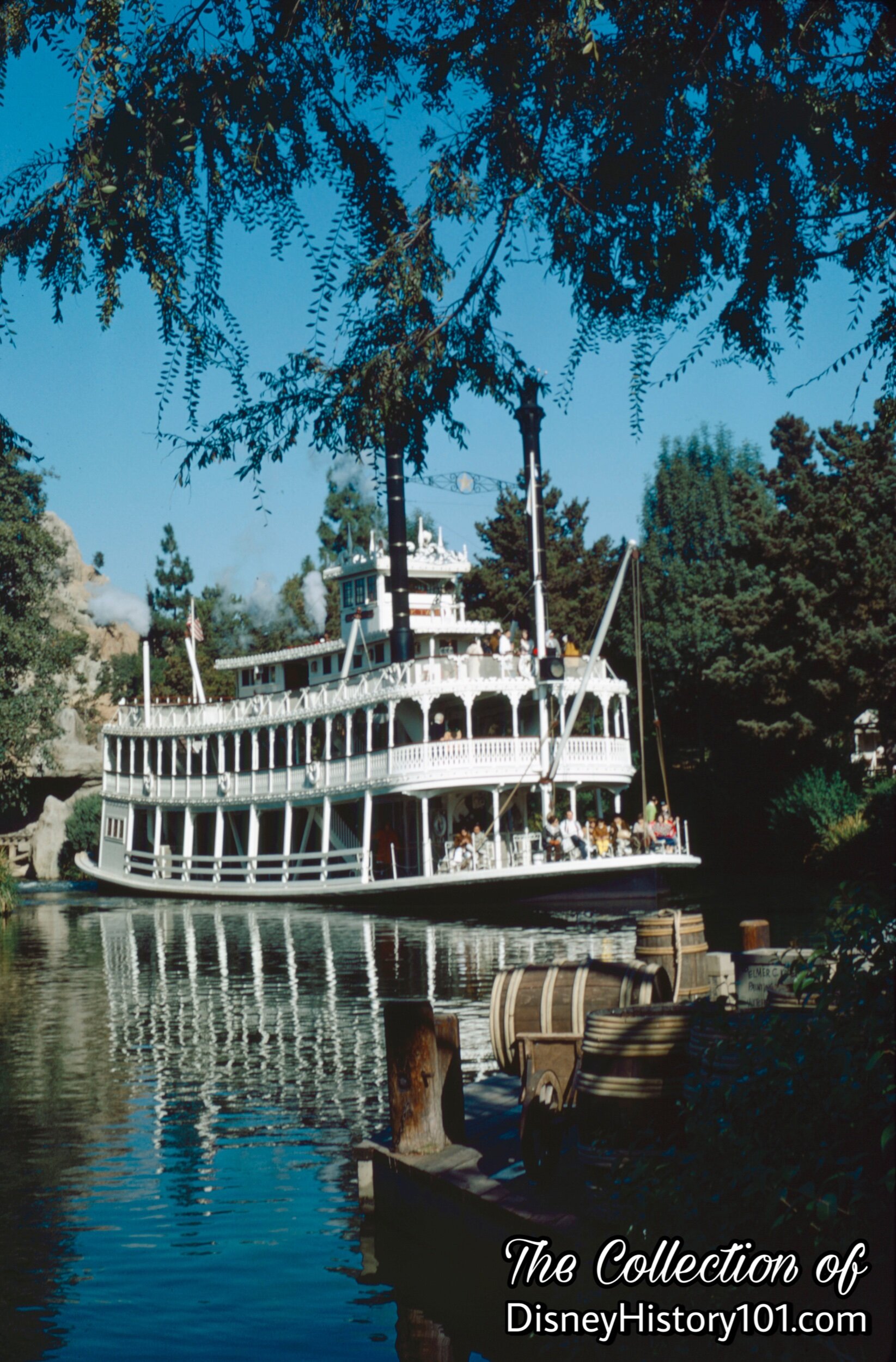
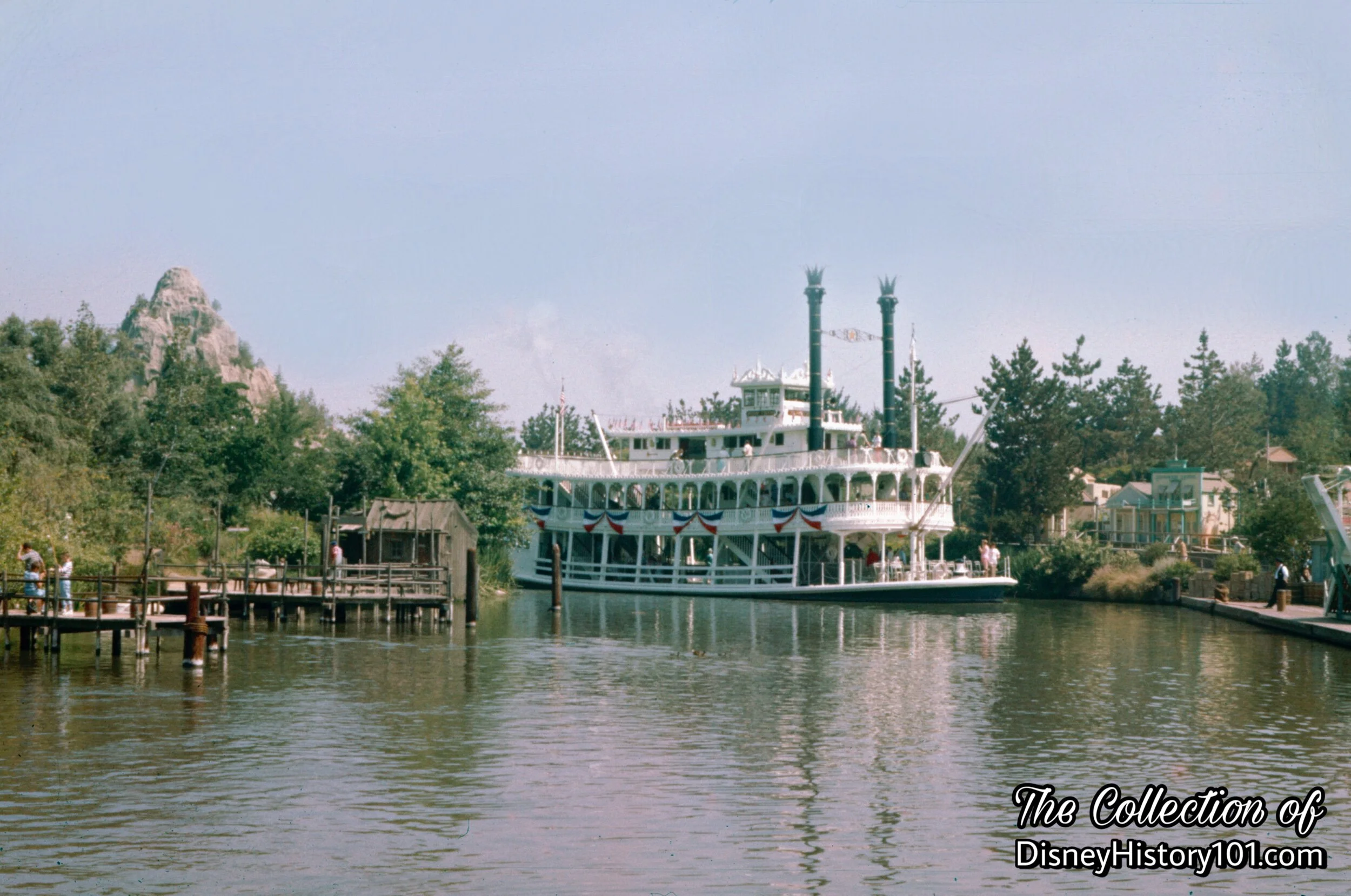
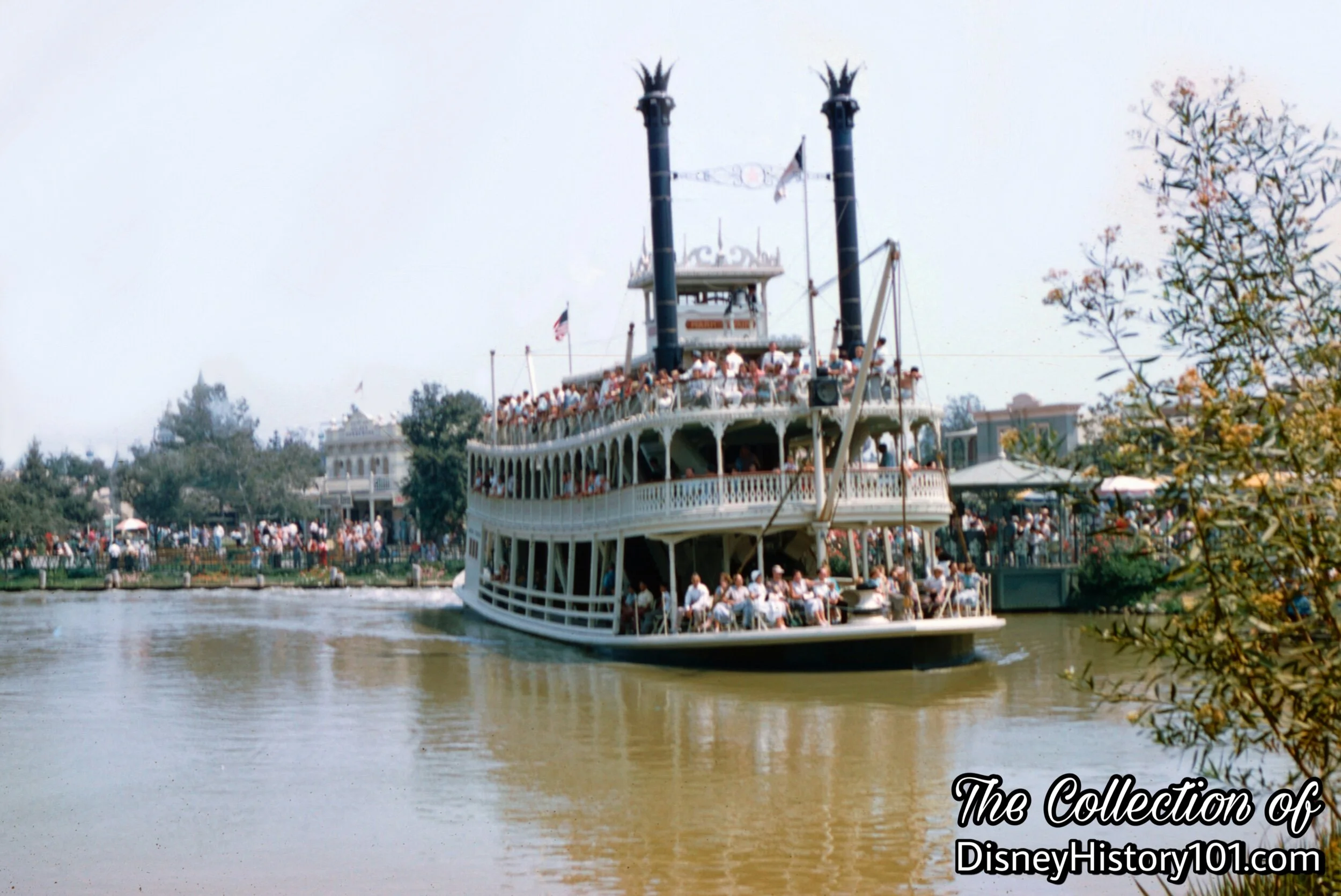
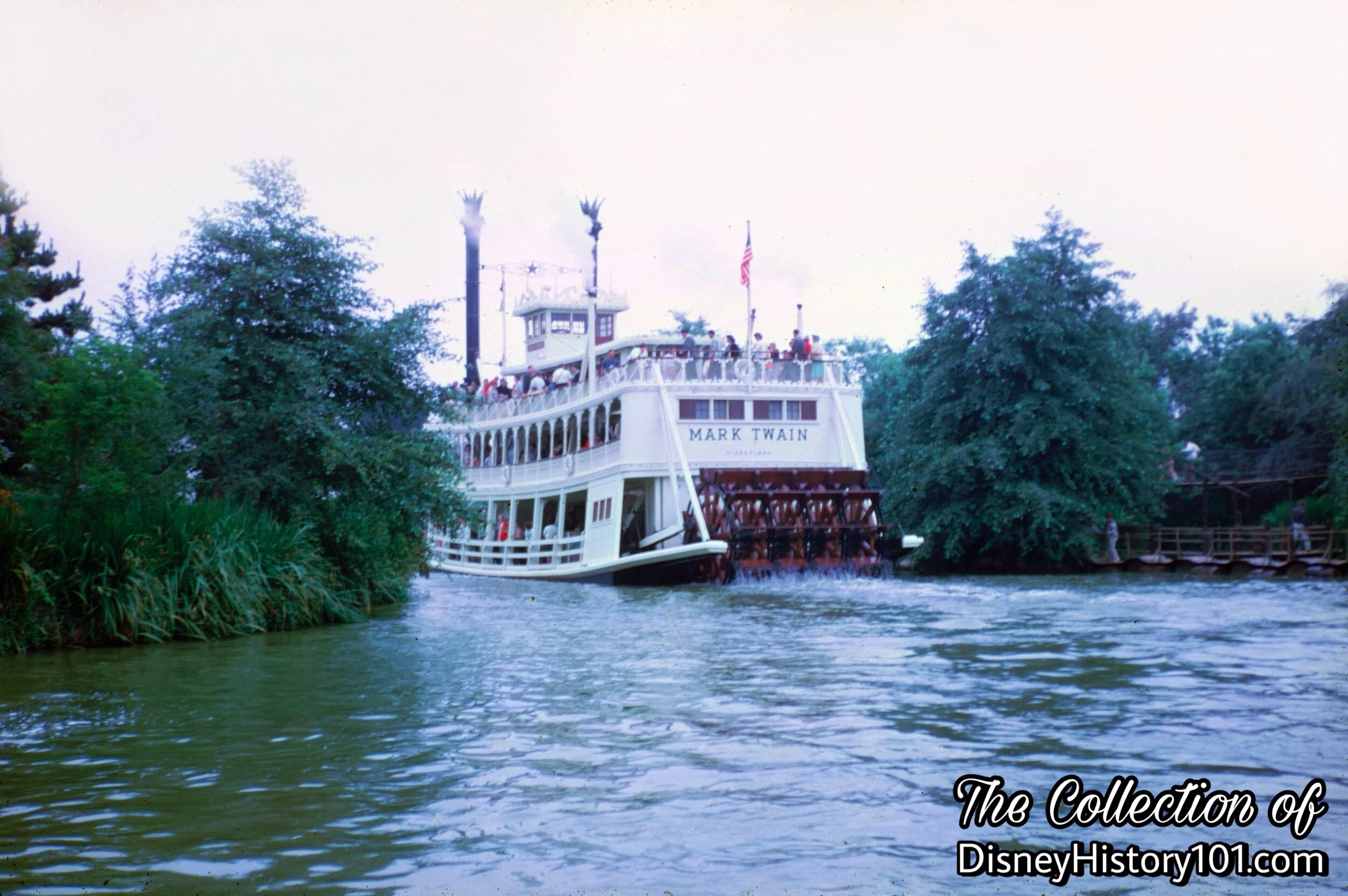
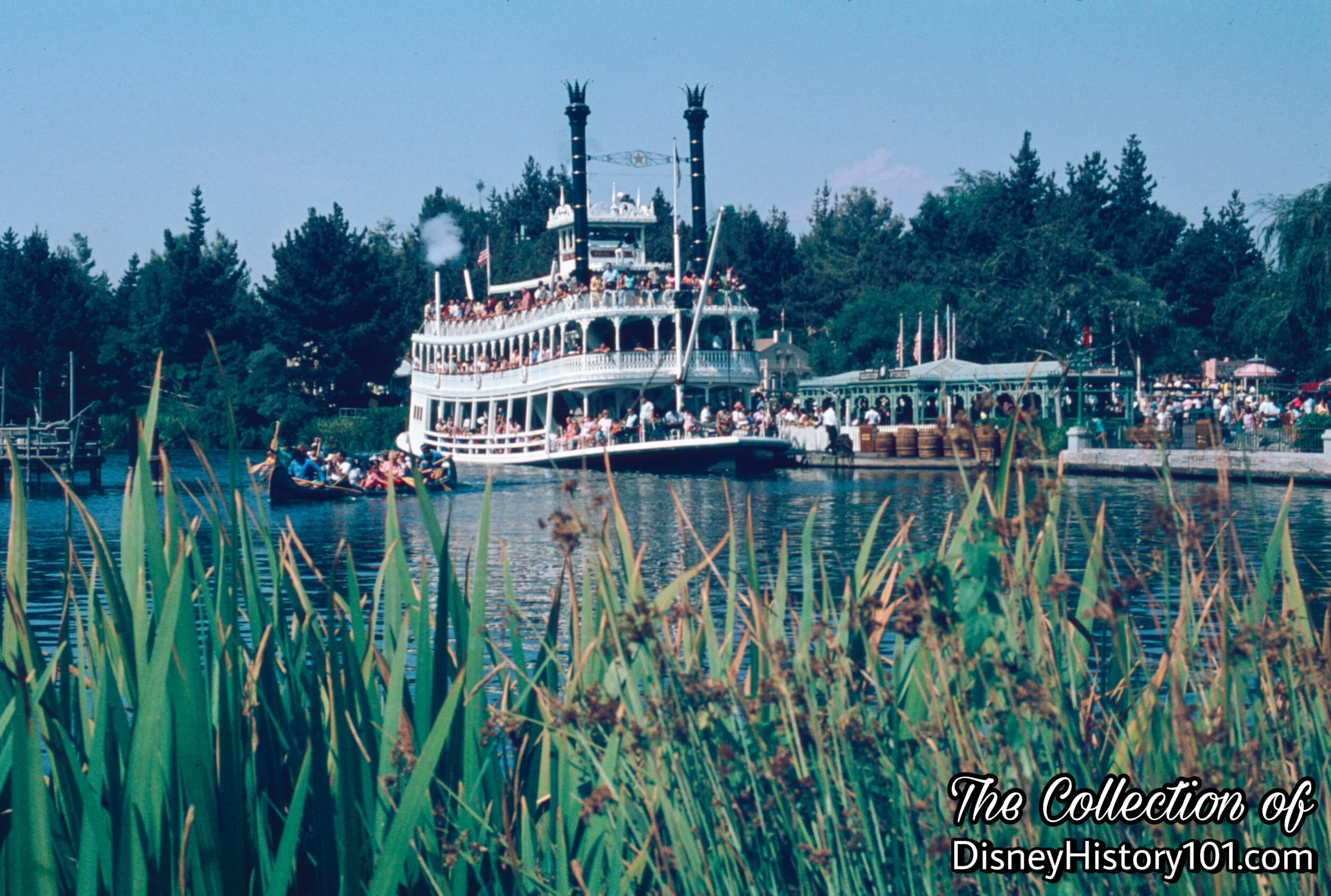
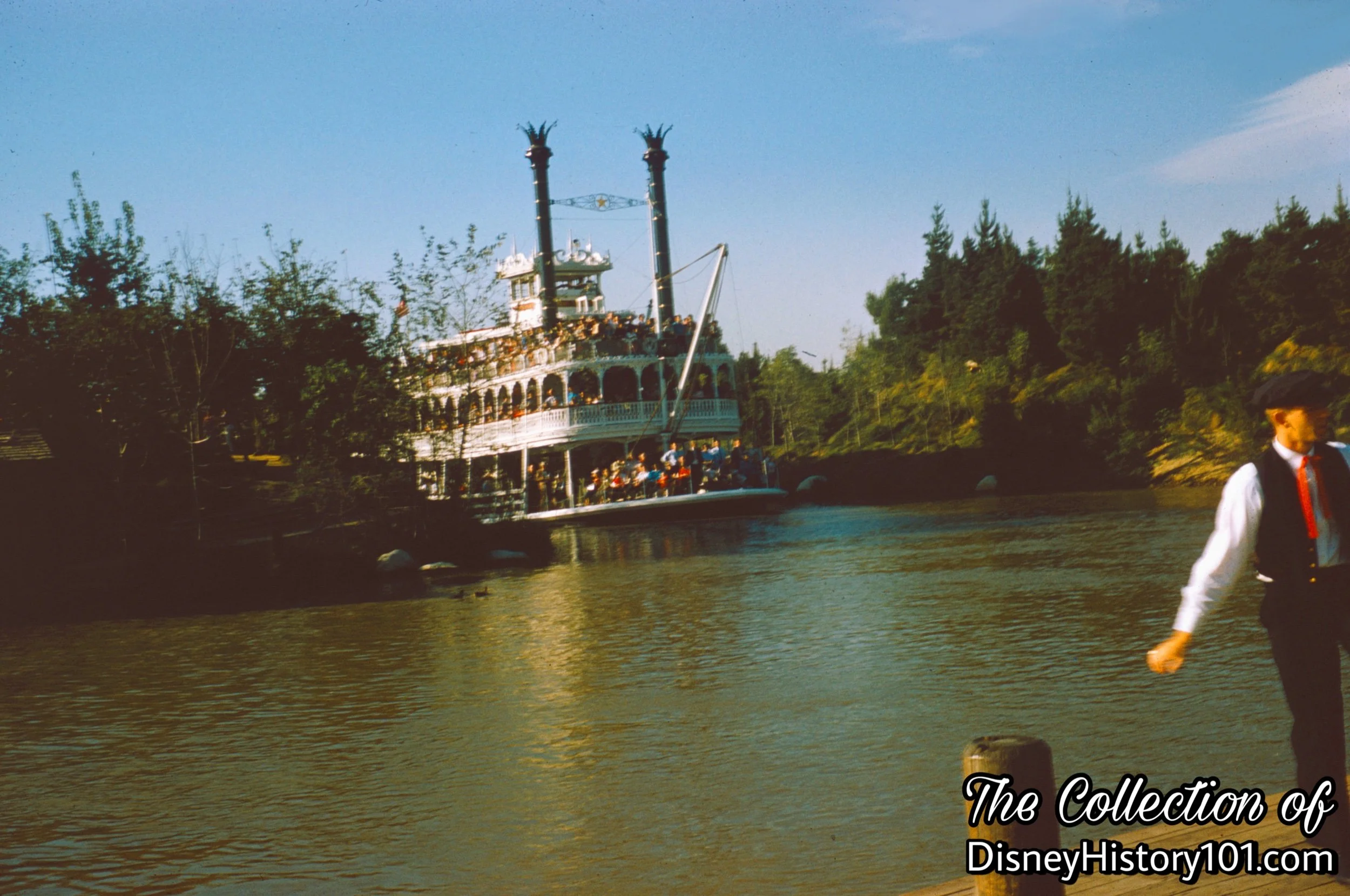
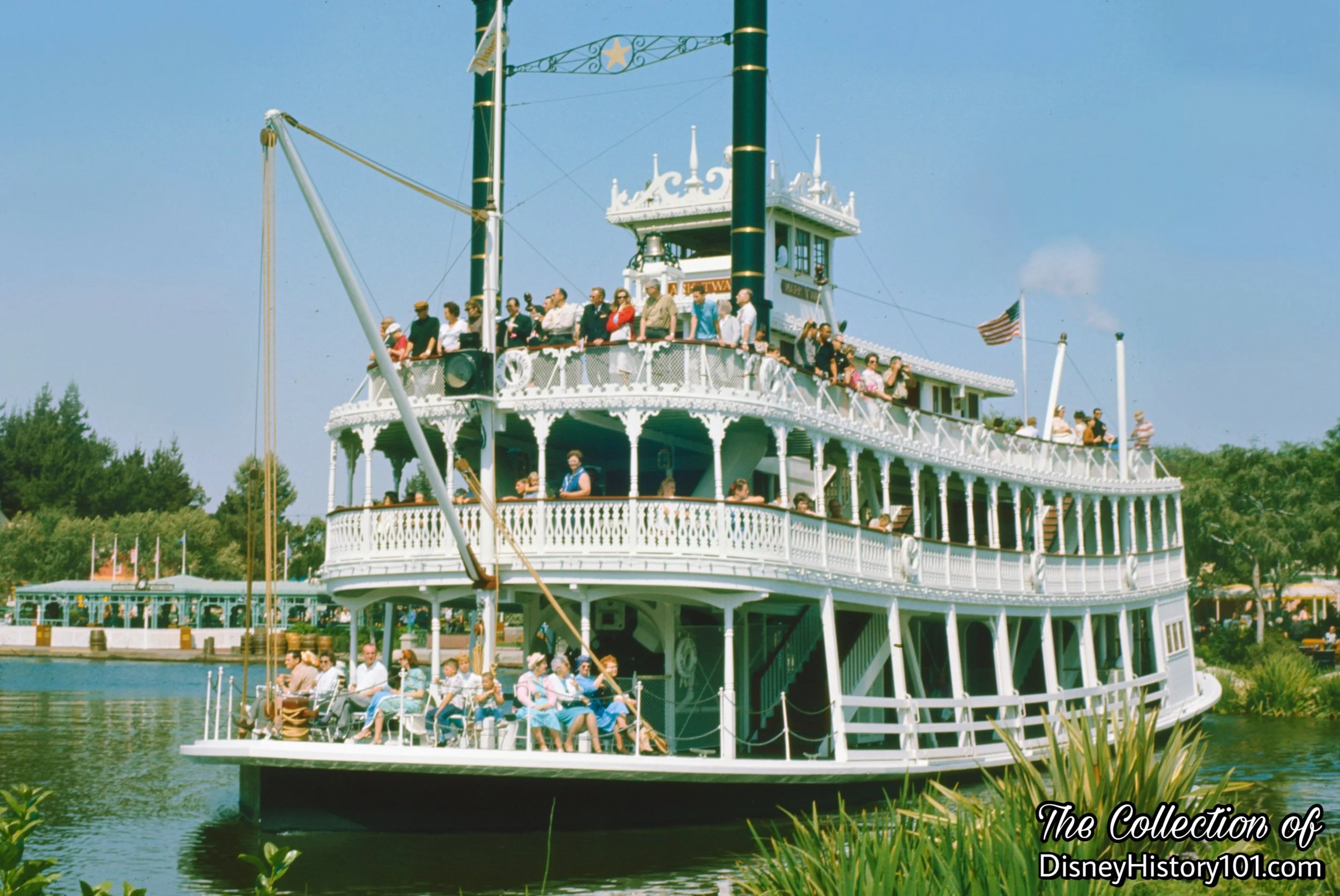
The Mark Twain Riverboat plies the Rivers of America.
Mark Twain, January 1959.
Mark Twain, 1959.
Mark Twain, May of 1966.
“Rehabilitations and New Ideas Enhance Show Quality & Safety”
Safety has always been important to Show Quality at Disneyland. “55er” Ray Schwartz recalled: “One time on the Mark Twain when Walt was aboard, he saw a bilge pump handle lying around. He picked it up, saying, Somebody's going to get hurt one of these days. The matter was very soon taken care of.”
The attraction was down for rehabilitation from Apr. 22-May 24, 1963.
After his purchase of WED in 1965, Walt wished to retain the Santa Fe and Disneyland Railroad trains, the Mark Twain, and the monorail trains. So he formed RETLAW Enterprises, Inc. for his privately held and owned vehicles and assets. Especially since that time, many changes and adjustments would continue to contribute to a safe show. For instance, by 1969-1970, one Motorola 2-way radio (Handie Talkie HT 200) Frequency 154.60 MHz. was assigned to the Mark Twain. This was in relation to River of America operation of the Mark Twain and to be used for emergencies on the river, breakdowns and first aid requirements. The price/unit was $646.00 without battery and antenna. Model #H23 DEN 3100 A.W. Also a By 1969-1970, two R.C.A. 2-way 2-frequency radios (Personalfone 150) Model # C.P. C. JIPNHTOA were assigned to the Rivers of America Mark Twain Dock. The price/unit was $546.00 with batteries and antenna.
Then, from March 5 to April 13, 1973 the Mark Twain was closed for a 6-week rehabilitation.
The “I Have an Idea” Program (est. 1978) would also come to yield many ideas that would influence and shape the efficiency and safety of how things were run. For instance, Disneyland Cast Member William Burnett had the idea to “attach floating keychains to key sets of attractions near the water, to support keys accidentally dropped in the water.” [Disneyland Line, March 1st, 1979]
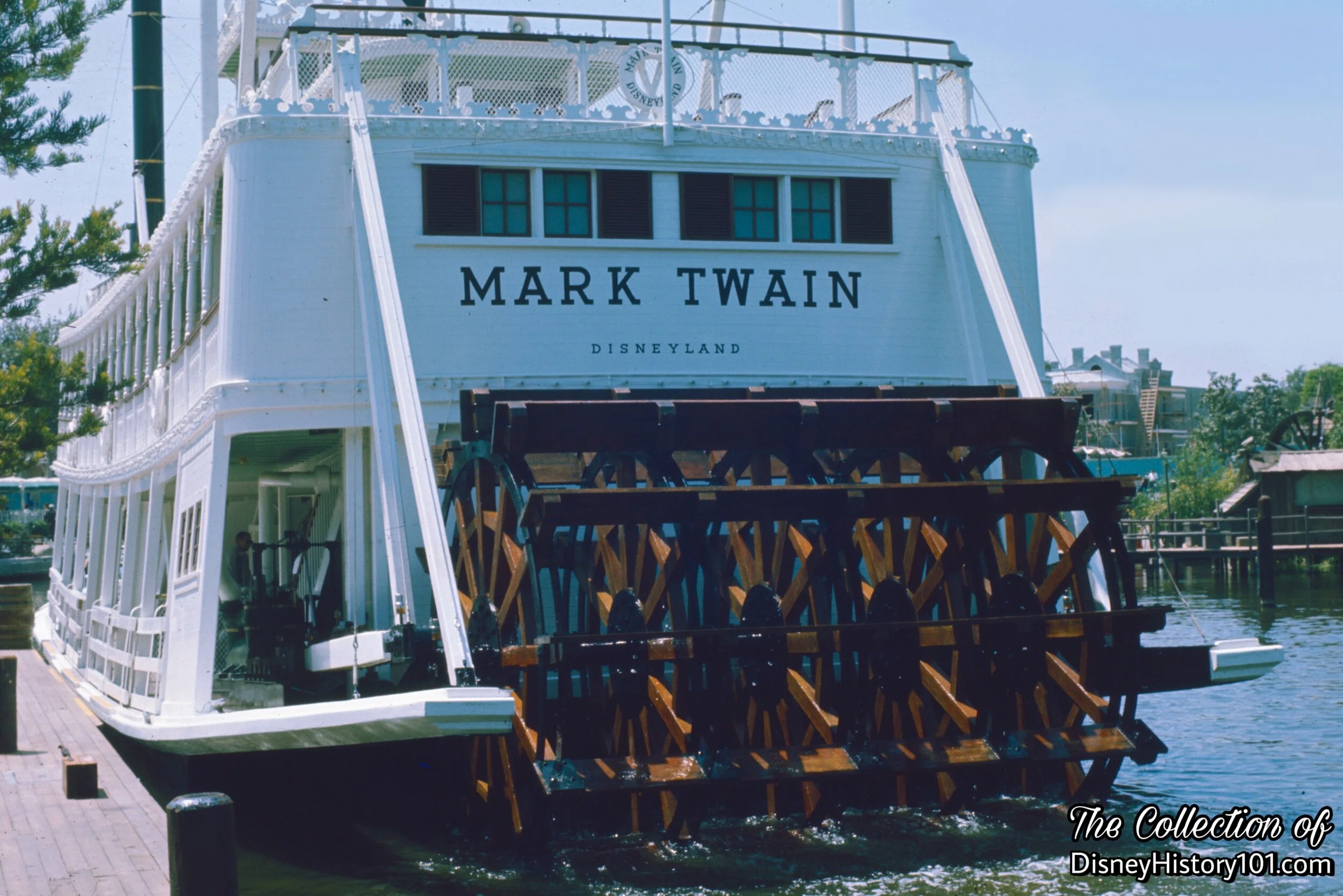
As for the boat, though the paddle wheel’s parts had been replaced, the same paddle wheel (originally manufactured by Todd Shipyards) had churned the waters behind the steamboat for 32 years, until it was entirely replaced in 1987. According to Supervisor Frank Thomas, the Mark Twain was not in their plans when they went to take care of the usual rehabilitation in January of 1987. But when it was inspected, it was noticed that the wood had begun to rot after sitting omg the water for 32 years. Upon examination, it was decided that the entire structure needed to be replaced, so Todd Shipyards was contacted, and the original drawings of the paddle wheel were utilized. The old mahogany spokes of the paddle wheel were replaced with kapur wood (a native of Malaysia, and new to Disneyland - being used for the first time in the construction of a bridge in Adventureland during the 1980s). Douglas Fir was again utilized for the paddles, due to its density and resistance to torque forces at work. The wood was dipped in water sealant for extra protection. Then, the entire assembly took place in the Machine Shop with the help of hoists. U-Bolts (specially fabricated), clamps, and wedges were replaced, fastened, and then painted for a final touch (by employees like Bob Metz and Rudy Alvarez of the Paint Shop). The entire construction only took four weeks, and the wheel was back in action during February of 1987.
By 1989, Disneyland Plumbers used chemicals and processing to create the soft water necessary for the Mark Twain Steamboat.
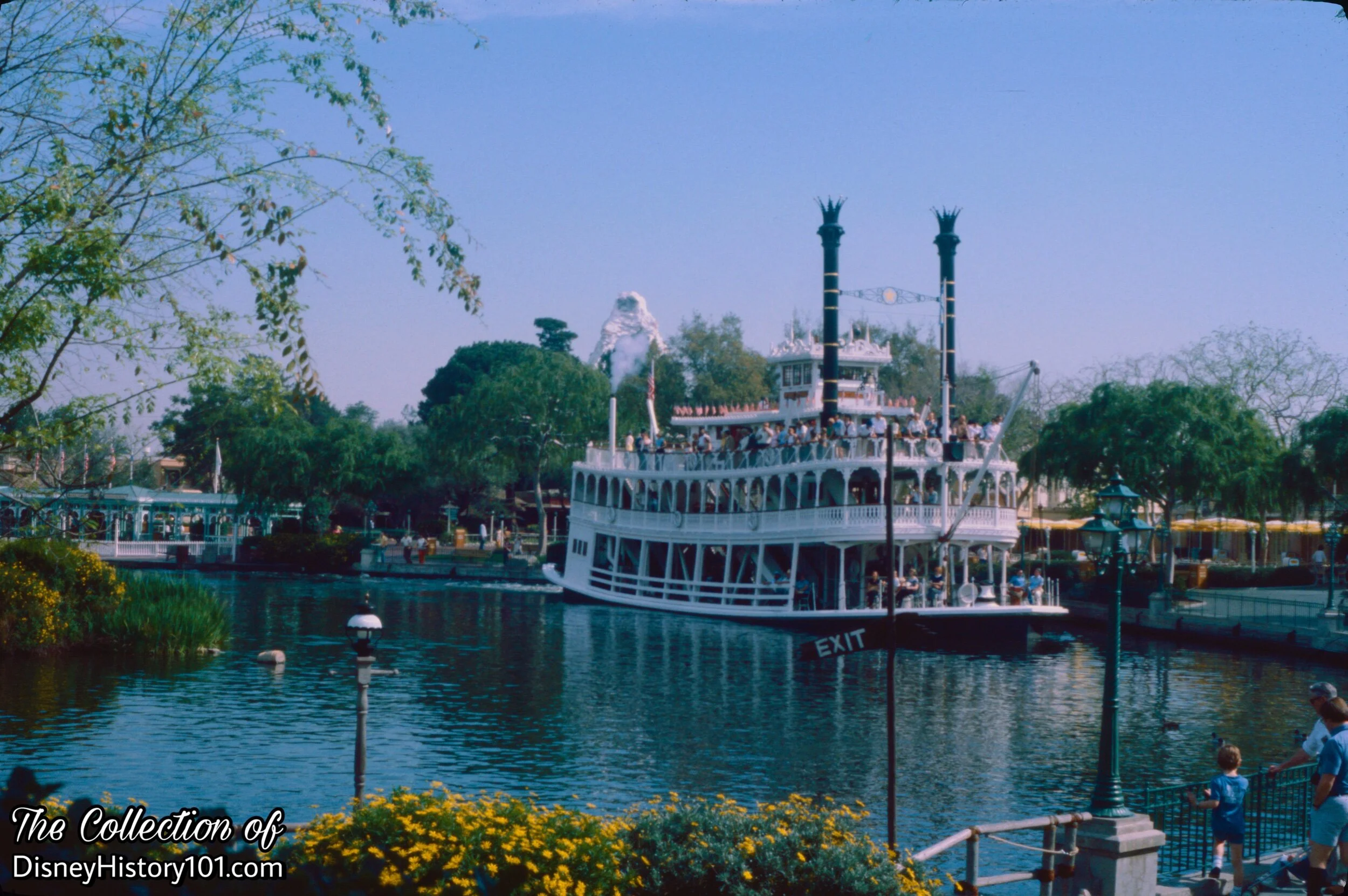
Even the riverside scenery has changed through the years, to include unique vantages (from all decks) of New Orleans Square, Tom Sawyer Island (and Pirate’s Lair), and Critter Country!
“Routine Inspections”
Since it costs a fortune to drain the ride, Machinists (or highly skilled craftsmen) would learn scuba diving, and dive down to where the action is to check the equipment and the rails.
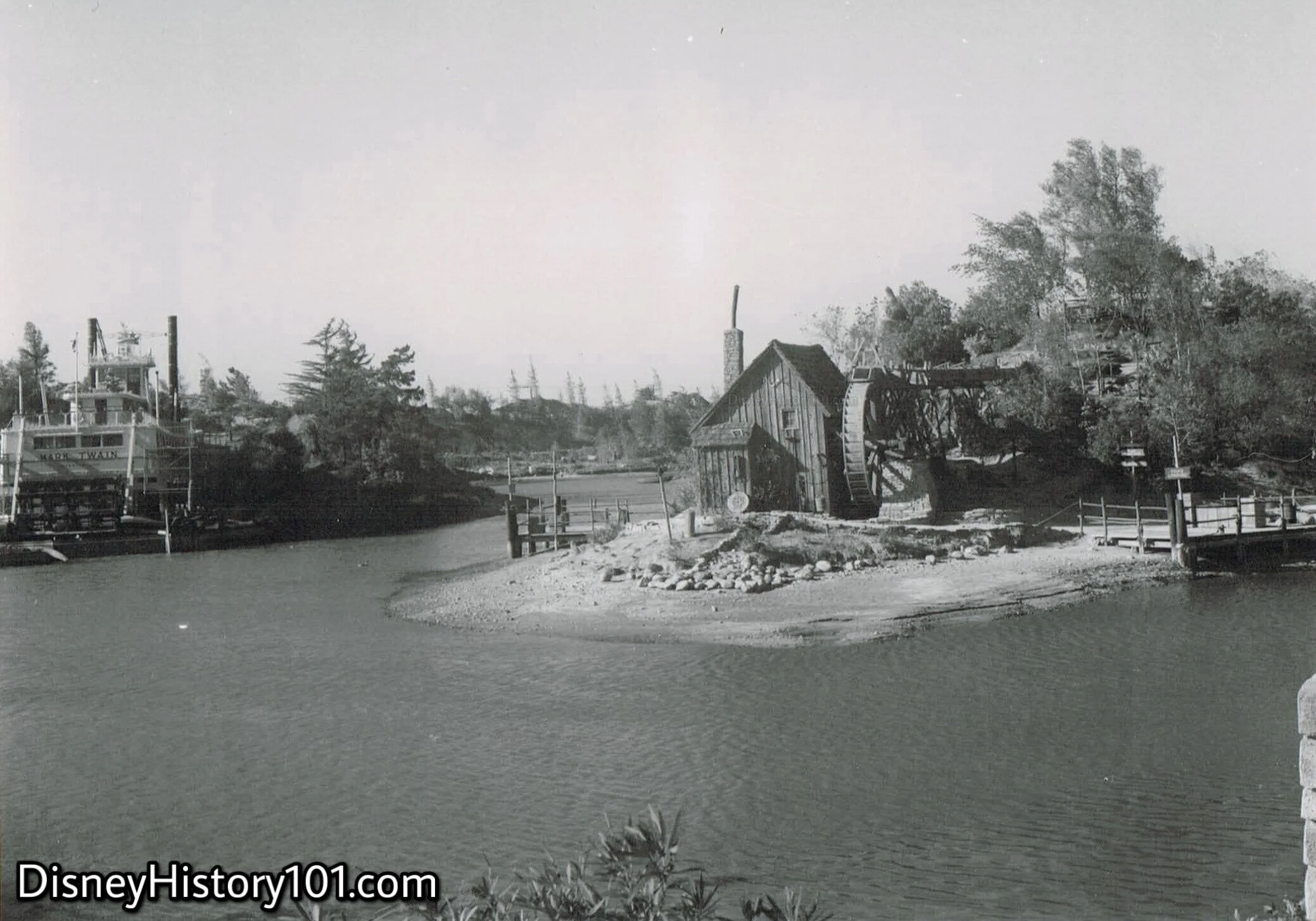
MARK TWAIN REFURBISHMENT, 1956
While some new structures have sprung up on that uncharted island, the Mark Twain receives some necessary repair work in Joe’s Ditch across the river. Just look at that construction scaffolding around the decks of the ship!
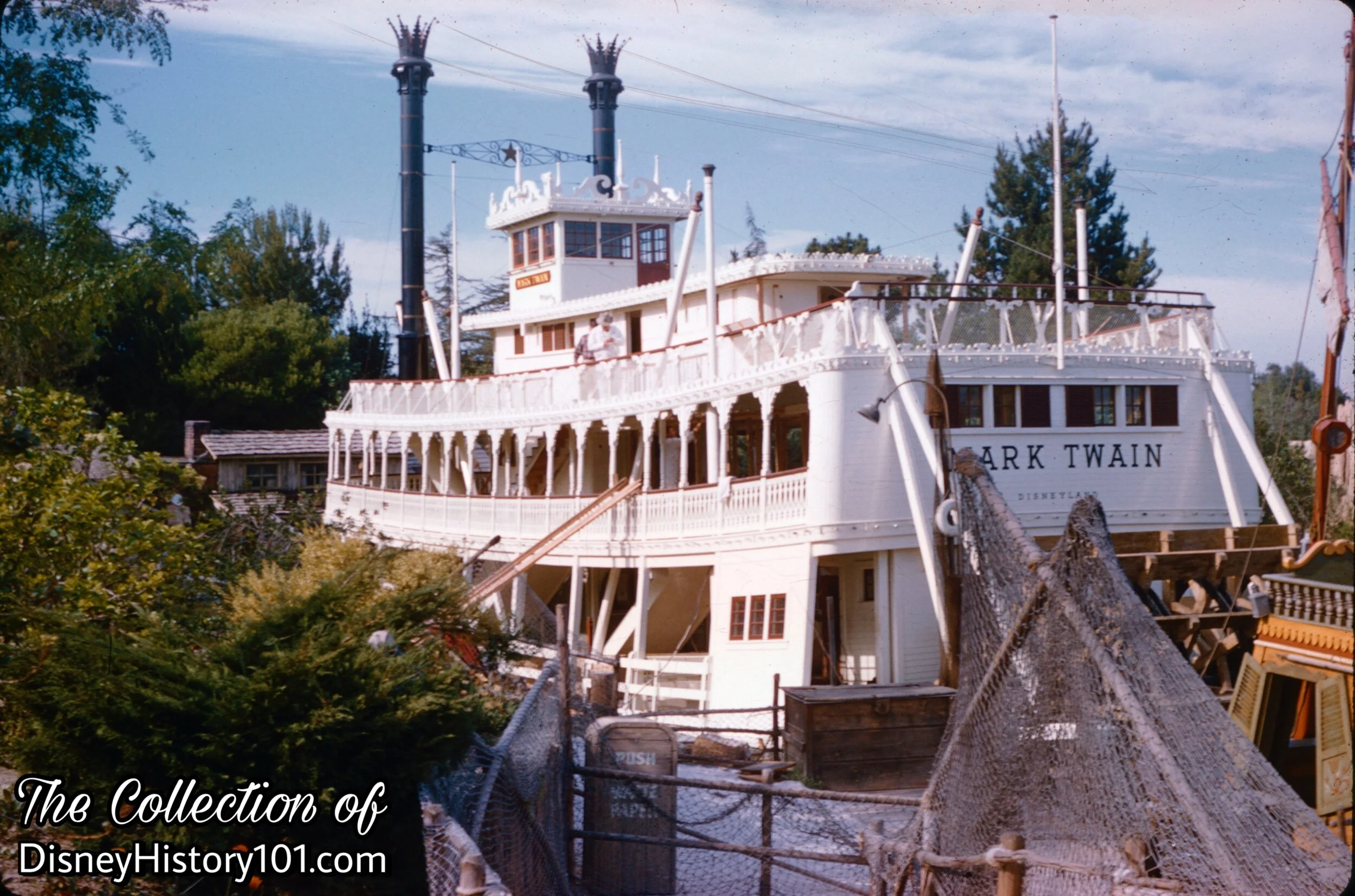
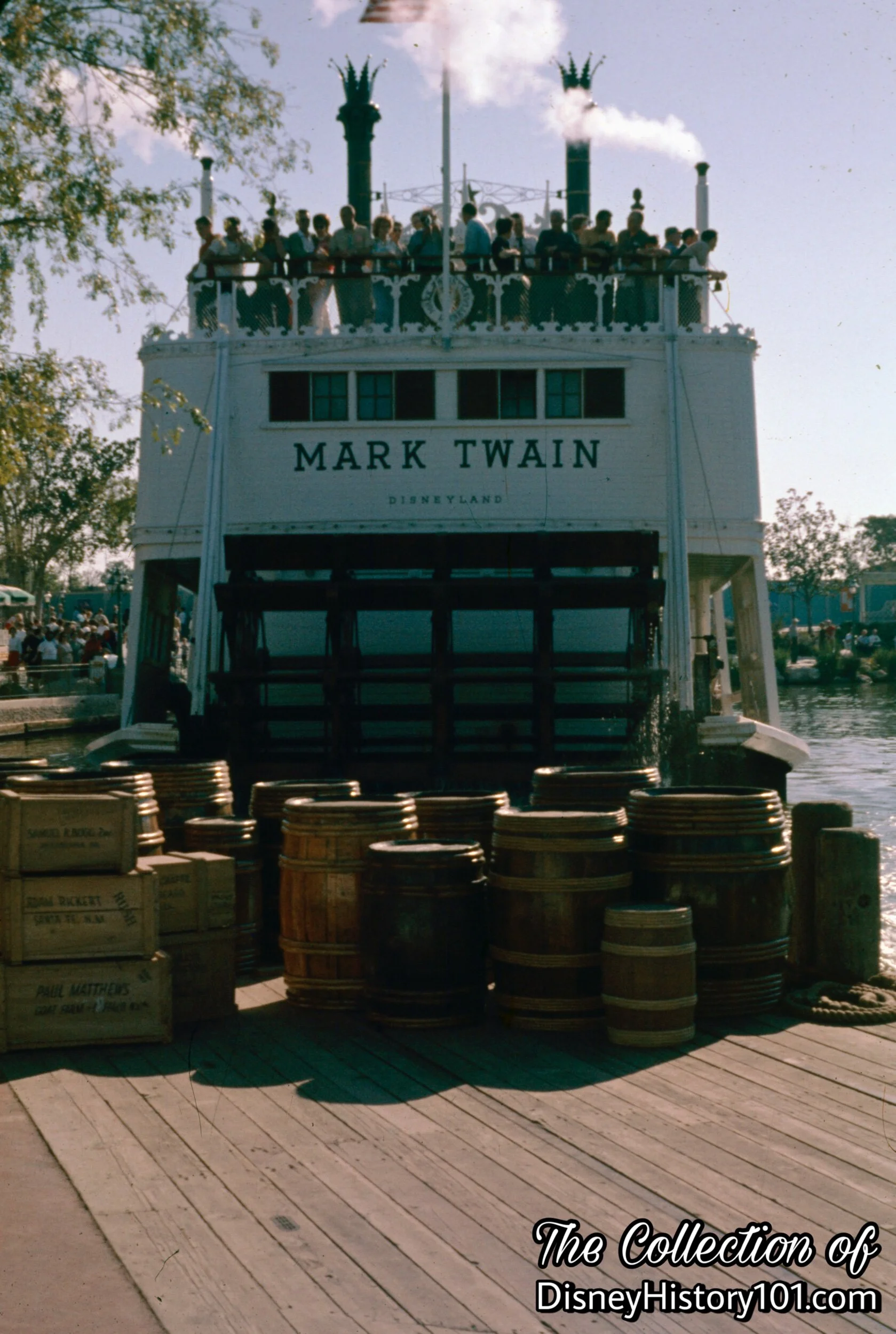
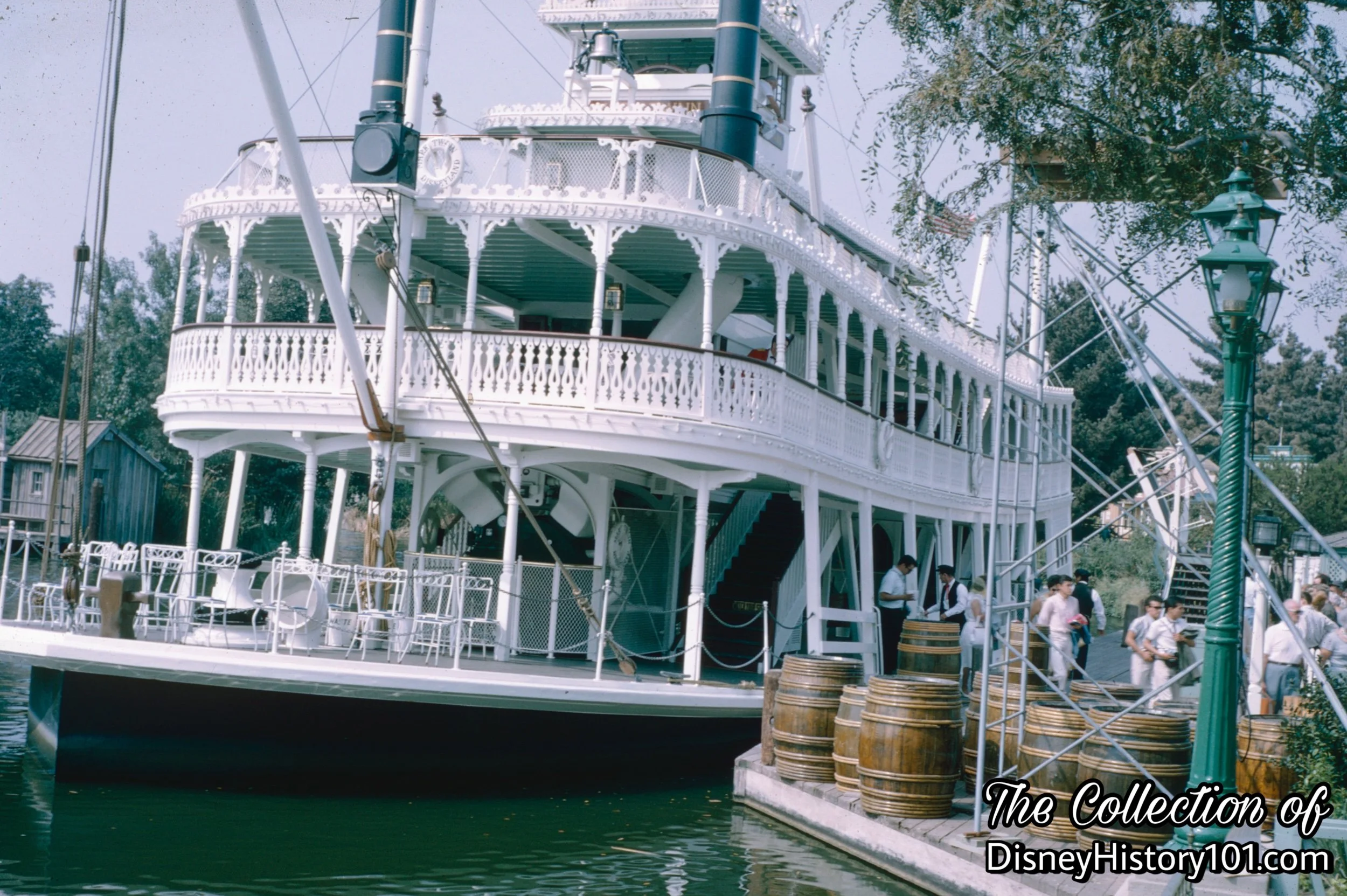
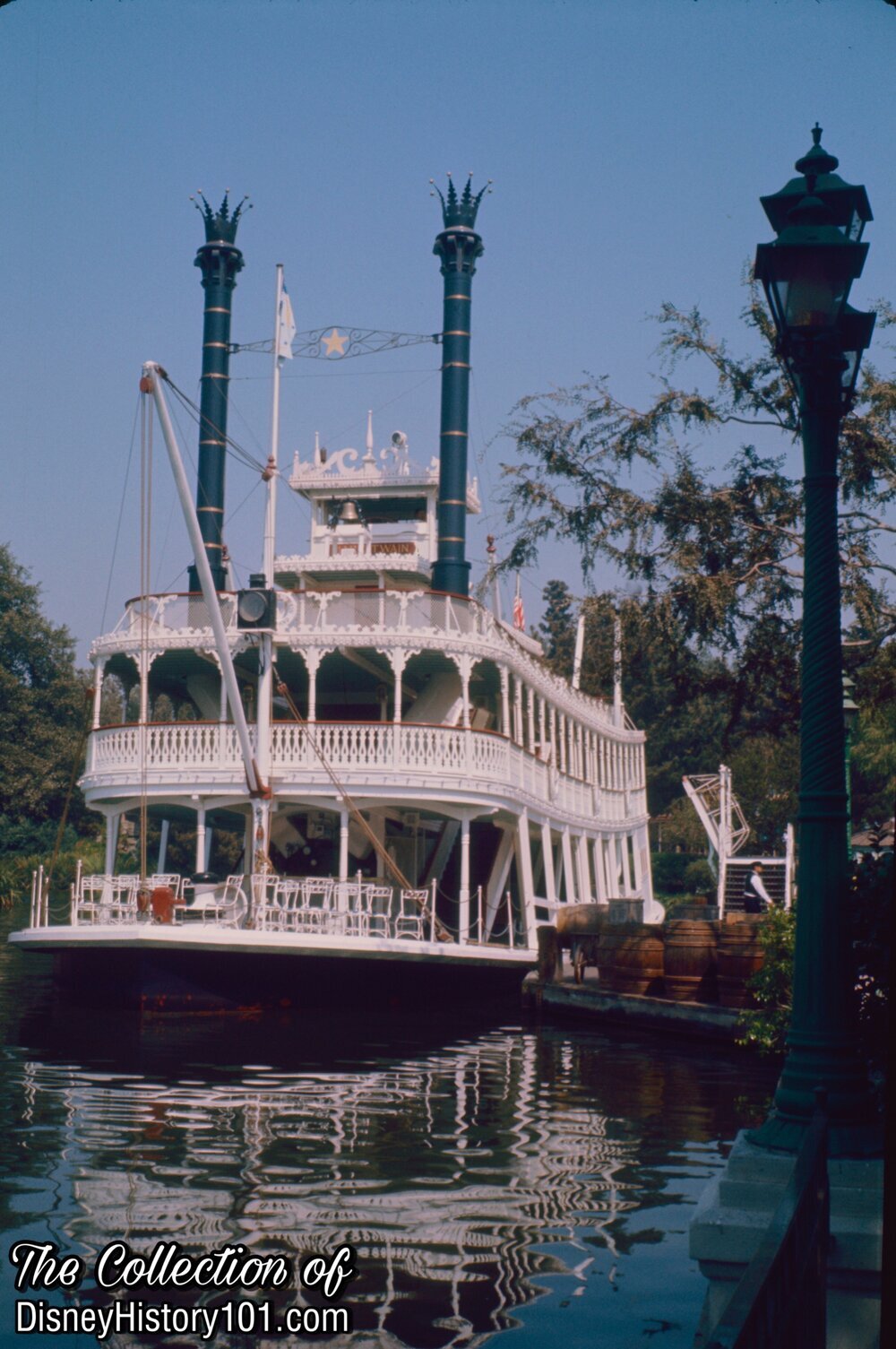
At the Frontierland Docks (along the New Orleans Square section of Frontierland), cargo of boxes, barrels, buckets, sacks, and cotton bales wait to be loaded aboard the steam ship.
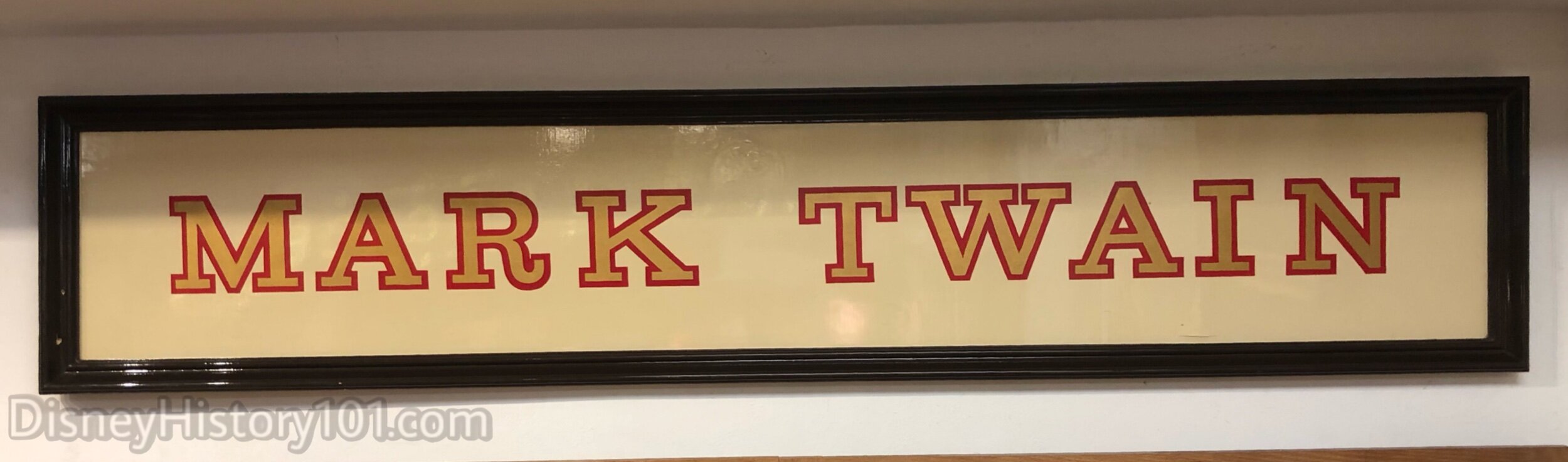
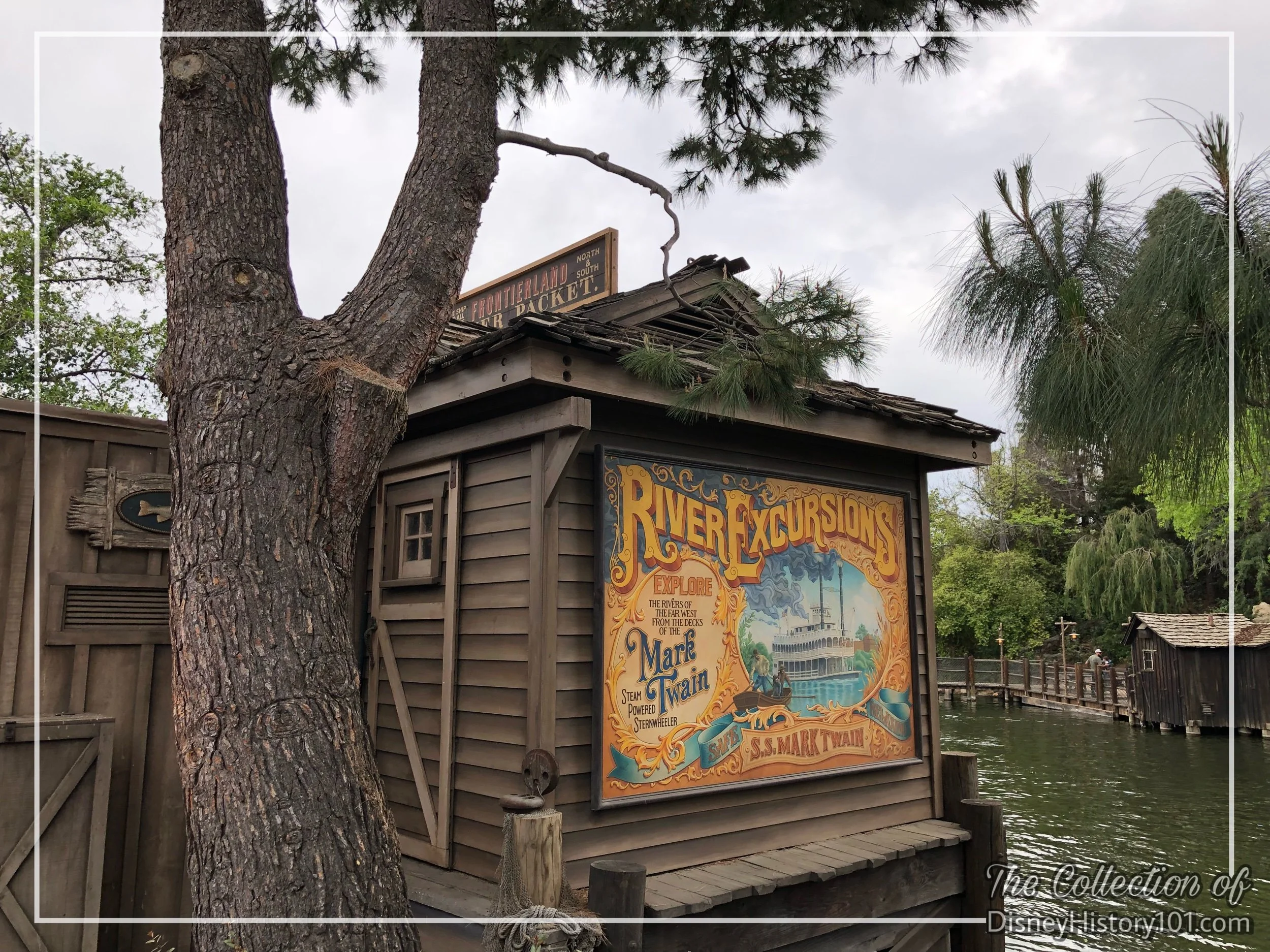
Mark Twain Dock sign.
At Disneyland, signs are themed to support the stories with appropriate graphics, colors, fonts, terminology, overall design of the sign, materials (wood, metal, banners, etc.), and verbiage used on the signage.
(Summer, 1960)
Later (in 1965), the cast of admission for a ride aboard the gleaming sternwheeler was exactly one “D” coupon, or 60¢.
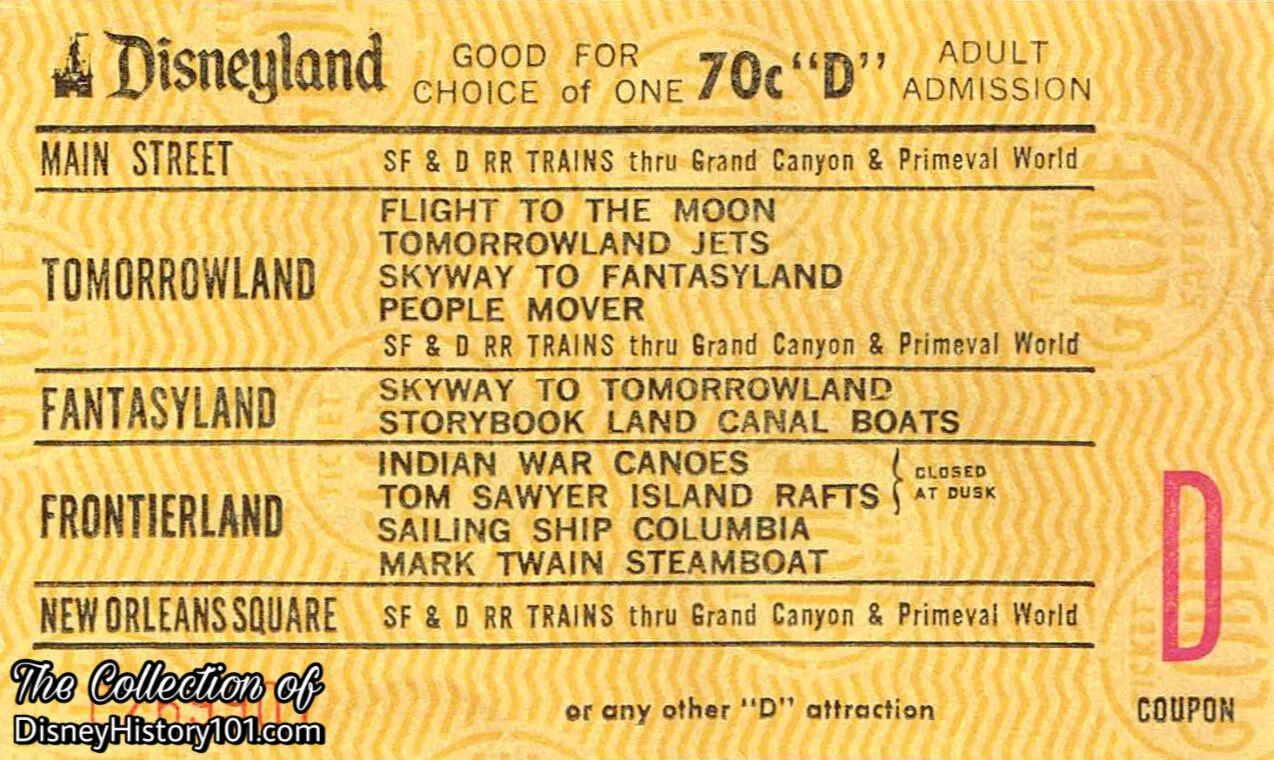
(c. 1971?)
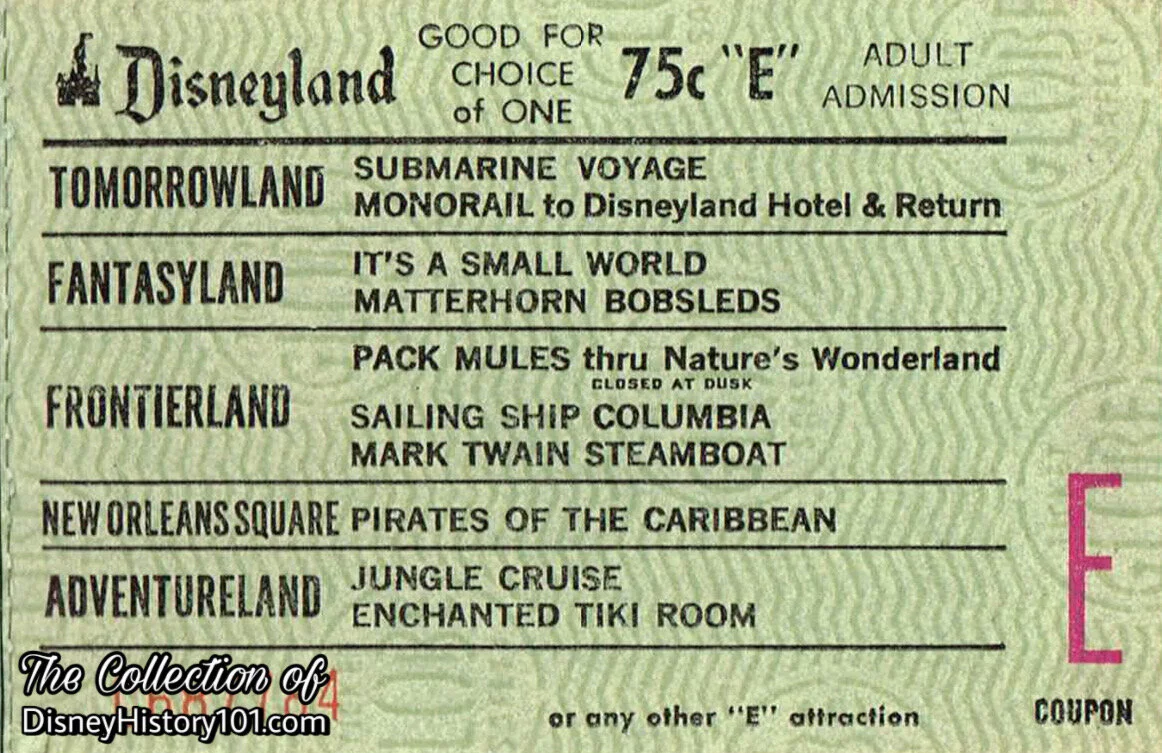
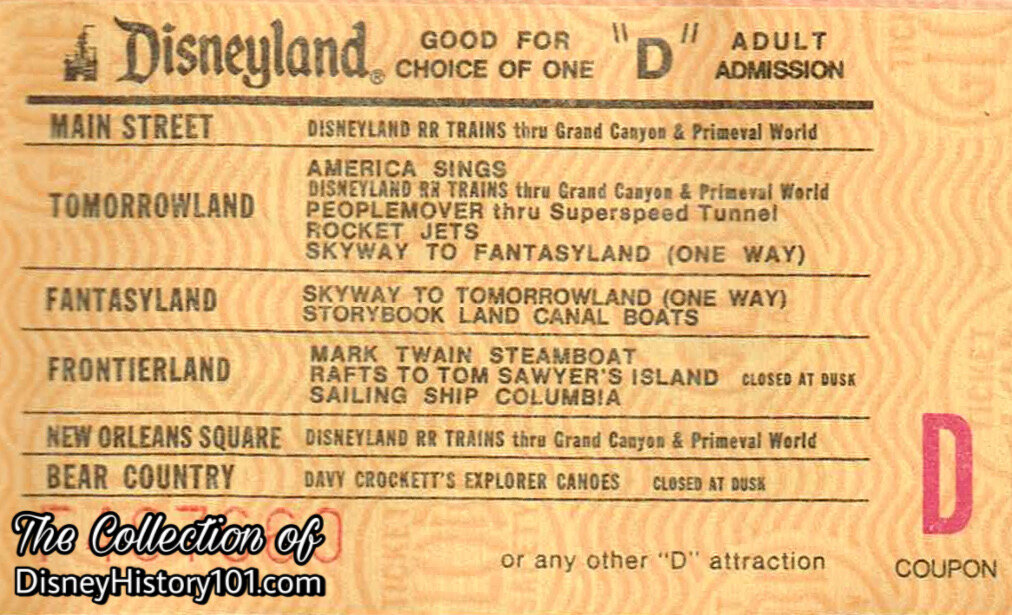
“Legacy”
At this time, the Mark Twain nearly had a direct legacy through a new theme park that was being developed by Walt Disney Productions. By 1963, Marvin A. Davis and W.M. Tuntke had prepared drawings of a “Jean Lafitte Adventure” (with bateaux; also called the “Blue Bayou Boat Adventure”), a “Lewis and Clark Boat Adventure” (with bateaux), “New Orleans Street” (with restaurants and shops), a “Mark Twain Type Restaurant”, an Audio-Animatronics Theatre (with a 750 audience capacity), two 6-minut Darkrides, and two Circarama Theatres (a 200 degree and 360 degree theatre) were being proposed for the Walt Disney Productions St. Louis Project.
Quisque iaculis facilisis lacinia. Mauris euismod pellentesque tellus sit amet mollis.