DISNEYLAND MAIN ENTRANCE (and BOX OFFICE)
After researching other parks and gardens, “the Disney staff concluded, as a result of their fieldwork, that a single entrance was an unequivocal must, that the elements of their park would need to be laid out in a coherent sequence (much like a motion picture), and that the attractions would all need to be unique to Disney,” according to “Disneyland Inside Story” by Randy Bright.
“The Theater Concept”
The “theater concept” is an “architectural and organizational plan incorporated in the design of Disney Theme Parks. Terms used in Disney Theme Parks which illustrate the theater concept are: audience, Backstage, Cast, Casting Department, Inner Lobby, On Stage, Outer Lobby, role, and Show.
The “Show” has been described as a “controlled, usually man-made environment where as many as possible elements” which “pertain to a single fictional or non-fictional motif. Thus, an individual placed within that environment may consciously or subliminally experience it… all the things a guest may experience and be entertained by — colors, sounds, lights, detail - timing, taste and texture. Through art and animation… imagination, creativity and talent blend together to make” the show.
Now, if Disneyland was a theater with a Stage Area, the Disneyland Main Gate and Ticket Booths Area was reckoned as the “Outer Lobby” of The Disneyland Show for good reason (according to “Your Role In The Disneyland Show”). The Outer Lobby was structured for the Guests' transition into the Park. Once inside the Park (or “Inner Lobby”) Guests begin to note the aforementioned “orderly progression of ideas similar to scenes in a motion picture,” according to “Disneyland Inside Story” by Randy Bright.
With that in mind, the Disneyland “story” began from the beginning, with the Disneyland Main Gate Area to become one of the first sections of Disneyland to receive “hardscape” plans and drawings by Ruth Shellhorn (some time after she began work on Walt Disney’s Disneyland in March of 1955).
As of June 2, 1955, C.V. Wood Jr. sent an Inter-Office Memorandum to Walt Disney regarding the best estimates that could be obtained at the time regarding the status of individual sections of the Park and Opening Day. C.V. wrote: “Main Entrance Ticket Booths - they are now in work and will be completed. Main Entrance Motif - This can be completed, however, as of this date we do not have final plans for the planting.“
“In 1954, Cora Lee [Sargent] came to California, and, hearing about Disneyland on television, she applied for a job as P.B.X. operator or ticket seller. She was hired as a ticket seller by Chuck Whelan and received her orientation in the BROWN HOUSE.” Cora recalled: “Dick Nunis handed us our ID's.”
“Grand Opening”
Many “55ers” spent time at the Main Gate. Ron Dominguez spent opening day taking tickets at the Main Gate. So did Milo Rainey who recalled: “I was made a ticket taker... the paint was still wet on the turn-stiles. We were overstaffed and there was a seething mass of humanity! Frank Martines, Ron Dominguez, Earl Wuesteneck and I were taking tickets. Unauthorized people were trying to get in. A mess!” The simple invitation-only tickets were so easily duplicated that people printed up thousands of forgeries.
As mentioned Frank Martines was a Ticket Taker at the Main Gate - for a week - including Opening Day. He recalled: “We all looked like bell hops, with Eisenhower yellow jackets, green trousers, gold 'overseas caps we were pretty proud!”
Imogene Brinkmeyer missed opening day due to sickness, but came to work the following day. She recalled: “I came to work the next day and it was HOT AS HADES… you couldn't get a drink anywhere. There had been no training for the Ticket Sellers, but everyone pulled together and everything fell into place. I still don't know how it all worked out!”
Mig Lyles remembered: “When I was 18 l left the farm and went to Evanston, Illinois, but I soon came home and married my childhood sweetheart, who lived on a neighboring farm. After a while we moved to California, settled in Anaheim and watched the Park being built. One day I decided that l'd like to go and work at Disneyland for a short while..maybe through the summer. I went over to Personnel and made my application. I said, I don’t want to be a ticket seller, and he said, ‘That’s what you are going to be!’… ah, well.”
Mig Lyles was not present for the Press Preview but remembers: “The next day I started to work and I was a relief girl all over the Park. It was rather frightening as there was no training. One time when I had been working in Fantasyland, I was suddenly sent to the Main Gate...where I had NEVER BEEN...scary!”
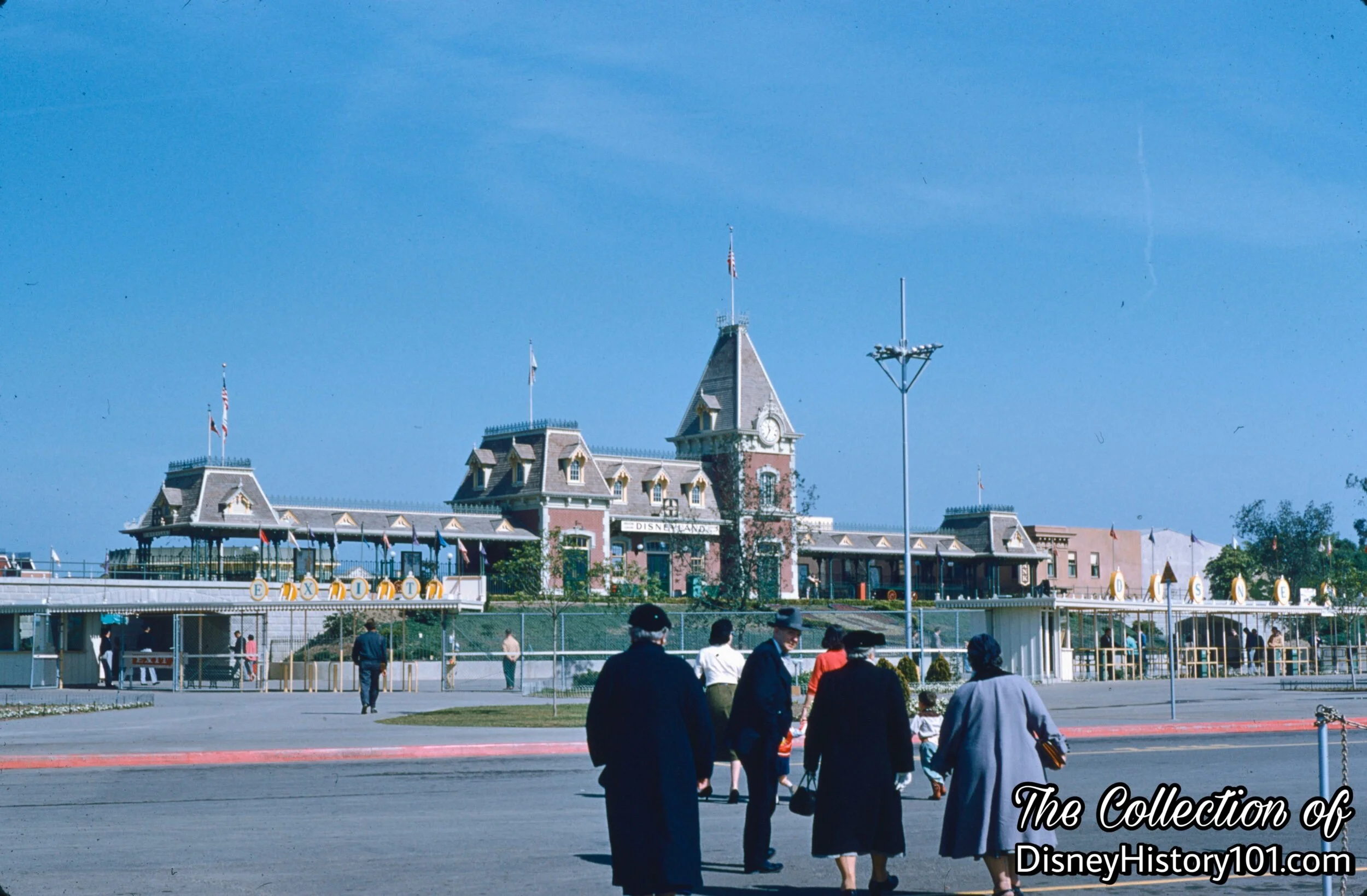
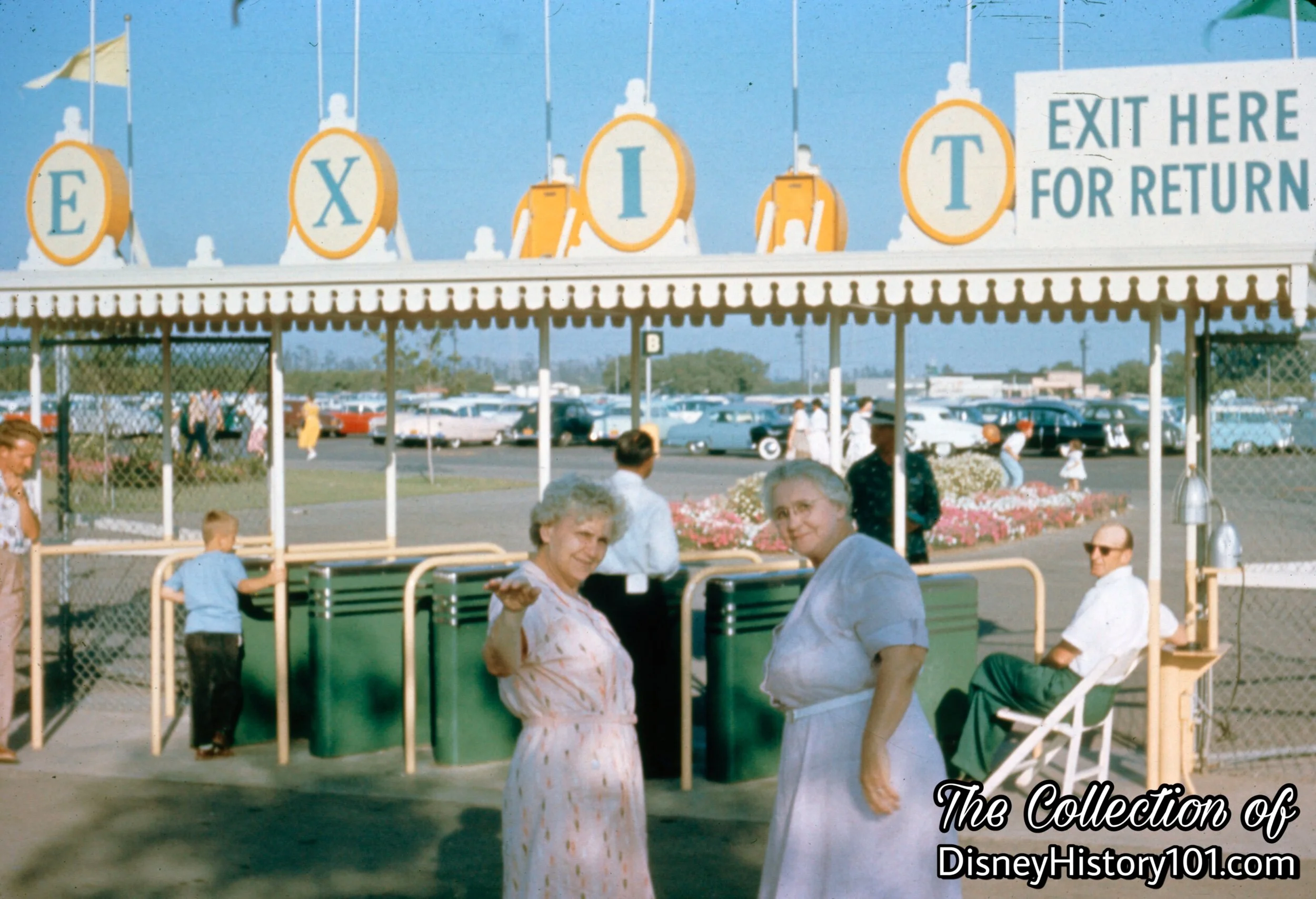
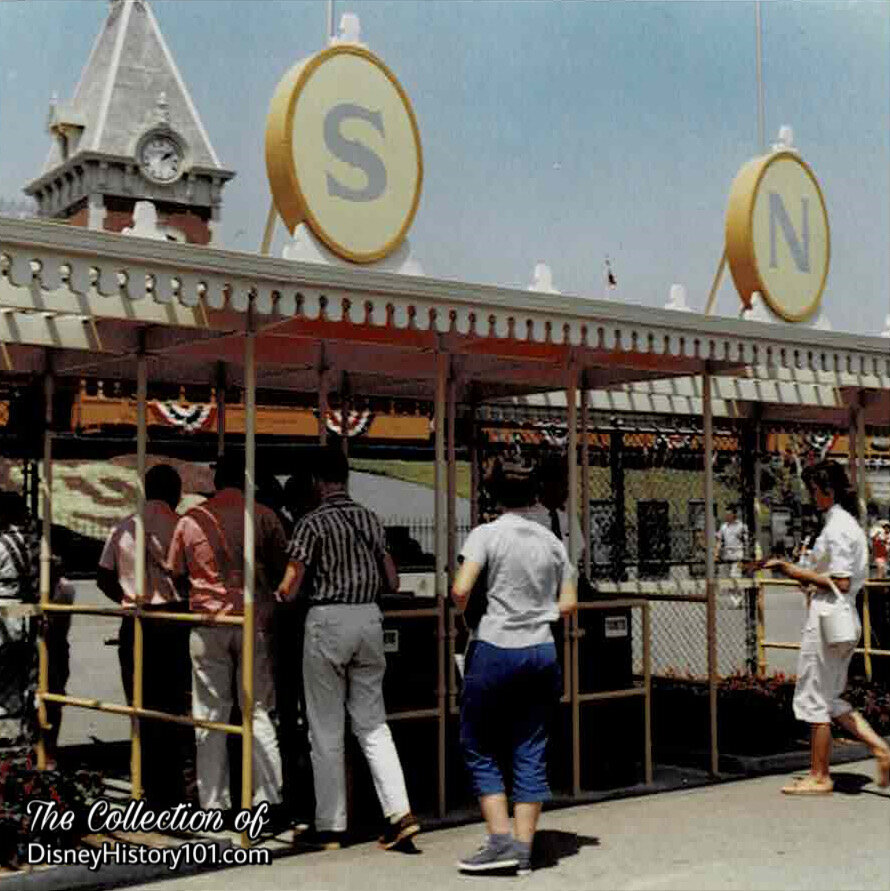
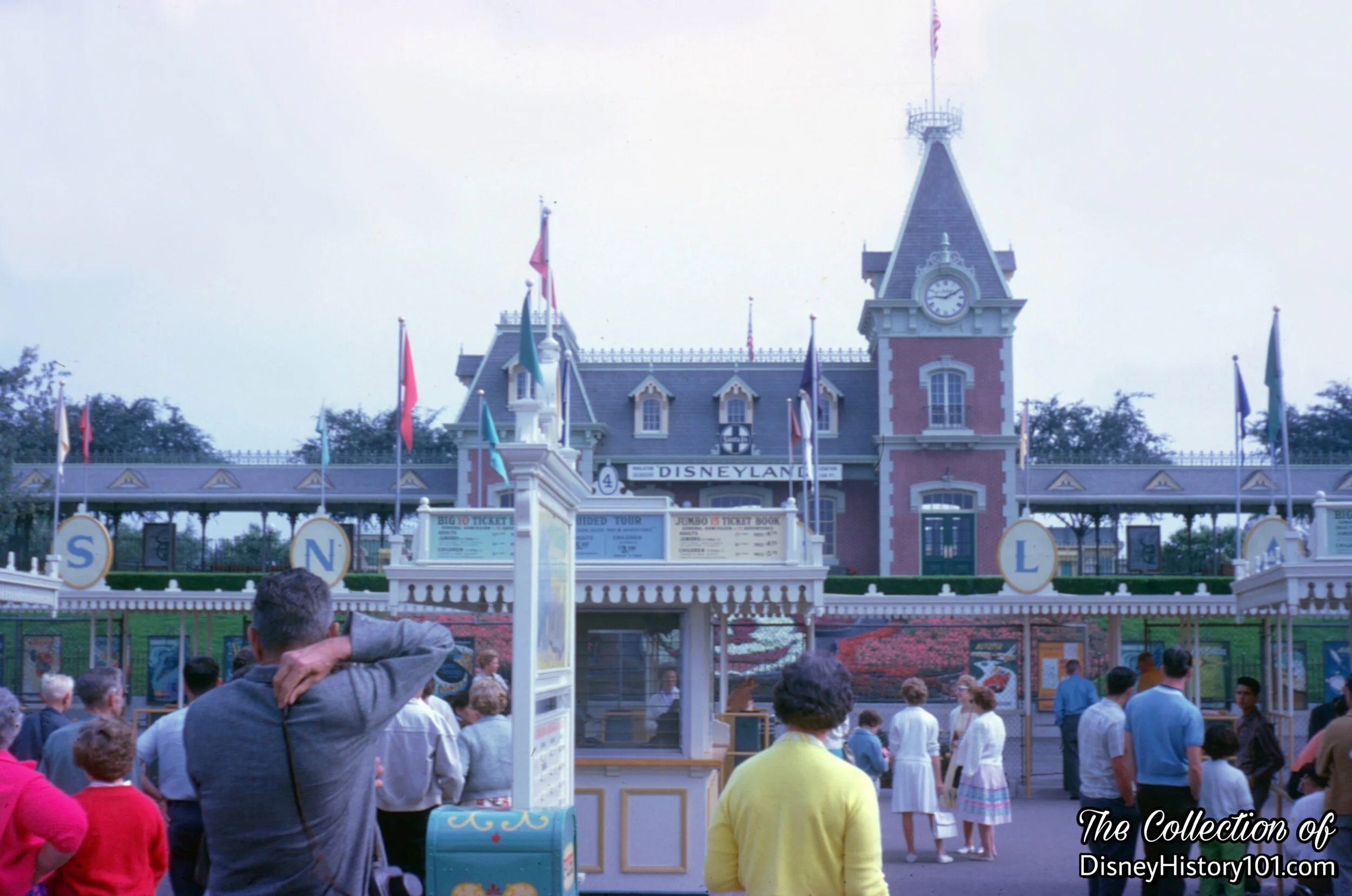
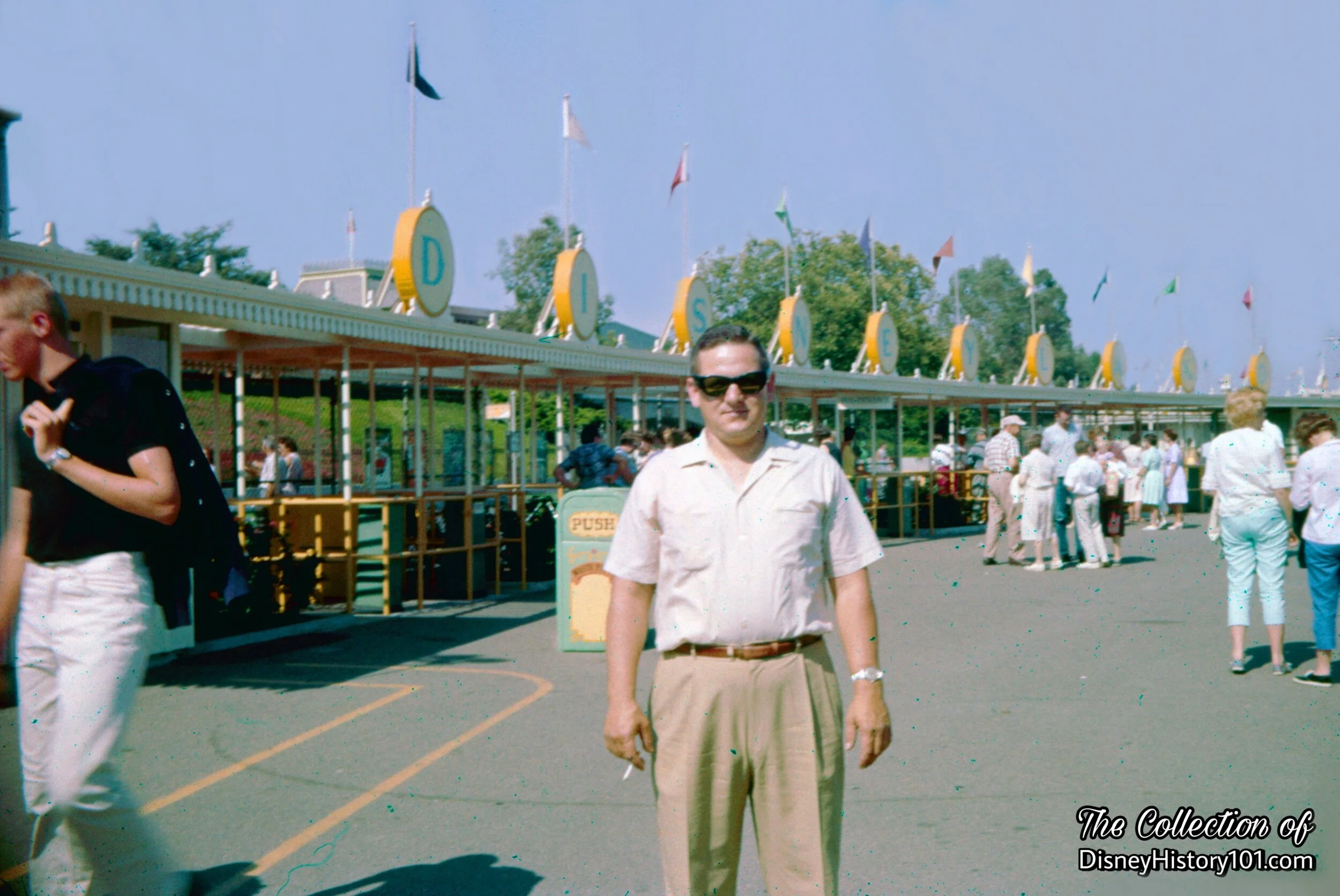
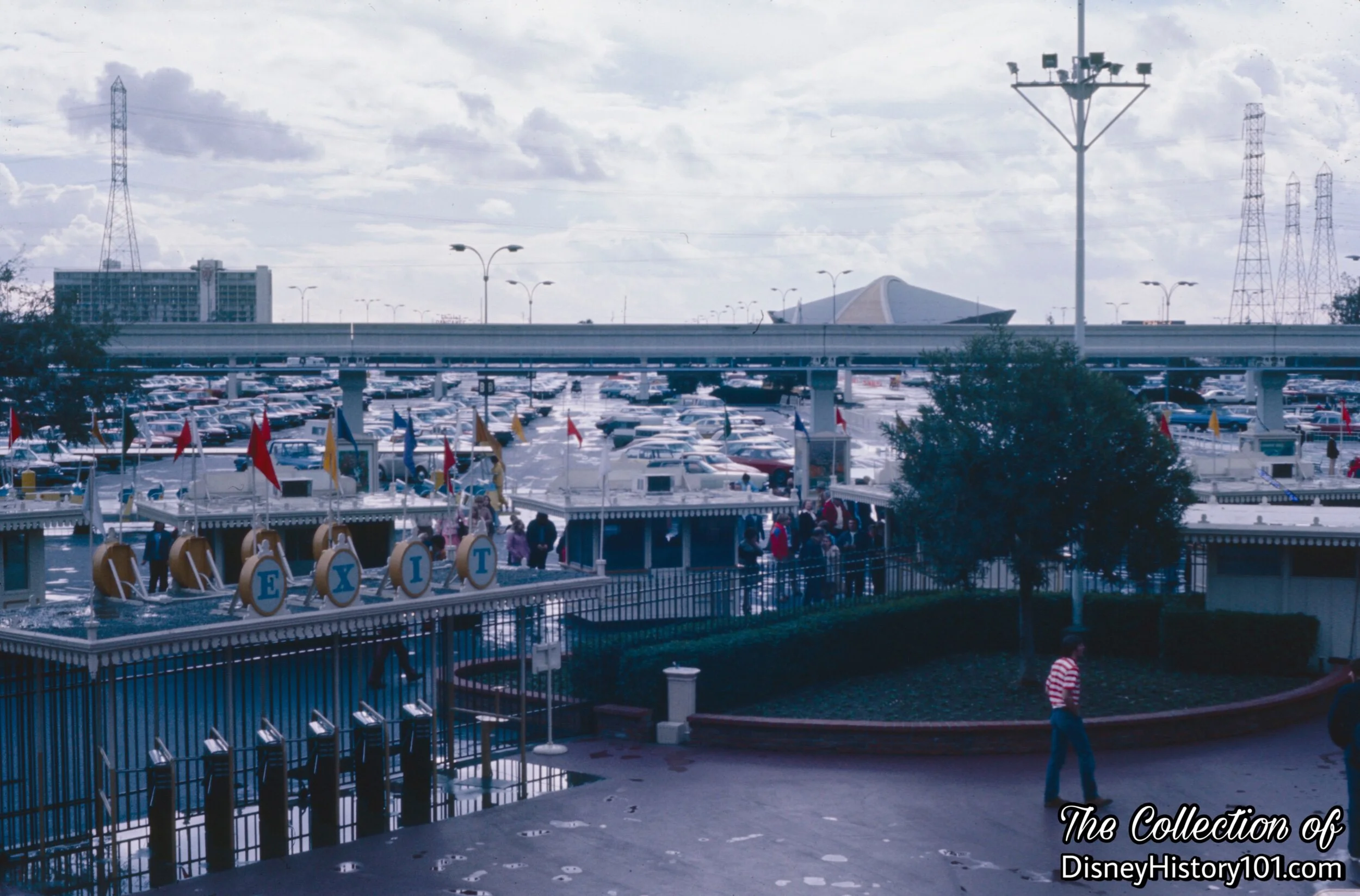
By September of 1958, the Main Gate and Ticket Booths Area included the Guest Entrance (located at the South end of the Park, facing the Parking Lot), a Security Gate, and Pass-Out Exits (situated at the East & West sides of the Main Entrance; where Guests had their hands stamped for re-entry). By September of 1958, $570 of land improvements had been made to the area of the ticket booths, treadle counters, etc. $8,227 in landscaping had been made to the area. There were nine ticket booths (valued at $32,785) and turnstile structure with ten entrances and twelve exit turnstiles. By September 28, 1958, some $46,525 of land improvements had been made to the Main Entrance. Other additions included sidewalks, walkways, and curbs ($18,329), paving, roadways, grading ($25,819), fencing (40,594), lighting ($459), and landscaping ($1,655).
Arcade Maintenance was essential to our total Audience Control Plan. The Arcade Mechanics team regularly repaired the turnstiles and ticket machines. They maintained 140 entrance and exit turnstiles, which operated the electrical and mechanical digital counters which told Disneyland how many people were in the Park at any time. “Counts” or turnstile readings were given, by rounding off the last three numbers of each turnstile. Disneyland had 176 ticket machines and was once the only location in the U.S.A. other than the factory which regularly repaired this number of machines.
Arcade Maintenance maintained the ticket shredding machines.
“Picnic Area”
Earl Wuestneck recalled: “the time a guest with a big bag was told, ‘I'm very sorry, but no lunches are allowed in the Park.’ Came the reply, ‘How did you know that there was lunch in the bag?... You must have X-ray eyes!’”
“Attraction Posters”
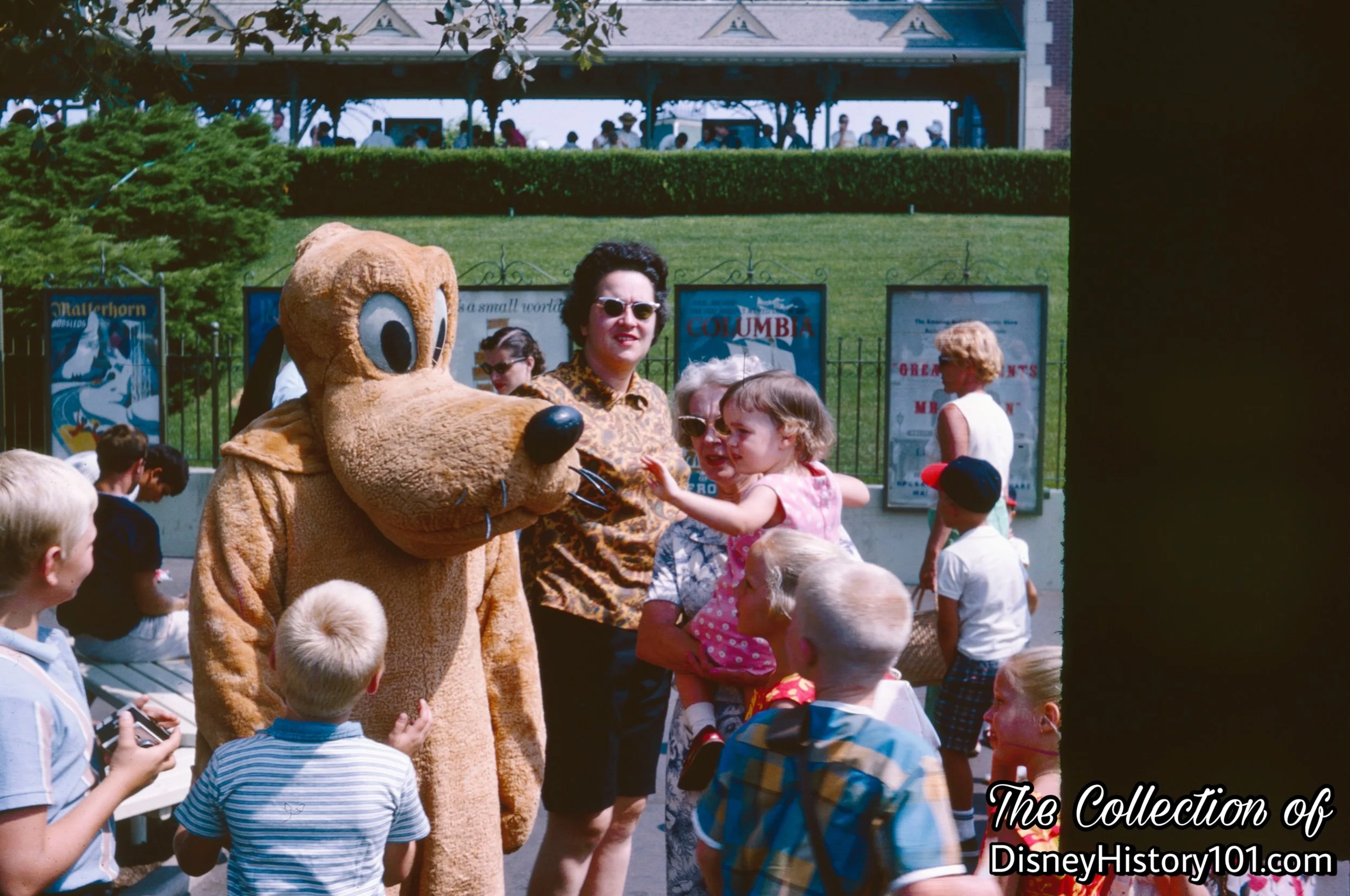
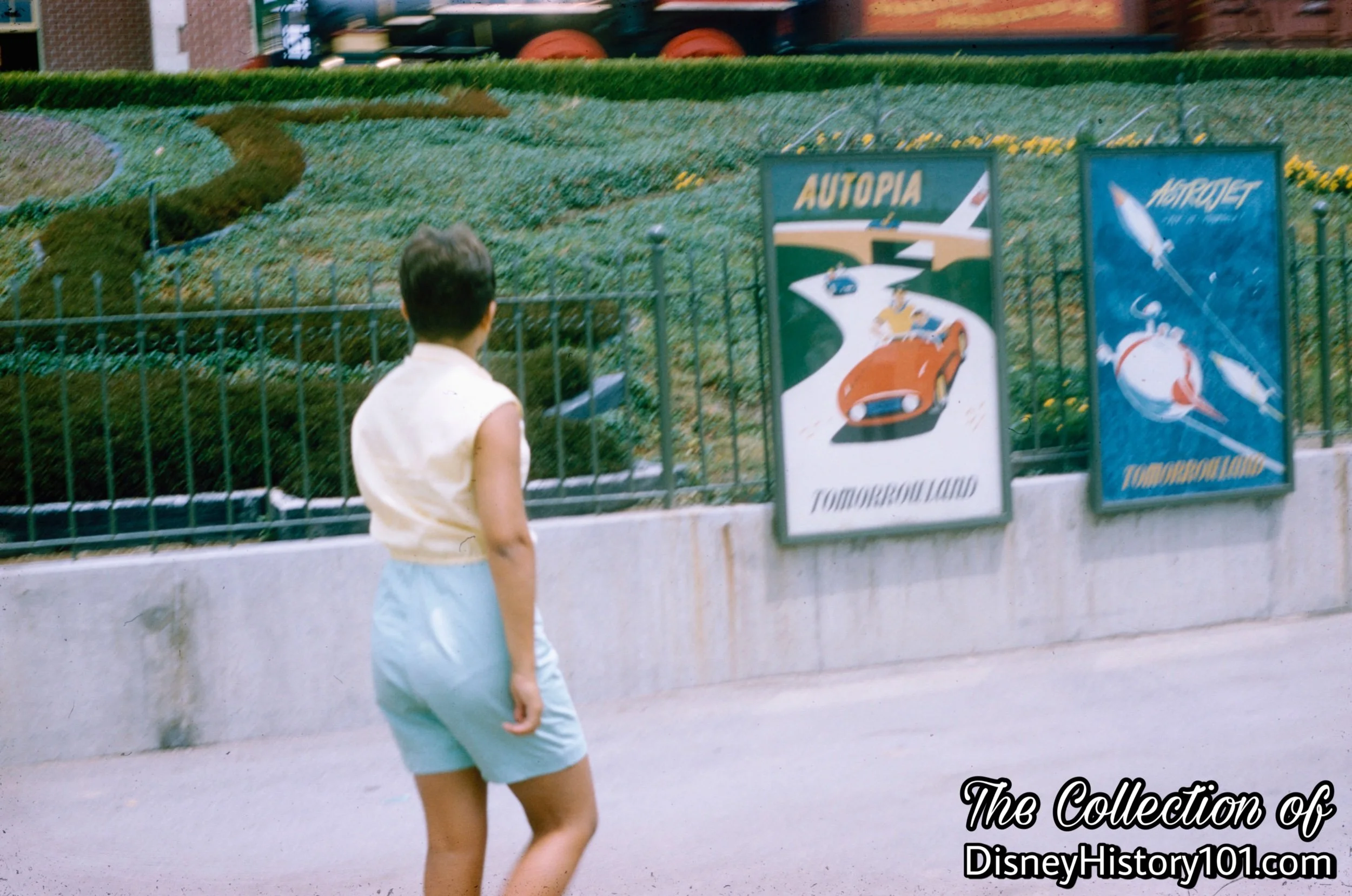
Much like an actual theater lobby, posters of attractions (or “Shows”) were displayed here. Why, from 1953 to 1993, fifty-six original Disneyland Attractions Poster designs had been created, and displayed near the Main Gate and in the Entrance Tunnels. Many of the designs were created by Bjorn Aronson, who had experience creating travel posters before coming to WED. Posters were also designed by other notable artists like Paul “Coke” Harley, Imagineer Ernie Prinzhorn (who founded the WED Print Shop during the late 1960s), Jim Michaelson, and Rudy Lord.
Early posters were printed through the WED Screen Print Shop, featured limited colors, and were printed utilizing a silk-screening process. Silk screening was a printing method in which the image is transferred to a surface by squeezing ink through a stenciled fabric or metal wire screen.
During 1965 to 1966, WED Enterprises, Inc. opened a job No. 034-53-00, more commonly referred to at that time as “Disneyland Posters.” These projects involved the preliminary design of posters for five new Disneyland attractions: Great Moments with Mr. Lincoln, It’s a Small World, New Orleans Square, Tomorrowland, and the Primeval Diorama.
Eventually a four-color lithography process was employed, permitting imagery featuring more than forty colors. According to Paul Conrad (Pixar artist) in “Poster Art of The Disney Parks”: “‘It could take a month or more to do a sixty-color poster. A poster like that could easily cost $30,000 just in labor,’ says Paul.” During the late 1990s, the WED Screen Print Shop and poster program was shuttered.
According to “Poster Art of The Disney Parks”: “In 2001, the Imagineers opened Tokyo DisneySea at the Tokyo Disney Resort with a poster program meant to familiarize guests with the park's unique attractions. After much trial and error, the digital art and printing process became the ideal successor to screen printing.”
“Entry”
Disneylanders were instructed: “During evening hours, group identification is not permitted in the Park. Good grooming, cleanliness and proper dress 1s necessary for admission to Disneyland at all times. Those that believe good behavior and good grooming will spoil their fun are asked not to visit Disneyland.”
“Re-Entry”
Re-Entry or readmittance into the Park on the same day was permitted if a Guest had a valid hand stamp and appropriate admission media.
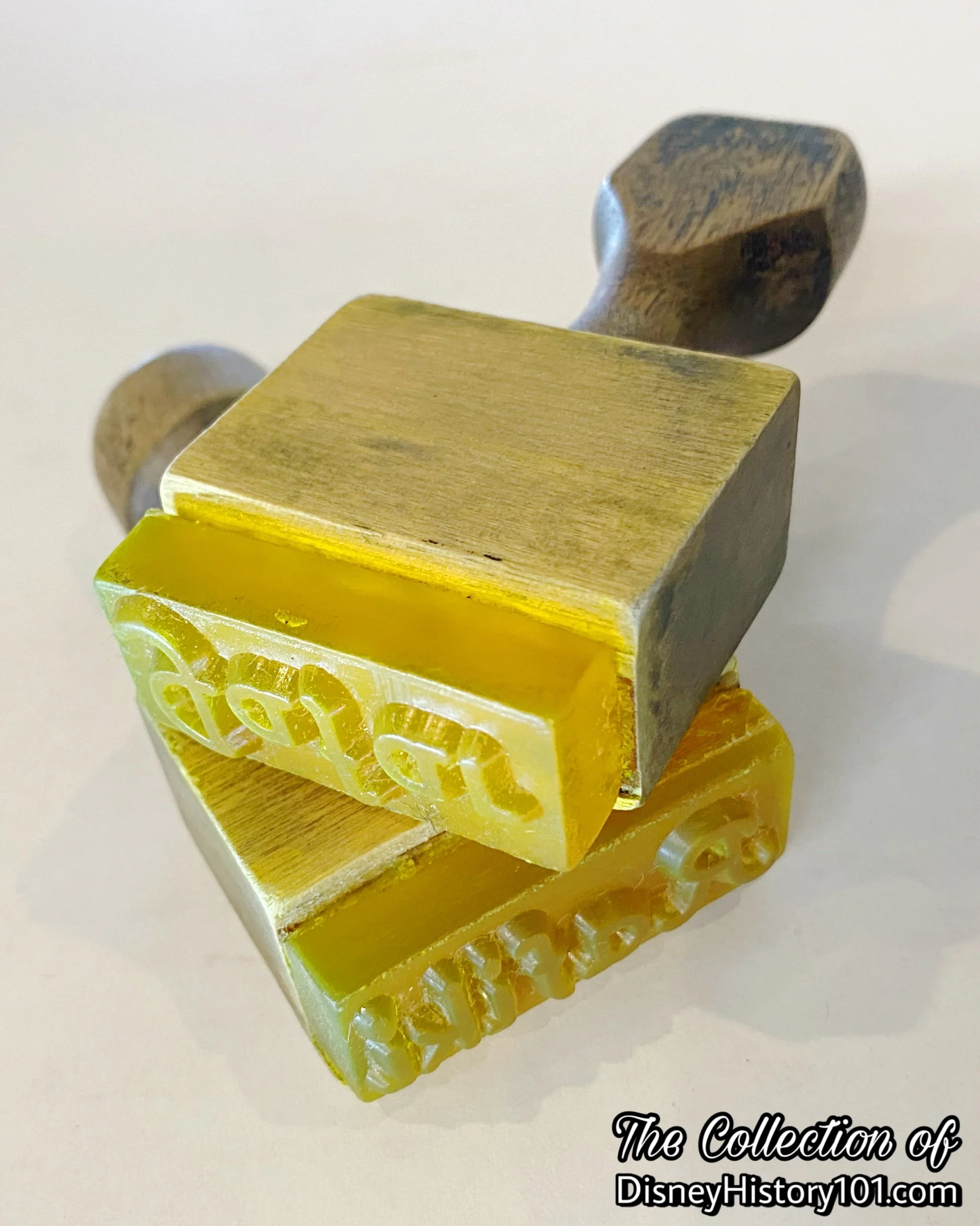
Major improvements were made to the Disneyland Main Entrance Gate during 1968. The use of fluorescent lights were so impressive that years later, Edmund A. Braun made note of them in is book “Black Light Creates Fascinating Fluorescence” (published 1968) this way : “At Disneyland, for example, when someone wants to leave the fun area temporarily to visit his car, the gatekeeper stamps the back of the patron’s hand with an invisible ink. When returning, the patron merely shows his hand under black light and the resulting fluorescence identifies him as having passed through the gate previously.”
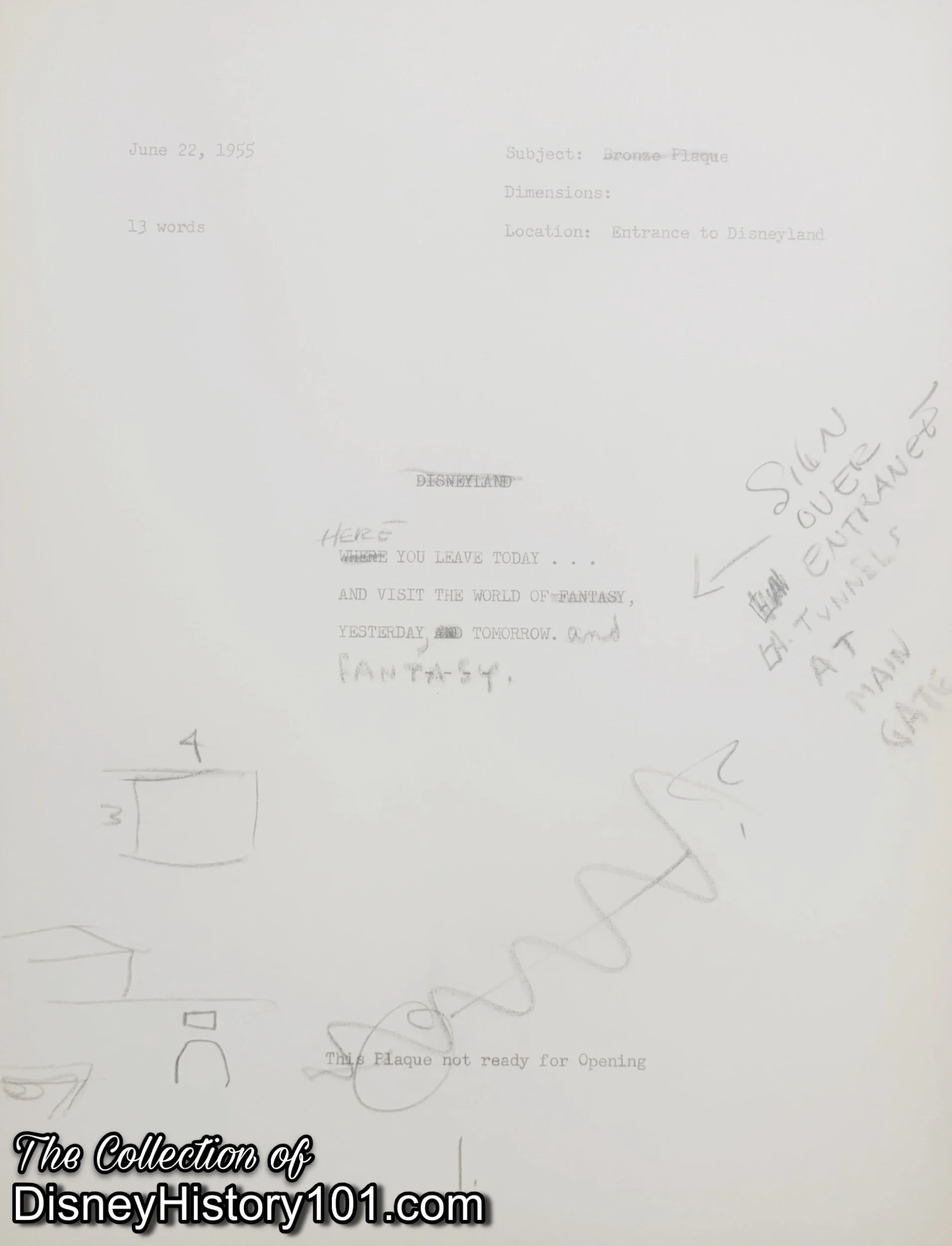
“A small sign above the East tunnel entrance states : ‘Here you leave today and enter the world of yesterday, tomorrow, and fantasy.’ Let’s now go up Main Street U.S.A. for a look at the world of yesterday.”
-Guided Tour Script, 1962.
By 1996, the Main Entrance Area came to be comprised of ticket booths, entry turnstiles, Guest lockers (outside Park), picnic area, Group Sales Window, Guest Relations Window, and Disneyland Kennel Club. Leading to this area was the Main Entrance Mall concourse leading from the center of the Main Entrance to the southern Monorail beam.
HOURS :
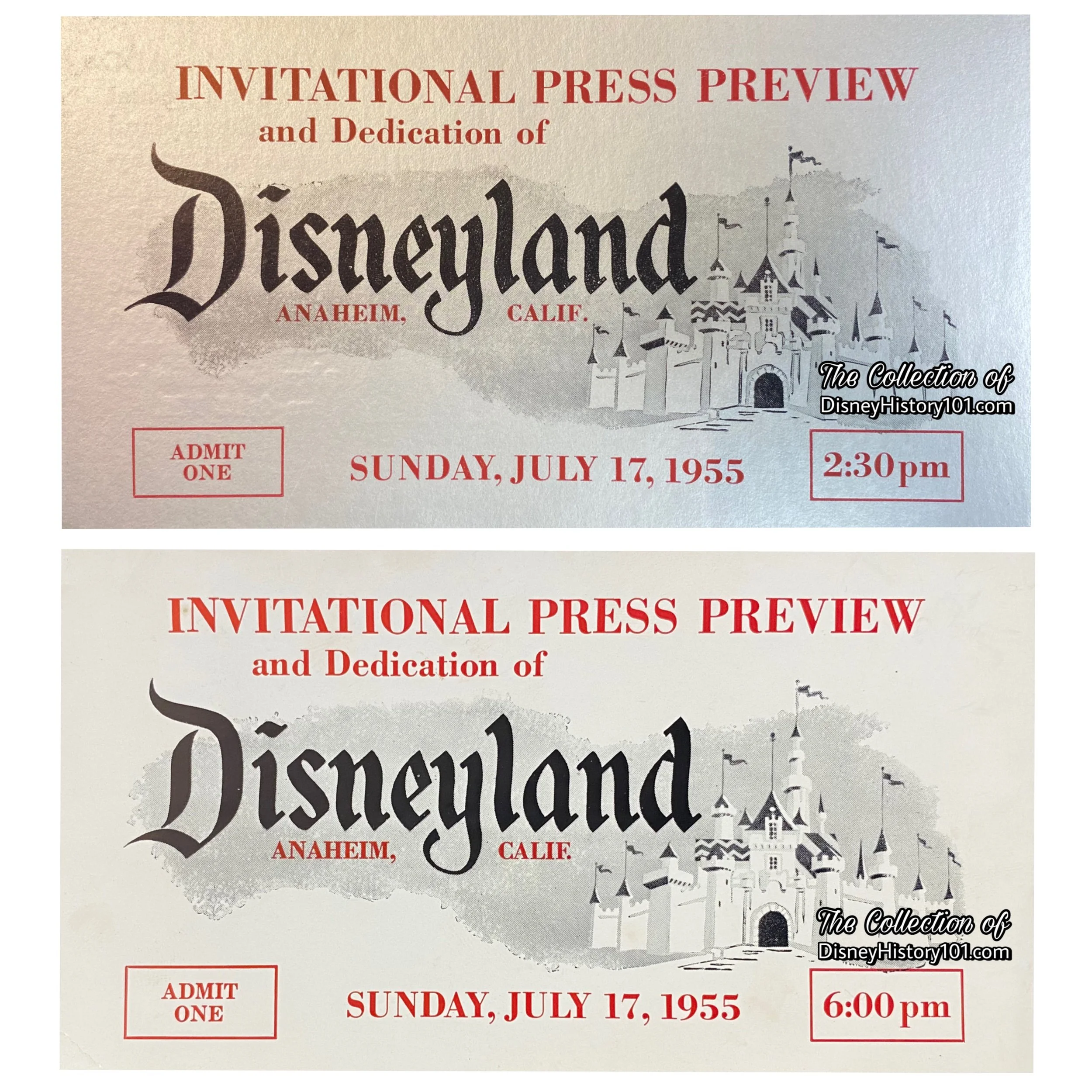
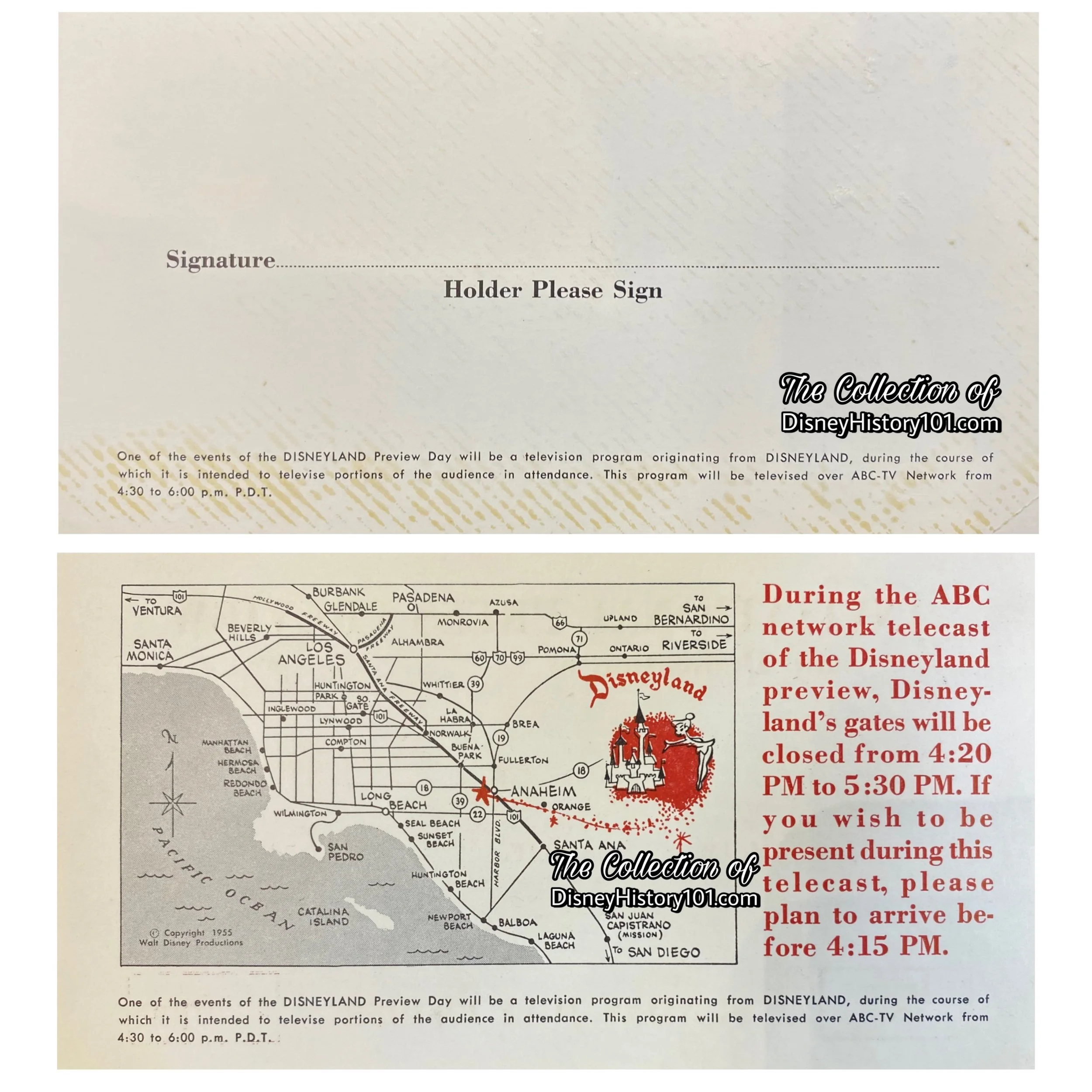
1955 - Disneyland was “a new concept in family entertainment,” when “the curtain was first raised on the Disneyland show” to members of the press at 2:30p.m., on July 17th, 1955. There were three groups of guests allowed to enter that day, admitted through the types of Press Preview Day tickets distributed. Silver Invitational Press Preview Passes (which allowed guests to enter at 2:30p.m.), Green Invitational Press Preview Passes (which admitted guests after the live telecast completed at 5:30p.m.), and White Invitational Press Preview Passes (admitting guests beginning at 6:00p.m.). Disneyland would close at 8:00p.m. that day, to get the Park ready for opening the following day.
According to the Orange County Register (published July 15, 1955) and the Press Release Fact Sheet prepared by the Disneyland Inc. Public Relations Department (c. June, 1955), Disneyland was open from 10a.m. to 10p.m., 7 days a week through its first summer. However, beginning in the Fall, Disneyland was to be open six days a week, closed on Mondays. This continued through the winter as well.
1956 - During June of 1956, Disneyland returned to its summer schedule of operation, open from 10 a.m. to 10 p.m. including Mondays (on which Disneyland was previously closed for maintenance, since the previous September). This schedule would continue until the Fall of 1956.
1957 - ***Possibly*** Hours 10 A.M. to 7 P.M. daily, and closed Mondays.
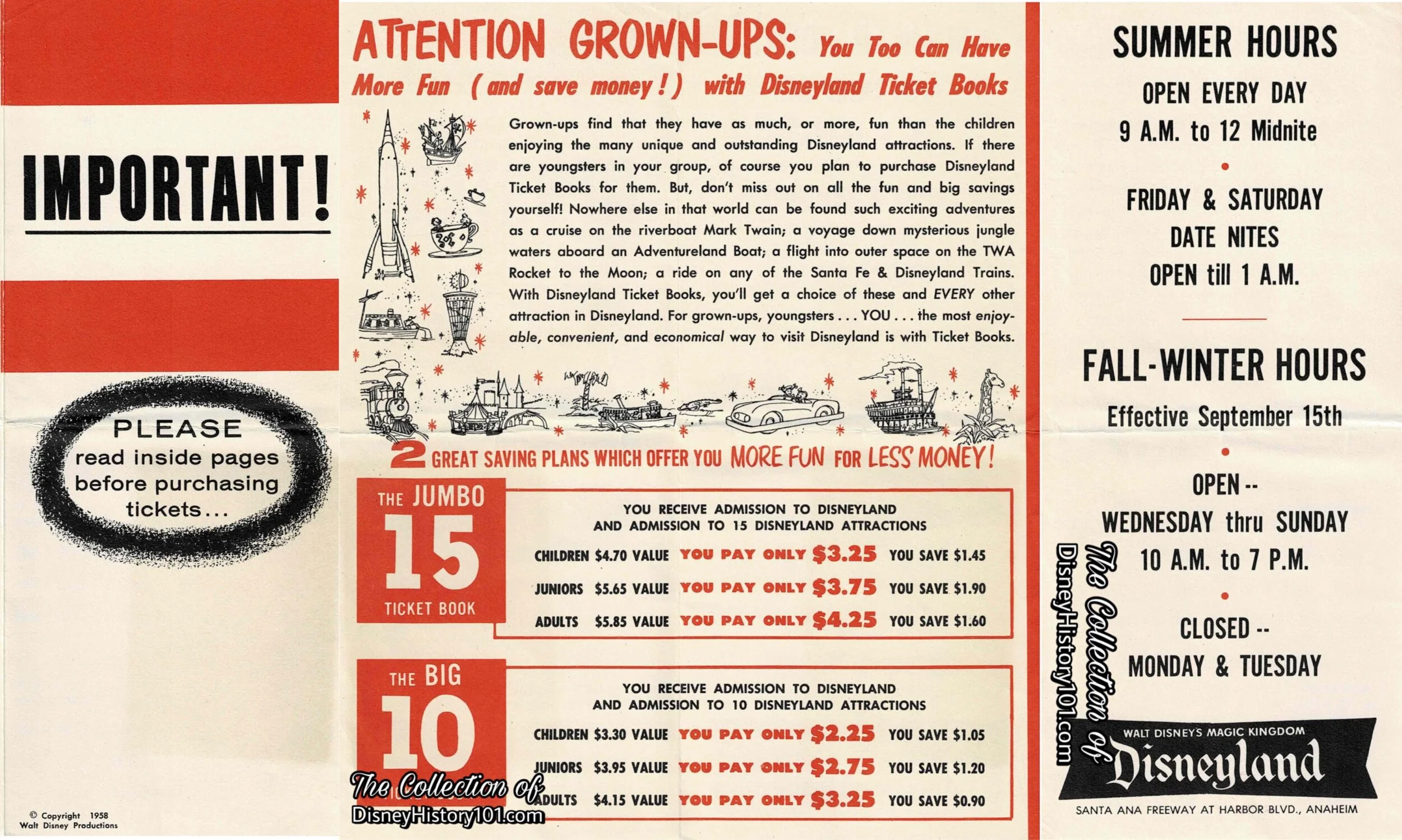
1958 - According to Dave Smith (previous Chief Archivist Emeritus of the Walt Disney Archives), “Disneyland was closed on Mondays during the off season from 1955 - 1957 and on Mondays and Tuesdays from 1958 to 1985… Mondays and Tuesdays were the Park’s slowest days, and having it closed then enabled maintenance workers to do their chores without intruding on the guest experience.” [Disney Facts Revealed by Dave Smith, 2016] After the diversion was made to “close the Park for two consecutive days during the week for the fall and winter season,” Emil Kuri advised against what he believed to be a “very great mistake” in an Inter-Office Communication to Walt Disney (dated September 4, 1958). Emil strongly advised : “Disneyland has become an international attraction and is identified with California as much as the Eiffel Tower is with Paris and the Colosseum in Rome and as a representative of American life, owes a certain obligation to it public. I am sure that in the interests of economy, a one day closing is very practical, but I Feel that many of us are so close to the Park, that we have begun to take it for granted and do not realize its tremendous impact on people all over the world and how vital and important it is to the incoming tourist. I have talked with many people from every part of the world, who have actually made special trips to Los Angeles or California only to see Disneyland ; some of whom could only spend a day or two for this purpose and I am certain there are many tourists who only have a short stop-over in Los Angeles, so that closing the Park for two consecutive days will definitely be a hardship. Disneyland has long passed the stage of being merely an ‘amusement’ park and is on its way to becoming a tradition and an important Ambassador in our way of life. The figures showing the ratio of adults visiting the Park bear this out most eloquently.”
Walt responded to Emil that very day (September 4th, 1958) : “I appreciate your interest in the Park and what you have to say about our plans for a five-day week this fall and winter. Before making our decision we gave a great deal of consideration to this matter and from an economic standpoint it seemed to be the proper thing to do, inasmuch as our analysis of this situation indicate the five-day week operation will effect a $25,000 weekly saving to the Park. With the heavy construction problem we have ahead of us this saving can be advantageously used in this program, plus the fact that these two non-operating days will be very helpful and do a great deal toward the efficiency and progress of this improvement program. Another important factor that seemed to be in favor of our decision is that the union contracts wherein our employees are now on a five-day forty-hour week. Most likely the five-day week will be an inconvenience to some people, but in the over-all we will have done the thing that is for the best interests of the Park.”
After all this Disneyland’s Fall-Winter schedule took effect - Wednesday through Sunday, 10 A.M. to 7 P.M., closed Monday and Tuesday; Open on Veteran’s Day (Tuesday, November 11); Open Every Day (including Mondays and Tuesdays). December 17 through January 4. But Emil’s words may have stuck with Walt, who some time later stated : “When they come here, they’re coming because of integrity that we’ve established over the years. And they drive hundreds of miles. I feel a responsibility to the public.” [Welcome to Disneyland, 1981]
“55er” John Hernandez recalled: “People right in front of the Main Gate, stopping me and asking, 'Where is the Main Gate to go in?' And on Mondays and Tuesdays, they blame me because Disneyland is closed.”
1961 - Disneyland was open daily from May 24th through September 30th. Beginning on June 9th and continuing through September 10th, Disneyland would remain open until midnight, Monday through Friday, and until 1 a.m. on Saturdays. On Sundays, Disneyland would close at 10 p.m. During 1961, Eleanor Heldt (Magic Kingdom Club Administrator) commented : “During the Fall, Winter and Spring, Disneyland is closed on Mondays and Tuesdays. On these two days, the benches, railings, tables, et cetera, are repainted so that ‘fresh paint’ signs are not necessary on the five days the Magic Kingdom is open.”
1962 - During the summer months of 1962, Disneyland was open every day of the week through the summer months until September 16. Closed Mondays and Tuesdays after that date. Two V.I.P. visits were noteworthy for their uniqueness.
“Former President Jimmy Carter took a ‘running tour’ of the Magic Kingdom in May, when he jogged through the Park in the morning hours prior to public opening while in the area for a convention at the adjacent Disneyland Hotel. Prince Hiro's more conventional visit in October completed three generations of Japanese royalty who have visited Disneyland. His parents, Prince Akihito and Princess Michiko, toured in 1960 and his grandparents, Emperor Hirohito and Empress Nagako, visited the Park in 1975.“
1963 - A new summer schedule was instituted, and Disneyland was open every day (from 9 a.m. until midnight, and Sundays until 10:00 p.m.) starting June 15th.
1965 - Most months, Disneyland was open every day of the week (i.e. the month of August). During some months (i.e. September), Disneyland was open 5 days a week (closed Monday and Tuesday).
1967 - During the Disneyland Fall Schedule, Disneyland was open Wednesday thru Sunday (from 10a.m. to 6p.m.) and Saturday and Sunday (from 10a.m. to 7p.m.), while the Park was closed Monday and Tuesday.
1972 - Disneyland was open seven days a week during the summer season and five days a week (Wednesdays through Sundays) during the winter season.
1977 - Beginning March 16th, 1977, Disneyland would be open seven days a week throughout the summer. Promotional photos were published with the Seven Dwarves holding signs with the names of the days of the week on them!
1978 - During the fall and winter (as November) of 1978, Disneyland was open five days a week, closed on Mondays and Tuesdays.
1985 - According to Dave Smith (previous Chief Archivist Emeritus of the Walt Disney Archives), “Disneyland was closed… on Mondays and Tuesdays from 1958 to 1985… The Park was on a seven-day schedule during the busiest parts of the year up to 1985, and regularly thereafter…Mondays and Tuesdays were the Park’s slowest days, and having it closed then enabled maintenance workers to do their chores without intruding on the guest experience.” [Disney Facts Revealed by Dave Smith, 2016]
1987 - By 1987, Disney Dollars (the offical currency of Disneyland, available in $1 and $5 denominations) were redeemable for their equivalent U.S. currency at the Main Entrance. This was unique at the time as so many non-Disneyland Disney locations, i.e., Walt Disney World, Glendale Galleria, did not accept Disney Dollars.
1988 - Disneyland Fall/Winter Operating Hours we’re as follows: Monday - Friday, from 10 a.m. - 6 p.m. and Saturday, Sunday, from 9 a.m. - 12 midnight
Today, the Esplanade is the Guest area that lies between Disneylands Park and Disney's California Adventures Park.
1992 - During 1992-1997, plans for Westcot included design and developement concepts for California's Version of Epcot Center. These Included the first conceptual layouts for a Second Gate at Disneyland.
Attendance:
During the research and development stages of Disneyland, it has been recorded that “Walt personally contributed more to the research effort than anyone on his team. During all the planning stages, Walt completed valuable research on his own, striving to improve and perfect the Disneyland concept. He visited county fairs, circuses, carnivals, national parks and zoos. On one trip to Europe, Lillian warned, ‘Walt, if you’re going to look at any more zoos… I’m not going with you!” [The Spirit of Disneyland”] It was discovered that Forest Lawn Cemetery (which presented various religious shows and became a research point for Disneyland) had visitor patterns that paralleled Disneyland.
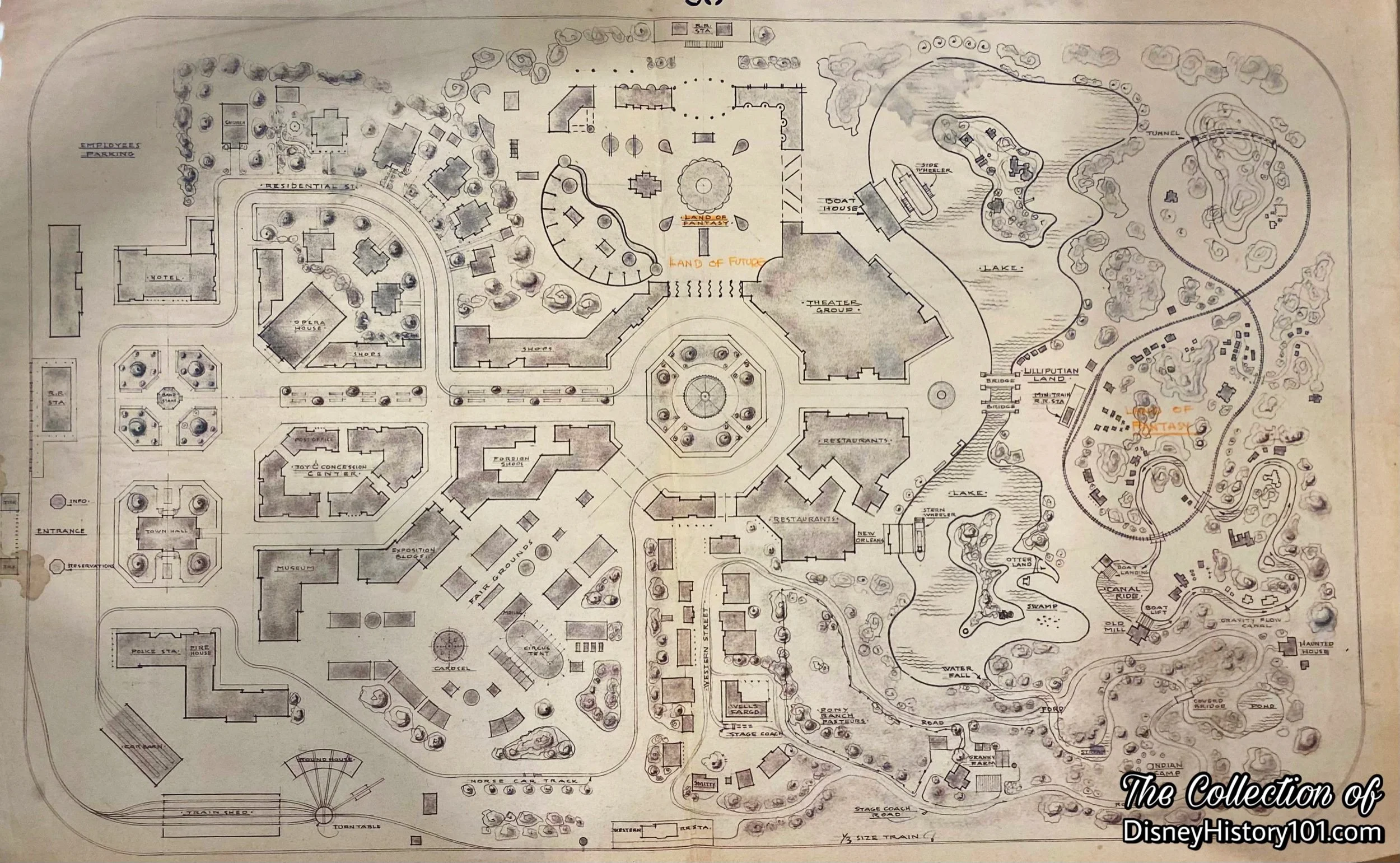
“Disneyland Preliminary Scheme #1”
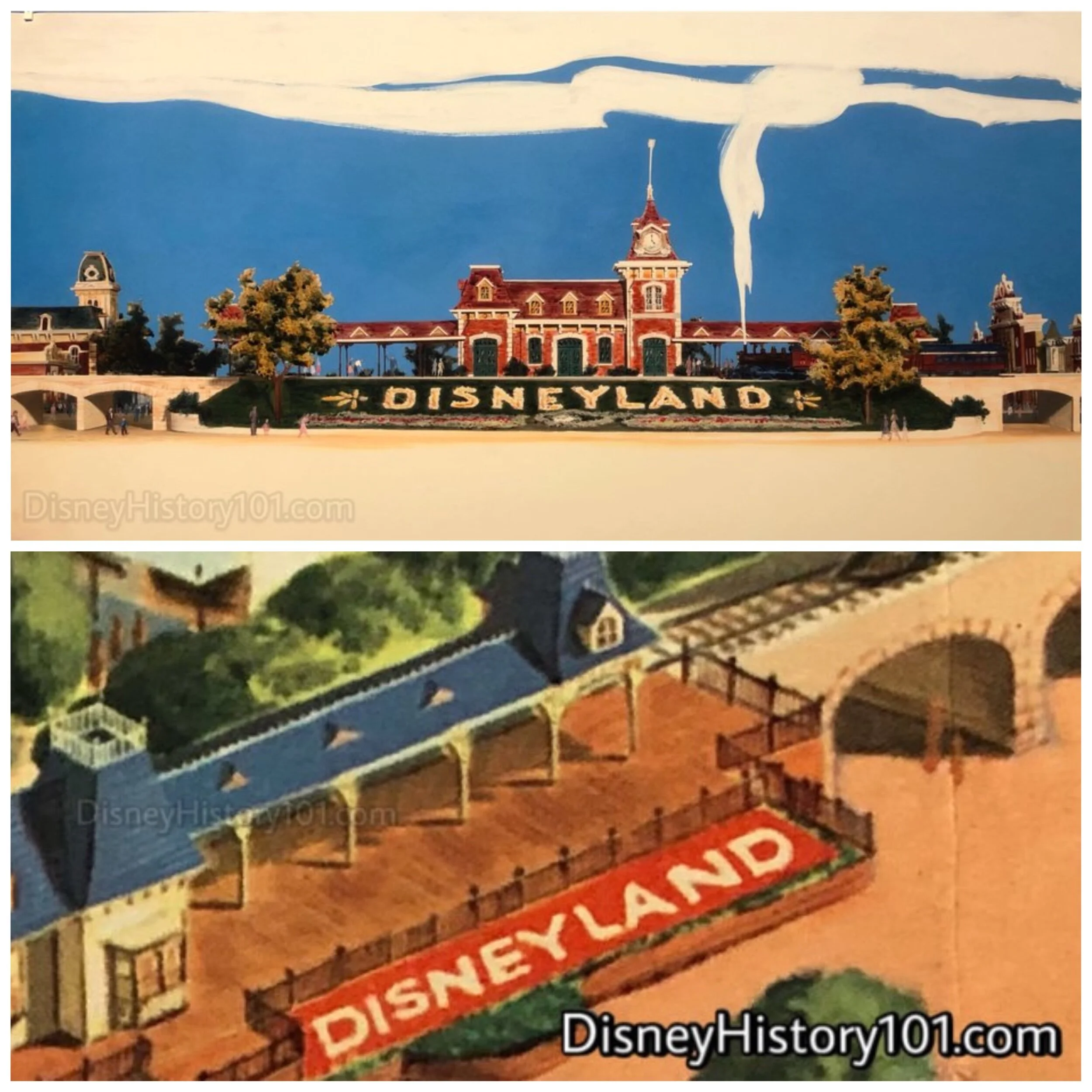
Early c. 1954 Concept Art (top) ; c. 1954 Mattel Musical Map Excerpt (bottom)
Herb Ryman’s “Schematic Aerial View” (originally produced September 26 & 27, 1953) only depicted a straight path (flanked with landscaping) leading to the tunnels.
“During construction, one outside consultant argued that Walt’s elevated train station was a mistake. He felt people would not walk up so many stairs just to board a train. But Walt insisted that the Main Street station would serve as the marquee for the Park. Without elevation, it would have no significance.”
This illustration (produced for an early licensed Disneyland product), granted a glimpse of the elevated “Disneyland Railroad Depot” (and Entrance to Disneyland, with its would-be iconic topiary that spelled ‘DISNEYLAND’!
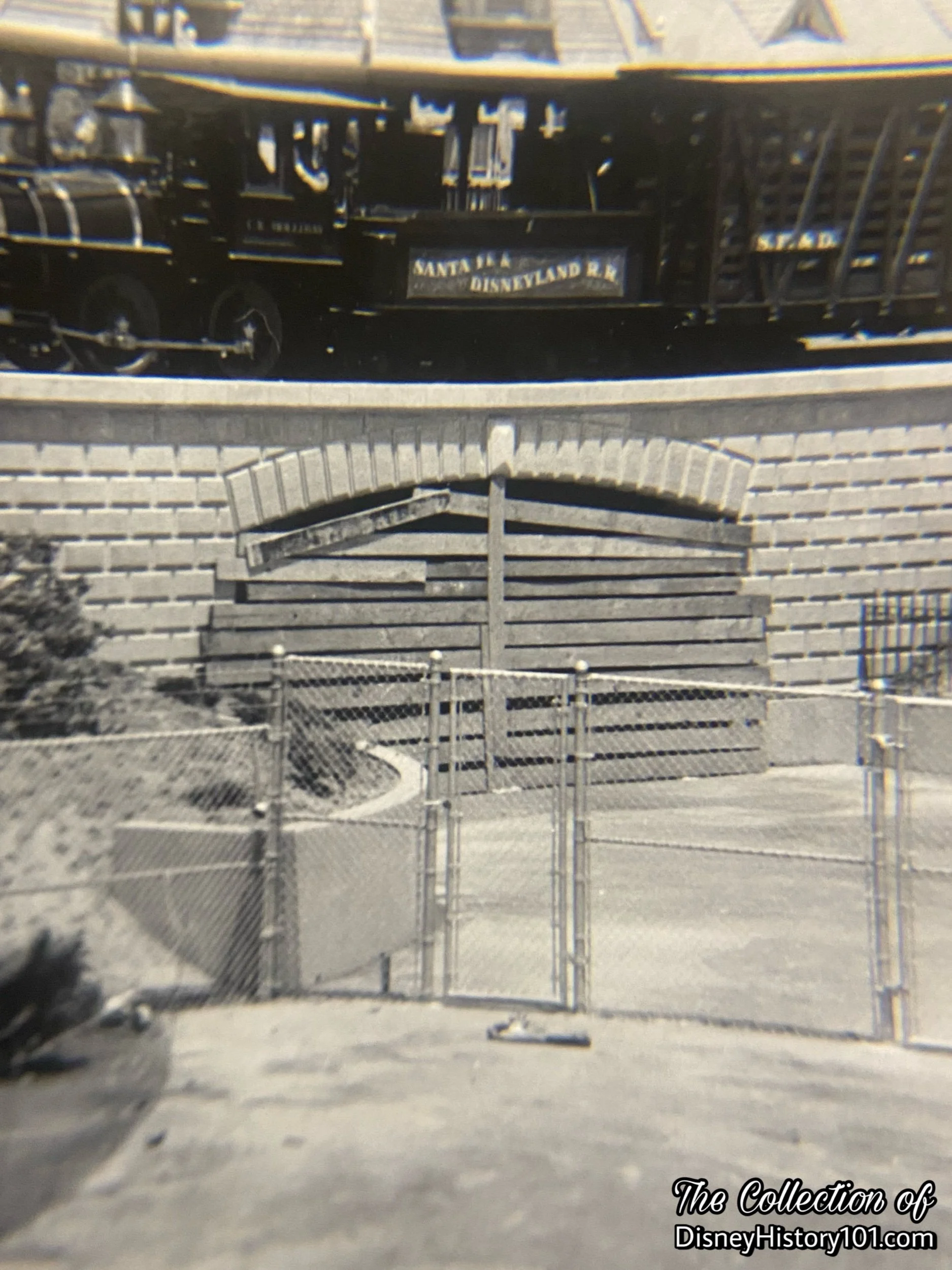
The Tunnels closed up.
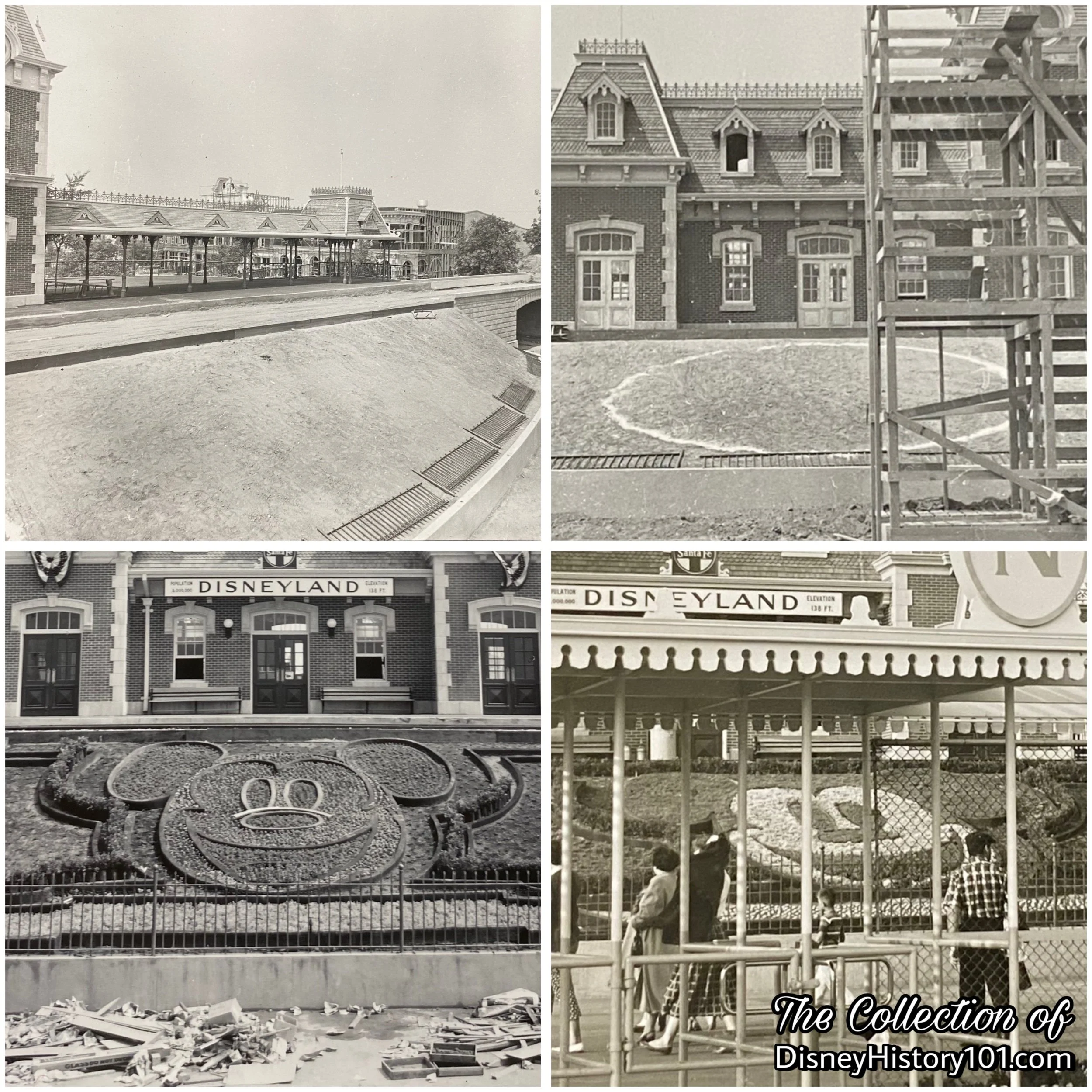
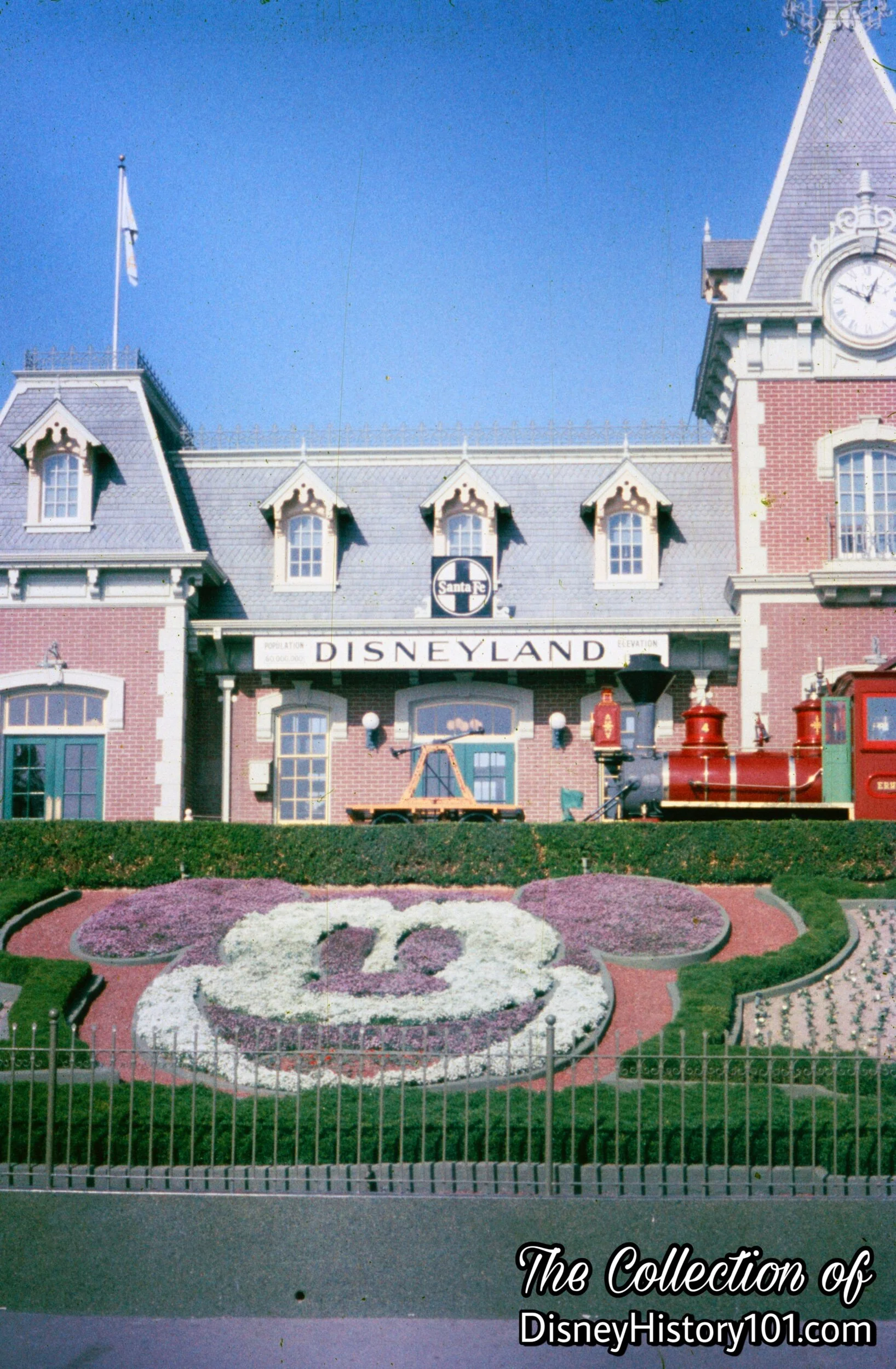
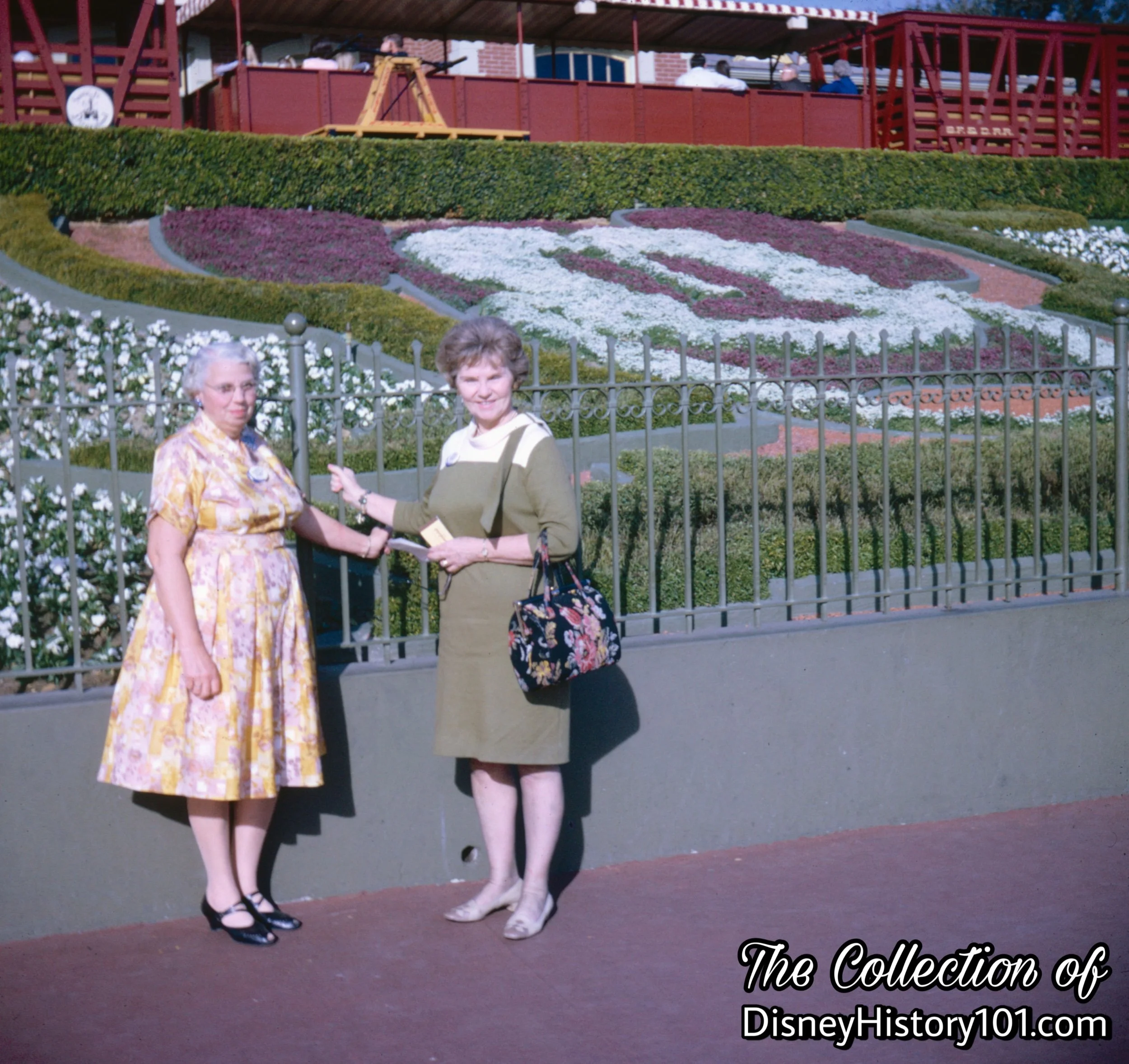
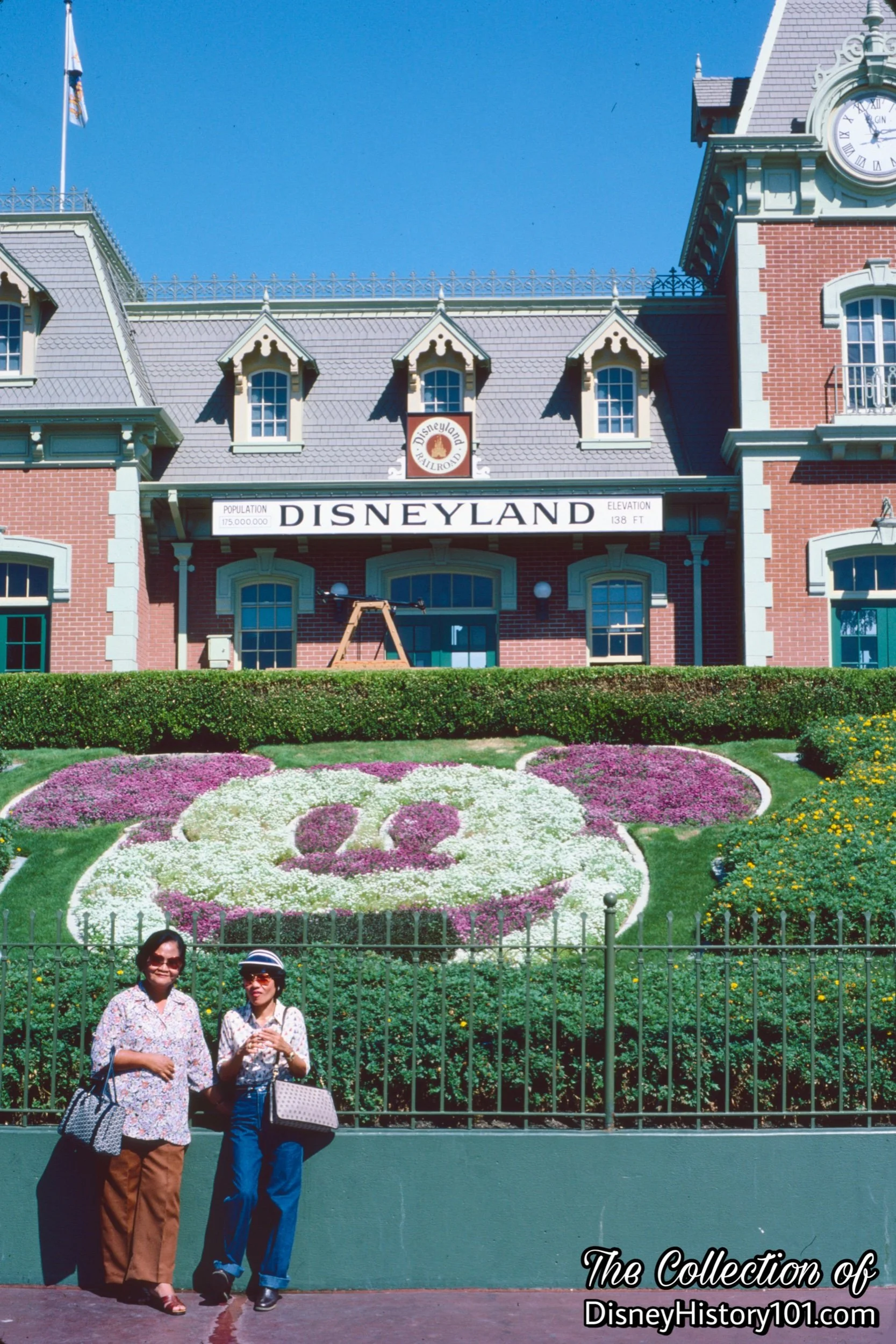
Mickey Mouse Floral Portrait
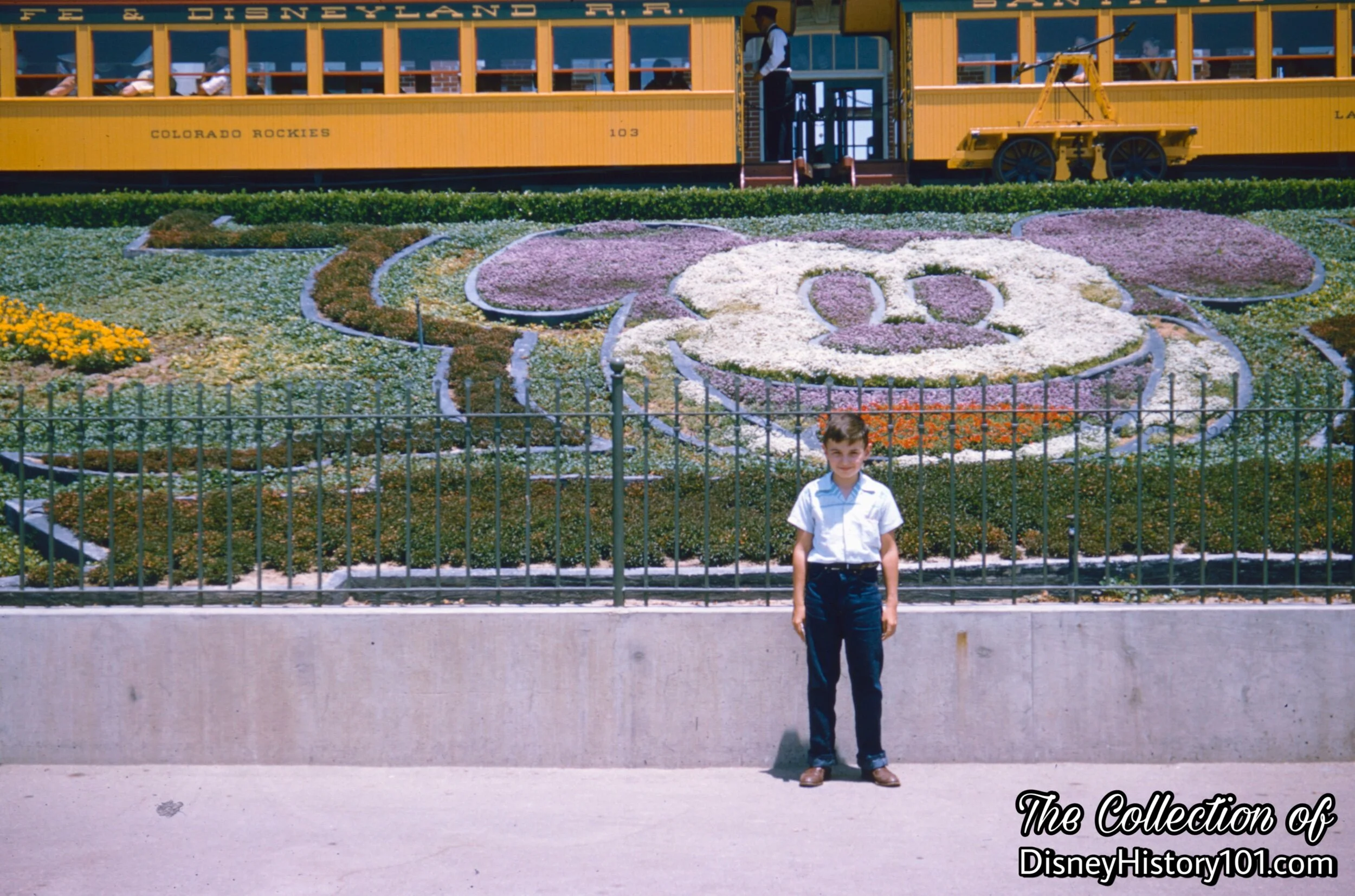
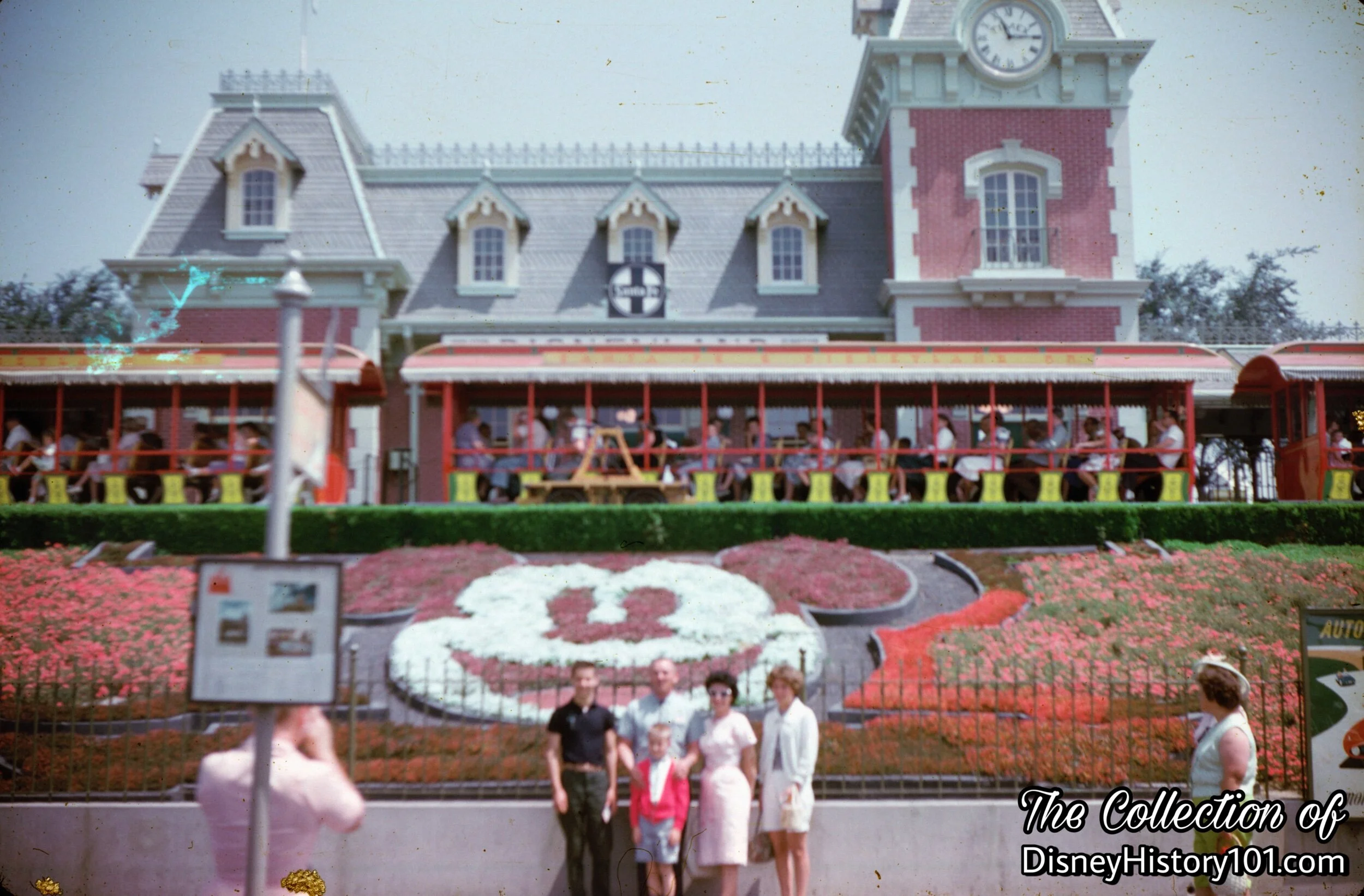
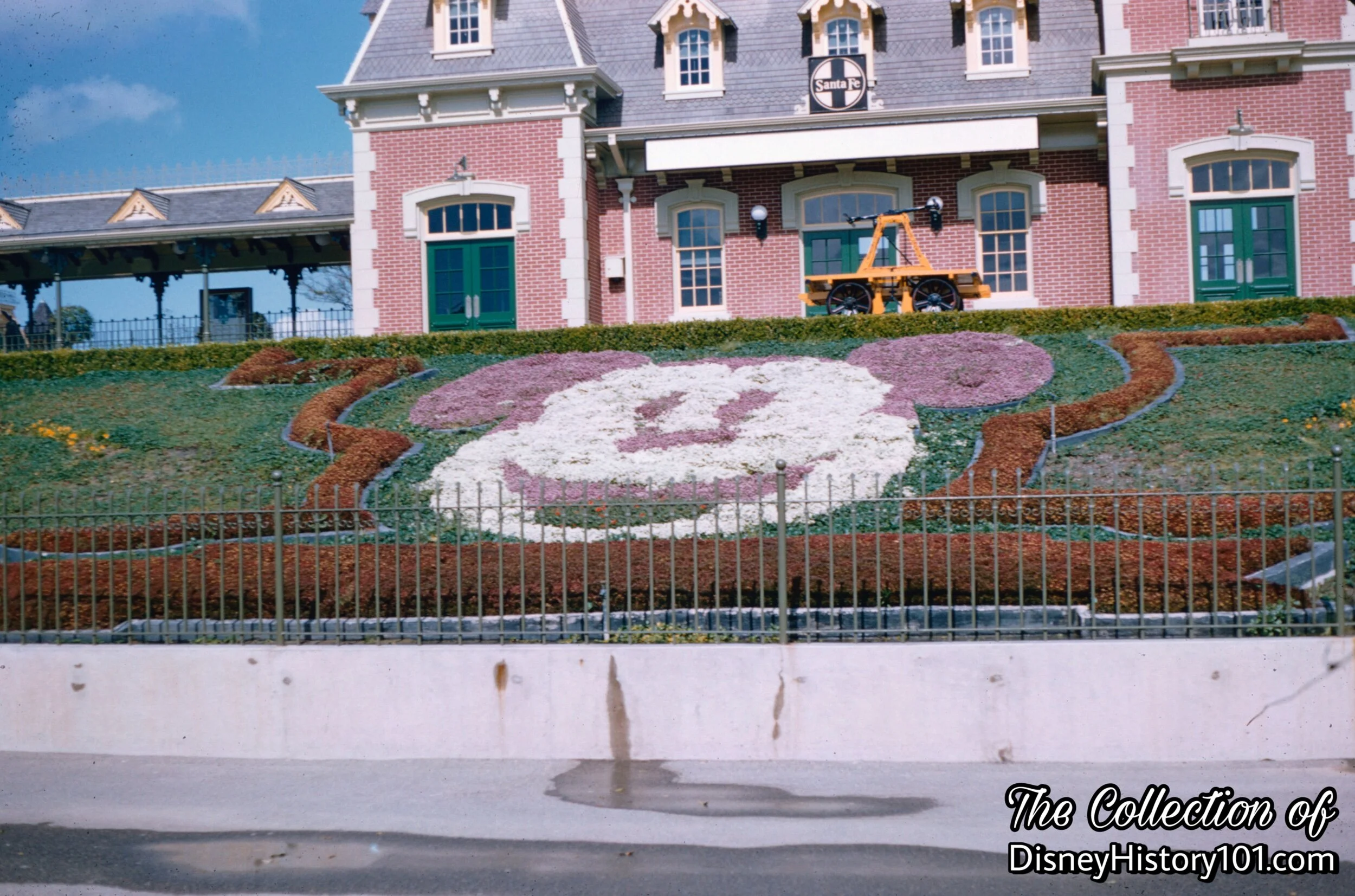
“The Mickey Mouse Floral Portrait”
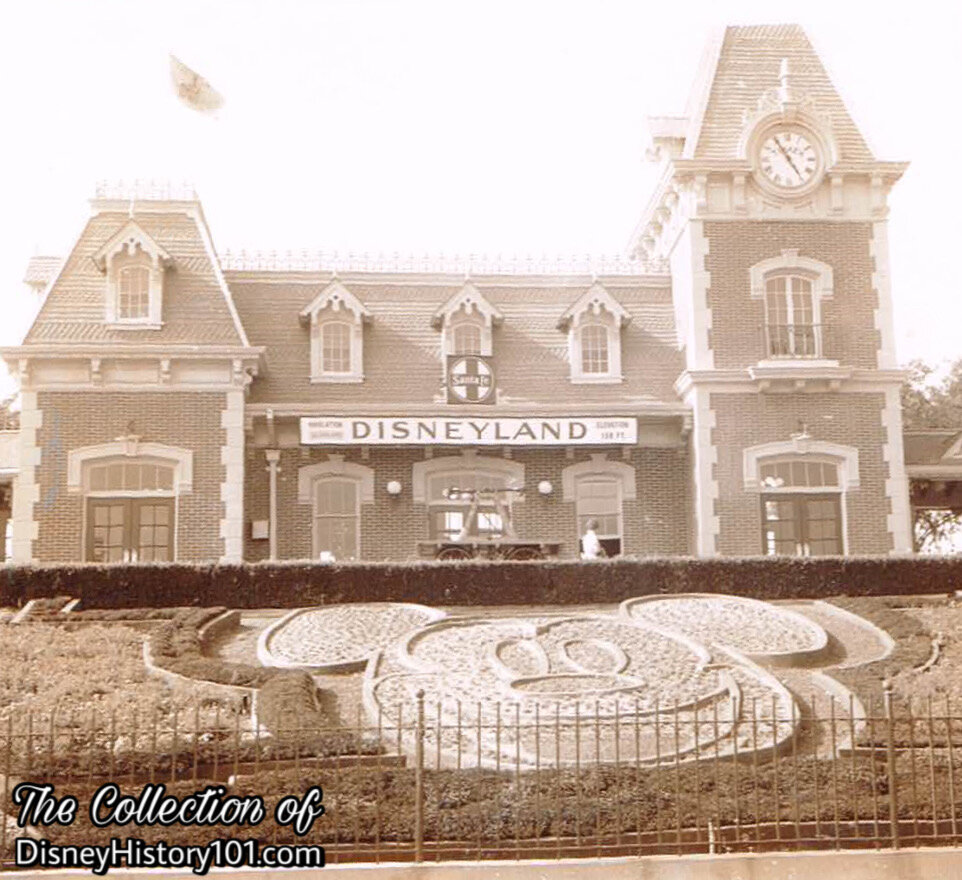
It’s been said, “It all started with a mouse.” In reference to the Mickey Mouse Floral Portrait, it was once said : “It seemed fitting that the place of honor should be reserved for Mickey Mouse - the little fellow who made Disneyland possible,” according to the narrator “Disneyland - The Park,” a Disneyland anthology television series short film (originally aired in 1957).
The Mickey Mouse Floral Portrait looked very different in the 1/4-inch-to-a-foot scale model that appears in “The Story of Disneyland” (a c. 1954 episode of the “Disneyland” anthology series). By 1955, the plans for a Mickey Mouse Floral Portrait were finalized. Though Ruth Shellhorn (Landscape Architect, hired March of 1955) had recommended a rotating palette of “bright seasonal annuals, such as dwarf pink phlox for Mickey’s tongue,” the Floral Portrait of Mickey Mouse was still not planted by July 11, 1955, according to one Inter-Office Communication sent from Joe Fowler to Jack Evans on that date. [see “Ruth Shellhorn” by Kelly Comras]. On July 11, 1955 (not even a week before Disneyland’s Press Preview Day), Joe Fowler contacted Jack Evans, inquiring, “When are you going to plant Mickey Mouse in the entrance? Looks to me like the time is getting pretty late.”
C.V. Wood Jr. gave an opening day status as of July 2, 1955: “Main Entrance Motif - This can be completed, however, as of this date we do not have final plans for the planting.”
Despite this seeming lack of plans, by Disneyland’s Press Preview Day, the Mickey Mouse Floral Portrait and the Santa Fe & Disneyland Main Street Railroad Station were two of the first things introduced on “Dateline Disneyland” - the special July 17th, 1955 broadcast! A contributing writer of The Daily Oklahoman (who visited on July 17, 1955) noted: “Fittingly enough, the guests were greeted by a floral pattern outlining Mickey Mouse, the star who started Disney's empire.”
Since then, the Mickey Mouse Floral Portrait has been recreated and refreshed seasonally with flowers and blossoms.
Not even a decade later, the Disneyland Main Entrance was still “presided over by the smiling countenance of Mickey Mouse, created in flowers, the threshold to the ‘Magic Kingdom’ … where guest enjoyment and comfort begin,” according to the “Disneyland Dictionary” (complied by the WED Public Relations Department and the Disneyland Publicity Office).
By the Winter of 1961-1962, it was said that “it takes more than 8,000 plants a year alone just to maintain the famous Mickey Mouse face.” This meant about 2,600 flowers in the summer and 3,200 flowers in the winter to create Mickey's laughing floral portrait on the hill on which the train station is located.
In recent decades, the floral Mickey Mouse made up of white and lavender sweet alyssum. The big splash of pink outside of Mickey's face is perennial verbena. Disneyland Today (published March 28 & 29, 1992) divulged “more than 1,900 four-inch plants are used to create Mickey in the Main Entrance Planter.” During the third shift of the day (when guests have gone home), the Mickey Mouse Floral Portrait is cared for - the soil is physically and chemically processed, fumigated and returned. The plants are then watered, and any damaged flowering plants are replaced. In addition to this c.1990 maintenance, the Mickey Mouse Floral “Portrait” was entirely re-planted seven times a year.
Plans of the WESTCOT Center would potentially broaden the area before the Disneyland Resort Main Entrance Gate into a new area called Disneyland Plaza and the Esplanade Arrival Sequence (an area which was targeted for development priority by approximately 2008). This area was described as “the pedestrian and transportation hub of The Disneyland Resort.” And as with any hub, Disneyland Plaza would be “distinguished by extensive landscaping and spectacular fountains.”
Today, the threshold to the Magic Kingdom is presided over by the smiling countenance of Mickey Mouse created in flowers.
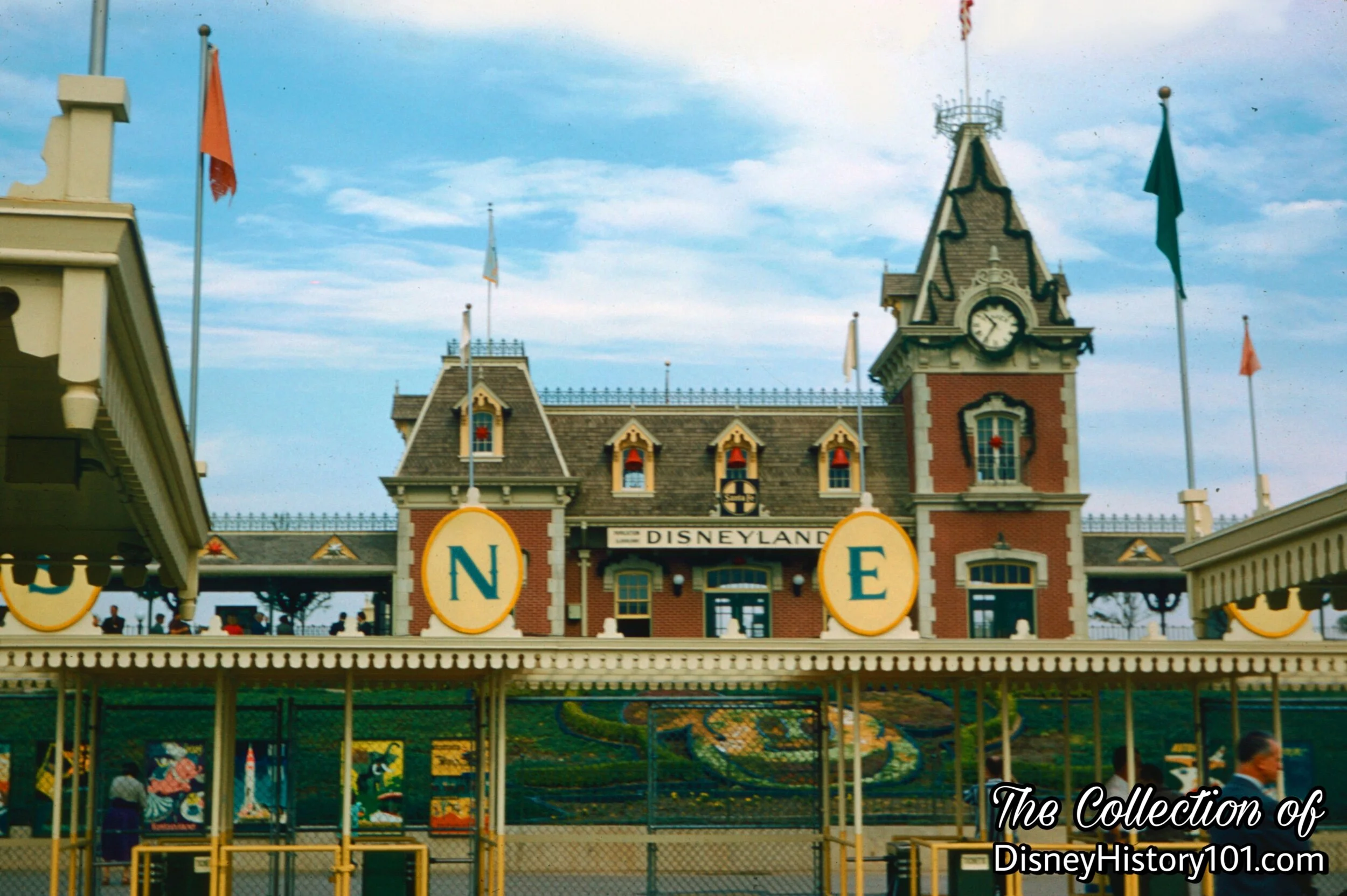
Beyond the Ticket Booths and Turnstile Structures are the Main Entrance and Mickey Mouse Floral Portrait in the “Outer Lobby.”
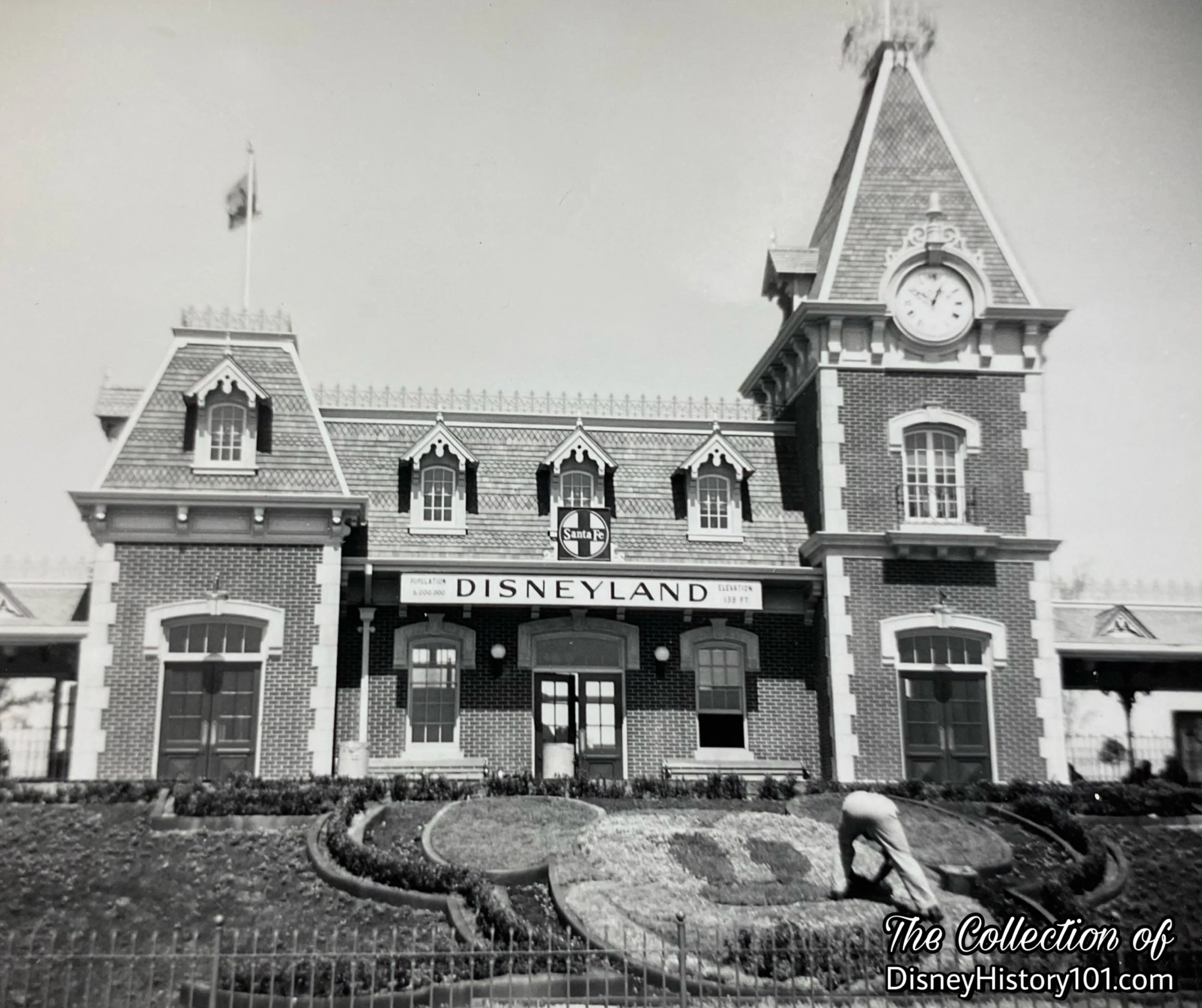
Maintenance of the Mickey Mouse marquee occurring during Park operational hours.
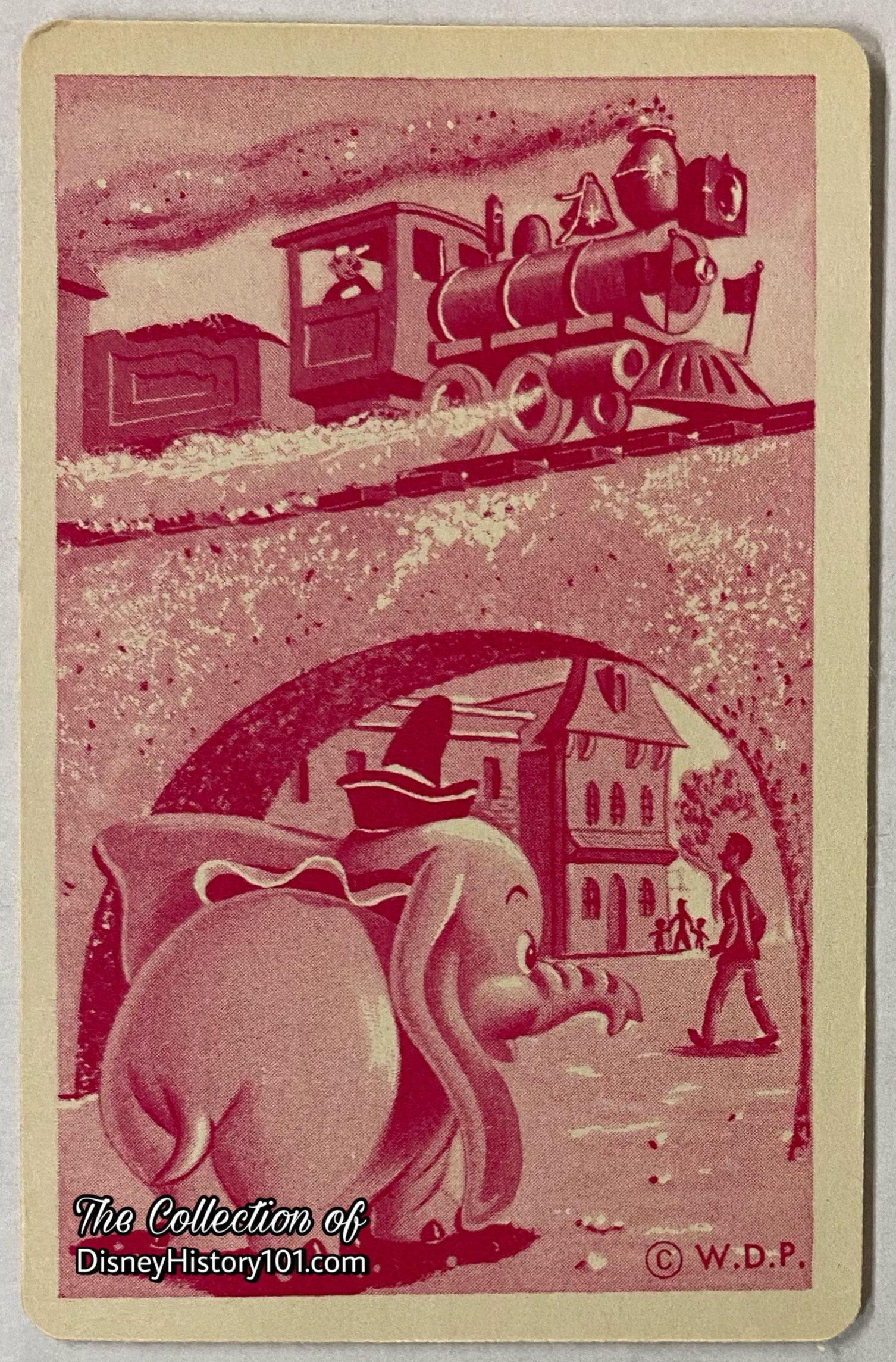
A collectable card from the Disneyland Fun Box by Whitman, c.1955.
Dumbo thumped along the road leading to Disneyland. "I've got to hurry if I want a ride on that little train!" he said. But everything went wrong. He stumbled along and reached the station just as the little train was pulling out. "You're late!" called the engineer from the moving train. "Ha, but you'd never fit in our cars, anyway!"
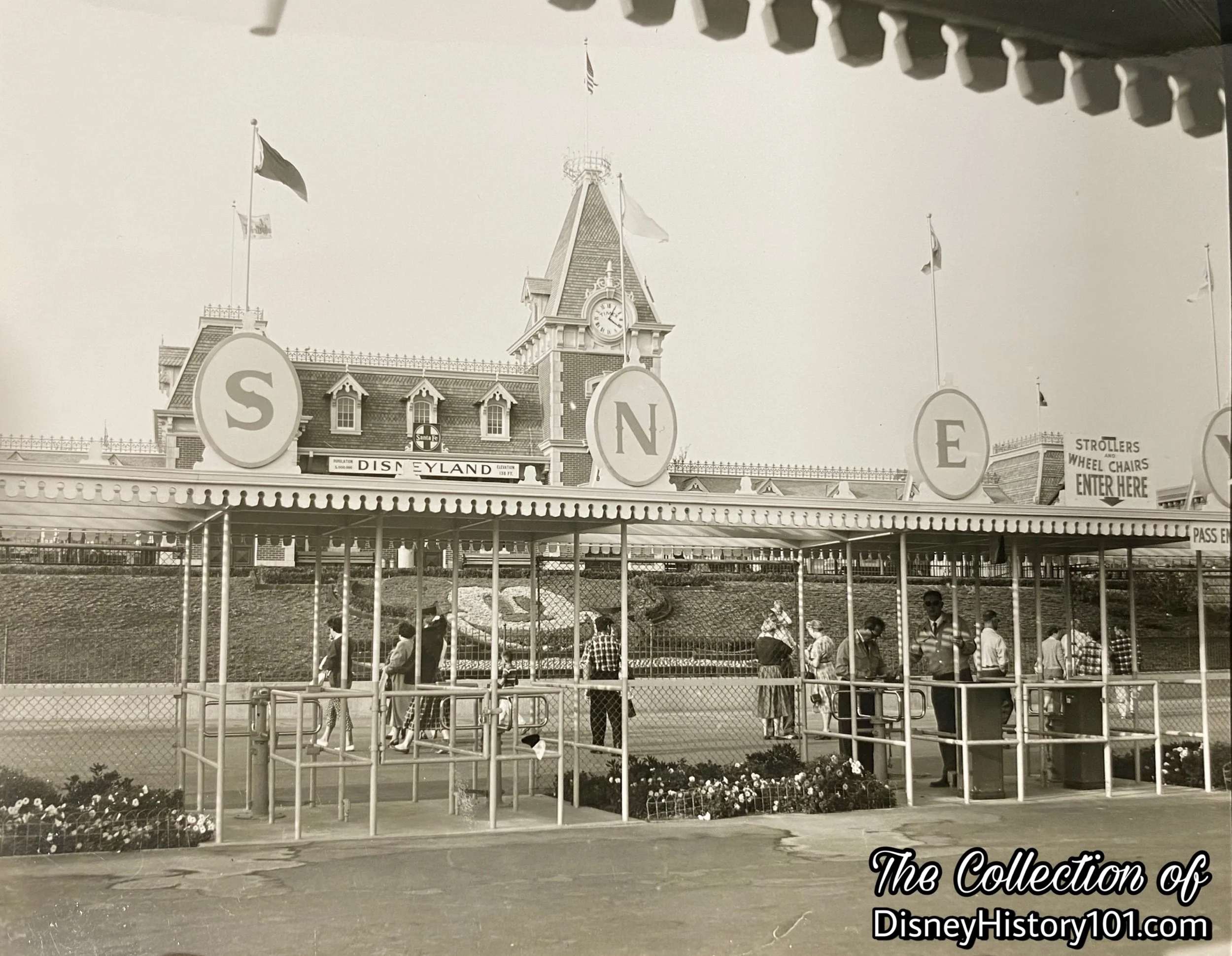
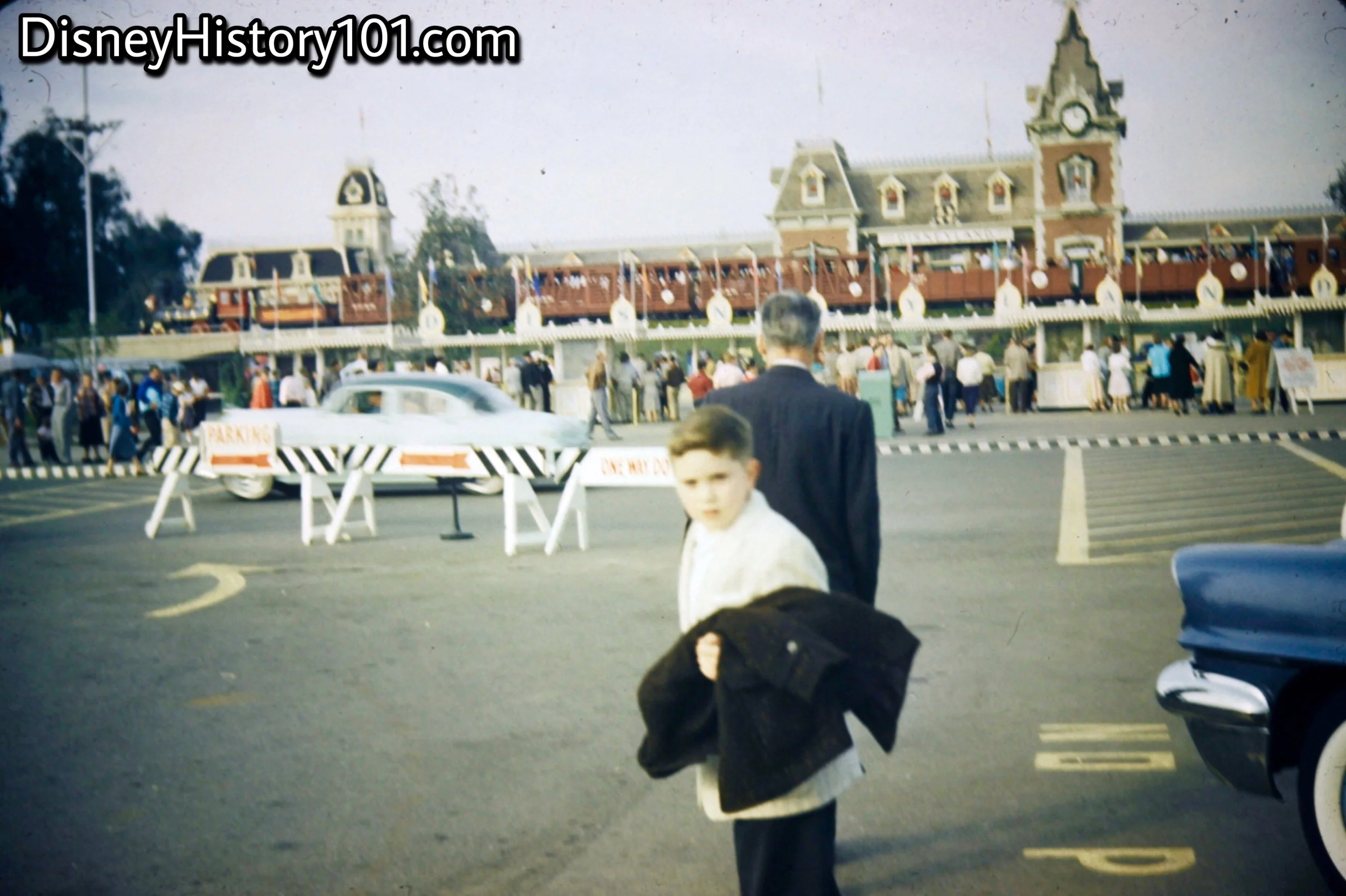
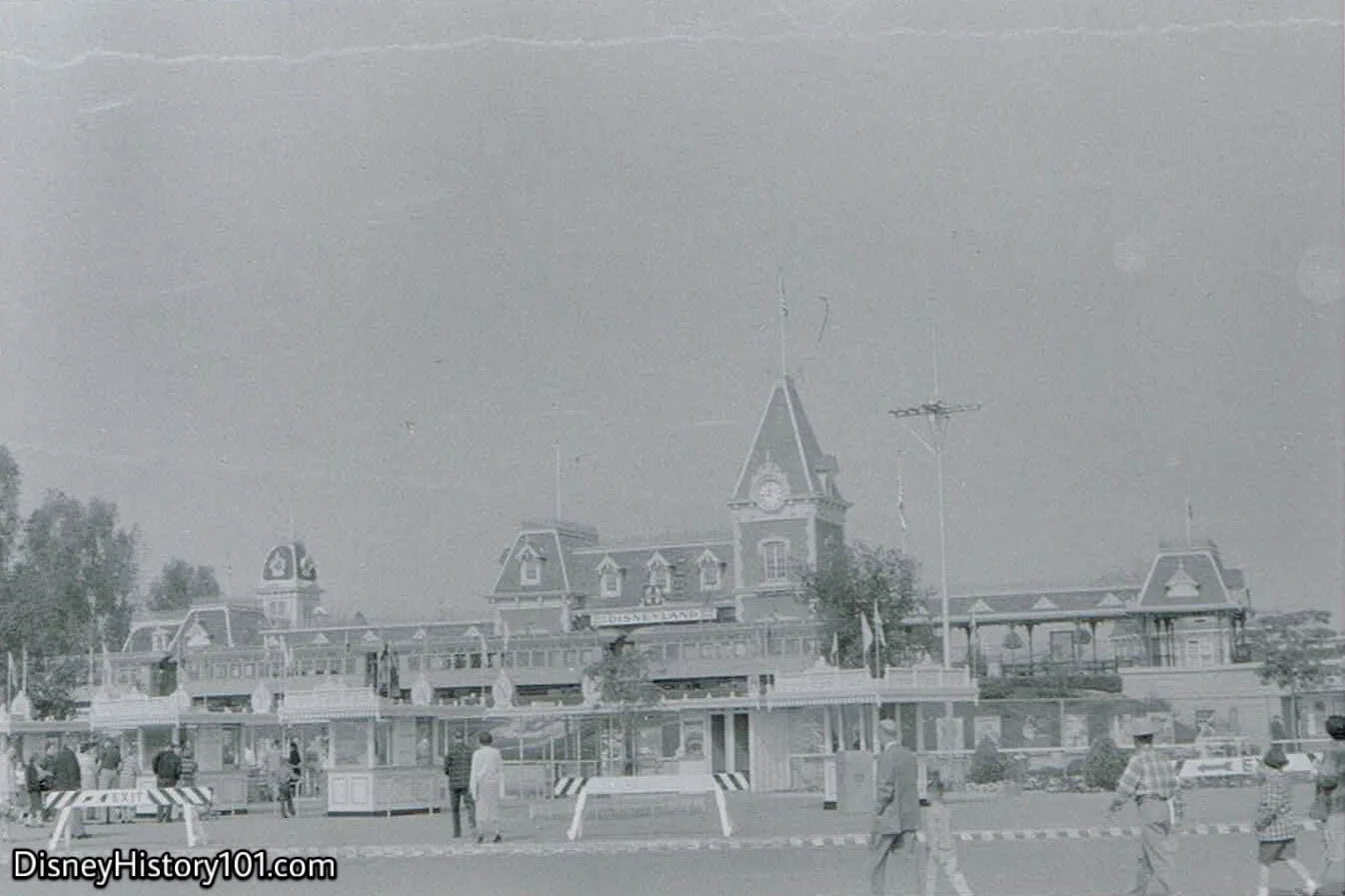
(1950s)
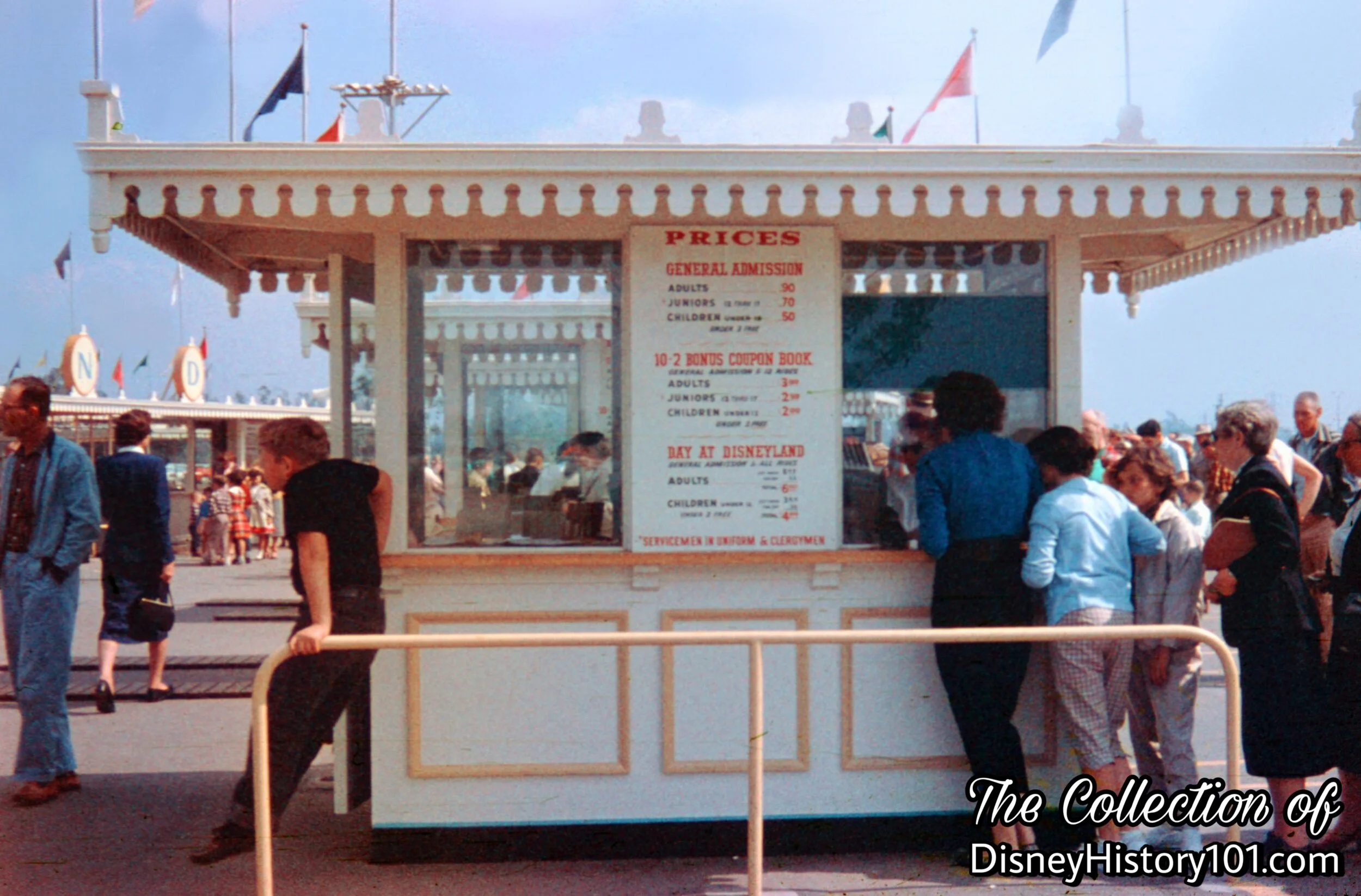
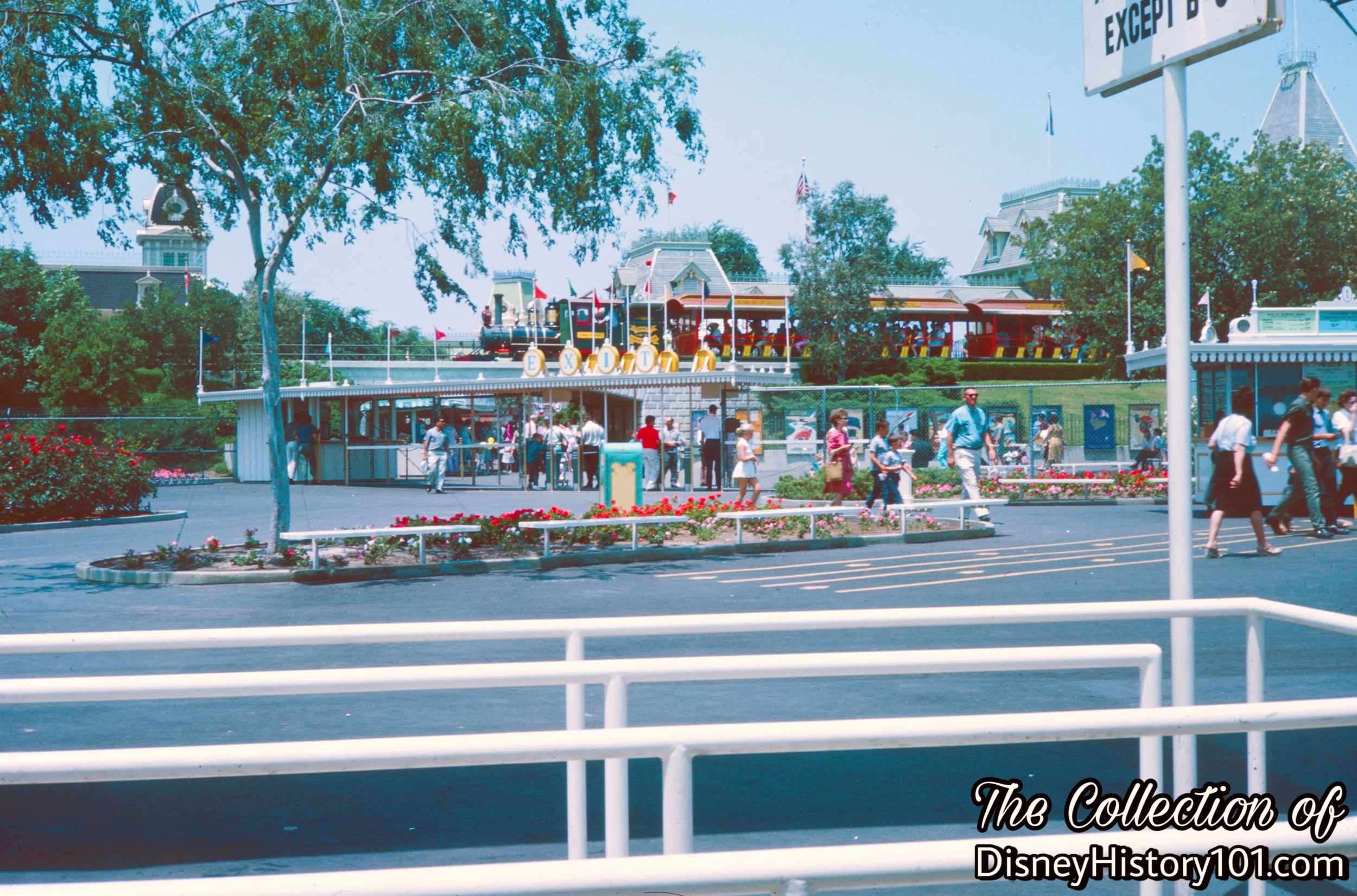
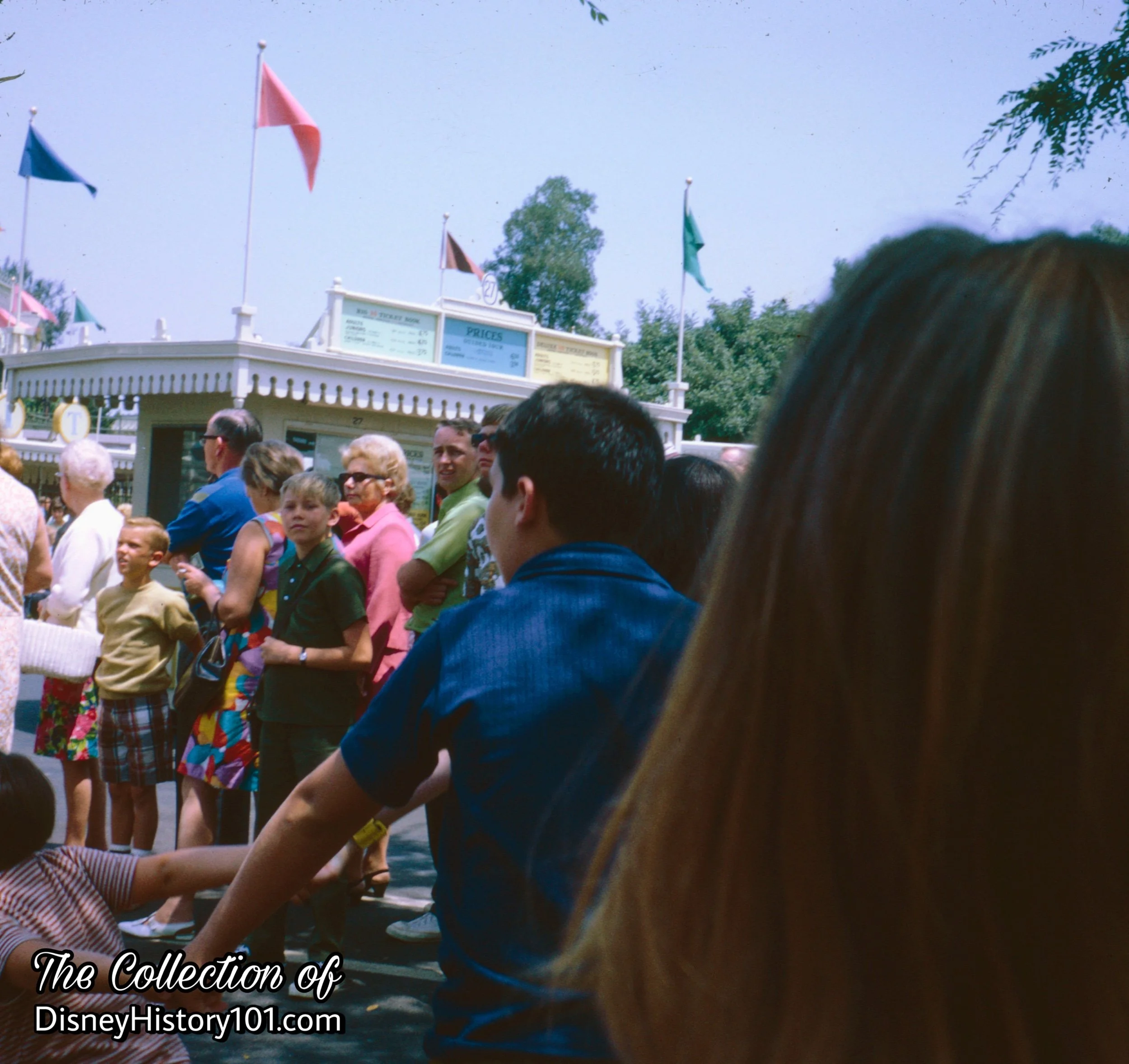
Ticket Booths
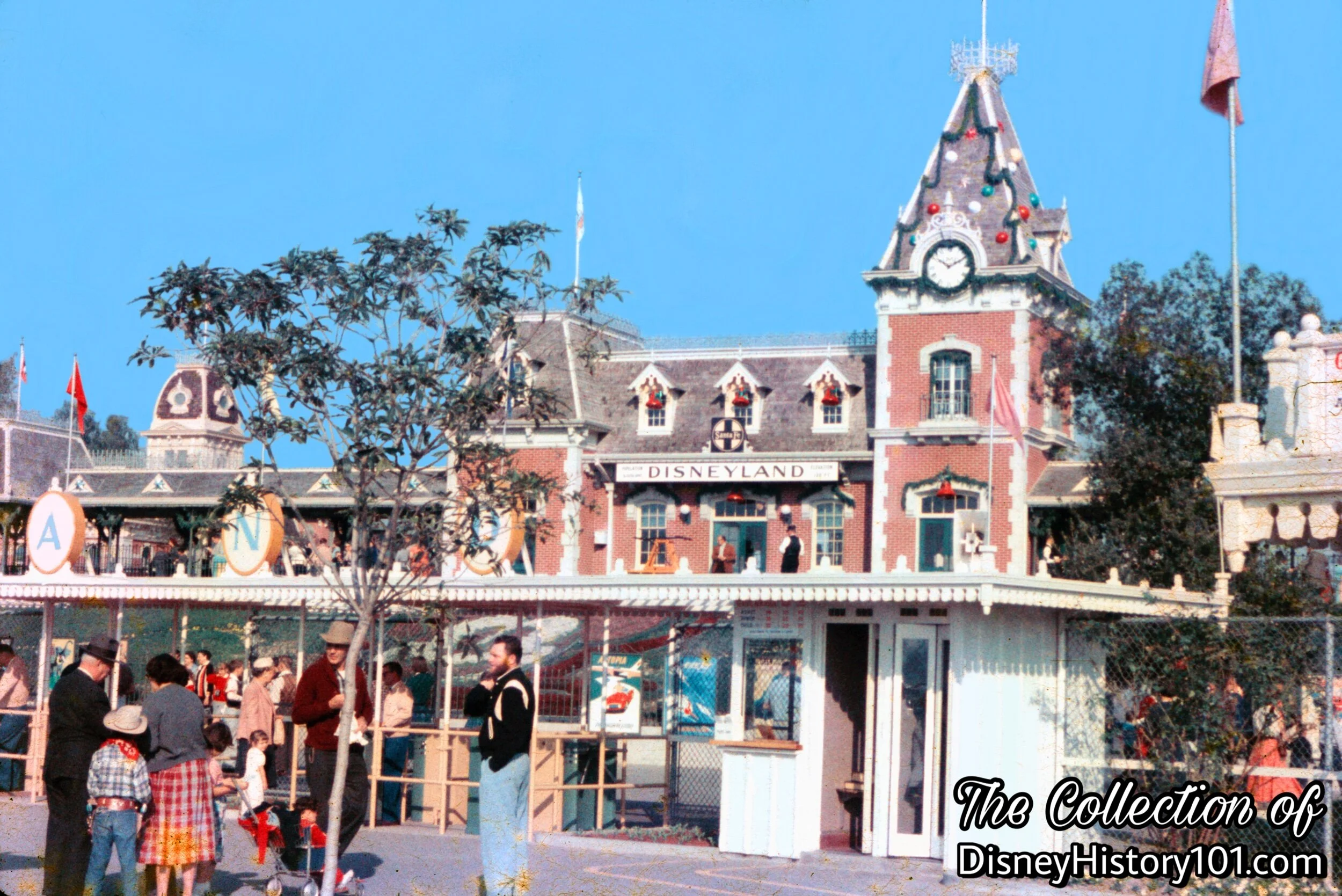
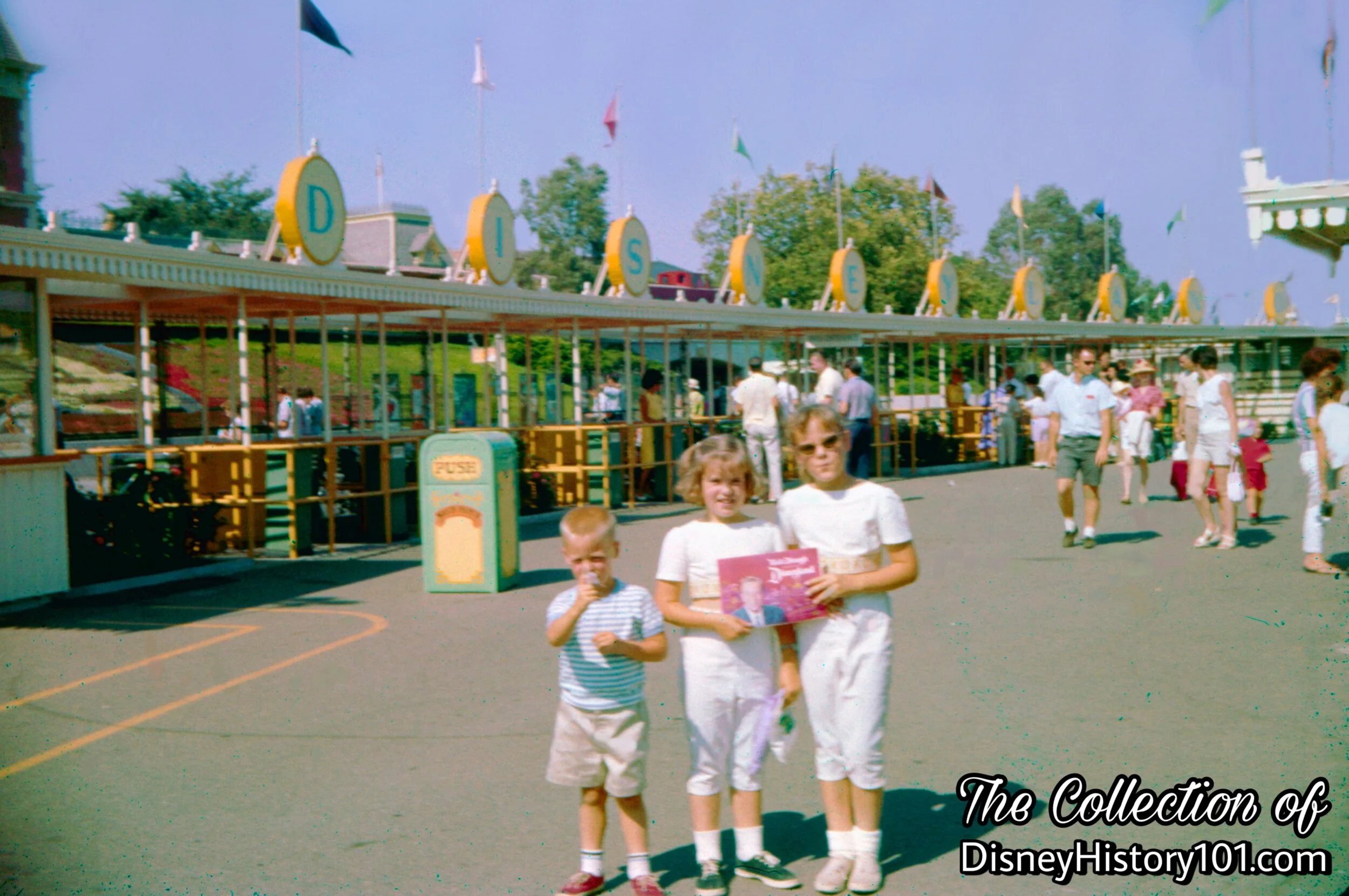
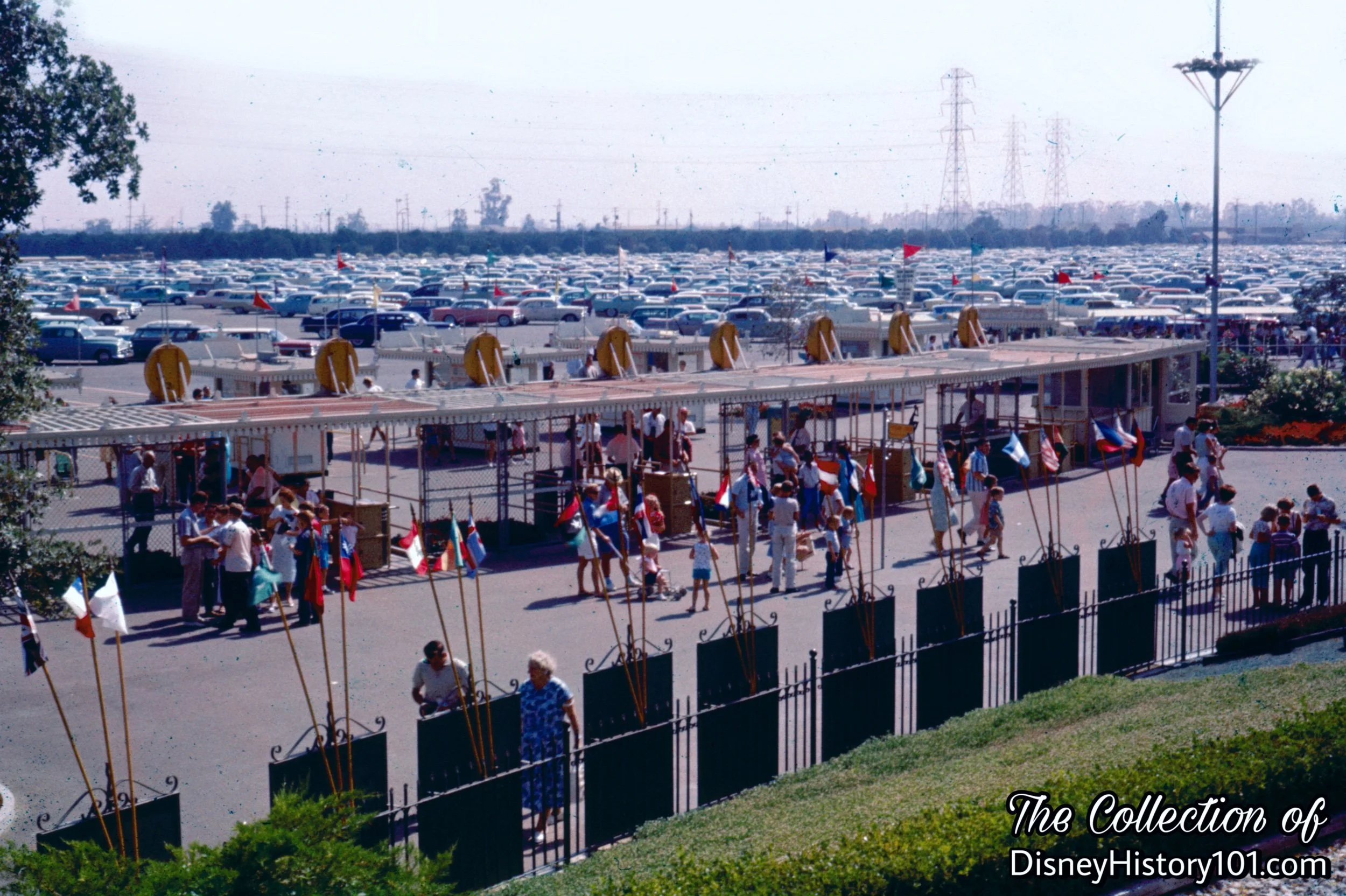
This is one of nine ticket booths at the Main Entrance. These were of heavy plywood construction, with flat composition roof and concrete floor.
Ticket Hosts and Hostesses would welcome guests to the “Inner Lobby” of Disneyland.
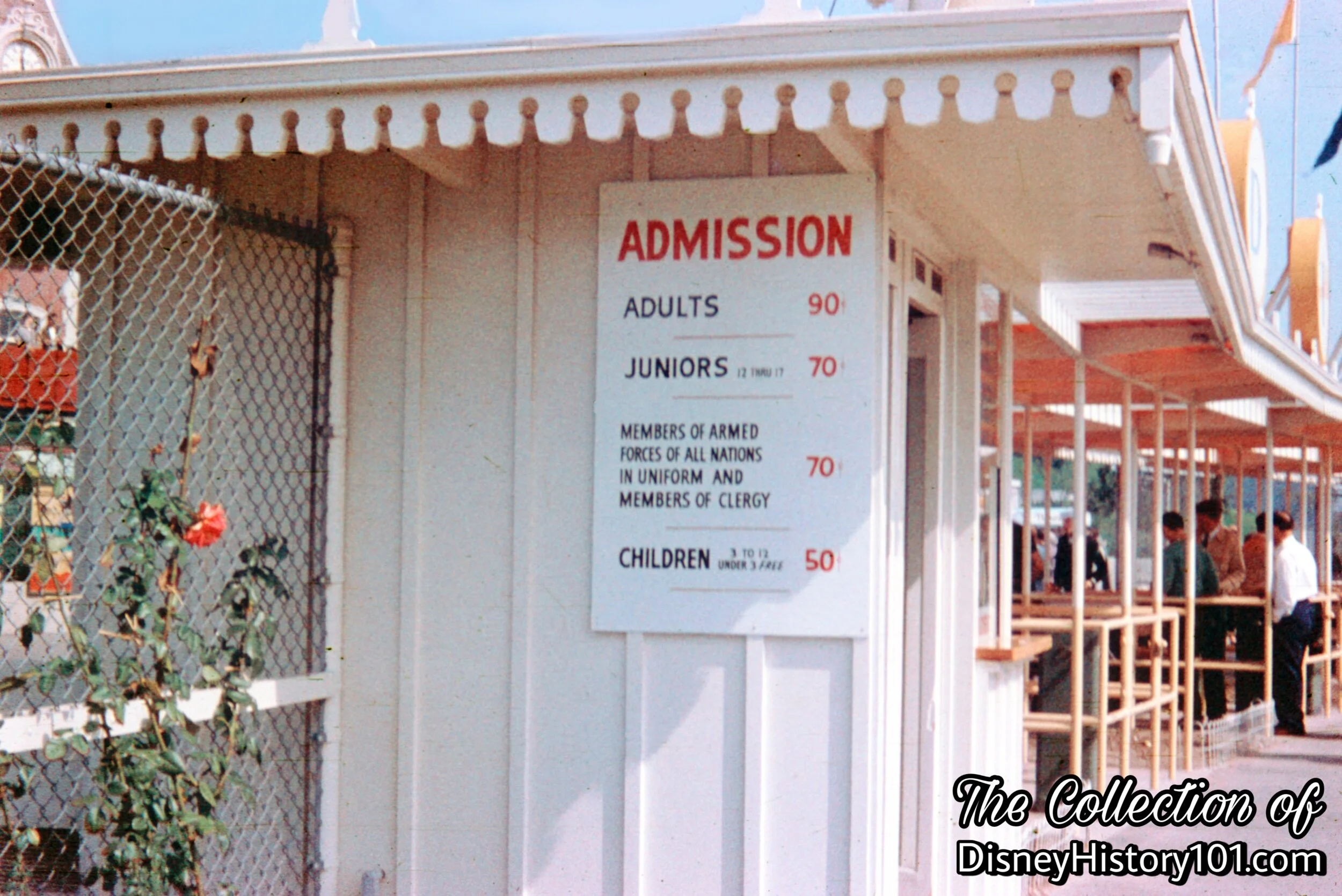
Beyond the Ticket Booths are the Turnstile Structures.
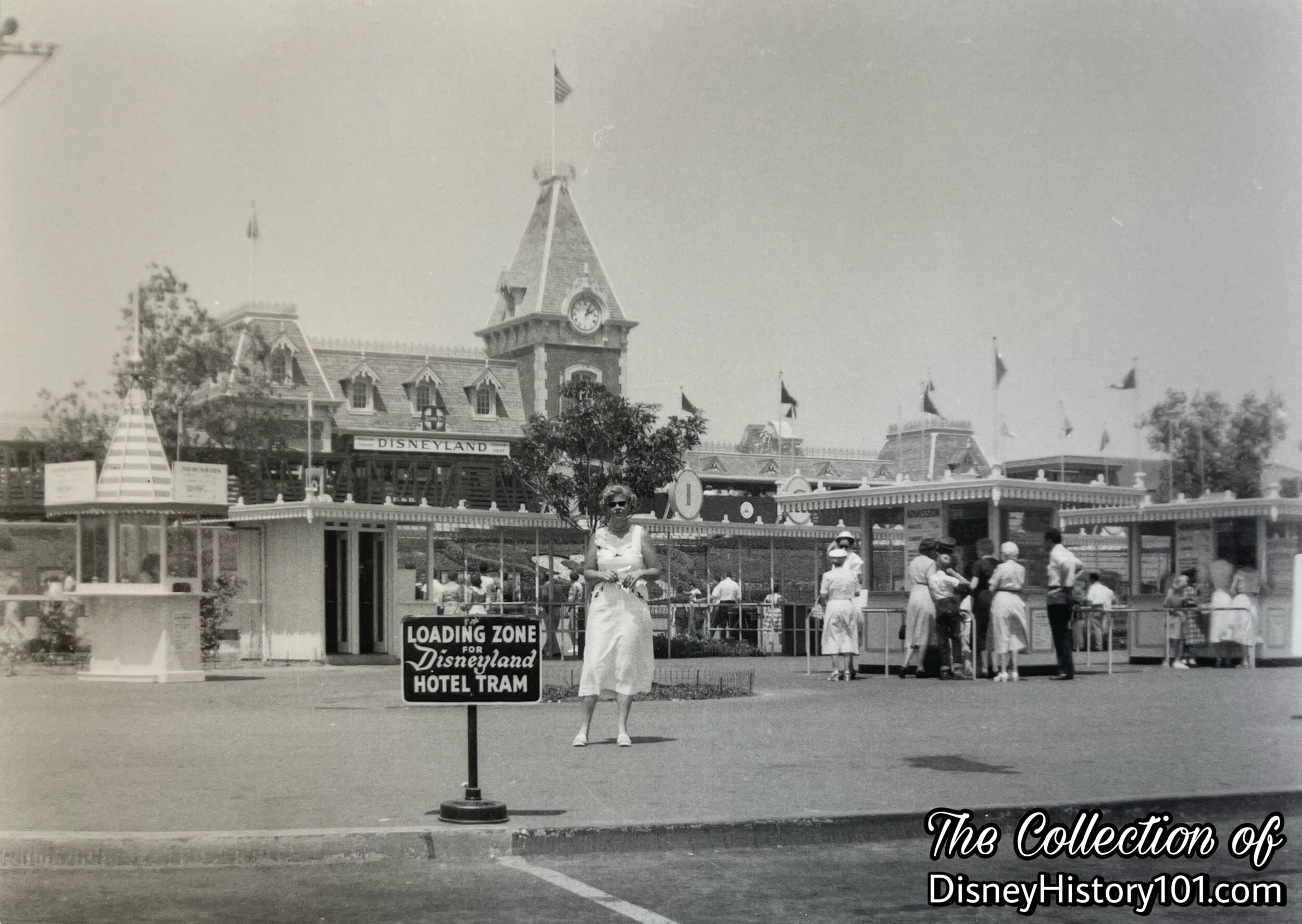
To the left, you can see that Master-Bilt Chain Link Fence Company product - the hot dipped galvanized chain link fencing near Disneyland Main Entrance Gate. To the right, we can see one of nine ticket booths and turnstile structures (with ten entrances and twelve exit turnstiles). The booths were of heavy plywood construction, with flat composition roof and concrete floor.
The one-time 800 square-foot Main Entrance was appraised in 1958 and valued between $10,000 and $10,250.
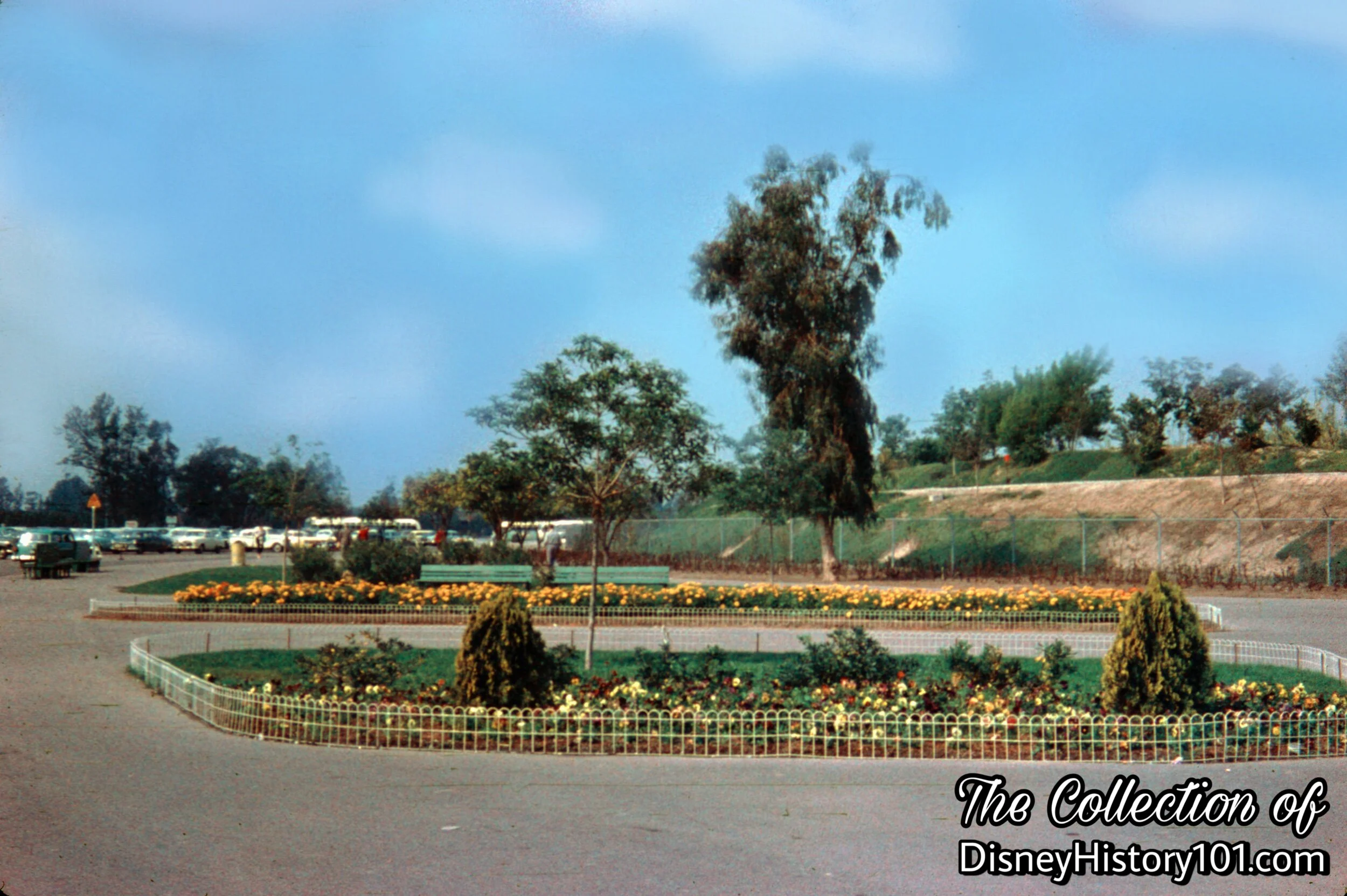
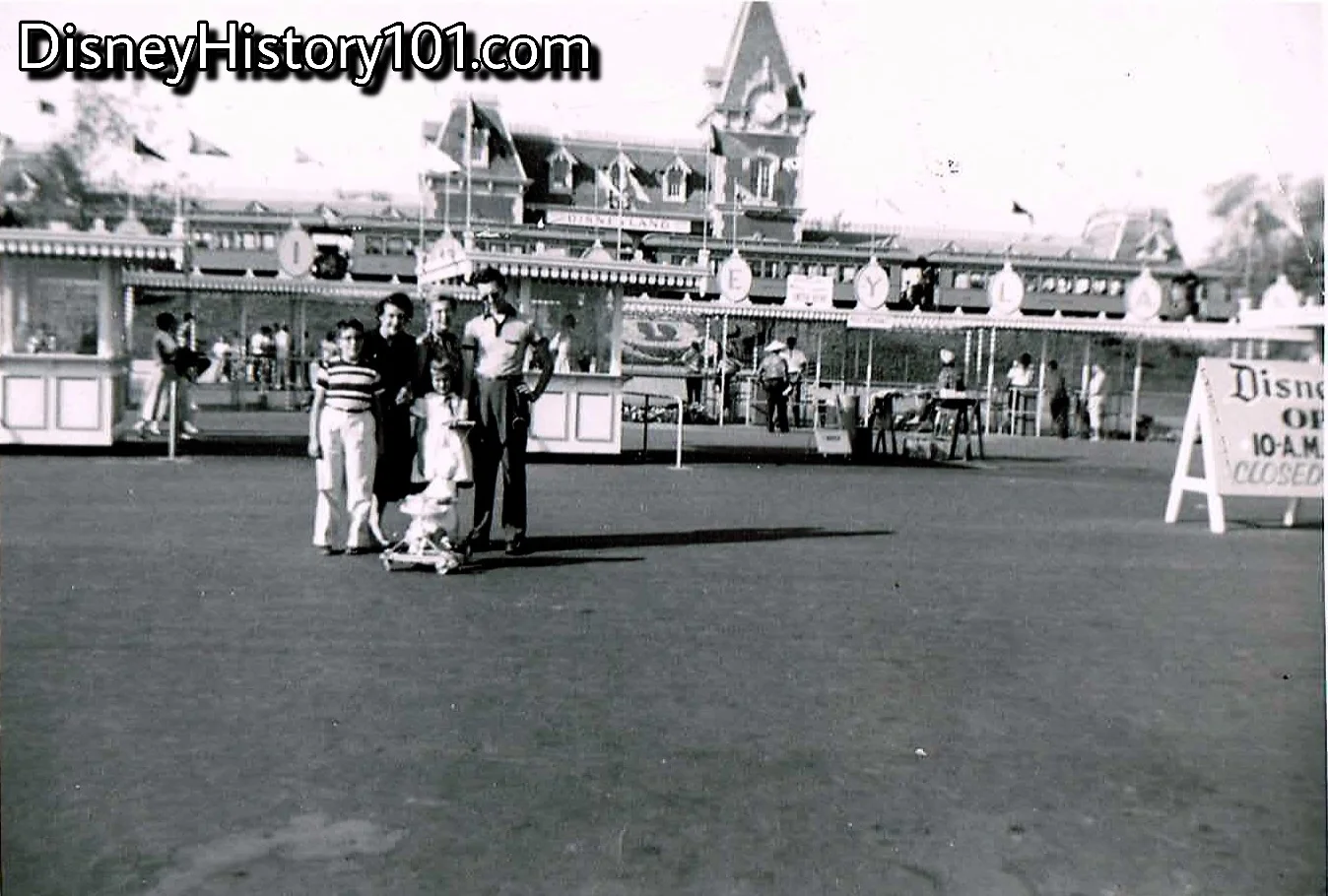
Note the advertised hours of operation posted on the A-frame sign.
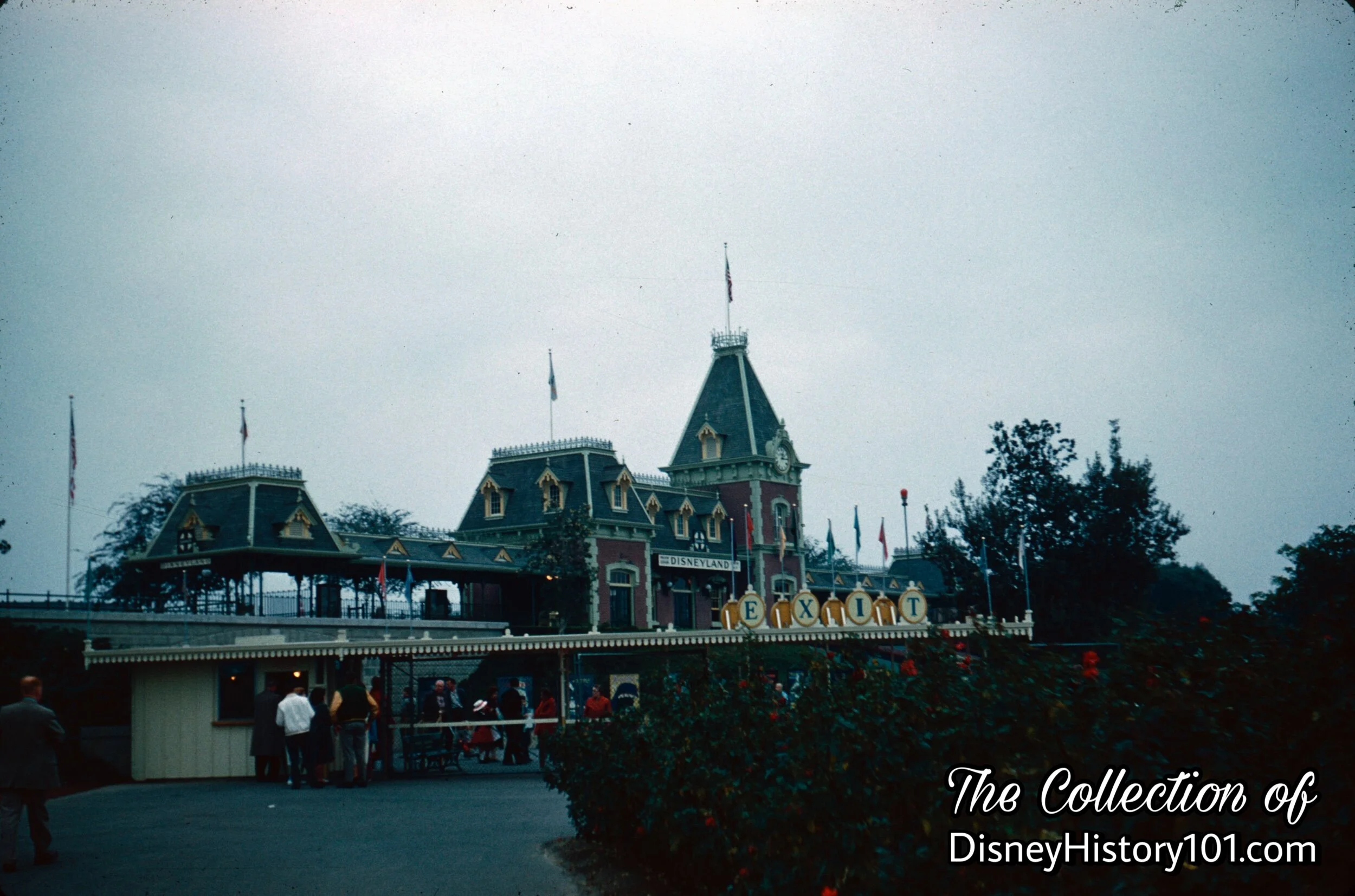
(1959)
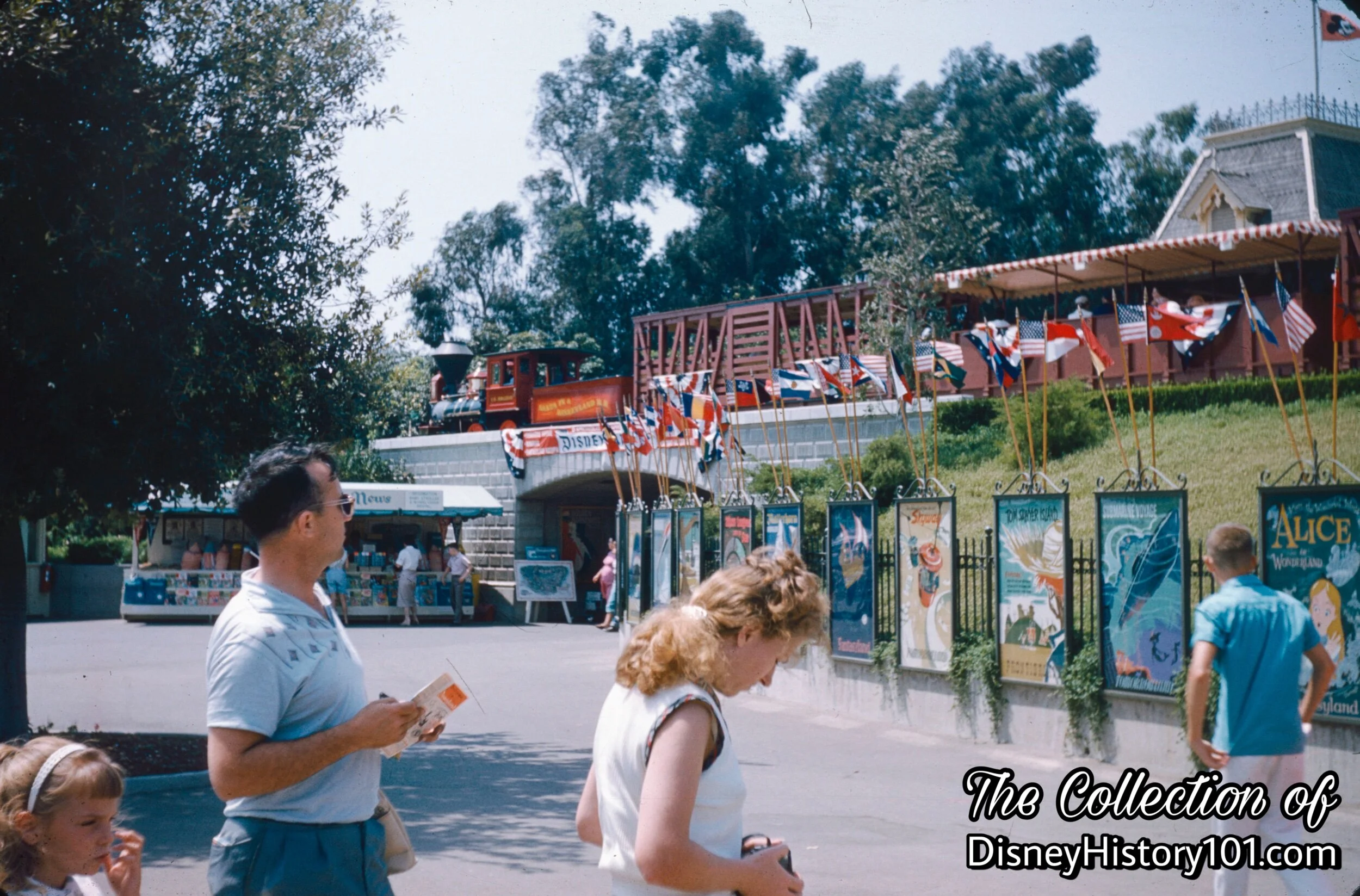
(1959)
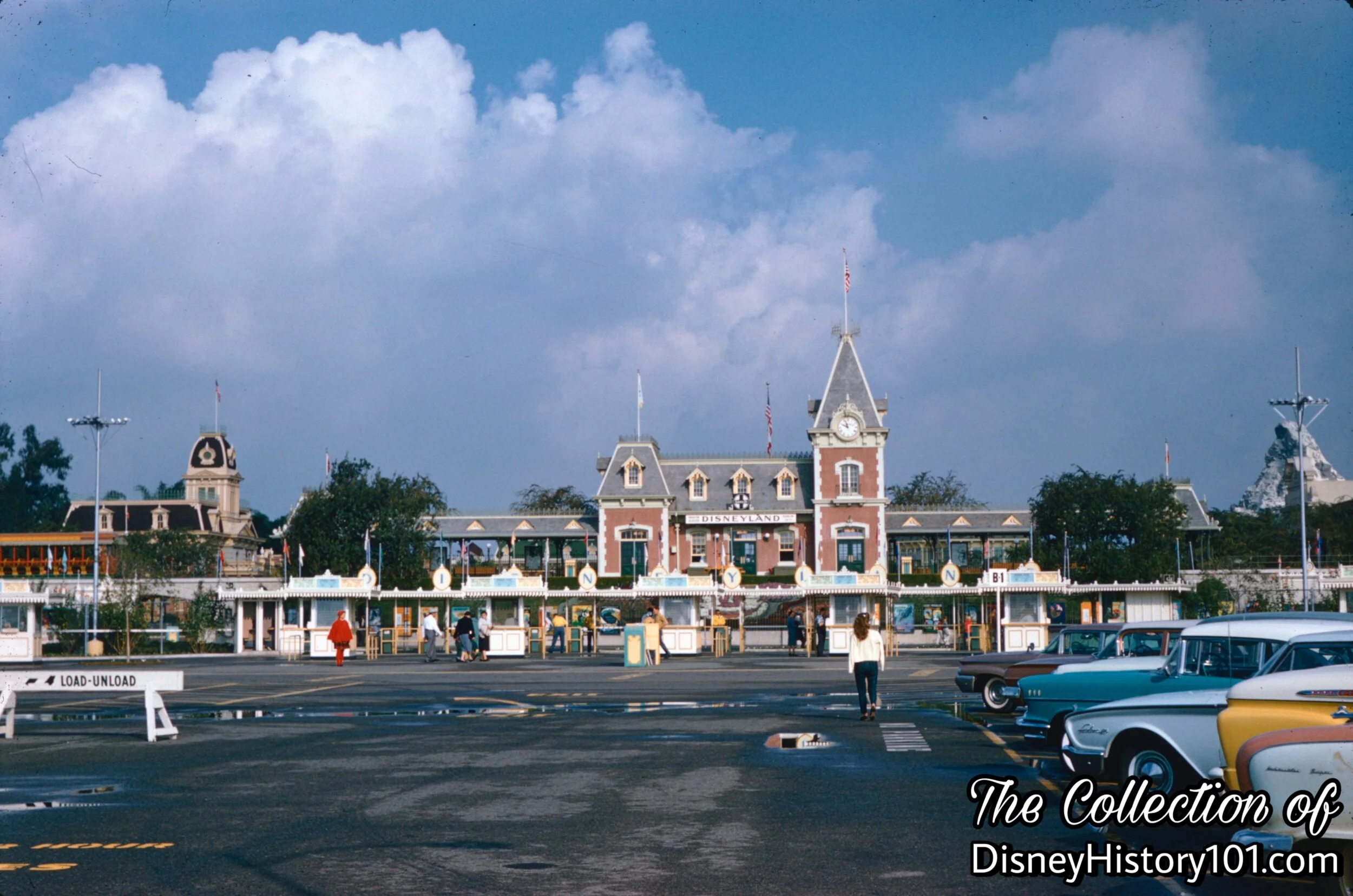
(December 2, 1960)
On a damp, chilly morning, a Disneyland Guide awaits the arrival of guests, near the Disneyland Main Gate.
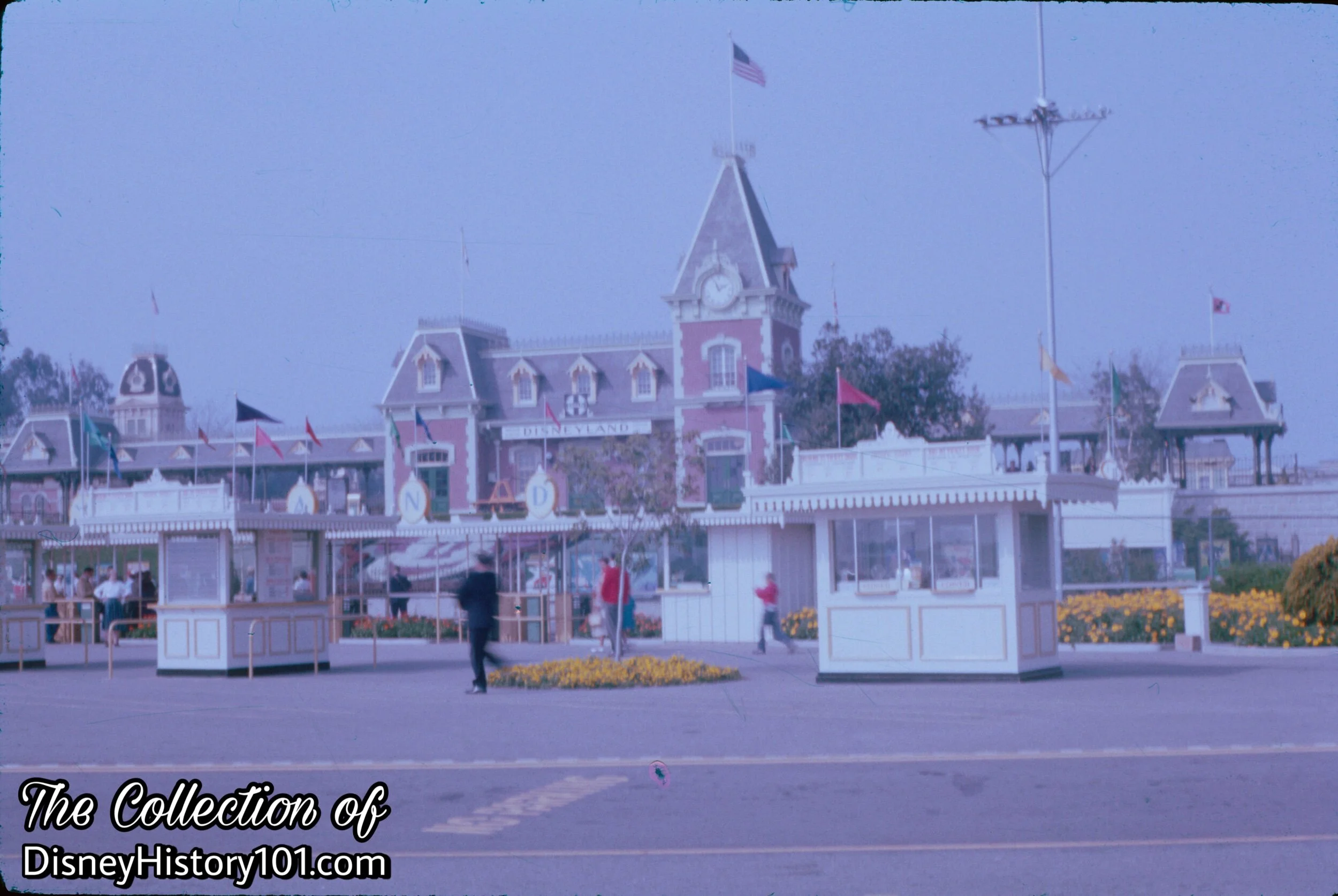
(March, 1960)
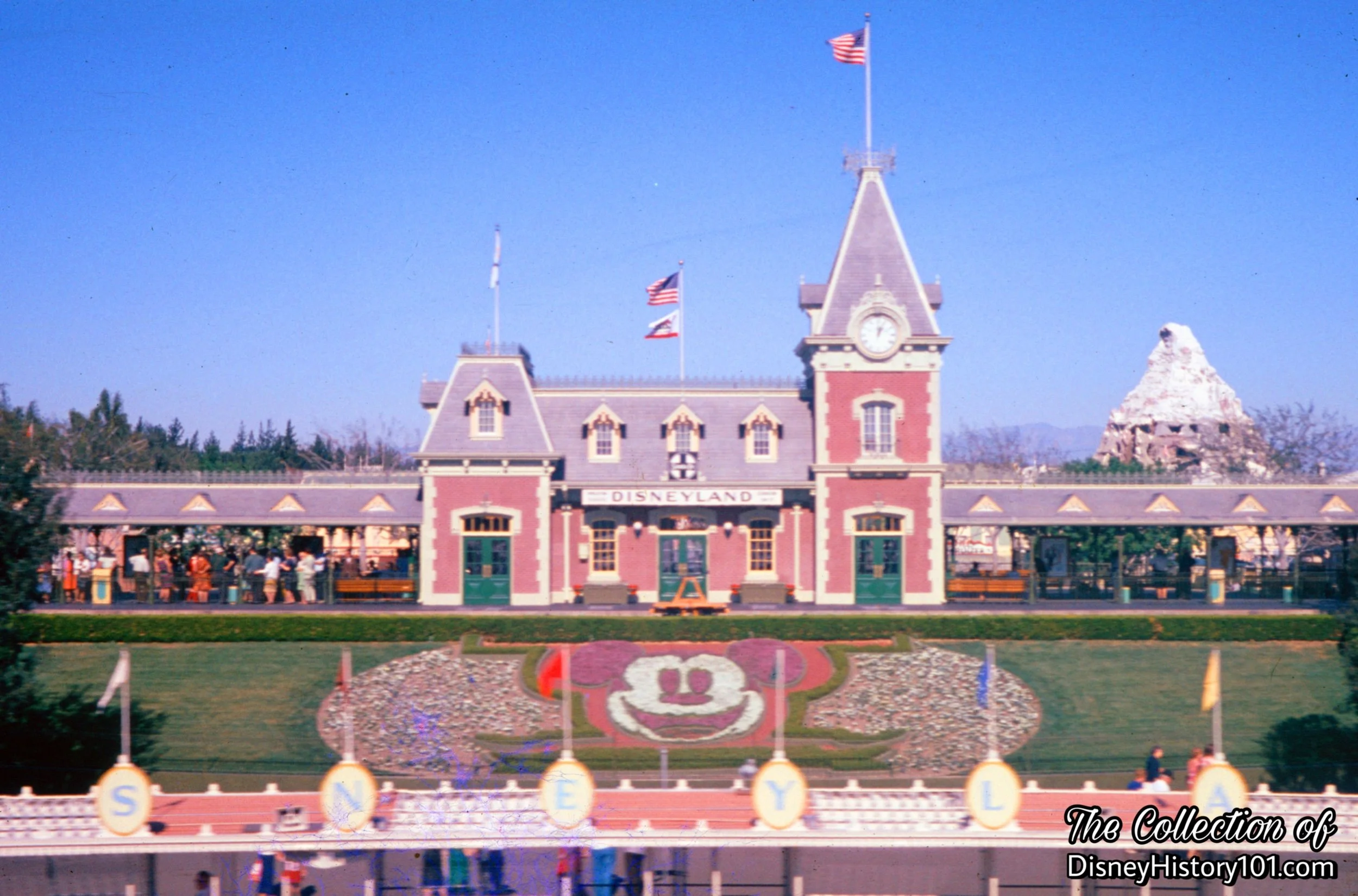
Mickey Mouse Floral Portrait
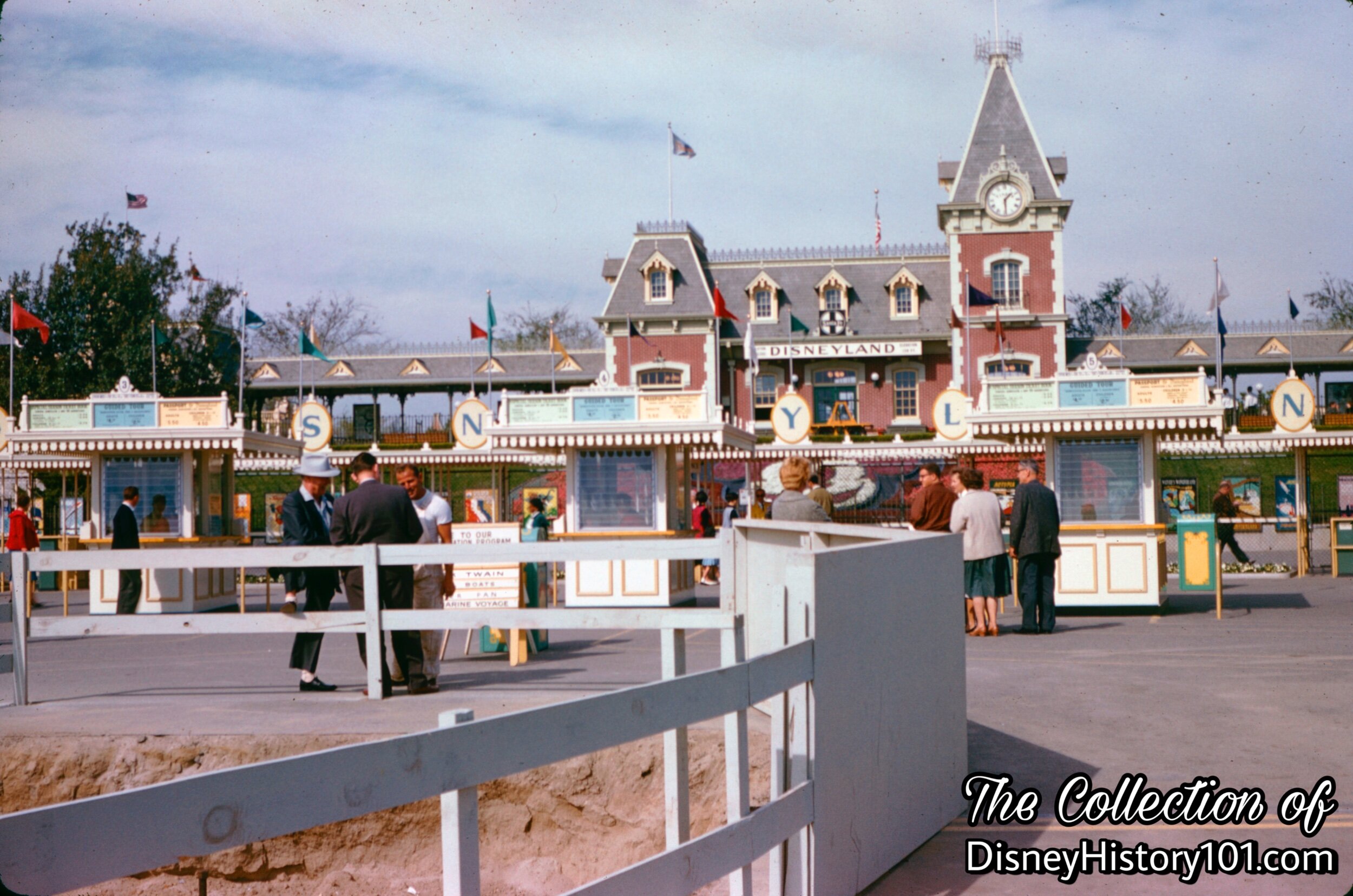
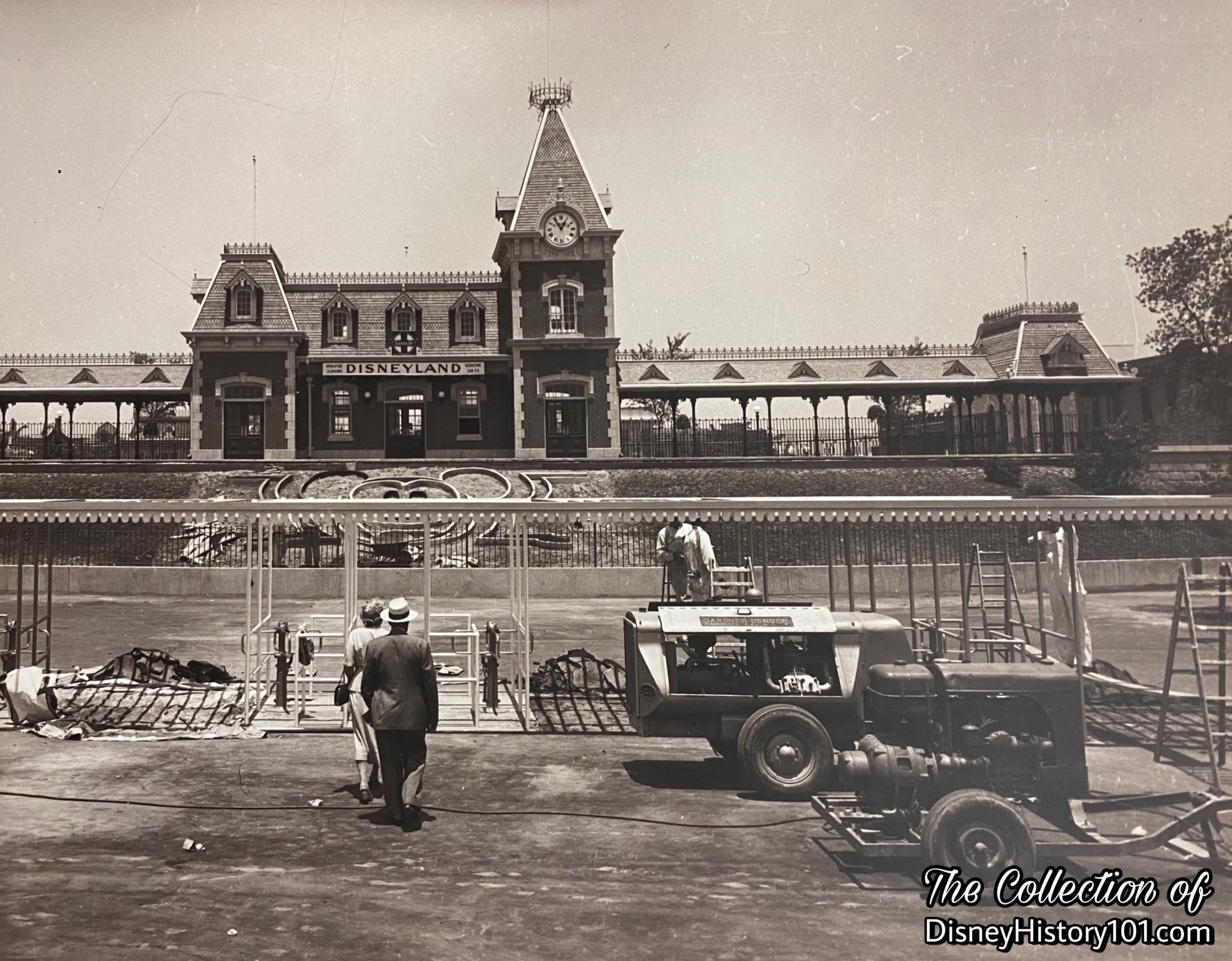
Prepping for Monorail pylon construction at the Disneyland Main Gate (early, 1961)
During 1961, some big changes and minor refurbishments were headed to Disneyland. The Submarine lagoon was drained and updated with new animation. Other attractions that received care were Peter Pan’s Flight, the Mark Twain, and Mike Fink Keel Boats. Meanwhile, it looks as if some minor construction is taking place in the Disneyland Parking Lot, not far from the Disneyland Ticket Booths and Main Gate, during early 1961.
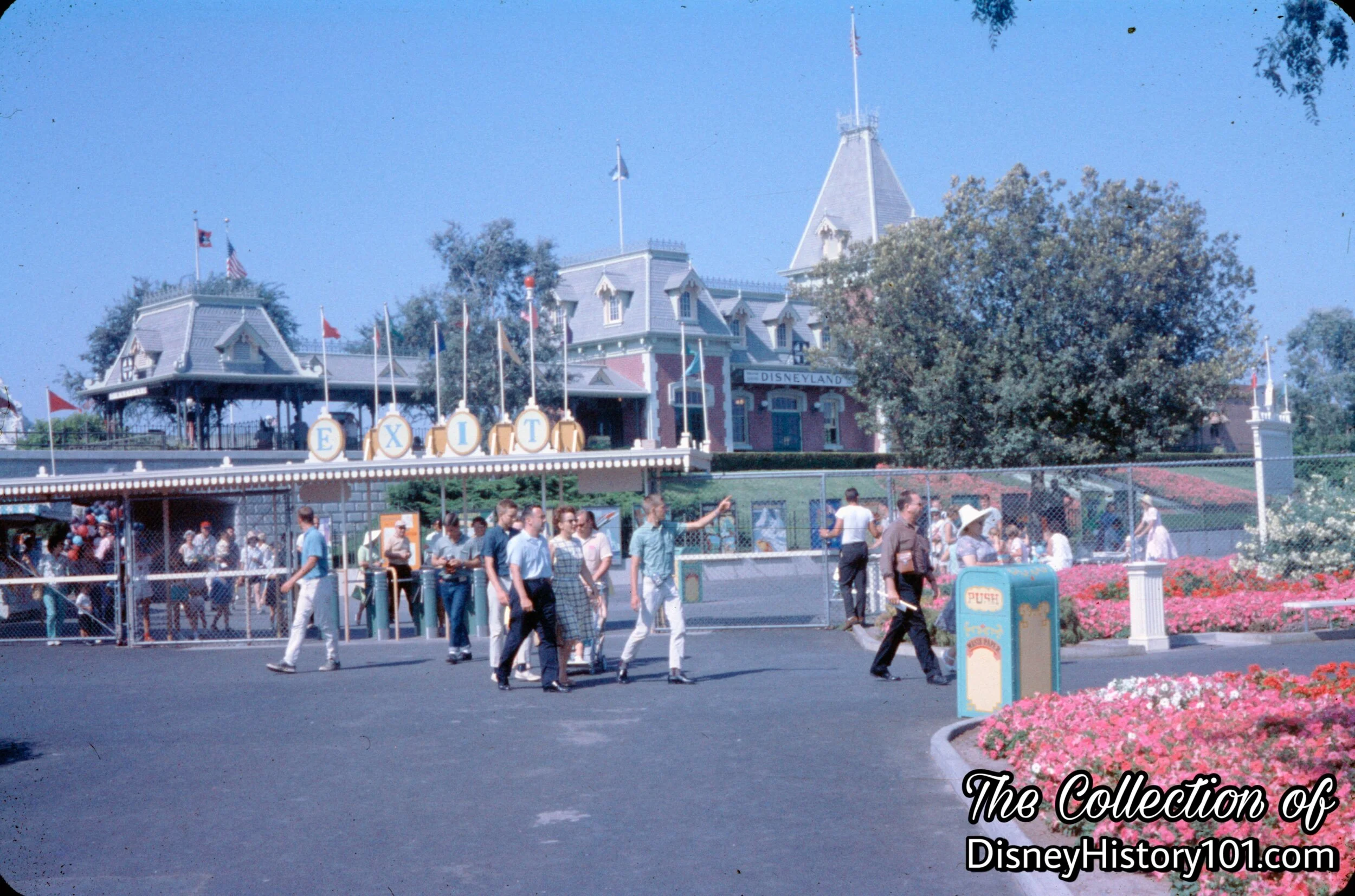
(August, 1963)
From this vantage, you can still see the Holly Oak Tree placed in this location (May 25, 1955) under the direction of Landscape Architect Ruth Shellhorn. Disneyland World of Flowers (published 1965), by Morgan Evans : “Throughout the spring and summer, petunias and roses brighten the entrance to Disneyland. This petunia is a hybrid called satin. These flowers are on display eight months out of the year.”
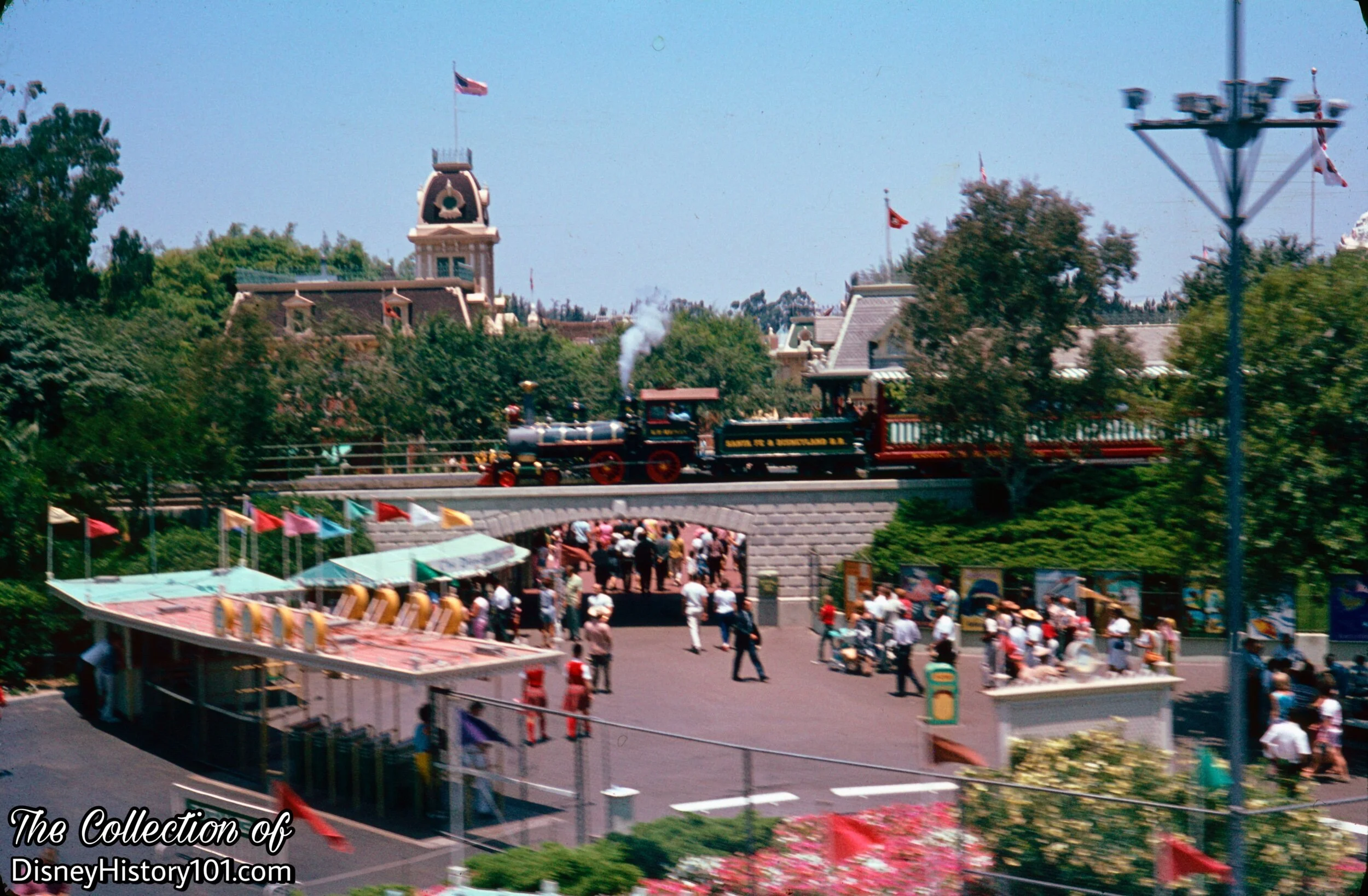
(c. July, 1966)
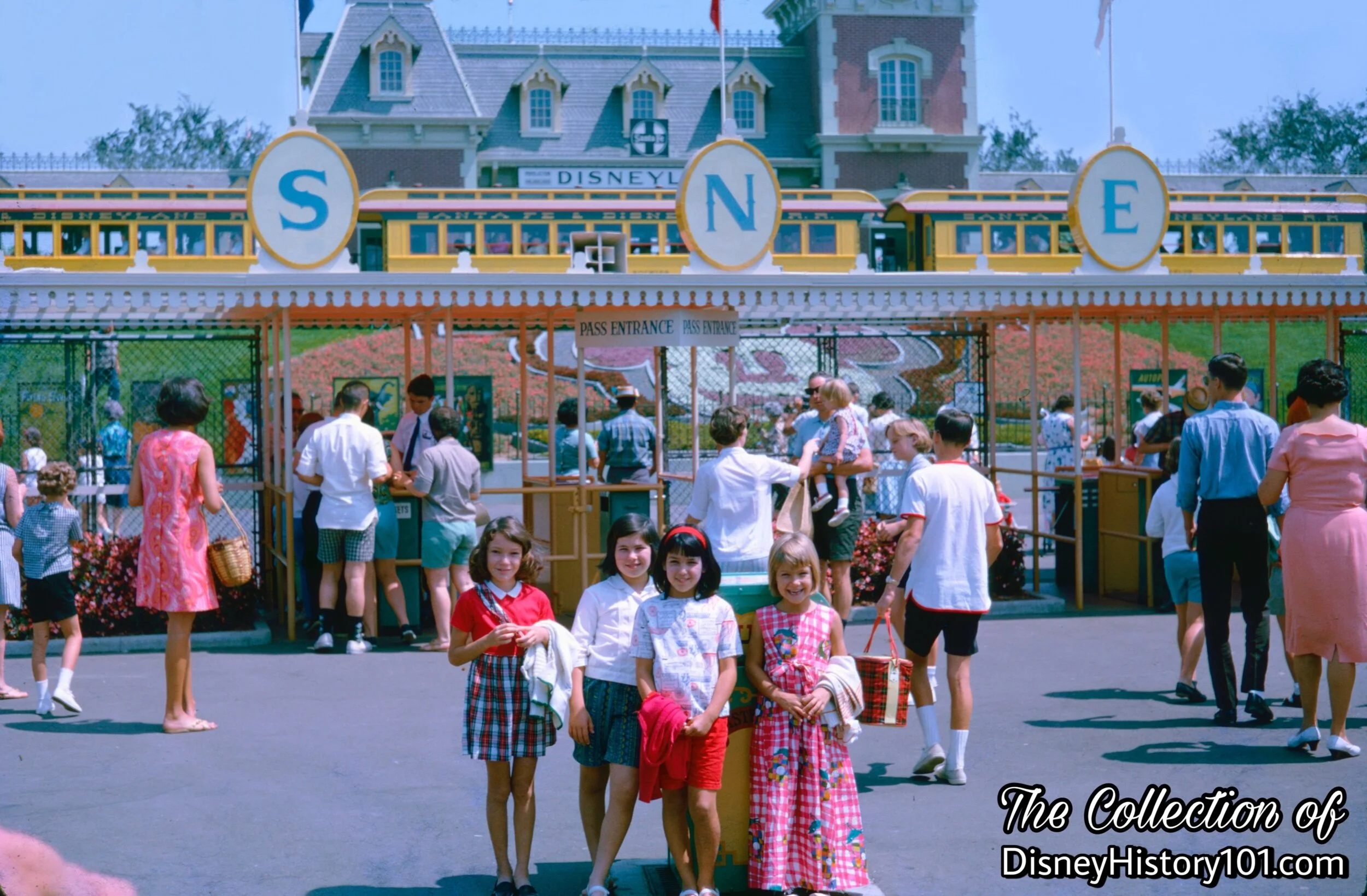
(September, 1965)
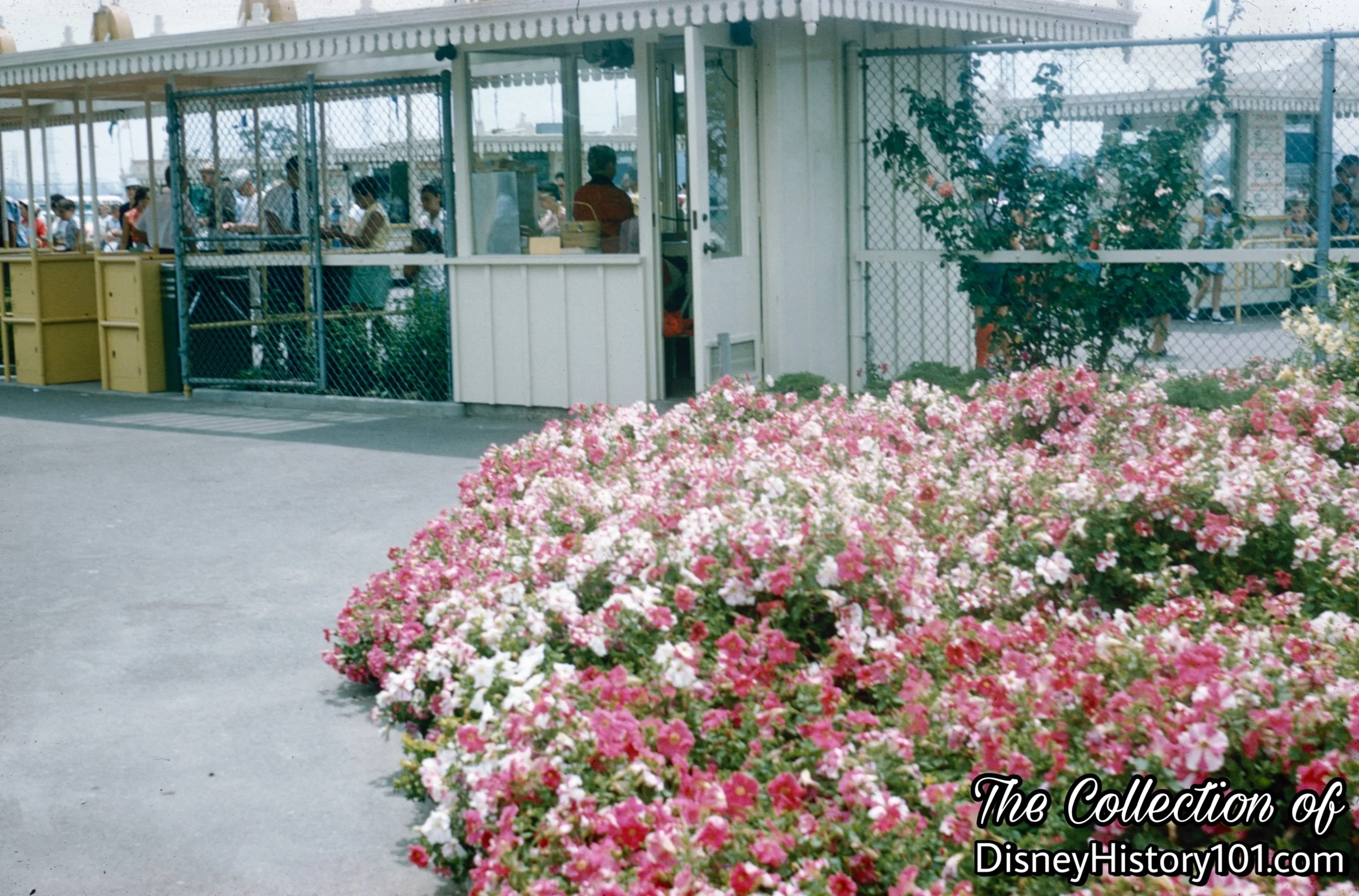
The pink flowers are a hybrid called “satin” Petunias near the Main Gate.
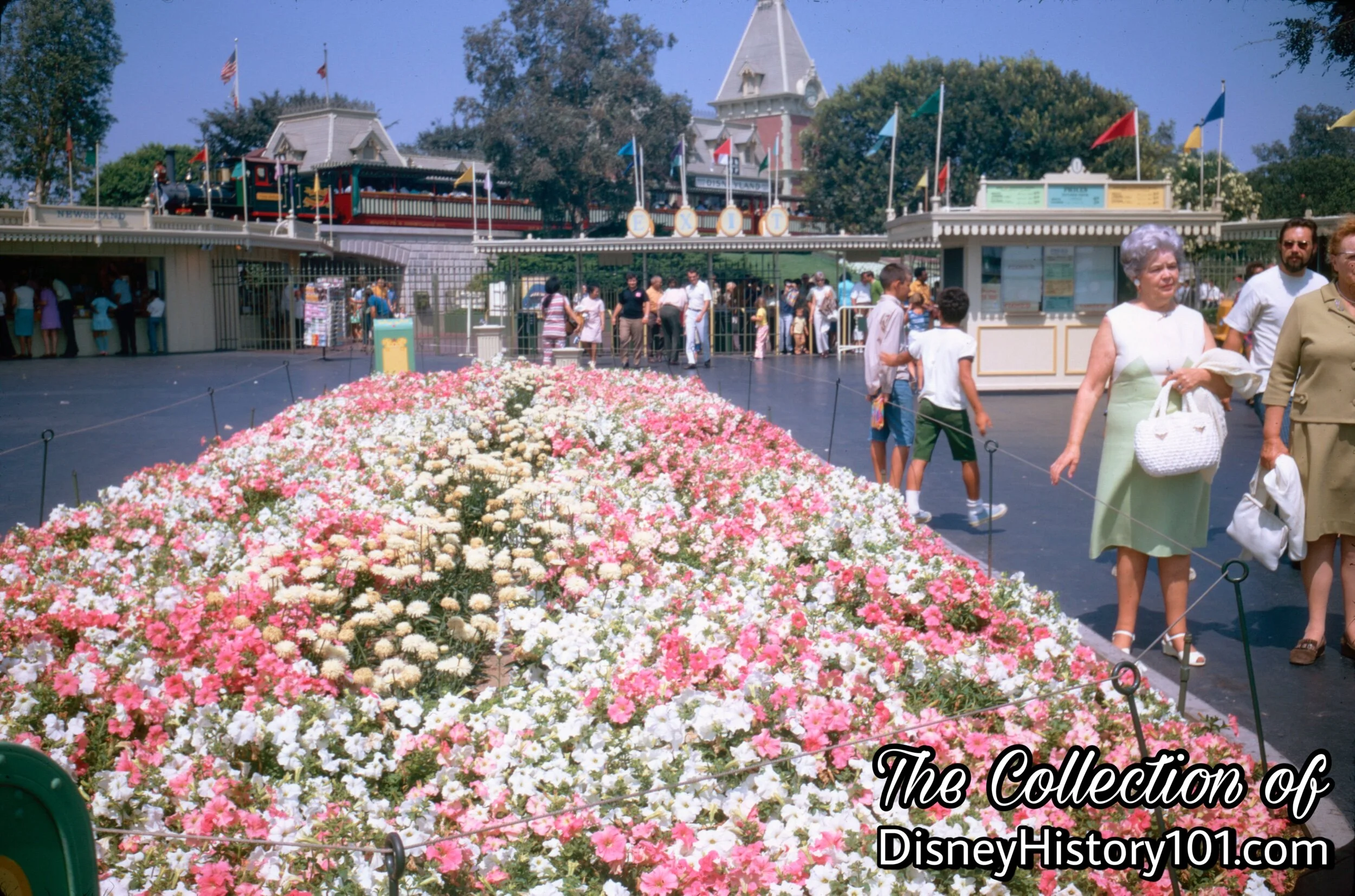
(September, 1970)
Petunias and Chrysanthemums are in bloom near the Main Gate Entrance of Disneyland!
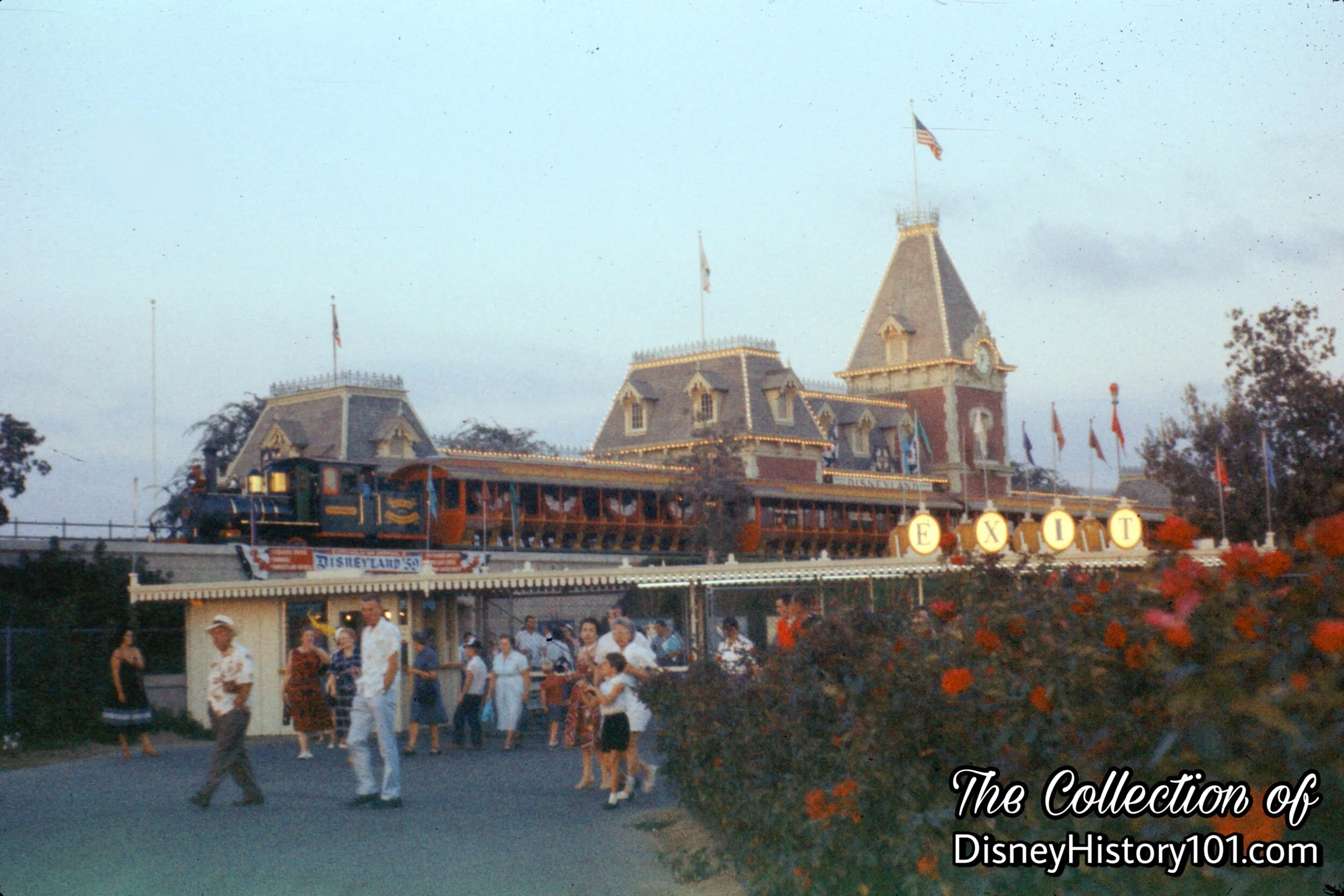
Blooming eight months out of the year are the Carousel roses near the entrance to Disneyland.
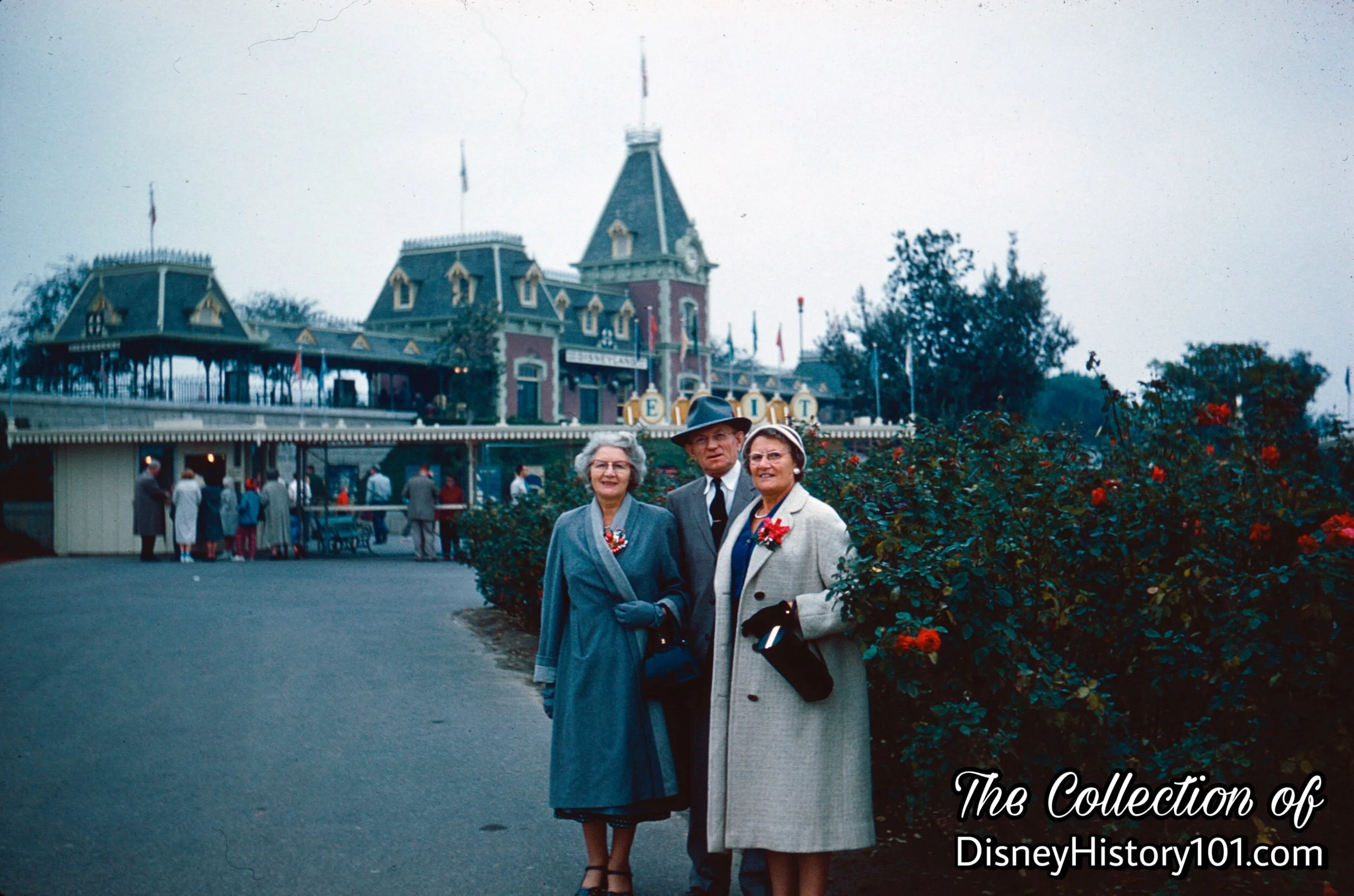
Guests and the velvety red Carousel roses, 1959.
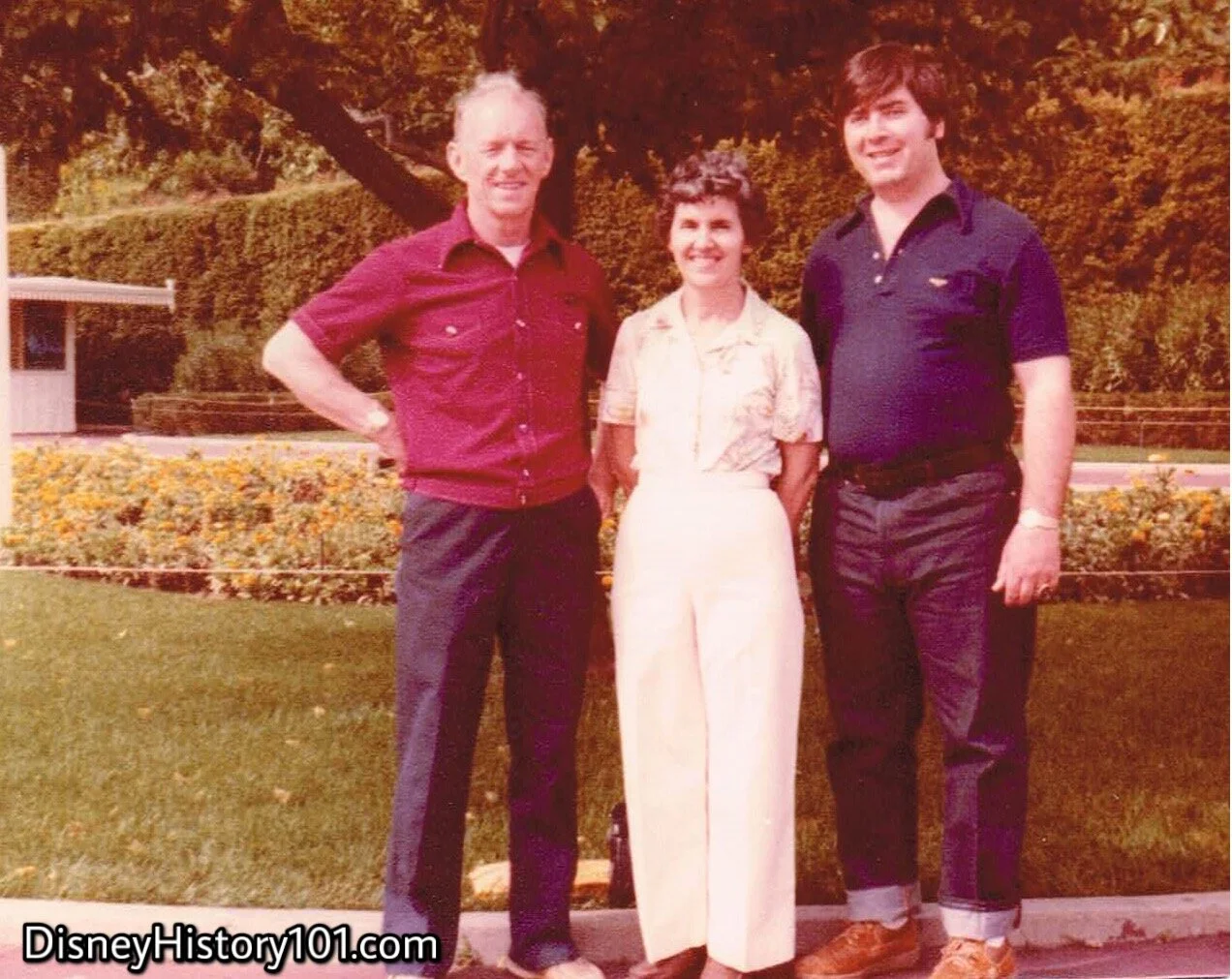
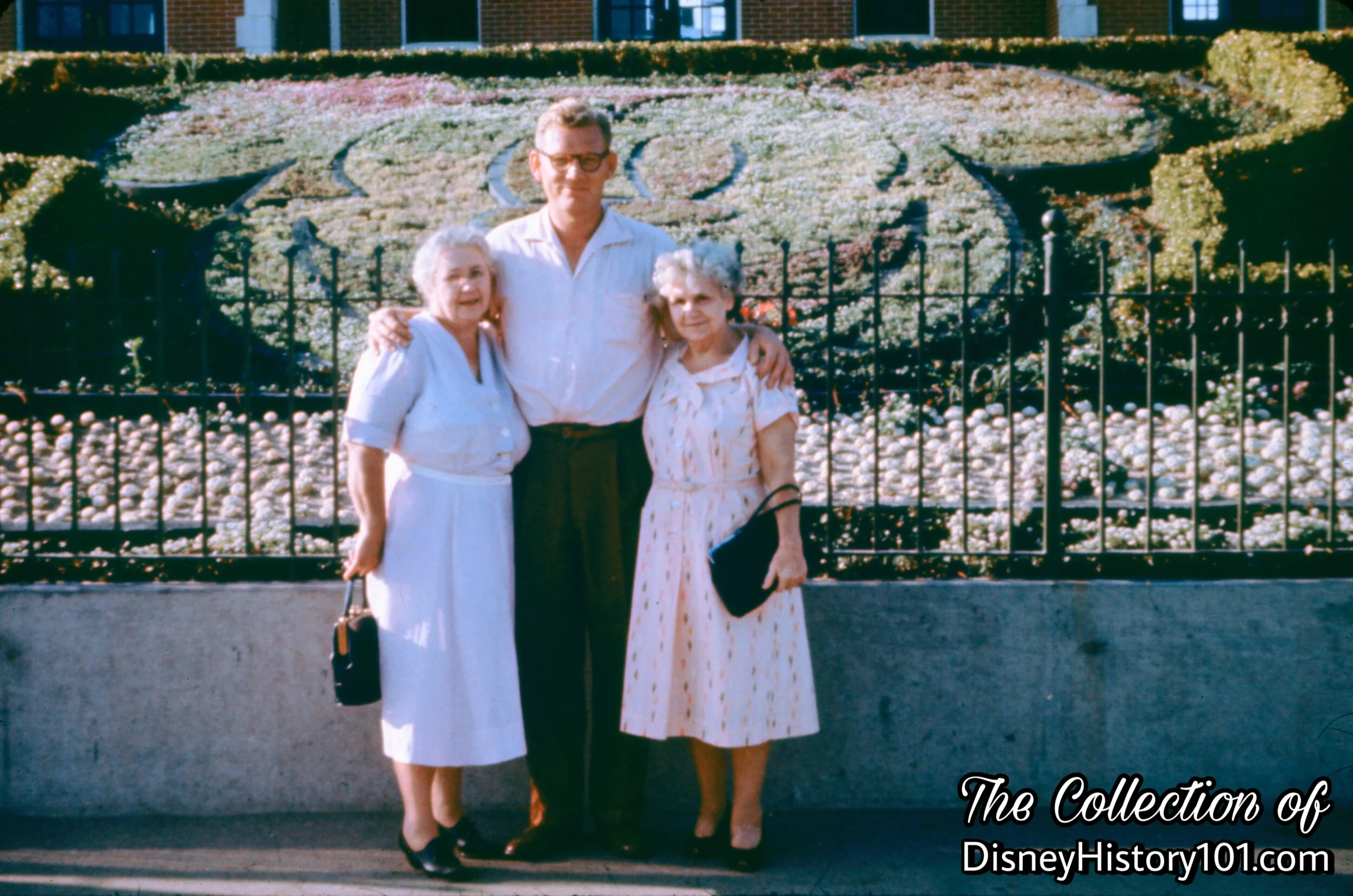
Every time I see Vintage Views featuring adults at Disneyland, I am reminded of a prediction published in “The Disneyland Diary” (prepared September of 1954), which stated, “It is expected to draw… the ratio of children and adult patrons… approximately 80% adult and 20% children.” Here, a trio of guests make a memory near the Carousel roses that welcome audiences to Disneyland.
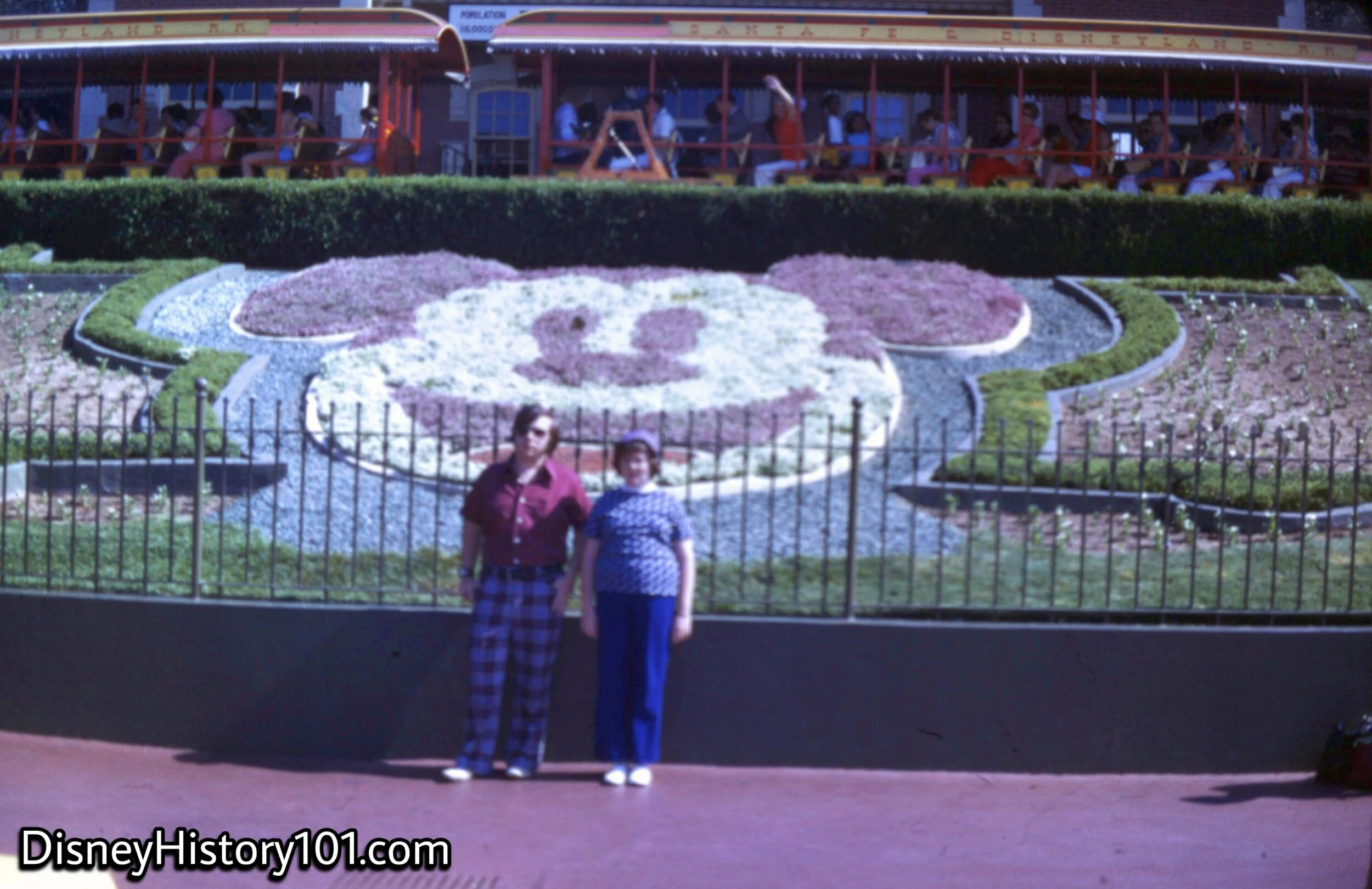
Mickey Mouse Floral Portrait
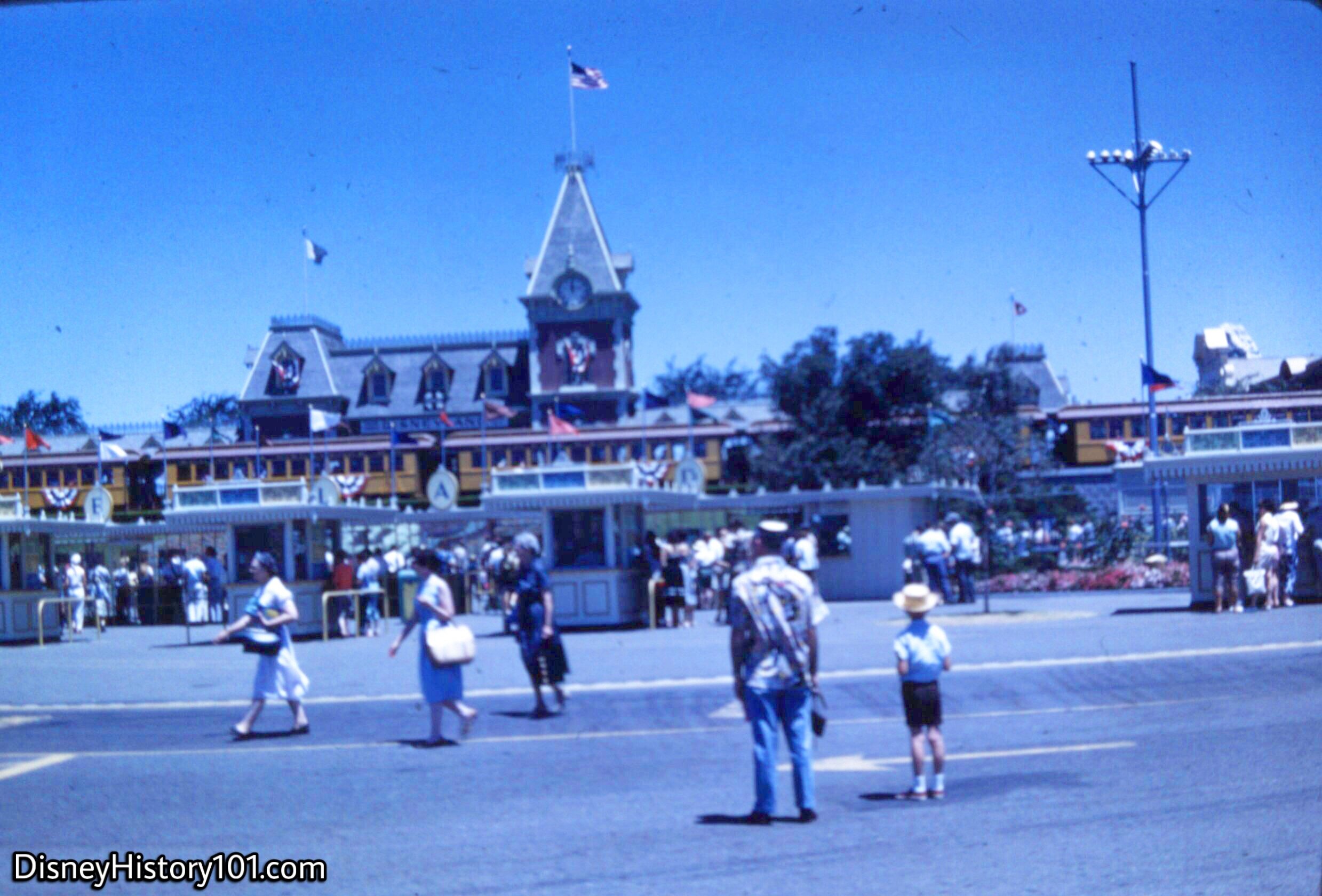
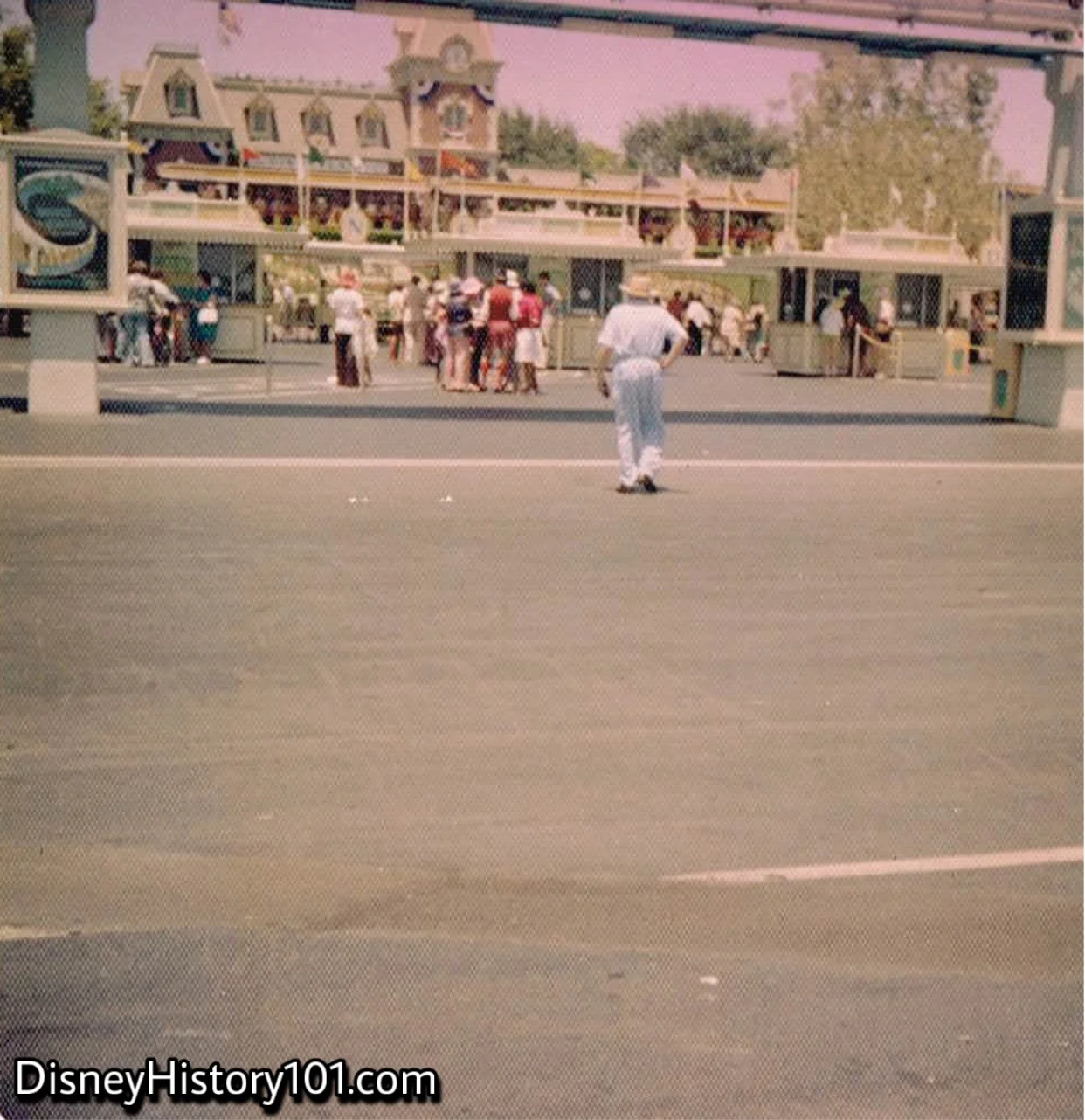
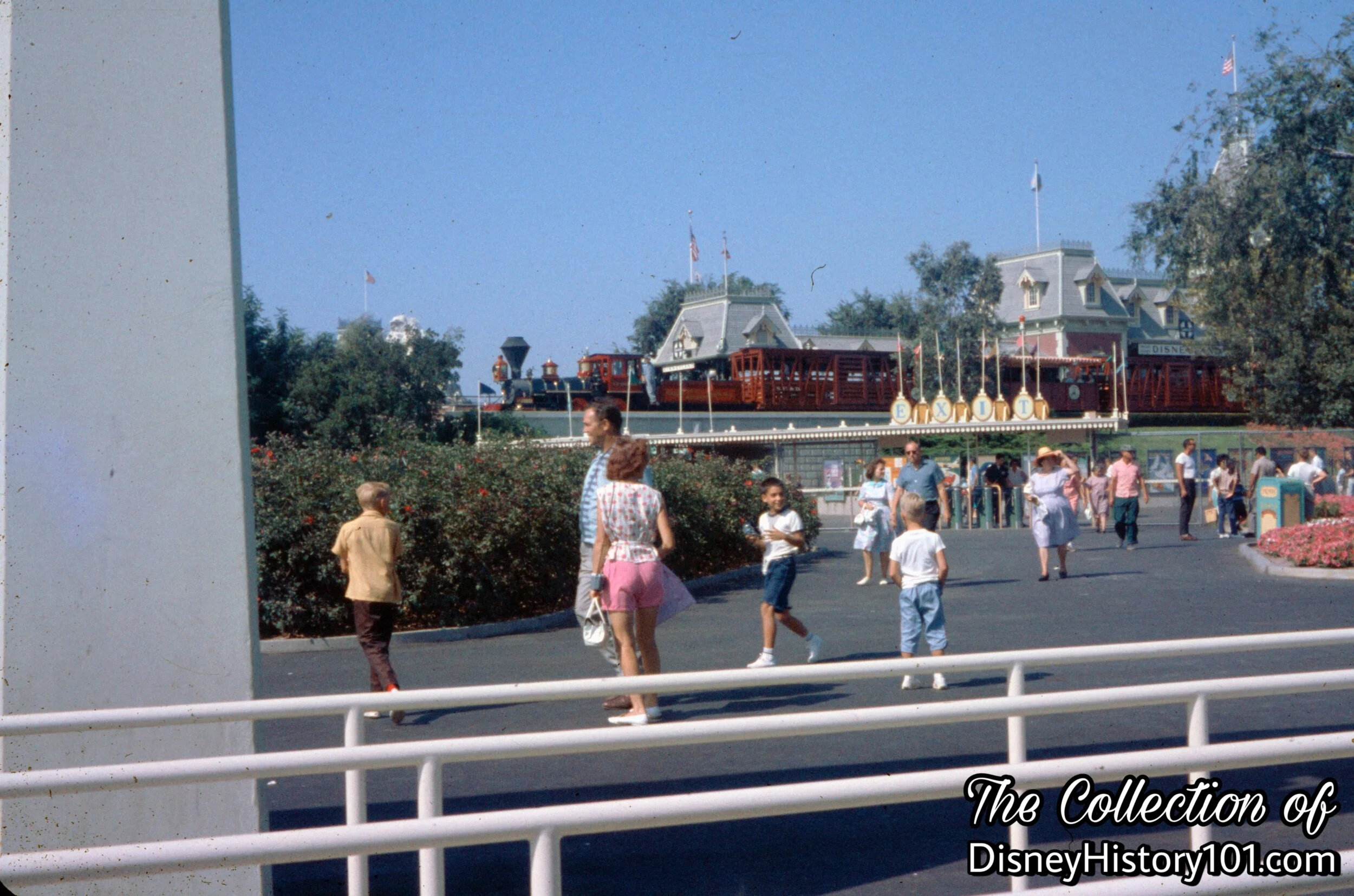
(1963)
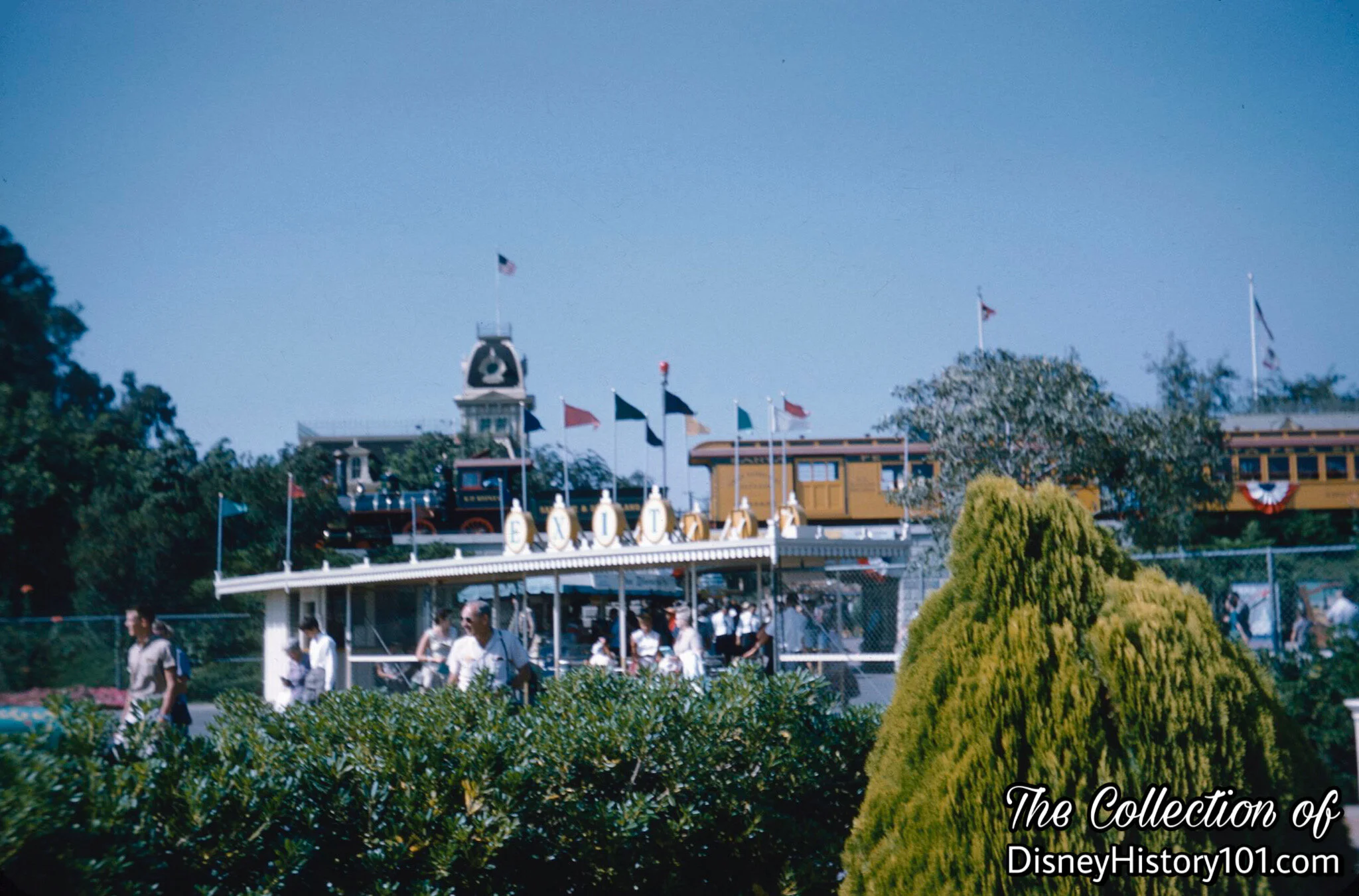
(August, 1960)
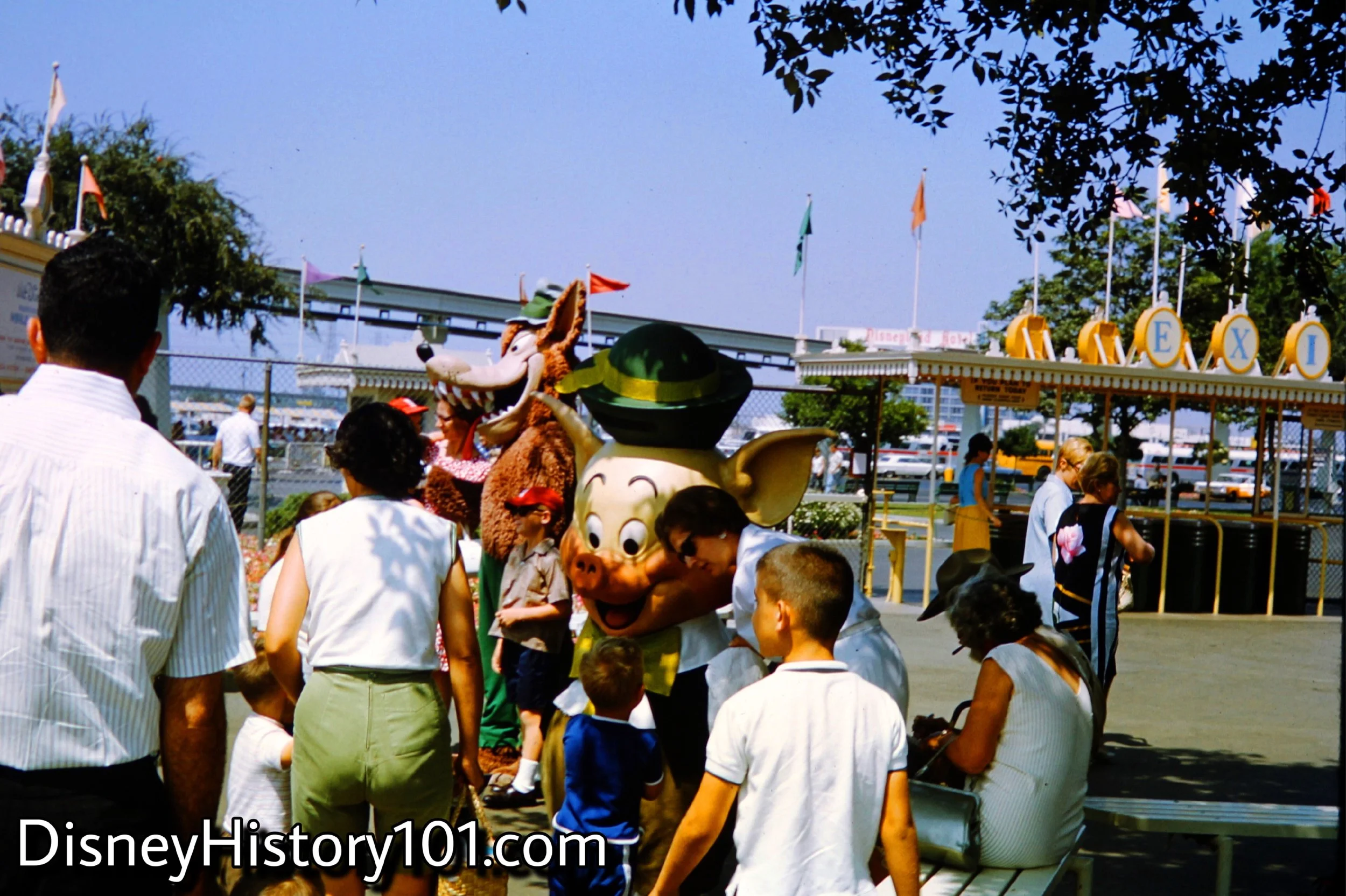
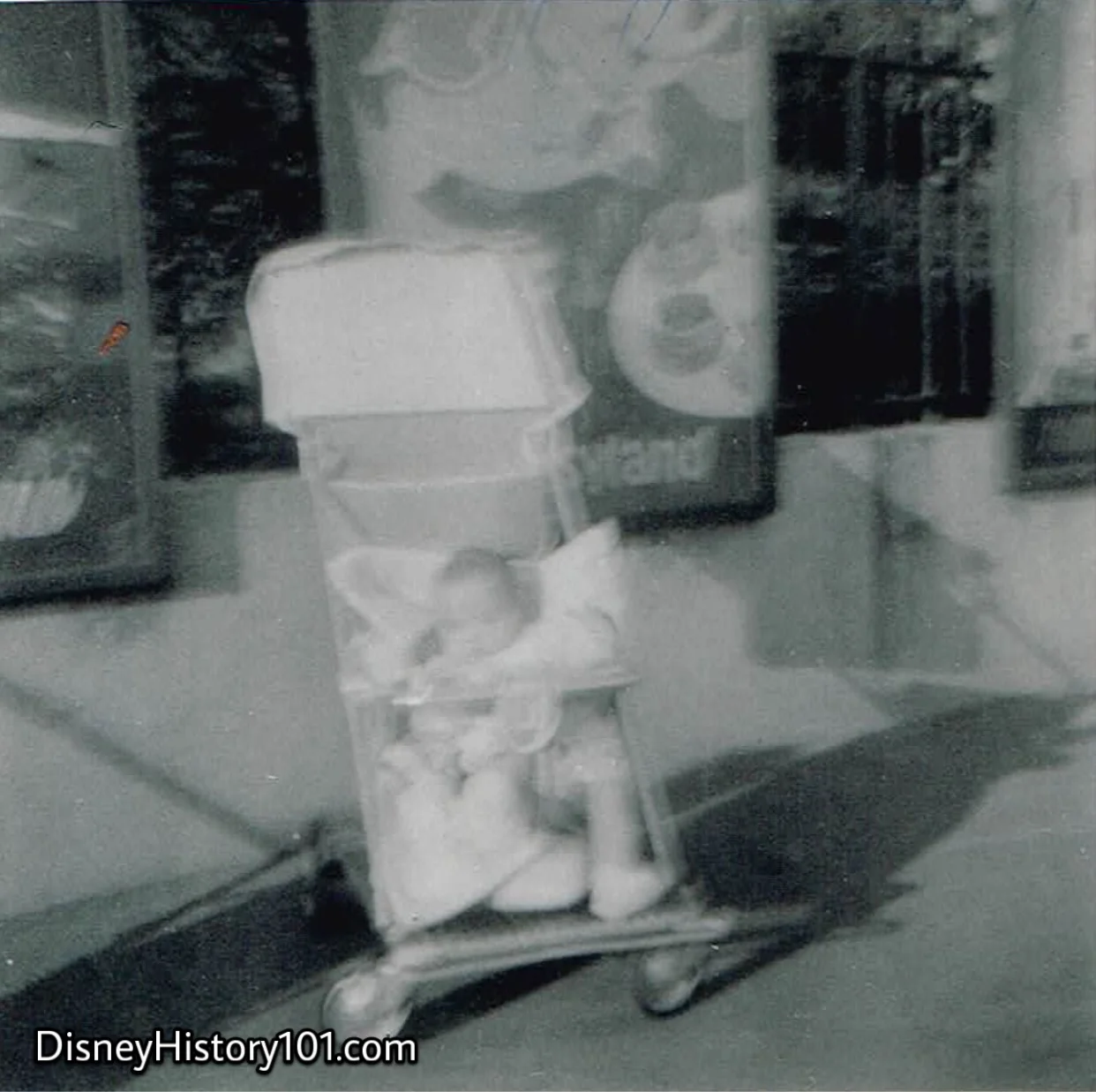
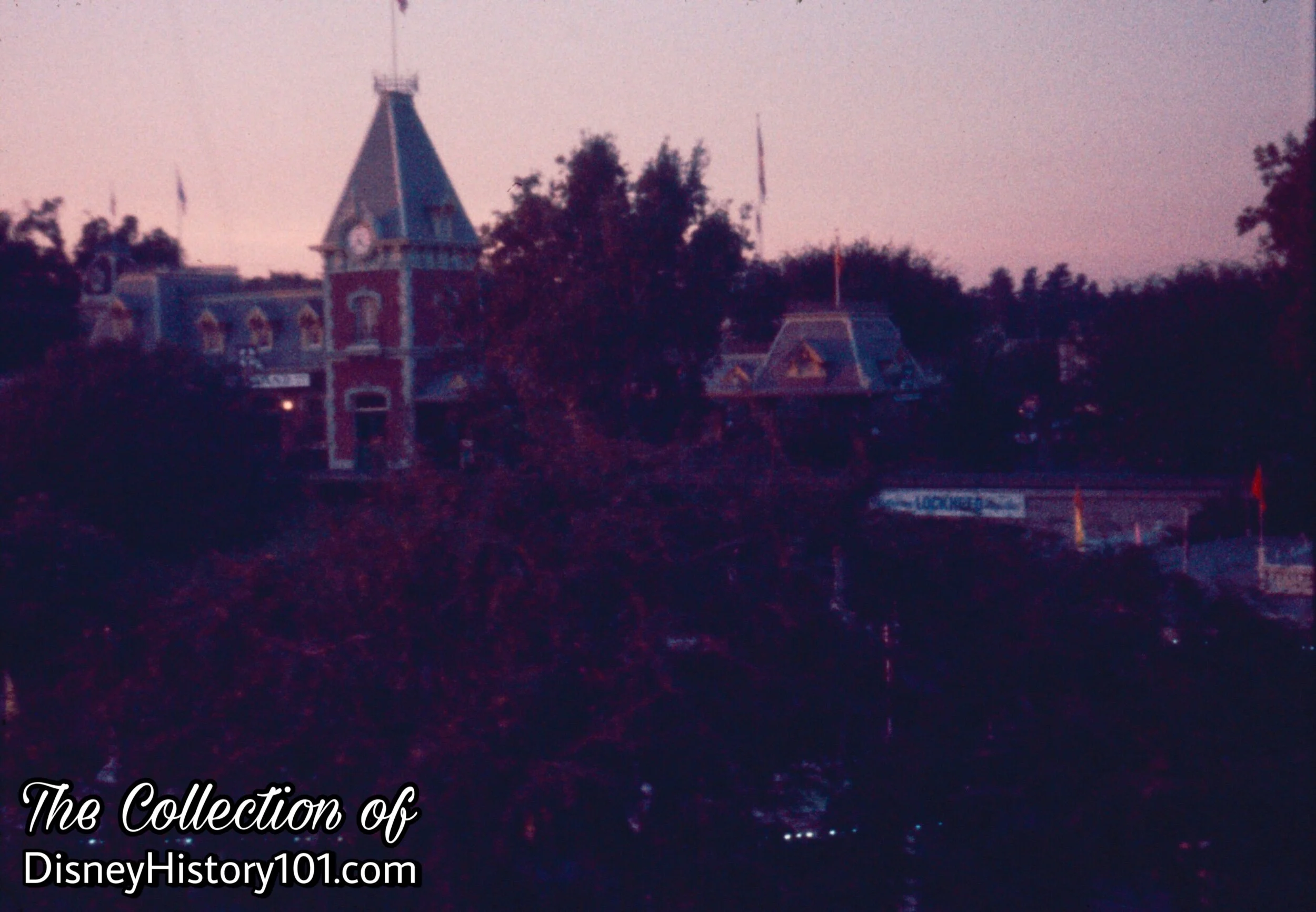
Lockheed Evening (1974)
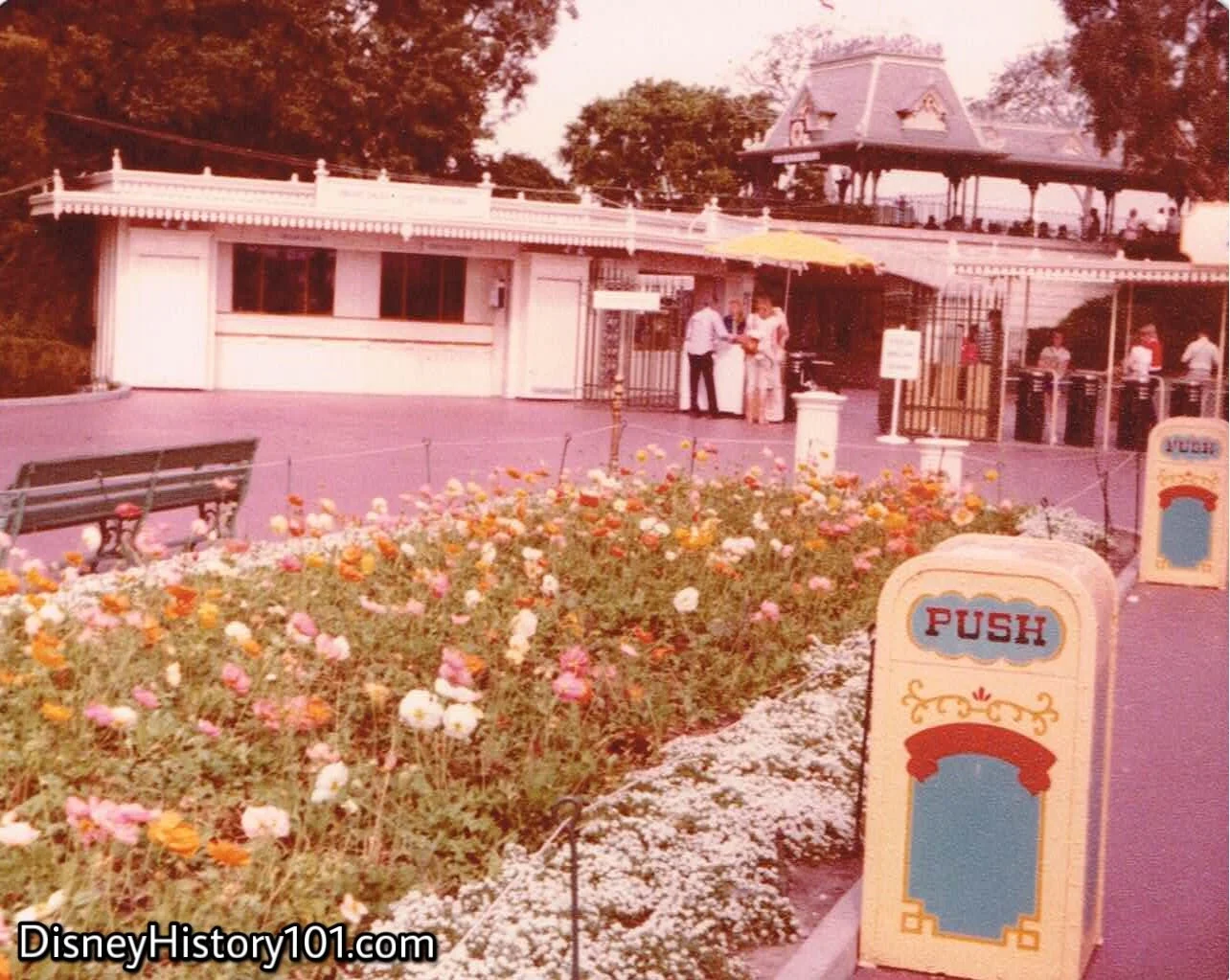
Colorful Poppies “pop” with color, while an accent alyssum frames the outskirts of the floral beds.
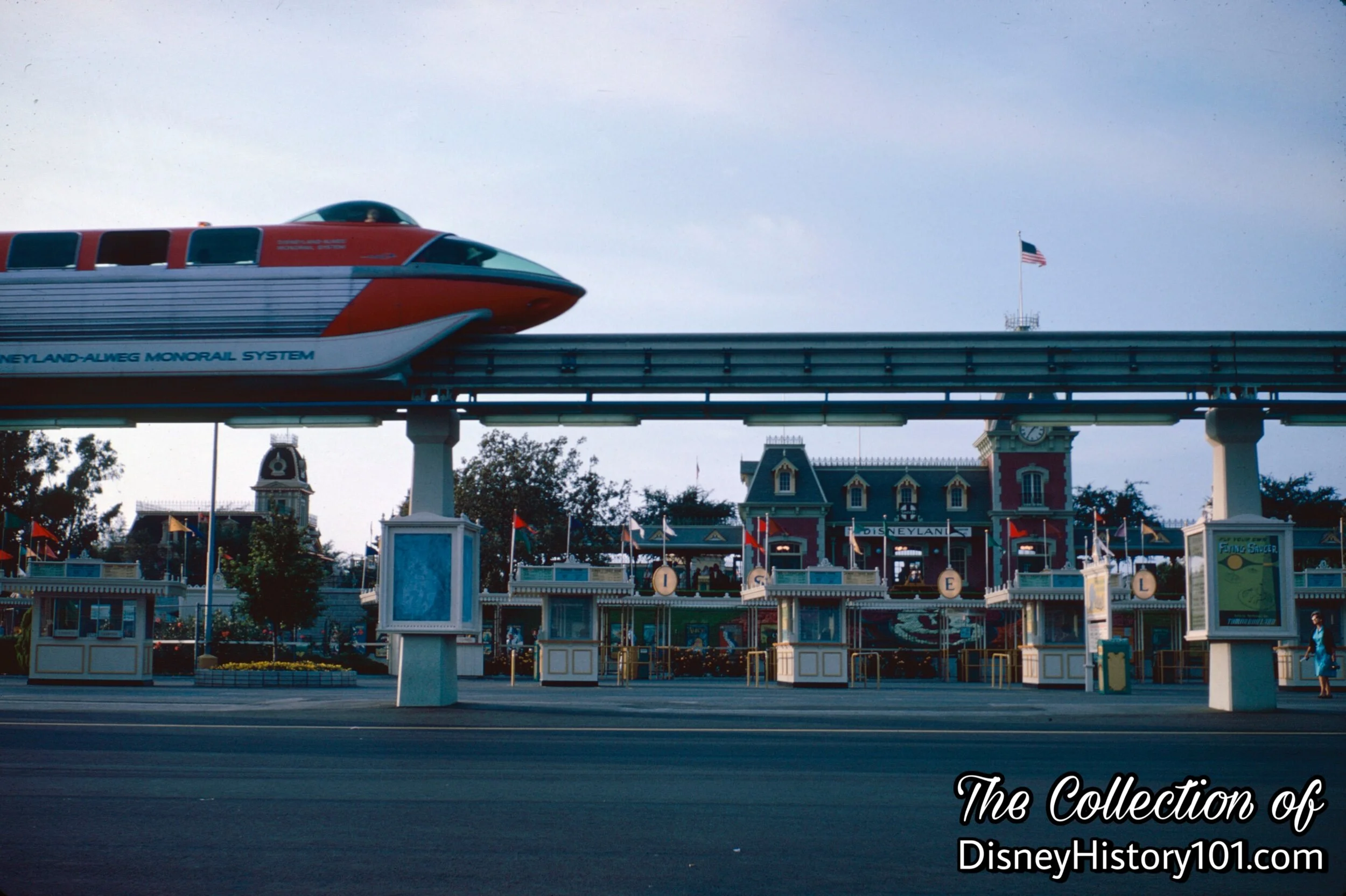
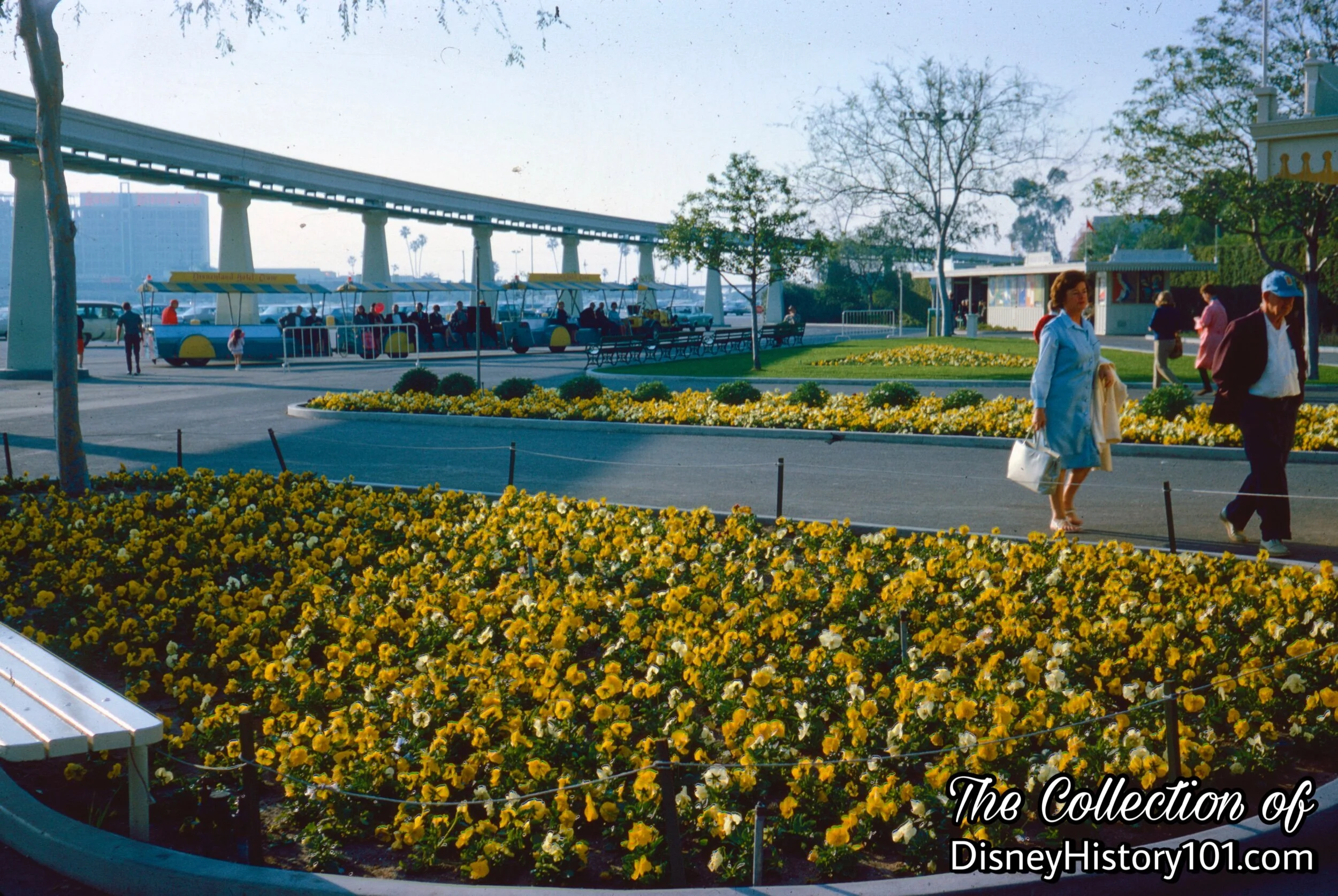
Disneyland Main Entrance Gate Floral Beds, (February, 1966)
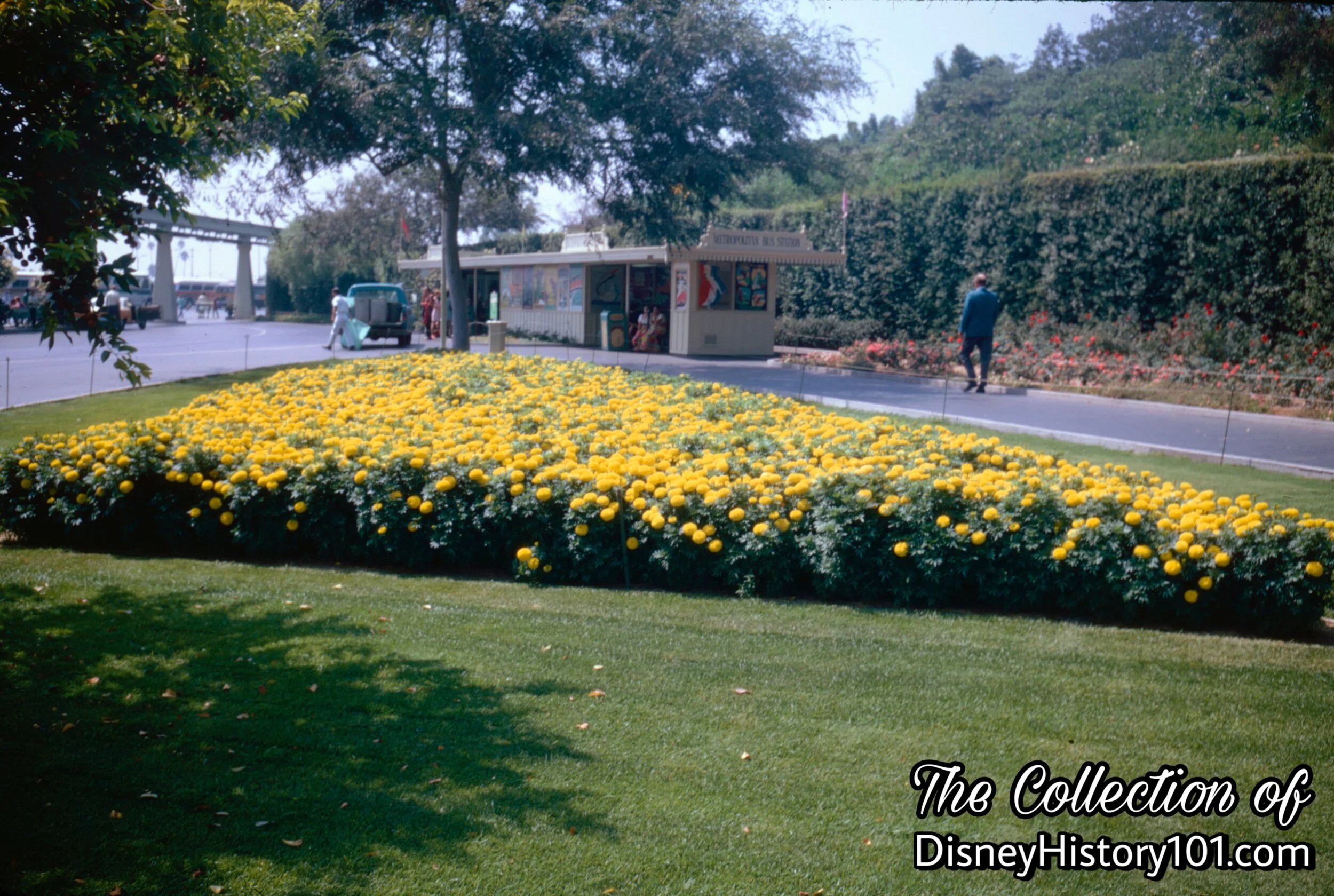
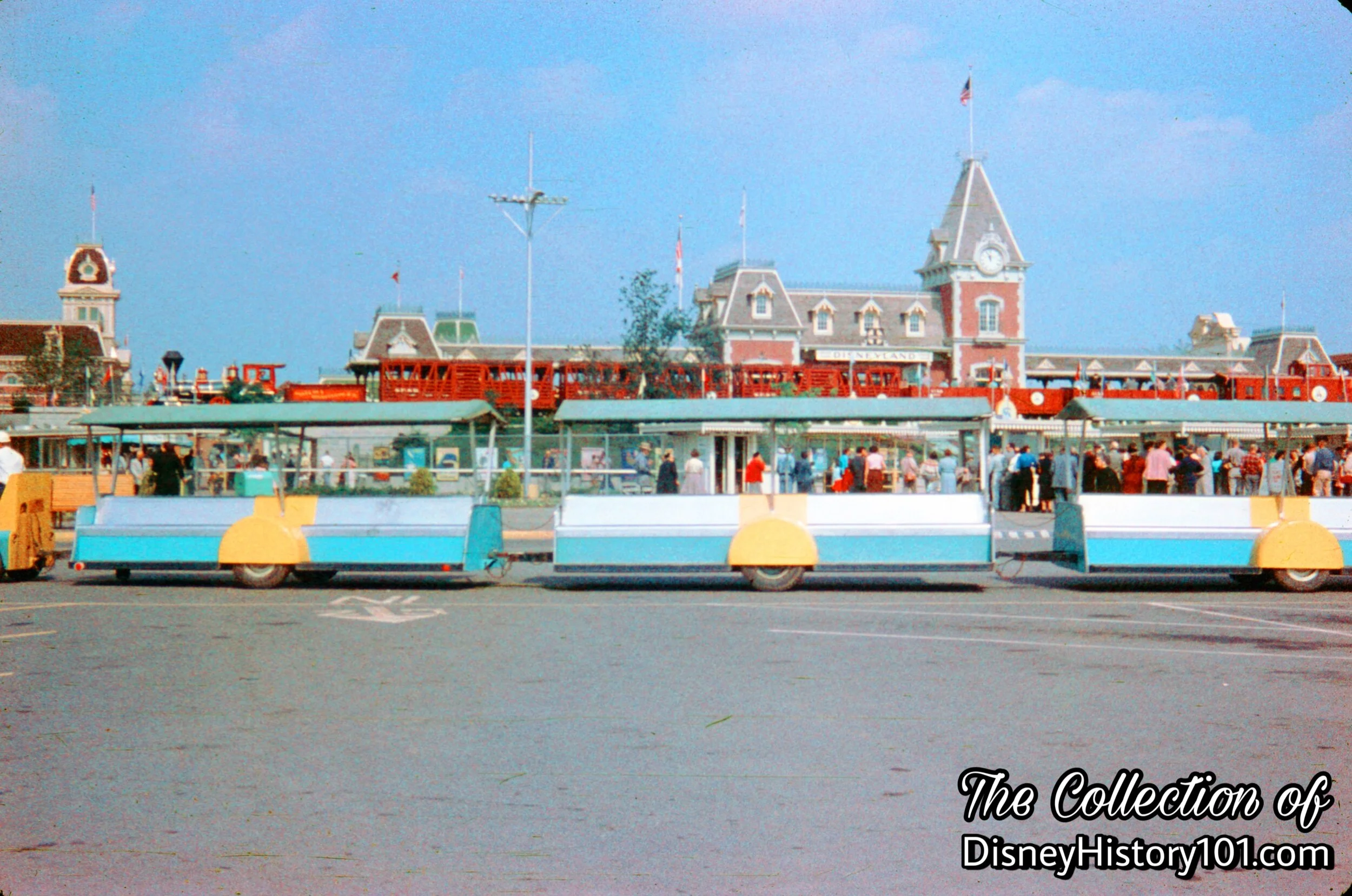
Disneyland Metropolitan Bus and Tram Station, (1970)
The Disneyland Metropolitan Bus Station (located west of the Disneyland Main Entrance) would cater to guests who desired to “leave parking worries and expense behind.” Here, Rapid Transit Line busses and Commuter bus services (Airport Service Inc. and Southern California Rapid Transit) were allowed through the harbor Gate, to bring guests to and from the Disneyland Metropolitan Bus Station.
The entire Bus and Tram Waiting Room measured approximately 300 square feet. The structure was of wood frame plywood construction on the interior and exterior with a built-up composition roof. There were two ticket booths and for Guest Services and Accommodations there were telephones and two restrooms with a total of six fixtures. The restroom walls and ceilings are zolotoned and the floor is terrazzo. In 1958, the entire structural building was among a $13,544 land improvement and was appraised and valued between $1,700 and $2,400.
Some of the passenger buses servicing guests of this Bus Station were Airport Coaches, arriving from Los Angeles Airport. The local Jitney once ferried Guests (on the hour) from the Anaheim Hotel, shopping areas, Knott’s Berry Farm, and Disneyland. Still, some of these busses would carry passengers a distance of 27 miles southeast, from Los Angeles Civic Center to Disneyland! Yes, for all those who did not want to “‘drive’ [themselves] to freeway frustration”, these air-conditioned airport passenger busses were the enjoyable way to travel from the greater Los Angeles area to Disneyland!
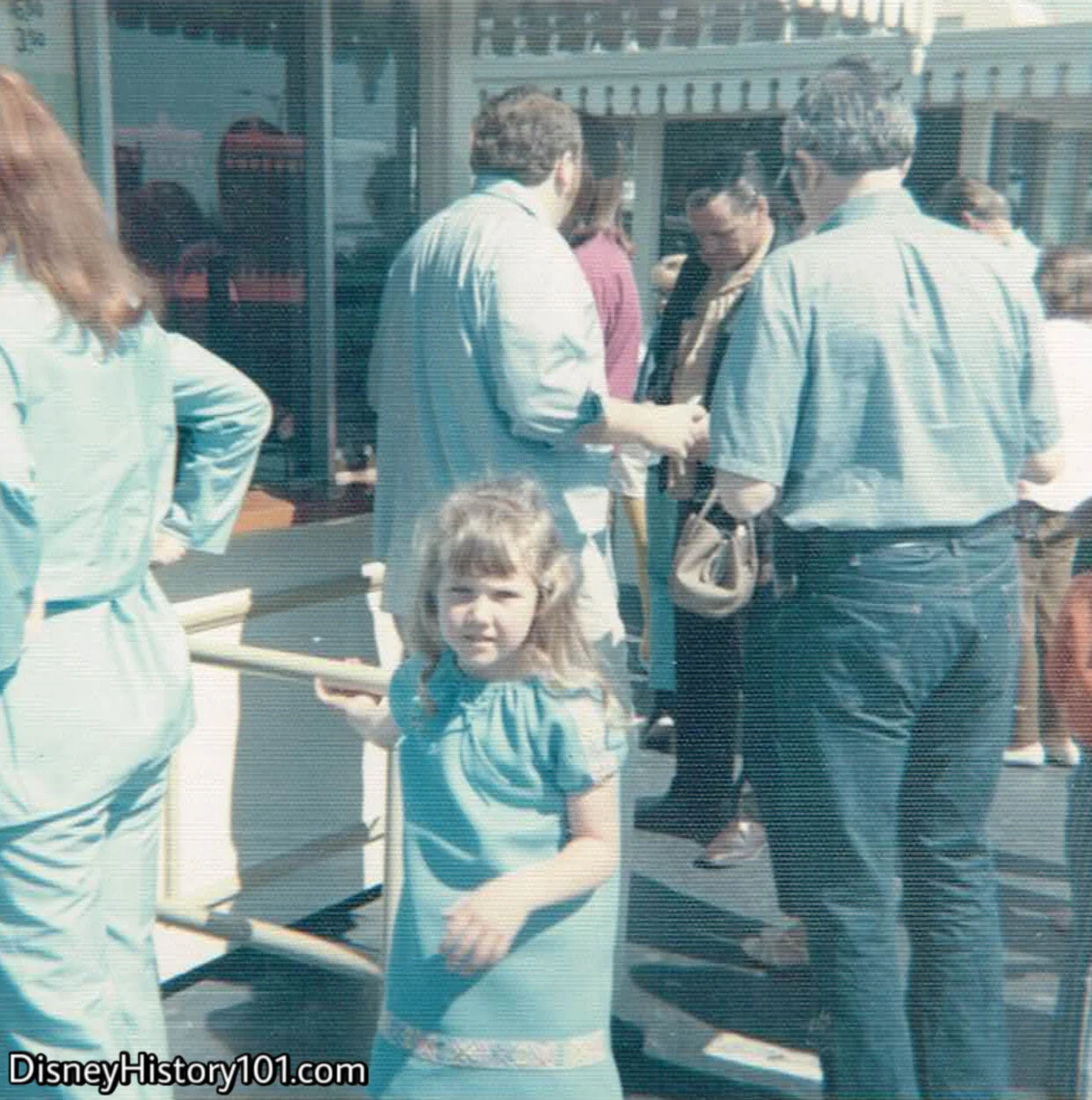
1972
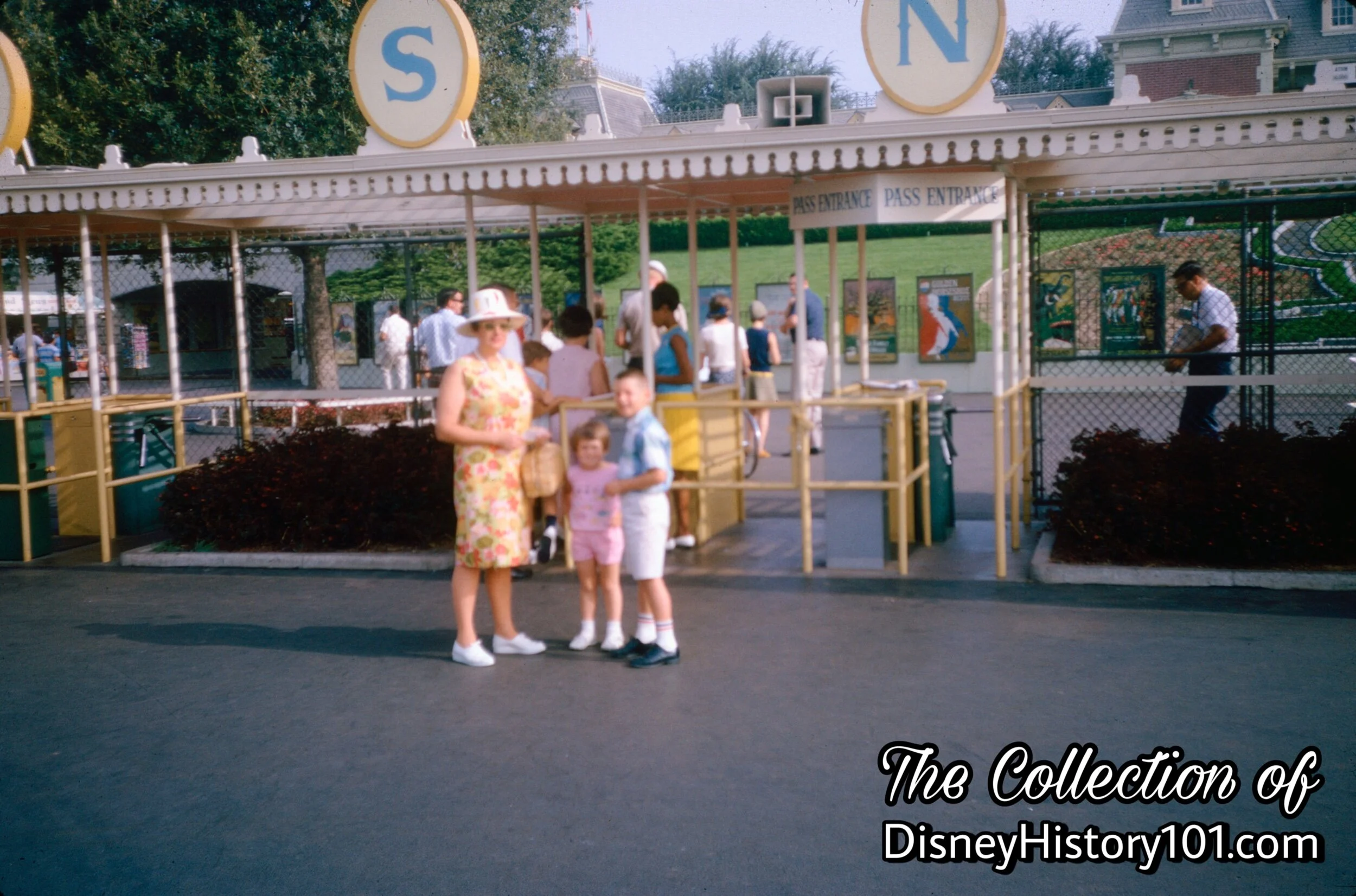
(August, 1966)
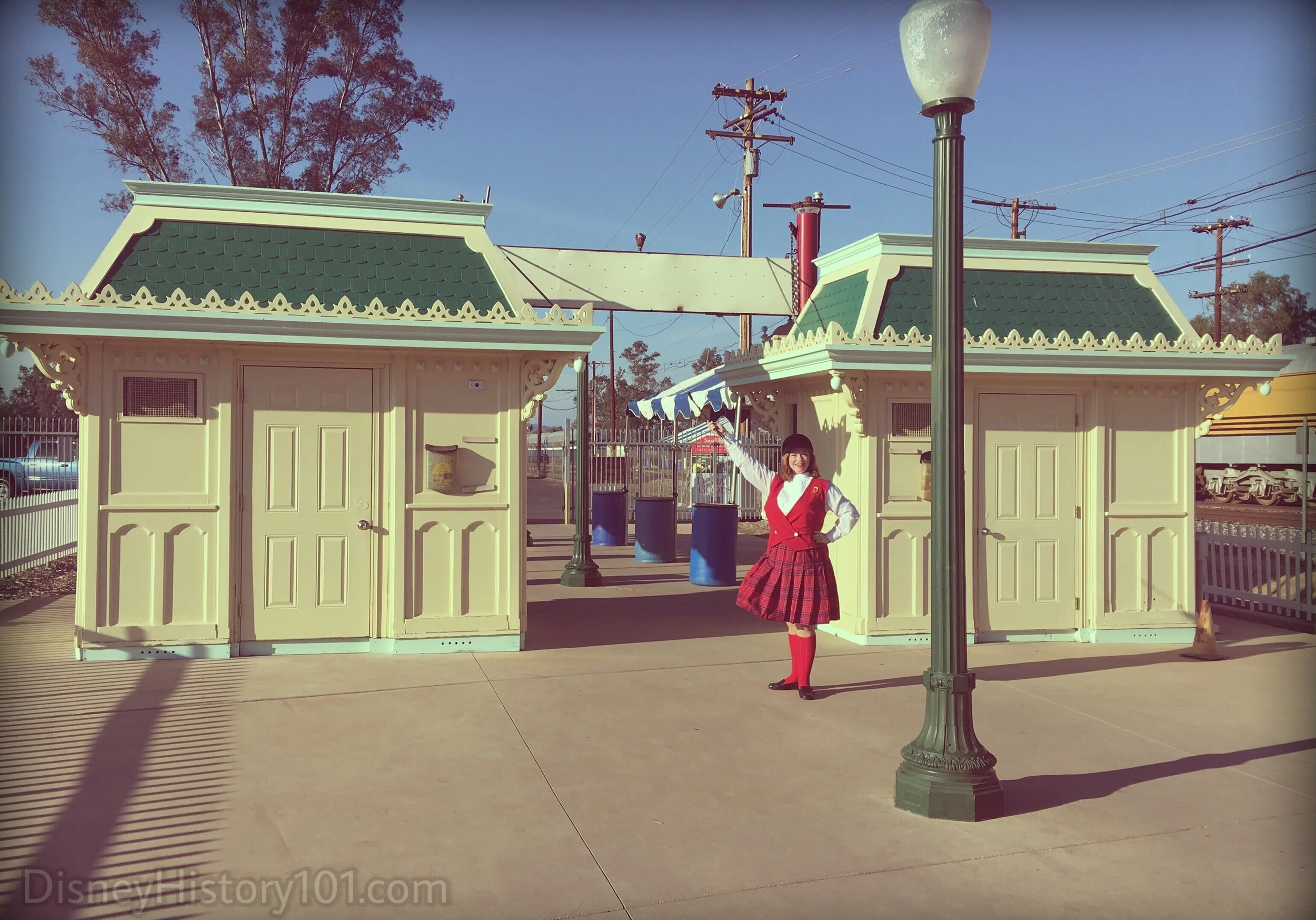
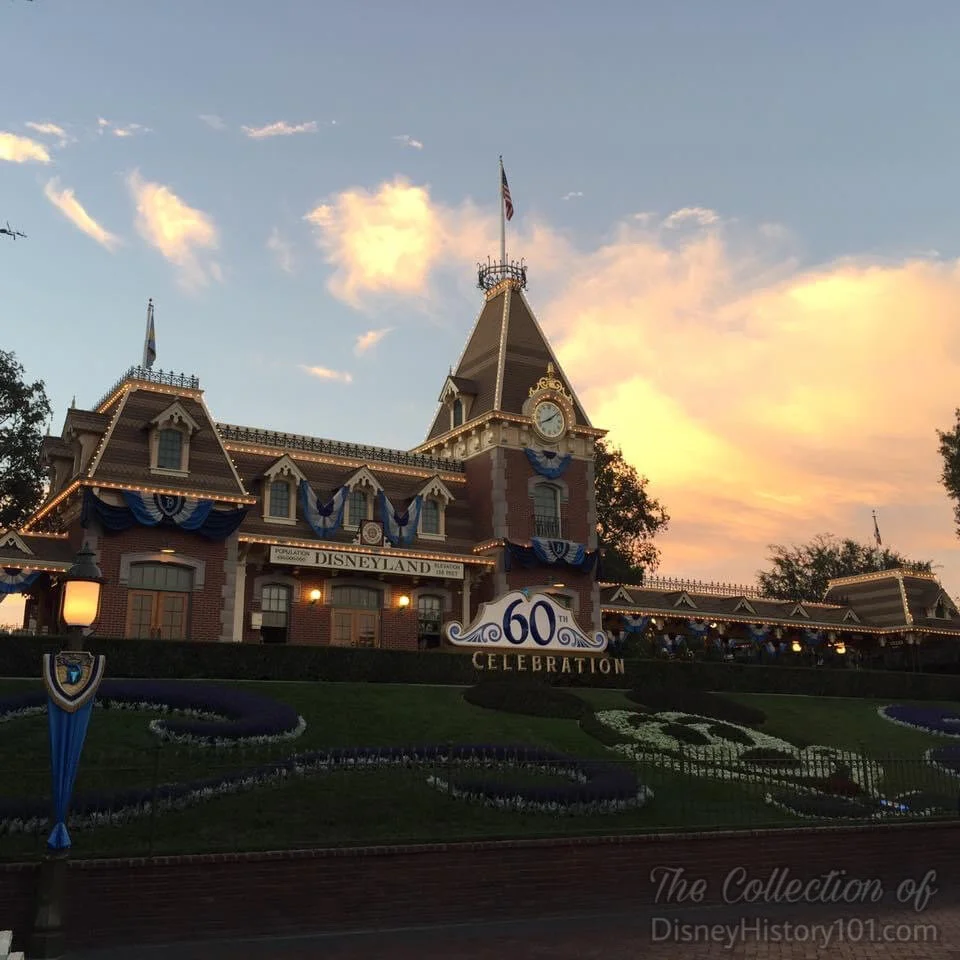
In the winter of 1980 (on the occasion of Disneyland’s 25th Anniversary), the Disneyland Main Gate received a complete makeover. The 14 ticket booths were replaced with 16 Victorian-style booths (pictured), which featured central heat and air. At this time, the chain link fence was removed and a new gate, planters, and trees were installed, while the asphalt was given a “red carpet treatment”, according to Disneyland Line (July 30, 1993 ; Vol.25, No.30).
Decades later, those Victorian-style booths were removed, auctioned, and two came into the care of the Orange Empire Railway Museum (where some of Walt Disney Productions animator Ward Kimball’s big toys are kept)! They were replaced by eight Ticket Booths each carrying eight Group Sales Windows. These were located between the Disneyland Entrance and DCA Entrance.
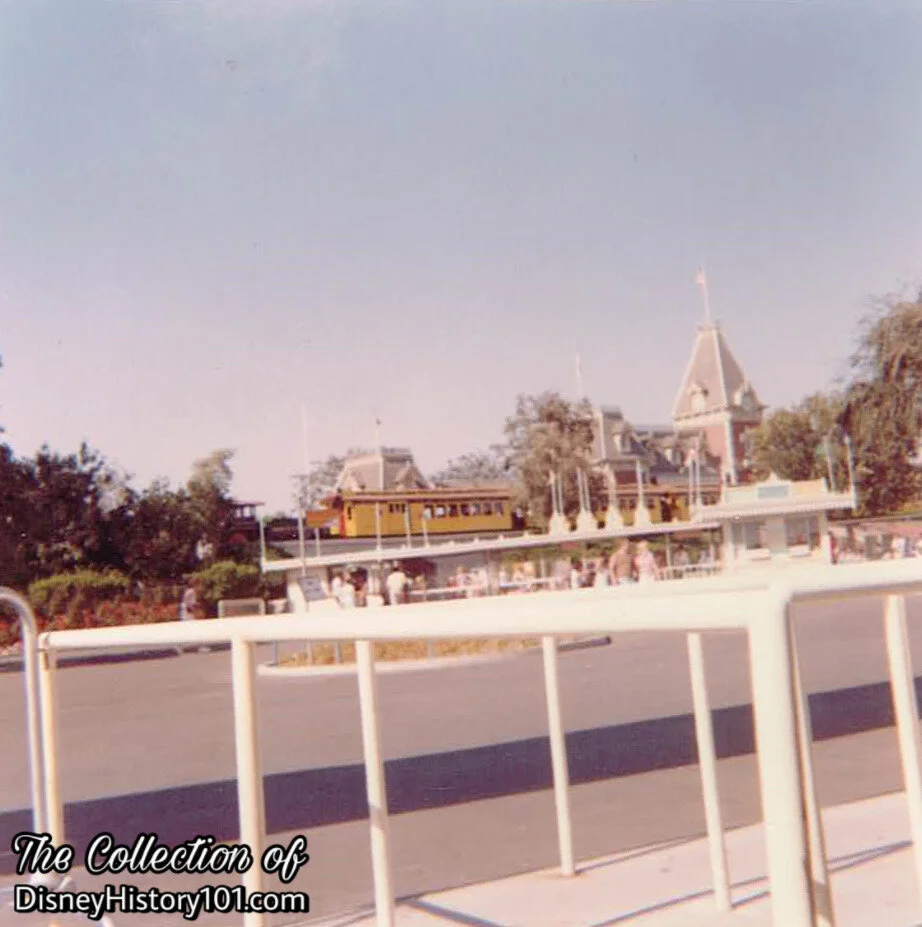
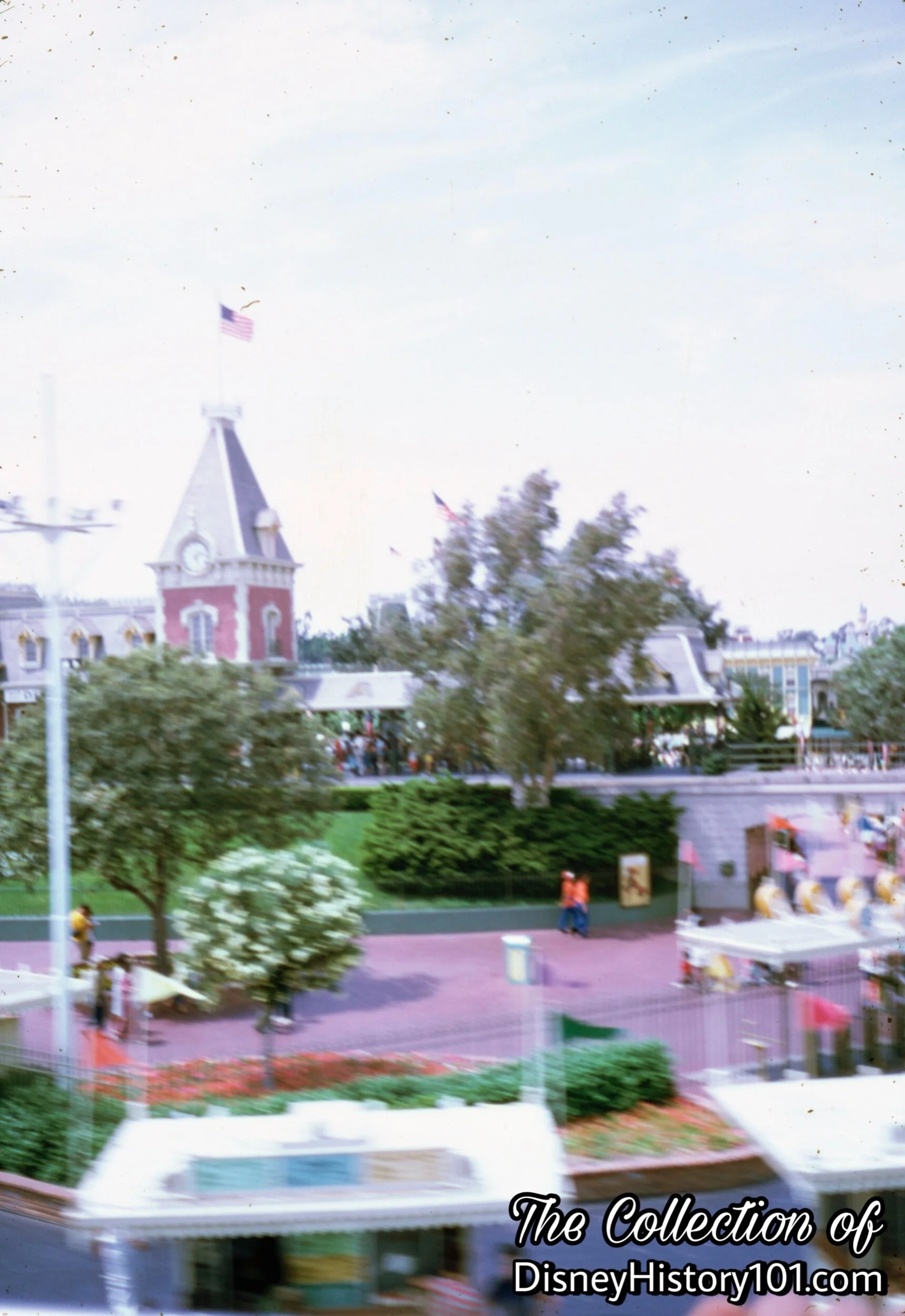
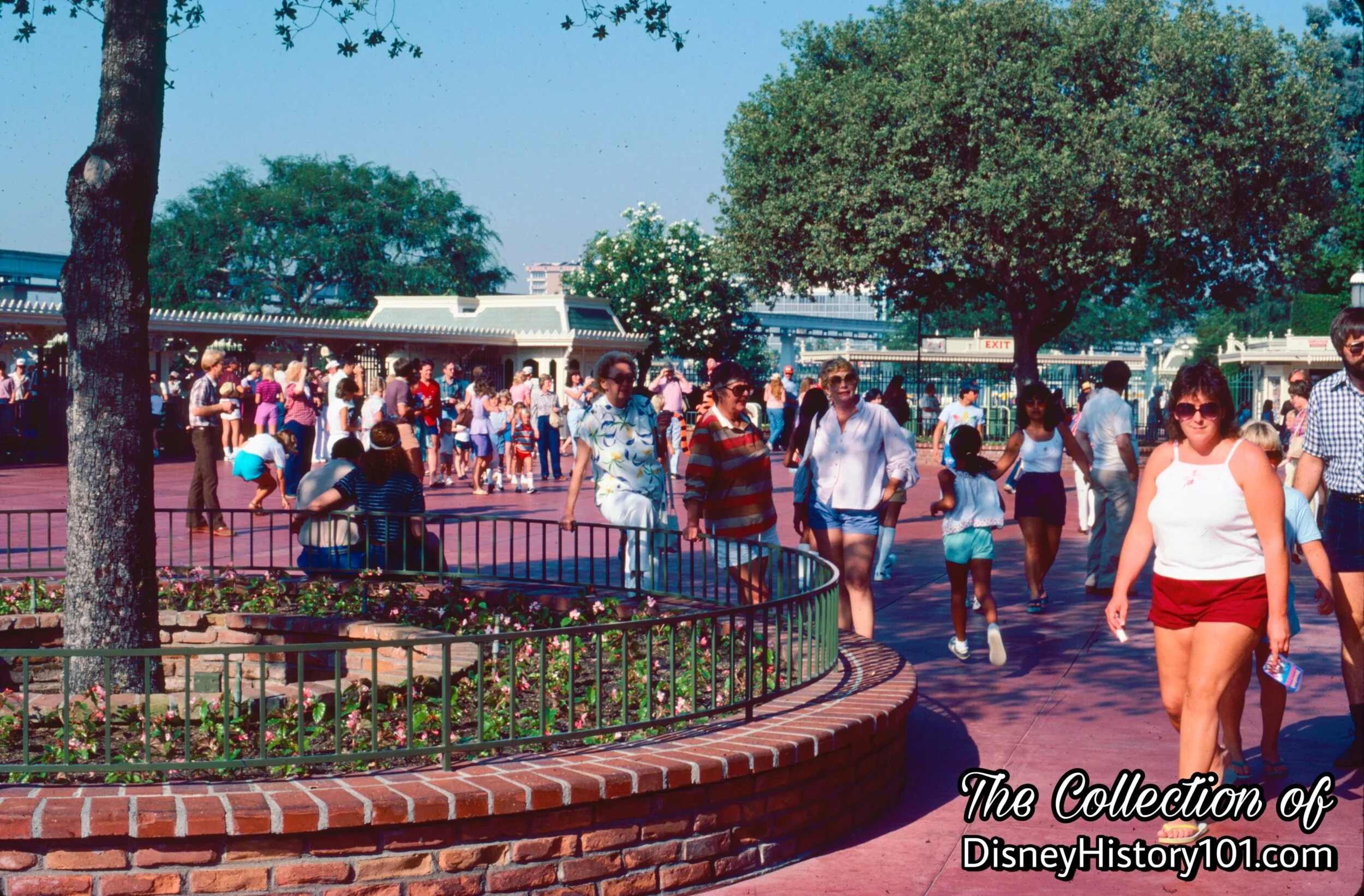
(September, 1983)
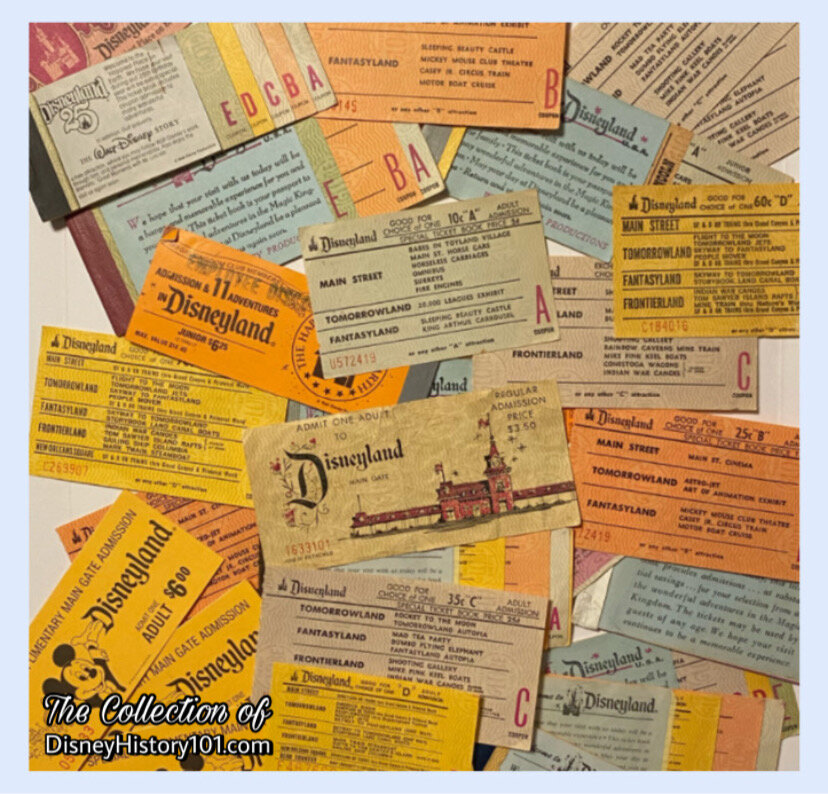
Admission media.
According to Dave Smith (Chief Archivist Emeritus of The Walt Disney Archives), “Ticket Books were introduced in the Fall of 1955, with coupons for the different attractions.” [Disney Facts Revealed by Dave Smith, 2016] By June of 1956, Disneyland Ticket Books (“a choice of eight rides from a list of 25 and admission to the park for a single price”) were $2.50 for adults, $2.00 for Juniors and High School Students, and $1.50 for Children Under 12. Single admissions ($1.00 for adults, 75 cents for Juniors, and 50 cents for children) were still available at all times.
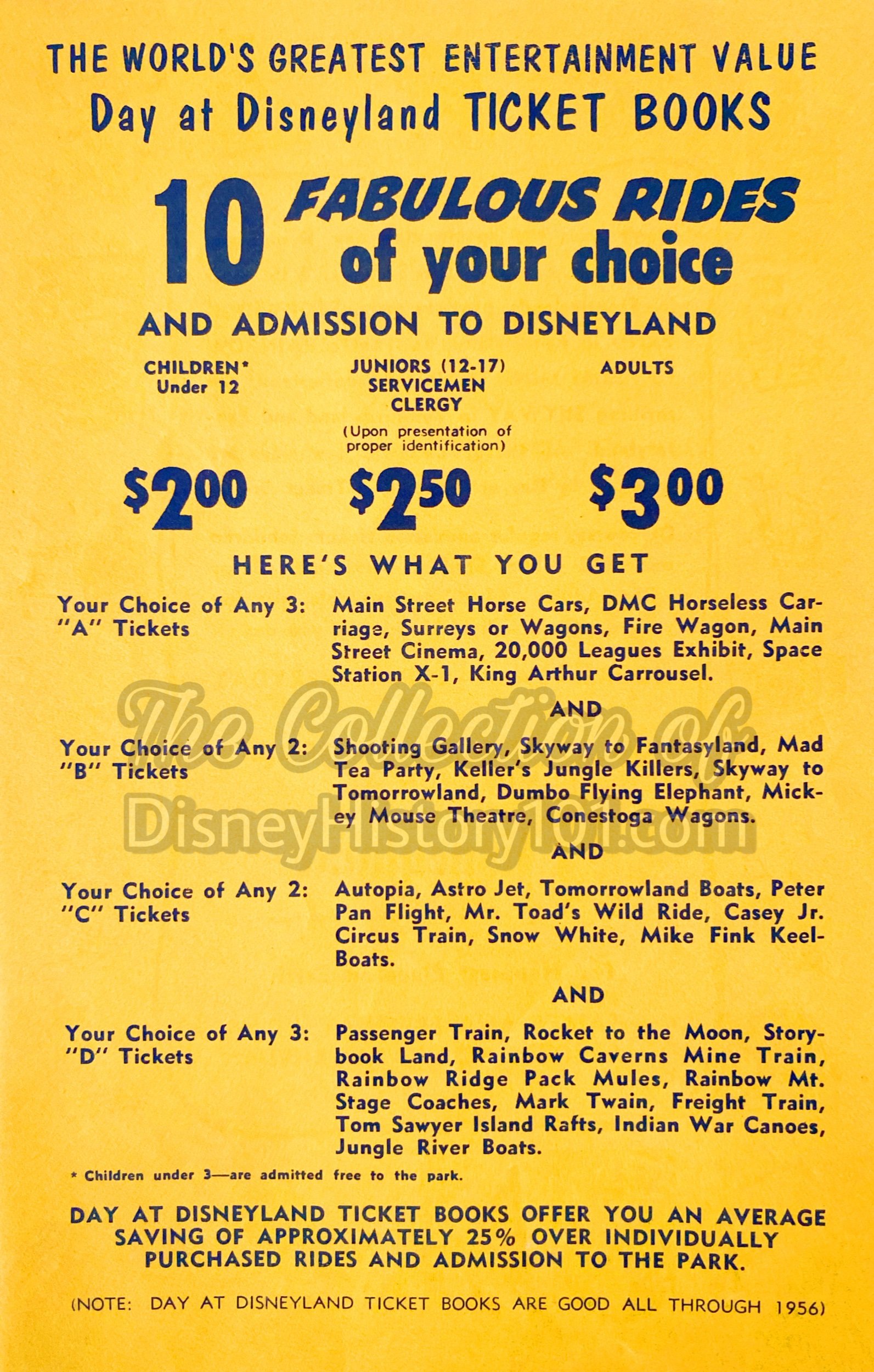
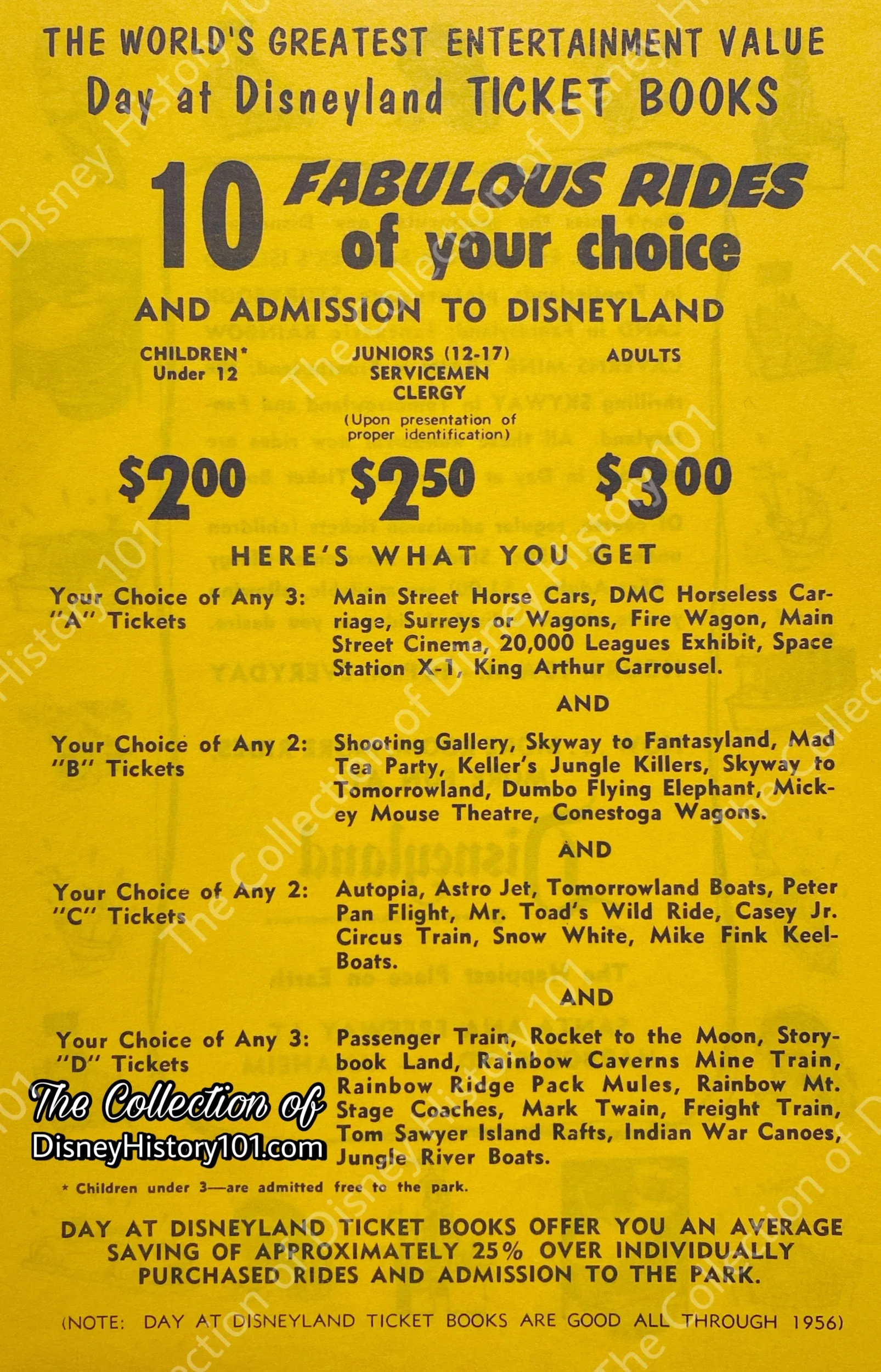
By late 1956 (to early 1957), prices were adjusted to $2.00 (for Children Under 12), $2.50 (for Juniors, Servicemen and Clergy), and $3.00 (for Adults). There were Golden 20 Books (Admission and 20 Rides Plus 2 free Tickets), Jumbo Books (Admission and 15 Rides Plus 2 Free Tickets), and Big 10 Books (Admission and 10 Rides plus 2 Free Tickets) made available to audiences who wanted to enjoy “more room… more rides… more fun… and now more value.”
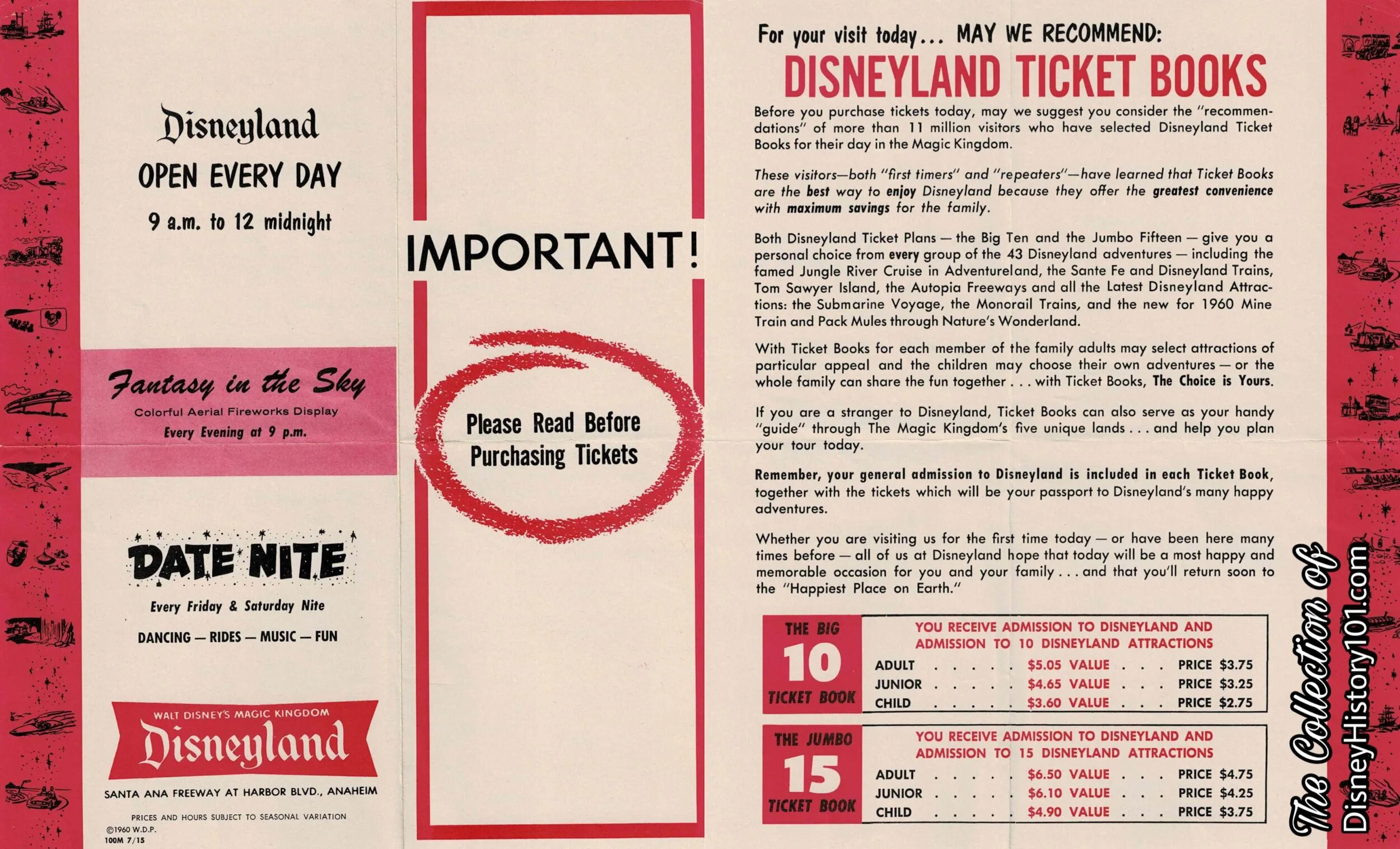
By the winter of 1957 there were two exiting plans available for visitors! The Big 10 + 2 Bonus Ticket Plan and Day at Disneyland Special Guest Cards allowed Disneyland visitors to have “more fun” and enjoy “more rides.” The plans were $2.00 (for Children under 12), $2.50 (for Juniors, Servicemen and Clergy), and $3.00 (for Adults).
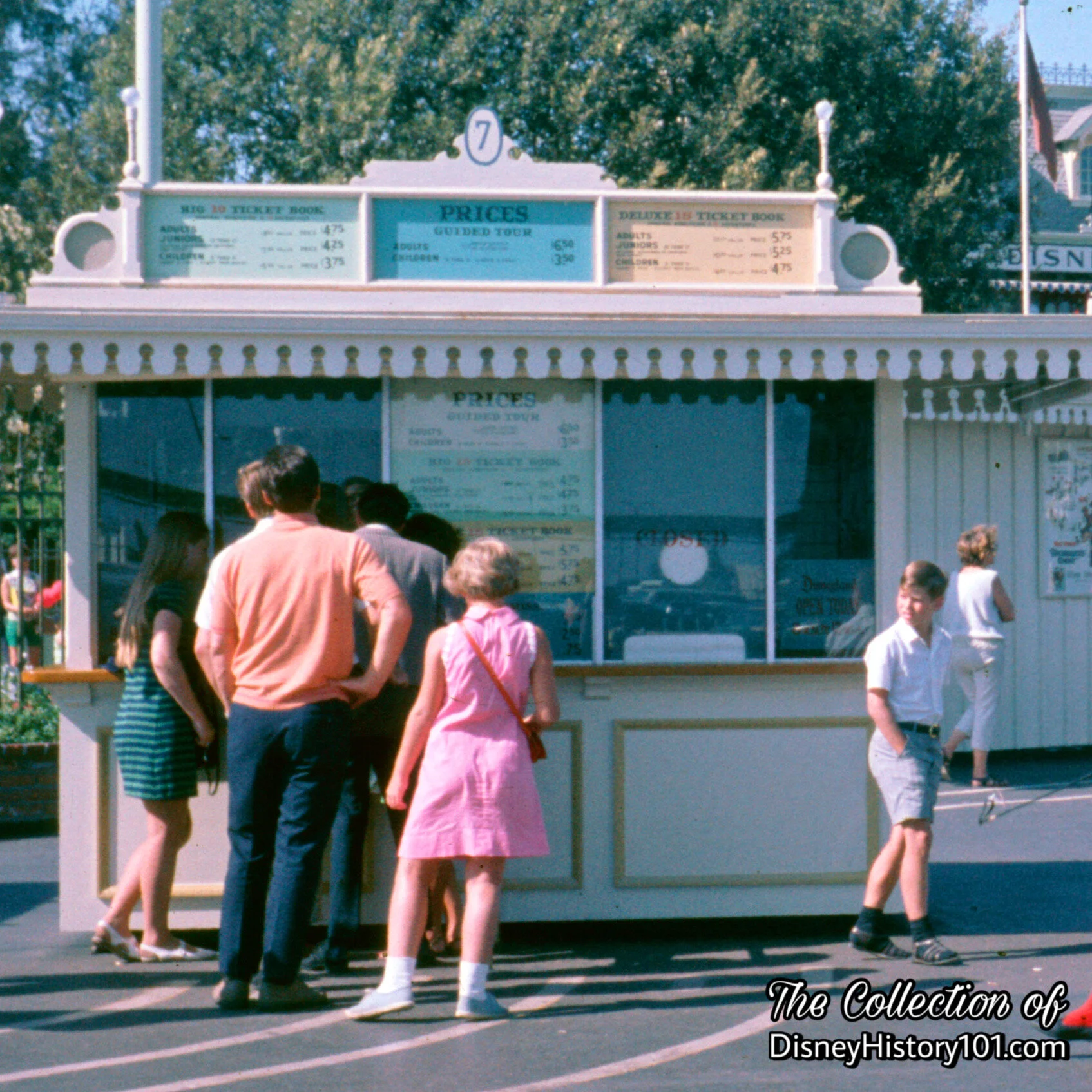
By the Fall of 1967, the Big 10 Ticket Book (including Admission and 10 Disneyland attractions at $4.50 for Adults) and Deluxe 15 Ticket Book (Admission and 15 attractions at $5.50 for Adults) was made available to visitors.
According to Dave Smith (Chief Archivist Emeritus of The Walt Disney Archives), “The ticket books were phased out at both Disneyland and Walt Disney World in 1982.” [Disney Facts Revealed by Dave Smith, 2016]
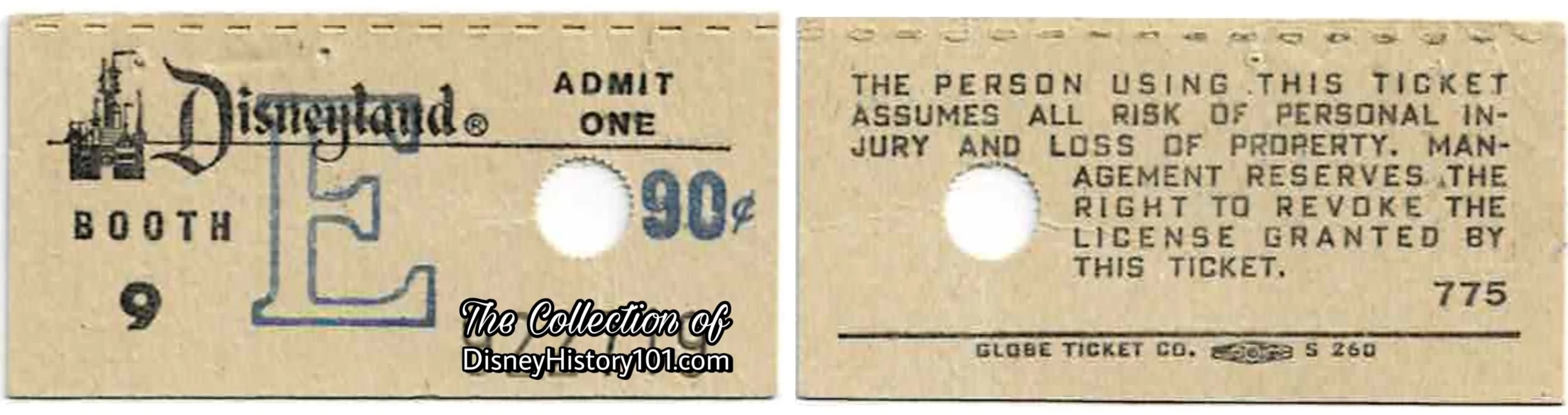
Admission media printed by Globe Media.
Globe Ticket manufactured tickets for contemporaneous theaters of the era. Years later, Globe would manufacture tickets for Walt Disney World.
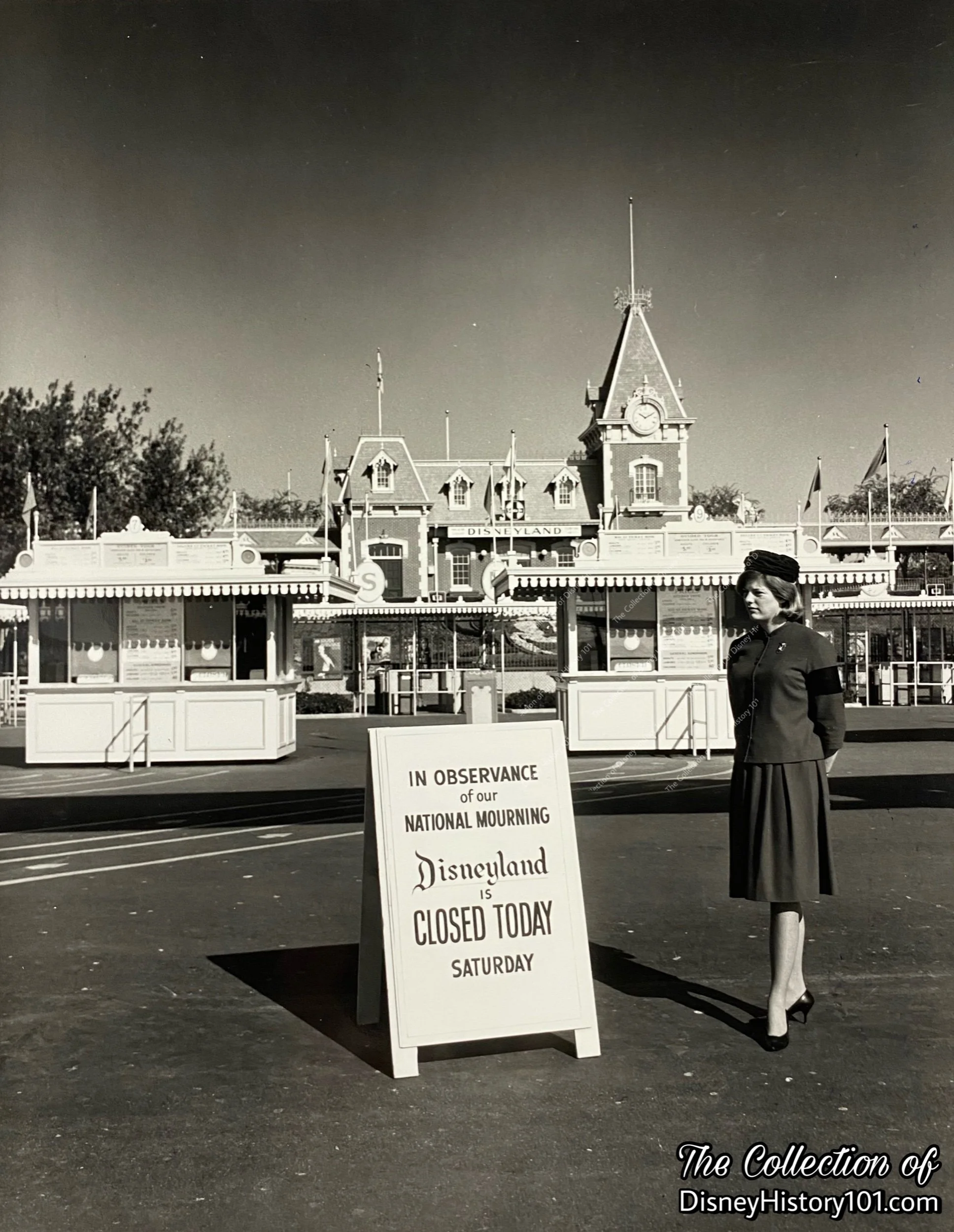
©️Walt Disney Productions.
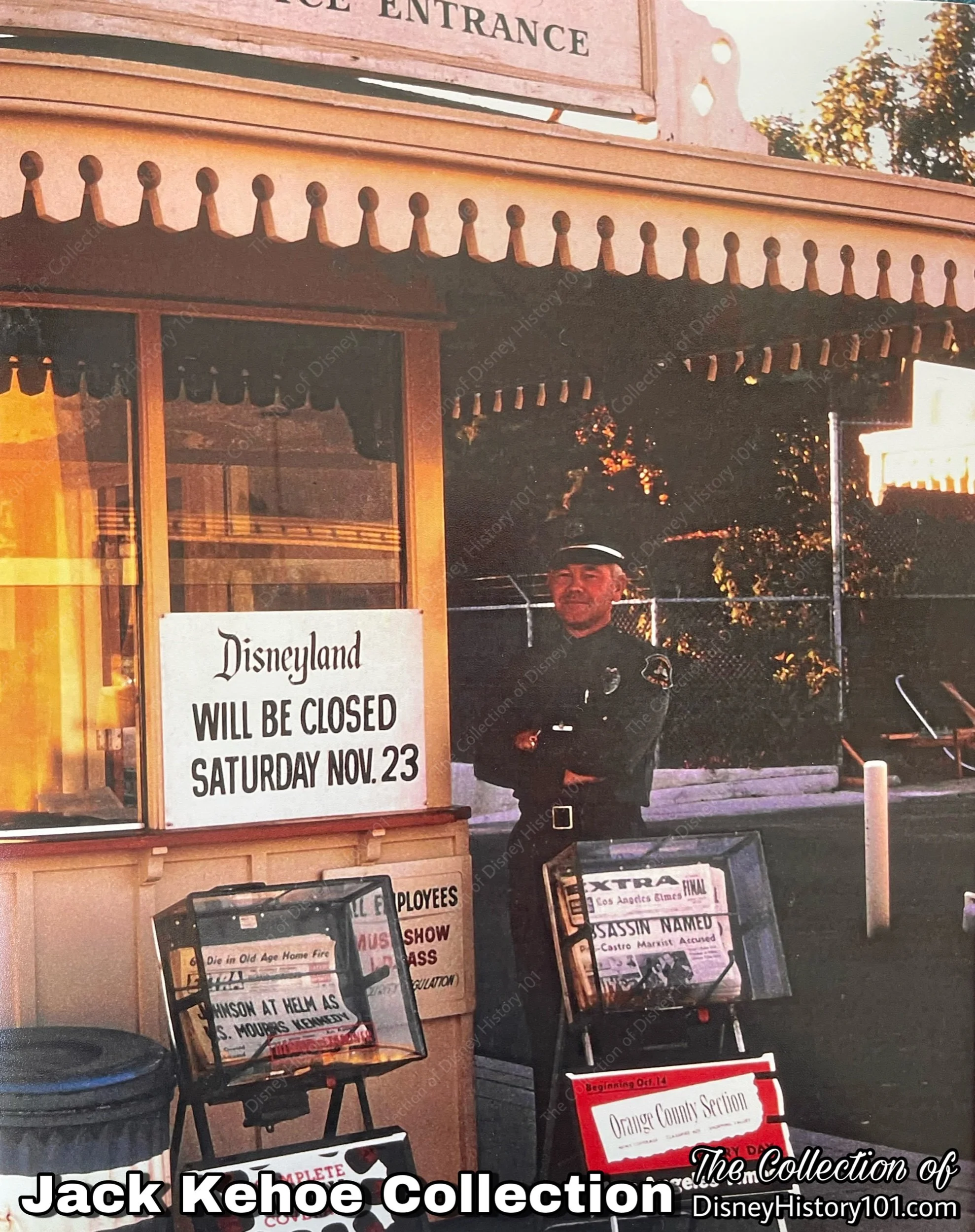
While Disneyland had achieved a “worldwide reputation as a healthy diversion from the trials of the day for children of all ages,” it could not escape National tragedy and resultant mourning.
“Mortals Pay A Token Fee” - Admission Media Through the Years
“The First Disneyland General Admission Tickets” - In one Pre-Opening Day interview with Bob Thomas, Walt was asked, “How much will a trip to Disneyland cost?” In response, Walt said, “We haven’t determined that yet, I’m anxious to make it as low as we can and still break even. We want the repeat business, and of we make the cost nominal, folks will come back.”
When Disneyland opened in 1955 the only means of entrance was through the purchase of General Admission Tickets. According to Dave Smith (Chief Archivist Emeritus of The Walt Disney Archives), “The original admission tickets sold at the front gate of Disneyland in 1955 were simply admission tickets… The original admission tickets did not have an expiration date ; they could still be used today.” [Disney Facts Revealed by Dave Smith, 2016] “Information for your visit to Walt Disney’s Magic Kingdom - Disneyland” addressed the question “How much will it cost?” this way : “Disneyland is designed for the enjoyment of everyone and will always be within everyone’s budget.” The same source then continued to cite the Admission prices at the time of printing : “General Admission to the Magic Kingdom for children under 12 is 50 cents ; for juniors (ages 12 to 17), 70 cents ; and for Adults (90 cents).” According to a special section, published in the Orange County Register (July 15, 1955), General Admission to Disneyland cost $1.00 (tax included) for adults, 75¢ for juniors, and 50¢ (tax free) for children under 12.
Woodsy Wordsworth of Payroll recalled opening day: “We had little ticket machines and we'd run out and pick up a big bunch of cash. We didn't have many ticket booths then.”
“Special Rates” - Even as long ago as 1955, special admission ticket rates were also available to groups and conventions, by writing the Disneyland Director of Customer Relations. A repeal of the 10% Federal Admissions Tax resulted in “savings in general admission prices which is being passed on to you.” Adults were now 90¢ each, Children Under 12 were 50¢ each, Students, Servicemen, and Clergy were now 70¢ each.
“The First Ticket Books” - Van Arsdale France once reflected on the need for ticket prices this way: “If you've ever wondered about the kind of ticket book to purchase at Disneyland, you may be surprised to learn that in the beginning nobody even thought of them. In fact, Nat would say in his soft voice that the entrance price was to be twenty-five cents for adults and fifteen cents for children. The only reason for any price was to keep undesirables out.” Walt also once said a “word in regard to the concept and conduct of Disneyland’s operations tone… There will be none of the ‘pitches,’… and devices to milk the visitor’s pocketbook.”
So when the Park first opened In 1955, Admission to the various attractions was by separate purchase of Individual tickets, inside the Park, for each attraction the guest wished to take. Attesting to this are the words of Van France who recalled: “When we opened in 1955, our General Admission was $1.00, and then all attractions had individual prices, from 10¢ to 35¢.”
There was some criticism toward this system so the first Ticket Book was developed late in 1955 and offered for sale beginning on October 11th, 1955.
Titled “A Day at Disneyland,” the books contained A, B, and C tickets, at an adult cost of $2.50. This book provided a package to be marketed at the Main Gate. It offered the guest admission and a choice of eight attractions in three categories. “A” Coupons were for the Main Street (Street Car, Surrey, Fire Wagon, and Cinema), Tomorrowland (Space Station X-1 or 20,000 Leagues Exhibit), and Fantasyland King Arthur Carrousel. “B” Coupons were for the Frontierland Conestoga Wagon or Freight Train, Tomorrowland Phantom Boats, and Fantasyland (Mad Tea Party, Casey Jr. Train, Dumbo Elephant, Mickey Mouse Theater). “C” coupons included the Frontierland Mule Pack, Stage Coach, Mark Twain Riverboat, Main Street Passenger Train, Fantasyland Peter Pan, Mr. Toad, Snow White, Tomorrowland Autopia Car, T.W.A. Rocket to the Moon, and the Adventureland Jungle River Boat.
The structure of the first ticket book was difficult because of the limited number of attractions and capacity that was available. Still, the Ticket Book was well suited to Disneyland's operation and utilized for four main reasons:
The ticket book provided a package to market at the Main Gate which in turn provided the best value for the guest.
The ticket book permitted the guest to receive the best show for a more enjoyable visit.
The ticket books served to distribute the guests throughout the Park.
Ticket books served to utilize the attraction capacity of the Park most efficiently.
In the end, mortal visitors would pay this aforementioned “token” fee - but at a reasonable value for Admission Media. A prime example of the “value” is one of Jack Lindquist’s recollections (to Disneyland LINE, Vol.25, No.28) perfectly reflecting feelings of young guests during 1955. “It was our first Christmas Eve and I was walking down Main Street just before closing, behind a family. They were neatly dressed, but you could tell they were not well of. When they reached the Emporium, the little girl looked up at her mother and said, ‘You’re right, Mommy, this is better than having Santa Claus visit tomorrow.’”
1956 - Improvements on ticket book makeup and the installation of additional attractions and capacity have provided a better ticket book for the guest. During June of 1956, a new Disneyland Ticket Book plan was put in effect, offering a choice of eight rides from a list of 25 and admission to the Park for a single price.
“A Day at Disneyland” Ticket Books still included three lettered tiers. A” Coupons were for the Main Street (Street Car, Surrey, Fire Wagon, and Cinema), Tomorrowland (Space Station X-1 or 20,000 Leagues Exhibit), and Fantasyland King Arthur Carrousel. “B” Coupons were for the Frontierland Conestoga Wagon, Freight Train, and Keel Boat (the latter which recently debuted), Tomorrowland Phantom Boats, and Fantasyland (Mad Tea Party, Casey Jr. Train, Dumbo Elephant, Mickey Mouse Theater). “C” coupons included the Frontierland Mule Pack, Stage Coach, Mark Twain Riverboat, Main Street Passenger Train, Fantasyland Peter Pan, Mr. Toad, Snow White, Tomorrowland Autopia Car, T.W.A. Rocket to the Moon, and the Adventureland Jungle River Boat.
Single General Admission prices were as follows: for adults was $2.50, for juniors and senior students was $2.00, and for children under 12 was $1.50. By October 3, 1956, the Silver Pass was extant, and gifted (by Jack Sayers, Disneyland Customer Relations Director) to the five-millionth Guest - four-year-old Debra Rutherford (of Quincy Washington) and her sister Patricia and their parents - who had passed through Disneyland’s gates. The D ticket was added to ticket books during 1956.
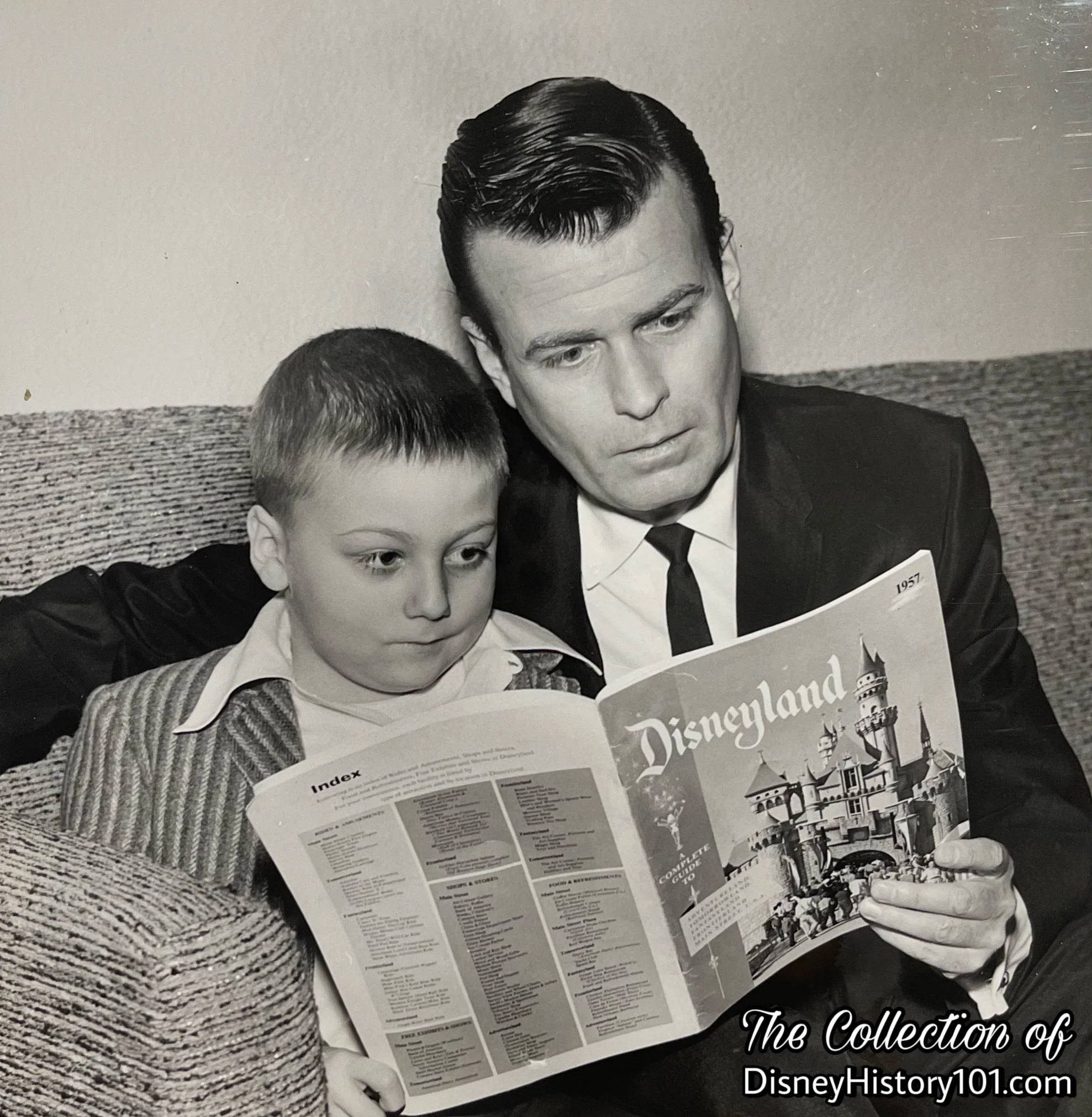
1957 - April of 1957, saw the creation of the Disneyland Group Sales Department. According to “A Complete Guide To Disneyland” (published 1957), “the average cost of a visit to Disneyland is $2.29, which includes admission to the Park, rides, amusements, souvenirs, and parking.” The Day at Disneyland Special Guest Cards (for industry members) were a precursor to all-inclusive Passports which would not appear for more than two decades. Day at Disneyland Special Guest Cards (billed as “an exciting new plan to visit Disneyland”), offered guests the magic key to unlocking all of Disneyland’s wonderful rides and attractions (at a value of $4.00 for children 12 and under, and $6.00 for all others). This was available for the first time in 1957, and was also called “the finest way to visit Disneyland”! Regular Admission Tickets were 50c (for Children under 12), 70c (for Juniors), and 90c (for Adults).
1958 - It was resolved that the ticket books in the future will Include all paid attractions and will continue to be the prime admission media for Disneyland.
Thanks to Milt Albright and his staff, the Magic Kingdom Club was added to the Disneyland Group Sales Department during the Fall of 1958. In 1958 the Guided Tour was Inaugurated as a new medlum of admission for guests. The tour is well suited for those guests who were tour oriented, have a limited time to visit, were generally older and are first-time visitors.
1959 - Within a year of its creation, the Magic Kingdom Club had grown to a membership of a quarter of a million. The Disneyland Recreation Club joined the Magic Kingdom Club late in 1959, to offer club benefits to all Disneylanders. The popular E ticket was added in 1959. By 1959, pre-arranged groups of 25 or more qualified for a ten percent discount of both the “Big 10” and “Jumbo 15” ticket books under the Ticket Book Plan, enabling large groups to enjoy massive savings. The orders were placed two days prior to the visit and the tickets were conveniently waiting for the group at the Group Windsor at the Main Gate.
1962 - Starlite Ticket Books were designed especially for those who wish to enjoy Disneyland After Dark, and were sold from 6 P.M. 'til closing each evening. Each Starlite Ticket Book contains general admission tickets and choice of 12 tickets for Disneyland's rides and attractions. Tickets were only to be used during the summer through September 22 in the evening hours from 6 P.M. until closing. Each book is priced at $5.00 and was meant to be used by persons in any age group.
General admission ticket prices: Adult, $1.60. Juniors, (12 thru 17 yrs.) $1.20, children (under 12) 60¢. Individual tickets for rides and attractions are priced from 10¢ to 40¢ for children (under 12 yrs.) ; 10¢ to 50¢ for adults. Children under 3 years are admitted free to the Park and on most rides and attractions, when accompanied by an adult or older child. Exceptions: Carrousel, Midget Autopia, and Pack Mules.
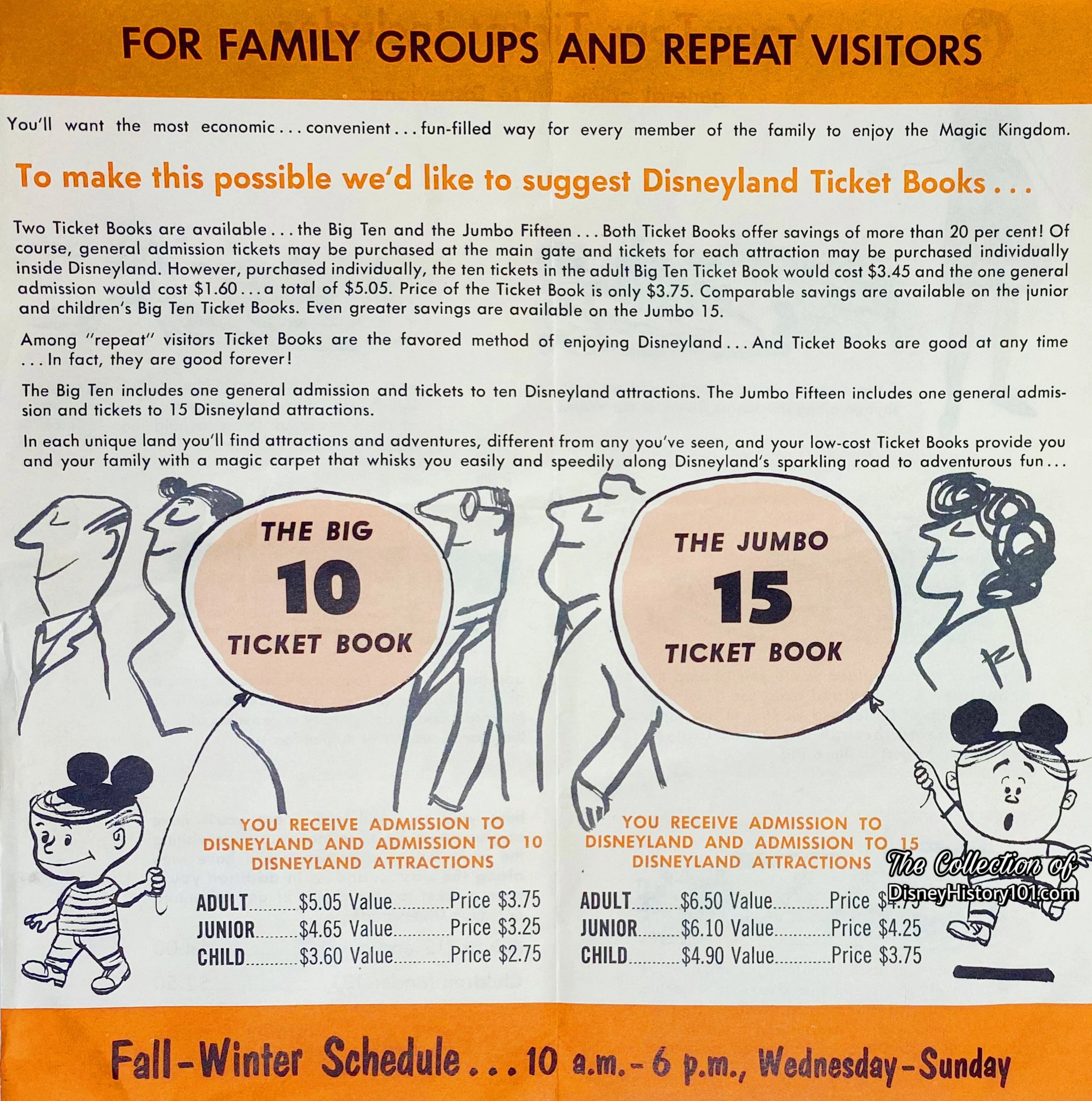
Ticket Books: All Disneyland's 43 attractions and rides are listed in each book. Typical value was the Big Ten Ticket Book for adults, which contained admission and choice of 10 attractions at a cost of $3.75. If general admission and the same tickets were purchased separately, the cost would have been $5.50.
1963 - Brad new Magic Kingdom Club membership cards were available on June 1st, promising 48 attractions to some 340,000 “members of the more than 1000 business firms and military bases that are members of the MKC” in Southern California. [Disneyland News, Vol.1, No. 2]. Many organizations (like the Welfare and Recreation Department of Autonotics, in Anaheim) availed themselves of the Magic Kingdom Club benefits.
1964 - The “Admission & 20 Adventures in Walt Disney’s Magic Kingdom Disneyland” Special Guest Book was offered.
1965 - During the mid-1960s, Disneyland began offering Special Main Gate Admissions to all returning Viet Nam Servicemen as a “Welcome Home” and “heartfelt thanks”! The $9.00 Value Package cost $1.00 to these Servicemen, and included a Special 10 Ride Ticket Book (valued at $8.00) which was not available to the public. These offers continued from c. 1965 - 1975.
1966 - 1966 Ticket Media included General Main Gate Admission (Adult, Junior, and Child), Guided Tour (Adult, Junior, Child), Date Nite Book (For Couples Only; Adult and Junior), 10 Adventure Book (Adult, Junior, Child), Magic Kingdom Club 10 Adventure Book (Winter Only; Adult, Junior, Child), Magic Kingdom Club 12 Adventure Book (Summer Only; Adult Junior Child), and the 15 Adventure Book.
Daily Operations Reports gave supervision a day by day picture of the performance of each show, but also served as a source of valuable information for future research. The repots also determine changes in ticket book make.
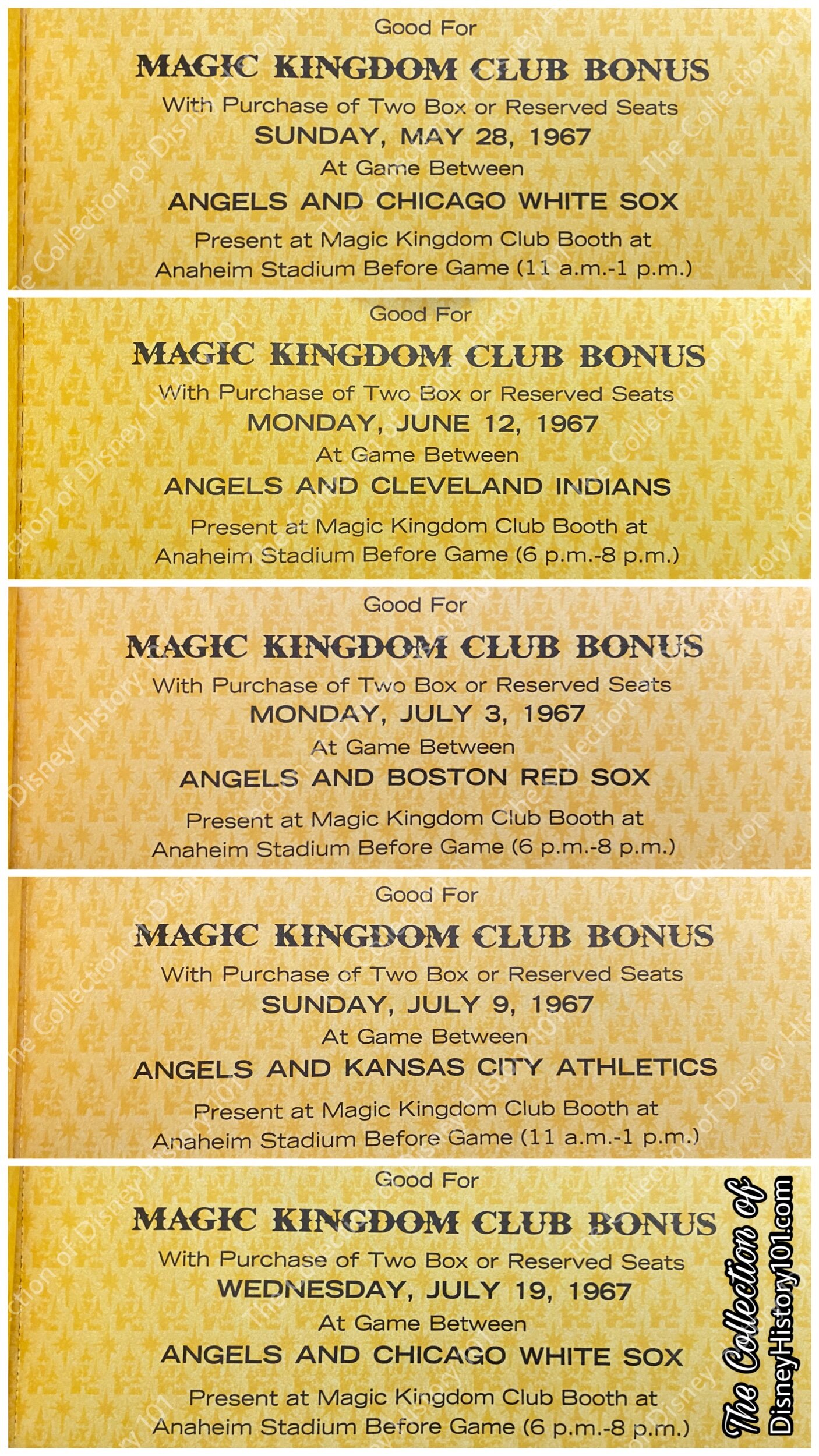
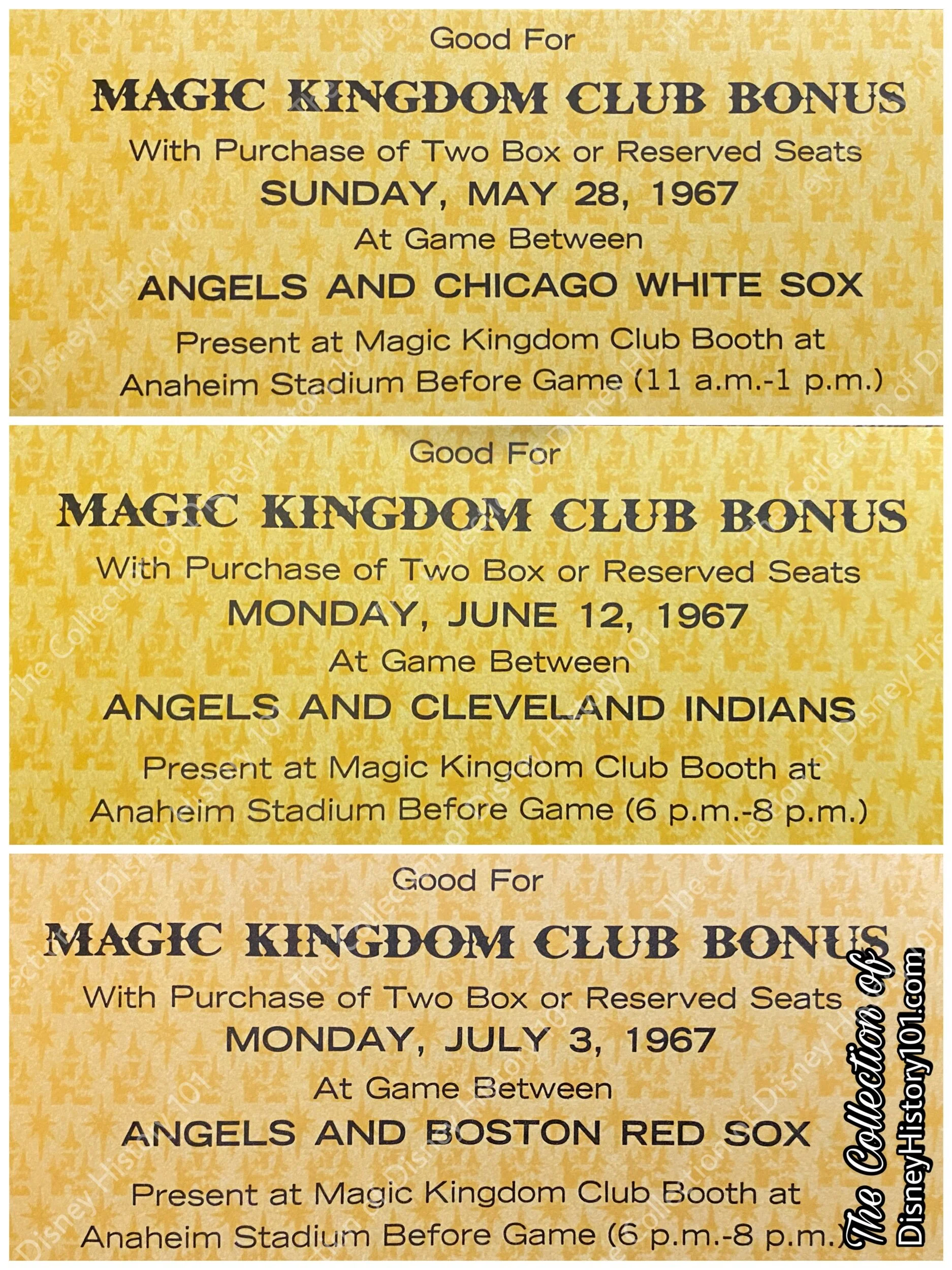
Walt Disney & Disneyland’s partnership with the Gene Autry & the Angels resulted in “Disneyland Double Headers” (days of baseball ending with an evening at the Magic Kingdom)!
1967 - There were two plans to choose from, the Big 10 and the Deluxe 15. The Big 10 offered $8.10 worth of individual adult admission and attraction tickets for a total price of $4.50. Similarly, for a $10.80 value, the Deluxe 15 cost adults only $5.50. Disneyland's individual attractions were broken down into letter categories. The most expensive were “E,” the next “D,” and so on to “A.” Both the Big 10 and Deluxe 15 offered tickets in all categories, with more “E” and “D” tickets than “C,” “B” and “A.”
During the summer 1967, Disneyland Ticket Books replaced Walt Disney’s “signature” on the “Welcome” stubs with “Walt Disney Productions.”
1968 - During the Spring, Magic Key Ticket Book offered admission and 10 attractions of Guest’s choice.
1969 - General Admission was included with Big 10 Ticket Books ($3.75-4.75), Deluxe 15 Book ($4.75-5.75), Guided Tour ($3.50-6.50), and the Magic Kingdom Club 12 Ride Book ($3.50-4.50). General Admission was not included with the 10-Ride Book ($3.00; composed of ABCDE tickets) or the 5-Ride Book ($3.00; Any five attractions).
1975 - “Scotty, Earl “55er” Wuestneck’s foreman at the Main Gate, says that the guests are continuously amazed at Earl's feats with the ticket books. ‘It seems that quicker than a wink Earl can take a ticket book In each hand or fan out seven ticket books at a time and remove the covers, place them under the books and flip the books back to the spellbound guests.’… Most of all, though, Earl is famous for being a Disneylander who has never been away sick for even one day in twenty years! One time he was bitten by a black widow spider. His arm and lips became swollen and discolored, but MISTER RELIABLE remained at his post!”
1978 - In 1978, the Main Gate Pass admitted the designated pass holder and a specified number of dependents or Guests to the Parking Lot and Main Gate of Disneyland and/or Walt Disney World every day of Park operation. It is not valid for tickets or free admission to any attraction. Non- employee card holders will have "NE" typed in the upper right corner on the signature side of the card. They are not entitled to discounts on Merchandise.
The Silver Pass admitted the designated pass holder and a specified number of dependents or Guests to the Parking Lot and Main Gate of Disneyland and/or Walt Disney World every day of Park operation. In addition, the pass holder may receive a corresponding number of complimentary Magic Key Ticket Books from City Hall on Main Street. The Pass itself is not valid for admission to attractions in the Park or for complimentary tickets from any of the In-Park ticket booths. Non-employee card holders will have "NE" typed in the upper right corner on the signature side of the card. They are not entitled to discounts on Merchandise.
The Gold Pass Entitles the named all parking privileges, unlimited admission to the Main Gate for dependents and Guests, and unlimited complimentary tickets from City Hall. The Gold Pass is also good for admission to any attraction in the Park, however it may be more convenient for the bearer to obtain his/her complimentary tickets. Non- employee card holders will have "NE" typed in the upper right corner on the signature side of the card. They are not entitled to discounts on Merchandise.
The Golden Ears Club Pass card entitles the holder to special privileges upon retirement. In many cases it is the only Disney identification the card holder will have. It allows the retiree to participate in employee activities, purchase discount tickets, and receive a 20% discount when paying cash on items other than newspaper, food or tobacco. The Golden Ears Club I.D. is not to be used as a Main Gate Pass during regular operating hours.
1979-1980 - September to May, the Passport was offered (Adults, $8.50 ; Juniors [12-17], $8.00 ; Children [3-11], $7.50), Magic Key Tickets (1 Day Admission, 11 Attractions) $15.90, $14.90, $11.80.
1981 - By 1981, Ticket Sellers and Takers contributed $91,641,000 (Main Gate) and $1,873,000 (In Park) in revenue (of $94,576,000 area sales) for Center Stage at Disneyland.
1982 - Beginning Wednesday, June 16th, 1982, Disneyland offered just one kind of ticket - Passports! The Passport, good for admission and unlimited use of Park attractions (except shooting galleries), became the exclusive ticket media for Disneyland. No longer were attractions designated as A, B, C, D or E adventures. Previously purchased A through E coupons became redeemable for discounts on the purchase of a Passport. The ticket prices were $12.00 (adults), $10.50 (juniors), and $9.00 (children).
1983 - The Disneyland Attraction Coupons were discontinued, June 16th being the first day that guests only needed to purchase a Disneyland Passport and nothing else. Sometime later, “a Handstamp and Disneyland Passport… [were] required for Readmission,” as indicated by signs. The Annual Passholder system was introduced in 1983. An Annual Passholder/AP was one who purchases ticket media providing admission to both parks for one year. Blockout dates and other restrictions may apply.
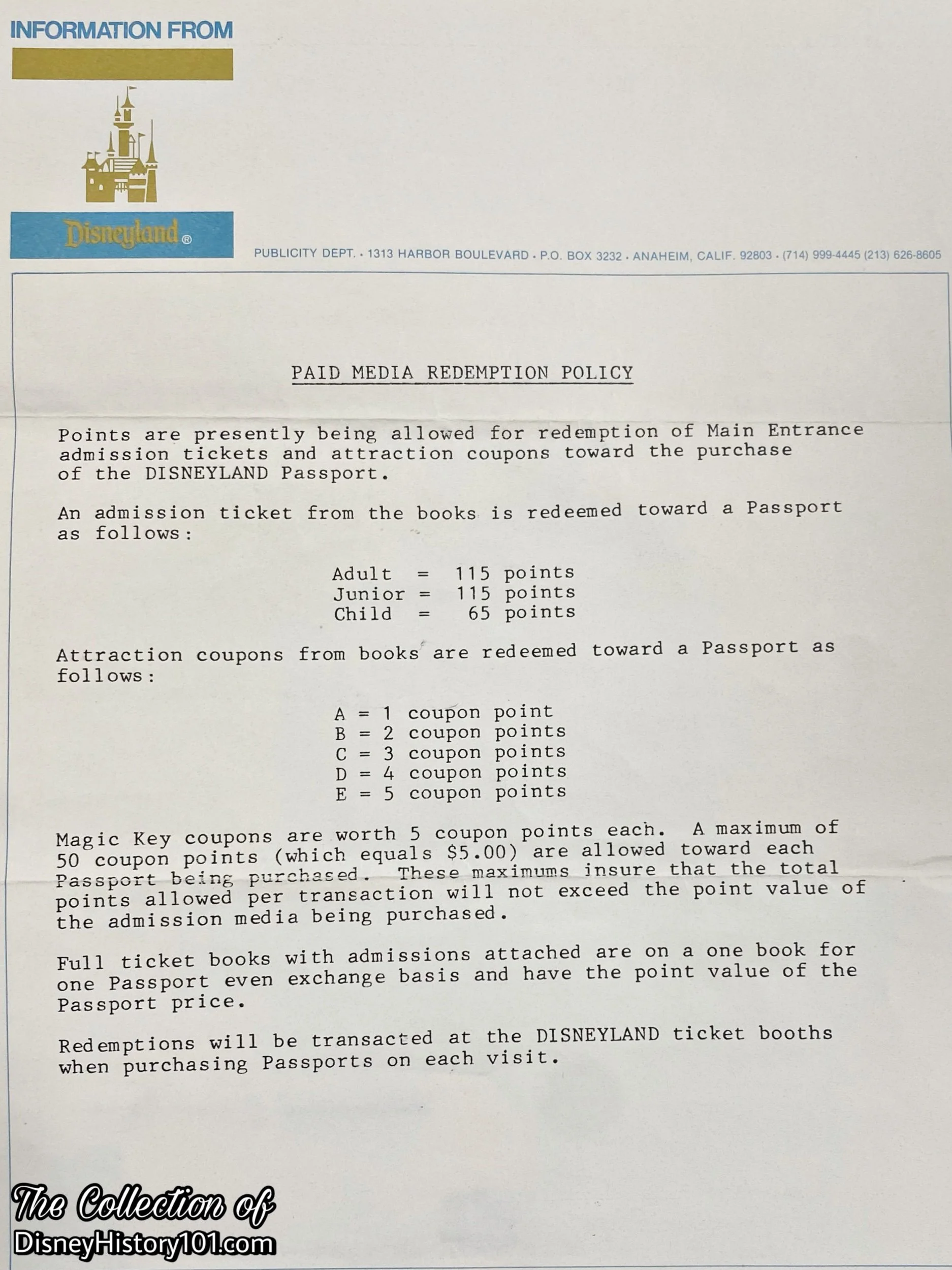
Points were being allowed for redemption of Main Entrance admission tickets and attraction coupons toward the purchase of the DISNEYLAND Passport. An admission ticket from the books was redeemed toward a Passport and Attraction coupons from books were redeemed toward a Passport. Magic Key coupons were also worth coupon points. A maximum of 50 coupon points (which equals $5.00) are allowed toward each Passport being purchased. These maximums insure that the total points allowed per transaction would not exceed the point value of the admission media being purchased. Full ticket books with admissions attached were on a one book for one Passport even exchange basis and have the point value of the Passport price. Redemptions would be transacted at the DISNEYLAND ticket booths when purchasing Passports on each visit.
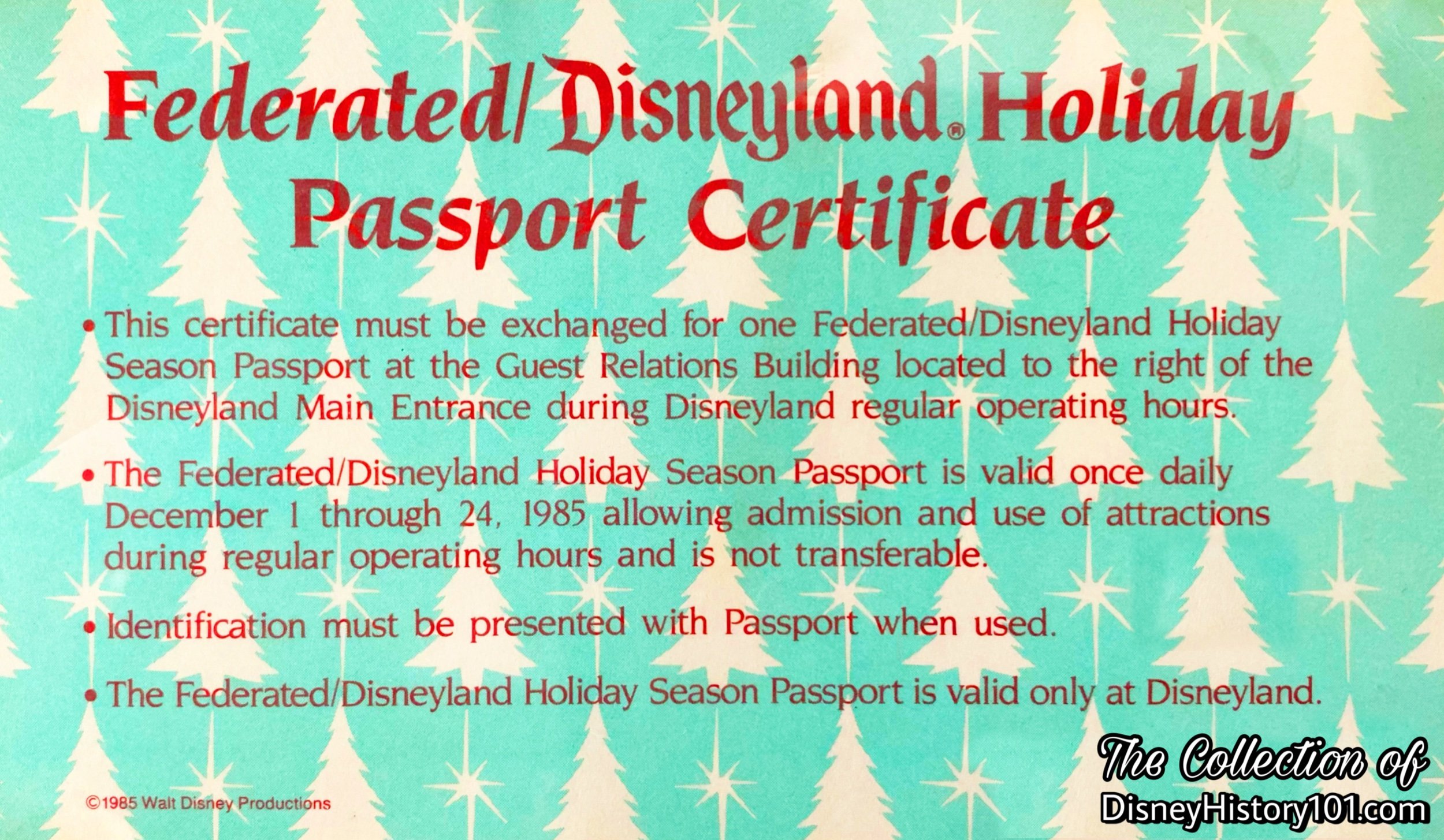
1984 - Walt Disney Productions Quarterly Reports shared that “revenues were favorably influenced by June 1984 admission price increases at all parks, partially offset by slightly lower attendance.” Passports Adult ($14.00), Children 3 thru 12 ($9.00). The Federated Disneyland Holiday Passport Certificate was valid once daily from December 1 through 24, 1985 allowing admission and use of attractions during regular operating hours.
A number of Passports were available including the Senior Citizen Passport (Age 60 and above, Thurs. & Friday only) $10.00, Disneyland Passport ($14.00-$ 9.00), Disneyland 2-Day Passport ($24.00-$16.00), Disneyland 3-Day Passport ($31.00-$22.00), Magic Kingdom Club Passport ($13.00-$8.00), Magic Kingdom Club 2-Day Passport ($22.00-$14.00), Magic Kingdom Club 3-Day Passport ($28.00-$19.00), and the Magic Kingdom Club Annual Passport ($65.00-$45.00).
1985 - One-day Adult Passports were $16.50, while Passports for children 3 thru 12 were $10.50.
1986 - Annual Passholders could bring a guest to Disneyland for only $9.95 after 5p.m.
1987 - Disneyland One day Passports ($28.00 for Adults, and $21.00 for Juniors [children 3 thru 11]) Tickets and hand stamps were required for re-admission.
According to Dave Smith (Chief Archivist Emeritus of The Walt Disney Archives), “There is a Disney Gold Pass. It is given on an annual basis by Disney Executives to Disney Board Members, leaders of companies that are Disney Participants, and other VIPs. The number of Gold Passes, which began during Walt Disney’s lifetime, has not been released, but there are not many of them.” [Disney Facts Revealed by Dave Smith, 2016]
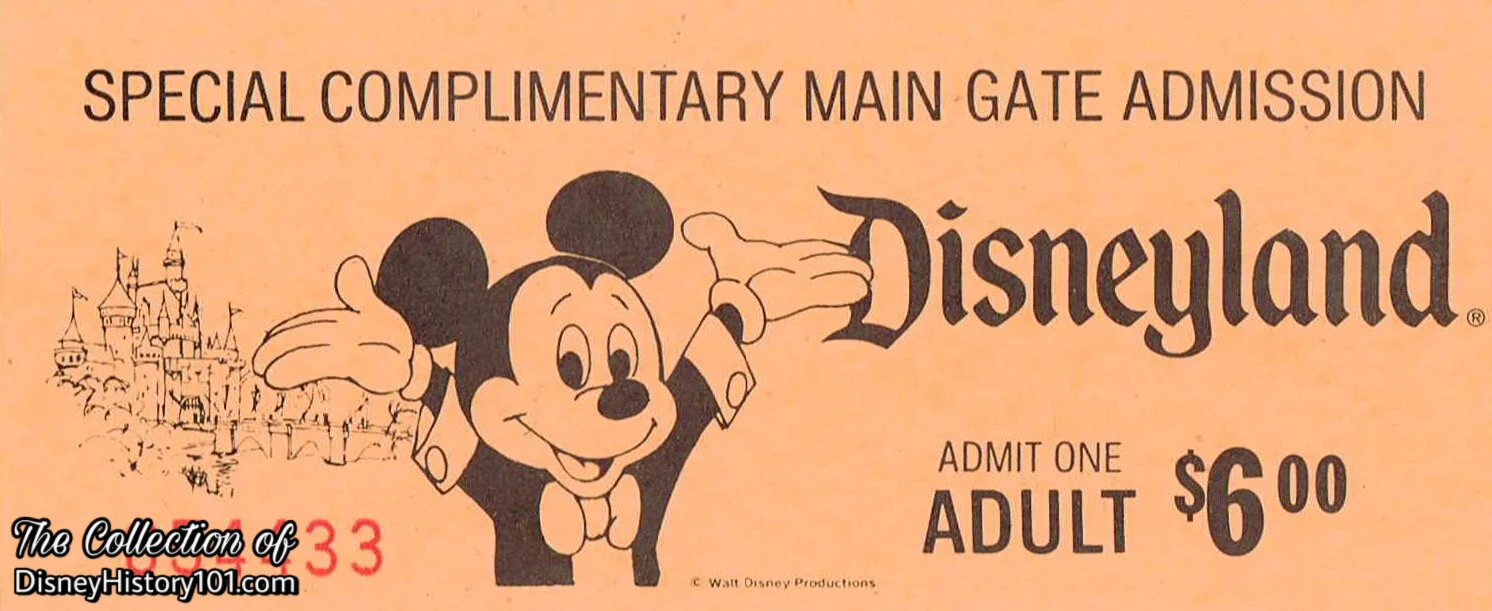
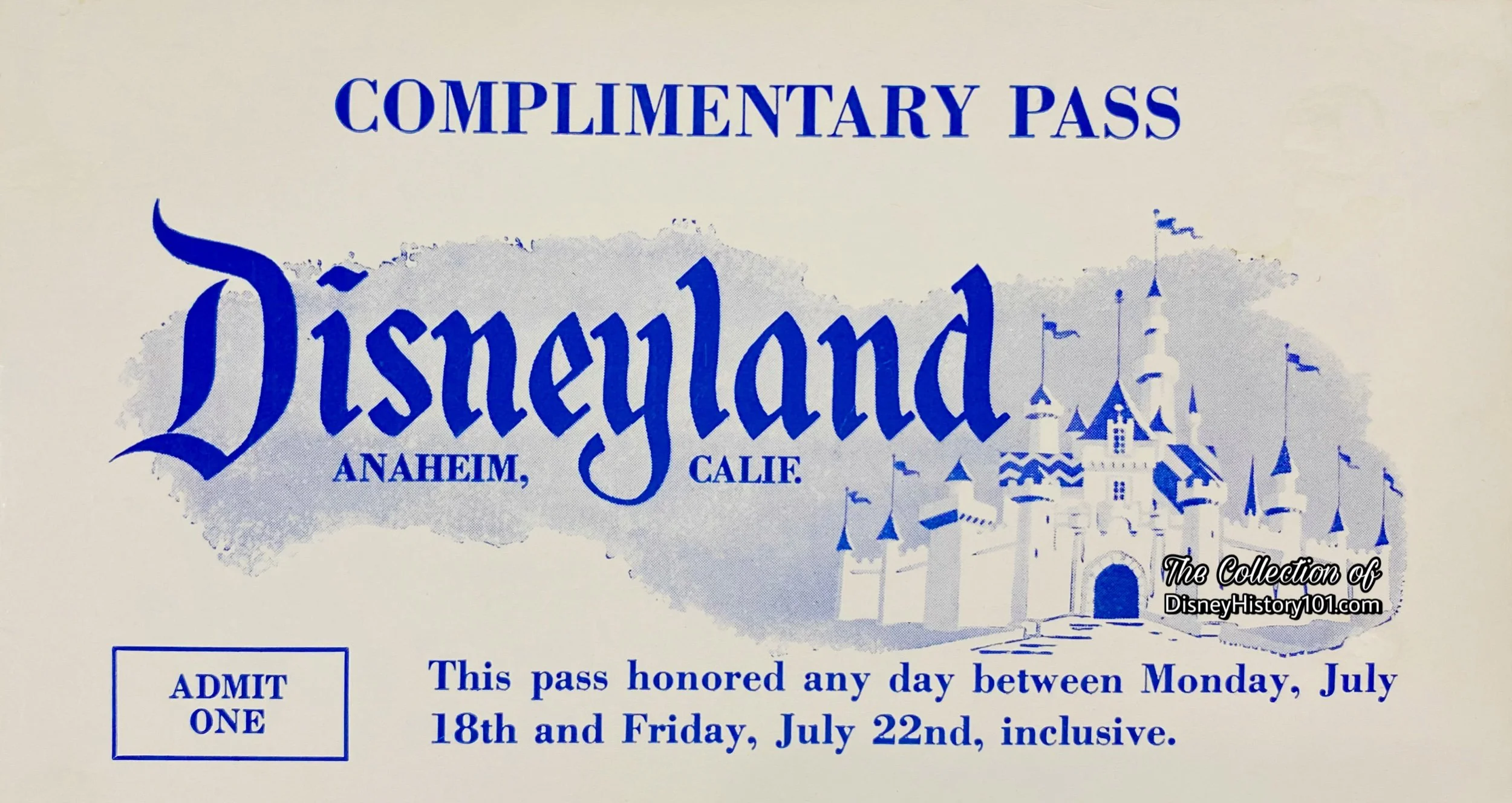
Complimentary Main Gate Admission media.
Complimentary Passes Departmental Services
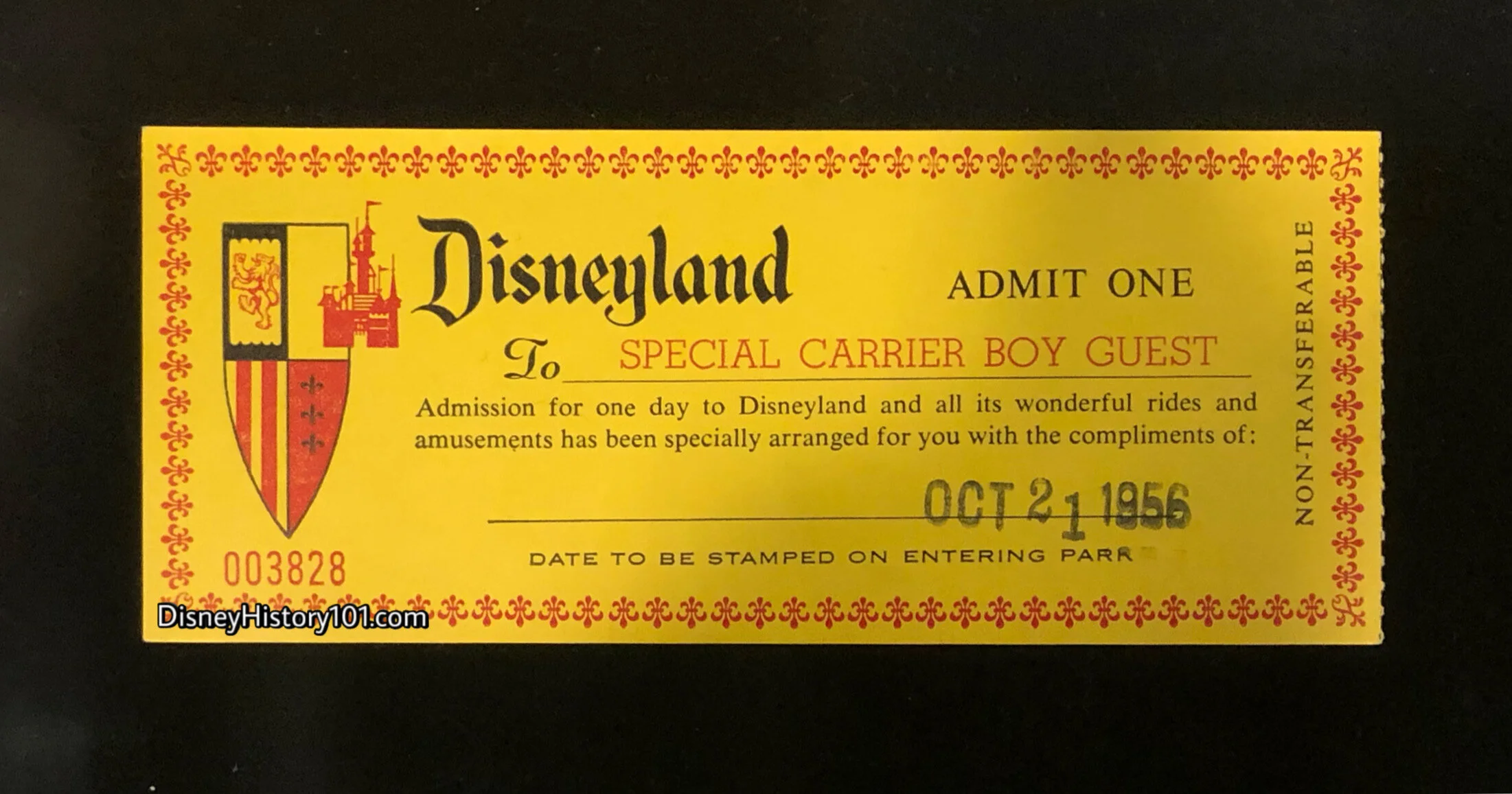
Complimentary Admission Media.
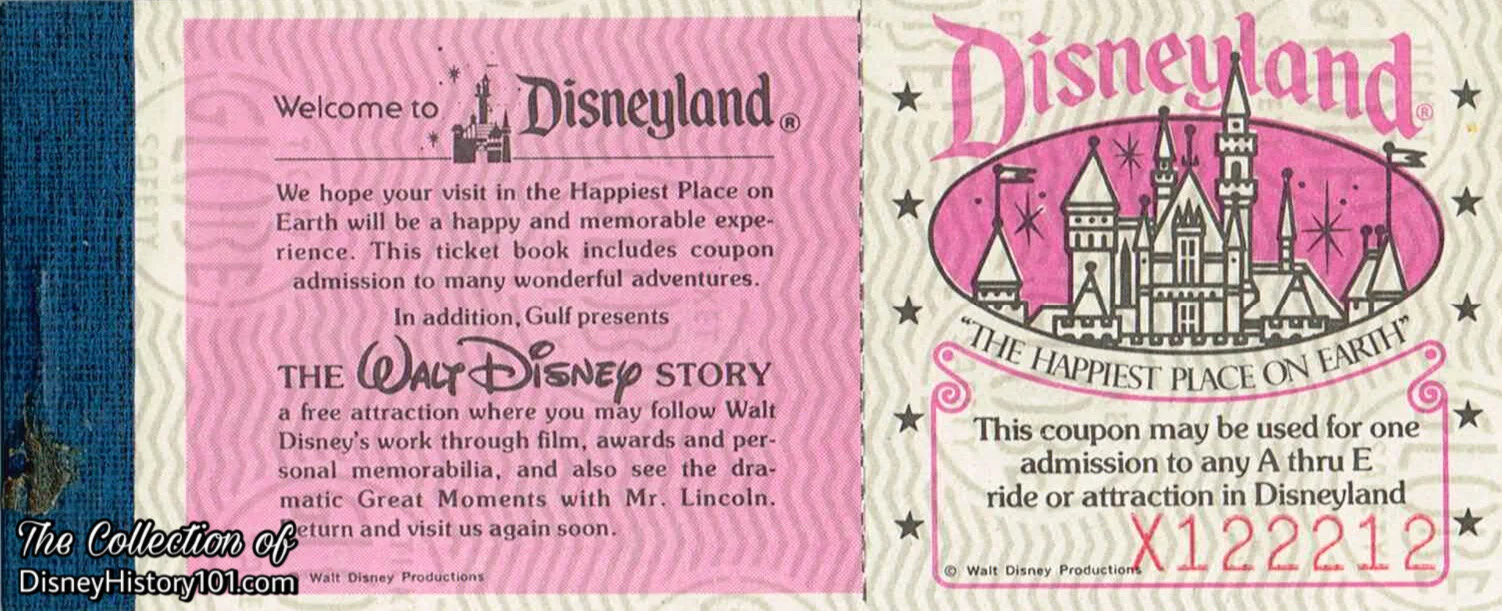
Admission media.
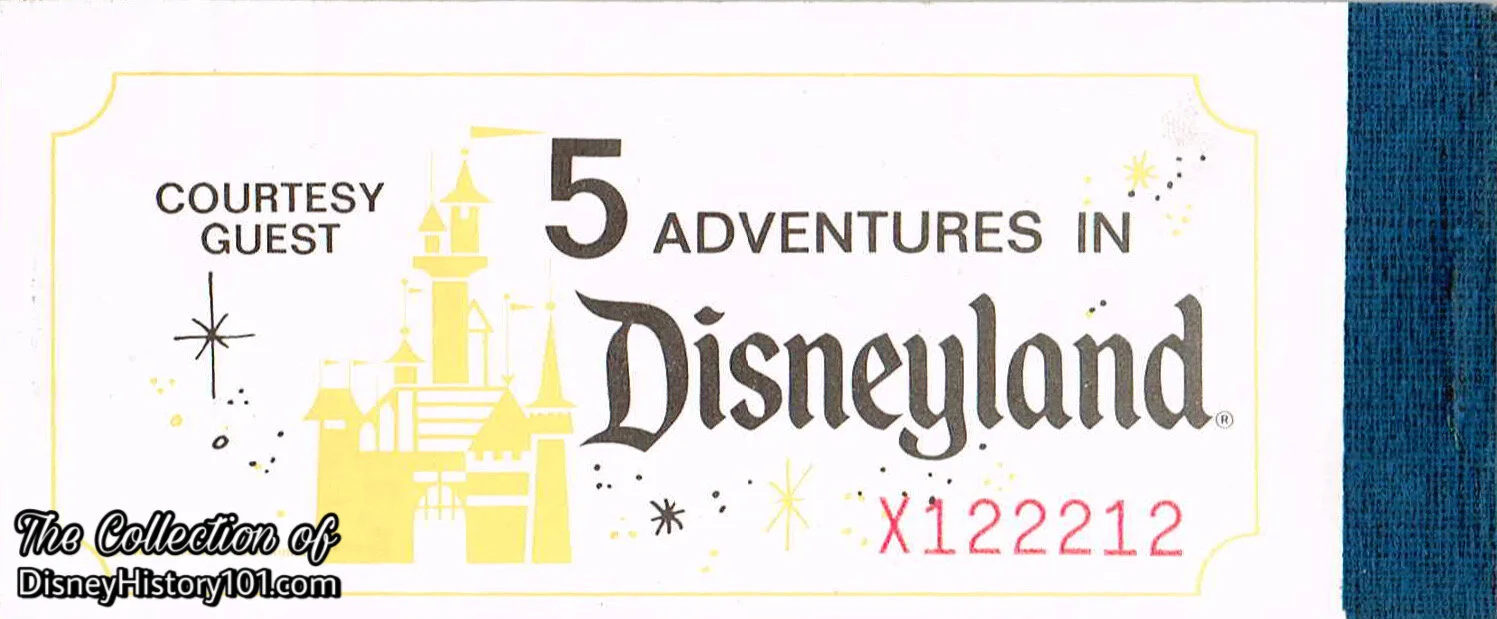
Admission media.
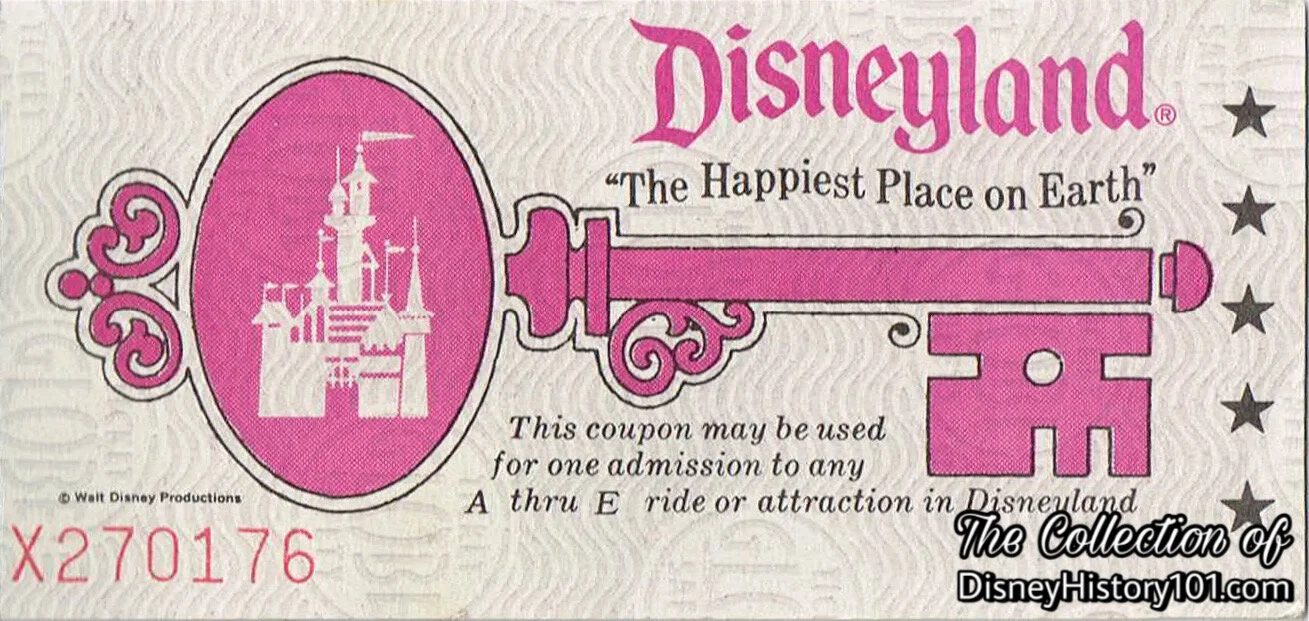
Admission media.
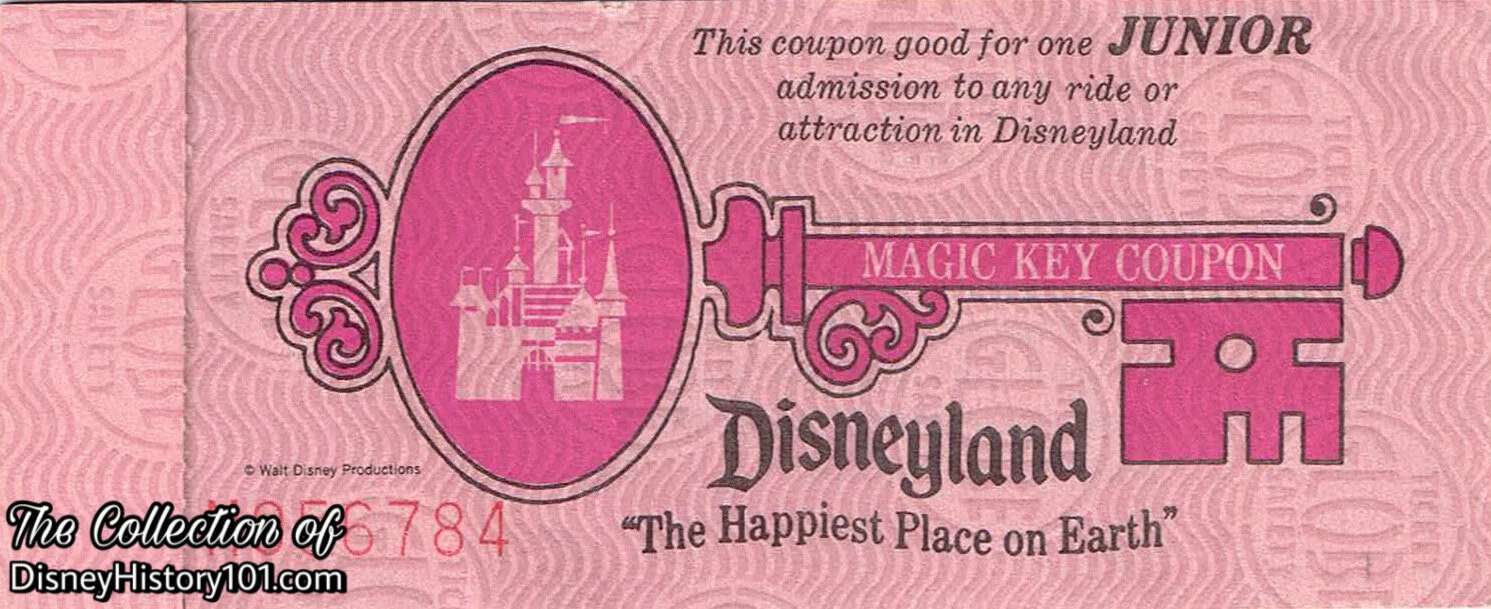
Admission media.
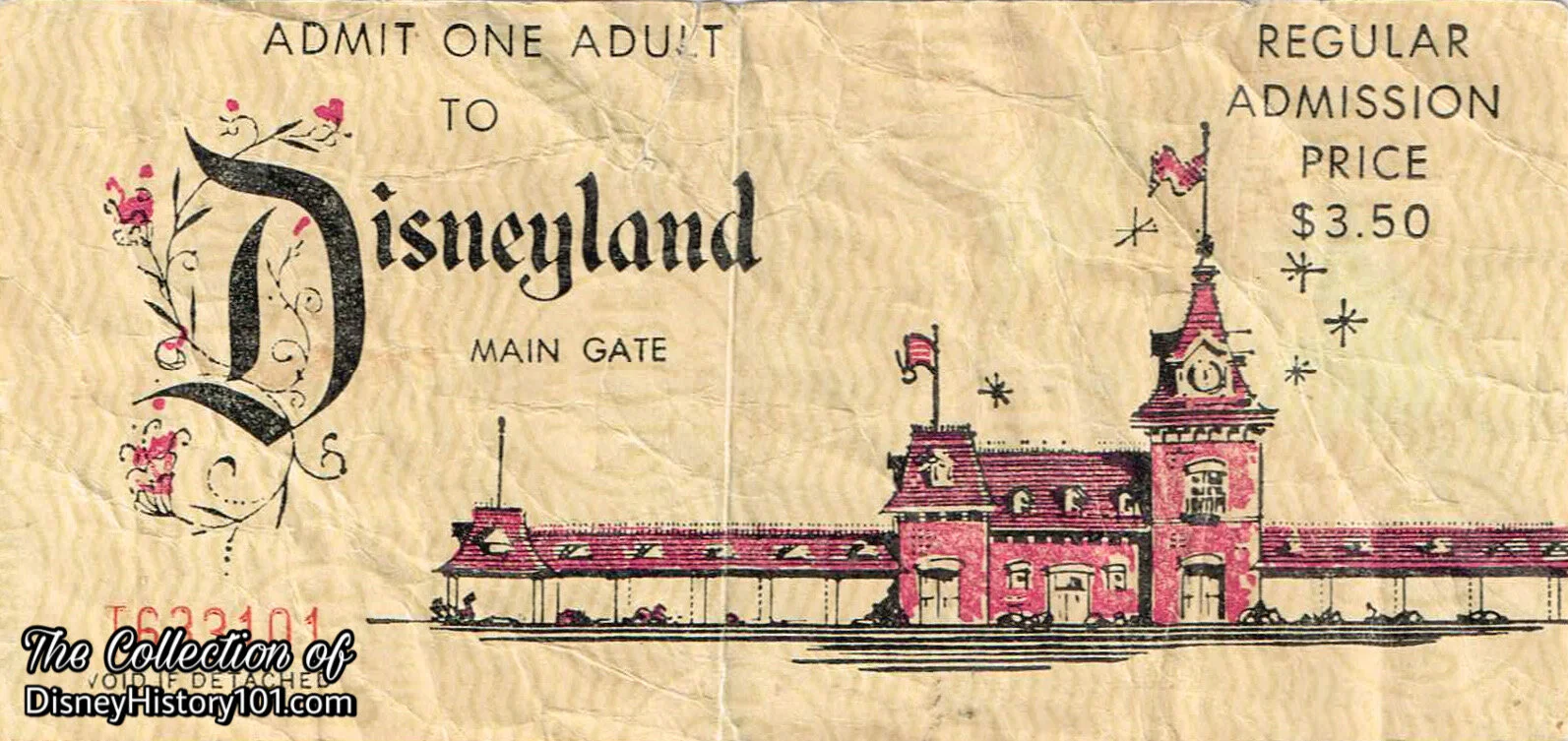
Admission media.
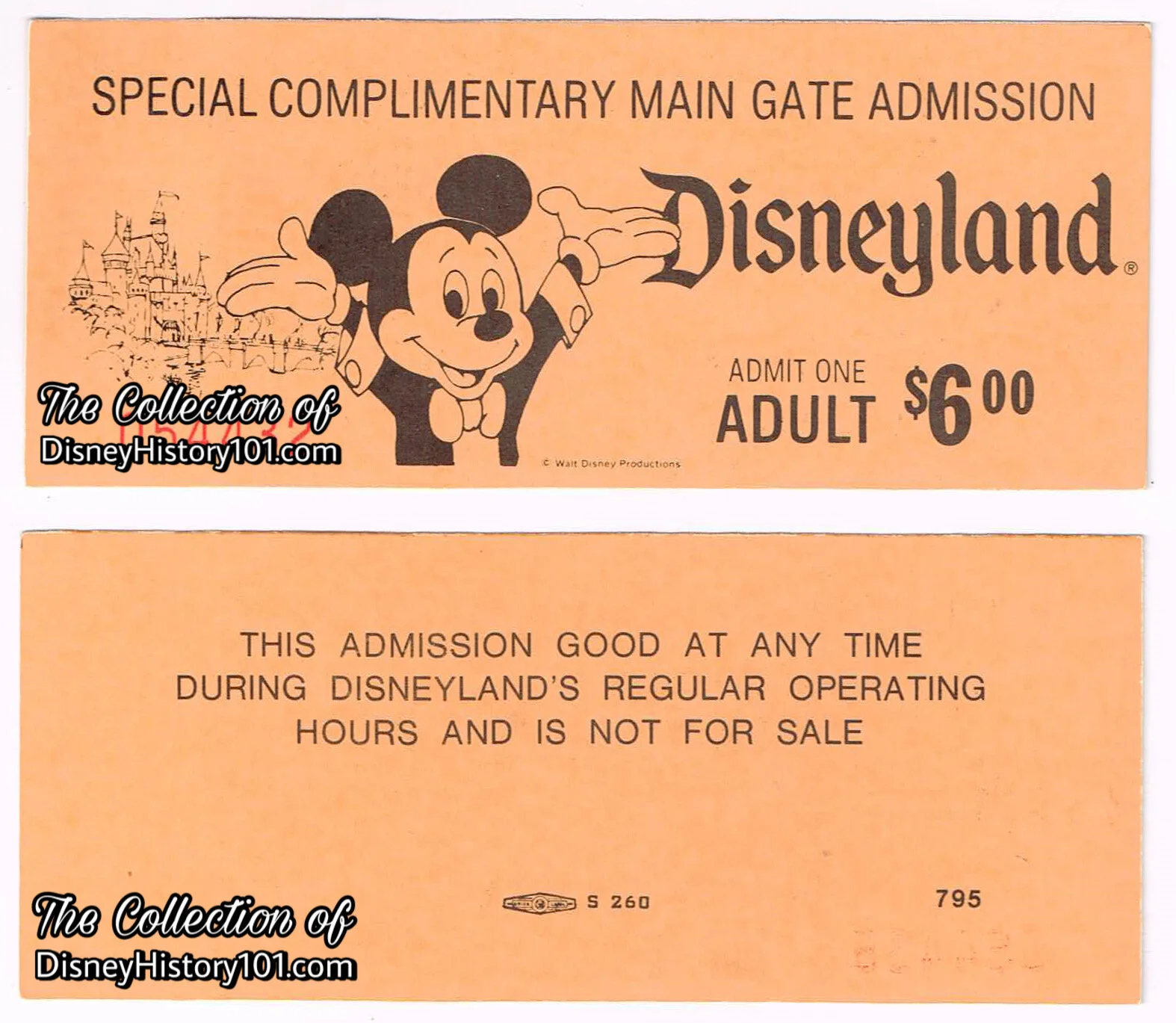
Special Complimentary Main Gate Admission Media.
Permanent personnel, after completing six months of continuous service, would periodically receive complimentary ticket books. The tickets were presented in hope that they would provide enjoyment for the employee and his family as they visit the Park as guests of Disneyland Management.
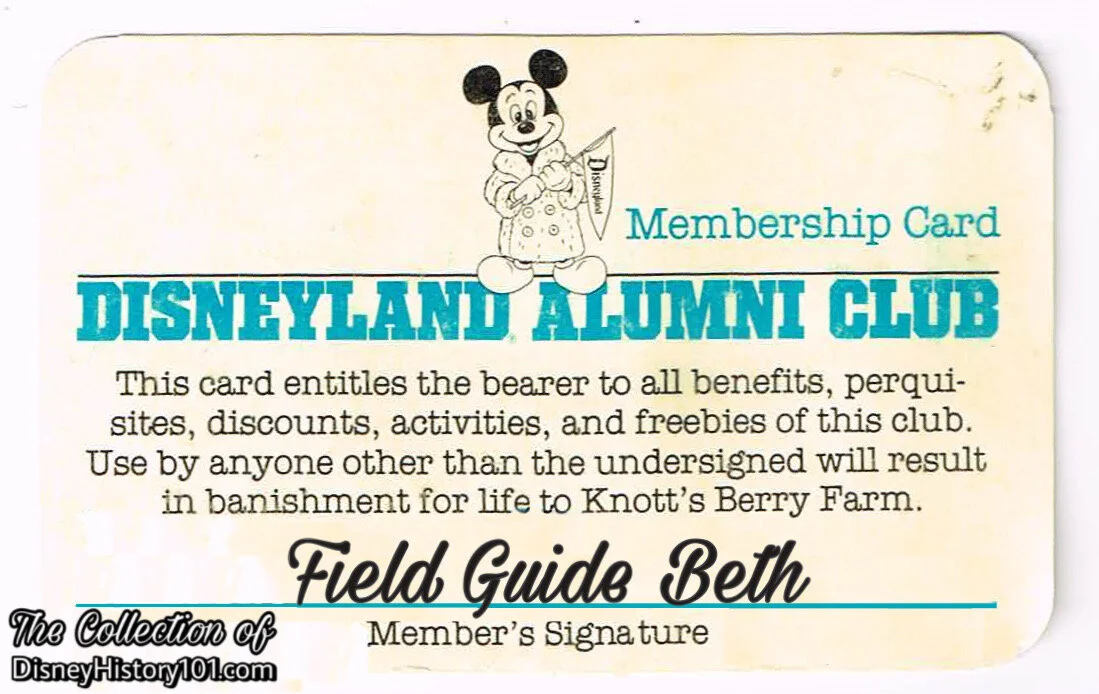
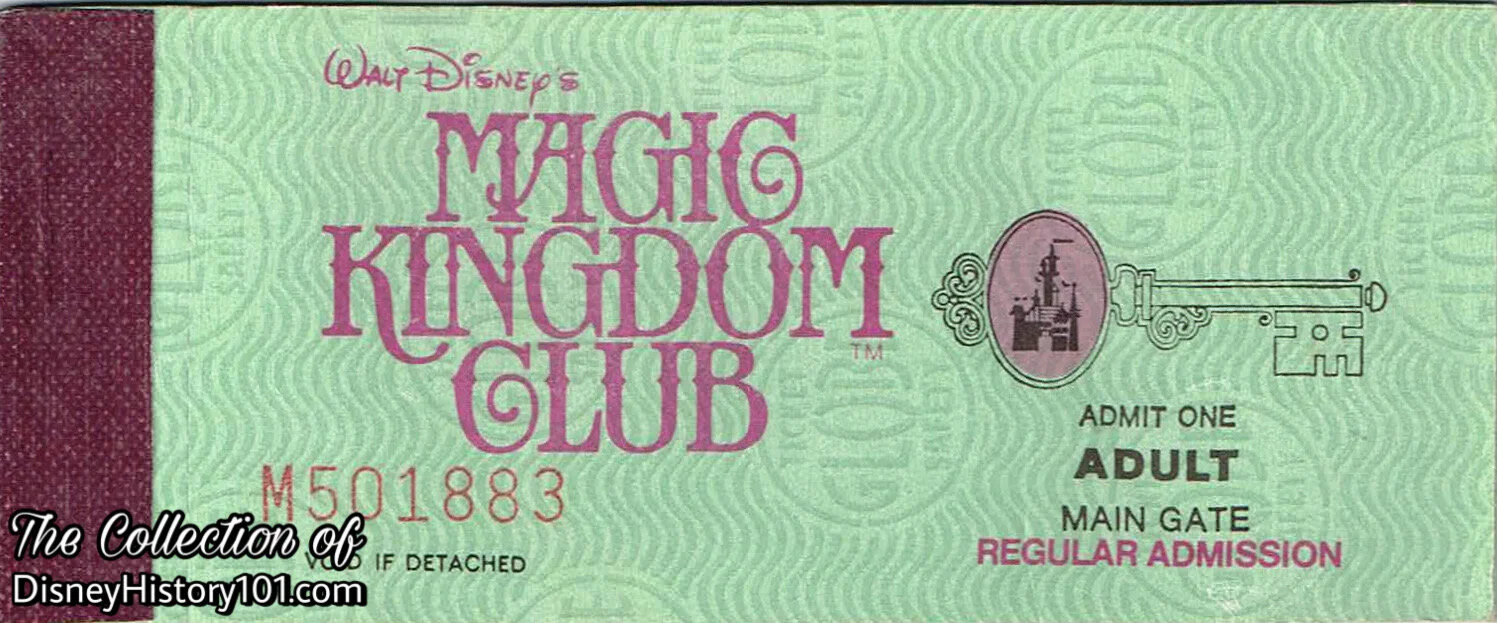
Admission media.
Milt Albright (the creative mind behind Holidayland) founded the Magic Kingdom Club. Eleanor Heldt (Magic Kingdom Club Administrator) oversaw the program which made the Magic Key Ticket Books available. The Magic Key Ticket Books included Admission to Disneyland and coupons for Admission to any 10 attractions of guest’s choice. The Disneyland News (Vol.2, No.3 ; Fall of 1964) announced the return of the Magic Key Books on its main page headline, and the prices were listed - $3.95 (for Adults), $3.45 (for Juniors), and Children under 12 ($2.95). By 1971, the Magic Kingdom Club had been operable for 14 years, with Milt Albright serving as Executive Director of the Magic Kingdom Club. At that time, the club also offered special discount prices for major first-run Walt Disney motion pictures shown at theatre box offices.
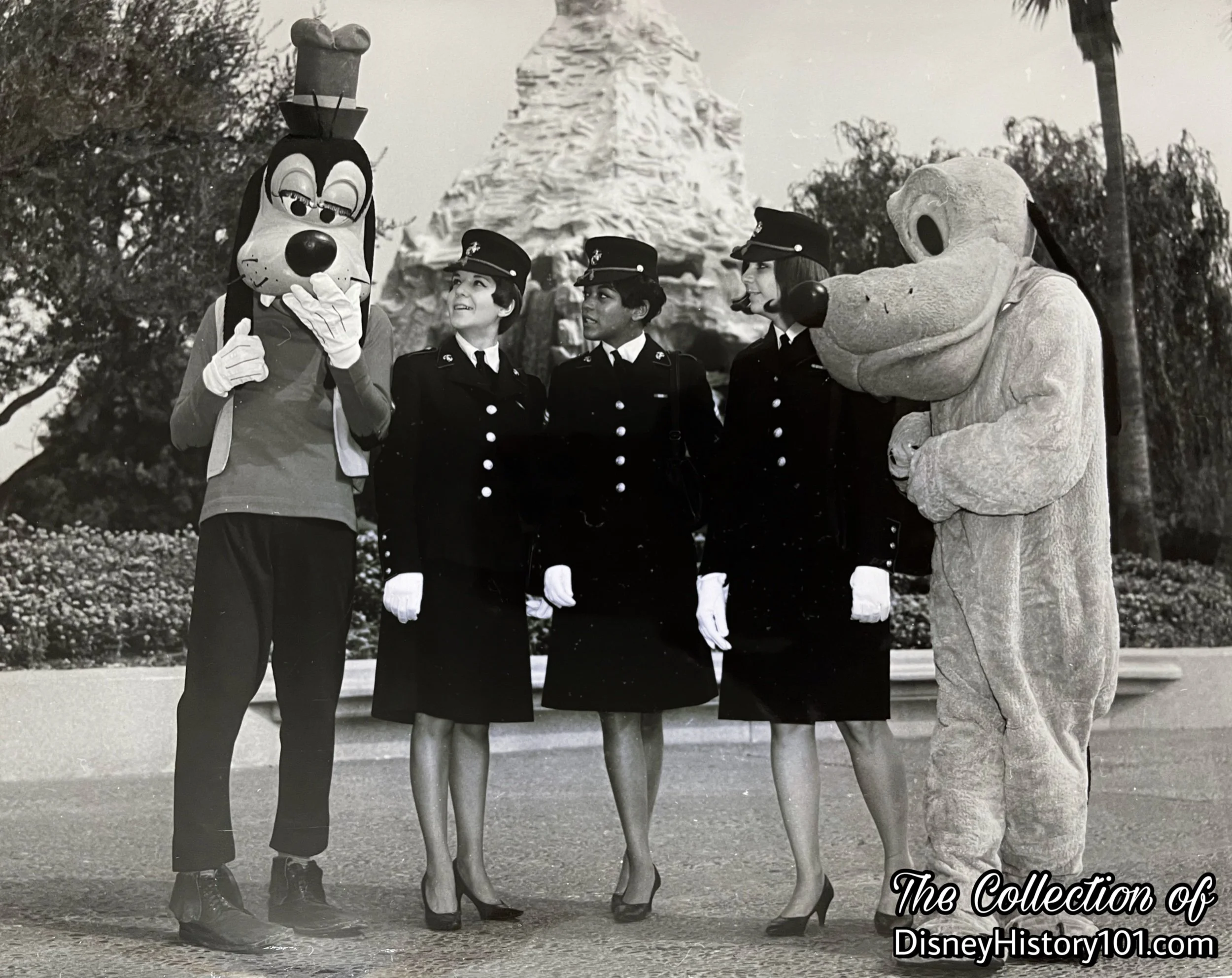
Disneyland has always honored servicemen and servicewomen.
Disneyland has been an Equal Opportunity Employer and “established an Affirmative Action Program designed to employ and advance in employment qualified handicapped, disabled veterans and Vietnam-Era veteran individuals,” according to Disneyland LINE magazine (Vol.14, No.32; August 12, 1982). The same Park News article continued: “If you… are a covered veteran (served on active duty for more than 180 days between August 5, 1964, and May 7, 1975, and received an honorable discharge), we encourage you to inform us of your status.”
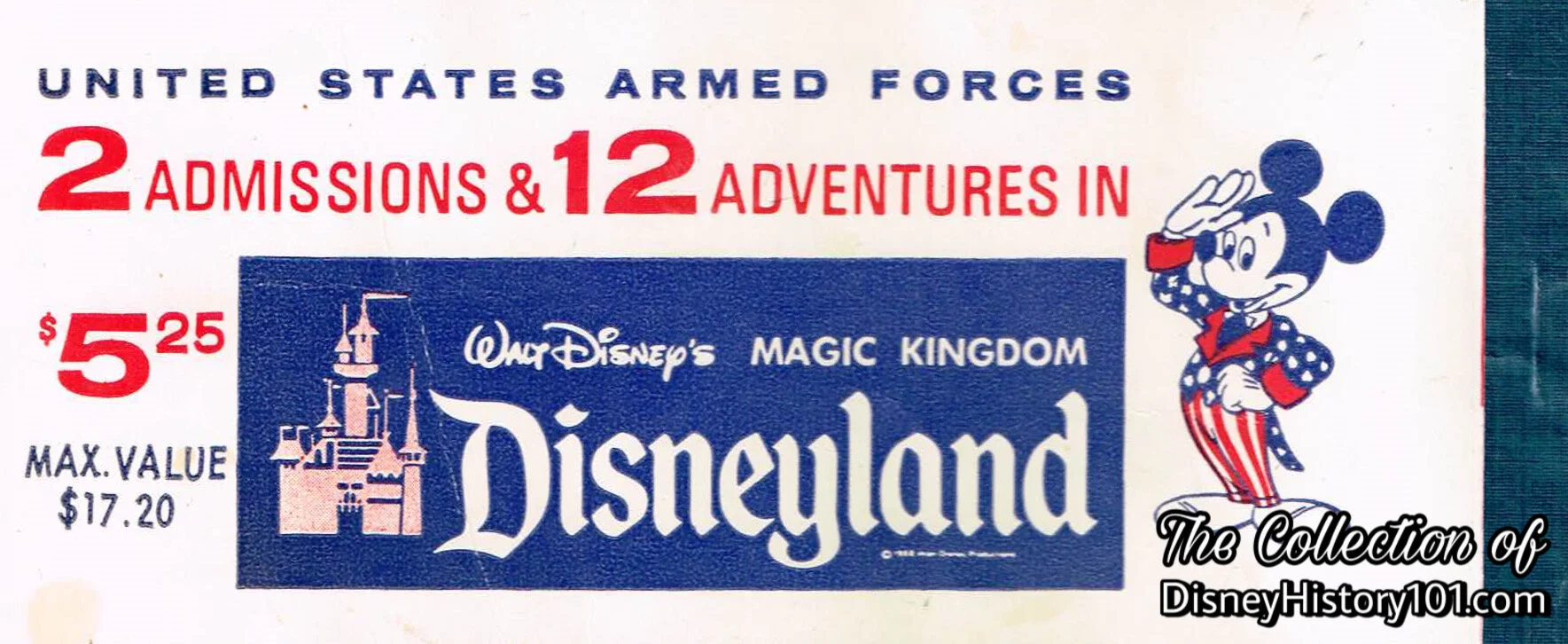
United States Armed Forces Admission Media.
During 1968, Disneyland welcomed the families of the Camp Pendleton Marine Corps Base.
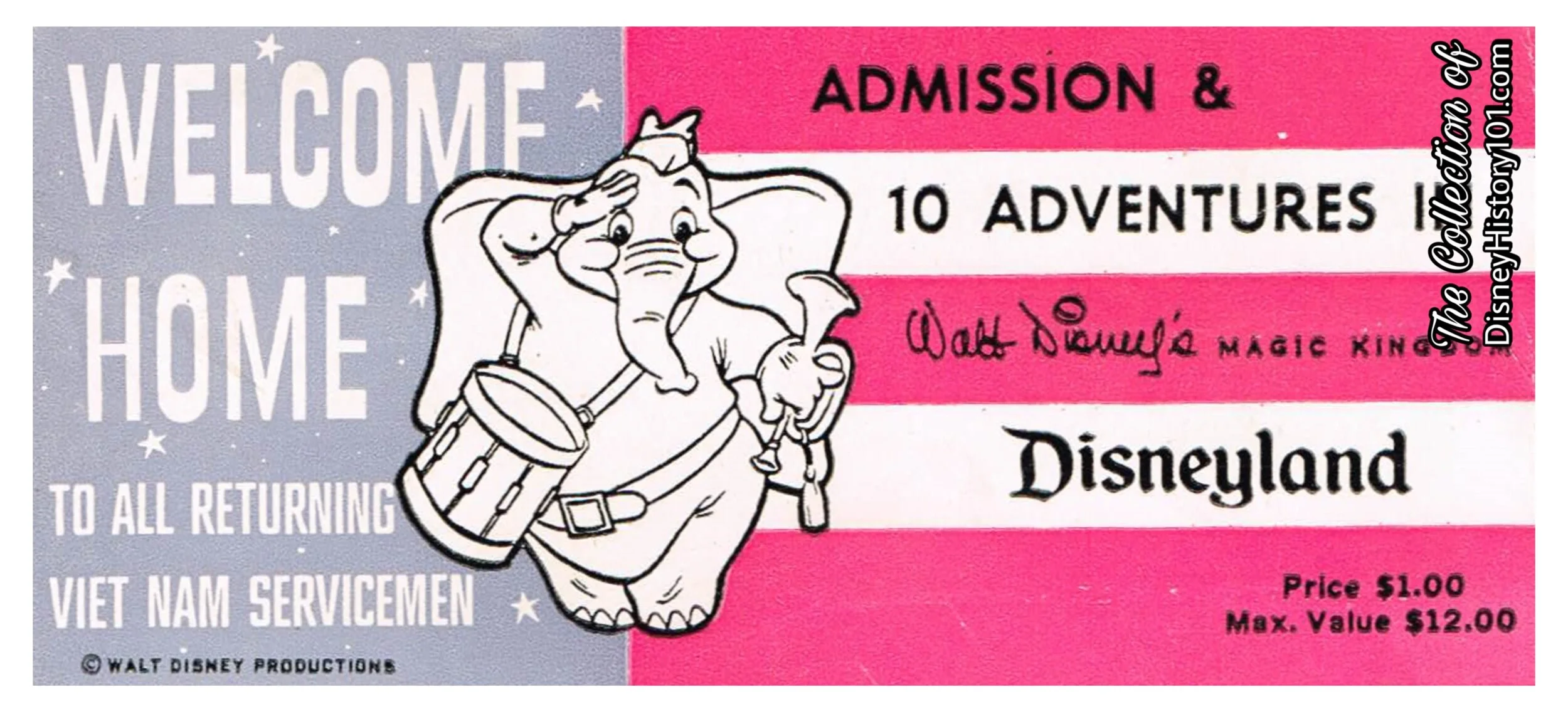
Viet Nam Servicemen admission media.
By the early 1980’s, Disneyland reached out to “qualified handicapped, disabled, veterans and Vietnam Era veteran individuals” who “served on active duty for more than 180 days between August 5, 1964, and May 7, 1975.” During on weekend in April of 1991, Disneyland “introduced a cavalcade as a musical tribute to our returning service men and women” of Desert Storm.
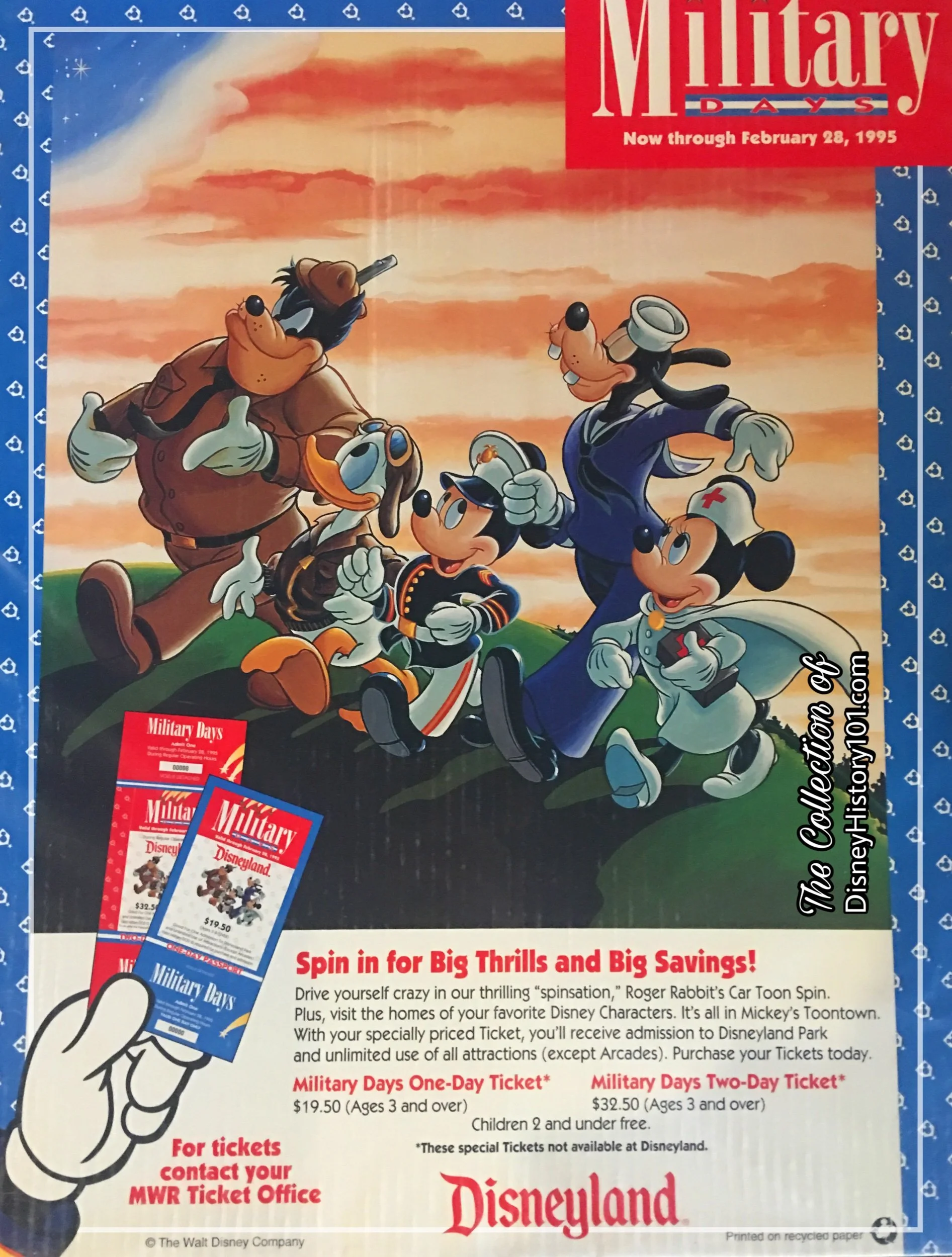
Military Days at Disneyland for Military/Department of Defense personnel and their dependents was celebrated during the summer (July and August) of 1995.
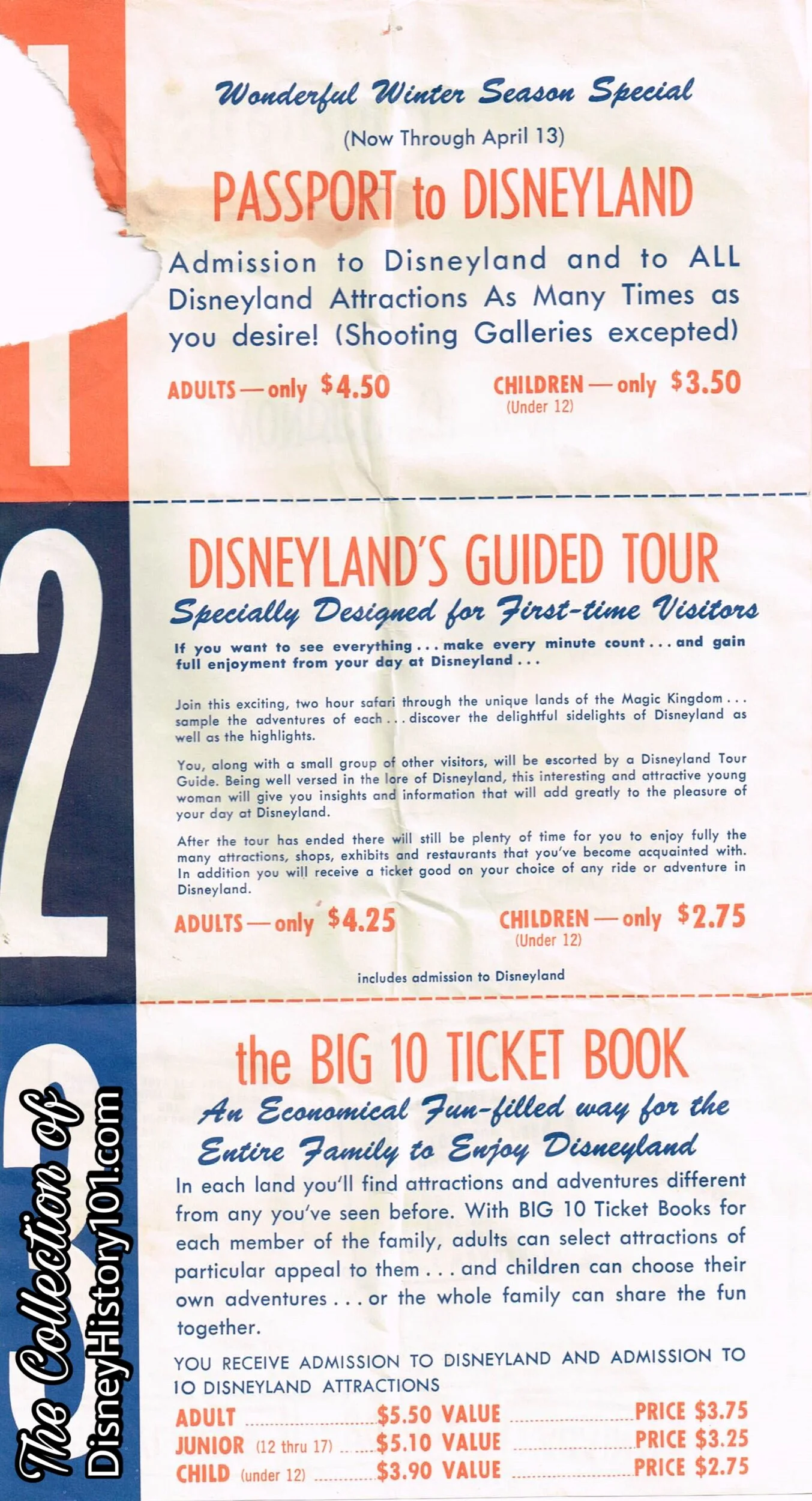
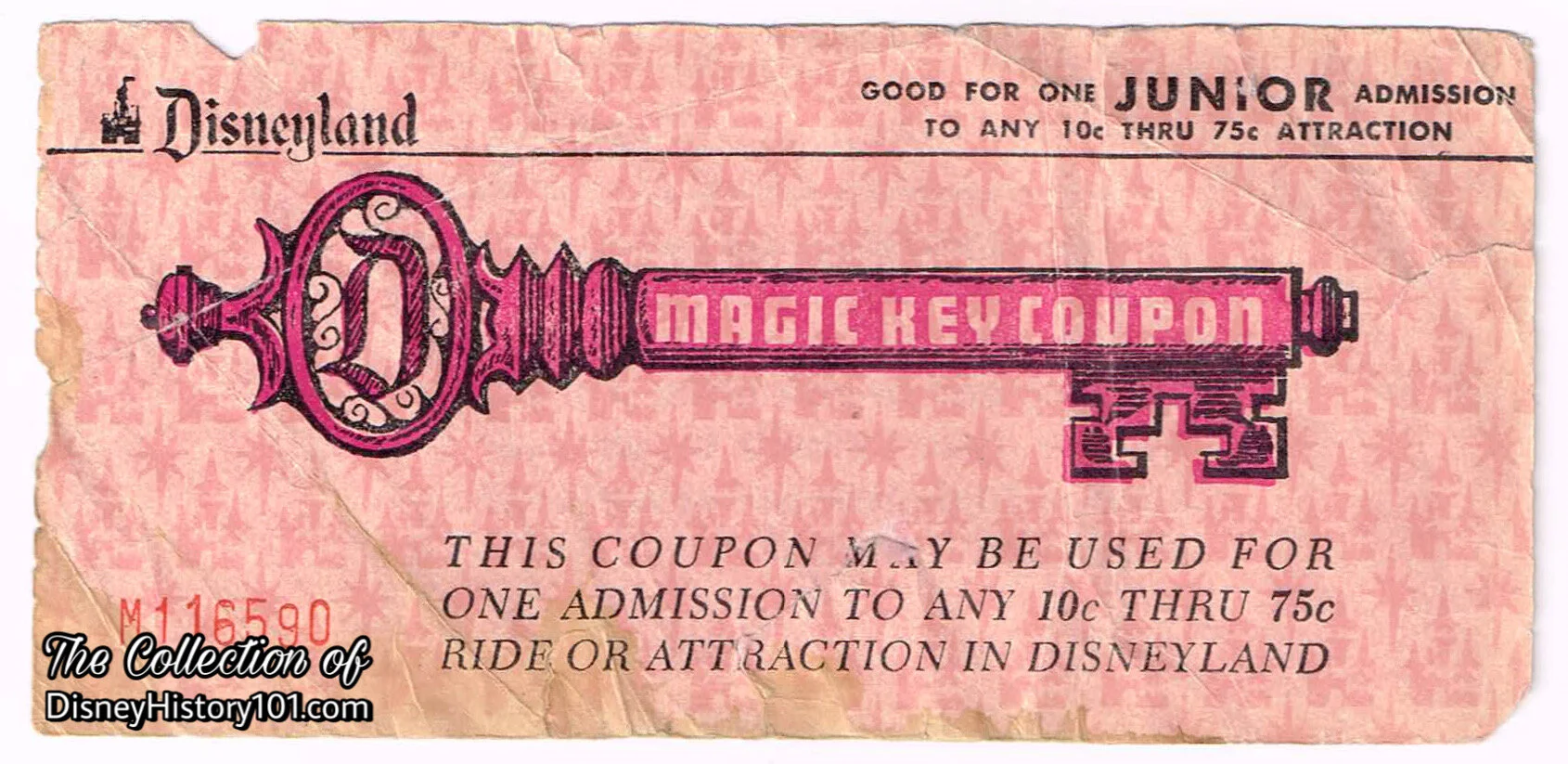
Magic Key Coupon admission media for MAGIC KINGDOM®
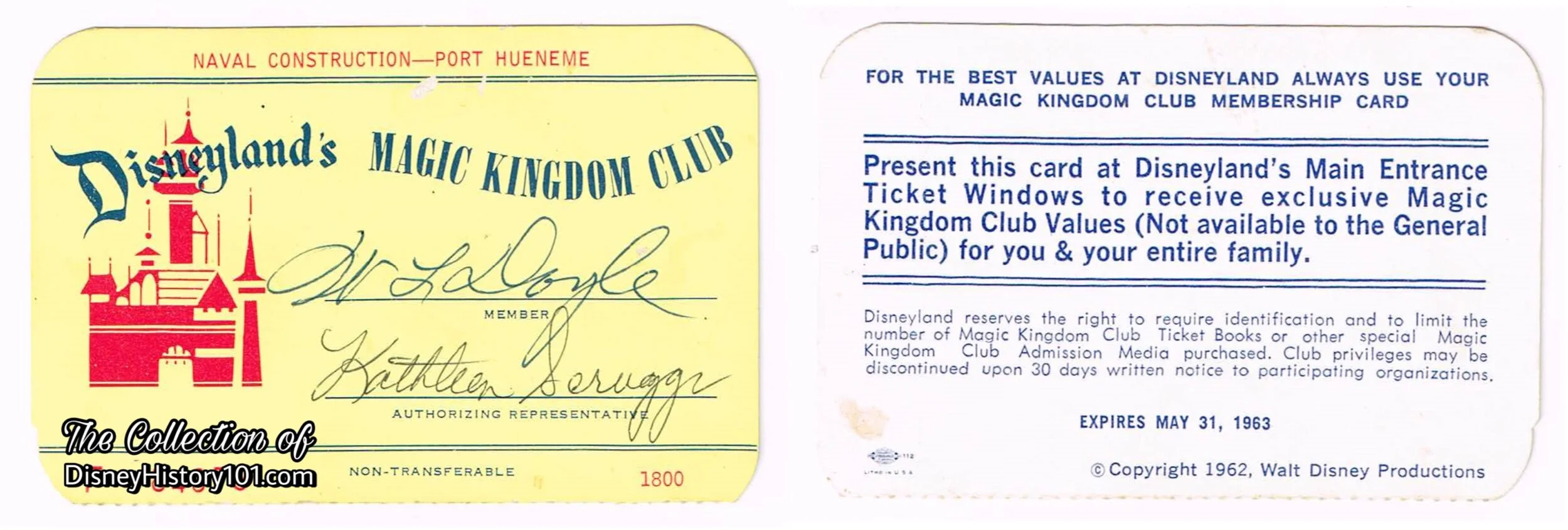
Magic Kingdom Club admission media
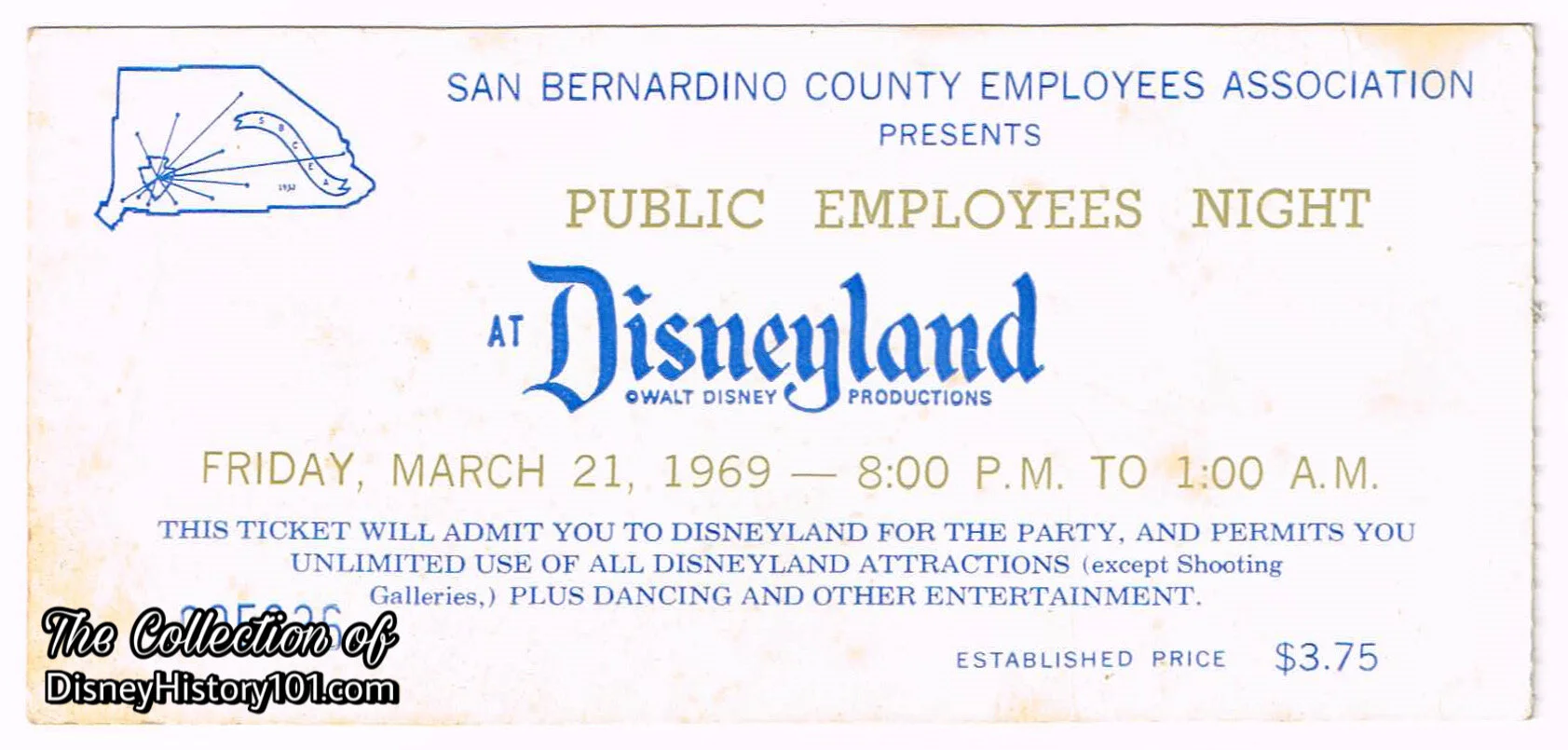
Disneyland Private Party Special Event Admission Ticket admission media, 1969
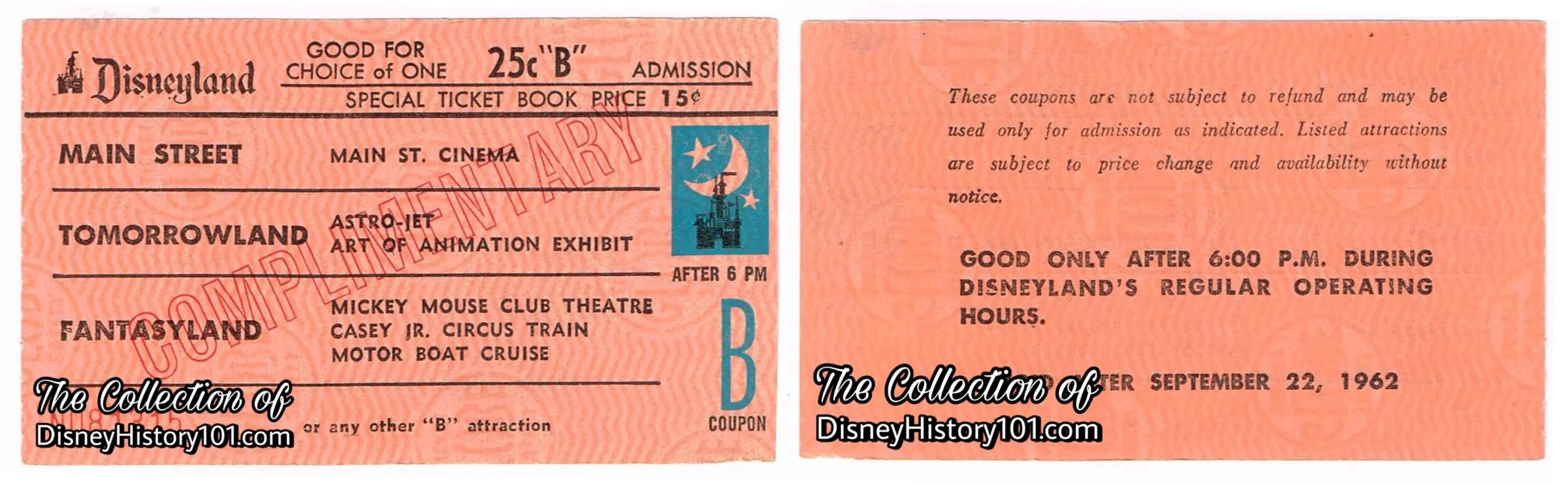
Disneyland Evening "B" Coupon (25¢ Value) admission media, c. 1961 - 1962
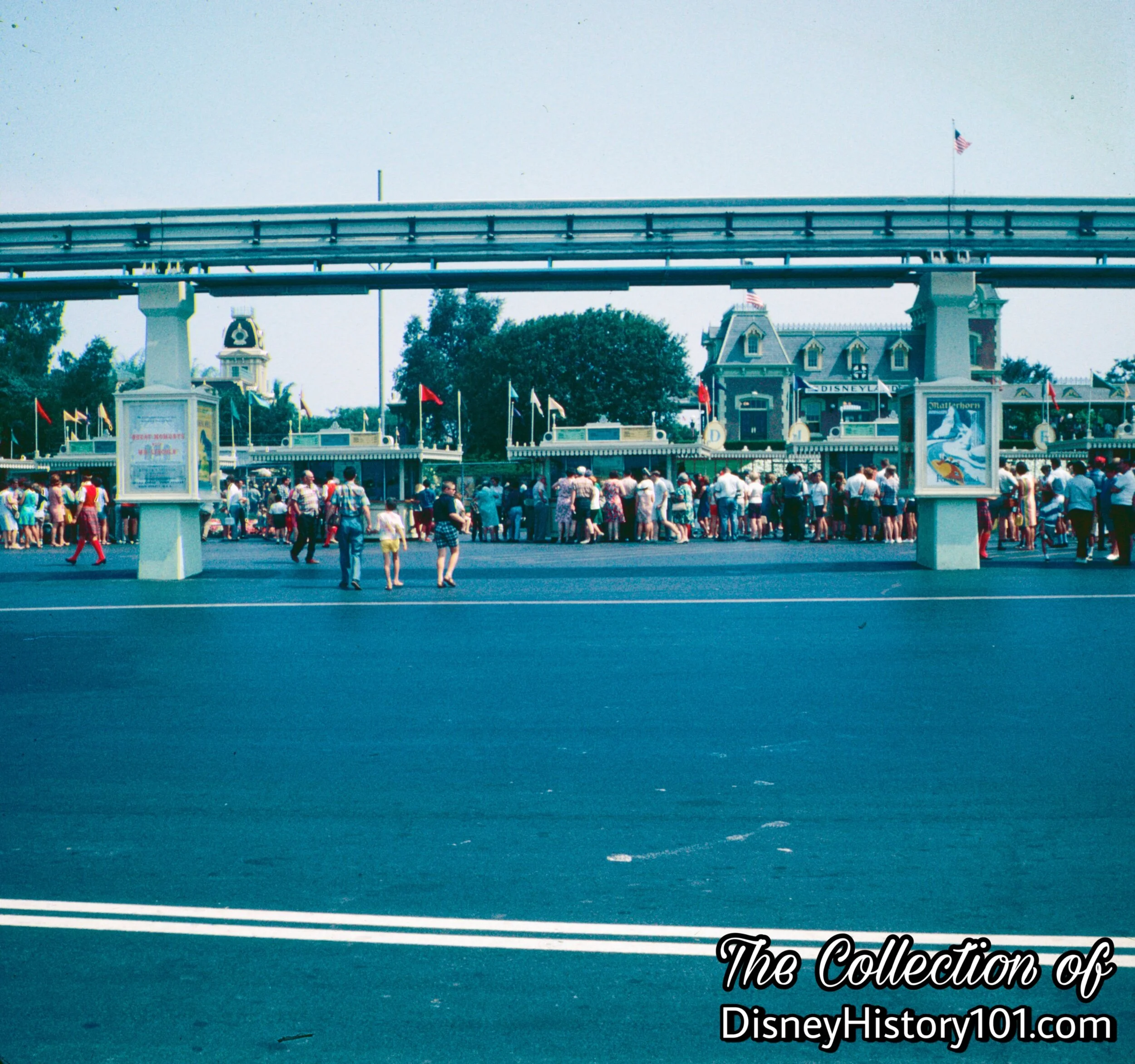
(1967)
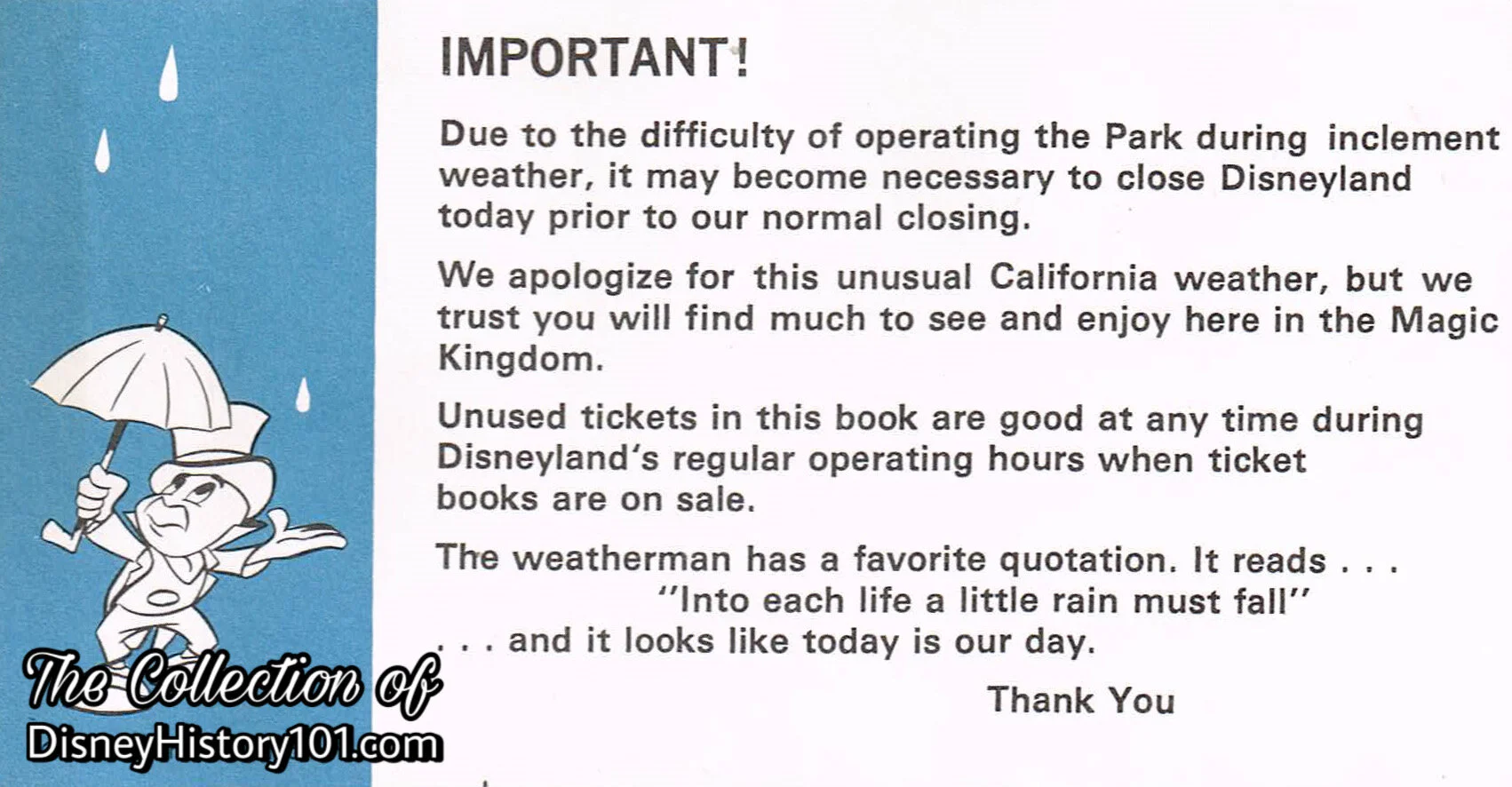
Disneyland Coupon Book Inclement Weather Announcement (D-1210 R-2) , December, 1971. Cards of this style continued to be issued until at least 1982.
“We’re Sorry for the Inconvenience”
A few things could cause the inconvenience of turning guests away or closing Disneyland. This was a tough decision to make and Cast Members put themselves in the Guests’ position, in order to have a better understanding and empathy for their problems.
Inclement Weather - Despite predictions of an “average rainfall” of “12 inches a year” (as published September 3rd, 1954, in “The Disneyland Story”), during the 1950s (c. 1957) inclement weather had the potential to either cancel or postpone events (like New Years Eve Parties). When it rained, somebody had to decide whether the Park was to be closed. Despite Walt’s intentions that “the show must go on, rain or shine,” in most of such occurrences, the Disneyland Main Gate was closed and admission prices of visitors were be refunded.
With good reason, it was once commented about Disneyland’s early years of operation, that “little April showers,” and otherwise “rainy days were disastrous, causing panic and insecurity.” [“The Spirit of Disneyland,” page 43 ; Prepared 1984 by Walt Disney Productions.] A rainy day was usually a “loss” day at Disneyland. For instance, back in 1962, Disneyland admitted a mere 389 guests during 3 hours, before closing for the day due to inclement weather. Fast forward to 1971, guests of a rainy day at Disneyland saved this memento from their own rainy day experience at Disneyland.
As a result of inclement weather, it was not uncommon for guests to telephone Communications Services and inquire “‘if it’s raining at Disneyland, if it’s going to rain, and when it’s going to stop,’” according to Operator Becky Schroeder to Disneyland LINE Magazine (Vol. 23, No. 23 ; May 31, 1991). Most important on days of inclement weather was that each Guest hear: “We're sorry for the inconvenience.”
Disneyland is Filled - It was occasionally coming to hear “We regret the inconvenience, but at the present time the Magic Kingdom is filled to capacity.” When this occurred, that condition was expected to last most of the day. However, if guests desired, they could return after 9:30 PM in the evening (as Disneyland would remain open until 1:00 AM), or plan to visit the Park when we open at 8:00 AM the following morning.
If guests planned to remain in the Anaheim Area they were encouraged to enjoy a visit to some of the other nearby entertainment and recreation of Southern California. During the 1960s, the Southern California area offered a diverse array of adventures like Lion Country Safari, Anaheim Stadium, Mission San Juan Capistrano, Japanese Deer Park, Movieland Wax Museum, Knott’s Berry Farm, and Laguna, Newport, and Orange County Resort Beaches.
“55er” Mary Van Thyme recalled: “One day, by the Matterhorn, a man complained about the price of a bobsled ticket and that it wasn't real snow on the mountain, but that it was seagull (censored)!” Even in such incidents, Disneyland Hosts and Hostesses often felt such a great obligation to their guests, many of whom had come many miles to see Disneyland. Guests that visited DISNEYLAND deserved more for their money than just going on the attractions. Occasionally, re-ads (or readmission tickets) were given to Guests when their ride on an attraction or their show experience was interrupted.
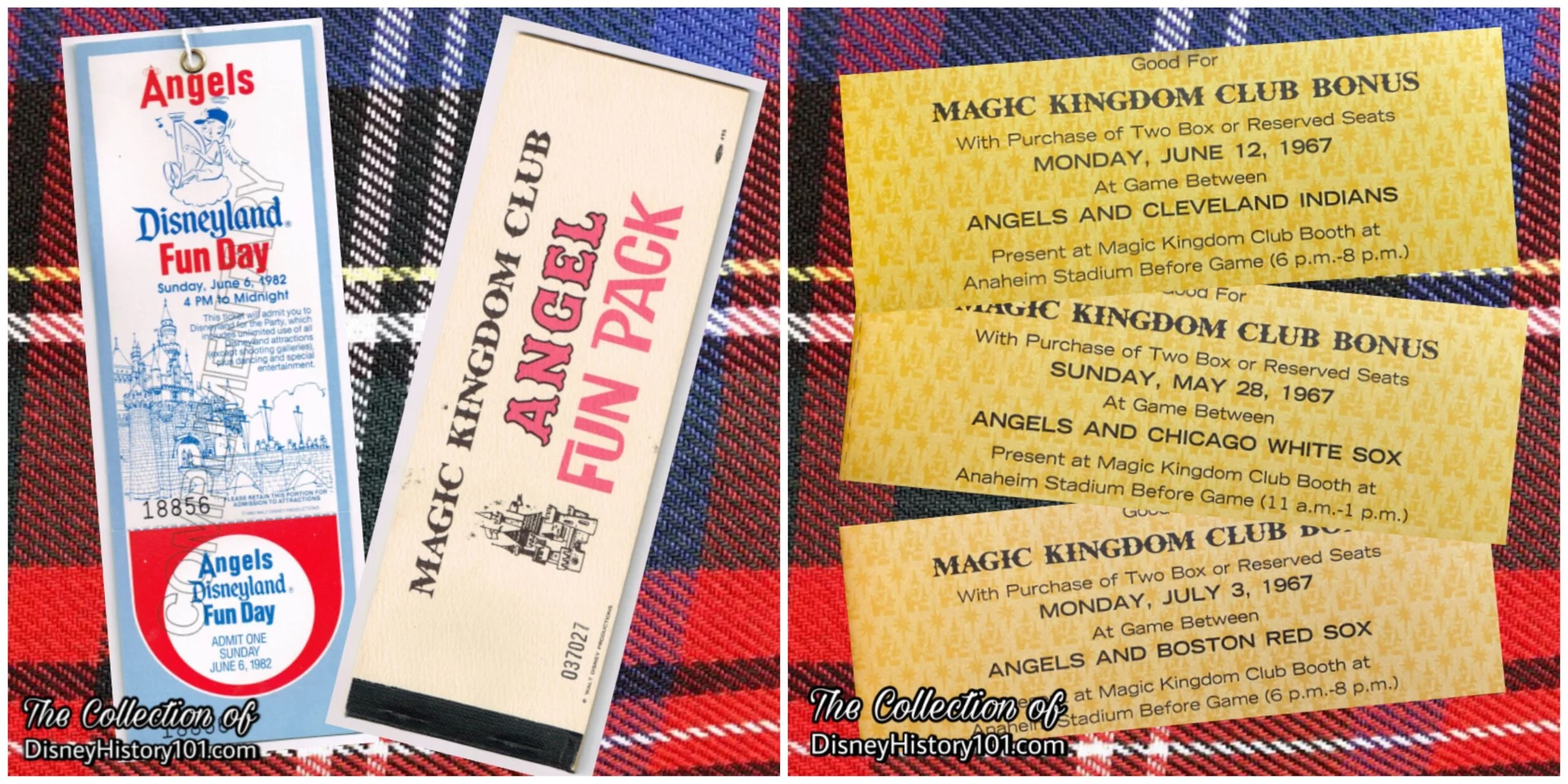
Magic Kingdom Club Angel Fun Pack Tickets and other admission media, c. 1967 & 1982
Ever since Walt Disney (and his Disneyland cast) helped dedicate the brand new Anaheim Stadium (Saturday, April 23rd, 1966), a partnership would form that would assure several decades of “Disneyland-Angels Double-Headers” for fans! These packages (in conjunction with the “Magic Kingdom Club”) included a Reserved Seat at Anaheim (or “Angel”) Stadium and a special Disneyland Private Party Ticket to enjoy Disneyland Park until closing (usually around 1:00 a.m.). These “DH101 ART-i-FACTS” (pictured) include “Magic Pack” tickets from the 1967 season (the Angels second season in their new home stadium), as well as one ticket from the 1982 season (two decades later)!
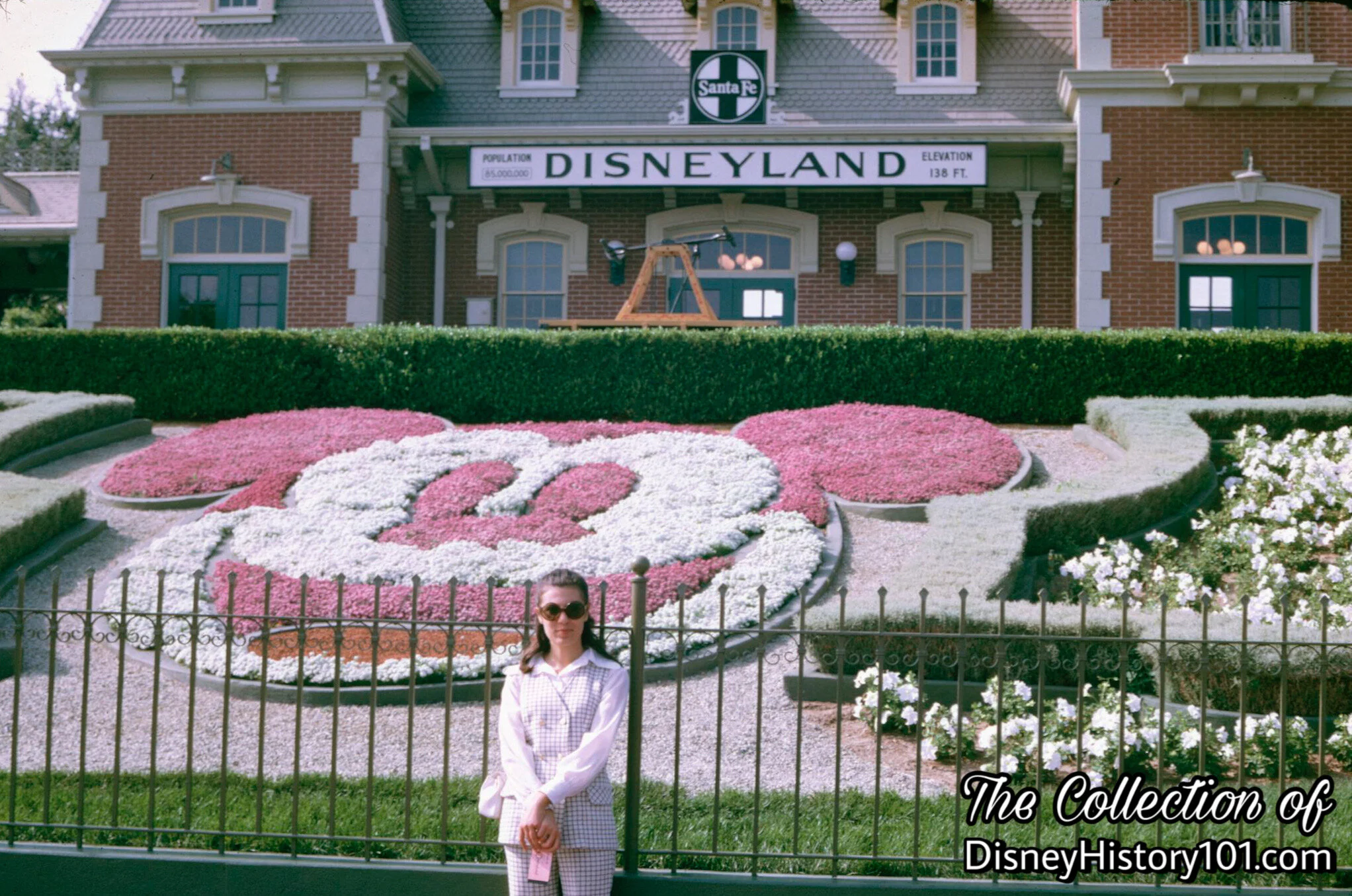
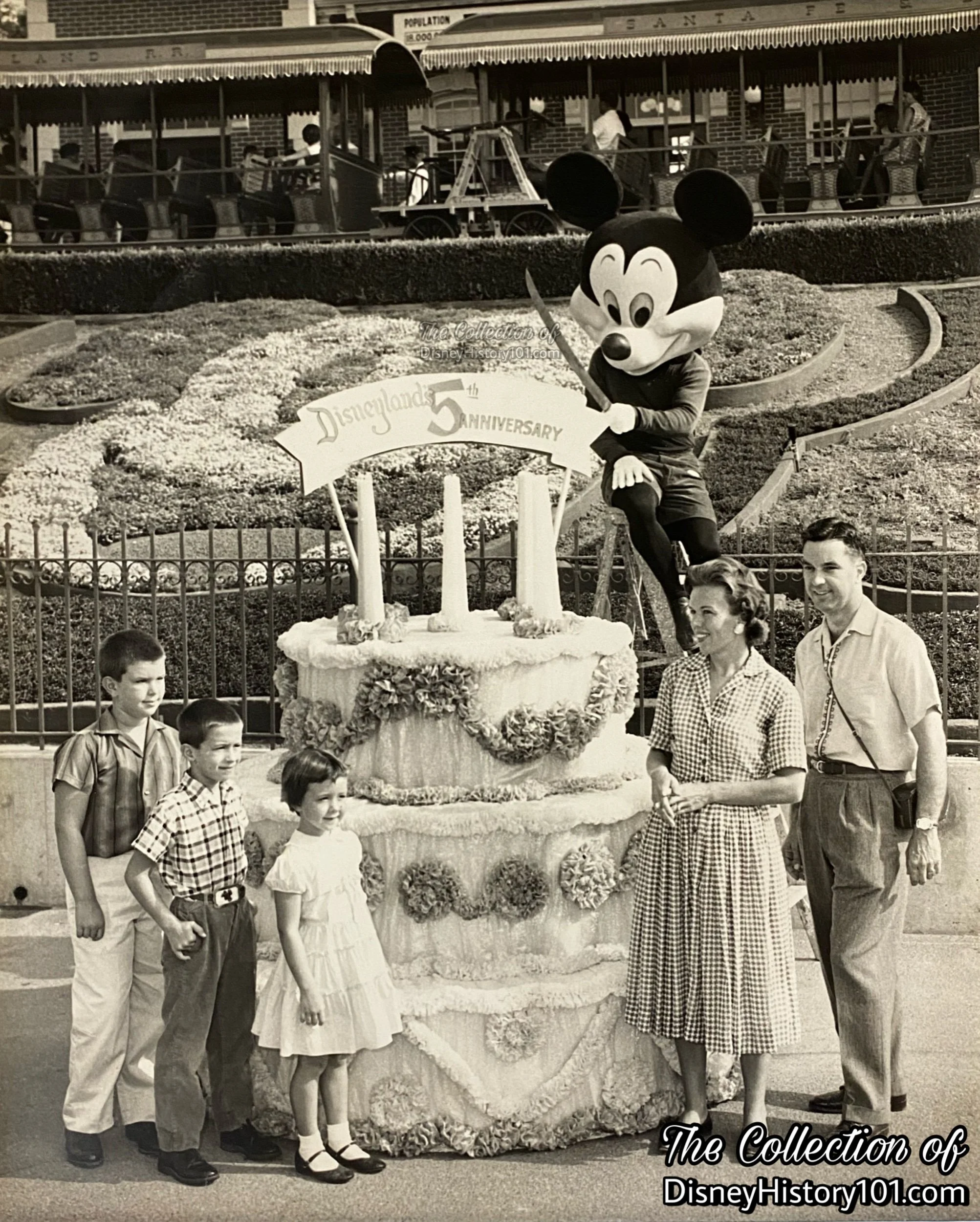
Floral Mickey Mouse
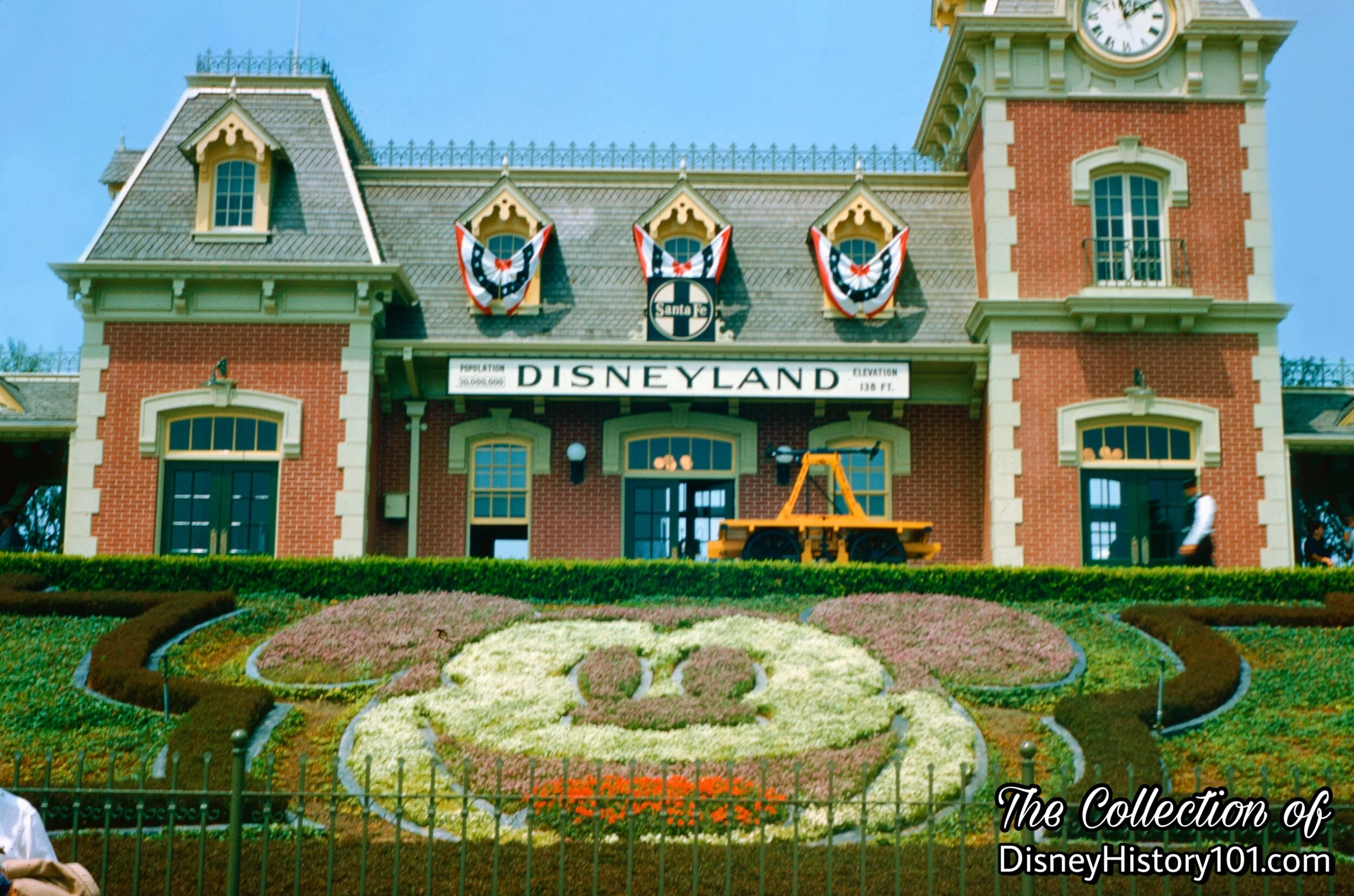
Mickey Mouse Floral Portrait
The Mickey Mouse Floral Portrait has greeted guests since Disneyland’s opening day in 1955. Since then, it has been recreated and refreshed seasonally with flowers and blossoms.
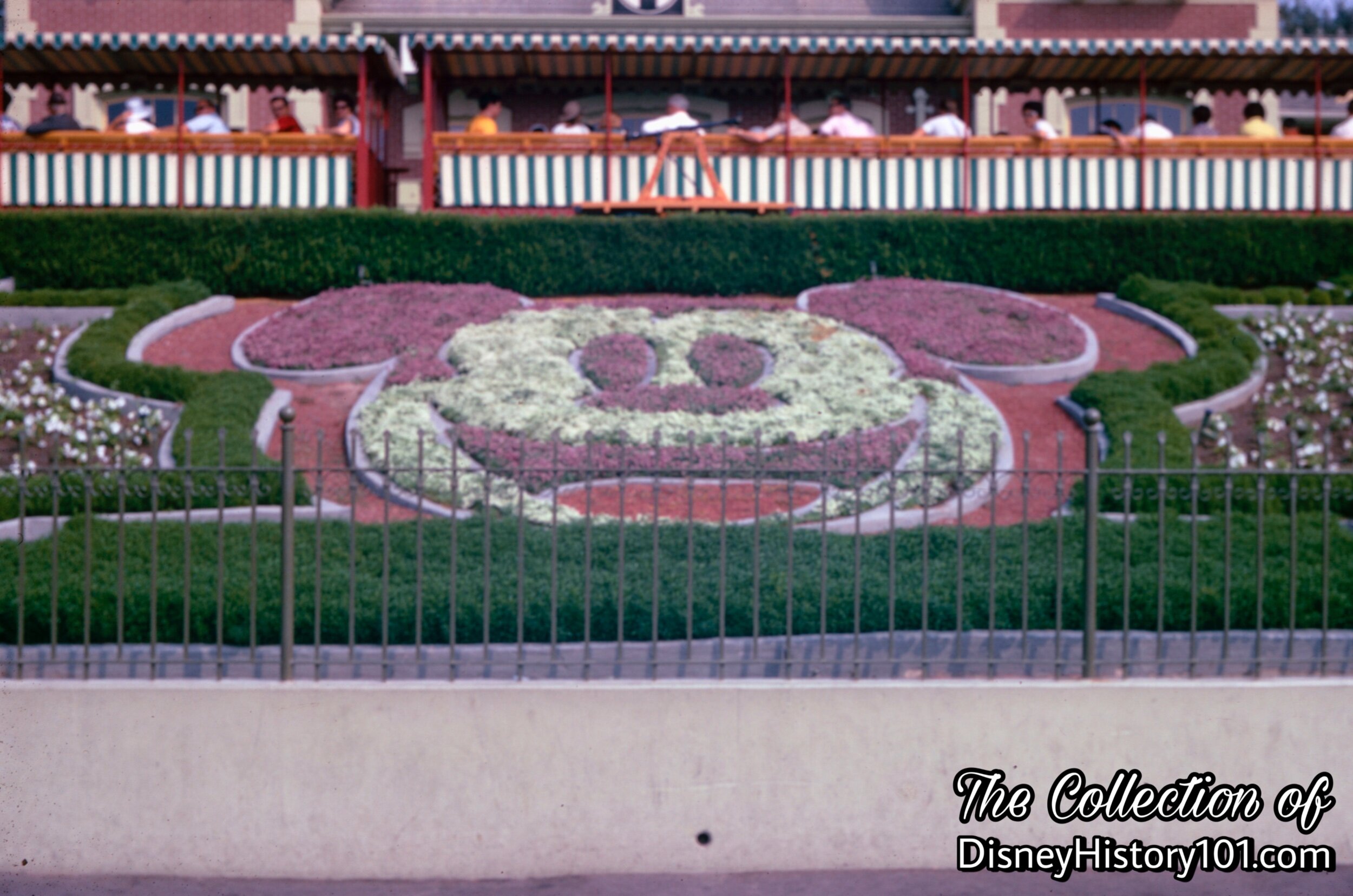
Mickey Mouse Floral Portrait
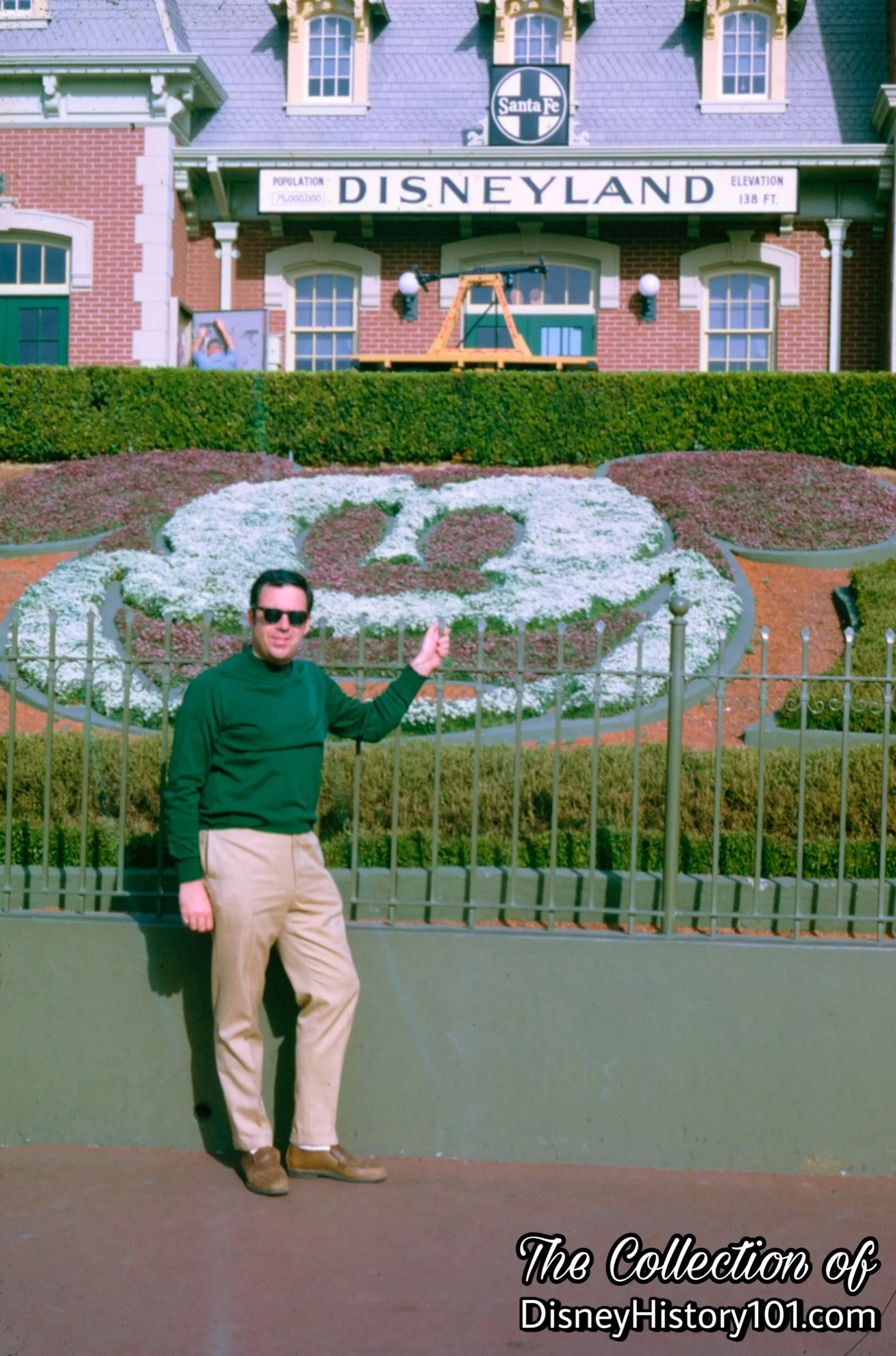
Mickey Mouse Floral Portrait
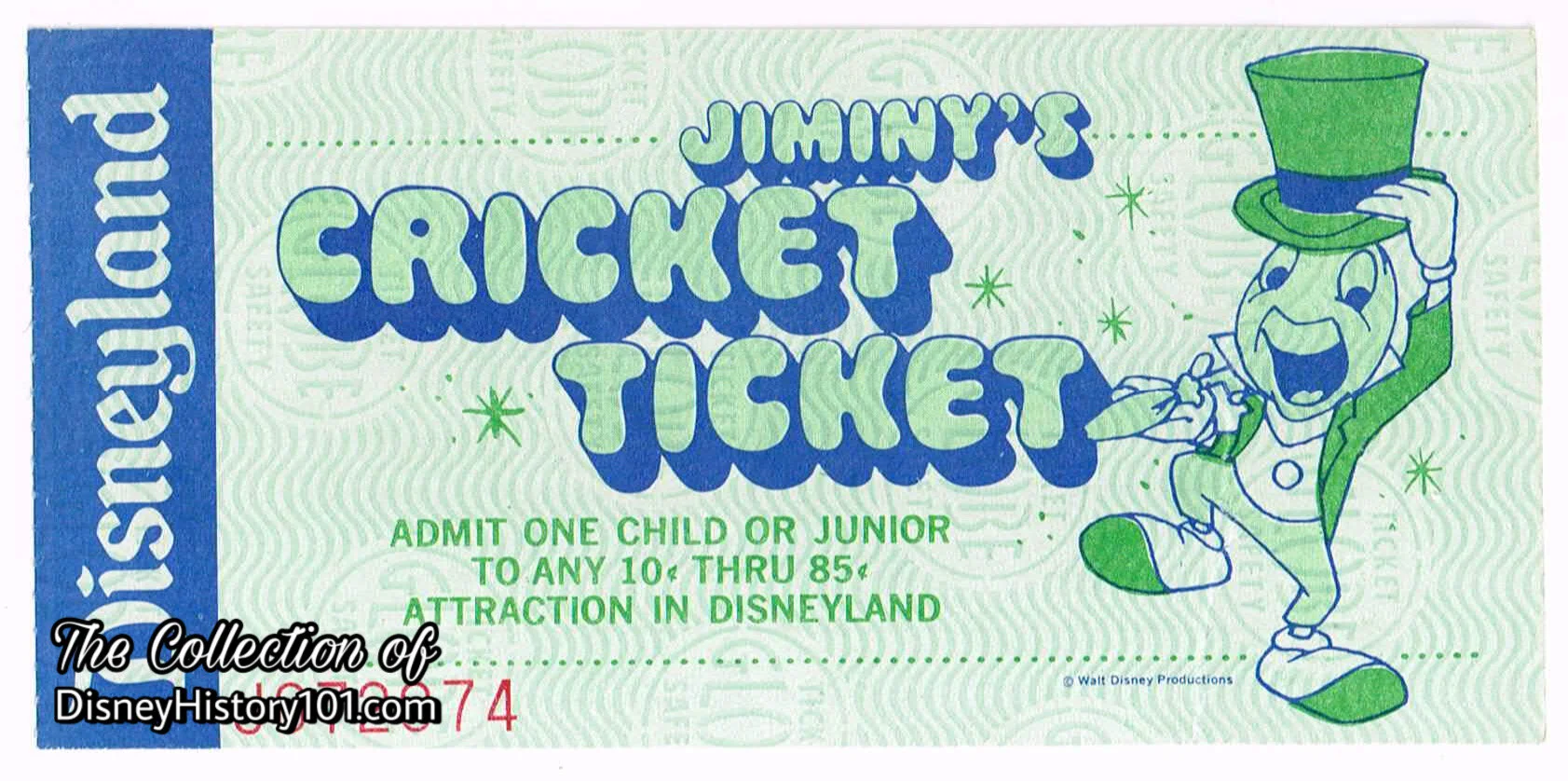
Jiminy's Cricket (Child or Junior) Ticket admission media, early 1970s
Jiminy’s Cricket Ticket (like Tigger Tickets) admitted Guests aboard attractions.
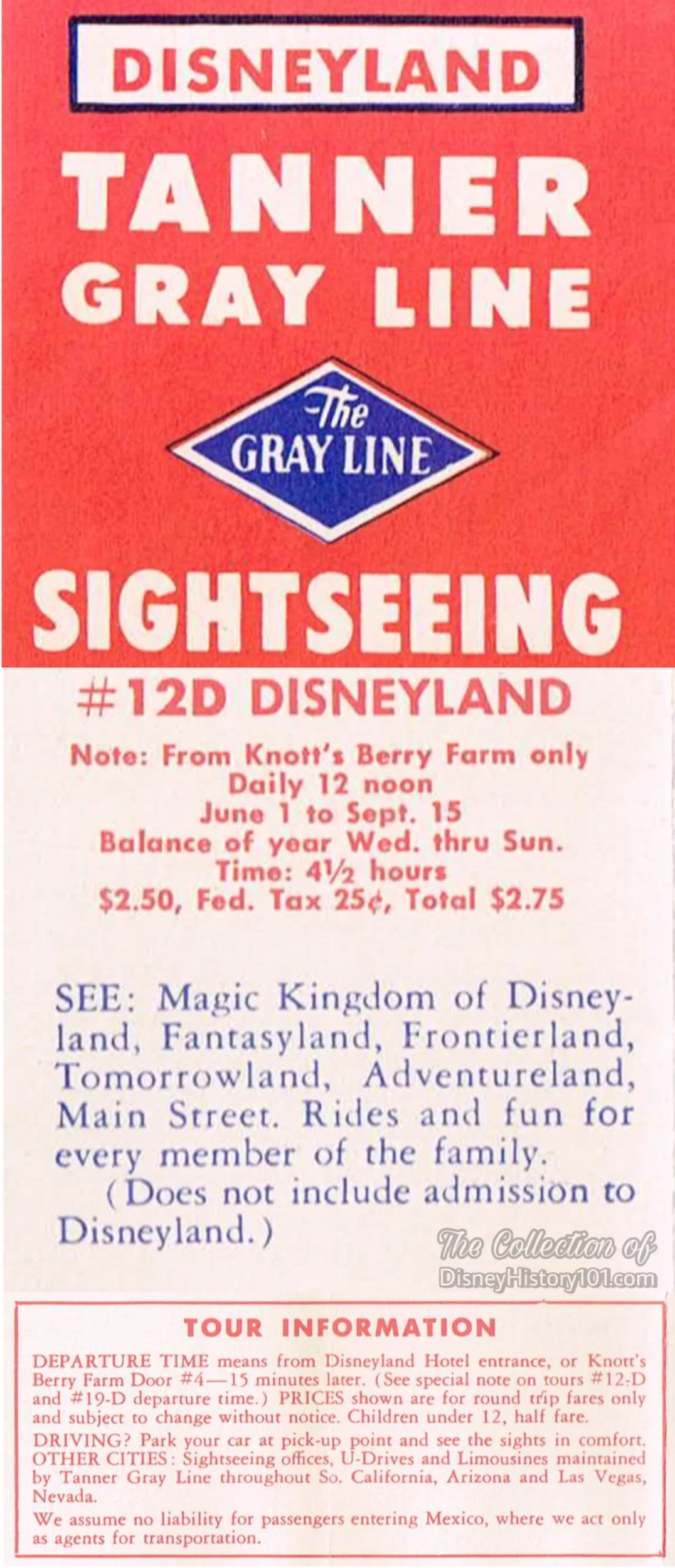
Disneyland Tanner Gray Line Sightseeing Tours Brochure Excerpt
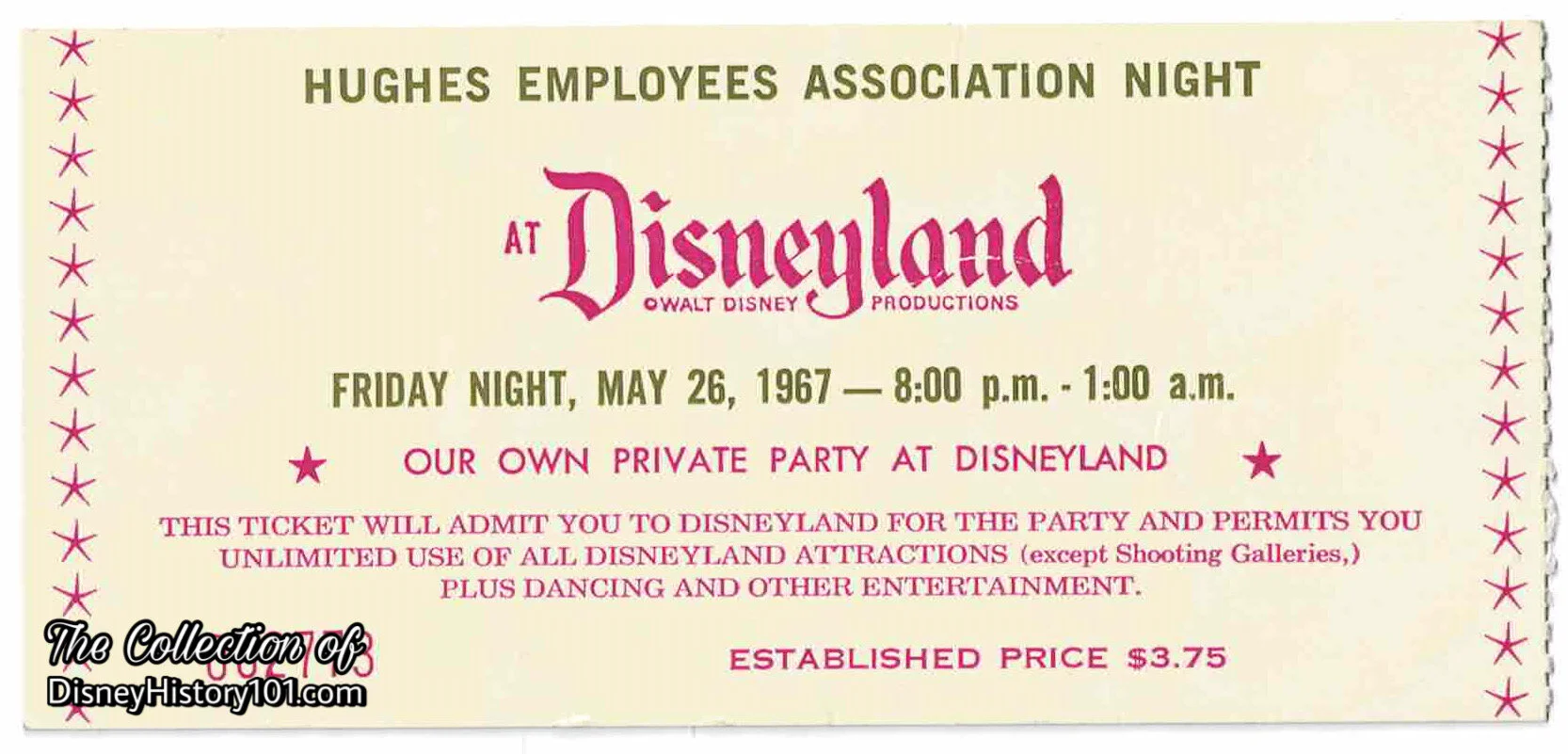
Hughes Employees Association Night Private Party admission media.
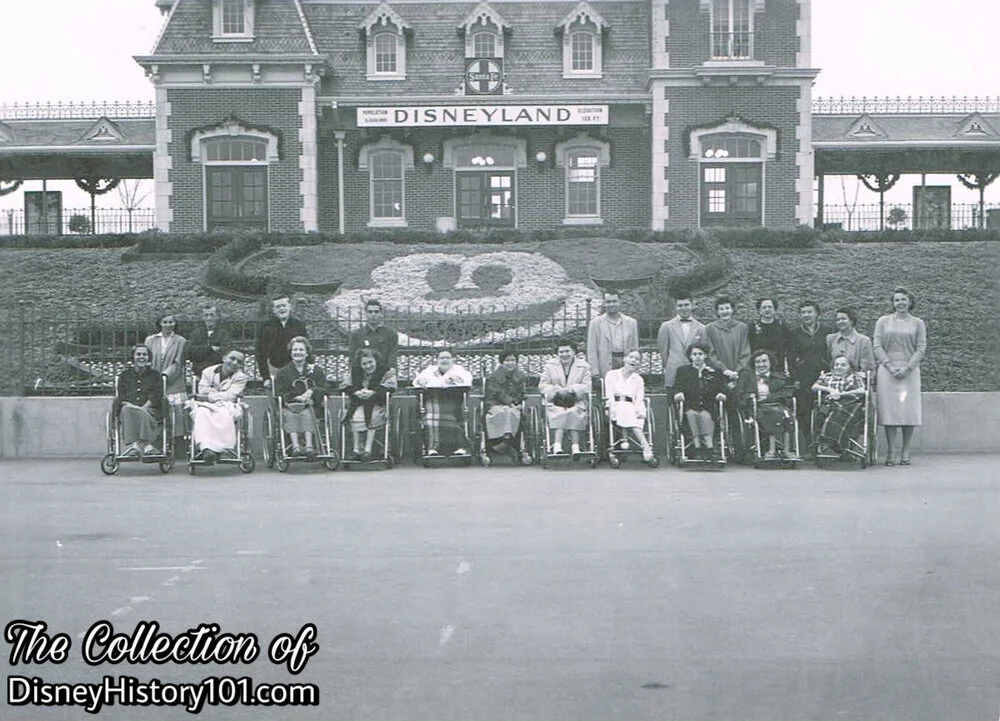
"Making Disneyland 'Accessible to All' - Wheelchairs and Strollers"
“Disneyland Guest Accessibility”
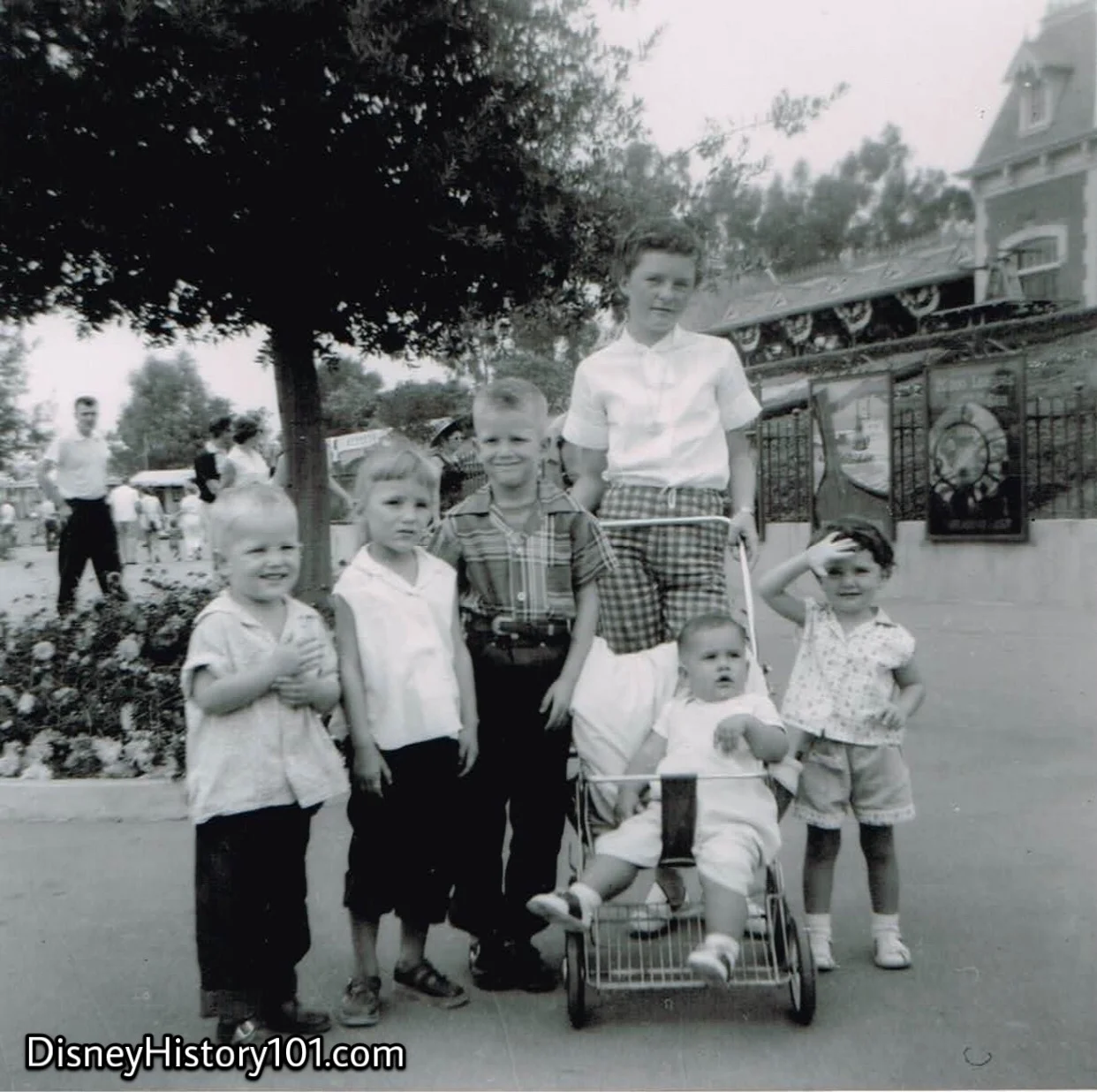
During the early years (c. 1958 for instance), Wheelchairs and strollers were available at a nominal rental charge for the day, at the Stroller Shop, next door to the Opera House in Town Square. Stroller Rentals were operated by Castle Services and rented wheel chairs and Baby Strollers.
In later years, this service was located to the right of the Main Gate turnstiles (not far from where this memory was captured). By 1978, the Stroller and Wheelchair Rental Shop facility had 1500 strollers and over 100 wheelchairs (among other aids) for guests to rent (at a fee of $1.00, and a collateral deposit of $1.00). A Stroller Crew would regularly repair the strollers and wheelchairs in the Park at the Shop, and after being cleaned, they were “ready to roll!”
Two years later (in 1980), guests capable of leaving their wheelchairs may be accompanied on a total of eighteen adventures and attractions. During the 1980s, handicapped guests generally entered “through the exit (while accompanied by one other guest). If the party is larger than two, the remaining guests are required to wait in line and join the handicapped guest and escort at the attractions loading area….All live entertainment areas, most restaurants, and shops can easily accommodate guests in wheelchairs. Restrooms are available at Central First Aid (at the end of Main Street U.S.A.), in Tomorrowland (under the Skyway), in Adventureland (near Walt Disney’s Enchanted Tiki Room), in New Orleans Square (behind the French Market), in Fantasyland (near Alice in Wonderland), and in Bear Country (near the train trestle).” Special Parking was also provided for guests in wheelchairs in the Medical Parking Lot, near the Main Gate Ticket Booths. “Handicapped” guests could inquire about this accommodation at the Parking Lot Entrance.
By the 1980s Dark Ride Wheelchair Procedures:
•Guests in wheelchairs may be accommodated on
Peter Pan's Flight provided they can enter and exit the vehicles unassisted or with the help of other members of their party.
•Wheelchair parties consisting of a wheelchair guest by him/herself or just one other adult or any number of children may be granted immed-late access to the attraction by entering through the normal guest exit at the end of the station near Unload, Zone 29D.
The members of the party can be boarded in the Unload Zone once the Dispatch. Host/Hostess designates the appropriate boat and the Station Stop Button is pressed. At the conclusion of the ride, the wheelchair party may disembark where it boarded, at the Unload Zone.
Again, the Station Stop should be pressed.
Should the wheelchair party consist of more than one adult per wheelchair guest, each additional adult should be requested to wait in the queue.
When these guests reach the Loader, they should tell him/her that they are members of the wheelchair party and how many members of the party are in wheelchairs at guest exit.
The Loader should attempt to board all members of the party in the same vehicle, if they will all fit. If not, they should be given consecutive vehicles.”
By 1990, guests could even obtain a copy of Disneyland Handicap Guest Guide at the Carefree Corner or Strollers and Wheelchairs. Though times and policies have changed, Disneyland continues to work to become accessible to all guests!
As for Cast Members, an increasing number of wheelchair ramps (for accessibility) were added to Backstage areas, thanks to Gary Krall, and the Disneyland “I Have An Idea” program, during the late 1970s.
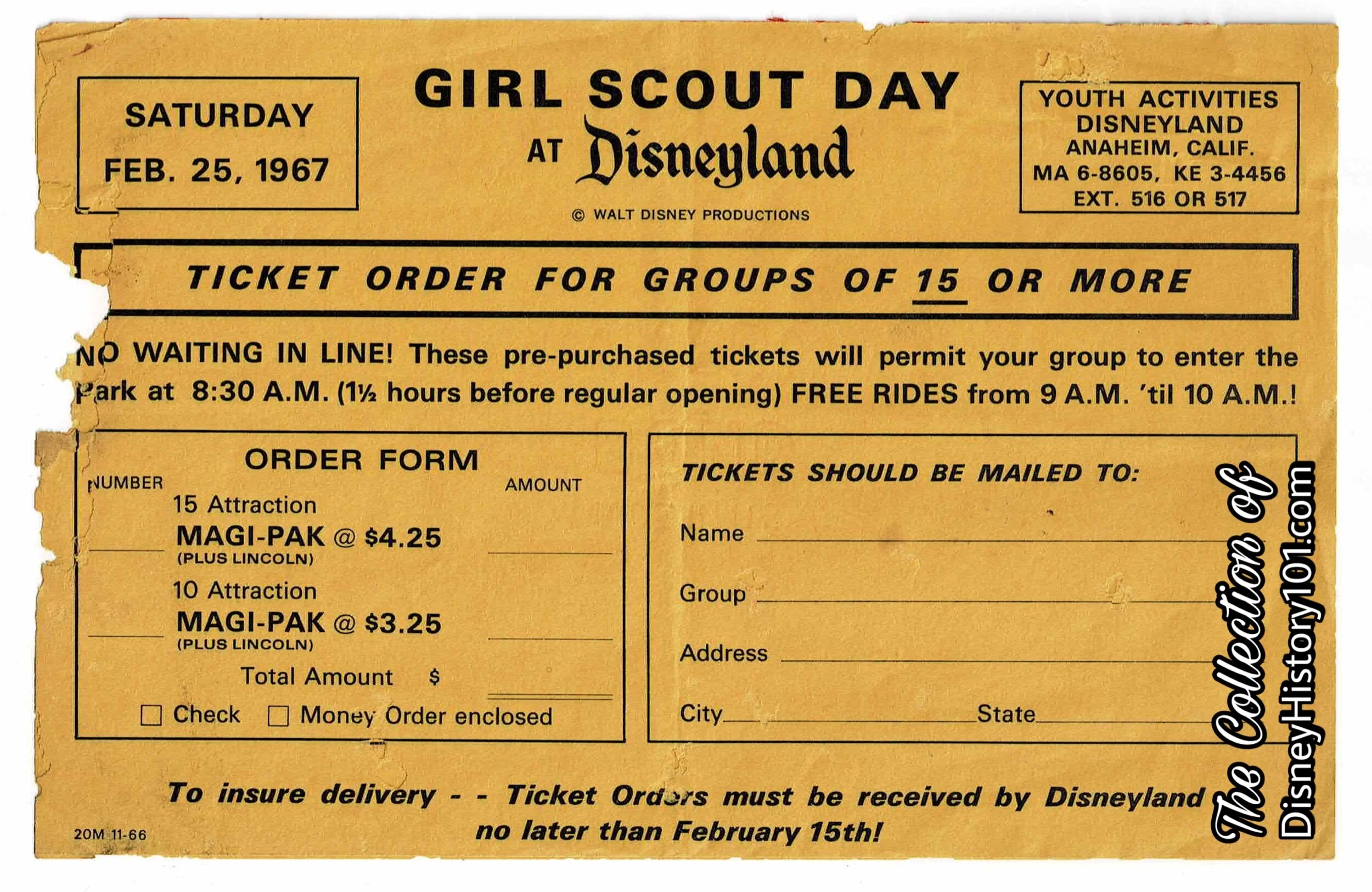
Girl Scout Day at Disneyland admission media.
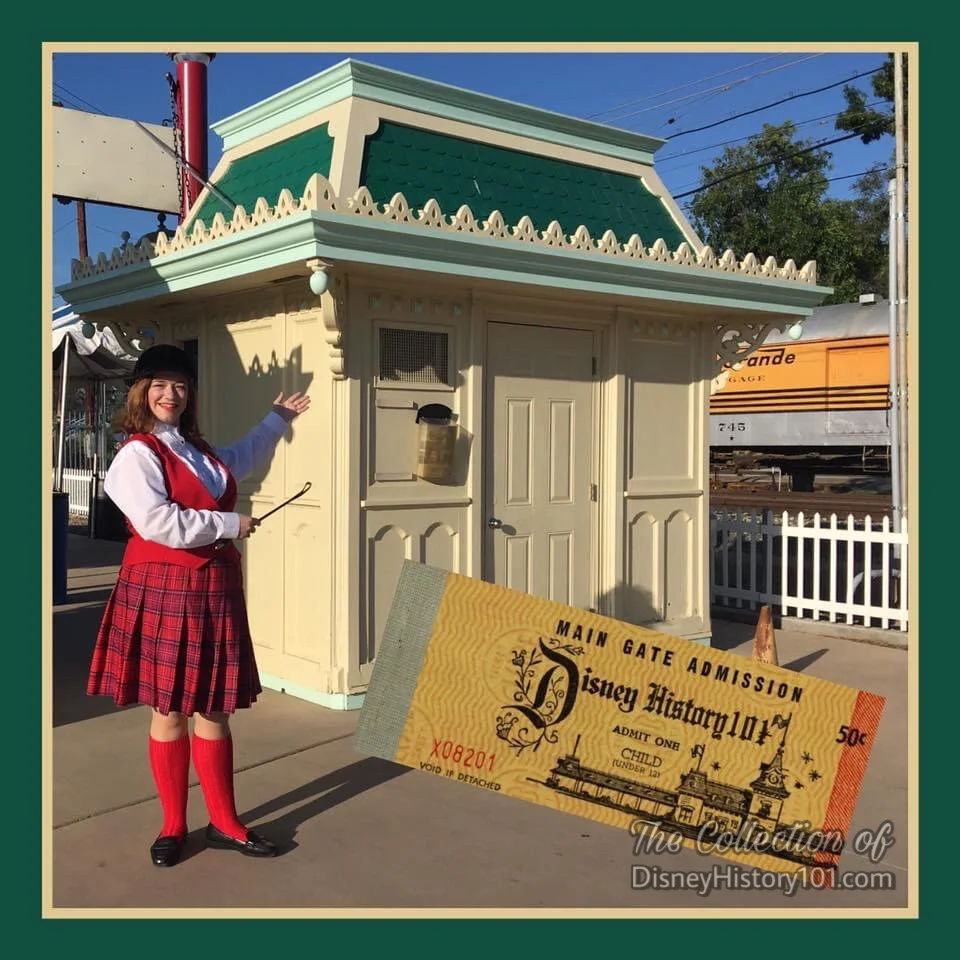
During Disneyland’s Silver Anniversary year of 1980, WED Imagineering, the Disneyland Planning Department, and Industrial Engineers completely redesigned the Main Entrance. Soon (during January and February of 1980), the asphalt and chain link fences were removed, and in their place a slab of red concrete [as seen on the back cover of Disneyland LINE magazine, Vol. 12, No. 3]. Rows of trees and colorful planters would lead the way to the main Entrance turnstiles and Flower Mickey beyond, and the 14 old Ticket Booths were replaced by 16 newly designed Victorian-style Ticket Booths. The new Ticket Booths were larger, featured new sign graphics and central air and heating. The Ticket Booths had a Fiberglas roof (courtesy of the Staff Shop), over the wooden booth (made by the Mill Staff).
The first Ticket Booths were to be operational by Washington’s Birthday, and the entire project was to be completed by Easter of 1980.
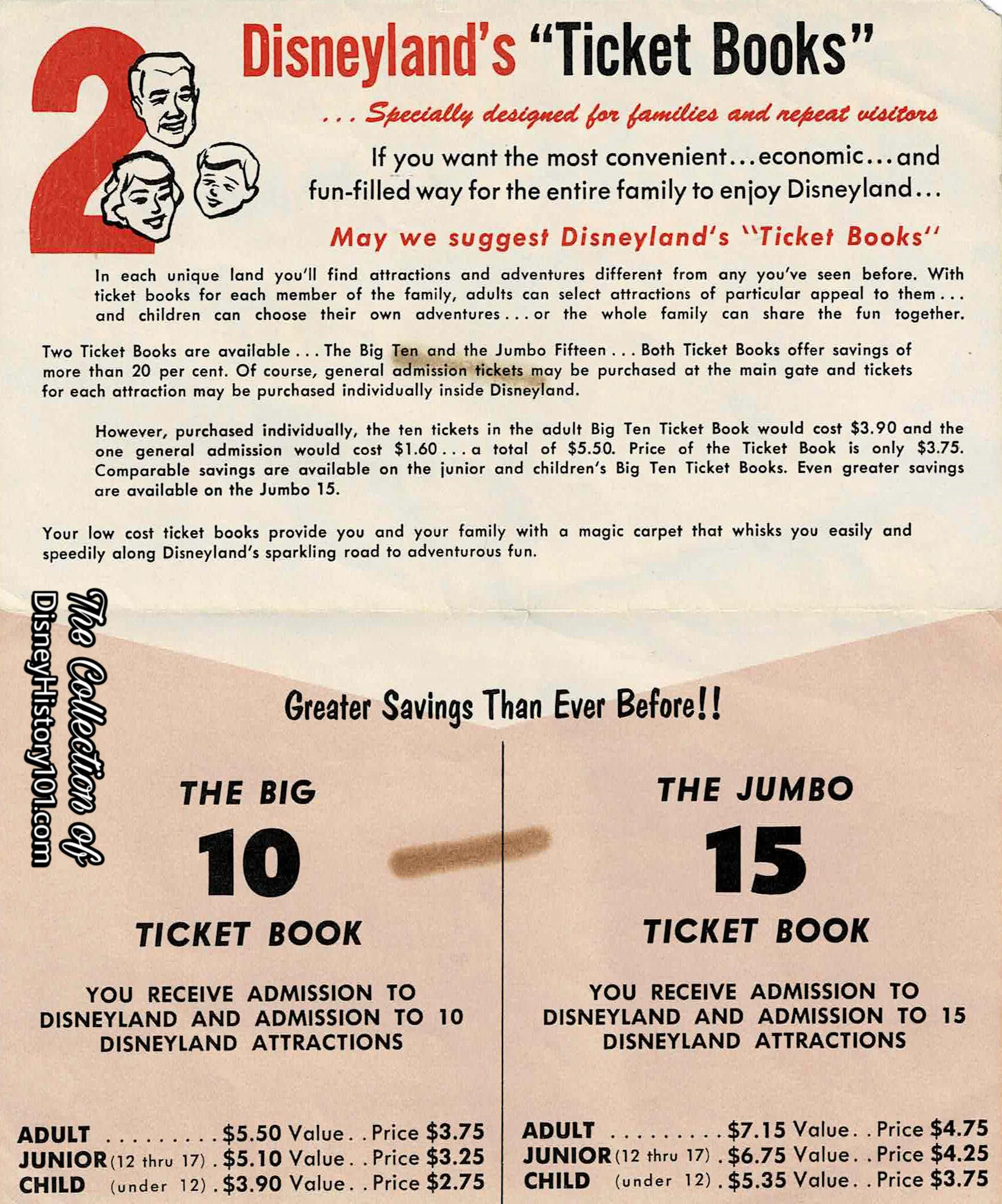
“Two Wonderful Ways To Enjoy Disneyland” Excerpt, (1961)
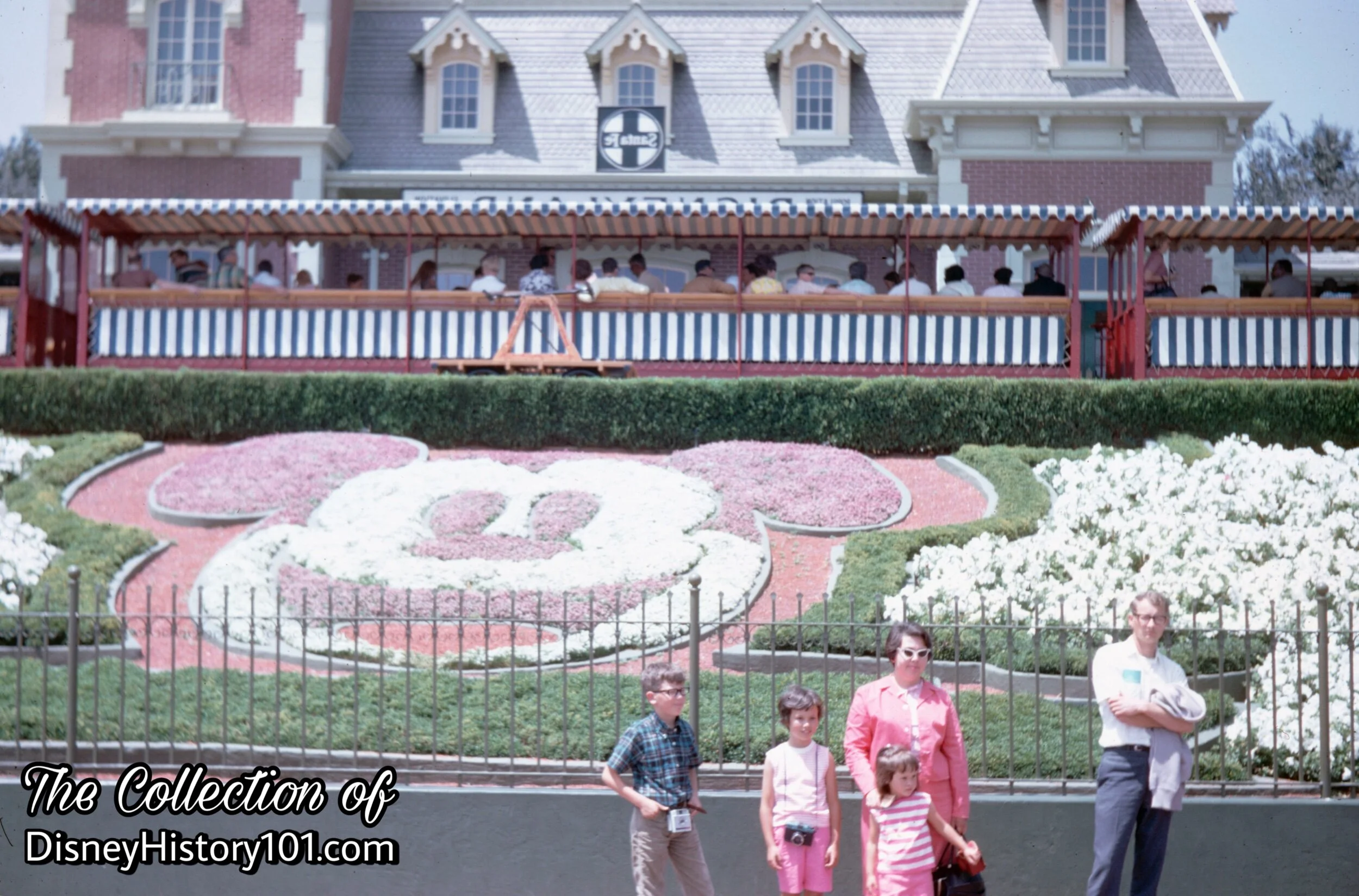
To the right Julian “Scotty” Gordon, foreman at the Main Gate.
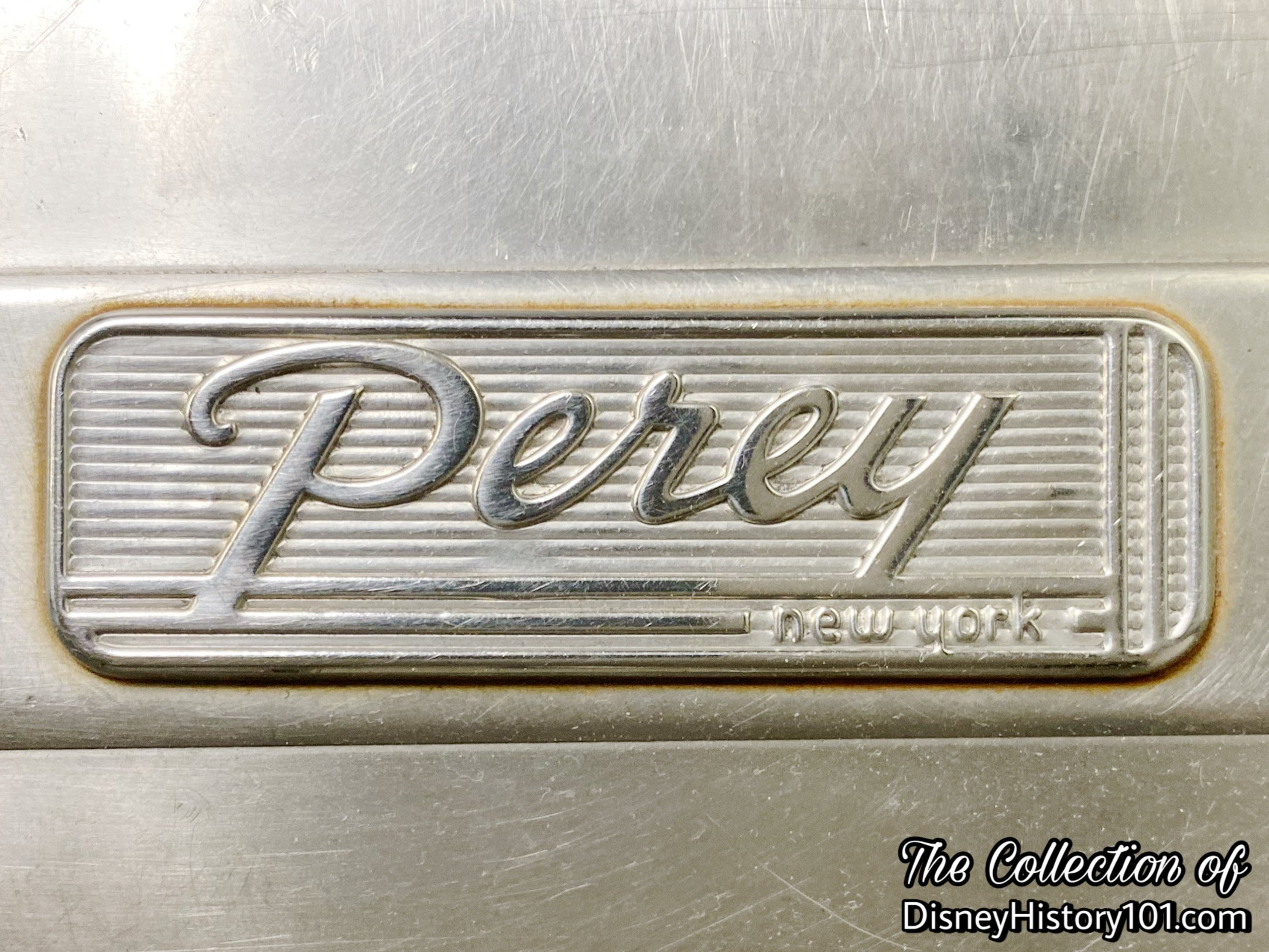
To the right of the green Perey-brand turnstiles, you’ll notice the “Readmission System,” utilizing black light. “At Disneyland when someone wants to leave the fun area temporarily and visit his car, the gatekeeper stamps the back of the patron’s hand with invisible ink. When returning, the patron merely shows his hand under black light and the resulting fluorescence identifies him as having passed through the gate previously. There’s no doubt about it, black light plays an important role in show business,” according to “Black Light Creates Fascinating Fluorescence!” by Edmund A. Braun, published 1968.
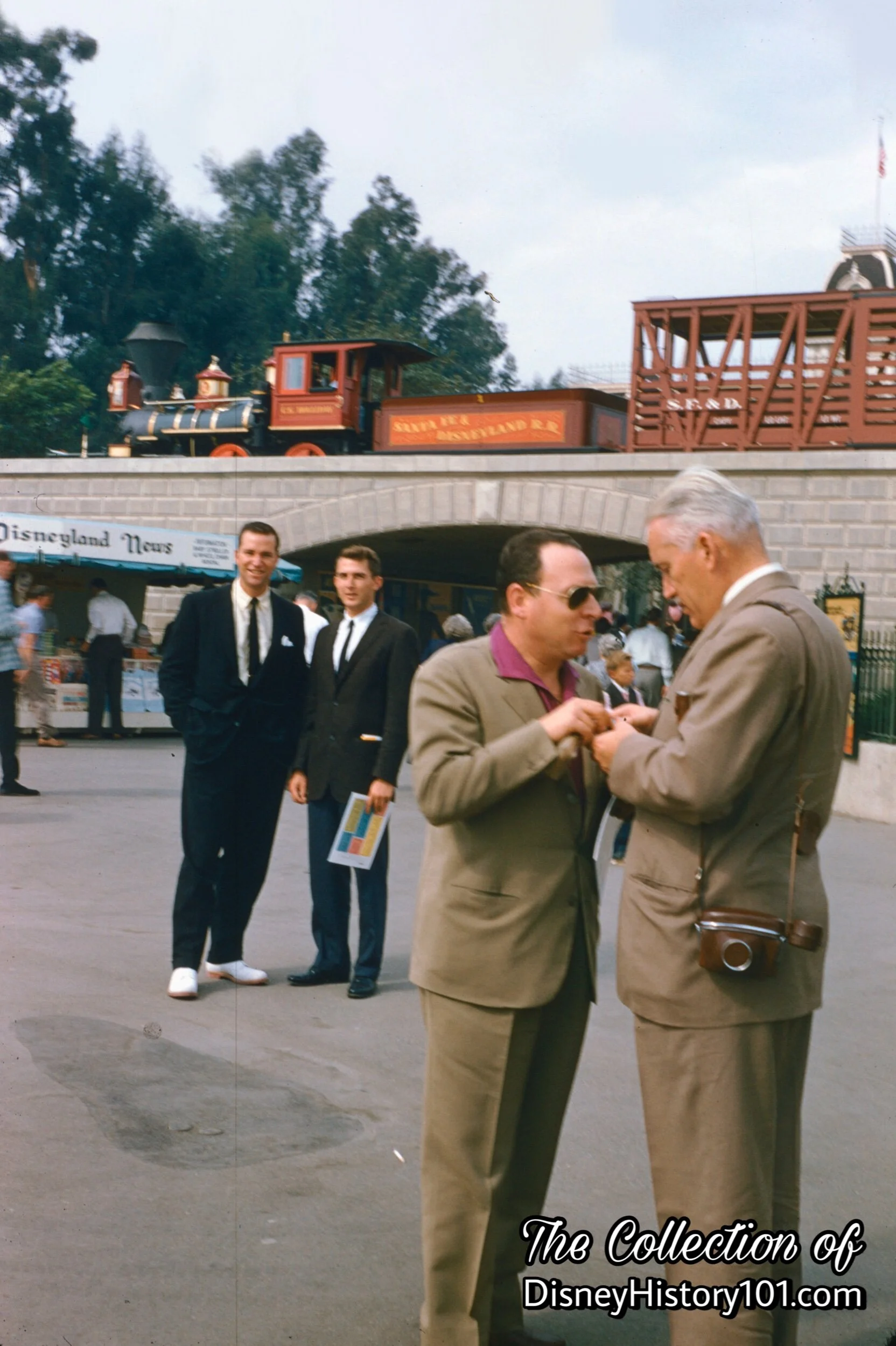
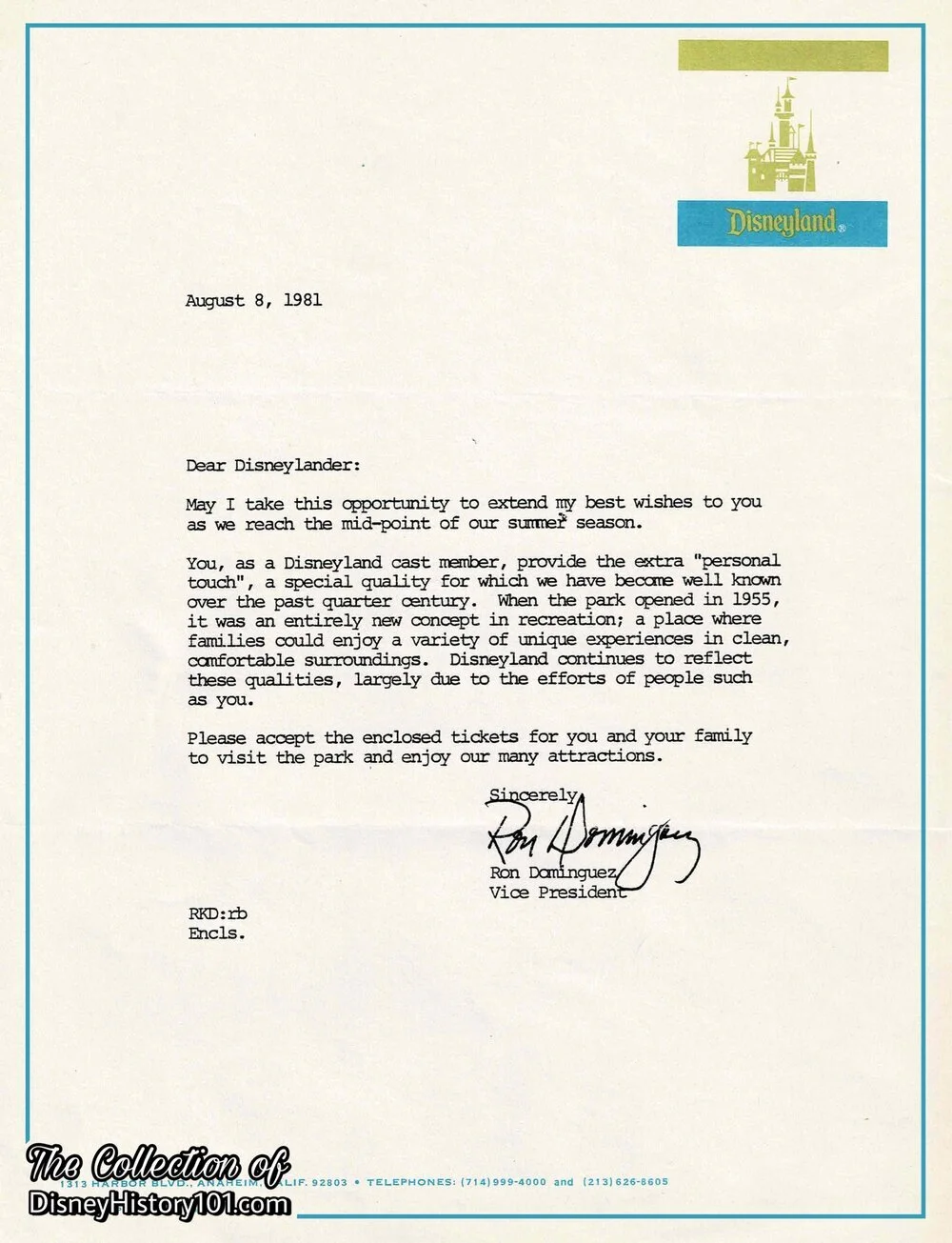
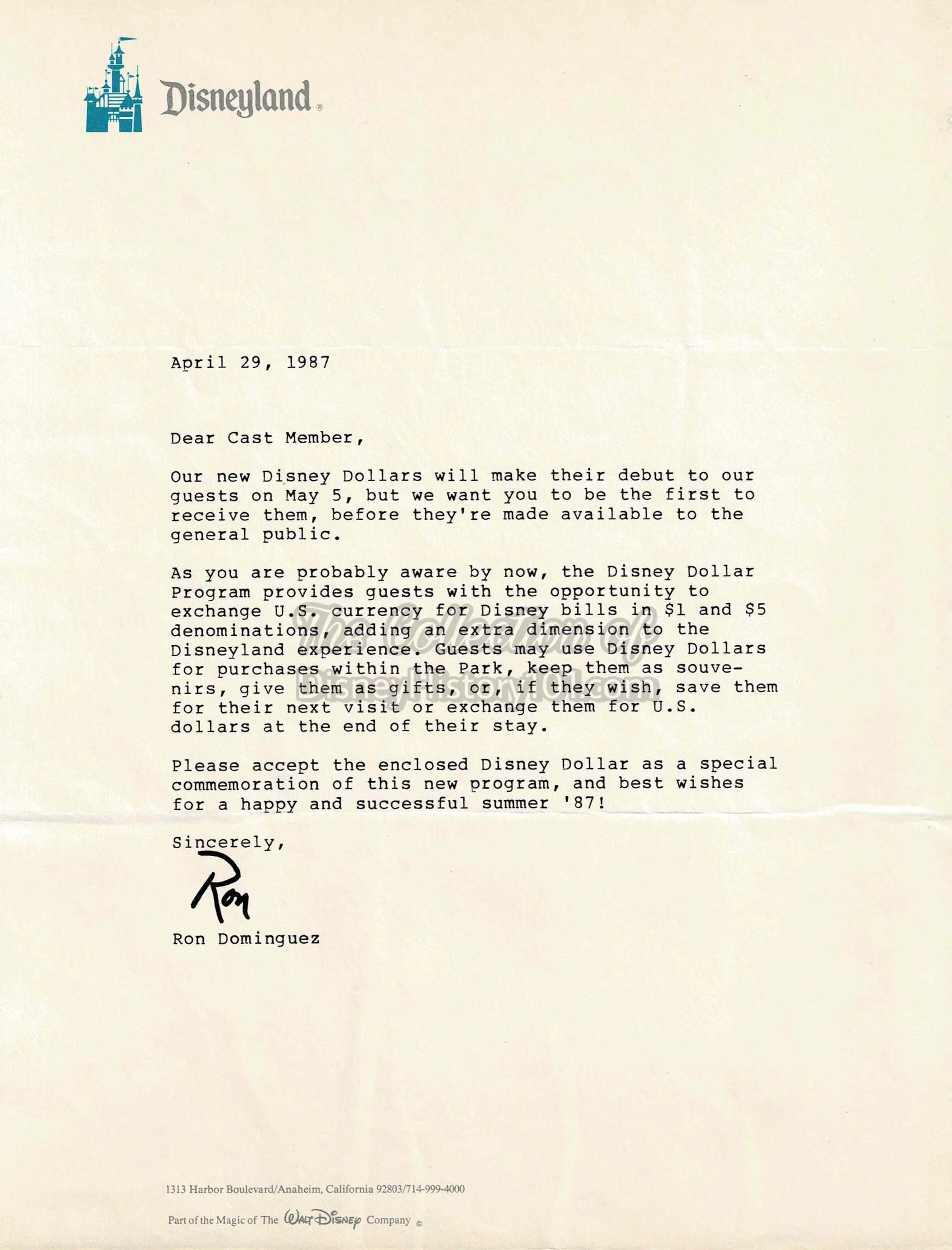
Recalling Walt’s words : “I don’t want the public to see they world they live in while they’re in the Park. I want them to feel they’re in another world,” the Disney Dollar Program was initiated at Disneyland.
A limited run of Disney Dollar Proof Sheets (signed by artists, like Matt Mew) were released through the Disneyana Shop on Main Street, May 5th, 1987. By the summer (c. July of 1987), “the official currency of Disneyland” could be acquired (as change) when you purchased your Disneyland tickets, or through the Main Street Penny Arcade or the Tomorrowland Starcade.
A few months later (by October 2nd, 1987), the Disney Dollar Program was so successful, that it was expanded property wide to the Walt Disney World Vacation Kingdom. Both of these letters to Disney Parks Cast Members were accompanied by one complimentary Disney Dollar.
STROLLER RENTAL facilities were located conveniently near the Main Entrance. Strollers, wheel chairs and other aids were offered at moderate rental fees.
In 1981 alone, the Strollers generated $652,000 in revenue for Disneyland.
(November 23, 1958)
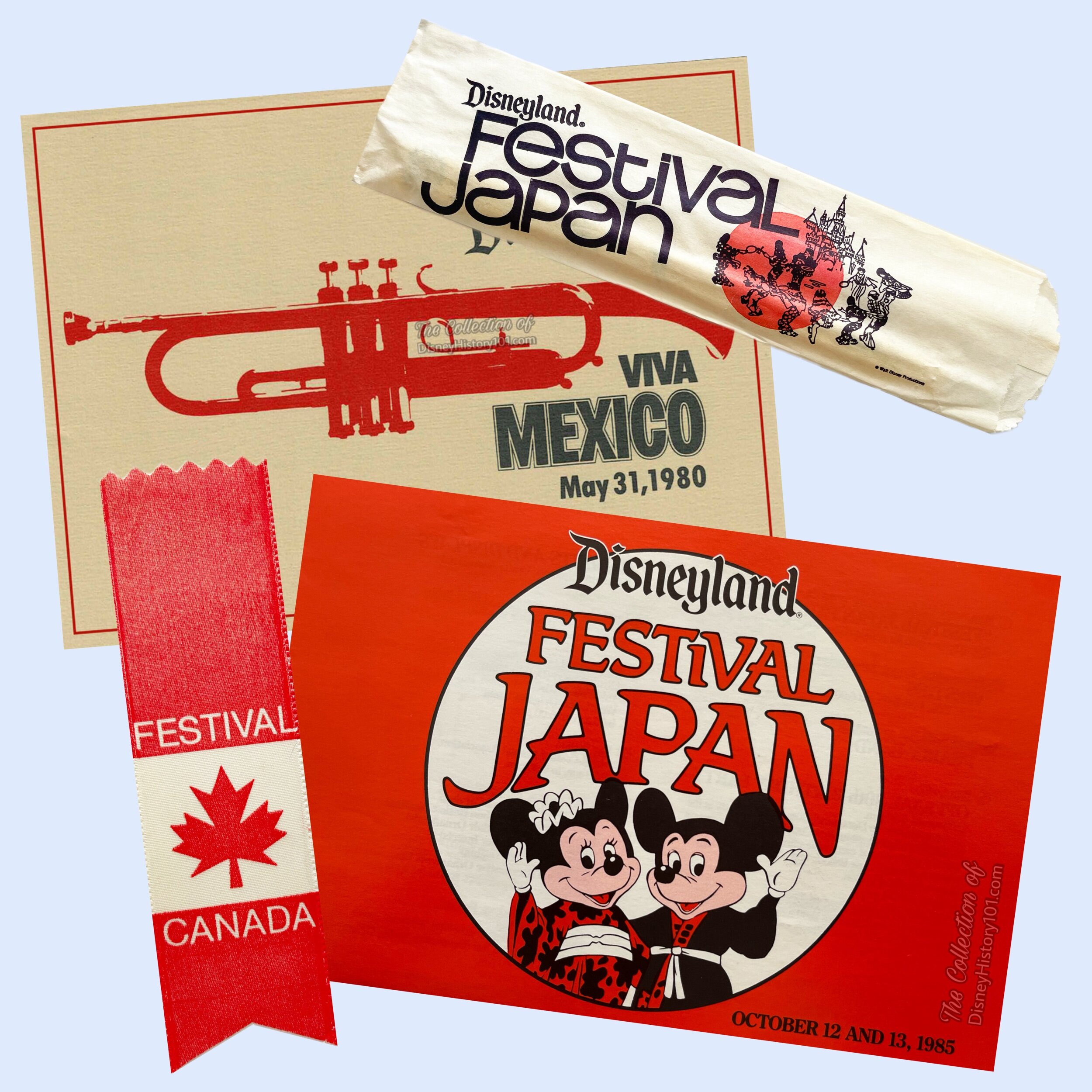
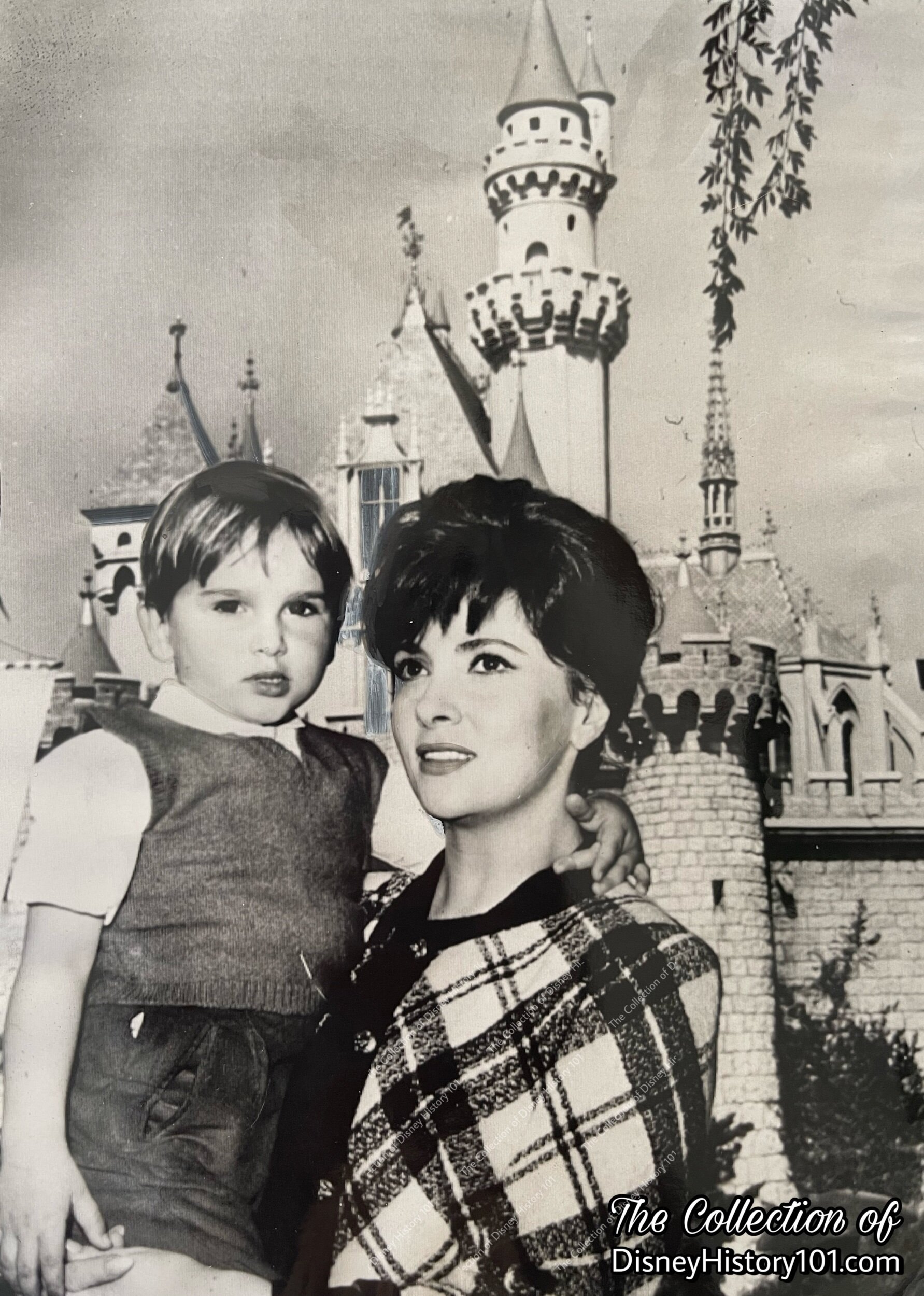
Gina Lollabrigida and her son Milka Jr. visited Disneyland during early March of 1961 ; United Press International Telephoto
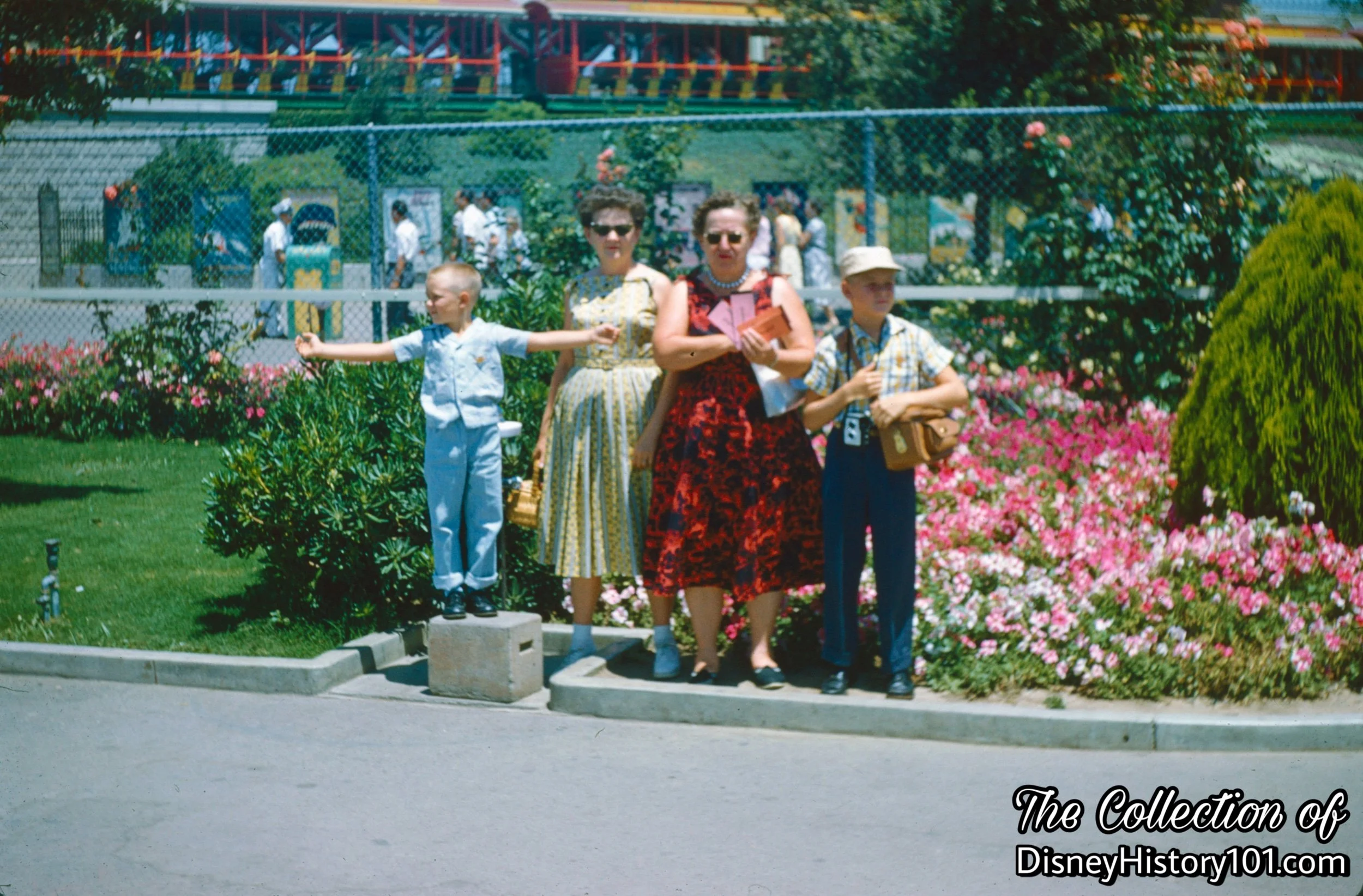
Morgan Evans once shared how “juniper and xylosma provide a green backdrop for the welcome mat of portulaca, candytuft and petunias at the entrance to Disneyland.”
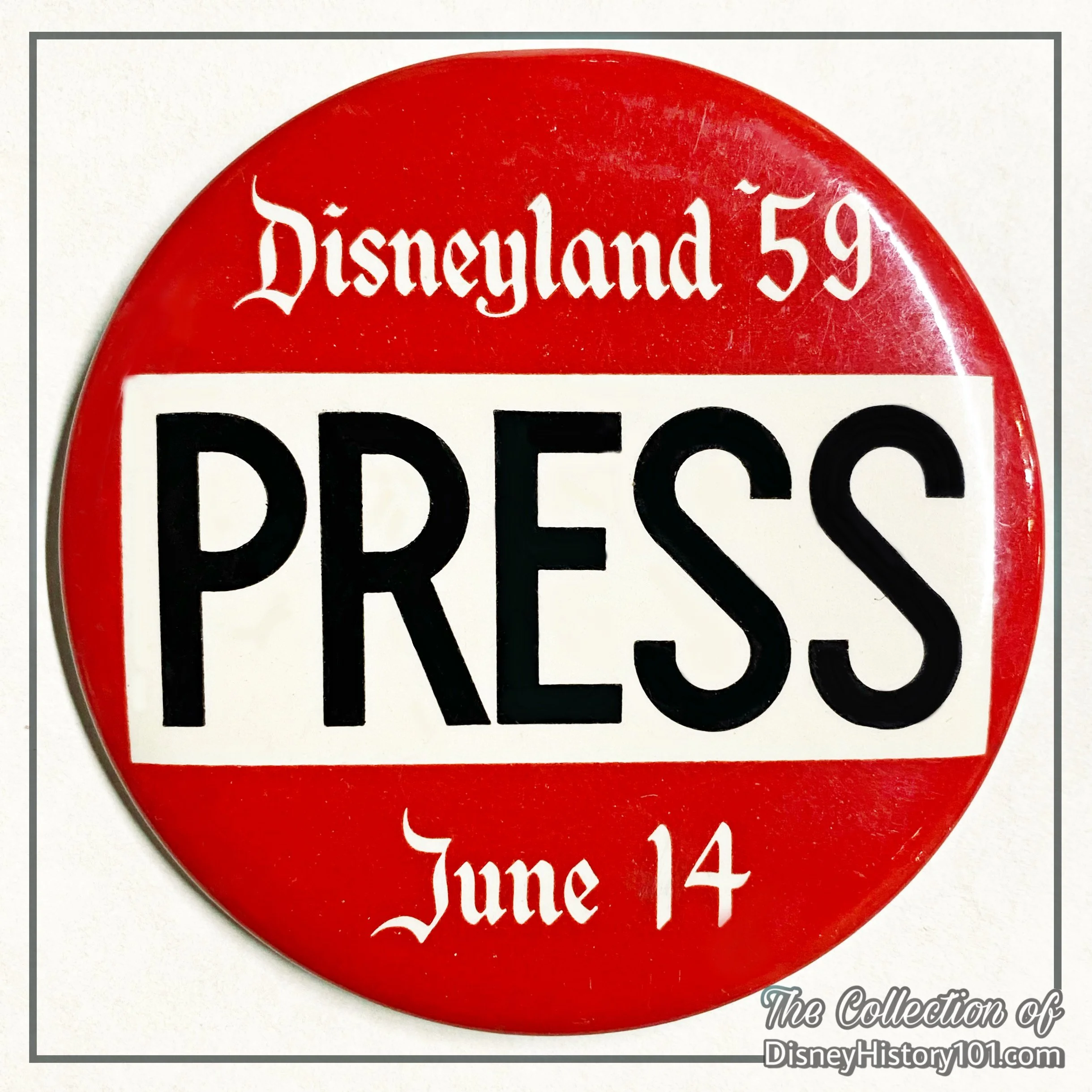
A Disneyland ‘59 Complimentary Admission Media Press button.
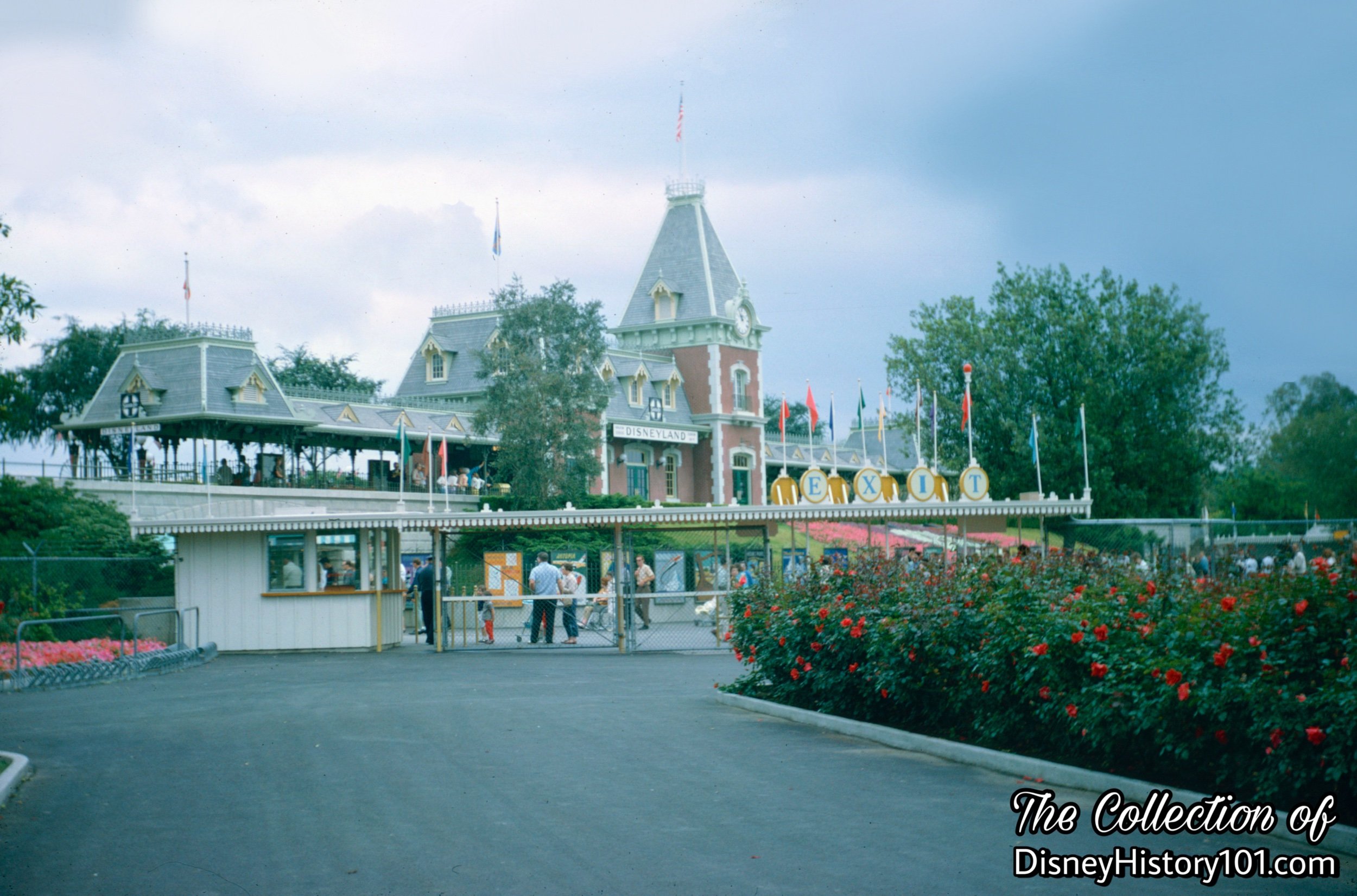
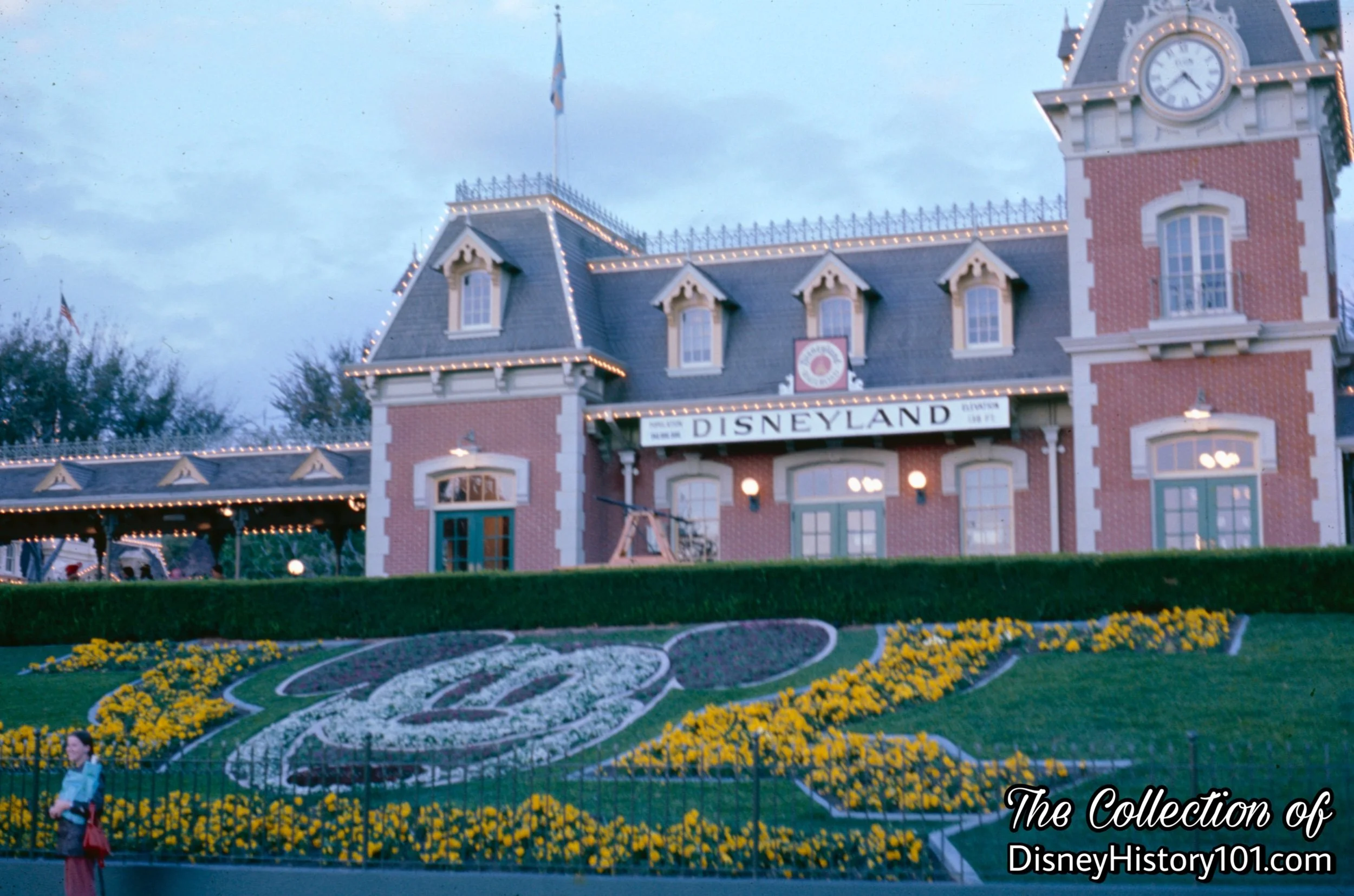
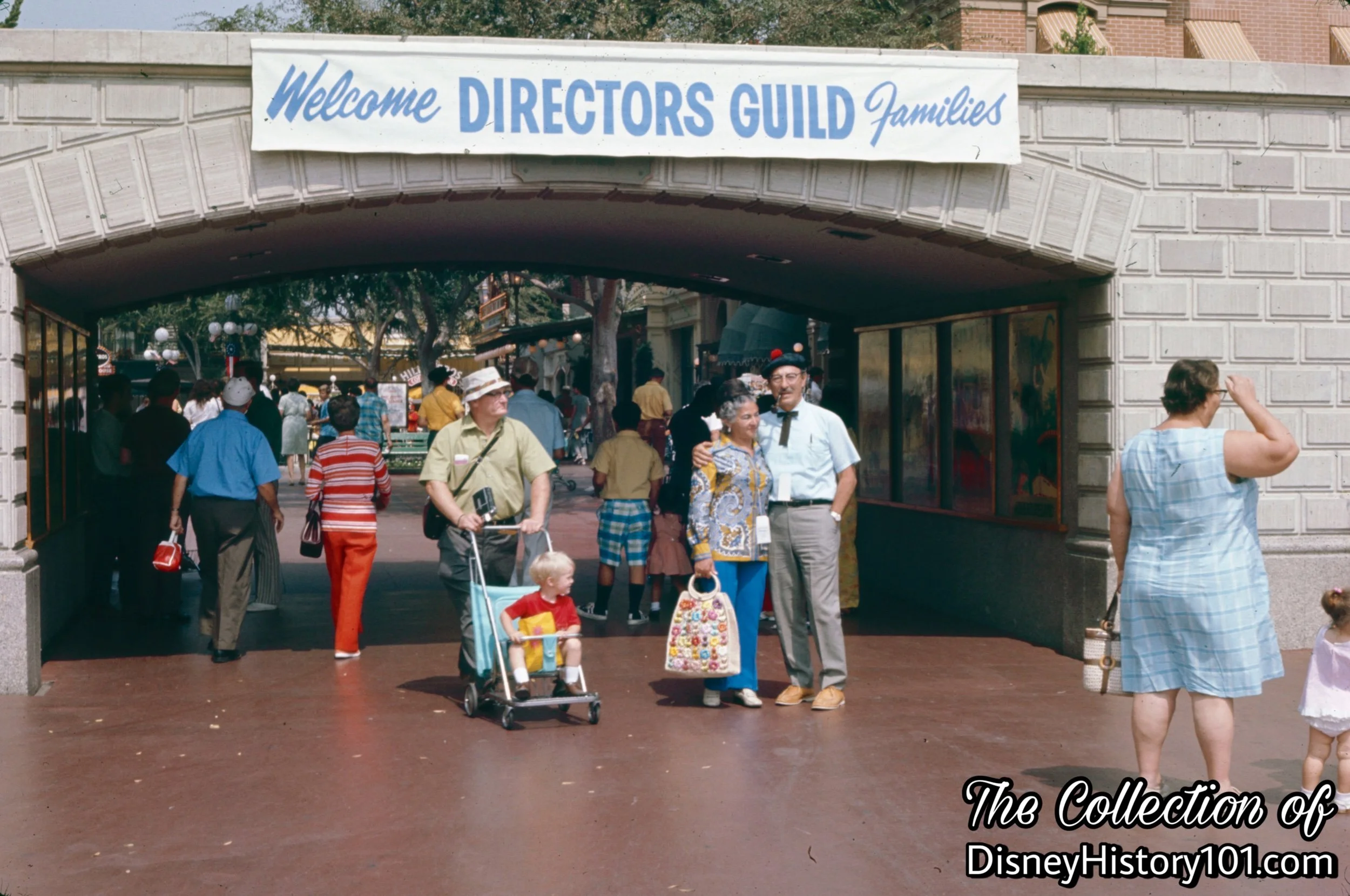
The Directors Guild Private Party at MAGIC KINGDOM®.
A banner hangs over the “Stage Curtains” of Disneyland, where guests pass from the outside world. This “Mix-In” event for Director’s Guild Families was a type of Private Party in which a group of Guests entered the Park with presold admission media for a period which included all or a portion of the regular operating day.
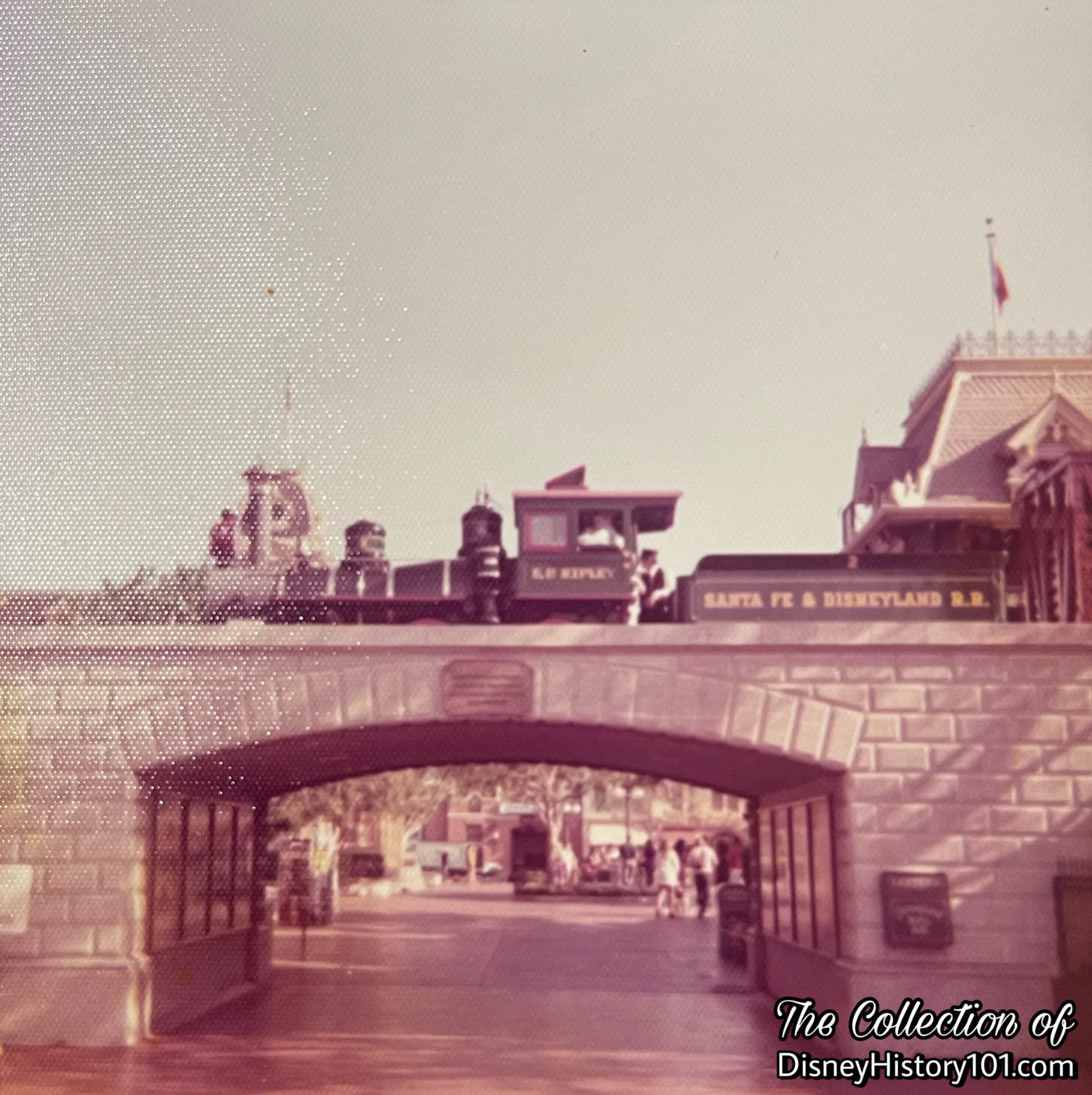
Tom Roppa recalled “trying to get the tunnels opened up on Main Street and get them washed down.”
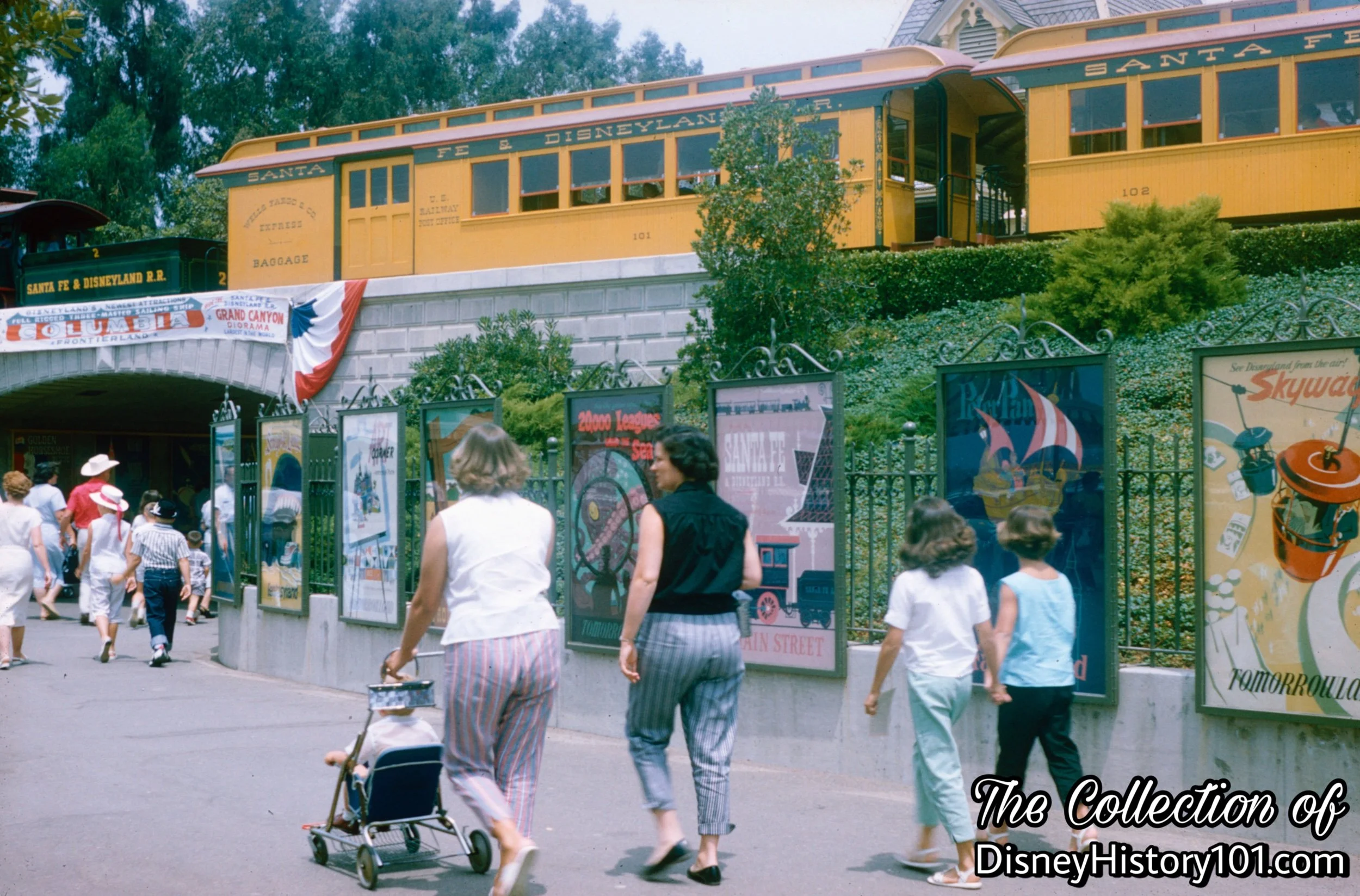
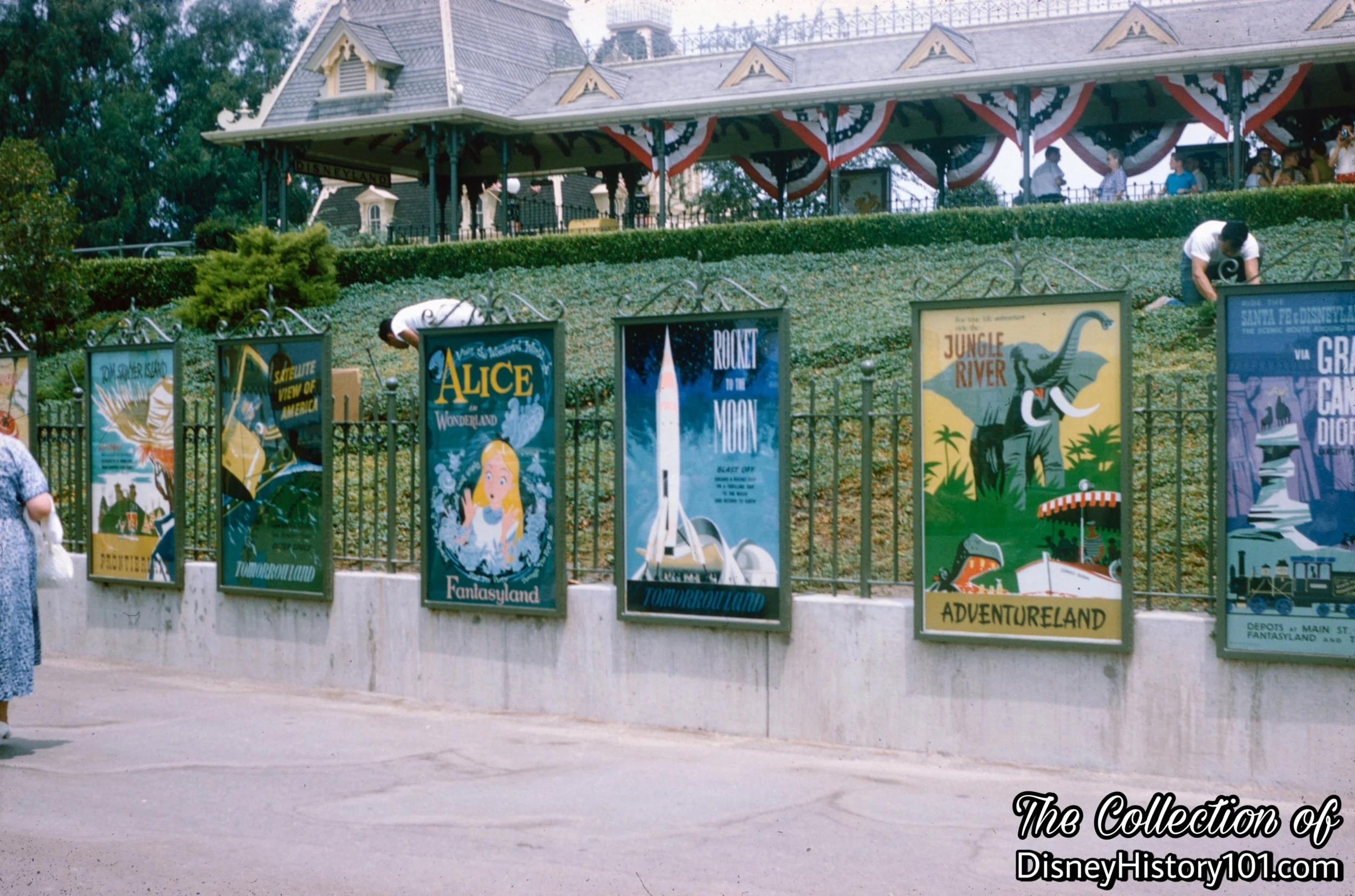
Disneyland Inner Lobby, 1958.
Walt Disney once acknowledged: “Of all our inventions for mass communication, pictures still speak the most universally understood language.”
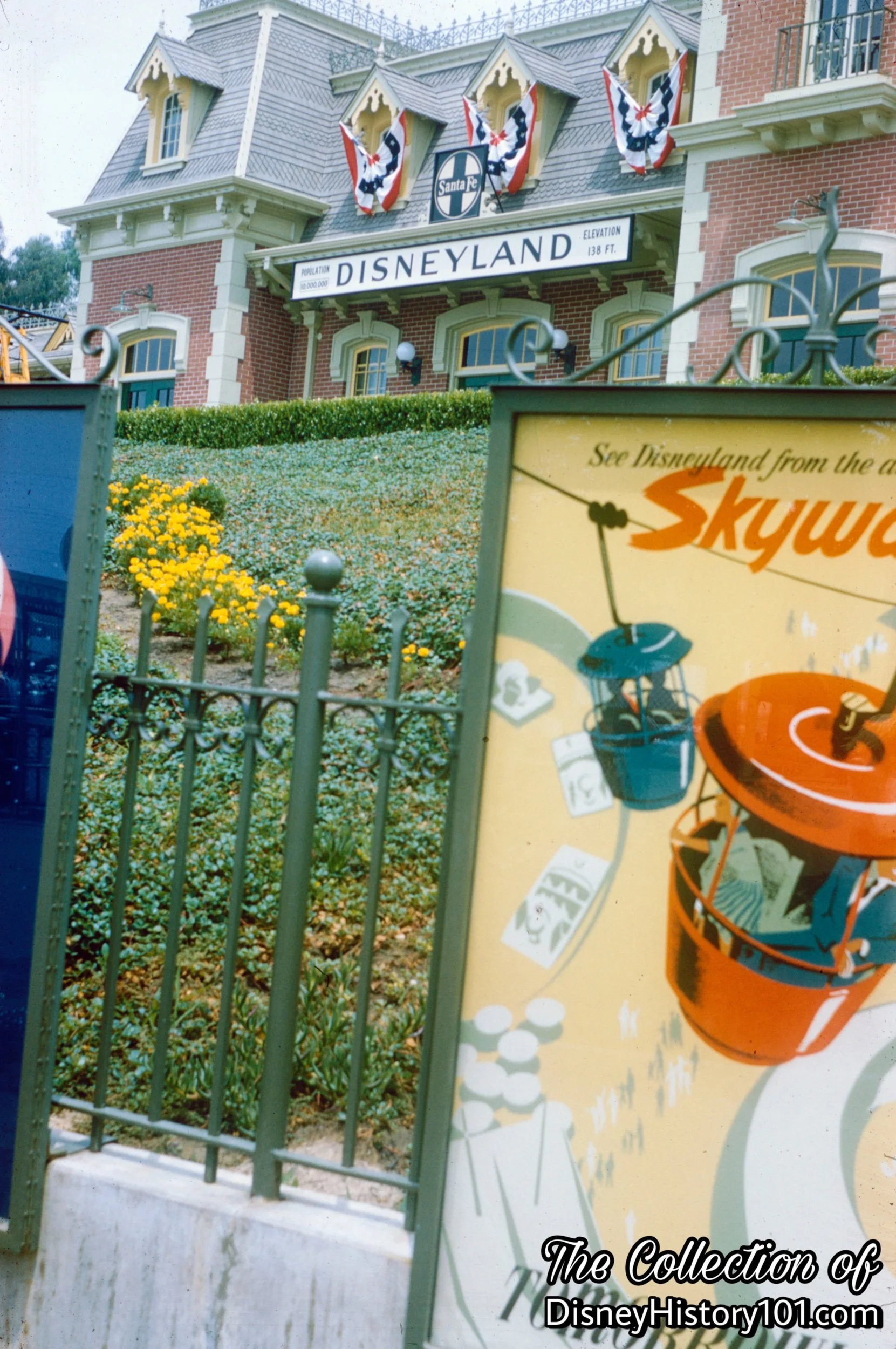
1960
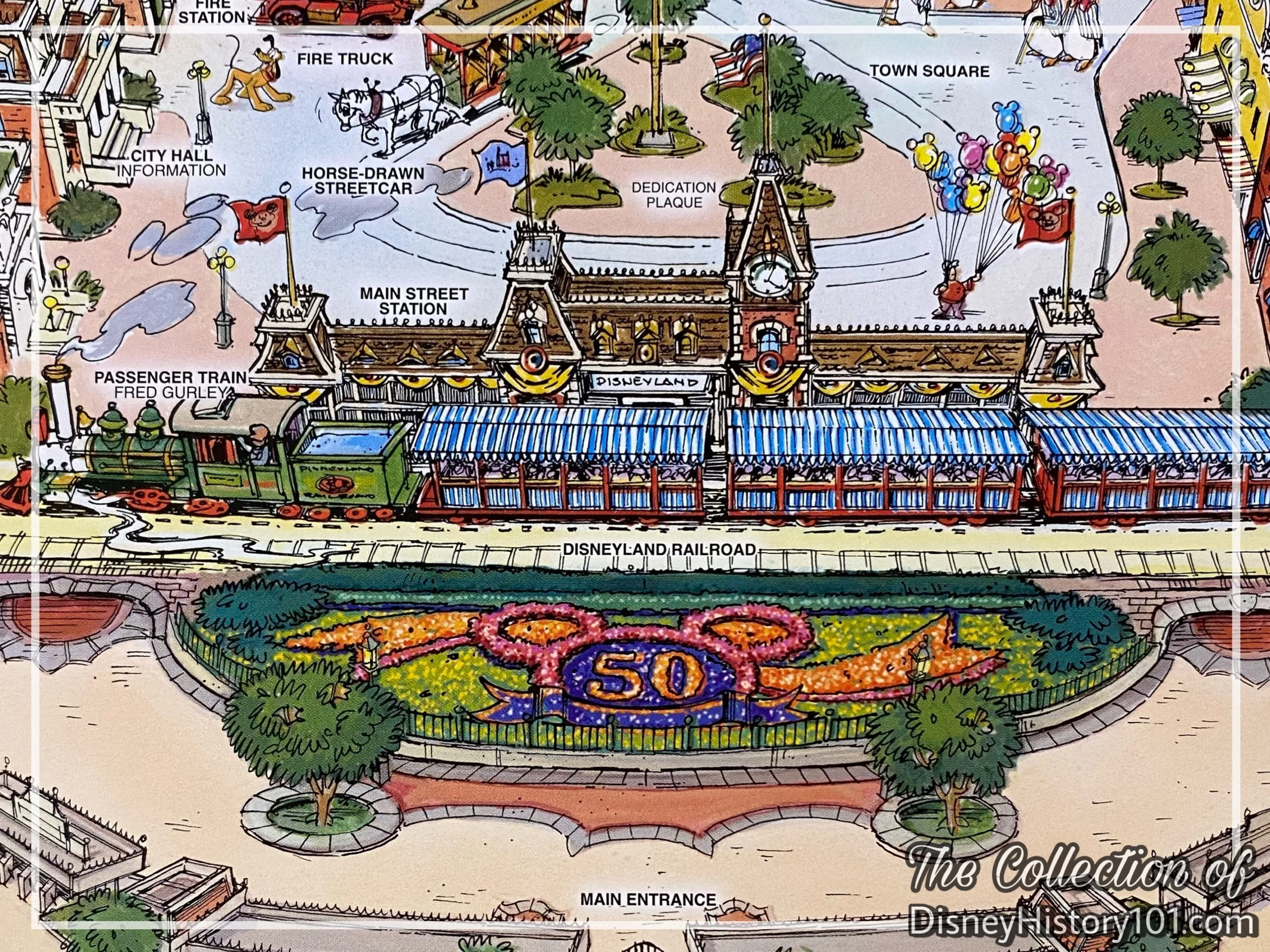
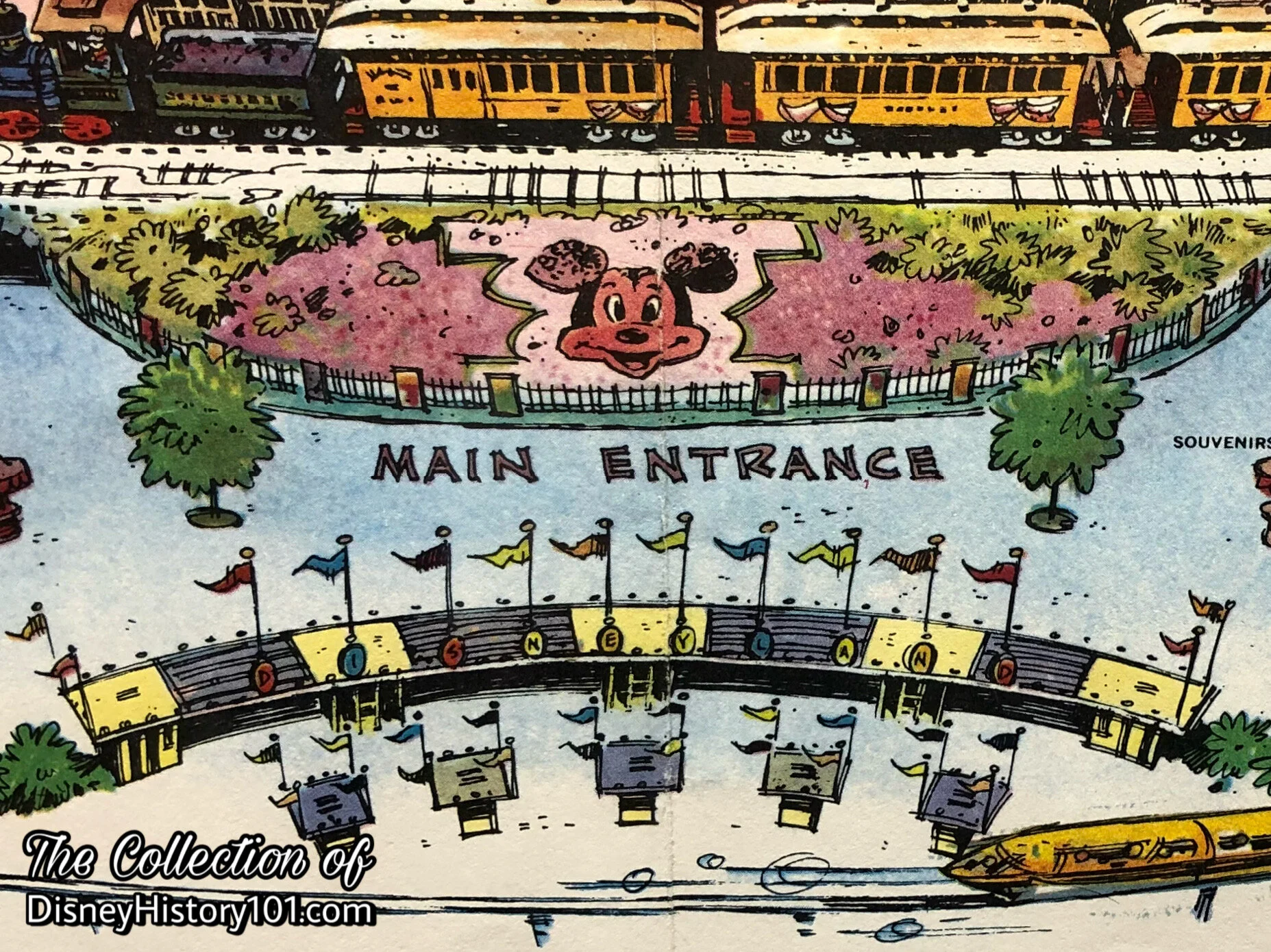
Disneyland 50th Anniversary Map by Nina Rae Vaughn.
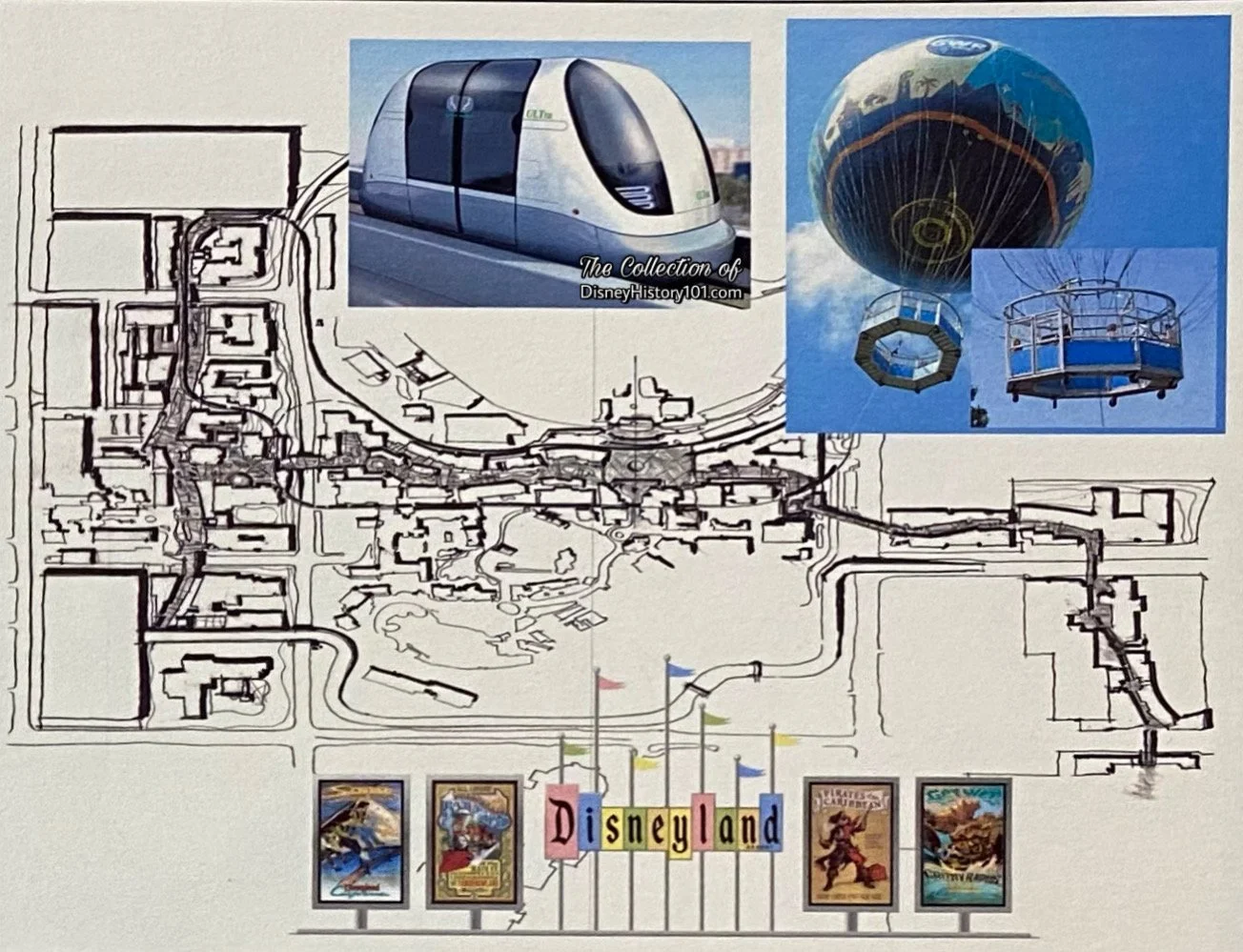
New Magic, Master Planning, and Business Opportunities for the Arrival Sequence and Main Entrance were dreamed up during the Blue Sky period of development.