KING ARTHUR CARROUSEL
“Long Live the King”… King Arthur Carrousel, that is!
One can easily slip into the jargon of “ride,” but at Disneyland there are attractions and adventures, each one a living experience for the guest. Disneyland ride-through attractions or adventures have officially been defined as an “individual show, ride, or exhibit designed to produce an entertaining Guest experience. Disney attractions stir the imagination, enliven the senses, and provide the participants with positive, innovative entertainment, which is the essence of the DISNEYLAND Show.” It is important to review the story of the attraction, tell the story, explain it, and create interest.
As there are stories behind each attraction, there is also a "story behind the story" of every attraction. This is the story of King Arthur Carrousel.
Carousels (which originated in Europe) had been a popular attraction around the world for about 250 years. They had reached their “golden age in the United States between 1870 and 1930, during the days of prospering and popular country fairs and amusement parks,” according to Disneyland LINE Magazine (Vol. 20, No. 31 ; published August 5, 1988). Soon, the year 1937 came, and the country was slowly gaining its composure from the Great Economic Depression which devastated the American landscape. Many individuals, families, and businesses (including those of the carrousel manufacturing industry) were destroyed, and those that managed to survive this period were changed forever. People needed to laugh again and experience an inexpensive thrill of amusement centers, parks and rides.
According to the same publication, “the American carrousel manufacturing industry, at the time, was supported by only a dozen or more master craftsmen, such as Gustav Dentzel, Charles Looff and C.W. Parker. Because of the quality and craftsmanship, their carrousel animals, in particular, have been elevated to the level of folk art.” Owing to this, by the mid-1950s, there were more than 4,000 carousels operating in the United States.
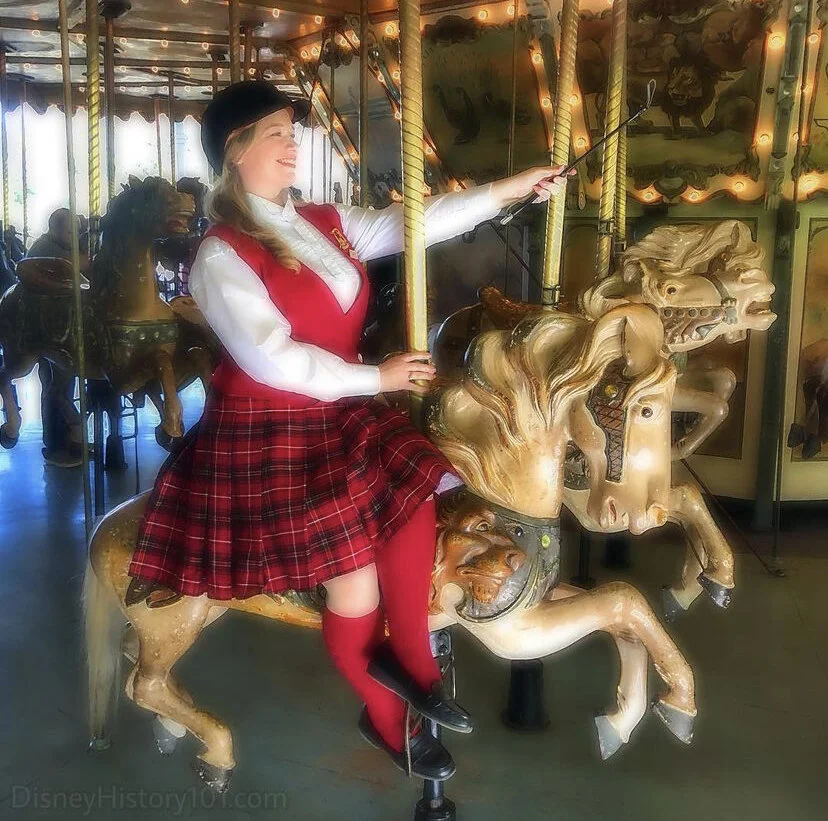
Griffith Caroussel (the present day)
”Walt’s Spark of Inspiration”
In the growing city of Los Angeles… entrepreneur Ross Davis would bring a bigger and better carousel to Griffith Park (not far from Walt and Lillian’s home). Meanwhile, plans for Walt's Park, first appeared on paper as far back as 1932. Amidst dreaming and planning various projects (including a Park of his own), you may remember hearing that Walt and his daughters regularly visited the carousel. Walt once recalled, “I’d sit while they rode the merry-go-round and… sit on a bench, you know, eating peanuts.” Diane Disney also recollected riding the carousel with her younger sister Sharon, and attempting to reach for the brass ring. It was a common game that a brass ring was suspended, and as riders passed around they would attempt to grab hold of the ring. Usually prizes were awarded to those with the skill to grasp the ring.
These family outings influenced Walt, who stated, “I felt that there should be something built where the parents and the children could have fun together.”
The carousel that inspired Walt is the only Spillman carousel that is known to operate today. It bears 68 prancing steeds to select from. Some of these hand-carved horses were created in 1885, and a few were rescued from its sister carousel which was tragically burned to the ground long ago. But, that is another story, for another Tour, which may be started HERE.
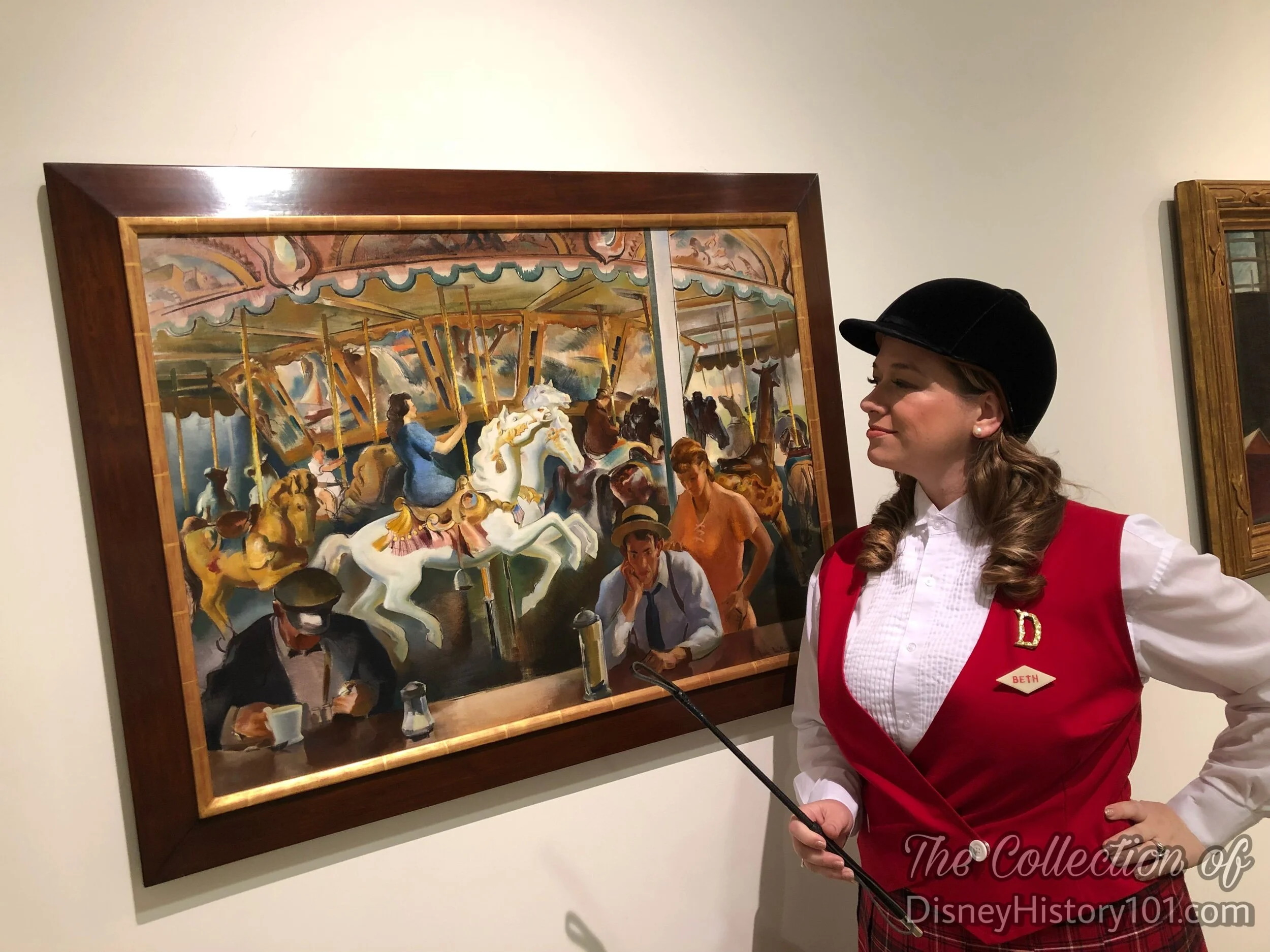
During 1976, the Lincoln Park Spillman carousel was burnt to the ground by vandals. While the Griffith Park Spillman carousel lives on today, memory of the Lincoln Park carousel exists through a few extant photographs and paintings like this one by Barse Miller (pictured above).
You can view this work as part of a rotating collection of The Hilbert Museum of California Art(located on the Chapman University campus) approximately fifteen minute’s drive from Disneyland. This is one oft-overlooked Disney gem that’s worth discovering for yourself.
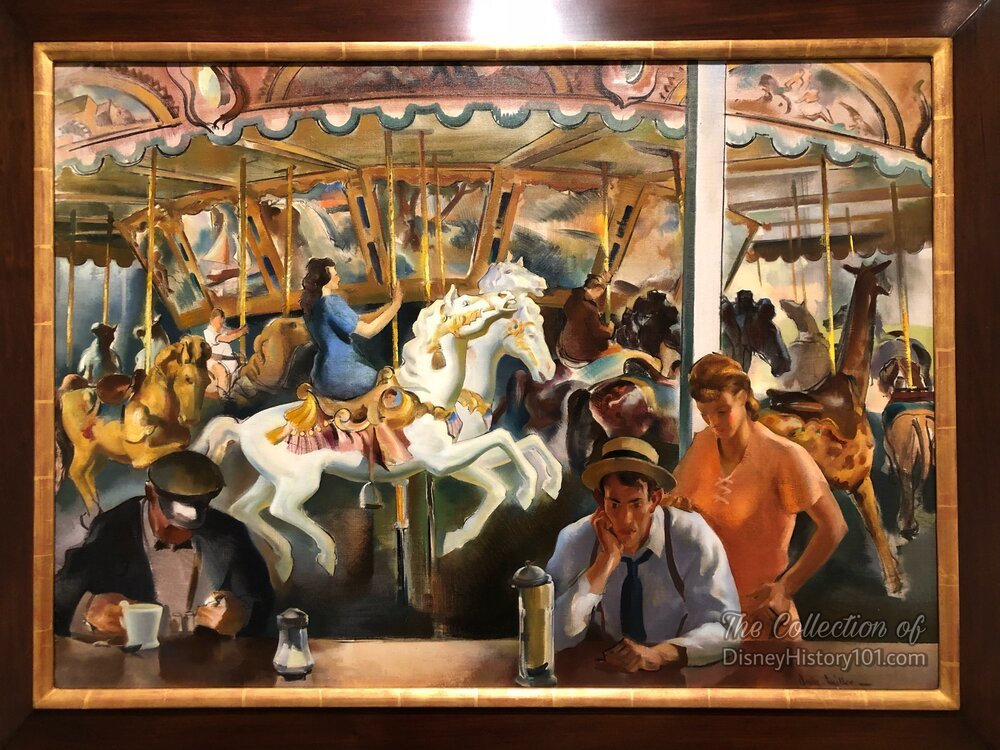
“If I had the Wings of an Angel” (produced by Barse Miller, 1937) captures the Lincoln Park Spillman Engineering carousel during the post-depression era.
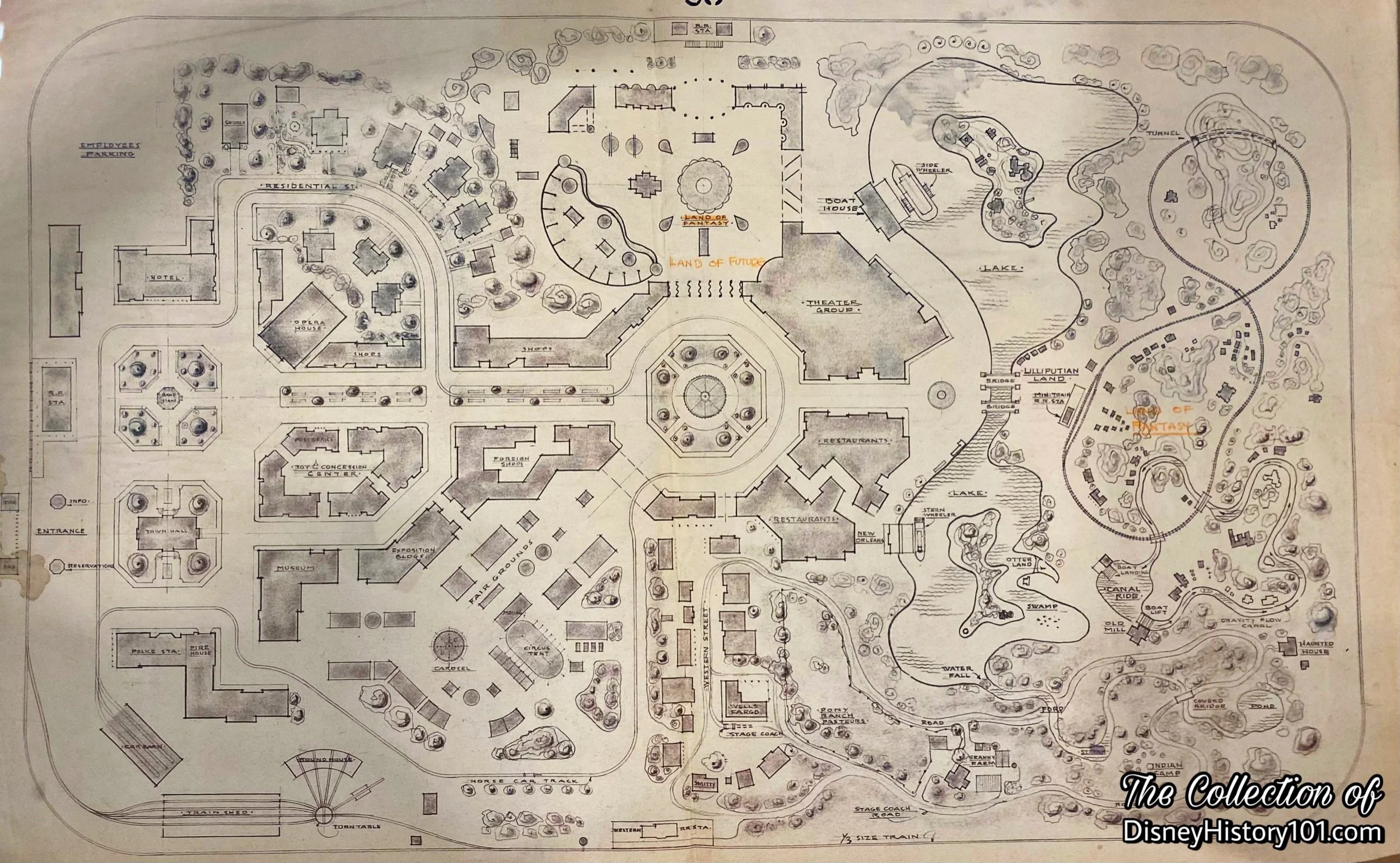
“Disneyland Preliminary Scheme #1” featured a carousel in the fairground.
”Blue Sky for Walt’s Caroussel”
More than a decade after the family outings at Griffith Carousel began, the earliest concept drawings of a Mickey Mouse Park (created for a proposal near Griffith Park in Burbank, California) featured a carousel ride. One of Harper Goff’s c.1951 drawings of “Mickey Mouse Mark” (to be constructed on a 11-acre plot along Riverside Drive in Burbank), featured a “Carrousel” ride.
Bruce Bushman was employed by Dave Bradley’s Bradley & Kaye (founded 1946; then located at 1524 West 15th Street, Long Beach, Ca 90813) who had purchased Beverly Park in 1945. Walt and his daughters were frequent visitors of Beverly Park.
Some of the original designs of a carrousel (with its peaked canopy) were created by Bruce Bushman who would also help develop many Disneyland attractions. One of his designs was of a circus merry-go-round and was never built. There is more. As a sidelight, “Bushman whom Disney assigned to develop many of the… rides for Fantasyland, was a bug husky man. Walt took one look at him and decided that his proportions would guide the pattern for all the seats at the Park. ‘If it fits you, Bruce, it’ll fit anybody,’ said Walt, eyeing the broad Bushman beam,” according to “Disneyland - Inside Story” by Randy Bright.
Then in 1952, Walt Disney founded a company called WED Enterprises, Inc. in order to master-plan and design his his dreams of a Park. The company was staffed by Animators, Art Directors, Artists, Artisans, Architects, Set Designers, and Planners from the Studio. Early thumbnail sketches and other concept artwork seemed to be unencumbered by restrictions of budget, schedule or the laws of nature and physics. Though guided by Walt, his artists appeared to engage in “free-thinking,” as if implementing the modern “Blue Sky” Imagineering process.
Soon, an early form of (what would come go be known as) the “Disneyland Prospectus” [prepared in 1953 for Disneyland Inc. by WED Enterprises], mentioned “within the walls and grounds of a great medieval castle whose towers loom seventy feet in the air. In the middle of the castle grounds a magnificent carousel in the theme of King Arthur and his Knights.” This became the basis for one dynamic concept created under the direction of Walt Disney.
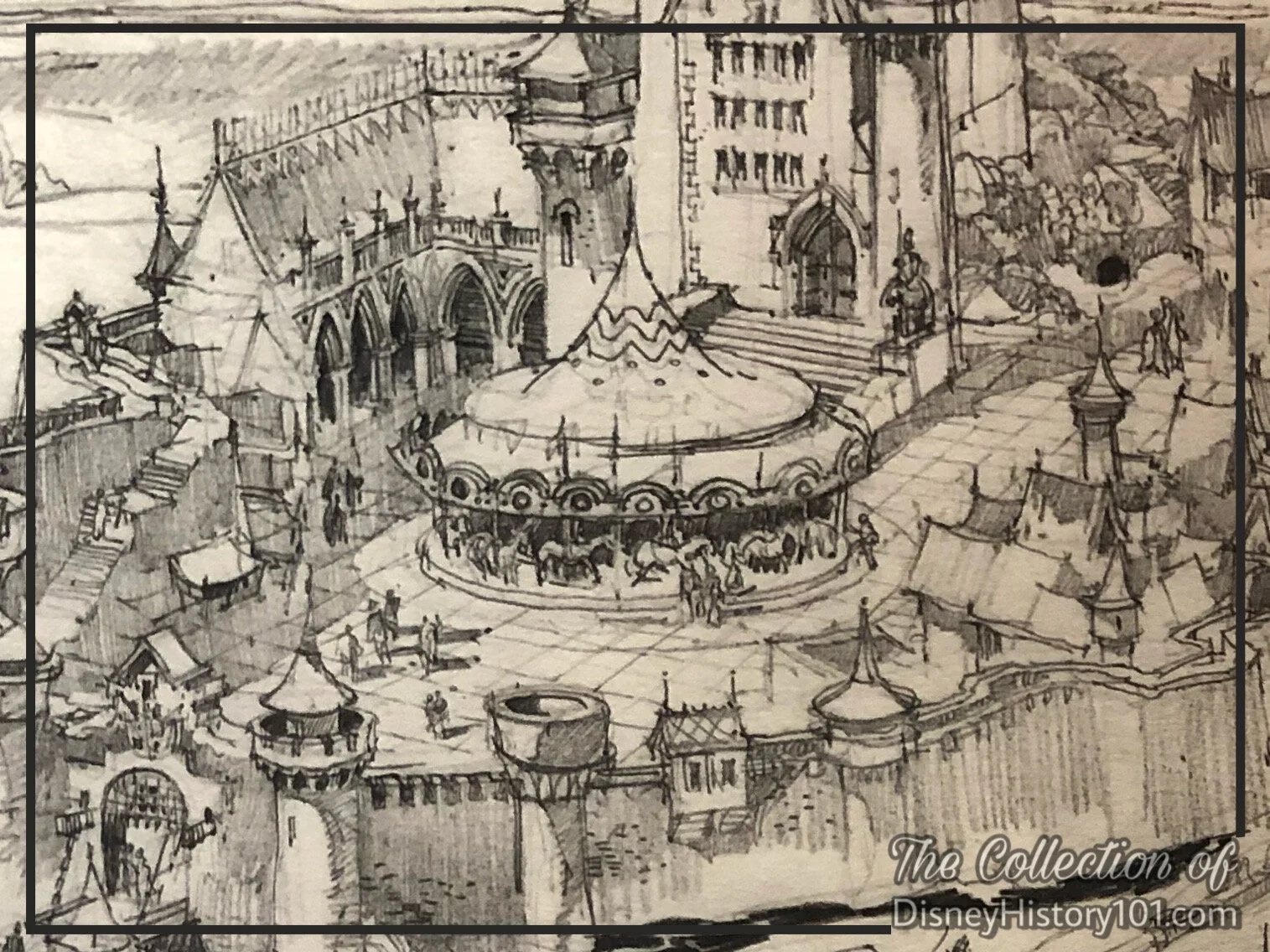
“Draw Concept” - Herb Ryman's "Aerial View Over Disneyland" Excerpt, originally produced September 26 & 27, 1953; © Walt Disney Company.
While many artists contributed, the talented Herbert Ryman is of note. Herb had joined the Disney Studio in 1938, after Walt saw a public show of his work in New York. (Herb's paintings were being exhibited with those of another up and coming artist, Andrew Wyeth.) Herb Ryman acted as art director for such films as Fantasia and Dumbo, but had left Walt Disney Studios in 1946 and (by 1953) was employed by 20th Century Fox. However, Walt reached out to Herb and during one weekend (September 26 & 27, 1953) a historic “Aerial Schematic View” over Disneyland drawing was produced.
Like some advanced “High Concept,” final designs were quickly generated and approved. According to Disneyland LINE Magazine (Vol. 20, No. 31 ; published August 5, 1988), “‘In the middle (of Fantasyland) will be King Arthur Carrousel with leaping horses, not just trotting, but all of them leaping.’ Even while he planned his ‘Magic Kingdom,’ he envisioned the carrousel would grace the courtyard of Sleeping Beauty Castle.” This and a portfolio of colored sketches by Herb Ryman, Bruce Bushman, Harper Goff, and others was prepared for Dick Irvine and Nat Winecoff to take back East to sell the Disneyland concept to prospective licensees. The viable project Concepts (as above), were supported by a well-developed business case and built expectation among investors.
By July 1, 1954, George Whitney of Disneyland, Inc. directed Amusements, with Ron Miller overseeing analysis, philosophy, capacities, planning, operator training, and amusement procurement.
“‘When Knighthood Was in Flower’ at Disneyland”
“A legend is sung of where England was young. And knights were brave and bold.” Young knights would be summoned to King Arthur’s Carrousel, decorated with knight’s banners and ten unique shields on the spears supporting the 70-foot all-aluminum tournament-style tent covering canopy. These ten shields represent 10 founding knights of the Round Table. Among those represented : Sir Launcelot, Galahad, Perceval, Tristan, Gawain and Gareth, Bedevere, Lionel, and Bors. For a final touch, the carousel is surmounted by Arthur’s gold crown! “At least that was the original intent. According to Bruce, his research uncovered fewer designs than shields that needed to be decorated. As a result, the family coats-of-arms of Mary Bushman and a Disney artist or two have a place of honor among shields of the Knights of the Round Table. Even on the days of Yore, puns were fun, and examples of visual puns were are emblazoned on a couple of the shields. For instance, the crest for Sir Kay is represented by a key, and Sir Lionel is symbolized by a lion,” according to Disneyland LINE Magazine (Vol. 20, No. 31 ; published August 5, 1988). The “design combines the austere tones of the 6th century with the heavy baroque common to the 12th and 13th,” according to “The Disneyland News” (August 1955 ; Vol. 1, No. 2).
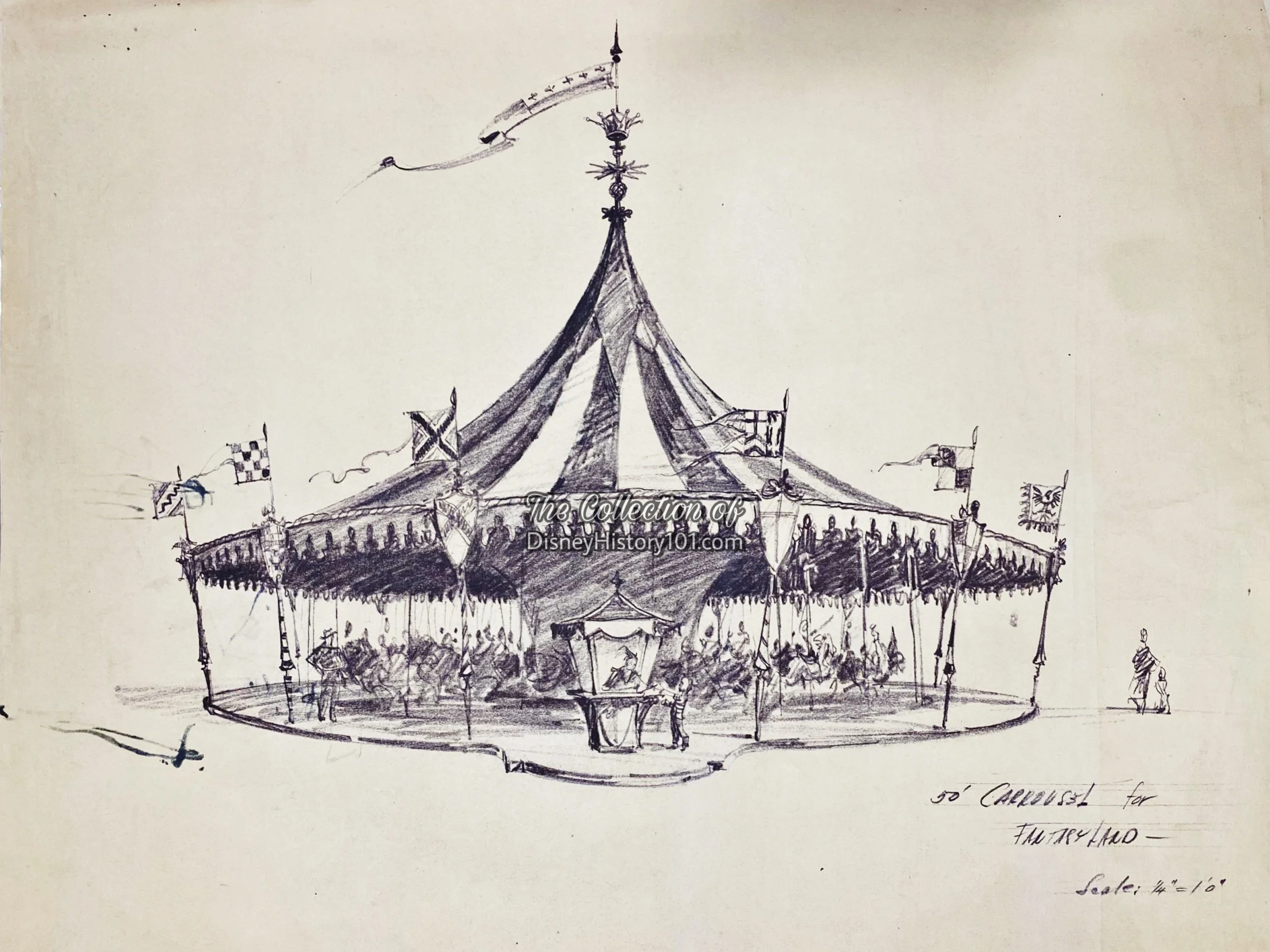
The “50’ Carrousel for Fantasyland” © Walt Disney Company.
Custom rides were created that would be subordinate to story and setting. This concept was prepared by Bradley & Kaye Amusement Company of 8506 Beverly Blvd. Los Angeles 48, Calif; Oleander 5-8029.
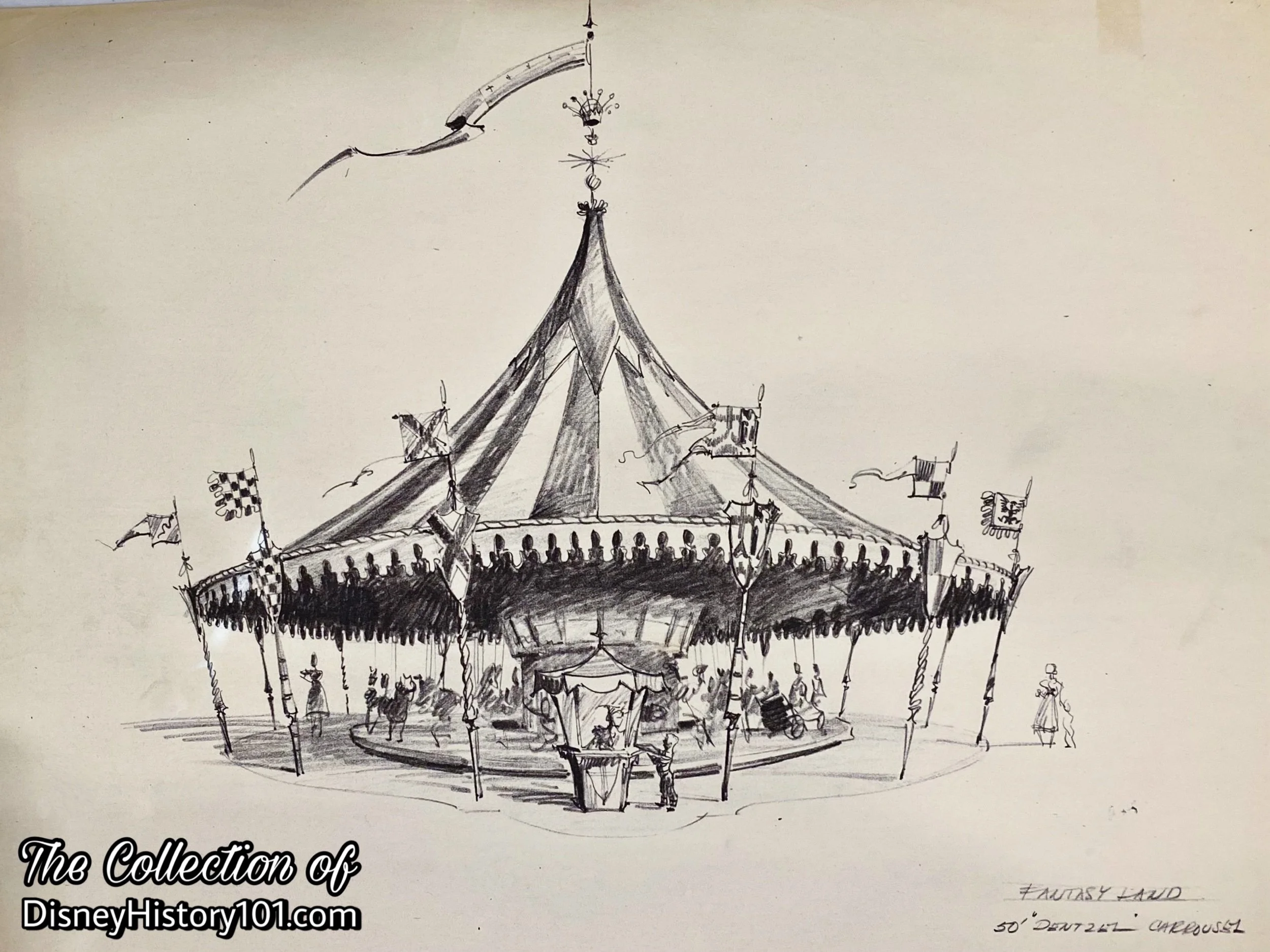
The “Fantasyland 50’ Dentzel Carrousel” © Walt Disney Company.
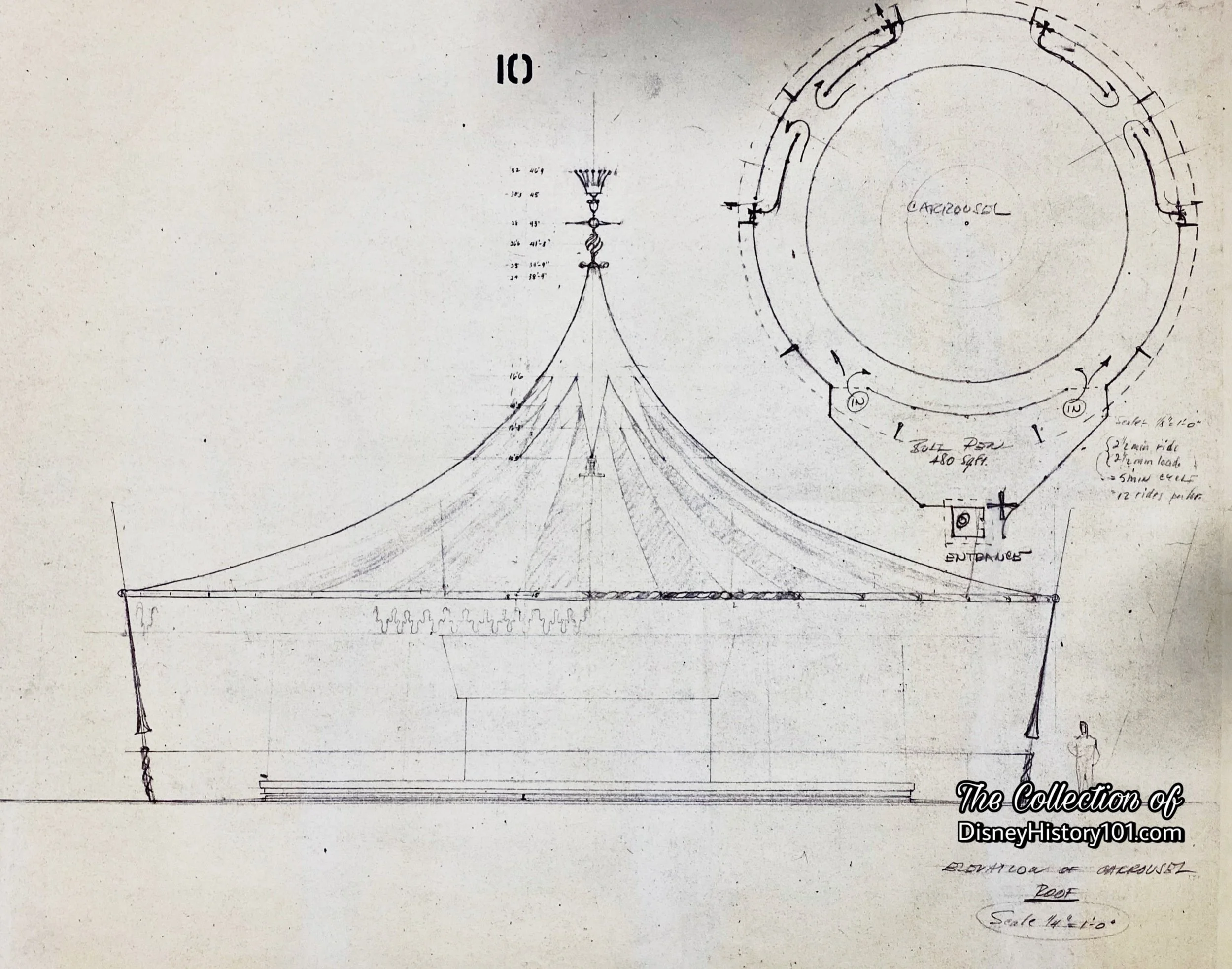
“Elevation for the Carrousel Roof” © Walt Disney Company.
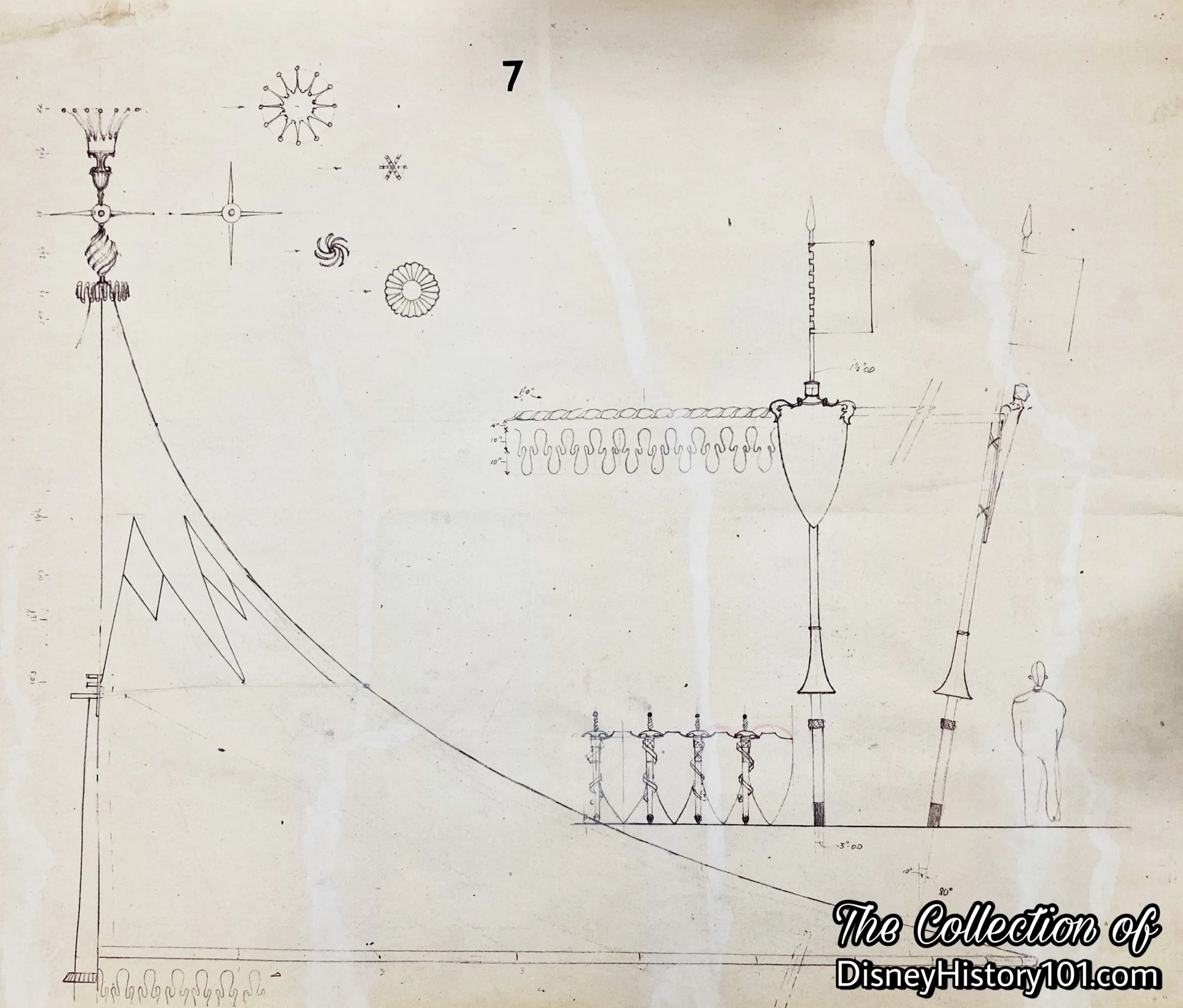
Elevations for Shields, Swords, Lances, and Crown Finial.
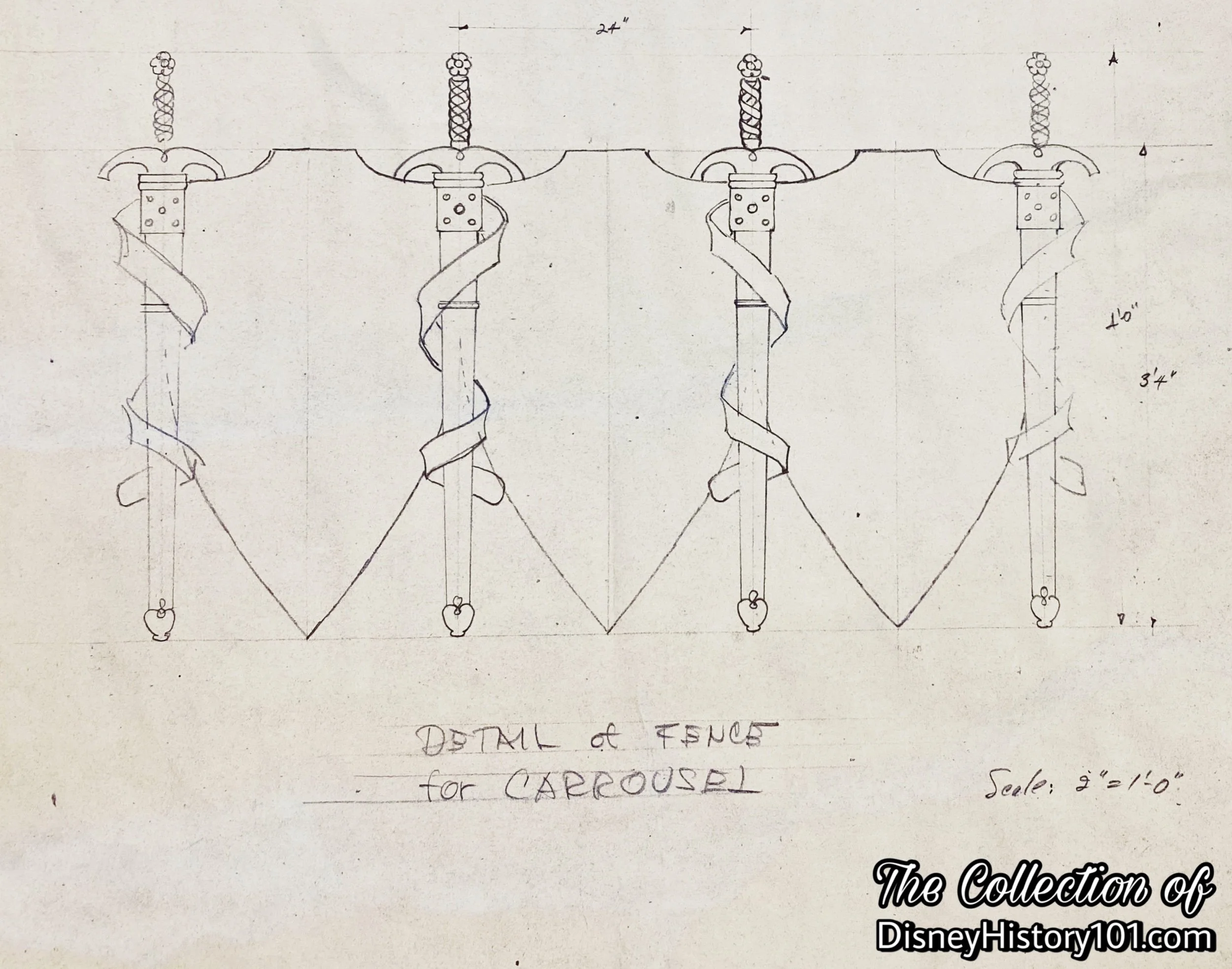
Sword and Shied Detail.
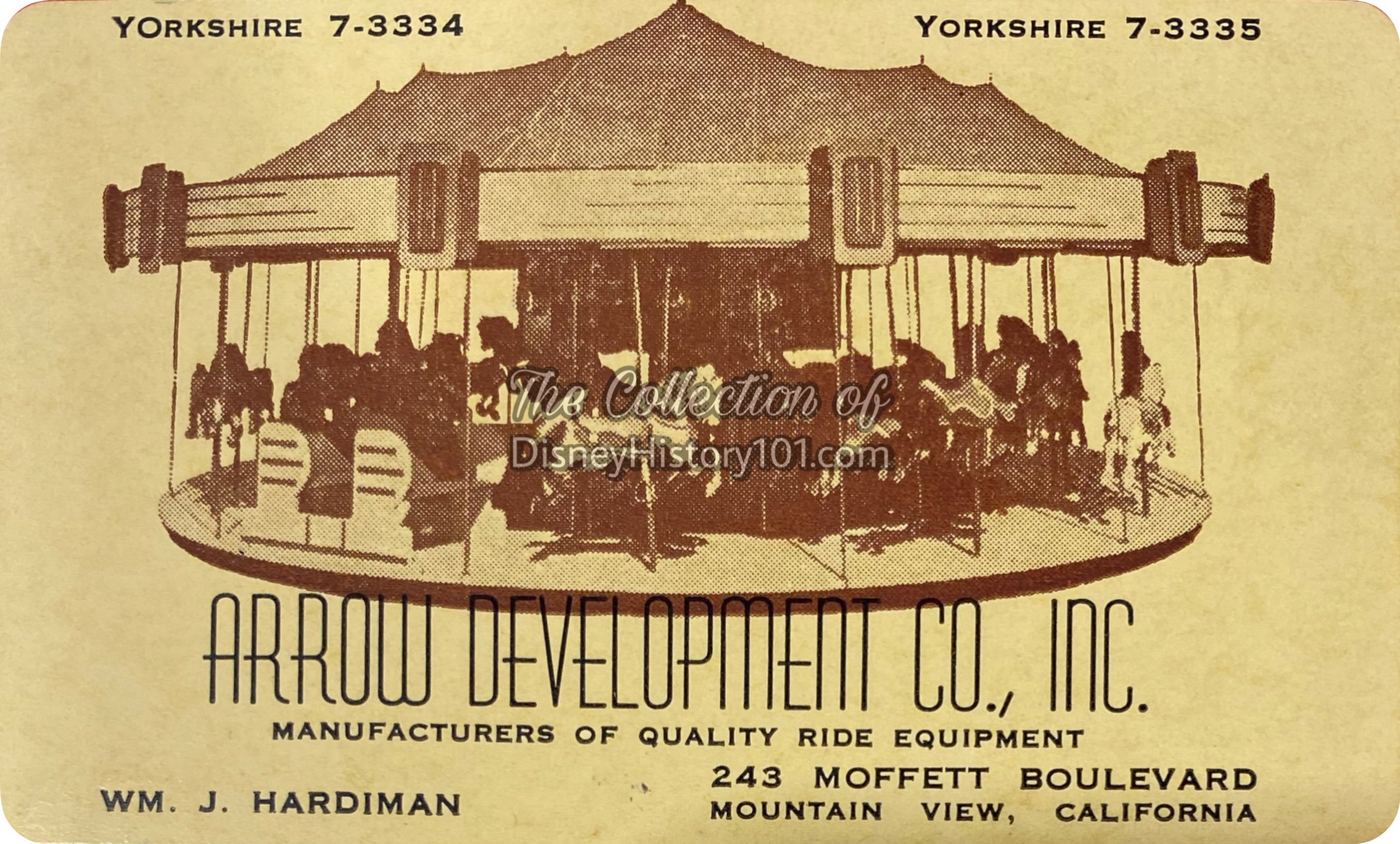
An Arrow Development Co. business card.
“Construction”
By 1950, a little company called Arrow Development in Mountain View, California, was run by Angus Anderson, Karl Bacon, Ed Morgan, and Bill Hardiman. The company was a manufacturer of the scaled-down Arrow Kiddie Merry-go-round (featuring twenty jumping horses and 2 chariots to accommodate 24 children). These featured hoses cast in two halves from aluminum and solidly welded into one virtually indestructible unit, and this had no joints to crack and peel the enamels. Colors were protected with a tough coat of wear-resistant varnish, and frequent repainting, a common source of expense to the operator, was virtually eliminated. Owning to such beautiful and durable craftsmanship, Arrow won the contract to create what would be Fantasyland’s centerpiece. Working (construction) drawings were prepared and were the final plans from which the facilities were built. Soon, an architectural model of the carousel was unveiled by Arrow Development, at a 1955 convention of the National Association of Amusement Parks, Pools, and Beaches.
During the construction phase, Walt had an idea of the size and vintage of carrousel that would become one of the centerpieces of Fantasyland - an 1875 Dentzel merry-go-round (of Gustav Dentzel’s American manufacturing company)! In 1954, scouts found the particular Dentzel model at a location in Toronto, Canada. The Dentzel had operated from 1922 to the mid-1950s, until a newly constructed highway was soon to be laid through Sunnyside Park. Walt salvaged the carousel from Sunnyside Beach Park at a cost of $22,500. Now, what was reckoned to be one of the largest man-made merry-go-rounds (along with some of its 95-to-115-year-old, hand-carved and hand-painted German horses) would be dismantled along with its turntable. These would be shipped to California.
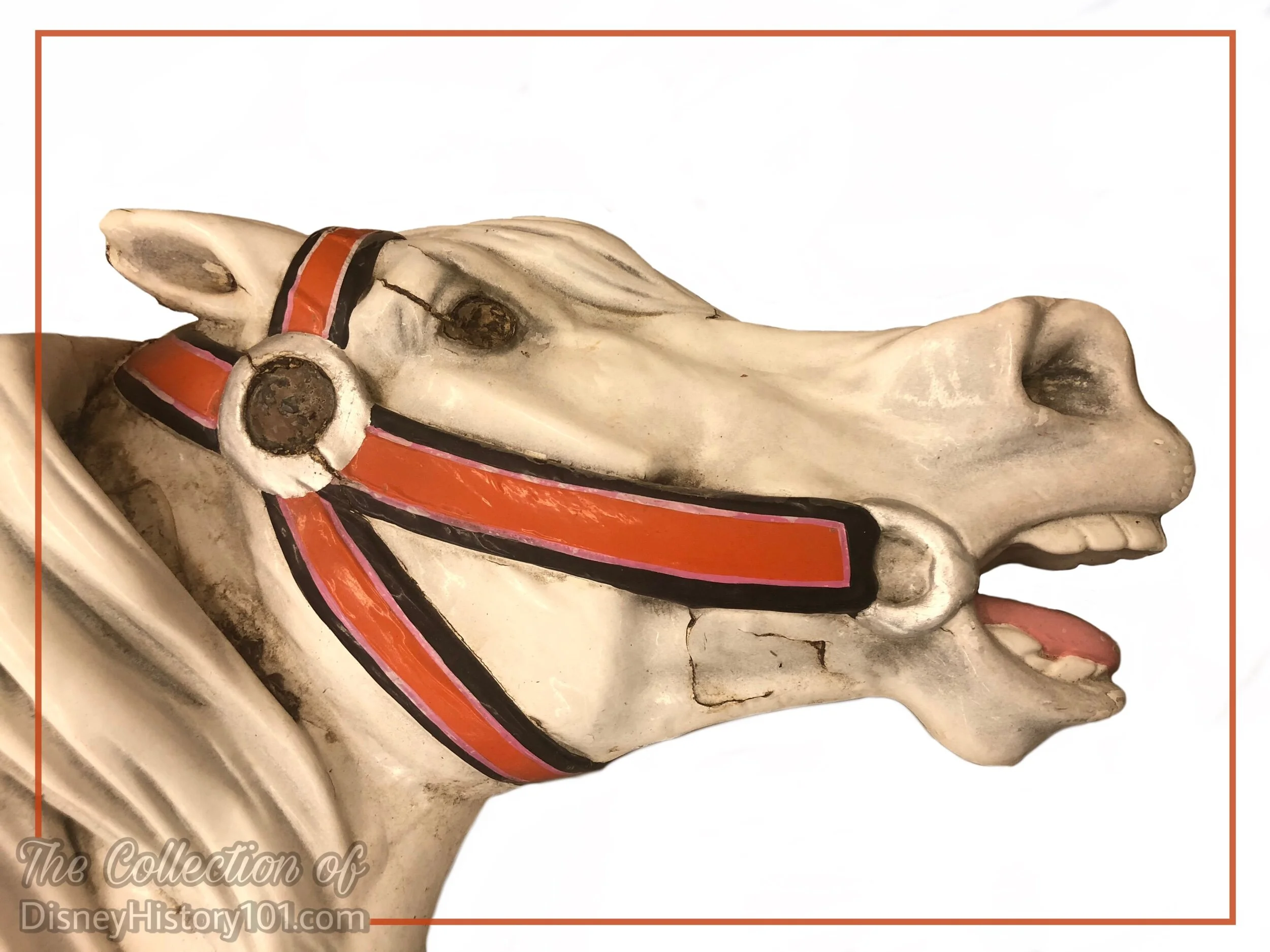
One of King Arthur Caroussel’s original horse heads with nostrils flaring (discovered at an auction many years ago); somewhere there is a horse without a head.
“The Miracle of the White Stallions”
Meanwhile, engineers of the Arrow Developement plant (of Mountain View) were constructing six rides for Disneyland - Casey Jr. Trains, Mad Tea Cup Ride, Snow White’s Adventures Dark Cars, and Mr. Toad’s Wild Ride Hot Rods, Dumbo The Flying Elephant, and King Arthur Carousel.“Typical of merry-go-rounds, it originally had several moving horses, a menagerie of giraffes, lions, tigers and elephants, plus a few sleighs (which were stationary),” according to Disneyland LINE Magazine (Vol. 20, No. 31 ; published August 5, 1988) as well as “Walt Disney Disneyland,” first edition, published 1964. As King Arthur only ever rode a steed, the giraffes, deer, and other animals were removed, “leaving 55 colorful Dentzel mounts.” In place of the other animals, more antique wooden hand-carved merry-go-round horses were “rounded up” to fill the carrousel and run “four abreast,” according to the televised Disneyland episode “Pre-Opening Report From Disneyland.” These colorful Dentzel mounts were maintained from several from several sources and all had different faces - each was a distinct individual (with no two exactly alike). “Walt Disney Disneyland” described how “a few were located on abandoned merry-go-round equipment in the eastern United States,” in addition to the following which I shall now mention. Four horses were added from the 1906 Looff carousel of Playland at the Beach (in San Francisco), and an undisclosed number came from the 1890 carousel of Ward’s Kiddieland at Luna Park (on the Coney Island Pier). According to “Disneyland” the latter were “found under a pier at Coney Island. Though neglected for years, they were works of fine craftsmen.” Further, these may have been brought to Walt’s attention on a trip to Coney Island during a period in which Walt researched and visited “county fairs, circuses, carnivals, national parks and zoos.” Apparently, “his most depressing visit was a deteriorated Coney Island, filled with tawdry rides and hostile employees.” [“The Spirit of Disneyland”] So, perhaps discovering those horses was the silver lining of that research trip. Anyhow, after his return home, he received a visit from writer Bob Thomas (in one Pre-Opening article) soon mentioned, “in a far corner of Disneyland,… in a huge warehouse,…there were also rows of brightly painted carrousel horses, purchased in Coney Island and Toronto. You can’t get them new anymore.”
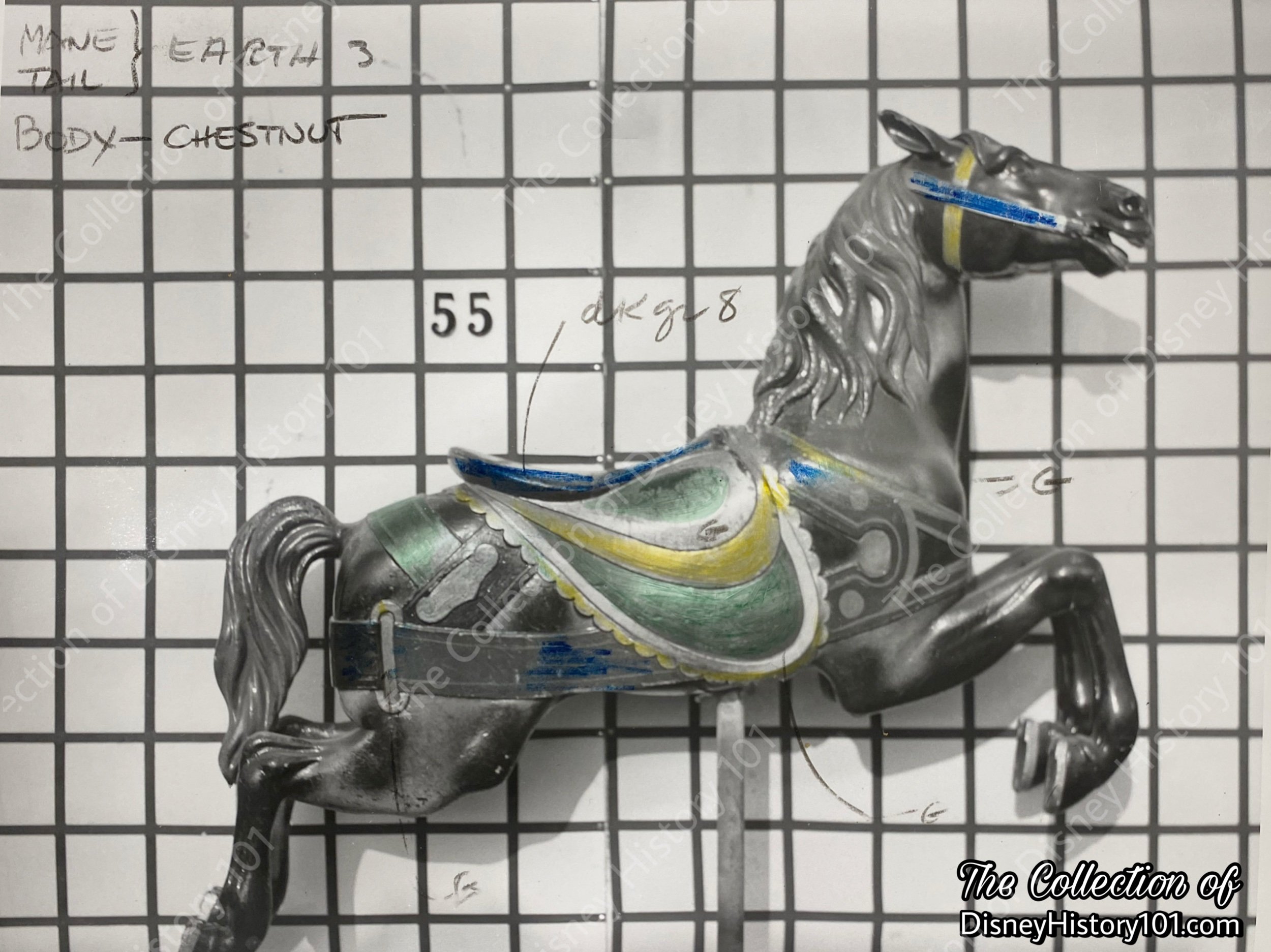
Horse #55.
Because of their age, “renovating the horses involved the painstaking removal of 60 to 80 years of paint,” according to Disneyland LINE Magazine (Vol. 20, No. 31 ; published August 5, 1988) and “Walt Disney Disneyland,” first published 1964. Scenes of these processes can be seen briefly in A Pre-Opening Report from Disneyland. Next, “ancient trappings were added from abandoned merry-go-round equipment,” according to “Historic Caroussel in Fantasyland,” published in the Orange County Register Supplement (July 15, 1955).
Walt had his Imagineers change the mechanics of the merry-go-round so that every horse would trot up and down ensuring that no one was stuck with the horse that didn't move. Walt even had the horses’ legs remodeled to resemble a jumping motion. At Walt Disney Studios, thehorses were reconditioned and the legs of the immobile “standing horses” were broken and reshaped by skilled artisans, to make them all “jumpers” in keeping with the King Arthur design. The horses were painted brown, brown-red, gray, and tan, with no two alike. Then, these were mounted on the carrousel, and a moment of this process is briefly preserved on film, in “Disneyland - The Park,” a Disneyland anthology television series short film (originally aired in 1957). The final product was a finished carrousel design complete with six-dozen mounts, with no two alike, and all of them trotters and jumpers (which combined styles of “the 6th century and the heavy baroque common to the 12th and 13th” centuries). According to one account, artist Collin Campbell performed one of the finishing touches, hand gluing the jewels to the horses. All together (according to c.1955 documents), the carousel featured 72 horses with 12 additional spares.
Walt had his Imagineers change the mechanics of the merry-go-round so that it would turn counter-clockwise (as a carrousel should).“European logic dictated a clockwise rotation of their carrousels because, after all, every self-respecting horseman mounted his steed from the left side, so that side of the horse should receive proper display. The Americans, on the other hand, theorized that the noble horseman always held his lance in his right hand. Therefore, the dominant side was on the right, making it necessary for the carrousel to rotate counter-clockwise. True to its origins, the King Arthur Carrousel revolves counter-clockwise, with all of its horses moving up and down, displaying the more elaborately carved and painted ‘romance’ side, on the right, which faces the spectator. By design and space limitations, the horses on the outer row are larger and more decorative than the smaller, less fanciful ones closest to the center of the turntable,” according to Disneyland LINE Magazine (Vol. 20, No. 31 ; published August 5, 1988).
Speaking of the turntable, “a fluid drive” came “into play, this one an 8.5 Hydro-Sheave mounted [vertically] on a 5-hp motor,” according to “Twin-Disc Production Road” magazine (published for September, 1957). Other documents described the “5 H.P. Electric Motor coupled to a [sic] Dodge fluid clutch, driving reduction gear to final drive of pinion and ball-gear.” These were constructed by Arrow Developement Co. To compare the drives of other attractions, King Arthur Carrousel had one Hydro-Sheave Drive, Dumbo Flying Elephants had two Hydro-Sheave Drives, and the Mad Tea Party (or “Tea Cup Ride”) had four Hydro-Sheave Drives.
“The original carousel had a beautifully carved frieze, which was saved from removal by covering it with the peaked canopy, designed by Bruce Bushman, an early Park planner,” according to Disneyland LINE Magazine (Vol. 20, No. 31 ; published August 5, 1988). The peaked 70-foot canopy was created from lightweight, durable aluminum, which had been fashioned and painted “to simulate the gay, colored fabrics of the time.” According to a newspaper insert published July 15, 1955: “Ten spears, bearing the shields of ten of the founding Knights of the Round Table, support the covering canopy.” The top of the carrousel was surmounted by Arthur's gold crown.
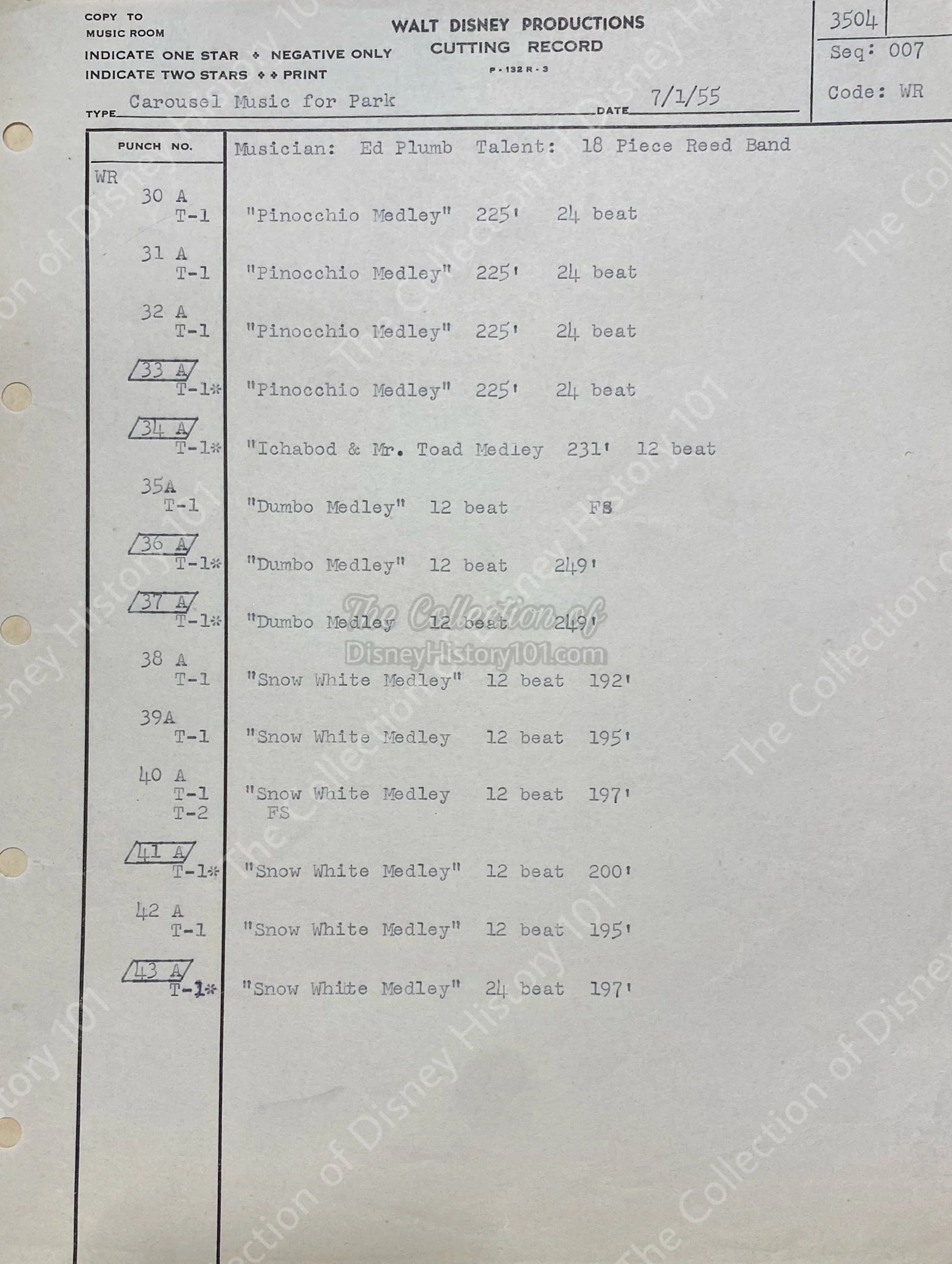
“Carousel Music for Park” Cutting Record Sheet, recorded July 1955; former collection of Walt Disney Productions composer and arranger Frederick Stark.
“Carousel Music”
It appears that some Walt Disney Productions Cutting Records were recorded during July of 1955, containing “Carousel Music for the Park.” Some Walt Disney Productions Cutting Record documents credit musician Ed Plumb (who composed and conducted music for Walt Disney Studio Productions short films and the “Disneyland” television program) and a 27 piece orchestra, featuring an “18 piece reed band” with the “Carousel Music For [the] Park.” Punches were recorded on July 1, 1955, and include (4) “Pinocchio Medley” arrangements, an “Ichabod and Mr. Toad Medley,” (3) “Dumbo Medley” arrangements, (6) “Snow White Medley” arrangements.
It is unclear if these recordings were used for the carousel or for an episode of the Disneyland anthology series on television. According to Dave Smith (the late, former Chief Archivist Emeritus of the Walt Disney Archives), who had expressed that it wasn’t for many years, that “Disney music was added” to the carousel. [Disney Facts Revealed by Dave Smith, 2016]
For now, the horses pranced to gay calliope tunes (e.g. perhaps “The Skater’s Waltz”), which were piped through whistles, a part of one of America’s largest (and most elegant) carrousels! The carousel had a Wurlitzer #157 band organ from Toronto, playing Wurlitzer #165 rolls.
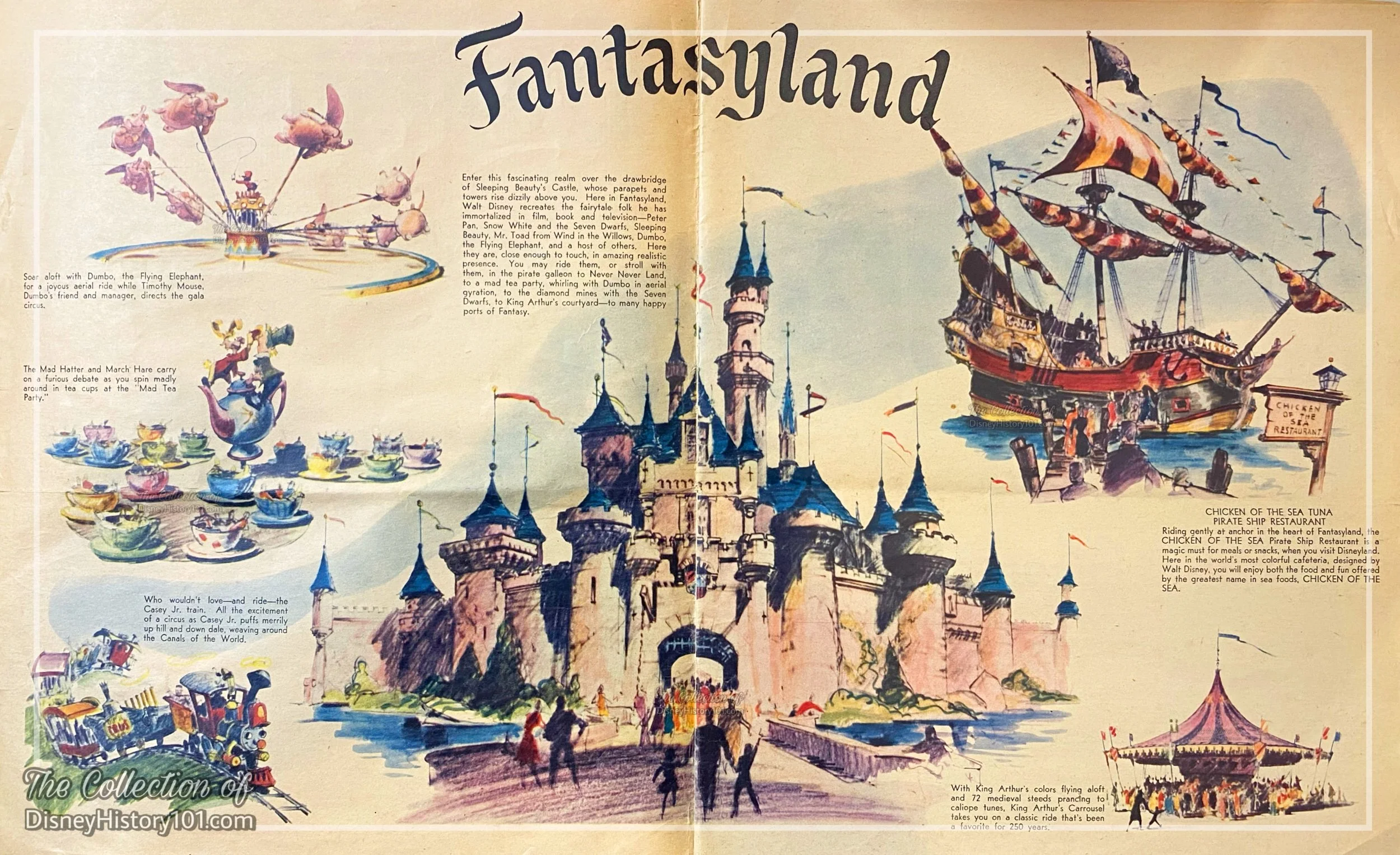
The King Arthur Carrousel at “Disneyland” in this Excerpt, (July 15, 1955)
“Grand Opening”
As of June 2, 1955, C.V. Wood Jr. sent an Inter-Office Memorandum to Walt Disney regarding the best estimates that could be obtained at the time regarding the completion status of individual sections of the Park and Opening Day. C.V. wrote: “Carrousel: Will be complete but the top is going to be very tight.” In the end, “Fantasyland Carrousel’s finished design combines the austere tones of the 6th century and the heavy baroque common to the 12th and 13th.” Soon, one authorized “Disneyland Information & Nomenclature List” (prepared by Bill Cottrell of Disneyland Inc., May 25, 1955) announced the working title as the “King Arthur Carrousel,” describing an experience “where you will ride the magnificent horses of the Knights of Old.” The same document adding notation about the “number of horses : 72.”
Bob Penfield was originally trained to operate the Peter Pan galleons during 1955. According to his account preserved with the Walt Disney Hometown Museum: “On Opening day, Sunday July 17th, Bob was assigned to the Peter Pan ride... but when the attraction was deemed 'not ready for operation' he was quickly shuffled over to the Fantasyland Carousel.” During the Press Preview Day, “There will be 17 knights at the invitational press preview Sunday. Sixteen of them will be in shining armor and on horseback, and one will be the governor of California.” “The carousel had been positioned so close to the castle, the entrance became an instant bottleneck. Some people decided to just climb over the carousel's chain fencing instead of waiting in line, and it, too, had to be shut down. But not before actors James Mason and Jeff Chandler got into a fight over a horse to see whose child would be one of the first riders.” [“Mouse Tales: A Behind-The-Ears Look at Disneyland” by David Koenig]
The opening of Disneyland on July 18, 1955, marked the pinnacle of a life-long dream for its creator. Bob Penfield (who served as Supervisor of Construction Services) remembered “On Opening Day I remember standing on the Carrousel when they lowered the drawbridge for the first time.” (Disneyland LINE, Vol.25, No.28, published July 16th, 1993). His account is preserved with the Walt Disney Hometown Museum: “He was on hand to witness the castle drawbridge lowering, allowing the tv cameras to capture hundreds of local school children and church groups pouring through the gates towards his position at the carousel.”
After the Sleeping Beauty Castle Drawbridge was lowered for the first time on the televised Press Preview Day Broadcast, a host of children (lead by Disney Characters) ran toward the carousel. These would “ride to the land of fantasy” on one of King Aurthur Carrousel’s 72 noble hand-carved knight’s steeds (all in 18 rows, with 4 abreast). As Disney Characters and children mounted noble the steeds before televised audiences on July 17th, 1955, the chorus heralded : “Welcome, to King Arthur’s Court! Welcome Ye Knights and Ye Ladies, fair! Welcome, to King Arthur’s Court!”
Still, by 1958 the King Aurthur Carrousel was appraised and valued between $97,900 and $108,700.
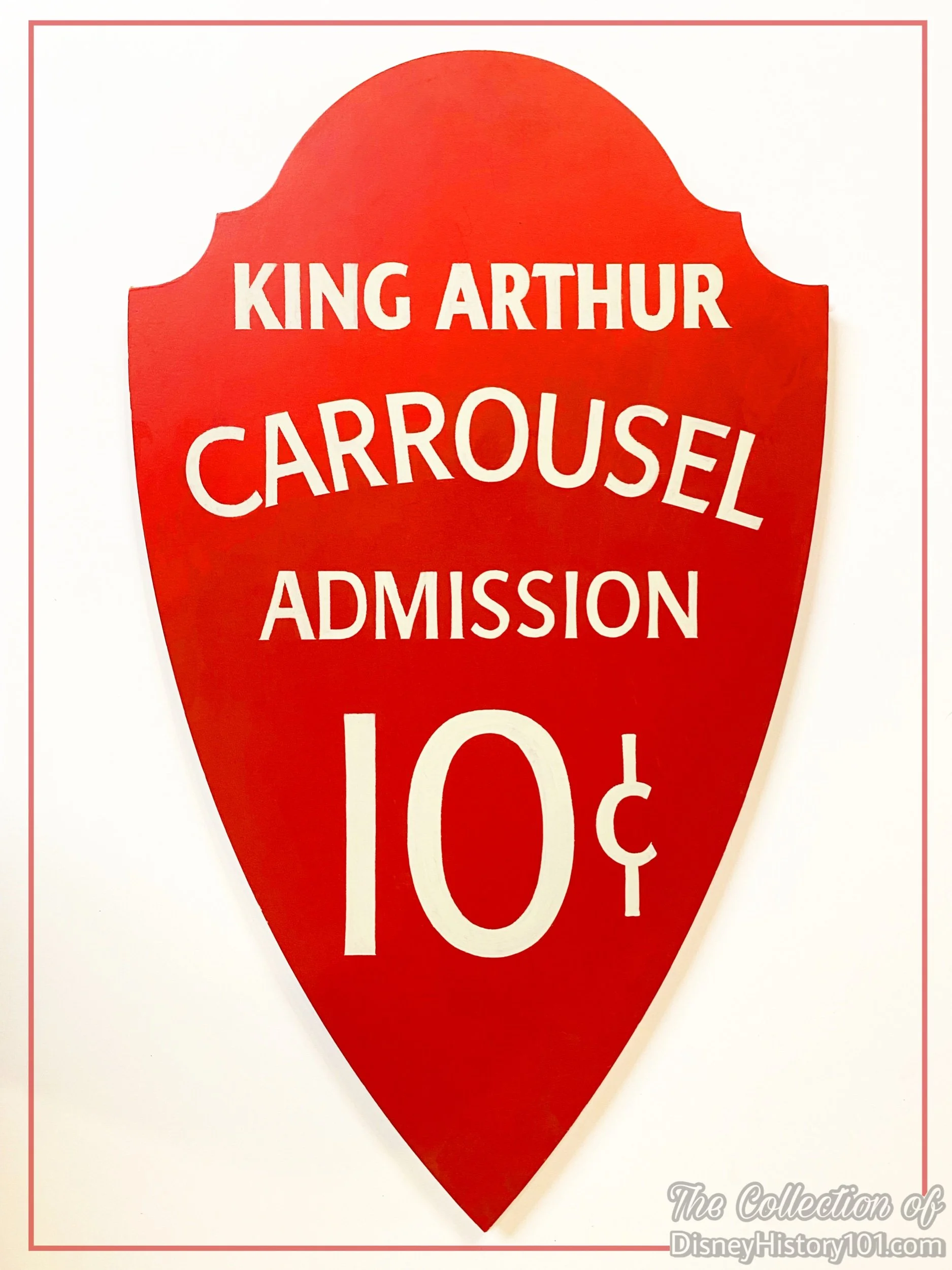
King Arthur Carrousel Admission sign, c.1950s.
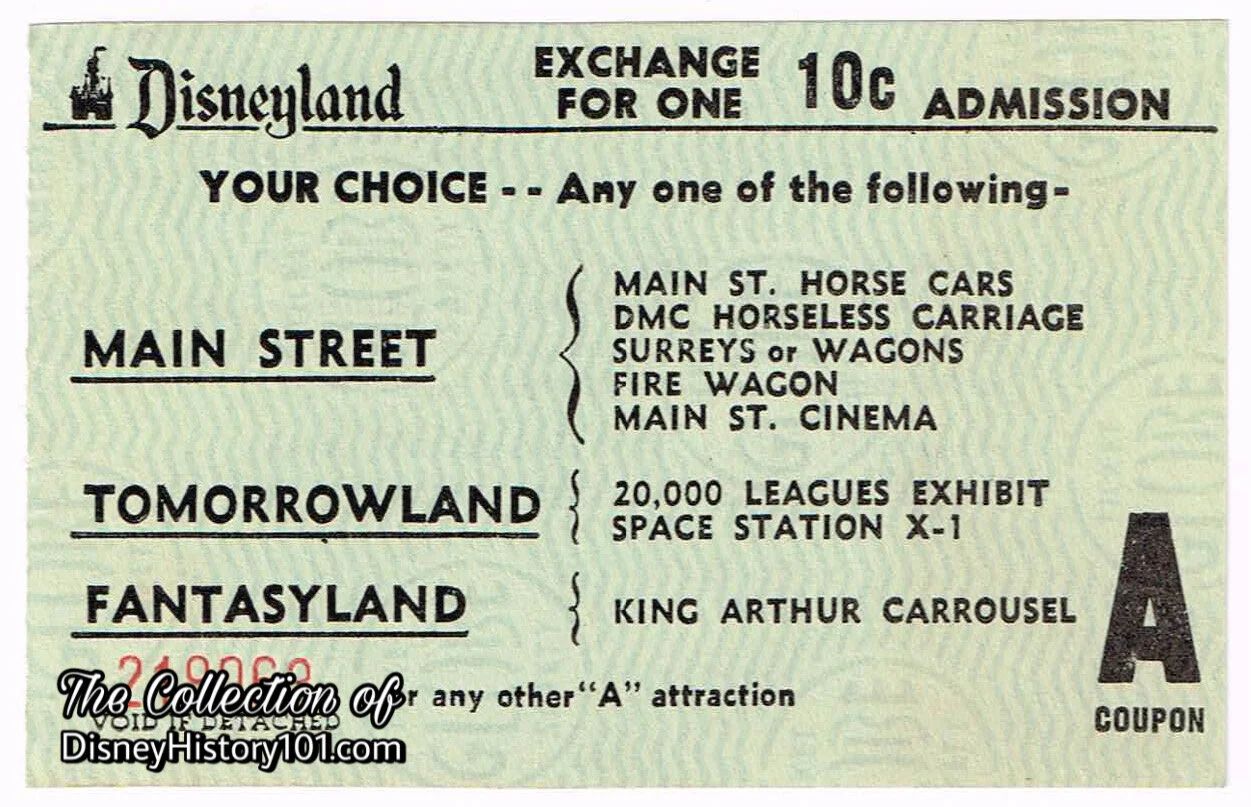
At Disneyland, signs were themed to support the stories with respectful graphics, colors, fonts, terminology, the overall design of sign, materials (wood, metal, banners, etc.), and verbiage used on the signage. This shield-shaped sign heralded the admission information. Admission during 1958 was one Jumbo “A” coupon (the price of 10 cents, for one adult), the same as the Fire Wagon, the Omnibus, or the Satellite View of America. By the summer of 1969, the price of admission was one “A” coupon. King Aurthur Caroussel opened as 1 of 22 initial major attractions at Disneyland.
The following four statistics are based on the results of Disneyland Attractions Time Studies gathered in 1968:
Theoretical Hourly Capacity (What the attraction should yield under ideal conditions) : 900
Instantaneous Capacity : 72
Audience Control Capacity : 139
Capacity Per Trip (# of horses) : 72
Cycle Time (From the time a unit passes a given point and returns to the same point) : 4:48
Load-Unload Time : 2:18
Trip Time : 2:30
Dispatch Interval : 4:48
Trips Per Hour : 12.5
Distance Travelled : 115 feet per revolution
Speed in Miles Per Hour : Approximately 4.4
Boyd Diaz was the first Fantasyland Carrousel Foreman by July 13, 1955. A number of notable Disneylanders were Hosts and Hostesses to guests of King Arthur Carousel, like Al Keipans (c.1965) and Al Vail (c.1966). Bob Penfield began his Disneyland career operating the galleons of Peter Pan, but was soon assigned to King Arthur Carousel.
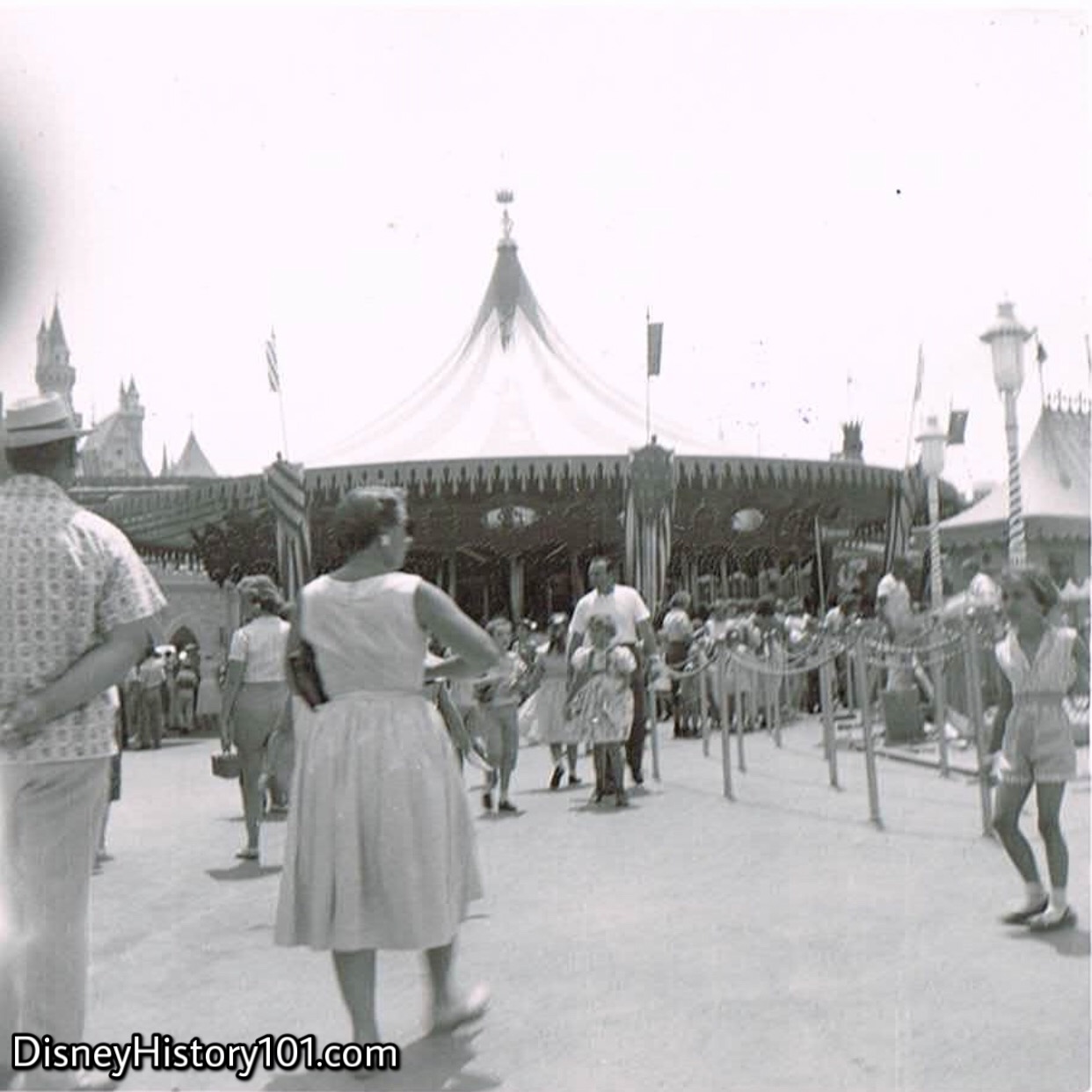
King Arthur Carousel
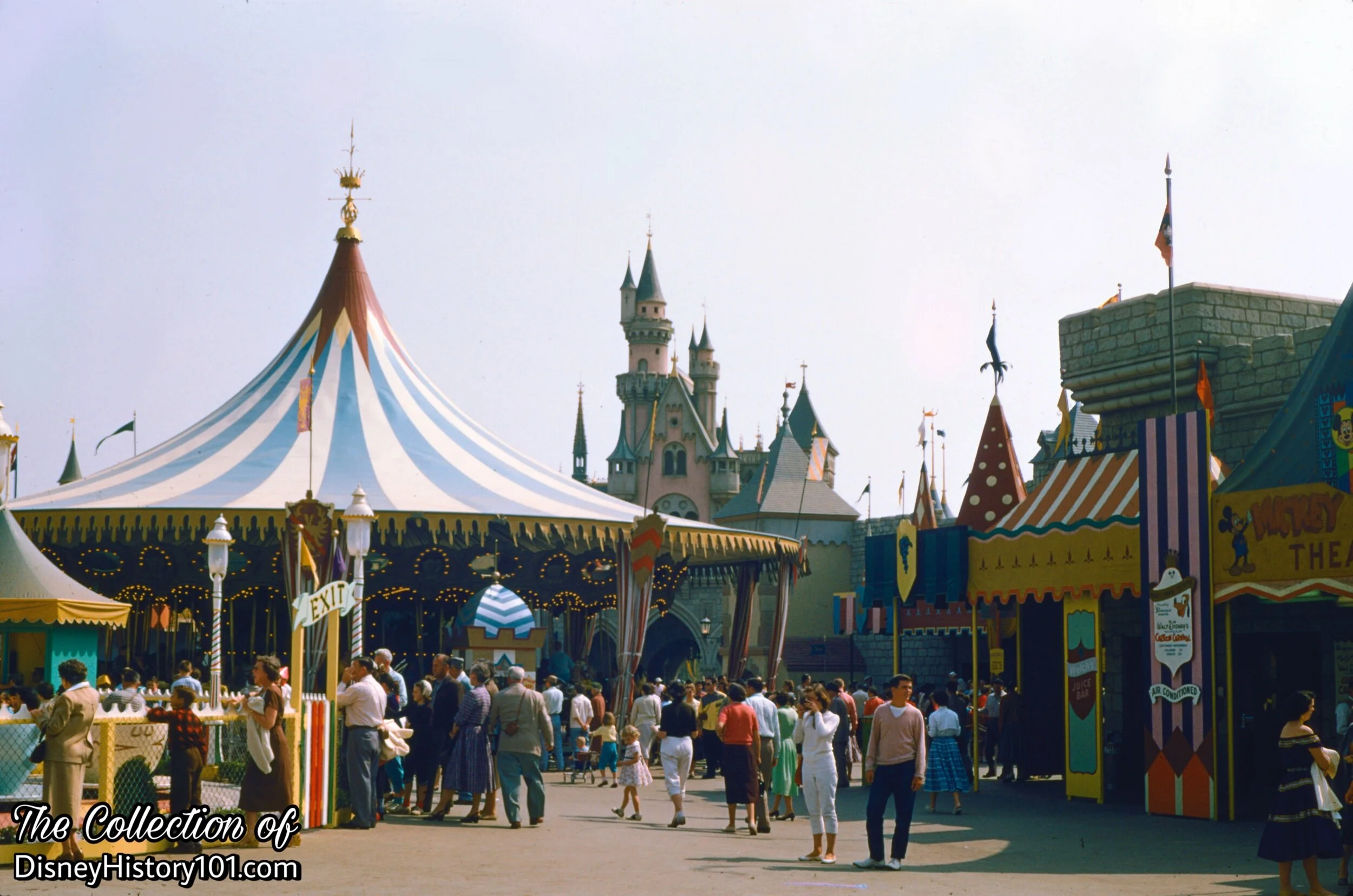
King Arthur Carousel
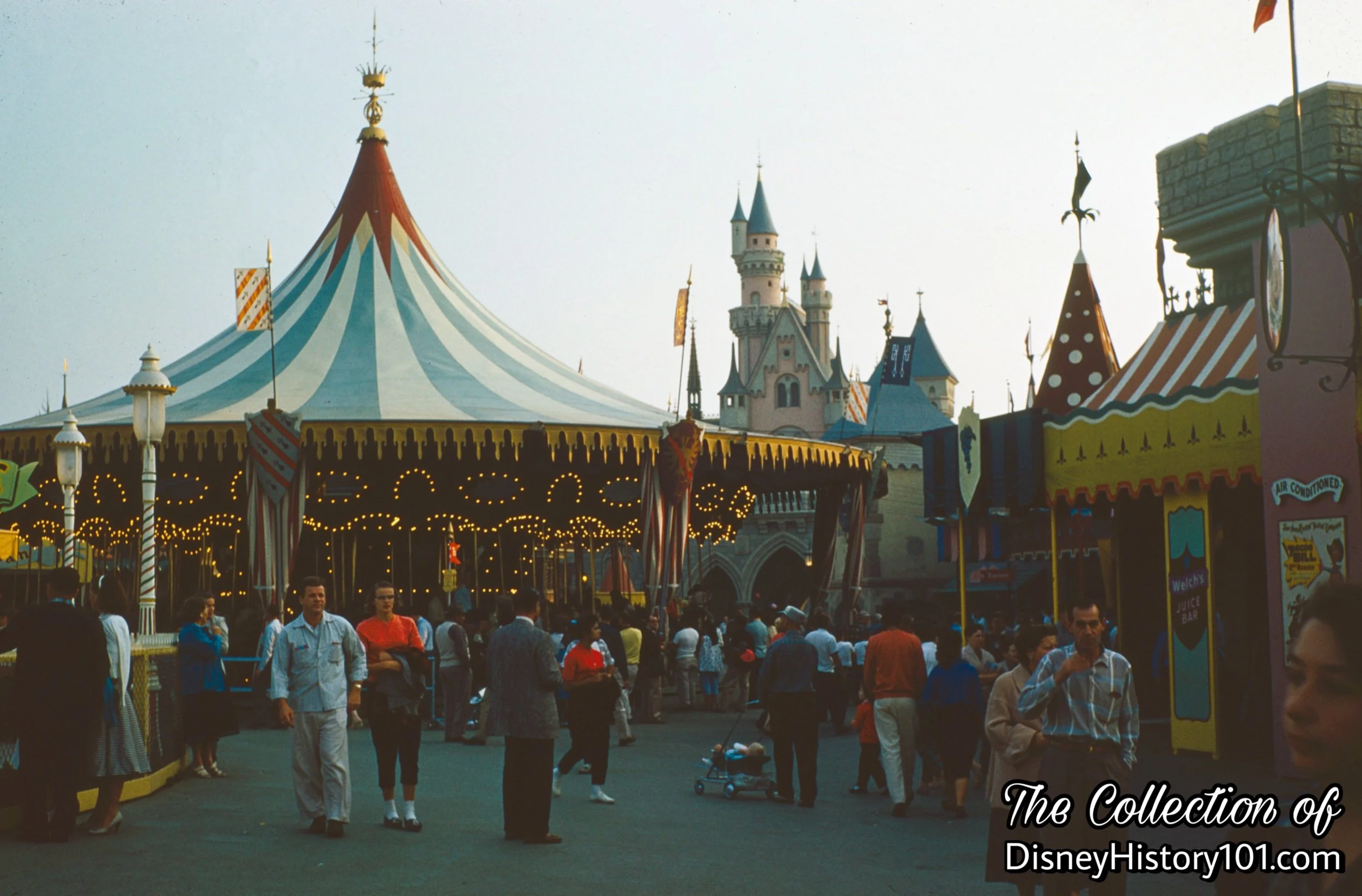
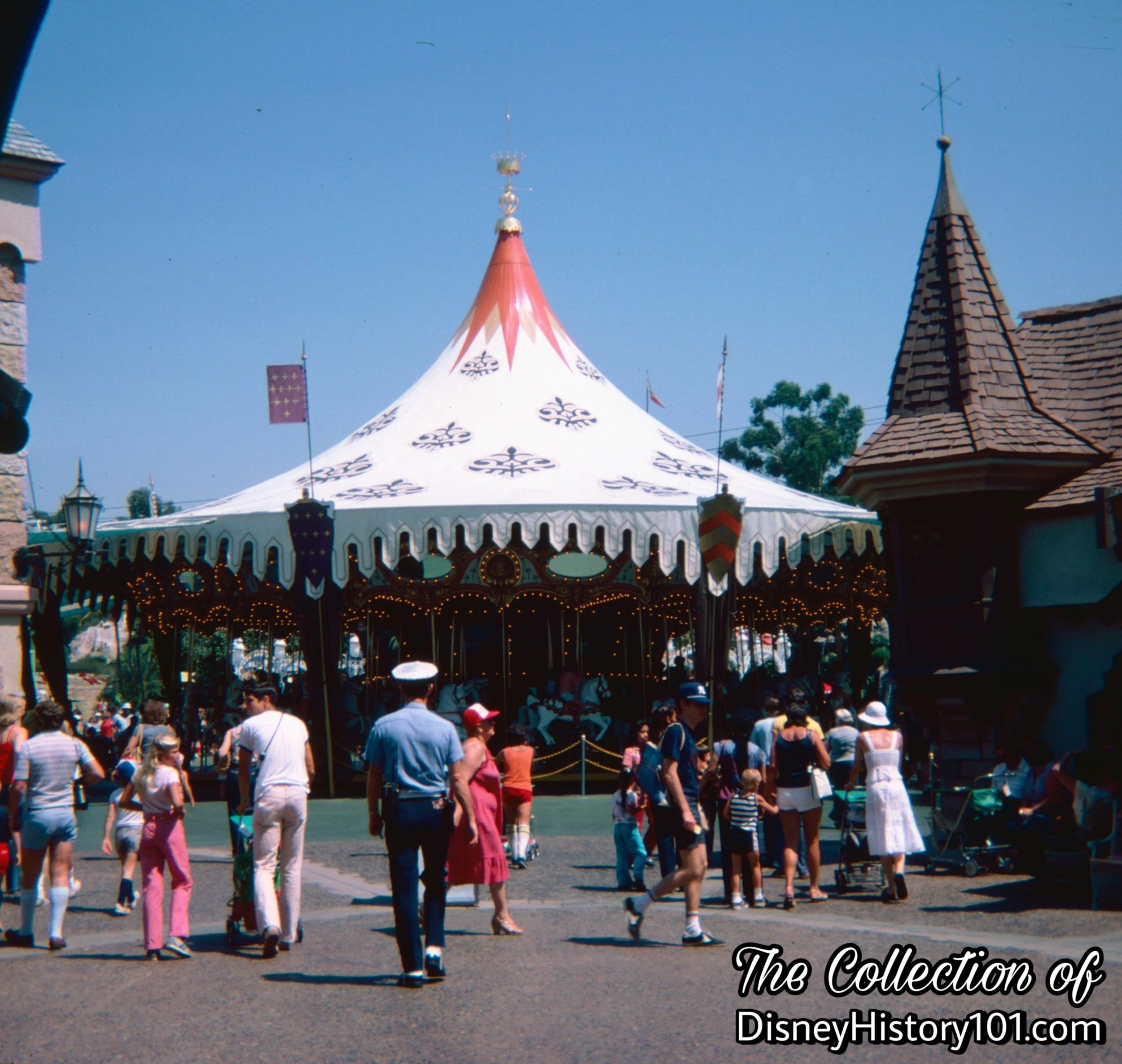
King Arthur Carousel, (August, 1980)
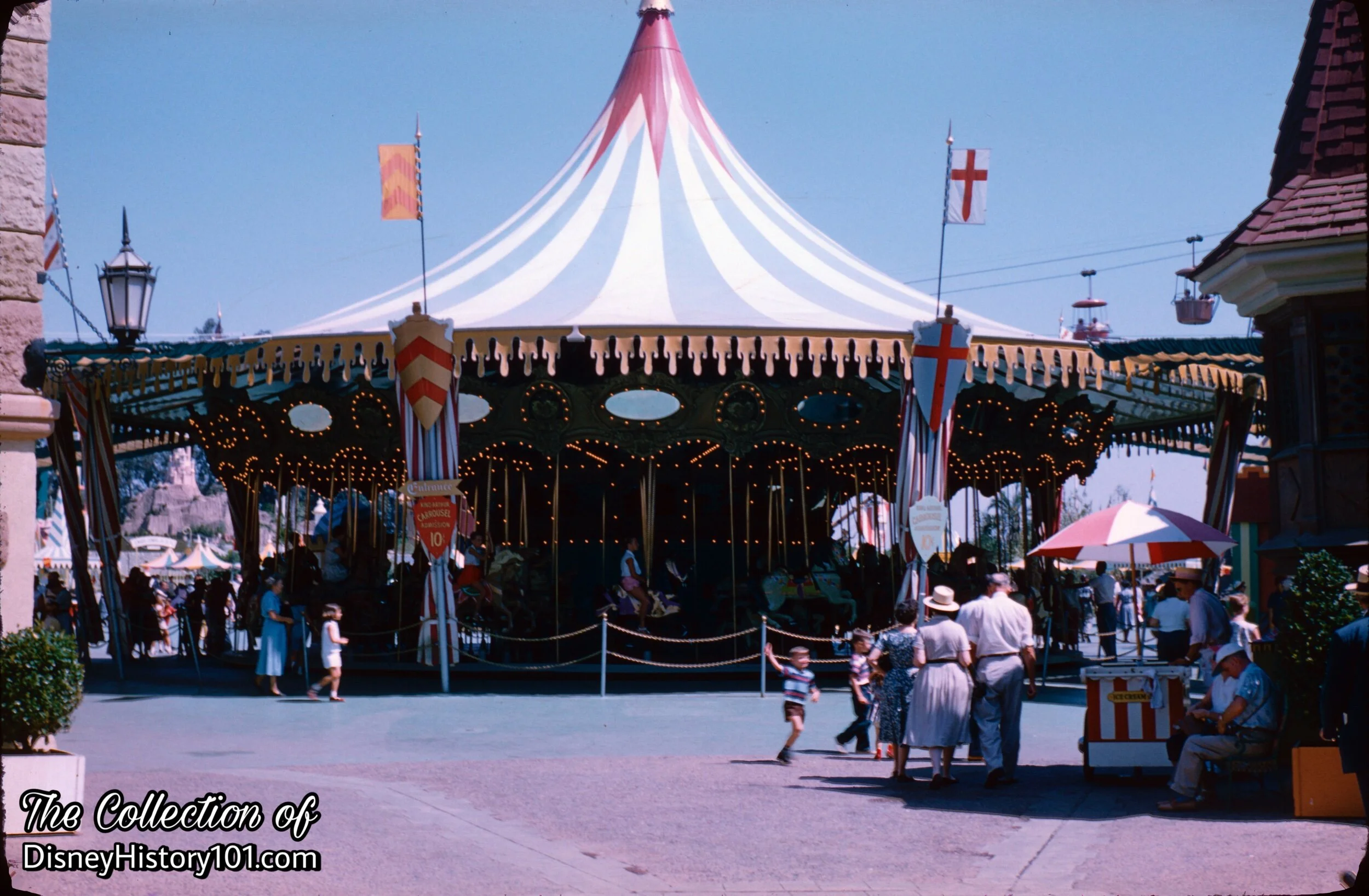
Banners of knights wave from the spears of King Arthur Carousel in the Castle Courtyard.
By October of 1959, there were no flags in Fantasyland, only pennants and banners.
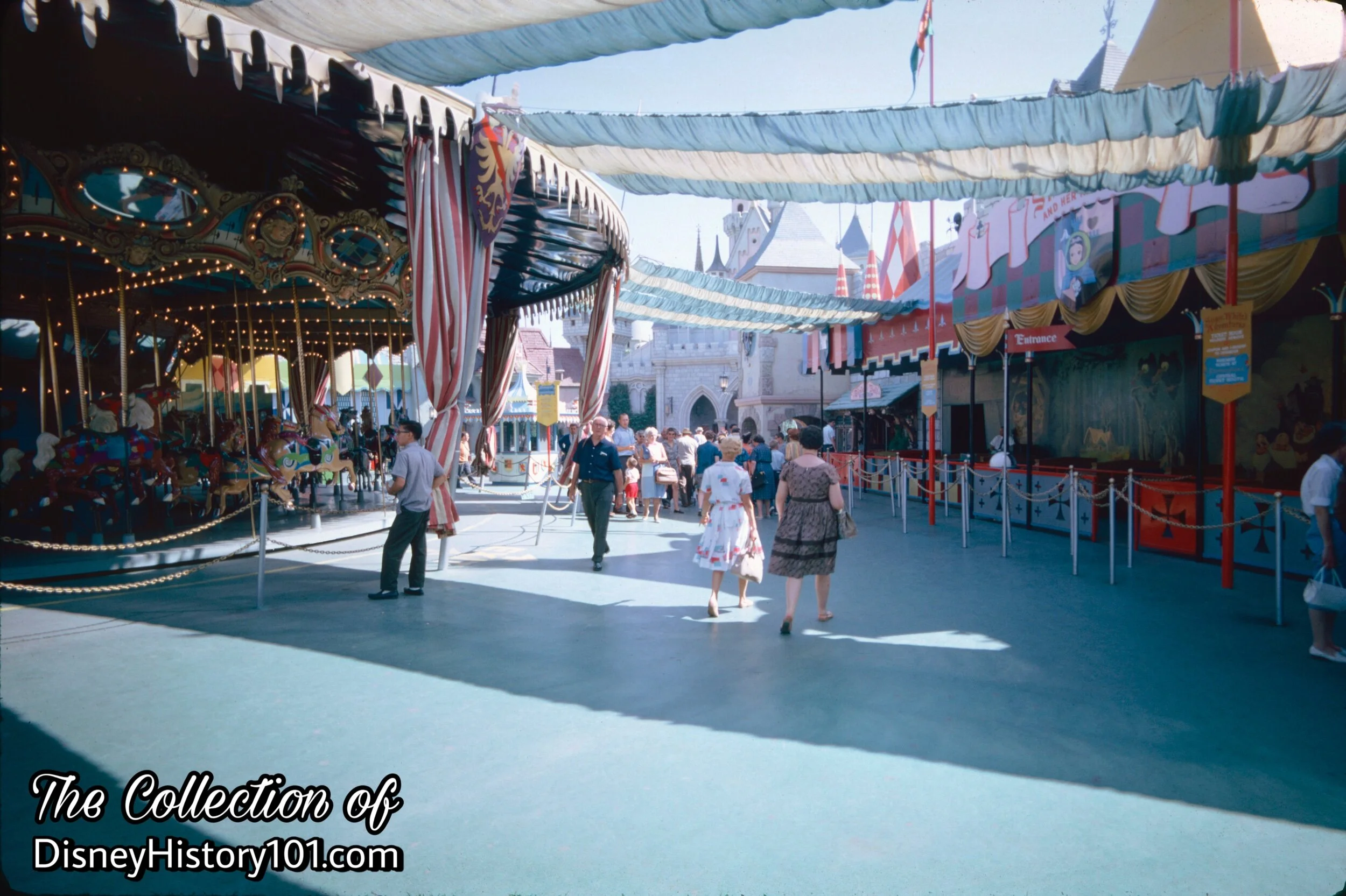
King Arthur Carousel in Castle Courtyard.
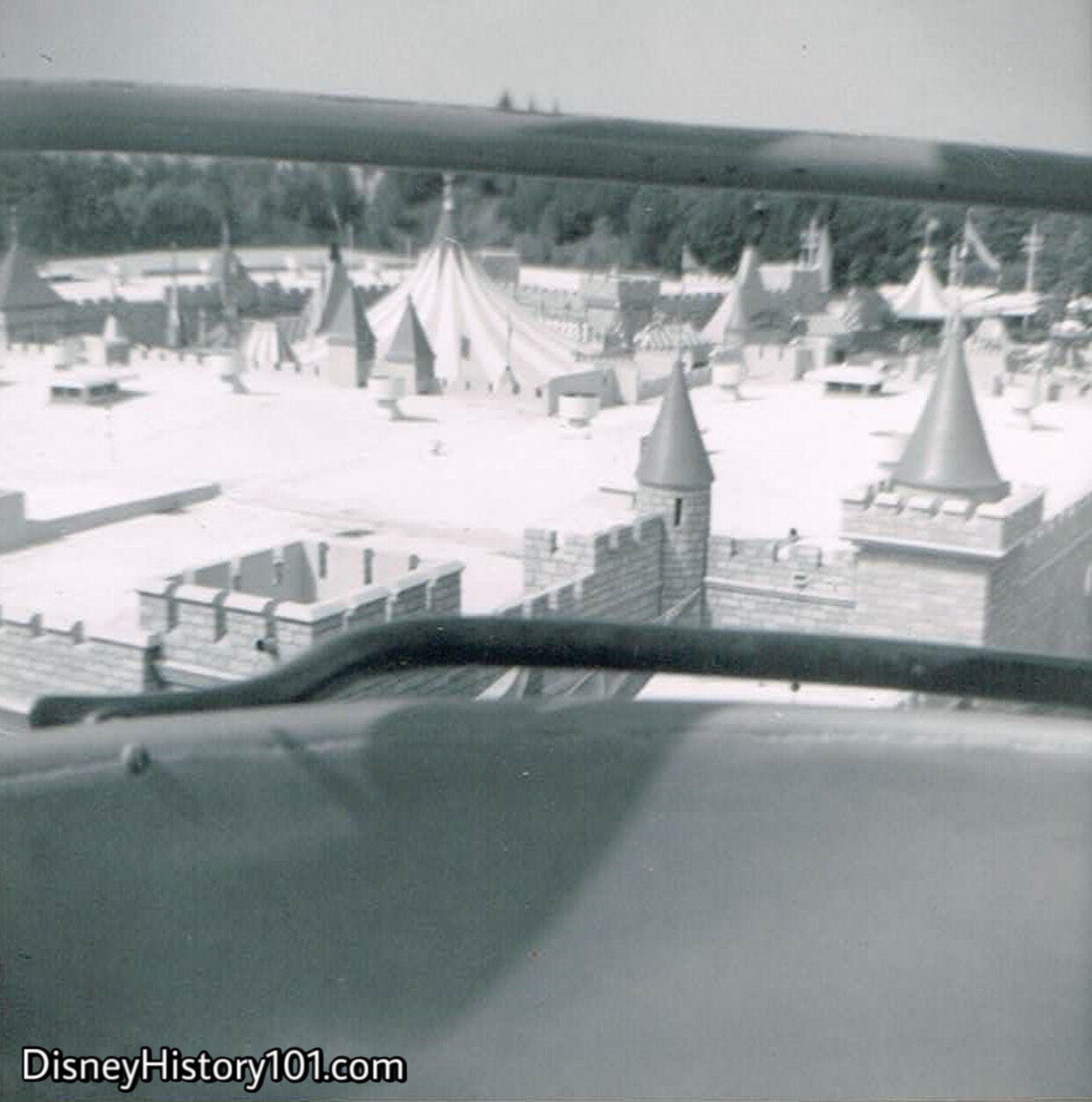
Sleeping Beauty Castle Complex and King Arthur Carousel rising high in the center
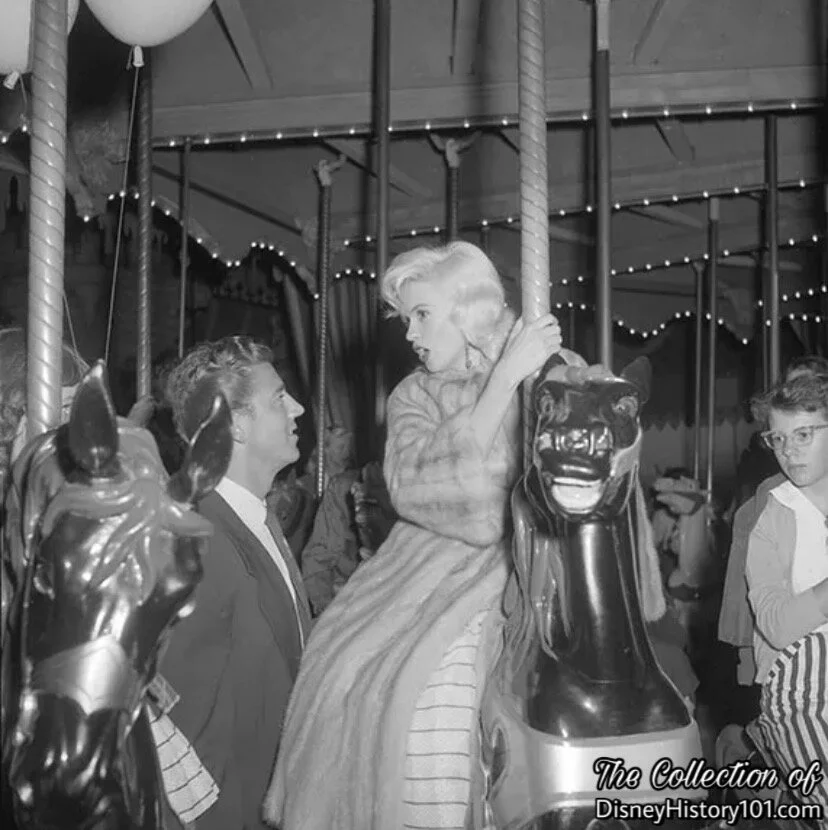
Jayne Mansfield and Mickey Hargitay aboard King Arthur Carousel as it spins gaily.
Soon, “high state, local and national government officials” as well as “luminaries from motion pictures, television and the theater” turned out to “pay tribute to this happy land” including the Casey Junior Circus Engine. [“Disneyland 1st Anniversary Souvenir Pictorial”, 1956, page 9] Among the first four million visitors to step though the Main Entrance Gate turnstiles and step aboard were Jayne Mansfield and Mickey Hargitay.
The carousel was soon occasionally seen in media, as when actress Spring Byington (of “December Bride) and child actor Bobby Diamond (of “Fury”) were photographed fining a horse that reminds them of “Fury” for their 1956 “TV Radio Mirror” photoshoot at Disneyland! In August of 1962, Lloyd Richardson, Larry Clemmons, Joe Marquette, and Jack Leppert (of the Walt Disney Studio) filmed and shot scenery of the “carrousel” for Studio Production #3185.

Rosemary Clooney goes for a spin aboard King Arthur Carousel.
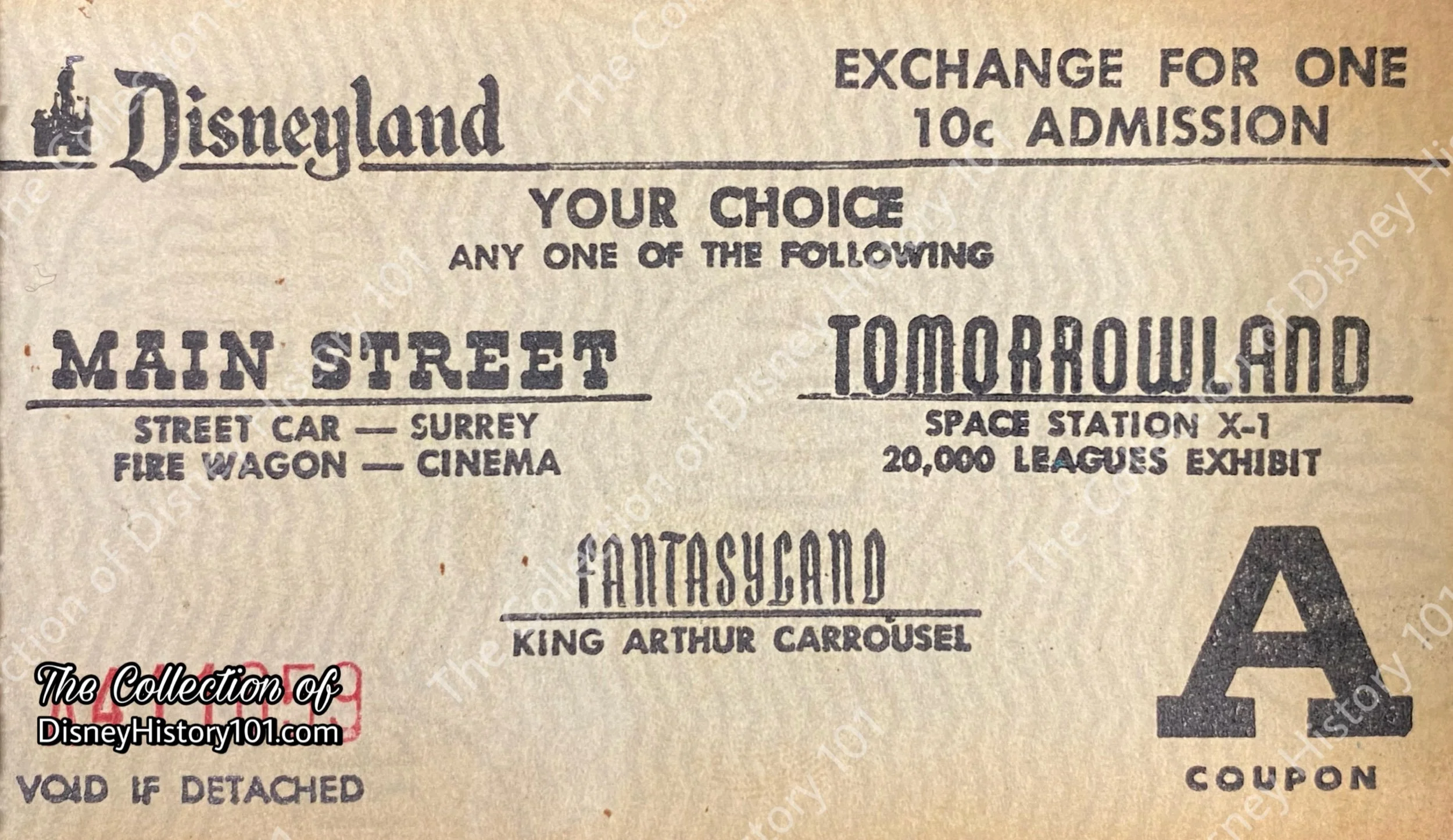
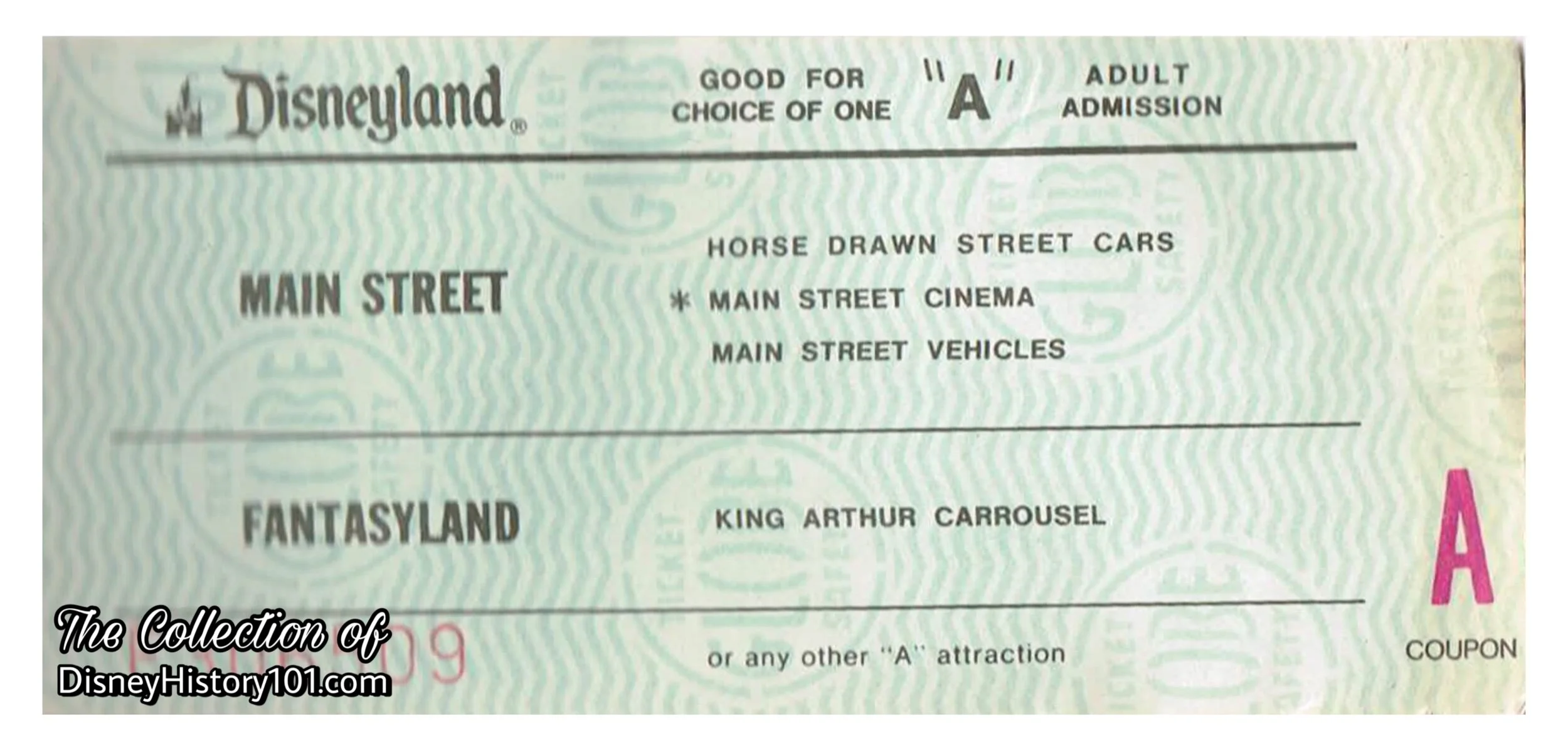
By 1959, Joe Fowler was Vice President of Disneyland Operations Committee and Doc Lemmon of Disneyland Operations was overseeing Operators of Rides & Amusements (like the King Arthur Carrousel), Livestock, Parking Lot, and Ticket Sellers.
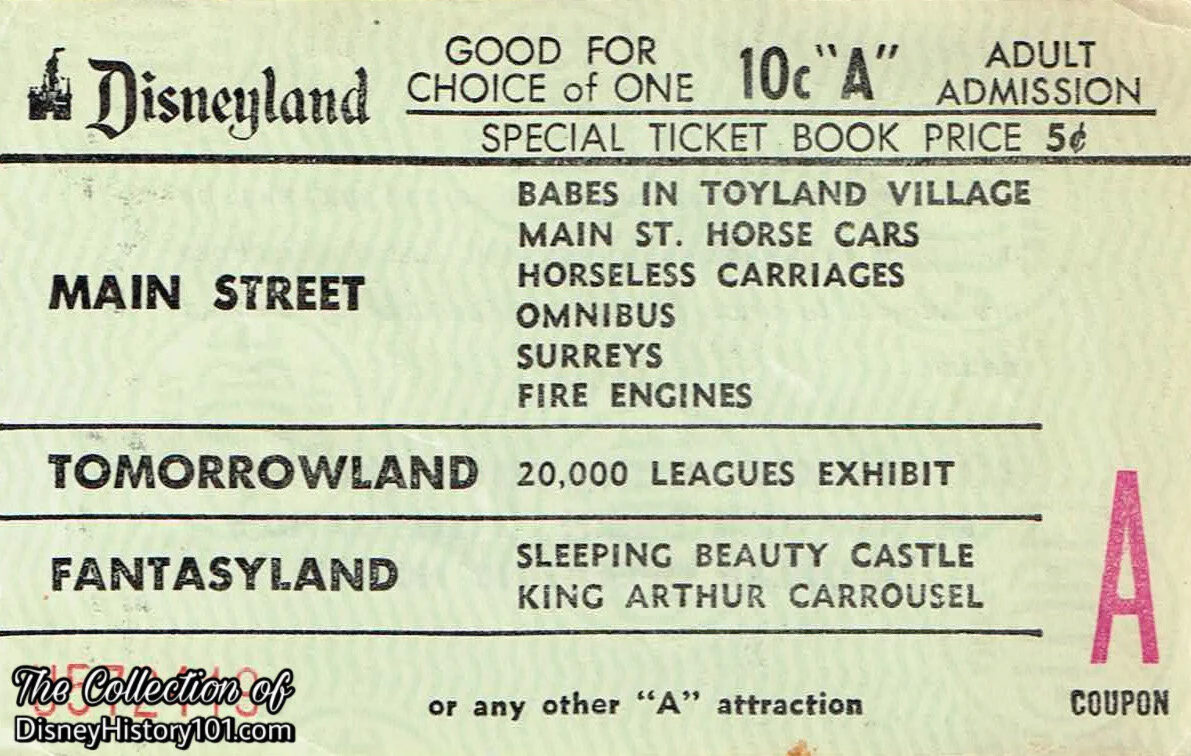
Disneyland "A" Coupon (December 1961 - September 1963)
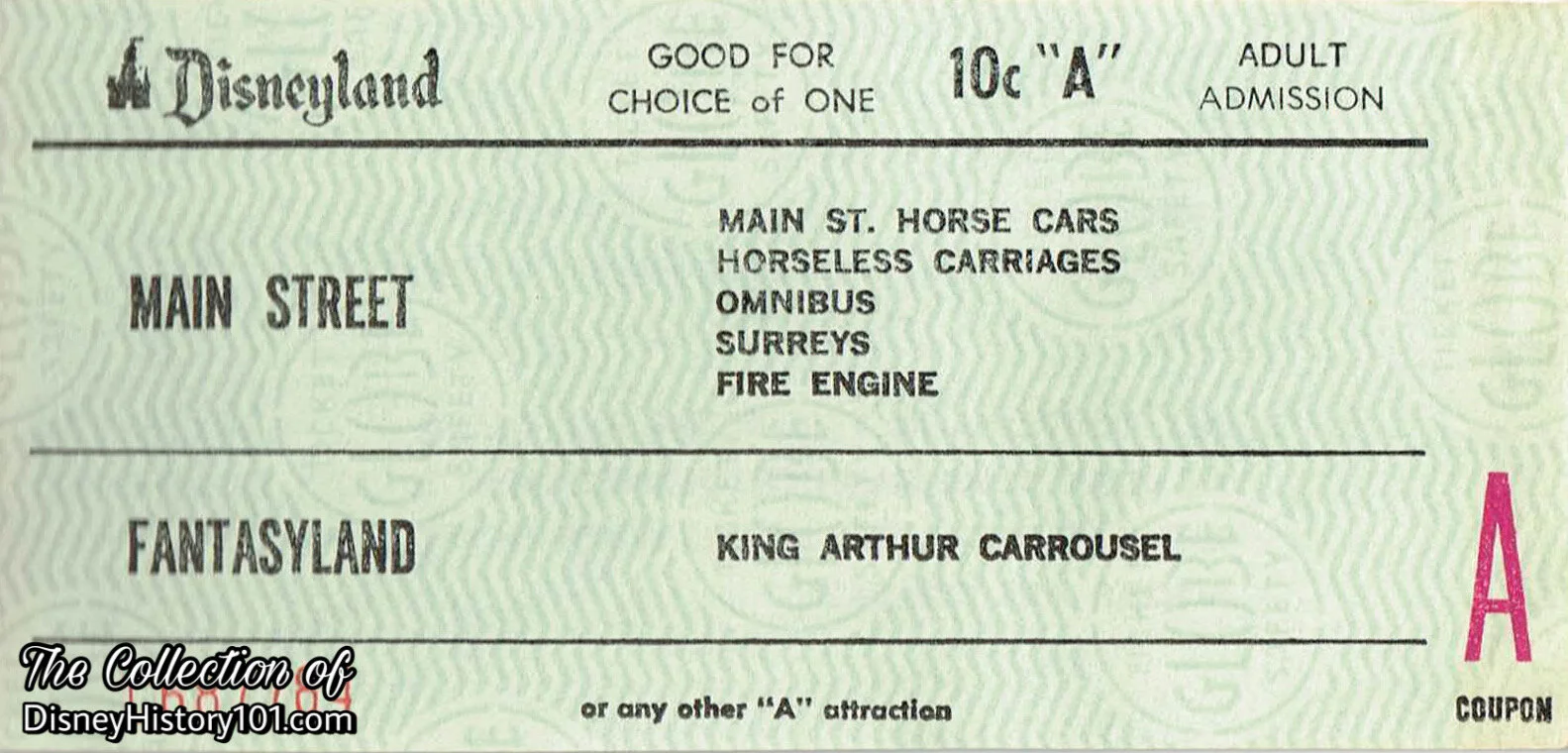
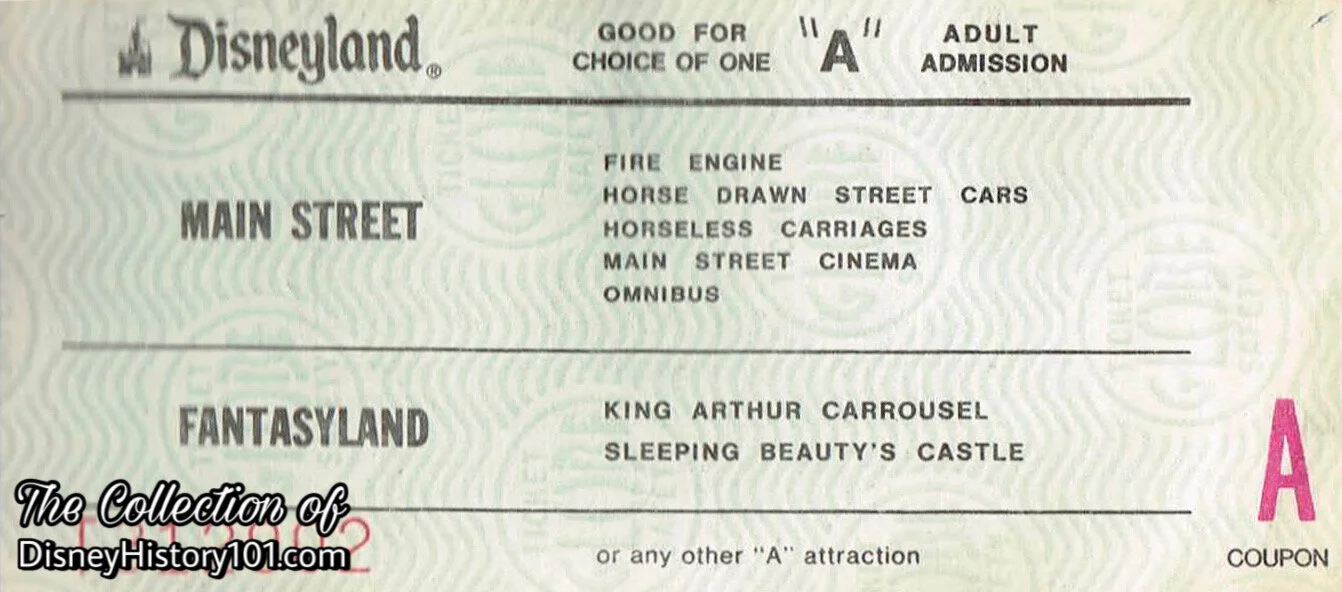
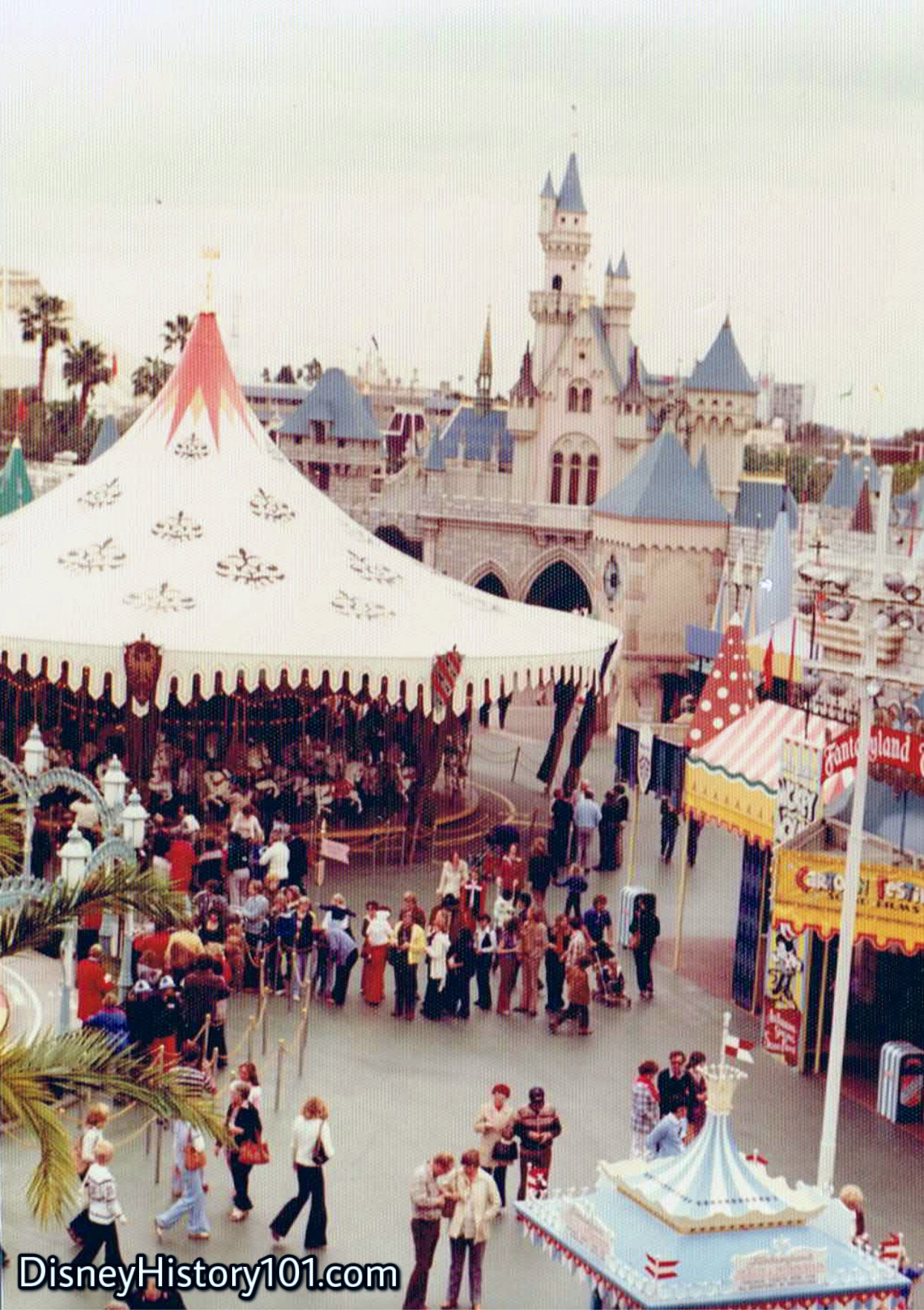
King Arthur Carousel, (c. 1975 - 1976)
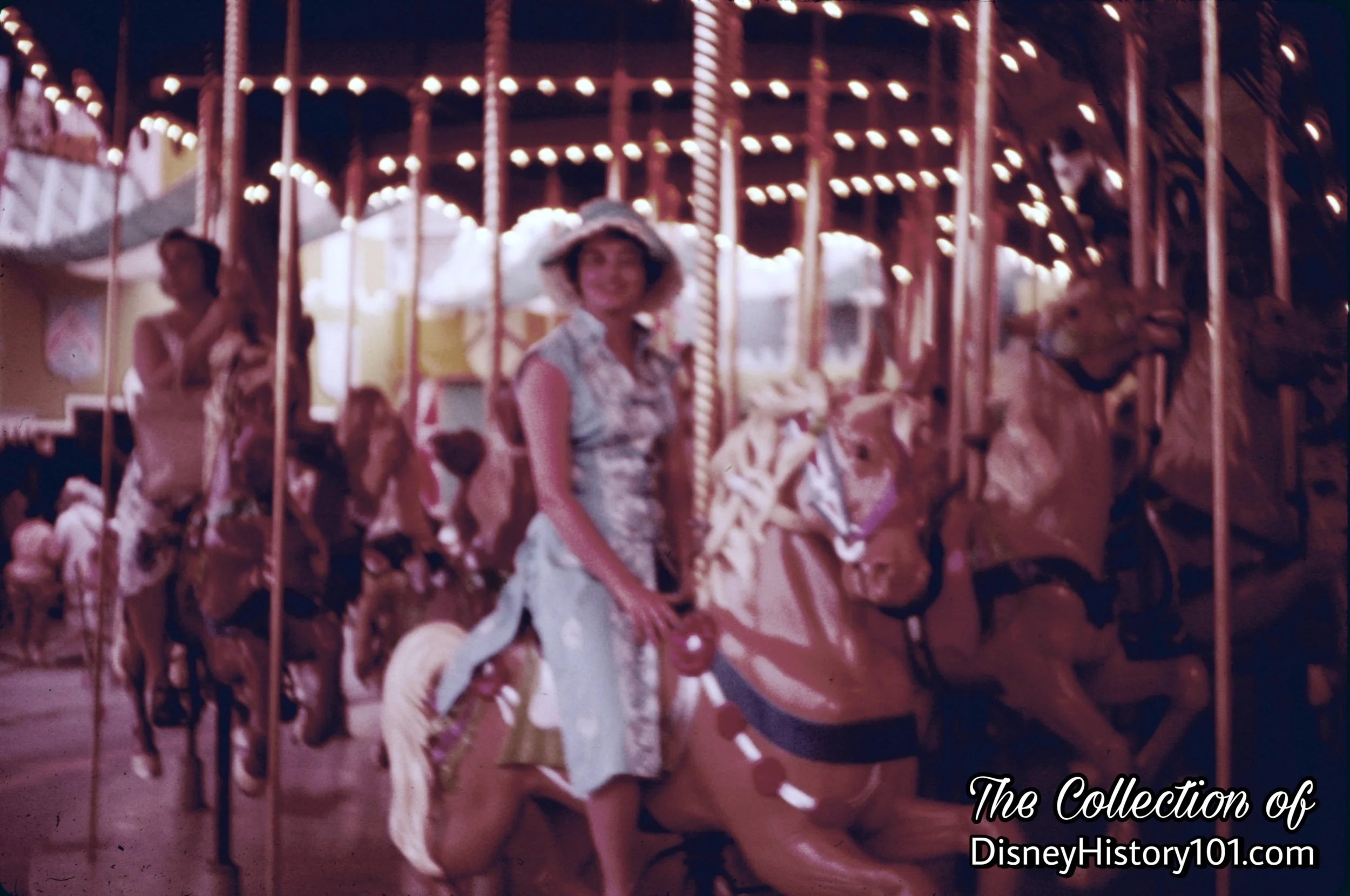
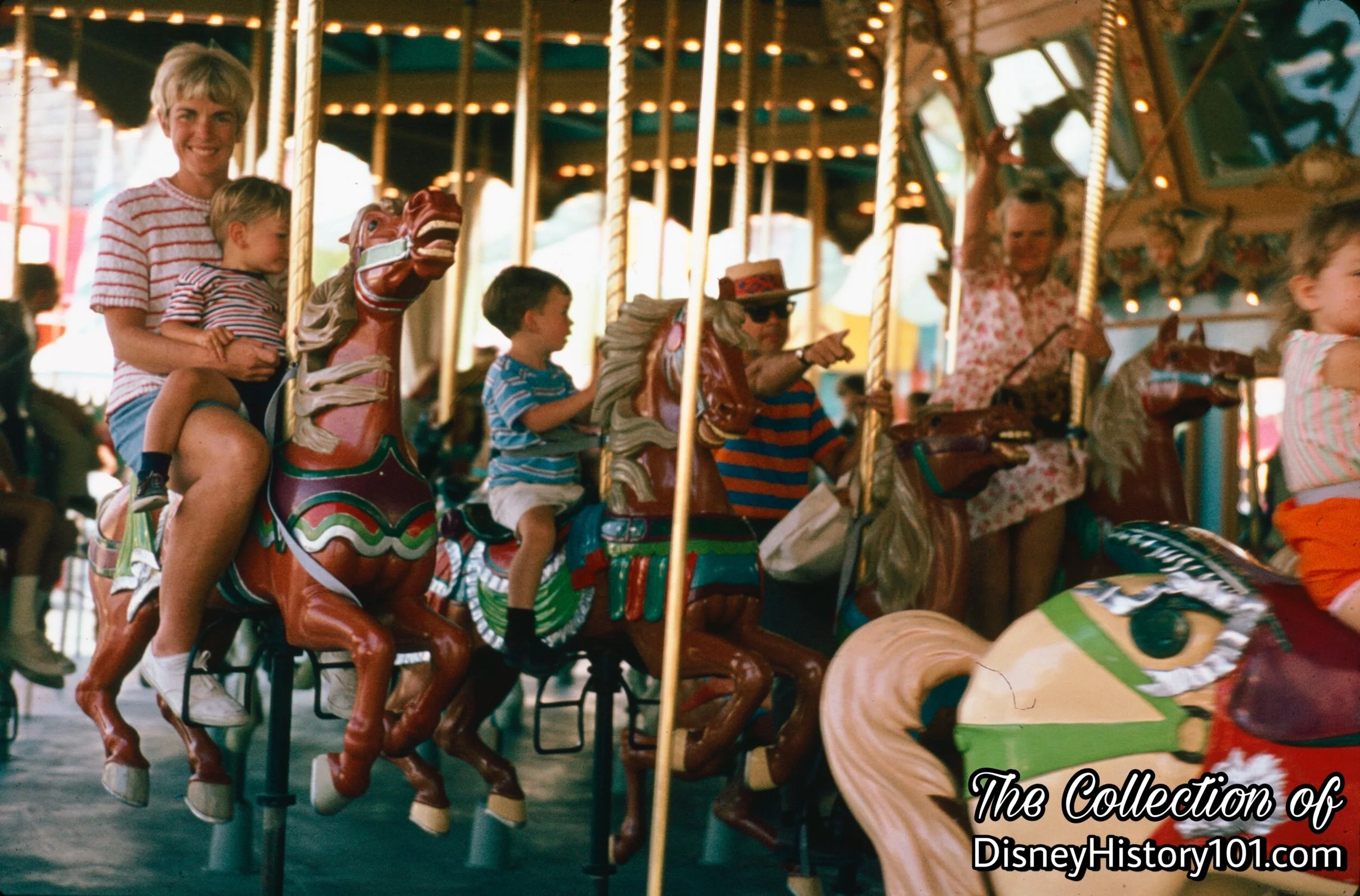
King Arthur Carousel
Shiny orange, black, and vanilla colored mounts move astride each other in formation! Each horse jumps (some with a “flying tail”) like the famous Pelo de Oro.
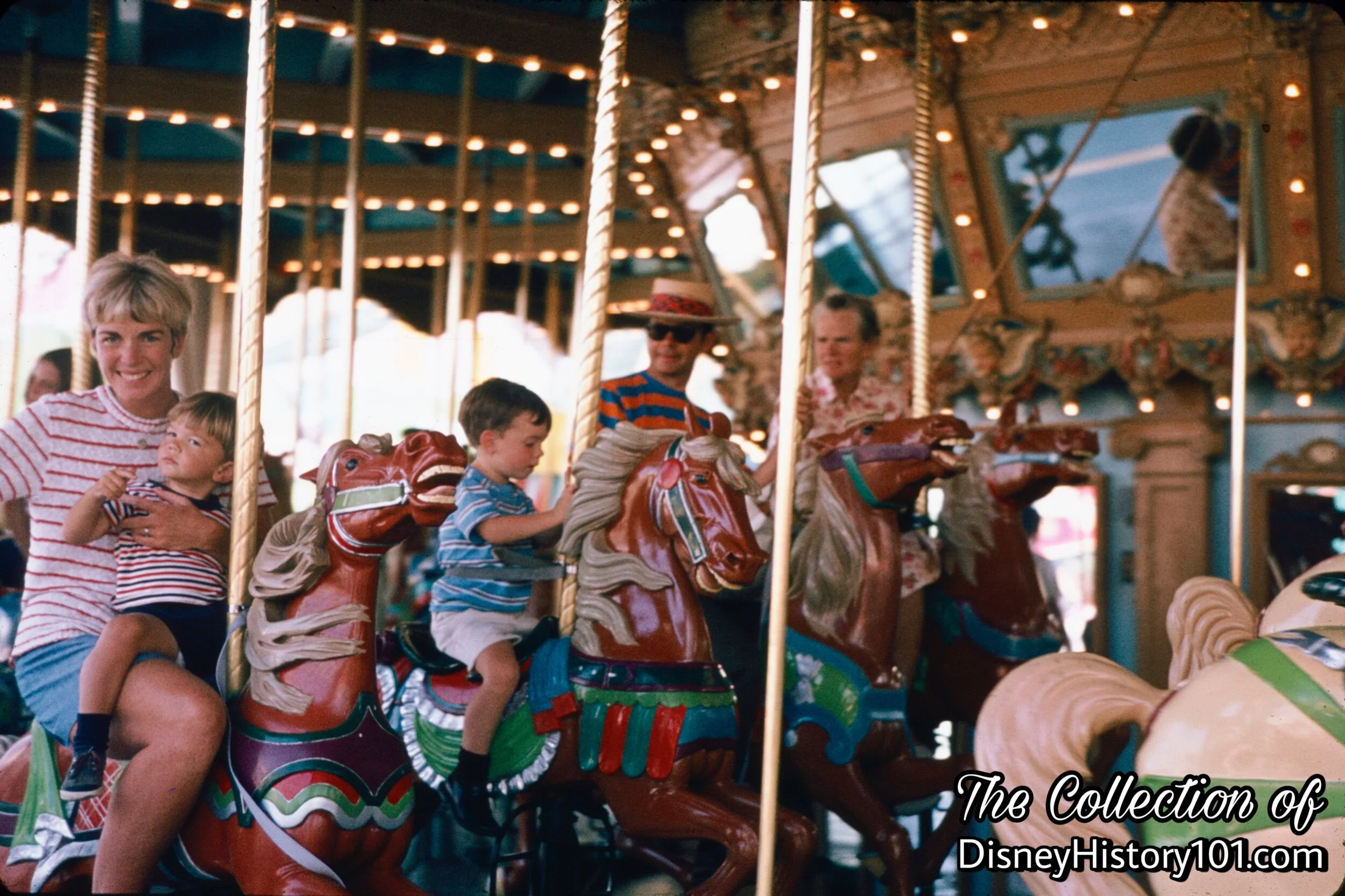
King Arthur Carousel
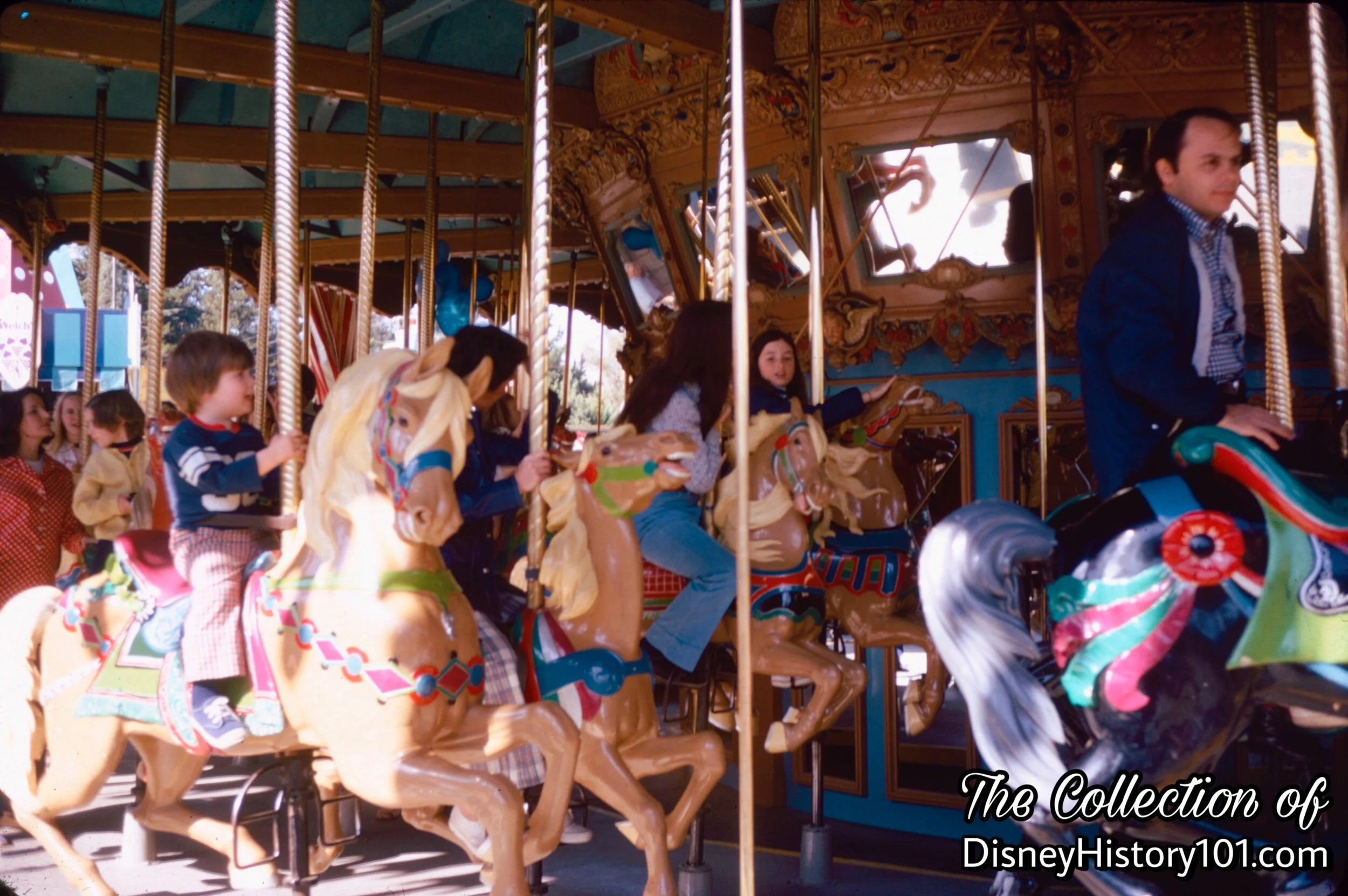
King Arthur Carousel
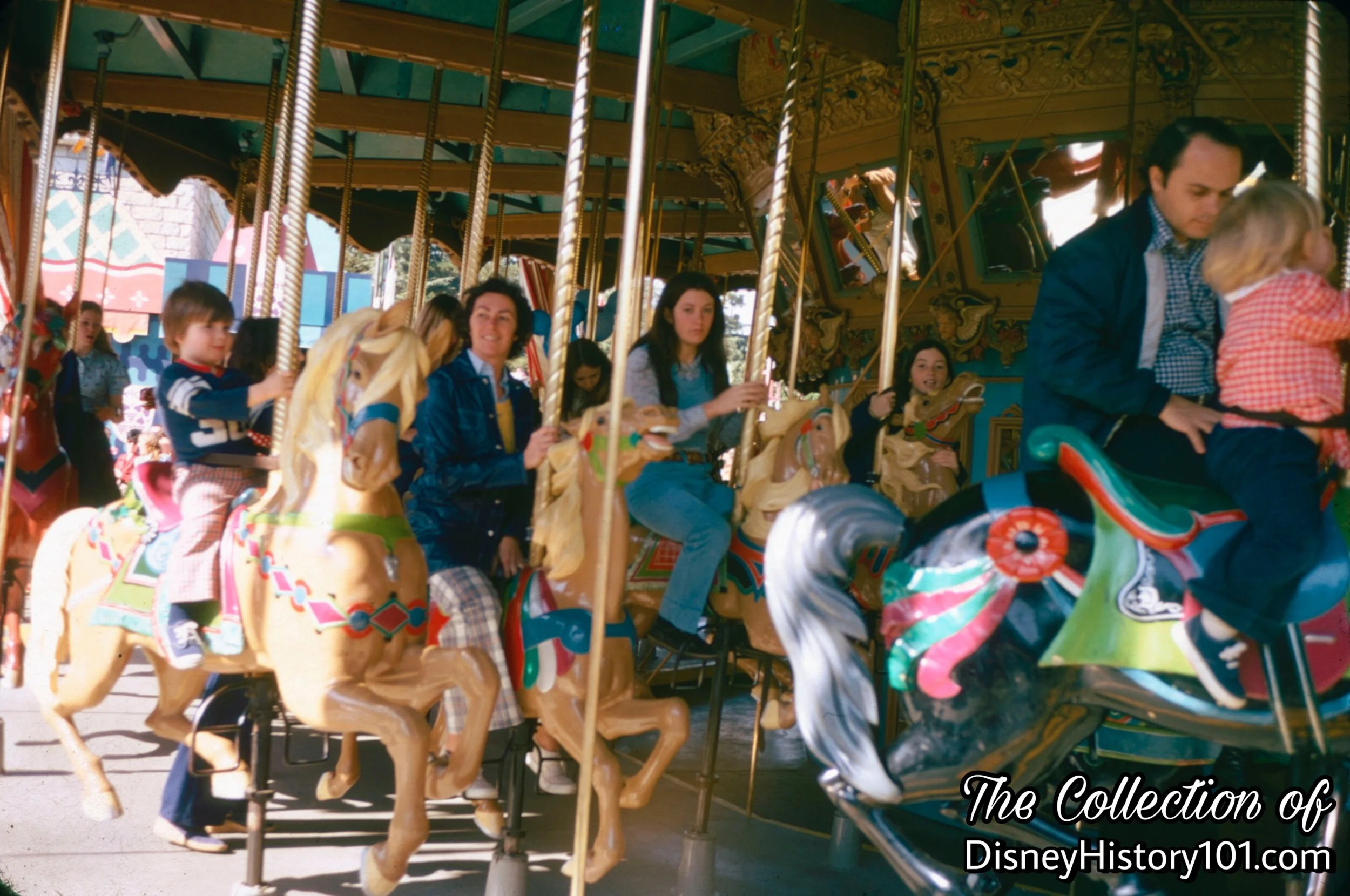
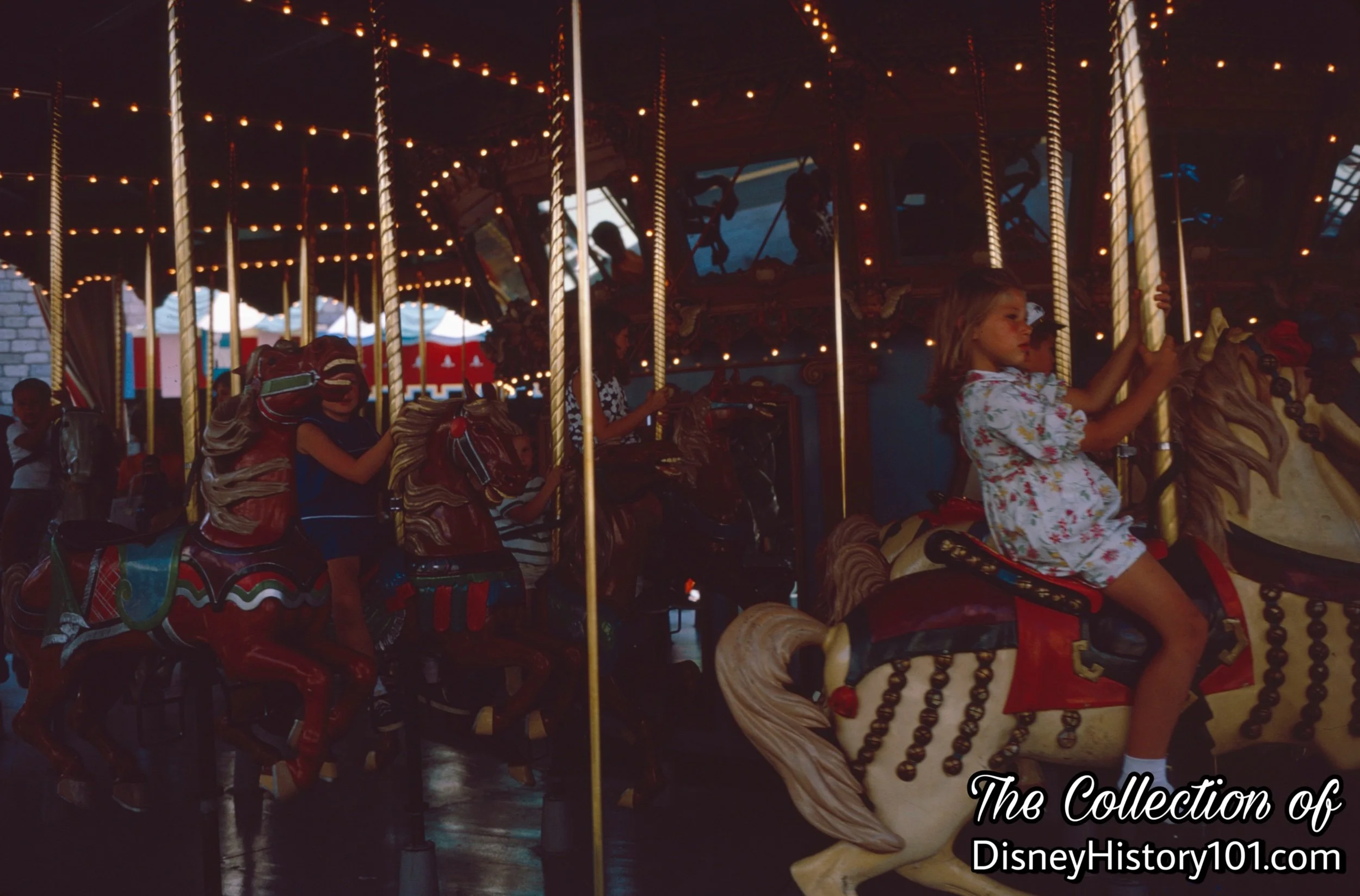
Guests ride astride 1 of 72 horses on King Arthur Carousel.
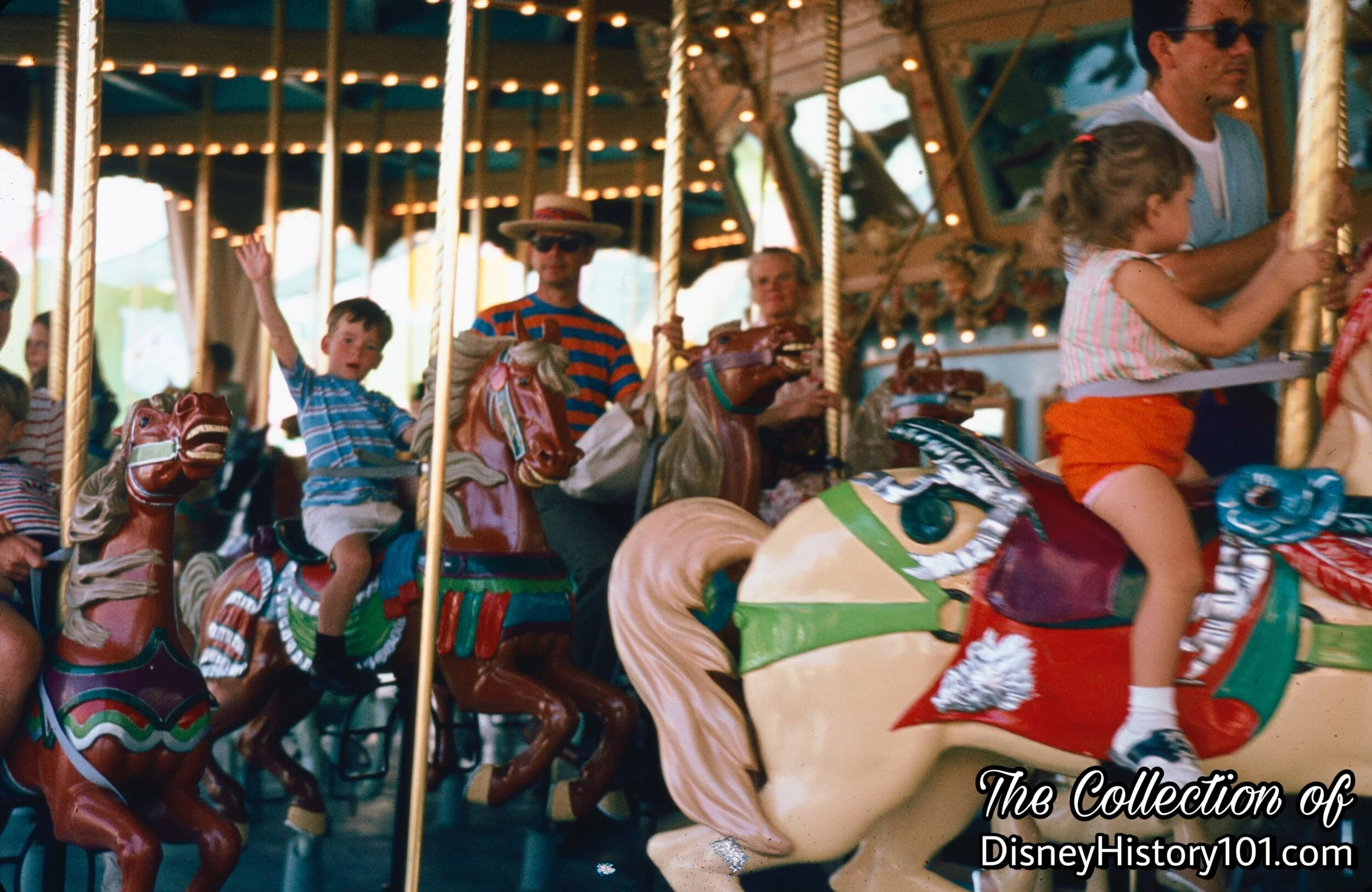
King Arthur Carousel
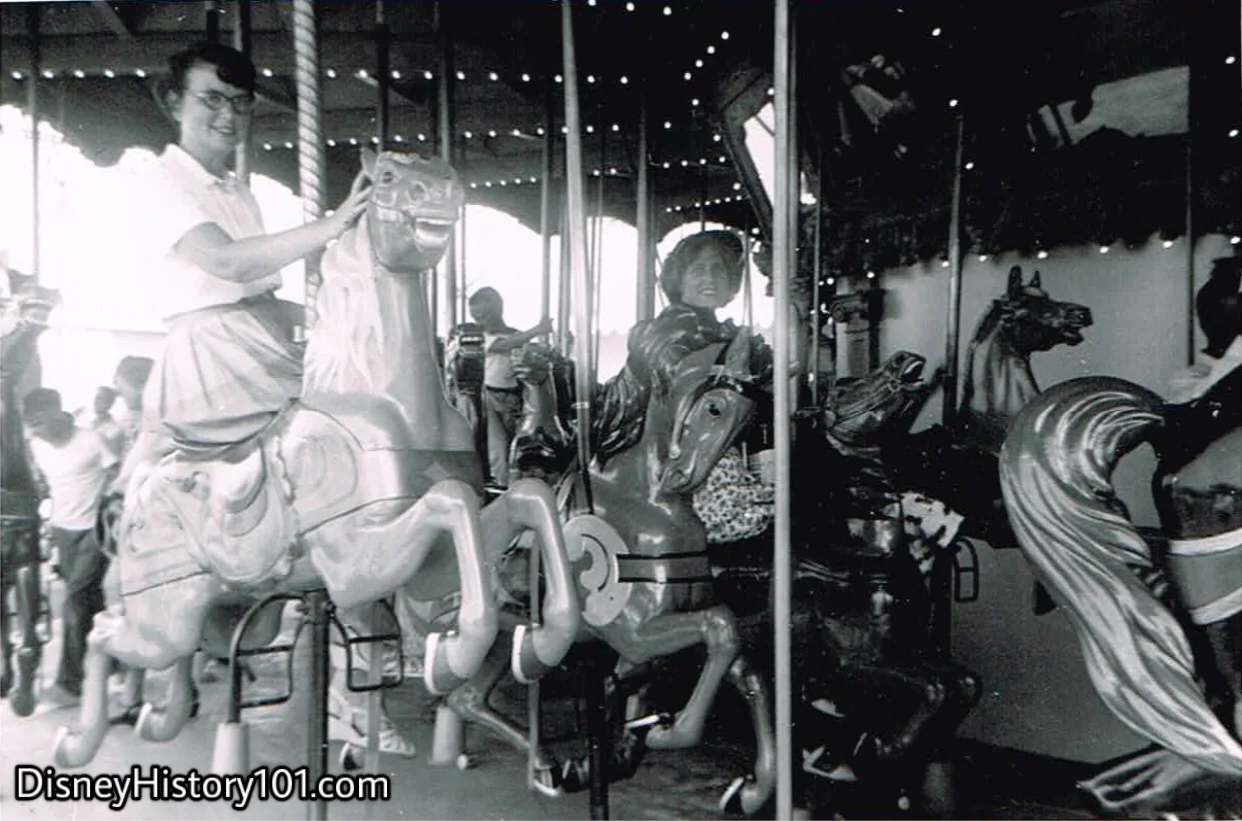
King Arthur Carousel, (September, 1955)
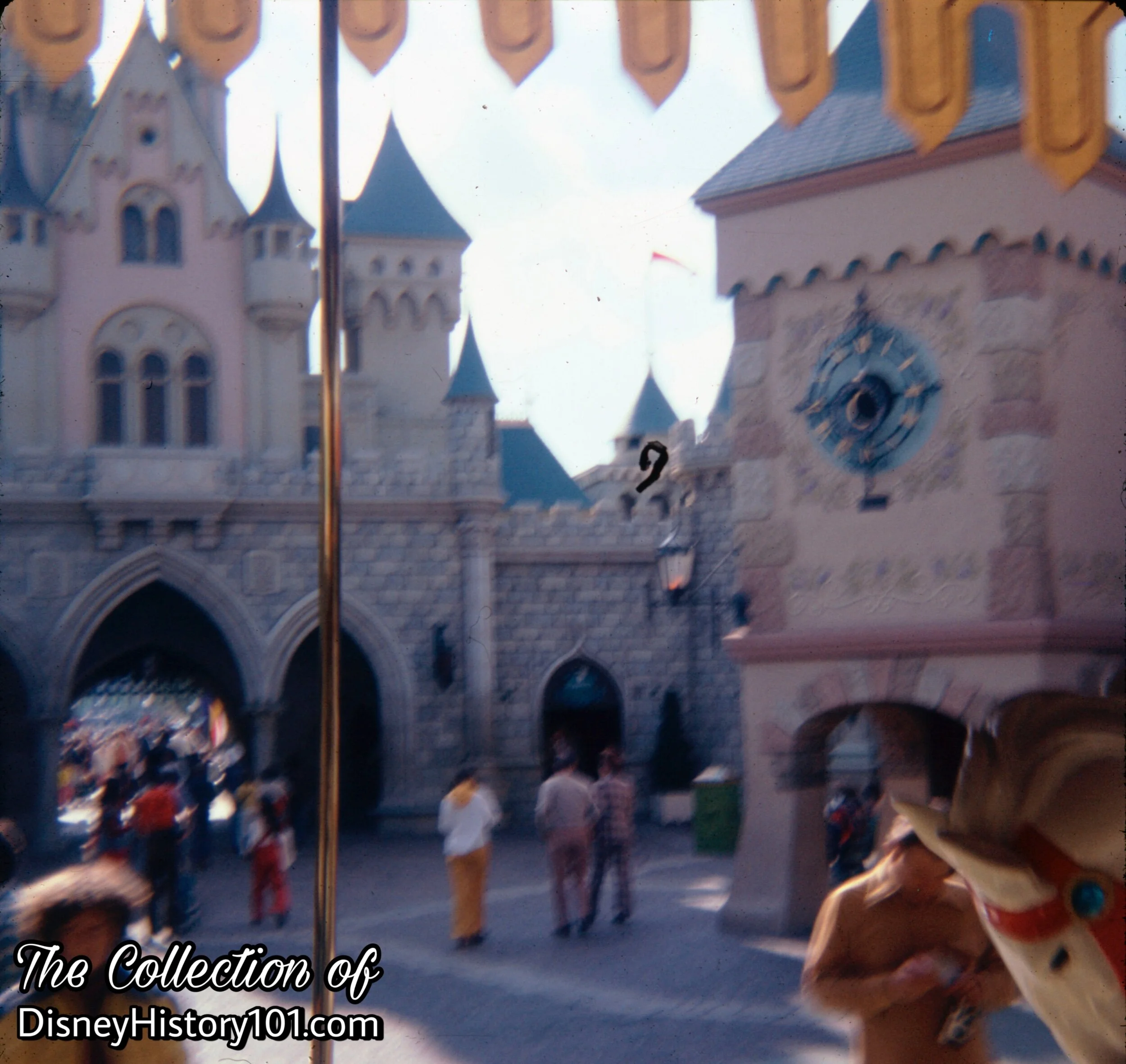
King Arthur Carousel
All of that shiny brass is polished by crews who work at Disneyland after midnight. Speaking of maintenance, the King Arthur Carrousel horses are also painted by nighttime crews. As for the carrousel’s 1,363 lights - any burnt out ones were changed once a week, during the late 1980s. We’re sure that SQS has heightened the show “bar” since then!
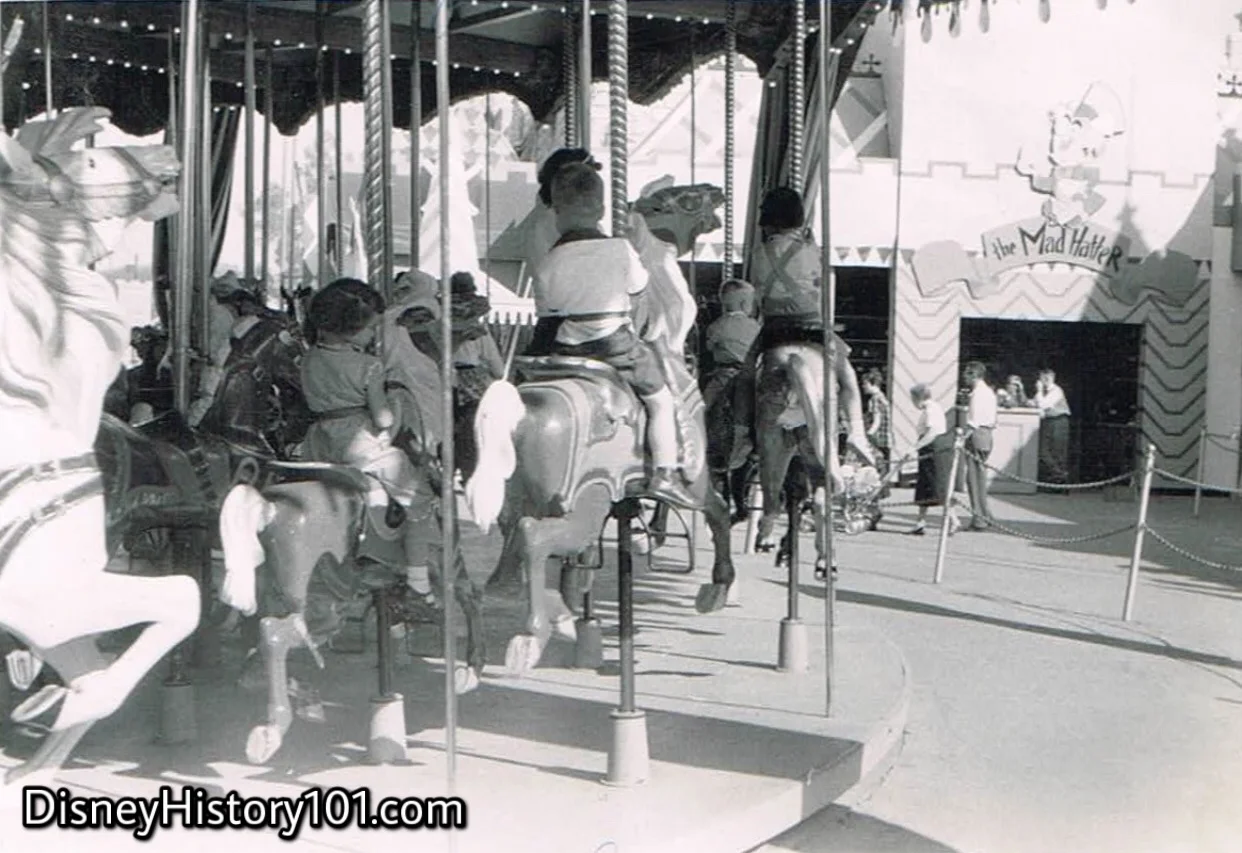
King Arthur Carousel, (1958)
In the background, you’ll notice the Mad Hatter before moving to its current location in Town Square during June of 1958.
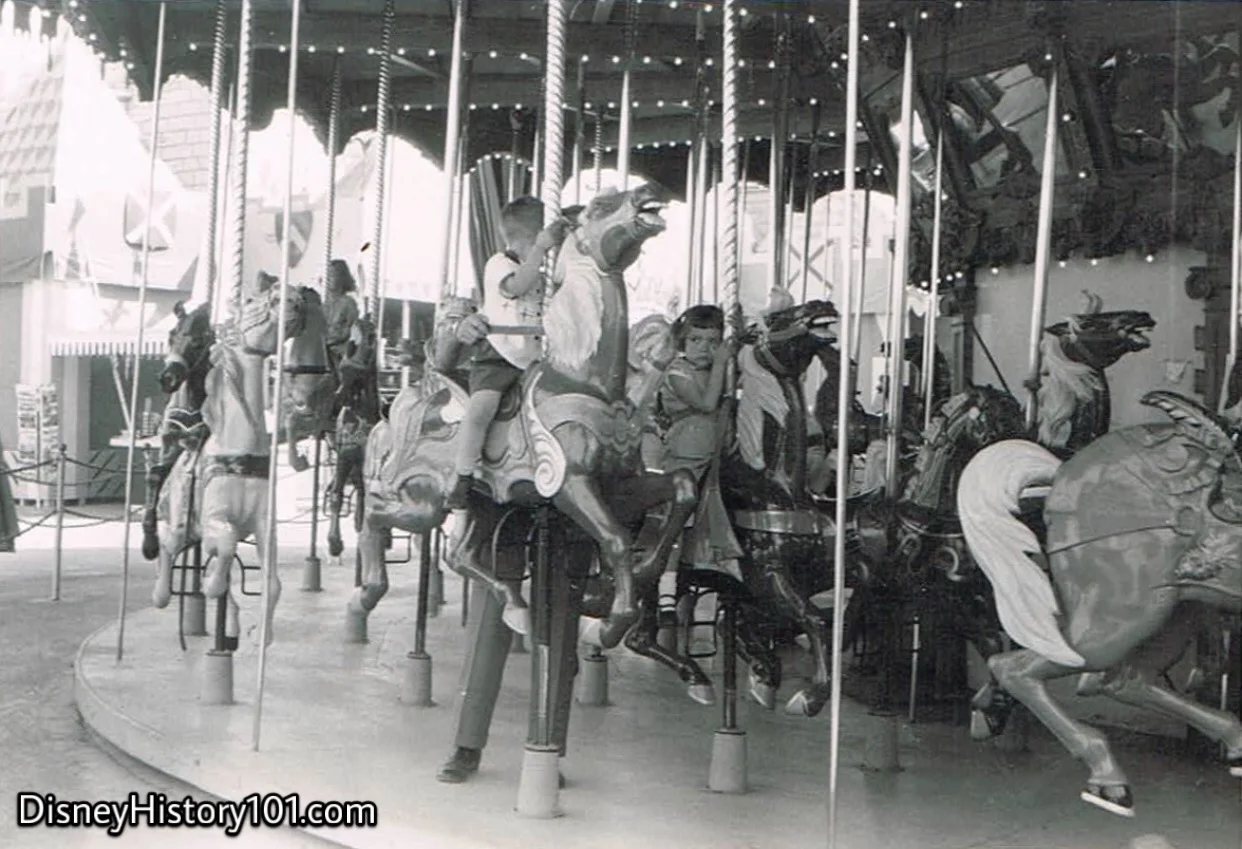
King Arthur Carousel, (1958)
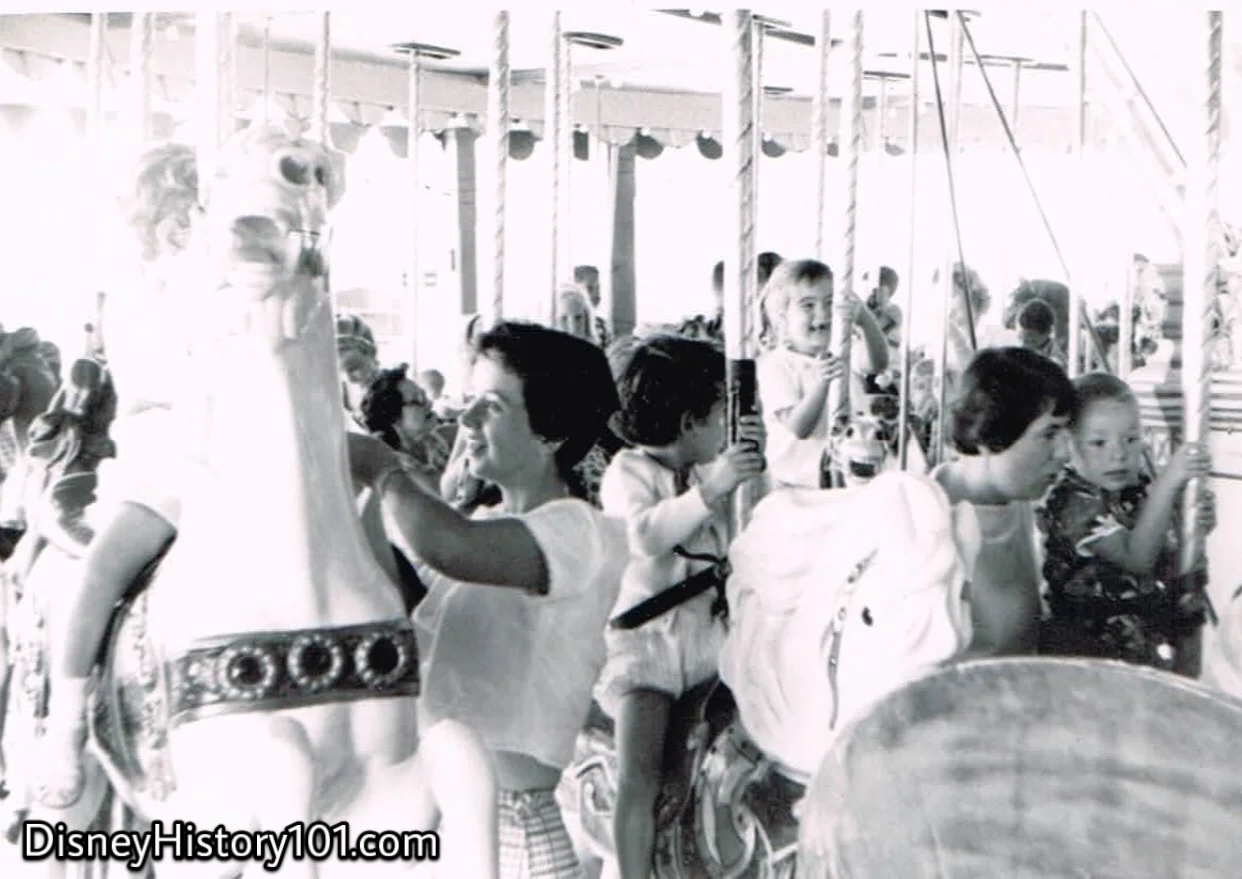
King Arthur Carousel, (November, 1959)
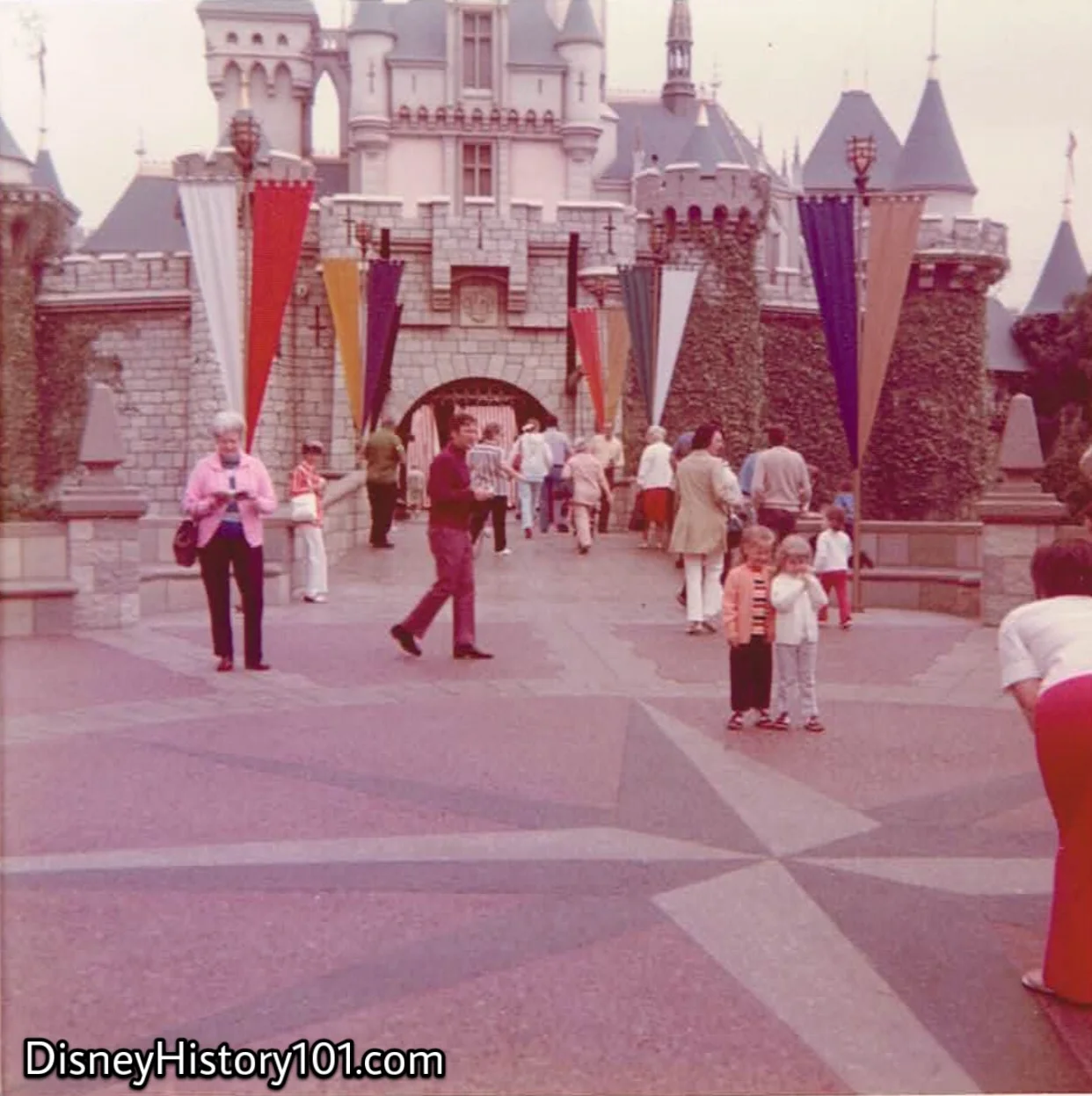
King Arthur Carousel, (1972)
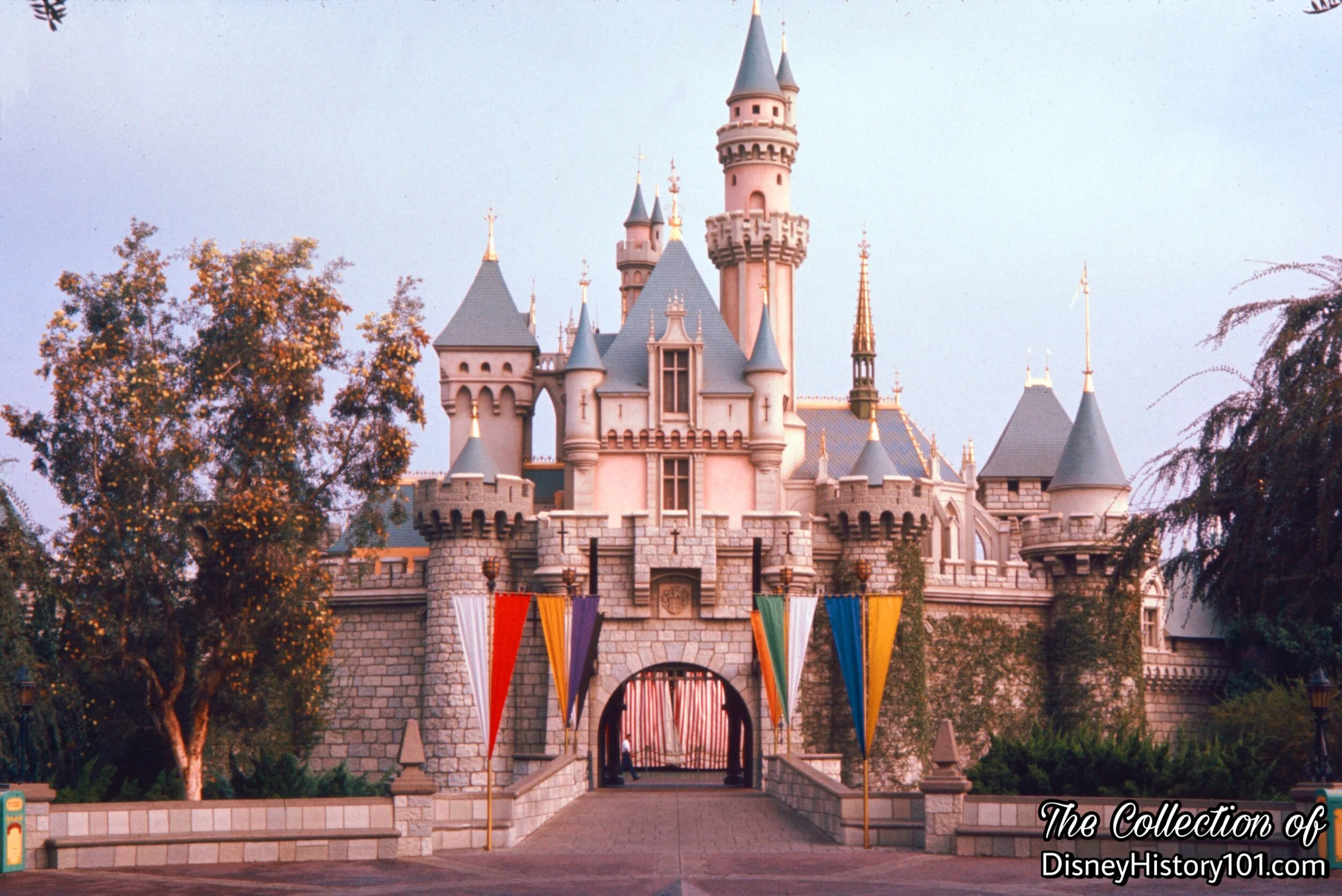
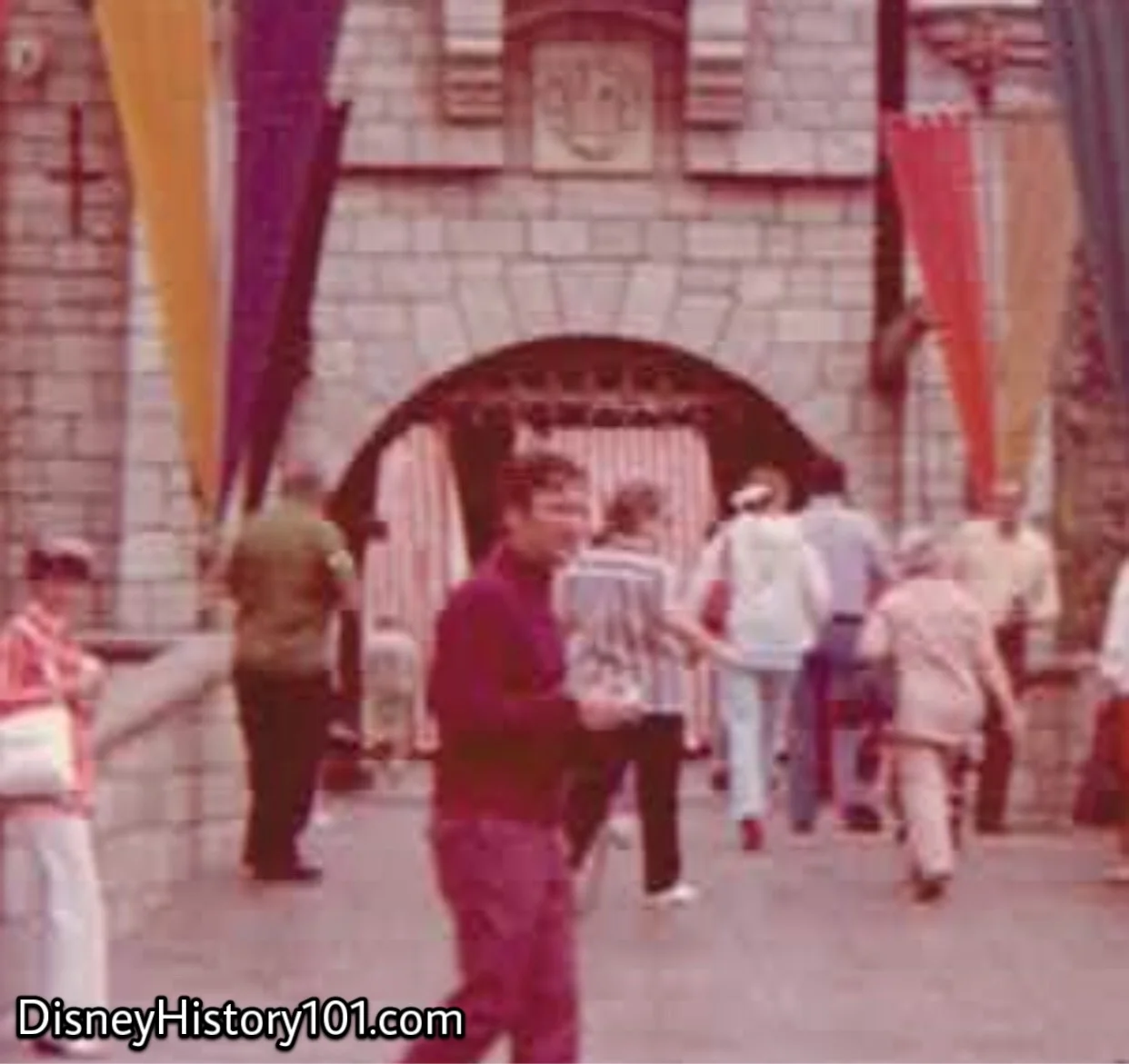
King Arthur Carousel, (1972)
As you looked through the opening of the Castle, King Arthur's Carrousel drew the Guests in.
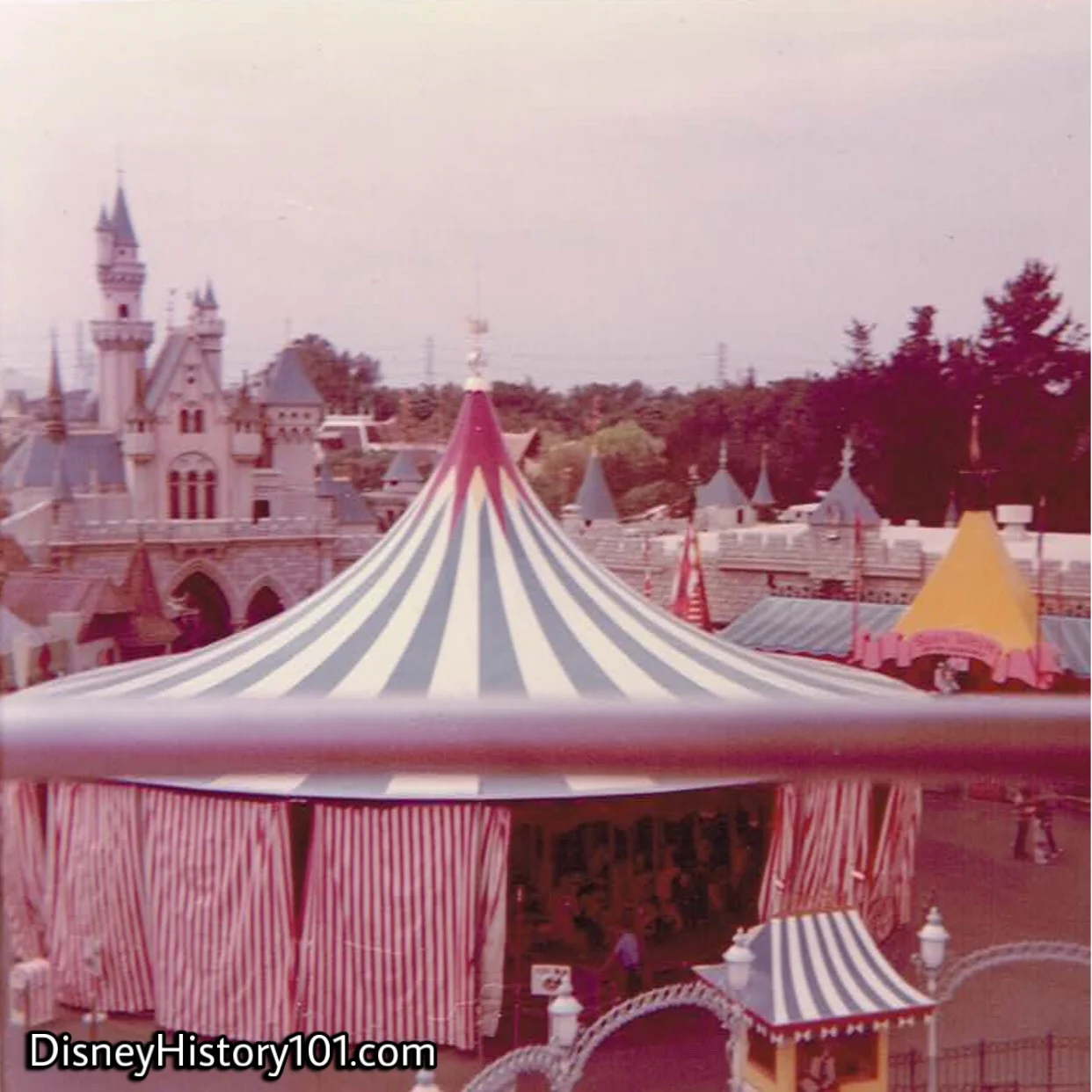
King Arthur Carousel during a period of “Delayed Opening” or “101,” 1972.
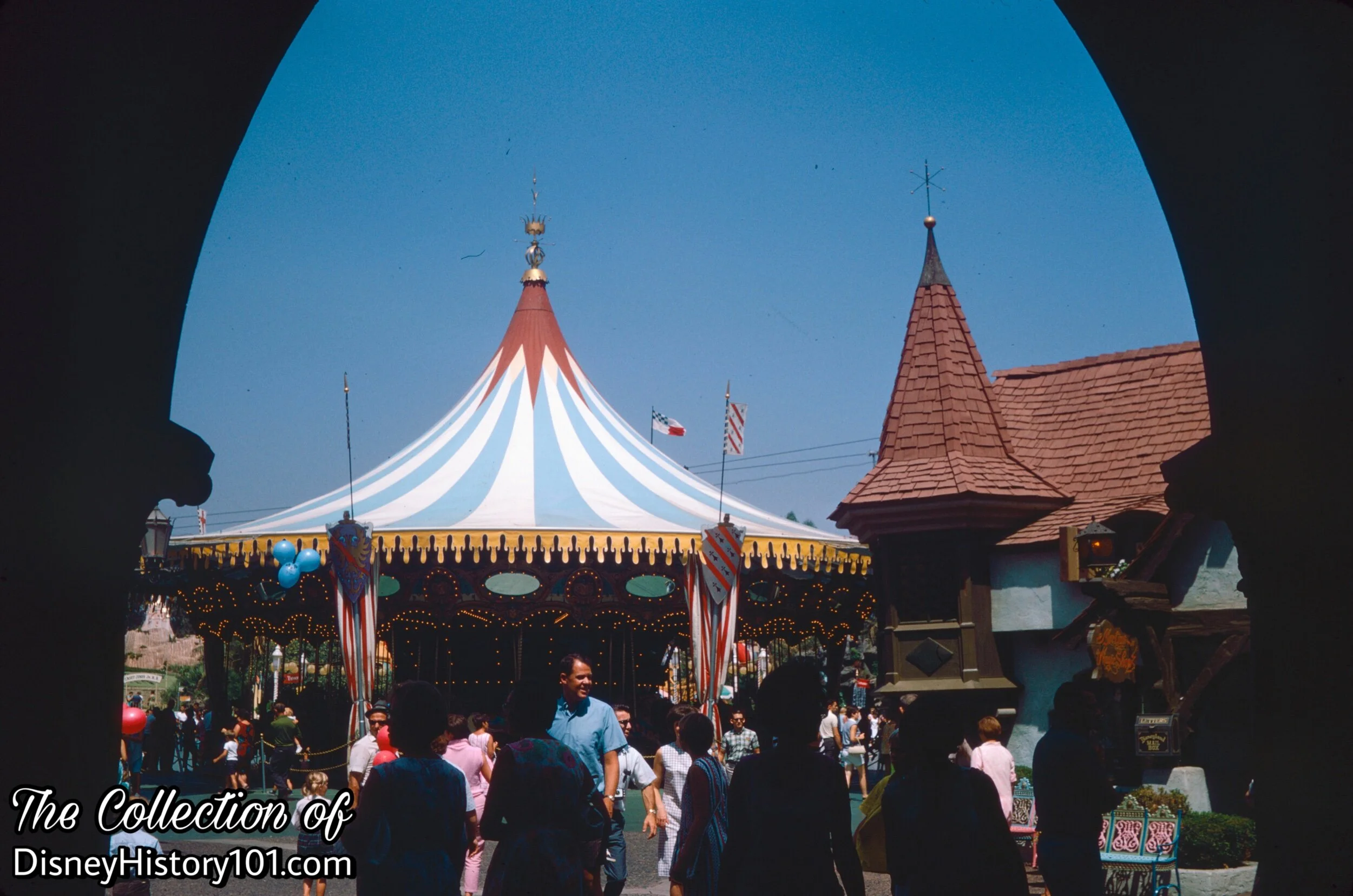
King Arthur Carousel, (1967)
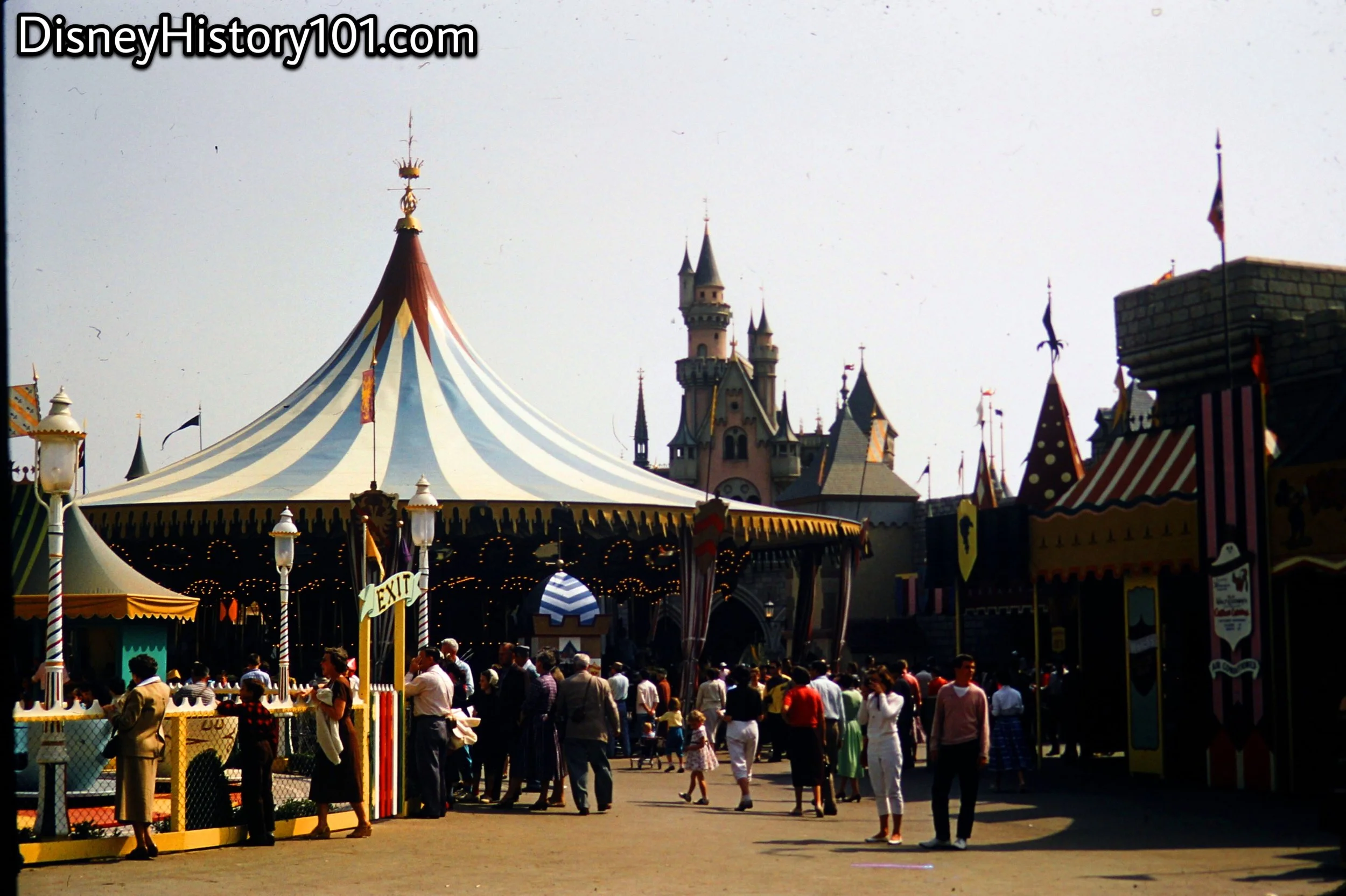
King Arthur Carousel
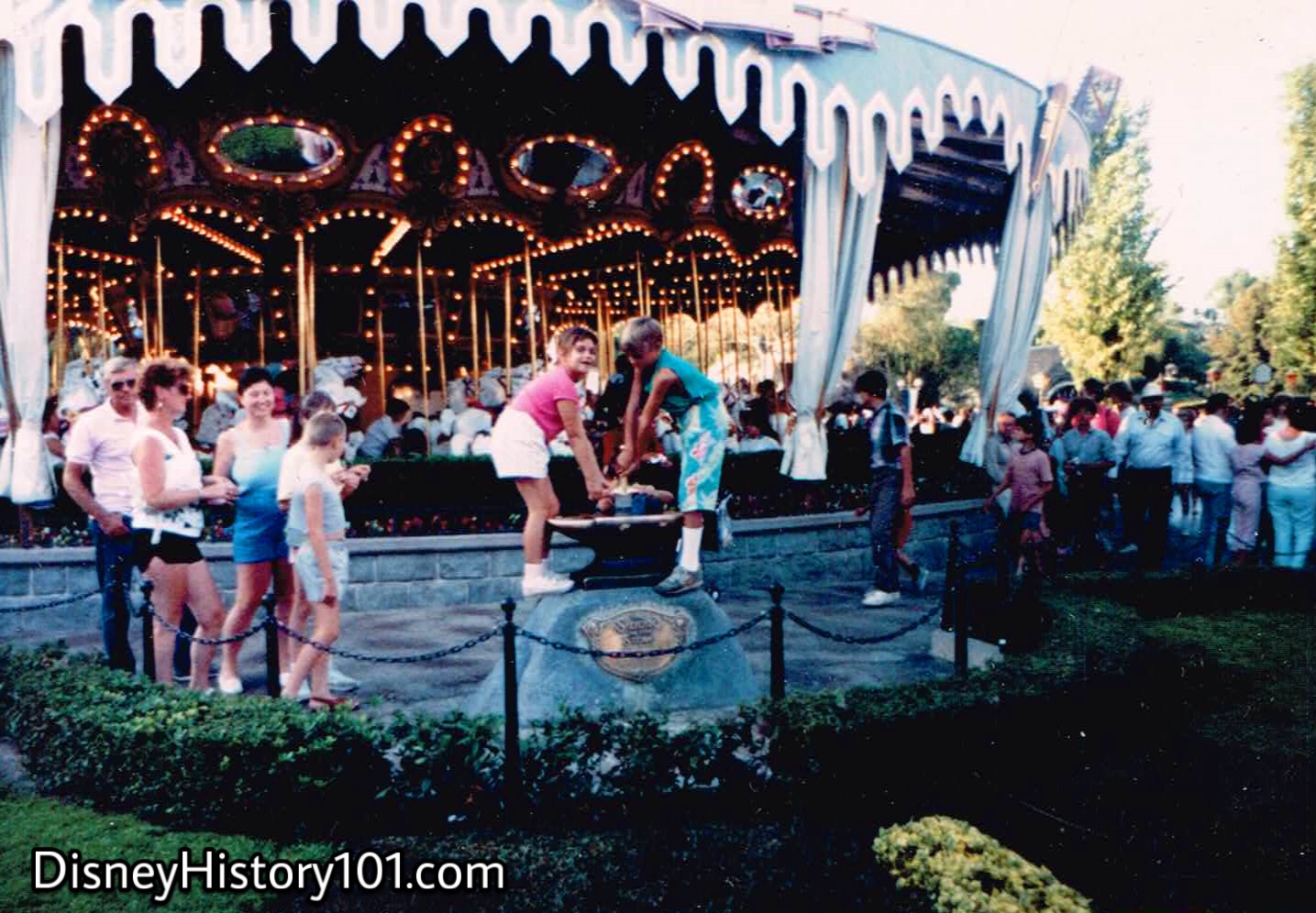
King Arthur Carousel
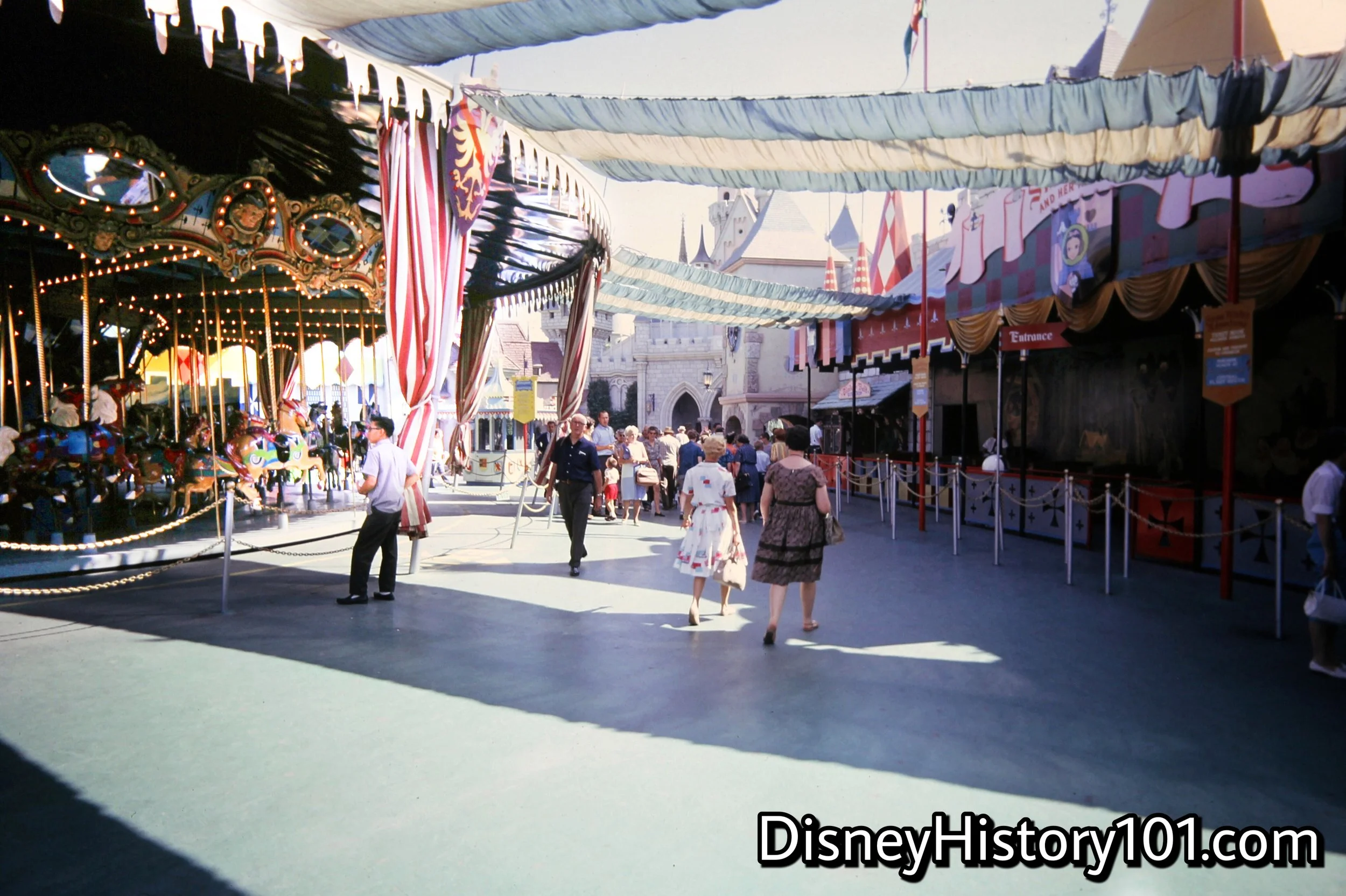
King Arthur Carousel, (1962)
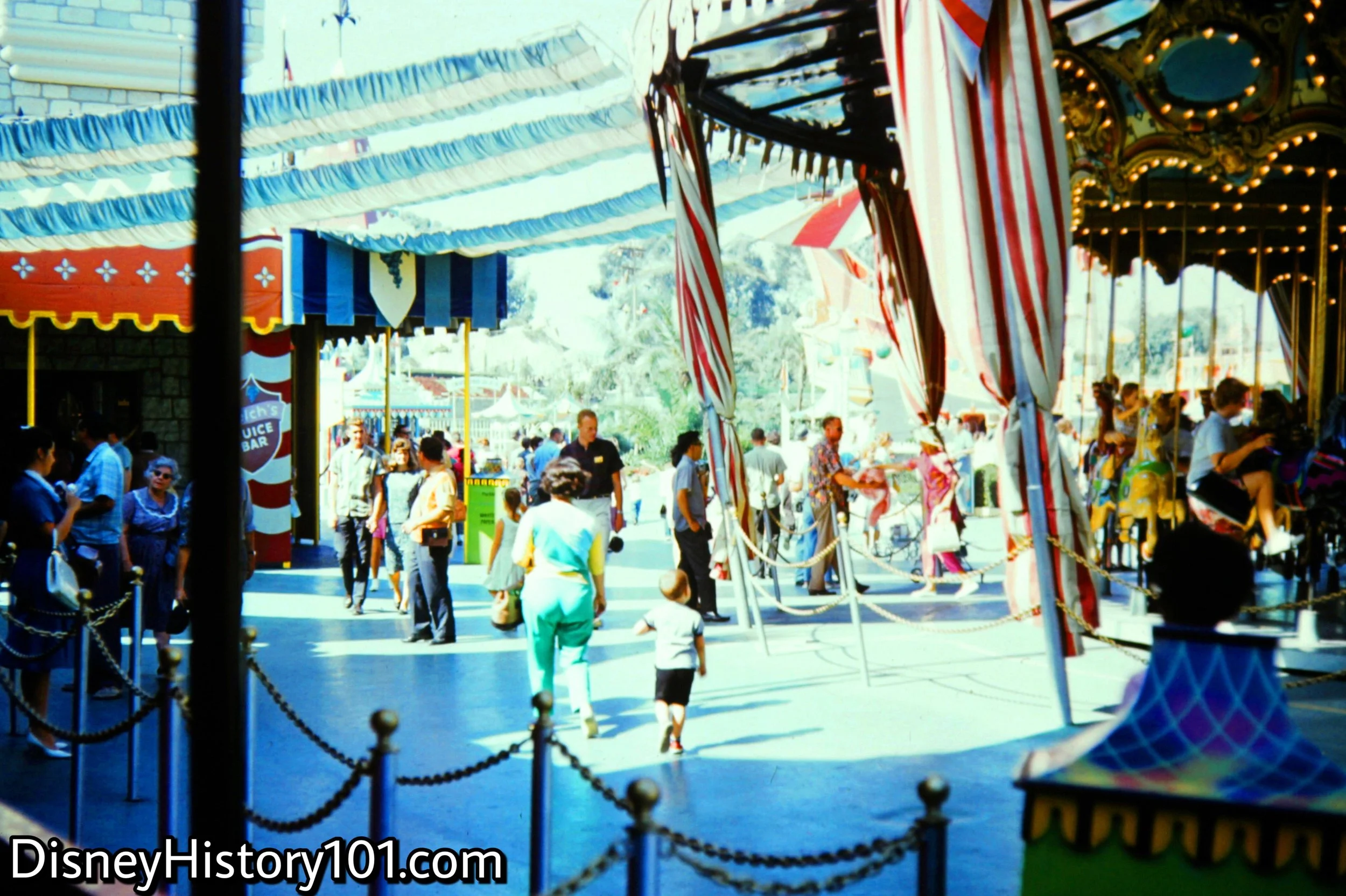
King Arthur Carousel, (1962)
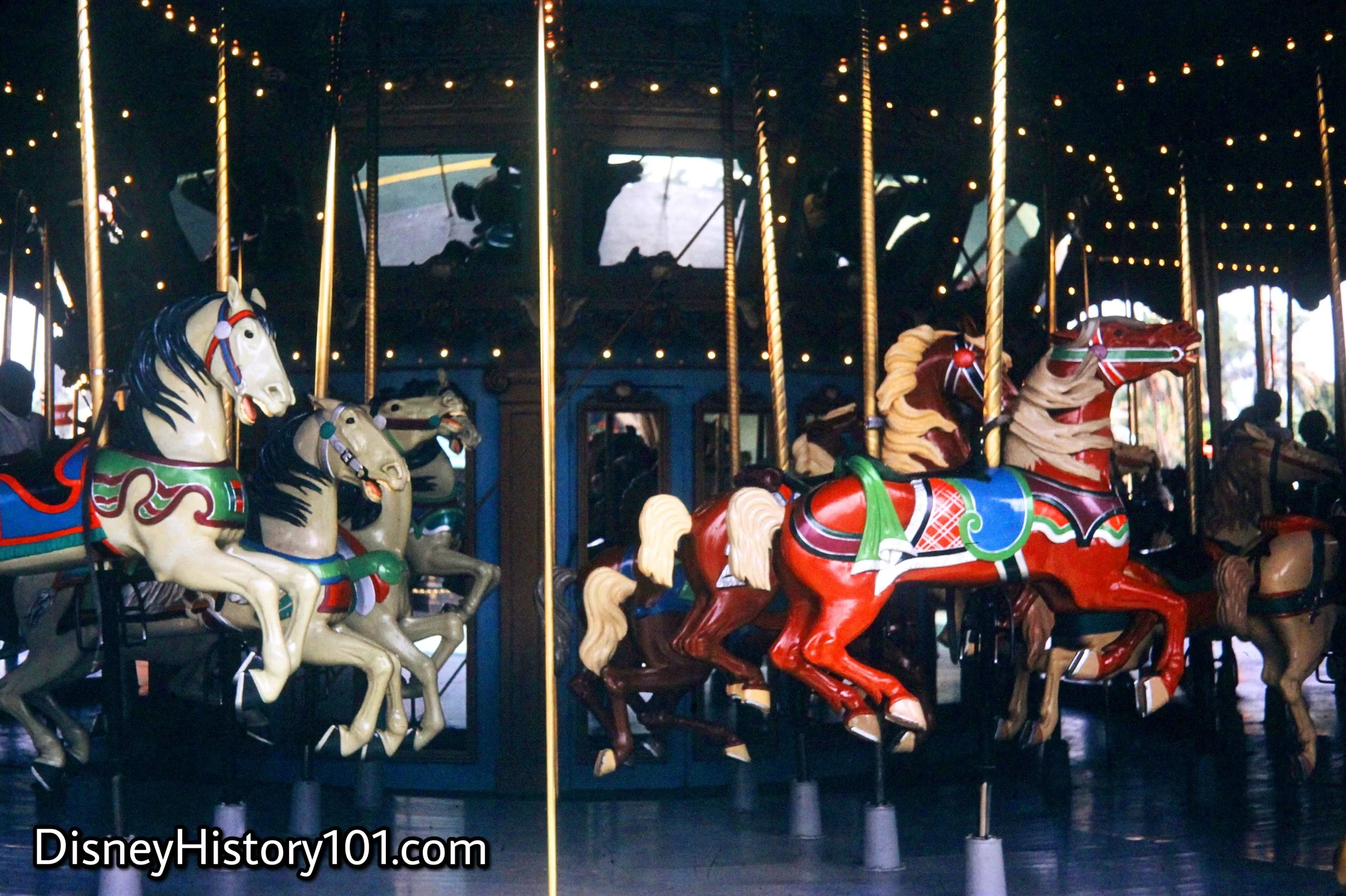
King Arthur Carousel, (1967)
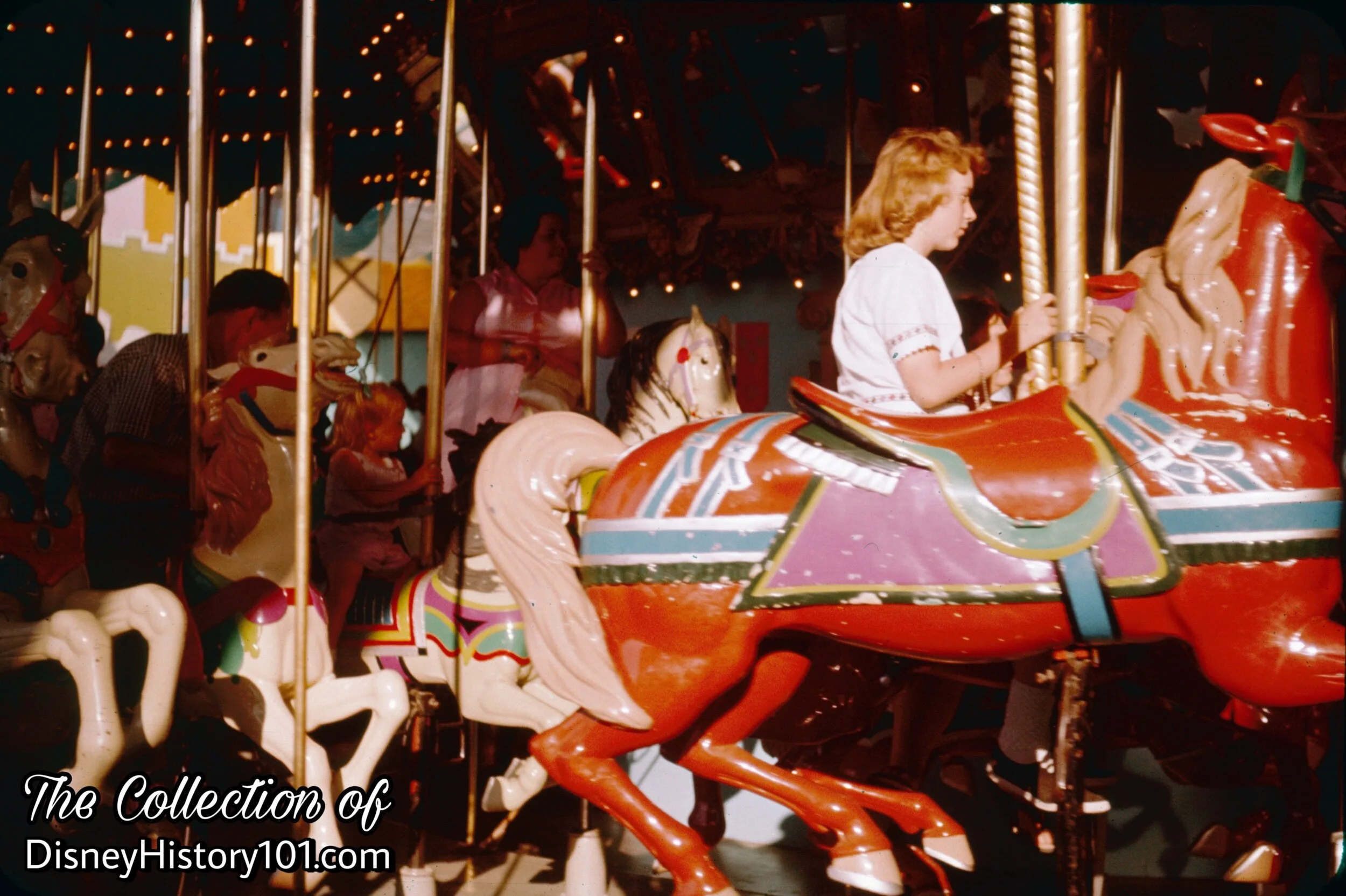
King Arthur Carousel
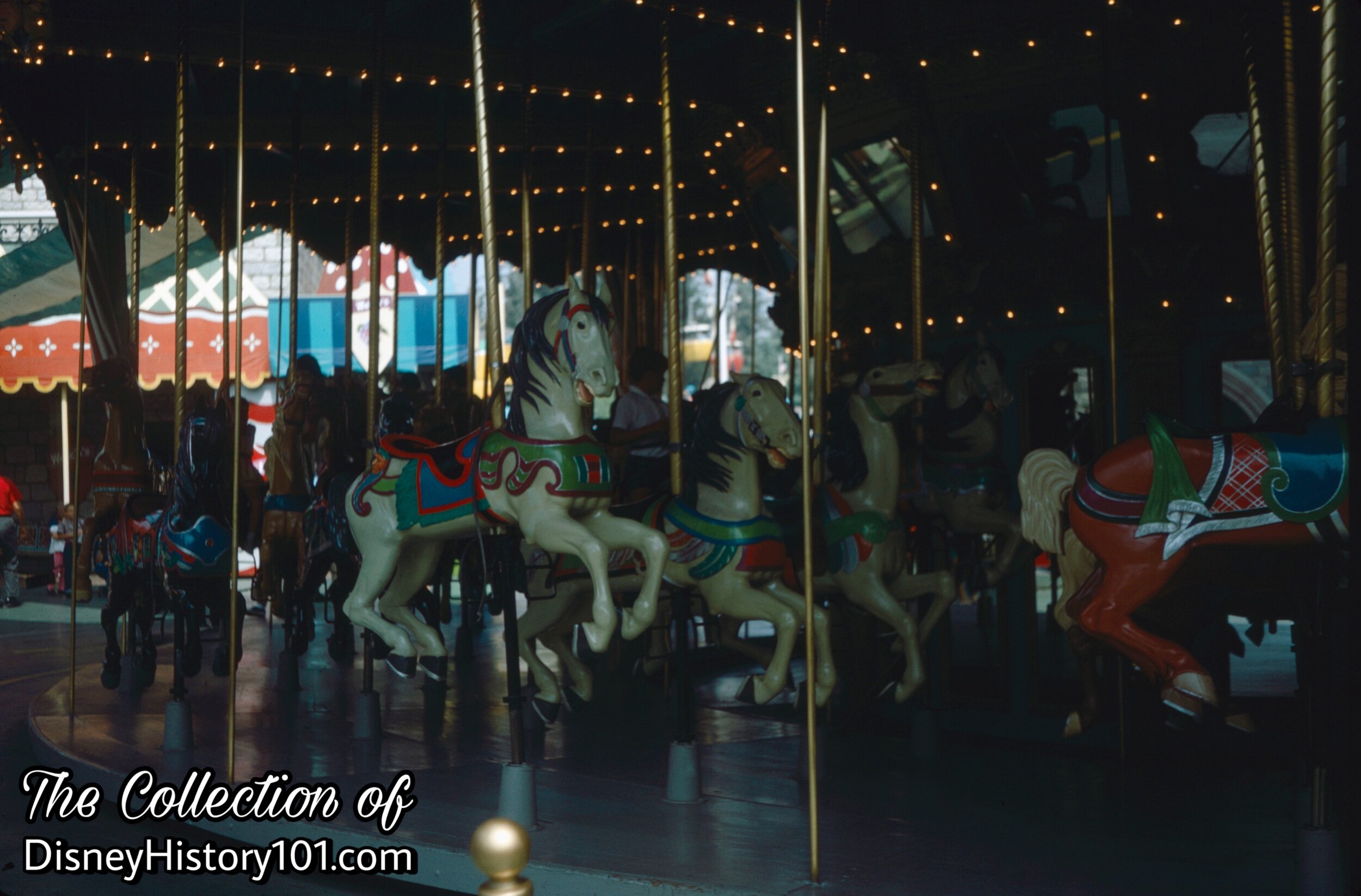
King Arthur Carousel, (September, 1967)
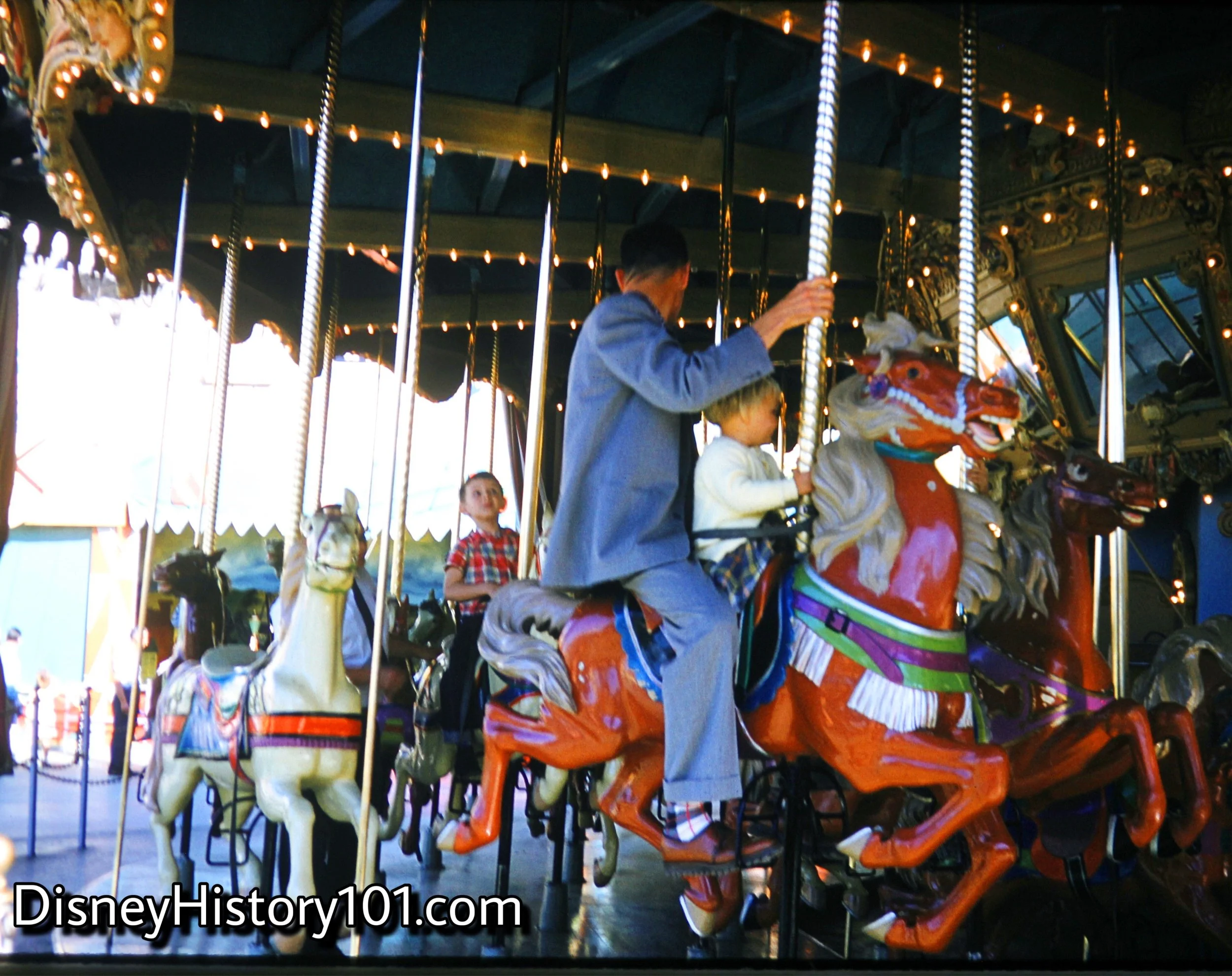
King Arthur Carousel, (1960)
King Arthur Carousel, (September, 1965)
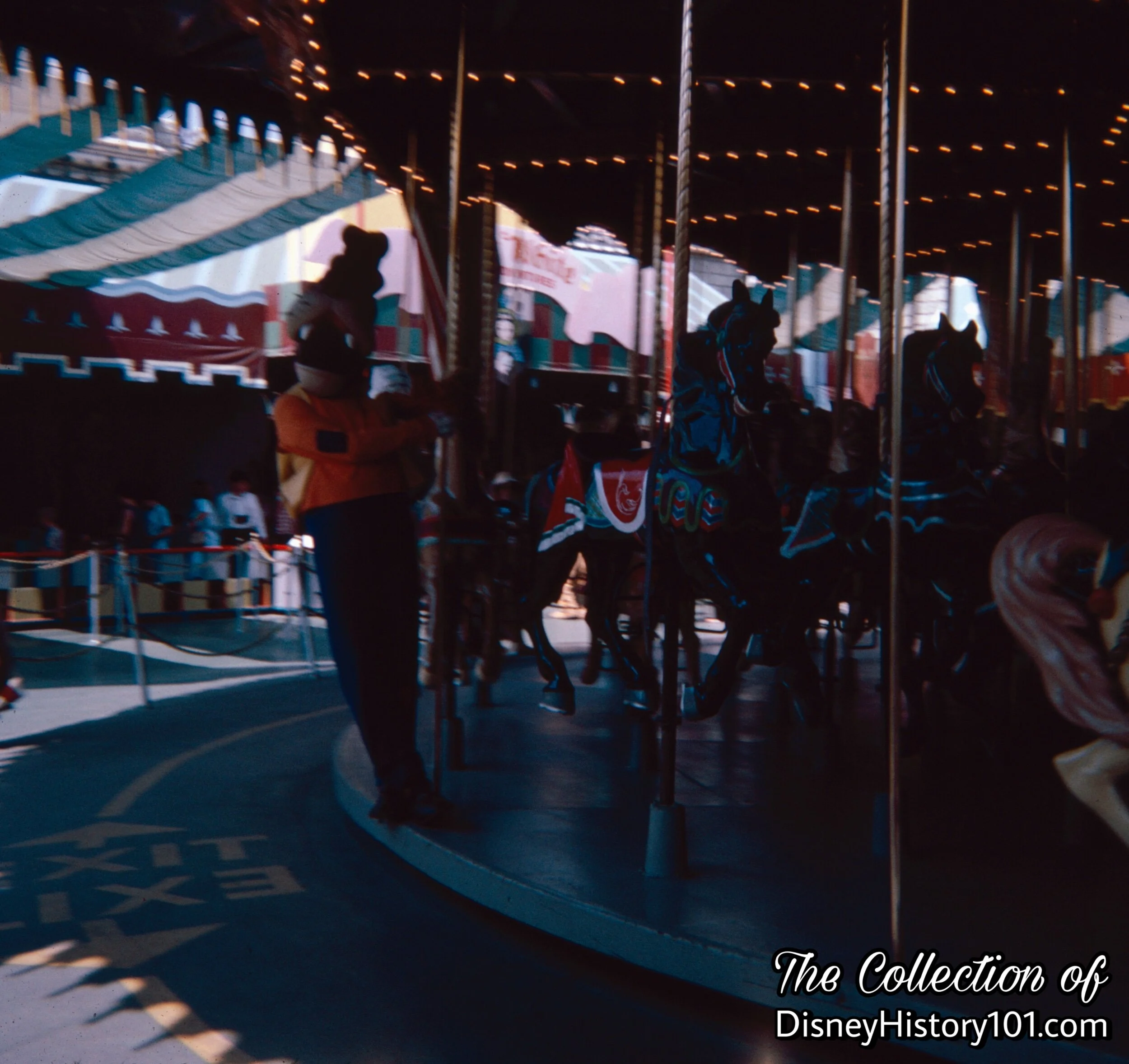
King Arthur Carousel, (August, 1966)
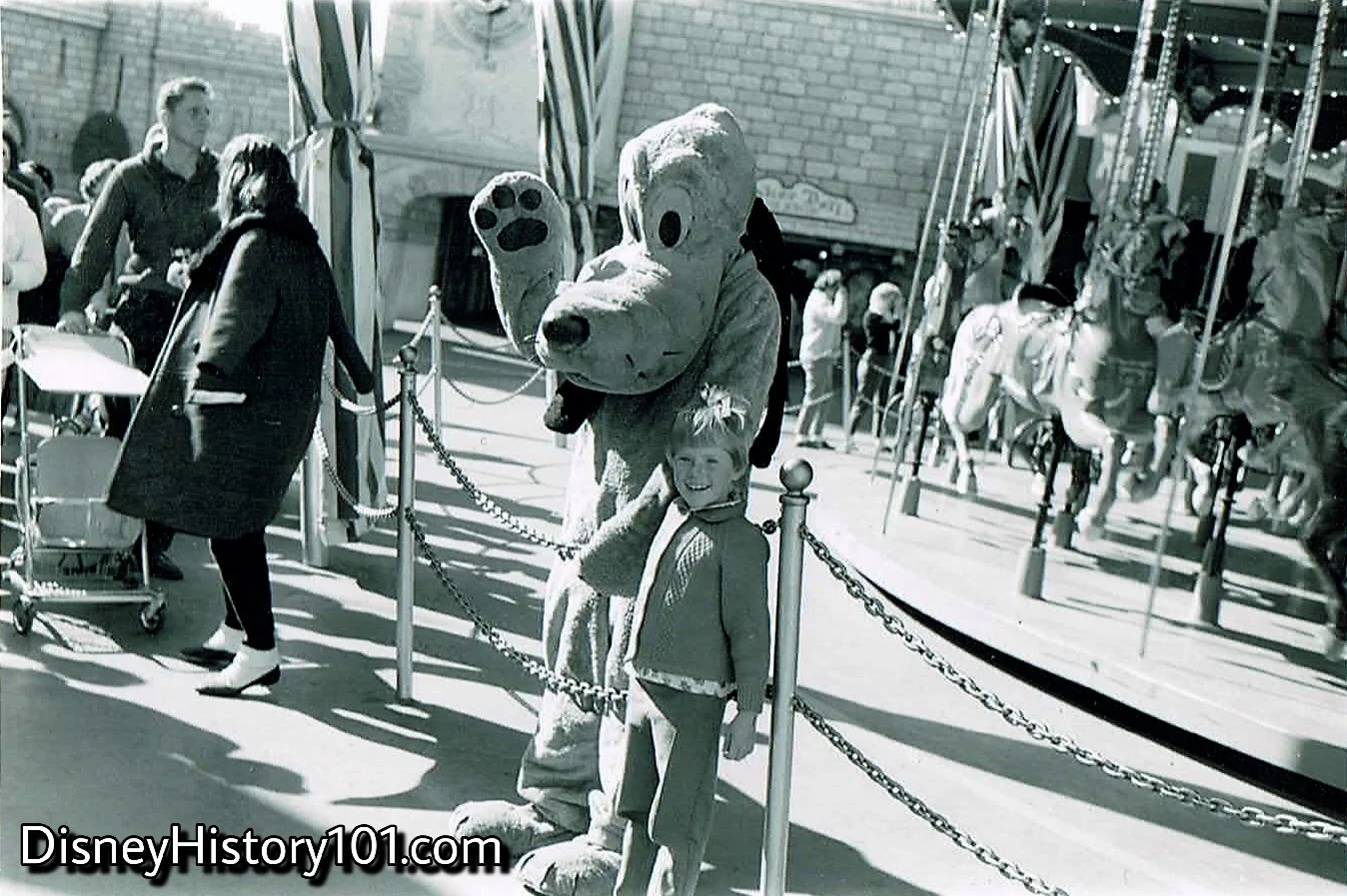
Pluto and Guest near the periphery of King Arthur Carousel, 1967.
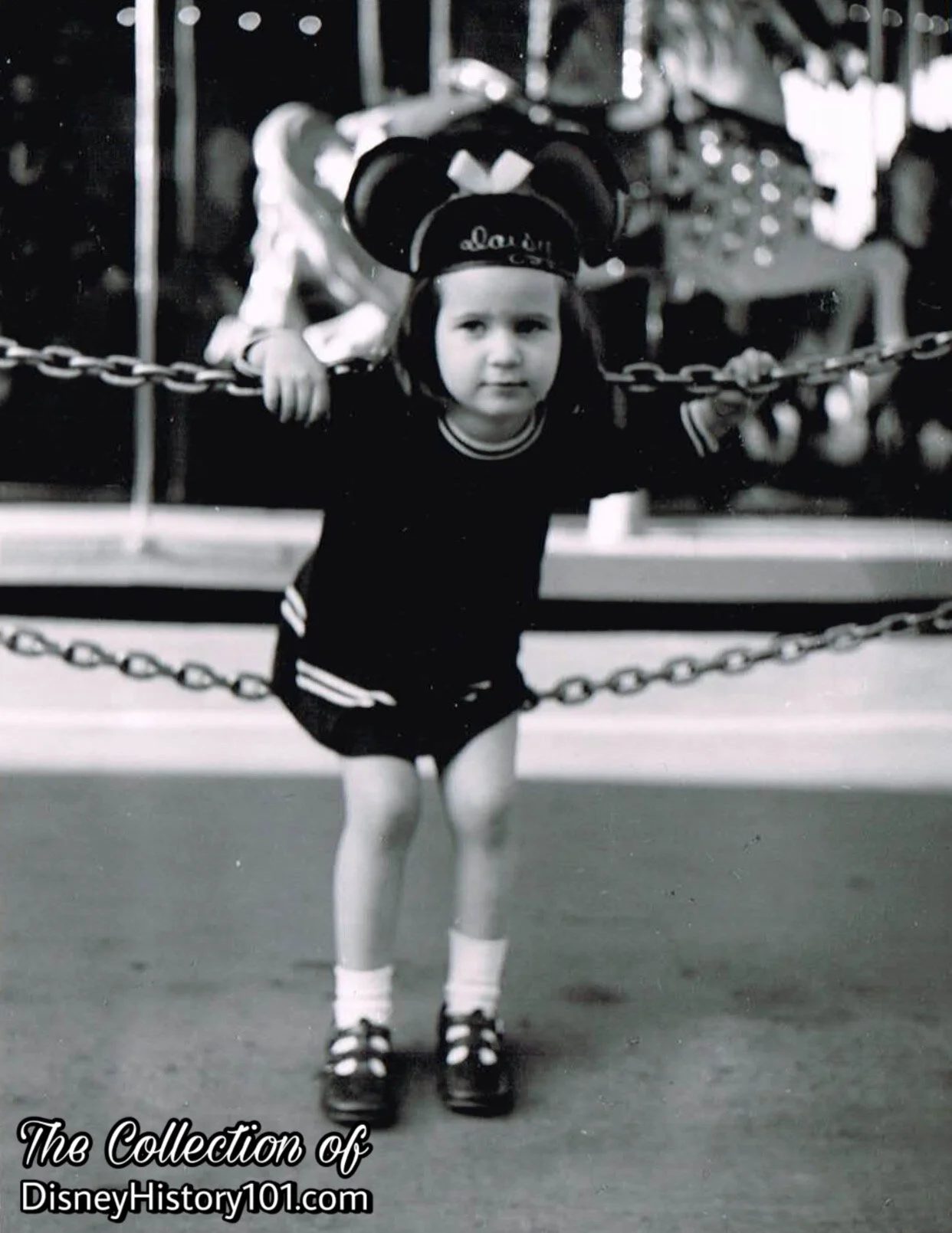
A Guest hangs out near the periphery of King Arthur Carousel.
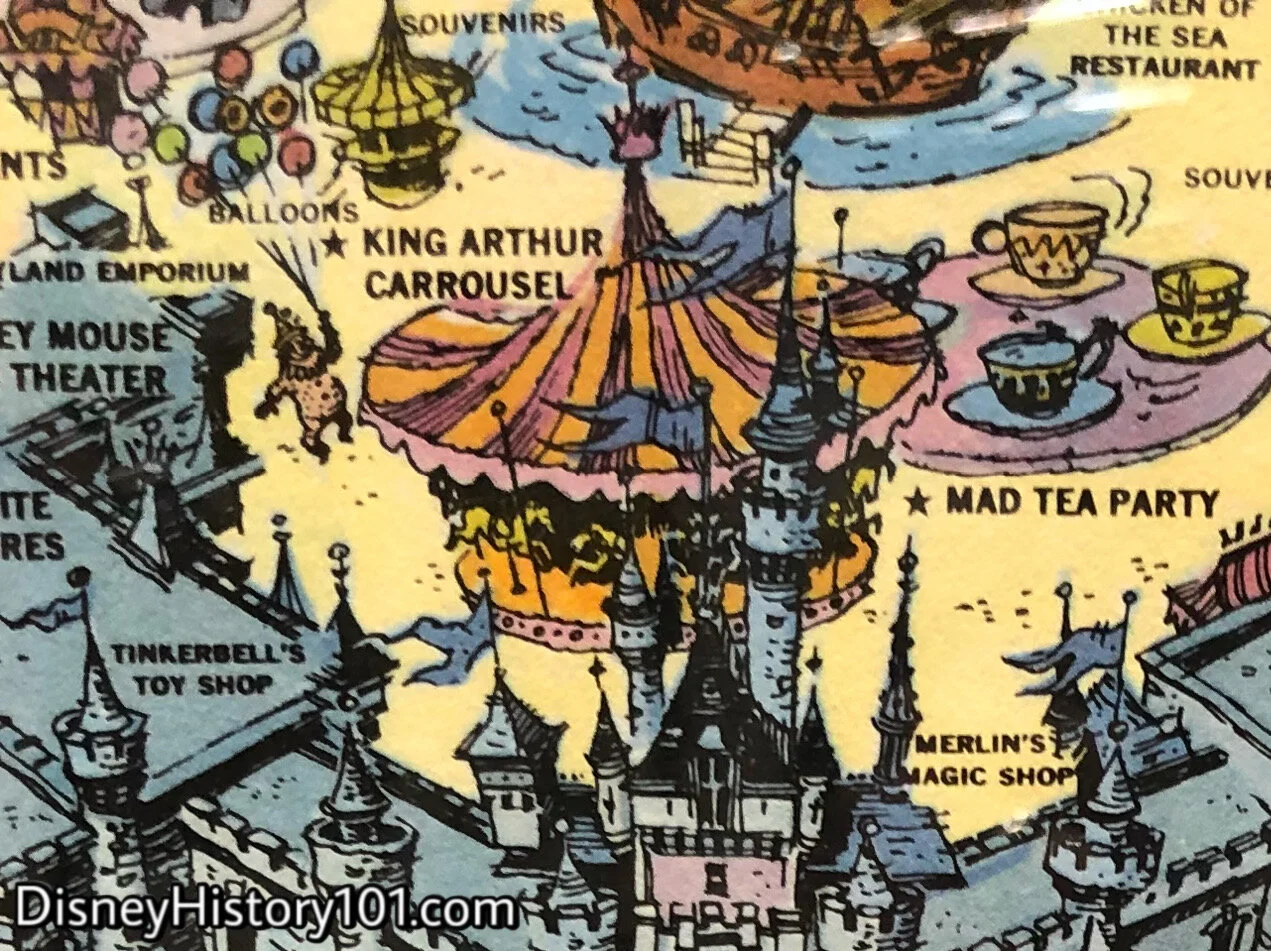
Disneyland Map by Sam McKim
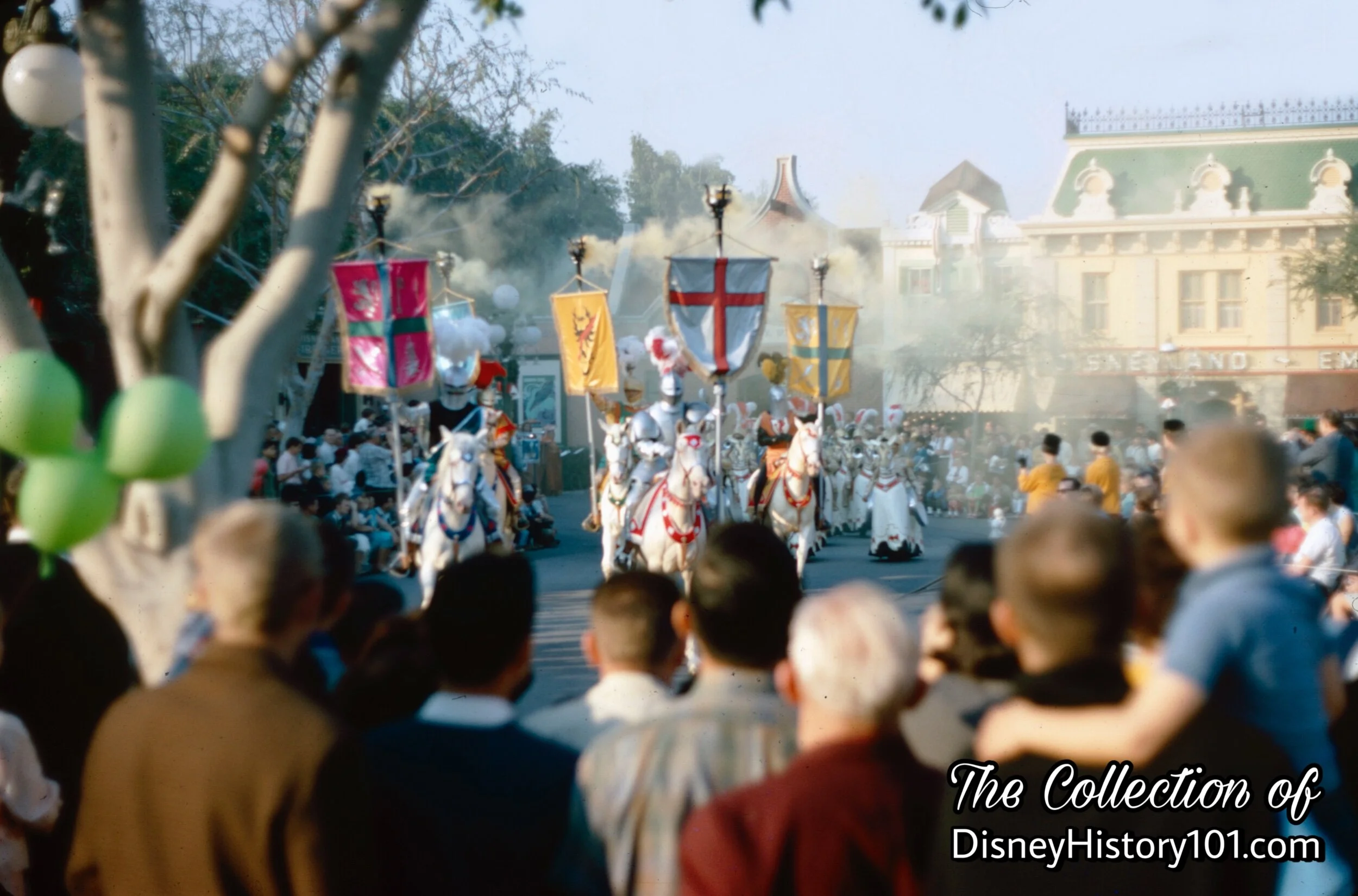
On Main Street, true-life knights on steeds celebrate Fantasyland and represent the spirit of King Arthur Carousel
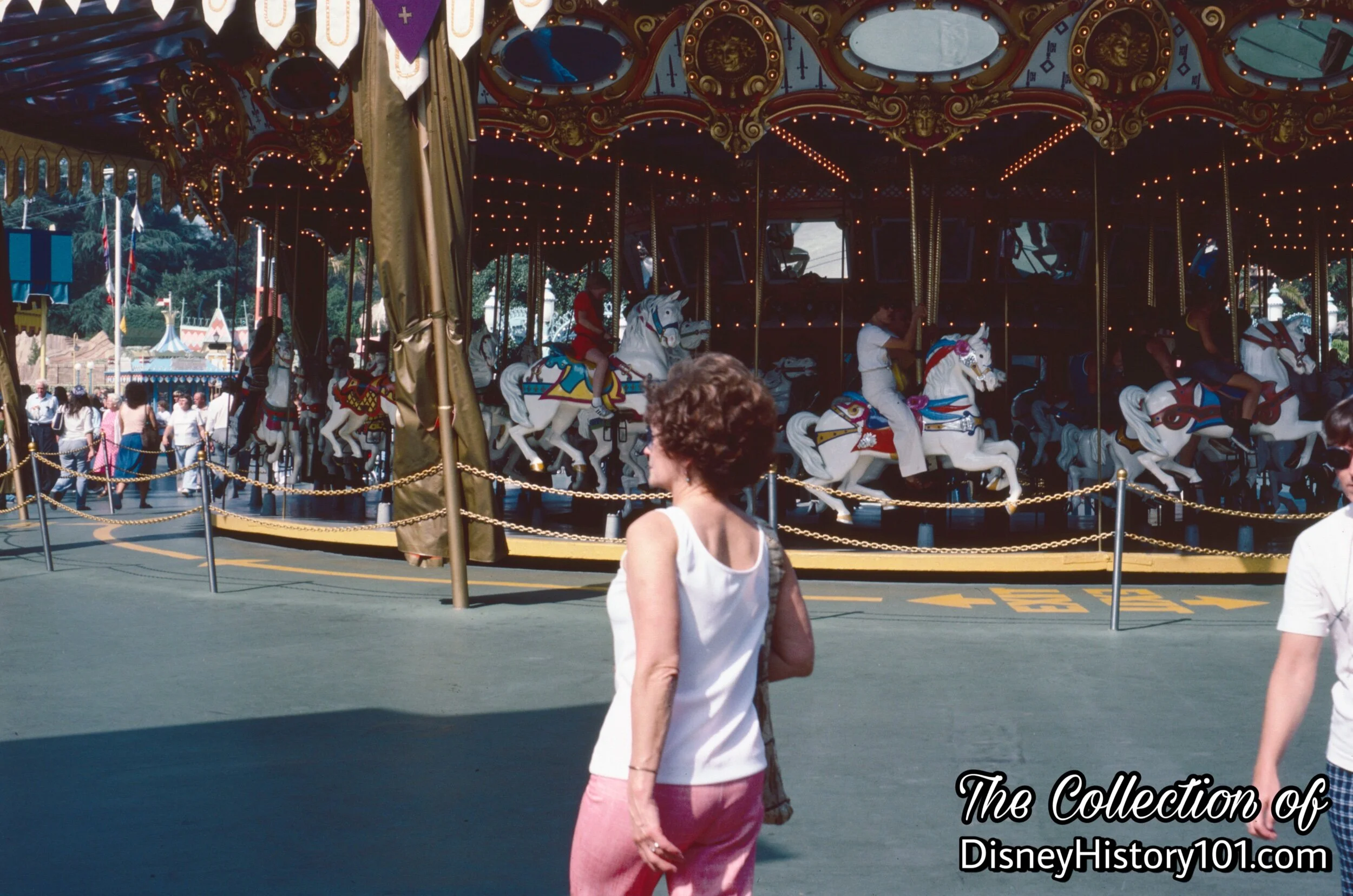
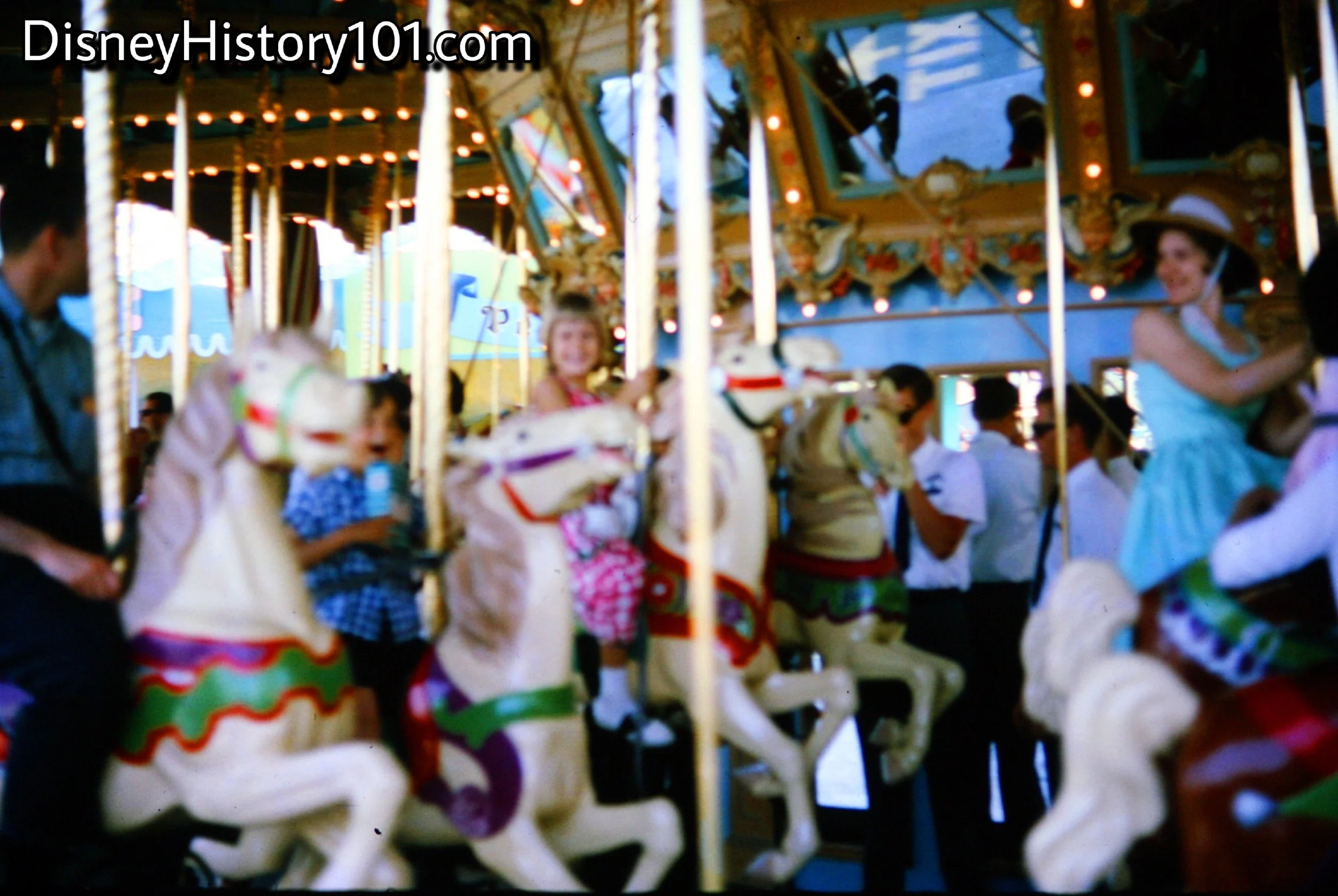
King Arthur Carousel, (September, 1965)
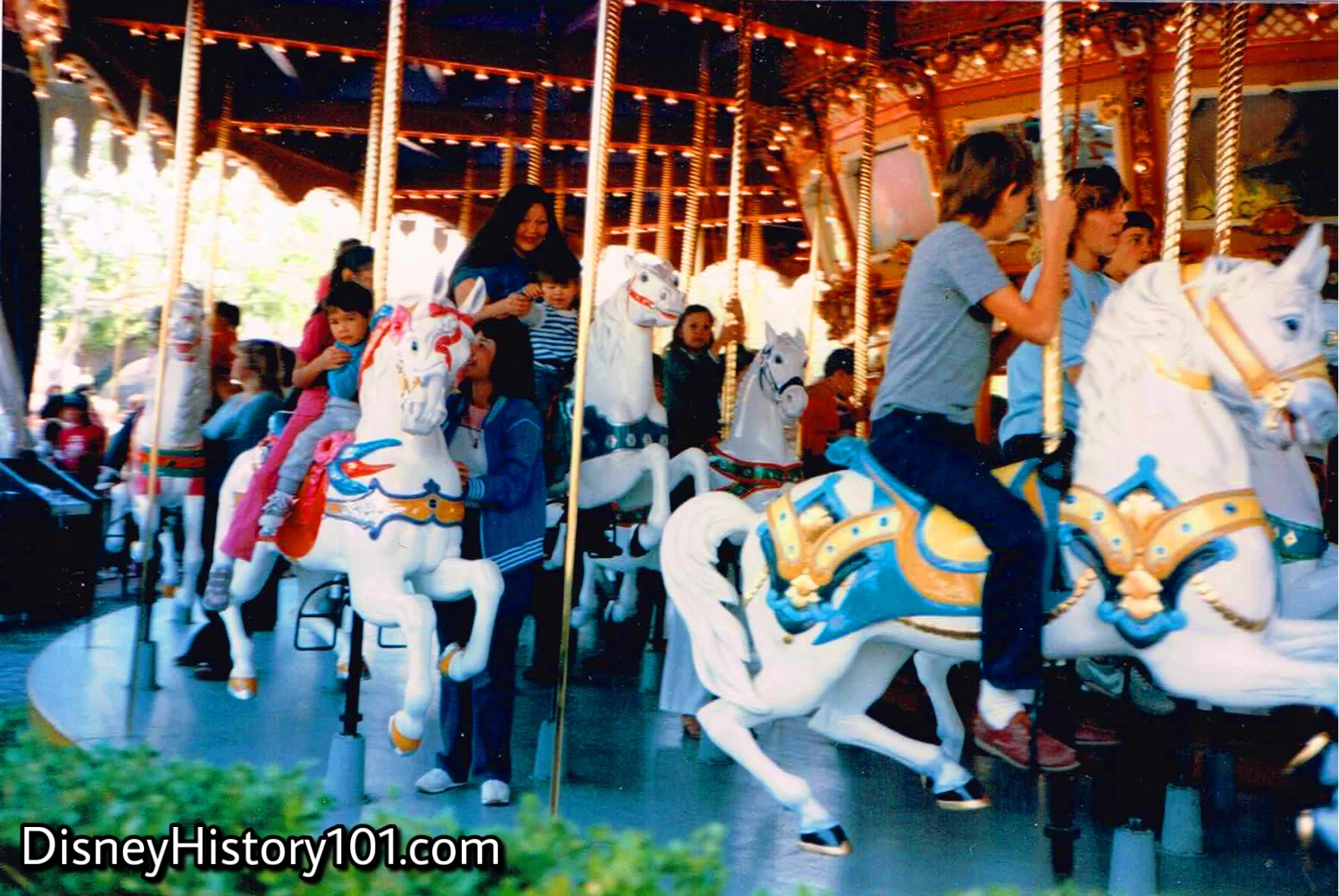
King Arthur Carousel
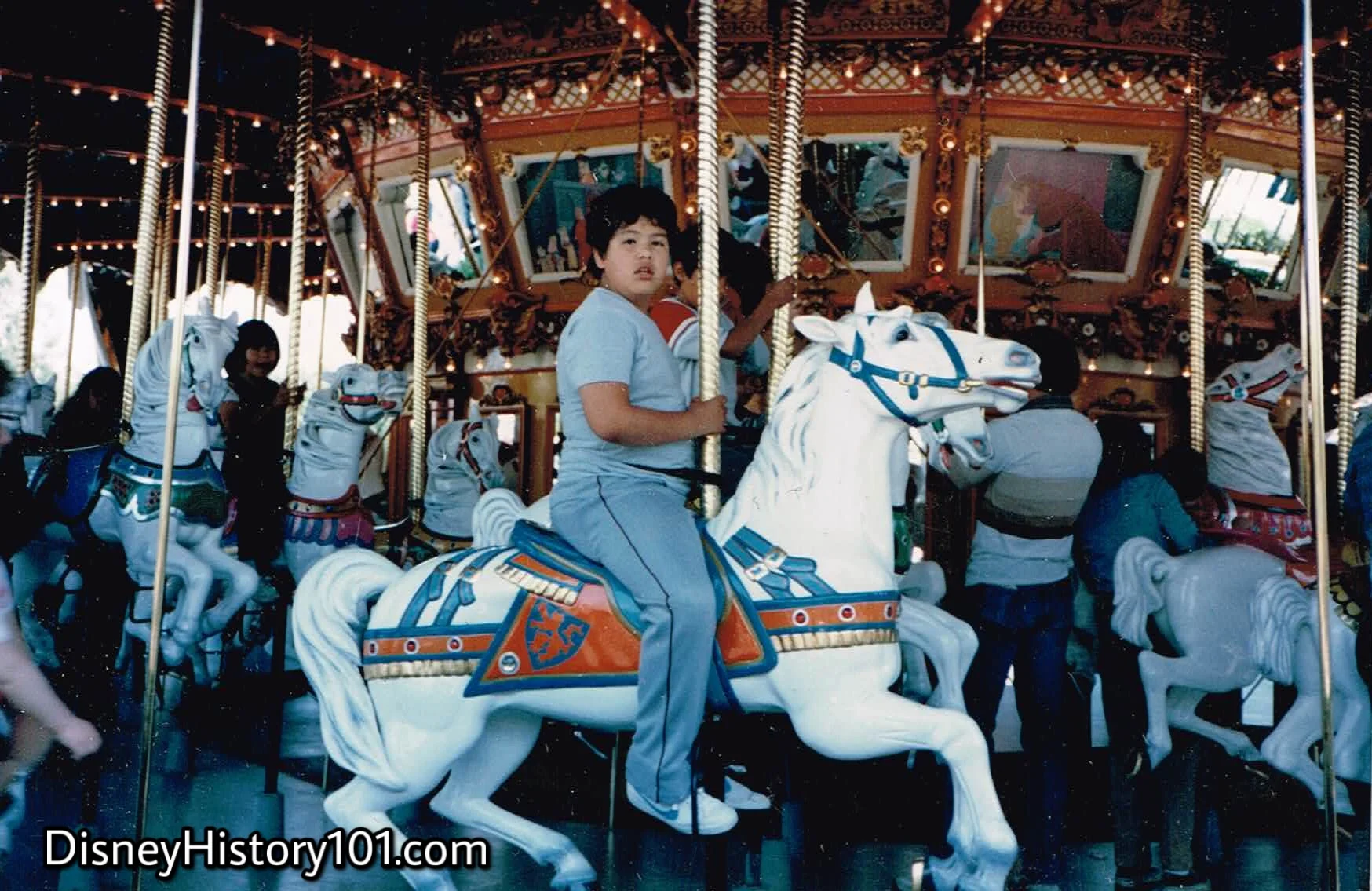
King Arthur Carousel
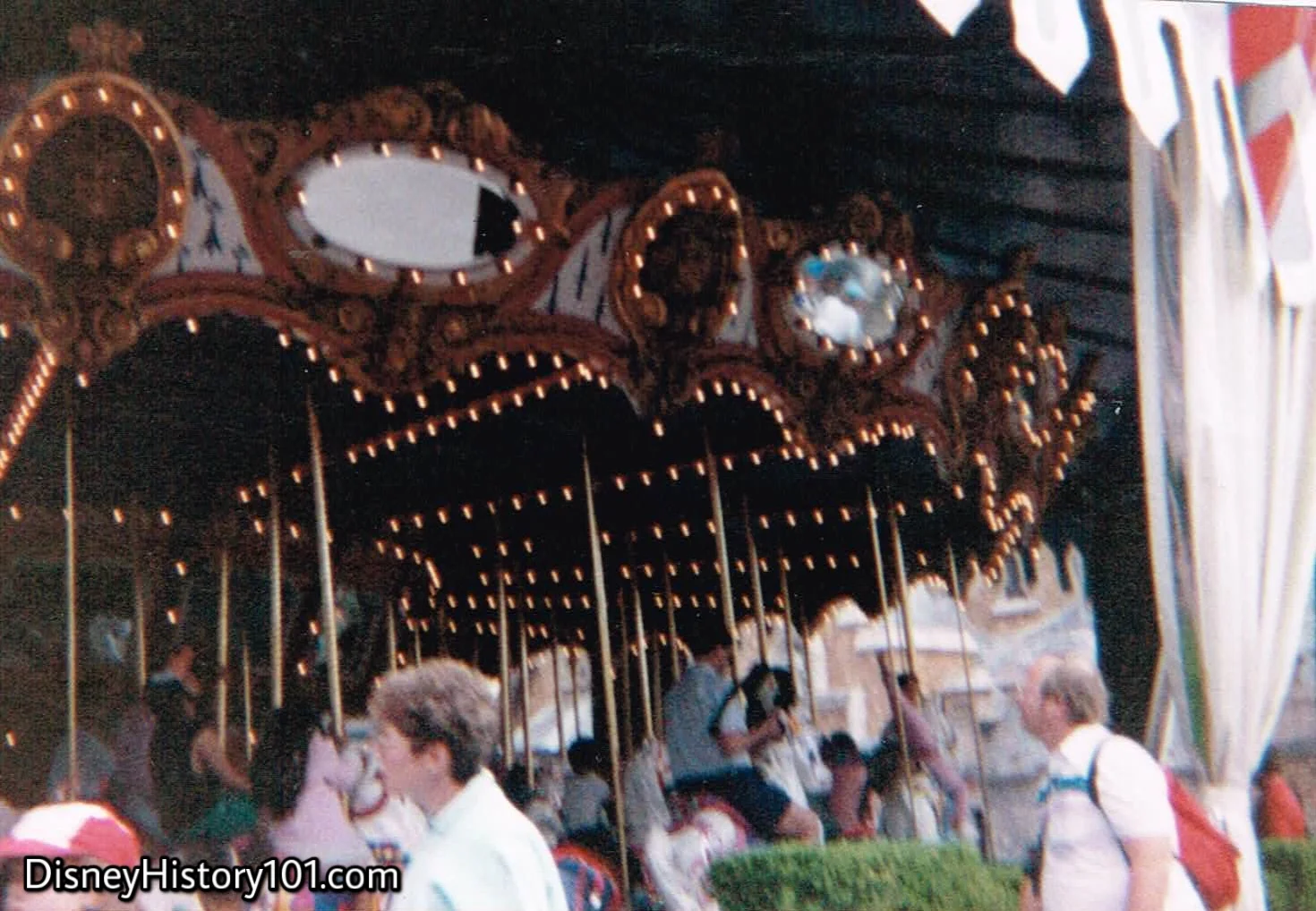
King Arthur Carousel
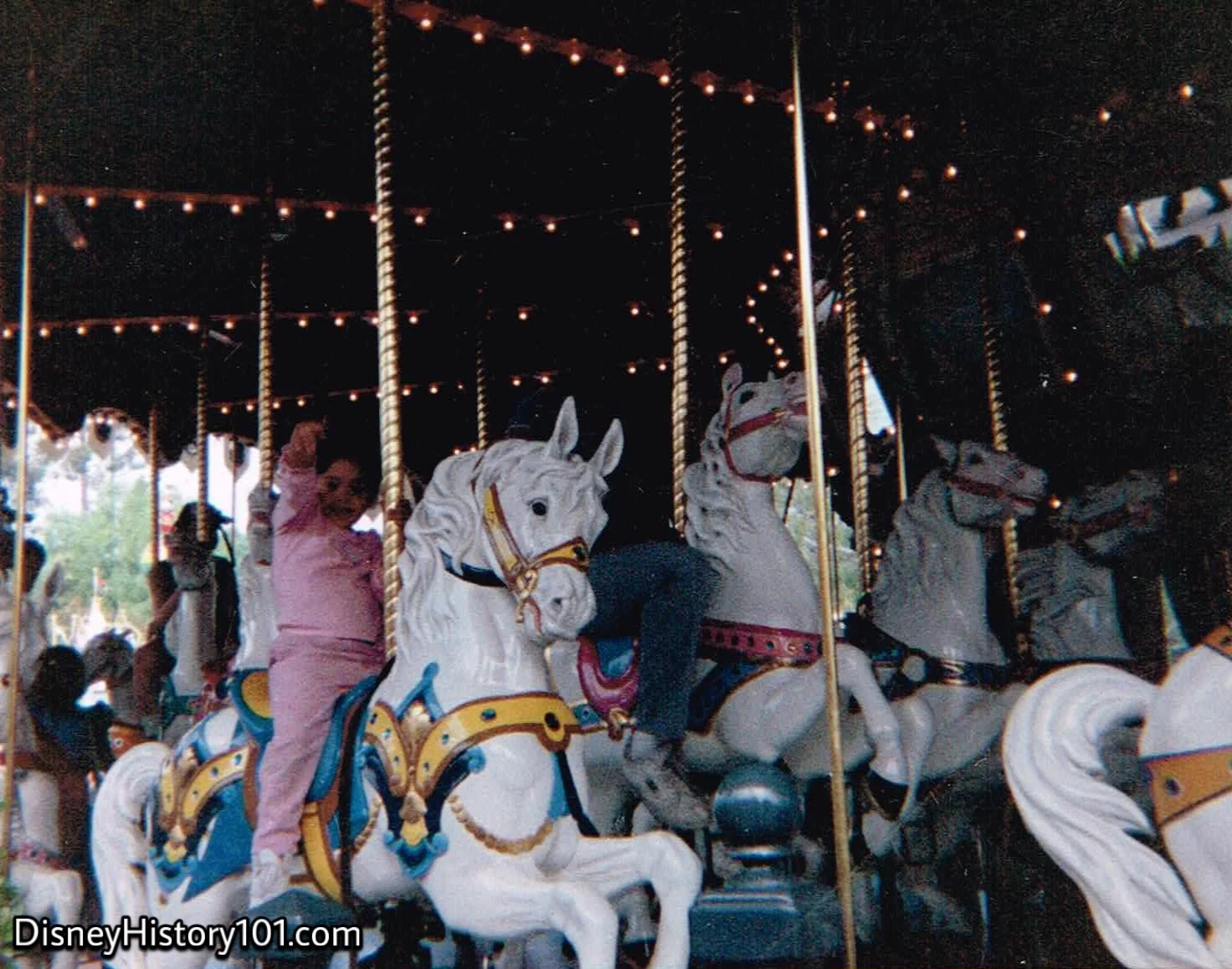
King Arthur Carousel
King Arthur Carousel Railing, (1981)
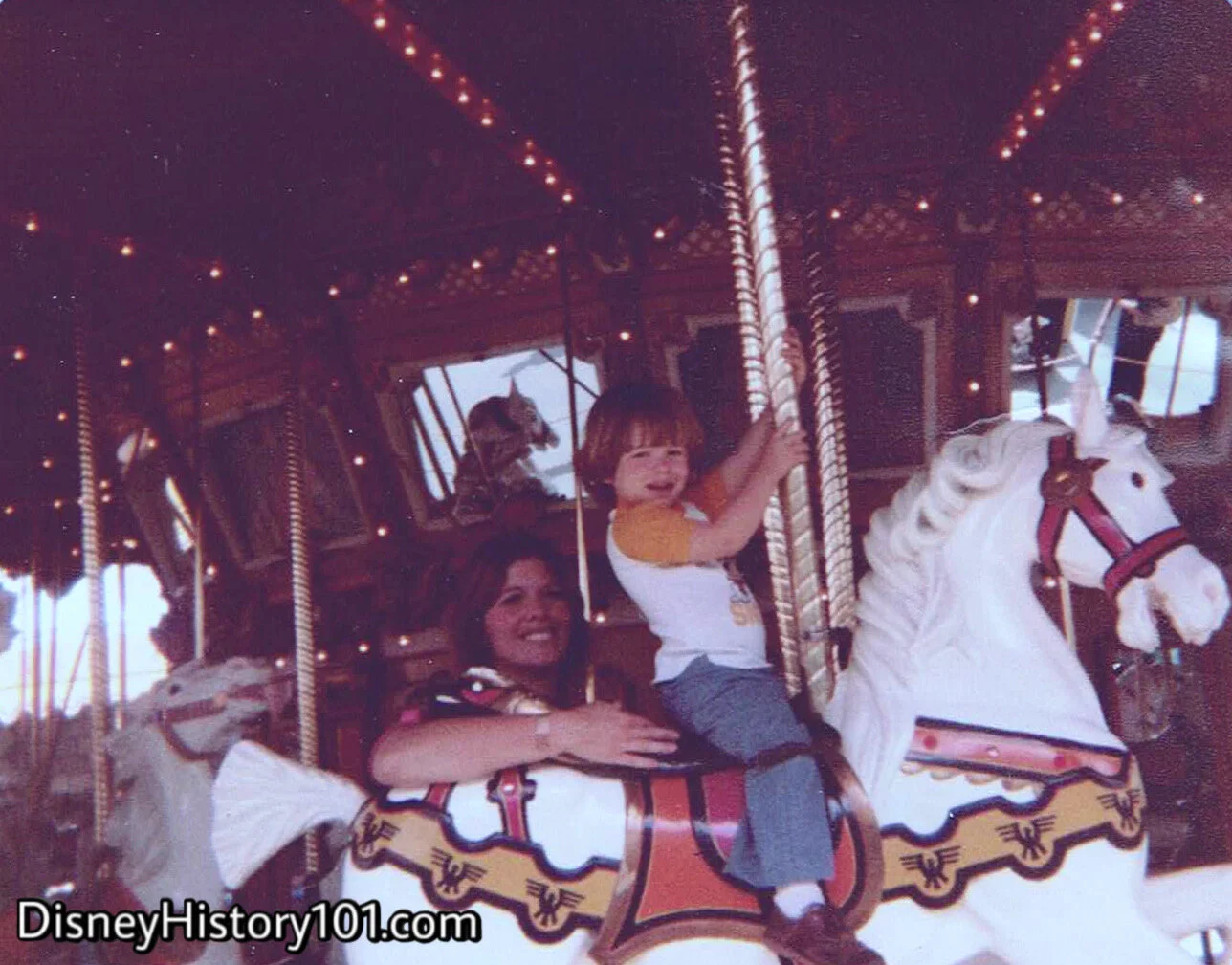
King Arthur Carousel, (1981)
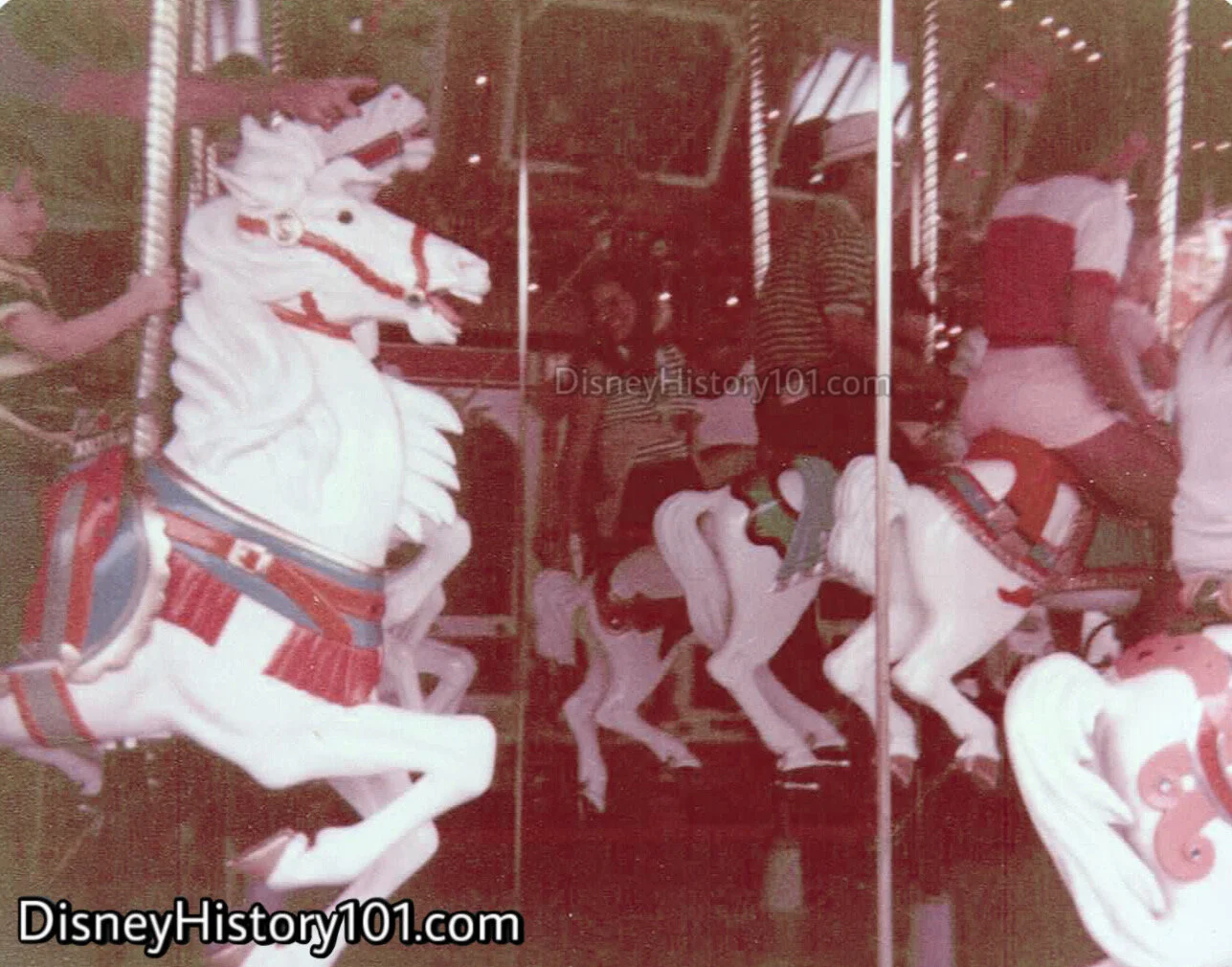
King Arthur Carousel
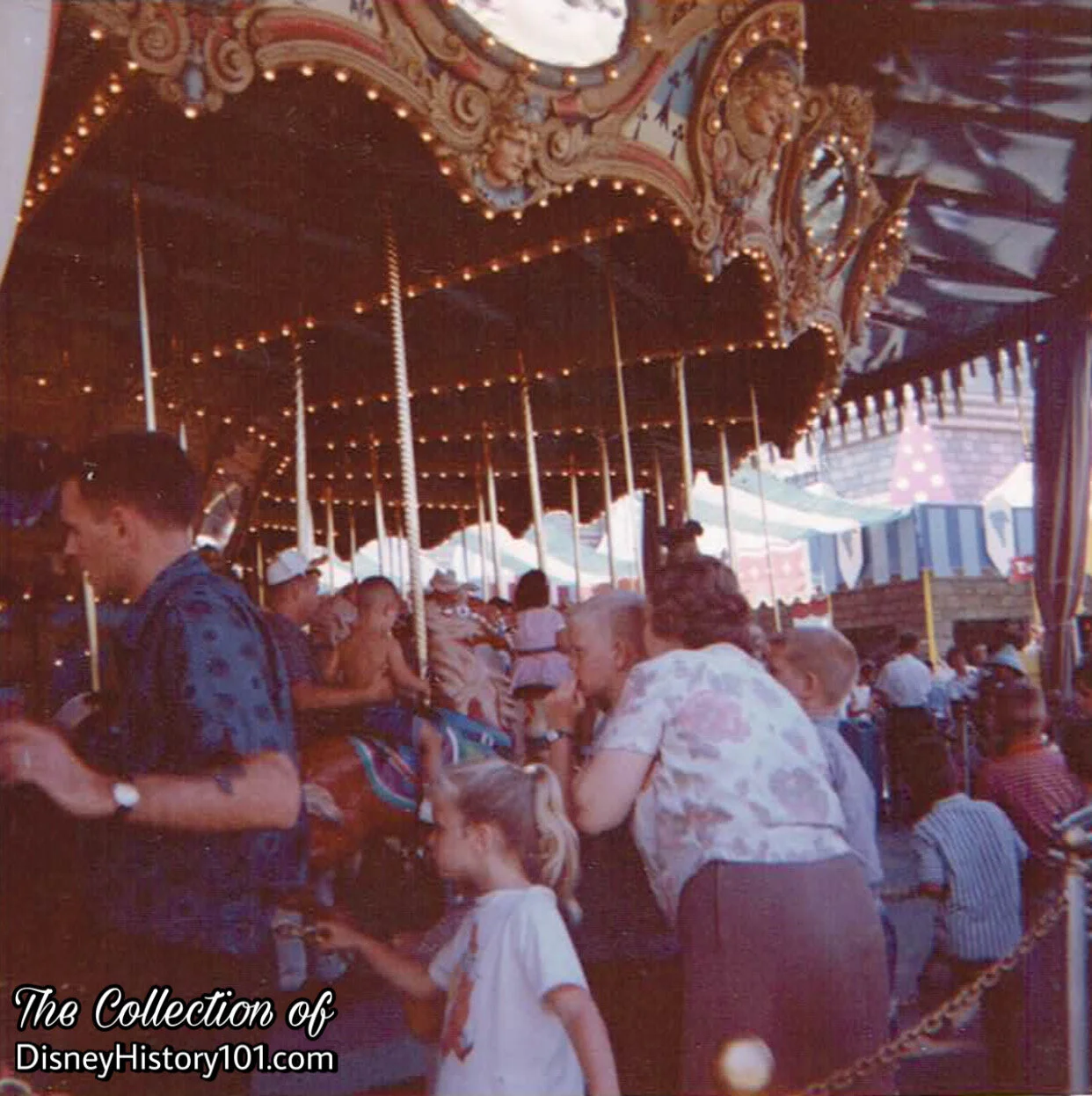
King Arthur Carousel
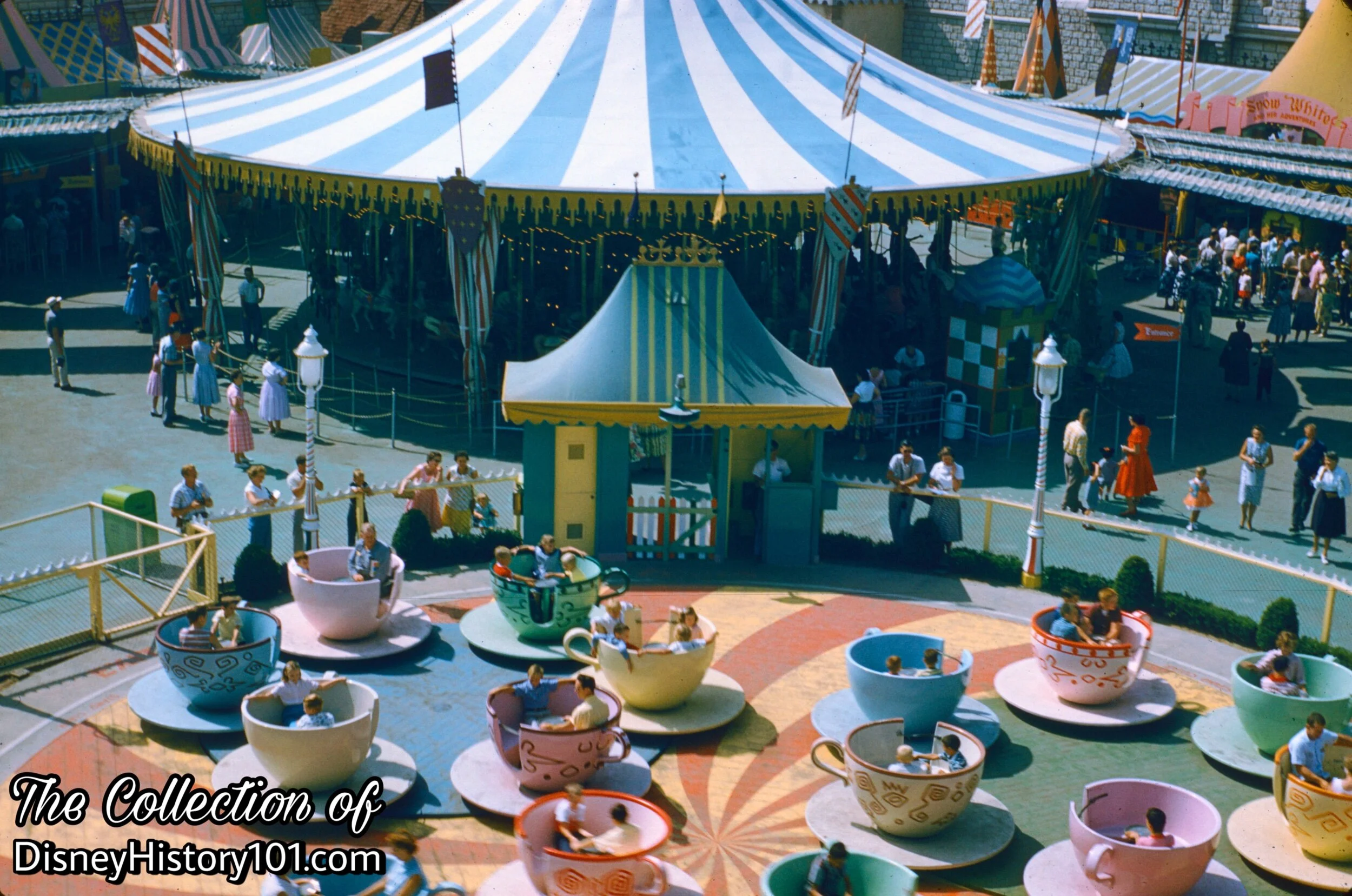
King Arthur Carousel
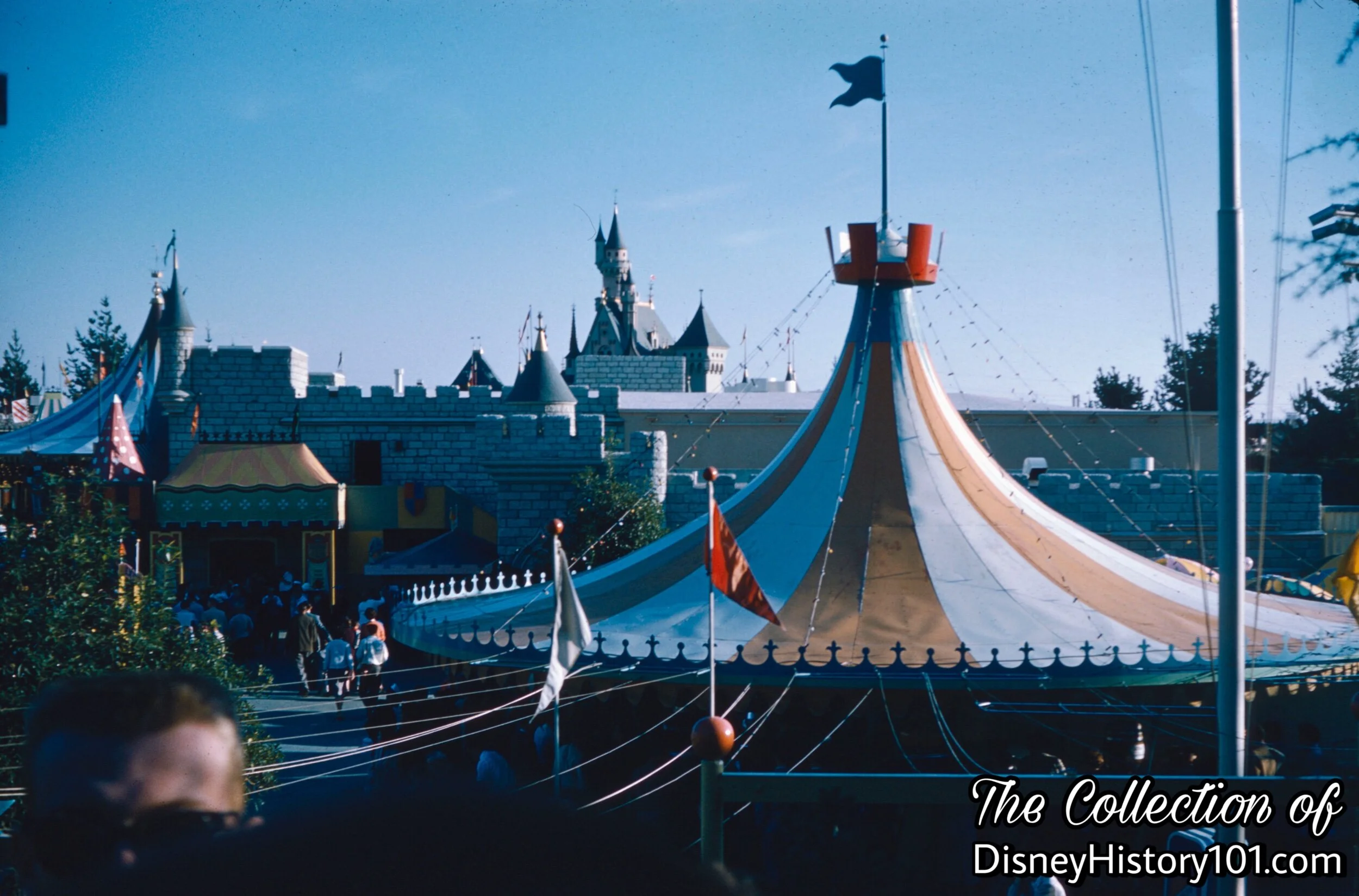
King Arthur Carousel
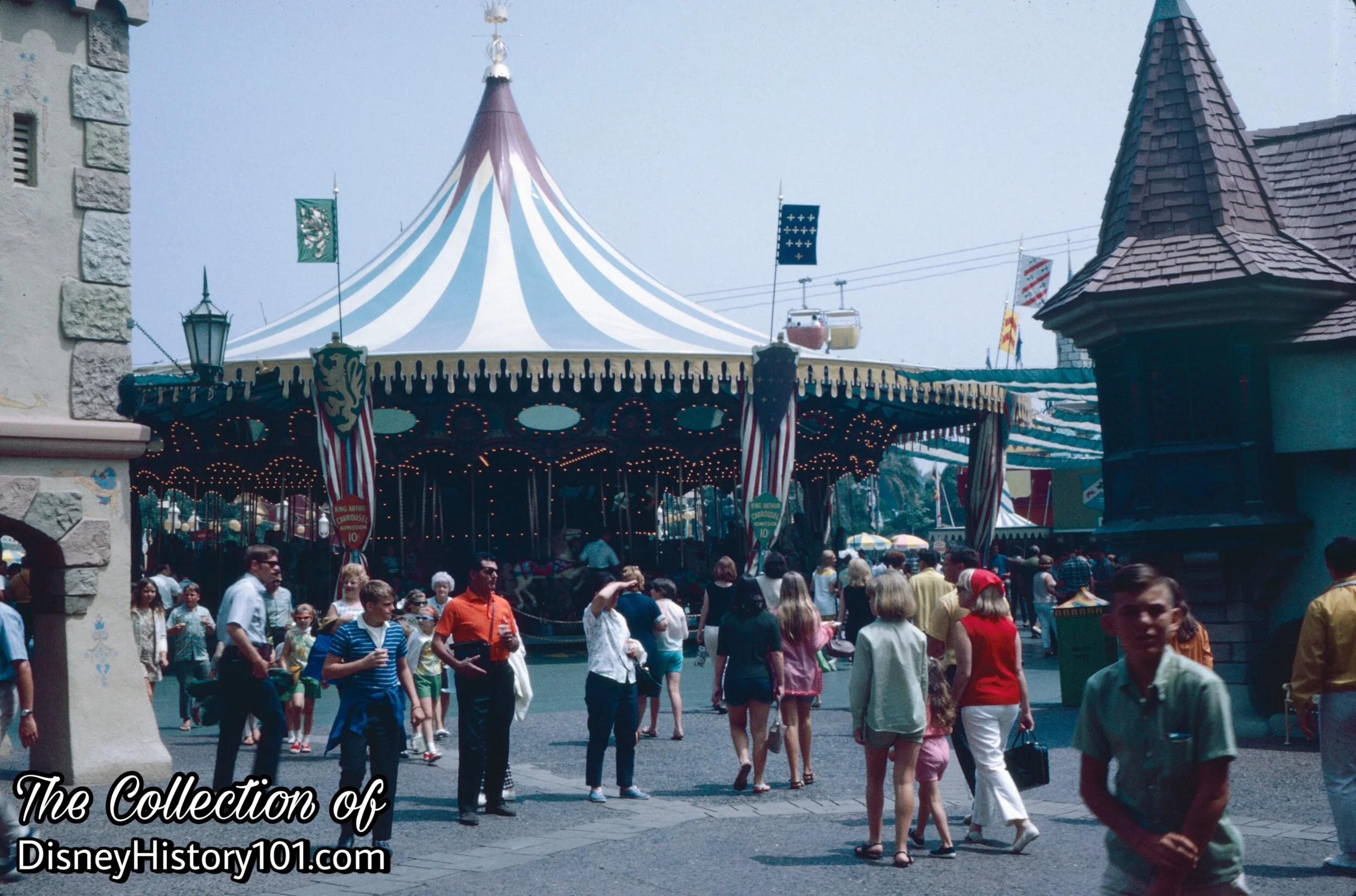
King Arthur Carousel
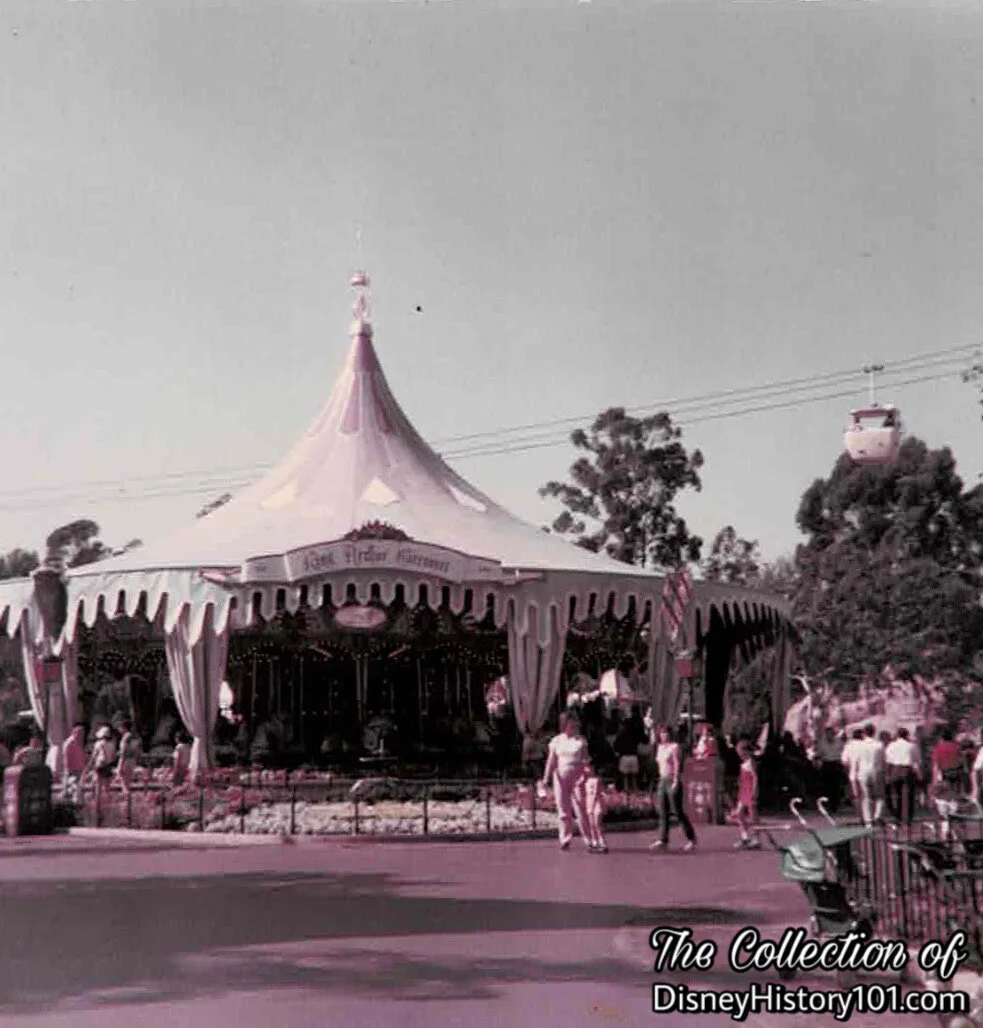
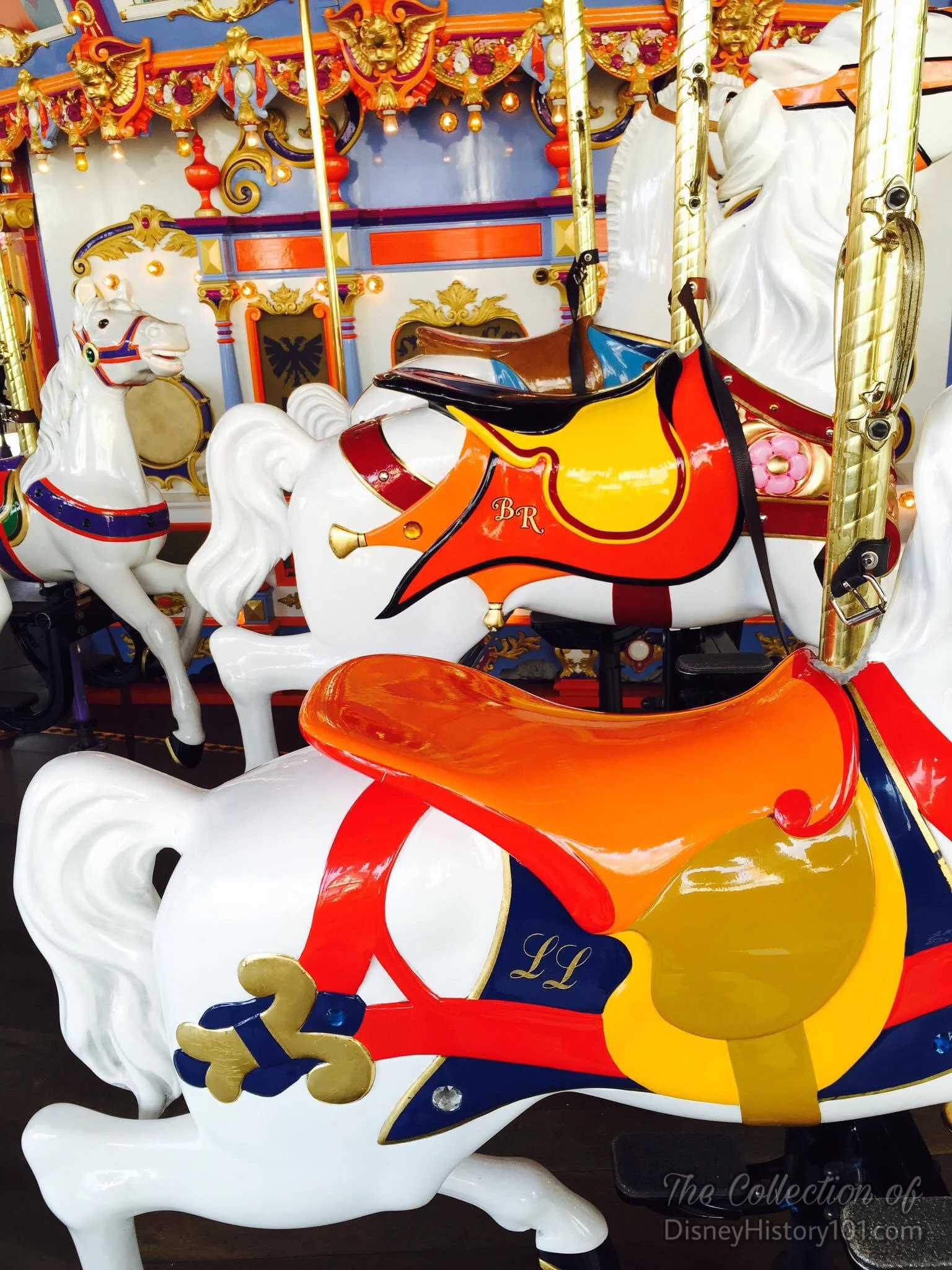
King Arthur Carousel
“The Maintenance of Magic”
It would take great care to maintain the Magic and show quality. For instance, the Disneyland Building and Grounds Department would regularly polish 77 brass poles at King Arthur's Carrousel. It was common for Park Operations Crew M-41 Machinists to make standard opening inspections of the attraction. The overall appearance was checked, making it ready for operation. If there were any discrepancies from the checklist, M-1 and the proper department supervisor were notified. During each day, Disneyland Park Operations M-42 Machinists would, at least once, check all attractions in Fantasyland and discuss with each Attraction Lead and problems, defects, or any other feedback regarding the department. M-42 Machinists would also respond to all downs and delayed openings in the Fantasyland area whether or not it was mechanical. Upon arriving at an attraction, they would determine whether what the failure was. M-42 would determine which crafts were needed, determine an estimated time of repair, notify M-1 and assist with crafts when necessary.
More than a decade later (by 1969), this attraction would contain 1 of 15 old-time band organs and pianos at Disneyland, some of which dated back to 1890. ARCADE MAINTENANCE performed the necessary versatile, creative, and inventive mechanical repairs. Ultimately, there just weren’t any replacement parts for these rare antiques and the old Wurlitzer #157 band organ eventually stopped operating and was removed. Its façade was left in place, decorating the carousel until the 1970s. In place of the original organ, a European model was modified to operate from a digital computer and placed behind Dumbo.
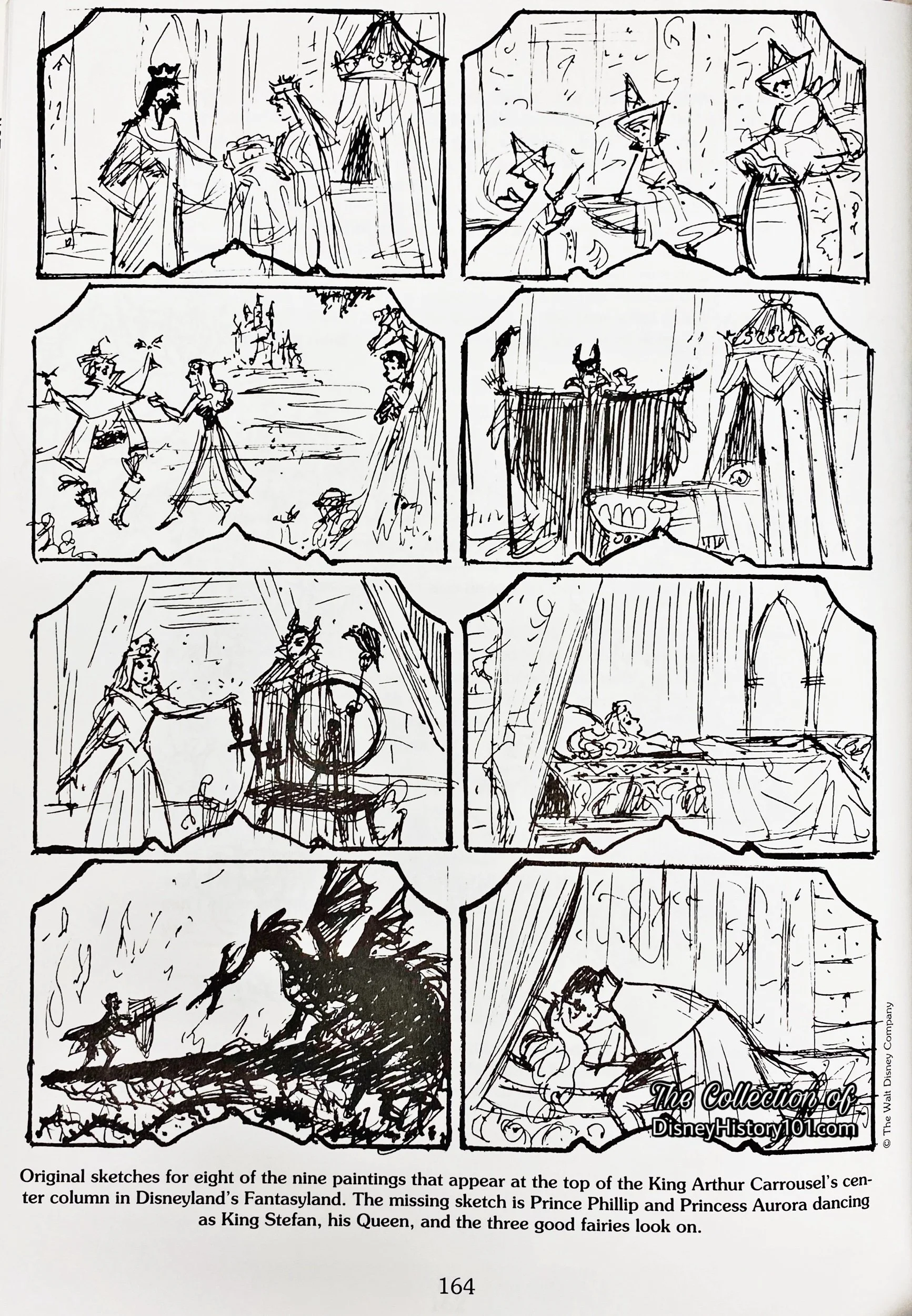
Central Column Panels by Bill Justice; “Justice for Disney” by Bill Justice, page 164.
“Rehabilitation of 1975”
In 1975, all of the horses were painted white as part of the Bicentennial Celebration of 1976. All of the multi-colored (tan, brown, gray, and brown-red) horses were hand-painted and converted into “prancing white steeds.” At this time, “bridles, saddles and flowers were painted in custom-designed color schemes and adorned with decorative ‘jewels’, giving each horse a distinct personality.”
In addition, “nine hand-painted panels depicting key moments from Walt Disney’s Sleeping Beauty were placed within the carrousel, linking the attraction to the most famous landmark of Fantasyland - Sleeping Beauty Castle!” Above are some of Bill Justice's original sketches for eight of the nine paintings that appear at the top of the King Arthur Carrousel's center column in Disneyland's Fantasyland. “The missing sketch is Prince Phillip and Princess Aurora dancing as King Stefan, his Queen, and the three good fairies look on.” [“Justice for Disney”, Page 164.]
By 1975, Mill Foreman George Williams was finishing up the annual re-hab work, including the continuous work on the Carrousel horses. The horses were all being painted in a star-spangled motif for the Bi-Centennial celebration.
“New Fantasyland”
Master planning a restructured Fantasyland involved relocating King Arthur Carrousel a few yards. By (April-June) 1981, WED Imagineering surveys of the attraction were conducted, and a proposal was made to relocate the 2,826 square-foot attraction within New Fantasyland.
By 1983, King Aurthur Caroussel was moved to its current location in New Fantasyland, and the Sword in the Stone was added before it! At this time, “the hand-carved wooden ornamentation [faces of cupids and court jesters] from the 1922 Carrousel was refinished in [23-karat] gold leaf”. In addition, many of the “hand-carved oak trappings and the superstructure of the carrousel, including the jesters and mirror castings” were “replaced with Fiberglas moldings… The moldings were cast directly from the wood carvings and cannot be distinguished from the original… the current calliope replaced the original whistle type with a more modern and efficient mechanism for reproducing music,” according to Disneyland LINE Magazine (Vol. 20, No. 31 ; published August 5, 1988). Some believe that John Hench was involved somehow. Once unveiled, King Aurthur Carrousel was one of some 200 carrousels in operation in the United States.
King Arthur Carrousel continued to receive routine maintenance - four horses were “removed and replaced by four freshly repaired and repainted ones. In this manner, the 85 horses kept on site” were “continually cycled onto the carrousel, which accommodates 72 horses at a time.” Cracks were patched, after which the horses were given a coat of primer, hand-painted with a standard white finish, and then sprayed with several coats of urethane. Even before these major rehabilitations, each morning, craftspeople (like Gene Sweeney, a c. 1983 “Color Specialist” of the Staff Shop) picked “two or three colors” and touched up the “nicks and chips on the decorative detail,” according to Disneyland LINE Magazine (Vol. 20, No. 31 ; published August 5, 1988). According to the same source, crews also removed scuffs marks and lipstick from the horses.
By 1992, the horses of King Aurthur Caroussel ranged in age (from 90 to 110 years old) - with no two exactly alike.
In 1995 the King Arthur Carrousel pinion and segment gear was serviced, Facilities East and Ride Systems recognizing that the project was performed with quality work, in a fast response time, and completed ahead of schedule.
By the 2000s, there were less than 200 carousels in existence (King Arthur Carrousel among this figure).
In 2002, the Imagineers took Walt's vision even further by redesigning the entire carrousel so that even Guests travelling in wheelchairs could enjoy this classic attraction.
In 2005 (in honor of Julie Andrew’s “Honorary Ambassadorship” during Disneyland’s 50th anniversary year), Jingles the Horse was decorated with thematic elements from the story of Mary Poppins. The original carrousel horse known as “Lucifer's Rose” was briefly removed from King Arthur Carrousel during the 2005 anniversary year and displayed nearby in its golden splendor.
By 2015, the carrousel featured 70 horses with 13 spare steeds to swap out On Stage horses during periods of repair or rehabilitation.
The King Arthur Carrousel is one of many Fantasyland attractions that continues to delight generations of guests - old and young!
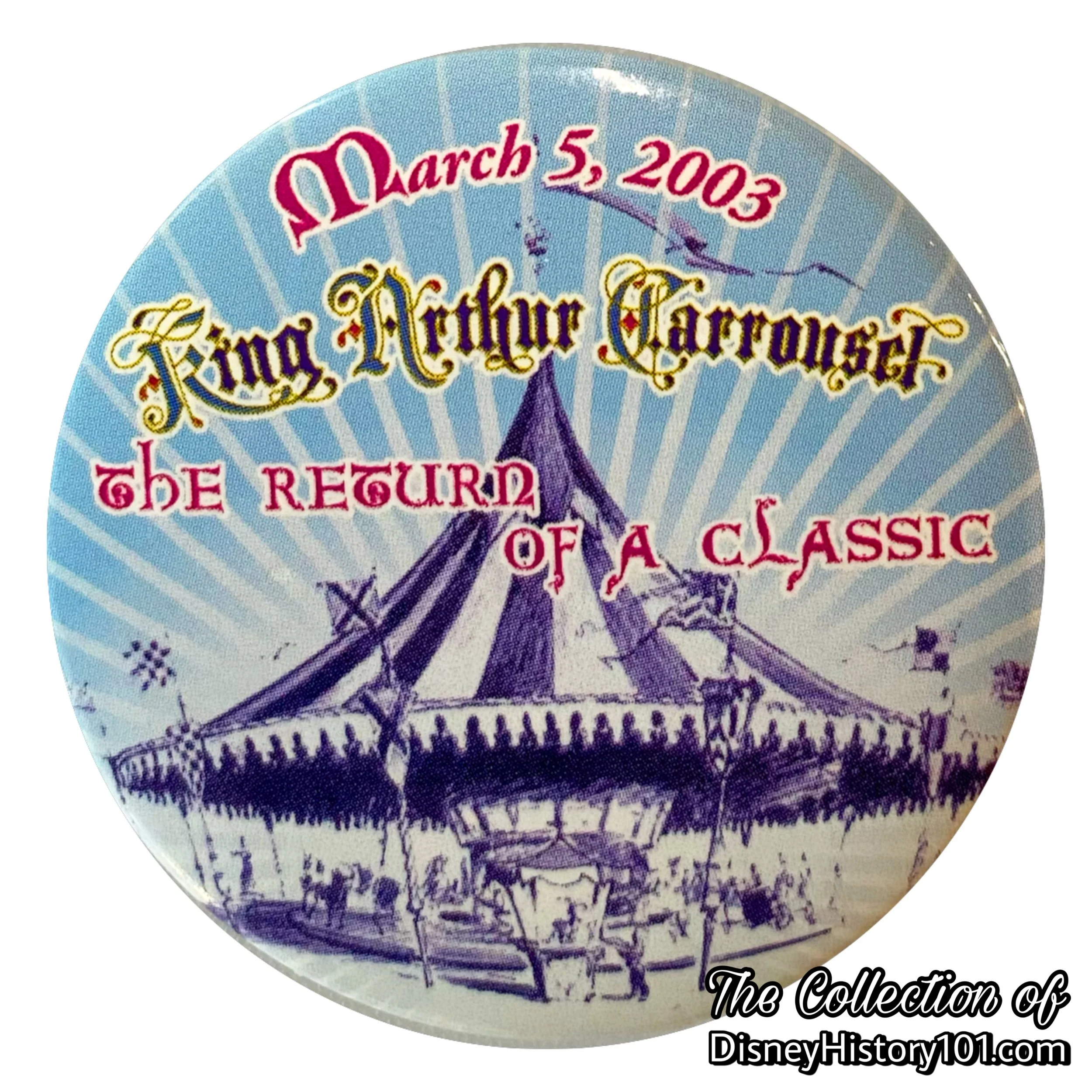
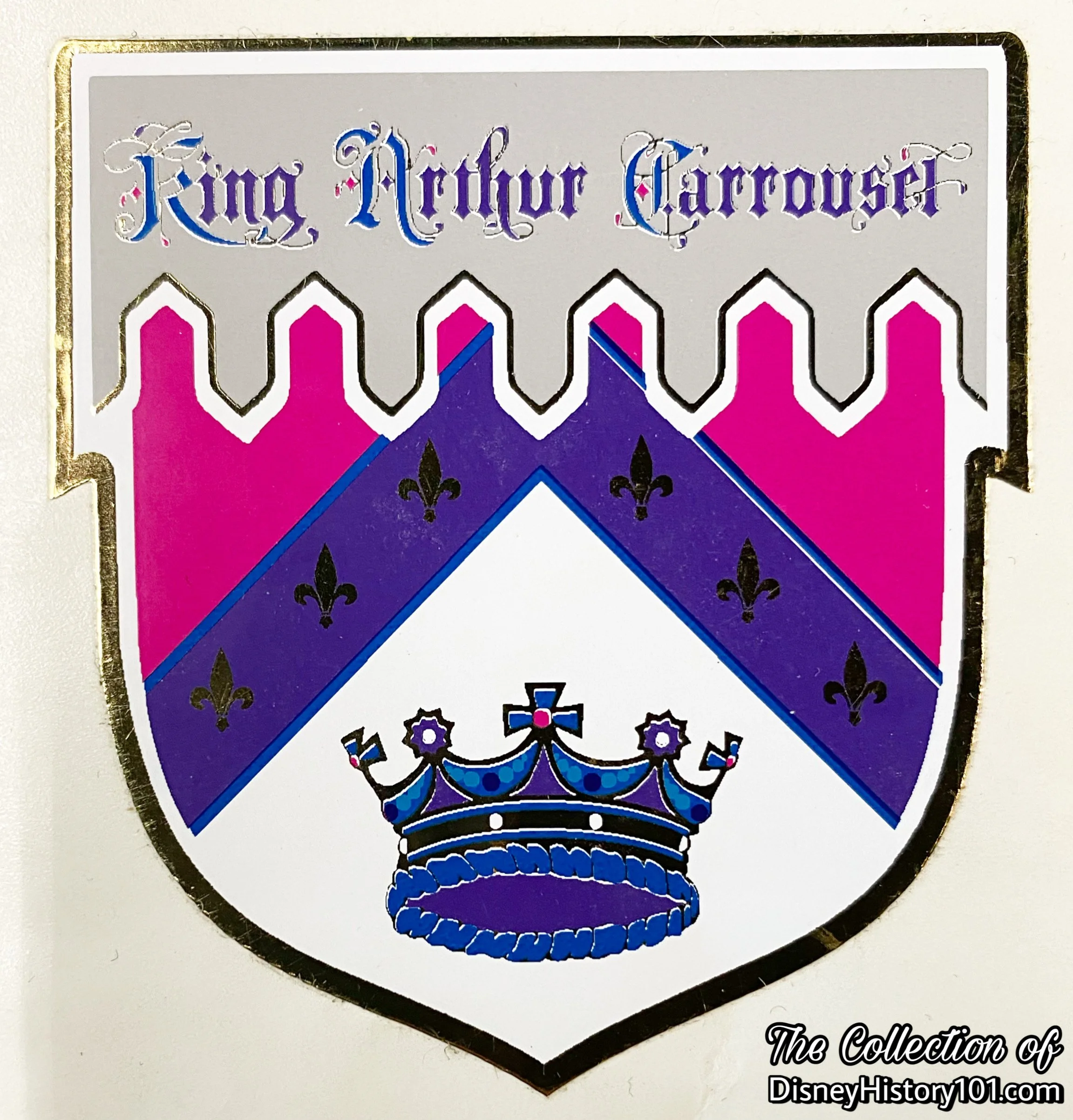
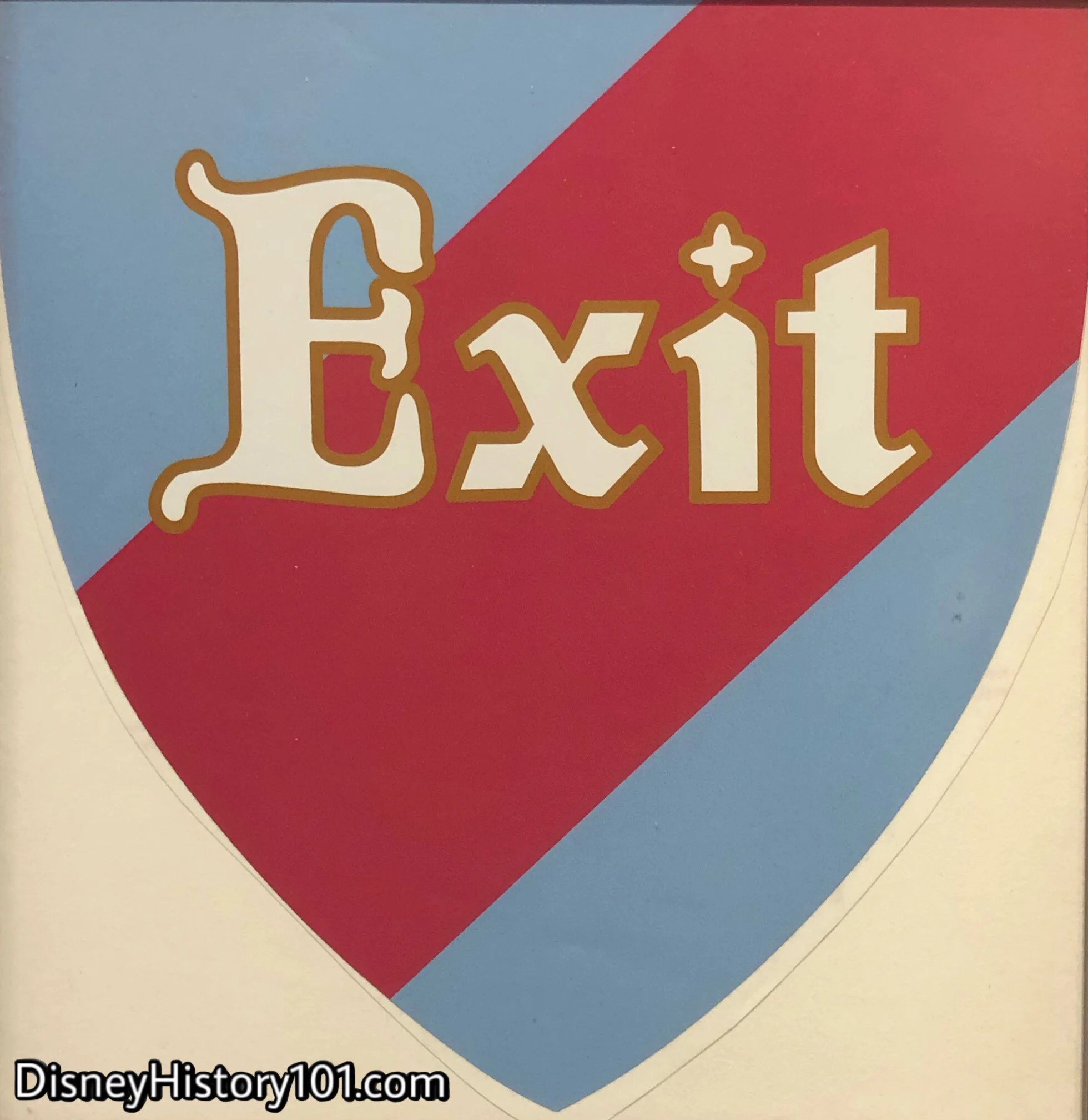
King Aurthur Carrousel Exit Sign Decal, 2000s
In one of his final publications, Dave Smith (previous Chief Archivist Emeritus of the Walt Disney Archives), included King Arthur Carrousel among “the only attractions still at Disneyland today that were there on opening day, July 17, 1955.” [Disney Facts Revealed by Dave Smith, 2016]
By 2003, King Arthur Carousel had a legacy in Fantasyland at Honk Kong Disneyland, in the 60 prancing steeds and two chariots of the Cinderella Carousel.
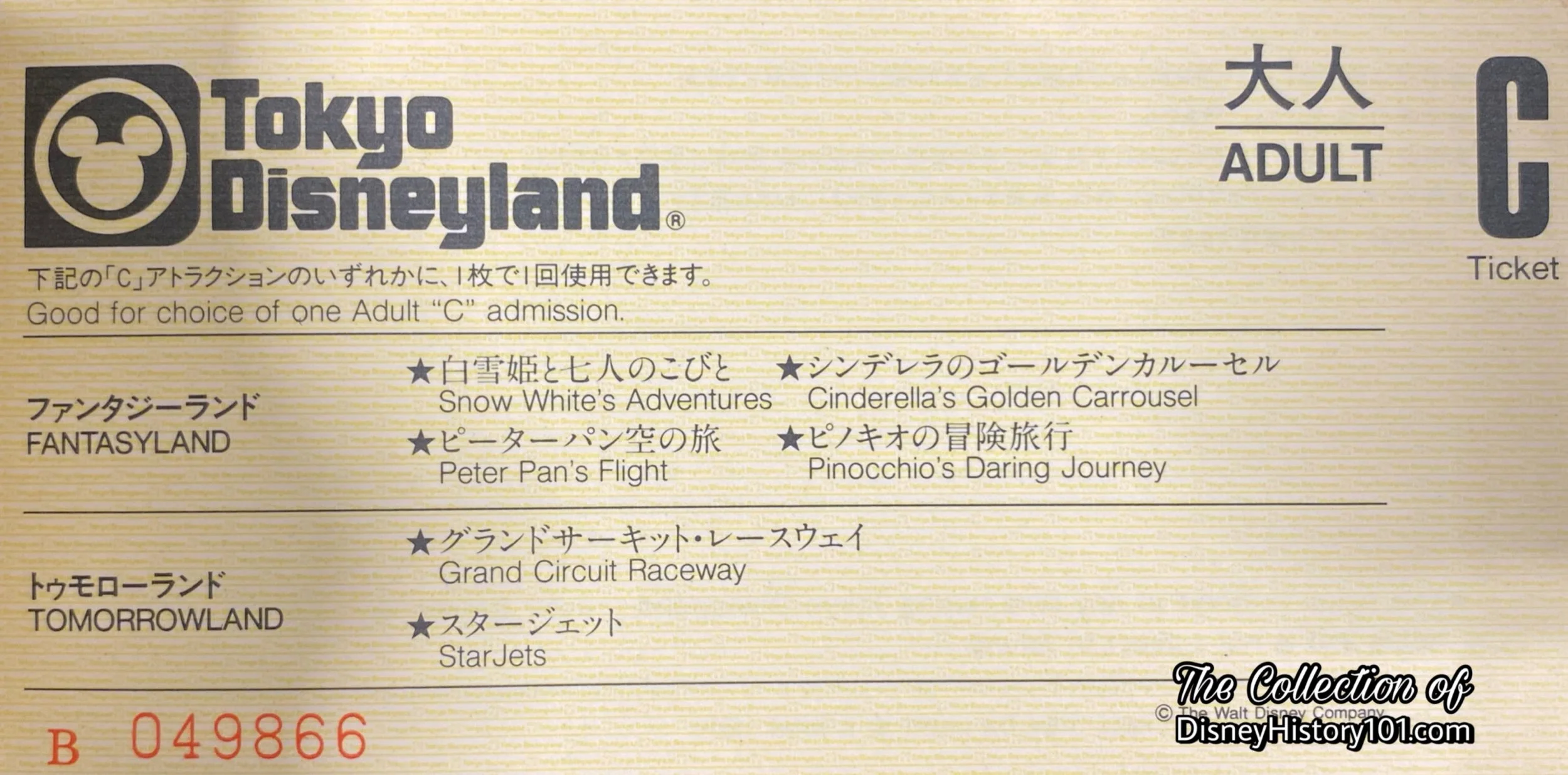
Cinderella’s Golden Caroussel was one of the original attractions of Tokyo Disneyland.
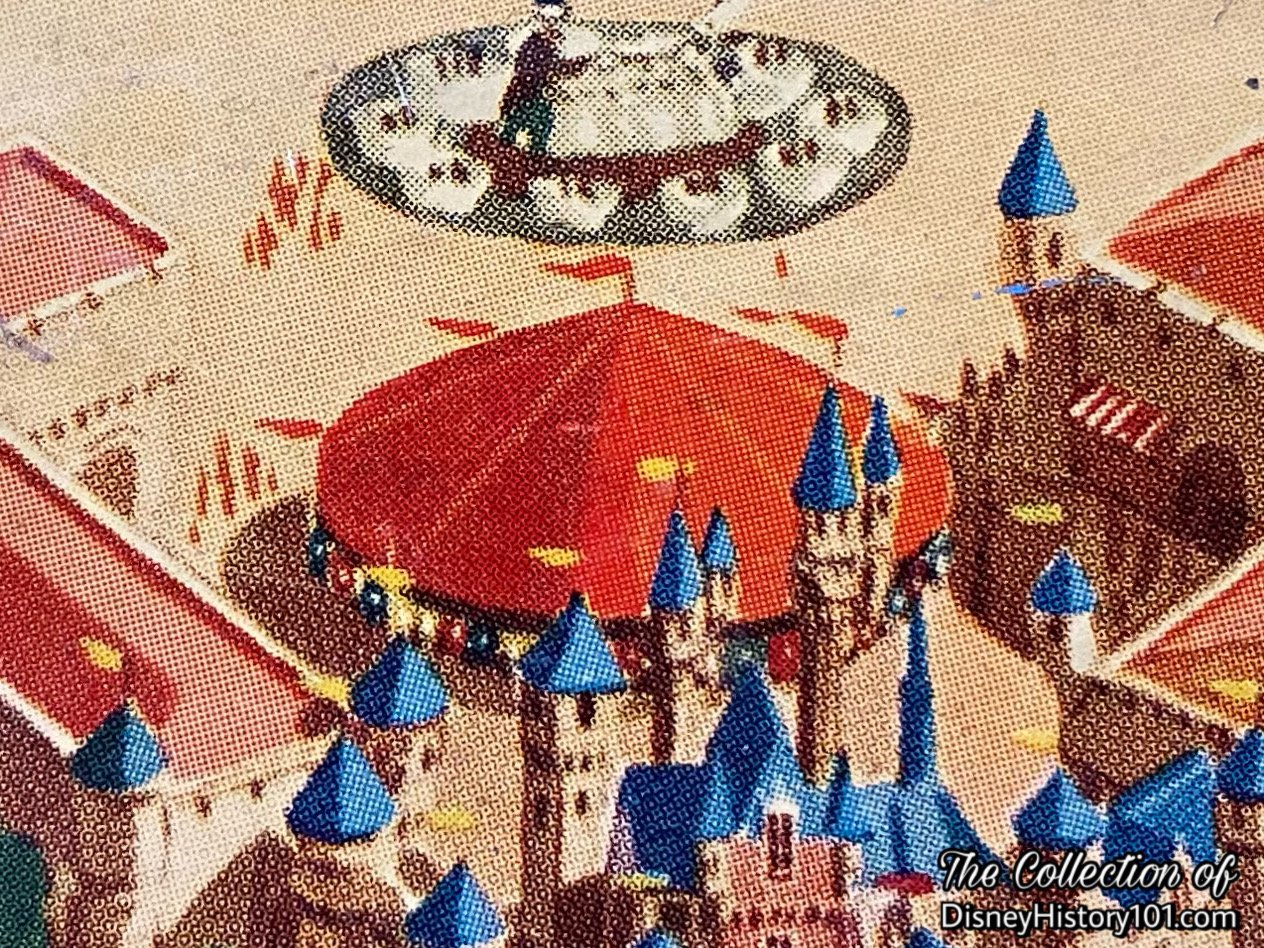
The carousel as featured on the Disneyland Television Tray.
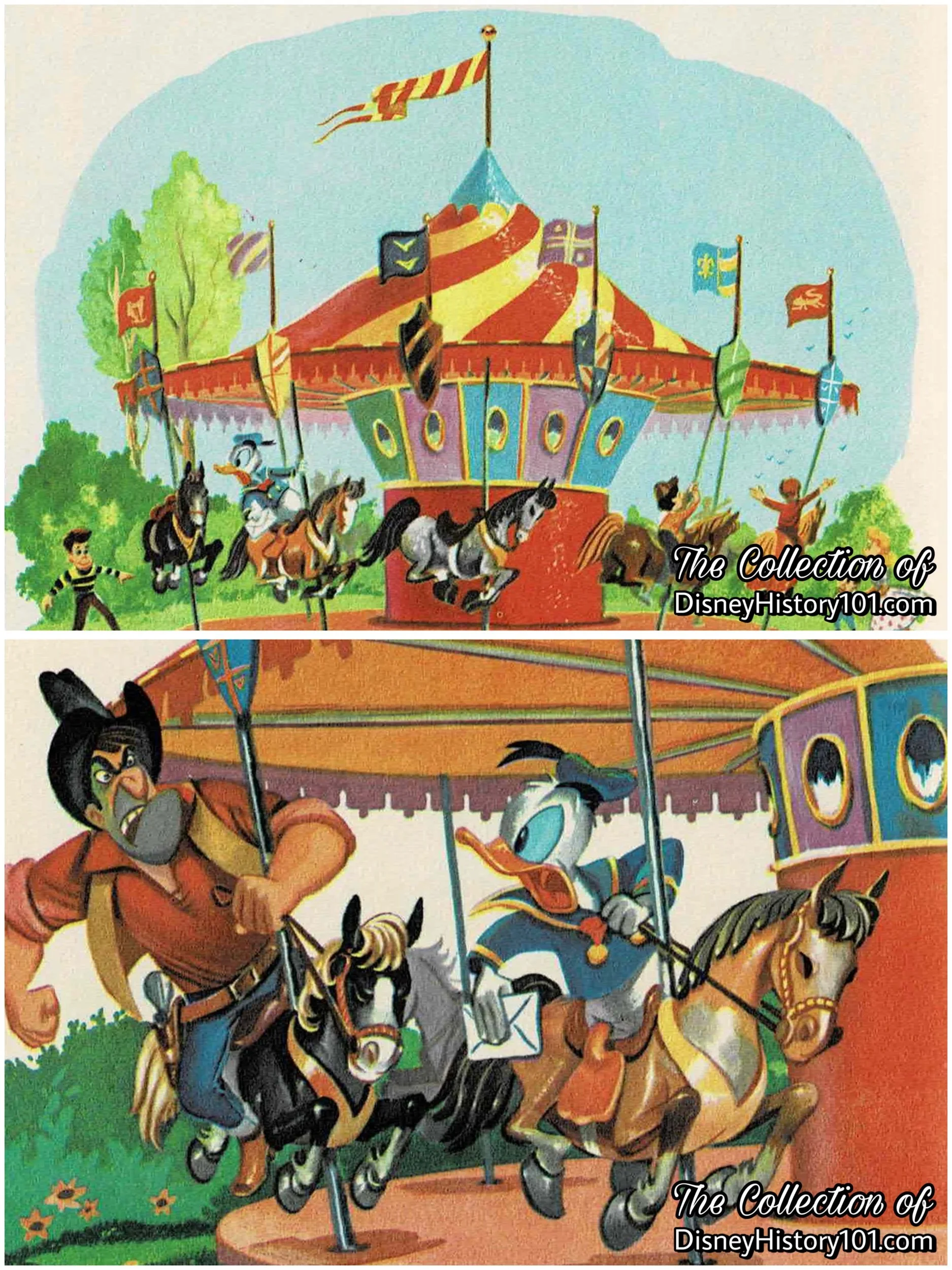
The carousel as featured in the inner cover and pages of “Walt Disney’s Donald Duck”, by Whitman, Copyright © 1955 by Walt Disney Productions.
“When [Donald Duck] opened his eyes he was astride a horse on the biggest merry-go-round in the world. Everywhere around him there were boys and girls laughing and shouting as they hurried by.“
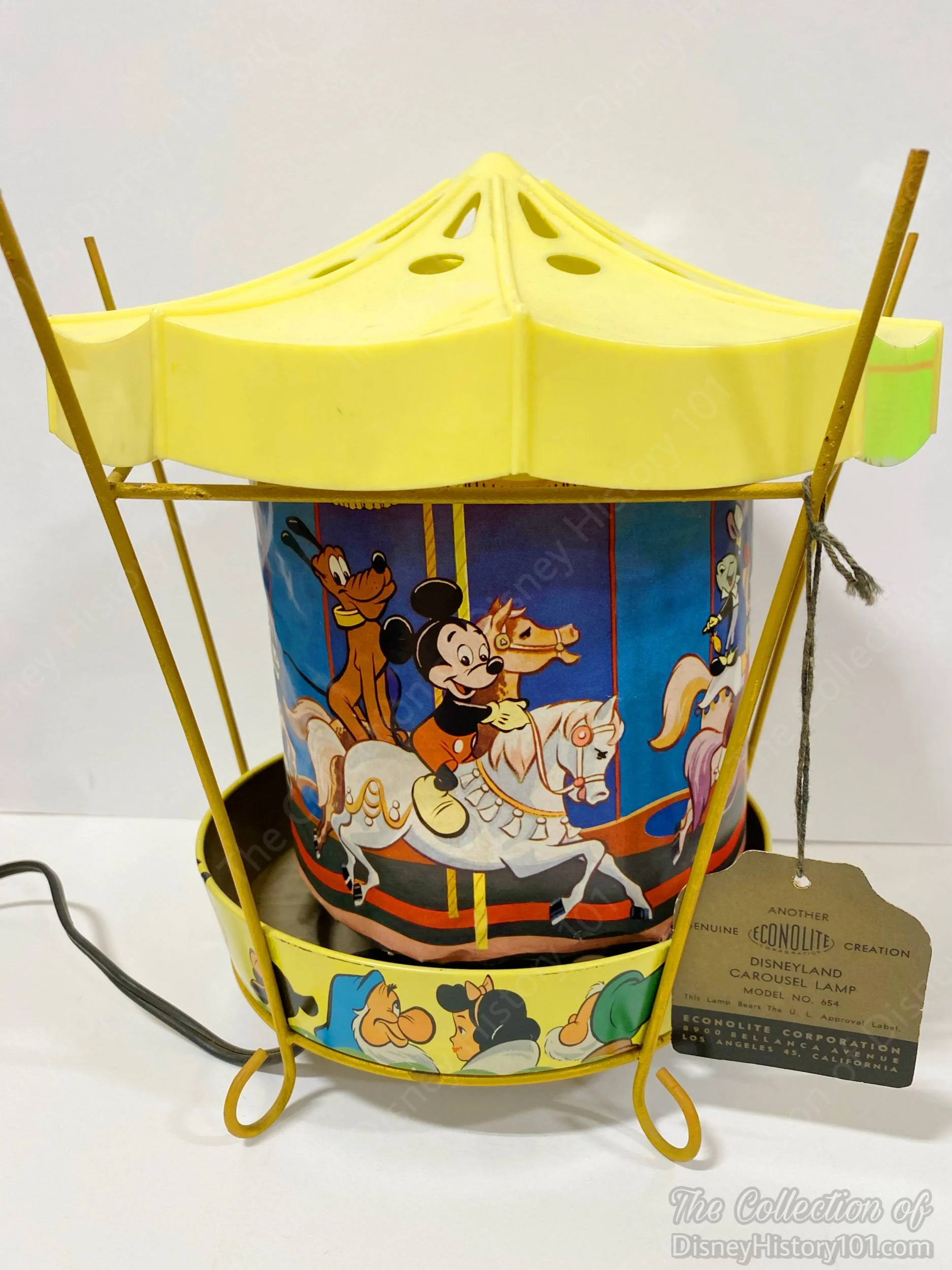
Disneyland Carousel Lamp by Econolite.
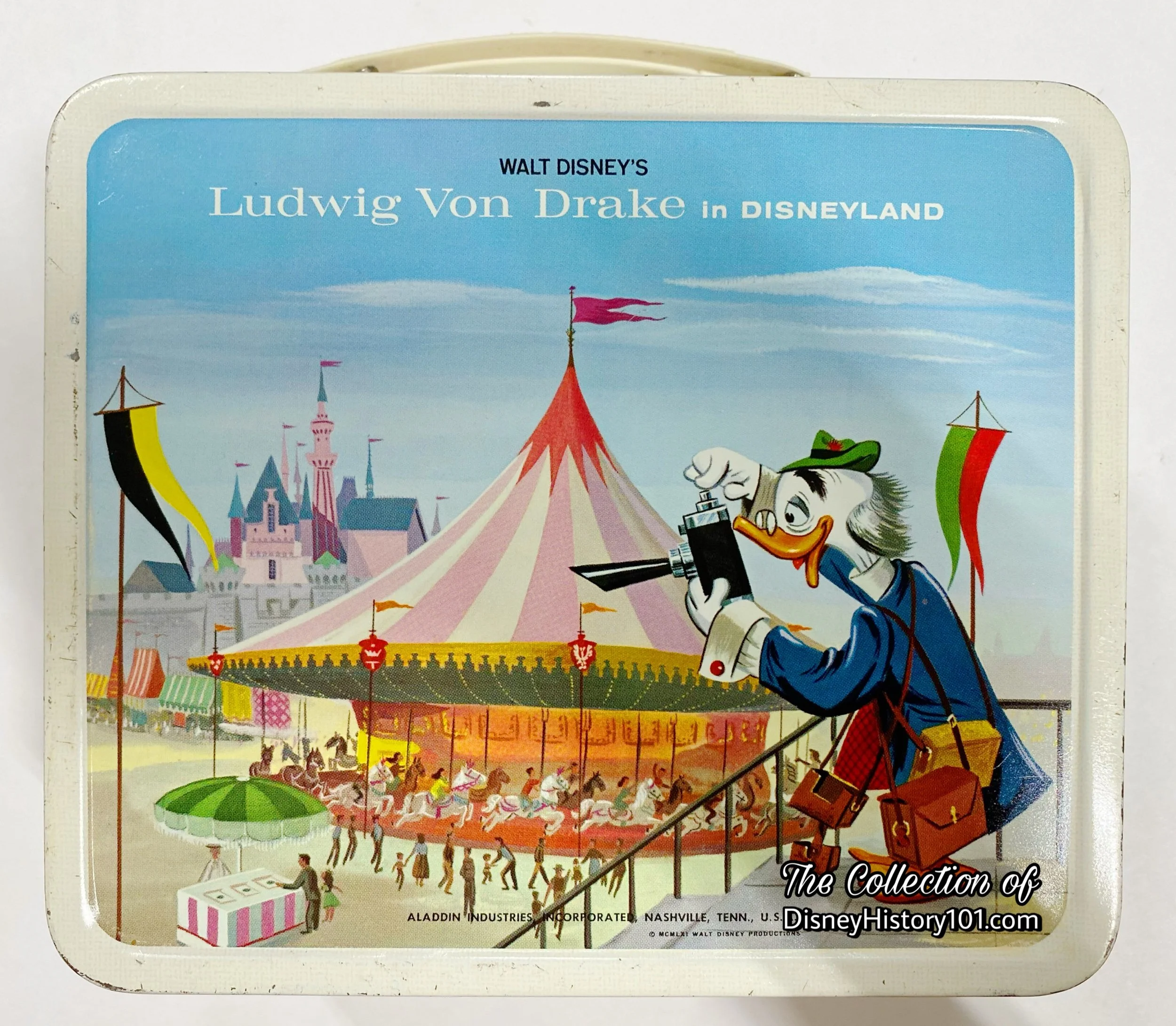
The carousel as featured on a metal lunchbox.
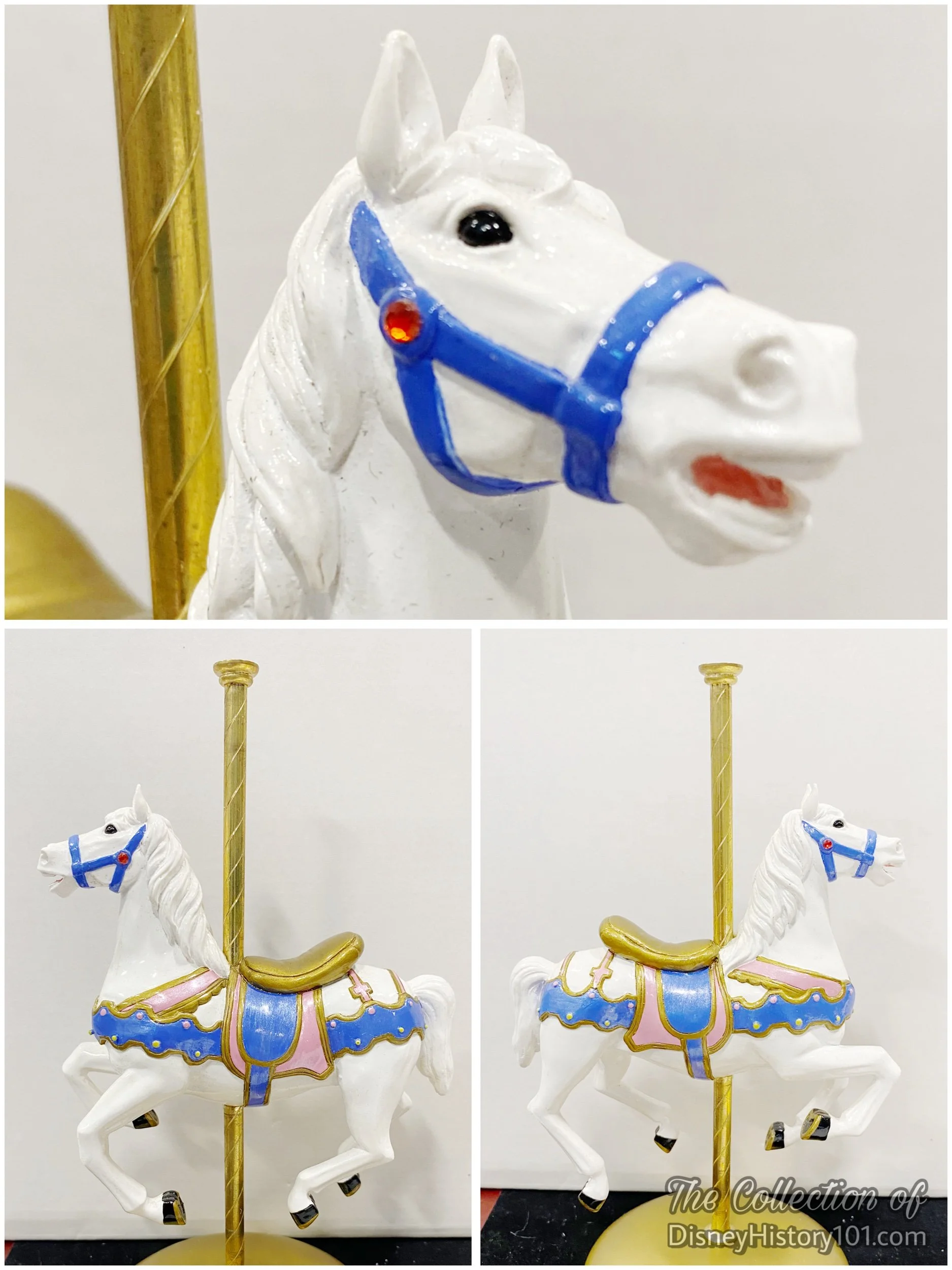
A limited edition replica of a carousel horse.
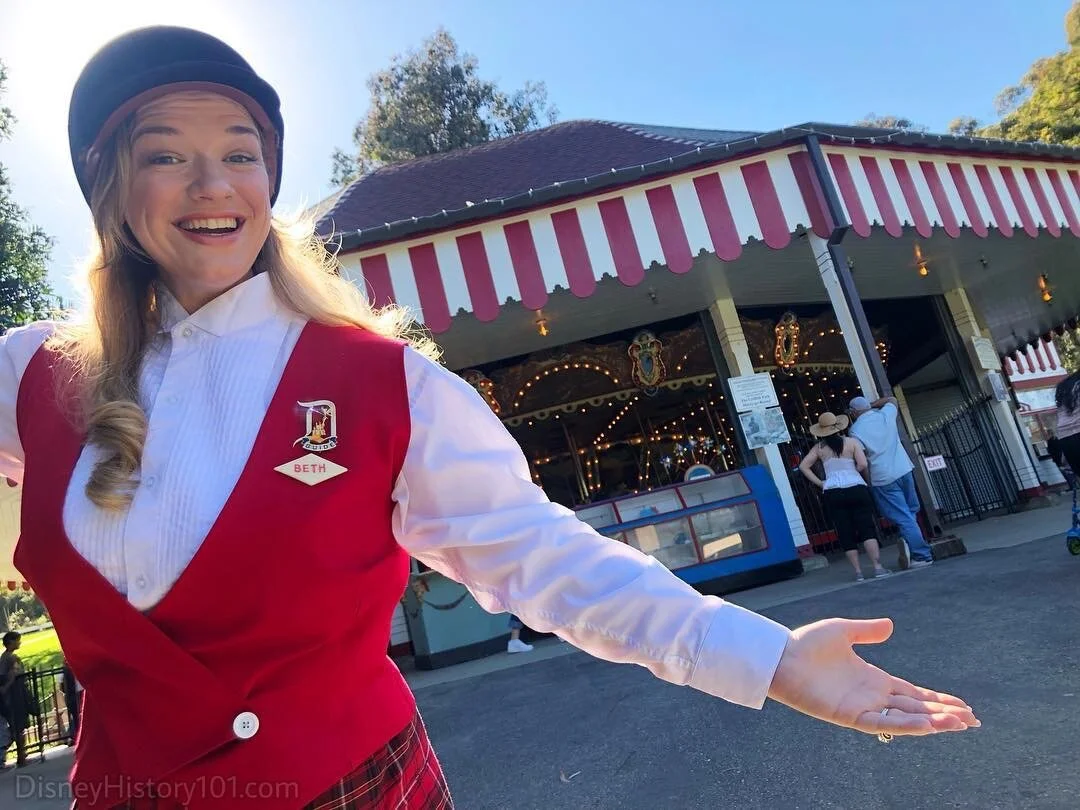
Griffith Caroussel (the present day)
Quisque iaculis facilisis lacinia. Mauris euismod pellentesque tellus sit amet mollis.