FRONTIERLAND
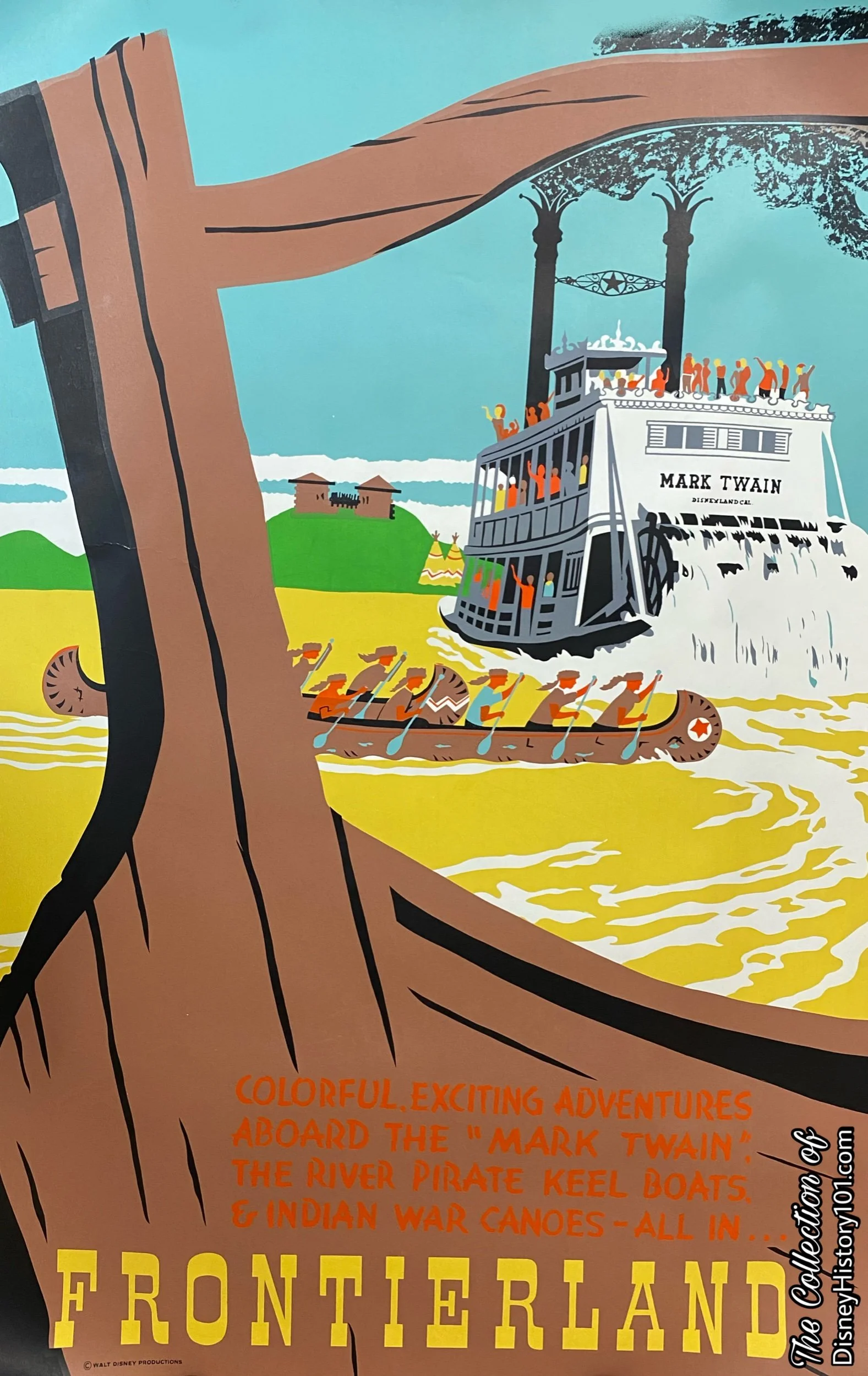
© Walt Disney Company.

“The History & Story of Frontierland”
Plans for Walt's Magic Kingdom first appeared on paper as far back as 1932. Disneyland was designed by WED Enterprises, Inc. under the personal supervision of Walt Disney. Walt once said (as recored in one Souvenir Guide): “All of us, whether tenth generation or naturalized Americans, have cause to be proud of our country’s history, shared by the pioneering spirit of our country’s history, shaped by the pioneering spirit of our forefathers. It is to those men and women of vision, faith and courage that we have dedicated Frontierland.” Many colorful characters may come to mind like Chief Crazy Horse, Buffalo Bill, Deadwood Dick, Calamity Jane, Sitting Bull, Poker Alice, Wild Bill Hickok, Annie Oakley, and Red Tomahawk.
The connection between the inspiration for Frontierland and the pride which Walt Disney felt for the land was expressed in the following way: “One of the biggest joys of my life is sitting on the levee in the Frontierland section of Disneyland, our park in Anaheim, California. As I gaze to the north, I can see the smokestacks of the steamer Mark Twain belching smoke and skirting along toward the top of Tom Sawyer Island. Then the boat moves into view ; the crowd line against the white railings. It moves majestically along, the stern paddle churning up the river foam. The captain lets the whistle blast, signaling his attention to land, and the Dixieland band on the shore swings into a ragtime tune. I thrill all over every time that happens. Other people have told me they too get a big kick out of the Mark Twain swinging in to shore, but I doubt it if anybody could enjoy it as much as I do. You see, I go back a long way with stern-wheelers ; back to the Missouri River in the 1910’s. When I was growing up in Kansas City, there were still two stern-wheelers plying out of that town. They were called the Chester and the Majestic, and they were handsome boats to see. They ran down the river to St. Louis, but on Sundays one would be in port and would take customers on river excursions for a dollar a head. I was on hand for a cruise whenever I could scrape together a dollar from selling newspapers. The Missouri River boats had to be stern-wheelers because there were so many sand bars. When they ran aground they could reverse the wheel and pull off, something a side-wheeler couldn’t do. One of the thrills of my young life was when one of the excursion boats I was riding struck a bar. It remained there for an hour while the deck hands pushed long poles into the sand and the wheel churned mightily. Finally with a great whoosh and swirl of foam, the boat pulled itself free. These boyhood memories are the reason for my fondness for Frontierland. Of course, all the realms of Disneyland intrigue me - Fantasyland, Adventureland, Tomorrowland, and Main Street. But Frontierland evokes a special response because to reminds me of my youthful days on the Missouri.
It was a thrill for a boy to grow up in Missouri after the turn of the century. It was a special thrill for a boy who had been living in a big city like Chicago.
My family moved from city living in Chicago to the farm life in Marceline, Missouri when I was yet five. That was in 1906, when elements of the frontier were still visible in rural Missouri. Marceline was only sixty miles from Hannibal, Mark Twain’s hometown. I can recall seeing the big river boats dock there. And I remember exploring nearby caves like the one in which Tom Sawyer and Becky Thatcher got lost.
Marceline was not far from the railroad that used to take the riverboat passengers to the stagecoach line at St. Joseph. A boy could have fun imagining outlaws swooping down on the coaches and shooting it out with the law. Less than fifty years before, the Pony Express had covered the same route!” [“Frontierland” by Walt Disney, True West magazine ; June, 1958, page 10].
On August 31, 1948, Walt was dreaming about a Park (to be located across the street from the Studio in Burbank). A memo was circulated among artists of the Walt Disney Studios, mentioning a “Western Village” attraction. Walt Disney was about to embark in a new form of family entertainment! He knew that it would require the assembling of a coalition of talents to Imagineer his “Frontier Land” at Disneyland. It was Walt Disney’s close friend Welton Beckett who recommended that “the best people to design the park… [are] his own animators and art directors.”
Sometime after (in December of 1952) WED Enterprises, Inc. (the architectural and engineering design division of Walt Disney Productions) was founded. The company was comprised of Walt’s own Animators, Art Directors, Artists, Artisans, Architects, Set Designers, and Planners from the Studio. These would master-plan and design the first glimpses of Disneyland (and Frontierland). An early form of (what would come go be known as) the “Disneyland Prospectus” [prepared in 1953 for Disneyland Inc. by WED Enterprises, Inc.], page 4, briefly described a land billed as “Frontier Country.” Frontierland would contribute several shows to the vast DISNEYLAND “stage.” Here, is “where the Stagecoach meets the Train and the Riverboat for its trip down the river to New Orleans. Along Frontier Street is a harness shop, and a Blacksmith Shop, Livery Stable, Assayer’s office, Sheriff’s Office and the jail…”
It was once said, that “You can dream, create, design and build the most wonderful place in the world . . . But it takes people to make the dream a reality.” By July 1, 1954, George Whitney of Disneyland, Inc. directed Amusements, with Ron Miller overseeing analysis, philosophy, capacities, planning, operator training, and amusement procurement. While the entire design of the Park was overseen by Richard Irvine (with Marvin Davis spearheaded the drawing of site plans and plot plans alongside individuals like J.E. Thomasson (e.g. who drew the Site Work Plot Plan for Fire Protection Utilities). George Patrick would oversee the artistic development of Frontierland. Bill Martin, also designed Frontierland.
Sam Mc Kim began working for Walt Disney's W.E.D. Enterprises (now Walt Disney Imagineering) in 1954, as an imagineer, doing the original sketches for Frontierland. He was joined by other artists like Stan Jolley (a Warner Bros. Art Director) who helped with Artistic Direction of Walt Disney’s Disneyland, and thereafter joined WED Enterprises September 19, 1955. Stan went on to help co-design the $125,000 Western Street on the Walt Disney Studio Backlot alongside Marvin Davis and Carroll Clark). For now, they were among those who “toiled over their drawing boards from dawn until sundown, creating thousands of sketches” in order to pitch their countless ideas to Walt.
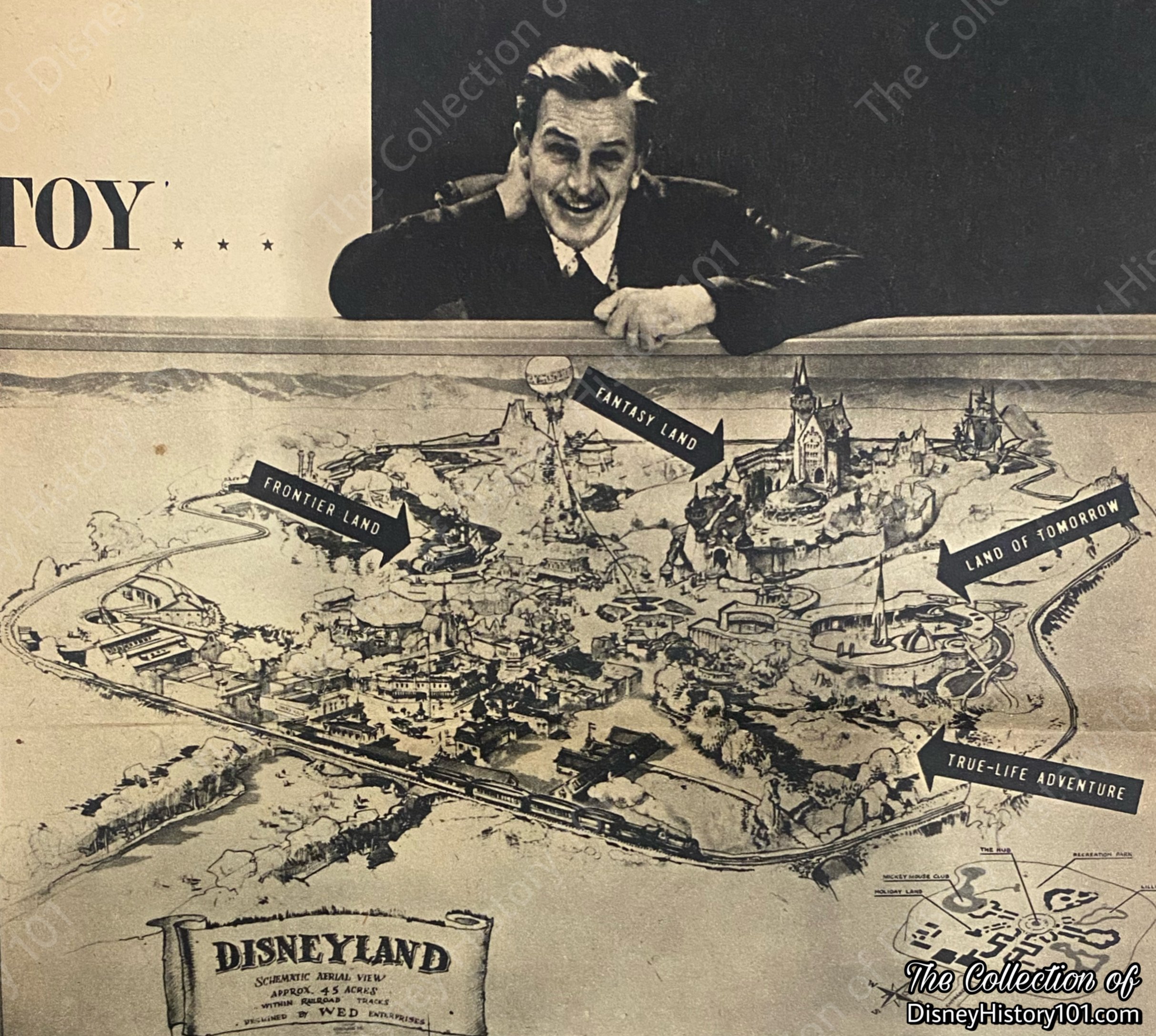
While many artists contributed, the talented Herbert Ryman is of note. Herb had joined the Disney Studio in 1938, after Walt saw a public show of his work in New York. (Herb's paintings were being exhibited with those of another up and coming artist, Andrew Wyeth.) Herb Ryman acted as art director for such films as Fantasia and Dumbo, but had left Walt Disney Studios in 1946 and (by 1953) was employed by 20th Century Fox. However, Walt reached out to Herb and during one weekend (September 26 & 27, 1953) a historic drawing of the Park was produced. The “Schematic Aerial View” over Disneyland, depicted the shape of Disneyland (and the Disneyland Railroad route) - a result of the space required for the Tomorrowland and Frontierland shows. Its brown lines were soon reproduced in T/O (brownline or translucent ozalid) form. Herb would subsequently produce an unknown number c.1954 suggestions for Frontierland including quick sketch drawings that were “not so tediously, scrupulously, diligently precious,” of “Frontier Street.” Herb would later continue to make suggestions for the “Saguaro Area” of the “Mine Ride” including illustrations of anthropomorphic “Cactus Groups.”
Early thumbnail sketches and other concept artwork seemed to be unencumbered by restrictions of budget, schedule or the laws of nature and physics. Though guided by Walt, his artists appeared to engage in “free-thinking,” as if implementing the modern “Blue Sky” Imagineering process. Some of the earliest exterior street and board walk concepts for Frontierland included the “World’s Longest Little Bar.” One “early concept for Frontierland had guests riding mechanical horses in front of a movie screen, putting them in the middle of the action,” according to “Disneyland: Then, Now, and Forever” by Bruce Gordon & Tim O’Day, page 157. Like some advanced “High Concept,” some final designs were quickly generated and approved while others were voided.
In designing Frontierland, it was realized that “there must be practical limits to authenticity. A totally authentic atmosphere in Frontierland, for example, would be a disaster for contemporary citizens in today's world. The streets would be dirt or mud… the restrooms would be outhouses and air conditioned buildings would become smoke-filled halls.” [“THE DISNEY THEME SHOW - an introduction to the art of Disney outdoor entertainment” Volume II]
“Expectation is to prepare a viable project Concept, supported by a well-developed business case.” After convincing the Board of Directors, Roy was to fly to New York an sell the idea of Disneyland to the major television networks. But Walt needed a sales package to sell his dreams. “Although Walt and his WED planners had worked on many designs, there was no competed visualization of the Park. A strong artistic rendering would add the punch he needed to convince serious, tight-fisted and practical money men to invest.” [“The Spirit of Disneyland]
By November 16, 1954, Walt excitedly wrote to his sister Ruth Beecher in Portland, Oregon, briefly describing Frontierland : “We are very busy here at the studio, what with the television program and getting our DISNEYLAND Park under way, we’re knee-deep in work. The Park is scheduled to open in July of next year. It will be a miniature world’s fair idea. There will be trains, river boats, prairie schooners, fantastic rides, etc., etc… FRONTIERLAND… will be of the gold rush period, with Indians, Buffalo, Stage Coaches, etc. and a Paddle Wheel River Boat that will carry 300 people.”
“Frontierland and America’s Great Pioneer Heritage”
Knowing his audience, a good quarter of Walt Disney’s “Disneyland” anthology television series would star (through animated or live action productions) both the true-life and fabulous fabled frontier heroes of American folk history. During 1955 alone, episodes spotlighted Br’er Rabbit, Davy Crockett, Febold Febolson, Hiawatha, Ichabod Crane, Jean LaFitte, Joaquin Murrieta, Johnny Appleseed, Major John Powell, Marcus Whitman, Mike Fink, Paul Bunyan, Pecos Bill, Sacajawea, Stormalong, and Zorro! One pre-opening Day Metrolines publication (Vol.2, No.9a ; Summer of 1955) described Frontierland as “a glimpse of American frontiers ranging from Plymouth Rock through the untamed West”.
Walt soon decided: “Disneyland would be a world of Americans, past and present, seen through the eyes of my imagination - a place of warmth and nostalgia, of illusion and color and delight.”
According to “The Disneyland News” (Vol. 1, No. 12 ; June of 1956), “It’s not surprising to find that Walt Disney has set aside an area that brings to mind memories of Jean Lafitte and General Robert E. Lee ; the Cisco Kid and Scarlett O’Hara. ‘Round the bend of the Rivers of America in Frontierland sight and sound and smell convince the visitor that he has been transported back into the time of one hundred years. Architecture of the buildings, plantings and floral effects, and periodically the fragrance of good southern cooking all combine to create mood that lacks nothing of completeness.”
"I don't want the public to see the world they live in while they're in the park. I want them to feel they're in another world.” - Walt Disney.
The character of Frontierland would ultimately include eight areas (or eras) spanning from the 1790’s to the 1870’s - from the time of the great Revolutionary to the days of the southern settlers. “The Disneyland Dictionary” (published 1958) adjusted the period to “approximately 1790 to 1876,” representing “Americals frontiers, from Revolutionary days to the great Southwest settlement.”
Some Show elements of Frontierland (at Disneyland) would pay homage to True-Life people of the American West. For example, one “rustic sign on the blacksmith shop in Frontierland bearing the name Willard P. Bounds is a memorial to one of the men who helped open the wild frontier. Willard Peahall Bounds was a marshal, Indian scout, farmer and United States government blacksmith. In 1895, as United States Deputy Marshal, he drove back a hack with a four-horse hitch to the Nez Pierce Indian country in Lapwai, carrying $626,000 in gold pieces. The gold was used for payment to the Indians for the land. After this historic first trip, more than a million dollars was later carried,” according to “The Disneyland News”, Vol. 1, No.2 ; August 10, 1955).
“Here you leave today and enter the world of Yesterday”
“As you enter this timeless land [Disneyland], one of these many worlds will open to you! Frontierland - tall tales and true from the legendary past!” But what time frame would the story of Frontierland transport visitors to? One authorized “Disneyland Information & Nomenclature List” (prepared by Bill Cottrell of Disneyland Inc., by May 25, 1955) answered this question the following way : “The period of Frontierland is approximately 1840 to 1864.”
The area was Hardscaped with a horizontal themed textured surface.
As of June 2, 1955, C.V. Wood Jr. sent an Inter-Office Memorandum to Walt Disney regarding the best estimates that could be obtained at the time regarding the completion status of individual sections of the Park and Opening Day. C.V. wrote: “Western Railroad Station: Okay.”
Frontierland was one of five cardinal lands or “stages” to debut with the rest of the Disneyland Show on July 17, 1955. In his opening day dedication, Walt dedicated Disneyland to “the ideals, the dreams, and the hard facts that have created America” and one land epitomized those words more than any other - Frontierland! “Frontierland is a tribute to the faith, courage, and ingenuity of the pioneers who blazed the trails across America. We find ourselves in the exciting days when the story of our country’s past was being lived.” -Guided Tour Script, 1962.
One July 1955 newspaper (published a day before Disneyland’s dedication) stated : “As in all the areas, Walt Disney’s personal touch is seen. In Frontierland some of the gnarled pine posts were piked up by Disney on a trip to the Jackson Hole country in Wyoming. He and a friend spotted the logs because of the unusual burls growing on them and had about 60 shipped to Disneyland.”
“The construction crews… labored to turn sketches and blueprints into forts and frame buildings… Like Main Street, Frontierland had to be detailed and authentic. That meant a cross-country search for antiques and other objects. There were the trappings of Davy Crockett’s days, powder horns and flintlocks. There were the 60 gnarled pine posts with distinctive burls, spotted bay Walt Disney on a trip to Jackson Hole country of Wyoming and shipped to Disneyland to form corner posts. And there was the discovery in an antique shop just below New Orleans of an anchor beloved to be about 00 years old and once used on a pirate ship commanded by Jean Lafitte. It, too, is on display in Frontierland.” [“Walt Disney Disneyland” first published 1964]
While television viewers could watch as Walt Disney continued to “present” stories of Texas John Slaughter, Elfego Baca and Swamp Fox (during the early 1960’s), they could experience the world of the Wild West come-to-life at Disneyland! Yes, “American history is just one of several educational aspects of Disneyland. Visitors to Frontierland can participate in historical lore designed along the lines of early Southwest settlements,” according to Vacationland magazine (Summer, 1963).
“Opening”
On the July 17th, 1955 broadcast “Dateline Disneyland”, Art Linkletter asked his eight-year-old daughter Sharon what she would like to see? She excitedly responded, “I think I’d like to go to see Frontierland!” Enter “the pioneer realm of the American West”! Visit the Davy Crockett Museum, the assay office, the Pendleton Woolen Mills Store, or the Trading Post general store. Watch ponies bring shod at the blacksmith shop near the Miniature Horse Corral. Before entering a replica old west dance hall, you’ll recognize plenty of familiar Wild West characters - traders, trappers, cow-hands, dudes, dance hall girls, and “two-gun” men. After entering the Golden Horseshoe, you’ll sit down at the bar and enjoy a refreshing Pepsi-cola while listening to ragtime tunes played on the piano! Sail the Rivers of America aboard a 105-foot paddle-wheeler, or board an 1860 Santa Fe and Disneyland freight train for a tour around Disneyland! Guests could also enjoy the Dixieland tunes while dining riverside at Aunt Jemima’s Kitchen or the Chicken Plantation Restaurant. Free exhibits (like Lafitte’s Anchor, or the petrified tree) are arid just about every corner, and line the waterfront. (The anchor was actually found in a New Orleans junkyard.)
Many notable individuals (like Dale Evans and Roy Rogers) enjoyed Walt Disney’s “replica old west” in 1955. The Disneyland News (September, 1956) heralded the opening of the Mineral Hall. According to Backstage magazine (published Summer of 1965), special events were hosted included but not limited to the first Zorro Days (April and November of 1958, November of 1959), “Western Days” (featuring stars of popular television shows like “Cheyenne” and ”Lawman”, as well as a “Thanksgiving with The Indians” event (occurring in November of 1959)!
During 1961, Frontierland hosted Frontier Nite in Disneyland! Guests could dine on a “chuck wagon dinner” for $2.00, square dance at the Golden Horseshoe Cafe, and enjoy western music behind the Plantation House. By Disneyland’s Tencennial Celebration of 1965, Frontierland’s featured free shows and exhibits included Pepsi-Cola’s Golden Horseshoe Revue (“a way out West variety show with comedy, singing and dancing”) and the Pendleton Western Exhibit (“a display of woolen apparel and accessories”).
By 1987, the Riverboat Gambler, the Frontierland Brass, Mariachi Guadalajara, the Golden Horseshoe Piano Player, and the Pinewood Pickers were common sights and sounds in Frontierland!
Guests are still transported to the days of the Old West in Frontierland.
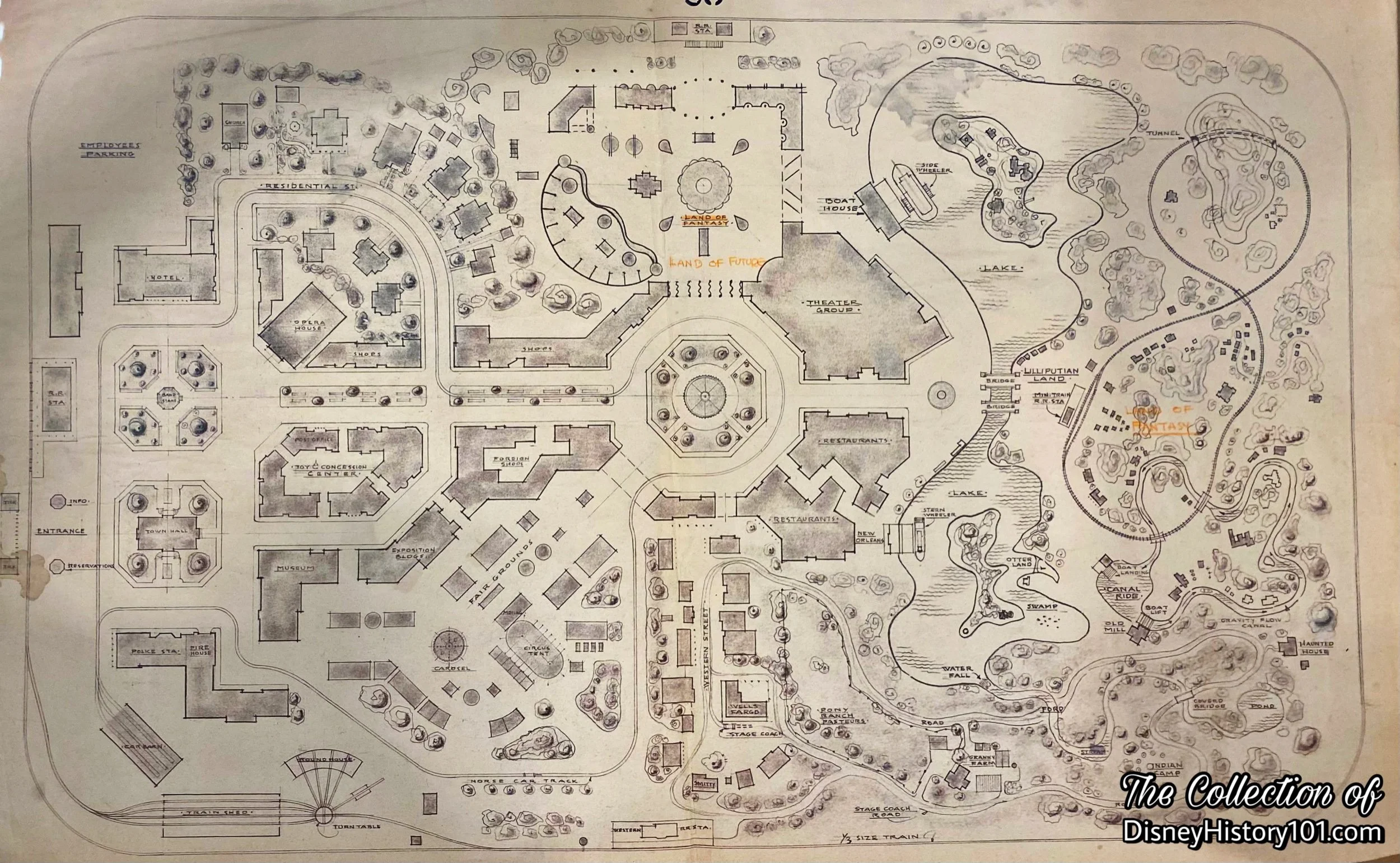
“Disneyland Preliminary Scheme #1”
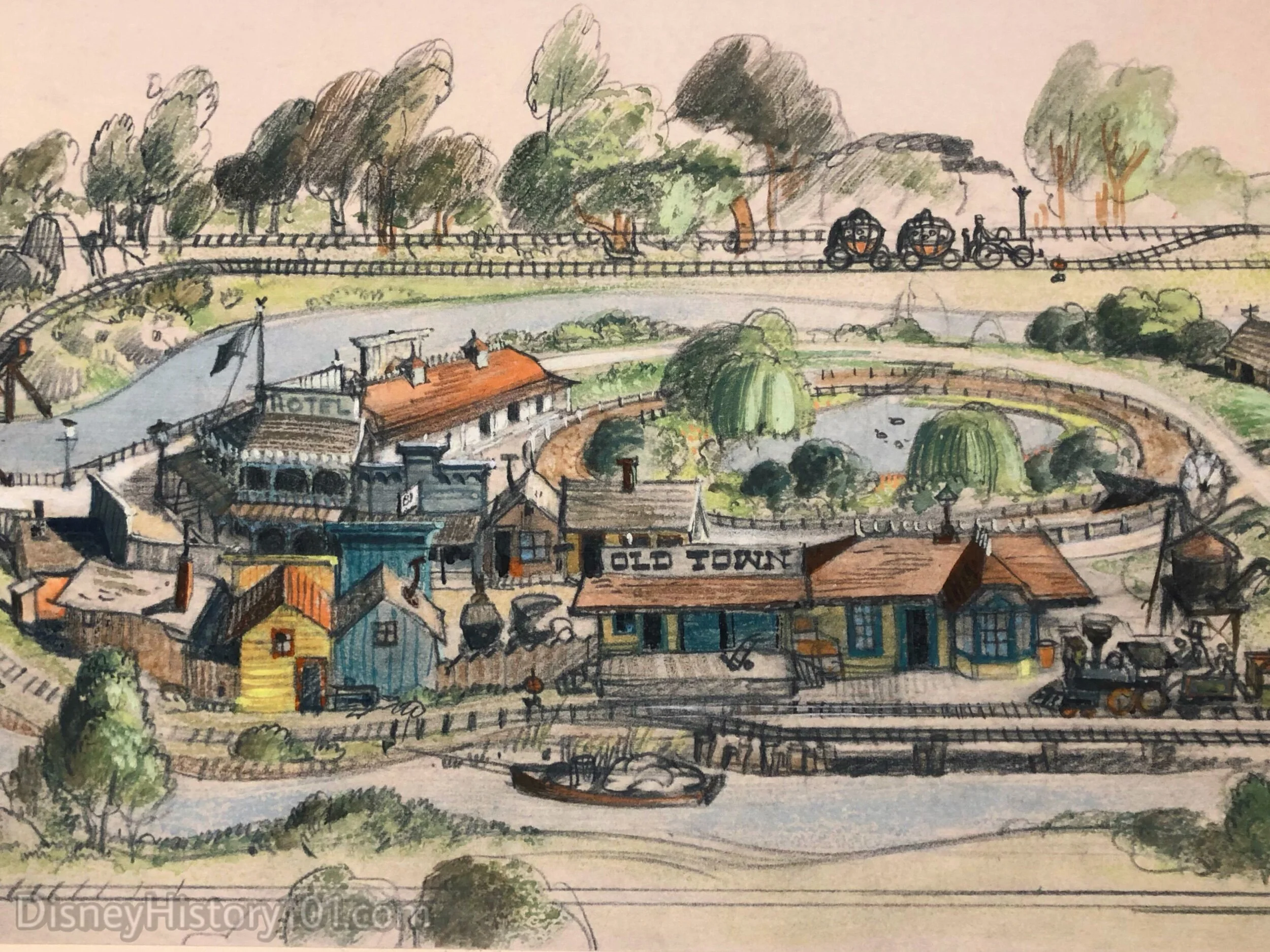
“Draw Concept” - A Western - Themed Area by Harper Goff, c. 1951; © Walt Disney Company.
Plans for Walt's Park, first appeared on paper as far back as 1932. Mickey Mouse Park proposals created for the city of Burbank included drawings featuring many frontier America elements - stagecoaches, a riverboat, and trains.
Later, the earliest concepts of Walt Disney’s Disneyland included descriptions of Frontierland attractions. According to “Disneyland” (prepared for Disneyland Inc. by WED Enterprises), “There is a shooting gallery, the Wells Fargo Express office and an old fashioned saloon with the longest little bar in the world serving root beer western style. Ride shotgun Stage Coaches…past Granny’s Farm, a practical working farm operated with real live miniature horses, cows, oxen, and donkeys…through the pine forest, fording streams into Indian country and through the Painted Desert. Carry the mail on the Pony Express Ride around the little track…and take a Mule Pack Ride with an old prospector for a guide through the colorful mother-lode country of the pioneer days. At the end of Frontier Street is the boatlanding for Riverboat Ride. The old stern-wheeler takes you downstream on a nostalgic cruise past the romantic river towns, Tom Sawyer’s birthplace, and the old Southern Plantations.”
“Researching and purchasing authentic equipment were not the only problems that had to be worked out. How to fuse pioneering architecture with Southwestern and how to blend New Orleans cafe facades with log stockades were but a few of theposers encountered by Frontierland artists as this realm took form,” according to “News From Disneyland” (a c.1956 press release document).
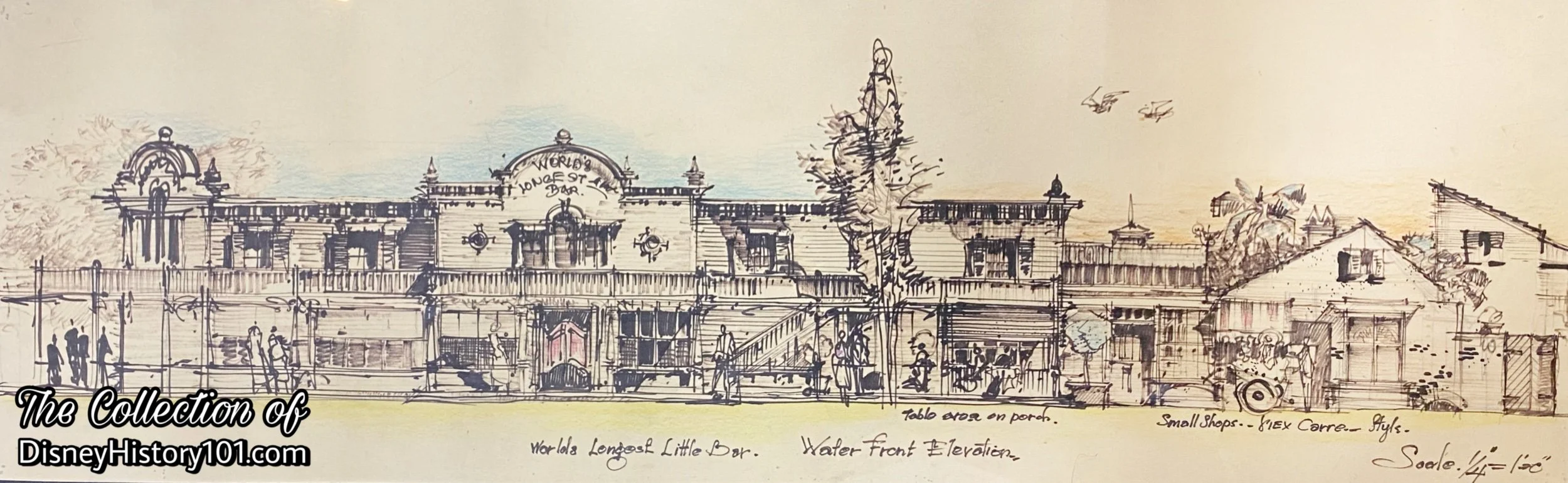
World's Longest Bar Water Front elevation drawing by Herb Ryman. Note the New Orleans Building (seen right).
One early (c.1955-1956) document describes Frontierland to contain a Stockade Area, Rainbow Caverns Area, Mexican Area, Tom Sawyer’s Island (described as “a romantic interpretation” of the setting of Tom Sawyer), Magnolia Park (a shaded area with Bandstand), Fowler’s Harbor, Indian Village, and New Orleans Area. Of particular interest is the New Orleans Area (depicted above, right) which was located just beyond Magnolia Park. The character of the area was to be influenced by that of New Orleans “up to the period of the Civil War.” Documents (like c.1958 appraisals) identify the area as a New Orleans Building.
LIGHT magazine (July and August 1956; published by the Large Lamp Department of General Electric, 1956) “shed some light” on the illumination. “The streets are lighted by old kerosene oil lamps wired and mounted on poles to serve as decorative sources of light. In many locations, open wiring was deliberately used in keeping with the times. The Golden Horseshoe, replica of a famous saloon and gambling hall, but now dispensing nothing stronger than a popular soft drink, is wired and lighted in an authentic manner throughout. A stage, in decor of the late '80s, with golden cans on the stage for foot-lights, but supplemented by a complete system of modern stage lighting provides for a show four times daily... featuring ‘Slue Foot Sue’, with songs and dances of yesterday.”
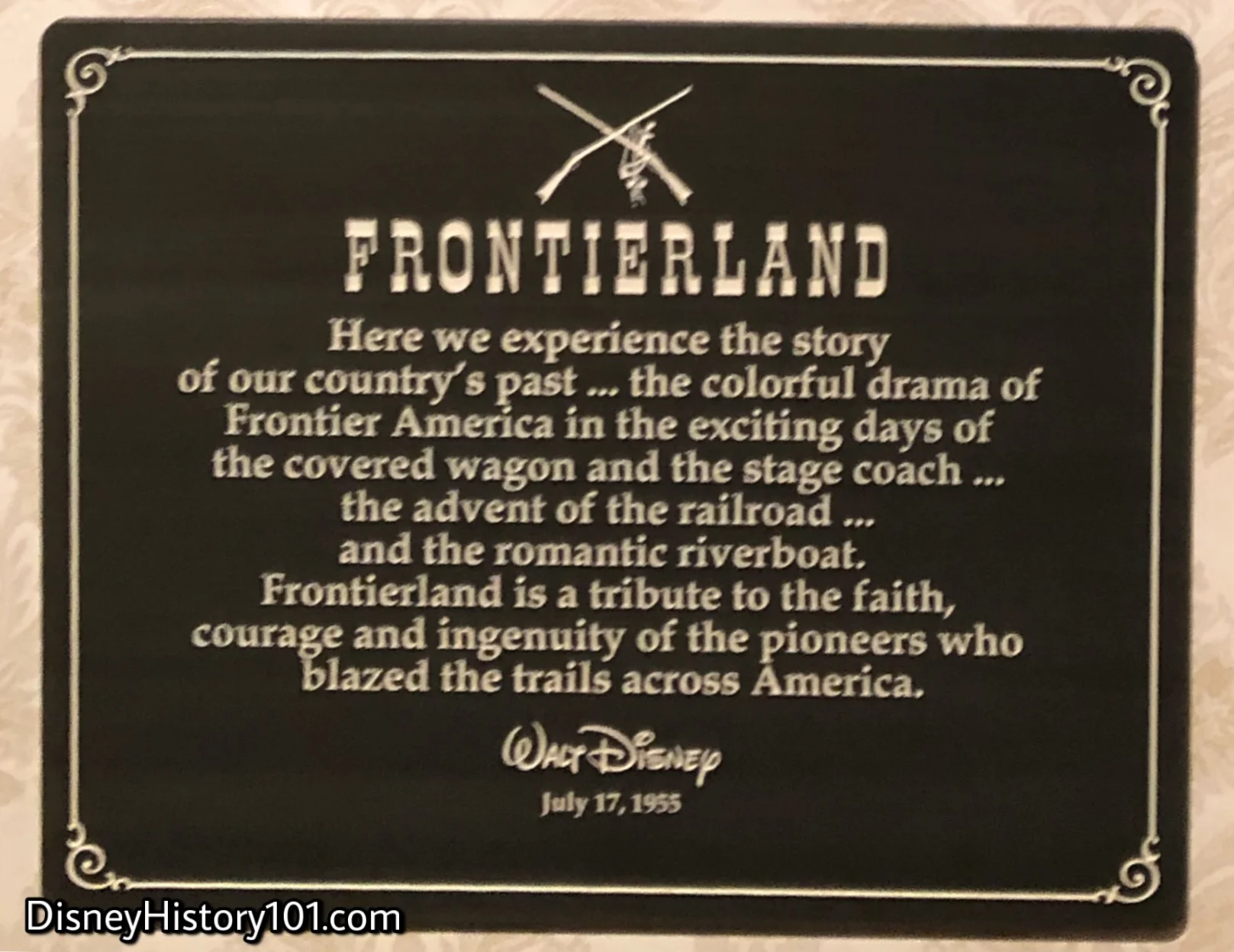
“A word from Walt…” - MAIN STREET OPERA HOUSE PLAQUE
The opening of Disneyland (a land in itself; including Frontierland) on July 18, 1955, marked the pinnacle of a life-long dream for its creator.
Perhaps with good reason, Art Linkletter may have mistakenly introduced this area as “Pioneerland,” on Disneyland’s Opening Day live telecast. After all, “Frontierland tells the story of a young and enterprising nation, and of a people moving westward by riverboat and keelboat, by stagecoach and covered wagon. Here, pioneer days and frontier ways are relived in the river towns and in the trading posts, in the wilderness forts, and in the Indian villages,” according to “Disneyland, U.S.A.” (a “People and Places” feature film, released in the U.S. on December 20, 1956 through Buena Vista Film Distribution Company).
However, the period of Frontierland was approximately 1790-1876 and represented the American frontiers from the Revelutionary days to the great Southwest settlement. Everything in Frontierland would be to this theme and atmosphere from this particular time, place and subject. A themed motif would be incorporated into every aspect of operation (e.g., room décor, menus, attractions and costumes).
“In 1956, one year after the Park opened, Walt's interest in trains showed up again with the release of a movie called "The Great Locomotive Chase." This is the story of union spies who stole a train from under the noses of confederate troops at Atlanta, and began a race which had the possibility of bringing an early end to the civil War. Because of the post Civil war period depicted by Frontierland, much of the scenery along the rout of the SF&D looks very much like some of the scenery in this exciting, fast-moving motion picture.”
By 1959, Frontierland included eight (8) areas or eras of American History. The Disneyland Show whisked Guests into that reality, where they could leave the outside world behind.
“Construction”
Ron Dominguez recalled: “When I came aboard on July 13th, there were mud holes all over and you couldn't get through to Frontierland.”
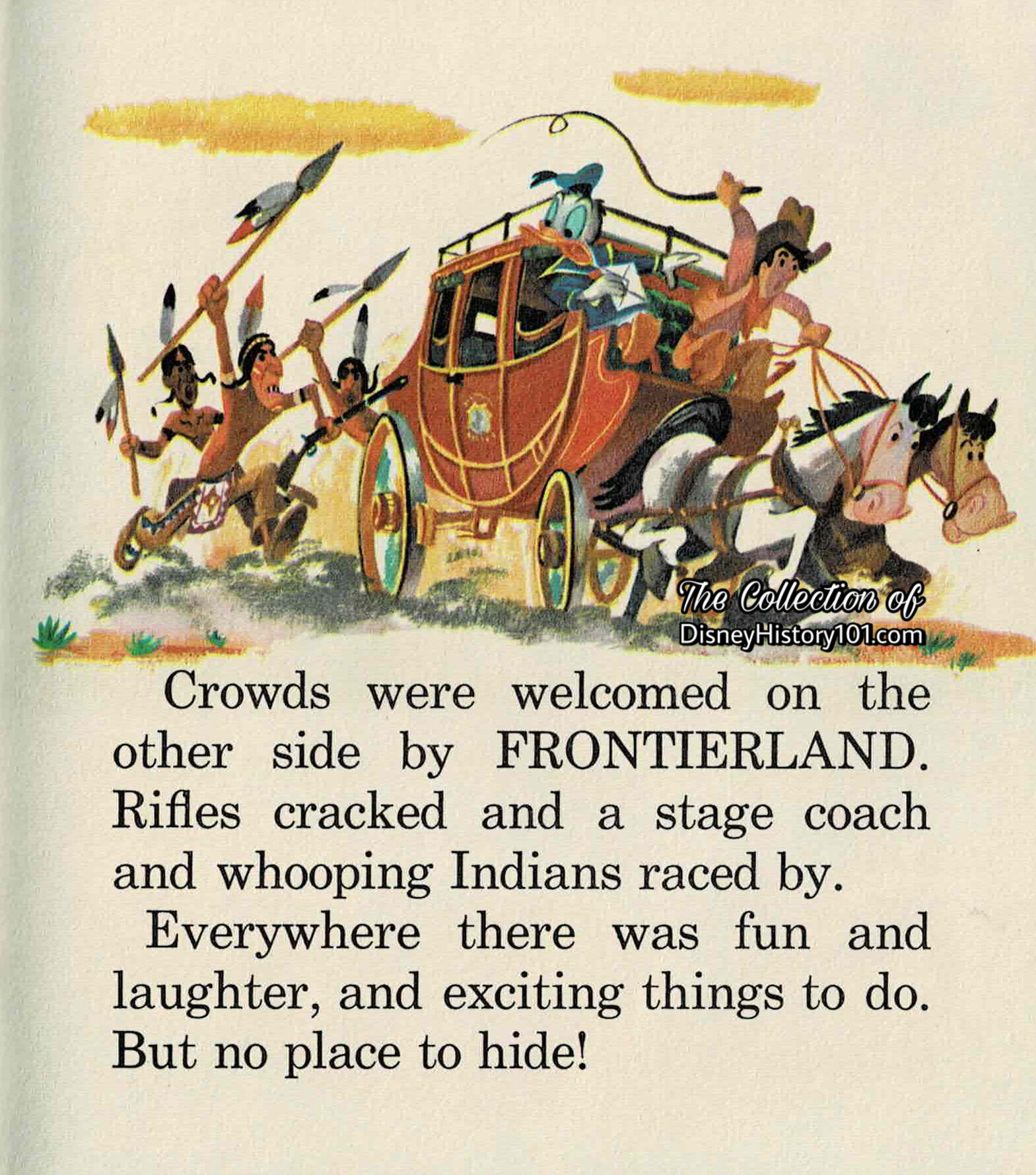
A collectable card from the Disneyland Fun Box by Whitman, c.1955.
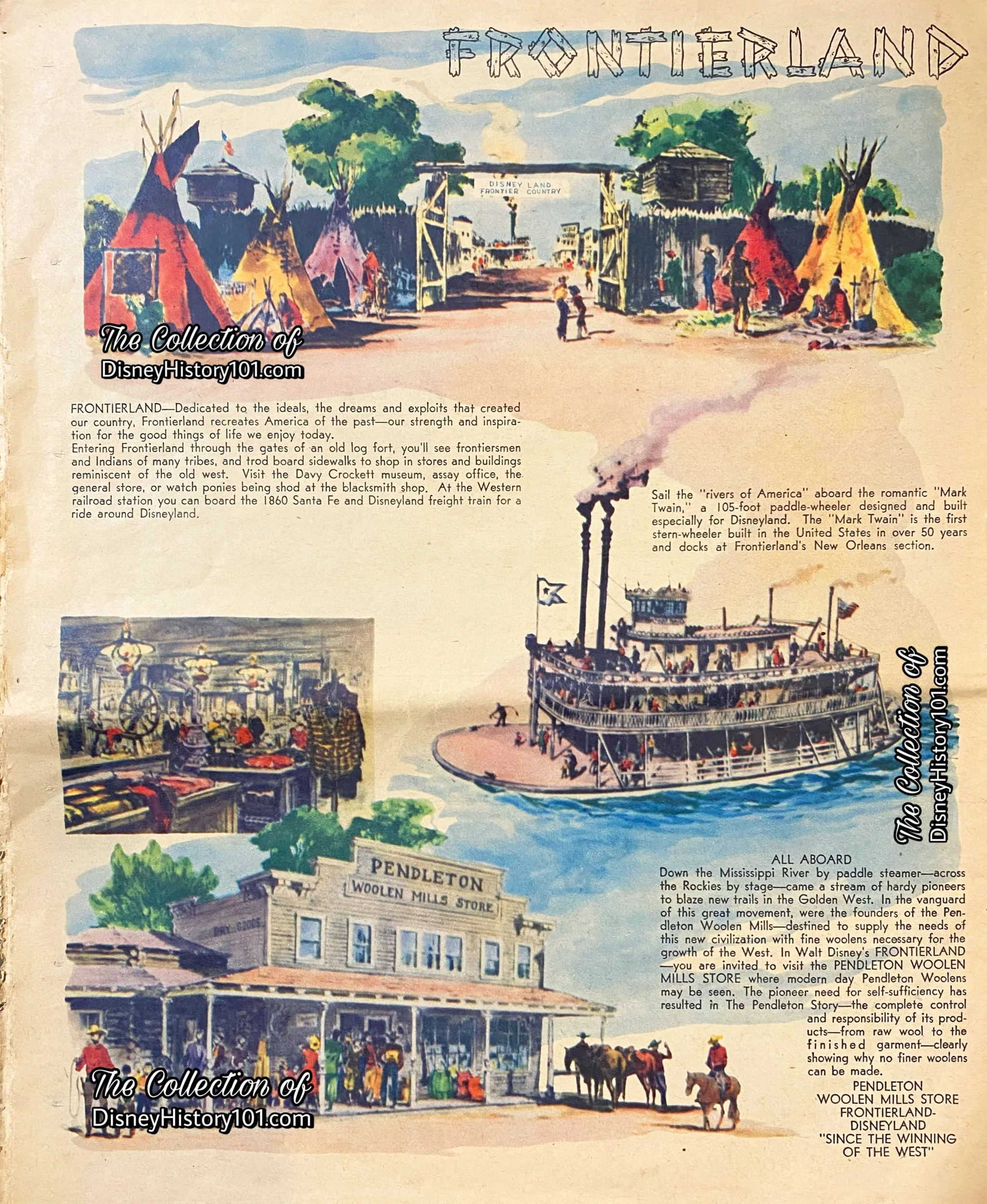
Some of these viable project Concepts (as this), were supported by a well-developed business case and built expectation.
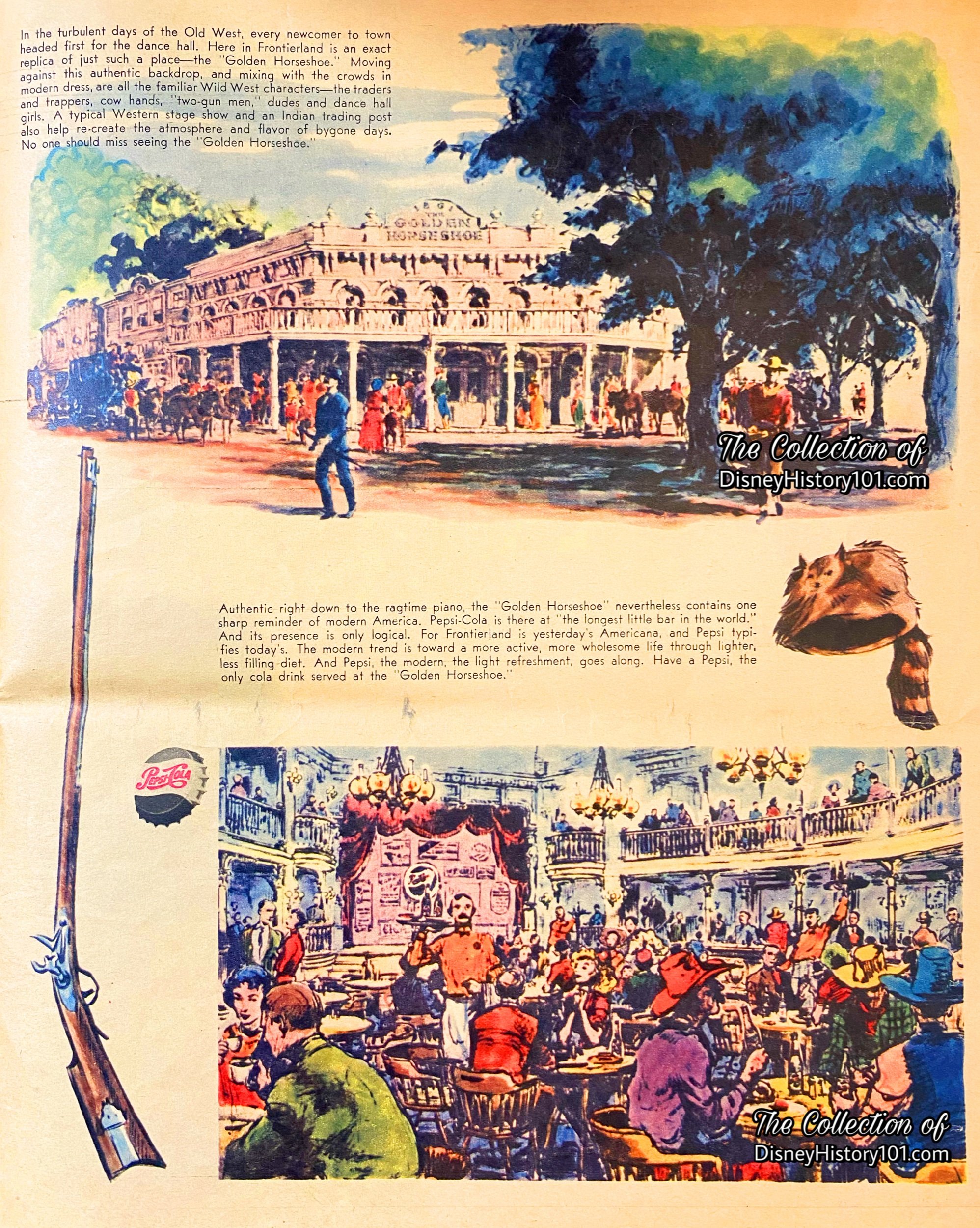
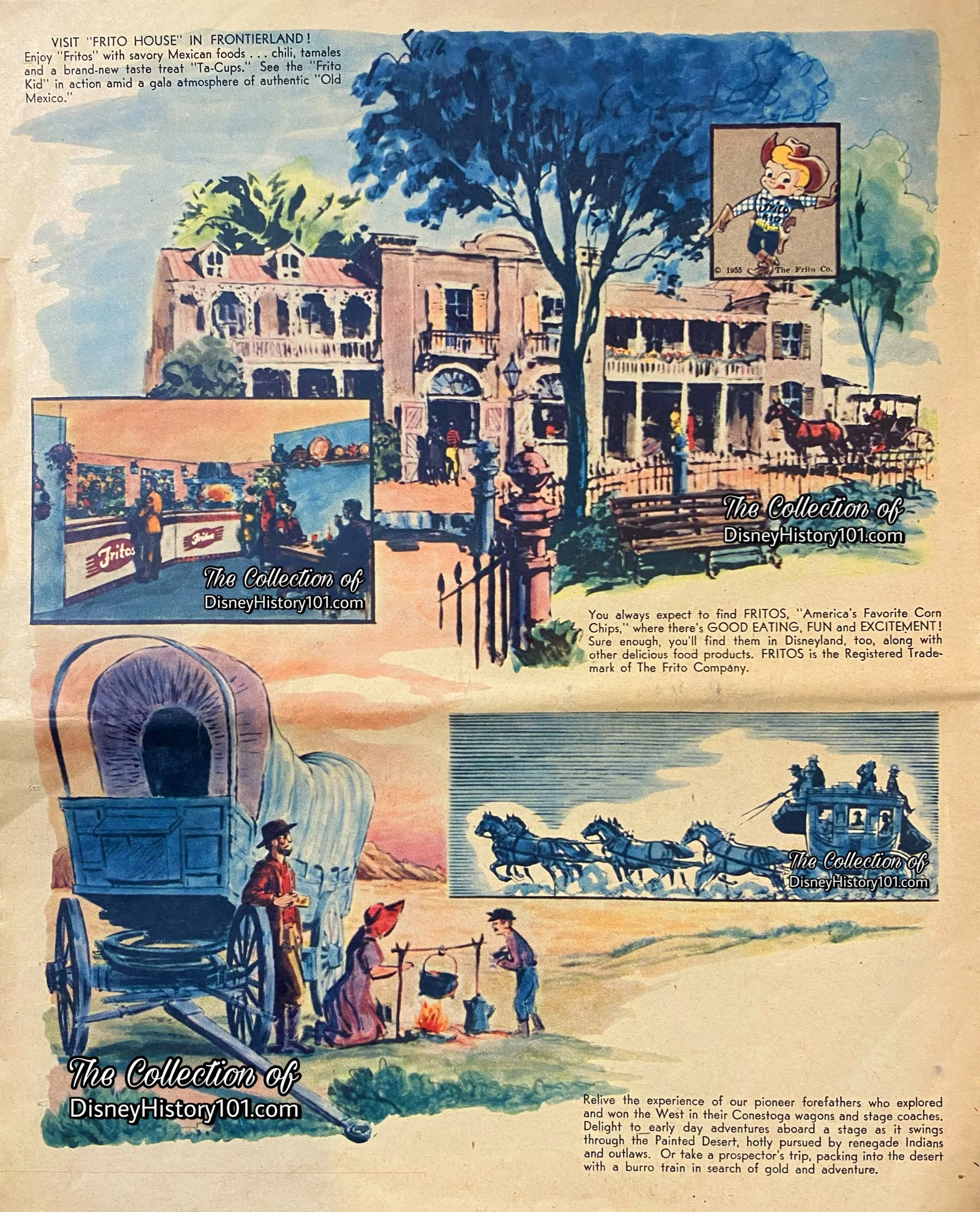
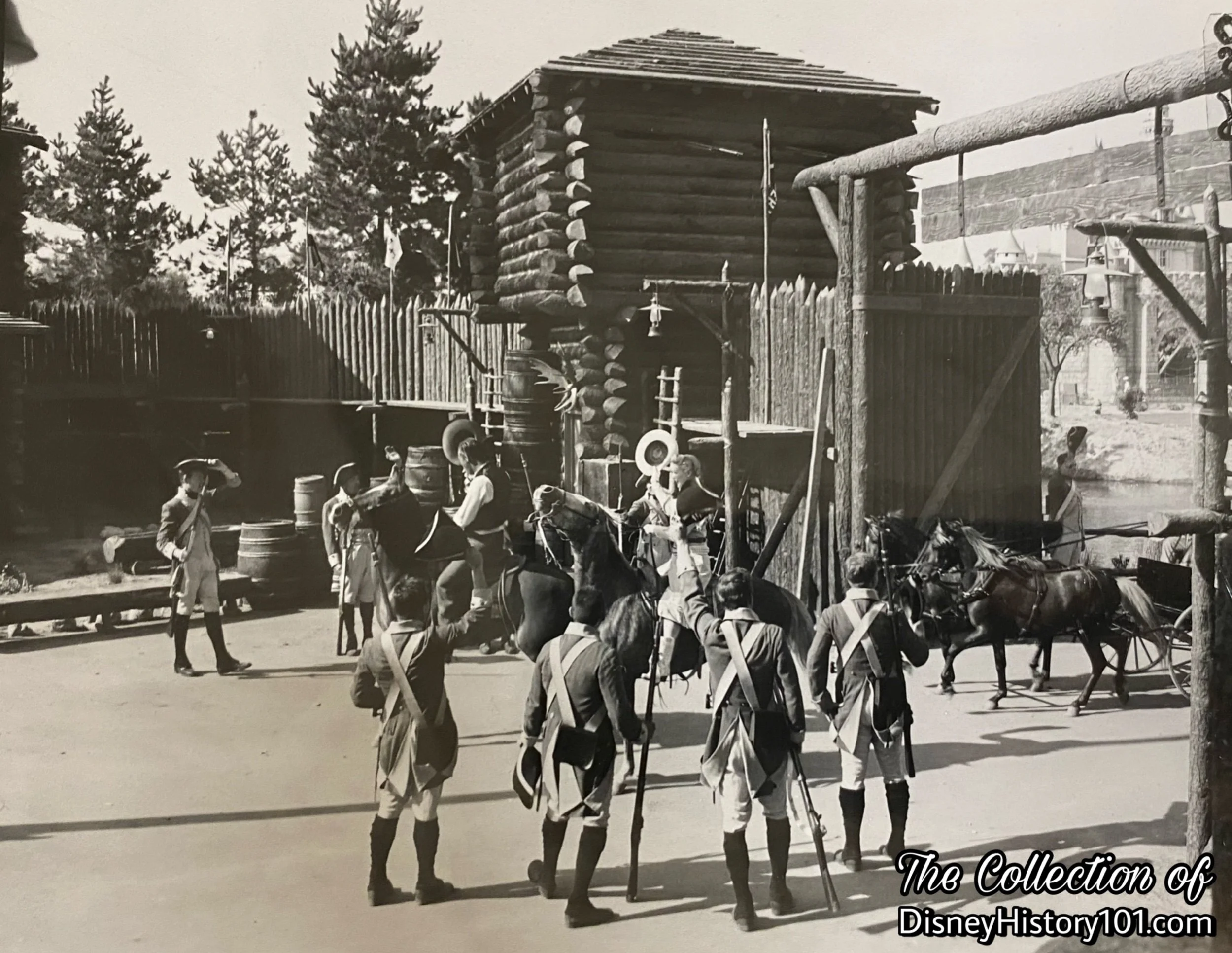
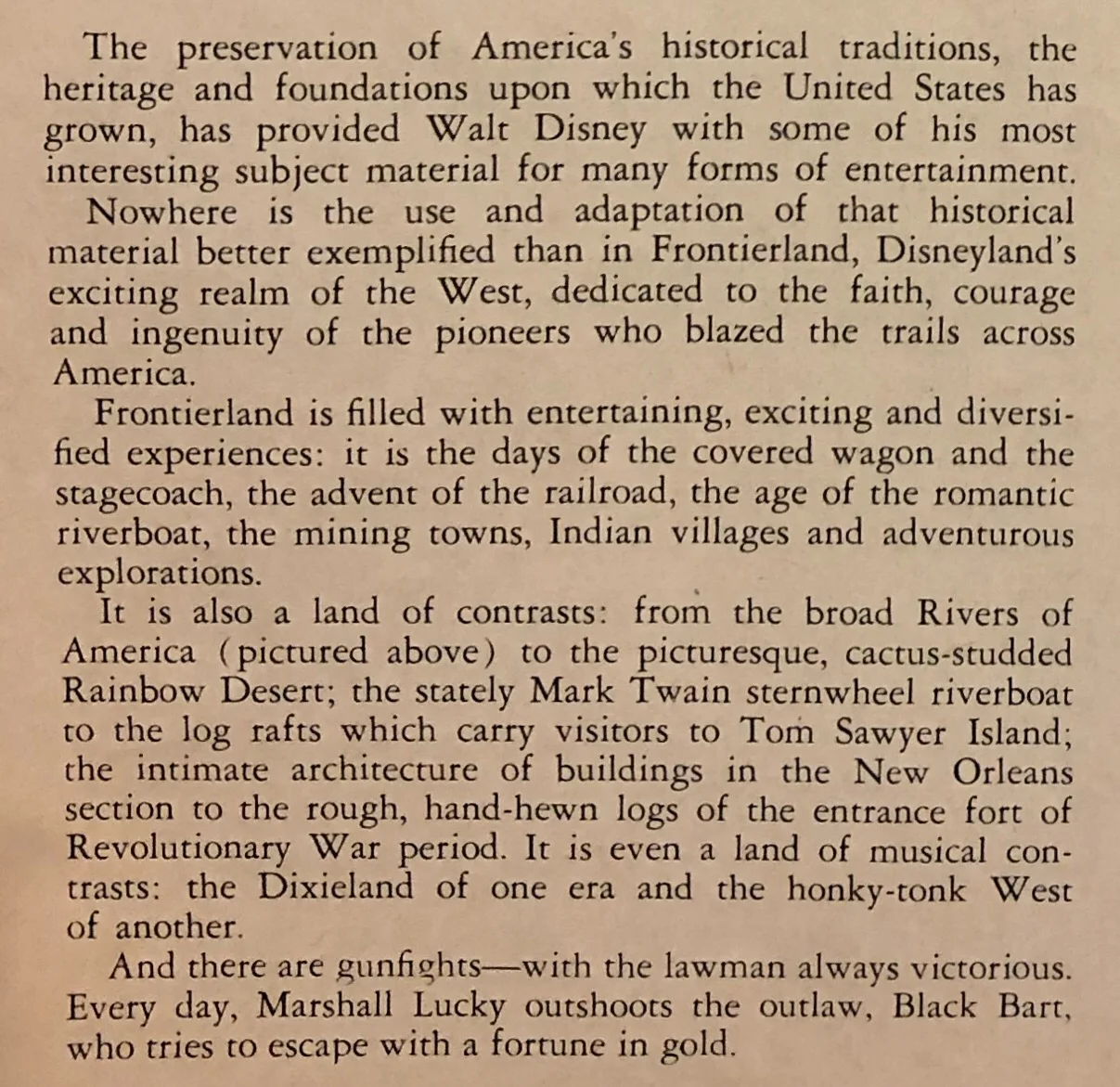
Excerpt from Disneyland Holiday, Winter, 1957-58.

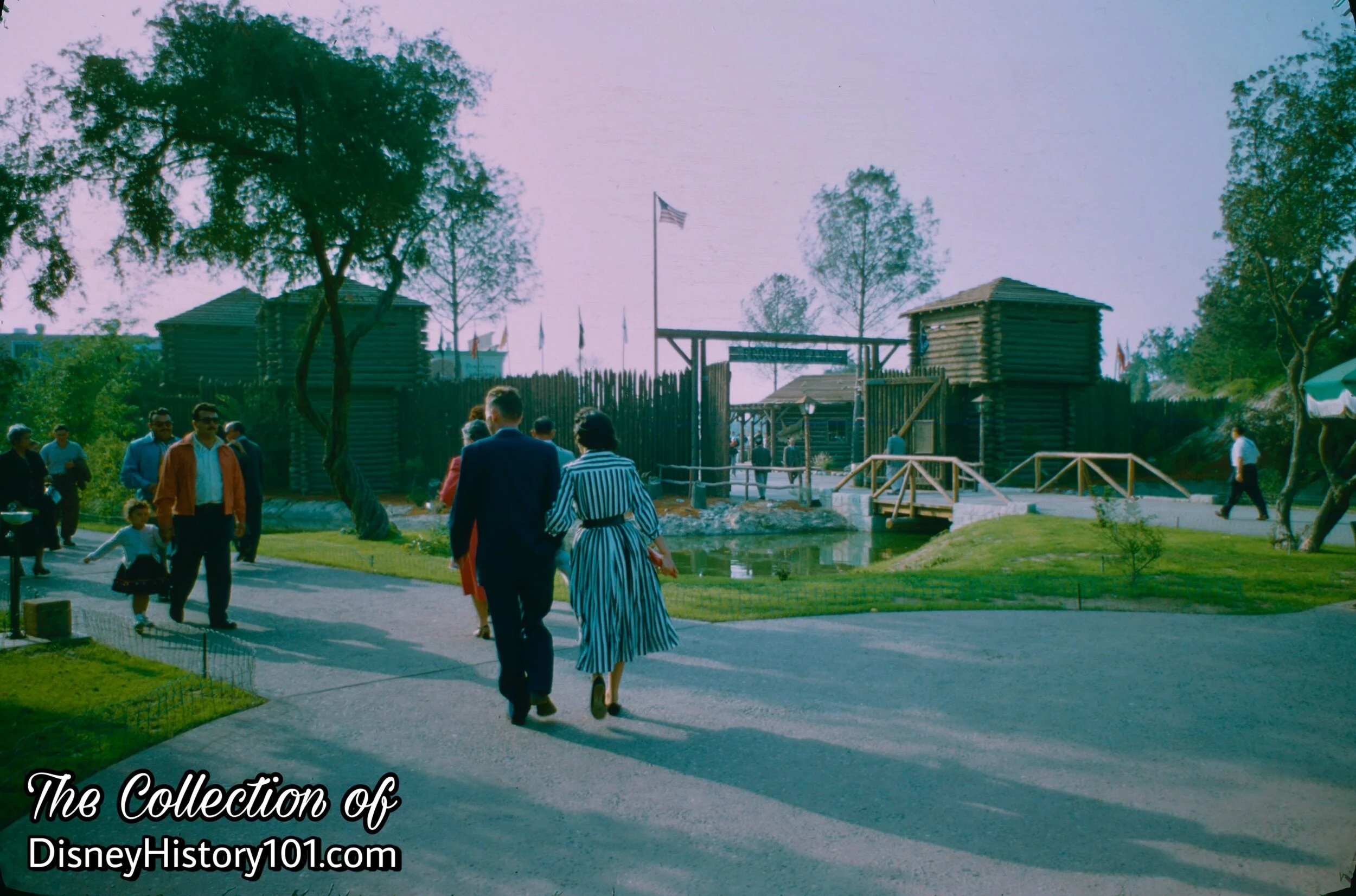
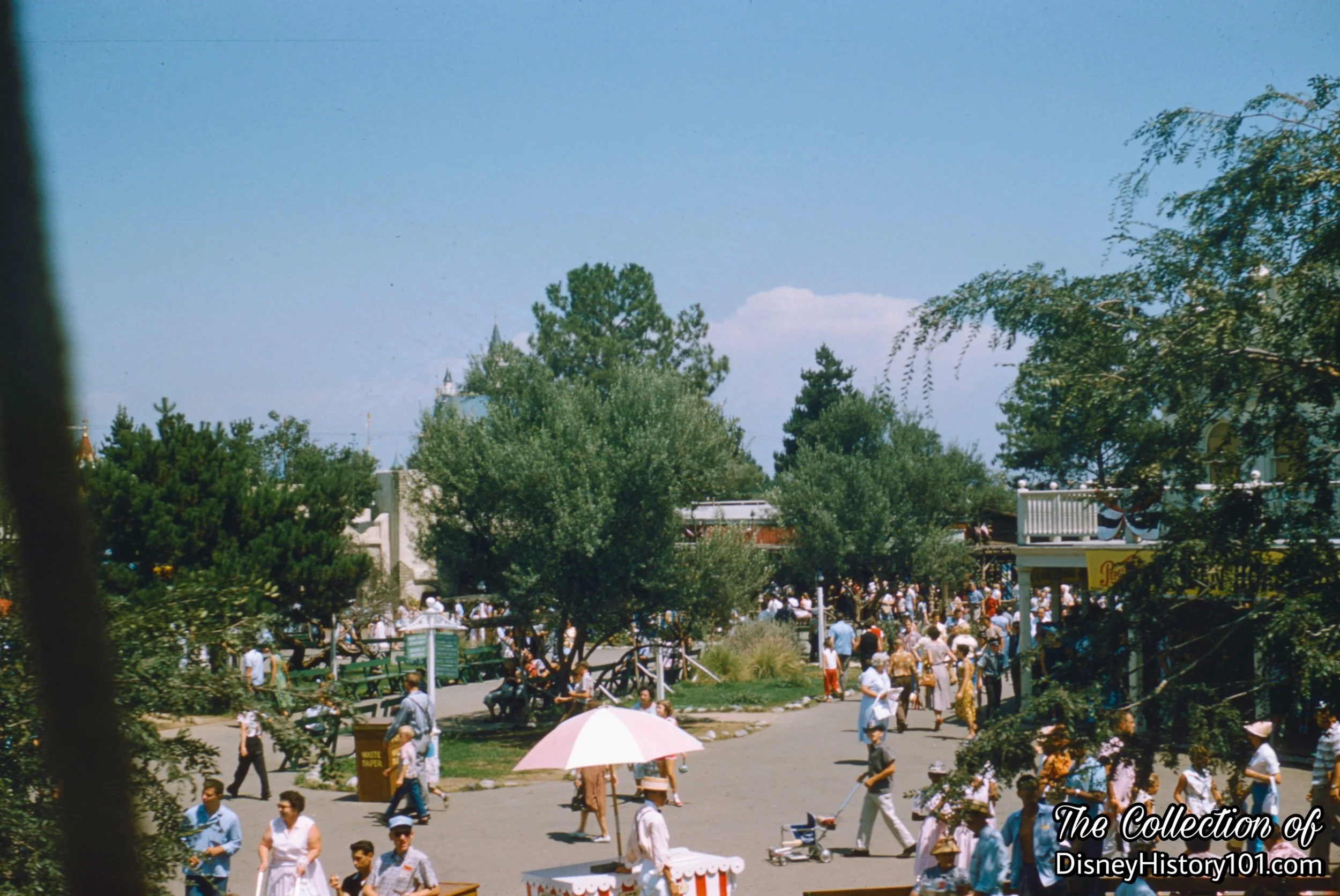
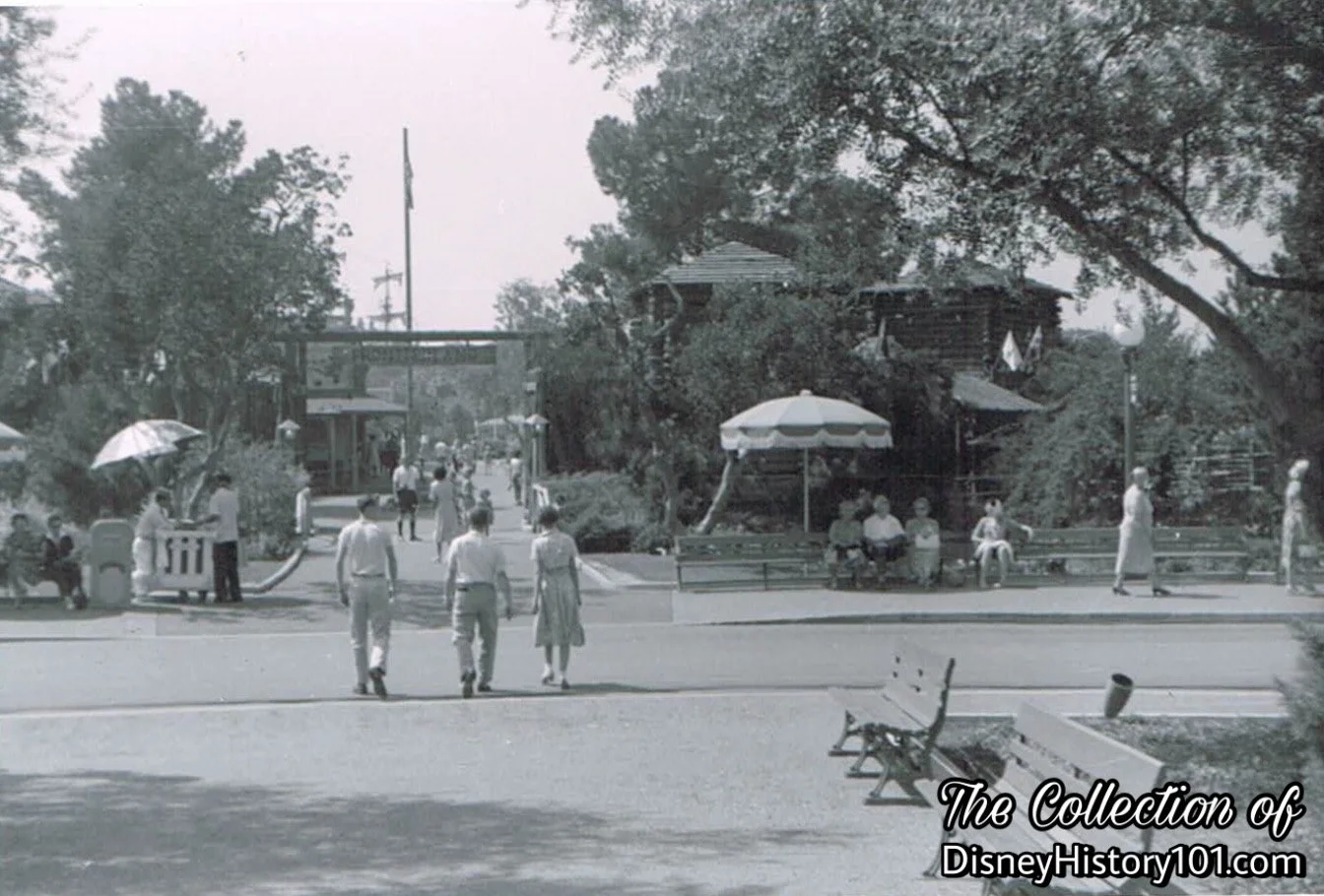
Frontierland Stockade from the Central Plaza Hub
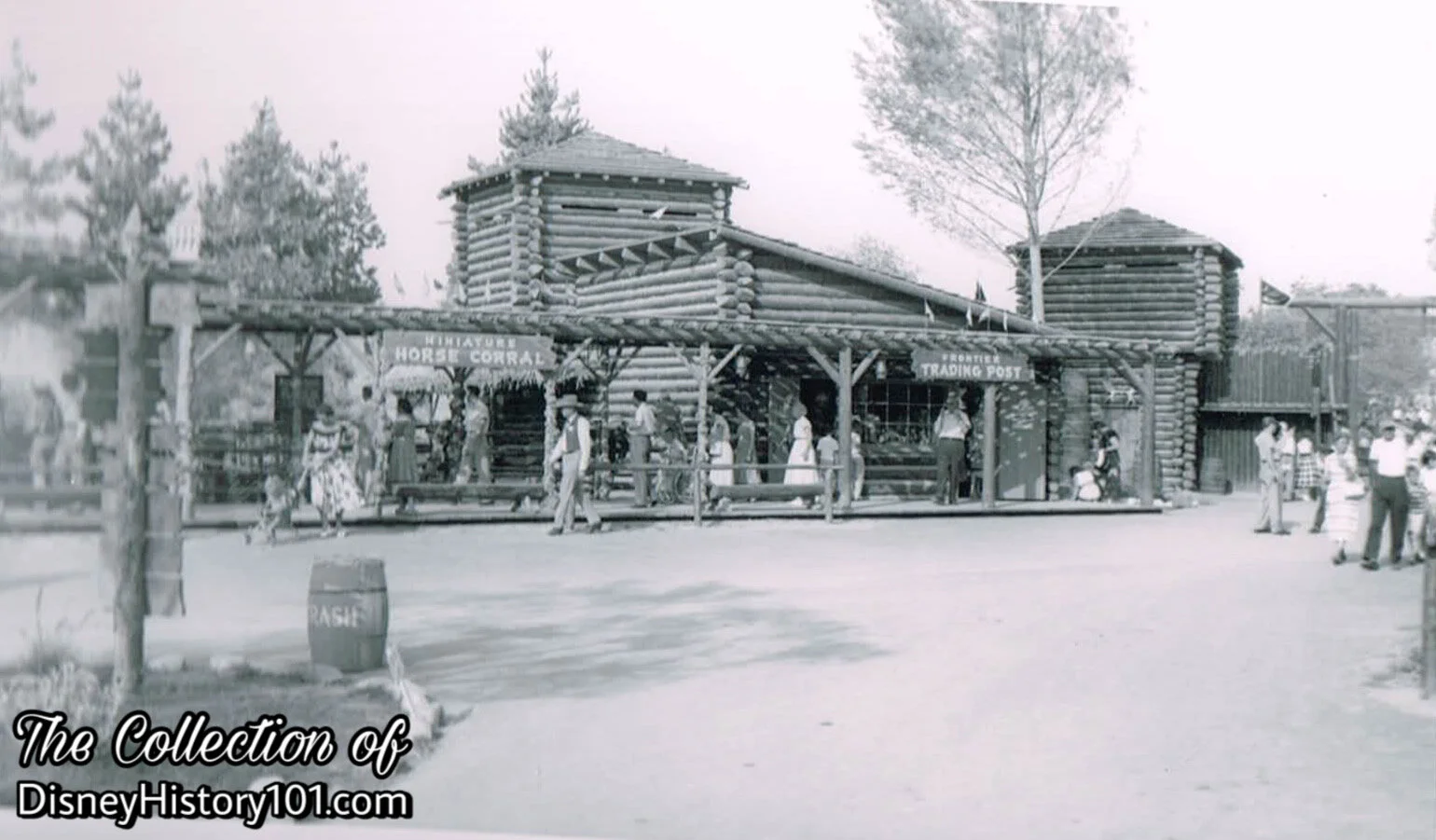
Frontierland Stockade on the Westside of Disneyland.
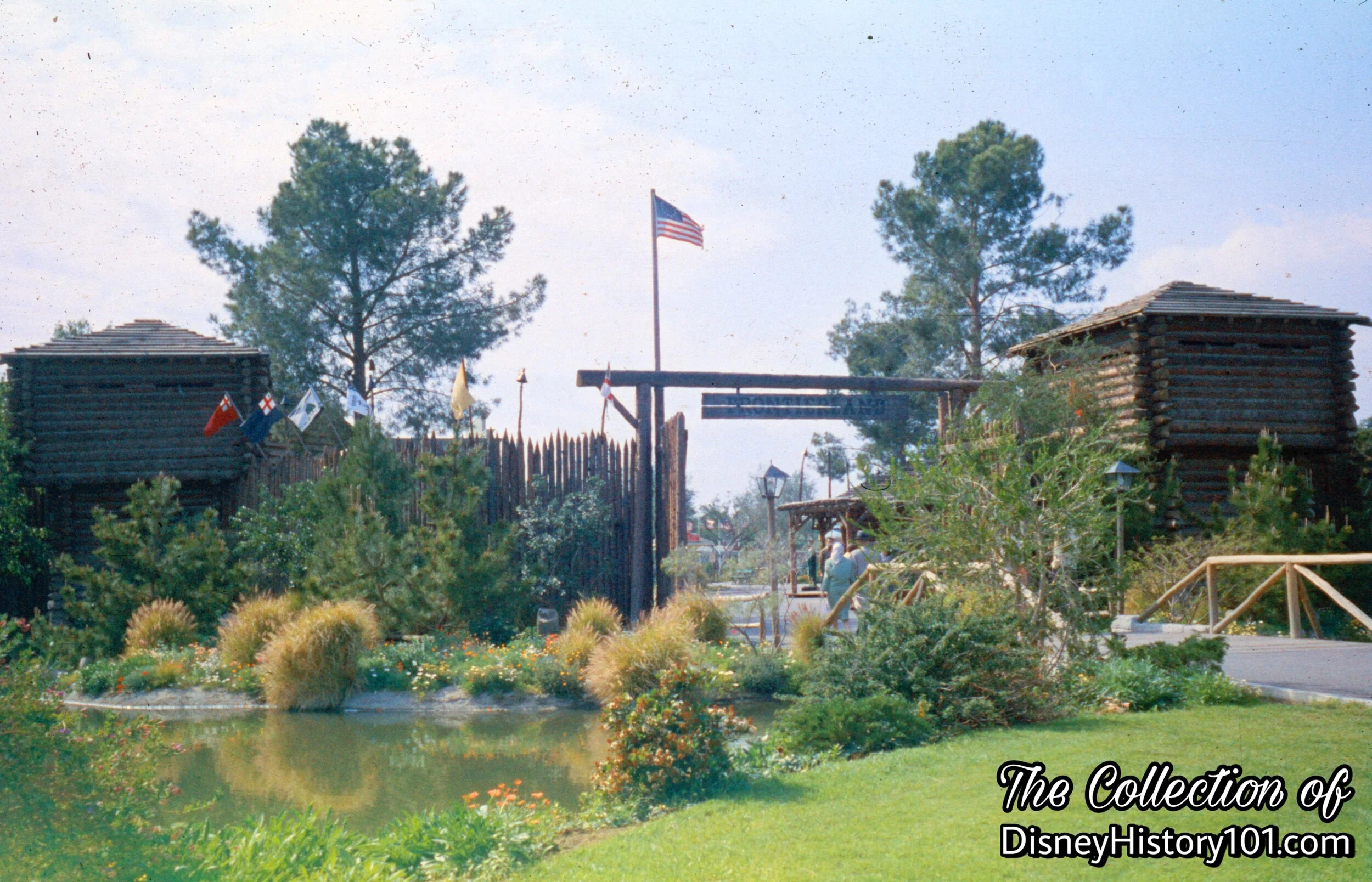
Frontierland Stockade from the Central Plaza Hub
The artistic landscape design was completed and plant material was artistically grown and maintained.
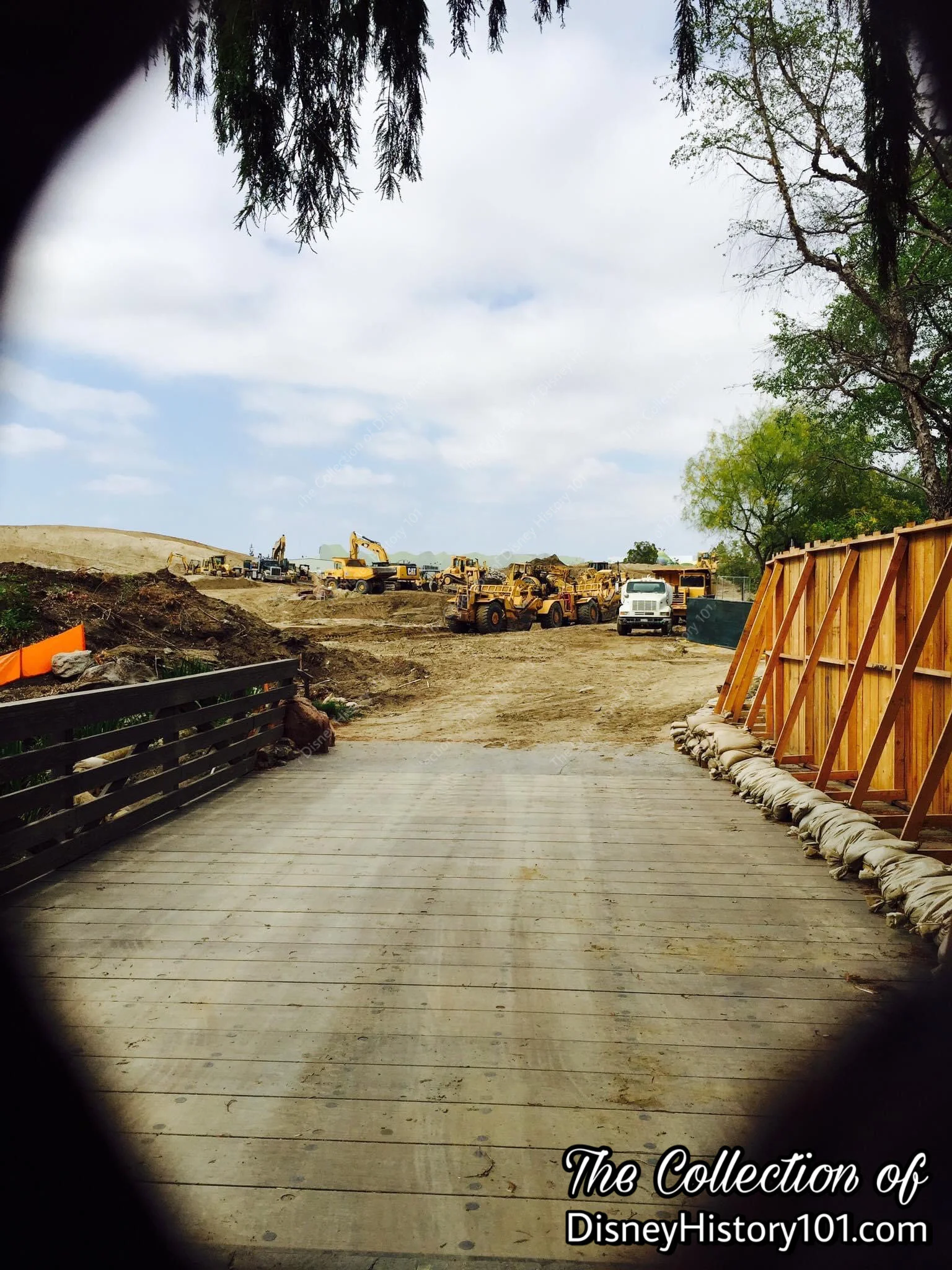
You may recall hearing how Landscape Architect Ruth Shellhorn carefully selected the location and type of tree at Disneyland, which included this particular quadrant of Walt Disney’s Magic Kingdom! “To the West of the Plaza Hub, the entrance to Frontierland included a log stockade accessed by a path with a rough-hewn wooden bridge crossing over a stream. Shellhorn framed the entrance with Californian native plants, including strawberry tree, lemonade berry Oregon grape and ceanothus, but also employed non-native plants with rugged forms. On of the planting characteristics she identified for Frontierland was a ‘mountain feeling,’ with isolated pine trees to express the aridity and desolation of the Old West. Her drawings specified Japanese black pine, with its windblown appearance, along with trees featuring gnarled trunks and textured bark such as Australian tea tree and melaleuca. To emphasize the natural appearance of this area, she planted vines, and currant, pennisetum, and several varieties of ceanothus to spill along the banks of the stream, requested tumbled rocks with branches lodged up against the bridge, and strategically placed fountain grass at the water’s edge,” according to “Ruth Shellhorn” by Kelly Comras.
Of the flora, “World of Flowers” also made mention of the “blue statice, Juniper tamariscifolia and lily-of-the-Nile… the. strawberry tree… Lantana and pink fountain grass.”
Grassy areas of the Park were cut weekly, and lawns were completely renewed at least once a year. The vigilance on the part of competent and ever-present gardeners prevented against weeds.
All of this blended well with [what the previous source called] Walt’s “aesthetic and philosophical approach in the planting design that would realize his childhood yearning for ‘Eternal Spring,” which is what you can see in the previous Vintage View!
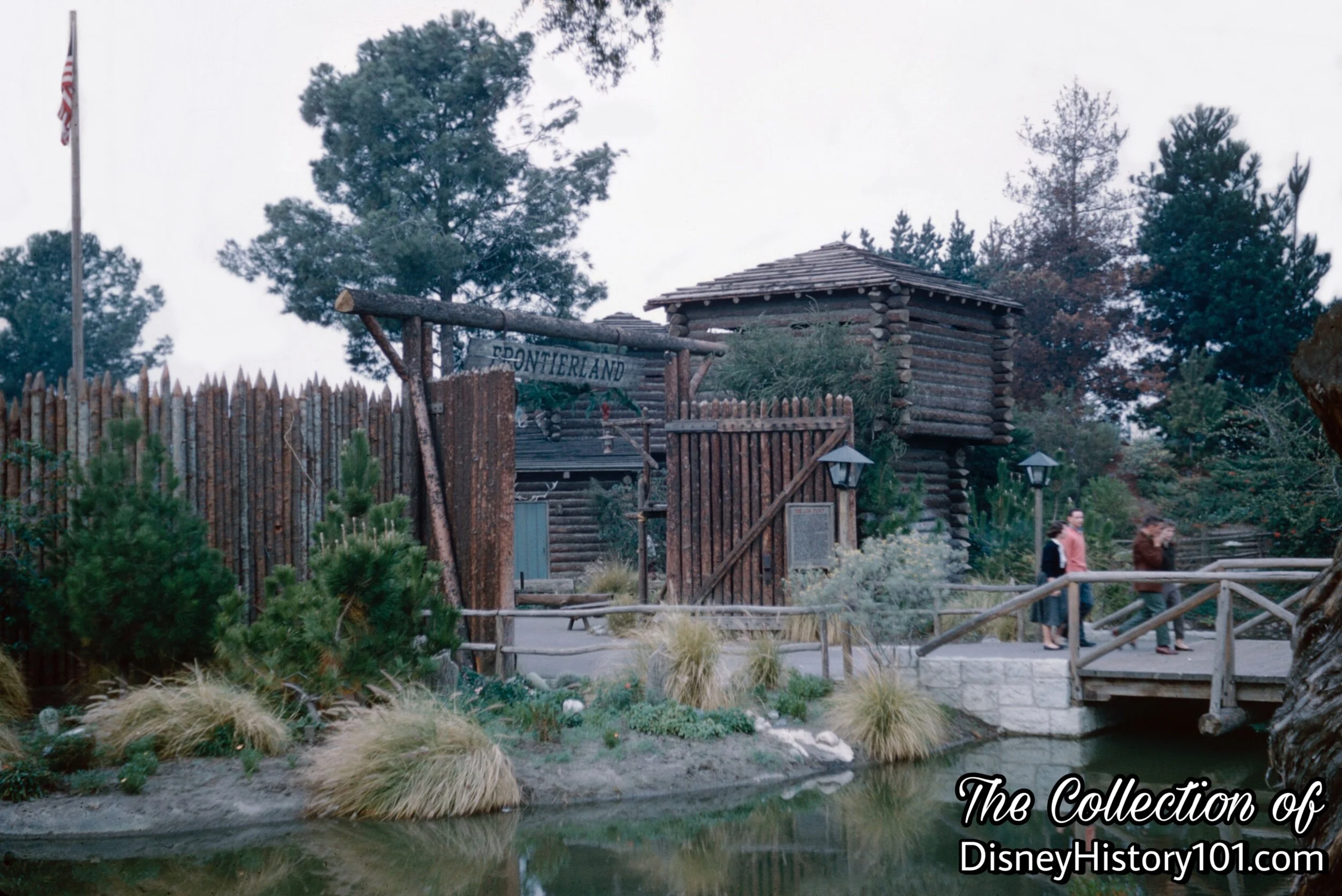
Frontierland Stockade from the Central Plaza Hub
Pines, oaks, and olive trees line the dusty roads of the old west.
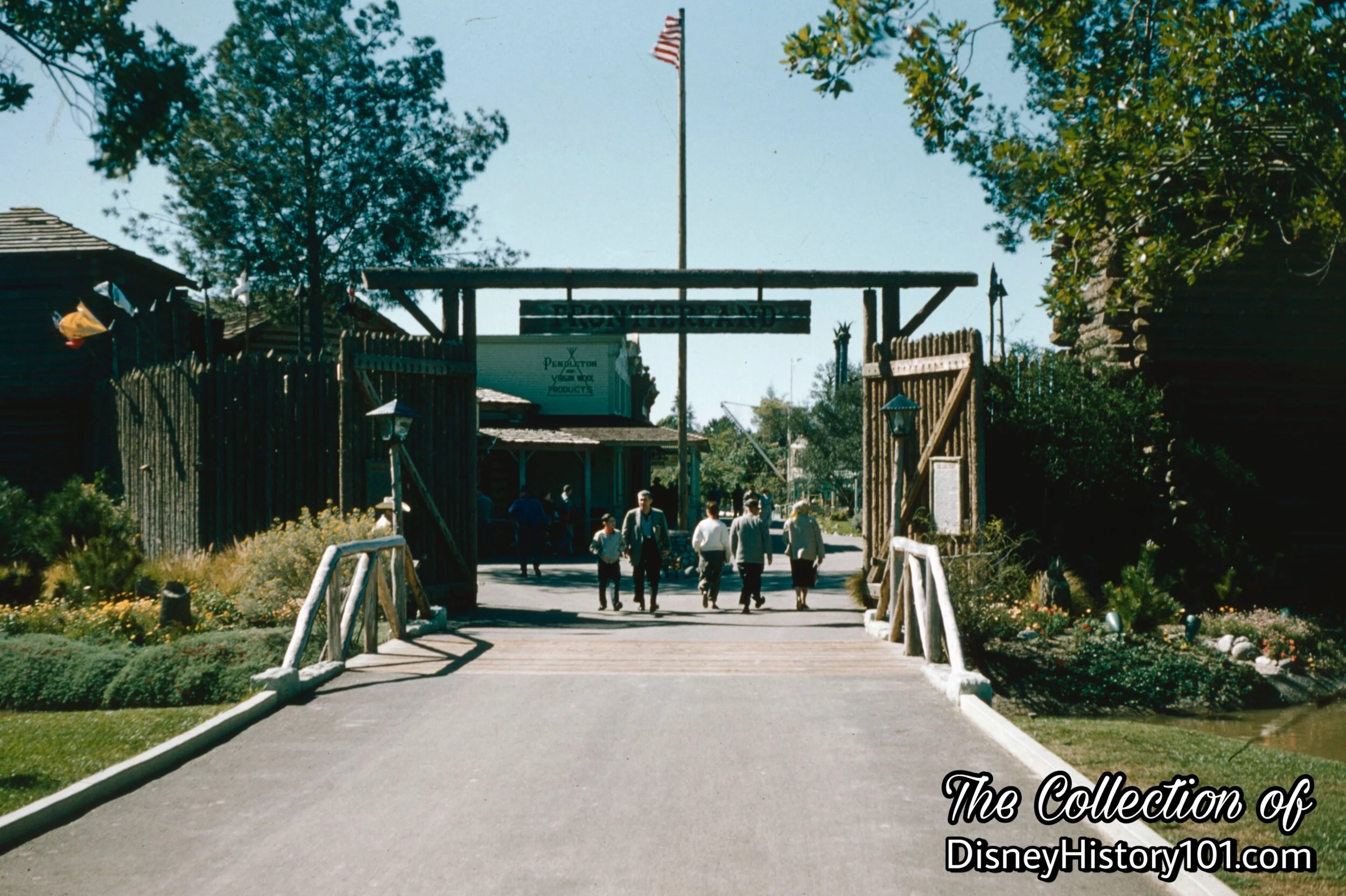
Frontierland Stockade
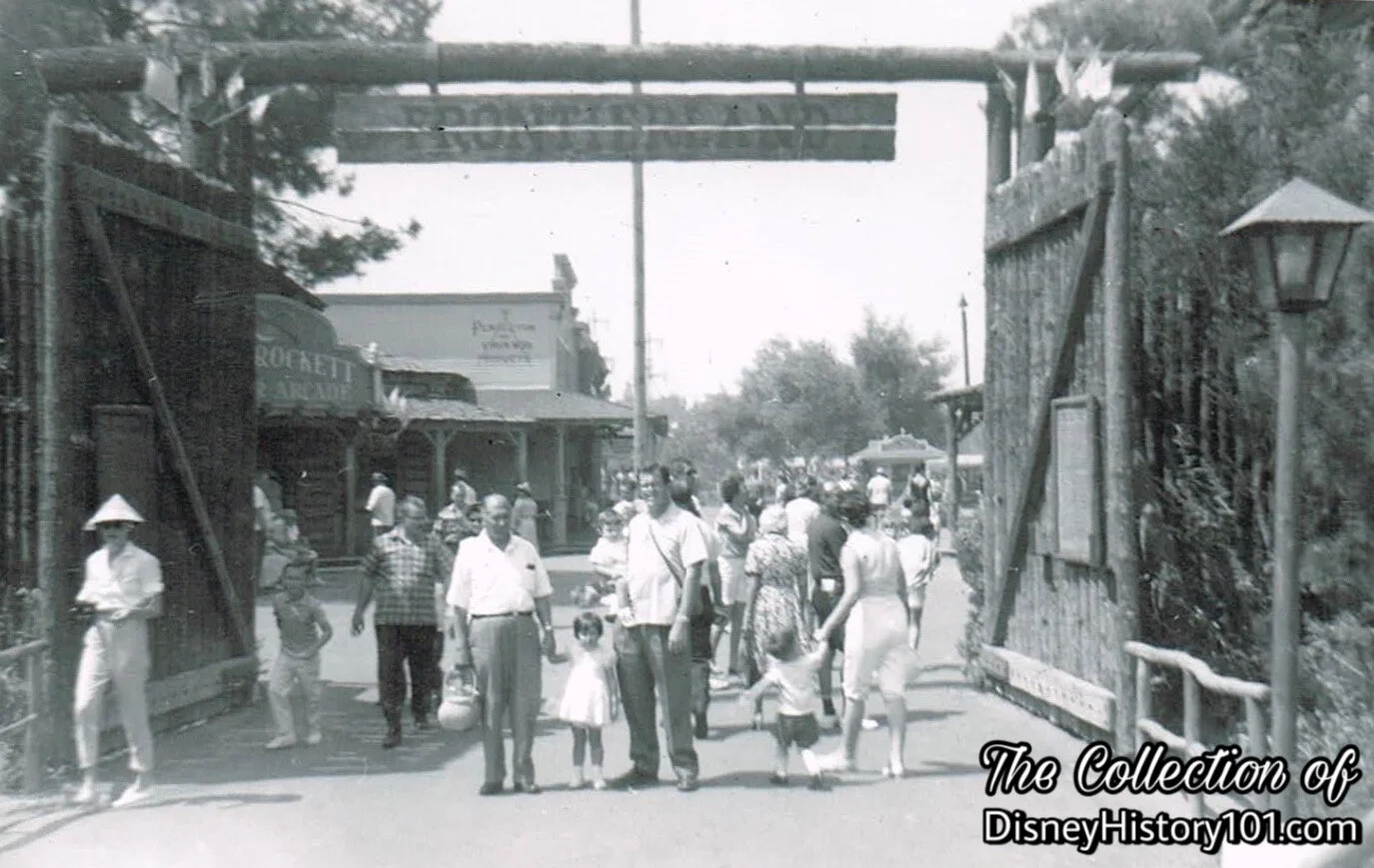
Frontierland Stockade
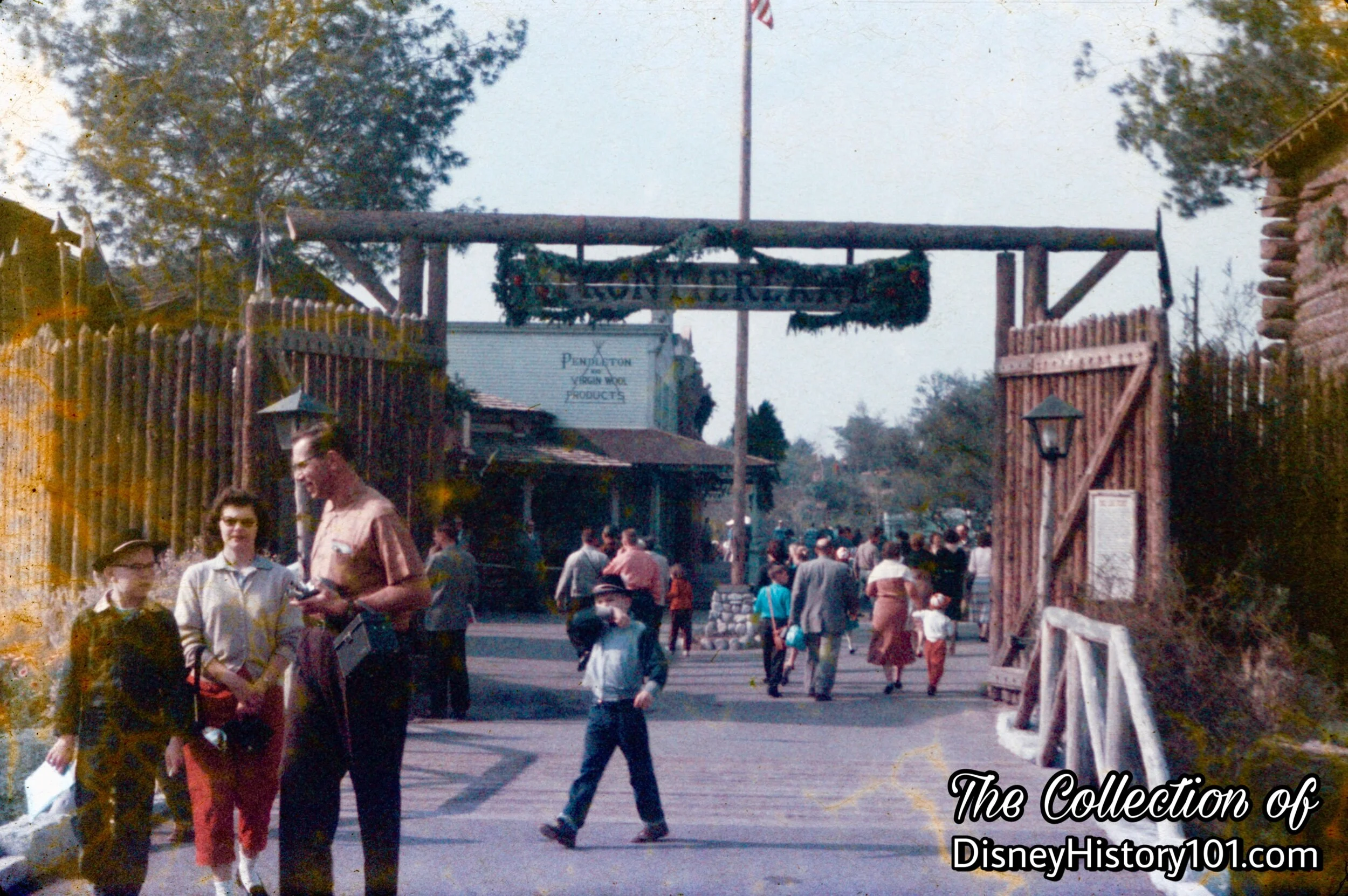
Frontierland Stockade during the winter holiday season
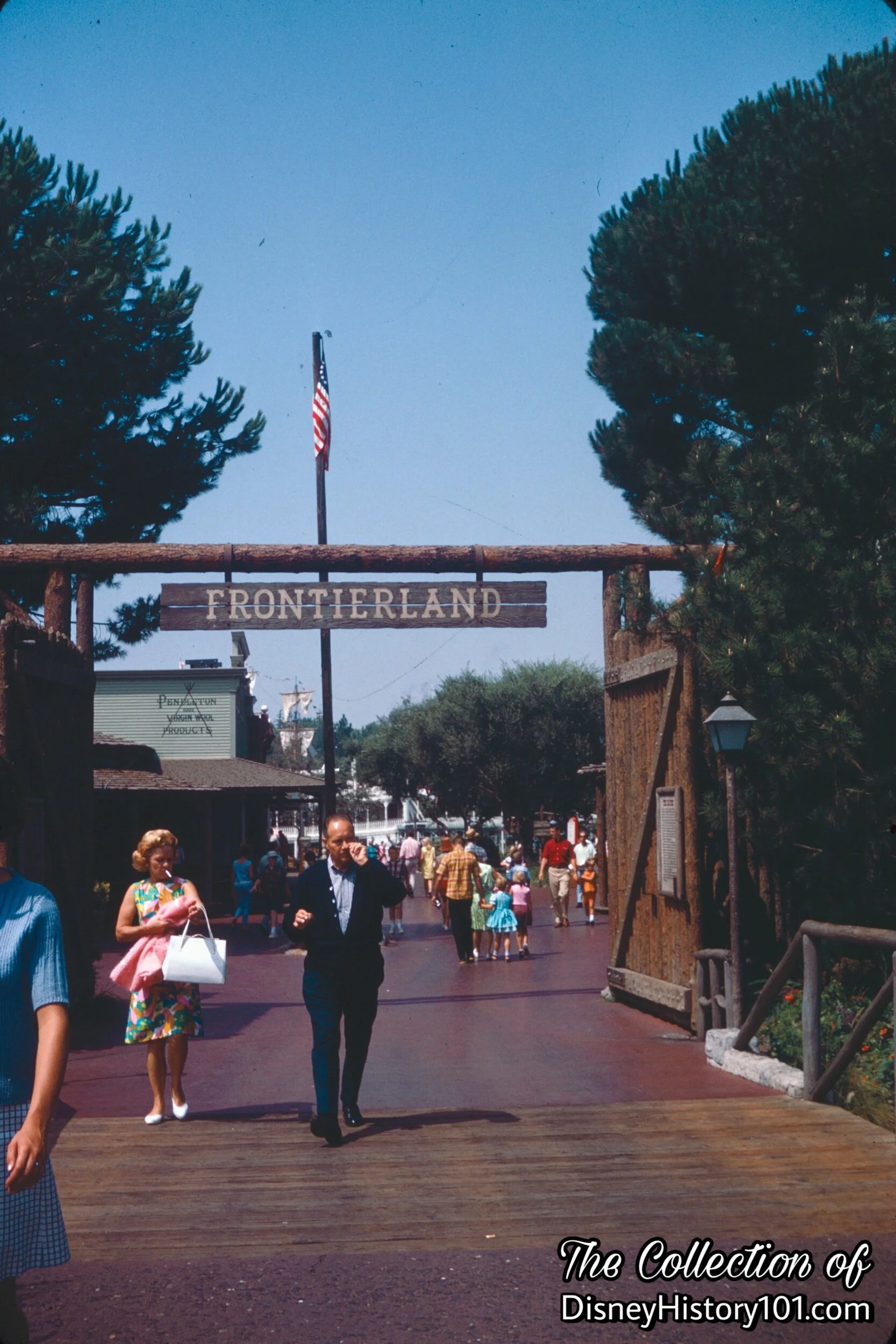
Frontierland Stockade
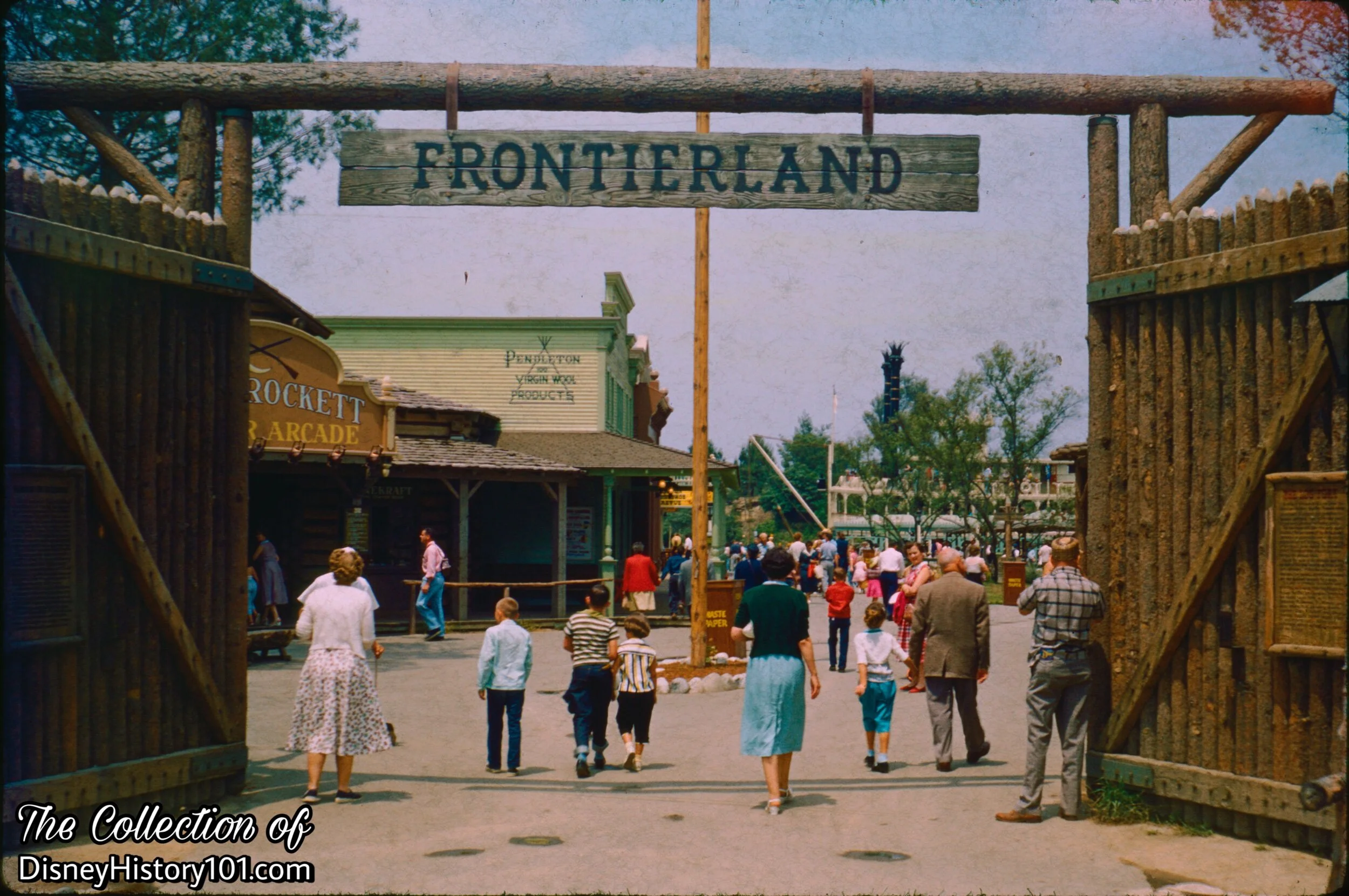
Frontierland Stockade
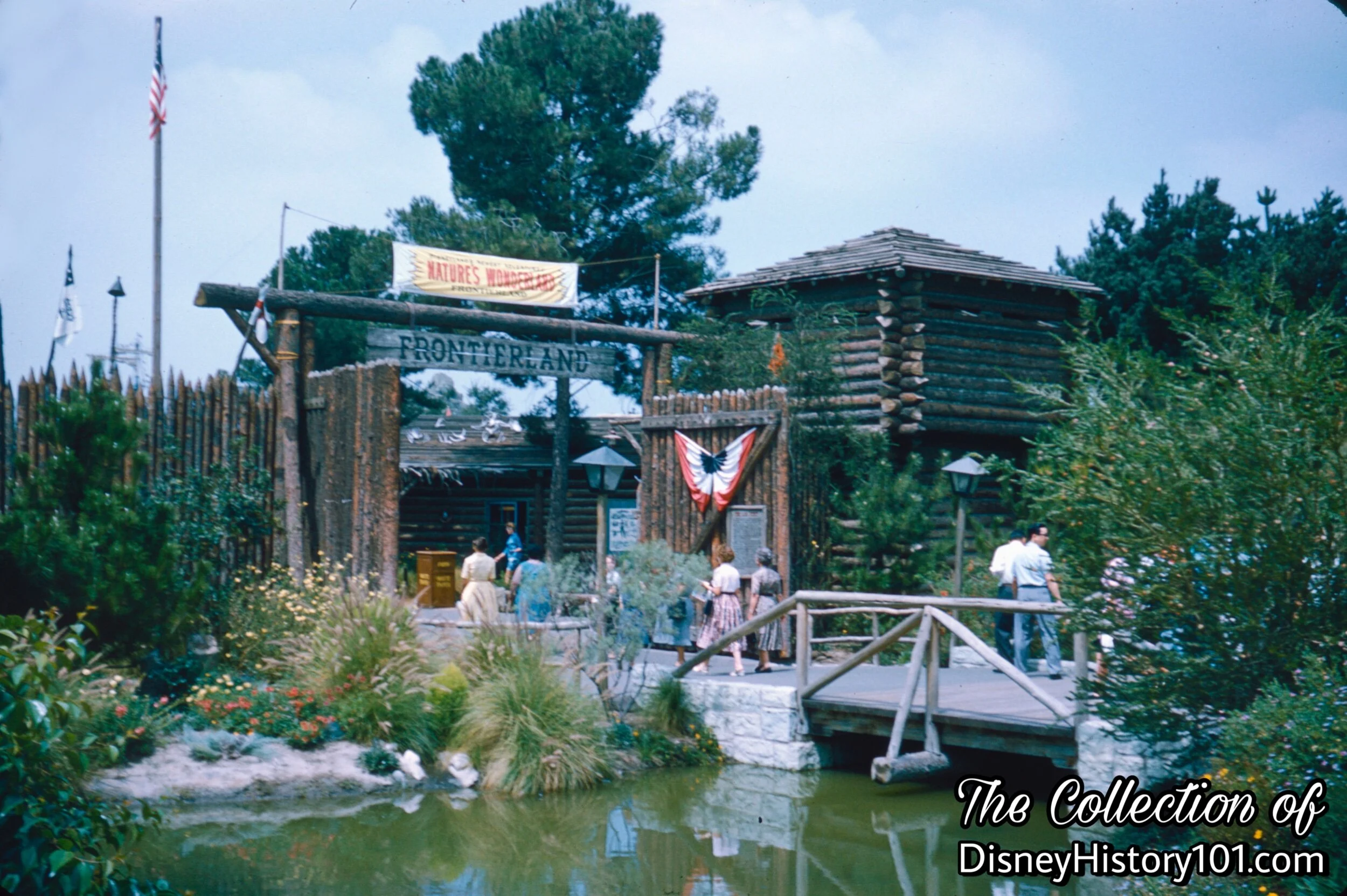
Frontierland Stockade from the Central Plaza Hub
One can easily slip into the jargon of “ride,” but at Disneyland there is a "story behind the story" of every attraction, every attraction is a living experience for the guest. Disneyland ride-through attractions or adventures have officially been defined as an “individual show, ride, or exhibit designed to produce an entertaining Guest experience. Disney attractions stir the imagination, enliven the senses, and provide the participants with positive, innovative entertainment, which is the essence of the DISNEYLAND Show.” It is important to review the story of the attraction, tell the story, explain it, and create interest. This is the story of Frontierland attractions.
Frontierland had two Public Mailboxes for Guest’s convenience, one located near the Disneyland Stage Lines queue, and the other near the Santa Fe & Disneyland Railroad Frontierland Station platform (in case Guests would like to send a Souvenir Postcard to a friend or family member).
At a meeting of the Disneyland Merchant's Association (held January 25, 1956), a momentous announcement was made about new attractions:
“Paul Banyan's Boot, which will be aproximately 25 ft. high, is a future development, probably not until next year.
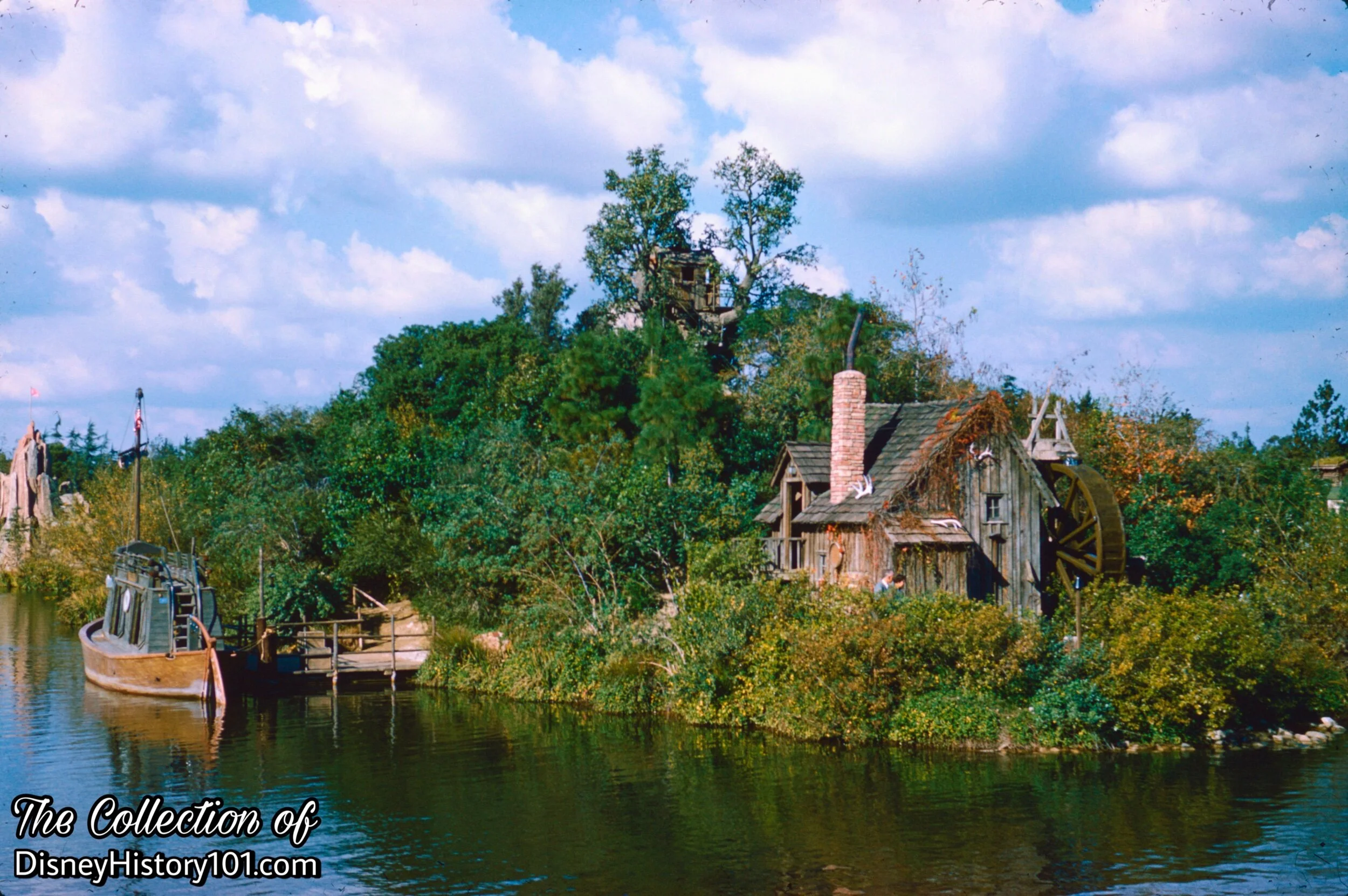
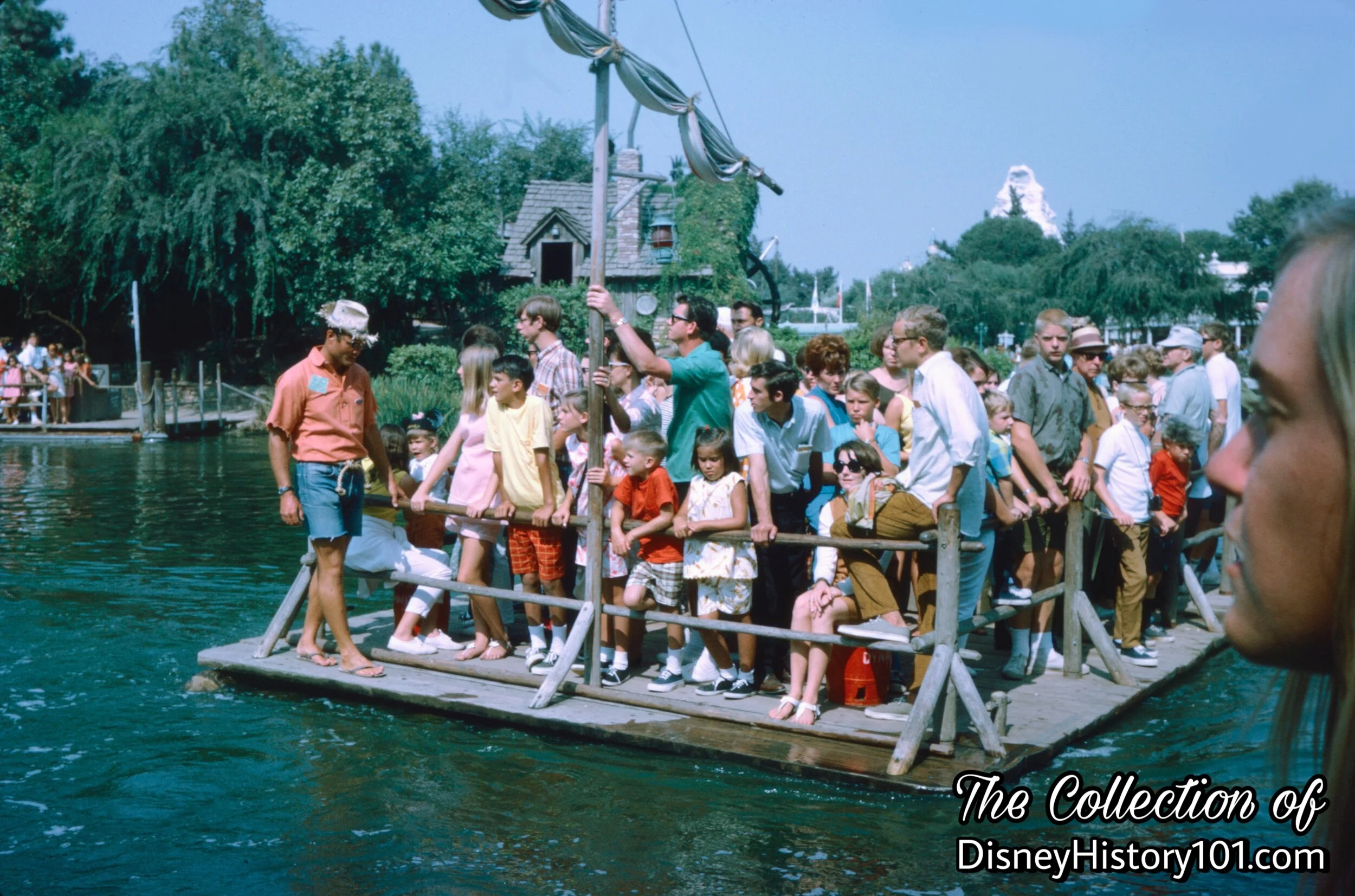
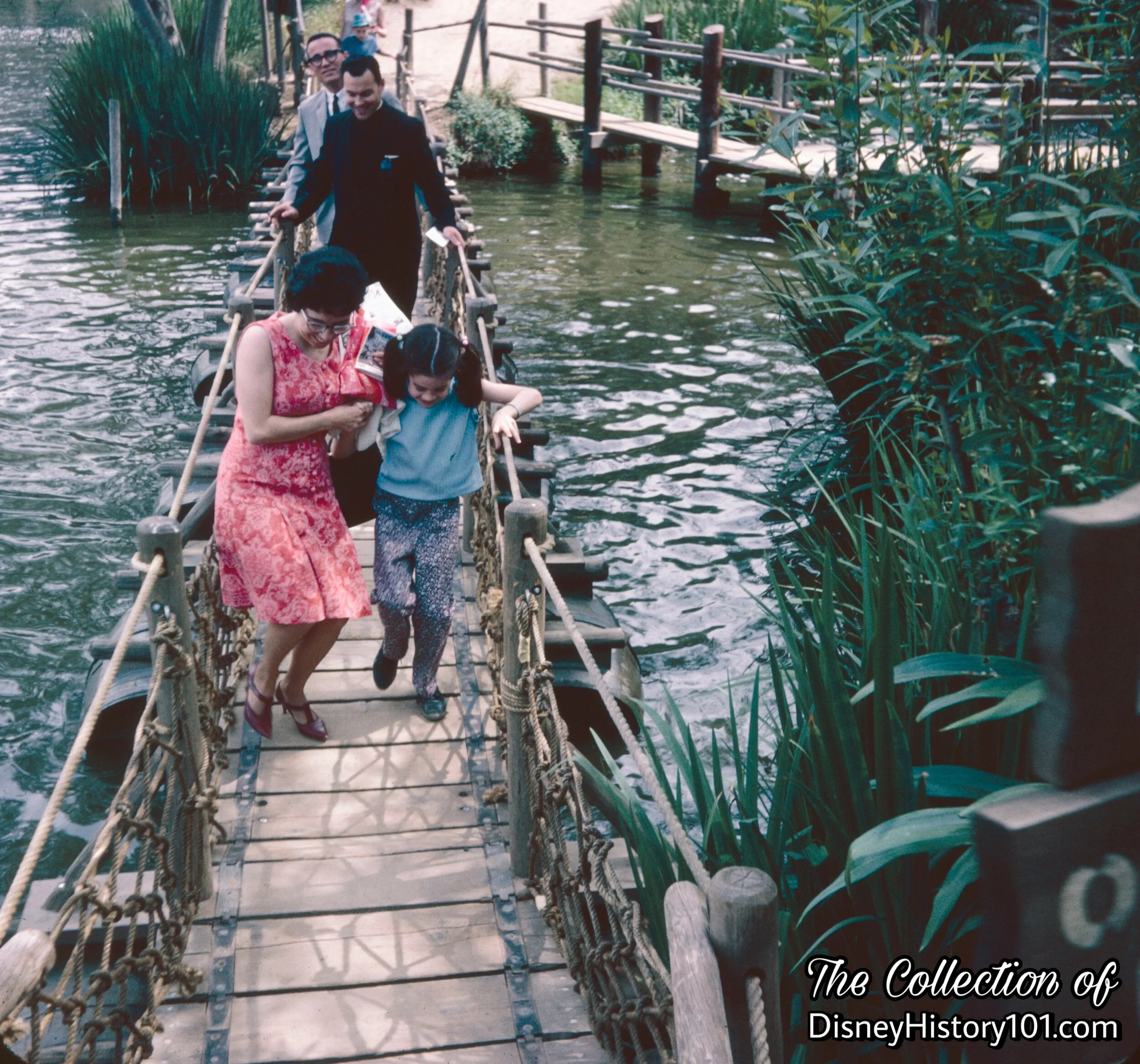
Tom Sawyer Island: This is an island located in the center of the river opposite the Mark Twain dock. This Island Is being developed as a walk-through with many pictorial editions. Included will be an old fashioned water wheel, suspension bridge, Indian Joe's Cave which will have a lot of under ground ‘gimmicks’ somewhat similar to a Jungle Jim development; and an authentic reproduction of an old time western fort built at about 3/4 scale. This will be called Fort Milderness and will have parapets where youngsters can fire old fashioned rifles,
These will be all noise and no bullet. On the northern part of the island there will be many plastic animals with some animated. The Island will be reached by Tom Sawyer log rafts which will dock on both sides of the river and on both sides of the Island. The only charge will be for the trip on the raft. All of the attractions on the Island will be free.
Fowler's Harbor: The Fowler Harbor area is being developed by moving the berm back 20 feet in order to increase crowd interest on the west side of the river. This will make it possible for Myrt to serve more chicken at the Chicken Plantation, Development will be of an American Indian village with real tepees, a dock for the Indian Mar Canoes and a magnetic house at the tip of Fowler's Harbor.”
By September 28, 1958, Disneyland, Inc. made approximately $29,994.00 of land improvements to the Frontierland Fort entrance.
By 1959, Joe Fowler was Vice President of Disneyland Operations Committee and Doc Lemmon of Disneyland Operations was overseeing Operators of Rides & Amusements, Livestock, Parking Lot, and Ticket Sellers.
Just south of the Ice House stretches the Frontierland Dock!
A plaque near Lafite’s Anchor (revealed June 22, 1965) read : “Said to be from a pirate ship commanded by Jean Lafitte in The Battle of New Orleans January 8, 1815. It is also said that Lafitte’s privateering ships left a wake of blood from the mainland to Barataria Bay but, don’t believe everything you read.”
During this era, the land inspired another adventure at Disneyland. By 1964, the character of the 12th hole of The Magic Kingdom Golf Course of the Disneyland Hotel Golf Centre was themed after Frontierland.
”New Magical Opportunities for Frontierland”
Around 1979 (and as work on Big Thunder Mountain Railroad was wrapping up), the Park Managers Operations Committee addressed the New Projects and Master Planning Committee regarding the updating and placing in priority projects which relate to onstage guest involvement. About this it was written: “The New Projects and Master Planning Committee… addressed itself to the updating and placing in priority projects which relate to onstage guest involvement. A primary concern is that of providing a major addition of change in the Park within the next three to four years.” Among the planned future attractions was a Western River Expedition and Discovery Bay section of Frontierland with San Francisco-inspired harbor and Island at the Top of the World attraction.
By August of 1975, the Feasibility Analysis Economic Study was completed for (what was first billed as “Oriental Disneyland”), an area called Adventureland was mentioned. Eight years later, TOKYO DISNEYLAND® Park - the first overseas Disney Theme Park; located in Tokyo Bay in Urayasu City, Chiba Prefecture, Japan opened on April 15, 1983. It included an incarnation of Frontierland.
By the 1980s, design standards were being evaluated by WED. Functionally design themed architectural buildings and utility buildings with themed facade architectural treatments were analyzed, contrasted, and compared. Known or implied present day design standards were compared with present day (state of the art) industry standards and recommendations were made for changes and formal acceptance of new standards. Consideration was given to Kitchen Equipment standards, Break areas, Maintenance areas, and Equipment Rooms. The goal of the Design Standards Evaluation Program was to analyze reduce up front and overall project costs, and maintain quality of facilities, shows, and rides.
By 1990, Frontierland was home to eight major attractions, including Big Thunder Mountain Railroad, Big Thunder Ranch, Tom Sawyer Island, the Mike Fink Keelboats, the Mark Twain Steamboat, the Columbia Sailing Ship, the Golden Horseshoe Jamboree, and the Frontierland Shooting Arcade.
On Halloween night of 2007, one oak tree was christened the “Halloween Tree” in honor of Ray Bradbury (and one of his short stories).
In 2008, WDI master planners were searching for ways to “bring relevance to an area that is out of touch with the audience.” In doing so, WDI master planners entertained the concept of a “Rivers of America Update” which would have potentially included a Legends of America show (consisting of vignettes inspired by Davy Crockett, Paul Bunyan, the Princess and the Frog, Pocahontas and characters from other Walt Disney Productions and Pictures). By 2009, a “Princess & the Frog Show” - a new show and venue improvements was also being considered.
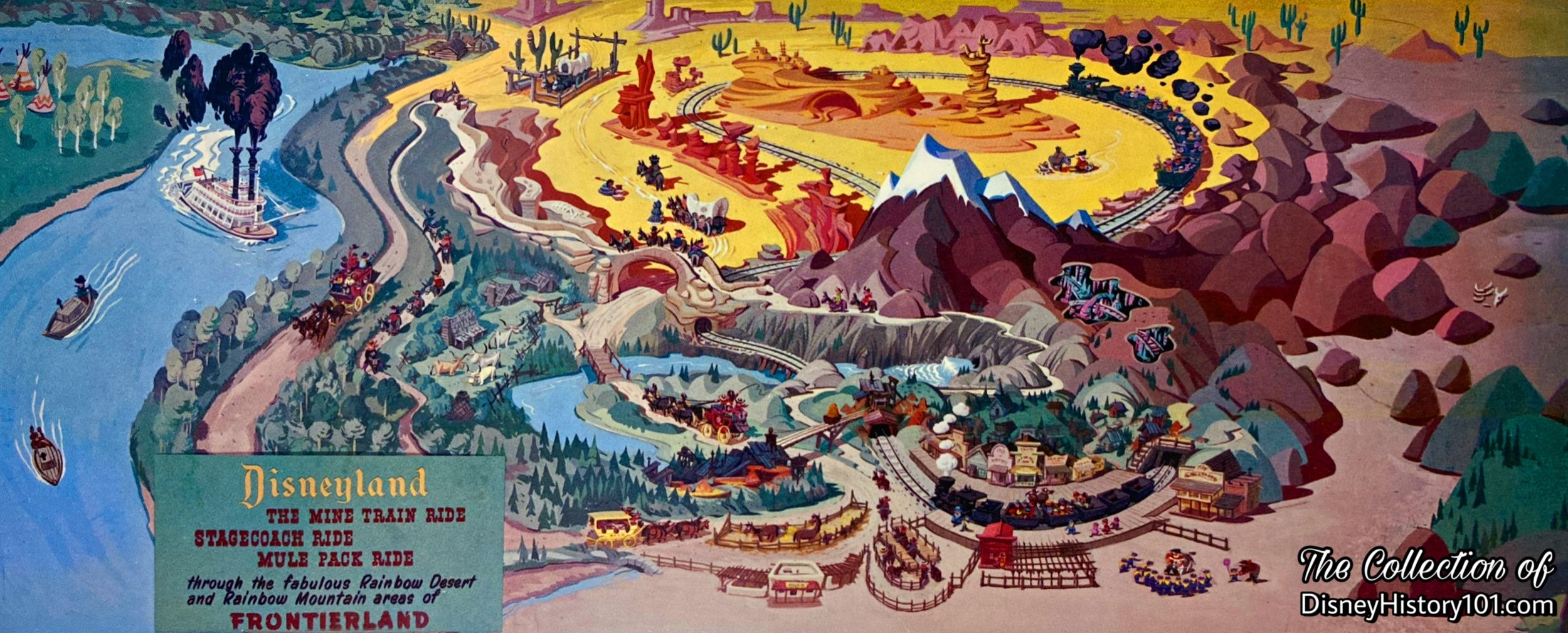
A Complete Guide to Disneyland, 1956; © Walt Disney Company.
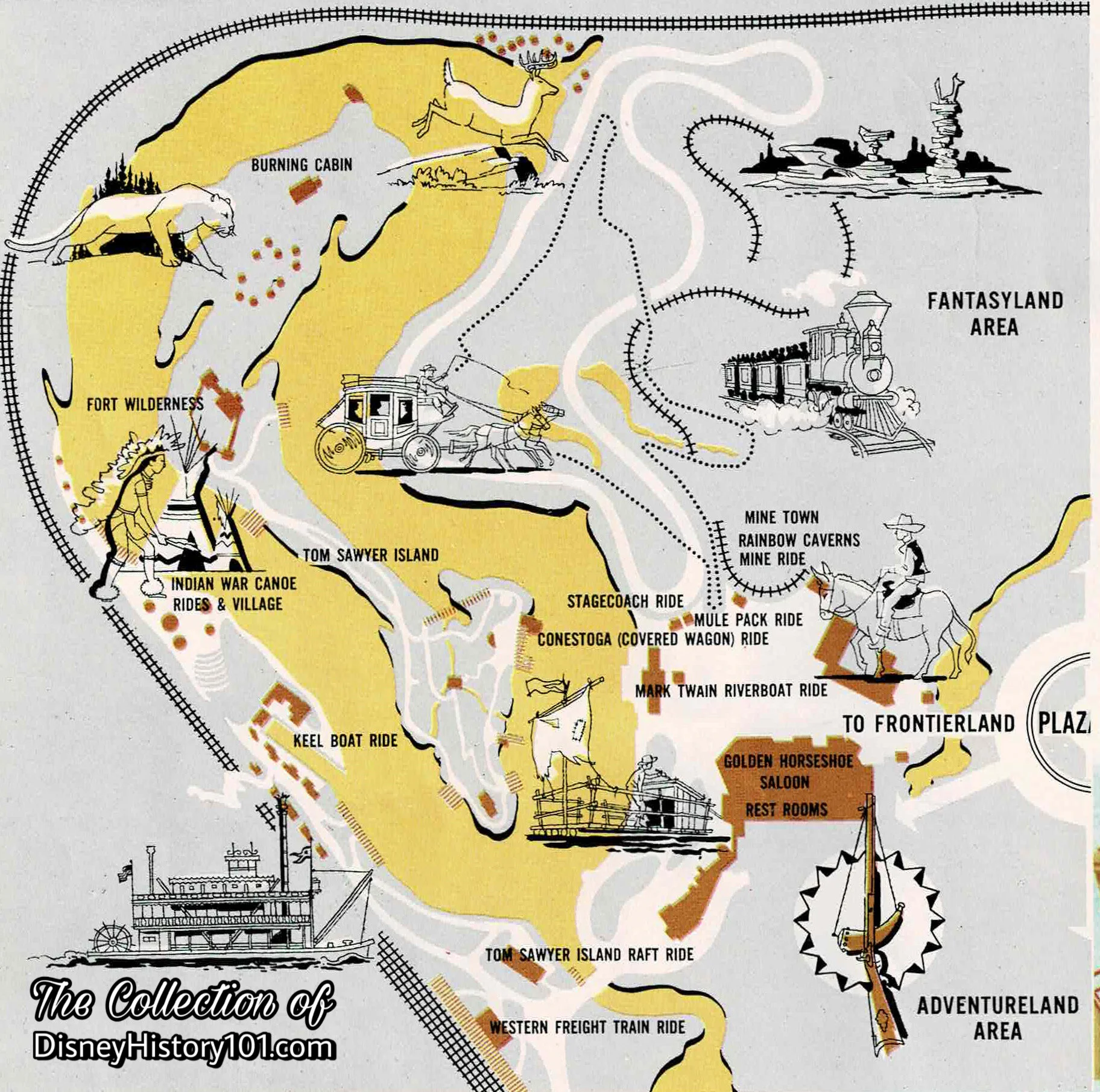
A Complete Guide To Disneyland details Frontierland located on the Westside of Disneyland Park, 1957; © Walt Disney Company.
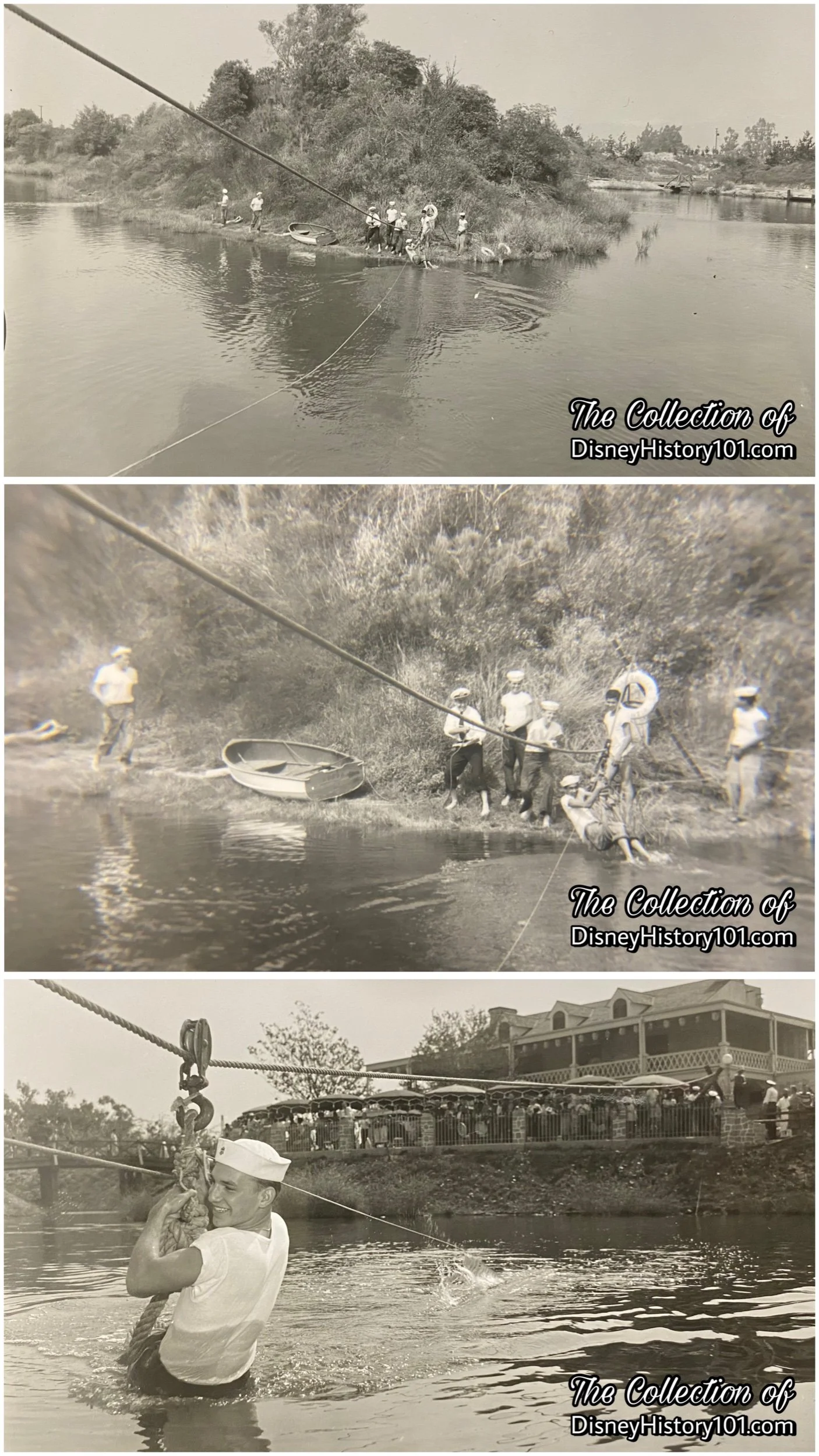
(1) & (2) 10-55-DL-291, (3) 10-55-DL-258.
“Messenger hoys at Disneyland took full advantage of their surroundings on a Saturday recently. After a hot day of many calls all on the double - they ‘peeled off’ and went swimming in Frontierland's ‘Rivers of America’.”
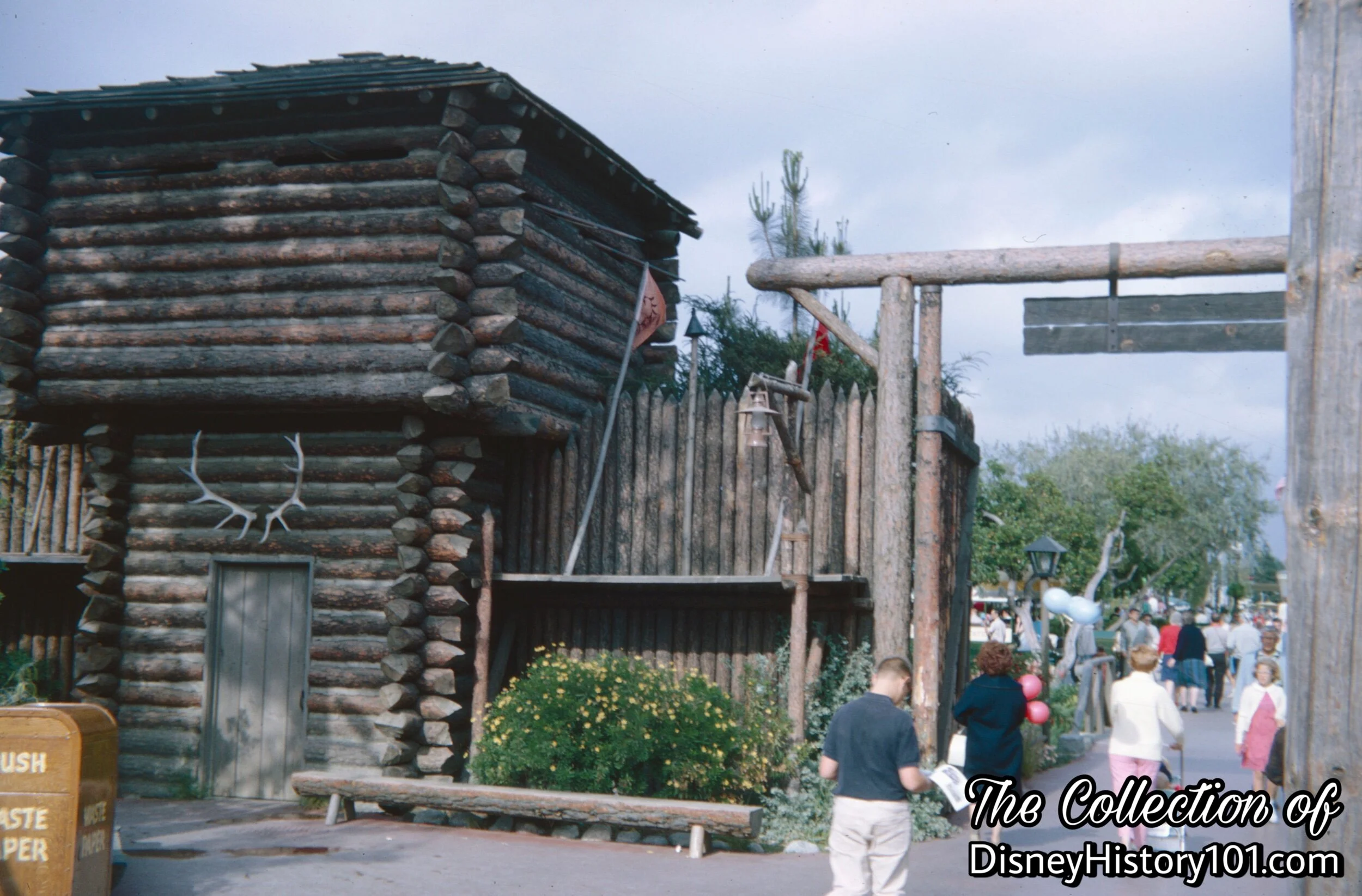
Frontierland Stockade
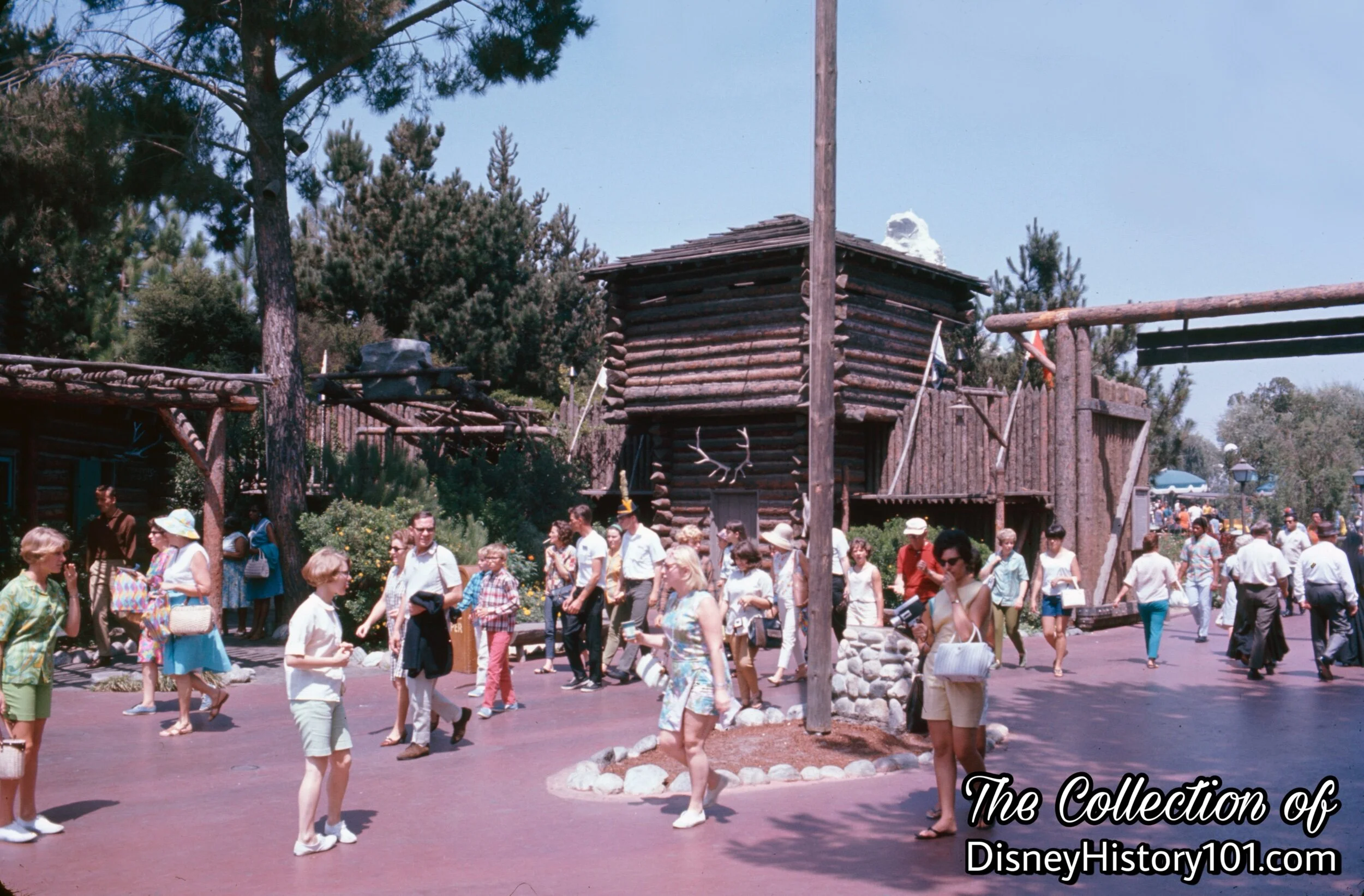
Frontierland Stockade
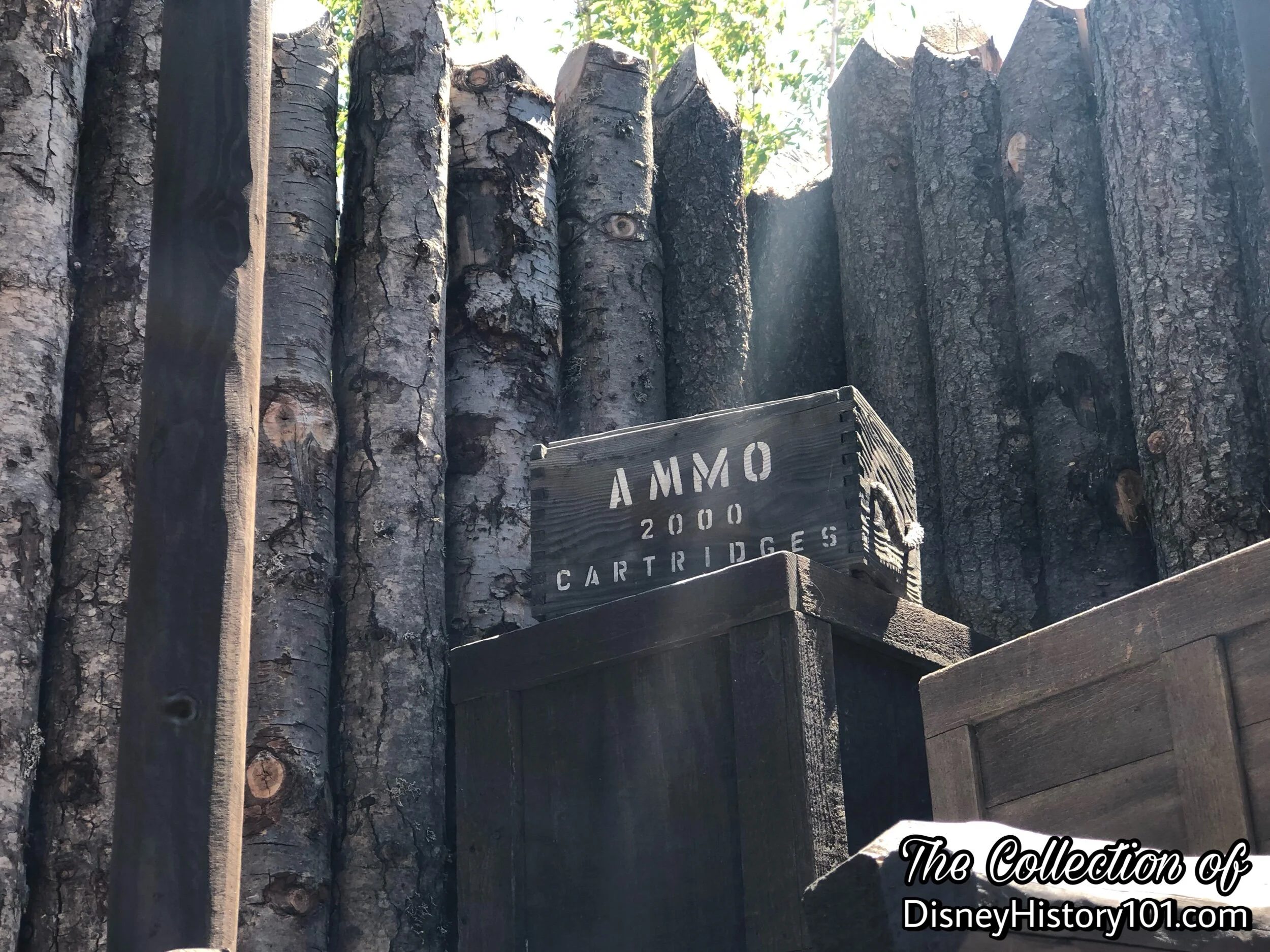
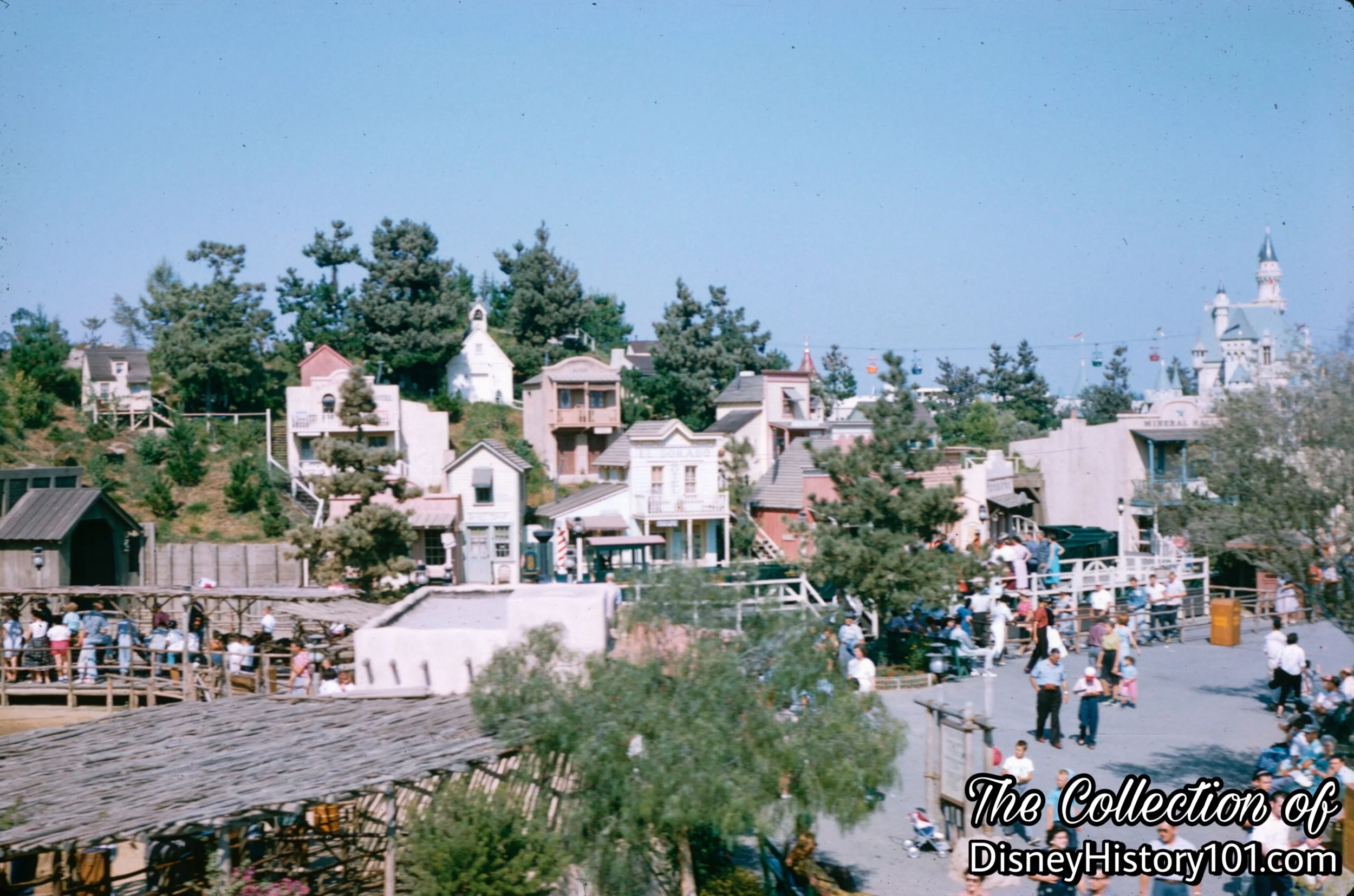
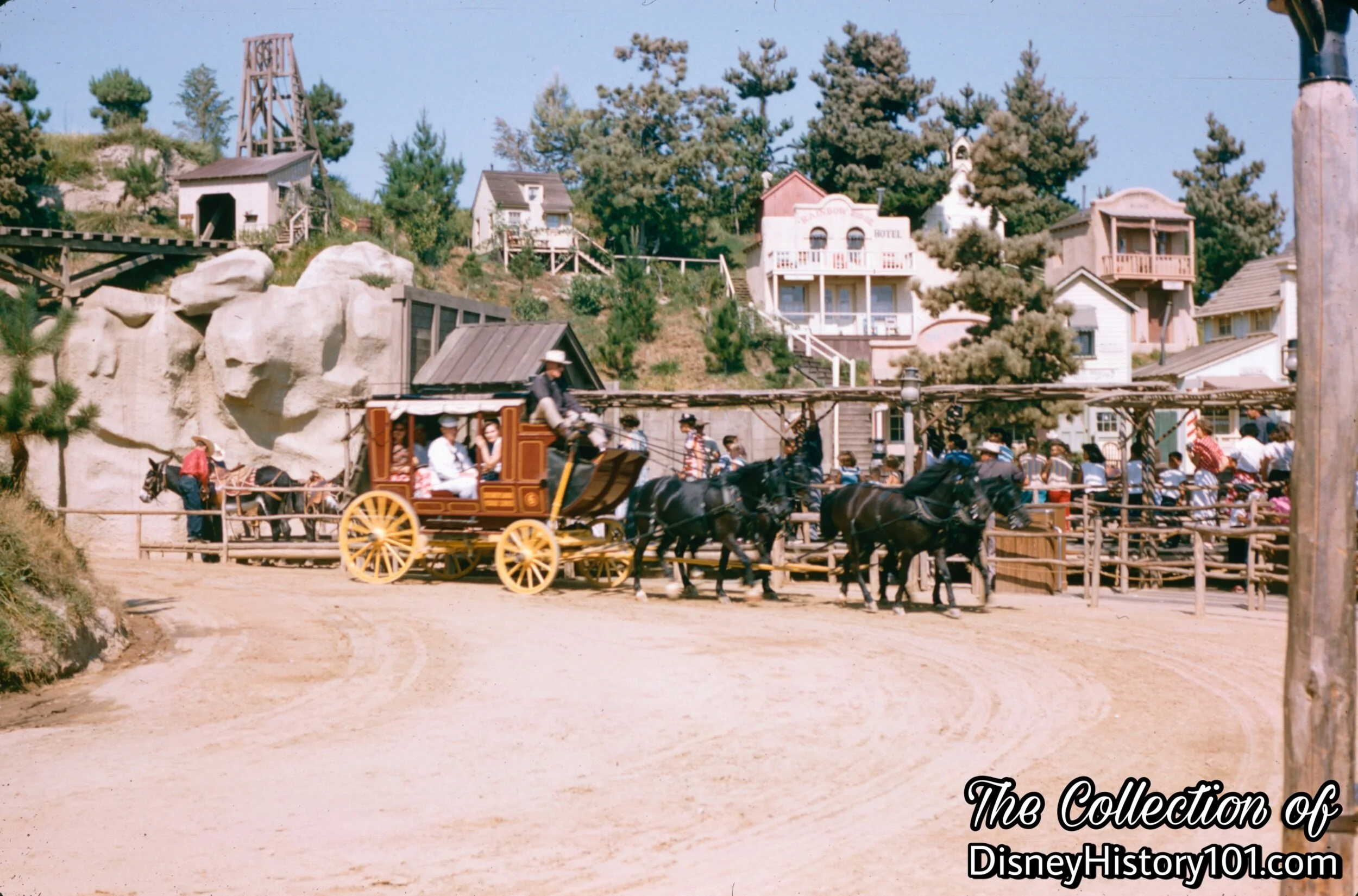
The Mining Town of Rainbow Ridge
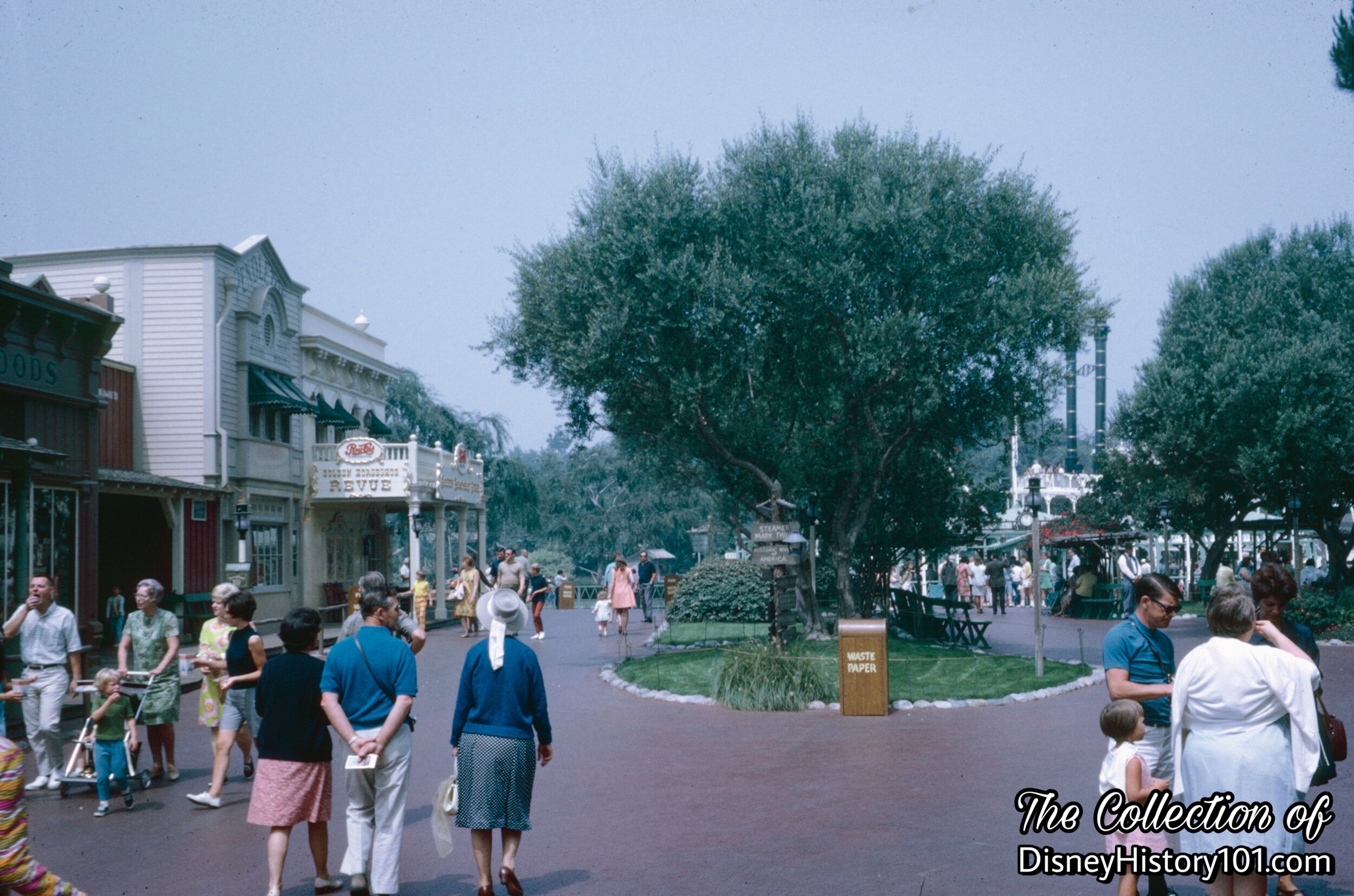
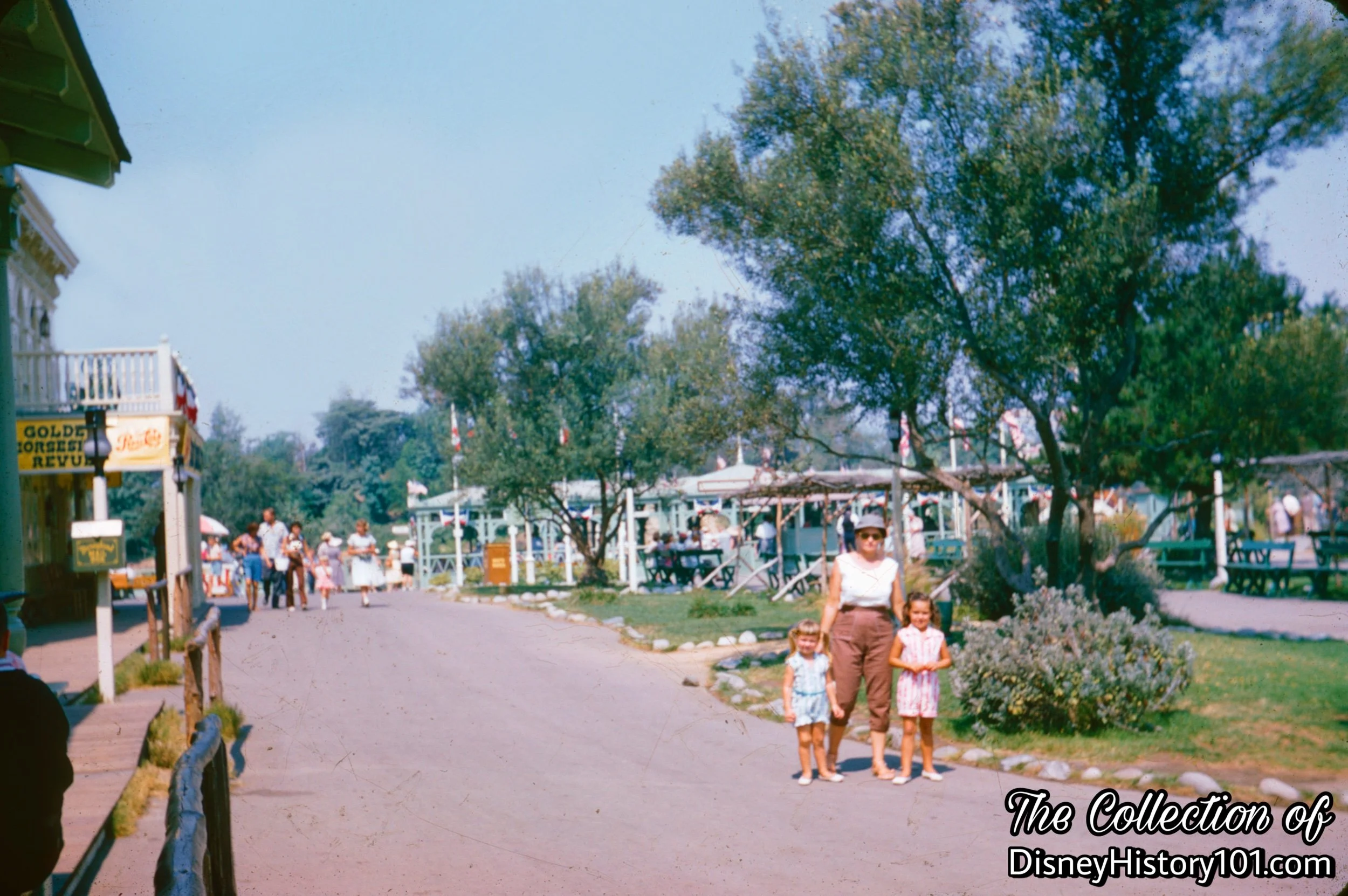
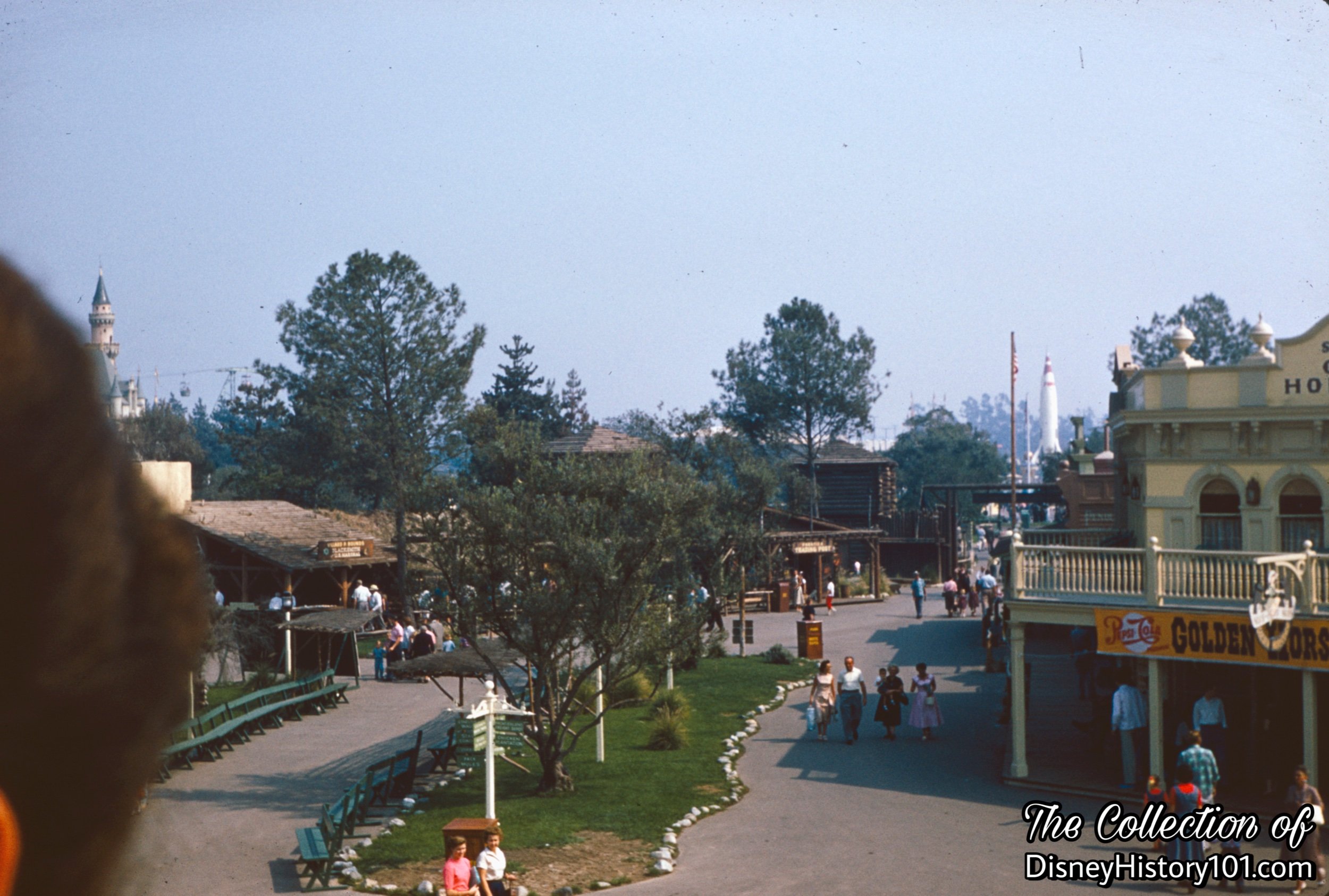
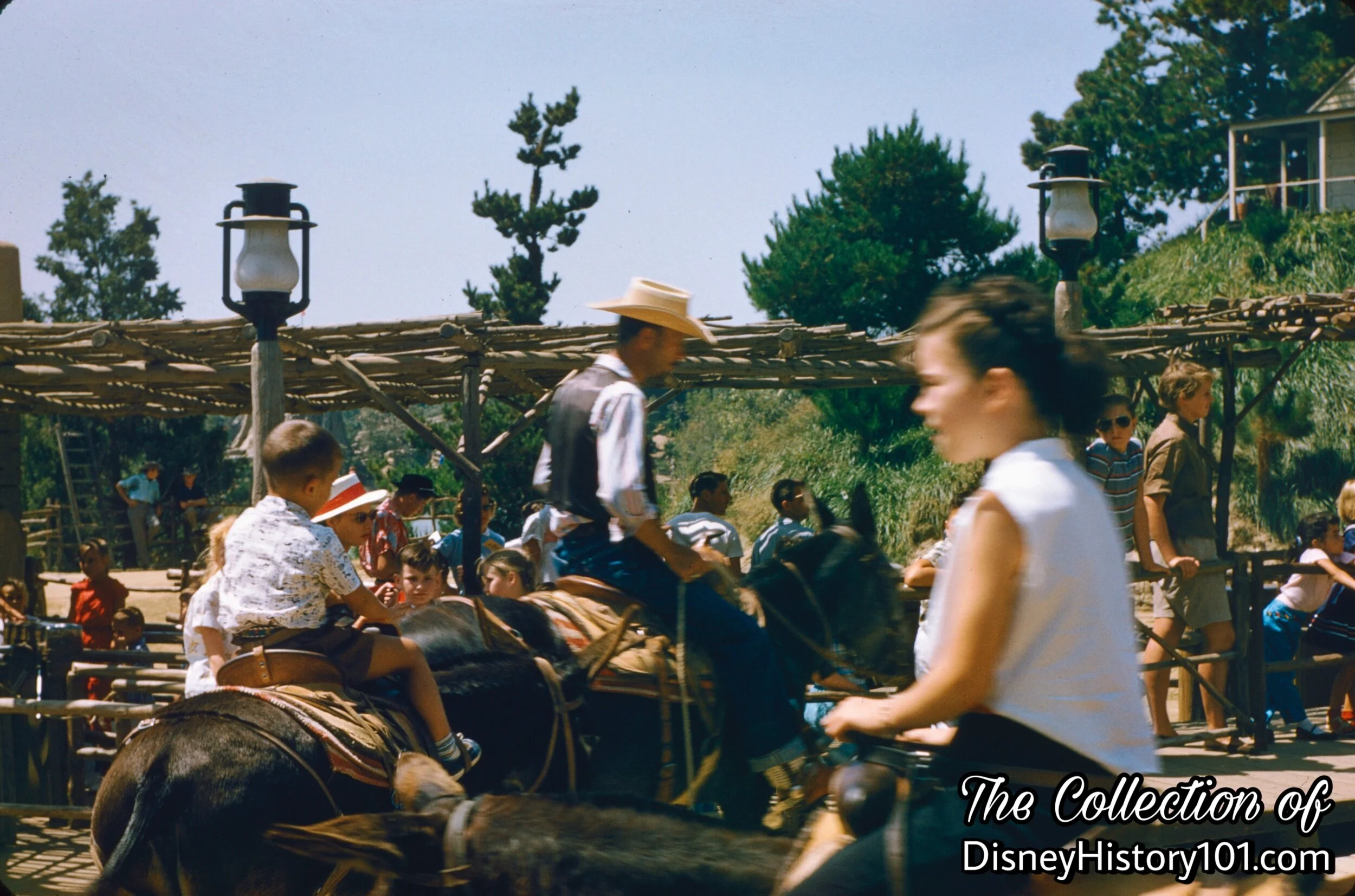
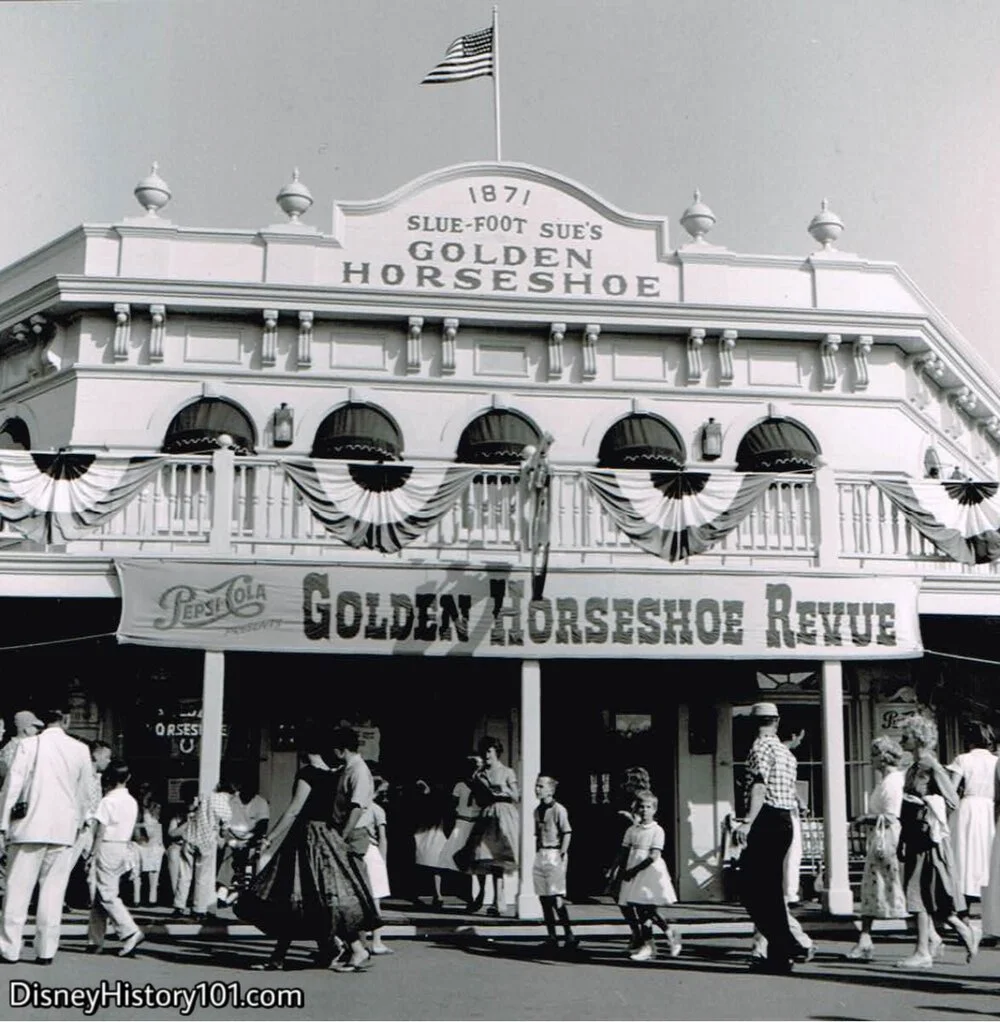
Slue Foot Sue's Golden Horseshoe
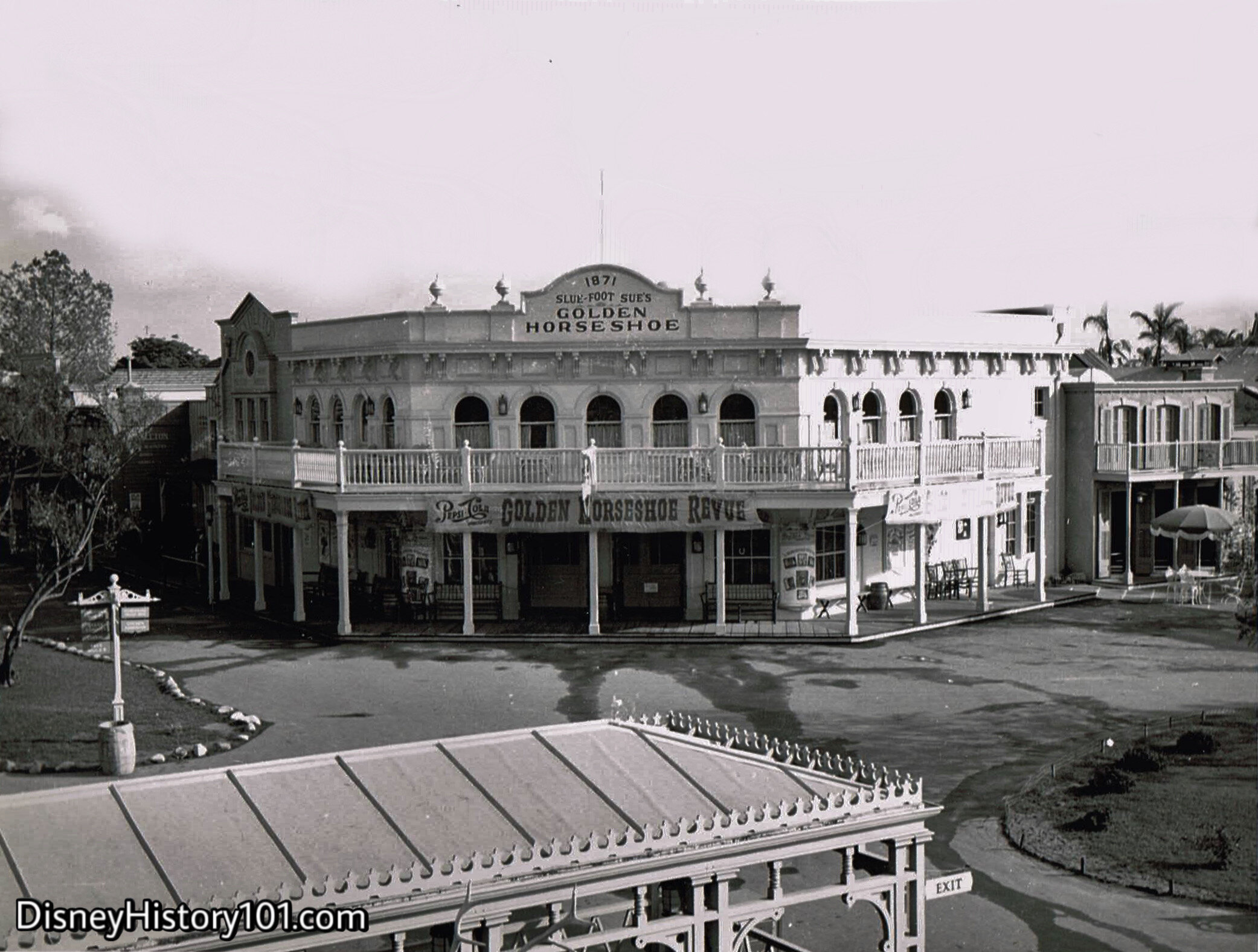
Slue Foot Sue's Golden Horseshoe
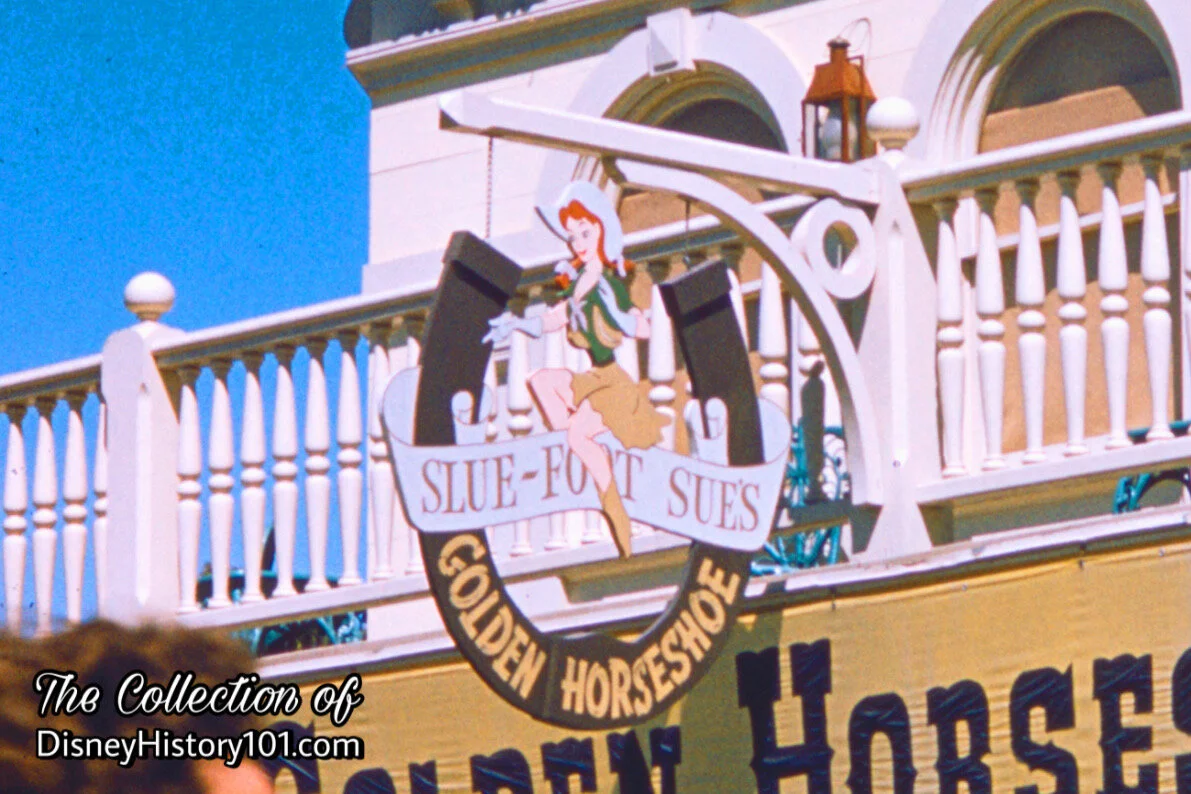
Slue Foot Sue's Golden Horseshoe Sign featuring the namesake popular Character from the Walt Disney Production.
Paint is important. The “Master Color Book” is the Bible for color selection at Disneyland, maintaining a catalogue of 4,000 shades of color. The book contains color specifications for every land, building, exhibit, and prop which requires paint maintenance. It insures that Disneyland will always have the same bright colors selected by the art directors who designed the attraction. In addition to the Master Color Book, there is a standby supply of ready-mixed paint available for touch up work. Thousands of cans of paint are stored in a special room which sounds like a walk through of Disneyland. Each can is labeled with names. Disneyland painters repainted every prop in the Park every two years. By 1969, the sign was one of 20,000 signs of various sizes and shapes and colors that needed to be maintained in their original condition.
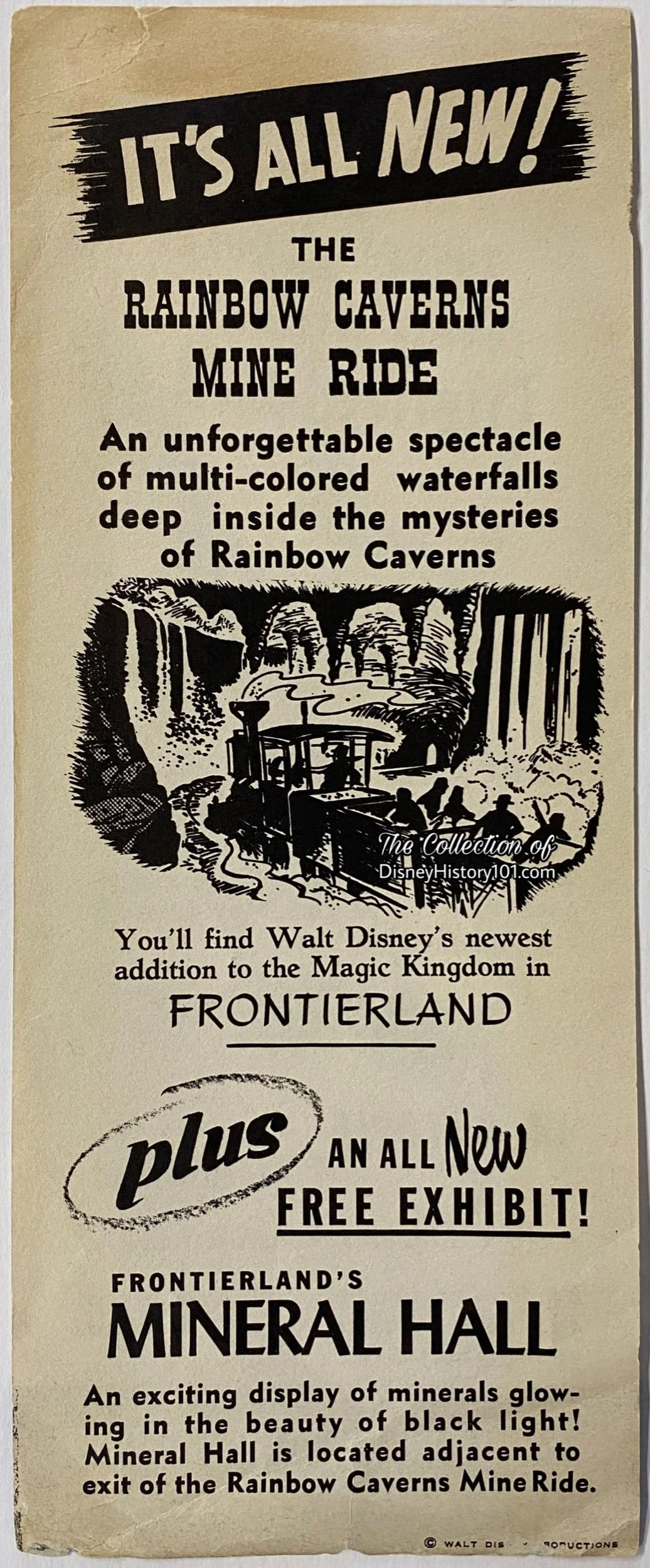
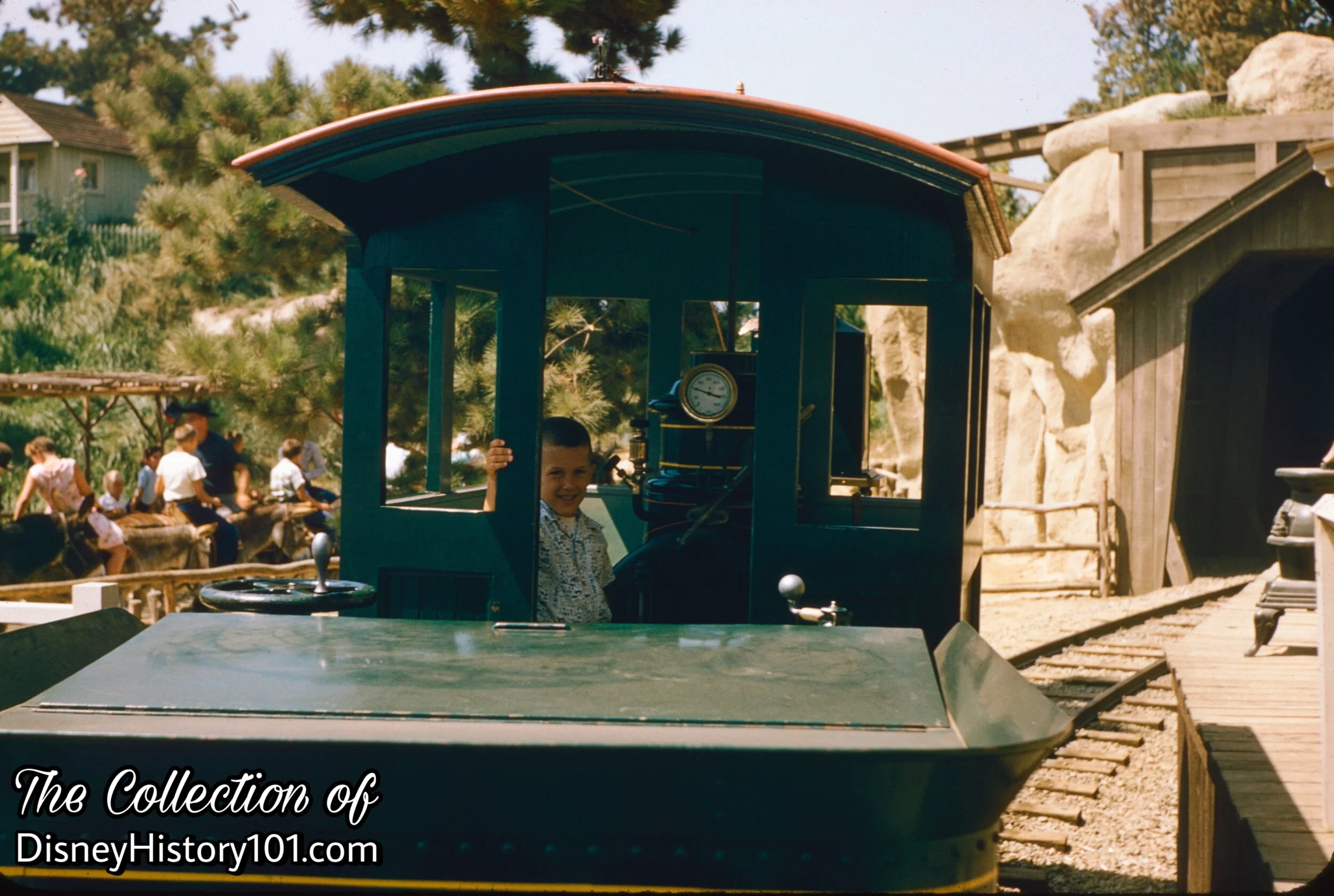
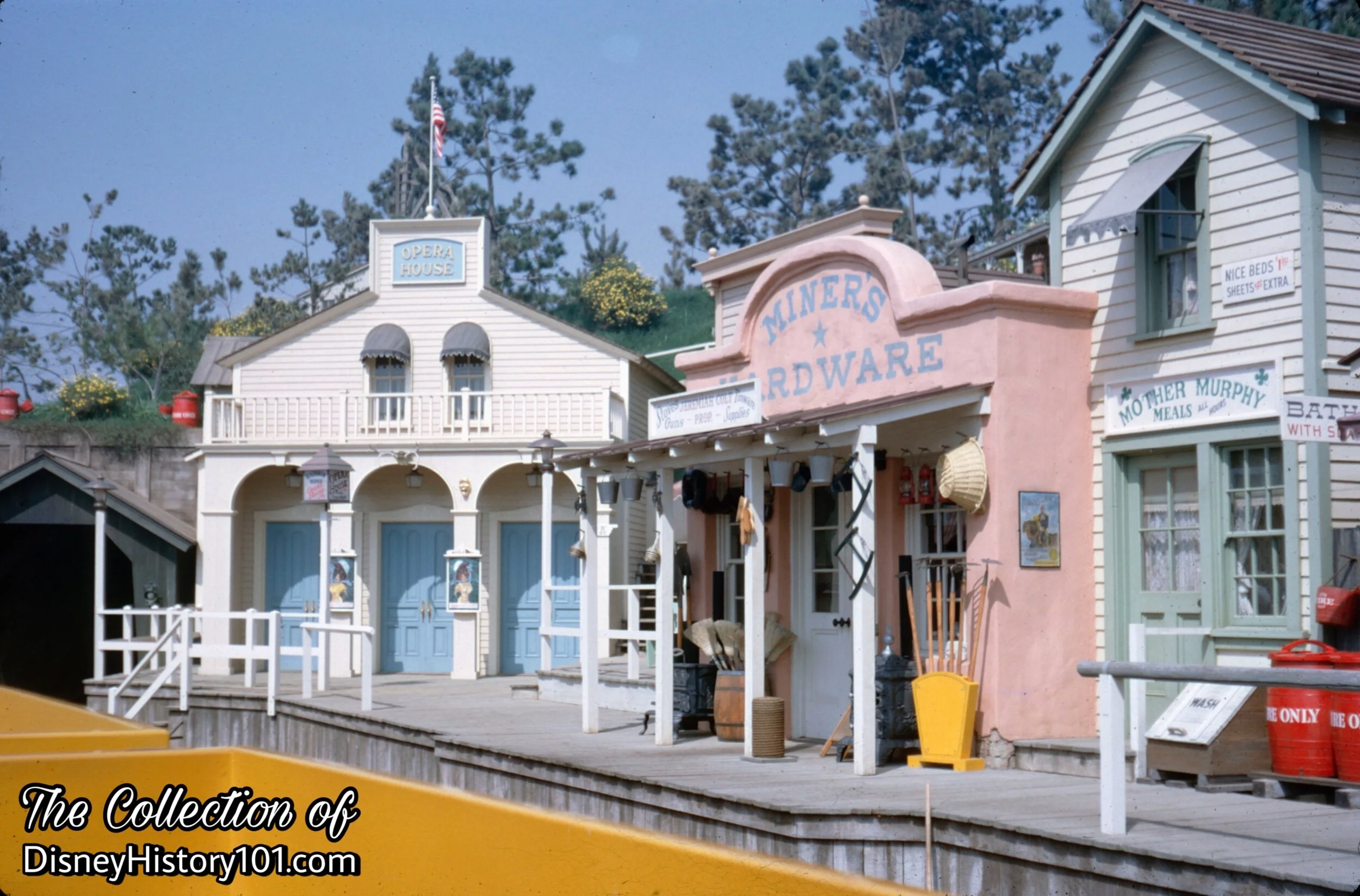
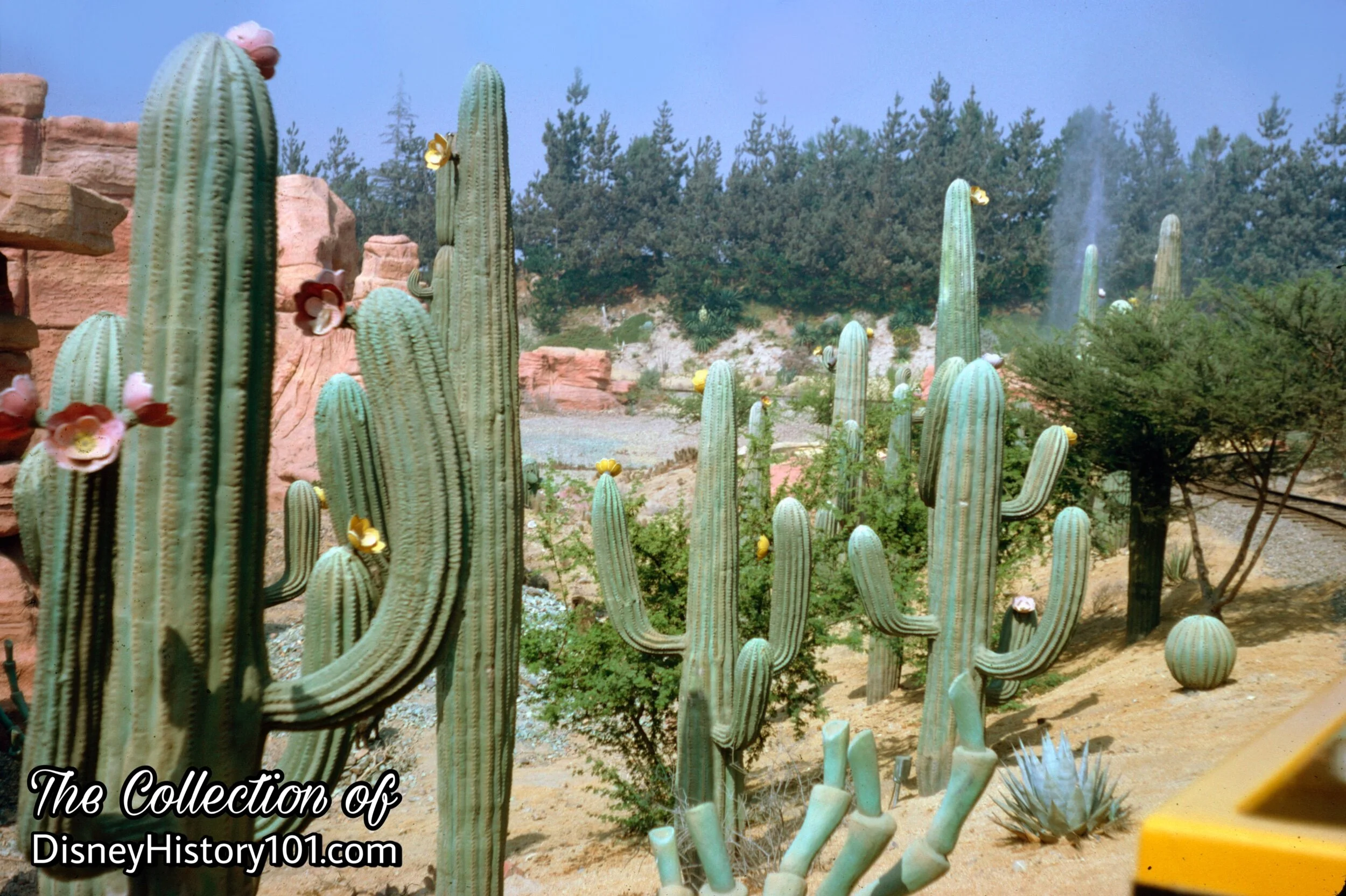
The Living Desert
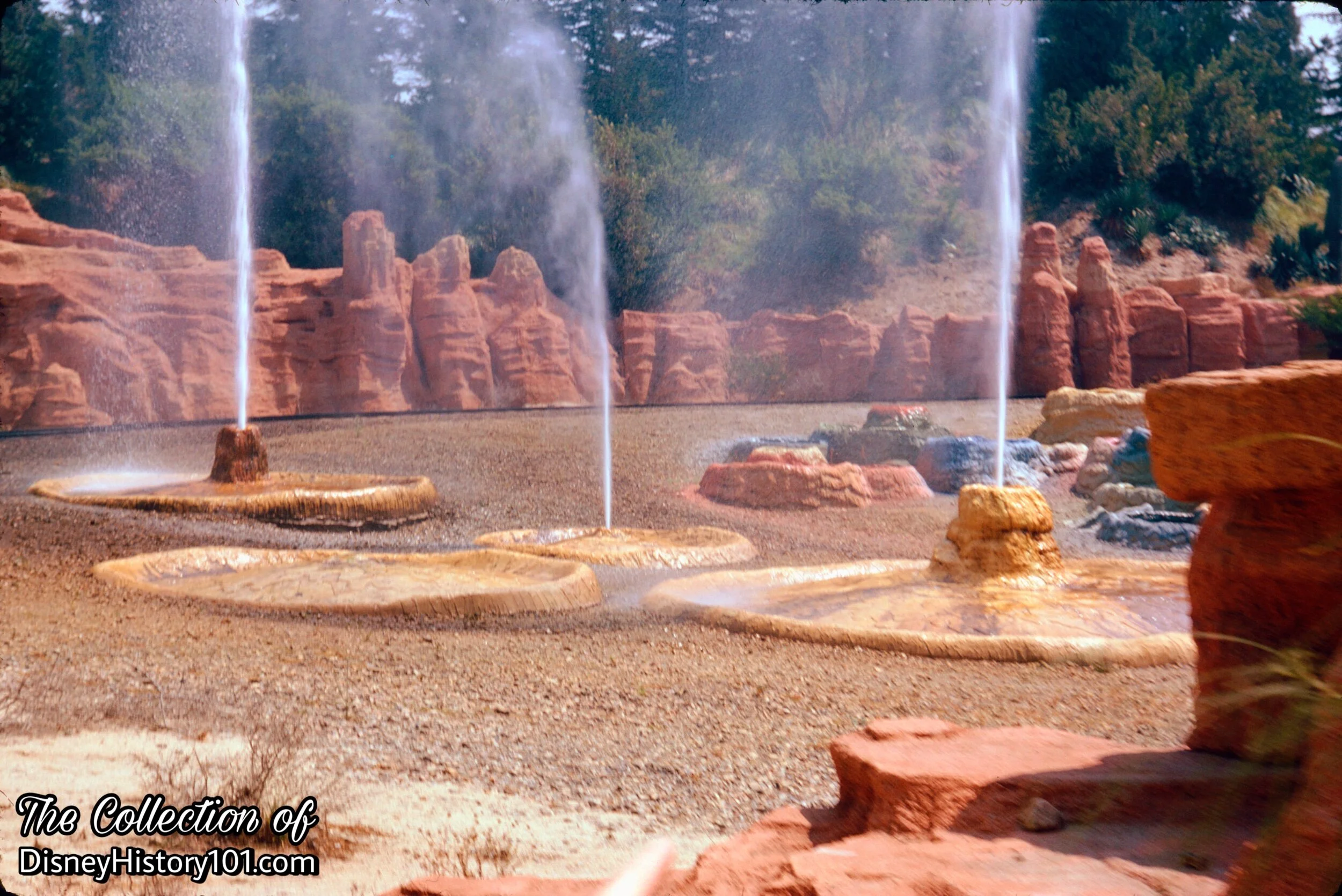
RockWork Geysers
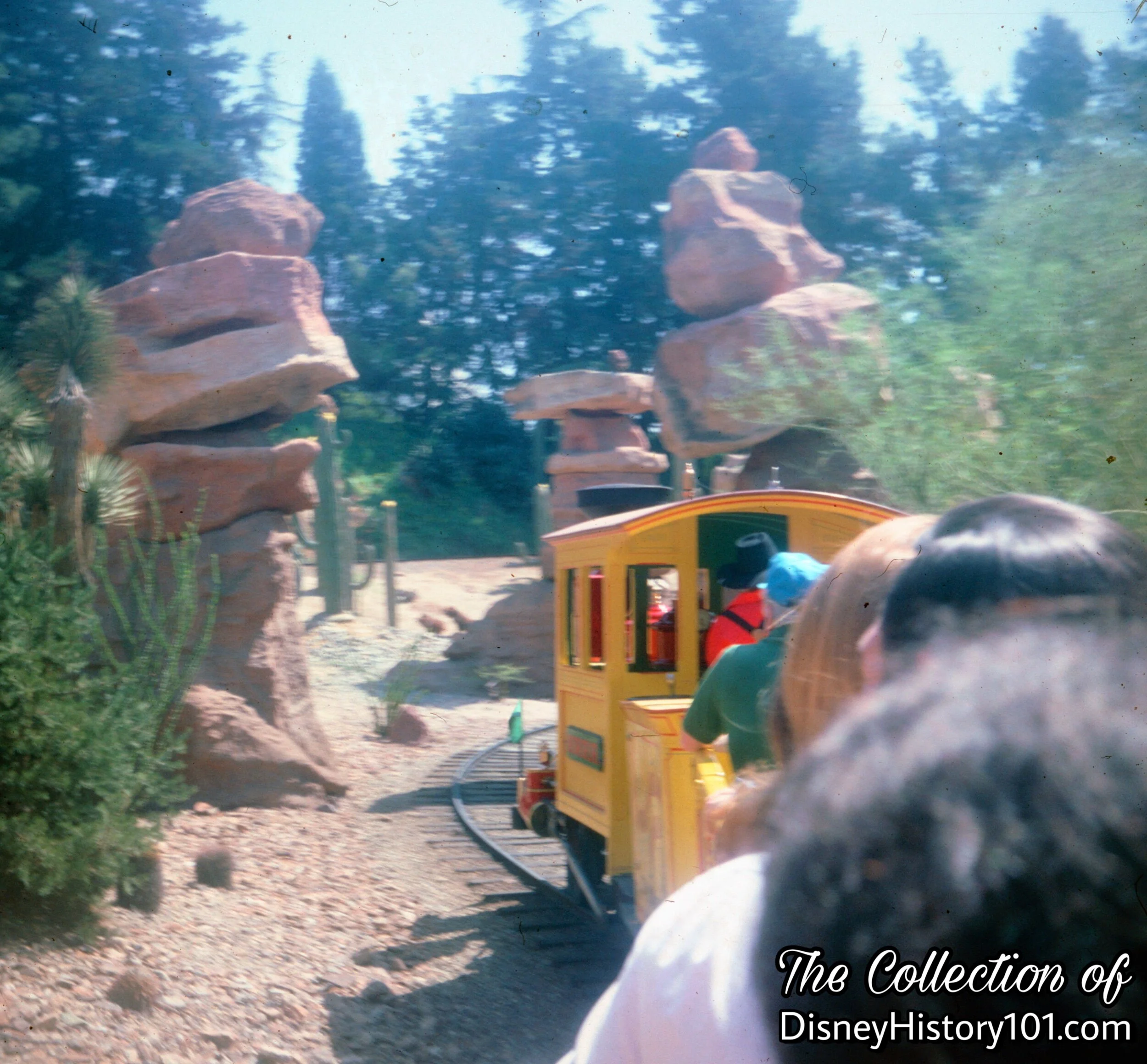
RockWork
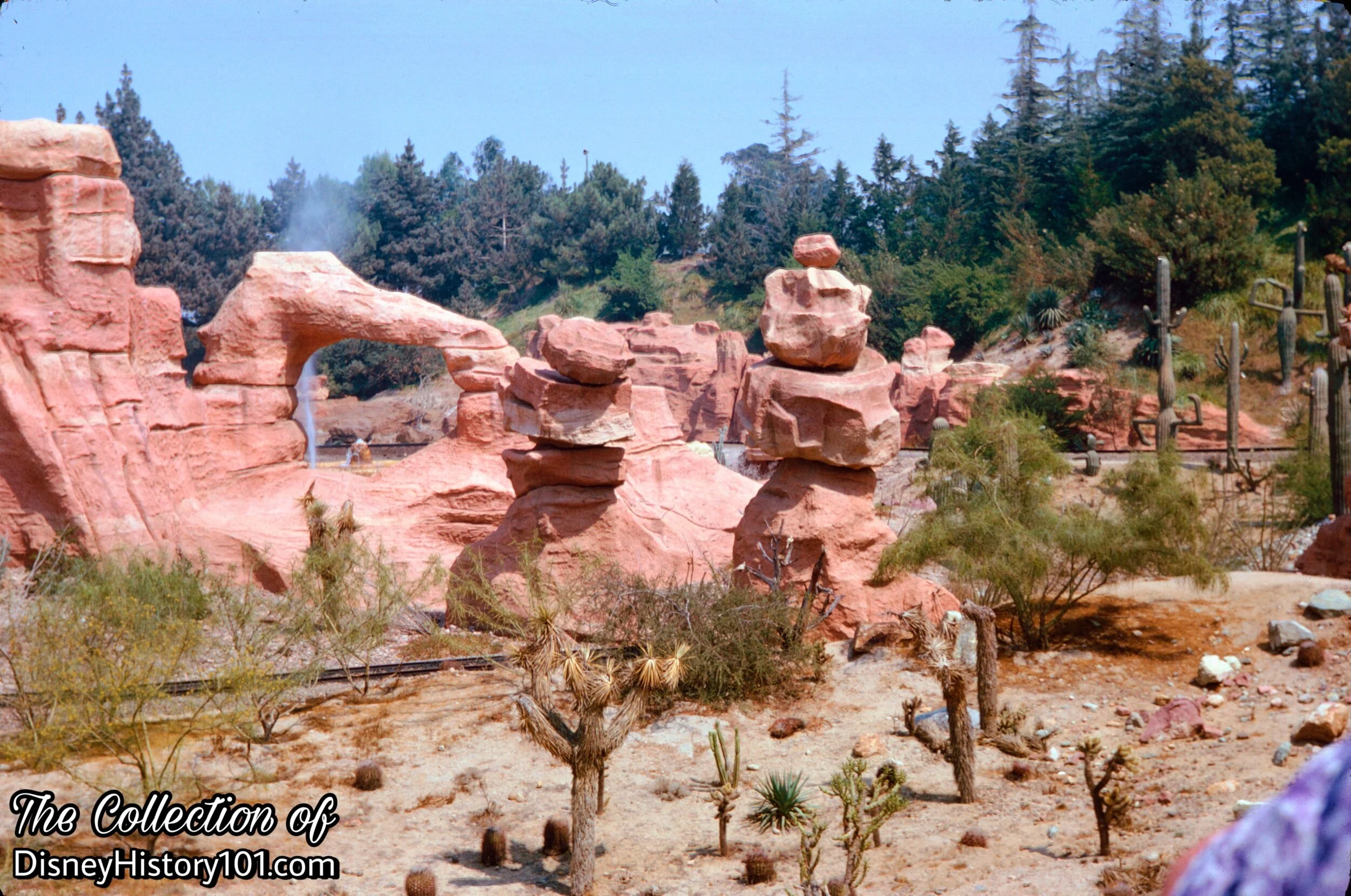
The three-dimensional, carved plaster RockWork and Desert Landscaping
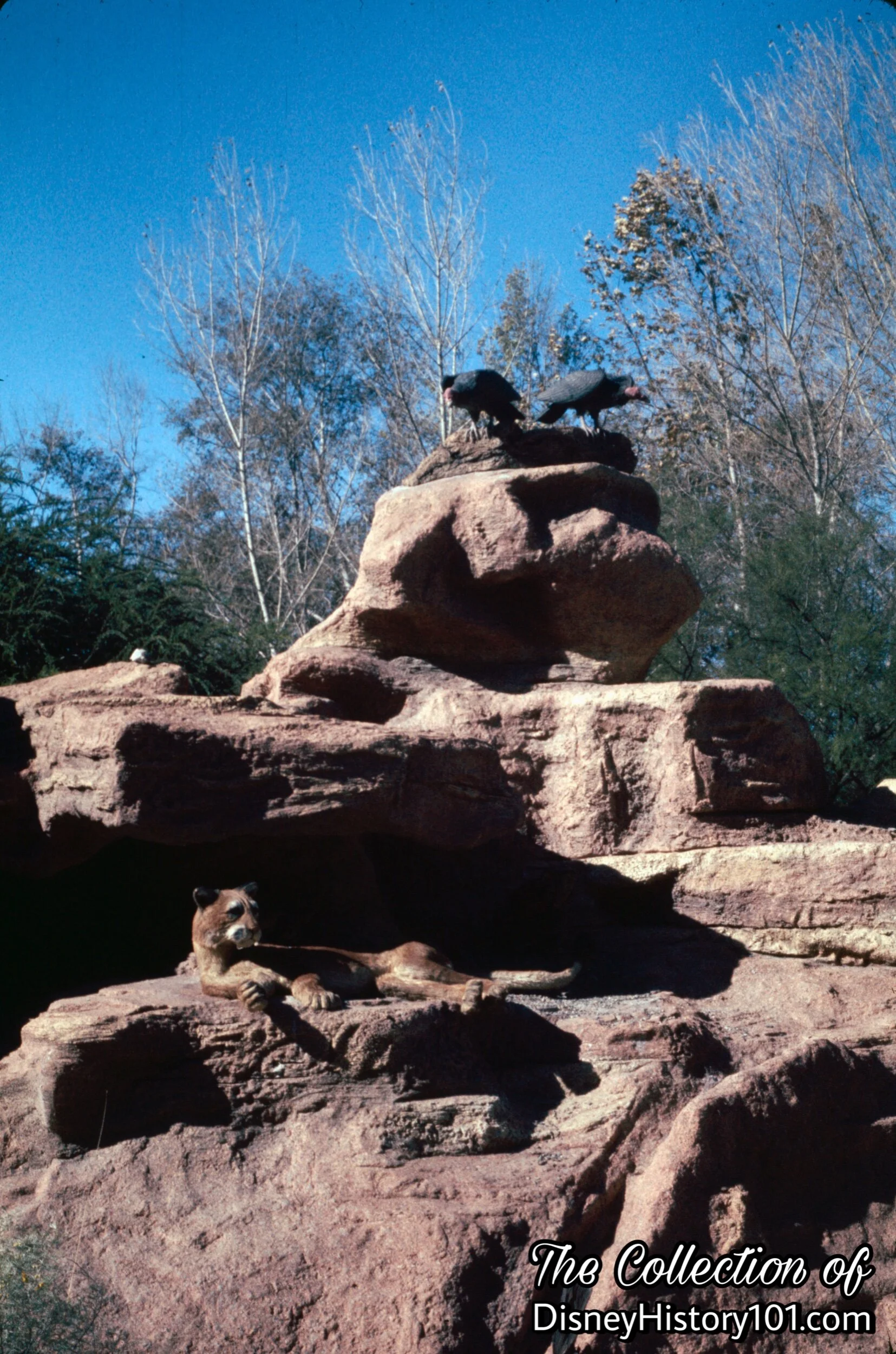
The three-dimensional, carved plaster RockWork and Re-Creation of Nature Films.
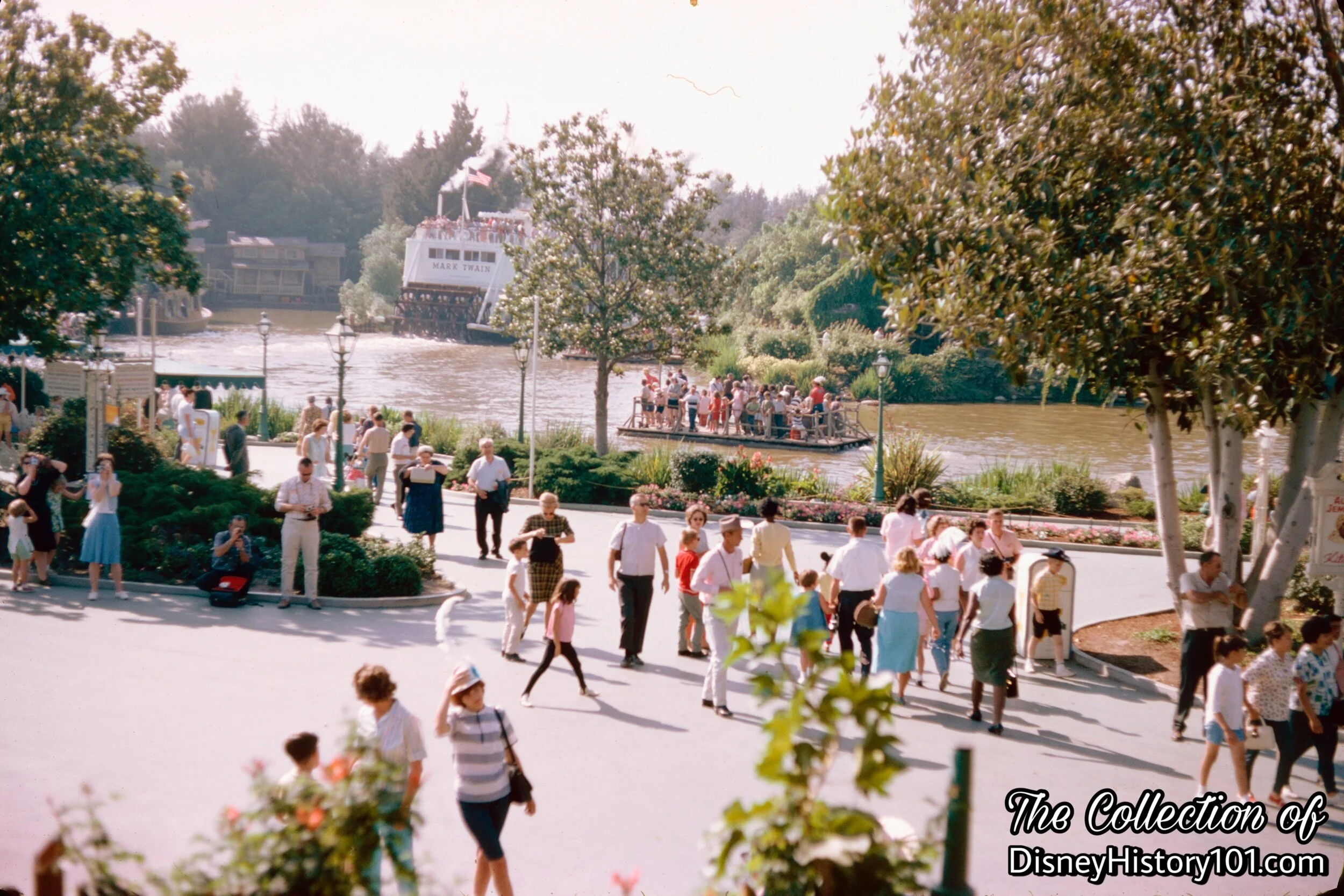
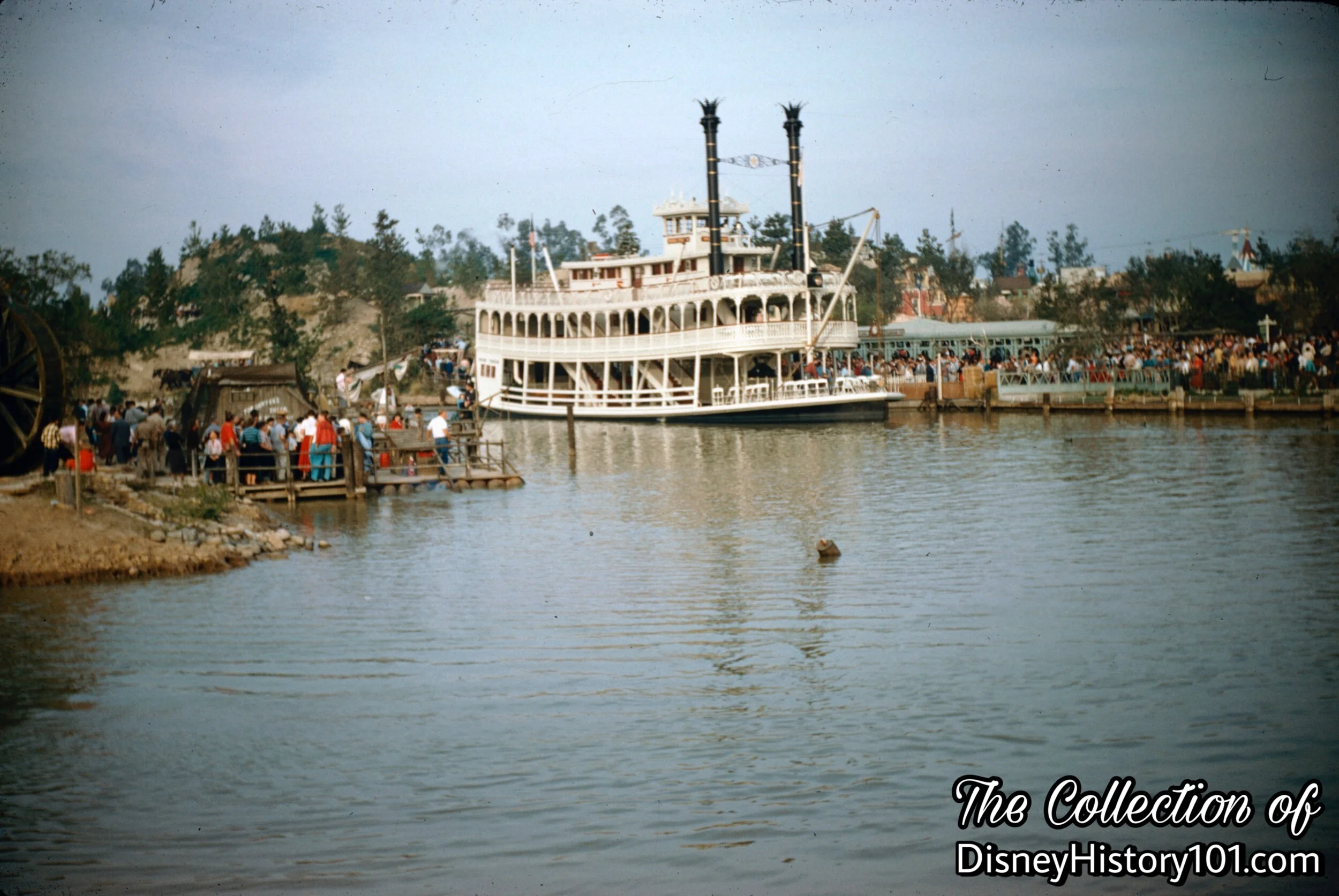
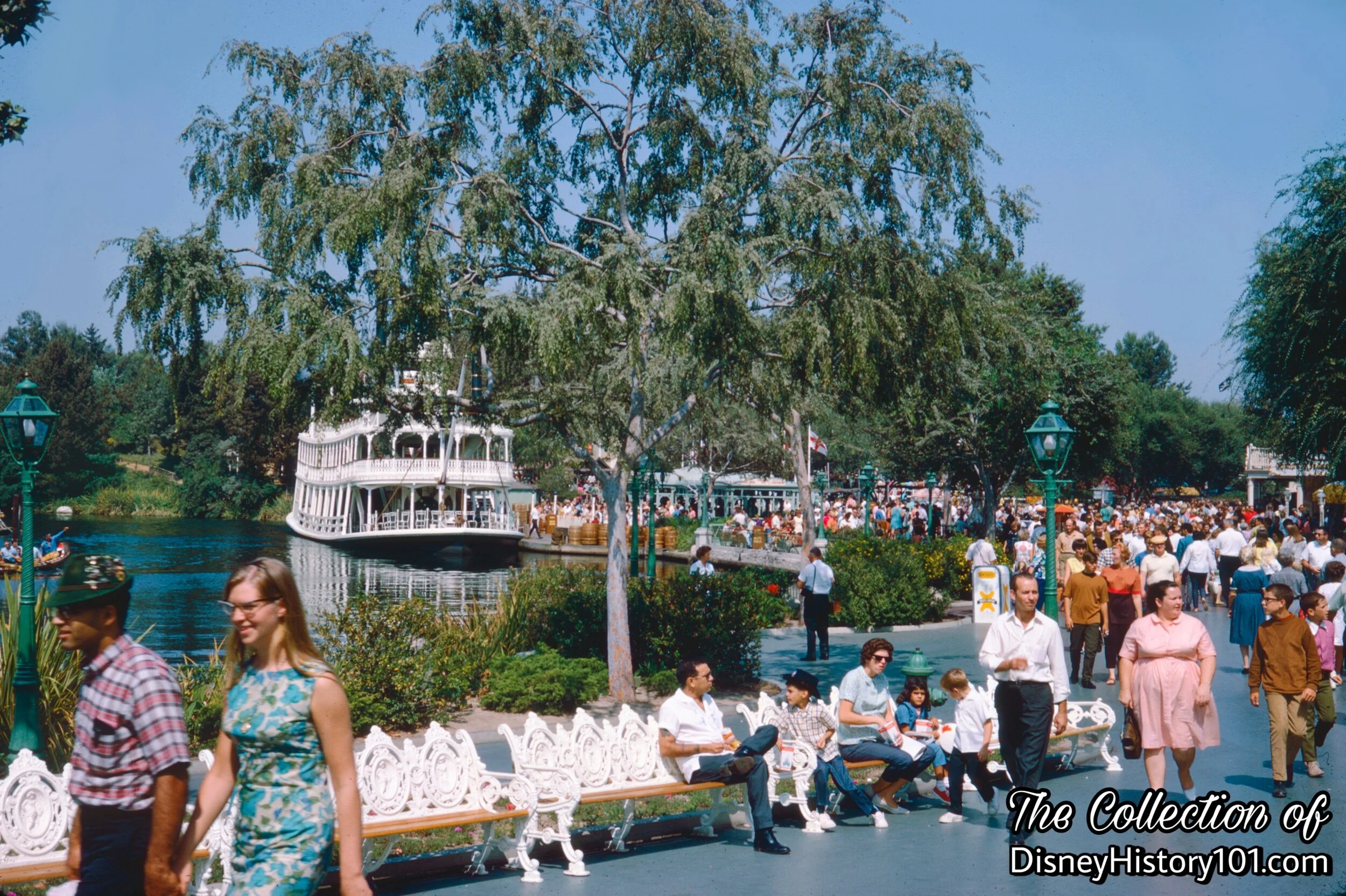
The Mark Twain returns from an excursion through the Missouri wilderness.
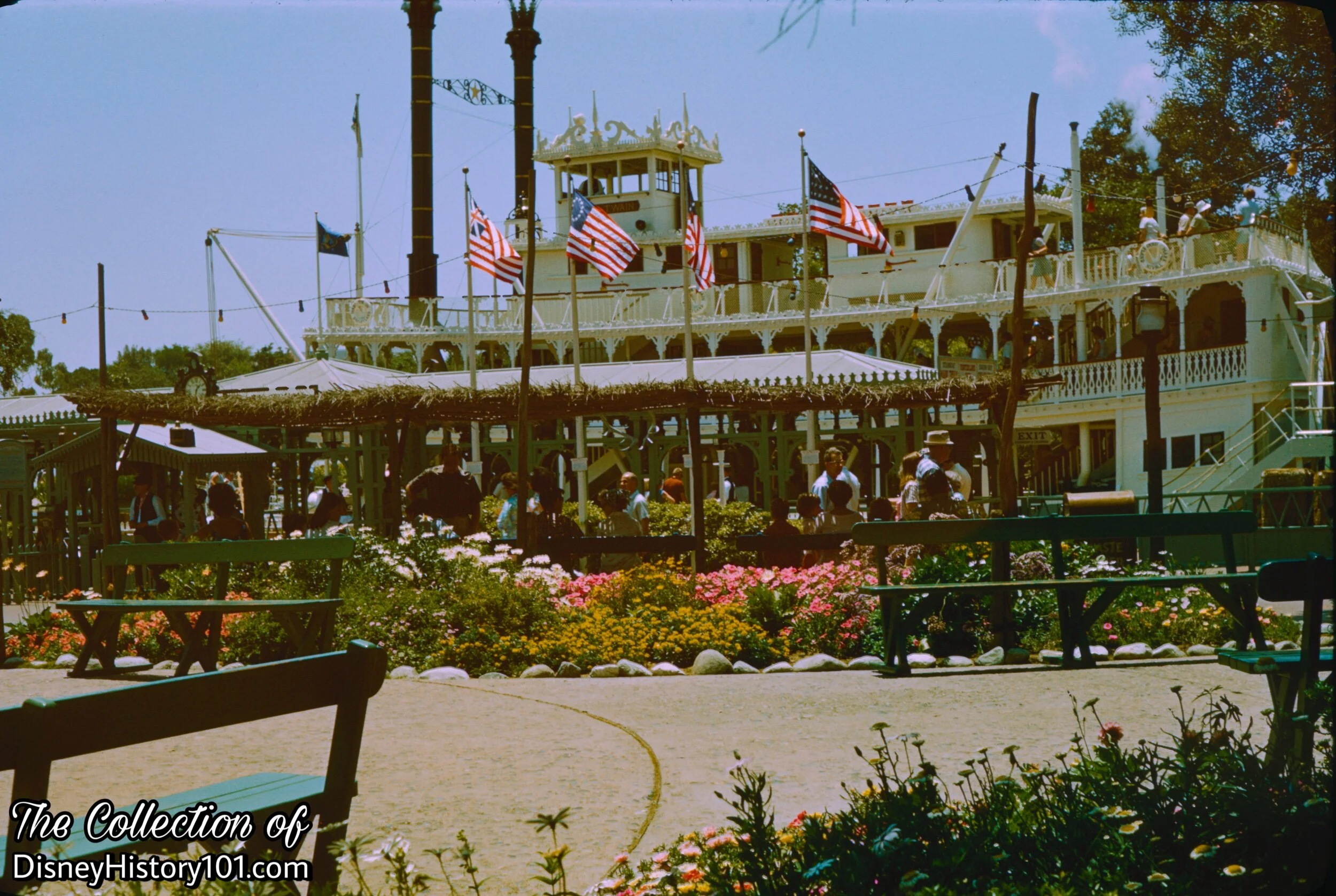
(July, 1966)
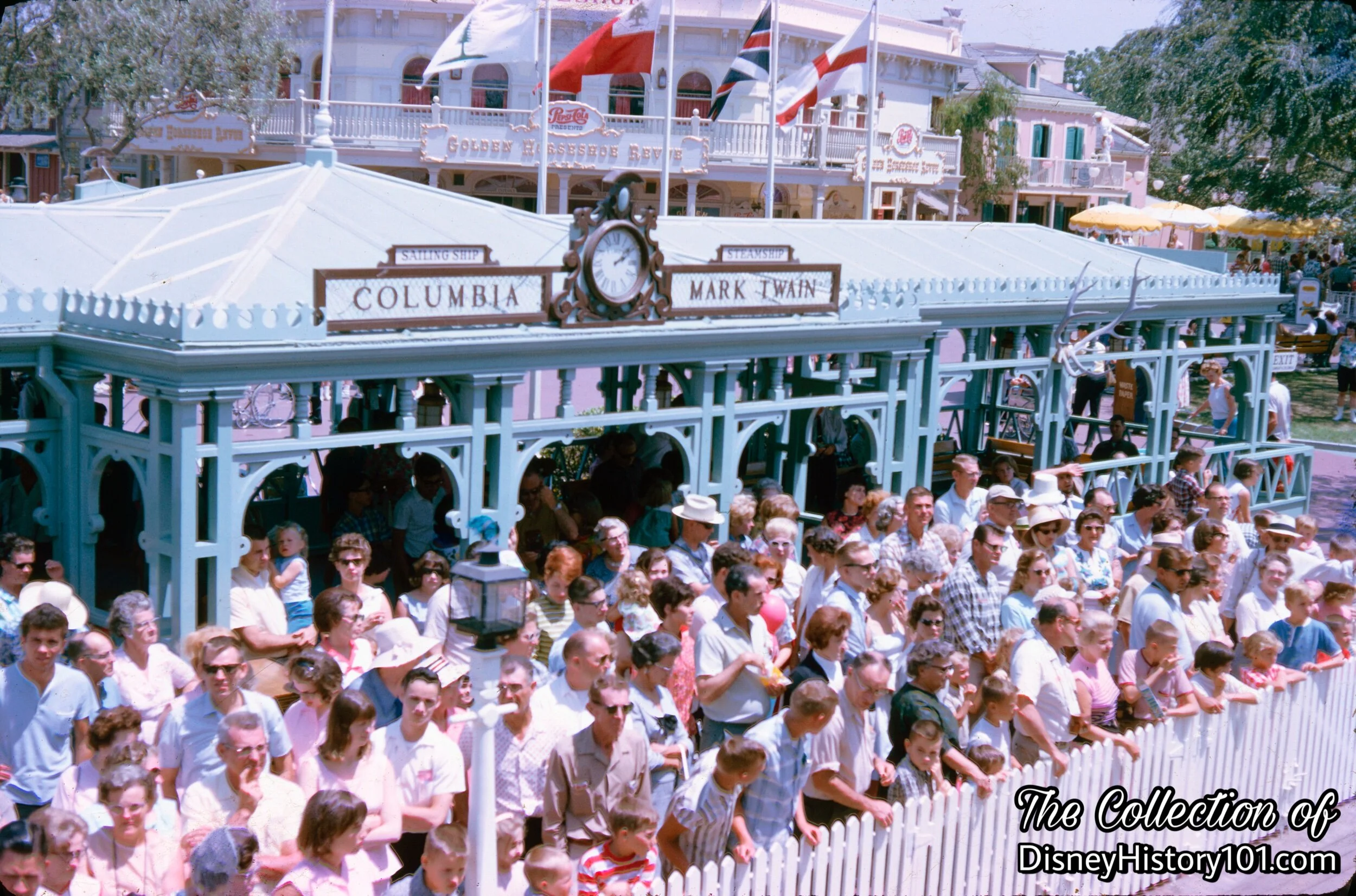
Frontierland Dock and Guest Control queue area.
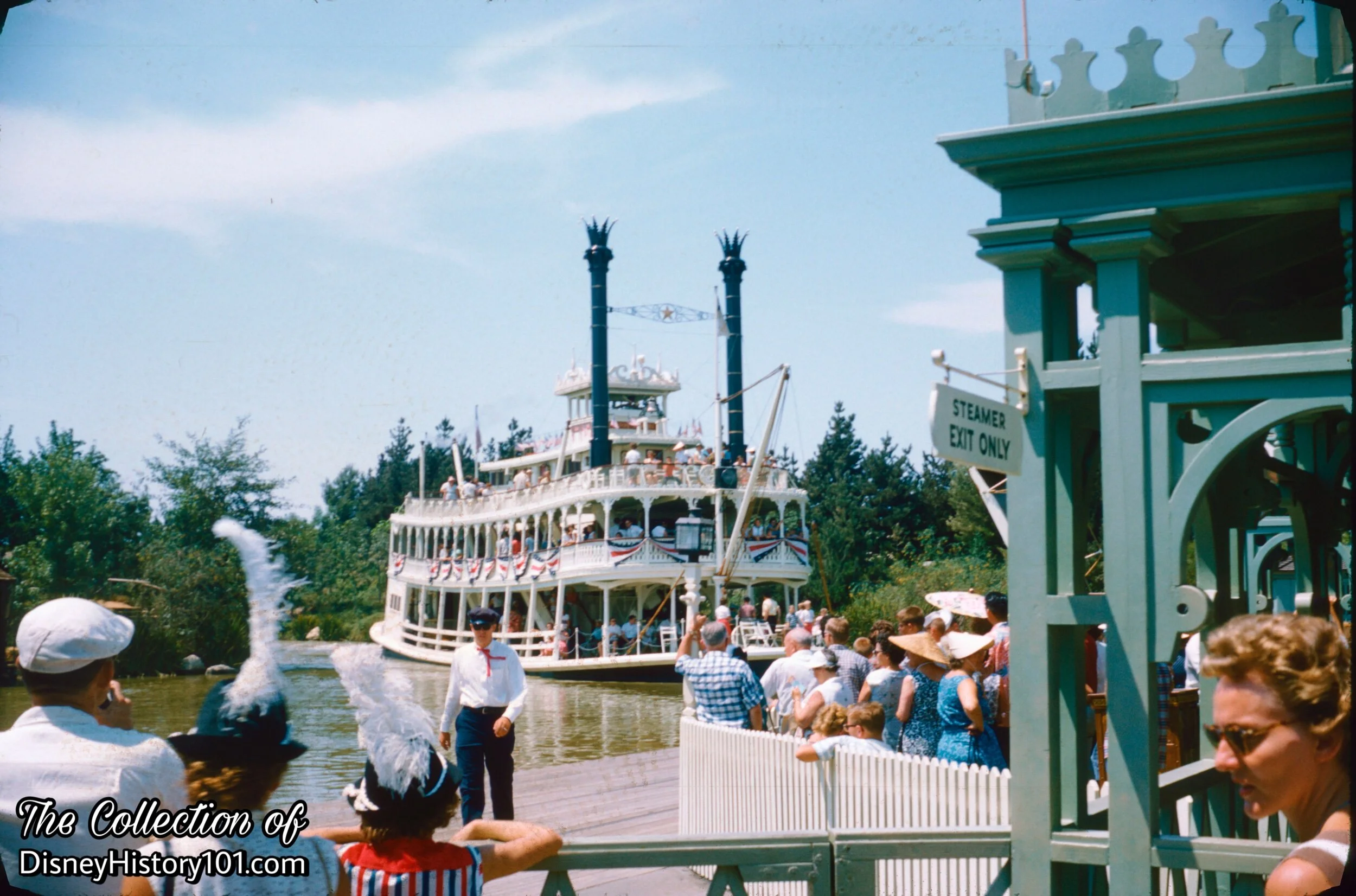
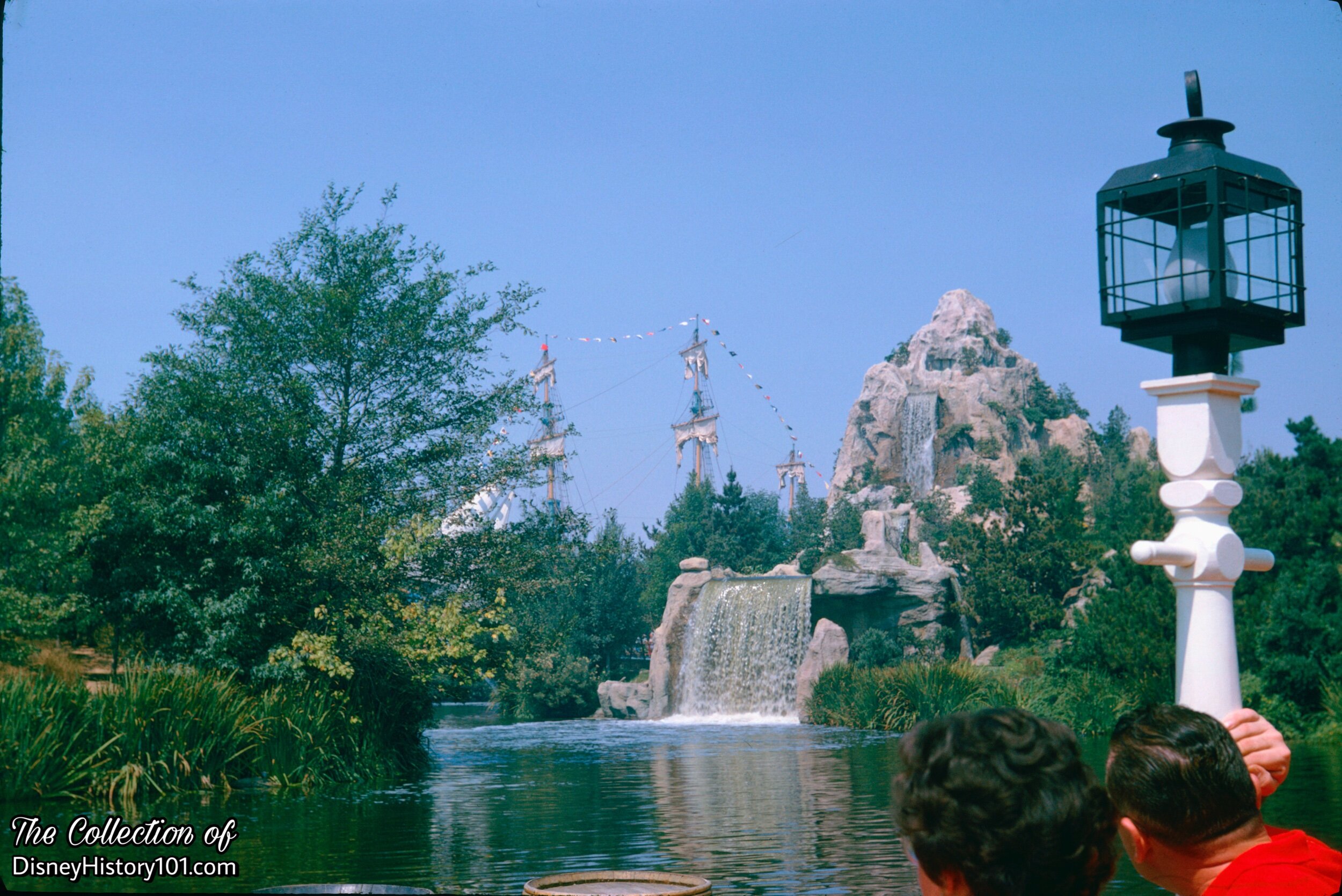
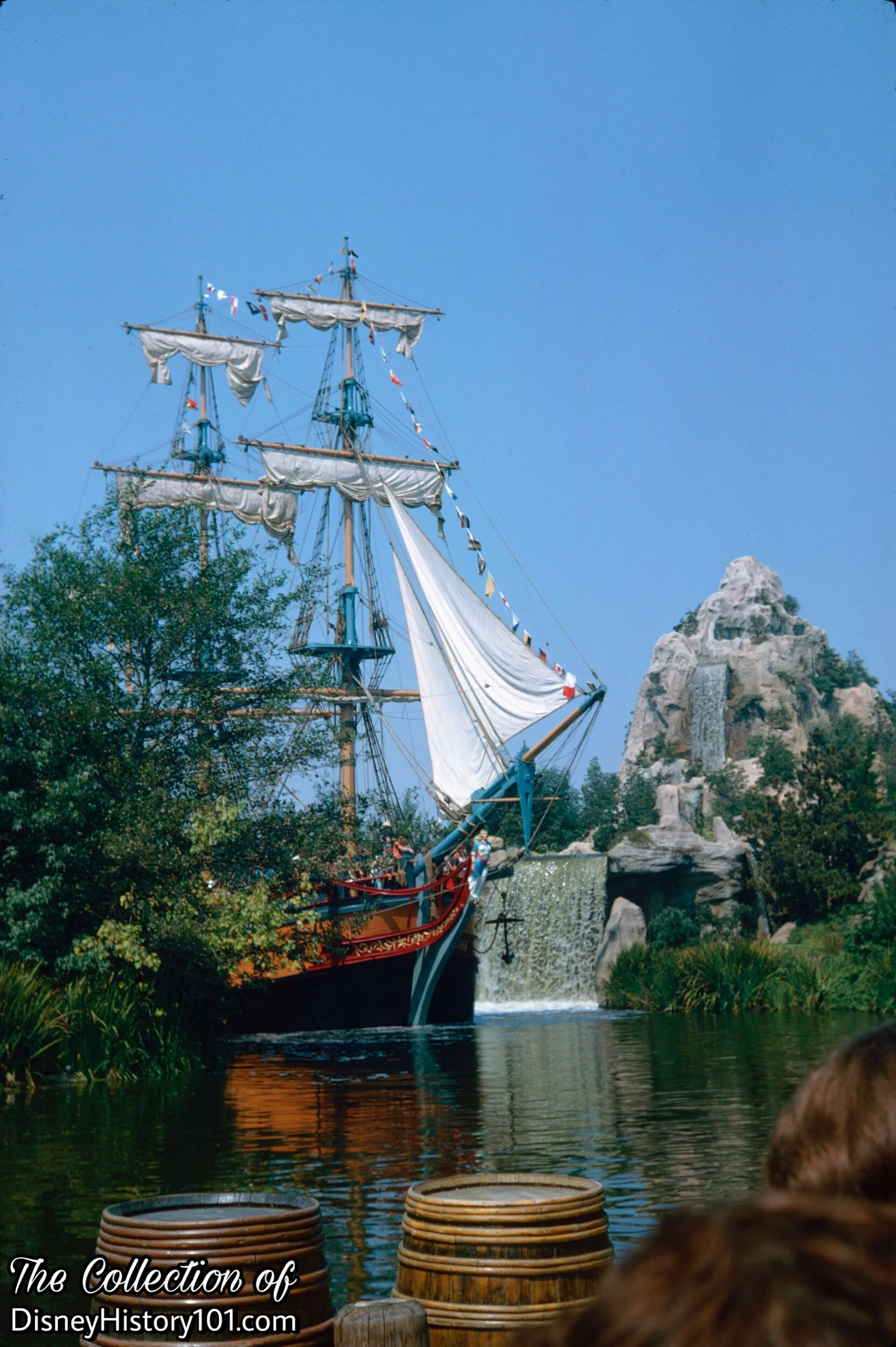
“Mark Twain & Columbia”
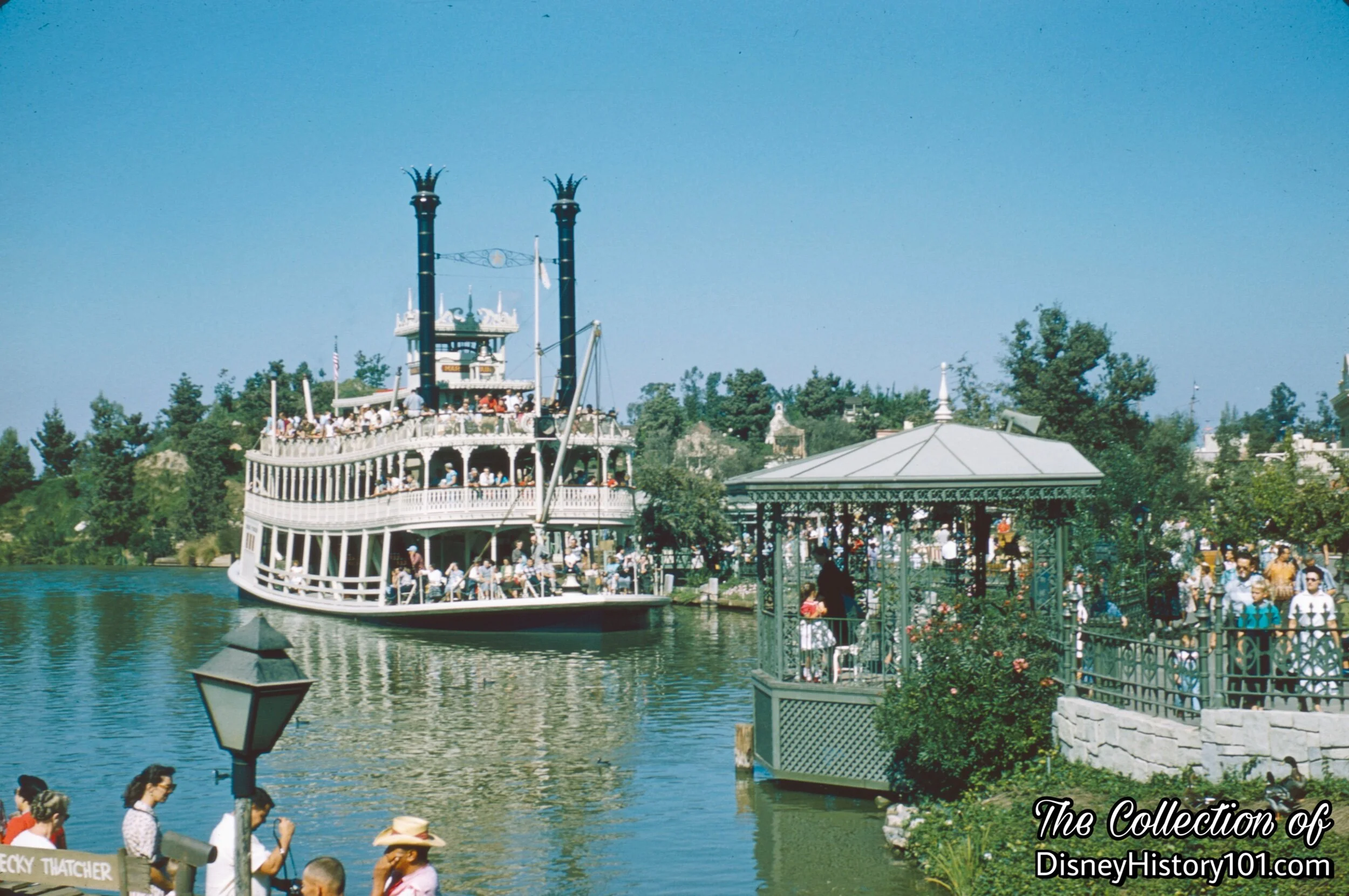
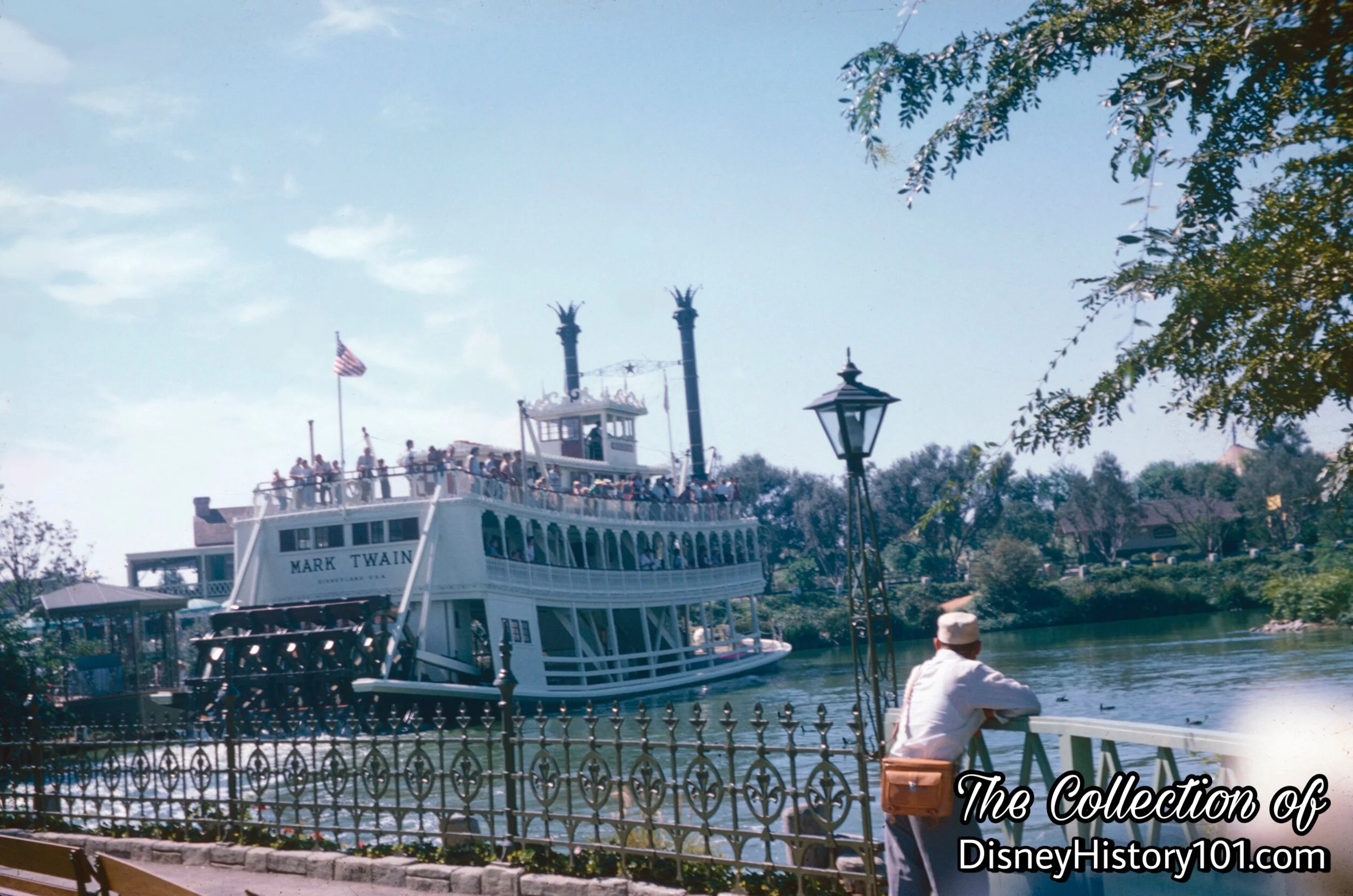
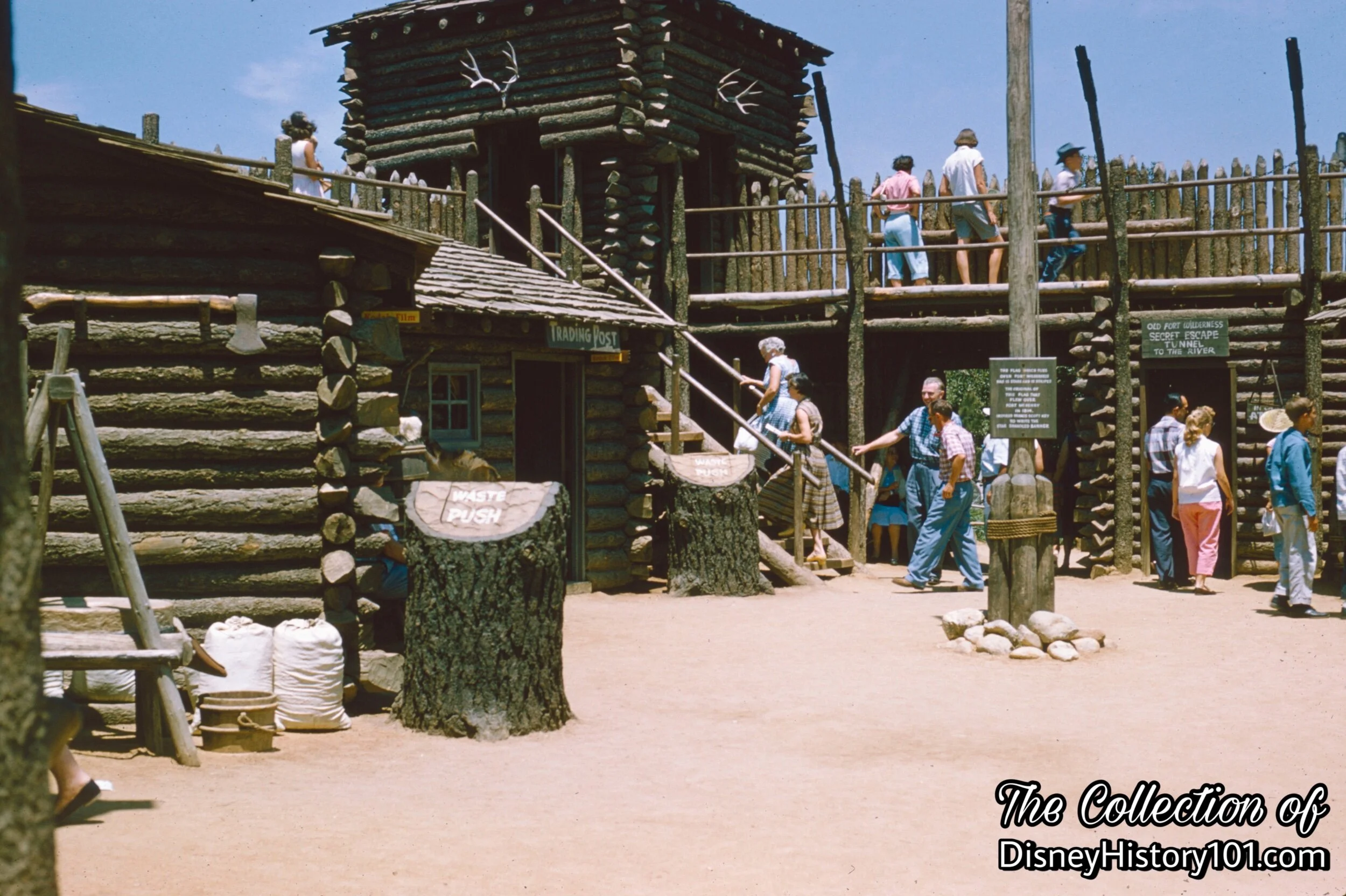
“Fort Wilderness”
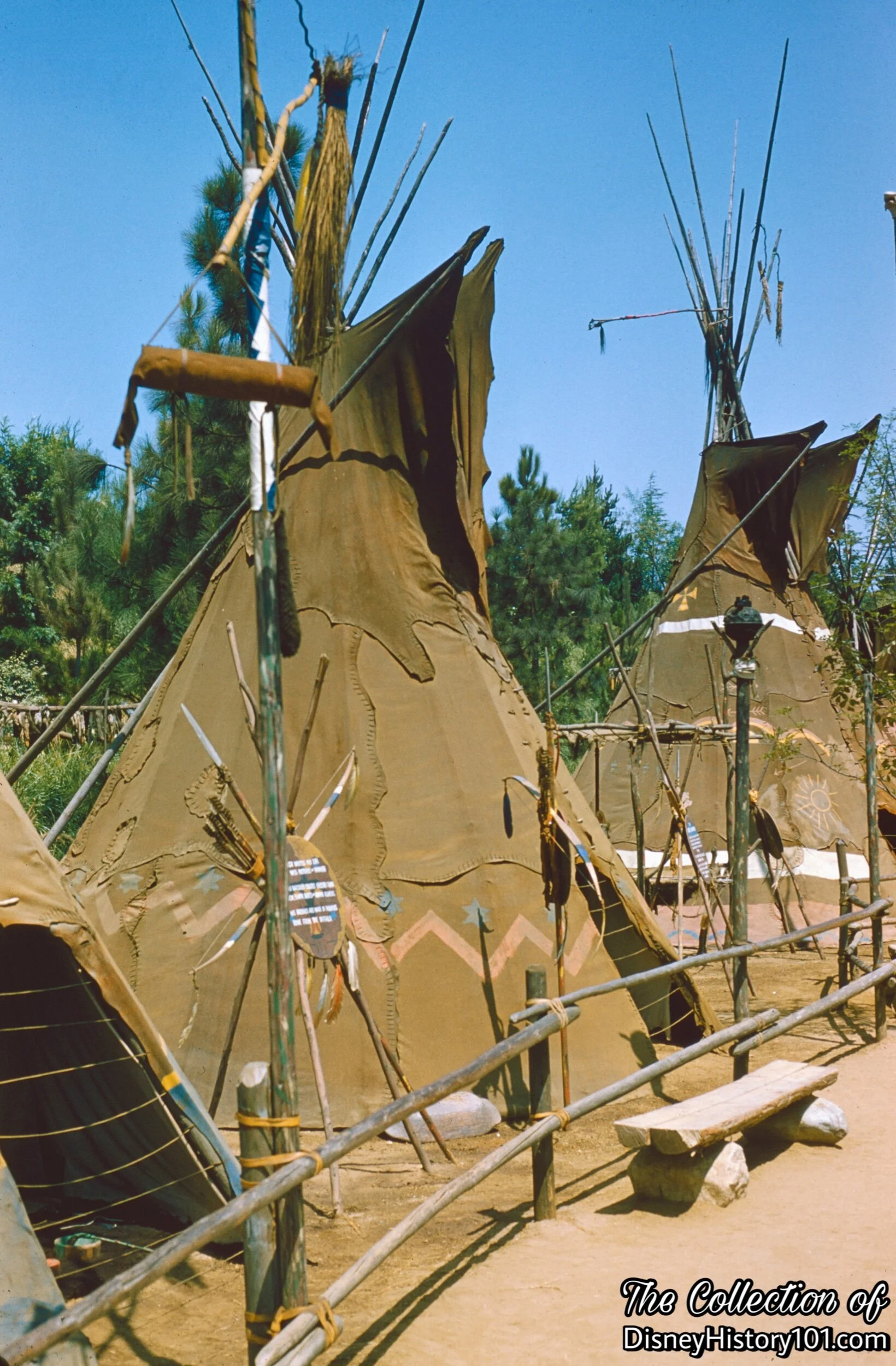
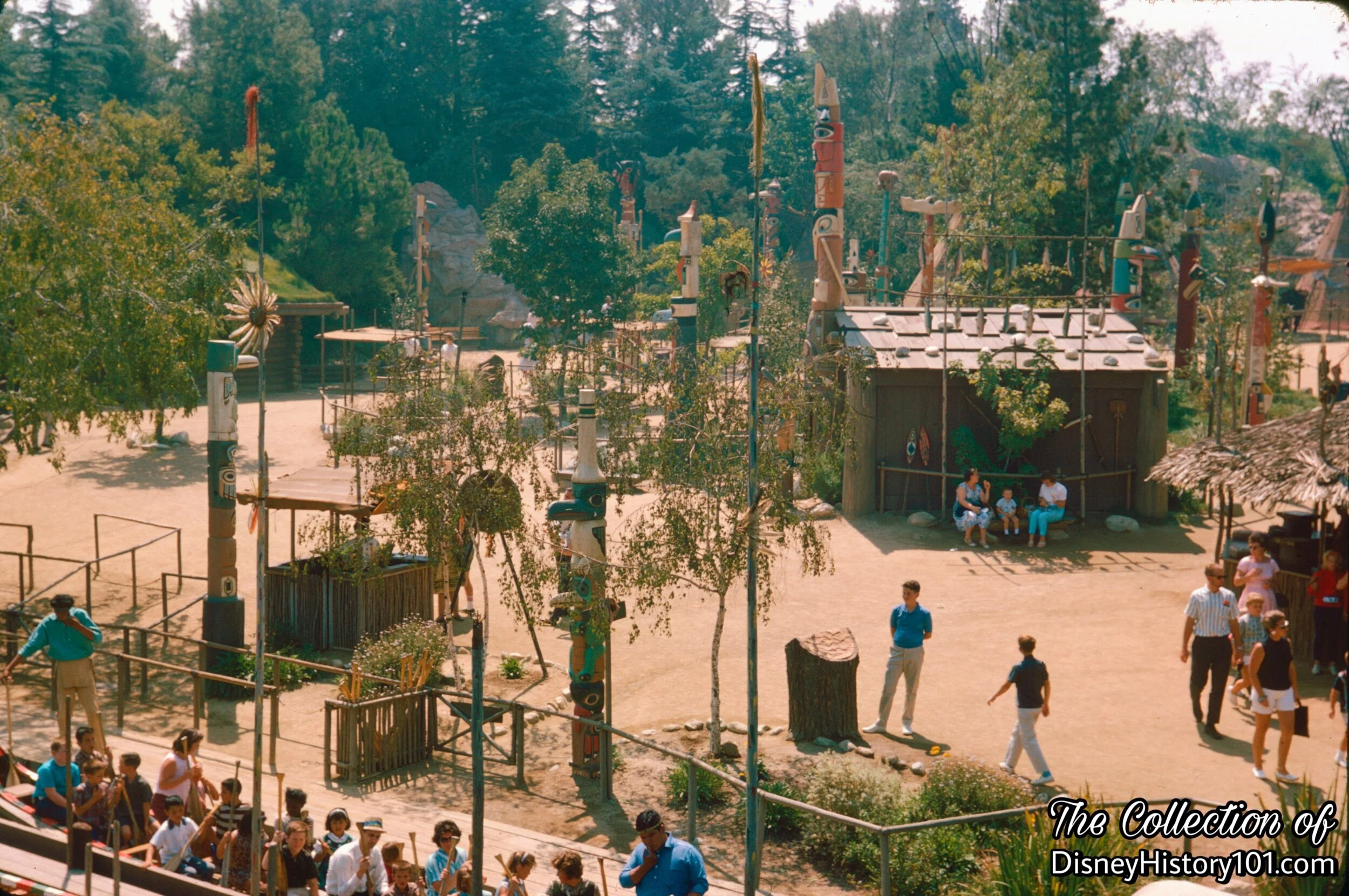
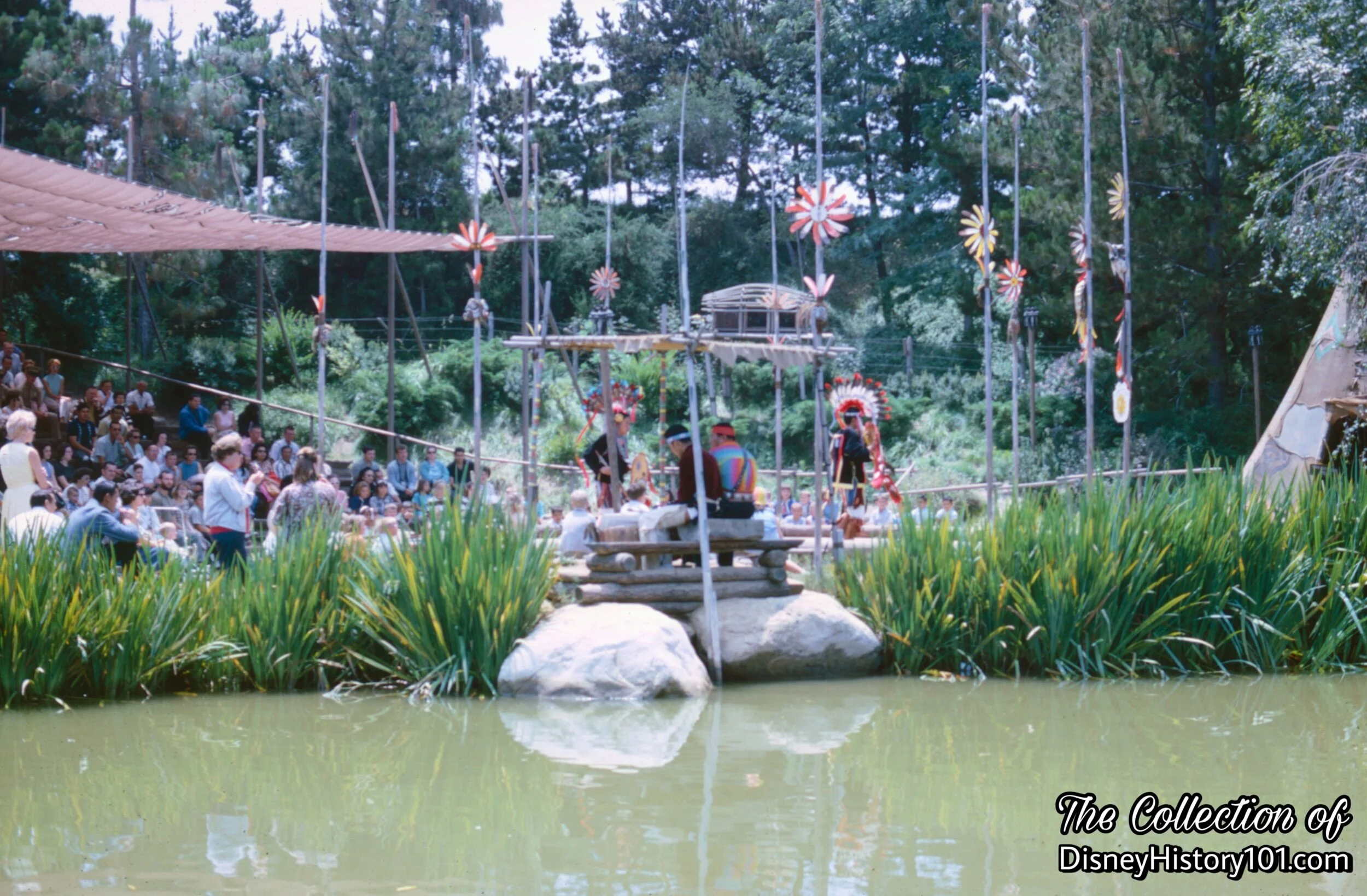
The Indian Village with elements of Pacific Northwest and Plains Peoples
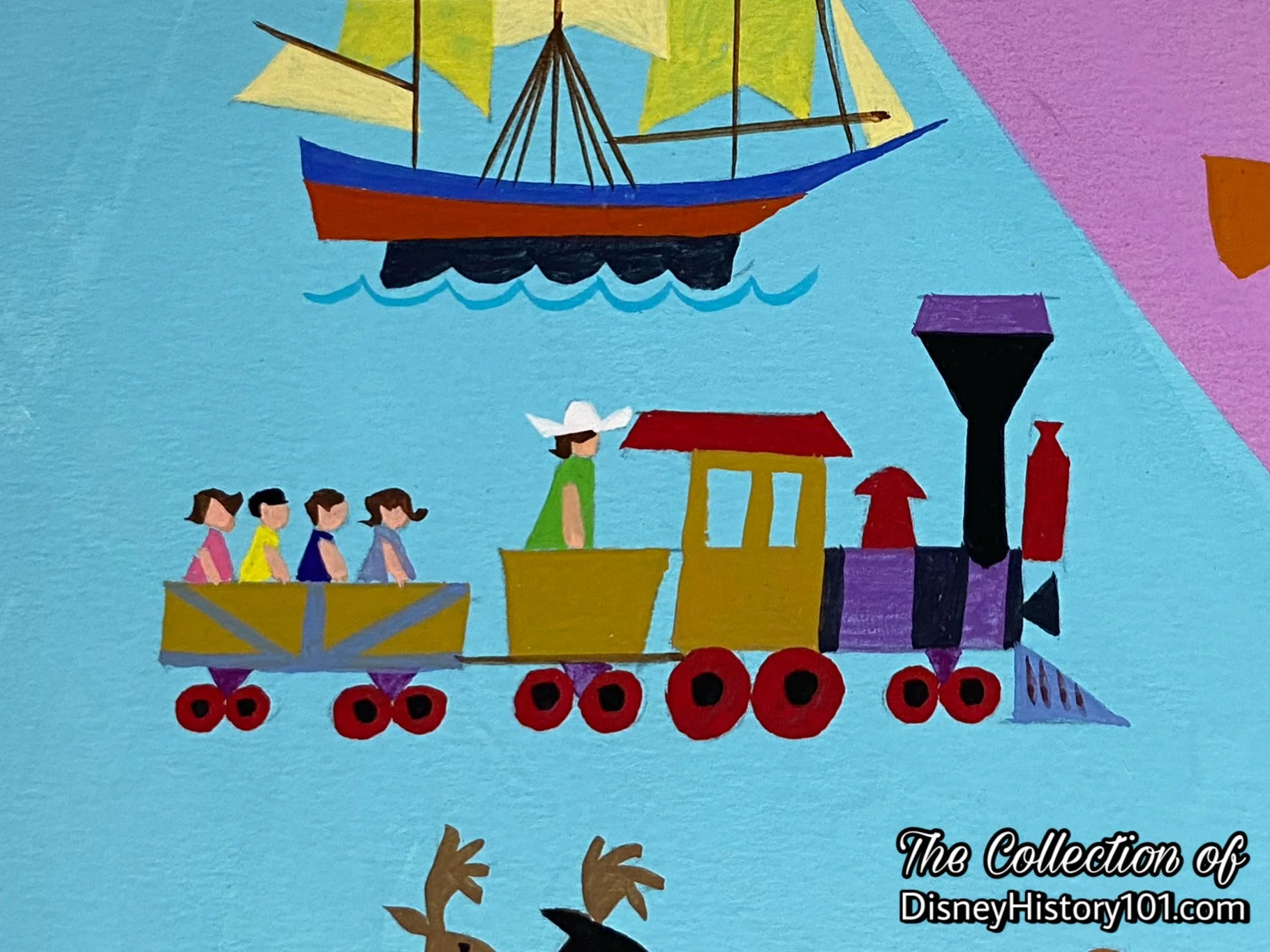
Pictorial map.

“Frontierland Exhibits”
Since the beginning, the Four Keys of the DISNEYLAND Show (operating priorities in presenting the DISNEYLAND Show) have been present - Courtesy, Efficiency, Safety, and Show. “Disneyland revolutionized outdoor entertainment and established a new approach to showmanship. The concept of a living stage was a radical change from the conventional amusement park, fair or fun zone. A variety of live shows entertained Guests throughout the day.” The Frontierland Show offered a number of exhibits. The Mineral Hall opened July 30, 1956. The Davy Crockett Arcade once housed display of early day fire arms. The Frontier Gun Shop (operated by Bill Wescomb & Clyde Crouse) had a display of actual antique firearms dating back to the Civil war up thru World War II. Also on display was a collection of swords and sabres of early American Frontier days (the latter belonging to the Spanish Lancers of California).
“Frontierland Atmosphere Entertainment”
Since the beginning, Atmosphere Entertainment complimenting the theme of areas is staged to entertain Disneyland Guests on an immediate and personal level. Frontierland entertainment was originally a veritable “festival of folk heroes.” It was a “talent roundup” of Attractions Hosts & Hostesses and Entertainers featuring possibly the largest aggregation of all Disneyland’s lands.
Diverse groups entertained Guests during the summer of ‘68, including the El Zocolo Duo, the Indian Dancers, the Golden Horseshoe Revue, The Americana Brass, and the Clara Ward Gospel Singers!
Plants native to the Mississippi River region of North America were used in areas of Frontierland. Much of the original plant life was personally selected by landscape architect Ruth Patricia Shellhorn. For instance, she was responsible for the white-flowering pear and oleander plants which were placed near the bridge and Chicken Plantation Restaurant. In the present, the tress and flowering plants (like the “stately oak” planted near the Golden Horseshoe) continue to enhance the Show Quality of Frontierland.
The First Frontier Nite at Disneyland offered $2.00 chuck-wagon style barbecue dinners, square dancing at the Golden Horseshoe Cafe, country & western music behind the Plantation House, and the Marshall “outdrawin’ them renegades ever’ time one shows up”) was held Tuesday nights through the summer season of 1961, and (aside from the $2.00 price of dinner) was enjoyed at the price of general admission.
The 6th Dixieland at Disneyland brought the sounds of Turk Murphy and his band (Peter Clute on piano, William Carroll on bass, Jack Crook on clarinet, Thad Wilkerson on drums, Robert Neighbor on cornet, and Frank Haggerty on banjo) to the Oaks Tavern in Frontierland. During the 7th edition of Dixieland at Disneyland (which was also incidentally the Third Camp Pendleton Night at Disneyland), the visiting South Market Street Jazz Band (winners of Disneyland’s Frontierland Youth Dixie Band Contest) performed from the Oaks Tavern in Frontierland in Disneyland on the night of Friday, September 29, 1967 from 8:00p.m. to 1a.m.!
In 2008, WDI master plans entertained the concept of a Princess and the Frog show to possibly appear by 2009.
By 2012, The Laughing Stock Company and Billy Hill and the Hillbillies (known during the winter as “Billy Hill and the Holiday Hillbillies”) performed from Frontierland.
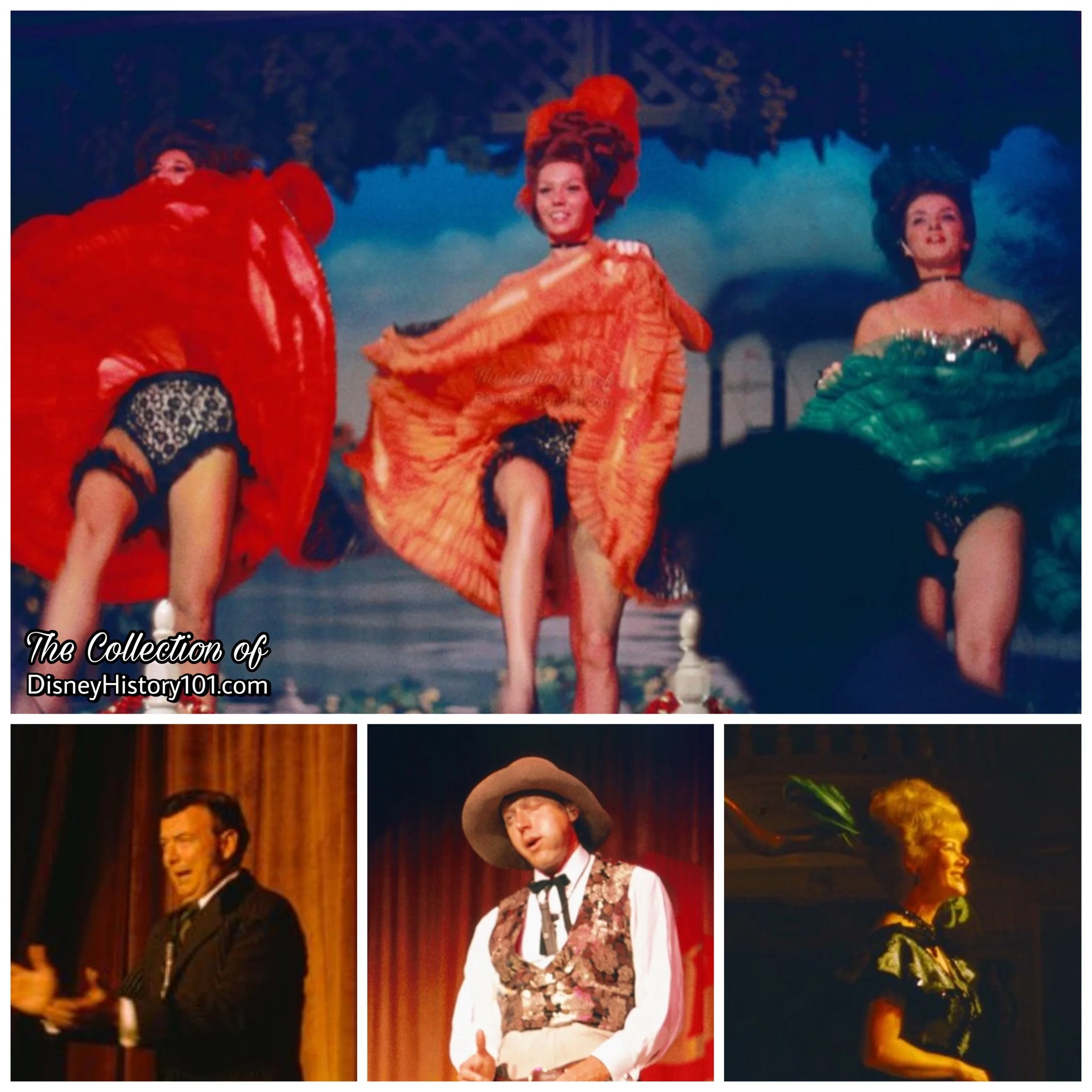
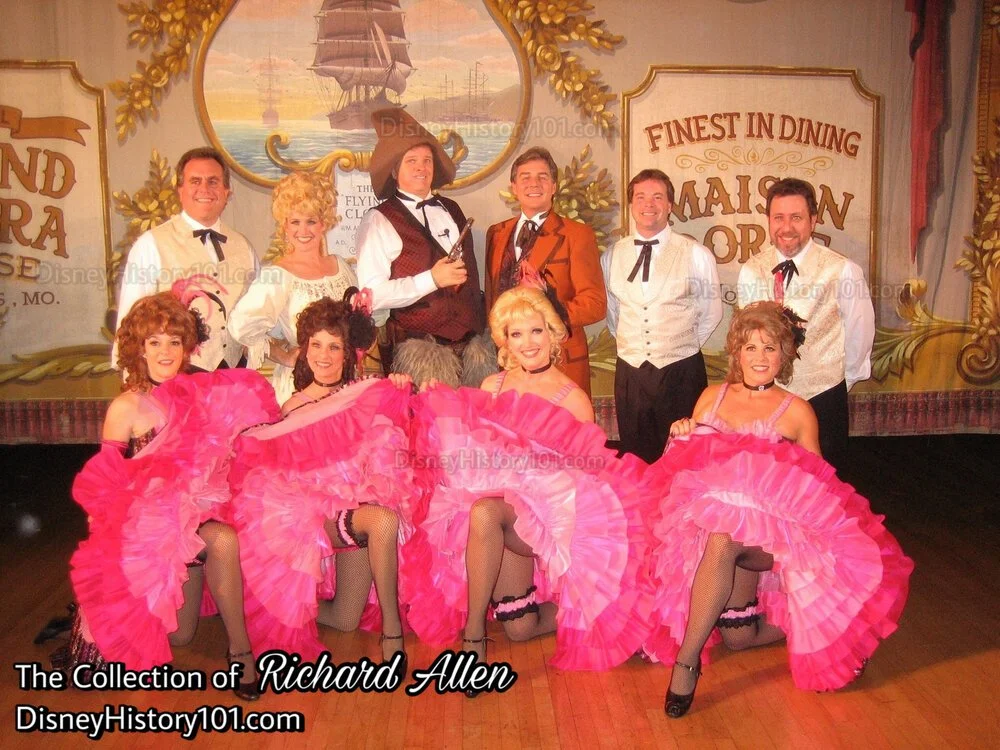
The Golden Horseshoe Headliners - The Irish Tenor, the "roughest, toughest, shootin'est cowboy in the wild, wild, west, those gorgeous Golden Horseshoe Girls, and (of course) Slue Foot Sue.
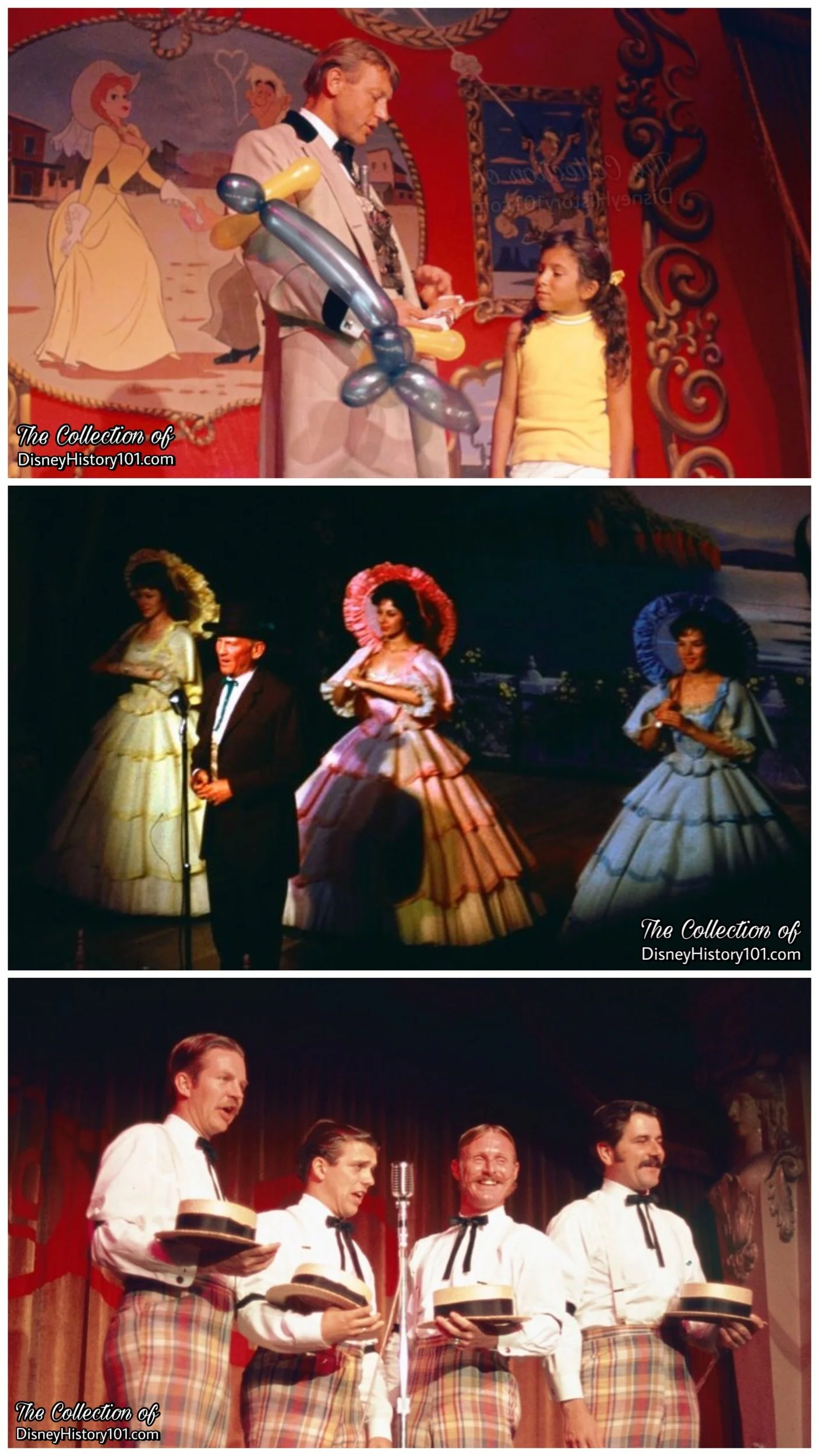
The Traveling Salesman, The Southern Belles, and
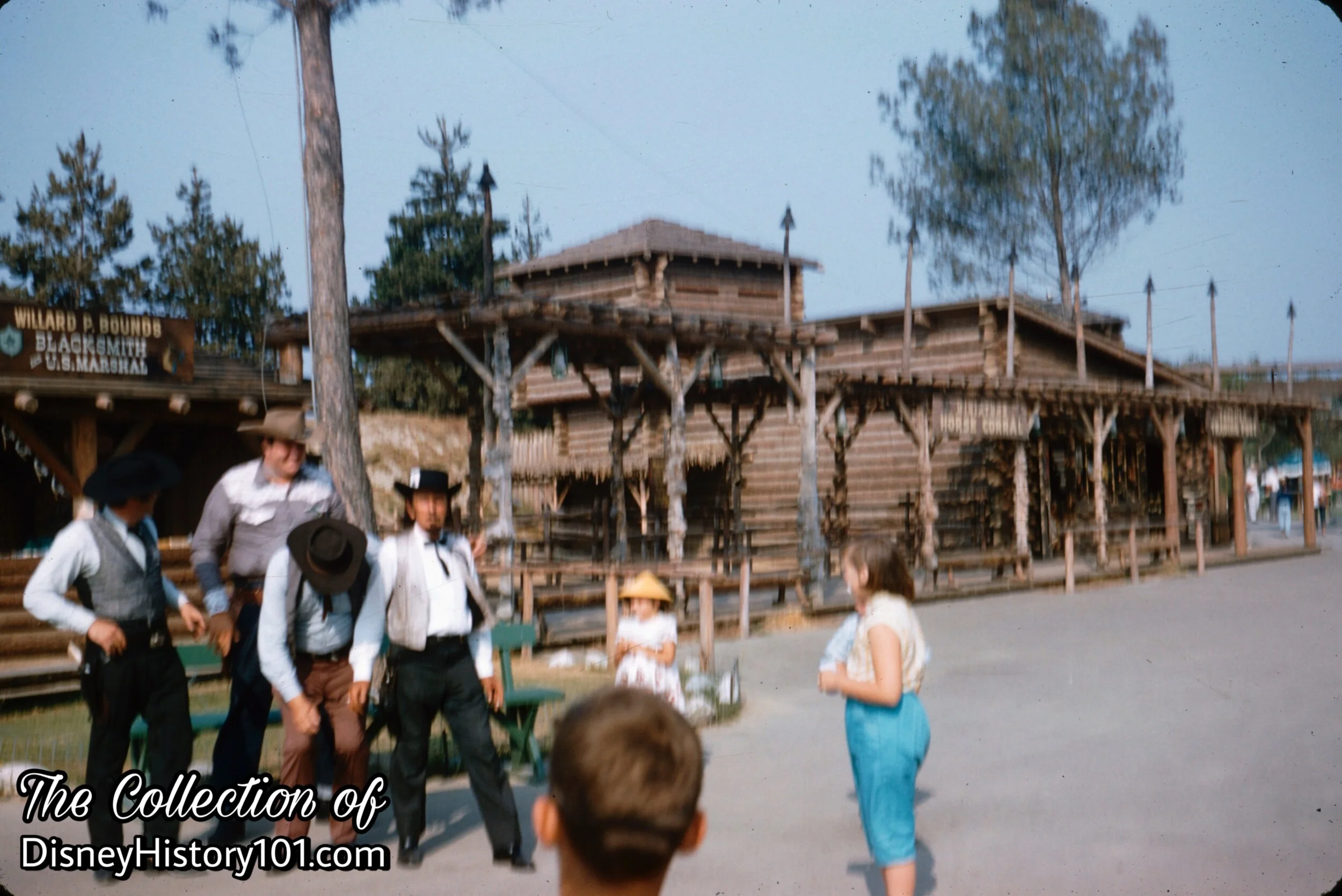
Sheriff & Villain - Roaring Western Gun Battles occasionally reenact “six gun law.”
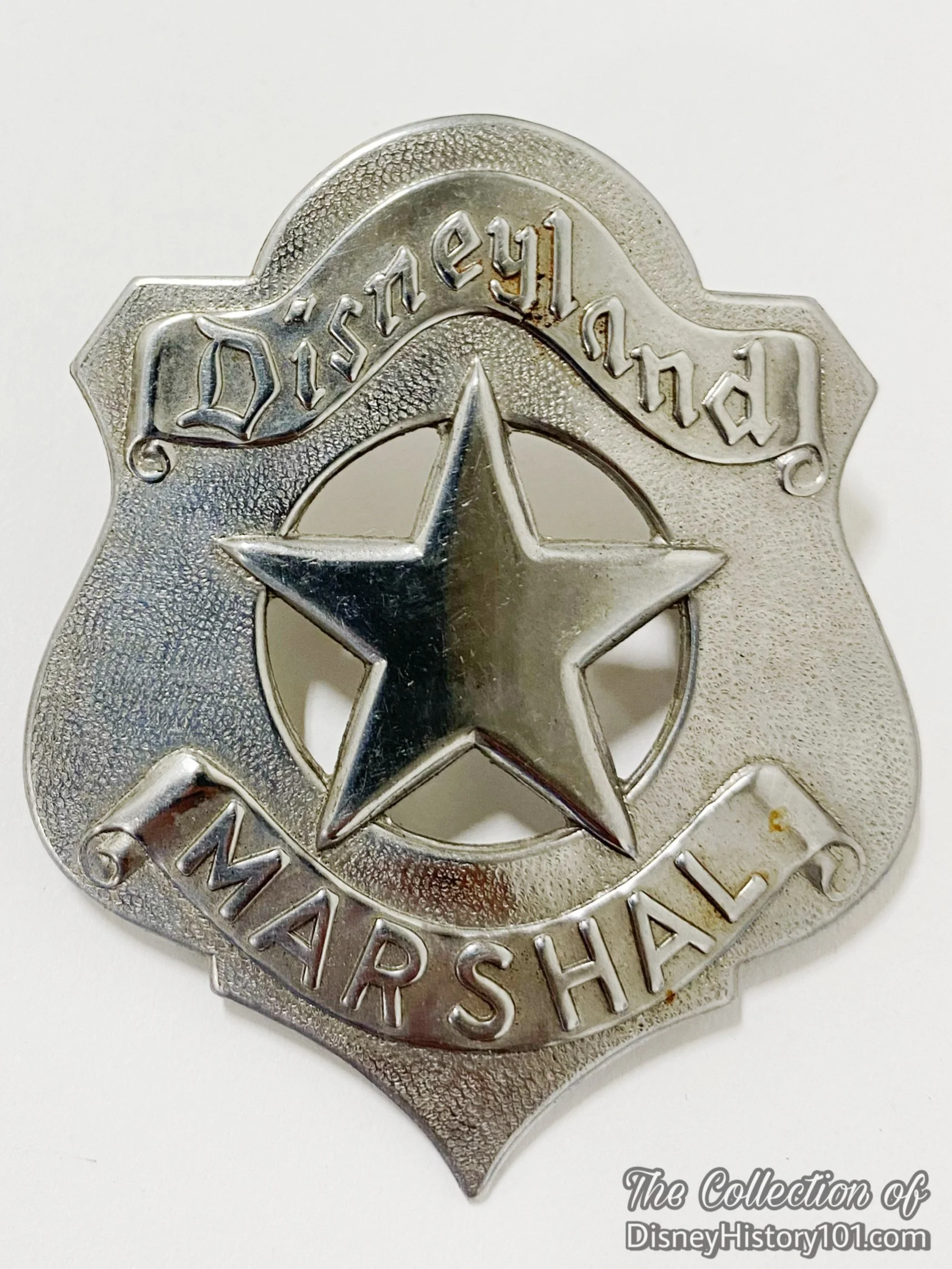
Window “honors” have been a Disneyland tradition, since the Park first opened in 1955, and though the majority are found above shops on Main Street U.S.A., there were a few unique tributes that were once found around these Frontierland parts. Willard P. Bounds (Lillian Disney’s father) was once a true-life U.S. Marshall of an area that included the New Perce Indian Reservation in North Central Idaho, and was honored with a sign through the Frontierland Stockade.
Nearby, there was a concept (successful at fairs like Expo ‘67), which Walt pioneered since Disneyland’s earliest days - that of entertaining the guests of Frontierland queue lines equipoise with live performers. Fantasyland had its “come-to-life” Disney Characters, Tomorrowland came to have its Space Couple, and Frontierland had its Gunfighters! Not far from U.S. Marshall Willard P. Bounds’ Blacksmith Shop (and the Miniature Horse Corral), Frontierland’s cast of frontier heroes and villains assembled to delight and excite guests of all ages with daily “gunfights.” Attraction queue areas would be equipped with live entertainment to set the mood for the forthcoming show.
According to “THE DISNEY THEME SHOW: an introduction to the art of Disney outdoor entertainment; Volume 2”: “What we create here is a storybook realism… an essence of realism and authenticity... more utopian in nature, more romanticized, more like what guests imagined it would be. All the negative, unwanted elements are carefully programmed out, while the positive elements are not only retained but in some cases even embellished for better entertainment.” This guiding principle has affected Disneyland Show since the beginning and is well illustrated by designs, construction, and Guest response to the Frontierland Gunfighters. The Marshall and Badman were once out every day, staging numerous gunfights throughout the day in Frontierland.
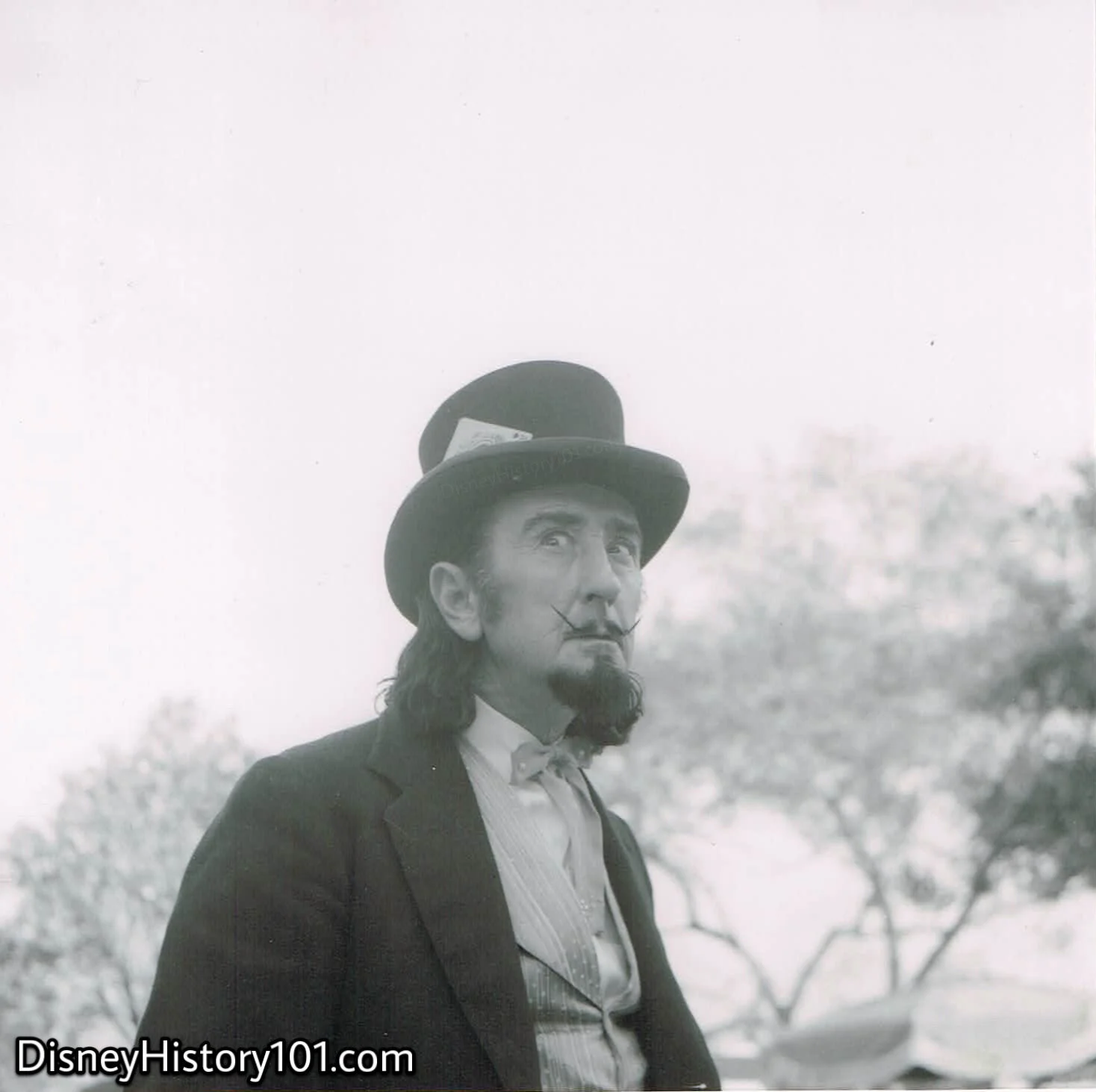
The nefarious Black Bart, the "Crooked Gambler," 1957
As far back as the fall of 1955, gunshots would ripple through the placid Frontierland air, as the Golden Horseshoe’s receipts were robbed by the baddest guys in the wild west. According to Wally Boag’s account (in Homecoming Disneyland by Carlene Thie): “One day I got the idea of doing a gunfight out in front of the Horseshoe. I set it up with the Frontierland lawman, Marshall Lucky Loredo, and we did it. I'd call him out into the street and force him to draw. Of course, I would lose and he would haul me off to ‘jail.’ Walt saw us do the gunfight one day and he loved it. ‘Do that anytime you can,’ he said. Eventually, he hired a couple of professional cowboys to do it.”
Over the years, Frontierland’s various Marshalls would pursue a number of “old west” villains like Pecos Bill and Black Bart the Crooked Gambler (pictured). Other “Villains” included the likes of Trigger Happy “Jack” (Alias Sudden Sam, Cherokee Bill, Dangerous Dan, “Flippin” Floyd, “Fightin” Bill, and Wild Red). These roles were portrayed by a variety of talented actors - George Brent, Hank Post, Bill Hazel, Noah “Dick” Morrison, Ray Lanier, and even Wally Boag.
These would sometimes time their robbery of the Golden Horseshoe’s receipts, with “the end of the 2p.m. show,” according to The Disneyland News, published July of 1955. Chases would often lead the Sheriff from the Chicken Plantation to the Frontierland Train Depot, and from the steamer docks to the roof of the Casa de Fritos and even the outskirts of Rainbow Ridge.
The action was very real according to The Disneylander (Vol.2, No.8; September 1958): “HANK POST (Frontierland's “Bad Man”) had an unfortunate accident recently. It seems he and Marshall LUCKY were putting on a public demonstration, and due to some bad timing, Hank's nose was broken. The public reaction was that the gun fight was not long enough.
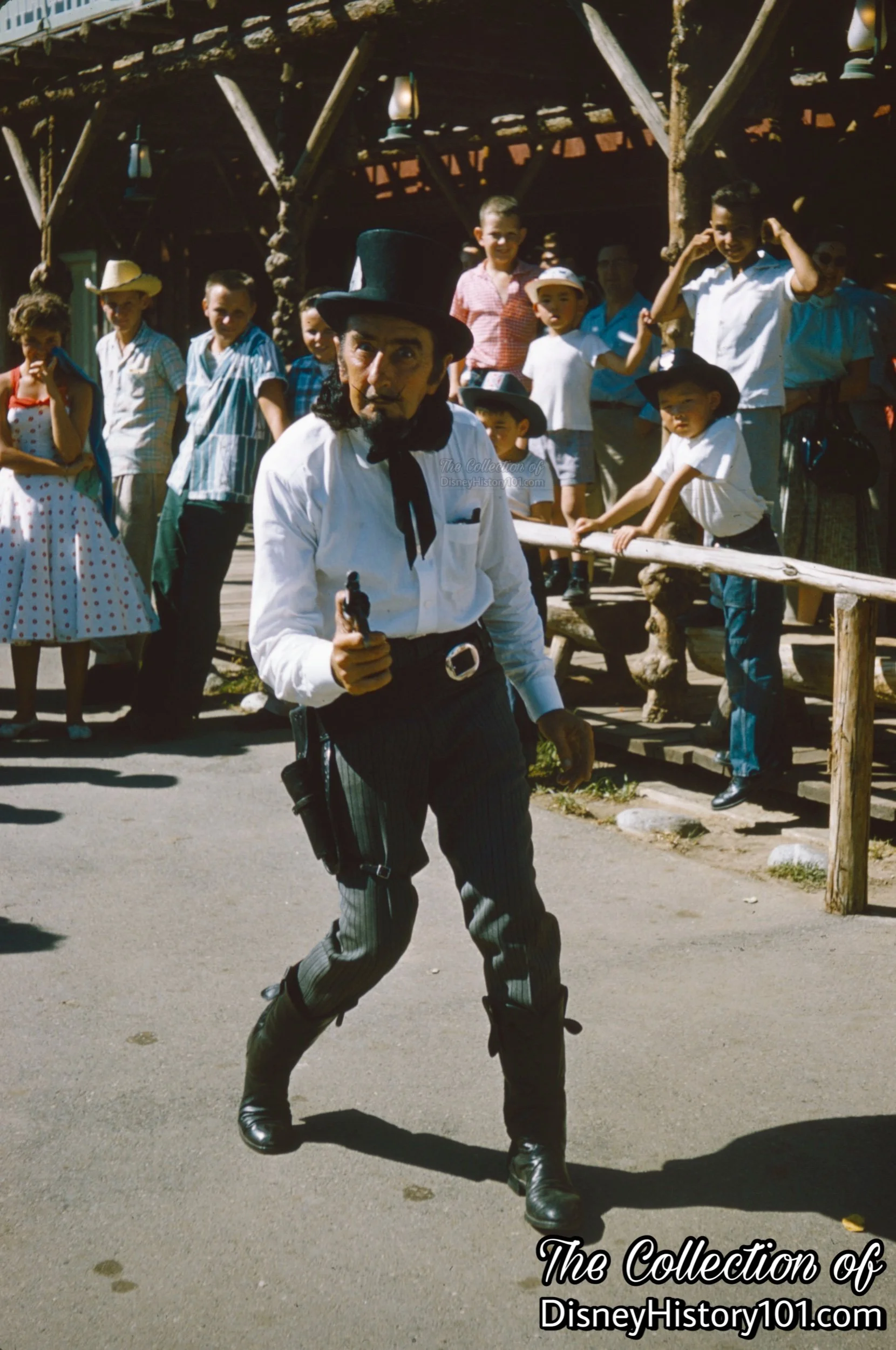
Noah Morrison (the aforementioned McGuffee, Ohio native ; pictured above) was once a “true life” deputy sheriff in Albuquerque, New Mexico). According to The Disneyland News (published for March, 1957), “As a deputy sheriff… for eight years, Noah garnered a reputation as a fearless defender of the peace, though one of the highlights of his session there saw a full scale jail break involving 10 prisoners. ‘But we got them all back, though,’ Noah recalls, but has since traded his badge for a perforated ace of spades atop his top hat!” The “crookedest card shark West of the Monongahela” could usually be found strolling the landing, as he sizes up a “mark” for his questionable playing card talents. When not “taken alive,” Black Bart spent much time twirling his finely waxed mustache or goatee while announcing the arrivals and departures of the Mark Twain as well as presentations of the Golden Horseshoe Revue!
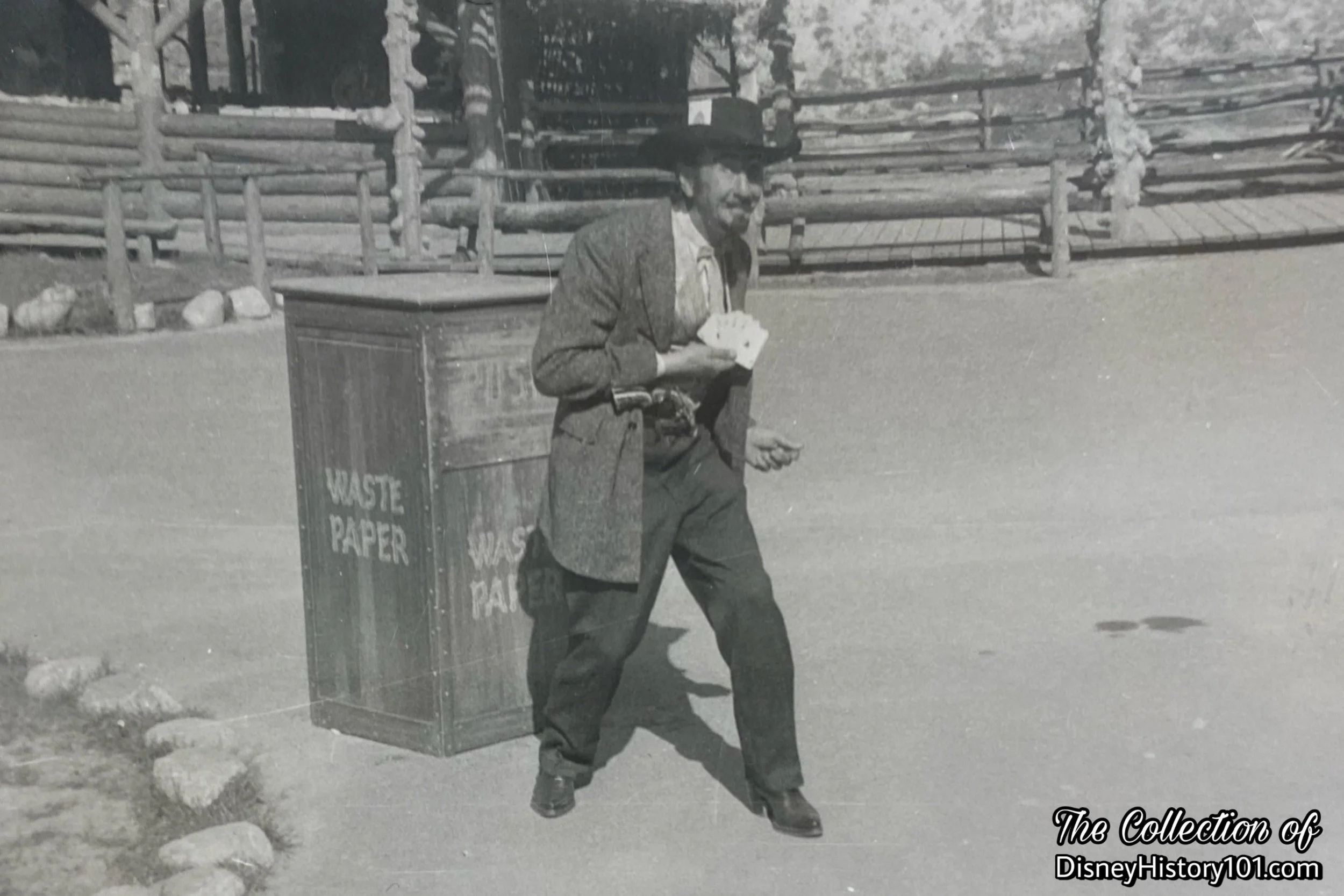
Black Bart the "Crooked Gambler"
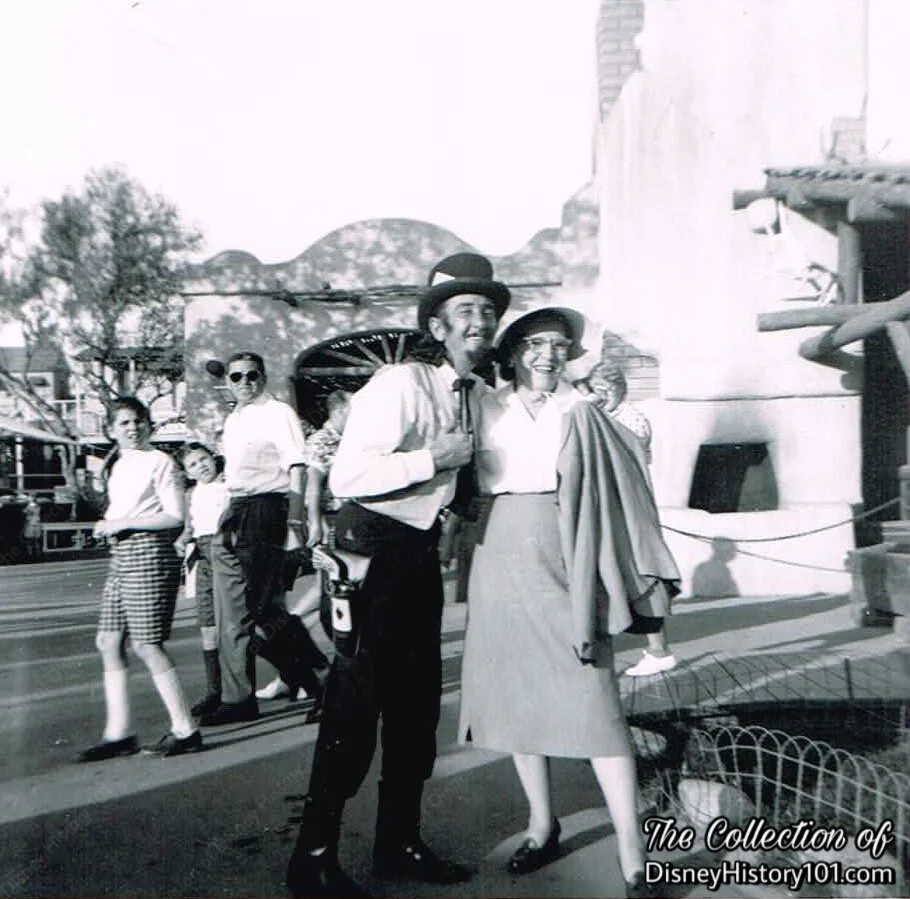
Black Bart the "Crooked Gambler"
The Black Bart Character (and type) was so popular, that incarnations of him outlasted Noah Morrison’s portrayal. Black Bart role was filled by two other actors, and later, the Riverboat Gambler and Magician would be spotted along the Rivers of America during the 1980’s, by that time portrayed by Disneyland Cast Members (like Dana Daniels).
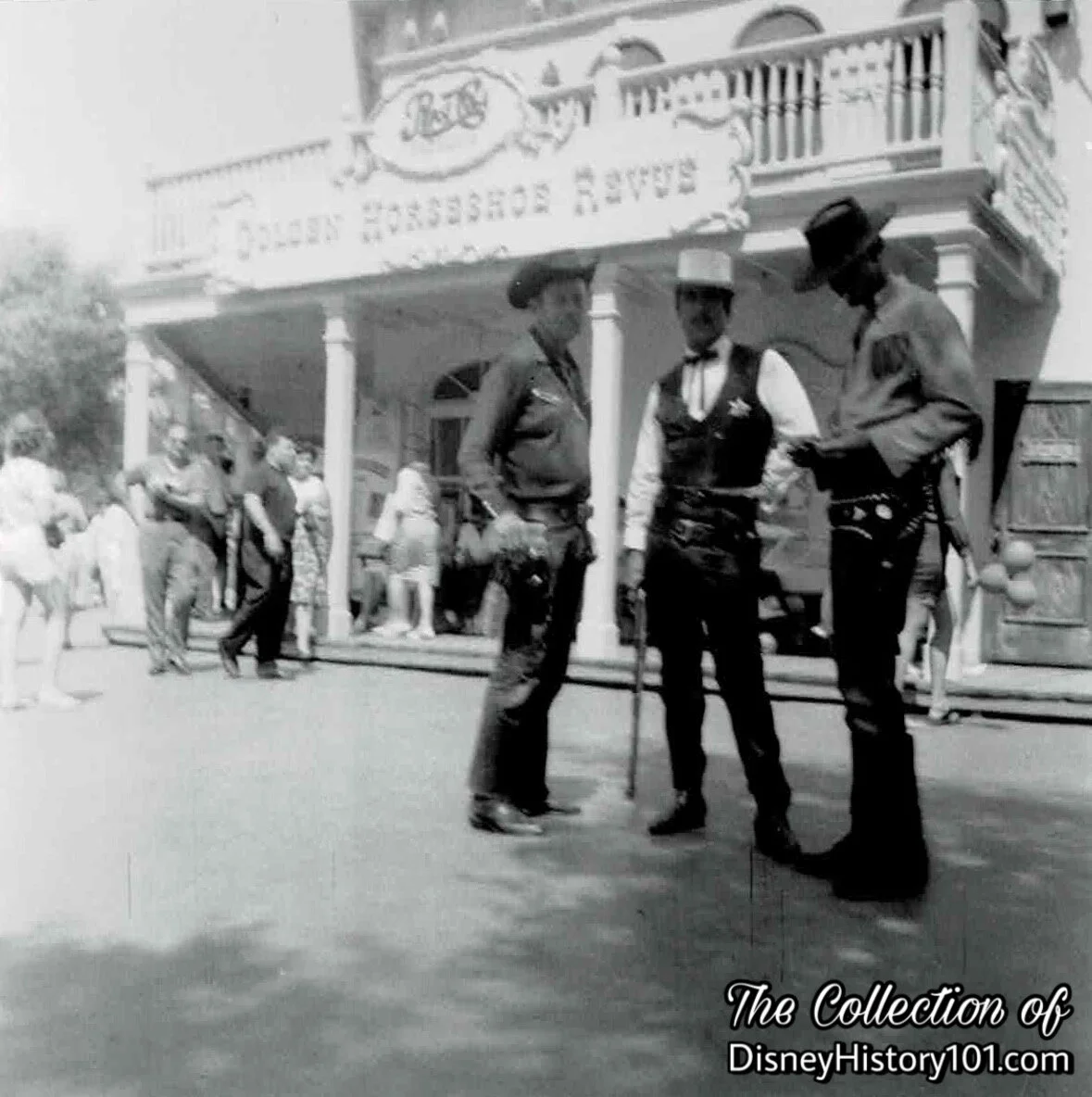
Sheriffs of the Roaring Western Gun Battles awaiting the the emergence of the Villain from Slue Foot Sue's Golden Horseshoe Revue
According to The Disneyland News (September, 1956), “though most visitors call him ‘Sheriff,’ Lucky’s title should actually be ‘Marshall,’ since this is the rating that most of the old western heroes held.” When Sheriff Lucky Fauntz (a former ranch hand and San Bernadino Sheriff ; see The Disneyland News, September, 1956) or Sheriff Bill Lacy weren’t demonstrating the art of whittling, they were on the lookout for horse thieves.
A number of “hired guns” were of former law enforcement or military profession (i.e. Deputy Marshall Bob Benton formerly “Badman Benton”, was a former Deputy Sheriff in New Orleans, Louisiana, and Doc Wood - Disneyland’s first Deputy Marshall - was a retired Navy Veteran of World War II). These trained and mastered stuntman techniques on the Frontierland streets and rooftops. “Sundance” (portrayed by Ron Lewis) often takes a 12-foot drop, and “Billy the Kid” (portrayed by Ron Brooks) performed similar gymnastics, karate, prize fighting, rope-climbing, hand-to-hand warfare, and easily burned up 200 cartridges a day in “shootouts”, (all for show, of course).
Bill’s “biggest problem is fending off the requests of youngsters who ask for bullets from Bill’s holster belt for souvenirs. The bullets by the way, fit his gun, an original Colt ‘Peacemaker,’ famous as the gun that tamed the West. Bill’s gun is a classic antique made in 1876 and in good shooting condition. A twin of the gun hangs in the gun collection in the Davy Crockett Arcade. For his shooting match with Wally Boag, Bill borrows one of the pistols used by Wally in the Golden Horseshoe Revue,” according to The Disneyland News, published July of 1955.
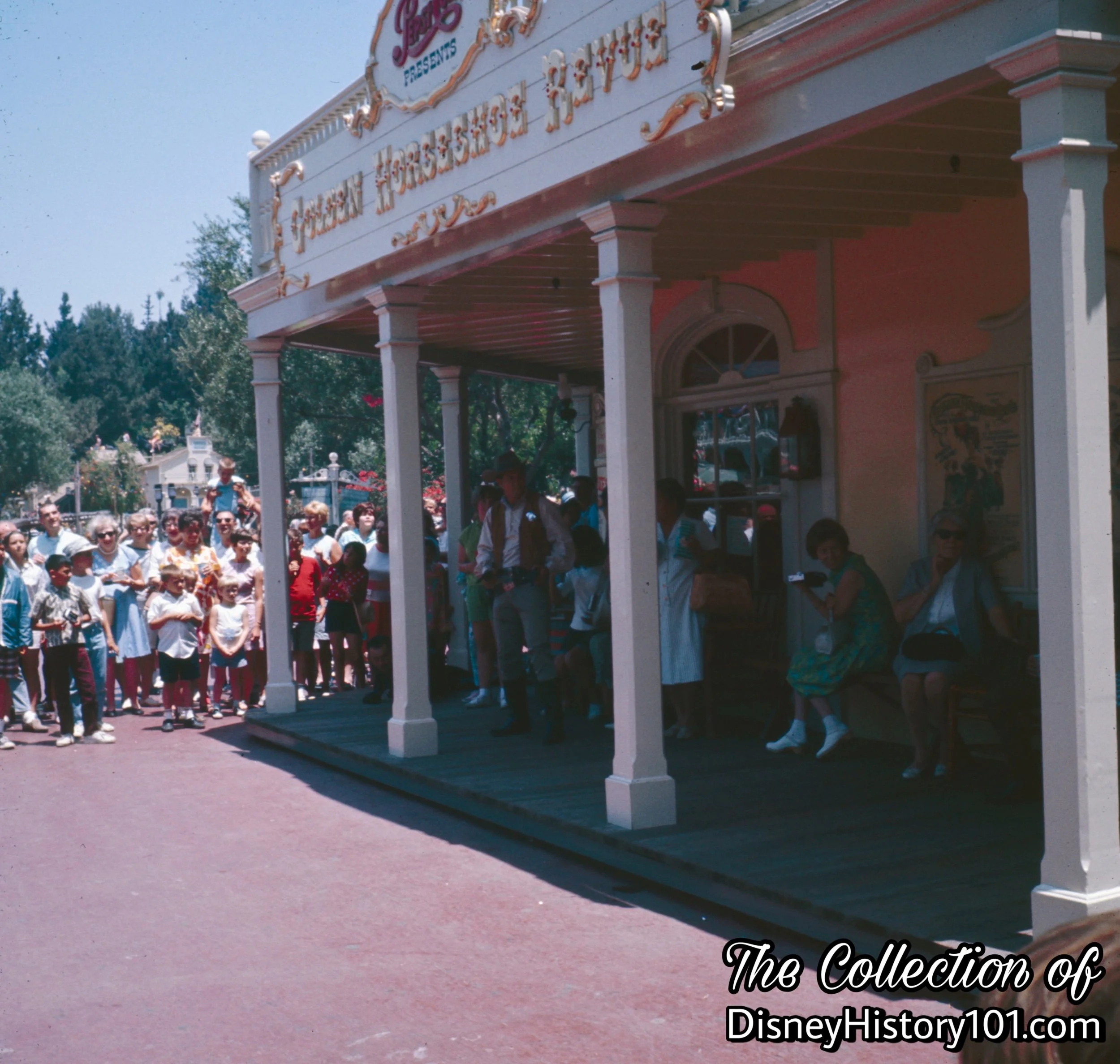
Guests gather around the Golden Horseshoe.
Black Bart arrives!
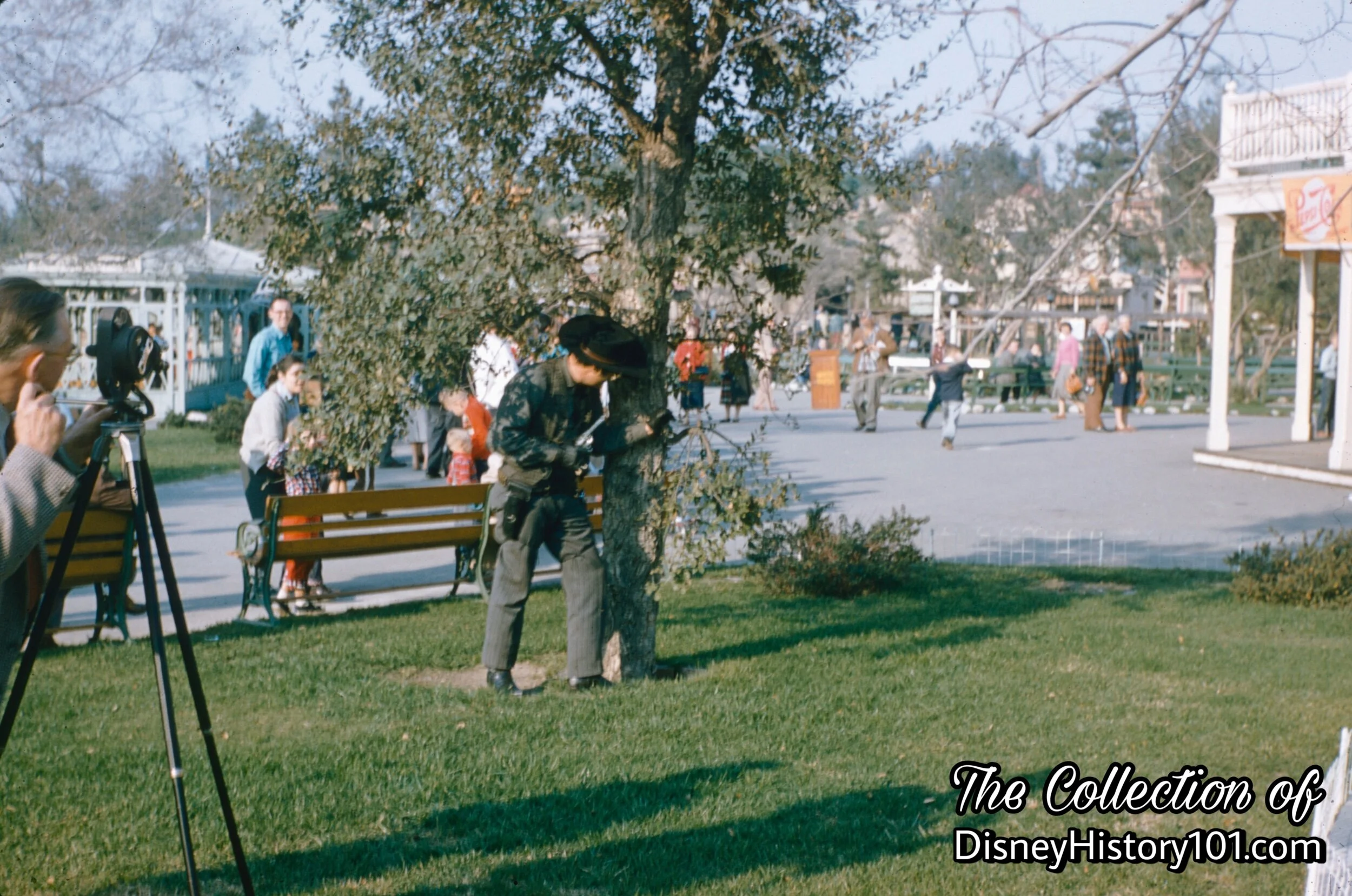
Sheriff & Villain - Roaring Western Gun Battles
These Villains would routinely time their robbery of the Golden Horseshoe’s receipts, with “the end of the 2p.m. show,” according to The Disneyland News, published July of 1955.
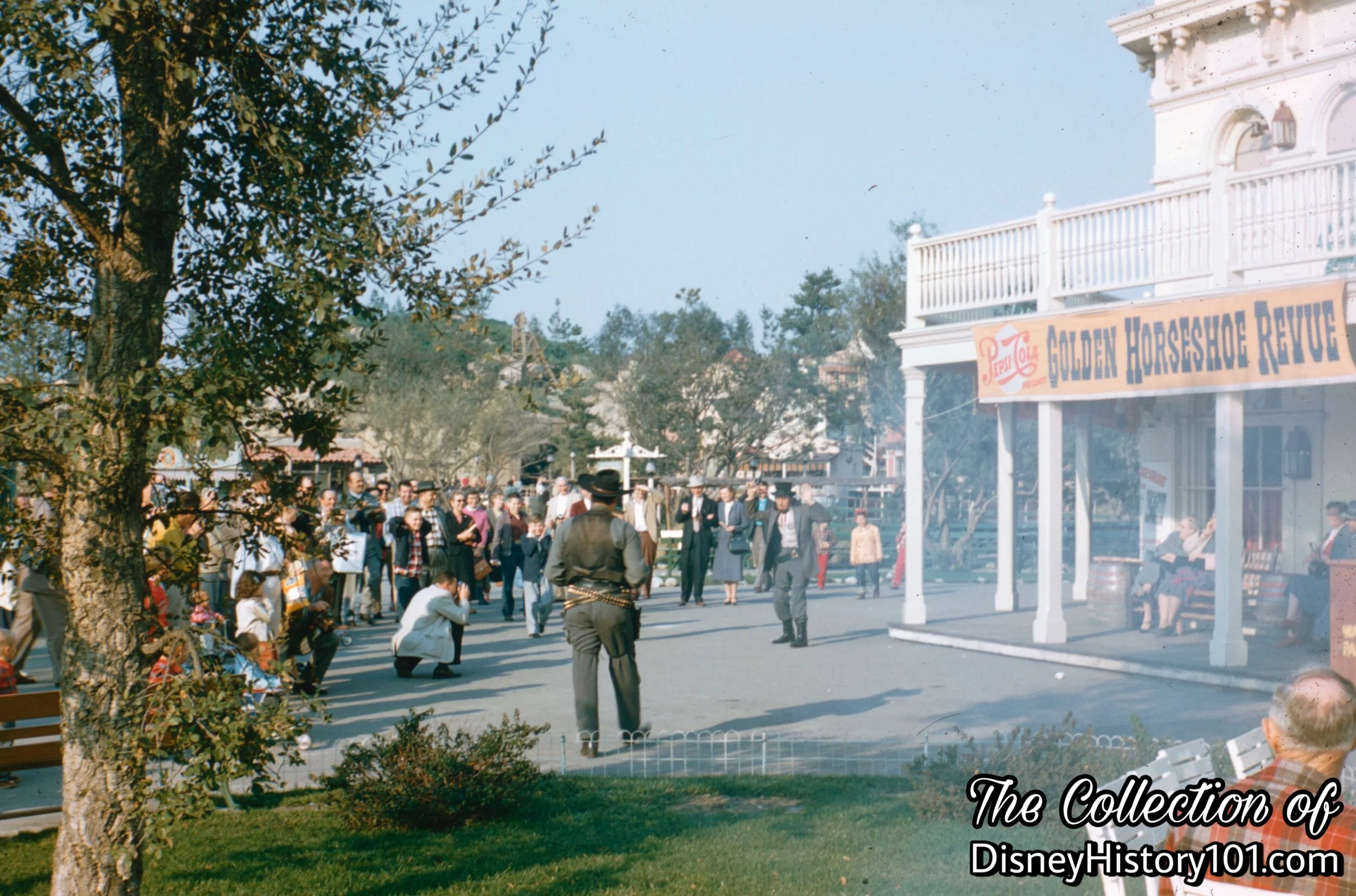
Sheriff & Villain - Roaring Western Gun Battles
According to the narrator of “Disneyland - The Park” (a c. 1957 episode of the “Disneyland” anthology series), “Back in those days, the law of the six-shooter kept the peace, and sometimes disturbed it.”
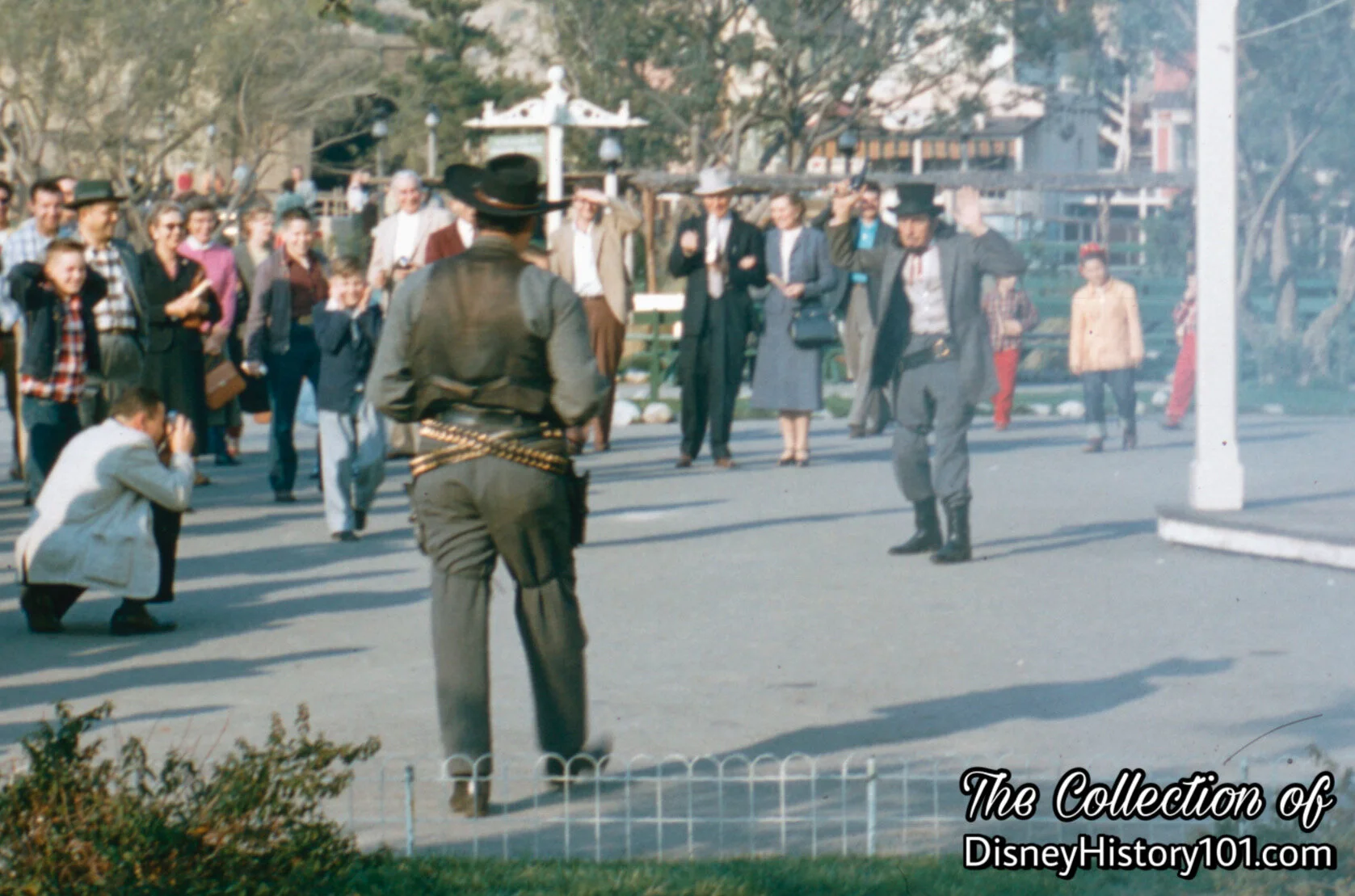
It appears that the Sheriff has forced the Villain to surrender after a "Roaring Western Gun Battle."
While beginning in the vicinity of the Golden Horseshoe, the chases would often lead the Sheriff from there to the Chicken Plantation or the Frontierland Train Depot, or from the steamer docks to the roof of the Casa de Fritos, and even the very outskirts of Rainbow Ridge.
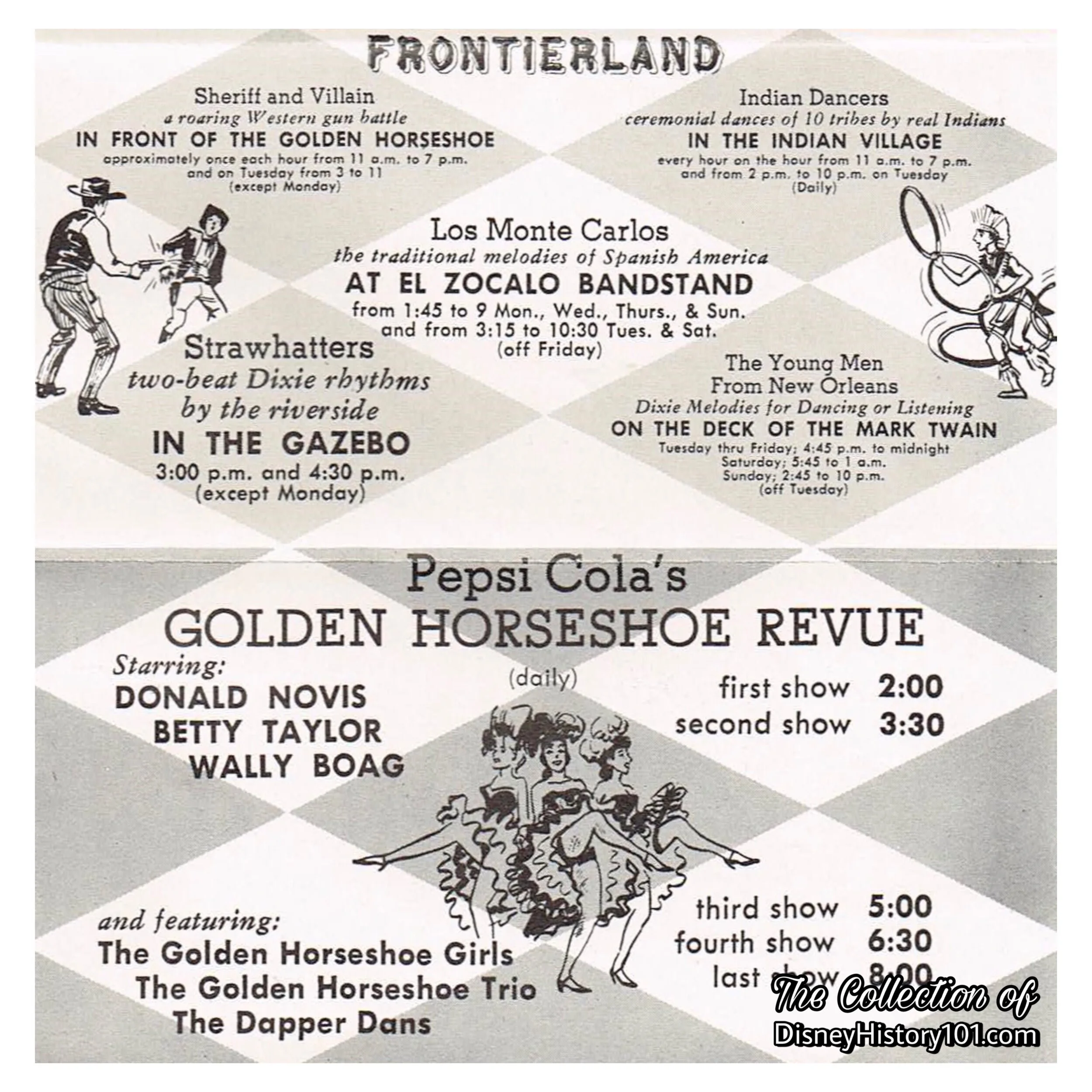
“Disneyland’s Happiest Show on Earth” Excerpt, (c. 1961)
CHUCK BURNES came from the U. of D. (University of Disneyland) and was transferred to become Talent Supervisor for the Characters and Gun Fighters. The jump from a Food Service personnel trainer to Talent Supervisor was not an unusual one for Chuck because he had spent much of his life in the field of entertainment.
All of these Characters created fantastic photographic imagery. In August of 1962, Lloyd Richardson, Larry Clemmons, Joe Marquette, Coy Watkins, and Jack Leppert (of the Walt Disney Studio) filmed and shot scenery for Studio Production #3185. During this visit, “Joe Marquette and Larry Clemens went to shoot the gunfighters while performing their act in Frontierland.” By 1965, the Gun Fighters were under the supervision of Disneyland Talent Supervisor Chuck Burnes (from the University of Disneyland). [Backstage Disneyland, Vol.4, No.4 ; December 1965]
The Frontierland Cast Members certainly epitomized a process that Walt called “Performance Excellence” - encouraging Cast Members to strive to excel each day in the fulfillment of their individual roles and responsibilities in an environment consistent with defined Disney behaviors. The Cast Members were continually challenging themselves and each other to try new methods of working more effectively and efficiently. Teamwork was regarded as essential in accomplishing these efforts.
By summer of 1966, the Gunfighters performed from 11:45 AM to 7:45 PM.
By 1985, the Frontierland Gunfighters and Riverboat Gambler still made appearances at Disneyland. By 1988, the Frontierland Gunfighters had a legacy at the Magic Kingdom, as stunt men would shoot it out, western style.
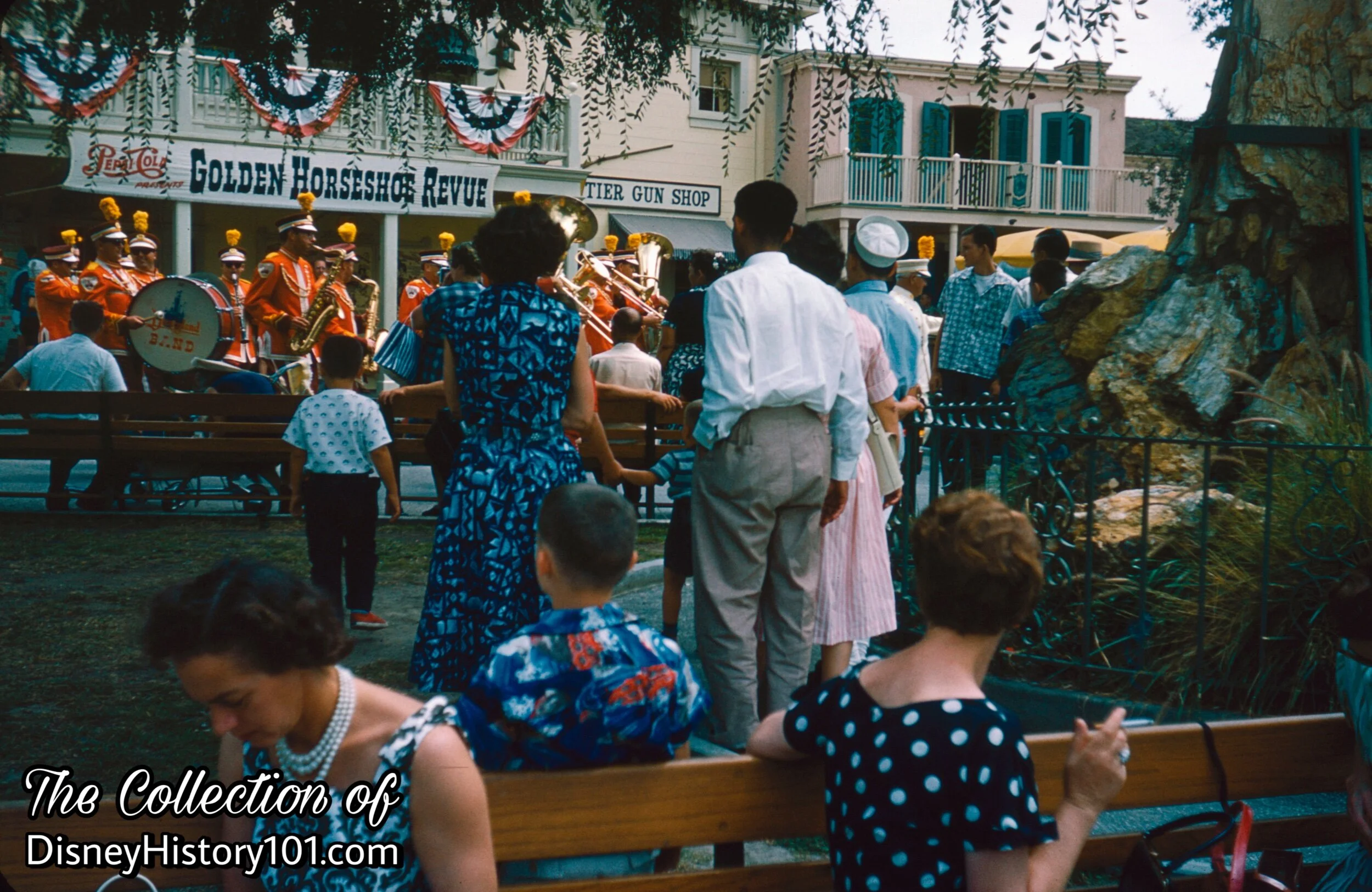
Guests enjoy a concert performed by the Disneyland Marching Band in Frontierland, (August, 1960)
During later winter seasons, the Disneyland Christmas Carolers (under the direction of Dr. Charles C. Hirt and lead by Mr. Robert G. Hasty), also known to “stroll through Frontierland to Central Hub” and “Frontierland to Aunt Jemima’s” during various times of the day, from December 16th, 1967 thru January 1st, 1968. [“Disneyland Holiday Talent Master Schedule,” prepared for the period of December 16, 1967 through January 1, 1968]
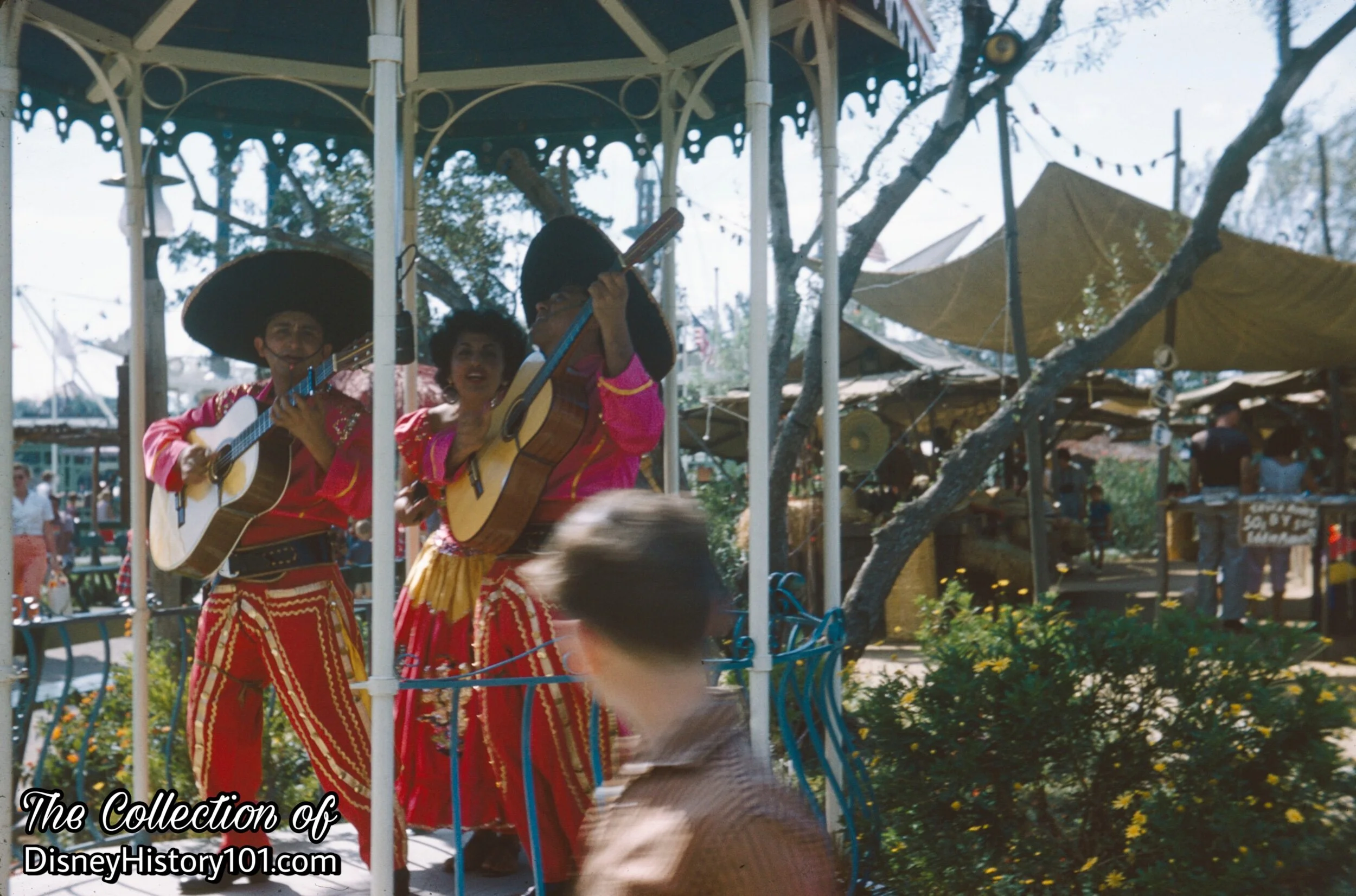
By 1959, there were regularly scheduled free performances by the strolling Mexican Trio in the Mexican Area during peak seasons, and on weekends.
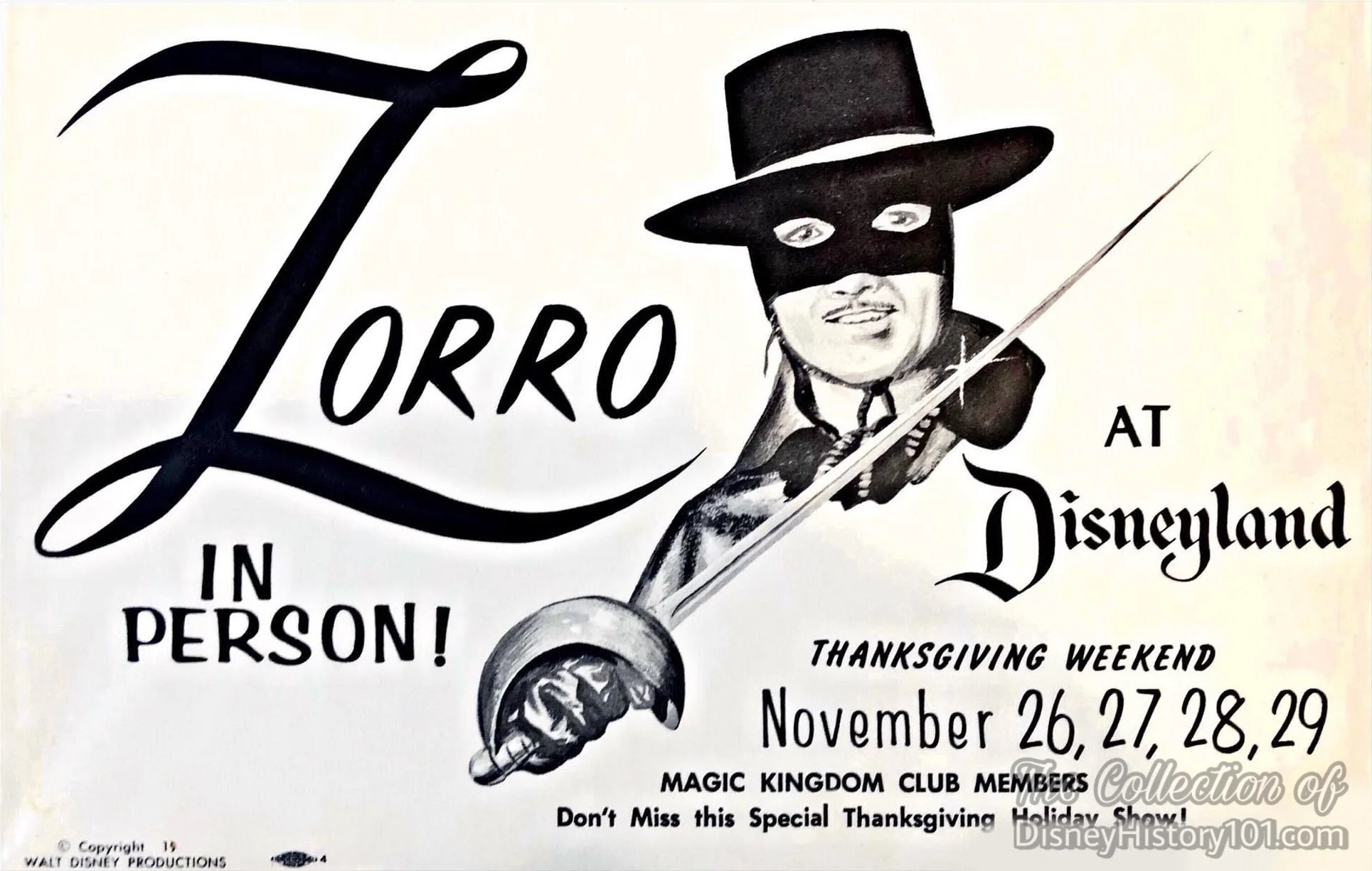
The “sign of Zorro,” advertising his 2nd appearance in-person, November 26-29, 1959.
From the Mouseketeers to Davy Crockett - it was not out of the ordinary to meet Walt's stars of television and film in Disneyland. The first episode of the "Zorro" television series was broadcast on October 10, 1957. Starting the weekend of April 26-27, 1958, Zorro (Guy Williams) with his steed Tornado, Sergeant Garcia (Henry Calvin), and Bernardo (Gene Sheldon) entertained crowds with a daily parade and four "swashbuckling" daredevil shows near the Golden Horseshoe and Mark Twain. The most amazing thing is that these actors were actually performing their own stunts - climbing and leaping from rooftops! “55er” Homer Holland fondly recalled “watching the ZORRO cast making movies. They would chase up to the top deck of the Mark Twain, and push a guy over the rail to the river below. Then there was the time that Zorro fell right over his horse while leaping on.” At the completion of each performance, autographs were given to the guests present!
The show made such a “splash” that a few months later Zorro (Guy Williams) and Captain Monasterio (Britt Lammond) appeared with the Disneyland Cast in “Disneyland Comes To The Hollywood Bowl" (Friday, August 1, 1958).
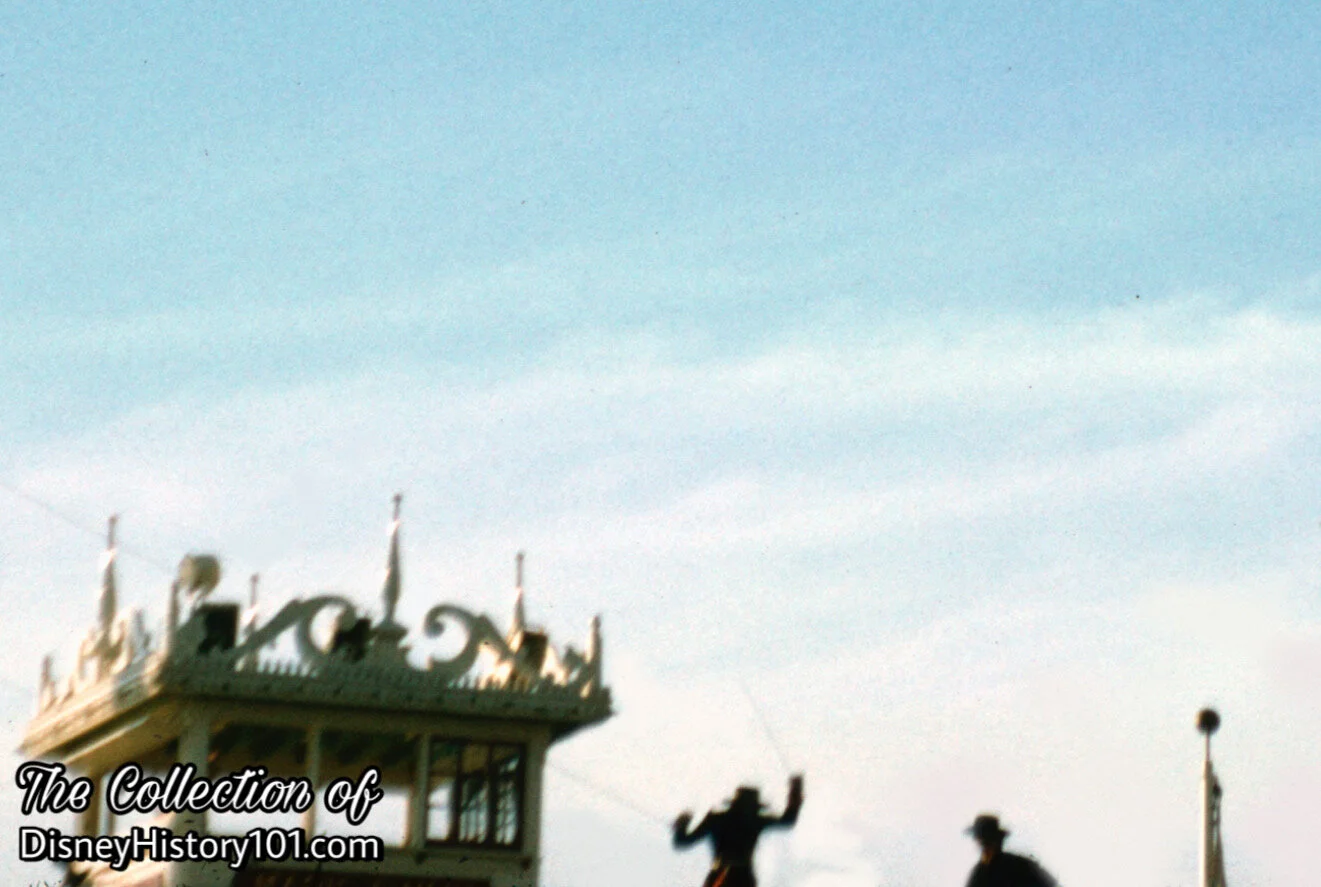
A quick glimpse of Zorro in Person, atop the Mark Twain.
Further, Zorro was scheduled to appear at Disneyland during four additional weekends up to 1960. For instance, from November 26-29, 1959 (see the original Advertisement above), Captain Monastario attempts to lay a trap for Zorro near the Frontierland Rivers of America, but when will he ever learn, that he will never outsmart that “fox so cunning and free?” Then, Guy Williams returned (for yet a second year) to Disneyland, as Don Diego de la Vega meets fans and Zorro engaging his nefarious nemesis near the Mark Twain Riverboat! Evidently, Captain Monastario does not learn his lesson this time, and so the sign of the “Z” and the bold renegade made one final appearance (during November 11 - 13, 1960) before riding into the night.
Zorro was one of many western stars of television to appear at Disneyland. However, he wasn’t the first. For instance, Fess Parker (Davy Crockett) made an appearance in the opening day parade. Next, owing to a special arrangement between Jack Wrather and Walt Disney, the Lone Ranger (portrayed by Clayton Moore) appeared at Disneyland some time around September of 1955. A pictorial of (at least one of) his visits was published in Children’s Playmate Magazine (March, 1956). The Lone Ranger posed for photos with fans and “spent part of his day - -talking to his friends, the Indians, who stay in Disneyland’s Frontier Land,” according to the aforementioned publication.
During 1956, Hugh O’Brian (who portrays Wyatt Earp on television) visited Frontierland and demonstrated his quick draw for the Golden Horseshoe audience. In fact, his inspired Sheriff Lucky to start practicing his quick draw. According to The Disneyland News (September, 1956), “a few weeks ago he was able to beat O’Brian’s time by .04 of a second : .32 against .36 for O’Brian on an electronic timer.”
Western Days (held February of 1959), brought the stars of television’s “Cheyenne” and “Lawman” to Disneyland!
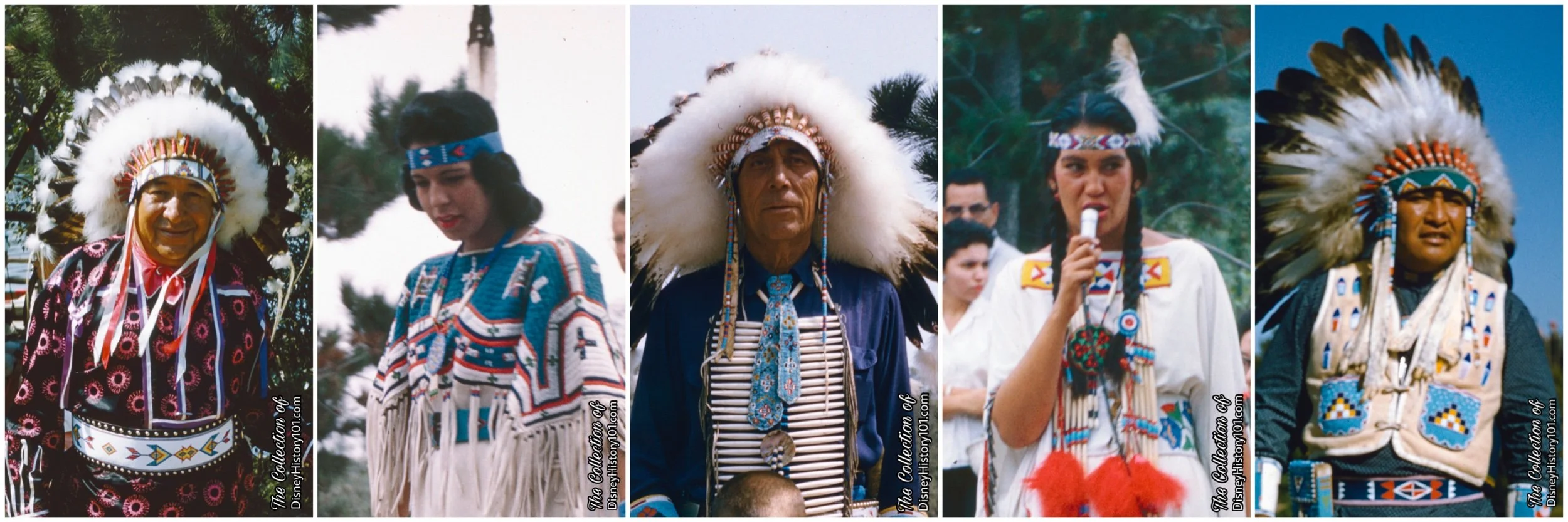
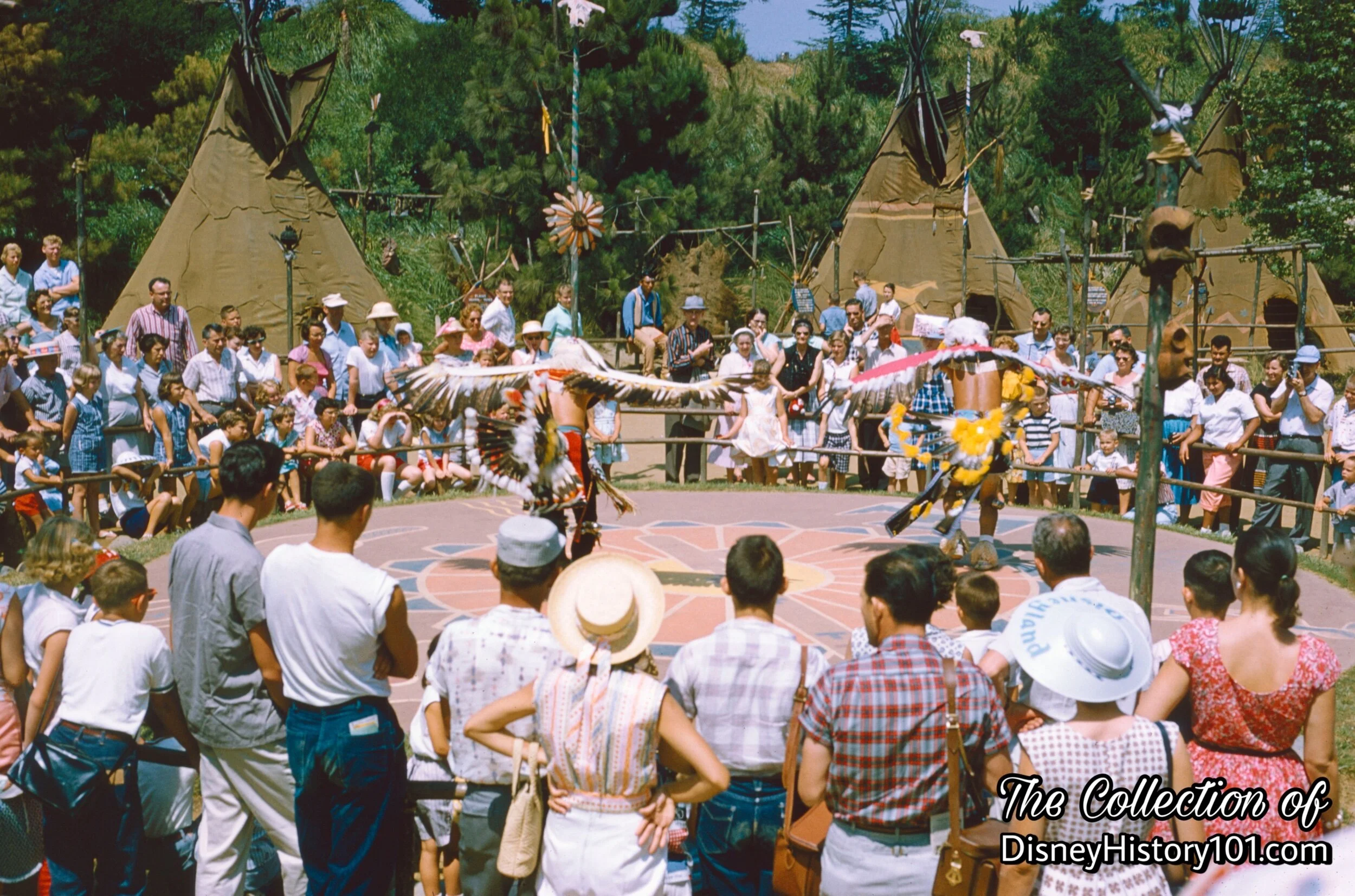
The First Poeples of the Frontierland Indian Village - Truman Dailey, Unknown, Louis Herminger, Dawn Little Sky, and Riley Sunrise
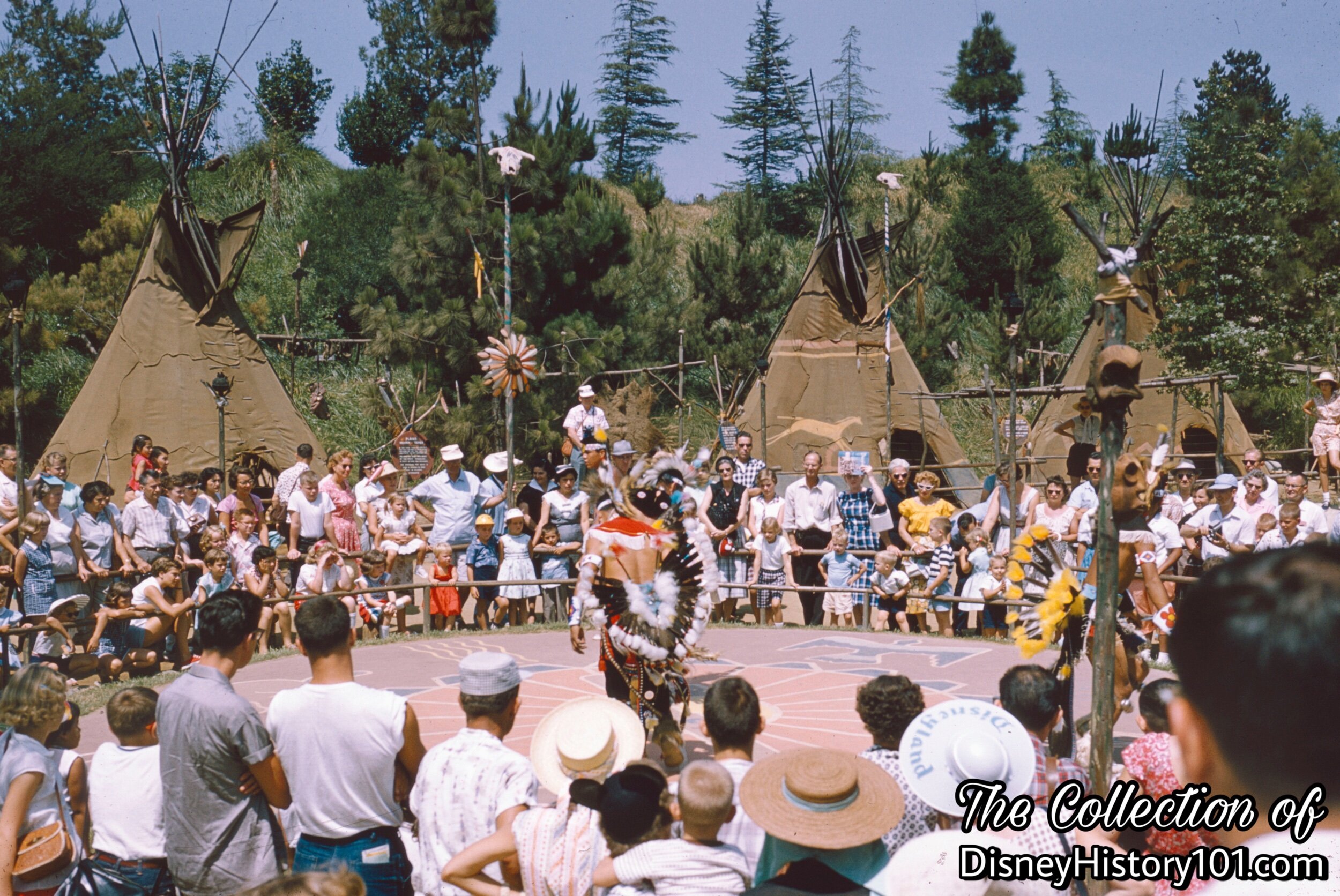
“Indian Village”
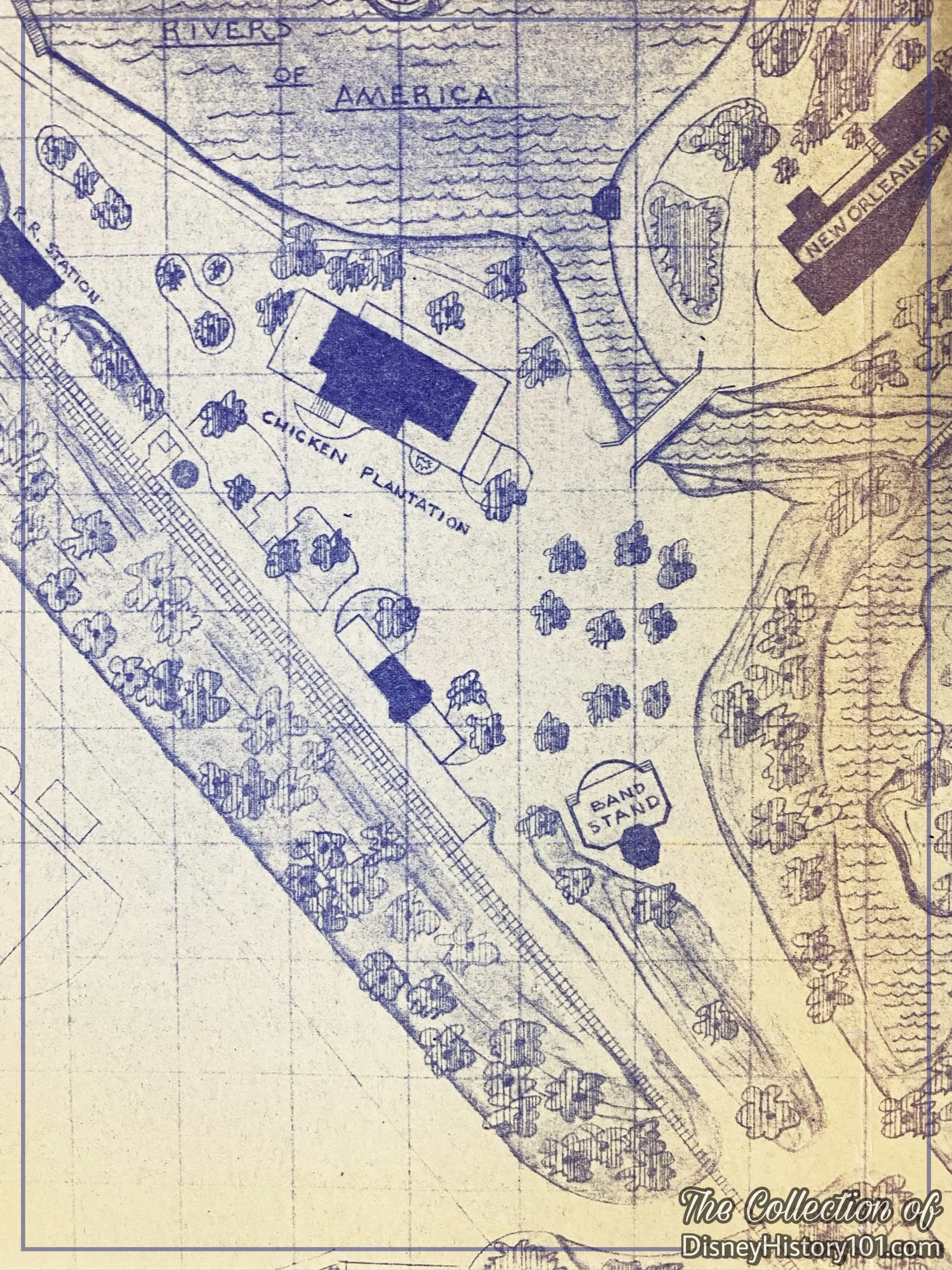
Note the “Band Stand” on this Plot Plan of Disneyland designed by WED Enterprises, Inc. for Disneyland Inc.; received by November 13, 1959; © Walt Disney Company.
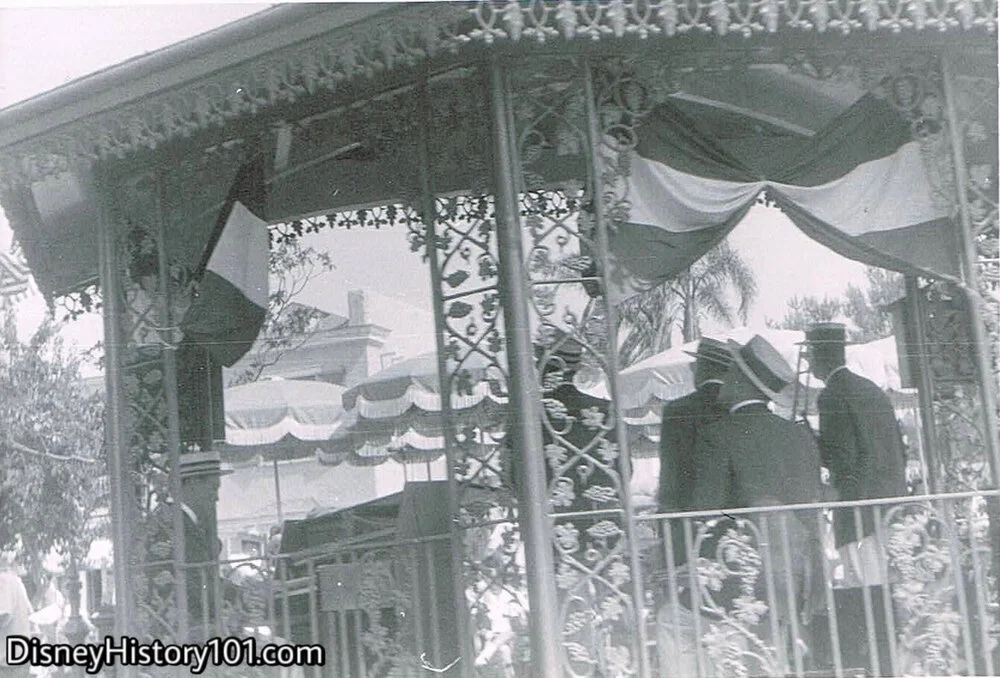
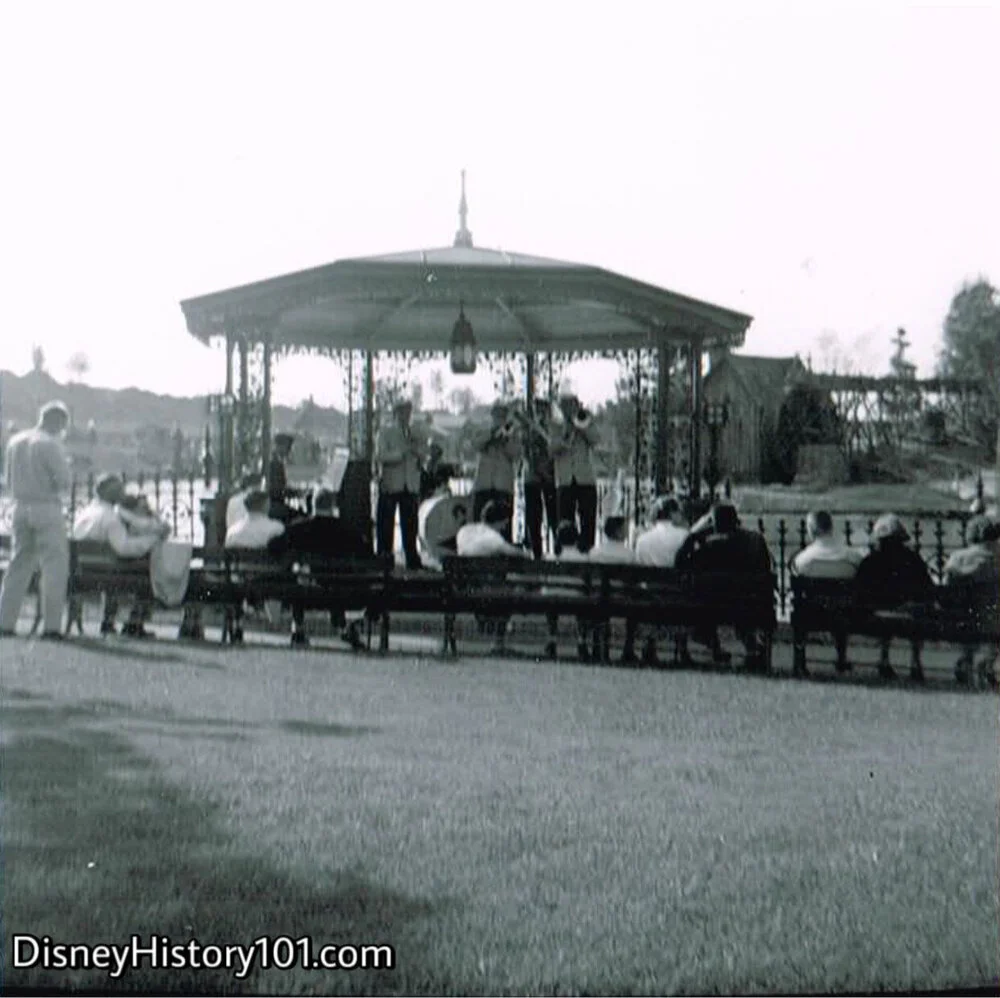
Dixieland Band Stand, (1957)
By September 28, 1958, Disneyland, Inc. made approximately $16,989.00 of land improvements to the Band Stand.
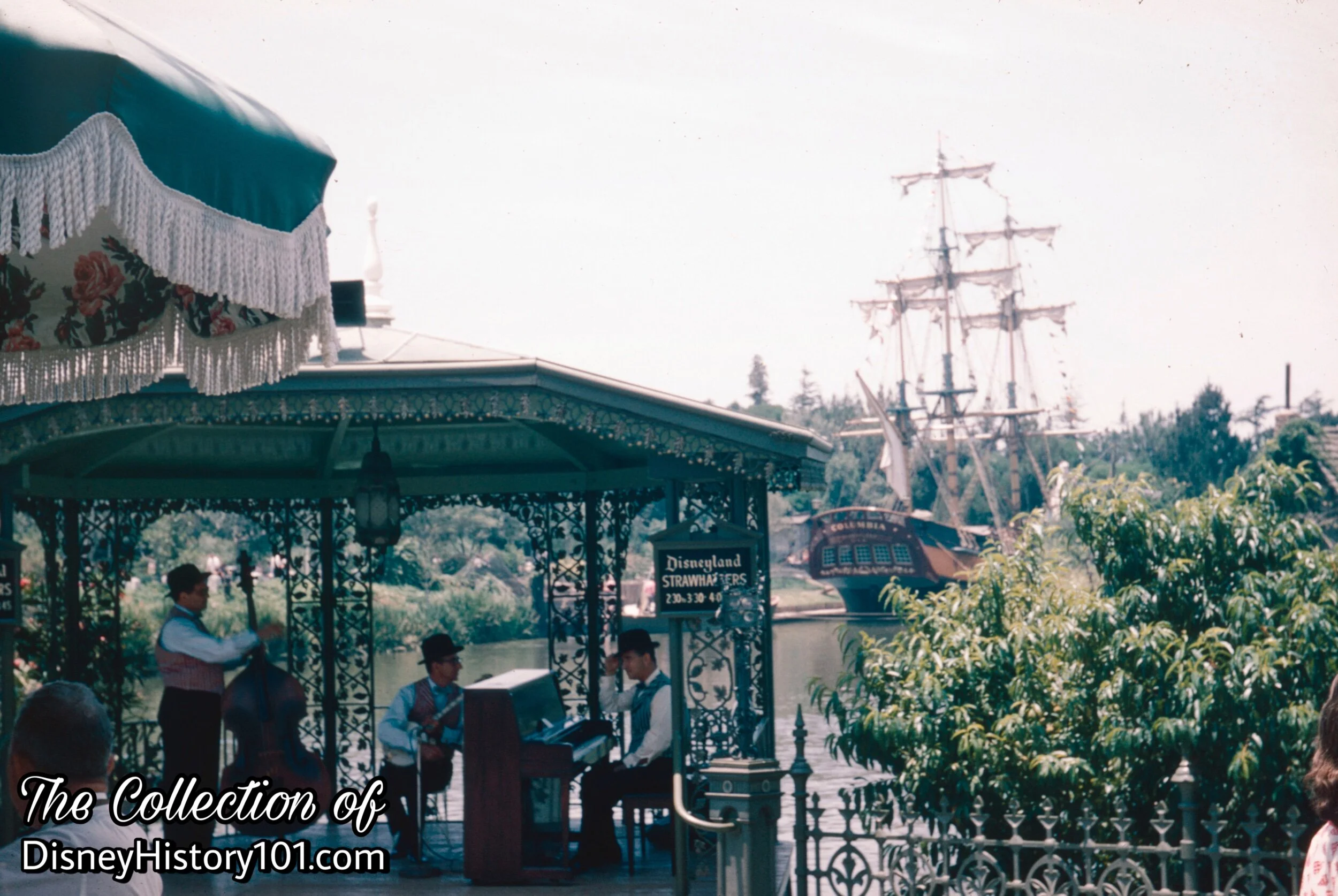
Frontierland originally had a New Orleans Area with a New Orleans motif that was of the period up to the Civil War.
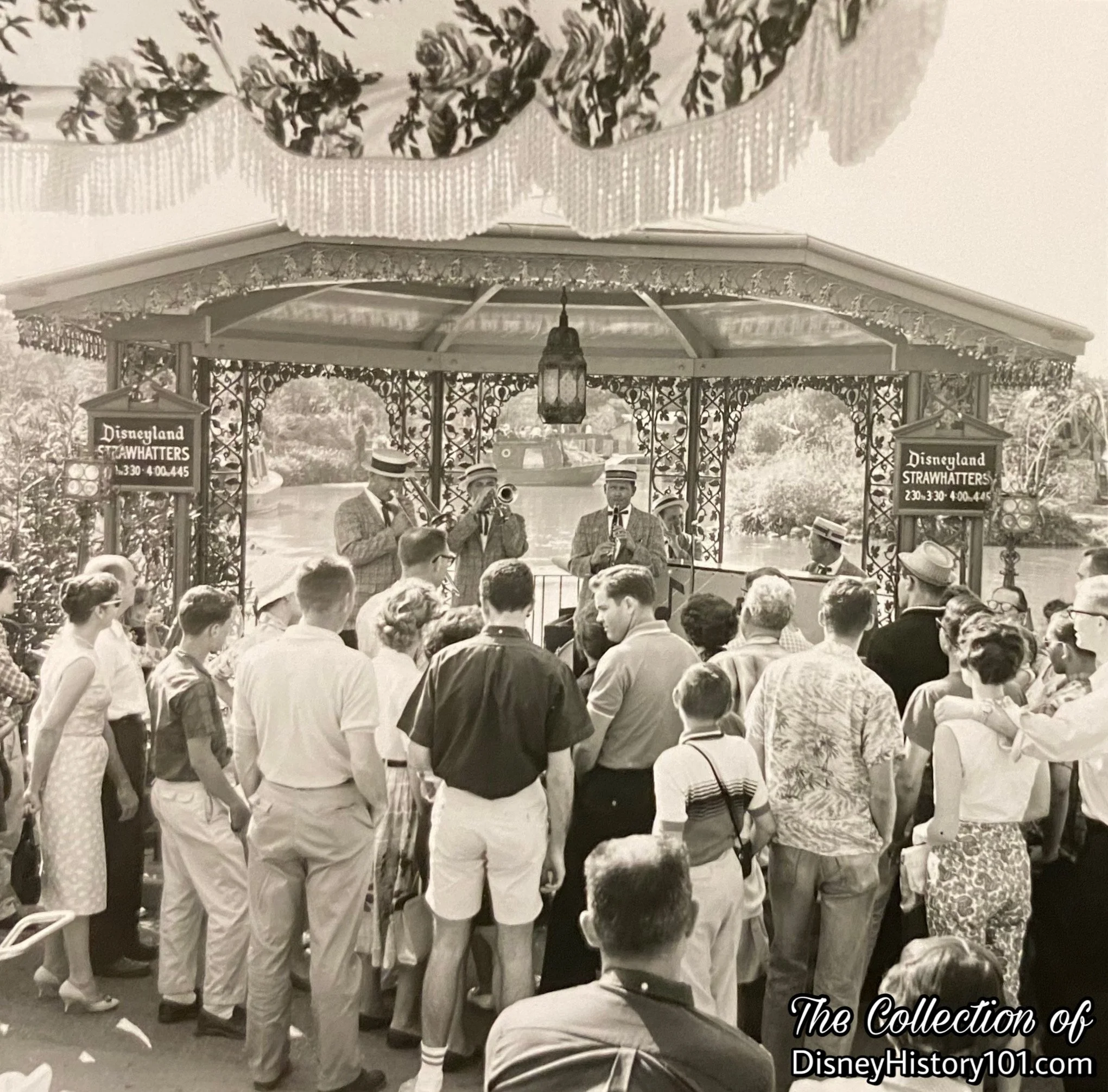
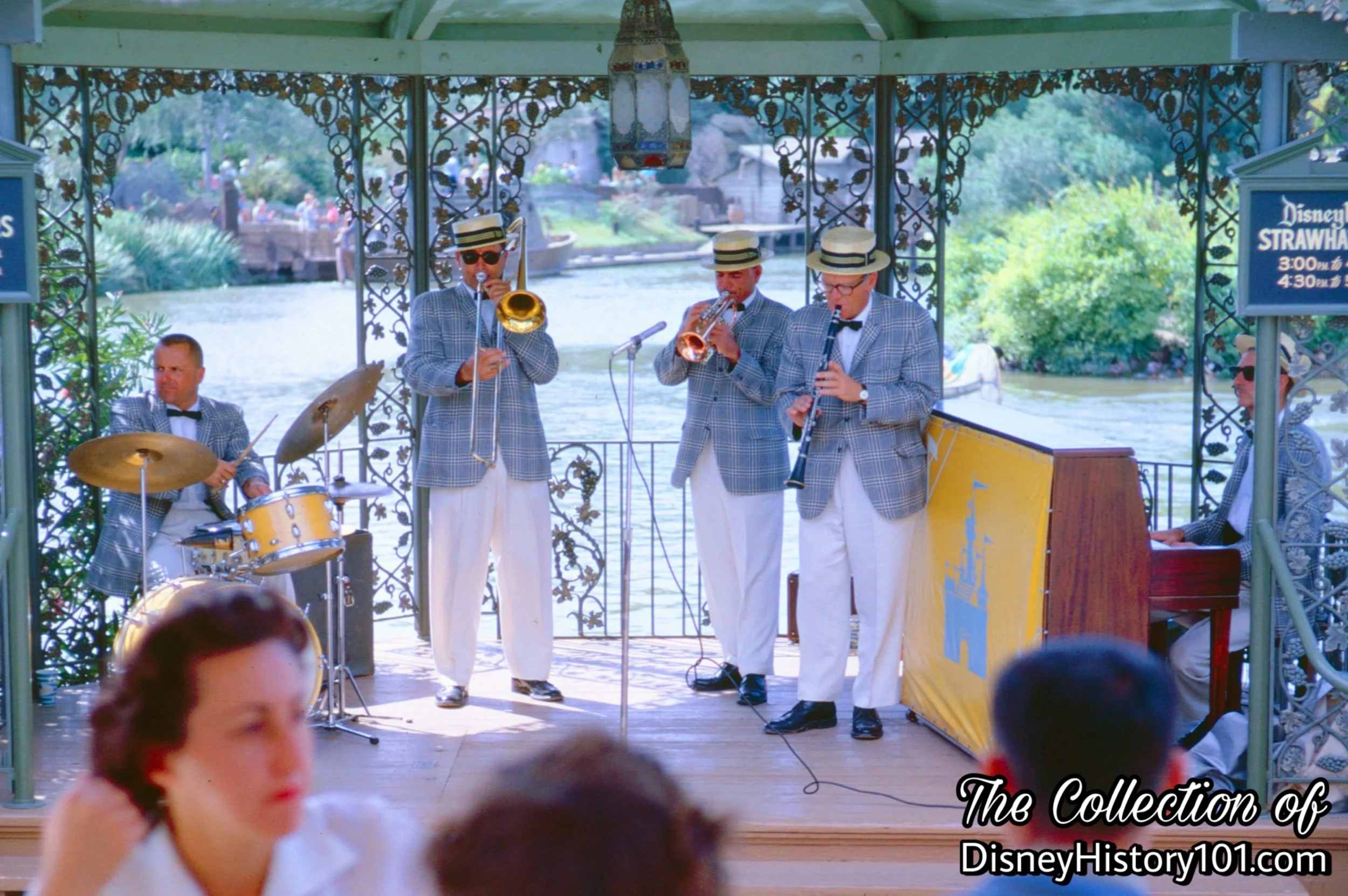
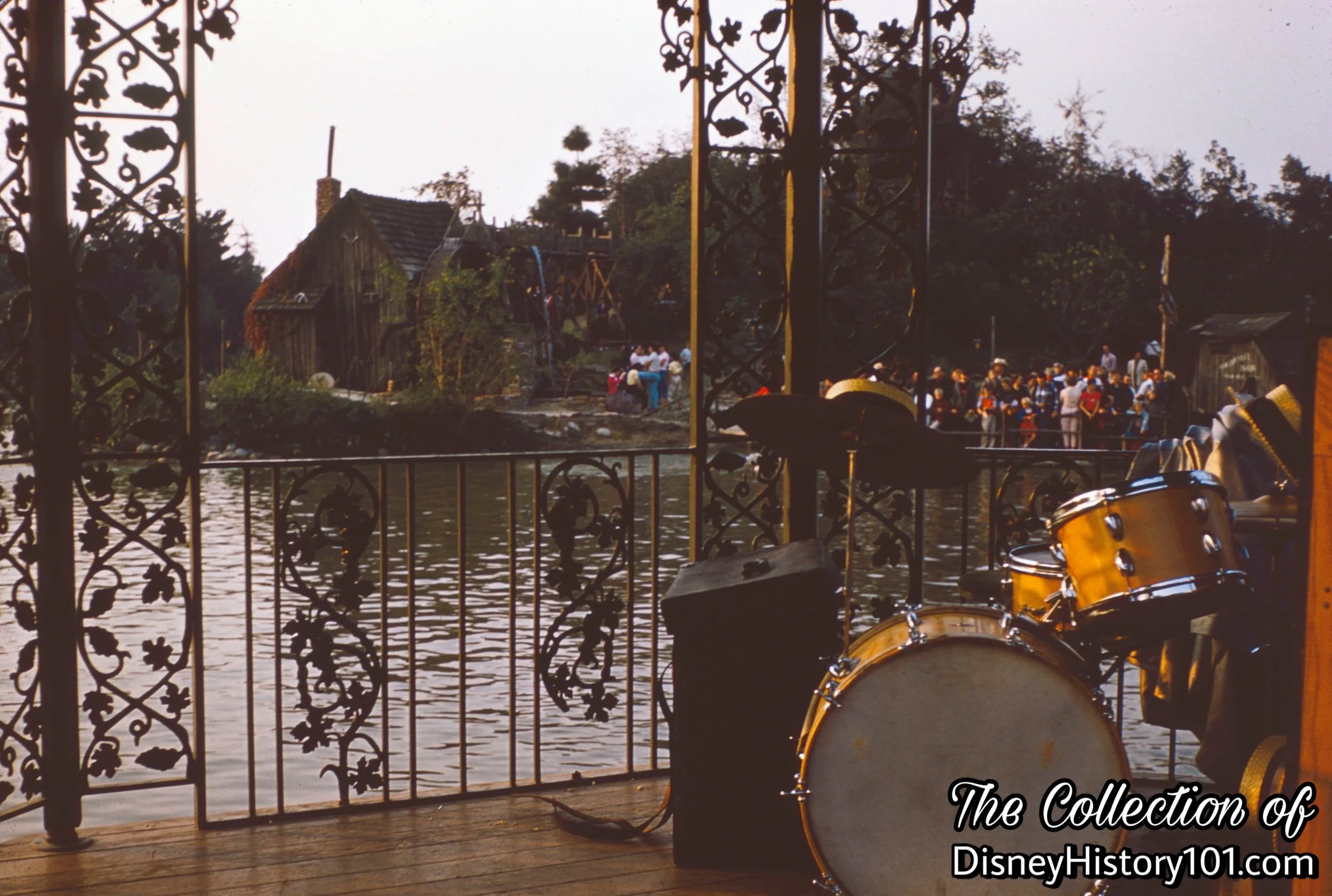
By 1959, there were regularly scheduled performances in the “Gazebo” by the “Strawhatters” (The Dixie group from the Disneyland Band).
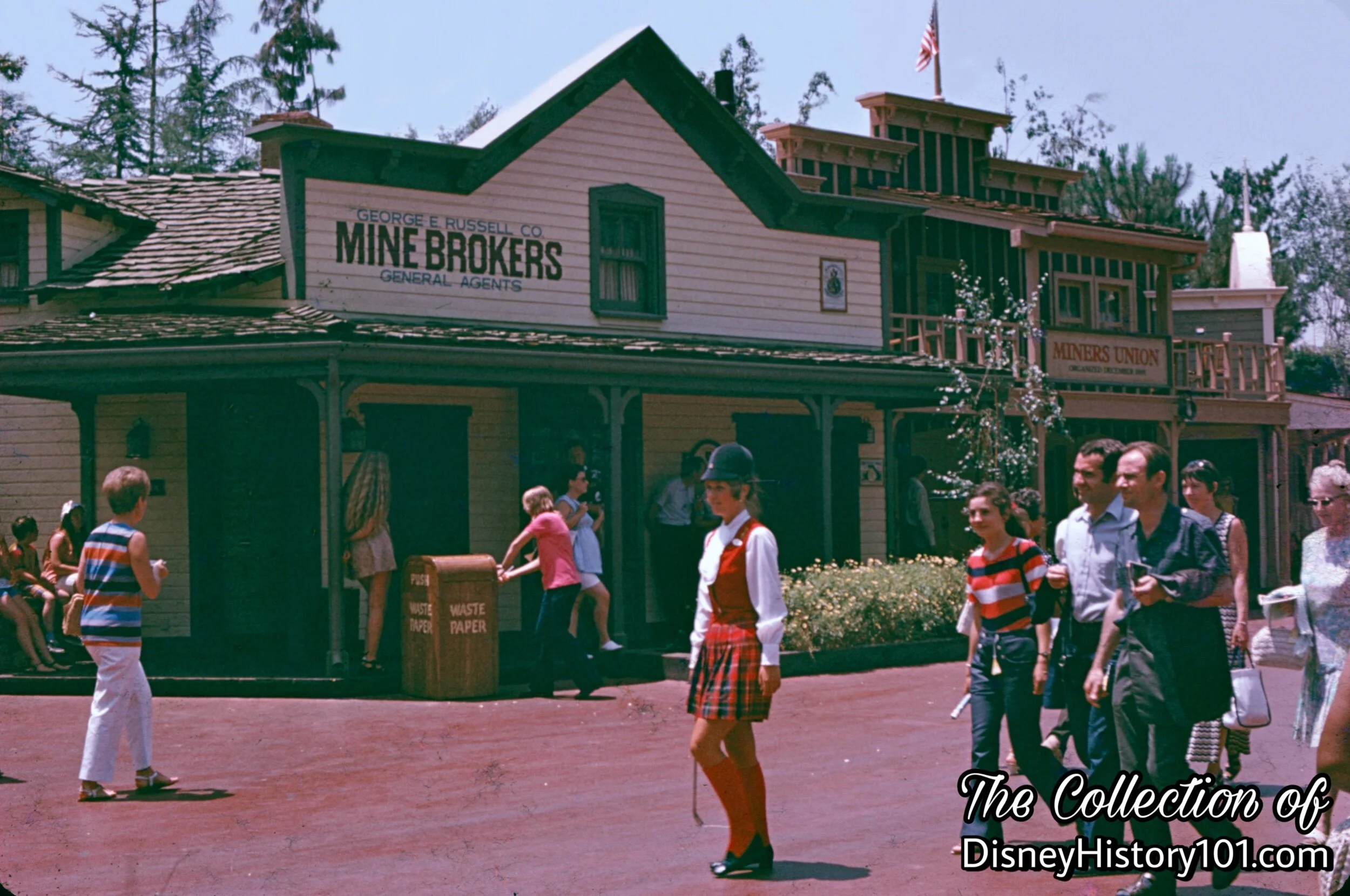
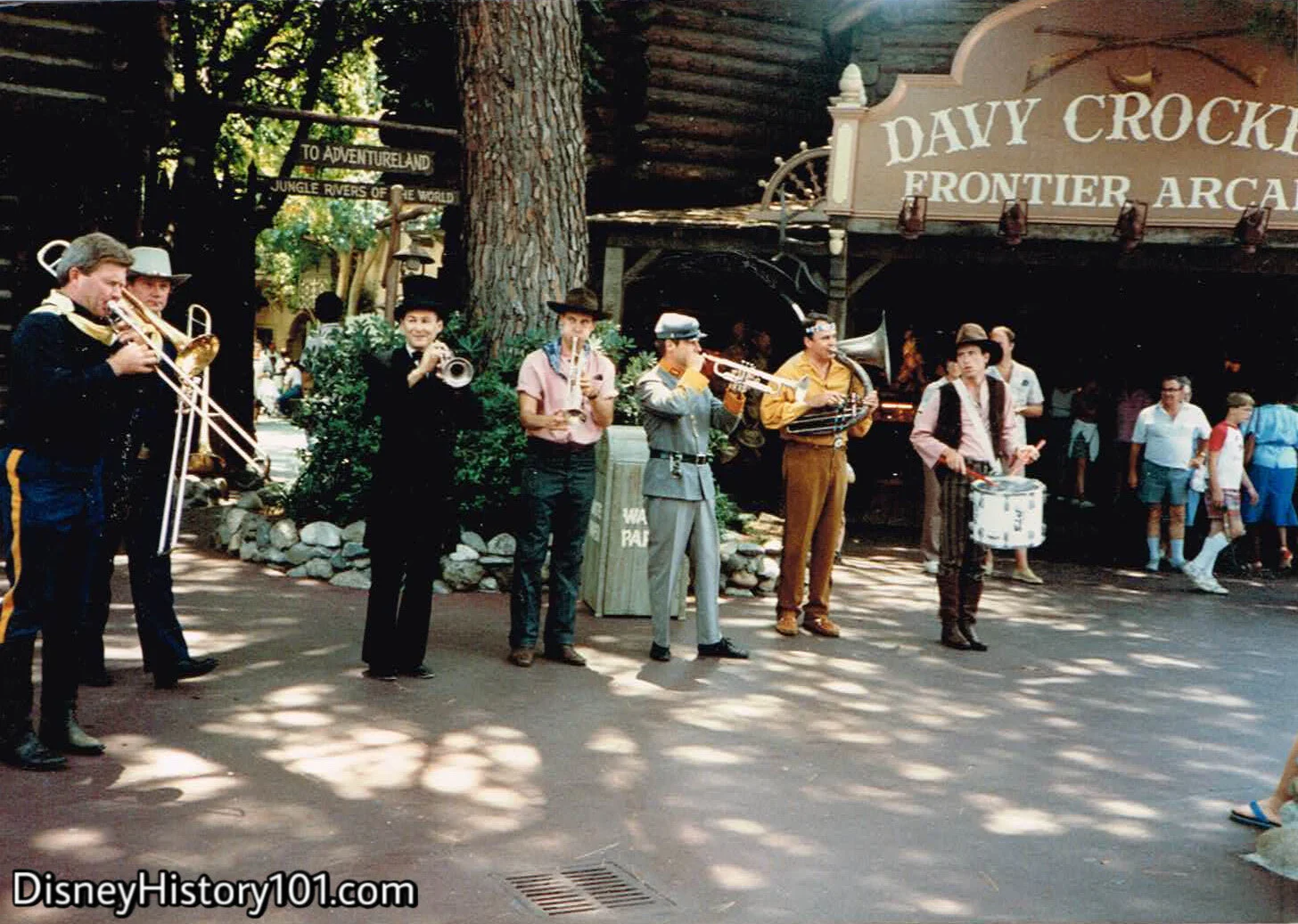
Disneyland Marching Band "Breakout Set"
Kindly former Cast Members helped us identify this unique show : “Those are Disneyland Band members on a break out set.” Apparently, they would break off into a “bass section and a woodwinds section”, “in order to provide better park coverage”. This is similar to the Polka Band and “Keystone Kops” Saxophone Quartet of yesterday.“On the far left is Art Dragon who eventually became leader of the Disneyland band.”
The costumes of every Cast Member in this particular “Breakout Set” are based on “the story and theme which is being portrayed” in Frontierland!
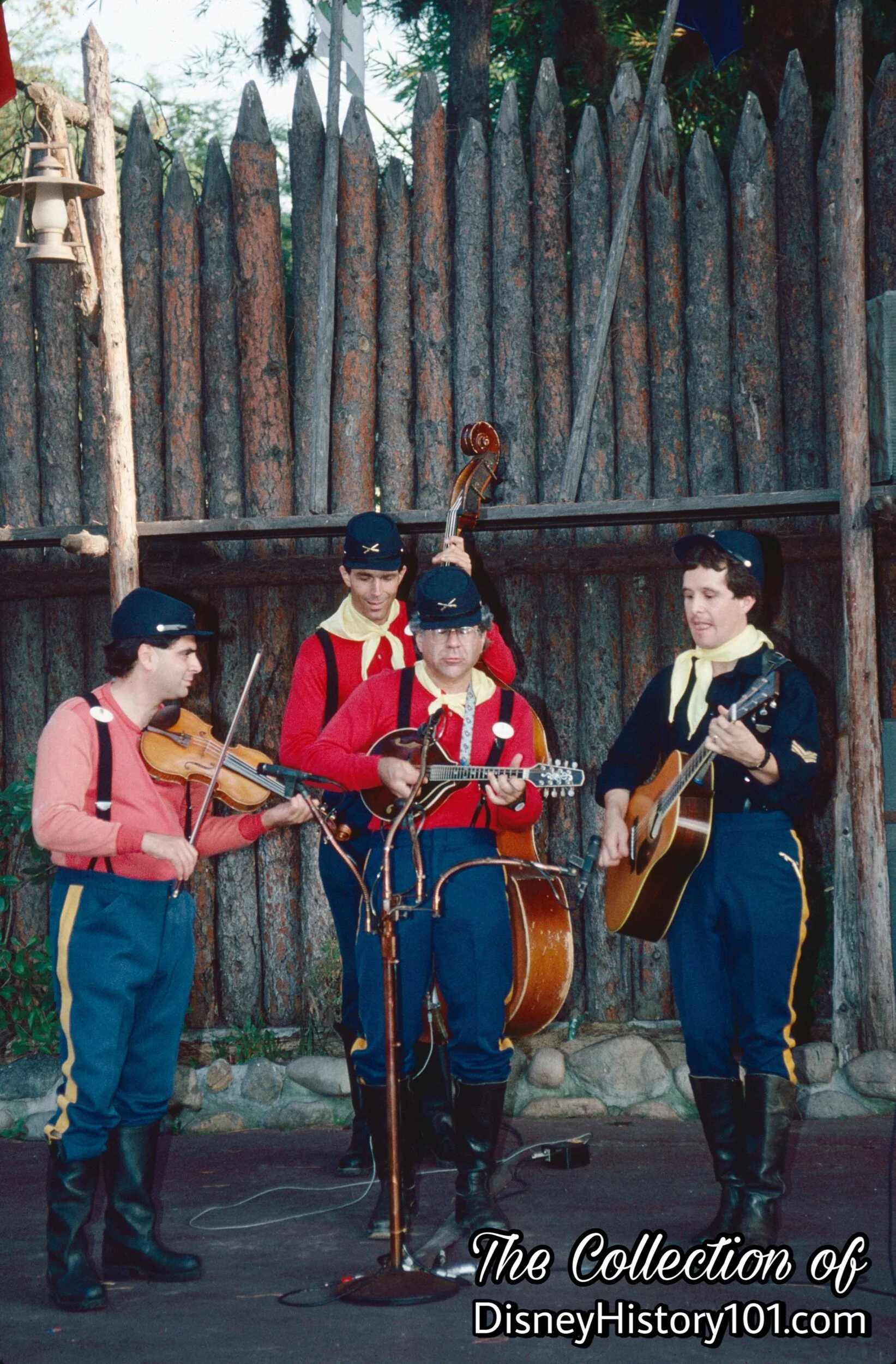
“The Saddle Sores,” (also known as the Calvary Band) c. 1990s
During the 1980’s, when Big Thunder Mountain Railroad occasionally went “101” (from Saturday through Thursday), the Big Thunder Breakdown Boys were around to entertain guests. Mickey’s Hoedown (c. 1982) brought food music and other entertainment to Big Thunder Ranch in Frontierland! You may also recall being entertained by the Billy Hill and the Hillbillies. By 1986, there were a number of roving Characters and bands around Frontierland, including the Traveling Salesman, the Riverboat Gambler, the One Man Band, Mariachis Guadalajara, Farley the Fiddler, Jeff Ruff on Banjo, the Frontierland Brass and the Singing Spinster (sometimes billed as the “Singing Spinner”). In addition to these (c.1986), the Jamboree Juggler and the Mark Twain Pianist performed throughout the days at various locations.
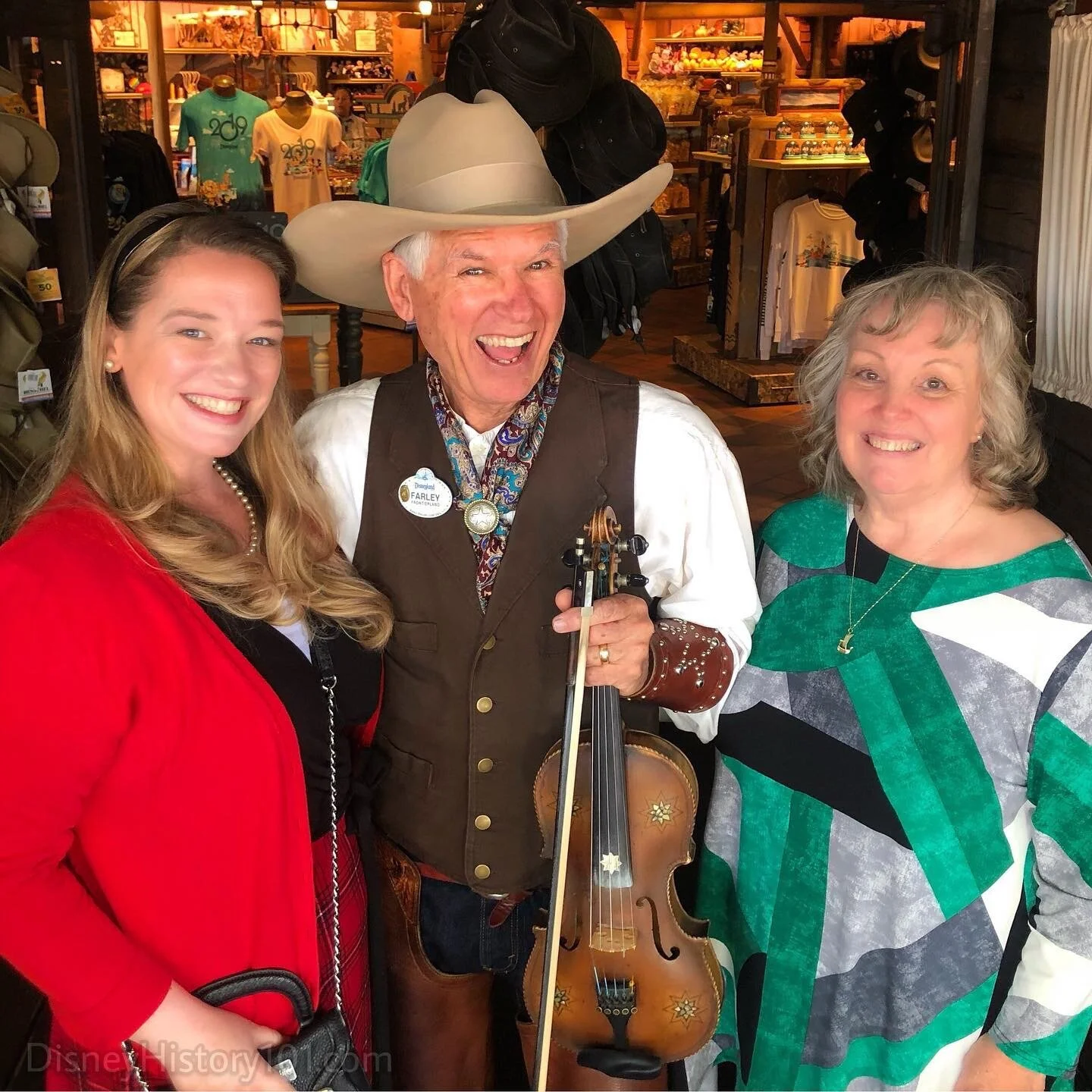
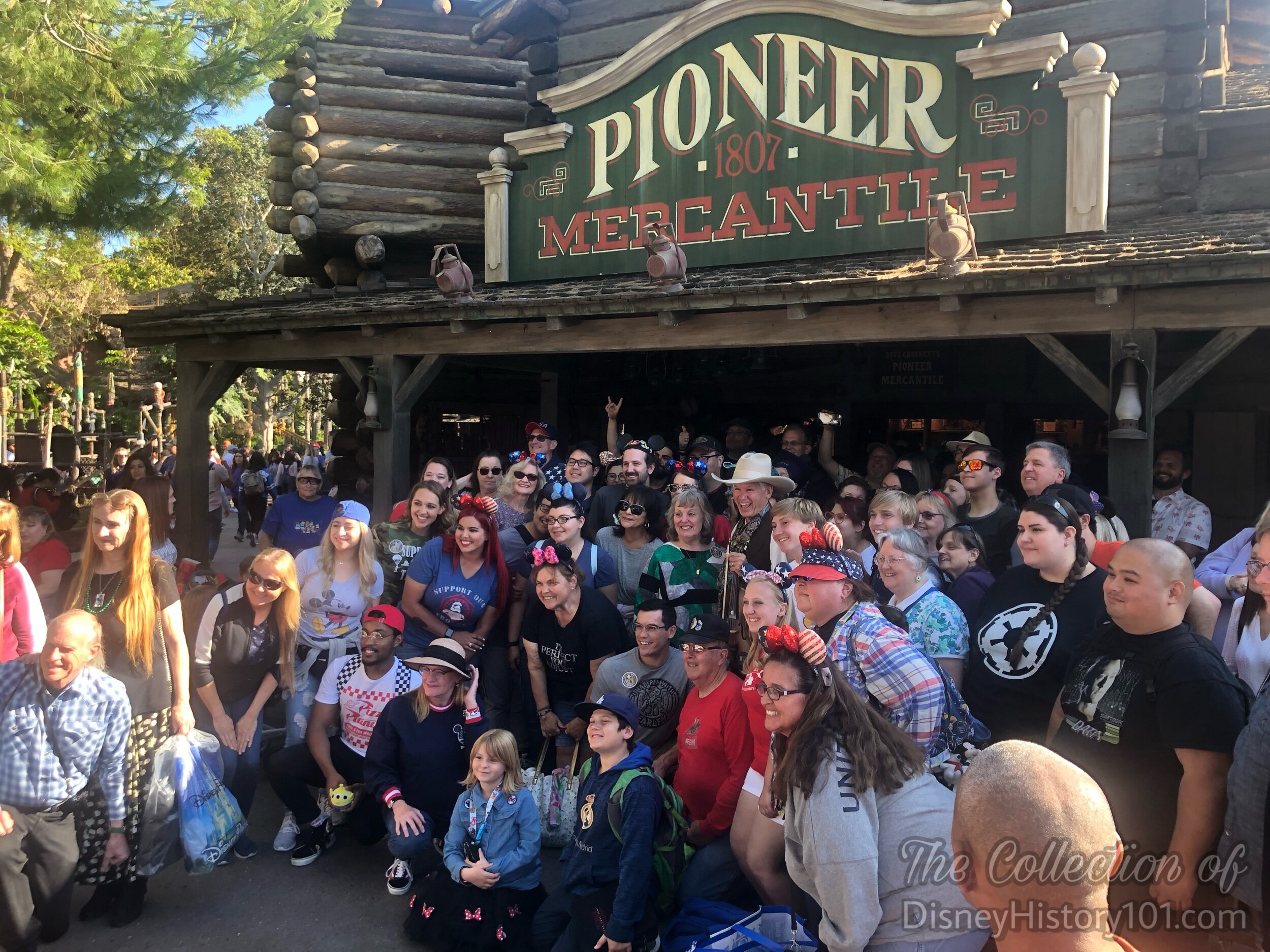
Farley the Fiddler displays Disney Courtesy through a friendly smile on his very last day.
Through his individual contribution to the Disneyland Show, Farley the Fiddler continued to prove that the foremost product of Disneyland has always been happiness.
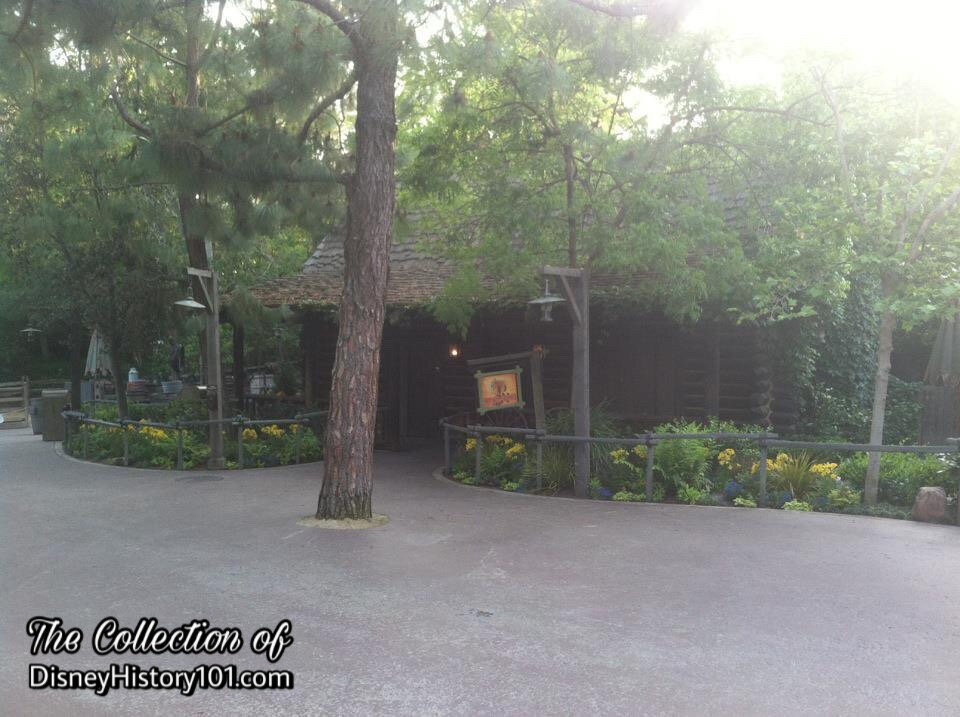
The Ranch House - Ms. Chris' Cabin
Marvin A. Davis’ “Proposed Diagrammatic Layout of Disneyland” (dated September 12, 1953) featured a “Granny’s Farm” exhibit among the details. Subsequent concepts (like Herb Ryman’s “Aerial View Over Disneyland”, completed by September 23, 1953) still appeared to feature “Granny’s Farm” among the Park’s future attractions.
Nearby, the shade trees and grass are nature's own air-conditioning.
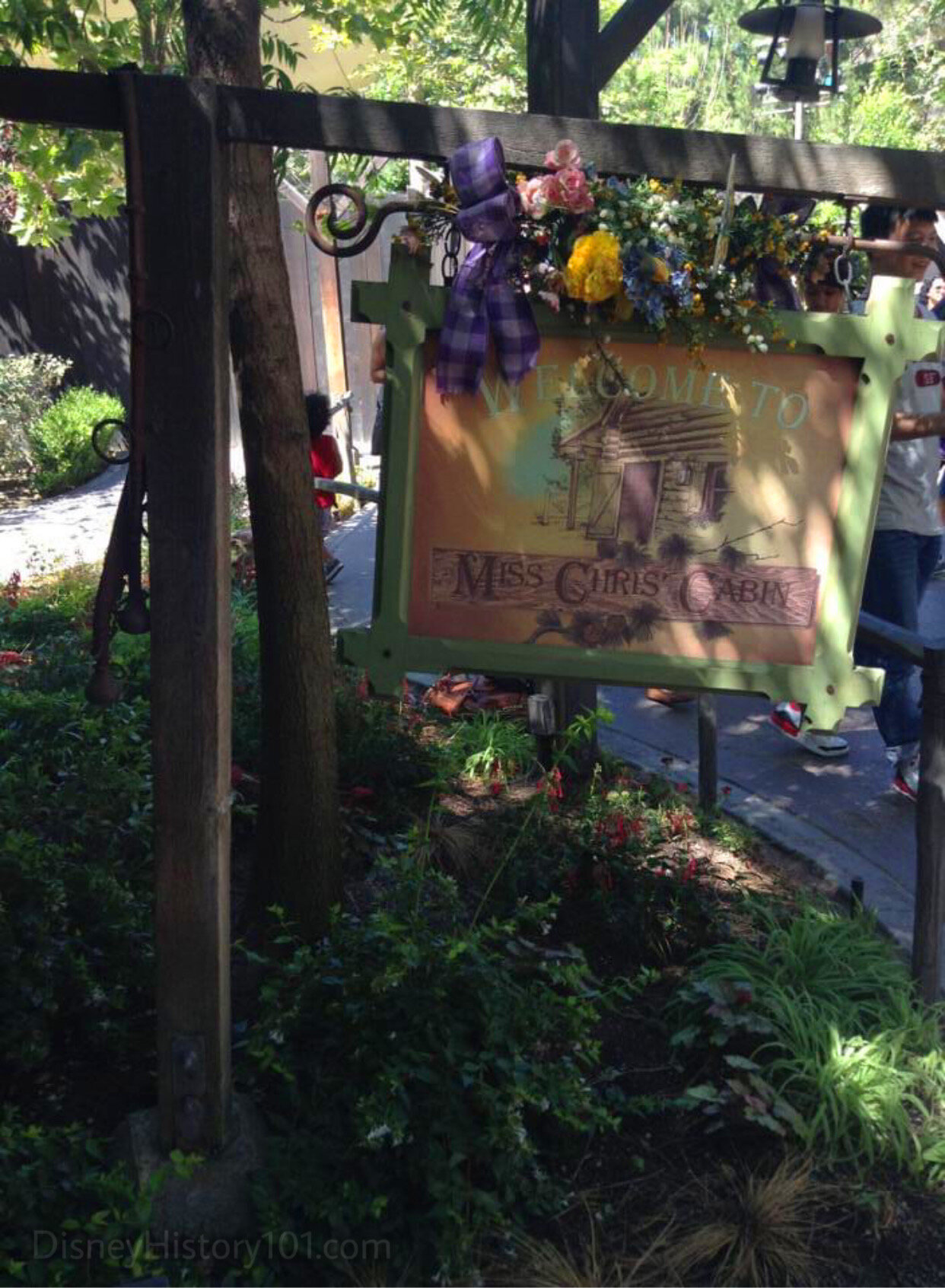
The Ranch House - Ms. Chris' Cabin
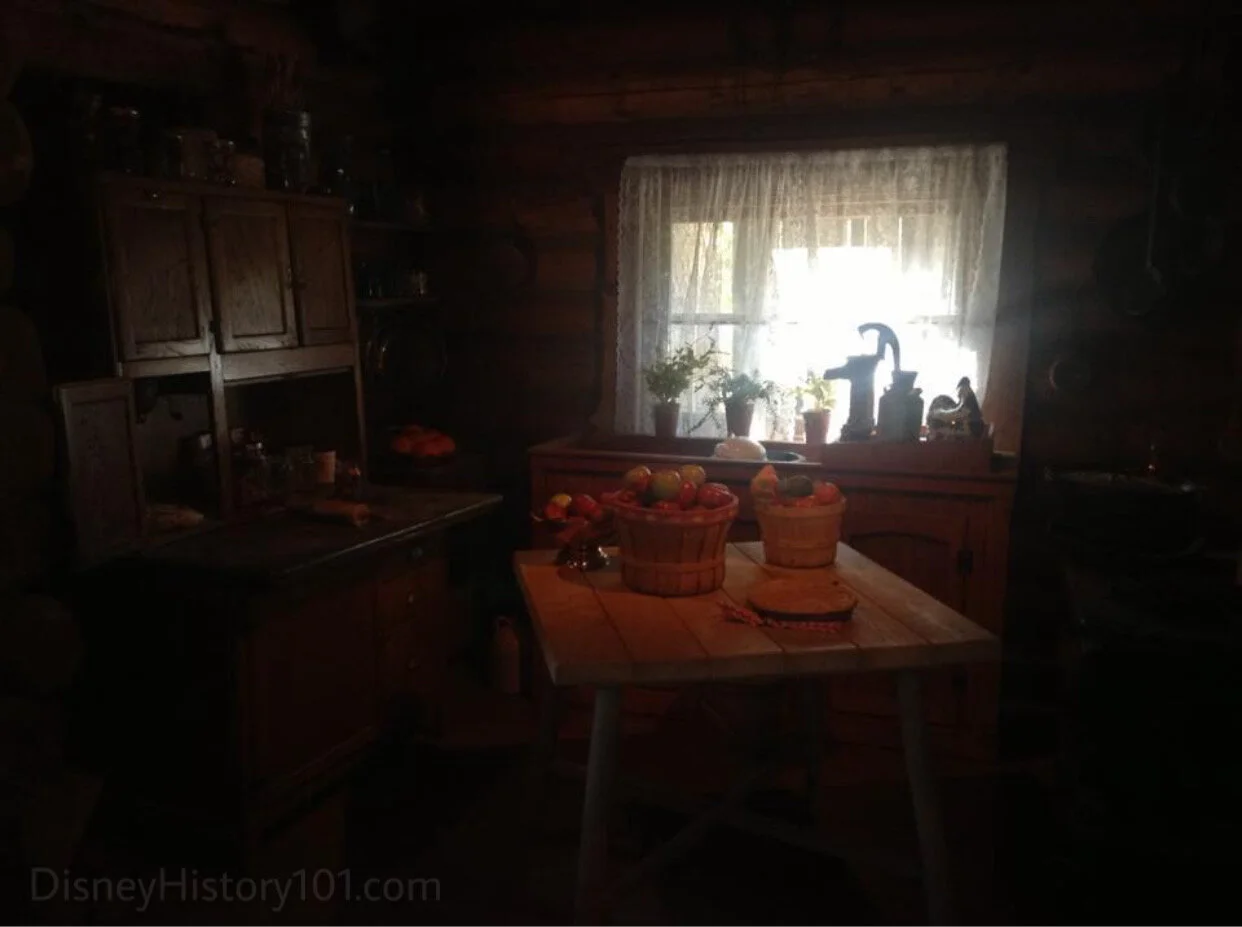
The Ranch House - Ms. Chris' Cabin
The farmhouse featured in So Dear To My Heart inspired the design of the Ranch House at Disneyland. According to Disneyland LINE (Vol.19, No.10 ; published March 6, 1986), the attraction originally grew from one of Danny Stark’s “I Have An Idea” Program submissions. Danny originally suggested “to build corrals and bring in horses to add a ‘live’ element to the rustic, country atmosphere along Big Thunder Trail”. But Danny was promoted to Circle D Corral Supervisor, and his idea began to collect a little dust, until “the climate seemed right, and I talked with many people throughout the Company, including Kim.”
Originally, an area next to It’s A Small World was being considered for the Big Thunder Ranch project, until it was decided to add Videopolis there. Similar to the description of Frontierland in some drafts of the c. 1953 “Disneyland Prospectus” and Herb Ryman’s “Aerial Over Disneyland”, the idea was to recreate “a late 1880’s working horse ranch”. The final product included a ranch house, petting farm, The Frontier Shop, a home corral, and a barbecue restaurant.
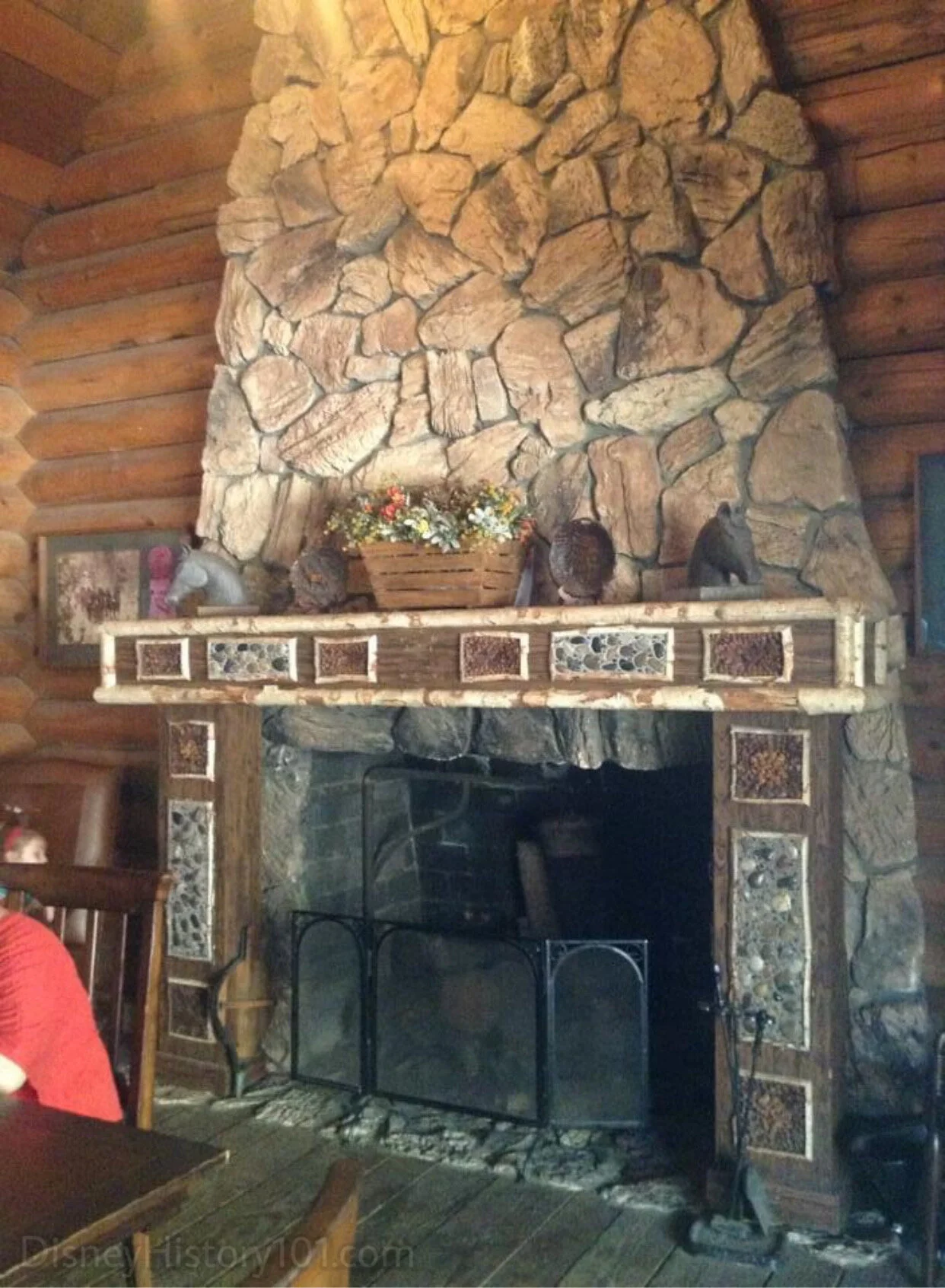
The Ranch House - Ms. Chris' Cabin
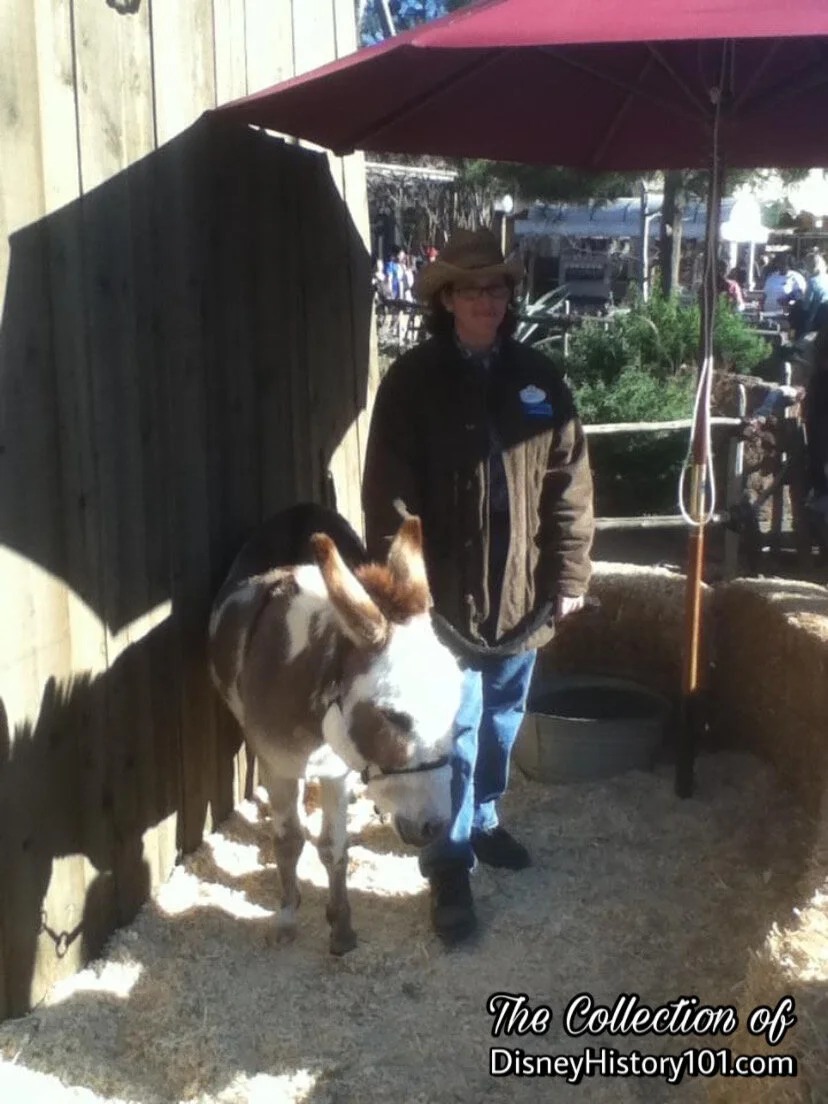
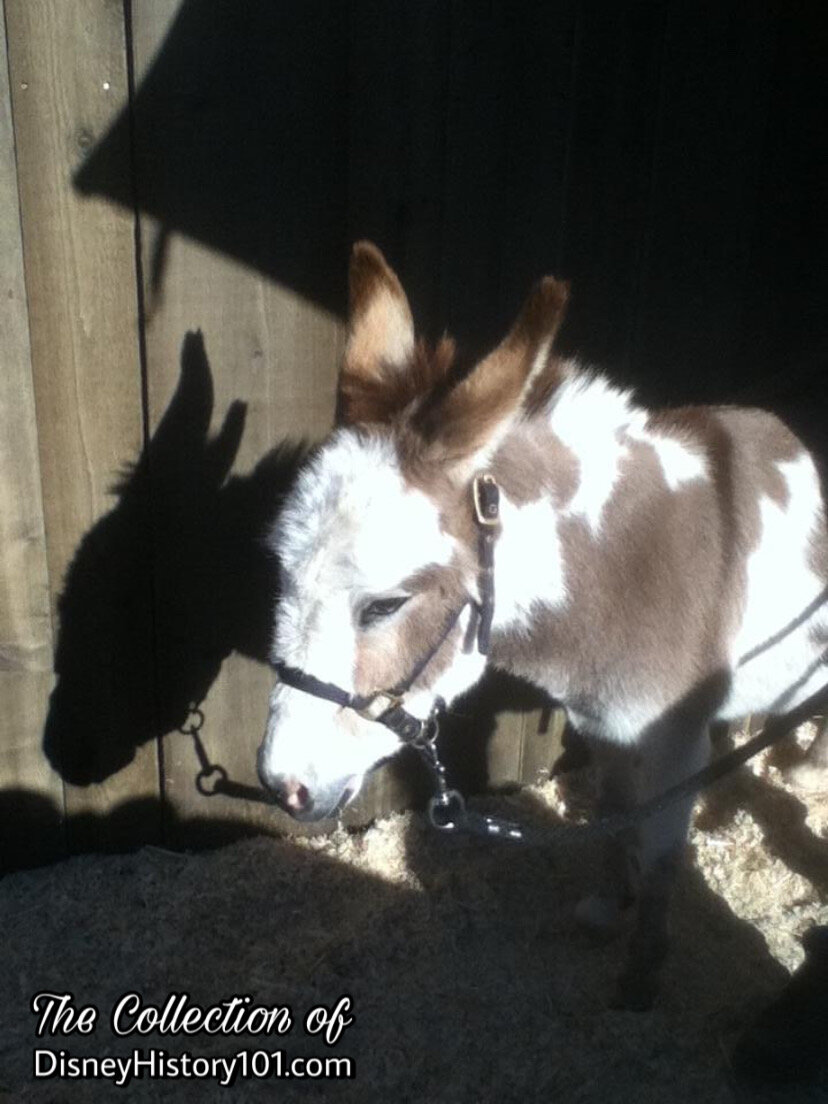
Some of Frontierland’s most popular attractions, were always the animals! You may have been present during the “run of the goats,” the arrival of the first National Thanksgiving Turkeys (Marshmallow and Yam in 2005 ; Courage and Carolina in 2009), or maybe you recollect Circle D Corral and Big Thunder Ranch acquiring “Mickey Moo” in time for the State Fair of 1988, “Disneyland’s famous bovine with the natural Mickey Mouse birthmark on her left side.” Years later (on June 7th, 1990, at 4:30 pm), her new “70 - 80 pound” calf was born, according to “Disneyland LINE”, Vol. 22, No. 24 ; June 15, 1990.
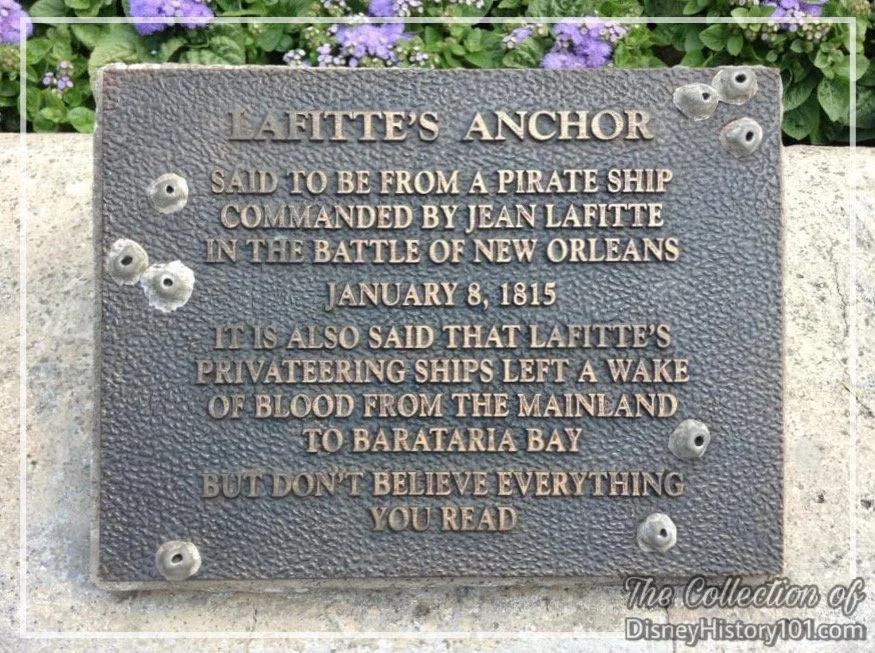
The Lafitte's Anchor Plaque
The former Walt Disney Imagineering Principal Creative Executive Marty Sklar would probably agree that the small details make the story appealing.
One such detail was “‘Lafitte’s Anchor… said to be from a pirate ship commanded by Jean Lafitte in the Battle of New Orleans January 8, 1815. It is also said that Lafitte’s Privateering Ships left a wake of blood from the mainland to Barataria Bay. But don’t believe everything you read.’
This plaque was created for Frontierland on June 22, 1955. The only problem was that there were no pirates and no New Orleans Square. It was a fairly normal thing for young boys in Walt’s era to know about swashbuckling pirates and the Battle of New Orleans. Walt was no exception.” [“The Spirit of Disneyland,” page 40; prepared 1984 by Walt Disney Productions]
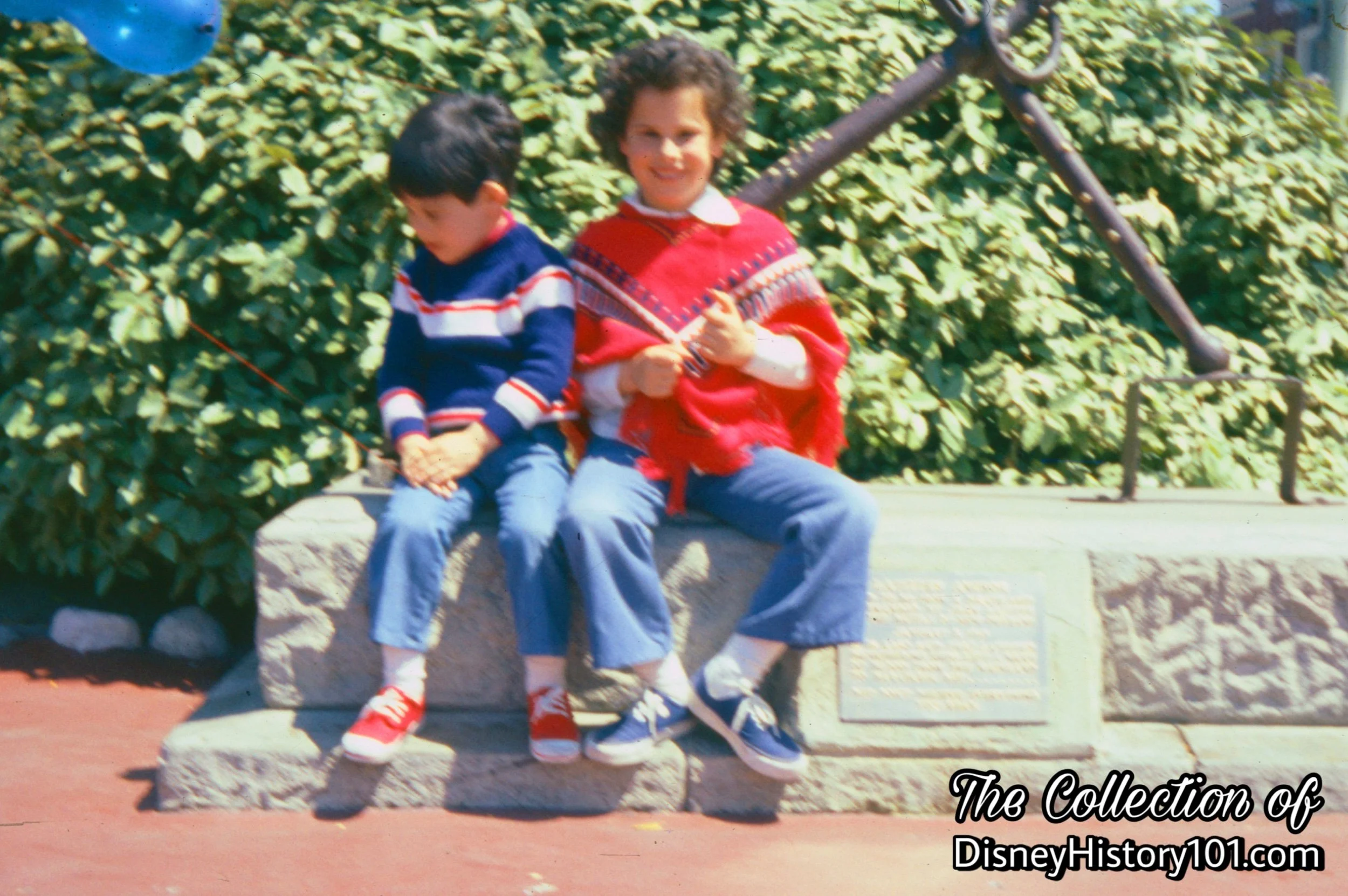
Lafitte's Anchor.
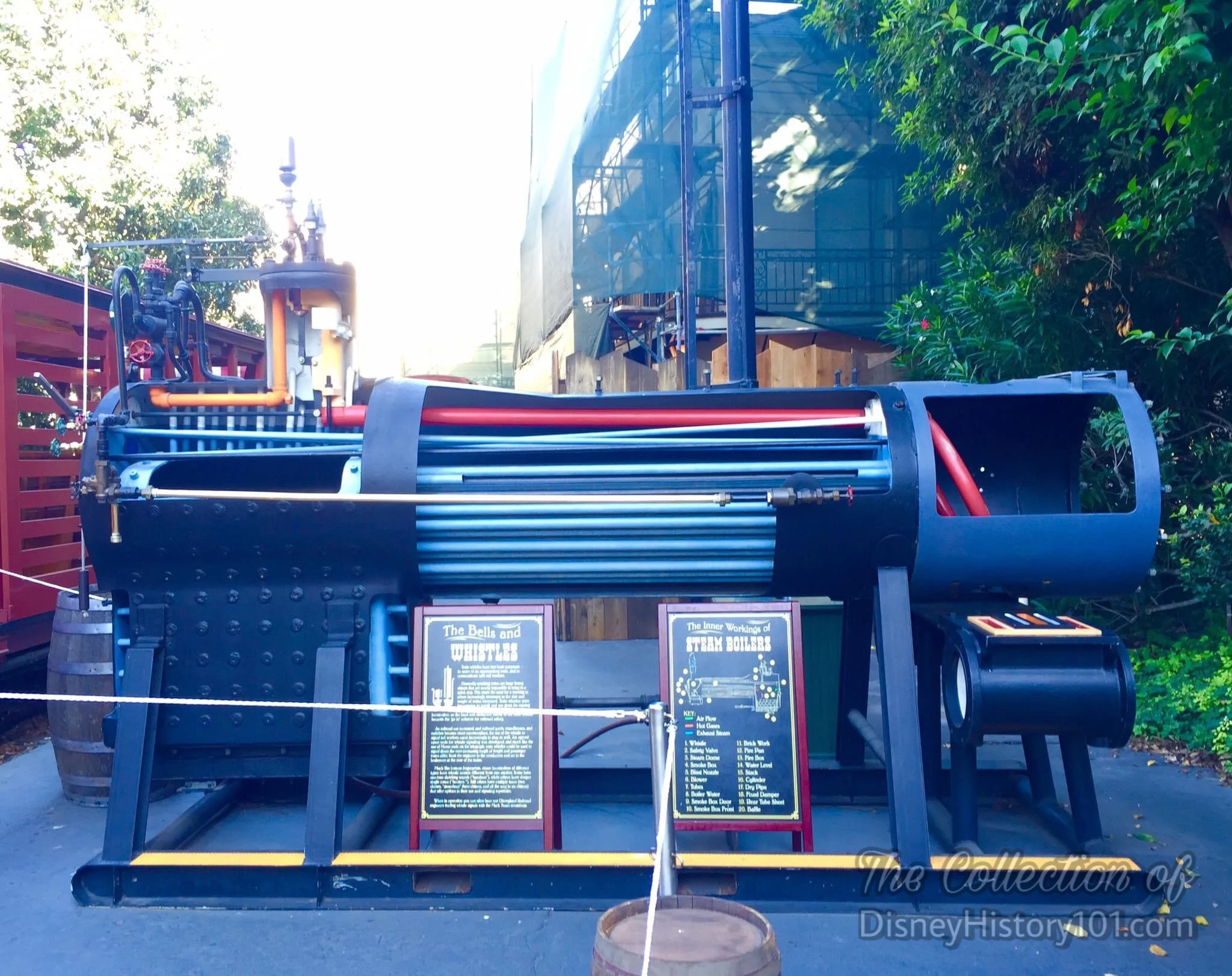
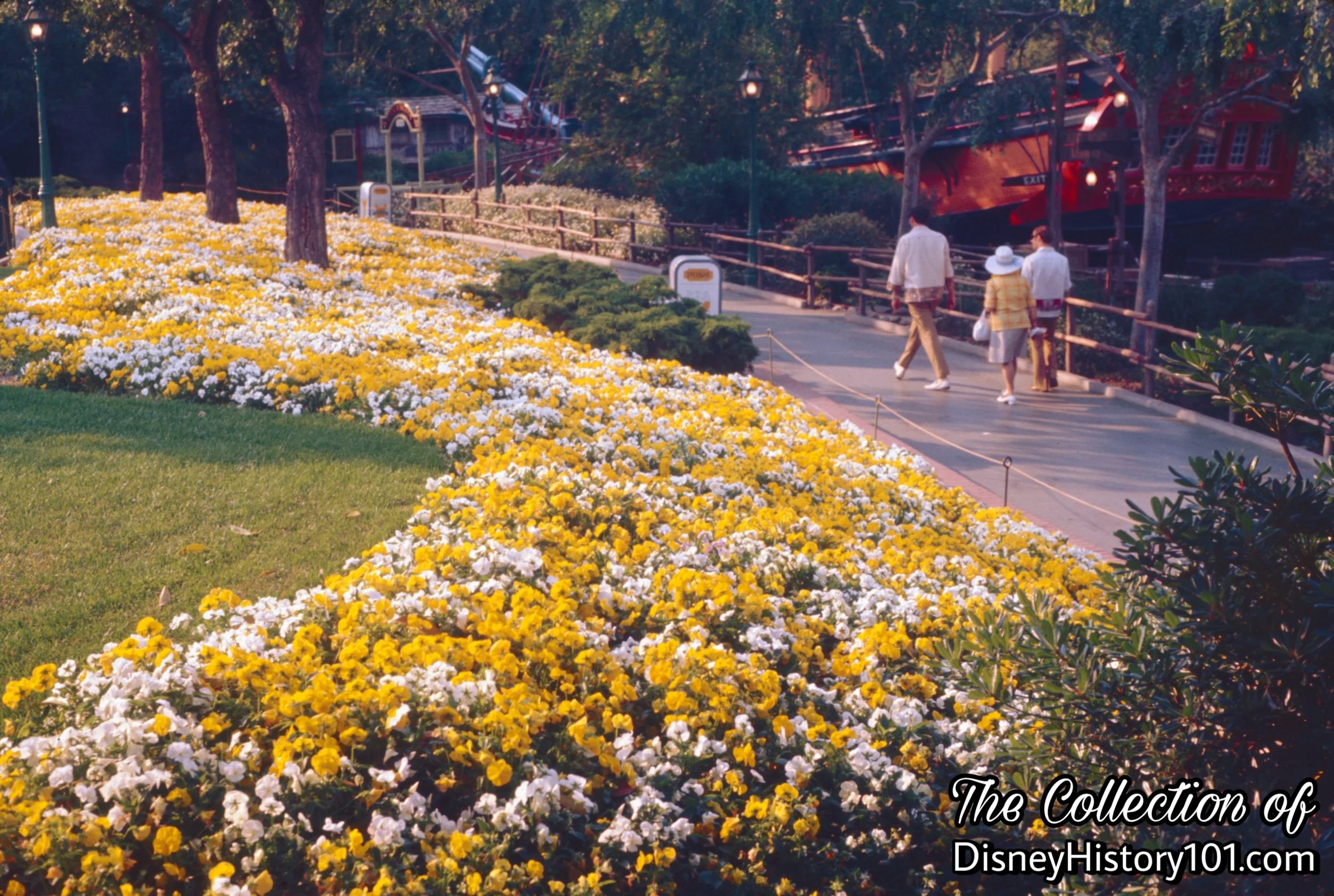
A landscaped area of Frontierland usually includes colorful African daisies bordered with white alyssum.
“Frontier-landscaping”
Landscaping serves a number of purposes on the Disneyland stage. Landscaping creates the mood (and contributing to the character of the land). It shutters the view of the outside world (telephone poles, skyscrapers, and highways). It hides the Backstage operations of Disneyland (camouflaging animation; screening service areas). Landscaping assists in controls - crowd controls, erosion control and even frost control. Landscaping also defines or blends the themes of neighboring lands (like Main Street and Frontierland).
The “Disneyland Dictionary” (published 1959, for training purposes) noted: “With rare exception, all of Disneyland's plants were purchased in Los Angeles, Orange, San Bernadino and San Diego Counties. However, nearly every corner of the world is represented, and every type of plant obtainable has been utilized wherever possible within the area they best represent, and in perfect scale with that area.“ Plants native to the Mississippi River region of North America were used in areas in Frontierland.
Frontierland abounds with landscaped areas - common walkways in the land which are not part of any attraction, merchandise facility, food facility, ticket booth, or their queue areas.
Frontierland would come to have a number of bougainvillea in its areas. One composite “flowering tree” was even supported by a unique natural sculpture of an Australian tea tree.
By 1969, 38 jovial gardeners were employed in the Land scape Department carrying out their daily tasks tending flora and fauna; 60 percent or more had been in the department for 10 years plus. To stimulate their interest, as well as the guest's, Tony Virginia and Simon Dubois, who head up the department, were introducing new plant materials never seen before by many, such as new hybrids and old fashioned plants such as Nemesia to be planted shortly in the Frontierland entrance beds.
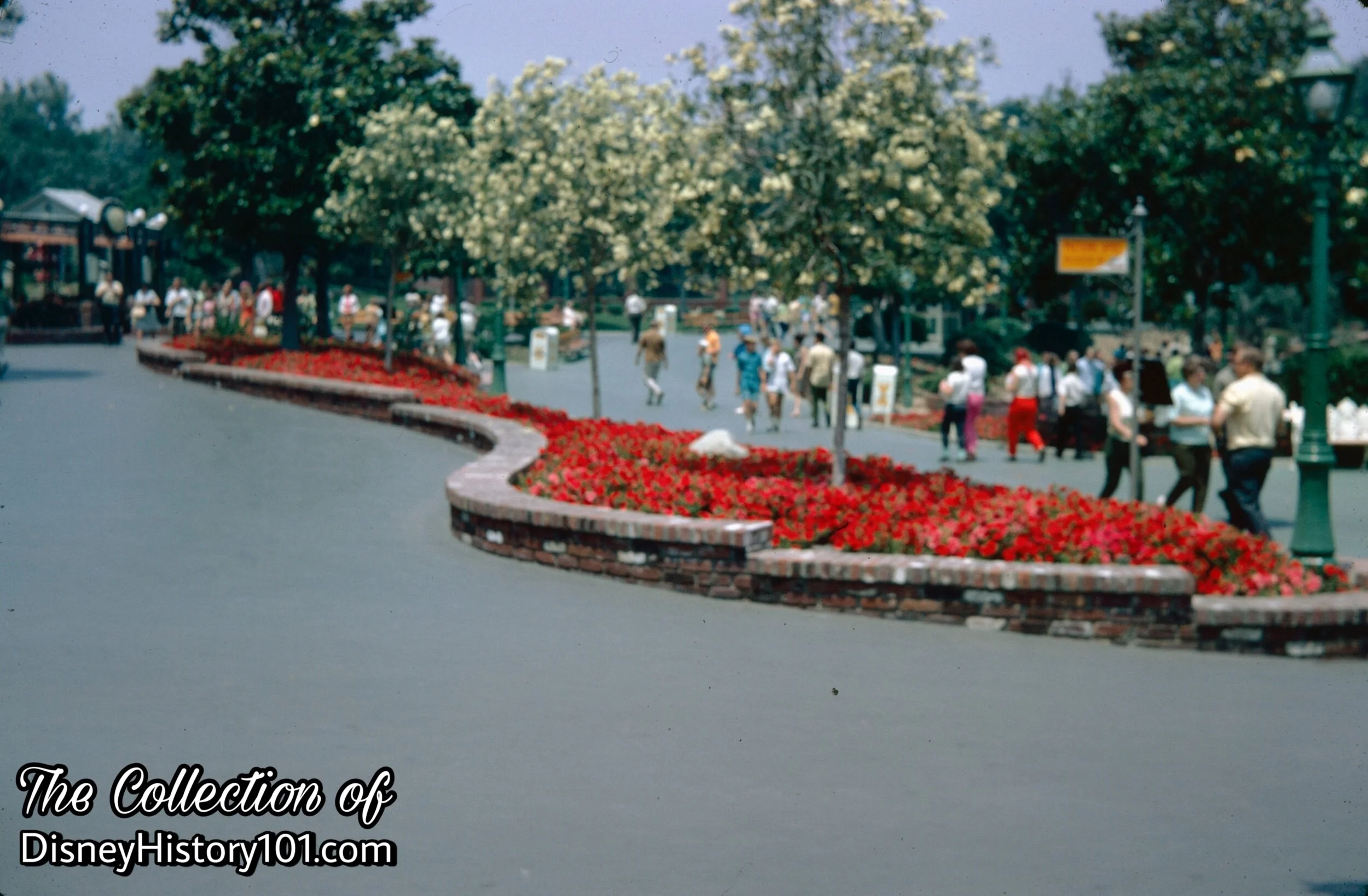
A landscaped area of Frontierland.
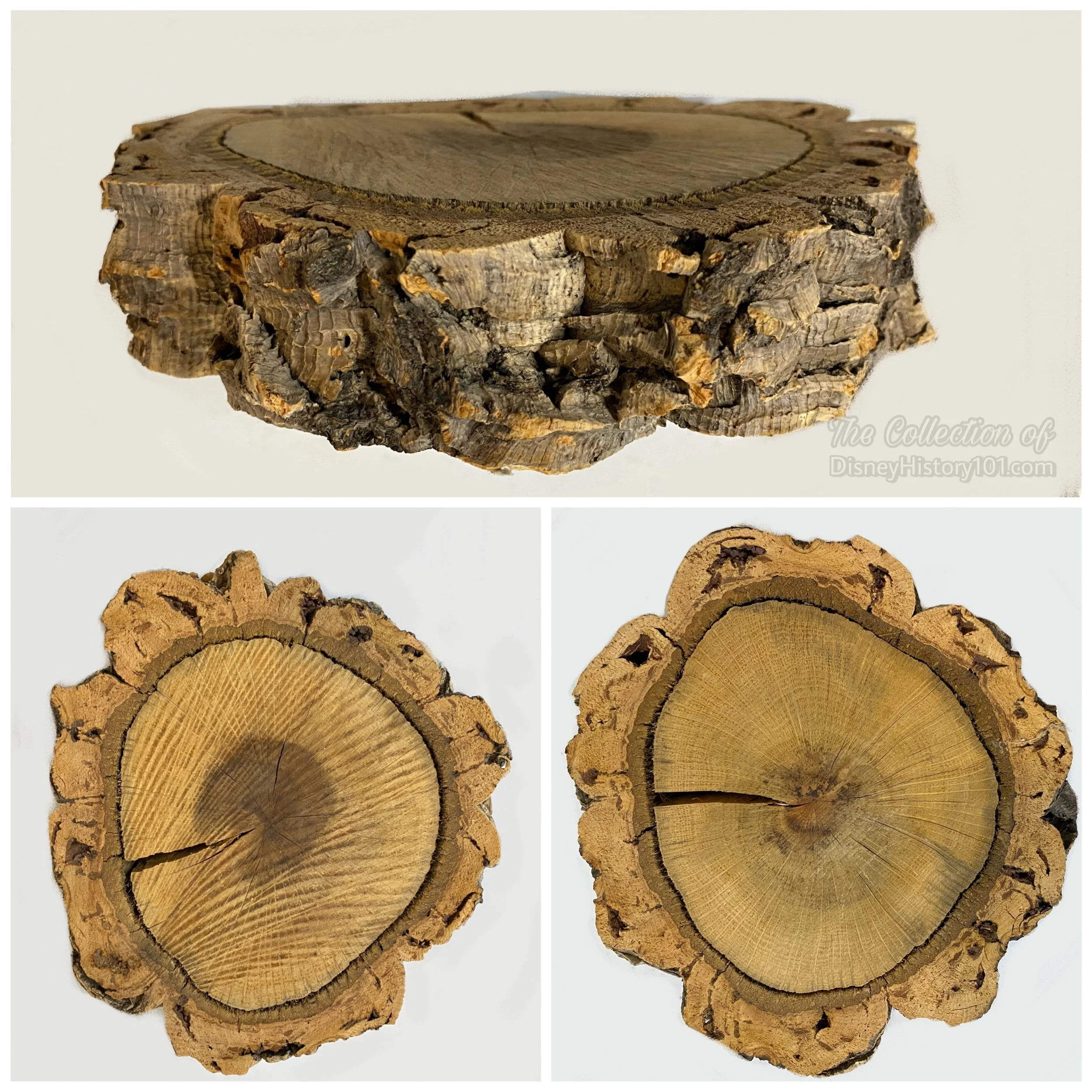
“LOG Operations” - This Cork Oak segmment (Quercus Suber; native of S.Europe & N.Africa) from a felled Frontierland tree.
Of the flora, “World of Flowers” divulged: “A leisurely stroll along the riverfront carries one past evergreen elm trees, a red flowering crape-myrtle from China, cork oaks from southern Europe (the bark of which produces the cork of commerce) and a colony of southern magnolias which leads up to the old Haunted Mansion.”
“Woodman, Spare That Tree”
After the initial construction was completed, trees were rarely cut down at Disneyland. Owing to Environmentality™, they continued to be transplanted to various locations.
By the 1970s and 1980s, the Disneyland show was home to some “900,000 trees, plants and shrubs which are often part and parcel of the attractions themselves.” [Disneyland 25 “Happy Birthday to a Dream” Advertising Supplement; published January 20, 1980] By 1896, Disneyland was home to “more than 750 different species of plants, 15 varieties of turf and over half a million flowering annuals each year.” [“Disney News,” spring of 1986] By 1990, Disneyland was home to some “4,500 trees and 40,000 shrubs and perennials.” Among these were “150-year old lodgepole pines in Storybook Land” and “75-foot-high pine trees at the Park’s north perimeter.”
By the mid-1990s, many of the Frontierland trees were original and perpetuating.
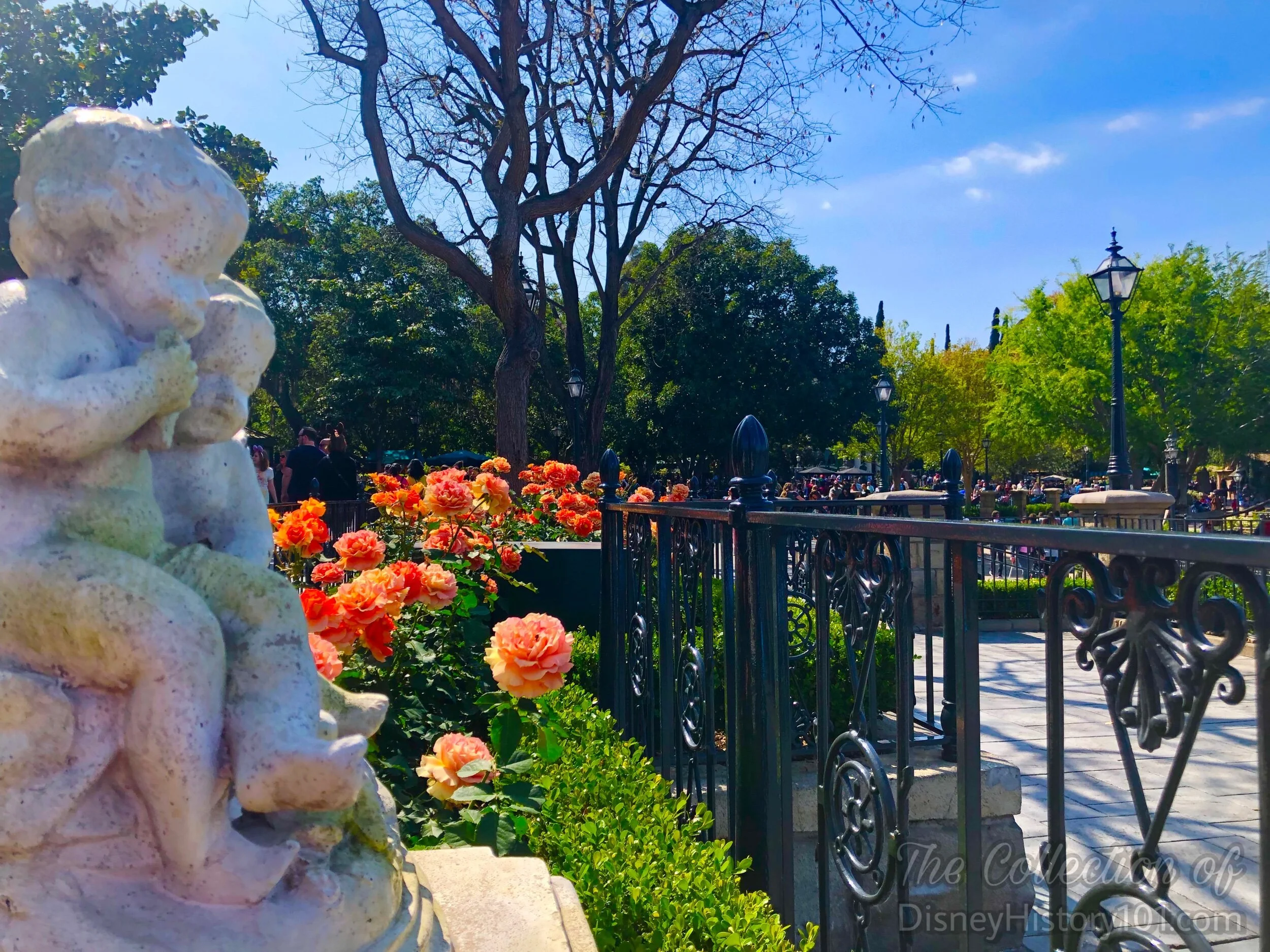
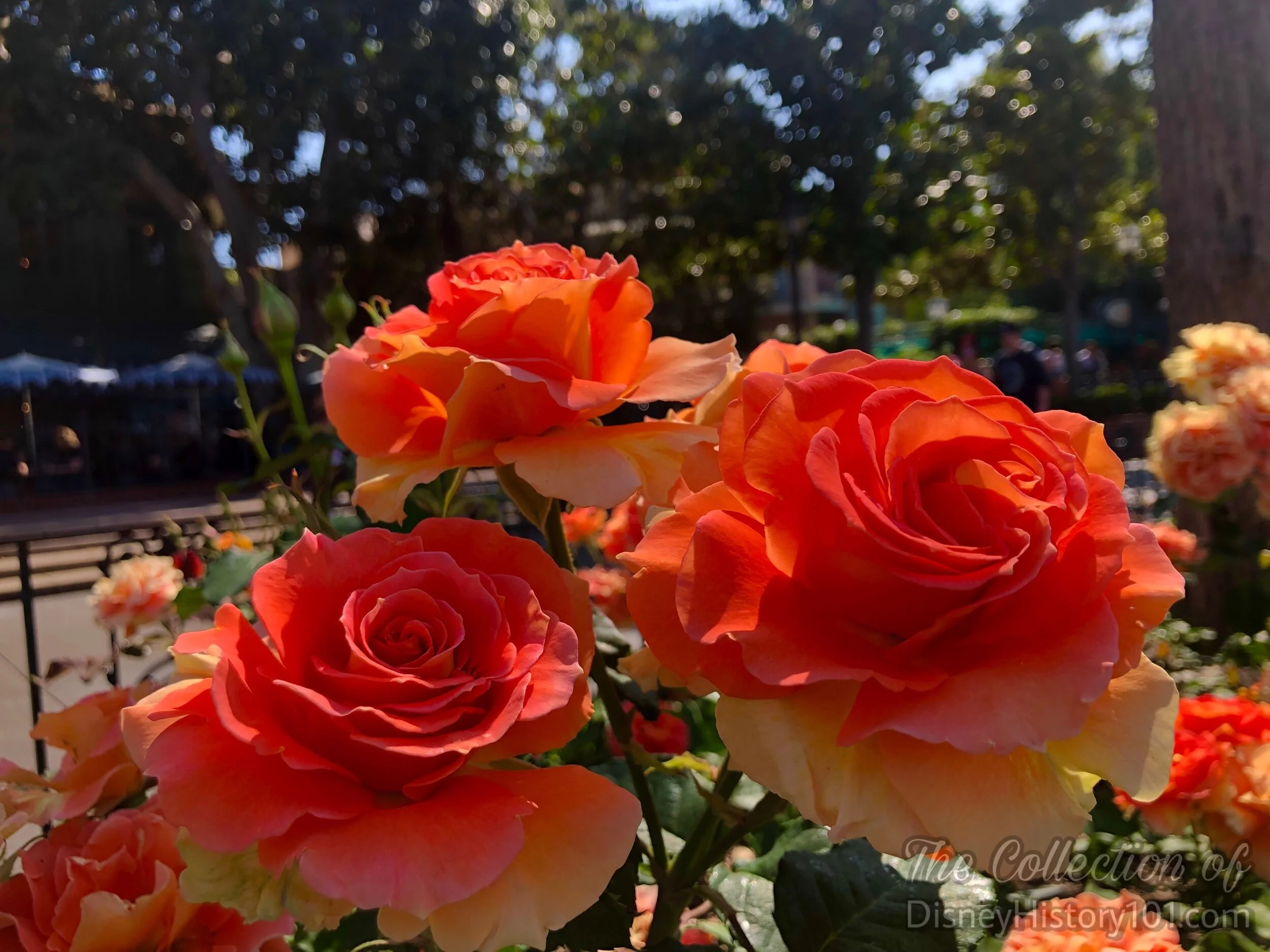
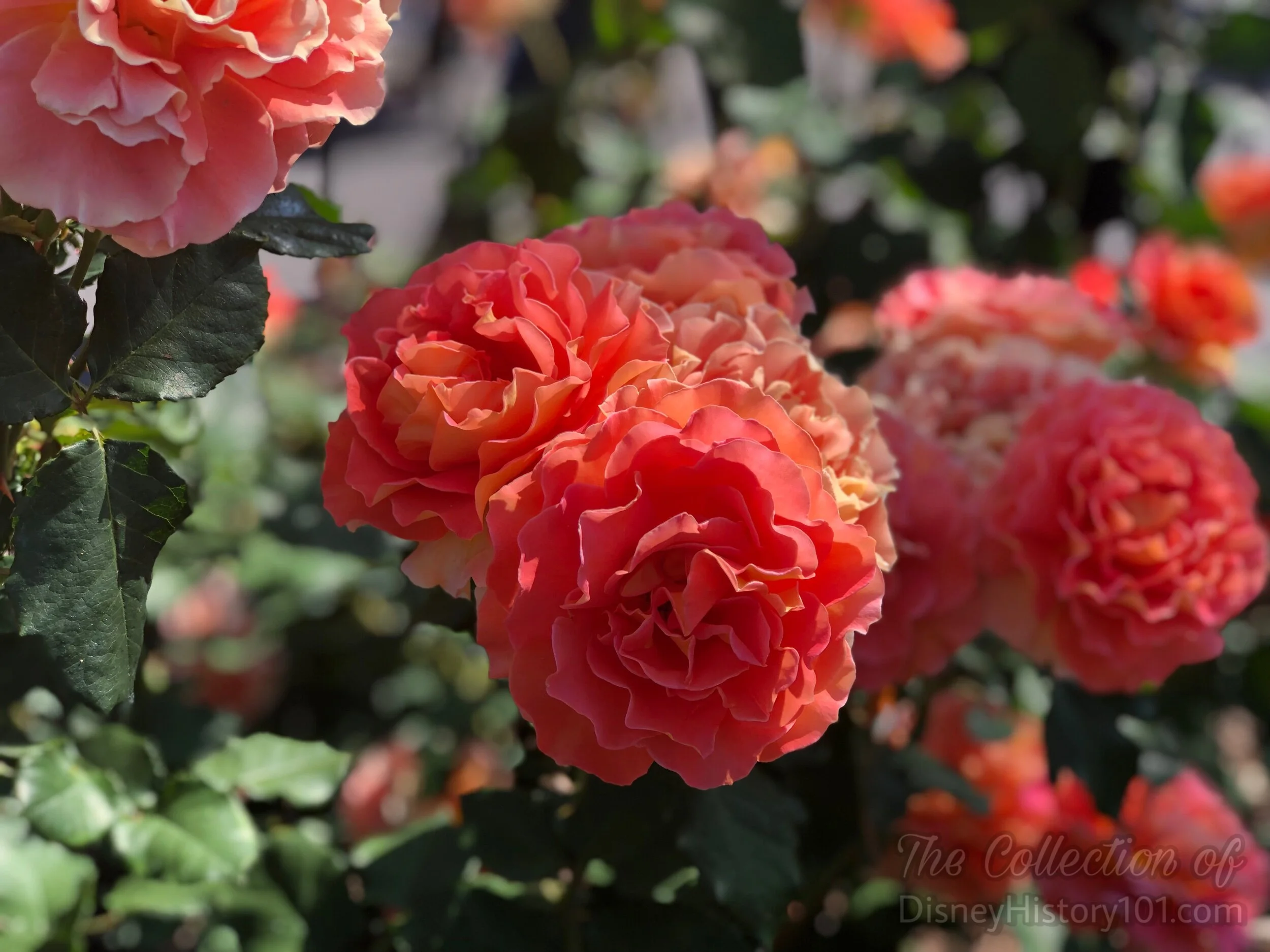
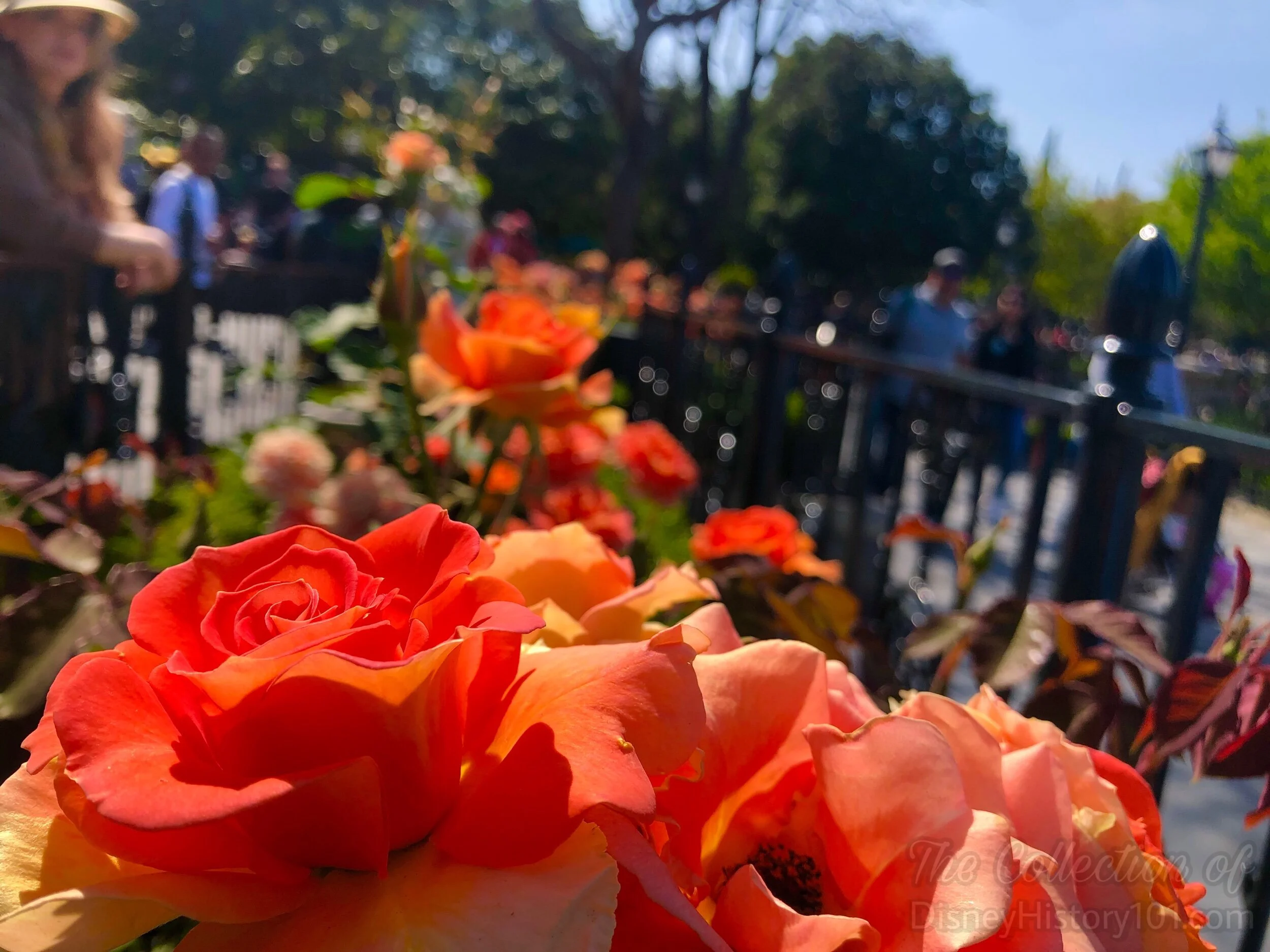
In 2002, the Disneyland© Horticultural Team chose a particular disease-resistant floribunda rose creation (of Doctor Keith Zary, of Thousand Oaks) to become the official rose of Disneyland©! At that time, the apricot-copper-pink-orange Roses (bearing 25-petal blooms), have been made available to the public, and a few Southern California nurseries currently keep them in stock, so that we may bring the magic of Disneyland home with us! To challenge an old adage by William Shakespeare, “a rose by any other name” may not smell as sweet to a fan of Disneyland©!
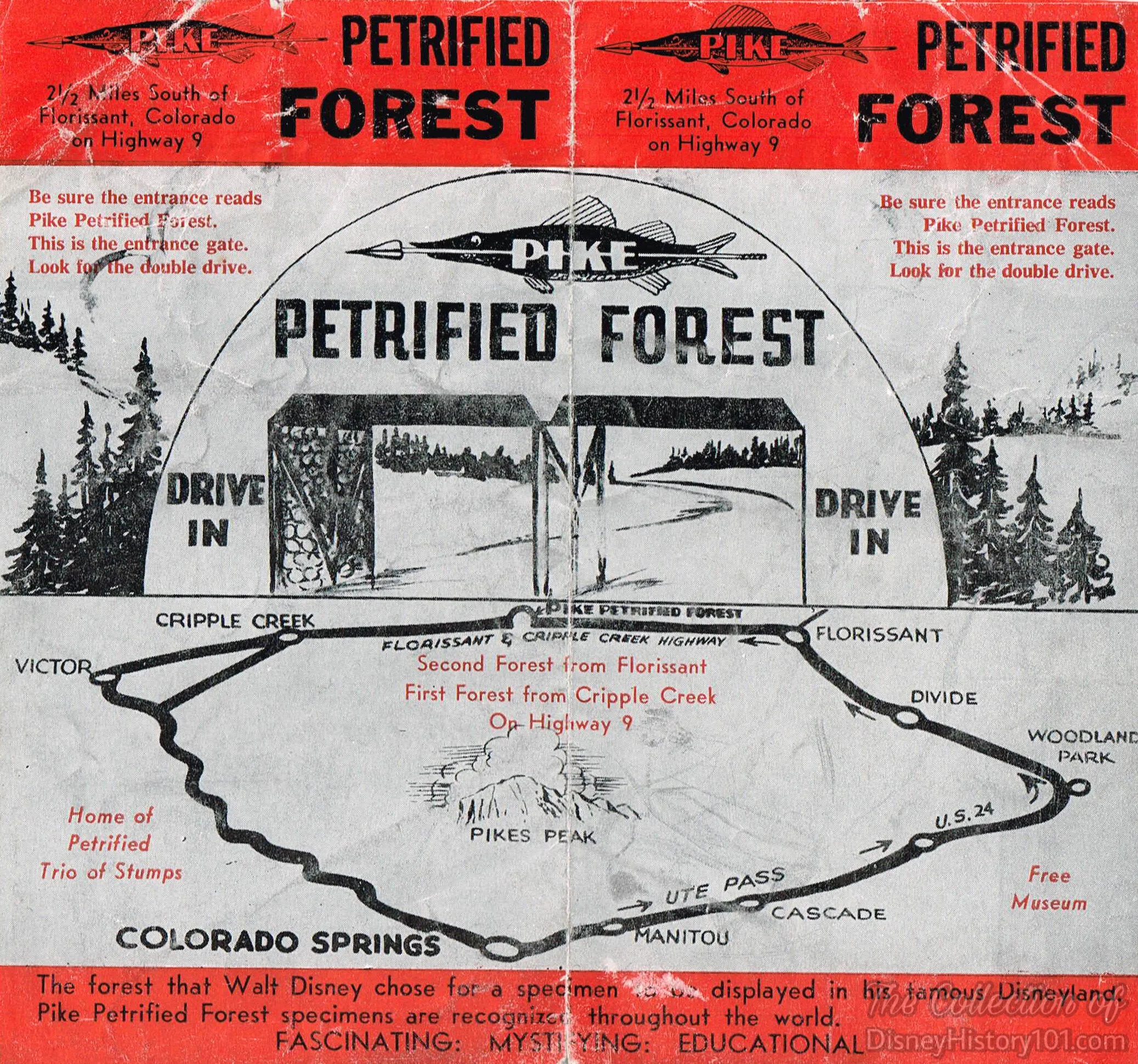
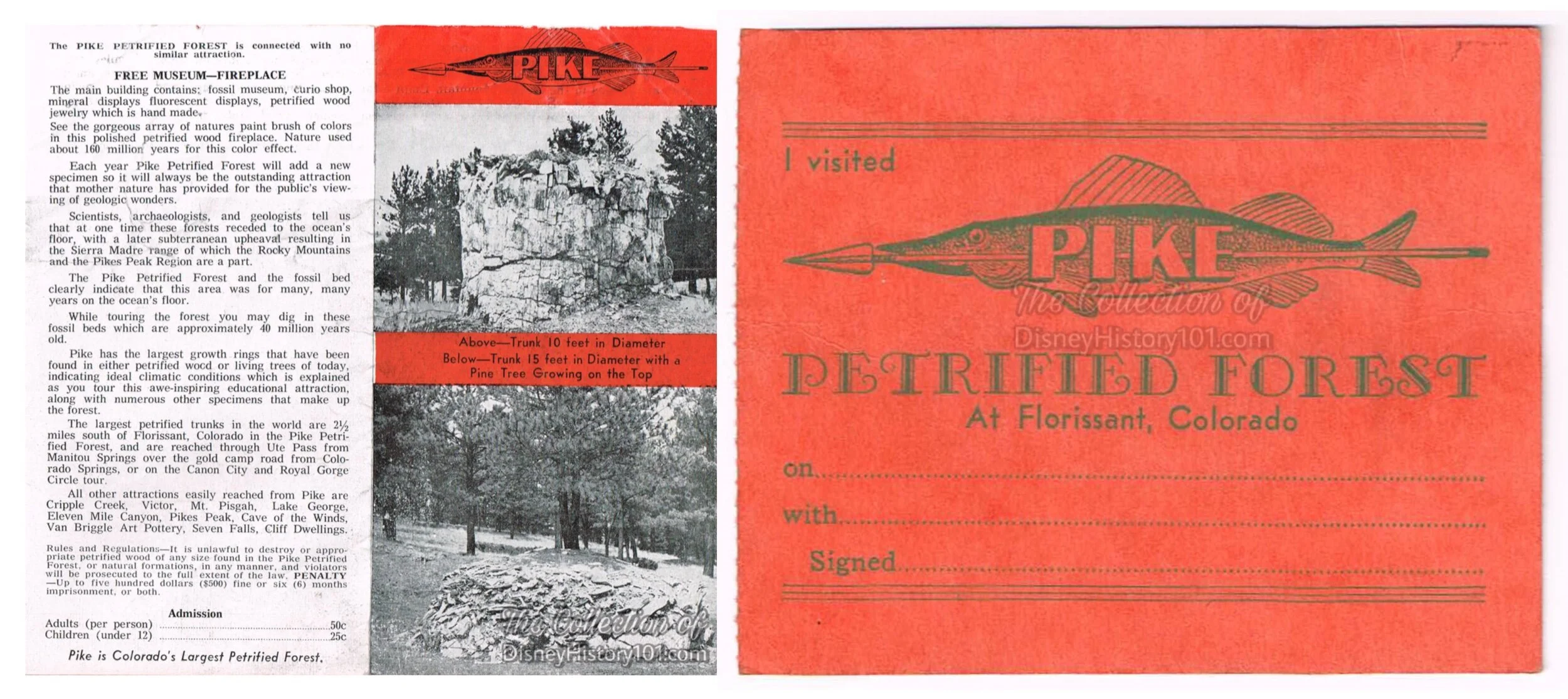
Pike Petrified Forest Brochure; 1956.
“The ‘Working Lead’s Log’ - Walt’s Petrified Stump”
While Walt and Lilly were celebrating their 31st wedding anniversary at the Broadmoore Hotel near Colorado Springs / Pike's Peak... After traveling the back roads of the region, the Disneys decided to stop at "Pike Petrified Forest" (previously known as the "New Petrified Forest" (1920), and "Henderson Petrified Forest"). The land had been purchased by T. Dale Miller for $40,000 in 1950. Walt paid the 35¢ admission fee while Lilly waited in the family car. At the time, guide Toby Wells didn't know the identity of their end-of-day visitor... but when Walt signed the guest register on July 11, 1956... Toby discovered who he was actually escorting through the property.
After spotting a petrified tree stump in which he was interested, he asked Toby if the Eocene-era tree was available for purchase. Toby agreed to represent Walt's interest to the land owner, John "Jack" Baker. The result was the purchase of the tree, for $1,650.00.... scheduled for delivery to Disneyland in Anaheim, California. Over the years, a myth grew at Disneyland that this was Walt's 31st Anniversary gift to Lilly... as referenced on the plaque that adorns the site today. However, it was never seriously intended as a gift for Lilly... but only as a fitting landmark on the Frontierland horizon. The rest... is pure Disney lore.
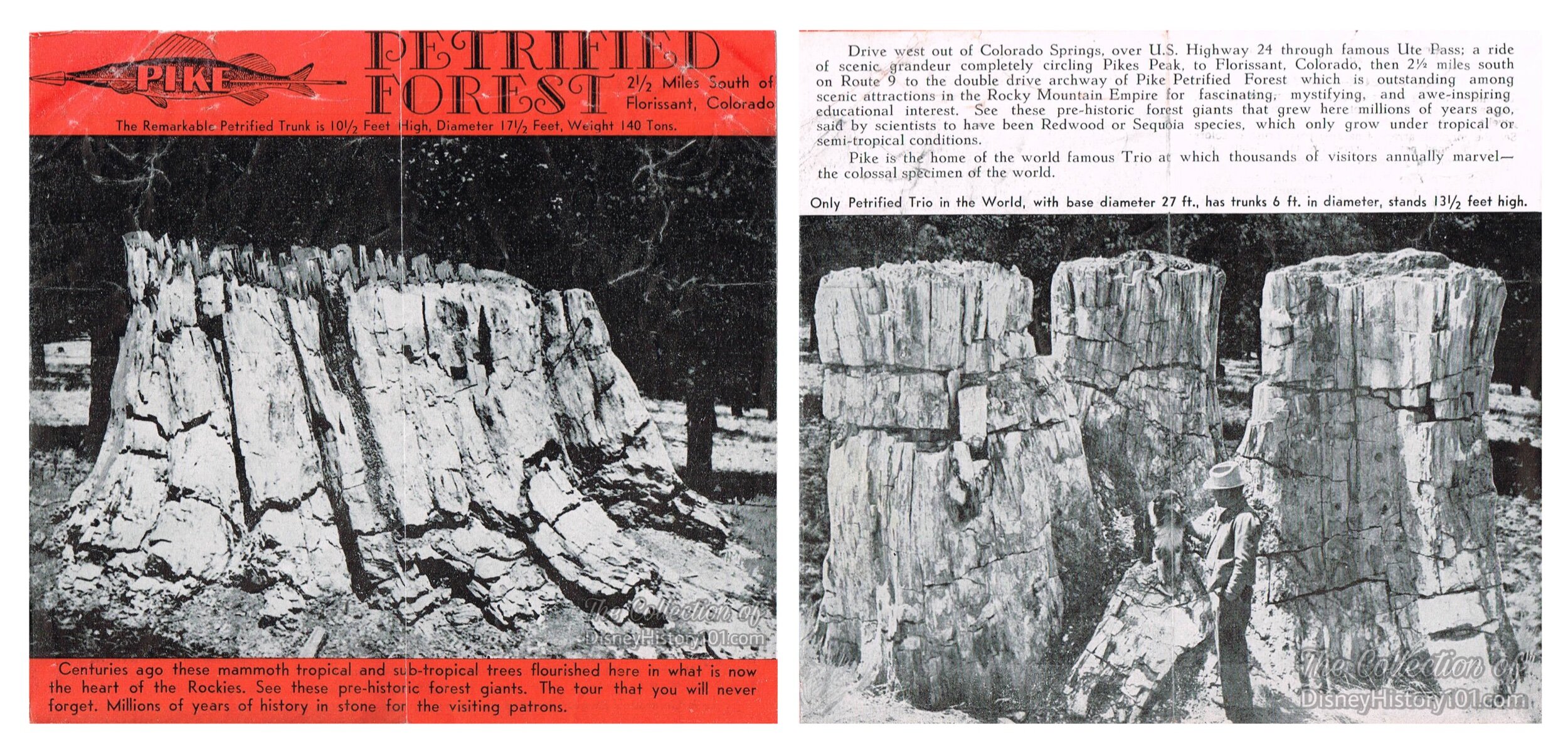
In the years that followed this unique purchase, Pike Petrified Forest saw fit to acknowledge the fact in their publicity brochure that Walt visited that very site to select his tree for Disneyland... a tree that was originally only steps away from the historic "Petrified Trio" of trees that were heavily promoted at their Petrified Forest. That reference is included in this rare brochure. This was document in the late 1950's... following Walt's visit to the site. However, this is NOT a photograph of Walt Disney; but of another unidentified visitor to the "three trees trio" at Pike Petrified Forest.
The site was located just south of the Colorado Petrified Forest... the fierce competitor of Pike Petrified Forest.
Ultimately, the Florissant Fossil Beds National Monument was established by the United States Government in 1969, including the site where Walt had acquired his own petrified tree stump... and no further sales of antiquities were to be permitted from these government lands.
A four-panel brochure was published as a souvenir of the extraordinary place for exploration among traveling visitors. The brochure featured pictures of scenic views and referenced Walt Disney’s Disneyland attraction.
The tree was presented to Disneyland by Mrs. Walt Disney.
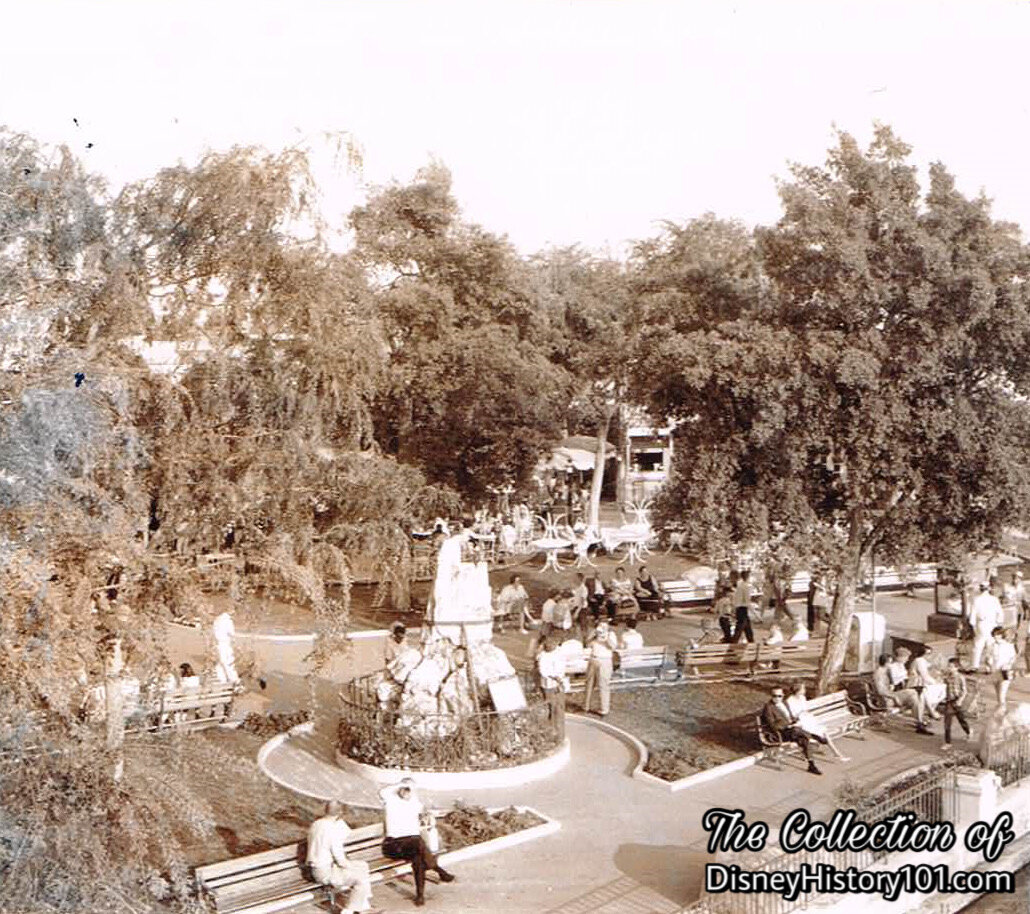
The Petrified Tree in the New Orleans Area of Frontierland.
The Petrified Tree from the Pike Petrified Forest, Colorado, presented to Disneyland by Mrs. Walt Disney.
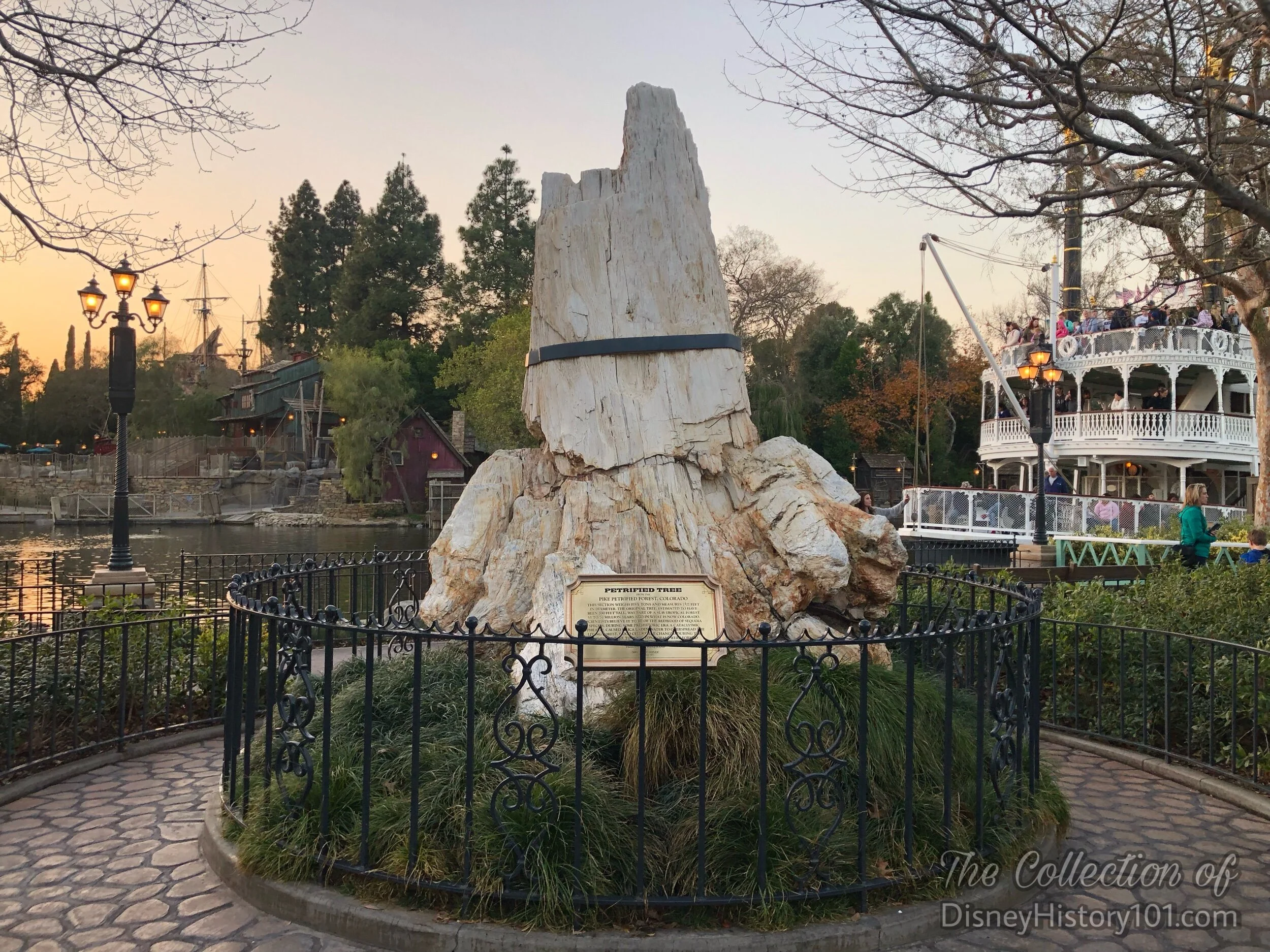
The Petrified Tree in the New Orleans Area of Frontierland.
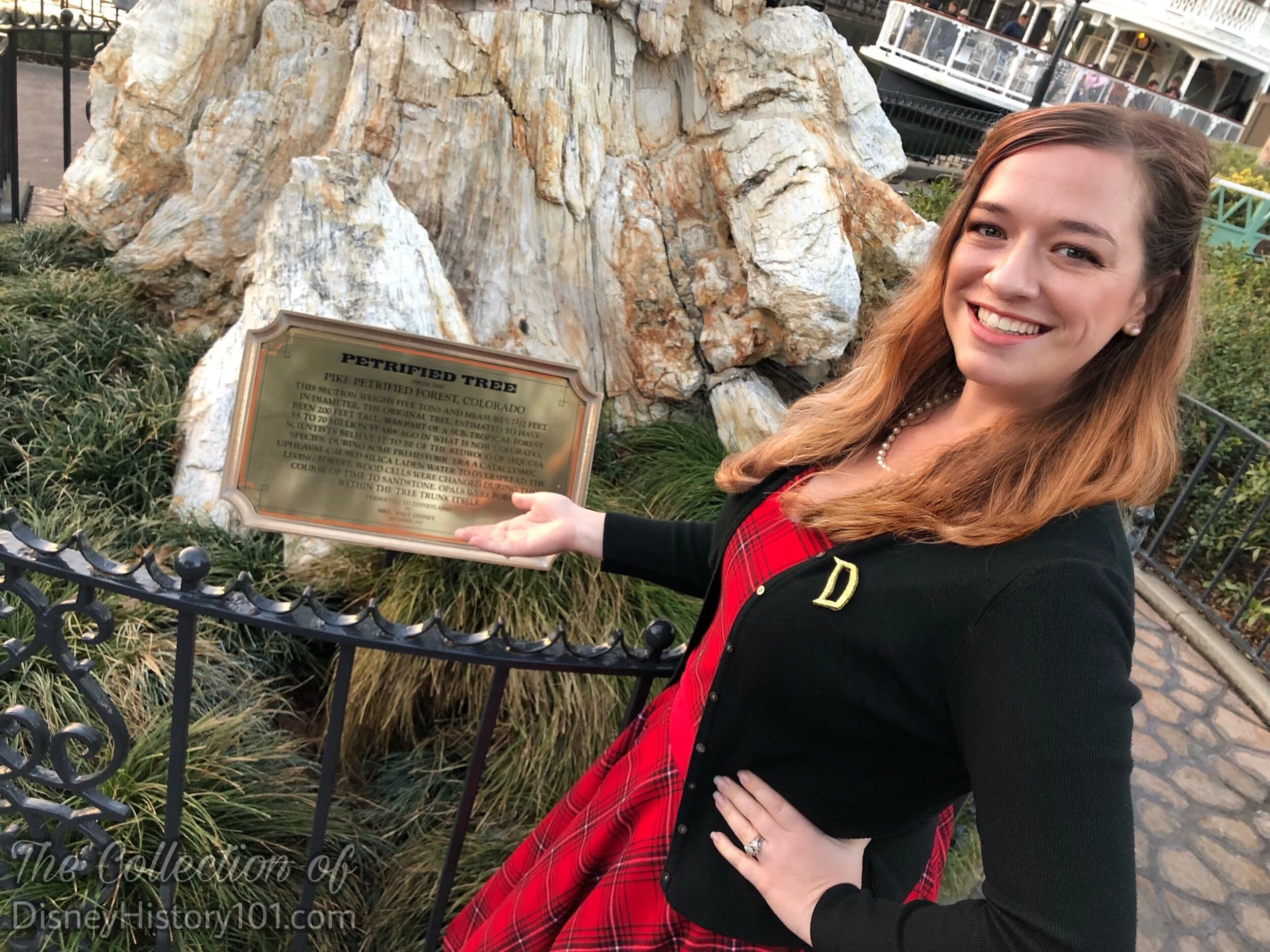
The Petrified Tree in the New Orleans Area of Frontierland.
The original plaque divulged: “55 to 70 million years ago this huge petrified tree was part of a sub-tropical forest in what is now Colorado - said by scientists to have been of the redwood or sequoia species. During some prehistoric era, a cataclysmic upheavel caused silica-laden water to overspread the living forest - wood cells were changed during the course of time to sandstone - opals were formed within the tree itself.” It has been estimated that the full tree may have once stood some 200 feet tall. In the present, the stump has a diameter 7 ft 6 inches and weighs 5 tons.
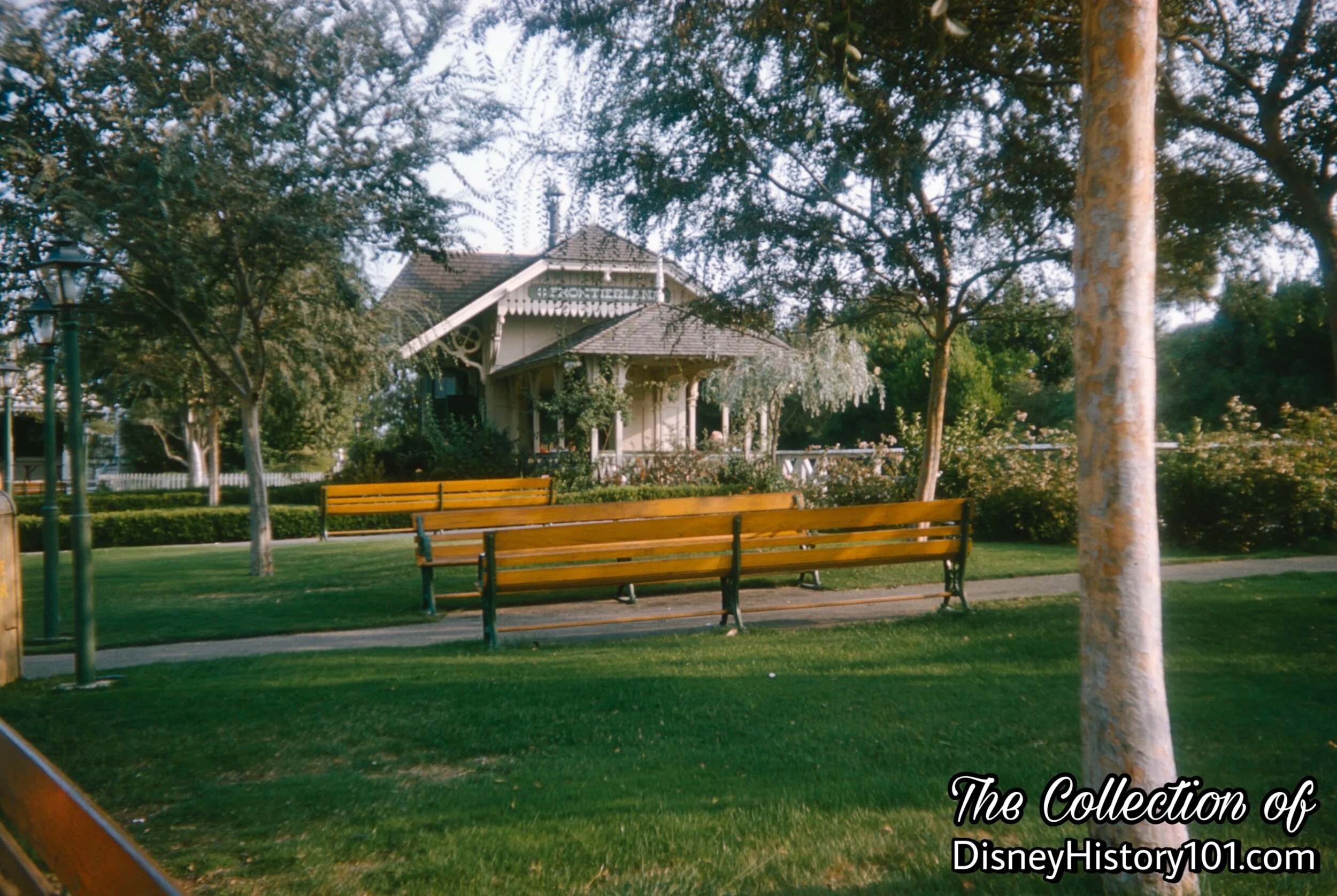
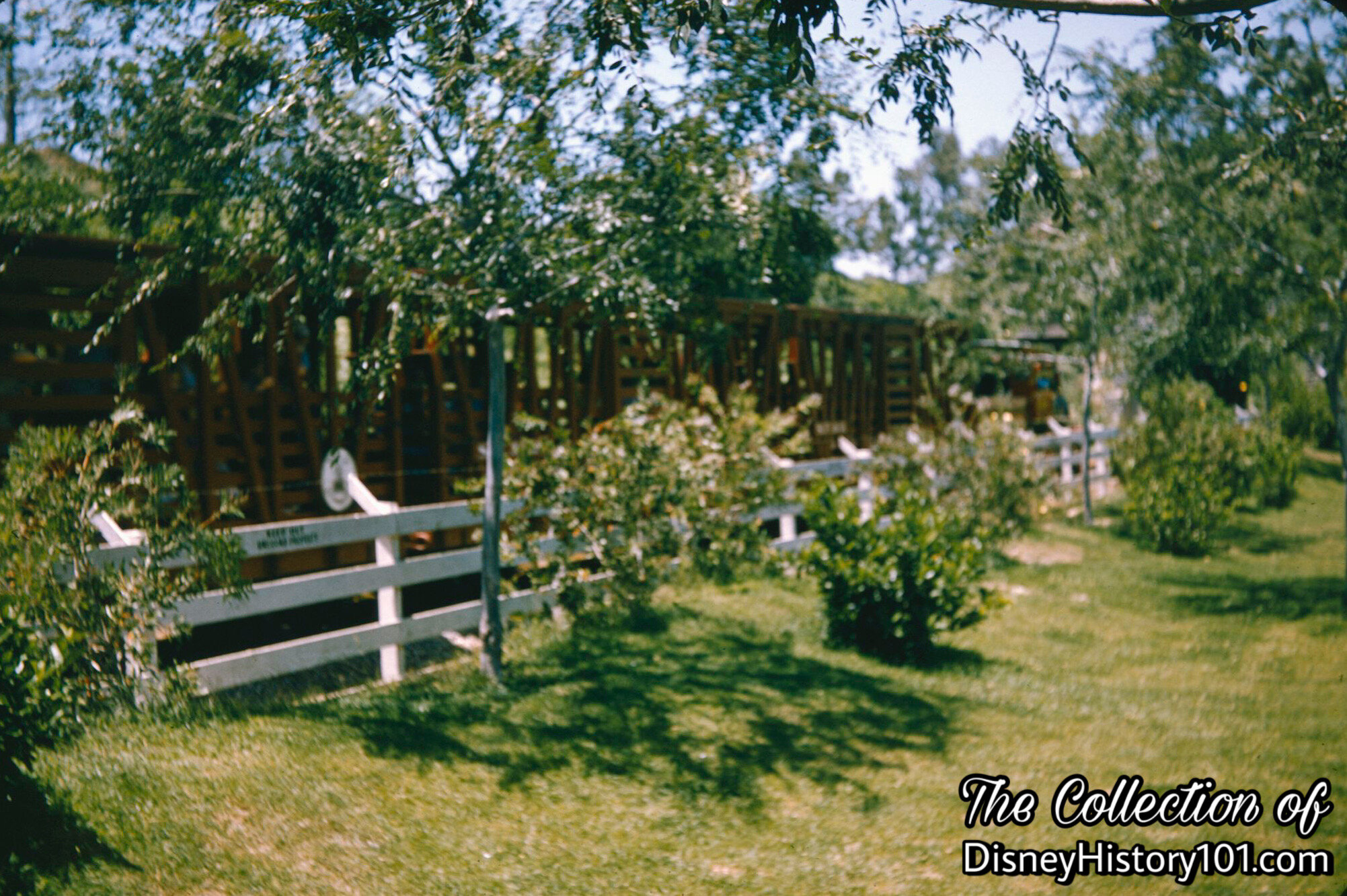
This is the period of time from the Revolutionary War to the final taming of the great South-west. Here in the unspoiled forests of frontier America are native California pines, aleppo pines, evergreen ash trees, silver maples, sycamores and junipers. Wild flowers and berry plants appear along the sun lit patches. The wild European iris lines the shore of the river to prevent erosion of the banks caused by the wake of the Mark Twain.
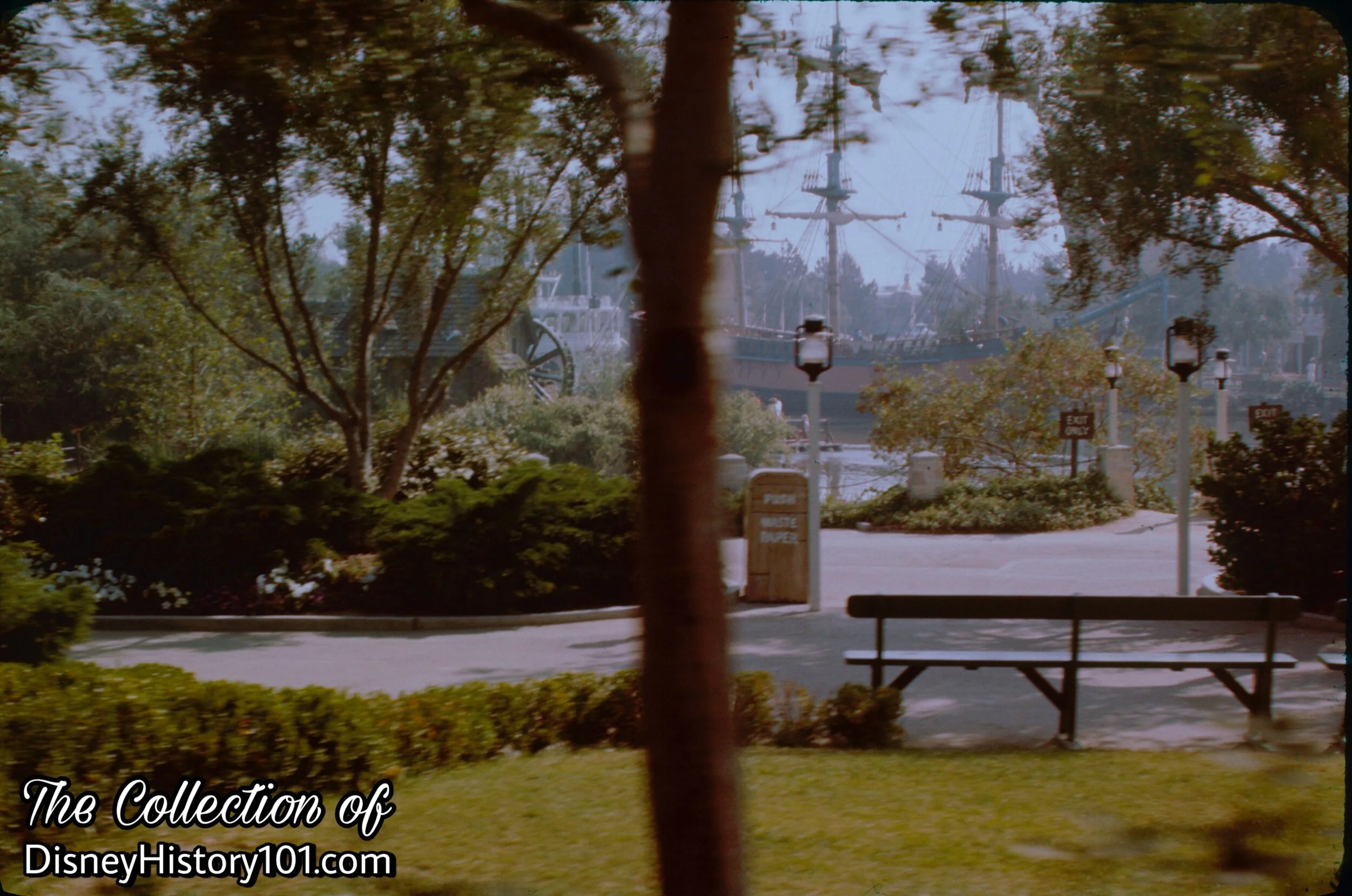
(1961)
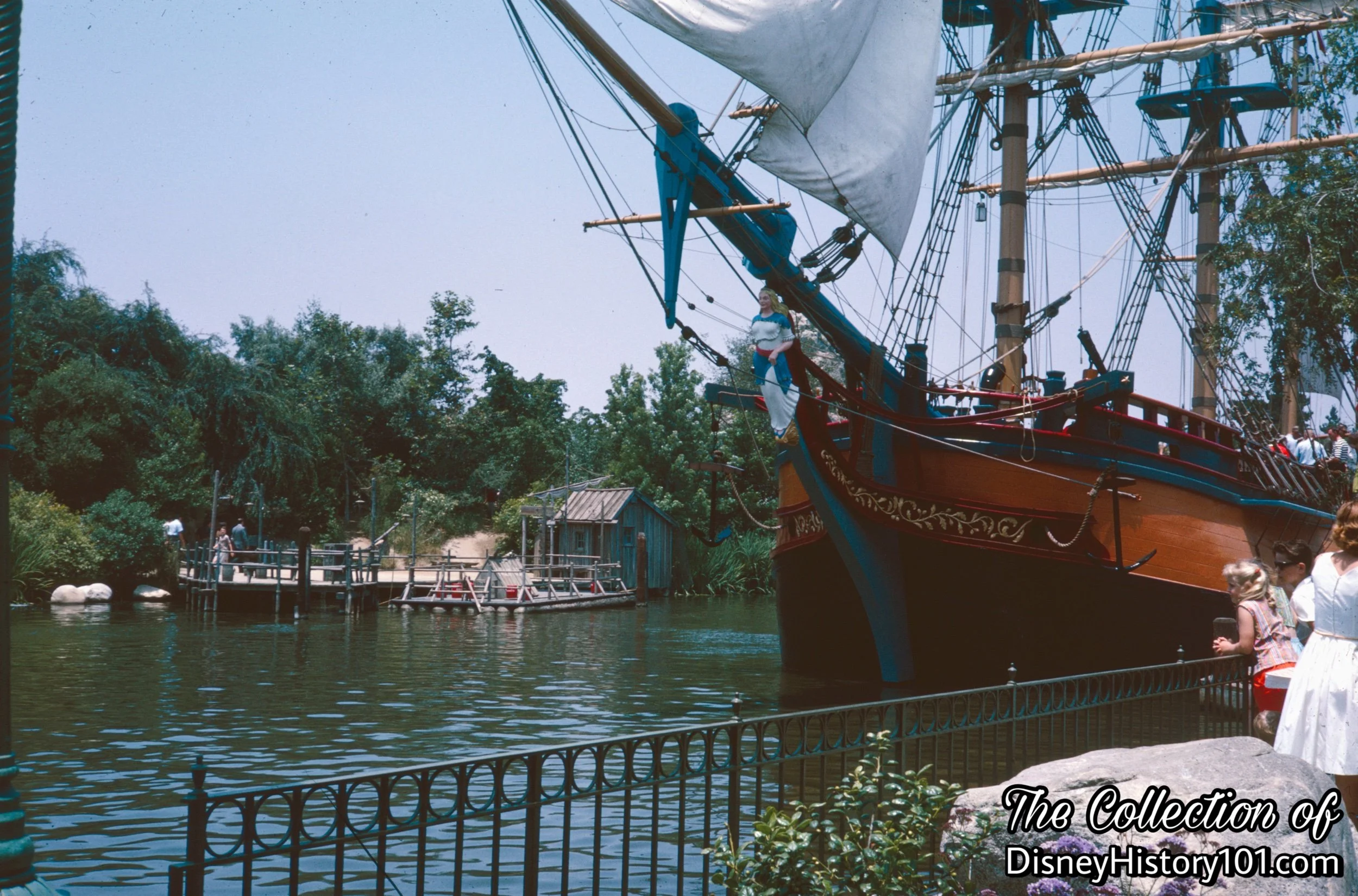
Passing cars of the Santa Fe & Disneyland Railroad afforded passengers a view of the Columbia and other vessels in the waters of the Rivers of America!
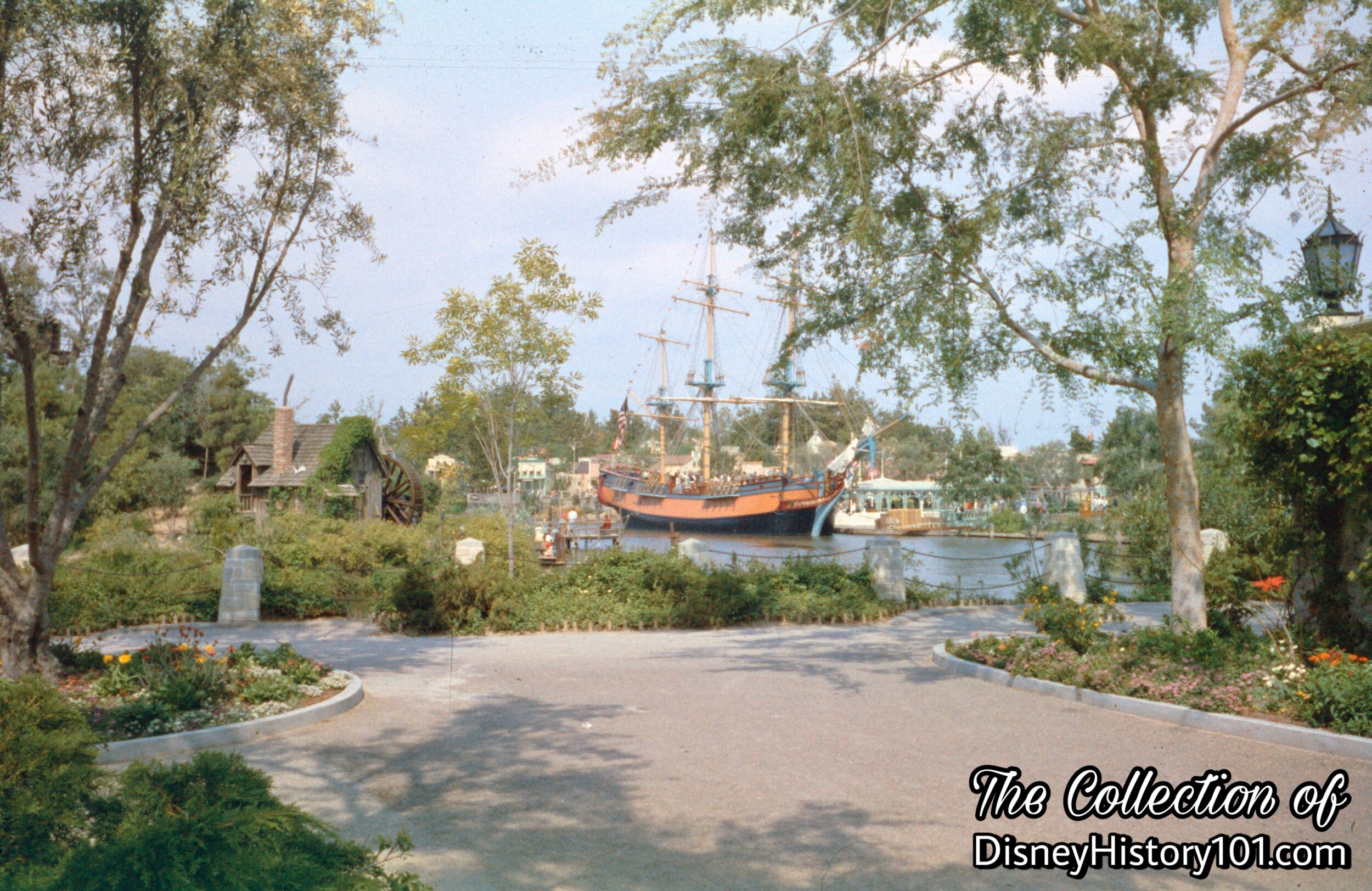
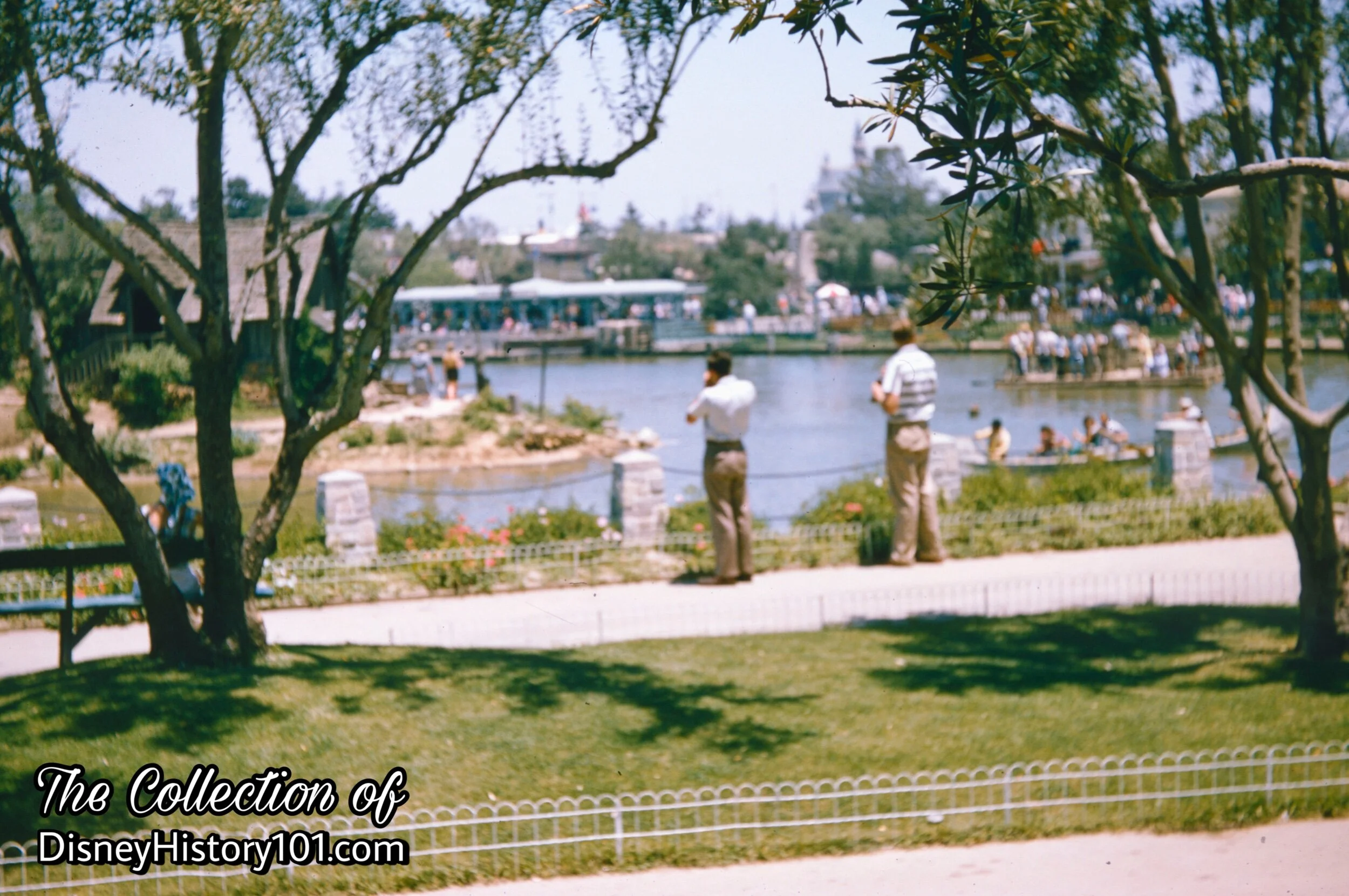
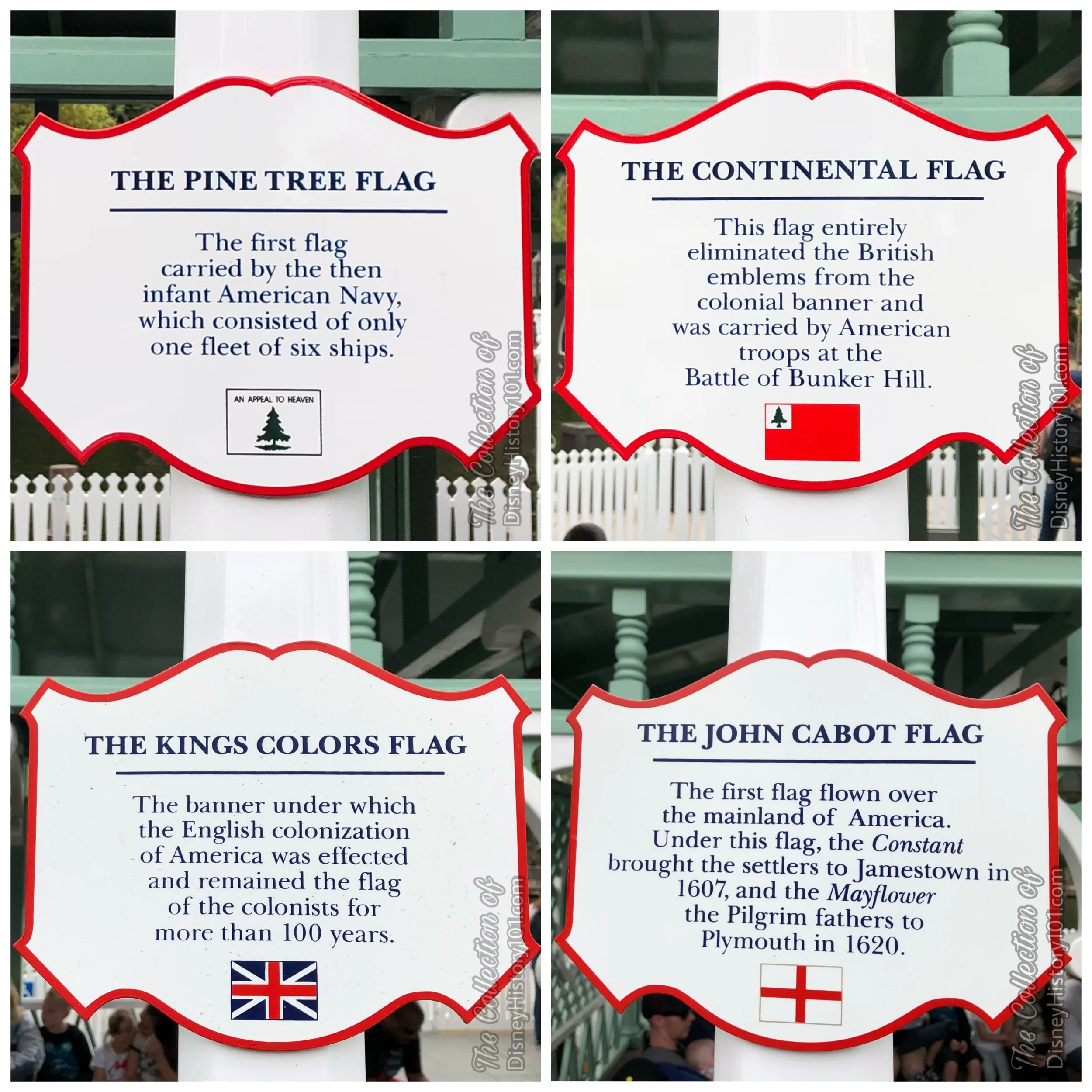
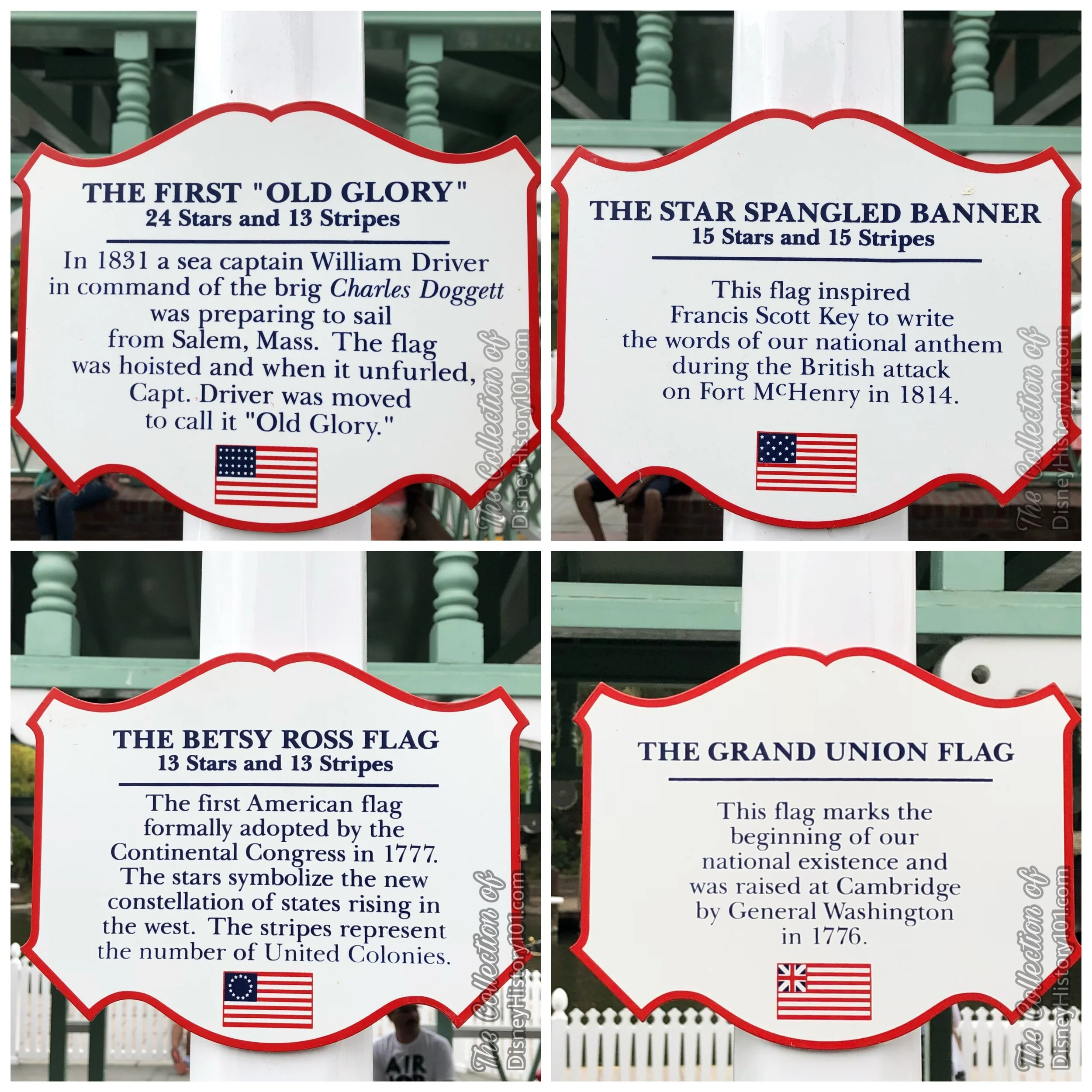
This Disneyland exhibit would have a legacy of sorts in the Corridor of Flags, on the second level of the American Adventure building at Walt Disney World Epcot Center. There, the exhibit would open with some 44 flags that have flown over the United States during the course of American history.
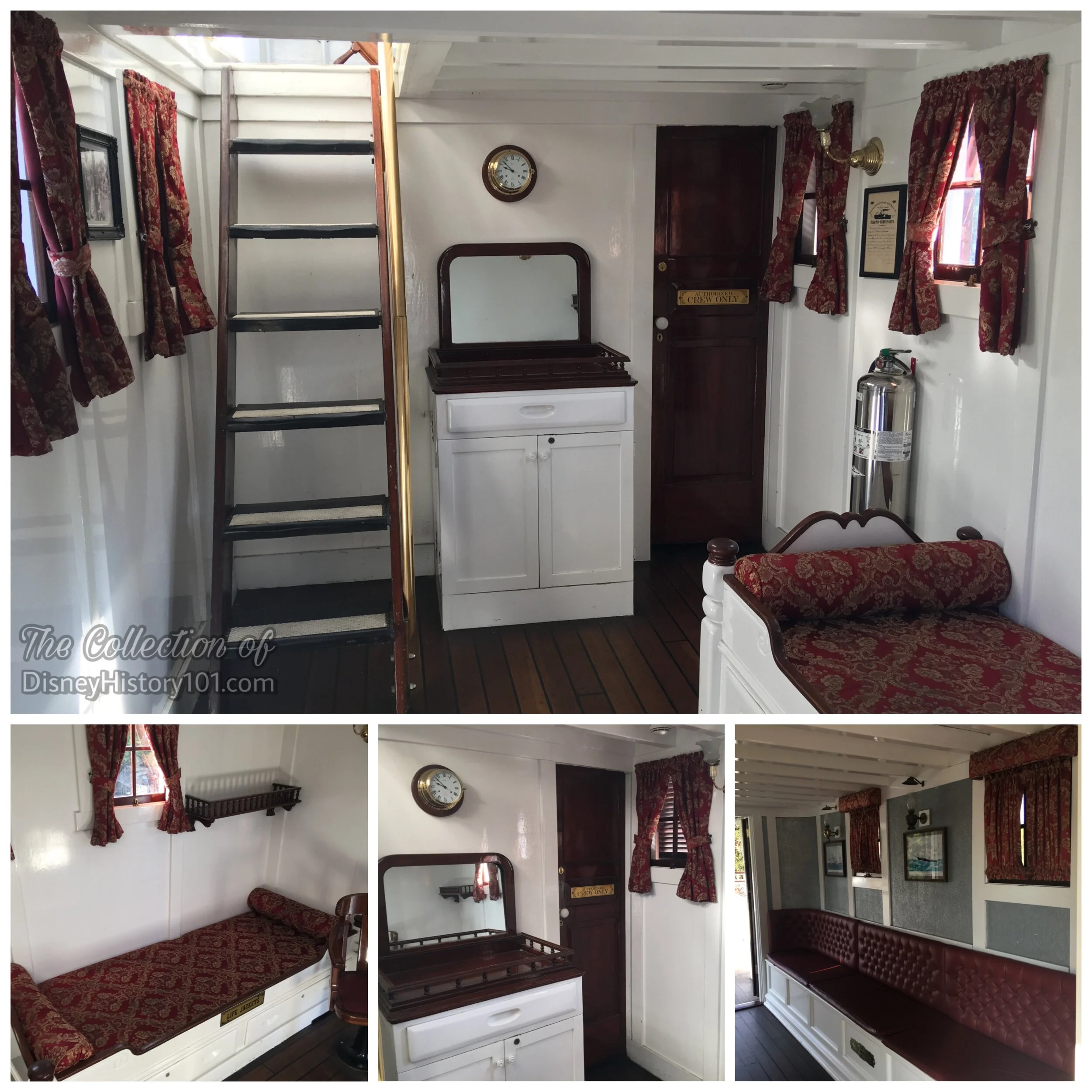
Mark Twain Pilot House
Walt was confident that Frontierland was sure to be wildly popular with audiences! As far back as July 1, 1954, Robert Burns of Disneyland Inc. Merchandising was implementing Merchandise philosophy, overseeing area and store planning, lease agreements, and souvenirs.
By January of 1955, Walt Disney Productions, Inc. took out a full-page advertisement on the cover of “Playthings - the national magazine of the toy trade.” The illustration depicted (not Sleeping Beauty Castle), but Davy Crockett near the Frontierland Stockade with the Mark Twain’s billowing smokestacks in view. Soon, “A Visit To Disneyland” (published by the Disneyland, Inc. Public Relation Department, c. June of 1955), made many references to the “fabulous gifts from Disneyland” and Frontierland, stating : “At its gate Indians of many tribes are weaving blankets and baskets, making pottery and selling souvenirs… the general store carries merchandise of the cheese, crackers and pickle barrel period.”
As of June 2, 1955, C.V. Wood Jr. sent an Inter-Office Memorandum to Walt Disney regarding the best estimates that could be obtained at the time regarding the completion status of individual sections of the Park and Opening Day. C.V. wrote: “Blacksmith Shop: Okay. We will probably hire a blacksmith within the next two weeks so that he can start making souvenir merchandise to build up his inventory.”
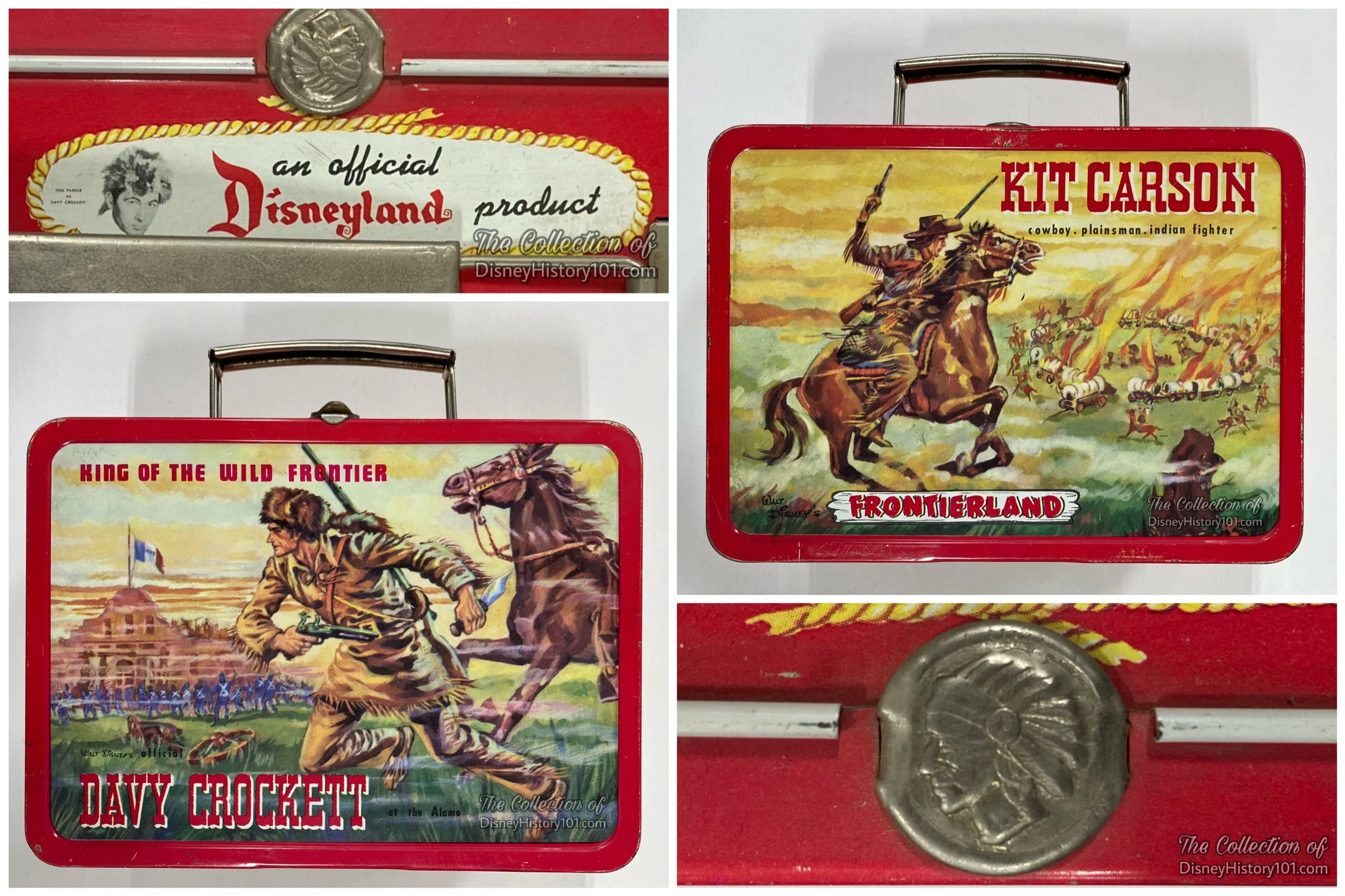
Each location placed a strong emphasis on selected merchandise capturing the essence of the area's theme. Convenience merchandise, such as film, postcards, and other necessary items were kept to a minimum in especially unique areas, while souvenir items were displayed and sold at locations where they would be most thematically compatible. Even these items, however, were often uniquely “Disney” because they were designed and produced under close supervision by Disney artists.
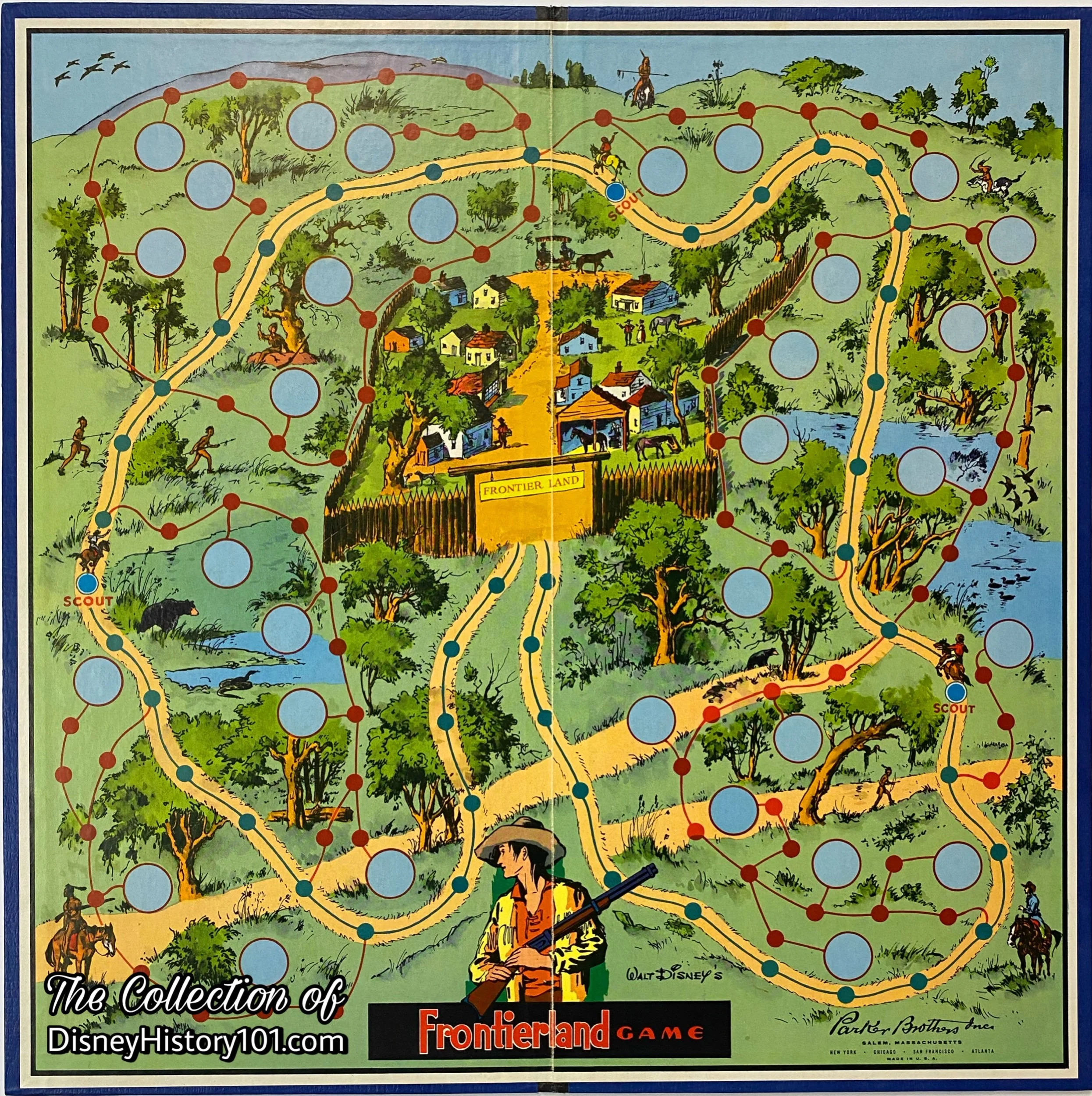
During the early years, merchandise locations carried much General Merchandise - non -character and/or decorative items, including film and sundries. In time, Disneyland “Character merchandise” yielded some royalty income for Disneyland Inc. For instance, a total of $80,031 (less $4,902 for WED Enterprises, Inc.’s share; less $34,867 Walt Disney Productions’ Share; plus $13,357 Disneyland souvenir merchandise) ending in $53,619 for the fiscal year (52 weeks) ending September 29, 1957 and a total of $50,841 (less $2,733 for WED Enterprises, Inc.’s share; less $23,480 Walt Disney Productions’ share; plus $6,669 Disneyland souvenir merchandise) ending in $31,297 for the fiscal year (52 weeks) ending September 28, 1958.
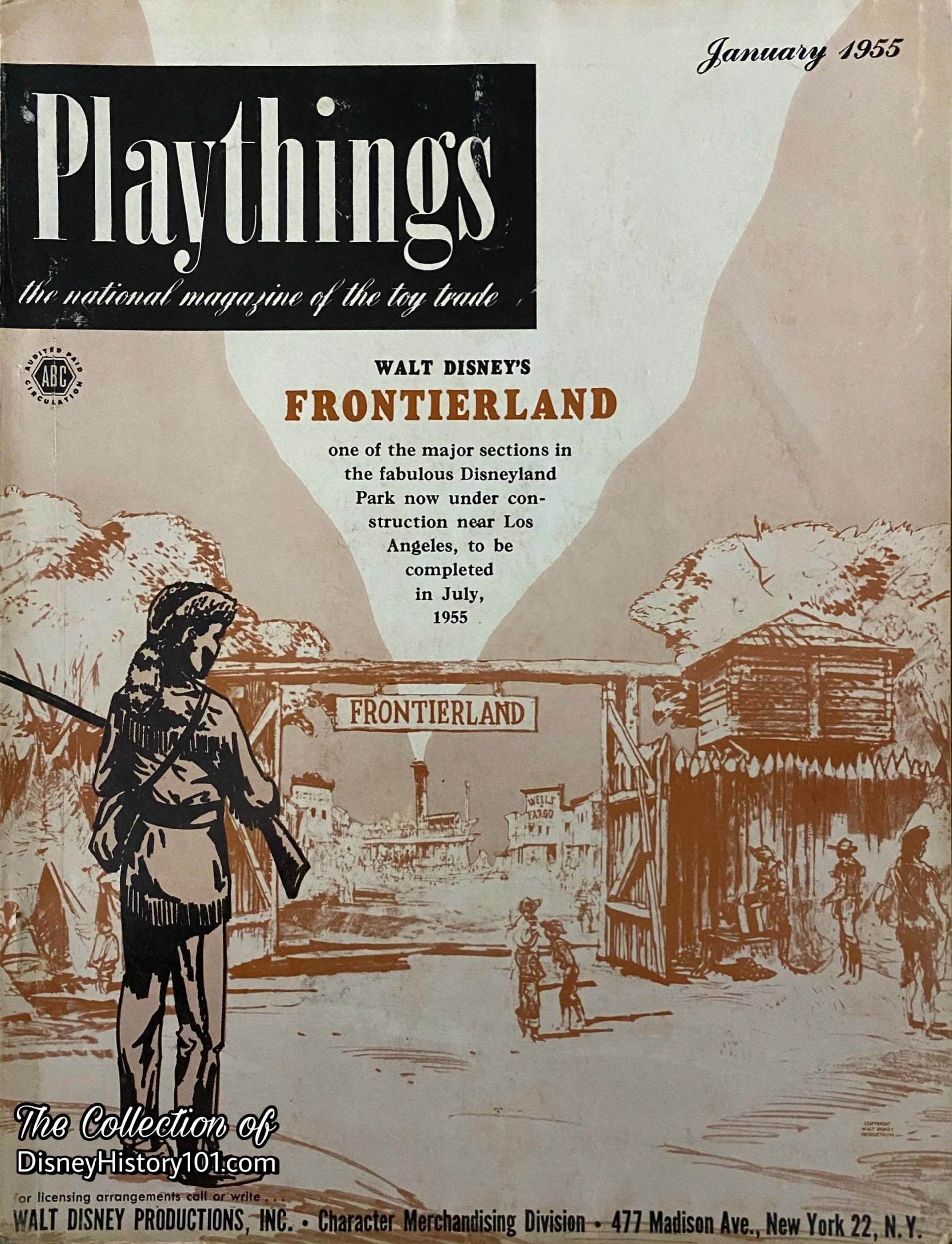
The 53rd cover of “Playthings,” published for January of 1955.
Merchandise, shops, and giftware stands have changed dramatically around these Frontierland parts since the bygone days of Disneyland’s first fabulous decade! During the first year of operation, Eddie Adamek sold trick ropes at the Blacksmith Shop. Merchandise Hostesses sold bottles of Old English Lavender perfume.
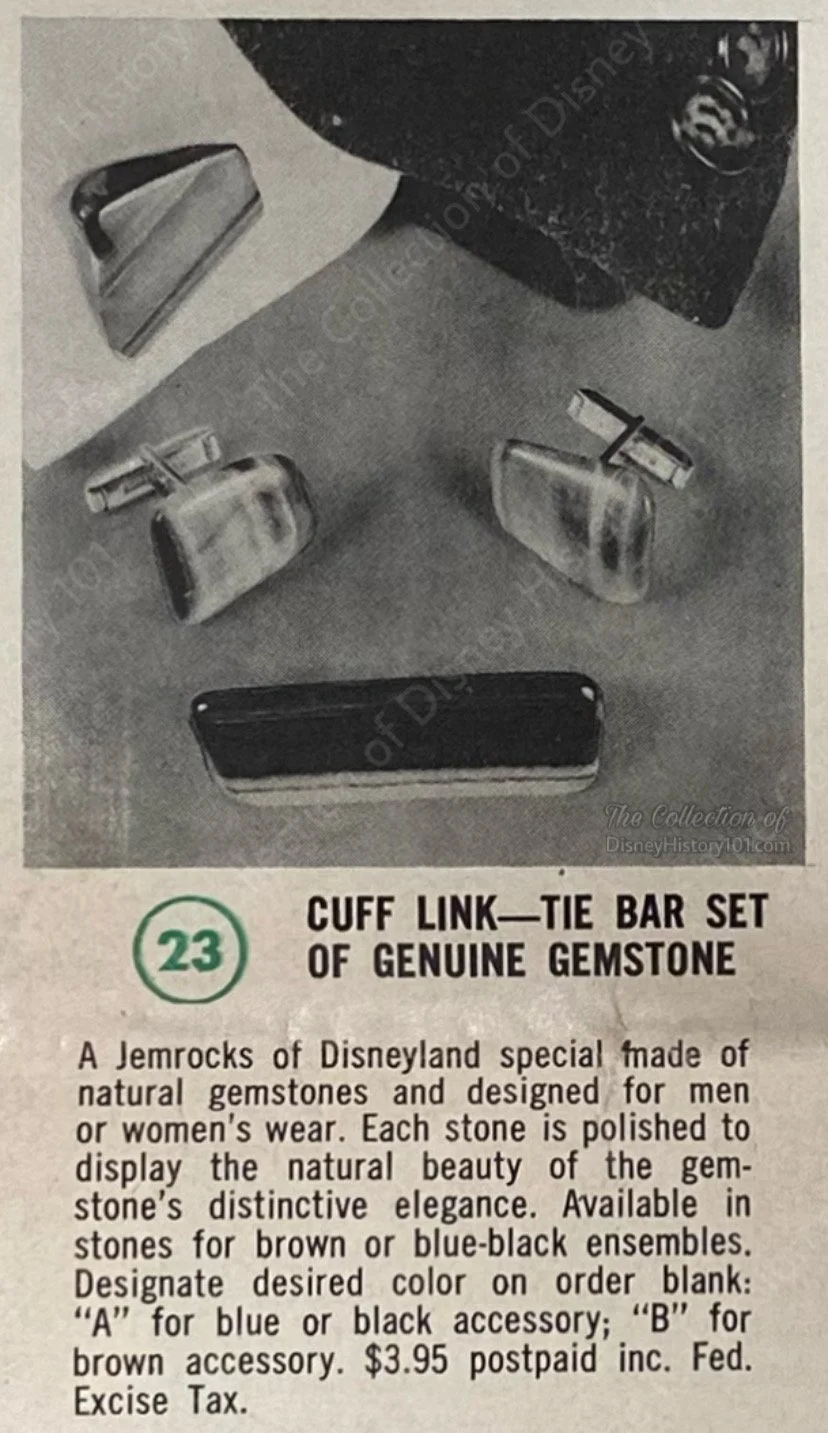
“Jemrocks & Mineral Hall” WAS ERASED
By September 28, 1958, Jemrocks, Inc. forwarded accounts receivable to Disneyland Inc. at an Estimated Realizable Amount of $308; an unearned deposit or advance was made to the company in the amount of $300. Basic improvements were made to the (effectively new) Mineral Hall building and restaurant at a cost of $47,000. By September 28, 1958, the Mineral Hall building was considered a Park Asset valued at $52,787.
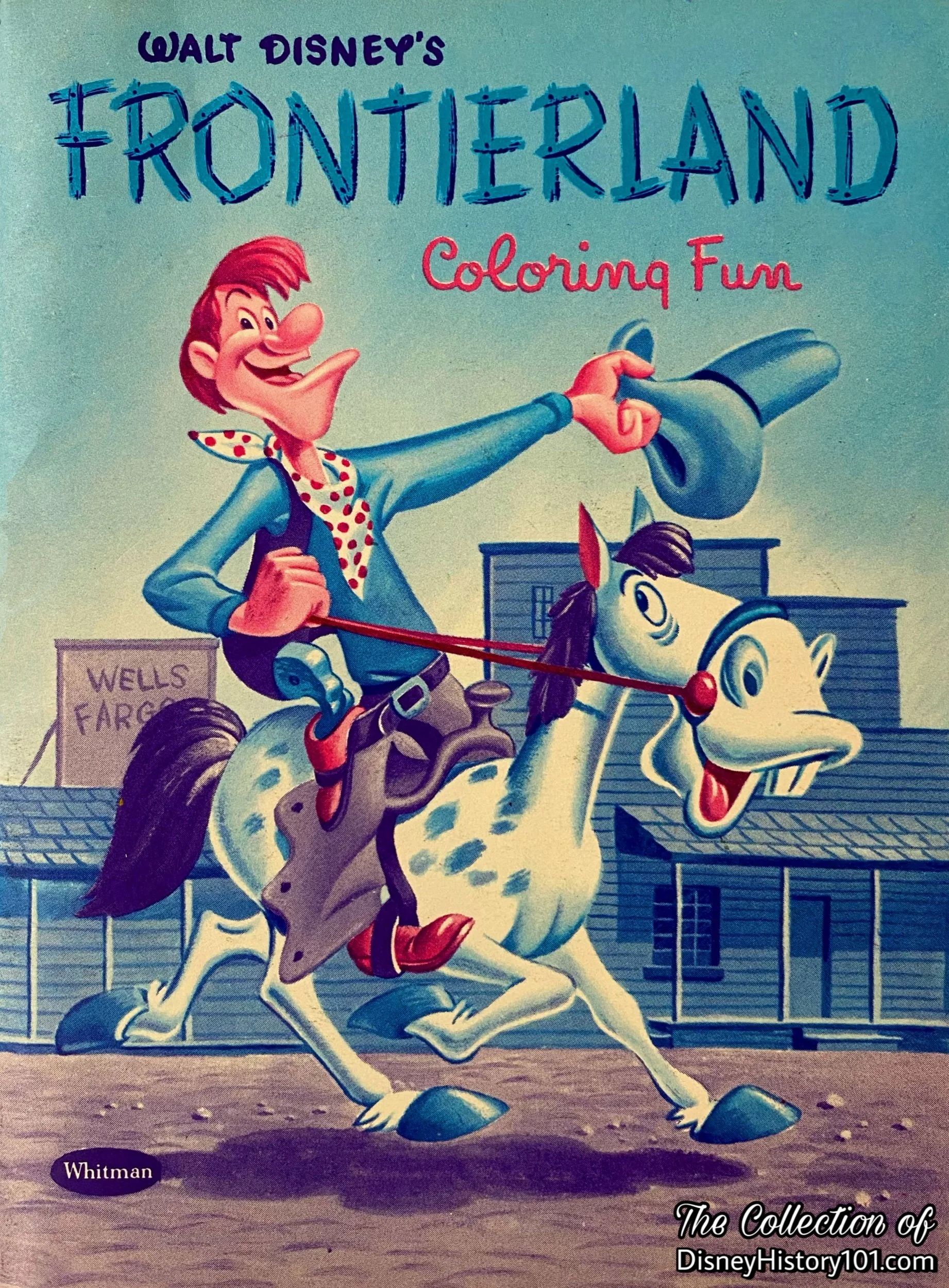
A Walt Disney’s Disneyland Fun Box Frontierland Coloring Fun Book by Whitman, c.1955
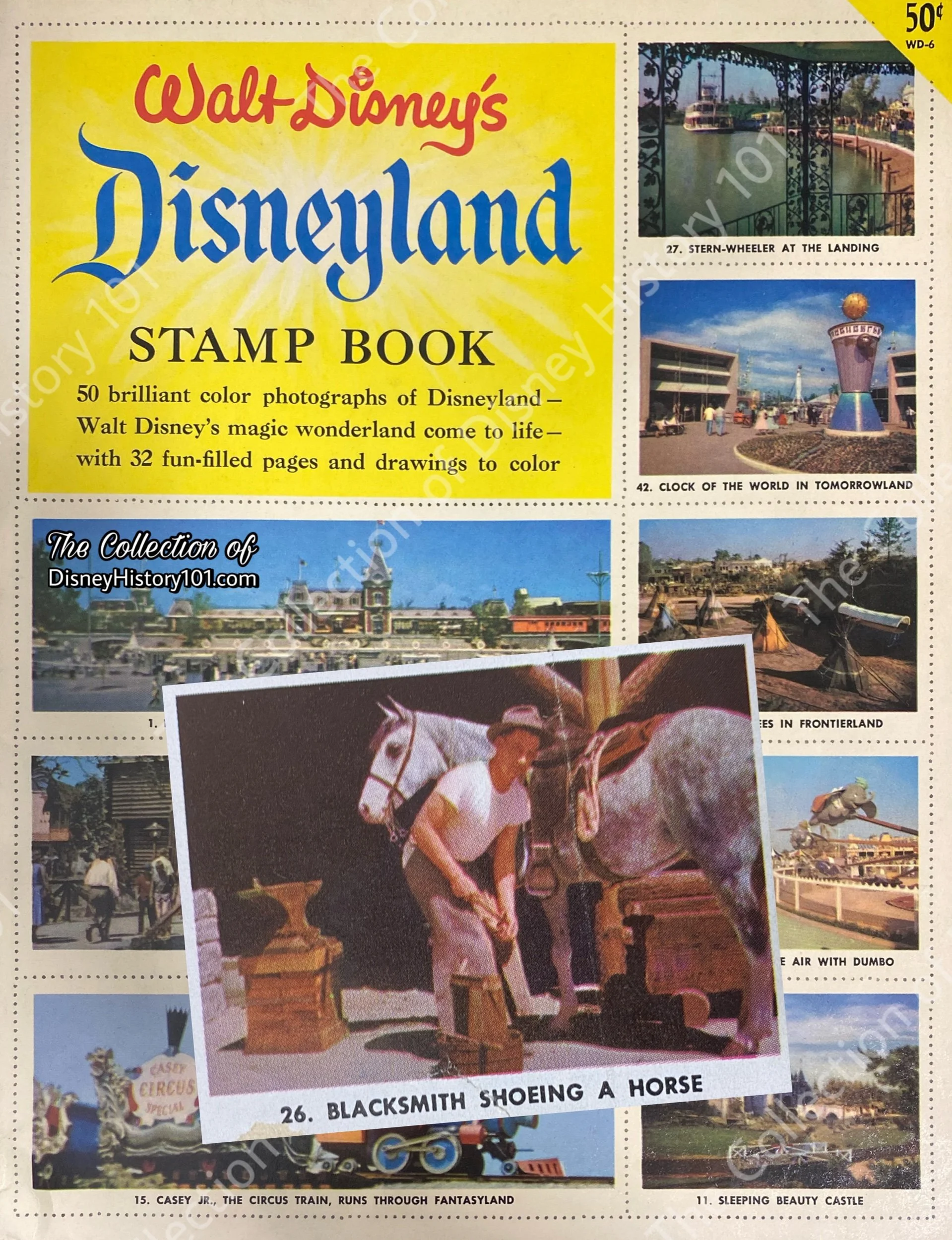
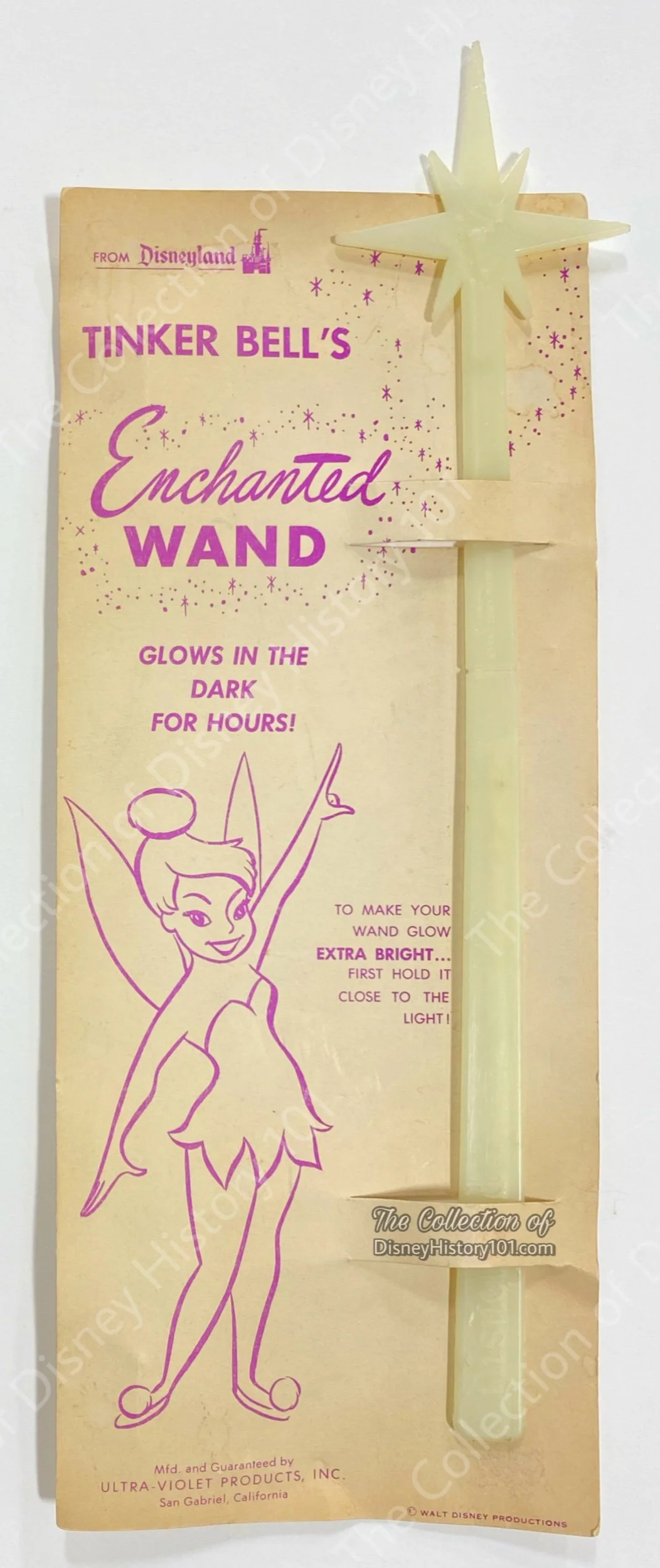
“Mineral Hall sponsored by Ultra-Violet Products”
Beginning in 1958, the shop was soon operated by Ultra-Violet Products, Inc. (then located at 5114 Walnut Grove Avenue San Gabriel, California) and managed by Bea Talbott. The popular Mineral Hall exhibit of Black Light created tangible memories for Guests through Merchandise and Show, showing the “everyday” uses of blacklight, while the shop continued to offer ore samples and phosphorous, fluorescent, and mineral items. Ultra Violet Products, Inc. yielded some revenue for Disneyland Inc. - $6,155 for the fiscal year ending September 29, 1957 and $6,000 for the fiscal year ending September 28, 1958 (with an estimated $2,845 in accounts receivable).
The synergistic relationship between the commercial lessee William Wilkerson and Disneyland was good. William Wilkerson’s Bark Lodge yielded some revenue for Disneyland Inc. - $542 for the fiscal year ending September 29, 1957 and $2,902 for the fiscal year ending September 28, 1958. Disneyland Inc. paid an unearned deposit or advance of $500 to Ultra-Violet Products, Inc.
ULTRA VIOLET CORP. was still a Participant Sponsor of Mineral Hall by 1960, with their telephone number listed (KE 3-3684) among the Disneyland Telephone Directory.
“Bonekraft”
Lessee Dick Swenson’s BoneKraft was operated by Bonekraft of California with a scope of sales that included carved bone novelties and jewelry. BoneKraft sold unique accessories of hand carved bone (perhaps the only shop of its kind in the United States. Of course, some of the most popular souvenirs for guests ages 6 through 12 were Davy Crockett Coonskin Caps, and Little Law Man Sheriff Badges.
The synergistic relationship between the commercial and institutional lessees and Disneyland, Inc. was beneficial. Frontierland lessees alone yielded revenue of $92,881 (commercial) and $136,145 (institutional), with $211,550 for the fiscal year ending September 29, 1957 and $229,026 for the fiscal year ending September 28, 1958.
By 1959, the Frontier Trading Post offered Characteristic merchandise of frontier era both Indian and Western, and camera film within an old log cabin trading post. By 1959, the Pendleton Woolen Mills offered all Pendleton woolen goods, and some leather boots of Western character within the interior motif of a typical general store of the early days of the west. The store was primarily a sales promotion media, and when a sale was made, the customer chose his favorite Pendleton dealer in his home town, who then shared in the profit of the sale.
The Giftware Stand operated by Disneyland, Inc. was located in the Davey Crockett Arcade and offered Disneyland giftwares, camera film, and information. The shop was listed in the first Disneyland Dictionary as still operational by October of 1959.
The Frontierland Camera Shop (between the Golden Horseshoe and the Stagedoor Cafe) offered “Kodak film, photographic equipment and information,” according to the “Disneyland Dictionary”, compiled by WED Enterprises, Inc. and WED Public Relations Department, c. 1968. The merchandise location offered essential cameras (and disposable cameras), tripods, batteries, and even souvenir slides, and would often open late and close early as necessary. Soon, “‘GAF Frontierland Camera Shop’ kept all our portrait makers supplied with film and he most up-to-date equipment”, according to Vacationland (Summer of 1975).
In November of 1978, the Frontier Traders Shop reopened from a rehabilitation with increased floor space and enlarged stockroom replacing the old closet. In addition, an access passageway was opened behind Casa de Fritos and the Shooting Gallery to allow the Warehouse drivers to drop off their deliveries backstage.
By 1996, Frontierland store operations included Bonanza Outfitters, Disney's The Spirit of Pocahontas, Esmeralda's Cottage, Frontierland Souvenirs, the Westward Ho Trading Company, and Clopin’s outdoor vending location.
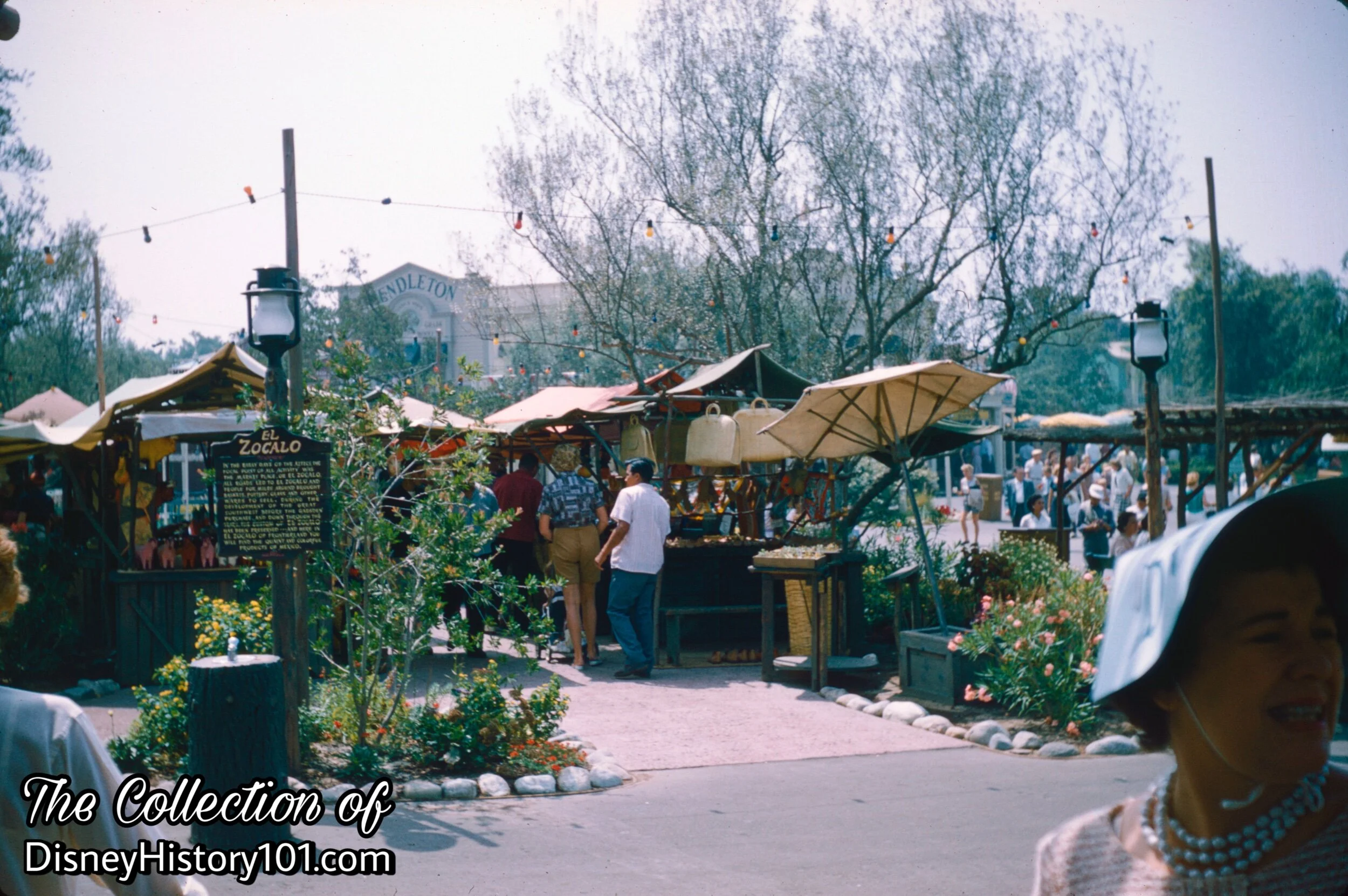
El Zocalo in Frontierland.
El Zocalo in Frontierland was once “a typical Mexican market place as in the early days of the Aztecs when the focal point of all activity was the market place or El Zocalo… all roads led to El Zocalo, and people from miles around would bring baskets, pottery, glass and other wares to sell. During the days of the great Southwest development before the Godsen Purchase, and down through the years the custom has been preserved.” In Frontierland, one would find quaint and colorful products of Mexico.
Mexican Shops offered festive “Happy Hats” in addition to a selection “fabulous sterling silver jewelry… unique Mexican curios,” and even Mexican jumping beans, according to an advertisement published in “The Disneyland News” (October 1956).
The 1957 TWA brochure “Let’s Talk About… My Visit to Disneyland, Anaheim, California: A Note from Mary Gordon TWA Travel Advisor” mentioned: “We learned that to fully explore Disneyland takes two days, so early next morning we were at the gates of the park again. The second day we spent more time shopping in the 50 inviting shops, and the youngsters bought inexpensive souvenirs to take home to friends.”
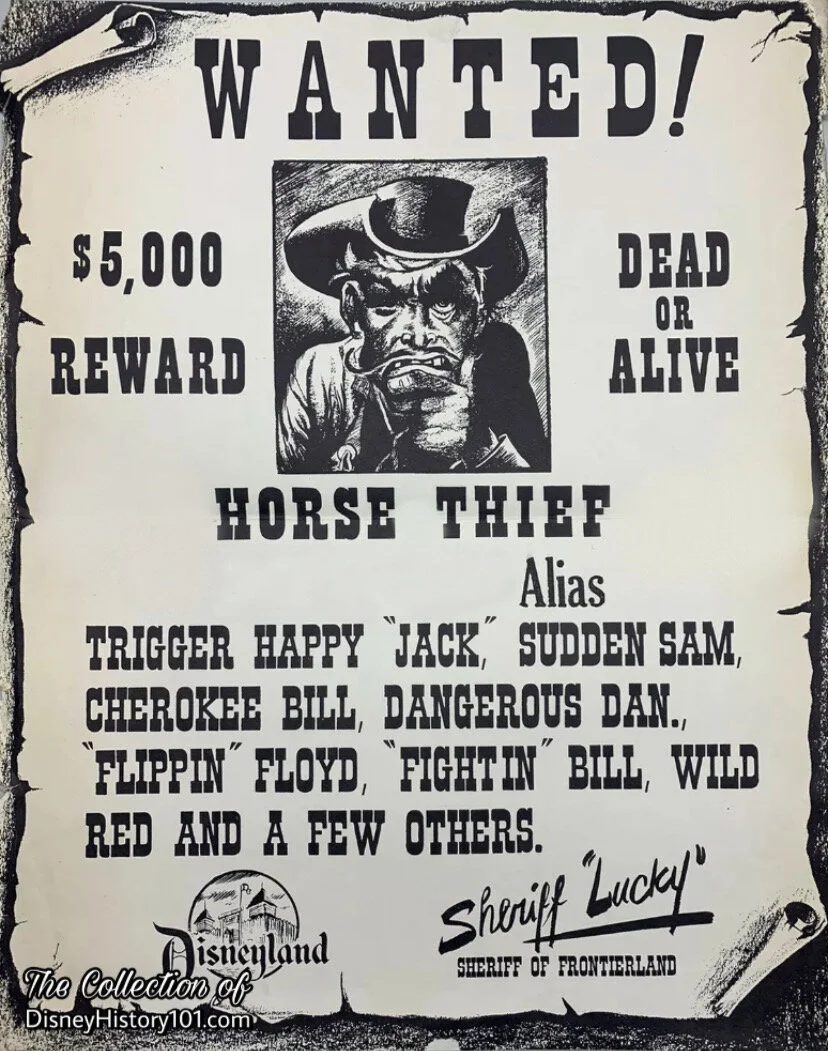
These posters were actually offered through the Old Time Print Shop on Main Street.
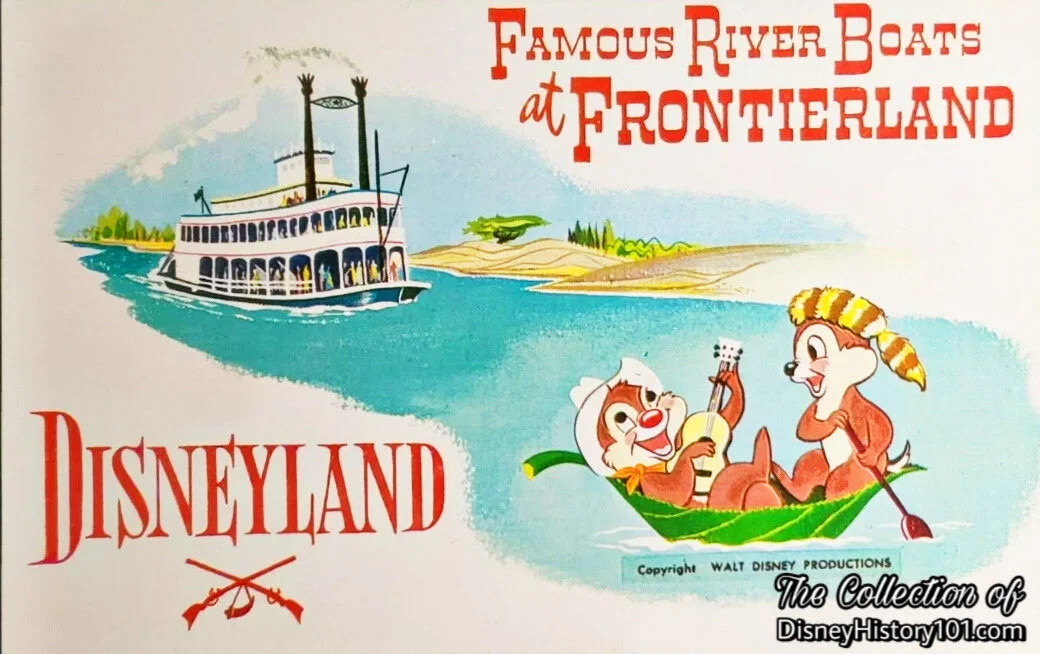
In the early years (as 1958) Guests who wanted to send their friends a message on a Disneyland Souvenir Postcard, need look no further than Frontierland’s two Mailboxes (located near the Stagecoach Depot and the Frontierland Railroad Station). The original boxes were manufactured by the Carlisle Foundry of Carlisle, Pennsylvania. In later years, the contents of the Collection Box were served by Disneyland Personnel and taken to the Anaheim City Post Office.
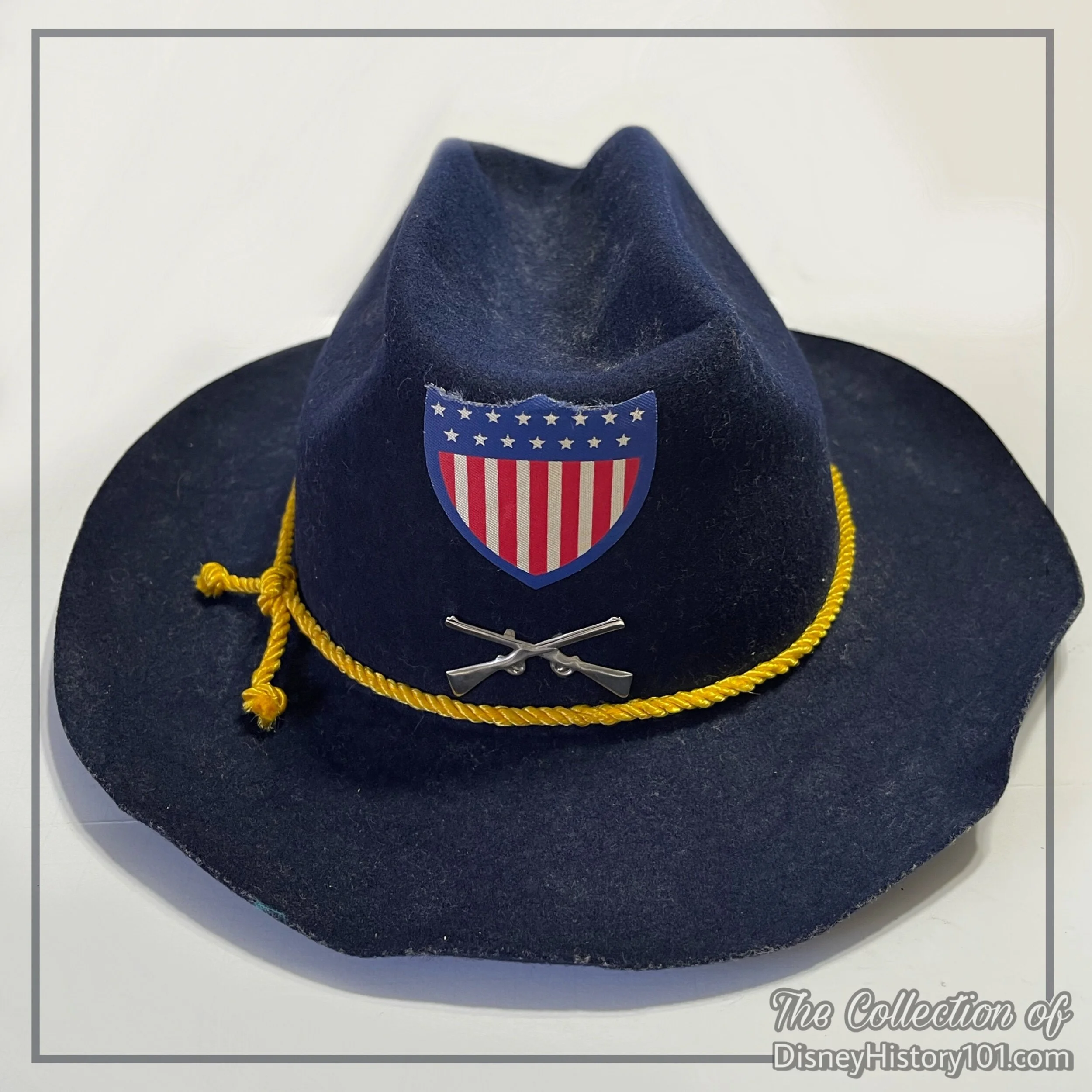
Benay-Albee Western Hat
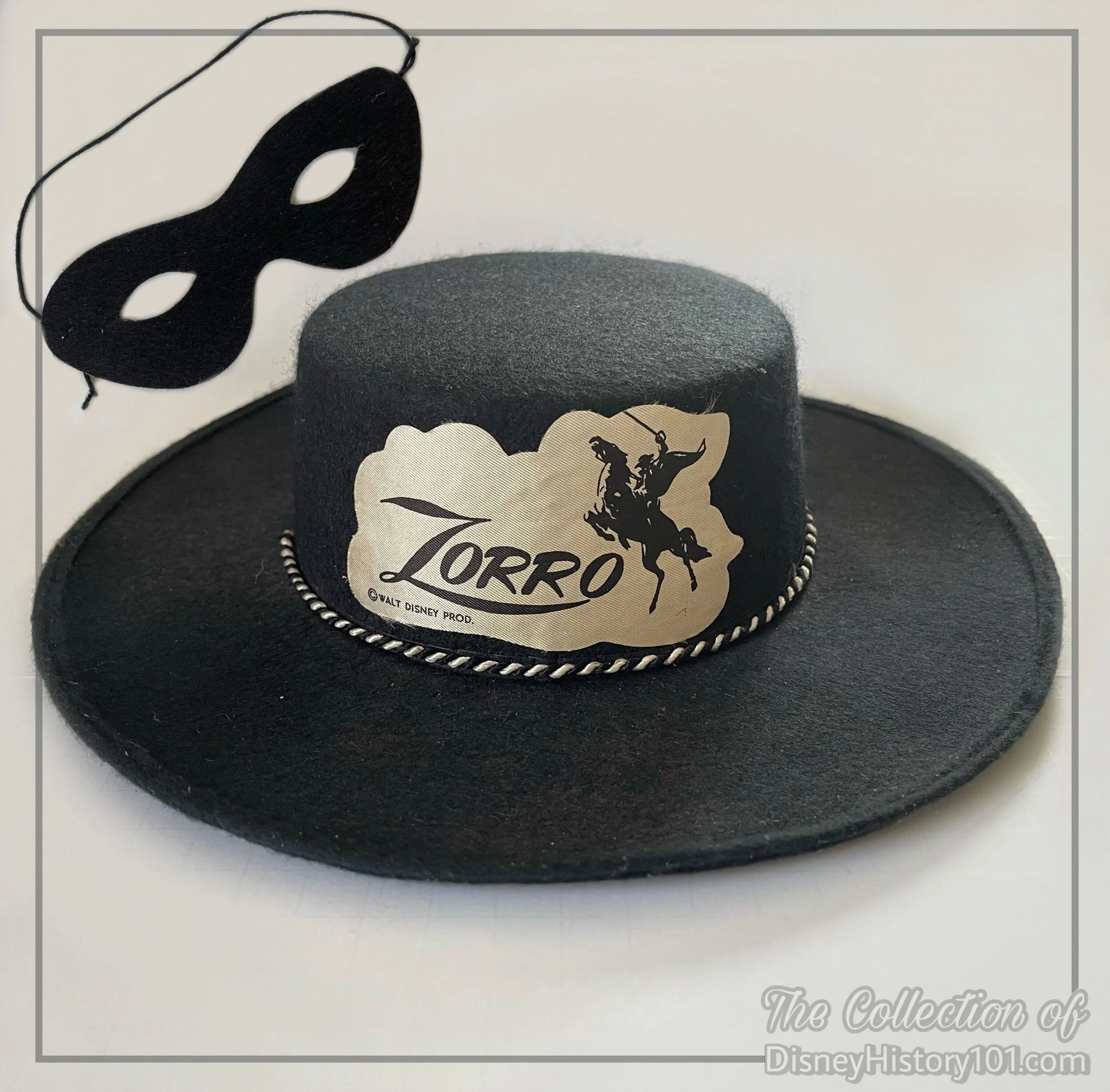
Benay-Albee Zorro Hat, (1958)
Disneyland provided an excellent outlet for licensed merchandising, as is evident through the Benay-Albee Zorro Hat, which was also available through retailers outside the park.
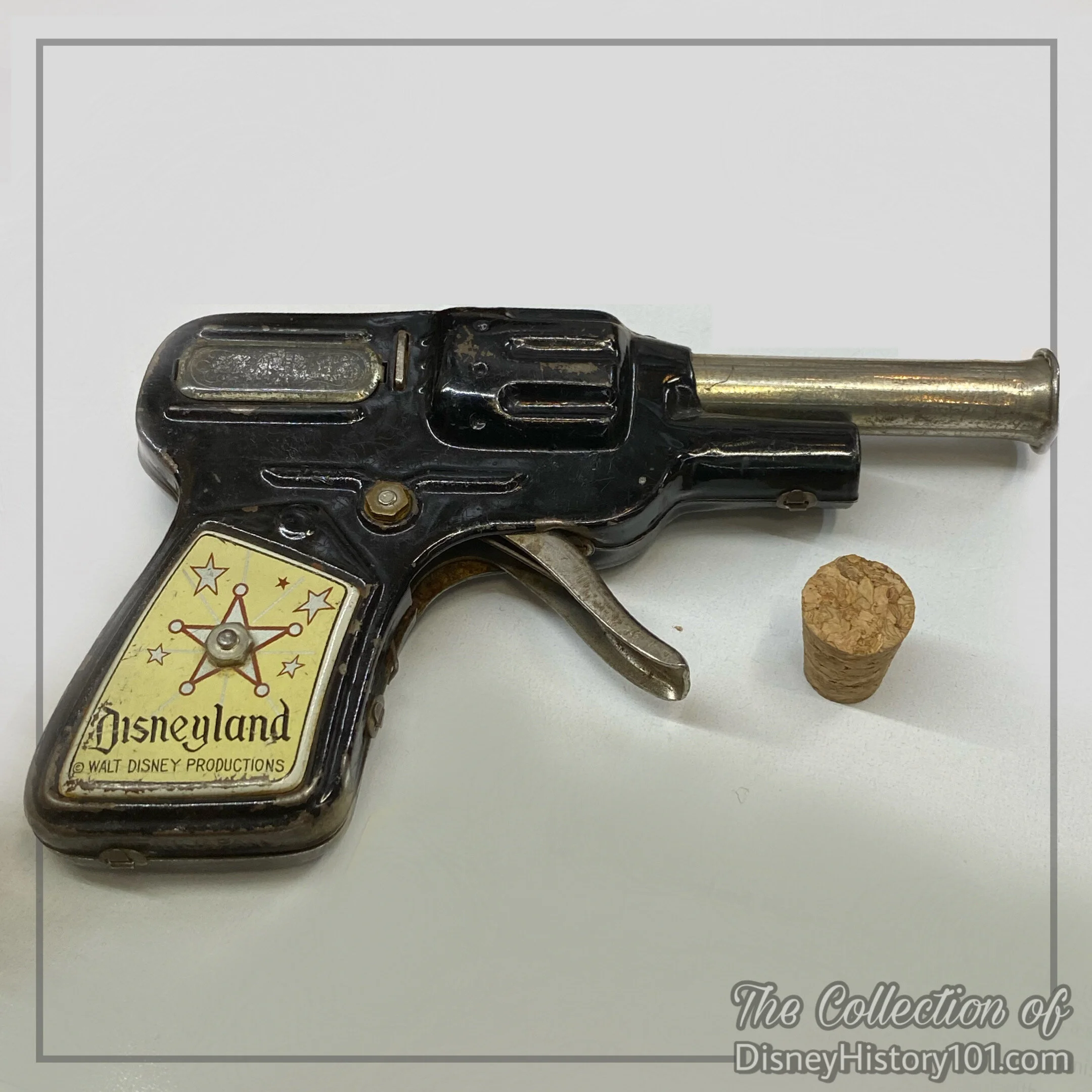
Disneyland Poppin' Pistol Toy Cork Gun, (c. 1950's)
Disneyland has always provided a source of new products for merchandise licensing (as this Poppin’ Pistol Toy Cork Gun inspired by a popular Frontierland show).
Back in 1959, Disneyland was home to The Frontierland Gun Shop. Artifacts on display included firearms, dating back from the Civil war up through World War II. There were also swords and Sabres of early American Frontier days, the latter belonging to the Spanish Lancers of California.
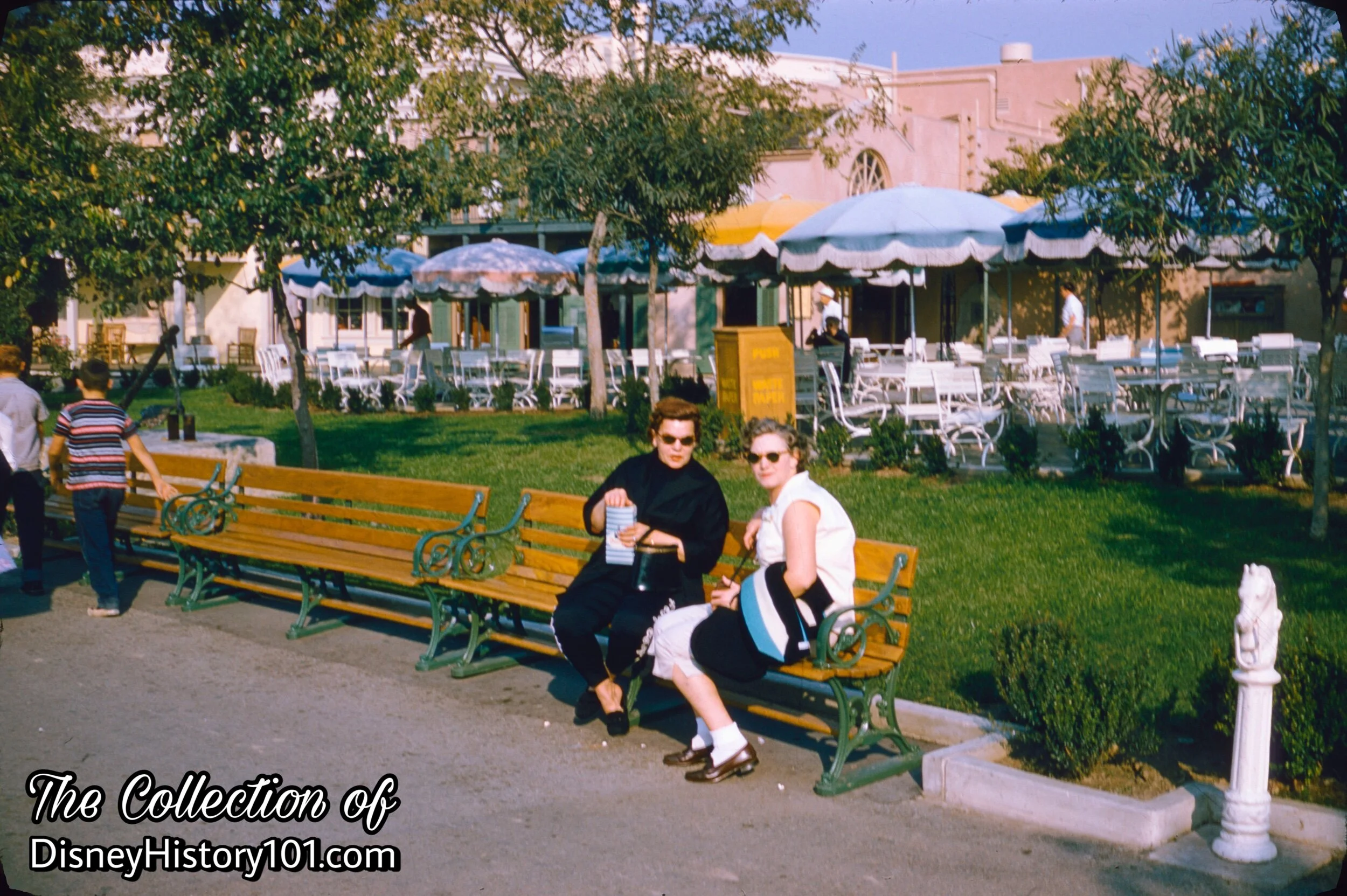
“A Visit To Disneyland” (prepared c. June of 1955, by the Disneyland, Inc. Public Relations Department) divulged how Frontierland has many restaurants and snack bars, including “the Chicken Plantation, a pancake house, a taco house, and the ‘Golden Horseshoe.’” By July 17th, 1955, Frontierland was home to “Aunt Jemima’s Pancake House, the Pepsi Cola Golden Horseshoe Bar, Swift’s Chicken Plantation, a Hamburger Shop, and a Malt Shop,” according to “Welcome to Disneyland” maps published 1955. Both the quick-service “Malt Shop” and the “Hamburger Shop” (along with their two “Food and Beverage Stands”; as referred to in one c. 1955 Disneyland, Inc. Public Relations Department Lessee list and report) were managed by UPT Concessions, Inc. It was estimated that the Malt Shop had the capacity to serve 300 guests per hour, while the “Food Stand” had the capacity to serve 720 guests per hour. With that, the Malt Shop and Hamburger Shop would become two of Disneyland’s eating facilities which was predicted to contribute to accommodating “15,000 persons daily, hitting a peak of 60,000 o holidays and week-ends…” and one of “twenty restaurants and snack bars, capable of saving 8,000 hourly,” at least according to “Building A Dream” (prepared by the Disneyland, Inc. Public Relations Department).
The “Disneyland Dictionary” (printed October 1958; for training purposes) and “Welcome to Disneyland” maps (published 1958) mention Aunt Jemima’s Kitchen, Chicken Plantation, Don and Verne Defore‘s Silver Banjo Barbecue (a cafeteria offering barbecued sandwiches, ribs and chicken), Casa de Fritos, Pepsi Cola’s Golden Horseshoe, a Refreshment Center, and the Oak Tavern and Malt Shop in Frontierland (the latter two, offering options like barbeque beef and assorted sandwiches; each operated by UPT Concessions). In addition the Cider Bar (a Nesbitt Orange Drink Center operated by UPT Concessions) was located in Fort Wilderness on Tom Sawyer Island. By 1959, there were numerous Ice Cream Carts & Popcorn Wagons located in Frontierland during 'peak seasons. These were operated by UPT Concessions and offered ice cream, popcorn, and peanuts. A few years later (by 1968), a Ice Cream Parlor had moved into Frontierland, according to the “Disneyland Dictionary”, compiled by WED Enterprises, Inc. and WED Public Relations Department, c. 1968.
Ray Schwartz recalled an unbelievable scene that took place shortly before opening day. He was making his rounds, he stopped at Oaks Tavern, and beheld a wondrous sight. “The painter crouched in a corner of Oaks Tavern, a champagne bottle clutched in his hand. The guy said, ‘Set ‘em up!’ and there was a wash tub full of ice and champagne bottles!”
Frontierland had two Public Restrooms - both near the Santa Fe & Disneyland Railroad Frontierland Station platform, and Public Telephones just through the Frontierland Stockade.
By 1981, Frontierland audiences had a number of dining options. The Delta Banjo specialized in the Frontier Freeze. The Wheelhouse fast food location offered soft serve cones & sundaes, chips (like potato, Doritos, Fritos, and Cheetos), and both Pepsi-Cola and Coca-Cola products simultaneously. The Stagedoor Cafe fast food location offered burgers, hot dogs, corn dogs, and chili and beans.
By 1984, Telecommunication Devices for the Deaf were located by the Frontierland Stockade.
By 1986, the Stage Door Cafe occasionally hosted special events, like Private Parties (e.g. GM and Hughes Employees, January of 1986).
By 1996, buffeteria food operations included Casa Mexicana, Festival of Foods, River Belle Terrace, and The Golden Horseshoe. Quick Service food locations included Stage Door Café and the Tom Sawyer Island Canteen.
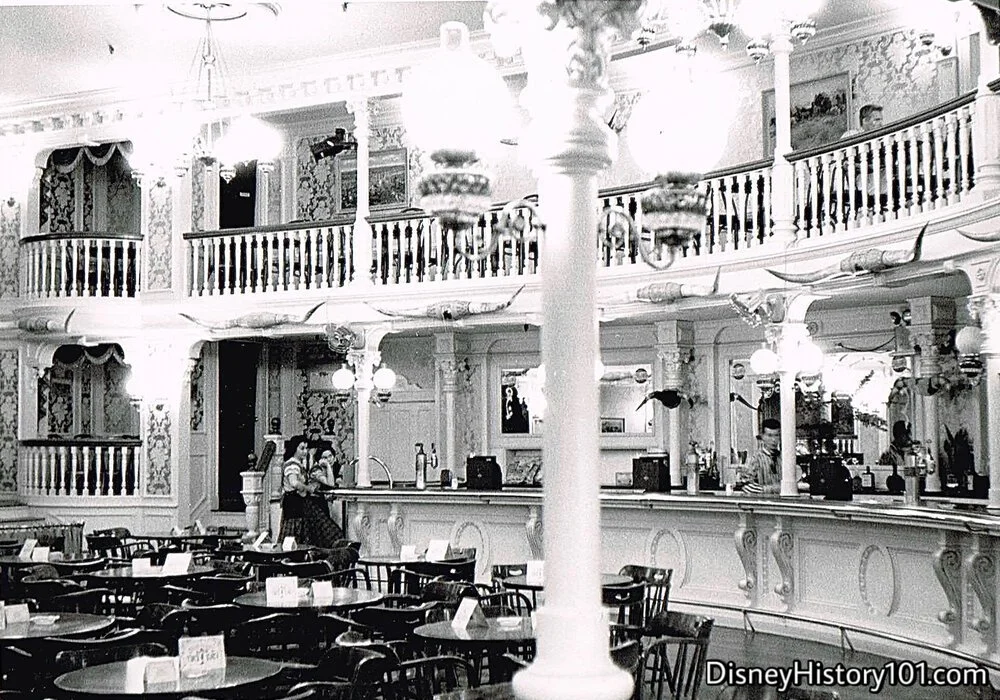
Slue Foot Sue's Golden Horseshoe
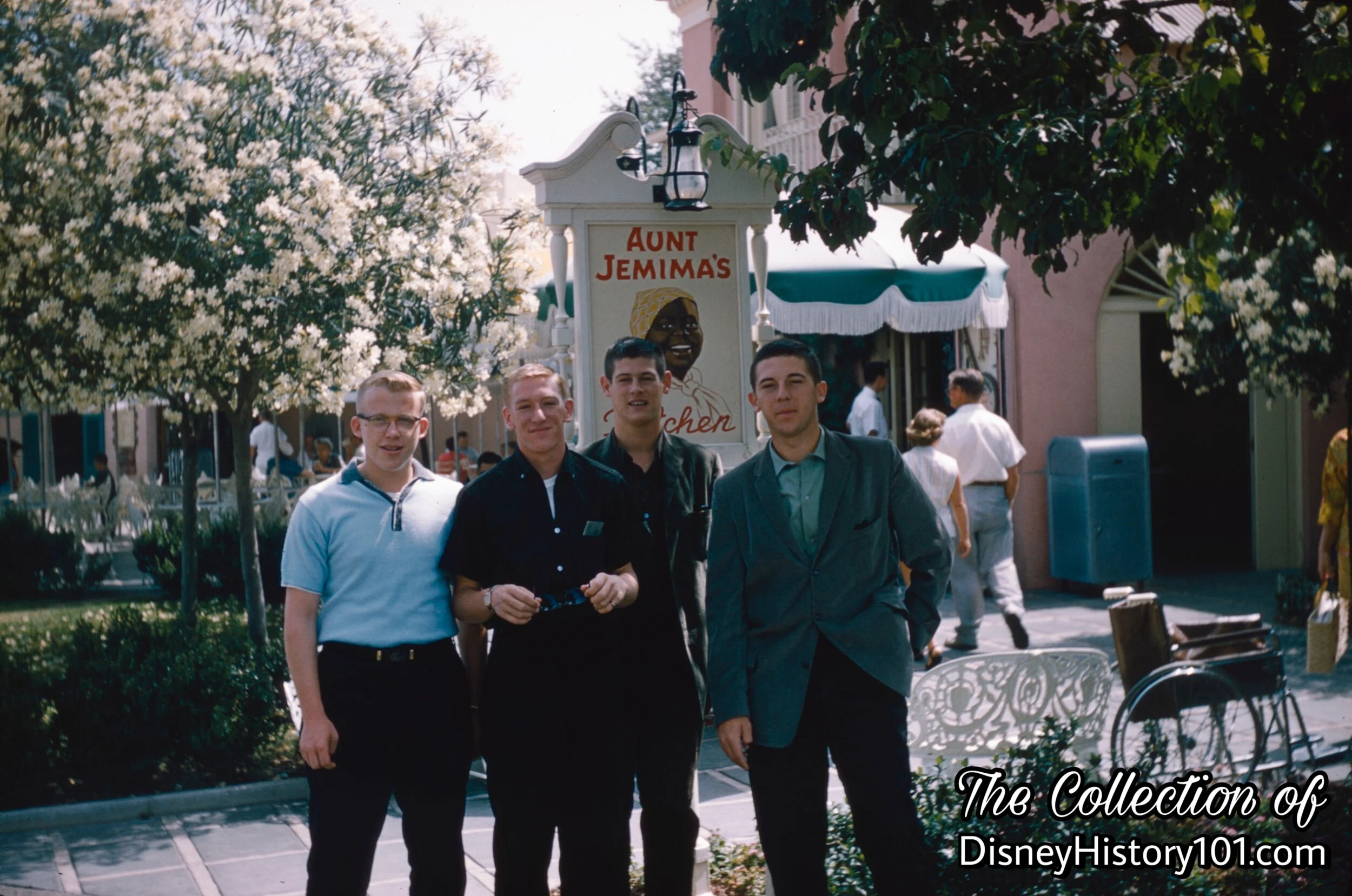
If you would like to read more about Frontierland’s Walt-era dining options, I highly recommend adding Marcy Smothers’ “Eat Like Walt - The Wonderful World of Disney Food” to your personal Disney Home Library! Therein, Marcy has extensively researched and finely crafted a small section of a chapter dedicated to “Walt Disney’s Disneyland - Adventureland” If you would like to bring the magic of Disneyland restaurants and concessions to your dining room table, “please step this way” toward www.eatlikewalt.com where Marcy has shared a few recipes for memorable Disneyland menu options, so you too can “Eat Like Walt.”
“Schwinn Takes A Trip To Disneyland” Catalogue Excerpt, (1966)
These Schwinn Paramount bikes (used professionally by competitors of the U.S. Olympic Trials) now raced through the roads of Frontierland!
“Schwinn Takes A Trip To Disneyland” Catalogue Excerpt, (1966)
Four models of Scwinn Lightweight Sports Bicycles were photographed for this catalogue at Disneyland during the Tencennial celebration of 1965.
“Schwinn Takes A Trip To Disneyland” Catalogue Excerpt, (1966)
The Schwinn Tourist, the Traveller, and the Collegiate make their way through Disneyland during the Park’s Tencennial year!
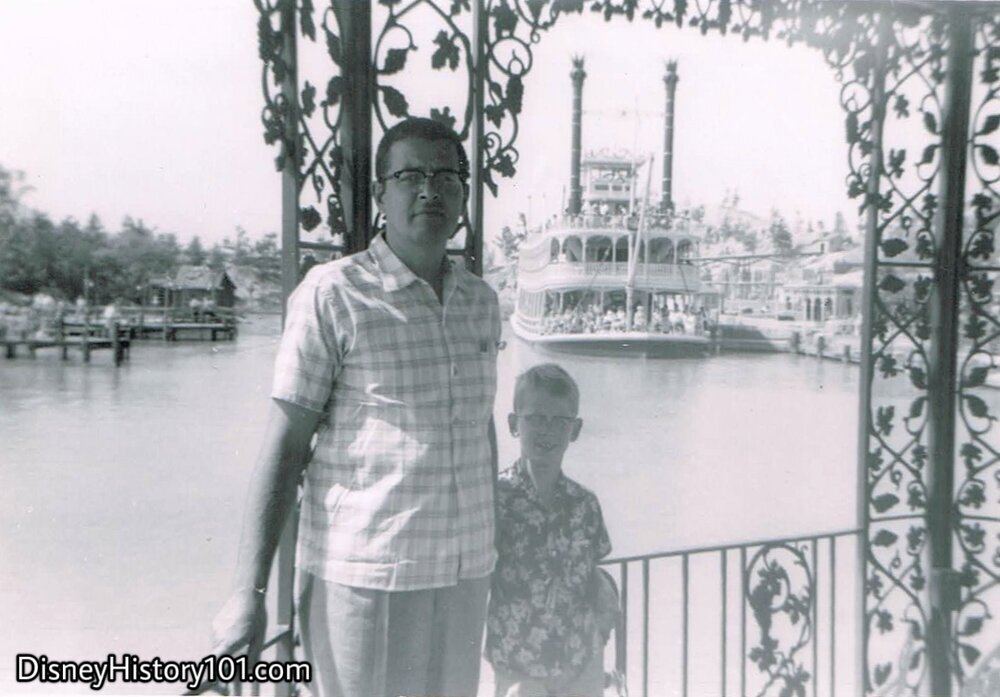
Dixieland Bandstand, (Summer, 1956)
When the Strawhatters were providing two-beat rhythms by the riverside, the Dixieland Bandstand was a great place to enjoy the view from “the Gazebo”. Joe and Teddy stand on the Dixieland Bandstand, with the Mark Twain behind them!
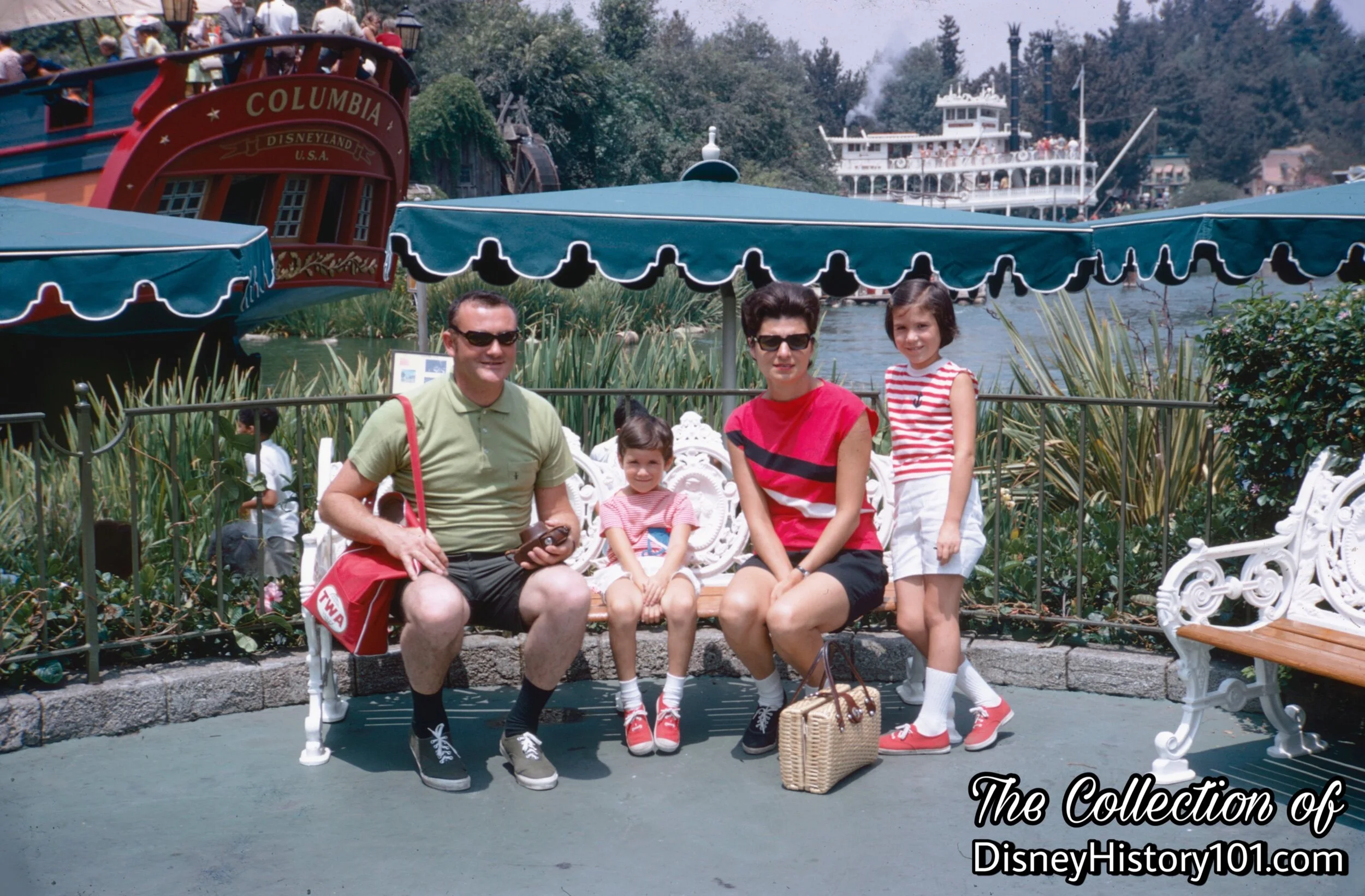
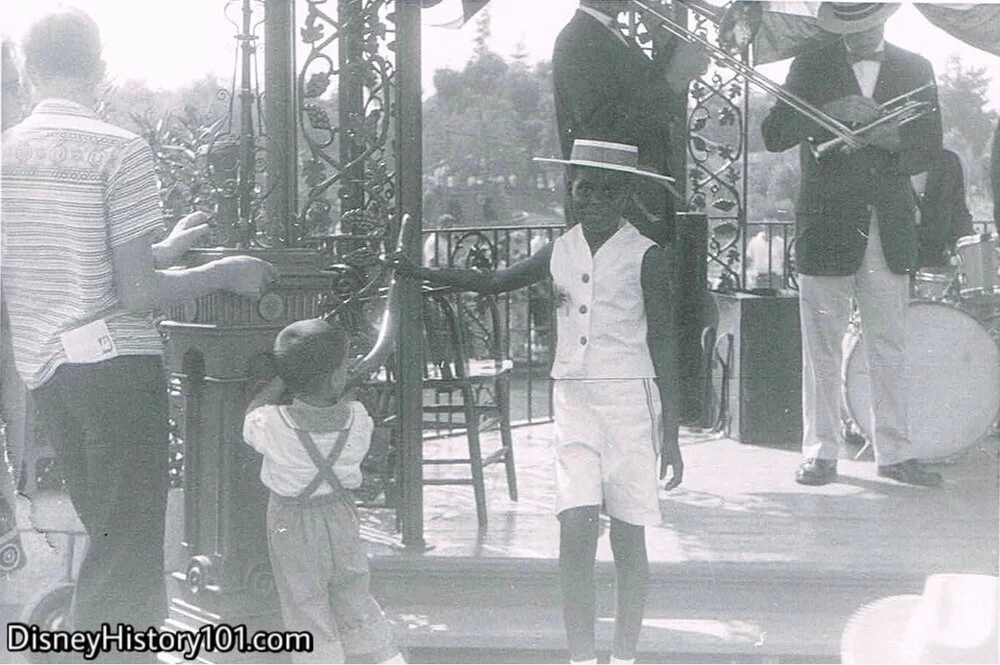
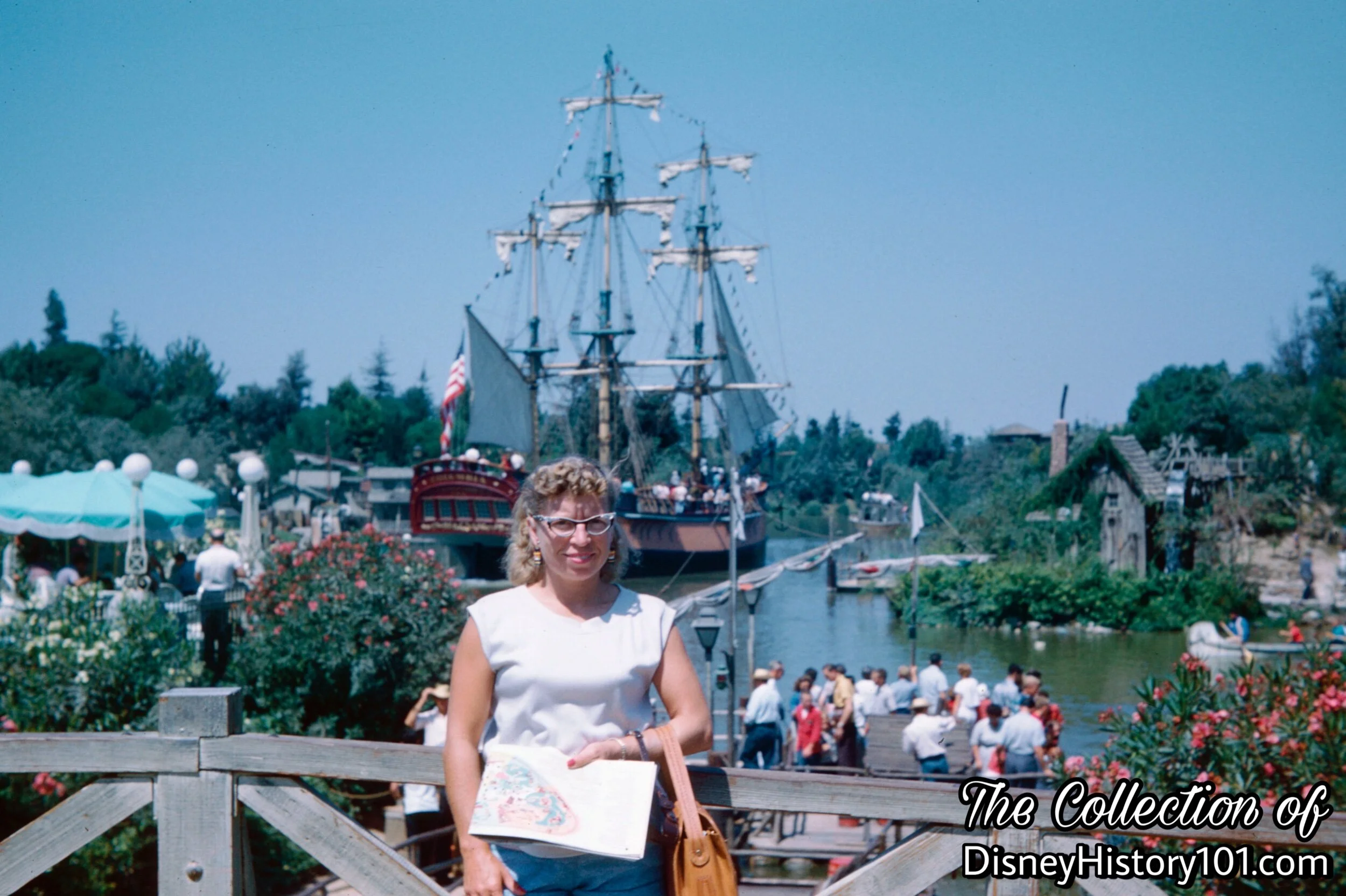
This bridge was carried over the water channel that connected the Rivers of America with the Rivers of the World. This enabled the maintenance of Jungle River Cruise boats in Fowler’s Harbor.
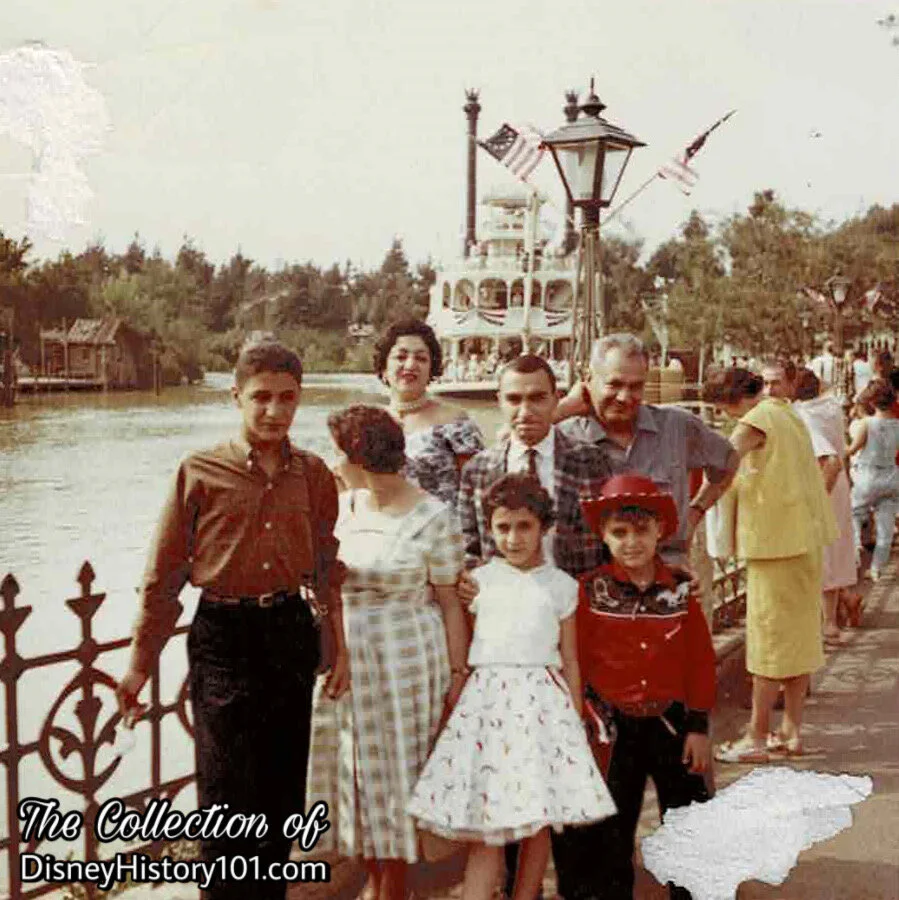
(1959)
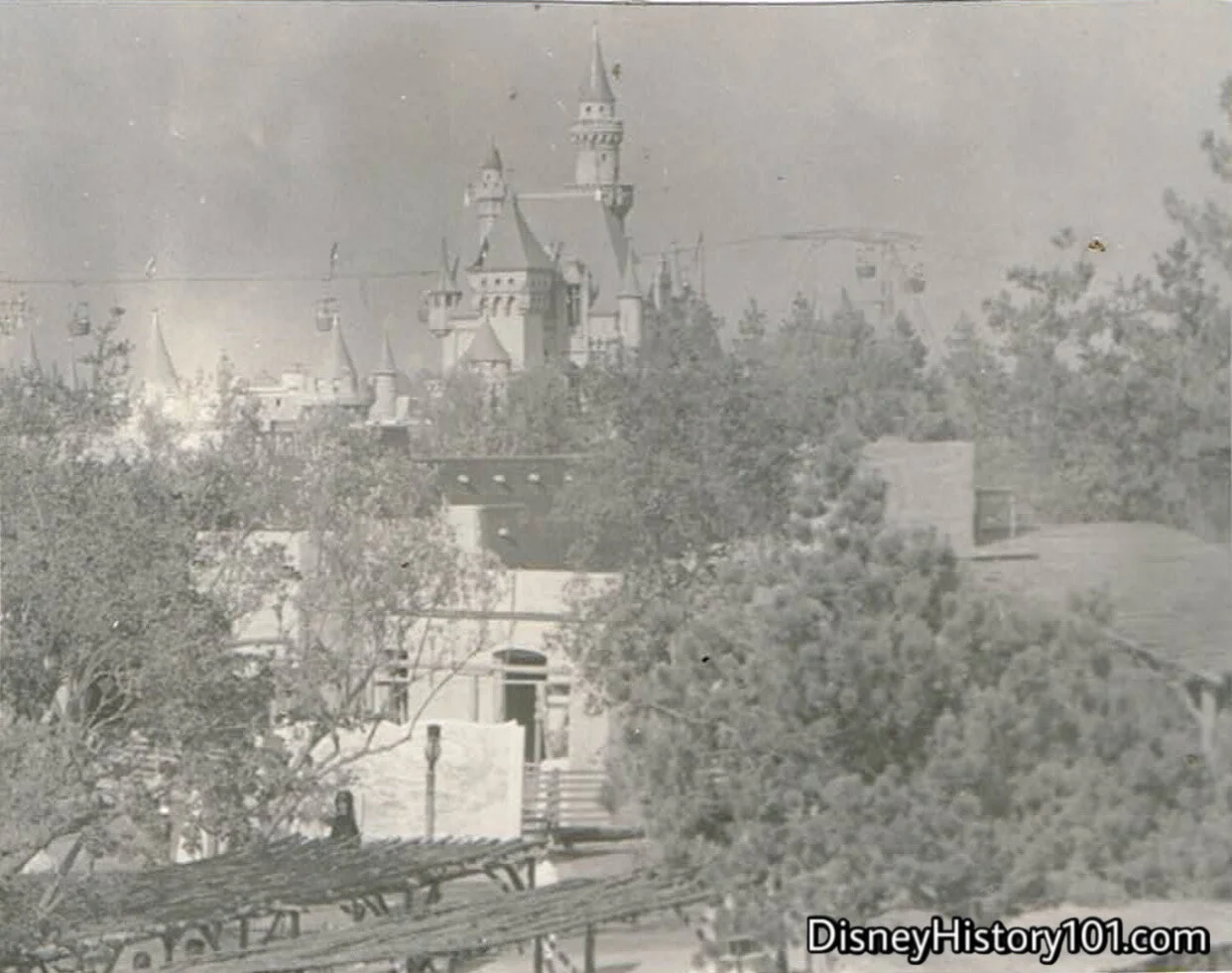
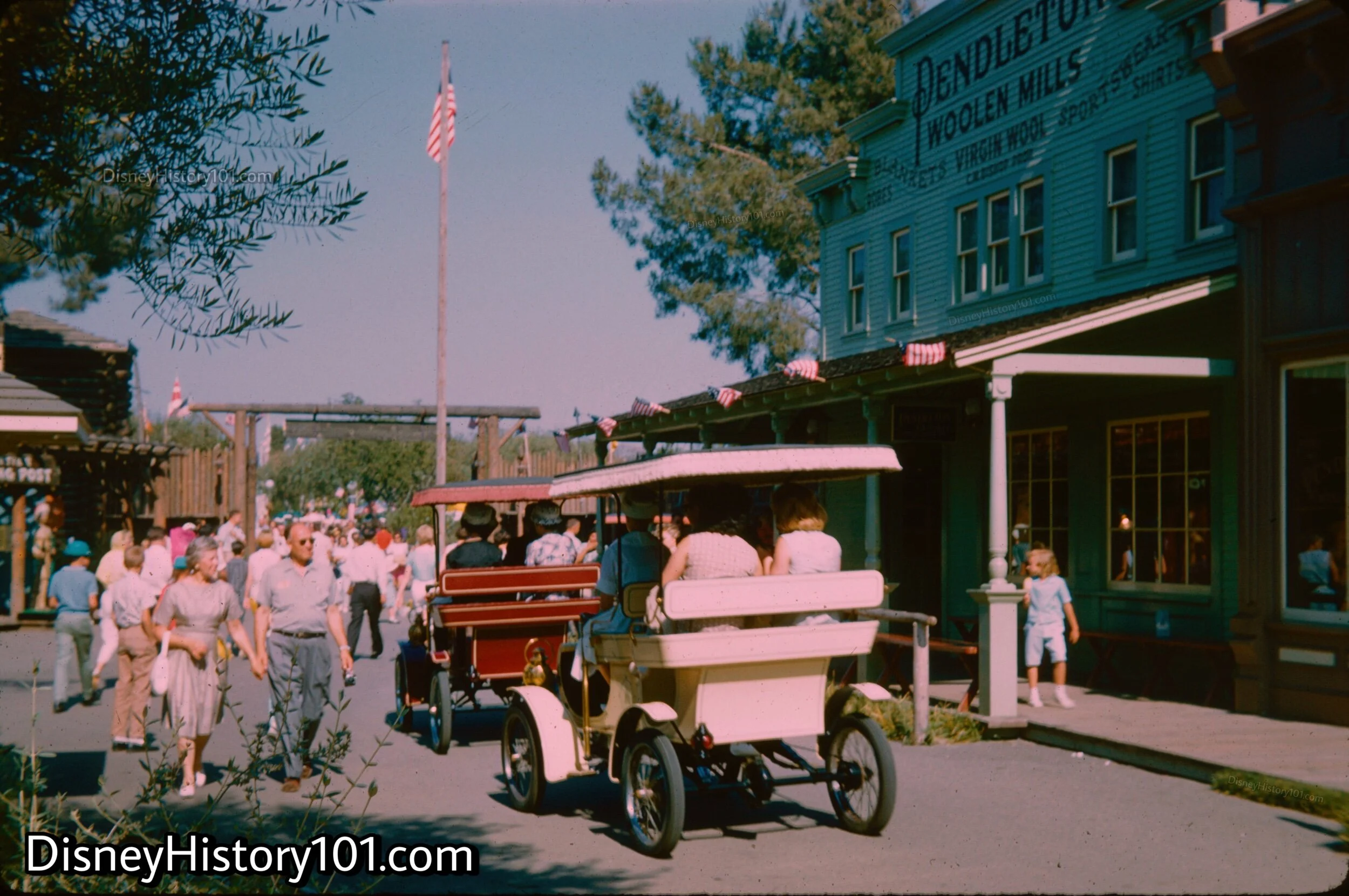
c. 1961
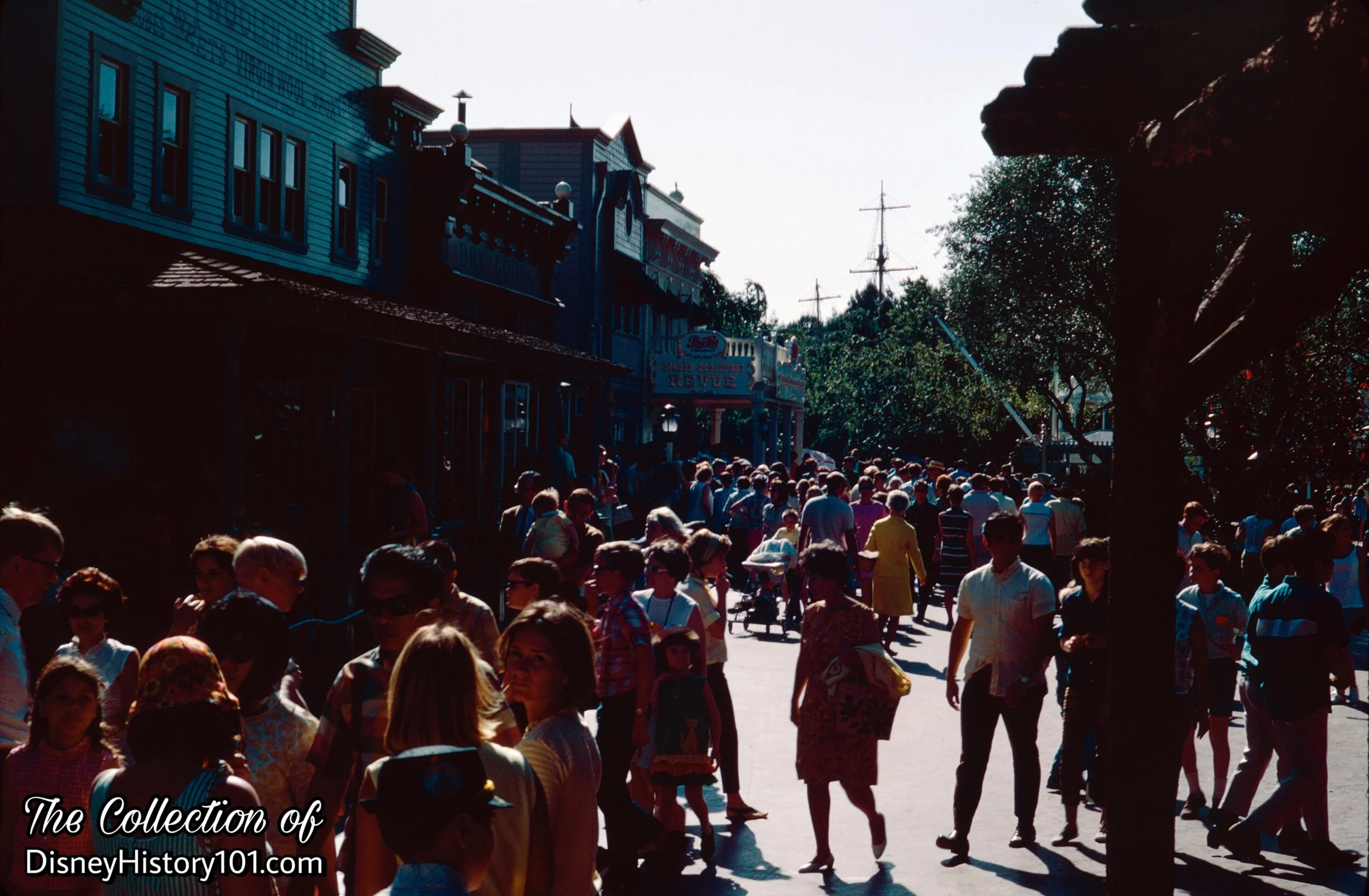
(April, 1968)
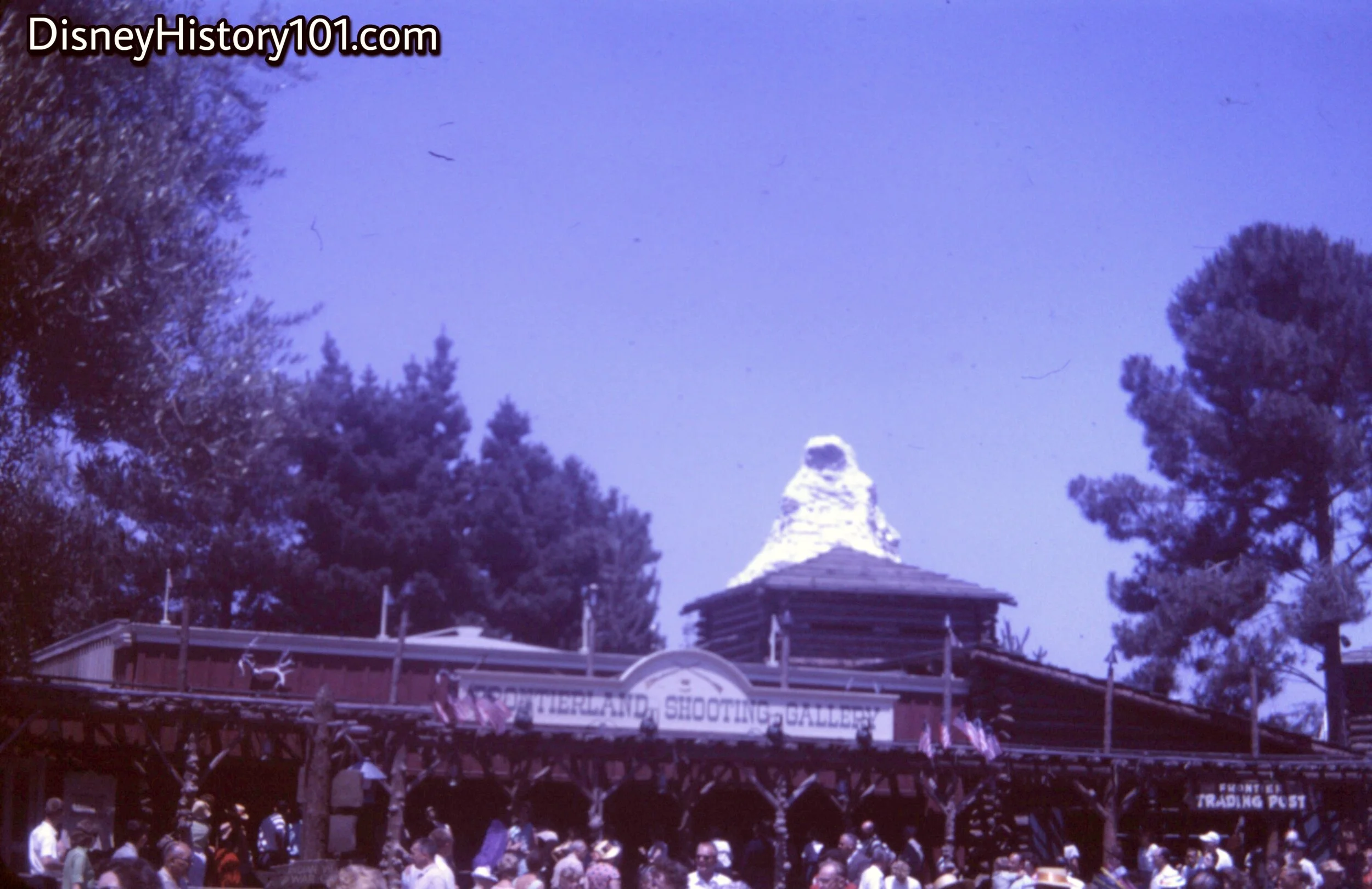
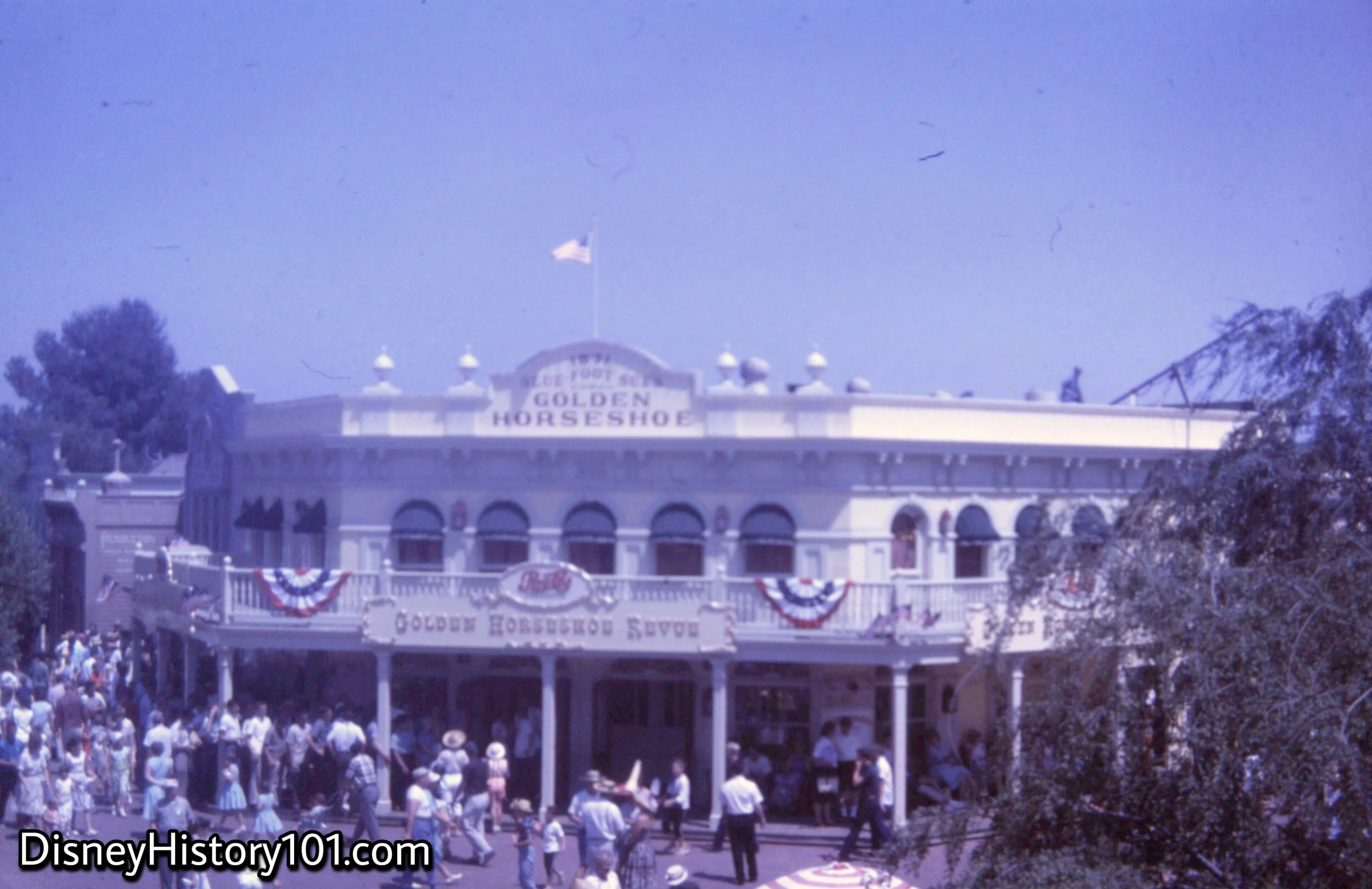
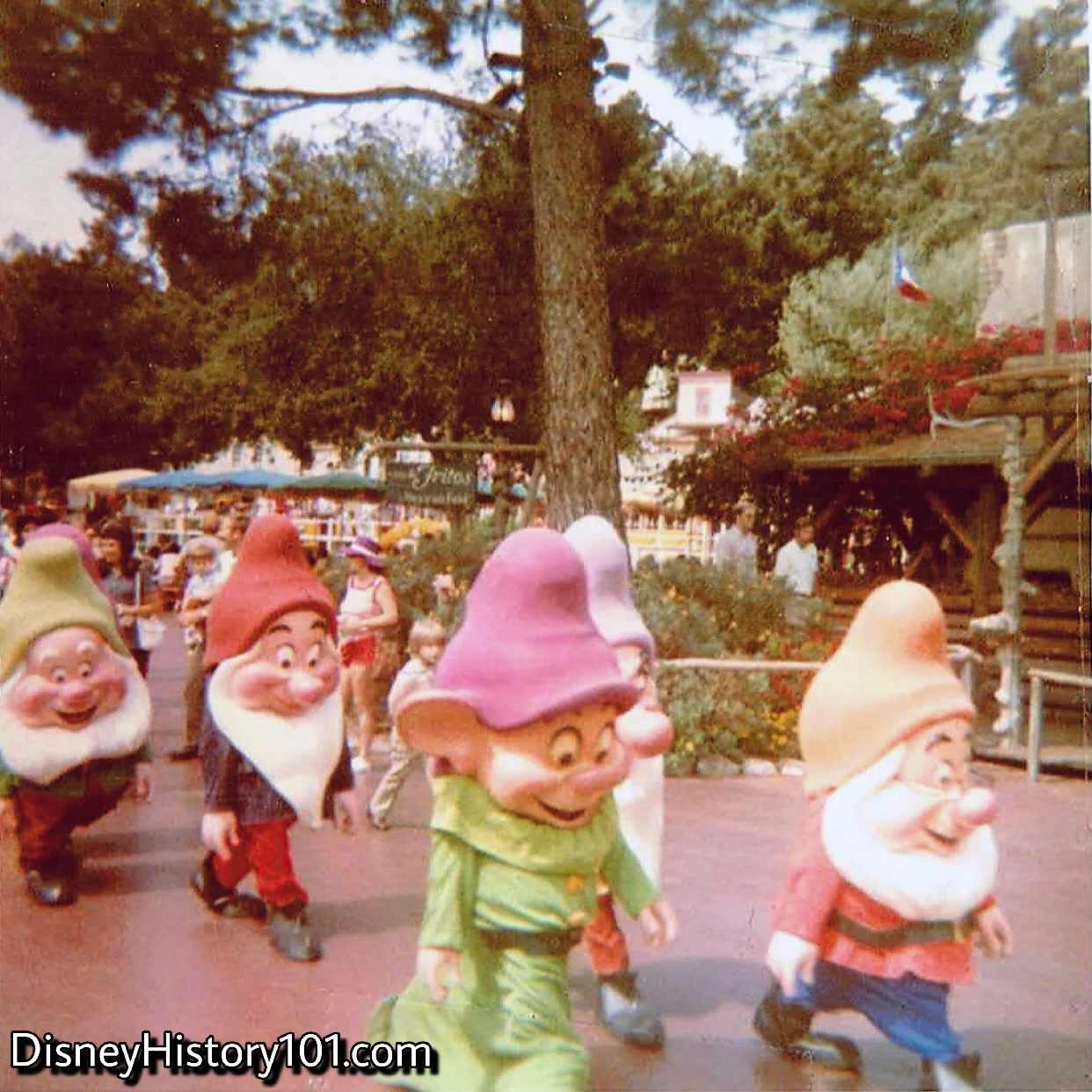
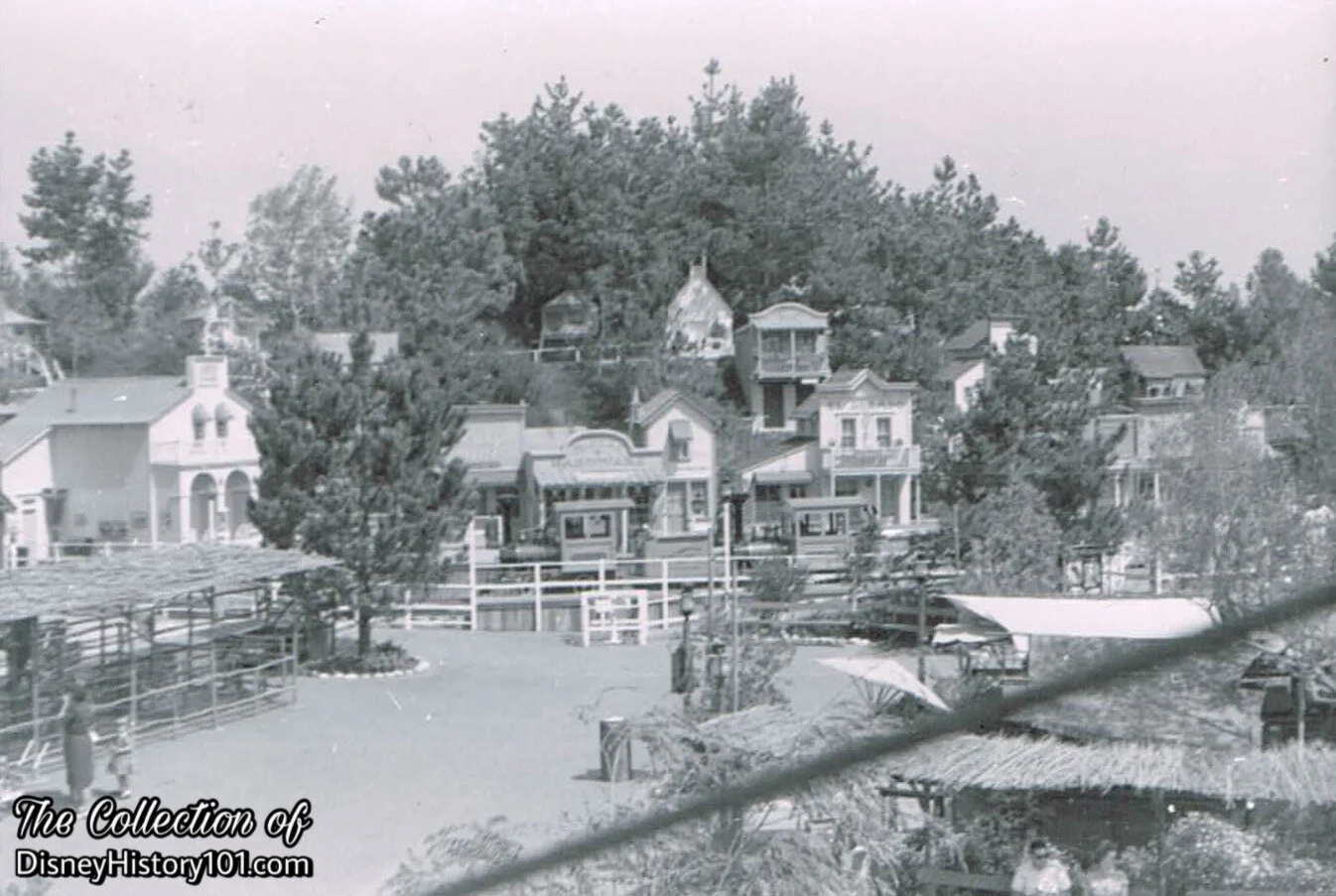
Frontierland’s Mule Train Loading area (left), Mexican Village (right), and mini town of Rainbow Ridge (center) with its Mine Train Thru Nature’s Wonderland offered guests a rainbow of frontier America experiences!
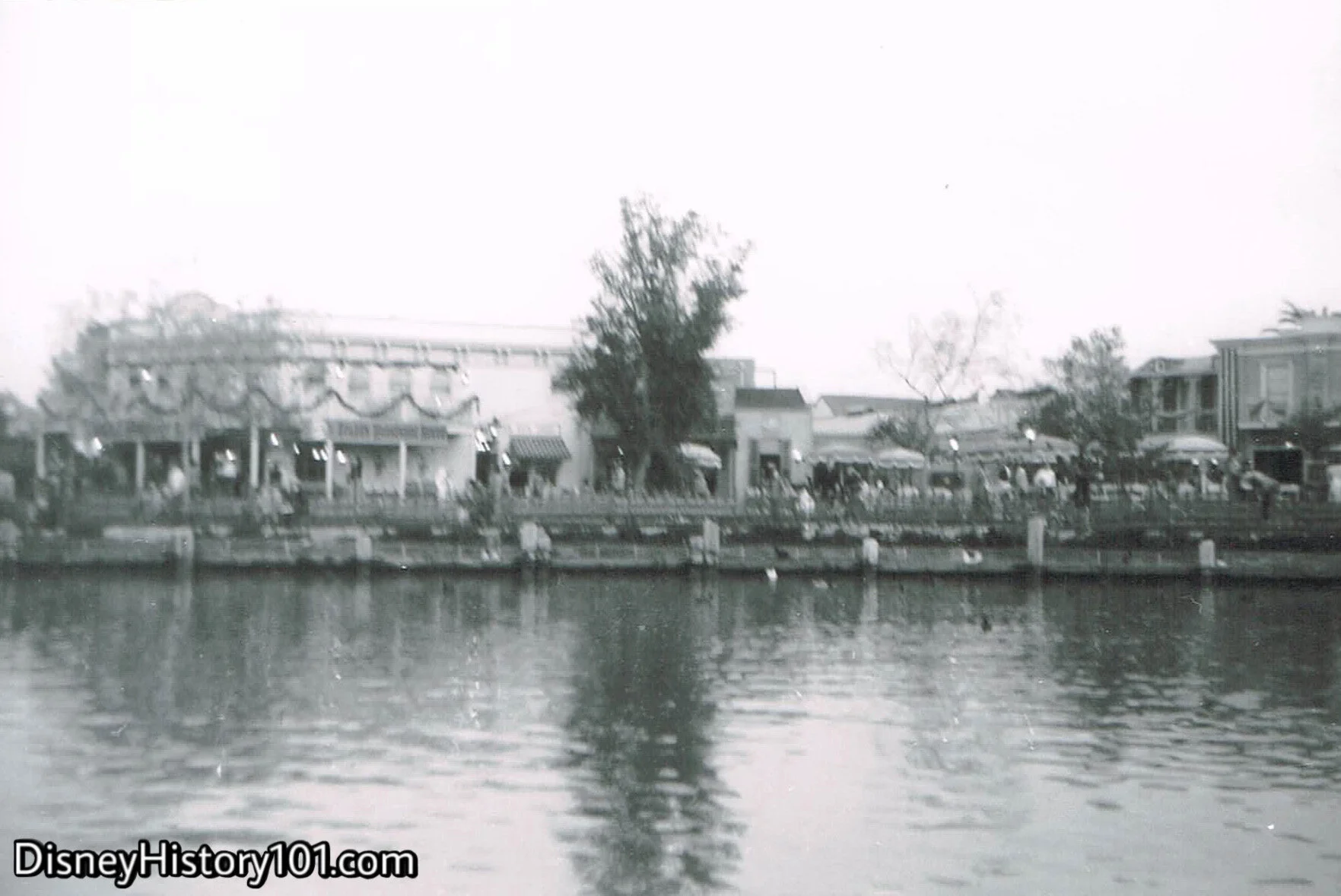
1960s.
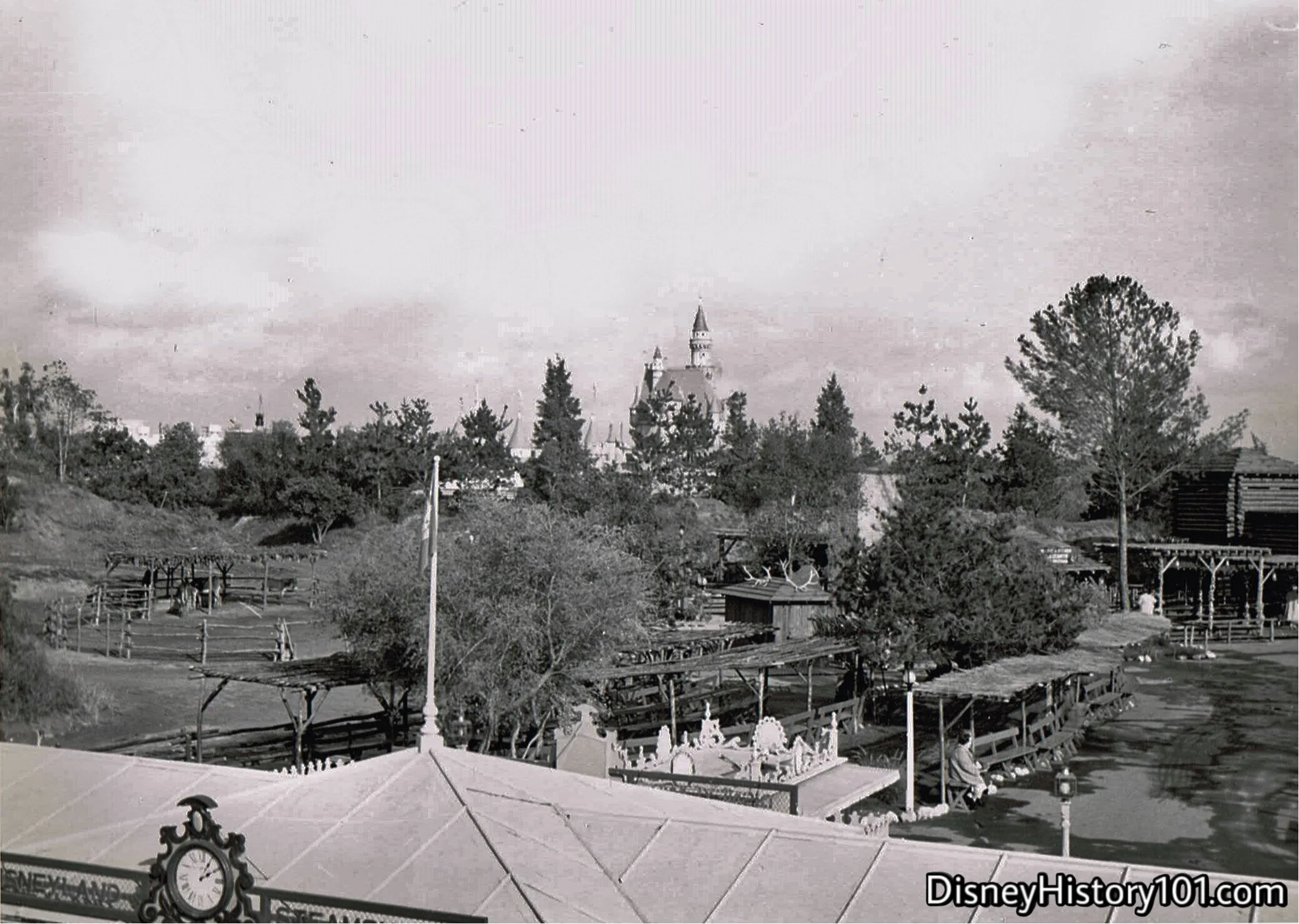
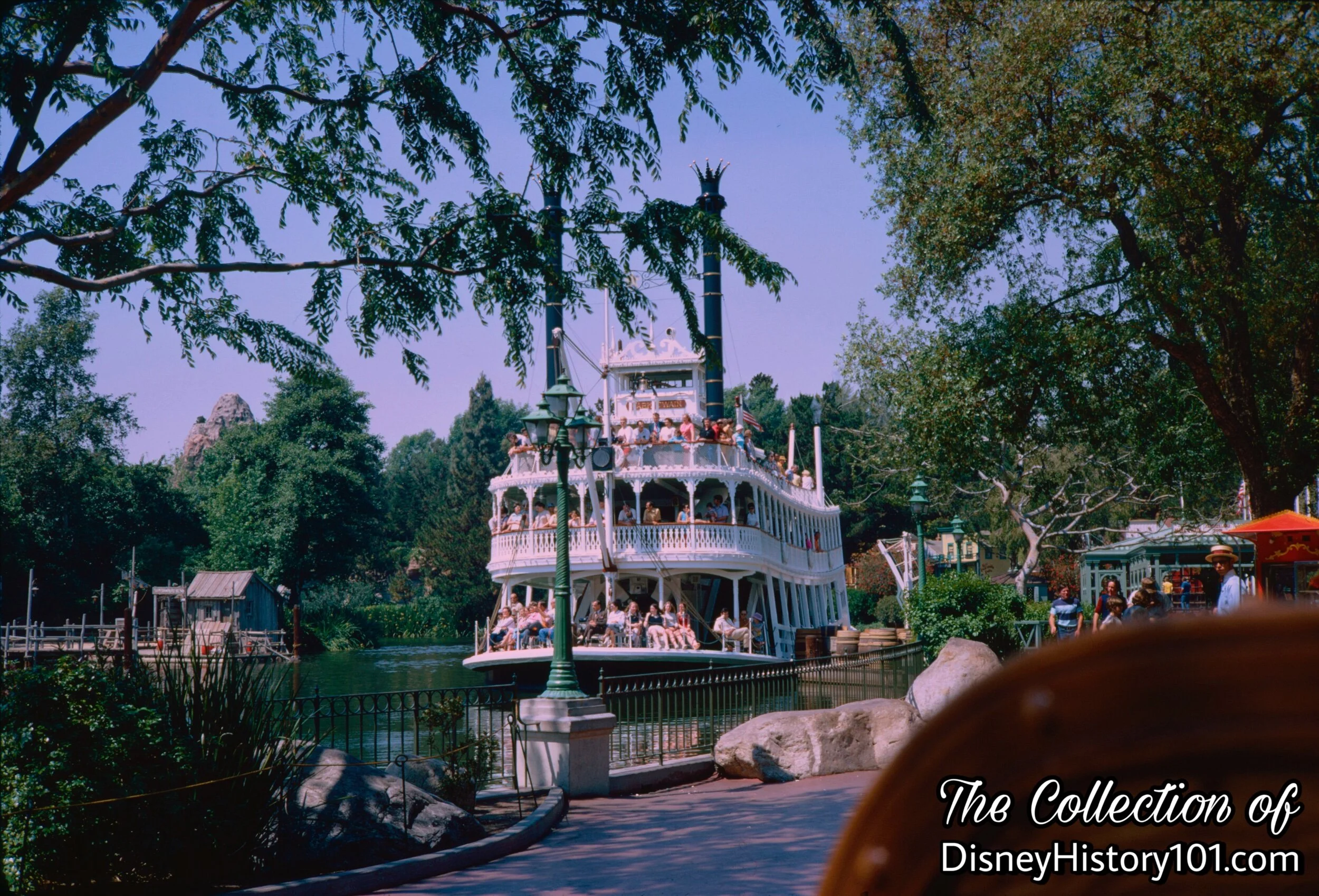
c. May 1972
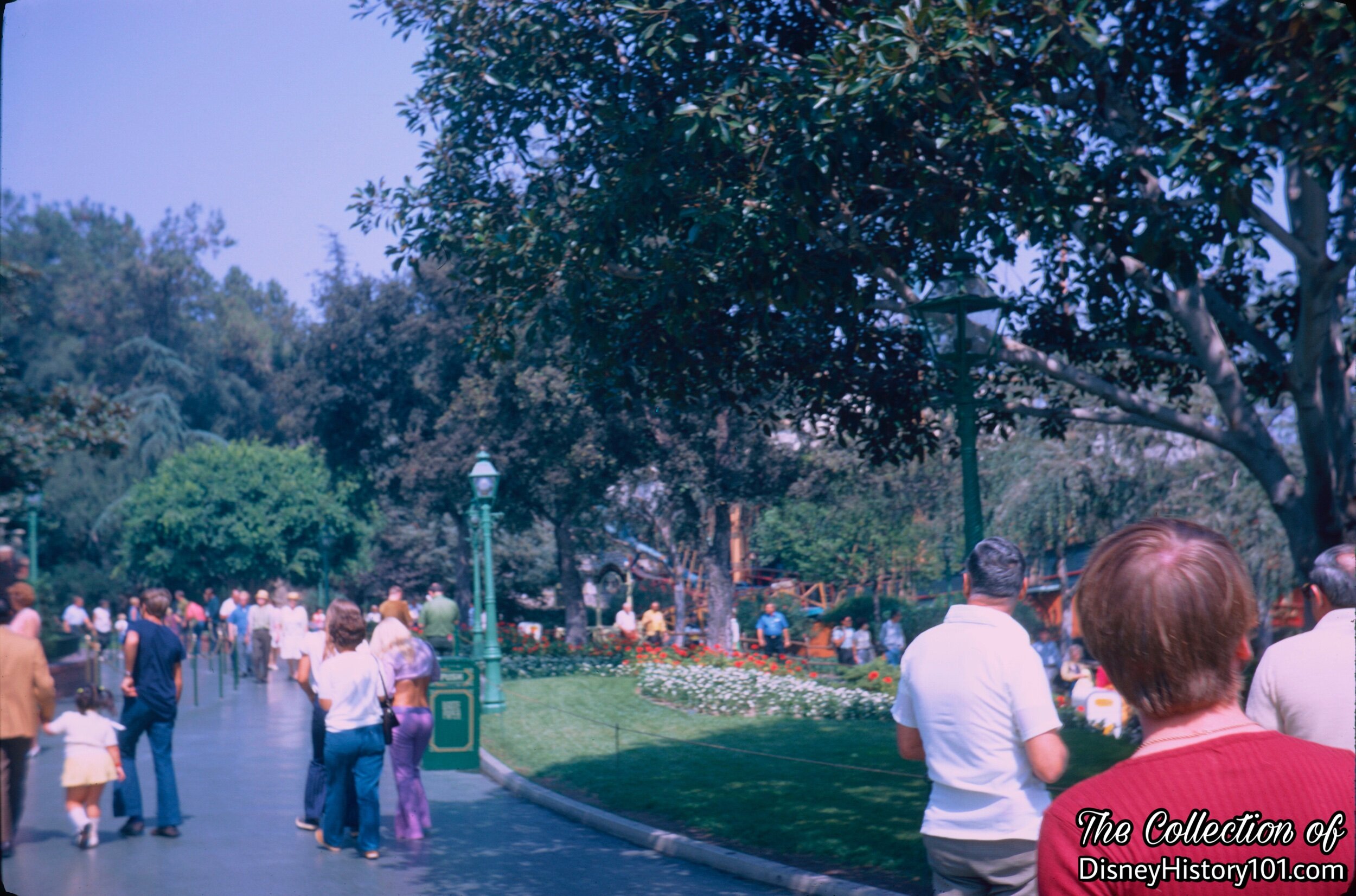
(September, 1970)
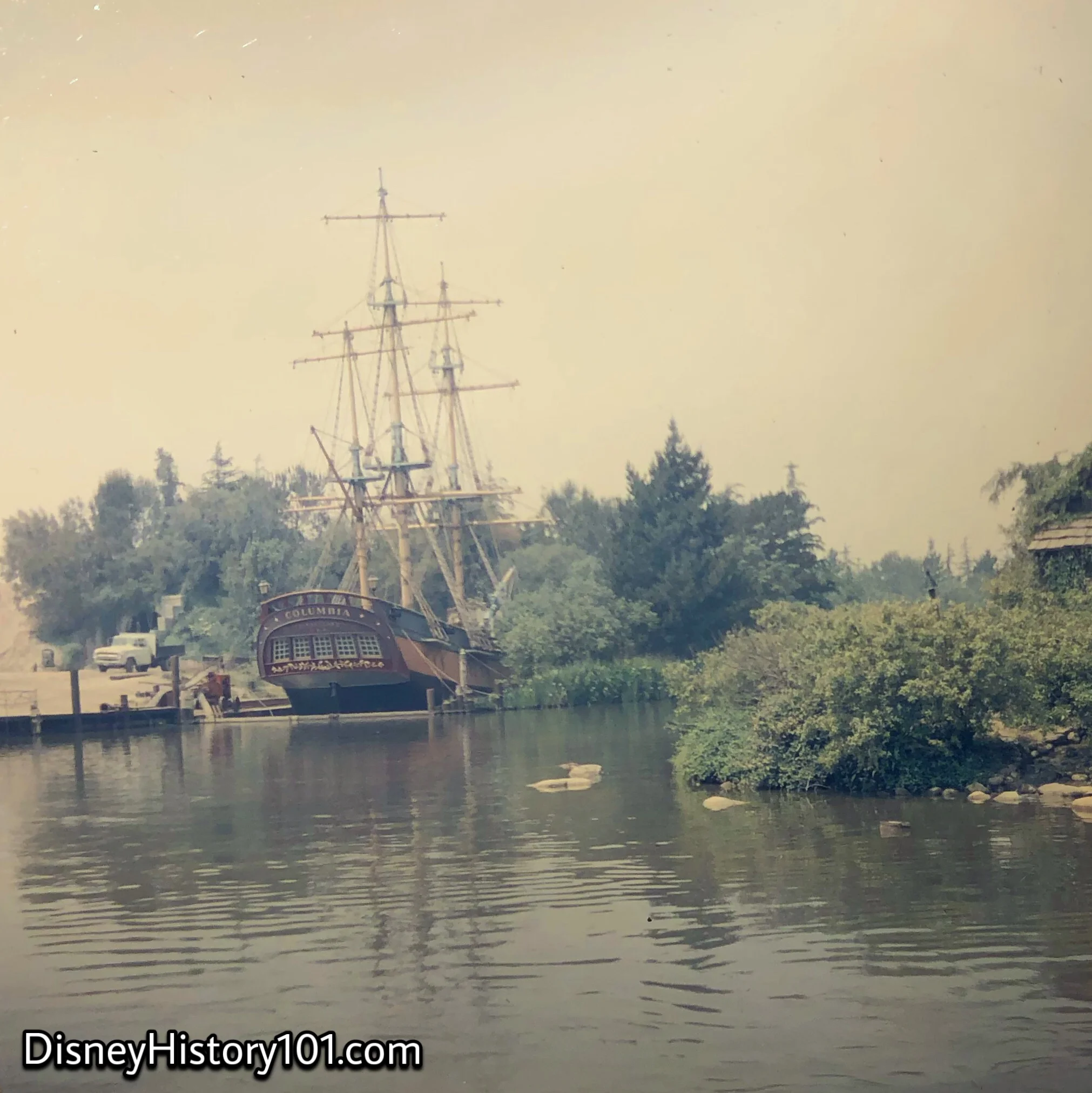
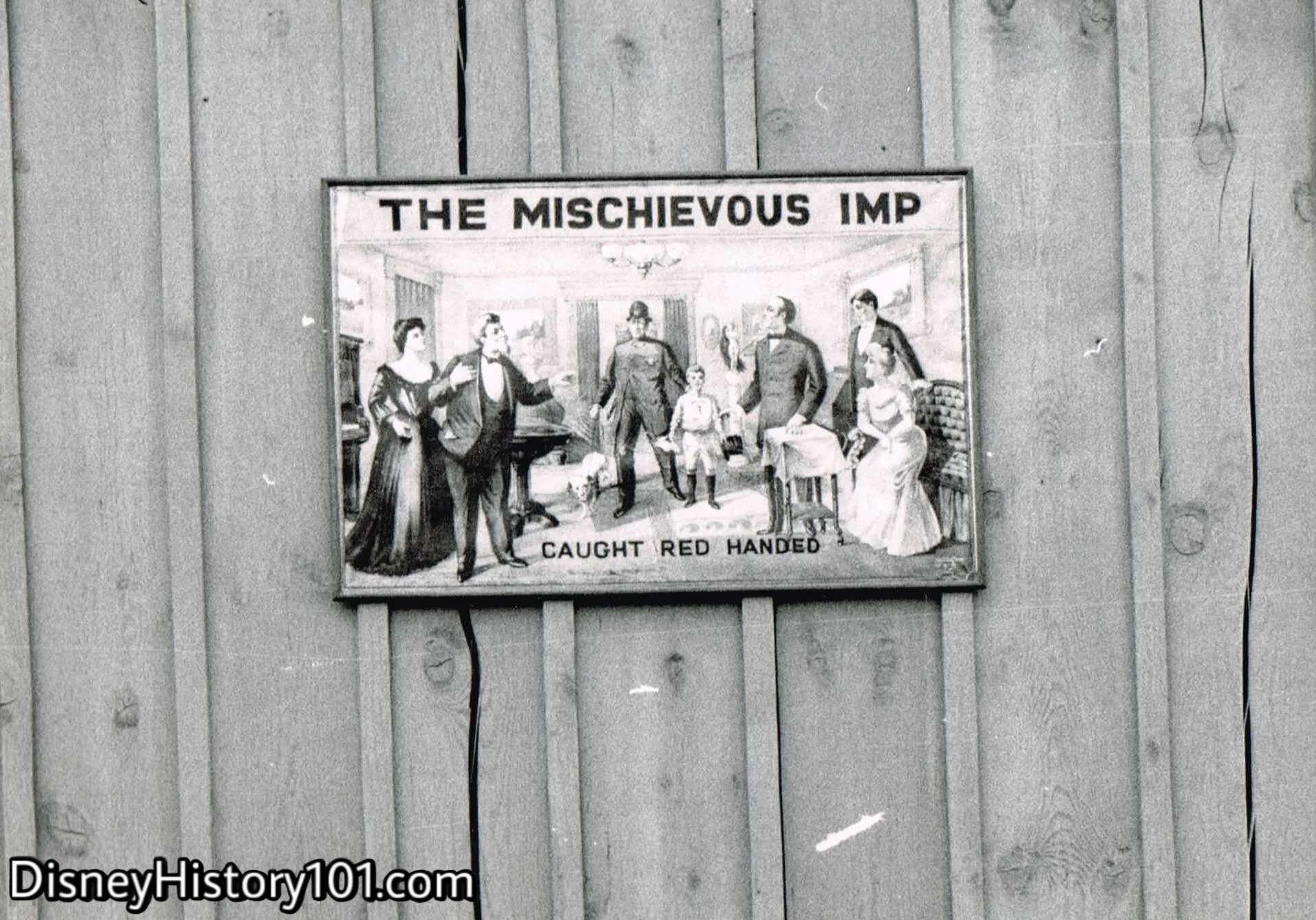
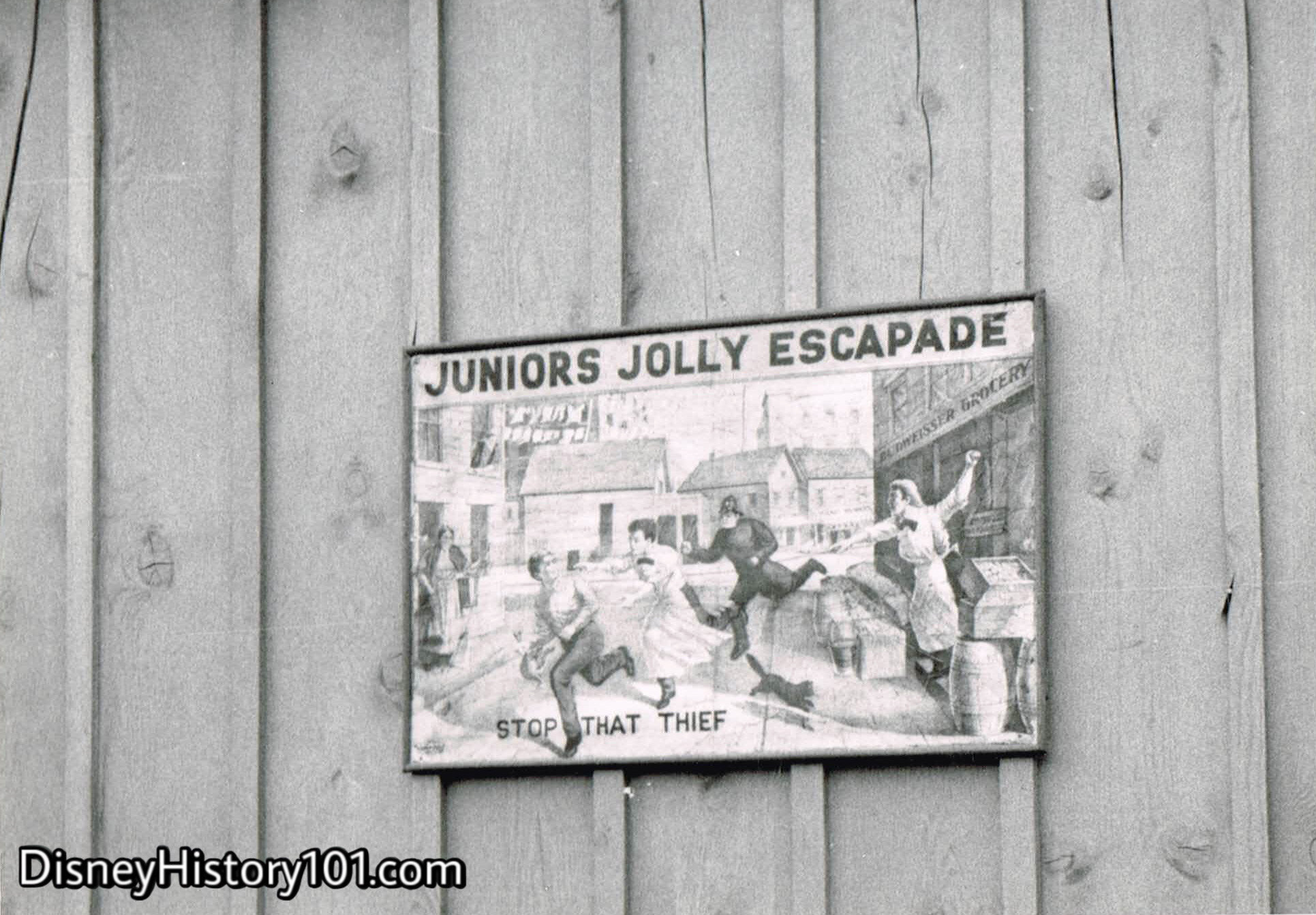
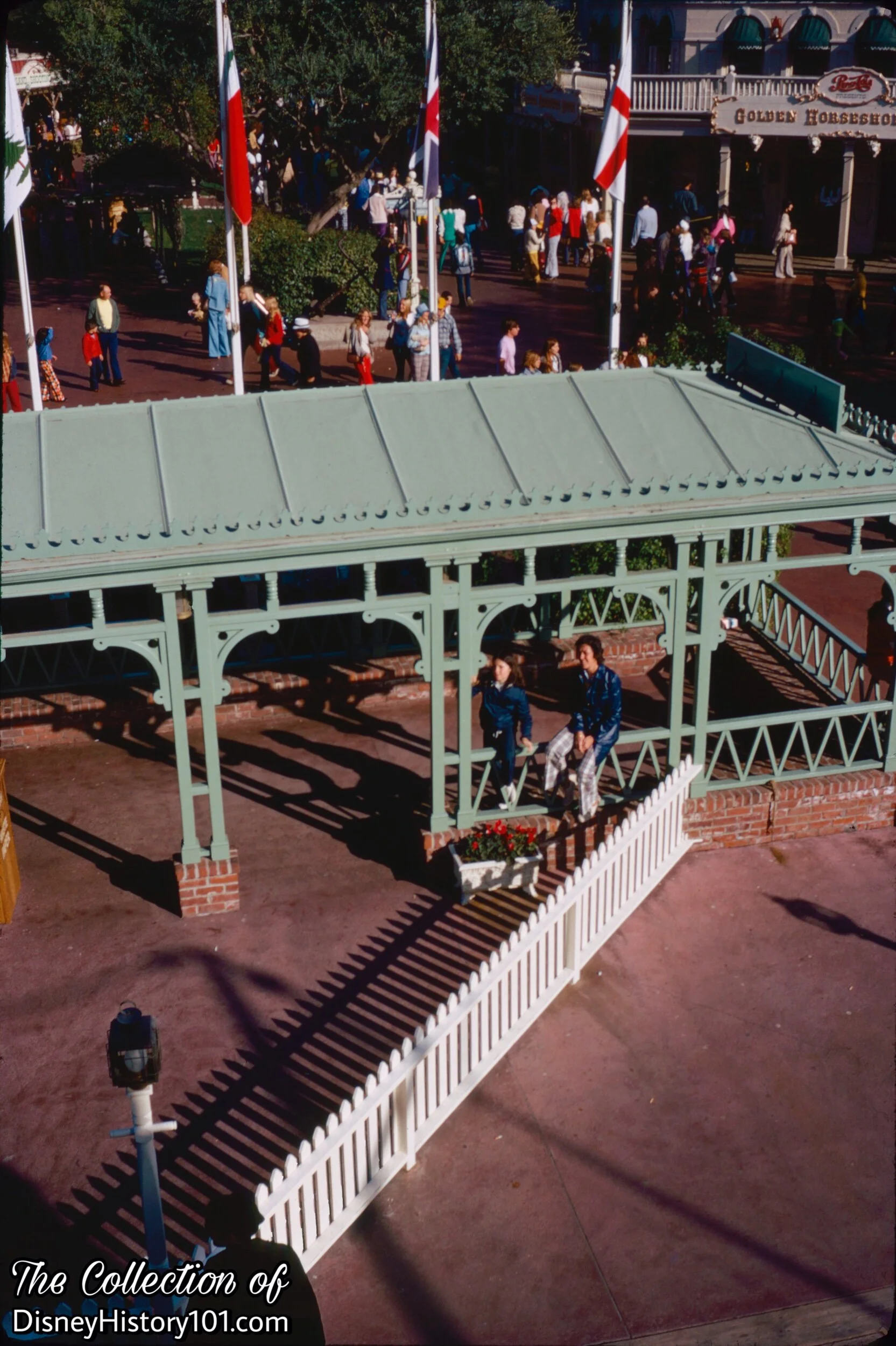
(c. March, 1974)
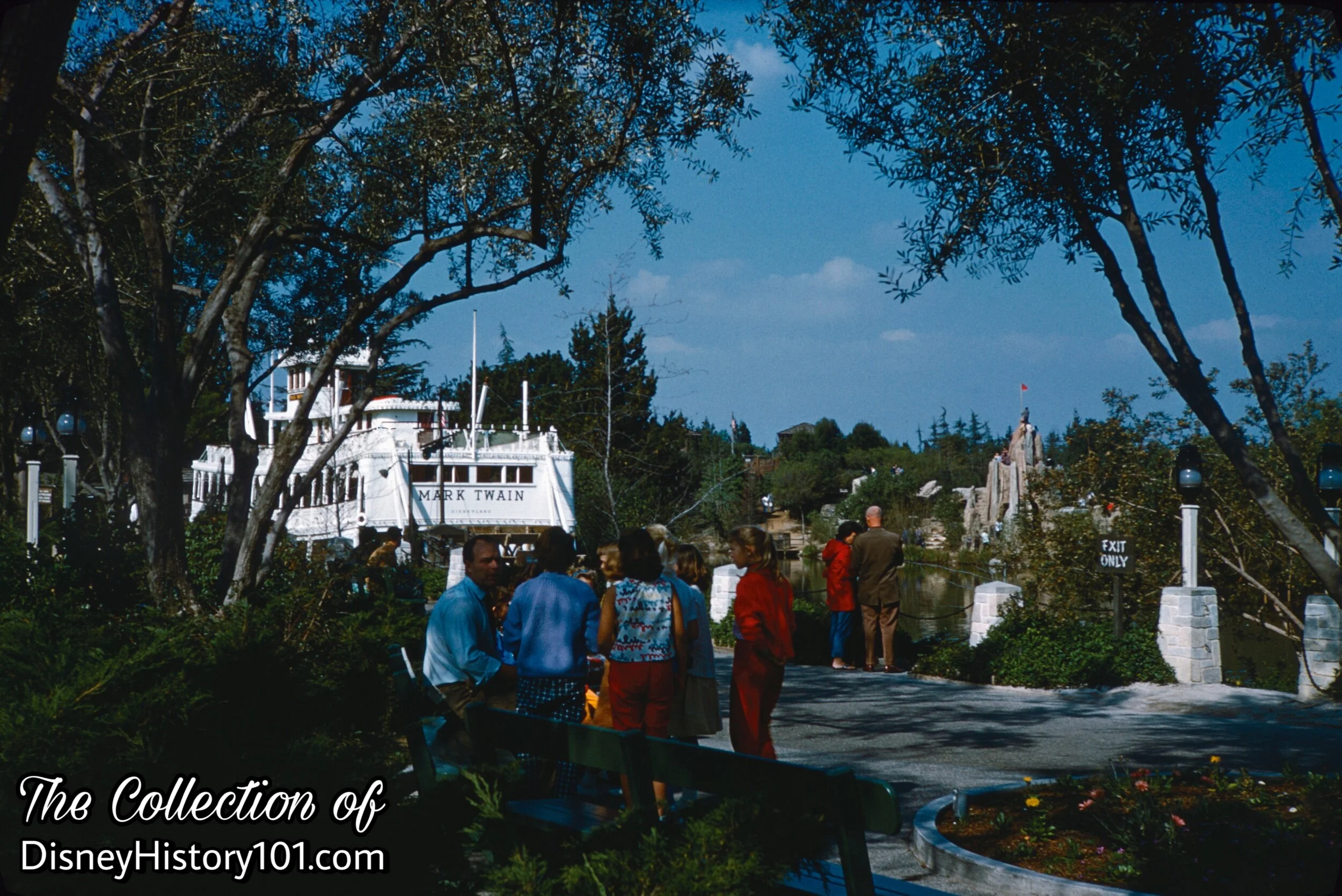
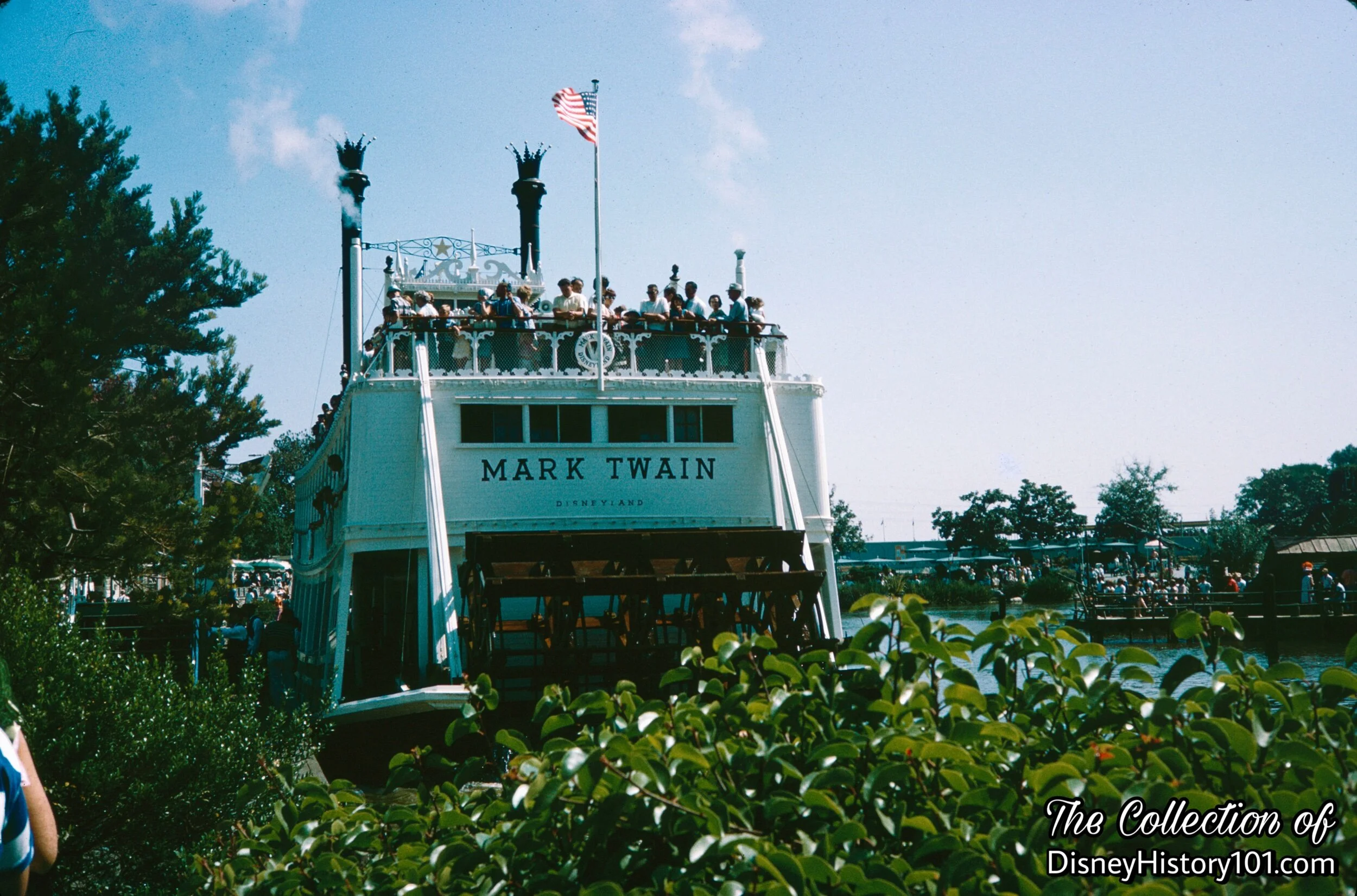
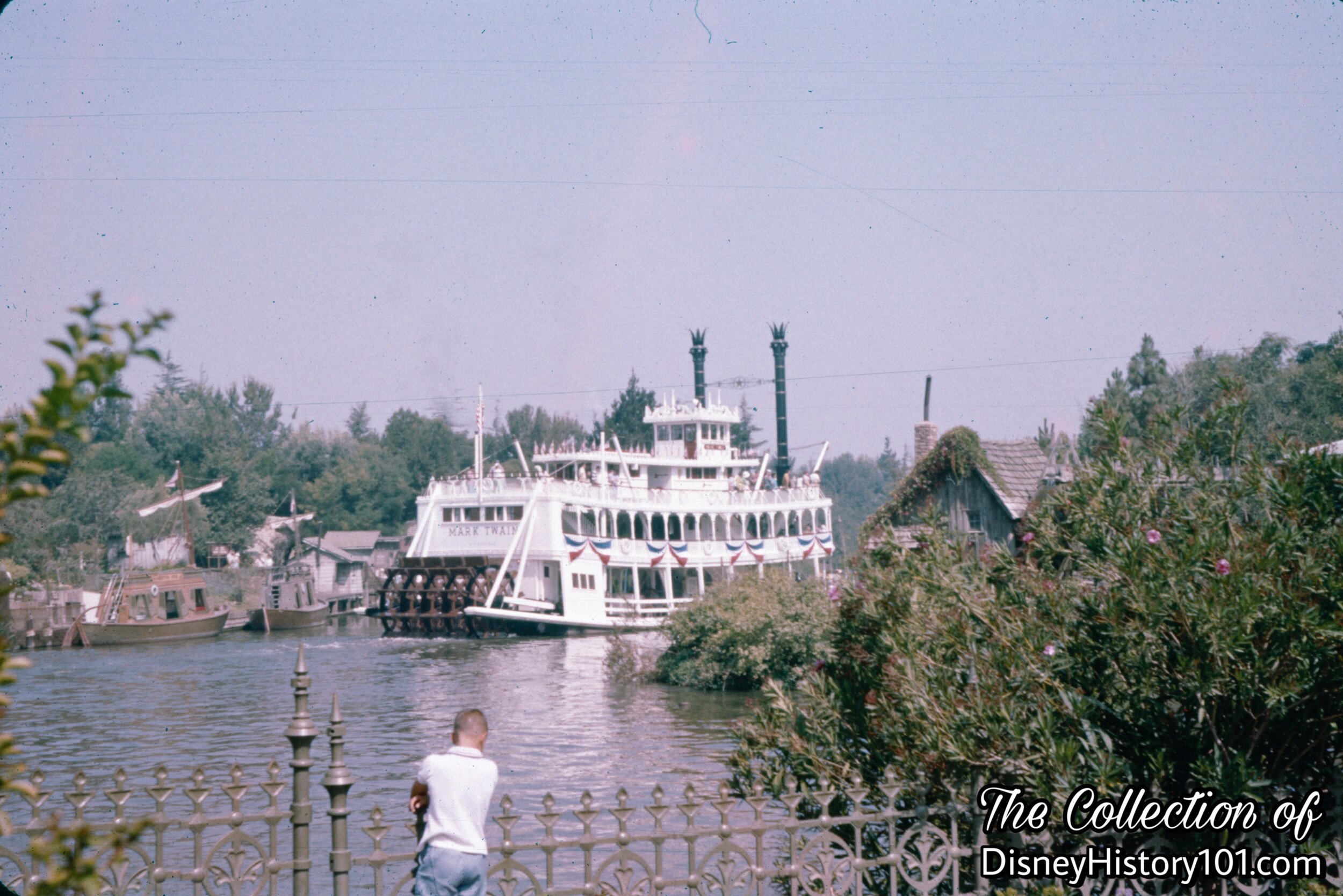
If some of the “railing and cresting (found here and other places on Main Street U.S.A. and Frontierland)” look authentic, its because some of them actually “came from old plantations in Nashville, Memphis, Tennessee, and some came from San Francisco, Oakland and Sacramento, California, dating back to the ‘49 days”, according to “News From Disneyland” (a Press Release document published c. 1956).
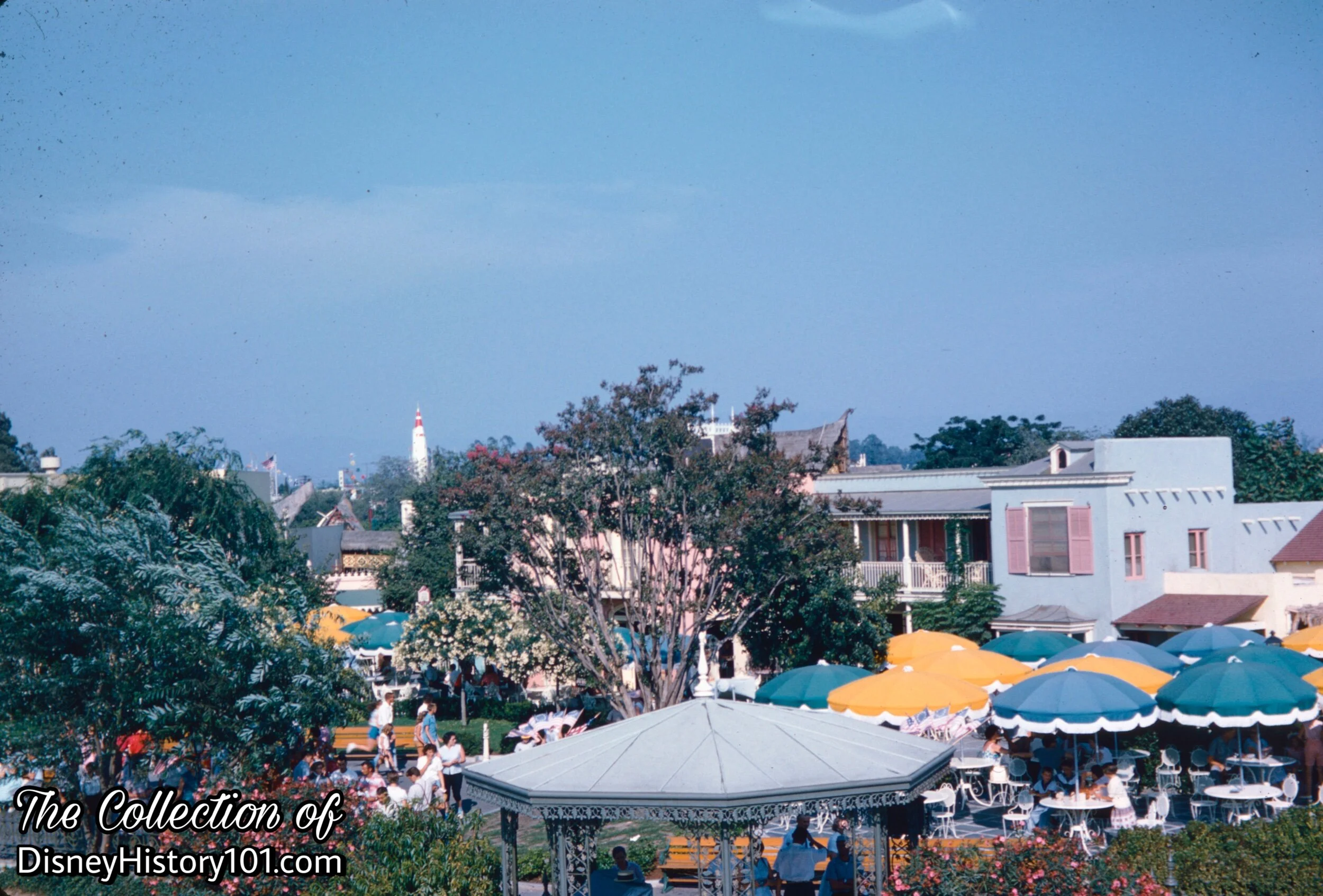
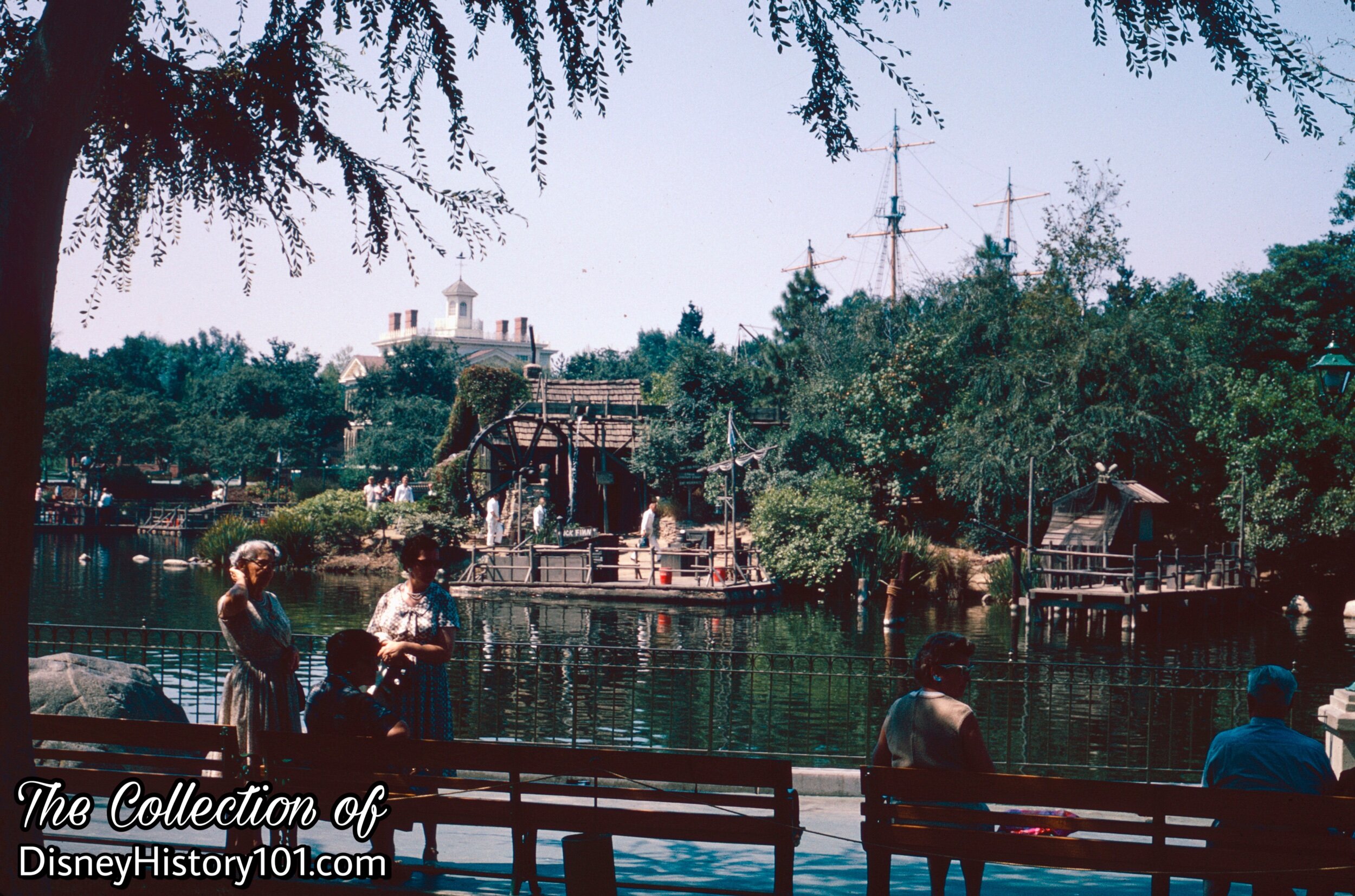
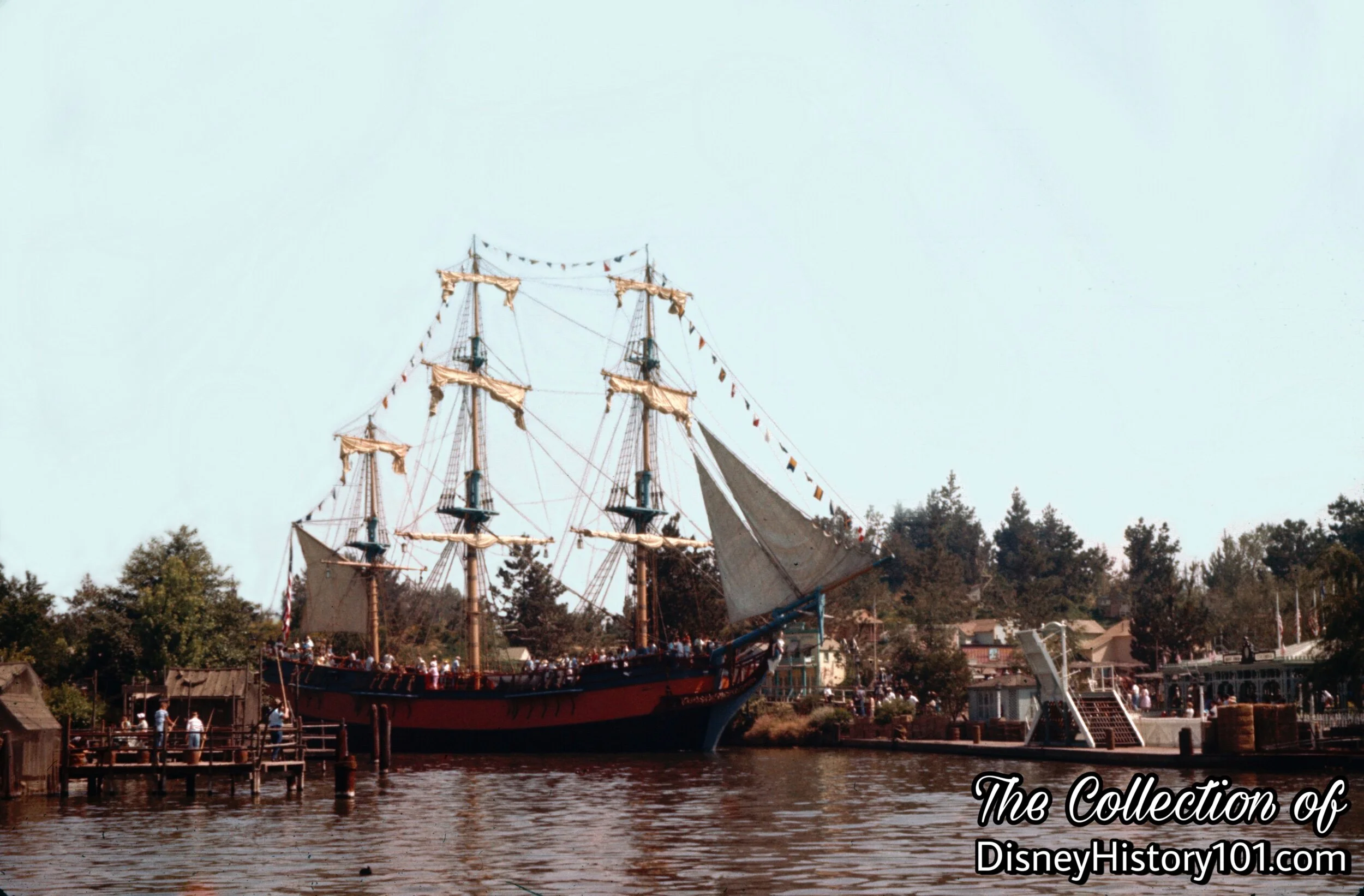
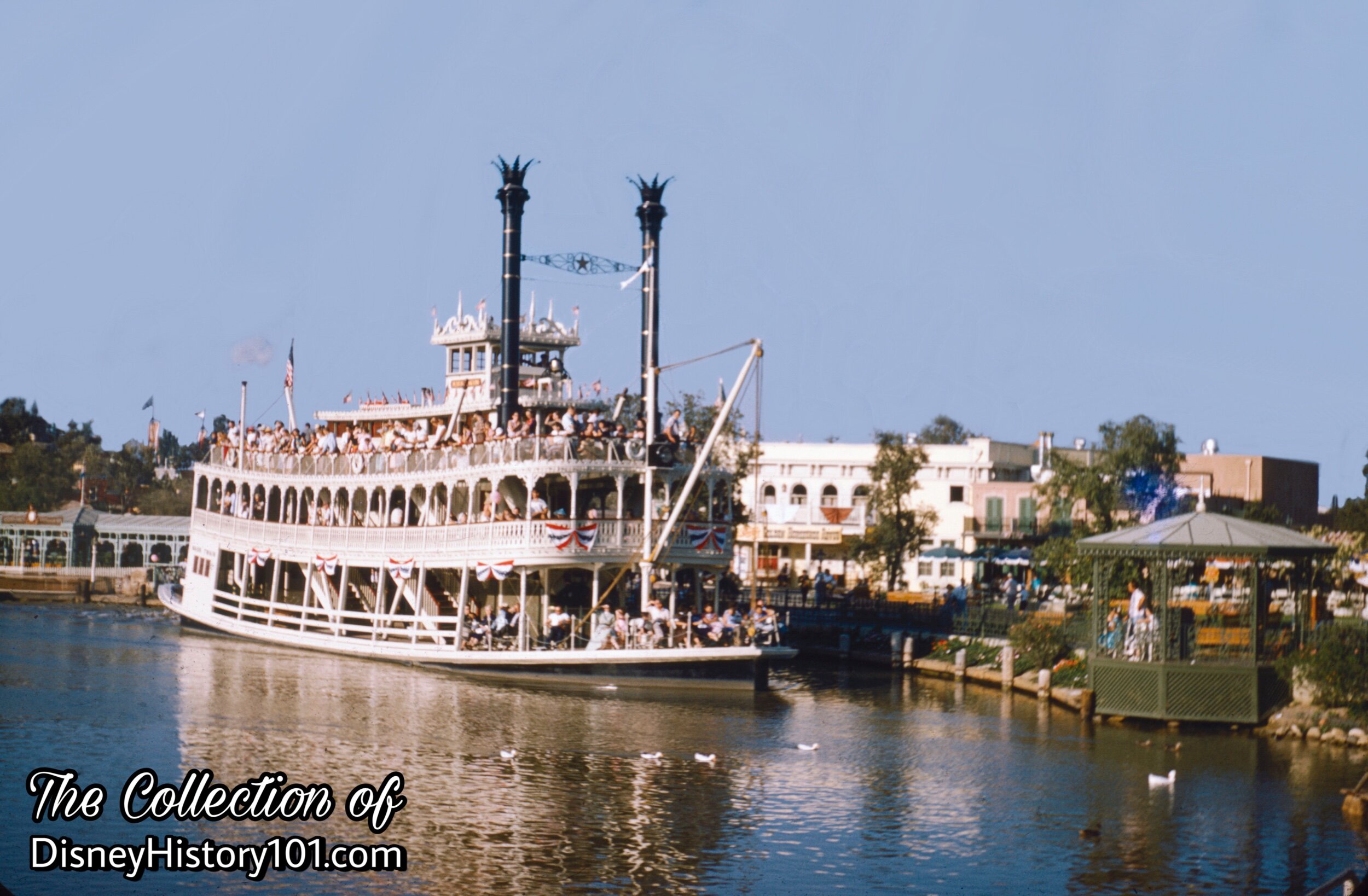
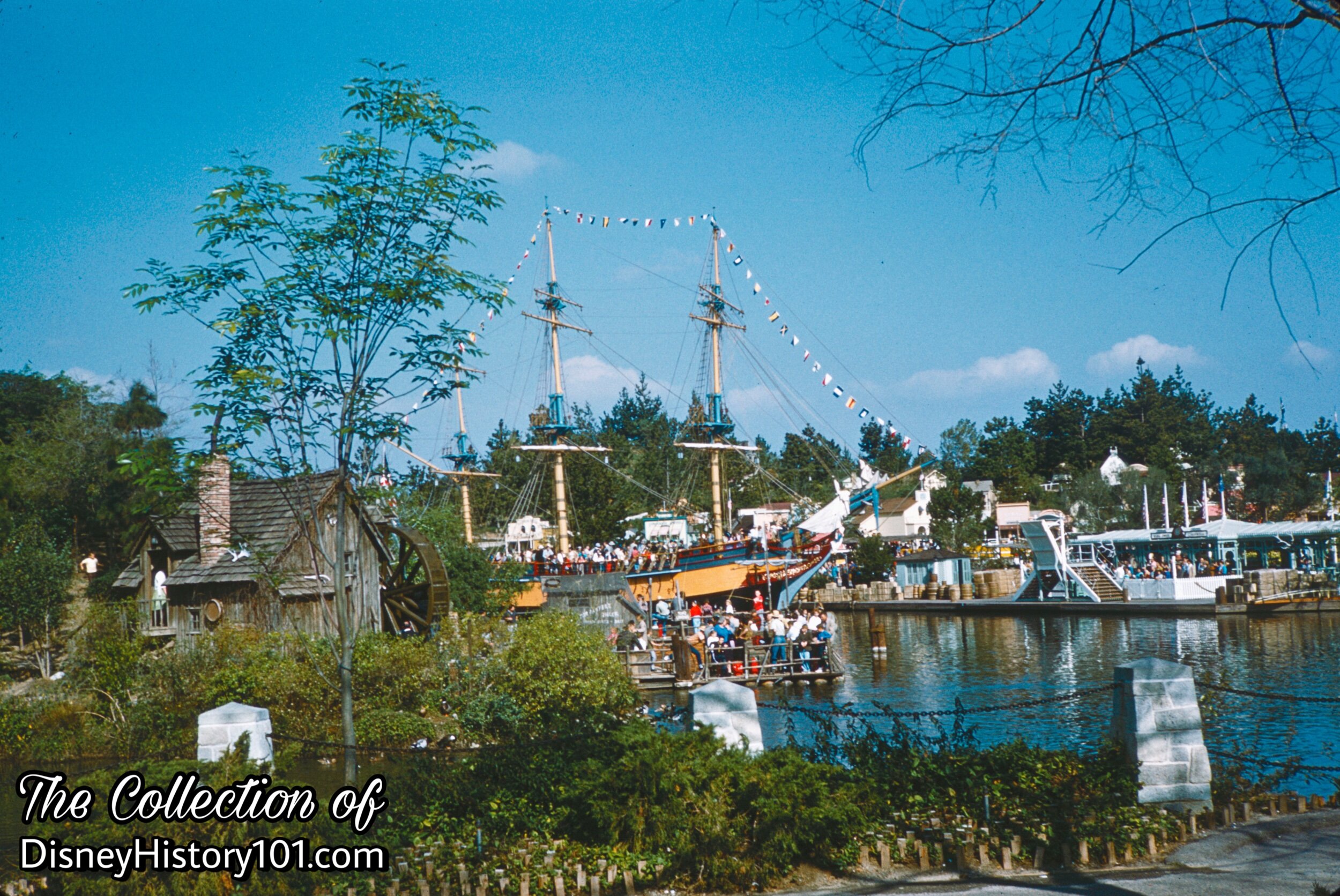
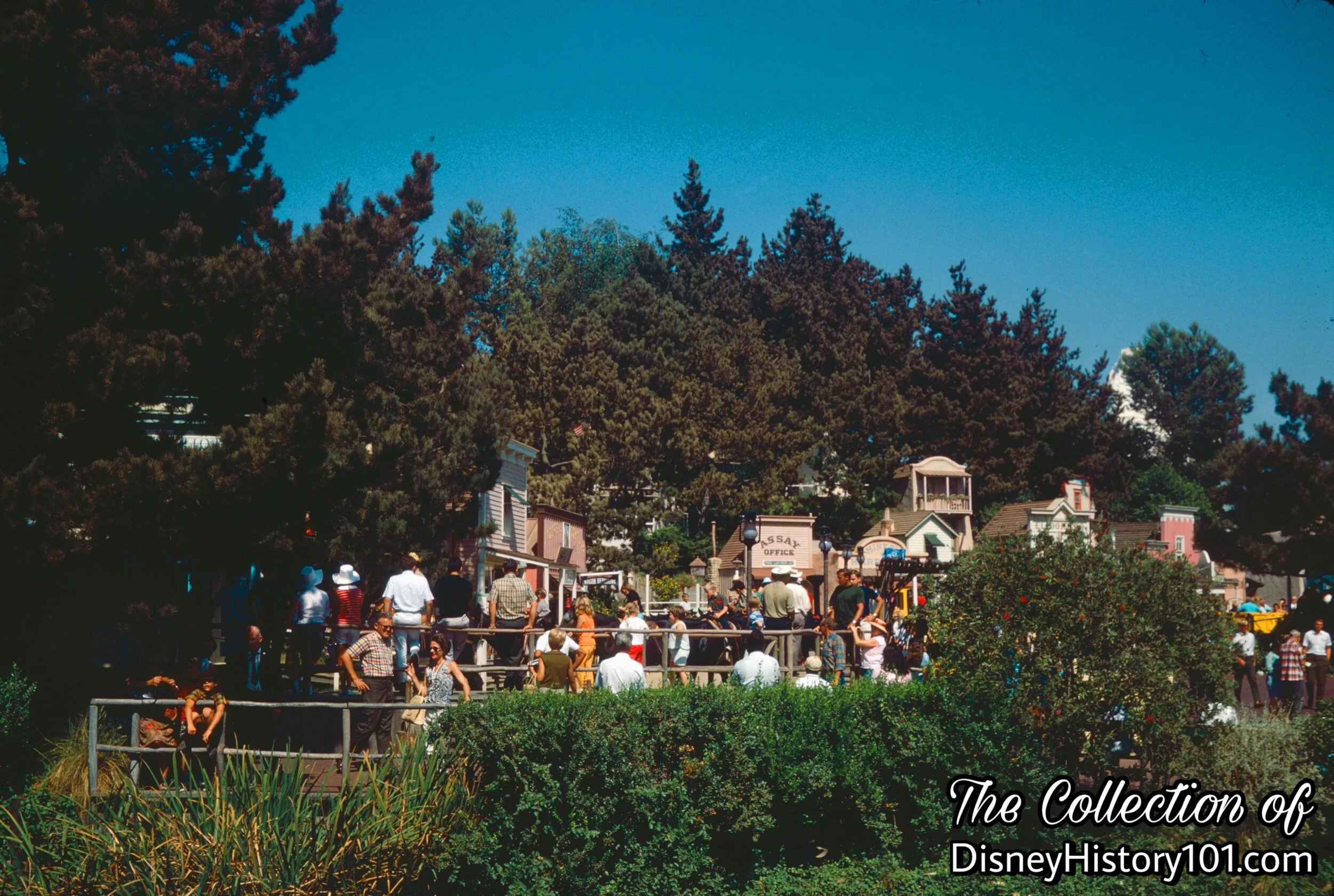
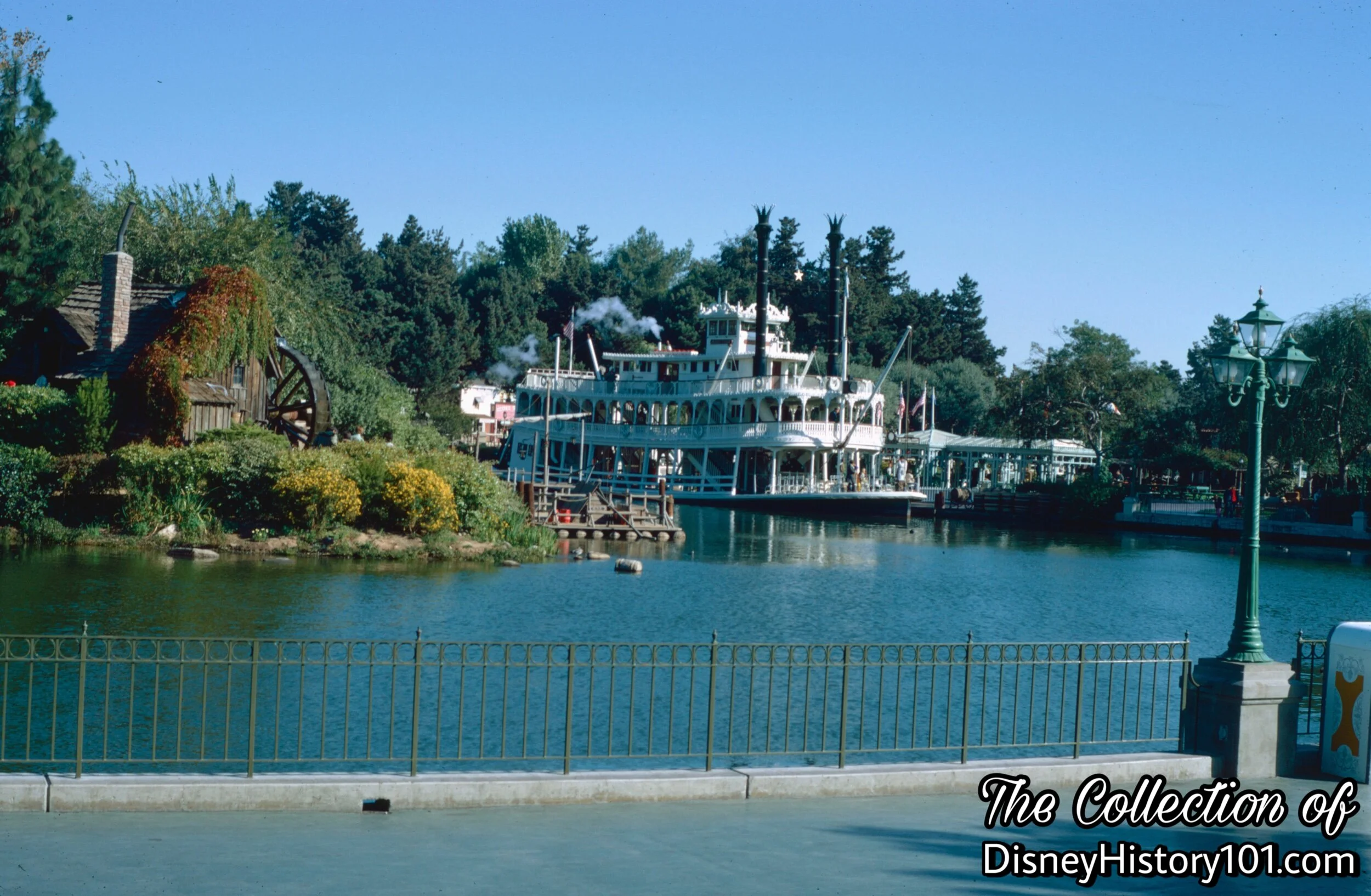
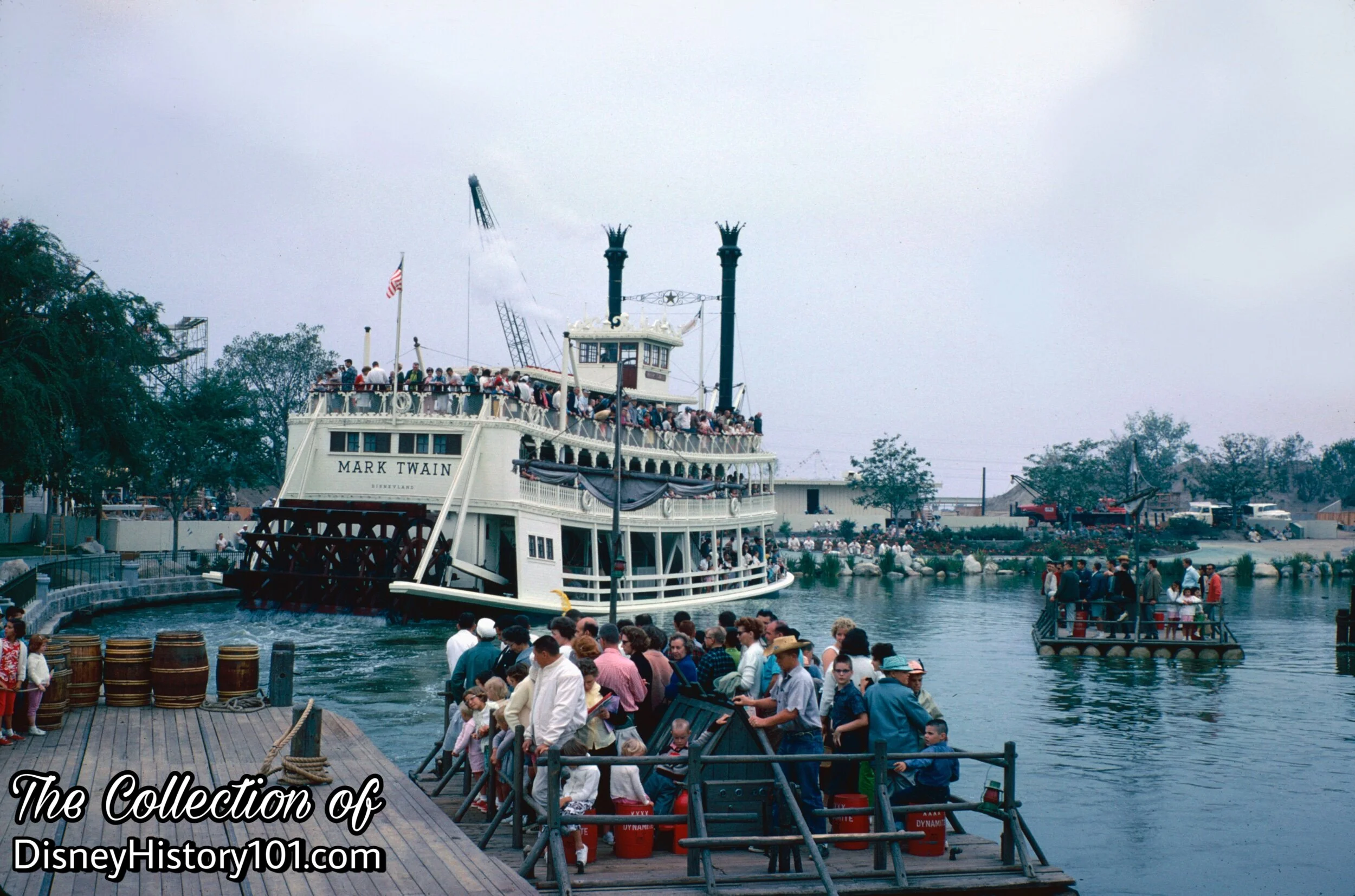
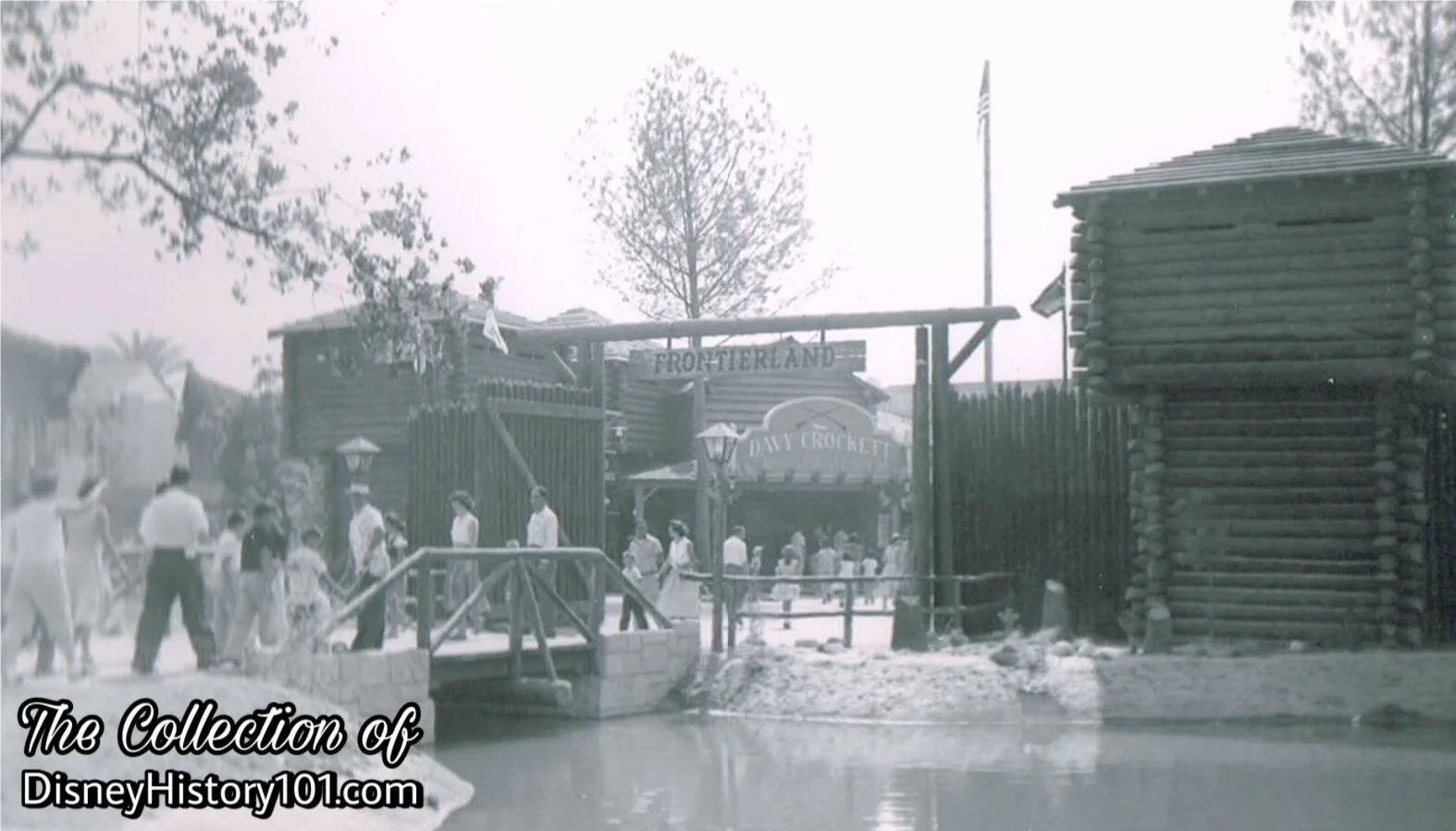
(August, 1955)
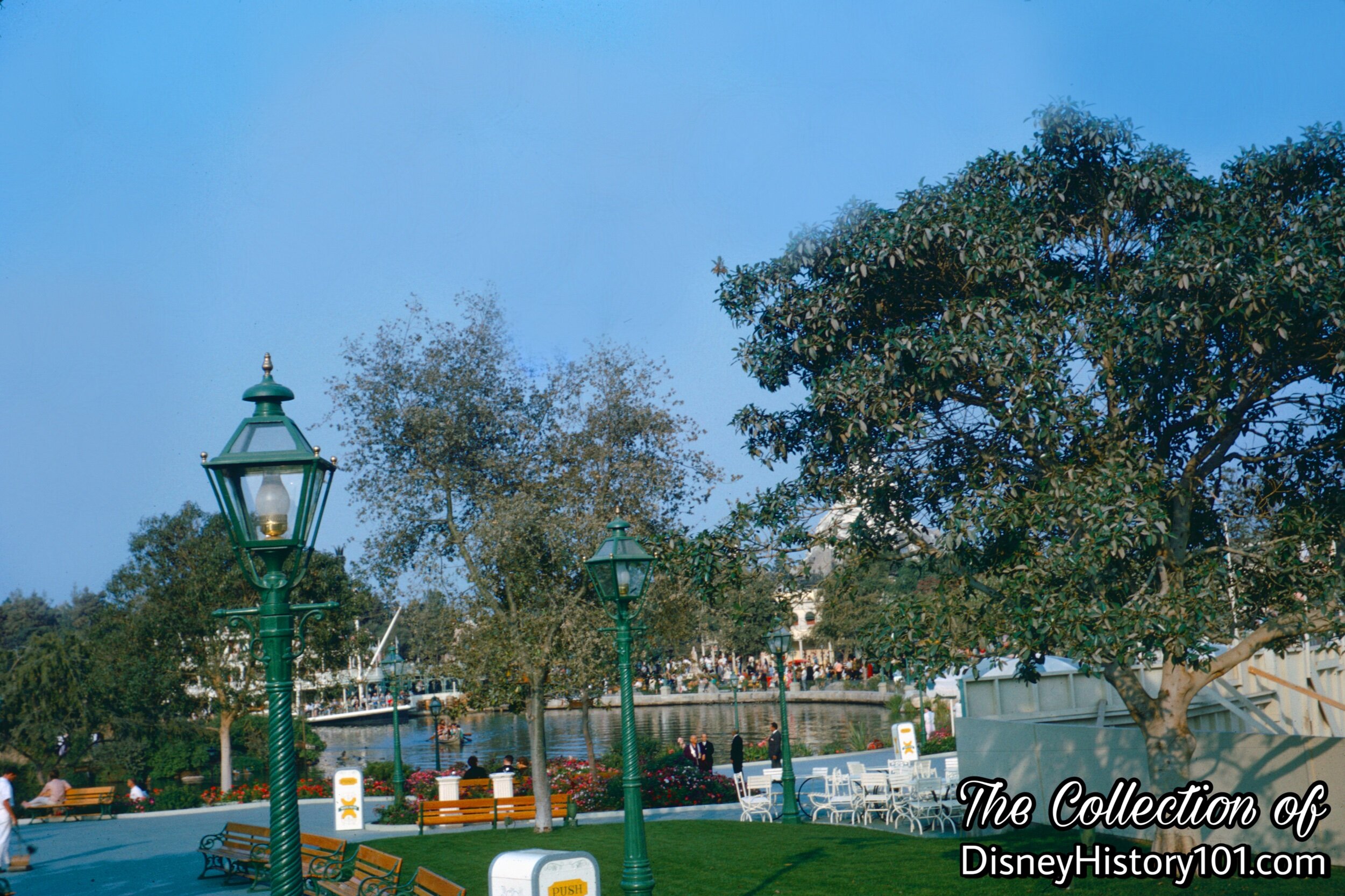
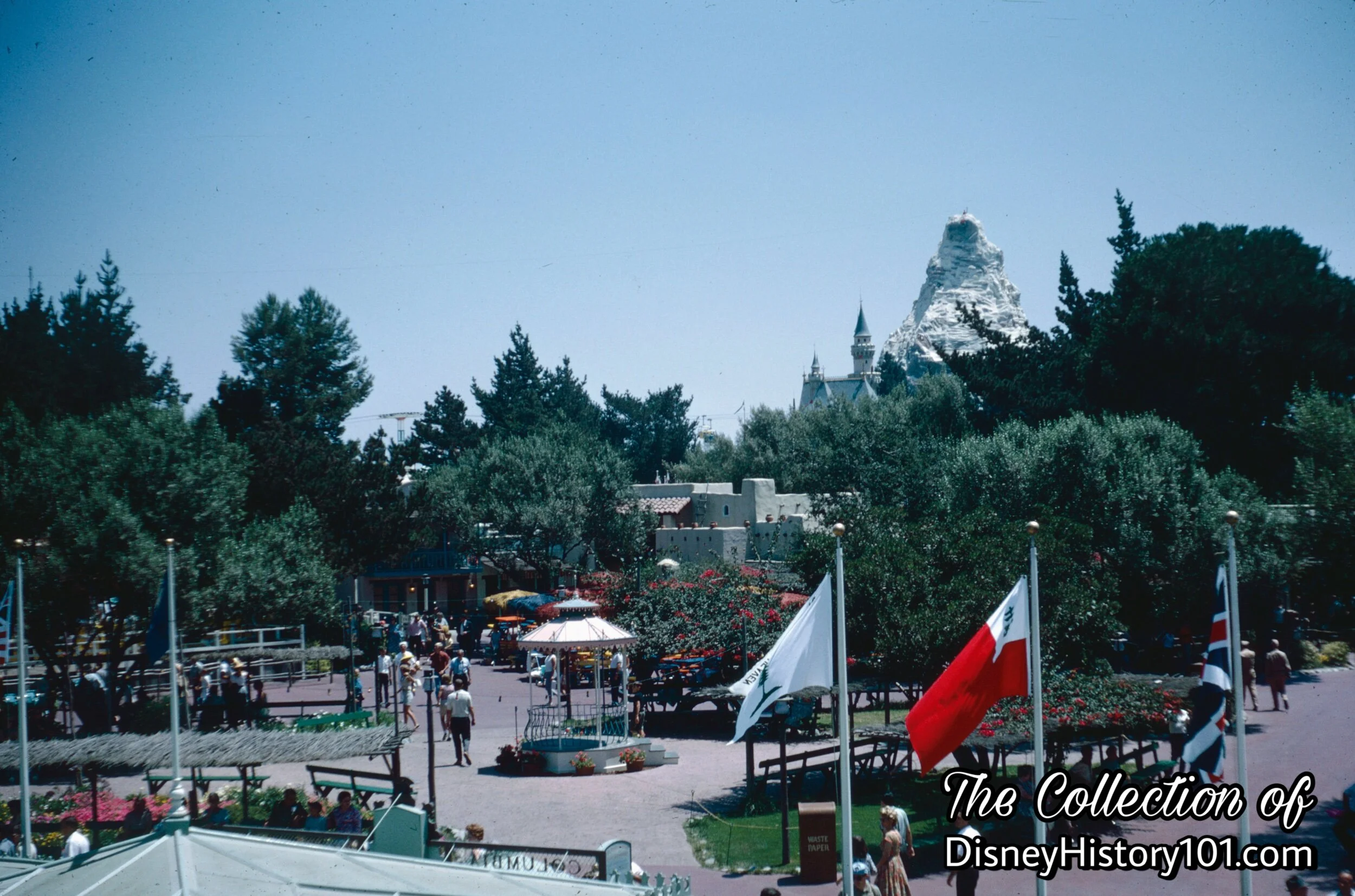
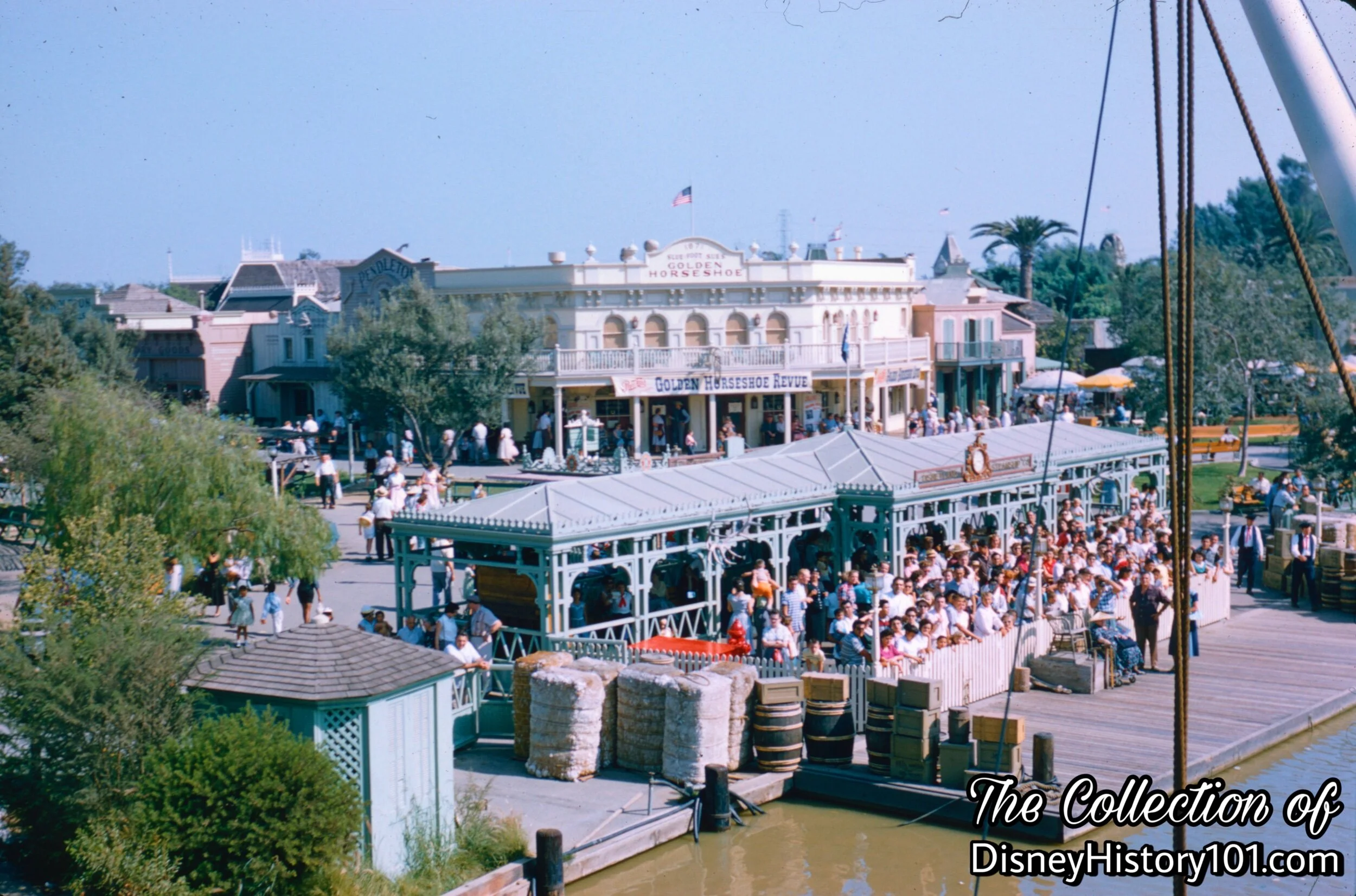
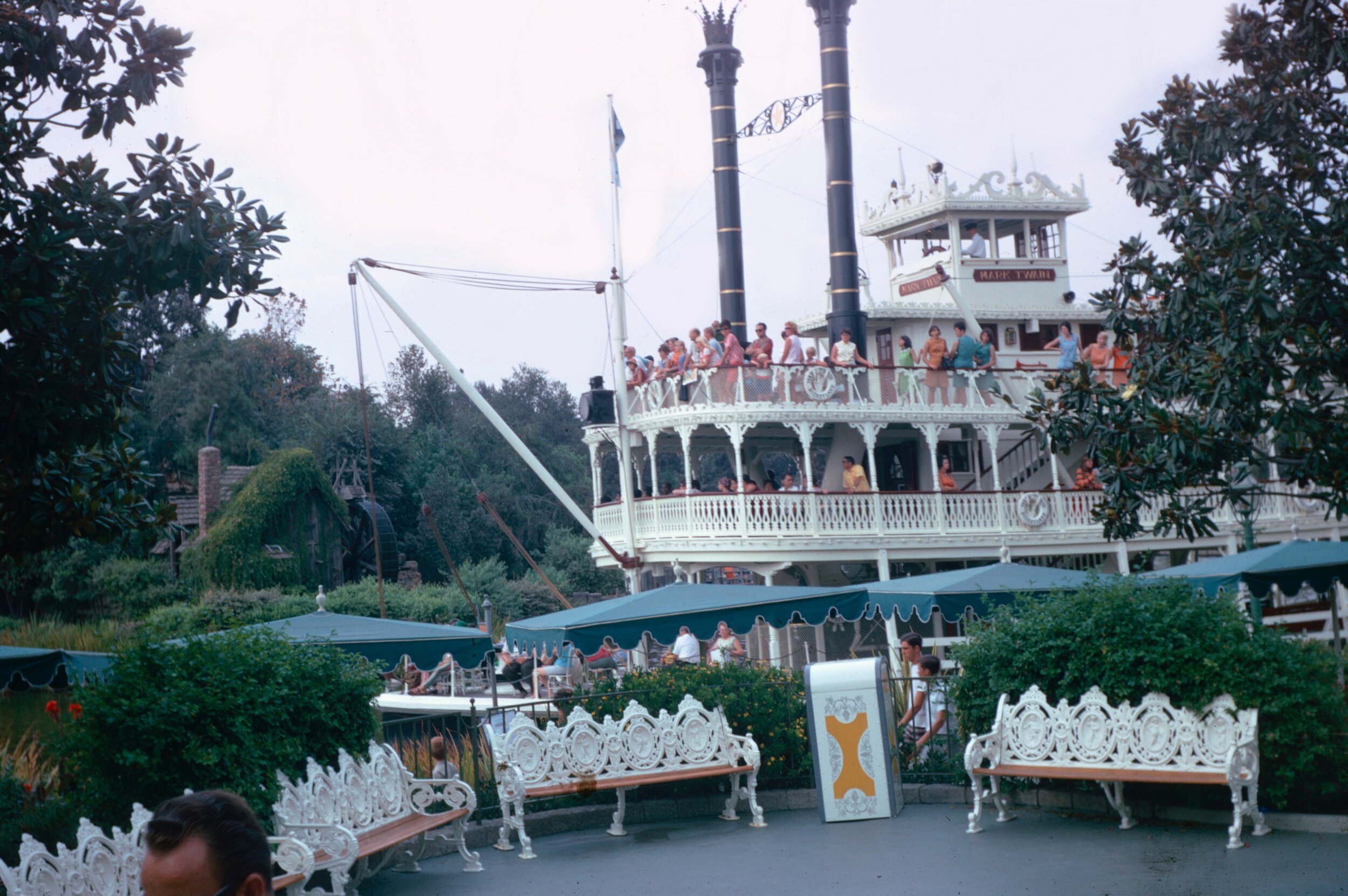
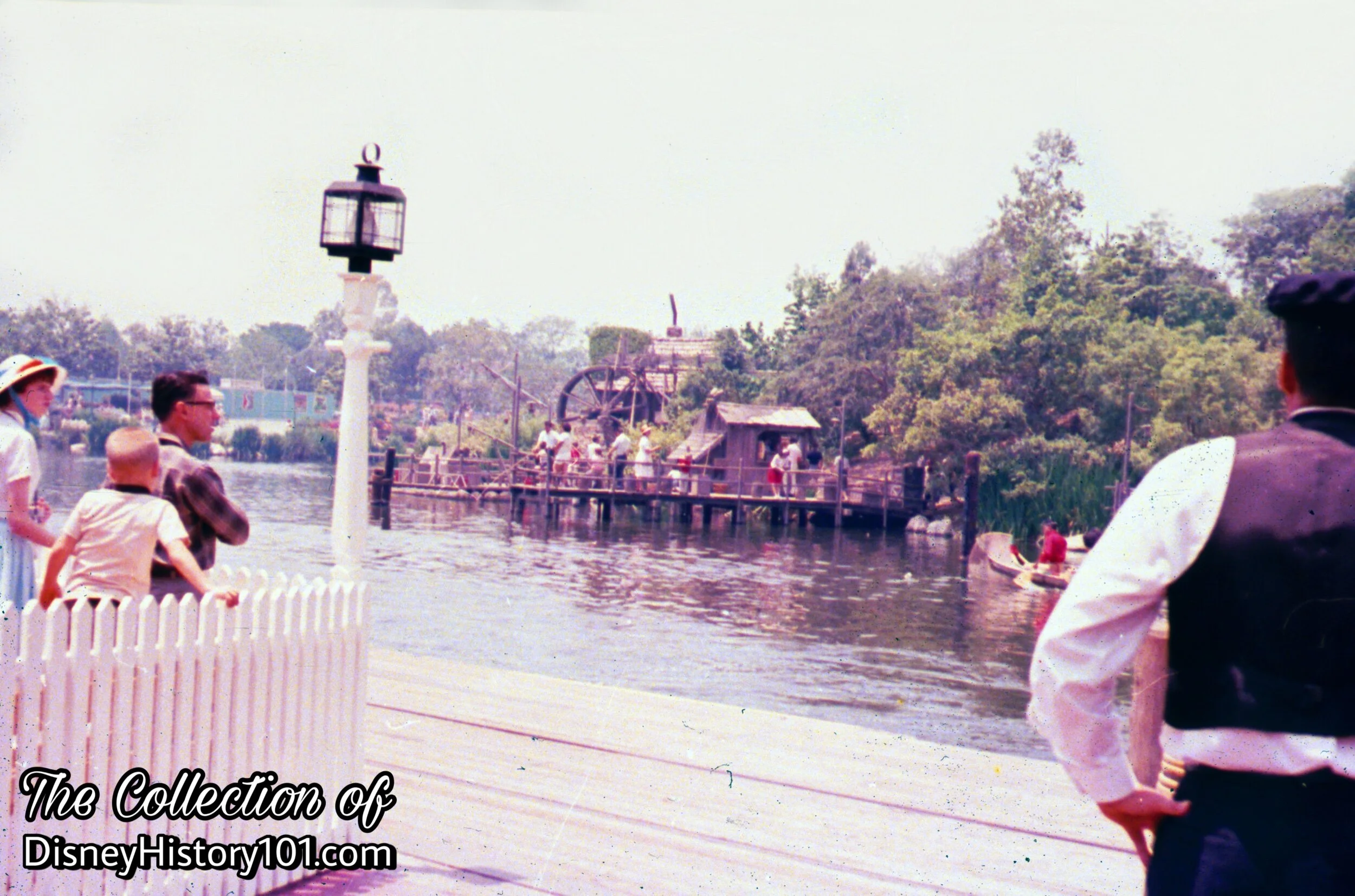
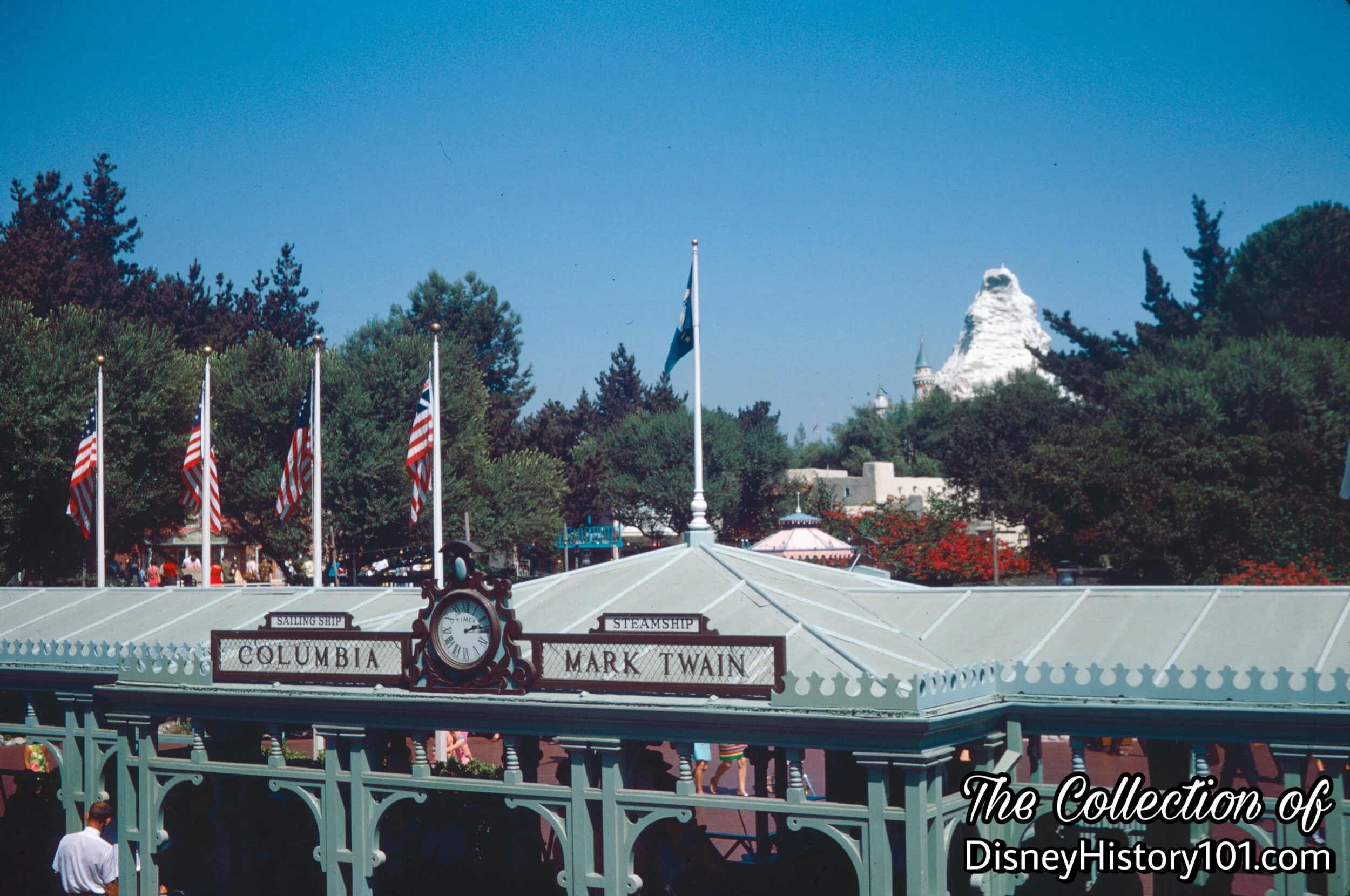
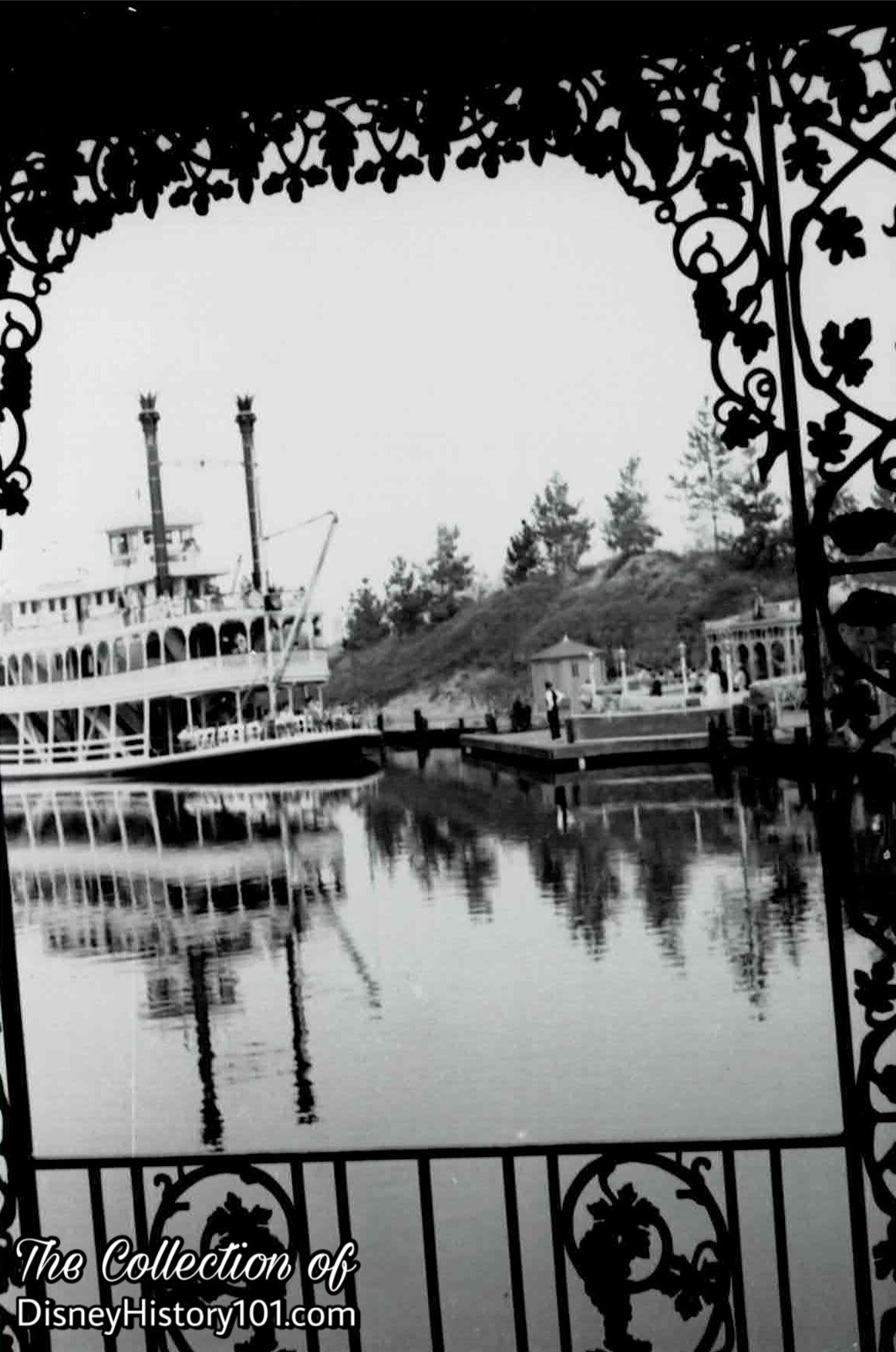
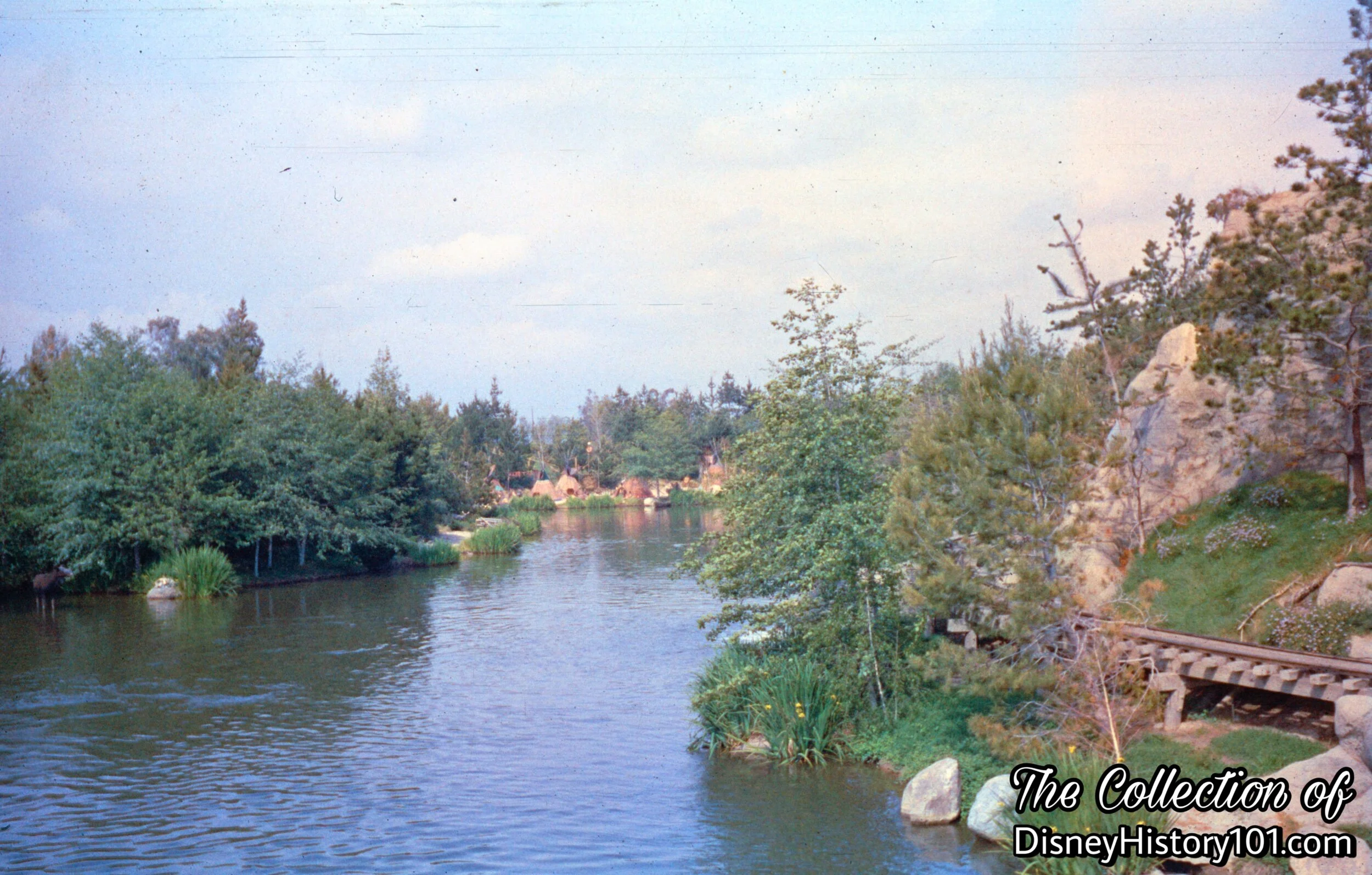
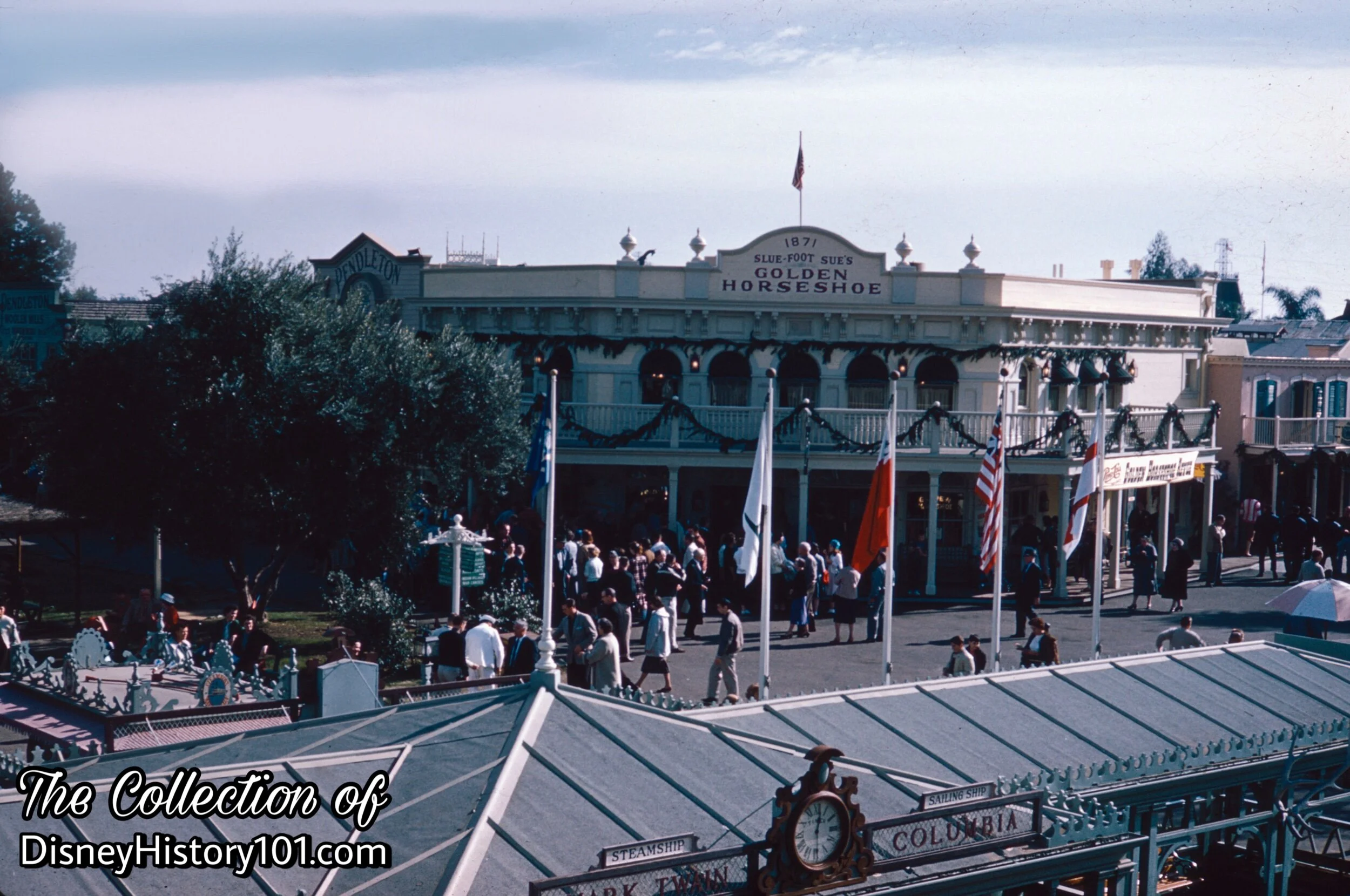
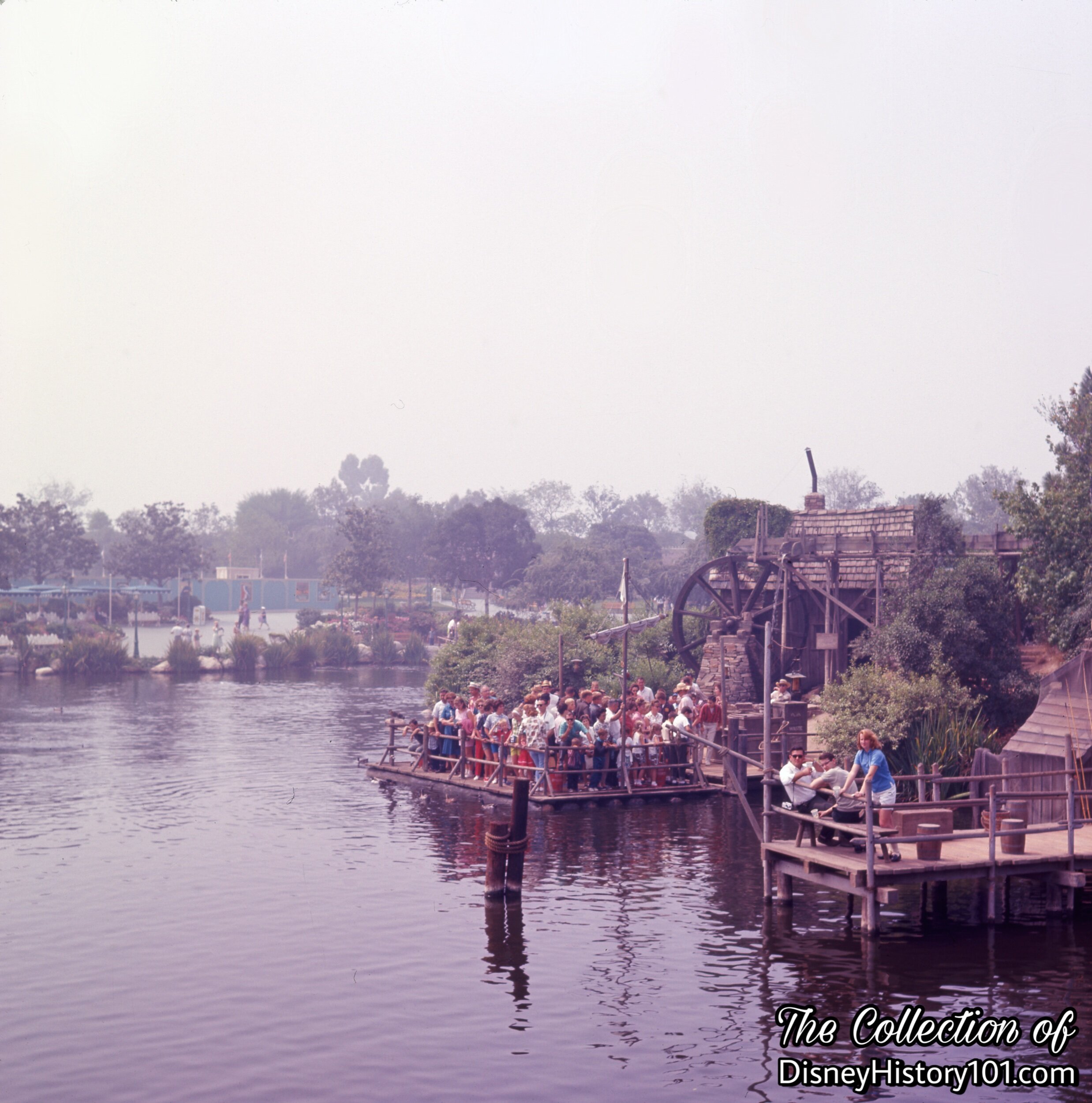
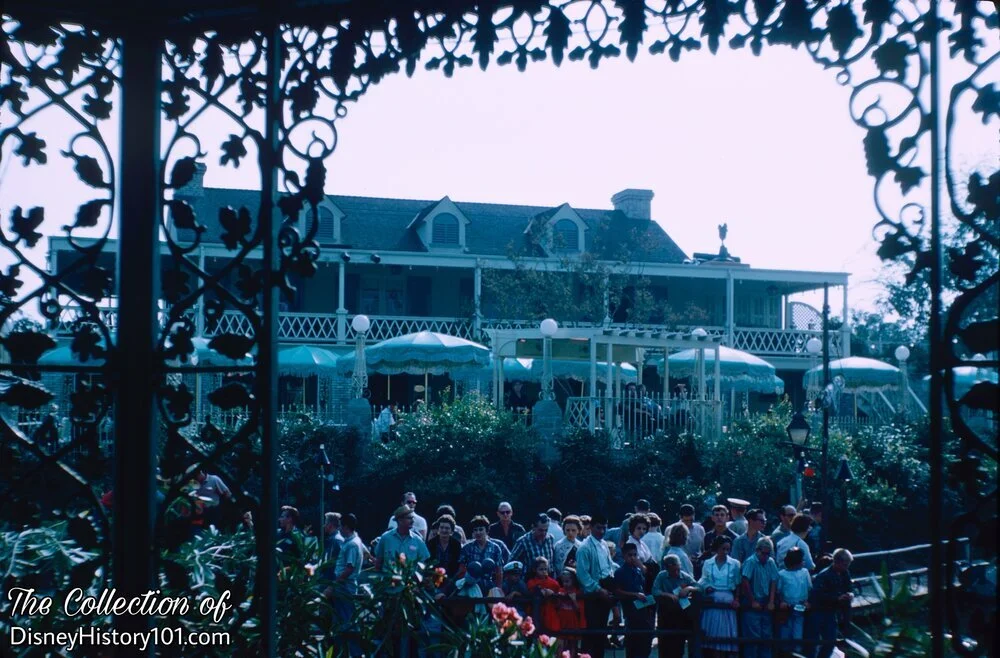
(October, 1961)
The Dixieland Band Stand (also called Orleans Bandstand) provided live entertainment within earshot of Chicken Plantation Restaurant.
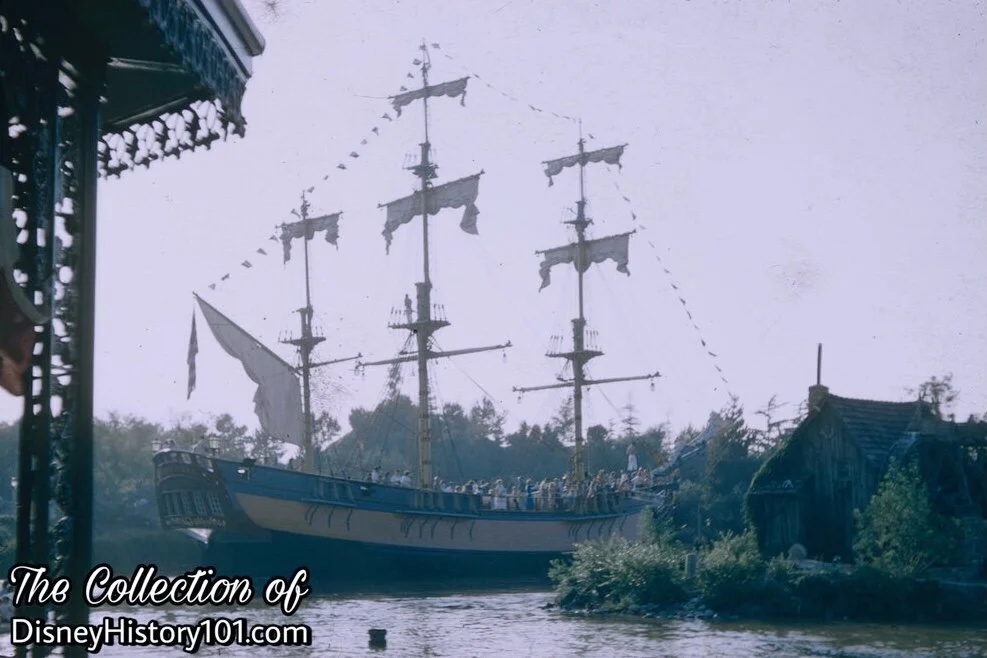
(September, 1958)
We are met with a grand view of the Rivers of America, and its riverfront traffic, including the Columbia as it circumnavigates these waters.
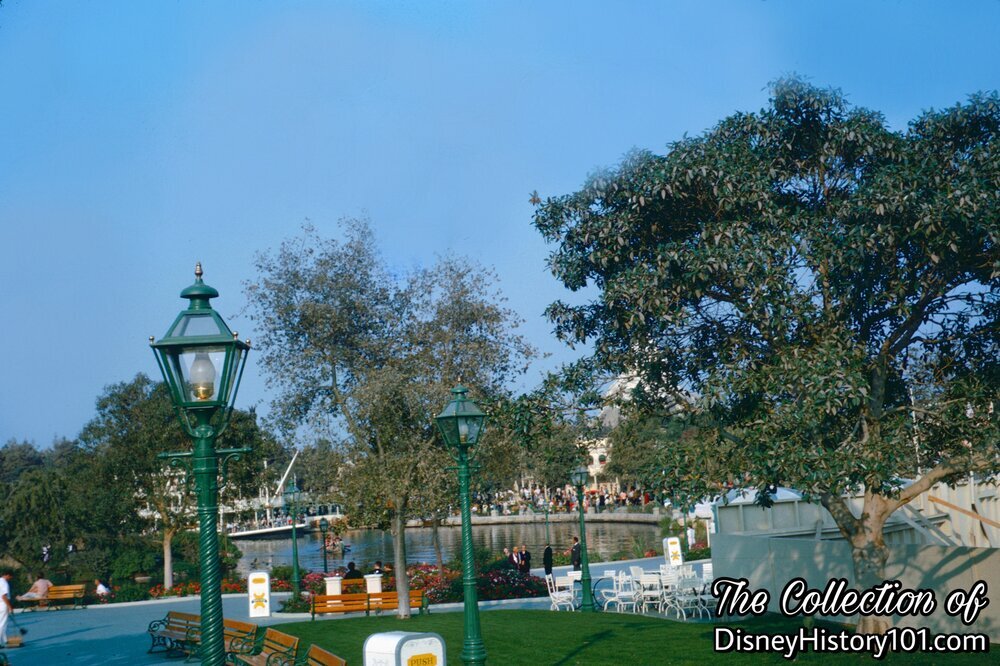
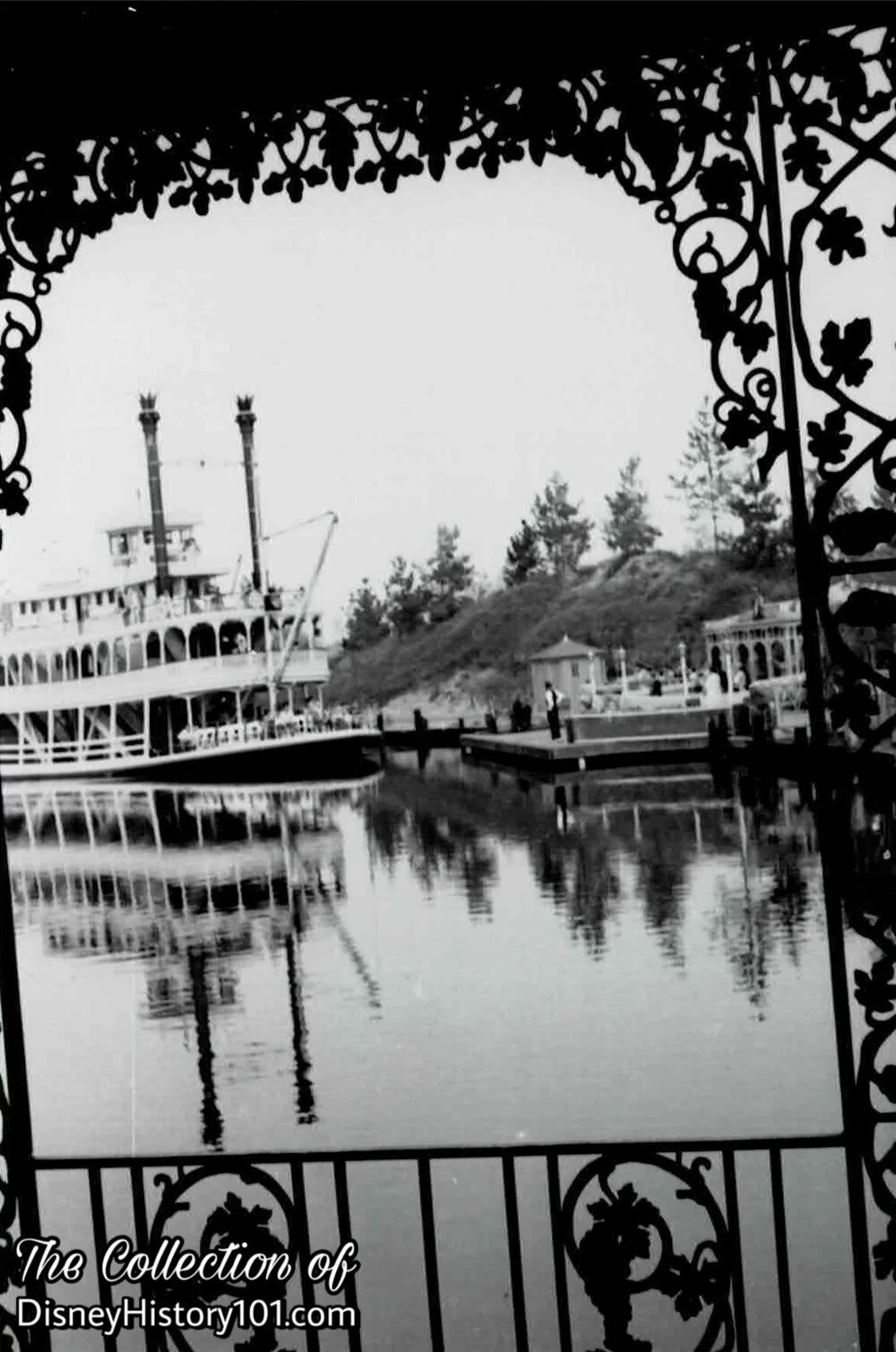
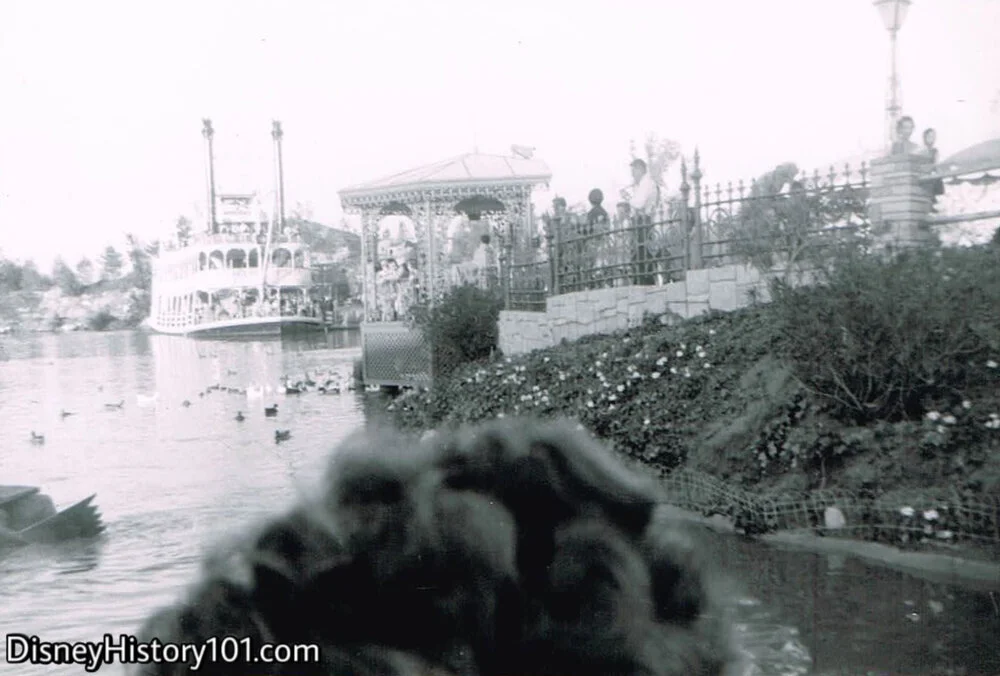
From the mouth of the canal (that connected the Rivers of the World to the Rivers of America), we can see the Dixieland Band Stand near the Chicken Plantation House!
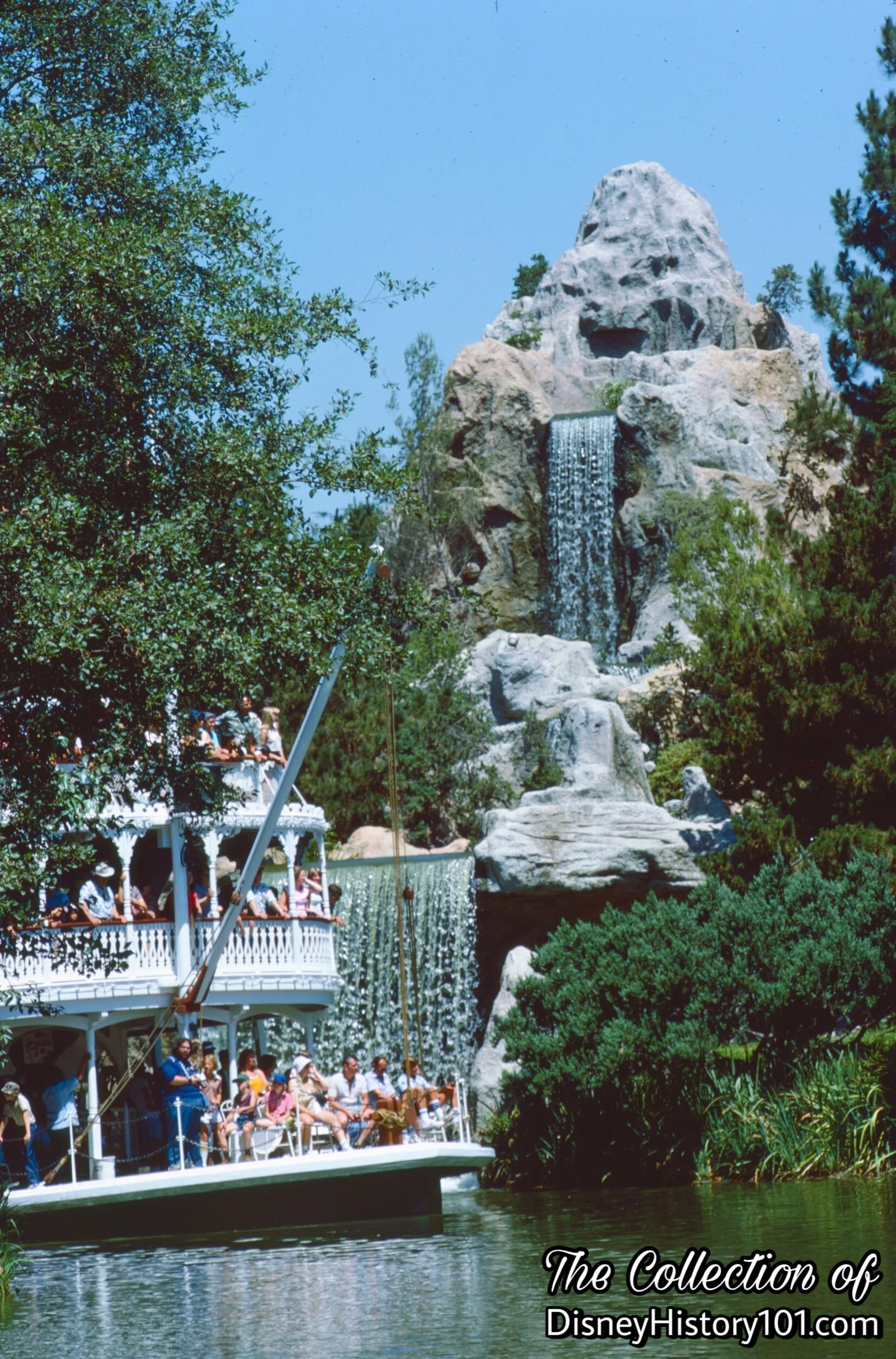
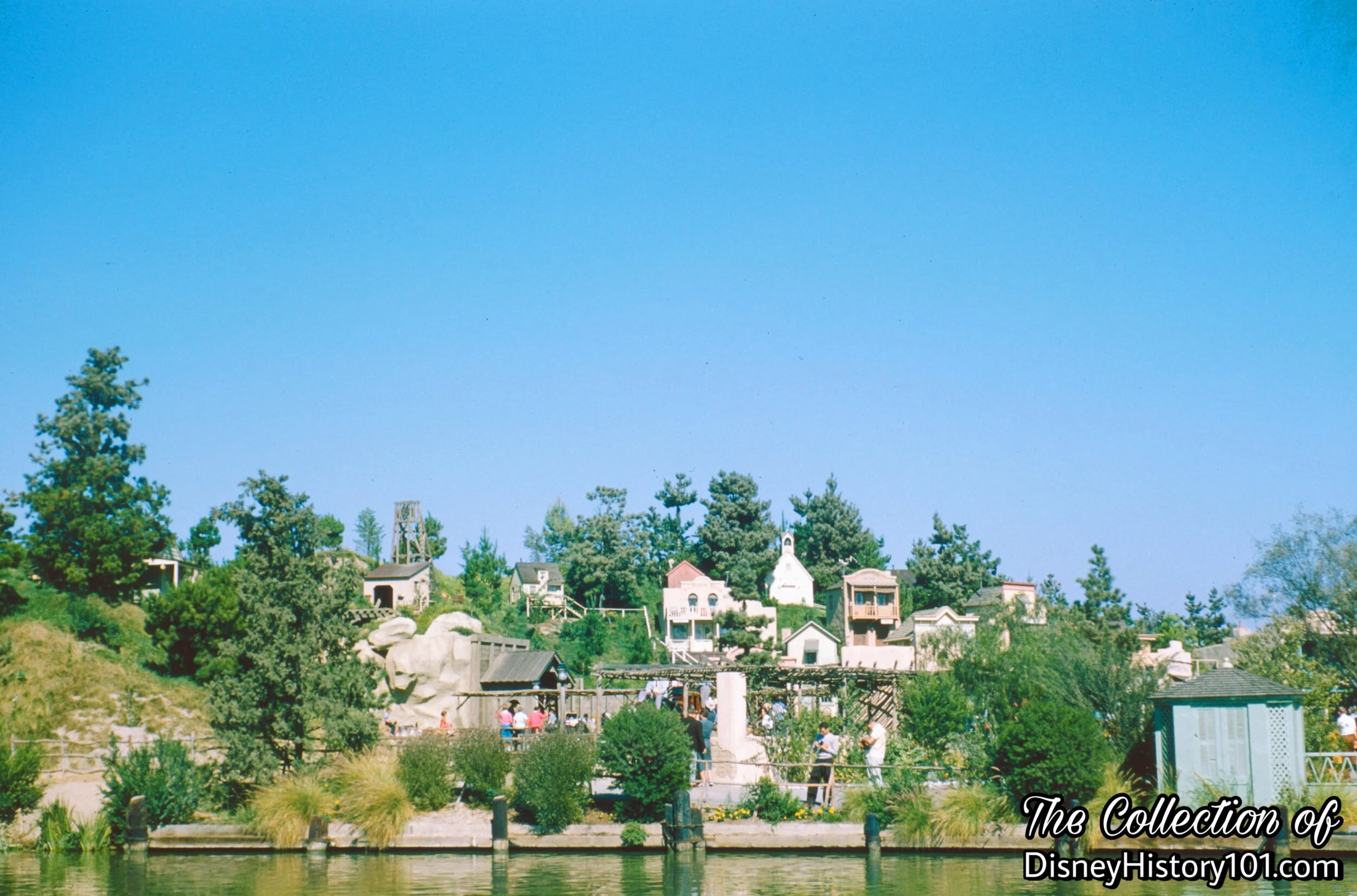
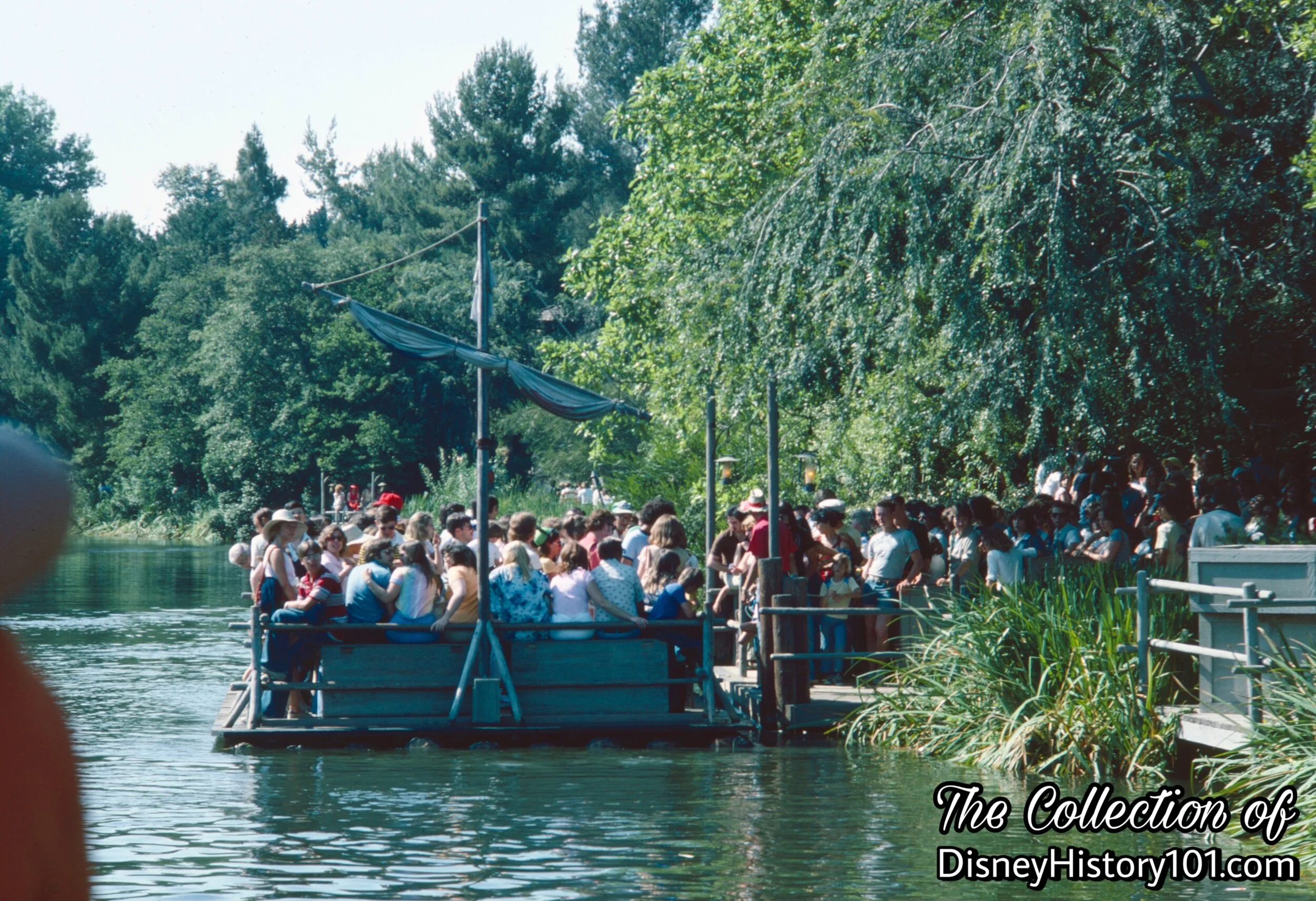
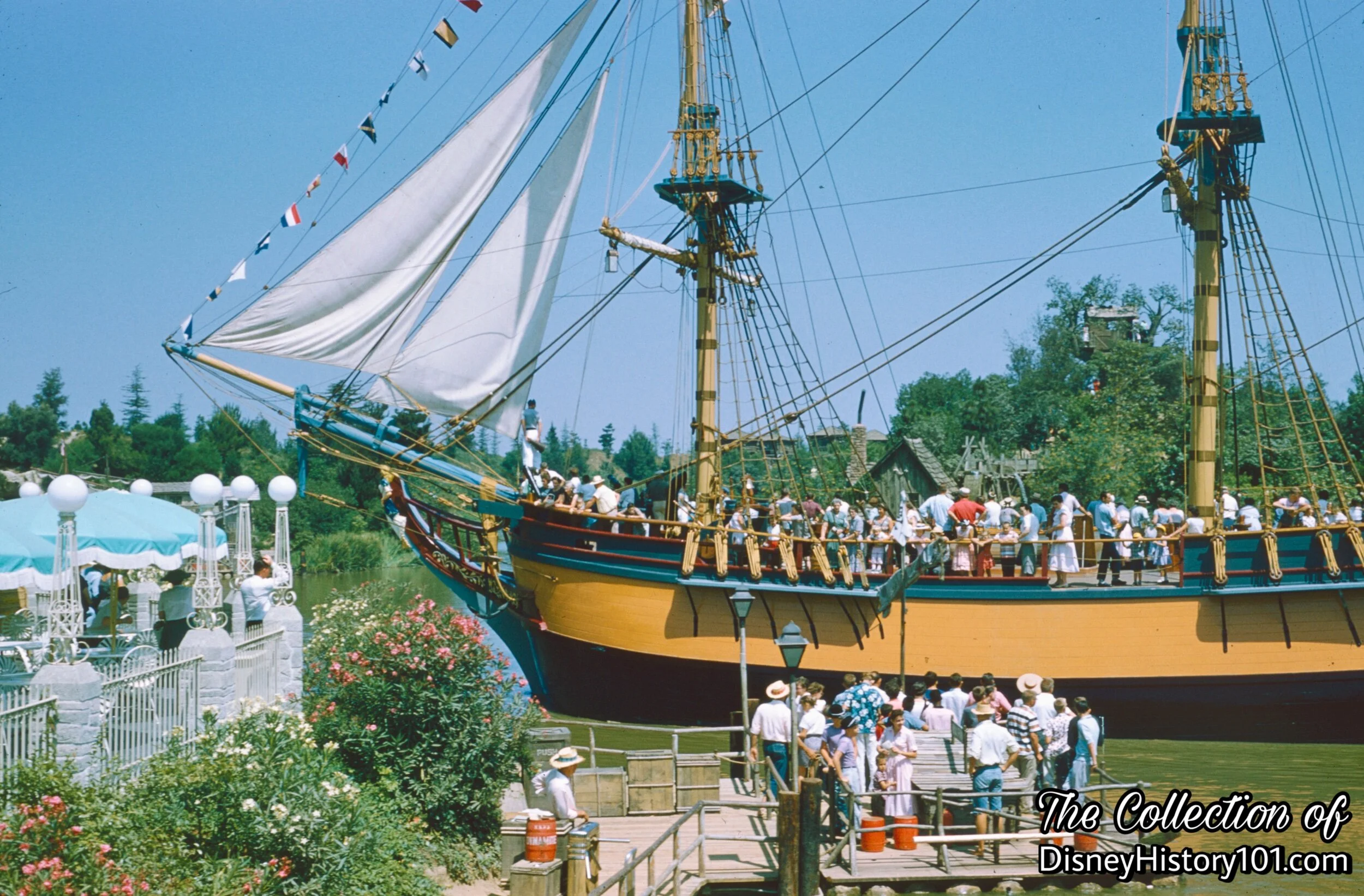
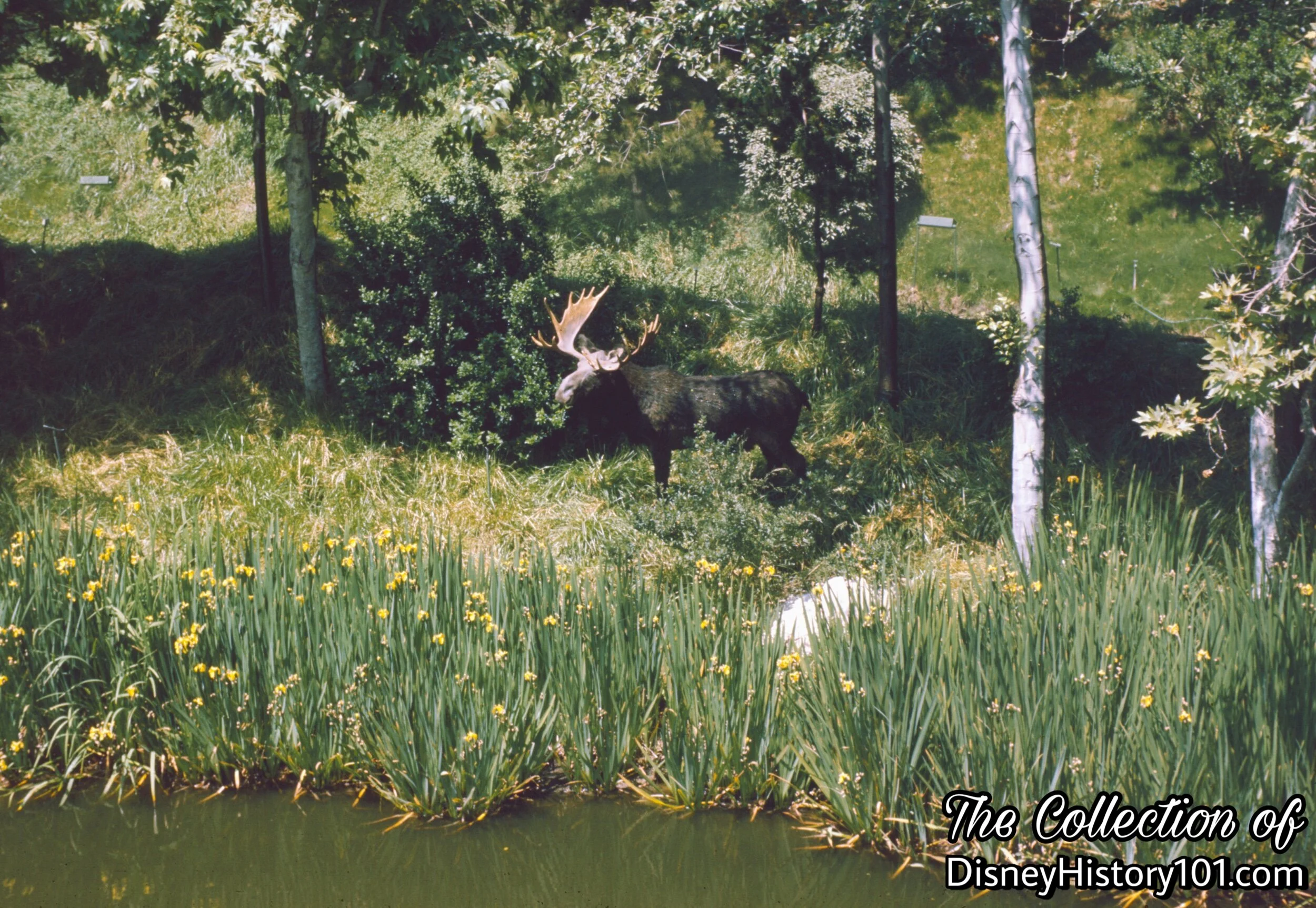
“Wilderness Landscaping and Wild Life”
With an illusionary effect known as a berm, Disney landscape artists have created a wilderness in the middle of a large modern city. A rugged wilderness forest. Of the flora, “World of Flowers” made mention of the “Pines, alders, maples, cottonwoods and willows” dominating a natural scene which once consisted only of orange trees. Some of the seedlings planted in 1955 had grown too fast for comfort. “California alders planted as bare root whips with finger size trunks had developed 16-inch trunks by 1964. They had to be cut down with a chain saw and logged out.” The flora “affords shelter to the mechanically animated moose, elk, and deer in lifelike groupings along the water's edge. Wild flowers and berry pasts appear among the sunlit patches, and in the autumn the birch and liquidambar trees refect their colors in the water.”
According to the “Disneyland Dictionary” (published 1959): “Wild geese, mallards, and other birds around the island and mainland in Frontierland migrated here, and the white ducks on the Rivers of America were raised by Disneyland.”
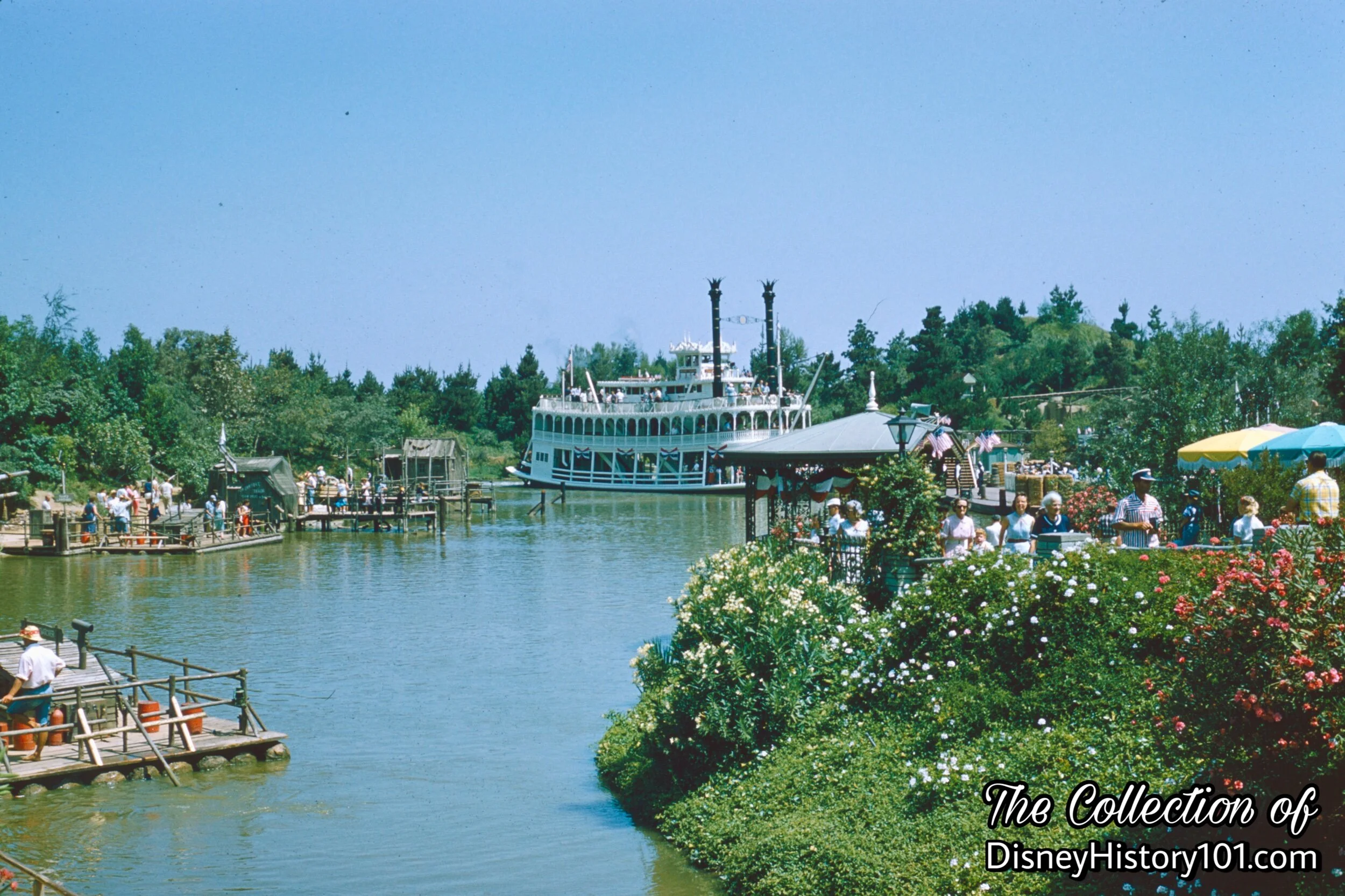
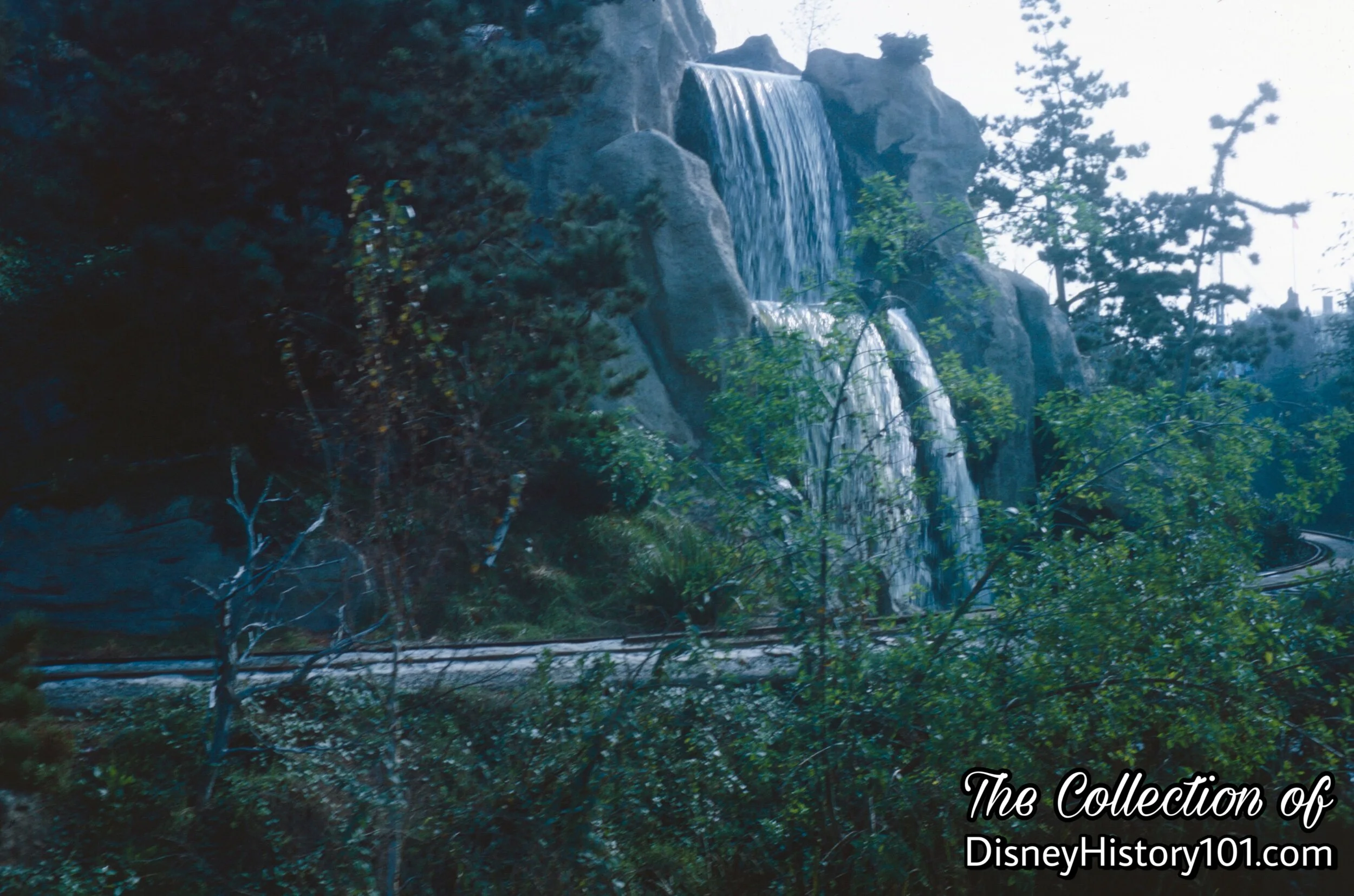
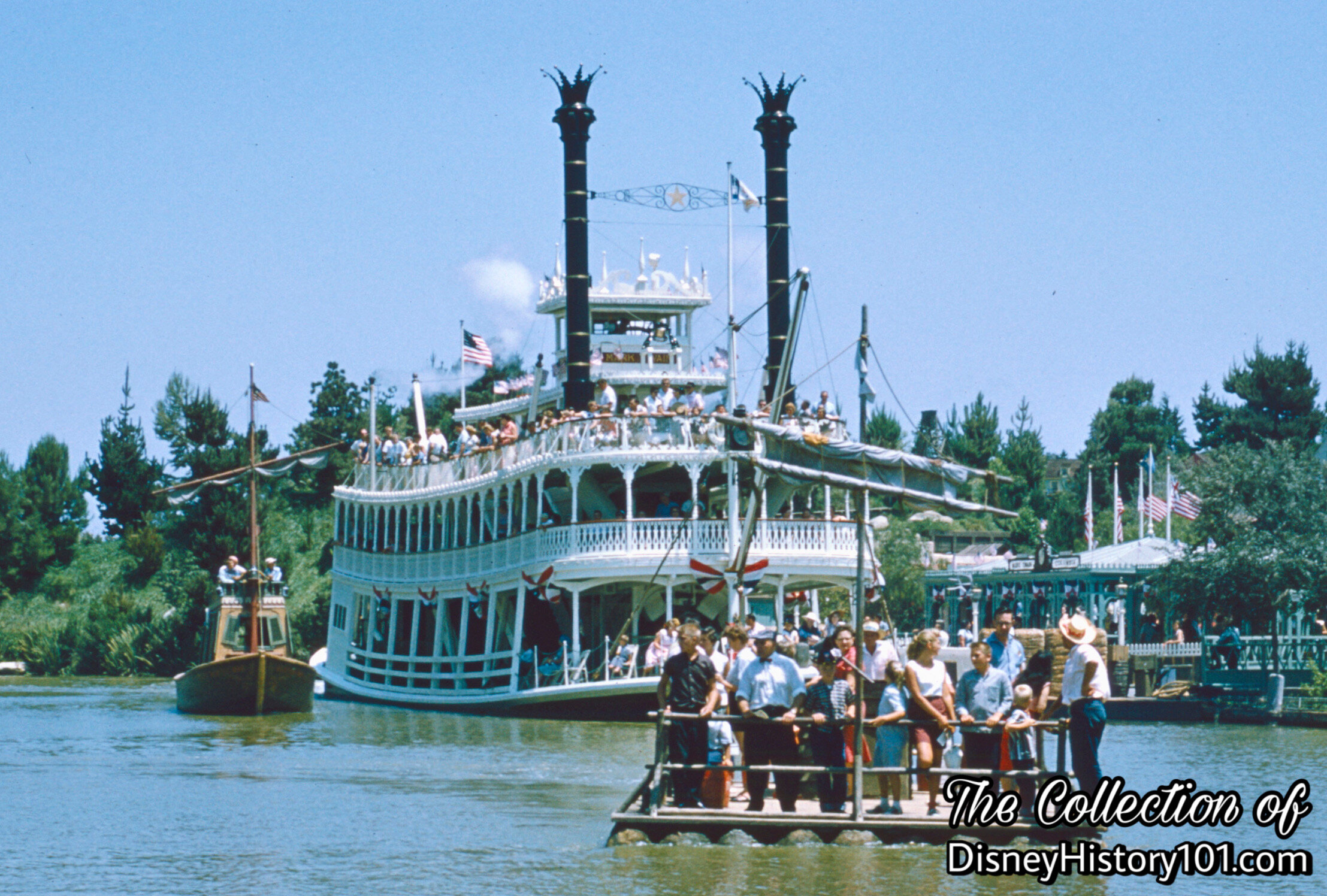
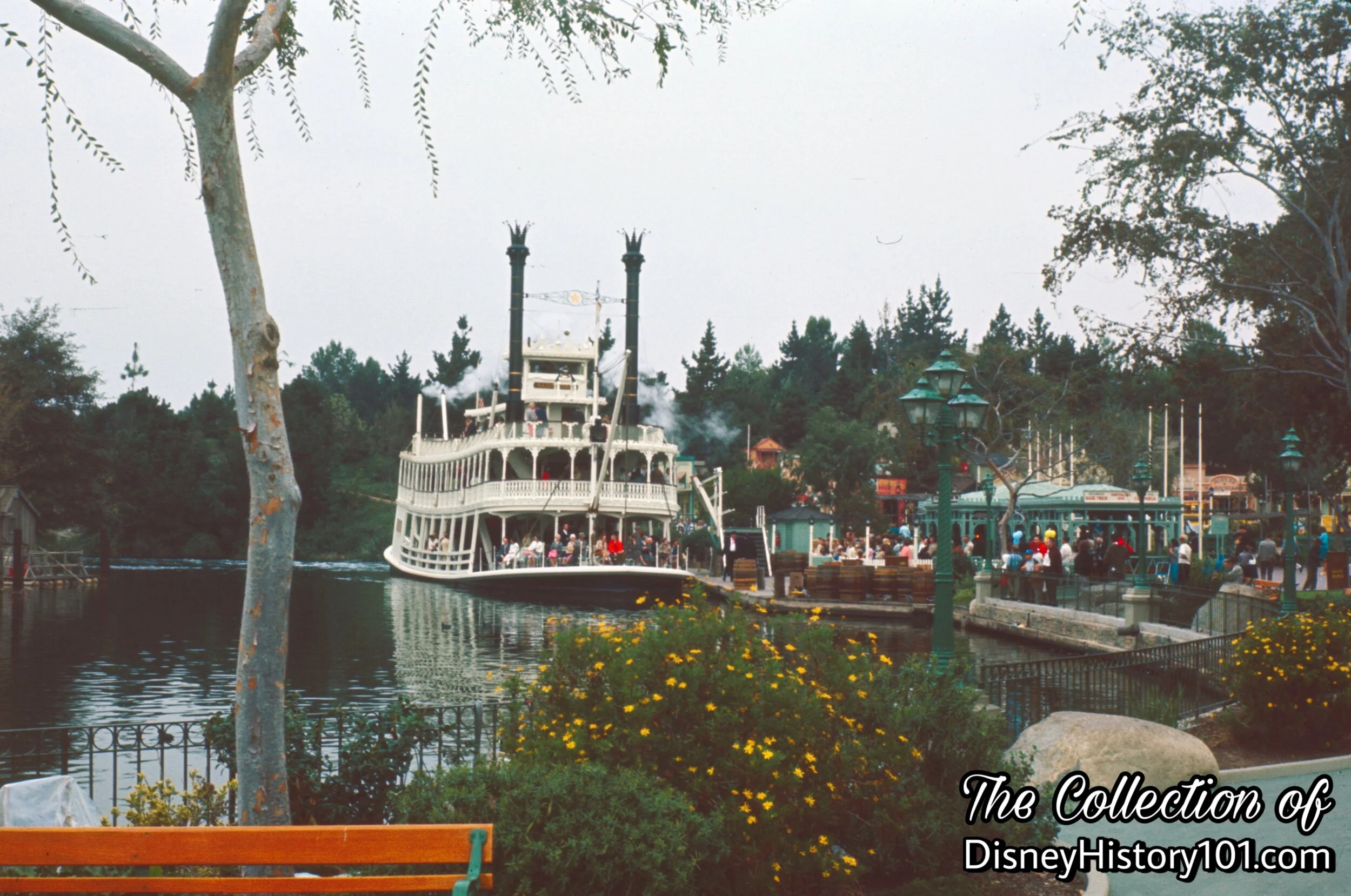
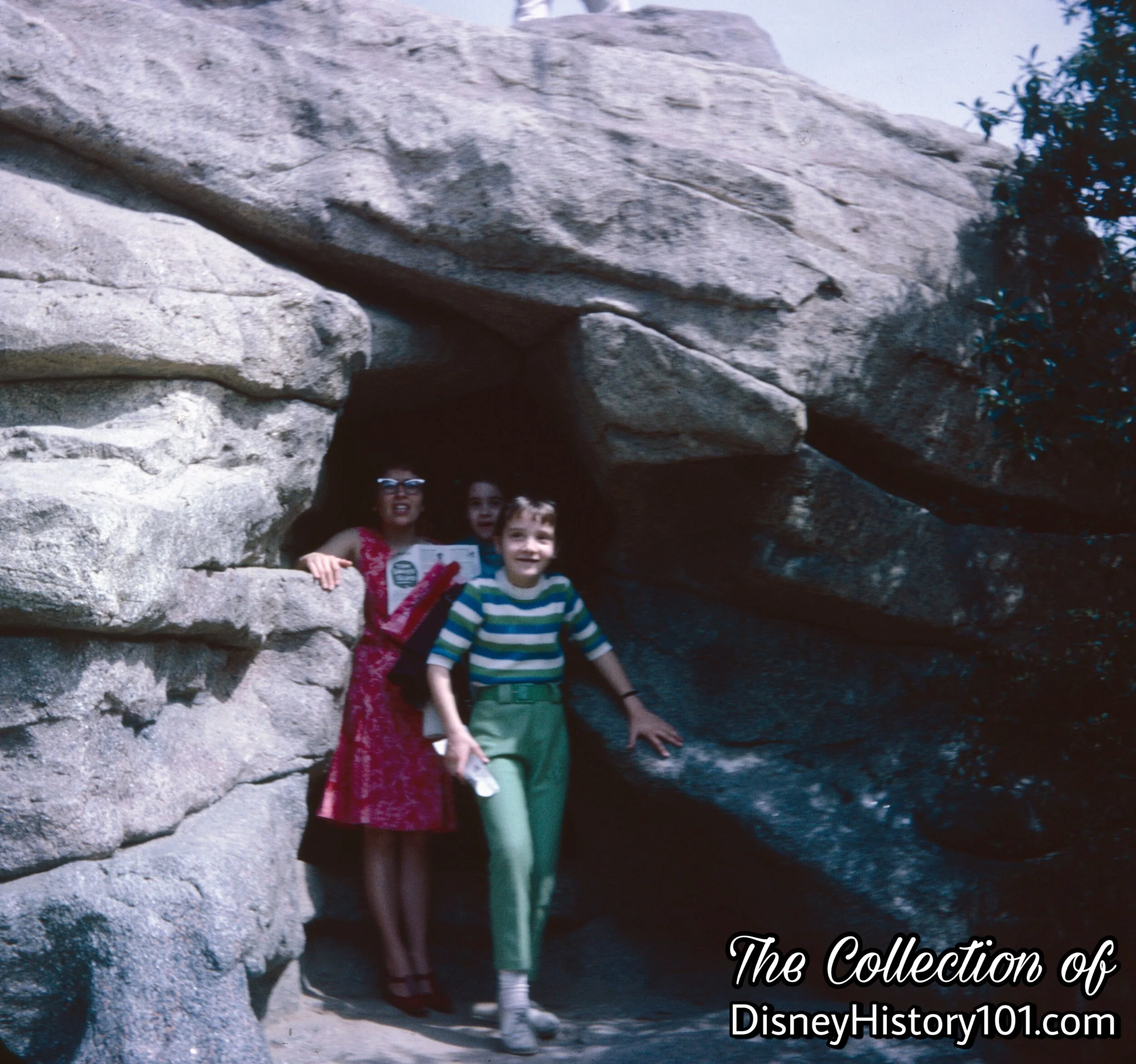
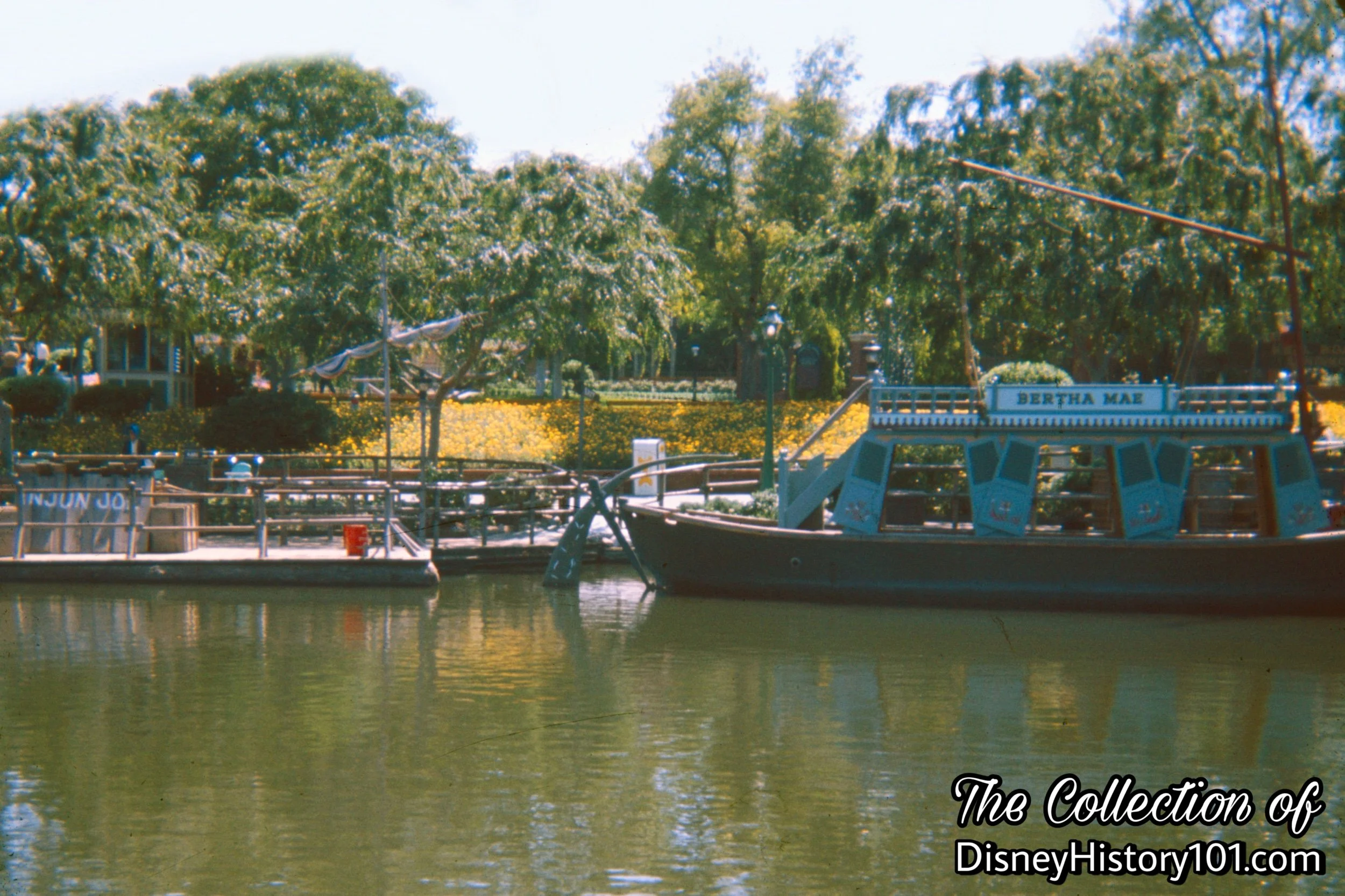
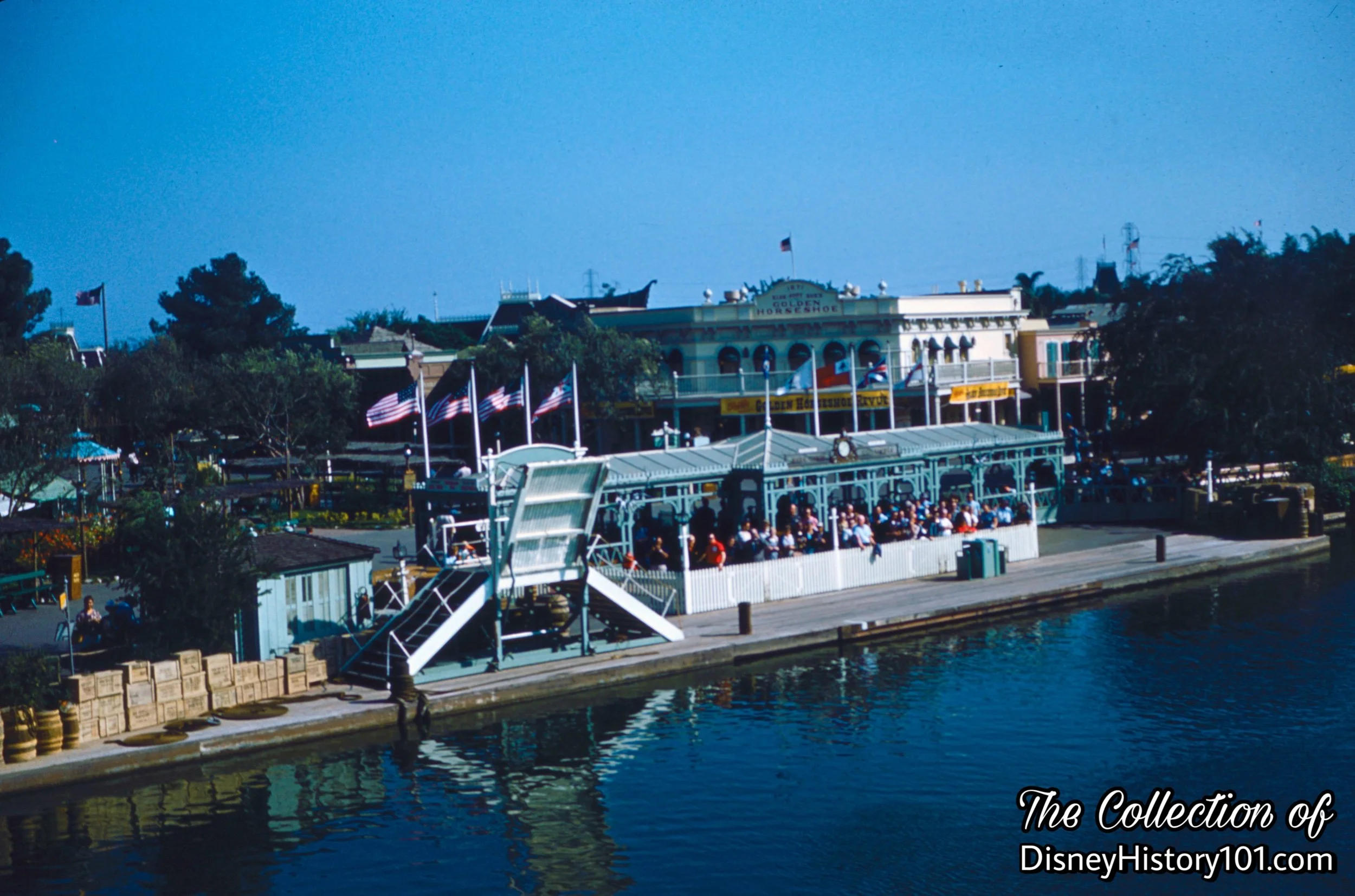
Frontierland Dock and Guest Control queue area.
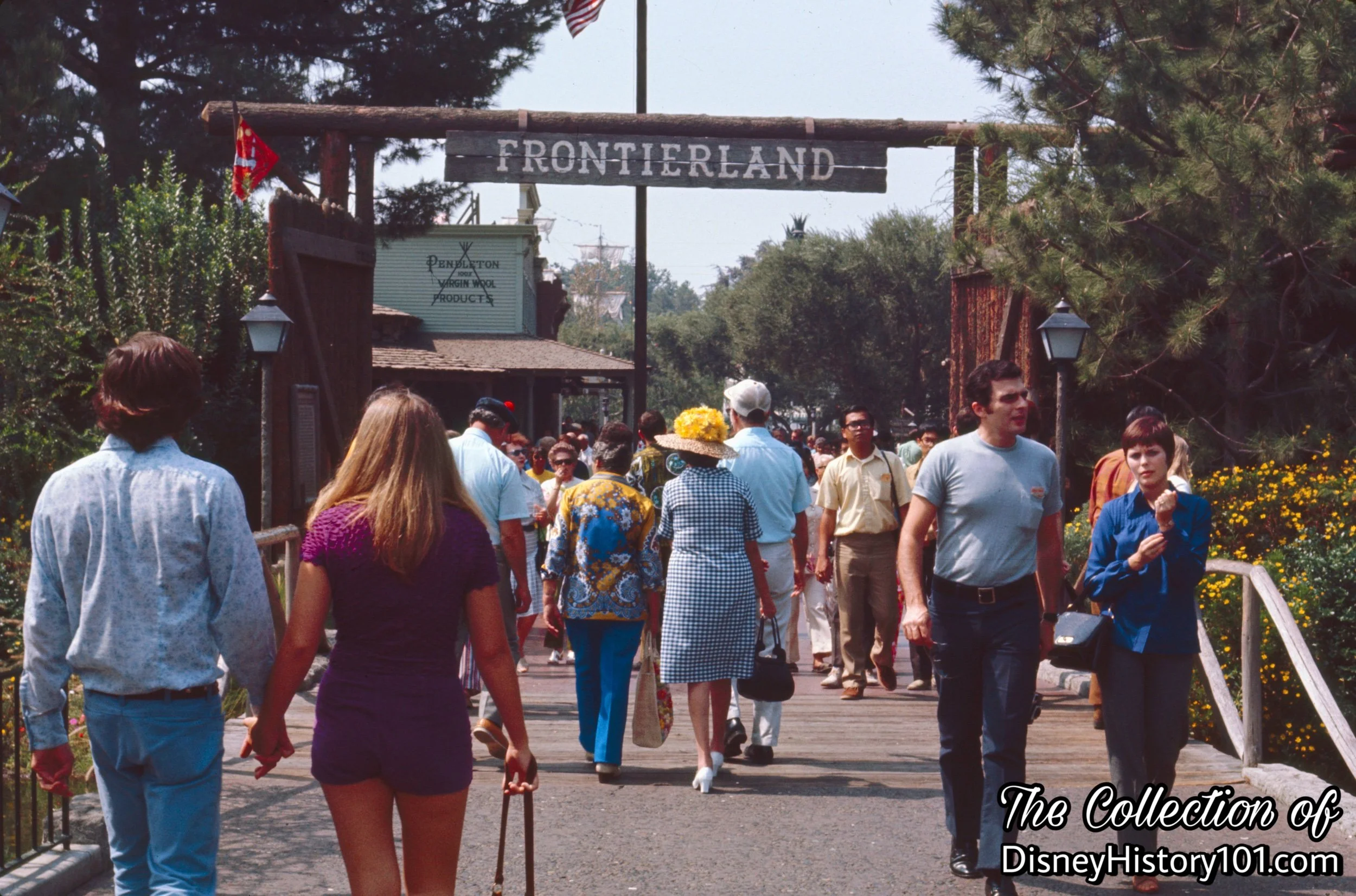
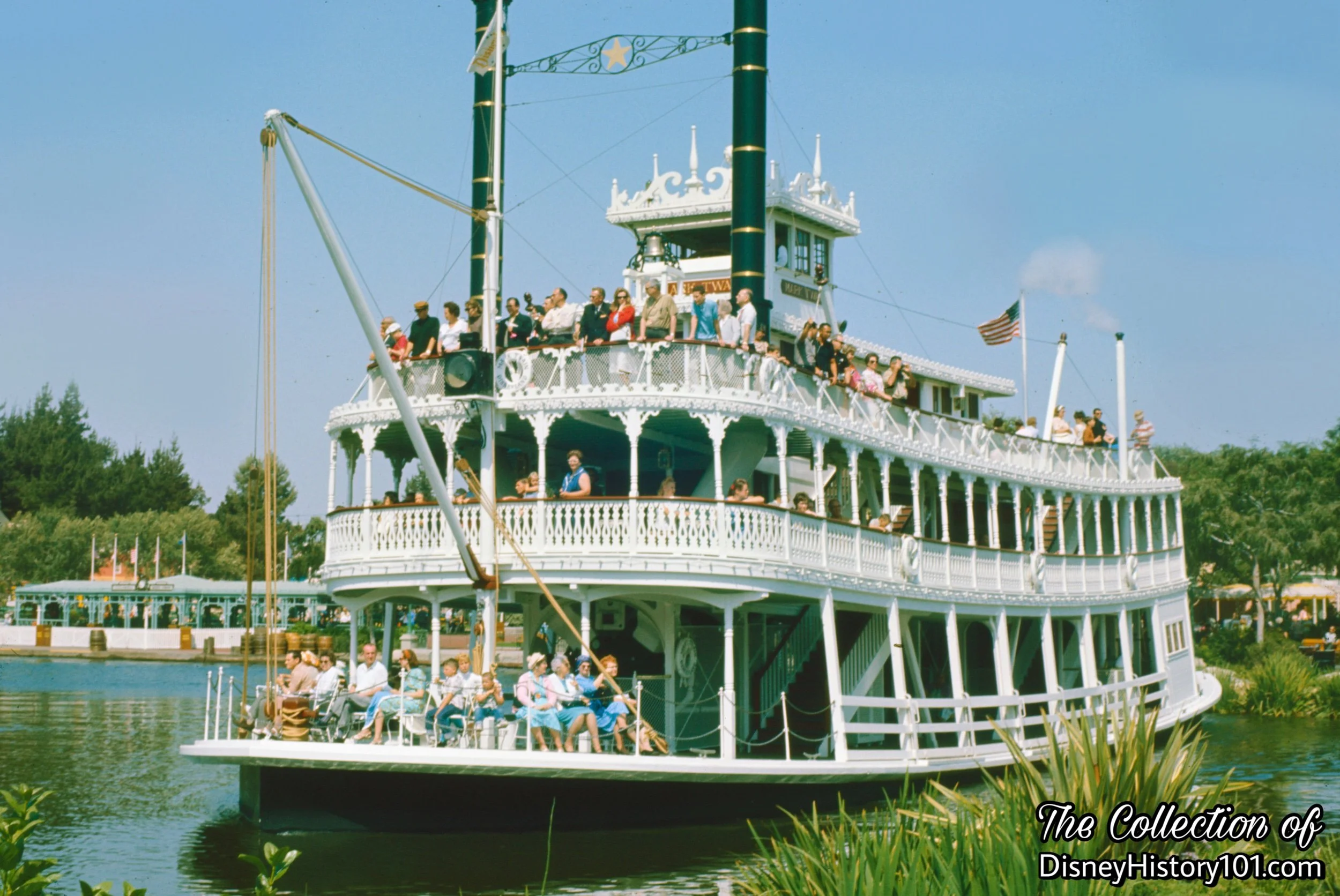
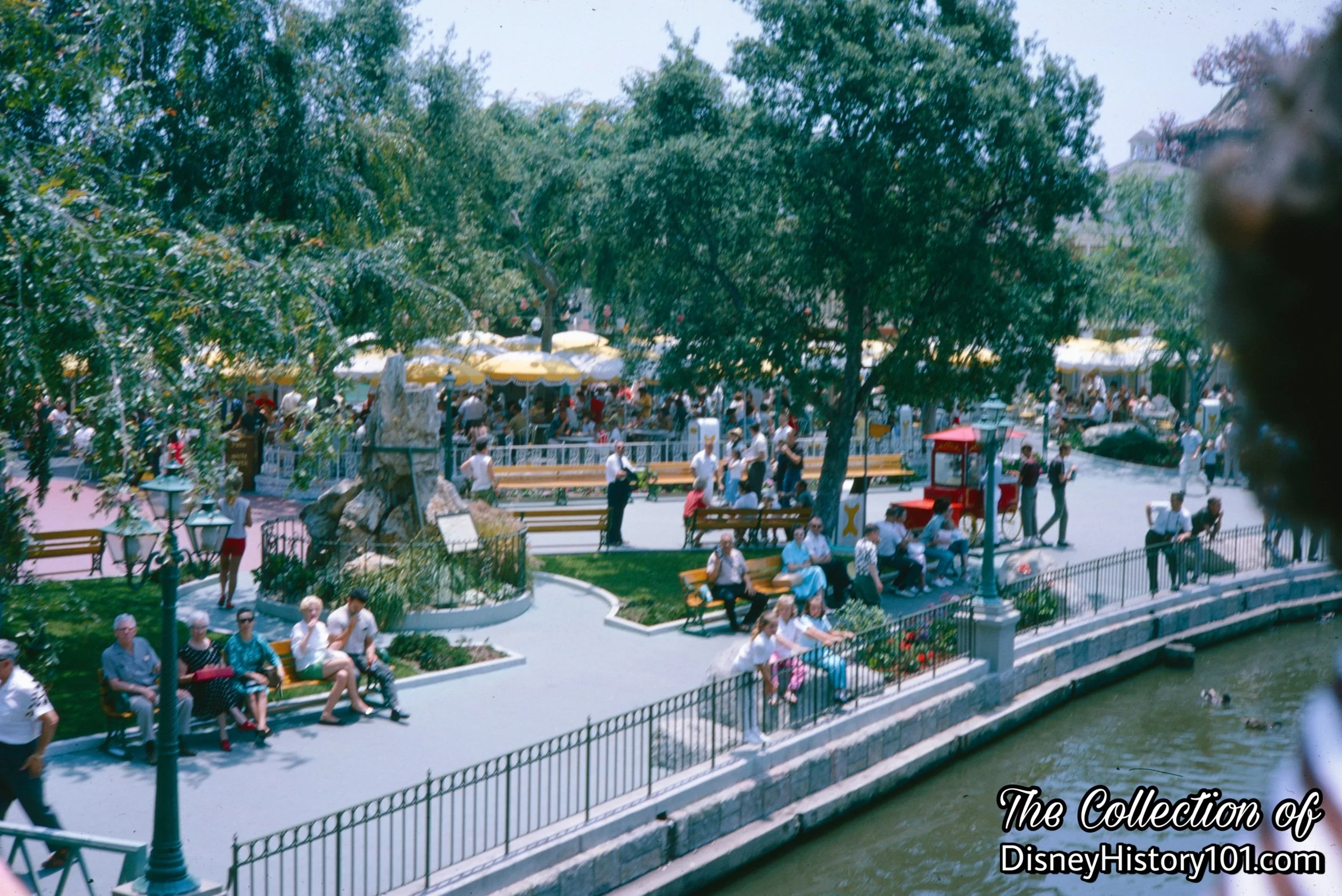
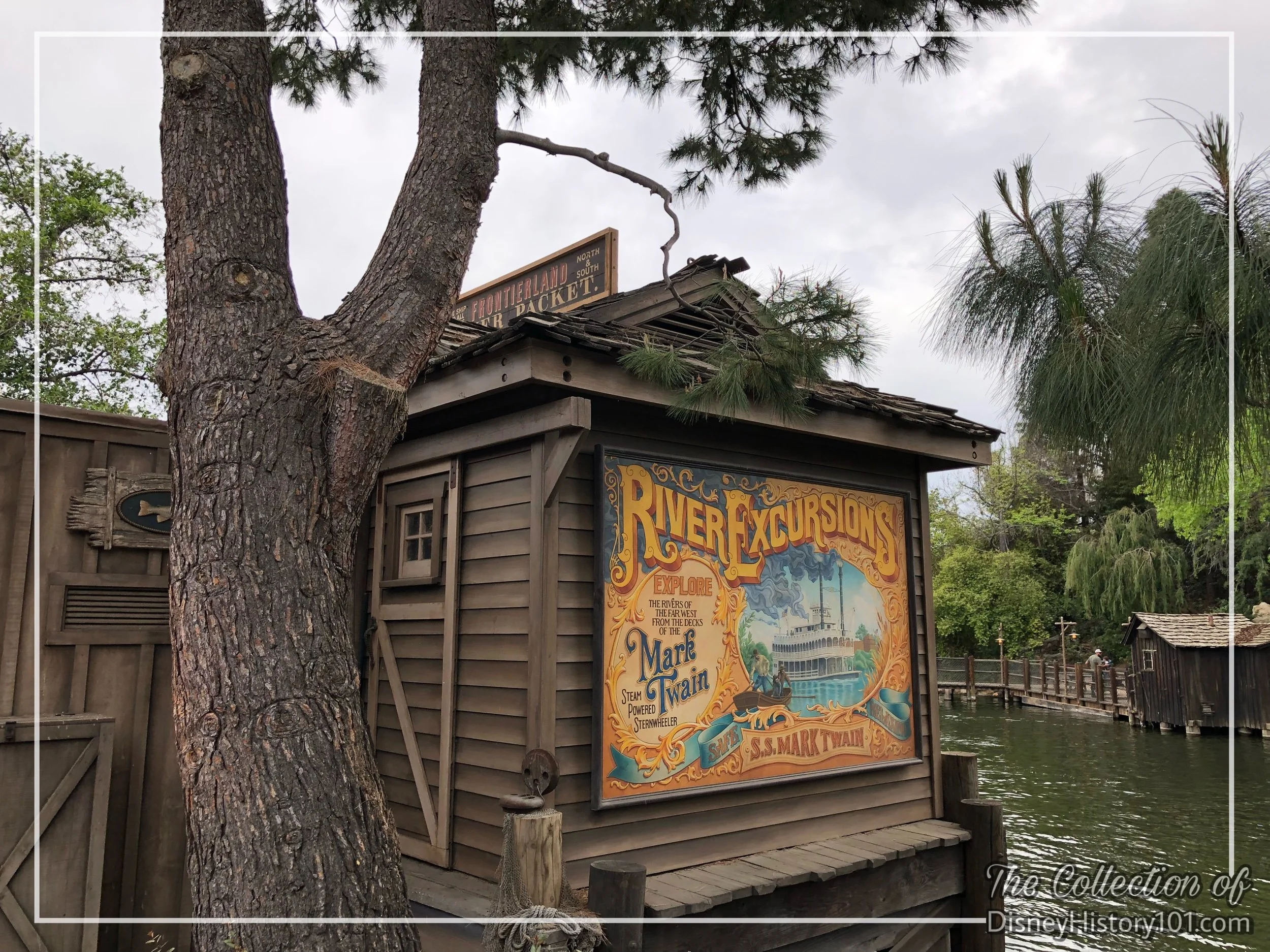
The Ice House; location of H2O, CO2, and an ansul fire extinguisher.
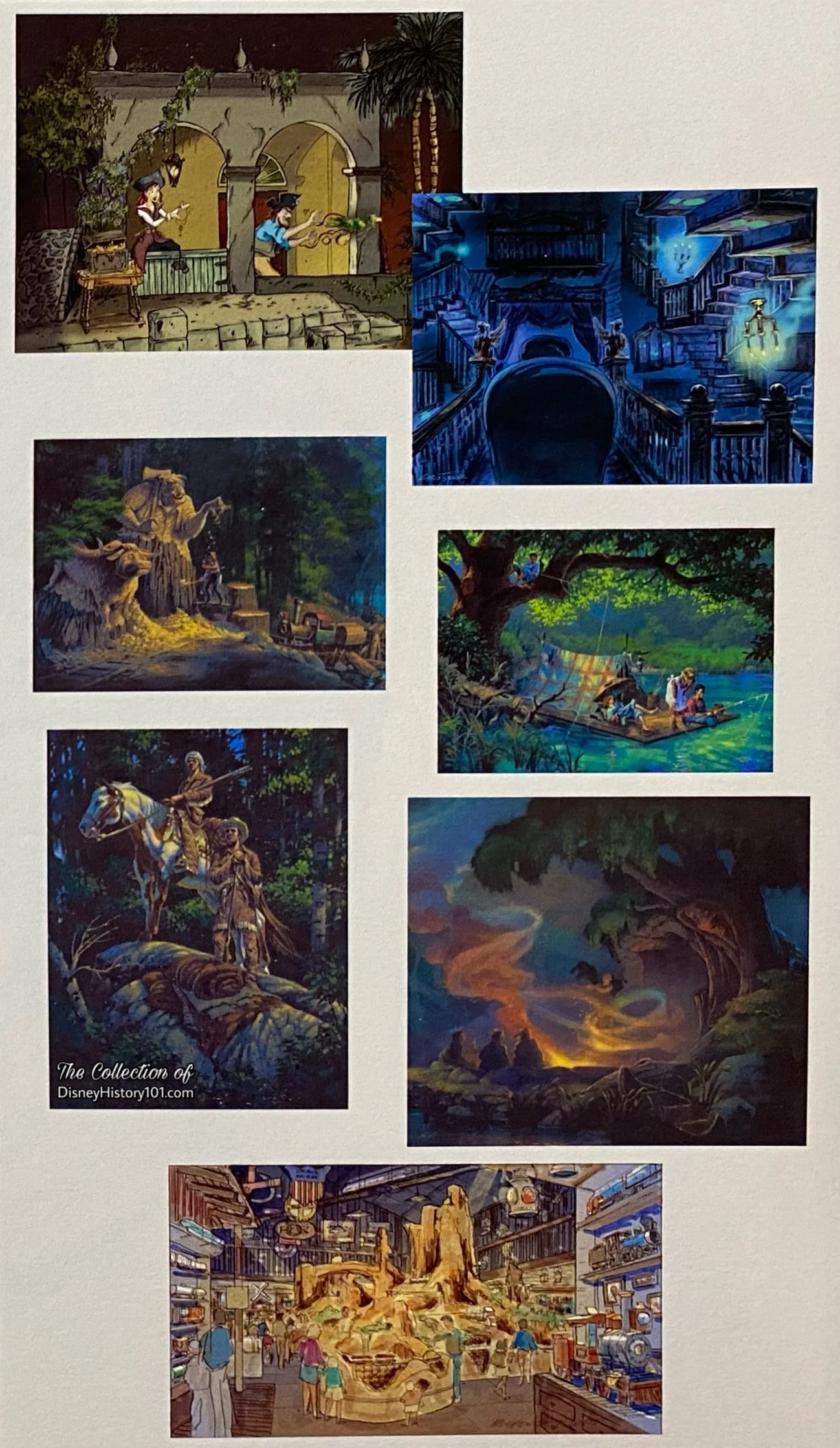
New Magic, Master Planning, and Business Opportunities for Frontierland Area Developement.
“Frontierland Master Plans for Disneyland”
As for Frontierland at Disneyland, it will never be complete as long as there is imagination left in the world!
During the 1970s, October and June of each year, were periods of major maintenance and rehabilitation which touched virtually every attraction, contributing to improved operations and show elements for the public.
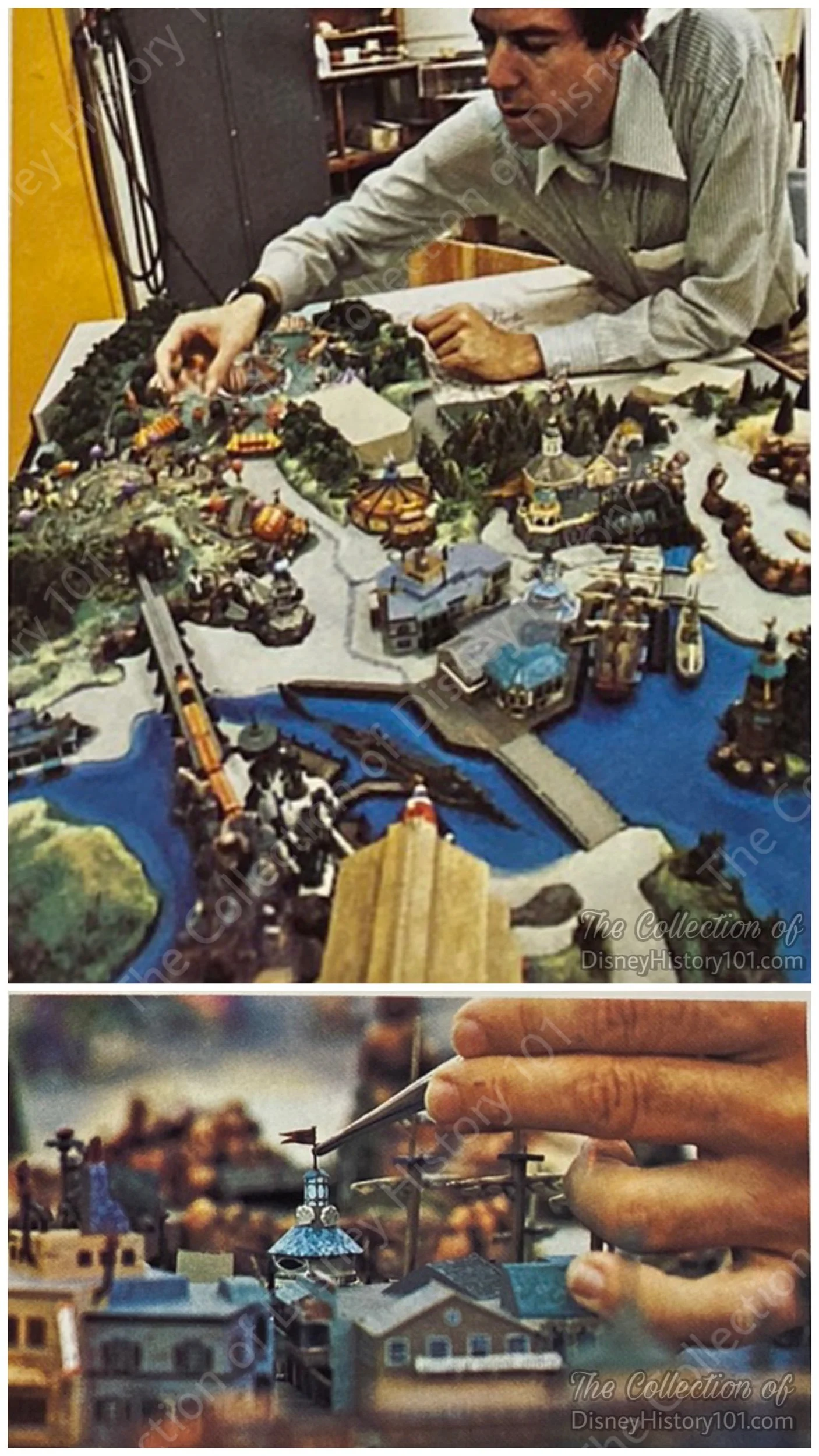
“Annual Report 1976 Walt Disney Productions,” Page 14.
In 1974, Tony Baxter created a watercolor on brownline print of Discovery Bay Overall and Discoveryland. By 1976, Frontierland was considered part of an 8-year master plan to be developed. A major new “thrill ride” called BIG THUNDER RAILWAY was being master planned at WED in Glendale. It was planned for opening at both Disneyland and Walt Disney World during the fiscal year of 1979. During that time, it was planned that Frontierland and a Circus-themed area of Disneyland were to be connected through the development of Discoveryland and Discovery Bay along a portion of Rivers of America. Themed to the San Francisco of the gold rush age, Discovery Bay would have brought to life a time and place that climaxed an age of discovery and expansion. There would be located attractions based on the motion pictures “Island at the Top of the World” and “20,000 Leagues Under the Sea,” the latter featuring “undersea” dining in the Grand Salon of Captain Nemos famous submarine. By September 30, 1982, WED/MAPO jobs were opened for Discovery Bay Conceptual Designs (DX01-8; D145-X) at a total cost of $79,938.45.
A few years later, the Enhancement projects program began in 1990. Enhancement projects would draw upon Capital Funding sources, usually varied in level of investment, to enhance guest satisfaction or to promote the venue's storytelling and brand. When the program began, each of the major parks was allocated $1M annually to invest in show elements which would add a special touch or a sprinkling of magic to existing features. Return on Investment was not a requirement, rather, adding high show value (guest satisfiers) was the main program objective. The program was not intended to supplement current or differed routine maintenance activities or other capital programs.
During 2008, Blue Sky Team members engaged in free-thinking regarding Frontierland, unencumbered by restrictions of budget, schedule or the laws of nature and physics. Using simple index cards and thumbnail sketches, the team engaged in conversation, consuming anywhere from a few hours to several months, to generate valid ideas that were considered “High-Concepts” - the single point essence that guided the development of a new Frontierland Story.
By 2000, the WED Enterprises Design Standards Evaluation Program.
In recent years, ”Project Stardust” would greatly affect Project Development of the area.
“Disney Parks and The Legacy of Frontierland”
In the present, much of the Frontierland scenery along the Disneyland Railroad continues to depict the western frontier of the post-Civil War period. It is this Frontierland spirit that has sparked a legacy with Disney Parks worldwide.
For instance, when the Magic Kingdom opened at the Walt Disney World Vacation Kingdom, there were Frontierland Gunfighters present - Stunt men who would “shoot it out, western style.”
When TOKYO DISNEYLAND ® opened (in the Chiba Prefecture of Urayasu, Japan) on April 15, 1983, Westernland brought “the action and romance of our frontier days to life.” The land included “the barroom style Diamond Horseshoe,” home to the Hoop-Dee-Doo-Revue headlined by Diamond Jim and Sluefoot Sue. The land also opened with the Westernland Shootin’ Gallery, a Country Bear Jamboree with both English and Japanese lyrics, a Westernland Stage, a Hungry Bear Restaurant, and even a Mile Long Bar. Other adventures included a Mark Twain, Davy Crockett Explorer Canoes and Tom Sawyer Island on their very own Rivers of America. As for shopping experiences, Westernland offered western clothing like boots, chaps, vests, and purses through Western Wear, leather goods through the Rawhide Corral, while rugs, turquoise goods, and Indian headdresses, were discovered at the Trading Post.
The Frontierland tradition continued when the town of Thunder Mesa served as a gateway to the Old West at DISNEYLAND PARIS Theme Park.
Knowing your audience is important. So, when Shanghai Disneyland opened, it was devoid of a “Frontierland,” a “Westernland,” or a location embodying the pioneering spirt of the American West.
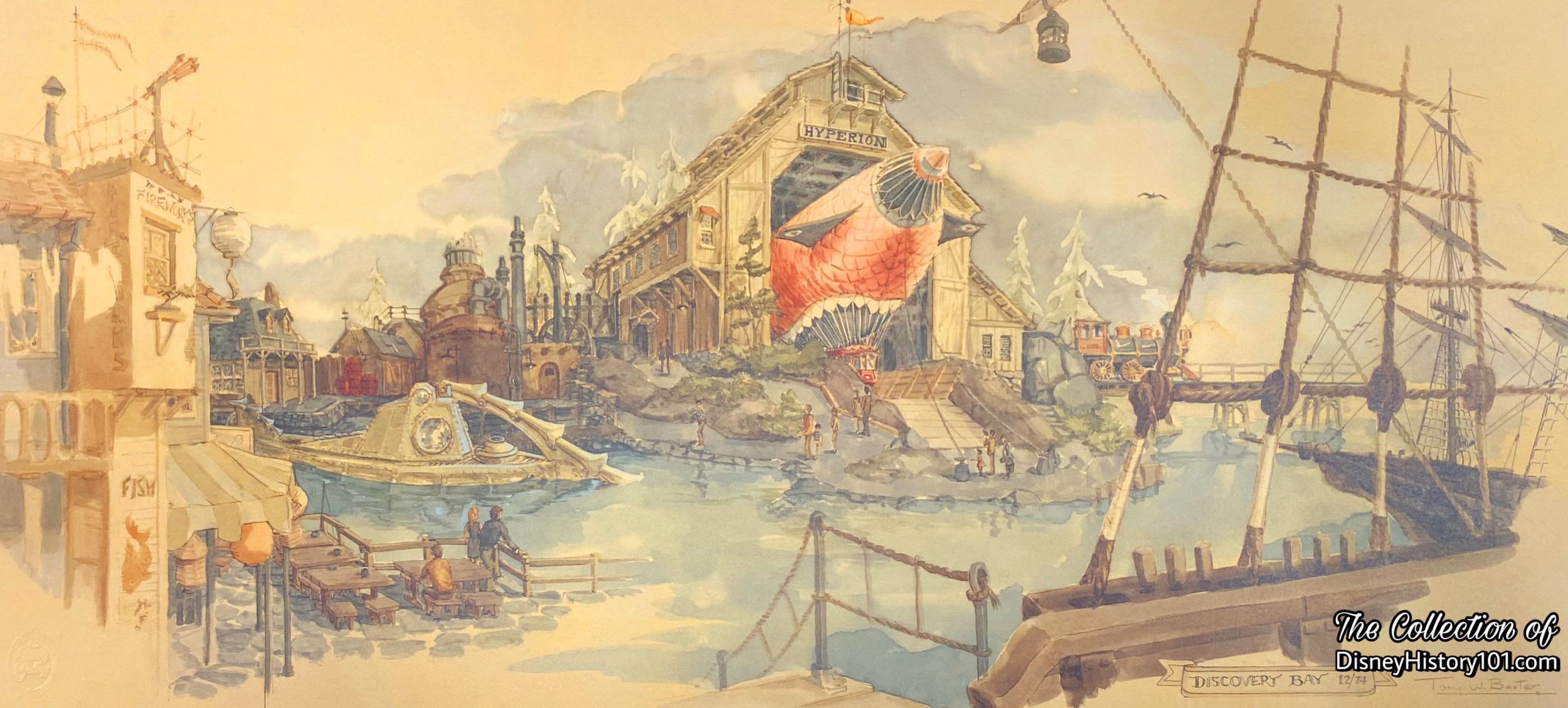
"Discovery Bay", The Disney Gallery Exclusive; 1990.
“Discovery Bay Overall” (watercolor on “brownline” print) was prepared by Tony W. Baxter in December 1974 for the development of Discoveryland at Disneyland.
Frontierland has inspired Festival Disney at Euro Disneyland.
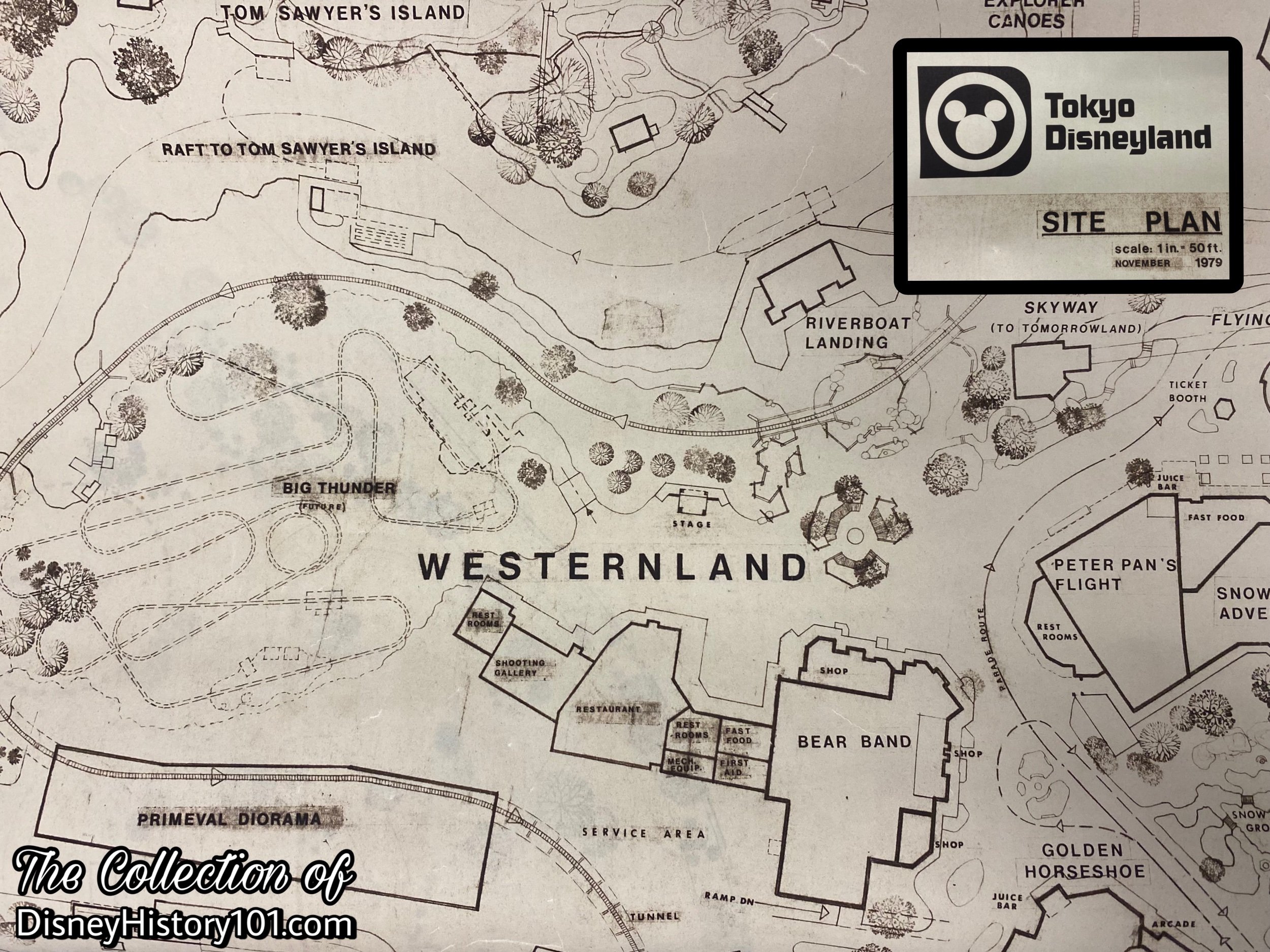
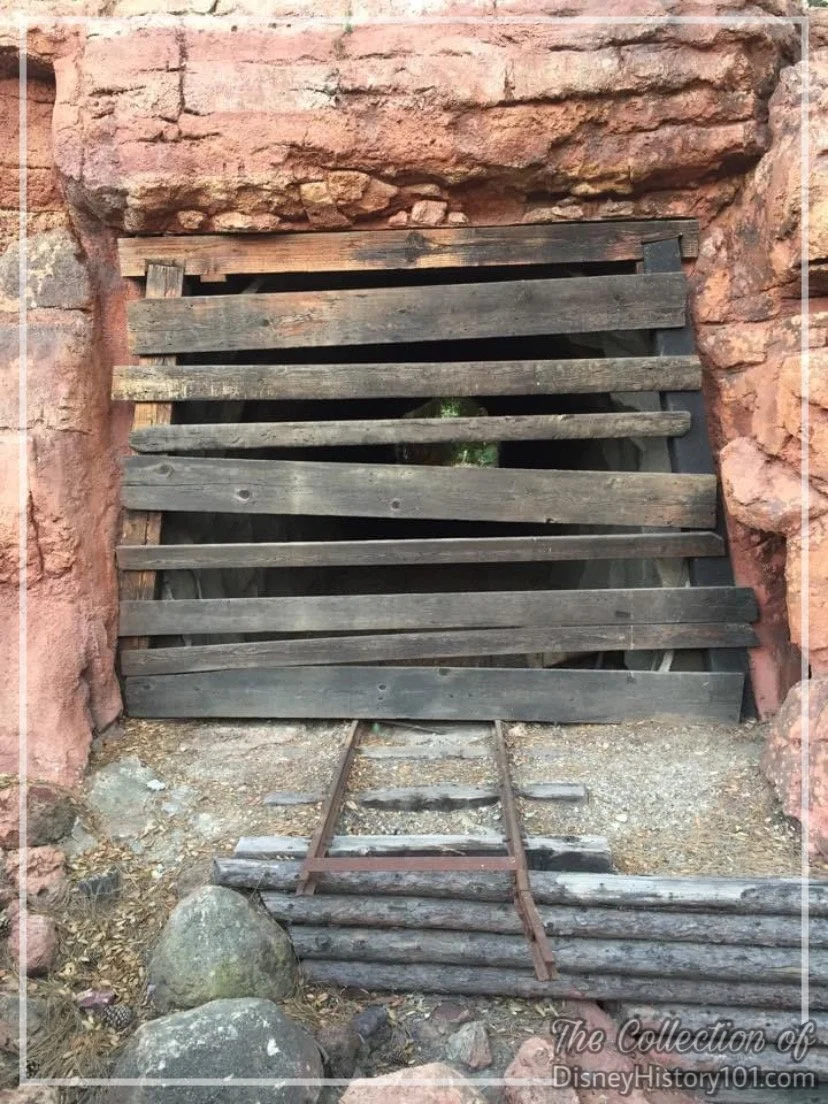
The old tunnel to Bear Country along Big Thunder Trail.
Most of the three-dimensional, carved plaster RockWork and the mountains in Disneyland were products of the Staff Shop.
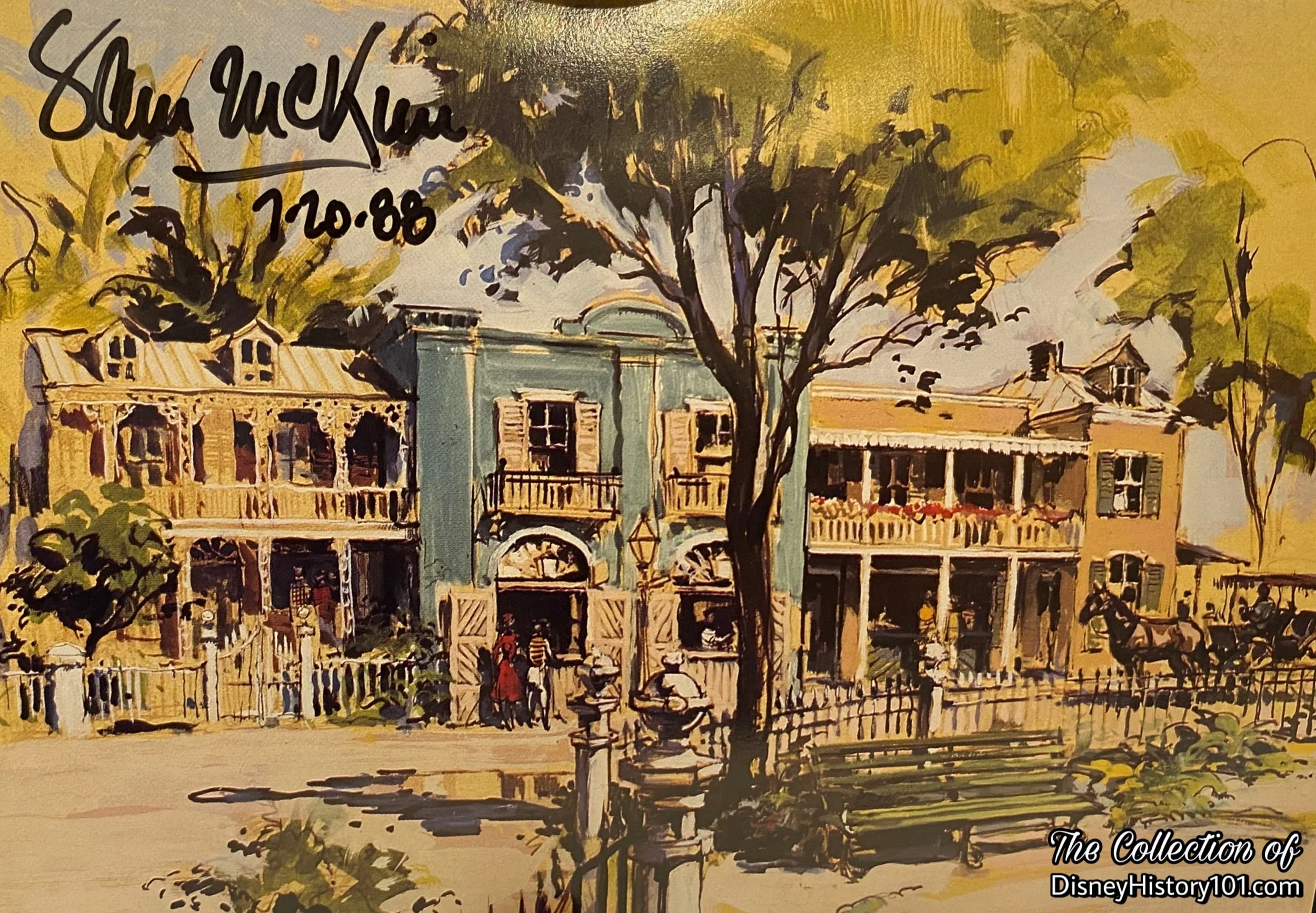
Frontierland Street; Sam McKim, c. 1954; 1987, The Walt Disney Company.