NYWF : FORD PAVILION
First Season (April 22, 1964 - )
Second Season ( - 1965)
Walt Disney later divulged: “The whole thing here is the organization. Whatever we accomplish belongs to our entire group, a tribute to our combined efforts… Our World’s Fair shows - what we did was possible only because we already had the staff that had worked together for years, blending creative ideas with technical know-how.”
Marty Sklar (of Disneyland Public Relations) would join WED permanently by 1961, and soon began “playing an active role working with industry on shows and exhibits for the World’s Fair in New York. His main efforts concentrated on the Ford Show and the General Electric Carousel of Progress.”
After some negotiations and special agreements, the synergistic partnership was formed. Ford Motor Company would have their “Weenie” for their “Ford Pavilion” which would draw guests into their pavilion at the New York World’s Fair. In turn, Walt Disney would gain the funding to develop the necessary technology to run the show in New York, and once the two years were complete (and in some cases, by 1964), Walt would have a brand new attraction for Disneyland.
Ford spent two years and millions of dollars to set it up for your pleasure. But according to LOOK magazine (February 11, 1964), “Walt Disney may be the showman who made the ‘64-65 Fair!” Among the 646 acres of Flushing Meadows, he contributed to the success of four pavilions, including “the talk of the fair” - the expansive Ford Motor Company’s popular Pavilion! Walt Disney is said to have spent ten years and a million dollars on “Audio-Animatronics,” the system which runs the Ford show from a battery of magnetic tapes. Of course this expense was in addition to the total expenses that were allocated toward the New York World’s Fair of 1964. In one c. 1963 interview with Fletcher Markle, Walt Disney divulged : “We’re doing four shows for the World’s Fair… It’s about $50 million worth of shows we’re doing for the World’s Fair. Of course, that includes the cost of the building, the rental and the land. We’re doing one for the Ford Motor Company.”
According to Disneyland LINE Magazine [October 28, 1994 ; Vol. 26, No. 42], “The Figure Head Animation Department came into existence in the latter part of 1962 to meet the demands of Disney’s exhibits at the 1964 World’s Fair,” which included the Cast of It’s a Small World, the General Electric Carousel of Progress, the Ford Magic Skyway, and Great Moments with Mr. Lincoln. The same article continues : “These exhibits introduced Audio-Animatronics technology on a grand scale. Two of the exhibits, Great Moments with Mr. Lincoln and the GE Carousel of Progress, had complicated animated heads. The Head Shop team was established to assemble them.”
Dick Irvine (who was previously head of a team of artists, designers, and architects responsible for planning and developing Disneyland) lead the planning and design for Walt Disney’s four shows at the New York World’s Fair. Artists like Marc Davis and Claude Coats would contribute much to the project. Herb Ryman created a few suggestions for the Magic Skyway including designs for a “Magic Skyway Loading Area” in the Ford Wonder Rotunda. [“A Brush with Disney - An Artist’s Journey,” told through the words and works of Herbert Dickens Ryman, Edited by Bruce Gordon an David Mumford]
Stan Abrahamson of the Studio Machine Shop served as Manager MAPO Animation and was involved with Small World & Ford.
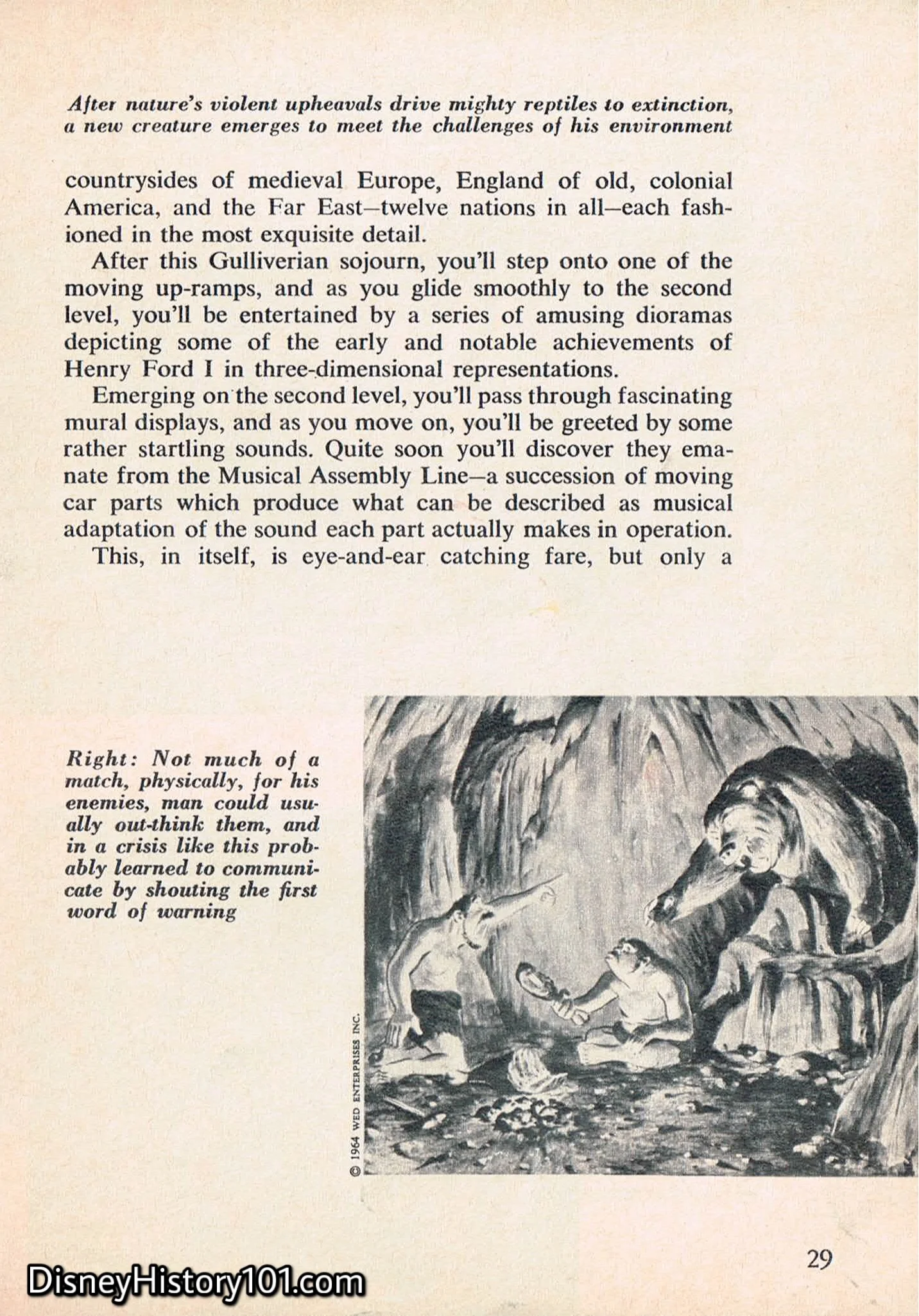
The Disneyland Staff Shop was responsible for the existence of many figures - Cave Men, Cave Women, Cave Children, Mammoths, Small Children for “It’s A Small World” and Abraham Lincoln! One of their most challenging tasks was in bringing top life the 15,000 lb “Rex” figure which was originally designed for the Ford Exhibit of the New York World’s Fair. WED Enterprises, Inc. Imagineers first sculpted “Rex” in clay. The results were a two-foot long model to be utilized by the Disneyland Staff Shop artists and craftspeople. The Disneyland Staff Shop “spent two-and-a-half months turning 20 gallons of shellac, 1,500 lbs. of steel, 6,000 lbs. of plaster, and 8,000 lbs. of clay into an 18-foot long prehistoric monster that, when cast in fiberglass, would weigh a trim 3,000 lbs. ‘We had to cast ‘Rex’ in fiberglass’, Ed says, ‘otherwise he would have weighed well over 15,000 lbs., which would have made it extremely difficult to truck him back and forth across the United States. Even at a ton and a half, he was a pretty imposing sight.”
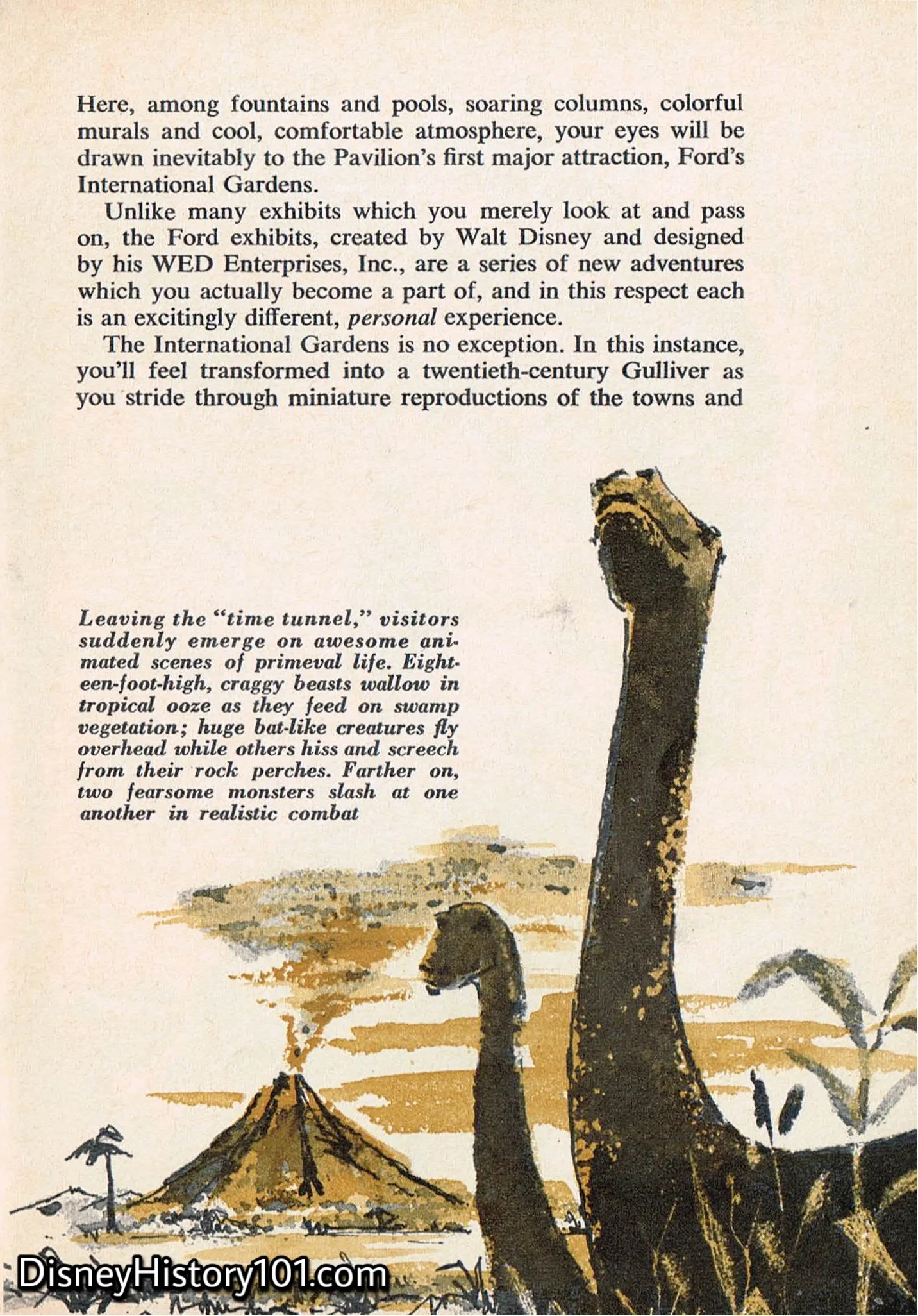
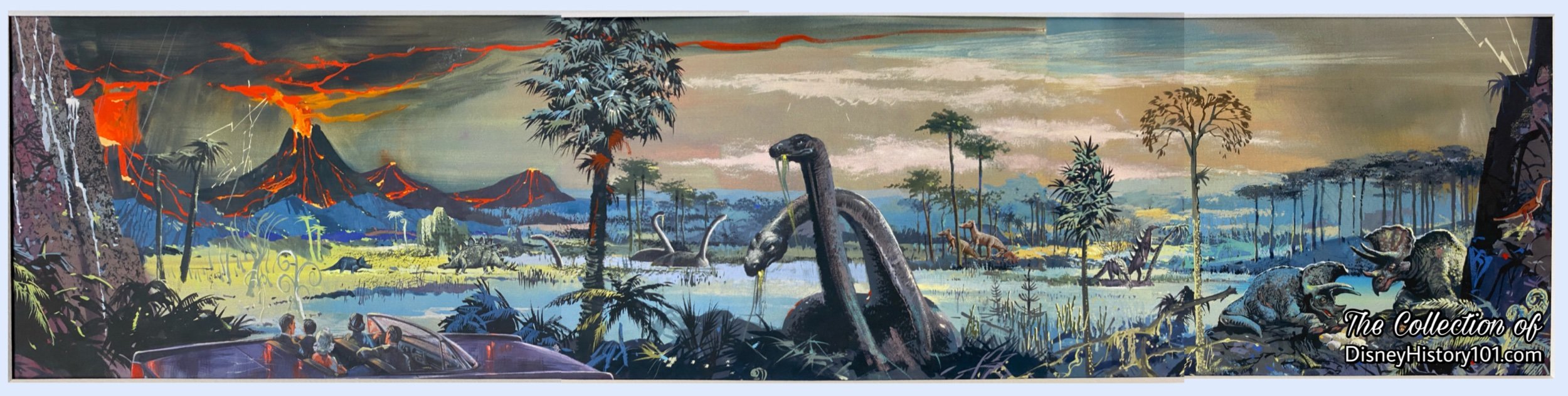
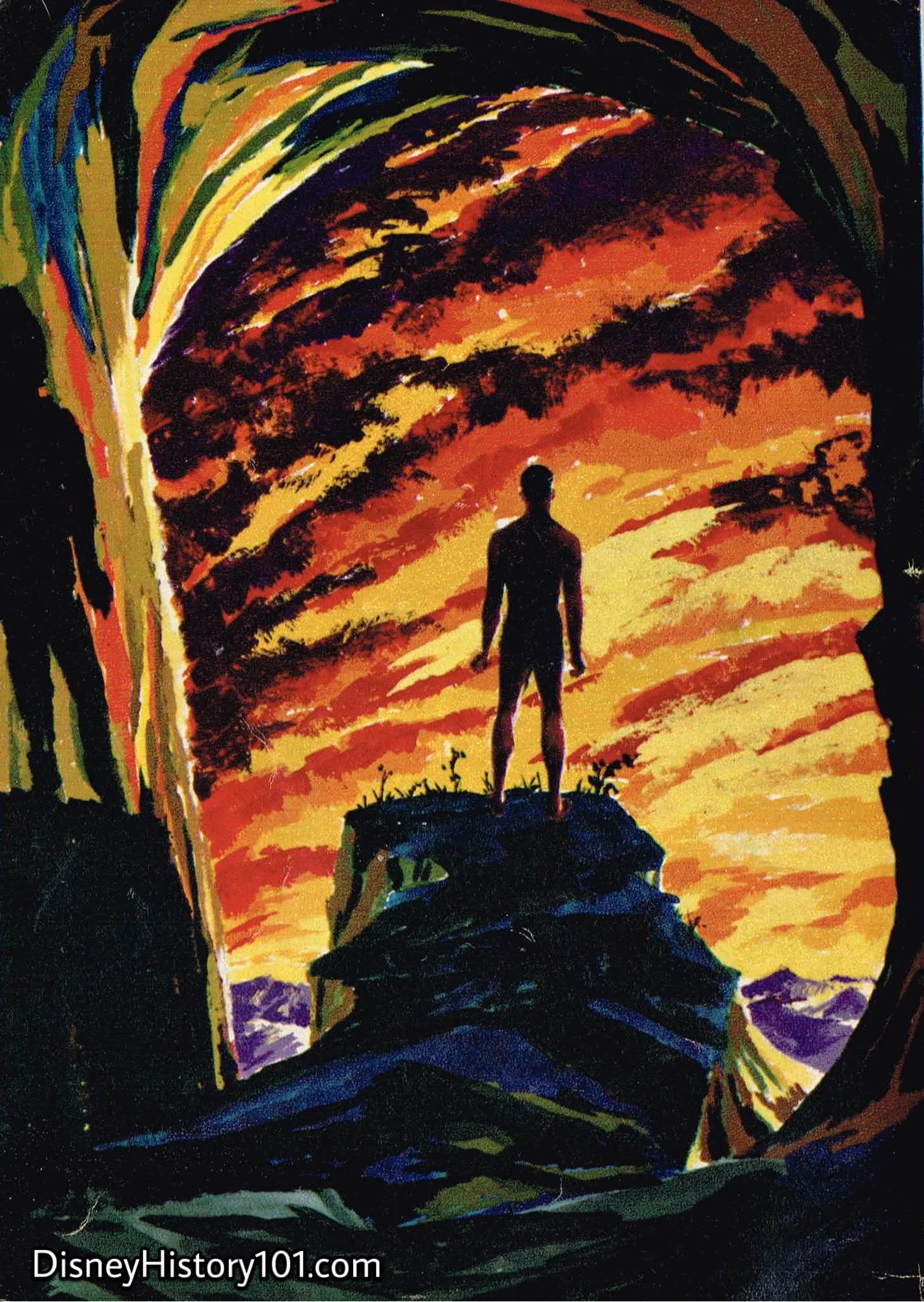
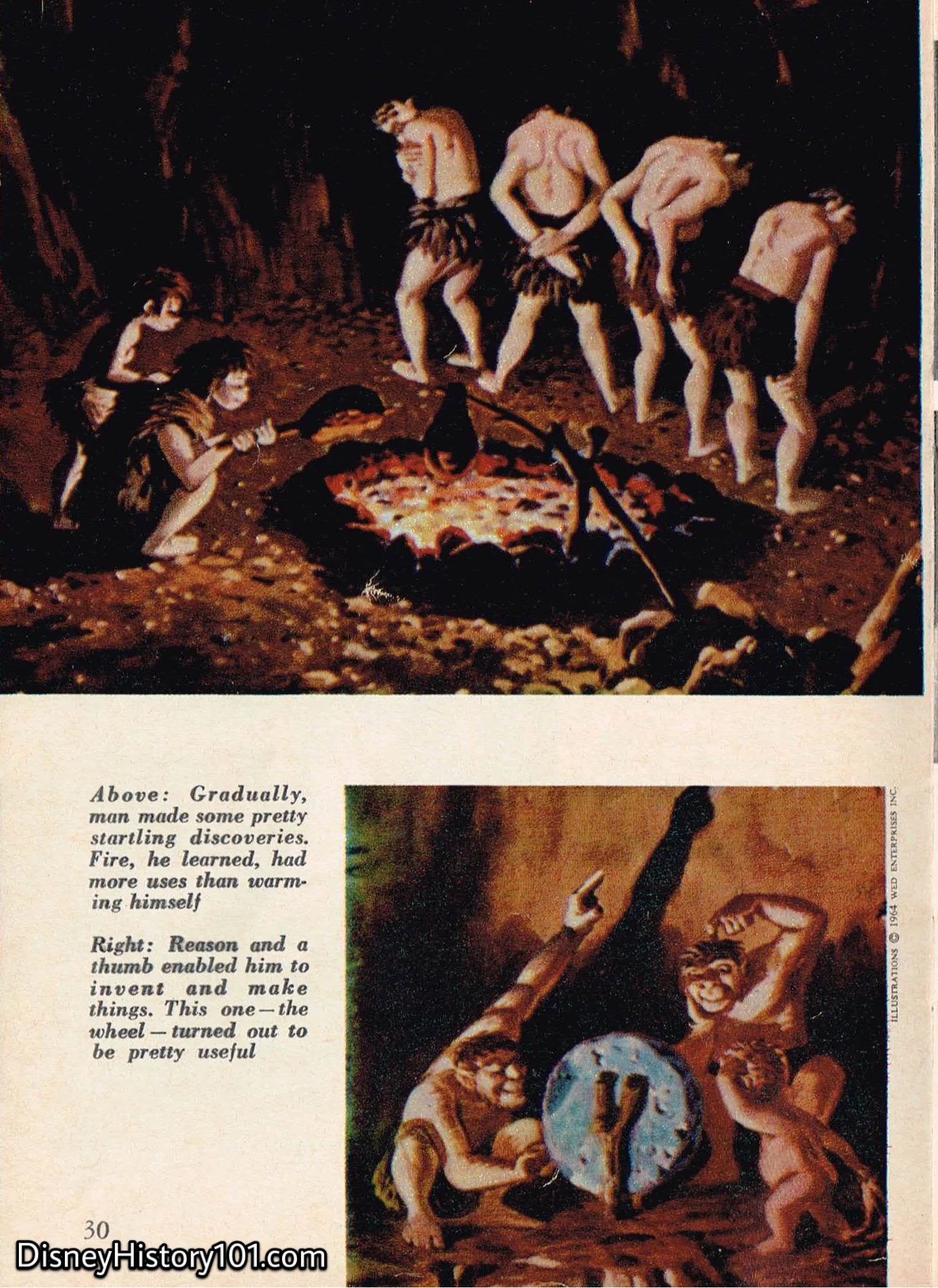
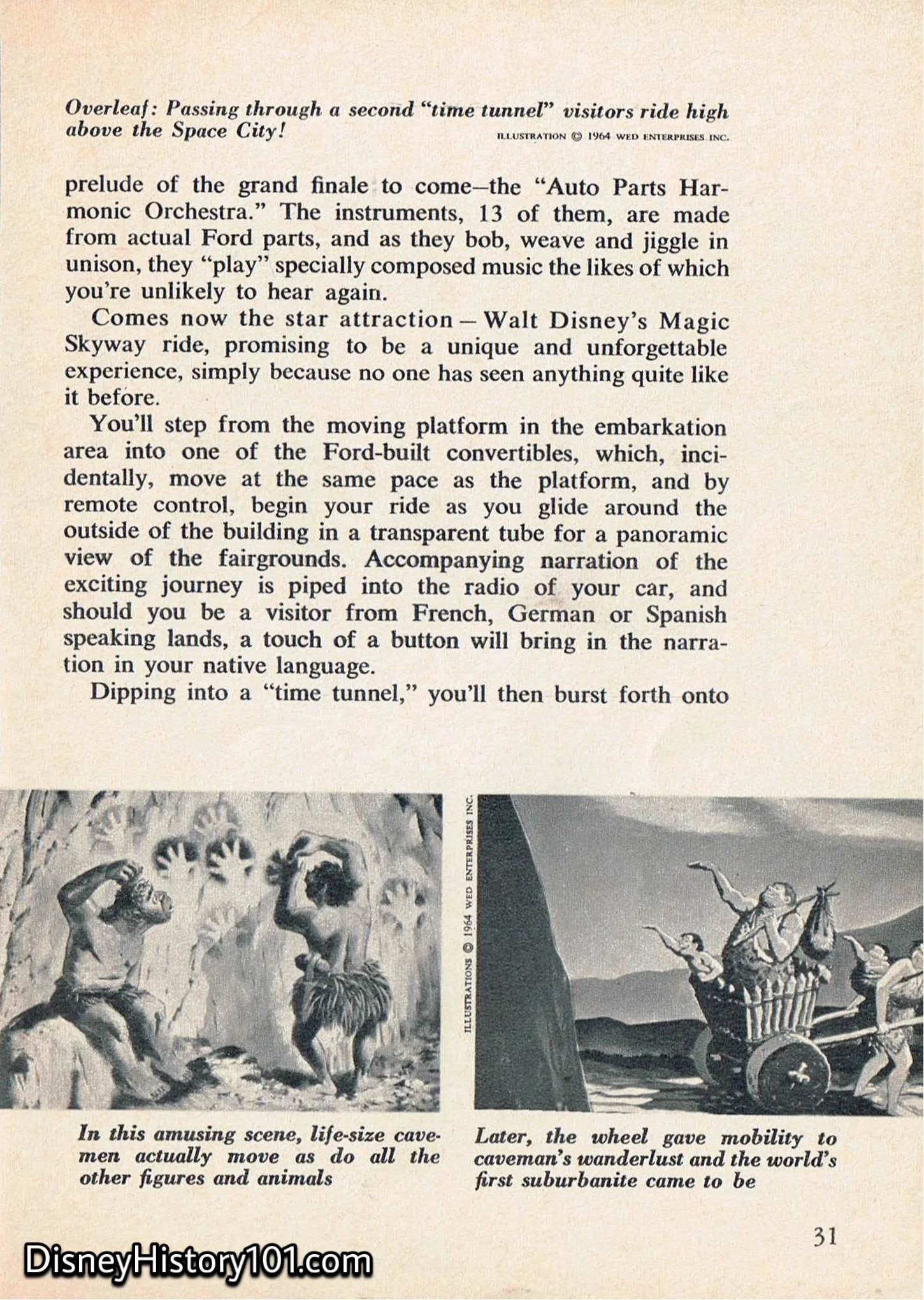
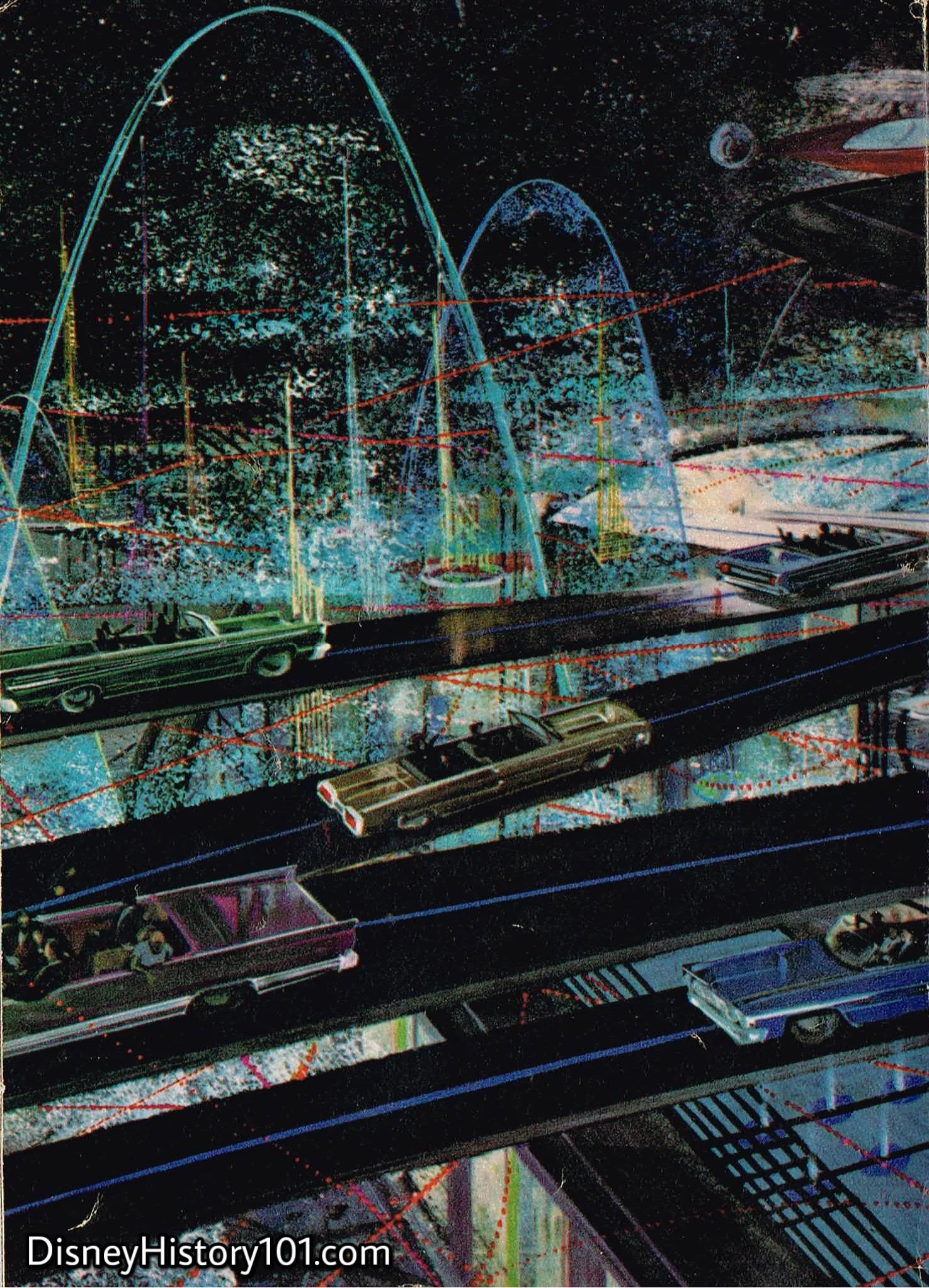
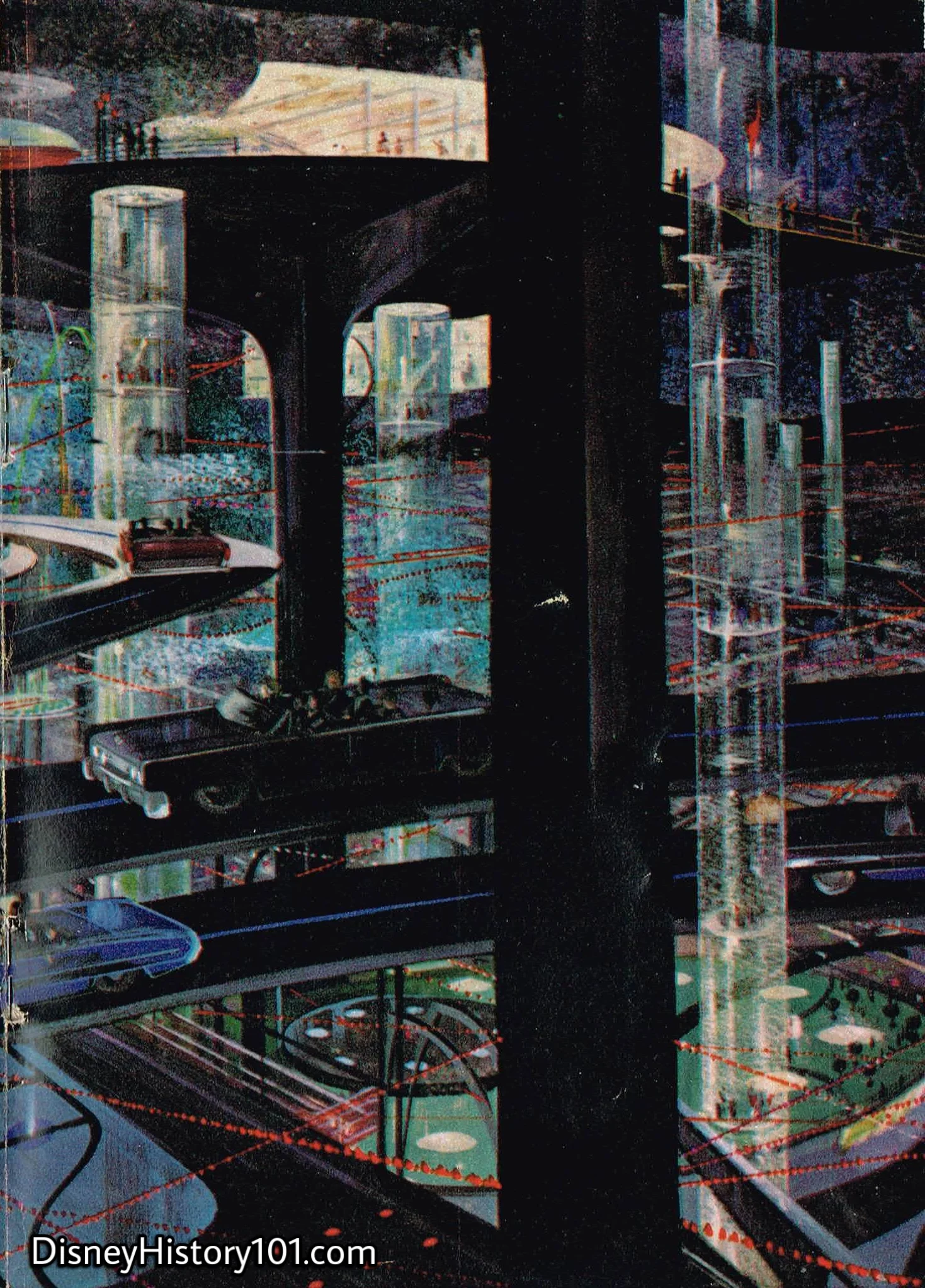
The inside of this structure featured many pre-shows, which led all the way to Walt Disney’s biggest attraction created for the 1964 / 1965 New York World’s Fair : the “Magic Skyway - a twelve minute Walt Disney adventure through time and space”. Passengers would briefly sit behind the wheel of brand new Ford-built, Mercury, Comet, Falcon, Thunderbird, and Lincoln-Continental convertibles. Once boarded, the automatically-guided automobiles would chauffeur its passengers through ‘time tunnels’, to both prehistoric destinations inhabited by Stone-Age men, and the City of Tomorrow! Ford Motor Company’s principle attraction has been described as “an exciting trip though the Fantasyland of the past, present, and future”!
Back in 1960, Bob Gurr had previously helped design the carousel system that would be utilized in the General Electric Carousel show. Now, Bob helped design the system that moved the Ford cars through the Ford Magic Skyway show. Later, this system “became the preliminary design for Disneyland’s WEDway PeopleMover,” according to Bob Gurr’s “Capsule Biography” prepared for WED Enterprises. According to a Wed Transportation Systems, Inc. brochure: “In 1964, the first Disney-designed PeopleMover system carried guests through the Ford pavilion at the New York World's Fair.”
Don Edgren (former liaison between Wheeler & Gray and WED) had joined WED in 1961 and assisted with the structural engineering of the Swiss Family Treehouse. By 1963, Don would head the engineering team responsible for the construction and installation of the General Electric Carousel of Progress show at the New York World’s Fair.
After the ride, “step out and see a world where tomorrow is being created today” through the magic of several post-ride shows and exhibits! Visit the Philco Corporation’s penguins in “a show within a show” - the Hall of Science. The Philco penguins are excited to show you where they store their catch of fish - in their brand new 1965 Philco Freezer! See scale-model villages featuring miniature Ford vehicles. In the showroom, browse “styling X-cars” (the “x” is for experimental) Allegro, Aurora luxury lounge station wagon, Cougar II, and Mustang II - all several years in the making. These new sports cars were displayed alongside antique Ford cars like Models A, N, and T! Please step this way, as your tour of the Ford Pavilion begins HERE!
Four Walt Disney shows opened at the New York World’s Fair on April 22, 1964.
During the 1965 season, Ford gave visitors the option to see the exhibits alone without going on the ride. Still, new 1965 Fords were installed on the Skyway. Regardless, the pavilion saw an attendance gain during 1965. “During the Fair’s two six-month sessions, 91 percent of those who paid fair admission - nearly 47 million people - visited one or more of the quartet of Disney shows.” [according to “Information on America Sings,” prepared by Disneyland Publicity Department, 1974]. Among these were “six happy Southlanders” (from California) - the guests of Walt Disney at the New York World’s Fair” during July of 1964! “As official Disneyland Delegates, the four boys and two girls, with their parents, spent two full days at the fair plus another day touring New York City before returning to California. Included in the group were youngsters from Los Angeles, Torrance, Fullerton, Point Mugu, Escondido and San Diego, all members of youth organizations who took part in the special Youth Days at Disneyland” the previous Spring. “They stayed at the world’s tallest hotel, the Americana, with all expenses paid by Disneyland. Their tour included four Disney-produced attractions at the Fair - the General Electric, Ford, Pepsi-Cola and State of Illinois pavilions - plus all of the other most important features of the World’s Fair.” [Disney News, Vol.2, No. 3 ; Fall of 1964] Even Walt Disney was among the Guests of his own Show, as Bob Matheison later recalled: “I and Marc Davis were with Walt and we walked over to the Ford Magic Skyway pavilion. We walked straight up to the VIP area and they tried to take us in a back way. But Walt hesitated. He kept saying no and went out and stood in the line - which was about two hours long at the time. To Walt, the special people were all the people that were waiting in the line. He wanted to see how they were being treated. I never forgot that.”
Soon, WED Imagineering black books stored in the library would contain photographs documenting the Ford Motor Company exhibit at the 1964 New York World Fair.
According to the Tencennial Neesletter: “Ford Motor Company -- A 1965 Ford LTD is being used by the Ambassador from Disneyland as her Official Automobile. She will also have a Ford made available for her use wherever she may be appearing in the United States during the Tencennial Year.”
WALT DISNEY PRODUCTIONS WORLD’S FAIR GENERAL SECTION - STAFF ASSIGNED TO ALL FOUR SHOWS:
Other staff that contributed toward the World’s Fair show included Queens Office Manager Fred Tatum, Dick Falk who drove sightseeing vehicles, Tom Jones (of the Corporation of Engineers for U.S. Army that built the harbor), Joe Potter who served as Executive vice President of 1965 World's Fair, Gil Gerstein was a Supervisor of a non-Disney Vending Company, World Accordian
Champion-Featured Soloist Donald Hulme (who went on to perform at EPCOT), Ed Laphan was involved with Army-closed Circuit Systems.
A number of Walt Disney Productions staff contributed to the four shows presented at the 1964/1965 New York World’s Fair.
WED staff included Bill Cottrell (President of WED, Negotiated Licensing Agreement), Mickey Clark (Vice President & Treasurer of WED), Chuck Romero (Manager & Assistant Treasurer of WED), Charlotte Bureau (Secretary to Mickey Clarke & Chuck Romero), and Sue Kalleel was Bob Mathieson's Secretary.
LESSEE RELATIONS:
Pete Clark was Manager, Lessee Relations
ESTIMATES:
Harold Freeman was Estimator for all 4 Shows. Lynn Kindt was RETLAW Head Accountant, Roy McClean was RETLAW Production Control Supervisor, Ursie Loge was RETLAW Secretary Purchasing & Product Control, Mitsy Chandler was RETLAW’s Legal Secretary to Neal McClure
DESIGN:
WED Model Shop Modeller Mitsuo Natsume
Harriet Burns, Collin Campbell, John Hench, and Viggo Nielson were artists and served as designers. Neil Gallagher was involved in Show Development & Maintenance. Blaine Gibson was a Sculptor. Jack Ferges and Malcolm Cobb were dimensional designers and Model Builders. Marc Davis designed Show Animation. Wathel Rogers was a programmer of A.A. Figures.
Monte Hoult was a Mechanical Engineer who designed the A.A. Figures. Morrie Houser was was an Engineering designer. Lou Tonarelli was Electronic Engineer Johnny Allen contributed toward Audio for A.A. Figures.
Dick Hoyt and Jim Verity were Studio Cine Technicians of the Machine Shop.
Charlie Satchel was Supervisor of the Projection Department.
CONSTRUCTION:
Joe Fowler was Head of Construction and Show Installation. Orlando Ferrante was coordinator. John Porter was in wood working and assembly.
Roger Broggie was Sr. General Manager for the Studio Machine Shop, Bob Otto was Chief Engineer of the Machine Shop and Don Miller was a Studio Pattern Maker & Welder.
Installation: Mel Black contributed toward Electronic Installation. Butch Borcherding was a Hydraulic & Pneumatic Servo Systems Technician.
OPERATIONS AND MAINTENANCE: Dick Nunis was Director of Operations at Disneyland & Director for the Disney Shows. The Management Team for Operations of Disney Shows included Bill Sullivan, Bob Mathieson, and Billy Hoelscher.
Carl W. Carlson was Supervisor of Sound Rooms. Len Jones was Manager of Safety and Wayne Van de Walker was a Security Supervisor. Mel Black was Head of Maintenance. Ted Crowell Was Manager of Maintenance.
Ralph Kent was an Artist for Training & Visual Aids
Marty Sklar was a “Staff Writer” for Concepts, Narration, and Shows Publications. Artist, illustrator, and painter Herb Ryman provided Preline design & renderings for the Ford show and Small World. Claude Coats was a show designer. Don Edgren was a Project Engineer.
Marc Miller was a supervisor and show programmer who designed and produced A.A. Figures. Tom Hogsett was a Mechanical Designer. Roland Peterson was a Studio Pattern Maker. Dick Van Every provided Mechanical Maintenance. Tony Virginia was a Controller. Bud Washo was the Superintendent of Staff at Disneyland. Corky Wilds was a Hydraulic & Pneumatic Servo Systems Technician. Studio Machine Shop Foreman Bob Booth, Don Iwerks, and Don Porterfield of the Machine Shop. Chuck Schrader was a mechanical designer. Milo Rainey of Attractions Operations.
1962
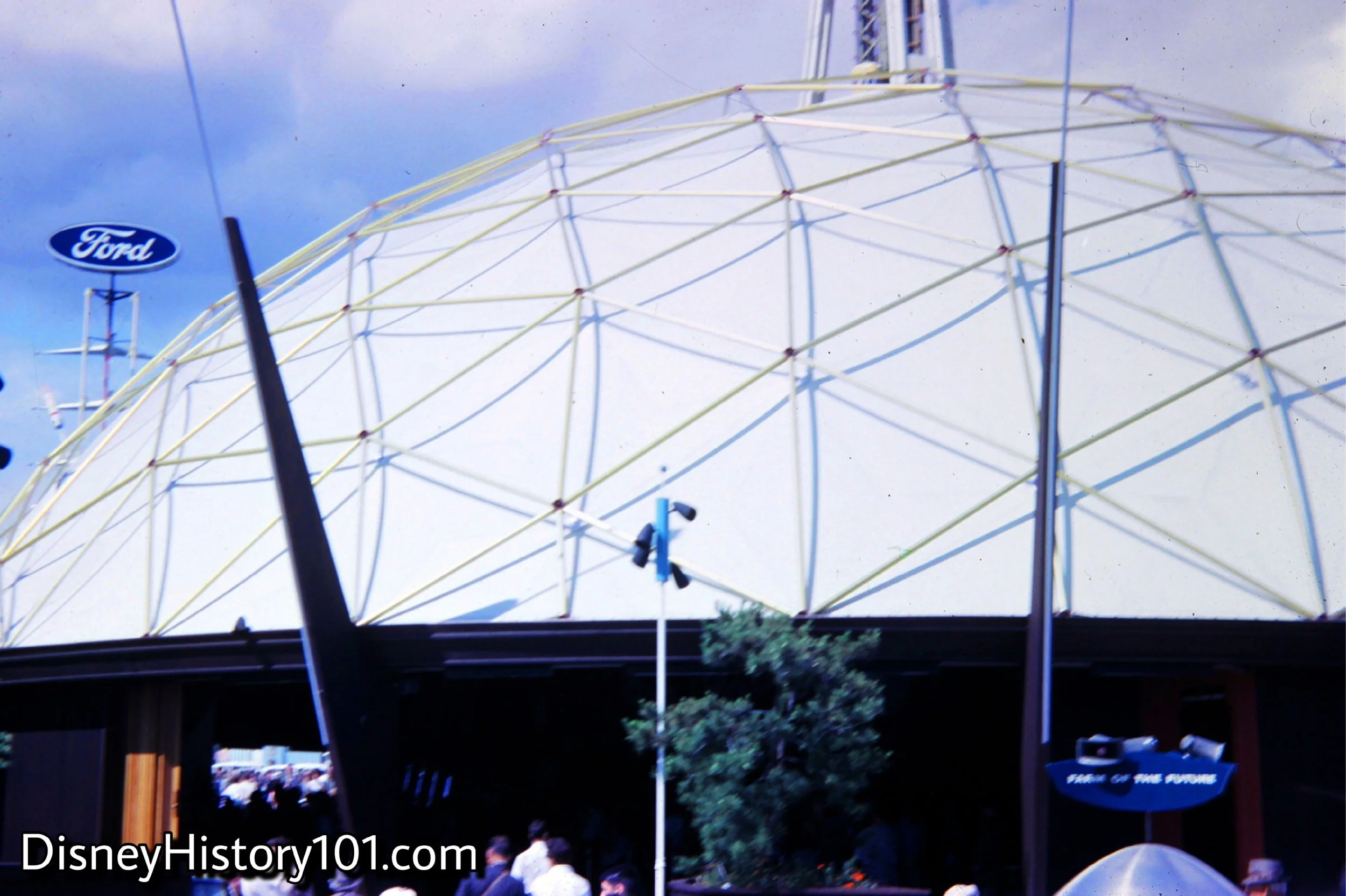
Ford had a presence at prior World’s Fairs, but not so grand as their pavilion created for the 1964 New York World’s Fair!
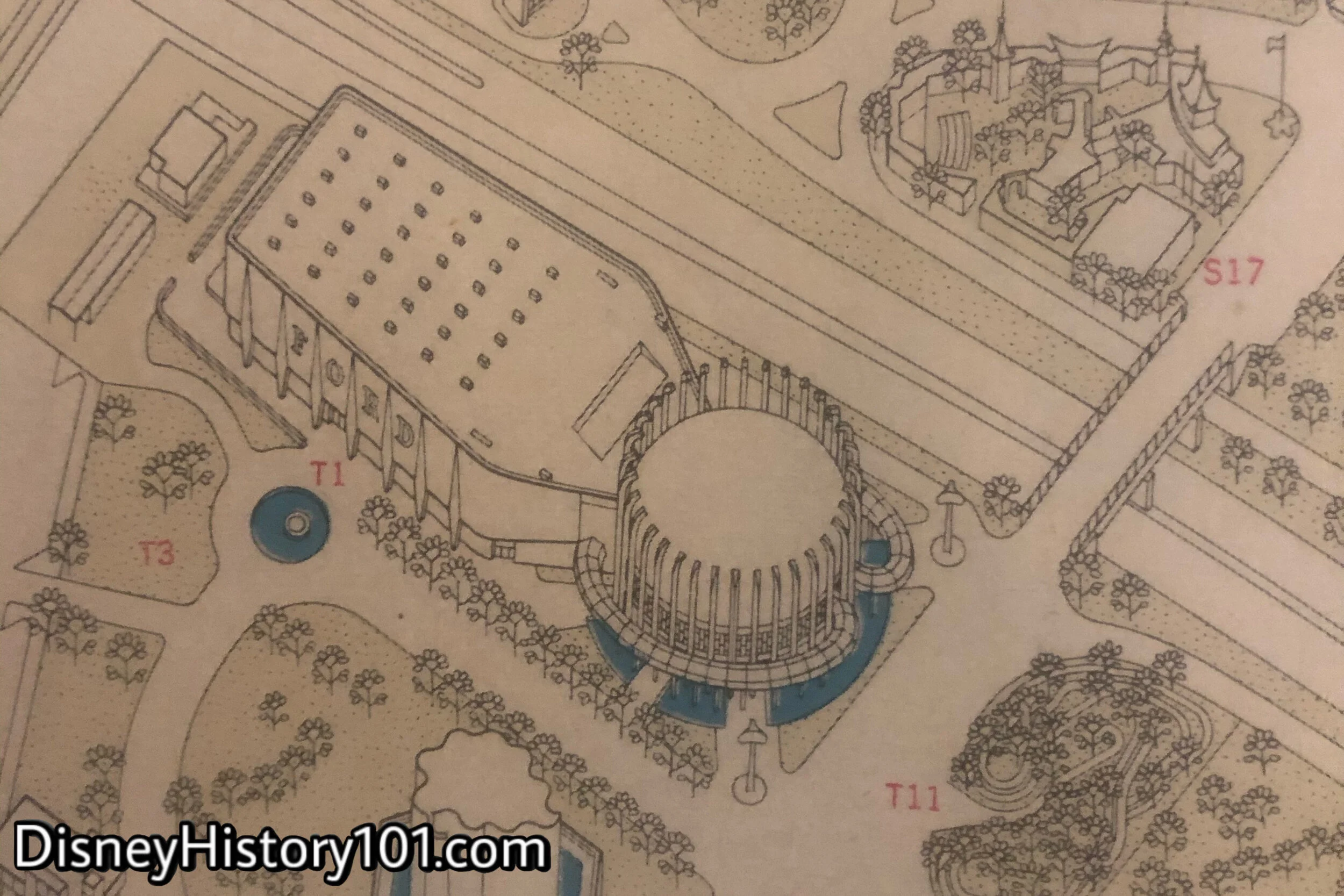
LOOK Magazine Map Preview, published February 11, 1964
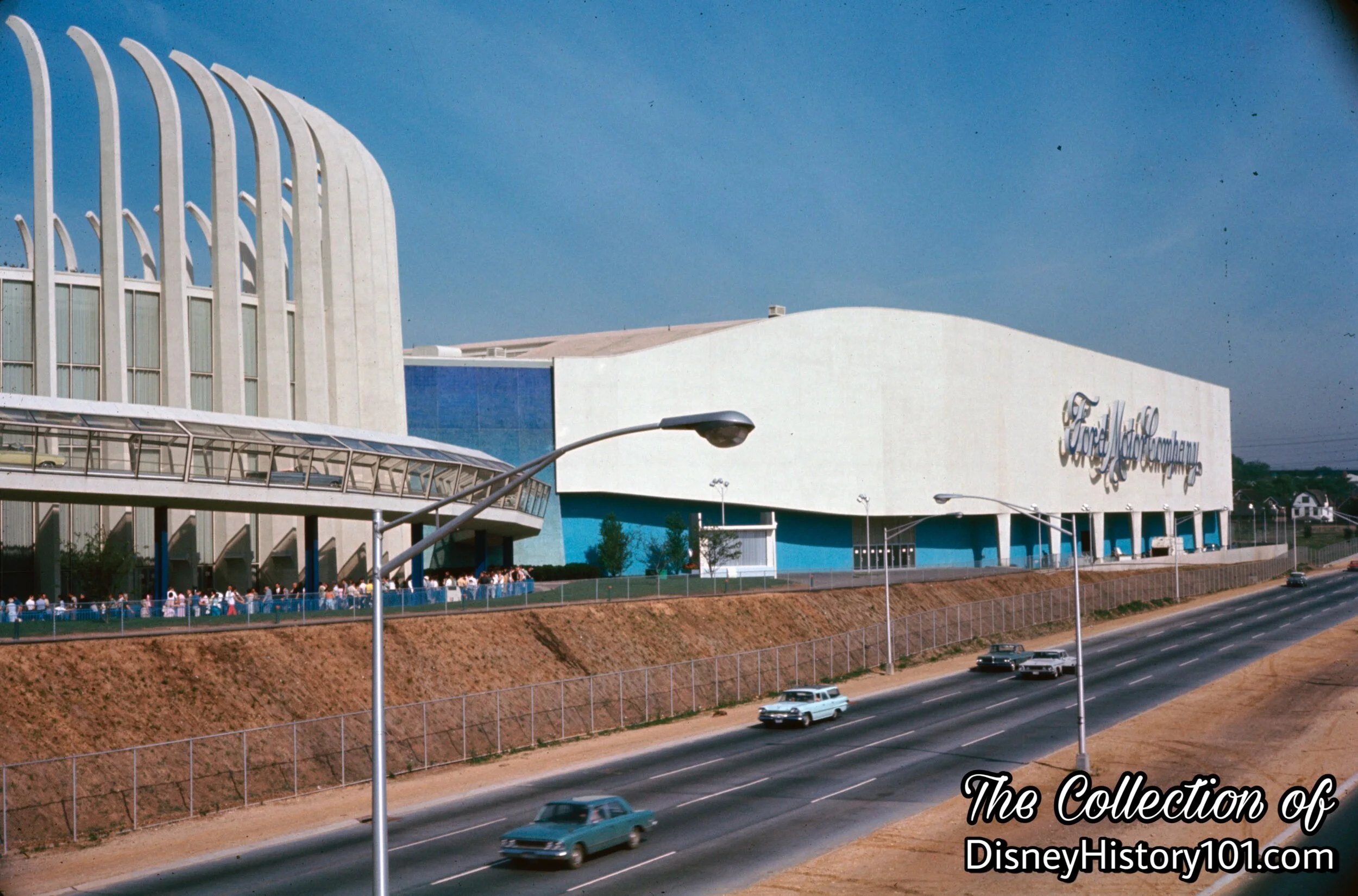
Here, we get one of our first looks at the ultra-modern FORD Pavilion - “a glass enclosed, rotunda-like structure 235 feet in diameter and 56 feet high, surrounded by 64 glittering pylons, 100 feet tall.”
The entire adjoining exhibit building is 500 feet long and more than seven stories high!
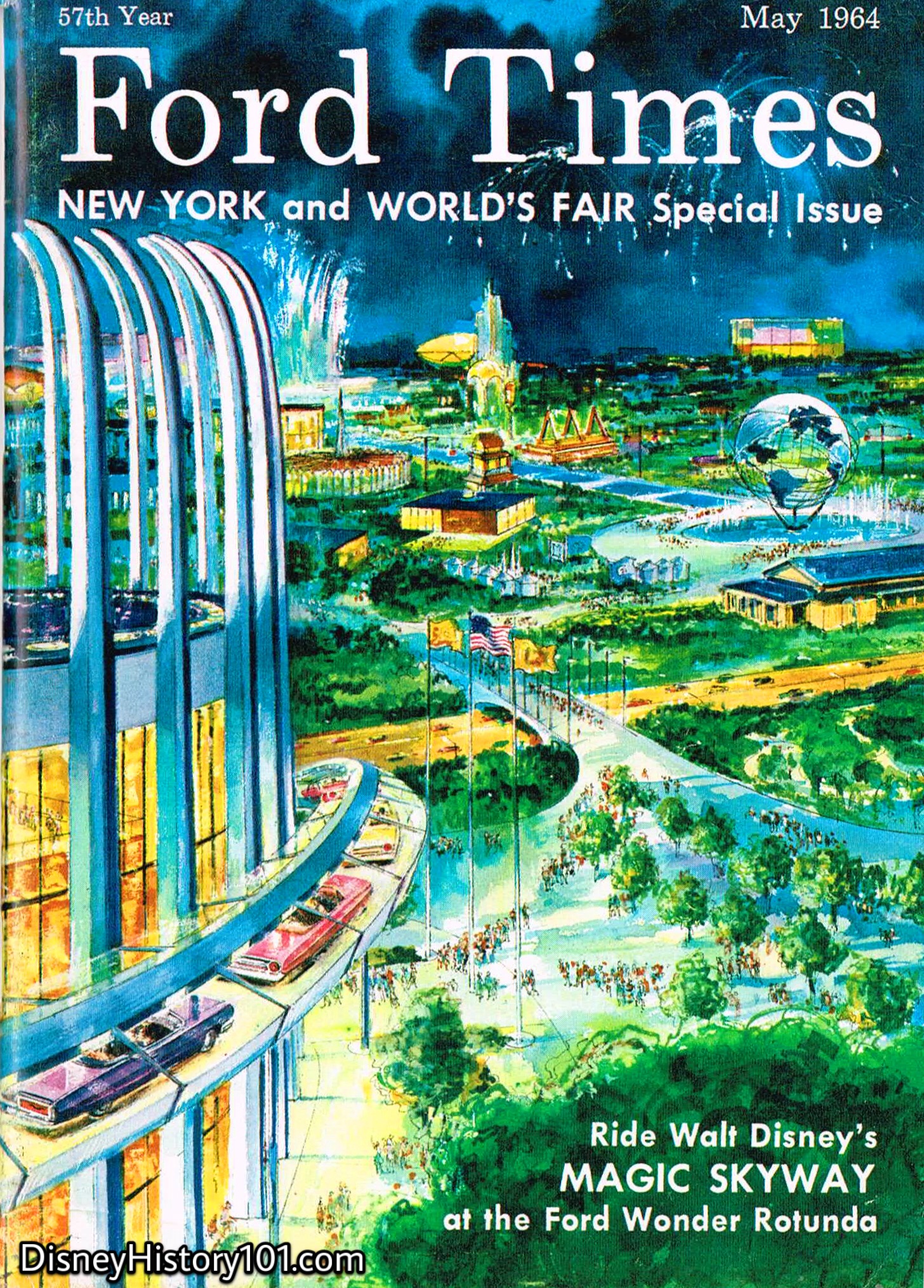
FORD TIMES Cover, (May, 1964)
Even before the fair opened, future visitors could get a sneak preview of attractions inside the Ford rotunda. This issue includes the main attraction - Walt Disney’s Magic Skyway!
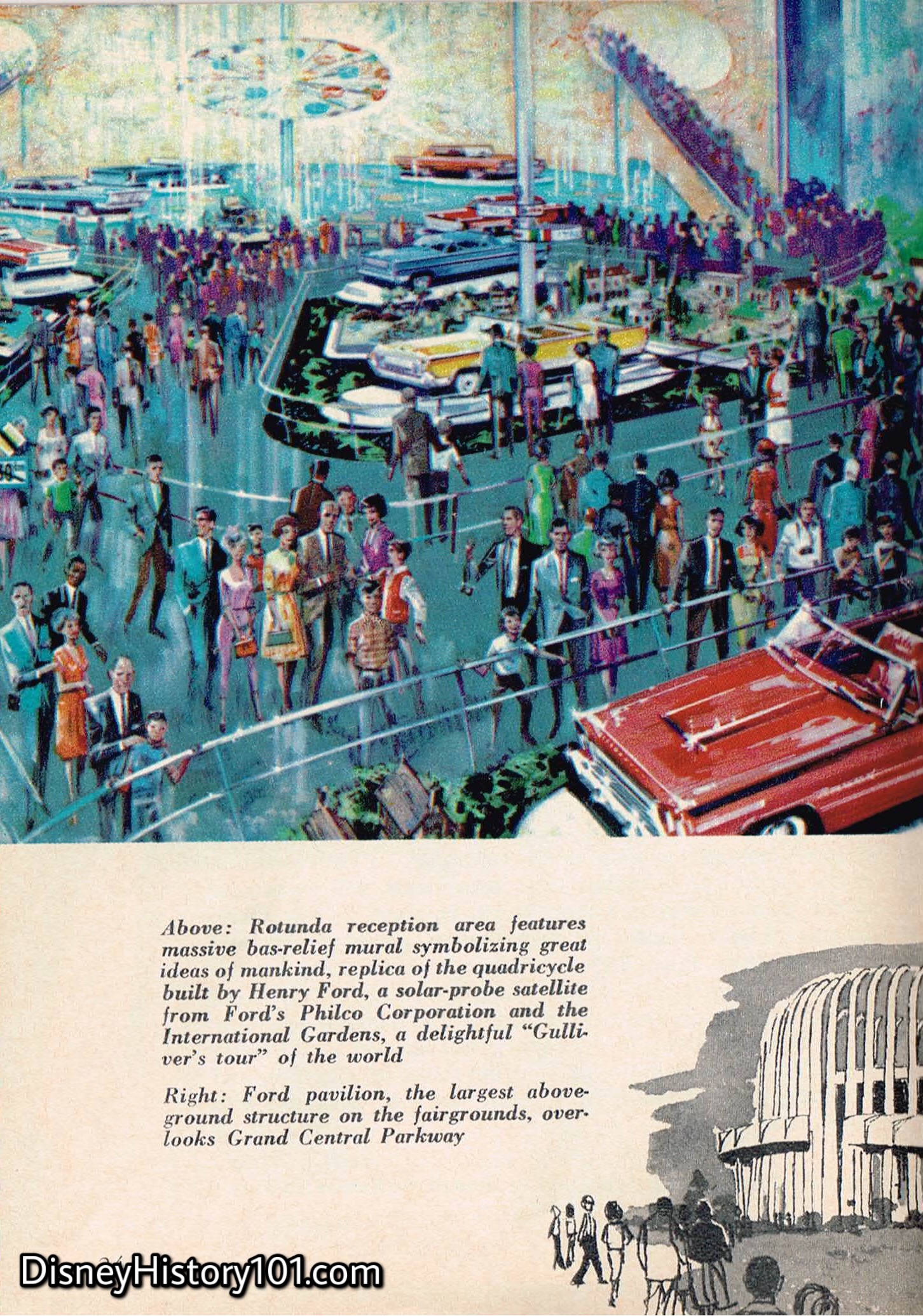
FORD TIMES, (May, 1964)
According to “Ripley’s Legends - pioneers of the Amusement Park Industry” by Tim O’Brien, Volume One:
“When the work on the New York World's Fair began in 1961, Marty was loaned to WED Enterprises, the precursor to the Imagineers, and was assigned by Walt to work on John Hench's team to develop industry-sponsored shows and pavilions for General Electric, Ford, Pepsi-Cola/UNICEF and the State of Illinois. Marty's task while working with Hench's group was to help them come up with the basic idea of what they were going to present. ‘My assignment was to learn as much as I could about the Ford Motor Company and then work with John and the others on how to interpret that story in the pavilion. We probably spent a total of five or six weeks, traveling around to different parts of the Ford Motor Company. My duties were all about the story.’
WED, the acronym for Walter Elias Disney, was Walt's privately-owned company. To protect anyone who switched back and forth between WED and Disneyland, as did Marty, there was an arrangement that one would never lose his seniority with the Walt Disney Company.
After being ‘on loan’ to the group for three years, Marty officially became a part of WED in 1964. After the World's Fair, the corporate lawyers became concerned that the appearance might be that Walt was diverting business from the Walt Disney Company to WED, his personal company, which Marty said Walt was always very careful not to do.
Walt had an agreement with Roy Sr. (Roy O. Disney), his brother, that whenever somebody approached him about doing something on his own, like the World's Fair opportunity, he would take it to the company first, and say, ‘Do you want to do this, or can I do it?’ Disney (the company) had to turn it down before Walt would do it on his own. Because of that concern, WED Enterprises was sold to Walt Disney Productions and Dick Irvine, who was Marty's boss, stayed on as the head of the creative group, which kept the name WED for another 20-plus years before changing it to Walt Disney Imagineering.
WED, the acronym for Walter Elias Disney, was Walt's privately-owned company. To protect anyone who switched back and forth between WED and Disneyland, as did Marty, there was an arrangement that one would never lose his seniority with the Walt Disney Company.
After being ‘on loan’ to the group for three years, Marty officially became a part of WED in 1964. After the World's Fair, the corporate lawyers became concerned that the appearance might be that Walt was diverting business from the Walt Disney Company to WED, his personal company, which Marty said Walt was always very careful not to do.
Walt had an agreement with Roy Sr. (Roy O. Disney), his brother, that whenever somebody approached him about doing something on his own, like the World's Fair opportunity, he would take it to the company first, and say, ‘Do you want to do this, or can I do it?’ Disney (the company) had to turn it down before Walt would do it on his own. Because of that concern, WED Enterprises was sold to Walt Disney Productions and Dick Irvine, who was Marty's boss, stayed on as the head of the creative group, which kept the name WED for another 20-plus years before changing it to Walt Disney Imagineering.”
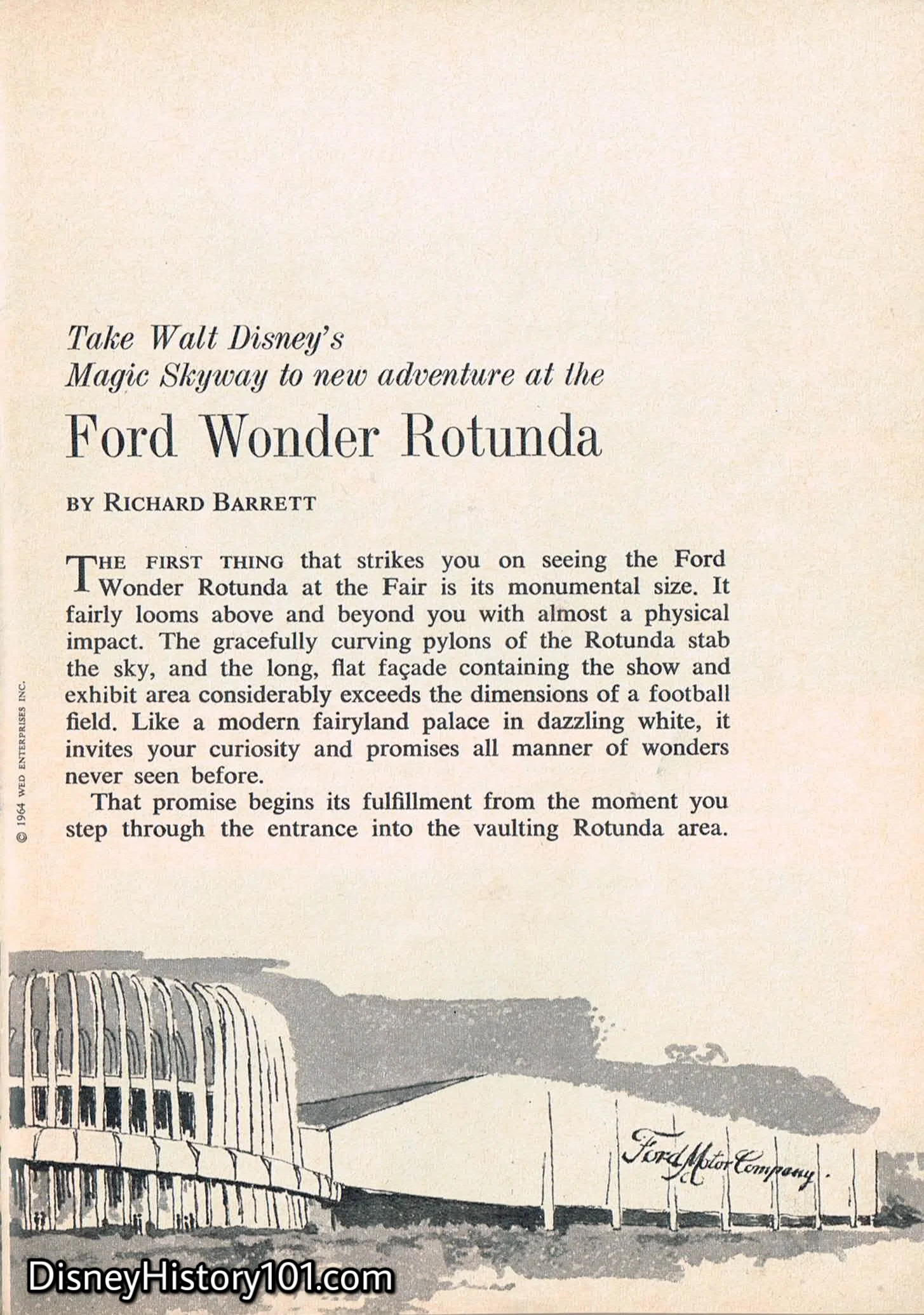
FORD TIMES, (May, 1964)
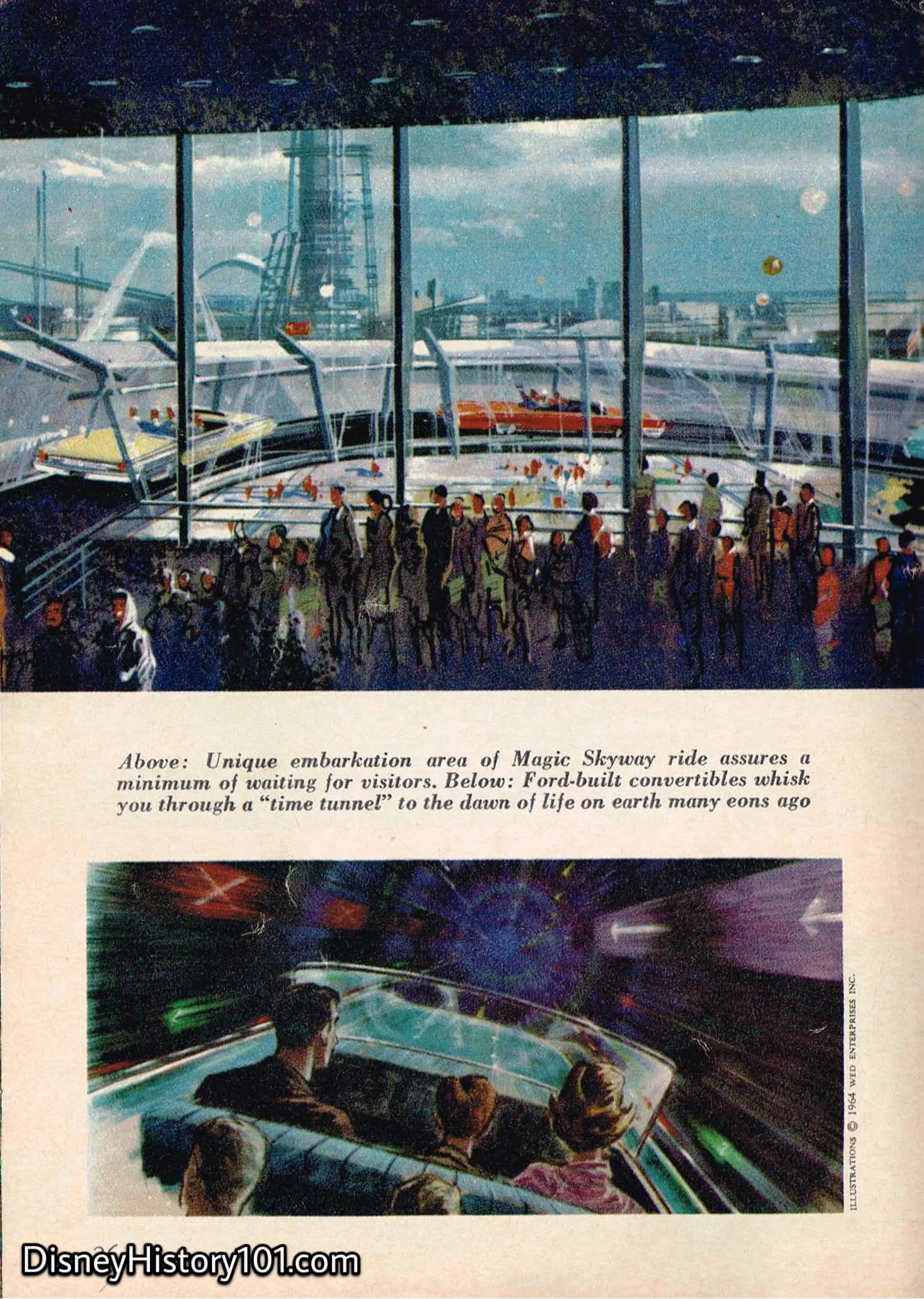
FORD TIMES, (May, 1964)
FORD TIMES, (May, 1964)
Ford Magic Skyway print once available to Disneyland Cast Members.
FORD TIMES, (May, 1964)
Claude Coats was the designer for most of the Ford Pavilion, especially the dinosaur section. Marc Davis deigned the caveman figures.
FORD TIMES, (May, 1964)
FORD TIMES, (May, 1964)
FORD TIMES, (May, 1964)
FORD TIMES, (May, 1964)
Visit the “Fabulous Future” with its breathtaking “Space City”!
FORD TIMES, (May, 1964)
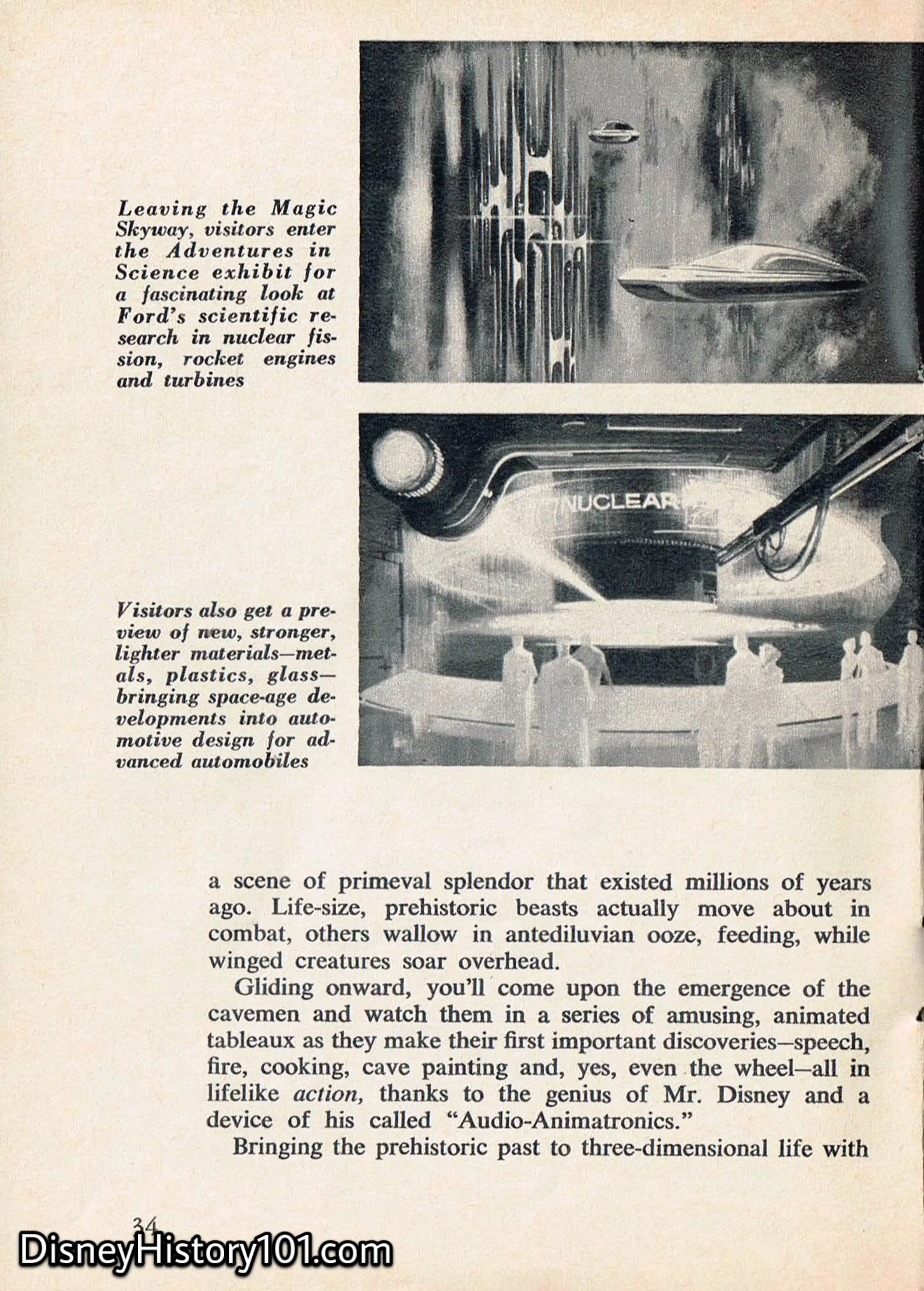
FORD TIMES, (May, 1964)
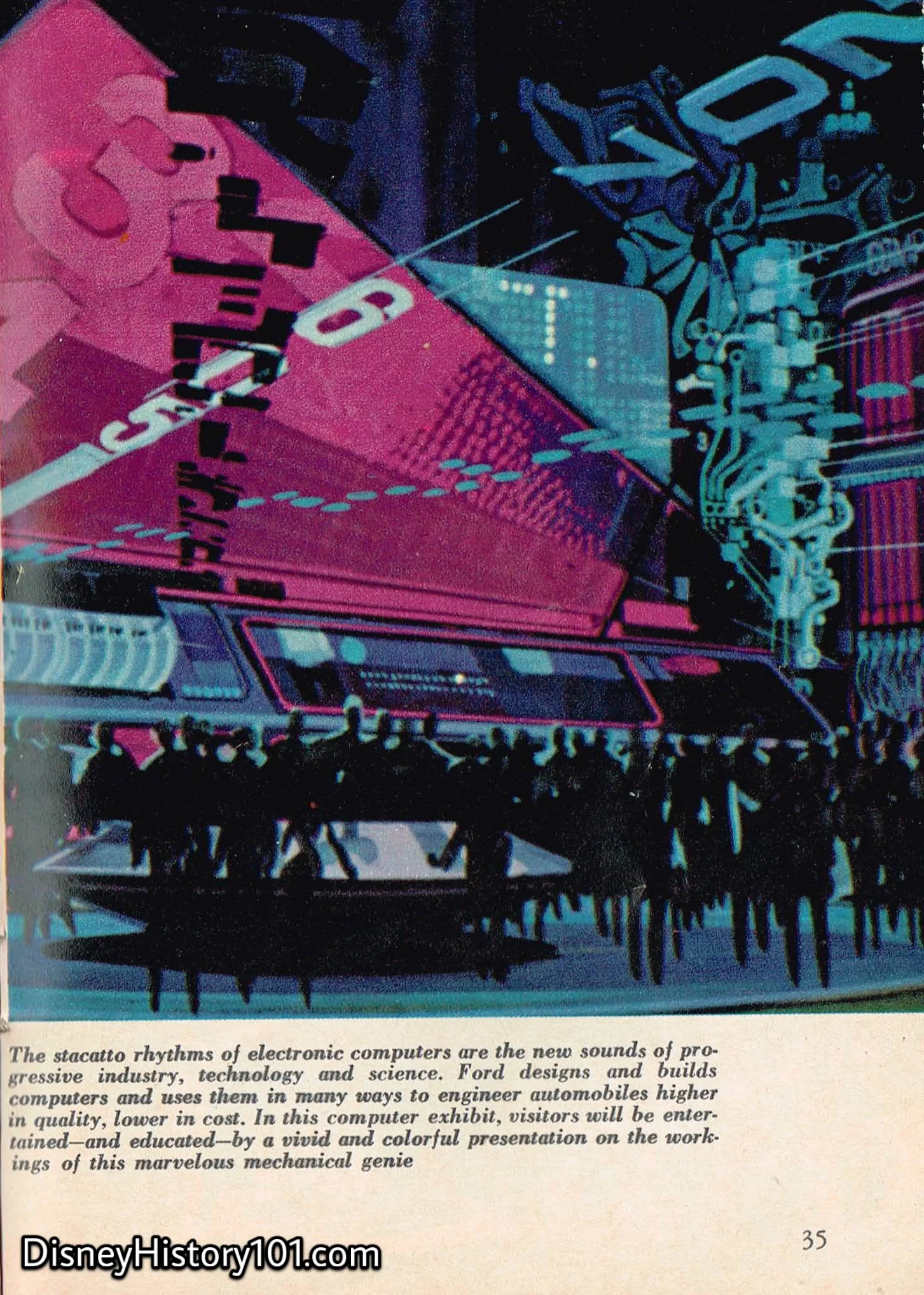
FORD TIMES, (May, 1964)
“Discover why Tomorrow Begins Today, [with] the story of scientific research from the laser beam to radio telescopes.”
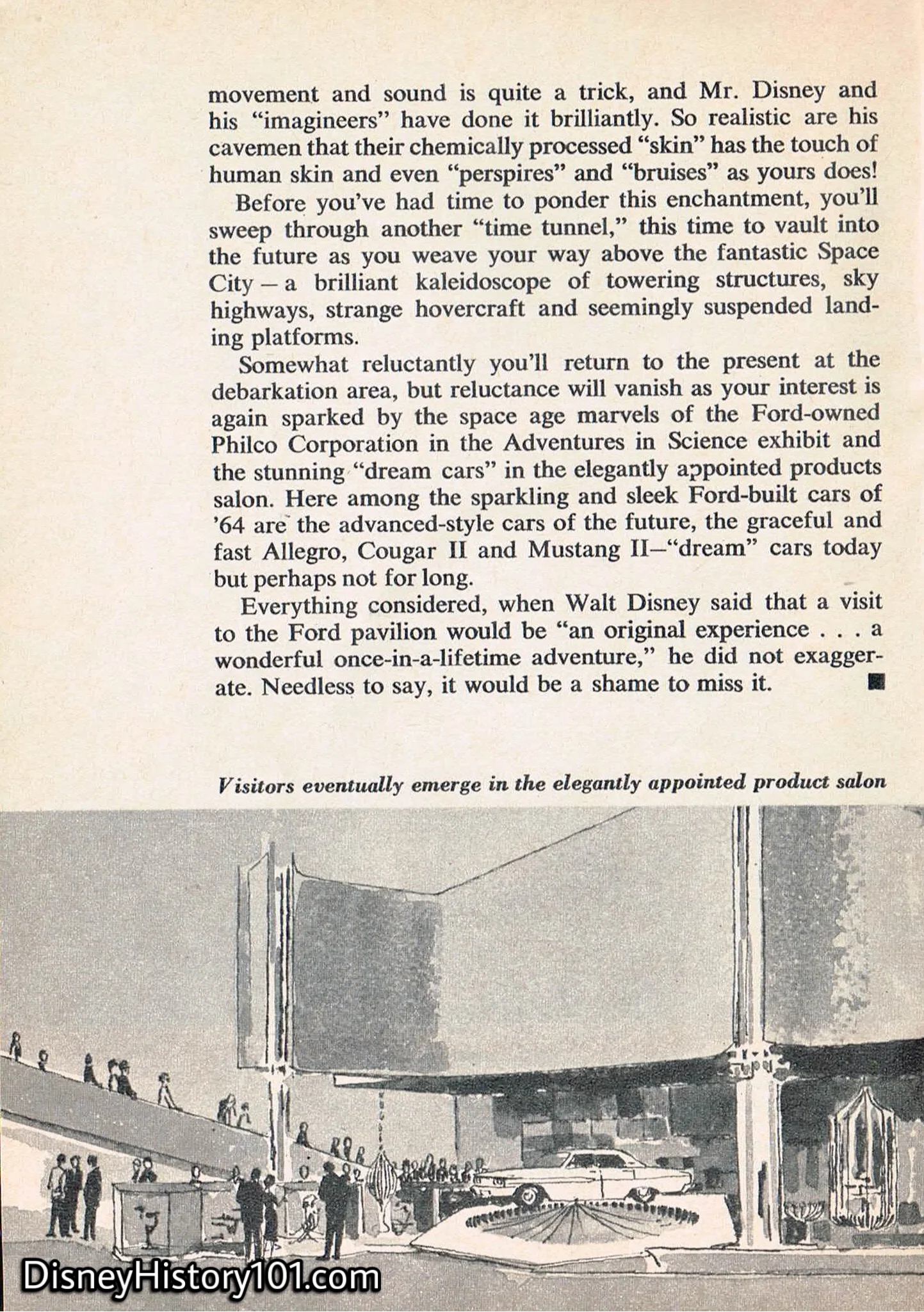
FORD TIMES, (May, 1964)
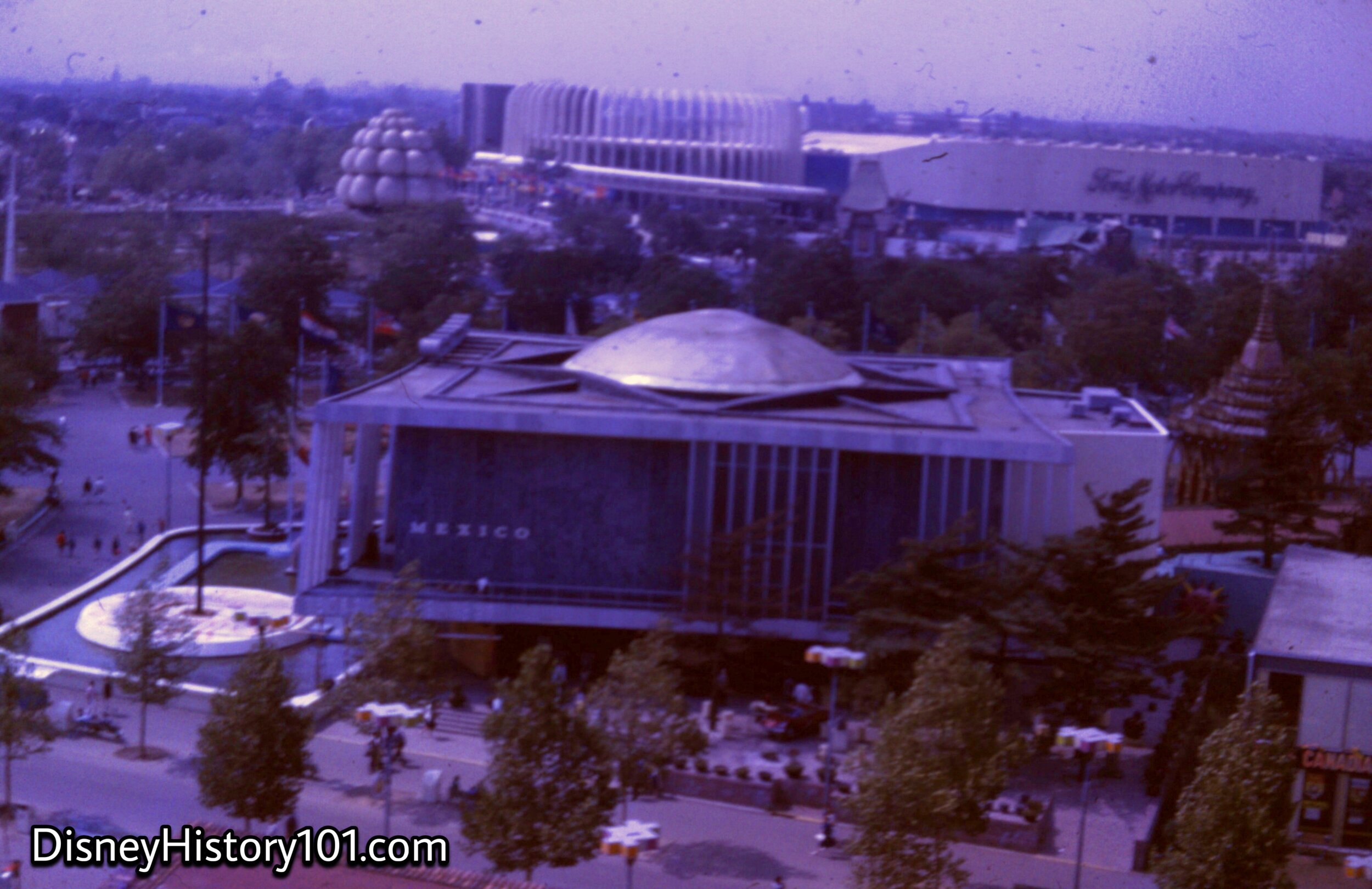
FORD Motors "Wonder Rotunda" Pavilion From Afar
For shear size comparison we present this aerial view of the FORD Motors Pavilion (in the background of the photo). At 273,000 square feet, it dwarfed other Pavilions and easily was one of the largest pavilions at the New York World’s Fair of 1964 - 1965!
FORD Motors "Wonder Rotunda" Pavilion
FORD Motors "Wonder Rotunda" Pavilion
FORD Motors "Wonder Rotunda" Pavilion
FORD Motors "Wonder Rotunda" Pavilion
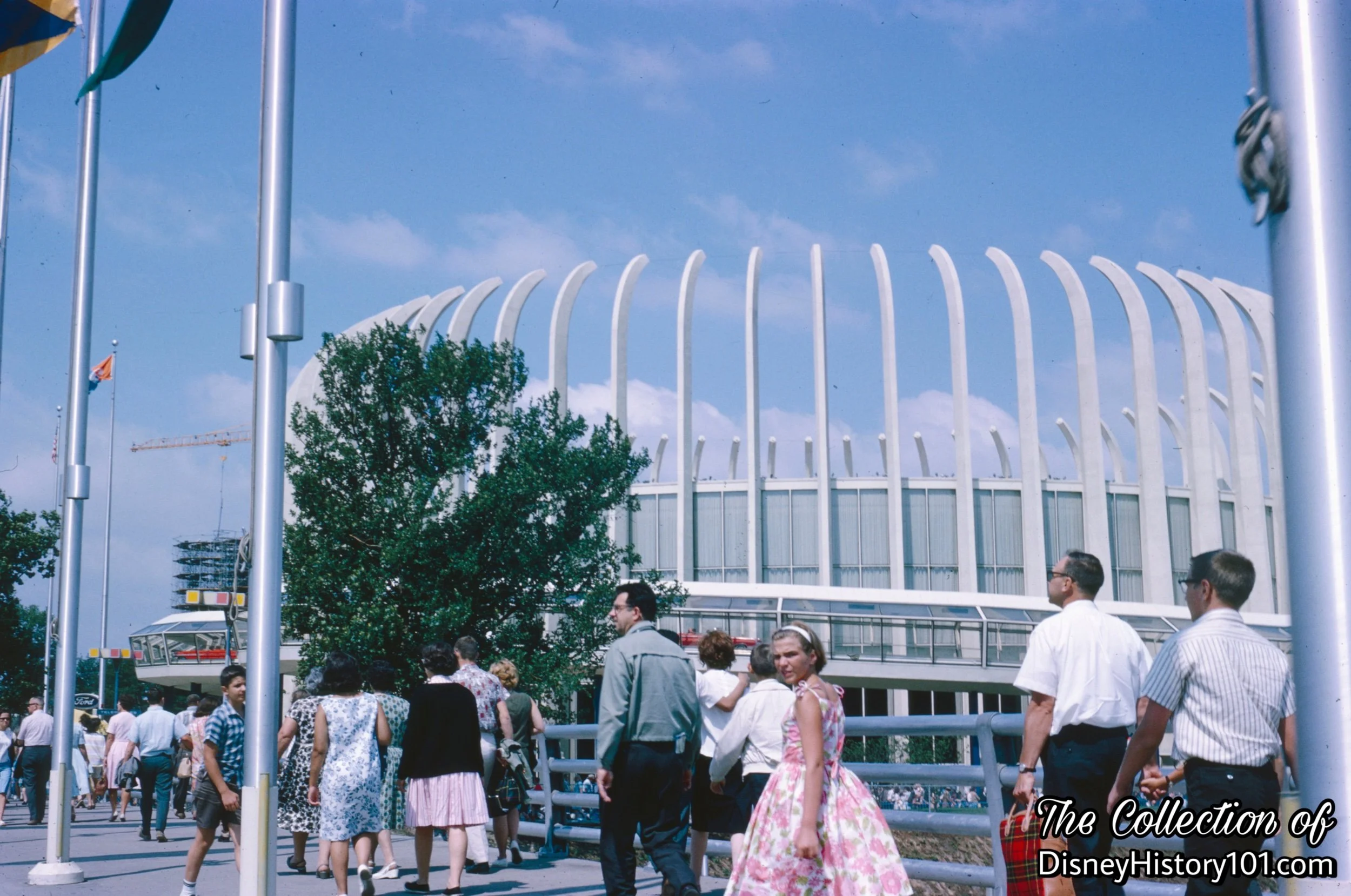
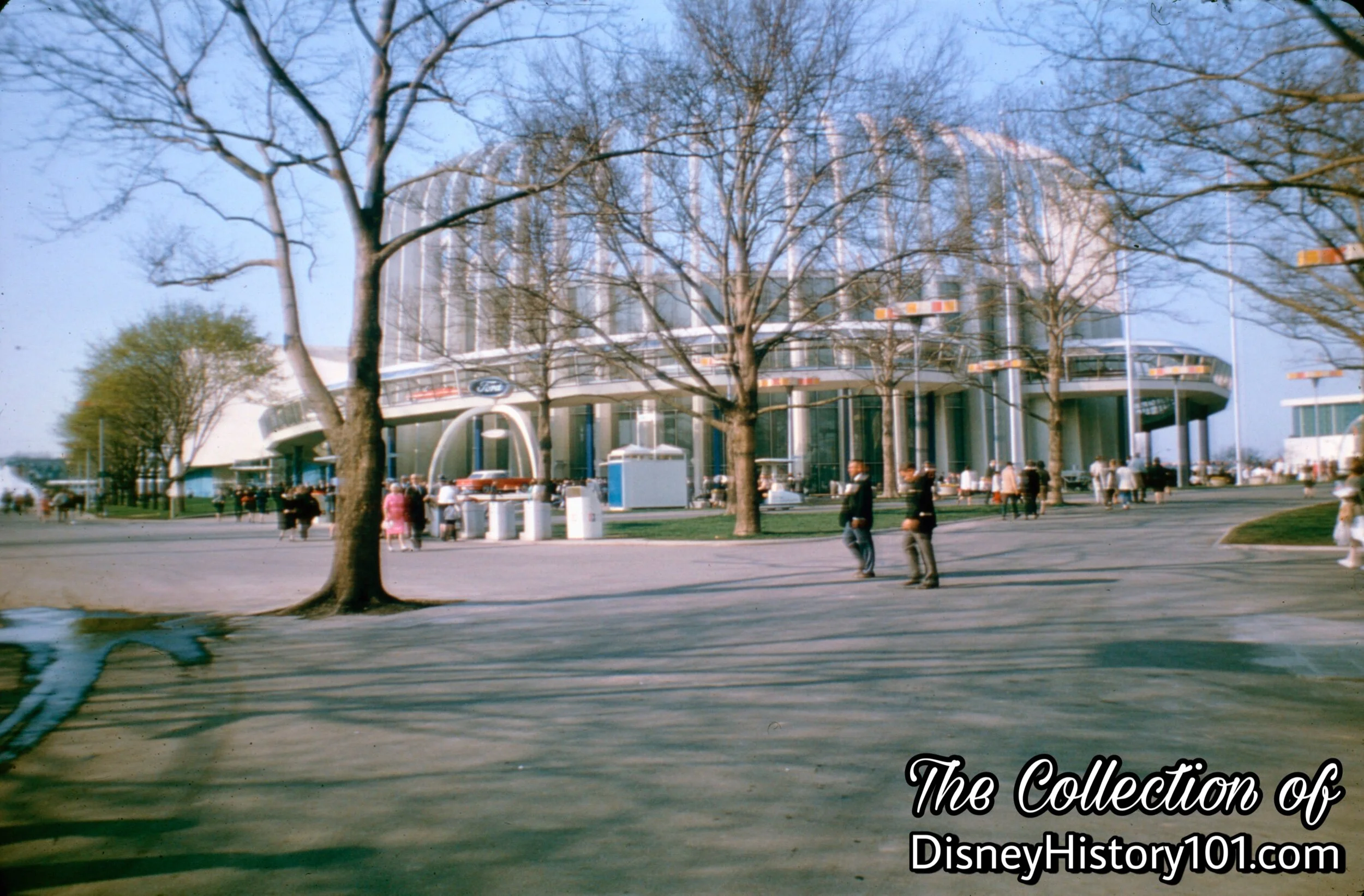
FORD Motors "Wonder Rotunda" Pavilion
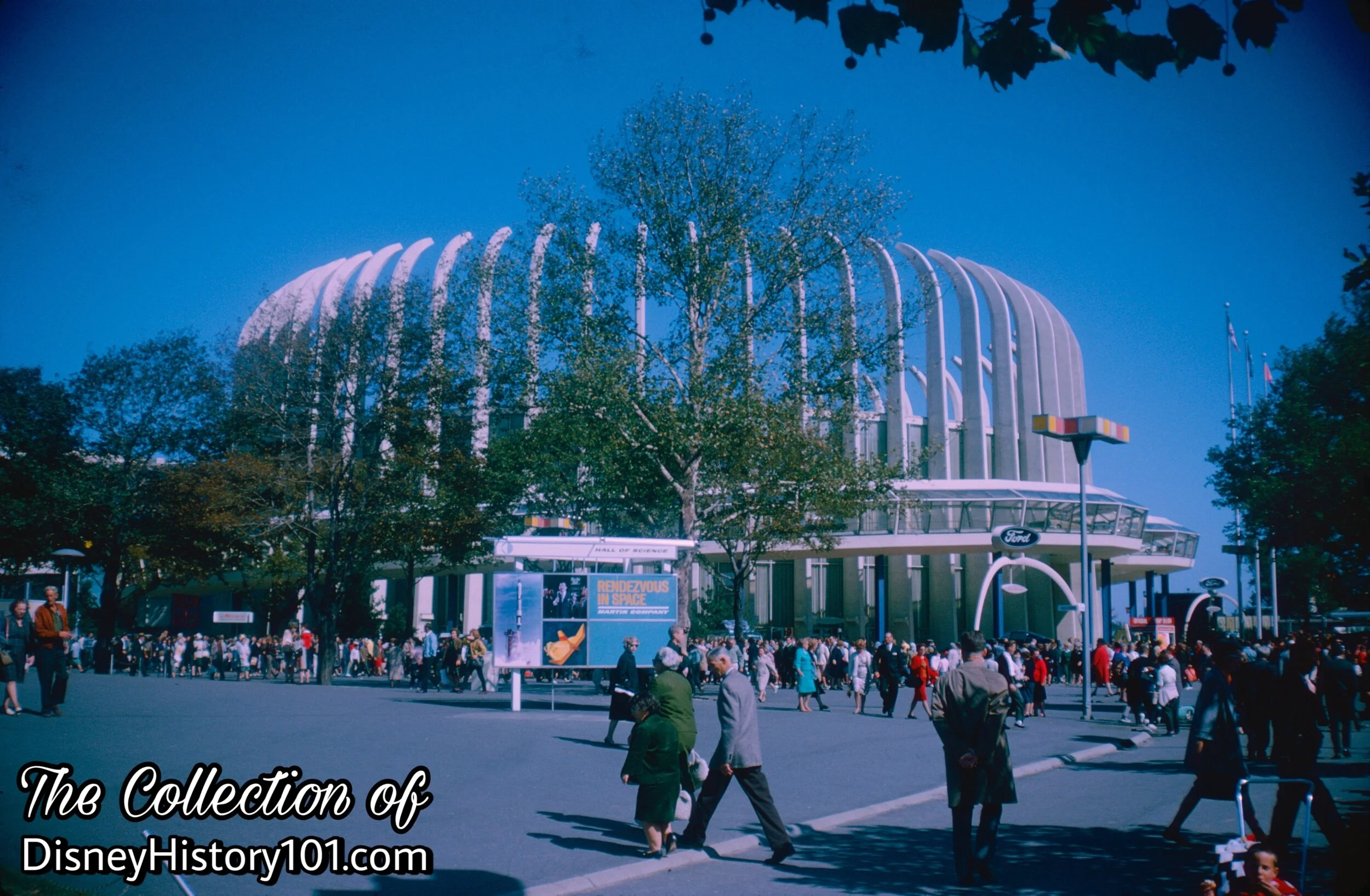
FORD Motors "Wonder Rotunda" Pavilion, (October 2nd, 1965)
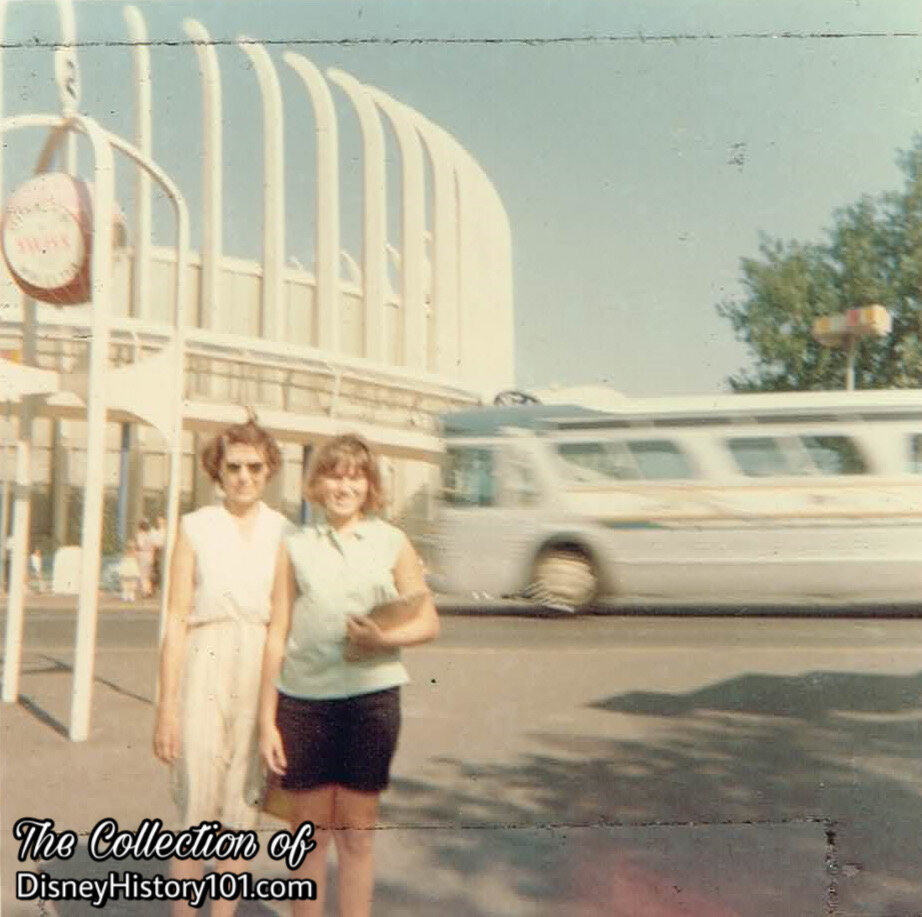
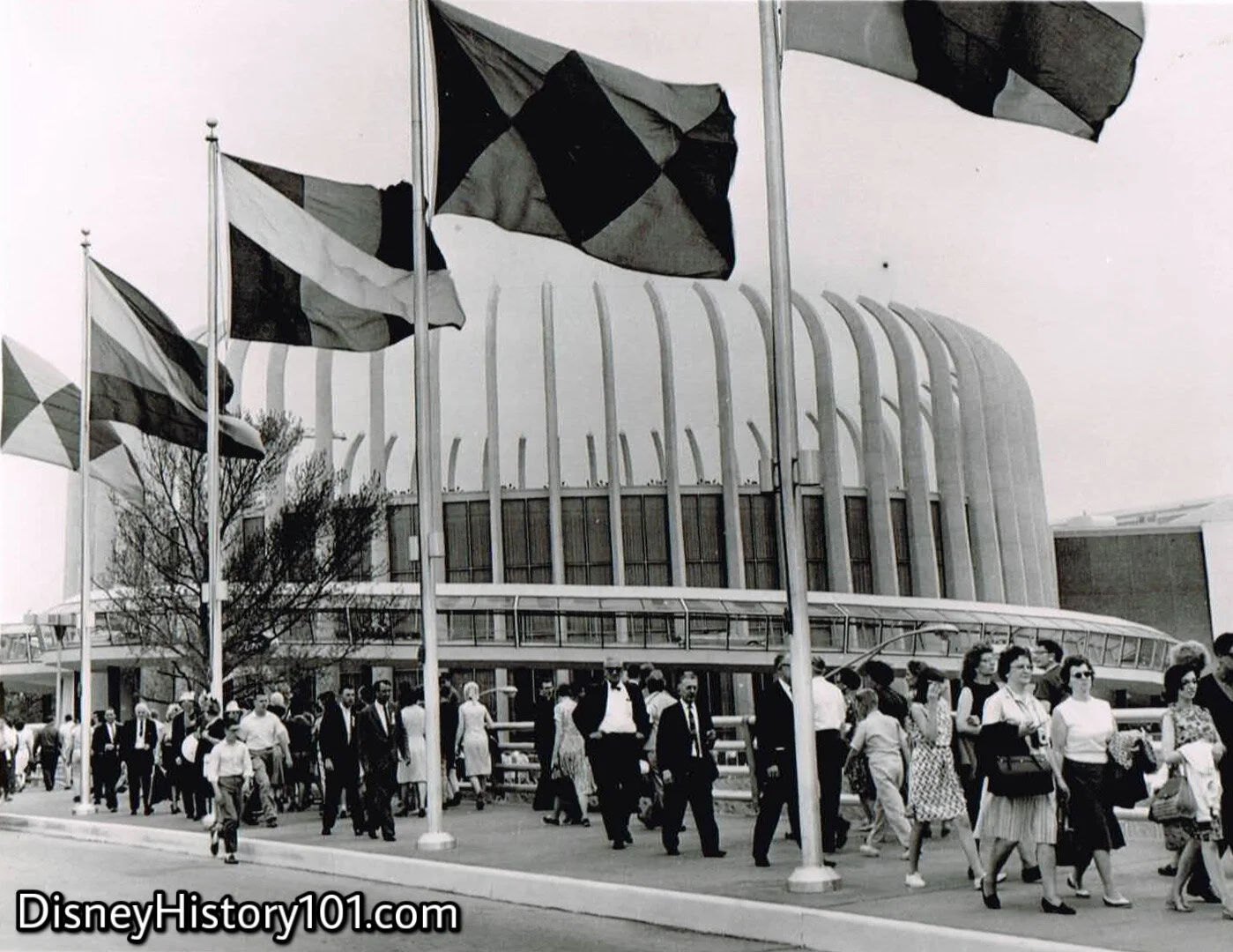
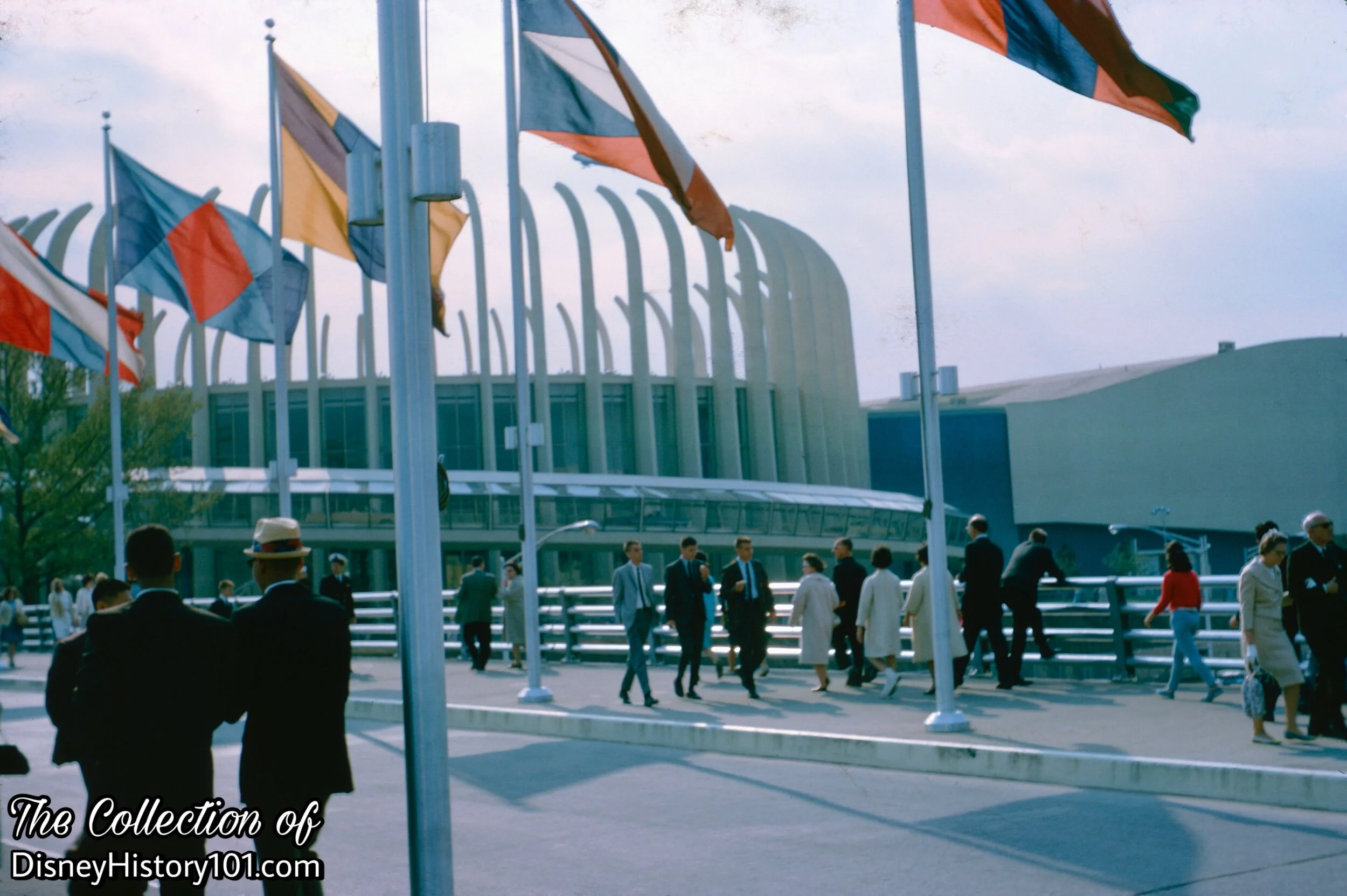
Welcome to the Ford Wonder Rotunda of the 1964 - 1965 New York World’s Fair! This unique building has a glass rotunda with 64 towering pylons at one end and a large exhibition hall at the other. It contains a variety of exhibits, a number of which were designed by Walt Disney.
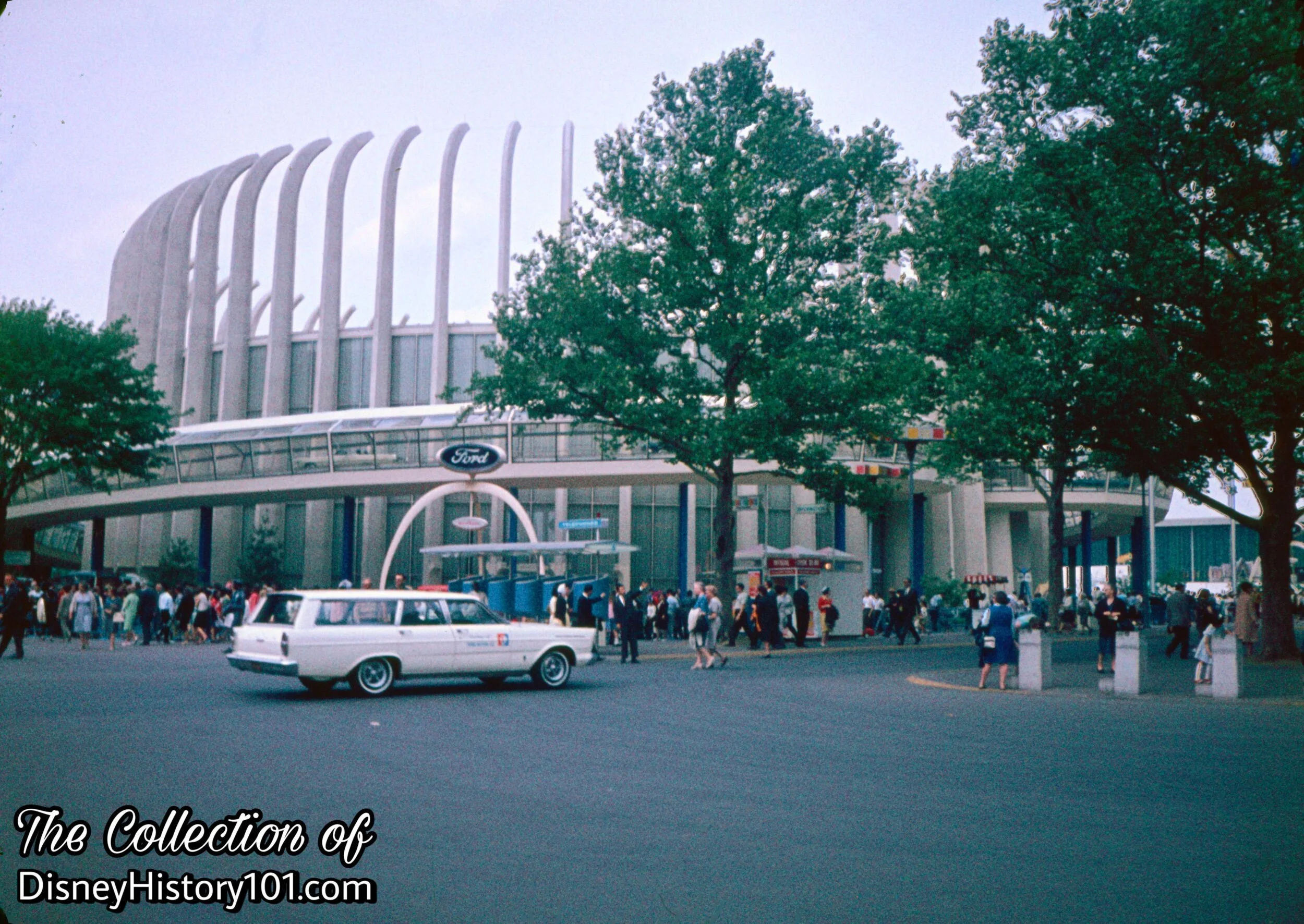
FORD Motors "Wonder Rotunda" Pavilion
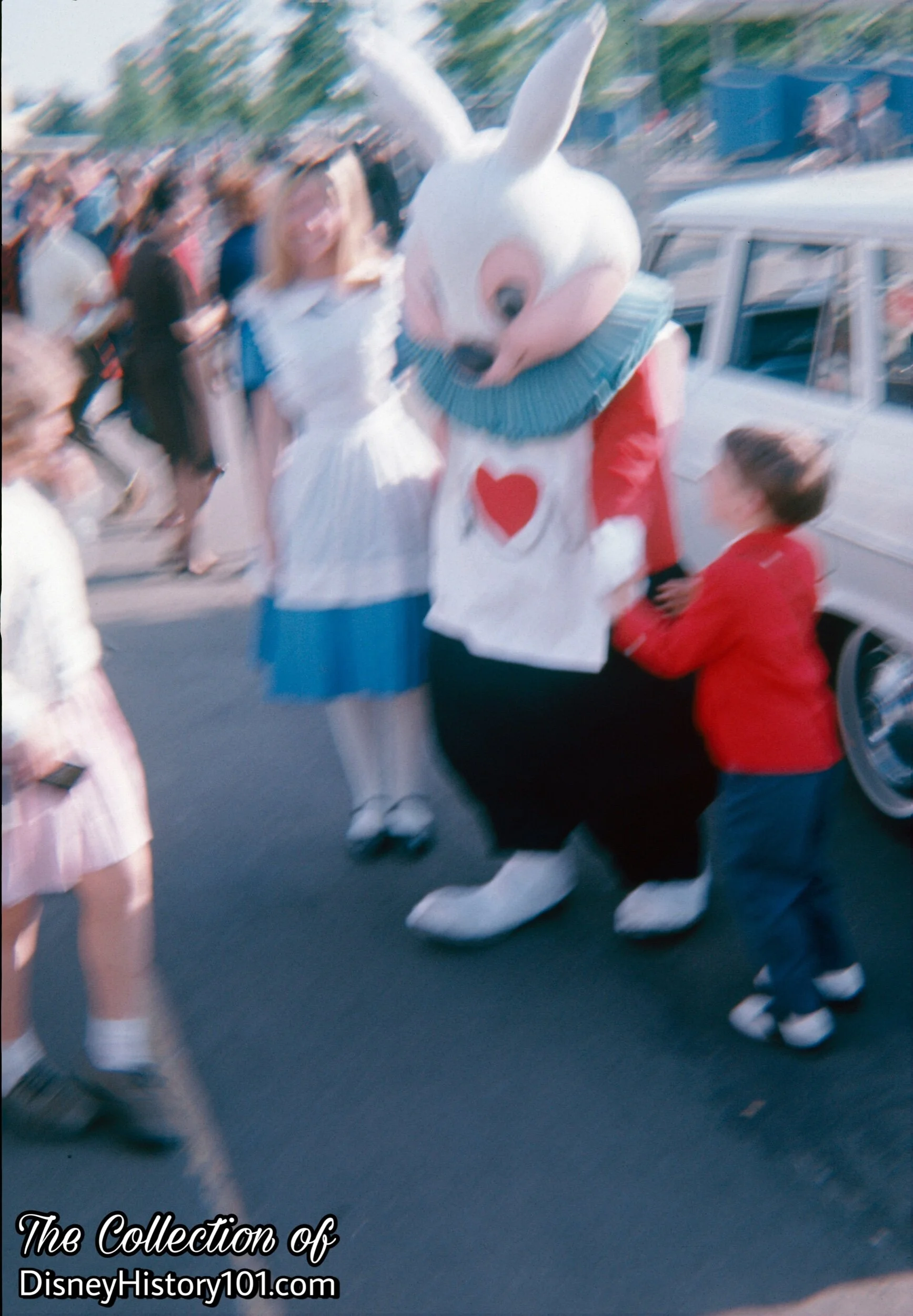
Alice and the White Rabbit
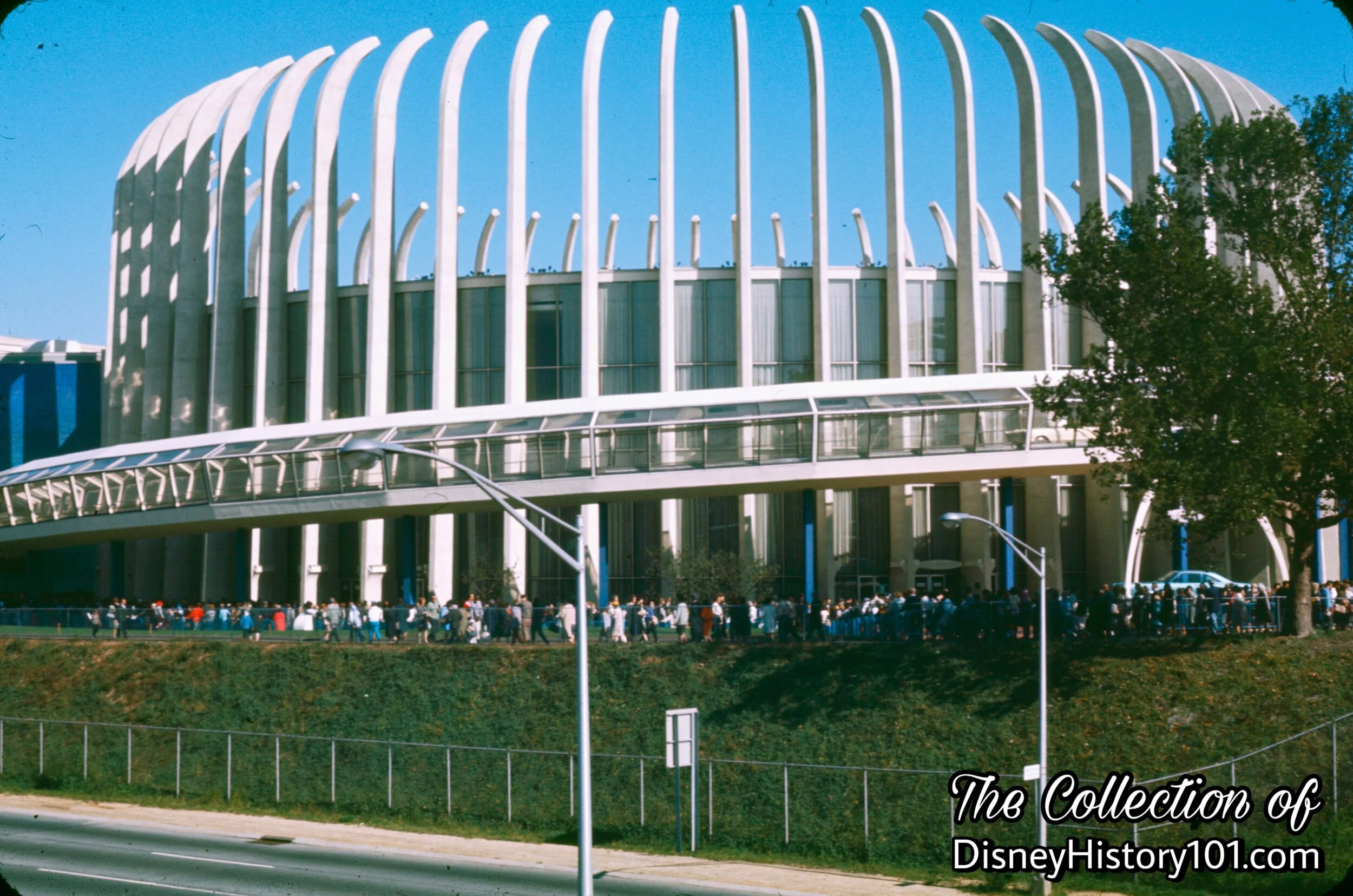
FORD Motors "Wonder Rotunda" Pavilion
Contemporaneously published post cards have commented that “the unique building has a glass rotunda with 64 towering pylons at one end and a large exhibition hall at the other. It contains a variety of exhibits, a number of which were created by Walt Disney”.
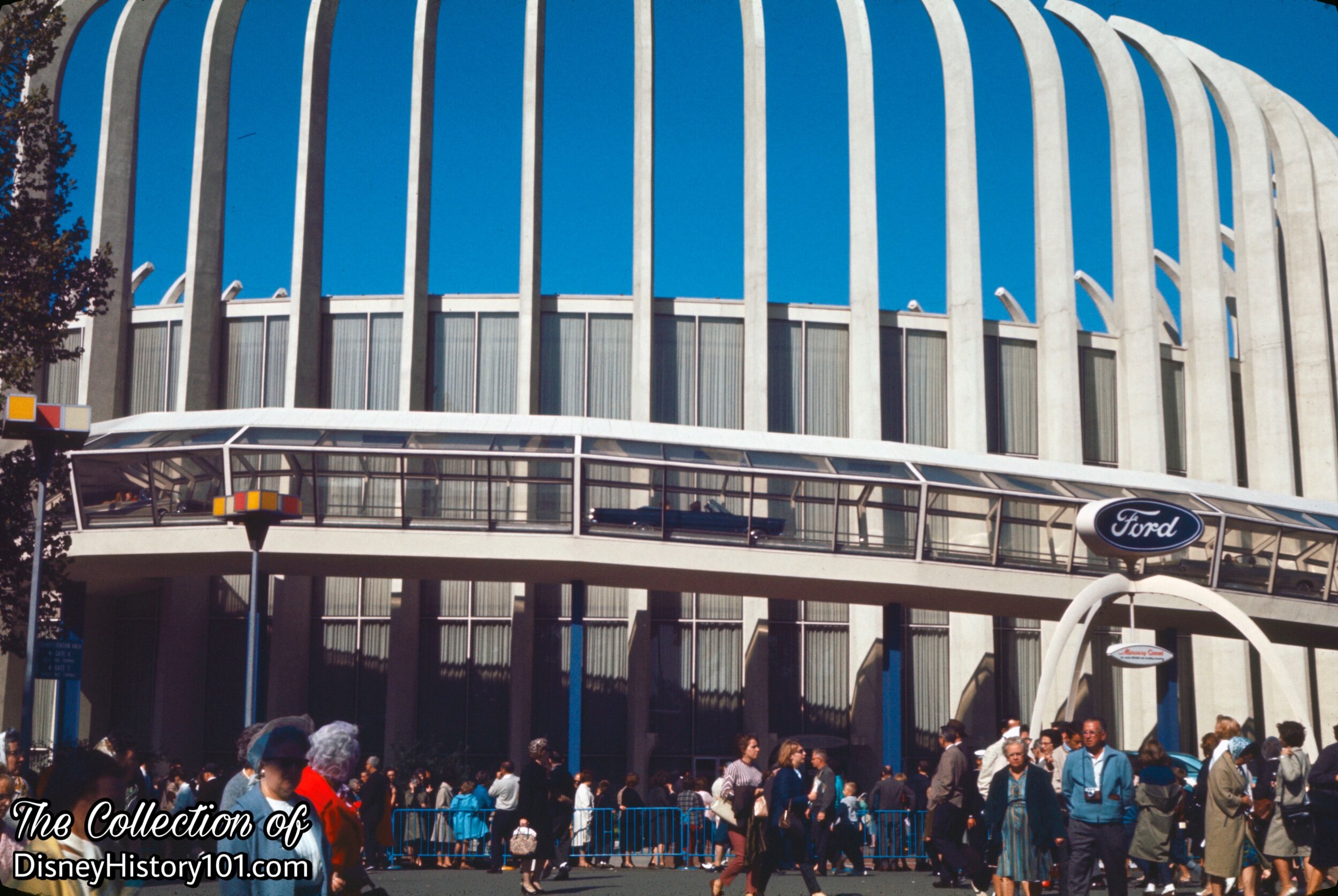
FORD Motors "Wonder Rotunda" Pavilion
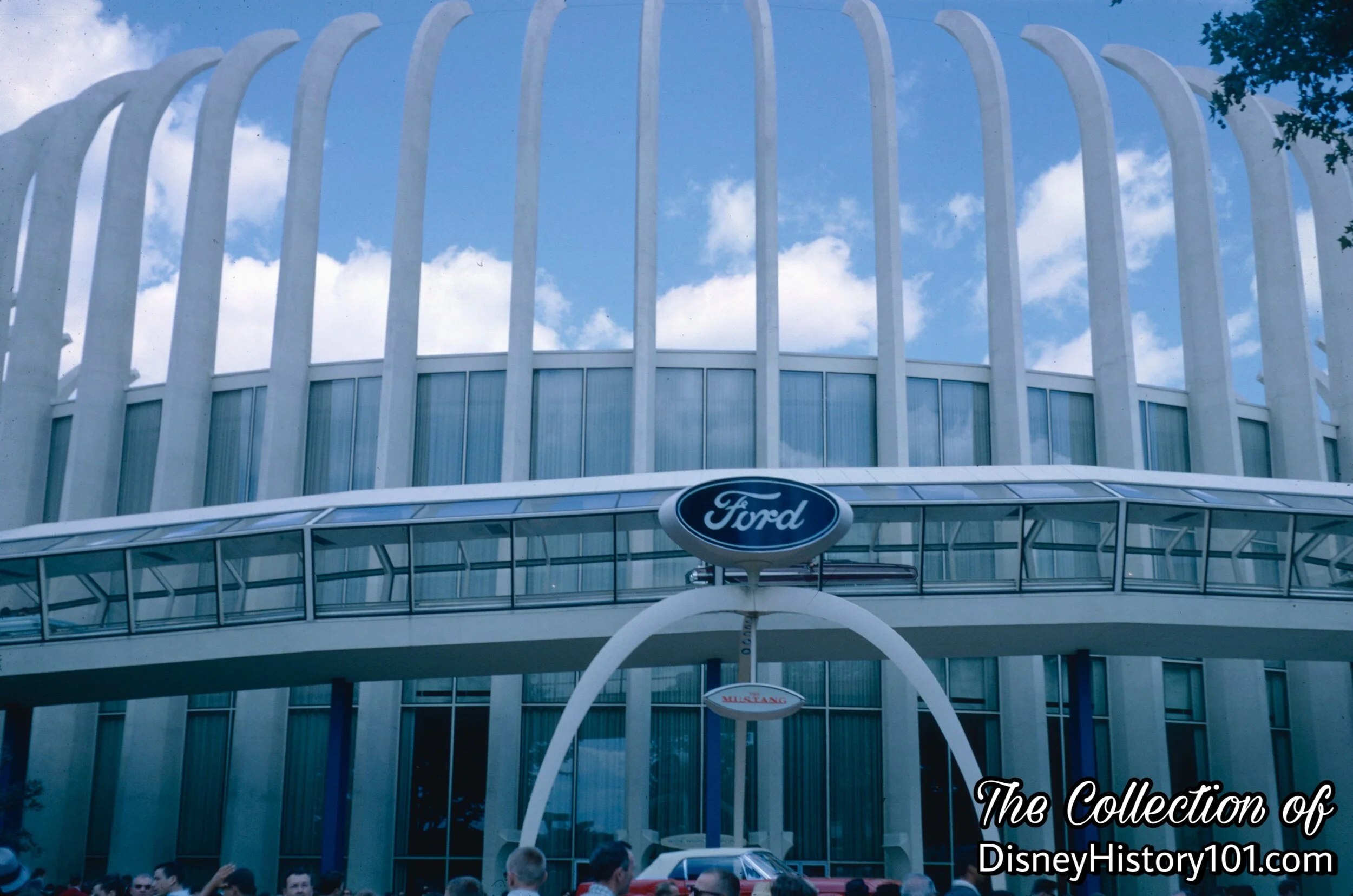
FORD Motors "Wonder Rotunda" Pavilion
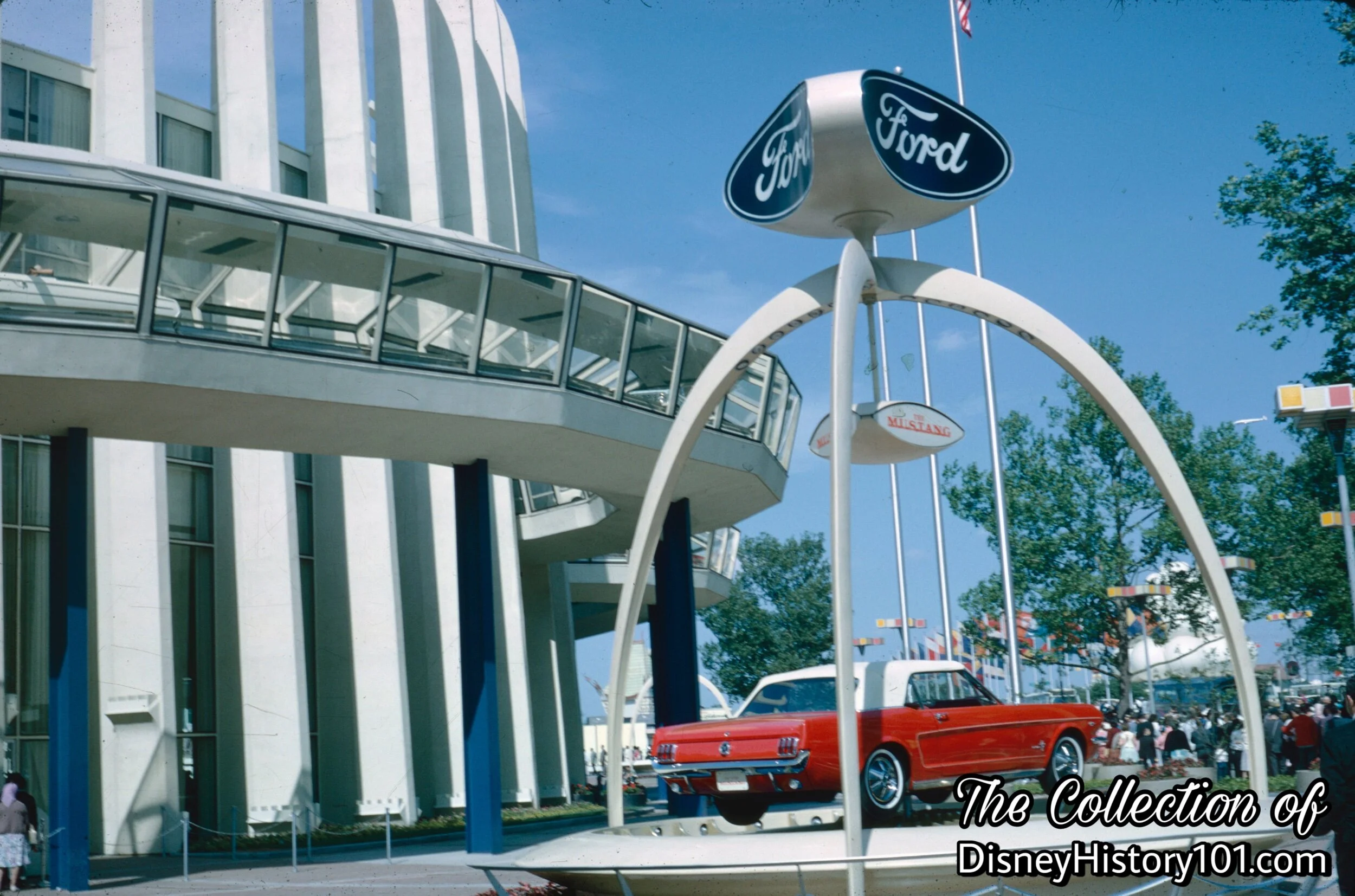
FORD Motors "Wonder Rotunda" Pavilion
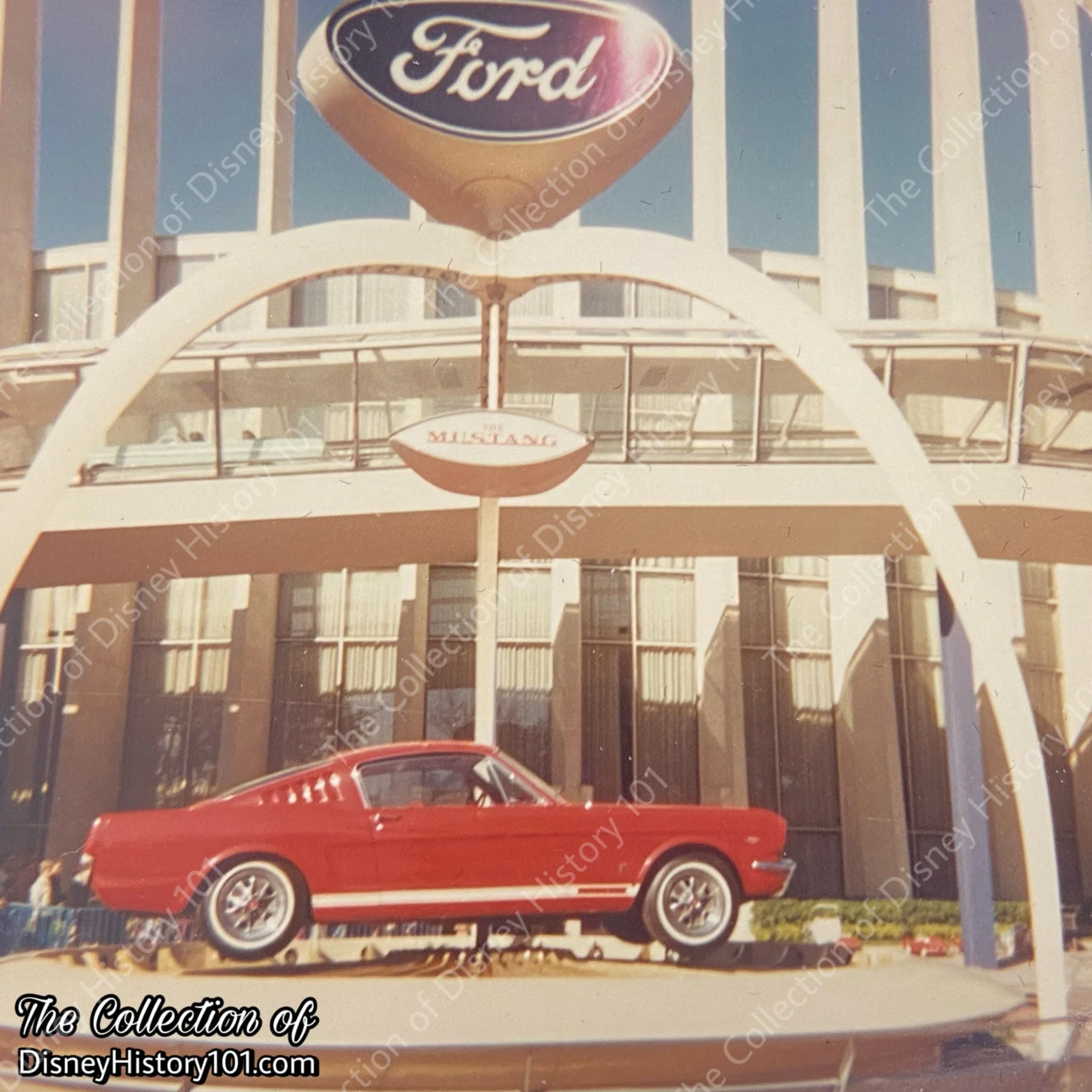
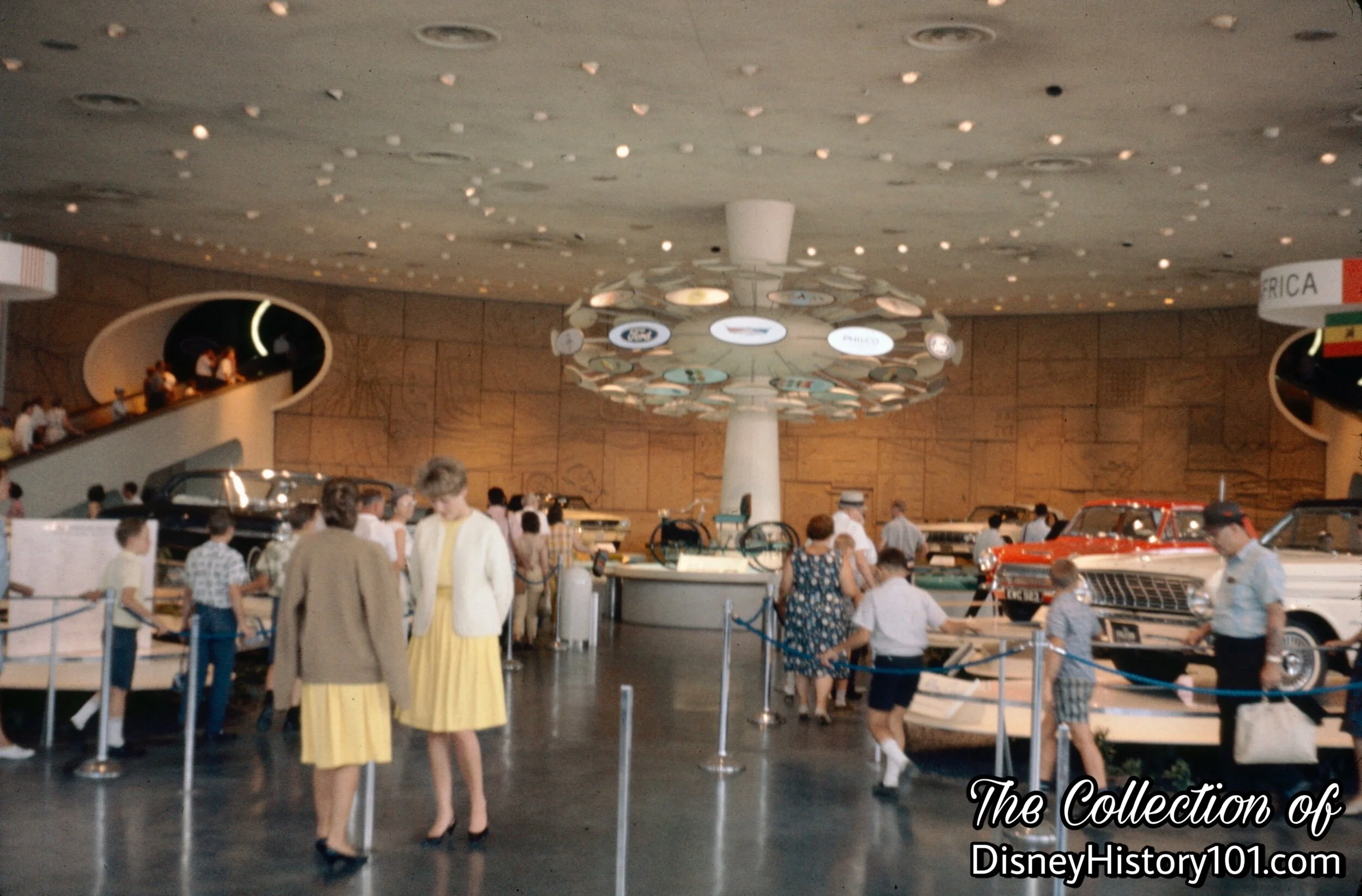
FORD Motors "Wonder Rotunda" Pavilion Showroom
This pavilion has been described as “a bridge between the past and the future.”
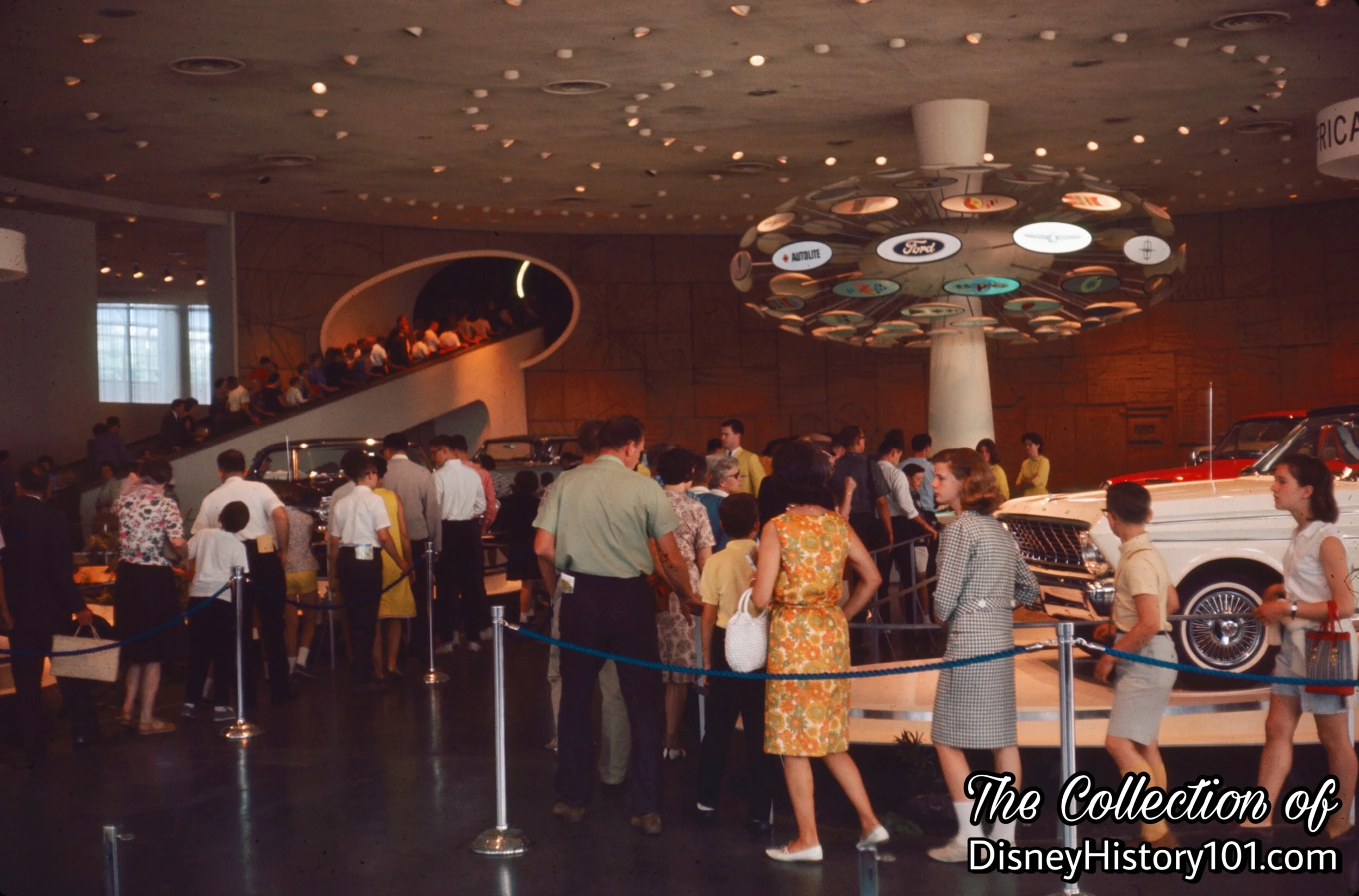
FORD Motors "Wonder Rotunda" Pavilion Showroom
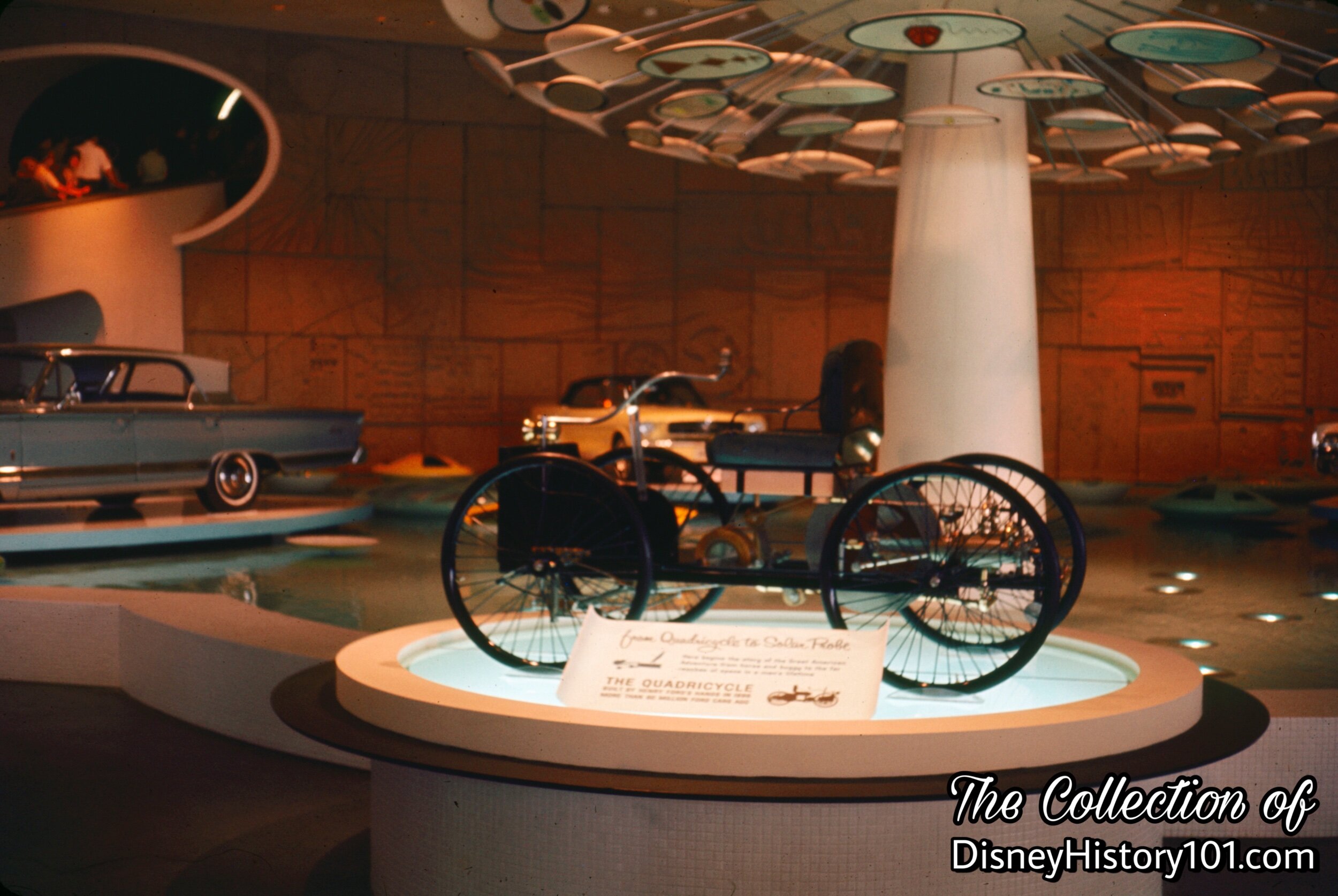
Henry Ford’s Quadricycle, FORD Motors "Wonder Rotunda" Pavilion Showroom
Henry Ford’s Quadricycle was “a marvel of its time… Henry Ford built it in 1896 as an experiment which led 60-million cars later to modern products” like the ones we will see in a moment.
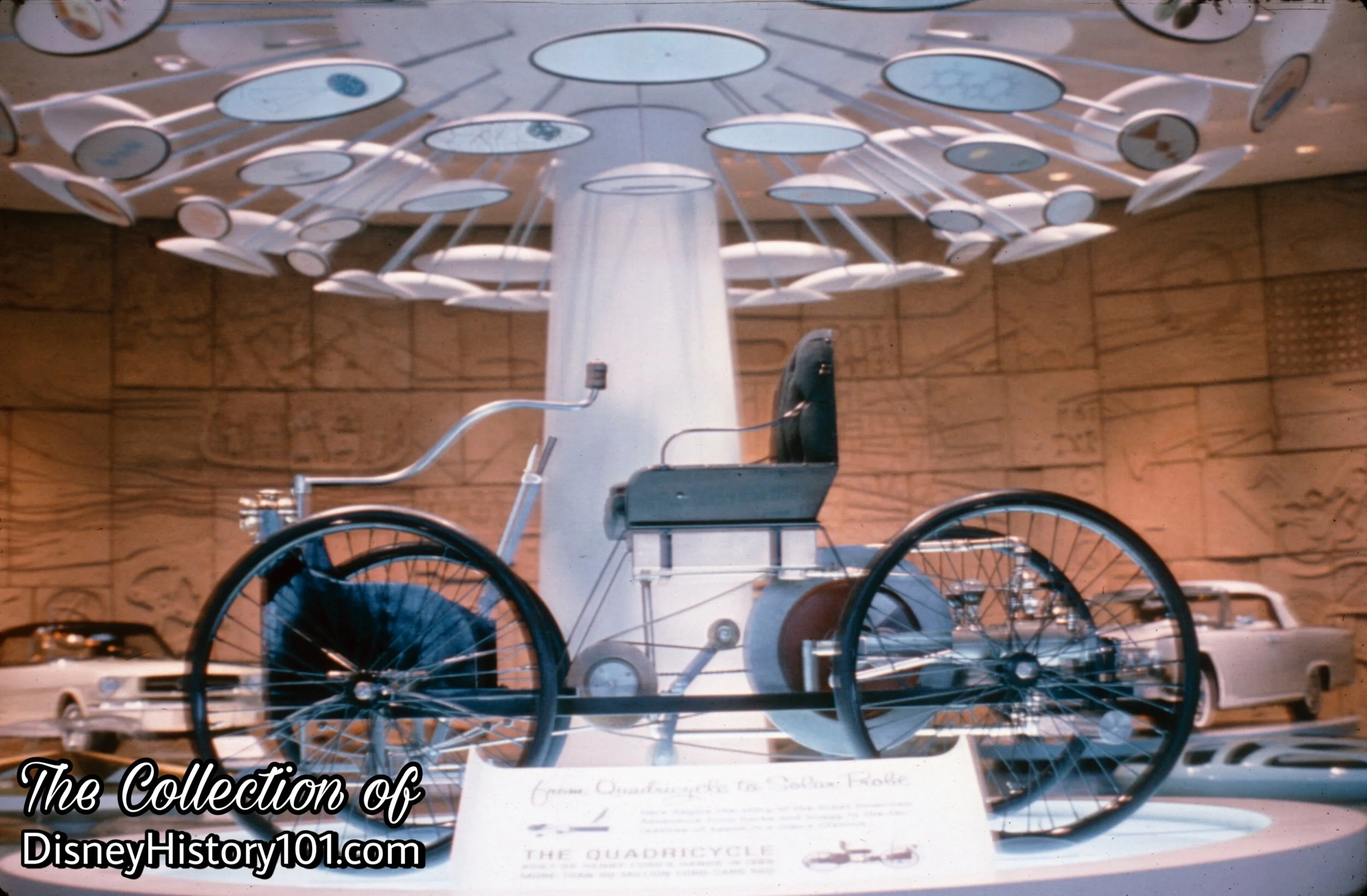
Henry Ford’s Quadricycle, FORD Motors "Wonder Rotunda" Pavilion Showroom
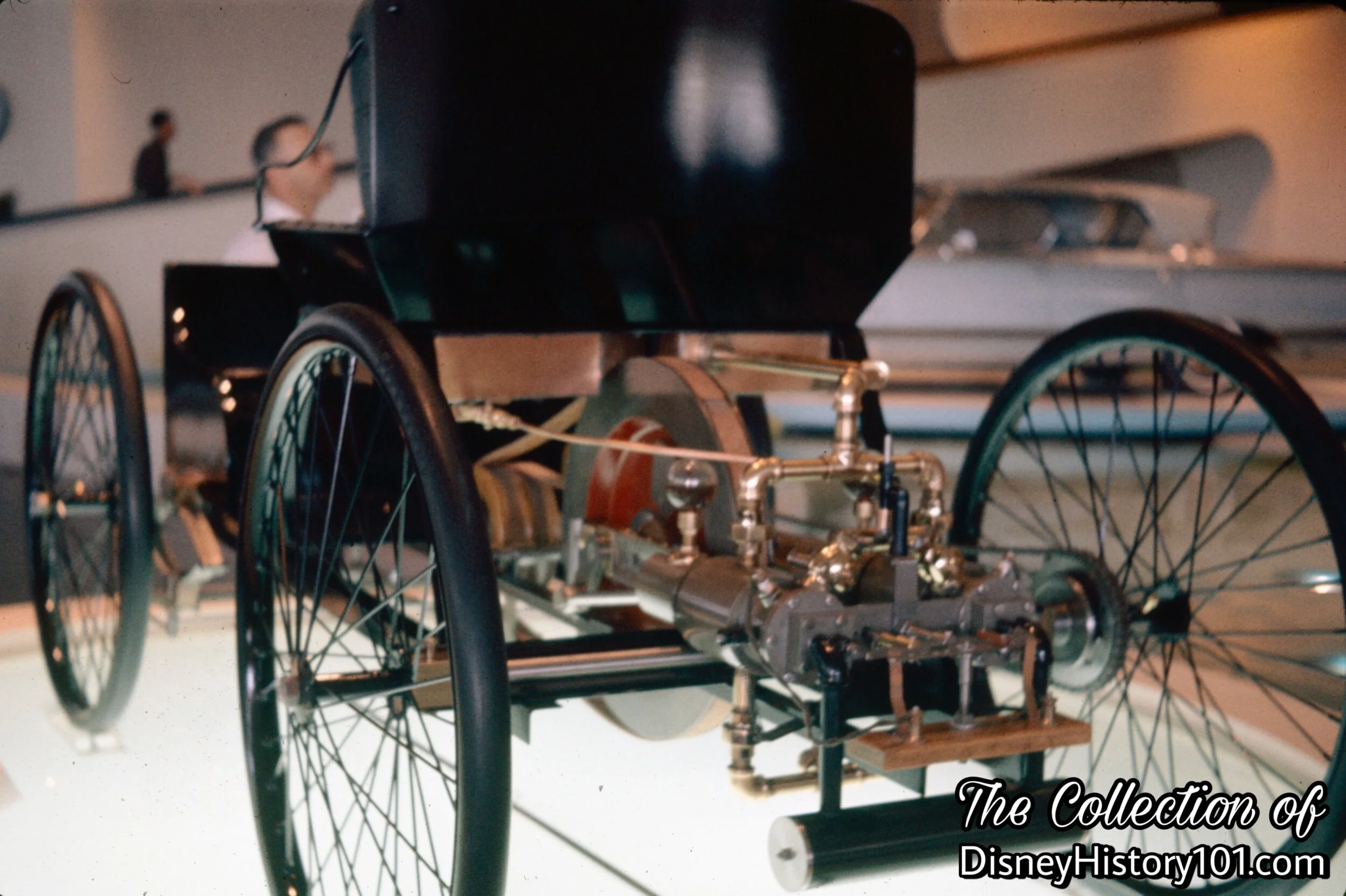
Henry Ford’s Quadricycle, FORD Motors "Wonder Rotunda" Pavilion Showroom
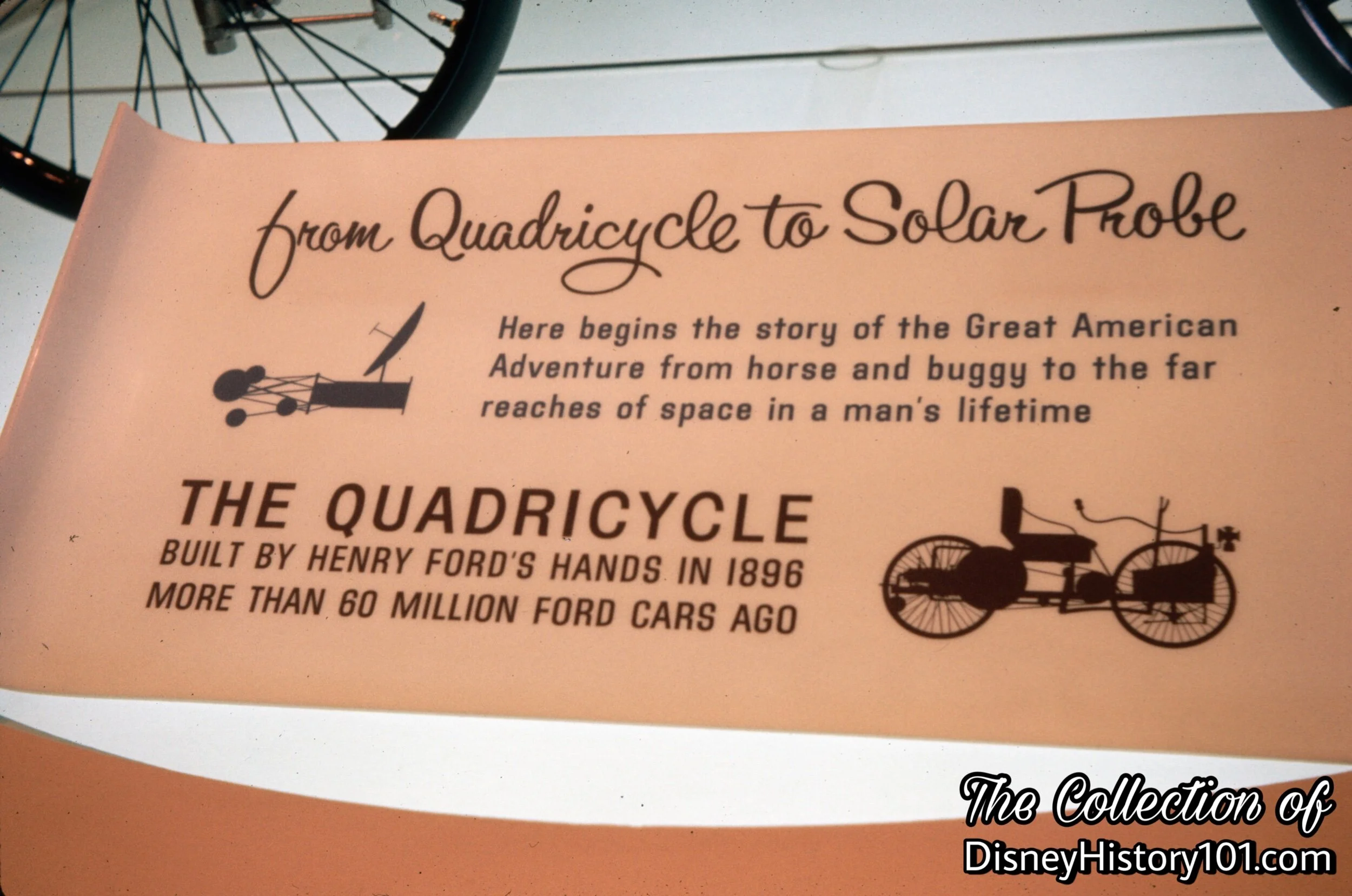
Henry Ford’s Quadricycle Plaque, FORD Motors "Wonder Rotunda" Pavilion Showroom
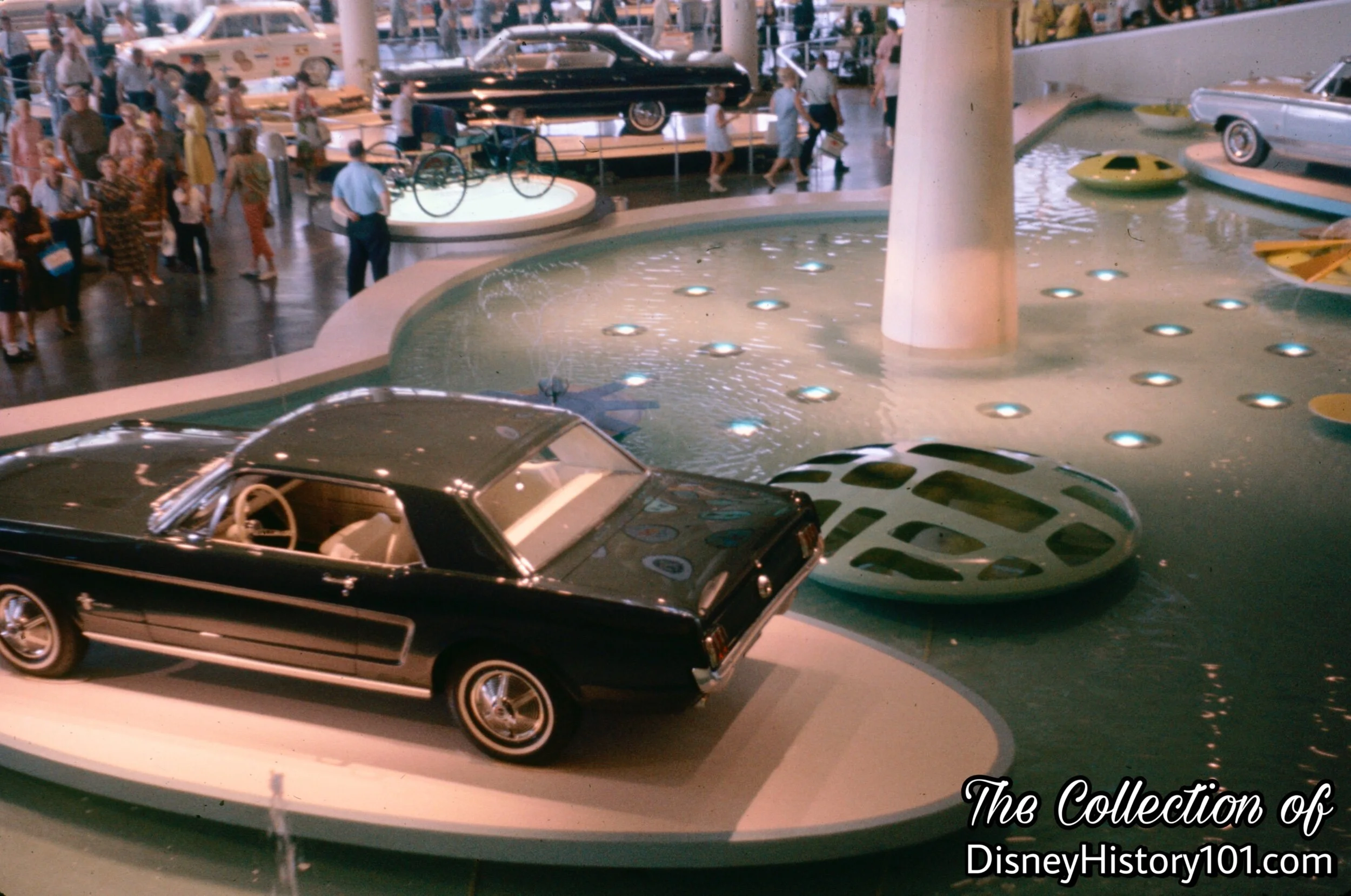
FORD Motors "Wonder Rotunda" Pavilion Showroom
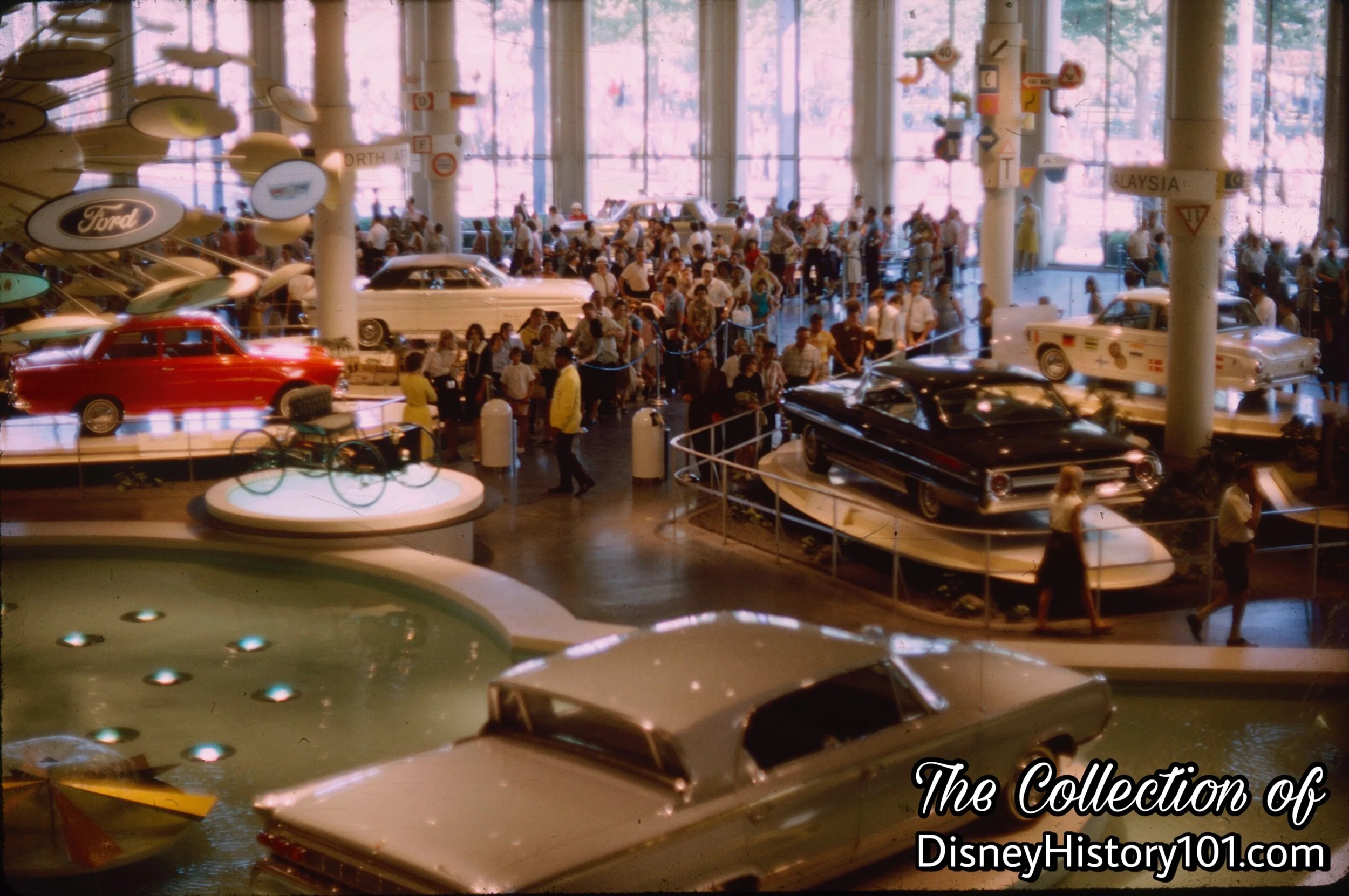
FORD Motors "Wonder Rotunda" Pavilion Showroom
To quote from another popular Walt Disney New York World’s Fair attraction - “Progress is the sound of a motor!” A testament to such progress was the FORD Showroom. In the showroom, guests could view new racing sports cars alongside antique Ford cars like Henry Ford’s Quadricycle and Ford Models A, N, and T! Guests also acquired a preview of never-before-seen “Idea Cars” (like the Aurora, the Allegro, and the Cougar II).
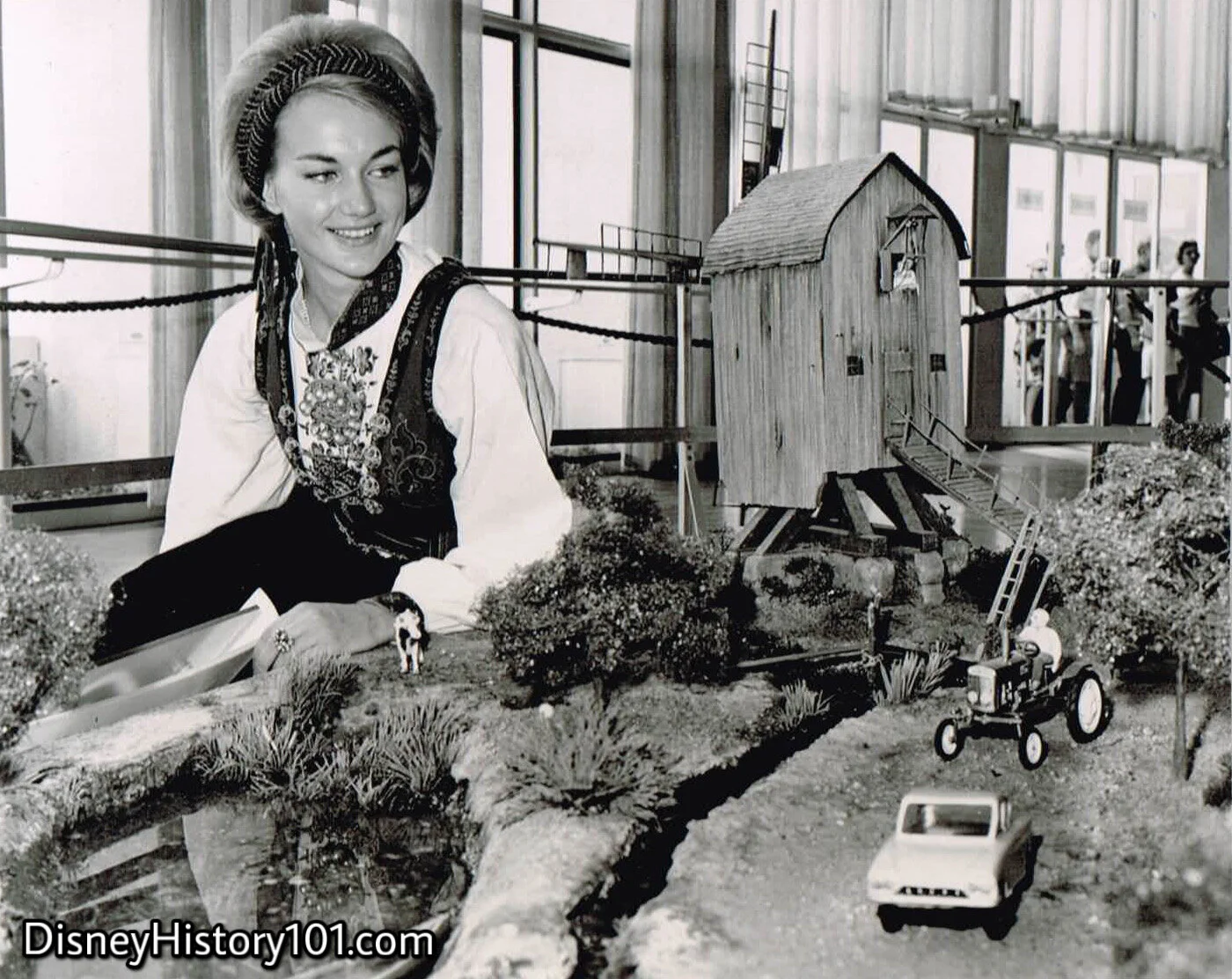
International Gardens
Apparently, Walt Disney and his Imagineers had a hand in two small worlds at the 1964 New York World’s Fair - one for UNICEF, and the other (miniature International Gardens) for FORD! In this pre-show gallery, guests could view authentic miniature reproductions of scenes from 11 Ford-manufacturing countries around the world, like Africa, Italy, Canada, British Malaya, and the Scandinavian setting pictured above.
Much work went into the design of each diorama. For Instance, Ted Rich’s plans for the Quebec Province included a seigneurial manor house, a Turcot manor house, a Sulley villa, and a windmill from L’Isle-Aux-Courdres. Unseen through the magic of “Vintage Views” - each of the dioramas featured amazing miniature animations (like walking camels, and tiny pigeons pecking the ground for seed). Of course, the highlights of those scenes were the miniature Ford-built vehicles, currently in use in those lands.
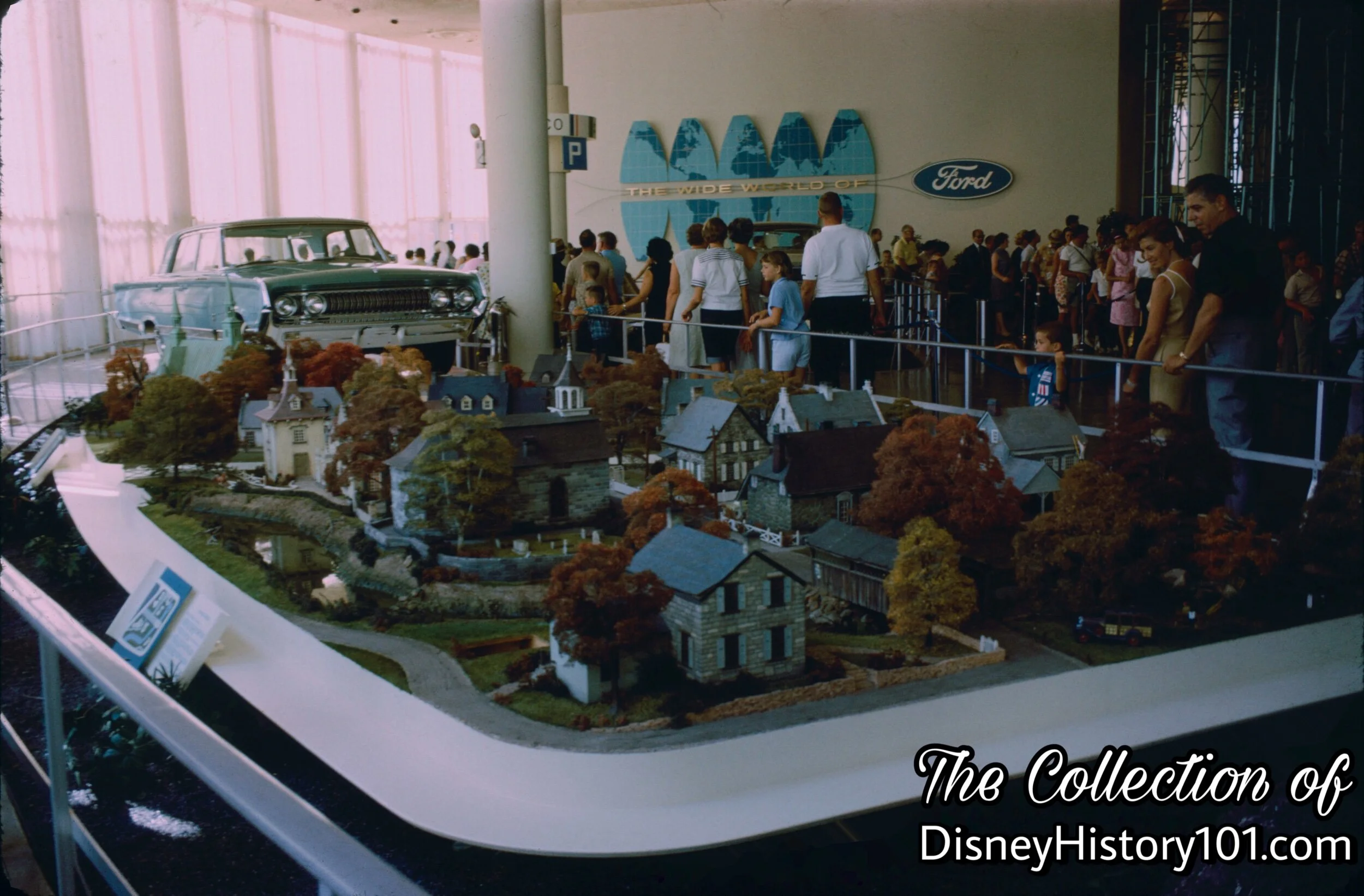
International Gardens (August, 1965)
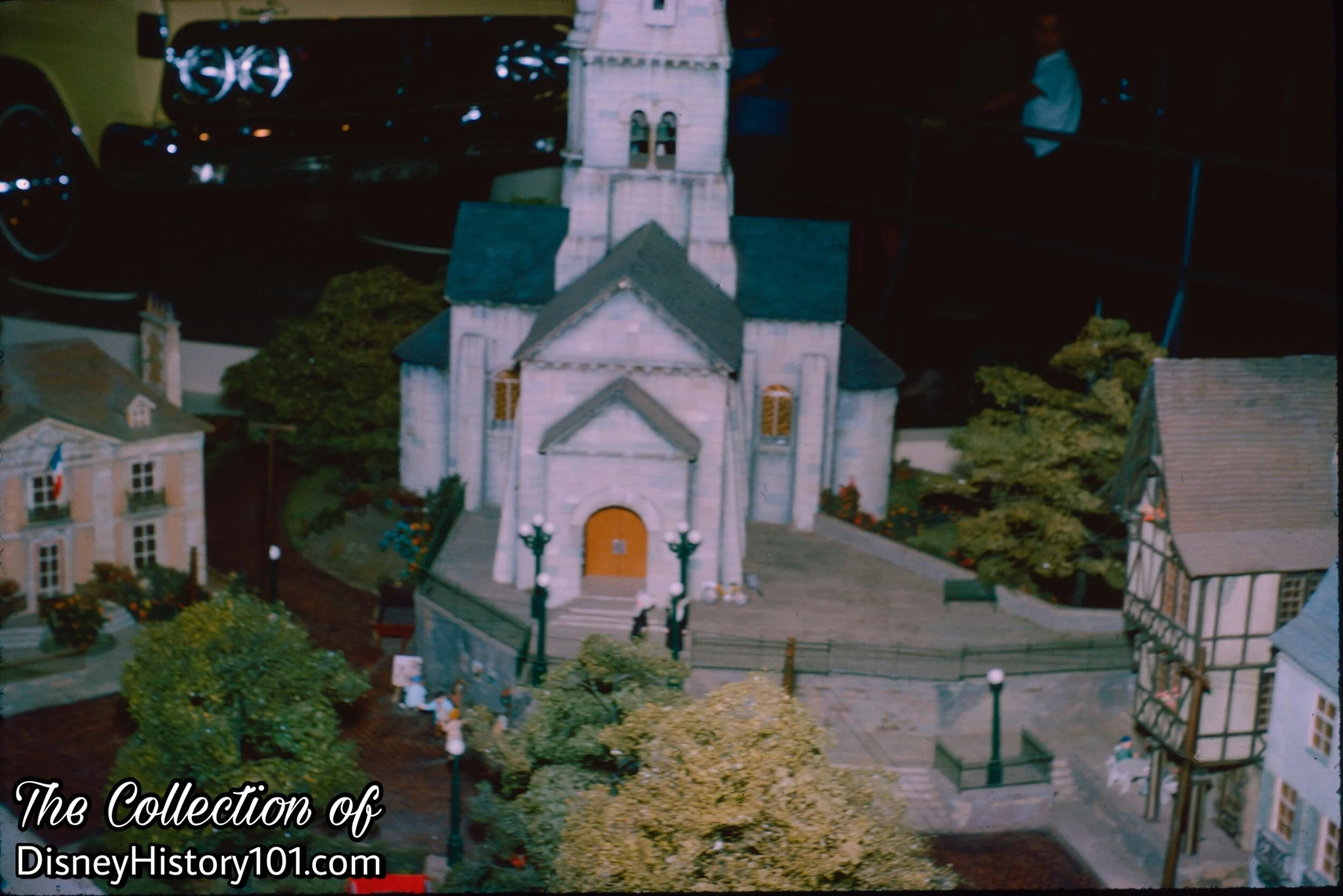
International Gardens - France or Canada (May, 1965)
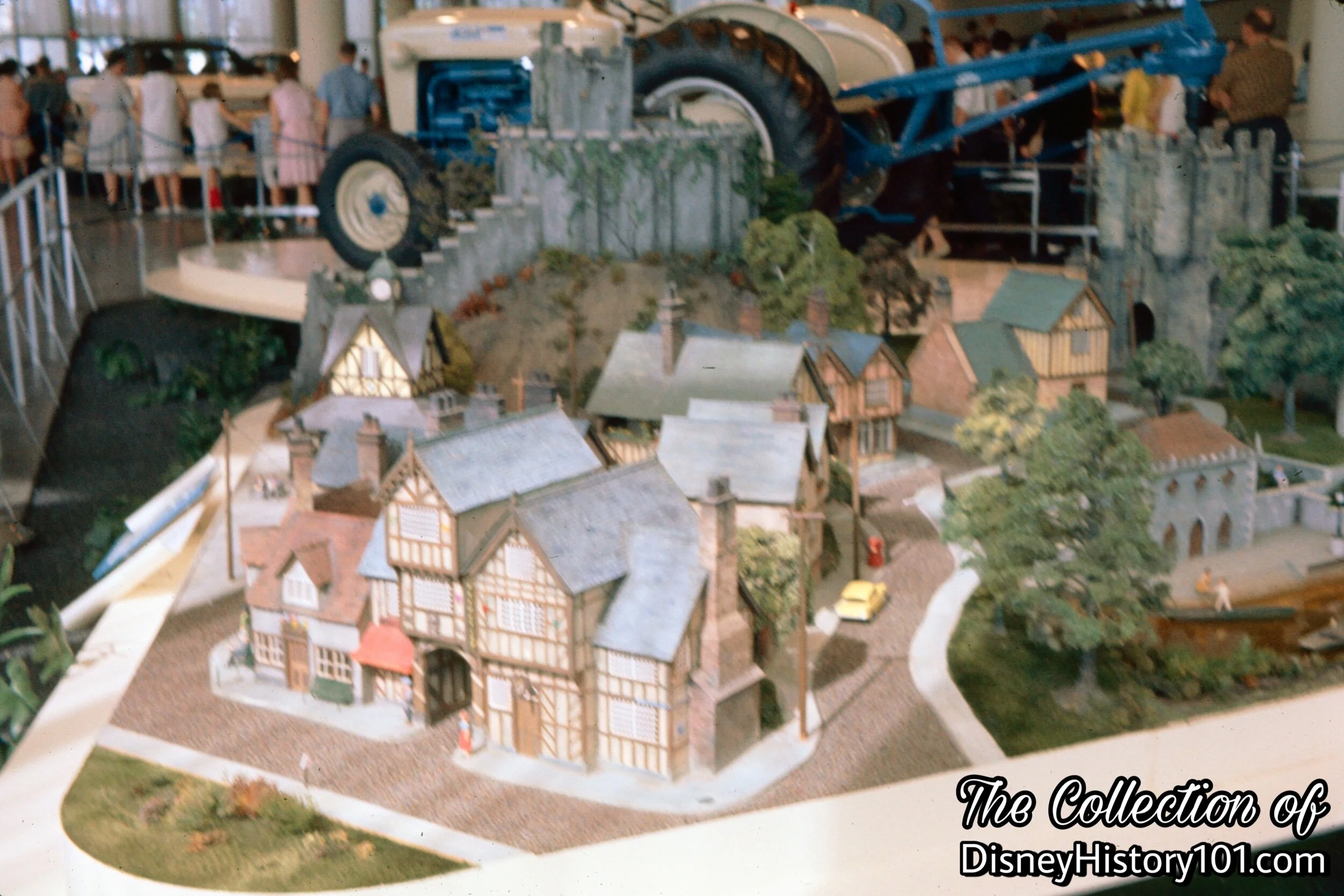
International Gardens - England
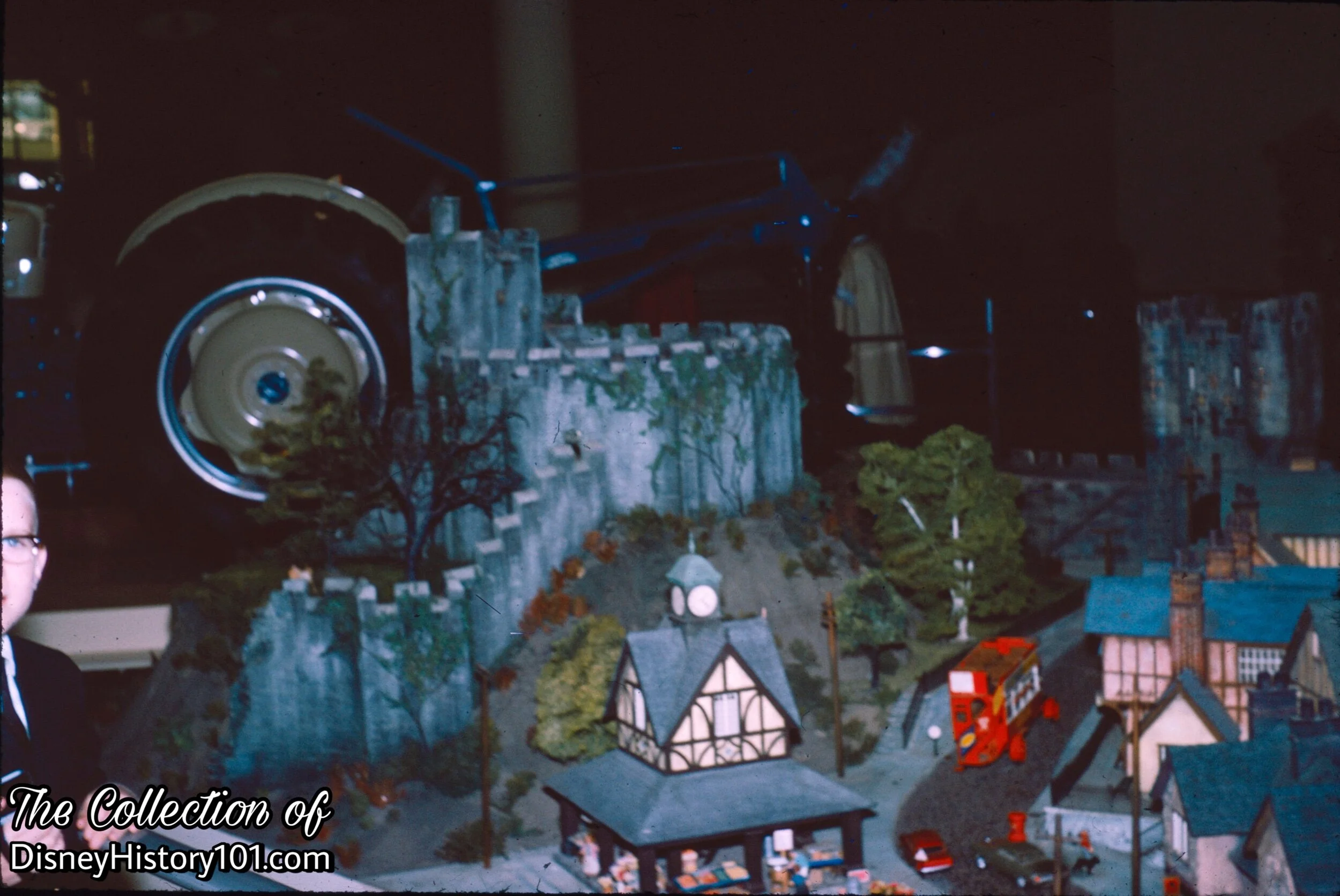
International Gardens - England, (May, 1965)
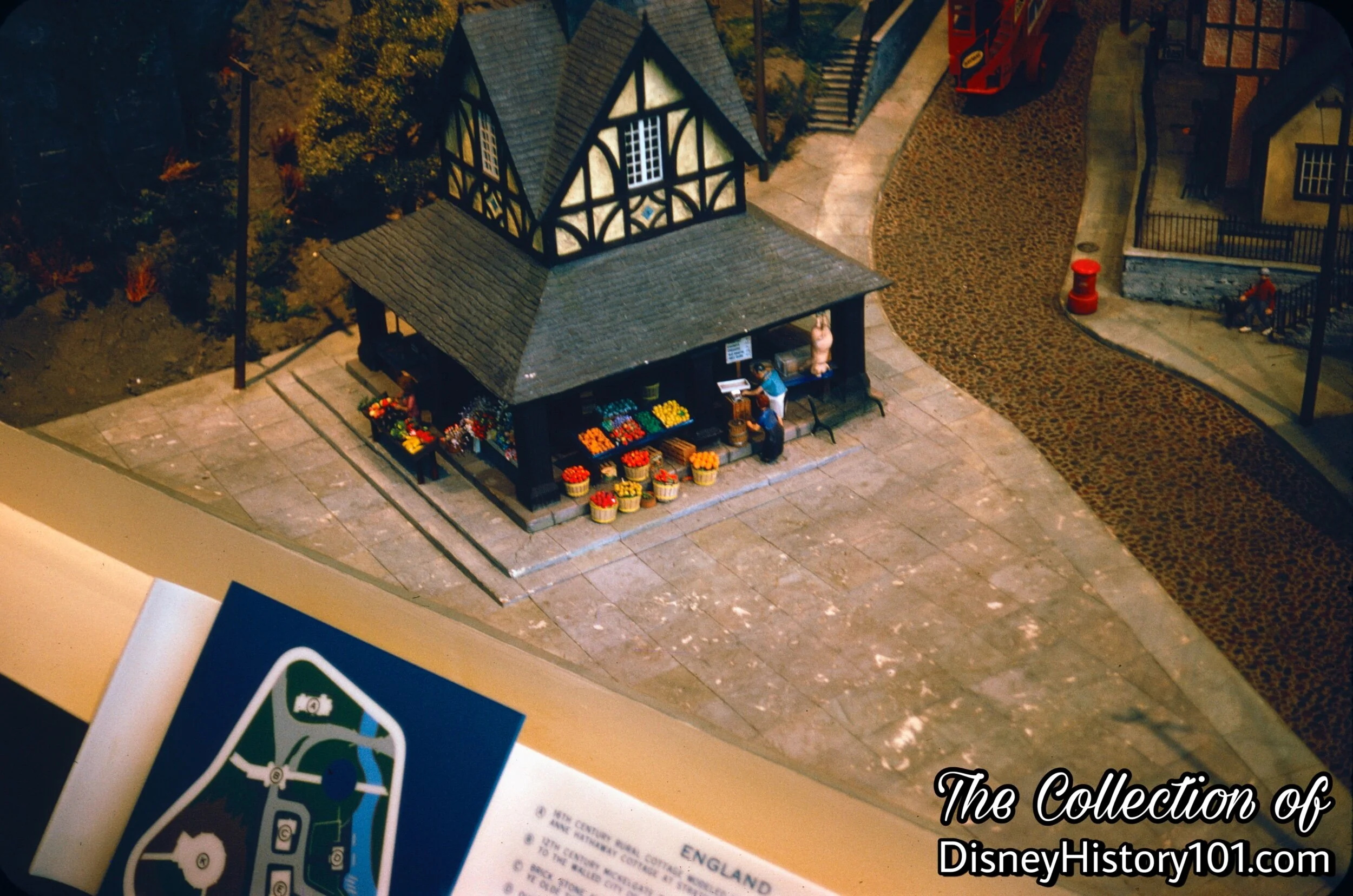
International Gardens - England
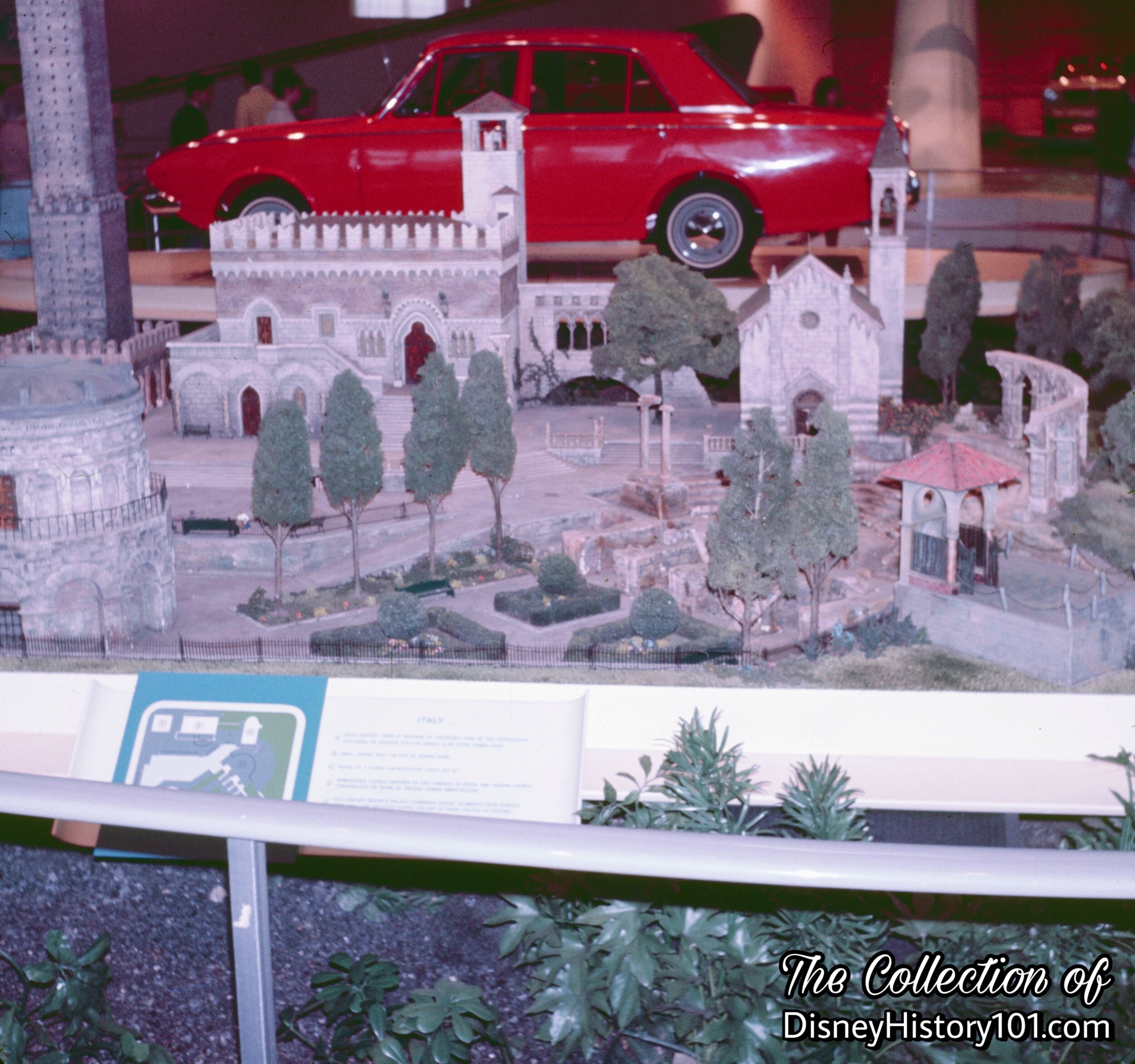
International Gardens - Italy
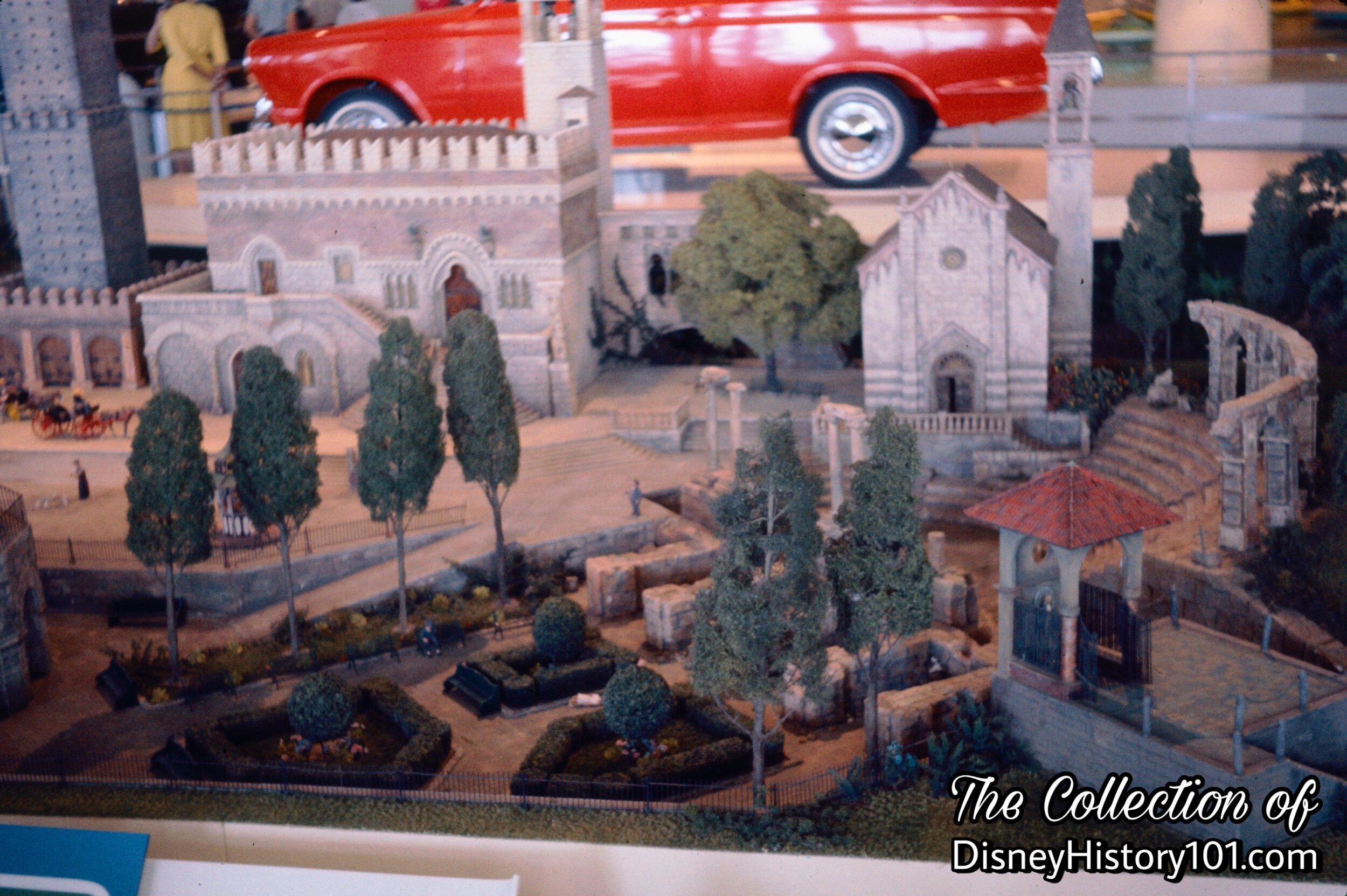
International Gardens - Italy
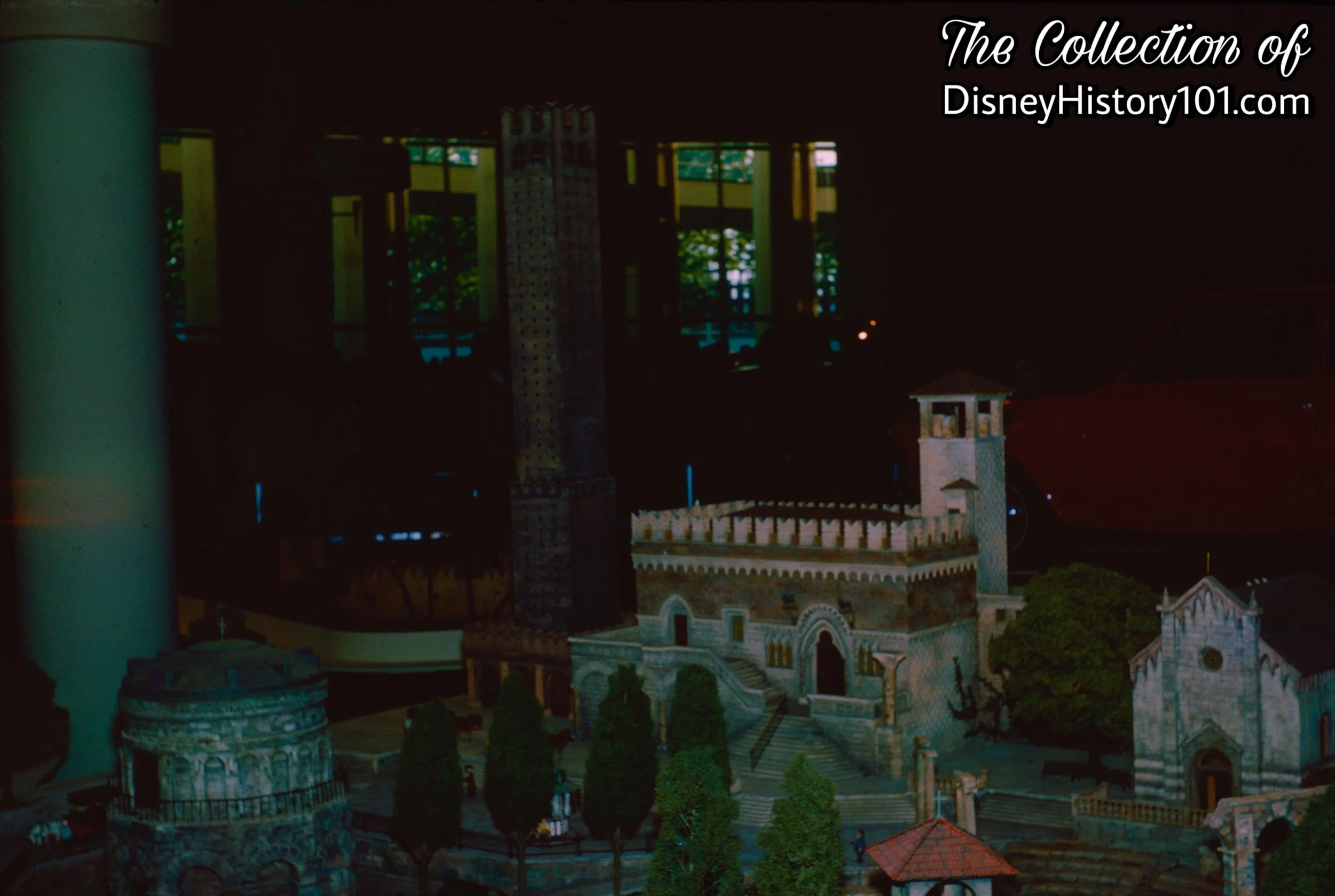
International Gardens - Italy (May, 1965)
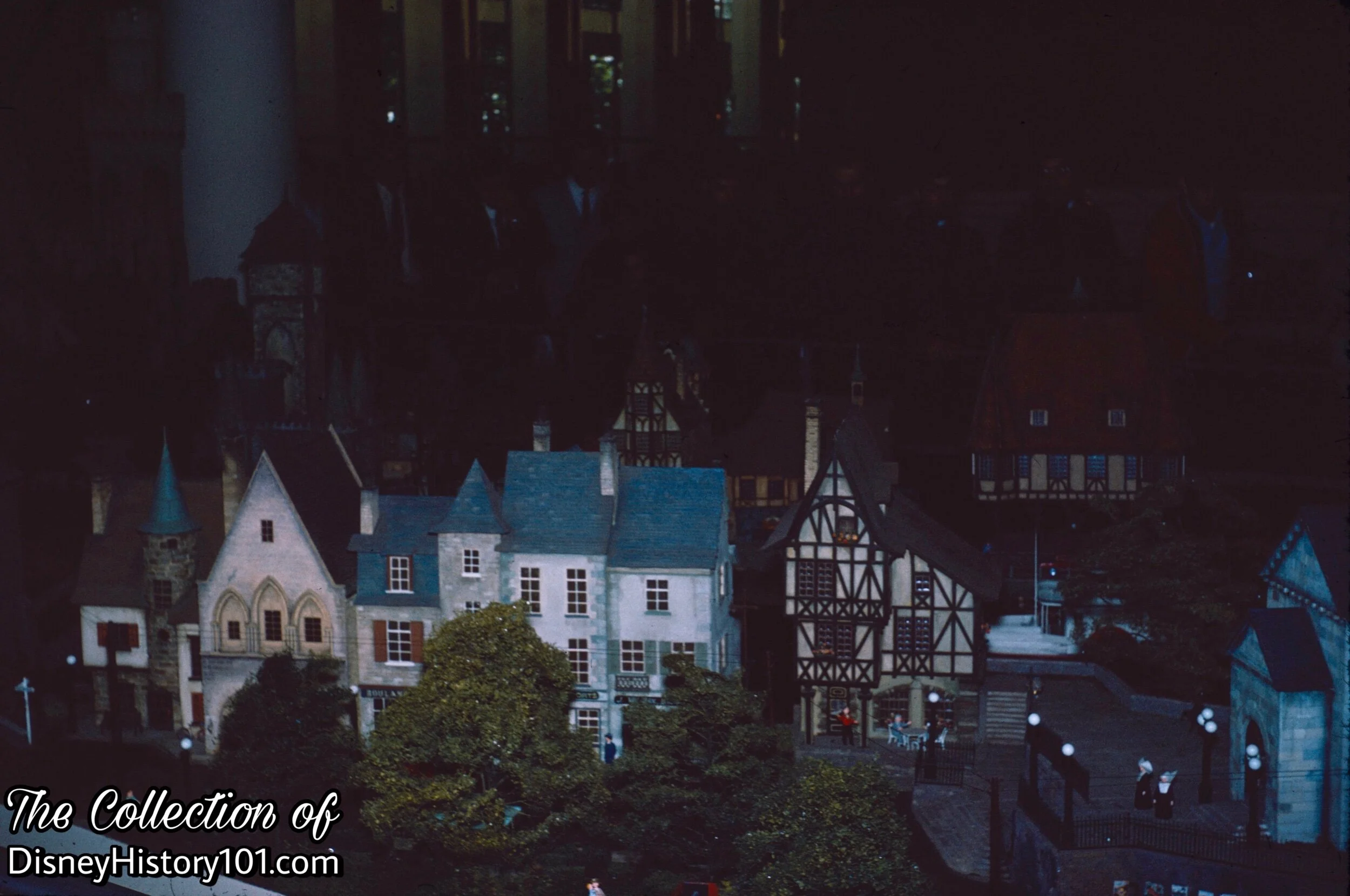
International Gardens (May, 1965)
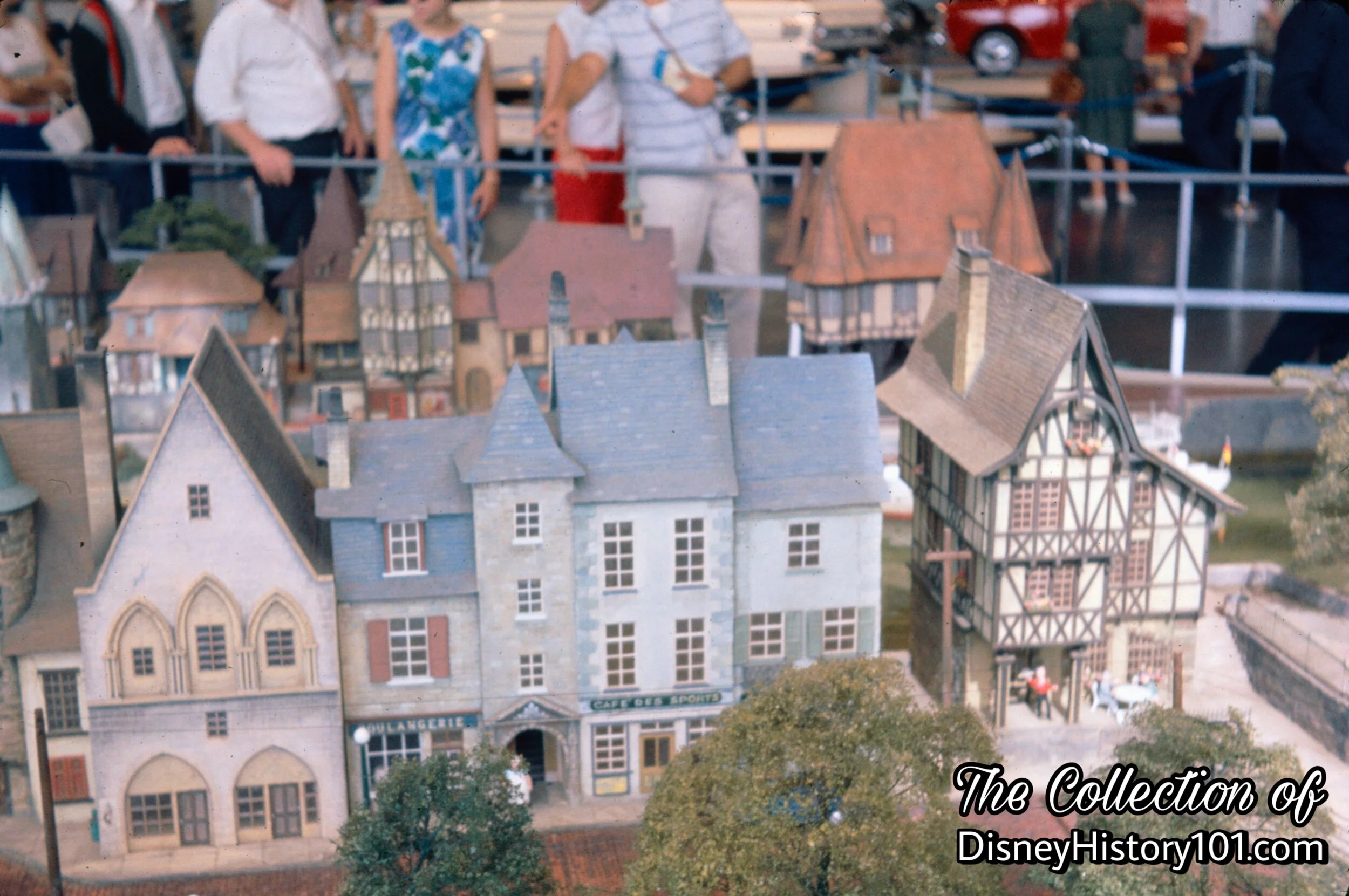
International Gardens
After viewing the last of the miniature International Gardens and other exhibits, guests are transported upstairs for their Magic Skyway ride.
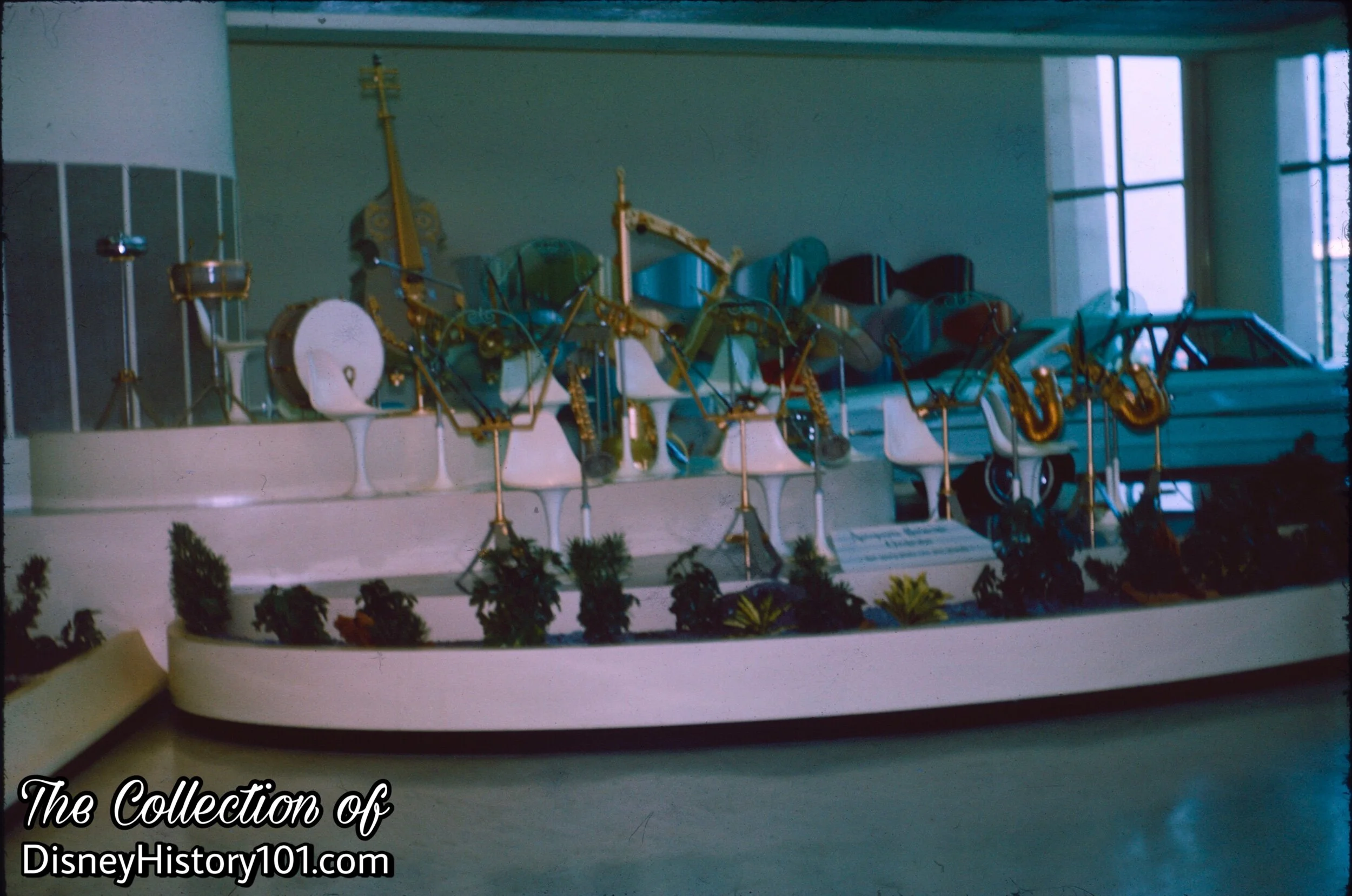
Auto Parts Harmonic Orchestra
The Ford Pavilion held many displays and exhibits, the most memorable being Walt Disney’s Ford Magic Skyway. Even before reaching the main attraction, New York World’s Fair guests were treated to a musicianless orchestra. Upon looking over early designs of the mechanized orchestra, Walt had the idea, “Maybe you should make them look like car parts, being the Ford Pavilion and all.” Rolly Crump (who was working on The Tower of The Four Winds and its a small world), loved the idea and sought out the help of Disneyland vehicle engineer Bob Gurr for assistance with this project. The duo began to search Ford Automotive catalogues for car parts that could be used to create instruments, and the Auto Parts Harmonic Orchestra presented by FORD was born!
As for the soundtrack of the Auto Parts Harmonic Orchestra, the George Bruns scores were borrowed from the Disneyland television episode “Magic Highway U.S.A.” (aired years earlier, during May of 1958).
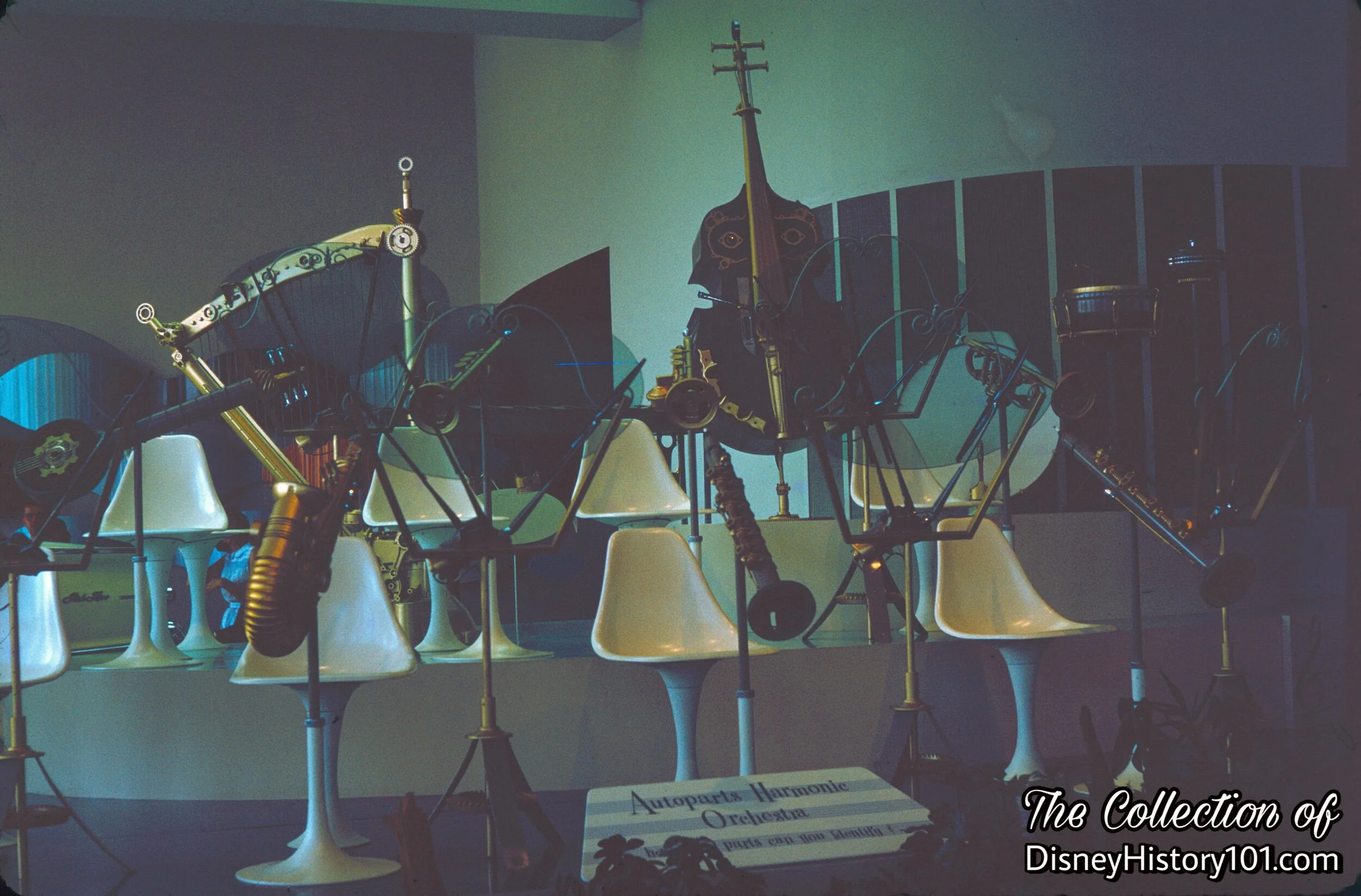
Auto Parts Harmonic Orchestra, (c. June, 1964)
According to the 1964 New York World’s Fair Ford Pavilion Guide Book :
“All the instruments are made from actual Ford automobile parts. Brake cables stretched between a drive shaft and part of a Galaxie frame become a harp ; trumpets are fashioned from sections of an axle. A xylophone is created from rear spring leaves, and a banjo is shaped from differential housing.”
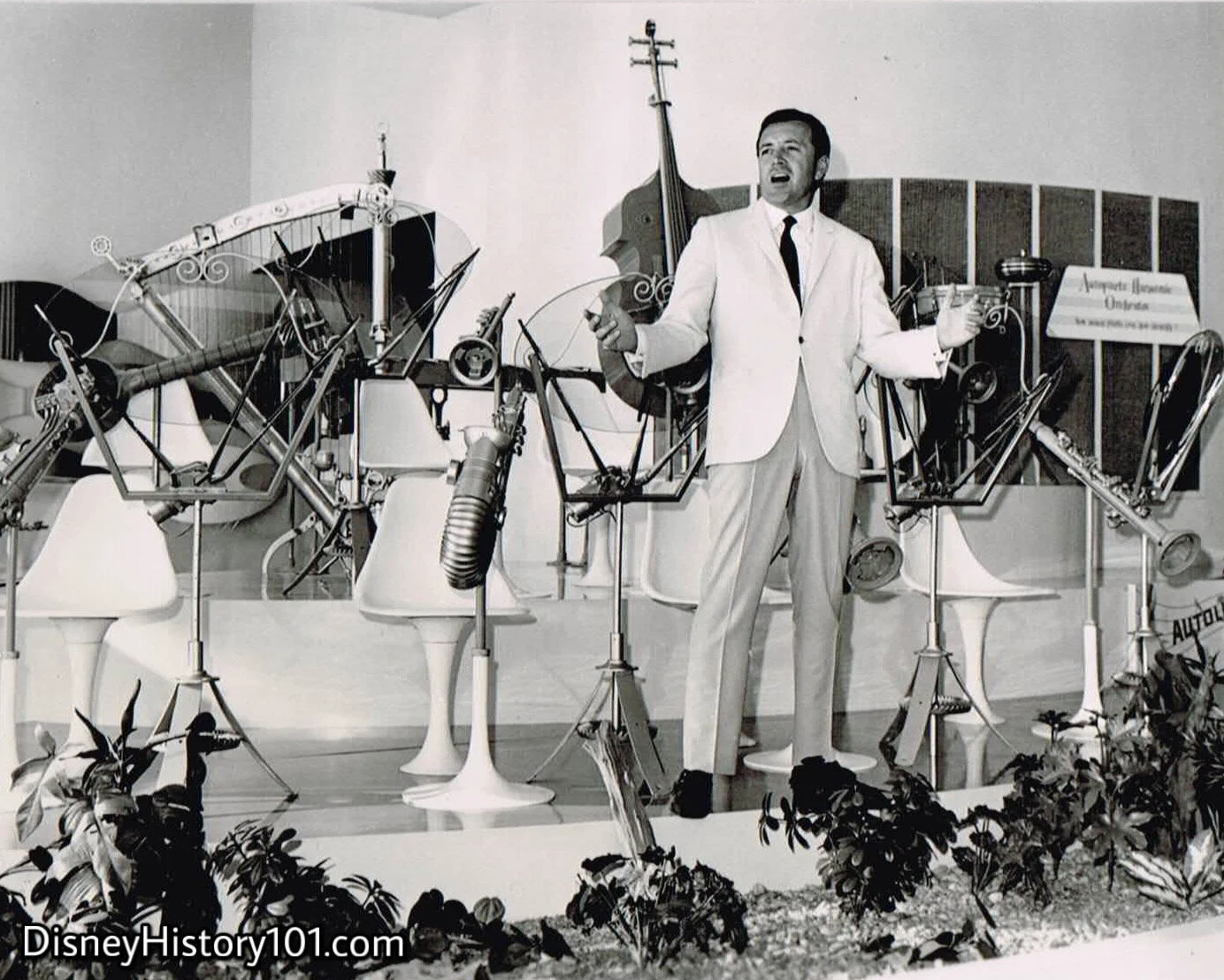
Auto Parts Harmonic Orchestra
Singer Vic Damone assists guests in getting “the feel of the wheel of a Ford”, while posed with the Autoparts Harmonic Orchestra during a visit to the Ford Pavilion.
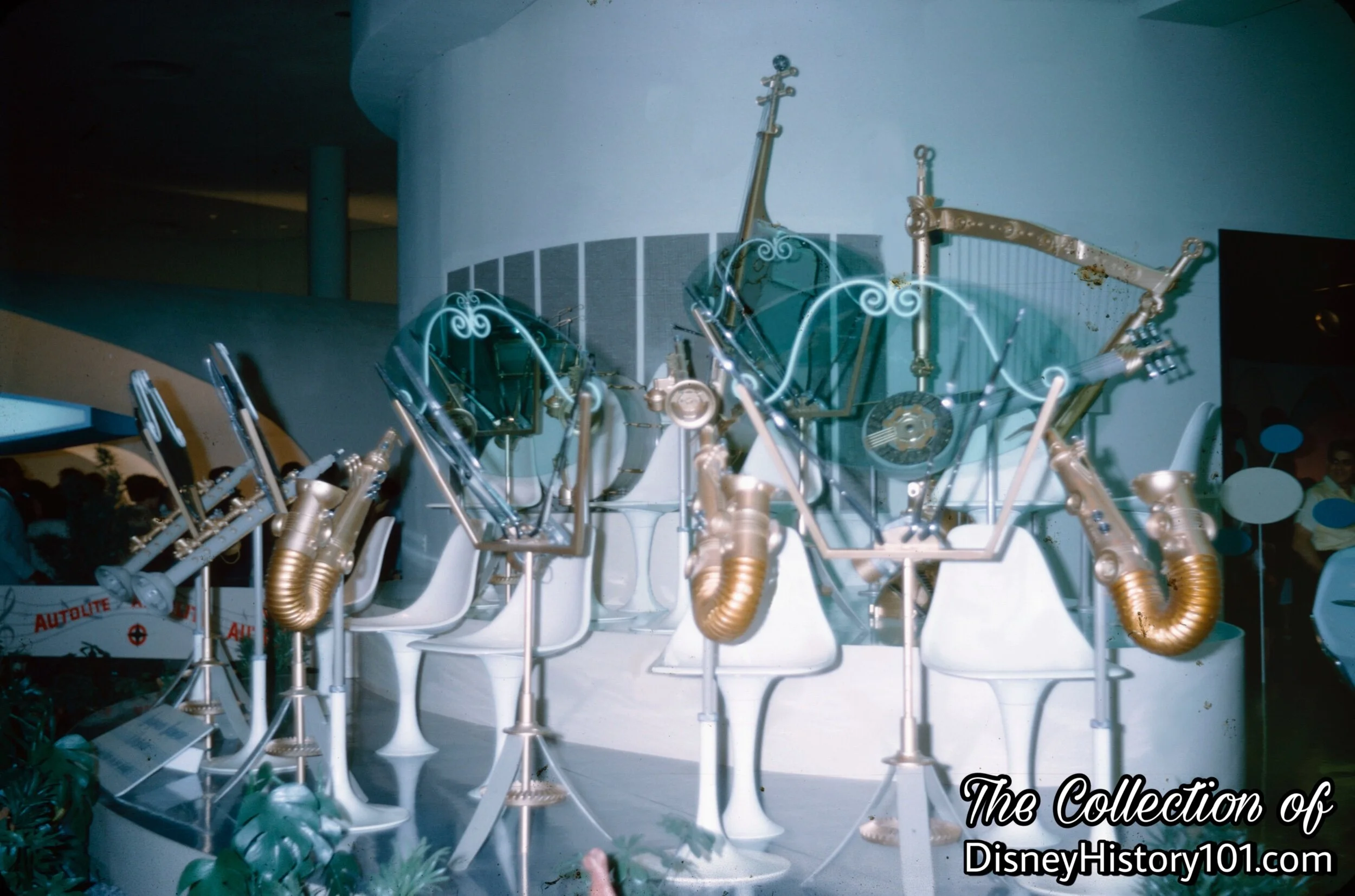
Auto Parts Harmonic Orchestra
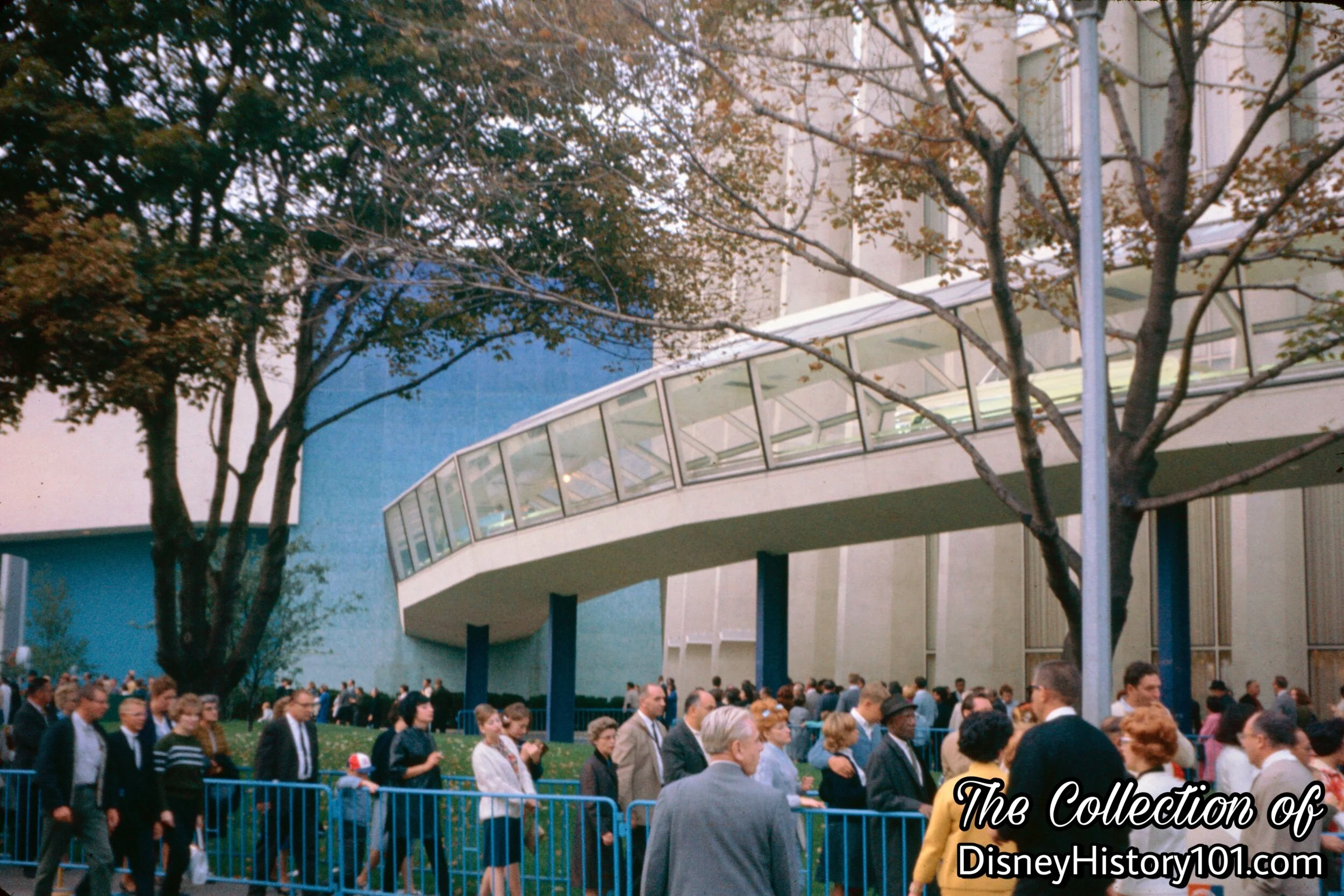
Ford Magic Skyway
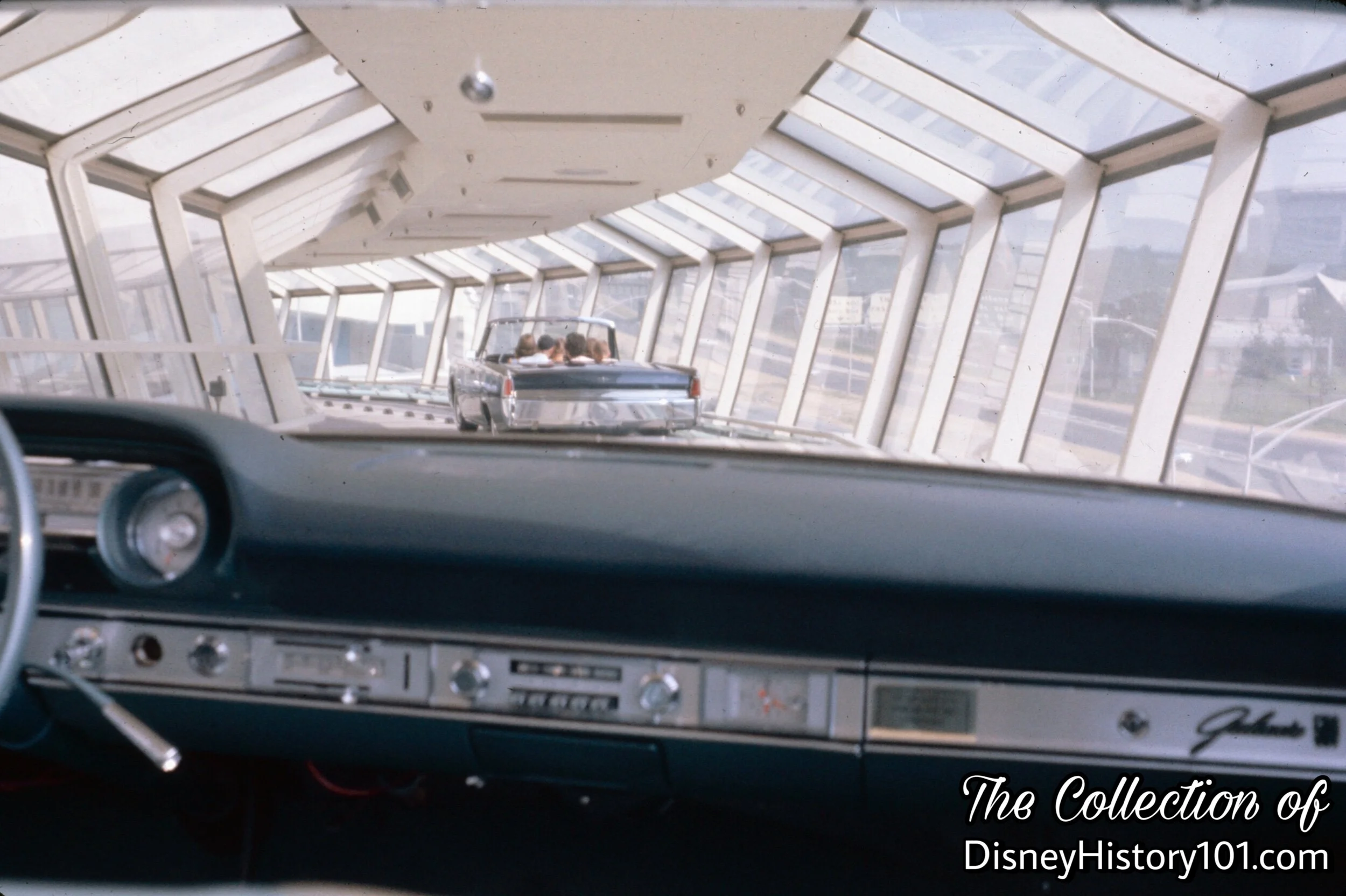
Ford Magic Skyway
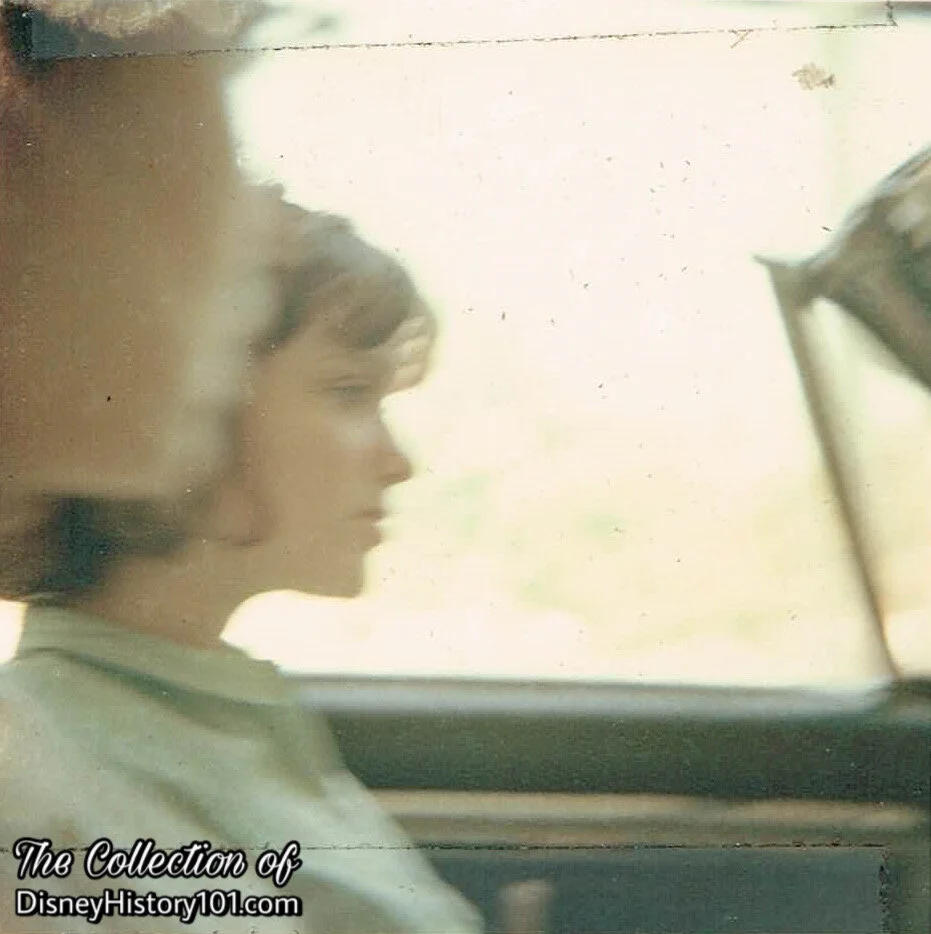
Ford Magic Skyway, (1965)
Guests get “the feel of [sitting behind] the wheel of a Ford”, as they prepare to zoom through the “time tunnel” to prehistoric times.
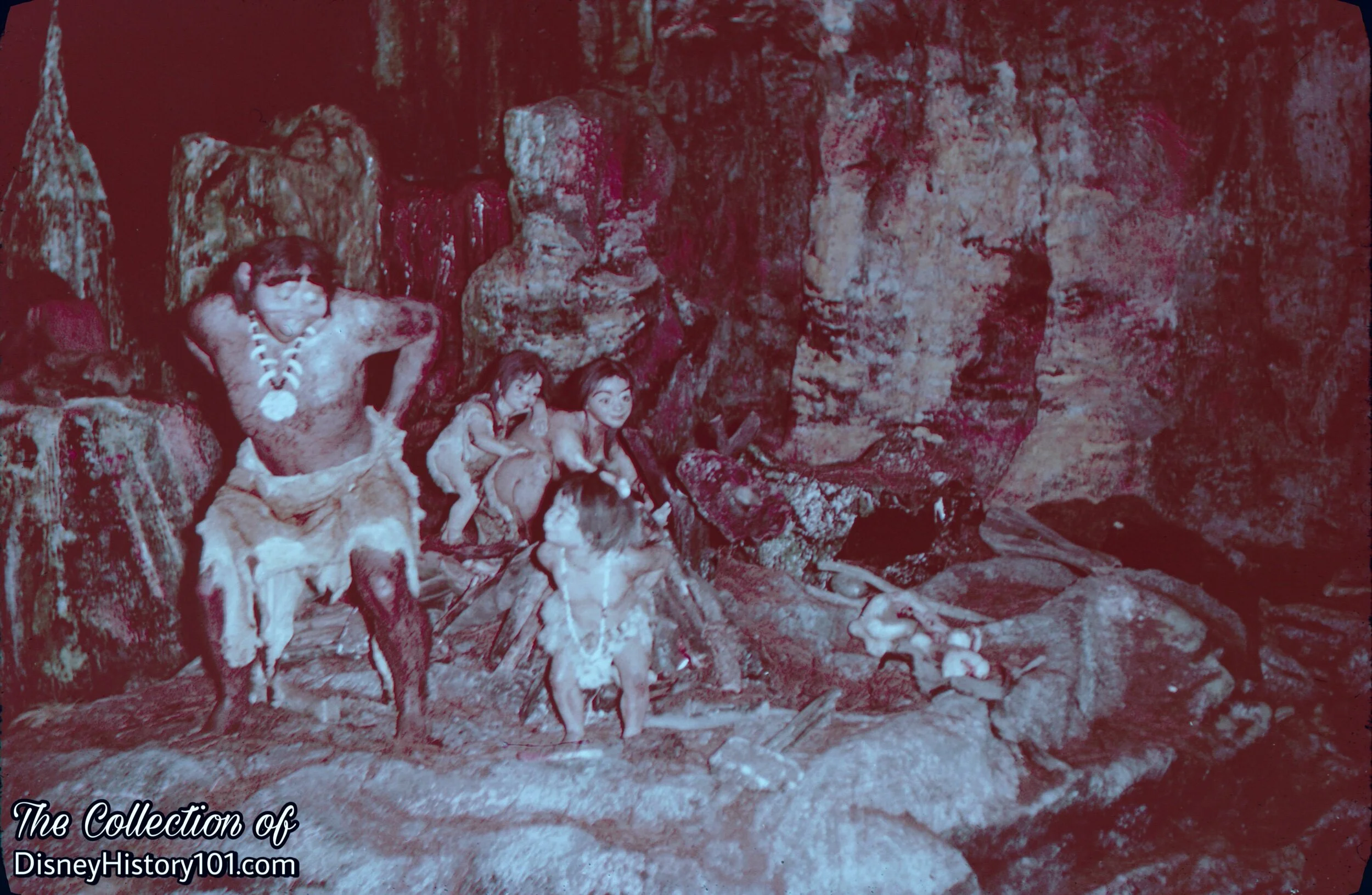
Ford Magic Skyway
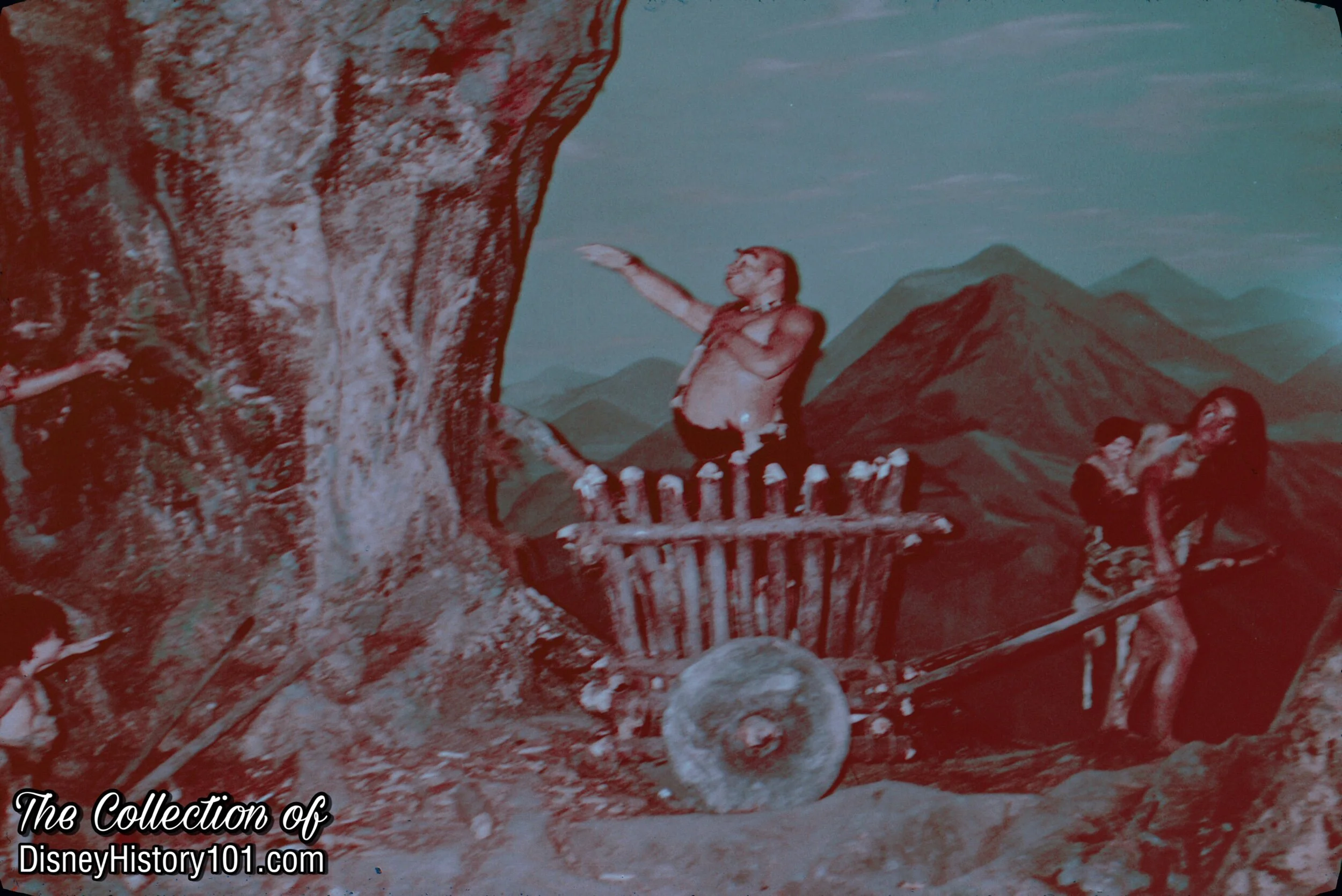
Ford Magic Skyway
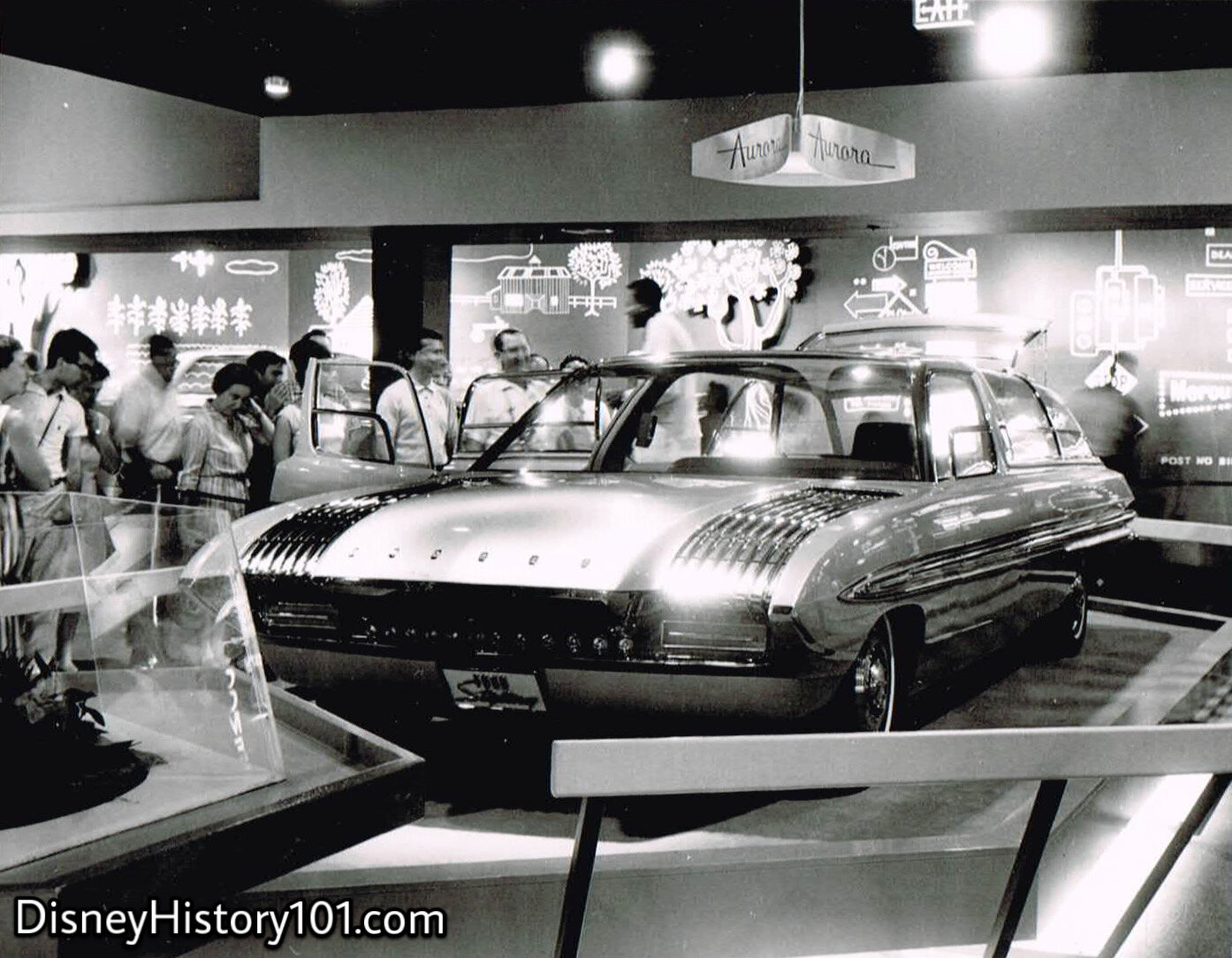
FORD Motors "Wonder Rotunda" Pavilion
Among the exhibits in the Ford Motor Company’s Pavilion are new age designs like the “one-off” prototype Aurora - a representation of the station wagon of the future!
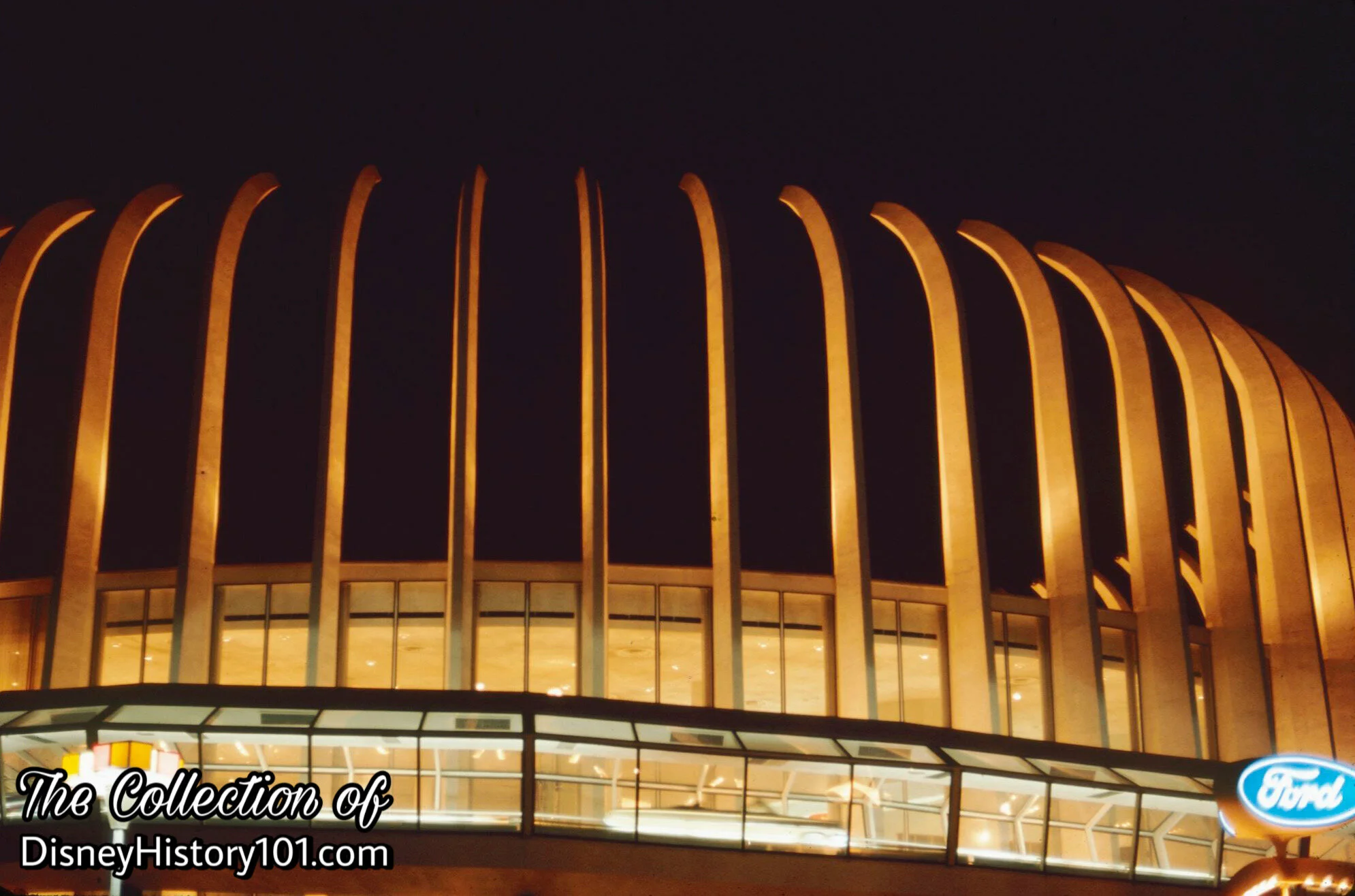
FORD Motors "Wonder Rotunda" Pavilion at Night
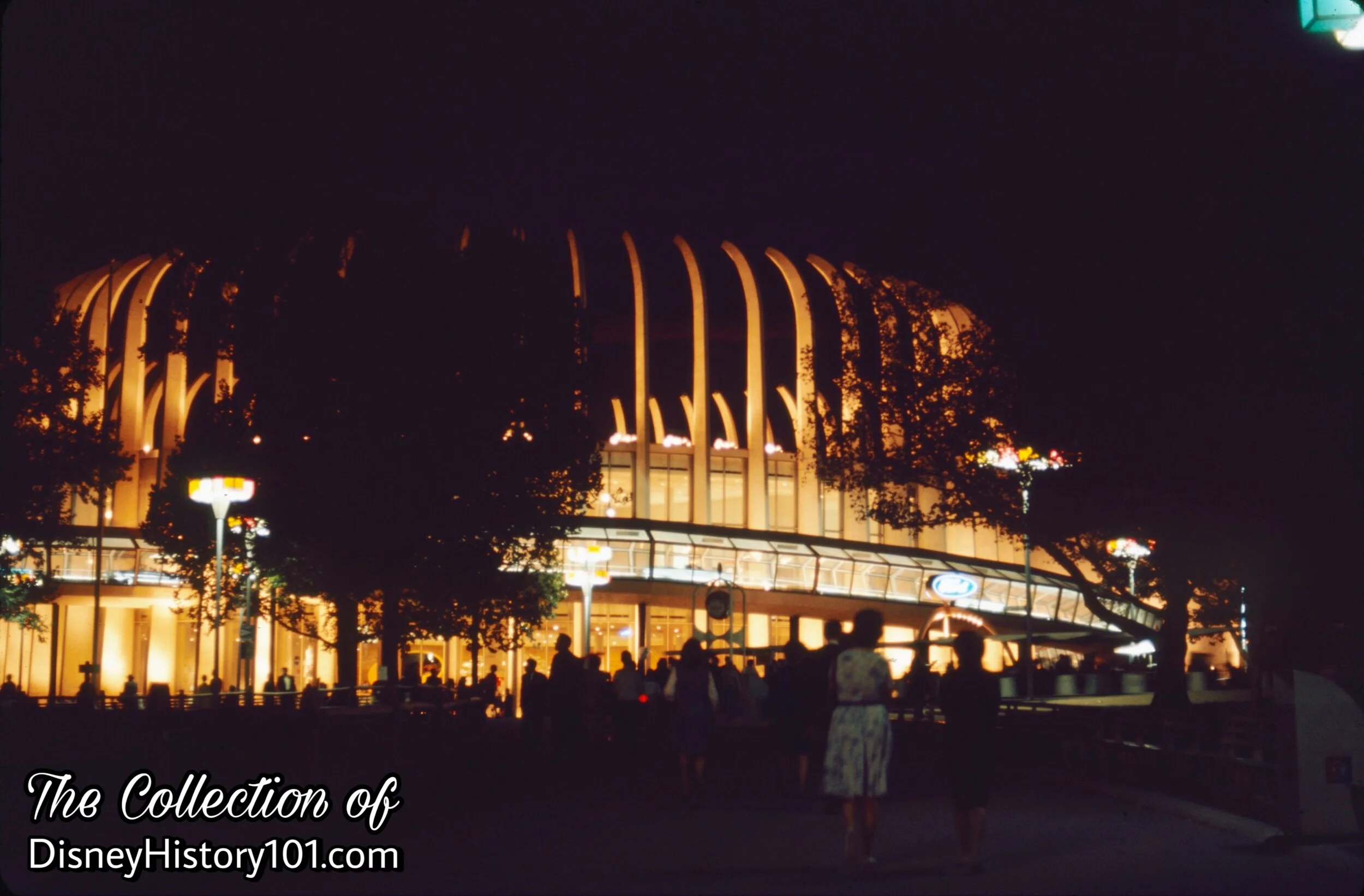
FORD Motors "Wonder Rotunda" Pavilion at Night
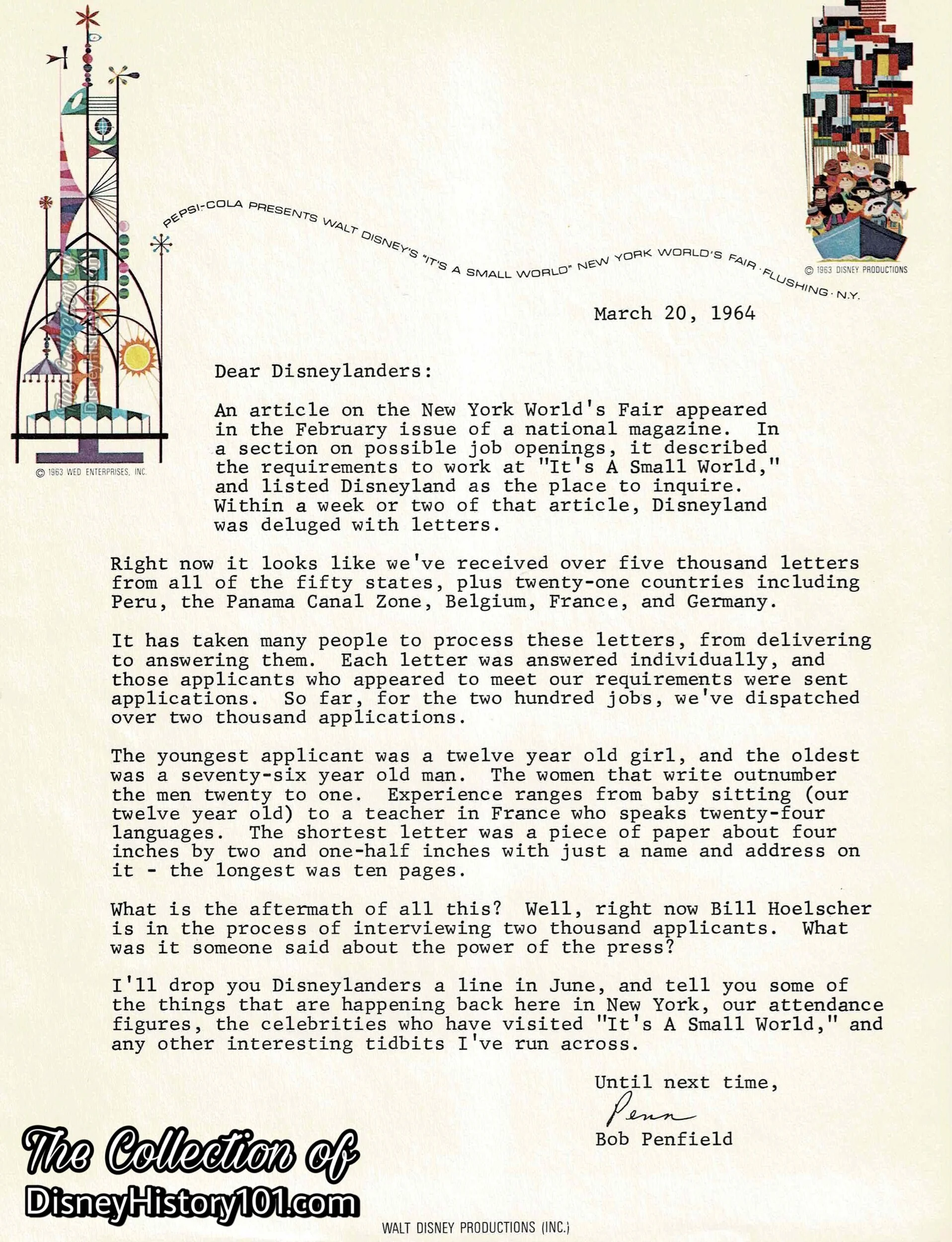
“55er” Milo Rainey recalled: “I met Roy for the first time on the Company plane, going to the World's Fair and he was very friendly.”
“55er” Billie Hoelscher recalled: “Well, I went back to the World's Fair in New York in December of 1963 with Dick Nuns. We'd been told we couldn't get the calibre of people we had at Disneyland. Not so. We recruited people on subways and in schools and many other places. We ended up with a great staff.”
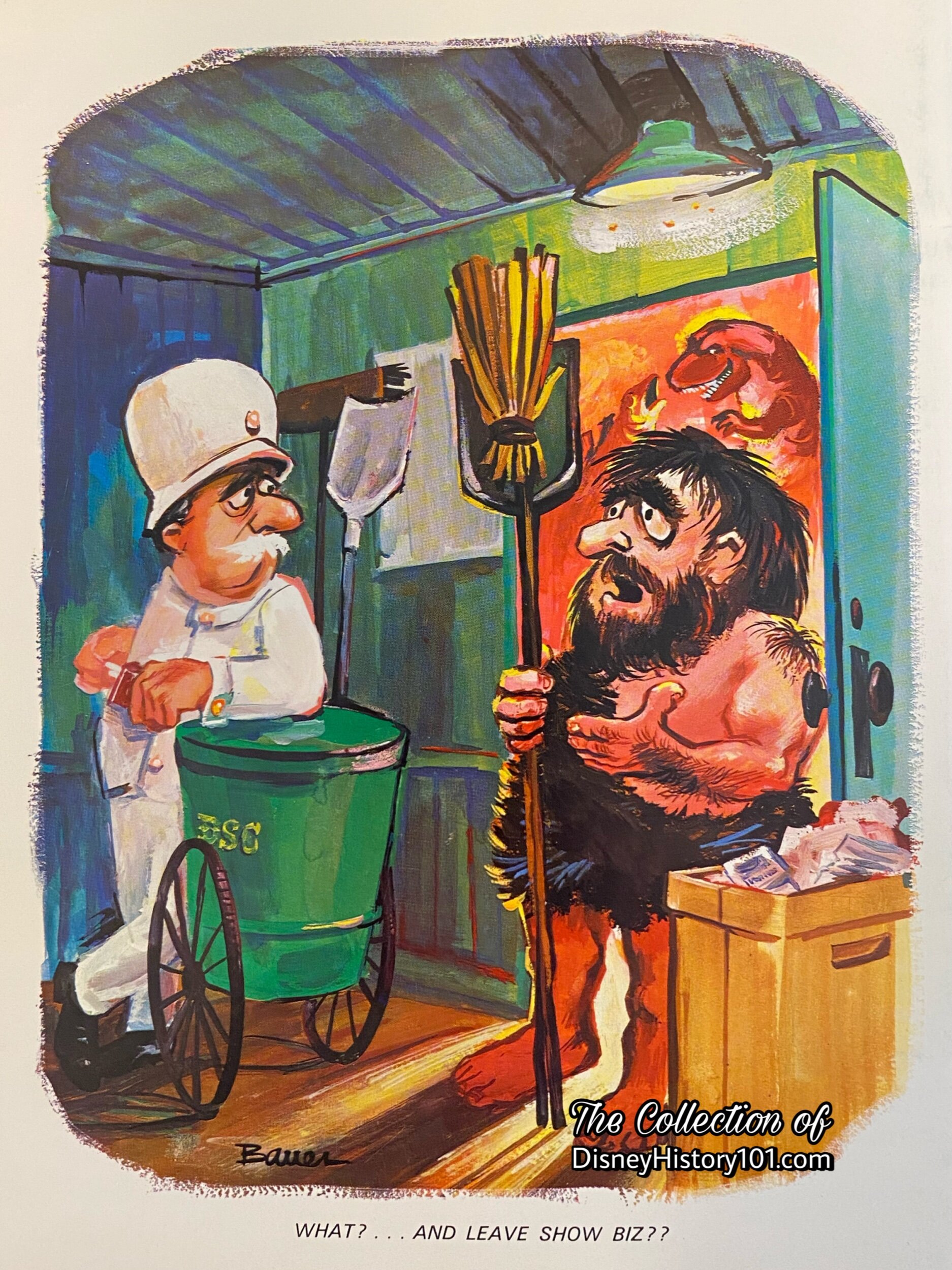
Backstage Disneyland (Spring, 1966)
“Nothing Has to Die”
You see, “During the fair’s two six-month seasons, 91 percent of those who paid fair admission - nearly 47 million people - visited one or more of the quartet of Disney shows created for General Electric, Ford Motor Company, Pepsi Cola and the State of Illinois.” [“Information on America Sings,” prepared by Disneyland marketing Division, 1974]. In reference to the popularity of the marvelous shows created for the 1964/1965 New York World’s Fair, Walt Disney once told Ray Bradbury, “Nothing has to die.” True to those words (and following the 1964 season of the New York World’s Fair), all four of Walt’s presentations were redeveloped by WED Enterprises, Inc. for relocation at Disneyland.
At least a portion of Walt’s 1964-1965 New York World’s Fair show was master planned to return to Disneyland through the “Ford Magic Theater and Wonder Rotunda” at Tomorrowland. Herb Ryman created at least two concepts depicting the show building, which are preserved within “A Brush with Disney: An Artist’s Journey told through the words and works of Herbert Dickens Ryman,” edited by Bruce Gordon and David Mumford, on page 175.
At a Walt Disney Productions Stockholders meeting held on February 1, 1966, it was stated that “the success of the Disney shows at the New York World’s Fair has had a substantial effect on increasing the interest of industries to participate in Disneyland.” Soon, plans forthcoming Disneyland construction projects (including Herb Ryman’s colorful “suggestions”) would soon be unveiled by Walt Disney, at an epic press conference and tour of WED Enterprises, Inc. (in Glendale) on February 3rd, 1966 (where four new attractions and adventures were also described)! While the ‘Magic Theater’ was never built, the life-size dinosaurs from the Rotunda would soon join the Children of the World, Mr. Lincoln, and a certain progressive family in their movement to Disneyland.