BIG GAME SHOOT
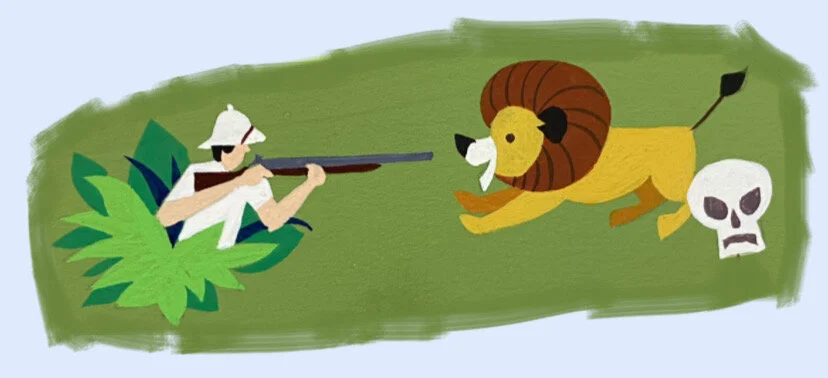

(June 15, 1962 - January, 1982)
“Shooting Gallery Operation and the Disneyland Show”
Soon after Disneyland® Park opened, the Safari Shooting Gallery debuted on July 23, 1955! The attraction (appraised in 1958, at $3,800) was located inside the Penny Arcade on Main Street, in the present location corresponding to the Gibson Girl Ice Cream Parlor. There, Guests took aim at both stationary and moving targets.
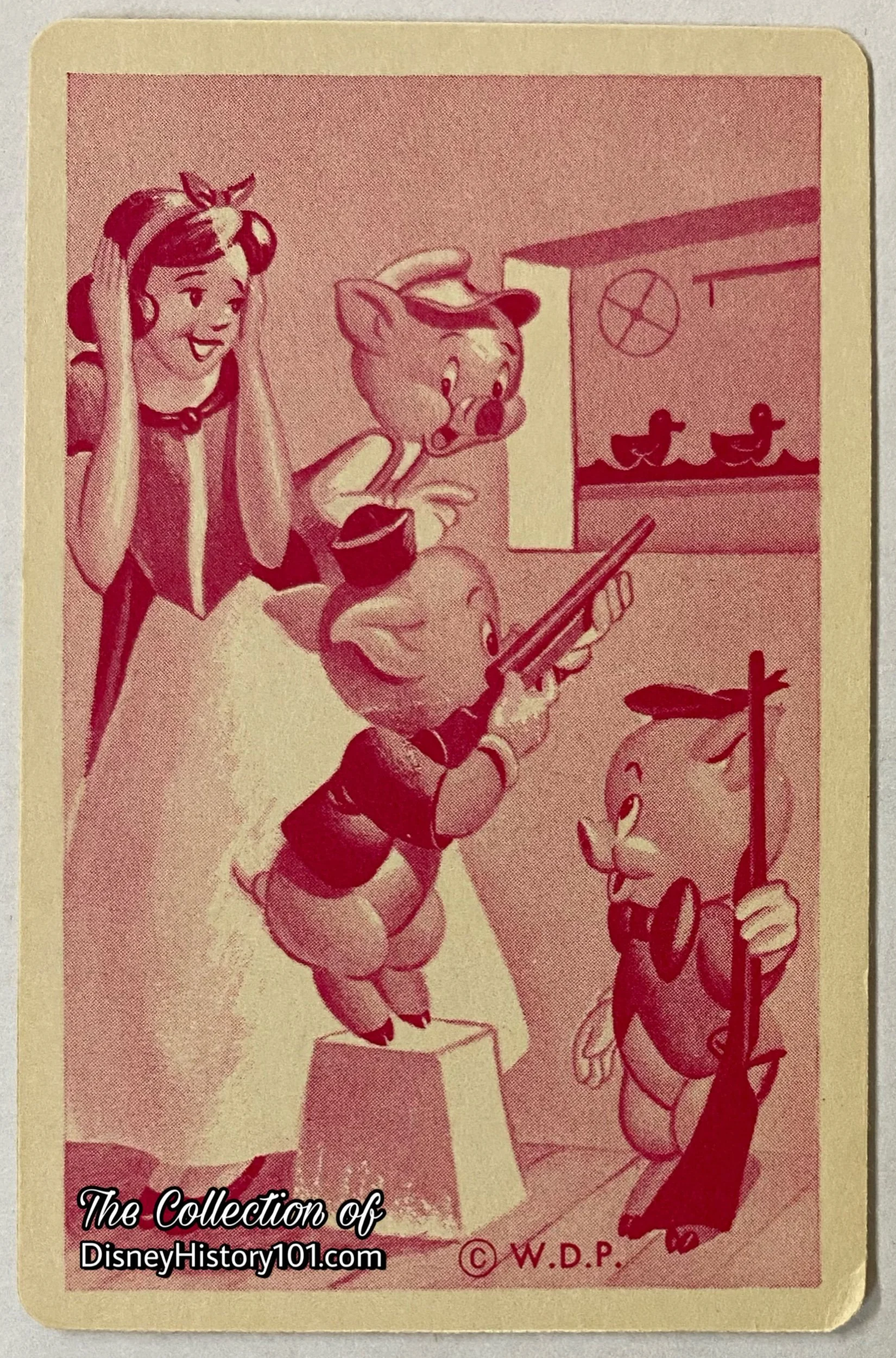
Snow White shields her ears from the sound of the guns on a collectable card contained within the Disneyland Fun Box by Whitman, c.1955.
After less than seven years of operation, it was decided that the sound of the guns and pellets affected the Show Quality of Main Street in a negative way. The Main Street Shooting Gallery would cease operation by January 1, 1962.
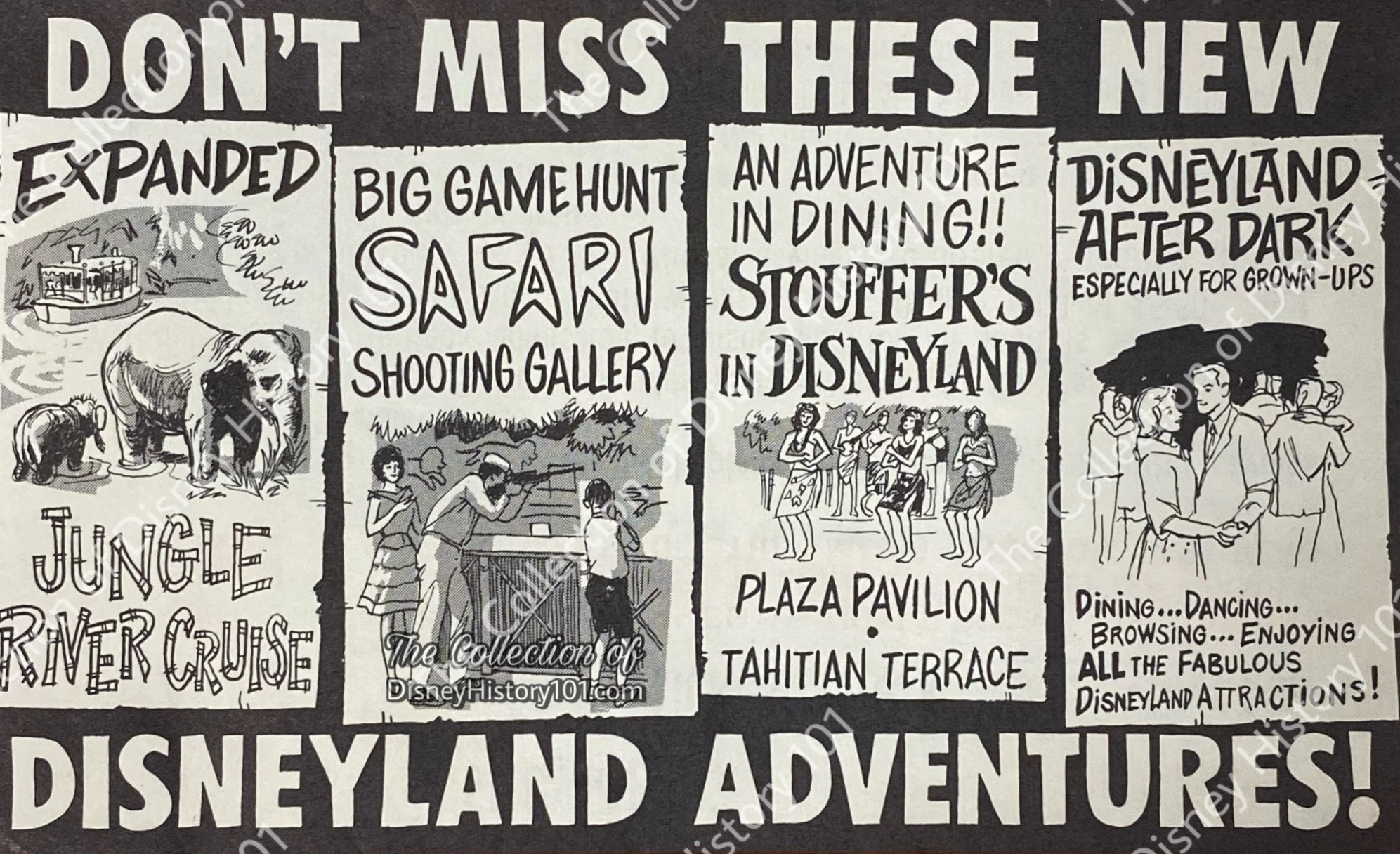
Two Wonderful Ways to Enjoy Disneyland, 1962.
“Master Planning a New Shooting Gallery for Disneyland”
Walt Disney’s Imagineers sure knew their audience, and their audience demanded a new shooting gallery. During 1961, “Anaheim... Future Unlimited” published by the Anaheim Chamber of Commerce, foretold: “And true to Walt Disney's promise that ‘Disneyland will never be completed,’ $7 million in new adventures are now being added for unveiling in 1962 and 1963. A completely new Jungle Cruise, the ‘world’s largest’ Tree House, a unique new concept in restaurants, and ‘Safari Shooting Gallery’ open in Summer ‘62. For 1963, a Haunted Mansion, New Orleans Square and the Blue Bayou Mart are being readied. Disneyland, ‘The Happiest Place on Earth’ is a permanent resident of Anaheim and happy to be doing its part in helping the community grow.”
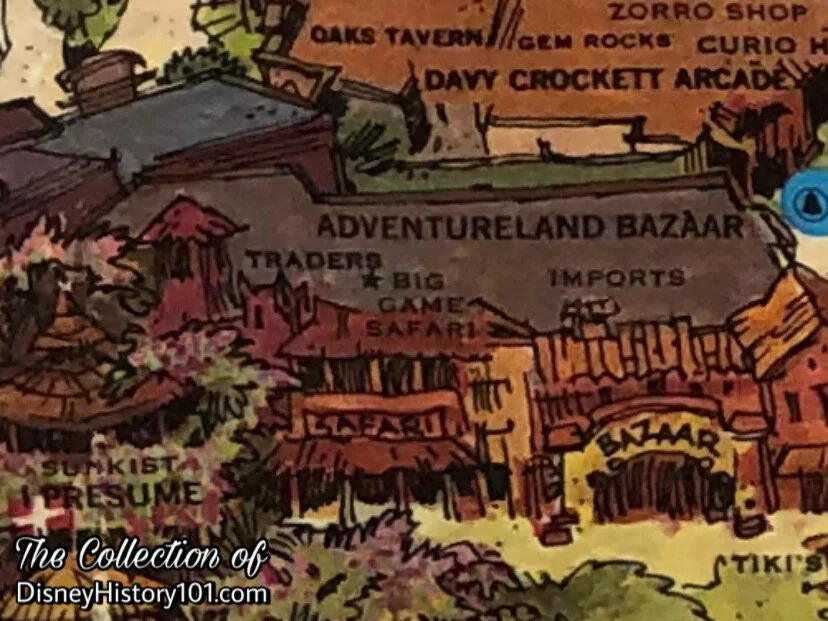
Disneyland Map by Sam McKim Excerpt, 1960s
True to those words, when South Seas Traders departed its location, Big Game Safari Shooting Gallery opened in its place. The Big Game Safari Shooting Gallery opened alongside other Adventureland additions, on the same day as the Swiss Family Robinson Treehouse, on June 15, 1962.
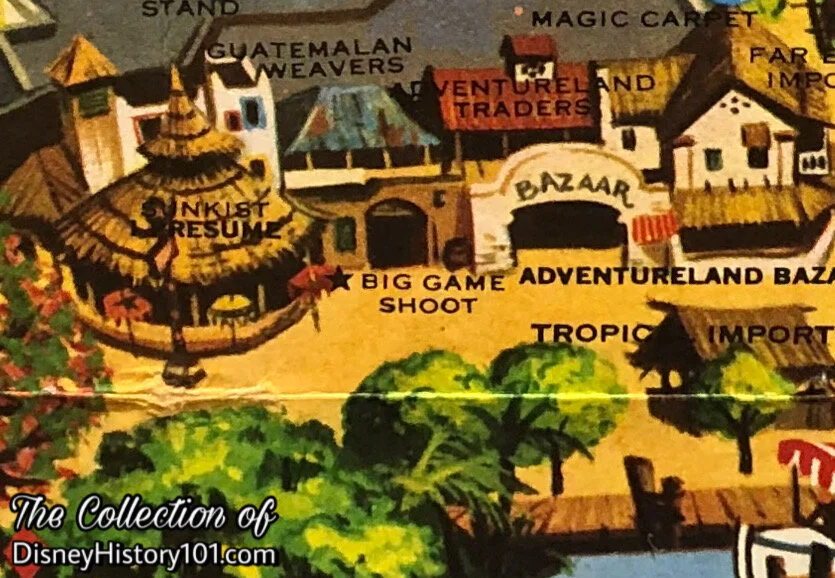
Disneyland Map Excerpt, 1960s
A later Disneyland map excerpt also depicts the Big Game Shoot to be located in Adventureland’s “midway” next to the Adventureland Bazaar, and across from the entryway to the Jungle Cruise dock.
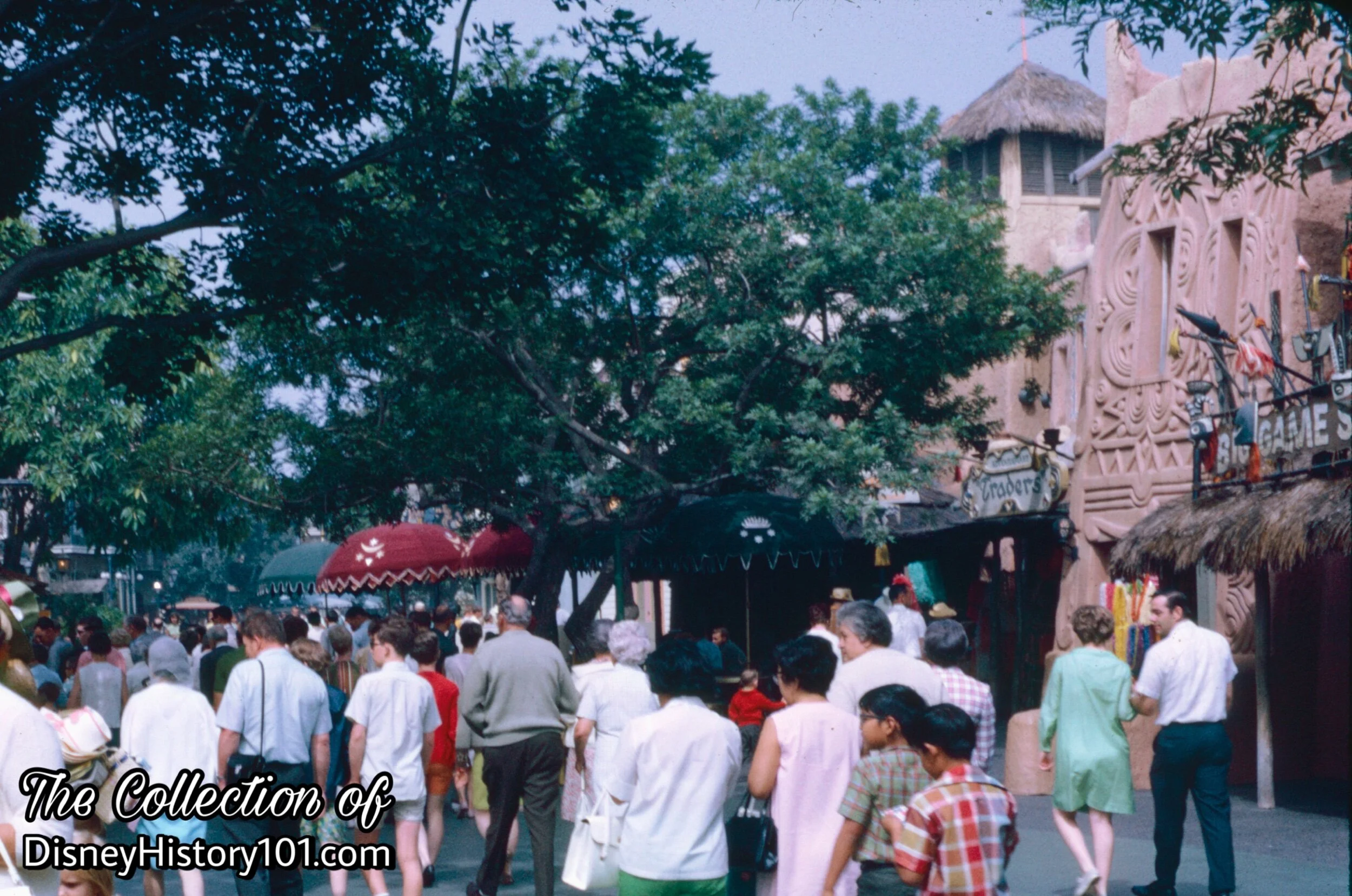
Big Game Shoot (Seen Right) amidst pruned Brazilian pepper trees, was located next door to Adventureland Trader.
Similar to the layout of the main thoroughfare in Frontierland, Big Game Shoot was located through the Adventureland entryway and between a souvenir shop (Adventureland Bazaar) and a food concession (Sunkist, I Presume).
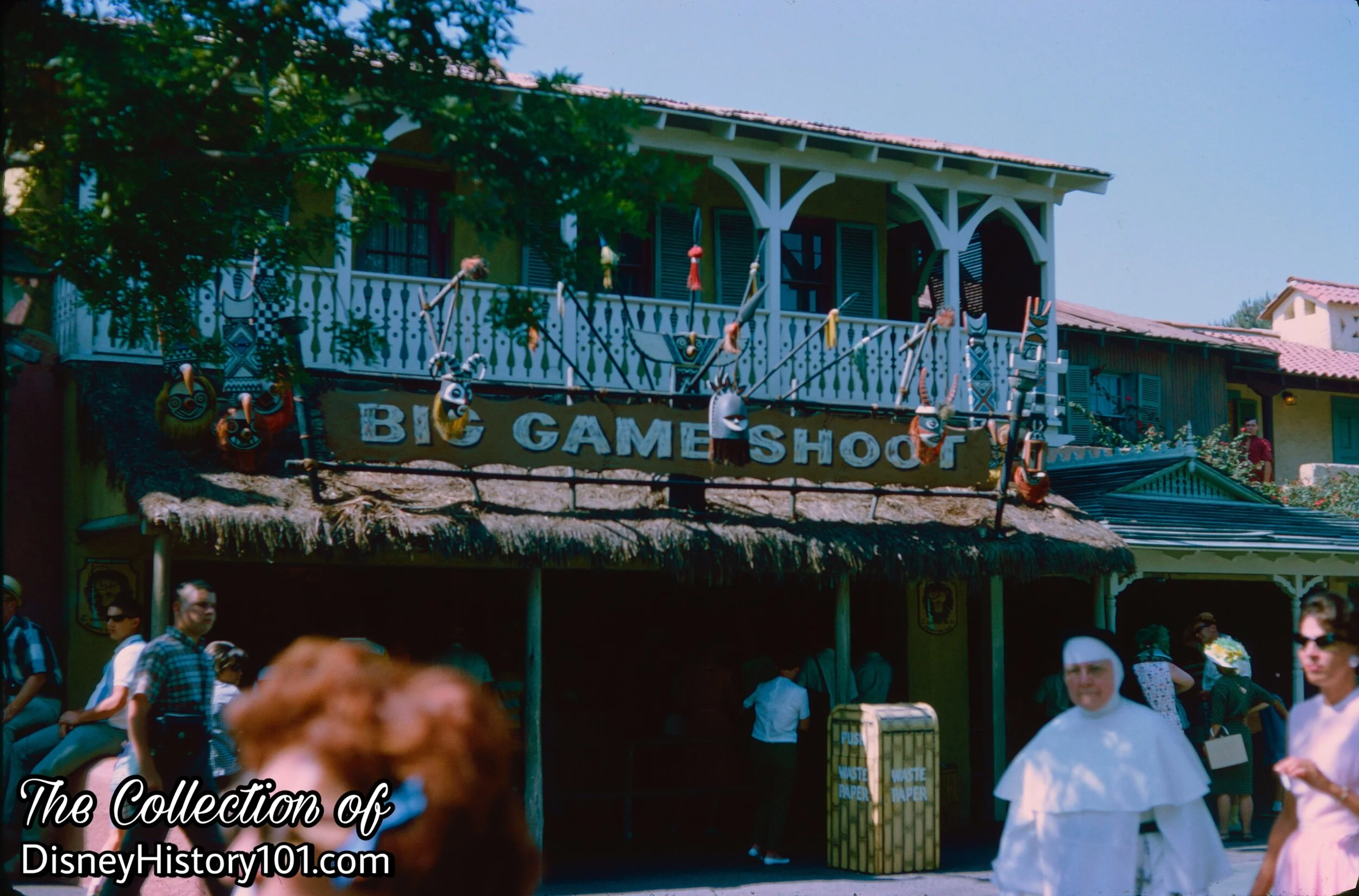
Big Game Shoot Architectural Facade, c. August, 1965.
This rare shot gives us an idea of what the outside of Adventureland’s only shooting gallery looked like. The roof is decorated with spears (similar to the entrance of the Jungle River Cruise queue), and masks by Oceanic Arts.
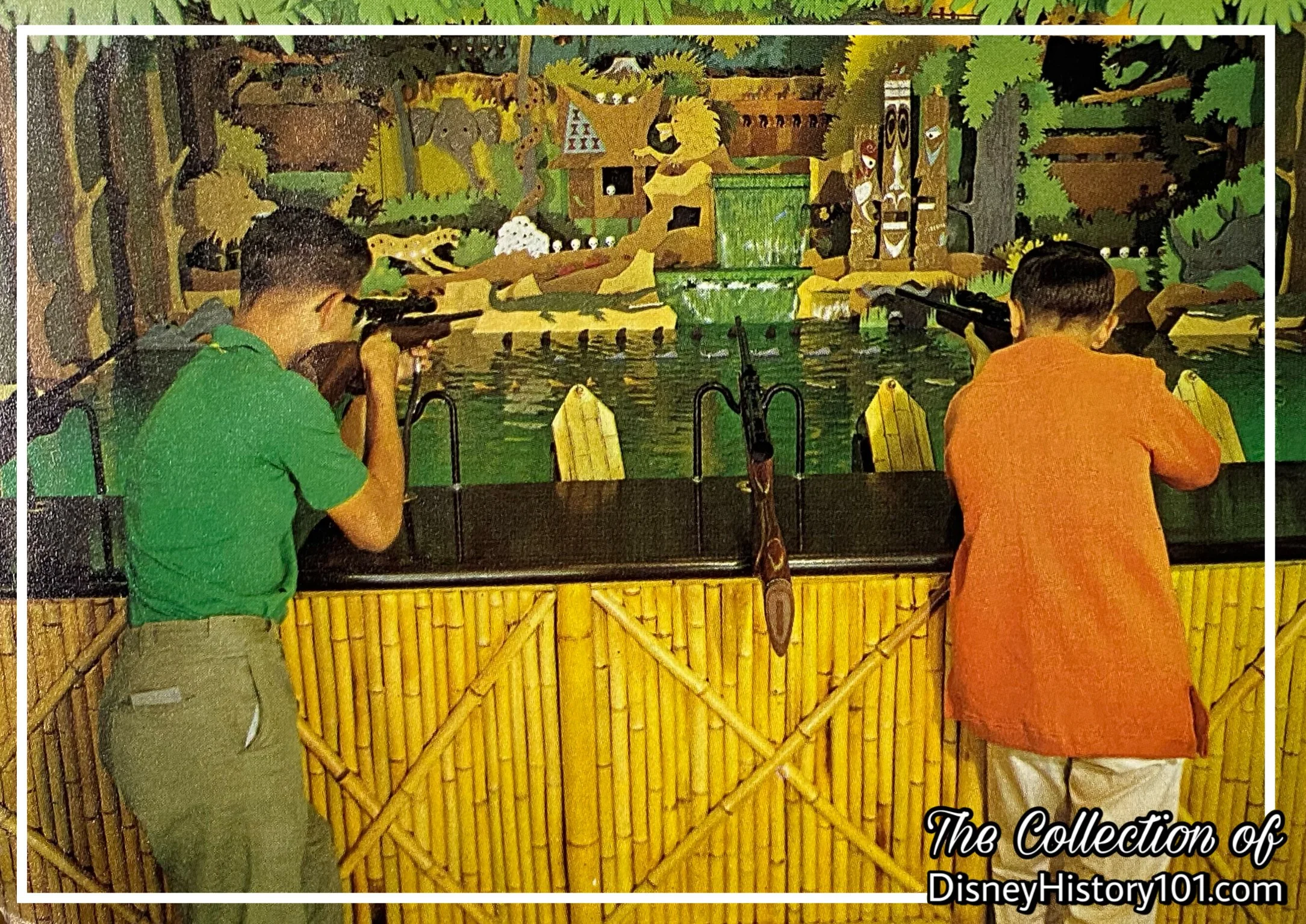
The "marksmen" and "high-powered elephant rifles" as they appear in an excerpt from “Walt Disney’s Guide to Disneyland” published for 1962.
The Big Game Safari Shooting Gallery was one of three total shooting galleries that operated at Disneyland, and like the others, was managed by Mac Glashan Enterprises (founded in the 1930’s, by Paul MacGlashan). Furthering the theme of Adventureland, the attraction had“an African Game Reservation motif,” and offered guests the chance to prepare for their African Safari aboard the Jungle River Cruise, by perfecting their marksmanship. Vacationland magazine heralded this announcement : “If you’re a marksman, the new Big Game Safari is for you. While it’s based on time-tested shooting gallery tradition, this jungle hunt is an authentic Disney creation - a rapid fire adventure where you’ll shoot at all kinds of jungle animals and birds, each hand-crafted for Disneyland.”
According to “THE DISNEY THEME SHOW: an introduction to the art of Disney outdoor entertainment; Volume 2”: “What we create here is a storybook realism… an essence of realism and authenticity... more utopian in nature, more romanticized, more like what guests imagined it would be. All the negative, unwanted elements are carefully programmed out, while the positive elements are not only retained but in some cases even embellished for better entertainment.” This guiding principle has affected Disneyland Show since the beginning and is well illustrated by Guest response to Big Game Safari Shooting Gallery.
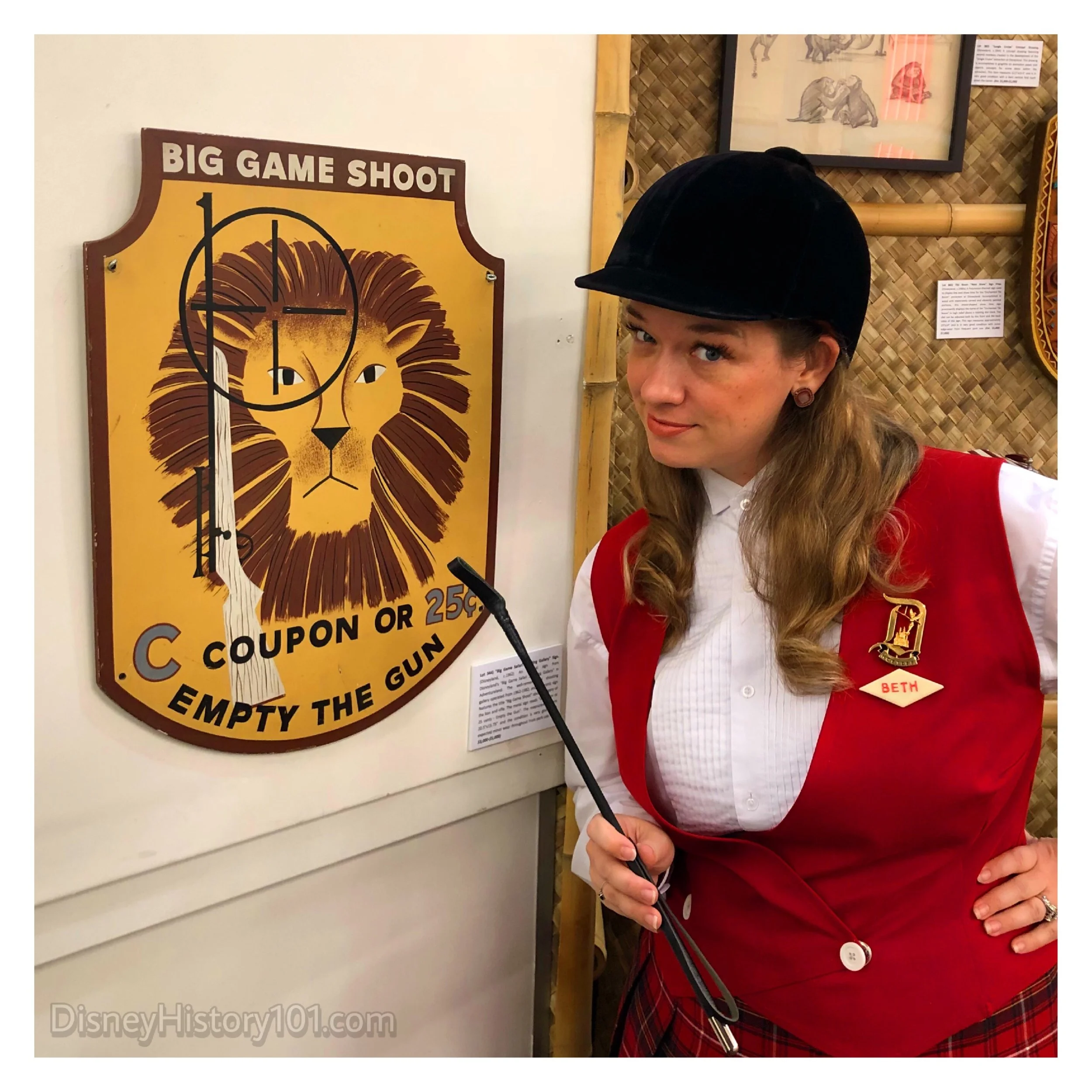
“BIG GAME SHOOT PRICE SIGN” (former Richard Kraft Collection)
At Disneyland, signs were themed to support the stories with respectful graphics, colors, fonts, terminology, the overall design of sign, materials (wood, metal, banners, etc.), and verbiage used on the signage. Now, “set your sights” on our this artifact (pictured above)! Courtesy of a Van Eaton Galleries Pre-Auction Exhibit & the former Collection of Richard Kraft, That’s From Disneyland visitors had the rare privilege to view this hand-painted sign at “close range.” A full round of ammunition cost just 25¢ or a “C” coupon - the original early-sixties pricing for this Safari style game! The game had 16 guns total, allowing for a maximum capacity of 16 at the same time. The average shooting time per Guest was 56 seconds, allowing for 53 Guests per gun, per hour.
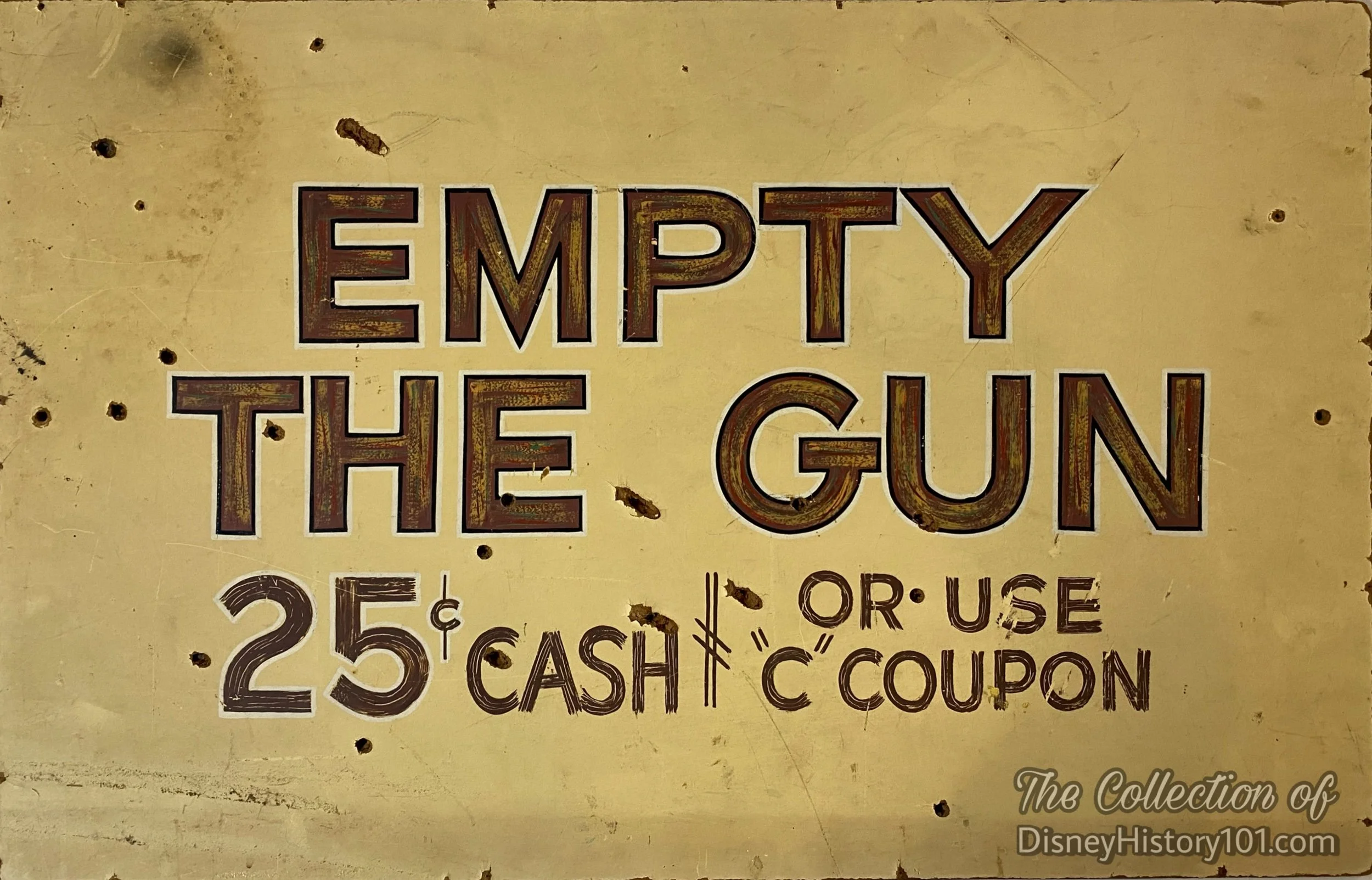
Signage that was looking pretty worn and stressed was replaced.
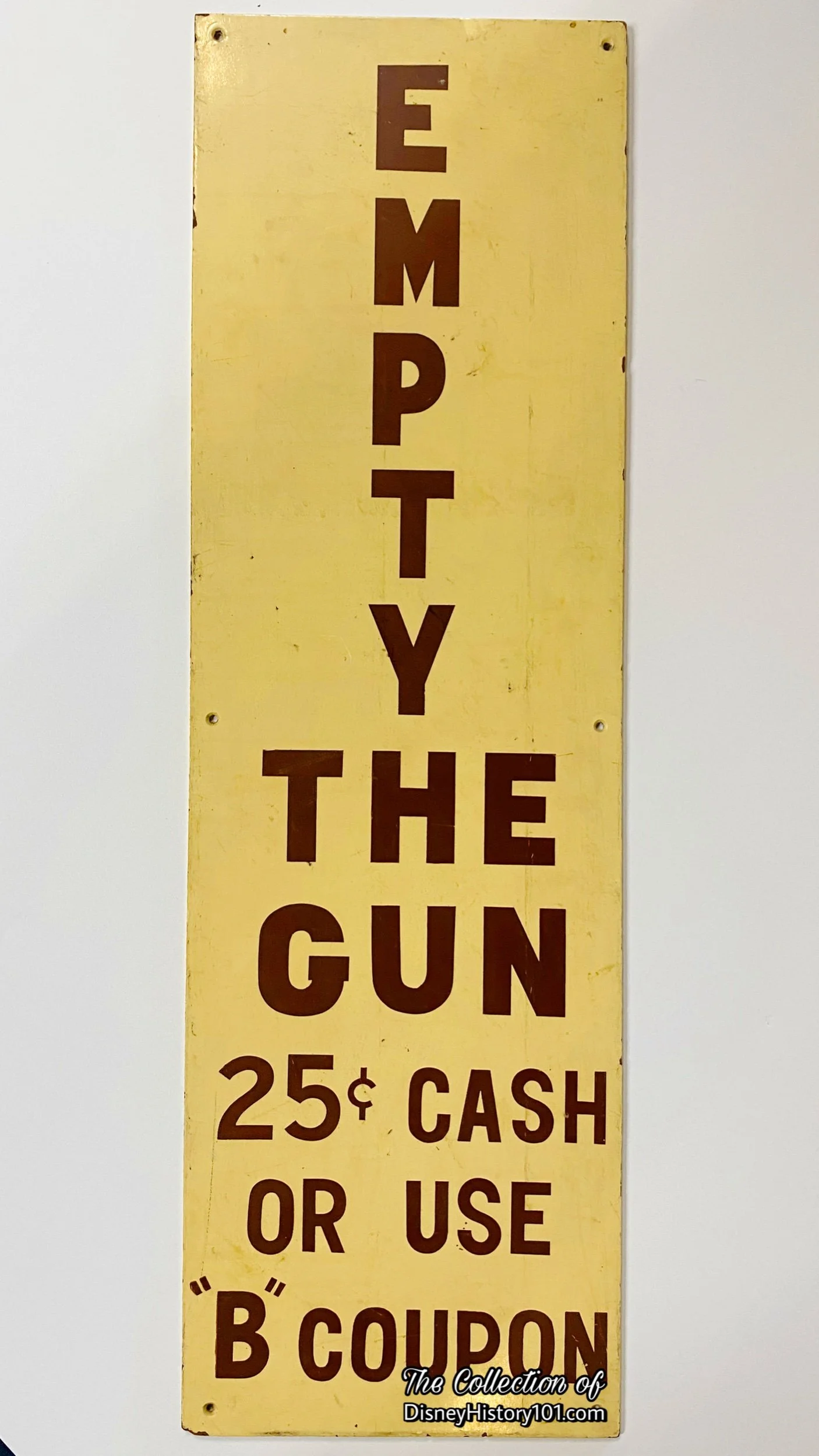
Another "Empty the Gun" sign.
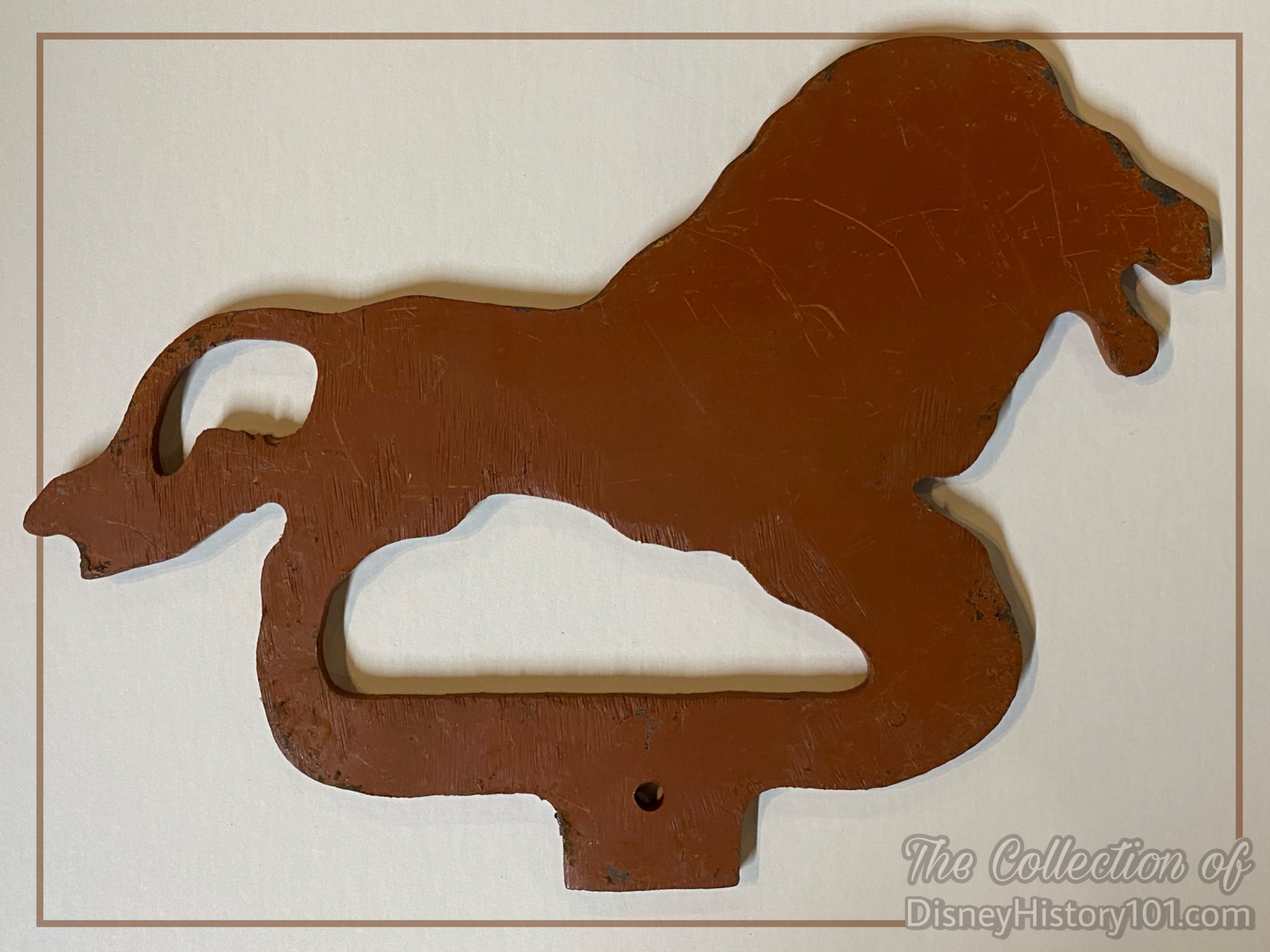
Big Game Shoot Metal Lion Target
Metallic animal silhouettes like this one (pictured above) were the target of guest’s pellet guns at Big Game Shoot. Other targets included “elephants… apes sharks and other big game,” according to the “Disneyland Dictionary” (compiled by WED Enterprises, Inc. and WED Public Relations Department, c. 1968).
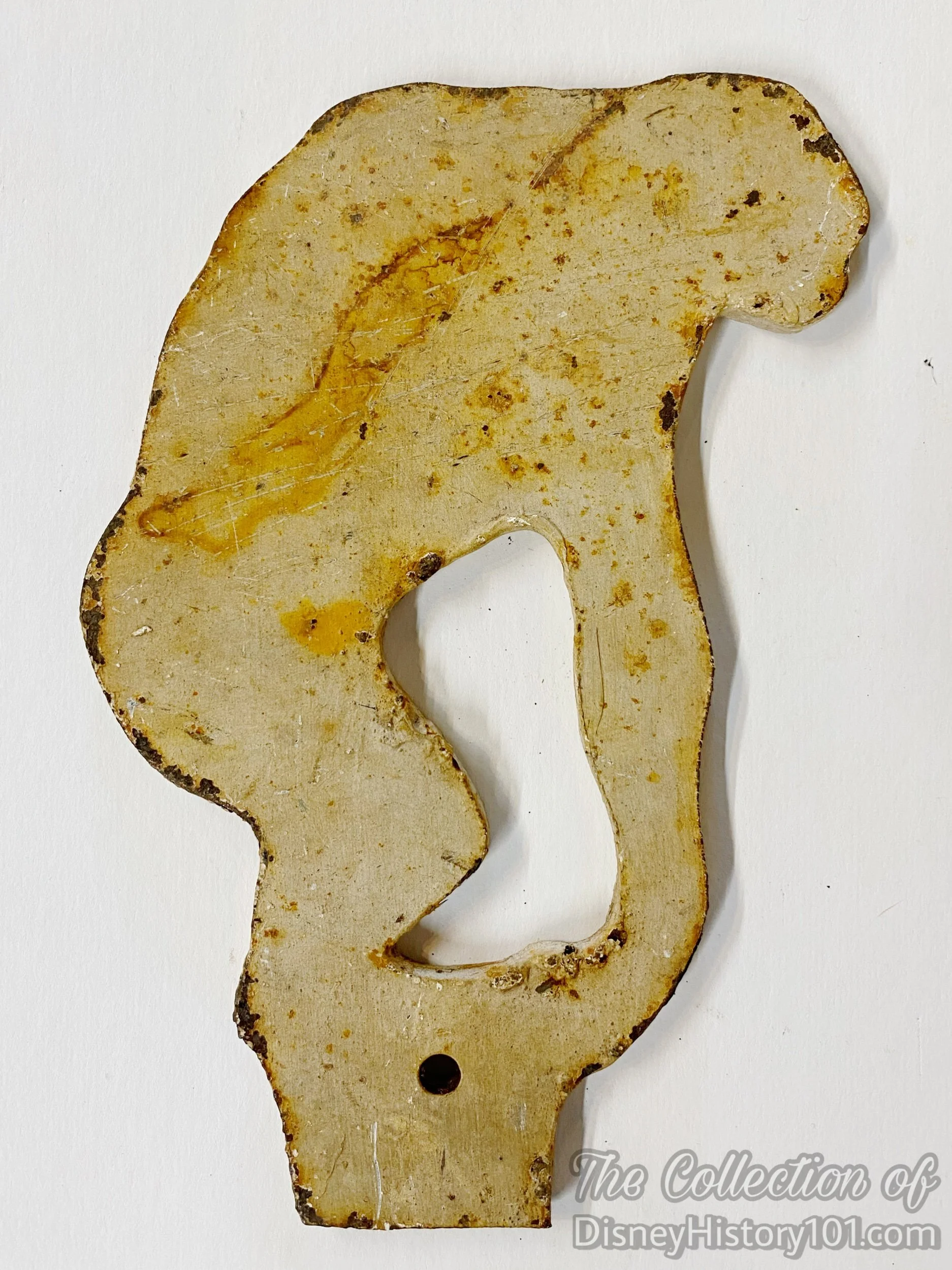
Big Game Shoot Metal Gorilla Target
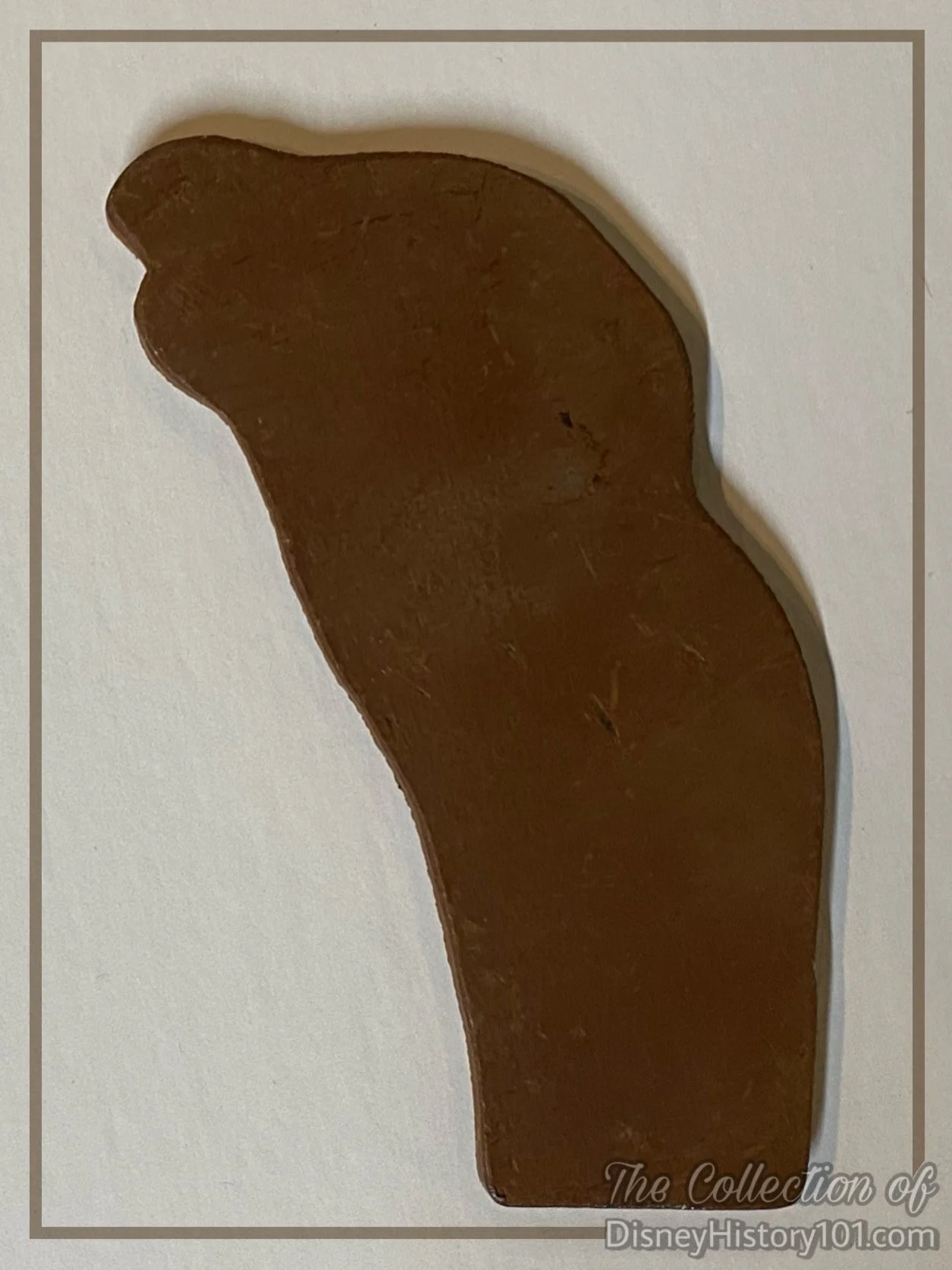
Big Game Shoot Metal Animal Target
Sometimes the guest’s .22 caliber size bb pellets would miss their target, and (according to some guests and Disneylanders who are old enough to remember) the projectiles would sometimes ricochet off the metal targets and walls. Due to daily wear inflicted by the pellets, the “B” ticket attraction booth was regularly maintained during the evening. Pellets were swept up and targets were meticulously repainted at the end of each day, as attested to in the following Backstage Disneyland article.
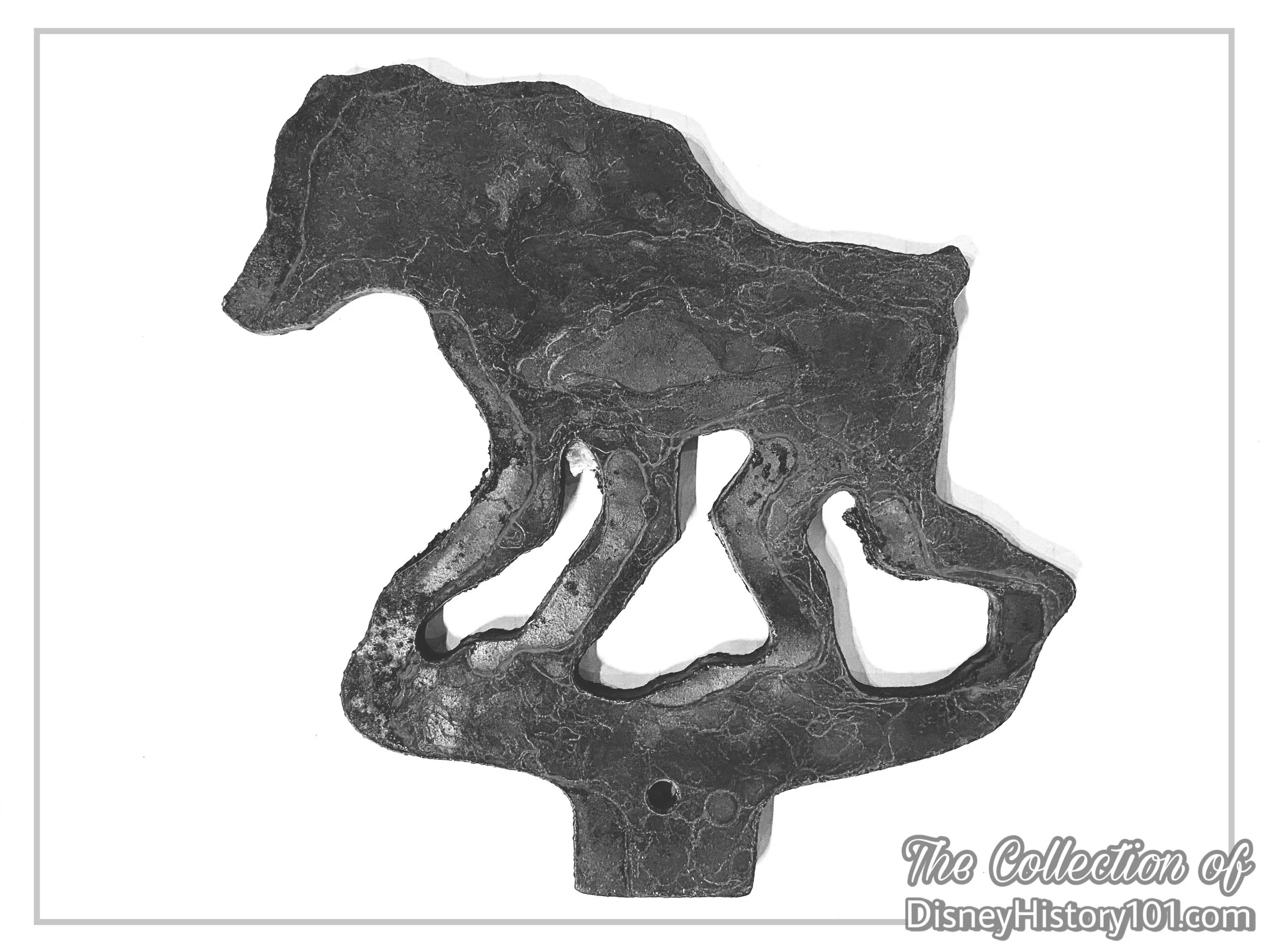
Big Game Shoot Metal Animal Target
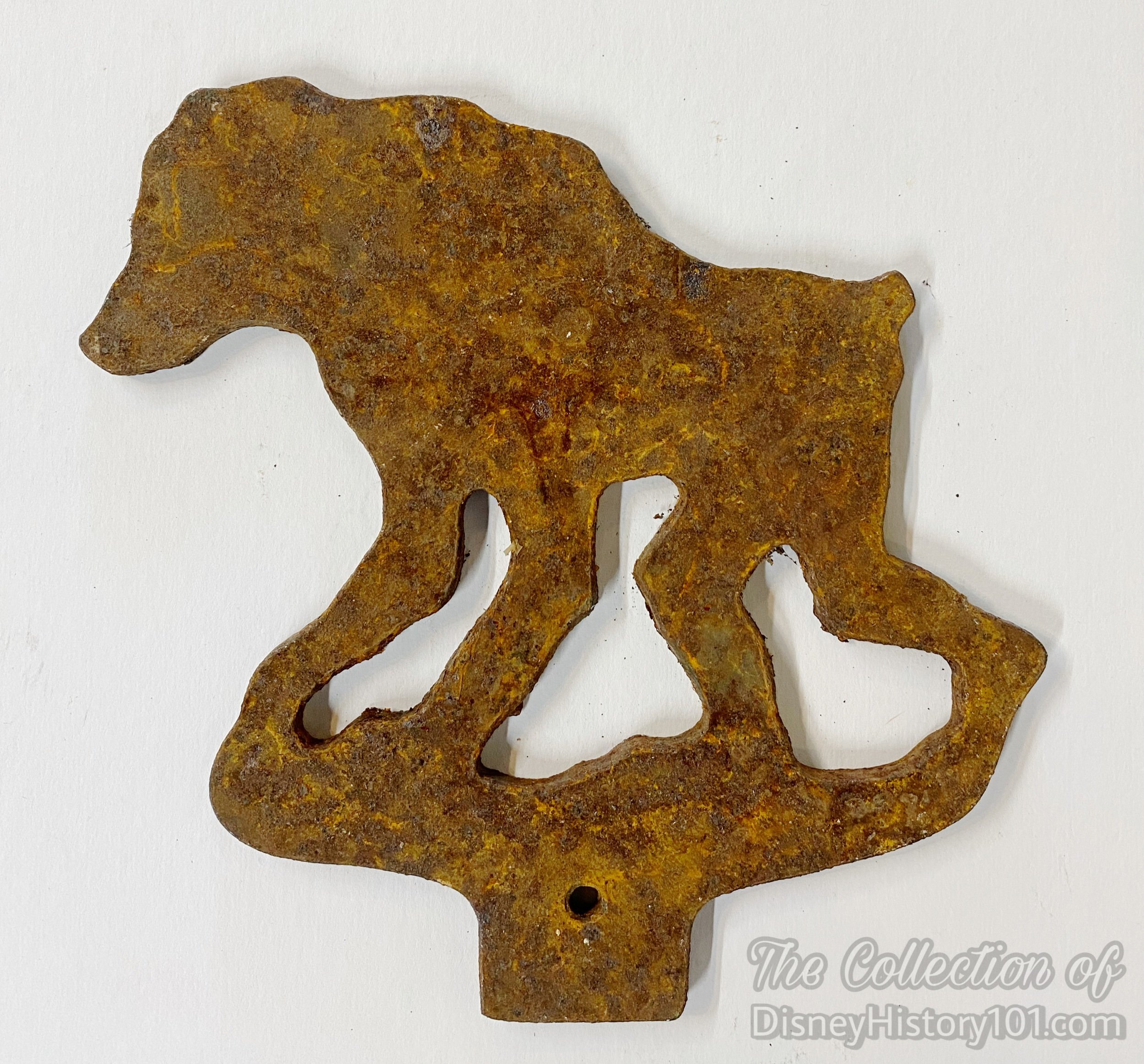
Big Game Shoot Metal Animal Target
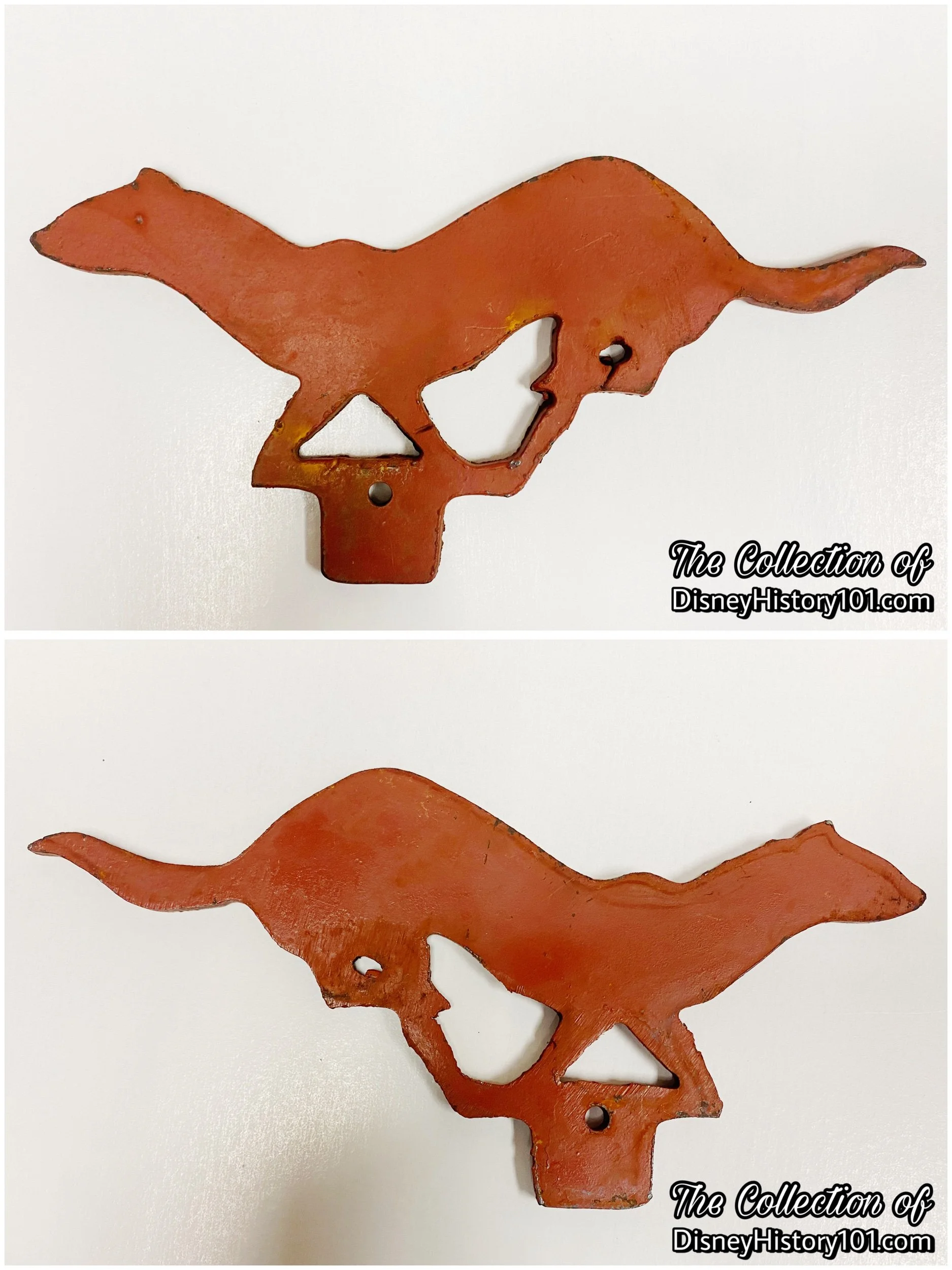
Big Game Shoot Metal Weasel Target
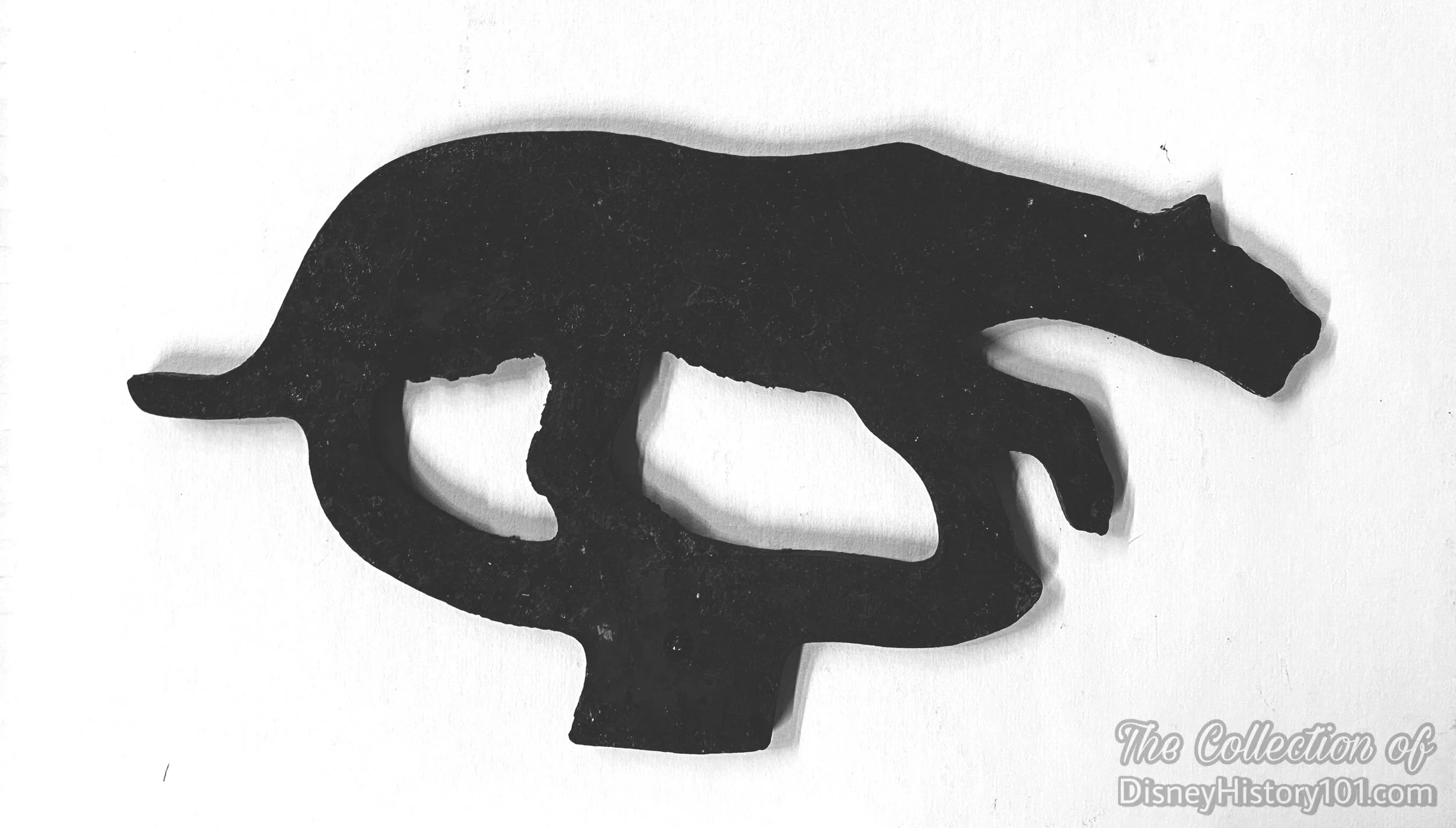
Big Game Shoot Metal Big Cat Target
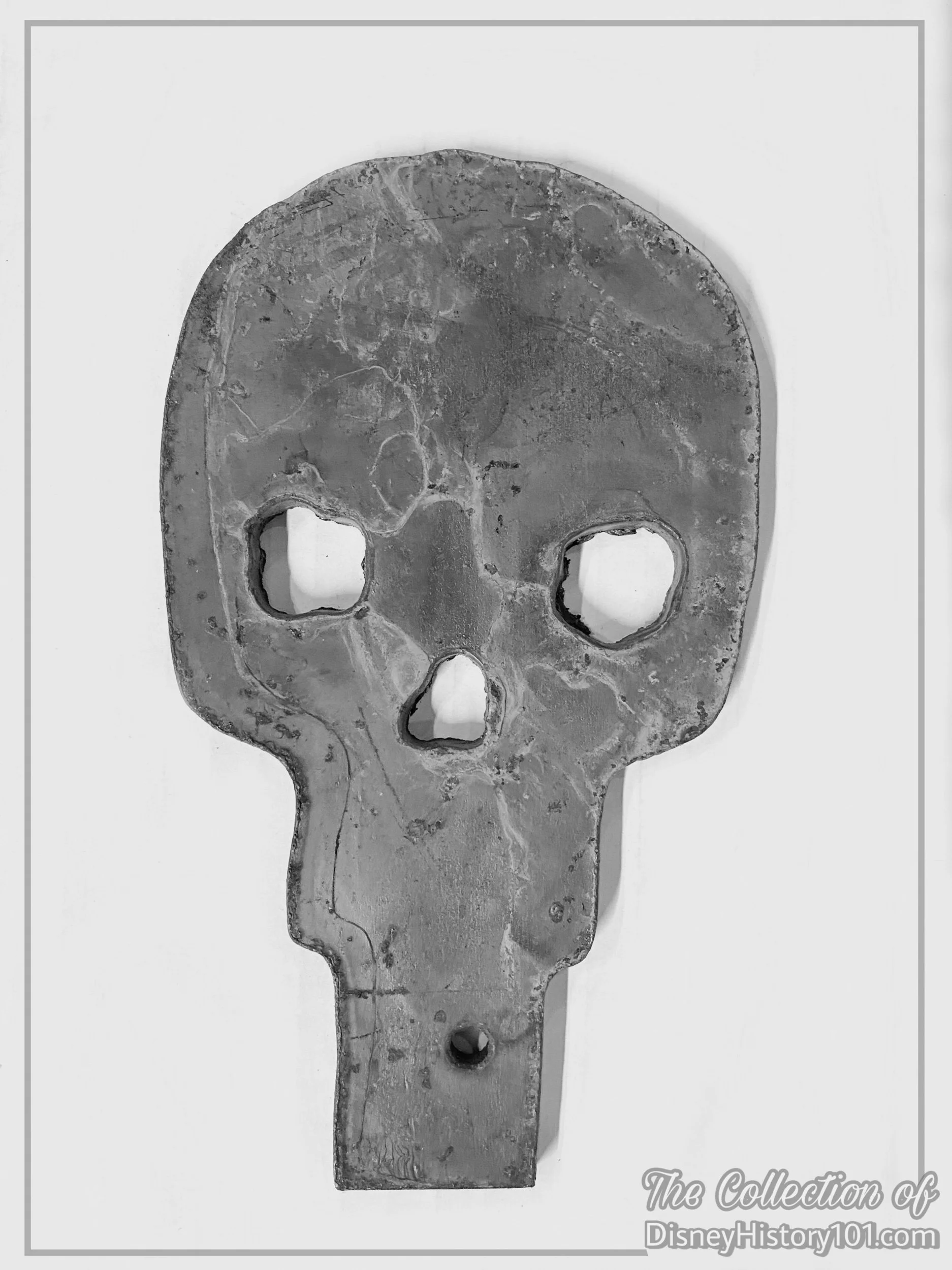
Big Game Shoot Metal Skull Target
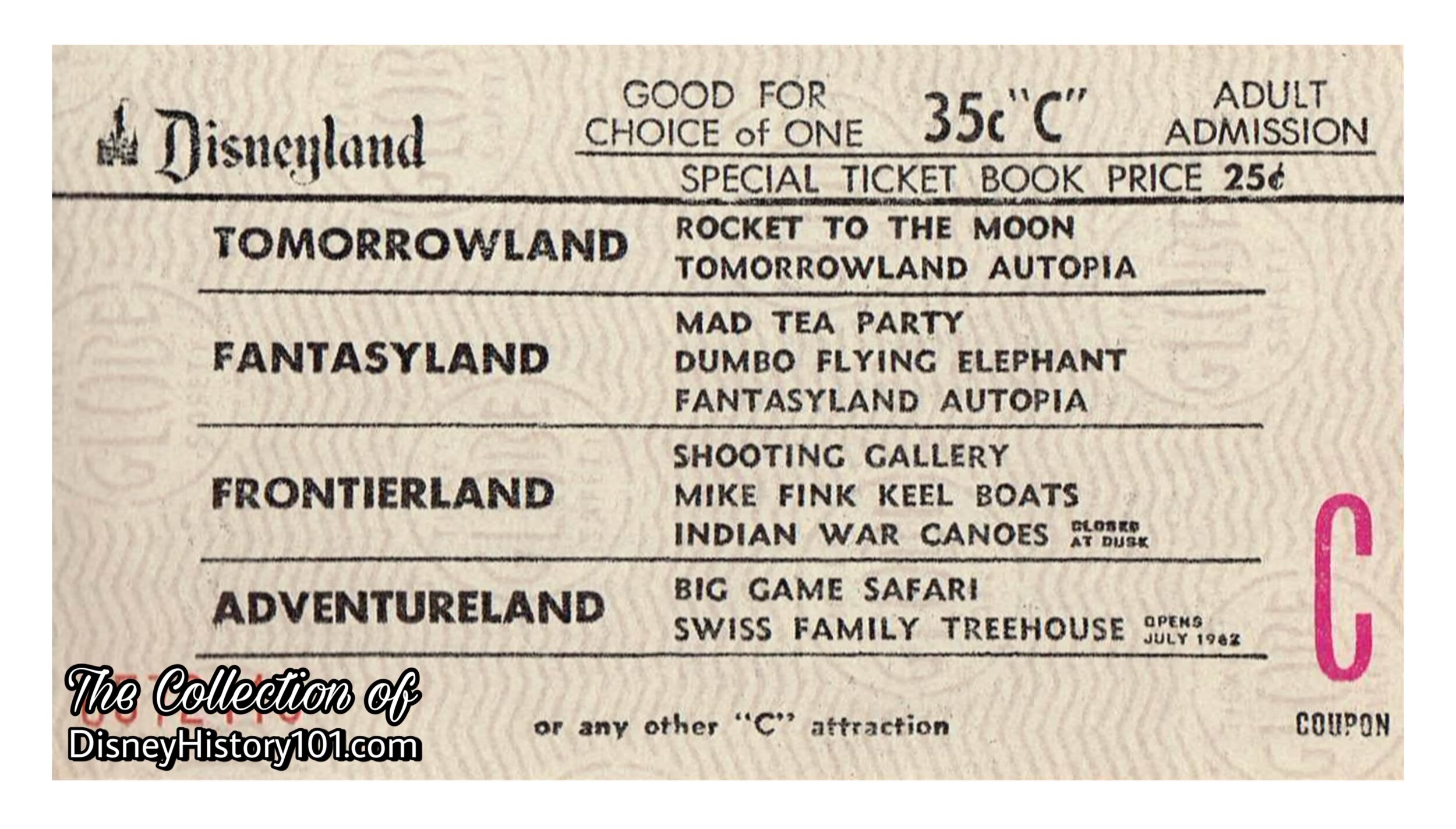
Disneyland "C" Attraction Adult Coupon (35¢ Value), Early 1962
Before the summer of 1962, the price of a full round of ammunition was 35¢ - the same price as the Swiss Family Robinson Treehouse (which was a coming attraction in early 1962).
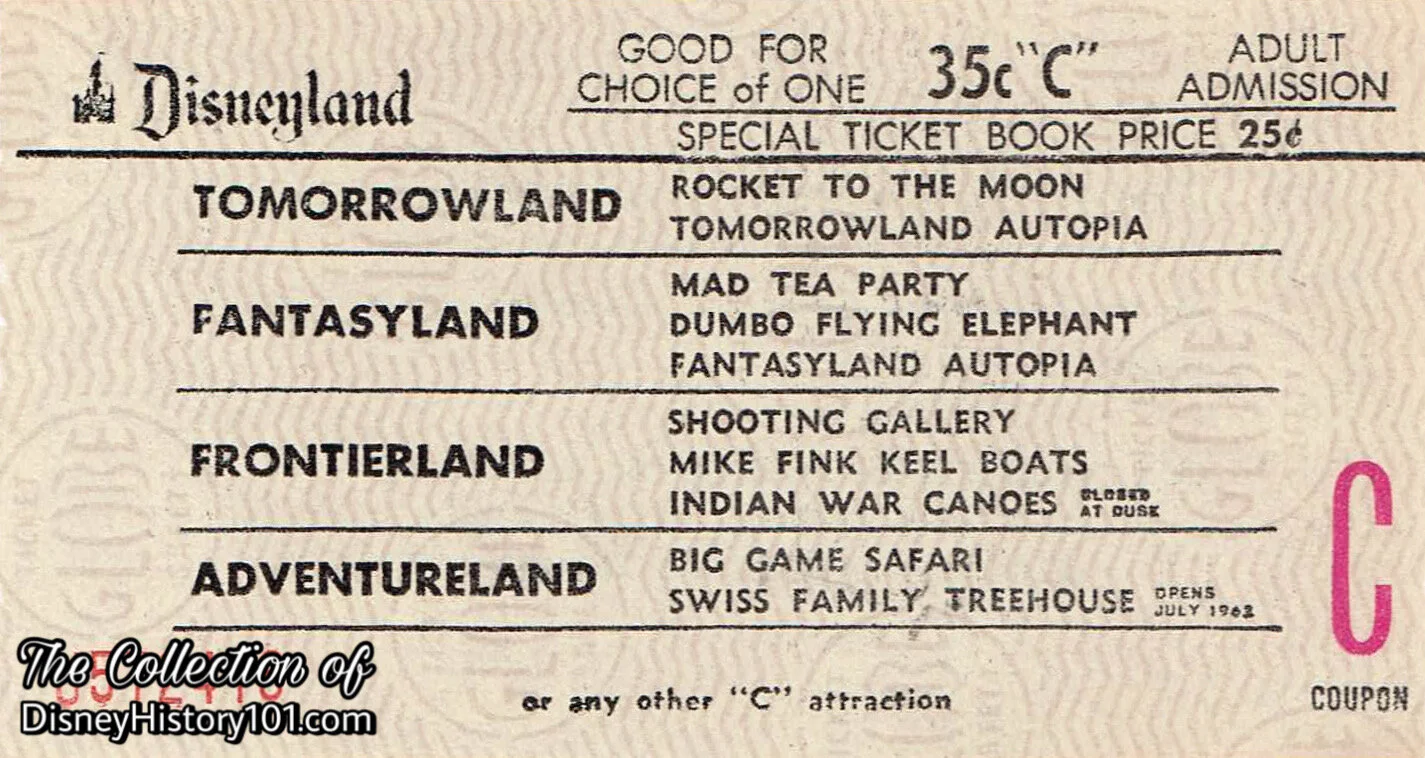
Disneyland "C" Attraction Adult Coupon (35¢ Value)
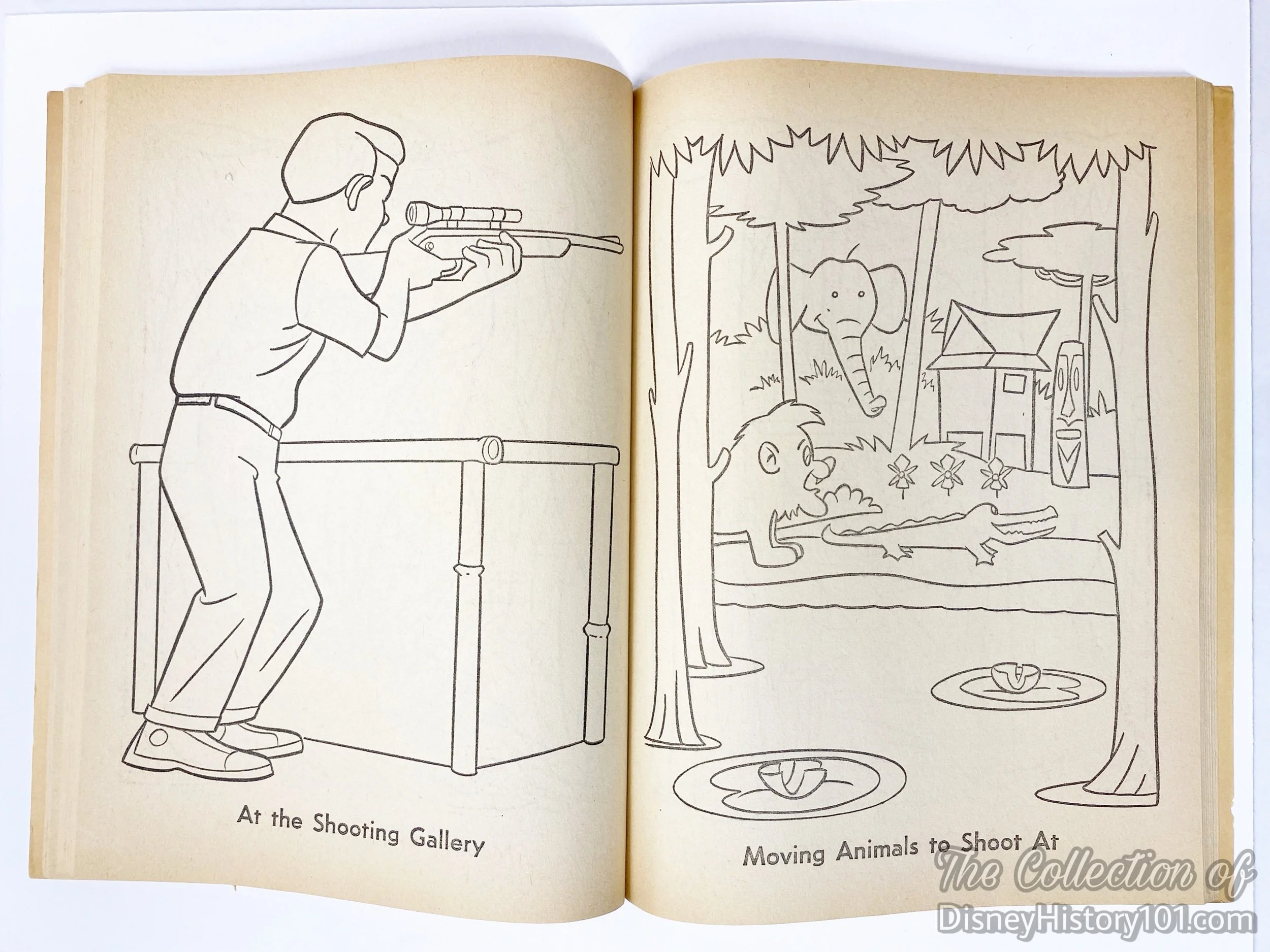
Walt Disney’s Disneyland 128-Page Coloring Book; published by Whitman during the Tencennial celebration of 1965.
You may recollect taking hold of a 2400 PSI Mac Glashan Air Rifle (powered by special compressors), peering through the scope, and taking aim at the silhouettes of birds, rhinos, baboons, and big cats.
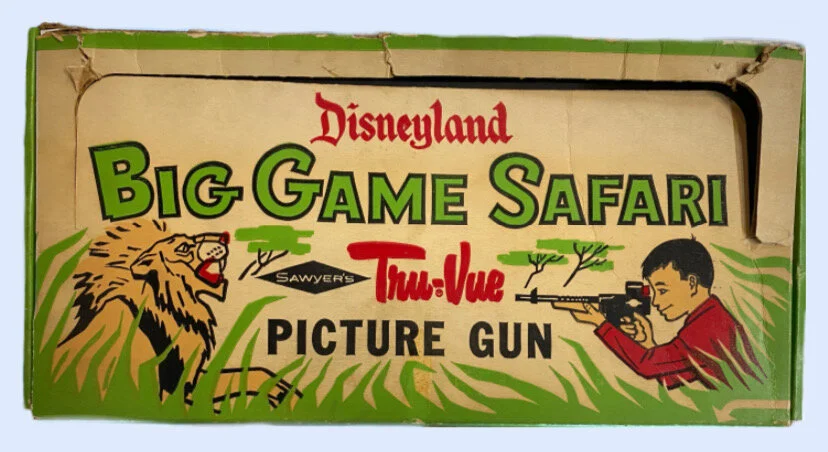
Tru-Vue Big Game Safari Picture Gun; 1962.
During 1962 (the very year that Big Game Shooting Gallery began operation), these Big Game Shooting Gallery souvenir tie-ins were produced by Tru-Vue (the same company that produced View Masters and View Master Reels). During the 1960s, guests could find these unique Adventureland novelty items in catalogues and shops where Disneyland souvenirs were sold. We recently had the pleasure to see this example of one of these artifacts (along with its preserved packaging) at Van Eaton Galleries’ “Disneyland : The First 65 Years” auction (August 15-16, 2020).
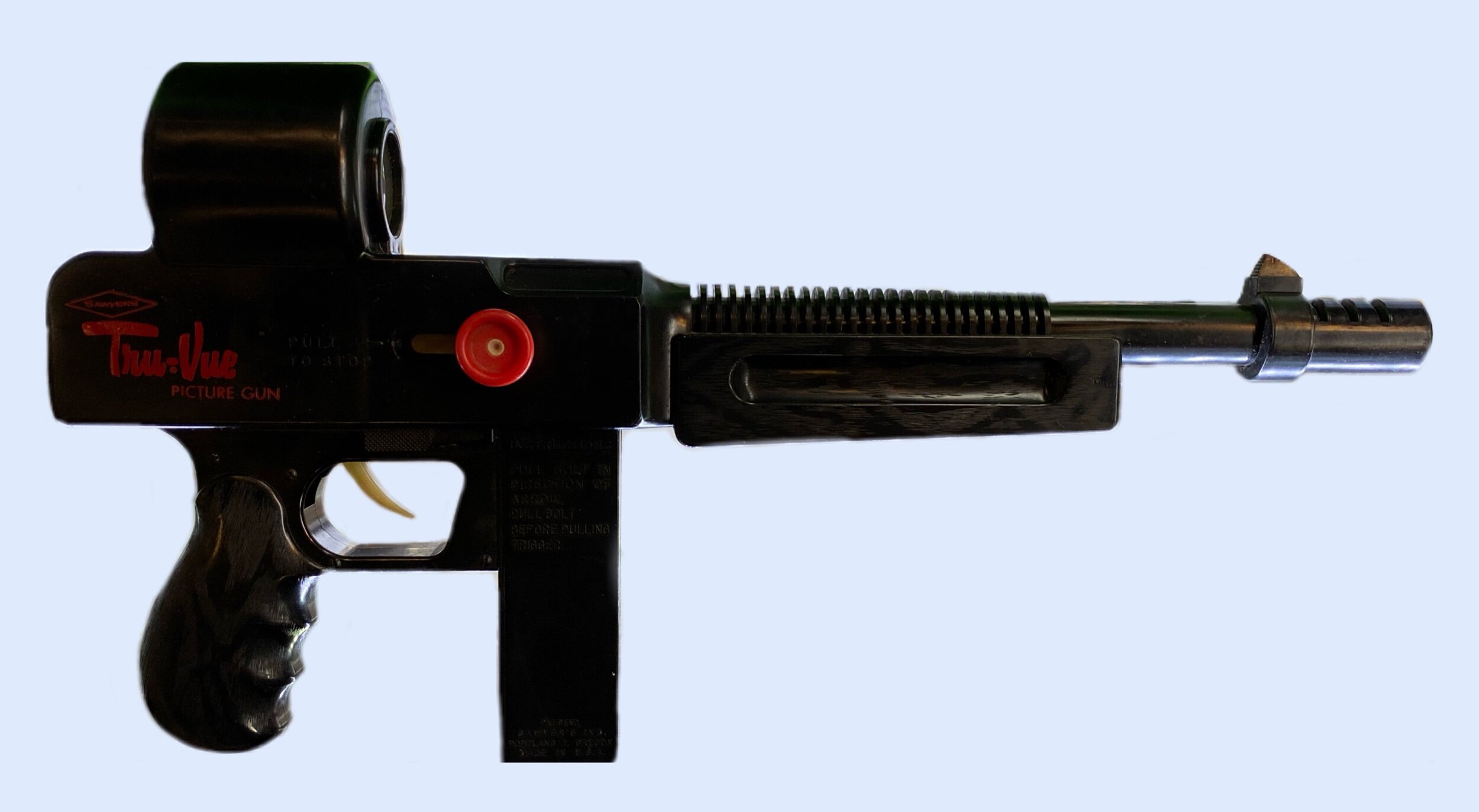
Tru-Vue Big Game Safari Picture Gun; 1962.
This was not the only product to be themed after the Big Game Shooting Gallery. These Walt Disney’s Tru-Vue Adventureland Picture Guns were produced during an era contemporaneous with the True-Vue Projection Theater, as well as the cork guns and cap guns found in Frontierland Souvenir Shops. As opposed to these aforementioned products, the Tru-Vue Picture Gun (originally retailing at $2.95 each, c. 1963) didn’t fire projectiles. It only “shot” a beam of light, projecting pictures of Disneyland against dark surfaces. According to catalogues, it was “loaded with realistic double-action target pictures of jungle animals, packed with ‘big game hunt’ excitement that’s ready for many hours of rugged safe play.”
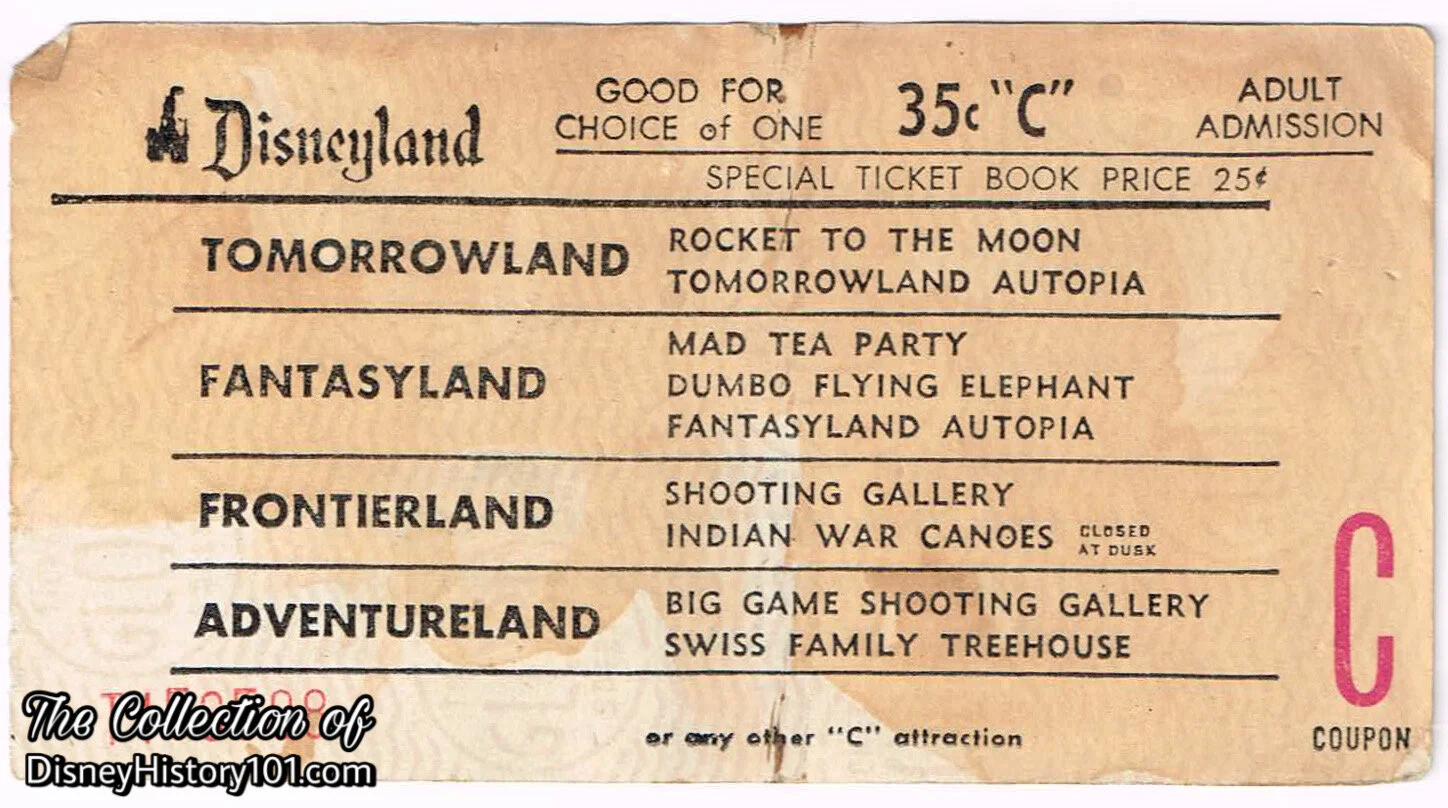
Disneyland "C" Attraction Adult Coupon (35¢ Value), (1965)
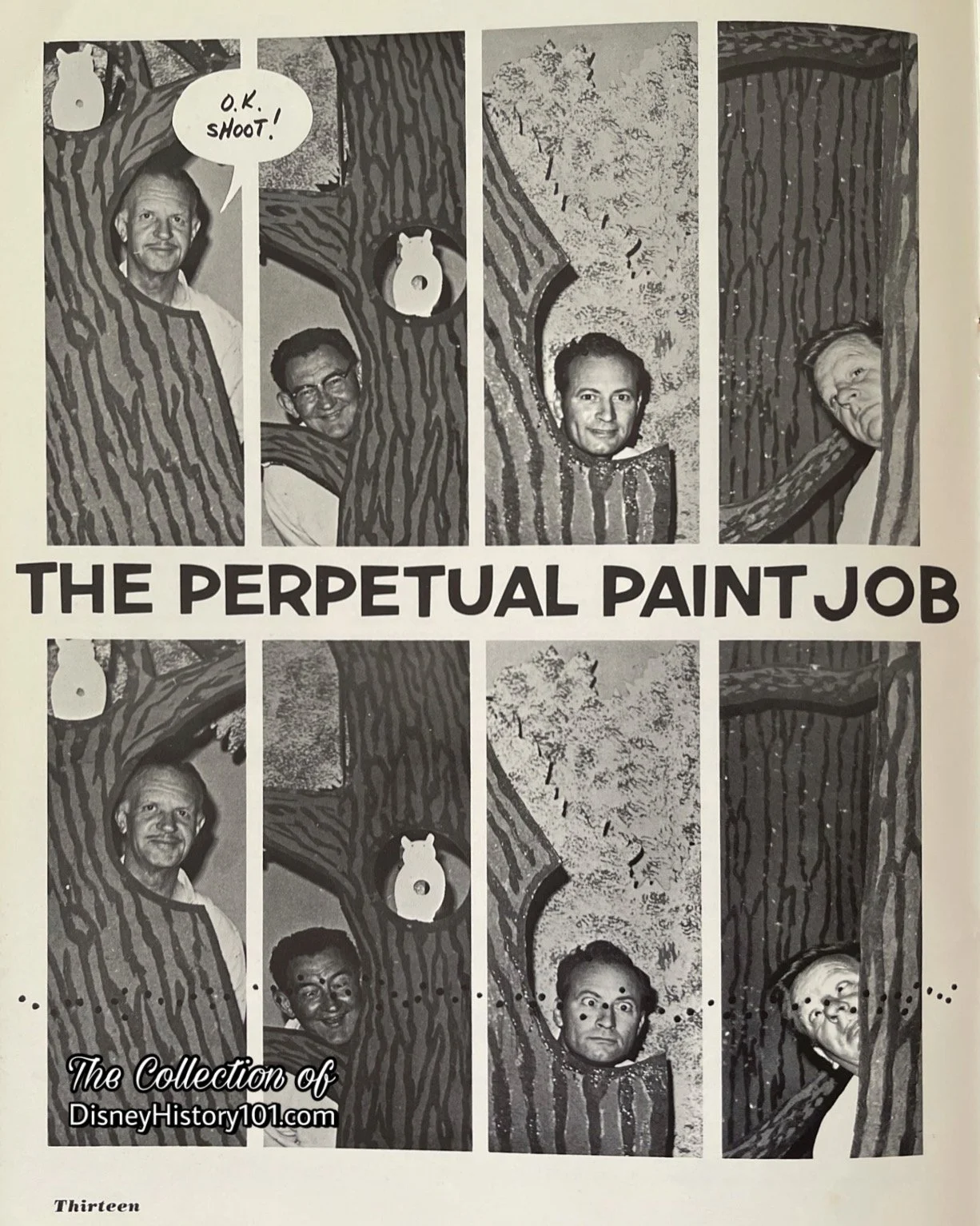
Excerpt from Backstage Disneyland, Vol.4, No.4 ; December of 1965
“Maintenance and the Perpetual Paint Job”
The Disneyland Guest experience is impacted greatly by the routine refurbishment work and rehabilitations performed by the staff of Disneyland Shops (The Maintenance Division at Disneyland). There were eleven colors of paint used in the Adventureland Big Game Shoot Gallery. According to Eleanor Heldt (1961 Magic Kingdom Club Administrator), “these chores must be accomplished in the eight hours the Park is closed.”
Backstage Disneyland (Winter/1965) credited a few of the people responsible for keeping the Big Game Shoot gallery freshly painted each day - “Ray Horn, Bill Weigele, Frank Pettronelli, Bill Atnar… [and] Bob Ream.”
The same article expounds : “The paint they use on everything is vinyl except for the water targets, and these are painted with colored shellac. Twice a year the paint is completely chipped off and with galleries are redone. Occasionally funny things happen, especially when a new man is working. For instance the Adventureland gallery has several giraffes and if the eyes are accidentally touched, they move and scare whoever is painting them. Sometimes a wrong button will be pushed and the targets start moving making the painters jump and hang onto trees to get out of the way. Tony was telling us one day how they all cringe whenever they hear a gunshot because sometimes they are working when the Park is open. Working during operating hours also leads to questions from the guests, who after standing and watching for a moment will ask, ‘What are you doing, painting?’ Or, ‘How often do you want to paint it?’ It must be interesting, or should I say frustrating to have a job where as soon as you are through, it is time to start again. After all, it takes only one shot and one piece of lead, and the paint job is on its way to being done again.”
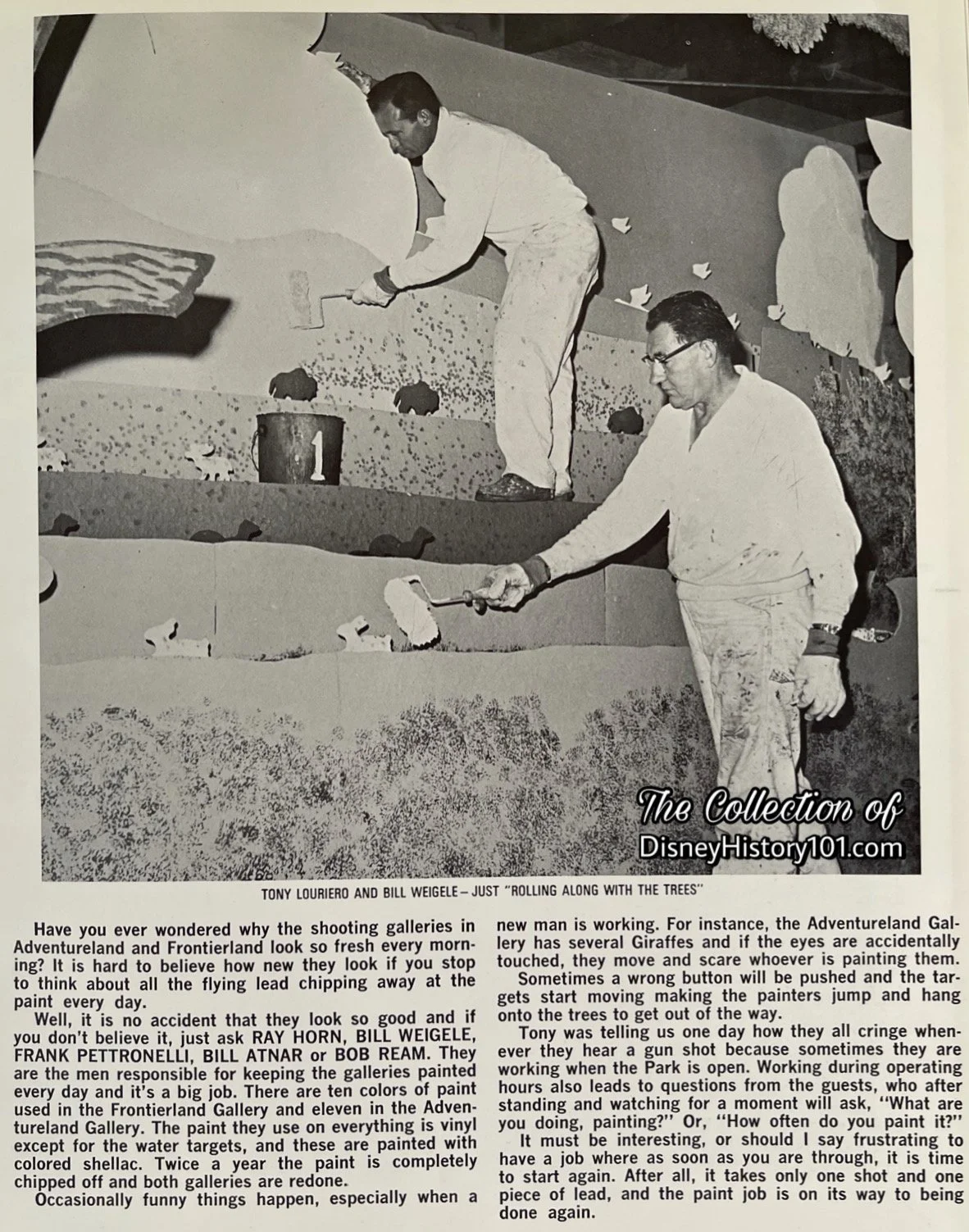
Unique contributions toward the Disneyland Show in an excerpt from Backstage Disneyland, Vol.4, No.4 ; December of 1965.
Disneyland was and is not really a military institution, but once had a fleet of submarines and a good supply of guns. This list of guns to be repaired, maintained, and regularly overhauled included Smith and Wesson 38 revolvers, Colt 45 revolvers, 12 gauge shotguns, and rifles (as the air rifles used in the arcade). The Arcade Mechanics team would regularly repair the firearms.
Owning to this maintenance, Donnie and Jay Osmond were able to emptying their guns in “Disneyland Showtime” (a c.1970 Wonderful World of Disney episode).
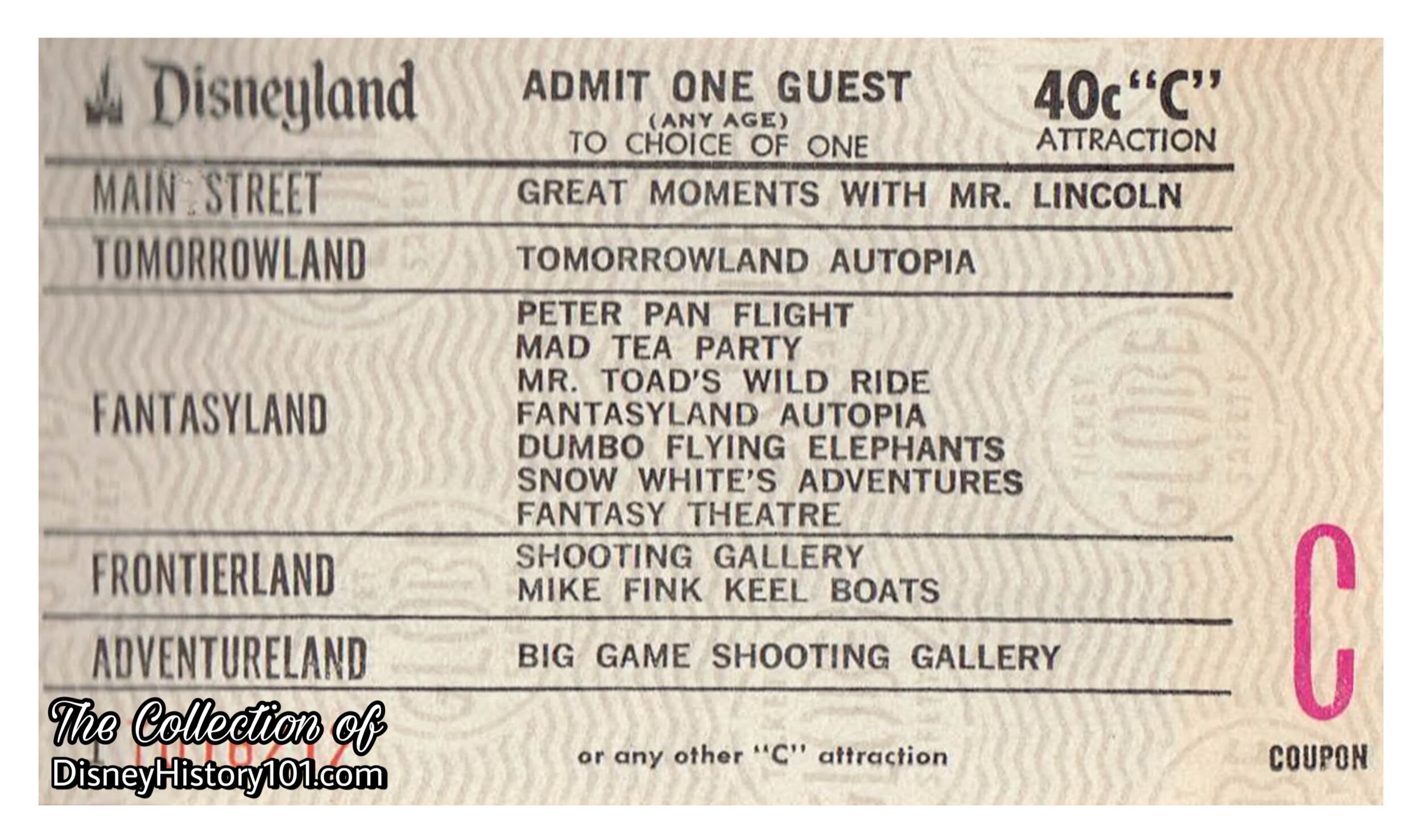
Disneyland "C" Attraction Guest Coupon, Mid-1960s
By the mid-1960s the price of a full round of ammunition was 40¢.
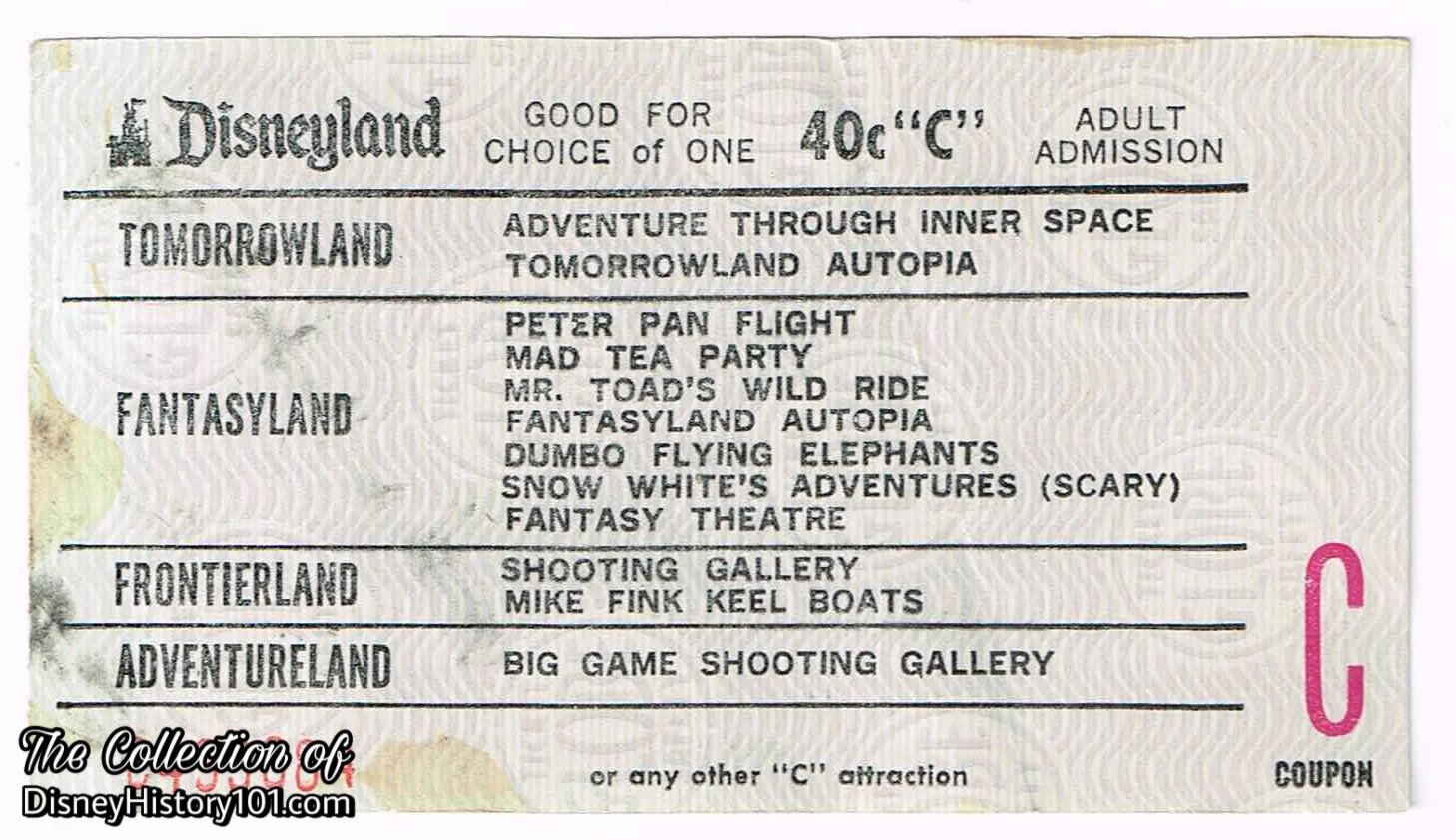
Disneyland "C" Attraction Adult Coupon (40¢ Value)
The following four statistics are based on the results of Disneyland Attractions Time Studies gathered in 1968:
Theoretical Hourly Capacity : 850
Instantaneous Capacity : 16 (with a total of 16 guns)
Audience Control Capacity : 16
Average Shooting Time Per Guest : :56
Reload Ticket Collection : :12
Number of Guests Pr Hour Per Gun: 53
“Walt Disney Productions Purchases MacGlashan Enterprises”
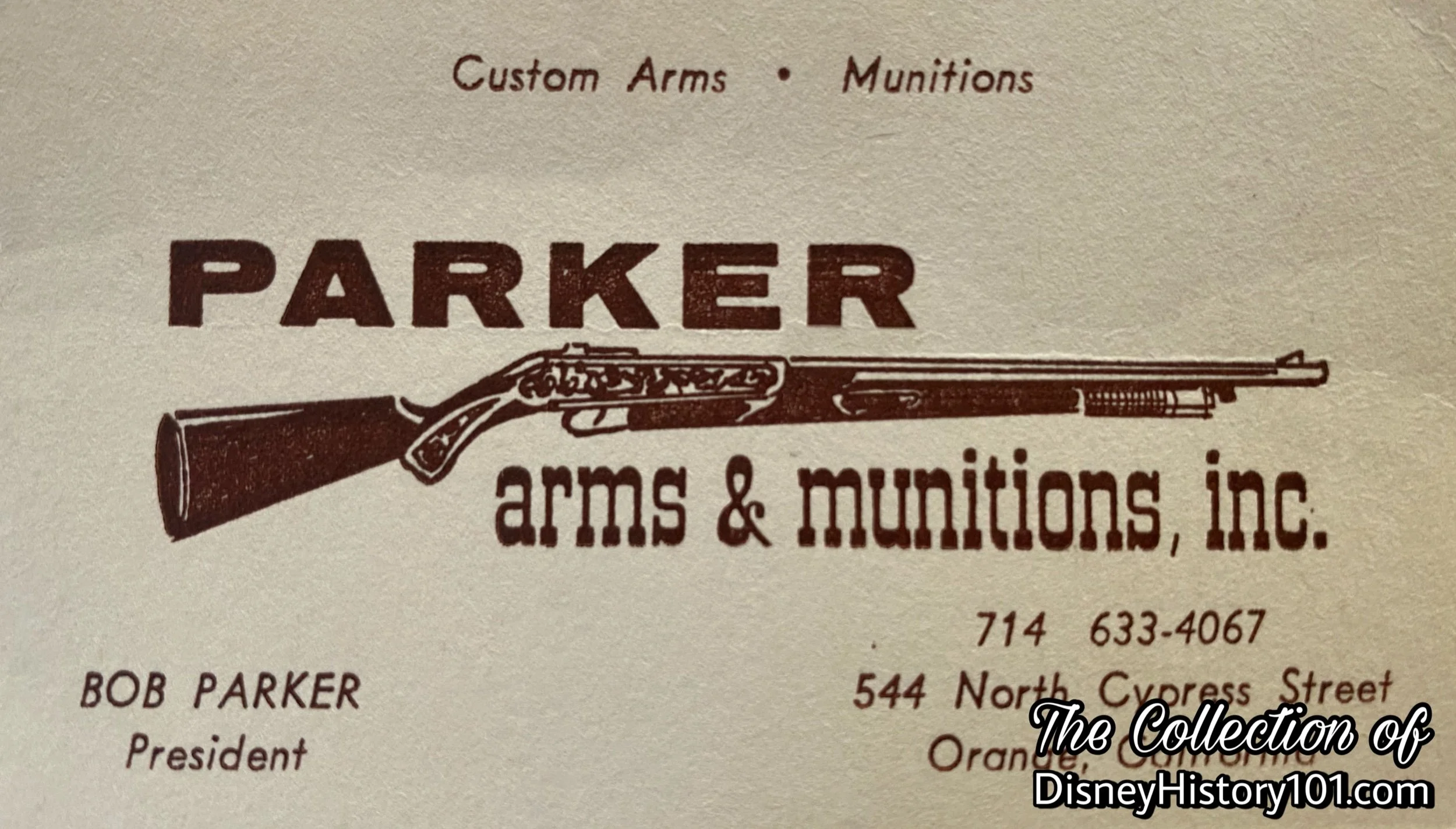
Since the beginning, the Four Keys of the DISNEYLAND Show (operating priorities in presenting the DISNEYLAND Show) have been present - Courtesy, Safety, Show, and Efficiency. Guided by these Four Keys, are Walt Disney Imagineers, who are always seeking out new magical opportunities to increase the efficiency, safety, and showquality of Disneyland adventures. It seems that airbound and dangerous, stray Shooting Gallery pellets led to two lawsuits. By 1965, Disneyland Research and Development was exploring the possibility of a Tomorrowland Shooting Gallery on the other side of the Park. While that project was in something of a “Blue Sky” phase, Disneyland management considered a switch to plastic shell casings (instead of the more expensive brass shells) for both the Frontierland Shooting Gallery and Big Game Shoot. Bob Parker’s Parker Arms & Munitions, Inc. (of local Orange, California) was in the process of providing new plastic shell casings in place of the old brass casings. This transition began with the Disneyland Entertainment Department’s Frontierland Shows, before taking effect upon the Shooting Galleries. Though Disneyland was provided munitions directly through MacGlashan Enterprises, Disneyland Inc. would soon purchase MacGlashan Enterprises’ subsidiary Parker Arms and Munitions of Orange, California - the manufacturer of plastic shell casings (among other supplies).
By 1969, MacGlashan Enterprises became “a division of Walt Disney Production’s Buena Vista Distributing Company,” and it had its headquarters “within the imposing shadow of Anaheim Stadium,” according to “A Company of a Different Calibre,” published in Disneyland LINE January 27, 1977. During March of 1969, Disneyland employee Truman Woodworth hadmoved to MacGlashan Guns, Inc., a wholly-owned subsidiary of Buena Vista Distribution Co., Inc., as General Manager. Now (according to the very same source), MacGlashan Enterprises“raised the shooting gallery to a level of sophistication that is well worthy of the Disney trademark.”
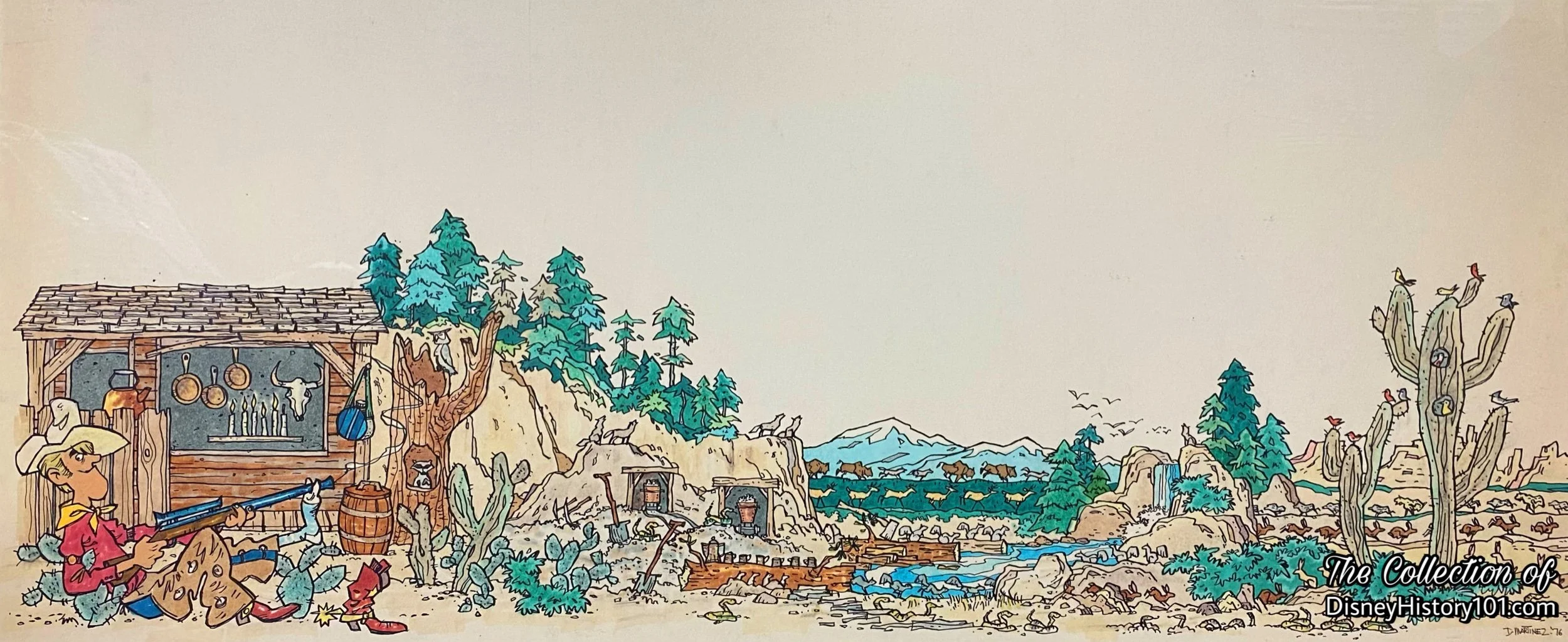
MacGlashan Enterprises brochure, c.1976.
Also, by about 1971, McGlashan Enterprises had become a division of Buena Vista Distribution Co., Inc. By that time, the company had designed and was manufacturing a line of custom-crafted popcorn wagons for Disneyland, Walt Disney World and other amusement facilities. This was in addition to manufacturing and designing the shooting galleries, air rifles, air cannons with both plastic and lad shot for Disneyland.
By winter of 1972, MacGlashan Enterprises had 15 employees. Located but a short distance from Disneyland at 1641 South Sinclair, MacGlashan Enterprises specialized in designing and manufacturing a wide variety of custom-made shooting galleries for amusement centers all over the country. Their galleries, which also featured MacGlashan air rifles, air cannons, and plastic and lead shot, could be found not only at Walt Disney World, Disneyland, and Celebrity Sports Center, but also at such amusement centers as the ‘Six Flags’ parks Over Georgia, Texas, and Mid-America, Opry-land in Nashville, Tennessee, Kings Island in Cincinnati, Ohio, and Cara-winds park in North Carolina, among others. They also designed and manufactured a line of custom-crafted popcorn wagons for Disneyland, Walt Disney World and other amusement facilities.
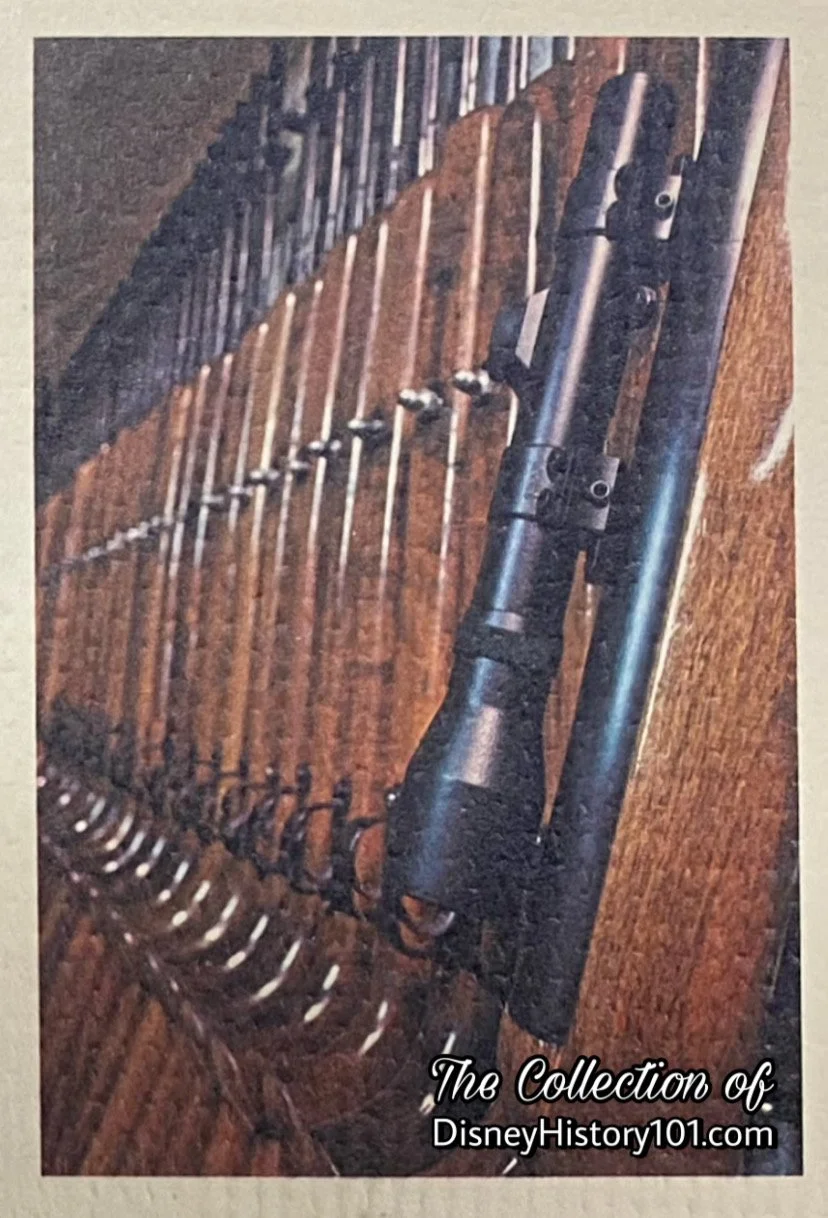
MacGlashan Enterprises Brochure, c.1976.
Safety is a major concern of Engineering. Every year they would make a complete test and inspection of all structural parts of Disneyland. And since Guests would look to Disneyland for their safety the department team was continuously designing new guest and personnel safety devices.
During each day Park Operations M-44 Machinists would, at least once, circulate to each Adv/Front area attraction and discuss with each attraction lead any problems, defects, or other feedback regarding the attraction. They would then notify the Mechanical Dept. of anything regarding this department and notify the M-1 of anything regarding other crafts. The M-44 Machinist would make standard opening inspection of Shooting Galleries, notify the M-41 of any further work to be done or parts needed prior to opening, check overall appearance, and make them ready for operation.
The attraction briefly closed on May 9, 1975, reopening reportedly “with no change” on May 29, 1976. By 1976, MacGlashan Enterprises (also located at Sinclair Street in Anaheim) was in the business of manufacturing shooting galleries for non-Disney Parks venues. According to one brochure, MacGlashan Enterprises was manufacturing “unique and colorful, sometimes humorous galleries designed to attract the patron’s attention and provide him with sporting amusement” tailoring the gallery to “space and traffic needs… a choice of animated targets in a setting that comes to life in a realistic dimension.” At the time, MacGlashan offered a diverse assortment of thematic target sections (with Pirate and Western themes) and still offered lead shot with recyclable ammunition and innovative “Lazer Guns” with a powerful scope, with realistic recoil and explosive sound.
Some of their clientele included the Santa Cruz Seaside Company (for its Casino Arcade at Santa Cruz Beach Boardwalk), and Cedar Point Ohio (for its Fiesta Fun Center).
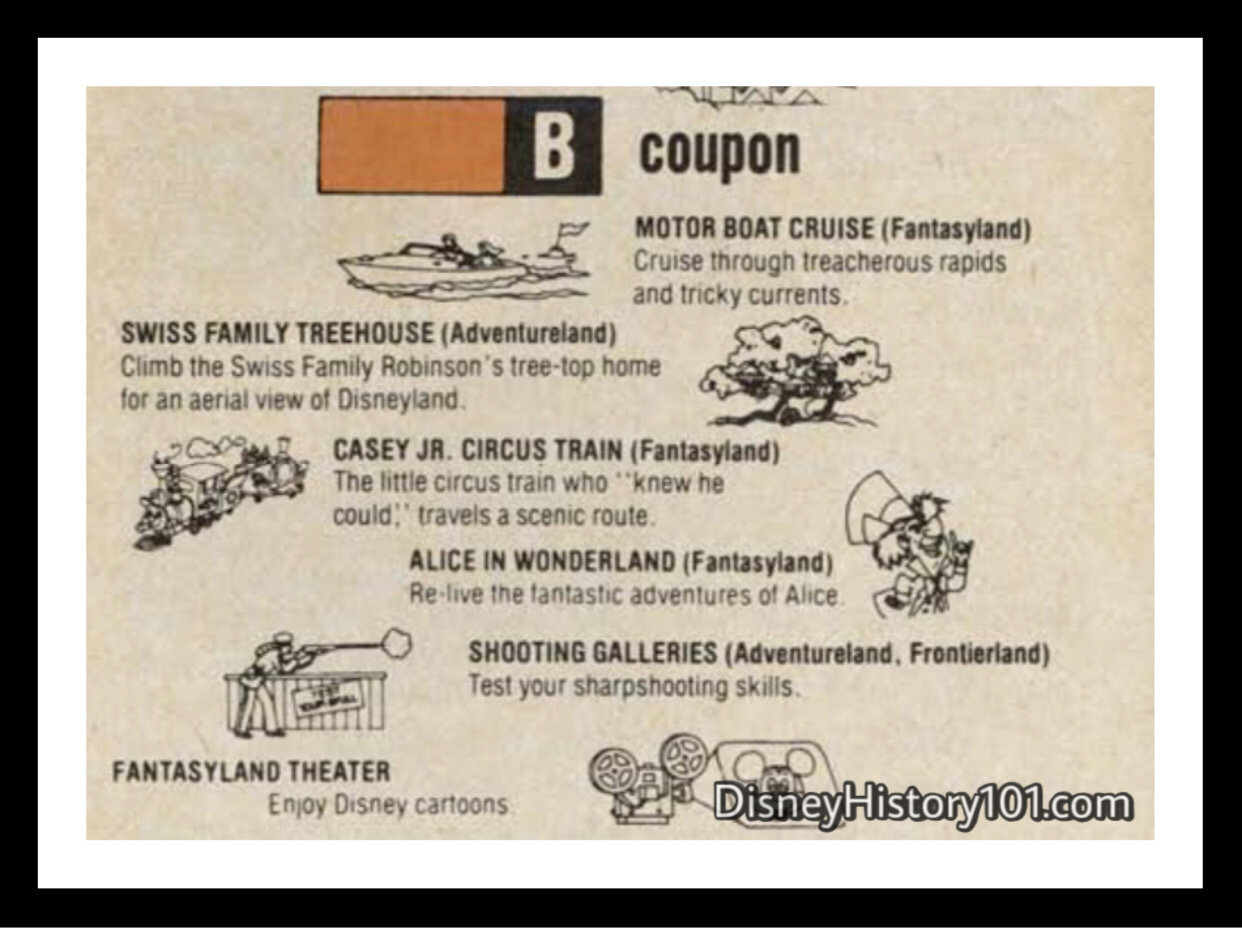
“Your Guide to Disneyland” (fall/winter) Except, (1979)
Big Game Shooting Gallery appears as a “B” coupon attraction in Souvenir Guides distributed during 1980, and also appears later, in the “Dial Guide” maps (published 1981).
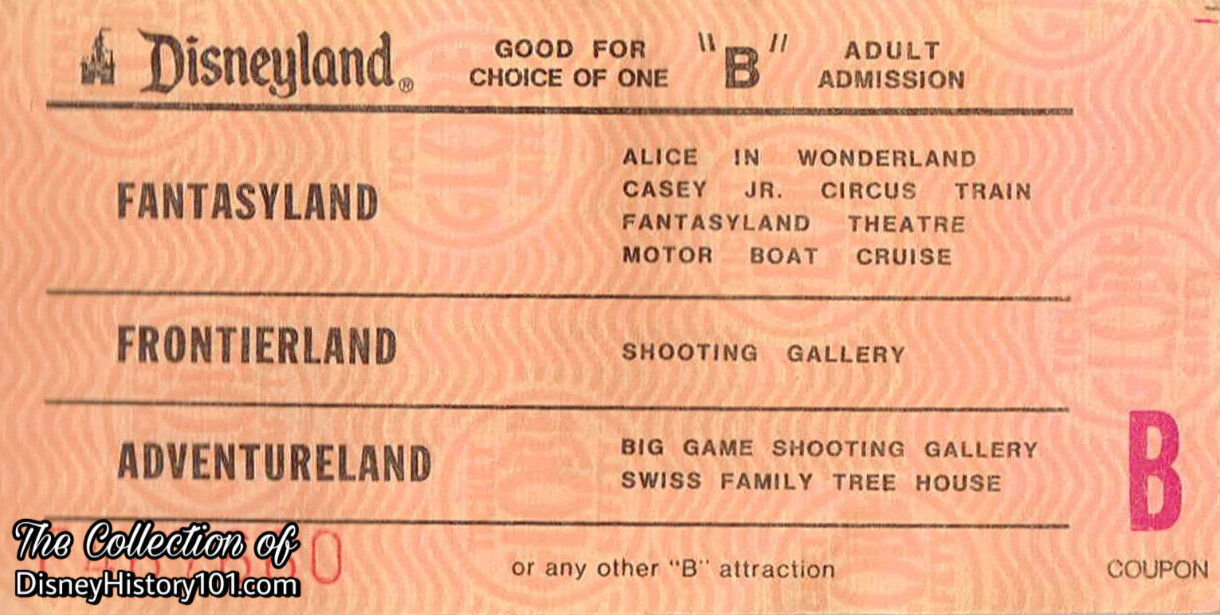
Disneyland “B” Coupon (c. 1981-1982)
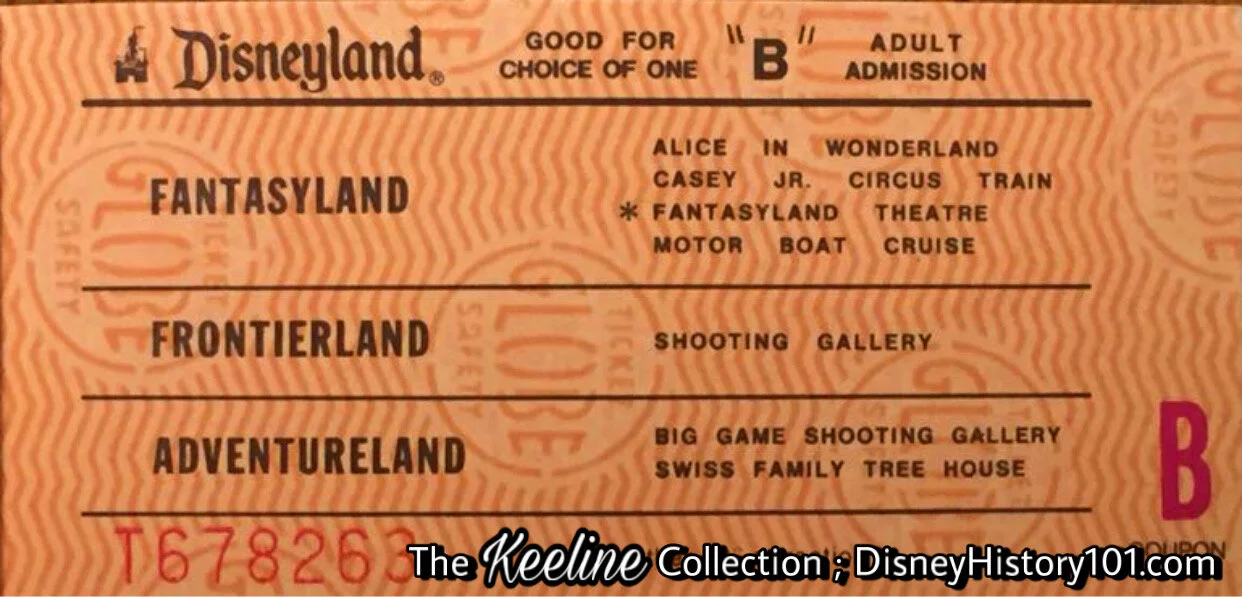
Disneyland “B” Coupon (c. 1981-1982), The Keeline Collection
“Closure”
Big Game Safari was closed for Operational Review by according to a Rides and Attractions Report prepared by October 3, 1981. The attraction was still listed on batches of May, 1981 tickets (bearing the date code 815). However, by January of 1982, the last pellet gun would empty its round (so-to-speak), and the Big Game Shooting Gallery would no longer appear on ticket coupons, in souvenir guides, or on maps!
According to Disneyland LINE (April 5, 1991), “In 1984, South Seas Traders expanded and moved into its present location, directly across from the Jungle Cruise, where the Adventureland Big Game Shooting Gallery once stood.” By 1984 the pellet rifles had become a liability for Disneyland, so the manufacturer replaced the rifles with a light gun (or “Laser Gun”) which continued in use within Frontierland’s shooting gallery! It was here, that Disneyland guests could still test their skills at still and moving targets.
Quisque iaculis facilisis lacinia. Mauris euismod pellentesque tellus sit amet mollis.