THE CAROUSEL OF PROGRESS (and AMERICA SINGS)

(July 2, 1967 - September 9, 1973*)
*(July 24, 1967 to September 9, 1973, according to “Disneyland Rides & Attractions and Attendance Report,” 1981, page 50).
“Progress is not just moving ahead. It’s dreaming and working and building a better way of life!”
Walt and his organization have always been progressive, exploring new paths and experimenting with new technologies. Ever since the first successful and profitable winter season of peak guests at Disneyland® Park in 1955, Walt began to outline plans for future growth and development of his Park. One area (then, designated as a meal area for “Disneylanders,” located East of Main Street) was to be transformed into an attraction called “International Street.”
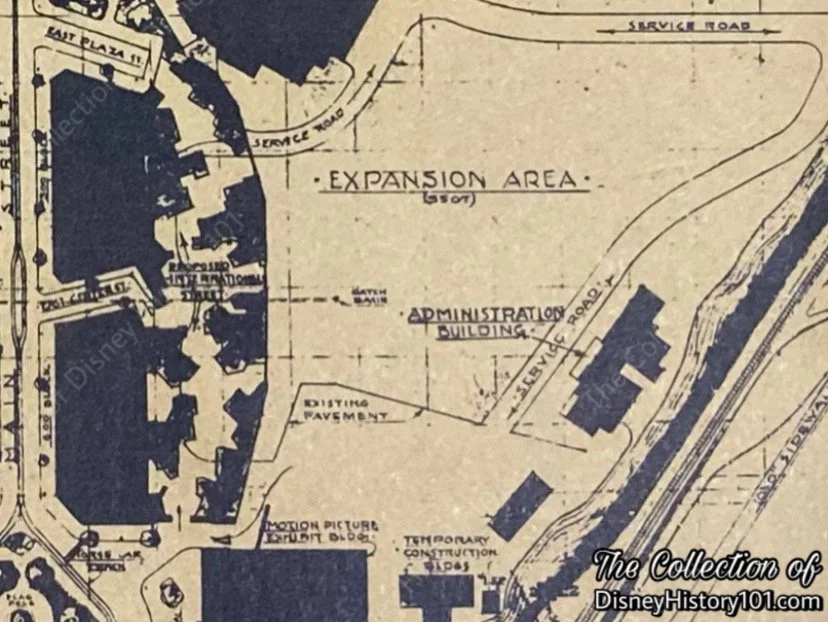
Proposed International Street & Expansion Area; Plot Plan of Disneyland by Marvin Aubrey Davis of WED.
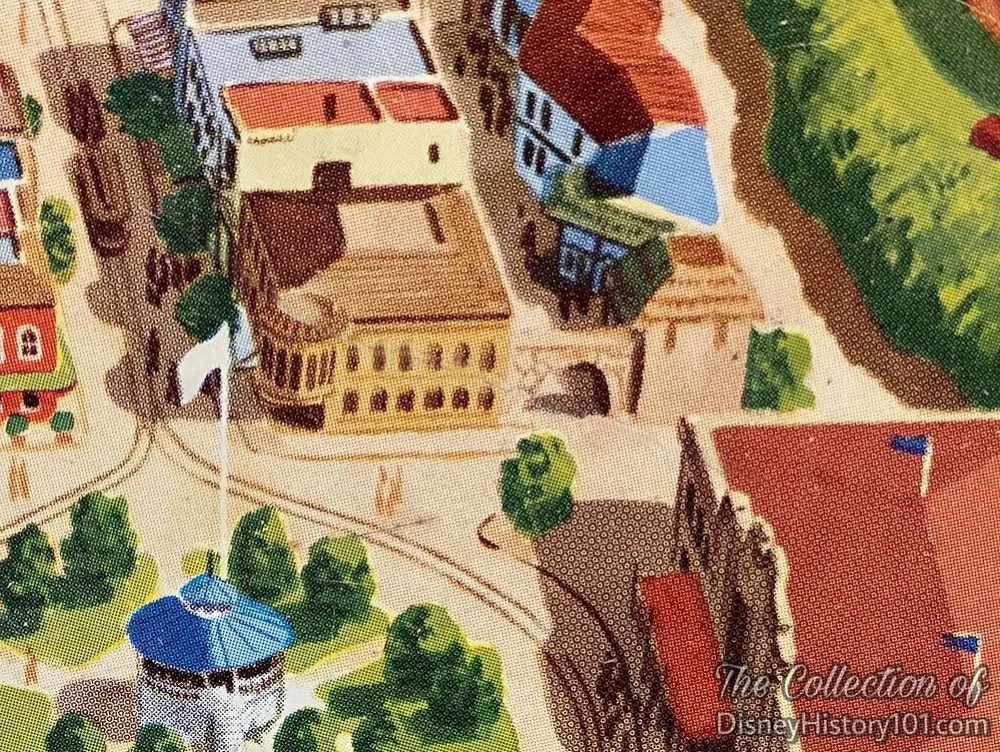
A Disneyland tin lithographic television tray bY California Metalware Corp. depicts the street.
This future attraction was occasionally (and vaguely) spoken of through newspaper articles, occasionally seen in licensed products and souvenirs of Disneyland.
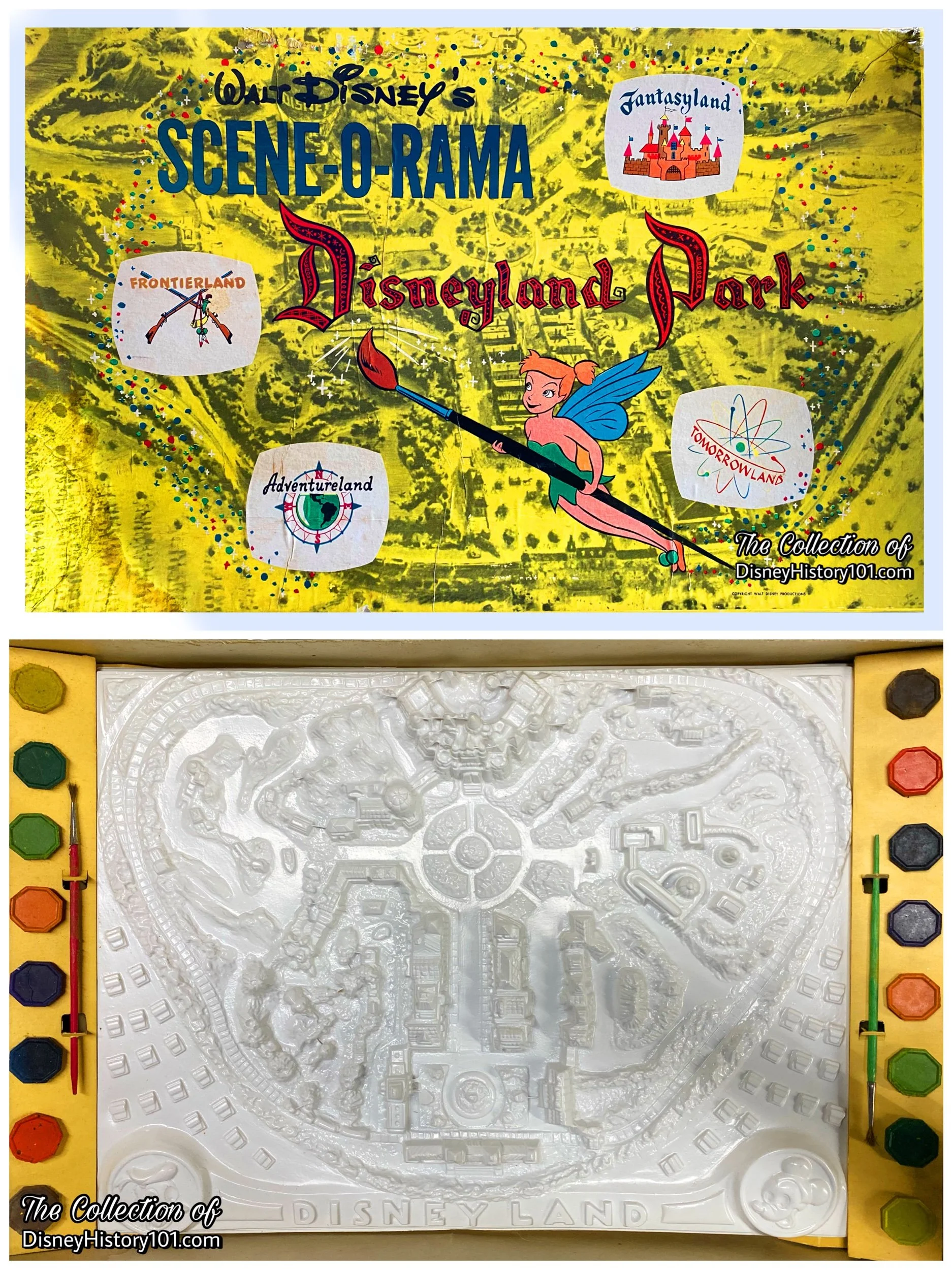
Early c.1955 licensed product “Walt Disney’s Scene-O-Rama Disneyland Park” toy featured this street east of Main Street (above).
Eight three-dimensional Kodak Stereo II Viewers (similar to View Masters) also gave guests previews of an attraction coming to Disneyland (in 1956, and then 1957) - International Street! Take a peek at photographic slides featuring models created for the coming attraction.
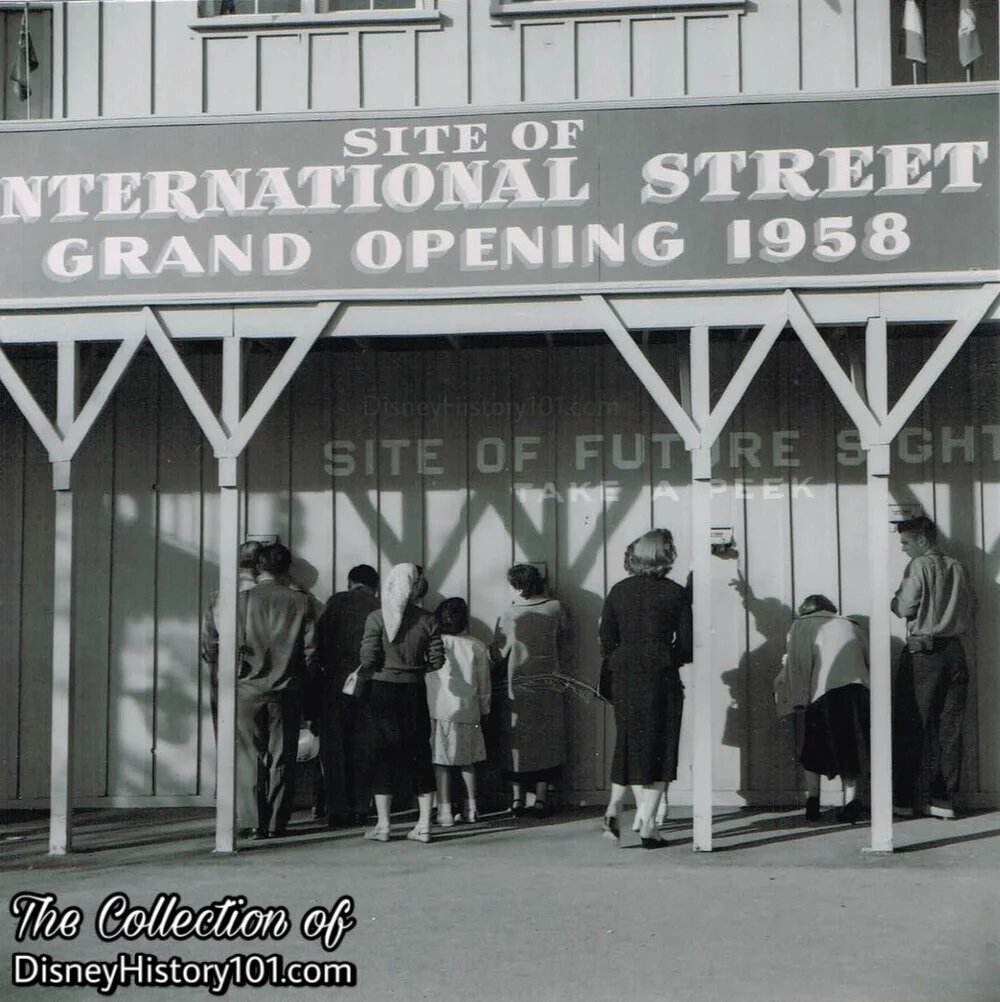
Site of Future Sights of the International Street Architectural Facade, c. 1956.
While the International Street concept was explored no further (for the time), it was revisited about two decades later, by WED Enterprises Vice-President of Design Chuck Myall. To quote Chuck Myall’s (c. April,1974) “Capsule Biography,” : “Presently Chuck is working on many new concepts… while exploring the possibilities of an International Street at Walt Disney World and perhaps Disneyland.”
But by 1957, it seems that Walt’s imaginative engineers and artists (knowing their audience) were beginning to plan a different sort of adventure for the space. About this time, a young Marty Sklar (who was employed by Disneyland in June of 1955, and began full-time employment with Disneyland in September of 1956), “indirectly began his ‘stay’ at WED late in 1956 working on such Disneyland concepts as Liberty Street, and Edison Square,” according to Marty’s “Capsule Biography.” The Disneyland Report to Anaheim and Orange County (prepared before August of 1957) mentioned future developments called Liberty Street, the Hall of Presidents, and Thomas Edison Square all planned for 1960.
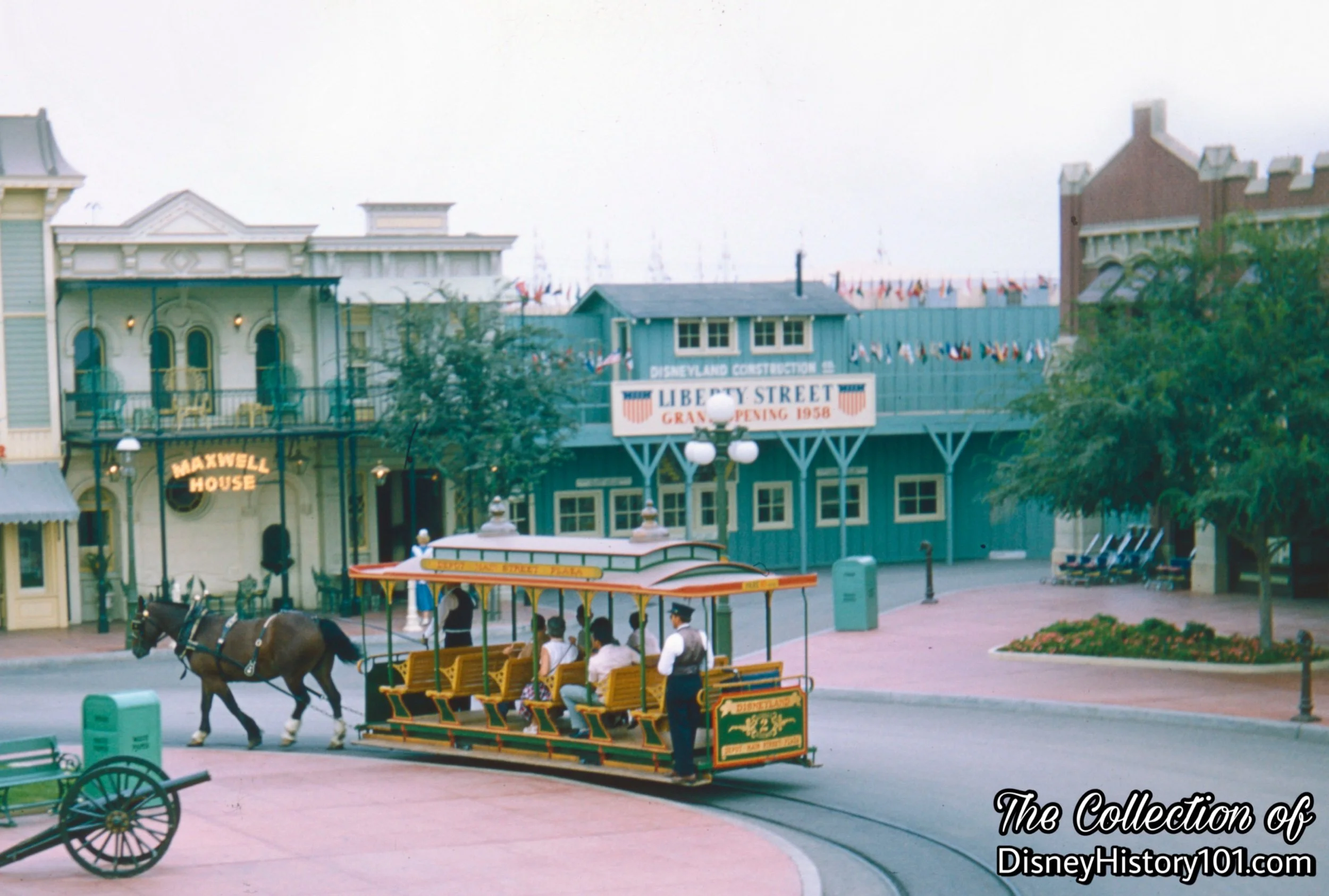
The future site of Liberty Street Architectural Facade, 1957.
By September of 1958, Disneyland, Inc. had begun development of the related Chinese Arcade area (4062-500) at an expense of $812.
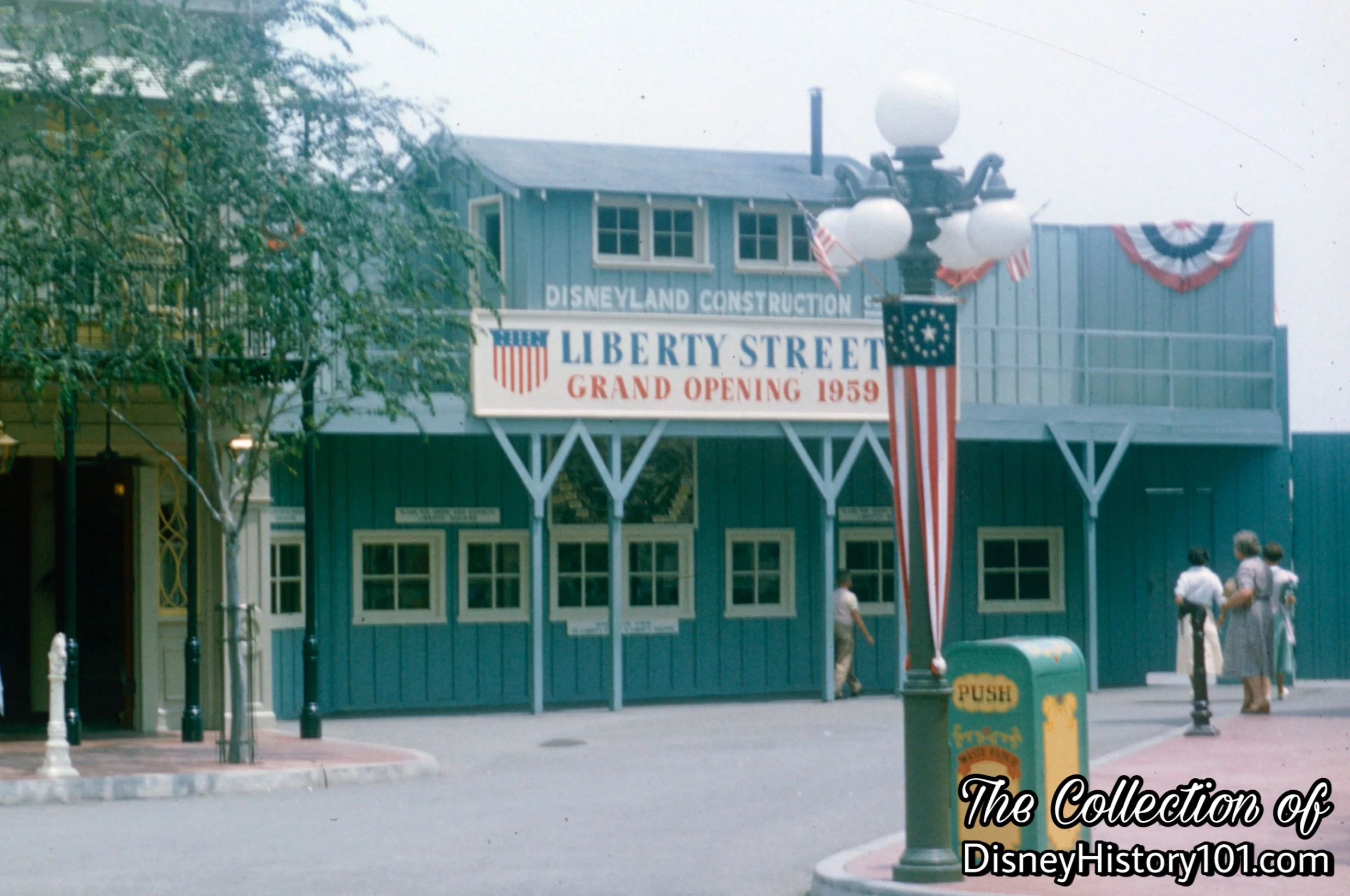
The future site of Liberty Street Architectural Facade, 1958.
By 1958, the “Site of International Street” banner was changed to read “Liberty Street - Grand Opening 1959.” According to “Disneyland: Then, Now, and Forever” by Bruce Gordon & Tim O’Day, “Planned as a salute to America’s Revolutionary War-era founding, the new area would replicate the look and feel of colonial America of the late 1700s, featuring architecture representing all 13 original American colonies. The main attraction on Liberty Street was to be the Hall of Presidents, showcased in Independence Hall and featuring a show called One Nation Under God, an elaborate theater presentation focusing on the fundamental principles that have guided American history. The show was also to feature an impressive roster of Audio-Animatronics figures from every President of the United States - from Washington to Eisenhower.” The aforementioned Marty Sklar was also involved creating concepts for the latter, to some capacity. One last sidelight, is that Audio tracks were soon recorded “under Walt Disney’s supervision” (in 1958), and many of these would be reused years later to create The Hall of Presidents attraction of the Magic Kingdom at Walt Disney World.
“Edison Square”
In the article “New Vistas for Disneyland” (published March 22, 1957), Bob Thomas revealed that one Liberty Street attraction would be called “Thomas Edison Place,” and he even described the Show’s theme of “how American living has progressed because of the great inventor’s spurring of science”. Herb Ryman once recollected how “Walt Disney had a tremendous respect for great men, great inventors, great thinkers,” according to “Working With Walt - Interviews With Disney Artists” by Don Peri. The future attraction (designed by WED Enterprises, Inc.) was to feature six stages - opening with “The Wizard’s Progress” (a prologue), followed by four acts, and an epilogue. Things were looking promising (six years before the 1964 New York Worlds Fair), as “Edison Square” began to appear as a “Future Attraction” on (c. 1958) souvenir Disneyland maps drawn by Sam McKim (and in promotional material provided for potential corporate sponsors of Disneyland).
The TWA publication “Let’s Talk About My Visit To Disneyland Anaheim California: A Note From Mary Gordon TWA Travel Advisor” divulged: “We were told that many exciting new plans are underway in the Enchanted Kingdom. These include the addition of Edison Square. This area will contain exhibits which contrast the old and new in the daily life of the American city-dweller, and will feature the progress brought about through the genius of Thomas Edison. Other coming attractions include Liberty Street (our American Heritage).”
For a time both Edison Square and Liberty Street were contemporaneously under development. By September 28, 1958, Disneyland Inc. job numbers 4067-051 & 052 for both the design and development and props and dressings of “Liberty Street” were in developmental progress at a total cost of $17,831. However, by that same date, Disneyland Inc. job numbers 4070-001 (“International Land”) and 4073-001 (“Edison Square”) were opened, for both the design and development of the areas that were in progress at a cost of $6,116 for the former and $27,554 for the latter.
Walt was still searching for an American industrial Participant sponsor for his future Disneyland attraction. This being the case, WED Enterprises, Inc. representatives began talks with General Electric representatives over the possibility General Electric sponsoring the Show at Disneyland. To sell the idea, WED Enterprises, Inc. produced another promotional brochure just for those GE representatives.
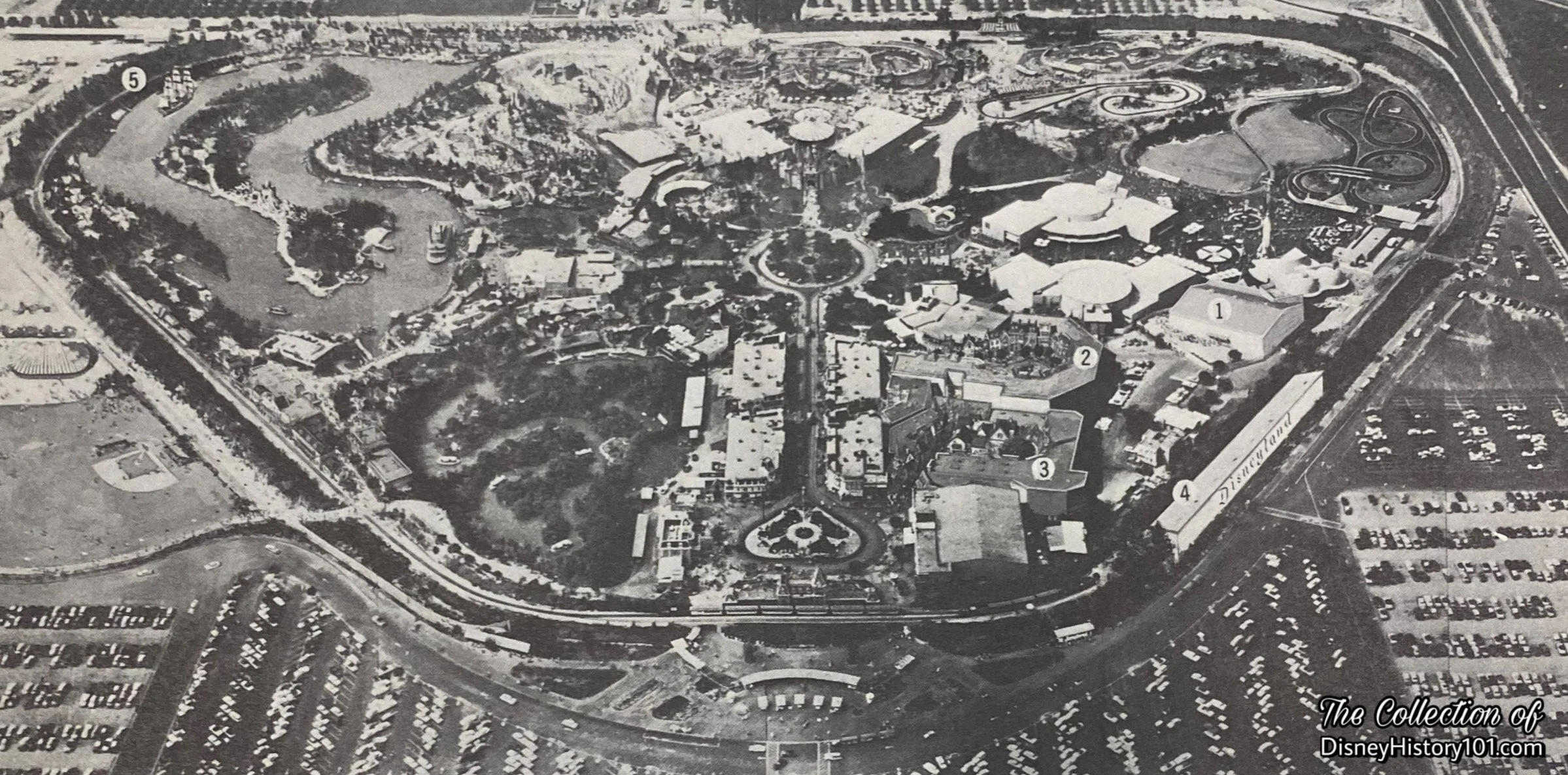
WDP Annual Report for September 1957: Proposed: (1) Science Hall (2) Edison Square (3) Liberty Street. Under construction: (4) Grand Canyon Diorama (5) Four Masted Schooner.
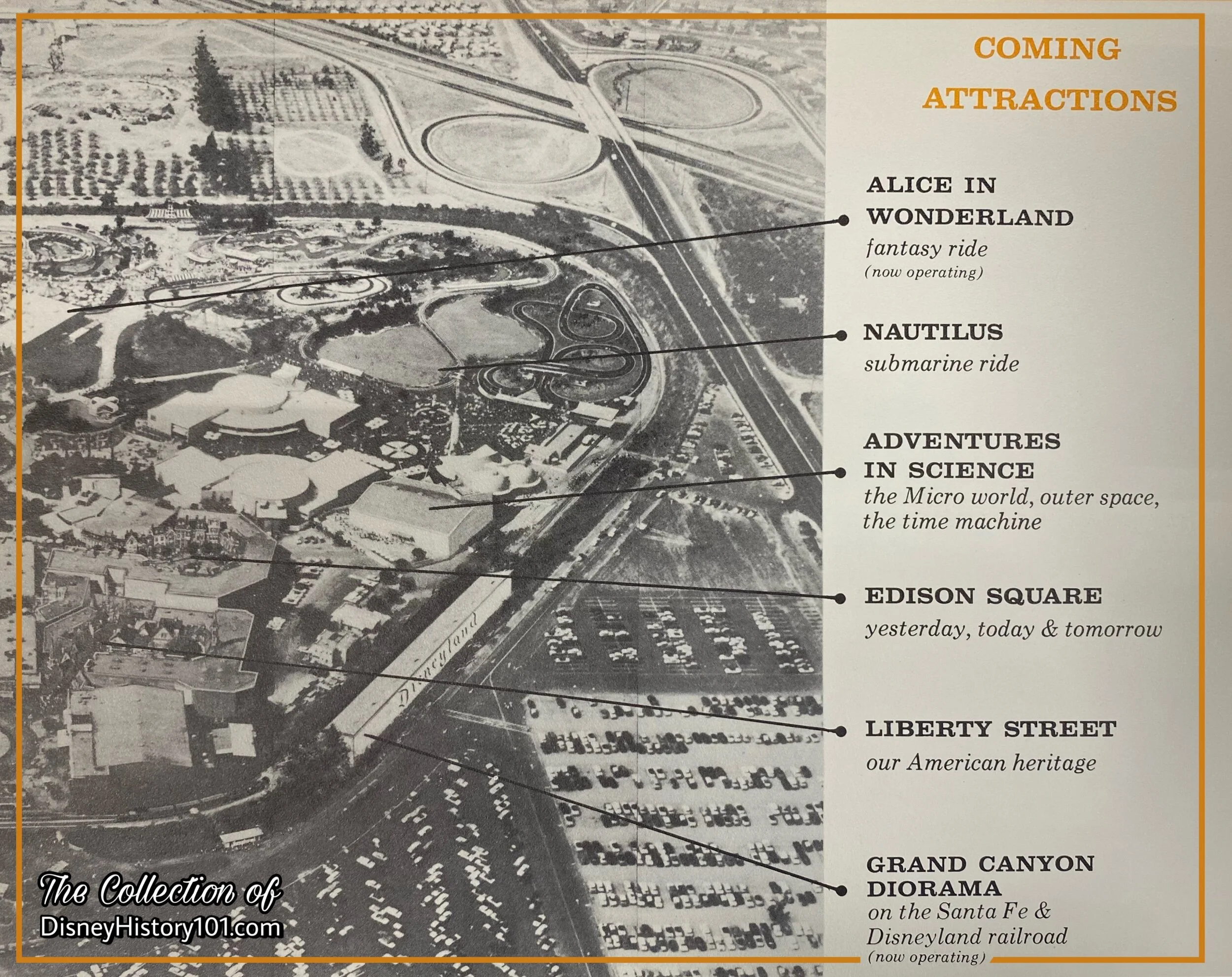
“Disneyland U.S.A.” Excerpt (Published 1958)
In “Disneyland U.S.A.” (published 1958), “Coming Attractions” were shared with representatives of potential national sponsor Participants in the Disneyland Show. One of the advertised “Major Projects” was called “Edison Square”, and its story was described in some detail in two other pages of the promotional booklet.
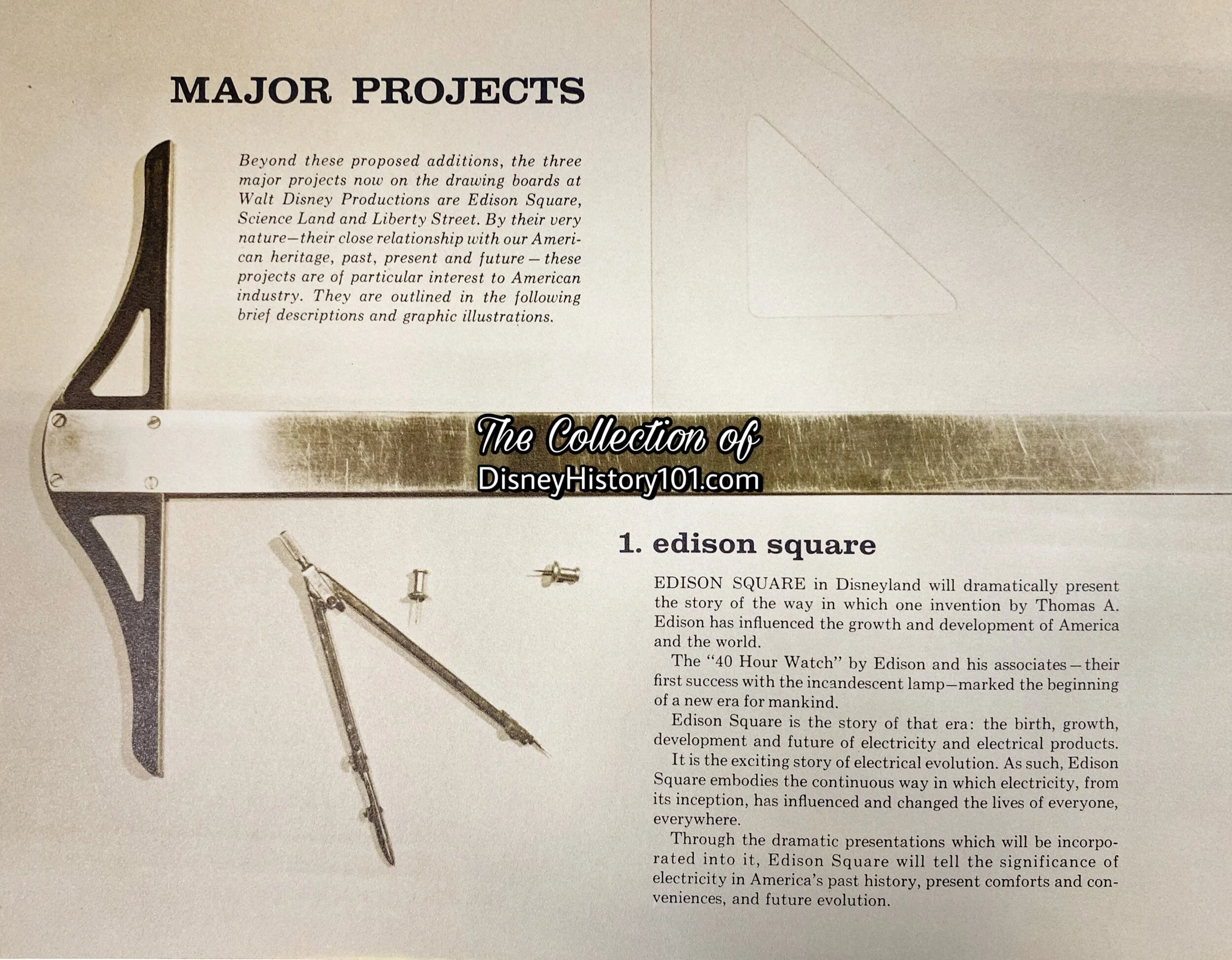
“Disneyland U.S.A.” Excerpt (Published 1958)
“This ambitious concept was to be designed to be a bit more urban in execution and feel than the midwest-inspired Main Street. Set circa 1918, the charming square would represent the budding age of electricity and would prominently feature a statue of its namesake, Thomas A. Edison, at its center. The main attraction Edison Square would be a show called Harnessing the Lightning, a four-act history of electricity as seen through the eyes of four generations of a typical American family as they experience the wondrous advances in electrical technology… Rather than riding in a revolving theater, guests would walk past decade-by-decade vignettes showing how life has been made easier by the introduction of electricity,” according to “Disneyland: Then, Now, and Forever” by Bruce Gordon and Tim O’Day. Both Sam McKim and John Hench were attached to the project the time and created numerous designs for the Harnessing the Lighting show, while Bob Gurr helped design the system for the moving carousel. It appears that the “dramatic presentations” were to be presented on different stages (in the following image).
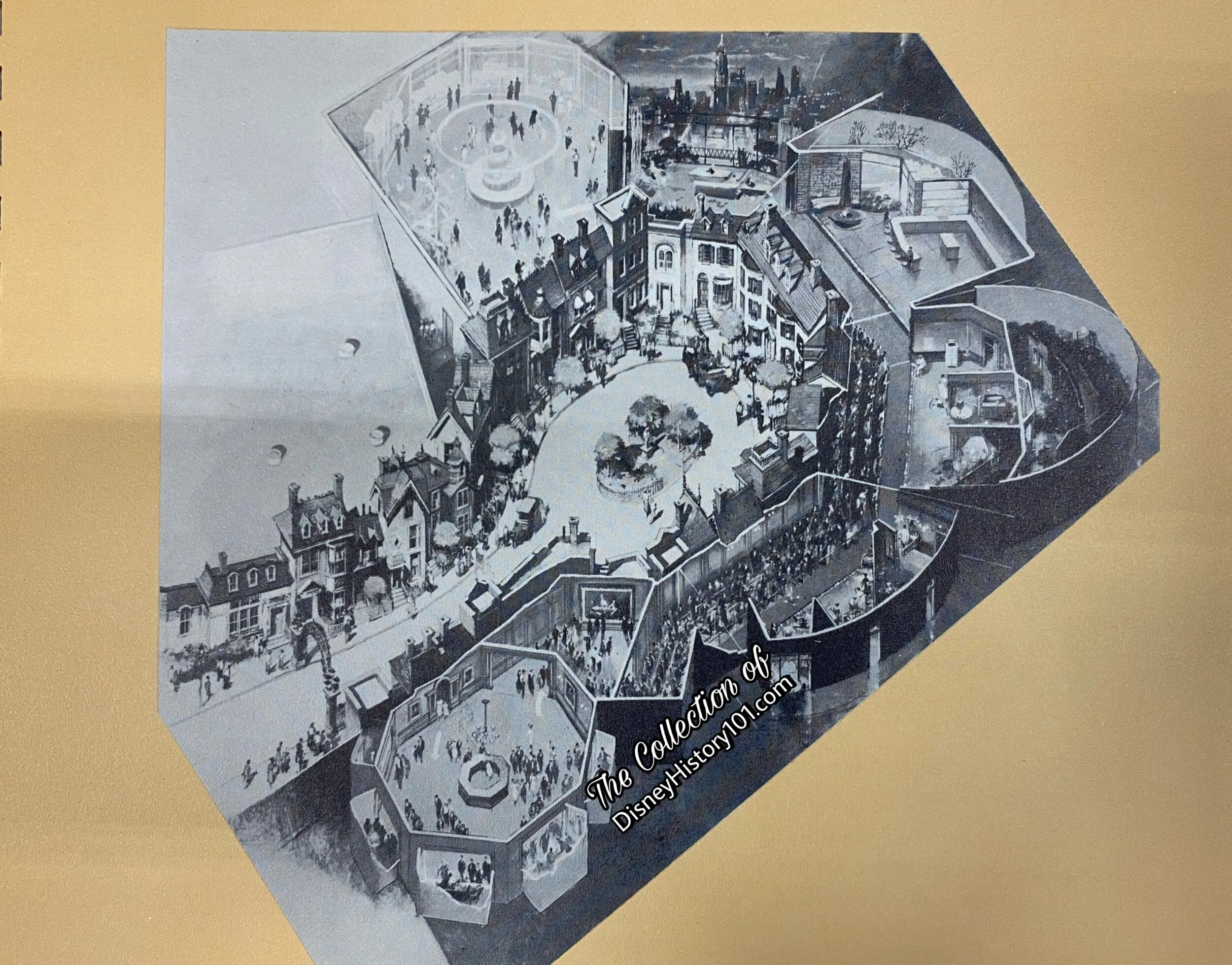
“Disneyland U.S.A.” Excerpt (Published 1958)
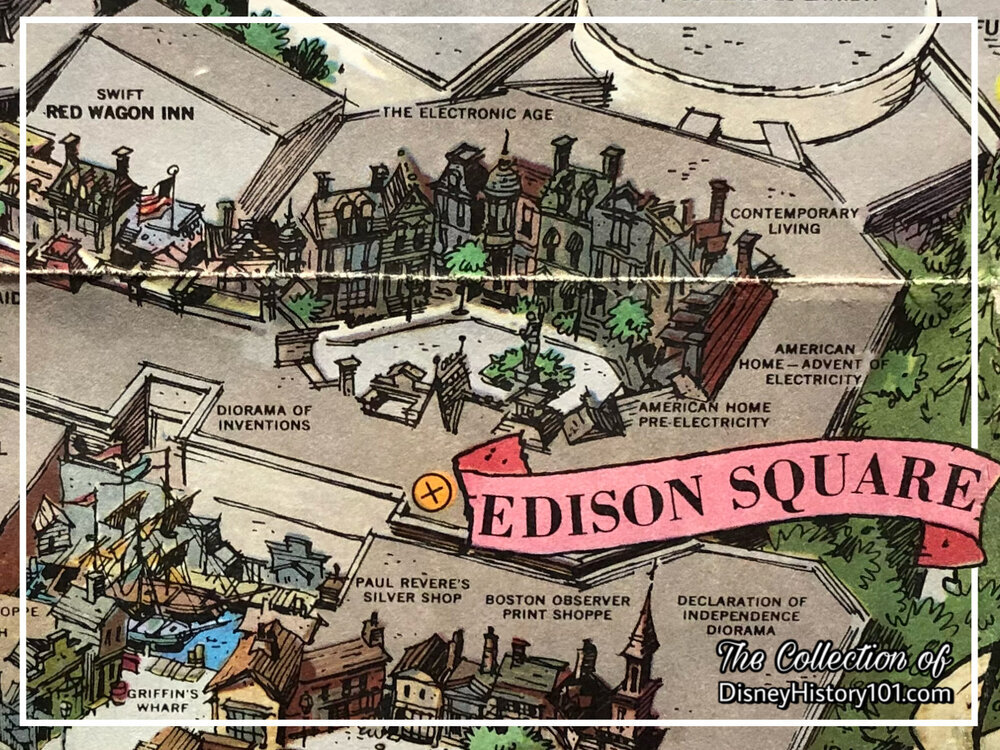
Sam McKim’s Disneyland Map (c. 1958-1964) carried these same details of Edison Square
“In 1959, the General Electric Company made this challenge to Walt Disney : To conceive and build a New York World’s Fair Show that would interpret, in an educational and entertaining way, the role electricity has played in bettering man’s living conditions, and dramatize where man’s work with electrical power may go from here. Disney accepted the challenge.” [General Electric Progressland Orientation Manual, prepared 1964] The following year (by September 14th, 1960), Art Director John Hench (assisted by Bill Bosche) could report that there was a “research program to start on or about September 26th, to be completed in November. Our meeting with the General Electric people will help determine the original casting required for this research program.” At the time, a total research fund of $50,000 had been appropriated for the General Electric research program to further project design. This aforementioned “research” may have been that which resulted in “improvements made in the [Audio-Animatronics] system by the WED R&D Staff.” In addition, Marty Sklar (of Disneyland Public Relations) had joined WED permanently by 1961, and soon began “playing an active role working with industry on shows and exhibits for the World’s Fair in New York. His main efforts concentrated on the Ford Show and the General Electric Carousel of Progress, which was related to the basic theme of Edison Square,” (the very attraction which he had helped develop as far back as 1956), according to his “Capsule Biography.” Chuck Myall (who had helped design Main Street facades in 1954) was another artist who was instrumental in designing the facility for the General Electric Carousel of Progress at the New York World’s Fair.
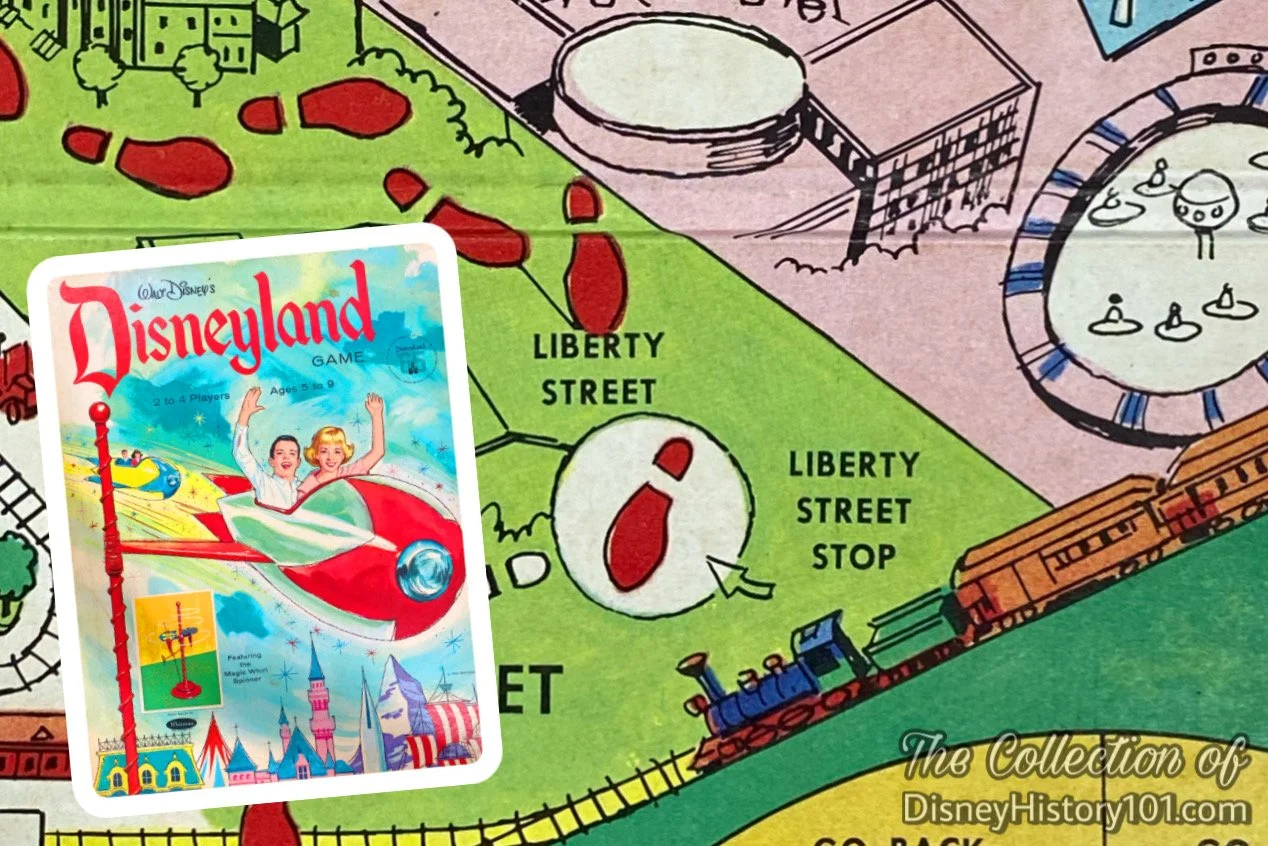
The “Walt Disney’s Disneyland Game” sold during the Tencennial still featured Liberty Street.
“General Electric Begins ‘Where Mr. Edison Left Off’ - ‘Harnessing the Lightning’”
Some time later, General Electric had officially become the sponsor of the Carousel of Progress, which was located in their pavilion “Progressland” (along the Avenue of Commerce at the 1964 New York World’s Fair). While “the plug was pulled” on the Edison Square show, the “lightning was harnessed,” resulting in a new show featuring “four warm and humorous ‘Audio-Animatronics’ ‘families’ from different generations who welcome guests into their homes of the 1890’s, 1920’s, 1940’s and today, to hear how progress through electricity has contributed to better living,” according to “The Disneyland Dictionary” (compiled by the WED Public Relations Department and the Disneyland Publicity Office, c. 1968). Many Legendary “Imagineers” (like Sam McKim) contributed designs for this Carousel of Progress. Miniature character modeler Wathel Rogers’ animation and technical skills also play a key role in creating the Carousel of Progress.
The General Electric show was “great in ‘64”, but even “greater in ‘65” at the New York World’s Fairground! New additions were created especially for the Fair’s second season. “Added to the completely re-developed New York World’s Fair hit is ‘Progress City,’ an entire community in capsulized realism and featuring moving transportation systems and thousands of buildings,” according to “The Disneyland Dictionary” (compiled by the WED Public Relations Department and the Disneyland Publicity Office, c. 1968).
All of these “great” additions made the General Electric show very popular with visitors. As a result, “During the fair’s two six-moth seasons, 91 percent of those who paid fair admission - nearly 47 million people - visited one or more of the quartet of Disney shows created for General Electric, Ford Motor Company, Pepsi Cola and the State of Illinois.” [“Information on America Sings” prepared by Disneyland marketing Division, 1974] More precisely, the Carousel of Progress attracted some 15.8 million people at the Fair. [The Walt Disney Productions Annual Report to Shareholders and Employee, for the fiscal year ending October 2, 1965]
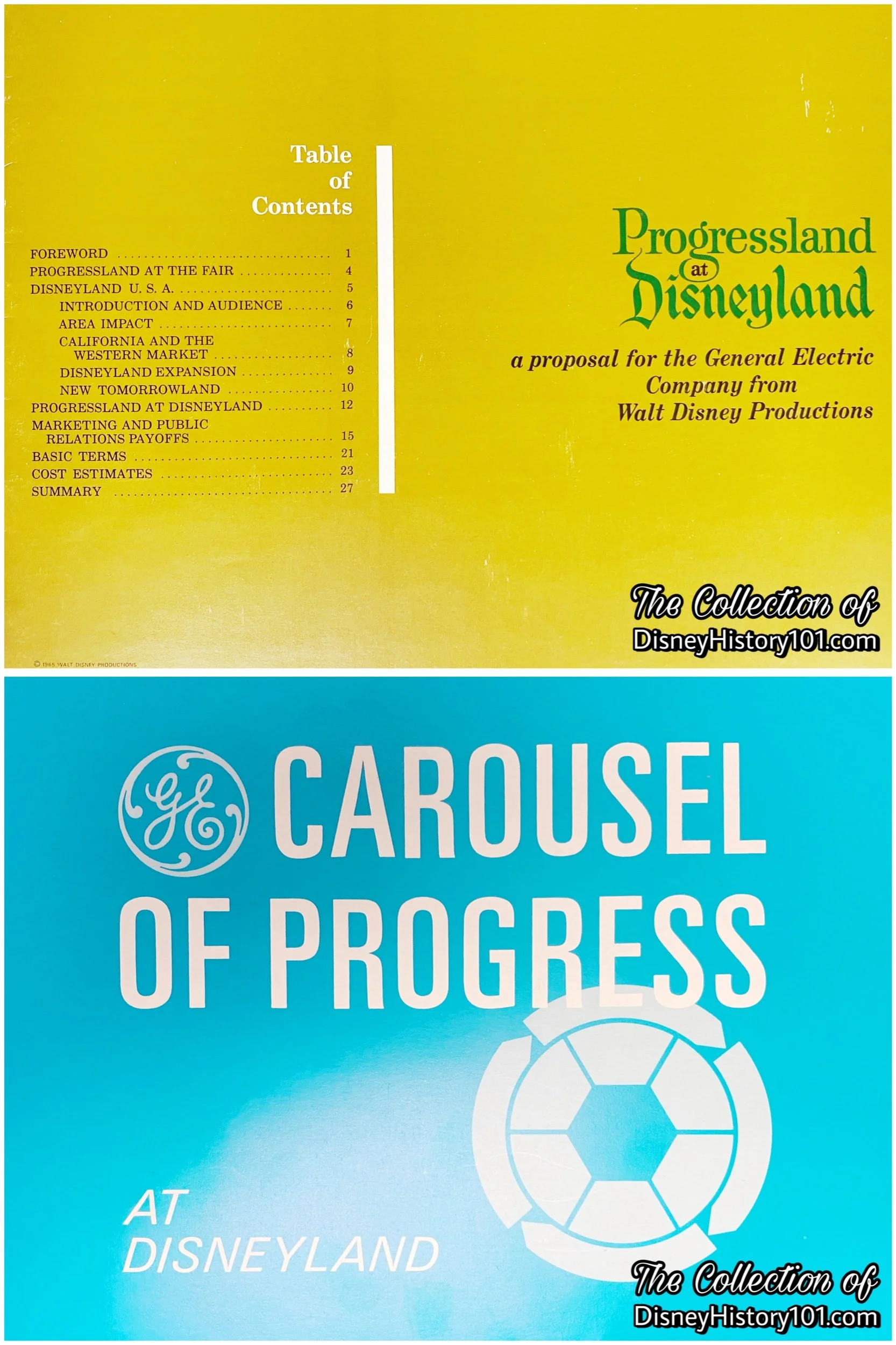
“Progressland at Disneyland a proposal for the General Electric Company from Walt Disney Productions” and “GE Carousel of Progress at Disneyland”
Disney had contractual relationships to a group of companies called “Participants” who agreed to sponsor various attractions and facilities in the Park in return for specific rights and privileges. Disneyland Participant Corporate Sponsors were carefully selected. High quality, long term corporate sponsors provided incremental income that enabled Disneyland to enhance its show and attractions, offset some operating expenses, and capitalize on marketing opportunities around the world.
Before the Fair ended, discussions were held related to bringing the General Electric show to Disneyland.

A 1965 Progressland Report Excerpt.
One document (“General Electric’s ‘College Music Bowl’”) mentioned that “Progressland will be one of the major new additions to Disneyland in the entire decade since its opening.” According to “Progressland at Disneyland” published 1965 for GE Participant representatives, page 12: “At the conclusion of the ‘Carousel Theater’ performance, guests would exit stage 6 via a descending ramp into a G-E product area on the 30,000 square feet ground floor. This area, too, would be kept flexible in nature to allow for changes as often as required, to keep all displays up-to-the-minute. Obviously, there are many ways in which the ground floor product area can be developed. One approach would be to tell the General Electric product story through an all-electric Gold-Medallion home - a home such as the average person has never seen - a “Dream Home,” if you will. If this idea were used, G.E. could, for instance, employ a leading architect to design it - an architect whose name could be merchandised throughout the west and throughout the nation. As guests pass through this dream home, appropriate product displays could show them how G.E. could enrich their mode of living. You could, for example…
*Demonstrate the latest interior and exterior home lighting ideas in the same way that one portion of the Nela Park Lighting Institute is set aside for that purpose.
*Display totally new ideas in electronic home entertainment, as well as other concepts of electronic living.
*The latest major appliance and housewares concepts could be demonstrated, both General Electric and Hotpoint.
*And in this bright new display showcase, hundreds of thousands of visitors could receive information on not only General Electric products, but the names and addresses of G.E. dealers, distributors and service centers throughout the West and across the nation.
It should be emphasized that this product area is flexible. The Gold Medallion home is the only one idea the might be considered and there are of course many others. Audience participation is a keynote of Disneyland’s success - participation that combines entertainment with a strong sales effort. ‘General Electric’ can fit this pattern, and just as at the World’s Fair, it can become an outstanding ‘hit’ at the Magic Kingdom for more than 4,000,000 guests each year.”
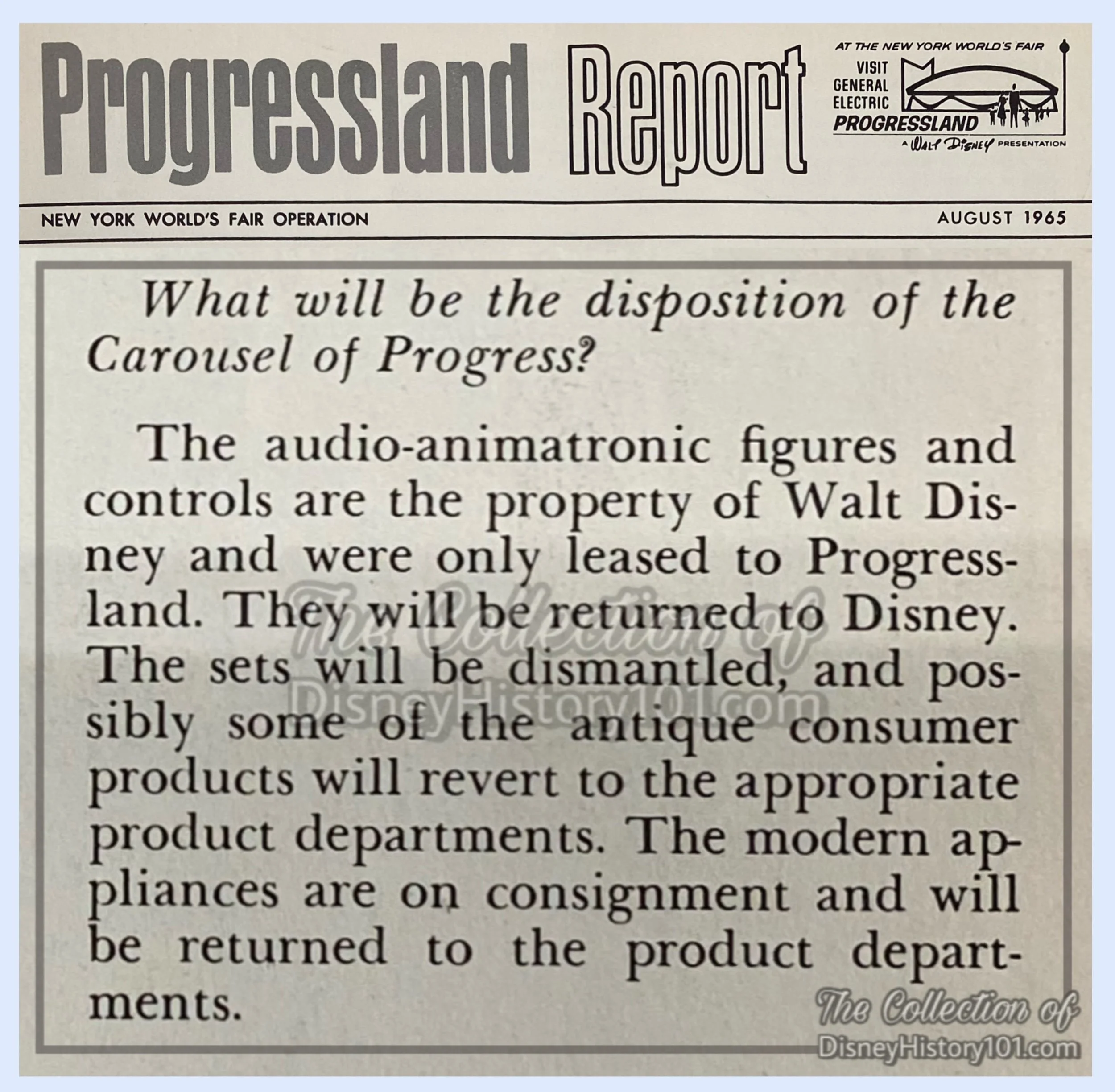
Progressland Report (August, 1965) Excerpt.
By the summer of 1965, Reddy Kilowatt (the contemporaneous symbol of General Electric) was ready to head “all aboard to Disneyland” in advertisements. It seemed that General Electric would be a perfect candidate for a Disneyland Participant (even by the standards of c.1954-1955 prospectus documents), as it was an “old firm” of American industry by 1965. It was almost 90 years old at that time, founded in 1878 by Thomas Edison. What was the current consensus? According to the “Walt Disney Productions Annual Report to Shareholders and Employees Fiscal Year Ended October 2, 1965”: “David W. Burke, Manager of Public Relations at G.E.’s New York headquarters, commented on the Park’s stature: ‘Disneyland attracts its visitors from all over the United States and the world and thus is an excellent locale for an exhibit by a national and international company such as General Electric,’ he said.” After the close of the 1965 season of the New York World’s Fair (on October 17, 1965), Disneyland Participant Affairs and General Electric would negotiate a cooperative agreement, and Walt Disney would return bearing plenty of “gifts” for Disneyland guests! Among these were terrifying inhabitants of the primeval world, the singing “children of the world,” a “carousel of progress.” A few months later (by December of 1965), an article in Backstage Disneyland magazine heralded the coming of the General Electric Show to Disneyland, during June of 1967.
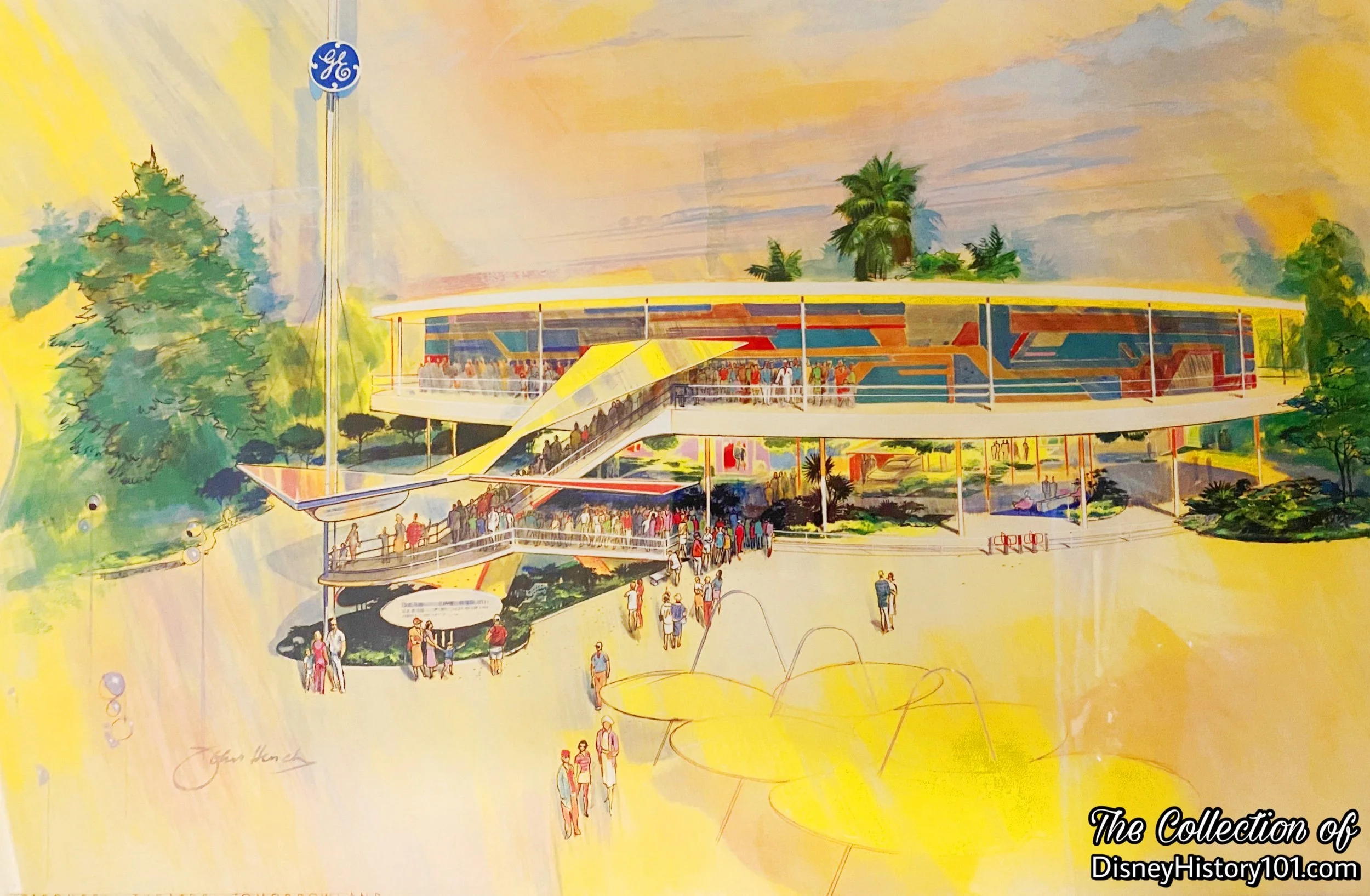
A concept for the General Electric Carousel Theatre at Disneyland Park.
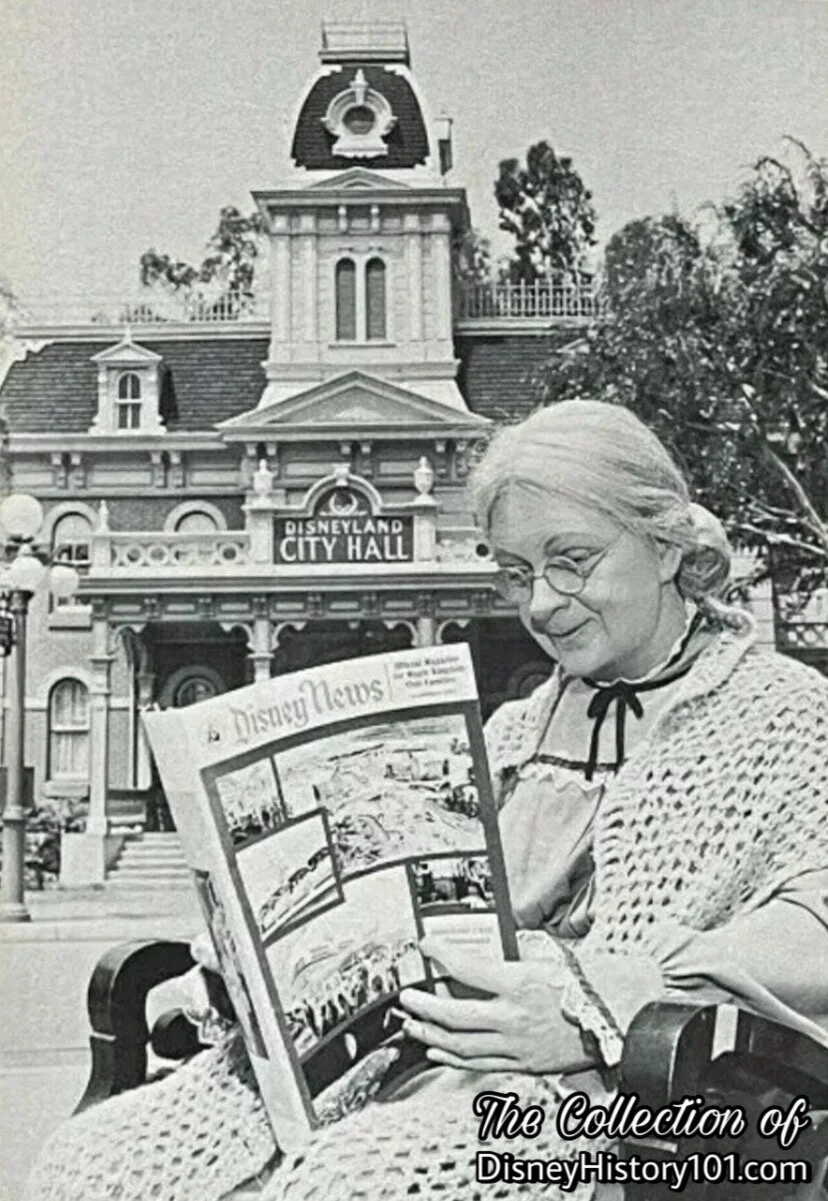
Look at Who Was Spotted in Town Square c. 1967, by a Photographer of "The Disney News"
The installation of the General Electric Carousel of Progress was headed by recent Walt Disney Imagineering hire Orlando Ferrante, who had played football with both Dick Nunis and Ron Miller at USC, and for his first assignment and previously overseen the installation of the first Audio-Animatronics attraction at Disneyland - Walt Disney’s Enchanted Tiki Room.
It took some time to install, but by June 24, 1967, the third floor (or, Carousel Theater) was “moved intact from the New York World’s Fair and re-installed in an all new pavilion at the Magic Kingdom.” Disneyland guests would finally be welcome to experience the cast of 32 Audio-Animatronics figures in the General Electric Carousel of Progress!
The attraction also employed numerous Audio-Animatronics® - the Disney-designed system that combines sound, mechanics and electronics for three-dimensional animation. The Disney-patented technique electronically synchronized voices, music and sound effects to animated figures and objects. Blaine Gibson had been with the Disney organization since 1939, and had since joined WED (in 1954) as a Sculpture Designer, only to sculpt many human figures and other full-size figures of all kinds. He too would be instrumental in developing character sculpts.
The Staff Shop did more than maintain existing fantasy. They had made all the molds and skins for the General Electric Theatre.
The 32 Audio-Animatronics figures of the Carousel of Progress various stages were fabricated and tested by the electrical mechanical technicians of MAPO, Inc. (a subsidiary division of WED Enterprises, Inc.), then located at 1432 Grand Avenue in Glendale, California. These featured a newer and improved system of Audio-Animatronics. Marc Davis (to Disney News magazine, published Fall of 1967) was moved to comment on these advancements this way : “The technology keeps on moving forward. We started out hoping to make the GE families live up to the pirates. Now - with the new equipment and experience we have proved out in the pirate show - the GE figures already can do some things even the pirates can’t… because we keep on building and plussing as we go along.”
Speaking of plussing, the General Electric Show’s finale was a 115-foot-long Progress City (billed as “the City of the Future,” and “America’s newest, most exciting all-electric community”).
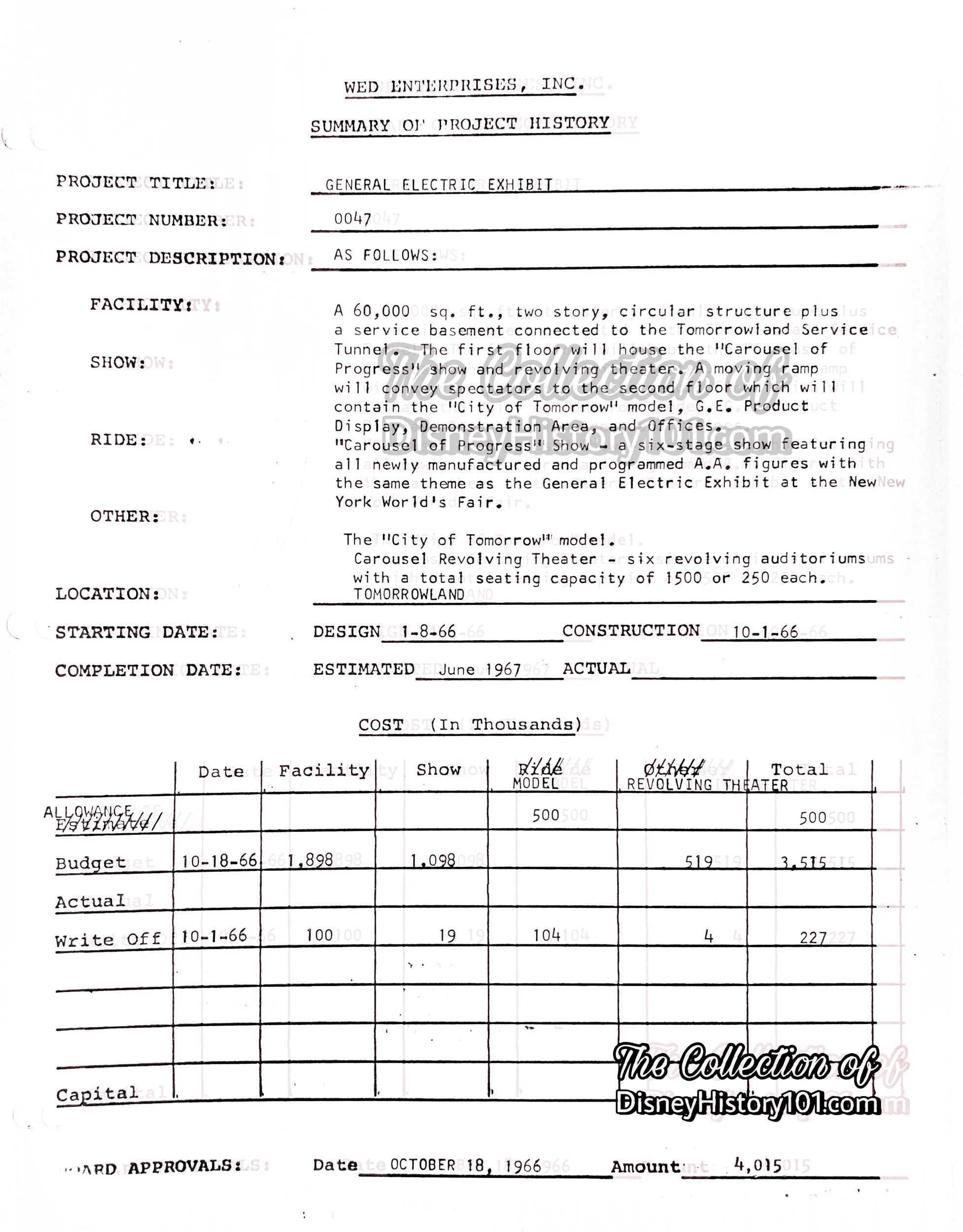
WED Enterprises, Inc. Summary of Project History, approved October of 1966 divulges the costs of the General Electric Exhibit.
By 1965, “Progressland at Disneyland: a proposal for the General Electric Company from Walt Disney Productions” was published. The more-than-27-page publication contained a foreword, followed by sections about Progressland at the Fair, Disneyland U.S.A., Introduction and Audience, Area Impact, California and the Western Market, Disneyland Expansion, New Tomorrowland, Progressland at Disneyland, Marketing and Public Relations Payoffs, Basic Terms, Cost Estimates, and a Summary.
On February 3, 1965 WED Enterprises was no longer personally owned by Walt Disney, but was now incorporated as a subsidiary of Walt Disney Productions. MAPO was also soon incorporated on July 23, 1965. Before long WED Enterprises, Inc. and MAPO would work together to produce the Disneyland Show. WED Enterprises, Inc. would master-plan, design, and engineer the concepts. MAPO, Inc. would take those plans and fabricate, assemble, and test the show’s prototype systems and components (including those of the Audio-Animatronics figures). A three dimensional model of the new Carousel Theater (which can be seen in “Summer ‘67” brochures and inserts) was created by Concepts in Miniature a California Corp. (then located in Irvine Industrial Park).
Herbert Ryman created 1” to 1’ scenic background suggestions which would be visible through windows (as of Act 1). Some of these murals are considered Trompe L'Oeil, a painting or design intended to create the illusion of a three-dimensional obiect.
A “moving system” was designed by Bob Gurr.
According to “Progressland at Disneyland: a proposal for the General Electric Company from Walt Disney Productions” ©1965: “In New Tomorrowland, … a unique new People Mover the WED-way, will carry guests on a scenic tour throughout New Tomorrowland -even weaving in and out of new exhibits sponsored by leading American industry. (Douglas Aircraft, the Bell System and Monsanto, for example, are all discussing expansion of their popular attractions.) It is here, in this exciting new part of Disneyland, that the proposed General Electric pavilion would be located ... The significance of Disneyland's plan for New Tomorrowland is seen in the projected dollar investment: New Tomorrowland alone represents an investment roughly twice the original cost for all of Disneyland.”
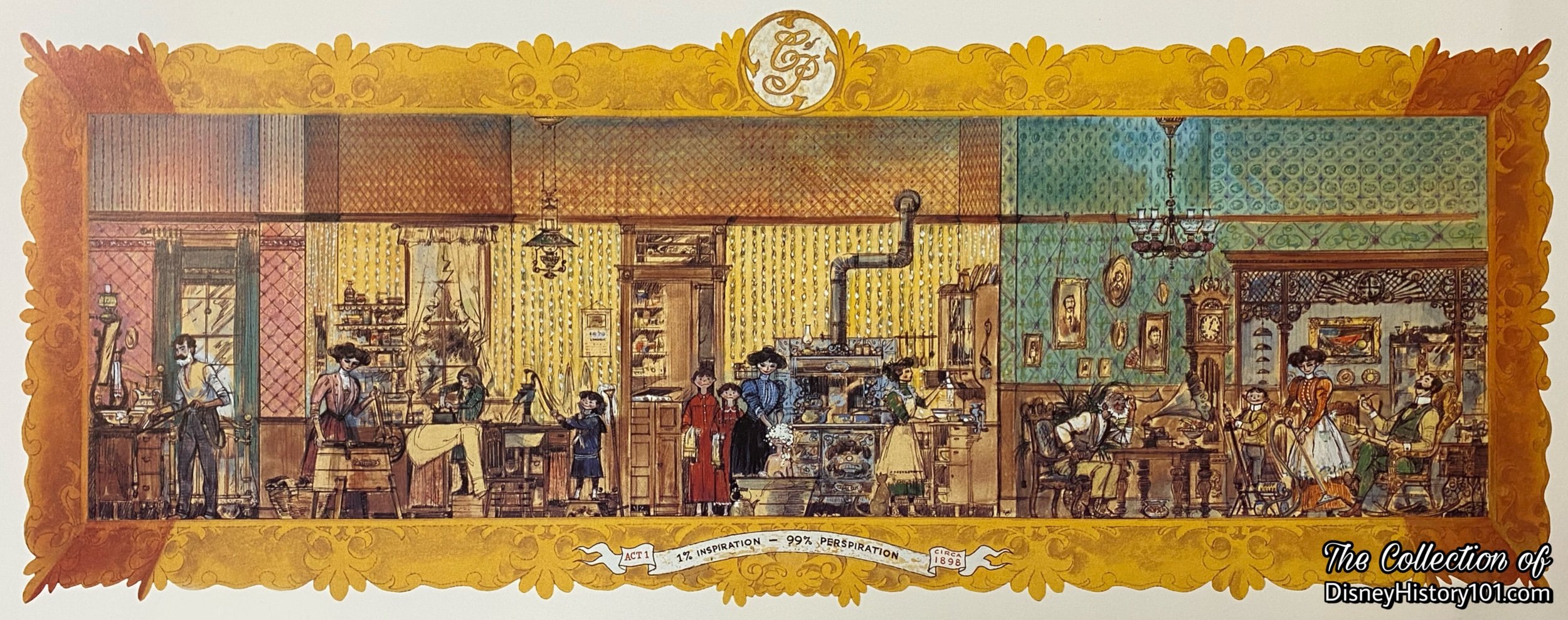
Carousel of Progress Act I tableaux by Sam McKim print released through The Disney Gallery in 1998.
It’s been said that the “modeling process will take many forms and many scales, often ranging from tiny paper cutouts, all the way up to full scale mock-ups. Whichever way the process goes, however, the WED designers think big by first building very small.” [THE DISNEY THEME SHOW: an introduction to the art of Disney outdoor entertainment] Here, four generations welcome audiences into their home.
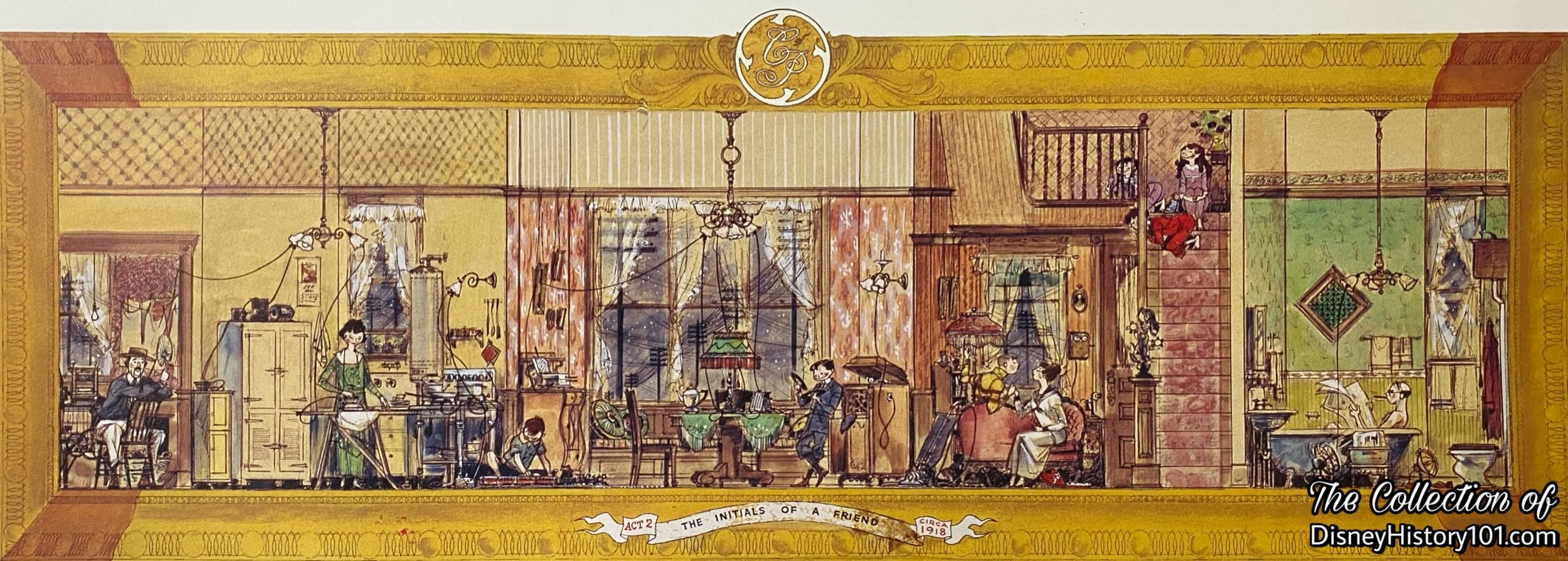
Carousel of Progress Act II by Sam McKim tableaux print released through The Disney Gallery in 1998.
According to “THE DISNEY THEME SHOW: an introduction to the art of Disney outdoor entertainment; Volume 2”: “What we create here is a storybook realism… an essence of realism and authenticity... more utopian in nature, more romanticized, more like what guests imagined it would be. All the negative, unwanted elements are carefully programmed out, while the positive elements are not only retained but in some cases even embellished for better entertainment.” This guiding principle has affected Disneyland Show since the beginning and is illustrated by the show scenes of the Carousel of Progress.
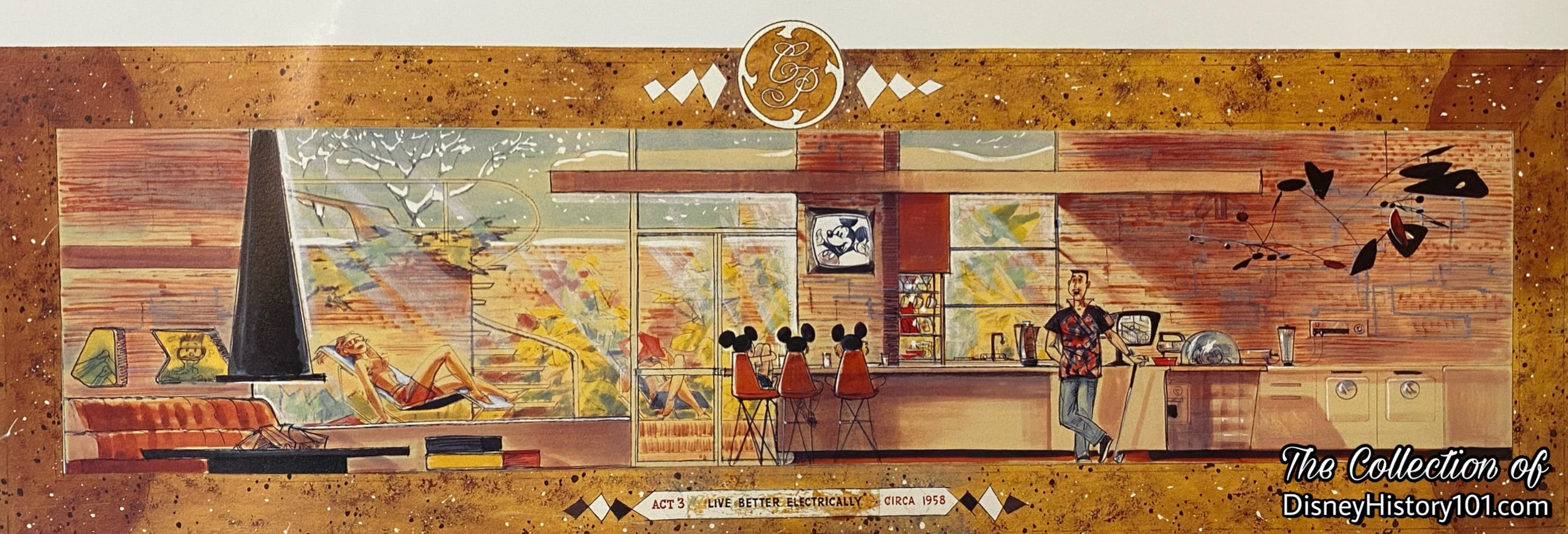
Carousel of Progress tableaux print released through The Disney Gallery in 1998.
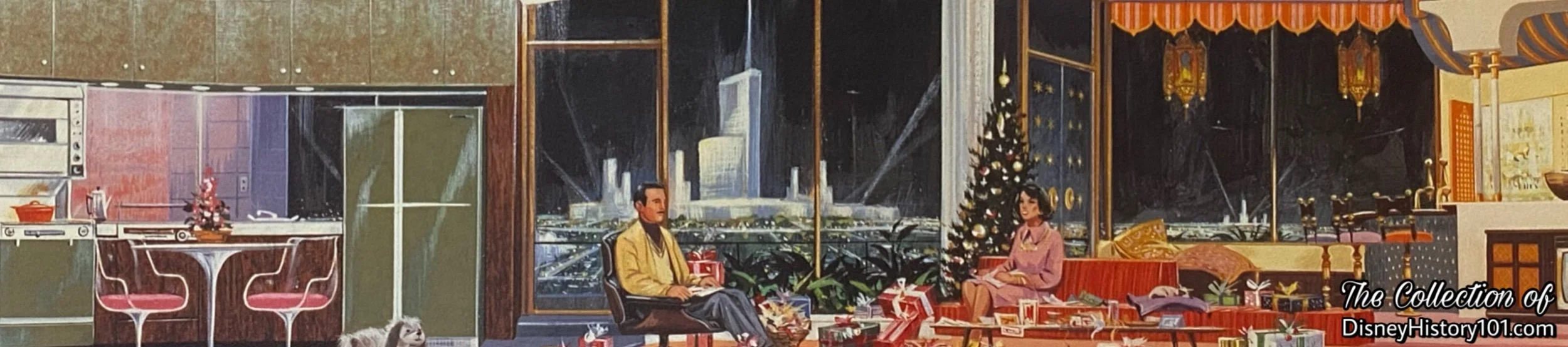
Carousel of Progress tableaux print released through The Disney Gallery in 1998.
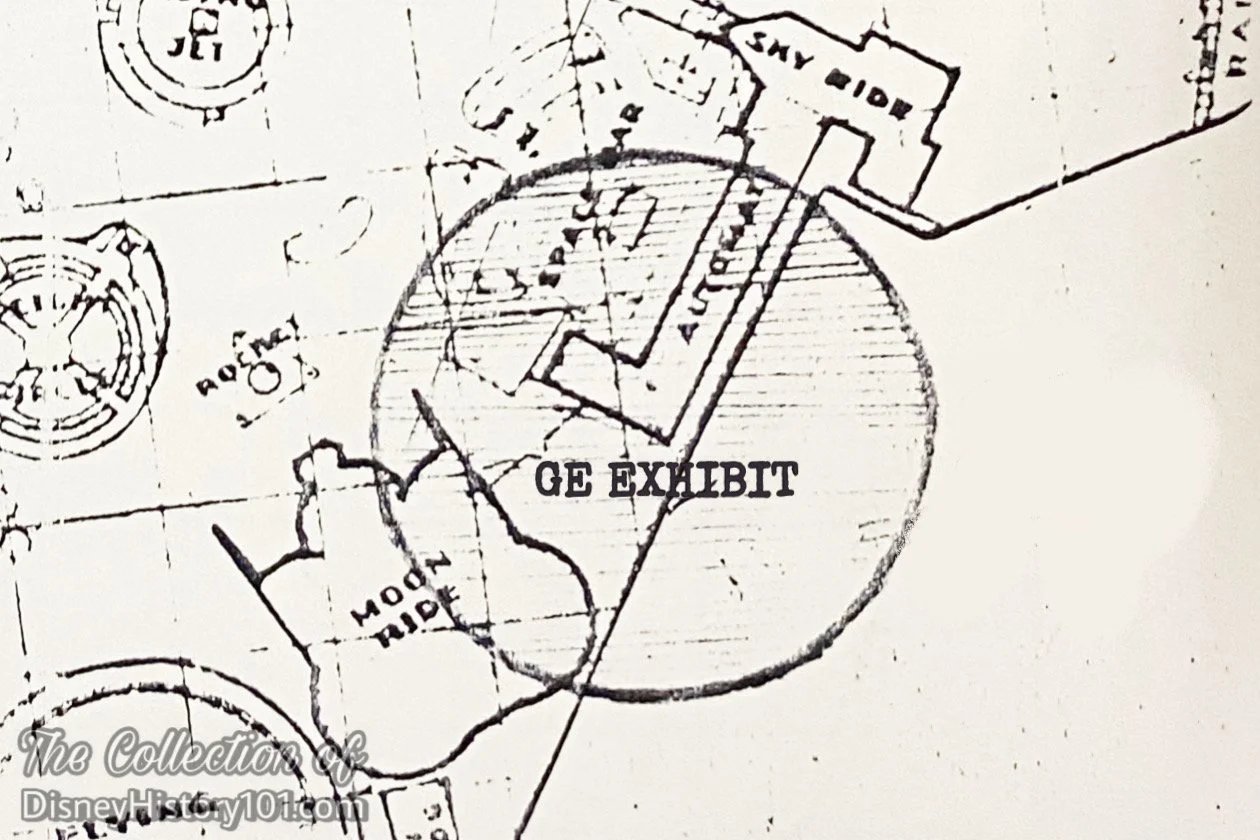
Soon the site plans and small scale models were translated into the full-scale, 200-foot-wide (83,000 square-foot) Show Building that was constructed at Disneyland to house the new attraction.
Bill Justice recalled: “The Carousel of Progress had been moved to Walt Disney World and its round building was vacant. The most unique feature of the Carousel was its imaginative audience seating arrangement. It literally resembled a carrousel with the show in the center and the seats circling around outside. The show area was divided into six equal stages - a load/introduction section, four show sections, and a closing/unload section. Guests were seated in the outer part of the circle. When the shows in each section were complete, the entire outer portion would rotate to the right one section. It was a very efficient method of presentation.” [“Justice for Disney”, p. 101]
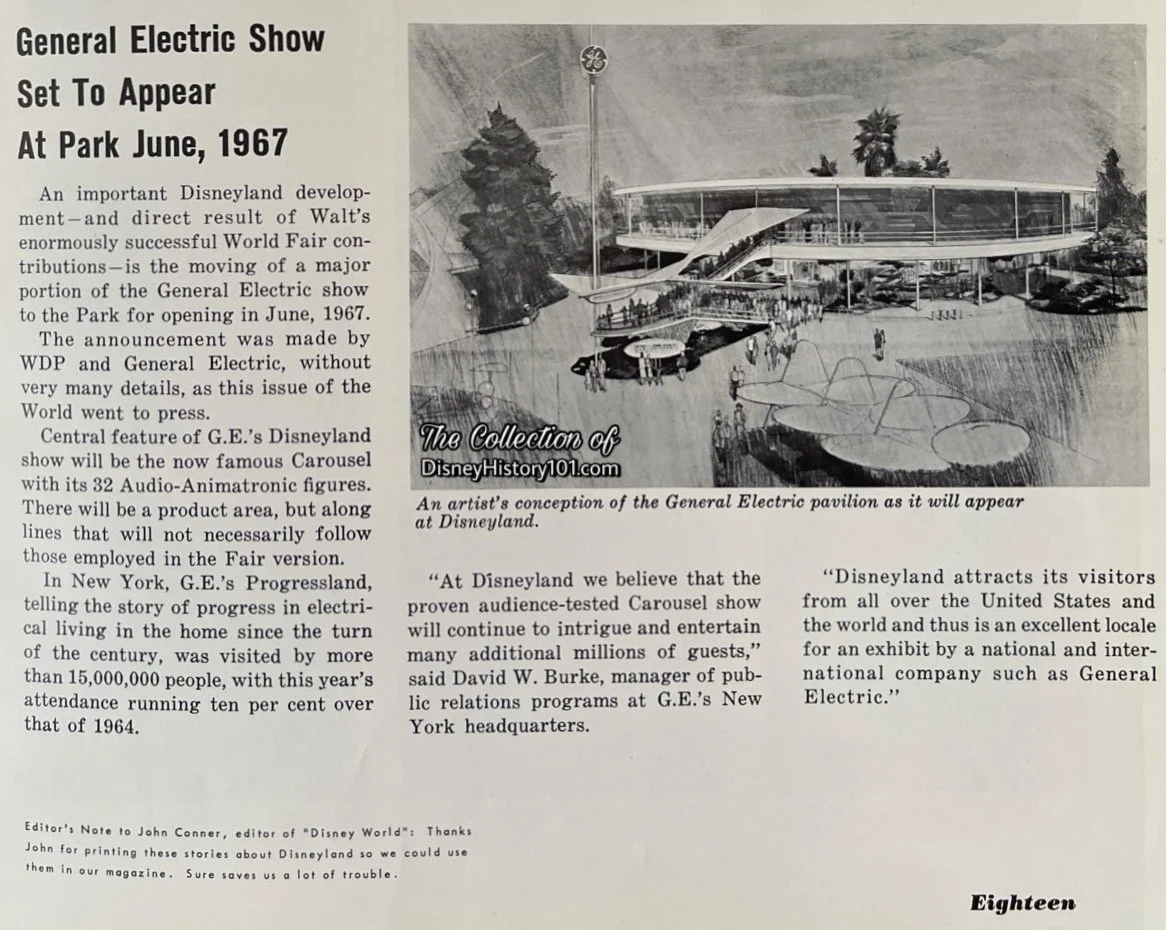
Excerpt from Backstage Disneyland, Vol.4, No.4 ; December of 1965
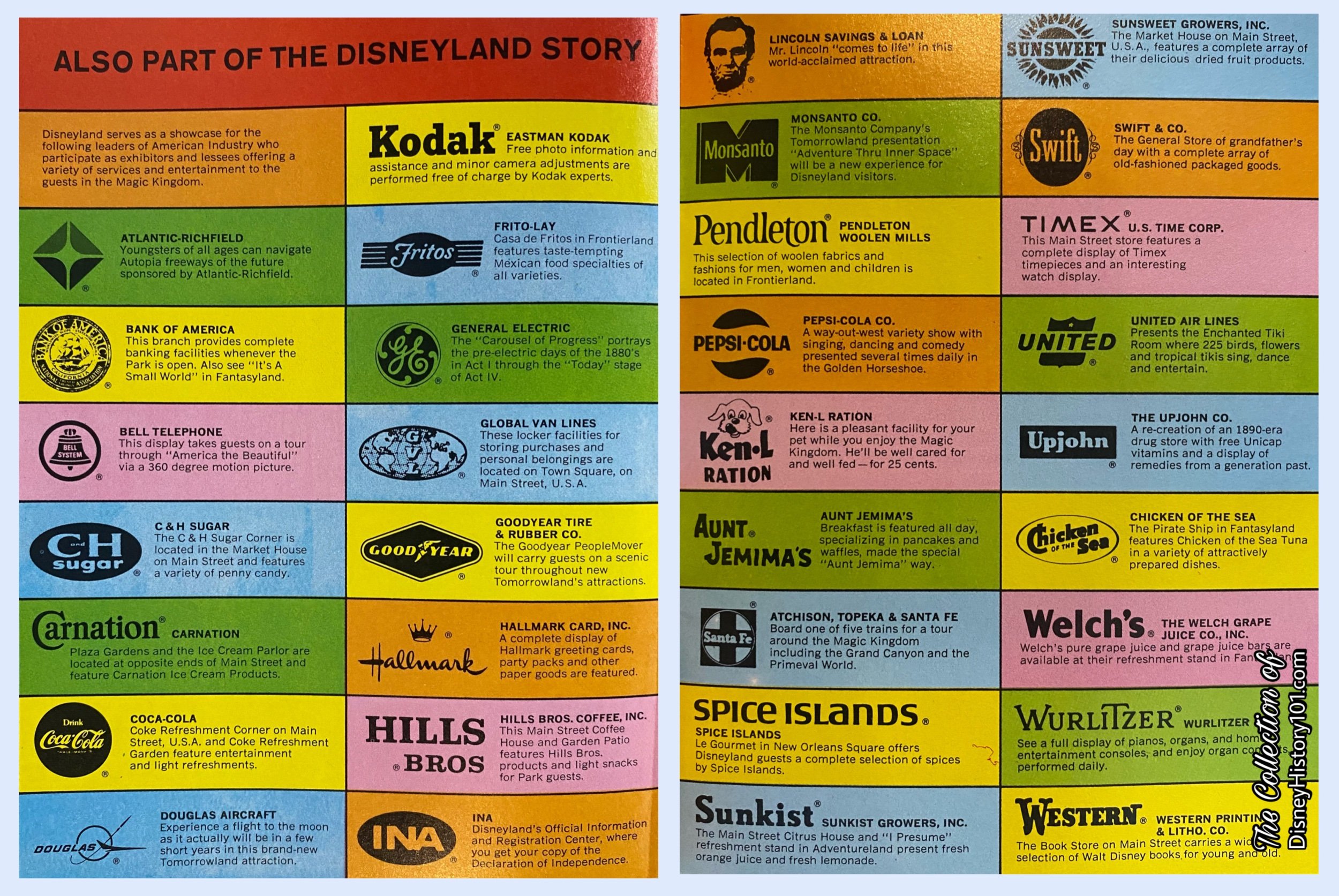
General Electric was a Disneyland Participant and thus “part of the Disneyland story according to this “Disneyland ‘67” Excerpt.
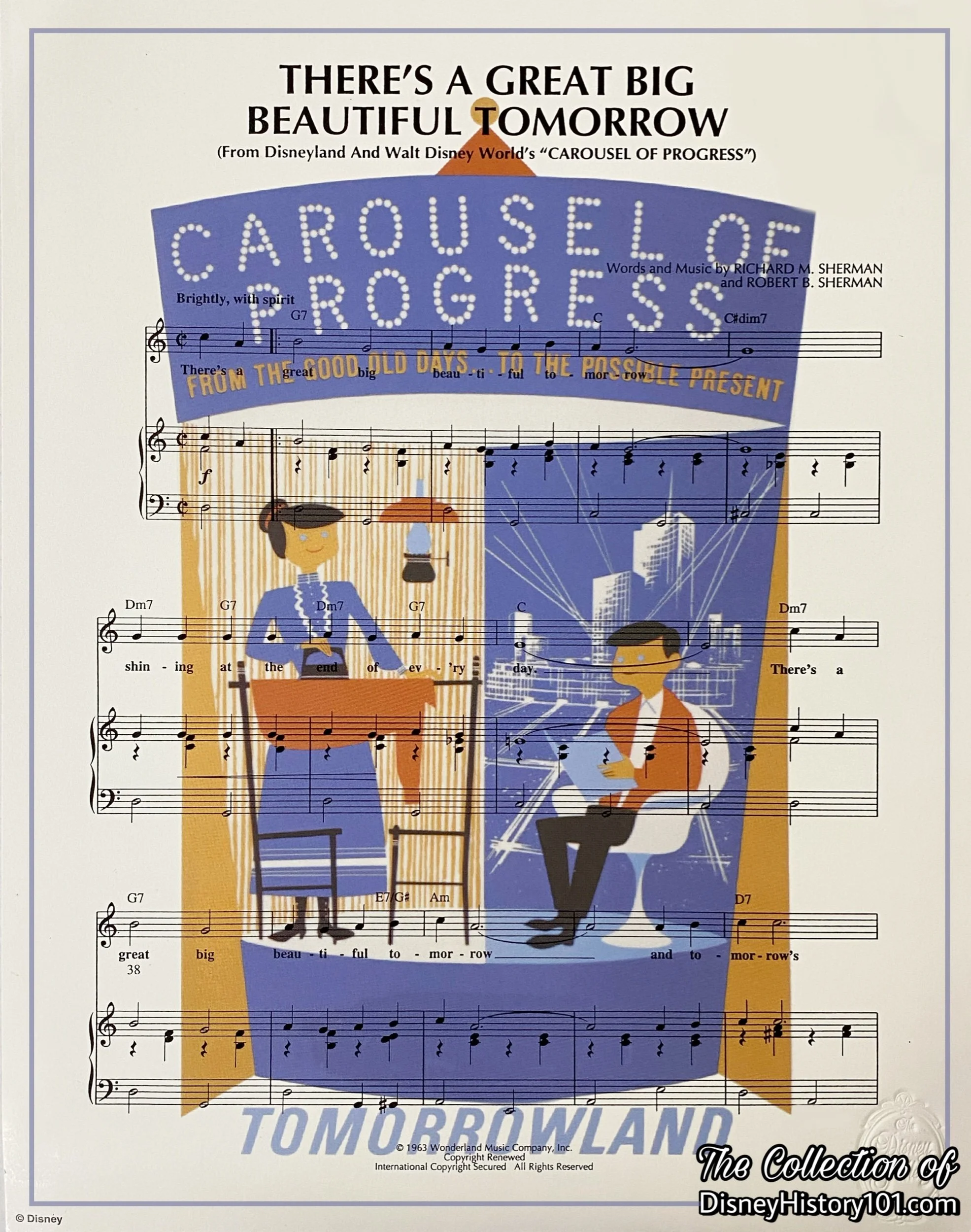
“A Brief ‘Counter-Melody’ of Notes about the Show’s Theme”
According to “THE DISNEY THEME SHOW - an introduction to the art of Disney outdoor entertainment”: “Important are the sounds which permeate the scene, for without them, the theme show is a silent movie . . . but with them it is a symphony of music, effects, and natural sounds that the finest stereo system in the world can't duplicate.”
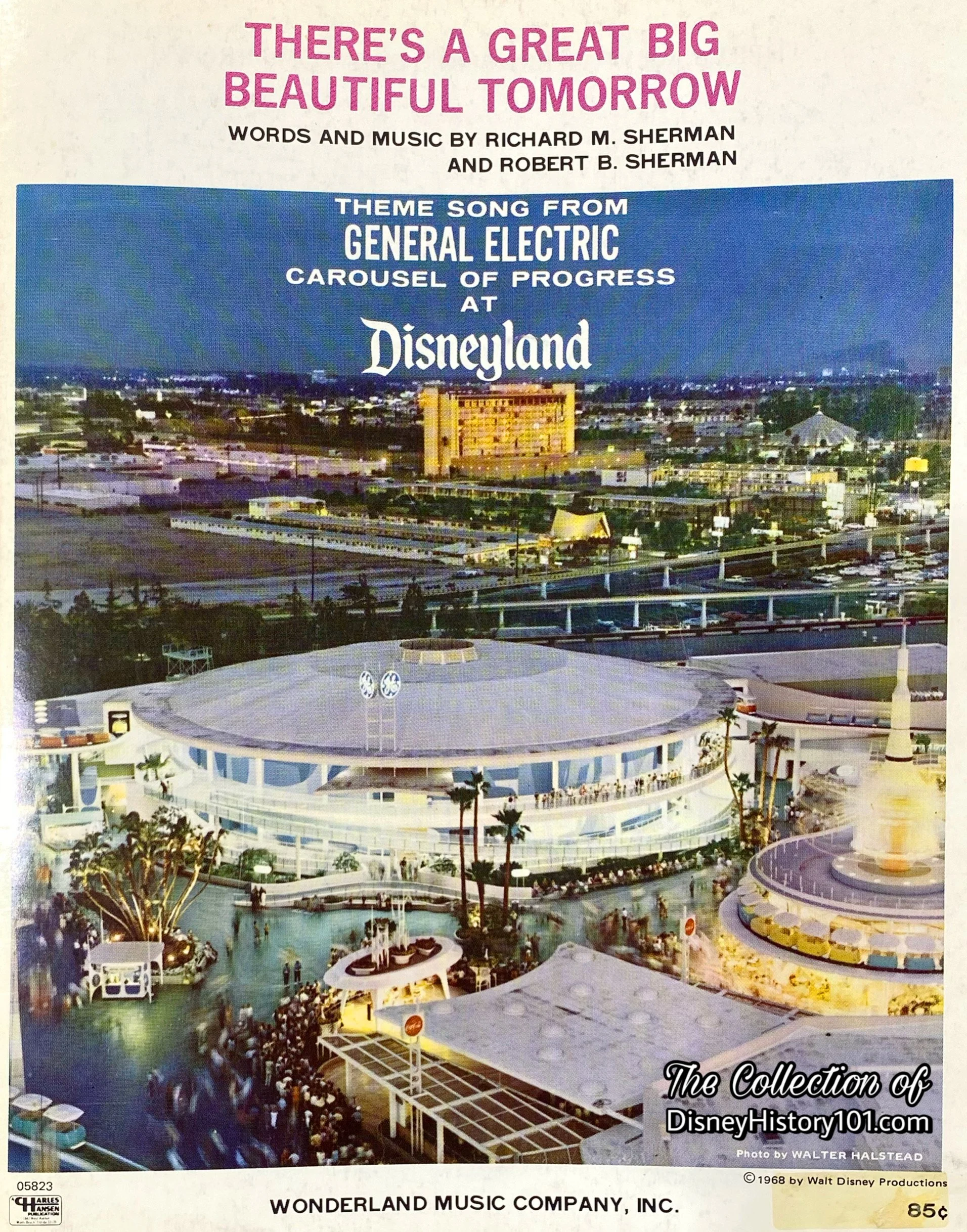
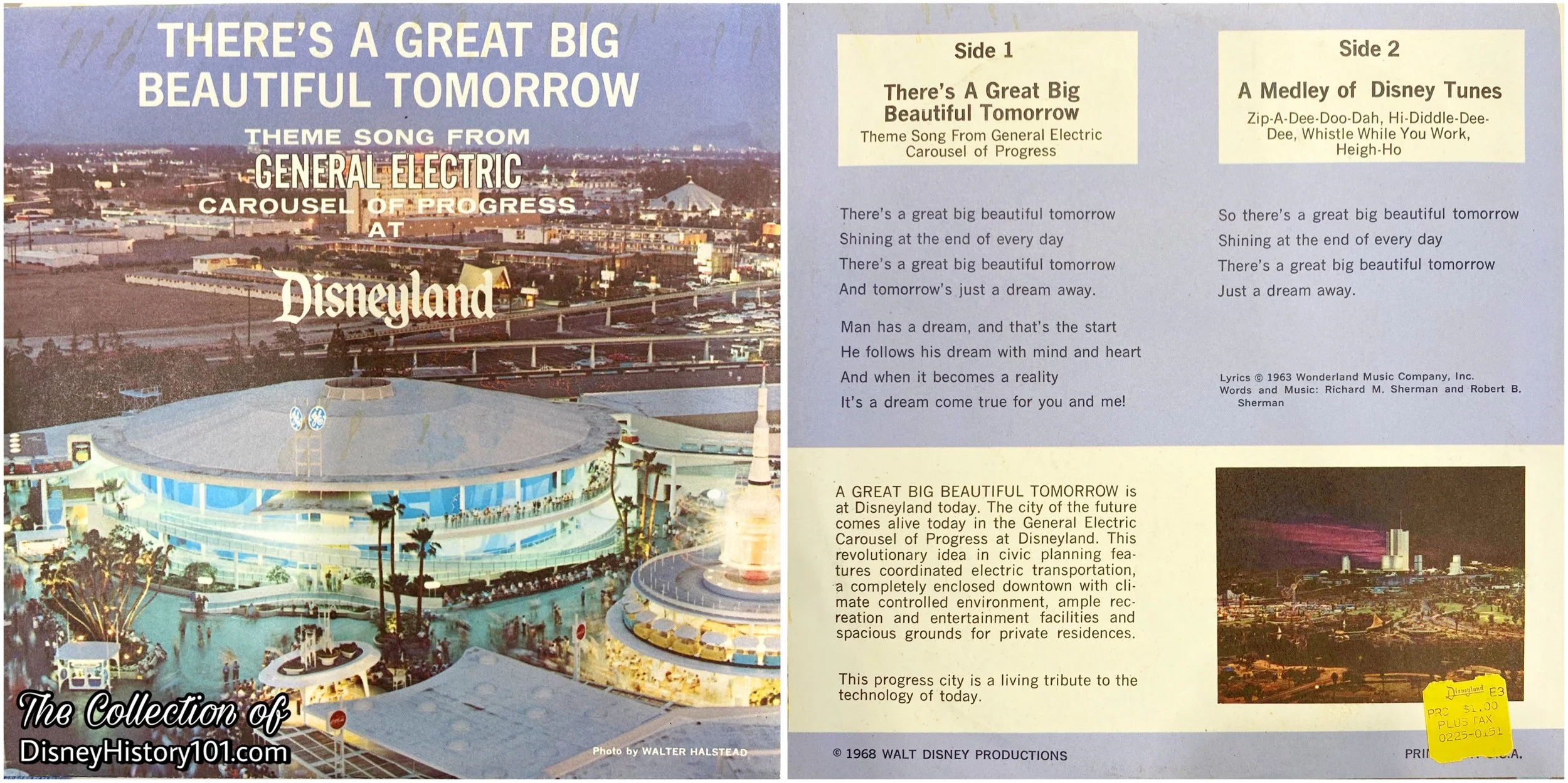
Of special mention is the show’s powerfully uplifting original theme “There’s a Great Big Beautiful Tomorrow,” which was written by the duo of Richard Sherman and Robert Sherman (who composed other original songs for Pirates of the Caribbean, It’s a Small World, and The Haunted Mansion). Just think for a moment about the significance of the tune which defined the Carousel of Progress show. The thematic anthem continued at Disneyland from July 2, 1967 to September 9, 1973. Since then, the song has been heard in east coast attractions like Horizons, Walt Disney’s Carousel of Progress, and Innoventions, in addition to animated feature films and television shows. Though the show has long since departed from Disneyland, the Sherman Brothers melody and lyrics continues to be hummed and sung by individuals who have never taken a spin on the Carousel of Progress. The Disney tradition of original songs created for Disney Parks attractions has had a rather short (but meaningful) legacy in songs like “Golden Dreams” at Epcot’s American Adventure and “Listen to the Land” at The Land pavilion. This is a cause that was championed by former Walt Disney Imagineering President, Vice Chairman and Principle Creative Executive, the late Marty Sklar. And so, as long as Disney musicians continue to “dream with mind and heart,” I am confident that the reality of more original Disney Parks story songs are “just a dream away.”
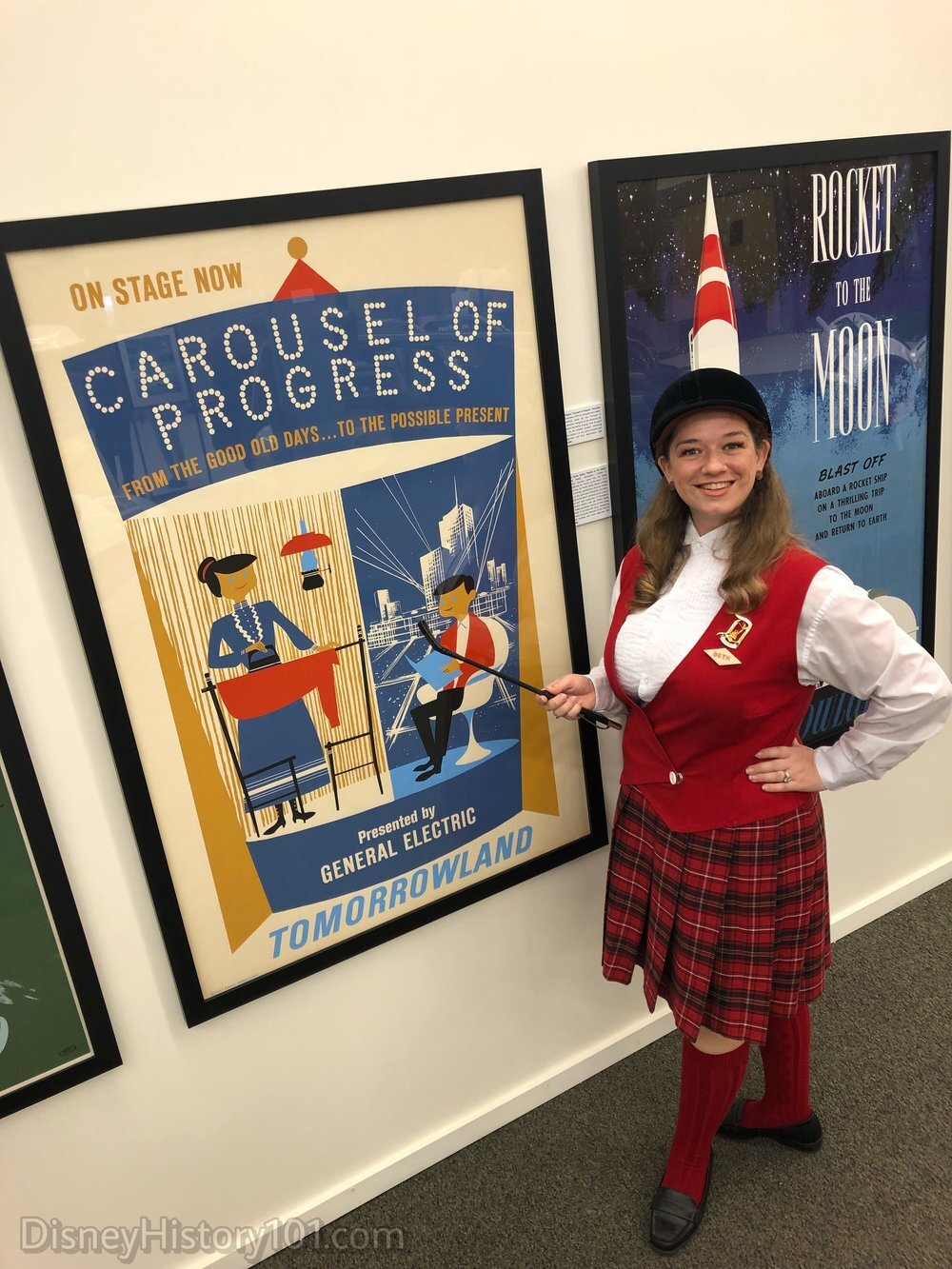
General Electric Carousel of Progress Disneyland Park® Attraction Poster, Former Richard Kraft Collection
Remember that concepts were once created for “Edison Square” (entered from Town Square, Main Street U.S.A.), but it was never fully realized. We always believed that this attraction would have felt right “at home” situated in Main Street U.S.A.’s east-side Backstage area, with the entrance located on East Plaza, Main Street U.S.A. and an exit into Tomorrowland (offering a smooth transition between the past and the future). However, once realized, the attraction would be housed in a brand new structure located on the exact site of the old Space Bar and not far from the Rocket to the Moon! While “Edison Square” never really fully materialized, the humorous theater show telling the history of electricity, had finally been imaginatively engineered for Disneyland!
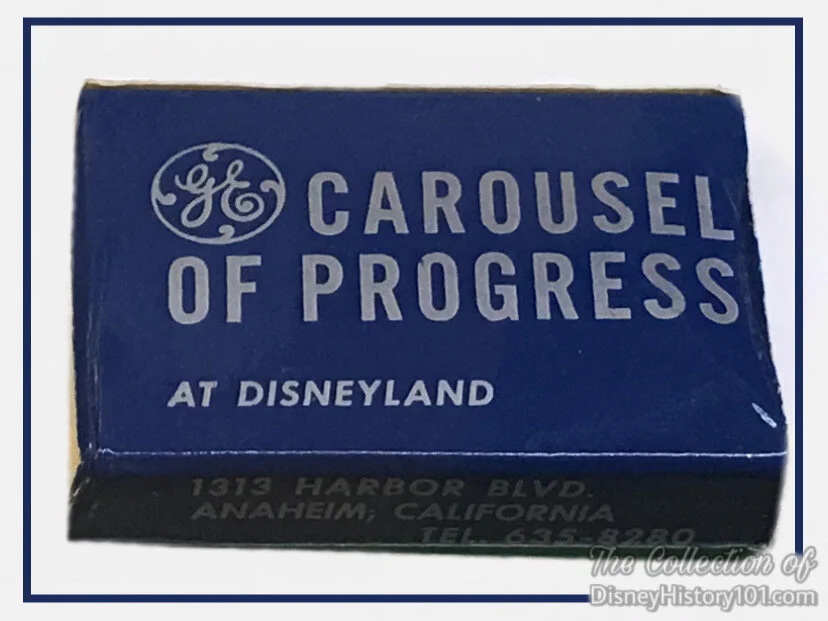
Carousel of Progress Matchbook, c.1967.
“Before we begin, we would like to remind our guests no eating and no smoking while in the theater.”
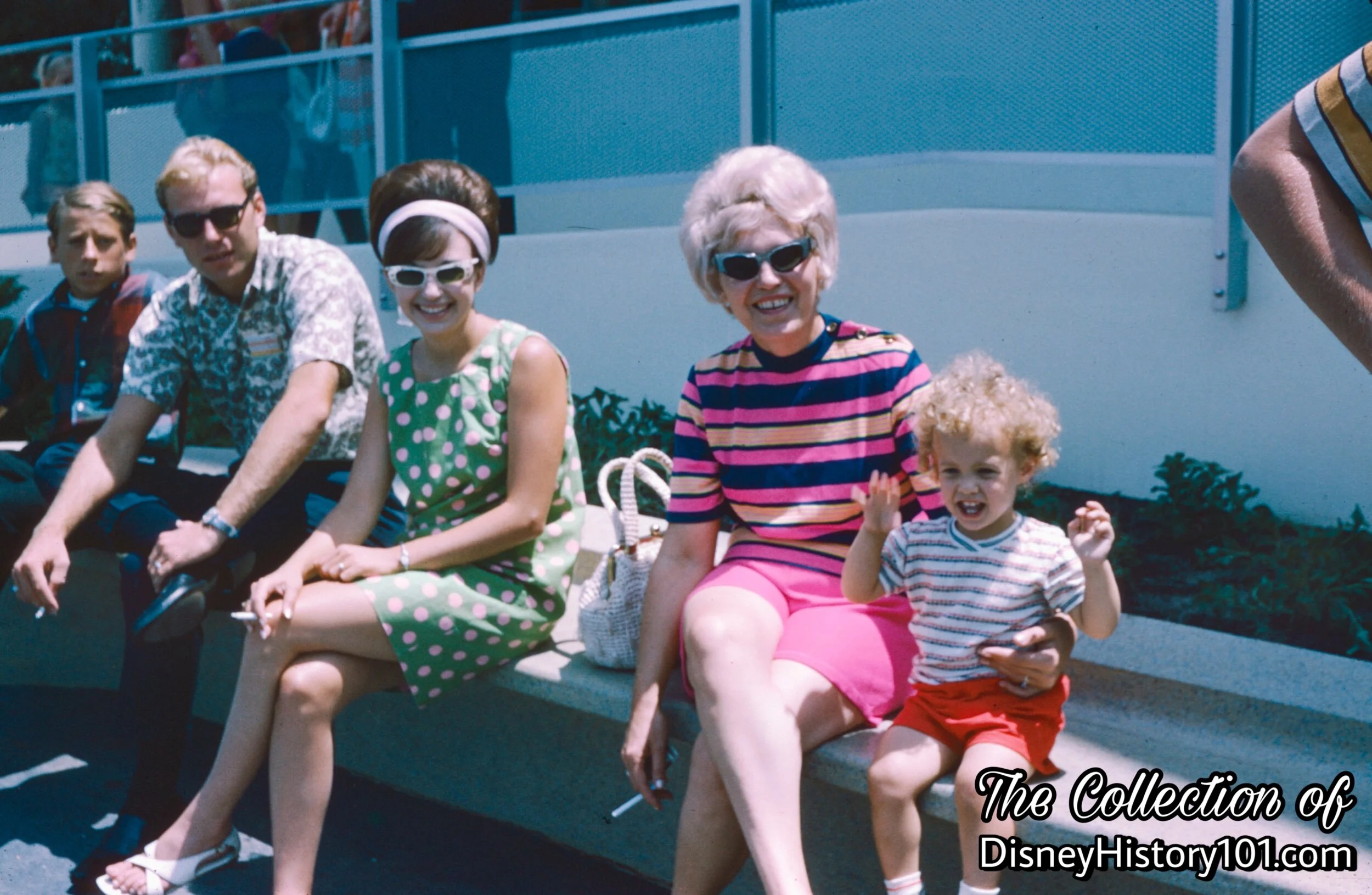
Carousel of Progress Benches.
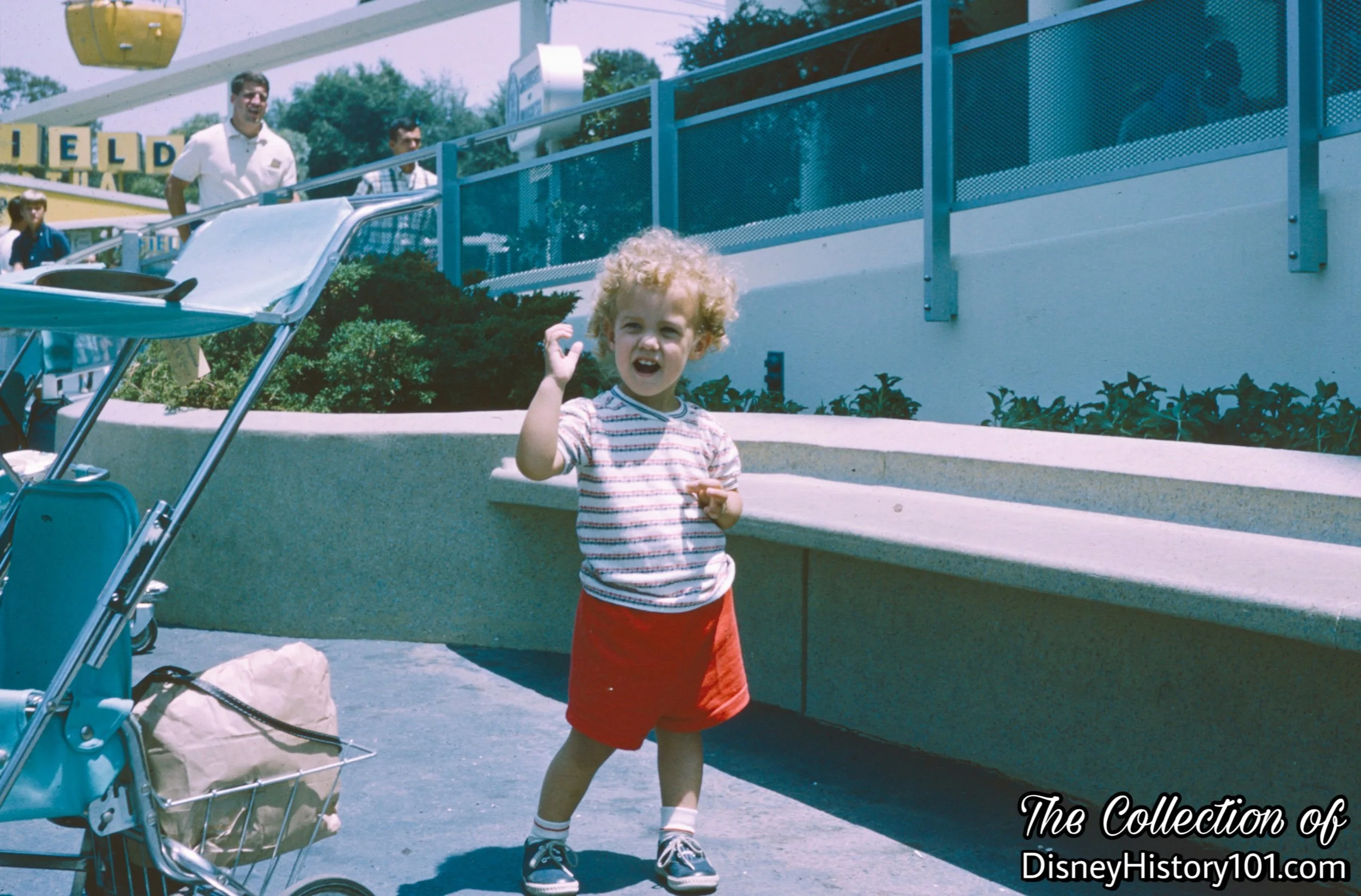
A young Guest near the Carousel of Progress Benches.
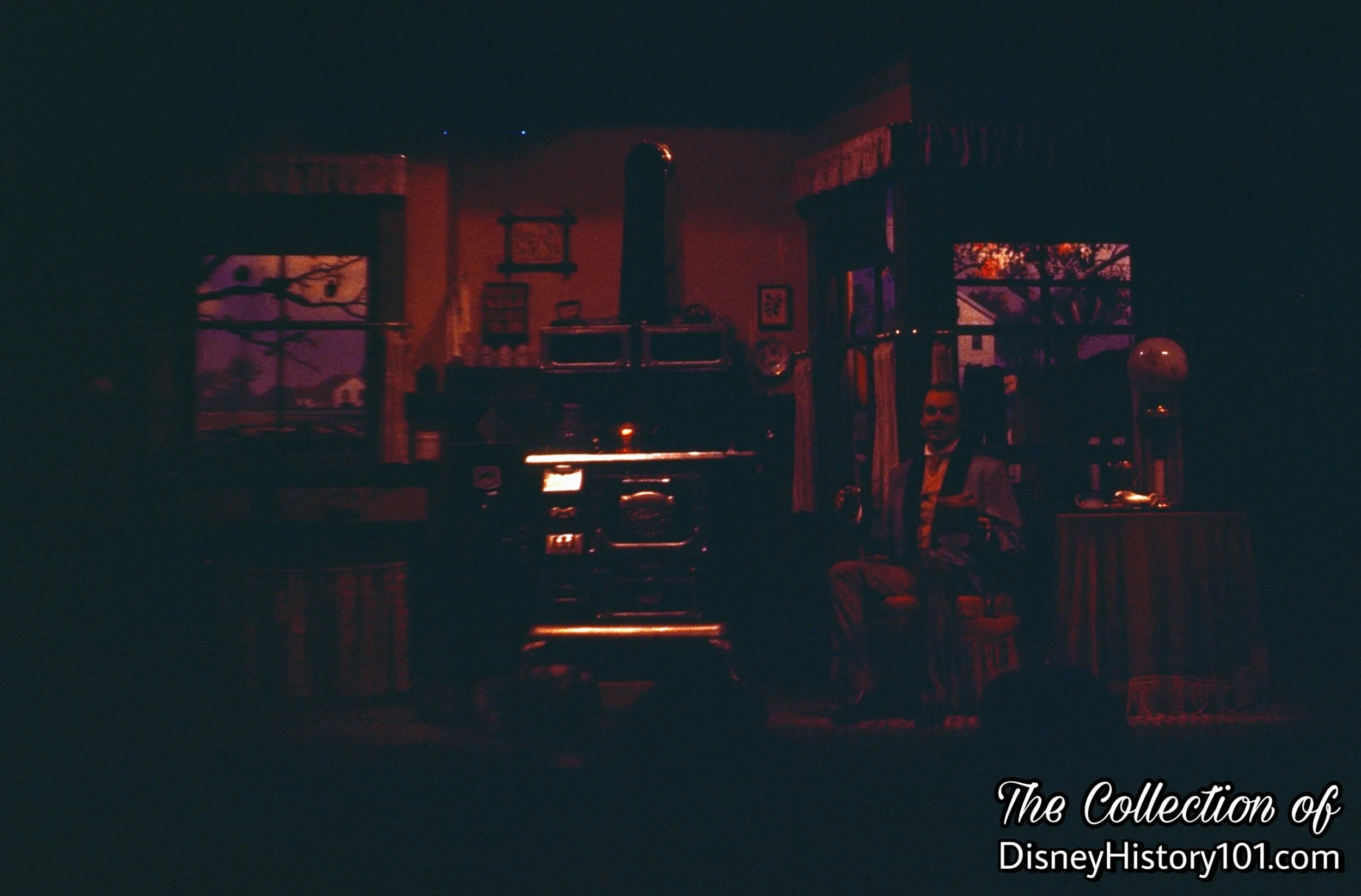
"Sometime Before the Turn-Of-The-Century" (1890's), Carousel of Progress
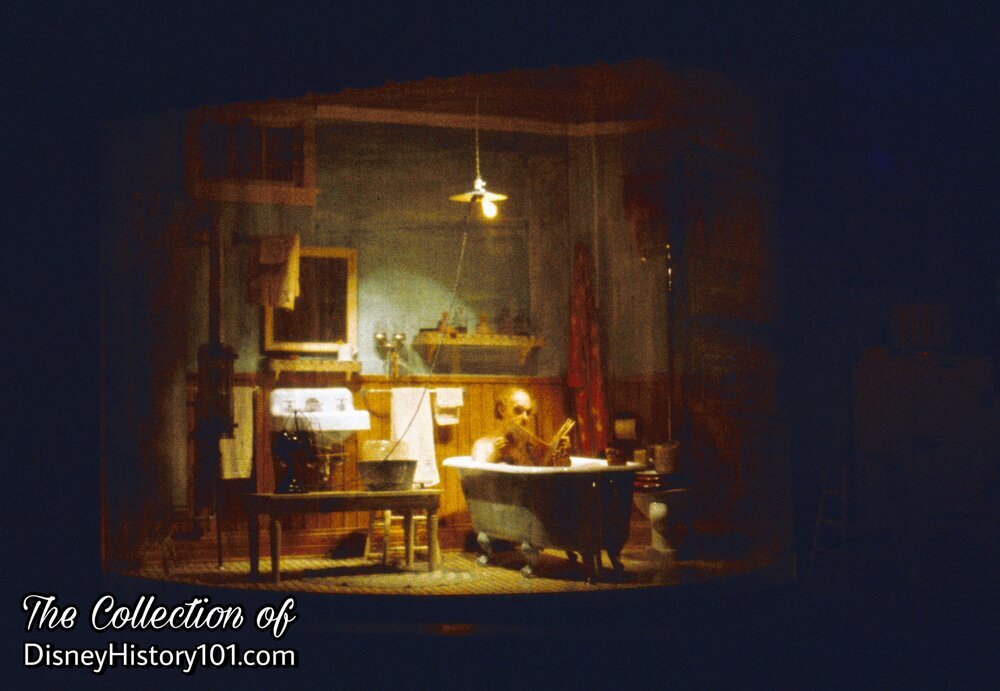
1920's Bathroom, Carousel of Progress
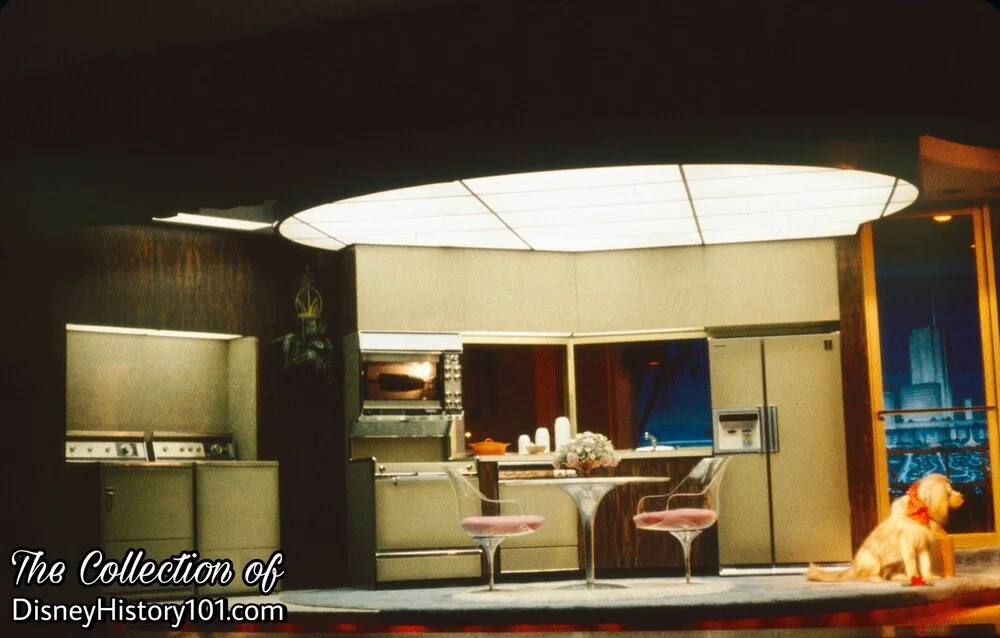
Kitchen of "The Possible Present", Carousel of Progress
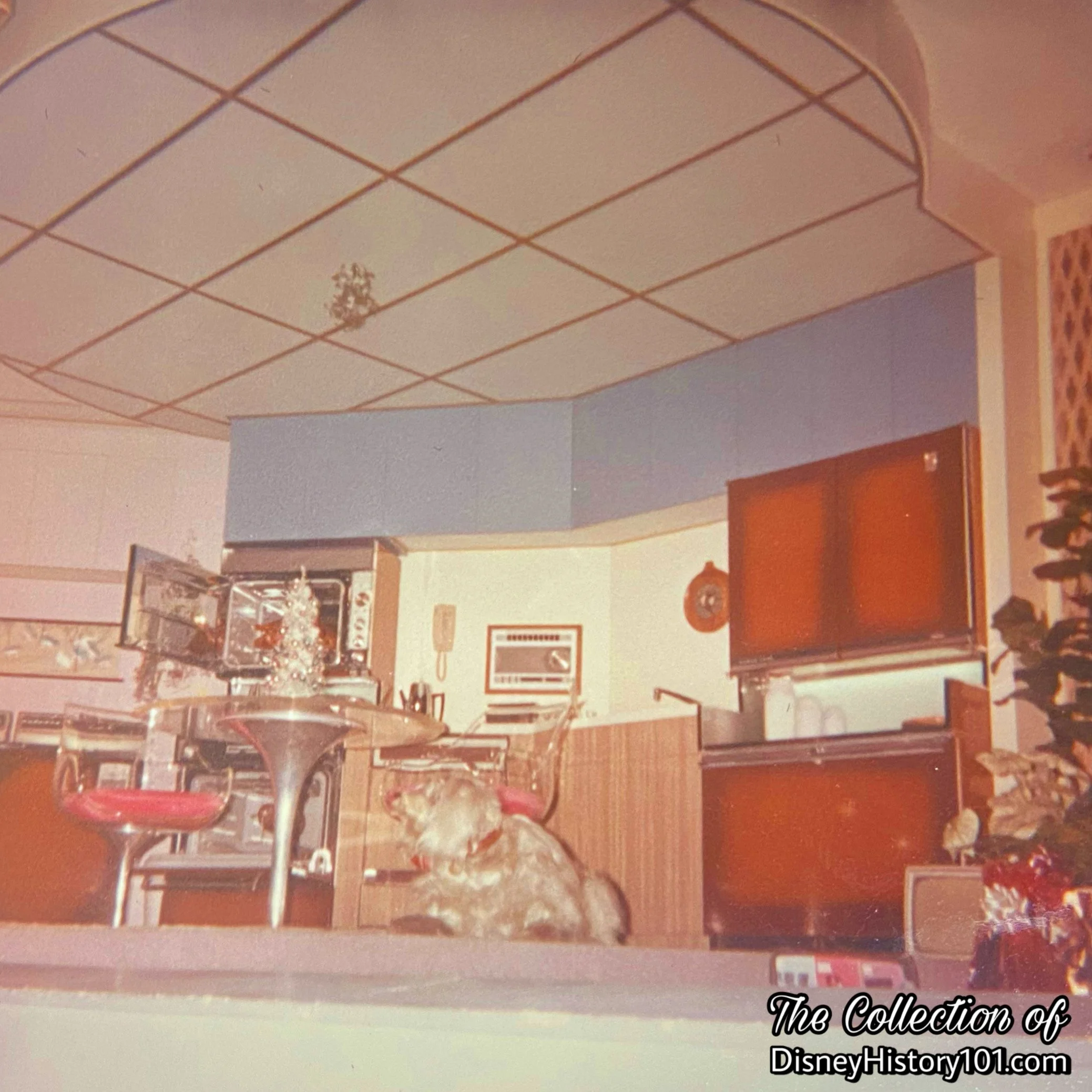
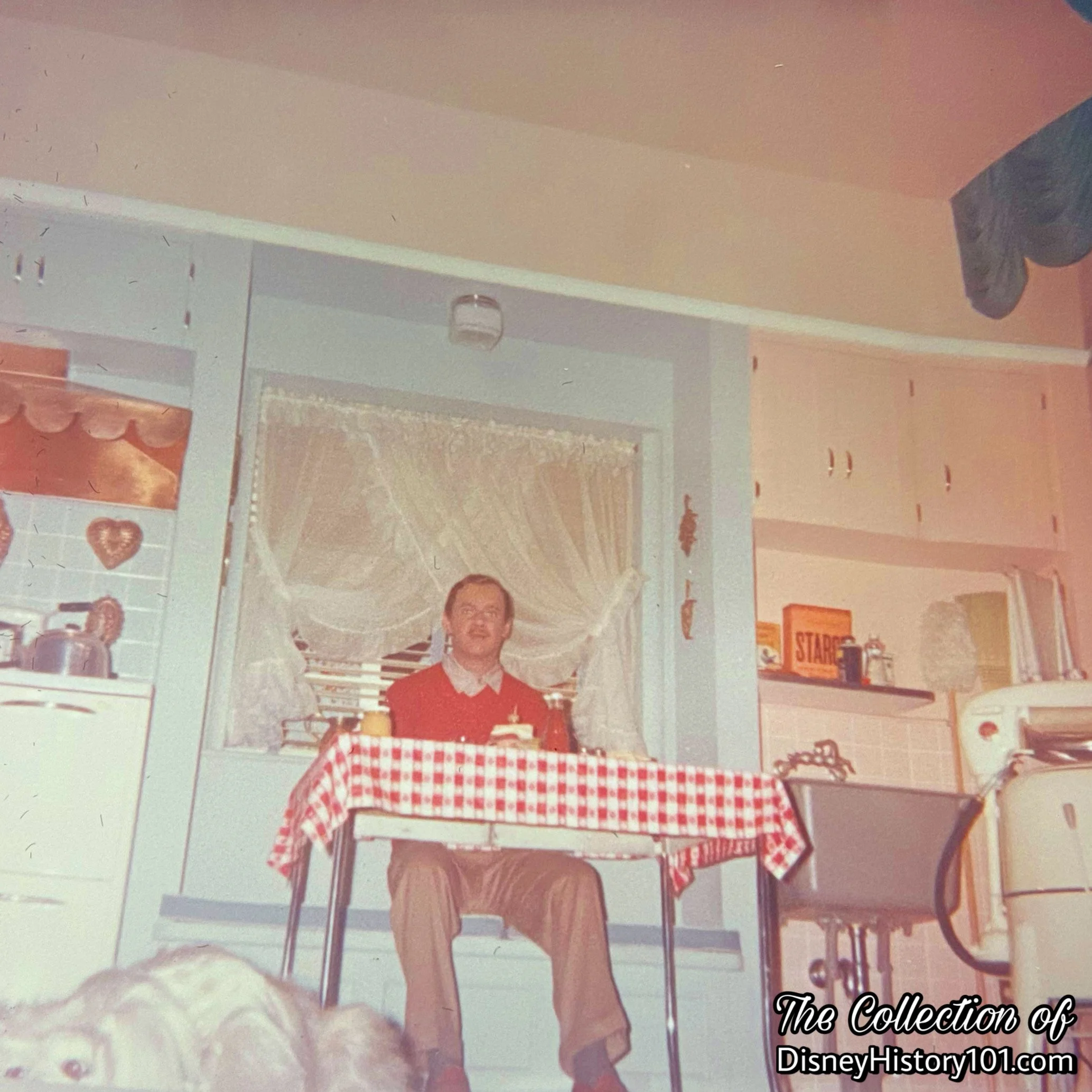
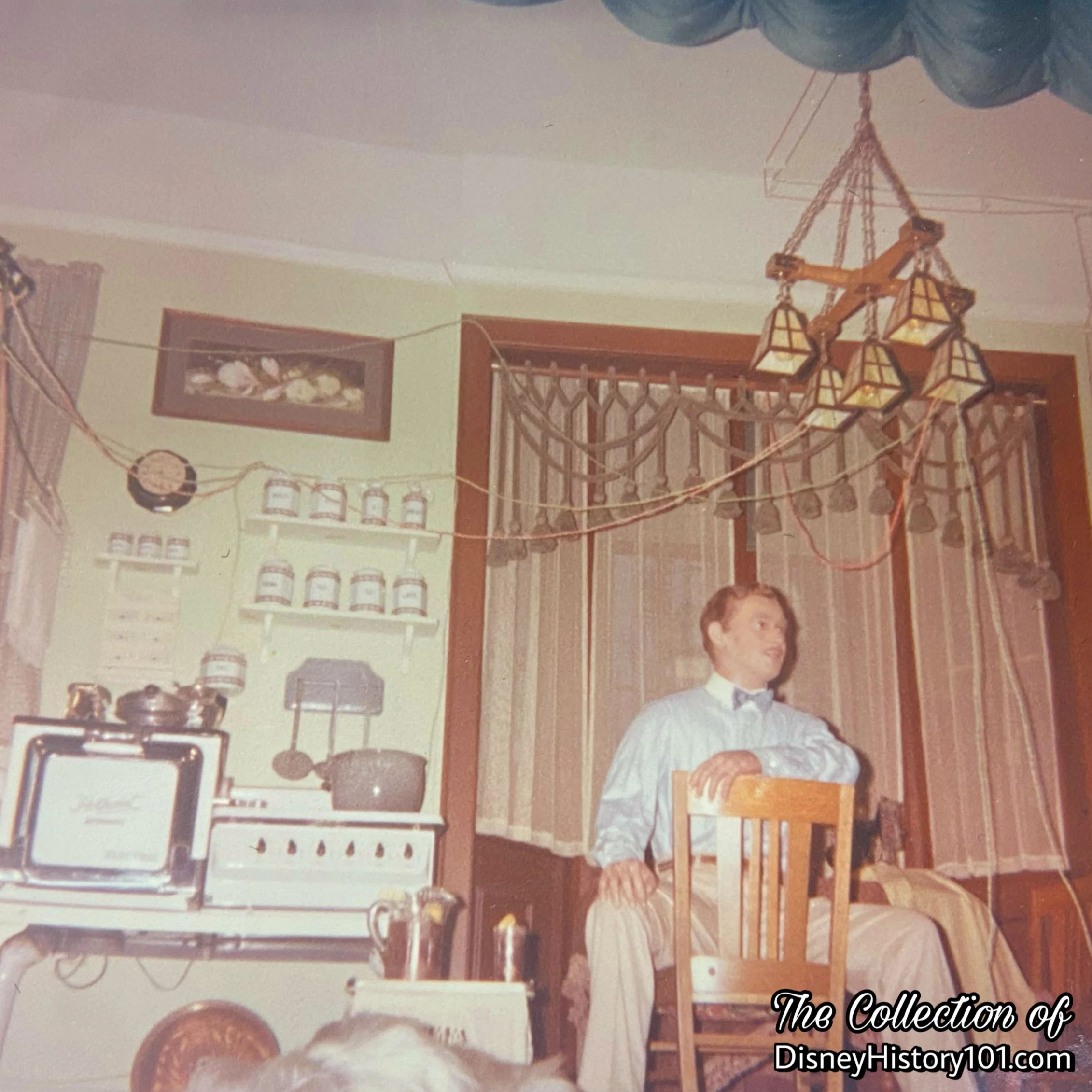
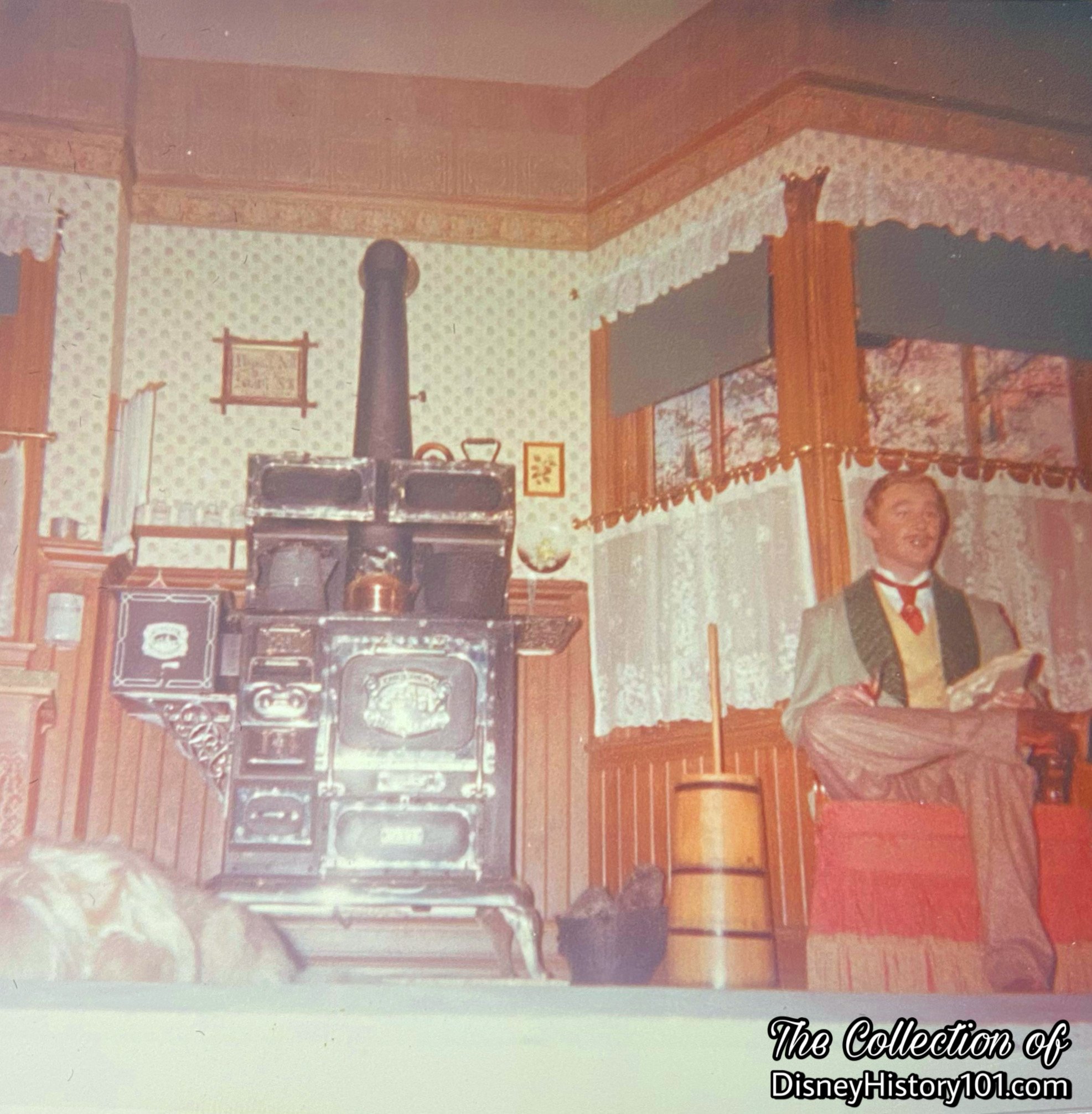
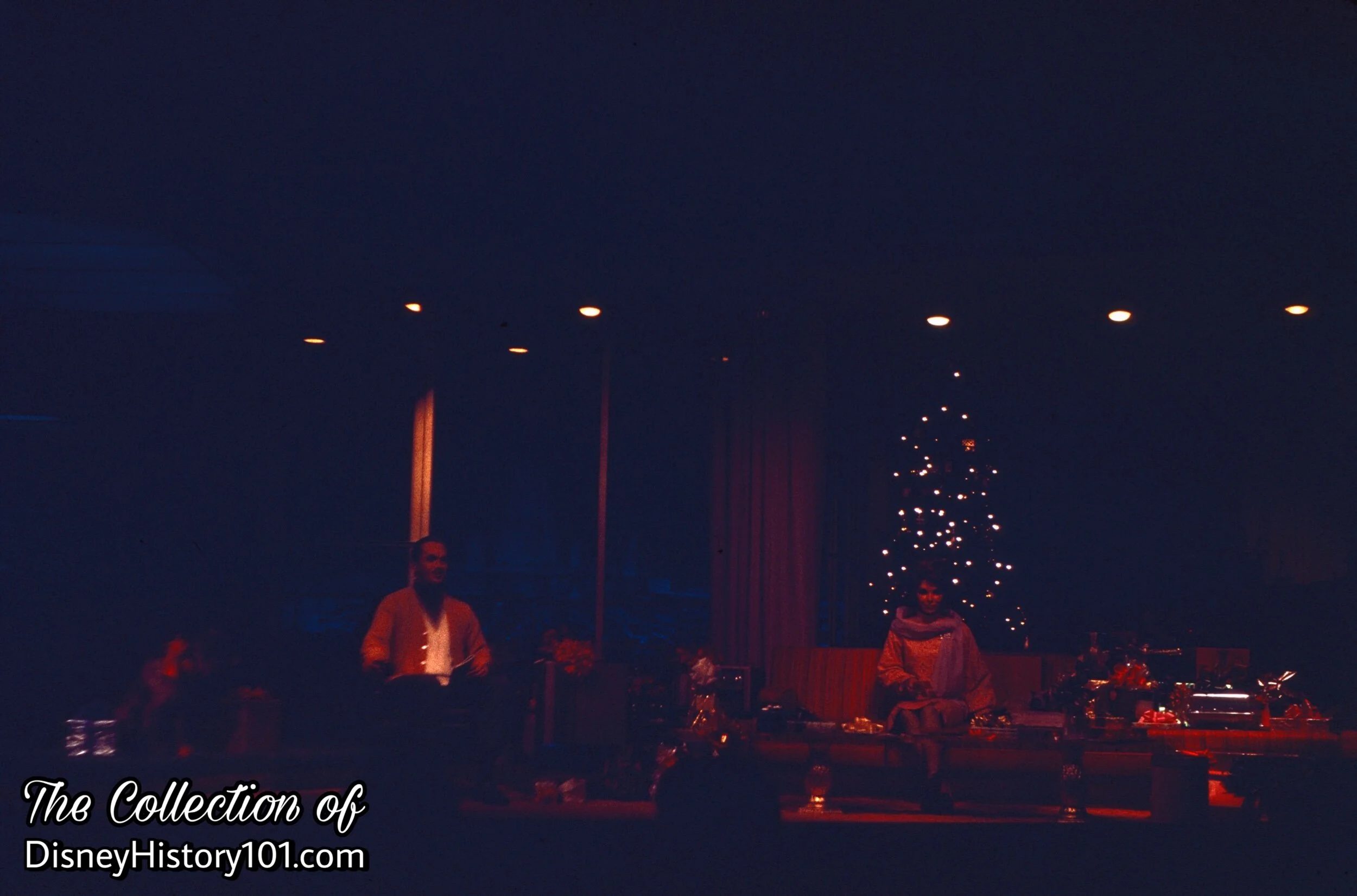
Living Room of "The Possible Present", Carousel of Progress
During 1972, General Electric (through arrangement with the DRC) offered a Christmas sale on small household appliances to Disneyland Cast Members. This sort thing was not uncommon during the era of their Participant Sponsorship.
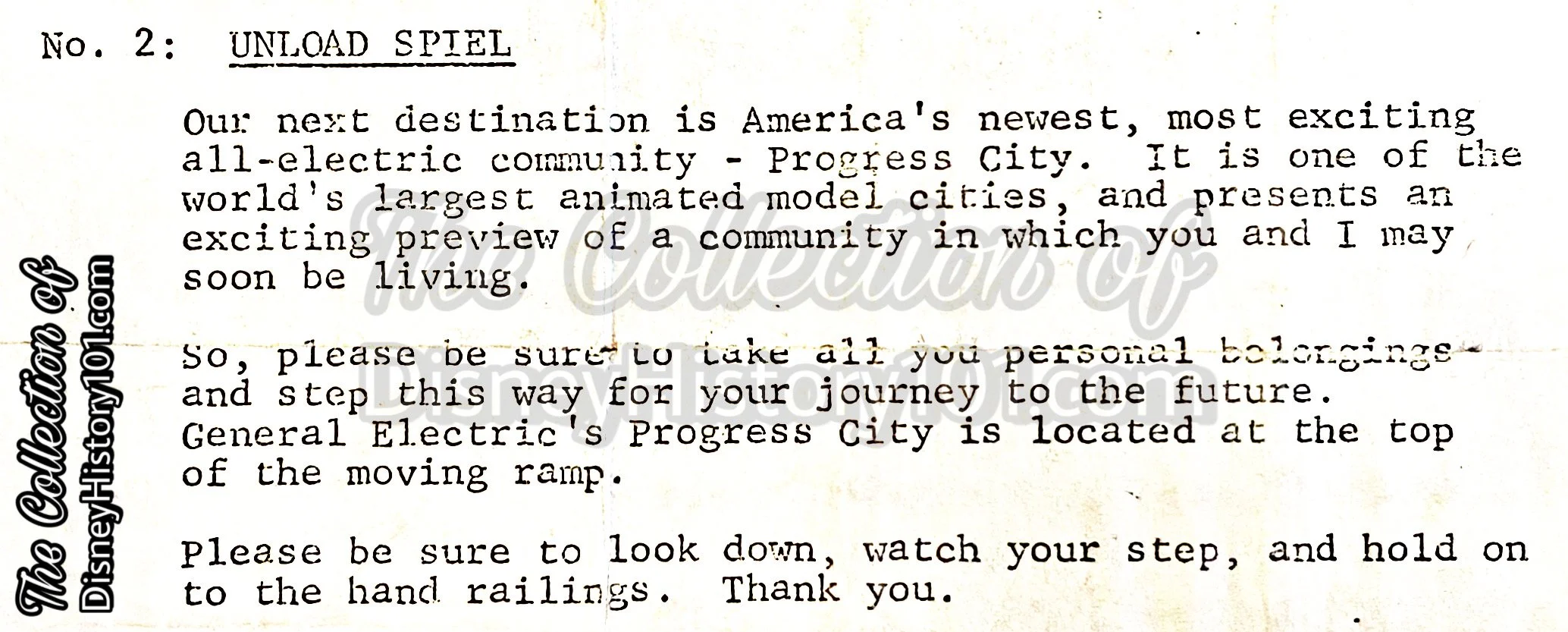
The General Electric Live Unload Spiel, Revised January of 1972
“The Progress City Post Show”
After guests passed along to the top of the moving Speedramp, they received a three-minute presentation which was redeveloped from the 1964/1965 New York World’s Fair, to become “an entire community captured in capsulized realism, featuring moving transportation systems and thousands of buildings”, according to one New Tomorrowland Press Release document. Herb Ryman created numerous concepts of this city in 1965. During 1966, WED Enterprises, Inc. opened project (No. 0047) for General Electric Progressland.
Once debuting at Disneyland the Electric Community of Today of Progress City was a “scale model (1/8 inch = 1 foot), fully animated city,” and “an all-electric community that can be built today through applications of the most advanced technologies. Totaling 6,900 square feet (115 feet by 60 feet), Progress City’s 20,000 trees and shrubs, 4,500 buildings, and 1,400 street lights are authentic to the smallest detail. Many structures feature interior lighting, and furniture inside can be seen from some windows. Progress City is complete with 7 types of transportation, including rapid transit monorails, electric trains, the WEDway PeopleMover, automotive, transporters (electric cars), moving sidewalks, and today’s jets. Throughout Process City, 2,450 of the vehicles are actually moving. There is a climate controlled ‘center city’ and a wide variety of night-lighted amusement areas, sports stadiums, an airport, atomic power facility and other necessities. It’s full-length cyclorama evening sky background measures 160 feet long by 23 feet high. The overall design of General Electric’s Progress City model in Diseyland is based on a concept developed by Walt Disney for the Experimental Prototype Community of Tomorrow (EPCOT) he had planned for Disney World in Florida. Passengers riding aboard the PeopleMover visit this area of GE’s pavilion for an exciting view of Progress City during an adventure throughout Tomorrowland and many of its major pavilions.” [“Information on Disneyland’s New Tomorrowland - A World on the Move” by WED Enterprises, Inc.]
The model was similar to what was depicted in a short film narrated by Walt Disney. The film showcased a weather-controlled city radiating from the central core (or hub) designed for pedestrians with underground electrically-powered transit systems like monorails, PeopleMovers, and other vehicles. The model in the General Electric Theatre was just one of many practical mechanical applications of air-conditioning - requiring a constant temperature of 72 degrees to prevent expansion and contraction of the hundreds of wires, tracks, and plastics used in this attraction.
“Maintenance”
In maintaining the magic after the Park closes, the staff take over with brooms, mops and dustcloths. Special attention was given to marred walls, posts and furniture. Items with marks that didn’t wash off were replaced or repainted. The Floors were waxed and buffed to preserve their beauty and protect them from the thousands of feet that scuffle over them each day.
Progress City kept maintenance crews busy. Nightly, the Progress City glass was cleaned. There were more than 3,000 tiny light bulbs in the future city, and the light level can be individually adjusted in each model building.
Unseen, Disneyland Sound Mechanics and Projectionists are perhaps the best hidden of the craftsmen in Maintenance. They were truly “backstage” but one could also find them below the stage as at the General Electric show. Below its six “Audio-Animatronic” stages was a large room containing panels of controls which coordinated the 32 figures above. The Carousel theatre was driven by six 20-horsepower D.C. motors. A special memory circuit told it when to start, stop and how far or fast it must go. There, soundmen Jim Becker and George Short watched four monitor screens and four 35mm sound tapes. Those tapes handled all of the music, both inside and outside the pavilion.
If the sound and animation on an attraction were not working right...or are not coordinated...the show was not up to Disney standards. The guest was being shortchanged. Maintenance of equipment was the responsibility of the Maintenance Division, and the working foreman was responsible for regularly checking to make certain everything was working O.K. The foreman would notify the supervisor and indicate any problems on the Daily Maintenance Report. Disneyland was the only place in the world where Academy Award winning designers checked every detail of every foot of its huge stage. The working foreman would find out how the stage settings were designed. Then, it was part of his duty to check to make sure that they remain that way.
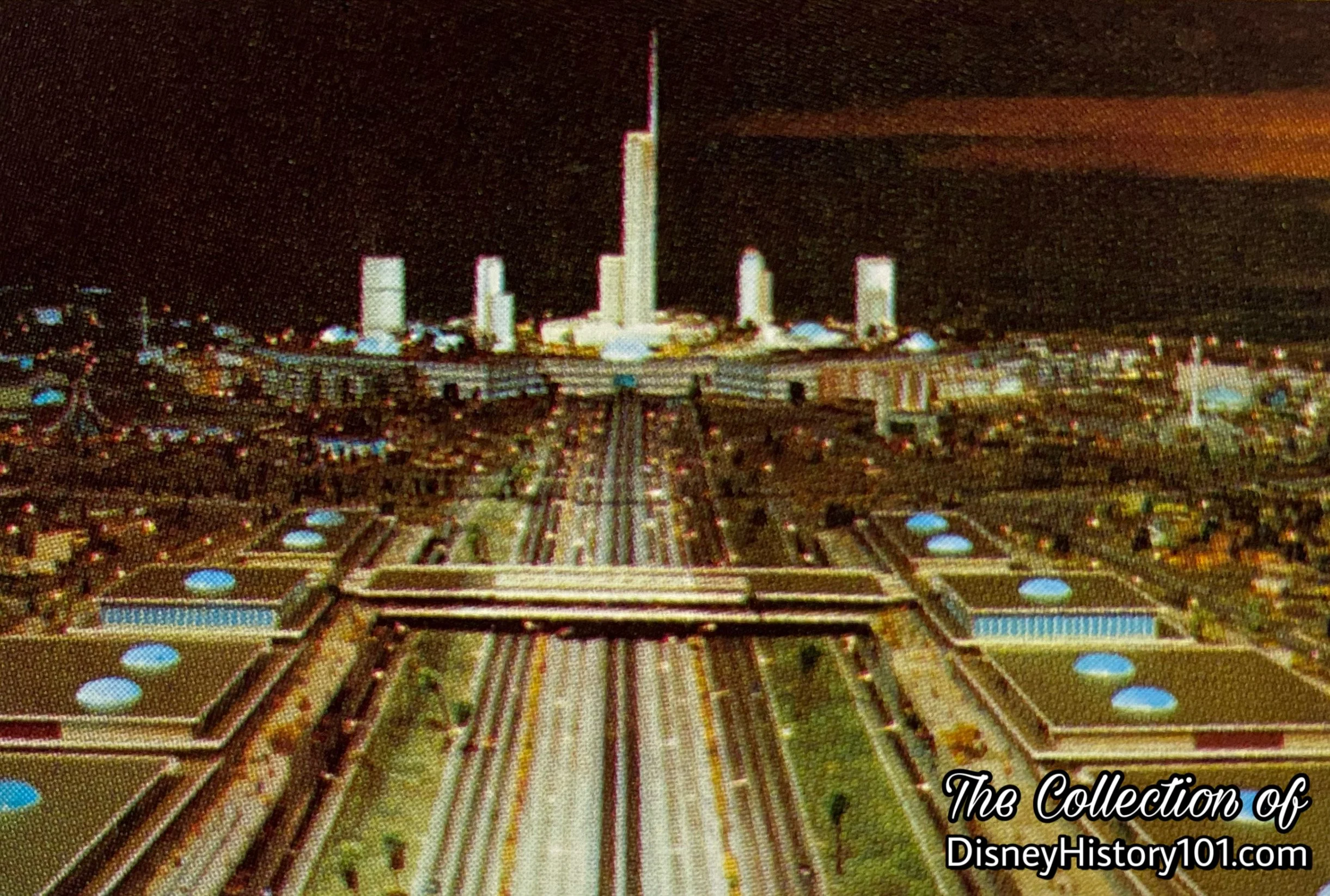
Progress City (or, “City of Tomorrow”) in a “Walt Disney’s Guide to Disneyland” Excerpt, 1968.
Yes, finally (by July 2, 1967), the Carousel of Progress was one of eight new Disneyland attractions which carried total Disneyland investment to $95 million.
Most carousels (like King Arthur’s Carousel) go round and round without getting anywhere, but on this one (at every turn) we’ll be making progress. “The first three acts of the show would remain as they are in New York, showing, in sequence, the pre-electric home, the early-electric home, and then the advances that so-improved life in the early 40’s.” Still, four generations (from the 1890’s, 1920’s, 1940’s, and the c.1967-1968 present) welcomed Guests into their homes to hear how electricity has contributed to “progress” and better living.
This whole drama played out before many audiences a day. According to “Disneyland Attractions Time Studies 1968”:
Theoretical Hourly Capacity - 3,600
Instantaneous Capacity - 1,500
Audience Control Capacity - 901
Capacity Per Theater - 240
Cycle Time - 24:00 (Car)
Load Time - 4:00
Trip Time - 28:00
Unload Time - 4:00
Dispatch Interval - 4:00
Trips Per Hour - 15
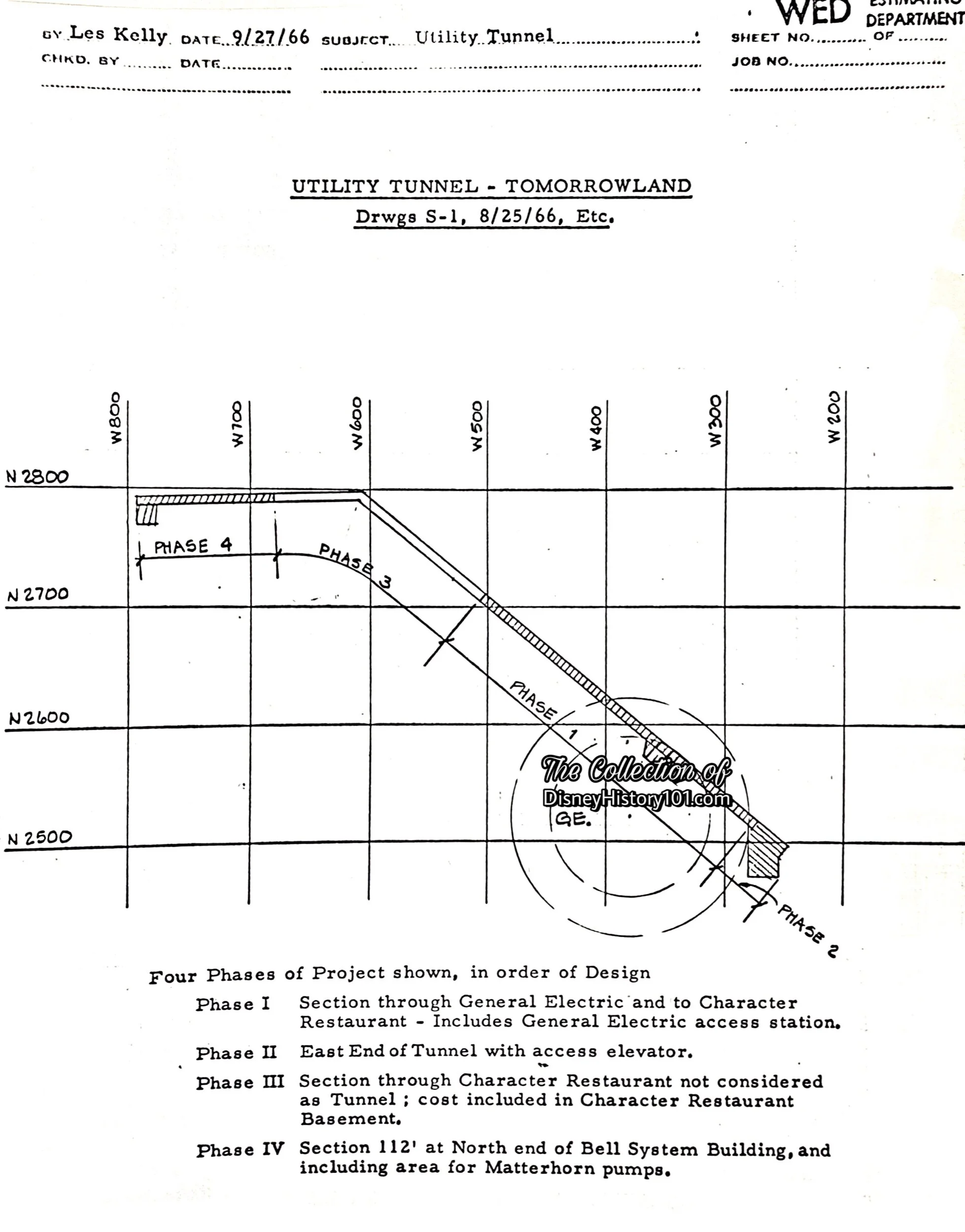
The Utility Tunnel through the General Electric Carousel of Progress as rendered by Les Kelly, September 27, 1966.
“Back of House”
While many guests may recollect the “Tron Tunnel” through which the PeopleMover trains would pass as they made their way over the upper level of America Sings, Cast Members might recollect the efficient Utility Tunnel (pictured above). This concept would inspire the Utilidors - “Walt Disney World's vast subterranean structure, beneath the Magic Kingdom, that acts as a travel corridor and houses backstage service functions.”
As a “sidelight,” unbeknownst to most Disneyland Guests, the building was also home to a “Train Storage Area” as well as offices like the Entertainment Offices (located above the Carousel of Progress). Here, were offices dedicated to Show Development, Production, and Characters and Parades. On some desks, one may have spotted matchbooks (like the one pictured above), which were often used as a means of advertising for Disneyland Participants like General Electric.
Later, the offices continued to function during the period of America Sings, and were known to Disneyland Cast Members (for that period) as the America Sings Conference Center. Not every Cast Member passed through this area, but perhaps you recall attending a DRC sponsored meeting here, like those of the Disneyland Sign Language Club.
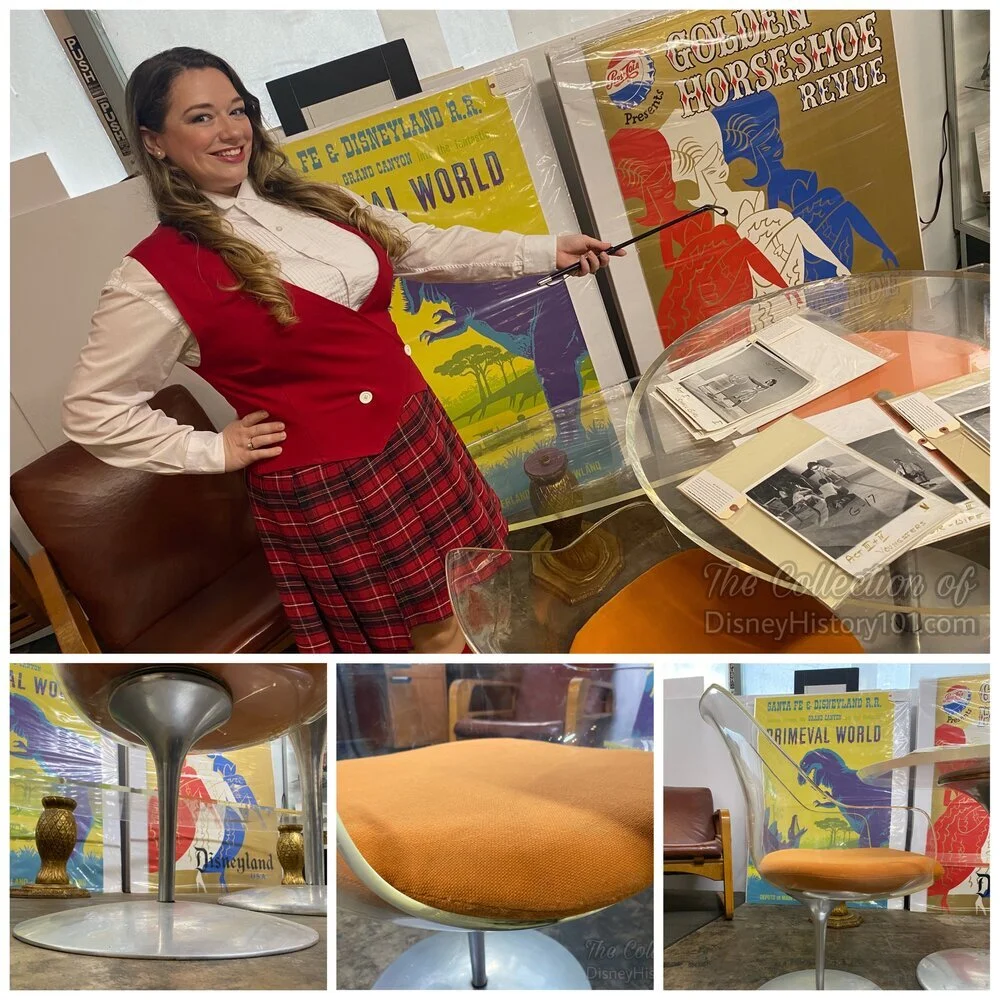
“Carousel of Progress Kitchen Table & Chairs”
Finally, the Carousel of Progress ended its six-year run at Disneyland, on September 9, 1973. “Approximately 30 million guests entered the theater’s doors” by that time, according to ““Information on America Sings” (prepared by the Disneyland Marketing Division, 1974).
The Show would go on, moving back to the East Coast (opening at Walt Disney World in 1974). Within just five years of its opening, over 40 million people would enjoy the 20-minute “show.”
There were some differences to the show. The theme song (“There’s a Great Big Beautiful Tomorrow”) as well as some of the props from the Disneyland show were not included in the Walt Disney World show. Above, we’re looking at one such (c. 1964-built) mid-21st century-modern dining room set! I know that those conflicting dates sound chronologically confusing, but it will all make sense in a moment!
These rarely-seen (metal, synthetic fiber, and lucite) chairs and table are actually props, originally crafted by Walt Disney Studio artists for the Carousel of Progress (in the General Electric Pavilion at the 1964 New York World’s Fair). During the late 1950s (or, “mid-century”), many companies (like Knoll Associates of New York, for instance) were manufacturing single pedestal furniture models similar to these. The prop furniture was staged within the 21st-century themed fourth act of the show - a future where (to quote from another popular attraction) “nature’s building building blocks are put to use for man” and there are “structural applications of plastics”. When the World’s Fair ended, the dining room set furnished the Disneyland version of the attraction from 1967 to 1973. However, when the General Electric Carousel of Progress Show ended its run at Disneyland, many of the sets were reimagined for the Walt Disney World incarnation, and many of the props ended up in private collections or were even sadly disposed of.
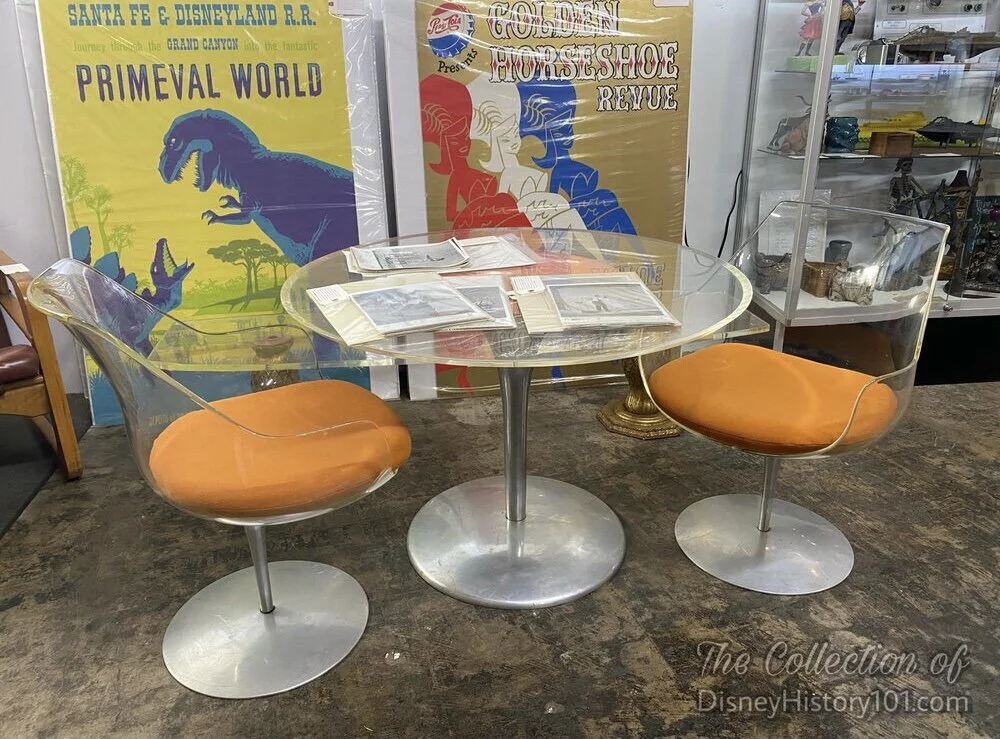
“Carousel of Progress Kitchen Table & Chairs”
Did you know that a very similar and derivative design was prepared in 1969 by Richard Hebner for guest rooms of the Contemporary Hotel at Walt Disney World?
I would like to add, that these pieces would still truly look “at home” in anyone’s abode, in “the possible present.” That is exactly what occurred when this set was auctioned (as LOT#0709) in “Walt Disney - The Man, The Studio, & The Parks”, a Disney-themed auction thru Van Eaton Galleries (that occurred on December 5th, 2020). The set sold for $48,750 and is now part of a private collection.
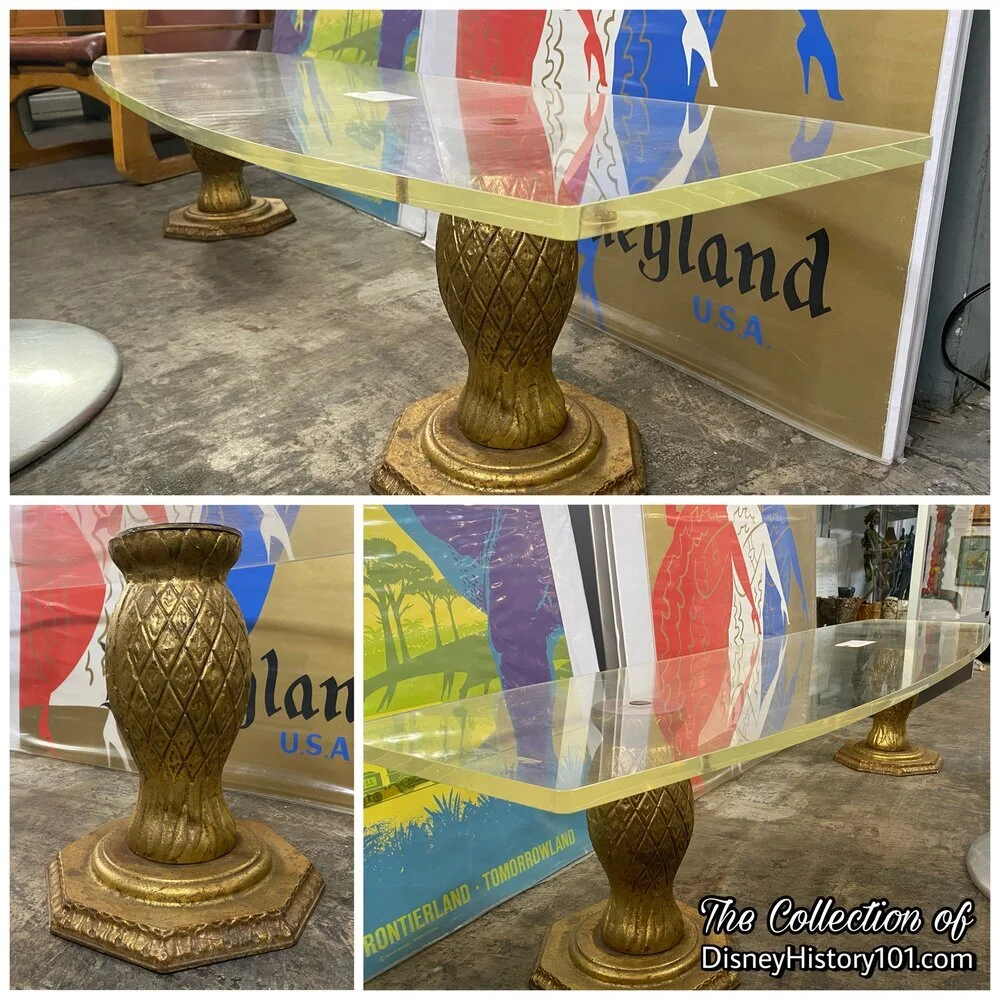
21st Century Coffee Table Prop
This 21st Century Coffee Table Prop was also part of some private collection before being auctioned twice (most recent through Van Eaton Galleries). It also currently resides in another private collection.
But, what happened to the Carousel Theater Stage?
(Saturday, June 30*, 1974 - 1988)
*Disneyland Rides & Attractions and Attendance Report, Fiscal Year 1981.
After two years of production, the $6 million America Sings would star 114 Audio-Animatronic animal actors and actresses spread across six comical and musical acts. These would be performed on “four separate stages depicting different geographical settings” inside the Carousel Theater.
“Show Design Concept Artwork”
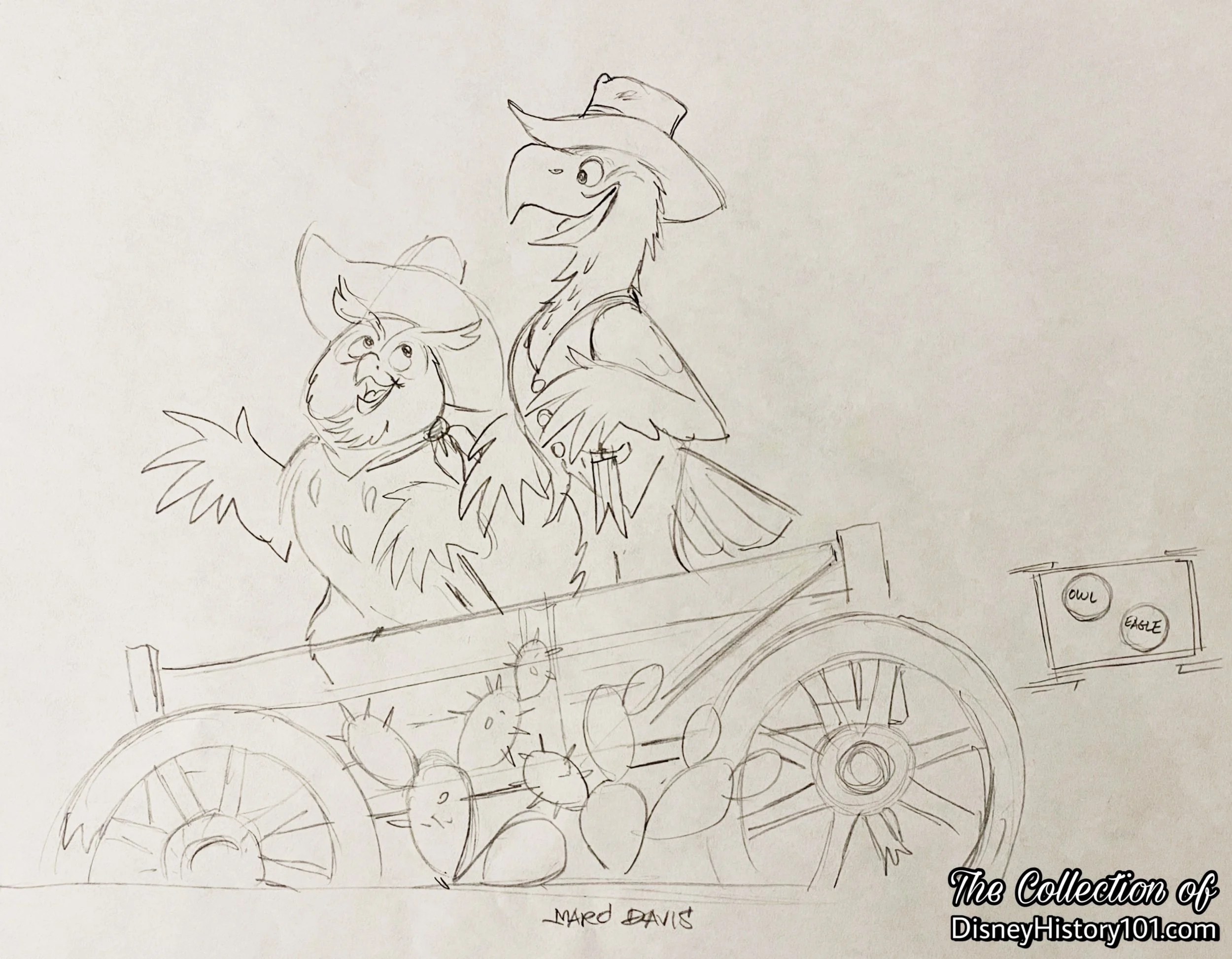
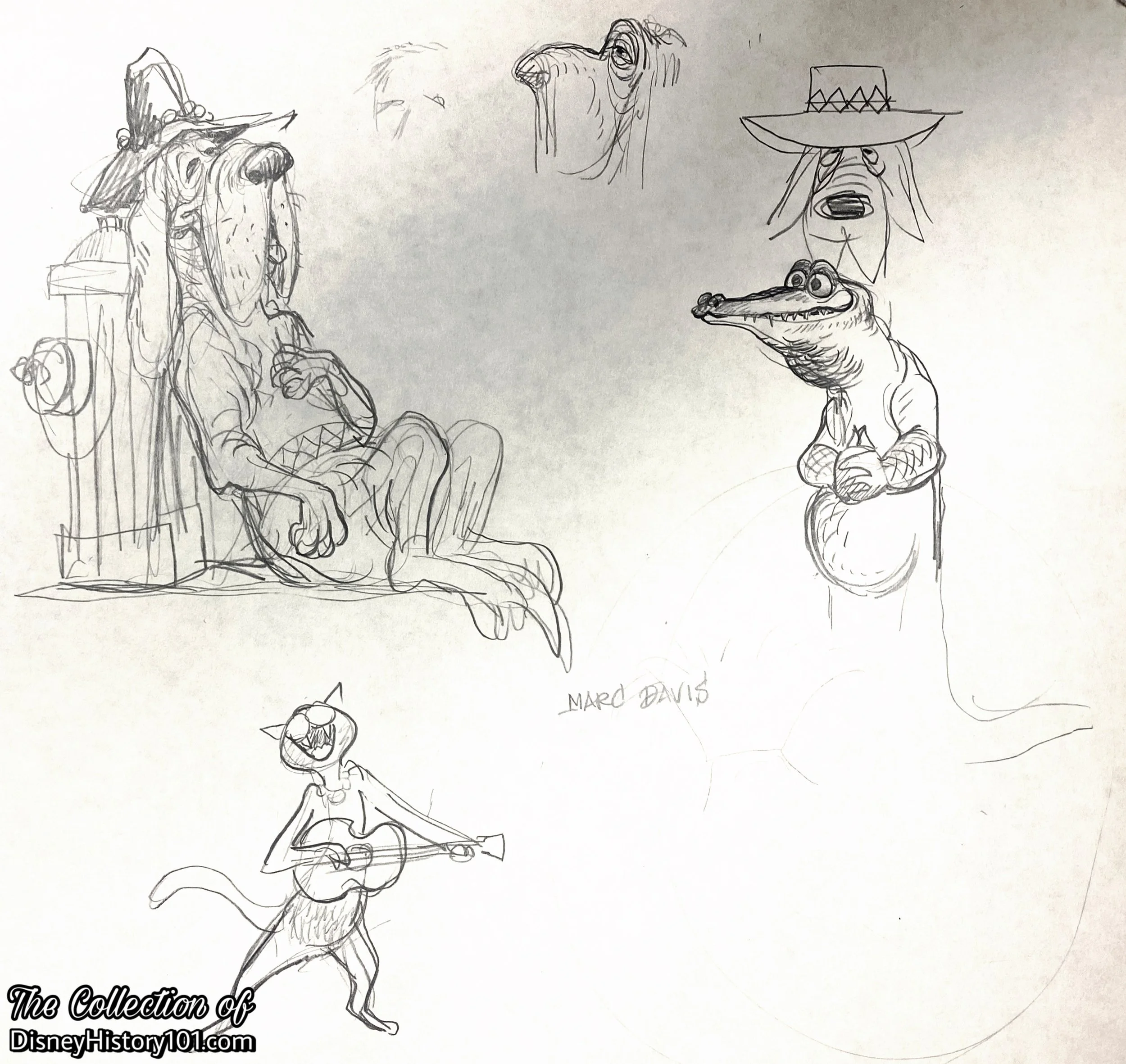
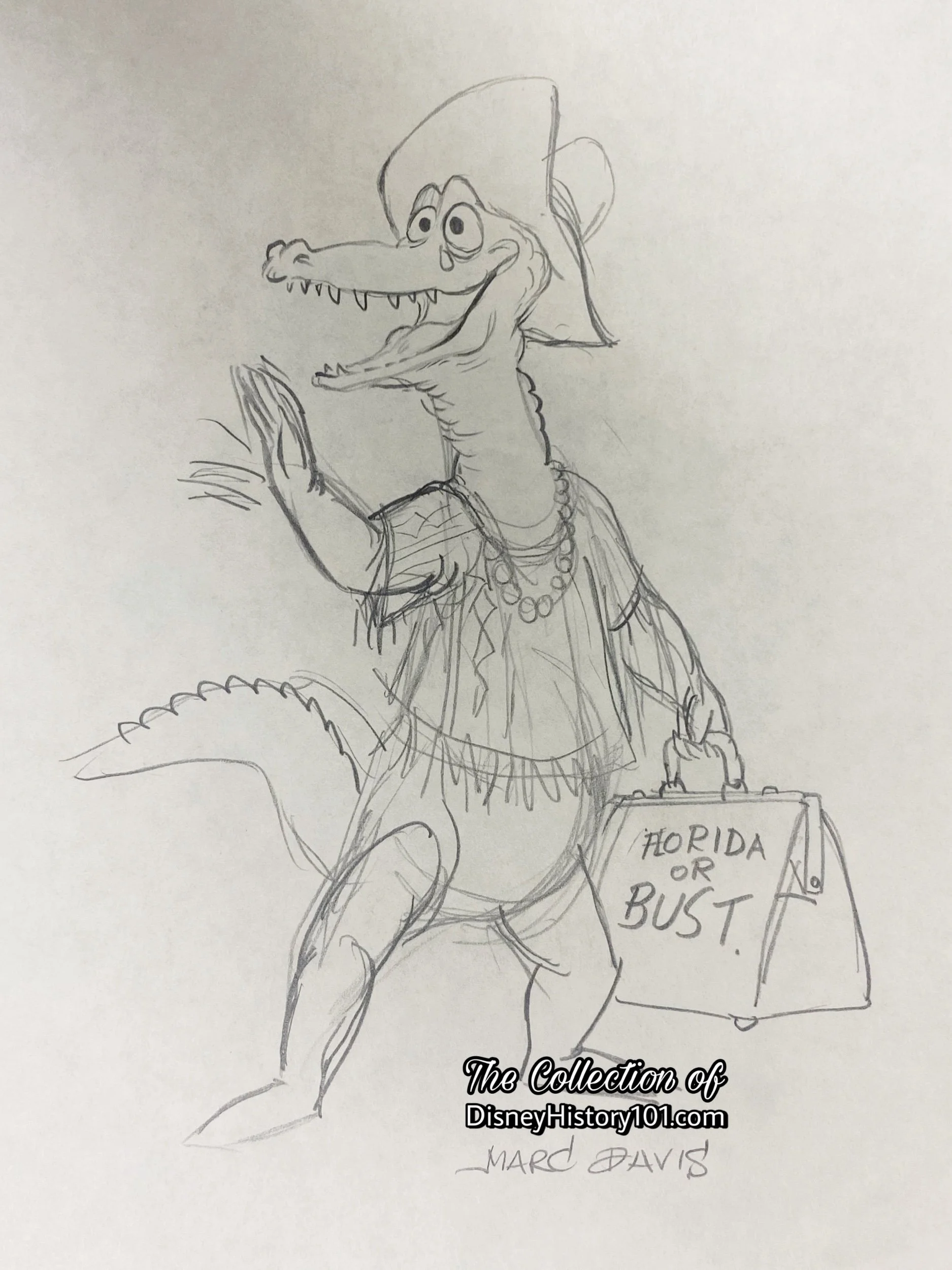
Walt acknowledged “Everything here at Disneyland and the Studio is a team effort.” A team of WED Enterprises, Inc. artists (based in Glendale, California) planned, designed and developed the Disneyland Show. Among these production designers was veteran Studio character animator Marc Davis and Al Bertino (both, who primarily wrote the show script, while Marc was responsible for many of the character designs). Blaine Gibson (who was responsible for earlier characters produced by WED Enterprises) would be tasked with translating Marc’s two-dimensional designs into three-dimensional figural form.
You may recall seeing prints of some of the early concept designs decorating rooms of the Garden Villas at the Disneyland Hotel.
“A Magical Joyride to Musicland U.S.A.”
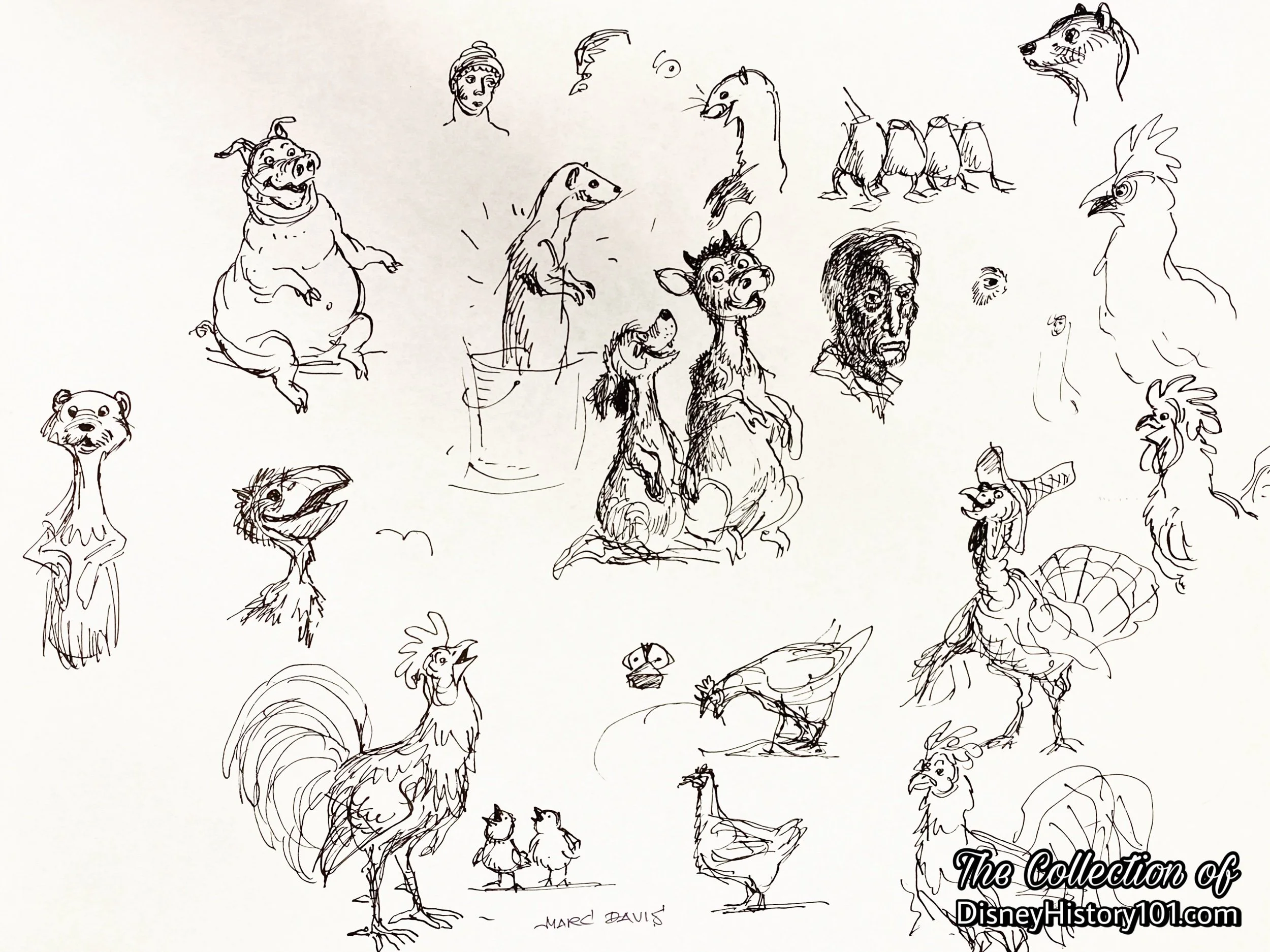
Note how the weasel keeps “popping up” among these rough exploratory sketches by Marc Davis, by August 1972.
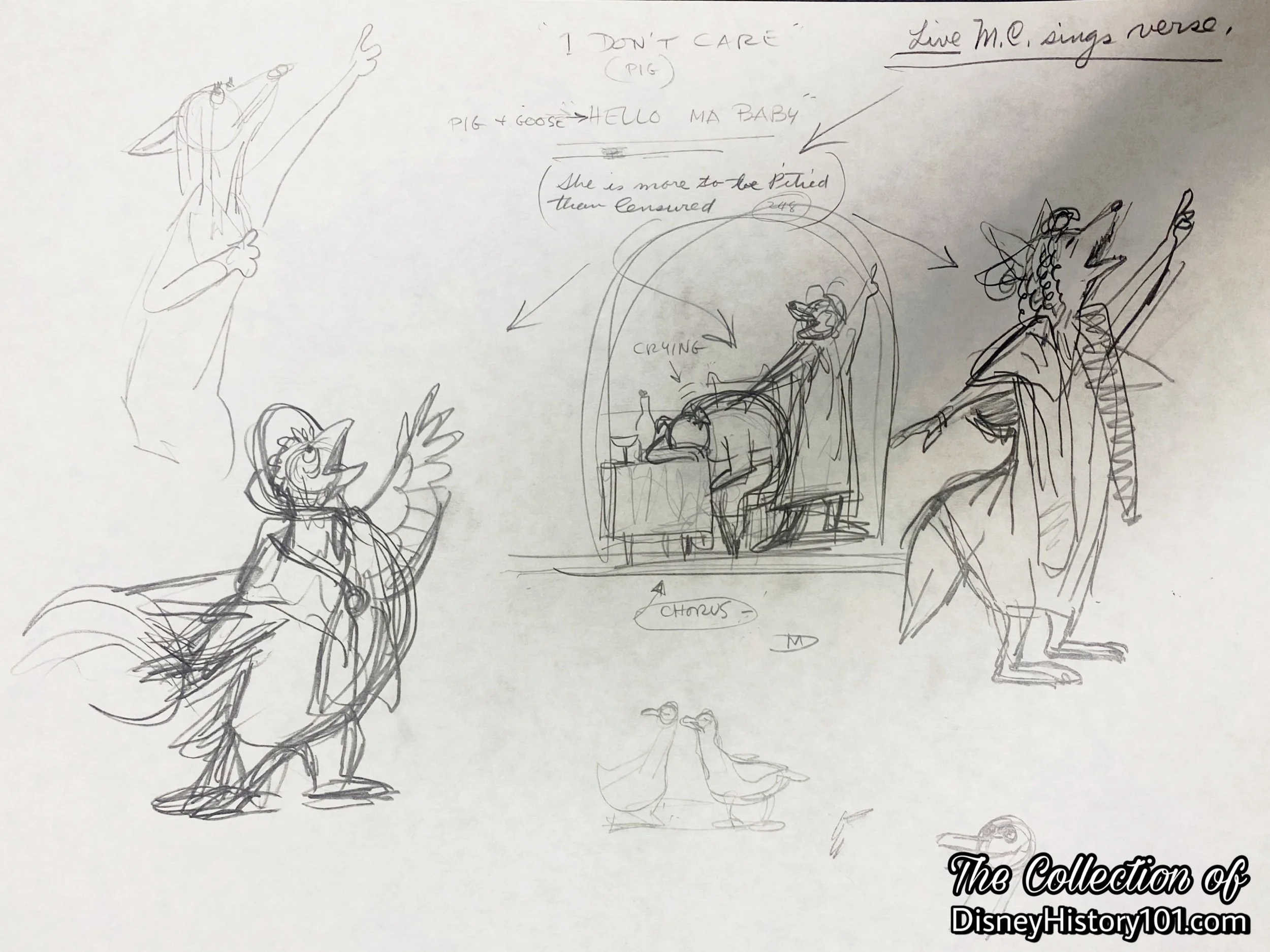
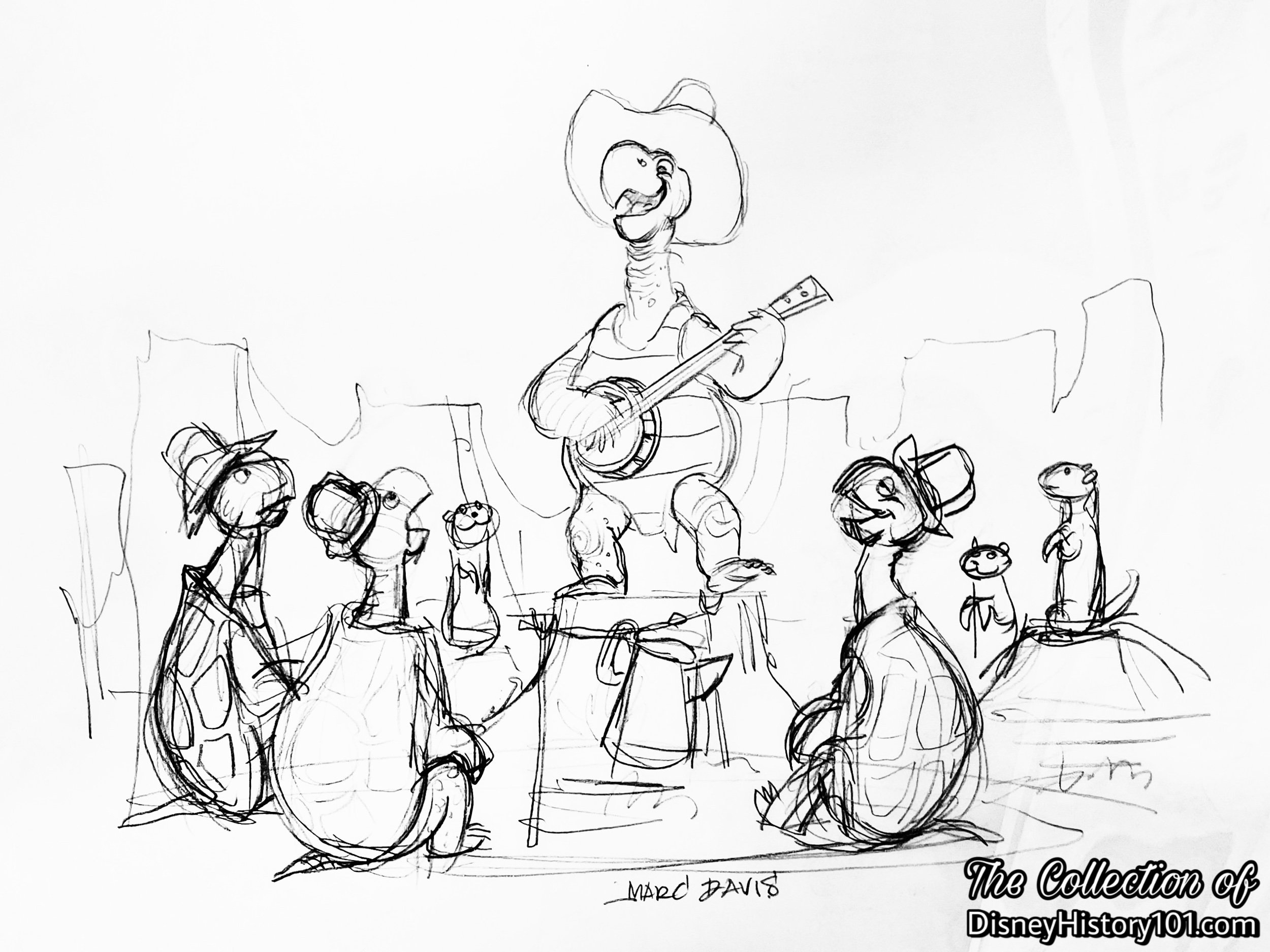
This early concept for Saddlesore Swanson depicts him as a turtle.
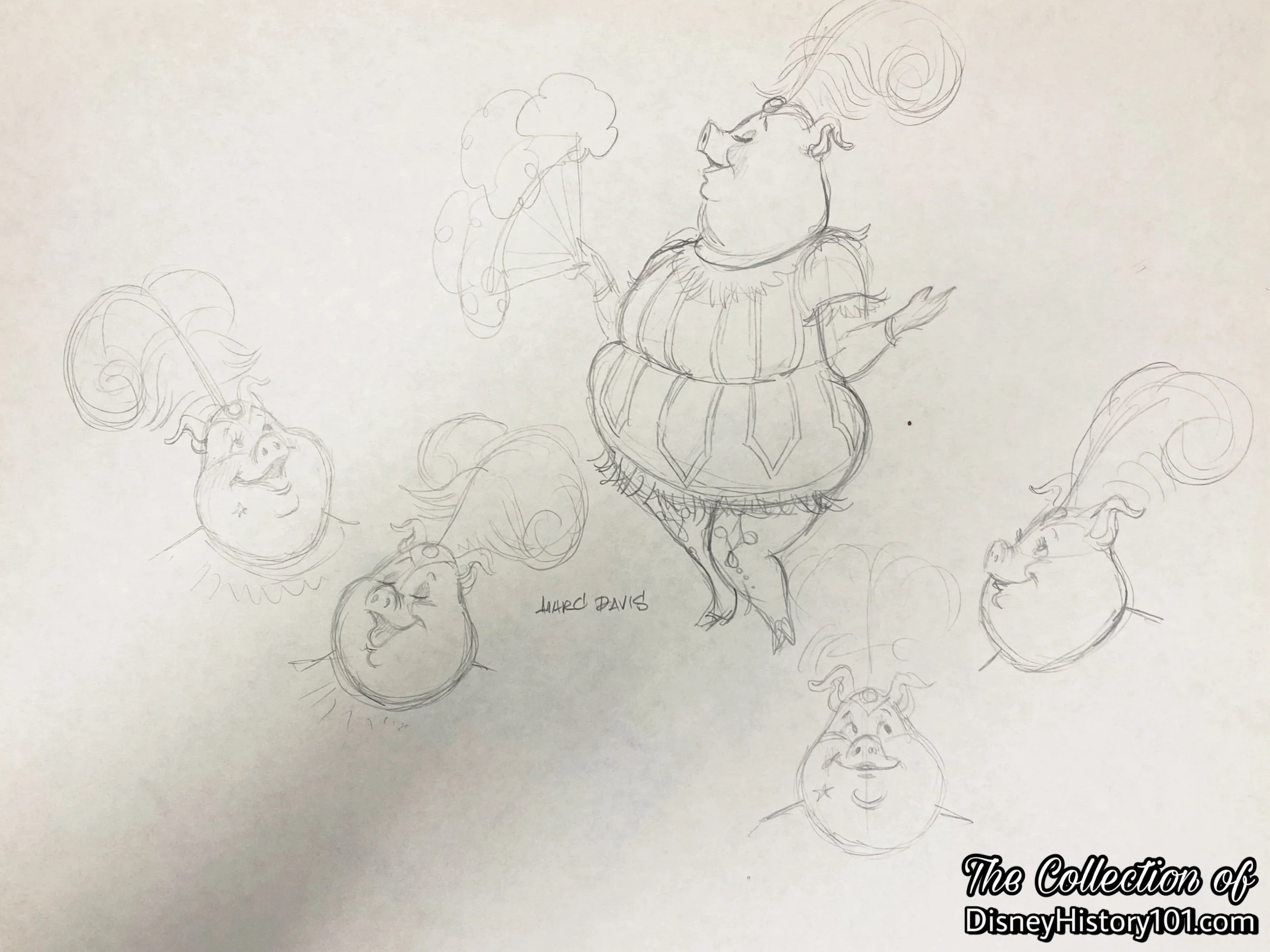
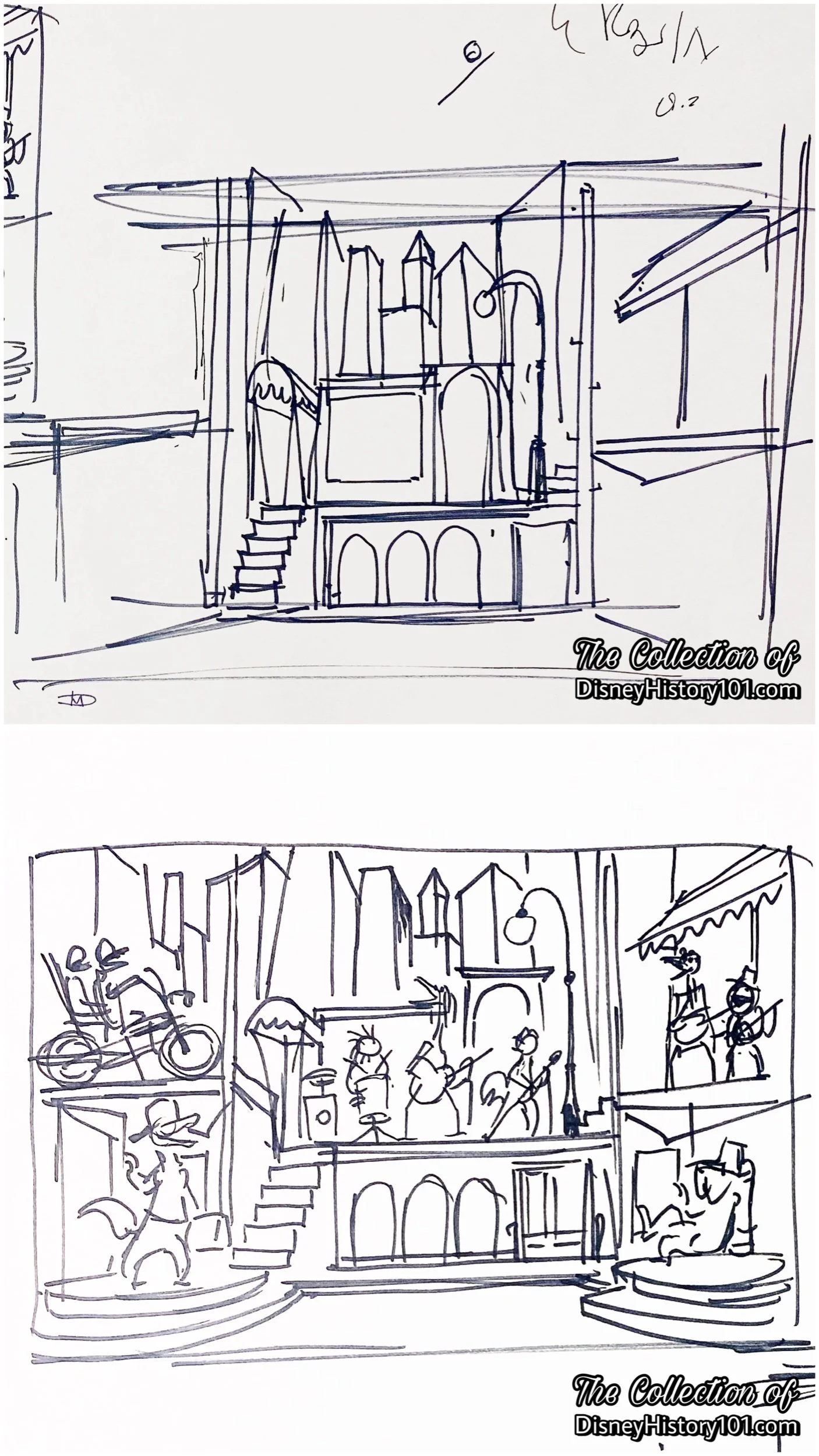
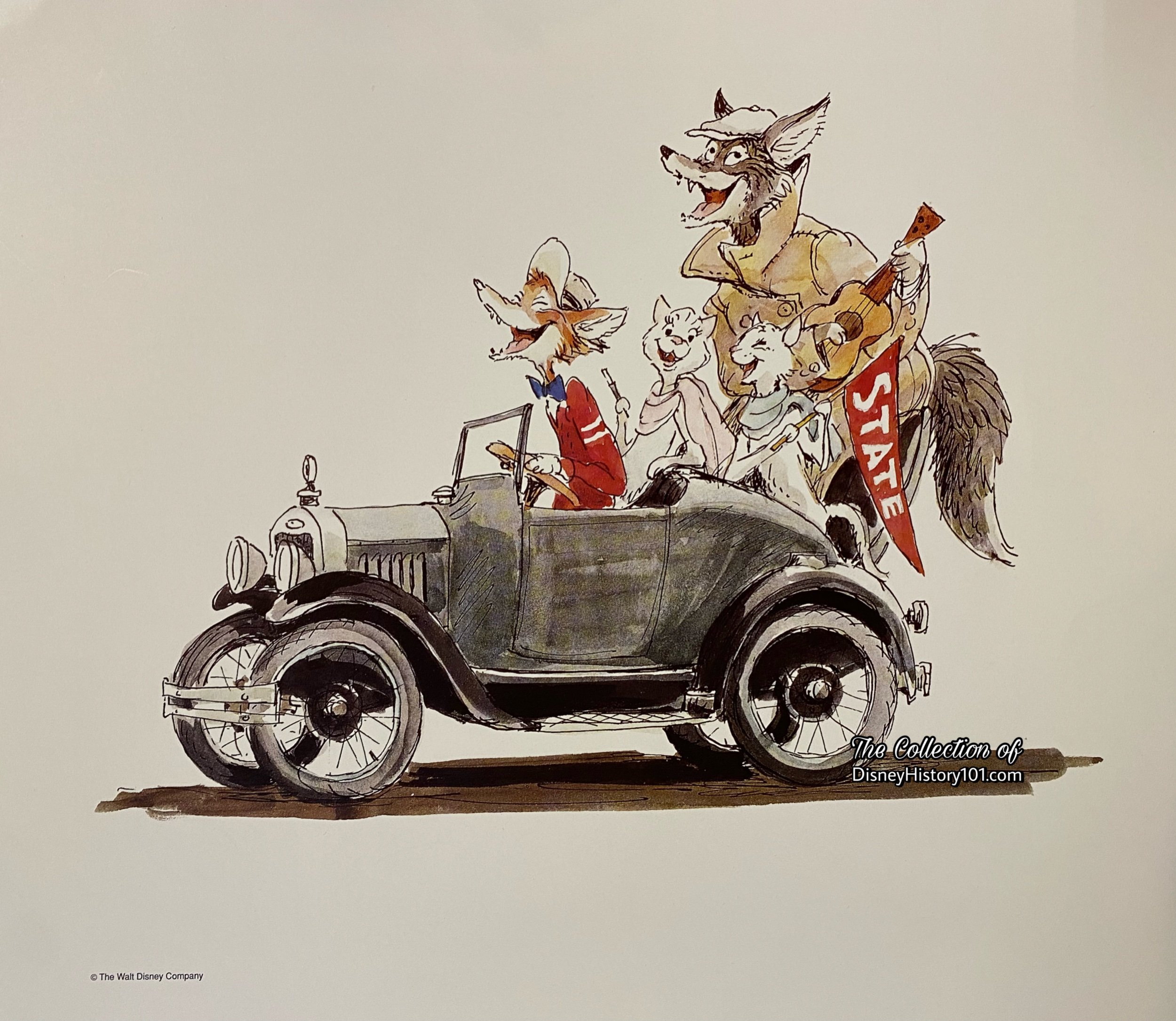
A print of a College Quartet story sketch by Marc Davis was used to stage the business (or action) of a story scene; ©The Walt Disney Company
“Audio-Animatronics”
Many Disneyland attractions feature Audio-Animatronics figures. Developed by WED Enterprises, this amazing system utilizes pneumatics hydraulics and electronics to animate human, animal, and other three-dimensional figures.
“Audio-Animatronics Animation”
Roger Broggie (the humble Walt Disney Studio Camera Repair Department machinist who had assisted with the fabrication of Walt’s Carolwood Pacific Lilly Belle engine) had fashioned the first ever “cam and lever” Audio-Animatronics figure in 1951. This led to Roger’s involvement in the creation of the prototype Mr. Lincoln Audio-Animatronics® figure, work on the Enchanted Tiki Room bird cast, and naturally his supervision over the assembly of the America Sings show and animation.
Bill Justice (who had joined the Disney Team in 1937 and an Animation Director in 1954) had previously become involved with stop motion animated projects for numerous Walt Disney Productions like Noah’s Ark, Babes in Toyland, and Mary Poppins. Considering this, what happened next was only natural. In 1966, “Bill was in the middle of story directing the Winnie the Pooh Honey Tree film when Walt Disney asked him to join the WED staff to program several Audio-Animatronics shows. Since that time, Bill has played an integral part in programming such Disneyland a Walt Disney World shows as Haunted Mansion,” according to Bill’s “Capsule Biography prepared for WED. The Audio-Animatronics programming areas, located in the high bay section of the 1401 Flower Street building in Glendale, California were nicknamed the Hall of Justice - an inside joke tied to Imagineer Bill Justice and the many hours he spent programming there.
The animator's console was the control panel for programming the movements of the Audio-Animatronics figure.
Bill Justice recalled: “Jack Taylor and I programmed the figures together. The script was very complex; character appearances were brief, with characters and props constantly appearing and disappearing on turntables or rising from pits in the stage. We also had to coordinate the movements of several different groups of characters. Each of the segments had to be exactly the same length so all audiences could rotate into the next theater section simultaneously.” [“Justice for Disney”, p. 101]
“Setting the Stage”
Staging is basically presenting the scenes, or actions. The story sketch drawings had already been accomplished by story man Marc Davis with the assistance of Al Bertino. Using those drawings, many sets were created. Some were “Trompe L’oueil” painted set pieces or designed to create the illusion of three dimensions, accented with dimensional props. Most of the rocks and the mountains in Disneyland were products of the Staff Shop. Skip Lange (who had a knack for rock work, and had just spent about a year serving as Field Art Director for a massive rehabilitation of 20,000 Leagues Under the Sea at the Magic Kingdom in Florida) helped Imagineer the massive stages. Model-maker Fred Joerger (who was hired c.1953 to craft the “Barber Shop Quartet” show for “Project Little Man” of “Walt Disney’s Disneyland”) had distinguished himself as Disneyland’s “resident rock expert” by crafting the rocks from plaster, for the river banks. He would make similar contributions to the America Sings attraction at Disneyland. The animation and technical skill of Wathel Rogers (who had also helped develop Audio-Animatronics in 1951) also played a key role in America Sings at Disneyland.
“Effects”
Many effects were “illusioneered” and employed (like the Pixie Dust Projector, producing sparkling dots of light).
“Installation”
Bill Justice recalled: “As work progressed, our biggest worry was not about the show itself. We had a lighting expert named Bob Burns who was constantly walking across the stages looking up and checking the lights. We were always afraid he would fall into one of those pits.
Bob never missed a step. But when opening day came and the attraction was crowded with people, Al Bertino stepped back to pose for a photographer and fell into a rabbit hole. He emerged unhurt, but how I'll never know. It was a six foot drop with pipes and metal all around. He didn't even damage the rabbit. Poor Al was so embarrassed.”
“Show Control”
A new DACS (Digital Animation Control System) technique of controlling America Sings Show elements was imagineered by those WED Enterprises, Inc. technicians (like programmer Dave Snyder), in which “the separate sound, light and figure controls of each scene… [were] isolated from preceding and following scenes through the use of independent program elements,” according to “Information on America Sings” (prepared by Disneyland Marketing Division, 1974). This was similar to the MACS (Micro Animation Control System) used at Walt Disney World, which controlled individual Audio-Animatronics® figures rather than controlling entire performances of Shows through the DACS.
“Music, Voice, and Audio”
Music, as a basic ingredient of showman-ship, covers the Park. Buddy Baker directed and conducted the orchestration.
Scratch tracks (rough sound recordings of the character’s and actor’s dialogue) were prepared.
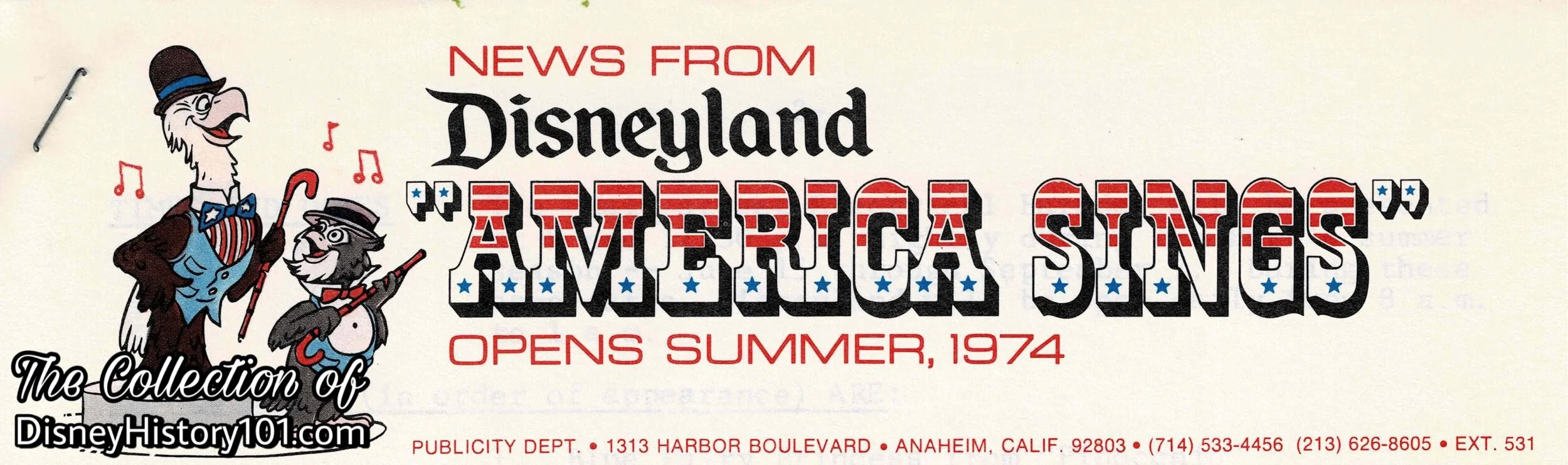
"News From Disneyland" Stationary Excerpt (c. 1963) heralds the coming of “America Sings”
“Climb Aboard the Swinging Carousel”
Finally, Disneyland’s 54th adventure opened in the Carousel Theater, on a June 28th, 1974. America Sings would present “a musical joyride through history” (some 200 years of our nation’s musical history, represented by forty separate tunes), as “told through the songs and musical styles of each period,” according to Disney News. The overall show would have a total run time of 24 minutes, comprised of six three minute and fifteen second acts (with 45 seconds of “travel time” between “shows”). This meant that a maximum capacity of 3,600 guests could view the show each hour.
The following day (June 30th, 1974) America Sings was formally unveiled for members of the press during the Disneyland Summer Press Party. The $6 million dollar “E” Coupon Attraction carried the total Park capital investment to more than $150 million. As a “sidelight” the America Sings Show Building was one of three locations inside Disneyland where a genuine American flag was flown (by 1974).
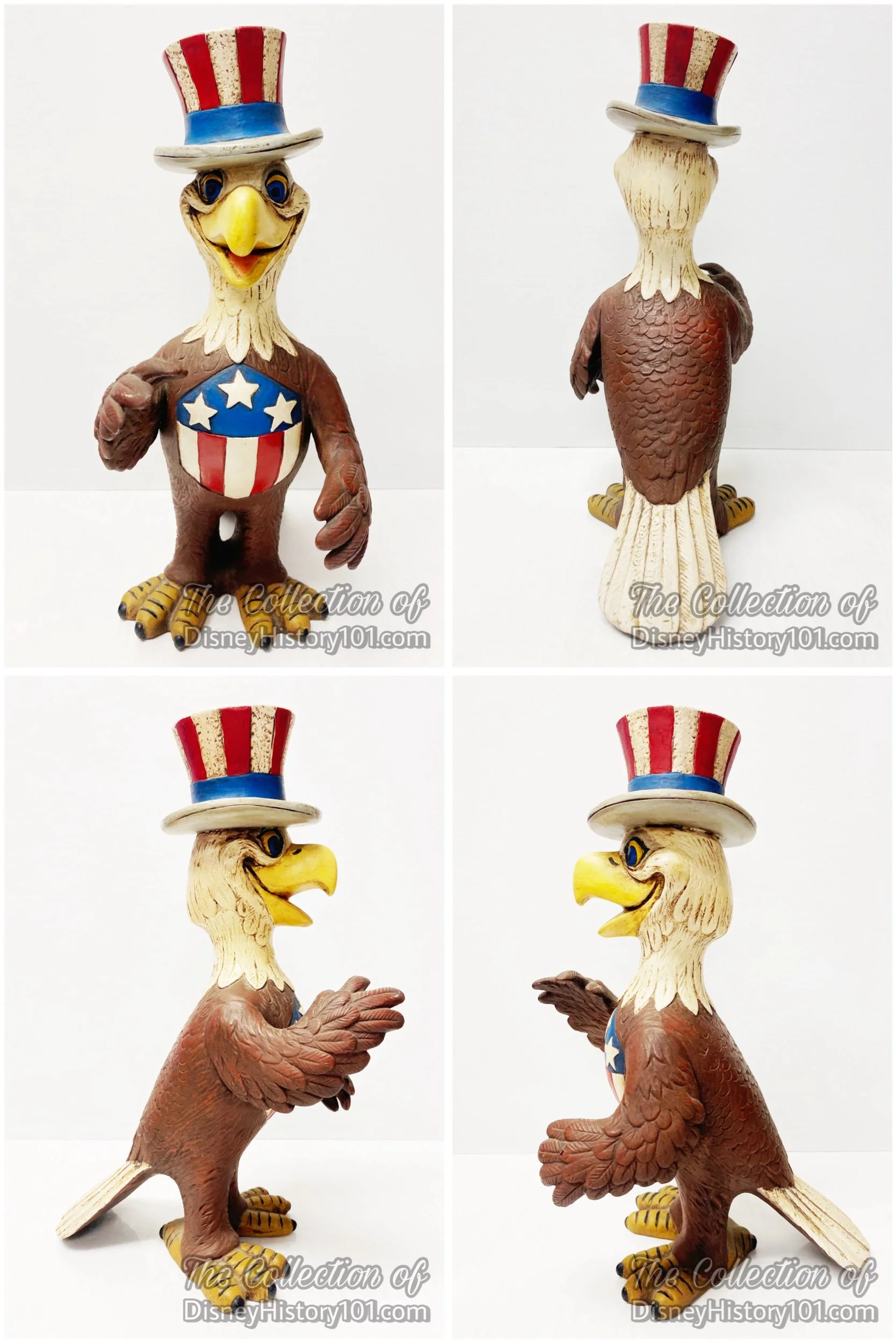
Official Press Preview gift featuring Eagle Sam sculpted by Don Winton.
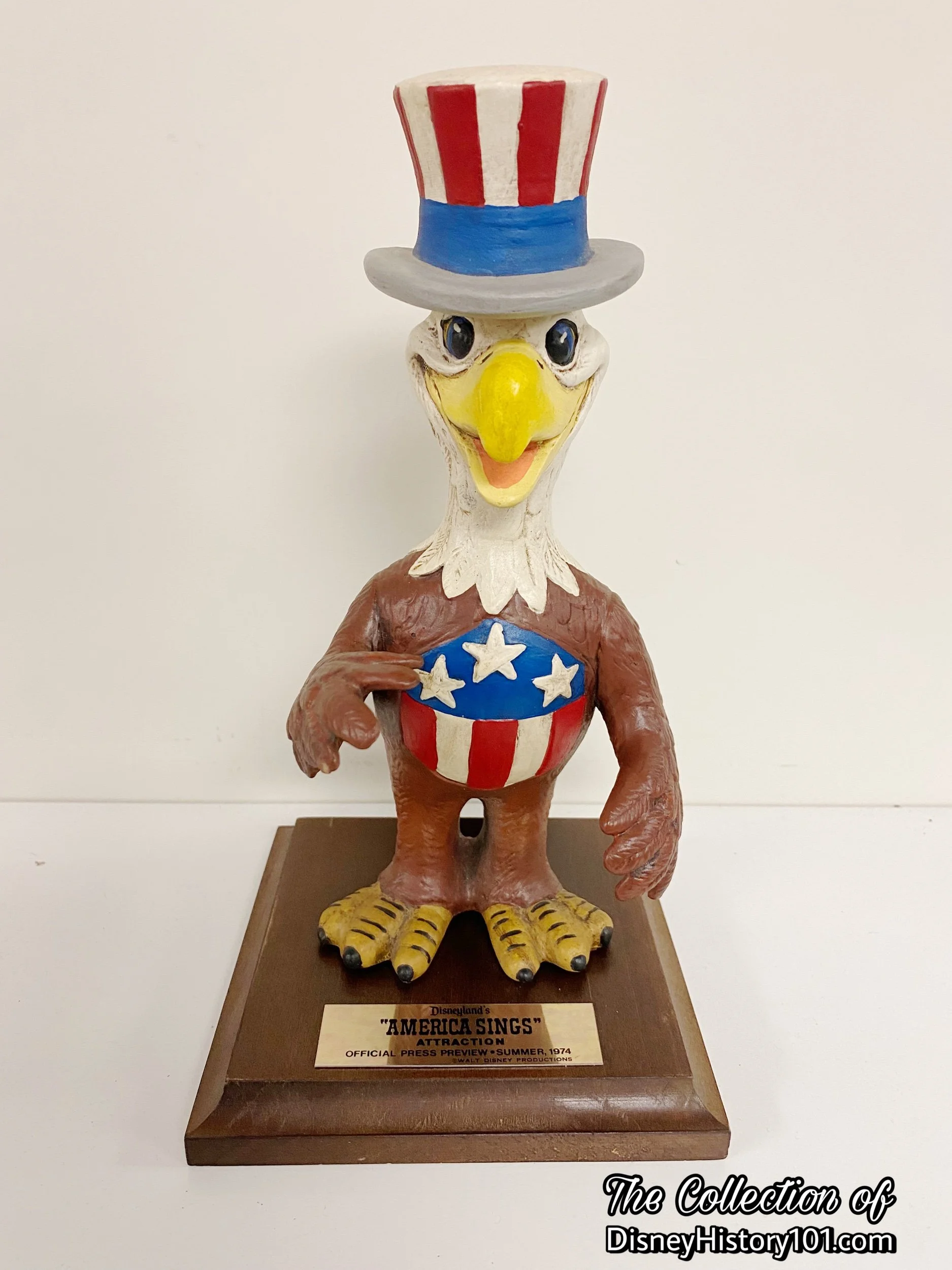
Official Press Preview gift featuring Eagle Sam sculpted by Don Winton.
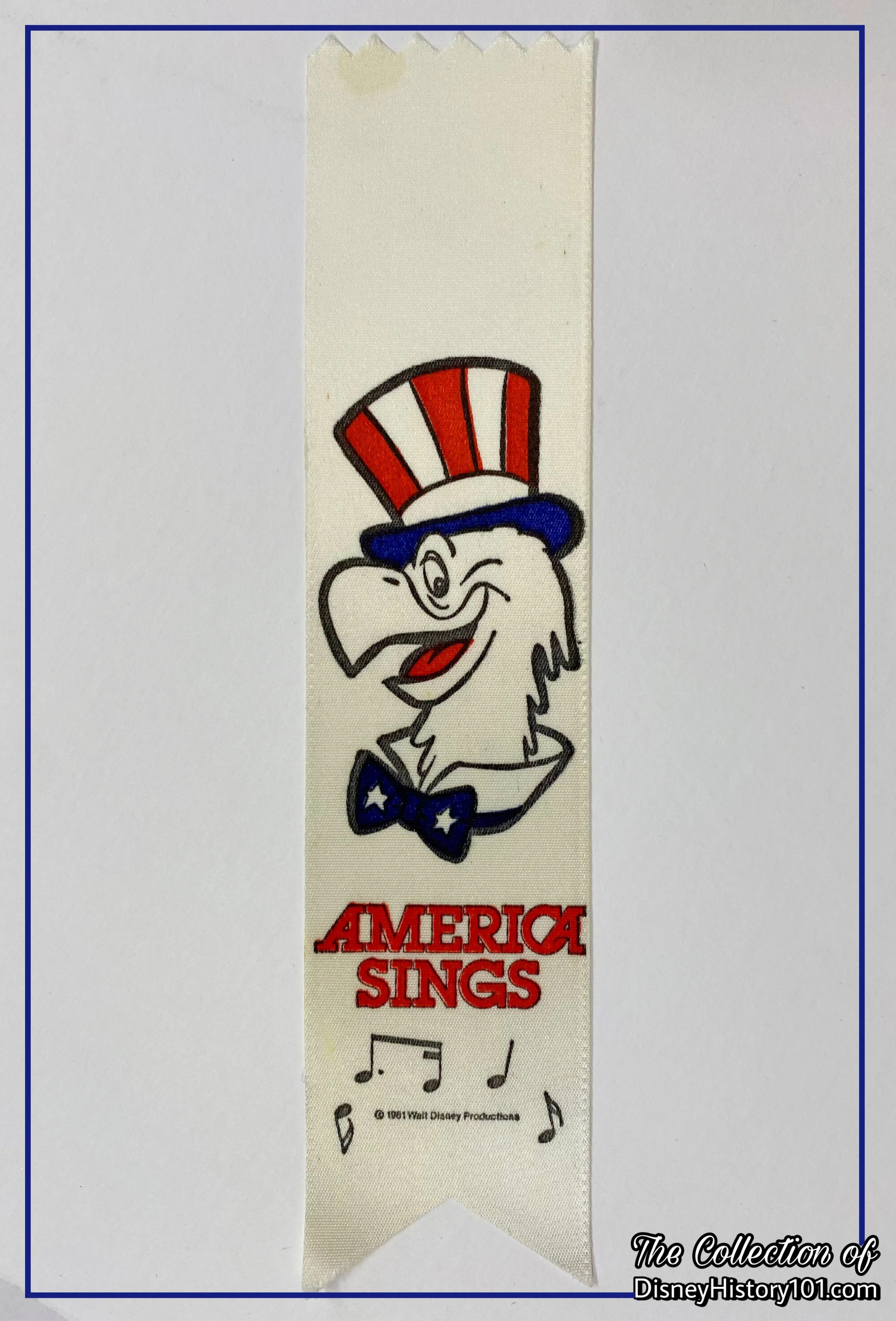
America Sings Ribbon; 1981.
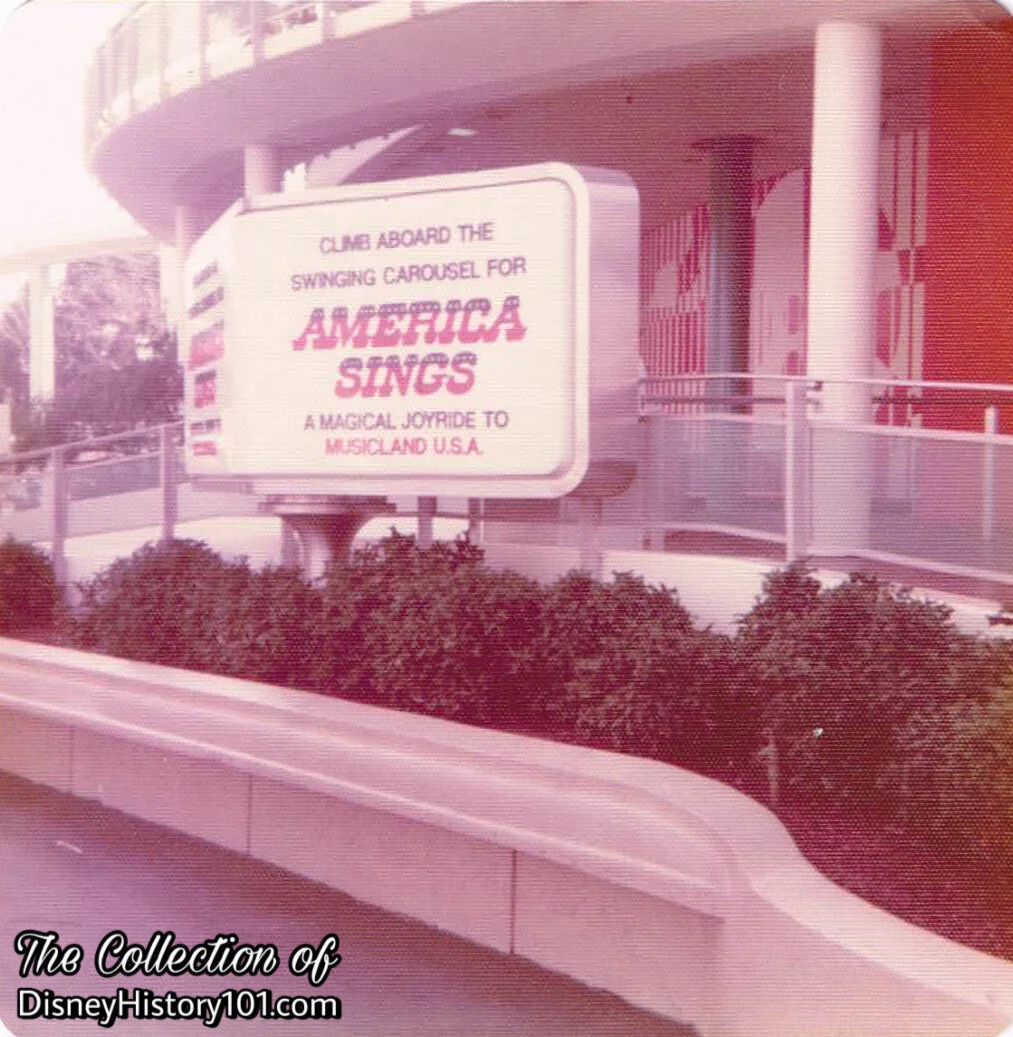
Carousel of Progress Marquee
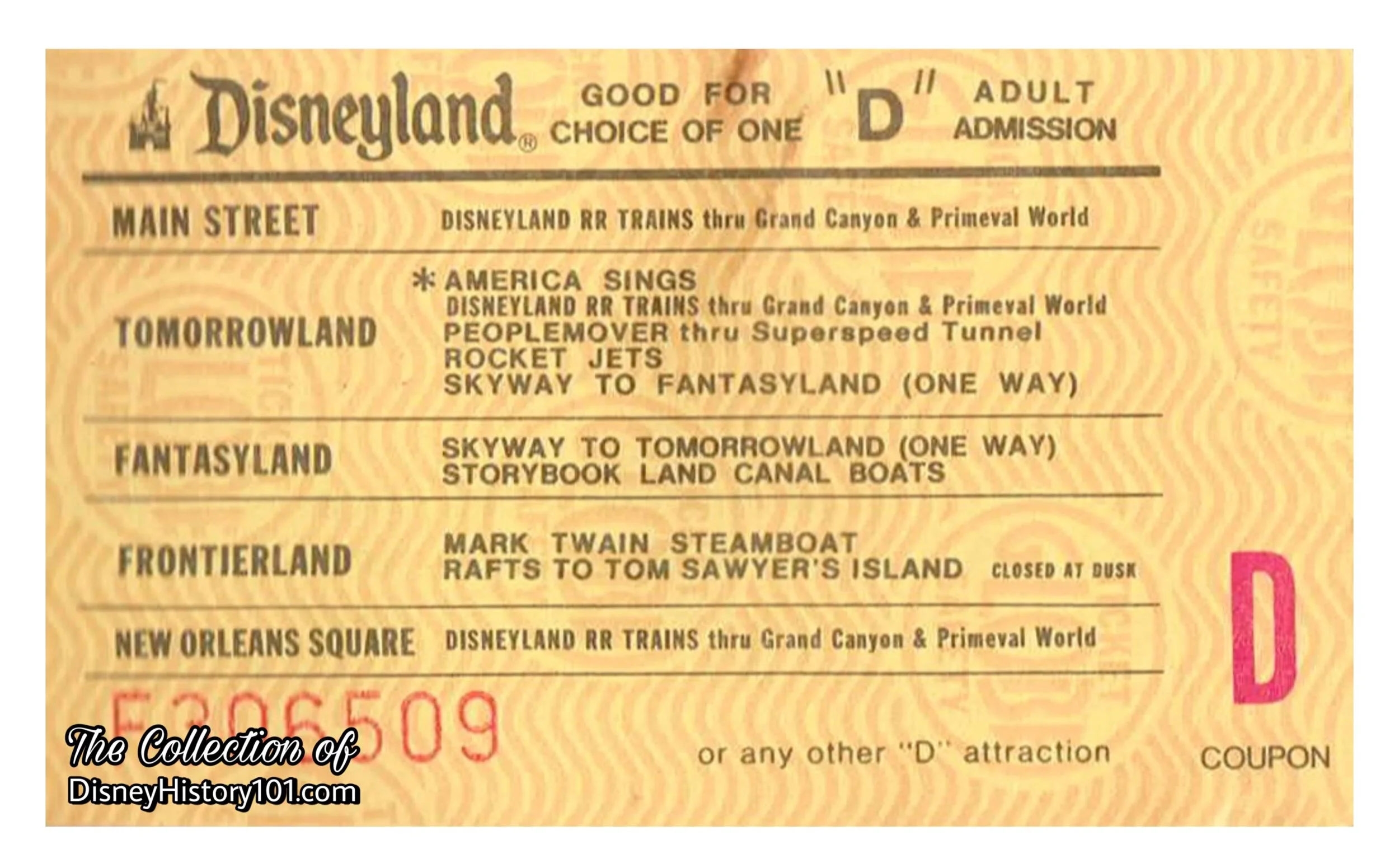
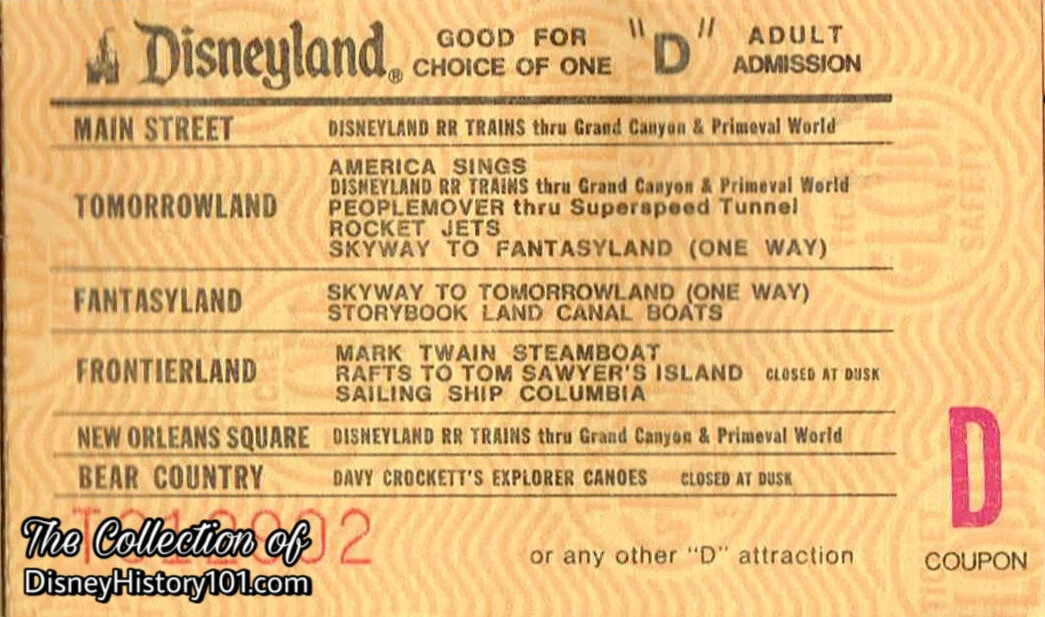
Disneyland "D" Admission Coupon
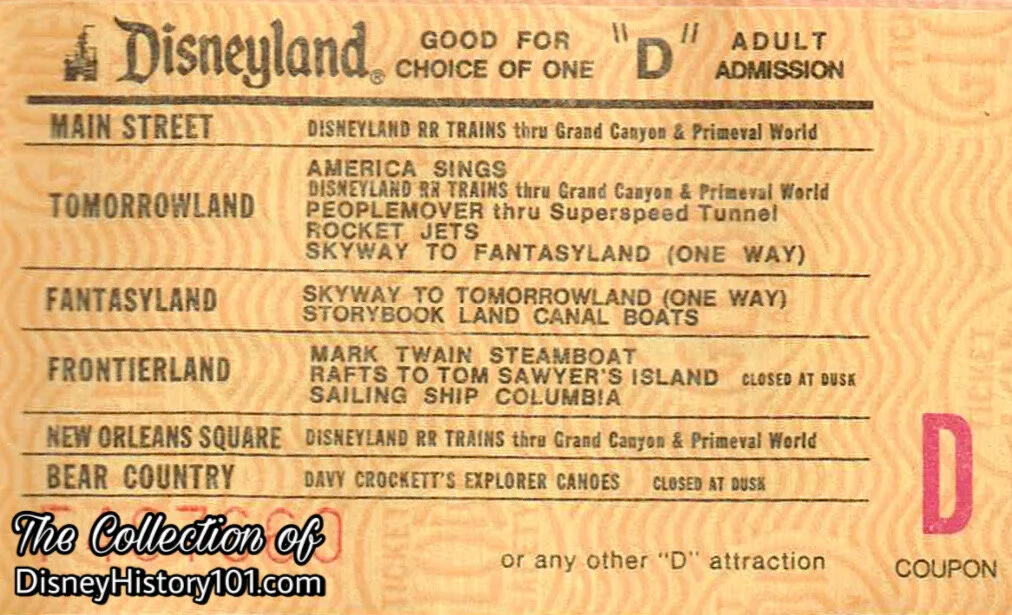
Disneyland "D" Admission Coupon , (1977-1982)
Typically, Hosts and Hostesses issued forms of the following reminders before the Show began :
“Hello, everyone. Welcome to our presentation of America Sings” a “magical joyride to Musicland, U.S.A.- !… For your safety, please remain in your seat while the carousel is in motion. You’re welcome to sing along, but remember that flash photography is prohibited during the show!”
“…And for your own safety, please remain seated at all times while the Carousel is in motion. Thank you.”
No Flash Photography was allowed inside the attraction.
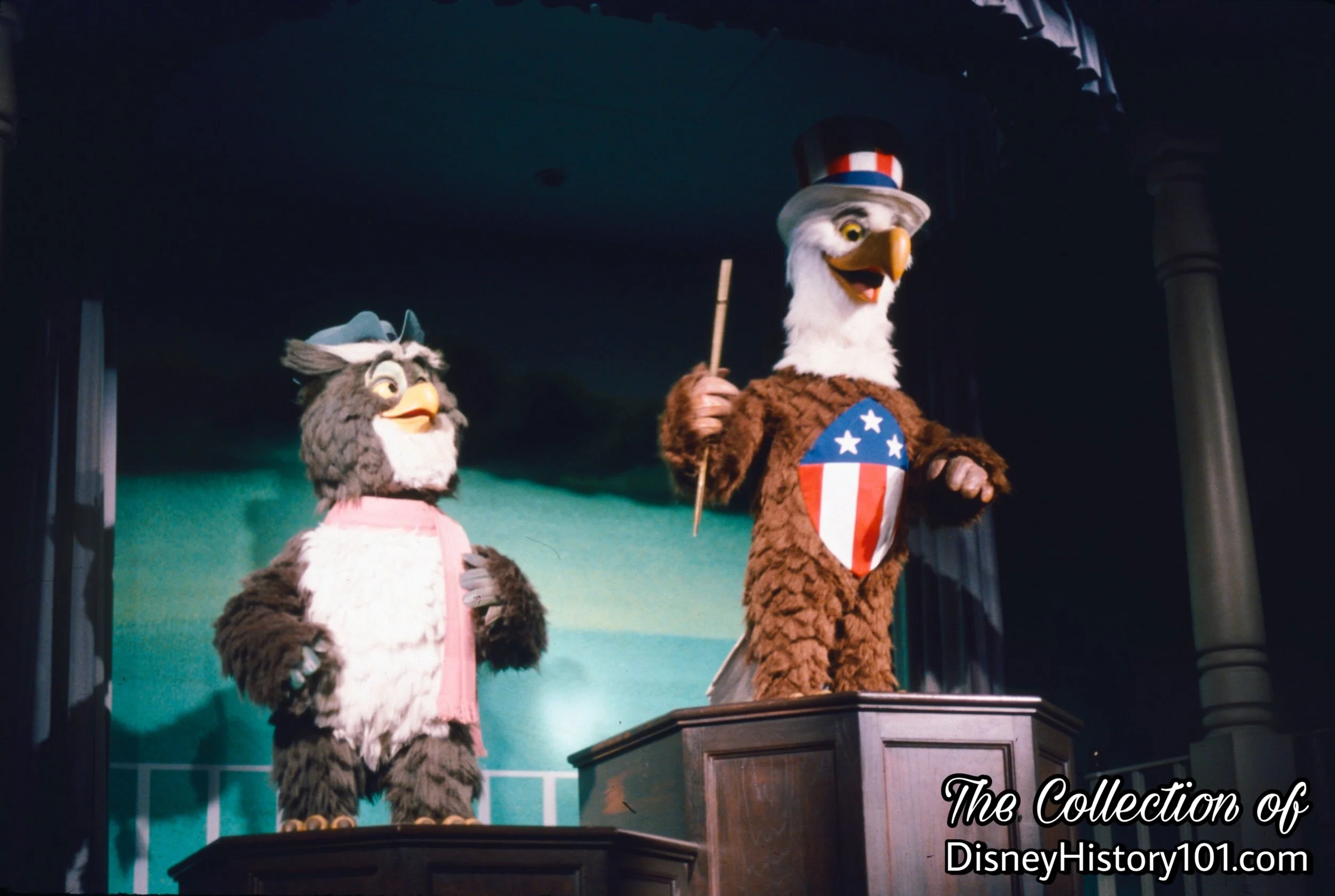
Ollie the Owl and Eagle Sam, Prologue
Sam : “Yankee Doodle went to town, riding on a pony…stuck a feather in his hat and called it macaroni. Yankee Doodle keep it up…Yankee Doodle Dandee! Mind the music and the step, and with the girls be handy!”
Yankee Doodle - Yes, folks, that was America’s first popular song, and that’s what this show is all about - America’s music!”
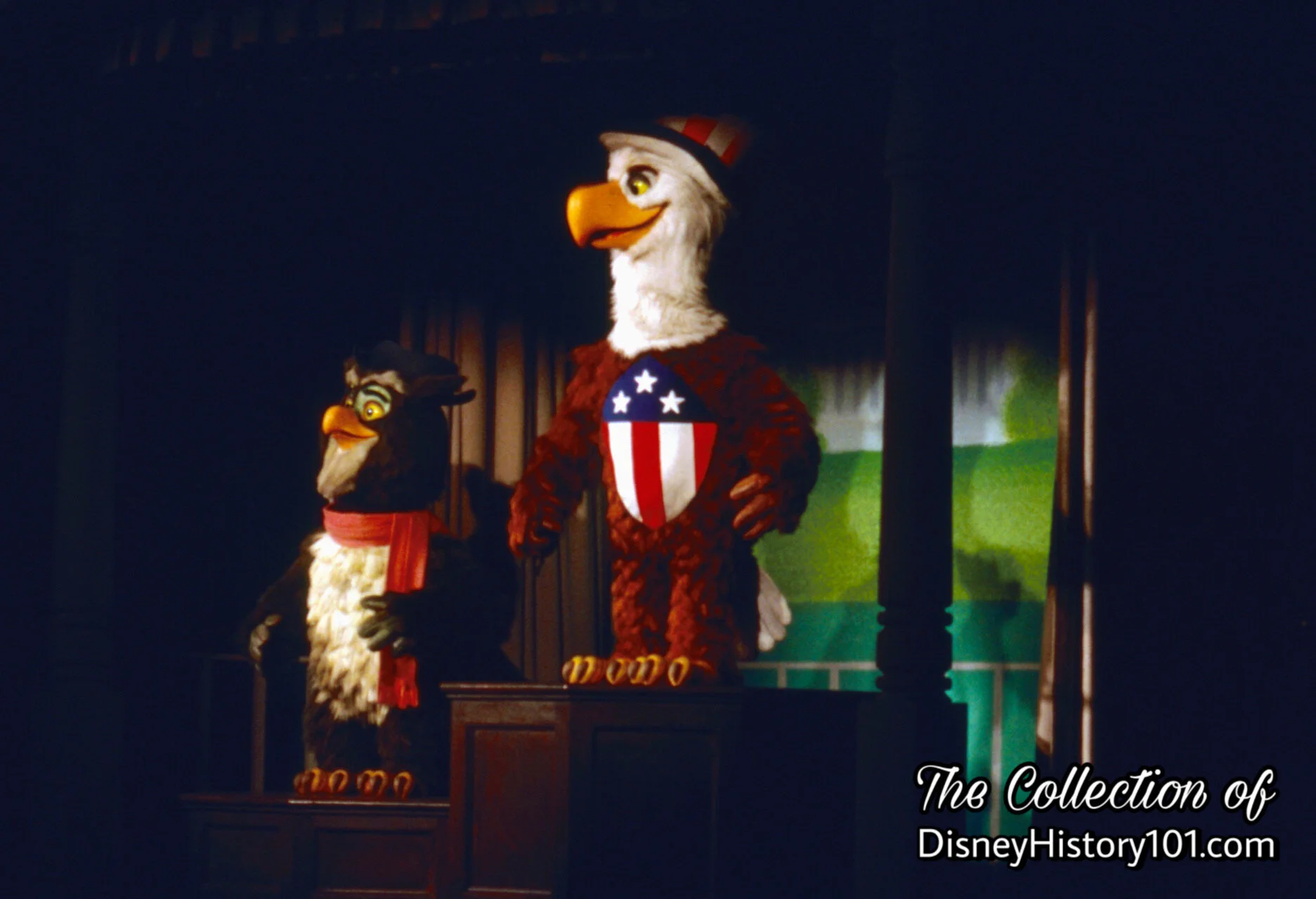
Ollie the Owl and Eagle Sam
As a sidelight, if the voice of Eagle Sam sounded familiar, it’s because he was portrayed by someone “dear to our hearts” - the legendary Burl Ives! He is most recognized by Disney feature film audiences, for his role as Osh Popham (and his popularization of the songs “Ugly Bug Ball” and “On The Front Porch”) in the 1963 musical “Summer Magic”.
It was never mentioned in the show’s script, but the name of Sam’s compatriot costar was Ollie the Owl. Now if the voice of Ollie the Owl (Sam’s co-star) sounded familiar, that’s because it was provided by Sam Edwards. Sam Edwards had previously performed some minor voice work for Walt Disney Productions, as the voice of an adult Thumper in Walt Disney’s Bambi, (among other roles). But the voice of Sam Edwards may have been most recognized through his contributions toward numerous Disneyland Record Albums.
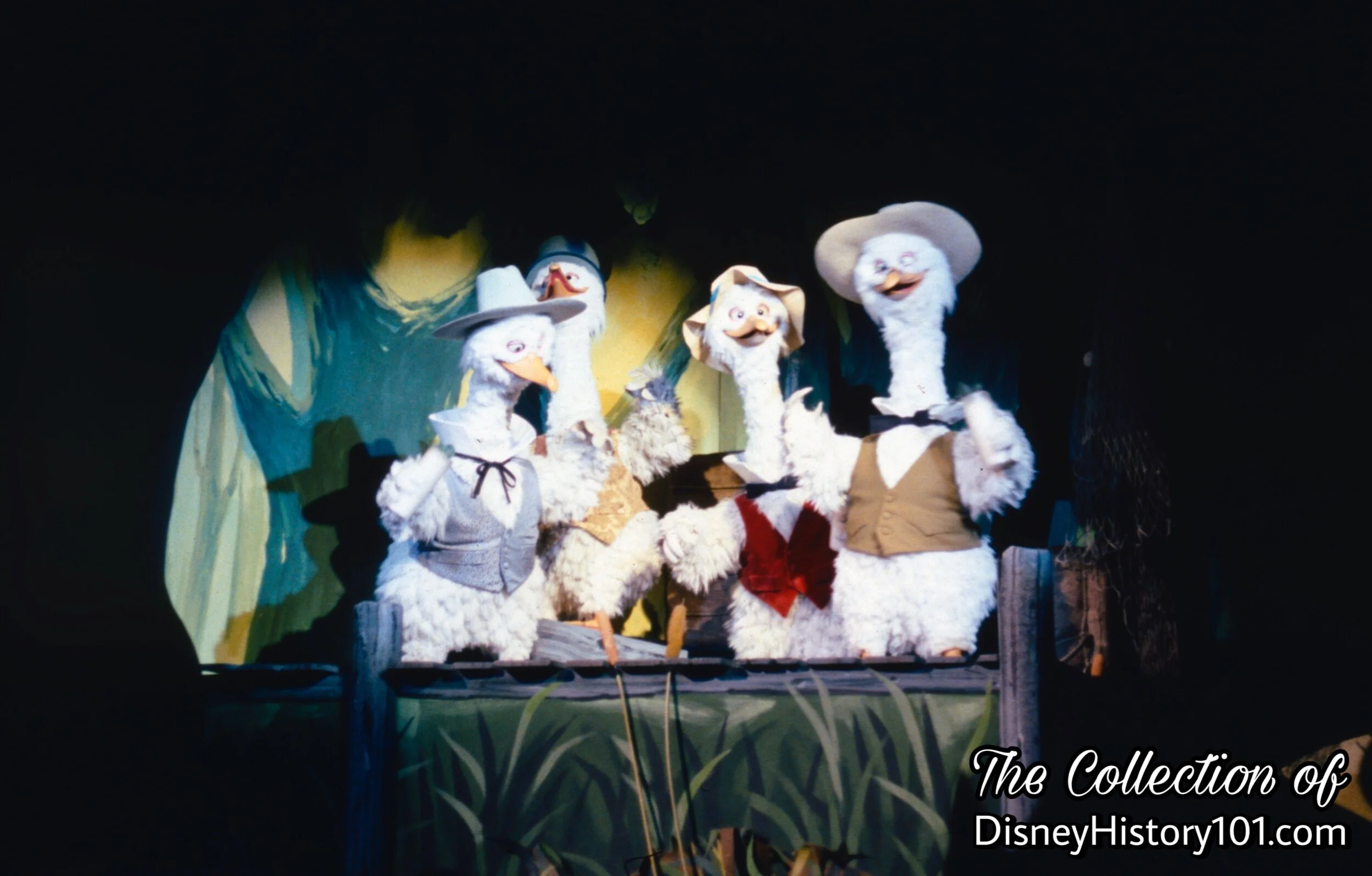
Geese Quartet ; Early "Deep South"
The Geese Quartet regales us with their renditions of “Dixie”, Lil’ Liza Jane”, and “Camptown Races”. The members of the quartet were voiced by vocalists Bill Cole (Melloemen Lead Tenor), Jerry Whitman, Gene Merlino (Mellomen 2nd Tenor), and Bill Lee (Mellomen Baritone who particularly had a long history of melodic voice work for Walt Disney Productions from “Alice in Wonderland” to Walt Disney’s “The Jungle Book”).
The Geese have a legacy (of sorts), in their distant cousins from “a galaxy far, far away” - the G2 Droids of Star Tours : The Adventures Continue.

Colonel Houndstoothe on the Front Porch of his "Old Kentucky Home" ; Early "Deep South"
Colonel Houndstooth’s voice is like a glass of “cool water” and there’s good reason for that. The Colonel is actually one of the “Sons of the Pioneers” - Lloyd Perryman! Sadly, Lloyd passed away three years after his voice was recorded for this contribution to this American folk song exhibition, but not before receiving a star on the Hollywood walk of Fame (in 1976).
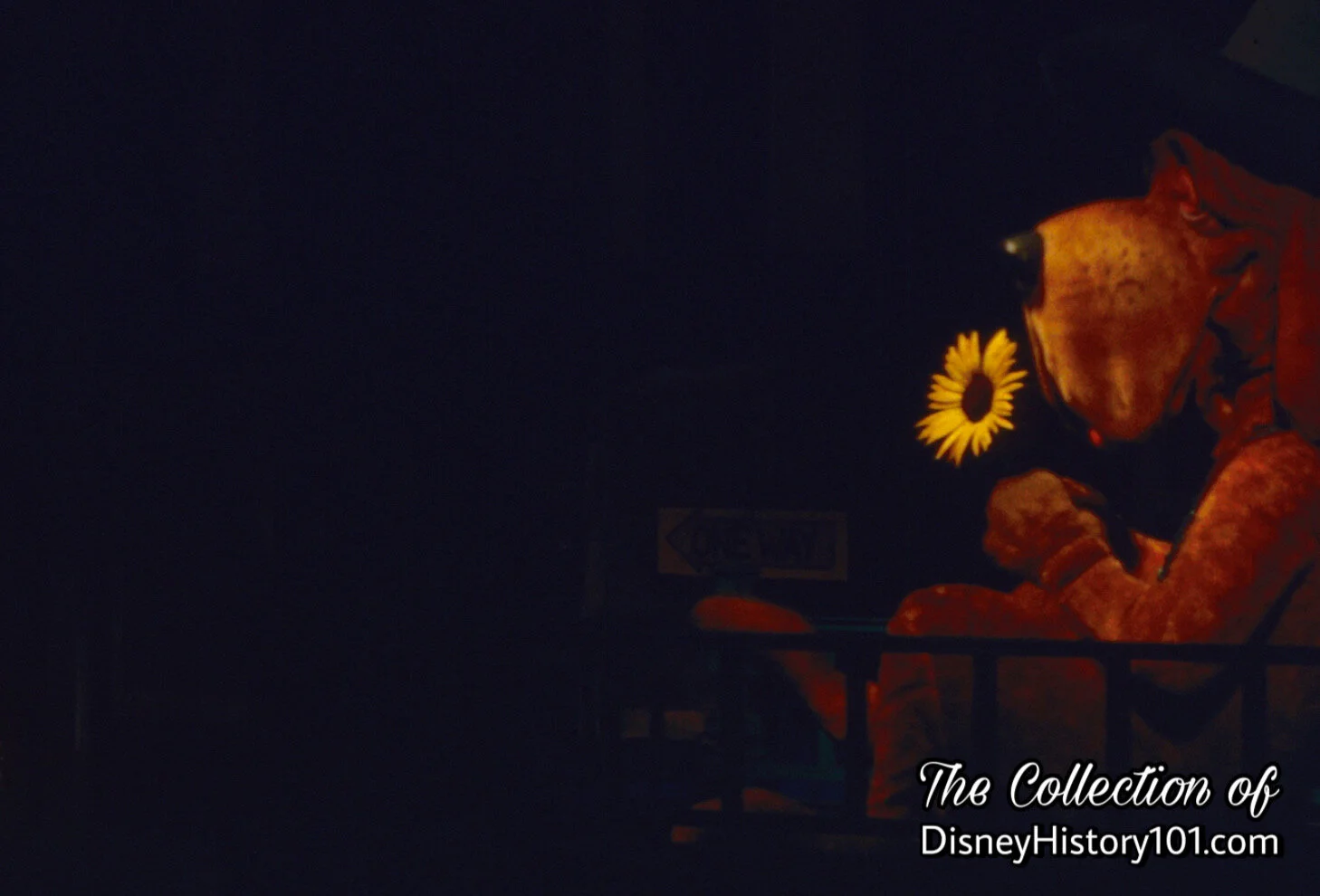
Colonel Houndstoothe on the Front Porch of his "Old Kentucky Home" ; Early "Deep South"
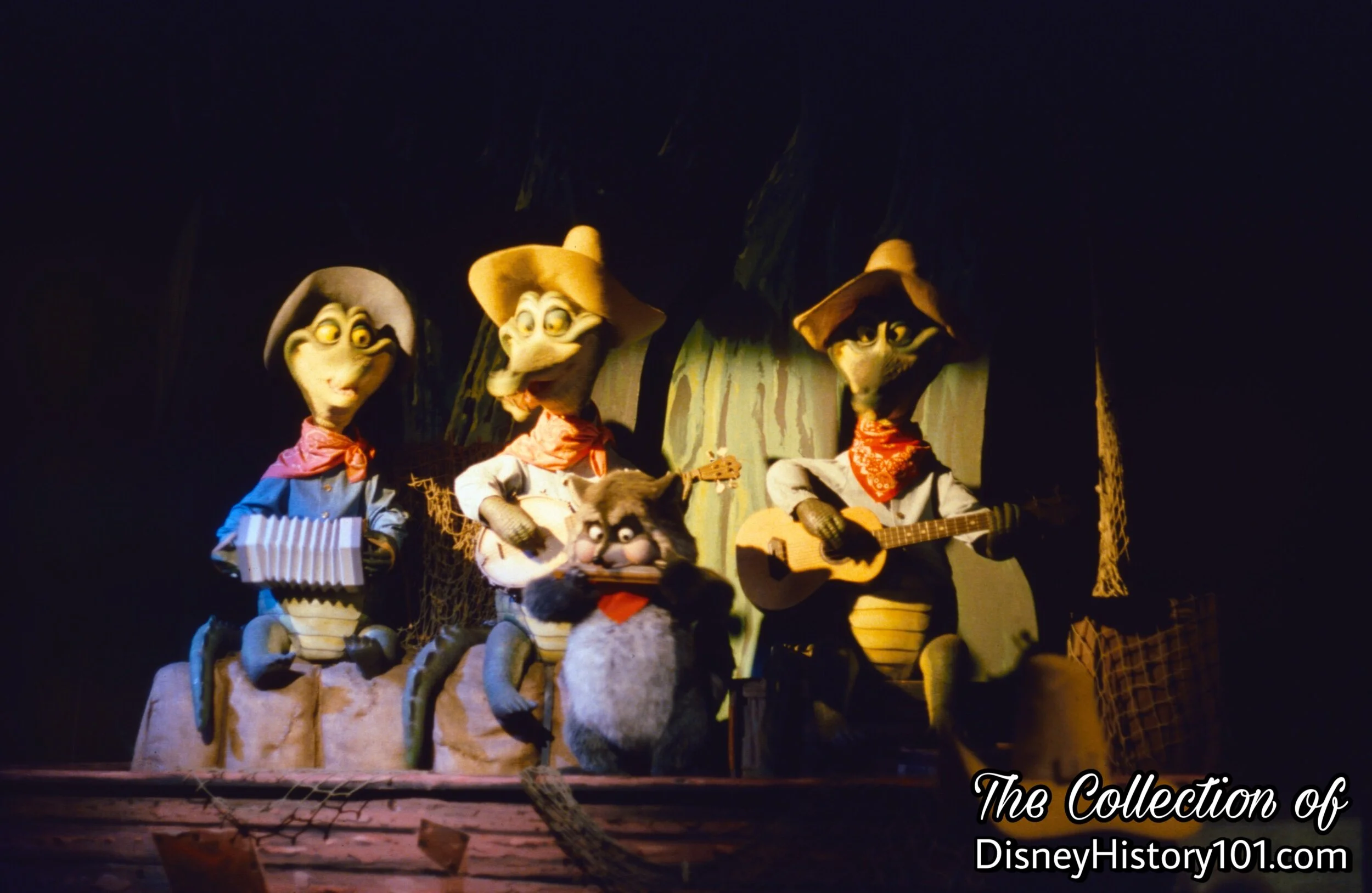
The Swamp Boys ; The Bayous of the Early "Deep South."
The Swamp Boys sing “Polly Wolly Doodle…” all day long.
In some of Marc Davis’ original concept art created for “The Okefenokee Swamp Boys” act, the band was comprised of an alligator (on guitar), a rooster (on banjo), a bear (on bass), and a harmonica playing raccoon. Other art featured an alligator band (with an opossum on harmonica).
Now, popular musicians - Ray “Rockabilly” Campi, Wesley “Mac” Curtis, and Geary Hanley - provide the voices for the Swamp Boys!
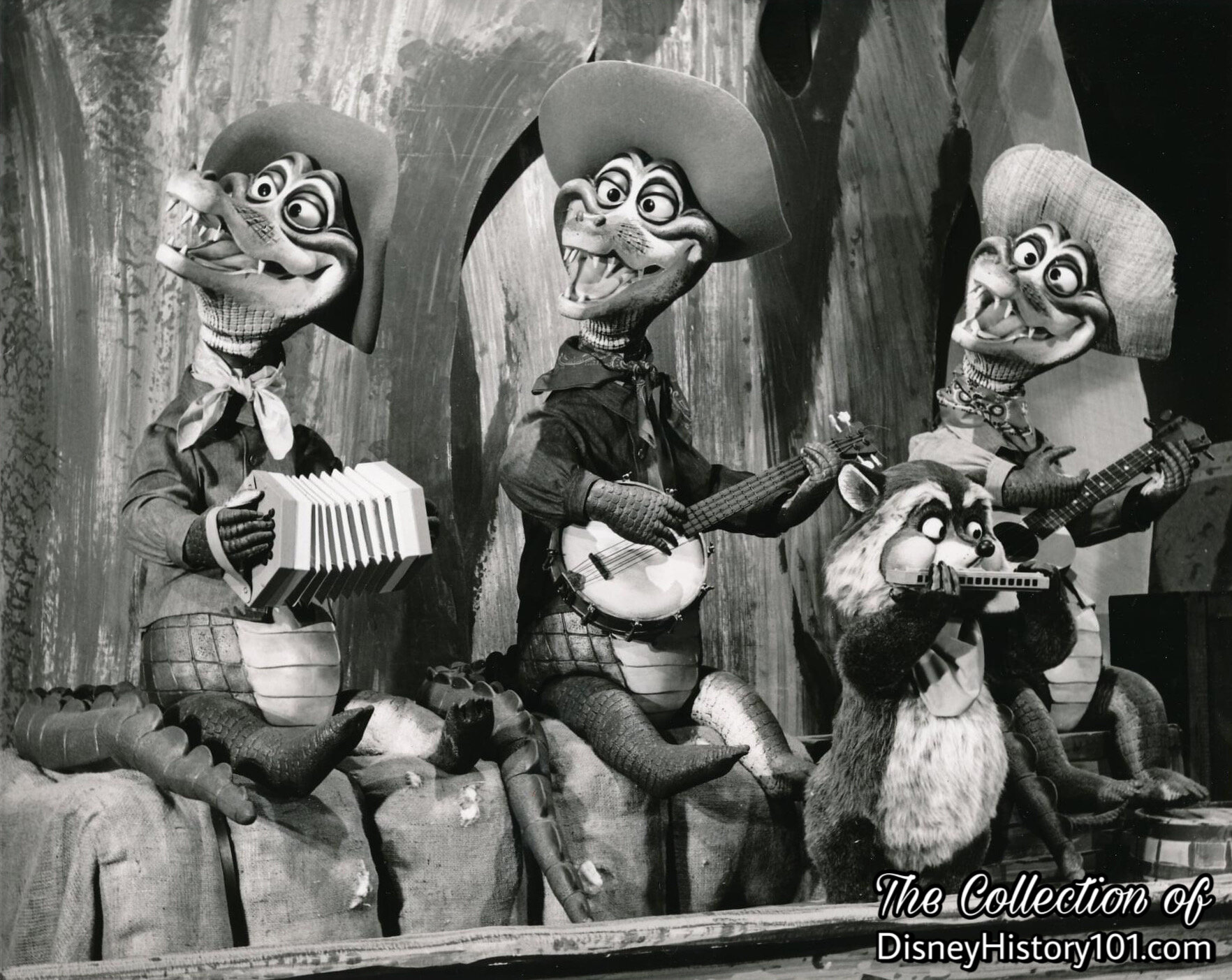
The Swamp Boys ; The Bayous of the Early "Deep South," ©️Walt Disney Productions, 1974.
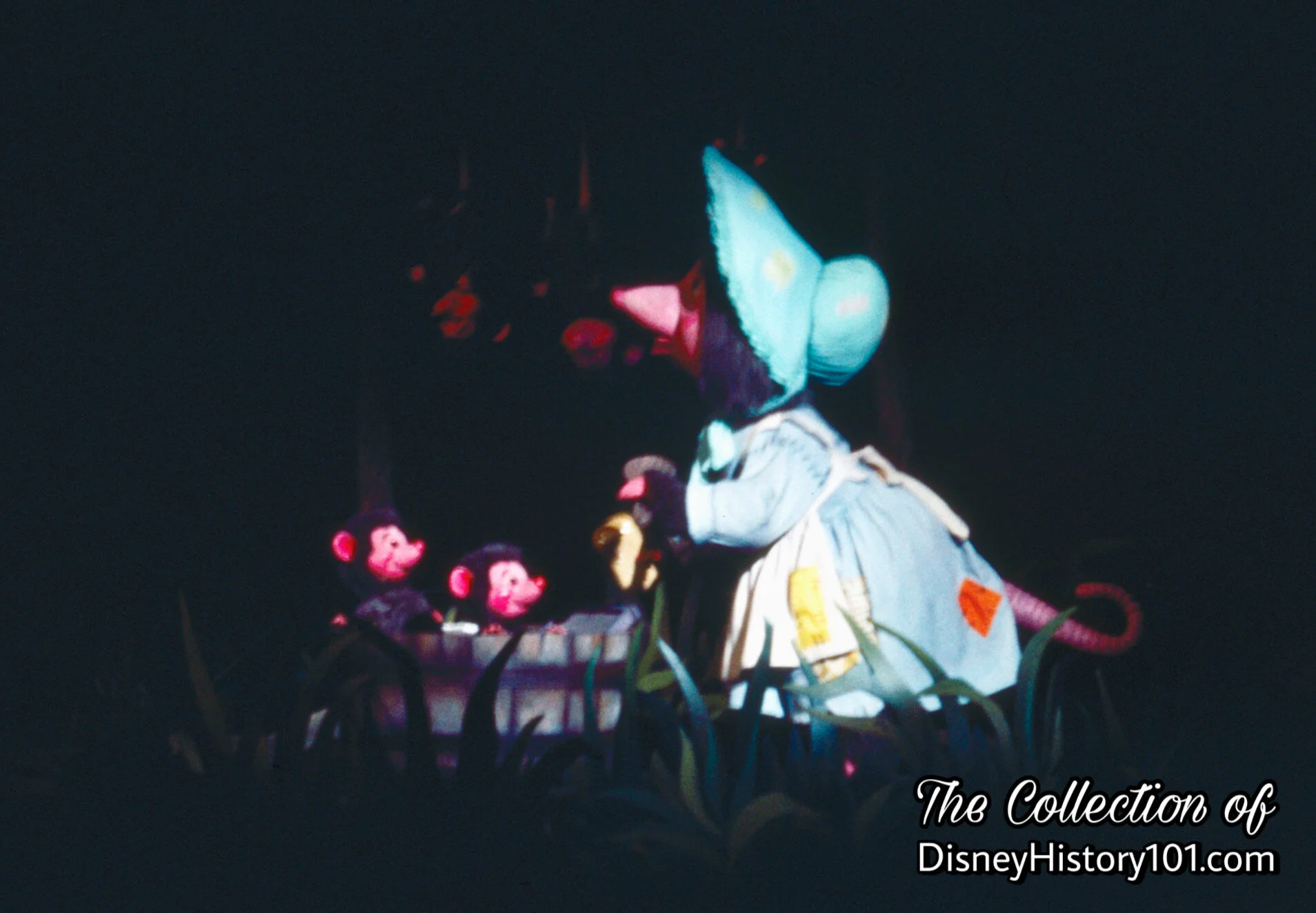
"Plaintive" Mother Possum & Her Babies in The Bayous of the Early "Deep South."
The voice of Mother Possum (and her “singing family”) is actually the “Mother of Folk Music” - Jean Ritchie (now in the role of a “plaintive Possum”). She hangs her young ones out to dry as she belts out a tender complaint, sung from the heart :
“When I was single, dress up, so fine. Now I am married, go ragged all the time. Lord, I wish I was a single girl again.”
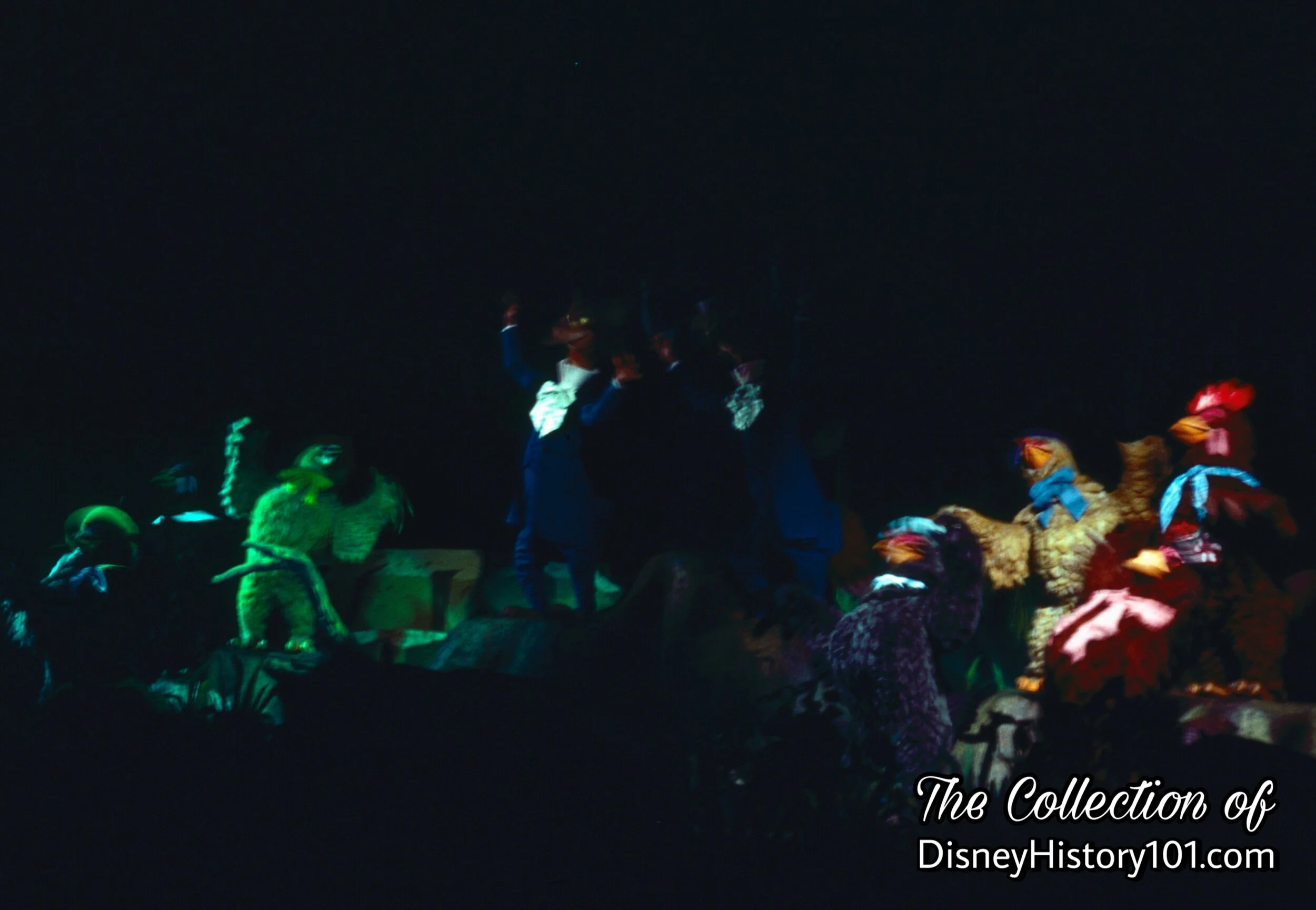
The Aggregation of Foxes and Chickens Sing a Soulful Rendition of “Down by the Riverside” Segment, Early “Deep South.”
Here, the voices are provided by the talented Gwen Lightner Group, Bill Cole Group and Jewel Hall.
Years later, the Cast of The “Down by the Riverside” segment would be featured in Splash Mountain’s musical finale, aboard a southern side-wheeler riverboat!
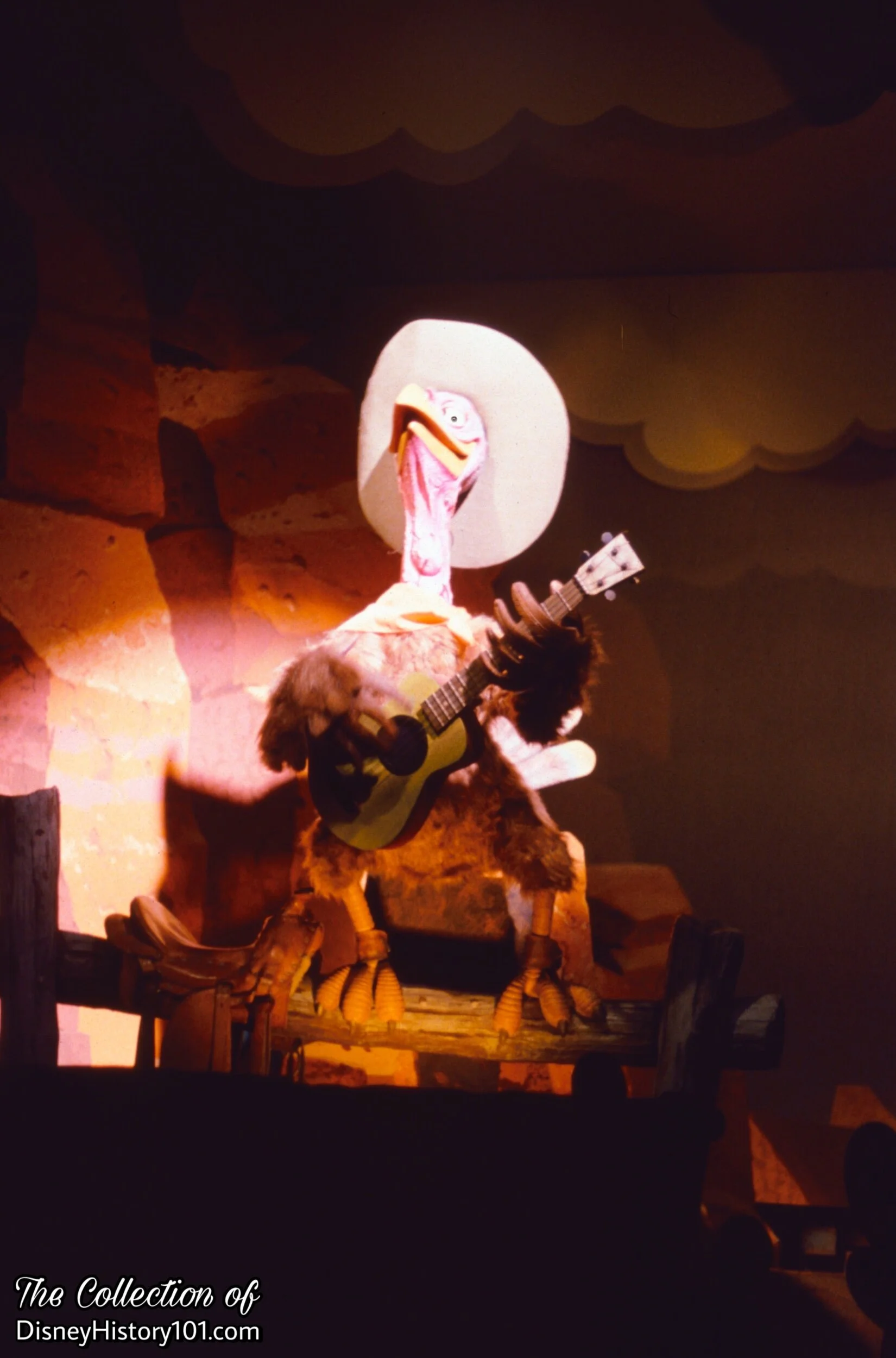
Saddle Sore Swanson Sings About the "Old Chisholm Trail" ; Old Wild West
The voice of Saddle Sore Swanson was performed by Theodore “Chill” Wills. Chill wasn’t a stranger to voice work, after all, he had sang in many western films. He was also well-known for leading his voice to Francis the Talking Mule. Speaking of mules…
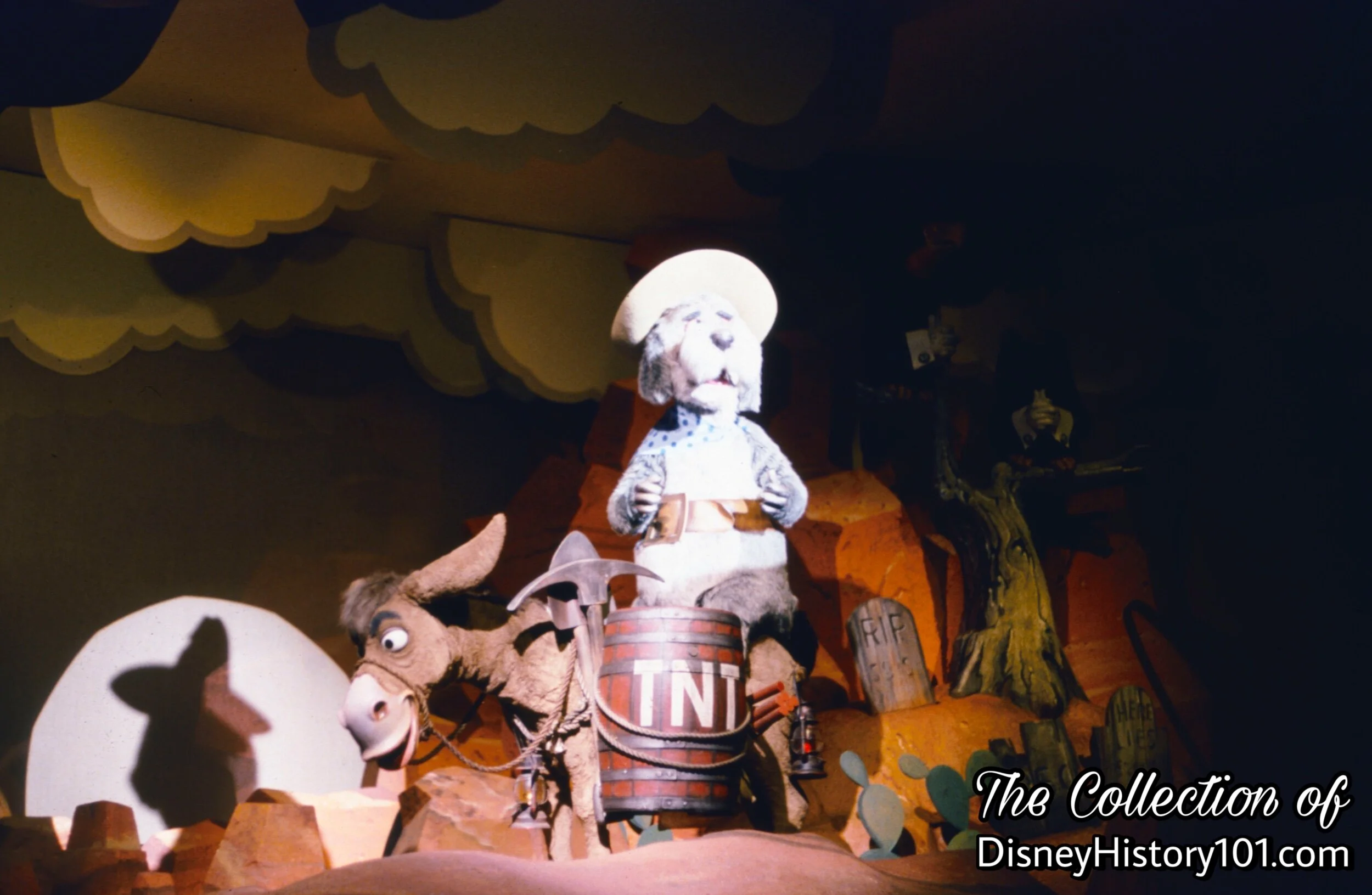
Sombrero-Wearing "Trail Weary Mongrel" Dog Aboard a Pack Mule ; Old Wild West
“Who shot the hole in my sombrero? Who put the hole through my hat? Was it Pancho from the Rancho?”
Here’s a little “sidelight” - the “Sombrero-Wearing, Trail Weary Mongrel Dog” aboard a Pack Mule was performed by Rex Allen (Narrator of many Walt Disney Productions ; and renowned for his performance of “There’s a Great Big Beautiful Tomorrow” for the Carousel of Progress). The “Sombrero-Wearing, Trail Weary Mongrel Dog” would sing another song once popularized by Rex Allen (in 1947) - “Who Shot the Hole in My Sombrero?”
The Ten Gallon Hat was auctioned through “Celebrating 50 Years of Magical Memories” of Disneyland.
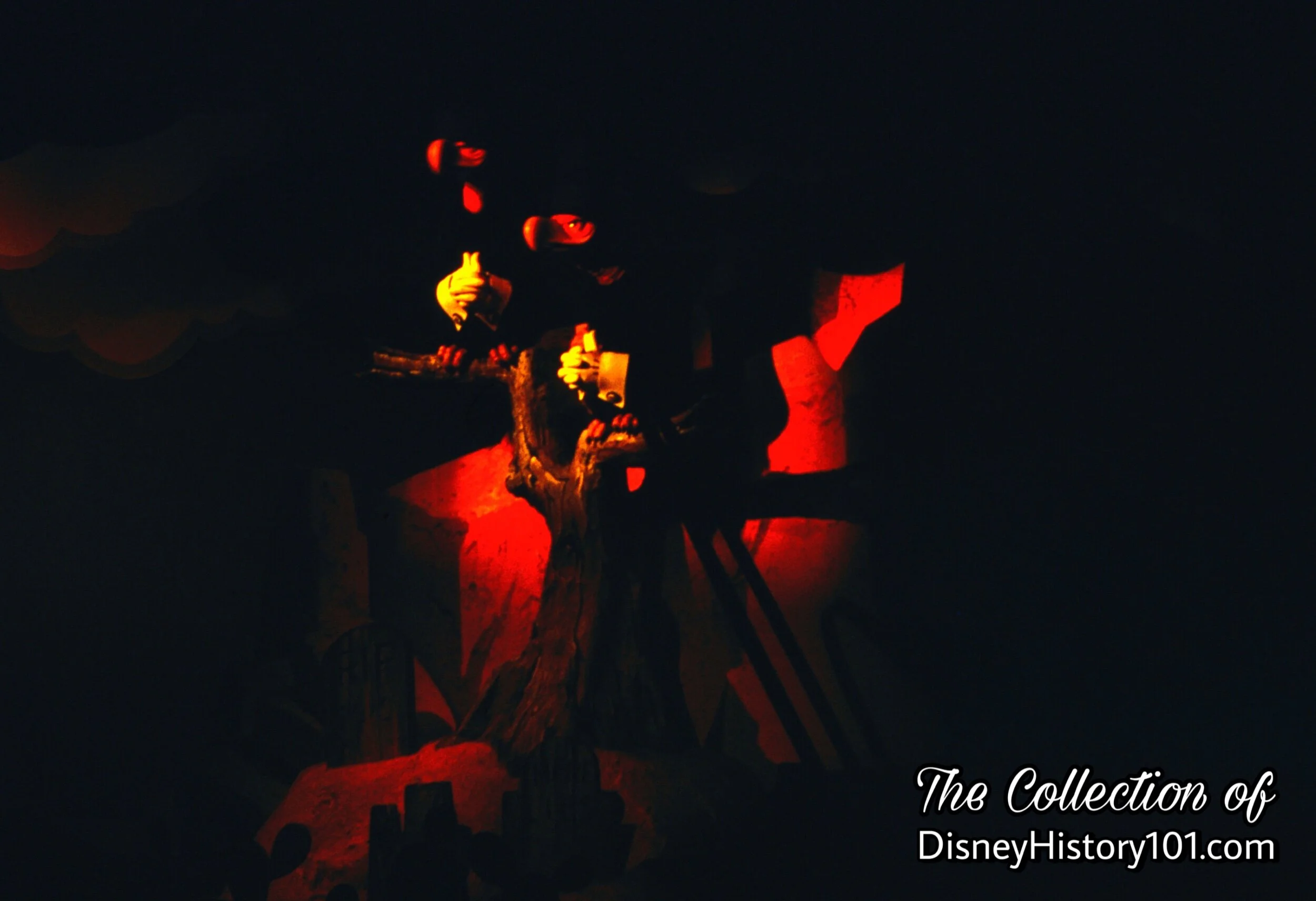
The Boot Hill Boys (a "Gruesome Twosome of Vengeful Vultures") Regale Audiences with the Tale of 'Billy The Kid' ; Old Wild West
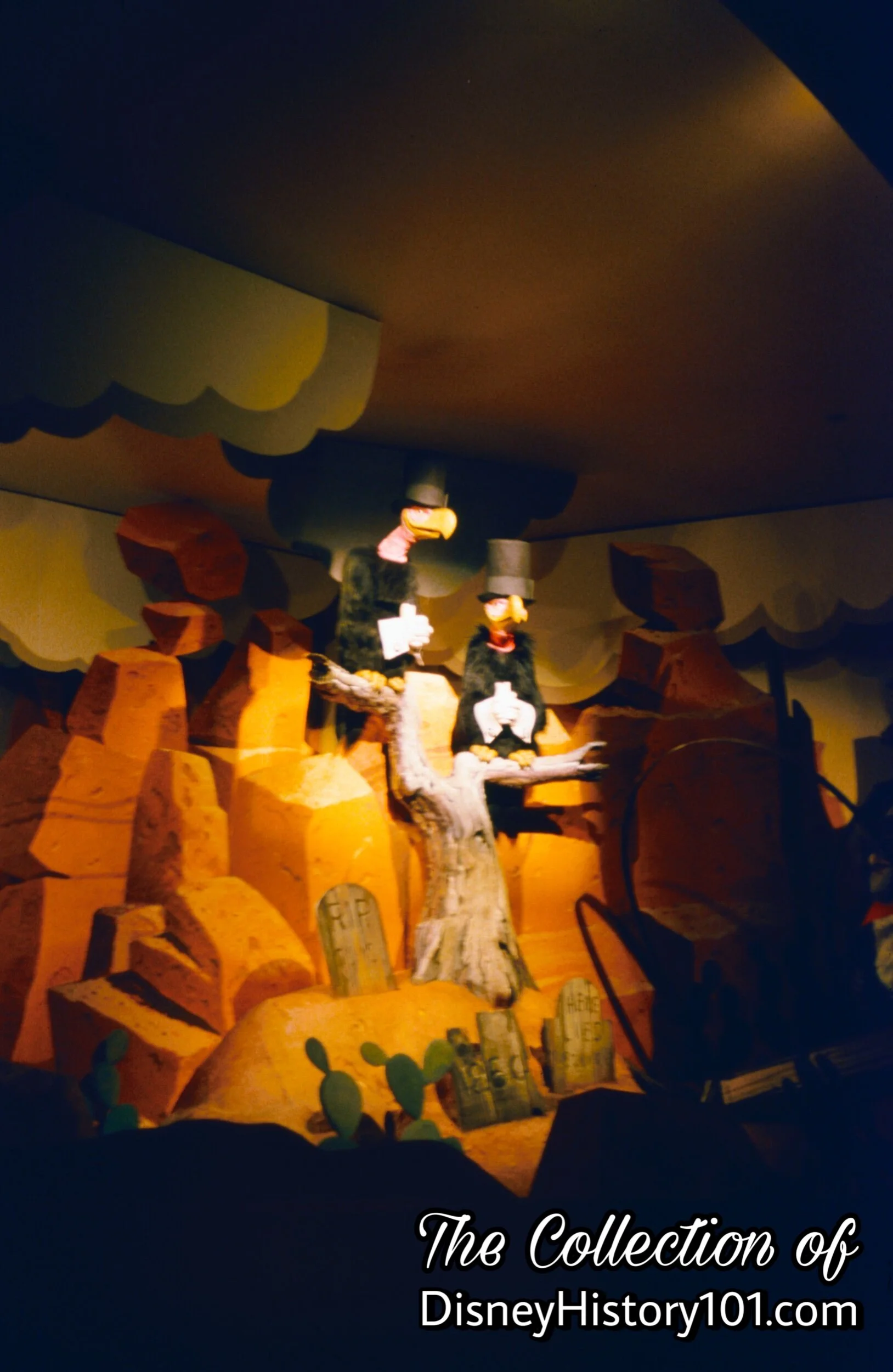
The Boot Hill Boys Regale Audiences with the Tale of 'Billy The Kid' ; Old Wild West
Both Bill Cole and Bill Lee previously performed with the Mellomen (alongside Thurl Ravenscroft). Bill Lee was familiar with character voice work - contributing to the voices of the “Barnyard Menagerie” in the “Jolly Holiday” sequence of Walt Disney’s Mary Poppins. Bill Lee also performed the singing voice of Shere Khan in Walt Disney’s Jungle Book and the voice of Melvin the Moose for the Country Bear Jamboree.
After the America Sings show ended, the final resting place of the Boot Hill boys was among the 103 Audio-Animatronic Characters of Splash Mountain.
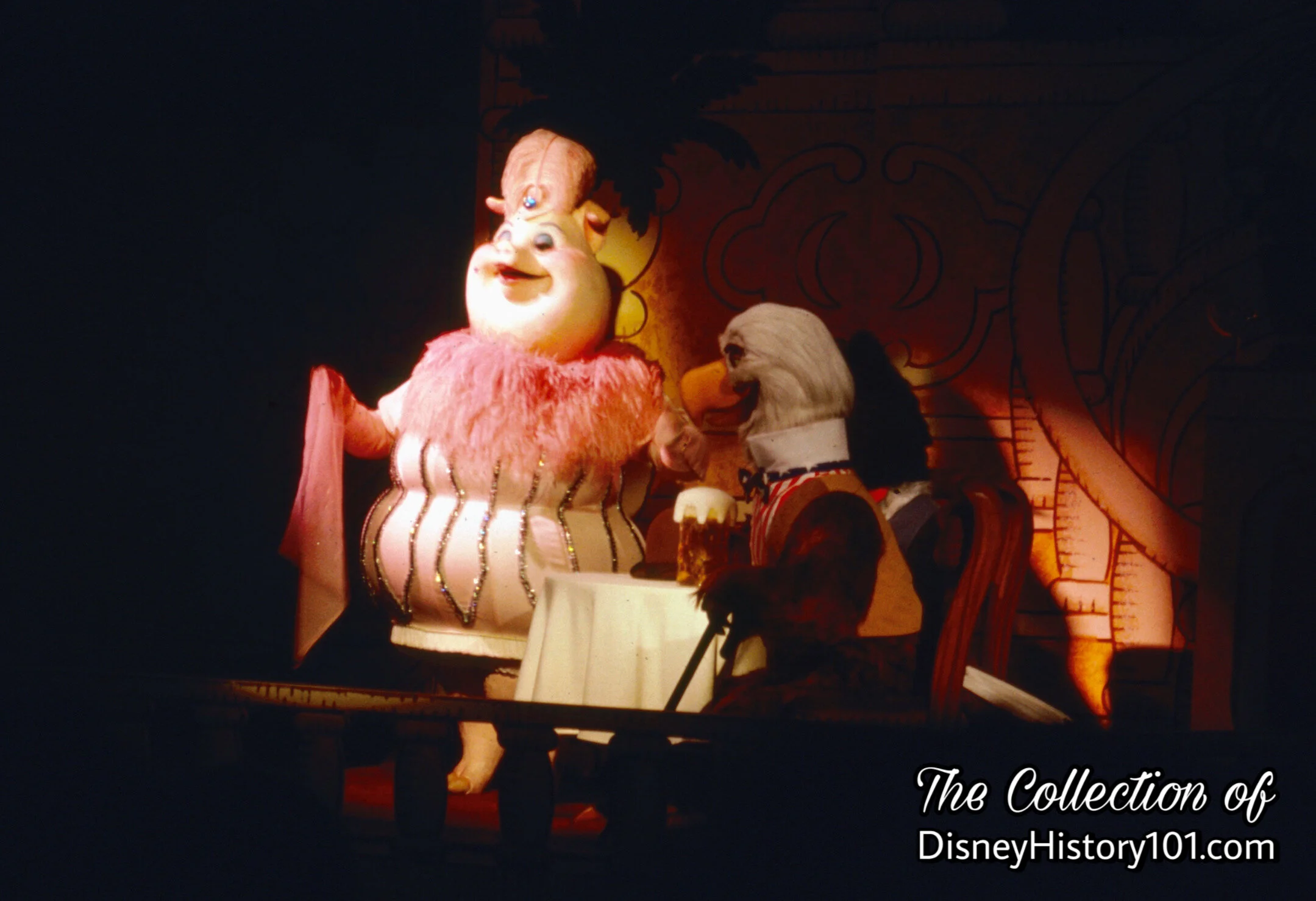
A "Love Sick Sow," The Gay 90's
This America Sings Cast Member sings a few words of her rendition of “Won’t you come home, Bill Bailey? Won’t you come home?. . . I know I’s done you wrong”, a tune further popularized by Slue Foot Sue of The Golden Horseshoe Revue. Both characters were portrayed (or, in this case voiced) by the Legendary Betty Taylor!
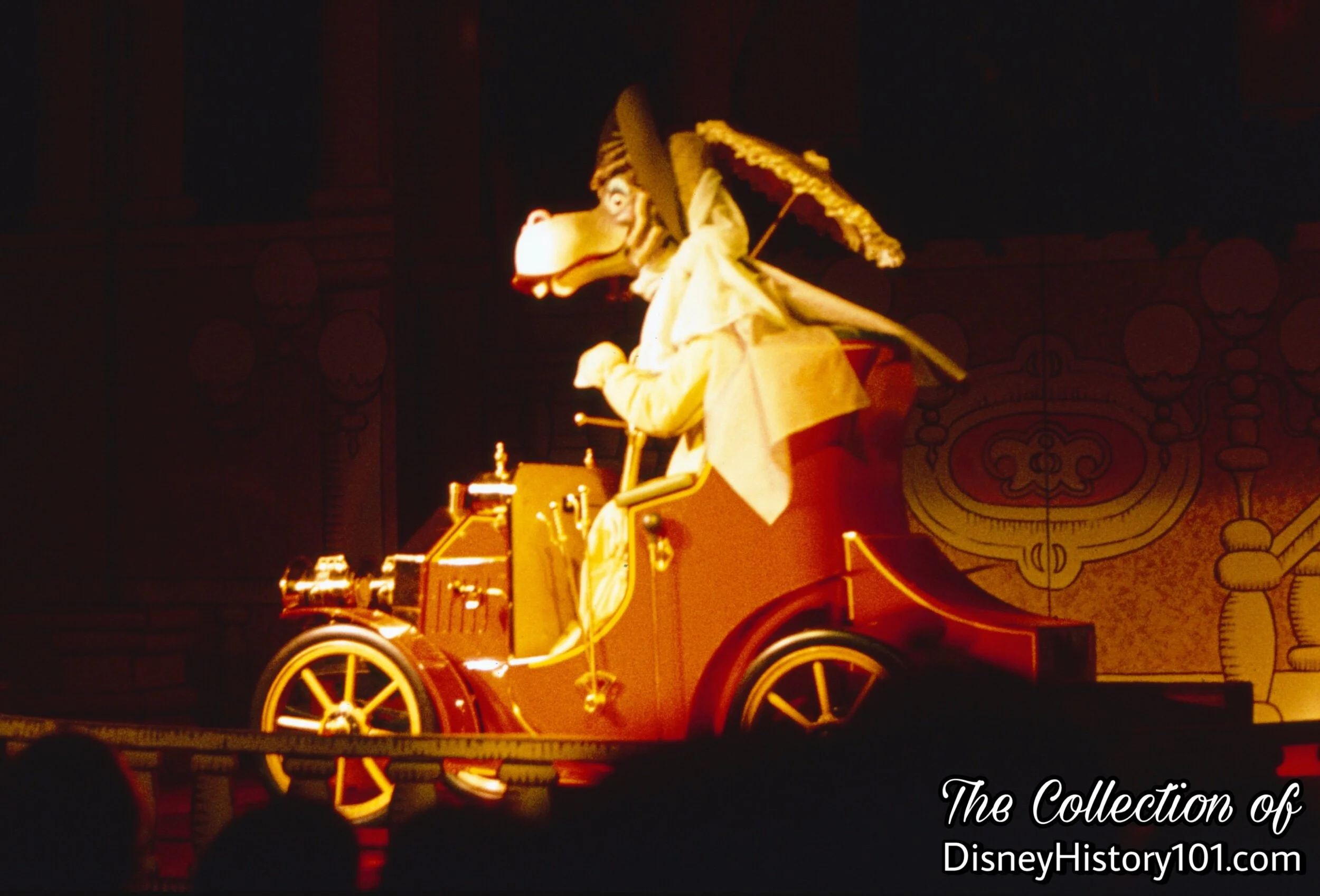
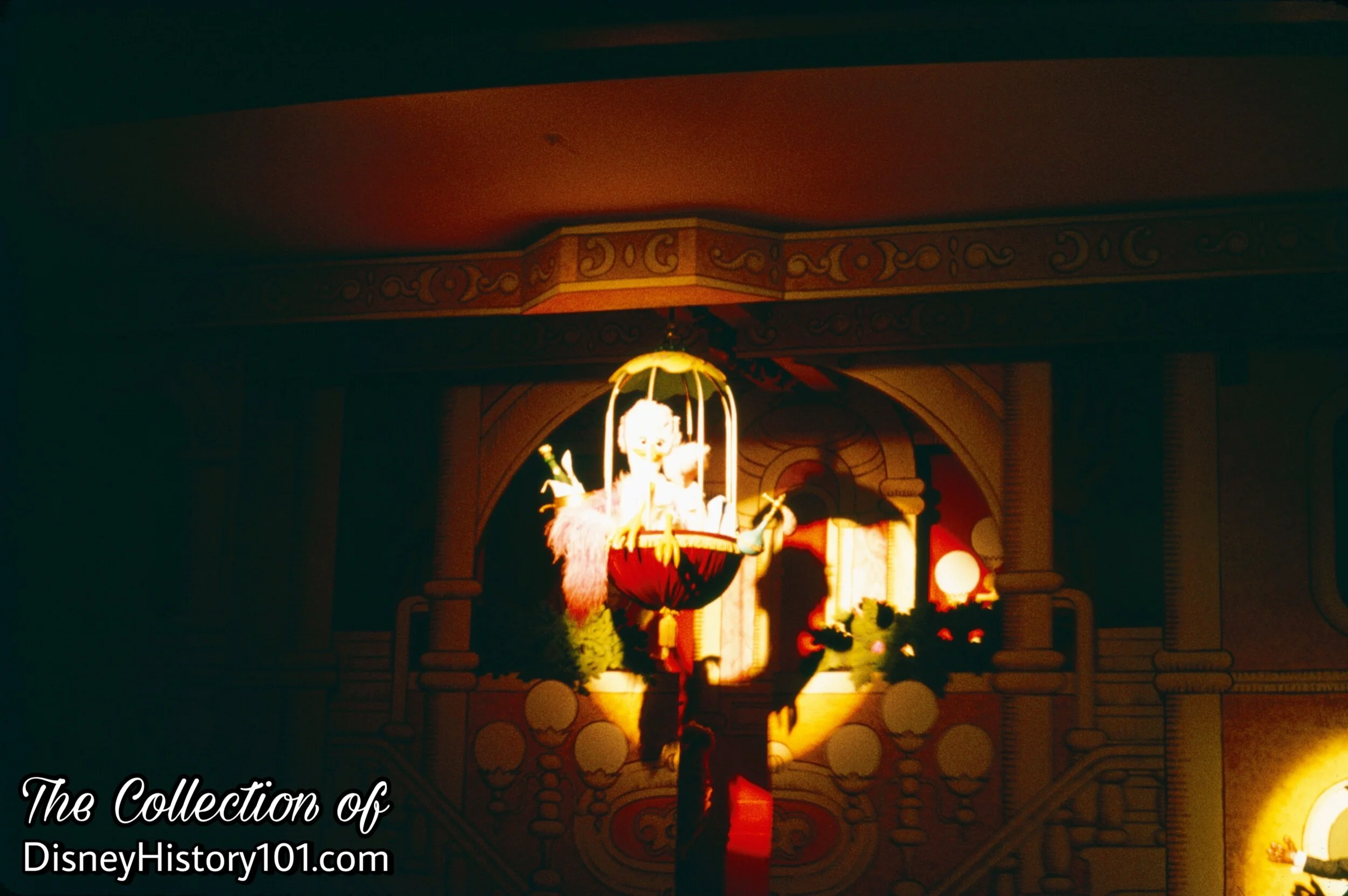
The "Flirtatious Feathered" Bird in a Gilded Cage ; Old West
“Ta-Ra-Ra-Boom-De-Ay!”
Her voice was provided by Cheryl Poole, while that of the “tenor singing fox” was performed by Bill Cole (who was also one quarter of the geese quartet).
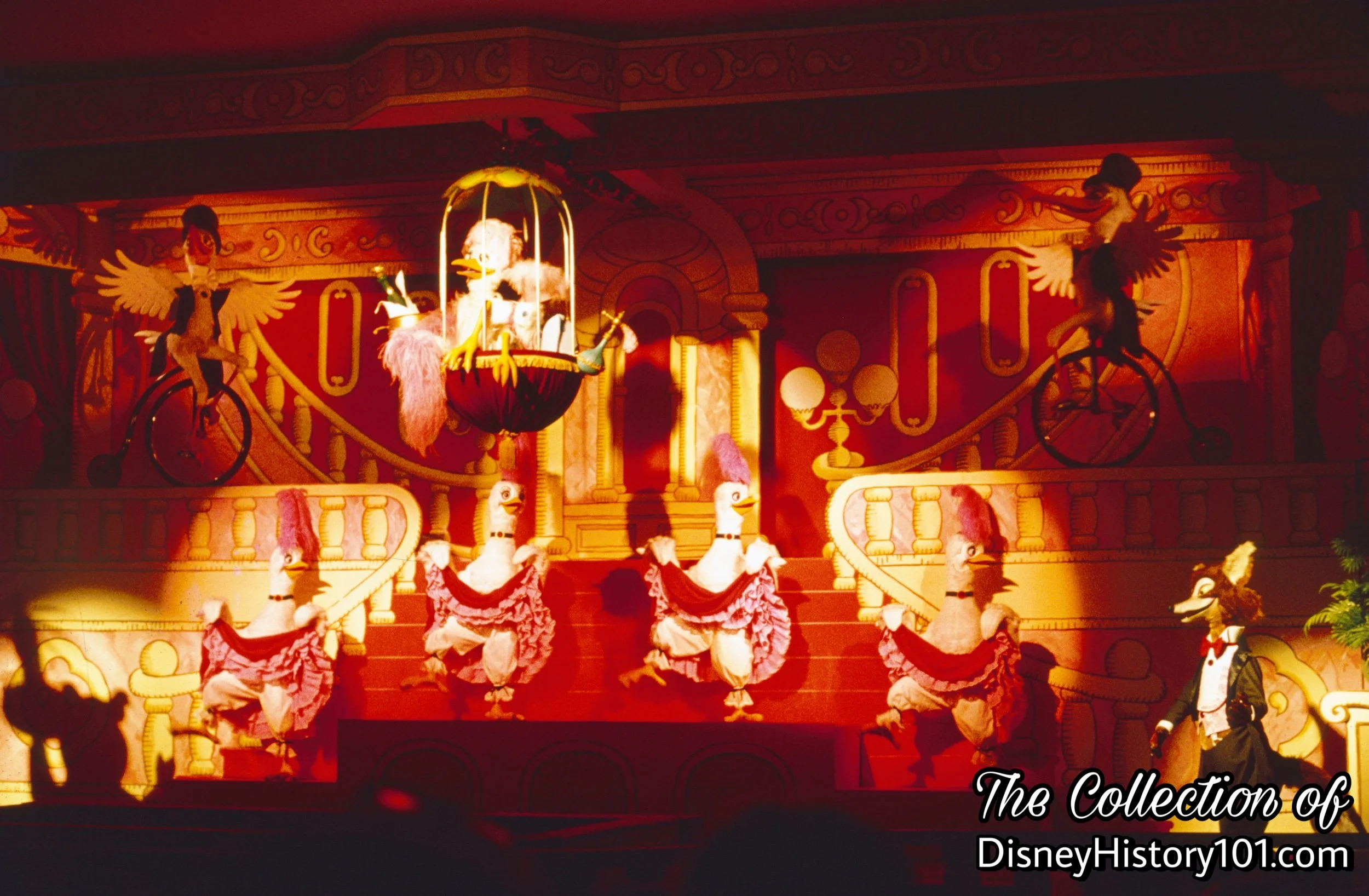
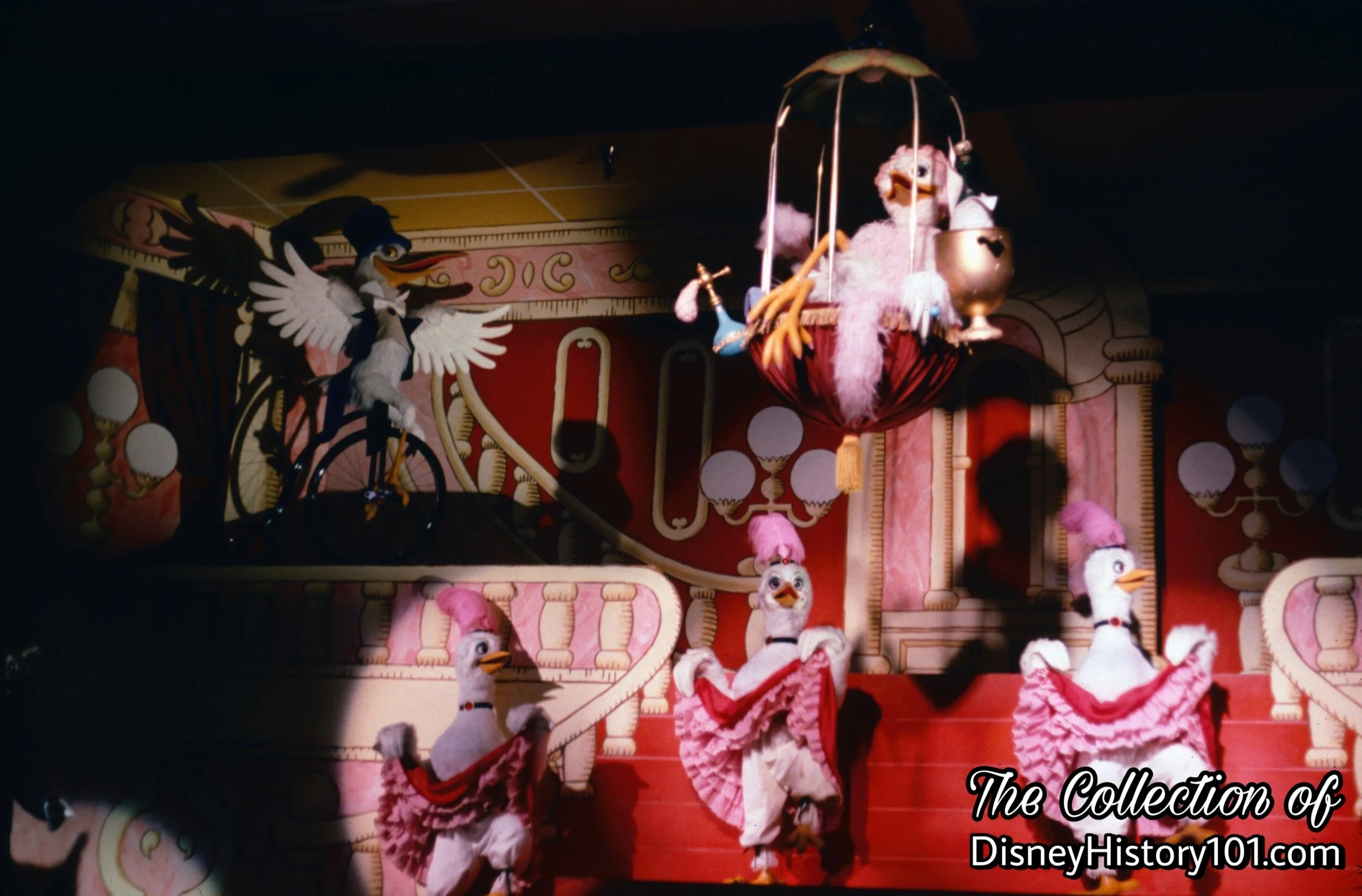
The "Flirtatious Feathered" Bird in a Gilded Cage, Stork, and Geese Quartet ; Old West
Sam the Eagle : “Next came ragtime, blues, and jazz - the nation was a-jumpin’ - foxtrot and bunny hug had everyone a-stompin’. The swing and big bands were the rage, the songs, they were most pleasing’ - rock and roll soon took its toll : the dancers stopped a-squeezin’.”
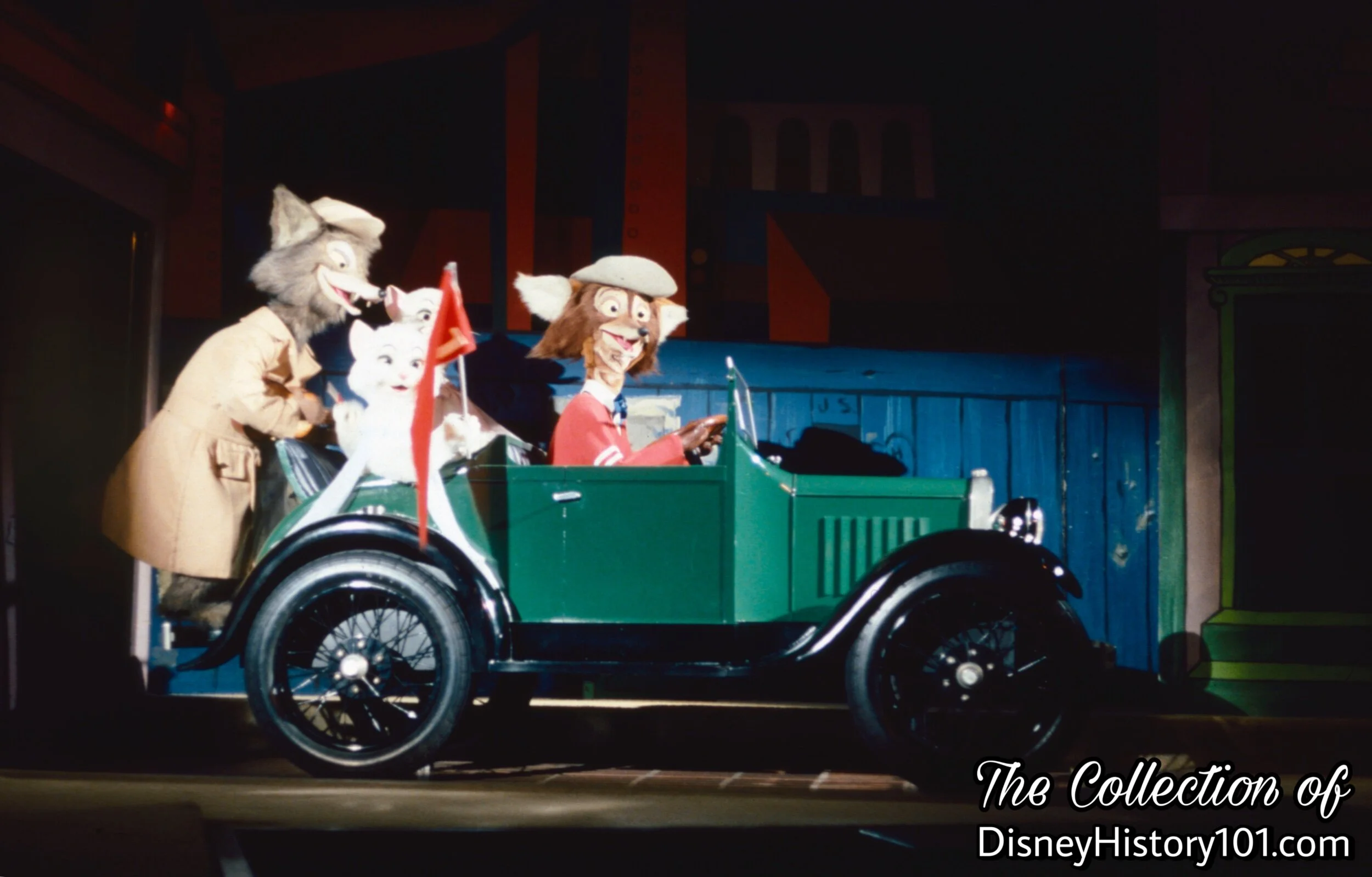
The Collegiate Quartet ; Gay Nineties
“A fox a wolf and their feline dates make up this collegiate quartet,” according to “Information on ‘America Sings,’” prepared by the WED Marketing Division.
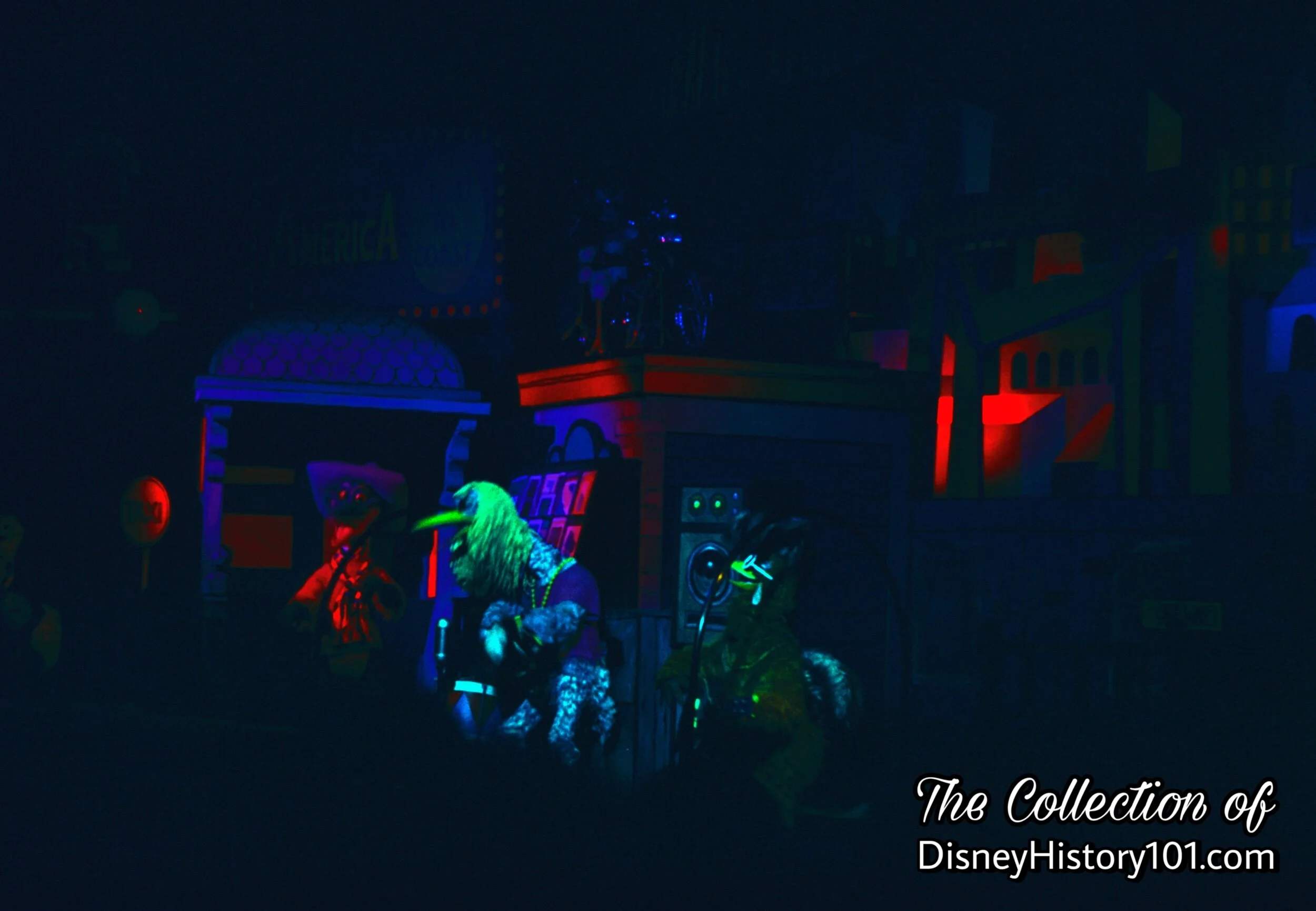
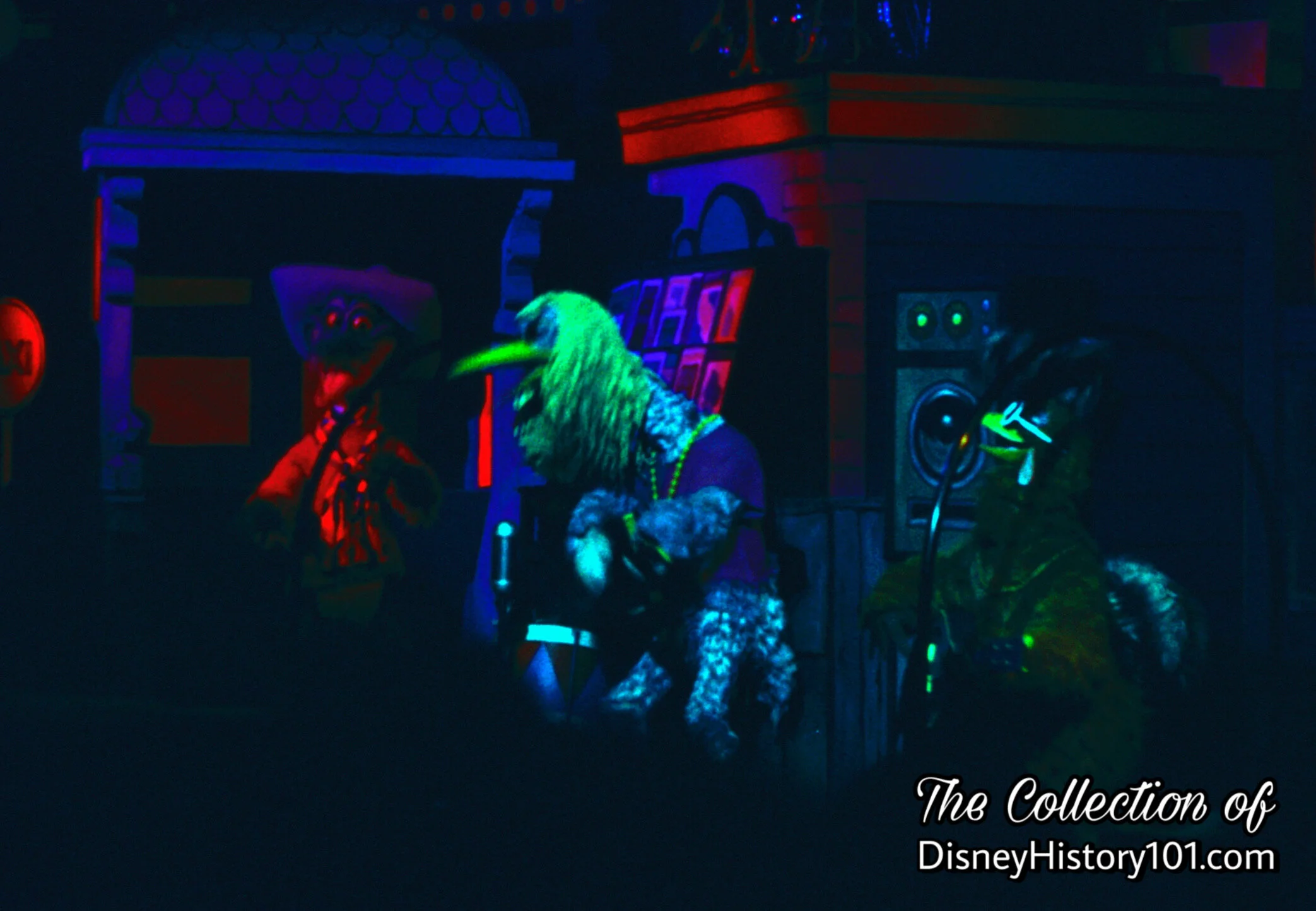
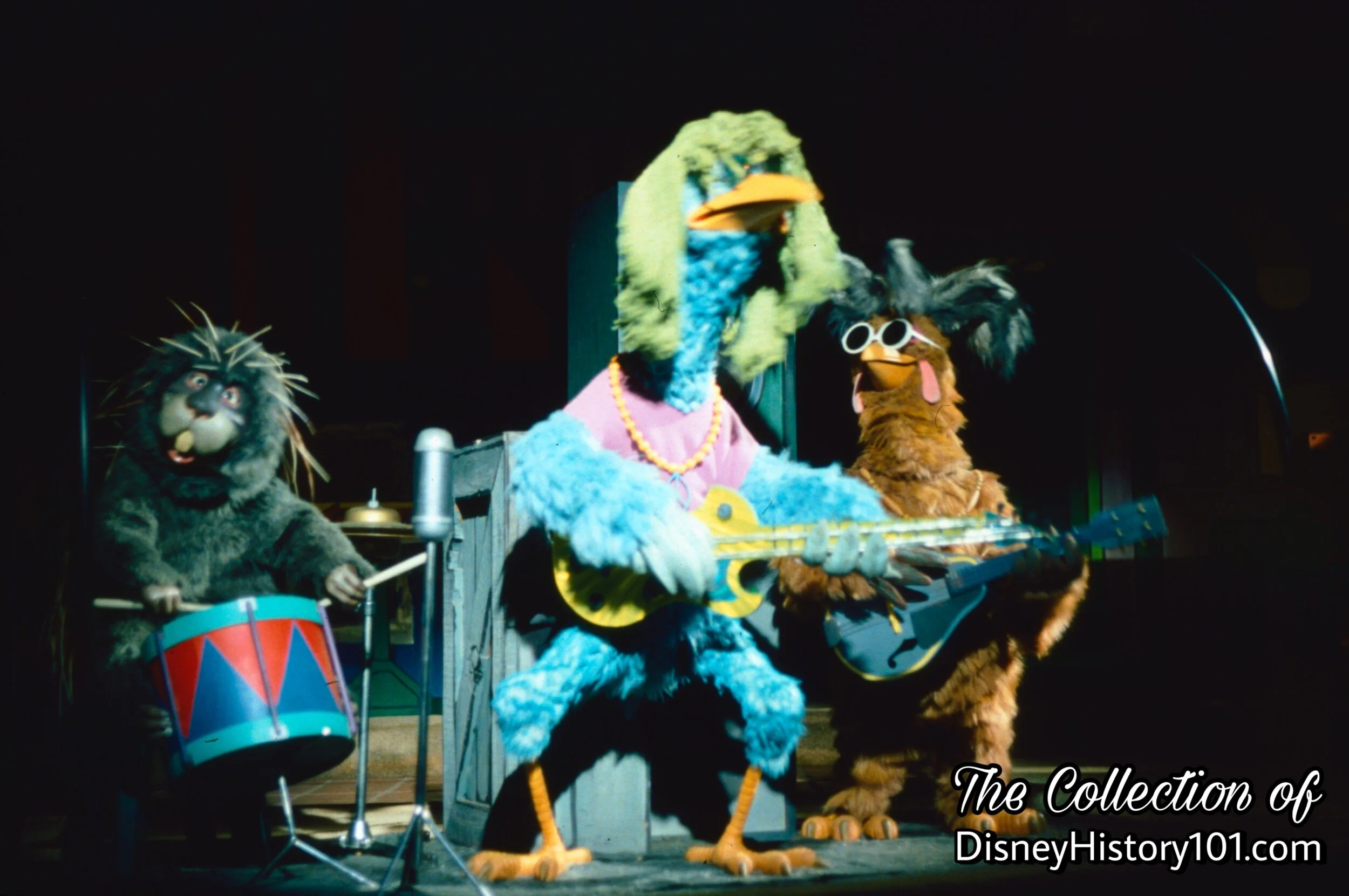
Porcupine, Rooster, and Stork ; The Big City in Modern Times
“I Ain’t Nothin’ But A Hound Dog…”
Porcupine, Rooster, and Stork ; The Big City in Modern Times
Porcupine, Rooster, and Stork ; The Big City in Modern Times
“Shake, Rattle and Roll…”
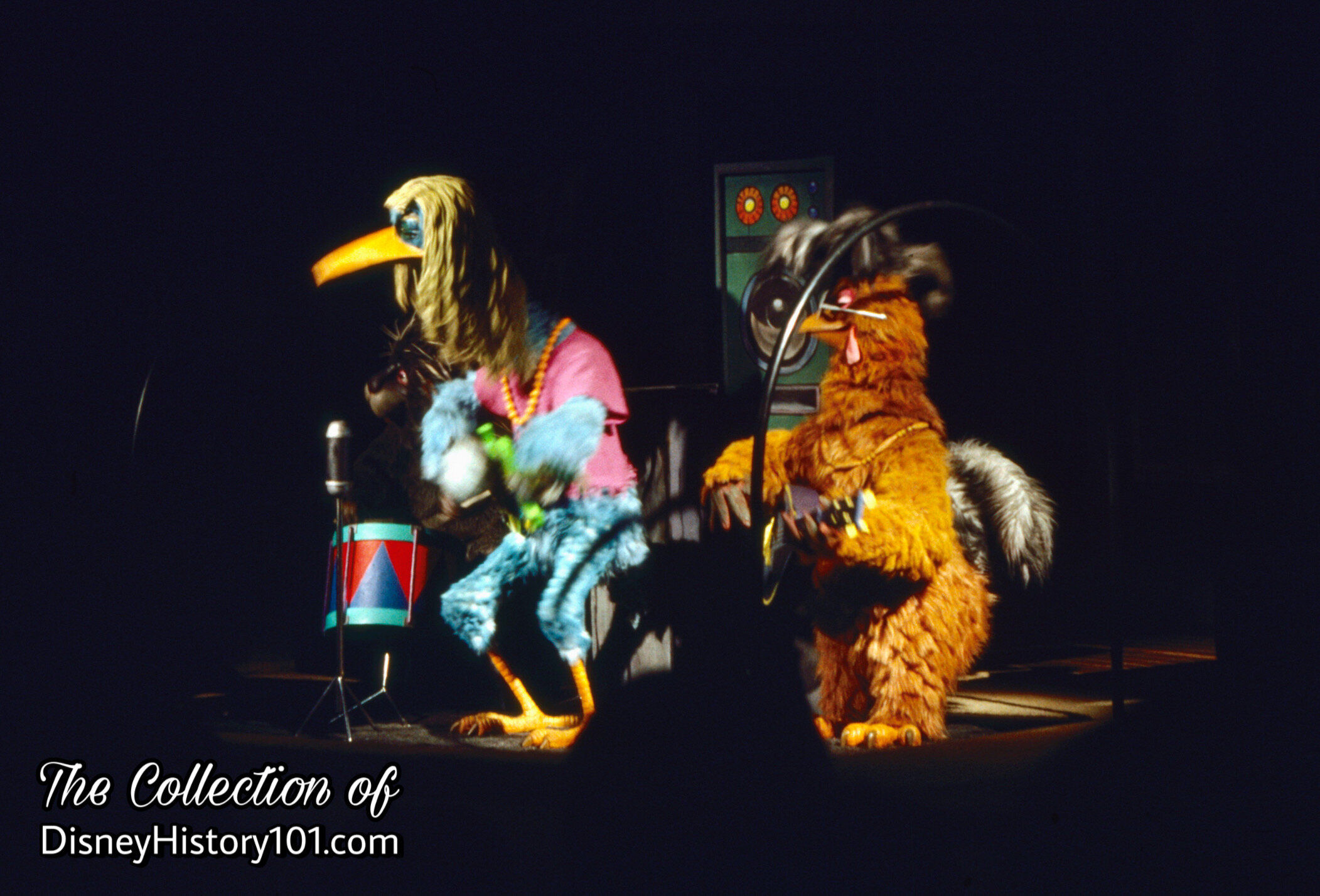
Porcupine, Rooster, and Stork ; The Big City in Modern Times
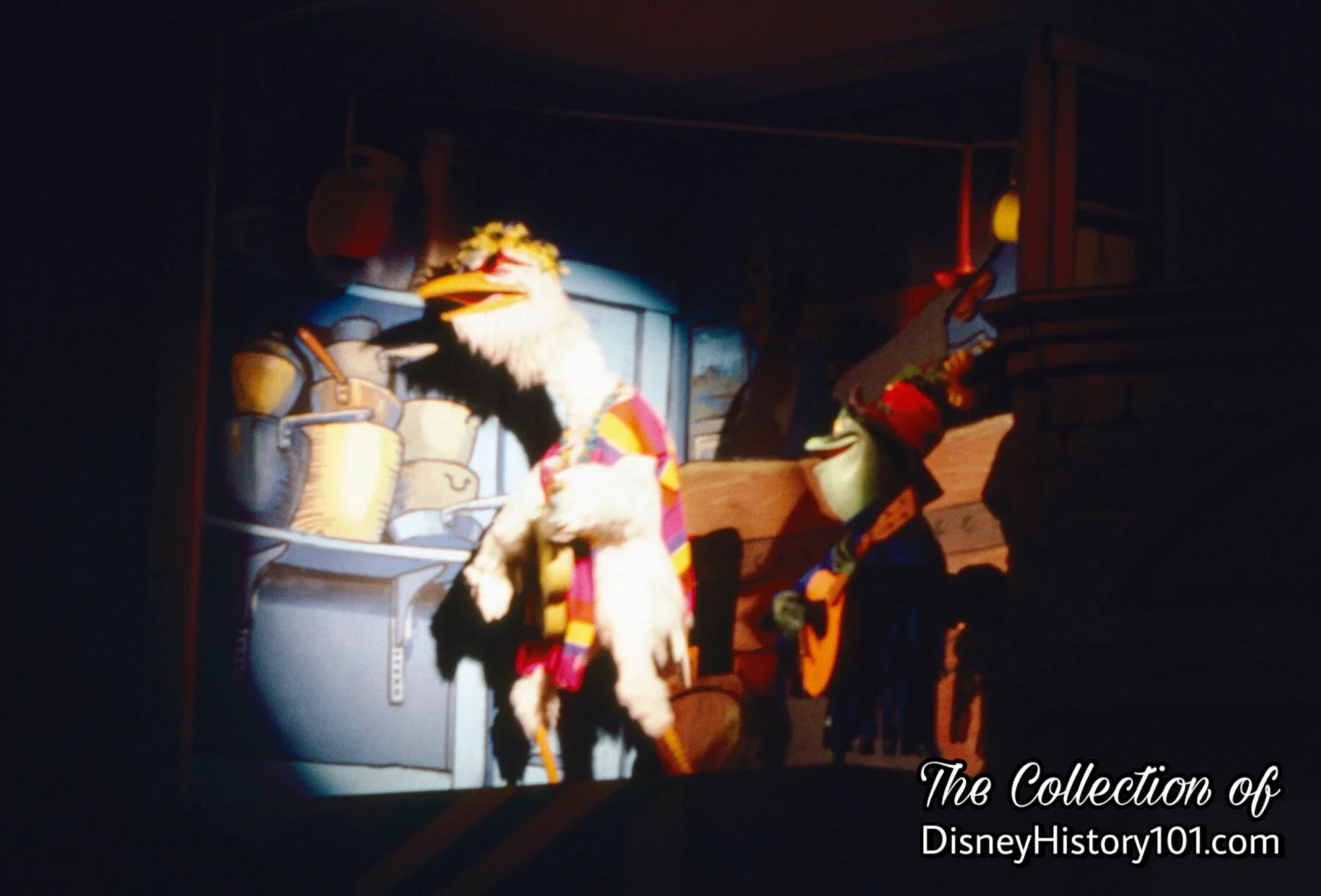
Stork and Frog; The Big City in Modern Times
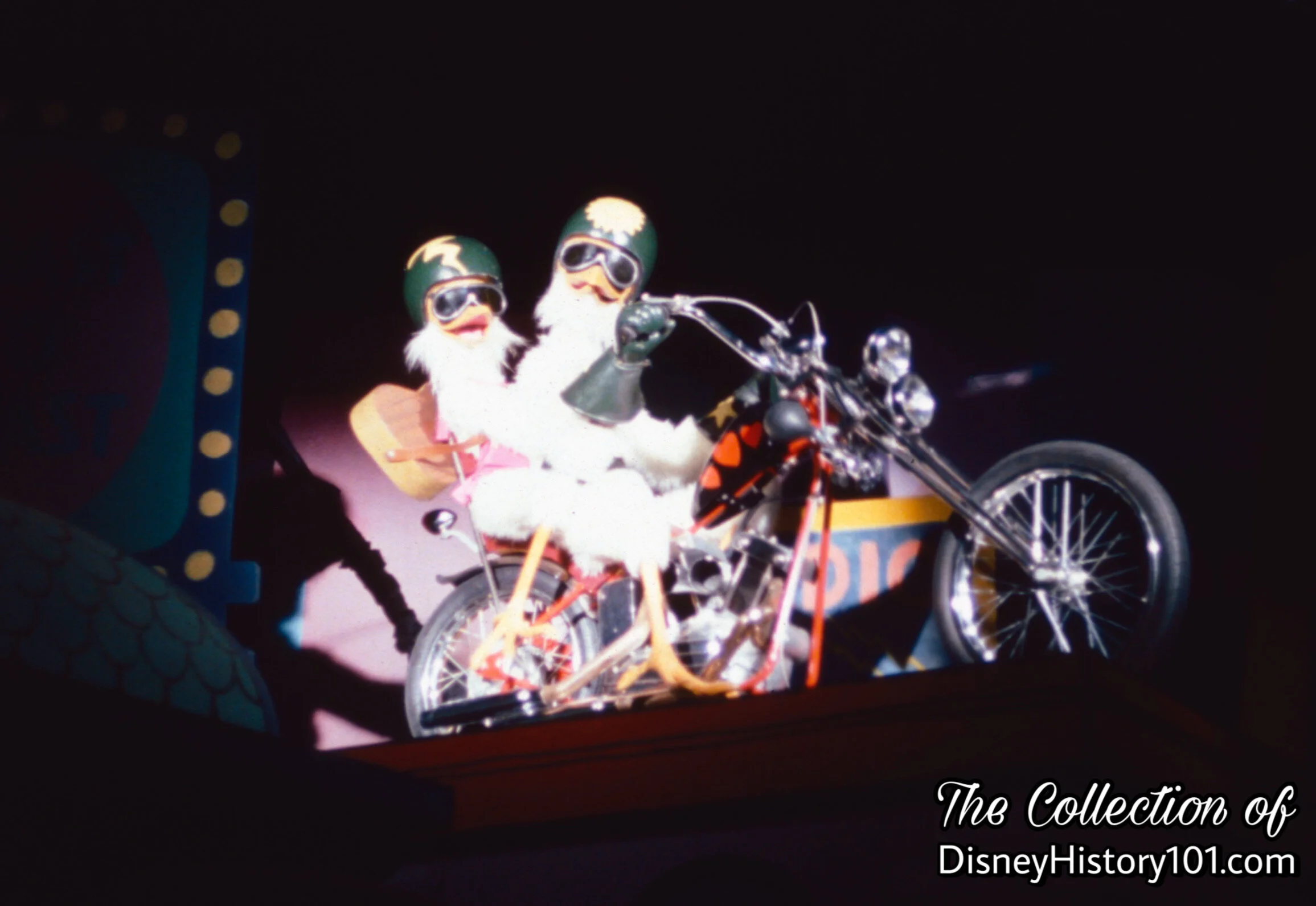
Motorcycle Storks ; The Big City in Modern Times
“Twistin’ U.S.A.”
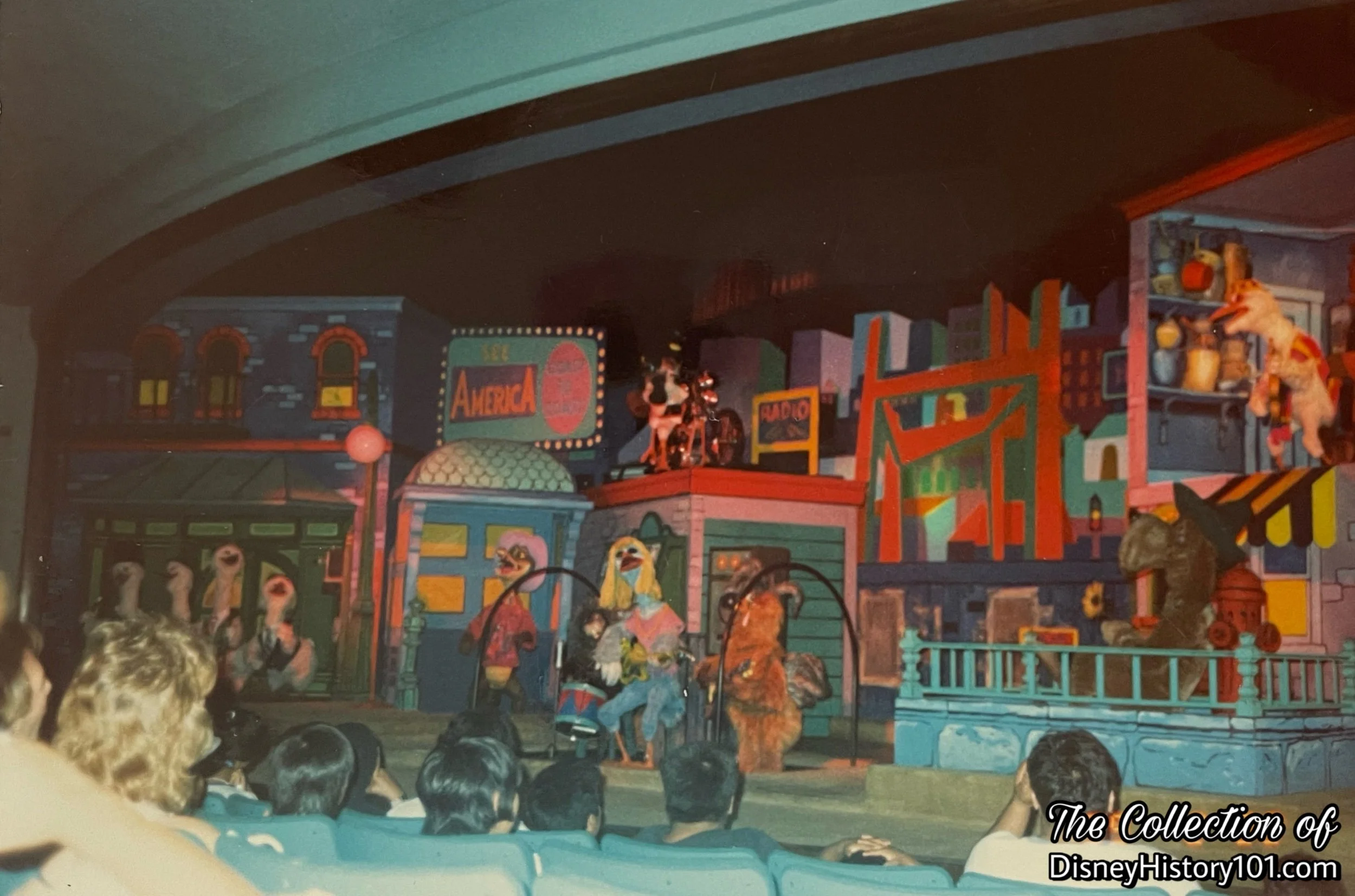
The Big City in Modern Times.
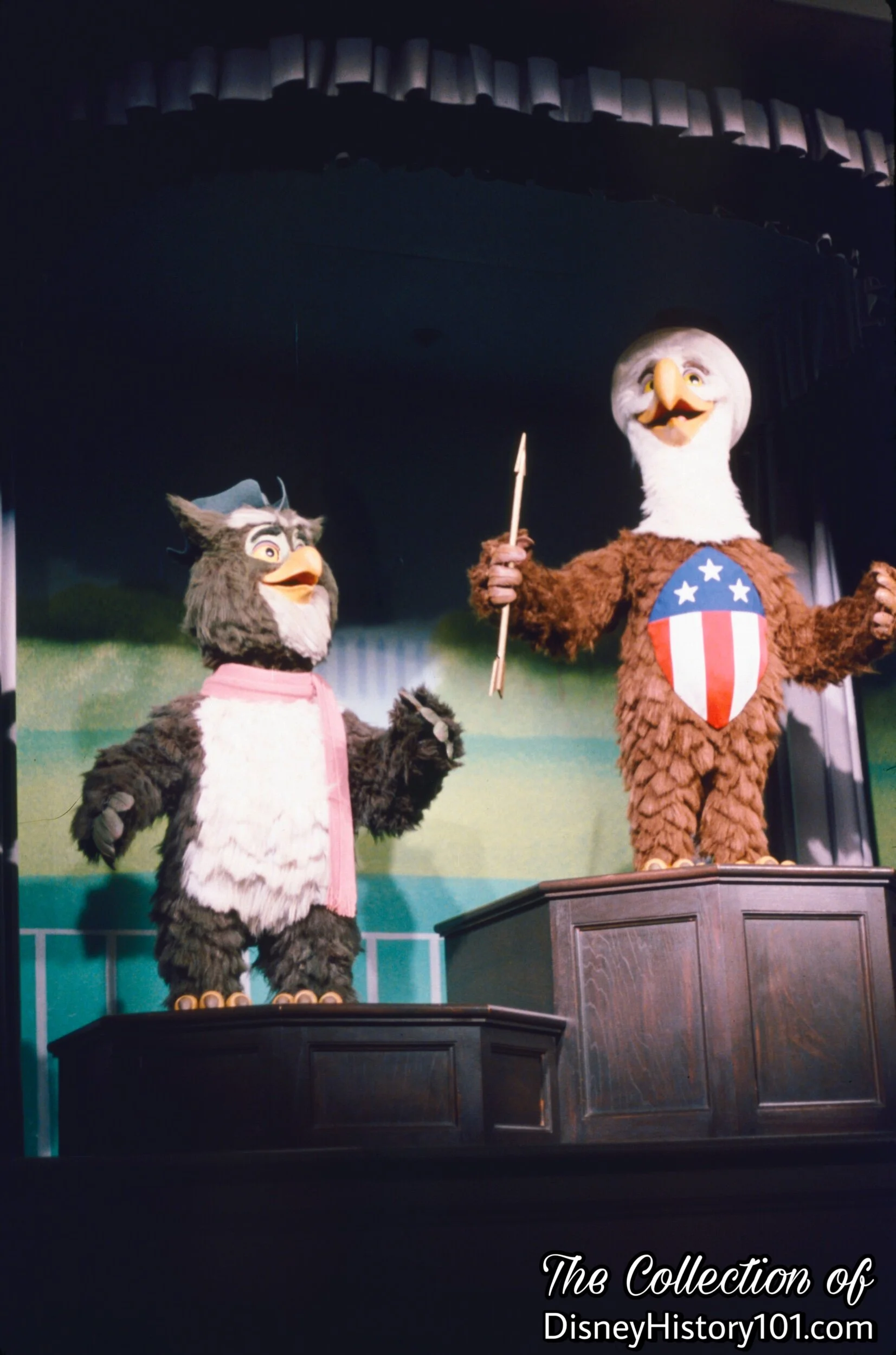
Ollie the Owl and Eagle Sam.
Eagle Sam: “We should all remember as history moves along, that everything is better now ‘cause someone wrote a song.”
After the fun lovin’ look at America’s musical history, “Guests exit ‘America Sings’ to a spirited orchestration of ‘Stars and Stripes Forever,’ as their whirlwind tour of our nation’s musical heritage has brought them full circle,” according to the “News from Disneyland - American Sings” official Press Release.
“The Maintenance of Magic”
As the end of the day draws near, the Guest control lines grow progressively smaller. The lines are then maintained as they “go down” and are thoroughly swept when empty. In many cases, this required special equipment which would be issued by the Lead. Many attractions, such as America Sings required a walk-through after closing for the removal of debris. At this time any defects were noted.
In the years that followed, regular rehabilitations (like in ‘78) maintained the show quality. These were often performed by the staff of Disneyland Shops (The Maintenance Division at Disneyland).
“55er” Jim Cashen recalled: “A couple of other items we took care of was to build a walk-in freezer for ice cream storage, back of America Sings!” “55er” electrician George Short recalled: “‘As you can see we're busy lighting up the swamp!’ No Thus I was greeted by George in the DOWN SOUTH scene of AMERICA SINGS. The attraction was down for rehab and George and an electrician were putting the finishing touches on Act 1.”
Safety is a major concern of Engineering. Every year they would make a complete test and inspection of all structural parts of Disneyland. And since Guests would look to Disneyland for their safety the department team was continuously designing new guest and personnel safety devices.
All of the costumes were constructed from washable fabrics and laundered by Disneyland’s own laundry room staff. The more delicate fabrics or those with intricate trims were sent out to a special dry cleaner. The cleaned and prepared garments, two or three backups for each Audio-Animatronics figure, were stored in closets located within each attraction.
The costume has to look the same every time. Stored with the costumes was a reference album of photos detailing how each figure should look when completely dressed. Many Cast Members needed to refer to the album to see exactly how a hat should fit or a piece of jewelry was worn.
When maintenance was performed on a figure or a group of figures, they were carefully repositioned as closely as possible to their “night mode” positions so that when a trial run was started, the movements of the functions were not violent.
“Post-Show”
When the America Sings show ended its operation at Disneyland, several artifacts were preserved in the Walt Disney Archives, including one of Eagle Sam’s hats and General Houndstooth’s weathervane.
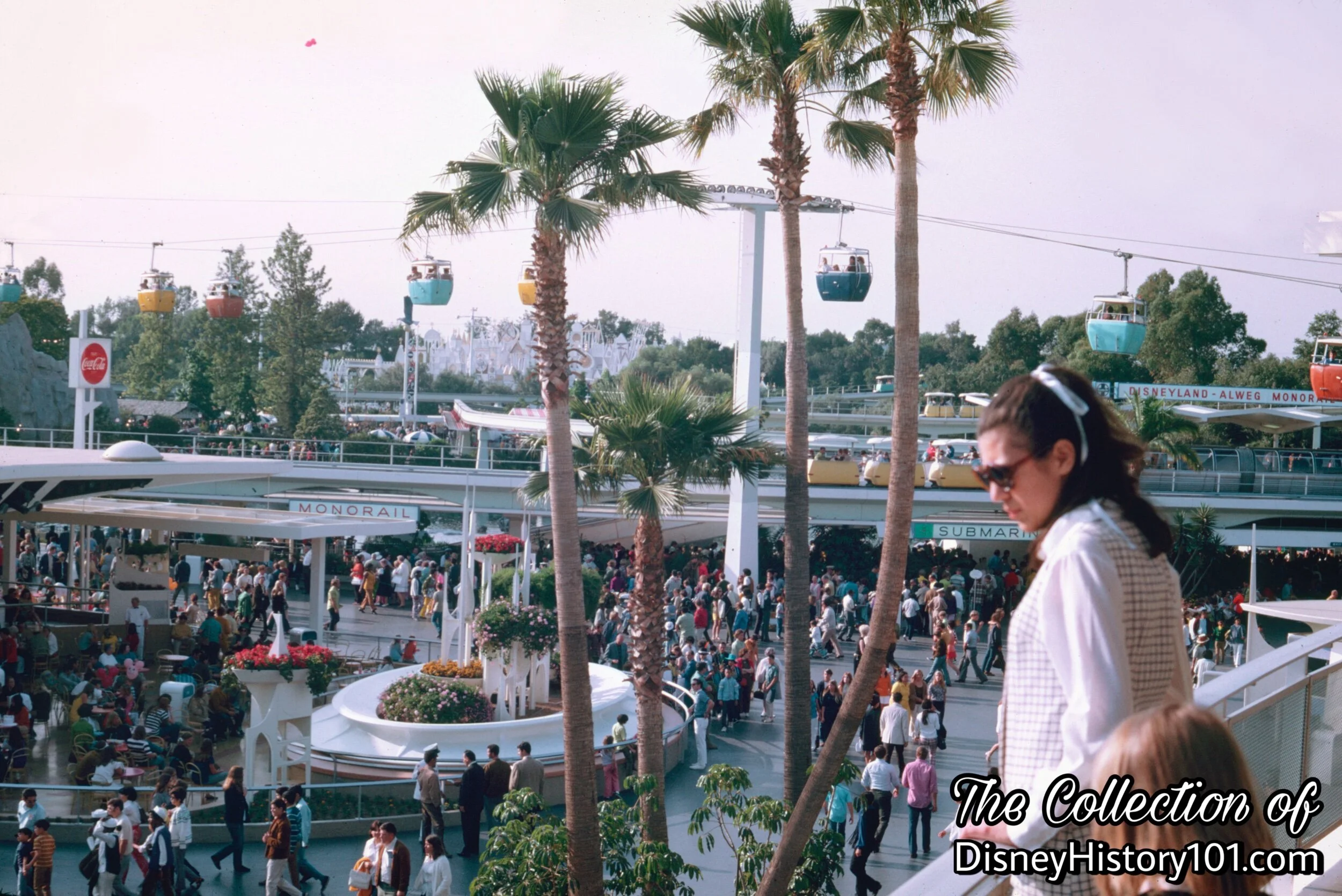
The view of Tomorrowland from the Carousel of Progress Exit Ramp
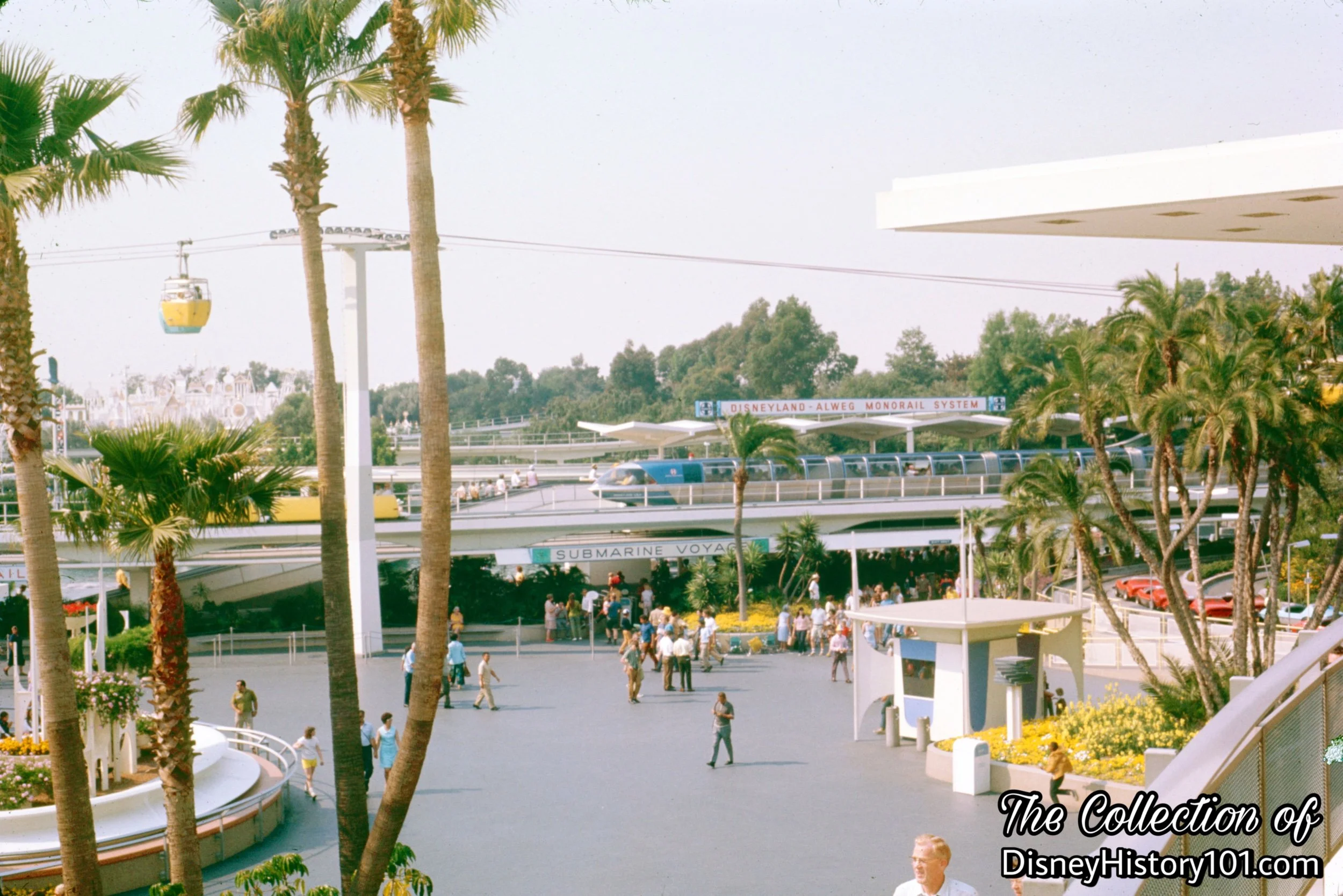
The view of Tomorrowland from the Carousel of Progress Exit Ramp
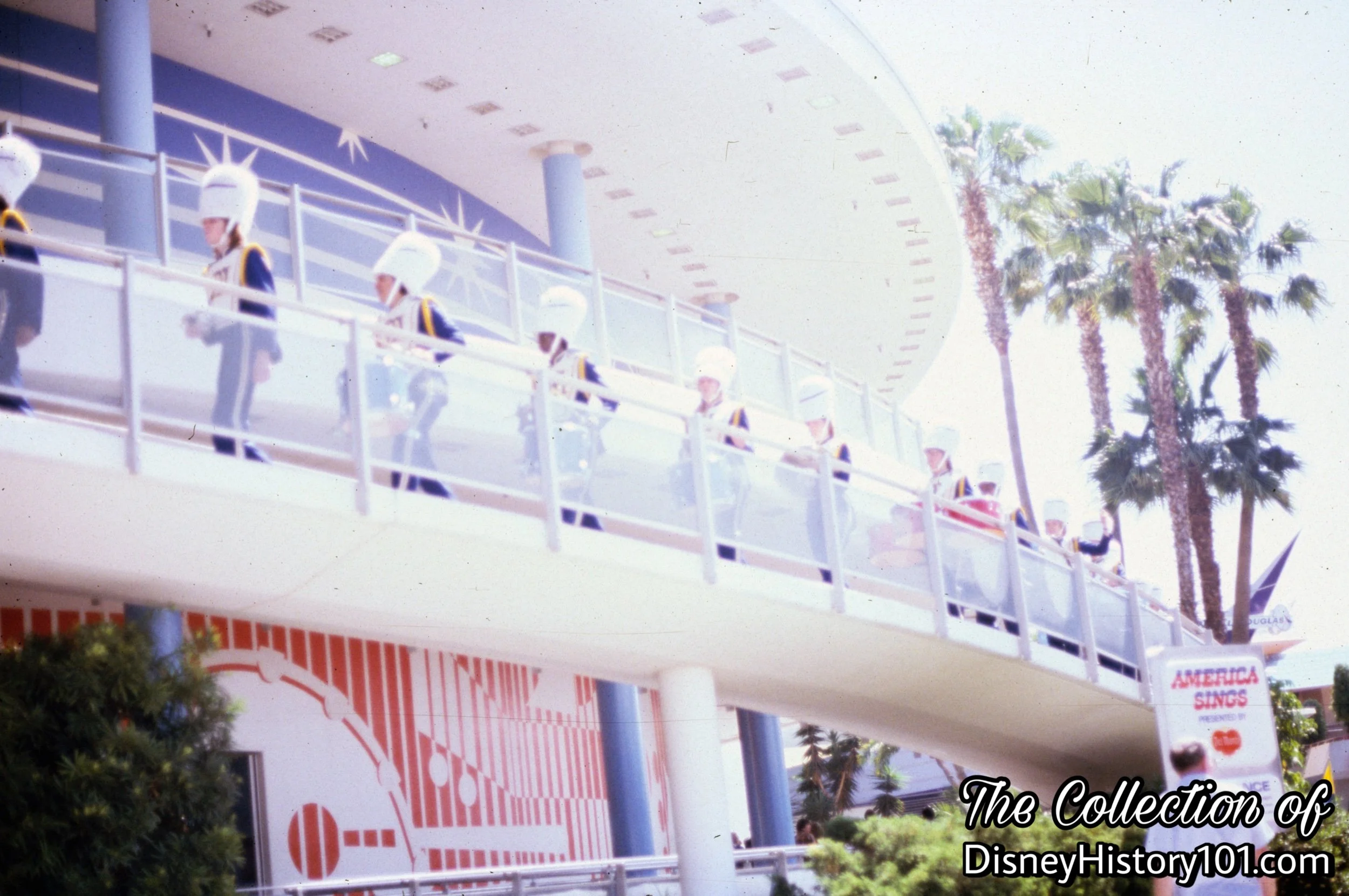
A School Band performs from the “Front of House” of the America Sings Stage.
Queue areas were equipped with live entertainment to set the mood for the forthcoming show.
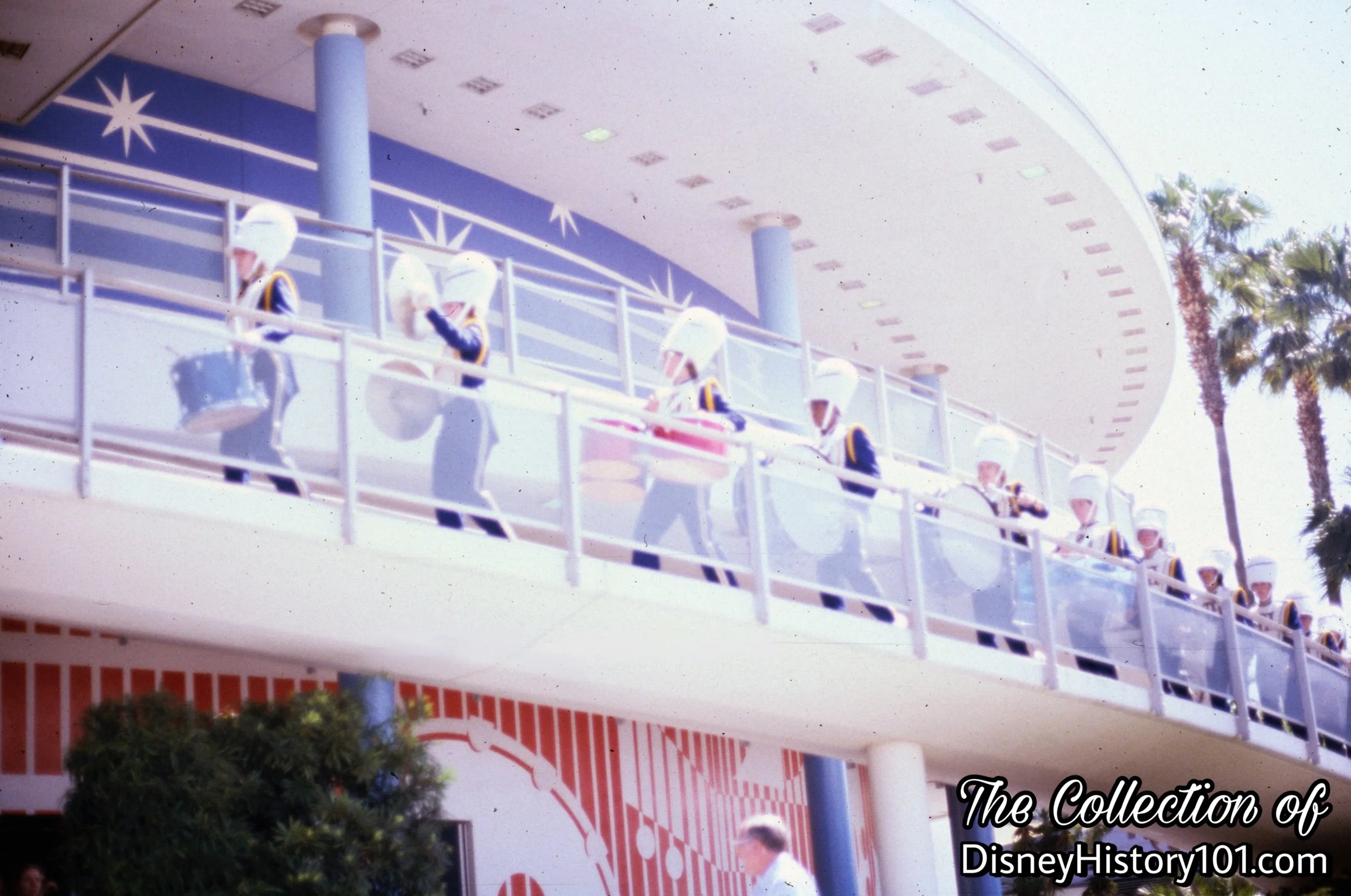
A School Band performs from the America Sings Stage.
“The America Sings Stage”
During Festival of Japan at Disneyland (March 28 & 29, 1981) Kesencho Kenka Tanahata Bayashi drum group and the Yukohama Gakuen High School Baton Club were among the rotation of performers on the America Sings stage.
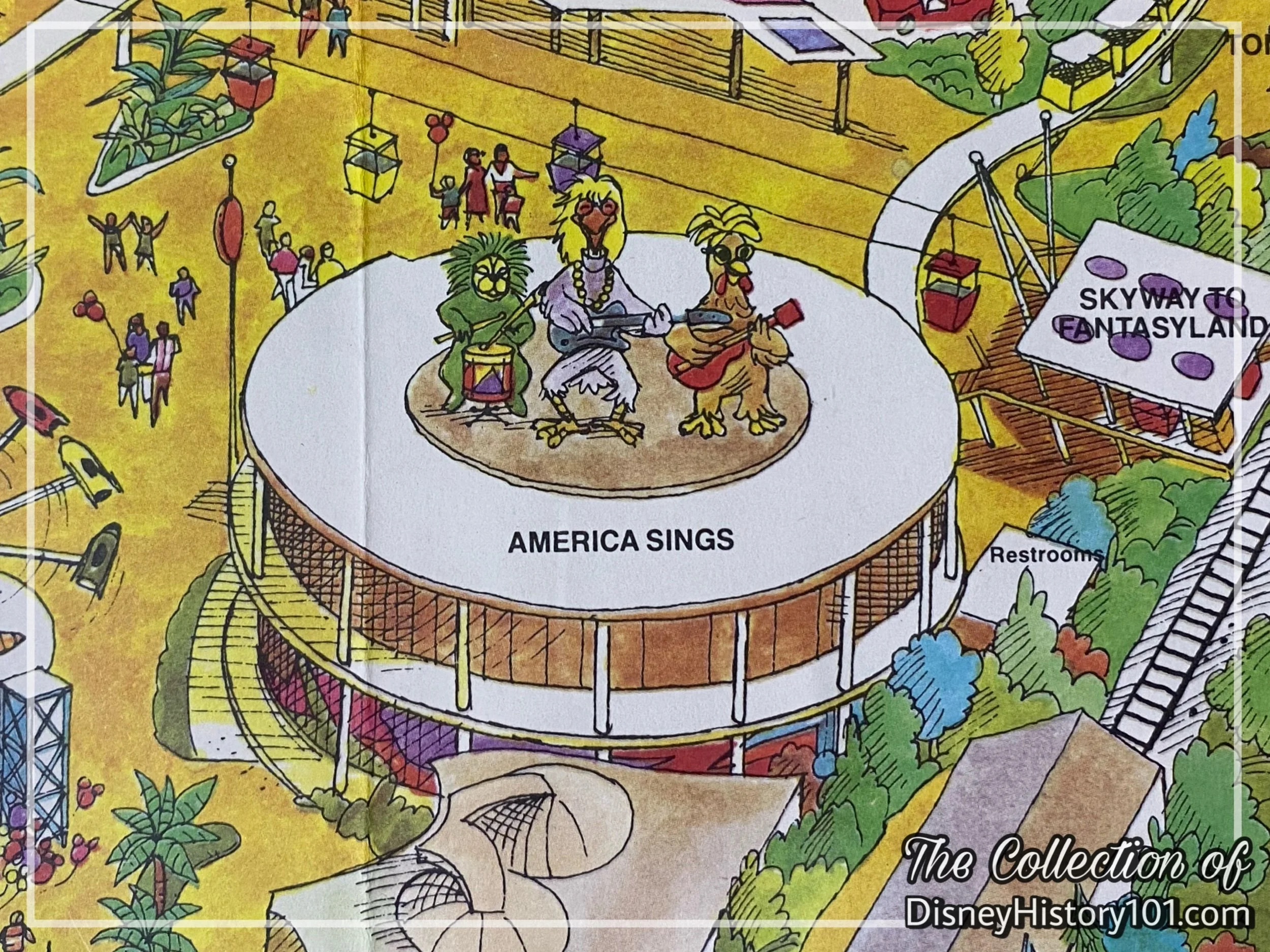
America Sings on a c.1984 Disneyland Souvenir Map.
“Legacy of the Rotating Theater”
The rotating theater concept was nearly utilized for “The Yestermorrow Time Machine” invented by Ray Bradbury before July 31st, 1970. According to Marc Davis, the Yestermorrow Time Machine “should turn a possible problem into an asset, which is to say, the problem of revolving an entire theatre building once every four minutes should be made part of the Experience. Thus my naming the Experience: The Time Machine. We will be in Motion Toward the Past loitering about the Present, and plunging toward the Future. So we might well use the revolving mechanism of the theatre to provide different textures. In other words, the experience should be different, each time and Theatre picks up and Goes. To the Past, one texture. Onward to the Present, a second texture. Upward into the Future, a Third. So the floor, the tracks, on which our Theatre moves should be, perhaps, undulating slightly for the first Trip, a Vibration like an Earthquake for the second. And a smooth, whistling glide, as of a rocket, for the Third. All of this, naturally, to be discussed and planned as we move forward investigating the Dramas at hand.”
The Disneyland tradition of a rotating theater had a legacy (of sorts) with the opening of Tokyo Disneyland on April 15, 1983. Among the “stark lines of futuristic architecture,” was an attraction called Meet the World, located just past the Center Street entrance to Tomorrowland. It was described as “an innovative show which describes, through film, special projection and Audio-Animatronics, the history and future of Japan. Concentrating on her gradual merge into the world stream, this four act presentation traces Japan’s encounters with other nations through trade, to her place in today’s international society. The finale is an uplifting promise for the Japan of tomorrow. This attraction is similar to the revolving theaters of Carousel of Progress and America Sings with one major difference - here, the theaters are in the center and revolve to carry their audiences to each scene of the surrounding stage,” according to the “Tokyo Disneyland” opening day souvenir. Perhaps you may have had the pleasure of experiencing this form of the carousel theater legacy from 1983 to 2002.
“Blue Sky for The UFO Show”
According to an article published in Backstage magazine, WED had once planned a little something for upstairs “America Sings.” The working title was the “UFO Show”, and therein, Guests would “travel in cars one direction, armed with air guns, while eerie, unhuman, gremlin-like targets pop up and dart the other direction. Upon completion this attraction will be the first ‘shooting gallery’ where the marksman’s position moves as well as the target’s.” [“WED - What, Where, Why, and Who?” by Vicki Stowe]
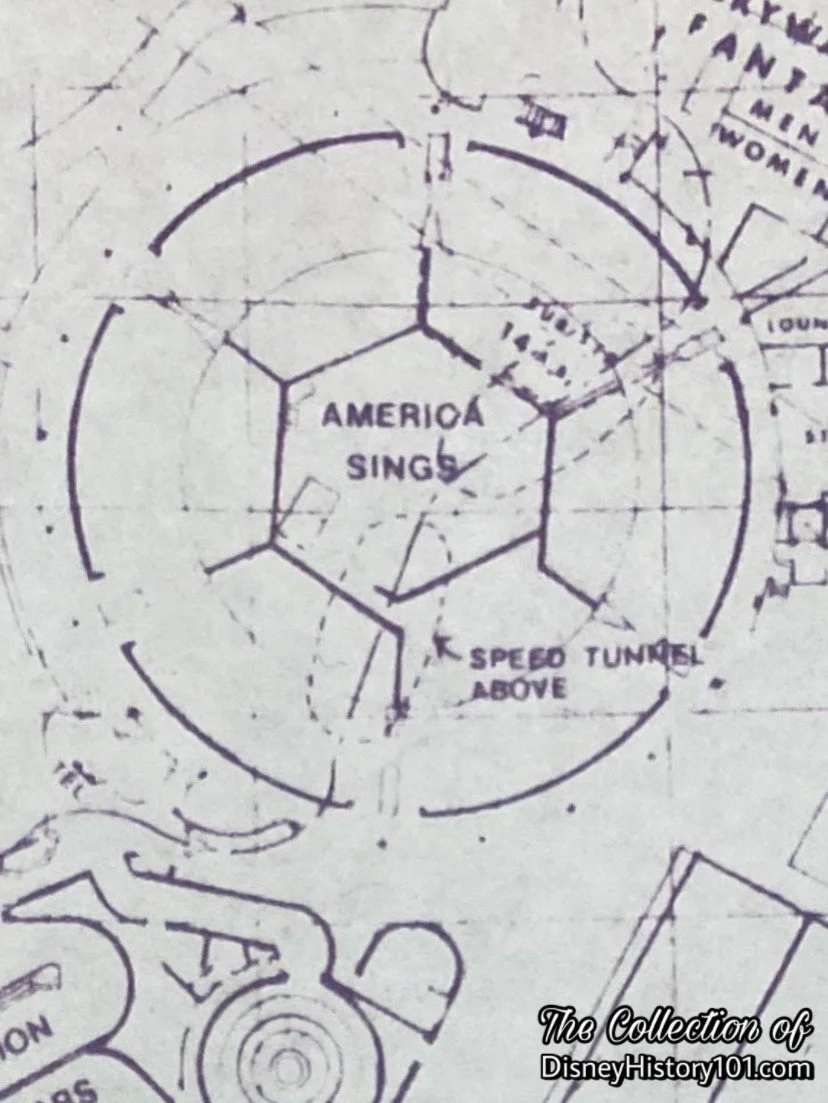
The Speed Tunnel depicted over America Sings on plans for Disneyland; September 1977.
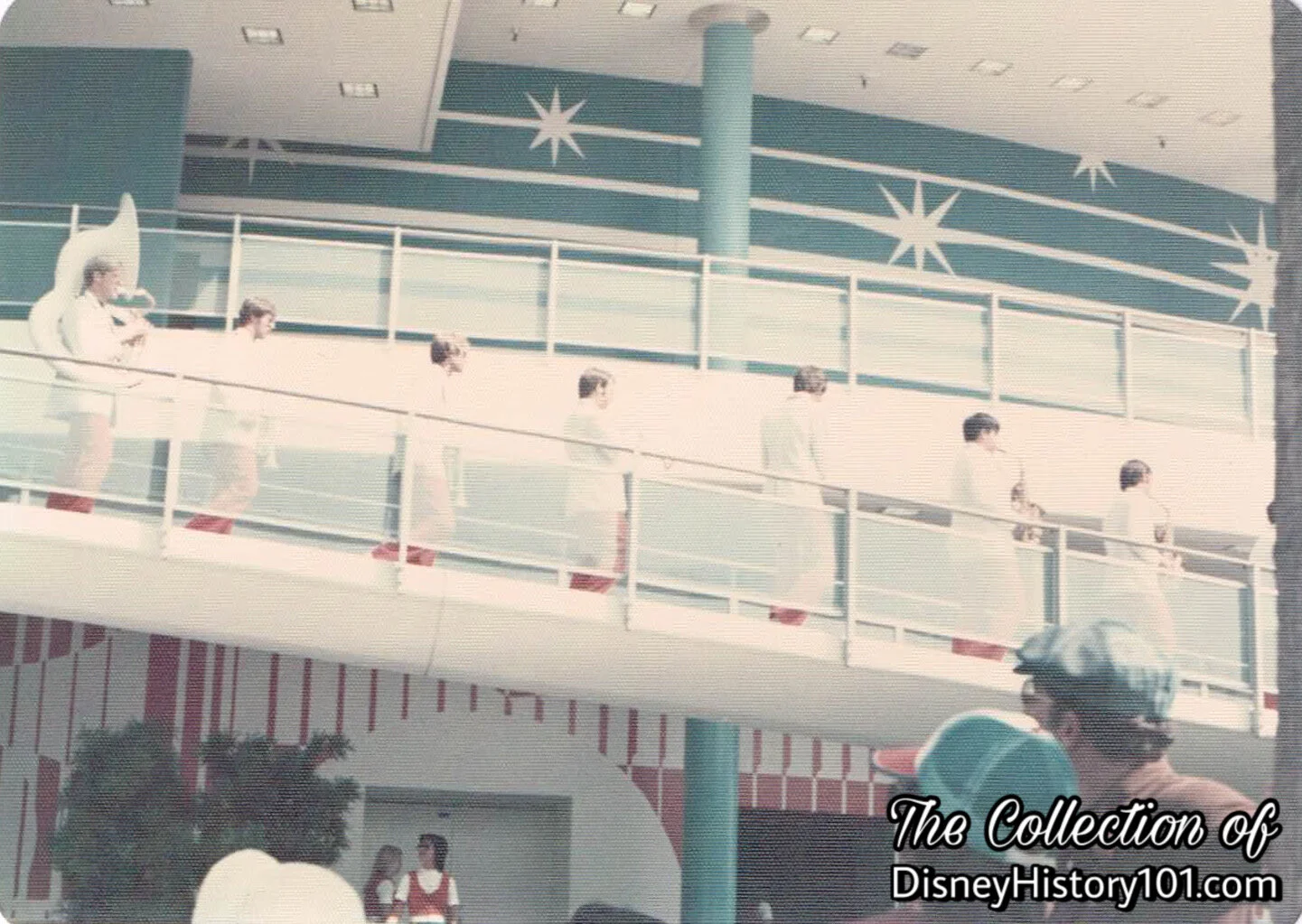
Carousel of Progress Exit Ramp along the Architectural Facade and All-American Band
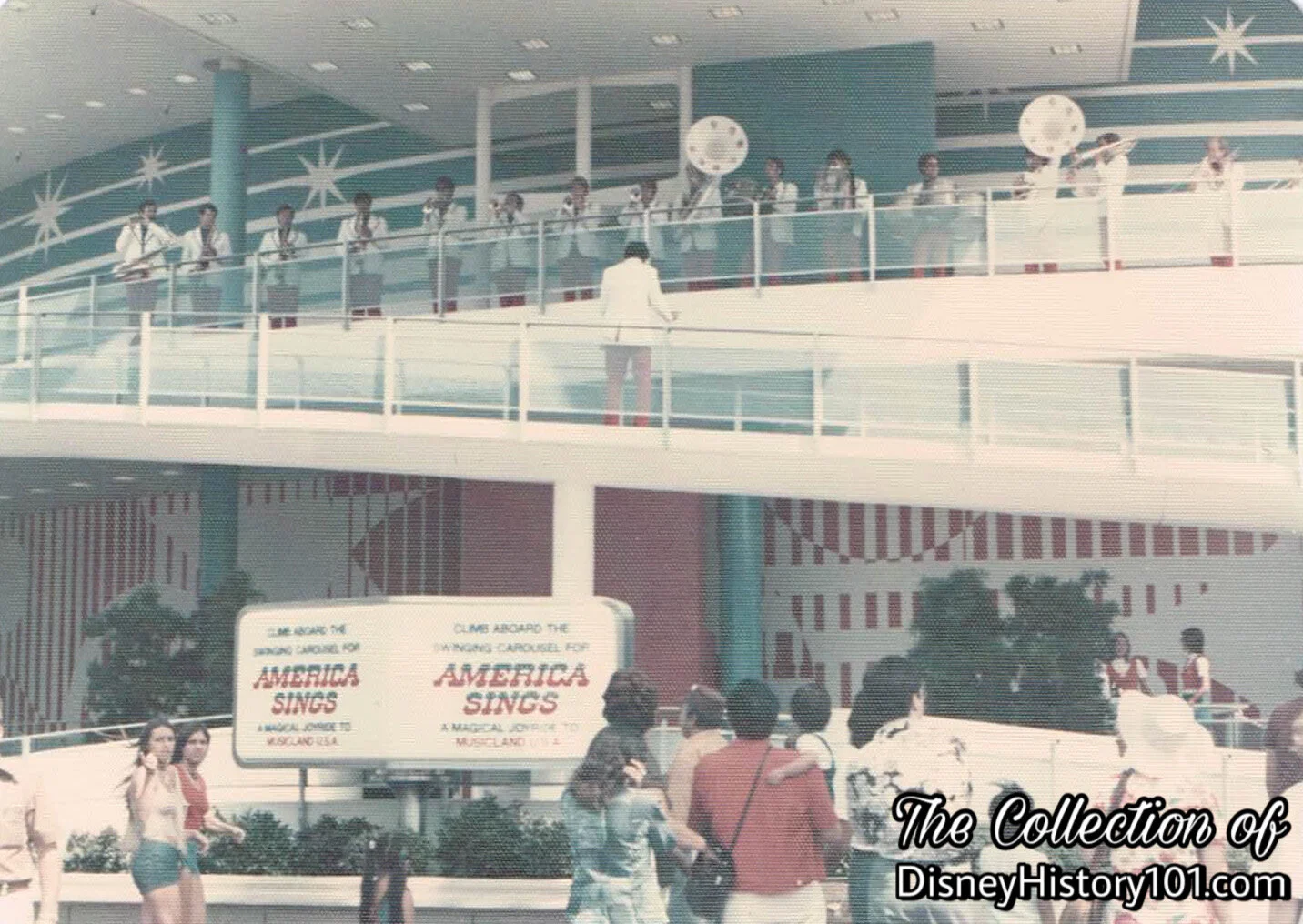
Carousel of Progress Exit Ramp along the “Front of House” Architectural Facade and All-American Band
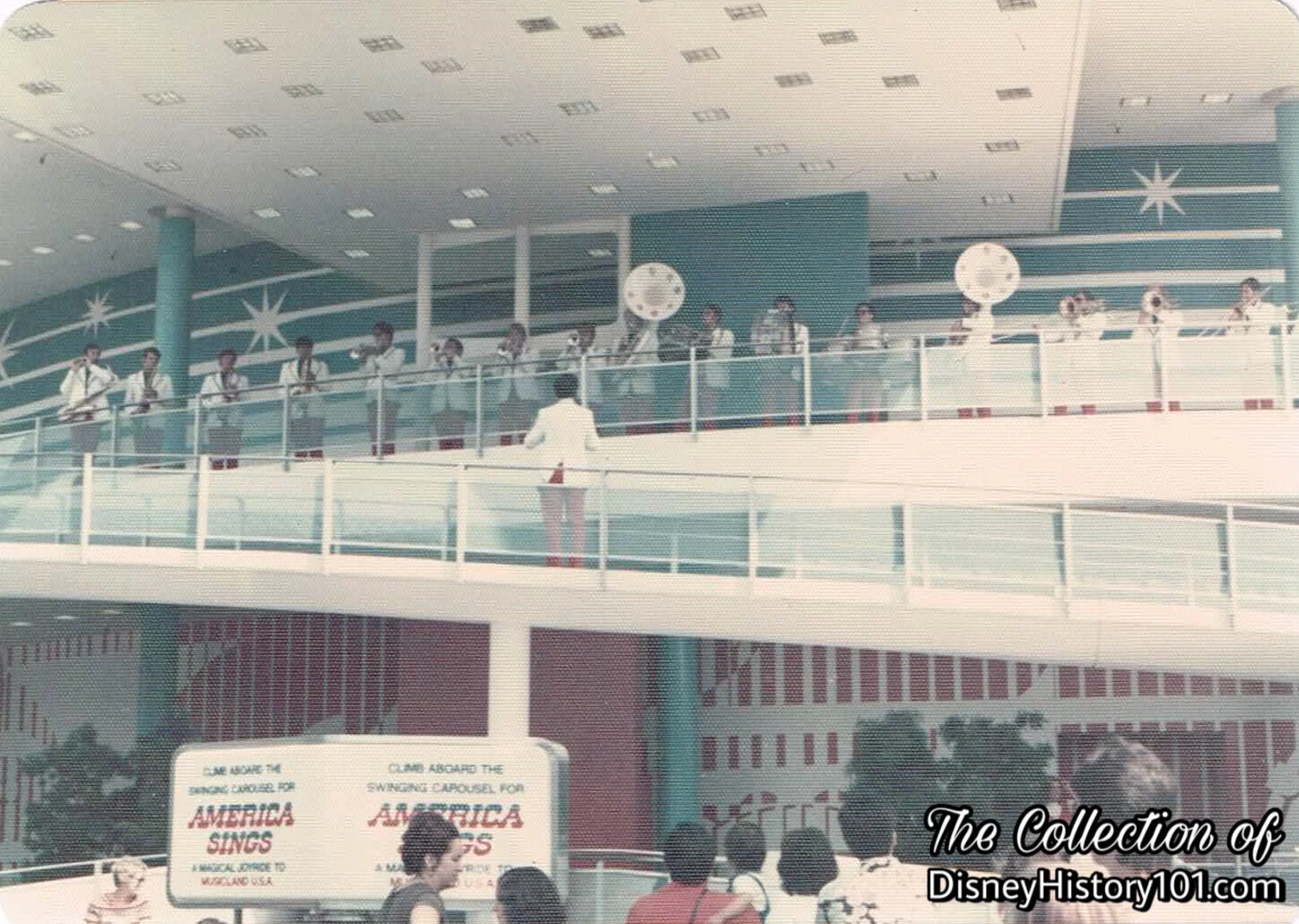
Carousel of Progress Exit Ramp and All-American Band
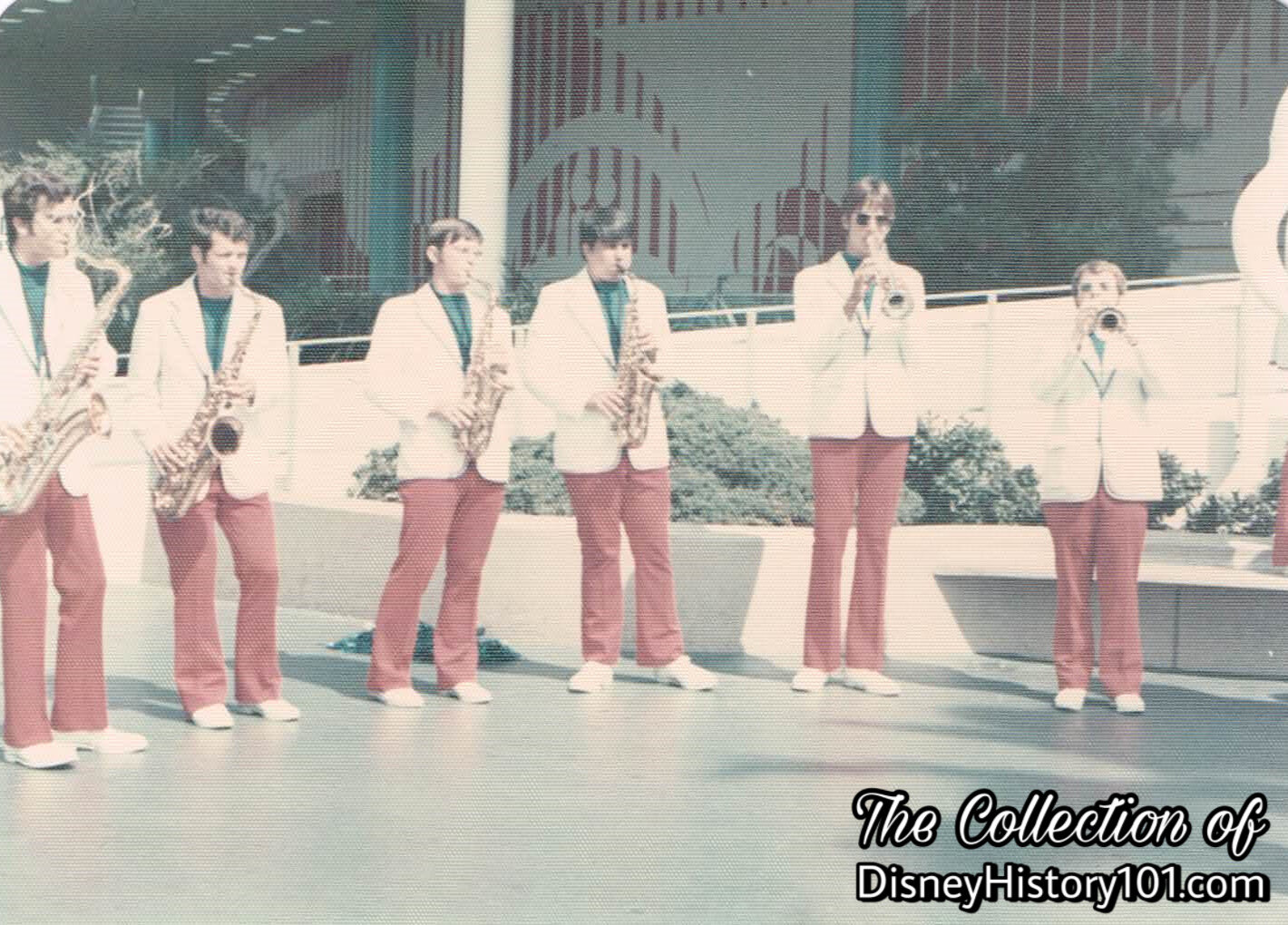
Carousel of Progress Show Building and All-American Band
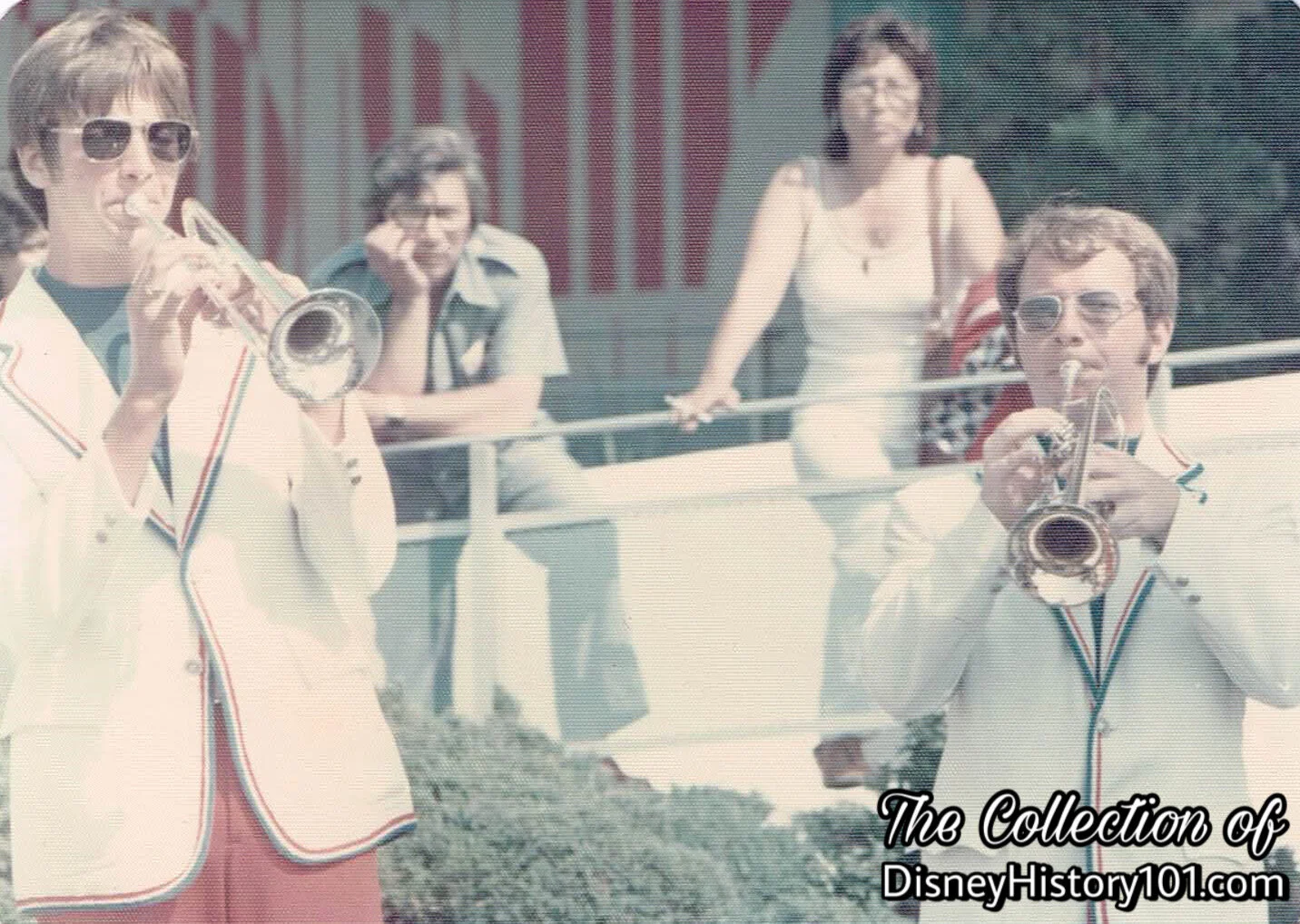
Carousel of Progress Show Building and All-American Band
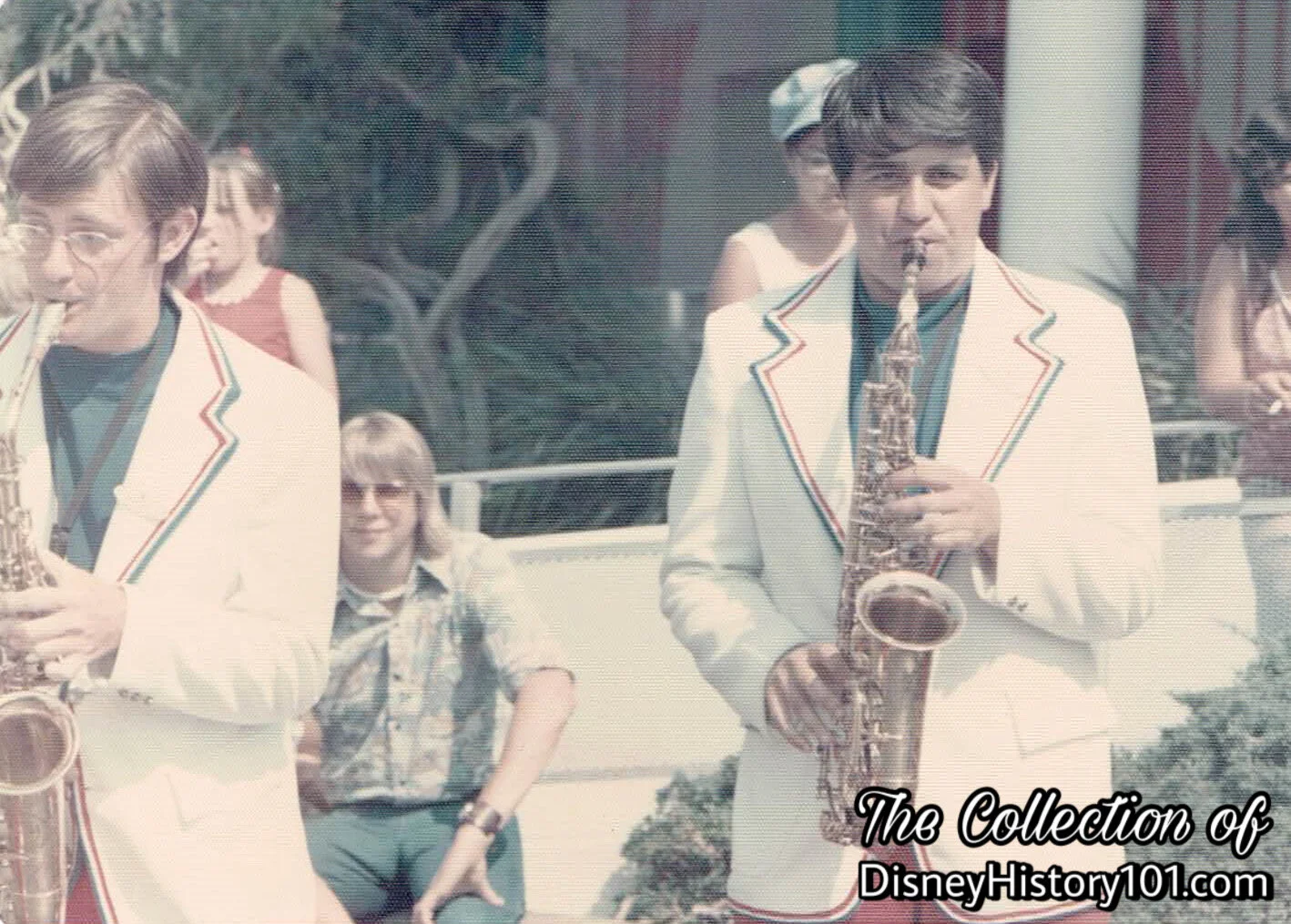
Carousel of Progress Show Building and All-American Band
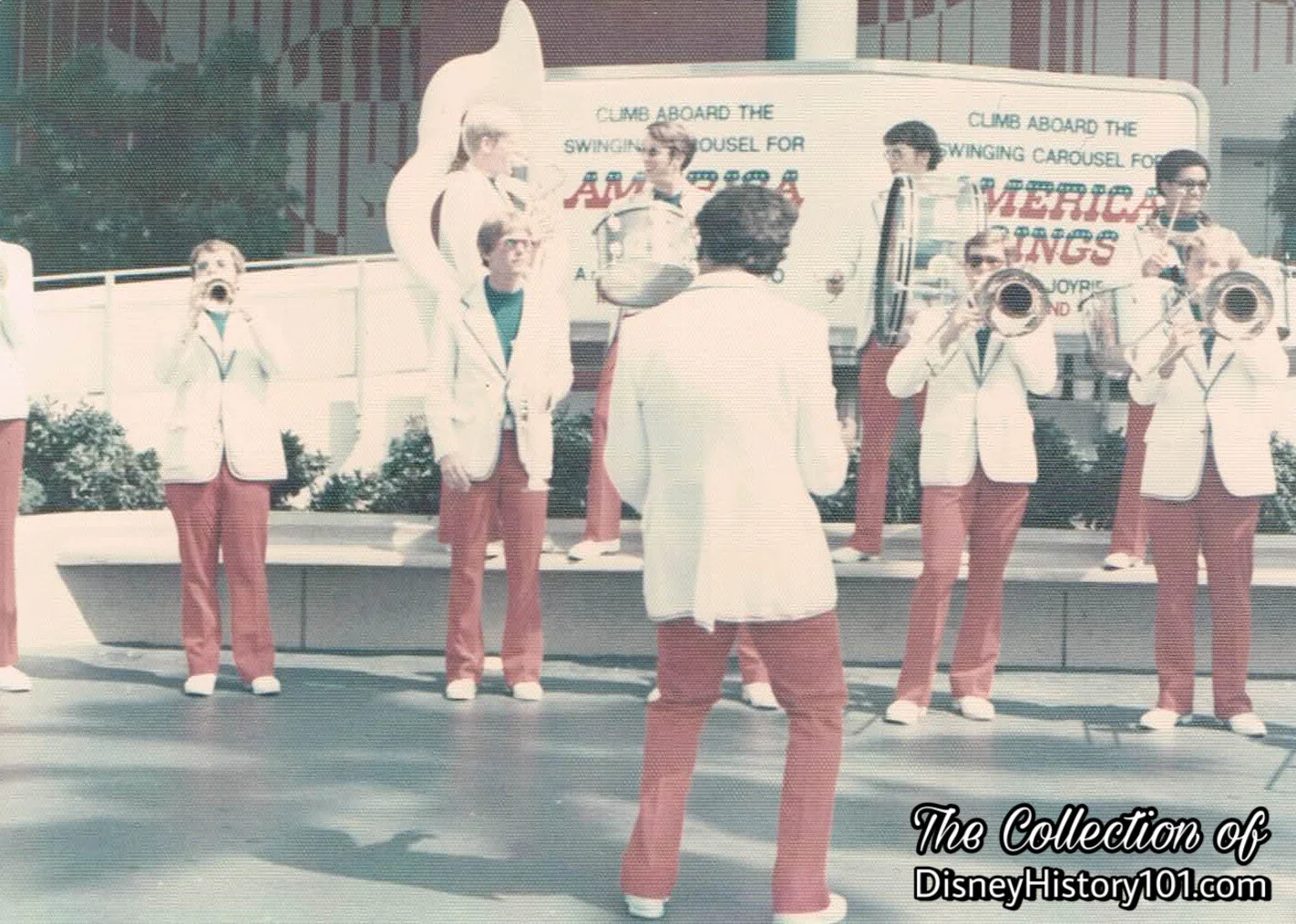
Carousel of Progress Show Building and All-American Band
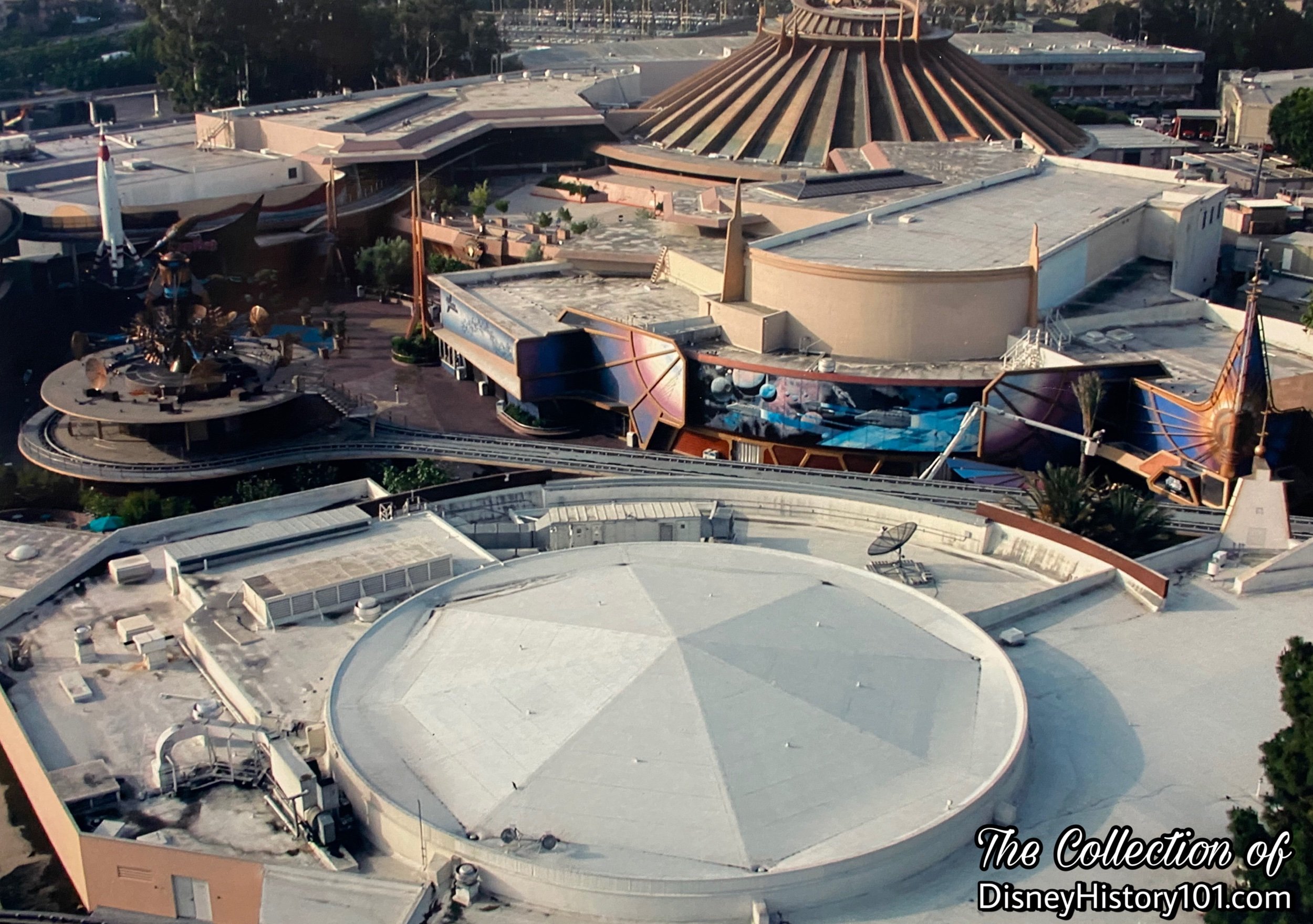
After America Sings held its final performance in 1988, the Show Building was closed for a decade. But ten years later (in 1998), the Show Building was home to a number of exhibits as the newly named Tomorrowland Expo Center.
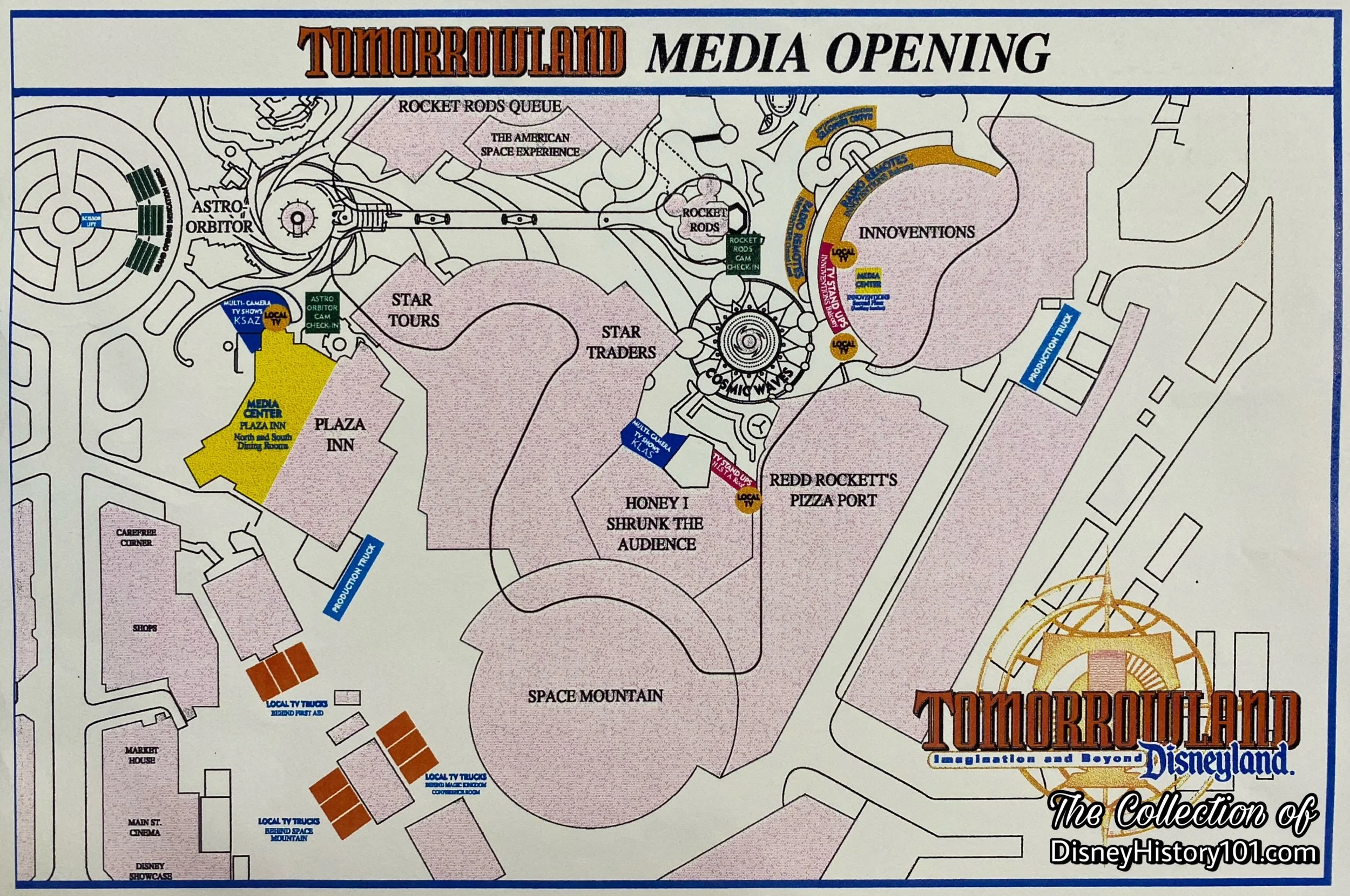
Walt once divulged, “I believe in being an innovator.” It is safe to assume that Walt may have loved Innoventions (from 1998 - 2012) - a two-level exposition of Innovative technology (supported by the musical orchestration of the retired Musical Director Buddy Baker).
According to media materials, guests would board a “loading pod” on the slowly (6” per second) rotating lower level. Audio-Animatronics® host Tom Morrow would welcome and introduce guests to the attraction's five themed areas: Transportation, Health/Sports, Home, Work/School, and Entertainment. Guests would then flow through two levels of hands-on exhibits showcasing new "Innoventions" from forward-thinking companies. Many true-life technologies made their debut at Innoventions, including Disney Vision - Disney's virtual reality technology.
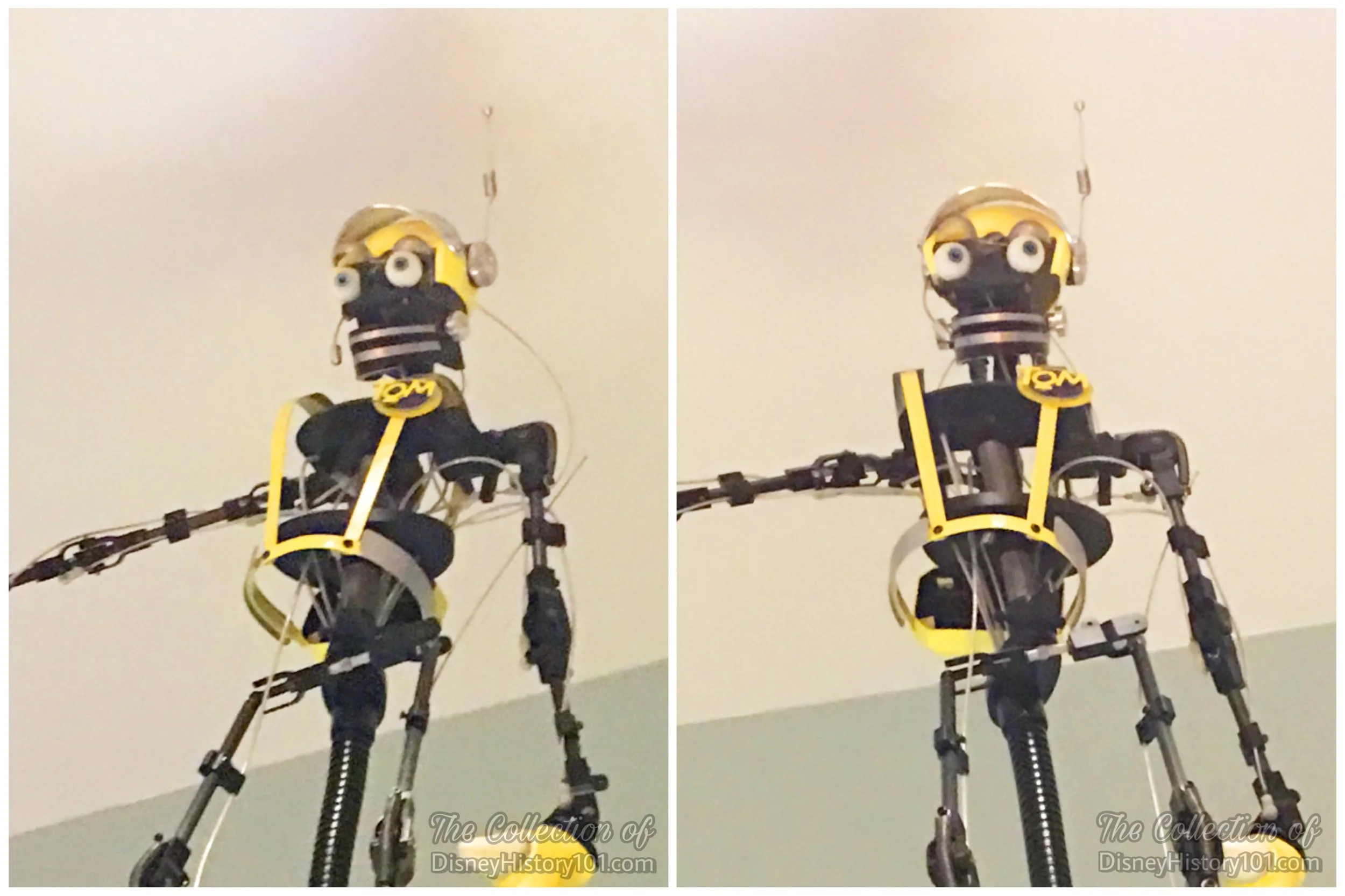
Tom Morrow Audio-Animatronics® Figure and his "Leg and Base Assembly" (unseen) have been preserved through The Walt Disney Archives.
The show building has been home to all sorts of artificial intelligence and Audio-Animatronics® figures. This new show depicting the home of the not-to-distant future, was hosted by Tom Morrow. If Tom Morrow’s name sounds familiar, its because his previous role was that of the “Director of Flight Operations” of the Rocket to the Moon, at the Disneyland Spaceport. If Tom Morrow’s voice sounded familiar, it was because he was brought to life with the help of Nathan Lane. While Tom could be seen and heard in Innoventions, his name was still being paged within the Star Tours Show Building. There is one thing that I’ve always wondered - is there any relation between Tom Morrow and Richard T. Morrow (Walt Disney Productions Board of Directors, Vice President General Counsel, c.1971)?
In 2008, WDI master planners entertained the concept of an update to Innoventions described as the “Wall-E Synergy Initiative.” While Wall-E did not appear, four years later, one of the last Innoventions attractions to greet audiences would involve another form of A.I. - “Say Hello to Honda’s Asimo,” in 2012.
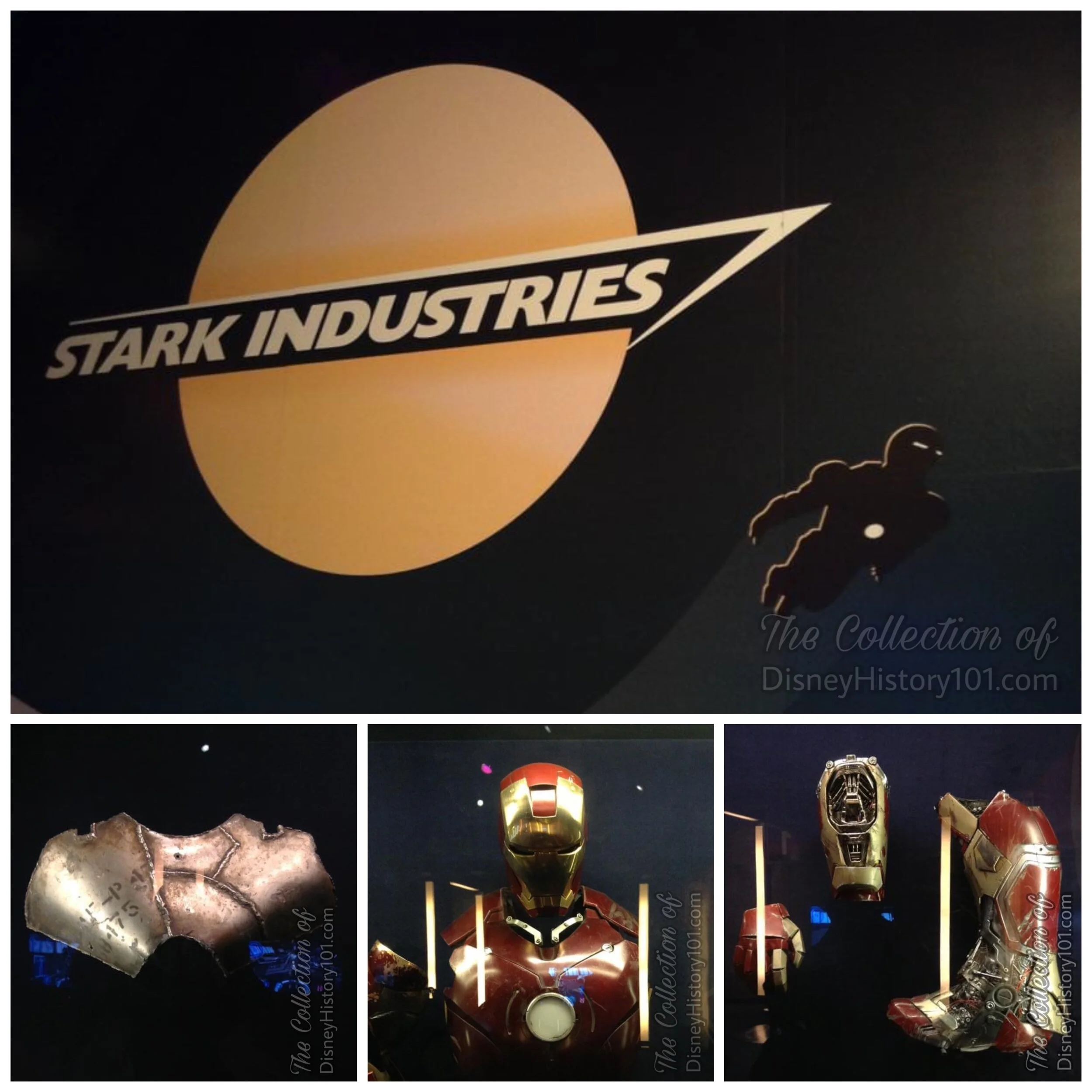
Iron Man Armor at "Stark Industries Expo," (2013)
Since the beginning, Tomorrowland has been called a land of “science fact and science fiction.” Proving the latter, were the following exhibits, like the Super Hero Head Quarters which spotlighted another type of technology showcased through the Stark Expo (in 2015) - that of Tony Stark’s Iron Man Armory.
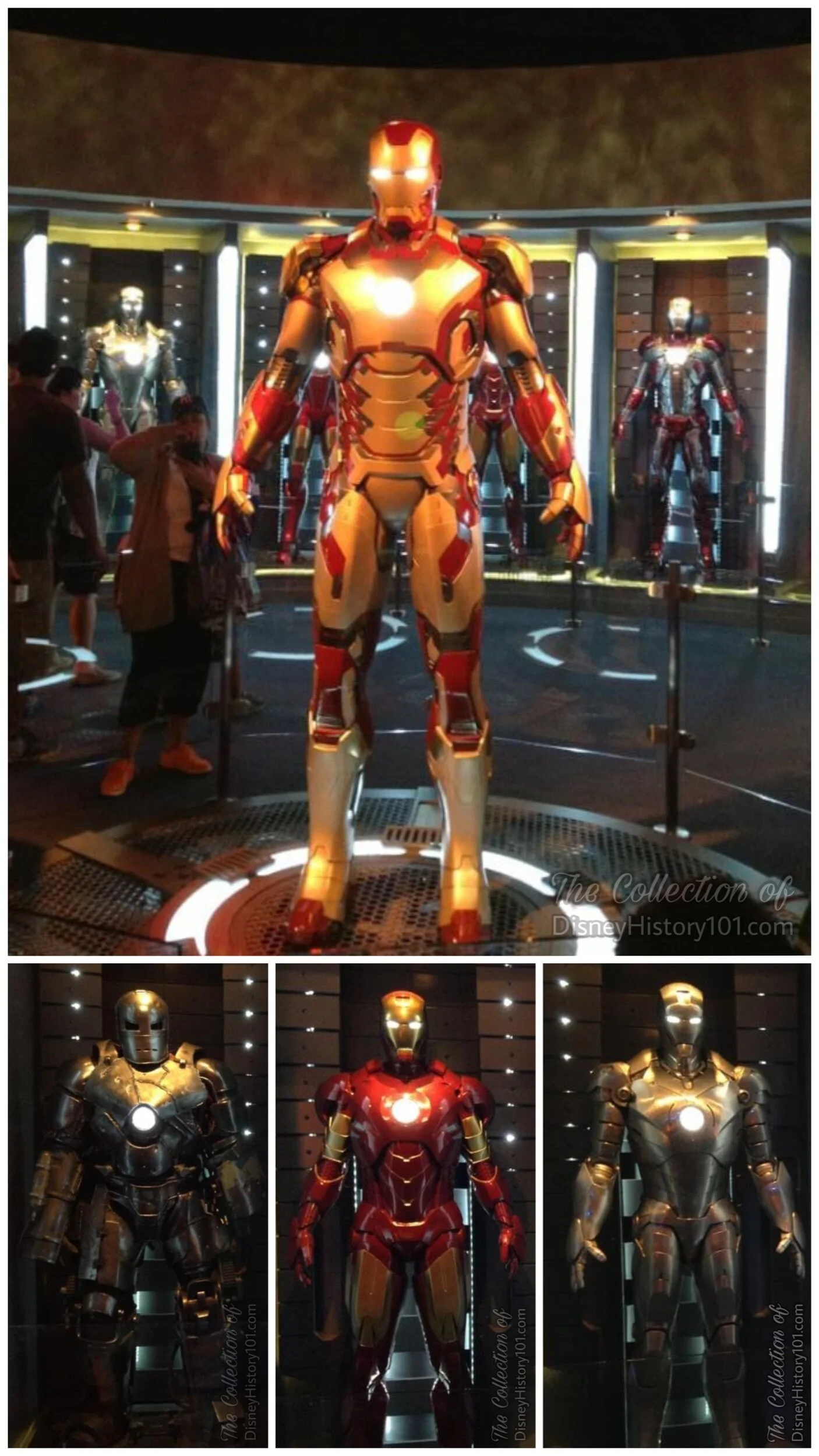
Iron Man Armor at "Stark Industries Expo," (2013)
The tradition was continued with the Iron Man Tech Showcase - Presented by Stark Industries at Hong Kong Disneyland in 2017.
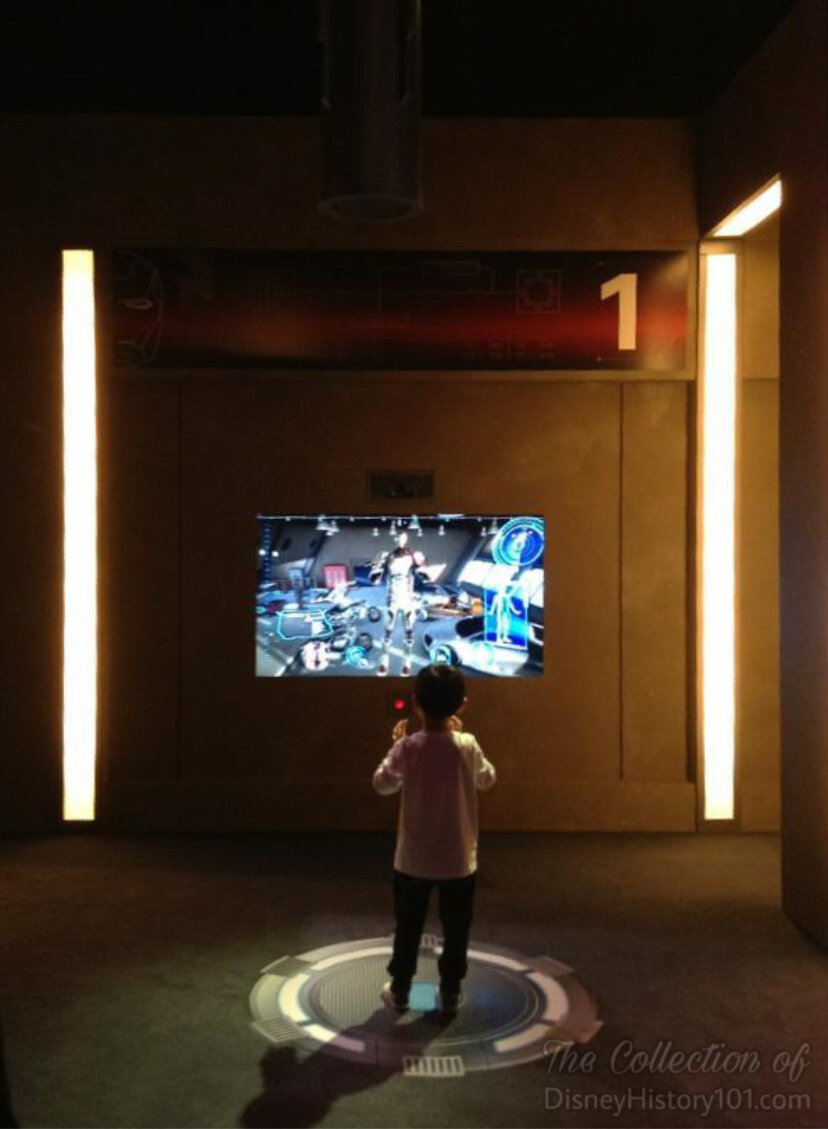
Marvel Universe Games at "Stark Industries Expo," (2013)
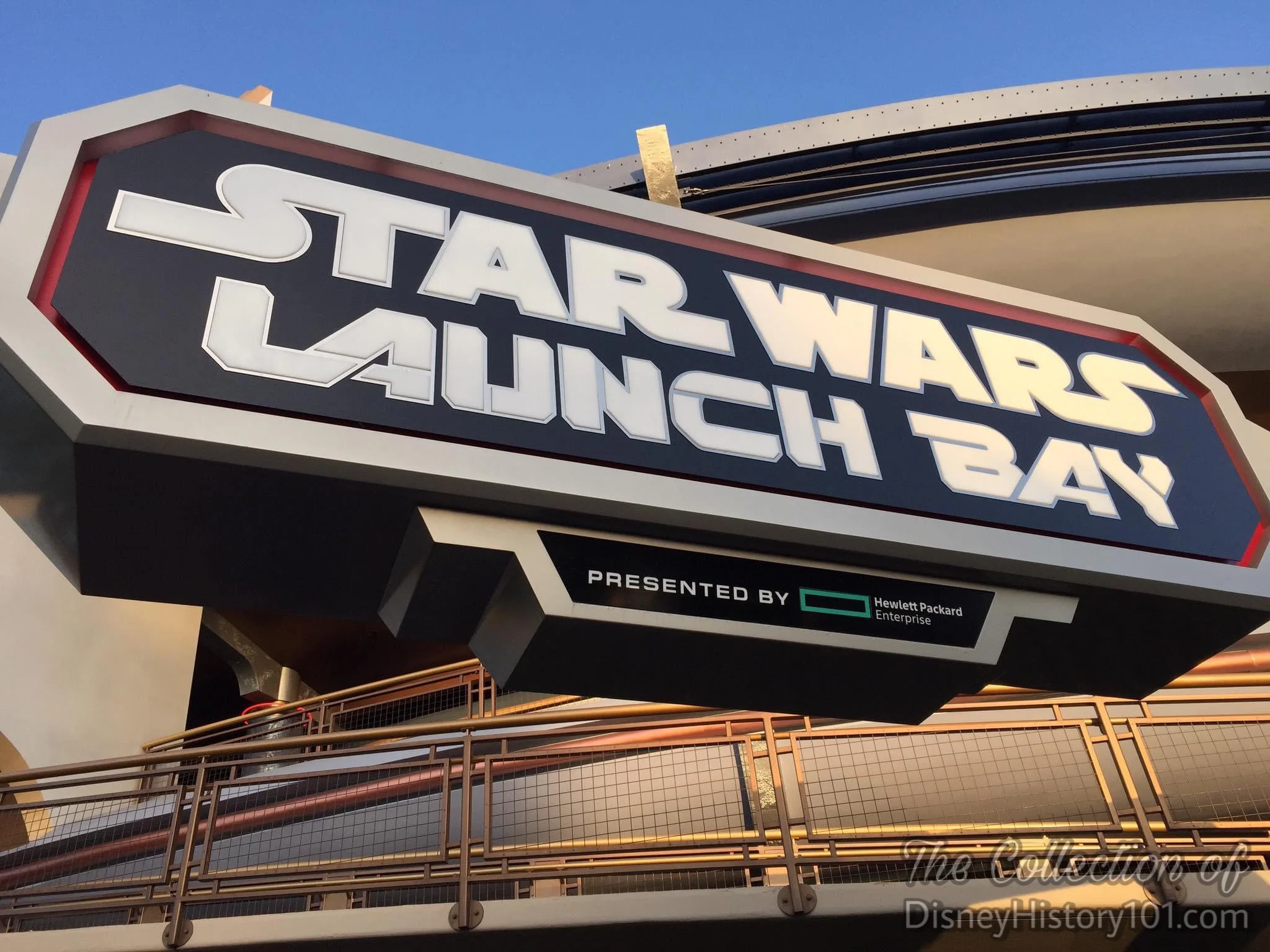
"Star Wars Launch Bay presented by Hewlett Packard" Marquee, (2015)
This exhibit was followed by the Star Wars Launch Bay (which also arrived in 2015). According to the Disneyland Resort’s official website description, the Star Wars Launch Bay provides an “up-close look actual props, costumes and actual replicas created specifically for Star Wars Launch Bay.” These exhibits would introduce new generations to Disney Parks stars of tomorrow - the heroes of both the Marvel Cinematic Universe and the Star Wars Universe. Less than a decade later, the Disney Parks audience would see the addition of two new lands - Star Wars : Galaxy’s Edge and the Avengers Campus.
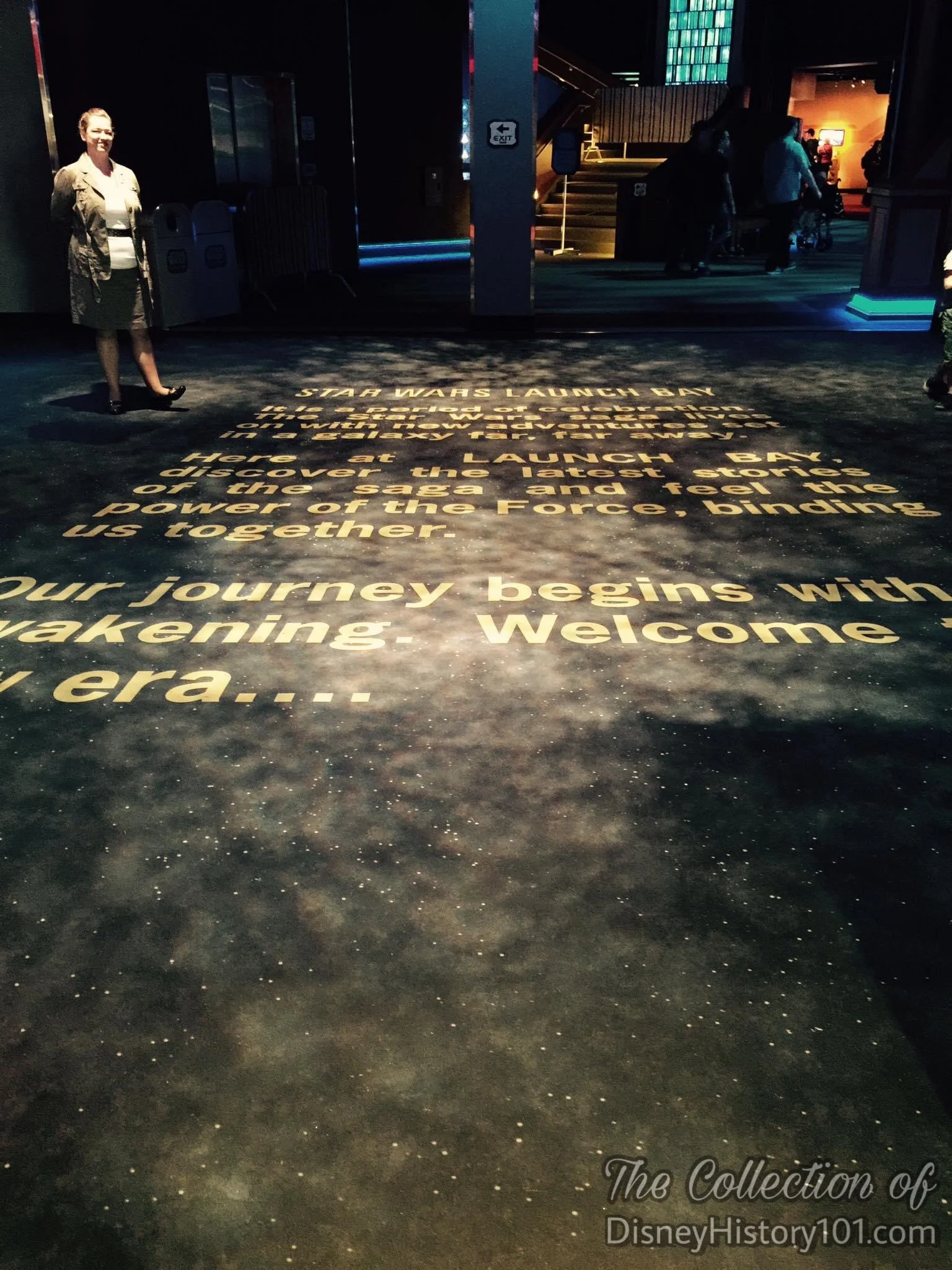
"Star Wars Launch Bay" Projected Floor Crawl (2015)
Upon beginning your Star Wars story with this opening “floor crawl,” untold behind-the-scenes adventures await.
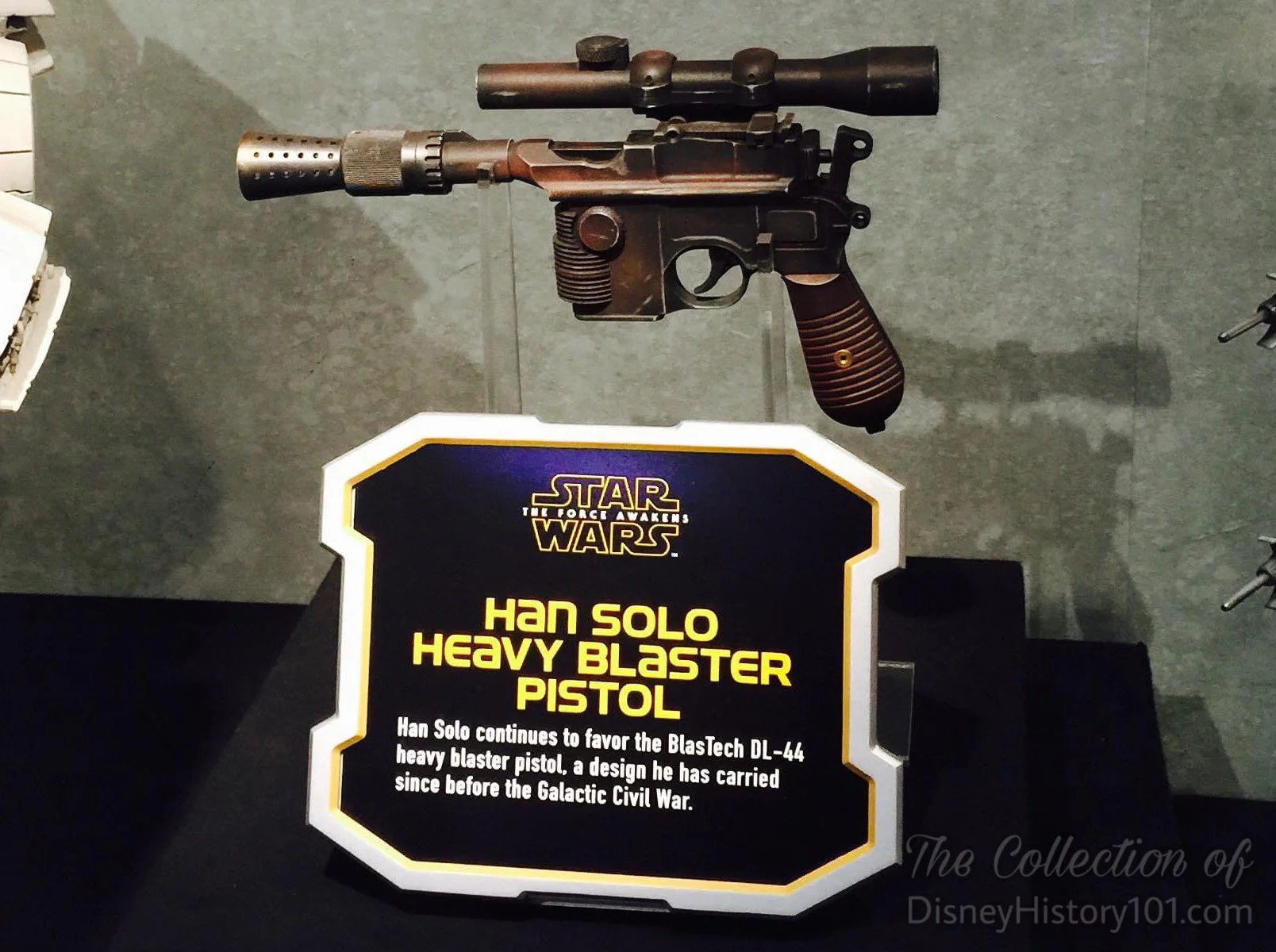
Han Solo Blaster Prop Display
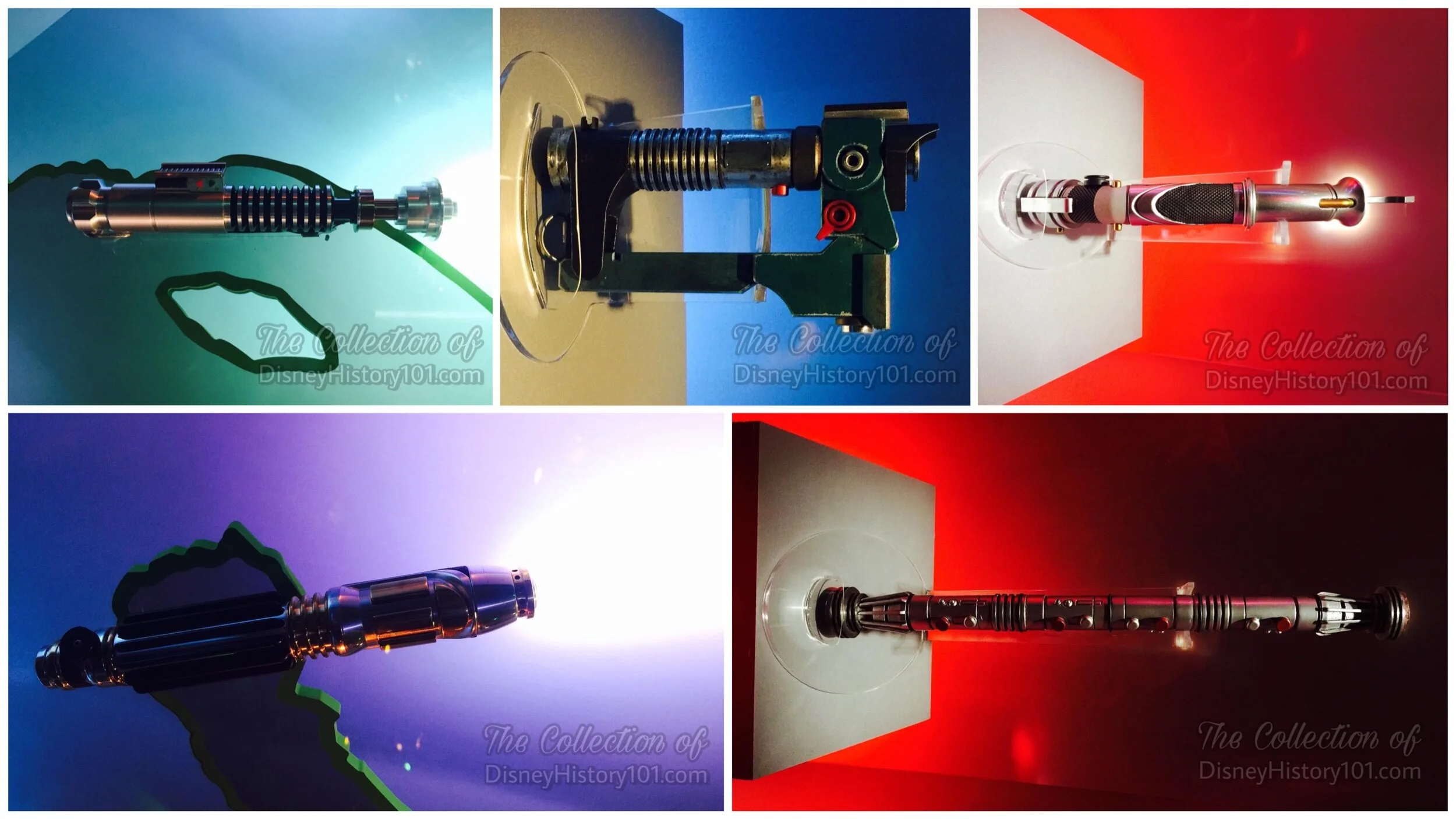
"Star Wars Launch Bay" Lightsaber Exhibit, (2015)
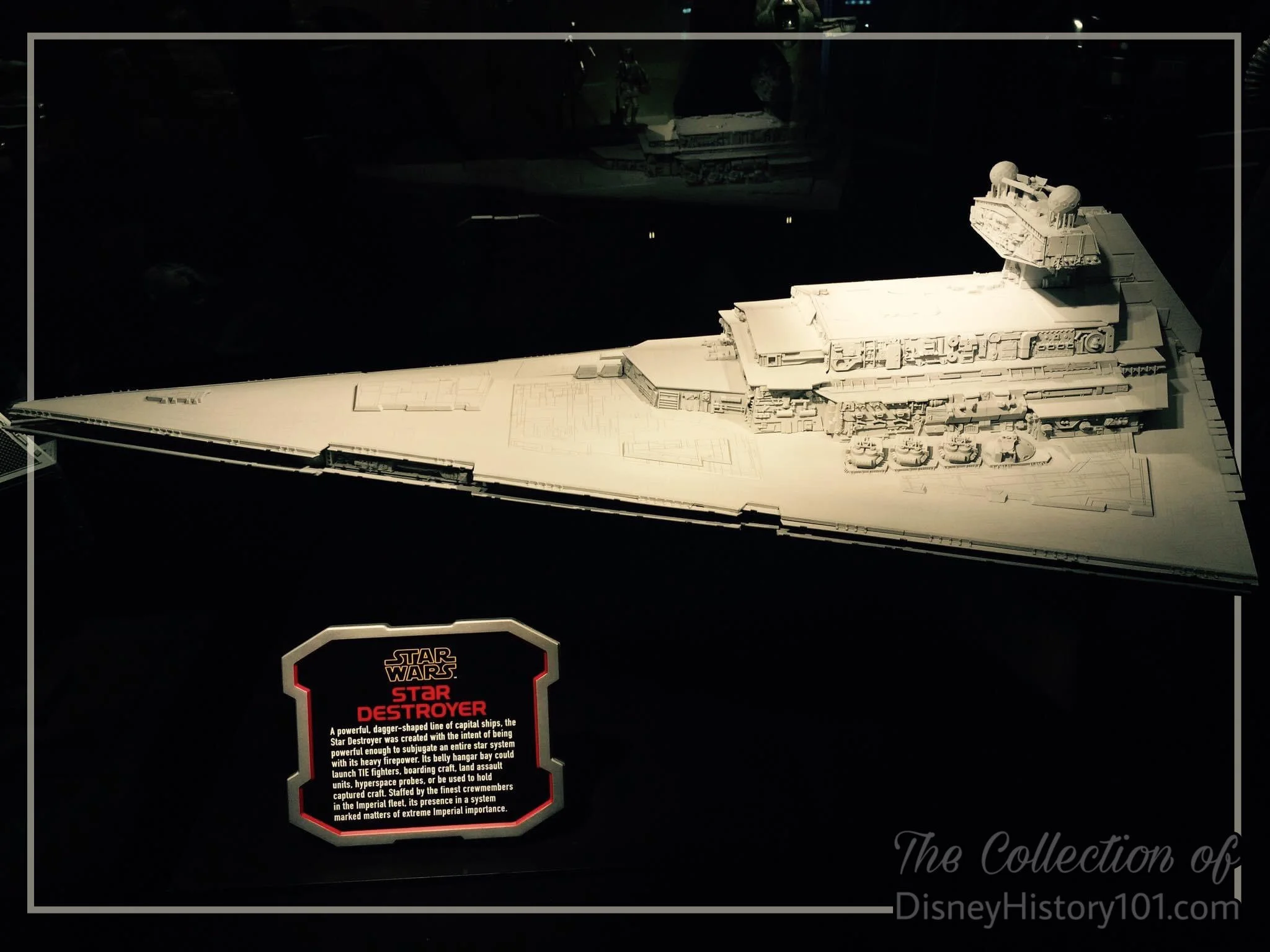
Star Wars Launch Bay Star Destroyer Exhibit
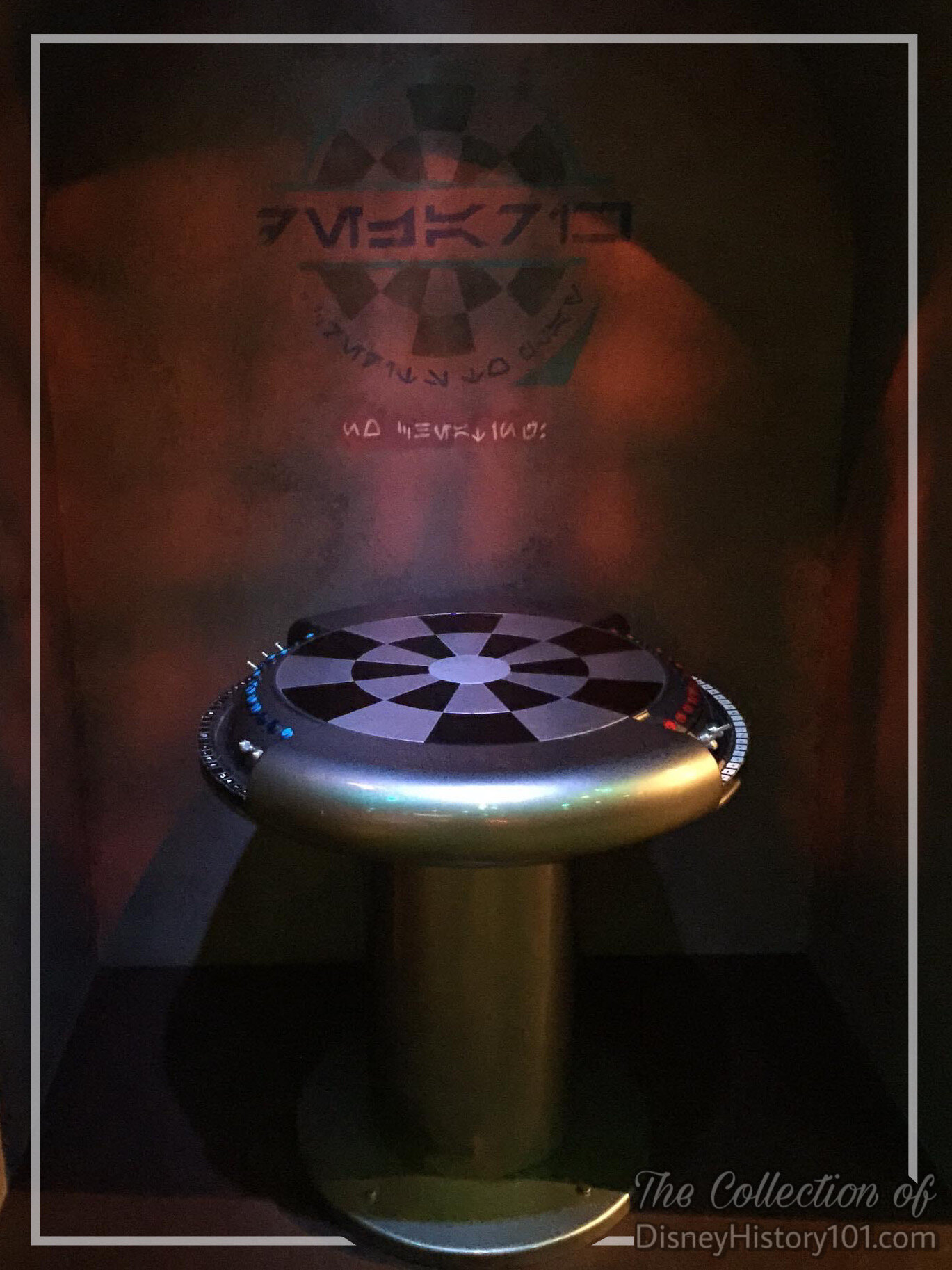
Star Wars Launch Bay Dejarik Holographic Table Exhibit
Fortunately there are no holographic pieces (or Wookies) present at this exhibit.
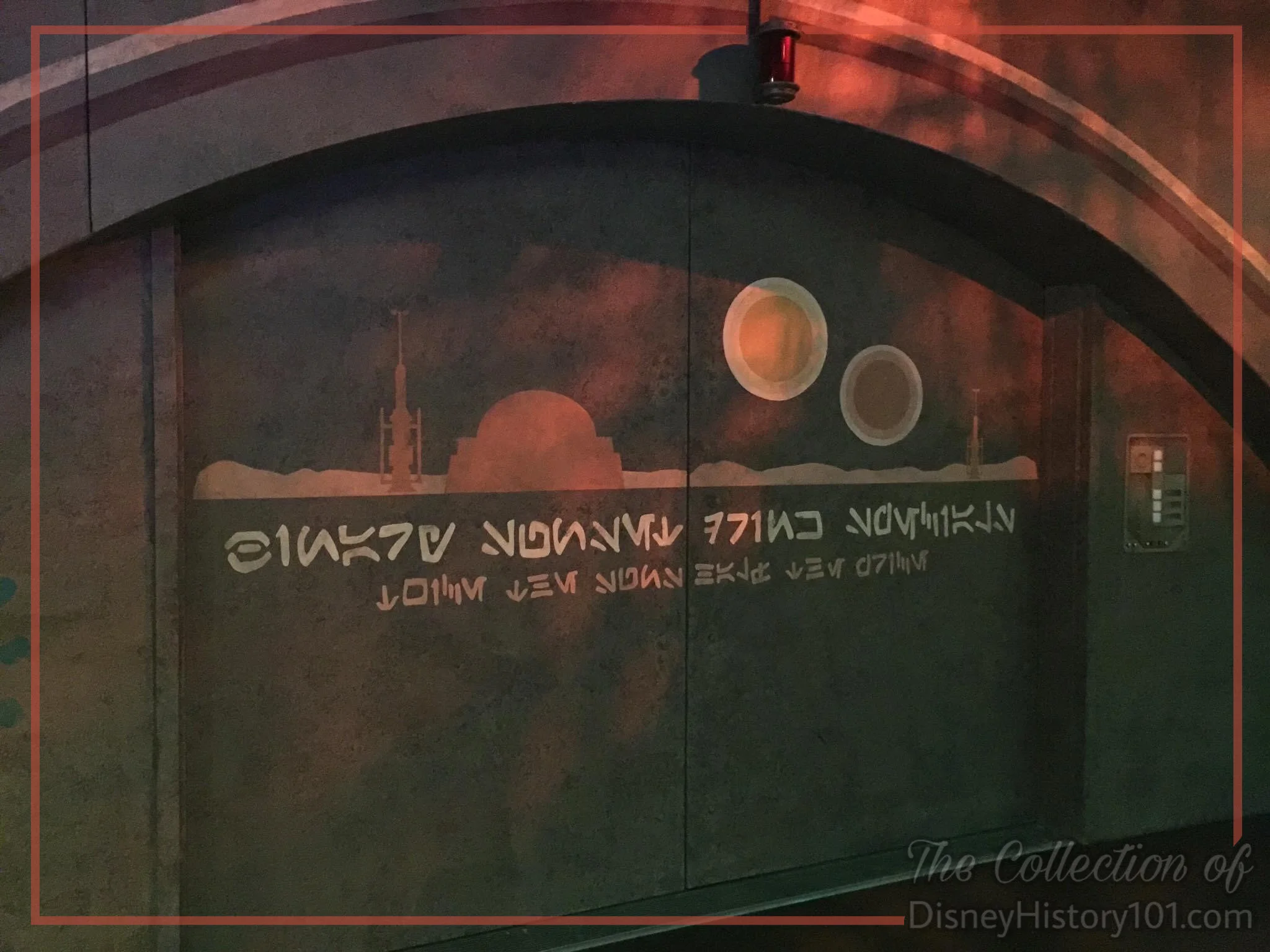
Star Wars Launch Bay Aurebesh-Language Exhibit
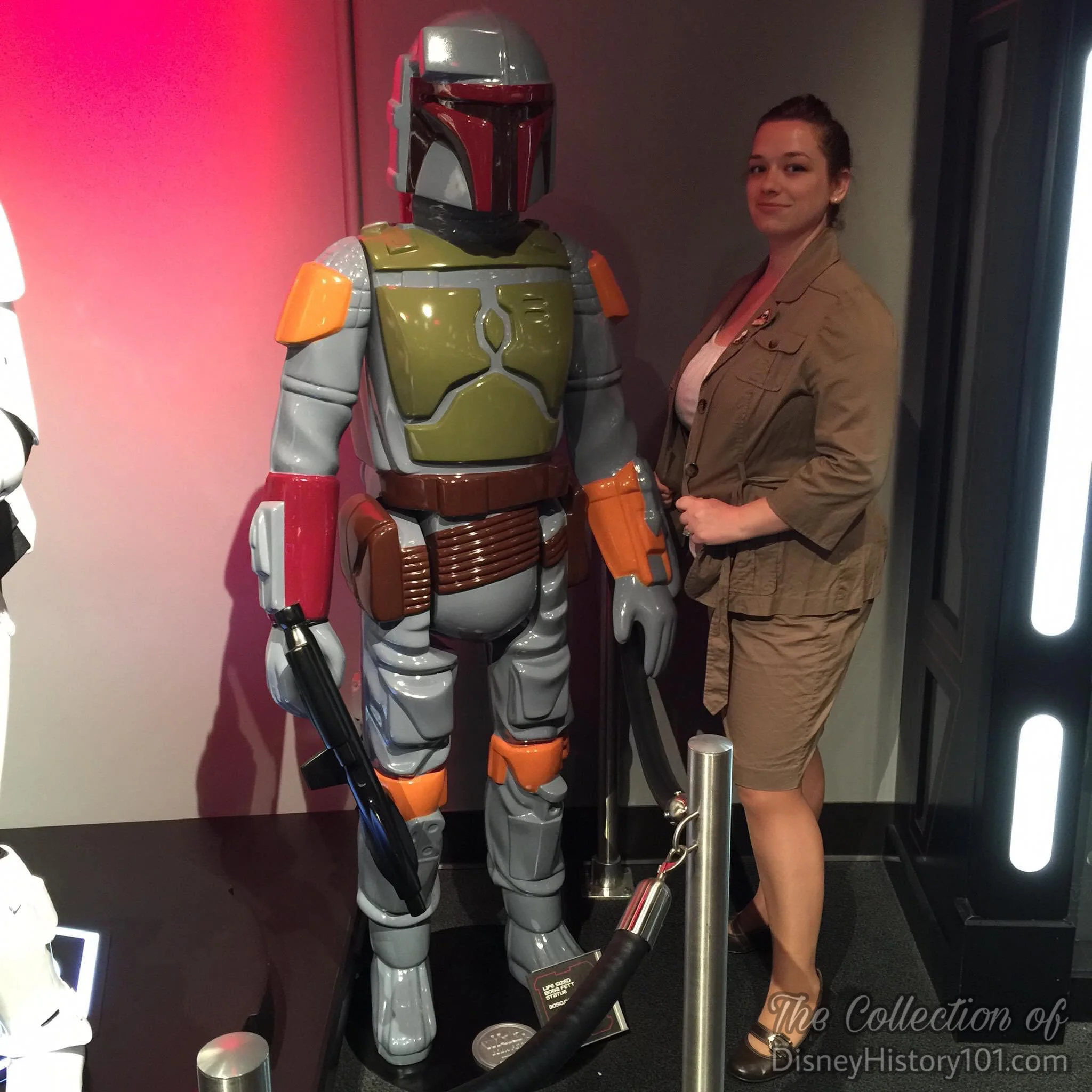
Star Wars Launch Bay Shop Merchandise
Honey, they haven’t shrunk the audience! You’re looking at one of the largest 3 and 3/4-inch Boba Fett action figures I’ve ever seen, among the merchandise once available at the Star Wars Launch Bay.
Star Wars Launch Bay Show Countdown Clock frame, (2015)
Since the beginning, the Four Keys of the DISNEYLAND Show (operating priorities in presenting the DISNEYLAND Show) have been present - Courtesy, Safety, Show, and Efficiency. Walt Disney Imagineers are always seeking out new magical opportunities to increase the efficiency, safety, and show quality of Disneyland adventures! Things have sure changed a lot for the Carousel Theater, since 1967. To borrow a line from an old show: “Progress is not just moving ahead. It’s dreaming and working and building a better way of life!” But whatever dreams those Walt Disney Imagineers have in store for the Tomorrowland Expo Center (or, whenever the next Show begins), we trust that it will be “great, big, and beautiful!”
Quisque iaculis facilisis lacinia. Mauris euismod pellentesque tellus sit amet mollis.