ALICE IN WONDERLAND

(June 14, 1958 - 1982)
(1984 - Present)
At Disneyland® Park every adventure is a living experience for the guest. Disneyland ride-through attractions or adventures have officially been defined as an “individual show, ride, or exhibit designed to produce an entertaining Guest experience. Disney attractions stir the imagination, enliven the senses, and provide the participants with positive, innovative entertainment, which is the essence of the DISNEYLAND Show.”
At Disneyland there is also a “story behind the story” of every attraction and it is important to review the story, tell the story, explain it, and create interest.
This is the story of Alice in Wonderland.
“'A World of My Own' - Blue Sky for Alice’s Adventures in Wonderland”
In 1955, Walt Disney promised that “DISNEYLAND will always be building and growing and adding new things... new ways of having fun, of learning things and sharing the many exciting adventures which may be experienced here in the company of family and friends.” Walt decided: “Disneyland is like Alice stepping though the looking glass to step through the portals of Disneyland will be like entering another world.”
The presentation of the Alice in Wonderland show on the vast DISNEYLAND “stage” is a distinct part of the Disneyland theater concept. In reference to his magic kingdom, Walt once said: “Disneyland is like Alice stepping through the Looking Glass; to step through the portals of Disneyland will be like entering another world.” [“Walt Disney,” published by the Walt Disney Archives, the Studio Publicity Department, and the Disney Universities, 1975] Amidst designs for this other world, an early form of the Disneyland Prospectus (compiled by WED Enterprises for Disneyland Inc.) described a “walk-through” experience inspired by the Walt Disney Production of Alice in Wonderland. The document described such scenes as “Dodo Rock” and “the singing flowers”… “climaxing in the courtroom of the Queen of Hearts.” Another latter draft of the same “Disneyland Prospectus” [prepared in 1953 for Disneyland Inc. by WED Enterprises], further elaborated on the same “Walk-Through” and “the wonderful experiences of Alice in Wonderland, as the White Rabbit takes you down the rabbit-hole, through the maze of doors, the Rabbit’s House, past the Singing Flowers, Dodo Rock, the Mad Hatter’s Tea Party, climaxing in the courtroom of the Queen of Hearts.”
“Concept Development of Alice in Wonderland”
Bradley & Kaye Amusement Company (of 8506 Beverly Blvd. Los Angeles 48, Calif; Oleander 5-8029) was contracted by WED Enterprises, Inc. to develop Walt Disney's Disneyland Park for Disneyland Inc. At the time, Bruce Bushman was employed by Bradley & Kaye Amusement Company and produced multiple floor plans of the fun house (one version including first and second floors).
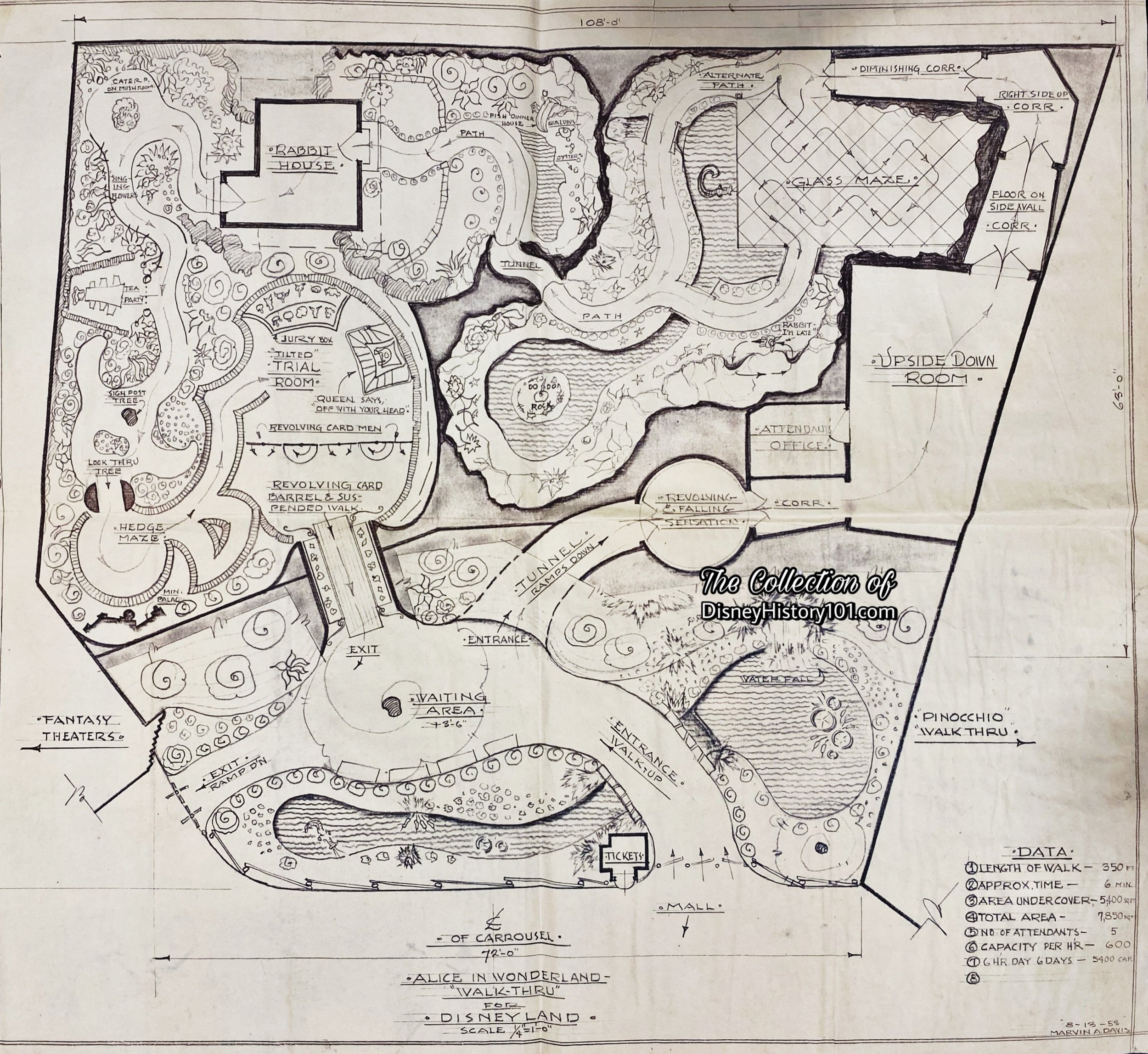
“Alice in Wonderland Walk-Thru for Disneyland” by Marvin E. Davis; prepared by 8-13-58.
Since the beginning, Show Designers created original concepts for show rides. Staging basically presented the scenes, or actions. Closer analysis of detailed WED Enterprises, Inc. drawings (which accompanied the “Disneyland Prospectus” of 1953) reveal a walk-through attraction entrance that looked like the English countryside, complete with a babbling stream, and a bridge. Once crossed, guests would head through a rabbit hole at the base of a tree, “falling downward” until reaching the large room. A weaving stretch of Show scenes carried guests outside the house, through a forest and to their first encounter with the Caterpillar, then Tweedle Dee and Tweedle Dum, and then another large Show scene featuring the Walrus and the Carpenter. Soon guests wandered through the White Rabbit’s House, Garden of Flowers, Tulgey Woods, Mad Hatter’s Tea Party, the Queen of Heart’s Hedge Maze, and straight into the Queen of Heart’s Royal Court (where it appears that three separate doors would lead to an “ending” and an exit to the attraction. It was estimated that the entire 350-foot adventure would take guests six minutes from entering the tunnel to Wonderland, until exiting the Queen of Hearts’ Tilted Trial Room through a revolving Card Barrel.
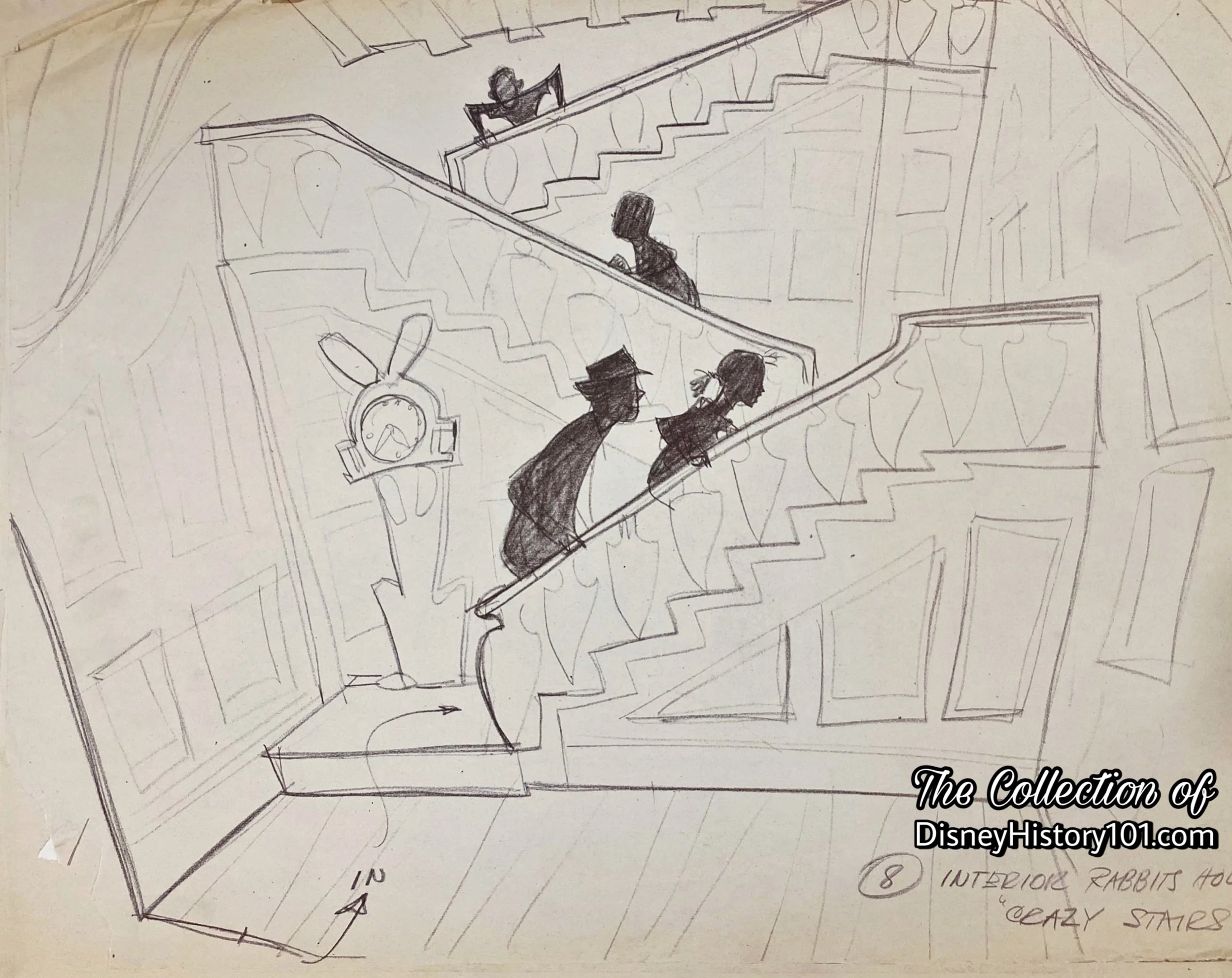
Show Design concept artwork of the “Crazy Stairs” feature of the “Interior Rabbit’s House” was developed by an unknown artist; possibly Bruce Bushman.
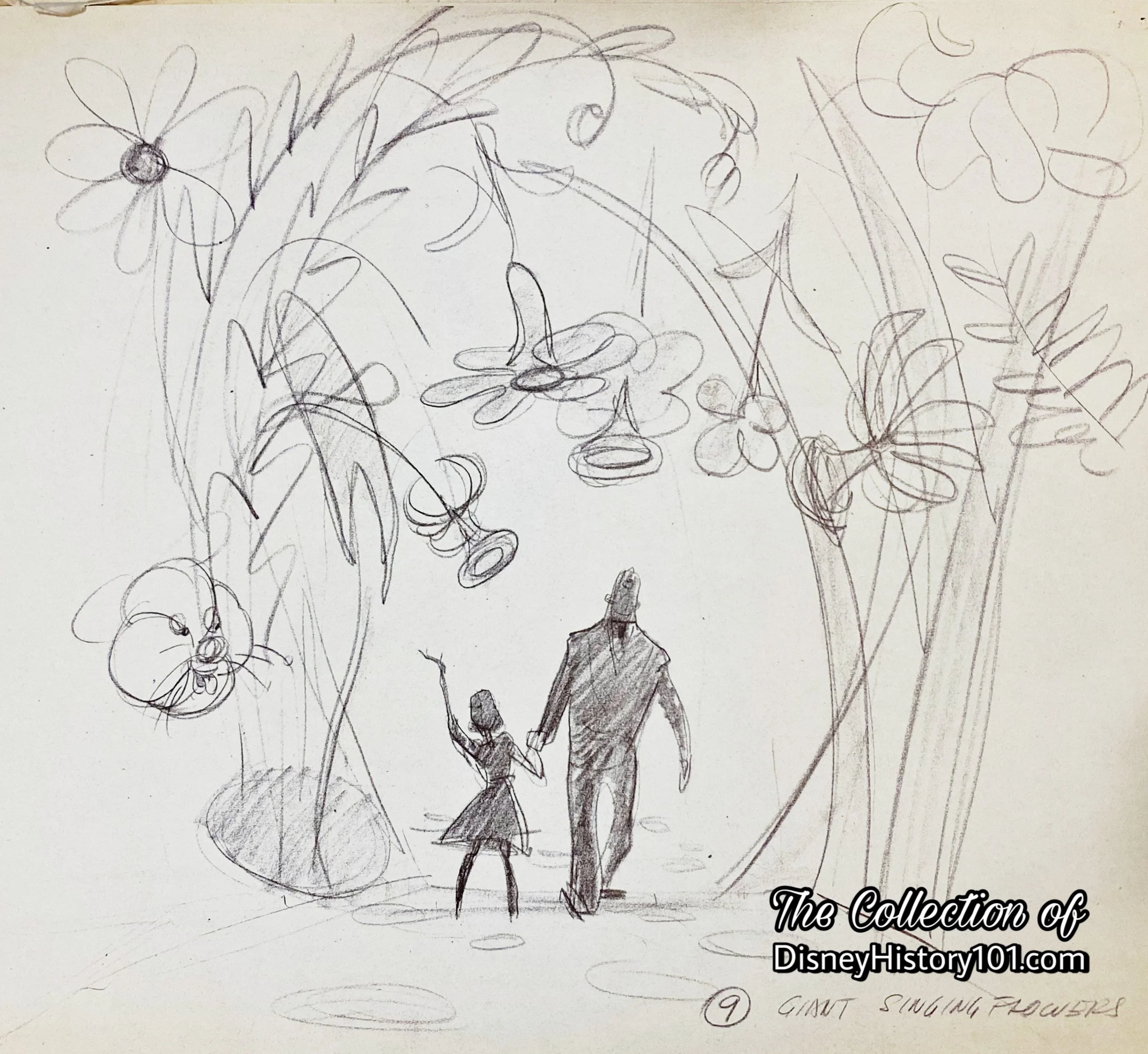
Show Design concept “ruff” artwork for a Golden Afternoon “Singing Flowers” scenic by an unknown artist; possibly Bruce Bushman.
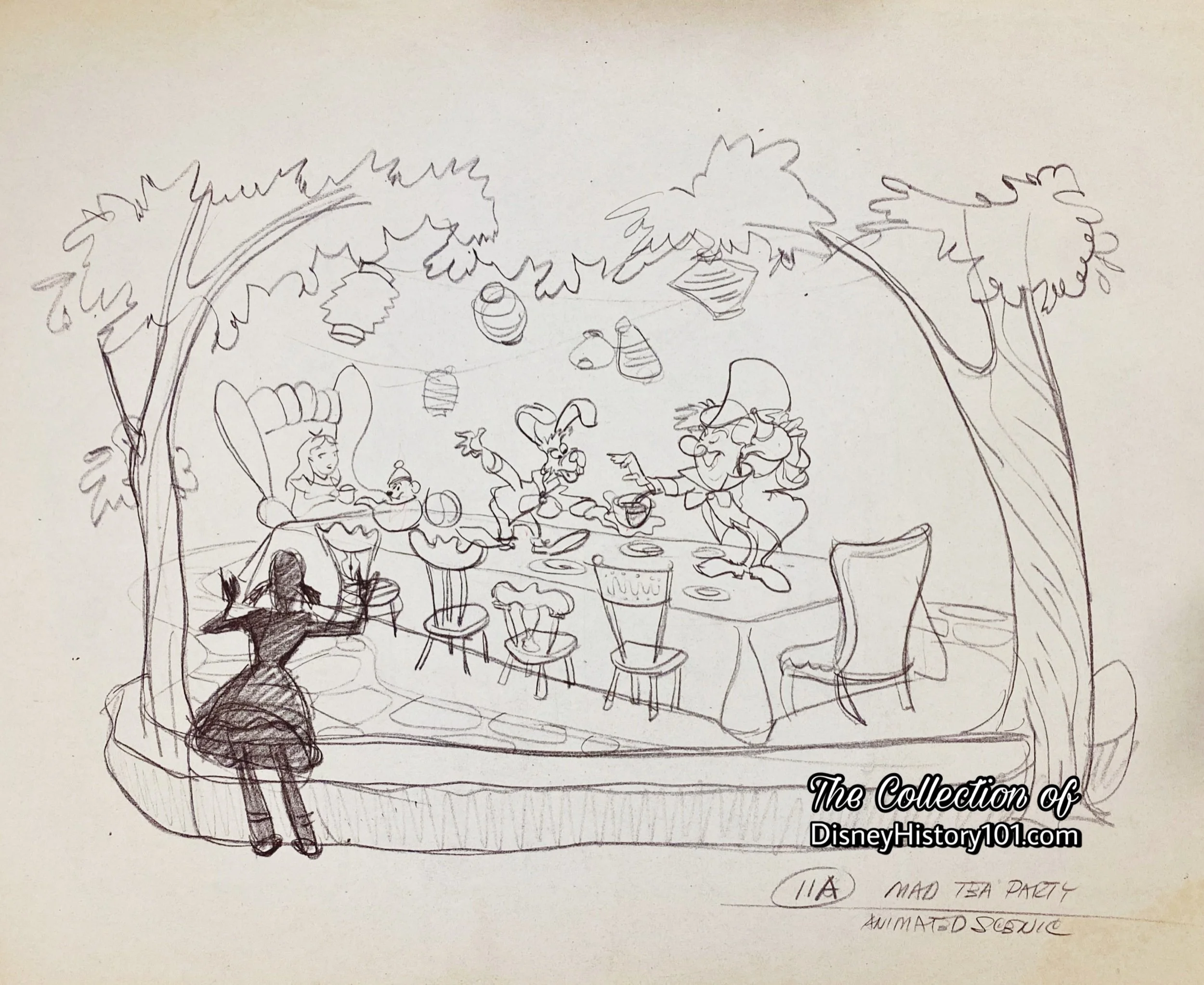
Show Design concept layout for a Mad Tea Party scenic, the black and white rendering by an unknown artist; possibly Bruce Bushman, showing the basic composition of a scene.
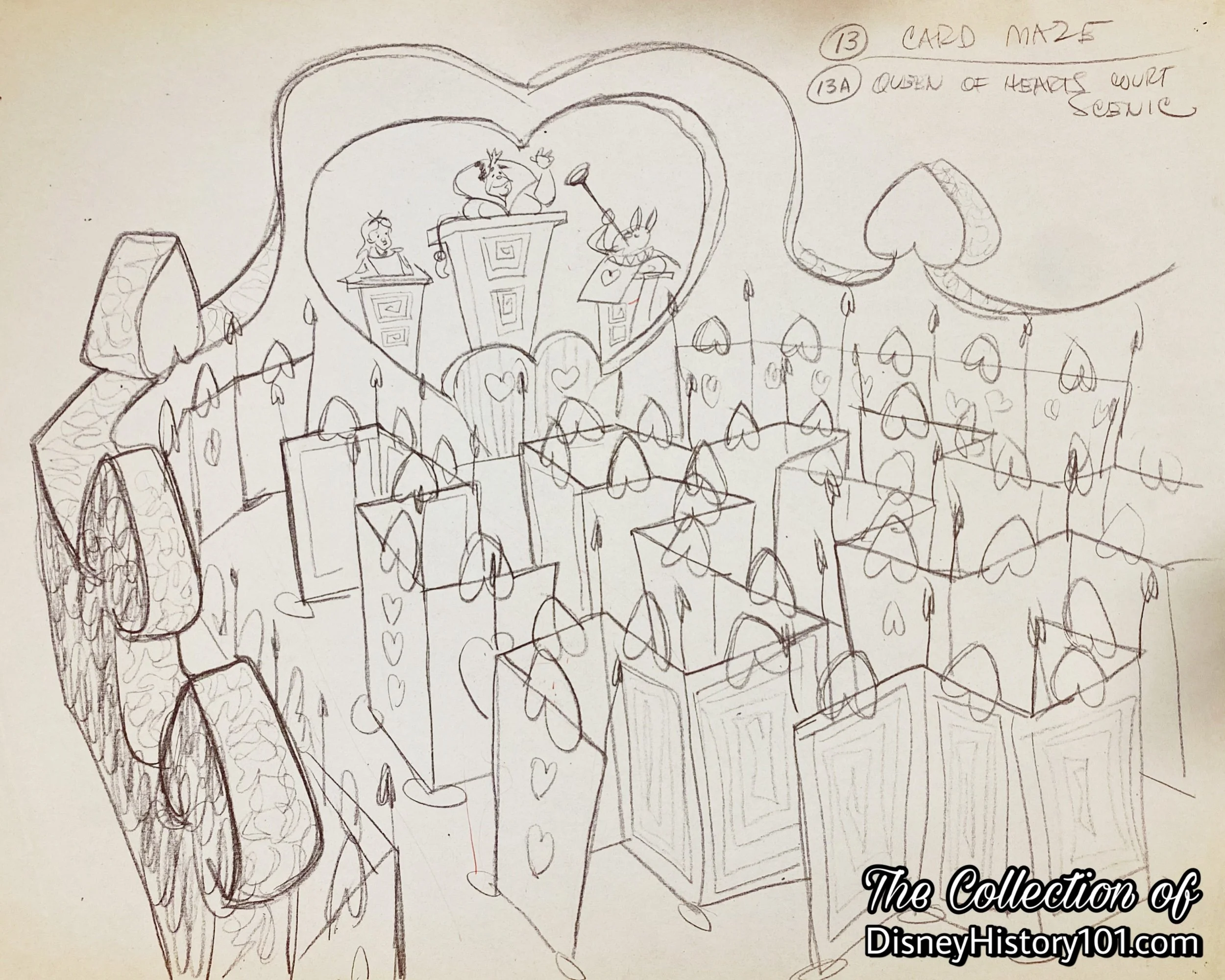
Show Design concept artwork of the Card Maze and Queen of Hearts Court scenic by an unknown artist; possibly Bruce Bushman.
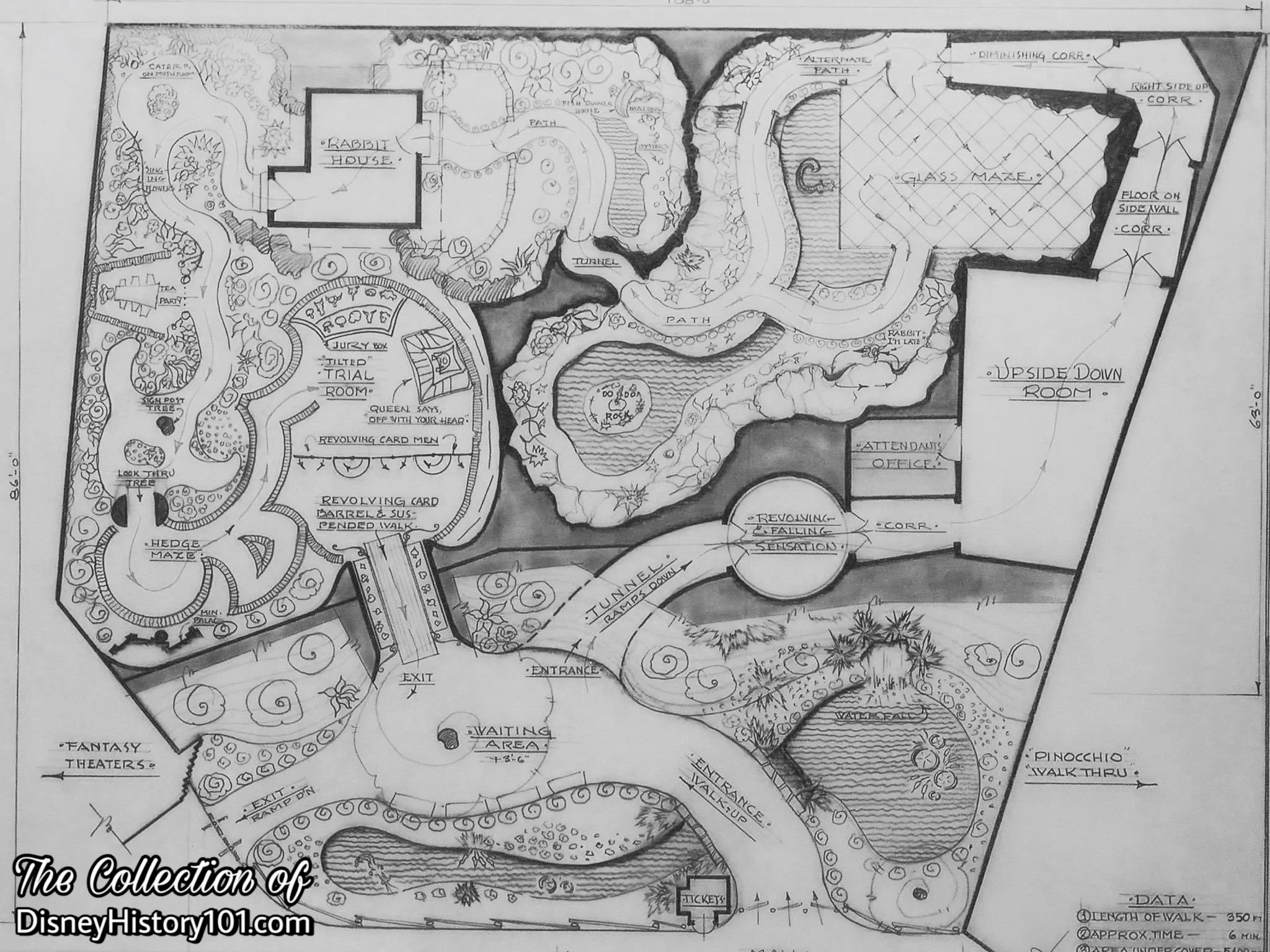
Viable project Concepts (as this Alice in Wonderland Schematic Design Concept), were supported by a well-developed business case and built expectation.
Late in 1954, Louis Berg (“This Week Magazine” author of “Walt Disney’s New Ten Million Dollar Toy”, published September 19, 1954) briefly mentioned “You’ll be offered a soft drink and find yourself reduced in size, in a room with giant furnishings. Or a sip from another bottle will make you a giant moving in a miniature world. In brief, you can live through the adventures of Alice in Wonderland, or take an aerial flight on Dumbo, the air - borne elephant. All these are in the blueprint or model stage.”
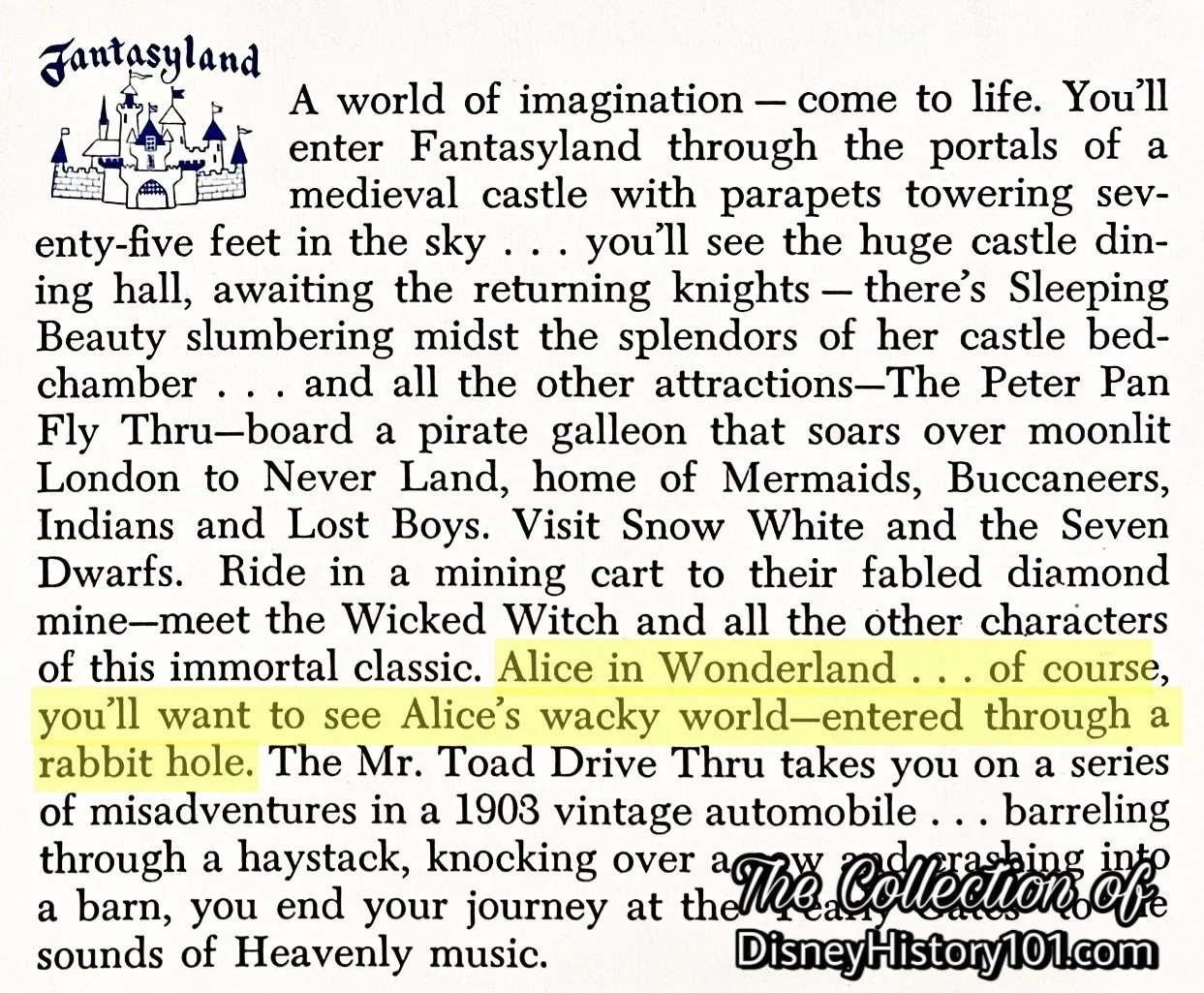
“A New Concept…” Brochure published 1955, advertises an Alice in Wonderland attraction opening mid-summer 1955.
“Grand Opening of Disneyland & Concept Development of Alice in Wonderland”
Recall the words of Alice in Walt Disney’s Alice in Wonderland: “My adventures in Wonderland began when I followed the White Rabbit down the rabbit hole. All of a sudden, I fell…down…down…down,” Alice, Walt Disney’s Alice in Wonderland. Though a walk-through Alice in Wonderland-themed attraction (similar to Sleeping Beauty Castle) was planned, the Mad Tea Party was the only Alice in Wonderland-themed attraction to open with the rest of Disneyland in July 1955.
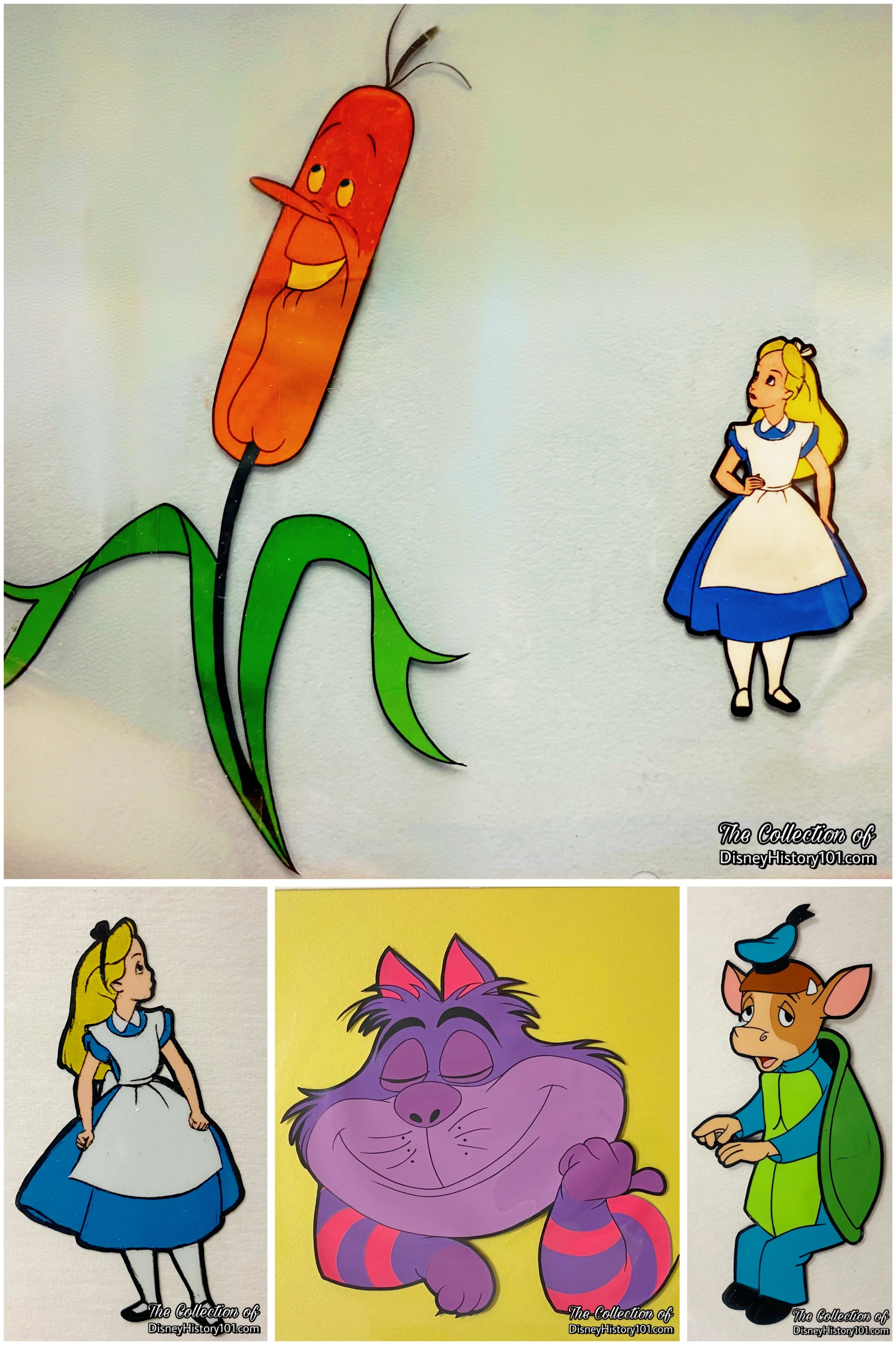
Alice, Cheshire Cat and Mock Turtle in animation cels prepared for JELLO promotional commercials.
Soon after Disneyland Park opened, Alice and the Wonderland characters continued in the public eye for some time, appearing in animated television commercials for Jell-O during 1956.
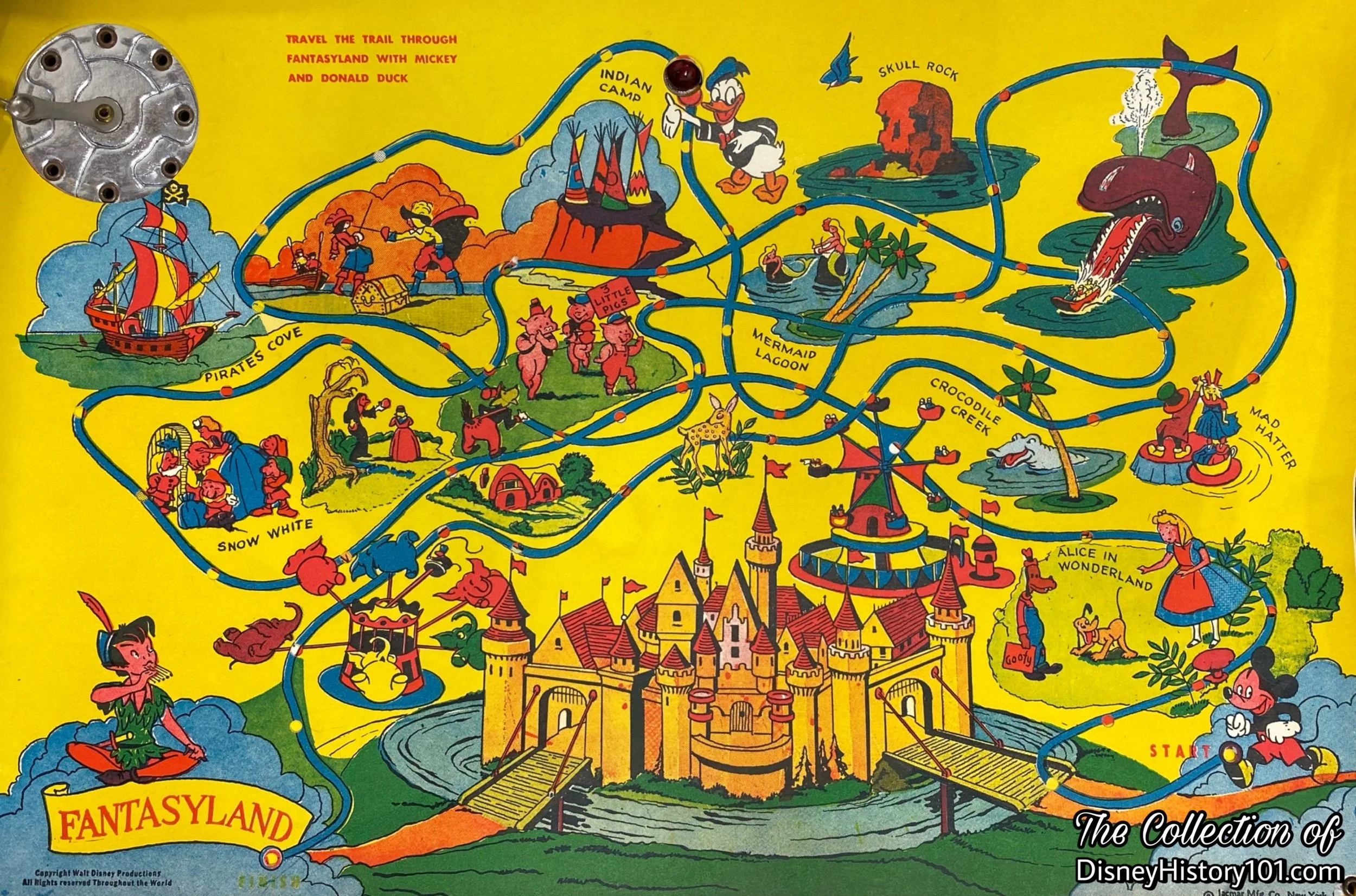
Though early merchandise depicted an adventure inspired by Alice in Wonderland, Disneyland Park debuted without such an adventure.
“Moving Forward, Opening New Doors”
Meanwhile, much like the young Victorian heroine, the creative staff of Disneyland, Inc. and Walt Disney Productions would collectively say: we “keep moving forward, opening new doors because we’re curious.” According to “Welcome to Disneyland” (published 1958), “When Disneyland opened, Walt Disney promised that it would ‘never be completed, but will continue to grow, to add new things, as long as there is imagination left in the world.’ Each year since opening in July, 1955, Disneyland has added new and unique attractions for the enjoyment of guests. …Looking toward the future, Disneyland continues its never ending search for the new and unusual,” according to “Disneyland, U.S.A.”, published 1958. Concept development continued on an adventure inspired by Walt Disney’s Alice in Wonderland!
The 1957 TWA publication “Let’s Talk About My Visit To Disneyland Anaheim California: A Note From Mary Gordon TWA Travel Advisor” teased and divulged new adventures heading to Disneyland (some years ahead of their grand opening): “Other coming attractions include: The Nautilus-Submarine Ride, Adventures in Science, Alice in Wonderland, Adventure Ride, Liberty Street (our American Heritage), a Full-Rigged, Three-Masted Sailing Ship, Thieves Market, New Orleans Square, and a Haunted House.”
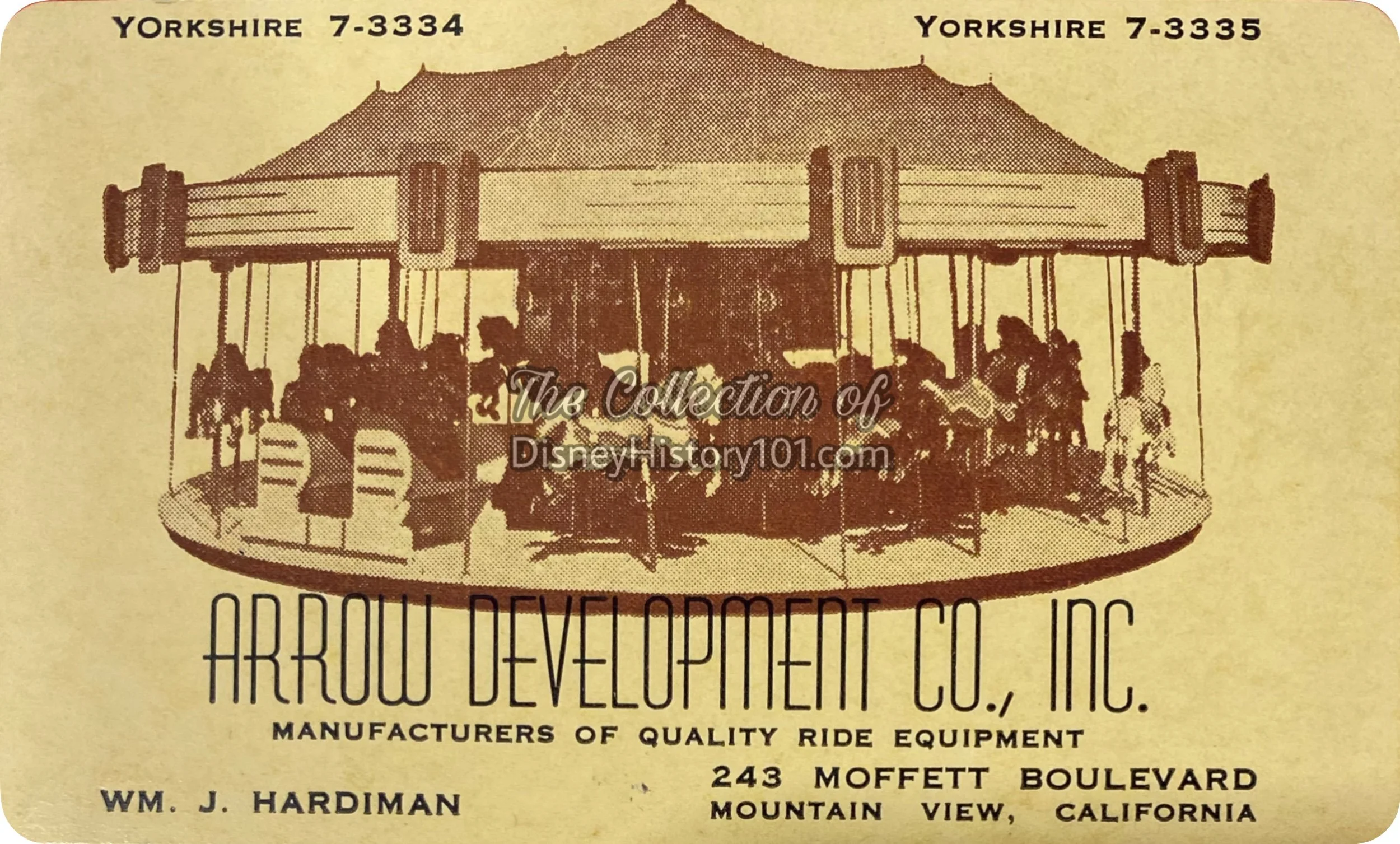
An Arrow Developement business card.
Obviously, the fastest way to move people over the extended areas of Disneyland is with moving vehicles. The walk-through adventure was “voided”, opted out for a new ride-through adventure courtesy of WED Enterprises and Arrow Development.
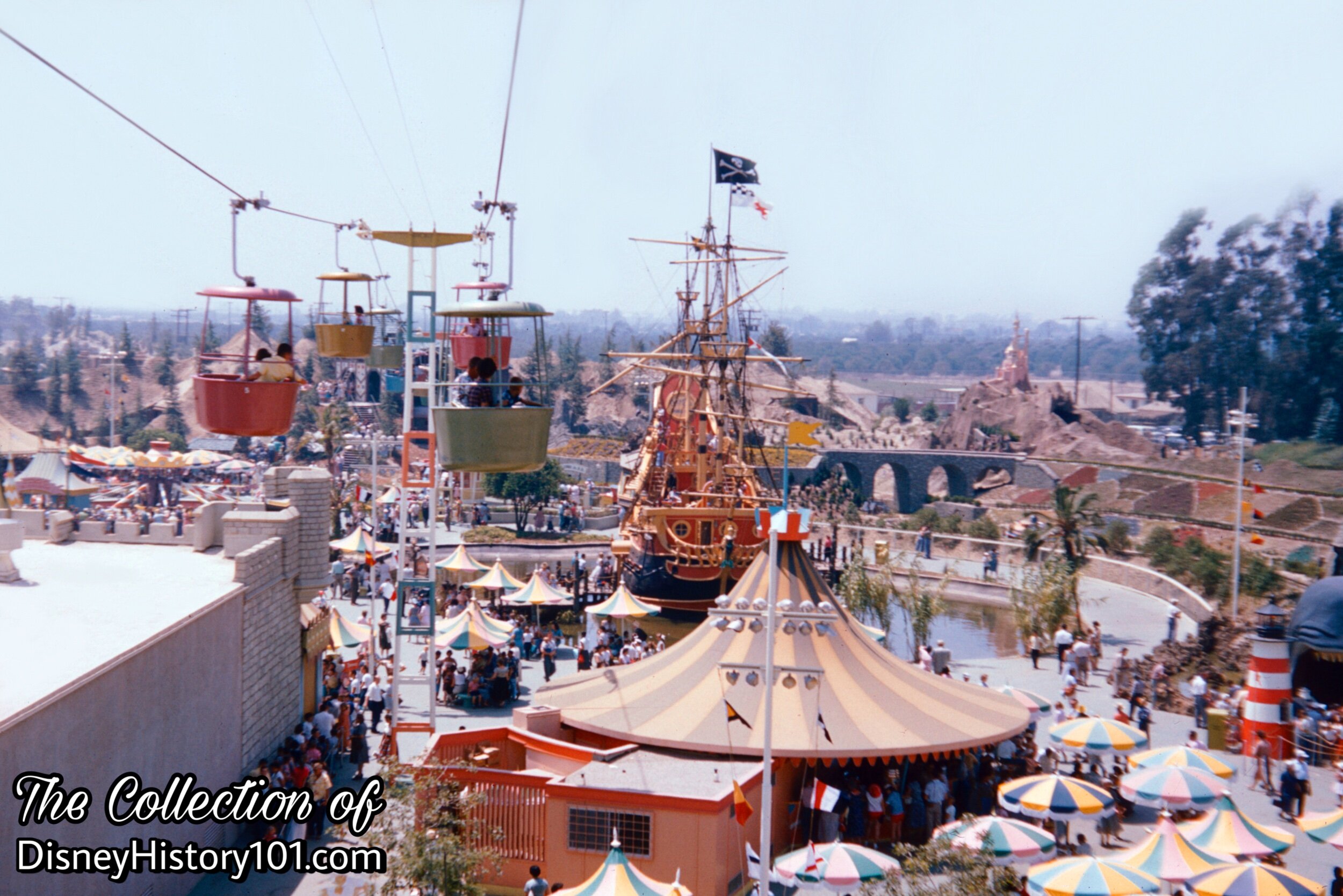
Fantasy Foods 2, Before the Construction of The "Alice In Wonderland" Show Building
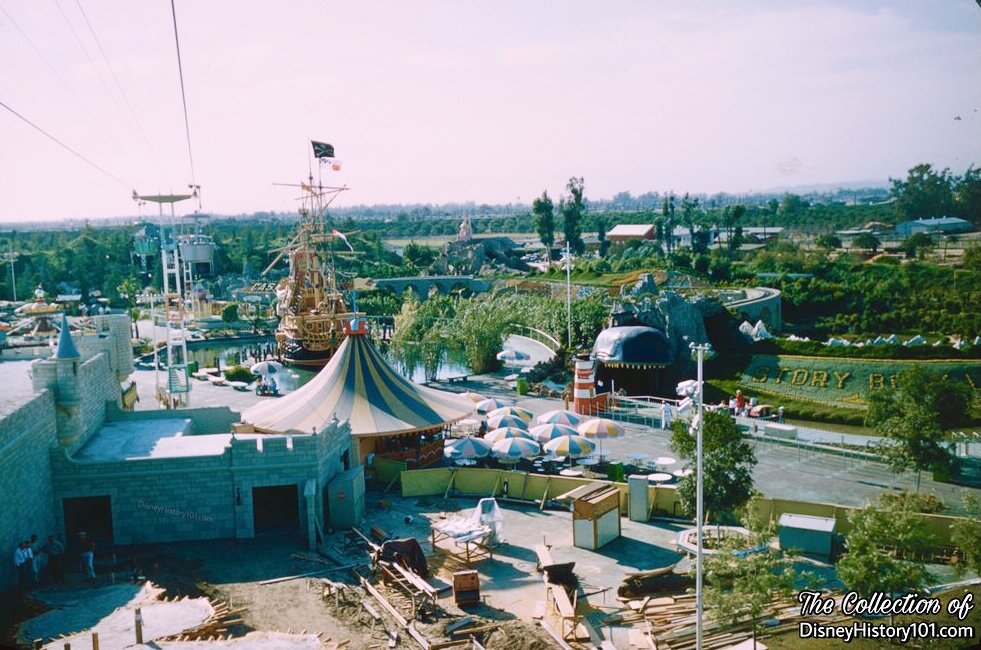
Alice in Wonderland Construction and perimeter, May, 1958.
“Construction”
Site work began. Joe Fowler (Disneyland Operations Committee) oversaw the Construction & Maintenance division including Engineering, New Construction, Maintenance, and Janitorial.
The seating belonging to Fantasy Foods 2 was relocated away from the eastern side of the Sleeping Beauty Castle complex, and a construction barrier appeared. During Disneyland’s early days, a three-man Disneyland Sound and Projection Department was initially housed in this location before being moved to another area. The air conditioned Sound Room housed a tape recorder that projected sounds into the Alice in Wonderland Mr. Toad and Peter Pan attractions.
Today, when an attraction is refurbished, the neighboring attractions may be temporarily closed to prevent Visual Intrusions - equipment left in the Guests ‘ view. When Alice in Wonderland was under construction (during 1958), the overhead Skyway to Tomorrowland remained open, providing a sneak-preview of what guests would soon experience.
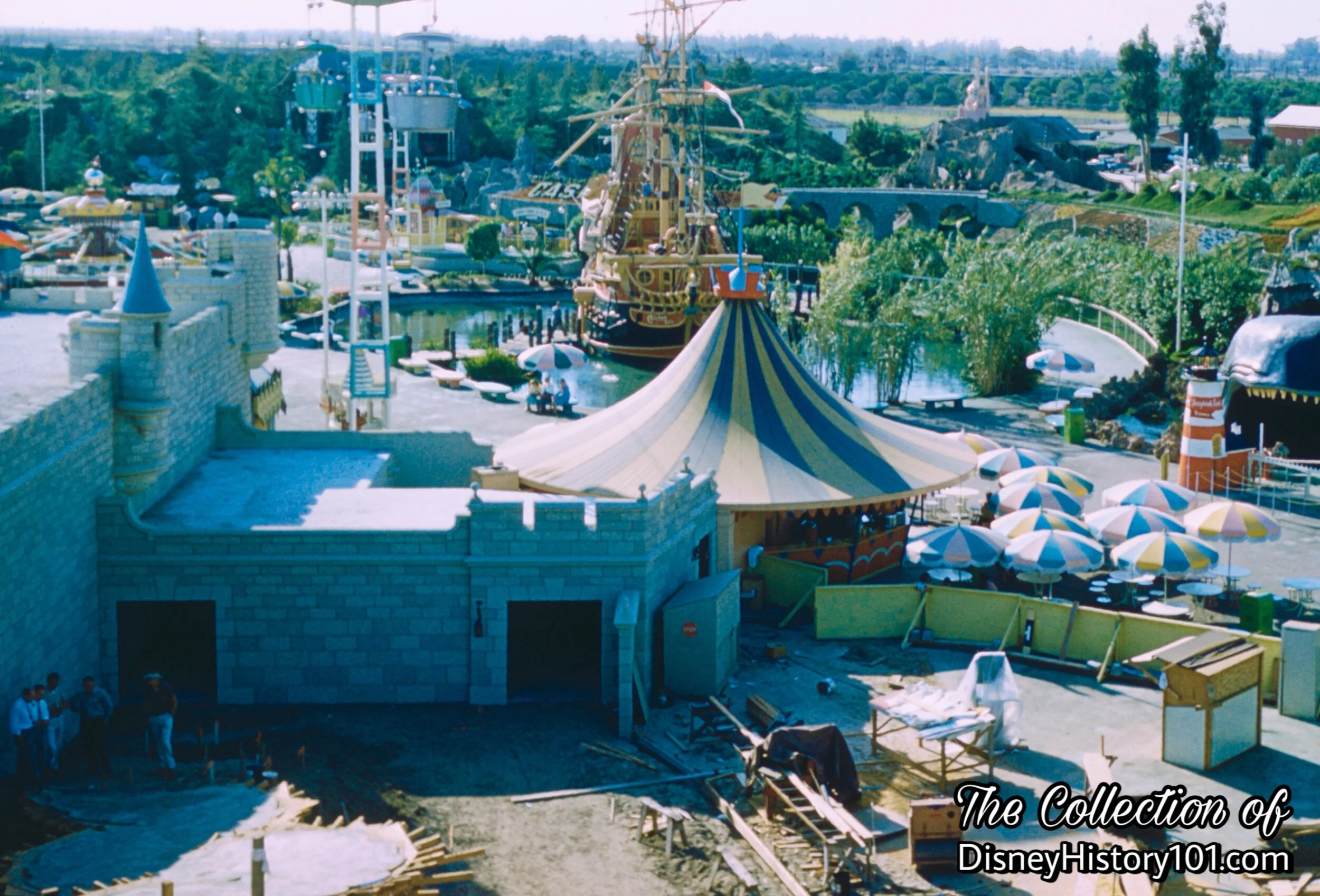
Alice in Wonderland Construction and perimeter, May, 1958.
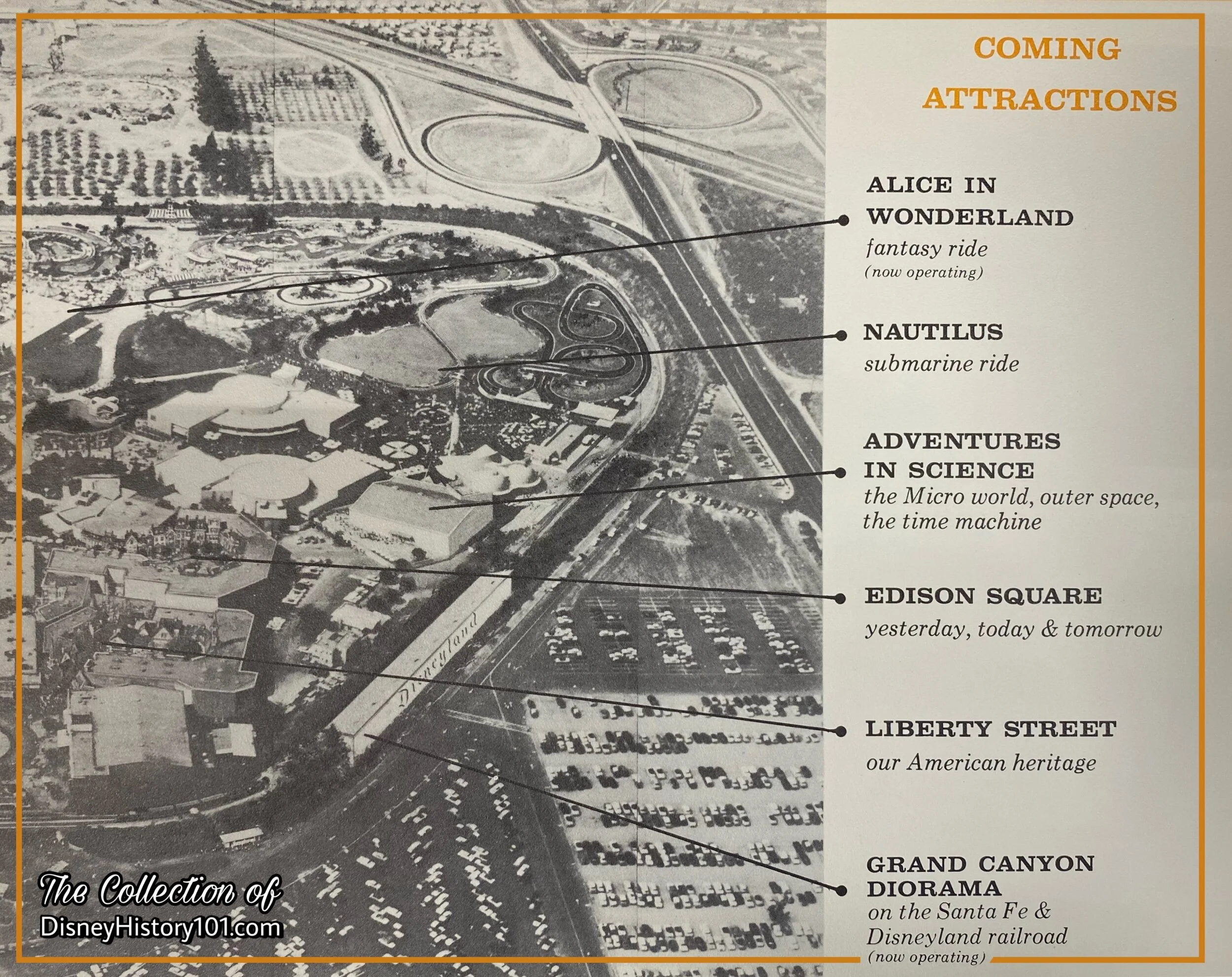
“Disneyland U.S.A.” Excerpt (Published 1958)
“Promotion”
Walt Disney, on the eve of Disneyland’s first day of operation, promised that “Disneyland will never be completed. It will continue to grow, to add new things, as long as there is imagination left in the world.” Three years later, a million dollar expansion assured that Alice would have “a world of her own!”
It was reckoned as one of more than 40 “rides and amusements” that would nearly double the number of Disneyland’s original 22 Opening Day attractions. The “ride structure” (passageways and sets) of this amusing adventure was appraised at a value between $75,000 and $83,000, while the equipment was valued between $38,400 and $46,000.
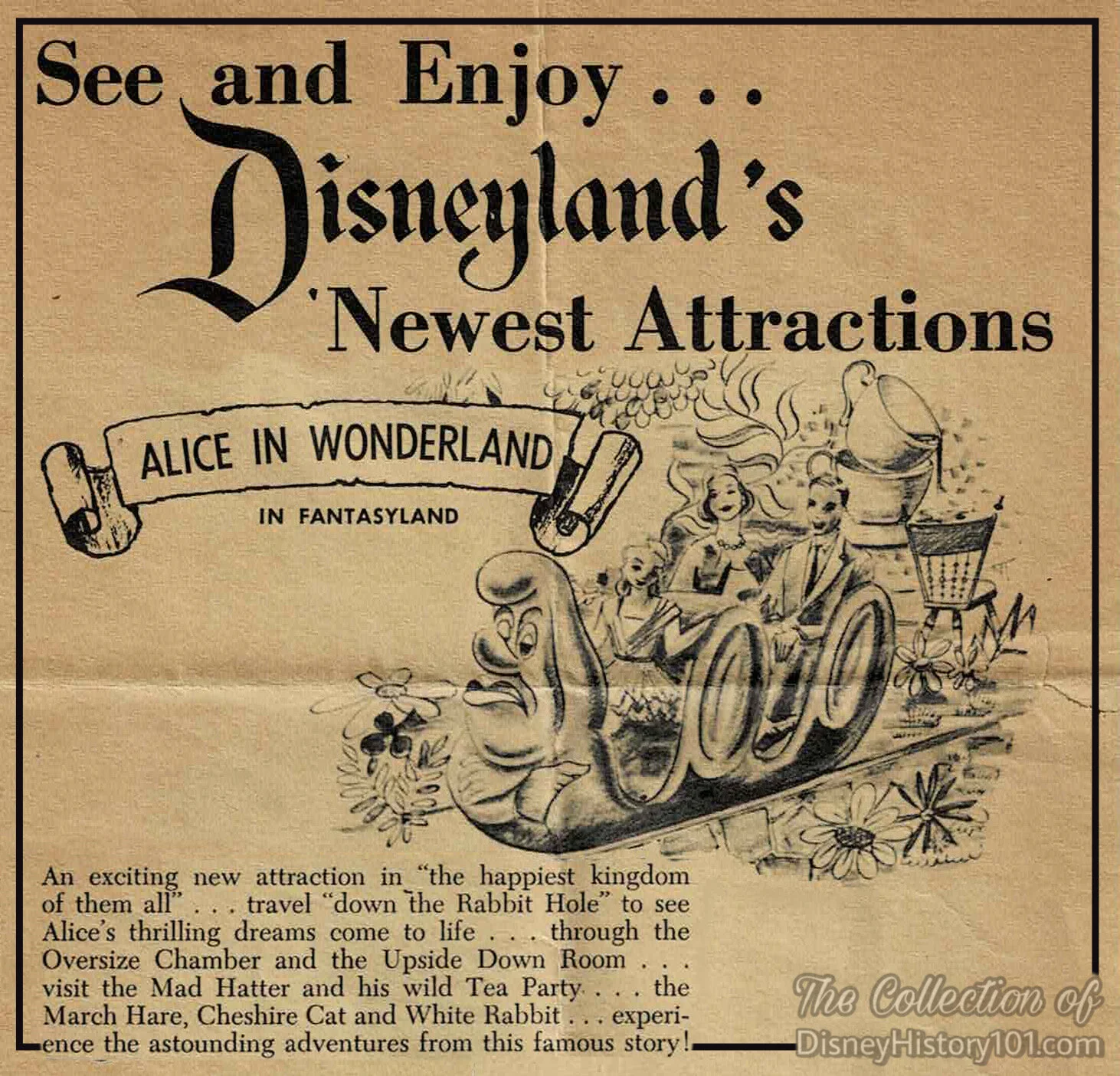
“Disneyland’s Newest Attractions” Handbill Excerpt, (c. 1958)
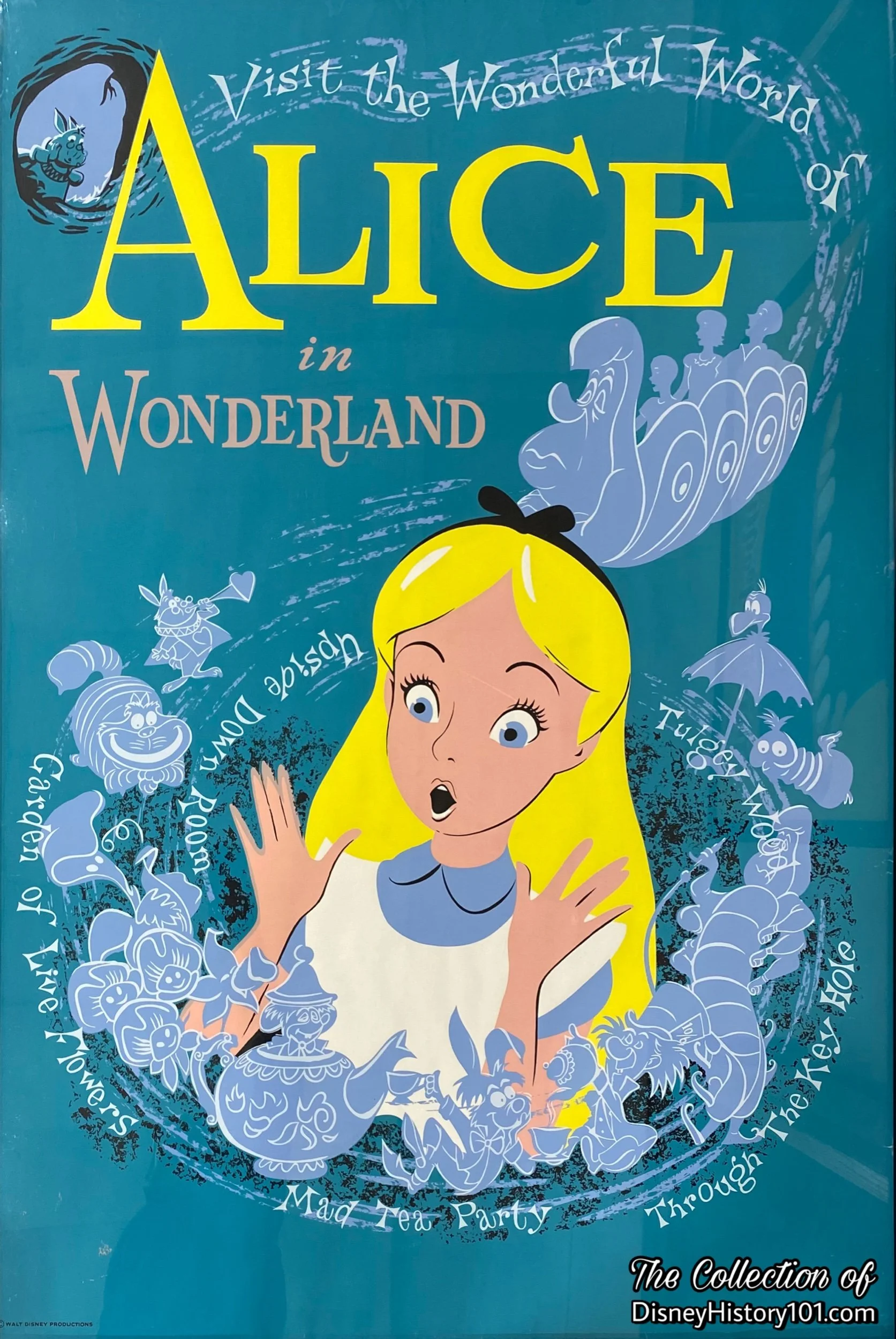
A 1958 silkscreened Disneyland Park® poster advertising Alice in Wonderland, by Sam McKim, 1958.
By this time, all art work, posters, etc. were produced at the Walt Disney Studios. The silkscreened poster promoting Alice in Wonderland was prepared by Walt Disney Studio artist Sam McKim. According to “Disneyland Attraction Posters: 40 Years of Visual Adventure” by Margaret Shumate, published in Walt Disney Collector Society “Sketches” periodical: “With his usual attention to every detail of his beloved park, Walt Disney personally reviewed and approved each finished piece of poster art until his death in 1966.”
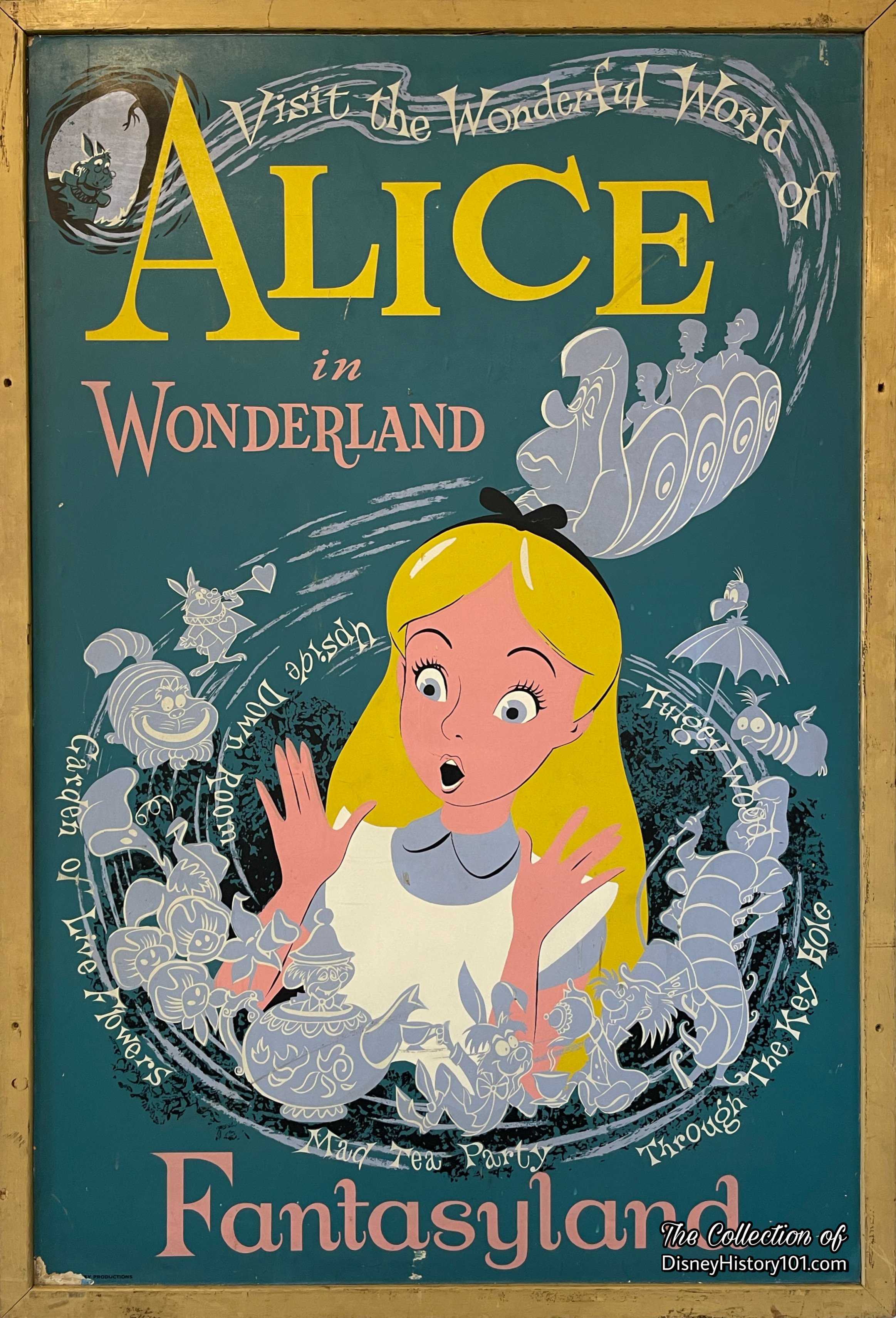
A 1958 silkscreened Disneyland Park® poster advertising Alice in Wonderland, by Sam McKim, 1958.
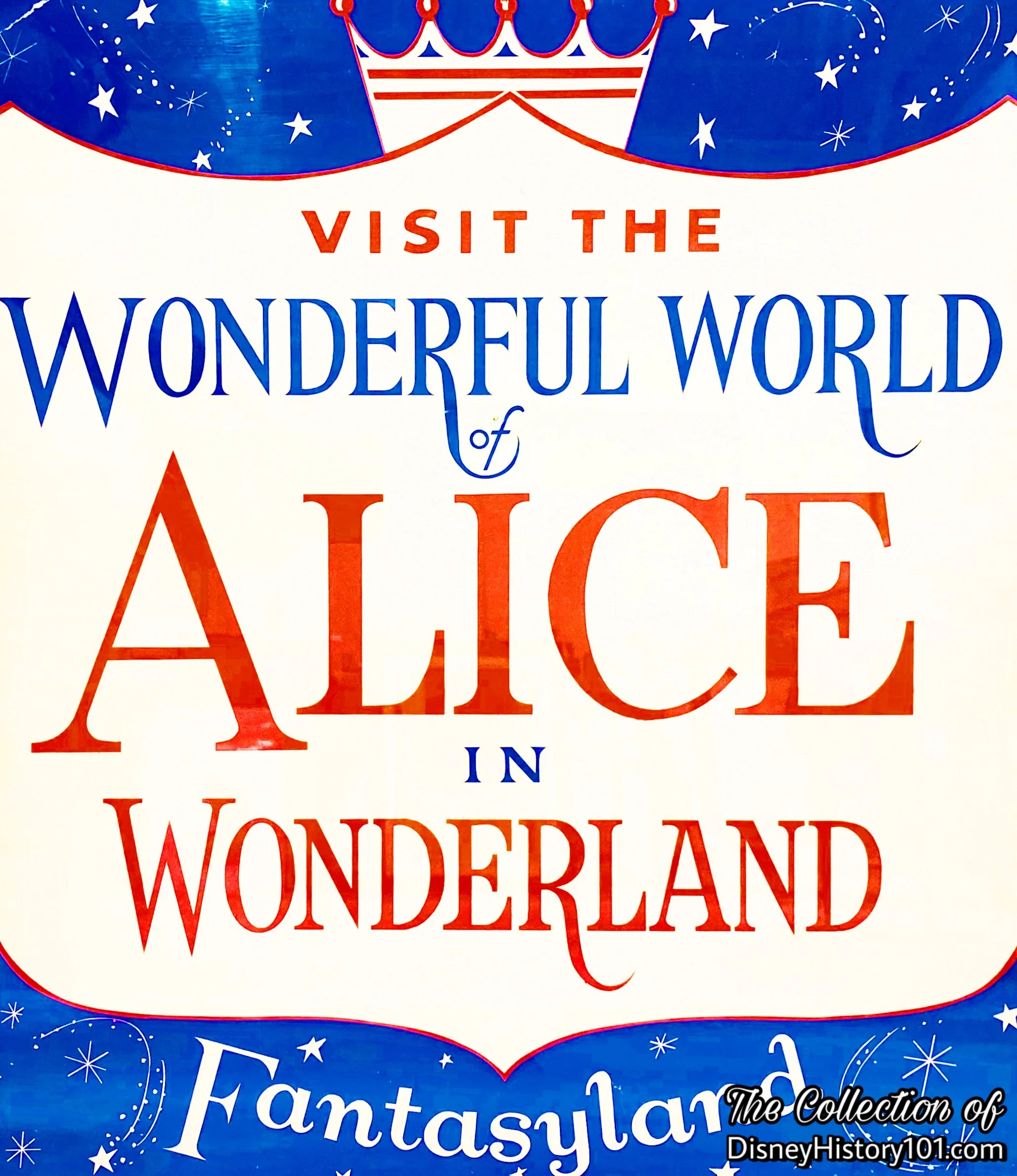
At Disneyland, signs were themed to support the stories with respectful graphics, colors, fonts, terminology, the overall design of sign, materials (wood, metal, banners, etc.), and verbiage used on the signage. A little over a month after the previous construction image was captured, signs, banners, and bunting decorated Main Street U.S.A.’s lampposts, heralding Fantasyland’s newest adventure - Alice in Wonderland!
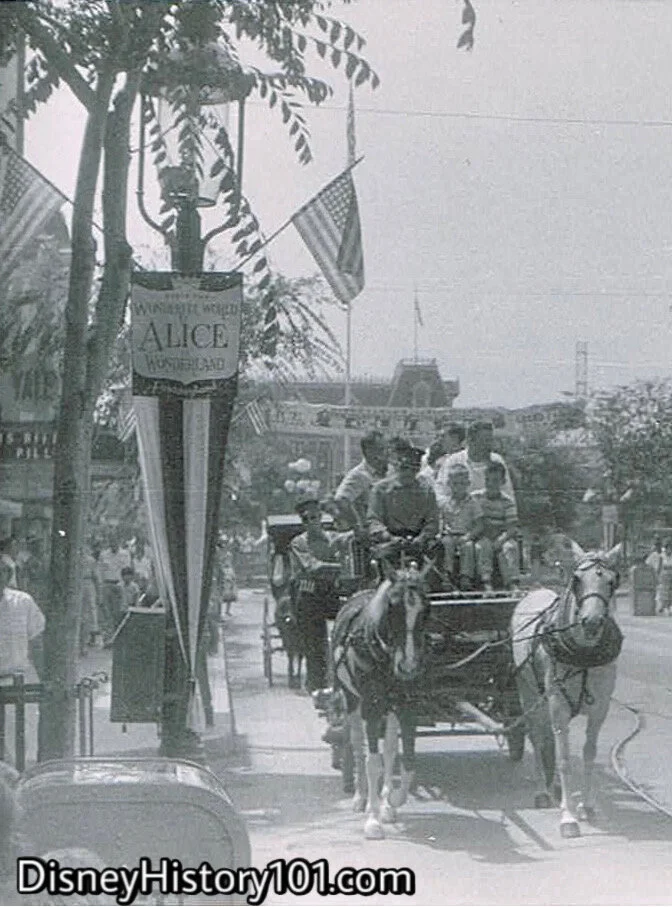
Main Street & Lamppost Bunting, (c. Summer, 1958)
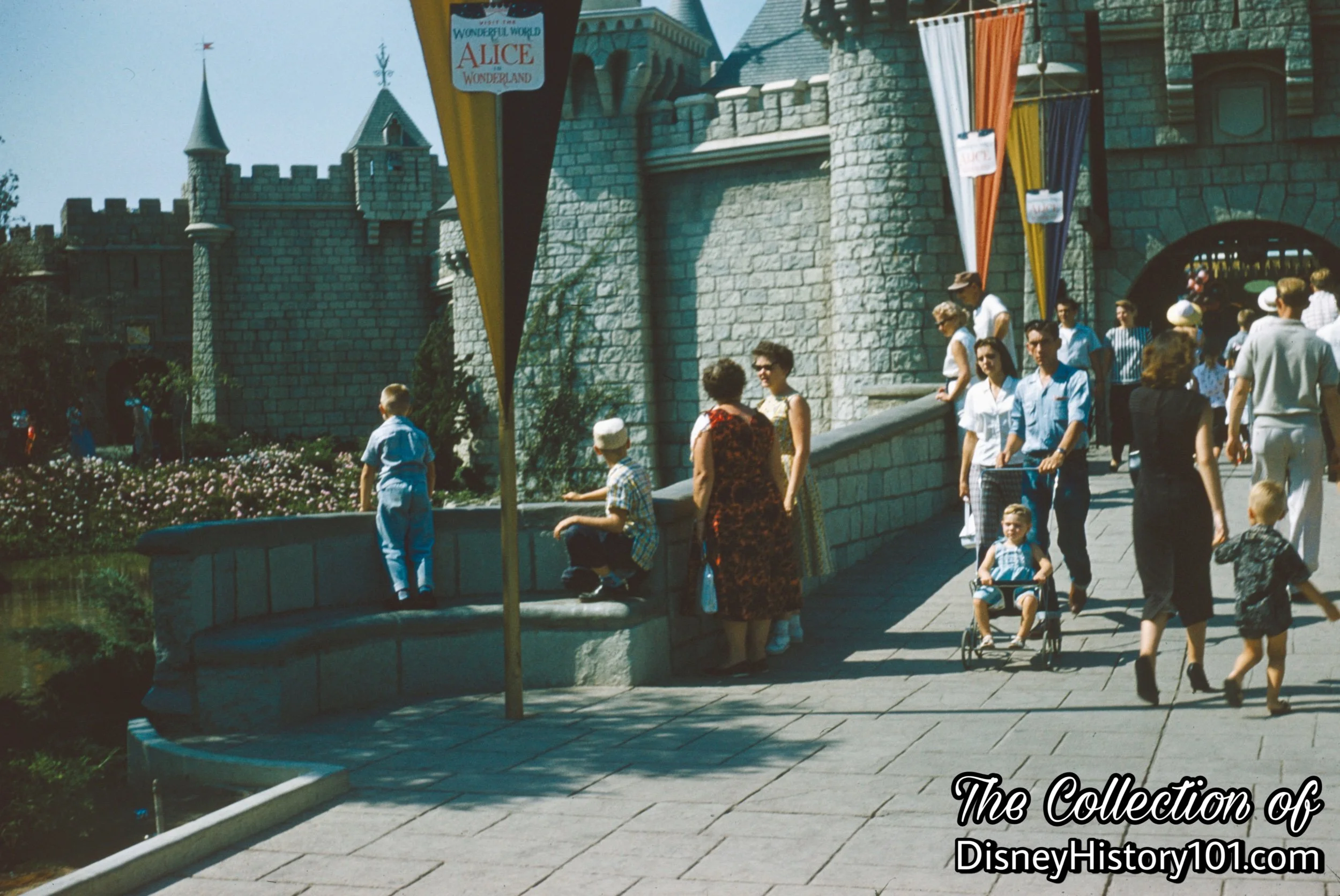
"The Wonderful World of Alice" Banners herald the newest Fantasyland adventure, (1958)
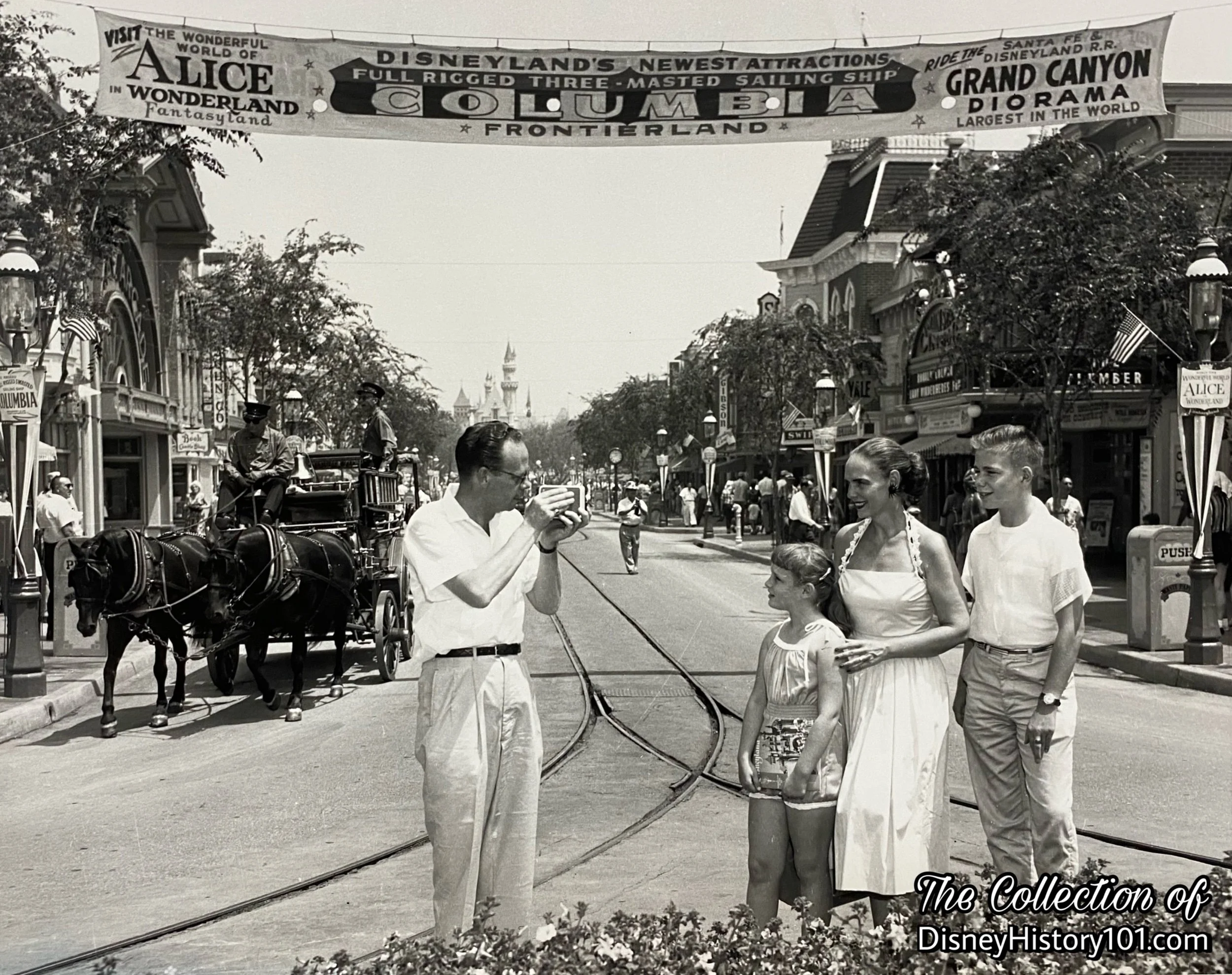
Alice takes “second billing” to the Columbia on a banner Over Main Street, U.S.A.
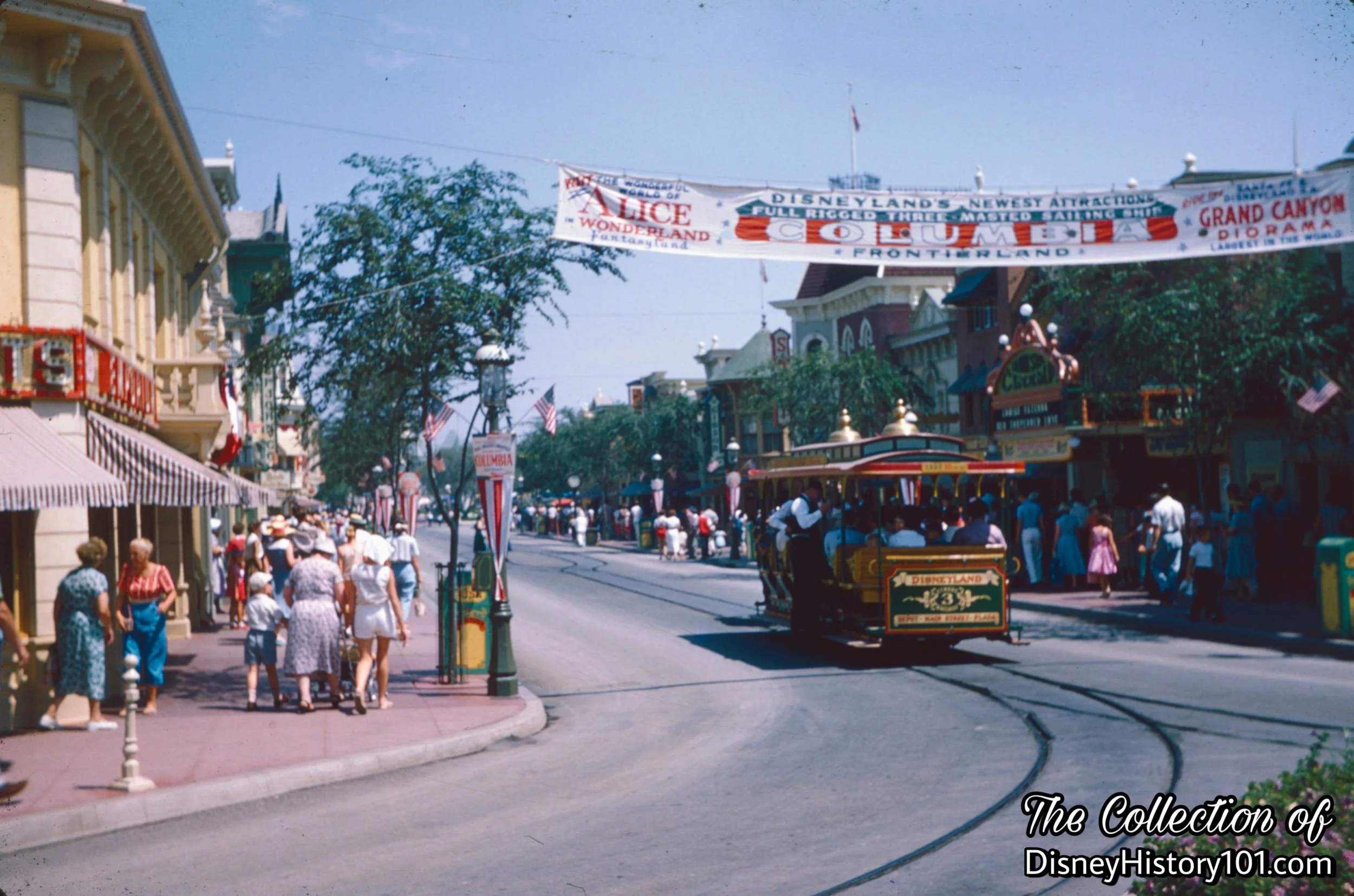
Alice takes “second billing” to the Columbia on a banner Over Main Street, U.S.A.
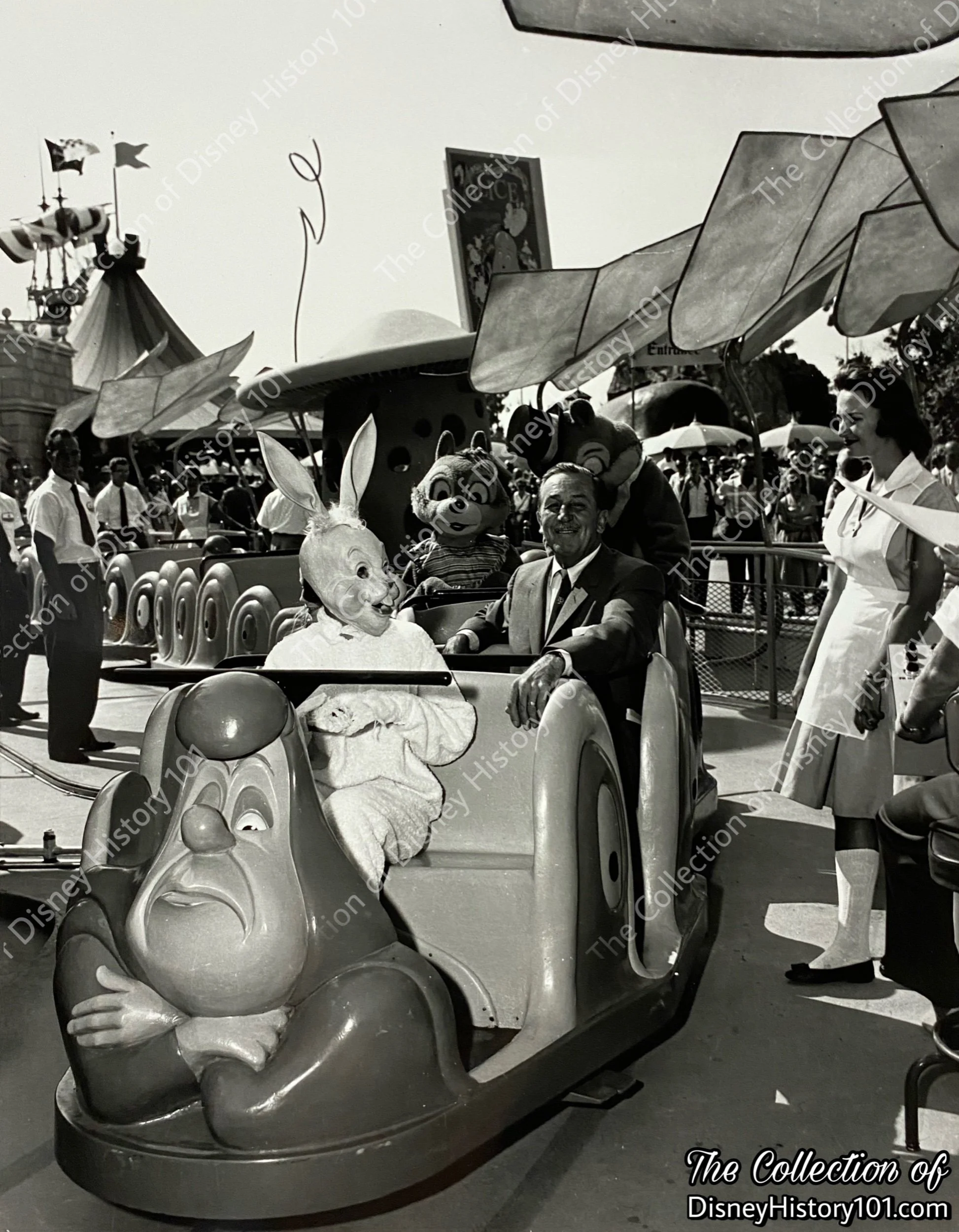
Walt Disney prepares to journey down the Rabbit Hole in this promotional image ; ©️Walt Disney Productions.
“Soft Opening and the Grand Opening Ceremony”
A soft opening took place on June 14, 1958, and two months later, Alice’s dream became a reality when a Grand Opening ceremony took place. Mouseketeer Karen Pendleton appeared as Walt Disney’s Alice, and both she and Walt Disney boarded two-row caterpillars en route for the Rabbit Hole.
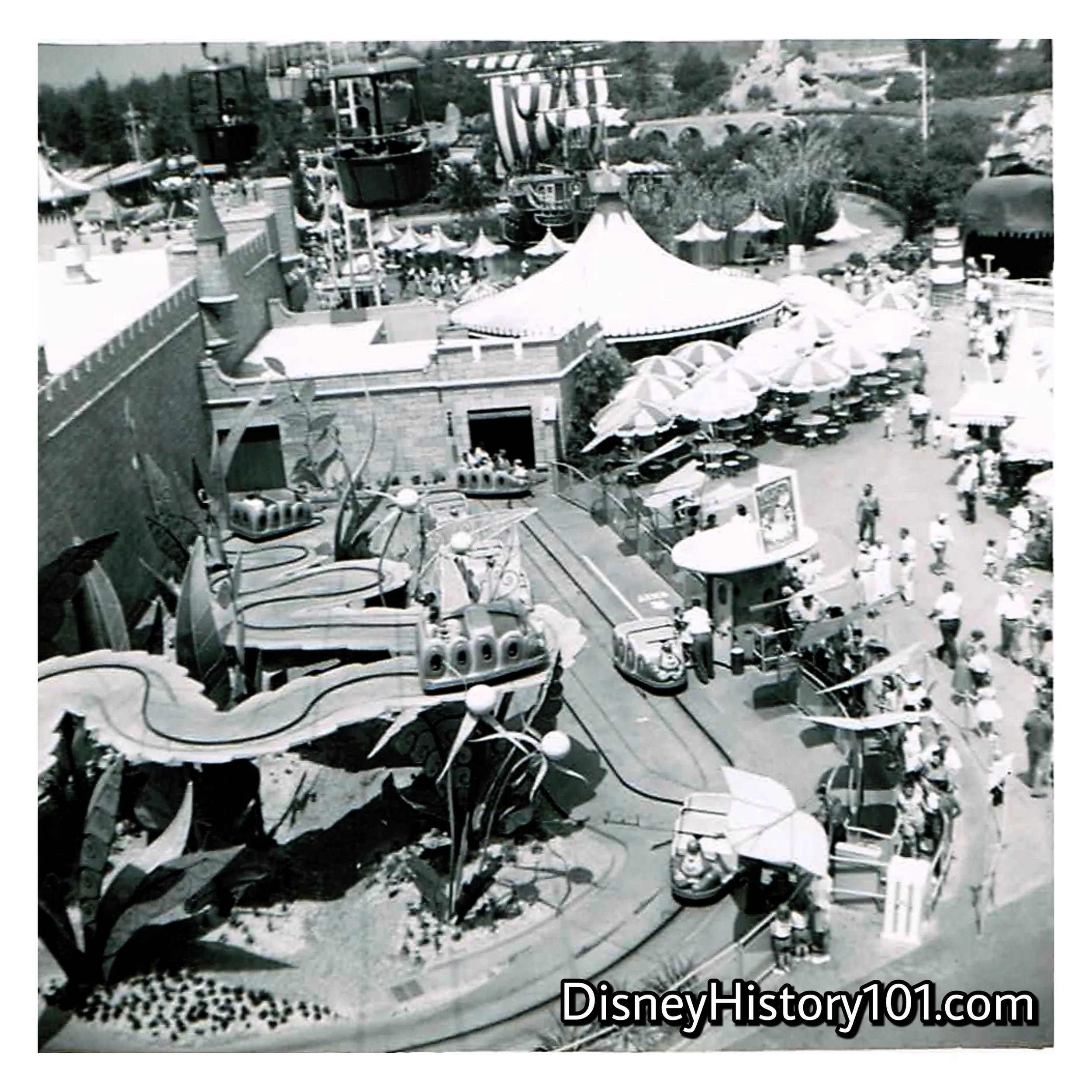
Alice in Wonderland, (Late 1950s)
Just look at those crowds waiting to take a journey through the rabbit hole.
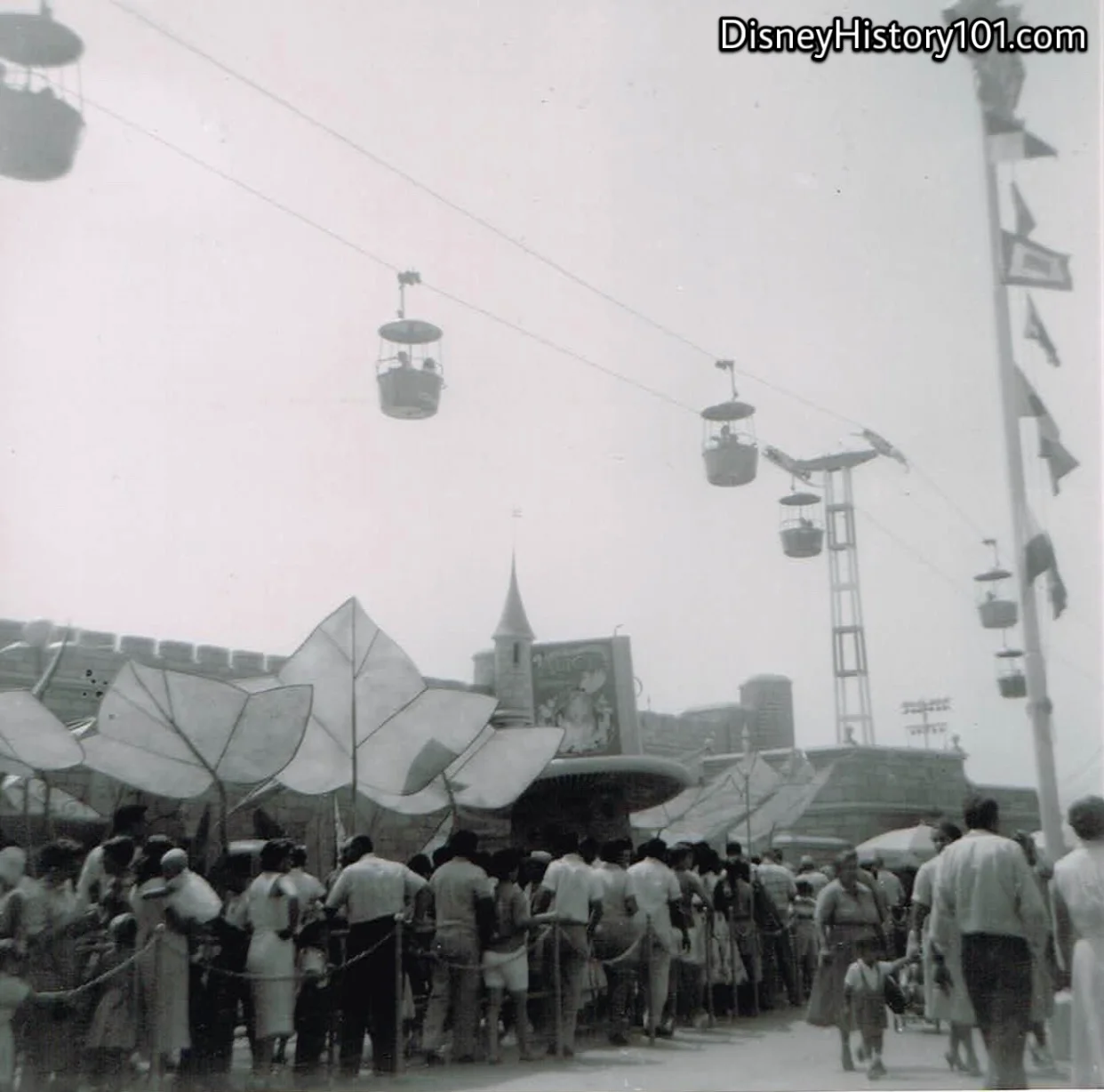
Alice in Wonderland, (c. 1958 - 1959)
Guests both young and old wait their turn in Alice in Wonderland’s queue, while Skyway cabins soar overhead.
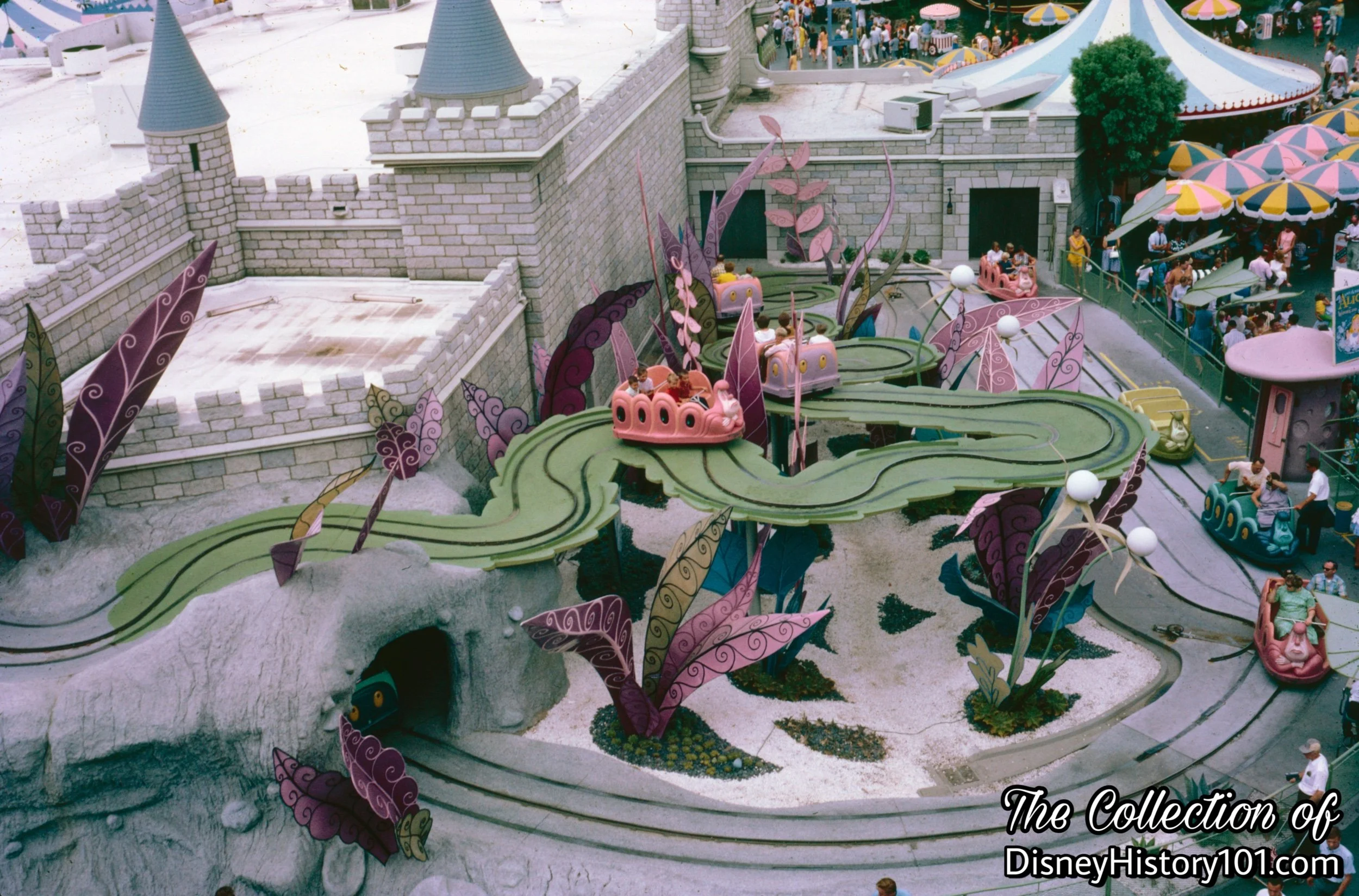
“In A World of My Own”
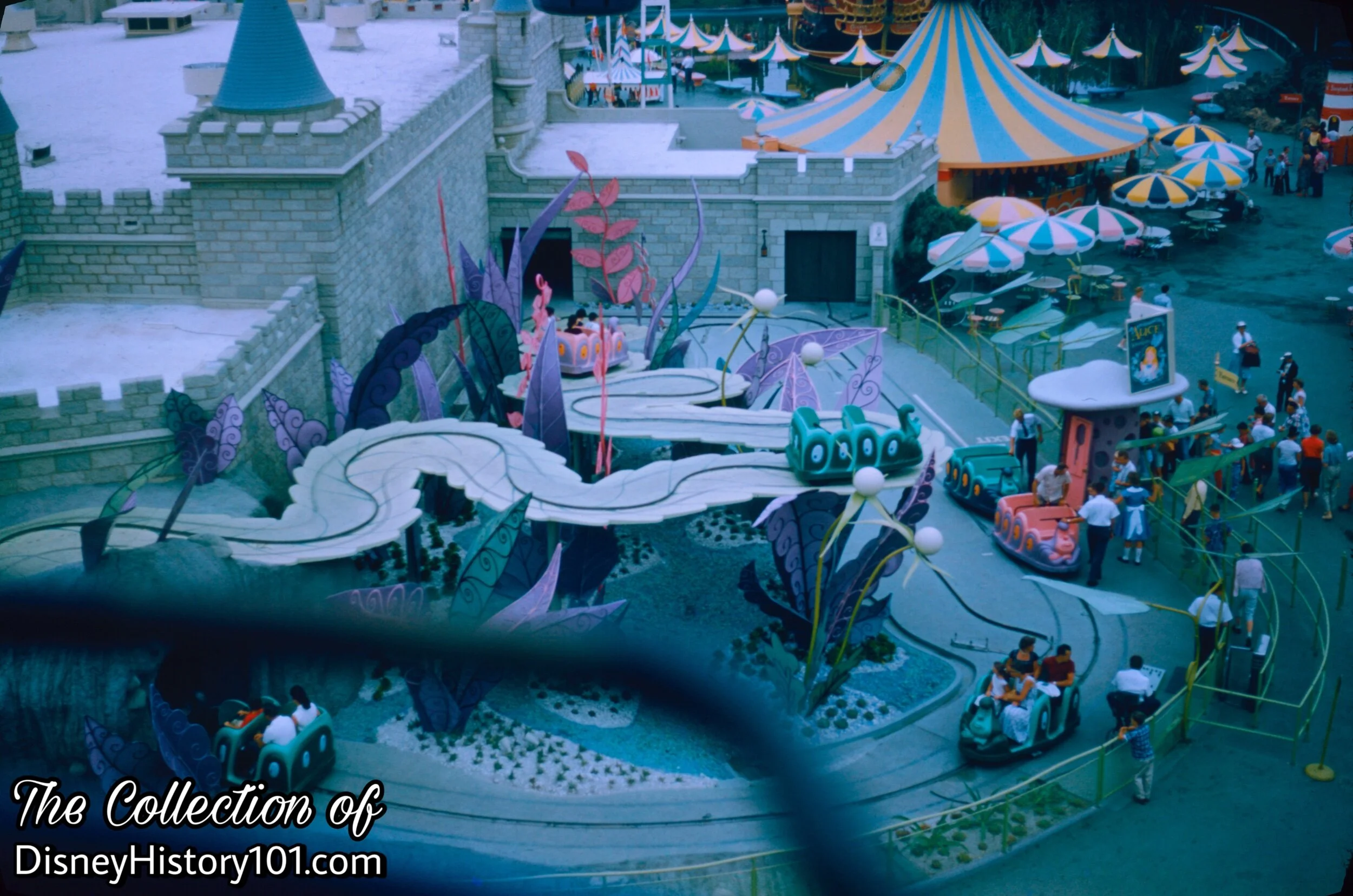
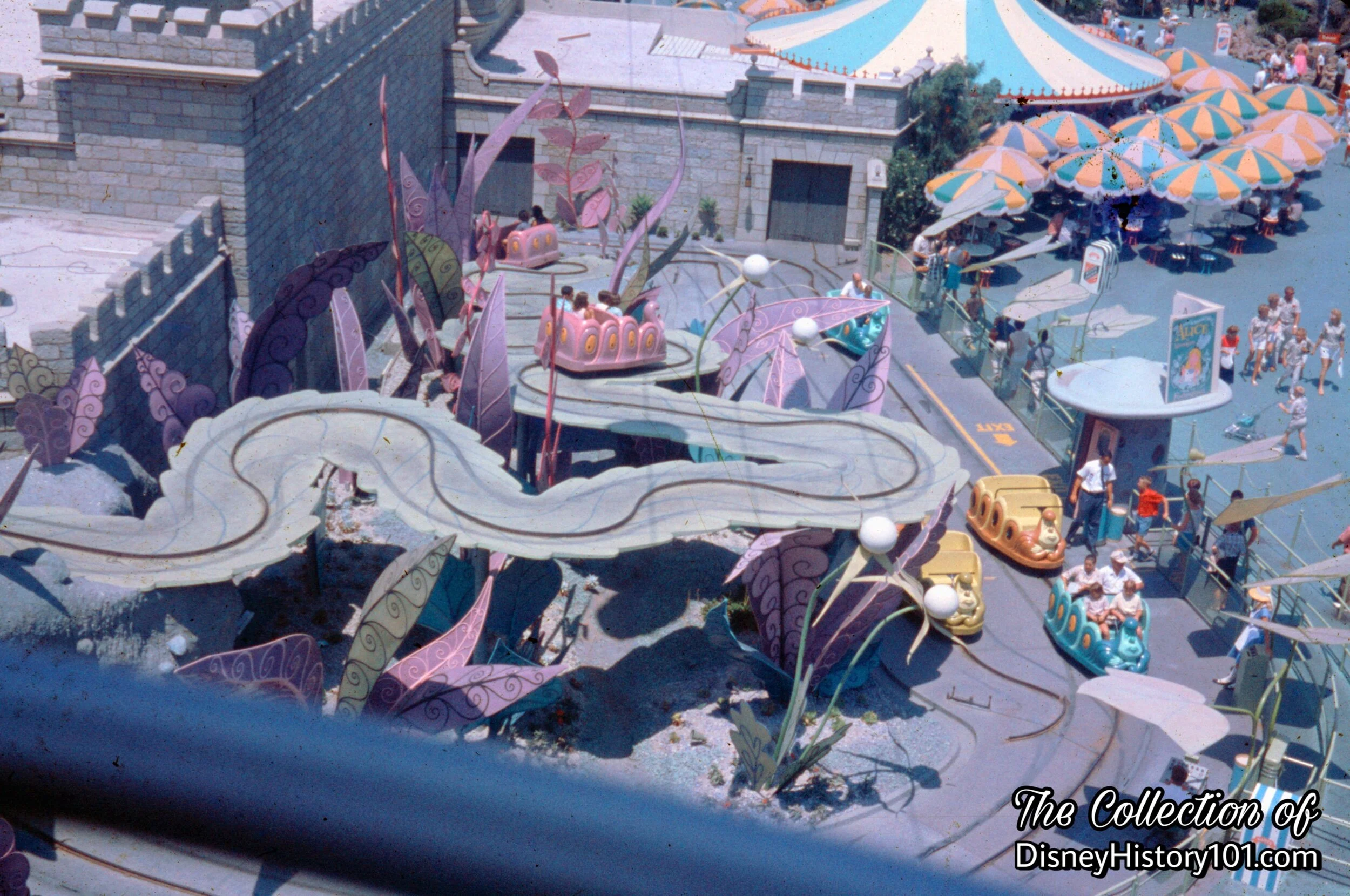
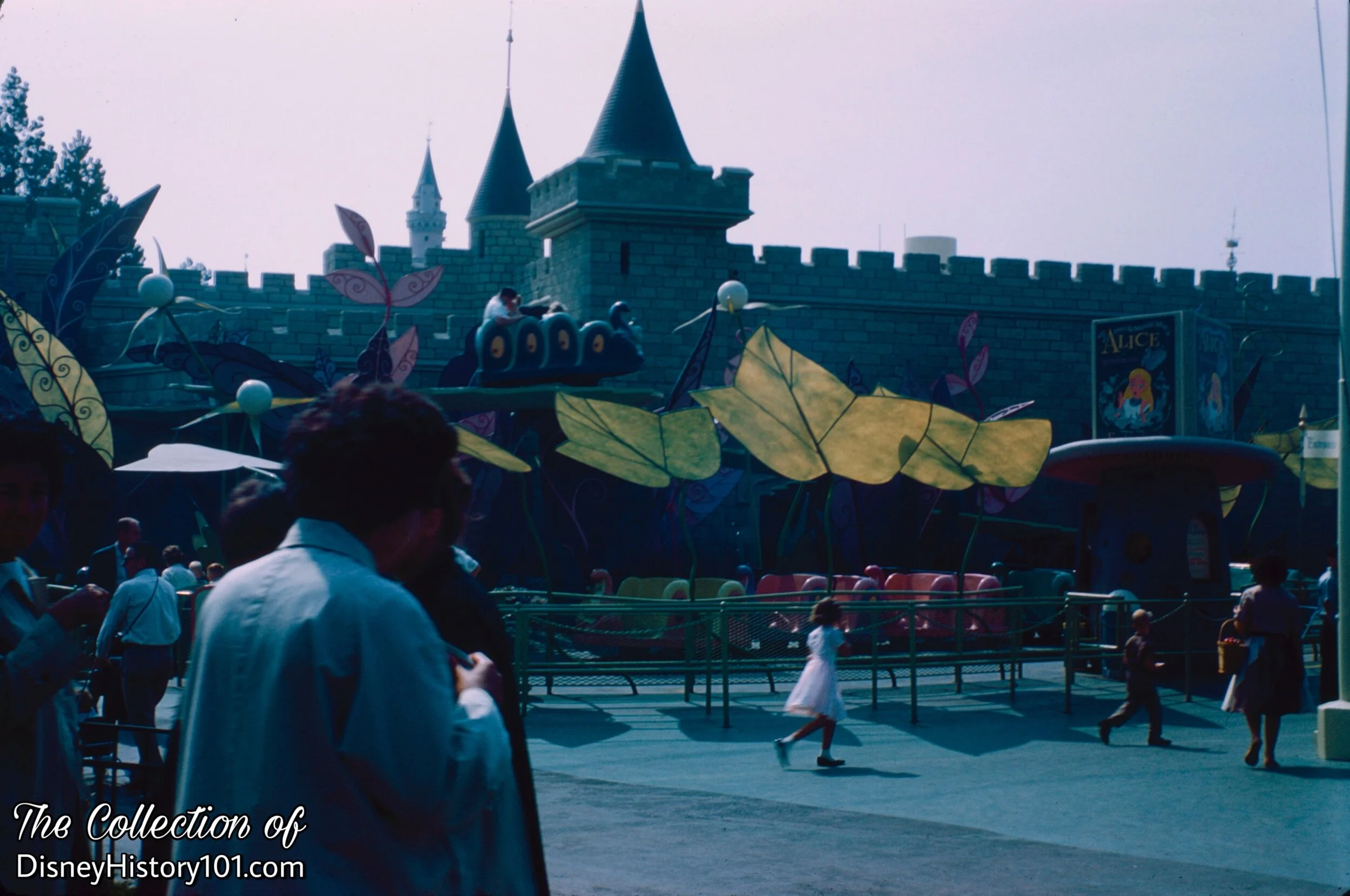
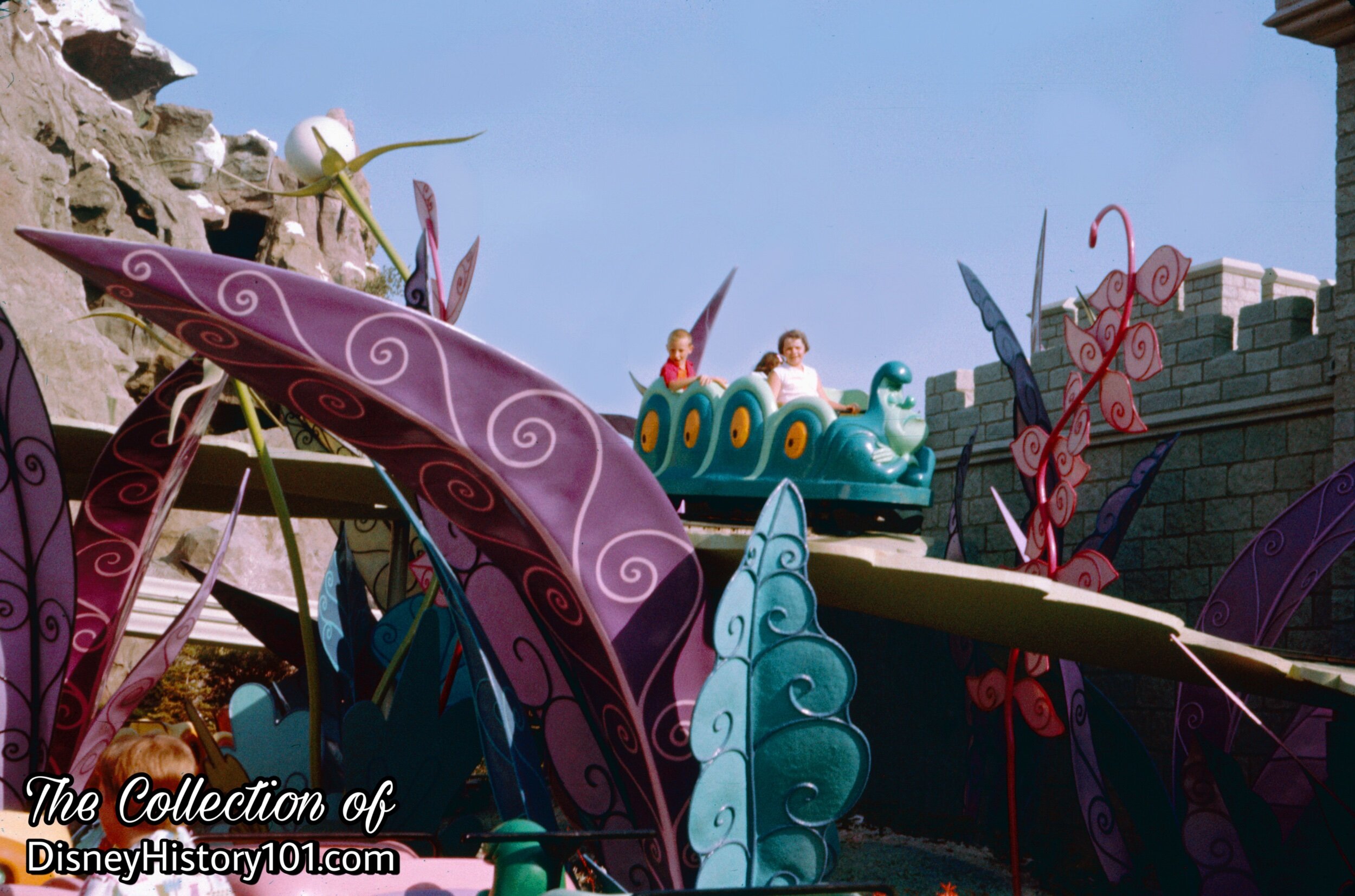
Alice had finally received a “world of her own.” However, this original Alice in Wonderland dark ride differed in many ways from the current version (as you will see). Guests’ adventures began by purchasing a applicable coupon at the giant mushroom ticket kiosk located next to the queue, before boarding the back of a caterpillar, and heading down the Rabbit Hole! Alice in Wonderland’s most-talked-about attraction was the “Upside Down Room”, simulating the fall down the Rabbit Hole. Guests entered an “Oversized Room”, followed by familiar encounters with the Cheshire Cat, an escape into the Garden of Live Flowers, before meandering thru the Tulgey Woods. The end show scene saw guests scurrying across the Mad Tea Party hosted by the Mad Hatter himself, toward the explosive climax thru a towering Unbirthday Cake!
The amusement ride car vehicles were designed by Disneyland, Inc. artist Claude D. Coats.
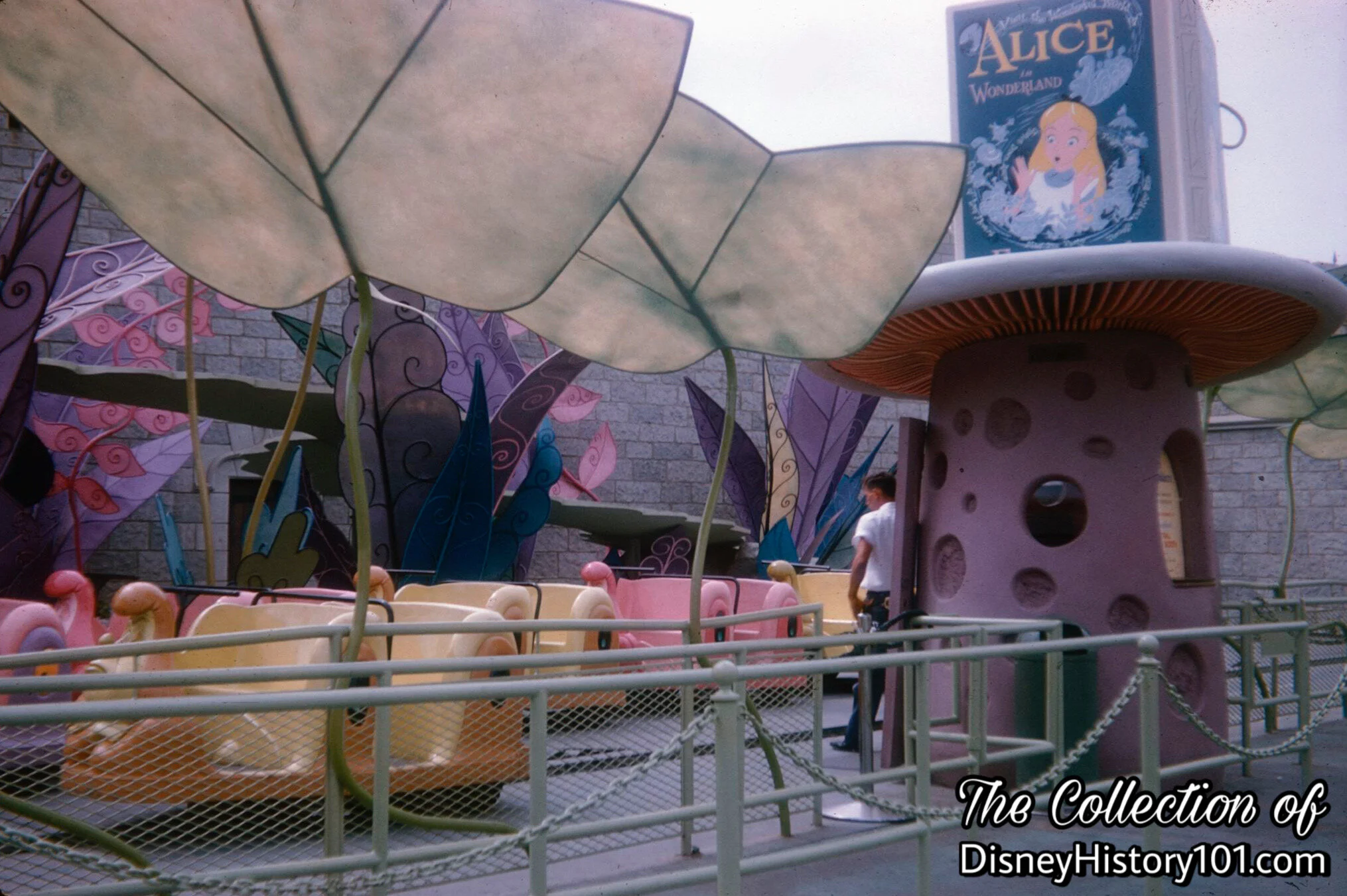
Alice in Wonderland Queue Area and crowd control railing, October, 1959.
During Disneyland’s early years, attractions had their own adjacent Ticket Booths.
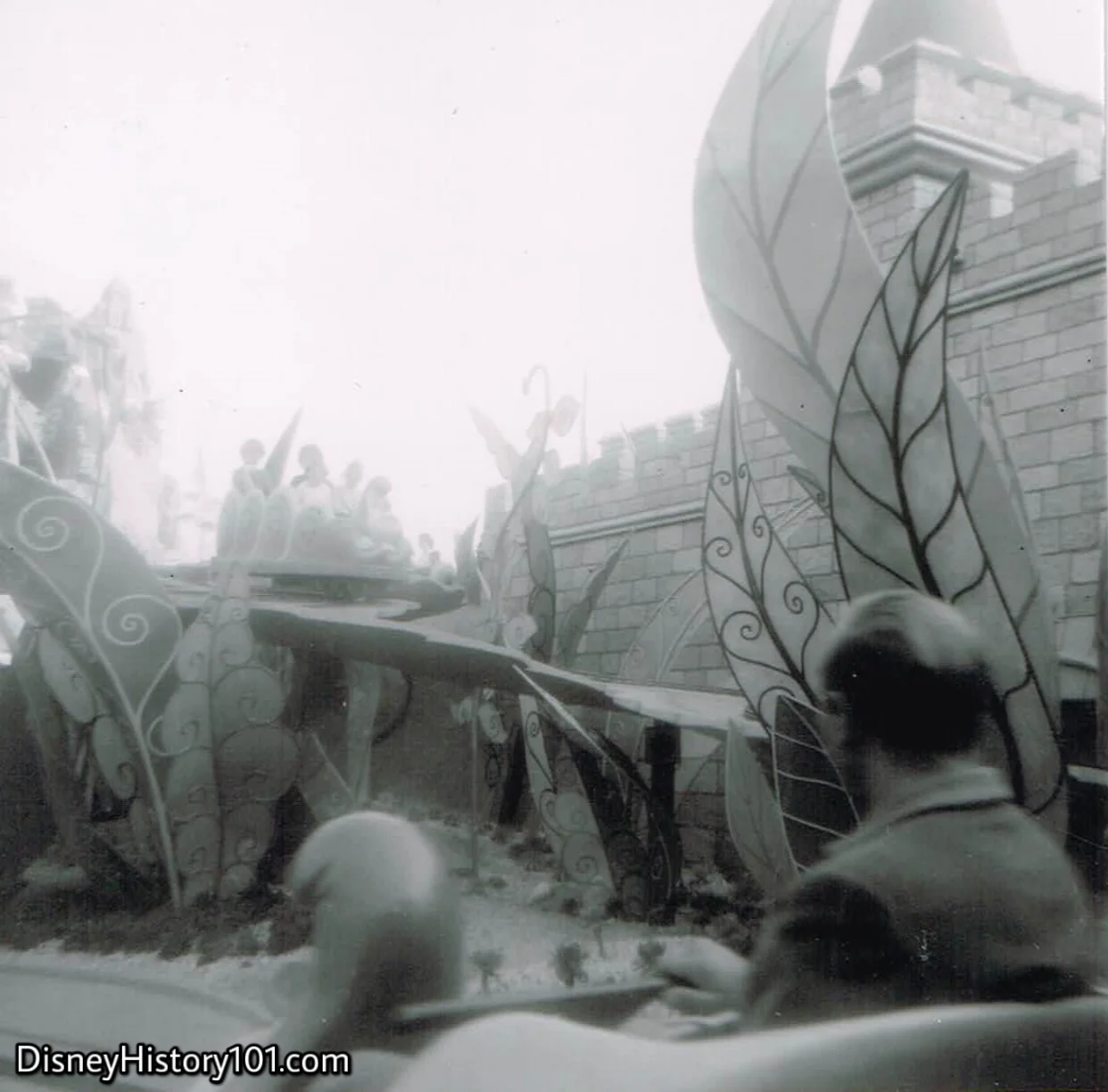
Alice in Wonderland, (c. 1959)
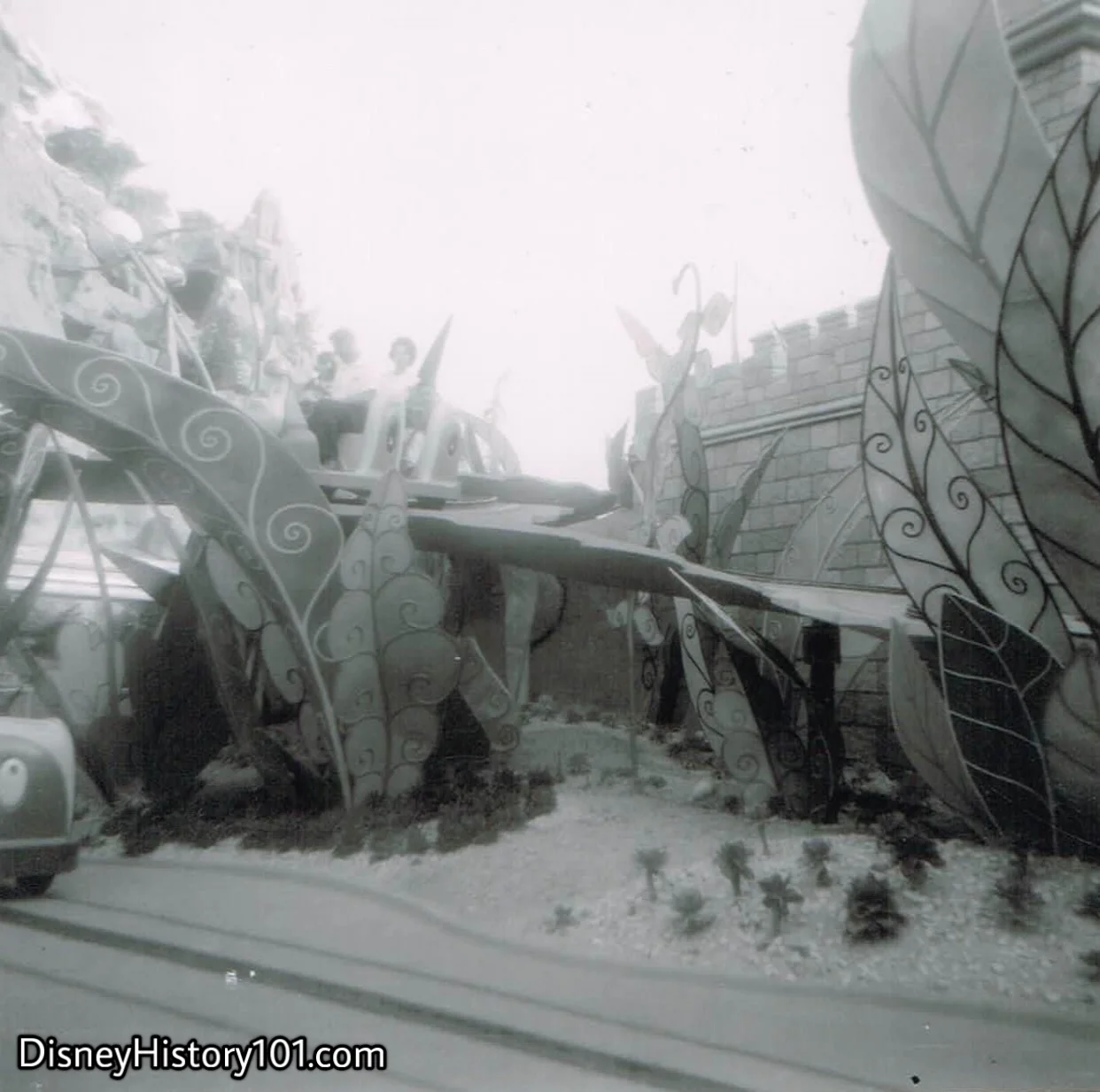
Alice in Wonderland, (c. 1959)
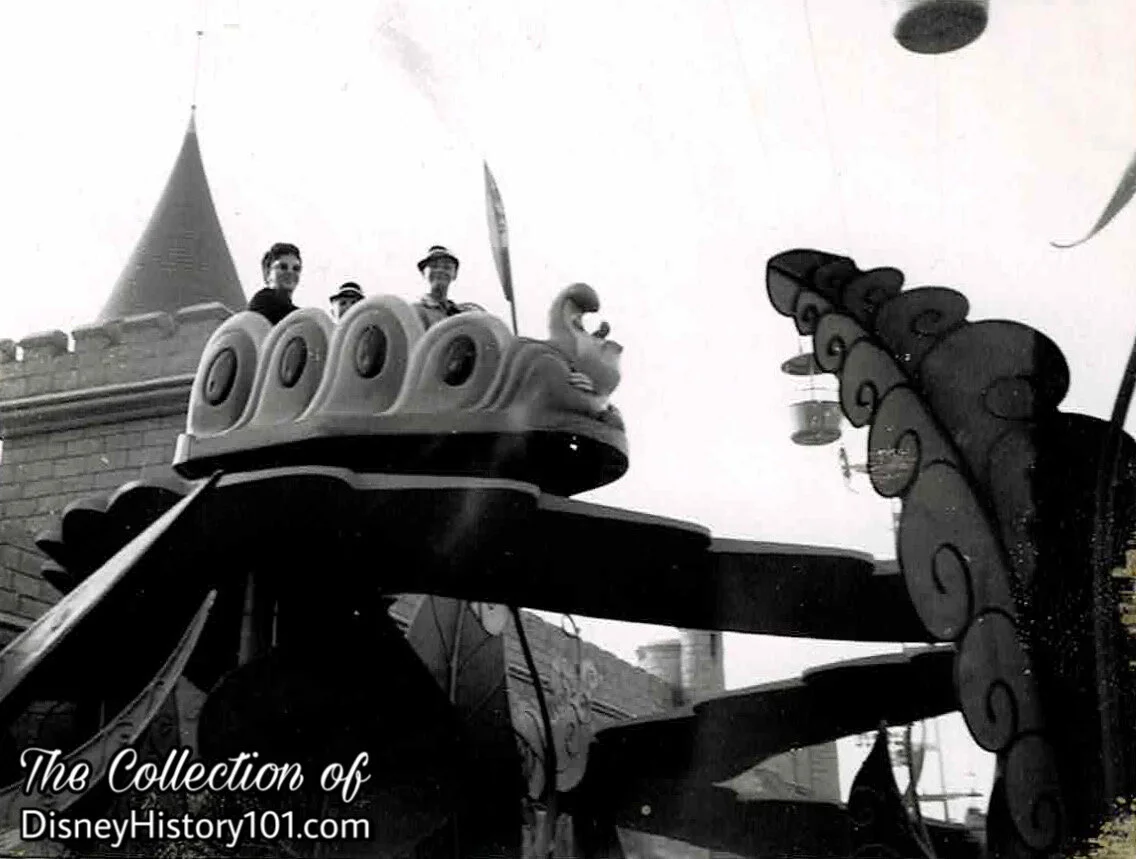
Alice in Wonderland
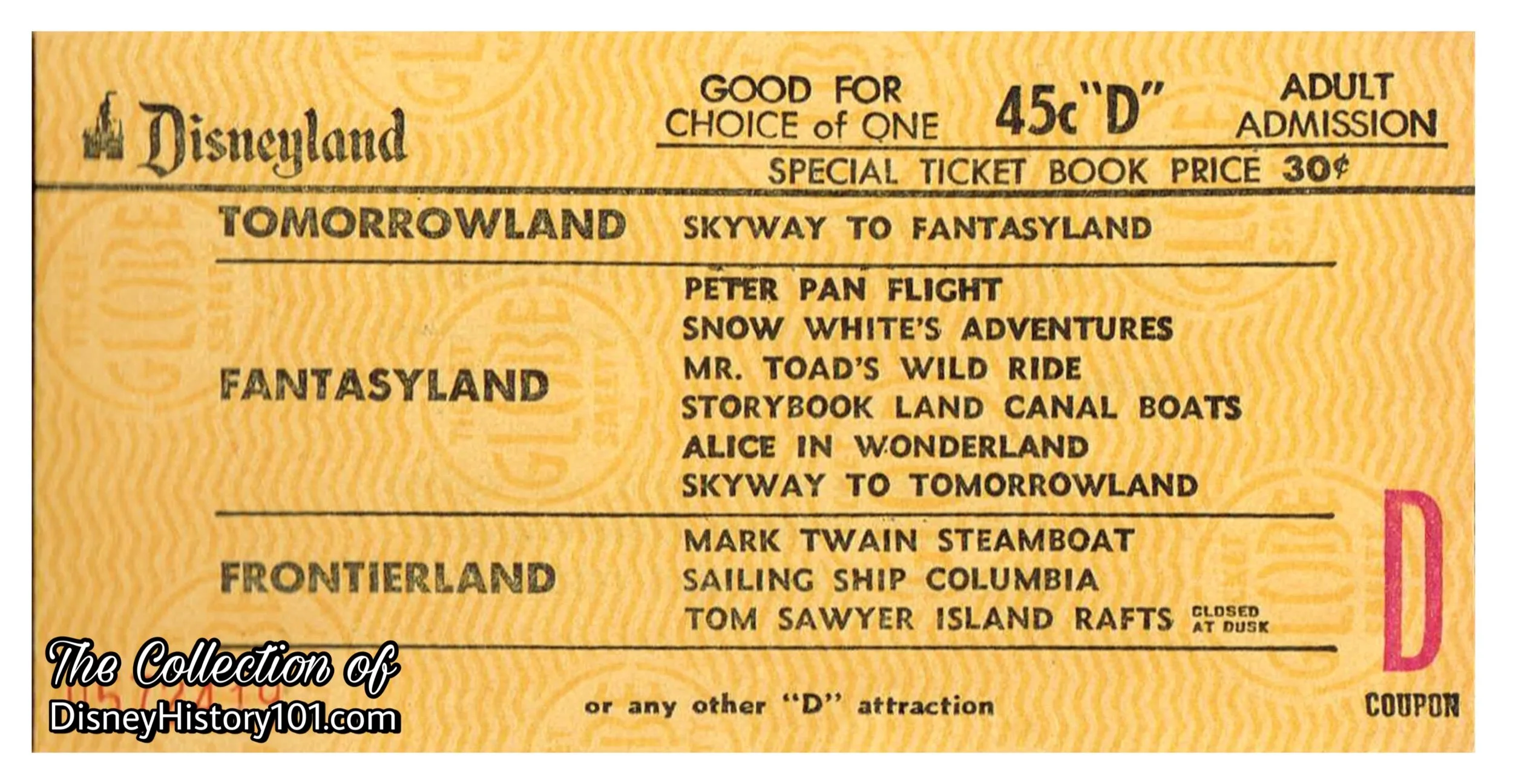
Disneyland "D" Coupon, Summer, 1960.
By 1959, Joe Fowler was Vice President of Disneyland Operations Committee and Doc Lemmon of Disneyland Operations was overseeing Operators of Rides & Amusements, Livestock, Parking Lot, and Ticket Sellers. About this time, Alice in Wonderland was reckoned with the "D" Coupon Adventures.
By the October of 1962, audiences dictated that Alice in Wonderland be operated with 7 vehicles on weekdays and 15 vehicles on weekends. This was common during winter operating schedules.
The following four statistics are based on the results of Disneyland Attractions Time Studies gathered in 1968:
Theoretical Hourly Capacity (What the attraction should yield under ideal conditions) : 960 ; Each day, the closing turnstile reading was recorded and paperwork was completed. Count Worksheets were printed forms used to record turnstile readings and courtesy admissions.
Instantaneous Capacity : 60
Audience Control Capacity : 149
Capacity Per Unit : 4
Cycle Time (From the time a unit passes a given point and returns to the same point) : 4:00
Unload Time : :07
Jog Time : :16
Load Time : :10
Ready Time : :02
Trip Time : 3:25
Dispatch Interval : :15
Trips Per Hour : 240
Distance Travelled : 764
Speed in Miles Per Hour : 2.5
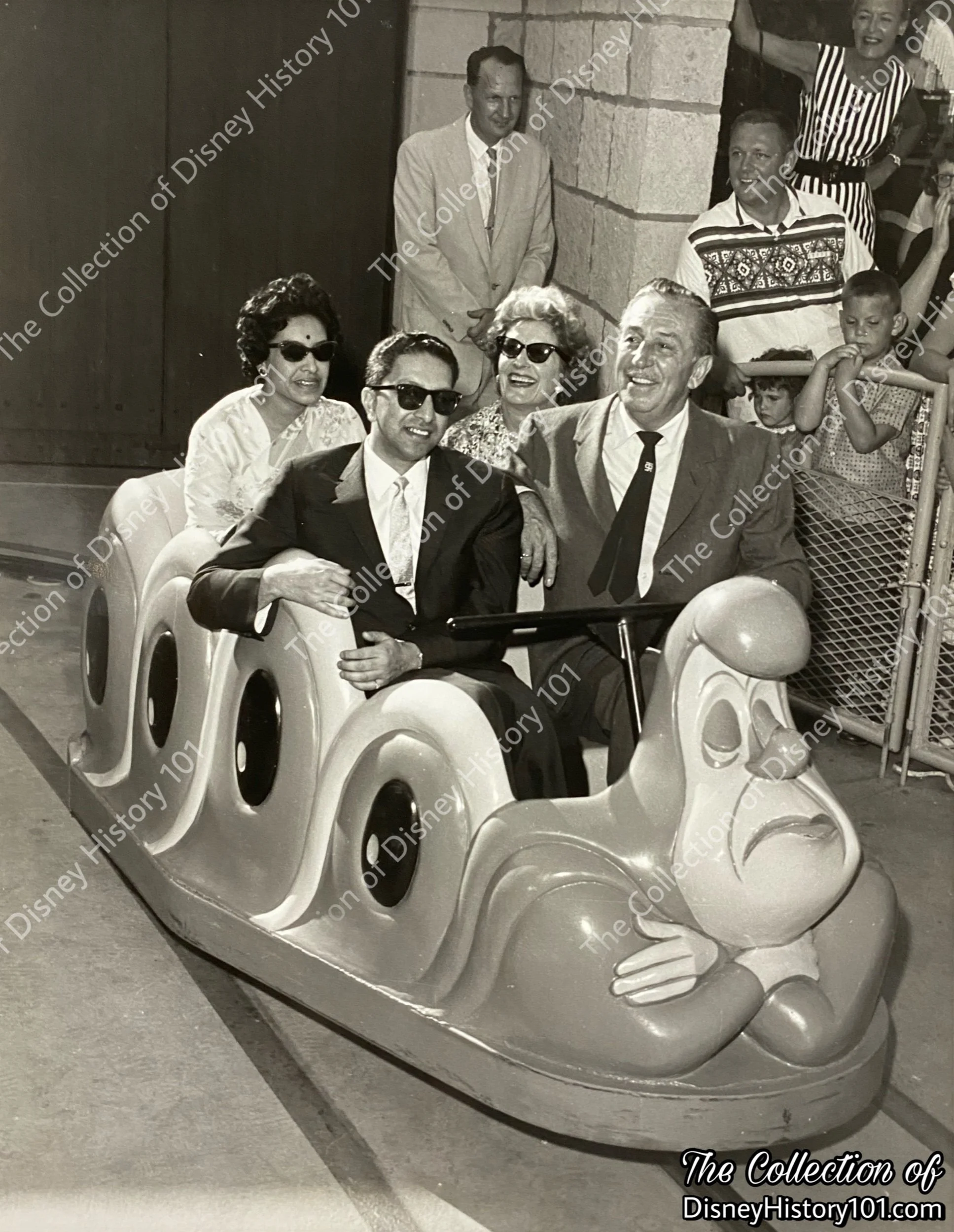
Walt, Lillian and Guests; ©️Walt Disney Productions.
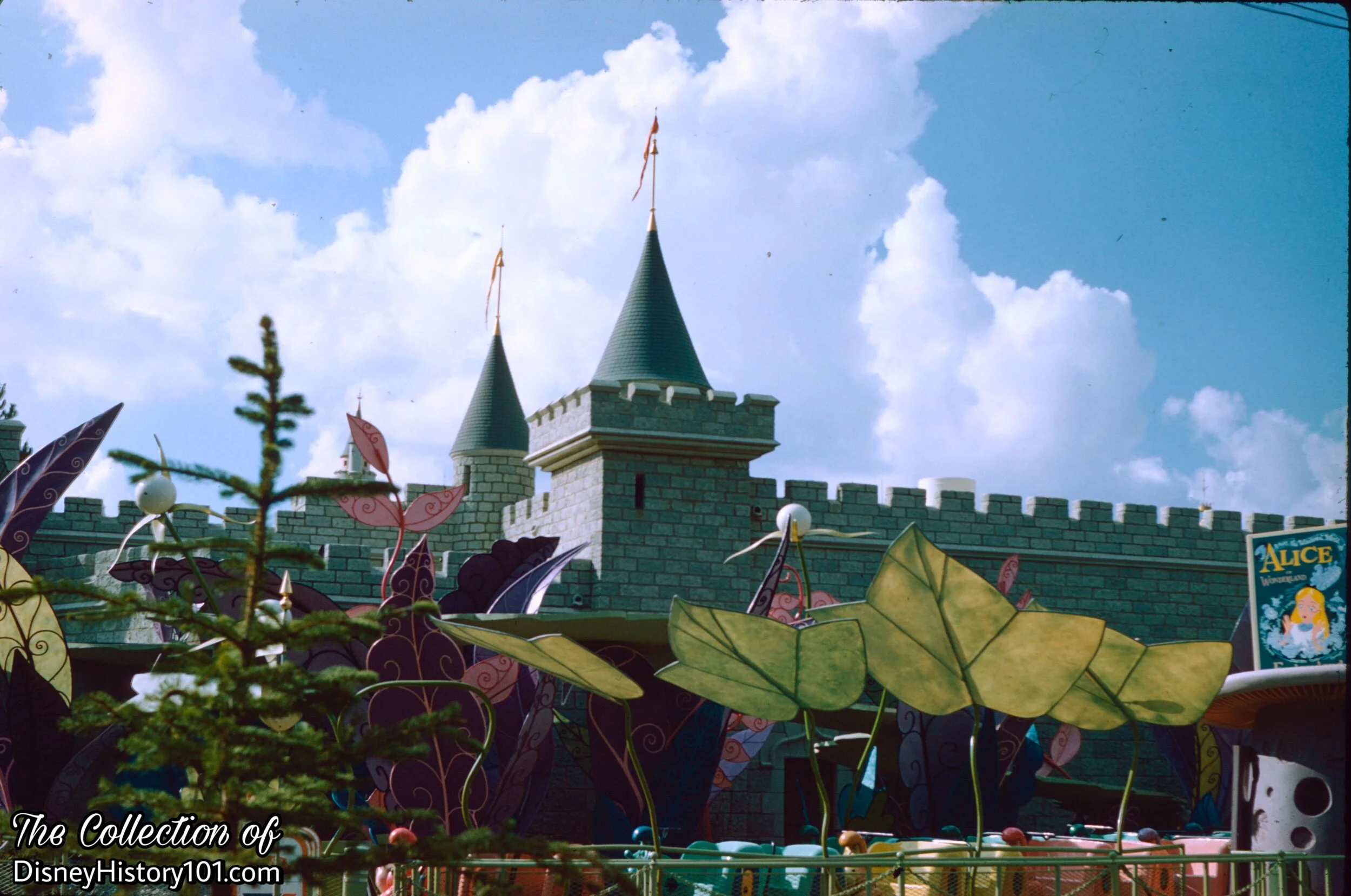
Alice in Wonderland Audience Waiting Area, (December 2, 1960)
Alice in Wonderland
Alice in Wonderland, (1963)
Alice in Wonderland, (October, 1961)
Alice in Wonderland
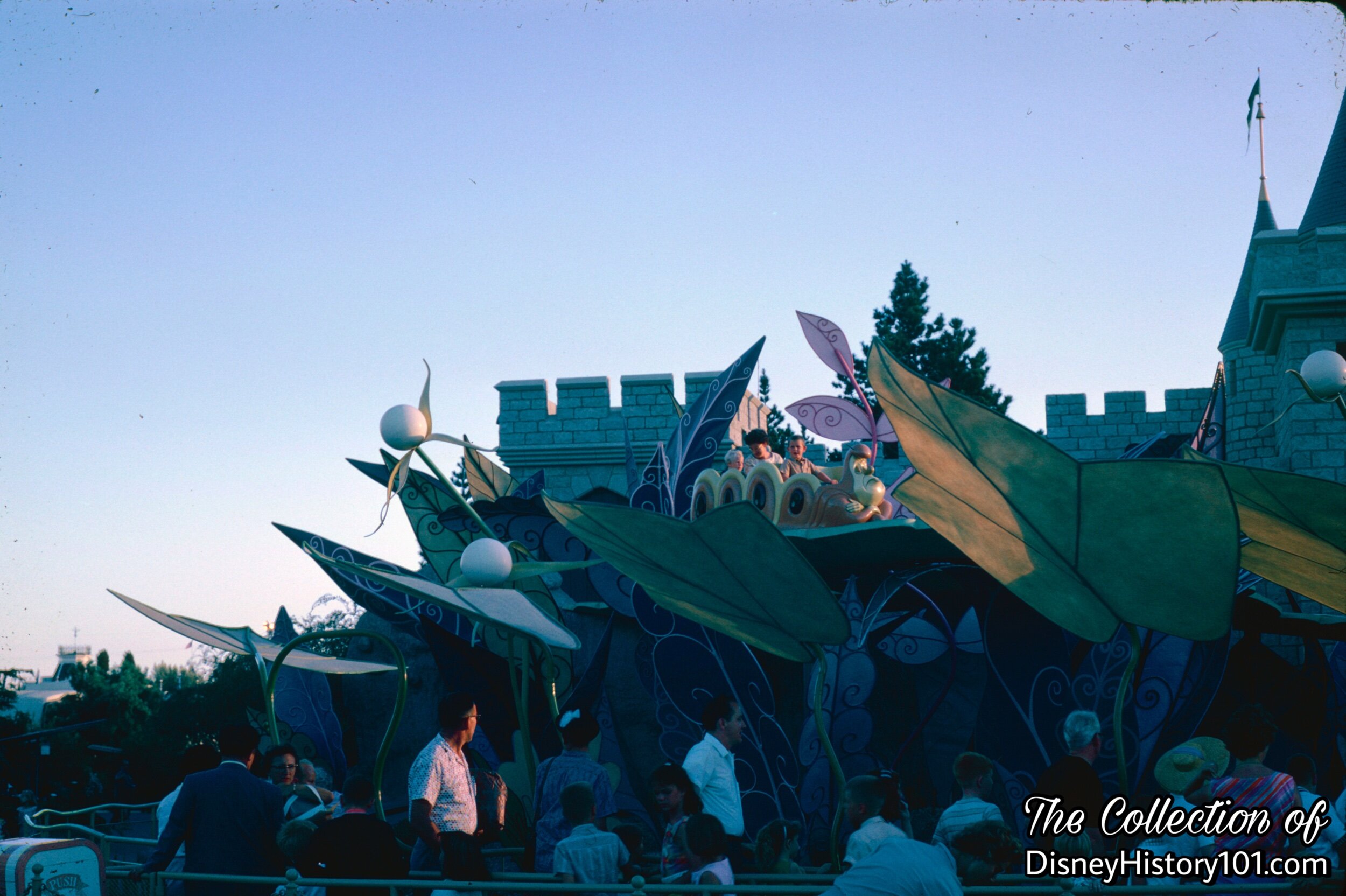
Alice in Wonderland, (August, 1962)
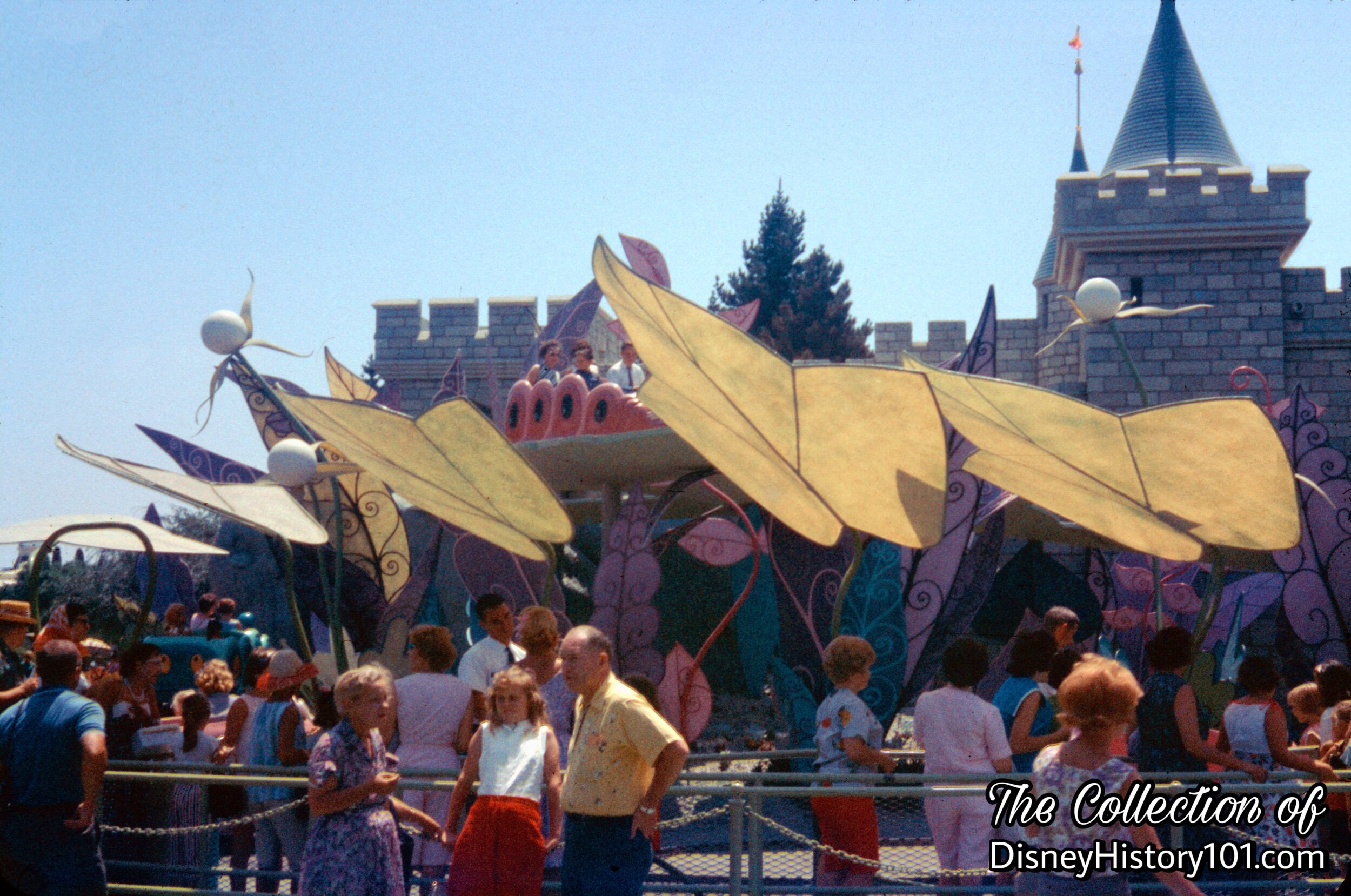
Alice in Wonderland, (August, 1963)
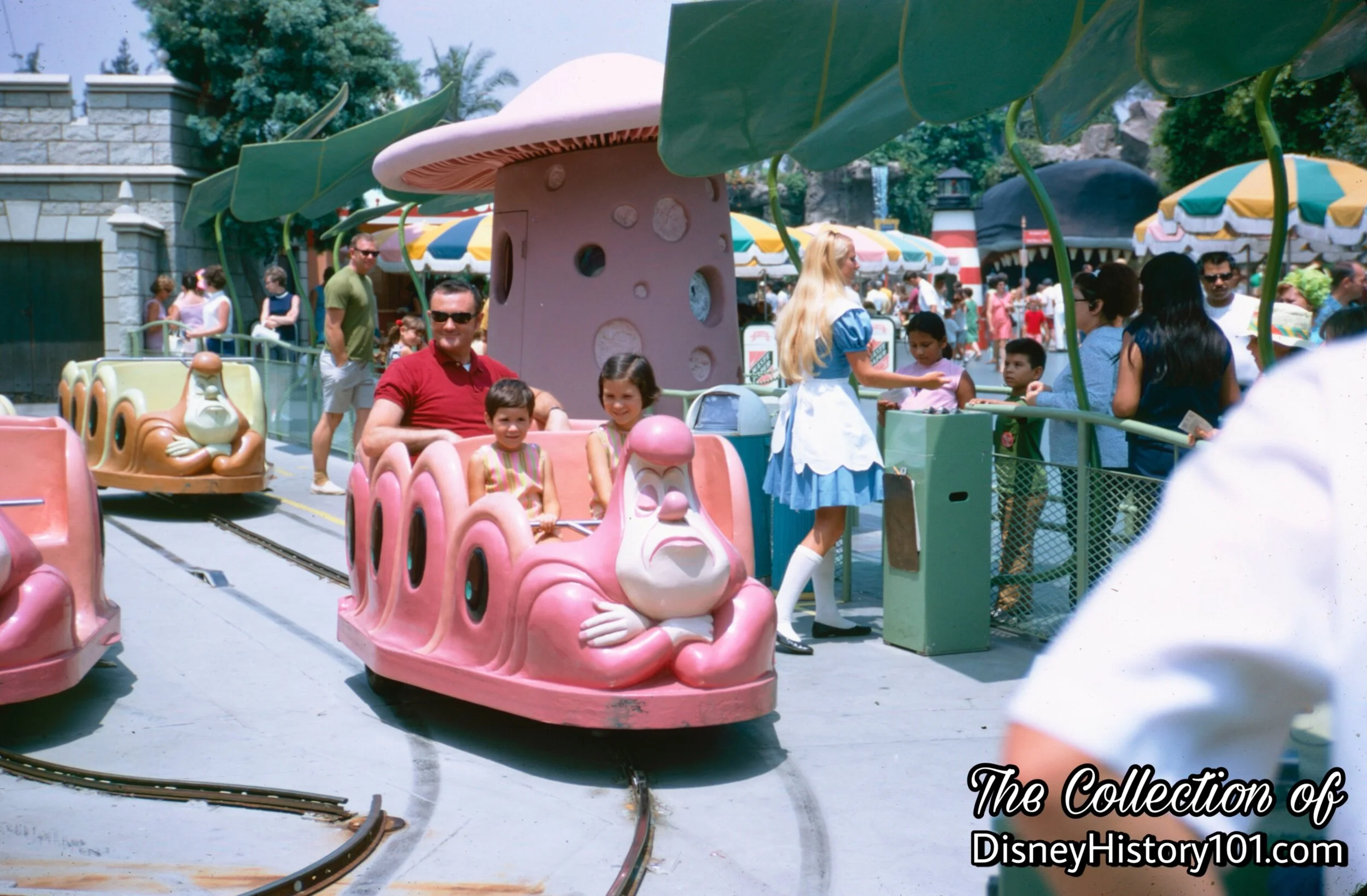
The Caterpillar-inspired vehicles of Alice in Wonderland and Hostess welcoming Guests in the Guest Control queue.
A number of Cast Members supported the Alice stage of the Disneyland show as Attractions Hosts and Hostesses, including Walt Brickner (c.1962), Day Foreman Hank Filtz, Night Foreman Stan LaFortune, Bill Barry, and Rosemary Southward (c.1966).
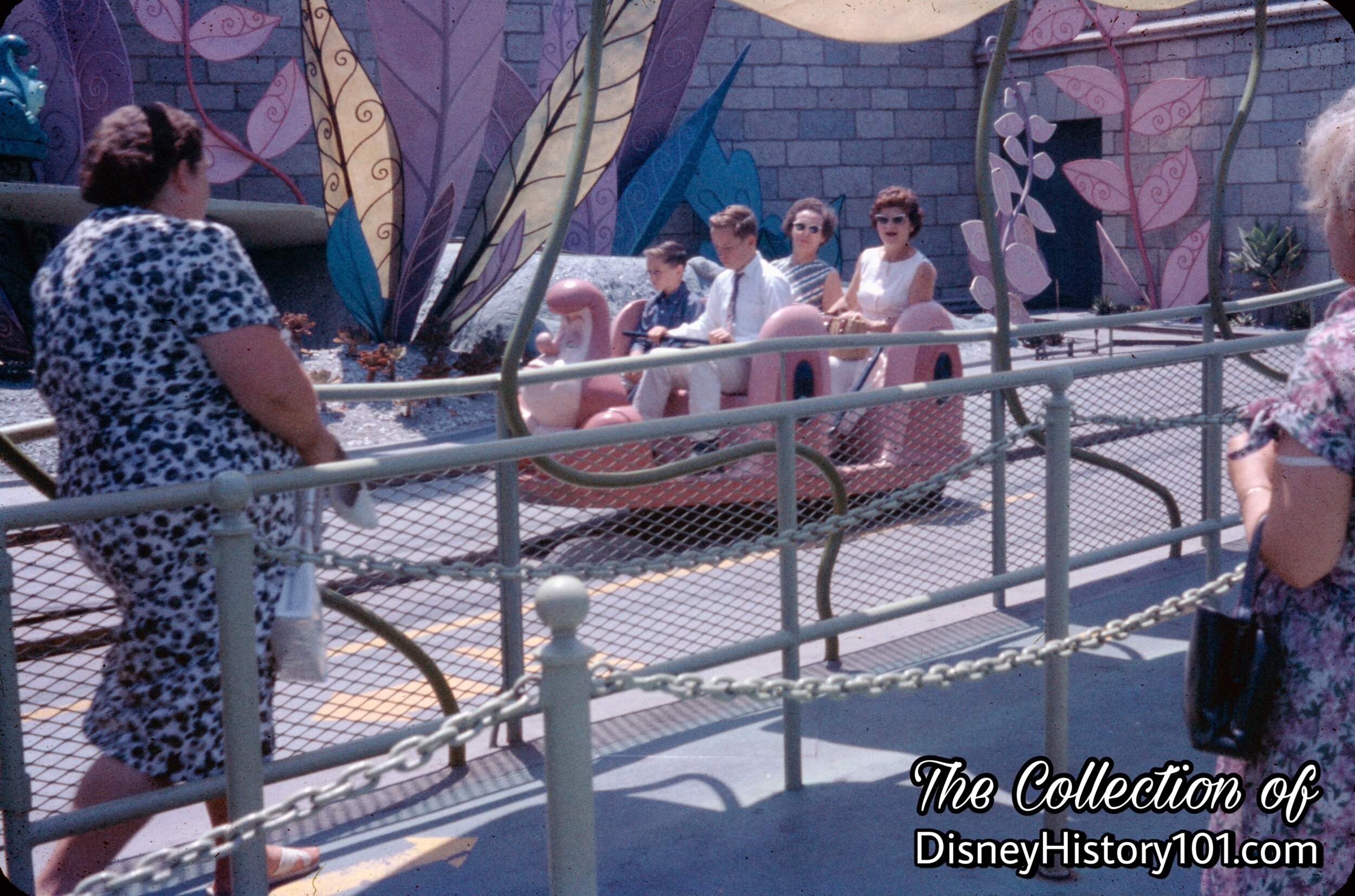
Alice in Wonderland, (1963)
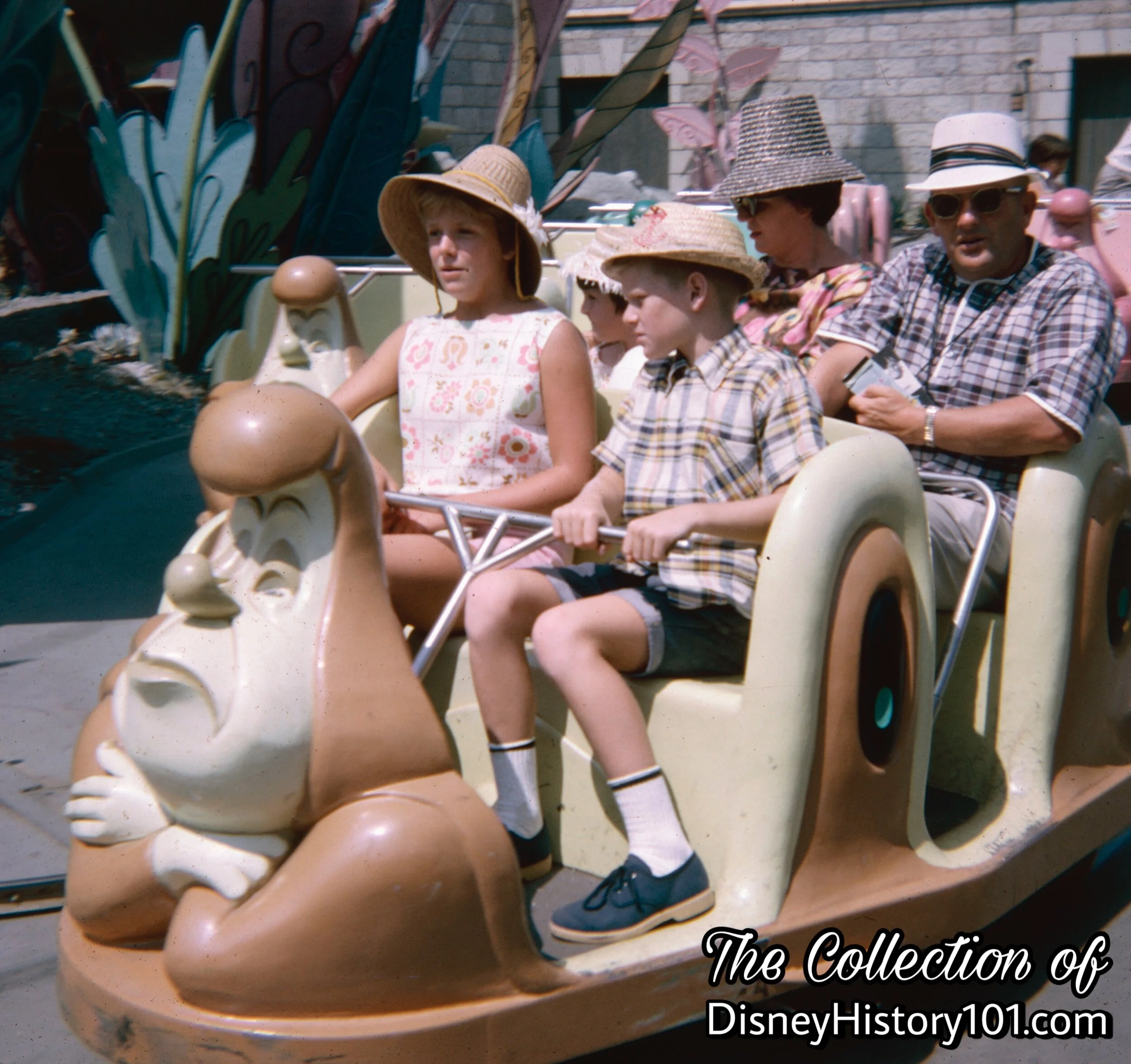
Alice in Wonderland, (August, 1966)
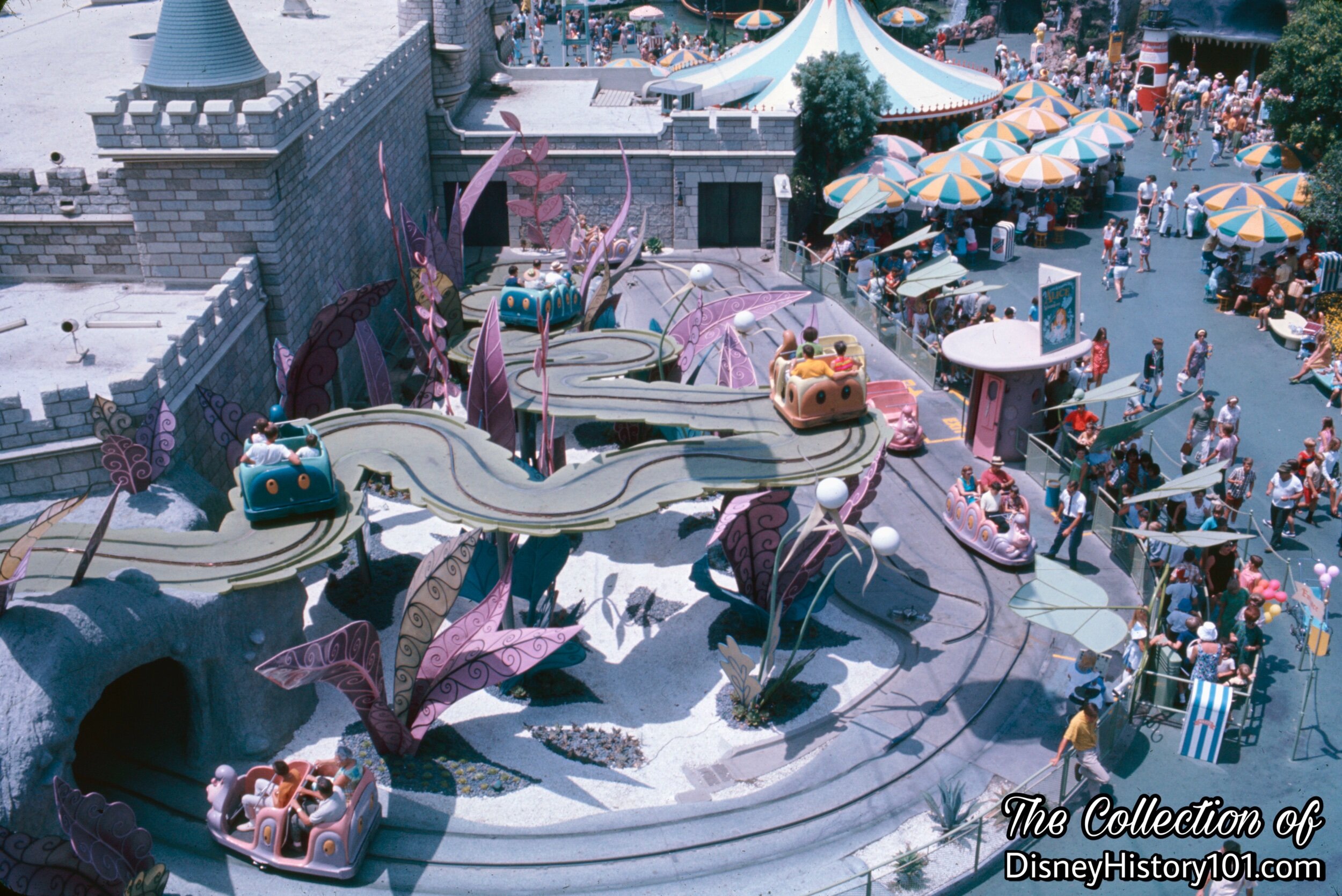
Alice in Wonderland, (c. August, 1967)
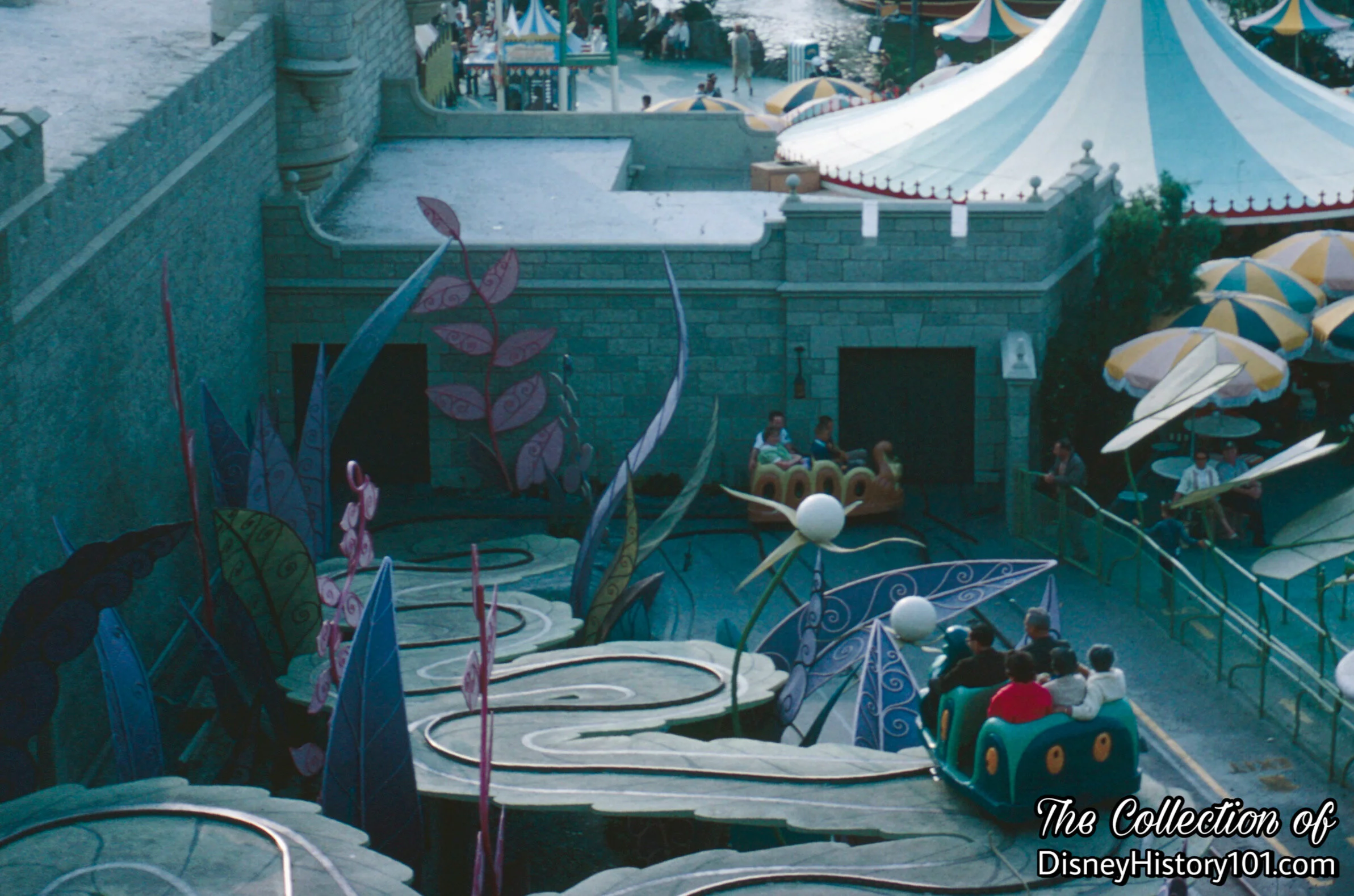
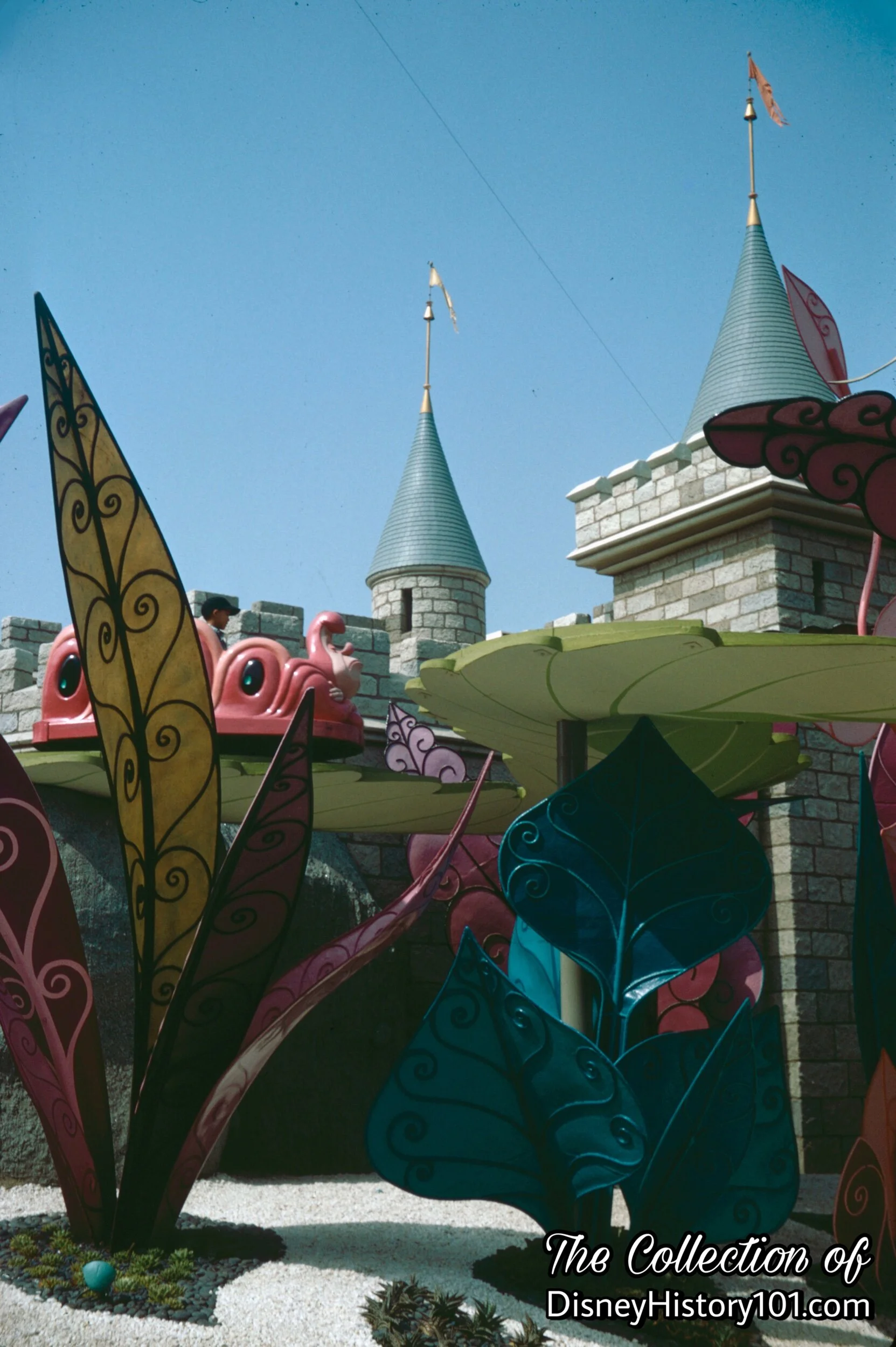
Alice in Wonderland near Matterhorn Way, 1967.
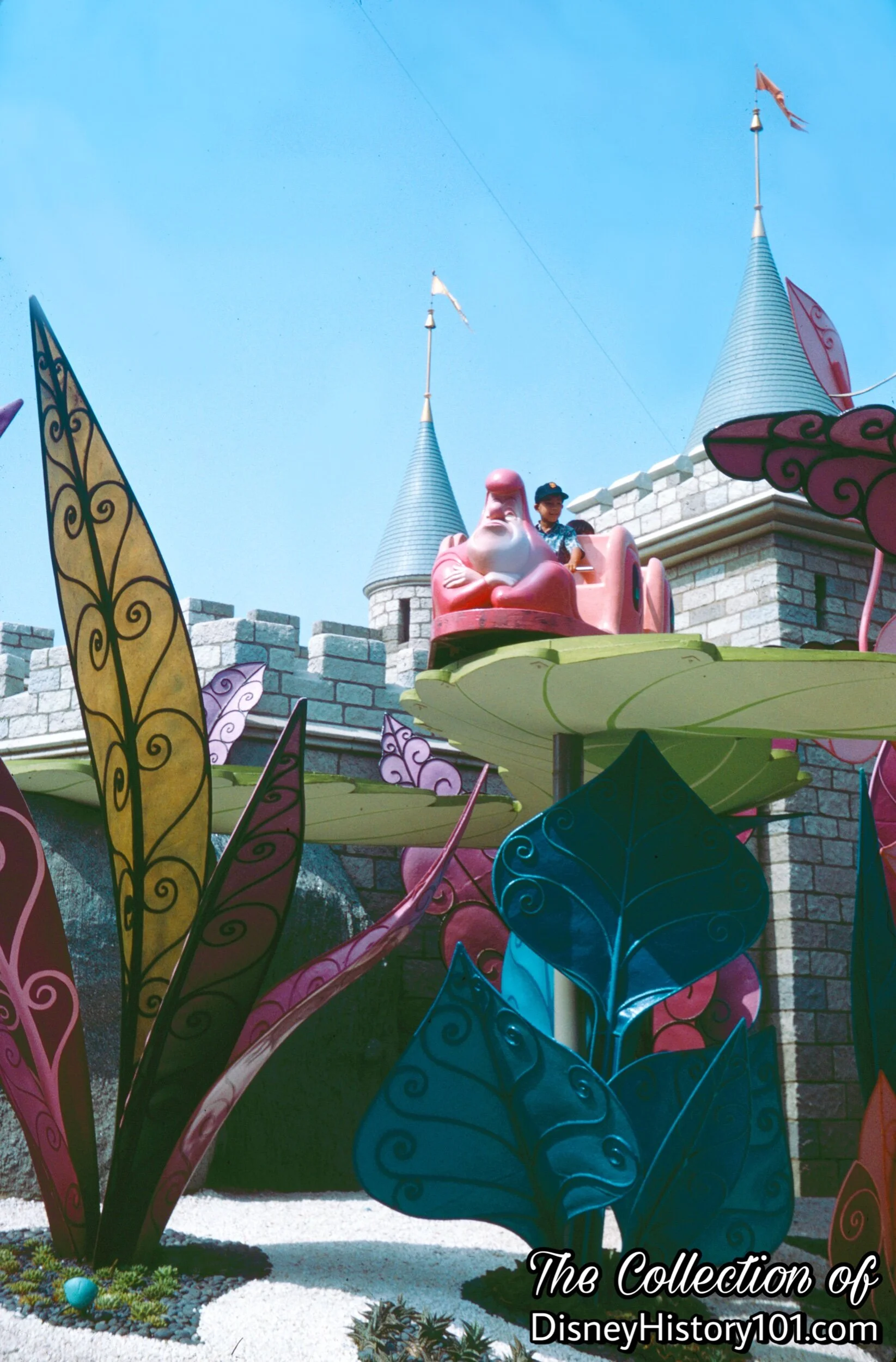
Alice in Wonderland near Matterhorn Way, (1967)
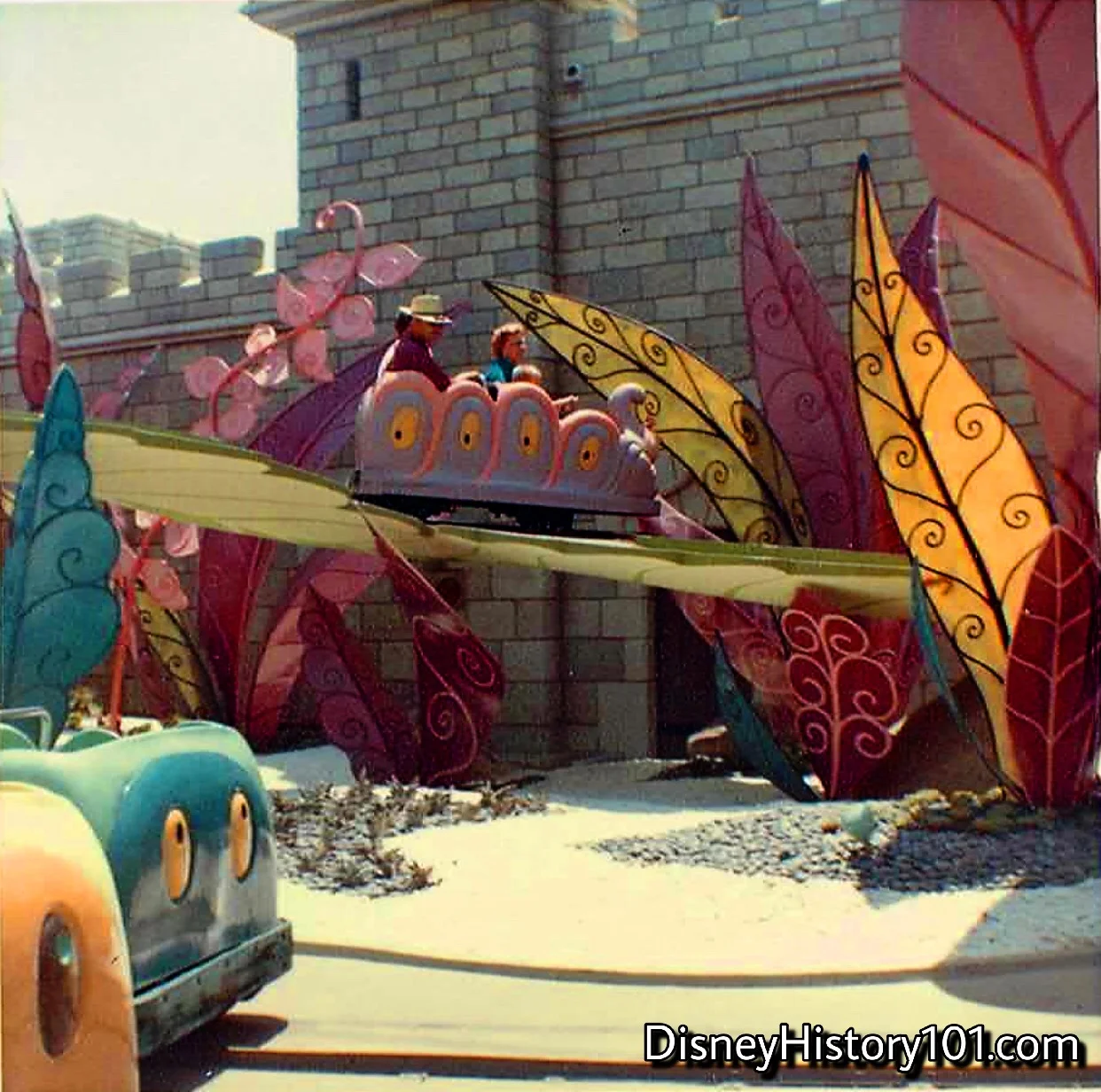
Alice in Wonderland, “All in a golden afternoon,” (1967)
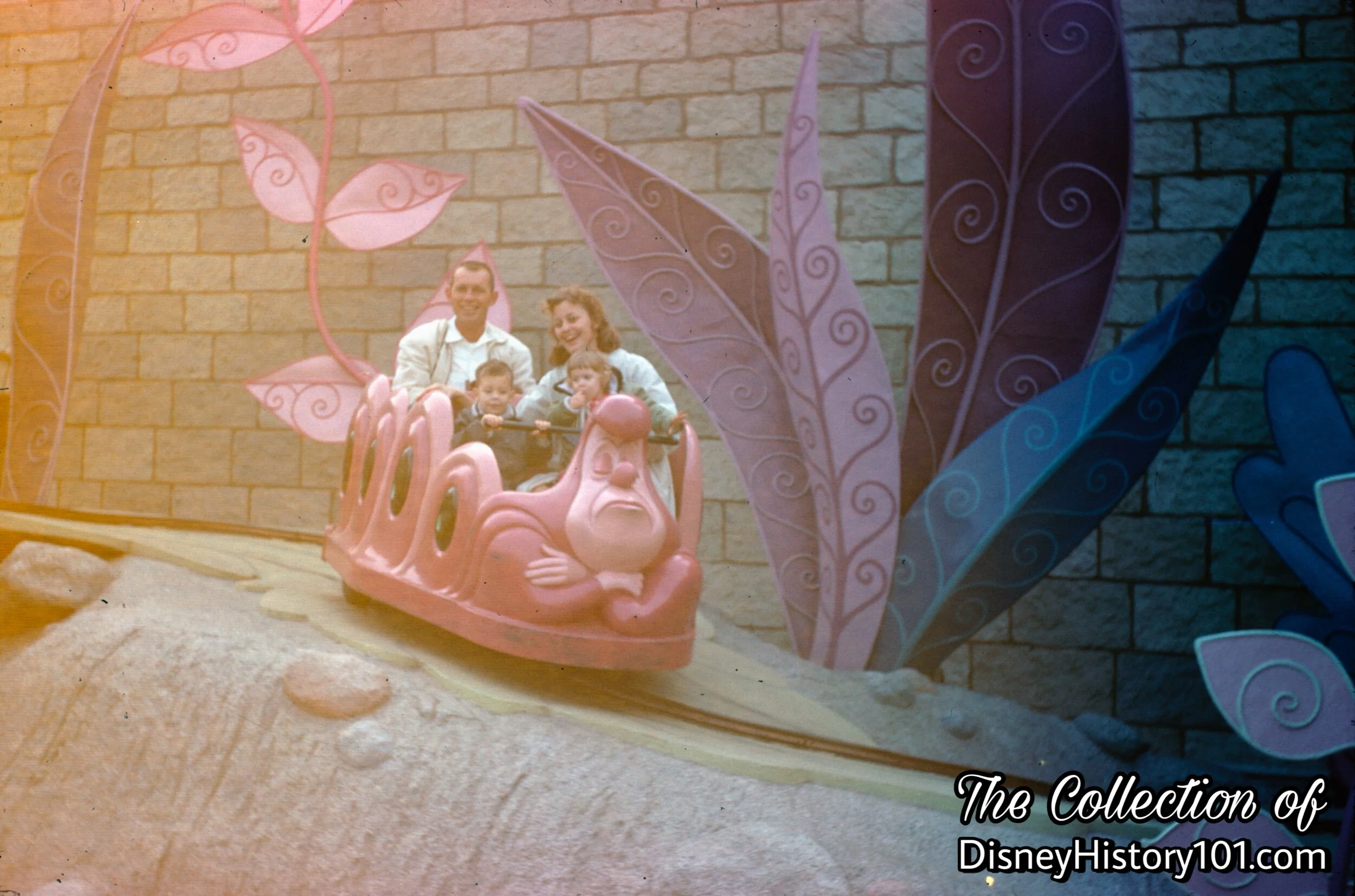
Alice in Wonderland, (December, 1962)
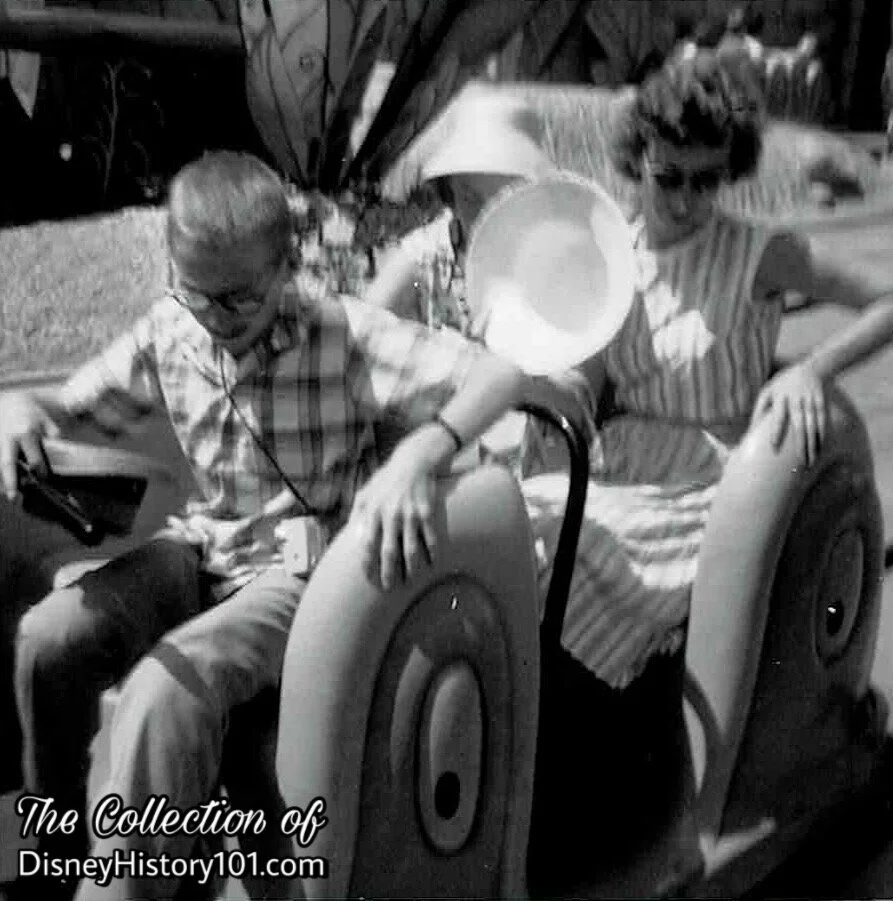
Alice in Wonderland, (April, 1963)
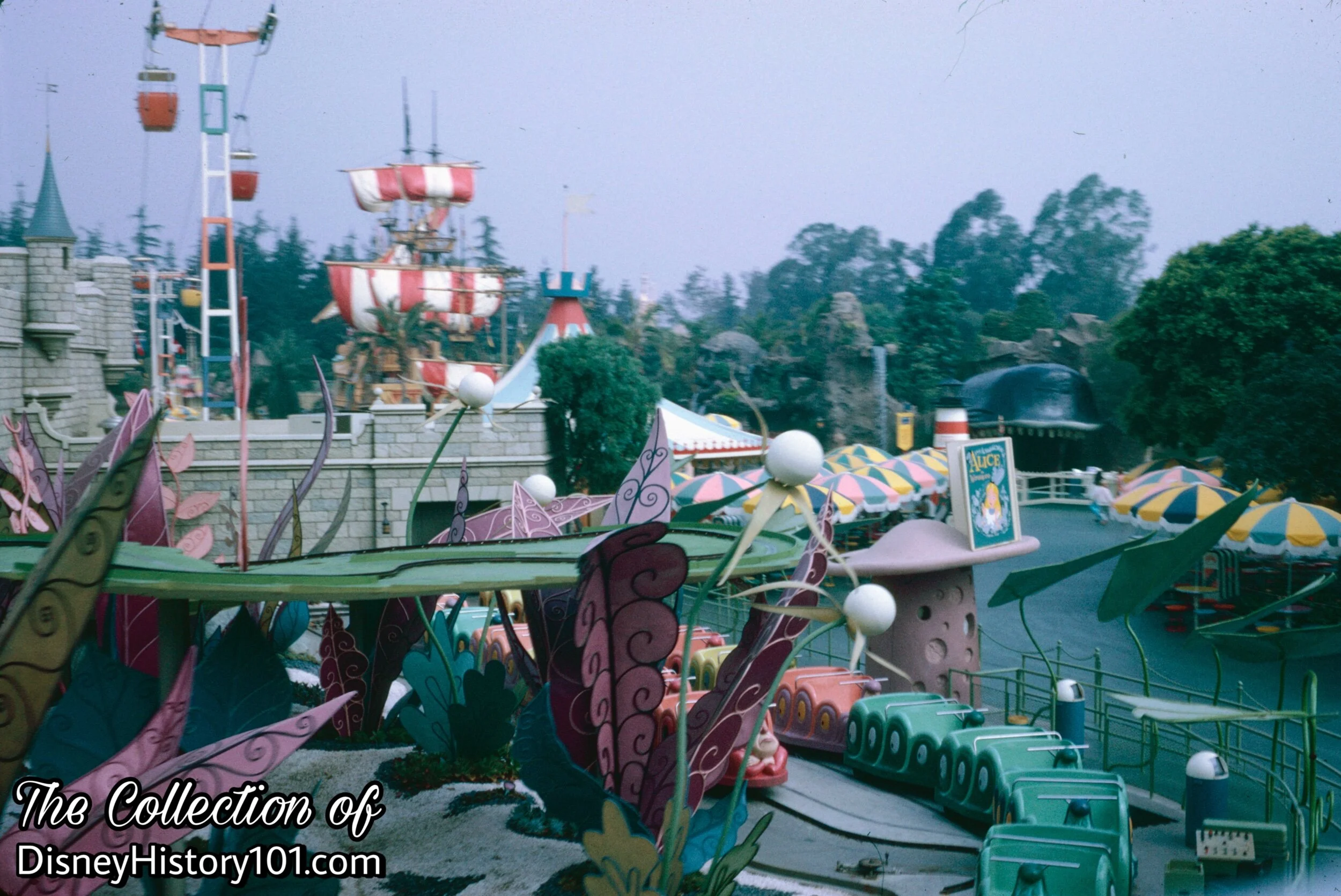
Alice in Wonderland near Matterhorn Way.
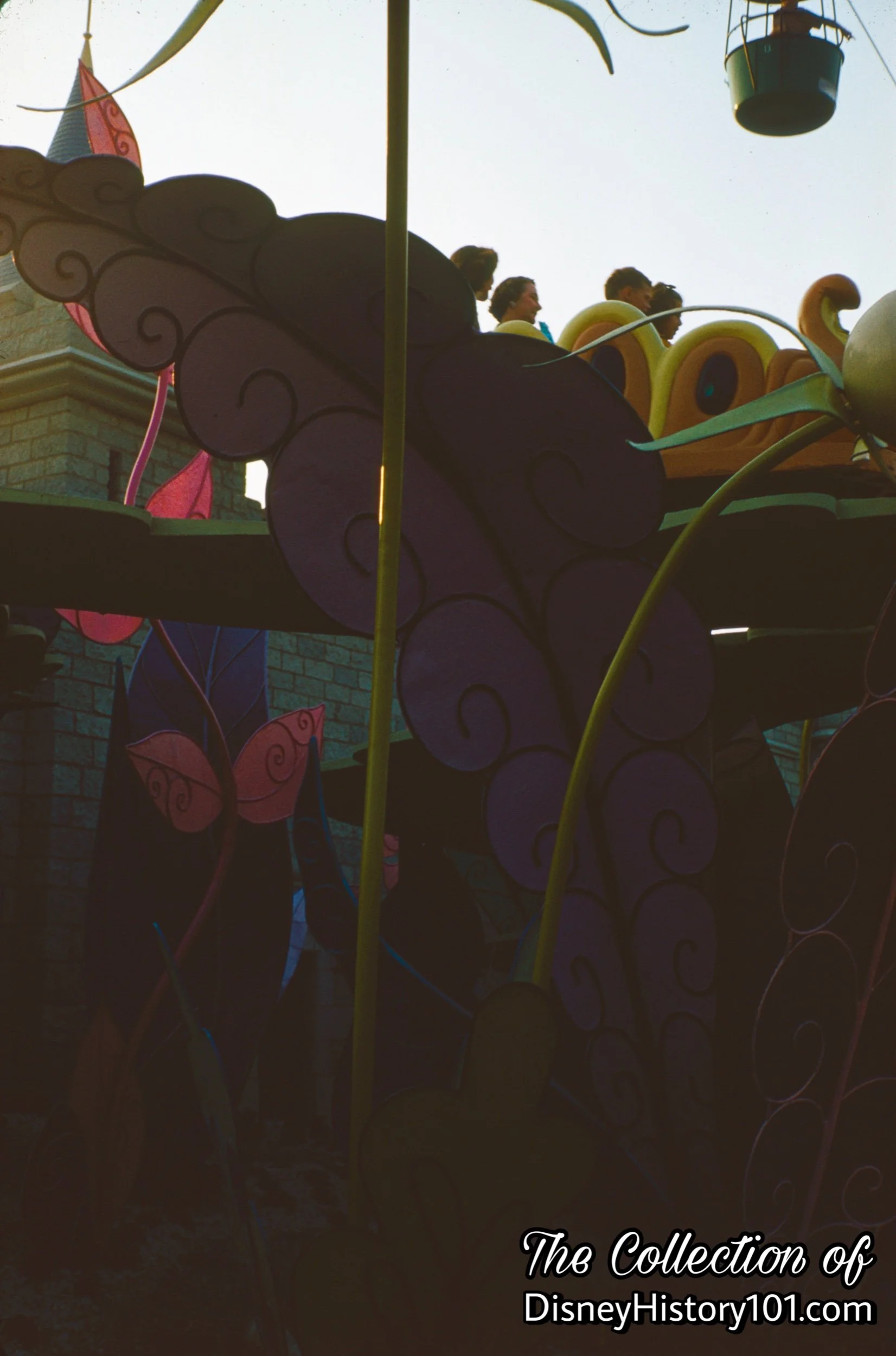
(1958)
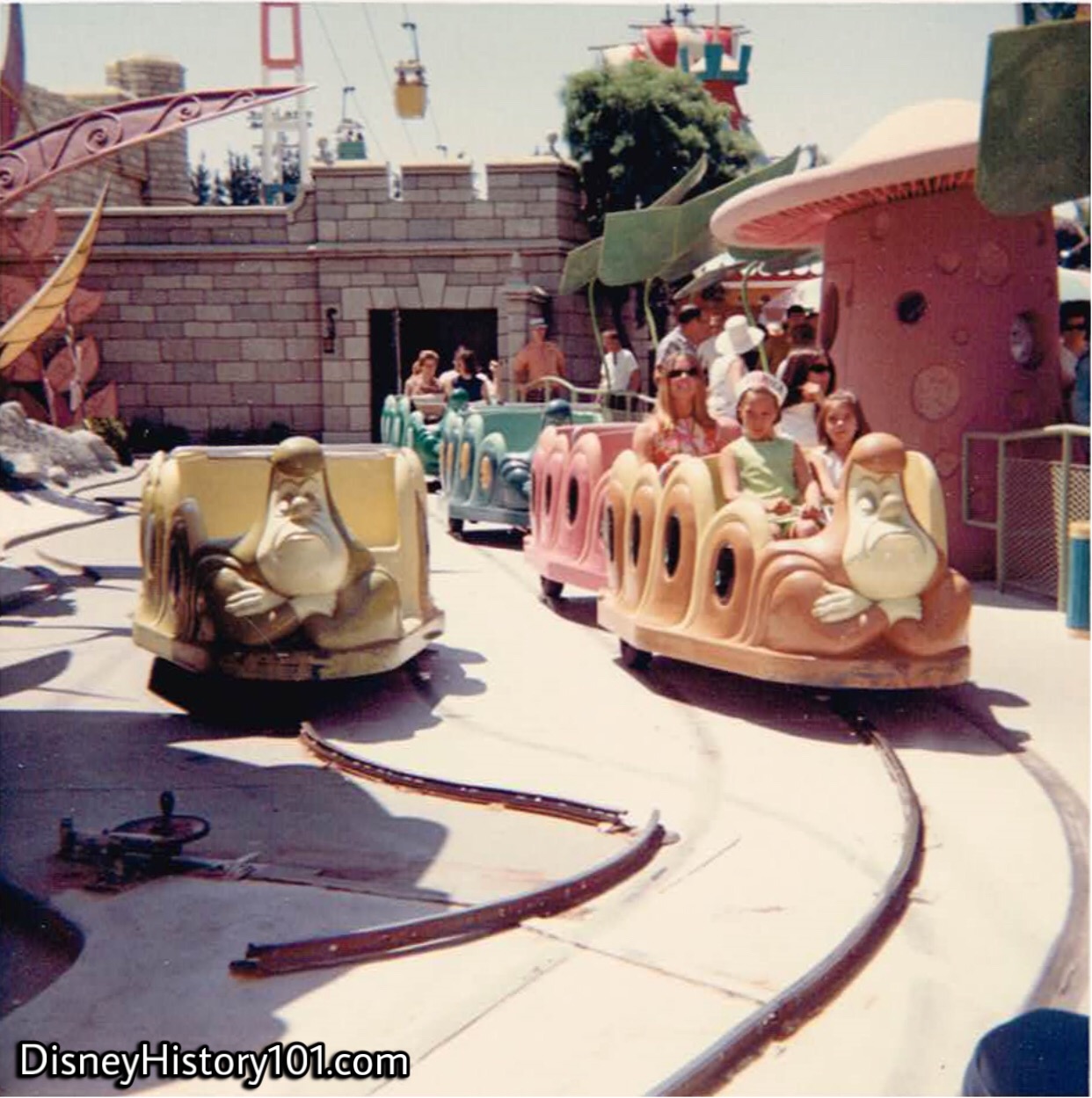
Guests aboard Caterpillars and a "cycled-out" Caterpillar of Alice in Wonderland; 1968.
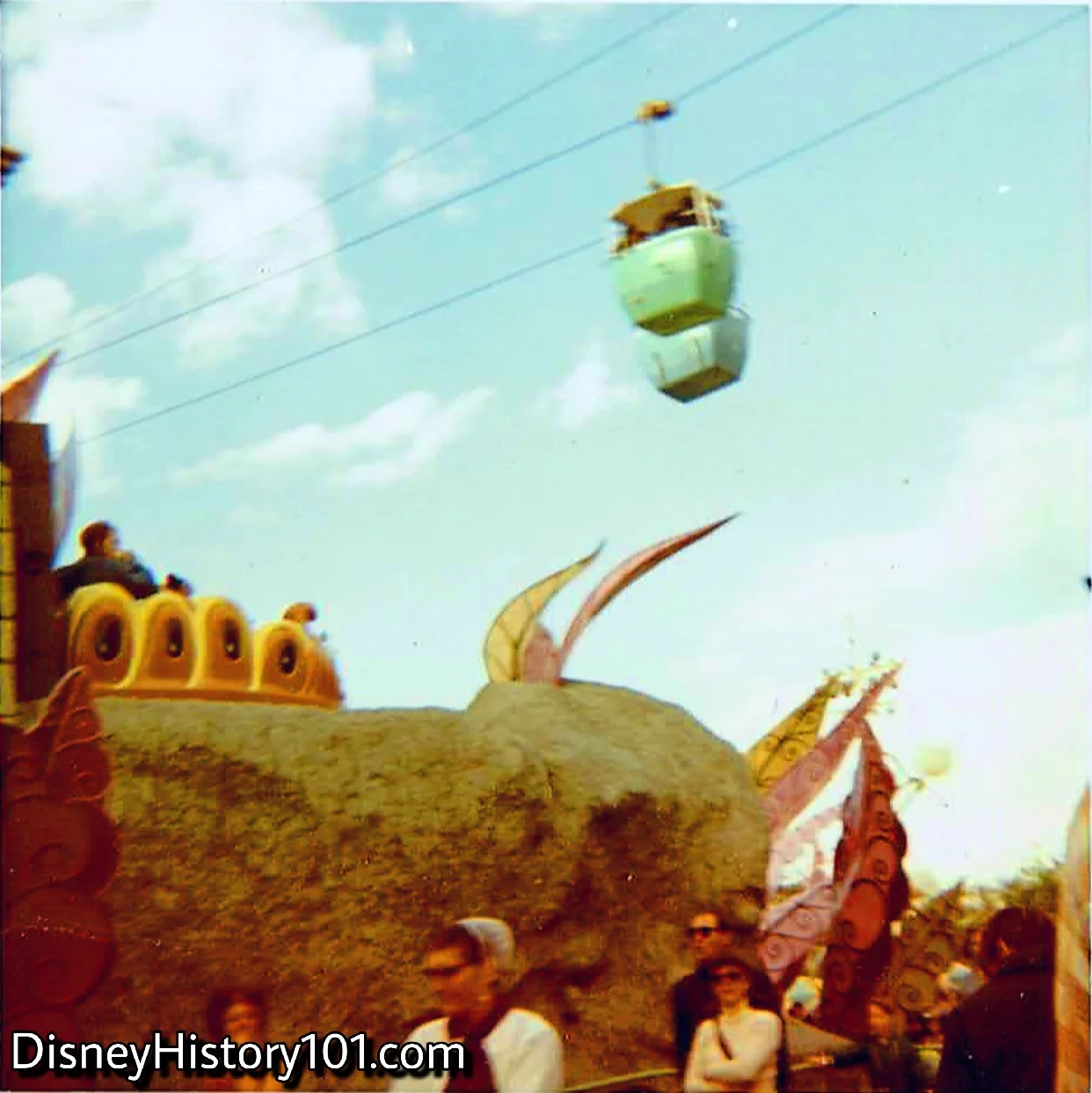
Alice in Wonderland, (1971)
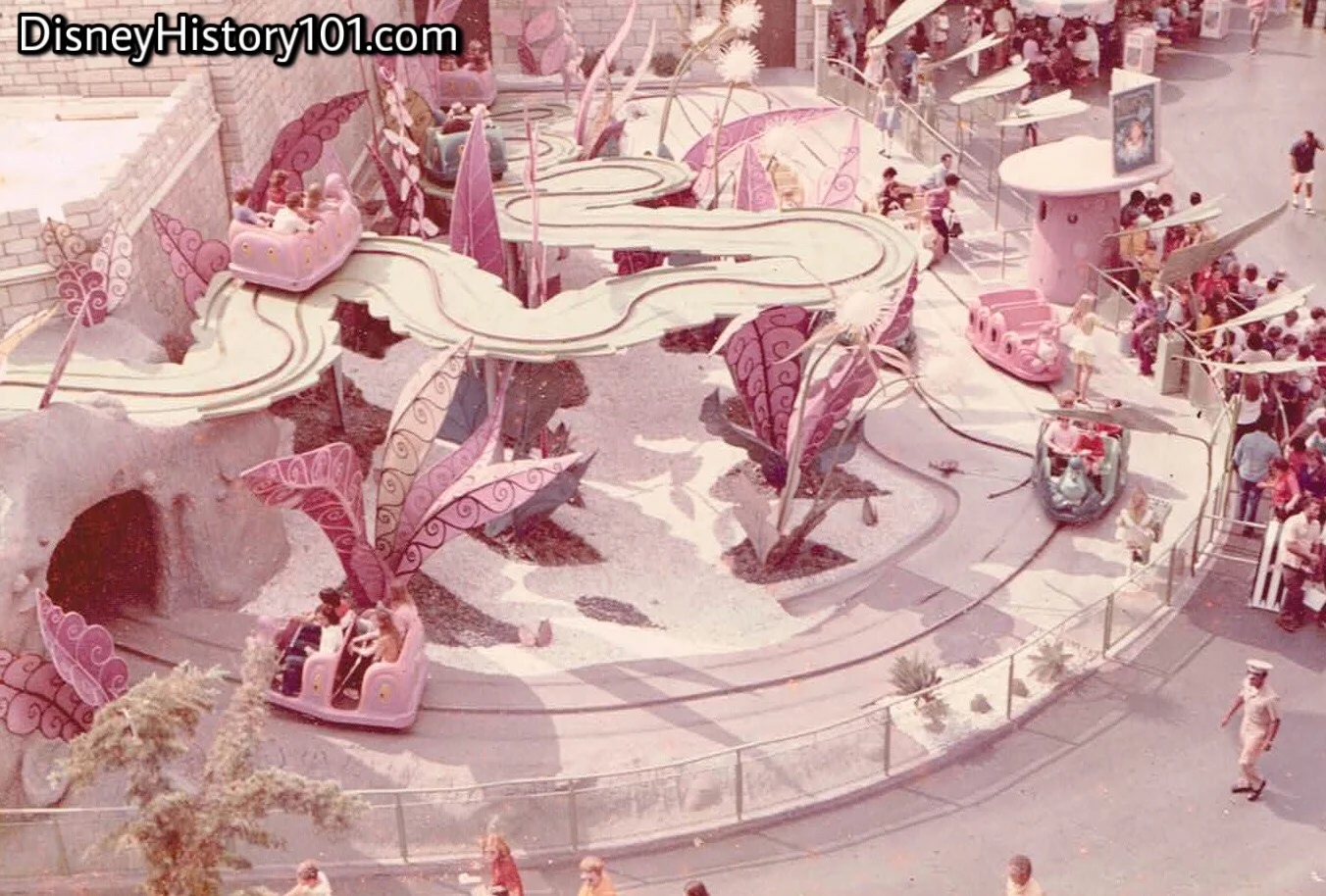
Note the Architectural Facade and Hardscape of Alice in Wonderland, September, 1972.
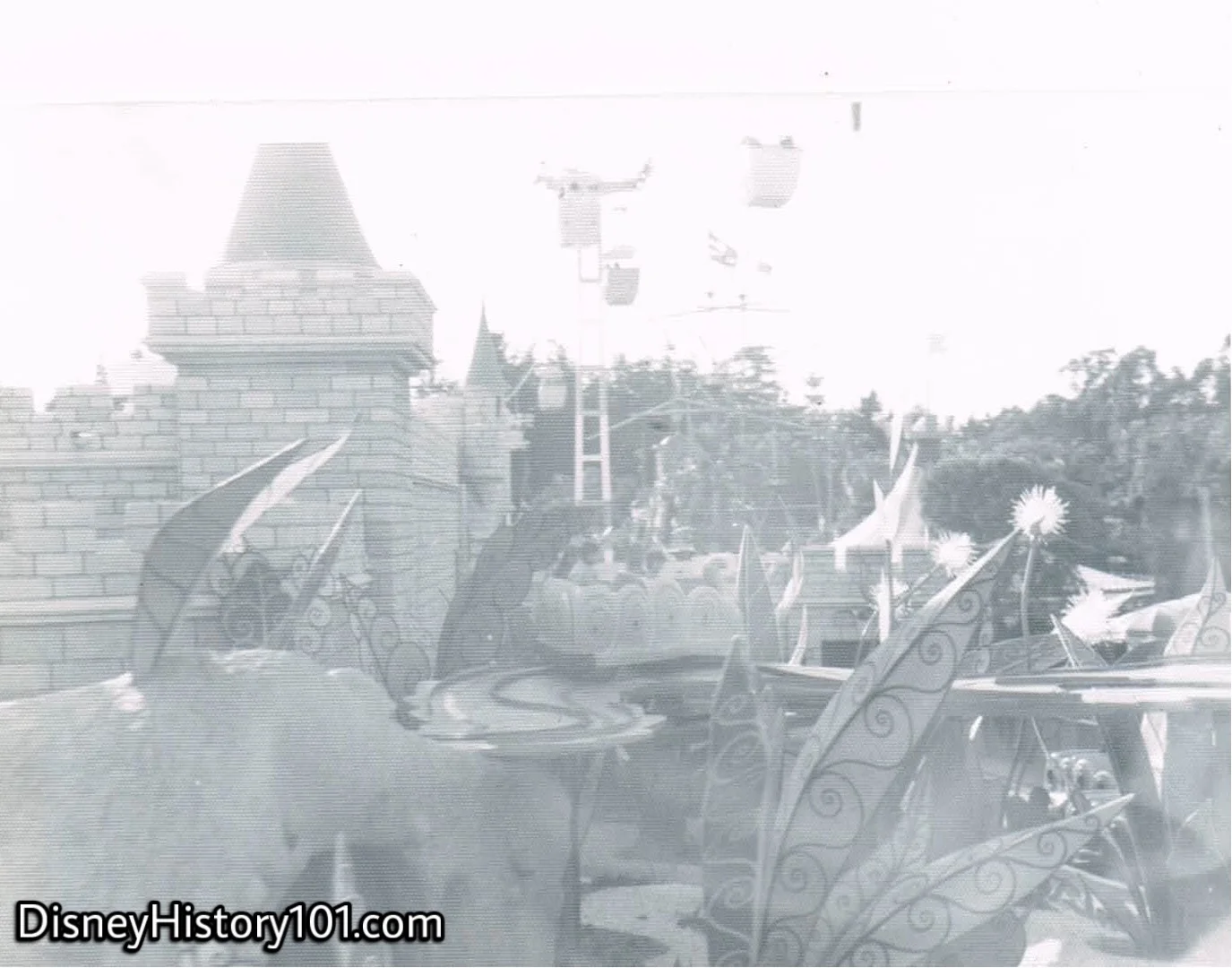
Alice in Wonderland, (1975)
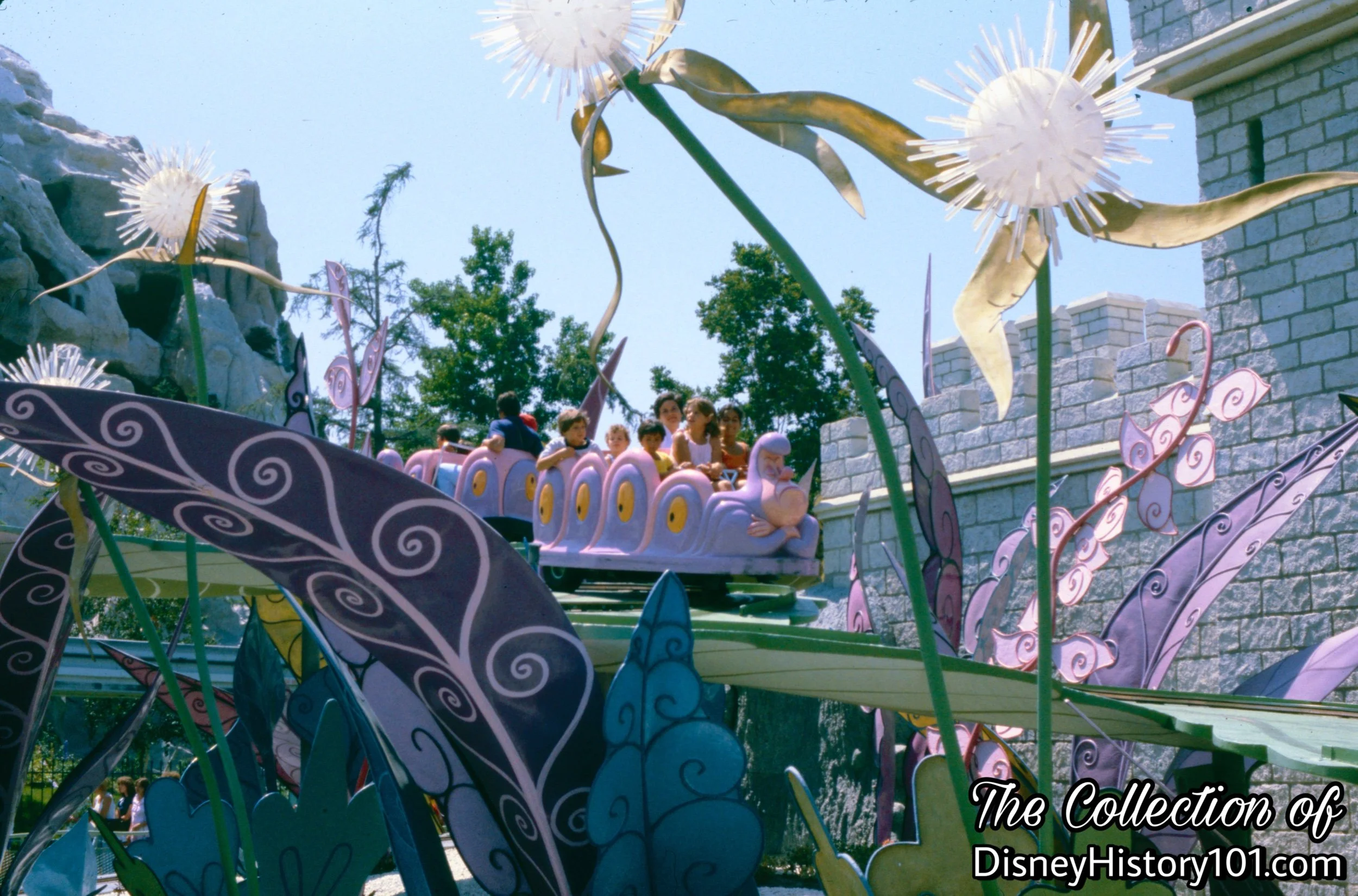
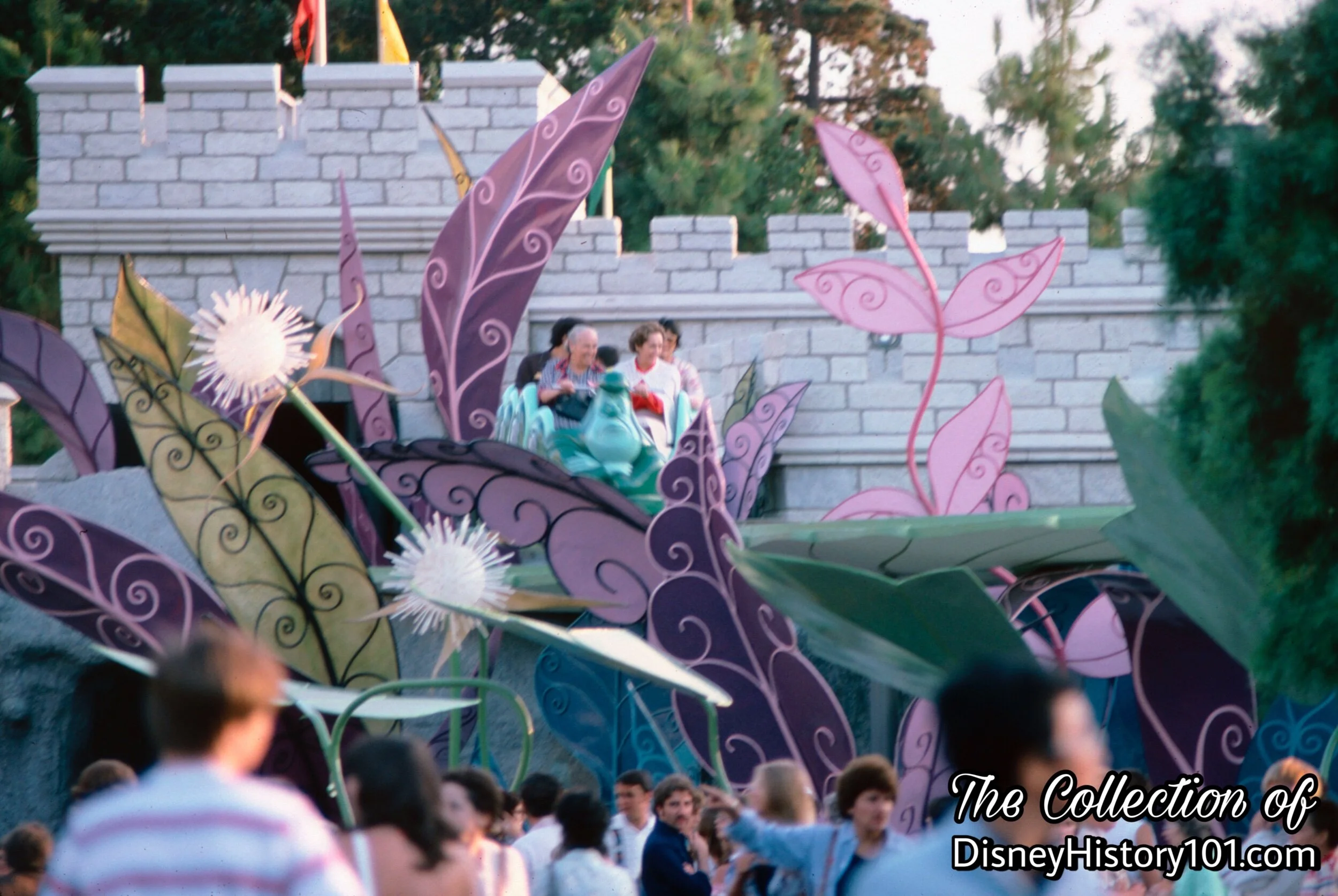
Alice in Wonderland, August, 1975.
Since the beginning, all fixtures are placed in correct motif at Disneyland.
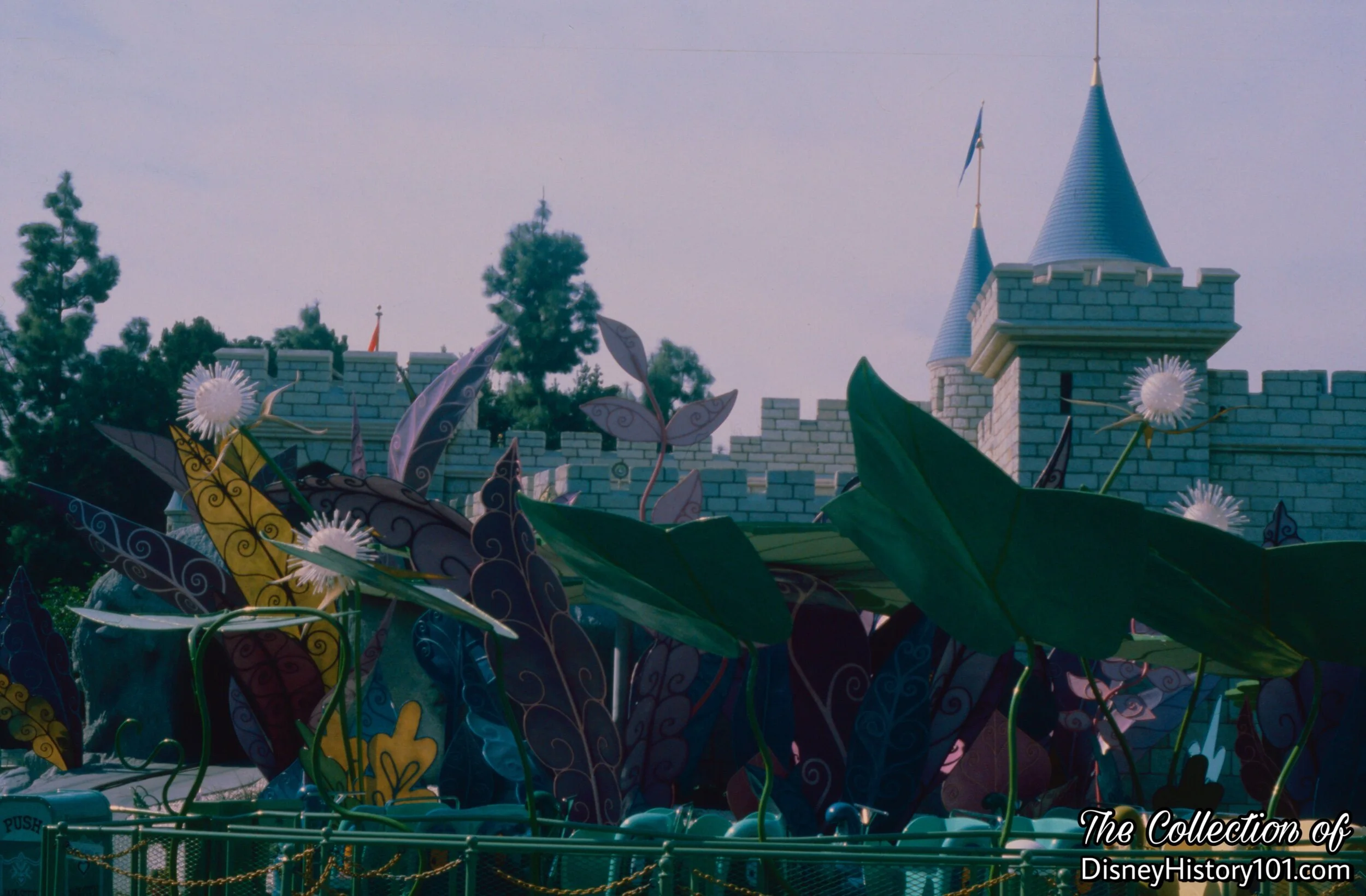
Alice in Wonderland, (1980)
The Disneyland Creative Ideas Program (of 1976) gave birth to a new track system to Alice in Wonderland (during 1977) thanks to Fantasyland Attractions Operator Doug Runyan. “His idea was a result of ‘working on the attraction for four months which gave me a lot of time to think about it.’ His design was a revision of the track system, allowing for a car to break down without closing the entire attraction. ‘Before this if one car went down the power was lost on the whole track’, Doug explained, ‘Now as little as 1/5 of the track will be down and the ride continues.’ Doug submitted his idea in April [of 1977] and it was implemented into the attraction’s rehab the next month. The control panel also had to be adjusted to accommodate the new system, which allows the Attraction Host or Hostess to observe and control the track more effectively”, according to Disneyland LINE (published April 7, 1977).
At some point before Alice in Wonderland closed September of 1982 (for a major remodeling), some exterior decorative elements gave embellishment to pre-existing props, including the “seeds” that were added to the dandelion lamps “heads” (seen pictured).
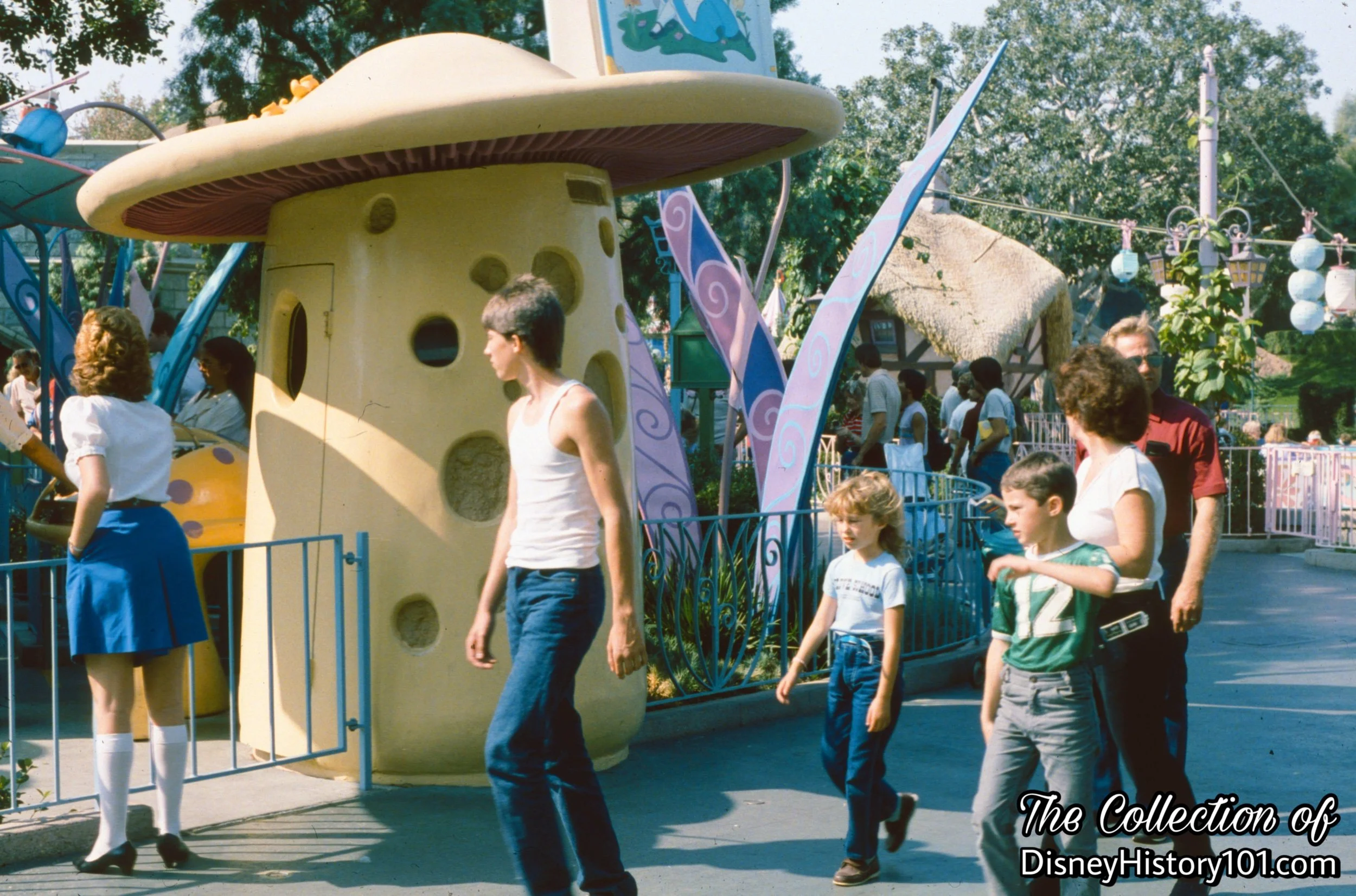
Alice in Wonderland near Matterhorn Way. Note the Attractions Hostess (left).
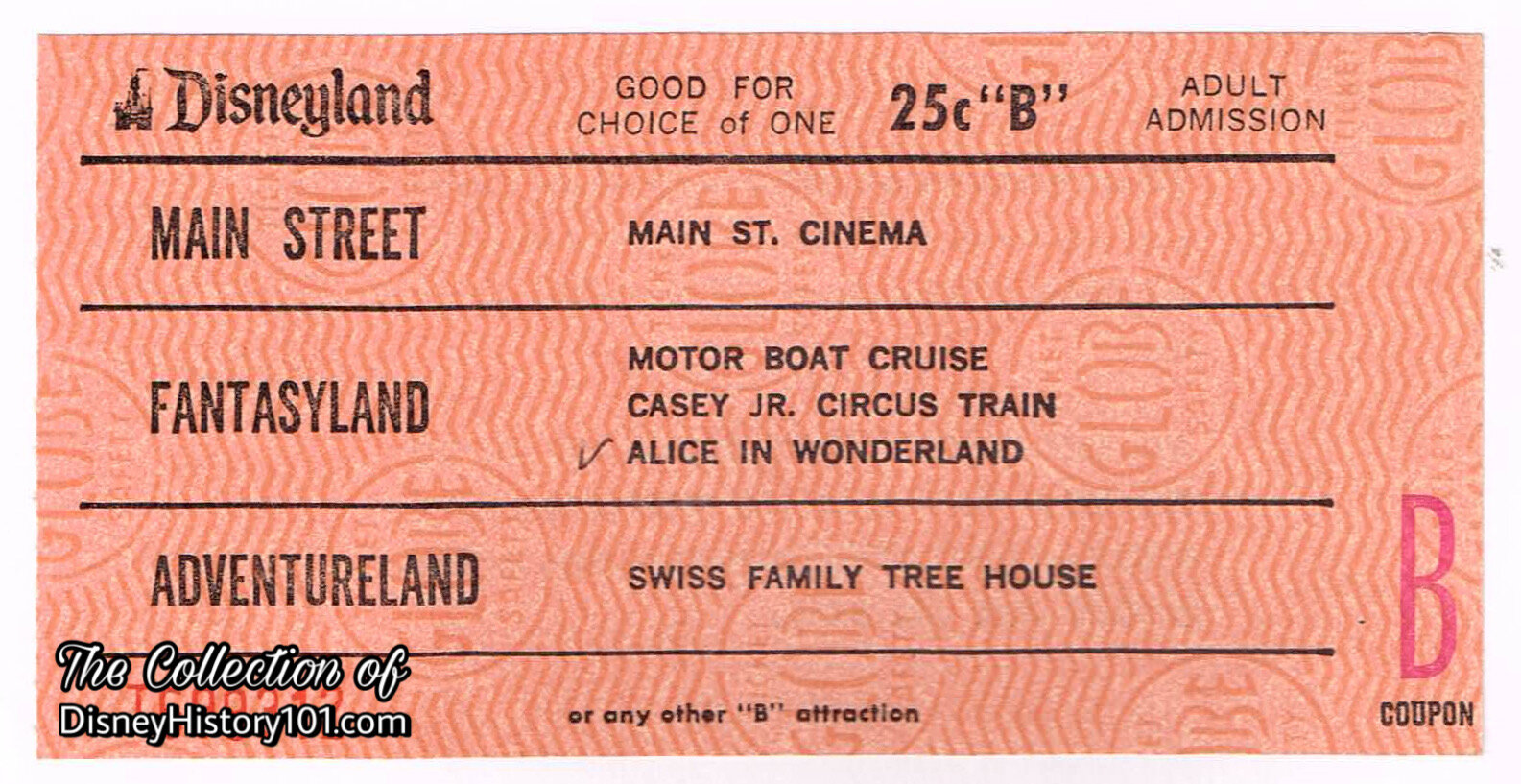
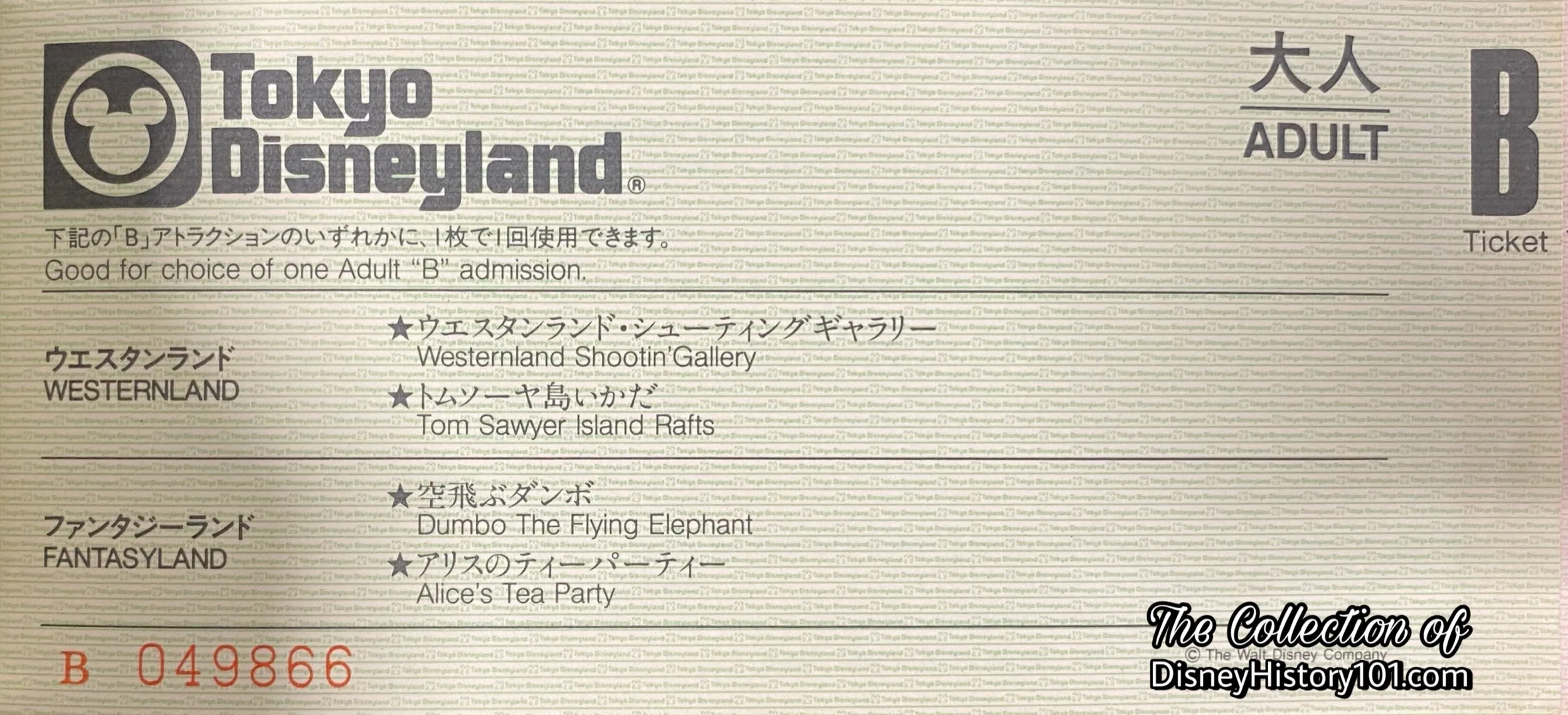
Disneyland “B” Attraction Adult Admission Coupon, 25¢ Value
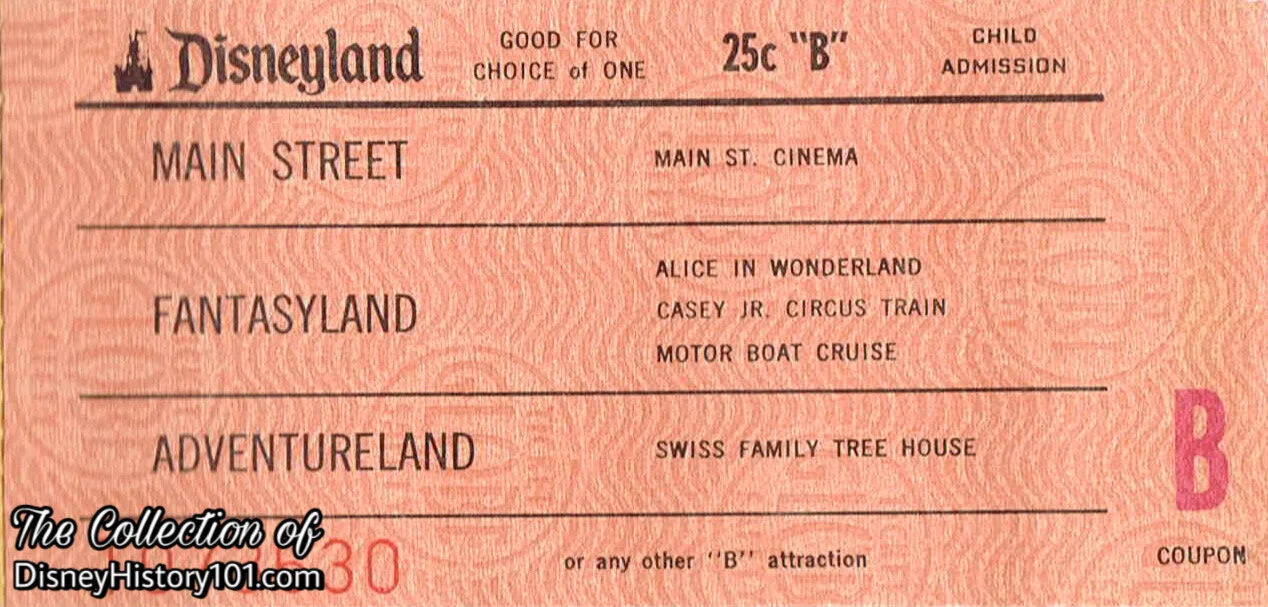
Disneyland “B” Attraction Child Admission Coupon, 25¢ Value
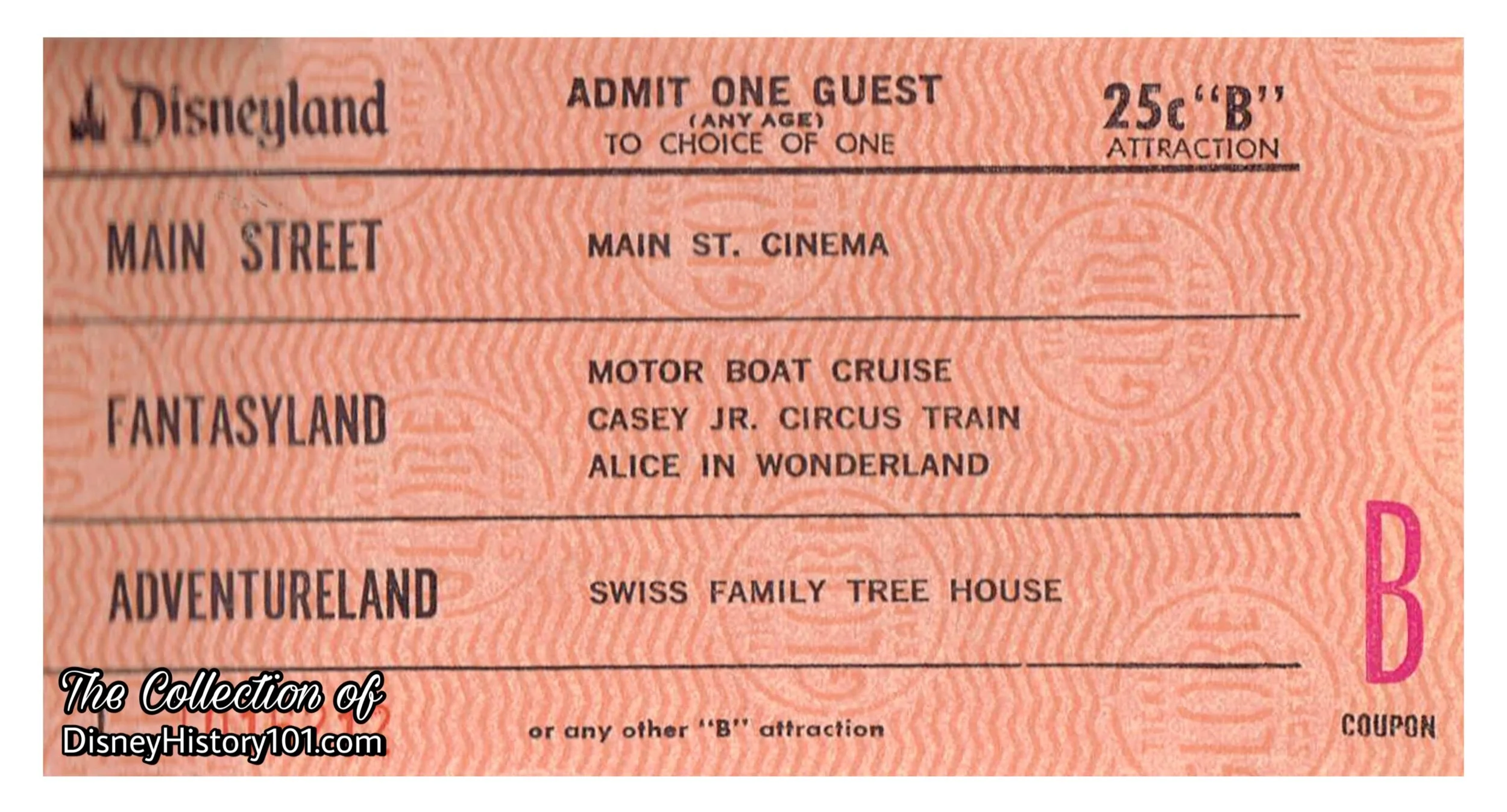
Disneyland “B” Attraction Guest Admission Coupon, 25¢ Value, (c. Summer, 1972)
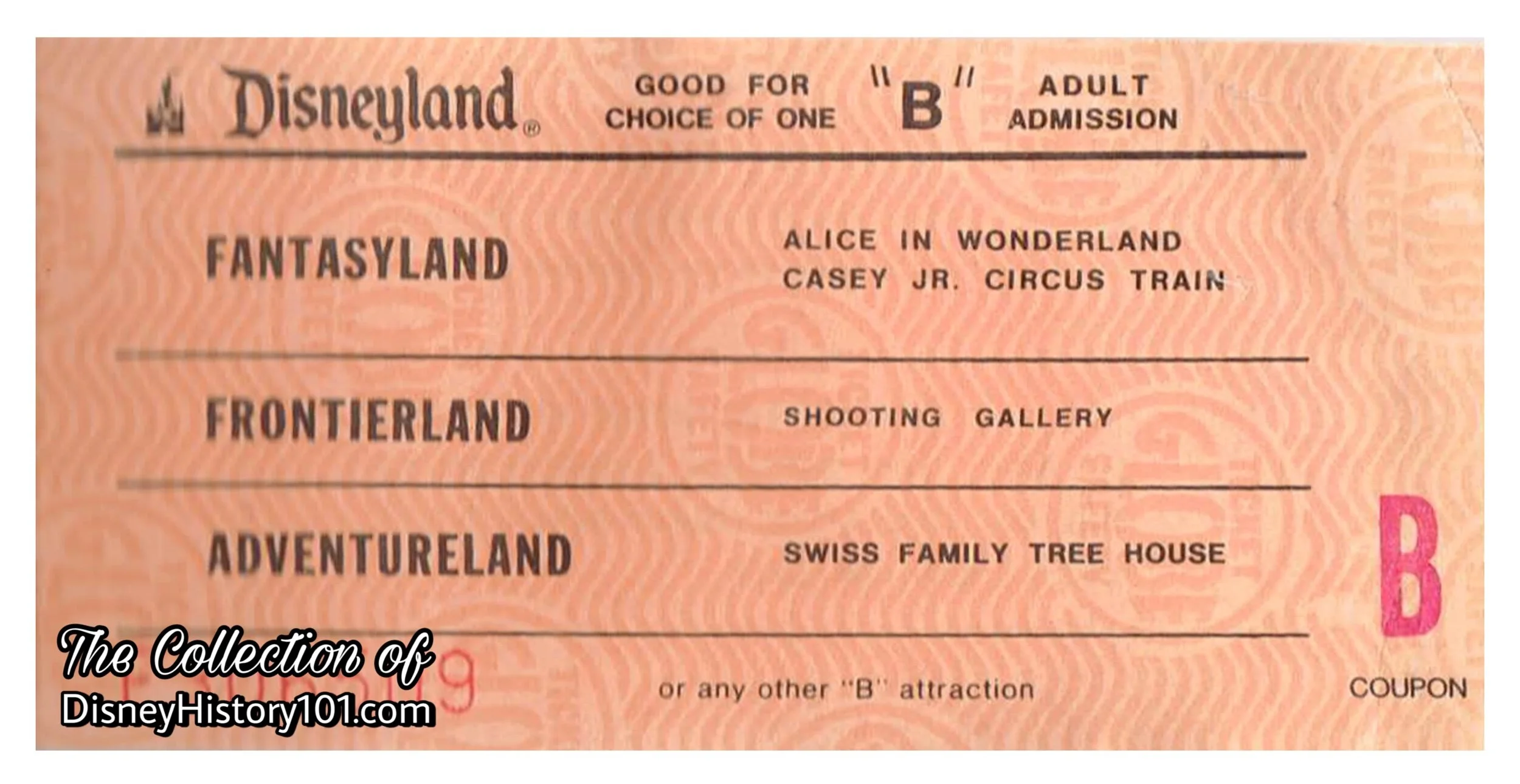
Disneyland “B” Attraction Adult Admission Coupon, No Cash Value
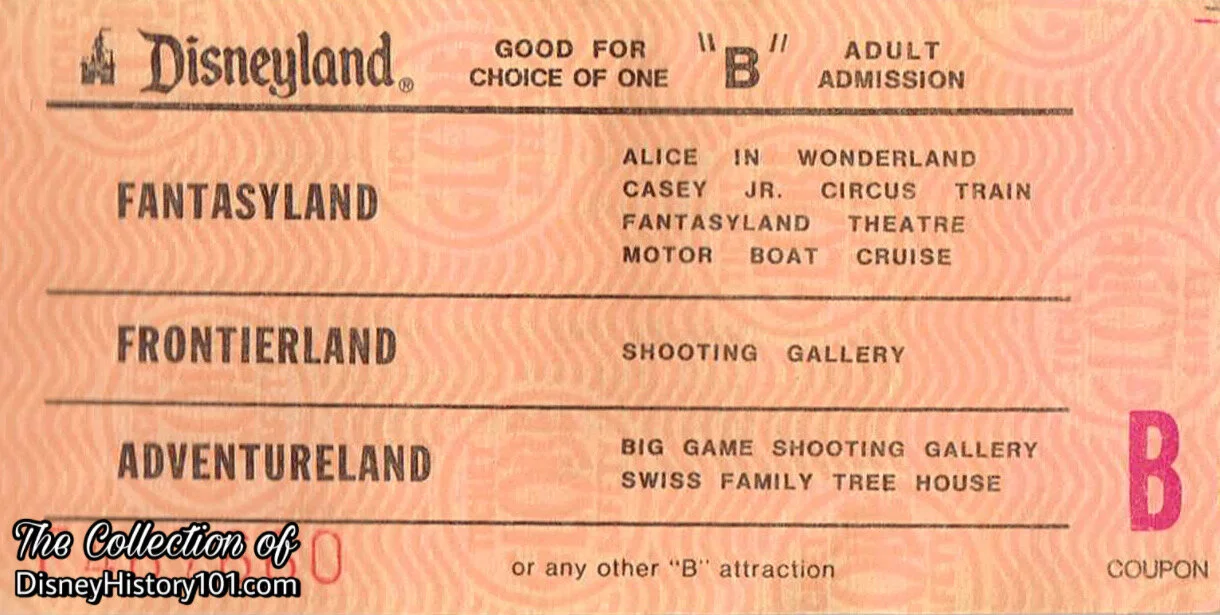
Disneyland “B” Attraction Adult Admission Coupon, No Cash Value

Walt once said: “There’s really no secret about our approach. We keep moving forward - opening up new doors and doing new things - because we’re curious. And curiosity keeps leading us down new paths. We're always exploring and experimenting. At WED, we call it Imagineering - the blending of creative imagination with technical know-how.”
This Imagineering is responsible for creating and maintaining the magic.
“The Maintenance of Magic”
As the end of the day draws near, the Guest control lines grow progressively smaller. The lines are then maintained as they “go down” and are thoroughly swept when empty. In many cases, this required special equipment which would be issued by the Lead. Many attractions, such as the Fantasyland dark rides as Alice required a walk-through after closing for the removal of debris. At this time any defects were noted.
Disneyland Park Operations M-42 Machinists would, at least once, check all attractions in Fantasyland and discuss with each Attraction Lead and problems, defects, or any other feedback regarding the department. M-42 Machinists would also respond to all downs and delayed openings in the Fantasyland area whether or not it was mechanical. Upon arriving at an attraction, they would determine whether what the failure was. M-42 would determine which crafts were needed, determine an estimated time of repair, notify M-1 and assist with crafts when necessary.
Since the beginning, the Four Keys of the DISNEYLAND Show (operating priorities in presenting the DISNEYLAND Show) have been present - Courtesy, Safety, Show, and Efficiency. This senior attraction has received quite a few major refurbishments since its opening, improving upon the Safety, Show, and Efficiency of Alice in Wonderland. These refurbishments were often performed by the staff of Disneyland Shops (The Maintenance Division at Disneyland). In the present, the “WED word” occasionally used to refer to this process is “rehab” - the maintenance rehabilitation or overhaul of an existing attraction. One of the first rehabs occurred just three months after the ride opened. Yes, in September of 1958, was “a new addition to the Alice in Wonderland ride - Now, Alice's own narration of the story is heard throughout the ride,” according to the Disneylander magazine Vol.2, No.8 (published for September of 1958).
Paint is important. The “Master Color Book” is the Bible for color selection at Disneyland, maintaining a catalogue of 4,000 shades of color. The book contains color specifications for every land, building, exhibit, and prop which requires paint maintenance. It insures that Disneyland will always have the same bright colors selected by the art directors who designed the attraction. In addition to the Master Color Book, there is a standby supply of ready-mixed paint available for touch up work. Thousands of cans of paint are stored in a special room which sounds like a walk through of Disneyland. Each can is labeled with names like “Alice.”
During this era, the land inspired another adventure at Disneyland. By 1964, the character of the 17th hole of The Magic Kingdom Golf Course of the Disneyland Hotel Golf Centre was themed after Alice in Wonderland.
Walt Disney Imagineers are always seeking out new magical opportunities to increase the efficiency, safety, and show quality of Disneyland adventures! By (April-June) 1981, WED Imagineering surveys of the attraction were conducted, and a proposal was made for an expansion from 9,055 to 9,655 square-feet. Walt Disney Imagineer John Stone worked with Ken Anderson, Ron Bowman, & Chris Tietz and Bruce Gordon under the direction Tony Baxter. John contributed toward Alice in Wonderland overall Concept design and story development supported by 1/4” concept models and 1” Show Models. Plans included new “Hot Shoes” – essential for drawing continuous electrical power from the live conductor rail (bus bar) to the moving attraction vehicle.
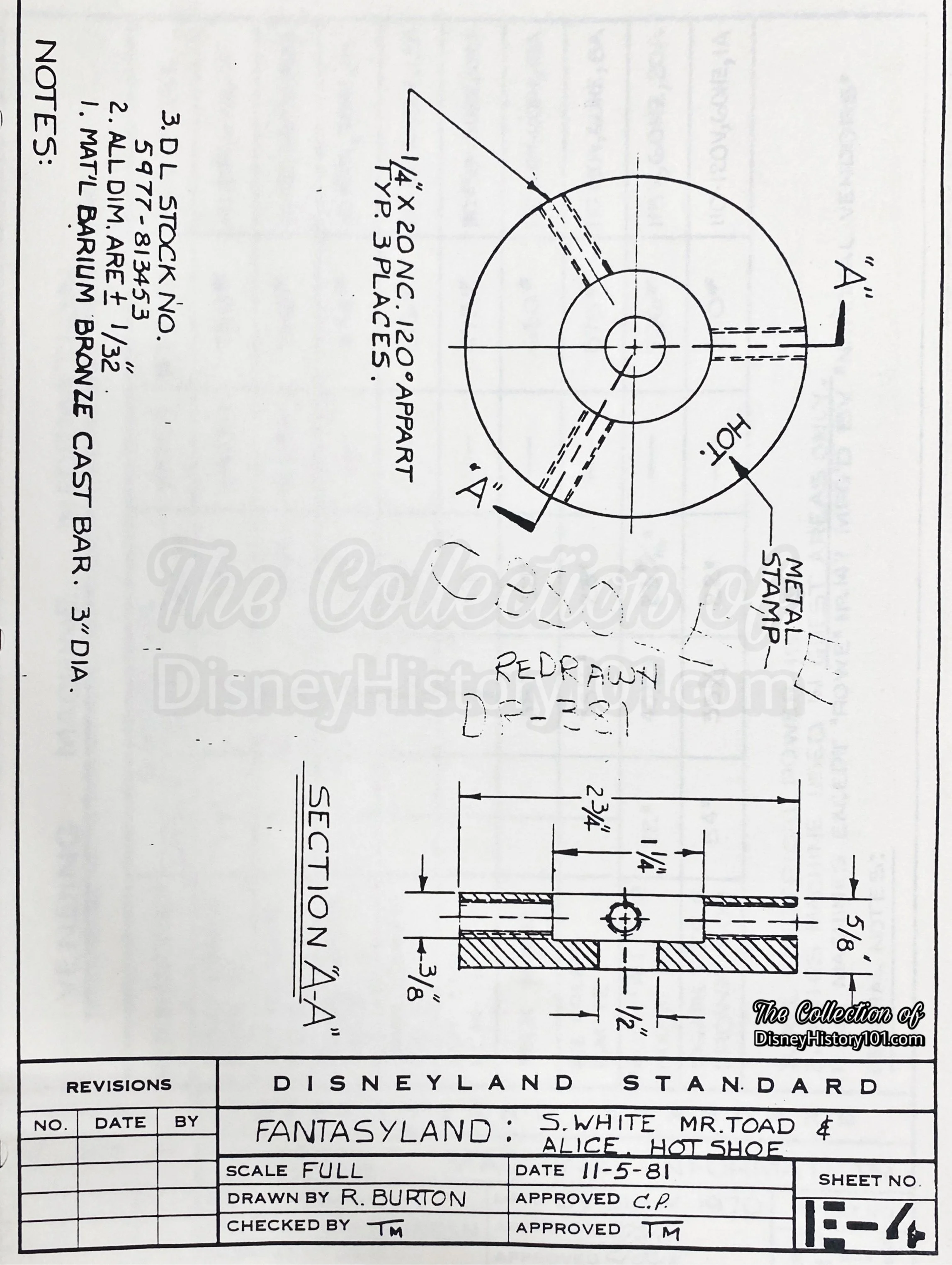
Fantasyland Darkride “Hot Shoe” Drawing; 1981.
The attraction soon closed September of 1982 for a major remodeling. Despite a strike (occurring in 1983) and possibly resultant extended periods of “101”, an all new version of Alice in Wonderland debuted April 14, 1984 (in the New Fantasyland). According to Vacationland magazine (Spring, 1984) : “the journey has been completely redesigned and expanded to feature many new characters and scenes from the motion picture, brought to life for the first time in a wonder-filled, life-size telling of Alice’s crazy search for the White Rabbit.” A place was no longer found for the Upside Down Room and Oversized Room show scenes. However (for as much that was removed), there were some additions. For example, Kathryn Beaumont (who performed the role more than thirty years prior) reprised her role as the voice of Alice. The Mad Tea Party and Mad Hatter Shop were redesigned and moved alongside the refurbished attraction, to create an Alice in Wonderland-themed area for New Fantasyland!
Facilities Central handled Non-Urgent Support, Work requests deferred until after Park closes or later date, Minor Show concerns, Urgent Support, Defects requires immediate attention, Attraction/facility closure/downtime that affects Guest experience, and elements that cause loss of revenue. [ADD THIS TO ALL ATTRACTIONS under ALICE]
Soon, Show Quality Standards/SQS based at each Disney Resort around the world, were teams of Imagineers responsible for maintaining the integrity of the story in existing Guest areas such as attractions, shops, restaurants, hotels, Downtown Disneys, recreation, etc. as well as improving the Guest experience through the integration of new technology and the addition of new show elements.
“Adding & Removing Vehicle Units”
By 1983, “Peter Pan or Pinocchio Maintenance Shops” Personnel routinely assisted with the removal of vehicle units on Peter Pan and Alice. Adding vehicles was accomplished by two Hosts/ Hostesses - one at the console and one at the Spur Track Switch. Empty units were first stacked in the station.
One Host/Hostess was sent back to the switch. When the attraction was cleared of guests, the Emergency Stop Button was depressed, Maintenance Mode was powered up using the Powering Up sequence, Work Lights was turned on, and show Power was turned off.
As soon as the PIC had scanned the zone containing the ADD track, the Host/Hostess could open the spur track by turning the "ADD" switch in the Track Switch Box. This cancelled the track power in that zone. The additional units could then be pushed onto the main track. Once they arrived in the succeeding zone, they advanced under their own power.
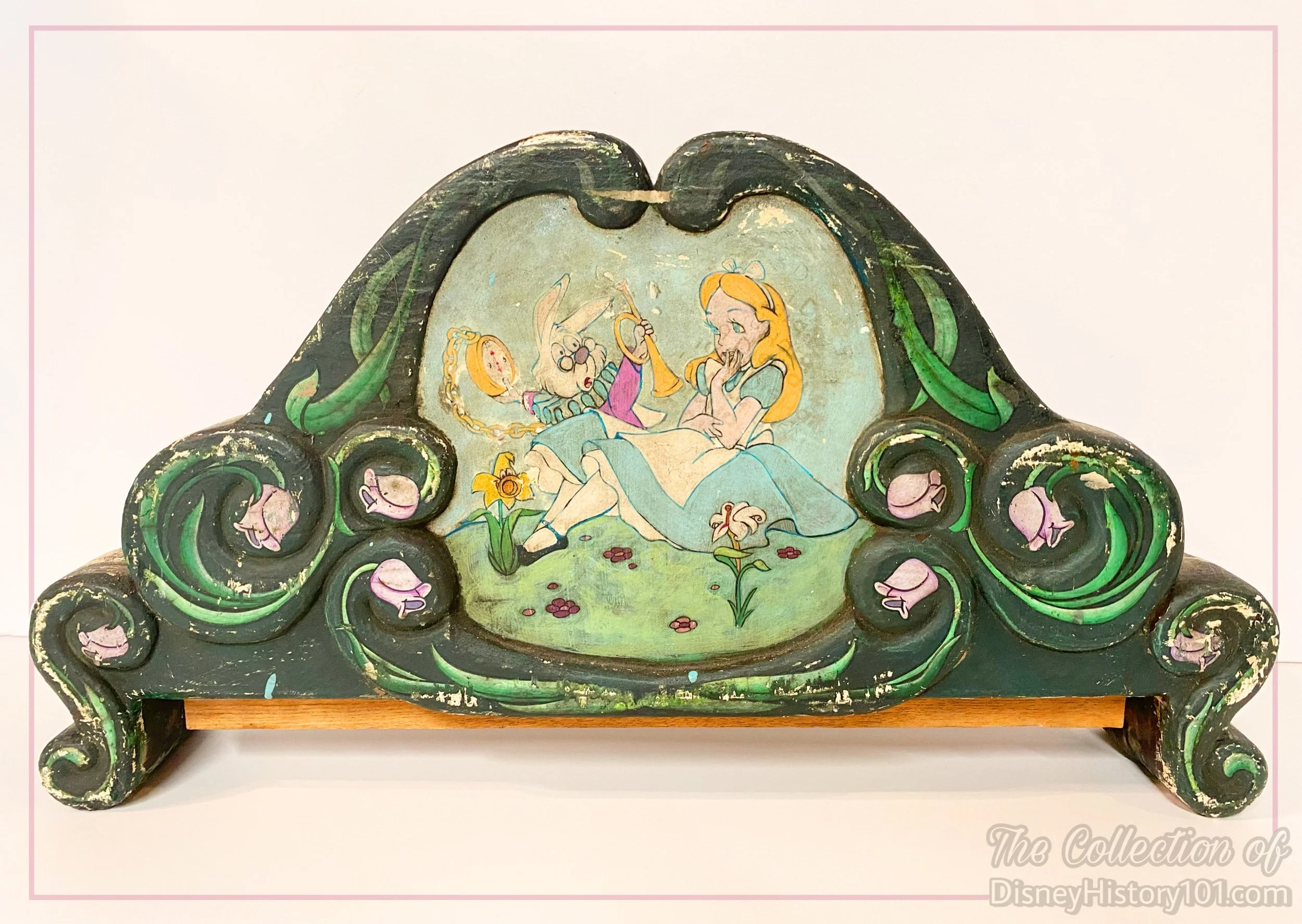
An upper section of an Alice in Wonderland queue sign removed during a rehabilitation, when the signage was looking pretty worn and stressed.
Alice in Wonderland closed again (from July 15, 2010 to August 13, 2010), in order to install safety handrails on the second-story exterior sections of track.
That wasn’t the last refurbishment, as another took place in 2014. This time projected animation was added to enhance the immersive feel of depth upon accompanying Alice on her adventures in Wonderland! According to Dave Smith (previous Chief Archivist Emeritus of the Walt Disney Archives), “Alice in Wonderland was an attraction that was unique to Disneyland. It never appeared in any off the other Disney Parks.” [Disney Facts Revealed by Dave Smith, 2016]
Quisque iaculis facilisis lacinia. Mauris euismod pellentesque tellus sit amet mollis.